Ag News Archives for 2026-07

OSU laboratory turns samples into decisions

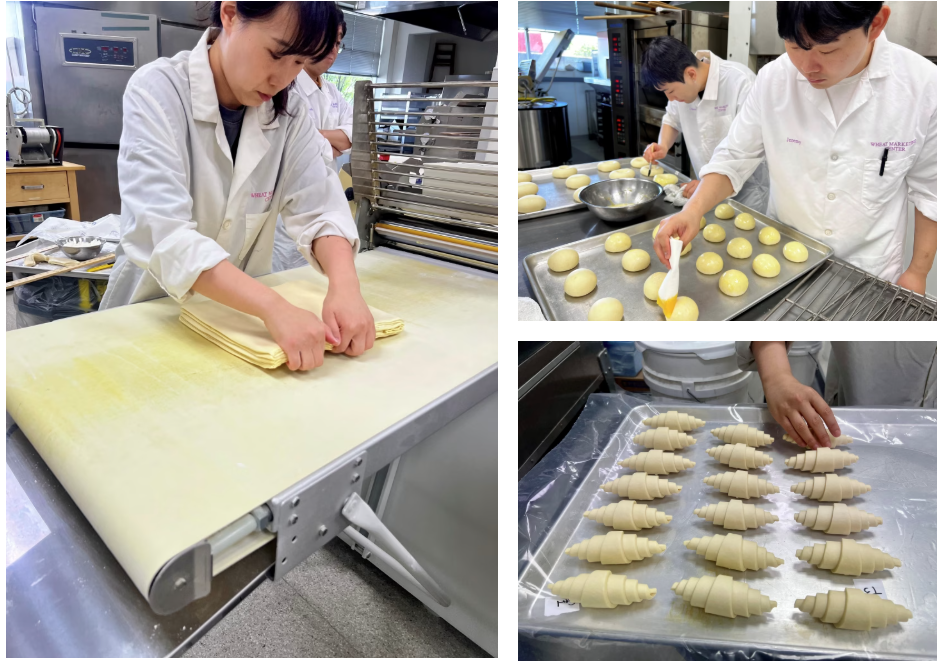
Boxes frequently arrive at Oklahoma State University's Soil, Water and Forage Analytical Laboratory with questions tucked inside.

A farmer wants to know how much fertilizer to apply before planting. A rancher needs to determine whether hay is safe for cattle. A homeowner is trying to understand a lawn or garden problem. A researcher needs thousands of samples analyzed for a long-term study.

By the time those samples leave the lab, they have become more than soil, water, forage or animal waste. They have become data that helps Oklahomans make decisions.

"Our mission is not just to run samples," said Bee Khim Chim, director of the laboratory. "It's to translate analytical science into practical decisions that improve production, protect the environment and build a stronger agricultural community."

Established in 1967 as a centralized laboratory for OSU Extension, the analytical laboratory now supports all 77 Oklahoma counties. Since its establishment, it has received samples from clients in 38 states, but its primary responsibility remains Oklahoma agriculture.

In 2025, SWFAL analyzed 66,765 total tests, including 17,801 research samples. The lab's work spans soil fertility, water, salinity, forage, soil texture, animal waste and research testing.

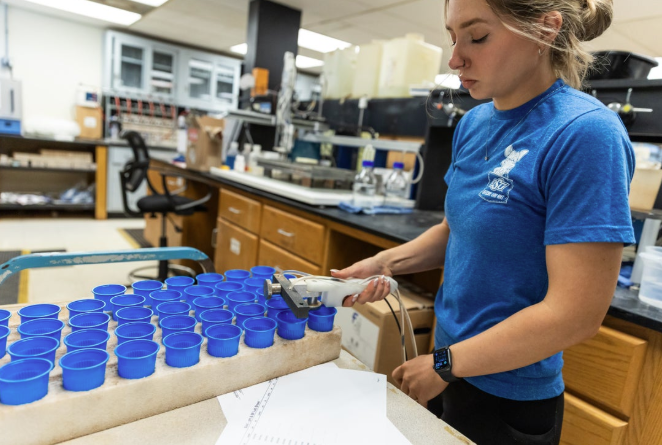
Clients can submit samples through OSU Extension county offices and access information through the lab's customer portal. County offices can print or email reports and make recommendations based on local needs. County Extension educators can instruct clients on proper sample collection and explain how to interpret analysis results. Samples are logged into the lab's system, dried, ground, extracted, filtered and analyzed. Recommendations are tied to research from OSU specialists, who conduct field trials, test fertilizer rates and evaluate crop response.

"For a routine soil analysis, we usually get results out within two business days. We try to get results out as soon as possible," said Kendal Henderson, SWFAL lab manager. "Our goal is to educate the educators, and the educators teach the clients. We try to make the process as simple as possible and sampling as consistent as possible."

Chim became director in January 2025, and Henderson has worked with the lab for 18 years, managing much of its operations. Barbara McCray handles data and financial management as well as software issues. The team also includes technicians and undergraduate and graduate students.

A statewide service built on accuracy

The most important quality control step is often the way a sample is collected. A soil sample should include multiple subsamples from across a field or area. Forage, water and animal waste samples also must be carefully collected.

"If the original sample is not representative of the entire landscape, our analysis can only tell them what is in that sample," Henderson said.

Chim said consistency matters. Sampling depth, timing and method all affect results, which is why county Extension educators play such an important role in helping clients follow protocols.

"We are only as good as the sample we receive," Chim said.

Inside the lab, an Inductively Coupled Plasma analyzer, flow injection analyzers, combustion analyzers, fiber analyzers, an automated titrator and a Near Infrared Reflectance Spectroscopy support testing needs.

Automated technology enables SWFAL staff to operate several instruments at once, but the process remains hands-on. Samples must still be weighed, scooped, mixed, filtered, moved, checked and approved by trained staff members.

Near Infrared Reflectance Spectroscopy, one of the lab's newer tools for forage analysis, scans a forage sample in about 60 seconds to estimate dry matter, protein, lignin and fiber. 

"What takes several days to do in a traditional wet chemistry lab can take 60 seconds here," Henderson said.

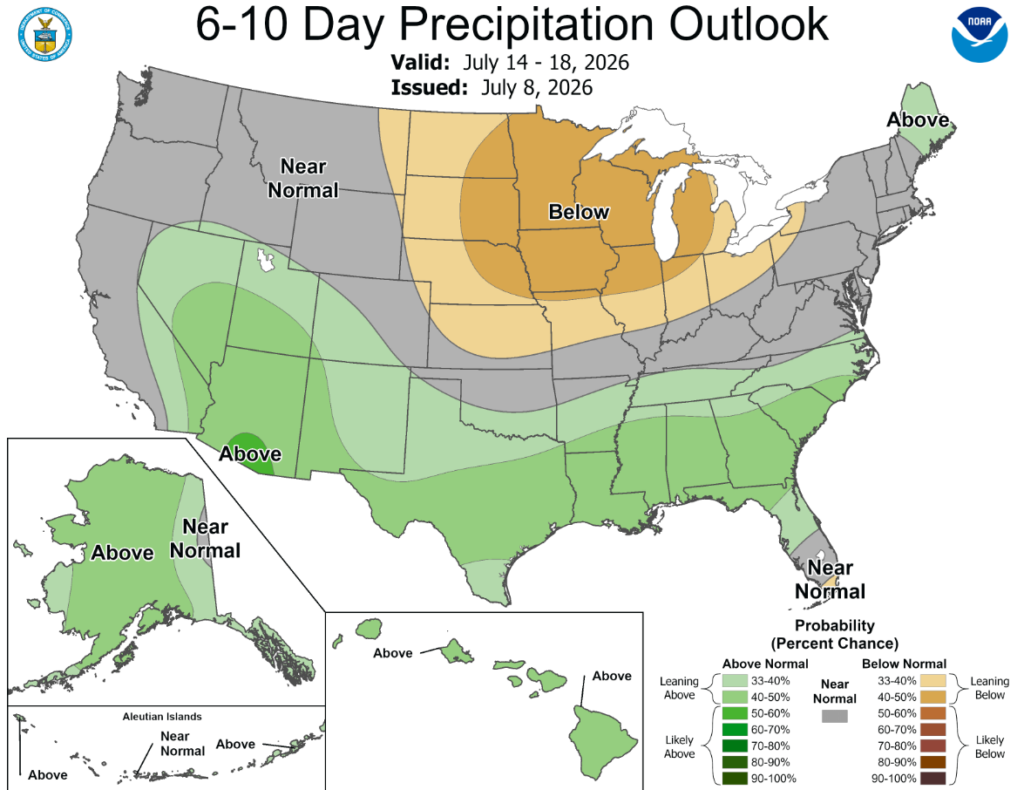
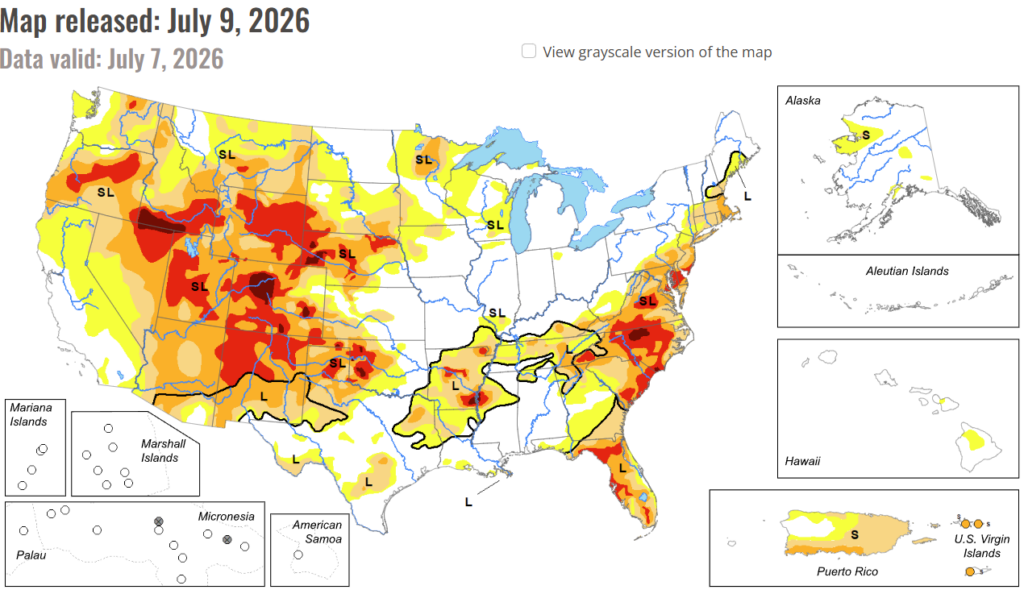
This is especially important during drought, when forage nitrate levels can become a concern for livestock.

"If there is drought, nitrate can accumulate in forage, and producers need to know whether their hay is safe to feed cattle," Chim said.

Practical recommendations for Oklahoma conditions

The laboratory does not simply return numbers. Its reports help connect laboratory analysis to field-level recommendations based on Oklahoma research, local field calibrations and years of Extension data, which matters because soil, crops, weather and growing conditions vary by state and region.

"If producers know what they have in the soil, they do not over-fertilize, which protects water and the environment," Chim said.

Forage testing can help producers evaluate feed quality; animal waste testing can help determine fertilizer value before it is applied in the field; and water testing can help clients better understand household, irrigation or livestock water.

"Our recommendations are based on science," Henderson said. "If someone sent a sample to a private lab, they might pay three times as much and wait longer." 

Keeping the testing service affordable is part of the lab's mission, with more than 90% of the lab's revenue generated from testing fees, which help cover personnel, equipment and other day-to-day costs. The result is a laboratory that functions as both a high-tech analytical facility and a practical service unit.

"Our goal is not only to analyze more samples, but to remain a trusted first choice for Oklahoma," Chim added. "The Soil, Water and Forage Analytical Laboratory is where science meets service."

OSU plans to build a new Agronomy Discovery Center, which will serve as the home for the testing lab. Updated facilities will create a modernized space for analytical testing and collaboration across Oklahoma. For more information on the lab, visit the soil testing website at https://extension.okstate.edu/programs/soil-testing.

OSU Agriculture is dedicated to improvingthe quality of life of Oklahomans through science-based information and education. It is comprised of the Ferguson College of Agriculture and two state agencies: OSU Ag Research and OSU Extension.
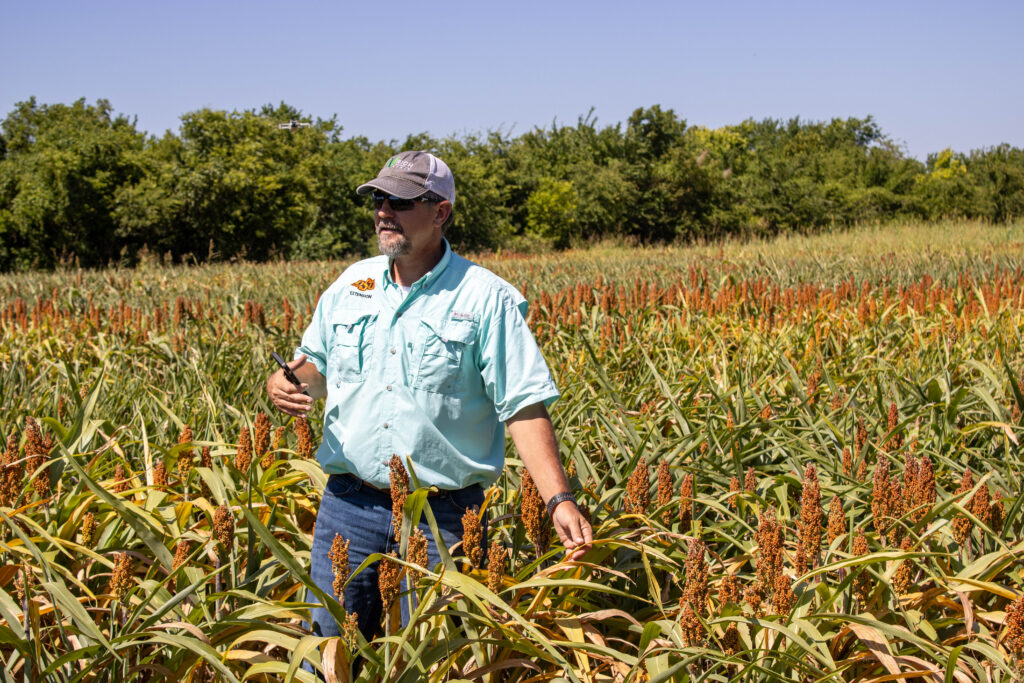
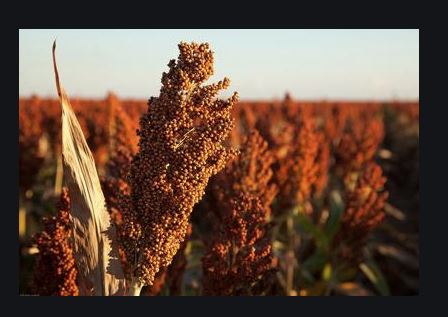
National Sorghum Foundation Names Annual Scholarship Class

 The National Sorghum Foundation is proud to announce the selection of three outstanding students as recipients of its 2026–27 academic year scholarships. Each award recognizes exceptional academic achievement, leadership potential and a commitment to advancing agriculture and the sorghum industry.

William Robinson, a second-year law student at Texas A&M University School of Law, is the recipient of the Bill Kubecka Memorial Scholarship. Robinson is focusing his studies on agricultural law, property law and public policy after earning degrees in agricultural journalism from the University of Missouri and agricultural studies from The Ohio State University. Raised on his family's livestock operation in east-central Missouri, he remains actively involved in agriculture while helping revive the Agricultural Law Club at Texas A&M. Through internships with the U.S. Senate Committee on Agriculture, a Texas litigation firm and the Texas Legislature, he is building a career dedicated to advancing agricultural policy.

Seth Cope, a senior at Texas Tech University, has been awarded the Bruce Maunder Memorial Scholarship. Cope is majoring in Plant and Soil Science with a concentration in Crop Science, where his studies and research center on sorghum improvement, drought tolerance and crop physiology. Working in Texas Tech's Crop and Forage Systems Lab, he has contributed to research on sorghum root architecture, heat stress and sustainable production systems, including the development of a low-cost 3D imaging platform for root phenotyping. Following graduation, Cope plans to pursue a graduate degree in agronomy or crop physiology, continuing research that will strengthen sorghum production and improve outcomes for producers.

Samantha Guzzetta, a rising senior at Texas A&M University, is the recipient of the Darrell Rosenow Memorial Scholarship. Guzzetta is majoring in Plant and Environmental Soil Science with an emphasis in Soil and Water and is actively involved as Legacy Affairs Chair for Sigma Alpha Professional Agricultural Sorority, a Soil and Crop Sciences Ambassador and a member of Texas A&M's College of Agriculture and Life Sciences Council. Raising livestock through FFA, Guzzetta developed a passion for agriculture that continues to shape her education and career goals. Following a summer internship with Georgia-Pacific as an environmental engineering intern, she plans to pursue a career in environmental health and safety while advocating for the importance of agriculture in everyday life.

"As part of the foundation's mission, we are committed to supporting students with a passion for agriculture, especially those who show promise in advancing sorghum research, production or advocacy," National Sorghum Foundation Chairman Jeff Dahlberg, Ph.D., said. "William, Seth and Samantha represent the next generation of agricultural leaders, and we are proud to invest in their futures as they work to strengthen agriculture and the sorghum industry."

Each scholarship provides a $1,500 award to help cover education-related expenses. In addition, the Bill Kubecka Memorial Scholarship offers Robinson the opportunity to travel to Washington, D.C., with National Sorghum Producers for firsthand experience with agricultural policy and federal decision-making.

For more information about the National Sorghum Foundation and scholarship opportunities, visit https://sorghumgrowers.com/foundation-scholarships/

POTUSA new companies graphic

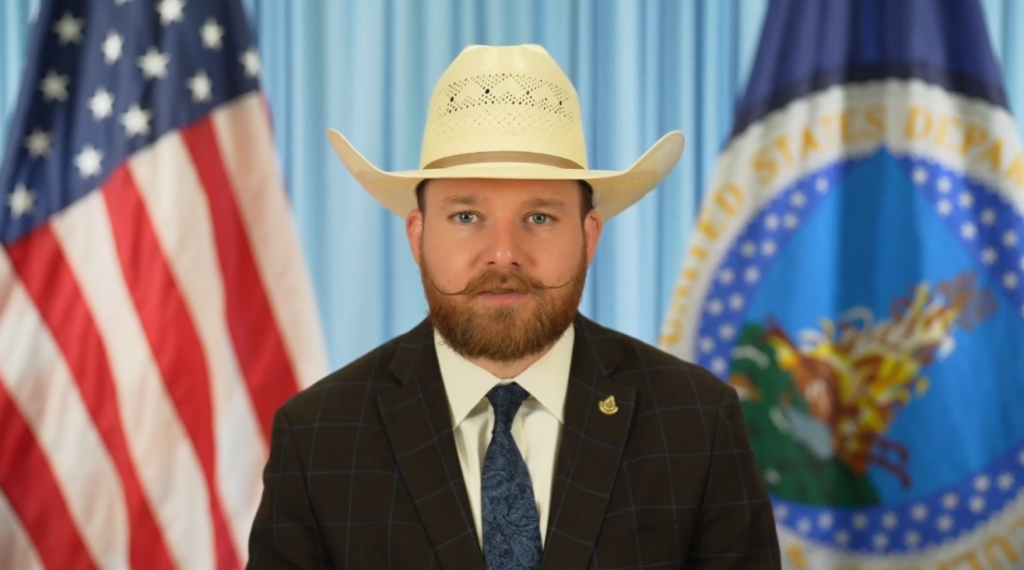
Secretary Rollins Announces Continued Growth of USDA's Product of USA Label with Six Additional Companies Joining Initiative

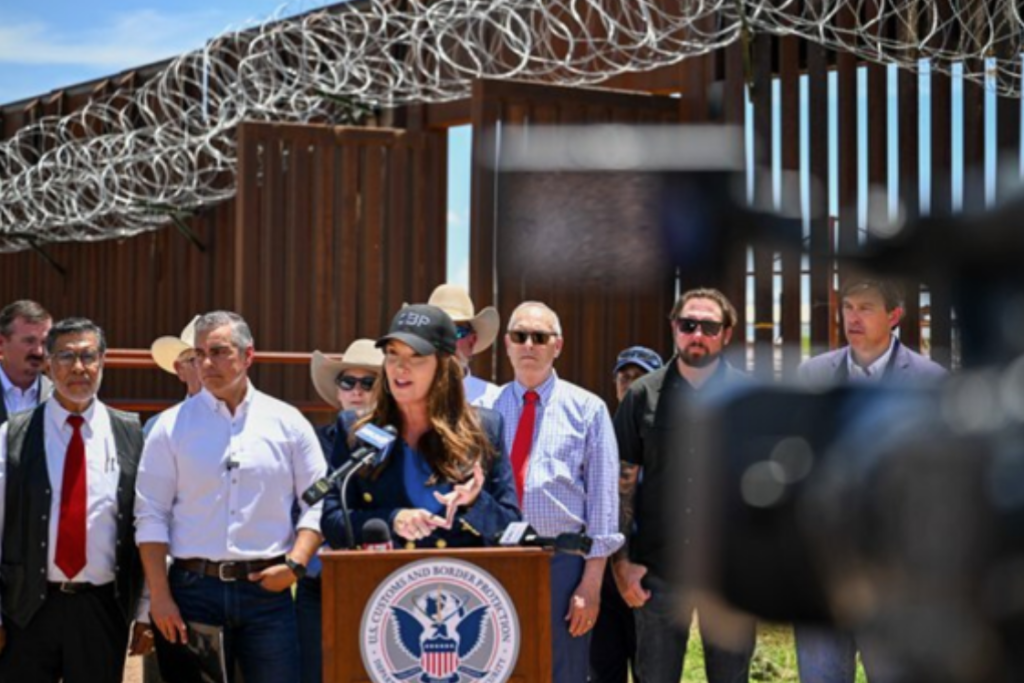
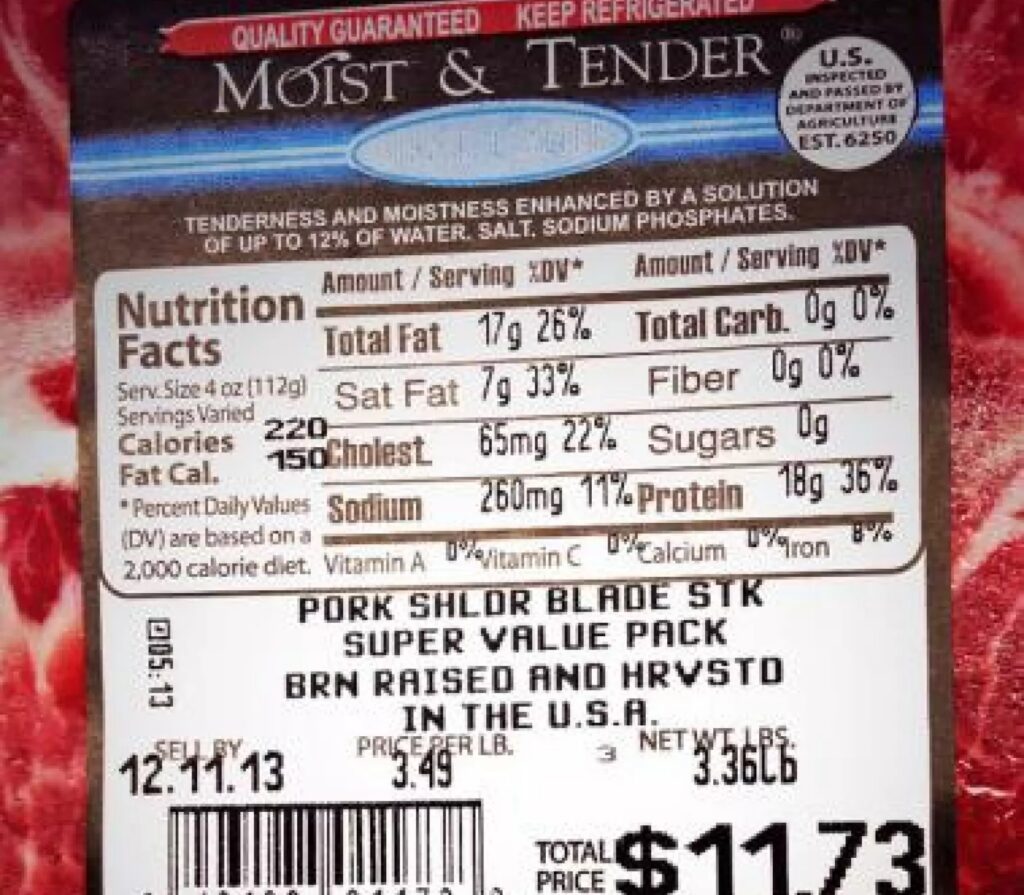
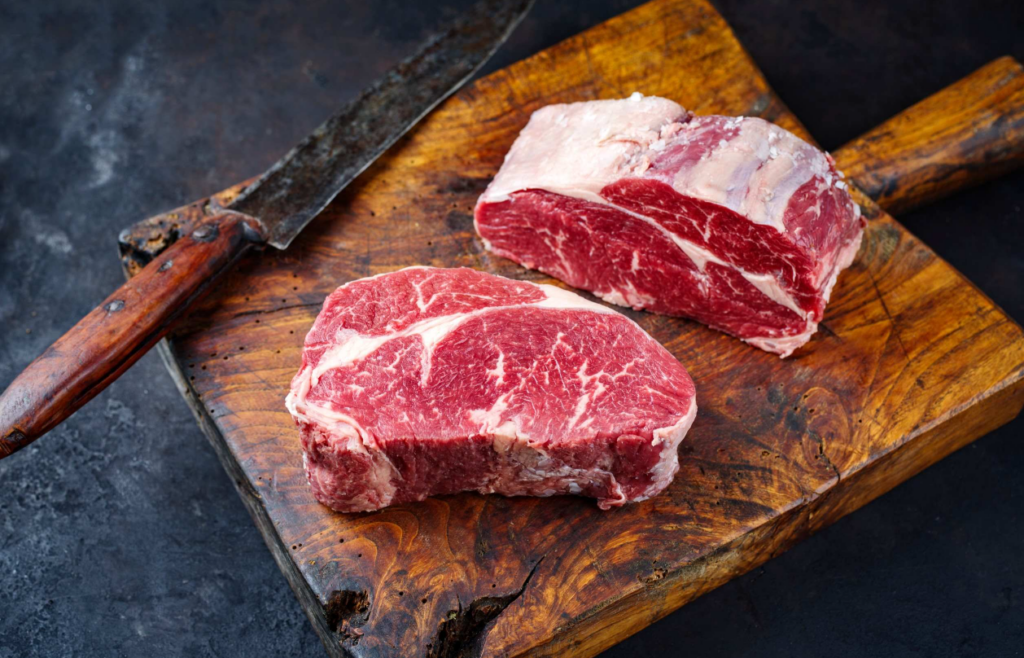
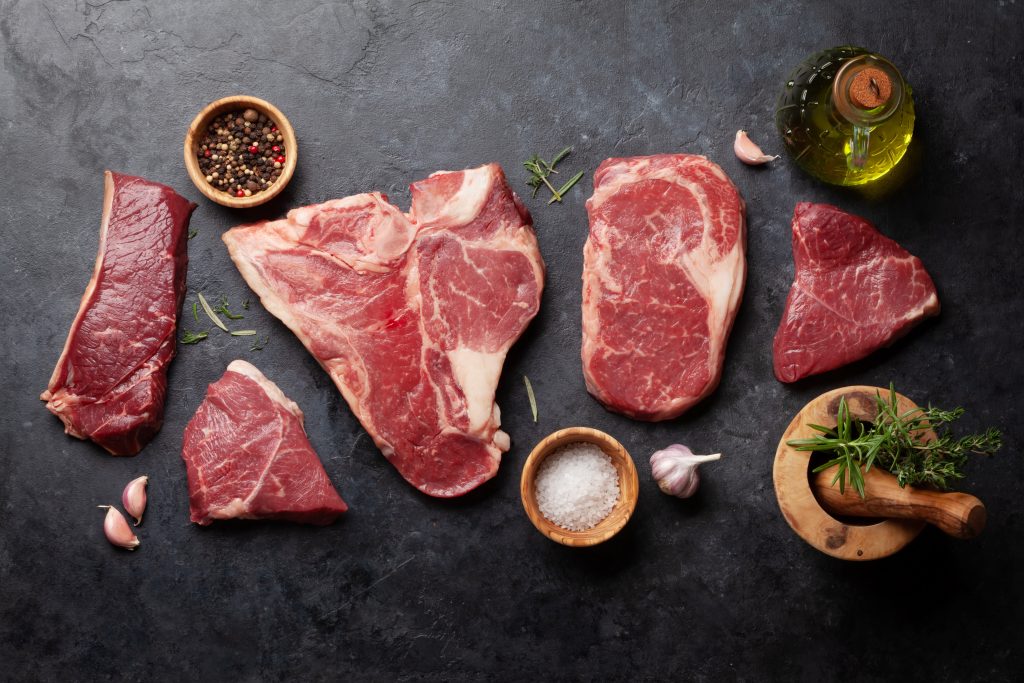
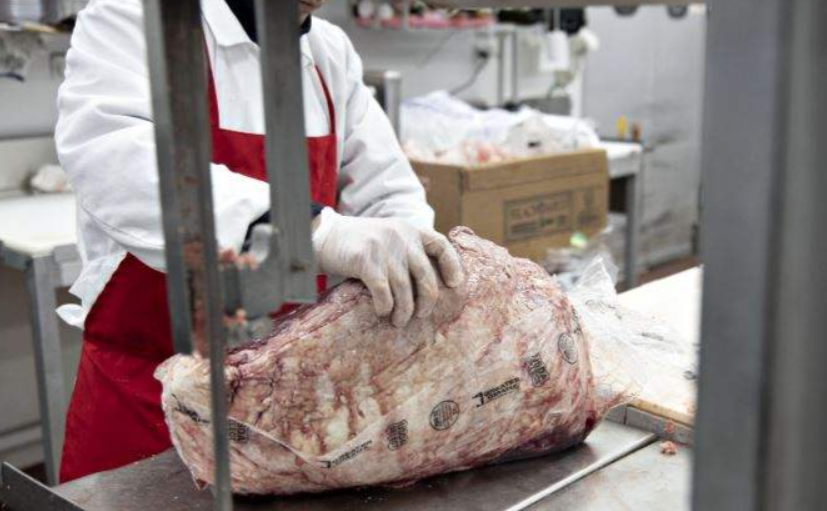
 U.S. Secretary of Agriculture Brooke L. Rollins today announced six additional meat and poultry companies have adopted USDA's voluntary Product of USA (POTUSA) label, continuing the strong momentum behind the Trump Administration's efforts to help consumers easily identify products that are truly born, raised, harvested, and processed in the United States.

As more processors adopt the Product of USA label, American families have greater confidence that when they purchase products bearing the claim, they are directly supporting American farmers, ranchers, processors, and rural communities.

"Product of the USA label is a win for American farmers, ranchers, processors, and consumers alike, and we are continuing to see companies respond to this demand," said U.S. Secretary Brooke Rollins. "American consumers want to know where their food comes from, and they deserve labels they can trust. Every new company that adopts Product of USA is helping strengthen rural America, create new market opportunities for U.S. producers, and make it easier for families to support American agriculture every time they shop."

The newest companies to adopt USDA's Product of USA label include:

  • Creekstone Farms – Kansas
  • Caviness Beef Packers
  • CS Beef Packers – Texas
  • Greener Pastures – Texas
  • Lone Star Beef Processors – Texas
  • Claxton Poultry Farms – Georgia


The continued expansion of the Product of USA label complements President Trump's and Secretary Rollins' broader strategy to strengthen America's livestock industry by supporting independent ranchers, family farmers, and domestic meat and poultry processors. By creating new market opportunities for products that are fully American from pasture to plate, USDA is helping producers and processors compete, grow, and meet rising consumer demand for American-raised meat.

The Product of USA initiative also complements USDA's Strengthening Processing for U.S. Ranchers (SPUR) Program, a $500 million investment to help eligible small- and mid-sized beef processors preserve and expand domestic processing capacity. Together, these efforts are strengthening America's meat supply chain, expanding opportunities for U.S. producers, and increasing consumer access to high-quality American-raised products.

USDA continues to receive strong interest from processors across the country, with additional companies expected to adopt the Product of USA label in the coming months as consumer demand for authentic American-produced meat and poultry continues to grow.

OSU Strategic Plan and $2 Billion Campaign Drive Future Growth on the Latest Hess Address

In a recent "Hess Address" segment, Oklahoma State University President Dr. Jim Hess outlined the university's ambitious strategic vision for 2031, major campus facility investments, and progress on a $2 billion comprehensive fundraising campaign that recently reached its $1 billion milestone.

From expanding lower-division course offerings in Tulsa to constructing state-of-the-art research and veterinary facilities, OSU is positioning itself for transformational growth while keeping student success and extension outreach at the forefront.

Strategic Vision and the Student Experience Trifecta

Approved by the board following a development process that began last November, OSU's strategic plan incorporates input from several hundred participants across all system campuses, including Stillwater, Oklahoma City, Tulsa, and Okmulgee. Built around eight overarching goals, the plan establishes a five-year roadmap aimed at making OSU the premier land-grant institution by 2031.

"We wanted it to be a bottom-up, ground-level development of a strategic plan," Dr. Hess said. "You kind of start off with the vision of what is it that we can do that will make OSU the best land-grant university that it can possibly be, and what would it look like in the year 2031."

At the core of this strategy is a three-part support structure designed to ensure every student achieves long-term professional and personal success:

  • Academic Counseling: Every student receives dedicated guidance to manage their academic degree path.
  • Career Readiness Counseling: Counselors work directly with students to build professional, cultural, and communication skills—such as pitching concepts, making proposals, and adapting to different work environments—going far beyond simple resume preparation.
  • Alumni Mentorship: OSU is leveraging its network of approximately 275,000 active alumni to pair students directly with working professionals in their desired fields, providing real-world guidance and career connections.

"What we want our employers to know is that when they hire an OSU grad, they know exactly what they're getting," Dr. Hess emphasized. "They get someone who has great technical skills and is academically prepared, but they also have professional and cultural skills to be able to adapt to the work environment and be successful."

Dr. Hess also noted the value of outside perspective for college students:

"Sometimes students will listen to other people more often than they'll listen to their parents," Dr. Hess joked. "Sometimes a student will take advice from someone other than their parents that they really need to hear."

Expanding Extension and Tulsa Campus Reach

Highlighting the land-grant university's broad outreach footprint, Dr. Hess explained that Oklahoma State University's statewide presence through OSU Extension remains a primary focus of the new five-year roadmap. "There's one of the things that makes us unique as compared to other institutions is that we're in all 77 counties of this state," Dr. Hess stated. "We also are going to be focused greatly on expanding and enhancing our extension program."

He noted that while collegiate sports frequently receive national visibility as a university's main entrance, extension specialists provide the true daily connection to Oklahomans across every community. "Athletics is the front door of the university, but really from a practical matter, the truth is Extension is the front door to the university," Dr. Hess said. "Because we are on the ground, on the frontline, every day in our Extension programs, and so we're going to be focusing a lot of attention on Extension."

Major Investments in Research and Veterinary Medicine

OSU is making substantial capital investments to strengthen its research infrastructure and land-grant mission:

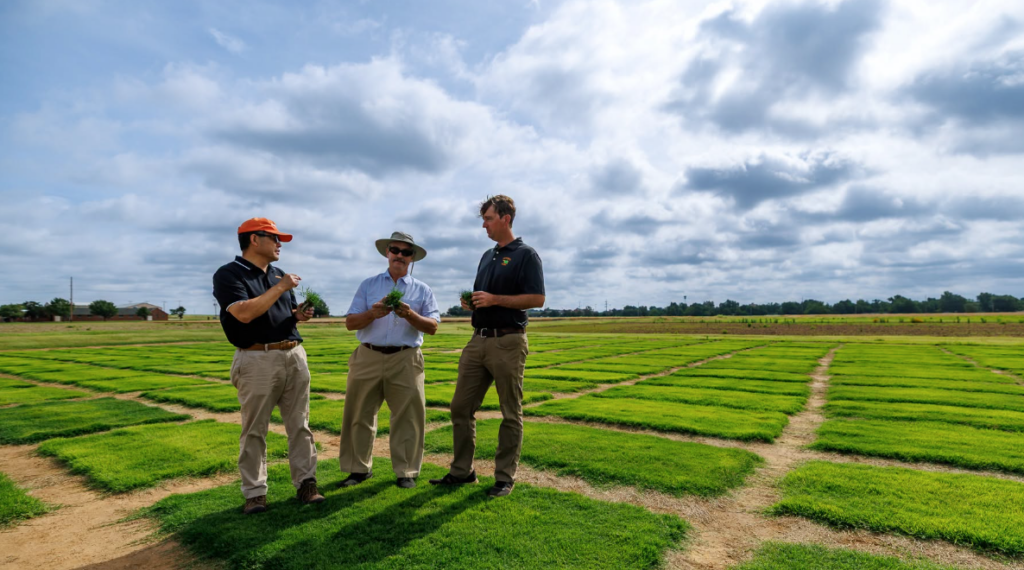
  • $50 Million Agronomy Discovery Center: Funded during the last legislative session, this new facility will support Dr. Brett Carver and his agronomy team. Dr. Hess highlighted the global impact of OSU's turfgrass and wheat breeding programs, noting that OSU-developed turfgrass varieties have been utilized in major venues worldwide, including the Super Bowl and World Cup host venues featuring Tahoma 31 grass developed by Dr. Wu.
  • $329 Million Veterinary Teaching Hospital: OSU is finalizing design plans for a new veterinary hospital facility.
  • Veterinary College Leadership: Dr. Richard Prather, a Shattuck, Oklahoma native with over 35 years of rural veterinary experience, officially assumed the role of Dean of Veterinary Medicine on June 30 after being appointed in April. Under his leadership, the Animal Teaching Hospital recently recorded its best operational month in several years.

"Dr. Carver is such a humble guy that people forget that he's world-renowned," Dr. Hess remarked. "A lot of these major stadiums—the Super Bowl was played on OSU turfgrass... that agronomy research is really, really important to us."

Regarding Dean Prather's impact at the veterinary college, Dr. Hess added:

"He understands exactly the problems and the challenges of practicing rural veterinary medicine. He is a walking billboard for what OSU's veterinary college should produce."

Reaching the $1 Billion Campaign Milestone

OSU's $2 billion comprehensive campaign crossed the $1 billion threshold in June. A primary focus of the remaining fundraising push is building a $500 million scholarship endowment.

"We have a two-billion-dollar goal in our comprehensive campaign, and we just crossed the one-billion-dollar mark in June," Dr. Hess shared. "Mr. Pickens, when he was alive, wrote a book titled The First Billion is the Hardest. I would never disagree with Boone, but I must say that the second billion is going to be the hardest for us."

He emphasized the drive behind the campaign's scholarship initiative:

"We want every student who's qualified and has a great work ethic to receive a scholarship to come to Oklahoma State University. Higher education is the best method of altering the trajectory of someone's life, but sometimes the financing of that can be a challenge for families."

Fall Semester Momentum, Football, and Cowboy Spirit

As students return to campus, OSU is preparing for a busy fall lineup across academics, performing arts at the McKnight Center, and sports programs.

"If you want to do something every day or every evening, Stillwater's the place to be," Dr. Hess said. "There is something going on every single day and every single night... It's so invigorating to see the enthusiasm of these students when they arrive."

The conversation closed on a high note of Cowboy pride as Dr. Hess shared his excitement for the upcoming athletic season after watching football practices firsthand, highlighting players like Drew Mestemaker and wide receiver Chris Barnes.

"I promise you that we're going to have an exciting football season," Dr. Hess said. "Now, we have a challenge ahead of us. Our home opener is with those sorry Ducks from Oregon, so we have some books to balance. I'm hoping that we can send the Ducks home with their wings clipped... We have such a loyal fan base that they deserve to have a great season."

With high energy across academic and athletic programs alike, Dr. Hess signed off with a clear message for Cowboy Nation:

"Go Pokes!"

USDA Invests $52 Million in 19 Projects to Expand Wildlife Conservation, Outdoor Access

The U.S. Department of Agriculture (USDA) is investing $52 million in 19 projects to increase public access to private lands for wildlife-dependent recreation while benefiting farmers, ranchers and private landowners. Through the Voluntary Public Access and Habitat Incentive Program (VPA-HIP), USDA's Natural Resources Conservation Service (NRCS) is helping state and tribal governments encourage private landowners to allow public access to their land for hunting, fishing and other wildlife-dependent recreation.

"As the Chief of NRCS, one of my top priorities is to expand wildlife conservation and outdoor access; the Voluntary Public Access and Habitat Incentive Program is a key part of our strategy to execute that priority," said NRCS Chief Colton L. Buckley. "This program – made possible by the Working Families Tax Cuts Act – prioritizes farmers and ranchers while strengthening rural economies through support of wildlife conservation and outdoor recreation. These projects encourage landowners to allow the public to access their land for hunting, fishing, and other wildlife-dependent recreation."  

The Working Families Tax Cuts Act restored funding for VPA-HIP, enabling NRCS to offer the competitive grant program for state and tribal governments.  

A few examples of projects include:  

  • Arkansas Game and Fish Commission's Waterfowl Rice Incentive Conservation Enhancement Program: Continues an existing VPA-HIP project that provides financial incentives to rice producers near select wildlife management areas and national wildlife refuges to increase public waterfowl hunting access on private rice fields and wetland reserve easements while improving wildlife habitat. This program helps retain, recruit and reactivate hunters and wildlife-related recreationists while providing incentive payments to rice farmers.  
  • Montana Department of Fish, Wildlife and Parks' Open Fields for Game Bird Hunters: Expands this Montana program that provides access for walk-in game bird hunters on acres enrolled in USDA conservation programs and other high-quality game bird habitats. Montana has ample resident and visiting game hunters, and this sport brings critical revenue to rural communities while providing incentive payments to participating landowners.  
  • North Dakota Department of Game and Fish's Private Lands Open to Sportsmen (PLOTS): Expands PLOTS, which provides walk-in hunting access statewide on lands participating in USDA programs. A one-time, up-front incentive payment is made to the landowner for each year their property will be in the PLOTS program, usually the years remaining in their USDA contract.

See a list of all projects here. Also, watch Chief Buckley discuss VPA-HIP in this video.

Projects are up to three years. Selected projects will receive from $1.5 to $3 million in funding. Project sponsors can use up to 25% of funds to provide incentives to landowners to improve wildlife habitat on enrolled public access program lands.
 
For more than 90 years, NRCS has helped farmers, ranchers and forestland owners make investments in their operations and local communities to improve the quality of our air, water, soil, and wildlife habitat.  NRCS uses the latest science and technology to help keep working lands working, boost agricultural economies, and increase the competitiveness of American agriculture. NRCS provides one-on-one, technical advice and financial assistance and works with producers to help them reach their goals through voluntary, incentive-based conservation programs. For more information, visit nrcs.usda.gov.  

Cow Calf Corner Paul Beck: Rate and Delivery of Supplements for Grazing Calves

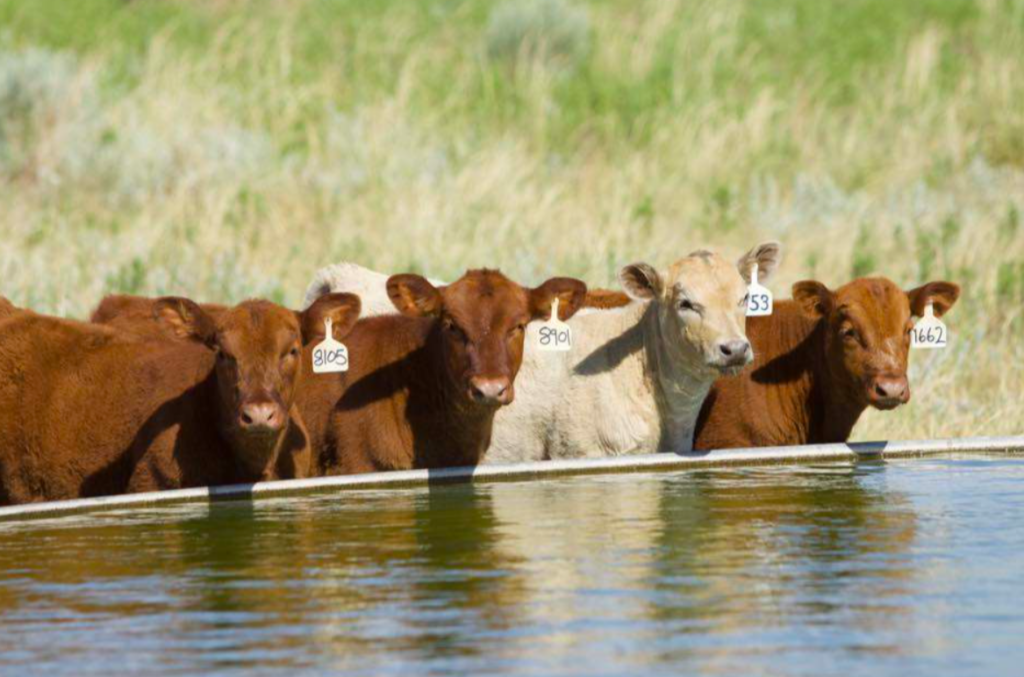
Last week we discussed the changes in forage quality for grazing stocker calves and selecting the right supplement to match the calf's needs and pasture deficiencies (When Summer Grass Starts Running Out of Gas, Cow Calf Corner July 20, 2026). After selecting the right type of supplement, the next decisions are how to deliver it and how much to feed. Supplement rate should be based on the production goal, forage conditions and expected response, not simply on the amount printed on a feed tag.

Feeding 1 or 2 pounds/day of high-protein supplements can be very effective for calves grazing late-summer pastures when adequate forage is still available. Across OSU summer-grazing studies, low-rate supplementation commonly increased average daily gain by about 0.5 to 0.8 pound per day. The average response was approximately 0.56 pound per day, requiring about 2 to 3 pounds of supplement for each additional pound of gain.

Increasing supplement rate can produce additional gain, but efficiency usually declines. In OSU research conducted on western Oklahoma rangeland, feeding 2 pounds per day of dried distiller's grains (DDG) cubes increased gain by 0.6 pound per day compared with unsupplemented steers. Feeding 4 pounds increased gain by 0.8 pound per day, only 0.2 pound more than the 2-pound rate. Feeding 6 pounds increased gain by 0.95 pound per day, only 0.15 pound more than the 4-pound rate. Thus, each additional pound of supplement produced a smaller increase in gain. At higher feeding rates, part of the added supplement replaces forage rather than adding to total intake. This substitution effect can be useful when the objective is to increase stocking rate in a normal year or maintain cattle numbers when forage is limited, but it changes the economics.

Delivery method also matters. Hand-fed cubes generally provide more uniform intake and make it easier to control the dose of minerals and feed additives. Self-fed tubs can reduce labor and delivery costs, but their higher purchase price must be balanced against those savings. In a recent OSU comparison, cattle fed extruded distiller's grains in self-fed tubs provided once per week or as cubes fed 3-times per week had similar gain and supplement intake. However, the tub cost substantially more per pound of feed. Self-feeding became competitive only when savings in travel and labor offset the greater feed cost.

Supplementation is a powerful tool but must be tailored to meet specific objectives. The response to supplementation depends on forage availability and quality. Producers must decide whether the objective is correcting a protein deficiency, increasing individual gain, stretching forage, increasing carrying capacity, or delivering a feed additive. The most profitable rate is not always the highest rate—it is the rate that produces the desired response at an acceptable cost.

We discuss the changes in forage quality during the late summer and selecting the right program to support your herd and management goals on SunUpTV from July 18, 2026. https://www.youtube.com/watch?v=uN7jOrC_YhI&t=78s

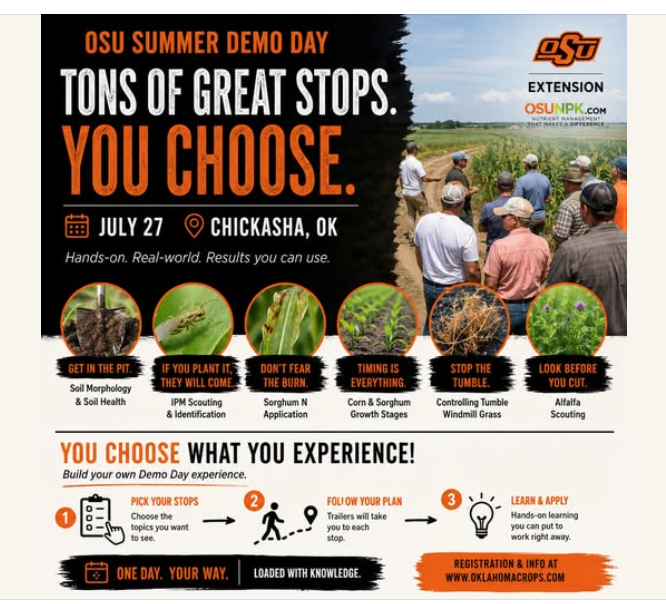
OSU Extension Demo Day Gives Oklahoma Producers Hands-On Look at Crop, Soil and Irrigation Management

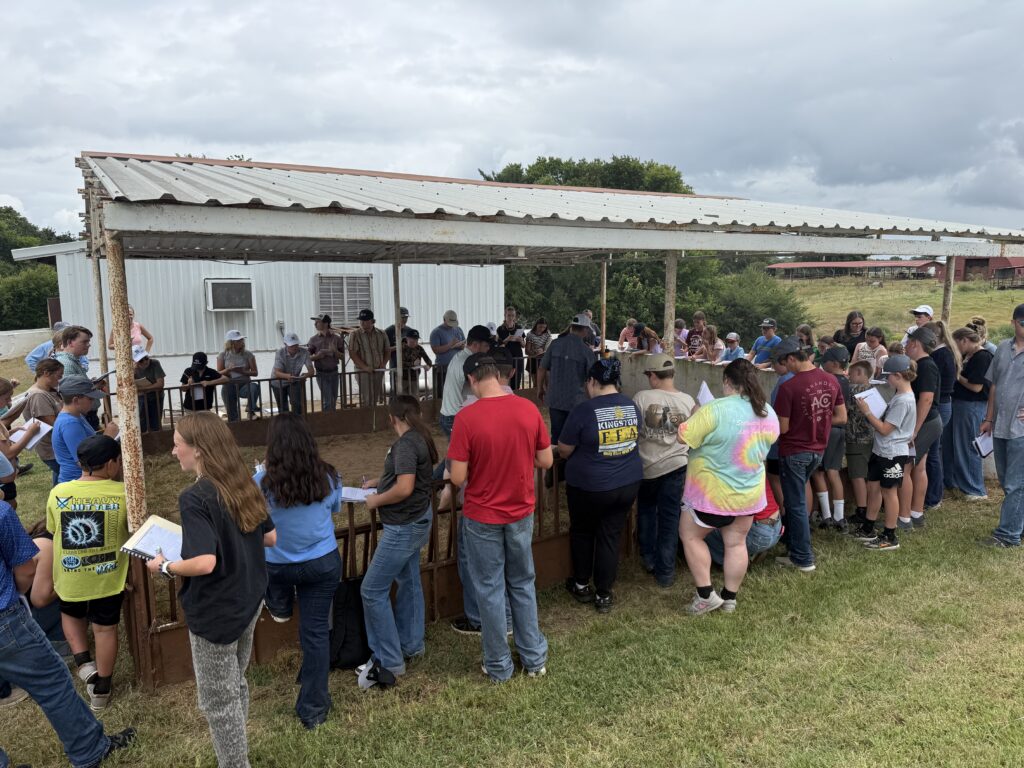
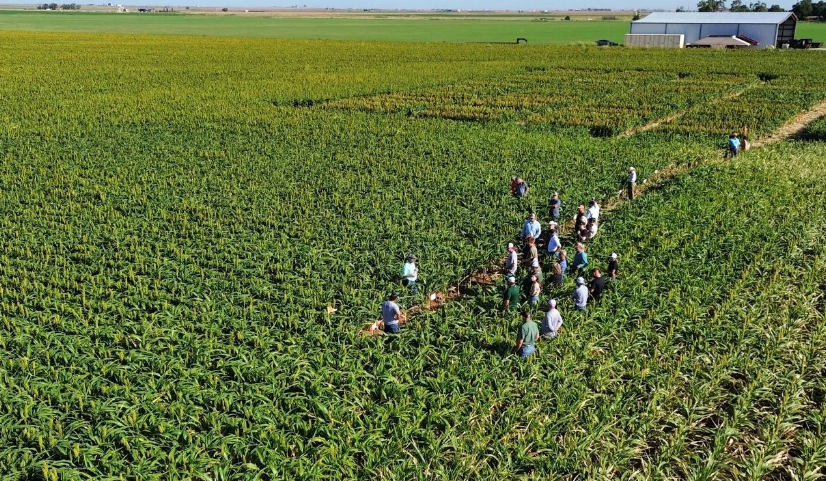
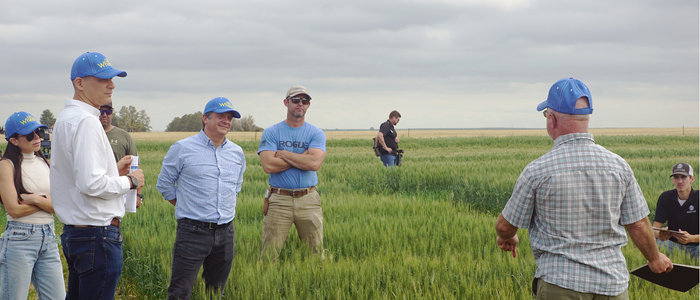
Oklahoma State University Extension specialists gave farmers and agricultural professionals a hands-on look at crop production, pest management, soil health and irrigation technology during the recent OSU Extension Demo Day in Chickasha.

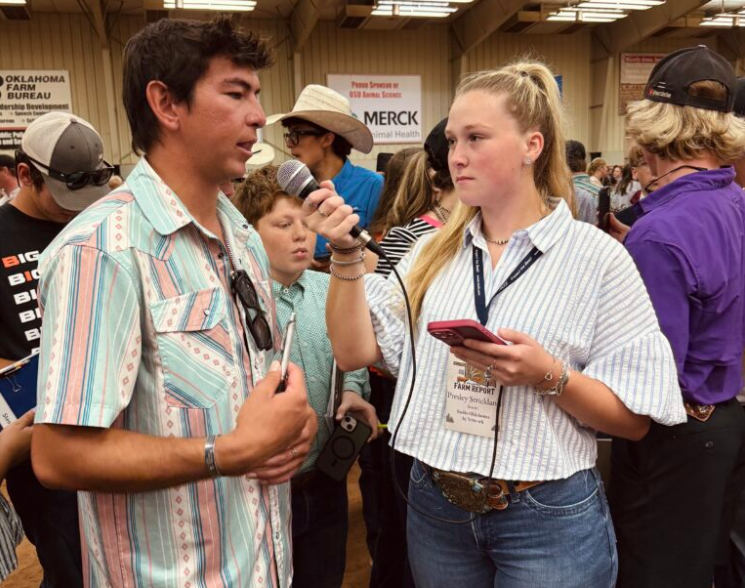
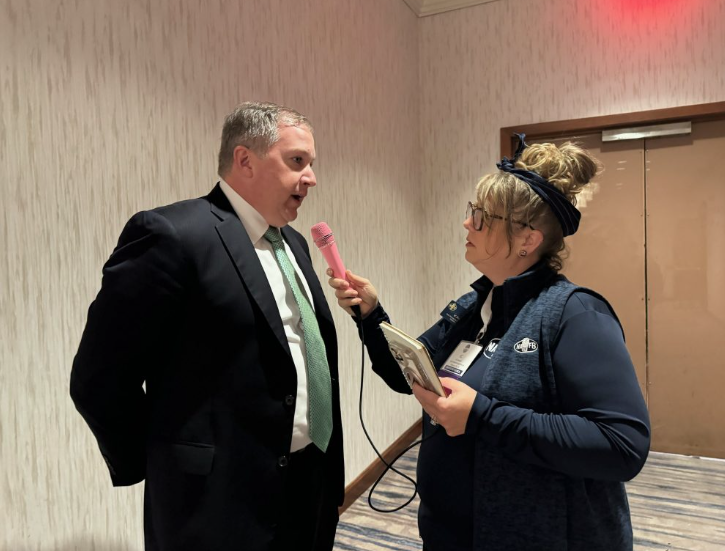
Oklahoma Farm Report intern Haden Snelson spoke with OSU Extension specialist Brian Arnall during the event about the demonstrations available to attendees and plans to expand the program in the future.

"We had a great range of demonstrations," Arnall said.

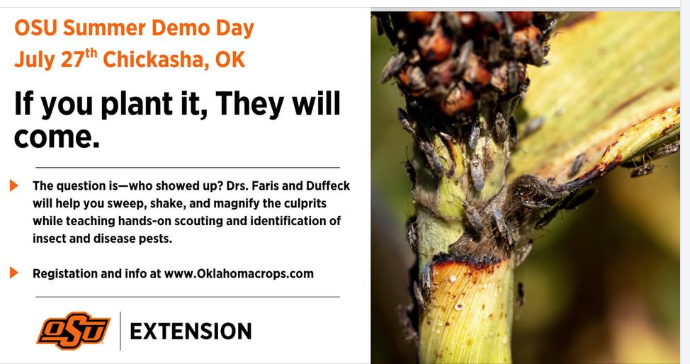
One stop focused on integrated pest management, commonly known as IPM. Participants learned how to scout fields for insects and diseases using methods ranging from visual observation to tools such as drop nets.

Other demonstrations helped producers identify crop growth stages and understand how those stages can influence management decisions throughout the growing season.

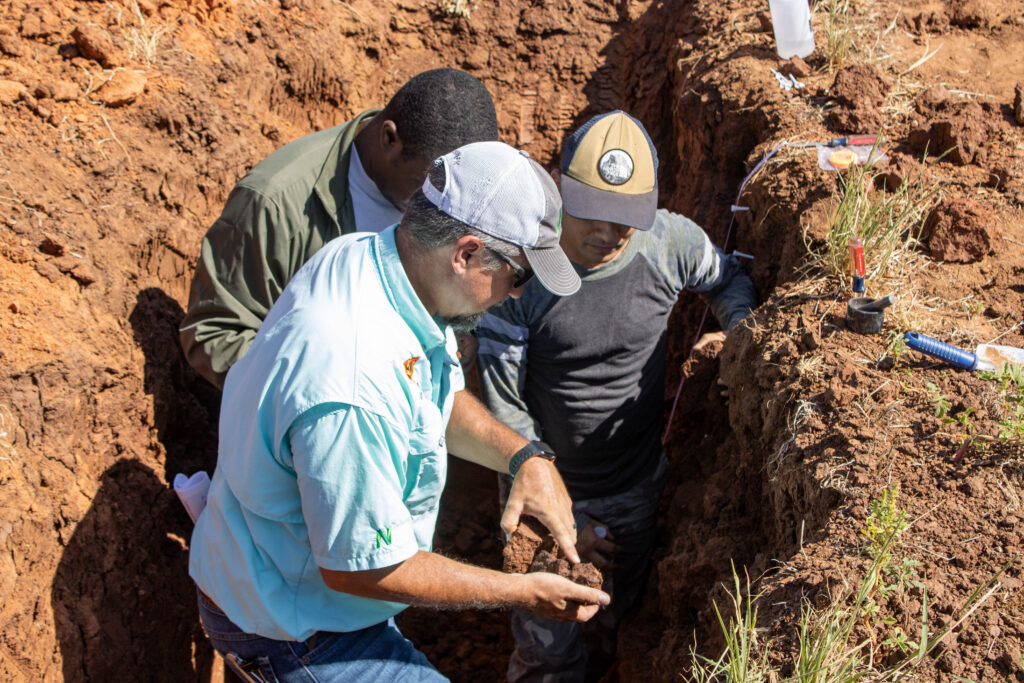
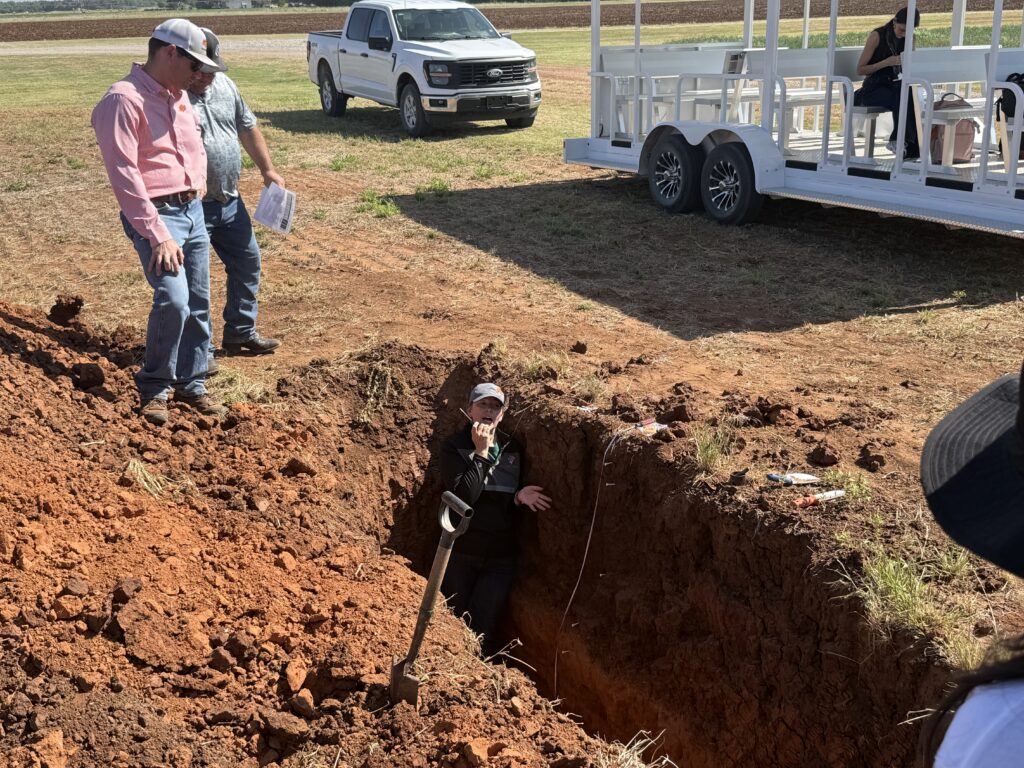
"I think one of the fan favorites was the soil pit," Arnall said.

The soil pit demonstration gave attendees a belowground look at how soils form and how different layers can affect crop production. Additional stops covered corn ear development and methods for controlling tumble windmill grass.

Producers also had an opportunity to learn more about evaluating declining alfalfa stands. Arnall said the demonstration placed participants in an alfalfa field and challenged them to determine whether the field should remain in production or be terminated and rotated to another crop.

Water management was another major focus of the event. Demonstrations covered both agricultural spraying and irrigation systems, including spray-tip selection and irrigation nozzle performance.

"We got to see really a lot of the water tech, both sprayer and irrigation side," Arnall said.

Arnall said attendance was close to what organizers expected for an event held during the middle of July. Demonstrations were divided among three trailers, with organizers seeking to keep each group to roughly 20 people.

"The big goal was that no more than about 20 people per stop, because we wanted to keep it small and intimate where the questions were flowing, and we really had that," Arnall said. "People were wandering around, really getting hands on and getting to see what we're doing."

OSU Extension is already planning additional Demo Day events. Arnall said a spring event is expected to take place in Lahoma when sorghum is beginning to emerge.

"We want wheat, corn, canola, sorghum, soybean," Arnall said. "We're going to go through all the crops."

Organizers also plan to continue the program into the summer and take the event to a different part of Oklahoma in 2027. Arnall said a location has not yet been selected, but the next Demo Day could potentially move toward southeastern Oklahoma.

Search Committee Named for Next West Texas A&M University President

The Texas A&M University System has named an 11-member search advisory committee and retained Parker Executive Search to help identify the next president of West Texas A&M University.

Regent Randy Brooks will chair the committee, which includes Regent Sam Torn and representatives of WT's faculty, staff and student body, as well as business, civic and community leaders from the Texas Panhandle.

"West Texas A&M University has a clear responsibility to its students and to the people of the Panhandle," Brooks said. "Our job is to find a president who understands that responsibility, respects the character of WT and has the experience and judgment to lead the university forward. We intend to conduct a thorough national search and bring strong candidates to the chancellor and the Board of Regents."

Parker Executive Search, a firm with extensive experience conducting leadership searches for colleges and universities, will assist the committee with candidate recruitment and evaluation throughout the national search.

The search follows President Walter V. Wendler's announcement that he will retire Sept. 1 after 10 years as president. Neil Terry, WT's longtime executive vice president and provost, will become interim president Sept. 1 and does not intend to seek the permanent position.

"WT's next president must put students first and understand that the value of a university is measured by the opportunities it creates for its graduates and the service it provides to its region," Chancellor Glenn Hegar said. "We are looking for a proven leader who will strengthen academic quality, keep a WT education affordable, prepare students for good careers and build partnerships that help the Panhandle and Texas prosper."

The search advisory committee members are:

·       Regent Randy Brooks, chair

·       Regent Sam Torn

·       Alex Fairly, founder and executive, The OccuNet Company

·       State Rep. John Smithee, attorney, Smithee Russell Law LLP

·       Ben Weinheimer, president and CEO, Texas Cattle Feeders Association

·       Angela Spaulding, WT vice president for research and compliance and dean of the Graduate School

·       Emily Hunt, dean of WT's College of Engineering and associate vice president for innovation and research

·       Ammileigh Smith, student body president

·       John Bassett, WT Staff Council president and assistant bursar

·       Audrey Meador, Clair Mayes Professor of Mathematics and WT Faculty Advisory Council chair

·       Wade Shaffer, WT professor of history and former provost and vice president for academic affairs

The committee will help recruit and evaluate candidates and make recommendations to the chancellor and the Board of Regents.

Information about the position, including application and nomination procedures, will be released as the search progresses.

About West Texas A&M University

West Texas A&M University is a Regional Research University in Canyon, Texas, on a 342-acre residential campus, as well as the Harrington Academic Hall WTAMU Amarillo Center in downtown Amarillo. Established in 1910, the University has been part of The Texas A&M University System since 1990. WT boasts an enrollment of more than 9,000 and offers multiple options for students to graduate and succeed: 66 undergraduate degree programs, including eight associate degrees; and 44 graduate degrees, including an integrated bachelor's and master's degree, a specialist degree and two doctoral degrees. WT recently earned a Carnegie Foundation classification as a Research College and University. The Buffaloes are members of the NCAA Division II Lone Star Conference and offer 16 men's and women's athletics programs.

About The Texas A&M University System

The Texas A&M University System is one of the largest and most impactful higher education systems in the country, with an annual budget of $9.1 billion. Its statewide network includes 12 universities, a comprehensive health science center, eight state agencies, Texas A&M–Fort Worth and the Texas A&M–RELLIS Campus. The A&M System also plays a direct role in U.S. national security as a member of the contractor teams that manage and operate Los Alamos National Laboratory and the Pantex Plant for the U.S. Department of Energy's National Nuclear Security Administration. The A&M System serves nearly 175,000 students and reaches millions more through research, service and outreach programs each year. With nearly $1.6 billion in annual research expenditures, the A&M System fuels innovation, supports communities and drives Texas' economy forward.

Derrell Peel Says July Cattle Market Correction Doesn't Change Bullish Fundamentals

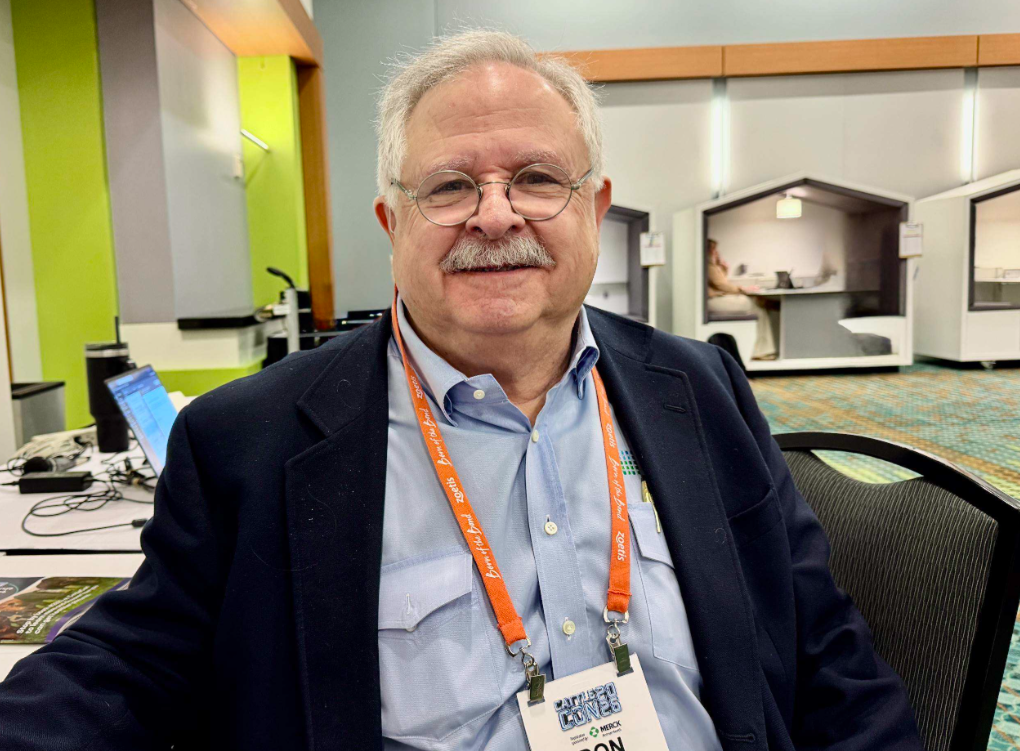
As July comes to a close, cattle markets have experienced a sharp correction that has caught the attention of producers across the country. In today's Beef Buzz, Senior Farm and Ranch Broadcaster Ron Hays speaks with Oklahoma State University livestock market economist Dr. Derrell Peel, who says despite the recent volatility, the long-term outlook for the cattle industry remains unchanged.

July Pullback Follows a Long Bull Market

Peel says the recent decline has been driven primarily by the futures market rather than a change in supply and demand fundamentals. "We've had a big correction here in the month of July, and it's really led by the futures market," Peel said.

He explained that corrections are a normal part of any prolonged bull market. "We've been in a long bull market for three years now, and so it's normal in the course of a bull market to periodically see a correction. Traders want to square up positions, take a little money off the table, reset some positions."

Seasonal trading patterns and computerized trading also played a role. "It's summertime now. I think part of this is summer doldrums," Peel said. "Once we start a correction, there's a technical element to it. Basically, the computers take over and kind of run the market for a short period of time."

Even so, Peel believes the market has likely found its footing. "I think we've about bottomed. Nothing's really changed in the market, and the fundamentals haven't changed. My outlook hasn't changed. This is just another correction."

Historically Tight Cattle Supplies Continue

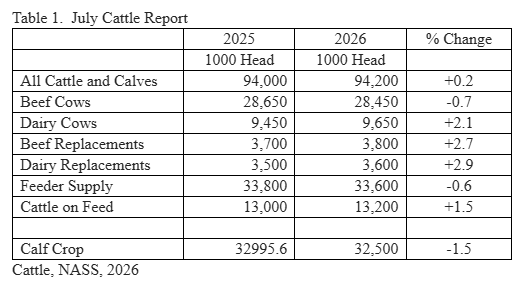
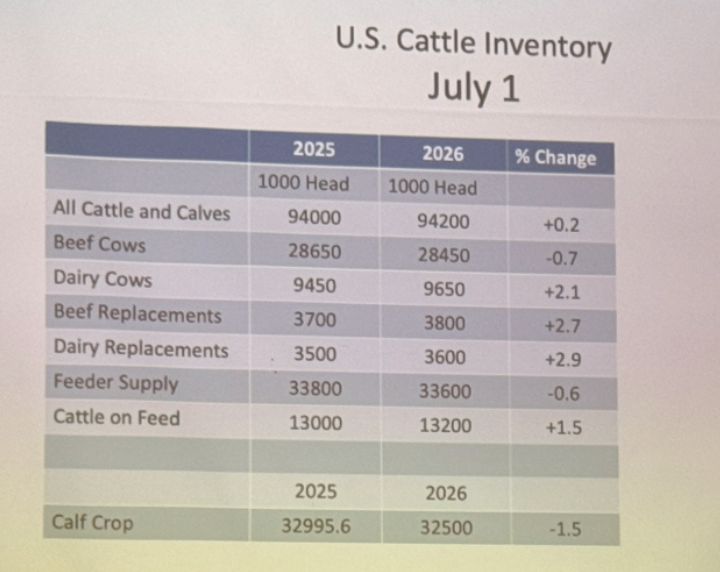
While futures prices have been volatile, Peel says the nation's cattle inventory continues to point toward higher prices over time. "We're historically tight," Peel said. "The first estimate of the 2026 calf crop... is down again, so that means that going forward, feeder supplies continue to get smaller."

Although producers are beginning to retain more replacement heifers, Peel says herd expansion remains a slow process. "We're holding a few more heifers to suggest maybe we're starting that process, but we're going to have to hold more at some point to really see significant herd growth, and that means we're going to squeeze supplies even more."

He expects declining beef production to continue well into next year. "Slaughter will continue to decline. Beef production will continue to decline for the rest of 2026, and at this point, 2027 is pretty well in the bag because we don't have enough heifers in the pipeline to really do anything in 2027."

Hays compared rebuilding the nation's cattle herd to steering an enormous ship. "It really does. This is a big battleship, and we're using rowboat oars here, and so it's just a very, very slow process to try to turn this thing."

Tight Supplies Continue to Impact Beef Trade

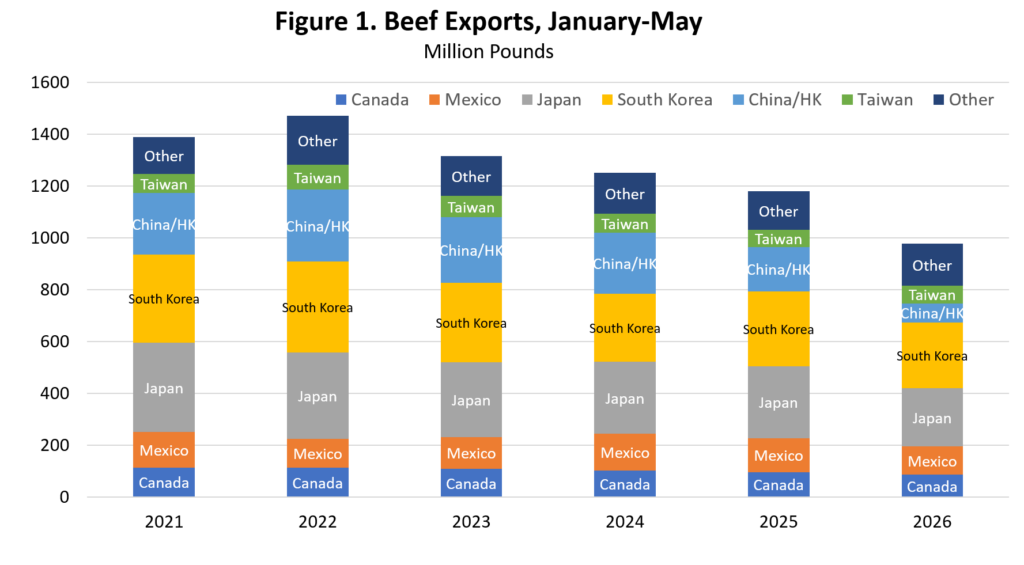
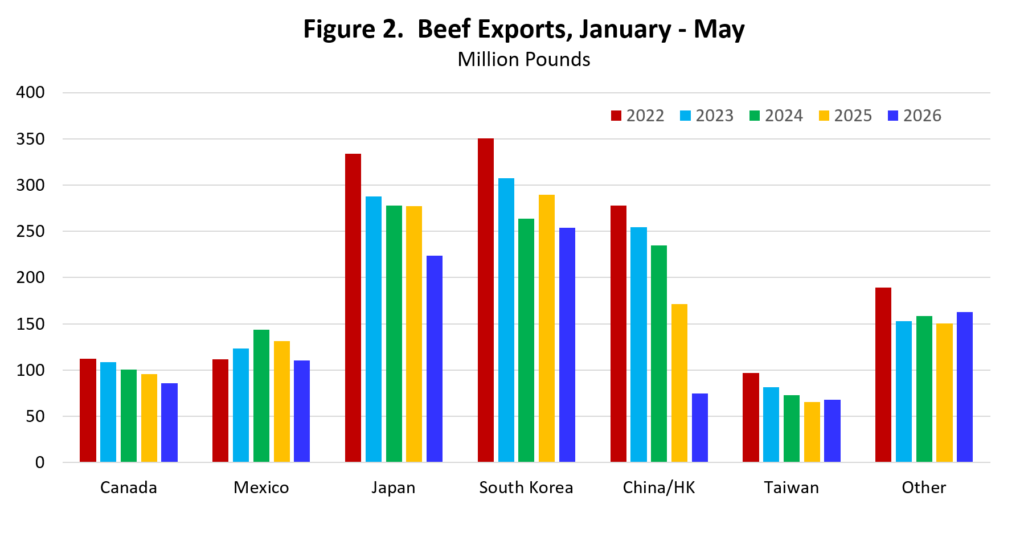
Peel says shrinking beef production has also reshaped U.S. beef trade. "The trade situation has evolved over the last three years exactly like you would expect relative to a market response," he said. "As beef production goes down, prices are at record levels... so you would expect that would moderate beef exports, and it has."

He noted that the loss of access to China has further reduced exports. "We're still not in the Chinese market at all at this point, and so that took a major export market down significantly."

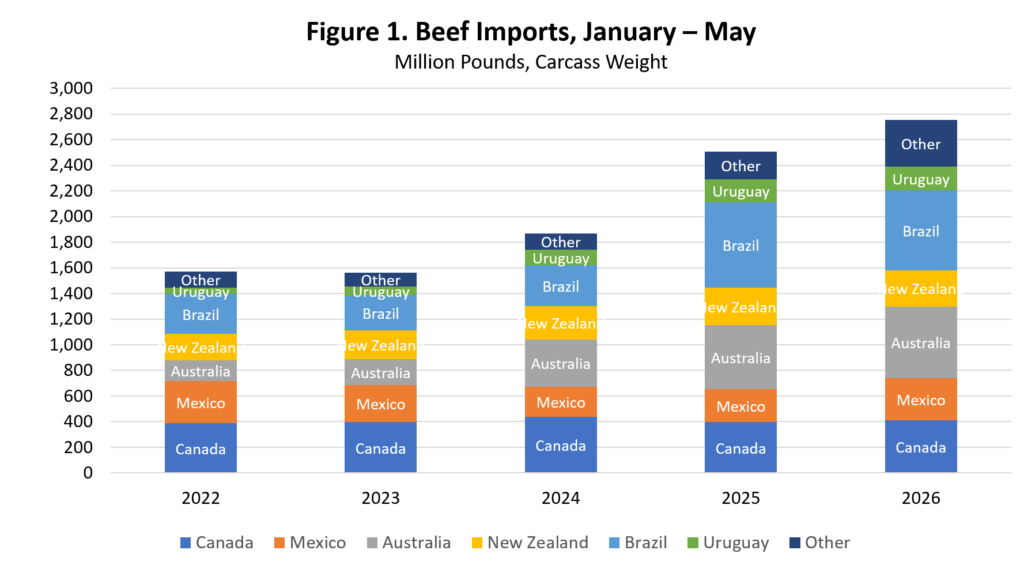
At the same time, imports have increased to help satisfy domestic demand for lean beef used in hamburger production. As beef production falls in the U.S., the relative decline in processing beef... is down the most proportionately, and that's the stuff we need for our ground beef market, so imports are up because of that."

Even though more imported beef is entering the U.S., Peel says it's filling a necessary supply gap. "We have to. Even in normal years we import beef to supplement those non-fed beef supplies in the U.S., but we're certainly doing it to a bigger extent right now."

The Beef Buzz is a regular feature heard on radio stations around the region on the Radio Oklahoma Ag Network and is a regular audio feature found on this website as well. Click on the LISTEN BAR above for today's show and check out our archives for older Beef Buzz shows covering the gamut of the beef cattle industry today.

What is Different About Financing a Cooperative?

Phil Kenkel writes in Southern Ag today: Most farmers and rural residents know that agricultural cooperatives are farmer-owned but don't think much more about their structure or how they are financed. While all businesses are financed by a combination of debt and owner equity, there are fundamental differences in financing a cooperative relative to a typical investor-owned business.

Typical Business Financing is Separate from Operations

Most businesses in the U.S. are owned by one group of individuals, the investors, and do business with another group, the customers.  Under this structure, it is logical to separate financing from operations. If the business is generating, or projected to generate, adequate profits, there should be a pool of outside investors willing to provide equity capital. This structure allows for business financing to be separate from operations and marketing.

Profits from typical businesses are returned to their owners and investors in the form of retained earnings, dividends, and stock buy-backs. Those profit distributions create the incentive for equity investment. Customers of these businesses (who are not investors) do not receive a share of the profits.

Cooperative Financing is Combined with Operations

Under the cooperative business model, cooperative customers are also owners. Due to this structure, identifying financing for a new cooperative cannot be separated from the process of identifying its customers. New cooperative organizers must simultaneously identify individuals to be both cooperative users and investors and established cooperatives must obtain all the capital they need for future expansion through their user-investors.

Cooperatives distribute profits to its owner-customers in proportion to use. Therefore, there is no direct benefit from owning equity in a cooperative, rather the rationale for equity ownership is related to the use of the cooperative. In traditional, open membership cooperatives, a portion of the profits are distributed in the form of equity, often called "stock patronage".  That equity is typically redeemed into cash by the cooperative at a later date and is thus referred to as "revolving equity".  Under this cooperative structure, equity ownership is accumulated as a by-product of using the cooperative. In other situations, such as processing cooperatives which are more capital intensive, the cooperative stock is combined with a usage right.  Under that structure the equity investment is a prerequisite to use.

Understanding Cooperative Equity Financing

Agricultural cooperatives are an important part of our rural landscape, with many of our legacy cooperatives having been in business for over 100 years. Understanding cooperative structures for acquiring and managing equity is key for continuing the cooperative business model. Merging the roles of users and investors has major implications for cooperative operations and planning. Groups who are interested in forming a cooperative must not only analyze the customer base, but they must also determine whether potential customers are interested in investing in a user-owned business. Established cooperatives must create systems to match use and investment on a long-term basis.

Having two stakeholder groups, investors and customers, sounds complicated while merging those two groups sounds simple.  In reality, the ownership element of the cooperative business model is more complicated relative to other firms.  Agricultural cooperatives create great benefits in keeping markets competitive and improving the financial results of their farmer-owners.  I view cooperatives as a better, but not necessarily simpler, business structure.


Kenkel, Phil. "What is Different About Financing a Cooperative?

Council of Bond Oversight Conditionally Approves Bond Financing for ACCESS Oklahoma Program

The Council of Bond Oversight conditionally approved the Oklahoma Turnpike Authority's request to issue bonds supporting the next phase of the ACCESS Oklahoma program. The application was programmatic in nature, providing financing for the broader ACCESS Oklahoma Program rather than a single project. The Oklahoma Turnpike Authority retains responsibility for allocating bond proceeds among eligible ACCESS Oklahoma projects as construction schedules, costs, and priorities evolve.

The Council of Bond Oversight voted to approve the application, subject to a list of 12 conditions that must be met by the Oklahoma Turnpike Authority and the competitively selected financing team.

"Today, the Council, complete in their capacity, did not approve or disapprove any specific project funding as per their responsibility. The only action conditionally approved financing for the ACCESS Oklahoma Program as authorized under state law," Treasurer Russ said. "The Council's responsibility is to review whether a bond issue satisfies statutory requirements and financial standards, not to determine which individual transportation projects receive financing."

The Oklahoma Turnpike Authority requested approval to issue up to $1.9 billion in Second Senior Revenue Bonds, Series 2026, to support the next phase of the ACCESS Oklahoma program, and up to $1.0 billion in Refunding Second Senior Revenue Bonds, Series 2026. The refunding bonds would only be issued if market conditions are favorable and are expected to reduce debt service costs by refinancing outstanding debt.

Recent public discussion has focused on litigation involving the proposed East-West Connector, also known as the Toby Keith Expressway. That litigation does not challenge the Oklahoma Turnpike Authority's statutory authority to issue revenue bonds for the ACCESS Oklahoma program itself. The Oklahoma Supreme Court previously upheld that authority during bond validation proceedings in 2023.

The Council's approval also includes conditions requiring the Oklahoma Turnpike Authority to comply with any preliminary, temporary, or final court order issued by the Federal court. In addition, the Authority must represent that if bond proceeds cannot be used for the East-West Connector project, it reasonably expects to redirect those proceeds to other eligible ACCESS Oklahoma projects within three years, consistent with federal tax requirements governing the bonds.

R-Calf Weekly Address: Antitrust Litigation Update

You'll recall that it was seven years ago this spring, in 2019, when R-CALF USA and four of its cattle-feeding members filed a national class-action antitrust lawsuit against the four largest beef packers: Tyson, JBS, Cargill and National Beef, which is now majority owned by Brazil-based Marfrig.

Though we filed the lawsuit as a national class-action antitrust action, we were actually proposing that the case be a class-action case because it is the Court that must determine whether the case becomes a national class action. Recently, the Court did just that and certified a class of cattle producers who sold fed cattle directly to the four largest beef packers during the class period from June 1, 2015, through February 29, 2020. The Court also named the four cattle feeders who initially filed the case with us as representatives of that class.

As will be discussed, this means the damages portion of the case will now continue as a national class-action lawsuit. The next major step in the lawsuit will be the filing of summary judgement motions and then, depending on how the Court rules, onward to trial.

Let's look at how this historic case has evolved over the past seven years and provide more details about the Court's recent class certification.

Our lawsuit filed in early 2019 on behalf of cattle feeders who sold cattle directly to the packers for slaughter was initially entitled "Ranchers Cattlemen Action Legal Fund United Stockgrowers of America et al. v. Tyson Foods, Inc., et al." But soon after it was filed, several other classes of litigants filed related lawsuits, and the Court later consolidated all the various classes of litigants for pretrial proceedings under a master docket case entitled "In re: Cattle and Beef Antitrust Litigation."

The Plaintiffs in the master docket case include the original Plaintiffs who sold fed cattle directly to the packers, known as the Cattle Class; the indirect sellers who sold lighter-weight cattle to feedlots, known as the Feeder Class; and then there are several downstream Plaintiffs who purchased beef either directly or indirectly from the packers, including direct purchasers, commercial and institutional indirect purchasers, and consumer indirect purchasers.

What this shows is that over the past seven years, the original cattle case has evolved into a comprehensive antitrust action encompassing nearly every segment of the beef supply chain, from upstream cattle producers to downstream beef consumers.

Now, the Court's recent order addresses the class certification motions from the upstream Cattle Plaintiffs that sold fed cattle directly to the packers and the upstream Indirect Seller Plaintiffs, or Feeder Plaintiffs, that indirectly sold to the packers by first selling to feedlots who in turn sold the cattle to the packers.

The Indirect Seller Plaintiffs, also known as the Feeder Cattle Plaintiffs, sought to certify both a damages class and an injunctive relief class. The Court, however, denied the requested class certifications for the Feeder Cattle Plaintiffs.

The Cattle Plaintiffs, which again are the producers who sold fed cattle directly to the packers for slaughter, sought class certification for a damages class (also known as the Producer Class), an injunctive relief class and an exchange class, which included people who held long positions in certain Live Cattle Futures.

The Court denied the Cattle Plaintiffs' request for certification for the Exchange Class.

The Court also declined to certify the Cattle Plaintiff's request for the injunctive relief class but stated that Cattle Plaintiffs can renew their motion for certification at a later date.

The Court approved class certification for the Cattle Plaintiff's Damages or Producer Class and named the original four cattle-feeding Plaintiffs as class representatives.

The Court also appointed Scott+Scott Attorneys at Law LLP and Cafferty Clobes Meriwether & Sprengel LLP as Co-Lead Class Counsel.

Going forward, the designated class representatives will represent "All persons or entities within the United States that directly sold to a Defendant one or more fed cattle for slaughter from June 1, 2015, to February 29, 2020, other than pursuant to a Cost-Plus Agreement and/or a Profit-Sharing Agreement."

Now, there are some exclusions and additional details contained in the recent Order that I have not mentioned; but, in general, this means the damages portion of the original class-action antitrust lawsuit filed in 2019 will now proceed toward summary judgment motions and trial as a class-action lawsuit.

#

R-CALF USA's weekly commentary educates and informs both consumers and producers about timely issues important to the U.S. cattle and sheep industries and rural America.

Oklahoma CattleWomen Scholarships Honor Future Agricultural Leaders Pursuing Veterinary Careers

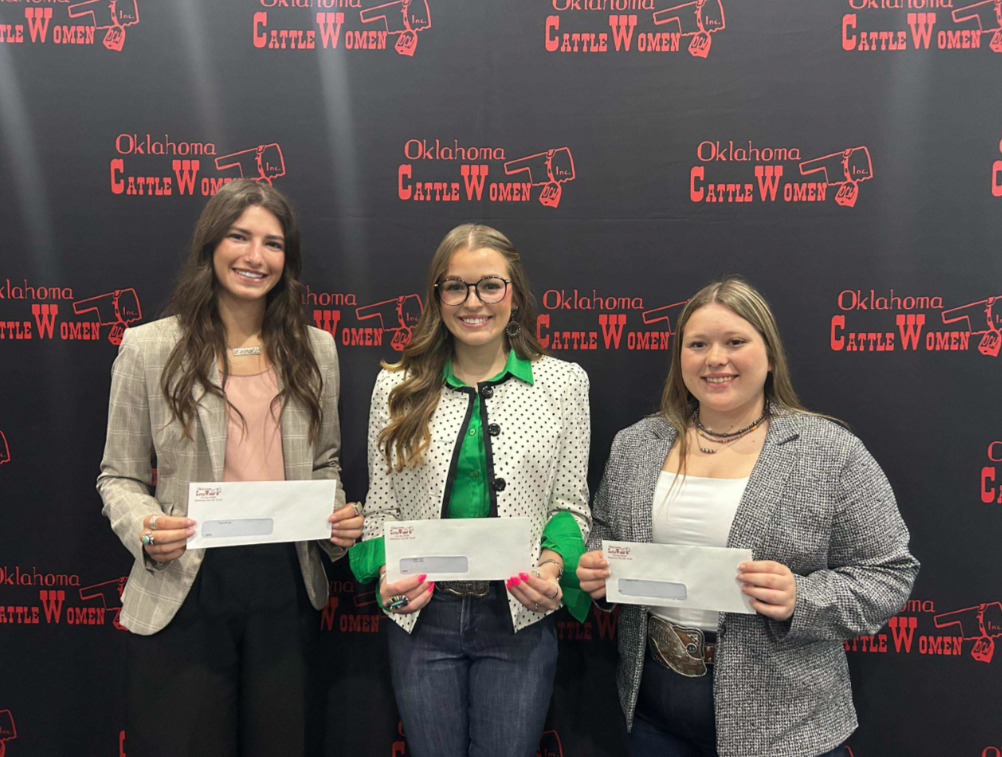
Oklahoma Cattle Women scholarships are helping support the next generation of agricultural leaders, with this year's recipients sharing a common passion for livestock, veterinary medicine, and advocating for the agriculture industry. The scholarship winners—Sadiee Wright, Taryn McCaa, and Chloe Silka—each have deep roots in Oklahoma agriculture and plan to continue serving the livestock industry through careers in veterinary medicine.

Sadie Wright Balances Dairy and Beef Production

J.B. and Betty Smith Scholarship recipient Sadiee Wright brings an extensive agricultural background to the table, describing herself as both a multi-generation farmer and dairyman. "Well, I am a sixth-generation farmer, but I think it's a sixth-generation dairyman, but a seventh-generation farmer," Wright said. "We own 2,500 acres where we run beef cattle, and we have wheat, and then I have my own 30-head dairy cattle herd. That's Jerseys, Holsteins, and Brown Swiss."

This fall, Wright will attend Oklahoma State University, where she plans to major in animal science with a pre-veterinary emphasis.

Beyond managing her own dairy herd, Wright has earned national recognition as a Brown Swiss ambassador. She explained the competitive selection process. "The National Brown Swiss Association has the opportunity where you can go in and be an ambassador for them," Wright said. "You send an application, and from there they pick the top five. We had people from Iowa, Wisconsin, and even Missouri."

The finalists then completed interviews and answered questions before a live audience. As ambassador, Wright said she helps promote both the Brown Swiss breed and agriculture as a whole. "Our duties, we go to each of the five national Brown Swiss shows," Wright said. "We're really advocating for the Brown Swiss breed, the dairy industry as a whole, and being able to let people know more about agriculture in general."

Taryn McCaa Plans to Become an Equine Surgeon

OCW Industry Scholarship recipient Taryn McCaa credits her upbringing on an Oklahoma ranch for inspiring her career path. "I am a second-generation rancher from Elmore City, Oklahoma," McCaa said. "I grew up involved with cattle and horses. My dad used to train cutting horses, and so I've been on the back of a horse since before I could walk."

She said those early experiences expanded into working with livestock across her community. "I started working with our cattle, and then local farmers and ranchers around that area," McCaa said. "I was also involved in 4-H and FFA throughout middle school and high school and was able to continue my education now at Oklahoma State."

McCaa is currently studying animal science with a pre-veterinary option at Oklahoma State University and has a clear vision for her future. "My plan is in about a year from now to submit my application to Oklahoma State's vet school," McCaa said. "Hopefully, a year from that, I will be able to attend their vet school, and then eventually do an internship with Oak Ridge Equine Hospital to become an equine surgeon."

Chloe Silka Continues Lifelong Passion for Livestock

Legacy Scholarship recipient Chloe Silka said her agricultural journey began on her family's cow-calf operation near Locust Grove. "I grew up in Locust Grove, Oklahoma, on my parents' cow-calf operation, showing livestock and heavily involved in 4-H and FFA," Silka said.

Her involvement in livestock judging helped shape her educational path. "I was on a livestock judging team in high school that was extremely competitive, which led me on to Connors State College, where I also competed on the livestock judging team," Silka said.

While at Connors State, Silka stayed active across numerous student organizations. "I was involved in PLC, SGA, Cattle Women's, and pretty much every other club you can think of," she said. "The Cattle Women obviously led me here to this scholarship."

This fall, Silka will continue her education at Oklahoma State University with plans to become a veterinarian. "This fall, I plan to attend Oklahoma State University, where I will earn a pre-vet degree and hopefully go on to vet school to be a large animal vet with some small animal as well," Silka said. "I also plan to be on the livestock judging team at Oklahoma State."

Investing in Agriculture's Future

Although each recipient comes from a different agricultural background—from dairy production and cow-calf operations to ranching and equine work—they all share a commitment to advancing Oklahoma agriculture through veterinary medicine. The Oklahoma Cattle Women's scholarships recognize students whose agricultural experiences, leadership, and career goals position them to serve the state's livestock industry for years to come.


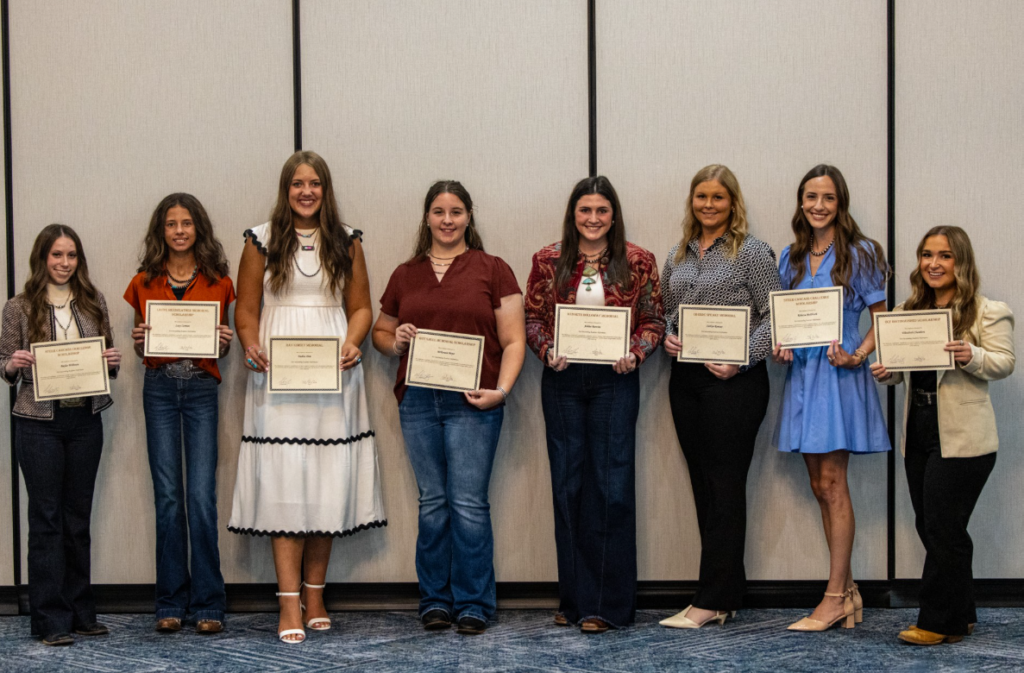
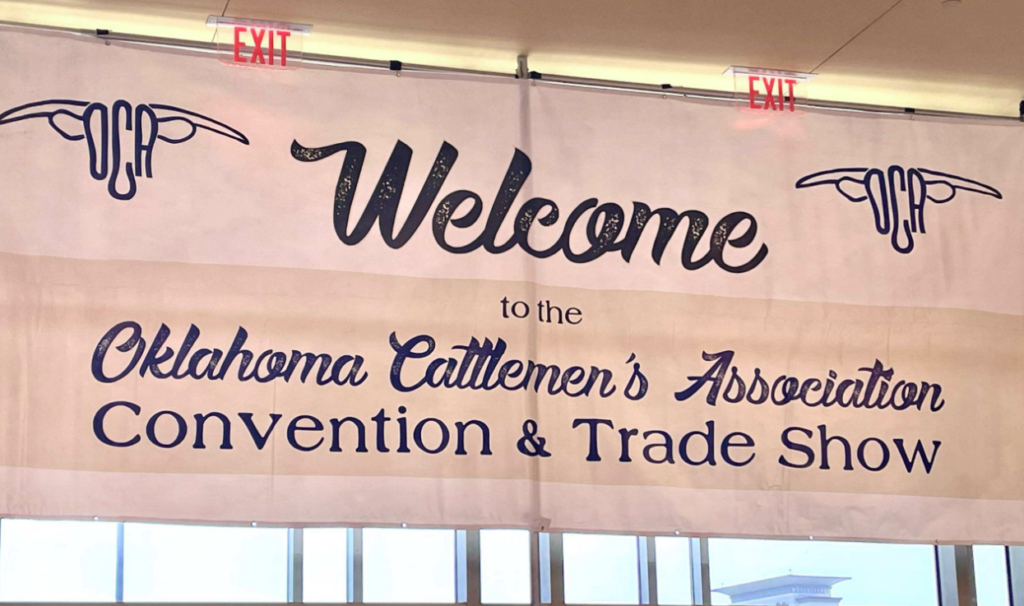
The Oklahoma Cattlemen's Foundation (OCF) recognized outstanding students during the Oklahoma Junior Cattlemen's Association (OJCA) and OCF Awards and Scholarship Luncheon on Saturday, July 25, at the 74th Annual Oklahoma Cattlemen's Association (OCA) Convention and Trade Show in Tulsa.


The 2026 scholarship recipients included: McKenzie Boyer of Claremore, Oklahoma, Guy Shull Memorial Scholarship; Konner Shebester of Alex, Oklahoma, Kubota Top Scholarship; Ashlee Purvine of Fay, Oklahoma, Kenneth Holloway Memorial Scholarship; Chyann Emerson of Tuttle, Oklahoma, Bobby Jones Memorial Scholarship; Baylee Wilbourn of Tuttle, Oklahoma, and Rebekah McElrath of Calhoun, Georgia, Steer Carcass Challenge Scholarships; Elizabeth Chambers of Pawhuska, Oklahoma, and Collin Adamo of Moore, Oklahoma, OCF Distinguished Scholarships; Lucy Carman of Laverne, Oklahoma, Layne Meriweather Memorial Scholarship; Caitlyn Ramsey of Waurika, Oklahoma, Creede Speake Memorial Scholarship; Hadlee Ohm of Alva, Oklahoma, Ray Kimsey Memorial Scholarship; and Jordyn Bertrem of Shawnee, Oklahoma, who attends the University of Oklahoma College of Law, and Aaron Broyles of El
Reno, Oklahoma, who attends Oklahoma State University, Richard Gebhart Leadership Legacy Scholarships for students pursuing education beyond a bachelor's degree.


"The Oklahoma Cattlemen's Foundation is proud to support students with educational scholarships that help prepare the next generation of agricultural leaders," said Michael Kelsey, OCA Executive Vice President. "These recipients have demonstrated outstanding leadership, dedication and a passion for the cattle industry. We are honored to invest in their futures as they continue their education and work to strengthen agriculture."


The OCF is committed to investing in future leaders who will strengthen Oklahoma agriculture and the beef industry through higher education. This year's luncheon was made possible through the generous sponsorship of U.S. Premium Beef.


The OCA is the trusted voice of Oklahoma's cattle industry, representing beef producers in all 77 counties while advocating for policies that strengthen the state's cattle business. For more information about OCA membership, the theft reward program or upcoming events, call 405- 235-4391 or visit www.okcattlemen.org.

U.S., Mexican Dairy Leaders Deepen Partnership as USMCA Talks Continue

Dairy leaders from the United States and Mexico concluded the 2026 U.S.-Mexico Binational Dairy Summit today with a renewed commitment to strengthening collaboration between the two countries' dairy sectors, reaffirming shared priorities on trade, innovation and the future of dairy farming against the backdrop of U.S.-Mexico negotiations related to the U.S.-Mexico-Canada Agreement (USMCA).

Held July 29-31 in Querétaro, Mexico, the event brought together dairy industry leaders from the National Milk Producers Federation, the U.S. Dairy Export Council and leading Mexican dairy organizations to discuss issues affecting producers, processors and consumers in both countries.

Participants reaffirmed key principles as part of the eighth annual dairy binational event, supporting policies that promote dairy sector growth and competitiveness in both countries and encouraging continued dialogue and cooperation on issues of mutual interest. The organizations also adopted a new shared principle recognizing the importance of supporting the next generation of dairy farmers in both countries through the exchange of information and experience while creating new opportunities to collaborate on issues critical to the future of the dairy sector.

"The dairy trade relationship between the United States and Mexico is a true success story as our industries have grown in parallel for over three decades" Gregg Doud, president and CEO of NMPF, said. "Central to that success is an open dialogue. We look forward to continuing work together to address shared challenges and develop our markets together."

"Strong industry partnerships complement strong trade relationships," Krysta Harden, president and CEO of USDEC, said. "Our continued collaboration helps ensure dairy producers and processors in both countries are well positioned to meet growing demand and strengthen the dairy sector in the United States and Mexico. We appreciate Mexico hosting this important event and we look forward to maintaining this critical relationship to support our farmers on both sides of the border."

The organizations agreed to expand collaboration in the months ahead, with particular attention to supporting young dairy farmers, promoting dairy's nutritional benefits and maintaining open communication as the USMCA review process advances.

The summit followed the third round of U.S.-Mexico negotiations related to the USMCA, in which NMPF and USDEC participated as advisors to U.S. trade negotiators, underscoring the importance of continued industry engagement as the two governments work to strengthen the bilateral trading relationship.

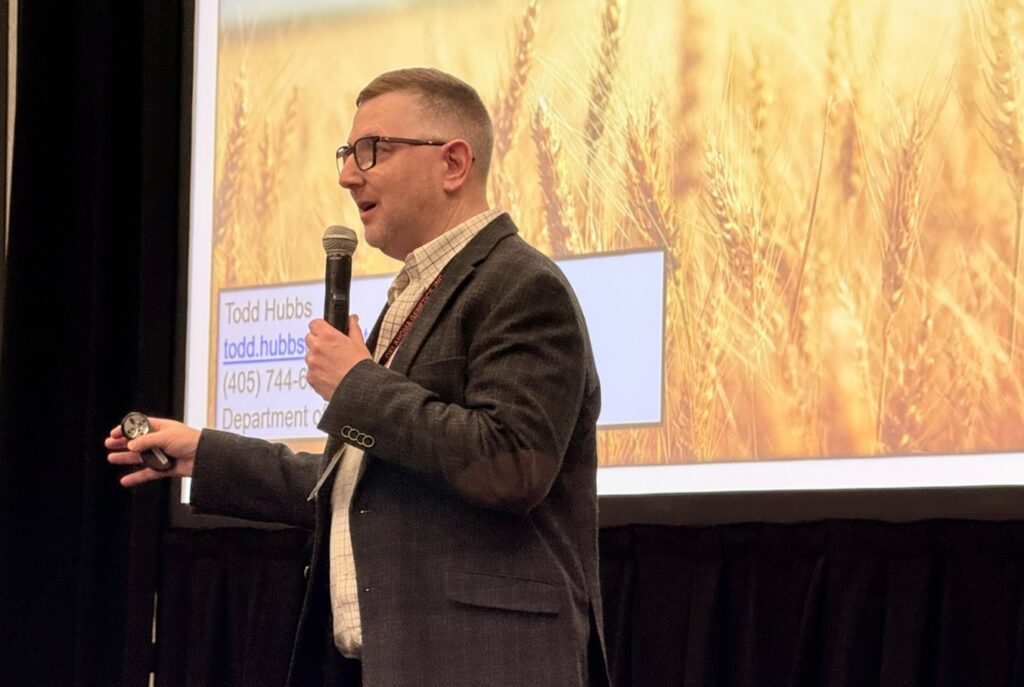
Market Volatility and Geopolitical Pressures Drive Grain Price Swings, Reports OSU Crop Marketing Specialist Dr. Todd Hubbs

Grain markets continue to experience sharp price swings as geopolitical conflicts in the Black Sea region and shifting weather patterns create unpredictable trading conditions across global commodity markets. Oklahoma State University Crop Marketing Specialist Dr. Todd Hubbs broke down these market dynamics in a discussion with Farm Director KC Sheperd, offering strategy insights for producers navigating short-lived price rallies.

While conflict-driven disruptions create sudden pricing opportunities, Dr. Hubbs advises agricultural producers to actively monitor charts and capture profit margins when rallies occur rather than relying on long-term storage.

Black Sea Conflict and Global Weather Spurring Wheat Market Volatility

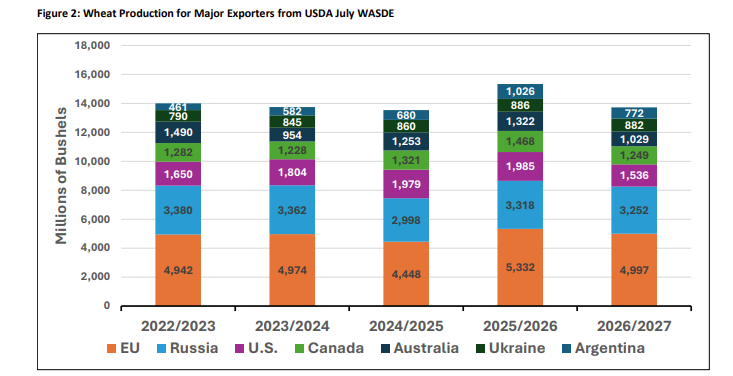
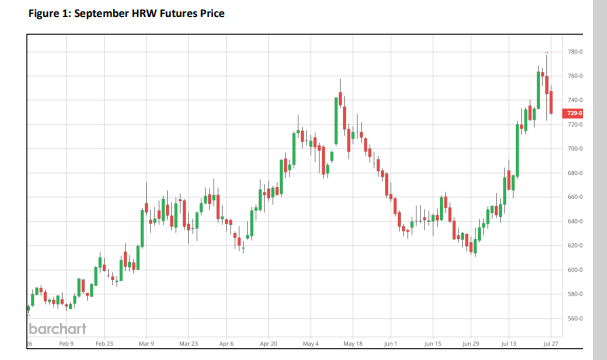
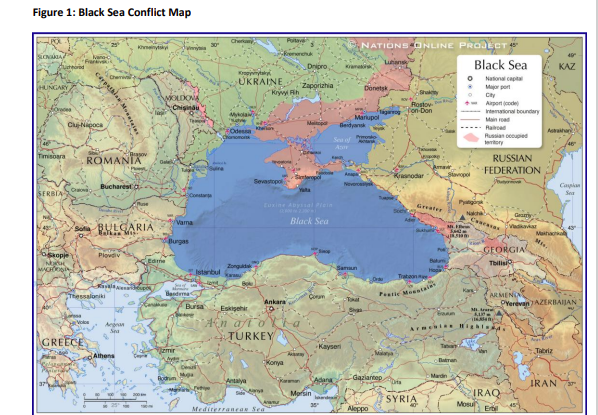
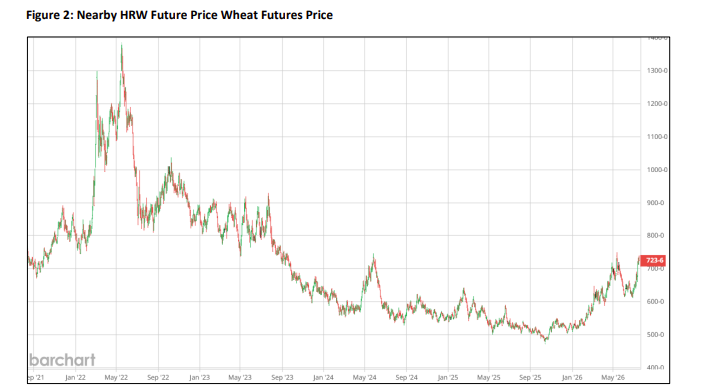
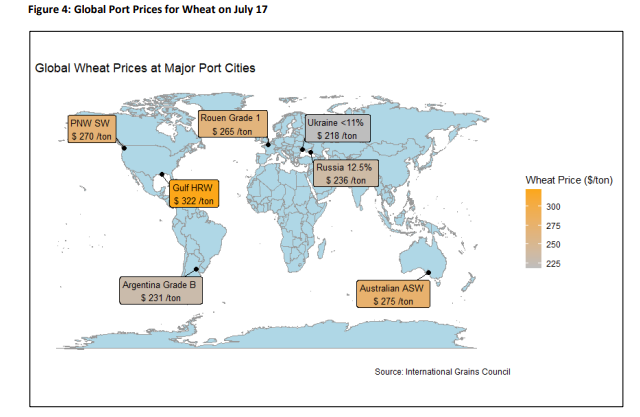
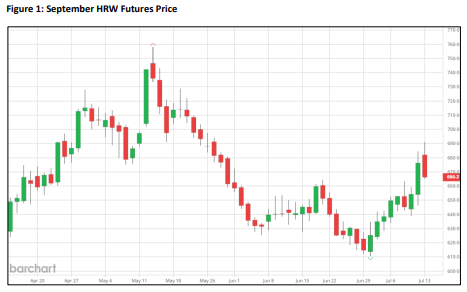
Wheat prices have experienced repeated, short-lived rallies driven by escalations in the ongoing Russia-Ukraine conflict, including drone strikes on export infrastructure. Despite these surges, global trade flows continue to adapt, dampening long-term upward momentum.

"We keep seeing these on-again, off-again rallies in wheat related to the Black Sea area," Dr. Hubbs noted. "Ukraine is basically not moving anything out of their ports, but Russia has alternatives... so stuff will get moved."

Key factors influencing global wheat supply include:

  • Alternative Trade Routes: Ukrainian grain continues moving overland or via European ports like Romania, while Russia utilizes Baltic and deep-water ports.
  • Strong Competitor Yields: International competitors, including Turkey, experienced massive harvests, leading Turkey to open up milling wheat exports.
  • Southern Hemisphere Outlook: Early crop conditions in Australia and Argentina remain stable despite broader El Niño concerns.
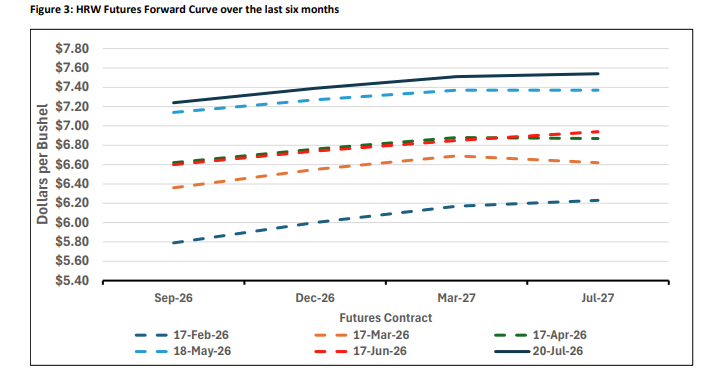
  • U.S. Export Pace: U.S. Hard Red Winter (HRW) and all-wheat export sales lag behind initial USDA projections, limiting sustained domestic price breakthroughs near the $7.80 level.

For producers evaluating whether to hold HRW wheat in storage, Dr. Hubbs recommends taking advantage of price spikes. "I would probably sell some of this on these rallies," he advised. "It never hurts, in my opinion, to reward these rallies and move some crops." He also suggested that producers with flexible marketing strategies begin evaluating pricing opportunities for the 2027 crop year.

European Heat Dome Threatens Corn Yields

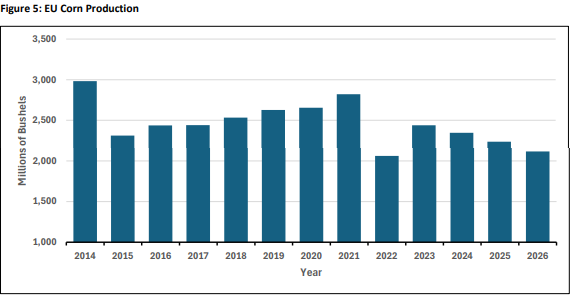
Extreme heat across the Northern Hemisphere continues to impact global feed grain expectations. While European wheat harvest was largely complete before the worst heat set in, European corn crops face substantial yield reductions.

"I think the EU is way worse than we are, and it looks like their heat dome problem is going to last into August," Dr. Hubbs stated. "I'm expecting substantial losses out of the EU corn crop this year, which might give us a little bit of support in corn."

U.S. Corn Belt Weather and Fall Harvest Pressure

Domestically, recent weather systems brought critical rainfall across parts of the Western Corn Belt, including Nebraska, South Dakota, Iowa, Illinois, and Indiana. This precipitation provided relief during crucial pollination windows, though overall market sentiment remains sensitive to August weather forecasts.

Dr. Hubbs highlighted several domestic crop factors:

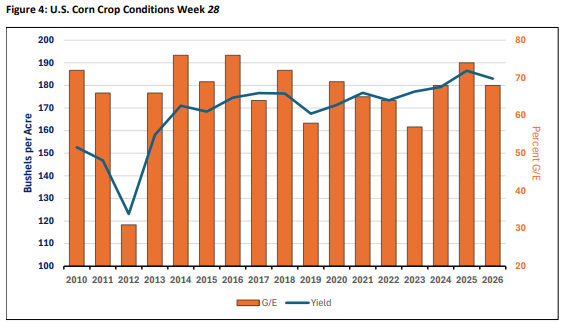
  • Corn Yield Projections: National corn yield models currently point around 180 to 185 bushels per acre, depending on pollination outcomes in key northern growing regions.
  • Soybean Yield Estimates: Current USDA projections of 53 bushels per acre remain a reasonable benchmark as crops progress through August and early September.
  • Fall Harvest Pressure: Strong production yields for U.S. corn and soybeans could place downward pressure on cash prices heading into the fall harvest season.

As weather uncertainty and global trade shifts continue to impact agricultural markets, Dr. Hubbs recommends producers set target bids and maintain proactive risk management strategies through late summer.

Beef Quality Assurance Spanish Resources Available

The Beef Checkoff-funded Beef Quality Assurance (BQA) program provides best practices around cattle handling, facility management, cattle transportation, good record keeping and protecting herd health, which result in better outcomes for cattle and producers. Now, the National Cattlemen's Beef Association, a contractor to the Beef Checkoff, announces the release of many BQA resources in Spanish. Spanish BQA program materials are available at https://www.bqa.org/resources/recursos. 

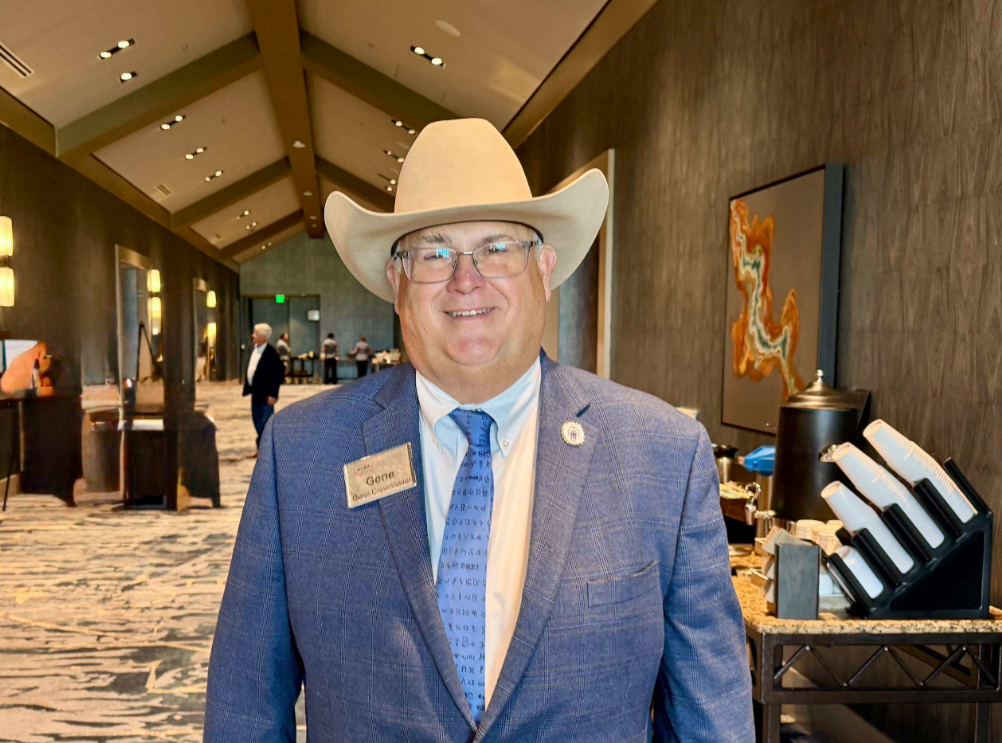
"For more than 30 years, BQA has provided producers and the cattle industry the science-based information and tools we need to assure cattle well-being, beef quality and safety," said NCBA President Gene Copenhaver. "Producers asked for these translated materials, and I'm glad we now have them available."

The dedicated Spanish page of the BQA website features the following Spanish materials:

"'The Right Way is the Only Way,' and these resources help us extend that message to everyone involved in making the U.S. cattle industry the best it can be," Copenhaver said. 

For those interested in accessing materials or becoming BQA certified, in English or Spanish, visit www.bqa.org. This project was funded in part by a grant from the National Institute for Food and Agriculture Veterinary Services Grant Program awarded to NCBA, providing educational and teaching resources in Spanish to veterinarians and producers.

Voter Registration Deadline

The deadline to register to vote or update a voter registration for the August 25 Election is Friday, July 31. While a number of runoff primaries will take place on August 25 – all voters are eligible to vote on two state questions which will appear on the ballot. Some voters may also have nonpartisan elections to decide.

Voters are reminded that all runoff primary elections held during the August 25 Election are closed. Voters may participate in a party's runoff primary only if they are a registered voter of that party. State law does not permit party affiliation changes from April 1 – August 31 of even-numbered years. Party affiliation changes submitted during that time will be processed after August 31.

Secretary of the State Election Board Paul Ziriax said individuals can register online, in person, or by mail.

Online - To register using the Online Voter Registration System, the applicant must have a current and valid Oklahoma Driver License or State ID on file with Service Oklahoma and the address on the ID must match the address the applicant intends to use for voter registration.

In Person – Individuals can register to vote at their county election board or with their local motor license agent. A directory of county election boards can be found on the State Election Board website.

By Mail – Voter registration applications are available at county election boards, most tag agencies, post offices, and public libraries. Voters can also download a Voter Registration Application from the State Election Board website. Mailed applications must be postmarked no later than July 31.

All voters are encouraged to confirm their registration using the OK Voter Portal prior to the voter registration deadline. Voter registration changes must be submitted no later than July 31, in order for those changes to be applied in time for the August 25 Election.

Instructions for registering to vote and updating your voter registration are available on the State Election Board website. The list of elections can also be found on the State Election Board website. Sample ballots are available by logging into the OK Voter Portal.

Outreach & Assistance in Guymon

OWRB Continues "In Your Community" Series for On-site Assistance in Guymon

We are traveling across Oklahoma to meet with local residents and water users. Whether you need help with water permit applications, permit amendments, changes of ownership, water use reporting, or have other questions, our staff will be available to provide guidance and assistance right in your community.

Our next stop will be in Guymon on August 10-14. We will be on site from 8:00 AM to 5:00 PM each day at the OSU Extension Office, 301 N. Main St., Guymon, OK 73942. Come ready to work!

Interested in having the OWRB spend a day or two in your area? Contact us at waterpermitting@owrb.ok.gov. We look forward to connecting with communities across Oklahoma!

New Billboard Thanks Congress for Funding Federal Research

The American Cancer Society Cancer Action Network (ACS CAN) has placed a billboard in Oklahoma City to thank Congress for demonstrating a strong commitment to cancer prevention and cures. 

"Behind every cancer statistic is a family forever changed. Five years ago, I lost my wife to breast cancer." said Oklahoma City resident Montana Lyons. "Continued investment in research and innovation is critical to ending that heartbreak for families. Thanks to remarkable advances in cancer research, we have made significant progress in understanding and treating the disease, helping people live longer, healthier lives and giving families more time. It gives me hope."

The billboard reads, "18M cancer survivors are here for America's 250th because of you. Thank you Congress for fighting cancer together." The billboard is located along I-235 near downtown Oklahoma City, just south of NW 23rd St.

The FY26 appropriations bill included $47.2 billion for the National Institutes of Health, a $415 million increase over FY25 funding, and $7.352 billion for the National Cancer Institute, an increase of $128 million. Thanks in large part to the leadership of Oklahoma's Rep. Tom Cole and Rep. Stephanie Bice as members of the powerful U.S. House Appropriations Committee. This funding strengthens the nation's ability to pursue lifesaving breakthroughs, accelerate innovation and ensure patients and families benefit from the most advanced cancer prevention, detection and treatment.  

Colin Woodall Says Beef Demand, Dietary Guidelines Drive Optimism for Cattle Producers

In today's Beef Buzz, Senior Farm and Ranch Broadcaster Ron Hays continues his conversation with Colin Woodall, CEO of the National Cattlemen's Beef Association (NCBA), about the new Dietary Guidelines, strong consumer demand for beef, herd rebuilding, and why NCBA continues to support voluntary Product of the USA labeling over mandatory country of origin labeling. Part one can be found here.

Dietary Guidelines Reinforce Beef's Role

Woodall said NCBA has been encouraged not only by the release of the Trump administration's new Dietary Guidelines, but by Secretary Robert F. Kennedy Jr.'s continued emphasis on the role of whole foods and protein in a healthy diet. "We are pleased because it wasn't just a one and done announcement," Woodall said. "It is something that the secretary has continued to focus on, and focus on the role of real food in the diet, which is why we have the position that we do in the new food guide pyramid."

Woodall said Kennedy's continued support for beef sends an important message to consumers. "For him to continue to talk about it, to push protein, specifically beef, has been a tremendous victory for us," he said. "I believe that's one of the reasons that we still see demand remaining extremely strong, and it will help us continue to keep that demand high as we move forward."

He also credited decades of beef checkoff-funded research for helping shape the final recommendations. "We are a contractor to the national beef checkoff," Woodall explained. "We're not the beef checkoff. We're a contractor. We have to go and compete for those dollars. One area where we do compete is in the realm of nutrition research. We had 40 years of checkoff-funded nutrition research that we were able to submit in this process."

Consumers Want Beef Despite Higher Prices

While beef prices remain elevated, Woodall said demand has continued because consumers value the product they're purchasing. "The consumer does not have to buy beef. The consumer wants to buy beef, and those are two completely different conversations," Woodall said.

He believes quality continues to justify higher prices in consumers' minds. "It's that quality. It's that eating experience that the consumer is getting every time they go to the grocery store or go to a restaurant, which is telling them, 'Hey, this was worth the money, and I'm going to buy it again.' They don't have to; they want to, and that's a big win for cattle producers."

Moisture Is the Key to Herd Expansion

Although the U.S. cattle herd remains at historically low levels, Woodall said rebuilding is more dependent on weather than market incentives. "We're going to grow. We're absolutely going to grow," he said. "It's just a matter of getting some moisture."

He pointed to improving weather forecasts as a reason for optimism. "With the predicted Super El Niño and some of the moisture that we've already started to see in some places, it will give people the confidence to go ahead and start making some of those decisions because we have the demand, we have good cattle prices, we just need moisture and green grass, and when we get that, we will grow again."

Woodall acknowledged replacement females are more expensive than ever but believes strong demand will continue supporting profitability. "We need to do everything we can to continue to maintain that demand, build that demand even more, not only domestically but globally, so that way those who want to make that investment can get a return on that investment."

He added, "As you look at the future, as you look at demand and what we have, I think we're still going to have some great years ahead of us to be profitable."

Voluntary Labeling Better Than Mandatory COOL

Woodall also discussed USDA's voluntary Product of the USA labeling initiative and explained why NCBA continues to oppose mandatory Country of Origin Labeling (MCOOL). "Those who want mandatory COOL, they weren't around when mandatory COOL was the law of the land," Woodall said.

He noted that previous research found mandatory labeling had little impact on consumer purchasing decisions while creating international trade challenges. "For six years we had mandatory COOL, and what we found out is the consumer wasn't paying attention to it," he said. "Those were studies done by USDA academics outside parties that said the consumer just wasn't paying attention."

Woodall said the previous program also damaged trade relationships with Canada and Mexico after World Trade Organization rulings against the United States.

Instead, he believes the current voluntary approach gives producers and retailers more flexibility. "If the consumer wants it, now the program is there to deliver it," Woodall said. "If the consumer wants a state program or a regional program, those are also available, so it's going to allow producers and retailers to tailor whatever labeling program they want in a way that will actually help satisfy a consumer demand... Voluntary is the way to go."

The Beef Buzz is a regular feature heard on radio stations around the region on the Radio Oklahoma Ag Network and is a regular audio feature found on this website as well. Click on the LISTEN BAR above for today's show and check out our archives for older Beef Buzz shows covering the gamut of the beef cattle industry today.

Key USDA Livestock Assistance Changes Offer New Relief for Cattle Producers

Understanding recent USDA livestock assistance changes is critical for cattle operations navigating ongoing weather volatility and market shifts. At the Oklahoma Cattlemen's Association (OCA) Convention, Farm Director KC Sheperd sat down with Oklahoma State University's Dr. Amy Hagerman to discuss newly implemented federal provisions, policy updates, and risk management tools designed to better support producers.

Livestock Forage Disaster Program (LFP) Updates

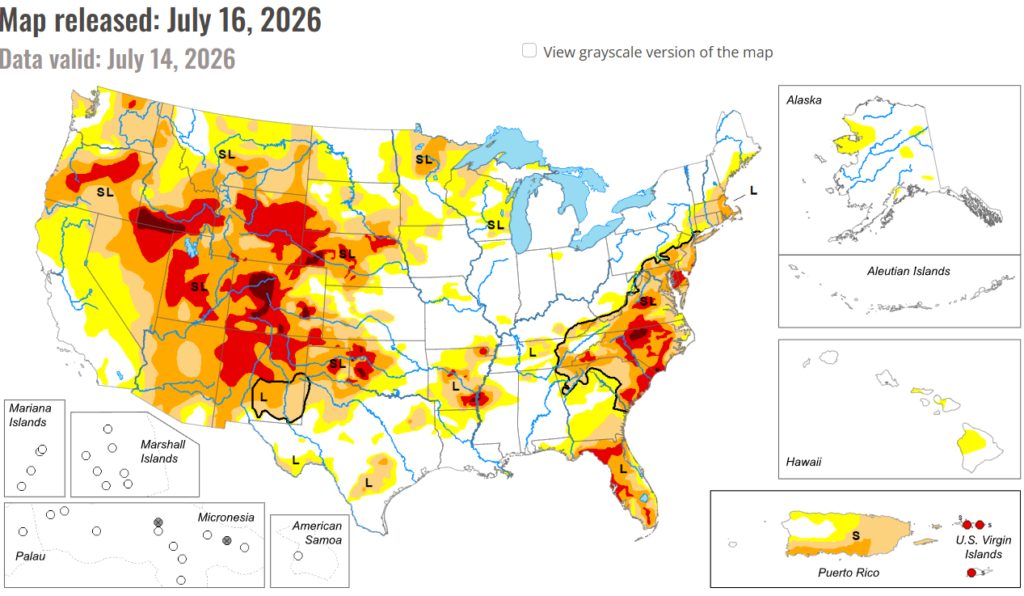
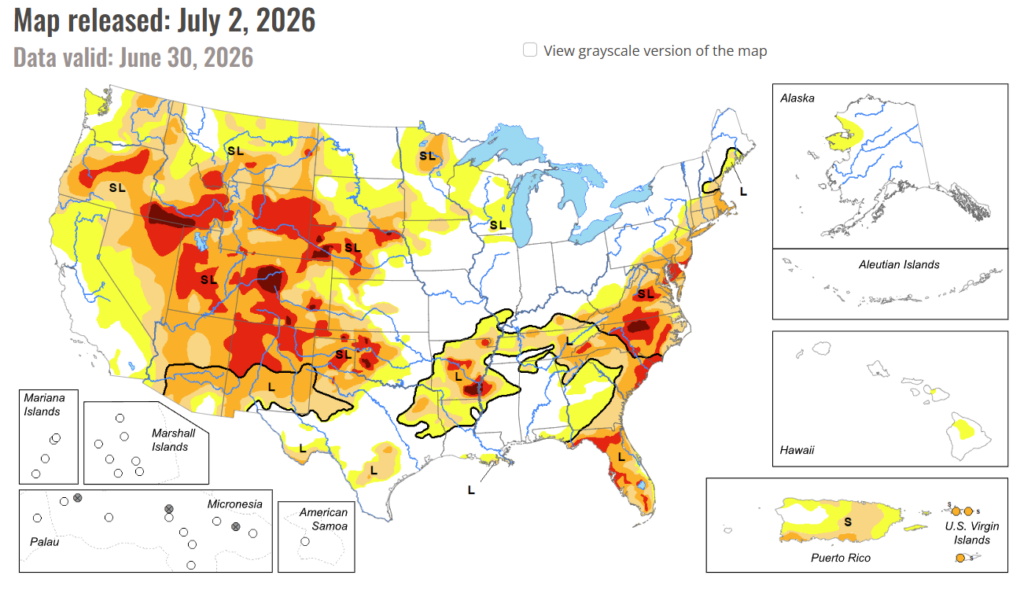
The United States Department of Agriculture announced implementation updates stemming from federal legislation passed last summer, with several provisions offering significant benefits to Oklahoma cattle operations. Given Oklahoma's susceptibility to rapid, intense drought conditions, local agricultural producers frequently utilize the Livestock Forage Disaster Program (LFP).

Previously, the program required a county to experience at least eight consecutive weeks of D2 (severe) drought to trigger compensation eligibility. The revised regulations accommodate the rapid shifts in weather patterns often experienced in the region.

Key details of the LFP updates include:

  • Revised Qualification Thresholds: Producers can now qualify for the first tier of LFP payments by meeting a threshold of four consecutive weeks of D2 drought, or at least four out of seven consecutive weeks.
  • Retroactive Implementation: The rule adjustments are retroactive to January 1, 2026.
  • Potential for Higher Payments: Due to the retroactive clause, drought conditions experienced during the spring may yield additional or adjusted payments for eligible operations.

Producers should monitor their mail for pre-filled applications or notifications from the Farm Service Agency (FSA). Even if a producer previously applied for or received an LFP payment for the period, new notifications or additional applications should not be ignored, as they may reflect updated payment rates under the revised rules.

Livestock Indemnity Program (LIP) Adjustments

Modifications have also been applied to the Livestock Indemnity Program (LIP), which provides financial assistance to livestock owners for elevated mortality rates caused by adverse weather events, such as extreme freezing conditions or severe storms.

A major enhancement to LIP specifically benefits spring-calving operations:

  • Coverage for Heavy Bred Cows: Under prior regulations, an eligible livestock loss payment was issued only for the cow itself if a heavily bred cow died prior to calving.
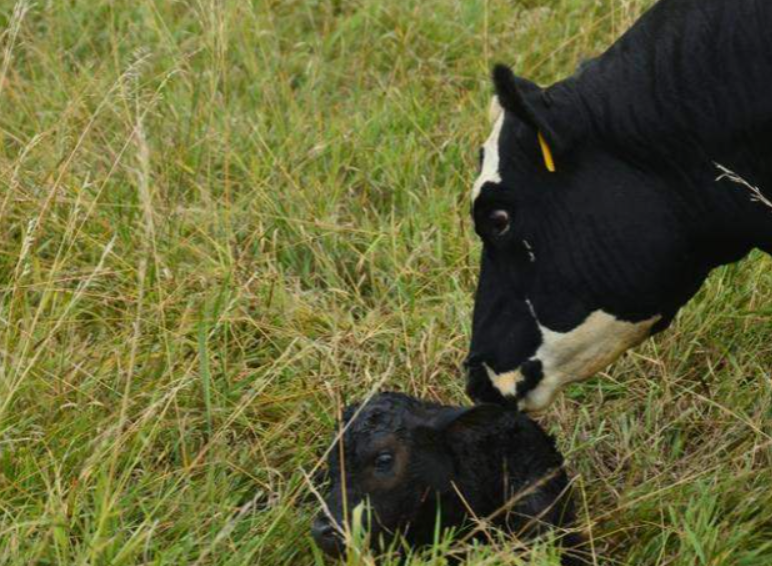
  • Expanded Calf Coverage: The updated guidelines now allow for a partial indemnity payment for the unborn calf in addition to the payment for the heavy bred cow.

This structural change offers higher risk protection during critical spring calving seasons when extreme weather events occur.

Documentation and Risk Management Strategies

With shifting weather patterns creating potential wildfire hazards following periods of forage growth, thorough record-keeping remains a fundamental component of disaster preparedness. Producers are advised to maintain comprehensive records documenting:

  • Proof of livestock ownership
  • Animal inventory numbers
  • Pregnancy status and herd status

Beyond federal disaster relief, updates have also been made to federal crop and market insurance options through the Risk Management Agency (RMA). Cattle producers should evaluate the Livestock Risk Protection (LRP) insurance policy to manage price volatility, as well as the Pasture, Rangeland, Forage (PRF) rainfall index insurance to mitigate losses from low precipitation on grazing land.

Staying Informed and Prepared

Because agricultural policy guidelines and disaster program parameters are updated frequently, producers are encouraged to build a network of trusted advisors to stay informed. Recommended resources include:

  • Local Farm Service Agency (FSA) offices (including signing up for direct text alerts)
  • Specialized livestock insurance agents familiar with LRP and PRF products
  • Experienced producer mentors
  • Local OSU Extension educators for assistance with record-keeping practices and technical guidance

Reopening the Border to Mexican Cattle Imports is the Right Decision

Authors: K. Aleks Schaefer and Rylee Smith write in Southern Ag Today: Last week, the USDA announced it would resume Mexican cattle imports under a phased reopening beginning in August. This is a somewhat controversial, but scientifically sound choice. When the United States suspended imports of live cattle from Mexico, the objective was straightforward: keep New World Screwworm (NWS) out of the country for as long as possible. The policy accepted significant economic costs in exchange for delaying one of the livestock industry's most damaging pests.

That question looks very different today. With NWS now confirmed inside the United States (USDA APHIS, 2026), policymakers are no longer deciding whether the border closures prevent introduction; they are deciding whether the restrictions provide enough benefit to justify their economic costs. Our previous research estimated the economic cost of the border closures and how much delay in pest establishment would be required for those costs to be worthwhile (Sumner et al., 2026). Those findings provide a framework for evaluating today's policy debate.

Border Closures Significantly Tightened Feeder Cattle Supplies: Mexico has long served as one of the largest suppliers of feeder cattle to U.S. feedlots, with roughly 1.2 million head imported annually before the restrictions (Sumner et al., 2026). When the border closed, those cattle disappeared from the market. At the largest point of disruption, monthly imports were more than 150,000 head below what historical market relationships would have predicted (Sumner et al., 2026).

Feeder Cattle Prices Climbed Well Above Expected Levels: With fewer feeder cattle entering the United States, domestic supplies tightened quickly. Our analysis shows that the border closures pushed feeder cattle prices much higher than expected. Prices initially followed normal market trends but increased rapidly, reaching nearly $100 per hundredweight above what would have been expected by July 2025 (Sumner et al., 2026).

Border closures put substantial upward pressure on feeder cattle prices. Changes in Mexican cattle imports had lasting effects on feeder cattle prices, demonstrating how closely U.S. and Mexican cattle markets are connected (Sumner et al., 2026).

Figure 1. Impacts of the import ban on U.S. Feeder Cattle Markets

Figure 1. Impacts of the import ban on U.S. Feeder Cattle Markets

With confirmed cases of New World Screwworm now detected within the United States (USDA APHIS, 2026), policymakers face a different decision. The question is no longer whether the border can keep the pest out entirely, but whether continued restrictions on Mexican cattle imports meaningfully slow its spread, reduce the likelihood of reinfestation from neighboring regions, or provide enough additional time for response efforts to outweigh the ongoing costs on the cattle industry.

Over nine months, the border closures reduced feeder cattle imports, tightened supplies, and increased feeder cattle prices (Sumner et al., 2026). Those impacts continue to accumulate with restrictions in place.

Policymakers must weigh the market disruptions against the biosecurity benefits that the restrictions provide. If the remaining benefits are limited, the economic case for prolonged border closures becomes weaker. If, however, the restrictions significantly reduce additional introductions, protect infestation-free regions, or improve the effectiveness of eradication efforts, continued restrictions may still generate benefits.

Biosecurity policies are rarely static. As conditions change, so should the economic questions used to evaluate them. The challenge is no longer asking "Did the border closure buy enough time?" It is asking "How much additional protection does the closure provide today and is that protection worth its continuing economic cost?"

Schaefer, K. Aleks, and Rylee Smith. "Reopening the Border to Mexican Cattle Imports is the Right Decision." Southern Ag Today 

USGBC Summer Meeting Focused On Trade Policy

The U.S. Grains & BioProducts Council (USGBC) opened its 66th Annual Board of Delegates meeting today in Milwaukee, Wisconsin.

USGBC Chairman Mark Wilson welcomed attendees and shared a preview of the meeting's upcoming content.

"My theme this year, The Time Is Now, reflects both the opportunities and challenges of the current environment," Wilson said.

"At this meeting, we gather to discuss issues facing our industry and explore future demand for feed grains and ethanol around the world."

The morning session was highlighted by a panel on advancing U.S. trade and agricultural priorities moderated by USGBC President & CEO Ryan LeGrand and featuring U.S. Trade Representative Ambassador Julie Callahan and U.S. Department of Agriculture Under Secretary Luke Lindberg.

The day included addresses from Anastasia Poull, the 79th Alice in Dairyland, and Wisconsin Department of Agriculture Secretary Randy Romanski. Attendees also heard about strengthening supply chains through the great lakes from Great Lakes Lawerence Seaway Administrator Mike McCoshen.

The general session concluded with an organizational funding update presented by USGBC Vice President Cary Sifferath and USGBC Senior Director of Global Strategies Kurt Shultz and a "State of the Council" address by LeGrand.

"I think the Council's biggest advantage with new funding is we have been able to hire people who are specialized in very focused areas which will help us continue our global priorities and in developing markets," Shultz said.

The day's agenda ended with Advisory Team (A-Team) meetings where members had the opportunity to make recommendations to the board for consideration on future USGBC programs and priorities.

The conference will continue Thursday with insights into the brewing industry, a presentation on sustainable marine fuel and trade policy outlook presentations.

The conference concludes Friday with the Council's Board of Delegates meeting, financial, A-Team and sector reports and a vote to fill open positions on the Council's board of directors.

The 66th Board of Delegates meeting runs through Friday. Follow along on social media using the hashtag #Grains26 or find more information about the meeting on our website here.

Drought Monitor: Oklahoma Drought Holds Steady as Exceptional Drought Persists in Five Counties

To view the latest Oklahoma drought map, CLICK HERE.

Another week of summer heat has kept drought concerns front and center across Oklahoma. While conditions have stabilized in much of the state over the past few weeks, dry weather continues to challenge producers in western Oklahoma as they await meaningful rainfall.

According to the Drought Monitor, the exceptional drought has remained unchanged this week. Conditions are present in Washita, Kiowa, Beckham, Woodward, and Roger Mills counties. Exceptional drought covers 2.10% of the state.

Moderate to extreme drought conditions in the current period indicate that 43.84% of the state is affected. At this point, 34.60% of the state remains drought-free.

According to the 6-to-10-day precipitation outlook map,  all of Oklahoma is expecting near-normal conditions through August 8th.

This U.S. Drought Monitor (USDM) week saw very hot and dry conditions across areas of the Western U.S. and the Plains states where average temperatures soared well above normal levels—significantly elevating evaporate demand, especially across the Upper Midwest, Northern Plains, Colorado, and the Texas Panhandle where conditions deteriorated rapidly. Elsewhere, heavy rains across areas of the Mid-Atlantic states, Southeast, and the South, led to widespread improvements on the map in drought-affected areas. In North Carolina, rainfall totals for the week ranged from 3 to 8+ inches across the state leading to a significant improvement in drought-related conditions statewide. In the Northeast, recent isolated shower activity helped to improve drought conditions; however, the impacts of the longer-term drought continue to affect groundwater conditions in areas of Rhode Island and Massachusetts. In the Upper Midwest, drought expanded and intensified on the map, especially across Minnesota and Wisconsin where composite flash drought indicators were showing severe to extreme flash drought conditions during the past week. Out West, the Four Corners states continued to receive beneficial monsoonal rainfall with isolated areas receiving 2 to 4 inches. In portions of Arizona and western New Mexico, precipitation during the past 30-day period has been above normal, boosting streamflow and soil moisture levels while improving vegetation health. In the Pacific Northwest, short-term dryness has led to a dip in soil moisture and streamflow levels in areas of western Oregon and Washington. In the Great Basin, recent monsoonal rains have provided some minor relief to drought-affected areas of eastern Nevada.

In the South: On this week's map, widespread improvements were made in drought-affected areas of Tennessee where rainfall has been well above normal during the past 30-to-60-day period across much of the state. In southern Texas, areas of drought expanded where hot and dry conditions have prevailed during the past 30 days. In the Texas Panhandle, short and longer-term dryness led to intensification of drought with year-to-date precipitation deficits ranging from 3 to 8+ inches. Looking at the reservoir situation, Water Data for Texas (July 29) reports statewide reservoirs at 78% full, with eastern reservoirs in good condition while numerous western, northern (Panhandle), and southern reservoirs remain below normal. Looking at climatological rankings for the past 30-days, record to near-record mean temperatures were observed in areas of the region, including in Brownville, TX (2nd warmest on record; +2 °F departure), Amarillo, TX (8th warmest; +3 °F departure), Gulfport, MS (4th warmest; +2 °F departure) and Jackson, MS (5th warmest; +2 °F departure). Average temperatures for the week were above normal across most of the region (1 to 10+ °F) with the greatest anomalies observed in the panhandles of Oklahoma and Texas.

In the High Plains: For the week, drought-related conditions deteriorated across the region including in the Dakotas, Nebraska, and Kansas where temperatures were well above normal, especially in western portions of the region where anomalies ranged from 3 to 9 °F above normal. NDMC's flash drought composite map (July 27) also showed flash drought conditions developing with numerous drought impact reports coming into the NDMC's Condition Monitoring Observer Report (CMOR) reporting system during the past 7-day period—especially in the Dakotas in relation to crop and rangeland conditions. Looking at climatological rankings for the past 30-day period, numerous locations ranked among their warmest or near warmest mean temperatures on record, including: Rapid City NWS Weather Forecast Office, SD (warmest on record; +8 °F departure); Custer, SD (3rd warmest; +6 °F departure); Bismarck, ND (5th warmest; +5 °F departure); and Fargo, ND (3rd warmest; +5 °F departure).

In the West: On the map, drought-related conditions deteriorated in areas of eastern Colorado, eastern New Mexico, southeastern California, and western Washington. Conversely, beneficial monsoonal rainfall led to improvements across Arizona, northwestern New Mexico, southeastern Utah, and northeastern Nevada. In the Southwest, an active monsoonal pattern (June 15 to present) has led to above-normal precipitation, especially in Arizona where percentages of normal have ranged from 150% to 250% above normal across southeastern, central, and northern portions of the state. According to the NWS Forecast Office in Tucson, AZ monsoon statistics, the following Arizona locations have received above-normal rainfall for the monsoon season: Nogales, Sierra Vista, Wilcox, Ajo, Globe, Apache Junction, Flagstaff, Kingman, Page, Prescott, Show Low, and Winslow. In Colorado, drought expanded and intensified on the map in response to anomalously warm temperatures, decreased soil moisture levels, and elevated evaporative demand. Looking at climatological rankings for the past 30-day period, numerous locations ranked among their warmest or near warmest mean temperatures on record, including: Montrose, CO (warmest on record; +3 °F departure); Dinosaur, CO (warmest on record; +4 °F departure); Grand Junction, CO (2nd warmest; +4 °F departure); Trinidad, CO (2nd warmest; +4 °F departure); Denver, CO (2nd warmest; +3 °F departure); Rock Springs, WY (3rd warmest; +4 °F departure); Casper, WY (3rd warmest; +5 °F departure); Salt Lake City, UT (5th warmest; +4 °F departure); and Pocatello, ID (5th warmest; +4 °F departure).

To view the 6-10 Day Precipitation Outlook Map, click here.

To view the 6-10 Day Temperature Outlook Map, click here.

To view the Monthly Drought Outlook Map, click here.

Secretary Rollins Visits Douglas Port of Entry, Announces $25 Million Commitment for New Arizona Sterile Fly Dispersal Facility

Yesterday, U.S. Secretary of Agriculture Brooke L. Rollins visited the livestock inspection facilities at the Douglas, Arizona, Port of Entry, joined by Rep. Juan Ciscomani (AZ-06), Rep. Andy Biggs (AZ-05), Rep. Eli Crane (AZ-02), and Arizona Director of Agriculture Paul Brierley, highlighting the Department's extensive preparedness measures ahead of the planned reopening of the port to livestock trade on August 24. During her visit, Secretary Rollins also announced USDA's commitment to invest $25 million toward the opening of a new sterile fly dispersal facility in Arizona to strengthen the nation's long-term response to New World screwworm (NWS).

"Protecting American agriculture begins with protecting our borders and ensuring we have the strongest animal health safeguards anywhere in the world. The Douglas Port of Entry will reopen only because USDA has implemented one of the most rigorous livestock inspection protocols in history, giving us confidence we can safely resume this critical trade while ensuring cattle crossing the border are free from New World screwworm," said Secretary Rollins. "At the same time, today's announcement marks another major investment in our long-term strategy to push this pest back into Mexico and ultimately eradicate it from North America. Together with our partners in Arizona, we're strengthening the infrastructure needed to protect American ranchers for generations to come."

"Proud to join Secretary Rollins for today's announcement of the reopening of the Douglas Port of Entry alongside this critical investment in Arizona," said Representative Juan Ciscomani (AZ-06). "Local agriculture leaders and I have been fighting to deliver this sterile fly dispersal facility because Arizona's livestock industry cannot afford to wait on the New World screwworm threat. This $25 million investment is the direct result of that work, and I'm grateful to Secretary Rollins for listening to Arizona's producers and delivering on it. Her responsiveness and willingness to act swiftly on commonsense solutions has made a real difference. This is Secretary Rollins' second visit to Arizona in just a few months, reflecting her commitment to hearing directly from those on the ground and delivering real results for our farmers, ranchers, and rural communities."

Secretary Rollins also received updates from USDA Animal and Plant Health Inspection Service (APHIS) personnel responsible for implementing enhanced inspection protocols for each and every animal entering through Douglas once trade resumes. Under USDA's phased reopening plan announced last week, each animal will receive multiple veterinary inspections, including by USDA veterinarians before entering the United States. Any animal failing to meet APHIS import criteria will be denied entry, and detection of NWS would immediately halt imports through the facility.

Today's announcement also advances USDA's aggressive strategy to strengthen sterile fly production and dispersal capacity. The proposed Arizona sterile fly dispersal facility would complement existing investments in Texas, Mexico, and Panama while improving the Department's ability to respond rapidly to NWS threats along the Southwest border. USDA will continue working closely with the Arizona Department of Agriculture and state leaders to identify the specific location and operational plan for the facility in Douglas, Arizona. Depending on the selected site and available infrastructure, construction could be completed in as little as several months.

APHIS and Arizona state personnel have maintained trapping operations near Douglas over the last year, submitting nearly 1,000 flies, none of which were identified as NWS by scientific experts. USDA and Arizona officials have also conducted extensive coordination exercises, preparedness planning, stakeholder outreach, and response training to ensure the state is ready to respond should the pest ever threaten the region.

Last week, USDA announced a coordinated, phased reopening of southern livestock ports contingent upon Mexico's continued adherence to the Joint Action Plan to combat NWS. Douglas was selected as the first port to reopen because Sonora maintains one of Mexico's strongest animal health systems and remains the lowest-risk state for NWS, while the Douglas facility is well positioned to implement USDA's enhanced inspection protocols. Following a successful reopening of Douglas and continued evaluation of disease risk, USDA will consider reopening the Santa Teresa and Columbus, New Mexico, ports.

USDA's reopening timeline remains contingent upon continued progress by Mexico and ongoing risk assessments. The Department will continue monitoring conditions closely and stand ready to pause or adjust reopening plans should the risk profile change. Protecting the American livestock industry remains USDA's highest priority.

Apply Now for ASA's 2027 Conservation Legacy Awards

Are you a U.S. soybean farmer committed to conservation and sustainability? The American Soybean Association wants to hear your story.

ASA is now accepting applications for the 2027 Conservation Legacy Awards, recognizing soybean farmers who demonstrate outstanding environmental stewardship while maintaining productive and profitable operations.

The Conservation Legacy Awards honor farmers who successfully integrate conservation practices that improve soil health, protect water quality, enhance efficiency, and support the long-term sustainability of their farms. Eligible practices include cover crops, reduced tillage, nutrient management, irrigation management, diversified crop rotations, buffer implementation, terraces and waterways, and precision agriculture technologies that help optimize crop inputs.

All U.S. soybean farmers are encouraged to apply. Applications will be evaluated based on excellence in soil, water, input, and environmental management, as well as overall conservation and sustainability efforts.

Each year, awards are presented across four regions: Midwest, Upper Midwest, Northeast, and South. One farmer from each region will be selected as a Regional Conservation Legacy Award winner and recognized during the 2027 Commodity Classic in New Orleans, Louisiana. Of those four regional winners, one will also be named the 2027 National Conservation Legacy Award recipient.

Regional Conservation Legacy Award winners will receive:

  • An expense-paid trip for two to Commodity Classic, March 2-5, 2027, in New Orleans, LA
  • Recognition during the ASA Awards Celebration at Commodity Classic
  • A feature story highlighting their farming operation and conservation efforts
  • A professionally produced on-farm video showcasing their conservation practices

The Conservation Legacy Awards are sponsored by ASA, BASF, Bayer, Nutrien, Valent USA, and the Soy Checkoff.

Applications must be submitted by Sept. 15, 2026.

  • Applications are available here.  
  • Nominate a farmer here.

More information on the Conservation Legacy Awards, including recent winners and application details, is available here.  

Cow-Calf Corner Mark Johnson: A Quick Story About Carcass Weight and Mature Cow Size

This week we sent two home raised calves to the butcher. Both calves weighed close to 1,500 pounds live. Today I received the hot carcass weights on both calves, a solid black calf at 935 and a black-nosed smoke at 951 pounds. I looked at my calving book from the spring of 2025 and reviewed mature cow weight records taken at pregnancy check in the fall of 2024. The results are interesting. Since many Cow-Calf Corner articles have covered this topic (The Tug-of-War between Mature Cow Size, Carcass Weights and Cow Efficiency/Environmental Fit/Profitability) over the past couple of years, I thought it appropriate to share the data on the two calves, their sire and their dams.

The Butcher Calves

Both calves were born during the last week of March, 2025. They were vaccinated twice before weaning. When receiving their second round of vaccinations, the calves were castrated, given a Zeranol growth implant and dewormed. Calves were weaned in early August and spent several months grazing Bermudagrass which had been overseeded with sorghum-Sudan grass. In February, 2026 calves started on feed receiving a 14% Crude Protein growing ration at a rate of 15 – 20  pounds of feed "as is" per day. In mid-March calves were transitioned to a finishing ration. The finishing ration was 2 parts of the 14% growing ration to 1 part cracked corn. Over the final 120 days of feeding ad lib the calves average consumption of the finishing ration "as is" was 35 pounds per day. The calves were harvested on July 21, 2026 at just under 16 months of age.

The Sire

Both calves were sired by an Angus bull with a Weaning Weight EPD in the top 20%, a Yearling Weight EPD in the top 15%, a Residual Average Daily Gain EPD in the top 3% and a Dry Matter Intake EPD in the top 40% of current Angus Sires.

The Cows

The black calf was produced by a black commercial cow with a mature weight of 1180 pounds. The black-nosed smoke calf was produced by a black-nosed smoke commercial cow with a mature weight of 1280 pounds. Both cows are approximately 8 years old, of unknown genetic background and were purchased as bred cows in March, 2022. Both have bred back promptly and calved on-time each year since.

Points of Interest

The carcass weights (935 and 951) are a little under the current industry average of 963 on steer carcasses. The steers were on feed for 170 days, well under the current industry average. Neither of the cows (1180 and 1280) would be considered very large. The articles referenced below detail the consequences of mature cow size and why fed cattle are being taken to heavier weights than ever before, (particularly Dr. Beck's article from the April 13, 2026 edition of this newsletter).

References:

The Cowboy Math of Mature Cow Size and Calf Revenue Generated. Mark Z. Johnson, Oklahoma State University Extension Beef Cattle Breeding Specialist. June 17, 2024 Edition of the Cow-Calf Corner Newsletter.

Tug-of-War in the Cattle Industry: Balancing Cow Size, Carcass Weights, and Total System Efficiency.Paul Beck, Oklahoma State University Extension Beef Cattle Nutrition Specialist. April 13, 2026 Edition of the Cow-Calf Corner Newsletter.

Extended Days on Feed Increasing Carcass Weight, Carcass Quality, and Fat. Paul Beck, Oklahoma State University Extension Beef Cattle Nutrition Specialist. May 18, 2026 Edition of the Cow-Calf Corner Newsletter.

Bull Selection, Growth, Feed Efficiency, and Carcass Outcomes. Paul Beck, Oklahoma State University Extension Beef Cattle Nutrition Specialist. May 25, 2026 Edition of the Cow-Calf Corner Newsletter.

2026 Beef Improvement Federation Meetings – Take Home Points. Mark Z. Johnson, Oklahoma State University Extension Beef Cattle Breeding Specialist. June 22, 2026 Edition of the Cow-Calf Corner Newsletter.

Early Weaning Strategies

Early Weaning Strategies

Health and nutrition are critical when weaning early in drought areas

Drought hit hard this year in key cow/calf areas and continues to spread into other areas of the country with the heat of summer. One strategy that can help reduce the cow forage needs heading into late summer and fall is early wean calves when they are 90 to 120 days old. According to Jess Hinrichs, DVM, a senior veterinarian with Zoetis beef technical services, young calves are resilient and with proper planning can be a marketing opportunity for producers.

"There are times when I would rather wean a 90-day-old calf instead of one that's 7 months old," Dr. Hinrichs says. "Young calves can adapt quickly in a dry lot and if I'm weaning in summer weather, the temperature is more consistent than in the fall when we have those larger temperature swings."

Ideally, calves are vaccinated two to three weeks before they are weaned to give their immune system a chance to respond without any stress. "If we vaccinated at branding and turnout, this is a booster for those vaccinations," Dr. Hinrichs says. "If we didn't vaccinate before turnout, this dose is really important to set that calf up for success later on."

"Where you wean the calves is important," Dr. Hinrichs says. Grass traps or a dry lot with bedding are key for moderating temperature in hot weather. A dirt lot with no bedding in the summer is hotter than one that has bedding. Access to shade also helps keep calves cooler.

Easy access to fresh water is critical. "These lightweight, young calves are prone to dehydration, so we need to make sure our water source is adequate and low enough for them to reach," Dr. Hinrichs says.

He recommends a booster of Inforce 3® respiratory vaccine and a metaphylactic dose of Draxxin® (tulathromycin injection) Injectable Solution at weaning to help reduce respiratory challenges in fresh early-weaned calves. "If they have been grazing, I would also give them a dose of Valcor® (doramectin and levamisole injection) to reduce any parasite burden they have," Dr. Hinrichs says.

Young calves are efficient in their growth, so Dr. Hinrichs says producers want to do whatever they can to add pounds during this time. "When you look at the price per pound for calves, you need to do what you can to help them gain weight during the weaning period," he says. "An implant, such as Synovex Primer®, will help add frame and growth to calves without them gaining too much condition at this stage."

What producers feed an early-weaned calf requires special attention. "In these lightweight calves that are less than 400 pounds, every bite they eat is critical," says Blaine Corners, PhD, a senior nutritionist with the beef strategic technical services team at Zoetis. "We need to make sure they are getting the right mix of nutrients in everything they eat."

Dr. Corners says the quality of the nutrients is key because producers are starting with an animal that has limited ruminal function. He explains that the goal with what is being fed is to support the bacterial population in the calf's developing rumen.

"We are going to start with a diet that is foundational in forage because that is what the calf is used to and it needs to be hay with lots of leaves that are easily digestible," Dr. Corners says. "We will then supplement with a ration that meets the rest of the energy and protein needs, but we need to really think about the source and how the calf's digestive system can use it. We are continuing to build a bacterial population in the gut that will break down and utilize a fiber-based diet. Fat as a source of energy won't help us do that."

"For a young calf we need to balance the pH in the rumen through our sources of energy and protein," Dr. Corners says. "I prefer half of the protein coming from distiller's grains or corn gluten meal, and the rest ideally from cottonseed meal, but you can substitute in soybean meal. They complement each other in the amino acid makeup, and it doesn't throw off the balance of the rumen."

"Half of the calf's immune system is focused on the digestive tract," Dr. Corners says. "If we keep their gut healthy and functioning, then the immune system can focus on the lungs."

Drs. Corners and Hinrichs encourage producers to work closely with their veterinarian and a nutritionist to develop a strategy to effectively wean calves early. For more information on vaccination programs from Zoetis, visit BuildingHealthyHerds.com.

IMPORTANT SAFETY INFORMATION FOR DRAXXIN: Draxxin has a pre-slaughter withdrawal time of 18 days in cattle. Do not use in female dairy cattle 20 months of age or older. Do not use in animals known to be hypersensitive to the product. See full Prescribing Information at draxxin.com/pi.

SAFETY INFORMATION FOR SYNOVEX: Refer to individual labels for complete directions for use, precautions, and warnings.  Reimplant only if and as directed in labeling.

IMPORTANT SAFETY INFORMATION FOR VALCOR: Do not treat cattle with Valcor within 15 days of slaughter. Not for use in female dairy cattle 20 months of age or older, including dry dairy cows; not for use in beef calves less than 2 months of age, dairy calves, and veal calves.  Safety has not been evaluated in breeding bulls. Use with caution in cattle treated with cholinesterase inhibitors.  This product is likely to cause injection site swelling; tissue damage (including granulomas and necrosis) may occur. These reactions have resolved without treatment. See full Prescribing Information at ValcorTough.com/pi.

About Zoetis

Zoetis is the world's leading animal health company, driven by a singular purpose: to nurture our world and humankind by advancing care for animals. With a legacy of nearly 75 years, Zoetis continues to pioneer ways to predict, prevent, detect, and treat animal illness, supporting veterinarians, livestock producers, and pet owners in over 100 countries. We integrate deep scientific expertise, data-driven R&D, advanced manufacturing, and commercial excellence to deliver meaningful innovation across medicines, vaccines, diagnostics, biopharmaceuticals, and digital solutions. Guided by our vision to be the most trusted and valued animal health company, Zoetis is committed to setting new standards for the future of animal care through innovation, customer obsession, and purpose-driven colleagues. To learn more, visit Zoetis.com.

Shifting July Markets

The fed cattle trade continued lower last week in what can be aptly described as a precipitous decline in a matter of just four weeks. Average fed steer values have slipped $28.55/cwt. since the week ending June 26th, an 11% price decrease.

The combined effects of fund liquidation in CME Live Cattle contracts and softer cutout values have not been kind to spot cash cattle values. These factors, plus especially high heat indexes across cattle feeding regions have made feedlot managers more willing sellers.

Harvest volumes have not changed appreciably in the past few weeks, although last week's total was up 3,000 head from the prior week's total. While packer cash margins are showing improvement, they're a long way from encouraging upticks in production volume.

Carcass weights in the latest report show steers 5 lb. heavier to average 968 lb. The seasonal charts suggest that the turnaround, now two weeks dated, may have marked the summer low. Arguing against this, however, is the weather factor that had brutally high heat indexes leaving the heaviest feedlot cattle likely losing weight during the ensuing two weeks yet to be officially reported by USDA.

Carcass cutout values were moderately softer in last week's reports with further July pressure coming from buyers taking a hand-to-mouth approach for their short-term spot market needs. Price weakness is noted especially across the short loin, strip loin and sirloin cuts while chuck and round items held their price positions a bit more firmly.

Shifting July Markets
The July beef market has undergone a seasonal downtrend characteristic of historical performance for the month. Conclusion of the Independence Day holiday normally brings about a marked decline in middle meat demand as summer temperatures elevate. Consequently, total carcass values become pressured as the highest valued cuts give ground to lower prices under this seasonal pressure. The 0x1 strip loin is the cut most impacted by this seasonality as it tends to not only undergo a July dip, but typically continues to complete a nearly 30% price downturn from late June through mid-October.

We often describe July as the month of "burgers and hotdogs" as we consider families embarking on summer vacations and consumers generally turning toward lighter summer fare. Yet wholesale spot market ground beef prices have fallen between 17% and 40% in three of the past five years during the month of July. In the past month, 81% lean ground beef wholesale values have dropped 21% after reaching a high for the year of $4.22/lb. in late June (Expana). Buying should pick up for grinds as the "back to school" and Labor Day seasonal uptick gets underway in August.

Choice carcass values dipped 2% below a year ago in July. This is after averaging a 14% premium to 2025 in the first half of the year. This generates some concern in the industry about waning beef demand. Yet the momentum of increasing beef prices in the past five years has created a short term upward trajectory that, when realistically analysed, is unsustainable. In fact, many might agree that current retail beef prices are challenging for a large portion of the consumer base. The demand that beef has enjoyed is a focal point of mainstream U.S. consumption. It's a historic development, considering the tightest cattle supplies in 75 years have inflated wholesale cutout values.

The concerning fact that the industry continues to face is that, despite a massive downturn in fed cattle prices in the past few weeks, packers remain unprofitable. Between Hedger's Edge and Sterling Marketing's "Profit Tracker", packer margins are estimated recently between $120 and $200 per head in the red. The only plausible way to get the packing sector to a breakeven is to further align their input costs (cattle) with revenue (beef and offal).

It's certainly possible that cutout values make another run toward $400/cwt. this year. It seems more likely that the second half of the year could hold cutout values closer to those of a year ago, rather than the 14% increase recorded in the first six months. That would not be altogether bad for consumer demand, but still leaves a lot to discover relative to the fed cattle price piece of the packer's equation.

Oklahoma Broadband Office Launches First-in-Nation Community Access Portal Program for Rural Connectivity

In a landmark step for rural connectivity, Farm Director KC Sheperd spoke with Executive Director of the Oklahoma Broadband Office Mike Sanders to discuss a groundbreaking $14.5 million initiative bringing state-of-the-art Community Access Portals to local public libraries across the state. Powered by federal American Rescue Plan Act (ARPA) Capital Projects Fund dollars, this first-in-the-nation program is deploying up to 175 soundproof, high-speed digital access modules to rural communities. By creating secure, high-tech environments within trusted local libraries, the initiative targets long-standing gaps in rural healthcare, workforce development, and digital literacy, ensuring small-town residents can access essential services without traveling long distances to metro centers.

High-Tech Offices for Local Communities: Inside the Portals

During their conversation, Farm Director KC Sheperd likened the new Community Access Portals to private, high-tech micro-offices designed for high-stakes digital communication. Executive Director Mike Sanders confirmed that description, emphasizing that these self-contained units provide quiet, soundproof, and secure spaces equipped with high-speed internet connections for individual and family use.

To ensure broad community access, the program is installing two distinct module configurations in participating libraries:

  • Standard Access Portals: Built as private, soundproof booths equipped with advanced video conferencing equipment, high-resolution screens, and high-speed data feeds. These units cater to individuals needing a quiet space for virtual doctor appointments, remote job interviews, workforce training courses, or online family check-ins.
  • ADA-Compliant Access Portals: Specially designed for individuals with mobility challenges or those requiring assistance during appointments. These larger units feature motorized, height-adjustable workstations where computer monitors and desks lower seamlessly to comfortable levels for wheelchair users. They also include extra seating so caregivers, family members, or translators can join the session inside the module.

Funding, Deployment, and Zero-Cost Community Access

The initiative is backed by a $14.5 million allocation from the state's ARPA Capital Projects Fund allocation. A critical feature of the initiative is that all 175 portals are provided completely free of charge to participating public libraries and local library systems.

The initial rollout kicks off in Kingfisher, which hosts the ribbon-cutting for the state's first operational portal unit. Strong demand across rural Oklahoma has already driven applications from numerous regional library systems and municipal facilities, including:

  • Kingfisher Memorial Library
  • Yukon Public Library
  • Woodward Public Library
  • Enid Public Library
  • Okeene Public Library
  • Watonga Public Library
  • Eastern Oklahoma Library System

Rather than placing these units in urban centers like Oklahoma City, Edmond, or Tulsa, the program focuses squarely on rural communities that have historically lacked high-speed infrastructure and digital service access.

Expanding Telehealth and Rural Economic Development

For many rural Oklahomans, seeing a medical specialist or attending professional development classes historically meant driving hours to major urban centers. By providing private, high-speed connection points inside local libraries, these portals eliminate travel barriers and expand local access to critical services.

Telemedicine and Rural Healthcare

Patients can schedule virtual visits with primary care doctors, mental health counselors, and specialized medical professionals in Tulsa, Oklahoma City, or out-of-state facilities. Conducting these visits in soundproof library portals protects patient privacy while saving rural families hundreds of miles in travel costs.

Workforce and Skill Acquisition

The portals function as quiet learning centers where residents can earn professional certifications, complete trade licensing programs, participate in virtual job fairs, and attend remote interviews without broadband interruptions at home.

Mike Sanders

Closing the Statewide Broadband Gap: The Path to 100% Access

As Farm Director KC Sheperd noted during the broadcast, Oklahoma has made dramatic strides in broadband expansion over recent years. Sanders highlighted key milestones charting the state's path toward total connectivity:

  • Progress to Date: Three years ago, high-speed broadband availability in Oklahoma stood at approximately 85%. Today, infrastructure projects have expanded coverage statewide.
  • Near-Term Target (95% Coverage): By the end of this year, Oklahoma is on track to reach 95% high-speed internet access across the state.
  • The Final 5% Goal: The Broadband Office is deploying targeted grant programs to overcome the most geographically difficult, rugged, and expensive terrain in rural Oklahoma, closing the remaining gap to achieve 100% coverage before the agency's planned sunset in 2030.

Strict Speed and Performance Standards

To ensure network reliability, state-administered grants enforce robust baseline speed requirements. While standard entry thresholds require at least 100 Mbps download and 20 Mbps upload, most core program implementations deliver symmetrical 100 Mbps download and 100 Mbps upload speeds.

Technological Impact on Agriculture and Emergency Services

High-speed connectivity directly impacts agricultural production and community safety across rural Oklahoma:

  • Precision Agriculture: Reliable internet enables producers to utilize real-time soil sensing, livestock tracking, automated irrigation systems, and data-driven crop management technologies.
  • Emergency Management: During wildfire outbreaks and natural disasters, high-speed networks allow emergency personnel to deploy drones for damage assessment and real-time situational monitoring, keeping first responders out of harm's way.

To learn more about the portals, you can click here:

There will be a ribbon Cutting on Thursday, July 30th in Kingfisher:

Event Details: 

What: Ribbon cutting for state's first Community Access Portal

When: Remarks will start at 2:00pm, Thursday, July 30 

Where: Kingfisher Memorial Library, 505 W Will Rogers Dr, Kingfisher, OK 73750

Dillow Claims National Showmanship Title in Louisville

Fifteen junior showmen from across the country stood in the center of Broadbent Arena. Filled with anticipation, they would soon learn who would earn the prestigious title of champion showman of the 2026 National Junior Angus Show (NJAS).

For Ashton Dillow of Villa Ridge, Illinois, years of dedication to the show ring paid off in a single unforgettable moment. With junior members eagerly awaiting the results, her name was called as champion of the 2026 National Junior Angus Showmanship Contest.

"This win is special to me because I went to my first junior nationals in 2018, and I can remember sitting there watching the showmanship contest and I was like, 'This is something I want to do,'" Dillow said. "Now it's finally here, and I'm so glad that over the years I've learned what I have from this association. I'm just thankful."

After being announced the winner, Dillow was immediately greeted with hugs and tears from her grandparents, cousins and other supporters.

"The first people that I saw after they announced my name were my grandparents," Dillow said. "They've raised me to be who I am, and I'm just so thankful for them. They do everything for me, and I wouldn't be here without them."

Reflecting on her win, Dillow noted the achievement is exciting, but the people are the most valuable part of the experience.

"It's not about the wins and the banners," Dillow said. "Yes, they mean a lot, but at the end of the day, it's the people who are with you."

The NJAS showmanship contest requires participants to first qualify at the state level. Each state sends only two junior representatives to compete nationally each year, and members have just one opportunity to participate during their junior career. With limited spots and a one-time eligibility rule, the contest carries significant prestige and is considered one of the most competitive events in the industry.

Contestants were evaluated by Wravenna Bloomberg of Secor, Illinois; Chance Myers of Niles, Michigan; and Hannah Tolbert of Harrodsburg, Kentucky. Chuck Grove of Forest, Virginia, served as surrogate judge for the contest.

These industry leaders faced the challenging responsibility of evaluating an exceptionally talented group of junior members throughout the contest's multiple rounds. Judges assess each participant's proficiency in show ring etiquette and sportsmanship, animal handling, proper equipment use and ability to follow directions.

Following the initial four heats, 15 showmen earn a spot in the final round, where judges determine the top five overall winners.

Joining Dillow in the top five were: second place, Brenna Bartlow, Illinois; third place, Addison Ward, Missouri; fourth place, Bryanna Smith, Kentucky; fifth place, Houston Ferree, Indiana.

The remaining showmen selected in the top 15, in alphabetical order, were:

Cambria Cook, Calif.
Jenna Hetzel, Minn.
JessaLynn Hudson, Neb.
Cale Jensen, Iowa
Avery Kimble, Colo.
Kaylee Langford, Texas
Eliza Rosenhagen, Kan.
Keely Shultz, Ga.
Cassidy Sill, Md.
Madison Stratton, Va.

The following juniors were recognized as honorable mentions:

Allie Howell, Ind.
Daisy Trowbridge, N.Y.
Samantha VanVorhis, Ohio

Each year the champion showman at NJAS is presented the Dean Hurlbut Award, named after the man who organized the first National Junior Angus Showmanship Contest in 1967. Hurlbut coordinated the contest until his retirement from the American Angus Association in July 2000, Through support from his family and memorial contributions, the award continues to honor his legacy with a $500 scholarship presented to the Champion Senior Showman and a $400 scholarship awarded to the Reserve Senior Showman.

Also, juniors placing in the top five are presented the Hamilton "Ham" James Award. Established in 1983 by friends of its namesake, the endowment honors his lasting contributions to the Angus industry by providing monetary awards.

View results of the 2026 NJAS, including shows, contests, awards and scholarships at www.njas.info. Additional coverage is also available on the NJAA social media channels and in the September issue of the Angus Journal.

Rural Leaders Urge Protection of Postal Service

 As the U.S. Senate considers nominees to the United States Postal Service Board of Governors, Oklahoma lawmakers and rural community leaders are urging the state's U.S. Senators to ensure the Postal Service remains committed to dependable mail service for rural communities.

State Rep. Nick Archer, R-Elk City, Majority Caucus Vice Chair, whose district spans parts of several western Oklahoma counties, said reliable rural mail service is essential to the communities he represents.

"Reliable rural mail service is deeply personal to me," said Archer. "My grandmother served as postmaster in Texola, Oklahoma, from 1987 until 2005. When she retired, the post office closed. I've seen firsthand what the loss of postal service means to a small rural community. In my district, dependable mail remains critical for producers, small businesses, seniors receiving medications, and families handling important documents. I hope our federal delegation will vet these nominees carefully and ask how they intend to protect reliable service and ensure rural states like Oklahoma continue to have a voice in postal policy."

State Rep. Josh Cantrell, R-Kingston, Majority Caucus Secretary, said the people making decisions about the future of the Postal Service must understand the realities facing rural America.

"The people making decisions about the future of the Postal Service should understand the realities facing rural America," said Cantrell. "I encourage the Senate to carefully evaluate these nominees and ensure they are committed to maintaining reliable mail service for communities that don't always have other options. Rural Oklahoma deserves to know its voice will be represented when those decisions are made."

State Rep. Daniel Pae, R-Lawton, Assistant Majority Whip, said the Postal Service's commitment to serving every community must remain a priority as the Senate considers nominees to the USPS Board of Governors.

"The Postal Service's obligation to serve every community is a promise that should never be taken for granted," said Pae. "The Board of Governors should be guided by leaders who understand the importance of preserving reliable service in rural states like Oklahoma and ensuring every community continues to have a voice in the future of the Postal Service."

State Rep. David Smith, R-Arpelar, an Army veteran and chair of the House Veterans and Military Affairs Committee, said dependable mail service remains essential for many rural Oklahomans.

"In many parts of rural Oklahoma, the mailbox at the end of the road is still a lifeline,"said Smith."Rural families don't think about the Postal Service until it isn't there. Veterans waiting on medications, ranchers running a business and neighbors living miles from town all depend on reliable mail service. I hope the Senate ensures the next Board of Governors understands what that responsibility means for communities like ours."

"Senator James Lankford has consistently advocated for reliable postal service for every Oklahoman, especially those in rural communities who depend on timely mail delivery for medications, business, and everyday needs," a spokesman for Senator Lankford said. "He supports USPS plans designed to put the Postal Service on a more sustainable financial footing. He has also repeatedly pressed USPS leadership to be more transparent and accountable as it implements changes to its infrastructure and delivery standards."

You can click HERE to view the hearing with Senator Lankford

The lawmakers' comments echo concerns recently raised by the McAlester Area Chamber of Commerce in a letter to U.S. Sen. James Lankford regarding the USPS Board of Governors nominations.

"In rural Oklahoma, reliable postal service is more than a convenience—it is infrastructure," wrote McAlester Area Chamber of Commerce President and CEO Caroline Russell. "Local businesses depend on timely shipping and delivery to serve customers and remain competitive. Families rely on mail for medications, bills, and essential services. Veterans, seniors, and residents in smaller communities continue to depend on the Postal Service in ways that are often overlooked in larger metropolitan areas."

The McAlester Chamber also urged the Senate to carefully evaluate the nominees' understanding of the Postal Service's public service mission.

"Given the significance of these appointments, we encourage careful review of the nominees' qualifications, experience, and understanding of the Postal Service's public service mission," Russell wrote. "In particular, we hope the Senate will seek assurances that future Board members recognize the importance of maintaining reliable access and service standards for rural states and communities that do not always have alternative options."

The USPS Board of Governors establishes the Postal Service's long-term policies and provides oversight for an institution that remains vital to rural communities, where residents and businesses often have few alternatives for shipping, commerce, and delivery of medications and other essential items.

Head Honchos' Todd Miller Explains H-2A Labor Options for Oklahoma Agriculture

Agricultural producers struggling to find dependable seasonal labor may have another option through the federal H-2A temporary agricultural worker program.

Oklahoma Farm Report intern Haden Snelson recently spoke with Todd Miller, founder and president of Head Honchos LLC, about how the program works and what farmers and ranchers must do to participate.

"It's a guest worker program," Miller said. "They come in and they work for the farmer, go back home."

The H-2A program allows agricultural employers to hire foreign workers for temporary or seasonal jobs when enough qualified domestic workers are unavailable. Miller said workers may generally remain with an agricultural employer for up to 10 consecutive months before returning to their home countries.

"So a farmer can say I need them for up to ten months, then they have to go back home," Miller said.

Miller said agricultural employers can bring back the same workers for future seasons, allowing producers to develop long-term relationships with employees who understand their operations. He said Head Honchos has worked with some ranchers who have brought back the same employees for more than 20 years.

According to Miller, Mexico remains the largest source of H-2A workers, but Head Honchos also recruits workers from South Africa, Guatemala, Honduras, El Salvador and Uzbekistan.

Miller traced the history of agricultural guest-worker programs to labor shortages during World War II. With many Americans serving in the military, agricultural employers needed additional workers to harvest crops and perform other farm and ranch duties.

Farmers and ranchers interested in the H-2A program must meet several requirements.

"Main qualifiers are simple," Miller said. "There's four main qualifiers."

Miller said employers must provide workers' compensation insurance and approved housing. Employers must also pay the applicable required wage and cover qualifying transportation expenses for workers traveling to and from their home countries.

Housing provided to H-2A workers must meet federal and state safety standards. Employers are also responsible for following the employment conditions included in their approved job orders.

Producers should begin preparing well before they need workers. Miller said the application, certification, visa and travel process generally takes several months.

"I need about three to three and a half months before you'll see your workers," Miller said.

The program can be used for a variety of temporary and seasonal agricultural jobs, including planting, cultivating and harvesting crops. Miller said cow-calf operations, greenhouses and tree farms may also qualify.

Miller also discussed a recent federal clarification allowing dairy employers to seek H-2A workers for qualifying temporary or seasonal positions.

"Dairy can now apply for workers," Miller said.

Dairy operations must still demonstrate that the particular labor need is temporary or seasonal rather than an ongoing, year-round position.

Miller said the program reaches beyond traditional crop production and can help different sectors of agriculture address seasonal workforce shortages.

"So, it kind of spreads far and wide," Miller said. "It's not just it's not just crops. It's not just cattle."

Colin Woodall Says Coordinated New World Screwworm Response Is Working as Planned

In today's Beef Buzz, Senior Farm and Ranch Broadcaster Ron Hays speaks with Colin Woodall, Chief Executive Officer of the National Cattlemen's Beef Association, about the ongoing response to the New World Screwworm and why additional cases do not mean response efforts have failed.

Woodall said the coordinated effort by USDA, state animal health officials, and other agencies has been encouraging. "When you look at the overall response, we have been very pleased, both from the USDA standpoint and also from the Texas Animal Health Commission. New Mexico, of course, has had one case, and they also responded very well," Woodall said.

He credited the industry's preparation over the past year and a half for the organized response. "I think it's a testament to having a year and a half to prepare and to be able to pressure test our approach, make sure that all the stakeholders were a part of the discussion, and all of that has led to what has been a fairly smooth and calculated response."

Woodall emphasized that increasing case numbers were anticipated while sterile fly production continues to ramp up. "There has been some conversation saying, 'Well, since we see more cases, then maybe the response has failed,' and that's just patently false," he said. "We knew that there were going to be more cases. There will continue to be more cases until we have enough flies. This is all about a race for the number of flies that we need, which USDA continues to tell us is about 500 million a week. Until we have that 500 million, we are going to see additional cases. But that's not a failure in the response—that was expected."

Food Security Is National Security

Woodall said the response has extended well beyond USDA, with agencies across the federal government working together to protect the livestock industry. "When you look at EPA's role in improving new technologies, when you look at FDA's role in improving new technologies, this truly has been an administration-wide response," he said. "Great cooperation, and they definitely have our needs as producers front and center of their decision-making process. They know what the impact is for this industry, and they are doing everything they can to help us."

He also noted that agencies such as the Department of Homeland Security and the Department of Defense have become involved because of the broader implications for the nation's food supply. "That goes back to about a year ago where we had multiple cabinet-level secretaries come together and make it very clear that national security is based upon our food security," Woodall said. "That has opened the doors to so many more conversations and bringing in people like the Department of War, the Department of Homeland Security to come in and look at all the challenges that we have, and Screwworm being one of those."

Woodall believes the broad collaboration has helped keep response efforts moving efficiently. "So that multiple agency, multiple department response, I think, is also one of the reasons why we have seen such a smooth effort here, because so many people are a part of this, and while sometimes when you have so many people from the government it can slow things down, in this case it really hasn't."

Sterile Fly Facility Moving at 'Warp Speed'

A major part of the response is the construction of a sterile fly production facility in South Texas, a project involving the U.S. Army Corps of Engineers. "When you hear Secretary Rollins talk about this new facility, she makes it very clear that they are moving at warp speed," Woodall said.

He explained that building the facility is far more complex than a typical construction project. "This has to be at least a biosecurity level three lab, which is something that you don't just set up on the corner overnight," he said. "Also, right now, the main technology used to sterilize these flies is a radioactive form of cobalt. Again, you have to be able to protect the surrounding communities, the workers, the facility. So this is not an easy construction job."

Woodall said the pace of construction reflects the administration's commitment to stopping the pest. "For them to be able to be moving as quickly as they are, and the Corps of Engineers being a part of it again is a testament to the administration making it very clear that the New World Screwworm response is a priority."

Even with progress being made, Woodall stressed producers should not underestimate the threat. "I want to make sure everybody understands that we're not marginalizing this by saying, 'Hey, the response is going well.' No, this is still a problem. It's a management problem. It's going to cost our industry money. It's costing producers money now, but we will beat it back."

Producer Education Remains Critical

Woodall praised state cattle organizations for helping educate producers and supporting response efforts on the ground, especially in Texas. "I think the best example of that is what we're seeing right now down in Texas with the Texas and Southwestern Cattle Raisers Association, the Texas Cattle Feeders Association, and of course the Texas Beef Council," he said. "The three of them have really led the charge down there in Texas, not only in working with the government entities in the response, working with producers, but in just overall producer education on what to look for, how to respond, who to call."

He encouraged producers to remain vigilant and involve their veterinarians whenever they suspect something unusual. "One of the things that we want to make sure everybody understands is if you see something suspicious, whether it's a screwworm or not, call your vet, and the vet will help determine what it is," Woodall said. "If we need to call in other agencies, then the vet will be able to help us do that. So just make sure you've got a great connection to your local vet."

The Beef Buzz is a regular feature heard on radio stations around the region on the Radio Oklahoma Ag Network and is a regular audio feature found on this website as well. Click on the LISTEN BAR above for today's show and check out our archives for older Beef Buzz shows covering the gamut of the beef cattle industry today.

Navigating Agricultural Water Rights: Key Legal Insights for Oklahoma Producers

Securing dependable access to groundwater has become one of the most critical legal and operational priorities for modern agricultural producers. Farm Report Intern Presley Strickland caught up with Garret Reed, trial lawyer at McAfee & Taft, during the Oklahoma Cattlemen's Association (OCA) Convention to discuss groundwater rights, legal distinctions, and what farmers and ranchers need to know to protect their operations.

Why Water Rights Demand Closer Attention

While technology in agriculture continues to advance, the foundation of every farm and ranch still relies on the top six inches of topsoil—and the water required to sustain it.

Reed emphasized that water is essential not only for crop irrigation and livestock grazing, but also for producing the food, fuel, and fiber that consumers depend on daily. As demand and environmental pressures grow, producers must pay closer attention to securing their legal rights and maintaining uninterrupted access to groundwater supplies.

Addressing Common Misconceptions and Legal Distinctions

A major challenge for agricultural landowners is navigating the nuanced legal boundaries surrounding water ownership and usage.

Key legal insights highlighted by Reed include:

  • Domestic vs. Non-Domestic Usage: Distinguishing between household or basic farm use and larger-scale commercial or irrigation usage dictates when specific permits are legally required.
  • Permitted Access: Securing official groundwater permits is essential for long-term operational certainty, ensuring producers can legally irrigate crops and water livestock without legal interruption.
  • Surface Ownership and Lease Rights: Landowners typically hold rights to the groundwater beneath their surface acreage, but tenants and lessees can also develop and use groundwater when explicitly granted permission by the surface owner.

Because groundwater law is highly detailed, Reed recommends that producers consult with legal counsel or reach out directly to the Oklahoma Water Resources Board (OWRB) when questions arise regarding their specific rights.

State Law vs. Federal Oversight

While federal agencies like the USDA and EPA manage various environmental regulations, Reed noted that most groundwater rights issues facing Oklahoma producers are governed primarily by state law. Understanding state-level statutory requirements and state regulatory agencies is key for producers seeking to secure or expand their water allocations.

Staying Informed and Proactive

To stay ahead of changing regulations, Reed encourages producers to take an active role in industry groups. Attending organization meetings like the OCA Convention, participating in local policy discussions, and maintaining open lines of communication with state legislators help ensure agricultural operators remain informed and well-prepared to protect their water access.

From the Field to the Open Sea

Maritime fuel could increase corn demand by 3 billion bushels

A record corn crop like 2025's 17 billion bushels – valued at $70.1 billion – is something to be proud of. But it also raises an important question: where will all of that corn go? This question is something the National Corn Growers Association thinks about and acts on every single day. In fact, the organization recently released a strategy for generating new corn demand in three emerging sectors. One of those is sectors is the maritime industry, with an eye towards ethanol setting sail  – and not only as exports. The same cargo ships that carry corn, ethanol, and other goods could soon run on corn-based ethanol.

Why does maritime fuel matter? 

Global shipping is responsible for 3% of global greenhouse gas emissions, and the industry is searching for practical, non-petroleum-based, alternative fuels. Ethanol can help meet that need, displacing the fossil fuels used today. The maritime fuel industry is taking notice.

"Ethanol is relevant to explore because it has an established global market and existing infrastructure, and it shares properties similar to methanol," a Maersk spokesperson stated in a recent Reuters article.

For corn farmers, this means a new market that will expand corn demand, and ultimately, farm profitability. With the appropriate international frameworks, capturing just 10% of the global maritime fuel market would translate to 3 billion bushels of demand, bringing it close to last year's total U.S. corn exports.

Kentucky farmer Josh Lancaster sees this market as a huge benefit for the future of corn and a great solution for the maritime industry.

"As the world tries to meet the International Maritime Organization's decarbonization targets, ethanol produced from corn is a fuel that has already proven to work," he says. "With ethanol's already existing global infrastructure, it is available now – and we as producers welcome the opportunity."

What will it take to get ethanol into this market?

The maritime fuels industry has made efforts to prove ethanol works and fits in the global shipping industry. Here is a look at two examples...  

  1. Testing 100% ethanol-powered engines. The shipping company Maersk has completed a large-scale ethanol fueling operation for its dual-fuel ship. This is the second time the vessel has operated on 100% ethanol and helped test fueling procedures and supply chains at a larger scale, providing even more proof that the switch is possible.
  2. New ethanol-powered engines developed. Swiss marine power company WinGD recently announced the production of an ethanol-powered engine, with multiple orders already secured.

What still needs to happen?

NCGA is advocating for better approaches to carbon marketing, as well as beneficial policies.

Fair, Accurate Modeling: Since the maritime market is interested in sustainable fuels, it's critical that corn-based ethanol is evaluated fairly. The frameworks most often used to account for carbon intensity do not fully recognize the vast improvements farmers have made in sustainability and efficiency in recent decades.

This can change with a science-based carbon accounting framework that recognizes these gains, such as Department of Energy's Argonne National Lab's GREET model, along with transparent methods to analyze full lifecycle impact. In other words, NCGA is fighting for science-based, math-driven methods that give corn farmers the credit they deserve.

Beneficial Policy: NCGA is also exploring ways the federal government could help spur success with this market. That could look like:

  • Ensuring sustainability metrics, like emissions, that customers use are based on accurate data.  
  • Working with administration officials, from agriculture to energy and environmental protection to trade, to secure recognition of crop-based renewable fuels that would help grow markets for U.S. ethanol exports.  

The Bottom Line

"NCGA's work to develop the maritime fuel market aims to build consistent annual demand for U.S. corn – the kind that supports corn farmers across America," said Ohio Farmer and NCGA President Jed Bower. "This market will take time to develop, and that's exactly the kind of long-term planning that our national commodity organizations are best suited for. The work we do today could mean my children have a better chance to return to the farm, should they choose to do so."  

USGBC Members Arrive In Wisconsin For 66th Annual Board Of Delegates Meeting

U.S. Grains & BioProducts Council (USGBC) members touched down this week for the organization's 66th Annual Board of Delegates Meeting in Milwaukee, Wisconsin.

"Our primary purpose is to roll up our sleeves and work on planning and executing our organization's global reach for the future," said Ryan LeGrand, USGBC president and CEO.

 "We still hold tight to our mission of developing markets, enabling trade and improving lives around the world for everyone who needs and wants what we have to offer."

The meeting will spotlight impactful conversations around new markets, trade policy impacts and strengthening supply chains and highlight USGBC program successes.

The meeting will feature a panel on advancing U.S. trade and agricultural priorities moderated by LeGrand and including U.S. Trade Representative Ambassador Julie Callahan and U.S. Department of Agriculture Under Secretary Luke Lindberg, a presentation from Wisconsin Department of Agriculture Secretary Randy Romanski and global trade policy outlook presentations.

Advisory Team (A-Team) and sector meetings will happen throughout the event where members will have the opportunity to make recommendations to the board for consideration on future USGBC programs and priorities.

The conference will conclude on Friday with the Council's board of delegates meeting, financial, A-Team and sector reports and a vote to fill open board of directors positions.

The 66th Board of Delegates meeting runs through Friday in Milwaukee. Follow along on social media using the hashtag #Grains26 or find more information about the meeting on our website here.

Farm Credit Associations of Oklahoma Named 2026 OCA Industry Partner of the Year

The Oklahoma Cattlemen's Association (OCA) recognized Farm Credit Associations of Oklahoma as the 2026 OCA Industry Partner of the Year during the Closing General Session of the 74th Annual OCA Convention and Trade Show on
Saturday, July 25, in Tulsa.


The Industry Partner of the Year Award recognizes a business or organization that has demonstrated an exceptional commitment to supporting Oklahoma's cattle industry and the mission of the Oklahoma Cattlemen's Association.


Throughout 2026, Farm Credit Associations of Oklahoma provided more than $12,000 in sponsorship support to OCA events and programs. In addition to their financial investment, the organization donated paper products for use at OCA events and supplied bottled water for participants at the Ranch Run for Kids 5K and the 42nd OCA Ranch Rodeo.


"Farm Credit Associations of Oklahoma has consistently gone above and beyond in supporting Oklahoma cattle producers and the work of our association," said Hannah McElrath, OCA Events and Sponsorship Coordinator. "Their partnership extends far beyond sponsorship dollars. Whether they're helping provide resources for our events or investing in programs that benefit our members and communities, they continue to demonstrate an unwavering commitment to Oklahoma agriculture. We are proud to recognize them as our 2026 Industry Partner of the
Year."


Farm Credit Associations of Oklahoma has been a longtime partner of the Oklahoma Cattlemen's Association, supporting educational opportunities, producer events and initiatives that strengthen the state's beef cattle industry.


The OCA is the trusted voice of Oklahoma's cattle industry, representing beef producers in all 77 counties while advocating for policies that strengthen the state's cattle business. For more information about OCA membership, the theft reward program or upcoming events, call 405-
235-4391 or visit www.okcattlemen.org.

Oklahoma Cattlemen's Association Elects New Board Members

The Oklahoma Cattlemen's Association recently elected eight new members to its Board of Directors during the OCA 74th Annual Convention and Trade Show.


OCA divides Oklahoma into six membership districts to ensure statewide representation on it's governing body. Each district is represented by three directors serving staggered three year terms and one district vice president serving a four year term. The newly elected directors include:

  • Cody Beach of Bristow, North Central District
  • Michael Hodges of Quapaw, Northeast District
  • LeRoss Apple of Kenton, Northwest District
  • Chance Combs of Madill, South Central District
  • Jared Engler of Idabel, Southeast District
  • Jake Grossnicklaus of Ninnekah, Southwest District
    The newly elected district vice presidents include:
  • Clay Burtrum of Stillwater, North Central District
  • Ronn Cunningham of Vinita, Northeast District

"OCA's Board of Directors provides important grassroots leadership for the association," said Michael Kelsey, OCA executive vice president. "These cattlemen bring valuable experience and a willingness to serve their fellow producers. We appreciate their commitment to OCA and Oklahoma's beef cattle industry."

The OCA is the trusted voice of Oklahoma's cattle industry, representing beef producers in all 77 counties while advocating for policies that strengthen the state's cattle business. For more information about OCA membership, the theft reward program or upcoming events, call 405- 235-4391 or visit www.okcattlemen.org.

Gronwald named Oklahoma 4-H Volunteer of the Year

 When Rachel Gronwald introduced crochet to a group of students at Buffalo Ridge Academy, a local nonprofit after-school program she helped establish, she never expected one fifth-grade boy to become captivated by the craft. As he developed new skills and earned awards for his work, Gronwald witnessed firsthand the confidence and sense of purpose 4-H can inspire in young people.

Gronwald, of Pittsburg County, was named the Oklahoma 4-H Volunteer of the Year during the Oklahoma Conference on Volunteerism at Oklahoma State University. She was also recognized as the Southeast District 4-H Volunteer of the Year. The awards honor volunteers with fewer than 10 years of service to Oklahoma 4-H Youth Development.

Although she never participated in 4-H as a youth, Gronwald has become one of the program's strongest advocates. After becoming a certified volunteer in 2022 to learn alongside her three children, she launched the Pittsburg County Pioneers 4-H Club in 2024 and quickly immersed herself in helping young people discover opportunities through 4-H.

"I have few regrets in my life, but not joining 4-H when I was younger is one of them," Gronwald said. "Although I missed out on 4-H growing up, my biggest motivator is making sure my own children and their friends do not have the same story."

Gronwald said she became convinced of the value of 4-H as she learned more about the organization and the opportunities it provides for youth.

"The more I learn about 4-H, the more 'in' I am — hook, line and sinker," she said. "I believe wholeheartedly that 4-H is the best youth organization."

In just a few years, Gronwald has made a significant impact on the Pittsburg County 4-H program. She chartered the Pioneers 4-H Club and grew its membership to more than 30 active 4-H'ers. Working with administrators and staff at McAlester Public Schools, she helped support the development of active 4-H clubs across all five campuses in the district.

As club leader, Gronwald encourages members to explore leadership opportunities, public speaking, project work and service. Her club includes county ambassadors, club officers and youth pursuing state leadership positions. Pioneers 4-H'ers have earned success in project work, record books, archery, Family and Consumer Sciences and county fair competitions.

"Rachel has already grown her 4-H club to 33 active members," said Greg Owen, Pittsburg County Extension educator. "One of her most recent and impressive accomplishments was coaching the state champion FCS Skill-a-thon team and then coaching them at the national contest in San Antonio."

Owen said Gronwald also worked to secure funding that covered travel, lodging and meals for the team's national competition experience.

For Gronwald, however, some of the greatest successes are not measured by trophies or placings. She recalls the young student at Buffalo Ridge Academy who discovered an unexpected passion for crochet and earned recognition at the county, state and Tulsa State Fair levels.

"More important than the awards was the pride he carried," Gronwald said. "4-H gave him an opportunity he would not have otherwise had and a sense of confidence during a difficult season of life."

Her impact extends outside her own club. Fellow volunteers say Gronwald consistently looks for ways to support youth throughout the county, often working behind the scenes to ensure they have opportunities to succeed.

"She has driven extra miles so children — many not even in her own local club — could enter projects into the state fair," said Bailee Hutchinson, 4-H co-leader. "She follows up with families, keeps our club informed and goes above and beyond to ensure every child can find a place where they belong."

Gronwald also places a strong emphasis on helping young people develop leadership skills by connecting projects and service opportunities to their personal interests. She encourages 4-H'ers to pursue their passions while building confidence, communication skills and a commitment to serving others.

"What I've learned through 4-H is that we are most fulfilled when we are living in service to others," Gronwald said. "Those who are truly loved and supported are the ones who grow up able to love and serve others and their community."

Her ability to connect with young people has left a lasting impression on 4-H'ers across Pittsburg County.

"Rachel treats all 4-H'ers with respect and genuine kindness," said Ember Duffy, Oklahoma 4-H Southeast District representative. "She has become a beloved volunteer to all."

For more information about 4-H, contact an OSU Extension county office.

The Oklahoma 4-H Youth Development program provides experiential and hands-on learning opportunities to help youth learn valuable life skills they need to become leaders within their clubs, communities, state and world. Most programming is available at little to no cost. 4-H membership is open to youth in each of Oklahoma's 77 counties, where OSU Extension educators are equipped with research-based information to help all residents solve local issues, promote leadership and manage resources.

Tulloh honored for a lifetime of service to Oklahoma 4-H

Whether she is helping a young 4-H'er prepare a record book, announcing a livestock show or helping maintain a school garden, Denise Tulloh has spent more than two decades creating opportunities for youth to learn, lead and serve.

Tulloh, of Cotton County, was named the Oklahoma 4-H Lifetime Volunteer of the Year during the Oklahoma Conference on Volunteerism at Oklahoma State University. She was also recognized as the West District 4-H Lifetime Volunteer of the Year. The awards honor volunteers with more than 10 years of service to Oklahoma 4-H Youth Development.

A former 4-H'er, Tulloh began volunteering when her own child became interested in joining the program. Recognizing a need for a club connected to the local school system, she worked with Extension educators to establish the Walters Afterschool 4-H Club, which later became the Walters 4-H Club. Since then, she has served as club leader for more than 20 years.

"I volunteer because I believe deeply in what 4-H offers," Tulloh said. "It's one of the best platforms for young people to discover who they are, give back to their communities and prepare for their futures."

As leader of the Walters 4-H Club, Tulloh uses monthly meetings and hands-on educational programs to encourage young people to participate at the county, district and state levels. She has helped youth prepare record books, develop public speaking skills and pursue leadership opportunities. Over the years, 4-H'ers from her club have gone on to serve as county, district and state officers, earn Hall of Fame honors and become leaders within their communities.

"Denise creates a welcoming, educational environment where youth are encouraged to explore projects, develop leadership skills and build confidence," said Kimbreley Davis, former Cotton County Extension educator. "Her leadership has provided stability, vision and consistency for generations of 4-H members."

Tulloh's impact extends well beyond regular club meetings. She helped establish a partnership among Walters 4-H, Walters Public Schools and the Walters Dahlia Garden Club, giving 4-H'ers the opportunity to maintain flowerbeds at the local elementary school while learning horticulture skills, responsibility and community pride.

Her service also reaches county, district and state programs. Tulloh has volunteered with the Oklahoma 4-H Horse Program for many years, assisting at district and state 4-H horse shows and serving at the State Family Horse Camp. She regularly announces the Cotton County Junior Livestock Show and County Fair, helps operate concession stands that raise funds for scholarships and camp, and volunteers wherever needed.

"Denise's volunteer efforts and contributions to Cotton County and Oklahoma 4-H have had a positive impact on countless youth," said Andrea Ballard, former Cotton County Extension educator. "If Denise is involved in an event, she is working to ensure the participants have a positive experience."

One of Tulloh's most meaningful contributions continues a family tradition that spans generations. Her family sponsors an award in Cotton County to recognize younger members and encourage them to stay involved in the program.

"Our family provides the Outstanding Junior 4-H'er Award each year, ensuring our junior members know they are valued and celebrated," Tulloh said. "As the family matriarch now, I've kept the promise I made to both generations before me: we will always take care of that award."

For many youth, Tulloh's greatest contribution has been the confidence she inspires.

"Mrs. Tulloh has a way of building kids up and making them believe in themselves," said Cotton County 4-H'er Rowdy Burns. "She believes in kids, and because of that, kids believe in themselves."

Burns said Tulloh encouraged his interest in agriculture from an early age, trusted him with responsibilities and supported his goals throughout his 4-H career.

The rewards of volunteering have come full circle for Tulloh. After more than 20 years of service, she now sees former 4-H'ers returning as volunteers and leaders themselves.

"One of the most rewarding aspects of my service has been seeing multiple generations of families return to Walters 4-H," she said. "I've been blessed to watch shy children grow into confident speakers, strong leaders and role models."

For more information about 4-H, contact an OSU Extension county office.

The Oklahoma 4-H Youth Development program provides experiential and hands-on learning opportunities to help youth learn valuable life skills they need to become leaders within their clubs, communities, state and world. Most programming is available at little to no cost. 4-H membership is open to youth in each of Oklahoma's 77 counties, where OSU Extension educators are equipped with research-based information to help all residents solve local issues, promote leadership and manage resources.

Pro Tem Paxton, Senators Comment on Oklahoma's Selection as White House Nuclear Innovation Finalist

Senate Pro Tem Lonnie Paxton, R-Tuttle, and key members of the state Senate today praised Oklahoma's selection as one of five finalists for the U.S. Department of Energy's Nuclear Lifecycle Innovation Campus (NLIC), calling it another milestone in the state's long history of leading America's energy economy.

The White House announced Tuesday that Oklahoma has advanced to the final round of consideration for the first-of-its-kind project. While the designation marks an important achievement, the state continues competing to earn one of the final campus selections.

"Being named a finalist is an exciting opportunity for Oklahoma and a testament to the strength of our state's energy industry, workforce and innovation," Pro Tem Paxton said. "But this isn't the finish line, it's the beginning of the final stretch. We intend to compete aggressively, continue making our case and show the nation why Oklahoma is the best place to build the future of advanced energy. This opportunity could be the next chapter in building on our state's reputation as an energy powerhouse. We already have the skilled workforce, world-class CareerTech system, outstanding universities and engineering expertise needed to support an industry that will create thousands of high-paying jobs and billions of dollars in private investment."

The proposed Nuclear Lifecycle Innovation Campus would bring together multiple components of the advanced nuclear industry that includes research, fuel fabrication, small modular reactor technology, medical isotope production and related operations, creating a first-of-its-kind center for innovation in the United States.

Any future project would move forward only through a transparent process with federal oversight, local input and rigorous safety standards.

"With today's announcement, Oklahoma is officially a top contender for a groundbreaking nuclear research facility that would bring billions of dollars in private investment to this state and build on our legacy of energy innovation," said Sen. Brent Howard, R-Altus. "We will do everything we can to show Oklahoma is ready for the development of a state-of-the-art facility to establish this state as a hub for the future of nuclear energy. Oklahoma has become known for its cutting-edge advancements in aerospace, technology and national defense, to which safe, secure and reliable nuclear technology will further elevate our standing."

Senator Grant Green, R-Wellston, who chairs the Senate Energy Committee, said the state remains committed to working with local communities throughout the process.

"When the Legislature passed Behind the Meter legislation last year, this was one of the new energy developments I envisioned taking root in Oklahoma," Senator Green said. "This federal initiative is about innovation, economic opportunity and energy security. America's commercial nuclear industry has operated safely for decades under strict oversight from the Nuclear Regulatory Commission, and any project considered for Oklahoma would be required to meet those same high standards. If Oklahoma is ultimately selected for this hub, communities, landowners, local officials and residents will all have a seat at the table as decisions are made. We want Oklahomans to understand the opportunity before us and have confidence that any project will be developed responsibly."

The Department of Energy is expected to select up to three host sites later this year. More information on the proposed Nuclear Lifecycle Innovation Campus can be found here.

National Farmers Union Foundation Announces 2026 Annual Scholarship Award Recipients

National Farmers Union Foundation (NFUF) today announced this year's recipients of its prestigious annual scholarship awards.

Cadence Konechne, South Dakota Farmers Union member and Notre Dame student, has been awarded the Hubert K. & JoAnn Seymour Scholarship. The $2,000 award is given in honor of the Seymours' lifelong dedication to Farmers Union and family farming. Hubert K. Seymour was a prominent state and national Farmers Union leader serving Illinois Farmers Union as vice president for 12 years and secretary-treasurer for eight years. Hubert and JoAnn farmed full-time until Hubert's passing in 1994.

Beau Milton of Montana Farmers Union, attending the University of Montana, and Ruby Sheaffer of Wisconsin Farmers Union, attending Macalaster College, have each been awarded a Stanley Moore Scholarship. The $1,500 award is named for visionary leader Stanley Moore, who served as National Farmers Union (NFU) vice president for eight years, North Dakota Farmers Union president for 12 years and chairman of the NFU Insurance Company's board of directors for 20 years.

Mary Oluyemi, attending Purdue University, and Jakari Brown, attending Southern University and A&M College, have each been awarded a Minorities in Agriculture, Natural Resources and Related Sciences (MANRRS) Scholarship. The $1,500 award is given to two MANRRS members as part of NFU's and MANRRS' memorandum of understanding to provide educational and leadership opportunities for young people of all racial and ethnic identities, develop federal policy priorities that support a diverse rural and agricultural population, and extend their reach within agricultural communities.

"NFU is deeply committed to fostering the next generation of advocates and providing resources to ensure their success," said NFU President Rob Larew. "The future of family agriculture depends on strong community ties. NFU continues to champion those values and help overcome barriers to education."

Every year, NFUF awards scholarships to students in various fields of study who are attending accredited two- or four-year colleges, universities or technical schools. These students have demonstrated academic excellence and a strong commitment to their communities.

Applications for the 2027 scholarship awards will open in January 2027. For more information about the scholarships, visit the NFU website at NFU.org/scholarships. 

GLP-1 medications and AI reshape how consumers buy, prepare and eat chicken

Palm Harbor, Florida (July 28, 2026) – GLP-1 medications and artificial intelligence (AI) are rapidly impacting the way Americans plan meals, shop for groceries and consume fresh chicken, according to new consumer research presented today at the 2026 Chicken Marketing Summit.

The study, commissioned by the National Chicken Council (NCC) and WATT Global Media and conducted online by Circana in June 2026, surveyed 535 U.S. consumers (ages 18-67) who purchase fresh chicken. The research explored how evolving health priorities, emerging technologies and changing dietary guidance are influencing today's protein purchases.

"Chicken is uniquely positioned to meet consumers where they are — whether they're managing a health goal, short on time or looking for AI-powered meal inspiration," said Tom Super, spokesman for the National Chicken Council. "This research reinforces why chicken remains America's protein of choice."

GLP-1 medications are reshaping eating habits

One of the study's most significant findings is the rapid rise of GLP-1 medication use. Twenty-seven percent of respondents said they or someone in their household has used a GLP-1 medication, more than double the level reported two years ago.

Those consumers reported substantial changes in their eating habits. They are snacking less, eating out less frequently and drinking less alcohol while increasing consumption of poultry, fruits and vegetables.

The research also found consumers are responding to updated dietary guidance by purchasing more fresh foods and ingredients for cooking from scratch while reducing purchases of heavily processed products.

"Health and wellness priorities are reshaping consumer behavior in meaningful ways," said Erkin Peksoz, Principal, Protein Practice at Circana. "As consumers become more intentional about what they eat, fresh chicken is well-positioned as a nutritious, versatile protein that aligns with these evolving preferences."

AI moves from novelty to everyday kitchen tool

Artificial intelligence has quickly become part of consumers' food routines.

More than half of fresh chicken buyers now use AI for recipes and meal inspiration, while approximately one-third use it for meal planning or grocery shopping. Usage increased dramatically across every category compared with last year's survey, with younger consumers continuing to lead adoption.

The findings suggest AI is becoming an increasingly important touchpoint in how consumers discover recipes, make purchasing decisions and prepare meals at home.

Fresh chicken aligns with changing consumer priorities

The study found that 64% of respondents believe fresh meat is the best source of protein, up from last year's survey.

Consumers also expressed a willingness to pay more for production attributes that reinforce quality and trust. Free-range, antibiotic-free and locally sourced chicken ranked highest among the product claims shoppers value, with Millennials showing the strongest willingness to pay premiums.

Even as consumers become more focused on health, convenience continues to influence purchasing decisions. Fast preparation time remains the top meal-preparation priority, and six in 10 consumers purchase groceries online or through a mobile app at least monthly.

Together, the findings illustrate how changing health priorities, emerging technologies and evolving shopping behaviors are reshaping the fresh chicken marketplace and creating new considerations for producers, retailers and marketers.

Funding for the study was provided by Elanco Animal Health, National Chicken Council and WATT Global Media.

A full copy of the presentation is available here. 

Raised by the Angus Community

The familiar sight of a green coat, blonde hair and a welcoming smile has become part of the junior Angus experience for many exhibitors across the country. For Anne Dameron, those moments spent helping fellow juniors, caring for cattle and building relationships within the National Junior Angus Association (NJAA) culminated in being named the 2026 Tom Wells Junior Herdsman of the Year.

Presented during the 2026 National Junior Angus Show (NJAS), the Tom Wells Junior Herdsman of the Year Award recognizes an NJAA member in their final year of eligibility who demonstrates exceptional dedication to cattle care and preparation while serving as a positive leader among their peers. Established in 2023 by the Wells family through the Angus Foundation, the award honors the legacy of Tom Wells, a passionate junior Angus member and supporter of the NJAA.

For Dameron, a fourth-generation Angus breeder and agricultural communications student at University of Illinois, the recognition reflects the people and the program that have helped shape her through her junior career.

"The Angus community and the junior program mean everything," Dameron said. "It's really what raised me."

Long before she competed for banners of her own, Dameron was following family members through the cattle barns and learning the responsibilities of raising livestock. While cattle first introduced her to the Angus breed, it was the people who made the experience meaningful.

"Coming to the National Junior Angus Show and seeing everyone from across the country all together in one place is when it really clicked for me," she shared. "It's a feeling that you can't experience any other time of year."

The annual gathering became more than a cattle show. It became a reunion of friends and a place where lifelong relationships were built.

When NJAA members selected Dameron as the 2026 Tom Wells Junior Herdsman of the Year, the recognition carried special significance because it came from her peers.

"Growing up in the NJAA, I've always been surrounded by incredibly hard workers, giving their all each and every day without ever needing any praise or recognition in return," Dameron acknowledged. "To think that those equally dedicated and hardworking individuals considered me for this award is both humbling and a tremendous privilege."

The award includes a $500 Tom Wells Junior Herdsman Scholarship and a custom belt buckle to commemorate the achievement, but Dameron says the greatest rewards from her junior career cannot be measured by prizes or accolades.

Like many NJAA members, her fondest memories revolved around the friendships forged during the countless summers spent at junior Angus events.

"I know that I have lifelong friends coming out of this and people that I can always count on," Dameron said.

That sense of belonging has become one of the defining characteristics of the Angus community. While competitors may spend time battling for a banner in the ring, they spend just as much time cheering each other on behind the scenes. For Dameron, that balance between competition and camaraderie is what makes the Association special.

As she prepares for her senior year of college and the next chapter beyond the junior program, Dameron says the lessons learned through the NJAA will continue to guide her future.

When asked to describe her experience as a junior Angus member in a single word, her answer came without hesitation.

"Invaluable. - I wouldn't trade it for anything," she said. "I've met the best people through this association, had the greatest experiences and it's developed me into a person I wouldn't be without the opportunities this association gave me."

For a young woman who has spent her entire life in the Angus business, the greatest take away is not a title or a banner. It's the community that helped raise her, supported her and provided a place to belong.

And that, she shared, is truly something invaluable.

Results of the 2026 NJAS, including shows, contests, awards and scholarships, can be found at www.njas.info. Additional coverage is also available on the NJAA social media channels and in the September issue of the Angus Journal.

THE NATIONAL JUNIOR ANGUS ASSOCIATION. The National Junior Angus Association (NJAA) promotes the involvement of young people in raising Angus cattle while also providing leadership and self-development opportunities for more than 4,500 active members nationwide.

The Angus Foundation

Established as a 501(c)(3) organization in 1980, the Angus Foundation remains focused on its mission to support Angus education, youth, and research. The organization has distributed more than $5.3 million in youth scholarships since 1998 and has also invested more than $1.5 million in beef cattle research in the past decade.

For more information, contact the Angus Foundation at 816-383-5100.

Oklahoma National Champion Livestock Exhibitors Honored at State Capitol

Listen To Carli Davenport and Oklahoma Secretary Of Agriculture Blayne Arthur

Oklahoma national champion livestock exhibitors were recognized at the Oklahoma State Capitol as state leaders celebrated the accomplishments of 4-H and FFA members who earned top honors at national livestock shows this summer. Oklahoma Secretary of Agriculture Blayne Arthur said in a recent conversation with associate farm reporter Carli Davenport that the annual recognition highlights not only the students' success in the show ring, but also the strength of Oklahoma agriculture and the next generation of industry leaders.

Arthur explained that this year's event honored students who were named either champion or reserve grand champion in their respective breeds at national cattle, swine, sheep, and goat shows. "We're here at the State Capitol recognizing our 4-H and FFA exhibitors who have shown at national shows this summer," Arthur said. "That's cattle exhibitors, hog exhibitors, sheep exhibitors, and goat exhibitors who've shown at their national shows during the summer and were either selected as the champion or reserve grand champion in their respective breeds."

She noted that approximately 44 Oklahoma students earned the distinction across numerous breeds. "We always brag about we know we've got the best kids in Oklahoma in 4-H and FFA and certainly in the livestock industry," Arthur said. "This year I think we've got 44 students who, no matter the breed that they were in—Angus, Maine-Anjou, Chianina, Hereford—we kind of go through all the breeds, and I think it's just a testament to the strength of certainly our youth programs here in Oklahoma, but also the quality of livestock and the quality of families that we have."

Arthur said legislators presented citations to the exhibitors and Governor Kevin Stitt joined the celebration to recognize their achievements. "We're just really excited to get to recognize them," she said. "We're just proud to recognize excellence in agriculture here in the state of Oklahoma."

Building the Future of Oklahoma Agriculture

Arthur believes the continued success of Oklahoma youth at national livestock shows is an encouraging sign for the future of production agriculture. "For me it's certainly very exciting because we know we've got young people who will work hard, who will show up every day, who will get the job done," she said.

She emphasized that livestock exhibition teaches lessons that extend well beyond the show ring. "Through showing, they've learned a lot of responsibility, but they also learn how to win and how to lose sometimes as well," Arthur said. "A lot of the pieces of ag can be very, very challenging if you're going to be an ag producer. But we've got these students who are living that every single day, and they're having success."

Arthur said perseverance is one of the greatest qualities these young exhibitors develop. "Even when things get difficult, they continue to show up," she said. "When I think about the future of agriculture, we're going to have these young people who understand, even when there's some tough days, you still have to show up and make things happen."

She added, "I think it is a wonderful signal to the opportunity that we have here in the state of Oklahoma for production agriculture and certainly for these young people to be leaders here in the state."

Recognizing Hard Work

Arthur hopes the recognition at the Capitol reminds exhibitors that their dedication does not go unnoticed. "I hope these exhibitors know that we're all very, very proud of them," she said. "Governor Stitt is very proud of these exhibitors, our legislators, but really the entire state of Oklahoma."

She also acknowledged the daily commitment required to care for livestock, especially during Oklahoma summers. "We understand that taking care of animals any time of the year is challenging, but especially during the summer months in Oklahoma can be really, really challenging," Arthur said. "So we want to make sure that these exhibitors know we're very proud of them."

She reaffirmed the state's commitment to supporting youth agricultural programs. "We'll continue to support our 4-H and FFA programs as well as all of our livestock shows here in the state of Oklahoma," Arthur said.

Investing in Agricultural Youth

Reflecting on her time serving as Oklahoma Secretary of Agriculture, Arthur said supporting young people has been among her proudest accomplishments. "It certainly has been the opportunity of a lifetime to work for Governor Stitt," she said. "I had the chance to start working for him in January of 2019."

Rather than pointing to a single achievement, Arthur said her greatest hope has been to elevate youth involved in agriculture. "Hopefully the broad thing that I hope that I've been able to do is really highlight our young people in the state of Oklahoma," she said.

Arthur credited her own experiences in youth organizations for shaping her career. "I credit my success to both the 4-H and FFA programs," she said. "I was a very typical ag kid here in the state of Oklahoma."

She added, "We've tried to do as much as we can to encourage support for those programs, but also for all the folks that work in those areas, be they ag teachers or 4-H educators, and all those folks that help raise up our young people. I don't think there's anything better that we can do than invest in our youth, but especially our youth in agriculture," Arthur said.

Looking Ahead

Arthur said Oklahoma agriculture is well positioned for continued success because of the state's entrepreneurial mindset and willingness to embrace innovation. "I think one huge opportunity is the kind of entrepreneurial spirit that we have here in Oklahoma," she said. "Oklahomans make things happen."

She noted that agriculture constantly presents new challenges, requiring producers to adapt and innovate. "Mother Nature is a tough business partner, so you have to figure out how to make things happen," Arthur said. "Whether it's bringing in technology, finding a new business model, collaborating with someone else... I'm going to find the solution and the opportunities."

Arthur also highlighted the role of research and innovation through Oklahoma State University. "Technology is a great resource," she said. "We've got a great land grant institution at Oklahoma State University that can bring all of these resources to our producers as well."

Despite agriculture's ongoing challenges, Arthur remains optimistic. "I think there's kind of unlimited opportunity because I think there is always challenges," she said. "But I think there's a true enthusiasm for continuing to produce food and fiber for the world, and I think we can make that happen in Oklahoma."

Exploring Soil Health and Conservation: Oklahoma State University Extension Hosts Summer DEMO Day in Chickasha

The Oklahoma State University Extension Summer DEMO Day in Chickasha gave agricultural producers and industry professionals direct access to practical research on soil health, water management, and summer cropping systems. Farm Report Intern Presley Strickland spoke with Dr. Daniel Adamson, OSU Extension Soil and Water Conservation Specialist, during the event at the South Central Research Station to highlight how hands-on field demonstrations are providing local producers with science-backed solutions for sustainable land management.

Ground-Level Learning at the Soil Pit

A central highlight of the Chickasha field day was the interactive soil pit demonstration led by Dr. Adamson and Extension team members. By stepping down into the profile, attendees received a firsthand look at soil horizons, root depth penetration, and structural health beneath the surface.

Key focus areas from the soil health demonstration included:

  • Understanding Soil Profile Layers: Examining distinct horizons to evaluate how historic management practices influence root development and soil structure.
  • Nutrient and Water Dynamics: Demonstrating how healthy soil profiles retain moisture and support critical biological activity during heat and dry spells.
  • Science-Backed Conservation: Connecting practical field observations with research data to validate on-farm practices.

Dr. Adamson emphasized that while conversation surrounding soil health is widespread, providing local producers with tangible field data and visual demonstrations helps bridge the gap between academic theory and practical application.

Practical Solutions for Oklahoma Cropping Systems

The DEMO Day brought together Extension specialists and researchers across multiple disciplines to deliver actionable strategies for regional producers. Beyond soil health, interactive stops covered spray table nozzle technology, forage nitrate testing, irrigation efficiency, and pest scouting.

The hands-on approach allowed producers to ask direct questions tailored to their specific operations and environmental challenges.

Strengthening Extension and Producer Partnerships

Field events like the Chickasha Summer DEMO Day reflect OSU Extension's broader goal of delivering producer-driven research. By facilitating open conversations directly in the field, specialists like Dr. Adamson aim to build ongoing relationships with local farmers to continuously address evolving conservation and fertility needs across Oklahoma.

Story contributed by Presley Strickland for the Oklahoma Farm Report.

Cow Calf Corner Dr. Derrell Peel: Cattle Cycle Update and the Mexican Border

The July Cattle report pegged the total U.S. cattle inventory as essentially unchanged from last year, up a scant 0.2 percent (Table 1).  The beef cow herd was down 0.7 percent, indicating that the herd inventory has not yet stabilized.  However, the beef replacement heifer inventory was up 2.7 percent, following the slight increase in the January 1 estimate.  The January and July estimates of beef heifer inventories suggest a very slow process of heifer retention.

The 2026 calf crop is estimated at 32.5 million head, down 1.5 percent from 2025.  The estimated feeder supply calculated from the July report is down 0.6 percent from last year.  The smaller 2026 calf crop means that feeder supplies will continue to decrease through 2027; even more if heifer retention accelerates.

Cattle on Feed

Also released last Friday was the July monthly Cattle on Feed (COF) report.  Placements in June were down 2.9 percent year over year and marketings were down 2.7 percent from last year.  The July 1 on-feed total was 11.37 million head, up 2.2 percent year over year.  The COF inventory has been higher year over year since March.  This increase is due to the fact that feedlot marketings have decreased 8.4 percent over the last six months while placements have only decreased by 2.9 percent.  Slow feedlot turnover is contributing to increased days on feed; increased carcass weights and increased yield grade 4/5 percentage.  On average for the past 12 months, 28 percent of fed cattle have been yield grade 4/5, a new record high level.

Mexican Border Reopening

Last week USDA announced that a phased reopening of the Mexican border for livestock imports would begin on August 24.  The initial opening will only include the Douglas, Arizona port.  If all goes well, the New Mexico ports of Columbus and Santa Teresa may open some weeks later, but no date has been announced. 

The emotional response to the border reopening is difficult to anticipate, but the market impact of the USDA announcement should be minimal, other than, perhaps, an initial futures response.  The flow of Mexican cattle will be very small for many weeks with a relatively small number of cattle likely to be imported in the remainder of the year.  It is uncertain if a return to historic levels of Mexican cattle imports will happen, but if it does, it will likely take many months.

All-Around All-Stars: Juniors Earn Stockman Award at National Show

The Minix Stockman Contest, renamed in 2022 to honor the late Ed and Wilma Minix of Black Witch Farm, recognizes juniors who compete outside the show ring in the judging contest, quiz bowl written exam and Skill-a-Thon. On July 17, four National Junior Angus Association members were recognized for earning the highest all-around score in their respective age division: Drew McCurry, Hutchinson, Kan., Novice Division; Charlotte Johnson, Shawano, Wis., Junior Division; Lane Toledo, Visalia, Calif., Intermediate Division; and Jackson Corner, Caledonia, ON, Canada, Senior Division.

"I get to branch out and experience new things," said Toledo, who has earned the stockman award four years in a row, "I know it's going to put me that much more ahead in the future."

Toledo says each year he's continued to hone his skills through his participation. This year, the Skill-a-Thon contest was revamped by the American Angus Association's events team, in partnership with Lori Montgomery, agriculture instructor from Pratt Community College in Pratt, Kan. From Toledo's perspective, the overhaul offered more hands-on experience which expanded his learning opportunities.

"I haven't gone to AI school yet, but I'm definitely considering it," said Toledo, mentioning he enjoyed the station which simulated artificial insemination using a harvested female reproductive track. "Now, I know a little bit of the basics."

First time NJAS attendee and winner of the Senior Division, Jackson Corner agrees with Toledo – each new experience is a step towards future goals. The Canadian, who had no connection to agriculture before joining a local 4-H beef club is now an animal science major.

"[Showing cattle] really changed the trajectory of my life," said Corner, who plans to pursue a career in the feed industry. "All the different contests, they help you build skills that you don't get from being in the show ring."

The Junior division winner, 12-year-old Charolette Johnson, was also a first time NJAS attendee.  Johnson says she didn't expect to win the prestigious award on her first trip to the national show, "I wanted to do my best and I just said, 'I'm going to try to do that.'"


Johnson spent the weeks leading up to NJAS studying to ensure her knowledge of the beef industry was up to the challenge. She used both the Angus University online BEEF Academy platform and created flashcards to flip through on the drive down from Wisconsin.

"My kids went out and navigated [the BEEF Academy platform] themselves," said Lindsay Johnson, Charolette's mother. "So, I say kudos because it must be very user-friendly for 12 and 15-year-olds to navigate on their own."

Lindsay, whose 15-year-old son Issac also attended NJAS, says the family came focused not on winning, but participating. Although not counted towards stockman points, Charolette also took part in the Team Sales contest.

"We wanted to participate in as many contests as we could because I think it's great experience," continued Lindsay. "These events are so much more than a cattle show; a lot of speaking skills, leadership skills are developed through those contests."

The youngest of the stockman award winners, Drew McCurry, also competed in the Team Sales contest alongside the qualifying stockman contests. He says his favorite part of the week was making new friends—a sentiment the four stockmen agreed on.

"Just a shared drive for success and that isn't always determined by winning, but just by being surrounded by your people and this community is special," reflected Corner.

It proves that even an All-Around All-Star needs a team supporting them along the path to success. The Minix family believed in being a part of that team, donating a portion of their estate to the Angus Foundation to benefit juniors dedicated to sharpening their skills as a future leader of the beef industry. Each Minix Stockman Award winner was gifted a belt buckle and monetary award.

Results of the 2026 NJAS, including shows, contests, awards and scholarships, can be found at www.njas.info. Additional coverage is also available on the NJAA social media channels and in the September issue of the Angus Journal.
 
   
ABOUT THE NATIONAL JUNIOR ANGUS ASSOCIATION. The National Junior Angus Association (NJAA) promotes the involvement of young people in raising Angus cattle while also providing leadership and self-development opportunities for more than 4,500 active members nationwide.

About the Angus Foundation:

Established as a 501(c)(3) organization in 1980, the Angus Foundation remains focused on its mission to support Angus education, youth, and research. The organization has distributed more than $5.3 million in youth scholarships since 1998 and has also invested more than $1.5 million in beef cattle research in the past decade. 

For more information, contact the Angus Foundation at 816-383-5100. 

Super El Niño Could Boost Southern Plains Moisture, Forage Prospects, Says Matt Makens

In today's Beef Buzz, Senior Farm and Ranch Broadcaster Ron Hays speaks with atmospheric scientist Matt Makens of Makens Weather, who says the current Super El Niño is unlike any previous event and could bring meaningful improvements in moisture and forage conditions across the Southern Plains.

Makens explained that while the current event qualifies as a Super El Niño because of exceptionally warm ocean temperatures, producers should avoid comparing it directly to past events. "Super El Niño just applies to the most strongly developed El Niños based on one factor, and that's the ocean temperatures," Makens said. "It's super in the regard that it's up there with some of the big dogs like '97, 2015, '82 and some of the '70s also, but if you change your focus away from where we define El Niño and go to the other regions of the ocean, they're all very different than any other event."

He said those differences make this El Niño unique. "We can't call it a '97 or a single year, but we can say, yeah, probably matches kind of this element or this element, and combine it, and it is a new creature of its own."

Wetter Pattern Expected Through Spring

Looking ahead, Makens expects moisture to increase across much of the southern United States beginning this fall. "The frequency of water will pick up through the fall, carry over winter and spring, and the totals should be fairly decent," he said.

While confidence is somewhat lower in western Oklahoma and the Texas Panhandle, Makens believes the overall outlook is favorable for livestock producers. "It's an outlook that is very favorable for the beef industry, for forage, for row crops. We're going to recharge the soil, so we've got a better soil outlook, moisture outlook, as we go through winter, spring, and early next summer."

Drought Recovery Will Take Time

Even with a wetter forecast, Makens cautioned producers not to expect drought conditions to disappear overnight. "Let's pump the brakes because don't expect a rapid change in the drought," he said. "The drought picture that we have now across Oklahoma will reverse and will pull those drought numbers down as the moisture increases September, October, November."

He added that the state's long-range drought outlook is becoming increasingly optimistic. "The drought outlook for the state is much more promising as this event kind of develops and gets going."

Moisture Could Increase Screwworm Risk

Makens also discussed how wetter conditions may create a more favorable environment for the spread of New World screwworm. "Historically, we need to watch the tropical storm situation," he said. "It's not only going to push the fly, but deliver an environment that's wet that the fly will like."

He noted that a mild winter could allow more flies to survive into spring. "It's likely to be a milder winter, so we're going to have some overwintering of the fly. It's going to be able to establish itself quickly in the spring as temperatures warm."

Rather than El Niño directly causing the spread, Makens said the moisture associated with the weather pattern creates conditions that benefit the pest. "As a result of El Niño—not due to El Niño, but due to the residual impact of El Niño—we need to be very good about tracking the progression of the fly."

Wind Patterns Also Help Spread the Pest

While livestock movement plays a role in spreading New World screwworm, Makens said weather patterns have historically been an even bigger factor. "Animal transport's one, but second is the monsoonal flow, the flow of wind that comes off of the Gulf of Mexico, moves into Texas, west Oklahoma, New Mexico," he said.

That seasonal airflow provides ideal conditions for the pest. "They love to follow that because it's a wind direction that is favored for them to move in. It's mild or warm, and it's humid because of rainfall spreading in. So yes, the monsoon is a big driver...of the fly."

Better Grazing Early, But Questions Later

For cattle producers considering herd expansion, Makens said improved forage conditions should benefit grazing through the first half of 2027. "We're going to have better soils, forages will be healthier, grass will be healthier as we get into the start of '27 and '27's grazing seasons. So that part of the outlook is very promising."

However, historical patterns suggest those benefits may not last all year. "When I looked back historically...it became very limited starting around June into July. That's when the El Niño impact kind of was gone."

That could be an important consideration for producers making heifer retention decisions. "If I'm thinking of heifer retention, and I hear a wet year with El Niño, how long can I carry this? Well, through June, and then after that, there's some questions."

A Slow Transition After El Niño?

Makens also said this Super El Niño may not quickly transition into La Niña. "There's not a great source of cold ocean moving around, so based on that, it perhaps could be a slower transition out of El Niño toward neutral or La Niña. He concluded that unless ocean conditions change dramatically, the unusually warm oceans should slow the shift into the next climate pattern.

The Beef Buzz is a regular feature heard on radio stations around the region on the Radio Oklahoma Ag Network and is a regular audio feature found on this website as well. Click on the LISTEN BAR above for today's show and check out our archives for older Beef Buzz shows covering the gamut of the beef cattle industry today.

OSU's John Weir Explains Prescribed Fire Benefits for Oklahoma Cattle Producers

Oklahoma Farm Report intern Haden Snelson sat down with John Weir, Oklahoma State University Senior Extension specialist for fire ecology, at the Oklahoma Cattlemen's Association Convention and Trade Show to discuss how prescribed fire can improve grazing land, wildlife habitat and wildfire preparedness.

"A prescribed burn is fire that is applied to the ground intentionally on a specific piece of ground for specific goals and objectives under conditions that are prescribed," Weir said.

While many Oklahoma landowners associate burning with late winter and early spring, Weir said prescribed fire can be used throughout the year.

"Burns can be year-round," Weir said. "We see a lot of times the traditional burn season is typically late winter or early spring here in Oklahoma."

That traditional timing is often used to encourage earlier green-up for livestock grazing, but Weir said burning during other seasons may offer different benefits.

The first step in planning a prescribed burn is determining what the landowner wants the fire to accomplish.

"What do I want to do with this fire? What am I trying to do?" Weir said. "Am I trying to control cedars, control woody plant growth? Am I trying to improve wildlife habitat in some way? Am I trying to improve cattle grazing?"

After establishing those objectives, landowners can begin determining the weather conditions, equipment, manpower and firebreaks needed to conduct the burn safely.

Firebreaks can include existing features such as county roads, creeks, drainages and cultivated fields. Landowners may also create firebreaks by mowing, disking or using a bulldozer or road grader to clear vegetation.

"We're going to figure out how I can achieve it," Weir said. "What kind of weather conditions do I want to burn under so this fire is going to meet my goals, but it's also going to be safe?"

For cattle producers, Weir said prescribed fire can improve forage quality and animal performance.

"With stocker cattle, we can see a 10% to 15% increase in gains by using fire," Weir said. "What it does is increase crude protein and increase nutrient content."

Weir said prescribed burning may also increase weaning weights and improve body condition scores in cows. Fire can also reduce some livestock pests, including ticks and horn flies.

Prescribed fire can provide additional benefits by reducing accumulated vegetation that can fuel wildfires.

"We can use fire to reduce fuels and create blackened areas to make safety zones for wildfire prevention and mitigation," Weir said.

Fire can also improve wildlife habitat by increasing the quality and accessibility of forage and changing vegetation structure. While many native plants are adapted to fire and will not be completely killed, burning can temporarily reduce dense blackberry or briar patches and make the areas easier for livestock and wildlife to use.

"We can top-kill them and change them, and then things become browseable," Weir said.

Prescribed fire may also help manage some nonnative invasive plants and maintain native grasslands, although Weir said the results depend on the plant species, season and land-management objective.

Landowners should notify neighboring property owners and their local fire department before conducting a prescribed burn, Weir said.

"That's within the state law, but that's also just good common courtesy and good neighbor policy," Weir said. "Notify your neighbors, notify the local fire department, and provide adequate firebreaks, manpower and equipment to watch over that fire."

Whether a local fire department will help conduct the burn depends on the department. Some may assist, while others may be unable to participate because of staffing, policy or insurance restrictions.

Weir said Oklahoma does not require landowners to obtain a prescribed burning certification before using fire on their property. However, inexperienced landowners should not attempt a burn without first seeking training and assistance.

"If you've never been around fire and never done anything, don't just go out there and do that," Weir said. "Seek some help."

Landowners can contact their county OSU Extension office, conservation district, Natural Resources Conservation Service office, Oklahoma Department of Wildlife Conservation or a local prescribed burn association for assistance.

"There are a lot of people out there and a lot of resources that can help folks get an idea of what to do about burning," Weir said.

Weir emphasized that successful prescribed fire begins with a clear objective and a detailed plan that accounts for weather, smoke, firebreaks, equipment and available personnel.

"Why do I want to do this? What am I trying to achieve?" Weir said. "Then we're going to figure out how we can achieve it."

Grain and Oilseed Futures Peak Early as Market Volatility and Geopolitical Pressures Persist

In His latest Newsletter, OSU's Dr. Todd Hubbs says Grain and oilseed futures prices rallied last week only to fade on Friday and Monday. The geopolitical issues in the Black Sea, Arabian Gulf, and the Red Sea will maintain prominence over the near term. Weather in the U.S. and EU regions continues to impact summer crops. Major rallies in crop prices may be ephemeral given the levels of uncertainty, and sales on large rallies appear prudent.

Wheat Market Outlook

Amid concerns of continued disruptions to Black Sea exports and higher energy prices, the wheat complex rallied to levels not seen this year over the last week. HRW futures prices touched $7.77 per bushel only to retreat on Friday and Monday. September futures prices closed at $7.29 and sat in the middle part of the range seen in March and early April. Basis sits at -45 to -55 across the state. Weather impacts in the EU, shipping disruptions in the Black Sea, and resurrection of hostilities in the Iranian conflict create a very volatile market. A continuation or consolidation of the HRW price rally is linked to production and trade overseas.

USDA's production estimates from major exporting countries over the last five marketing years show that while production is below last year's great crop production totals, expected production levels remain on par with previous trade years. At present, production outcomes vary in the Northern Hemisphere, with positive news coming out of the Southern Hemisphere.

EU production updates provided by the EU's MARS bulletin confirmed issues with the wheat crop, lowering EU yield to 5.66 tons per hectare—down two percent from the previous month. USDA had yield at 5.79 tons per hectare last month. If USDA adopted this yield projection, EU production would fall to 4,908 million bushels. While supportive for prices, the yield drop is not nearly as severe as private estimates put forth recently. Additionally, Turkey wheat production increased to 920 million bushels, up from 706 million last year. The strong wheat crop out of Turkey is another indicator of the crop potential seen in the Middle East and North Africa.

Canada's wheat crop saw better conditions for crop development recently, with warmer weather improving production prospects. Heavy soil moisture has been reported in areas, but the crop is seen primarily in good to excellent condition across the prairie provinces. Conditions in Saskatchewan are particularly favorable, and Canadian forecasters place spring wheat production above the five-year average. Barring a particularly punishing August, Canada's spring wheat crop looks better than expected during the cool, wet start to the year.

Black Sea fighting still hangs over the global wheat market. Rumors of de-escalation are yet to be confirmed amid strikes on Ukrainian commercial vessels and ports that have dissuaded shipowners from entering those areas. Russia still limits shipping in the Sea of Azov, with exporters looking to move wheat through Baltic ports. Russian wheat is reported to still be moving from deep water ports. Russian production estimates from private entities sit between 3.2 and 3.3 billion bushels. While export numbers for July out of Russia have been adjusted down, an expectation of continued movement should limit Russia's wheat export downside.

Southern Hemisphere crops in Argentina and Australia are off to a good start. Australia saw greater yield potential from the wheat crop on good moisture in the Western and Southern states. Argentina's crop is nearly planted with good and excellent conditions reported at 70 percent, up 19 percent from a year ago. The next few months will determine crop potential in the Southern countries. Discussion of "Super" El Niño issues will continue and may impact crop potential.

Wheat exports thus far in the marketing year trail last year's pace as one would expect given the small winter wheat crop. Outstanding sales thus far in the marketing year for all wheat sit at 161 million bushels, down from 221 million bushels at this point last year. Total commitments of wheat through July 16 total 244 million bushels. At 32 percent of the USDA forecast, wheat total commitments sit five percent below the five-year average for this early point in the marketing year. Mexico, Japan, South Korea, and the Philippines constitute our strongest wheat buyers thus far with 23, 14, 11, and 12 percent of wheat commitments, respectively. HRW total commitments in the 2026-27 marketing year sit at 60 million, down from 119 million bushels at this time last year. Thus far, Mexico and Japan dominate HRW exports with 34 and 26 percent of commitments, respectively. At present, all wheat and HRW exports trail the pace to meet forecasted totals despite the issues going on in the Black Sea and EU.

Soybean Market Outlook

Soybean futures prices moved sharply higher last week and gained almost 50 cents per bushel. Monday saw soybean futures prices give back 40 cents of that rally, with a positive forecast for Corn Belt weather and lower energy prices providing pressure in the market. September futures closed at $12.00 on Monday. The November contract closed at $12.14. Cash prices in Oklahoma are around $11.34 - $11.44. Harvest prices came in near $11.24 with basis at 90 under the November contract. Crop conditions came in at 63 percent good and excellent, down three percent from last week. Last year saw good and excellent at 70 percent. At present, the USDA yield forecast of 53 bushels per acre remains reasonable given the uncertainty still in place leading into August. The U.S. drought monitor places 18 percent of the soybean crop in drought conditions, down from 28 percent in early June. Crop conditions reflect the improvement in drought levels with trouble spots remaining in the western Corn Belt.

NOPA released soybean crush data for June last week and placed crush at 214.3 million bushels during the month. This level of NOPA crush implies a USDA number around 220 million bushels and places the crush pace slightly above USDA's current estimate of 2,650 million bushels for the 2025-26 marketing year. Implied crush through June totals 2,216 million bushels, 175 million bushels above last marketing year's pace. Crush needs to average 217 million bushels a month to hit USDA's forecast of 2,650 over the remaining two months of the marketing year. Soybean crushers' margins remain strong, driven by increased demand for soybean oil for biofuels and global demand for soybean meal.

Soybean oil (SBO) usage for biofuel production continues to grow. Biomass-based diesel usage sits at 7,338 million pounds through seven months, but preliminary data for May and June point toward a total usage of 10,060 million pounds. If those estimates materialize, SBO usage for biofuels needs to average 1,496 million pounds a month to hit USDA's forecast of 14,550 million pounds. Feedstock usage across the board continues to increase as supportive D4 RIN prices spur production and blending. Considerable speculation remains on whether obligated parties will hit the RVO mandates this year, with an expectation of stronger feedstock usage in place regardless.

Soybean meal demand remains supportive of crush. Soybean meal export sales data place total commitments through July 16 at 19,335 thousand short tons and on track to meet or exceed the USDA forecast of 20,300 thousand short tons. Soybean meal exports averaged 228 thousand short ton sales a week over the last month. Sales need to average 96.5 thousand tons per week through the end of September to hit the forecast. U.S. soybean meal remains competitive with major competitors and domestically in feed rations.

Soybean export sales data through July 16 place U.S. total commitments for soybeans at 1.521 billion bushels. Exports continue to converge on USDA's current marketing year forecast of 1.53 billion bushels. New weekly sales averaged three million bushels per week over the last month. The recent price rally saw U.S. Gulf soybean prices maintain parity with port prices in Paranaguá, Brazil. Exports above current projections appear like a limited possibility given the recent price dynamic.

Ben Hale: Heat and Market Uncertainty Slow Oklahoma Cattle Movement

On Tuesdays, Senior Farm and Ranch Broadcaster Ron Hays visits with Ben Hale of Western Livestock Auctions as he talks about the latest in the markets and more. Established in 1995, Western has grown into a multi-generational family-owned and operated business and stands as a symbol of tradition, excellence, and a deep-rooted passion for the cattle industry. Western Livestock Auctions operates the Western Livestock Commission Firm, which sells cattle on Mondays and Tuesdays. They also operate the livestock auction markets in Woodward, Comanche, Waurika, and Knoxville, Iowa.

Summer heat and uncertainty surrounding the cattle market combined to slow movement this week, according to Hale. Hale said many producers chose to hold cattle rather than market them during the extreme temperatures. "It looks like it's going to be hot the rest of the week," Hale said. "I think it gave them a chance to take a breather. There is plenty of grass around right now. We're getting dry in some spots, but it's not like we're completely out, so they could hold still for a minute, and probably not a bad idea."

At the Oklahoma National Stockyards, Hale said the lighter receipts reflected the weather, and calf prices were lower. "The calves were dang sure cheaper," he said, noting that declining fall feeder cattle futures also weighed on the market. However, demand for feeder steers remained surprisingly strong. "The feeder steer deal was fully steady, maybe just a pinch softer than a week ago," Hale said, adding that buyers were actively pursuing 750- to 800-pound feeder cattle because supplies remain limited.

Hale said the biggest concern among cattle producers is the uncertainty created by outside influences rather than changing market fundamentals. "It's not fundamentals that's flipped this thing on its head," he said. "We scare the heck out of each other, and then the market sells off." Referring to the phased reopening of the Mexican border to cattle imports, Hale believes the market reaction has been overdone. "I don't think there's a massive amount of cattle to come when they do open it," he said. "To me, not a $15 drawback from Friday."

Despite the market volatility, Western Livestock has a busy week of sales scheduled across Oklahoma. Hale said the company expects around 1,500 head at Waurika, a quality stock cow offering at Comanche, and approximately 1,000 yearlings plus 300 cows at Woodward. With temperatures remaining high, he said the priority is caring for both livestock and people. "Just try to start early, keep them under sprinklers and keep everything cool, people and cattle."

Hale can be contacted at 940-631-2333. Check out more about the marketing options that Western offers by clicking here.

young man shooting in a step program

Prepare for Hunting With These Summer Activities

The remainder of this summer will bring ample opportunities to gain additional knowledge and prepare for this fall's hunting seasons.

The Oklahoma Department of Wildlife Conservation will offer hunter education classes and shotgun training events, along with the ninth-annual Deer Hunting Conference and Expo in collaboration with Oklahoma Hunters and Anglers. Other events of interest to hunters are also on the calendar.

SHOTGUN TRAINING EDUCATION PROGRAM (STEP)

STEP events provide instruction on shotgun shooting with a special emphasis on teaching basic wing-shooting techniques and fundamentals. One goal of STEP is to increase youth interest in wildlife conservation and outdoor activities.

For more than 30 years, STEP has worked to promote firearms safety, help hunters improve shooting and hunting skills, and recruit and retain hunters.

Dozens of STEP public shooting opportunities are offered every year. Make plans now to attend one of these scheduled sessions:

  • Aug. 2: Copan Wildlife Management Area.
  • Aug. 8: Atoka WMA.
  • Aug. 8: Texoma-Washita Arm WMA.
  • Aug. 15: Kaw WMA.
  • Aug. 29: Packsaddle WMA.
  • Aug. 29: Lexington WMA.
  • Sept. 12: Okmulgee WMA.
  • Sept. 26: Canton WMA.

Space is limited for each STEP session. To register, go to wildlifedepartment.com/education/hunter-ed and select "shooting event" in the "Type" field.

2026 DEER HUNTING CONFERENCE AND EXPO

Anyone of any skill level will learn something about deer hunting at the 2026 Deer Hunting Conference and Expo set for Saturday, Aug. 15, at Metro Tech Springlake Campus in Oklahoma City.

It will be a day of learning, conservation, fellowship, and improving your deer hunting success, brought to you by Oklahoma Hunters and Anglers (OHA) and the Oklahoma Department of Wildlife Conservation.

Leading experts will conduct about 35 breakout sessions covering a diverse list of topics. Visit with industry experts and partners, nonprofit organizations, well-known hunting TV hosts, and vendors.

The first 300 attendees through the door will receive a one-year subscription to HuntStand PRO, a $34.99 value. The special code must be redeemed before Dec. 31, and is valid for new HuntStand subscriptions only.

Seating is limited, and early registration is advised. Individual registration is $50 at https://oklahomahuntersandanglers.org/events. Attendees will have access to any of the sessions, lunch, door prize tickets, and a one-year membership in Oklahoma Hunters and Anglers. Thousands of dollars in raffle prizes and door prizes will be awarded.

The conference kicks off at 7:30 a.m. and closes at 5:30 p.m. at 1900 Springlake Drive in Oklahoma City. Go to https://oklahomahuntersandanglers.org to view the tentative schedule.

HUNTER EDUCATION CLASSES

Even though Oklahoma's hunter education course can be completed free online at the student's own pace, many folks prefer the experience of a live classroom setting with instructors. ODWC offers many classes across the state during the summer months before hunting seasons open.

Anyone from age 10 to 30 who wishes to hunt without an apprentice-designated license must get hunter education-certified (unless exempt). Youths age 9 younger may take the hunter education course but are ineligible for testing and certification, and must hunt as an apprentice.

More than 40 in-person classes are scheduled during August and September in locations spanning the state. But class space is limited, and registration is required through your Go Outdoors Oklahoma account.

To see a list of free classes and register to attend, go to license.gooutdoorsoklahoma.com/Event/EventsHome.aspx and select "hunter education course" in the "Type" field.

ALL ABOUT BLACK BEARS

Join senior wildlife biologist Matt Hensley of ODWC to discover how black bears, once nearly absent from the state, have made a powerful return to the forests and rugged landscapes of southeastern Oklahoma.

"Black Bears of Oklahoma: Comeback, Conservation and Coexistence" will begin at noon Aug. 8 at REI Oklahoma City, 1731 Belle Isle Blvd. It's free to attend, but registration is required. Go to license.gooutdoorsoklahoma.com/Event/ViewEvent.aspx?id=116626.

Outdoor lovers and hunters alike will find useful information in this presentation. Hensley plans to reveal what makes the habitat uniquely suited to the species' recovery, the science driving modern bear management, and the realities of people and bears sharing the same spaces. Learn practical, real-world strategies for living responsibly in bear country.

SHOOTING CLINIC FOR GIRLS

Outdoor Mentors Inc., wildHERness, and Red Dirt Sisters Women on the Wing are partnering to provide an introductory clinic to prepare girls ages 11-17 for upcoming hunting seasons.

This is the first event of several planned each month focusing on a different hunting experience, giving girls the chance to explore a variety of outdoor pursuits. Organizers are seeking participants who will commit to attend the additional monthly activities.

Firearms will be provided, but girls may bring their own in good condition.

The clinic will start at 8 a.m. Aug. 15 at Clinton Gun Club, 10200 N. Airport Road. It is limited to 10 girls, and all must complete a hunter education course to be eligible. To register, go to license.gooutdoorsoklahoma.com/Event/ViewEvent.aspx?id=116574.

R-Calf USA Statement on USDA Phased Border Reopening

The U.S. Department of Agriculture announced on Friday its plan to reopen the entry port at Douglas, Arizona, within 30 days as part of a phased reopening of the southern border to imports of livestock from Mexico.

R-CALF USA CEO Bill Bullard issued the following statement:

"We appreciate Secretary Rollins' past commitment to protecting U.S. livestock and recognize the tremendous effort USDA personnel have undertaken in response to the New World screwworm outbreak. However, the secretary's plan to begin a phased reopening of the border, purportedly with additional safeguards, is premature.

"New World screwworm remains active in Mexico, where a total of over 34,000 cases has so far been detected since the outset of the outbreak, including two cases in Chihuahua, which is one of the two Mexican states the USDA states are of lowest risk. The pest breached the U.S. border in early June, and 41 cases have so far been detected in Texas and one in New Mexico. In July, Mexico detected 62 new cases within about 100 miles of the U.S. border.  

"We believe that USDA's efforts to date have helped to mitigate the risk of the pest's introduction and spread in the United States, but they have not yet eliminated that risk.

"The USDA continues ramping up efforts to produce enough male sterile flies to effectively eliminate the pest, but current production is far less than the up to 500 million sterile flies per week the USDA had stated would enable the agency to push the pest back to the Darién Gap containment zone.

"We remain concerned about reports indicating that illegal cattle trafficking is occurring between Central America and Mexico, as well as within Mexico. Illegally trafficked cattle likely bypass Mexico's biosecurity measures and may contribute to the continued northward migration of the pest.

"Opening the border to livestock from Mexico will likely further incentivize the south-to-north movement of cattle within Mexico, which is known to facilitate the northward migration of the pest.

"Our position has not changed since Mexico's initial announcement that the New World screwworm had entered its borders. Until Mexico can demonstrate it has fully eradicated the pest from within its borders, the USDA should maintain and strengthen all of its defenses against the pest, including keeping the border closed."

Where did the Cows Go?

James Mitchell writes in Southern Ag Today: Two key reports were released on Friday that provide new insights into cattle herd dynamics and feedlot inventories. USDA-NASS published the mid-year Cattle Inventory report and the monthly Cattle on Feed report. Notably, this is the second consecutive year for the July Cattle Inventory report. It was one of several reports USDA-NASS suspended in 2024 due to budget constraints. Overall, the July report showed a small increase in total cattle inventories, increasing by 200 thousand head from 94.0 million in 2025 to 94.2 million in 2026.

For me, one of the bigger surprises was the 2026 beef cow estimate. USDA estimates July 2026 beef cow inventories at 28.45 million head, down 1%, or 200 thousand head. Most were expecting to see a slight increase in beef cow numbers. One of the main factors to look at before this report is released is January through June beef cow slaughter as a percent of January beef cow inventories. In 2026, through June, beef cow slaughter totaled 1.02 million head, or 3.7% of January beef cow inventories. That is the lowest slaughter rate going back to the 1980s.

The 2026 calf crop is estimated at 32.5 million head, 2.0% smaller than the 2025 calf crop. This total includes 23.9 million calves born in the first half of the year and an expected 8.6 million to be born in the second half. If realized, this will be a very small calf crop and would set us up for further declines in beef production.

Most were looking to this report for signs of herd expansion. One variable to look at is the number of beef replacement heifers. NASS estimated 3.8 million beef heifers held for replacement, a 3.0% increase from last year. This is only an increase of 100 thousand head. We are still a long way away from beef replacement heifer numbers that would signal widespread herd expansion. Drought is still limiting that from happening.

The July Cattle on Feed report also includes the number of heifers on feed, which allows us to calculate their share of total feedlot inventories. In July 2026, heifers on feed were estimated at 4.25 million head, accounting for 37.4% of total feedlot inventories. This is down from 38.1% in July 2025. For context, in 2015, heifers made up just 32.5% of feedlot inventories.

Overall, the July cattle inventory report is bullish, though I suspect much of the news in the report will be overshadowed by news last week that the U.S. will begin a phased reopening of the southern border to allow imports of feeder cattle. I'm sure there will be lots of opinions about that development that will influence markets this week. 

Mitchell, James. "Where did the Cows Go?" Southern Ag Today

Building Future Stockmen: Murray State College Hosts Youth Livestock Judging Camp

The Murray State College livestock judging camp is helping young agriculturalists build foundational industry knowledge, confidence, and critical life skills while introducing them to opportunities on campus. Farm Report Intern Presley Strickland spoke with Murray State livestock judging coach Brett Forgy to discuss how the three-day event hosts youth ages 9 to 18 for a comprehensive, hands-on experience designed to develop the next generation of stockmen.

Developing Industry Knowledge and Confidence

Forgy explained that the primary motivation behind hosting the camp is expanding community outreach and growing the college's agriculture program. By bringing young livestock enthusiasts to campus, the program aims to build essential judging skills while showcasing what Murray State has to offer.

Beyond basic evaluation techniques, the camp focuses on core agricultural concepts:

  • Understanding livestock anatomy and industry standards.
  • Evaluating market and breeding animals to determine practical value.
  • Formulating and presenting professional oral sets of reasons to defend placement decisions.

While technical training is a major component, Forgy emphasized that helping participants enjoy the process remains the top priority, ensuring youth stay engaged and passionate about the livestock industry long-term.

Inside a Day at Murray State Livestock Judging Camp

The three-day schedule balances intensive classroom instruction with direct, practical experience. Campers start early with breakfast at 7:00 a.m. before diving into species-specific lectures in the agricultural building classrooms.

Following classroom instruction, participants break out into smaller groups for tailored, hands-on activities, including class evaluation and individual reasons practice. After lunch, the group transitions to the college farm for live evaluation classes featuring real-world livestock.

The day wraps up with evening meal gatherings, reason presentations, and recreational activities such as basketball, kickball, and "Ag Olympics" to foster team bonding before lights out.

Mentorship and Practical Life Skills

To ensure individualized attention, Murray State maintains a low participant-to-instructor ratio. Forgy and members of the college livestock judging team work directly with campers, placing three to four collegiate team members with each breakout group—roughly a 1-to-2 mentor-to-student ratio during reason sessions.

In addition to evaluation mechanics, Forgy highlighted the broader personal development that comes with livestock judging:

  • Decisiveness and Conviction: Learning to evaluate a class and make firm, independent decisions under pressure.
  • Public Speaking: Developing clear, structured oral arguments to defend placements in a professional and timely manner.
  • Career Readiness: Building self-confidence and communication abilities applicable to any future professional endeavor.

Forgy noted that while watching students succeed in the arena is rewarding, his most memorable moments as a coach come from seeing his livestock judging team members graduate and successfully transition to four-year universities to continue their education and agricultural careers.

Klobuchar, Welch, Colleagues Raise Concerns About USDA Rural Development Reorganization

 Senators Amy Klobuchar (D-MN), Ranking Member of the Senate Committee on Agriculture, Nutrition, and Forestry, and Peter Welch (D-VT), Ranking Member of the Subcommittee on Rural Development, Energy, and Credit, are leading 20 of their colleagues in raising strong concerns about the plan to reorganize the Rural Development mission area at the U.S. Department of Agriculture.

"We write with significant concern regarding the reorganization of the Rural Development mission area at the U.S. Department of Agriculture," wrote the Senators. "Rural communities, small businesses, and families will lose access to important services if the proposed reorganization plan moves forward. Rural Development is a unique division within the Department, supporting agriculture and ensuring that rural communities prosper by administering grants and loans to support rural businesses, providing financial support for rural housing, financing the construction of rural health clinics and daycare centers, and championing critical infrastructure projects for water, electric, or broadband."    

"In order for rural communities to benefit from these projects, the Rural Development agency must have the capacity to process applications and disburse funds," the Senators continued. "Rural Development's depletion of staff has already left rural America without the support it needs as the prices of gas, groceries, and agricultural inputs are skyrocketing as a result of tariffs and foreign conflicts. Without adequate and expert staff, the money that Congress has appropriated to help rural communities will not reach its intended beneficiaries." 

Along with Klobuchar and Welch, the letter was signed by Senators Van Hollen (D-MD), King (I-ME), Slotkin (D-MI), Heinrich (D-NM), Warnock (D-GA), Durbin (D-IL), Murray (D-WA), Bennet (D-CO), Baldwin (D-WI), Warner (D-VA), Merkley (D-OR), Booker (D-NJ), Alsobrooks (D-MD), Smith (D-MN), Fetterman (D-PA), Sanders (I-VT), Luján (D-NM), Wyden (D-OR), Schiff (D-CA), and Shaheen (D-NH).

The full letter is available here and below.  

Dear Deputy Secretary Vaden: 

We write with significant concern regarding the reorganization of the Rural Development mission area at the U.S. Department of Agriculture. Rural communities, small businesses, and families will lose access to important services if the proposed reorganization plan moves forward.  

Rural Development is a unique division within the Department, supporting agriculture and ensuring that rural communities prosper by administering grants and loans to support rural businesses, providing financial support for rural housing, financing the construction of rural health clinics and daycare centers, and championing critical infrastructure projects for water, electric, or broadband.  

In order for rural communities to benefit from these projects, the Rural Development agency must have the capacity to process applications and disburse funds. The mission area has already lost about 36 percent of its staff last year, with nearly a third of those who left having more than 20 years of USDA experience. The reorganization plan for Rural Development will result in even further cuts, with 60 percent of staff in the National Capital Region being required to relocate to St. Louis or Dallas.  

Recent court filings reveal the intention of these relocations. Internal memos set a goal of reducing Rural Development staff by 50 percent, according to a March 13, 2025 Agency RIF and Reorganization Plan submission, achieved through forced relocations because the agency was "anticipating that a significant number of employees will decline geographic reassignments ...."  

Rural Development's depletion of staff has already left rural America without the support it needs as the prices of gas, groceries, and agricultural inputs are skyrocketing as a result of tariffs and foreign conflicts. Without adequate and expert staff, the money that Congress has appropriated to help rural communities will not reach its intended beneficiaries.  

Please provide a response to the following requests about the planned reorganization by August 5, 2026:  

  1. What analysis did the Department conduct to determine the impacts of staffing cuts on delivering Rural Development services?
  2. Please provide a current breakdown of staffing levels and projection of staffing for the next two years by sub-mission area.  
  3. Given the significant depletion of staff, is Rural Development hiring now or planning to recruit new staff in the next three months? If so, for what positions and where?   
  4. If USDA anticipates hiring new staff, how will the Department ensure they receive the training needed to effectively serve rural communities with the required expertise and level of service?
  5. How does the USDA plan to successfully recruit the next generation of Rural Development employees? 
  6. While we appreciate the willingness to modernize Rural Development's technology, previous efforts have been unsuccessful and costly. How will the Department ensure that these technology projects remain within budget and on time? When will these new technologies be available to staff and customers?  

Thank you for your attention to this important matter.

Secretary Rollins Expands Rural Small Business Opportunities with New Cooperative Interstate Shipment Program for Meat Processors with Addition of Georgia

 Today, the U.S. Department of Agriculture Secretary Brooke L. Rollins and the State of Georgia have finalized a Cooperative Interstate Shipment (CIS) agreement, which provides an opportunity for participating state-inspected meat processors to ship their products across state lines. Under the agreement, Georgia may inspect meat products produced in participating establishments for shipment throughout the United States.

"By entering into this agreement, Georgia's family-owned meat processors will now have the ability to access the same domestic marketplace as everyone else," said U.S. Secretary of Agriculture Brooke L. Rollins. "Our ranchers have had to deal with a consolidated processing industry that has 4 companies, including 2 foreign owned, dominating 85% of the market and today's action takes a step toward leveling the playing field. In the Trump Administration we will always put our American farmers and ranchers first by working with our state partners to deliver results. I'm grateful to have an amazing partner in Commissioner Harper who has helped make this a reality."

"This announcement expands market opportunity for Georgia's processors, while ensuring that rigorous food safety standards are in place. Georgia's participation in the CIS program will support the local and regional economy." said Under Secretary for Food Safety Mindy Brashears.

With the addition of Georgia, 11 states now participate in the program, which promotes the expansion of business opportunities for state-inspected meat establishments. The CIS program was authorized in the 2008 Farm Bill and launched in 2012. Under a CIS program, participating state-inspected establishments that comply with federal inspection requirements are permitted to ship their products in interstate commerce under the USDA mark of inspection.

The CIS program is limited to states that have established a State Meat and Poultry Inspection (State MPI) program. To be eligible, a State MPI program must demonstrate that the inspection it provides to participating state-inspected establishments is the same as the inspection FSIS provides at official federal establishments. For instance, a state must have the legal authority to administer and enforce requirements that are the same as the Federal Meat Inspection Act, the Poultry Products Inspection Act, and applicable regulations. The state must also collect regulatory samples at the same frequency as federal inspectors and use the same analytical methods at laboratories meeting the same level of accreditation as FSIS laboratories. FSIS provides ongoing oversight of the CIS program and reimburses states for 60% of the costs associated with providing this inspection service.

In addition to Georgia, FSIS has signed CIS agreements with Indiana, Iowa, Maine, Missouri, Montana, North Dakota, Ohio, South Dakota, Vermont, and Wisconsin. For more information about CIS, visit www.fsis.usda.gov/cis.

Ranch Group Calls Packing Industry's MCOOL Cost Paper Overtly Biased and Unreliable

A just-released advocacy paper commissioned by the Meat Institute and completed by Decision Innovation Solutions (DIS), titled "The Economic Impact of mCOOL on the Beef and Pork Value Chains," asserts that reinstating mandatory country of origin labeling (MCOOL) for beef and pork would result in more than $1 billion in annual costs of producing, packing and selling beef and pork, which in turn would increase the consumers' price of beef by about 9 cents per pound.

R-CALF USA CEO Bill Bullard issued the following statement upon his organization's review of the Meat Institute's advocacy paper.

"The Meat Institute (formerly the American Meat Institute and North American Meat Association) is the U.S. trade association representing the world's largest beef packers with operations in the United States. The Meat Institute has been a persistently fierce and formidable opponent of MCOOL for beef since its congressional enactment in 2002. In 2013, the Meat Institute filed a lawsuit against the U.S. Department of Agriculture in an unsuccessful bid to repeal the agency's MCOOL regulations for beef. In court filings, the Meat Institute revealed its disdain for MCOOL by arguing that MCOOL was unnecessary because all beef is the same, regardless of where it was produced or by whom. It specifically stated, 'In short, beef is beef, whether the cattle were born in Montana, Manitoba, or Mazatlán.'

"Decision Innovation Solutions itself does not characterize its Meat Institute-commissioned advocacy paper as an economic study. Instead, DIS self-describes its paper as the 'Project,' in which it estimates the impacts of reinstating MCOOL for beef and pork. The Project is not a new economic study but rather is the result of adjusting old data for inflation and inputting recent industry data into outdated economic models – one 17 years old and the other over a decade old.

"Like the Project, those outdated models were founded upon the original 2003 Informa Economics Inc. (formerly Sparks Companies Inc.) study, which Informa Economics Inc. updated in 2009. The 2009 update formed the foundation for both the U.S. Department of Agriculture's (USDA's) 2015 study and the Project. Those foundational Informa Economic Inc. studies are widely believed to have been commissioned by meat industry opponents of MCOOL, but unlike the disclosure in the Project, there were no express disclosures in the earlier studies as to who had funded them. Those models were used by both the USDA and meat industry lobbyists to first effectively delay the implementation of MCOOL and weaken its regulations, and then to support its ultimate repeal of MCOOL for beef and pork in late 2015.

"That the U.S. Department of Agriculture would previously rely on historically biased MCOOL cost studies is unsurprising, given the agency itself vehemently opposed Congress' 2002 enactment of MCOOL. Soon after its enactment, the deputy under secretary for USDA's Marketing and Regulatory Programs testified before Congress that the administration 'found the provision requiring mandatory country of origin labeling highly objectionable.' 


"At the very least, those outdated models upon which the Project is based incorporate costs associated with old technologies for sorting and tracing beef through the fabrication process, regulatory compliance, printing and product distribution. Indeed, the Project acknowledges its deficiencies, stating that because the structural models and cost estimates underlying the Project are derived from old historical papers, 'the parameters do not fully reflect contemporary macroeconomic realities.' It further states the significant shifts in those current realities 'suggest that the original regulatory implementation cost estimates are likely outdated.' The Project appropriately suggests that updating these outdated cost parameters with modern primary data would help ensure 'the model accurately captures the present-day cost structure of slaughter and retail operations.' The Project's failure to update its outdated cost parameters relegates it unreliable as an information source for decision-makers.

"Another example of the Project's bias and unreliability is its unsubstantiated and unexplained assumption that 2.61 million head of steers and heifers would be of mixed origin, resulting in a substantial MCOOL cost implication ranging from $39.17 million to $70.50 million. To justify the 2.61 million head estimate, the Project expects decision-makers to 'assume' that the 1.10 million head of imported feeder cattle 'could lead to 2.20 million heads of steers/heifers [to] be mixed origin.' It then inflates this quantity by adding 75% of the 5-year average of Canadian imported cattle. The Project provides no reference, citation or analytical explanation as to why the category of mixed-origin cattle was populated with twice the number of imported feeder cattle, nor why it was reasonable to additionally inflate the quantity of mixed origin cattle with 75% of the quantity of Canadian imports. Yet these unsubstantiated assumptions, resulting in 2.61 million head of mixed-origin cattle, feed directly into the Project's equation for calculating a 5.73-billion-pound volume of mixed-origin beef, and ultimately to its inflated estimate that retail MCOOL cost implications would range from $1.27 billion to $1.45 billion for beef.

"The Project has based key estimates on nothing more than bald assertions that, while promoting the Meat Institute's anti-MCOOL advocacy, have deprived decision-makers of critical information needed to ascertain the truth.

"Moreover, the Project fails to account for the fact that the entire beef supply chain – from the producer to the packer, distributer, and retailer – was subject to MCOOL for beef sold in grocery stores from early 2013 until its repeal in late 2015. Therefore, the actual costs of MCOOL compliance for each segment of the supply chain are discoverable, if not readily available, should researchers desire to conduct a robust and reliable economic study on the projected cost of MCOOL if it were reinstated today.

"Over the fierce objections and lobbying efforts of the monopolistic meatpackers, food processors and food retailers, consumers continue to enjoy the benefits of MCOOL, which for about two decades has provided them with origin information on their chicken, lamb, fish and shellfish, fruits and vegetables, and various nuts. For a brief period, they also benefited from MCOOL on their beef and pork – until Congress eventually succumbed to the incessant lobbying by the Meat Institute and its allies in late 2015. Bipartisan legislation was recently introduced in Congress to restore MCOOL for beef, and the Meat Institute and its allies are again gearing up to deprive shoppers of their right to know where their beef comes from.

"The Meat Institute's advocacy paper, which is overtly biased and unreliable, is intended to persuade Congress to vote against reinstating MCOOL for beef.

"Obviously, there is a cost associated with providing consumers with accurate information as to the origins of their beef. But our decades-long experience with MCOOL, as it continues to apply to nearly all other food commodities and did apply to beef from early 2013 through late 2015, clearly indicates the costs of implementing MCOOL were minimal, and the benefits of reinstating MCOOL for beef for both consumers and producers would far exceed those minimal costs. We know this because polling reveals overwhelming support for reinstating MCOOL for beef among the same consumers who have been purchasing other foods subject to MCOOL for years.

"The opportunity to restore MCOOL for beef is now, as Congress is expected to soon pass a new Farm Bill, which is the legislative package in which MCOOL was first enacted in 2002. We urge all Americans to call the U.S. Capitol switchboard 202-224-3121 and ask to be connected to their Senators and Representative to urge them to support MCOOL for beef in the Farm Bill."

Crop Progress: Corn Advances While Pasture Conditions Slip

In the latest Crop Progress report from USDA, the U.S. Corn Crop is rated 63% Good to Excellent this week, down 4 points from last week. Soybean crop conditions are 63% good to excellent this week, down 3 points from last week.

The U.S. cotton crop is rated 46% good to excellent this week, up 1 point from a week ago. For the U.S. grain sorghum crop, the latest good-to-excellent ratings are 41%, down 4 points from last week.

Winter Wheat harvest now stands at 81%, compared to 74% one week ago and 79% at this point last year.

Pasture and Range

In the southern plains, Oklahoma pasture and range conditions are now ranked 32% good to excellent, versus 36% last week and 69% a year ago. Poor to very poor ratings are now at 29%, versus 30% a week ago and 6% a year ago.

Kansas good to excellent conditions are ranked at 50% compared to 57% last week and 57% a year ago. Poor to very poor conditions are ranked 20% this week, 15% last week, and 13% a year ago.

Texas good to excellent conditions are ranked 36% this week, 40% last week, and 58% a year ago. Poor to very poor conditions are ranked 32% this week, 27% a week ago, and 16% a year ago.

The 48-state national pasture and range conditions are now at 29% good to excellent versus 29% last week and 45% one year ago. Poor to very poor ratings nationally are at 42% this week versus 42% last week and 26% one year ago. 

Corn Statistics:

Oklahoma corn silking is at 85%. Corn conditions rank as follows: 50% good to excellent, 30% fair, and 20% poor to very poor

Kansas corn silking is at 70%. Corn conditions rank as follows: 54% good to excellent, 29% fair, and 17% poor to very poor

Texas corn silking is at 91%. Corn conditions rank as follows: 42% good to excellent, 28% fair, and 30% poor to very poor

Soybean statistics:

Oklahoma soybeans blooming are at 50%. Oklahoma soybean conditions rank as follows: 27% good to excellent, 43% fair, and 30% poor to very poor.

Kansas soybeans blooming are at 63%. Kansas soybean conditions rank as follows: 64% good to excellent, 29% fair, and 7% poor to very poor.

Texas soybeans blooming are at 74%. Texas soybean conditions rank as follows: 59% good to excellent, 33% fair, and 8% poor to very poor.

Cotton statistics:

Oklahoma cotton squaring is at 81%. Oklahoma cotton conditions rank as follows: 20% good to excellent, 74% fair, and 6% poor to very poor.

Kansas cotton squaring is at 95%. Kansas cotton conditions rank as follows: 55% good to excellent, 31% fair, and 14% poor to very poor.

Texas cotton squaring is at 74%. Texas cotton conditions rank as follows: 34% good to excellent, 42% fair, and 24% poor to very poor.

Sorghum statistics:

Oklahoma sorghum headed is at 33%, up 5% from a year ago.

Kansas sorghum headed is at 23%, up 6% from a year ago.

Texas sorghum headed is at 84%, even with a year ago.

NCC Announces 2026 Mid-South PIE Tour

The National Cotton Council's (NCC) 2026 Mid-South Producer Information Exchange (P.I.E.) Tour, will take place from July 26 - 31. This immersive program will bring together U.S. cotton producers from across the belt to Tennessee, Missouri, and Arkansas to explore innovative farming practices and foster invaluable knowledge exchange. This year's Mid-South P.I.E. Tour will offer participants a comprehensive look at diverse agricultural operations, highlighting innovative approaches to cotton production and other key regional crops. The tour will begin with infrastructure and commerce presentations by the U.S. Army Corps of Engineers and a research-focused tour of the West Tennessee AgResearch & Education Center, 

Throughout the week, participants will explore various local farming and agribusiness operations. These include tours of Hill Farms and Hurt Seed Company, to learn about seed cleaning; Moore's Melons, to study melon production, packaging, and distribution; and a comprehensive tour of the Delta Peanut buying point and shelling facility. Growers will also examine crop diversity through visits to Eagle Seeds for rice, soybean, and wildlife seed production; Busch Agricultural Resources for a rice mill tour; and White-Flye Farms for cotton, rice, and peanut production. The itinerary also highlights cutting-edge research at the Judd Hill Research Facility, with a focus on cotton research, breeding programs, and hydrology. The tour concludes with key farm visits to McClendon Mann Farms and Reed Farms before wrapping up with a look at regional water infrastructure at the W.G. Huxtable Pumping Station.

Sponsored by BASF through a grant to The Cotton Foundation, the P.I.E. program is designed to equip U.S. cotton producers with new perspectives. It achieves this by:

  1. Fostering new insights into practices such as land preparation, planting, nutrient management, irrigation, and harvesting.
  2. Facilitating direct interaction with host farmers, organizations, and regional peers to build a strong industry network.

The 2026 Mid-South P.I.E. program participants include: James Avent of Cameron, SC; Brendan Babb of Windsor, VA; Deborah Bagnall of Coolidge, AZ; Jatsy Bagnall of Valley Farms, AZ; Wesley Barefoot of Dunn, NC; Elisha Ellis of Coolidge, AZ; Karrie Ellis of Coolidge, AZ; Amy Hatley of Mesa, AZ; James Lanham of Eastover, SC; Kaitlyn Lloyd of Raleigh, NC; Wesley Parks of Mount Olive, NC; Mason Roberts of Sylvester, GA; and Justin Smith of Rocky Ford, GA. 

USDA Reminds Agricultural Producers of Approaching Deadlines for Safety Net, Disaster Assistance, and County Committees

The U.S. Department of Agriculture (USDA) is reminding agricultural producers impacted by increased input costs and natural disasters that the deadlines to apply for safety net and disaster assistance programs designed to protect their financial security are coming soon.  USDA's Farm Service Agency (FSA) wants to remind producers that the Assistance for Specialty Crop Farmers (ASCF) program and the Supplemental Disaster Relief Program (SDRP), both have deadlines in early August. Additionally, thanks to the Working Families Tax Cuts Act, eligible landowners have until the end of August to review and consider base acre increases for the first time since 2002 for the Agriculture Risk Coverage (ARC) and Price Loss Coverage (PLC) programs.  

"Whether it's disaster assistance, support for specialty crop growers or the first chance in more than two decades to update base acres, I encourage producers not to wait until the last minute," said FSA Administrator Bill Beam. "These deadlines represent real opportunities for producers to recover from market and weather challenges. Reach out to your local FSA office now and make sure you don't leave assistance on the table." 

Agricultural producers are reminded of these important upcoming deadlines: 

·       Aug. 7, 2026 – Deadline to apply for ASCF 

·       Aug. 12, 2026 – Deadline to apply for SDRP 

·       Aug. 31, 2026 – Deadline to review base allocations through ARC/PLC 

Assistance for Specialty Crop Farmers 

ASCF provides payments to specialty crop producers based on reported 2025 planted acres. Pre-filled ASCF applications are available to producers who reported their 2025 crop acreage for eligible specialty crops. Producers with a secure Login.gov account can access and submit their pre-filled application online. Producers can also request their pre-filled application from their local FSA county office. Eligible crops and payment rates can be found at fsa.usda.gov/ascf. The deadline to apply is Aug. 7, 2026. 

Supplemental Disaster Relief Program 

SDRP provides more than $16 billion in disaster relief payments to producers who suffered revenue, quality or production losses to crops, trees, bushes, or vines due to qualifying disaster events in calendar years 2023 and 2024. Producers with indemnified losses can apply through SDRP Stage 1 which leverages Federal Crop Insurance or Noninsured Crop Disaster Assistance Program data as the basis for calculating payments. Producers with non-indemnified (including shallow losses), uncovered (uninsured), and quality losses can apply for Stage 2 assistance. Producers can request an application from their local FSA county office.  Aug. 12, 2026, is the deadline for both Stages 1 and 2. Additional information can be found at fsa.usda.gov/sdrp. 

Agriculture Risk Coverage/Price Loss Coverage 

ARC and PLC are cornerstone commodity safety net programs that provide financial protection to farmers when market prices or revenues decline. Landowners have the opportunity to increase base acres in preparation for enrollment in ARC and PLC beginning with the 2026 and future crop years as authorized by the Working Families Tax Cuts Act. Nationwide, up to 30 million new base acres can be added by eligible farms. 

Eligible landowners should review their Base Allocation Summary, which outlines potential base acre increases. These Base Allocation Summaries can be accessed online at fsa.usda.gov/arc-plc using a Login.gov account. Landowners who do not currently have a Login.gov account are encouraged to contact their local FSA county office to obtain their Base Allocation Summary and review and take any necessary action by Aug. 31, 2026.   

County Committees 

Additionally, Aug. 3 is the last day to submit nomination forms for eligible candidates to serve on their local FSA county committees. County committees are a critical component of the day-to-day operations of FSA and allow grassroots input and local administration of federal farm programs. Elections occur each year in certain Local Administrative Areas (LAA). LAAs are elective areas for FSA county committees in a single county or multi-county jurisdiction. Ballots will be mailed to eligible voters in November. Learn more at fsa.usda.gov/coc. 

More Information 

For more information, producers can contact their local FSA office. Producers can also book an appointment with local FSA farm program and farm loan staff using FSA's new online scheduling system.   

Oklahoma Grazing Lands Coalition to Host Two-Day Regenerative Grazing Conference in Claremore

The Oklahoma Grazing Lands Coalition, a completely volunteer-run organization, is hosting a two-day grazing conference focused on strategies to implement regenerative grazing. The event takes place on July 31 and August 1, 2026, running from 8:00 AM to 4:00 PM daily at the Claremore Conference Center in Claremore, Oklahoma.

The conference features two featured speakers in the regenerative agriculture space:

  • Greg Judy of Green Pastures Farm in Missouri, a well-known figure in the regenerative grazing field.
  • Josh Teague of Running T Farms in North Carolina, an up-and-coming producer practicing high-intensity grazing techniques.

Throughout the two-day event, Judy and Teague will present on practical grazing management techniques, including:

  • Stockpiling forage for winter use
  • Economical fence and water design
  • Multi-species grazing
  • Developing wildlife habitat
  • Low-input genetics
  • Grass-finishing of beef
  • Fescue management and additional grazing strategies

Event & Registration Details

  • Location: Claremore Conference Center, 1400 W Country Club Rd, Claremore, OK 74017
  • Dates & Times: July 31 – August 1, 2026 | 8:00 AM – 4:00 PM
  • Pricing:
    • Individual: $100 per day
    • Couples: $150 per day
    • Students: $25 per day
  • Registration: For more information or to register for the conference, visit fescueclaremore.eventbrite.com.

Oklahoma Cattlewoman of the Year 2026: Debbie Powers Honored for Service and Beef Education

Being named Oklahoma Cattlewoman of the Year 2026 is an honor Debbie Powers says she never expected, but one she deeply appreciates. Powers, who was recently recognized by the Oklahoma CattleWomen, reflected on the friendships, volunteer work and passion for beef promotion that have shaped her journey during a conversation with Associate Farm Reporter Carli Davenport.

A Friendship Sparked Her Involvement

Powers said her path into the Oklahoma CattleWomen began with encouragement from a close friend. "I have a friend named D'Lese Travis who I've known since we were in my 20s, and she talked me into it," Powers said. "So I joined and really enjoyed it in the beginning."

Like many women balancing careers and family, Powers said her involvement was limited while she was raising children and working full time. After retirement, however, she found more opportunities to serve. "Then later on, when I retired, I really got involved in it, and now I do a lot," she said. "I volunteer for everything."

A Humbling Recognition

Receiving the organization's highest individual honor came as a surprise to Powers, who credits the many women serving alongside her. "For one, I don't think I'm worthy," she said. "There's so many women in this association that are so deserving of this."

Even so, Powers said the recognition is meaningful because it acknowledges years of dedication and volunteer service. "I'm excited, and I'm proud," she said. "I feel like they noticed that I'm doing what I'm doing, which makes everybody feel good when you're noticed and you get recognized."

Building Memories Through Fellowship

Rather than pointing to one defining moment, Powers said her favorite memories come from the many experiences she's shared with fellow members over the years. "I really don't have one memory," she said. "It's all the memories of all the meetings that we've had, the gatherings."

She also highlighted this year's "Behind the Gate" events as a favorite part of the organization's activities. "This year, it's been Behind the Gate, and every one of those has been fun," Powers said. "We have two more to go, and I can't wait to do those."

For Powers, the greatest reward has simply been spending time with other women who share a commitment to agriculture. "Being with the women," she said, is what has made her experience so rewarding.

Encouraging Others to Get Involved

Powers hopes more women will consider joining the Oklahoma CattleWomen, saying the organization offers opportunities for fellowship while advancing agriculture and educating consumers. "You need to join and come and have fun and learn about the cattle industry," she said.

Education, especially among young people, remains one of the organization's central missions. "We're really big on educating the children and getting everybody involved," Powers said.

She also emphasized the group's shared passion for promoting beef. "Beef's good for you, beef is good," she said.

Powers described the Oklahoma CattleWomen as a group united by a common purpose. "It's just a good organization to be in," she said. "Just a bunch of good women working for the same cause."

Cattlemen of the Year

Also named at the Oklahoma Cattlemen's Association tradeshow and convention was the Cattleman of the Year. The award went to Virgina Rogers.

Rogers said, "Thank you to the Oklahoma Cattlemen's Association for naming me the Cattleman of the Year at the annual convention last night. I am honored and humbled and proud to be a part of this great organization."

Lifetime achievement award

The Oklahoma CattleWomen Lifetime Achievement Award recognizes an individual whose lifetime of service, leadership, and dedication has made a lasting impact on Oklahoma CattleWomen, the Oklahoma beef industry, agricultural education, and the promotion of beef. This year's Lifetime Achievement Award went to Esther Miller.

Media Appreciation Award

Also receiving an award is our very own Farm Director KC Sheperd. KC won the Media Appreciation Award at the cattlemen's convention and tradeshow Saturday, June 25th. KC said, "Special thank you to the Oklahoma Cattlemen's Association for SURPRISING me with a Media Appreciation Award today! I am honored to have this amazing job of helping tell the stories of our Ag producers each day, and even more humbled to be recognized! Thank you!"

National FFA Brings Student and Industry Voices to Capitol Hill to Discuss Agriculture's Talent Pipeline

 National FFA hosted a panel discussion in our nation's capital on Wednesday, July 22, focused on the importance of agricultural education and career and technical education in preparing the next generation. As part of this event, four FFA members shared their experience and how their involvement encouraged them to choose their pathways  – from agricultural communication to plant sciences and agricultural education. Industry representatives also discussed the importance of FFA in providing more people to support the talent pipeline.

The discussion was moderated by National FFA President Trey Myers. Panel participants included: Emma Alexander, 2025-26 State President, Virginia FFA; Jordan Berg, 2026-27 State Reporter for Wisconsin FFA; Trey Elizando, senior manager, Global Policy & Strategy, Cargill; Kaitlyn Maruszewski, 2025-26 Indiana FFA state president; Kellie Michaud, agricultural education instructor, Smyrna High School, Delaware; and Rachel Noble, 2025-26 State Vice President, North Carolina FFA Association. View and download pictures from the event here. 

This event was supported by CTE Caucus Co-Chairs Senator Todd Young, Senator Tedd Budd, Senator Tim Kaine and Senator Tammy Baldwin. 

The week before last, other FFA members and industry representatives were also on Capitol Hill, sharing with Senate staffers the importance of ag education and career technical education as part of the FFA State Officer Summit.

FFA is the top school-based youth leadership development organization in the country, with more than one million members in all 50 states, plus Puerto Rico and the U.S. Virgin Islands. Formerly known as Future Farmers of America, the organization was rebranded to FFA because it now gives students skills to prepare for 350+ careers in business, science, engineering, education, communications, policy and more. To learn more about National FFA, visit https://www.ffa.org/ 

Corn Growers Applaud USMCA Talks, Urge Trilateral Action

The United States concluded a round of negotiations in Mexico City this week to discuss the future of the United States-Mexico-Canada Agreement. In response to this development, National Corn Growers Association President and Ohio farmer Jed Bower released the following statement: 
 
"We are encouraged by the continued dialogue between officials from the U.S. and Mexico, who are working diligently to renew this agreement that has been so important to American farmers and our communities. President Trump shaped this agreement during his first term, and American growers – particularly corn farmers – have benefitted immensely. The agreement represents 1.8 billion bushels of corn demand and contributes $20 billion to the U.S. economy. We encourage all three countries to engage expeditiously in trilateral dialogue to resolve outstanding issues and secure the long-term future of this critical agreement."

Rising Custom Rates Add to Producer Cost Pressures

Andrew Wright and Manuel Garcia write in Southern Ag Today: Many producers hire custom operators to perform production activities on their farms. The costs of these services vary by state, service, and provider, and are often not publicly advertised. For this reason, many state extension services survey producers and custom operators to estimate the cost of custom services in their states. In February of this year, Texas A&M AgriLife Extension published its most recent survey of custom rates in Texas. The results offer additional insight into how rising costs have affected farmers' bottom lines in the state.

The survey was conducted from August through October 2025 and is based on responses from 391 individuals, including producers, custom operators, farm managers, and extension agents. While we cannot summarize all results here, we can highlight some general conclusions about row-crop operations.

Figure 1 summarizes the average percentage change in the reported custom rate for each category of operations included in the survey since 2020, the last time this survey was conducted. On average, the largest cost increases were observed in the tractor rental and application services categories. Custom rates for row crop operations (i.e., tilling, planting, harvesting, and application services) increased by 30 to 39 percent in Texas.

As we consider these results, we might ask two questions: 1) How do the observations from the Texas survey compare with the general rise in costs across the national economy, and 2) How do the Texas custom rates compare with those of other Southern states?

To help answer the first question, Figure 1 also includes two measures from the Producer Price Index (PPI), which tracks the average change in selling prices producers receive for their output. The first measure shown in the figure is the percentage change in the average annual PPI from 2020 to 2025 across all goods and services. The second shows the percentage change in the average annual PPI for farm machinery and equipment manufacturing over the same period. Both measures fall within the range of increases we've seen for custom rates for row-crop operations in Texas.

The second question is more difficult to answer. Many states conduct surveys of custom rates, like the Texas survey (see Table 1 for links to the most recent reports on custom rates in other southern states). Table 2 compares selected Texas custom rates from our most recent survey with those for similar activities in other states.

Overall, the custom rates reported for Texas are not dissimilar to those reported in other states. However, keep in mind these surveys are not conducted on the same schedule or using the same methods, so direct comparisons are limited.

Most of the custom rates we report here for Texas include the cost of machinery, fuel, and operator labor. Therefore, it is reasonable to assume that the increase in custom rates we observe can be explained in large part by increases in the retail price of farm machinery, higher interest rates (the cost of financing machinery purchases), and, more recently, higher fuel costs.

While it is no secret that farm operating expenses have risen recently, the conversation typically focuses on fertilizer, fuel, and chemical costs. The 2026 Texas Custom Rate Survey highlights a broader rise in operating expenses beyond these categories. That said, we think it is important to note that since 2020, the sticker price for new and used farm machinery has increased significantly as well. While custom rates have certainly increased, many producers may still find it more cost-effective to hire custom work than to finance machinery purchases and perform these operations themselves.

Figure 1. Average percentage increases in Texas custom rates, 2020-2026

Table 1. Links to recent custom rate surveys conducted in southern states

TX 2026

https://agecoext.tamu.edu/resources/custom-rate-survey

OK 2021-2022

https://extension.okstate.edu/fact-sheets/print-publications/cr/cr-205-farm-and-ranch-custom-rates-2021-2022.pdf

AR 2025

https://www.uaex.uada.edu/publications/PDF/fsa-21.pdf

MS 2024

https://extension.msstate.edu/sites/default/files/publications/P4048_web.pdf

GA2024

https://agecon.uga.edu/content/dam/caes-subsite/ag-econ/documents/extension/Decision Aids/Georgia Custom Rate Survey Summary 2024.pdf

TN 2023

https://utia.tennessee.edu/publications/wp-content/uploads/sites/269/2024/07/D239.pdf

KY2024

https://agecon.mgcafe.uky.edu/sites/agecon.ca.uky.edu/files/CustomMachineryRatesApplicableKentucky%282024%29.pdf

Dr. Derrell Peel Says Cattle Herd Expansion Still Moving at a Crawl

In today's Beef Buzz, senior farm and ranch broadcaster Ron Hays speaks with Dr. Derrell Peel, Oklahoma State University Extension livestock marketing specialist, about the latest USDA Cattle on Feed report and the midyear cattle inventory report. While the July numbers came in largely as expected, Peel says they continue to tell the same story—feedlots are keeping cattle on feed longer, but meaningful herd expansion has yet to begin.

July Cattle on Feed Report Matches Expectations

Peel said the July USDA Cattle on Feed report offered few surprises, with most of the figures falling close to pre-report expectations. "The July cattle on feed report had placements in June down 2.7 percent, marketings were down 2.9 percent, and the July one on feed total was up 2.2 percent year over year."

Although placements came in slightly lower than analysts anticipated, Peel said the report remained well within expectations. "There's no real big surprises in this. Placements maybe just a little bit more down than expected, but it was within the range of expectation, so no big surprise."

Longer Days on Feed Continue to Drive Inventories

Peel emphasized that the higher cattle-on-feed inventory should not be interpreted as an increase in the number of cattle entering feedlots. Instead, cattle are simply remaining on feed longer because marketings have slowed more than placements. "We continue to see this cattle on feed inventory over a year ago, but you have to understand that's coming from the fact that we're just slowing down marketings more than we're slowing down placements. There's not more cattle in feedlots, but they're staying in there longer, and that's why that number goes up."

He added that longer feeding periods continue to slow turnover in feedyards. "We're just slowing down the turnover rate in the feedlots. That's feedlots' incentive to try to keep those lots as full as they can. But the total amount of production as a flow coming out of those feedlots is down."

Heifer Numbers Still Not Pointing to Major Expansion

Because July also includes USDA's quarterly breakout of steers and heifers on feed, Peel closely examined the heifer percentage—a key indicator of whether producers are retaining females to rebuild the cow herd. "Heifers on feed came in at 37.4 percent. That's actually up one-tenth of one percent from the April estimate. We continue to see that heifer on feed number staying elevated relative to what we might be looking for in terms of heifer retention."

Historically, Peel said aggressive herd rebuilding has been accompanied by a much lower percentage of heifers in feedlots. "The last cattle cycle, about 12 years ago, that heifer percentage dropped down to about 32 or 33 percent."

While today's beef-on-dairy industry has likely increased the normal percentage of heifers in feedlots somewhat, Peel said current levels still don't suggest producers are holding back large numbers of replacement females. "Maybe this thing is up by one or one and a half percent more than compared to history, but it still doesn't suggest that we're holding a lot of heifers."

Midyear Inventory Shows Only Slight Signs of Retention

Peel also discussed USDA's midyear cattle inventory report, which offered only modest evidence that producers are beginning to retain more females. "The midyear report shows a very slight increase in the total cattle inventory in the country. Beef cows were actually down another seven-tenths of a percent. Beef replacement heifers were up about 2.7 percent, and dairy replacement heifers were up about 2.9 percent."

While replacement heifer numbers increased slightly, Peel cautioned against reading too much into those gains. "That's a slight indication of heifer retention, but not enough to really signify significant herd growth."

He also noted that the July inventory report is based on a smaller survey than the comprehensive January report. "This is a smaller survey, so it's got a little less data in it. It doesn't have any state breakdown, so all we get are these national numbers."

Herd Growth Still Moving Slowly

When asked whether the cattle industry is finally getting serious about rebuilding the national cow herd, Peel said the evidence simply isn't there yet. "The short answer is not really. I think we're just crawling toward that idea. It may be slowly building, but it certainly does not indicate significant herd growth."

He added that if producers were aggressively retaining heifers, the numbers would look much different. "Typically, if we're doing aggressive heifer retention, we'd see that beef replacement heifer number jump four or five percent for a year or two. We are seeing nothing like that at this point."

105th Oklahoma 4-H Roundup Builds Leadership and Belonging in Stillwater

Steve Beck
Kate Sherrill

Oklahoma Farm Report intern Haden Snelson visited with Oklahoma 4-H State Program Leader Steve Beck and state 4-H president Kate Sherrill during the 105th State 4-H Roundup at Oklahoma State University in Stillwater.

Beck described State 4-H Roundup as Oklahoma 4-H's premier leadership event, bringing young people from across the state together for competitions, educational workshops, officer elections and recognition.

"Oklahoma 4-H Roundup is our premier leadership event for our youth," Beck said. "It's an event in which quite a few things happen."

The event includes leadership assemblies, the election of new state officers, several contests and more than 40 workshops hosted by OSU departments and other organizations. Roundup also features an honors assembly recognizing state project winners and new members of the Oklahoma 4-H Hall of Fame.

Contests held during Roundup give members opportunities to demonstrate skills in several areas. The communications contest includes public speaking, demonstrations, photography and written stories. Members also participate in events such as the family and consumer sciences Skill-a-Thon and livestock competitions.

Workshop offerings span agriculture, STEM, safety, leadership and other areas. Some participants also tour locations around the OSU campus, including the OSU Museum of Art and the OSU Student Farm.

Beck said the enthusiasm displayed by the members has helped this year's Roundup stand out.

"The kids have shown up with a lot of energy," Beck said. "They're excited to see Roundup get kicked off, and this year's officer team has done an outstanding job preparing for this conference."

While members develop practical skills through contests and workshops, Beck said some of the most important lessons come through leadership, public speaking and personal connections.

"I think some of the best skills they learn here are those of fellowship and belonging and just getting to make new friends," Beck said.

Those relationships can continue long after members leave Stillwater. Beck said he regularly meets former 4-H members who developed lifelong friendships — and sometimes met their future spouses — at Roundup.

Oklahoma 4-H continues to introduce new programs as the interests and needs of young people change, but Beck said its central mission remains positive youth development.

"Our real goal, regardless of what we're teaching our youth, is positive youth development," Beck said. "We want to make sure they have the life skills they need to be ready for life in general."

One newer program is the Junior Governor Conference, which teaches fourth- through sixth-grade students how government works. Oklahoma 4-H also offers STEM Innovators, a program that trains teenagers to lead STEM workshops in their schools, libraries, local clubs and communities.

"While a lot of the projects have differed through the years and have changed, that base value of empowering our young people to be leaders is still there," Beck said.

Sherrill said Roundup allows members from counties across Oklahoma to explore workshops in agriculture, family and consumer sciences, leadership and civic engagement. Participants also hear from guest speakers, elect a new officer team and build relationships with other members.

As state president, Sherrill has spent the past year serving as a representative and voice for Oklahoma 4-H. Her presidential platform focused on advocating for people with disabilities, an issue inspired by her cousin, who has Down syndrome.

Sherrill said she has worked with disability advocates and spoken about how 4-H can provide a welcoming and inclusive community for young people with disabilities.

One of her favorite parts of Roundup is watching the next group of state officers be elected. She said the election process demonstrates how members can remain supportive of one another even while competing.

Sherrill recalled entering a runoff election against Brandt Barnett during the previous Roundup. When her name was announced as the winner, Barnett was the first person to congratulate her.

"He was the first person who came up to me and gave me the biggest hug," Sherrill said. "Even when we are competing against each other, we can grow close together as we are running against each other."

Candidates for the state executive council deliver campaign speeches and answer questions during a town hall. Voting delegates representing counties across the state then select the president, vice president, secretary, reporter and recreation leader.

For families considering 4-H, Sherrill said the organization offers opportunities in areas ranging from STEM and healthy living to shooting sports, leadership and national travel.

More importantly, she said, 4-H gives young people a supportive place to develop confidence and form lasting relationships.

"Your kids will find their family, and they will find a place where they definitely belong," Sherrill said. "I used to be really shy and really timid, and now I'm a person who can walk into a room full of strangers and leave with a dozen new friends."

Families interested in joining Oklahoma 4-H can contact their local OSU Extension office. Beck said an Extension educator can help families learn about available clubs, projects and enrollment opportunities in their county.

Texas High Plains Cotton Faces Critical Test as Extreme Heat Bears Down

Cotton across the Texas High Plains is entering one of the most critical periods of the growing season as triple-digit temperatures and limited rainfall threaten both dryland and irrigated acres.

While scattered showers over the past several weeks have produced pockets of excellent cotton, agronomists say the crop remains highly variable across the region, with this week's forecast expected to determine which fields continue to advance and which begin to decline.

Texas A&M AgriLife Extension Cotton Specialist Ken Legé described this year's crop as a tale of extremes.

"Optimism is going to be somewhat subdued," he said while reviewing crop conditions from research locations across the region at the Plains Cotton Advisory Group Meeting July 24.

Research plots from Martin, Gaines, Terry, Dawson, Hockley, Lamb, Hale and Moore Counties showed encouraging stands where timely rainfall or irrigation has supported crop development. Several locations have accumulated between 3.5 and 5.5 inches of rainfall since planting, allowing cotton to reach early bloom and maintain good growth despite challenging circumstances.

However, those favorable conditions are far from universal.

Spotty Rainfall Creating Winners and Losers

Perhaps the defining characteristic of the 2026 crop is the uneven distribution of rainfall.

Plains Cotton Growers Director of Field Services Mark Brown said reports from across the region continue to show dramatic differences over very short distances.

"I'm just amazed at how spotty these rains have been," Brown said. "Somebody will get two inches, and then you can go a couple of miles down the road, and they might receive two-tenths of an inch."

That variability has resulted in neighboring fields progressing at vastly different rates.

During a recent crop tour through Briscoe, Motley, Hall and Swisher Counties, Brown observed irrigated cotton ranging from approximately five to nine nodes above white flower across roughly 25 fields — an indication that much of the irrigated crop is entering early bloom in generally favorable condition.

Heat Becomes the Next Major Challenge

While rainfall has determined crop potential so far, agronomists believe heat will now become the dominant factor.

Forecasts call for daytime highs exceeding 100 degrees across much of the region, accompanied by nighttime temperatures in the upper 70s and low 80s.

Those warm overnight temperatures limit the crop's ability to recover from daytime stress.

"We are experiencing heat stress to some degree," Legé said. "Even with good water, you're going to see some fruit abortion. You're going to see some malformation. It's going to challenge the crop."

High temperatures also dramatically increase crop water use, with estimated evapotranspiration rates approaching four-tenths of an inch per day.

"Even if we do get a shower, it's simply going to be air conditioning and very temporary," he added.

Dryland Cotton Faces Greatest Risk

Legé expressed the greatest concern for dryland acres.

With little deep soil moisture remaining in many fields, the coming stretch of extreme heat could rapidly reduce yield potential.

"Dryland is going to go down hard this week," Legé said. "Usually I'm very optimistic, but realistically, much of the area's dryland is going to go down quickly because we know there's not much soil moisture in the deep profile."

Producers echoed those concerns, noting that some cotton has shown little growth for several weeks while waiting for rainfall.

Even so, growers cautioned against writing off the crop too early.

"Cotton is such a resilient plant that it can many times surprise you," one producer noted, while acknowledging that prolonged heat without rainfall becomes increasingly difficult for the crop to overcome.

Irrigated Crop Generally Holding Together

Although irrigation cannot eliminate heat stress, producers reported that most irrigated cotton remains in comparatively good shape.

Several growers indicated they have maintained original stands throughout the season and are optimistic that continued irrigation can preserve yield potential, provided wells continue operating and no additional weather extremes develop.

Research plots under center pivots and drip irrigation generally showed cotton in early bloom with healthy fruiting, though specialists cautioned that the next seven to 10 days will provide an important test of how well even irrigated fields withstand sustained heat.

Outlook Depends on August Weather

While this week's heat is expected to separate the strongest fields from the weakest, the season is far from over. Late-planted fields and stressed cotton still have opportunities to recover if August brings meaningful rainfall and more moderate temperatures.

For now, however, the Texas High Plains cotton crop remains a study in contrasts — excellent fields located just miles from struggling acreage, with rainfall continuing to determine the difference. As Brown summarized after touring fields across the region, "The crop is going to track based on the moisture that it's receiving."

Update from Congressman Josh Brecheen

On Wednesday, I voted "no" on the National Defense Authorization Act (NDAA) for fiscal year 2027. While I support providing for a robust national defense, I could not in good conscience vote for this legislation as it authorizes a $263.4 billion (29.6%) increase over the authorized level for the previous fiscal year. Looking to history, we know that once a level of spending is authorized, appropriators will rarely provide less funding than the maximum allowed. Furthermore, departmental funding baselines almost never decrease over time.

Our Founding Fathers believed that public debt was among "the greatest of the dangers to be feared." As George Washington once wrote, "avoiding likewise the accumulation of debt, not only by shunning occasions of expense, but by vigorous exertions in time of peace to discharge the debts, which unavoidable wars may have occasioned, not ungenerously throwing upon posterity the burthen, which we ourselves ought to bear." We are currently facing the largest national debt in our country's history, owing over $39.5 trillion, and we simply cannot bear the cost of additional, unpaid-for spending.

To achieve the transformative defense spending necessary for our nation's future, we must either, in the current Reconciliation 3.0 or in a future reconciliation package, find meaningful offsets that would allow us to reach a higher annual defense spending target in a fiscally responsible way. Unlike providing additional defense funding in a reconciliation package, which is a one-time expenditure, this bill would be a $260 billion increase in the annual defense discretionary baseline that I could support if we offset the cost elsewhere. Without any further changes to spending, this would mean roughly $2.63 trillion in additional debt loading over the next ten years.

While I could not support this package due to my spending concerns, I supported the SAVE America Act being joined to this legislation after final passage. I have voted in favor of the SAVE America Act and its predecessor, the SAVE Act, five times. I support leadership's decision to join the SAVE America Act to other pieces of legislation whenever they can, but I could not vote for legislation that could lead to an additional debt load of $2.63 trillion over the next ten years. I continue to be hopeful that we will be able to pass the SAVE America Act through the reconciliation process, which we advanced this week.

Congressman Brecheen Led Charge to

End Solar and Wind Subsidies

This month, all new wind and solar tax subsidies officially ended. This would not have happened without the efforts almost exactly one year ago where Representatives Chip Roy, Ralph Norman, Andrew Clyde, and I refused to accept a lesser bill and voted it down in the Budget Committee to force a more conservative final product... stopping what wind energy lobbyists had kept alive for three decades.

Special credit also went to Alex Epstein for his help in advising us as we fought for the best deal possible for American energy and ensuring President Trump's hard fought agenda for ending the Green New Scam was truly delivered upon!

Dr. Rod Hall of the Oklahoma Dept of Ag at the 2026 Oklahoma Cattlemen's Convention July 24th in Tulsa

Hall Encouraged by Progress as Active New World Screwworm Cases Decline in Texas

Oklahoma State Veterinarian Dr. Rod Hall says the decline in active New World Screwworm (NWS) cases in Texas is an encouraging sign that containment efforts by the U.S. Department of Agriculture and the Texas Animal Health Commission are working.

Hall noted that while 42 New World Screwworm cases have been confirmed in Texas, only 10 remain active. He talked after his presentation at the 2026 Oklahoma Cattlemen's Convention in Tulsa with Ron Hays, Senior Farm and Ranch Broadcaster of the Oklahoma Farm Report,

"So, an inactive case becomes inactive after the wound has healed and there's no more possibility of the New World Screwworm larvae being in that wound or being reinfested from new eggs," Hall explained. "That could happen either because the wound completely healed, or in a couple of cases the animals had other health issues and were euthanized."

Hall said the relatively low number of active cases is significant.

"The fact that we've only got 10 active cases right now is a good thing because it tells us the earlier cases have healed and we're not seeing new cases crop up at the frequency that we were earlier," he said. "It indicates to me that Texas is making a little bit of progress, or at least doing a good job of containing that thing through the Texas Animal Health Commission and the USDA partnership."

Despite concerns surrounding the parasite, Hall emphasized that New World Screwworm has caused very few direct fatalities.

"If there have been any animals that actually died from New World Screwworm, it's been very, very few," Hall said.

He pointed to one of the first confirmed cases—a three-day-old calf with a severe infestation in its navel—as evidence that early detection can make all the difference.

"I actually saw a video of that and it was really nasty," Hall recalled. "But they were able to get that thing treated, and three weeks later it was running around doing great. It just highlights the fact that if we're watching our animals closely and we catch them early, this is pretty easy to treat."

According to Hall, veterinarians in Texas are primarily using injectable avermectin products such as Dectomax, along with topical permethrin sprays.

"They're putting the topical products on the outside to keep the flies away from laying any more eggs," Hall said. "The injectable or systemic drugs like Dectomax get into the bloodstream, and as those maggots deeper in the wound are consuming blood and living tissue, they get enough of the chemical to kill the maggots."

After participating in regular conference calls with USDA APHIS, the Texas Animal Health Commission, and fellow state veterinarians, Hall said he is increasingly optimistic about the response.

"I think it's very encouraging what we're seeing down there," he said. "Once they found it, it has not spread any further north."

Limited Sterile Flies Are Being Used Strategically

Hall acknowledged that cases have expanded somewhat farther west in Texas but said that development was expected because officials have a limited supply of sterile flies available for release.

"They have a finite number of sterile flies they can use, and we know there's not enough," Hall explained. "They're having to be very intentional about where they use those flies. They just don't have enough to saturate the whole border, so they're adjusting their strategy almost day by day."

One of the most encouraging developments, Hall said, has been the apparent success in containing the northernmost confirmed case in Tom Green County near San Angelo.

"That was such a concern that they actually used more sterile flies in that area than they had in some areas closer to the border," Hall said. "We're now a good month, maybe five weeks, since that case was found and there have been no more cases in that area. That's very encouraging to me."

Meanwhile, Oklahoma continues preparing in case New World Screwworm reaches the state. Hall said the Oklahoma New World Screwworm Working Group now includes approximately 100 participants representing agricultural organizations, Extension, lawmakers and other stakeholders.

"For the most part, we're just trying to keep everyone updated on what's happening in Texas and also what we're doing in Oklahoma to prepare," Hall said.

While not every stakeholder agrees on every aspect of a potential response, Hall believes confidence is growing as producers watch Texas' efforts.

"I'd be lying if I said everybody agrees on what the response is going to look like," Hall said. "But I think more and more, as we see that the response we plan to use is essentially what they're using in Texas, people are seeing that it is working. That makes me feel better about our response, and I think we'll get good buy-in if we do get it here."

Check out the latest from the USDA at their website- Screwworm.Gov.

Oklahoma AG Announces Major Progress in 21-Year Poultry Lawsuit at OCA Forum

Oklahoma Attorney General Gentner Drummond provided a significant update on the state's long-standing poultry litigation during the Oklahoma Cattlemen's Association Gubernatorial Forum on Saturday. Drummond indicated that a final resolution and the dismissal of the 21-year-old lawsuit appear imminent. Drummond and former state senator Mike Mazzei, along with Democrat Cyndi Munson spoke to the group of mostly cattle producers at the 74th annual convention of the Oklahoma Cattlemen's Association. All three answered questions about how their administration, if elected, would interact with agriculture over the next four years.

Drummond told moderator Ron Hays of the Oklahoma Farm Report that the nearly $44 million settlement—which involves all six major poultry defendants—is currently moving through the federal appellate process.

Shifting to the 10th Circuit

While the decades old case saw a federal judge find the companies liable in late 2025, the focus has shifted to the 10th Circuit Court of Appeals in Denver. Drummond reported that the 10th Circuit's mediator has reviewed the agreement and is now recommending that the judicial panel accept the deal and dismiss the lawsuit in its entirety. 

"All defendants have joined me in an agreement," Drummond said during the forum. "The 10th Circuit mediator... has accepted it and is recommending the 10th Circuit accept it and dismiss the lawsuit."

Assurances for Poultry Producers

The litigation, which began in 2005 under former AG Drew Edmondson, had recently created significant anxiety among contract growers in Oklahoma and Arkansas. Some farmers expressed fears that the strict waste-disposal requirements and environmental monitoring would force major integrators like Tyson Foods and Cargill to pull out of the region entirely. 

Addressing the "elephant in the room," Drummond defended his pursuit of the case, noting it was handed to him just days after he took office. He emphasized that the final settlement protects the industry's future.

"Poultry must exist," Drummond stated. "Every contract, by commitment of the integrators, has been or will be renewed, and we will find a path where the water is pure and the land is strong."

Key Terms of the Settlement

The $44 million agreement covers Tyson Foods, Cargill, George's, Peterson Farms, Cal-Maine, and Simmons Foods.

  • Under the settlement, the defendants will:
  • Pay $41,671,000 into an Environmental Relief Fund for watershed stewardship and litigation costs to be transferred to the Oklahoma Conservation Commission;
  • Pay a combined $420,000 in penalties to the Oklahoma Department of Environmental Quality Revolving Fund;
  • Fund a combined $1.9 million Auditor Fund to pay for an agreed-upon independent compliance monitor;
  • Progressively reduce how much poultry litter removed from poultry houses each year is applied to the land within the watershed — from no more than 40% in years one and two, to no more than 30% in years three and four, down to no more than 20% in years five through seven — and litter exported from the watershed to meet those limits many not be land-applied in any other nutrient-sensitive watershed in Oklahoma;
  • Fund, or secure funding for, half the cost of installing vegetative buffers on qualifying poultry farms along Lake Tenkiller and the watershed's Scenic Rivers, which filter runoff before it reaches the water; 
  • Submit to annual compliance certifications and audits with financial penalties for any company that does not meet its litter-reduction commitments.
  • In exchange, the State will move to set aside the December 2025 court judgment and close out the lawsuit once the settlement is finalized. Payments to the Environmental Relief Fund are due within 30 days after the courts vacate the prior judgment and dismiss the case. The settlement runs for seven years, and companies must still follow all of Oklahoma's litter-management laws during and after that time.

While some producers remain skeptical of the administrative burden, Drummond told the forum that the solution is "fair and equitable," aimed at providing finality to a dispute that has spanned three decades and multiple administrations.

Ag Groups Respond to Reopening of US-Mexico Border

Texas & Southwestern Cattle Raisers Association President Stephen Diebel today issued the following statement after U.S. Secretary of Agriculture Brooke Rollins announced plans to resume live cattle imports at the port of entry in Douglas, Arizona, within the next 30 days, followed by the phased reopening of two additional ports of entry in New Mexico:

"Our members need the ability to maintain commerce, but they also need assurance that every reasonable safeguard is in place to reduce the risk of New World screwworm. USDA's decision to conditionally reopen limited ports of entry to cattle imports through a phased approach reflects many months of work by USDA, state partners and cattle raisers to strengthen the nation's response to New World screwworm.

The temporary closure of the border provided valuable time to strengthen surveillance, expand sterile fly production and distribution, and implement protocols needed to manage New World screwworm. That work has laid the foundation for this measured, phased reopening.

Our priority has always been twofold: protecting the U.S. cattle herd and wildlife while ensuring cattle raisers can continue to operate and markets can function. TSCRA will continue closely monitoring the situation and will not hesitate to urge the immediate closure of these ports should science indicate the risk has changed.

We want to thank Secretary Rollins, our federal and state partners, and our members for their continued commitment to this issue, and we look forward to continuing the fight alongside them to eradicate this pest."

The National Cattlemen's Beef Association (NCBA) released a statement in response to the U.S. Department of Agriculture (USDA) announcement that they will be reopening the port of entry at Douglas, Ariz. to shipments of cattle in 30 days. This is the first part of a phased reopening that will include ports of ‌entry in Columbus and Santa Teresa, N.M. in the second phase, after further biosecurity assessments.

"Secretary Rollins and her team at USDA have been fighting the spread of New World screwworm with an aggressive five-point plan and comprehensive response playbook. Their work – along with the diligence of cattle producers in border states – bought the United States valuable time to improve our domestic readiness. The whole-of-government response has put us in a strong position to begin safely and gradually reopening our southern border to cattle shipments," said NCBA CEO Colin Woodall. "This decision will help normalize business for cattle operations throughout the border states and Southern Plains. We appreciate the continued work of USDA to support American producers and the U.S. cattle industry."

Candidates Share Visions for Oklahoma Agriculture at 2026 OCA Gubernatorial Forum in Tulsa

Candidates seeking to lead the state presented their vision for Oklahoma's food, fiber, and livestock sectors during the 2026 Oklahoma Cattlemen's Association Gubernatorial Agriculture Forum held at the Renaissance Tulsa Hotel & Convention Center in Tulsa. Hosted and moderated by Oklahoma Farm Report's Ron Hays, the non-debate event featured Democratic nominee and House Minority Leader Cyndi Munson, current Republican Attorney General Gentner Drummond, and former Republican State Senator Mike Mazzei. Operating with 90-second response windows for questions provided in advance, the three candidates addressed key policy challenges facing family farms, ranching operations, and rural communities across the state.

The Role of Agriculture and Leadership Backgrounds

Hays opened the forum by emphasizing the immense economic impact of agriculture in the state, noting that it represents Oklahoma's third-largest economic driver. Over 80 percent of the state's land mass is dedicated to farming and ranching, with more than 97 percent of those operations remaining family-owned. Each candidate detailed their specific qualifications to advocate for rural Oklahoma from the governor's desk.

Leader Cyndi Munson emphasized her 11 years of legislative service and experience as House Minority Leader, acknowledging her background outside production agriculture while stressing her commitment to public engagement. "I don't have a background in farming and ranching, but I do have a background in governing," Munson said. "For 11 years I've served in the legislature and done the things that I'm doing now as a candidate and what I will do as governor, which is go out into communities, listen to real people about the real problems and the rural challenges that they're facing."

Attorney General Gentner Drummond highlighted his background as a fifth-generation Osage County rancher and combat veteran, noting the unique perspective he would bring to the executive office. "Never has Oklahoma had a rancher who is governor," Drummond stated. "We will not agree 100 percent of the time, but you can trust me 100 percent of the time. I don't lie. I tell you the truth, even when it's hard. As your governor, I will fight every day for Oklahoma's farmers, ranchers, and our rural community."

Former Senator Mike Mazzei pointed to his 35-year career as a financial planner, his service as Senate Finance Chairman, and his endorsement from former President Donald Trump. "Now I have a plan to make Oklahoma a no-income-tax state, abolish property taxes for seniors and veterans, launch a massive statewide literacy program, and enforce Oklahoma's constitution, which forbids the foreign ownership of land," Mazzei said. He added that his agriculture policy group is led by former Senate President Pro Tempore Mike Schultz, cotton farmer Dale Rich, and poultry producer Megan Langley.

Agricultural Tax Exemptions and Property Tax Reform

Addressing tax policies that affect agricultural real property and business equipment, all three candidates expressed firm, unanimous support for preserving Oklahoma's agricultural sales tax exemption.

Senator Mazzei emphasized that production inputs must remain protected under state tax code. "We will never get rid of the sales tax exemption for agriculture because it's absurd to tax the input costs of the agricultural process," Mazzei stated. He explained that his proposal to phase out income tax and eliminate property taxes for seniors and veterans would be phased in over three years without harming county bond payments or local essential services.

Attorney General Drummond cautioned against tax elimination proposals that could weaken basic rural infrastructure. "Our agricultural tax exemption is critical to the very thin profit margin that we have," Drummond said. "We have to be careful with this notion of zero income tax without growing our economy. So if we just cut to get to zero income tax over the next three to four years, then we will cut core services that affect rural agriculture."

Leader Munson affirmed her commitment to protecting the exemption while warning against tax shifts onto everyday consumers. "In this conversation about any kind of elimination, our taxes are going to raise somewhere else," Munson noted. "Instead, we should be demanding more from outside companies, whether they're from outside of the state or outside of the country, to come in and do business in Oklahoma."

Safeguarding Water Rights and Managing Industrial Demand

Leader Munson advocated taking immediate precautionary steps regarding large industrial users. "Should I be elected governor, on day one I will put a moratorium to pause any new projects before we get a handle and understanding of our water usage, the impact on utility costs on Oklahomans, and also other environmental impacts and costs to our state," Munson said.

Attorney General Drummond stressed the necessity of preserving Oklahoma's 23 major aquifers, pointing to the critical role of groundwater in production agriculture. "If we lose the aquifer in the Panhandle, we will lose production agriculture in the Panhandle," Drummond warned. He also highlighted efforts by his office to require data centers to recycle water and opposed high-water-consumption industrial projects that impact regional supplies.

Senator Mazzei affirmed that groundwater on private land remains an inviolable property right. "Groundwater on your land is a personal private property right," Mazzei said, adding that he is working with Secretary of Agriculture Blayne Arthur on a long-term water strategy while prioritizing state funding for rural water infrastructure, such as projects on the North Fork of the Red River serving Lake Altus-Lugert Reservoir.

With water consumption rising across municipal, energy, and emerging industrial sectors, candidates outlined their strategies for protecting agricultural groundwater and surface water rights.

Strengthening Rural Public Education and CareerTech

Addressing the vitality of rural public school districts, the candidates presented distinct visions for educational funding and workforce training.

Leader Munson raised strong concerns regarding the state's private school voucher program, advocating instead for direct investment in public education. "Every child, according to our state constitution, has the right to a free public education," Munson said. "We have to put more money into our public school system. We have to increase pay for teachers, we have to increase pay for support staff, we need more nurses, we need counselors."

Attorney General Drummond pledged firm support for Oklahoma's 541 school districts, opposing forced consolidations and calling for expanded CareerTech opportunities. "Not everyone needs to go to a college or university. We have to emphasize CareerTech," Drummond stated. "We are 50,000 short pipefitters, welders, electricians, plumbers, CDL drivers, nurse assistants, and hygienists." Highlighting the need to prepare young children before they enter the public school system, Attorney General Gentner Drummond emphasized the role of early childhood development and statewide daycare infrastructure. "We need to address the five-year-old coming into kindergarten as a wild banshee," Drummond said. "And we do that through a quality daycare system throughout the state that feeds, stimulates, and disciplines these young people so that when they start kindergarten, they're ready to learn." He added that pairing quality early childcare with teaching assistants in the classroom is essential for ensuring students are reading on grade level from the start.

Senator Mazzei focused his education policy on early reading instruction and vocational waiting lists. "The system right now is failing 80 percent of the kids when only 20 percent of students across the state are reading at grade level," Mazzei noted. He pledged to hire a statewide literacy director on his first week in office to replicate Mississippi's reading reforms and eliminate waiting lists across Oklahoma's 29 CareerTech campuses.

Agricultural Litigation and Closing Remarks

On the topic of agricultural litigation and environmental oversight, Attorney General Drummond detailed progress regarding long-running regional poultry litigation in the U.S. Tenth Circuit Court of Appeals, stating that a fair settlement framework has been established with defendants to protect watershed quality while preserving producer integration contracts. Senator Mazzei reaffirmed his commitment to protecting family operations from radical trial lawyer lawsuits and federal overreach, while Leader Munson pledged to serve as a reliable partner to producers in balancing environmental regulations with operational stability.

In their final remarks, the candidates offered their closing vision to Oklahoma cattle producers:

Leader Munson emphasized her willingness to listen and show up for rural communities regardless of party lines. "Everyone in this room, regardless of political party—and we got to get away from the partisan stuff—is prioritizing our schools, prioritizing healthcare, and making sure that our rural communities continue to thrive," Munson said.

Attorney General Drummond called for principled, steady leadership focused on state priorities. "This race is about leadership. It's not about who will flip and flop to get your vote," Drummond stated. "I will lead this state for eight years putting Oklahomans first." Addressing the long-running Illinois-Oklahoma watershed poultry litigation inherited by his office, Attorney General Gentner Drummond emphasized his active role in reaching a resolution. "The elephant in the room is I'm the Attorney General and the poultry lawsuit," Drummond said. "Started 21 years ago. Three Republican governors and three Republican attorneys general before me did nothing. It got dropped in my lap the eighth day after I took my oath of office. And I worked every week since then to find an equitable solution with poultry and the water, and we found it." He reported that through Tenth Circuit Court mediation, a mutually acceptable framework has been recommended to the panel to safeguard watershed quality while ensuring all integrator production contracts are preserved and renewed.

Senator Mazzei concluded by urging voters to support a conservative economic growth agenda. "Together, when true conservatives choose faith and freedom, we can usher in a golden age of growth and opportunity for our kids and our grandkids," Mazzei said.

Concluding the forum, Ron Hays commended the candidates for their detailed participation and reminded attendees of the importance of active civic engagement ahead of the upcoming election cycles.

USDA to Allow Resumption of Mexican Feeder Cattle Imports in August- Beef & Cattle Groups Cheer

The U.S. Department of Agriculture (USDA) is announcing a coordinated, phased reopening of southern cattle ports, contingent on Mexico's adherence to the Joint Action Plan. Beginning August 24, 2026, USDA will open the Douglas, AZ port of entry to cattle trade, while simultaneously initiating the operational steps necessary for subsequent openings at the Santa Teresa, NM, and Columbus, NM, ports. Every animal entering the United States through these ports will undergo a full USDA inspection to ensure it is free of any signs of New World screwworm (NWS).

"Protecting the United States from NWS and pushing this pest out of Mexico and back to the Darien Gap is a top priority at USDA and has the full attention of the Trump Administration," said U.S. Secretary of Agriculture Brooke L. Rollins. "The closure of the Southern ports of entry for the last year has been a tough but necessary action to control the spread of NWS in Mexico and protect the American livestock industry. Thanks to the work across the federal government as well as state, local, and industry partners, it is now safe to reopen the Douglas, Arizona, port in 30 days to resume the hundreds year old movement of cattle."

For many years, Sonora and Chihuahua have maintained a strong animal health infrastructure program, built on the backs of successful animal disease control measures. While the rest of Mexico has not been able to stop the spread of the screwworm or stop legal and illegal movement, Sonora and Chihuahua do have a track record of success in these spaces, giving USDA confidence that they can do the job.

USDA proposes a phased reopening of Southern ports to livestock trade, contingent upon satisfactory progress on priority Action Plan milestones.

  • Sonora and Chihuahua are identified as the lowest-risk Mexican states for New World screwworm due to their strong, well-established inspection programs and their geographic distance from southern Mexico, where most cases are concentrated.
  • On August 24, 2026, USDA will reopen the Douglas, AZ, port, which borders Sonora, to livestock trade. The closest active case to the Douglas, AZ, port is ~325 miles detected on July 22, 2026. After evaluating the success of the initial reopening and potential impacts or risk assessment changes, APHIS will then consider reopening the Santa Teresa, NM, and Columbus, NM, ports to live cattle, bison, and horses.
  • The reopening timeline will remain flexible and may be adjusted based on Mexico's progress in meeting Action Plan milestones and addressing critical issues.
  • The opening of ports may be paused if USDA identifies increased risk in Sonora or Chihuahua via post-opening audits or other observations/information.

Reaction to the USDA Announcement

Cattle Groups as well as the Meat Institute are pleased with word that USDA will allow Mexican Feeder Cattle Imports to Resume in August.

According to the weekly newsletter electronically published by the Texas Cattle Feeders, "    "This is great news," said TCFA Chairman Laphe LaRoe. "We know this decision was not made lightly. It is the result of months of rigorous work and firm diplomacy on the part of USDA to implement effective measures to combat the spread of the New World Screwworm in the U.S. and Mexico and establish scientific protocols to ensure the safe resumption of feeder cattle trade with Mexico."

 *******************

Texas & Southwestern Cattle Raisers Association President Stephen Diebel today issued the following statement after U.S. Secretary of Agriculture Brooke Rollins announced plans to resume live cattle imports at the port of entry in Douglas, Arizona, within the next 30 days, followed by the phased reopening of two additional ports of entry in New Mexico:

"Our members need the ability to maintain commerce, but they also need assurance that every reasonable safeguard is in place to reduce the risk of New World screwworm. USDA's decision to conditionally reopen limited ports of entry to cattle imports through a phased approach reflects many months of work by USDA, state partners and cattle raisers to strengthen the nation's response to New World screwworm.

The temporary closure of the border provided valuable time to strengthen surveillance, expand sterile fly production and distribution, and implement protocols needed to manage New World screwworm. That work has laid the foundation for this measured, phased reopening.

Our priority has always been twofold: protecting the U.S. cattle herd and wildlife while ensuring cattle raisers can continue to operate and markets can function. TSCRA will continue closely monitoring the situation and will not hesitate to urge the immediate closure of these ports should science indicate the risk has changed.

We want to thank Secretary Rollins, our federal and state partners, and our members for their continued commitment to this issue, and we look forward to continuing the fight alongside them to eradicate this pest."

*************************

Today, the National Cattlemen's Beef Association (NCBA) released a statement in response to the U.S. Department of Agriculture (USDA) announcement that they will be reopening the port of entry at Douglas, Ariz. to shipments of cattle in 30 days. This is the first part of a phased reopening that will include ports of ‌entry in Columbus and Santa Teresa, N.M. in the second phase, after further biosecurity assessments.

"Secretary Rollins and her team at USDA have been fighting the spread of New World screwworm with an aggressive five-point plan and comprehensive response playbook. Their work – along with the diligence of cattle producers in border states – bought the United States valuable time to improve our domestic readiness. The whole-of-government response has put us in a strong position to begin safely and gradually reopening our southern border to cattle shipments," said NCBA CEO Colin Woodall. "This decision will help normalize business for cattle operations throughout the border states and Southern Plains. We appreciate the continued work of USDA to support American producers and the U.S. cattle industry."

**************************

The Meat Institute is also happy with the news.

The Meat Institute today released the following statement about the US Department of Agriculture's (USDA) plans to resume imports of Mexican cattle following an outbreak of New World Screwworm:

"USDA Secretary Brooke Rollins has provided steady, science-driven leadership by pairing innovative dispersal of sterile flies and significant federal investment to protect the U.S. livestock and poultry industry," said Meat Institute President and CEO Julie Anna Potts. "We support a careful, phased reopening of the border that reflects both vigilance and confidence in our response plans.

"Importing cattle from Mexico allows beef packers to better meet consumer demand given the tight supply of US cattle. We will continue to support efforts to retain heifers and expand the herd as the best way to address the high price of beef for consumers."

Three Weeks Remain for Early Bird Registration Rate for PLC's 58th Annual Meeting in Colorado

As the Public Lands Council (PLC) approaches the 58th Annual Meeting, PLC reminds attendees and supporters to register before prices increase on August 15! Public lands ranchers will meet with academic, government, and industry partners in Copper Mountain, CO from September 15-17, 2026, to discuss industry priorities and opportunities to advance land and industry policy.

 "Annual meeting is our time, as federal lands ranchers, to plan our advocacy efforts for the upcoming year and do a deep dive on our grassroots policies. Updated grazing regulations, the repeal of the nefarious public lands rule, and the revised greater sage grouse management plans all started as producer-led conversations at previous annual meetings and all of those have all been landmark wins for our industry in the past year," said PLC President and Colorado rancher Tim Canterbury. "I am looking forward to having as many permittees as possible at this meeting to give their policy input and discuss what they are seeing on the ground. This is the perfect time to have your voice heard in our grassroots policy process and hear from other permittees on what is happening across the entire ranching industry."

PLC is the only national group that defends the rights and interests of cattle and sheep producers who utilize federal lands and grazing permits as part of their operations. Every year PLC's Annual Meeting brings these ranchers together in the West to discuss pertinent issues, develop producer-focused policy, and plan advocacy efforts for federal agencies and Congress.  Registration for this event is $385, with discounted rates available for family members, students, and media. Early bird registration closes August 15, 2026, after which registration is $450. The entire event will be hosted at the Copper Mountain Resort, with PLC room rates available. Join PLC in Colorado as we work to preserve the future of public lands grazing! 

Register here.

State of Oklahoma launches BEACON AI platform to advance government innovation

The Office of Management and Enterprise Services is announcing the launch of BEACON, Oklahoma's new enterprise artificial intelligence platform designed to help state agencies improve efficiency, strengthen customer service and deliver a better government experience to Oklahomans.

BEACON provides the state's foundation for using AI safely, consistently and effectively. By offering a shared platform with built-in security, governance and data standards, BEACON reduces duplication across agencies and gives them a common, scalable framework for developing AI-powered solutions. This approach helps agencies focus on specific challenges while supporting Accountable Innovation across state government.

"Oklahoma is committed to being a top ten state for business, and that means using the best tools available," said Gov. Kevin Stitt. "We are equipping our agencies to work smarter, deliver results faster and serve Oklahomans more effectively."

The launch of BEACON follows the appointment of Oklahoma's first Chief AI and Technology Officer, Tai Phan, who is leading the state's efforts to implement AI in a secure, responsible and practical way across government.

Under Phan's leadership, OMES is moving AI beyond individual pilot projects to enterprise-scale solutions that can be leveraged across the more than 125 agencies, boards and commissions supported by the state IT team.

The first solutions developed through BEACON are known as "lighthouse applications," high-impact projects designed to demonstrate how AI can address real government challenges while establishing reusable models for future innovation.

Two lighthouse applications are currently in beta testing:

  • Administrative Rules Modernization – an AI-powered tool that helps policymakers and state employees review administrative rules, identify opportunities to simplify regulations and support efforts to reduce unnecessary burdens on citizens and businesses.
  • Procurement Guidance Assistant – an AI-powered tool that provides state employees with real-time guidance on purchasing policies and procedures, helping agencies make informed decisions more efficiently while improving consistency and compliance.

"We've spent countless hours reviewing administrative rules to ensure they reflect the intent of the state Legislature and serve the people of Oklahoma," said Sen. Micheal Bergstrom, R-Adair. "This tool will help us do that work more effectively and ensure government stays accountable."

"Legislators have the responsibility to review administrative rules and make the decisions," said Rep. Gerrid Kendrix, R-Altus. "This tool will help compile and organize information so we can conduct that oversight more efficiently and effectively."

Secretary of Licensing and Regulation Adria Berry participated in early beta testing of the platform and said the technology surpassed expectations, highlighting its potential to improve efficiency and modernize government operations across agencies.

"One of the most exciting opportunities is the ability to help agencies review and simplify unnecessary rules and processes that can create confusion for both employees and the public," said Berry. "Tools like this can help make government more effective, more responsive and easier to navigate for Oklahomans."

These tools are intended to support employees in their daily work – reducing time spent searching for information, improving accuracy and helping agencies better serve Oklahomans.

"Our agencies deliver critical services every day, and procurement plays a key role in that work," said Amanda Otis, State Purchasing Director. "This technology will help teams move more quickly while still following the rules, so they can stay focused on serving Oklahomans."

Developed by the OMES Information Services division, led by State Chief Information Officer Dan Cronin, the BEACON framework emphasizes human oversight and measurable public value while enabling agencies to responsibly adopt new technology.

"Modernization is not optional," said Cronin. "We are building a more agile state government and setting a standard for the nation. BEACON gives Oklahoma agencies the guardrails and the horsepower they need to deploy cutting-edge technology responsibly, efficiently and at scale."

"Oklahoma's Accountable Innovation Operating Model helps simplify the complicated AI landscape and focus attention on public value, guiding the state's journey from isolated experimentation to responsible enterprise-scale adoption," Phan said. "Through BEACON, agencies can rapidly build and deploy AI solutions on a secure, governed platform rather than starting from scratch. The platform enables mission-specific innovation while creating reusable capabilities that scale across state government. These initial lighthouse applications demonstrate how BEACON can deliver measurable results today and establish a foundation for sustainable AI adoption."

As Oklahoma develops future lighthouse applications, BEACON will continue to support the state's commitment to modernized services, workforce enablement and responsible innovation across government.

For more information about Oklahoma's AI initiatives, visit oklahoma.gov/beacon.

United Soybean Board Approves FY27 Budget to Sharpen Focus and Maximize Farmer Returns

In the year ahead, the United Soybean Board (USB) will boost demand for U.S. Soy℠, drive on-farm resilience and bring value to the nearly half a million U.S. soybean farmers. Led by its 77 farmer-leaders, USB recently approved a $122.5 million budget for the 2027 fiscal year, strategically allocating funds across vital research, promotion and education investments. This spans the food, feed, fuel, industrial, exports and sustainable production market segments.

"Our farmer-leaders built this budget the same way we manage our own farms, by putting every dollar where it can do the most good," said Brent Gatton, United Soybean Board Chair from Bremen, Ky. "We're focused on what moves volume and creates value, from protecting the markets we have - to accelerating new uses and opening new doors for U.S. Soy. Times are tough across the countryside, and the Soy Checkoff℠ is the long-term, steady investment working to make sure farmers have strong markets and the innovation to stay competitive for years to come."

The board approved the budget during the organization's July meeting in Indianapolis, prioritizing strategic investment in the priority areas of Health & Nutrition, Infrastructure & Connectivity, and Innovation & Technology. In addition, the board focuses its communication & education efforts on strengthening the reputation of U.S. Soy with customers, amplifying checkoff investments to inform U.S. soybean farmers and partnering with the 30+ state soybean boards on research and outreach.

Key investments USB is prioritizing in the coming fiscal year include:

  • Food: Providing science-based evidence supporting the nutritional benefits of soy oil, positioning high oleic and conventional soy oil as the preferred frying solution for foodservice, and accelerating demand for differentiated varieties such as non-GMO and high oleic.
  • Feed: Establishing validated energy values for soybean meal in animal diets, quantifying feeding rates that maximize animal performance and returns, and demonstrating how soy-fed animals produce better meat, milk and eggs.
  • Fuel: Growing renewable fuel markets across fleet, Bioheat, marine, aviation and rail, supported by record federal renewable fuel volumes of approximately 5.7 billion gallons of biomass-based diesel in 2027, and advancing equipment manufacturer approvals for higher biodiesel blends.
  • Industrial: Expanding demand for soybean oil in lubricants, surfactants, coatings, rubber and plastics, developing soybean meal applications including wood adhesives, and commercializing products that remove harmful "forever chemicals".
  • Exports: Growing and protecting demand for U.S. Soy in 90-plus countries, strengthening buyer and value chain relationships, and building demand for soybean meal through poultry, egg, pork and aquaculture export growth.
  • Sustainable Production: Protecting yields through pest, disease and stress tolerance research, improving input efficiency and soil health, strengthening carbon intensity modeling, and expanding farmer compensation opportunities from premium markets to ecosystem services.

"This budget is the product of careful, farmer-led decisions about where checkoff dollars go," said Don Wyss, USB Treasurer from Fort Wayne, Ind., who oversees strategic budget allocation of the FY27 portfolio. "We weighed every market segment and focused on the highest-impact investments, the ones that protect existing markets and build new ones. My focus as treasurer is simple: be disciplined with farmers' money and make sure every investment is working to grow value for U.S. Soy."

Persistent Heat Dome Delays Relief for Oklahoma Farmers

The persistent heat dome gripping Oklahoma and much of the region continues to hold strong, offering little immediate respite for agricultural producers looking ahead to the upcoming planting season.

Farm Director KC Sheperd recently spoke with Thomas Kines, Senior Meteorologist with AccuWeather, to discuss the stubborn weather pattern and what farmers and ranchers can anticipate in the coming months.

Kines noted that the high temperatures showing no sign of abating anytime soon, creating challenging conditions for agricultural operations across the region.

"If you're one of those people rooting for cooler weather, it's not happening anytime soon," Kines explained. "It looks like at least for the next several days, temperatures are going to be way above where they should be at this time of year, and not out of the question that as we head into the weekend and maybe even early next week that we start talking about record highs."

While extreme heat is typical for late summer in Oklahoma, Kines observed that elevated temperatures have been widespread across much of the United States over the past few months, though northern regions occasionally receive brief relief from cold fronts.

For producers assessing soil moisture conditions ahead of fall planting, the immediate outlook remains concerning. The strength of the current weather pattern has made it difficult for temporary relief to break through.

"This so-called heat dome has been very impressive," Kines said. "It's been tough to knock down, and in general, we think it's going to stay put for the next several weeks, which is not good news for the folks that need the rain or any relief from the heat."

Kines added that substantial near-term moisture would likely require a tropical system tracking into the Southern Plains to import tropical air without destructive winds. However, such a system is not in the immediate forecast.

Looking further ahead, agricultural producers are monitoring the development of a strong El Niño pattern. While some expected early weather changes, Kines clarified that El Niño impacts typically do not manifest during peak summer.

"It doesn't necessarily affect our weather in the summer, but certainly can in the fall and the winter," Kines noted. "So, there's certainly hope for more moisture heading our way as we get closer to the fall and winter months."

He emphasized that transition into an El Niño pattern is a gradual process rather than an instantaneous change. As autumn progresses into winter, the typical storm track is expected to shift across the Southern Rockies and Gulf Coast states, drawing in moisture from the Gulf of Mexico.

"Certainly looks cooler than what we would normally have, and that could just be a product that there'd be more cloudy days," Kines said regarding the winter outlook. He also noted that because the forecasted El Niño is particularly strong, the wetter pattern could potentially persist into the spring planting season.

Country Music Singer Wyatt Flores Takes On Big 3

Country music artist and Stillwater native Wyatt Flores returned to Oklahoma State University this week for the annual Big Three Field Days, where he stepped into the judging ring to officiate a livestock judging class and spoke with Oklahoma Farm Report summer intern Presley Strickland. While Flores has attended the event for years, he said serving as a judge was a first—and one he wasn't expecting.

"To be completely honest, I didn't see it coming," Flores said. "I totally forgot that Big Three was going on, and I was just lucky enough that I was in town. I leave out this evening, and I had been invited out to come judge a class. Really, I was just like, 'Yeah, I'll do it.' Growing up, you always see everyone do it, and that was my first time getting to, so that was a fun experience."

The annual Big Three Field Days bring together students from across Oklahoma to compete in livestock judging contests and explore opportunities within the state's agricultural industry. For Flores, the event also brings back plenty of memories from his own time growing up in Stillwater.

A Favorite Big Three Memory

When asked about his favorite Big Three memory, Flores recalled taking matters into his own hands after one tradition was canceled. "There was one year that they didn't throw a Big Three dance, so I went ahead and rented out a building out there in Morrison, and I ended up throwing one of the Big Three dances one of my years," he said. "That was a whole lot of fun. That's my favorite."

Encouraging the Next Generation

Raised around livestock, Flores said cattle have always been his favorite species. "Cattle for sure. That's just what I was raised on," he said. "Goats are also fun, but man, cattle goes first place in my heart."

He also encouraged young people interested in agriculture to consider Oklahoma State University and its nationally recognized livestock judging program. "It's got one of the best programs for livestock judging," Flores said. "If you're interested in agriculture or anything in it, I suggest that you at least give this place a chance."

Although he attended OSU Institute of Technology, Flores said if he had the opportunity to do college over again, "I'd probably come back for animal science."

Back in the Show Goat Business

Flores also shared that his connection to agriculture extends beyond his music career. Last year, he launched a show goat operation called Top Shelf Genetics, returning to an industry he grew up around. "There actually already is," Flores said when asked if fans could expect Wyatt Flores show goats. "We do have show goats. We just started up the business last August. It's called Top Shelf Genetics."

He added that getting back into the goat business has been especially rewarding. "We raised goats a long time ago, but it had been 15 years for me," he said. "It's fun to get back into it and actually really be running it instead of just helping my parents out."

Music Career Continues to Grow

While agriculture remains close to his heart, Flores said his music career continues to keep him on the road. He is preparing for the release of his new album, Scared of Heights, on July 31 while continuing his nationwide tour. "It's been absolutely crazy," Flores said. "July 31 is when Scared of Heights, my new album, comes out. Fixing to hit the road this evening... We've just been crazy on the Drive All Night Tour and hitting festivals."

Despite his busy schedule, Flores said returning home to participate in events like Big Three remains a meaningful way to stay connected to Oklahoma agriculture and inspire the next generation of livestock enthusiasts.

Certified Angus Beef

Certified Angus Beef Demand Holds Strong Despite Tight Supplies

In today's Beef Buzz, senior farm and ranch broadcaster Ron Hays speaks with John Sitka of Certified Angus Beef about the brand's sales performance, consumer demand and the importance of maintaining quality standards as the beef industry navigates record-high prices and limited cattle supplies.

Sales Stay Strong Despite Market Challenges

Certified Angus Beef is halfway through its fiscal year, and while the cattle industry continues to face tight supplies and historically high prices, Sitka said the brand's sales have remained remarkably steady. "It is really exciting where we're at sitting here mid-year for our business," Sitka said. "With everything going on, with high prices and tight supplies, the fact that we are running right along where we were a year ago in terms of tonnage, I think, is pretty exciting."

He said foodservice sales continue to lead the way. "Our foodservice business is doing extremely well," Sitka said. "We're actually up about two and a half to 3% at foodservice, restaurants and so forth."

Retail sales have softened somewhat as higher prices have reduced promotional activity. "Our retail business, given prices, we haven't seen quite the feature activity or the volumes movement of product when it is on features we have in the past, so we're down about 3% at retail," he explained.

International markets have presented the greatest challenge. "There's been so many dynamics, whether it's prices, tariffs, the conflicts in the Middle East and so forth, that have just brought a lot of uncertainty about our international business," Sitka said.

Even so, he noted that Certified Angus Beef is selling more product from each qualifying carcass. "The fact that our certified numbers are down about six and a half to 6.9% and our sales are flat speaks pretty good about we're selling more of that carcass on a per-head basis," he said. "Our utilization is up, and at these prices, demand has been awfully resilient since consumers have really bought in on this idea of a quality product being worthwhile."

Consumers Continue Choosing Quality Beef

Despite record retail prices, Sitka said consumers continue to prioritize beef, particularly premium products. "Without a doubt, it seems beef is winning when it comes to the consumer," he said. "Even at these prices, they continue to show up and pay a higher price."

He said Certified Angus Beef is also benefiting from consumers purchasing more value-oriented beef products. "We offer ground beef, we offer other items too that can be bought more at a value, and we're seeing the number of consumers shift that direction," Sitka said. "That's become a focus of our program and our brand as well."

Listening to Consumers

Sitka said Certified Angus Beef relies on several sources to understand consumer behavior and guide marketing efforts. "We obviously rely on a lot of the data that NCBA would put out there through the checkoff in terms of understanding consumer trends and dynamics," he said. "We also do a lot of online surveying of our own to understand what the consumer thinks about our brand."

Just as important, he said, is feedback from retailers and restaurant partners. "You really need to understand what consumers say to know kind of where you want to head," Sitka said. "But ultimately, it comes down to what do consumers do."

That combination of research and real-world observations helps the organization better understand customer expectations. "That balance of looking at what the data says and what our licensees' experiences are allows us to zero in on what we feel the Certified Angus Beef consumer expects from us to continue to buy our product," he said.

Quality Standards Remain the Foundation

Sitka credited the brand's long-standing quality standards for building consumer trust over nearly five decades. "Our 10 specifications for quality have been the key to this brand's resilience and, I think, steadiness in this market," he said. "Now is not the time to compromise quality."

He said customers have consistently rewarded that commitment. "The consumer has told us the fact that we've held quality so steady for so long is why they trust the brand and why they see more value in that brand in relation to the higher price that we're asking them to pay," Sitka said.

While the industry continues adapting to larger carcass weights and changing production economics, Sitka said protecting consumer confidence remains the top priority. "It's not easy, but it is important to stay disciplined in making sure we never compromise consumer trust in our brand," he said.

The Beef Buzz is a regular feature heard on radio stations around the region on the Radio Oklahoma Ag Network and is a regular audio feature found on this website as well. Click on the LISTEN BAR above for today's show and check out our archives for older Beef Buzz shows covering the gamut of the beef cattle industry today.

Champions named at 2026 National Junior Angus Show

Conley Sandy 4789 won fifth overall bred-and-owned champion female at the 2026 National Junior Angus Show (NJAS), July 11-18 in Louisville, Ky. Jack Conley, Sulphur, Okla., owns the November 2024 daughter of Conley A 1.

Over 1,000 Angus juniors and their families traveled to Louisville, Ky., to compete in the 2026 National Junior Angus Show (NJAS) July 11-July 18 at the Kentucky Exposition Center.

National Junior Angus Association (NJAA) members stepped up to the plate for "Bases Loaded in the Bluegrass," exhibiting 987 entries during the weeklong event that included more than a dozen educational contests along with the cattle show.

Jack Ward, Plattsburg, Mo., judged owned heifers; Carter Ward, also of Plattsburg, Mo., assisted in judging 524 owned heifers; Donnie Robertson, Yukon, Okla., judged the 193 bred-and-owned heifers, 57 bred-and-owned bulls, eight bred-and-owned cow-calf pairs and 19 owned cow-calf pairs; Barry Nowatzke, Michigan City, Ind., assisted in judging the bred-and-owned heifers and bulls, and bred-and-owned and owned cow-calf pairs; Kirk Stierwalt, Leedey, Okla., judged the 69 steers; and Cody Sankey, Economy, Ind., judged the 98 phenotype and genotype heifers and 19 phenotype and genotype bulls.

Ashton Dillow, Villa Ridge, Ill., led the grand champion owned female. PVF Blackbird 5012 is a February 2025 daughter of PVF Marvel 9185 and first won junior champion – division 6.

Josie Phillips, Maysville, Ky., led the reserve grand champion owned female. BNWZ Saras Dream 4796 is an October 2024 daughter of SCC SCH 24 Karat 838 and first won senior champion – division 2.

Madison Fischer, Hempstead, Texas, won third place overall champion owned female with Lazy JB Blackbird Zena 528. She is the May 2025 daughter of Lazy JB Edge 8745 and first claimed intermediate champion – division 3. 

Cambria Cook, Clovis, Calif., led the fourth place overall champion owned female. PVF Proven Queen 5053 is the March 2025 daughter of BLC/MLA Omega 2258 and first claimed junior champion – division 3. 

Sloan Boyert, Pleasantville, Iowa, captured fifth place overall champion owned female with Boy Proven Queen 5200. She is the September 2025 daughter of Conley A1 and first claimed senior calf champion – division 3. 

Anne Dameron, Towanda, Ill., captured grand champion bred-and-owned female honors with Dameron Sandy 5116 and received the Robert and Marillyn Schlutz Angus Scholarship and the John and Lucile Patton Memorial Scholarship. The September 2025 daughter of ROSE MC Encore 0463 first won senior calf champion – division 2.

Ashton Dillow led the reserve grand champion bred-and-owned female, PVF SFA Missie 5096. The May 2025 daughter of PVF Capone 2104 was first named intermediate champion – division 2.

Abigail Koenig, De Leon, Texas, won third place overall champion bred-and-owned female with Koenig Phyllis 0525. She is the May 2025 daughter of Rose MC Encore 0463 and first claimed reserve intermediate champion – division 2. 

Houston Ferree, Sullivan, Ind., led the fourth place overall champion bred-and-owned female. Ferree Fitz Phyllis 2515 is the January 2025 daughter of SCC SCH 24 Karat 838 and first claimed junior champion – division 2. 

Jack Conley, Sulphur, Okla., captured fifth place overall champion bred-and-owned female with Conley Sandy 4789. She is the November 2024 daughter of Conley A1 and first claimed senior champion. 

Clara Henderson, East Troy, Wis., won grand champion bred-and-owned bull honors with Hill Valley Judge 544. The June 2025 son of Young Dale Honour 16H first won intermediate champion.

Mercedes Ferree, Sullivan, Ind., led the reserve grand champion bred-and-owned bull. Ferree Fitz SRF Polaris 5052 is a March 2025 son of Bear Mtn North Star and was first named junior champion.

Cooper Murnin, Pompeys Pillar, Mont., showed the grand champion owned cow-calf pair. Colburn Saras Dream 4919 is a March 2024 daughter of SCC SCH 24 Karat 838 and first topped the young pair division. An April 2026 bull calf sired by BNWZ Dignity 8017 completed the winning duo.

Ava Wood, Willow Spring, N.C., led the reserve grand champion owned cow-calf pair. Dameron Lucy 3151 is a September 2023 daughter of SCC SCH 24 Karat 838. An October 2025 daughter of PVF Marvel 9185 is at side. The pair first won reserve champion young pair.

Houston Ferree claimed grand champion bred-and-owned cow-calf pair and received the Joel Harrison Memorial Angus Scholarship. Ferree Fitz Saras Dream 2423 is the February 2024 daughter of PVF Blacklist 7077. An April 2026 bull calf sired by STAG Good Times 201 ET was at side. The duo first won champion young pair.

Madison Stratton, Appomattox, Va., captured reserve grand champion bred-and-owned cow-calf pair with K & J CCW Lady 9172. The September 2022 daughter of KCF Bennett Const G519 had an October 2025 son of EGF Outlaw 1010 at side. They first won champion mature pair.

Connor Suits, Rantoul, Ill., earned grand champion steer honors with Tef King Pin. He is the January 2025 son of PVF DLX King Pin 0058.

Bryce Hofing, Coatesville, Ind., claimed reserve grand champion steer with HAUGE Kobe 18N. He is a February 2025 son of ROSE MC Encore 0463.

Travis Harder, Holy Cross, Iowa, claimed bred-and owned grand champion steer with HAR Good Times Leo N8. He is a May 2025 son of STAG Good Times 201 ET.

Kinleigh Grim, Thomasville, Pa., earned reserve grand champion bred-and-owned steer with Beaver Creek RIP 569. He is a February 2025 son of Beaver Creek RIP 033.

Drew McCurry, Hutchinson, Kan., showed the grand champion female in phenotype and genotype portion of show. KC Blackcap Lady 5033 is the March 2025 daughter of EXAR Bona Fide and first won division 3 champion.

Brax Friedrich, Stephenville, Texas, showed the reserve grand champion female in phenotype and genotype portion of the show. Gabriel Lady 5558 is the September 2025 daughter of RHI Satisfaction 9L19 and first won division 1 champion.

Gage Long, Vinita, Okla., led the grand champion bred-and-owned female in the phenotype and genotype portion of the show and was presented with John Grime's Memorial Scholarship. Long Lady 5094 is the December 2025 daughter of Long Teton 107. She first claimed bred-and-owned division 1 champion.

Denton Cook, Foss, Okla., led the reserve grand champion bred-and-owned female in the phenotype and genotype portion of the show. JDD Beauty 122N is the December 2025 daughter of RSA True Balance 1311. She first claimed reserve bred-and-owned division 1 champion.

Allen Heins, New Salem, N.D., showed the grand champion bull in phenotype and genotype portion of the show. VAR Vindictive 5105 is the March 2025 son of Boyd Separation 3019 and first won division 3 champion.

Lauren Wolter, Aviston, Ill., led the reserve grand champion bull in the phenotype and genotype portion of the show. WHM Captain Morgan 5164 is the September 2025 son of E W A Captain. He first claimed division 1 champion.

Pathways to Profit Fruition for Southeastern U.S. Specialty Crops

Authors: Kimberly L. Morgan and Maria Bampasidou from Southern Ag Today:

Specialty crop operations are navigating the complex intersection of economic, environmental, and regulatory pressures that continually test their financial resilience. Producers must strategically balance decisions related to farm size, geographic market access, crop diversification, and resource allocation while adhering to evolving local, state, and federal regulations. The foundational economic principle of maximizing revenue while minimizing costs is straightforward in theory but executing it in practice demands careful evaluation of both internal capabilities and external market conditions.

Labor scarcity and technological adaptation represent two of the most pressing operational challenges facing specialty crop growers today. Because these crops require significant hands-on attention, especially during peak production cycles, securing a reliable and affordable workforce leads to sustainable growth of farm operations. Emerging technologies including robotics, precision agriculture tools, sensors, and AI-driven systems offer meaningful potential to improve productivity and reduce crop loss, but only when paired with a skilled workforce capable of deploying them effectively. Investing in education and training pipelines, from certification programs to technical degrees, is essential to developing the next generation of agricultural professionals who can operate at the intersection of traditional farming knowledge and modern innovation.

Potential pathways to fruition exist for specialty crop growers who prioritize data-driven decision-making, strategic market responsiveness, and collaborative industry relationships and are best positioned to manage risk and maintain competitiveness. Technologies like citrus under protected structure (CUPS) systems demonstrate how targeted innovation can simultaneously improve yield quality, accelerate growth, and provide resilience against pests and extreme weather events. However, technological investment alone is not sufficient, as long-term success also depends on the trusted partnerships and community commitments that have historically defined the industry. Farms that integrate careful planning, supply chain awareness, and strong professional networks will be better equipped to differentiate their products, control costs, and adapt to the economic uncertainties that define specialty crop production in 2026 and beyond.

USDA Announces $35 Million to Combat Feral Swine on American Agricultural Lands

The U.S. Department of Agriculture (USDA) is making available $35 million for partnerships to respond to the threat feral swine pose to American agriculture, landscapes and human and livestock health. This partnership opportunity is part of a broader $105 million investment for the Feral Swine Eradication and Control Pilot Program, where USDA's Natural Resources Conservation Service (NRCS) and USDA's Animal and Plant Health Inspection Service (APHIS) are working together to target feral swine.

"We are collaborating with our partners at USDA and across the country to help combat feral swine and keep our farms, ranches and landscapes safe," said NRCS Chief Colton L. Buckley. "These invasive species cause more than $3.4 billion in damage each year, including damage to agricultural landscapes. Thanks to the Working Families Tax Cuts Act, NRCS is able to expand this effort, giving producers and partners more resources to protect working lands and strengthen the long-term resilience of agricultural operations."

The Working Families Tax Cuts Act delivers the largest long-term investment in NRCS conservation programs in decades, including support for this program.  It continued the program for another five years with the $105 million total investment split between NRCS and APHIS, including the $35 million made available through this announcement.

Partners are invited to apply for feral swine eradication and control projects in the following states: Alabama, Arkansas, California, Florida, Georgia, Hawaii, Louisiana, Mississippi, Missouri, North Carolina, Oklahoma, South Carolina, Tennessee, and Texas. 

About the Pilot Program

Feral swine can have significant negative impacts on plant and wildlife habitats, soils, water quality, as well as other natural resources. Livestock and humans are also susceptible to diseases carried by feral swine.  

Partners selected to participate in the Feral Swine Eradication and Control Pilot Program will provide landowner assistance for restoration and on-farm trapping efforts and provide related services, like training. Funding for these services will be provided through grant agreements between partners and NRCS.  

All projects will be a collaborative and coordinated effort among the selected partner, NRCS, and APHIS. 

Applications will be accepted until 11:59 ET on September 21, 2026. For more information about this funding opportunity and to apply, visit the notice of funding on Grants.gov.  

More Information  

From 2020 through 2024, NRCS invested $41 million in 34 projects across 12 states. During that time, Feral Swine Eradication and Control Pilot Program projects provided assistance to more than 6,700 landowners on almost 9 million acres to help reduce feral swine damage. More than 800 events related to teaching trapping techniques to landowners were conducted.

For more information on the program and to find proposed pilot projects, visit the NRCS website.

For more than 90 years, NRCS has helped farmers, ranchers and forestland owners make investments in their operations and local communities to improve the quality of our air, water, soil, and wildlife habitat.  NRCS uses the latest science and technology to help keep working lands working, boost agricultural economies, and increase the competitiveness of American agriculture. NRCS provides one-on-one, technical advice and financial assistance and works with producers to help them reach their goals through voluntary, incentive-based conservation programs. For more information, visit nrcs.usda.gov.  

Todd Hubbs Analyzes Black Sea Conflict Impact on Wheat Market Rally

The wheat market rally has surged dramatically throughout July, pushing prices up nearly $1.40 on Hard Red Winter (HRW) wheat nearby futures. This unexpected price movement is primarily driven by escalating geopolitical tensions in the Black Sea region, alongside shifting global crop conditions. Oklahoma State University Crop Marketing Specialist Dr. Todd Hubbs recently joined Farm Director KC Sheperd to break down what is driving these market shifts and what producers should consider as they look ahead.

Geopolitical Friction Escalates Wheat Prices

The primary catalyst behind the recent market behavior is the escalating conflict around key Black Sea grain corridors. Escalating drone strikes and military retaliation have disrupted shipping routes, significantly lowering export potentials out of Ukraine and Russia.

"Since the start of July, we've gone up almost $1.40 on our HRW price on the nearby, which is great for our farmers here in Oklahoma," Dr. Hubbs noted. "It's due to the Black Sea conflict escalating... They've pretty much halted shipping out of the Sea of Azov and the Kerch Strait. Russia retaliated, hitting Black Sea ports from Ukraine, really lowering their export potential by some estimates by about a third, if not more."

This disruption in a crucial global supply route for wheat, barley, and corn has created upward momentum across multiple agricultural commodities.

Evaluating Market Fundamentals and Price Risks

While the sudden price movement offers better marketing opportunities, Dr. Hubbs cautions producers to carefully evaluate whether this trend has long-term sustainability or if it risks a rapid pull-back similar to historical market spikes.

"If you're in back in 2022, the run-down was drastic after it hit those highs," Dr. Hubbs warned. "The idea of this rally evaporating pretty quickly, being as volatile going down as it went up, is a real possibility... When you look at our export sales data, it's lagging. We're not actually moving a lot of wheat at these higher prices."

Key factors influencing the medium-to-long term outlook include:

  • Global Supply Availability: Deep-sea ports in Russia remain operational, and alternative shipping adjustments via rail and secondary channels are underway.
  • Southern Hemisphere Crops: Favorable moisture conditions in South Australia and Western Australia could bring larger yields to the global market by the end of the year.
  • Buyer Demand: Major grain buyers in North Africa and the Middle East experienced solid domestic harvests, impacting overall export sales volume at current price points.

Summer Heat and Spring Crop Outlook

Beyond geopolitical uncertainty, weather conditions across the U.S. Midwest and Corn Belt continue to influence corn and soybean pricing. High temperatures and heat domes are impacting pollination, though widespread rainfall early in the season helped mitigate severe yield damage in several eastern regions.

"I have models that I use—both weather and crop conditions—where I try to calculate national corn yield," Dr. Hubbs stated. "I'm somewhere between 185 and 186 bushels an acre right now... If we get some really strong heat and it starts affecting the corn crop in the heart of the Corn Belt in pollination, I think you could see a run."

Strategic Considerations for Grain Producers

With ongoing volatility across energy and grain choke points worldwide, producers are encouraged to evaluate risk management strategies while current prices remain strong.

"There's a lot of uncertainty, most of it geopolitical," Dr. Hubbs concluded. "I would just say monitor the markets, think about where you're at and if this is a price you can live with... A $1.40 up from where we were, that's nice. So give it some real consideration."

EPA Region 6 Administrator Scott Mason Outlines New Proposal to Eliminate DEF Deratements

The Environmental Protection Agency (EPA) has introduced a proposed rule to eliminate all diesel exhaust fluid (DEF) deratements, offering significant regulatory relief to agricultural producers and the trucking industry. Farm Director KC Sheperd recently spoke with EPA Region 6 Administrator and fifth-generation Oklahoman Scott Mason to discuss the agency's efforts to address ongoing concerns regarding DEF, emissions regulations, and water policy.

Addressing DEF Concerns and Deratements

In a conversation with Farm Director KC Sheperd, EPA Region 6 Administrator Scott Mason—a fifth-generation Oklahoman from Washita County—highlighted the agency's response to feedback gathered from the agricultural and transportation sectors.

"This administration under President Trump and Administrator Zeldin are really leaning in, listening, and delivering," Scott Mason said. "You recall our roundtable conversation last May out in Burns Flat, Oklahoma, where we had a lot of members from the farm and ranch community really represented where we said, 'What waterways can EPA assist you and help you out?' And the number one topic that day was please do something about DEF, diesel exhaust fluid."

"I heard that loud and clear," Scott Mason said. "Administrator Zeldin has now heard that in his travels to all 50 states loud and clear. President Trump has heard that loud and clear. And so, we have started working incrementally over the last year on addressing these issues that farmers, ranchers, truckers have been dealing with on DEF."

Mason explained the details of the proposed rule and how it aims to change vehicle operations when DEF levels are low.

"We are taking this as far as the law will allow us to, and so I'm very proud to say that last week, we came out with a proposed new rule to eliminate all DEF deratements entirely," Scott Mason said. "So, what does that mean? Essentially, going forward—well, we're currently in a 45-day comment period, so we encourage any person who's listening to this, go online to epa.gov, comment, make your thoughts, your concerns, your ideas heard. We will read through every one of those comments, and at the end of that 45 days, if we need to, based on the comments we've received, we will modify our proposed rule."

"But our proposed rule would do away with all DEF deratements," Scott Mason said. "So that means that now, instead of getting a deratement, you would just have an audible sound maybe that comes on in the cab of your tractor or your truck going forward to alert you that you're low on DEF and you need to refill it with DEF, or maybe it's something similar to a check engine oil light or low fuel light that comes on in your vehicle."

"Whatever that looks like, the person driving the diesel-powered vehicle no longer have to worry that they're going to go into a deratement of total shutdown or 15–20 miles an hour or something like that," Scott Mason said. "They're going to have time now to take it in on their own time and resolve the DEF issue and not be at the whim of the engine. So, this is extremely positive news. We've been working with farmers, ranchers, truckers, manufacturers on this for the last year, really trying to fine-tune this, and it's led us to where we're at now in this proposed new rule, KC."

Emissions Requirements and Regulatory Certainty

Farm Director KC Sheperd asked about future expectations regarding emissions requirements for agricultural equipment.

"One thing that producers always talk to us about, and I hear it loud and clear—and it's really across any kind of genre of industry—is please provide regulatory certainty," Scott Mason said. "And we're doing that with this. And I would also note that EPA is also specifically proposing to scale back the emissions warranty requirements that added the largest single cost to the trucking industry because truckers have been hampered by this just like farmers and ranchers."

"Under this proposal, the Trump EPA would then maintain the underlying emissions standards, including a nearly 90% of the nitrous oxide or $NO_x$ reductions, while also sparing Americans from unnecessary warranty costs," Scott Mason said. "Once again, our Trump EPA is demonstrating that environmental protection and economic prosperity does not need to be a binary choice. You can do more than one thing at a time."

WOTUS and Supreme Court Compliance

Farm Director KC Sheperd also inquired about the agency's position on the Waters of the United States (WOTUS) definition following judicial decisions.

"Since the Supreme Court's Sackett decision, where does EPA stand on WOTUS, and what should farmers really know about that?" Farm Director KC Sheperd asked.

"Great question, and something we're hearing a lot about right now," Scott Mason said. "We have had listening sessions and roundtable discussions on WOTUS for the last several months, and so our headquarters team is still working on that. Know that this agency will come up with a proposal that does have a proposal that is durable, it is clear, it is concise, and it is in line with the Supreme Court's decision on Sackett."

"So, we're still working on it, but it will be something that follows the law and is clear, and it is durable," Scott Mason said. "It is in plain English. No longer will you have to determine if your stock tank—as I often like to say at my farm in Western Oklahoma—is not a waters of the United States. So, it will be a definition that is clear, concise, and durable and stand the test of time and the law."

Pesticide Application Backlog

Addressing questions regarding pesticides and endangered species guidelines over the coming year, Mason indicated ongoing agency action.

"The EPA at headquarters continues to comb through our pesticides backlog," Scott Mason said. "We have had a tremendous backlog, and I'm proud to say that this agency has leaned into that, and we are continuing to work on that, and I think there's a whole lot more to come there, so stay tuned."

"Scott, always thank you for representing not only just Oklahoma, but Western Oklahoma," Farm Director KC Sheperd said. "We're glad to have you where you're at right now. Thank you so much for visiting with us today."

"Always proud to represent Oklahoma wherever I go," Scott Mason said. "I appreciate your time today, KC, and say hello to all my friends and everyone listening in Western Oklahoma and throughout the state of Oklahoma."

Farmers Applaud Progress to Help Struggling Farm Economy

American Farm Bureau Federation President Zippy Duvall commented today on House passage of a budget framework that includes market relief for farmers.

"We applaud members of the House of Representatives for recognizing the economic toll facing farm country and advancing farm aid as part of their reconciliation package. High production costs and weak commodity prices are expected to drive billions in losses across row crops in 2027, with additional losses facing specialty crop, alfalfa and sugar producers.

"Our attention now turns to the Senate where we hope to not only pass the market relief but also work in a bipartisan fashion to advance other critical priorities for agriculture this Congress including a reauthorized farm bill and year-round E-15." 

OSU Extension concludes Oklahoma Quality Beef Network certification program

After 25 years, Oklahoma State University Extension is announcing the conclusion of the Oklahoma Quality Beef Network.

"OQBN has been one of OSU Extension's long-term beef industry success stories," said Paul Beck, OSU Extension beef cattle nutrition specialist. "The program demonstrated that producers could be rewarded for sound management practices. Just as important, it helped change the way many producers, markets and buyers think about calf management before sale."

OQBN was a joint project between OSU Extension and the Oklahoma Cattlemen's Association. The program, started in 2001, built a network of producers, educators, veterinarians and industry professionals to help increase producers' access to value-added marketing opportunities and improve the quality of cattle producers in the state.

The program's success was built through collaboration, helping increase communication between all segments of the beef industry.

"It was a team effort," OSU Extension beef cattle specialist David Lalman said. "It brought research, Extension education, producer commitment and market cooperation together in a way that benefited Oklahoma ranchers and improved the quality of calves entering the beef production system."

The OQBN VAC-45 program was created to help producers with weaned, castrated, dehorned and vaccinated ranch-raised calves, according to program guidelines. Those requirements were designed to improve calf health and welfare while also providing buyers with greater confidence in the cattle they purchased.

"The fact that preconditioning practices are now more widely understood and used across the industry is part of OQBN's legacy," Lalman said.

Economic evaluation also played a crucial role in the program's success. Through research and market summaries by OSU agricultural economists like Kellie Raper and Derrell Peel, the value of preconditioning and OQBN certification in Oklahoma calf markets was documented. The analysis has helped producers understand costs, returns and marketing value of adopting value-added calf management practices.

That data has allowed OSU to estimate market values for individual value-added calf management practices over time, as well as for the overall value of a preconditioning protocol that bundles those practices, Raper explained.

"We continue to learn from the detailed OQBN and auction data regarding the economics of feeder cattle management and marketing that will continue to benefit the cattle industry in Oklahoma and elsewhere," Peel said.

OSU Extension will continue to provide education and support related to calf health, Beef Quality Assurance, marketing decisions and value-added management. Producers are encouraged to work with their OSU Extension county educators to evaluate management and marketing options.

"Having the opportunity to interact with cattle producers across Oklahoma through OQBN Extension programs was one of the most rewarding experiences of my career," said Jeff Matty, a practicing veterinarian and former OQBN coordinator. "It also gave me a greater appreciation for the challenges they face and the impact that practical science-based herd health strategies can have on both cattle health and profitability."

FBN Launches Market Intelligence

 Farmers Business Network® (FBN), the leading agriculture marketplace and farmer-to-farmer network, today announced the launch of FBN Market Intelligence, a single service that gives farmers an AI-powered crop price outlook, local cash market changes, basis trends and anomalies, and daily updates to stay on top of the key themes in market focus.

At the center of the service is FBN's AI Crop Price Indicator, a tool built to take the emotion out of market perspectives. Here's how: it doesn't read headlines, it doesn't know what the crop looks like out your window. Instead, it reads data. Trained on decades of market history and thousands of data features, the AI Crop Price Indicator produces a probabilistic, model-derived outlook on corn and soybean prices – giving farmers an independent second opinion to help interpret market conditions and weigh alongside everything else they already take in. It's not analyst opinion or newsletter consensus; it's a data-driven outlook built to be the key tool in every farmer's marketing decisions.

"We're not in the business of making predictions – we're in the business of arming farmers with the most complete data and intelligence we can put in front of them," said Cody Bills, Director of Market Data & Subscriptions at FBN. "FBN Market Intelligence gives farmers a clear, data-driven perspective, with the tools to make more informed decisions for their own operations."

The new service includes:

·       AI Crop Price Indicator: Uses AI and machine learning to sift through thousands of data features, delivering a model-derived outlook on corn and soybean prices – built from market data, not analyst opinions.

·       Cash Market Reports: Shows farmers the price they actually net after freight – comparing local bids on a true FOB-farm basis using each farmer's own location, freight, and storage assumptions. Reports are personalized and track basis changes and regional trends to support informed cash marketing decisions.

·       Constant Transparency: Through weekly newsletters and text updates, the service delivers the latest data and market developments at the local, state, and national level.

·       Cash Marketing Recommendations: FBN Market Intelligence's percent-sold levels are a broad cash-market benchmark that reflects our conviction and dedication to disciplined marketing.

"The market data and intelligence give me more confidence in my own marketing decisions – I feel better informed about what's happening in the market and what it might mean for my operation," said Ken Christensen, a corn and soybean farmer from Pipestone, Minnesota. 

In a year where grain prices are down, FBN Market Intelligence is a service that earns its keep at $199 per quarter. Farmers can start a trial on this webpage.

FBN Market Intelligence is a non-registered publication and educational service. It provides market data and general information for educational purposes only and does not constitute individualized investment, trading, or financial advice. Farmers should make their own marketing decisions based on their individual circumstances.

About Farmers Business Network (FBN) Farmers Business Network® (FBN®) is ag's leading digital e-commerce marketplace platform and farmer-to-farmer network. Its mission is to make family farms more profitable as the farmer's copilot, providing a seamless one-stop-shop for goods, financing capital, and farm intelligence services, supported by its direct-to-farm last-mile delivery service for unmatched convenience. Powered by data solutions and AI, FBN's platform helps its 120,000+ members make more confident decisions to optimize their operations and maximize profit potential. To learn more, visit www.fbn.com.

The Push to End Daylight Saving Time: Senator James Lankford Weighs In on the Sunshine Protection Act

The debate over Daylight Saving Time continues to gain momentum across the nation as lawmakers evaluate permanent solutions to end the biannual clock change. Senator James Lankford recently addressed the ongoing legislative efforts surrounding the Sunshine Protection Act, outlining why reforming or eliminating the time change remains a prominent issue for families, agricultural producers, and communities nationwide.

A Matter of Preference, Not Politics

Addressing the debate over changing the clocks twice a year, Lankford emphasized that the issue transcends party lines. Rather than a Republican or Democrat divide, the debate largely stems from geographic differences across the country, particularly between northern and southern states where daylight hours vary significantly depending on the season.

While some citizens prefer extra daylight in the morning hours, others advocate for extended evening sunshine. Balancing these regional preferences remains one of the primary discussions surrounding federal time reform.

Impact on Families and Agriculture

Constituent feedback has played a major role in keeping the debate active in Washington. Lankford noted that parents of young children frequently express frustration over the biannual clock shifts, which disrupt sleep schedules and daily routines.

Similarly, the agricultural community faces unique challenges when clocks change. Livestock and farm animals operate according to natural sunlight rather than human schedule adjustments, forcing farmers and ranchers to constantly readjust daily operations around standard and daylight savings schedules.

Historical Context and Legislative Next Steps

Daylight Saving Time originated as a measure during World War I intended to conserve lamp oil and energy. Lankford pointed out that relying on a system established over a century ago is long overdue for reevaluation.

While previous legislative proposals, such as the Sunshine Protection Act, have garnered strong bipartisan support in the House of Representatives with over 300 votes, reaching a consensus in the Senate presents additional hurdles. Securing the required 60 votes in the Senate requires federal lawmakers to reach an agreement on whether to adopt permanent Daylight Saving Time, permanent standard time, or maintain the current system.

As Congress balances competing legislative priorities, finding a lasting resolution to clock changes remains a significant topic for millions of Americans seeking consistency throughout the year.

USDA Opens Emergency Loans for Woods County Farmers and Neighboring Areas Hit by Drought

Farmers and ranchers across parts of Oklahoma and Kansas who are recovering from harsh drought conditions now have access to emergency credit through the U.S. Department of Agriculture (USDA) Farm Service Agency (FSA).

The relief comes after a Secretarial natural disaster designation was triggered due to severe and extreme drought conditions during the growing season. Under USDA criteria, the designated counties experienced at least eight consecutive weeks of D2 (Severe Drought) or reached D3 (Extreme) to D4 (Exceptional) drought levels.

Key Program Details

  • Triggering Event: Drought fast-track designation
  • Application Deadline: March 10, 2027
  • Primary Eligible County: Woods County, Oklahoma
  • Contiguous Eligible Counties (Oklahoma): Alfalfa, Harper, Major, and Woodward
  • Contiguous Eligible Counties (Kansas): Barber and Comanche

How Emergency Loans Can Help

Emergency loans provided through the FSA are designed to help agricultural producers overcome financial hurdles caused by the drought. Eligible producers can use these funds to cover critical recovery needs, including:

  • Replacing essential farm equipment or livestock lost to the disaster
  • Reorganizing farming operations to adapt to current conditions
  • Refinancing specific existing agricultural debts

To determine loan eligibility and amounts, the FSA evaluates applications based on the extent of physical or production losses, available security, and the producer's overall repayment ability.

Finding Assistance and How to Apply

Producers looking to explore their options or start an application can use several online resources available at farmers.gov, including the Disaster Assistance Discovery Tool, the Disaster Assistance-at-a-Glance fact sheet, and the Loan Assistance Tool.

To file an official Notice of Loss or speak directly with a representative about available relief programs, contact your local USDA Service Center.

NCBA President Gene Copenhaver Reflects on Six Months as Leader of Largest Cattle Group in US

In today's Beef Buzz, Senior Farm and Ranch Broadcaster Ron Hays speaks with National Cattlemen's Beef Association President Gene Copenhaver, who says his first six months leading the organization have been even busier than he anticipated. From traveling the country to meeting with producers and working alongside NCBA's Washington, D.C., policy team, Copenhaver said the experience has reinforced the importance of serving the entire beef industry.

"It's been that and more. It's a lot, lot more," Copenhaver said. "It's been fast and furious. Six months is going on quick, and I'm sure the next six months will too. It's good to work for a great industry out here for great people all over the country and different sectors."

Strong Markets Bring Opportunity—and Challenges

As Copenhaver visits with cattle producers across the country, he said different segments of the industry are experiencing today's record cattle markets in different ways.

Cow-calf producers continue to enjoy historically strong prices, while stocker operators and feedyards are working to manage shrinking margins and plan ahead. "I'm hearing that the cow-calf guys are real happy with what they're doing as far as prices and markets," Copenhaver said. "The more margin sectors, the stocker and feedlot guys, are worried about 2027 and trying to get some margins there and trying to lock in some profits. It's just hard to do on the front end."

As a stocker operator himself, Copenhaver admitted the current market environment presents unique challenges. "I'm a stocker guy, and we're in the margin business," he said. "We're back in the market bringing cattle in... trying to find that profit margin, or trying to even find break even at times. It's been tough for us."

LRP Continues to Be a Valuable Risk Management Tool

One tool Copenhaver credits with helping producers manage today's volatile market is Livestock Risk Protection (LRP) insurance.

He said the program works especially well for stocker operators because it offers flexibility regardless of herd size. "The LRP, for anybody, whether you have one animal or 5,000 animals, it's just the same program for everybody," Copenhaver said. "The subsidy helps too." He added that while he has also used options and traditional hedging strategies, LRP has fit his operation particularly well.

Building Relationships in Washington

Serving as NCBA president has also given Copenhaver an up-close look at the organization's policy work in Washington, D.C.

He said what has impressed him most is the staff's ability to develop relationships with lawmakers and regulatory officials. "What impressed me is the knowledge of our staff in D.C. to get on the Hill and make those relationships," Copenhaver said. "I was an ag banker for 38 years, and relationships were what it was all about in ag banking. They have to make those same relationships in D.C., on the Hill, or with other groups, and they've been impressive doing that."

Cutting Through the Noise

With information moving rapidly across social media, Copenhaver acknowledged that producers are often faced with rumors and conflicting messages.

He believes NCBA has an important responsibility to provide accurate information to its members. "There's a lot of noise. Social media has changed everything," Copenhaver said. "When we hear something or a rumor that's not totally true, we have to speak up, and our communications team does a good job of communicating what we're all about at NCBA."

Looking Forward to Oklahoma

Copenhaver also shared his excitement about traveling to Oklahoma for the Oklahoma Cattlemen's Association Convention in Tulsa. Copenhaver will speak at the OCA General Business Meeting at the Convention on Saturday morning. "One of the best parts of being president of NCBA is getting out and seeing different God-given assets and different people," he said. "Different landscapes, same people—rural people treat you like family no matter where you are, even if you're from southwest Virginia."

After dealing with drought in his home state before receiving much-needed rainfall, Copenhaver said recent moisture has made a noticeable difference. "We were in a D3, now we're in a D1, and it gives you a different outlook on life when you get some water to help things grow."

The Beef Buzz is a regular feature heard on radio stations around the region on the Radio Oklahoma Ag Network and is a regular audio feature found on this website as well. Click on the LISTEN BAR above for today's show and check out our archives for older Beef Buzz shows covering the gamut of the beef cattle industry today.

Drought Monitor: Exceptional Drought Creeps Higher Across Oklahoma

To view the latest Oklahoma drought map, CLICK HERE.

Exceptional drought tightened its grip on Oklahoma again this week as the state's driest category expanded slightly, offering another reminder that growing season stress is far from over. With August just around the corner and the latest outlook showing little chance for meaningful rainfall across much of the state through Aug. 1, producers are continuing to watch conditions closely as heat and dry weather threaten pastures, crops and water supplies.

According to the Drought Monitor, the exceptional drought has expanded again this week. Conditions are present in Washita, Kiowa, Beckham, Woodward, and Roger Mills counties. Exceptional drought now covers 2.10% of the state, up .55% from last week.

Moderate to extreme drought conditions in the current period indicate that 43.34% of the state is affected. At this point, 35.71% of the state remains drought-free.

According to the 6-to-10-day precipitation outlook map,  eastern Oklahoma is leaning below a 33-40% chance of rain through August 1st, while western Oklahoma is expecting near-normal conditions through that same date.

This U.S. Drought Monitor (USDM) week saw degradations across the areas of the Plains, Upper Midwest, and Florida, while rainfall during the past week led to improvements in drought-affected areas of the South, Southeast, Mid-Atlantic, and Northeast. In the West, a mix of improvements and degradations occurred on the map with improvements across areas of Idaho and Montana in response to above-normal rainfall during the past 30-day period. Conversely, areas of eastern Colorado and southeastern Wyoming saw degradation in response to dry conditions and excessive heat and elevated evaporative demand. Likewise, hot and dry conditions prevailed across the central and northern Plains leading to expansion and intensification of drought, with temperatures ranging from 2 to 10+ °F above normal and reports of poor rangeland conditions. In the South, another round of heavy rainfall in the Hill Country of Texas led to continued improvement in the long-term drought situation as well as severe flash flooding, with widespread rainfall accumulations ranging from 5 to 10 inches and isolated areas receiving totals in excess of 15 inches during the past week. In the Southeast and Mid-Atlantic, isolated shower activity led to improvements in drought-affected areas of Florida, Georgia, the Carolinas, and Mid-Atlantic states. Similarly, isolated areas of the Northeast received heavy rainfall accumulations ranging from 2 to 5+ inches, leading to improvements in New Jersey, New York, Connecticut, and Massachusetts. In terms of reservoir storage in the West, California's reservoirs continue to be at or above historical averages for the date (July 21), with the state's two largest reservoirs, Lake Shasta and Lake Oroville, at 110% and 100% of average, respectively. In the Southwest, the U.S. Bureau of Reclamation is reporting (July 19) Lake Powell at 22% full (34% of average for the date; lowest on record for the date in the last 30 years), Lake Mead at 27% full (45% of average for the date; lowest on record for the date in the last 30 years), and the total Colorado River system (July 19) at 33% of capacity (compared to 39% of capacity the same time last year).

In the South: On this week's map, improvements were made in drought-affected areas of Texas, Arkansas, and Tennessee. In terms of precipitation during the past week, moderate to heavy rainfall accumulations (ranging from 5 to 15+ inches) were observed in the Hill Country of Texas bringing much-needed relief to the long-term drought situation and low reservoir levels. However, the torrential rains also led to severe and dangerous flash flooding across areas of the region. Looking at the reservoir situation, Water Data for Texas (July 22) reports statewide reservoirs at 78% full, with eastern reservoirs in good condition while numerous western and southern reservoirs remain below normal. In Tennessee, precipitation during the past 30-day period was above-normal across much of the western part of the state, leading to improvements on the map. Looking at climatological rankings for the past 30-days, record to near-record precipitation was observed in areas of the region, including in Junction, TX (2nd wettest on record; +5.44 inch departure), San Angelo, TX (9th wettest; +2.49 inches), Del Rio, TX (3rd wettest; +5.86 inches) and Shreveport Airport, LA (wettest; +8.36 inches). Average temperatures for the week were above normal across most of the region (1 to 5 °F).

In the High Plains: On this week's map, drought-related conditions deteriorated across the region including in the Dakotas and Nebraska with reports of rapidly deteriorating conditions. The recent anomalously hot temperatures and deteriorating drought-related conditions led to the South Dakota Governor issuing a drought emergency executive order last week. In terms of drought impacts, the National Drought Mitigation Center's Condition Monitoring Observer Report (CMOR) drought impacts reporting system is showing numerous impact reports across the Dakotas during the past 30 days. For the week, average temperatures were 4 to 10+ °F above normal across the Dakotas and Nebraska. Looking at climatological rankings for the past 30-day period, several locations logged near-record dryness including Omaha, NE (3rd driest on record; -3.16 inches); Grand Island, NE (5th driest; -3.05 inches); and Rapid City NWS Weather Forecast Office, SD (5th driest; -1.48 inches).

In the West: On the map, drought-related conditions continued to deteriorate in areas of eastern Colorado, southeastern Wyoming, and portions of southern Idaho, while improvements were made in central and northern Idaho and Montana where short-term conditions (past 30 days) improved. In the Southwest, monsoonal thunderstorms delivered much-needed moisture to isolated areas of the Four Corners states and eastern Nevada, while dry conditions prevailed across the western Great Basin and Pacific states. In the Colorado River Basin, Lake Powell is 22% full, while Lake Mead is 27% full, according to the U.S. Bureau of Reclamation. Other reservoirs in the region are experiencing low levels including at Elephant Butte Reservoir in New Mexico (2% of capacity) and Blue Mesa Reservoir in southwestern Colorado (32% full). Looking at climatological conditions for the past month, record or near-record precipitation was observed at the following locations: Nogales, AZ (3rd wettest; +2.43 inch departure from normal); Wilcox, AZ (7th wettest; +2.03 inches); and Flagstaff Airport, AZ (10th wettest; +1.76 inches); Great Falls, MT (wettest on record; +2.29 inches); Glasgow Airport, MT (3rd wettest; +2.88 inches); and Challis Airport, ID (wettest on record; +1.8 inches).

To view the 6-10 Day Precipitation Outlook Map, click here.

To view the 6-10 Day Temperature Outlook Map, click here.

To view the Monthly Drought Outlook Map, click here.

Regenerative Agriculture is Firmly Rooted Across America

  • Regenerative agriculture is already widespread. USDA's new $700 million Regenerative Pilot Program builds on practices that farmers and ranchers have been adopting for decades.
  • The most recent USDA data reveals that farmers adopted USDA-supported regenerative agriculture practices on nearly 40 million acres in fiscal year 2023 – an increase of more than 360% compared to a decade prior.
  • Over the last two decades, the most widely adopted regenerative practices include grazing management, pest management conservation systems, nutrient management programs and cover crops.
  • The overall conservation footprint in the U.S. is enormous when considering all conservation programs. In fiscal year 2023 farmers, ranchers and conservationists received financial and technical assistance for USDA-supported conservation practices on nearly 70 million acres. Importantly, on many of these acres, farmers and ranchers employ conservation practices year after year, demonstrating their ongoing commitment to protecting our soil, water, air and wildlife habitat.

Regenerative (Agriculture) Pilot Program

In December 2025, USDA announced a $700 million Regenerative (Agriculture) Pilot Program (RPP) designed to help farmers and ranchers adopt conservation practices that improve soil health and enhance water quality. Of the $700 million directed through the RPP, $400 million was for conservation practices under the Environmental Quality Incentives Program and $300 million was allocated for conservation practices under the Conservation Stewardship Program – two of the largest voluntary working lands programs operated by USDA with projected outlays of over $43 billion over the next decade, according to the Congressional Budget Office's February 2026 baseline.

As part of the original RPP rollout, USDA identified 15 primary qualifying practices including cover crops, conservation crop rotation, grazing management systems, pest management systems, no-till and reduced-till tillage management, and irrigation water management, among others. These are just some of the regenerative agriculture practices that farmers and ranchers voluntarily practice on their farms.

Regenerative Practices Across American Agriculture

While USDA is incorporating these Natural Resources Conservation Service practices as part of the RPP, farmers and ranchers have been adopting these practices for decades. Data from USDA's Soil and Water Resources Conservation Act conservation program reports reveals that from fiscal year 2005 to fiscal year 2023 (the most recent year of available data), farmers and ranchers voluntarily enrolled and increased their participation in a variety of conservation programs now classified by USDA as regenerative. These acres were enrolled in either a primary regenerative agriculture practice or an enhanced practice that is designed to achieve a level of conservation beyond the minimum practice standards, e.g., cover crop (practice code 340) or enhanced cover crop (practice code E340).

In fiscal year 2014, just over 8 million acres were enrolled in a regenerative agriculture practice. By fiscal year 2023, nearly 40 million acres were enrolled in a regenerative agriculture practice or an enhanced regenerative agriculture practice, representing an increase of over 360% over the 10-year period.

Year after year the top regenerative agricultural practices include grazing management followed by pest management, nutrient management and cover crops.

  • Grazing management systems help farmers better manage livestock, pastures and soils to achieve specific economic and conservation objectives.
  • Pest management conservation systems target only pests threatening crop productivity and can help farmers reduce their application of crop protection tools and enhance soil and water quality.
  • Nutrient management systems are designed according to the 4Rs – the right nutrient source, at the right rate, right time and right place – to increase nutrient efficiency and enhance water and air quality.
  • Cover crops help reduce soil erosion, build organic matter and improve nutrient cycling. Beyond soil health, cover crops help in weed suppression and water infiltration into the soil and provide wildlife habitat.

Farmers and Ranchers are America's Original Conservationists

While the focus of this analysis is the adoption of regenerative agriculture practices through USDA's financial and technical assistance efforts, it is important to acknowledge that many farmers adopt and continue to utilize voluntary conservation practices outside of the traditional USDA-funded efforts. Farmers and ranchers also participate in state-level initiatives and initiatives with private sector partners. Some fund their own efforts.

When including all USDA-funded conservation efforts such as the Conservation Reserve Program, the Agricultural Conservation Easement Program and the Regional Conservation Partnership Program, among others, in fiscal year 2023 alone farmers, ranchers and conservationists had deployed an approved conservation practice on nearly 70 million acres of activity.

Across America's breadbasket and throughout the prairies, forestlands, croplands and orchards, regenerative agriculture practices are woven into the landscape. Farmers have been integrating these practices for decades to find what works best for their farms. Because these practices are not one-size-fits-all, regenerative and traditional practices can go hand-in-hand on a journey of continuous improvement.

Farm Bureau recognizes regenerative agriculture as any production system that minimizes environmental impacts, maximizes production, promotes stewardship, and increases economic viability and the productivity of soil over time. Importantly, Farm Bureau supports voluntary regenerative agriculture initiatives – conservation efforts that have long been a fixture of American agriculture. We recognize that every farm is different, and that making any change on the farm takes careful planning and comes with extra expense. Every farmer should have the opportunity to make the changes that work best for their farm, without placing their farm's economic sustainability at risk.

Upcoming Farm Policy Decisions for Producers

Authors Bart L. Fischer and Joe Outlaw write in Southern Ag Today: In June 2024, we wrote (link) about a novel new concept for adding base acres to farms that had been proposed in the House Ag Committee-passed version of the 2024 Farm Bill (Farm, Food, and National Security Act of 2024). The concept ultimately was adopted in the One Big Beautiful Bill Act (H.R. 1) that was signed into law by President Trump on July 4, 2025. As we noted in July 2025 (link), the provision allowed up to 30 million additional base acres across the nation. Over the past year, USDA has been working to implement the provision. On June 1, 2026, USDA began notifying producers about the opportunity to add base acres to farms. The notification includes a "Base Allocation Summary" that provides the farm's reported acres by covered commodity for any planted, prevented planted, failed, double crop, and subsequent acres (acres planted after an initial commodity)—along with the total number of acres of non-covered commodities—for each year from 2019 to 2023.  While the calculations in the worksheet can be a little confusing to follow, the good news is that the additional base allocation will occur automatically (and can only increase the base acres on your farm—in other words, the additional base allocation cannot take base acres away from you nor reallocate existing base acres).  Since the process is largely automated, you really only have to make some basic decisions by the August 31, 2026, deadline.  Specifically, according to USDA, you should notify your local FSA office if:

  • the acreage history data in your Base Allocation Summary is incorrect or missing;
  • there are "subsequent acres" listed and you would like to choose the subsequent acreage for base allocation; or
  • you elect to opt out of receiving any additional base acres.

It is clear from the implementing rule and the Base Allocation Summary that the additional base allocation process first converts unassigned base acres on an acre-for-acre basis, so long as the converted acres do not exceed the total amount of additional allocation on the farm. To read more on the implications for unassigned base acres, see this February 2026 article by Dr. Amy Hagerman (link). Finally, you will note that the Base Allocation Summary refers to "Potential Allocation" because USDA will have to apply an across-the-board pro-rata reduction if the total calculated additional base acre allocation exceeds 30 million acres. Notably, neither the 30-million-acre limit nor the pro-rata reduction apply to the converted unassigned base acres.

Beyond decisions about the allocation of additional base acres, producers will soon have to make the annual election and enrollment decisions for ARC and PLC for the 2026 crop year.  This decision is typically made in the Spring before most crops are planted, but it has been delayed for the 2026 crop year as USDA has been implementing various provisions in the One Big Beautiful Bill Act. USDA has made it clear that they will announce ARC/PLC election/enrollment timeframes once the additional base acre allocation process has been completed. This is beneficial for producers because they will have much more knowledge about how the 2026 crop year is unfolding before having to make the decision. Once USDA announces the election/enrollment timeline, you can utilize the Agricultural & Food Policy Center's ARC/PLC decision tool (which will be available at this link) to run the latest payment projections.  While you can find a number of ARC and PLC payment projections online, we'd encourage you to use AFPC's decision tool to compare both ARC and PLC projected payments and to make decisions based on your own level of risk tolerance.  It is also important that you consider any implications for crop insurance as you are making your decisions about ARC and PLC.  

R-Calf Weekly Address: Persistence Pays

It was over three years ago that R-CALF USA began working with western sheep producers to identify solutions with which to reverse the long-term contraction of America's sheep industry. And now, three years later, the solutions we identified are coming to fruition.

United States Trade Ambassador Jamieson Greer recently sent a letter to David Johanson, chairman of the of the U.S. International Trade Commission, stating this:

I request that the United States International Trade Commission promptly initiate an investigation under section 202 of the Trade Act [of 1974] to determine whether lamb meat is being imported into the United States in such increased quantities as to be a substantial cause of serious injury, or the threat thereof, to the domestic industry producing like or directly competitive products.

The ambassador's request is limited to lamb meat, so the investigation won't include live sheep or lambs, or mutton. So, the focus will be exclusively on lamb meat.

The ambassador's letter to the USITC goes on to say that lamb imports from around the world have increased in recent years and that information suggests that these imports resulted in lost sales, lost revenues and lost market share as imported lamb meat undersold domestic lamb meat. He also states that information suggests firms have exited the domestic industry entirely, resulting in domestic industry job losses, decreased capacity utilization rates and struggles to maintain profitability.

This is a significant development in the right direction. It's been over a quarter century since the U.S. attempted to address the rising volume of debilitating imports from Australia and New Zealand. A quota limit was once in effect, but Australia's significantly weaker currency made its exports to the U.S. profitable even after paying a 40% over-quota tariff rate in 1999. But the tariff-rate quota was lifted after only a couple of years, leaving the U.S. sheep industry at the mercy of ever-rising imports of cheap lamb from Australia and New Zealand.

The American sheep industry was already declining when the temporary tariff-rate quota was put in place and then soon lifted. Over the past 40 years, millions of sheep were purged from America's sheep flock, and today America's sheep inventory is the lowest in history. And with the sheep went 60% of America's full-time sheep producers. Unsurprisingly, domestic lamb production likewise fell by 60%.

The deterioration of America's sheep industry didn't happen because Americans lost their appetite for lamb; indeed, it happened even while domestic lamb consumption was increasing. This is a classic depiction of market failure – consumption was increasing while domestic production was decreasing.

The reason for this, of course, was that ever-rising imports of cheaper lamb meat were displacing America's sheep flock, sheep producers and production capacity. Last year, over 73% of the lamb consumed in America was imported.

When we first filed our petition with the Office of the U.S. Trade Representative in August of 2023, we were convinced then that rising imports from Australia and New Zealand were destroying America's sheep industry and the rural communities they supported, and something needed to be done to begin managing those imports.

Sheep producers from across the West rallied to save their industry and joined with R-CALF USA to initiate a formal investigation into the cause of their industry's demise.

Together, we advocated for an investigation through calls and letters to Congress and the administration, and numerous trips to Washington, D.C., to impress upon decision-makers just how serious America's sheep crisis had become.

Their years-long effort has now borne fruit, and, triggered by the trade ambassador's recent letter, a thorough, probing investigation will now be conducted.

Should the investigation go as we hope it will, and the USITC finds that lamb meat is being imported into the United States in such increased quantities as to be a substantial cause of serious injury to our domestic sheep industry, the trade ambassador, with the president's concurrence, can impose tariffs and tariff-rate quotas to eliminate the injury.

We have a lot to learn about the investigative process now underway, and we will endeavor to keep you informed as developments occur. This is a historic opportunity to reverse the decades-long contraction of our domestic sheep industry that produces one of our nation's most important dietary proteins – which, of course, is American lamb.

We sincerely hope America will rally behind America's sheep producers to protect American lamb. We'll let you know when and how you can help.

Congress Eyes $12 Billion in Farm Aid

House Republicans have advanced a budget blueprint that would include $12 billion in farm aid.

The assistance is part of a larger package in the reconciliation bill that still needs to be debated. The House Agriculture Committee still needs to decide how the $12 billion would be allocated before it is sent to the Budget Committee

Although farmers need this emergency aid in the midst of the ongoing farm economic crisis, two fundamental issues remain: the underlying reconciliation bill includes funding for the Iran war, which is a major factor in farmers' financial stress, and this emergency aid is only necessary because existing farm programs do not provide an effective safety net for farmers.

NFU has continually called for fundamental improvements to farm programs to alleviate the need for repeated ad hoc emergency aid packages as the farm economy continues to deteriorate.

Attention now turns to the Senate, where leaders are indicating interest in passing a government funding bill before taking action on another reconciliation bill.

From Kansas Fields to Global Markets: Millershaski Brings Perspective to U.S. Wheat Leadership

Standing in a Nigerian flour mill, Gary Millershaski couldn't have imagined the thought forming in his head would eventually become a line repeated by fellow wheat farmers and by U.S. Wheat Associates (USW) staff around the world. The message was shared once again last month at the USW Summer Board Meeting in Fargo, North Dakota – this time as text on a large screen during a presentation by Chad Wiegand, USW regional director for Sub-Saharan Africa.

"It's not what we did yesterday, but it's the knowledge we accumulate today to make us better understand how to deal with the market and make more sales tomorrow."

That statement, uttered by Millershaski in early 2024 as a USW Board Team trip to South Africa and Nigeria wound down, has become something of a guiding principle for the Kansas wheat farmer. Coincidentally – or not – the recent board meeting where it was last shared was the beginning of Millershaski's one-year term as USW chairman.

"On that trip to Africa, we had been meeting with millers and wheat buyers, while also looking at the markets and learning about consumers," Millershaski said. "At one point, Catherine Miller (USW director of programs) put me on camera so I could share what I was learning. The statement came from me having a reality check while we were in those markets. The millers and buyers were eager to share reasons why consumption of wheat food products has been lower there. Poverty is so prevalent. It changes your perspective."

A few months later, Millershaski, who had served on the USW Board of Directors representing Kansas, would be elected to the USW officer team, serving first as secretary-treasurer and then as vice chairman. Now, as chairman, he represents wheat growers while helping guide USW staff members who work with customers in more than 100 countries to promote the value of all six classes of U.S. wheat.

North Dakota farmer Jim Pellman, right, hands the Chairman's gavel to Millershaski during the USW Board of Directors meeting in Fargo. Pellman will serve as Past Chairman for the next year.

An Important Time

Millershaski's leadership arrives at an important moment for the industry. Following several years of weather-related production challenges, shifting global trade dynamics and increased competition from major wheat-exporting nations, U.S. wheat exports rebounded during the 2025-2026 marketing year. Exports climbed nearly 15 percent to 23.7 million metric tons (MMT) – about 870.8 million bushels – the highest export volume in five years. Those gains reinforce the importance of the work performed by USW, whose overseas offices provide technical support, market development and relationship-building.

Still, despite recent successes in the export effort, Millershaski is quick to share another one of his reality checks. The global wheat market will provide plenty of major challenges during his tenure.

"There are headwinds ahead, and we will meet them head-on," he said. "The thing about farming is that to be successful at it, you can never get too high or too low, no matter how good things are or how bad they are. You must learn and keep going. For U.S. Wheat, we must do the same, keep sharing information about U.S. wheat and keep building relationships with our global customers."

For Millershaski, building those relationships are based on lessons learned on the family farm.

Five Generations Rooted in Kansas

Millershaski farms near Lakin, Kansas, where wheat has long been the cornerstone of the family's operation.

"I'm a third-generation farmer and my wife, Jana, is a fourth-generation farmer," he said. "Three decades ago, when we got married, we had a farming operation that consisted of her father, me and our two boys – so we had three generations farming the fields together. We were like the Three Musketeers: all for one, one for all."

Today, following the passing of Jana's father, the operation includes Millershaski, his wife, sons Jeremy and Kyler, and a new generation waiting in the wings – Kyler's young son, Henry.

Wheat is the top crop grown by the family.

"Wheat is on one-third of our ground, while another third sits idle, building moisture, and then the other third has either corn or grain sorghum planted on it. We also raise cattle through a cow-calf operation," Millershaski said. "The thing about wheat is that it is the base for the whole crop rotation. You get a good crop of wheat, you have good residue. It holds the weeds back. It helps to conserve moisture. It starts the process, and after we have corn or sorghum, we fallow and then we raise wheat again. The process starts over."

That practical understanding of crop rotations, soil conservation and long-term sustainability has shaped Millershaski's approach to leadership.

Millershaski meets with Japanese customers of U.S. wheat during the 70th anniversary celebration of USW's office in Tokyo.

Building a Career of Service

Although farming remains his full-time occupation, Millershaski has spent nearly two decades serving the wheat industry. Since 2007, he has held leadership positions with the Kansas Association of Wheat Growers, served as chairman of the Kansas Wheat Commission and completed Class VII of the prestigious Kansas Agricultural and Rural Leadership (KARL) program.

His service expanded to the national level through U.S. Wheat.  The chairman position requires far more than attending board meetings. USW leaders regularly travel overseas to meet with millers, bakers, government officials and grain buyers, strengthening customer confidence in the reliability and quality of U.S. wheat.

In the past, along with the 2024 trip to Africa, Millershaski has participated in trade missions to Mexico, South Korea, Singapore and Indonesia.

"It is a pleasure to have discussion with our international customers and hear them talk about their businesses," he said. "Sometimes you are reminded that they are running their businesses just like we U.S. wheat farmers run our businesses. We have things in common. We all have opportunities and we all have challenges. Communicating the realities to customers around the globe helps strengthen partnerships while giving overseas buyers a better understanding of the economic pressures, such as rising farm input costs, facing U.S. producers."

Learning Never Stops

Millershaski believes effective leadership requires continuous learning.

That philosophy led him to participate recently in the Bayer Leadership Program, a joint initiative of Bayer CropScience and the National Wheat Foundation that prepares emerging leaders for service in state and national wheat organizations. The program focuses on governance, advocacy, media relations and board responsibilities while encouraging collaboration among leaders.

"I wanted to participate in the Bayer Leadership Program to familiarize myself with current and future state wheat leaders," Millershaski said. "I'm really impressed with this group of individuals. Just putting everybody in the same room, doing the same work – the way everybody works together is priceless."

The experience reinforced something he has learned repeatedly through USW's international work: the best solutions often come from sharing ideas and building relationships. That same lesson emerged during the Africa board trip that inspired his now well-known quote about accumulating knowledge for future success.

"Instead of focusing always on immediate sales, sometimes we have to see visits into foreign markets as an opportunity to better understand customers' needs, improve communication and strengthen markets for future generations of wheat farmers," Millershaski said.

Millershaski says his grandson Henry, shown here during the family's wheat harvest, is getting an early start to becoming the sixth generation to work on the family farm.

Looking Toward the Next Generation

Whether walking Kansas wheat fields, meeting flour millers in Asia, visiting customers in Africa or representing U.S. wheat producers in boardrooms, Millershaski carries an even and consistent perspective on farming. The same goes for his duties and responsibilities – not to mention the brisk travel schedule he inherited – in the new role of as USW Chairman.

No matter where he's at, he remains most energized by what happens back home.

His sons, Jeremy and Kyler, now represent the fifth generation to farm the family's land. Both have acreage of their own yet continue working together in the family operation.

Even more exciting for Millershaski was the arrival of Henry, fully expected to represent the sixth generation to work the family farm.

"He's only one and a half years old," Millershaski said. "But he loves everything we do on the farm – tractors, sprayers, the cows. You can't imagine how it brightens your day when you see your children wanting to do what you do. And now your grandchild is doing the same thing, it's really a good feeling."

ASA Applauds Efforts to Restore Prevented Plant Buy-Up Option

The American Soybean Association applauds Secretary Brooke Rollins and Senator John Hoeven for their efforts to restore the prevented plant buy-up option under the federal crop insurance program. ASA has long advocated for restoring this important risk management tool and appreciates USDA's commitment to working toward its return.

"Crop insurance is the cornerstone of the farm safety net, and restoring the prevented plant buy-up option will provide farmers with greater certainty as they navigate increasingly unpredictable weather and challenging economic conditions," said Scott Metzger, ASA President and Ohio soybean farmer. "We appreciate Senator Hoeven's leadership and Secretary Rollins' commitment to this effort."

ASA looks forward to continuing to work with USDA until this important protection is restored.

Pork Label from 2013 when MCool was in place in the US

New Economic Study Finds Reinstating mCOOL Would Cost Consumers and Meat Supply Chain More Than $1 Billion Annually

 The Meat Institute has announced a new economic analysis by Decision Innovation Solutions that finds reinstating Mandatory Country of Origin Labeling (mCOOL) for beef and pork would impose significant costs, more than $1 billion annually, across the U.S. meat supply chain, increasing expenses for livestock producers, meat processors, retailers, and consumers while providing little evidence of increased consumer demand for labeled products.

"This study proves there are real and significant costs to mCOOL which would raise the price of meat for consumers already struggling to afford groceries," said Meat Institute President and CEO Julie Anna Potts. "mCOOL would burden both packers and livestock producers with added costs at a time when beef packers are losing money due to the smallest herd size in 75 years causing record high prices for cattle."

"Enacting mCOOL now would raise consumer costs and could hurt consumer demand, the one force keeping the beef industry moving through a difficult cattle cycle. And most importantly, there is a new voluntary 'Product of USA' label that is already helping consumers to purchase beef and pork born, raised and processed in the US. There is simply no need for a new label that will hurt the entire value chain."

The study, The Economic Impact of mCOOL on the Beef and Pork Value Chains, updates previous US Department of Agriculture and industry research using current production, trade, consumption, and market data to evaluate the potential impacts of reinstating the 2013 mCOOL requirements. The findings show that compliance costs associated with tracking, recordkeeping, product segregation, labeling, and verification would substantially increase costs throughout the beef and pork value chains. Read the full report here. One page summary is here.

More Than $1 Billion in New Annual Costs

According to the study, reinstating mCOOL would cost the beef and pork industries approximately $1.02 billion in the first year alone, including $721 million for beef and $296 million for pork. Most of these expenses would be recurring operational costs rather than one-time investments.

Over time, those costs would continue to grow, reaching an estimated:

  • $4.8 billion over five years 
  • $10.1 billion over 10 years 

Consumers Would Bear Much of the Cost

The study concludes that compliance costs would largely be passed through the supply chain and reflected in higher food prices for families. Researchers estimate consumers would pay approximately:

  • $835 million more annually for beef purchases 
  • $284 million more annually for pork purchases

Together, that represents more than $1.1 billion in additional food costs for consumers every year.

Processors, Packers, and Retailers Face the Greatest Burden

The report finds that meat packers, processors, and retailers would shoulder the largest compliance burden because they would be responsible for tracking animal origin information, maintaining separate inventories, segregating products, modifying production schedules, updating labels, and documenting compliance.

Among the study's findings:

  • Retail beef experiences the highest compliance costs in the supply chain. 
  • Beef processors and retailers account for the majority of implementation expenses.
  • Retail beef compliance costs alone could reach nearly $488 million in the first year and exceed $5 billion over ten years under one modeled scenario. 

Ground Beef Presents Unique Challenges

Ground beef made up nearly 48% of all beef consumed in the US in 2025.

The study notes that ground beef would be particularly difficult and expensive to label because it often combines imported lean beef with domestic beef trimmings to achieve desired lean-to-fat ratios.

As a result, mCOOL compliance costs for ground beef alone could range from $202 million to $688 million annually, depending on the specific labeling requirements adopted.

Livestock Producers Would Also Be Affected

The report finds producers would face impacts from reduced market efficiency, increased documentation requirements, and less flexibility throughout the supply chain. Previous USDA analyses cited in the study found that mCOOL can create market disruptions that reduce livestock value and increase overall system costs.

Oklahoma CattleWomen Convention Highlights Education, Networking and New Sip and Shop Event

The Oklahoma Cattle Women annual Convention will bring together producers, industry leaders and members from across the state this week for a mix of education, fellowship and leadership development. According to Oklahoma Cattle Women President-Elect Kelli Payne, the annual event offers attendees an opportunity to strengthen relationships while discussing issues affecting the state's beef industry.

"It's going to be a great deal of fun and education," Payne said. "As someone who's attended both OCA and OCW convention, it's great to have the camaraderie between both associations and being able to see our friends from across the state."

Payne said the convention provides more than formal meetings and policy discussions. "Besides just catching up on current events and looking at policy, it's just good to see everybody," she said. "You always get the hay updates and the livestock updates and rain updates too from visiting with our friends across our very diverse state."

Inaugural Sip and Shop Offers Fellowship and Fundraising

One of the biggest additions to this year's convention is the inaugural Sip and Shop event, scheduled for Friday evening. Payne said the Oklahoma Cattle Women designed the gathering to create a relaxed atmosphere where members can connect while supporting the organization. "The cattle women are very excited about this inaugural event," Payne said. "We invite all the ladies, whether you are a current OCW member or not, to come for just a fun-filled hour and a half."

The event will feature gently used and new business attire, jewelry, accessories, hats, purses, belts and other clothing items donated by members. "We find ourselves as members sometimes not near an urban area," Payne explained. "When we're looking at doing closet cleanout or some spring cleaning, there may be some wonderful items that we found, but we're too far from somewhere to donate."

Rather than letting those items go unused, members decided to share them with fellow cattlewomen. "You may have admired someone's great jacket in the past," Payne said. "That may be an offering in there. Just have a light refreshment, socialize and do a little shopping for yourself."

While purchases are not required, attendees will have the opportunity to support the association. "If you feel so inclined to make a cash donation back to OCW to further our outreach, we would gladly appreciate that as well," Payne said.

Building Leadership and Mentorship

Payne emphasized that the event is about much more than shopping. She said it reflects the Oklahoma Cattle Women's commitment to leadership development, networking and mentoring within the beef industry. "One of the things that's really important to us as cattle women is to mentor and lead and be there for each other," Payne said. "We feel like this event really checks a lot of boxes."

She noted that the gathering will help welcome new members while providing opportunities for experienced leaders to connect with the next generation. "We have a lot of ladies that hold leadership positions, not only in OCW but in other groups or even in their field," Payne said. "Besides networking or mentorship and shopping, it circles the whole wagon, if you will, of all the things that just getting some ladies together for fellowship."

Payne also thanked Kinnunen Sales and Rentals of Stillwater for sponsoring the inaugural event. "We're just really excited to see where this event goes in the future," she said.

Busy Fall Focuses on Beef Promotion and Education

Following convention, Payne said the Oklahoma Cattle Women will continue a full schedule of educational and promotional activities throughout the fall. "This group is really knocking it out of the park," Payne said of the organization's leadership. "The Behind the Gate series, the educational series that they have developed, has been very well received."

Another Behind the Gate educational program is planned for October, along with the Oklahoma's Best Beef Competition, which will showcase branded beef programs from ranchers and farmers across the state. "That's going to bring together some teams from across the state that have ranchers and farmers that have their own branded beef line," Payne said.

She said the association also remains active in agricultural literacy through Ag in the Classroom and praised members for their dedication across Oklahoma. "This leadership team has done a fantastic job, and we have a lot of strong members," Payne said. "We've got some great county organizations that are doing super work in their parts of the state, as well as some new collegiate cattle women groups that are coming on board."

Payne encouraged anyone interested in learning more about the organization to stay connected throughout the year. "A lot is going on," she said. "We just encourage everybody to attend as many as they can."

Oklahoma Teachers Shawn Martin and Kane Kinion Named 2026-27 National FFA Teacher Ambassadors

 National FFA Organization announced 88 people from 37 different states will serve as National Teacher Ambassadors for the 2026-2027 School Year. National Teacher Ambassadors are agricultural educators who are trained to provide training and resources to other teachers across the country, as well as serving as subject-matter experts for agricultural education. 

National Teacher Ambassadors support more than 13,000 FFA advisors in the United States, Puerto Rico, and the U.S. Virgin Islands during their year of service, which begins this month. This year's cohort includes more than 20 additional ambassadors from the previous year, adding even more opportunities to train up agriculture teachers through educational workshops and mentorship programs. Ambassadors are also relied on for their advice on FFA educational resources. Twelve of them have been named Teacher Ambassador Mentors due to their previous experience in this role.

"We've seen tremendous growth in the Teacher Ambassador program over the past ten years, and that growth reflects the value these educators bring to FFA chapters and states nationwide," said Ambra Tennery, director of educational programs in the program and events division of the National FFA Organization. "Starting with just 24 teacher ambassadors and growing to more than triple that number shows how committed teachers are to supporting students, peers, states and strengthening agricultural education."

The 2026-2027 National Teacher Ambassadors include (mentors are marked with an asterisk):

Alabama

Savannah Nowell, West Morgan FFA

Amanda Bell, Tallassee FFA

Amanda Lynn, Arab FFA

Daniel Free, Tallassee FFA

* Allison Heald, Southside FFA

Arizona

Kelli Wilson, Buckeye FFA

Arkansas

Ben Holland, Alma FFA

Kisia Holland, Alma FFA

California

Felicia Lukins, Santa Rosa - Cardinal Newman FFA

* Cara Parlato-Butler, Santa Rosa - Cardinal Newman FFA

Audrey Lent, Lakeside Middle FFA

Colorado

Alex Grimes, Greeley FFA

Alison Brown, Dolores FFA

Taylor Eurich, Windsor FFA

Florida

* Stacy Goodman, Branford FFA

Deanna Thompson, Charlotte Sr FFA

Georgia

* April Davis, Commerce Middle FFA

Ashley Rivers, Etowah FFA

Idaho

Anthony Jefferies, Burley FFA

Shaylyn McGuire, American Falls FFA

Jessica Alvarez, Blackfoot FFA

Illinois

Jacob Meyer, Somonauk-Leland-Sandwich FFA

Madison Launius, Bluford FFA

Indiana

* Cameron Frazier, South Putnam FFA

Laura Crosby, Danville FFA

Iowa

Melanie Bloom, Sioux Central FFA

Anna Brooks, Ames FFA

Kansas

* Kim Clark, Royal Valley FFA

Ashley Vahsholtz, Junction City FFA

Hannah Adame, Neodesha FFA

Anita DeWeese, Skyline FFA

* Laura Miller, Junction City FFA

Kentucky

Susan Spinks, Warren Central FFA

Jeremy Hall, John Hardin FFA

Louisiana

Bonnie McCallister, Grand Lake FFA

Maryland

Bethany Meyers, Hancock FFA

Emily Muller, Winters Mill FFA

Massachusetts

Jillian Plante, Essex FFA

Mississippi

Toni Boatner, Brandon FFA

Danielle Darden, West Jones FFA

Missouri

Madison Whitaker, Liberal FFA

Morgan Looten, Versailles FFA

Jacob Blank, School of the Osage FFA

Alicia Flowers, Louisiana FFA

Montana

* J.R. Pierce, Shields Valley FFA

Nebraska

Emilia Brozek, Norris FFA

Nevada

Sydney Botts, Fernley FFA

New Jersey

Patricia Smith, Warren Hills FFA

Renee Stillwell, Hunterdon County ESEA FFA

* Robin McLean, Northern Burlington Middle FFA

New Mexico

Shannon Watling, School of Dreams Academy FFA

Vickie Lake, Shiprock FFA

North Carolina

Taleek Harlee, Purnell Swett FFA

Colton Metts, Dixon High School FFA

North Dakota

Marty Campbell, Golden Valley County FFA

* Bailey Hawbaker, Stanley FFA

Seely Daniels, Williston FFA

Ohio

Jeremy Ryan, West Muskingum FFA

Logan Heiby, Spencerville FFA

Lori Romie, Ridgemont FFA

Caleb Hickman, Utica FFA

Kayla Bowens, Teays Valley FFA

Oklahoma

Shawn Martin, Bluejacket FFA

Kane Kinion, Carnegie FFA

Oregon

Makenna Hanson-Johnson, Perrydale FFA

Pennsylvania

Kayla Stauffer, Solanco FFA

South Carolina

Desiree Still, Barnwell County Career Center FFA

Kylie Cathcart, Lexington Richland 5 FFA

Erika Pisik, North Central FFA

South Dakota

Sarah McClure, Gettysburg FFA

AnnaMarie Sachs, Langford Area FFA

Meagan Ekberg, Wall FFA

Tennessee

Kenley Barber, Dyer County FFA

Jake Duke, Smyrna FFA

Cheyenne Cagle, Ripley FFA

Texas

Kaitlin Tyler, McKinney Boyd FFA

Macey Cheatham, Anna FFA

Adrianna Segura, Devine FFA

Tylan Long, Ballinger FFA

* Charlotte Main, Hawkins FFA

Tanner Smith, Arlington FFA

Utah

Matthew Zierenberg, Wasatch FFA

Virginia

Cutler Blankenship, Courtland FFA

Washington

Carol Travis, New Horizons FFA

West Virginia

* Allyson Lewis, Upshur County FFA

Jessica Snyder, Upshur FFA

Wisconsin

Emma Huber, Portage FFA

Emily Johnson, Clear Lake FFA

The National FFA Organization is a school-based national youth leadership development organization of more than 1,042,245 student members as part of 9,407 local FFA chapters in all 50 states, Puerto Rico and the U.S. Virgin Islands.

NSP Chair Amy France statement on proposed CME sorghum futures contract

 In response to CME Group's announcement of a proposed sorghum futures contract, National Sorghum Producers Chair Amy France, a Kansas farmer, issued the following statement:

"Today's announcement of a sorghum futures contract should be an exciting development for our industry. However, our responsibility is to look beyond the announcement and ensure the proposed product works for sorghum farmers. Significant questions remain.

Growers, through sorghum organizations like NSP, provided recommendations for more appropriate delivery points and other safeguards to support contract liquidity, but those recommendations are not reflected in the proposed CME product, which relies on a wheat-market model.

As implementation moves forward, we will continue advocating for improvements, seeking answers to outstanding questions and ensuring producers have the information they need to understand the product and its potential impact."

Newhouse Opening Statement at Hearing with Forest Service Chief

House Agriculture Subcommittee on Forestry and Horticulture Chairman Dan Newhouse (WA-04) delivered the following opening statement at today's hearing, "For the Purpose of Receiving Testimony from Chief Tom Schultz, U.S. Forest Service."

Remarks as prepared:

Good morning to the Members of the Subcommittee on Forestry and Horticulture, and welcome to Chief Tom Schultz. 

Today we will hear the expert testimony of the Chief of the Forest Service, the head of a government agency tasked with the immense responsibility of carefully stewarding nearly 200 million acres of public lands located within the national forest system. Long ago, the Organic Administration Act of 1897 established that "no national forest shall be established, except to improve and protect the forest within the boundaries, or for the purpose of securing favorable conditions of water flows, and to furnish a continuous supply of timber for the use and necessities of citizens of the United States..."

It is important that we comprehend just how prophetic those words were some 130 years ago. The Forest Service was not established simply to fulfill a single purpose, whether that purpose be environmental or economic. It was founded with both in mind, and since then the agency has always been multifaceted. Or in other words, our national forests have always been intended for multiple use purposes. 

Benefits to watersheds and forest stands in one part of the country can easily impact the quality and availability of critical commodities far from the forest, which makes me even more grateful for the foresight that our nation had when the agency was founded so many years ago. 

However, while it is important to note that although the Forest Service has served its purpose well for over a hundred years, the system continues to face significant challenges for a variety of reasons. These include overgrowth and invasive species outbreaks, underutilization of active forest management tools, frivolous litigation, growing maintenance backlogs, and decisions to take vast swaths of public lands out of both management and active production, all of which have contributed to the generational decline in the overall health of the National Forest System.

As a result, many regions, particularly in the west where national forests are more prevalent, continue to face true wildfire and forest health crises — necessitating urgent actions in response. While we have seen some of the most destructive fire years on record over the past decade or more, this trend is continuing as 2026 is on track to be one of the most severe in recent years. 

So far this year, we have seen more than 3.9 million acres burn and more than 40,000 fires nationwide. Currently, firefighters are working to contain some 72 large fires in states including my home state of Washington. We are seeing a new fire start nearly every day due to dry weather, lightning, and poorly managed forests. As we speak, firefighters are still working to contain a fire that started in the northern part of my district at the end of last week — which has grown to nearly 70,000 acres. 

Given the increased number of fires and acres burned each year, it is clear that more needs to be done to improve forest health, reduce the threat of catastrophic wildfire on high-risk acres, and protect our most vulnerable communities.

On top of that, we have seen a dramatic decline in timber harvest in the national forest system, which negatively impacts both forest and rural economic health, as well as important support for local counties and public schools.

It is for these many reasons I am thankful for the initiative shown by the administration and the Forest Service over the last year and a half to increase the scope and scale of hazardous fuels reductions across the National Forest System, and efforts to expand timber harvest levels to help meet our conservation goals while supporting rural economies. While there are questions on the pending agency reorganization, I am hopeful that such structural changes will in the long run result in more locally-led decision-making and more efficient on-the-ground management — and more management at the landscape scale. 

Chief Schultz, you have been an indispensable component of this administration's efforts to reprioritize the founding mission of the United States Forest Service, and for that, I thank you. It is also critical that we thank those around you, especially those who are currently fighting fires across the country, and at great self-risk to protect the lives and property of their fellow Americans. 

With that in mind, I would like to take a moment to recognize Emily Barker, Nick Hutcherson, and Sydney Watson, three firefighters who tragically lost their lives in the Knowles fire in Colorado just a few weeks ago on June 29th. We also recognize those who were injured in that fire and Nicholas Dale, a pilot who lost his life on July 12th in the Gold Mountain Fire in Colorado. We're forever grateful for their service and for those who made the ultimate sacrifice protecting our communities. At this time, please join me for a moment of silence in acknowledgement of these brave firefighters.

Our thoughts and prayers are also with their families and friends during this difficult time.  

I also want to take a moment to acknowledge the fires currently raging in my own district, which have destroyed hundreds of homes and the landscape of Washington State which is so precious to many. 

Chief, we look forward to hearing your thoughtful insight on the important work your agency is completing and the ways that Congress can more effectively support it, as well as any updates you have on the ongoing fire season. 

We much appreciate your time and thank you for being with us here today. With that, I yield to Ranking Member Salinas for any opening remarks she would like to provide.

Troy Shelby Urges Vigilance as Cattle Industry Battles New World Screwworm and Asian Longhorn Tick

In today's Beef Buzz, Senior Farm and Ranch Broadcaster Ron Hays speaks with Dr. Troy Shelby, veterinarian at the Oklahoma National Stockyards, past president of the Oklahoma Cattlemen's Association, and vice chair of the National Cattlemen's Beef Association Animal Health Committee, about the growing animal health threats facing the U.S. cattle industry. Speaking from the 2026 Cattle Industry Summer Business Meeting in Denver, Shelby said producers are closely watching both the New World screwworm situation in Texas and the spread of the Asian longhorn tick.

Multiple Pest Threats on the Industry's Radar

Shelby said producers are currently dealing with more than one significant animal health concern. "We've got a lot of current issues concerning the Asian longhorn tick and an associated disease of thaleria that it carries, and mostly in the northeast part (northeast Oklahoma) right now," Shelby said. "We've got the concern with that tick coming in, and also to our south in Texas, we've got the New World screwworm incursion, and those are things that are pretty heavy on our mind right now."

As a veterinarian for the Oklahoma National Stockyards, Shelby regularly oversees cattle arriving from Texas and says questions about movement requirements continue to increase.

Moving Cattle Safely Across State Lines

Shelby emphasized that preventing the spread of New World screwworm depends on careful inspections and following transportation requirements. "There are two ways that the New World screwworm can move. The fly can move, and that's by natural movement of the fly, and also by carrying it in an animal," Shelby explained. "That tends—we can do that a lot faster if we're not careful."

He said producers should thoroughly inspect cattle before shipment. "It's very important to inspect those animals, make sure they're free of lesions and flies and little larvae," he said.

Shelby noted that cattle coming from non-infested and non-adjacent zones can still move to approved livestock markets without a Certificate of Veterinary Inspection, although markets remain vigilant. "We're real careful to look at those cattle and make sure they're free of lesions and that kind of thing. But be careful when you transport those cattle. Your trailers are clean, and your cattle are clean."

However, cattle originating from infested or adjacent zones face additional requirements. "If you're from an infested zone, you've got to go through APHIS with inspection, treatment and all that kind of thing. But if you're from an adjacent zone, you have to have a veterinary inspection and a permit to come in."

Daily Observation Is Critical

Shelby said one of the biggest concerns he hears from producers is whether New World screwworm will eventually reach Oklahoma. "A lot of them are concerned, 'Is it going to make it to Oklahoma?' Hope it doesn't. Hope we get some cold weather before we get that movement."

His advice is simple: keep a close eye on cattle every day. "It's very important for people to be out in their cattle, inspect them on a daily basis if you can," Shelby said. "Look for lesions, look for agitation, cattle that aren't acting just right, maybe wounds that aren't healing or larvae or flies."

He also encouraged producers to maintain strong relationships with their veterinarians and report anything suspicious immediately. "Maintain that veterinary-client-patient relationship, and if you suspect something, call your veterinarian, call your county agent or somebody from USDA or the state veterinary department."

Shelby added that fly control should remain a top priority. "Be diligent with your fly control and your herd health."

Research and Sterile Fly Production Remain Top Priorities

At the policy level, Shelby said NCBA continues to support expanding sterile fly production and investing in research and surveillance. "We encourage the research and advancements and also the production of the sterile fly larvae," Shelby said.

He pointed to existing sterile fly production facilities in Panama and Mexico, along with a new facility under construction in Edinburg, Texas. "They're building a plant that's supposed to be online later, maybe next year, to produce sterile flies."

Shelby said continued surveillance and prevention efforts will be essential to stopping the pest before it spreads farther north.

Experience Gives the Industry an Advantage

Having witnessed previous New World screwworm eradication efforts, Shelby believes today's cattle industry is much better prepared. "We've got preventatives and also treatments that weren't available then," Shelby said. "We've got injectable parasiticides... we've got a lot of knowledge, and we've got the experience of having eradicated them once before."

Still, he cautioned that today's wildlife populations could create new challenges. "We have a lot more wildlife. It also infects pets and wildlife, and we need to be observant of those too. We've got a lot more feral hogs and deer than we did back then, so that could be an issue in our control."

Shelby said continued vigilance, proper cattle movement practices, and expanded sterile fly production will all play critical roles in preventing New World screwworm from becoming established in the United States once again.

The Beef Buzz is a regular feature heard on radio stations around the region on the Radio Oklahoma Ag Network and is a regular audio feature found on this website as well. Click on the LISTEN BAR above for today's show and check out our archives for older Beef Buzz shows covering the gamut of the beef cattle industry today.

Our coverage of the 2026 Summer Cattle Industry Business Meeting from Denver is powered by Farm Data Services of Stillwater, Oklahoma.

New Salt Fork Arena and Event Center in Alva to Boost Northwest Oklahoma Agriculture and Economic Growth

Salt Fork Arena and Event Center is set to become a major destination for agriculture, livestock events, and economic development in Alva, Oklahoma. In a conversation with Associate Farm Reporter Carli Davenport, Executive Director Larry Milbourn said the new facility was designed to serve the region's agricultural community while creating new opportunities for rodeos, livestock shows, educational events and local economic growth.

"It's a newly constructed 200,000-square-foot multi-purpose event center," Milburn said. "We have a rodeo arena with 1,500 seats. We have a ballroom that's called the Mackey Great Room, and then we have an exhibition hall, expo hall that we can house livestock shows, trade shows, even some banquets in that room itself too."

Milbourn said the vision behind the project extended beyond simply building another event venue. "The purpose of the building was not only that northwest Oklahoma needed a venue to house different events like this, but also it was designed to help spur on economic development," he said. "It's a wonderful facility. We're just getting the ball rolling and getting started with it, and we've already seen, with the limited events that we've had so far to date, we've already seen some of the economic impact ramp up."

Built for Agriculture and Multiple Events

One of the facility's biggest advantages is its ability to host several large events simultaneously without interference. "I think it's the versatility that we have," Milbourn said. "We could have three really separate events go on at the same time."

He pointed to a recent example where the center hosted the Southern Plains Grassland Summit while maintaining space for other major activities. "We had a Southern Plains Grassland Summit, where they had speakers from all over the country come in and talk about rangeland management," he said. "But we could have a full-blown rodeo going on at the same time and still house that summit."

Milbourn believes that flexibility makes the Salt Fork Arena unique not only in Oklahoma but across the region. "I think that's what makes this facility just a wonderful state-of-the-art facility for this part of the state, but really all over the country."

A Home for Livestock, Rodeo and Young Producers

Although the center can accommodate weddings, trade shows and banquets, Milbourn said equine events and agriculture will be the primary focus. "The building is really prime for agriculture and rodeo," he said. "Rodeo is a big part of the culture in northwest Oklahoma and surrounding states, and so we're going to key up on getting events that will have that kind of a background to it."

He also expects the facility to play an important role in developing the next generation of agricultural leaders. "It's going to be very important," Milbourn said. "It'll be a gathering place for education. It'll be a place to showcase the livestock for the young producers that are coming up in the agriculture industry."

He added that the arena will provide opportunities for livestock and equine events while giving area residents another venue for entertainment. "It'll also be a facility that has events that people in this part of the region, this part of the country, really support and go for entertainment."

Driving Local Economic Growth

Milbourn said events hosted at the arena will create benefits that extend well beyond the facility itself. "You have direct and indirect economic impact whenever you have that," he said. "People coming from all points to events that we have here, they're going to shop at the local businesses. They're going to stay the night in the local motels, and they're going to end up spending their money."

According to Milbourn, those dollars continue circulating throughout the community. "Economists say that money rolls seven times in your community," he said. "So for every dollar that's spent here, that equates to about $7 in economic impact to our community."

Grand Opening to Showcase the Facility

The arena's official grand opening Friday, August 7th will feature a barrel racing event designed to highlight one of the facility's biggest selling points—its equine arena. "It's a barrel racing grand opening," Milbourn said. "With any facility, you have to build a reputation. Barrel racers like to have good, solid footing when they're running their horses, and so this will be one that gets to showcase what type of facility we have."

The celebration will also include a ribbon-cutting ceremony and public tours. "We get to have the ribbon cutting of the building, which will also incorporate tours of the facility," Milbourn said. "If locals and people from all points haven't had a chance to see the building, they can come in and just see how nice of a facility it is, all tied into one event, which we're really excited about."

For those interested in hosting an event, Milbourn encouraged people to contact the Salt Fork Arena and Event Center directly. "Give us a call," he said. "Any one of us will answer and get you directed to where you need to go."

Cow-Calf Corner Paul Beck: When Summer Grass Starts Running Out of Gas

Perennial warm-season grasses can still look green in midsummer even as their nutritional value declines. Forage analysis from several Oklahoma forage systems shows that this change begins earlier than many producers expect.

Tallgrass prairie dominated by big and little bluestem, Indiangrass and switchgrass at the OSU Range Cow Research Center near Stillwater peaked in nutritive quality in May with 10.55% and 75% digestibility. After May, protein and digestibility declined steadily as forages mature with less than 6% crude protein and 65% digestibility in the late summer.

The same pattern has been observed in other warm-season pastures. In OSU data from midgrass prairie, crude protein declined from 9.8% in May to 7.1% in July, while total digestible nutrients declined from 64% to 61%. Old World bluestem declined even more sharply, from 12.9% crude protein and 60% TDN in May to 7.4% crude protein and 55% TDN in July.

One useful way to evaluate this change is the ratio of TDN to crude protein. Ratios between about 4:1 and 7:1 are generally considered balanced. When this ratio approaches 7:1 or above the crude protein is too low for optimal forage fiber breakdown in the rumen, limiting forage digestion and intake. In the early summer the TDN:CP ratio is 7:1, 6.5:1, and 4.6:1 for tallgrass prairie, midgrass prairie, and Old-World bluestem. But, July, the ratio had increased to 10.8: for tallgrass prairie, 8.6:1 for midgrass prairie and 7.4:1 for Old World bluestem, indicating that rumen-degradable protein was becoming limiting.

This determines the kind of supplement cattle need. When adequate standing forage remains but protein has declined, a pound of high-protein supplement increases microbial activity, fiber digestion, passage rate and forage intake; but only if adequate forage is available. This is the basis of the Oklahoma Gold supplementation program, where 1-pound of a high protein supplement (38 to 40% crude protein) increases late summer stocker gains by 0.4 to 0.5 pounds per day. This is a very efficient program requiring only 2 to 2.5 pounds of supplement for each pound of added gain. The Oklahoma SuperGold supplementation program is based on feeding 2.5 pounds per day of a moderate (25-30%) protein supplement to provide both protein and energy to the calf. This can improve daily gains by 0.6 to 0.7 pounds per day with supplement efficiency of around 3.5 pounds of supplement per pound of added gain.

If forage quantity is also limited, protein alone cannot replace missing forage. Higher levels of moderate protein-energy supplement will be needed to maintain performance and stocking rates. High feeding rates of supplements containing a large amount of grain can reduce forage intake and fiber digestion.

The first question should not be, "What supplement should I buy?" It should be, "What is limiting performance?" Forage testing provides the best answer, but pasture maturity, manure consistency, cattle fill and weight gain also provide clues. Start supplementation before gains fall sharply, match the supplement to forage quality and availability, and remember that the supplement that fits one forage—or one month—may be the wrong tool for another.

Paul Beck, OSU Extension beef cattle specialist, explains the key differences between the Oklahoma Gold Program and Super Gold Program to help Oklahoma beef producers determine which program best fits their operation. Learn the eligibility requirements, benefits, and practical considerations for selecting the right program to support your herd and management goals on SunUpTV from July 18, 2026. https://www.youtube.com/watch?v=uN7jOrC_YhI 

Mosaic Biosciences and Elicit Plant Launch Joint Program to Develop New Canola Solutions for North America

Mosaic Biosciences and Elicit Plant today announced the signing of a joint development agreement to identify and develop a new solution for canola (oilseed rape) across North America. Leveraging Elicit Plant's proprietary EliTerra® technology platform, the program aims to identify and develop a new solution designed to help canola growers preserve yield potential under water-stress conditions.

Canola is one of Canada's most important field crops and a strategic agricultural commodity, with Canadian producers reporting a record 23.4 million acres planted in 2026. In the United States, canola production is smaller but remains important in northern-tier growing regions, particularly North Dakota. Across these production areas, climate variability and water-stress events are creating additional pressure for growers to maintain productivity and protect yield potential.

"Addressing water stress is a key focus area for Mosaic Biosciences. We believe that partnerships play an essential role in accelerating innovation and bringing new biological solutions to growers. This program combines complementary expertise to advance solutions that can help canola producers maintain productivity under increasingly challenging growing conditions," said Jeff Wheeler, vice president, biosciences at The Mosaic Company.

The agreement combines Mosaic Biosciences' focus on crop resilience and grower value with Elicit Plant's expertise in helping crops manage water stress through its EliTerra® technology platform. The collaboration reflects both companies' commitment to science-based innovation, field validation, and the development of solutions that address real agronomic challenges.

"Canola is a strategic crop for Canadian agriculture and is particularly exposed to climate-related risks. Through EliTerra® innovative technology, which helps plants optimize their water use efficiency, we aim to develop a solution that can help growers preserve yield potential when water availability becomes a limiting factor," said Eran Kosover, chief commercial officer at Elicit Plant.

As part of the program, Elicit Plant and Mosaic will conduct an extensive agronomic evaluation program across key North American canola production regions. Through this evaluation program, Mosaic Biosciences and Elicit Plant aim to advance a canola solution that is field-validated, practical for growers, and capable of helping protect yield potential under water-stress conditions.

Wheat producers benefit from OSU Wheat Variety Trials

 In southwestern Oklahoma, Fred Schmedt is carrying on a family farming tradition four generations deep.

In 1887, when Altus, Oklahoma, was part of Greer County, Texas, Schmedt's great-grandfather homesteaded a quarter section of land. Today, Schmedt and his brother have expanded upon the original section and operate a wheat crop and certified seed wheat business.

On their no-till operation, they plant 1,000 to 1,500 acres of wheat every year and grow OSU varieties, including Showdown, OK Corral and Butler's Gold. 

As a producer and salesman, Schmedt benefits from the OSU Wheat Variety trials. He has been following the wheat harvest results from the Altus plot since the 1980s. He attends the Altus plot tour every year and often visits the Walters plot, as well. 

"We greatly utilize the OSU Wheat Variety Trials to help us decide which varieties we're going to grow," Schmedt said. "The Altus trial is on the same soil type as probably 80% of our land, so that information is really valuable to us. It's in our environment. It's on the same soil that we're farming."

Schmedt sees the impact of the variety trials in his seed operation, as well.

"We have some customers look at the variety trials somewhat religiously," Schmedt said. "People will call and ask about a variety as soon as they see the results." 

He said when other customers who don't follow the trials ask for a recommendation, he likes to be able to refer to the trial results in his suggestions. 

As a smaller seed operation, Schmedt said he doesn't have the labor to run his own variety trial like larger certified seed wheat producers can. 

"That makes the variety trials really important to us because we wouldn't have that kind of information at all," Schmedt said. "We'd just be flying by the seat of our pants, more or less."

The OSU Wheat Variety Trials are a valuable resource for producers, especially those involved in the seed industry, said Amanda Silva, OSU Extension small grains specialist. It provides unbiased, local performance data that helps farmers choose the varieties best suited for their region and gives seed dealers confidence when advising their customers.

"Fred has been an outstanding cooperator with our program over the years," she said. "In fact, one of our recent research projects on late-planted, short-season wheat originated from a conversation with him. He is also usually one of the first producers to call asking about the harvest results. Producers like Fred play a critical role in our Extension program by sharing real-world challenges and ideas that help shape research focused on the needs of Oklahoma wheat producers."

To continue to impact the wheat industry, OSU Agriculture is creating the Agronomy Discovery Center as part of the Agronomy Research Station to modernize the facilities. Plans include creating a new headhouse, research greenhouse and a multipurpose classroom and lab building.

Cow-Calf Corner Mark Johnson: Critical Control Points in a Cow-Calf Operation

One of the attributes of a commercial cow-calf operation is that the cows don't require day to day monitoring and management to do their job. Cows are very self-sufficient with regard to their ability to convert forage into pounds of weaned calves, even during the intense Oklahoma summer heat. That being said, there are some specific management practices that offer great return on investment. Depending on your calving season and schedule, each of the following (if not done yet) will pay off in the future.

  • Growth implants
  • Castration
  • Dehorning
  • Fly, tick and internal parasite control
  • Administering the first (or second) round of vaccinations. Two rounds of vaccinations prior to weaning reduces stress at weaning and will set up calves for long-term health, growth and productivity. A documented vaccination protocol will pay dividends when marketing calves.
  • Monitoring the availability of shade and water quality.
  • Management to avoid heat stress. If working calves or moving cattle, do it at dawn and be done as early in the morning as possible.
  • Balance the quality and quantity of hay harvested from native grass meadows. May was a fairly dry month across most of Oklahoma, June provided moisture but not much intense heat, as a result many native grass meadows are lagging behind in forage quantity at the time of this writing. Baling native grass meadows by early July is typically the sweet spot to optimize quality and quantity of hay produced. If you plan to bale native grass meadows, do it now. Waiting later into summer not only decreases quality but also potentially damages long-term health and productivity of native grass plants.

Chris Tanner Appointed to EPA Farm, Ranch and Rural Communities Advisory Committee

This week, the Environmental Protection Agency (EPA) announced the members appointed to the Farm, Ranch, and Rural Communities Federal Advisory Committee (FRRCC) including NAWG Treasurer and Kansas farmer Chris Tanner. The FRRCC provides independent policy advice and recommendations to the EPA Administrator on crucial environmental issues for farmers and rural America.

"Congratulations to Chris Tanner on this well-deserved appointment. NAWG is pleased to see wheat farmers have a seat at the table as these critical issues are addressed. Chris is exceptionally well qualified for this role, and his expertise and insights will be instrumental in helping EPA develop practical, commonsense solutions that strengthen rural communities while supporting productive and sustainable farming operations," said Jamie Kress, NAWG President.

Maximize Seeding Productivity With New John Deere C1450T Air Cart With Expanded Capacity for Larger Operations

John Deere (NYSE: DE) announced today another addition to the C-Series air cart lineup – the C1450T – the largest capacity option in the C-Series lineup to help farmers achieve more acres between refills. This new air cart includes all the features of other C-Series carts, including AccuRate™ meters, EZCal™ calibration system and precision ag technology to help improve farmer productivity. In addition, the cart has seamless integration into the John Deere Operations Center™, which provides enhanced operational efficiency through precision ag technologies and logistics.

"Seeding windows continue to get tighter, and farmers are looking for ways to cover more ground without adding complexity," said Benjamin Zelle, John Deere marketing manager for seeders and planters. "The C1450T is built to help them scale their operation with increased capacity, so they can stay productive and make the most of every available hour in the field."

C-Series features are designed to enhance precision

Building on the proven performance of the C-Series, the new C1450T includes features that the C-Series air carts are known for, helping improve efficiency and productivity.

AccuRate meters are corrosion-resistant, stainless-steel meters that hold up against abrasive granular fertilizers and seed treatments. The individually controlled, electric meters have the ability to change the speed of each meter, allowing for higher-resolution prescriptions. The meters also allow for Curve Compensation and SectionCommand™ Pro, providing farmers with up to *8x more precision in their seeding practices.

Another feature of the C-Series carts is the industry-exclusive John Deere EZCal™ system – a push-button calibration system that is faster and more efficient than older, manual bag calibration systems, eliminating the need to crawl under the cart to calibrate while also decreasing the back-and-forth steps to complete this task.

"The C1450T combines increased capacity with the precision technologies farmers depend on every day," Zelle said. "Features like the ActiveCal™ system give operators real-time visibility into product levels and application performance, helping them make in-field adjustments and maintain accuracy without slowing down."

New features for ease of use

To support the increased capacity, a new feature on the C1450T is the EZLift system that allows operators to lift bulk bags to tender directly into tanks 1, 2 and 3. The lift can reach bags on the ground, a trailer, truck bed, or the storage platform. A bulk bag side storage platform provides extra bag storage, helping with efficiency when every minute counts.

Another new feature to make seed handling more efficient is a new 16" hydraulic conveyor. This longer and wider conveyor allows for faster tendering of product and increased clearance around the rear tires. A stainless-steel hopper decreases maintenance. In addition to the conveyor, the front platform has been redesigned with walk-over stairs for easier access to cross the hitch.

The cart also includes a larger tank 1, the 105 bu Flex Tank. The new Flex Tank increases the versatility of the tank, allowing it to be filled with more than just canola or inoculant. Filling the tank with additional fertilizer or seed increases acres per fill, keeping farmers in the field longer.

The C1450T also includes the addition of a fifth tank. This allows for greater versatility, allowing farmers to mix and match tanks to maximize their acres per fill. This design enables greater ability to blend fertilizer on the cart and increases the maximum number of products the cart can hold to five.

Logistics to keep larger operations flowing

Multi-tank air seeders with a G5 or G5Plus CommandCenter™ display and G5 Advanced license have access to the new John Deere Operations Center Logistics feature that will show an estimate of how long and how much area remains until the tank is empty. This feature helps tenders and operators know when a refill is needed, ensuring everyone is in the right place at the right time to maximize productivity. This feature is available whether the air seeder is applying at a flat rate or using a variable rate prescription.

Precision upgrades improve air cart productivity

The AccuRate metering system is compatible with the John Deere 1910 air carts with two and three tank configurations along with existing C650 and C850 air carts to provide increased precision, reduced maintenance, and minimize crop buildup with anti-static composite shoots. Additional options include an in-tank and platform lighting package. EZCal™ technology can also be installed as an upgrade and offers an added layer of simplicity, providing operators with the ability to calibrate meters while tendering with the push of a button.

Another precision upgrade available for air seeding tools is the RelativeFlow™ Blockage system that upgrades an existing tool with the same technology available on new equipment. Sensors monitor row-level relative product flow rate and provide in-cab alerts to help catch blockages early to keep product flowing evenly across the tool – preventing skips that cause uneven emergence and lost yield potential.

To learn more about how the John Deere lineup of seeding tools, including the new C1450T, can help improve productivity on your operation, talk to your local John Deere dealer, or visit deere.com.

Ben Hale: Cattle Demand Remains Strong Despite Lower Market at Oklahoma National Stockyards

On Tuesdays, Senior Farm and Ranch Broadcaster Ron Hays visits with Ben Hale of Western Livestock Auctions as he talks about the latest in the markets and more. Established in 1995, Western has grown into a multi-generational family-owned and operated business and stands as a symbol of tradition, excellence, and a deep-rooted passion for the cattle industry. Western Livestock Auctions operates the Western Livestock Commission Firm, which sells cattle on Mondays and Tuesdays. They also operate the livestock auction markets in Woodward, Comanche, Waurika, and Knoxville, Iowa.

Despite a lower market at Oklahoma National Stockyards this week, Hale says demand for cattle remains solid as buyers continue searching for limited supplies. Hale said the market softened after an extended period of higher prices but held up better than expected.

"We've had a good year, year and a half... talking about it going up every day," Hale said. "Right when it gets the hottest, it did settle back." While prices declined following weakness in the futures market, Hale noted, "From the commission side of it... it was better than I was anticipating it to be." He added that demand remained active throughout the sale. "Once you set those cattle in, they would kind of bid to them," he said. "There was a lot of demand on those light cattle." Hale said one buyer from Kansas summed up the current situation by telling him, "I'm just glad to see some calves. We're just not seeing anything."

Hale believes the biggest challenge facing the market continues to be the limited supply of available cattle. "I think they're wanting some," he said of buyers looking to refill inventories after marketing finished cattle. "There's plenty of grass around a lot of areas that you can turn them out on... still a lot of optimism." He added that feeder cattle remain difficult to locate. "You go to buy three or four loads of feeders somewhere, they're hard to find." Hale also pointed to cattle already being committed in grazing regions, saying, "A lot of those cattle are probably already captive and/or already sold."

As Oklahoma enters another stretch of triple-digit temperatures, Hale said Western Livestock's auction facilities are taking extra steps to protect livestock during sale days. The company expects around 1,500 head at Waurika, roughly 300 cows at Woodward, and 800 to 900 head at Comanche this week. "Just trying to get through the heat and take care of the cattle," Hale said. "We've got lots of shades up and different stuff, and then all the other barns we've got lots of sprinklers up, so we can keep them comfortable and then get them on the truck. Once you get the air moving through them, they're all right."

Hale can be contacted at 940-631-2333. Check out more about the marketing options that Western offers by clicking here.

Drummond, Mazzei and Munson Set for Gubernatorial Ag Forum at OCA- Michael Kelsey Offers Preview of Convention

Breaking News- since the interview with Kelsey- The Oklahoma Cattlemen's Association (OCA) announced on Tuesday that Gentner Drummond will join Mike Mazzei and Cyndi Munson for the Gubernatorial Agriculture Forum on Saturday, July 25, during the 74th Annual OCA Convention and Trade Show in Tulsa.

Drummond's campaign confirmed Monday evening that he will participate in the forum. With his confirmation, all three candidates remaining in the race for governor are scheduled to attend. "We are pleased that all three candidates will participate in the forum and appreciate their making time to discuss the issues affecting Oklahoma agriculture and rural communities," said Michael Kelsey, OCA executive vice president.

The forum will begin at 3:15 p.m. in Seville 1–3 at the Renaissance Tulsa Hotel & Convention Center. Oklahoma Farm Report's Ron Hays will serve as moderator. Each candidate will answer the same questions and receive equal response time. Questions have been provided to the candidates in advance and will focus on issues important to agriculture, the challenges facing farmers and ranchers and each candidate's goals for Oklahoma.

**********

Earlier this month- Oklahoma Farm Report intern Haden Snelson sat down with Oklahoma Cattlemen's Association Michael Kelsey to discuss the upcoming convention and trade show.

The convention is set for July 24-25 at the Renaissance Tulsa Hotel & Convention Center. Kelsey said OCA is excited to return to Tulsa for the first time since 2020 and to host the event in the hotel's newly renovated facility.

"We are really excited about the convention this year," Kelsey said. "It is our 74th annual convention, and it's in Tulsa this year. The last time we were in Tulsa was 2020, so it has been about six years since we have been there."

Kelsey said the move to Tulsa gives the association a chance to take the convention to a different part of the state while also resetting some of its facility contracts. While OCA has traditionally held its convention in Norman, he said Tulsa provides a fresh location for members across Oklahoma.

"We are hearing even some of our western members say they are excited about going to Tulsa this year," Kelsey said. "It is going to be different. It is going to be fresh."

This year's trade show is already sold out, and Kelsey said attendees can expect a full lineup of educational sessions, learning lounges, networking opportunities and policy discussions. The convention will include updates on weather, cattle markets, prescribed fire, water rights and animal health.

A weather update from Matt Makens and a market update from OSU Extension livestock marketing specialist Dr. Derrell Peel are among the featured educational sessions. Kelsey said Peel's market update has become one of the most popular sessions each year.

"Dr. Peel's market update is always elbow to elbow in that room," Kelsey said.

Another key session will focus on prescribed fire and will be led by John Weir. Kelsey said the session will specifically address the legal side of prescribed burning, giving producers a better understanding of how to use the tool properly.

"We know the advantages of prescribed fire, but a lot of times we get questions on the law," Kelsey said. "We really want folks to get comfortable with the law and the process for it."

Water rights will also be a major topic. Kelsey said McAfee & Taft representatives will discuss groundwater, surface water and produced water from oil and gas activity. He said understanding water ownership is critically important for Oklahoma landowners.

"Who owns the water is critically important, and that is who controls it," Kelsey said.

Policy will also be a major part of this year's convention. Kelsey said OCA members are expected to discuss several issues, including eminent domain, transmission line corridors, water, green energy, wind and solar development, and the proposed aluminum smelter project.

"We are excited about facilitating our members' discussion," Kelsey said. "That is what we do as a membership organization."

The convention will also include an opening session with a screwworm update from Oklahoma State University experts and a closing session featuring Congressman Kevin Hern. Kelsey said there will also be a presentation on OSU's Beef Cattle Center of Excellence.

While the convention has changed over the years, Kelsey said its purpose remains the same. The event now runs all day, Friday and Saturday, compared to earlier years when it stretched across parts of three days. However, the focus on education, policy, trade show opportunities and networking remains central.

"One of the key benefits of convention is that our members continually tell us they really appreciate coming and spending time with cattle producers," Kelsey said.

He said some of the most valuable business conducted at convention happens outside formal sessions, as producers visit in the hallways, exchange ideas and even make cattle deals.

"There is no telling how many millions of dollars of cattle and supplies and services have traded hands in the convention hallways," Kelsey said.

To learn more you can visit the convention website here:

Johnson Opening Statement at Prediction Markets Subcommittee Hearing

House Agriculture Subcommittee on Commodity Markets, Digital Assets, and Rural Development Chairman Dusty Johnson (SD-At Large) delivered the following opening statement at today's hearing, "Examining Customer Protections and Market Integrity in Sports Event Prediction Markets."

Remarks as prepared:

Good morning, everyone.

Today's hearing, "Examining Customer Protections and Market Integrity in Sports Event Prediction Markets," is an opportunity to examine the growing world of sports-related prediction markets.

Prediction markets are not new. The idea of using markets to capture the wisdom of the crowd dates back centuries.

At the CFTC, prediction markets have long been a part of the Commission's work. In 1988, the agency first provided registration relief to Iowa Electronic Markets for their innovative political prediction market.

But, as with all derivatives products, the landscape has changed considerably over the past 40 years.

Technology has supercharged the growth of prediction markets. 

Today, tens of billions of dollars in transactions occur each month across registered and offshore exchanges.

They have grown to a size and scope few could have imagined just two years ago. As with many emerging technologies, our laws are being asked to answer questions were unknown when they were written.

And yet, despite all of the attention, event contract markets represent a small fraction of the activity across markets regulated by the CFTC.  

The growth of sports-related prediction markets has raised unique questions that we will discuss today.

To many Americans, these products look a lot like sports betting.

To others, they are innovative financial products that can help aggregate information and provide insight into future events.

Drawing that line and determining whether our laws and regulators are equipped to do so, is one reason why we are here today.

Derivatives are tools, a means to an end, not an end themselves. 

While products are not regulated based on merit, they should serve a purpose, whether managing risk or surfacing useful information.

They are not wagers and the CFTC is not a gambling regulator.  

Most important, we want customers protected and markets to be sound.

Today's hearing is about the unique nature of protecting customers and building healthy markets in prediction markets – specifically sports-related prediction markets. It is also about whether the CFTC has the right tools to do the job. 

How we address those risks is essential to building fair and safe markets.

Customer protection has been a cornerstone of the CFTC's work for more than five decades.

Today's discussion will help us better understand where the law is working, where it may be falling short, and whether Congress has more work to do.

We have a terrific panel of witnesses today, and I am certain we will have no shortage of thoughtful discussion and lively debate.

I want to thank them for their preparation and willingness to share their expertise with us today.

With that, Ranking Member Davis, I yield to you.

Don Close Says Markets, Not Government, Should Drive Cattle Industry Recovery

In today's Beef Buzz, Senior Farm and Ranch Broadcaster Ron Hays speaks with cattle market analyst Don Close of Terrain, who says government intervention is not the answer to rebuilding the U.S. beef cow herd. While some have suggested offering incentives to producers to retain replacement heifers, Close believes the cattle market is capable of correcting itself without artificial assistance. "Leave the market alone," Close said. "The famous Reagan quote is, 'I'm from the government, and I'm here to help you.' Markets are a self-adjusting system if it's simply allowed to work."

Close acknowledged there are areas where government support could improve efficiency but questioned whether taxpayer dollars should be used to reshape the industry. "If you take the recent announcement of the money for the small processors, can we improve efficiency on that side? Absolutely," he said. "But to say that you're going to offset with small regional production the efficiency of the large packers—there's not enough money to throw at that problem."

If government assistance is going to be offered, Close believes helping producers rebuild cow numbers would make more sense than investing heavily in processing capacity. "I really think there's more potential good to come from a program to help these guys buy some replacement females or secure feed needs... than I do think pouring that much money into the processing side," Close said.

Still, he emphasized that he would rather let the marketplace work on its own.

Ground Beef Demand Remains Exceptionally Strong

Close also addressed criticism surrounding imports of foreign lean beef, saying many producers overlook how important those imports are to meeting consumer demand. "If you just take the insatiable appetite the U.S. has for ground beef," Close said, "I don't care if we're talking the quick-serve restaurant avenue or retail, I don't see any slowdown whatsoever of our domestic demand for ground beef."

With the U.S. cow herd at historically tight levels and rebuilding expected to take several years, Close said domestic supplies simply won't meet demand for lean beef used in hamburger production. "We are not going to have that availability of ground beef product," he explained. "We're not going to have the amount of lean product to blend with the mountain of 50s we're generating by feeding cattle as heavy as we are."

Because of that imbalance, imports will remain essential. "For the long run, certainly the intermediate run, the U.S. is going to continue to see large imports of lean manufacturing beef."

Consumers Continue Supporting Beef Despite Higher Prices

Despite record-high cattle and beef prices, Close said consumers have continued to demonstrate remarkable demand for beef. "They have absolutely hung with us," he said when asked about consumer spending.

As herd rebuilding eventually begins, Close expects retail beef prices to climb even higher over the next several years. "As we look over the next two to three years and the time it's going to take to rebuild numbers, retail prices are going to go higher," he said.

Close isn't convinced beef is overpriced when compared to the broader economy. "If you look at beef prices in relationship to the Consumer Price Index, if you look at retail beef prices in relationship to average hourly wage, I don't know that I'm convinced that beef is actually too high. It's just that beef is easy to isolate as a target."

Looking ahead to 2027, however, he expects the market to become more challenging as consumers face additional economic pressures beyond food prices. "While the consumers are still staying with us and I still think there's some room to the top side, we've got to be more cognizant that gasoline prices and other contributing factors... we're finally starting to see some resistance above the market, not just the short supply side driving prices higher."

China's Long-Term Demand Faces Demographic Challenges

Close also discussed export opportunities, particularly China, where recent trade developments have raised hopes for expanded beef sales.

While he believes China can remain an important customer in the near term, Close cautioned producers against assuming that market will continue growing indefinitely. "The China problem is a way more complicated issue," he said.

Close pointed to demographic trends as the larger concern, noting China's aging population and declining birth rate are expected to reduce food consumption over time. "As populations age, before population numbers ever start to contract, your number of elderly and retired people exceeds the number of young working family people, so the need for food and the consumption of food starts to decline," he explained.

He said China provides one of the clearest examples of that trend. "Their fertility rate right now is something slightly below one. You see that thing getting long-term contracting."

While trade agreements may improve short-term opportunities, Close urged the beef industry to remain realistic. "I don't want to throw cold water on the idea that short term can they still be a good trading partner? I believe they can," he said. "But I think we need to be really cautious and go in with eyes wide open when we look at their demand going forward. I just think if we look at that deal... and think we'll always have that market, I simply don't believe that's true."

Africa Holds Promise, But Growth Will Take Time

As the U.S. beef industry looks to diversify export markets, Close said Africa offers opportunities, although meaningful growth will require patience.

He noted that the U.S. Meat Export Federation has already had success marketing variety meats to African countries. "I think there's business to be had there, particularly some of the success that USMEF has had with getting livers and some offal products into Africa," Close said.

However, he doesn't expect Africa to become a major destination for premium beef cuts anytime soon. "To see any time soon that develops into meaningful whole muscle cut business, it's going to take a while."

The Beef Buzz is a regular feature heard on radio stations around the region on the Radio Oklahoma Ag Network and is a regular audio feature found on this website as well. Click on the LISTEN BAR above for today's show and check out our archives for older Beef Buzz shows covering the gamut of the beef cattle industry today.

Crop Market Volatility Surges: Wheat Rallies on Black Sea Disruptions & Milo Face Export Challenges

OSU's Todd Hubbs says Crop markets surged over the last week led by a strong rally in the wheat complex. Developments in the Black Sea drove wheat prices higher on disruptions to trade flows out of the region. Weather model predictions at present forecast significant rain events over the next week in Nebraska, NE Kansas, and NW Missouri with limited moisture over the remainder of the Corn Belt. Geopolitical events in the Middle East still hold the potential for market disruption. Expect crop market volatility to remain high into August.

Wheat Market Outlook: Nearby hard red winter futures price drove over sixty cents higher last week. The escalation of the conflict between Russia and Ukraine via strikes in the Sea of Azov and on ports like Odessa in Ukraine raised the risk to Black Sea shipping. The geography of the conflict and routes is shown in Figure 1. Russia stopped shipping in the Sea of Azov and through the Kerch Strait. Shipping lanes are threatened for both players which raises transportation and insurance costs.

The conflict has brought back a risk premium in the wheat market because one of the world's most important grain corridors is under jeopardy from the conflict. The escalation in hostilities continues into this week with no set resolution on the horizon. Prices have not come anywhere close to those seen under the initial period of the conflict. Large stocks carried in from last year along with good production prospects in wheat demand countries this year places the magnitude of the rally in question. While the potential for a supply disruption can increase buying in the short run, elevated prices will impact demand eventually. Timing the current market disruption will be exceedingly difficult. Rewarding rallies with sales may be a good strategy.

As shown in Figure 2, nearby HRW futures over the last five years gives an indication of the magnitude of the recent rally. September HRW prices closed yesterday at $7.24 per bushel, on par with the peaks seen after the bearish May reports from the USDA. HRW cash prices around Oklahoma vary in the $6.69 - $6.74 range after Monday's close. Basis remains stable.

The HRW futures forward curve possesses a carry of 15 cents from September through December at present. The carry has not changed since the onset of the Iran War in March. Figure 3 presents the forward curve from the September 2026 contract through July 2027 over the last six months. The Sep.-Dec. carry sits at around 75 percent fully carry and is neutral to bearish despite the strong rally in price levels. December through March carry is at 12 cents and sits at a 70 - 75 percent full carry depending on the storage rate used in the calculation. The carry is sending a different signal than the price levels currently in the market. The development of Southern Hemisphere crops, the evolution of the conflict in the Black Sea, and the prospects for spring planted crops all hang over the HRW market.

The rally pushed HRW Gulf prices well above world competitors. Global port prices shown in Figure 4 indicate Gulf prices at over $2 per bushel higher than Black Sea origins and eclipse Canadian port prices by approximately 65 cents. EU prices came in over $1.50 lower the U.S. Gulf HRW. The EU prices reflect the conflict and a recent heat wave. The prospect of U.S. prices moving higher relies on increased export demand and that remains a major question given our price competitiveness.

Milo Market Outlook: December corn futures moved lower to close at $4.73 yesterday. The December futures price sits almost 50 cents higher than the recent contract low. The September contract closed at $4.49 on Monday. Milo cash prices across Oklahoma locations range between $3.49 – $3.54 with higher prices reported in locations. Milo basis remains weak. Harvest basis sits at -90 to -100.

Milo crop conditions continue highlight issues that developed in July. Good and excellent conditions for Week 29 sit at 45 percent, well below conditions at this time last year, at 68 percent, when the U.S. milo crop totaled 72.6 bushels per acre. As shown in Figure 5, conditions in Week 29 provide an indication of potential directional magnitude on national milo yield. USDA's current yield forecast of 69.3 bushels per acre appears a bit elevated given conditions.

Increased milo acreage at 6.3 million planted acres led to a production increase of 13 million bushels to 380 million acres for the new crop. The evolution of this year's crop will determine potential usage. Currently, USDA forecast ending stocks at 37 million bushels on expectations of exports and ethanol usage remaining robust. An improvement for milo prices to close the gap on corn requires exports. The world's largest, by far, milo importer is China which imported 75 – 88 percent of global milo imports over the last five years. Australia and Argentina are our major competitors on the global market. Australia production is forecast at 83 million bushels, down 16 from last year. As such, exports from Australia are forecast lower by those 16 million bushels at 79 million bushels. Argentina is forecast at 126 million bushels, up 31.5 million from last year. Exports out of Argentina are expected to be 67 million bushels, up 20 million bushels. At present, Argentine port prices sit on par with U.S. gulf prices for milo. Competition looks certain to impact export potential. China buying remains linked to political negotiations and trade talks.

July's WASDE report left milo old crop ending stocks at 37 million bushels but with changes across usage categories. Milo exports were lowered by five million bushels to 220 million on a falling export pace. Food, seed, and industrial usage increased by 5 million bushels on continued strength in ethanol grind. Milo usage for ethanol needs to average 8.5 million bushels per month over the final four months of the marketing year to hit the new prediction. Average ethanol grind of milo from February through April was 10 million bushels per month. Further adjustments to the usage categories are possible but an expectation of ending stocks remaining at current levels for the old crop marketing year remain in place.

Export sales data place total commitments of milo at 199 million bushels through July 9, as shown in Figure 6. Outstanding sales sit at 14 million bushels of commitments. Sales dropped off in late June and into early July. Weekly net sales averaged 0.6 million bushels per week over the period. Exports are fading from the recently forecast 220 million bushels for the 2025-26 marketing year with 3 million bushels per sales a week needed to hit the forecast. The Chinese and unknown destinations remain the destinations with the most pending sales at 14 million bushels in total.

Pasture and Rangeland Conditions

Josh Maples writes in Southern Ag Today: As of early July 2026, pasture and rangeland conditions across much of the country remain drier than they were a year ago, though several regions have improved some in the past month. USDA details pasture and rangeland conditions in weekly crop progress reports. The share of pasture rated poor or very poor is a useful gauge of overall forage condition, and it often reflects moisture stress in particular.

In the Southeast (AL, AR, FL, GA, KY, LA, MS, NC, SC, TN, VA, and WV), pasture and rangeland rated poor or very poor started near 36 percent in early May when the report began. Conditions have improved, easing to about 26 percent by the week ending July 5. Even with that improvement, the region is running well behind last year, when only about 6 percent of pasture was rated poor or very poor at this point in the year. Current ratings also sit above the five-year average of roughly 15 percent for early July, indicating that forage is noticeably drier than producers have grown accustomed to.

The Southern Plains (Texas and Oklahoma) show a similar pattern. Poor and very poor ratings started near 38 percent in early May and have eased to about 29 percent in early July. That is higher than the roughly 12 percent rated poor or very poor a year ago, but close to the five-year average near 26 percent for this time of year. 

Conditions in the other regions are mixed. In the West, poor and very poor ratings have held in the high 20 percent range, an improvement over last year near 38 percent and slightly better than the five-year average. The Great Plains remain the trouble spot, with ratings near 40 percent in early July. That is down from more than 50 percent in mid-May, but still well above last year near 24 percent and above the five-year average, making it the region most stressed relative to normal.

While range and pasture condition improvement in recent weeks is certainly positive, overall conditions continue to hold back cattle herd expansion.  Beyond moisture, producers across southern pastures are also contending with the pasture mealybug, an invasive insect that is damaging bermudagrass and other forages.  

Maples, Josh. "Pasture and Rangeland Conditions." Southern Ag Today

U.S. Dairy Industry Supports Administration's Dedication to Defending U.S. Dairy Market Access into Canada

The White House announced earlier today that it is taking action to impose 50% tariffs on dairy imports from Canada to defend the rights of U.S. dairy exporters. The administration indicated it is invoking Section 338 of the Tariff Act of 1930 to "...hold Canada accountable for its retaliation and discrimination..." The National Milk Producers Federation and U.S. Dairy Export Council support the administration's efforts to identify all possible avenues to drive Canada to make the necessary changes to its protectionist dairy trade practices. 

"We appreciate the administration's commitment to standing up for dairy farmers and manufacturers eager to make full use of the market access commitments Canada made under the U.S.-Mexico-Canada Agreement [USMCA]," Krysta Harden, president and CEO of USDEC, said. "For far too long, Canada has intentionally misused its tariff rate quota system to impede the full use of USMCA dairy quotas. It's time for Canada to come to the table and resolve this and other USMCA dairy issues. We look forward to working with the administration to ensure that all the intended dairy benefits of USMCA are fully realized."

"Today's assertive action by the administration makes clear to Canada that their dairy trade practices will no longer be tolerated," Gregg Doud, president and CEO of NMPF, said. "Canada simply cannot continue to discriminate against U.S. dairy farmers by effectively blocking negotiated access to its market. It is well past time for Canada to negotiate in good faith and tackle the outstanding USMCA dairy implementation issues to help drive a successful conclusion of the USMCA review."

Under USMCA, Canada committed to providing important additional quantities of duty-free access for U.S. dairy product exports to its market through the creation of several tariff-rate quotas (TRQs). Regrettably, Canada's decisions on how to administer those TRQs have resulted in persistent underfill, denying the U.S. dairy industry of the intended market access opportunities. Additionally, Canada has used loopholes to evade USMCA disciplines on dairy protein exports. Both topics are priorities NMPF and USDEC have urged the administration to resolve during the ongoing USMCA Review.

Big 3 Field Days Showcase Youth Development and Livestock Judging Challenges

Georgia Dobson

The annual Big 3 Field Days recently brought together thousands of agricultural students and advisors from across the state to test their livestock judging skills and build community. For young participants and seasoned agricultural educators alike, the Big 3 Field Days serve as a premier proving ground for leadership, decision-making, and hands-on agricultural education. Oklahoma Farm Report Intern Presley Strickland was on the ground, interviewing attendees and instructors to capture the unique energy, growth, and learning experiences defining this year's event.

Students Find Fellowship and Lifelong Skills on the Judging Floor

For the students competing, the event represents far more than just evaluating animals; it is an opportunity to reconnect with peers and push past personal comfort zones.

  • Brynlee Price, a junior from Stroud participating in her third Big 3 event, shared that the camaraderie keeps her coming back year after year. "Seeing all my friends and all the people I met at alumni camp a couple weeks prior just makes it all the better when judging livestock," Price noted. While her favorite species to judge is pigs because of her background showing them, she emphasized that the real value lies in the experience. Her advice to anyone hesitating to try livestock judging is simple: "Just go for it. You don't know if you have it until you try... at the least, you'll gain some friends and some experience." Price also humorously recalled that family ties can add to the pressure, remembering a past class where she had to remain quiet and focused while her own brother kept trying to distract her.
  • Georgia Dobson, a student from Turner attending the event for the very first time, looked forward to the vast scale of the exhibition. "Just getting to see all of the stock and being able to make connections with those people is something that I'm really excited for," Dobson said. To prepare, she relied heavily on the institutional knowledge of the agricultural community, asking seasoned industry veterans what to look for in the stock. Dobson admitted that judging the species you personally show can be the biggest challenge, noting that a tough goat and sheep day left room for growth, though she was eager to tackle the swine classes—a species she showed during her first two years of high school. Ultimately, she credits the discipline with building her independence. "It really isn't a thing you can do as a team, so just being able to prepare by myself is something that's going to help me in the future," she explained.

Advisors Emphasize Leadership and Career Preparation

Kashon Urban
Melinda Tegg

Behind every student team is an advisor dedicated to teaching the finer points of animal science and structural correctness, while using the competitive environment to instill life skills.

  • Kashon Urban, the FFA advisor at Fletcher, views the competitive floor as a classroom for critical thinking. Urban uses the event to encourage "leadership improvement," "decision making," and the ability to cleanly justify placement reasons, noting that the animals themselves are simply the tools used to teach those foundational lessons. He deliberately balances the intensity of the morning classes with fun, team-building activities in the afternoon to give students a well-rounded experience. According to Urban, exposing students to the sheer competitiveness of the event provides perspective, showing them the serious effort required to win while maintaining a fun, laid-back atmosphere. He also noted how the event has adapted to support the comfort of the participants over the years, including infrastructure updates like air-conditioned barns.
  • Melinda Tegg, the advisor for Washington High School, highlighted the immense educational value of exposing youth to a massive variety of livestock across the three-day rotation. Tegg leverages the expertise of local alumni to guide students through oral reasons, while also acknowledging the powerful social draw of the event. "They may not always admit it, but they do like to come for the social aspect of it and see friends from alumni camp or WLC," Tegg observed. By encouraging even the youngest 4-H and FFA members to participate in reasons practice, Tegg sees a distinct rise in confidence. The practice provides a safe space for students to deliver notes to familiar advisors before they ever have to face collegiate judges.

Ultimately, Tegg believes investing in youth livestock programs remains crucial because of how fully it encompasses the mission of agricultural education. The livestock aspect of FFA incorporates everything from basic production to networking opportunities that follow students long after graduation, helping them build a lifelong network of agricultural peers.

corn field

Crop Progress: Pasture Conditions Improve Again as Corn Holds Strong

In the latest Crop Progress report from USDA, the U.S. Corn Crop is rated 67% Good to Excellent this week, down 1 point from last week. Soybean crop conditions are 66% good to excellent this week, up 1 point from last week.

The U.S. cotton crop is rated 45% good to excellent this week, up 1 point from a week ago. For the U.S. grain sorghum crop, the latest good-to-excellent ratings are 45%, even with last week.

Winter Wheat harvest now stands at 74%, compared to 67% one week ago and 72% at this point last year.

Pasture and Range

In the southern plains, Oklahoma pasture and range conditions are now ranked 36% good to excellent, versus 34% last week and 69% a year ago. Poor to very poor ratings are now at 30%, versus 34% a week ago and 6% a year ago.

Kansas good to excellent conditions are ranked at 57% compared to 57% last week and 57% a year ago. Poor to very poor conditions are ranked 15% this week, 14% last week, and 13% a year ago.

Texas good to excellent conditions are ranked 40% this week, 35% last week, and 58% a year ago. Poor to very poor conditions are ranked 27% this week, 29% a week ago, and 16% a year ago.

The 48-state national pasture and range conditions are now at 29% good to excellent versus 30% last week and 43% one year ago. Poor to very poor ratings nationally are at 42% this week versus 40% last week and 28% one year ago. 

Corn Statistics:

Oklahoma corn silking is at 66%. Corn conditions rank as follows: 17% poor to very poor, 25% fair, and 58% good to excellent.

Kansas corn silking is at 61%. Corn conditions rank as follows: 13% poor to very poor, 23% fair, and 64% good to excellent.

Texas corn silking is at 87%. Corn conditions rank as follows: 23% poor to very poor, 29% fair, and 48% good to excellent.

Soybean statistics:

Oklahoma soybeans blooming are at 43%. Oklahoma soybean conditions rank as follows: 37% good to excellent, 34% fair, and 29% poor to very poor.

Kansas soybeans blooming are at 51%. Kansas soybean conditions rank as follows: 72% good to excellent, 21% fair, and 7% poor to very poor.

Texas soybeans blooming are at 63%. Texas soybean conditions rank as follows: 57% good to excellent, 32% fair, and 11% poor to very poor.

Cotton statistics:

Oklahoma cotton squaring is at 62%. Oklahoma cotton conditions rank as follows: 27% good to excellent, 69% fair, and 4% poor to very poor.

Kansas cotton squaring is at 88%. Kansas cotton conditions rank as follows: 54% good to excellent, 35% fair, and 11% poor to very poor.

Texas cotton squaring is at 64%. Texas cotton conditions rank as follows: 30% good to excellent, 42% fair, and 28% poor to very poor.

Sorghum statistics:

Oklahoma sorghum headed is at 27%, up 11% from a year ago.

Kansas sorghum headed is at 19%, up 12% from a year ago.

Texas sorghum headed is at 79%, up 2% from a year ago.

NACD and NCF Announce Leadership Transition as CEO Jeremy Peters Prepares to Step Down

The National Association of Conservation Districts (NACD) announced that Chief Executive Officer Jeremy Peters is resigning from his role, effective September 30, 2026, concluding a 15-year career with NACD, 11 of those years serving as CEO. 

"It has been an honor and a privilege to serve the nation's 3,000 conservation districts as NACD's CEO for the last 11 years," said Peters. "I am deeply grateful to the NACD leadership, board of directors, and staff for their trust in me to lead such a respected organization. It has been the opportunity of a lifetime, and I am tremendously proud of all that we have accomplished together."

Peters first joined the NACD staff in 2006 after working for former Congressman Earl Pomeroy of North Dakota. Peters served on the NACD government relations team as Legislative Affairs Manager, helping to advocate for locally led conservation priorities in Congress and across federal agencies.

In 2015, Peters was appointed by NACD to serve as CEO. Under his leadership, NACD achieved significant expansion across the United States with an annual budget growing to $54 million for fiscal year 2027 and a diverse portfolio of conservation grant programs, membership services, trainings, and events. 

"When you think of NACD, you think of Jeremy," said NACD President Gary Blair. "Whether he is discussing the conservation title of the Farm Bill with a congressional leader or on a farm tour with a producer or rancher, he is a champion for the voluntary, locally led, incentive-based approach that is the cornerstone of conservation and NACD. On behalf of America's conservation districts, we will miss his leadership and thank him for his service to conservation and agriculture."

Peters has also served as Executive Director of the National Conservation Foundation (NCF), NACD's sister organization that educates and prepares conservation leaders for the sustainability and regeneration of our natural resources. NCF's hallmark programs are the NCF-Envirothon, a youth environmental education program that engages over 25,000 students annually, and the Next Generation Leadership Institute, which prepares conservation district leaders for national service.

"I have had the distinct pleasure of working with Jeremy over the last 20 years," said NCF Chair Brent Van Dyke. "I have observed his dedication to conservation and experienced his innovative leadership of our national organization. He has faced conservation and leadership challenges by addressing critical issues head-on. His future is bright as he takes the next steps in his career." 

Peters' career journey to NACD leadership began on his family's farm in southwest Virginia, where he developed an appreciation for the land and natural resources while working on the family cattle operation. In addition to his leadership of NACD, Peters has also worked for national agricultural organizations, including the National Farms Union, managing climate and energy policies, and the American Farmland Trust as Federal Policy Director. He has also served on the boards of directors for Field to Market: The Alliance for Sustainable Agriculture and the Conservation Technology Information Center. Peters holds bachelor's degrees in political science and history from Emory and Henry University and a Master of Public Administration from Virginia Tech.

Peters will serve as CEO until September 30, 2026, and will consult for NACD through December 31, 2026. A national executive search will be launched by NACD later in 2026.

New Resource Helps Farming and Ranching Families Transition to Next Generation

 Succession planning is one of the most important conversations farming and ranching families need to have, but those dialogues are often hard to navigate or never even get started. While it is a difficult subject to bring up, the time to plan is now.
 
The National Cattlemen's Beef Association (NCBA) is launching a new resource to help start the discussion. The online learning module guides families through the steps of transition and helps them create a succession plan unique to their operation. Earlier this year, Senior Farm and Ranch Broadcaster Ron Hays talked with Dr. Ferrell about his efforts with NCBA on developing learning materials- click here to listen to their visit.
 
"I've been through transition discussions with my kids, and I know it's not comfortable. As a former ag lender, I've also seen my community struggle with these conversations," said NCBA President Gene Copenhaver. "I hope resources like this make it easier for cattle producers across the country to secure the future of their farms and ranches."
 
Professor Shannon Ferrell with Oklahoma State University specializes in estate planning and has spoken to thousands of producers on this topic. He emphasizes the importance of planning to secure business continuity and reduce stress when a family member passes.
 
"You owe it to your loved ones to have the courage to tackle this challenge by creating a succession plan," said Professor Ferrell. "If you don't plan now, you may end up leaving your family with a burden instead of a gift."
 
Ferrell adds, "A failure to plan is a plan to fail." He helps producers understand that their operations will undergo a transition at some point, either when someone dies or at a time of their choosing, so it is best to be proactive and have a structure in place.
 
This learning module is a starting place for cattlemen and women to initiate the necessary steps to pass on ownership and continue a hard-earned legacy. While the conversations may be difficult, they are easier than not being prepared.
 
The Succession Planning Learning Module, which includes a workbook, is available for free by creating an account at https://cultivate.vivayic.com/?tenantid=8. For assistance, email help@cattlelearningcenter.org. This material is based upon work supported by USDA/NIFA under Award Number 2024-70027-42471. 
 
Additional resources, including a Cattlemen's College session recording, Cattlemen's Webinar Series event, and recent Cattlemen's Call podcast about this topic are also available.

Oklahoma Local Food for Schools Program Now Accepting Applications

The Oklahoma Department of Agriculture, Food and Forestry is now accepting applications to participate in the Local Foods for Schools program for Fiscal Year 2027.

The program will reimburse schools for approved purchases of minimally processed foods such as fresh fruits and vegetables, meats, eggs, dairy and nuts. The program is designed to help accredited Oklahoma schools connect with local farmers and ranchers that fit their needs. 

"The Local Food for Schools Program is designed to shows students quality, nutritious food can be found right here at home while also giving Oklahoma producers more markets to explore," said Oklahoma Secretary of Agriculture Blayne Arthur. "We are thrilled to be able to continue this program for another year and give kids access to high-quality Oklahoma food."

The Oklahoma Legislature has allocated more than $3 million to ODAFF for this program and schools can apply for the funding through ODAFF's online application portal, here. Applications will be accepted on a first-come-first-serve basis until all funds have been distributed.

Producers interested in serving schools can also apply with ODAFF. Schools may only be reimbursed for purchases from ODAFF-approved vendors that are part of the Local Food Procurement Assistance Program. Vendors can sign up here.

For more information about the program, contact Brady Womack at Brady.Womack@ag.ok.gov

Governor Stitt Signs Lucile Morehouse Pollinator Act into Law, Establishing New Oklahoma Insect Designations to Support Agriculture and Conservation

Governor Kevin Stitt has signed the Lucile Morehouse Pollinator Act into law, establishing four official Oklahoma insect designations that recognize the essential role insects play in agriculture, conservation, biodiversity, and healthy ecosystems.

The Act creates the following official state designations:

  • European Honeybee (Apis mellifera) — Oklahoma State Agricultural Pollinator
  • American Bumblebee (Bombus pensylvanicus) — Oklahoma State Native Insect
  • Carolina Mantis (Stagmomantis carolina) — Oklahoma State Predator Insect
  • Rainbow Scarab (Phanaeus vindex) — Oklahoma State Soil Conservation Insect

Together, these designations celebrate species that pollinate crops, preserve native ecosystems, provide natural pest control, and improve soil health—highlighting Oklahoma's commitment to agriculture, environmental stewardship, and conservation education.

The legislation is named in honor of Lucile Morehouse, a 15-year-old Oklahoma 4-H State Ambassador and founder of Lucile's Pollinator Project, whose dedication to pollinator education and conservation inspired the measure. Since launching her project at age 11, Morehouse has educated millions of people through workshops, educational resources, media outreach, legislative advocacy, and partnerships promoting pollinator-friendly habitats across Oklahoma and beyond.

"Having the Lucile Morehouse Pollinator Act signed into law is an incredible honor, but this legislation has never been about me," said Morehouse. "It is about recognizing the remarkable insects that quietly support Oklahoma every day. From producing the food we eat to improving our soil and protecting our native landscapes, these species are essential to the health of our state."

"I hope this Act encourages people of all ages to learn more about the insects around them and inspires future generations to become good stewards of our natural resources. Every person has the ability to make a positive impact, and conservation begins with education."

The Lucile Morehouse Pollinator Act reflects a shared commitment among Oklahoma leaders, educators, agricultural organizations, conservation partners, and citizens to preserve the state's natural resources while encouraging future generations to value science, agriculture, and environmental stewardship.

"This legislation demonstrates what can happen when young people are encouraged to pursue their passions and serve their communities," Morehouse said. "I am deeply grateful to Governor Stitt, the members of the Oklahoma Legislature, Oklahoma 4-H, my mentors, my family, and everyone who believed in this vision. This accomplishment belongs to all of us."

About Lucile Morehouse

Lucile Morehouse is an Oklahoma 4-H State Ambassador, Oklahoma State STEM Innovator, Global Youth Ambassador and founder of Lucile's Pollinator Project, and a nationally recognized youth leader in pollinator conservation and agricultural education. Through statewide and national outreach, she has inspired millions through educational programming, workshops, media appearances, partnerships, and conservation initiatives. Her mission is to educate, inspire, and empower others to protect pollinators and conserve the natural resources that sustain future generations.

EPA Announces New Members to the Farm, Ranch and Rural Communities Advisory Committee

Today, U.S. Environmental Protection Agency Administrator Lee Zeldin announced the appointment of 21 new members to the Farm, Ranch, and Rural Communities Federal Advisory Committee (FRRCC). The FRRCC provides independent policy advice and recommendations to the Administrator on crucial environmental issues affecting agriculture and rural communities. 

Mr. William Thomas McDonald, from Five Rivers Cattle Feeding LLC, has been appointed as chair, and Mr. Michael Crowder, from Brushy Creek Farms, will serve as vice-chair, leading the FRRCC's work. Together, these members bring practical experience and represent a broad range of perspectives from academia, agriculture and allied industries, non-governmental organizations, and state, local and tribal governments. 

"The Trump EPA remains committed to ensuring American farmers and ranchers have a respected seat at the table in this Administration," said EPA Administrator Lee Zeldin. "The members of the FRRCC bring real-world knowledge and firsthand experience from across the country. Their insights will be instrumental in helping the EPA develop practical, commonsense solutions that enhance our rural communities and support viable farming operations. Together, we will power the Great American Comeback by building stronger, more resilient rural economies while protecting our shared environment." 

The FRRCC will continue to serve as a productive and valuable resource to the EPA. The committee will focus on several key priorities, including improvements to the technical assistance EPA provides to rural communities, outreach and education on advancing artificial intelligence for precision pesticide application and reduced chemical use in U.S. agriculture, and the critical balance between agricultural conservation, nutrient pollution reduction, and long-term farm viability. 

The selection process for new members began in December 2025, with EPA issuing a request for nominations that drew more than 90 applicants. The agency selected individuals from a highly qualified pool, ensuring representation across the country. Members were chosen for their expertise in key EPA priority areas, including water quality and regeneative  agricultural practices and represent a variety of agricultural sectors, rural stakeholders and geographies. 

The members of the Farm, Ranch, and Rural Communities Committee include: 

Carrie Vollmer-Sanders, Field to Market, Angola, Indiana

Chad Franke, Rocky Mountain Farmers Union, Lander, Wyoming

Chris Tanner, Tanner Farms, Norton, Kansas

David Graybill, Red Sunset Farm, Mifflintown, Pennsylvania

Eric Orem, Oregon Department of Agriculture, Heppner, Oregon

James Henderson, Richfield Ranch Ag Ventures Inc., La Jara, Colorado

Jason Warren, Oklahoma State University, Stillwater, Oklahoma

Jeffrey Tiberi, Montana Association of Conservation Districts, Helena, Montana

John Klar, MAHA Farmers Hub, Brookfield, Vermont

Katherine English, Pavese Law Firm, Fort Myers, Florida

Michael Crowder, Brushy Creek Farms, Richland, Washington

Nocona Cook, Cook Farms, Cordell, Oklahoma

Rick Naerebout, Idaho Dairymen's Association, Twin Falls, Idaho

Dr. Russell Hamlin, Grimmway Farms, Bakersfield, California

Ryan Schohr, Schohr Ranch, Chico, California

Dr. Stanley Culpepper, University of Georgia, Tifton, Georgia

Stephen Logan, Logan Farms, Giliam, Louisiana

Steve Keen, North Carolina Environmental Management Commission, Goldsboro, North Carolina

Stuart Swanson, Iowa Corn Growers Association, Galt, Iowa

Dr. Whitney Crow, Mississippi State University, Starkville, Mississippi

William Thomas (Tom) McDonald, Five Rivers Cattle Feeding, Dalhart, Texas

Explore the Latest from John Deere at the 2026 Farm Progress Show

John Deere invites you to head down West Progress Avenue at the 2026 Farm Progress Show to visit the John Deere lot (Booth 144) and experience firsthand the latest advancements in equipment, and technology. New model year 2027 equipment and integrated solutions will be featured, allowing farmers and ranchers to interact directly with the tools designed to improve productivity, efficiency and decision-making across the full production cycle.

Meet the Experts

John Deere product experts will be available for one-on-one interviews:

·       Tuesday, Sept. 1, through Thursday, Sept. 3

·       8 a.m. to 4 p.m.

In addition to one-on-one interviews, we invite you to participate in the John Deere ride and drive on John Deere compact utility tractors and to watch live field demonstrations. We will also have live in-booth demos. In the harvest field demo, the John Deere X9 combine will run alongside a John Deere 8R tractor and grain cart. The tillage demonstration will feature options for different soil preparation strategies, including the John Deere 9RX830 tractor paired with a high-speed disk and the John Deere 8RX540 tractor equipped with a coulter chisel and 9RX830 tractor equipped with a 2730 ripper.

The John Deere lineup includes:

Precision Ag
Discover how John Deere precision ag technology — including displays, receivers, connectivity solutions and automation tools — integrates with the John Deere Operations Center™ to help farmers improve efficiency, maximize productivity and make informed decisions. Learn more about G5 Advanced technology, JDLink™ Boost connectivity, Equipment Mobile and automation solutions designed to simplify operations and increase machine utilization.

Precision Upgrades
Farmers are always looking for ways to get more from their equipment, and John Deere Precision Upgrade kits make that possible. John Deere precision upgrades provide farmers with a unique opportunity to adopt the latest technology to their current fleet. With numerous options available, farmers can update their equipment regardless of where they are on the precision ag technology journey.

Field Preparation and Autonomy
The window for field preparation is short and timing is everything. John Deere tillage equipment and tractors feature integrated precision ag technology and automation designed to help farmers improve productivity and efficiency. Learn more about expanded autonomy-ready tillage solutions and updates to the John Deere tillage portfolio, including High-Speed Disk and tillage tool enhancements.

Planters
Uniform emergence remains critical to achieving strong yield potential. Discover how John Deere planter technologies — including ExactEmerge™, ExactShot™, ExactDepth™ and FurrowVision™ — are helping farmers optimize seed placement, improve furrow quality and reduce inputs.

Sprayers
Efficiency in the field means applying the right product at the right time and in the right place. Learn how expanded See & Spray™ technology, updated John Deere and Hagie sprayer platforms, and enhanced variable-rate capabilities are helping farmers optimize applications across more crops and operating conditions. Experts will also discuss four-wheel steer updates, nighttime application capabilities and advanced automation features designed to improve precision and productivity.

Combines & Front-End Equipment

During harvest, every minute matters. Discover the latest advancements in John Deere combines, front-end equipment and harvest automation technologies, including Harvest Settings Automation and Predictive Ground Speed Automation, all designed to help farmers maximize productivity, improve grain quality and increase efficiency during tight harvest windows.

Hay and Forage
John Deere continues to support livestock producers with hay and forage solutions designed to improve throughput, efficiency and forage quality. Learn more about updates to self-propelled forage harvesters, new baling and forage technology, and connected solutions that help producers make better decisions season after season.

Compact Equipment and Utility Vehicles
See the lineup of John Deere compact equipment, Gator™ utility vehicles and land management solutions, including compact tractors, compact construction equipment and attachments designed to help landowners and operators tackle property maintenance, material handling and utility work with confidence.

For additional information or to schedule an interview, contact Tanner Kersey-Lopez at tkerseylopez@bader-rutter.com.

We look forward to seeing you in Boone!

Hands-On Learning Experience Takes Center Stage at OSU's Upcoming Chickasha Demo Day

Oklahoma State University (OSU) is bringing back a personalized, tactile learning experience for producers and consultants with its upcoming Demo Day in Chickasha on July 27th. Farm Director KC Sheperd recently spoke with OSU's Brian Arnall to discuss how this event departs from traditional field days by focusing on interactive, extension-centric learning. The focus of the upcoming Oklahoma State University (OSU) Demo Day is to deliver an interactive, hands-on learning experience that provides producers and consultants with practical agronomic tools they can apply immediately to their operations. Moving away from traditional field days where participants passively listen to lectures from a trailer, this revamped extension event prioritizes small-group, one-on-one engagement. By limiting trailer groups to 20 or 30 people and requiring every specialist to provide an interactive demonstration, OSU ensures that attendees actively participate in everything from soil morphology to machinery testing.

The layout for the event is explicitly designed to maximize interaction. Instead of large crowds following a single trailer, the demo day will feature 10 different stops, but participants will choose four specific sessions to build their own schedule. To ensure one-on-one engagement, trailer groups will be strictly limited to 20 to 30 people.

"I made sure that if you were a speaker at this day, that you had something for the audience to do, see, or interact with," Arnall said. "It's going to be a 'choose your day' kind of situation."

Interactive Stops and Specialty Demos

The specialized stops cover a wide variety of crop, soil, and machinery technologies, including:

  • Soil Morphology and Health: Participants can jump directly into a dug soil pit where Dr. Jason Haggard and Dr. Rachel Almsom will demonstrate soil horizons and structural health at the pit level.
  • Sprayer Technology: Dr. John Long from biosystems engineering will bring a spray table to demonstrate nozzle tips and how different pressures impact chemical application.
  • Irrigation Techniques: Dr. Sumit Sharma will host a pivot nozzle demonstration. While irrigation is less common immediately around Chickasha, the demonstration offers a precise look at how different pivot components operate.
  • Corn Ear Flex: Southwest Area Agronomist Dr. Roden Cherry will lead a walkthrough of corn plots to examine ear flex. The session focuses on whether producers can plant fewer crops while maximizing yields through ear flex when environmental opportunities allow.
  • Growth Stage Determination: Dr. Lofton will assist attendees in properly identifying growth stages in sorghum, corn, and other regional crops. Because chemical applications such as herbicides and fungicides are highly growth-stage-specific, mastering this skill is essential for precise input management.
  • Insect and Disease Scouting: Integrated Pest Management (IPM) specialists Dr. Ferris and Dr. Dufek will demonstrate proper row-crop scouting, including hands-on sweep-net and plant-shaking techniques.
  • Specialized Weed Control: Additional scouting and management stops include alfalfa scouting with Kelly Seuhs, as well as tumbleweed and old world bluestem grass control methods led by Roden Cherry.

Dr. Brian Arnall

In-Field Nitrate Testing and Forage Management

Given current seasonal challenges, nitrogen accumulation and forage toxicity are highly critical topics for regional livestock and forage managers. The event features a dedicated 4-H nitrate stop utilizing sorghum-sudan plots grown specifically at the Chickasha station.

Josie Rice, a PhD student working with Dr. Lofton, will cover the science of nitrate accumulation. Following the technical overview, Grady County Extension Educator Kelly Barrows will guide attendees through physical sampling methods. Participants will cut plants and conduct the actual drop tests used in county extension offices to monitor color development and observe how different nitrogen application rates and cutting heights affect overall toxicity levels.

Registration and Event Schedule

The Chickasha Demo Day is entirely free of charge, though online registration is required to ensure an accurate headcount for the sponsored lunch. Producers and industry consultants can register by visiting Oklahoma Crops.

The event will take place at the Chickasha Research Station, located just off the interstate.

  • 8:30 AM: Welcome remarks and sponsor recognitions.
  • Morning Sessions: Four consecutive, 30-minute interactive station rotations with 10 to 15 minutes of travel time built in between stops.
  • 11:30 AM – 12:00 PM: Conclusion of field stops, followed by a complimentary indoor lunch and sponsor exhibits.

The morning-heavy schedule ensures that all field-based learning is completed before peak afternoon temperatures set in. Long-term, OSU Extension aims to replicate this hands-on model for summer, fall, and spring events across the state, eventually integrating future partnerships with the NRCS and the Oklahoma Conservation Commission.

To get signed up, click here:

Cow-Calf Corner Dr. Derrell Peel: Beef Export Update

From January through May of 2026, total beef exports are down 17.2 percent year over year.  Beef exports have declined by one third since 2022, the year of record exports (Figure 1).  Decreasing beef production and rising beef prices are moderating beef exports as expected.  Beef exports to all markets have decreased since 2022 but the impacts vary across markets depending on the nature of the trade to a specific country, the types of beef products traded, currency exchange rates, and policy impacts in various markets. 

Figure 2 shows beef exports in a way that makes it easier to see country by country changes for the January – May period since 2022.  So far in 2026, South Korea is the largest beef export market, down 12.2 percent year over year.  Japan is the second largest beef export destination, down 19.4 percent from last year. Beef exports to Japan have dropped more sharply in 2026, after holding steady from 2023-2025 (Figure 2).  South Korea currently accounts for 26.0 percent of total beef exports; a growing share compared to 22.8 percent for Japan.

Mexico is the number three beef export market, down 16.0 percent year-over-year and accounting for 11.3 percent of total beef exports. Beef exports to Mexico increased from 2022-224 and have decreased in 2025 and 2026.  The number four beef export market is Canada, down 10.9 percent from one year ago.  Beef exports to Canada have been relatively steady with the Canadian share at a current level of 8.7 percent of total beef exports.  Both Mexico and Canada have seen an increase in export share with relatively stable exports while other markets have declined.  

The combined China/Hong Kong market have dropped sharply with the continuing trade war with the U.S.  The China/HK market is currently the number six beef export market, down 56.6 percent year over year and down 73.2 percent since 2022.  As recently as 2024, China/HK was the third largest beef export market, but now accounts for 7.6 percent of beef exports, down from 20.0 percent in 2022. China and Hong Kong are reported as a combined market because, although they are technically separate with separate data, the two markets interact unofficially – especially when China is closed.  In 2022, beef exports to Hong Kong were 11.4 percent of the total for the combined market.  Thus far in 2026, beef exports to Hong Kong are 91.4 percent of the total, with exports to Hong Kong alone up 84.1 percent year over year, while beef exports to China alone are down 94.8 percent from last year.  Beef exports exports to Hong Kong appear to be "unofficially" moving into China, as they did a few years ago before China was open for U.S. beef. 

Taiwan is the number six beef export market and the only growing market in 2026, up 3.7 percent from last year for the first five months of the year.  Taiwan currently accounts for 7.0 percent of total beef exports.  Like Mexico and Canada, Taiwan has an increasing share of total exports as the major Asian markets have declined.

Derrell Peel, OSU Extension livestock marketing specialist, discusses whether the cattle markets have reached their peak and what factors could influence prices moving forward on SunUpTV from July 18, 2026. https://www.youtube.com/watch?v=RXtKFnsFWIU

R-CALF USA Urges Stronger Federal Grazing Protections in Proposed BLM Rule

R-CALF USA submitted formal comments on the Bureau of Land Management's (BLM) proposed revisions to its grazing regulations. The proposal marks the first significant changes to BLM grazing policy in decades. While calling the proposal a long-needed step in the right direction, the organization recommended additional changes to improve the manner in which grazing is administered by the BLM, strengthen livestock production, and restore grazing capacity across the West.

In its comments, R-CALF USA noted that grazing capacity on Bureau-managed lands has steadily declined for decades, citing estimates that animal unit months, or AUMs, have fallen by more than 50% since 1954. With the nation's cattle herd at its smallest since 1951, the organization said there is a desperate need to rebuild not only the domestic cattle herd but the sheep herd as well.

R-CALF USA expressed strong support for a proposed requirement that grazing permit holders be engaged in a production-oriented livestock business. The organization said the provision would help ensure grazing allotments are actually being put to use rather than being used for de facto conservation leasing and would reinforce the original intent of the Taylor Grazing Act.

The organization urged the BLM to formally adopt a no-net-loss policy for AUMs, recommending that active AUMs remain at or above current levels unless a scientific need for temporary suspension is demonstrated, and that once rangeland carrying capacity has been restored, suspended AUMs be returned to active status at the earliest possible moment. R-CALF USA said a codified no-net-loss policy would help restabilize the livestock industry while furthering the goals outlined in the 2025 USDA Plan to Fortify the American Beef Industry and the 2026 Advancing Grazing on Forest Service and BLM Lands Memorandum of Understanding.

The comments further encouraged the Bureau to align implementation of the rule with recent U.S. Forest Service (USFS) grazing directives to bring greater consistency between BLM and USFS grazing management, including restoring suspended AUMs, streamlining environmental review, coordinating wildfire response, and reopening vacant or closed grazing allotments.

Additional recommendations included updating regulations governing grazing permits used as security for bona fide loans to better reflect the Taylor Grazing Act; defining "substantial use" as a 90% stocking rate to reduce ambiguity, create consistency between BLM and USFS rules, and encourage the actual use of grazing allotments; providing beginning ranchers with a three- to five-year phase-in period to build their herds through retaining breeding heifers or securing additional financing before meeting that standard; restoring pre-1995 provisions recognizing ranchers' ownership interests in certain range improvements; and examining opportunities to strengthen local grazing advisory boards to give producers a greater role in federal grazing management.

Don Close Says Strong Cattle Prices Bring Bigger Risks, Hints of Herd Expansion

In today's Beef Buzz, senior farm and ranch broadcaster Ron Hays speaks with Don Close of Terrain about the historic cattle market, managing risk in a record-price environment, and whether the industry is beginning to see the first signs of herd expansion.

Historic Prices, But Bigger Dollar Swings

Close said 2026 has been one of the most remarkable years the cattle industry has ever experienced, with record-high prices accompanied by significant volatility. "There's been a lot of volatility, a lot of excitement," Close said. "But if you're looking at prices on a week-to-week basis and just against historical projections, the market has really performed very orderly."

While the market has behaved as expected from a technical standpoint, Close noted that today's price levels magnify every market correction. "The market's not broken, but you've got to be in a position to absorb these huge dollar-per-hundred setbacks."

Because of that increased financial exposure, Close said livestock risk management tools have become more valuable than ever. "LRP came along at a wonderful time for a producer that has taken advantage of at least protecting the downside."

He also praised improvements to Livestock Risk Protection and the newer Livestock Gross Margin insurance product, saying the combination of insurance products and option strategies can help producers protect increasingly valuable cattle inventories.

Watching for Signs of Herd Expansion

As producers debate whether it's finally time to rebuild the nation's cow herd, Close said he's cautiously optimistic that expansion may already be starting. "I'm the closest I've been to thinking, okay, we've got some modest expansion going on here."  He said the upcoming July Cattle on Feed data that offers male and female breakdowns on the animals in the feedlot will provide a better indication. But improving pasture conditions across portions of the country are encouraging.

Close pointed to eastern Oklahoma, East Texas, and parts of Kansas as areas that have received timely rainfall. "They've had excellent rains," he said, adding that the northern Flint Hills of Kansas are "as gorgeous as I've ever seen it... they were pristine, perfect."

Those forage resources are critical because producers remain hesitant to expand without confidence they can support additional cows. "I still think that confidence of having a feed supply has to be number one."

High Costs Still Limit Expansion

Even with favorable cattle prices, Close said rebuilding remains financially challenging—particularly for young and beginning producers. "You take the price of these females, the amount of down money required to get there... it's just incredibly difficult for a beginning producer."

He added that while cow-calf producers are benefiting from record prices, margins become much tighter farther down the production chain. "You go beyond that cow, and it's all a margin business. In fact, we've bit away all the margin that's in there."

If feed costs don't improve significantly, Close warned that stocker operators and cattle feeders could face a much tougher second half of the year. "The margin guys could have the second half of the year could be pretty rough."

The Beef Buzz is a regular feature heard on radio stations around the region on the Radio Oklahoma Ag Network and is a regular audio feature found on this website as well. Click on the LISTEN BAR above for today's show and check out our archives for older Beef Buzz shows covering the gamut of the beef cattle industry today.

Livestock Chiropractic Care Helps Improve Animal Health and Performance, Says Dr. Lacey Hoel

Livestock chiropractic care is becoming an increasingly valuable tool for producers looking to improve animal mobility, comfort, performance, and overall well-being. According to Central Oklahoma livestock chiropractor Dr. Lacey Hoel, chiropractic treatments can benefit everything from show cattle and horses to dogs, sheep, goats, pigs, and even poultry. Speaking with Associate Farm Reporter Carli Davenport, Hoel said her passion for agriculture and animal care naturally led her into the profession.

Hoel said she originally planned to become a physical therapist before realizing chiropractic care better matched her interests. "My chiropractor growing up also did livestock and horses. I've always been an animal person. I was in ag, FFA, and 4-H, and very involved. My plan for life changed from physical therapy to chiropractic, and now I can't imagine being any different." She has now been providing chiropractic care to animals for 14 years.

Recognizing When Livestock Need Chiropractic Care

Hoel said there is no single reason producers call her, but movement issues are among the most common. "I do a lot of show animals, so like show calves, pigs, goats, sheep," she said. "They're putting so much weight on them so quickly that sometimes they're not correct in their movement and they're not fluid, and that's when people call me and want to get their animal adjusted."

She also works with newborn calves that may have experienced difficult births or injuries shortly after birth. "I've had people that had a calf born and it either got stepped on or laid on or it wasn't laying right in the womb," Hoel explained. "They call me, and say, 'Hey, before we do anything drastic, do you think you can do something?'"

Hoel said another rewarding part of her work is helping older livestock remain comfortable during retirement. "I've also had clients that have called me for older cattle... they said, 'This is a really nice cow. She was a retired show calf, and she's just not getting around quite right. We just want to keep her comfortable because I owe that to her.' It's just rewarding to be able to do that."

From Show Livestock to Rodeo Horses

While Hoel treats a wide variety of species, she said her practice generally centers around three groups. "I do a lot of dogs... anything from puppies to old dogs," she said. "Then I have my horses... these horses are anywhere from professional to pasture pets."

She also spends considerable time working with show livestock. "I do a lot of show pigs, show cattle, sheep and goats," she said. Recently, Hoel worked with exhibitors during a showmanship clinic in El Reno. "I got to go out there and work on some of their animals while they were there."

Barrel Horse Success Story Still Stands Out

One of Hoel's favorite success stories involved a barrel horse that appeared to have a career-ending injury. She recalled receiving a call on Super Bowl Sunday after multiple veterinary clinics were unavailable to the horse's owner. "She had called numerous vet clinics and couldn't get in anywhere," Hoel said. "They said it was neurological and that she just needed to euthanize."

Instead, Hoel made the trip to evaluate the horse. "We worked on the horse. I did some muscle work. We adjusted a few times. We did liniment. We did cold light laser. We tried anything and everything."

The horse improved enough to return to competition after taking one weekend off. "They ended up having the barrel racing series in Guthrie, and she entered. She actually won."

The horse not only returned to competition but captured the series title. "It ended up winning the series on the same horse that she was told was neurological and to put down. It's so rewarding, so heartwarming to be able to serve the people and their pets and animals and livestock and make a difference."

Busy Schedule at Oklahoma Youth Expo

Hoel said the Oklahoma Youth Expo (OYE) has become one of her busiest events each year as exhibitors increasingly schedule appointments well in advance. "They get on my schedule like a month ahead of time; they say, 'We want our animals worked on while you're at OYE.'"

Demand often keeps her working into the early morning hours. "There are nights I've left at two in the morning because I get there and I just work," she said. "People see me working, and they're like, 'Hey, can you come to my pen? Can you work on this steer? Can you work on this heifer? I've got this gilt I need you to look at.'"

After 14 years in practice, Hoel said referrals continue to grow well beyond Oklahoma. "I'm getting to the point where people know me and they trust me," she said. "It's not just Oklahoma."

She recently worked with families who traveled from Texas after previously knowing her while living in Iowa. "They were like, 'We want to see you. We want our horses done while we're here. We want our kids done.' It's really rewarding. I just love what I do."

Advice for Livestock Producers

For producers who have never considered chiropractic care, Hoel encourages keeping an open mind. "Give it a try," she said. "Most of the time it's animals that are hurt, that are injured, that are lame. It helps with overall health. It's not just lameness and mobility. There's more to chiropractic than just that."

She said producers interested in learning more or scheduling an appointment can contact her through her Dr. Lacey Animal Chiropractic Facebook page, her email at dr.laceyfamilychiropractic@gmail.com or call 405-919-3622

Fuel Pricing Impacts Irrigation Pumping Costs Across All Systems

Article courtesy of: Authors: Michael Deliberto and Stacia Davis-Conger

As crops enter the summer growing season, irrigation activities will be closely monitored as rising energy prices and drought have the potential to substantially increase irrigation costs. The conflict in the Middle East has caused fuel prices to increase, impacting farm production costs as the agricultural economy continues to struggle. 

Examples of a surface water and a deep well irrigation system (both furrow irrigation via poly pipe) were created using the performance assumptions presented in Table 1. Both diesel and electric power sources are explored.  A noticeable difference in system design is the required engine size (120 hp vs 100 hp) to achieve a common flow rate of 2,500 GPM as energy needed to pump water to the surface increases with depth. For a wide range of recent electricity and diesel fuel prices, the electric power source is generally more efficient and cost effective. 

Table 1. Performance and Energy Consumption assumptions for surface and well irrigation systems with diesel and electric power. 

 SurfaceWell
2500 GPM / Engine100 hp120 hp
Run time per Acre-foot*2.172 hours2.172 hours
Fuel TypeDieselElectricDieselElectric
Fuel Consumption rate**6.78 gal / hr84.7 kW8.136 gal / hr101.64 kW
Fuel Consumption per Acre-foot14.73 gal183.99 kWh17.67 gal220.79 kWh

* 1 acre-foot = 325,851 gallons
** diesel consumption = 0.0678 gallons/horsepower/hour
     electric consumption = 0.847 kW / horsepower

Using Louisiana as an example, in an average year, furrow irrigation using poly pipe is expected to deliver 10.5 acre-inches of water in three applications throughout the growing season for corn, soybeans, and cotton crops. However, in a continuous flood system for rice, the number of acre-inches can vary from 20-26 in upwards of six applications.  Irrigation pumping costs per acre are estimated for diesel and electric (Table 2) power options in surface and well irrigation systems.  

Table 2. Irrigation diesel costs per-acre for varying fuel prices and applications 

Diesel Fuel Price per gallonSurfaceWellElectricity Price per kWh*
Row Crop Application at 10.5"Rice Application at 24"Row Crop Application at 10.5"Rice Application at 24"
$1.50$19.33$44.19$23.20$53.02$0.1201
$2.00$25.77$58.91$30.93$70.70$0.1601
$2.50$32.22$73.64$38.66$88.37$0.2001 
$3.00$38.67$88.38$46.39$106.04$0.2401 
$3.50$45.11$103.10$54.13$123.73$0.2802 
$4.00$51.55$117.83$61.86$141.39$0.3202 
$4.50$57.99$132.56$69.59$159.07$0.3602 
$5.00$64.44$147.30$77.32$176.74$0.4002 
$5.50$70.88$162.10$85.06$194.42$0.4403 
$6.00$77.32$176.74$92.79$212.04$0.4803 

* electricity price resulting in the same per acre irrigation cost. 

Variability in irrigation pumping costs can be observed in the following example for rice. Earlier this year, the diesel price was $3.00 per gallon. For a diesel-powered surface irrigation system applying 24 acre-inches of water, the total pumping costs would be $88.38 per acre. However, with a $5.00 per gallon fuel price, the pumping costs increase to $147.30 per acre. To irrigate a corn crop at 10.5 acre-inches for a surface system, pumping costs would increase from $38.67 to $64.44 per acre. These costs would only be magnified for a well system, as the cost per acre-inch is higher. 

Table 2 also illustrates the general efficiency of electricity over diesel.  The last column includes electric prices that would result in equivalent irrigation costs per acre for each level of diesel fuel price.  With diesel at $5.00 per gallon, any electricity price less than $0.40/kWh would be more cost effective.  Commercial electricity rates are generally in the range of $0.15 to $0.20/kWh.  To match electric efficiency, diesel would have to be below $2.50/gallon.

This analysis illustrates the direct impact of energy prices on irrigation costs. Lingering drought conditions can further increase water pumping costs by increasing the frequency of application across all systems. The benefits obtained from utilizing existing strategies (e.g., weather-based scheduling, surge irrigation, bulk purchasing fuel) and cost-effective technologies (e.g., soil moisture sensors, automated pump control) to increase irrigation efficiency can produce long-term cost savings.


Recommended citation Format: Delbierto, Michael, and Stacia Davis-Conger."Fuel Pricing Impacts Irrigation Pumping Costs Across All Systems." Southern Ag Today 6(30.1). July 20, 2026. Permalink

Oklahoma Wheat Leaders Honored at 2026 Annual Meeting

Two outstanding leaders in Oklahoma agriculture were recognized during the 2026 Oklahoma Wheat Growers Association Annual Meeting held July 8 at the Stafford Air & Space Museum in Weatherford.

The Oklahoma Wheat Growers Association presented the 2026 Mr. Wheat Award to Dennis Schoenhals of Kremlin, one of the association's highest honors recognizing individuals whose lives have been dedicated to Oklahoma wheat production, agricultural leadership, and service to their communities.

Schoenhals, alongside his wife, Pam, and son, Trev, operates a multi-generational farming operation near Kremlin, raising wheat, soybeans, corn, alfalfa, grass hay, and cattle. In addition to his lifelong commitment to farming, Schoenhals built a distinguished career in agricultural finance, serving as an agricultural lender with the Federal Land Bank Association of Enid and Farm Credit Association after earning a Bachelor of Science in Agricultural Economics from Oklahoma State University.

Throughout his career, Schoenhals has been a tireless advocate for wheat producers. He served on the Oklahoma Wheat Growers Association Board of Directors and as president of the association. Nationally, he represented Oklahoma on the National Association of Wheat Growers Board of Directors, where he chaired both the Environment & Research Committee and the Nominating Committee, helping shape policies benefiting wheat growers across the country. He currently serves on the Wheat Foundation Board, continuing his commitment to advancing the future of the wheat industry.

His commitment to service extends well beyond agriculture. Schoenhals has served on the Grand National Gun Club Board, Grand National Quail Club Board, Garfield County Industrial Authority Board, a local school board, and the Boy Scouts of America council board. He is also an active member of First United Methodist Church in Enid, where he has served on numerous committees.

Schoenhals comes from a family with generations of wheat farming history, tracing his direct ancestors' wheat production across Germany, Ukraine, and the United States.

"Mr. Wheat recognizes individuals who have devoted their lives to advancing Oklahoma's wheat industry through leadership, service, and stewardship," said Kathy Fowler, president of the Oklahoma Wheat Growers Association. "Dennis embodies everything this award represents, and we are proud to recognize his lasting contributions to agriculture."

The Oklahoma Wheat Commission presented the 2026 Staff of Life Award to Tammy Miller in recognition of her exceptional service and unwavering commitment to Oklahoma agriculture.

Miller has dedicated 46 years to the Oklahoma Grain and Feed Association, where she serves as Director of Member Services. Throughout her career, she has become an invaluable resource to Oklahoma's agricultural community, supporting producers, industry partners, and association members across the state.

In addition to her work with the Oklahoma Grain and Feed Association, Miller provides member services for the Oklahoma Wheat Growers Association, Oklahoma Agricultural Retailers Association, Oklahoma Sorghum Producers, Oklahoma Seed Trade Association, and the Oklahoma Certified Crop Advisers program.

Her dedication, professionalism, and commitment to serving Oklahoma agriculture have made a lasting impact on the wheat industry and the many organizations she has faithfully supported throughout her career. The Oklahoma Wheat Commission recognized Miller with the Staff of Life Award for her outstanding service and decades of dedication to Oklahoma's wheat industry and agricultural community.

The Oklahoma Wheat Growers Association and Oklahoma Wheat Commission congratulate Dennis Schoenhals and Tammy Miller on these well-deserved recognitions and thank them for their lasting contributions to Oklahoma agriculture.

NAWG Reacts to Ruveon Withdrawing Request for Tariffs on Chinese Glyphosate Products

Today, Ruveon announced it will withdraw its petition with the U.S. International Trade Commission (ITC) requesting countervailing duties on glyphosate products imported from China following feedback from stakeholders across the U.S. agriculture industry. In response, National Association of Wheat Growers (NAWG) CEO Sam Kieffer issued the following statement:

"This is welcome news at a time when America's wheat farmers are already facing extreme financial pressures from factors beyond their control, including inflation and geopolitical disruptions that have driven up the cost of planting, growing, and harvesting wheat. We appreciate that Ruveon listened to farmers and made a course correction to pull back their request seeking trade barriers that would have likely increased farmers' costs while wheat farmers are already facing the fourth straight year of losing money on every acre of wheat.

"Farmers, more than most people, understand good years and bad years; but we urge Ruveon to remember the sharp response they received from farmers in the last few weeks and refrain from extreme, upward price swings in the future. We don't begrudge input providers for seeking a return on their investment, but we also expect fairness and transparency in the marketplace."

State Election Board Secretary Highlights Oklahoma's Robust Election Procedures

Oklahoma takes election security very seriously, and our state has excellent laws and procedures in place to help ensure the integrity of elections in our state.

State Election Board Secretary Paul Ziriax said Oklahoma's election system is designed to ensure that Oklahoma voters feel confident each time they cast a ballot. "We value election security and have worked with both state and federal partners for many years to ensure fair and secure elections here in our state. Additionally, our legislature has enacted laws specifically intended to proactively protect the integrity of our elections."

Oklahoma employs many procedures and security features to ensure the safety of paper ballots, optical scan voting devices, and the validity of vote counts, including:

  • Under state law, Oklahoma's uniform statewide voting system relies on paper ballots that are hand marked by voters and tabulated by accurate optical scan voting devices. This type of voting system has worked exceptionally well in our state for more than three decades.
  • Oklahoma's voting devices do not have the capability to be networked or connected to the internet.
  • Oklahoma conducts extensive testing of databases, voting devices, and ballots prior to each election.
  • Voting devices and ballots are protected through a strict chain of custody, and it is a felony for any unauthorized person to access them.
  • Voting devices are predefined for use in each precinct and are designed to reject counterfeit ballots.
  • An anti-tampering digital signature is required at every step of the election process.
  • Voting devices and election software are designed to detect and refuse tampering attempts. (It is a felony to tamper with any device, software, hardware, or other equipment used to conduct elections.)
  • Each paper ballot has a unique identifier that can only be read once by a voting device.
  • Each precinct has built-in bipartisan oversight with at least one precinct official from each of the state's two largest recognized parties.
  • County election board members or staff regularly canvass election results to ensure that printed vote totals from voting devices match the tabulated results.
  • Following each statewide election, county election boards conduct random post-election audits as directed by the State Election Board Secretary.
  • Since 2025, access to Oklahoma's publicly available voter registration list has been restricted under state law to U.S. citizens who are Oklahoma residents, reducing the risk of foreigners and out-of-state bad actors obtaining it.
  • Oklahoma law allows for the comparison of our state's voter registration data with a state or federal database that maintains information regarding the citizenship of persons residing in this state. Oklahoma is authorized to use the SAVE system and driver license and state identification records to compare with voter registration records.

In addition to the many security procedures in place, candidate-requested recounts and post-election audits have consistently shown that Oklahoma's voting devices accurately count ballots.

More information can be found on the State Election Board's website under Security & Integrity.

Oklahoma Farm Bureau Shotgun Shoot Brings Together Shooters of All Skill Levels to Support Agricultural Education

Oklahoma Farm Report intern Presley Strickland visited with Oklahoma Farm Bureau Young Farmers and Ranchers Coordinator Holly Carroll about the organization's annual Shotgun Shoot fundraiser, which raises money for the Oklahoma Foundation for Agriculture while bringing together Farm Bureau members, youth and supporters from across the state.

Carroll said the event was created as a way to engage members and the community through a family-friendly activity while supporting agricultural education. After hosting a golf tournament for several years, the Young Farmers and Ranchers Committee decided to try something different.

"We were looking for a way to engage members and people in the community with a fun activity and just a way to raise some money for our Foundation for Agriculture," Carroll said. "The shotgun shoot has been an excellent way for us to get a different crowd involved."

Carroll said one of the event's biggest strengths is that it welcomes shooters of every experience level, from first-time participants to highly competitive collegiate athletes.

"Everyone likes to come out, from the novice shooter to those collegiate kids who hit 99% of their targets," Carroll said. "It's something that everybody can come participate in and have fun."

To make the competition accessible for everyone, organizers offer youth, collegiate and open divisions. Carroll said the different divisions allow families, competitive teams and recreational shooters to all enjoy the event together.

"We wanted it to be a fun event and a family-friendly event," Carroll said. "We have teams made up of dads and sons, moms and sons, and a wide variety of participants. We wanted a place for those youth members, collegiate teams and community supporters who may not shoot every day."

Since its beginning, Carroll said the fundraiser has continued to grow. What started as a single open division has expanded as interest from youth shooting teams increased and county Farm Bureau organizations began sponsoring teams.

"We've seen the event grow and grow, and each year we're just astounded with the amount of generosity that comes from this event," Carroll said.

Participants can expect a full day of competition followed by lunch and awards. Carroll said shooters rotate through stations in a shotgun-start format before gathering at the pavilion to recognize top teams, individual shooters and even the last-place finishers.

"We'll feed you lunch, make sure you're well hydrated and finish with our awards," Carroll said. "We typically always have a little something for those that come in last, too."

Community members who do not participate in the shooting competition are still encouraged to attend. Carroll said supporters can purchase lunch tickets, buy raffle tickets for firearms and enjoy the fellowship throughout the morning.

"It's a great way to come out, visit with us and still be a part of the event," Carroll said.

Beyond the competition itself, Carroll said the Shotgun Shoot provides an opportunity for Farm Bureau members from across Oklahoma to strengthen relationships and build community.

"We're trying to build that community that supports each other," Carroll said. "We want a place where they can come, socialize, fellowship and continue to strengthen that community that they can call on when they need it."

In addition to the Shotgun Shoot, Oklahoma Farm Bureau has a full slate of youth-focused events planned this fall, including the Young Farmers Conference, Capitol Camp, the organization's annual convention and one of the state's largest livestock judging contests, which brings more than 2,500 students to the Oklahoma State Fair each year.

Carroll said investing in youth remains one of Farm Bureau's highest priorities because they represent the future of agriculture.

"We know that the youth are our future, and the only way we can continue to fight for agriculture in the future is to start now by educating the younger generation," Carroll said. "We have to build that group of advocates that will carry the flag into the next generation."

Through Oklahoma Farm Bureau and the Oklahoma Foundation for Agriculture, Carroll said the organization is committed to connecting consumers with where their food and fiber come from while inspiring future agricultural leaders.

"We have to start young to get them involved, get them excited about agriculture and help them build their passion to tell the story of agriculture," Carroll said.

ASA Welcomes Withdrawal of Glyphosate Trade Petition

The American Soybean Association welcomes Ruveon's decision to withdraw its petitions filed with the International Trade Commission and U.S. Department of Commerce seeking antidumping and countervailing duties on glyphosate imports from China.

"We appreciate Ruveon's decision to withdraw the antidumping and countervailing duty petitions after listening to the concerns about affordability and access raised by ASA, soybean farmers, and other agricultural organizations," said Scott Metzger, ASA President and soybean farmer from Ohio. "ASA provided extensive feedback to Ruveon following the filing of the petitions and again this week during our Board of Directors meeting. Ruveon's decision reflects the value they place on farmer customers who rely on access to affordable crop protection tools to remain productive and globally competitive. We appreciate Ruveon's willingness to engage with growers and respond to their concerns, and ASA looks forward to continuing this important dialogue."

ASA remains committed to working with stakeholders and policymakers to ensure soybean farmers have access to the crop protection tools they need to remain productive, profitable, and sustainable for generations to come.

Ruveon, LLC is a wholly owned subsidiary of Bayer. On June 30, 2026, Monsanto Company and Ruveon, LLC filed antidumping and countervailing petitions on glyphosate imported from China with the International Trade Commission and U.S. Department of Commerce. Ruveon produces about 60% of glyphosate sold in the U.S.

This Week On Sunup: Derrell Peel Says Summer Cattle Market Pullback Is Temporary as Strong Fundamentals Remain

The cattle and beef markets have softened in recent weeks, but Oklahoma State University Extension Livestock Marketing Specialist Dr. Derrell Peel says producers should not mistake the seasonal downturn for the end of the cattle market's historic run.

Summer Weakness Follows Strong First Half

"We're here in July, and since the Fourth of July, we have seen cattle and beef markets pull back a little bit, pretty much across the board," Peel said. "Box beef prices have dropped pretty sharply here in the last week or so. Fed cattle prices and feeder cattle prices have also pulled back a little bit, and there's been a lot of action in the futures markets as well."

While the correction has raised questions about whether the market has peaked, Peel believes the outlook remains positive. "You know, there's some folks that kind of think that, but I really don't think we have at this point, largely because the fundamentals haven't changed," he said. "We haven't done anything to increase cattle inventories or beef production at this point. Those things are still tightening."

Instead, Peel attributes the recent weakness to typical midsummer market conditions. "I think this is just kind of the midsummer doldrums," he said. "It's been the heat of the summer. We've had a lot of hot weather, unusually hot weather in parts of the country. I think that's probably stifled beef demand a little bit. That's what's causing the box beef markets to weaken a little bit."

Peel emphasized that the current correction does not signal a major change in the cattle cycle. "I don't think it represents any major change in the overall tendencies of these markets," he said.

Rain Helps, But Pastures Are Still Playing Catch-Up

Although much-needed rainfall has improved drought conditions across much of Oklahoma and other parts of the country, Peel said pasture conditions have not rebounded as quickly as many producers had hoped. "We've seen quite a bit of improvement in the drought conditions in Oklahoma and generally around the country in many places," Peel said. "One of the things that we notice, though, in Oklahoma is that we haven't seen a lot of increase yet in our forage ratings."

According to Peel, that reflects just how difficult it is to recover after a dry start to the growing season. "I think that really just illustrates how hard it is to catch up once you start behind," he explained. "Once you get behind and get into the heat of the summer, even with the rain we've had, we're growing some pasture. We're probably making some hay, but the ratings are really not catching up to where we would have been because we just got off to a slow start."

He added that hay production may also finish slightly below normal this year despite recent improvements in moisture. "I suspect it's down a little bit, and I know some parts of the country are still struggling as far as that goes," Peel said.

Markets Expected to Resume Their Upward Trend

Even with the recent decline, cattle prices remain stronger than they were one year ago. "Cattle markets are still above where they were this time last year," Peel said. "Even with the sort of recent summer weakness we've had, we're still generally on the long-term uphill that we've been on for quite a long time."

Looking ahead to the second half of 2026, Peel expects the market to regain momentum as long as demand remains steady. "I think these markets will pick back up," he said. "I don't see any fundamental weakness in beef demand."

Peel noted that improving economic indicators could also support consumer demand. "We've actually seen a little bit of improvement in inflation. Gas prices kind of came down. There's a lot of uncertainty in the geopolitical world right now, but broadly speaking, we're not seeing any additional weakness really at this point."

As a result, he expects cattle markets to continue their longer-term climb. "I really expect these markets to pick back up and continue to move higher generally with some seasonality as we go into the second half of the year," Peel said.

Advice for Producers

For cattle producers making marketing or herd management decisions, Peel encouraged staying focused on long-term plans rather than reacting to short-term price swings.

"I think we just want to stick with your plan at this point," he said. "If you were in some sort of rebuilding mode, I don't think anything has changed to suggest any modifications to that plan. Otherwise, you're just trying to manage costs and take advantage of these markets."

This week on SUNUP: 

  • Ashleigh Faris, OSU Extension cropping systems entomologist, says sorghum headworm has been detected in summer crop fields and producers need to be scouting. 
  • In the Mesonet Weather Report, state climatologist Gary McManus shows why much of the state is still in drought regardless of the recent rains.
  • Derrell Peel, OSU Extension livestock marketing specialist, discusses whether the cattle markets have peaked. Dr. Peel also discusses the recent rains and the impact that will have on prices.
  • Kris Hiney, OSU Extension equine specialist, has summer feeding tips for horse owners.

Additional highlights:

2026 Urban & Community Forestry Assistance Grant Program Applications Now Available

Oklahoma Forestry Services is now accepting applications for the 2026 Urban & Community Forestry Assistance Grant Program. The program offers match-free grants for local governments, tribal organizations, nonprofit groups and educational institutions ranging from $5,000 to $50,000 to help with urban and community forestry related projects. 

Projects can include but are not limited to:

  • Native tree planting
  • Storm readiness, response & recovery
  • Extreme heat mitigation
  • Street tree planting
  • Community fruit orchards to combat food insecurity
  • Municipal tree restoration programs
  • Greenway development planning
  • Community forestry workforce program
  • Tree maintenance & removal

The goal of this grant program is to help governments and groups across Oklahoma implement urban forestry projects that will provide lasting environmental, economic and social benefits for all Oklahomans. 

"Community forestry projects can improve quality of life by reducing extreme heat, improving air quality, managing stormwater, enhancing neighborhoods and creating healthier places to live and work," said Riley Coy, Oklahoma Forestry Services Urban Forestry Coordinator. "These grants will help communities by investing in the long-term benefits that trees can provide."

Learn more about the program and apply today.

Application Deadline:
October 23, 2026, at 5:00 p.m.

Applications may be submitted by email or mail to:
Oklahoma Forestry Services
Urban & Community Forestry Assistance Program
2800 N. Lincoln Blvd.
Oklahoma City, OK 73105

Email: Riley.Coy@ag.ok.gov

Potential applicants are encouraged to discuss project ideas with Oklahoma Forestry Services before submitting an application. Technical assistance is available throughout the application process.

NCBA Joining Other Ag Groups in Filing Amicus Brief About Oklahoma Poultry Litigation

In today's Beef Buzz, senior farm and ranch broadcaster Ron Hays speaks with Mary Thomas Hart, Chief Counsel for the National Cattlemen's Beef Association, about why NCBA is filing an Amicus Brief in the long-running Oklahoma poultry litigation case. Hart said the organization is working alongside the American Farm Bureau Federation, National Pork Producers Council, and state affiliates, including the Oklahoma Cattlemen's Association, to ensure the court understands the broader implications the case could have for livestock producers across multiple states.

NCBA Ready to Enter the Appeal

Although the lawsuit has been in the courts for more than two decades, Hart said NCBA has closely monitored the case from the beginning. "It's an issue. It's a case that we've been monitoring for as long as it's been on the docket," Hart said. "While it wasn't something we were actively discussing, we were certainly actively monitoring it."

When the district court issued what Hart described as an unfavorable ruling earlier this year, NCBA moved quickly to become directly involved. "When that decision dropped, when that very unfavorable decision dropped a few months ago, we were able to spring into action," she said. "We were able to get approval to engage directly in the appeal in the litigation, and so we're prepared with American Farm Bureau and National Pork Producers and our state affiliates, including Oklahoma Cattlemen, to submit an amicus brief to the court on July 20 in support of those producers' position."

A Case That Refused to Go Away

Hart said many within agricultural law assumed the case would never reach a final decision because it had remained pending for so many years. "I think we had a lot of cases that are briefed, are argued, but this was one that seems to have gotten lost," Hart said. "It's a good reminder that no matter how long a case sits on someone's desk, it is still active until that judge decides to drop a decision."

She noted that several cases in recent years have remained dormant for years before suddenly receiving rulings. "We've had a number of cases in the last few years that have sat for five, 10, 15, 20 years, and then all of a sudden you get a decision."

Why the Decision Matters Beyond Oklahoma

Hart said NCBA's concern extends far beyond the immediate parties involved in the lawsuit. While there are practical concerns regarding fertilizer availability and costs within the Illinois River watershed, she believes the legal precedent could have nationwide consequences. "First of all, we were concerned with the practical impact on producers in that watershed, the availability of organic fertilizer for use, the cost of fertilizer, the increased reliance on commercial fertilizer," Hart explained.

She added that an appellate ruling could affect producers throughout the Tenth Circuit. "If the 10th Circuit upholds this decision, then it's not just an Oklahoma precedent anymore," Hart said. "It's 10th Circuit precedent. You're talking about Kansas, Colorado, New Mexico, and you're also talking about the other states in that watershed."

Hart warned that such precedent could undermine confidence in nutrient management plans designed to help producers comply with environmental regulations. "Our goal is to make sure that those tools are valuable, not that they put a target on your back," she said.

Protecting Producers Who Follow the Rules

Hart said one of NCBA's greatest concerns is ensuring producers who comply with regulatory requirements are protected from future liability. "We want to make sure that if you're told by a regulatory agency, whether it's your State Department of Agriculture, State Department of Environment, or federal regulatory departments, if you work with those regulatory partners to come into compliance with some standard, whatever that standard may be, that you're protected from liability."

She said producers should be able to trust that following approved nutrient management plans will not later become grounds for legal action.

Preparing for the Next Step

Although settlement discussions continue, Hart said NCBA believes it is important to prepare as though the litigation will continue. "I think it's important to act as if that settlement will not be granted," Hart said. "You want to be prepared for whatever the next step of litigation is."

She concluded, "I think it is prudent of us to continue our preparations, make sure that we're ready to file our brief, and we will be next week." The amicus brief on behalf of the National Cattlemen's Beef Association, American Farm Bureau Federation, National Pork Producers Council and supporting state organizations is scheduled to be filed on Monday, July 20.

The Beef Buzz is a regular feature heard on radio stations around the region on the Radio Oklahoma Ag Network and is a regular audio feature found on this website as well. Click on the LISTEN BAR above for today's show and check out our archives for older Beef Buzz shows covering the gamut of the beef cattle industry today.

Our coverage of the 2026 Summer Cattle Industry Business Meeting from Denver is powered by Farm Data Services of Stillwater, Oklahoma.

American National CattleWomen Focus on Education and Leadership at Summer Business Meeting

The American National CattleWomen summer business meeting wrapped up in Denver with a strong emphasis on improving member education, expanding communication, and strengthening leadership development across the organization. American National CattleWomen (ANCW) President Casey Matzke told Associate Farm Reporter Carli Davenport that the organization's recent gathering generated productive discussions and laid the groundwork for several initiatives that will continue throughout the year.

"We had a pretty great number of ladies that came out and joined us, and we had some really good conversations," Matzke said. "We have a couple committees that were refreshing and revamping, and sitting in some of those committee meetings, there was a lot of great discussion coming out of it. So I'm pretty excited to see what the future holds for the remaining of the year."

Communication and Education Remain Top Priorities

For Matzke, the organization's biggest priority has been responding to member requests for more educational opportunities and stronger communication. "Top of mind for me as president has just been trying to get some more communication and educational opportunities out to our membership," she said. "A lot of feedback I got coming up through the last few years has always been, 'Hey, we want more communication and more education.'"

To meet those needs, ANCW has launched a webinar series and is preparing to roll out a monthly newsletter. "We started the webinar series. We're going to implement a monthly newsletter that's going out here shortly," Matzke said. "Those are two different ways that we can communicate and educate."

She noted that one of the goals during the summer meeting was making sure members knew those resources existed. "Even though you post on social or you send out emails, sometimes your email goes to spam or you don't see that one post on Facebook," she said. "Just making sure the ladies are aware of the things that we had going on."

Leadership development also received significant attention during the meeting. "One of the things that we are working on as an organization is to make sure when people sit on the board and take on leadership roles within our organization, that they're prepared and they understand all the responsibilities that come with it," Matzke explained.

She praised the leadership training sessions conducted for state presidents, saying they encouraged valuable feedback and ideas for improving the organization.

Touring the National Western Complex

As part of the meeting, attendees toured the National Western Complex in downtown Denver, giving members an opportunity to see one of the country's premier livestock event facilities. "We walked in through the Legacy Building, and we got to tour everything that they have going on there, and it was fabulous," Matzke said.

She was especially impressed by the facility's design and artwork. "They have Charolais cowhide on the wall, but it's dyed different colors," she said. "There's a huge, beautiful sunset with people riding horses with cattle and everything. It was just so beautiful."

Matzke also noted the venue's outdoor event space and said it could be considered for future ANCW events.

Webinar Series Will Highlight Cattle Industry History

Looking ahead, Matzke said the organization's next webinar will feature Hunter with NCBA, who will discuss the history of the U.S. cattle industry as America celebrates its 250th anniversary. "We wanted to try to capture the 250th for July," she said. "We're doing history on the cattle industry, the present of the cattle industry, and what the future of the cattle industry will look like."

She believes understanding the industry's past is essential to preparing for what's ahead. "I think it's very interesting to watch where we've come from, where we're at, and kind of where we're going," Matzke said.

Reflecting on Her First Year as President

Matzke officially became ANCW president after serving as president-elect, and she admitted the first half of her term has gone by quickly. "It's been great. It goes by so fast," she said. "We're already halfway through the year."

Still, she believes the organization is making meaningful progress. "I think sometimes change takes time," Matzke said. "I think we put some good steps forward into helping the organization keep growing."

She also credited the team around her for helping move initiatives forward. "I have a really, really great team, and I'm super excited to see what happens in the following years after my presidency too, as well."

Grilling 101 Toolkit Continues to Grow

One initiative Matzke remains especially passionate about is the organization's Grilling 101 Toolkit (attached below), which is now available on the ANCW website as a resource for members conducting educational events. "It's on our website under resources, and it's just a full guide... basically a step-by-step guide. It has scripts and everything in there," she said.

Matzke has already led three Grilling 101 events this year. "It was fantastic," she said. "There were kids of all ages, non-ag kids. It's always special just to watch and teach people and let them know, 'Hey, you can go buy a cut of beef at the store for a decent price and a grill for $20 from Walmart, and you can make your own steak.'"

Preparing for the Rest of the Year

Following the successful summer business meeting, ANCW is already looking toward the remainder of 2026 with monthly webinars, committee development, state affiliate visits, and preparations for the annual conference. "We'll continue to have monthly webinars," Matzke said. "We're revamping our Women in Leadership Development committee, and we're also refreshing our WIRED committee as well."

She said national leaders will spend the fall attending affiliate meetings across the country before shifting their attention to planning the organization's annual conference. "In September we'll start planning what we're going to do and start planning a tour for annual conference," Matzky said. "Next thing you know, it'll be annual conference, so we'll start prepping for that normally in September and October to be fully prepared whenever February comes."

Cow-Calf Corner Paul Beck: Beat the Heat: Protecting Cattle During Summer Heat Stress

Summer heat stress reduces cattle performance, reproductive efficiency and animal welfare. Extreme heat stress may result in death. Heat stress is not determined by temperature alone. Humidity, direct sunlight, wind speed and the amount of nighttime cooling all influence the heat load cattle must manage.

Cattle accumulate heat during the day and normally release much of it overnight. Consecutive hot days become especially dangerous when nighttime temperatures remain above 70°F, limiting the amount of night cooling. Producers should monitor the Oklahoma Mesonet Cattle Comfort Advisor (https://www.mesonet.org/agriculture/livestock/cattle-comfort-advisor) and begin preparations before cattle show severe stress.

Early warning signs include reduced grazing or feed intake, restlessness, increased standing and crowding around water. As heat stress progresses, breathing rate increases and cattle may begin drooling or foaming at the mouth. Open-mouth breathing, an extended tongue, labored breathing or isolation from the herd indicate severe heat stress and require immediate action.

Water and shade are the first priorities. Water consumption may approach 2 gallons per 100 pounds of body weight when temperatures exceed 80°F. A 1,200-pound cow could therefore require approximately 24 gallons daily. Check water supplies, flow rates and storage capacity before a heat wave. Keep troughs clean and, when practical, shaded because cattle drink less as water temperatures rise above 80°F. Crowding can limit access, so provide additional tanks before extreme heat arrives rather than waiting until cattle are already stressed.

Shade reduces the solar heat load and can lower respiration rates and body temperature and can increase feed intake and improve performance during the summer. Provide approximately 15 to 20 square feet of shade for calves and 30 to 40 square feet for mature cows. Structures should be high enough to allow airflow and large enough that cattle are not forced to bunch tightly underneath them. 

Avoid working cattle, hauling or moving cattle during dangerous conditions. Work cattle early in the morning—not during the evening, when their internal heat load may still be near its daily peak. Use small groups, minimize time in holding pens and move cattle quietly. When nights provide little cooling, postpone nonessential cattle work. Flies cause cattle to bunch, increasing activity and heat load, so maintaining fly-control programs is important.

The best heat-stress strategy is preparation. Clean water, adequate shade, airflow and timely cattle handling can prevent a hot day from becoming an animal-health crisis.

OSU Extension beef cattle specialist Paul Beck discusses heat stress in cattle on SunUpTV. https://www.youtube.com/watch?v=prvTx0_VpYM

Ranch Group Disappointed that Brazil's Beef Will Not Be Tariffed

 Effective July 22, 2026, the United States Trade Representative and the president will impose a 25% tariff on many goods from Brazil, but beef and beef products will be exempted from the new tariffs.

The tariffs on many of Brazil's goods are the result of an investigation by the USTR under section 301 of the Trade Act of 1974, which authorizes tariffs on goods from countries whose acts, policies or practices are unreasonable and burden or restrict U.S. commerce.

Beef was expressly identified in the investigation as a Brazilian good directly associated with illegal deforestation, a practice the USTR found to be actionable.

The USTR, however, determined that the United States would somehow be harmed if a tariff were placed on Brazil's beef, either because the USTR believed there was a shortage of beef in the U.S. and more beef could not be obtained from other sources; the U.S. could not produce sufficient volumes of beef; a tariff would cause economywide disruptions; or that a tariff would not lead to the elimination of the particular practice the USTR sought to reform.

R-CALF USA CEO Bill Bullard issued the following statement in response to the USTR's decision to exempt Brazil's beef and beef products from the new tariff.

"We believe the USTR exempted Brazil's beef from the new tariff regime in an effort to lower beef prices in the domestic market, but that strategy is fundamentally wrong and dangerous to national security.

"In a competitive marketplace, increased imports would be expected to increase domestic supplies and lower consumer prices, but the U.S. cattle and beef markets are not competitive – they are controlled by giant monopolistic corporations.  

"The domestic beef packing and beef retail industries are highly concentrated, and the handful of dominant corporations in those industries wield their tremendous market power to exact higher margins for themselves whenever they can source cheaper imports from abroad.

"That's why beef prices continued to climb to record levels even during years when cattle prices were depressed by increasing import volumes. It's also why the all-time record import volumes beginning in 2023 have had no effect on consumer beef prices but have enabled the retail sector to capture all-time record margins by buying their inputs low and selling to consumers high.

"Excessive import volumes entering the U.S. over the past many years have contributed substantially to the liquidation of the U.S. cattle herd, reducing it to the smallest size in 75 years. More record imports, as are now being led by the record volumes of Brazilian-sourced imports, will further impede investments to expand the U.S. herd and lead to even more ranchers exiting the industry.    

"The USTR has made a grave mistake and is providing a windfall to the two Brazilian-owned beef packers – JBS and Marfrig – that are among the four largest beef packers in the United States. 

"It is critical to national security that the U.S. become self-sufficient in the production of such a critical dietary protein as beef, but the USTR's decision will undermine that objective and harm both ranchers and consumers. We urge the USTR to reconsider its decision.  

"In response to the USTR's misguided decision, congressional enactment of mandatory country of origin labeling (MCOOL) for beef is imperative. Only with MCOOL can consumers choose to buy their beef from a country that evidence shows has failed to address illegal deforestation and has a history of food safety corruption, or from the United States of America, where beef is produced under the most stringent production and food safety standards in the world."

Navigating Tick Season: Expert Insights on Population Spurt and the Rise of Alpha-Gal Syndrome

With the arrival of warmer weather, descriptions of an intense tick season are circulating among communities and agricultural circles alike. To separate myth from fact, Farm Director KC Sheperd sat down with Dr. Jonathan Cammack, an entomology expert from Oklahoma State University, to discuss what is driving current tick dynamics, the expanding footprint of specific species, and essential precautions for people and livestock.

The Illusion of a "Bad" Tick Year

A common talking point each summer is whether the current year represents an unprecedented spike in tick numbers. However, looking solely at recent weather patterns provides an incomplete picture.

"It's really hard for us to say, oh, it's going to be a bad year for ticks, or even that it is a bad year for ticks," Cammack explained.

The biological timeline of native ticks spans far beyond a single season. For most native species, completing development from an egg laid by a female tick in late summer through successive life stages takes two to three years.

"Really, we can't say, ' Oh, we had a good hard freeze; we're not going to have any ticks this year," Cammack noted. "A lot of times, we're wanting to know what kind of localized weather patterns were like two years ago, or even three years ago." Because of this extended lifecycle, current tick variations reflect environmental conditions from multiple seasons past, making year-to-year predictions highly complex.

Encroaching Habitats: Eastern Red Cedars and the Lone Star Tick

While overall population tracking is complex, changes in distribution are much clearer. The lone star tick, historically concentrated primarily in the eastern half of the United States and the coastal plains, has been steadily expanding its range westward into the Central Plains.

This shift is directly linked to changes in regional vegetation—specifically, the aggressive spread of the Eastern Red Cedar tree.

"As Eastern Red Cedar trees have continued to expand westward across the central part of the country, that has basically created the perfect habitat for things like our native lone star ticks to also be able to expand their distribution across the states," Cammack stated.

The dense brush and canopy provided by encroaching cedar trees retain the moisture and shelter that lone star ticks require to survive, effectively pulling westward as the woodland habitat expands.

Understanding Alpha-Gal Syndrome

The expansion of the lone star tick has brought increased attention to Alpha-Gal Syndrome, a unique health condition linked to its bite. Unlike traditional tick-borne illnesses caused by bacteria or viruses, Alpha-Gal Syndrome is an allergic reaction.

When a tick bites a host to take a blood meal, it does not simply extract fluid; it injects saliva containing a variety of compounds. This saliva acts as a mild anesthetic to mask the bite and prevents blood from coagulating, allowing the insect to feed efficiently.

In the case of the lone star tick, this saliva frequently carries a sugar molecule known as alpha-gal.

"Ticks, such as the lone star tick, have been shown to have this sugar molecule... present in their saliva," Cammack said. "We don't know if it's naturally there or if they pick it up from feeding on a cow, for example, at some point in their life. But when they blood feed on us, and they inject that saliva, some of this sugar molecule gets essentially injected into our bloodstream."

The human immune system can recognize this molecule as foreign, triggering a sensitization process over the subsequent two to six months. If an individual later consumes mammalian meat (such as beef, pork, or lamb) or dairy products containing alpha-gal, they can experience a severe allergic reaction.

The condition first gained formal recognition around 2010, though delayed symptom onset makes it difficult to diagnose initially.

"Usually two to maybe eight hours later, you start to have a reaction, and that reaction is usually like an upset stomach, some gastrointestinal issues," Cammack noted. "A lot of times, people think that they've got food poisoning." Because the reaction occurs hours after dining, many do not connect a middle-of-the-night stomachache to a steak eaten hours earlier, or a tick bite suffered months prior.

While some individuals have been shown to fully recover from Alpha-Gal Syndrome over time, Cammack cautioned that it remains a long and challenging process. Furthermore, not every lone star tick carries the sugar molecule, and not every person bitten will develop the allergy or experience the same severity of symptoms.

Proper Tick Check and Removal Protocols

Preventing tick-borne issues relies heavily on consistent inspection and correct removal techniques. After spending time in wooded or tall-grass areas, a thorough tick check is critical. Ticks typically crawl upward until they hit a restriction in clothing, making socks lines, belt lines, and waistbands primary areas to inspect.

If an attached tick is discovered, proper removal is vital to reduce the risk of pathogen transmission:

  • Use Fine-Tipped Tweezers: Grasp the tick's mouthparts as close to the skin's surface as possible.
  • Pull Straight Out: Use steady, even pressure to pull the tick straight out. Avoid jerking or twisting, as this can cause the mouthparts to break off and become embedded in the skin.
  • Do Not Suffocate or Burn: Traditional home remedies like applying petroleum jelly, nail polish, or a hot match should be avoided. "If you burn it or if you suffocate it, its initial reaction is essentially going to be to regurgitate," Cammack warned. This defensive mechanism can actively force pathogens from the tick's digestive tract directly into the host's bloodstream.
  • Save the Specimen: Place the removed tick into a sealed plastic bag, write the date on it, and store it in the freezer. Having the physical specimen can be highly useful for identification and medical assessment should symptoms develop later.

Proactive Management and Prevention Strategies

Protecting both humans and livestock from ticks requires targeted chemical preventative strategies.

For personal protection, standard insect repellents containing DEET offer minimal efficacy against arachnids. Instead, Cammack recommends using permethrin-based products to treat clothing and outdoor gear. Treated clothing should be allowed to dry completely before use and should never be applied directly to bare skin.

For domestic pets, modern veterinary medicine offers highly effective combination preventatives. Cammack highlights products that utilize the isoxazoline class (such as fluralaner, found in brands like Bravecto), which provide robust internal systemic protection against fleas and ticks for dogs and cats.

With Permethrin livestock management, producers can utilize seasonal routines to mitigate tick burdens. Spring cattle working protocols often include administering macrocyclic lactone dewormers (such as doramectin), which provide systemic control against target tick species and internal parasites. Additionally, topical pour-ons and sprays designed for fly control can offer secondary protection against ticks.

However, environmental exposure limits the lifespan of these treatments. Sun, heavy rainfall, and pasture dust accelerate the breakdown of topical livestock treatments, meaning producers must monitor herds closely as seasonal weather fluctuates. Ongoing surveillance across the region includes university and veterinary laboratories regularly sampling local populations to monitor tick-borne bacteria and track emerging regional pressures.

Oklahoma Department of Agriculture, Food and Forestry Urges Landowners to Check for Signs of Timber Theft

The Oklahoma Department of Agriculture, Food and Forestry is urging landowners to inspect their properties for signs of timber theft or trespassing as investigators pursue organized timber theft operations in northeast Oklahoma.

ODAFF is working alongside local, state and federal law enforcement partners in a large-scale investigation into organized timber theft rings operating in the region.

Investigators have found absentee landowners are significantly impacted by timber theft and are strongly encouraged to thoroughly inspect their property or have a trusted representative inspect their property.

Landowners should be alert for potential sings of trespass or timber theft, including:

  • Vehicle traffic at unusual hours, particularly late at night
  • Unauthorized off-road vehicle activity
  • Litter or other evidence of unauthorized access
  • Recently cut or missing timber

Timber theft may also occur through fraudulent business practices. Landowners who have entered into agreements with timber harvesters and have not received payment, or whose contracts have not been honored are encouraged to report the matter to law enforcement.

Anyone who suspects timber theft, trespassing, or timber-related fraud should contact ODAFF at 405-522-6102 or their local law enforcement agency as soon as possible. Prompt reporting can help investigators identify patterns of criminal activity and protect Oklahoma's valuable forest resources.

Positive Outlook for Cattle Business as Summer Business Meeting Concludes

 With optimism for the cattle business remaining strong, nearly 700 cattle producers from across the country gathered in Aurora, Colorado, this week for the Cattle Industry Summer Business Meeting. This event helps shape the future of the industry through grassroots policy development and discussions that will guide research, education and promotion efforts.
 
"We conduct a lot of business during this meeting, but we also benefit by gathering together and learning from each other," said NCBA President Gene Copenhaver. "I appreciate the time producers take away from their families to make our industry better for future generations and the commitment our state partners have to helping advance the business of the industry."
 
Producers participated in NCBA policy meetings and Beef Checkoff committee discussions to evaluate emerging issues, advance initiatives launched at CattleCon and establish priorities for the upcoming fiscal year. Regional meetings offered attendees the opportunity to discuss local issues impacting their operations.
 
"This meeting showcases the strength of NCBA's grassroots policy process," Copenhaver said. "State cattlemen's associations brought forward policy recommendations on a wide range of issues affecting producers, including the Conservation Reserve Program, Livestock Risk Protection, and Theileria orientalis Ikeda, the disease transmitted by Asian longhorned ticks. These discussions and resulting recommendations are where true grassroots policy development comes to fruition, ensuring NCBA's policy priorities are driven by cattle producers and reflect the needs of our industry."
 
The NCBA Board of Directors approved several policy recommendations that will be submitted to the membership for a mail ballot vote in September. The board meeting also highlighted the work of the Federation of State Beef Councils and its collaborative national efforts to promote beef, support research, expand education and strengthen consumer trust, helping drive beef demand.
 
Cattle producers and industry stakeholders will again gather for CattleCon 2027, which is returning to downtown Nashville, Tennessee, Feb. 2-4, 2027, with business meetings beginning Feb. 1. For more information, visit www.ncba.org.

Oklahoma City Selected to Host 2032 American Legion Centennial Convention, Bringing $12M Impact

Oklahoma City has been selected to host the week-long 2032 American Legion National Convention, a centennial celebration projected to bring thousands of veterans to the metro area, generate more than $12 million in local economic impact, and fill approximately 17,000 hotel room nights.

The selection follows a highly competitive bidding process led by Visit Oklahoma City (Visit OKC), a division of the Greater Oklahoma City Chamber, with Oklahoma City ultimately chosen over finalist cities Spokane, Washington, and Reno, Nevada.

"This is an extraordinary win for our city," said Shaun Yates, senior vice president of tourism development for Visit OKC. "What stood out most to the client throughout the site visit was not just our facilities or our proposal, it was our people."

During a site visit that coincided with a major winter snowstorm, American Legion representatives praised the city's hospitality, adaptability and tight-knit community collaboration, ultimately solidifying Oklahoma City as the ideal choice for the landmark centennial.

"Serving the State of Oklahoma as the American Legion Commander has had many highlights. One of the biggest being something that will be part of the Oklahoma legacy for generations to come is being the Commander that was able to assist to secure the 2032 National Convention bid," said Steven Charles Thomas II, department commander for the American Legion Department of Oklahoma.

"I give all the credit to the amazing folks at Visit OKC, the Chamber of Commerce and all the many people within OKC who had a vital role in the site visits and the two amazing representatives Lesley and Mandy who did the in person presentation in Indianapolis to the full selection committee. Their passion for the City, knowledge of its history and strategic planning the City has done to make Oklahoma City a top tier destination is what I believe pushed us to the top. I can't wait for all my fellow Legionnaires to come here from around the globe and see the beauty and vibrant culture of Oklahoma that we are blessed to call home every day."

Securing this convention highlights Oklahoma City's growing reputation as a premier destination for major national events, and the region's entire business and hospitality community stands ready to welcome these veterans with the world-class service they deserve.

Farmer Losses Projected to Deepen

Several years of high inflation and low commodity prices, coupled with volatile production costs, are continuing to squeeze farmers financially. These forces are projected to hit farmers with $32 billion in losses for the major row crops in 2027 after a projected loss of $31 billion in 2026. Fruit, vegetable, nut and other specialty crop farmers faced billions of dollars in losses in 2025, with difficult market conditions continuing throughout 2026. American Farm Bureau Federation economists analyzed the losses felt across the farm economy in the latest Farm Bureau Intel.

The Farm Bureau Intel states, "Corn losses are projected to increase from $131 per acre in 2026 to $167 per acre in 2027. Soybean losses are projected to increase from $80 per acre to $138 per acre, wheat losses from $114 per acre to $145 per acre and cotton losses from $342 per acre to $406 per acre. Rice, sorghum, oats, barley and peanuts are also projected to remain below breakeven."

Specialty crop producers are facing many of the same cost and market pressures. The Farm Bureau Intel outlines six representative specialty crops - almonds, apples, blueberries, lettuce, potatoes and strawberries - with "over $7 billion in estimated 2025 economic losses as labor, input, compliance and capital costs outpaced farm-level returns. Available 2026 market data show that conditions for specialty crop producers have not broadly improved." These crops account for only about one-quarter of specialty crop receipts.

AFBF President Zippy Duvall also sent a letter to congressional leaders today in support of market relief. Cumulative uncovered losses across the farm economy exceed $12 billion and are being felt across many sectors of agriculture. He wrote, "Farms support rural communities as well as the jobs that keep those communities strong. Every farm lost takes with it generations of knowledge, community leadership, and the heartbeat of local economies. As those farms disappear, America's food security is put at greater risk."

Longer-term policy solutions are also needed to strengthen the farm economy beyond immediate assistance. A new, modernized farm bill, protecting interstate commerce, risk management coverage for specialty crop farmers and policies like year-round E15 can help improve demand and reduce the risk of more farm closures.

Read the letter to Congress here.

Read the full Farm Bureau Intel here.

To subscribe to Farm Bureau Intel, click here.

Dr. Todd Hubbs Says Strong Prices Create Marketing Opportunities

The wheat market outlook has improved significantly following a challenging harvest across the Southern Plains, according to Oklahoma State University Extension grain market economist Dr. Todd Hubbs. Speaking with Senior Farm and Ranch Broadcaster Ron Hays, Hubbs discussed the latest USDA crop reports, grain markets, corn and soybean prospects, grain sorghum demand, and why producers should be watching for pricing opportunities in today's volatile markets.

Southern Plains Wheat Crop Confirms a Difficult Year

Hubbs said the latest USDA Crop Production and World Agricultural Supply and Demand Estimates (WASDE) reports confirmed what producers already experienced in the field—a historically disappointing wheat crop.

"The acreage is down, harvested acreage being down, expected to go down—it went down a little more than I thought it would," Hubbs said. "They keep dropping yield, and Kansas dropped yield again. They're down to 33 bushels an acre. We've got a winter wheat production number less than a billion bushels now. It was a devastating crop for us here in the Southern Plains this year, and it's all coming in through the data. I think we all thought that, and it's being confirmed now."

Despite the poor production numbers, Hubbs said wheat prices have responded favorably.

Global Events Fuel Wheat Rally

According to Hubbs, several international developments have strengthened wheat prices beyond the impact of lower U.S. production. "We got support from that July Crop Production report, and the WASDE was supportive because we saw some lower production around the world," he explained. "They're still concerned about the EU crop because they've had a heat wave as well."

However, he said the biggest influence has been ongoing conflict in the Black Sea region. "What's driving this over 50-cent move in KC wheat is the fight going on between Russia and Ukraine," Hubbs said. "Russia's hitting the Odessa port. Ukraine's hitting stuff in the Azov Sea and the Kerch Strait. It's that area where Russia moves about a quarter of their wheat crop."

Those disruptions have pushed export prices higher and benefited hard red winter wheat markets. "We've just seen a really nice run for us here in Oklahoma on HRW price," Hubbs said. "You're up for $6, and depending on your protein level, you might touch seven on HRW right now. In general, I love this rally for our folks."

Consider Pricing Wheat During the Rally

While pleased with stronger prices, Hubbs encouraged producers to think strategically about marketing grain while prices remain elevated. "If you should maybe start thinking about pricing some of this at this level, I don't know how long this thing will go on or how it'll spin out of control," he said. "If you're in the upper six or $7 range for your wheat, I don't think anybody thought that four months ago."

When Hays remarked that such prices once seemed unimaginable, Hubbs agreed. "It was," Hubbs replied. "So I'd start giving a good thought if you've got wheat to sell."

Corn Crop Showing Strong Potential

Turning to corn, Hubbs said conditions across much of the Corn Belt remain favorable despite summer heat. "In the heart of the Corn Belt... it sounds like the crop's coming in pretty good," he said. "We're about to get into the heart of pollination, and how that all turns out is going to go a long way to determine this corn crop."

Hubbs believes USDA's current national yield estimate is reasonable. "I would probably put a base assumption on USDA's 183 yield," he said. "It could come in higher. Honestly, the models I've been running were a little bit higher than that nationally."

He added that even Oklahoma's dryland corn has shown encouraging potential. "Some of this dryland corn looks pretty good, depending on where you're at," Hubbs said. "If the heart of the Corn Belt comes through, it's going to be a good crop."

E15 Could Help Corn Demand—But Questions Remain

Hays asked whether nationwide year-round E15 could significantly boost corn demand. Hubbs acknowledged its potential but urged caution. "I don't have a lot of faith it's going to make it through Congress at this point," Hubbs said. "I don't want to get people's hopes up that E15 is some silver bullet that can solve our problems."

He explained that higher ethanol blends could increase corn use, but only if consumers actually adopt the fuel. "It would help, but it probably needs to be mandated. Just saying E15 is available isn't going to make people pump it."

Even so, Hubbs noted that stronger ethanol demand could consume nearly 900 million additional bushels of corn. "We're still moving corn like crazy out into the global market at these low prices," he said. "The world's buying it, and I expect that to continue."

Soybeans Continue to Benefit from Strong Demand

Hubbs said soybeans also appear to be in good shape despite localized moisture issues. "I think we're pretty close to where USDA is calling it in that 53-bushel acre range," he said. "August and September will go a long way to determine what our bean crop looks like."

Demand remains a bright spot. "We've seen unbelievable crush numbers," Hubbs said. "We're setting record crush pace. I expect soybean oil used for biomass-based diesel to kick up more as they try to meet the mandate."

He also expects China to remain an important customer for U.S. soybeans. "I have no reason to doubt that China is going to buy 25 million metric tons, which is what they normally buy from us," Hubbs said.

Like wheat, he believes soybean producers should watch pricing opportunities. "When we see that soybean price around $12, I think people would have bit your hand off to get it not too long ago," Hubbs said. "Maybe give it some good consideration if we get up around that number again."

Grain Sorghum Depends on Export Demand

With Oklahoma planting more grain sorghum this season, Hubbs said exports—particularly to China—will be key to maintaining competitive prices. "When we get a good run on sorghum price... we need that export market to be there, and that's a China market," he said. "I expect that to be there."

He also noted ethanol production has quietly become another source of demand. "Hidden in all the data out there is we've been grinding quite a bit of sorghum for ethanol production—about 10 million bushels a month," Hubbs said. "It doesn't sound like a lot, but it adds up on the sorghum crop."

Looking Ahead to Next Year's Wheat Crop

As producers begin planning fall planting decisions, Hubbs believes wheat acreage could increase modestly if prices remain attractive. "I think we might see more acres than we did last year," he said. "If we can keep these prices up a bit and get a little run, it's going to be competitive."

Still, he acknowledged the uncertainty producers face. "These are tough times, Ron, and they're tough decisions to make on what you plant," Hubbs said. "When things are uncertain, people sort of go to the status quo and plant what they know."

Volatility Creates Opportunity

Hubbs closed the conversation with a reminder that today's grain markets are moving quickly, making timely marketing decisions increasingly important. "Just keep your eyes on the market," he said. "It's crazy volatility these days, and when you get these big rallies, it's an opportunity. It's an opportunity."

As Hays cautioned that opportunities can disappear quickly, Hubbs agreed with a final reminder to producers: "It can go away in a heartbeat."

Farmers Win in FTC Settlement with John Deere

Farmers across the country earned a big win last week when the Federal Trade Commission (FTC) settled with John Deere, ensuring new standards for farmers and independent technicians to be able to make repairs to John Deere equipment.

Deere had been at the center of a right-to-repair fight for years as five states brought a suit against the company alleging that Deere was undertaking anti-competitive practices by restricting farmers from accessing repair materials and requiring Deere equipment to be repaired at authorized dealerships. 

NFU filed a formal complaint against Deere in 2022 as part of the long fight for farmers' right to repair their own equipment.  

This settlement includes many important stipulations that NFU fought for, including: 

  • Requiring Deere to make available to farmers and independent repair shops the same repair resources as its own dealers, on fair and reasonable terms. 
  • Ability to read, clear and reset fault codes on the equipment. 
  • Getting equipment out of "limp mode" after an emissions-related shutdown, without needing a dealer. 
  • If Deere rolls out new repair tools to more than half of its dealer network down the road, a requirement it makes those available to farmers and independent shops, too 
  • Strict FTC reporting and oversight requirements for 10 years 

In response to the settlement, President Larew said, "Farmers Union championed this win from the beginning, and we are happy to see the settlement provide farmers with what they should have had all along: the right to repair their own equipment. Today's action didn't happen by accident. Farmers across the country refused to stay quiet about this injustice. This settlement belongs to them."  

What's Next: Despite these wins, NFU will be on high alert for problems from Deere with compliance. Farmers will be watching closely. And this settlement only reinforces the need for legislation that guarantees farmers' right to repair.

State Treasurer Todd Russ Applauds J.P. Morgan Chase for Renewed Focus on Fiduciary Responsibility

Oklahoma State Treasurer Todd Russ today recognized the significant actions taken by J.P. Morgan Chase to step back from ESG and DEI priorities that harm Oklahoma and restoring trust with states by refocusing their business practices on sound financial principles and the fiduciary duty to maximize economic returns.

The actions represent meaningful progress toward ensuring investment and business decisions are driven by pecuniary factors and objective business considerations.

"For years, Oklahoma expressed concerns that taxpayer dollars and public pension assets were being influenced by commitments that extended beyond traditional fiduciary responsibilities," said Treasurer Russ. "Today, we are encouraged to see an industry leader take a hard look at those practices, thoroughly evaluate the current landscape, and return their focus to serving clients' financial interests."

When the Energy Discrimination Elimination Act was enacted, many financial institutions had adopted climate commitments and practices that raised questions about whether decisions involving public funds were being made for an ordinary business purpose or for political objectives unrelated to economic interests. Over the past three years, J.P. Morgan has taken a hard look at commitments that were not rooted in ordinary business, financial, or fiduciary practices, but instead reflected broader social, political, or ideological objectives. Today, they have renewed their focus on objective financial decision-making that maximized financial returns over political activism.

"J.P. Morgan deserve recognition for leading the industry in dismantling climate-focused initiatives that expanded their influence over capital allocation without a clear pecuniary basis," Treasurer Russ said. "They have done the hard work of examining the realities of today's marketplace, reevaluating prior commitments, and restoring confidence that financial decisions should be grounded in objective business and economic considerations, not politics."

The progress made by J.P. Morgan opens the door for renewed partnerships across Oklahoma state government, built on trust, fiduciary responsibility, and a shared commitment to serving the best financial interests of taxpayers.

"We appreciate the work J.P. Morgan has undertaken to right the ship," Treasurer Russ said. "Their renewed emphasis on objective financial analysis and ordinary business purpose marks an important step toward rebuilding trust with states. We are encouraged by the progress they've made and will be reviewing progress made by other financial institutions in the future who wish to renew their partnership with Oklahoma and have recommitted themselves to serving clients through sound financial stewardship."

Treasurer Russ recognizes the J.P. Morgan Chase's Oklahoma leadership for maintaining an open dialogue with his office, serving as trusted partners in communicating Oklahoma's concerns to the firm's executive leadership, including Chairman and CEO Jamie Dimon.

Dan Halstrom Says Global Demand for U.S. Beef Remains Strong Despite Export Headwinds

In today's Beef Buzz, senior farm and ranch broadcaster Ron Hays speaks with Dan Halstrom, President and Chief Executive Officer of the U.S. Meat Export Federation, about the current state of U.S. beef exports, challenges in China and South Korea, emerging international opportunities, and the long-term outlook for global demand for American beef.

China Continues to Drive Export Declines

While U.S. beef exports have faced challenges during the first five months of 2026, Halstrom emphasized that the overall picture is much stronger once China is removed from the equation. "Through five months on the beef side, we're down 10% on volume and about 5% on value," Halstrom said. "You take China out, we're actually just down slightly on volume. We're up 6% on value. So China is the main delta year on year."

Despite the decline, Halstrom said demand across much of Asia has remained remarkably resilient. "Taiwan continues to perform up from the previous year. Japan, while not up, is almost steady. So really, you look at it and things, given where the market levels are, things are still pretty good. They're very resilient. Demand for beef continues to be strong."

South Korea's Decline May Be Temporary

South Korea remains the largest international customer for U.S. beef, even though exports have softened this year. Halstrom explained that Australia's export quota is distorting the market and could ultimately benefit U.S. exporters later in the year. "We're down 21 percent in the month of May, but down 10 percent year to date. However, it's a bit of a mirage."

Australia has been shipping large volumes of frozen beef before exceeding its tariff-rate quota. "When that quota kicks in, your out-of-rate quota tariff goes from 5% to 25%. So you can definitely look at us being much more competitive on the frozen beef into Korea the second half of the year."

Because of that shift, Halstrom believes exports could rebound significantly. "It's very possible we could see this rebound where we're actually up for the year, even though it looks down at the moment." He added that while chilled beef exports have held up well, frozen beef shipments have accounted for most of the decline.

Japan and Taiwan Help Offset Regional Weakness

Although exports to Japan are also slightly lower than last year, Halstrom said the broader Asian market is balancing itself as buyers shift purchasing patterns. "We're down not nearly as much as Korea, but if you look at Japan, Korea, Taiwan, and China, this product mix is very similar."

He said Taiwan and Japan have helped absorb product that might otherwise have gone to China or South Korea. "You're seeing Taiwan and Japan picking up the slack while Korea is off, and of course China's off. I think you'll see some rebound here in the second half of the year in Asia."

China Market Still Too Risky for Most Exporters

Although U.S. beef plants have regained access to China, Halstrom said significant technical barriers remain, preventing most exporters from shipping product. "The reality is right now nobody is shipping. The risk is way too high."

He pointed specifically to China's testing protocols for beta-agonist residues. "The methodology in MGA—they don't follow the science, so you're almost assured, if they test, of being suspended. And on the ractopamine side, similar type of issue."

Because of the value of today's beef shipments, exporters simply cannot afford the financial risk. "One container is worth $300,000 to $400,000. Not many people are going to take a chance on getting that rejected."

China's importance to the U.S. beef industry makes the situation even more significant. "To go from one and a half billion to almost nothing—that's an amazing story." Halstrom noted that exports to China actually peaked in 2022 at just over $2 billion.

Despite the current challenges, he remains cautiously optimistic after recent discussions between U.S. and Chinese officials. "They acknowledged the fact that there's a second chapter of work to be done. There is a focus on getting this worked out, especially around the MGA residue testing methodology. Hopefully we'll see some good outcomes from that work."

MGA, or melengestrol acetate, is an FDA-approved feed additive commonly used in U.S. feedlot heifers. Disagreements over China's testing methods for MGA residues have created uncertainty for exporters, who risk having shipments rejected even when they comply with U.S. production standards.

Emerging Markets Continue to Impress

While China has dominated recent headlines, Halstrom said numerous international markets continue to create exciting opportunities for U.S. beef. "Taiwan continues to be exciting, and then you look at some of the Latin American markets. Central America continues to perform."

One of the biggest surprises has been growing demand for premium beef products. "We're selling and marketing Prime grade beef in places like Guatemala—unheard of five or six years ago."

Mexico has also become an increasingly valuable customer. "Mexico is also promoting a lot of Prime beef."

Halstrom said international demand is expanding beyond traditional steak cuts. "We're at record production on Prime right now... Chuck rolls, rounds, sirloins, culottes—a lot of demand for this rest of the carcass outside of middle meats on Prime globally."

That diversification creates additional value throughout the entire animal. "We have a lot of demand for Prime middle meats here, but there is a lot of rest of the carcass to market, and that's something we've really been focused on. He added that countries such as Peru and Colombia are also becoming promising destinations for higher-value U.S. beef.

Building Value Through Quality

Looking ahead, Halstrom said USMEF's long-term strategy is centered on educating consumers worldwide about the advantages of U.S. beef rather than competing solely on price. "We've got to continue to tell our story, and it's a constant state of education in these various markets."

While mature markets such as Japan and South Korea already understand U.S. production systems, many developing markets still need education about American beef. "Our goal is always to get it to where you're talking about the quality of U.S. beef and the attributes and the taste before they talk about price, because if you start with price... it becomes a commodity market real quick."

Instead, USMEF focuses on promoting quality, consistency, food safety, and nutrition. "We've been pretty successful on that value equation."

That strategy continues to pay dividends for U.S. cattle producers. "You look at the month of May, $468 a head for U.S. beef attributable to export. That's really what it's all about—is adding the value, complementing the domestic market."

Future Growth and Mexican Competition

Halstrom believes several regions could become major growth markets over the next five years. "You look at a place like Central America. That region is one. Southeast Asia, places like Indonesia, another potential... and even Mexico."

He pointed to Mexico's remarkable transformation over the course of his career. "When I started in the business, it was a dumping ground on Friday afternoon to sell your surplus product, and today they're buying Prime grade programs. So, pretty exciting out there."

However, Halstrom also expressed concern about the continued closure of the U.S. border to Mexican feeder cattle because of New World screwworm. "We're definitely watching that, and concerned is the right word."

He warned that prolonged restrictions could unintentionally strengthen Mexico's own fed cattle and beef industries. "Today we're indirectly incentivizing them to expand their fed beef industry and feedlot activity down there without a doubt. So yeah, definitely something we have to be aware of and watch."

To review the most US meat export numbers from May 2026 for beef, pork and lamb, click here.

The Beef Buzz is a regular feature heard on radio stations around the region on the Radio Oklahoma Ag Network and is a regular audio feature found on this website as well. Click on the LISTEN BAR above for today's show and check out our archives for older Beef Buzz shows covering the gamut of the beef cattle industry today.

Our coverage of the 2026 Summer Cattle Industry Business Meeting from Denver is powered by Farm Data Services of Stillwater, Oklahoma.

OSU's New Purple Wheat Featured During International Korean Baking Workshop

The Wheat Marketing Center (WMC) welcomed a team of bakery and milling professionals from South Korea for its 2026 Korean Bakery Product Development Short Course, reinforcing a longstanding international partnership with U.S. Wheat Associates (USW) and advancing research on the performance of U.S. wheat in global bakery applications.

"Programs like the Korean Bakery Product Development Course demonstrate the critical role that technical collaboration plays in building global demand for U.S. wheat," said Mike Spier, President and CEO of U.S. Wheat Associates.  "By partnering with Wheat Marketing Center, we are able to showcase the performance, consistency, and innovation potential of U.S. wheat while strengthening long-term relationships with key international markets like Korea."

The week-long program, held June 15–19, brought together technical specialists and industry leaders from top Korean baking and milling organizations. Participants included professionals from key companies in Korea's food and bakery sector, including CJ Foodville, Daehan Flour Mills, Bonnenouvelle Bakery, and Silla Myeonggwa.

Under the direction of Dr. Jayne Bock, WMC Technical Director, and Dr. Andrew Mense, WMC Food Scientist and Public Projects Manager, the course demonstrated the value and functionality of U.S. wheat blends in diverse food products including pan bread, sweet buns, croissants, and demonstrations of newly released hard purple wheat from Oklahoma State University breeder Dr. Brett Carver in artisan style loaves.

Korea Wheat Partnership Strengthens the U.S. Wheat Market

The Korean workshop was conducted in close collaboration with U.S. Wheat Associates, who plays a central role in identifying technical priorities and facilitating knowledge exchange between U.S. wheat producers and overseas buyers. This partnership enables WMC to deliver hands-on technical training programs designed to support export market development and strengthen long-term trade relationships.

"Our partnership with the Wheat Marketing Center is essential in helping international customers fully understand the value and end-use functional quality of U.S. wheat," said Steve Wirsching, Vice President, and Director at U.S. Wheat Associates. "By working directly with industry teams like this technical group from Korea, we are able to ensure that U.S. wheat continues to meet the evolving needs of global markets."

Throughout the course, USW representatives worked alongside WMC technical staff to guide participants through a combination of lectures, laboratory work, and industry tours.  WMC regularly partners with USW to host international teams, offering structured training in bakery product development, flour functionality, and wheat class optimization.

Hands-On Research and Technical Training

The Korean team participated in an intensive technical program focused on evaluating U.S. wheat classes and flour blends across a range of bakery applications. Training sessions included lectures on wheat classes and flour functionality, followed by laboratory testing and product development trials.

The goal of the course was to use U.S. wheat classes exclusively as a replacement for other origins of wheat.  Key product tests during the course included:

  • White pan bread formulations using eight different wheat blends 
  • Croissant and laminated dough trials evaluating flour performance in pastry applications using five different blending profiles
  • Morning rolls and sweet buns, focusing on texture and functionality of blended flours using four different wheat blends
  • Two whole wheat products, one with a blend of NS and Purple Whole Wheat, and the second with a blend of Purple Flour and Purple Whole Wheat

Participants worked with multiple classes of U.S. wheat, including Hard Red Spring (HRS), Hard Red Winter (HRW), and Soft White (SW), to better understand their functional differences and suitability for Korean-style bakery products.

In addition to lab work and presentations by WMC's Dr. Jayne Bock, the program included a presentation by Jordan Bunting from Oregon State University Food Innovation Center, bakery tours at Dave's Killer Bread and Marsee Baking, and supply chain exposure with a visit to Thomas Dierickx's Farm, giving participants real-world context for how U.S. wheat is produced and then utilized in commercial baking environments.

Key Findings from the Korean Team's Presentation

At the conclusion of the course, the Korean team presented findings based on their product testing and evaluation. Their presentation highlighted several important insights regarding the use of U.S. wheat in Korean bakery applications.

A person in a white coat and gloves holds a loaf of bread with KOREA stenciled on it, surrounded by more similarly labeled loaves and pastries on a tray in a bakery kitchen.

Among the key objectives of their study was assessing whether U.S. wheat classes could effectively replace or complement other origin wheats in bakery formulations. The team found strong potential for U.S. wheat, particularly through blending strategies, to achieve desirable product characteristics across a variety of baked goods.  Testing demonstrated that different combinations of wheat classes could influence dough strength, texture, and final product quality, allowing for tailored formulations depending on the product type.

Another major focus was the development of new whole wheat bakery products, where participants explored opportunities to incorporate U.S. whole wheat flour into Korean-style baked goods. Their evaluation suggested promising potential for expanding whole grain applications in this market segment.

"Our time at Wheat Marketing Center provided invaluable hands-on experience with U.S. wheat classes and their performance across a range of bakery applications," said Shinhak (David) Oh, U.S. Wheat Associates Food/Bakery Technologist based in Seoul, Korea.  "Through lab testing and product development trials, the team gained a deeper understanding of how blending strategies can be used to achieve the specific textures and qualities required for Korean-style baked goods."

The team's results reinforced the importance of understanding flour specifications in achieving consistent product outcomes.

Advancing Innovation Through Collaboration

The 2026 course is part of a broader series of international programs organized by USW that promote innovation in wheat-based foods while strengthening trade relationships. Throughout the year, WMC will partner with USW to host multiple international delegations and technical training programs, with workshop teams coming from China, Korea, and South Africa.

"Hosting international teams is central to the Wheat Marketing Center's mission of connecting U.S. wheat producers with U.S. wheat customers through research and education," said Mike Moran, Executive Director of the Wheat Marketing Center.  "By providing hands-on technical training and real-world product development experience, we help our partners better understand how to optimize U.S. wheat for their specific markets and applications."

As global demand for high-quality wheat continues to evolve, WMC remains committed to advancing the science of wheat, fostering innovation, and supporting the growth and development of U.S. wheat customers and products through programs like the Korean Bakery Product Development Short Course.

Corn Growers Recognize Rep. Randy Feenstra with President's Award

The National Corn Growers Association (NCGA) recognized Rep. Randy Feenstra (R-Iowa) with the President's Award today during its summer Corn Congress meeting in Washington.
 

Feenstra, who serves on the House Agriculture Committee, has been a long-standing champion for corn grower priorities, especially for expanding ethanol access. In May, the congressman was instrumental in passing legislation in the U.S. House authorizing the sale of year-round E15, a top priority of corn farmers.
 

"Rep. Feenstra has been an exemplary champion for rural American and corn grower priorities," said Ohio farmer and NCGA Jed Bower. "The passage of year-round E15 in the House would not have happened without the tireless advocacy of the congressman, and we are grateful for his many years of service on this issue and so many others."
 

The congressman expressed his appreciation to NCGA for the recognition.


"Representing one of the largest corn-producing districts in the country, it is an honor to accept the NCGA President's Award and to serve as a strong voice for our corn growers," said Rep. Feenstra. "Since coming to Congress, I have seen firsthand how rising input costs continue to strain our corn farmers. That's why I have been a strong advocate for year-round E15 and worked to help secure its passage in the House. This achievement would not have been possible without the dedicated advocacy of our corn growers, who traveled to Washington, D.C., to meet directly with lawmakers and underscore the importance of this issue. While there is still more work to do, I remain committed to working with my Senate colleagues to pass year-round E15 and send it to the President's desk to be signed into law."

The NCGA President's Award, one of the organization's highest honors, is given each year to a recipient chosen by the organization's board president.

NCGA voting delegates meet twice a year during Corn Congress meetings to debate the organization's policies and vote on new board members for the organization.

CARB Guidance Brings Regulatory Clarity for Soy-Based Biofuels

The American Soybean Association welcomes the California Air Resources Board's (CARB) release of updated implementation guidance for the Low Carbon Fuel Standard (LCFS) Sustainability Guardrails, an important step toward providing the regulatory certainty needed to support U.S. soybean farmers and the renewable fuels industry.

"This updated guidance provides much-needed clarity for farmers and the biofuels supply chain," said Scott Metzger, ASA President and Ohio soybean farmer. "Clear, practical rules help ensure soybean farmers can continue supplying the renewable fuels market with confidence. We appreciate CARB's efforts to provide the certainty needed to support continued investment in low-carbon fuels."

The updated guidance answers several implementation questions raised by ASA, through the Biomass-Based Diesel Initiative, and other stakeholders by confirming that fuel producers can demonstrate compliance using practical supply chain documentation and mass balance accounting, rather than tracing soybeans back to individual fields. The approach provides a more practical path to compliance while maintaining the LCFS's strong sustainability standards.

North American Grazing Lands Congress Celebrates Stewardship, Science and Working Landscapes During International Year of Rangelands and Pastoralists

The U.S. Roundtable for Sustainable Beef (USRSB) and the Public Lands Council (PLC) co-hosted the U.S. portion of the 2026 North American Grazing Lands Congress, welcoming ranchers, researchers, conservation organizations, agency partners and international leaders to explore the role grazing lands play in supporting resilient food systems, wildlife habitat, healthy ecosystems and more. Rather than simply discussing stewardship, the U.S. program gave attendees the opportunity to experience it firsthand.

 Held in recognition of the International Year of Rangelands and Pastoralists (IYRP), the North American Grazing Lands Congress was co-convened by USRSB and the Canadian Cattle Association as a two-part North American tour highlighting the ecological, economic and cultural importance of grazing lands across the continent. The U.S. program, held July 8-9 in Utah, showcased how producers steward working landscapes and the role that partnerships with researchers, conservation organizations and government partners play in supporting resilient beef and sheep production.

 "The International Year of Rangelands and Pastoralists gives us an opportunity to tell an American story that deserves to be shared," said Tom McDonald, 2026-2027 USRSB chair. "Across the United States, ranching families steward millions of acres of working grasslands that provide wildlife habitat, protect water resources and produce nutrient-dense protein. We were proud to welcome our international guests to these landscapes and show how stewardship and livestock production work together every day."

 The Congress welcomed more than 65 participants, including eight delegates from the Food and Agriculture Organization of the United Nations (FAO), led by Director-General QU Dongyu. In addition, representatives from the Canadian Cattle Association and stakeholders from across the U.S. beef value chain and policy landscape joined the event.

 "When we support ranchers, pastoralists and producers, we invest in the knowledge and stewardship that sustain these landscapes," said FAO Director-General QU Dongyu, who in his address further emphasized that healthy rangelands are essential to food security, biodiversity and sustainable agrifood systems around the world.

Participants visited Red Pine Land & Livestock's U.S. Forest Service grazing allotment and JY Ferry & Son's grazing allotment at the Eccles Wildlife Center, where they learned how managed grazing supports watershed health, wildlife habitat, wetland restoration and wildfire mitigation, among many other benefits, while sustaining livestock operations. Both operations have received national recognition for their conservation leadership, including the Leopold Conservation Award.

 "The International Year of Rangelands and Pastoralists recognizes something ranching families have known for generations, which is that healthy rangelands depend on active management," said Tim Canterbury, president of the Public Lands Council. "Hosting the Congress gave us the opportunity to share how public lands ranchers work alongside agency partners, researchers, and conservation organizations to care for these landscapes while producing food and fiber. We hope our international guests left with a better understanding of the people and partnerships that make that stewardship possible."

 The Congress also featured presentations from the FAO, U.S. Fish and Wildlife Service, University of Nebraska–Lincoln, Texas A&M Center for Grazinglands and Ranch Management, National Cattlemen's Beef Association and other partners on grazing land conversion, outcome-based grazing management, public lands grazing, wetlands restoration and sustainable livestock systems.

 For USRSB, the Congress highlighted the value of bringing together diverse perspectives to advance science-based solutions for the future of grazing lands.

 For PLC, the event provided an opportunity to showcase the stewardship of America's public lands ranchers and the importance of policies that support working landscapes.

 The U.S. portion of the North American Grazing Lands Congress was made possible through the support of Title Sponsor Cargill; Silver Sponsors the National Cattlemen's Beef Association and the U.S. Fish and Wildlife Service's Partners for Fish & Wildlife Program; Bronze Sponsors Noble Research Institute and Envu; and Event Supporters AgSpire, Ducks Unlimited, Partnership of Rangeland Trust, The Nature Conservancy, and Duckworth.

Growth Energy Welcomes USTR Determination on Brazil's Unfair Trade Practices

Growth Energy, the nation's largest biofuel trade association, welcomed the U.S. Trade Representative's (USTR) latest response to Brazil's unfair trade practices. The decision, which imposes tariffs of 25 percent on most goods from Brazil, followed a year-long investigation into policies that effectively ban American ethanol from Brazil's market.

"For nearly a decade, Brazil has unfairly blocked U.S. ethanol imports, while their own producers enjoy complete and unfettered access to American markets," said Growth Energy CEO Emily Skor. "That imbalance has caused extraordinary harm to U.S. farmers and ethanol producers, and today's decision marks an important step toward repairing the damage. We aren't looking for preferential treatment — simply a return to the mutually beneficial trade that once defined the relationship between the world's largest biofuel producers."

As Growth Energy has repeatedly emphasized in testimony to USTR, Brazil has gone beyond tariffs and engaged in systematic discrimination against U.S. biofuels under Brazil's clean fuel program, RenovaBio, while disguising deforestation by Brazilian producers. Those practices have stoked unfounded claims about land use change attributed to U.S. ethanol — harming U.S. exports to the United Kingdom, Japan, and the European Union.

"We applaud the Trump administration for standing up against Brazil's efforts to limit U.S. ethanol's global eligibility for new uses, such as in the maritime and aviation sectors," added Skor. "Moving forward, we look forward to working with USTR on additional remedies to create a level playing field for America's farm exports."

Ranchers Encouraged by Grizzly Bear Management Returning to States

Yesterday, the Department of the Interior and U.S. Fish and Wildlife Service (USFWS) released a revised 4(d) rule for grizzly bear management that would return management authority to states. The National Cattlemen's Beef Association (NCBA) and the Public Lands Council (PLC) previously urged the Trump administration to reject the Biden-era proposal finalized in early 2025 and are encouraged to see a renewed focus on ensuring the Endangered Species Act (ESA) works as intended—supporting species' recovery, recognizing conservation successes, and working collaboratively with state partners.

"This proposed rule acknowledges that grizzly bears have met recovery goals and the best management outcomes will happen at the state level," said NCBA President-Elect and Idaho rancher Kim Brackett. "Management is most effective when policy reflects on-the-ground realities and provides the flexibility needed to address conflicts between grizzly bears, livestock producers and rural communities. By removing non-scientific barriers to successful species management, the Trump administration is restoring a key function of the ESA which gives local stakeholders the tools they need to manage recovered grizzly bear populations. NCBA thanks the Interior Department and USFWS for bringing common sense to the recovery process and supporting rural communities."

The revised management rule reflects years of scientific data and successful cooperative management that has resulted in recovered grizzly bear populations. Ranchers and other stakeholders have consistently called for greater management flexibility as predator populations have grown and conflicts with livestock and rural communities have increased.

"The science has been clear for years: grizzly bears are recovered, and it's time to empower states to manage the wildlife and community dynamics for a stable future," said PLC President and Colorado rancher Tim Canterbury. "As apex predator populations have grown, producers have faced increasing livestock losses, significant financial impact and growing public safety concerns under a federal recovery regime. This updated rule makes the successful transition from recovery to management by working with state agencies, local stakeholders, and ranchers to effectively manage recovered grizzly bear populations. PLC thanks the Trump administration for following established science and standing with America's ranchers."

These proposed actions will be published in the Federal Register on July 17, 2026. The public comment will be open through Aug. 17, 2026. No final rules have been published.

R-Calf Weekly Address: Carving Out Beef from New Brazilian Tariffs

The Office of the U.S. Trade Representative (USTR) opened an investigation under Section 301 of the Trade Act of 1974 to determine if Brazil is engaging in certain practices that are unreasonable and burden or restrict U.S. commerce.

In that investigation, the USTR determined that, among other things, Brazil maintains unfair, preferential tariffs; Brazil does not properly conduct anti-corruption enforcement; and Brazil does not take necessary actions to stop illegal deforestation. These are just three of the seven findings made pursuant to the investigation.

Now, Section 301 of the Trade Act of 1974 authorizes the USTR to take actions, subject to the direction of the President, to eliminate the acts, policies and practices found to be unreasonable and that burden or restrict U.S. commerce.

The USTR is specifically authorized to "impose duties or other import restrictions" on the goods of Brazil to encourage Brazil to correct its harmful acts, policies and practices.

To this end, the USTR proposes to apply tariffs of 25% on all goods of Brazil, but with exemptions for certain goods.

We fully agree with the USTR that goods from Brazil should be subject to a 25% tariff. But we strongly disagree with the USTR's proposal to exempt all Brazilian beef products from the new tariff. The USTR proposes exempting all fresh, chilled and frozen beef, including carcasses, meat cuts, high-quality meat cuts, offal, tongues and livers, and processed beef, and beef variety meats from the proposed tariff.

Exempting Brazilian beef is nonsensical, particularly when the USTR has expressly found that Brazilian cattle operations are a primary cause of illegal deforestation. Indeed, the USTR cited a study estimating that "between 2018 and 2022, cattle ranching drove 78% of commodity-attributed deforestation." The investigation further explained that cattle raised illegally on deforested land can be laundered through legitimate Brazilian slaughterhouses, and that Brazilian ranchers are known to bribe government officials to hide their illicit deforestation activities.

These are compelling reasons for the USTR to impose a 25% tariff on all Brazilian beef.

So why is the USTR proposing to exempt beef despite finding a direct nexus between Brazilian cattle raising and illegal Brazilian deforestation, which the Trade Representative states in his findings must be stopped?

The answer is that the USTR developed a list of Brazilian goods that it thinks are needed by the United States, either because tariffs could lead to the unavailability of U.S. supply; could cause economywide disruptions in the U.S.; or because the U.S. cannot produce enough beef on its own or obtain sufficient quantities of beef from other sources; or that tariffs on Brazilian beef would not help to curb Brazil's illegal deforestation.

We can dismiss this last criterion outright. If tariffs on other goods produced in other sectors are expected to reduce demand for those goods, thus helping to curb Brazil's nefarious acts, policies and practices in those other sectors, then reducing U.S. demand for Brazilian beef with higher tariffs should likewise be expected to curb the incentive for illegal deforestation.

The remaining criteria, those that address available supply in the U.S. market and suggest the U.S. is incapable of producing enough beef and therefore needs additional beef from Brazil, are not only inapplicable to the U.S. beef supply but also extremely harmful to the future of the U.S. cattle industry.

Brazil had long been banned from exporting fresh beef to the U.S. due to foot-and-mouth disease (FMD) restrictions. And so, for decades, it only exported processed or precooked beef, such as beef jerky. Since the turn of the century through 2019, Brazil exported the live cattle equivalent of 274,000 cows per year in the form of processed beef. But from 2020 through 2025, after FMD restrictions were removed, Brazil's exports to the U.S. exploded. During the past four years, from 2022 through 2025, the U.S. imported the live-cattle equivalent of more than 1 million cows on average from Brazil during each of those years.

During those past four years, the U.S. should have been expanding its severely diminished cattle herd, but such an expansion hasn't yet started. And why would it when the U.S. is importing record volumes of beef – in 2025, the U.S. imported the live-cattle equivalent of 9.3 million cows, with more than 1.5 million of those live cattle equivalents imported from Brazil. Now note: That's nearly the same number of beef cows that have been purged from our industry due largely to failed trade policies since 1980.

There's an old cowboy saying: When you find you've dug yourself into a hole, the first thing to do is stop digging. Well, let's stop digging our hole with Brazil by imposing meaningful tariffs on Brazilian beef to discourage year-over-year record imports that are displacing opportunities for our domestic industry to rebuild.  

Drought Monitor: Western Oklahoma Still Faces Drought Despite Recent Rainfall

To view the latest Oklahoma drought map, CLICK HERE.

Despite some welcome improvement this week, drought continues to be a concern across western Oklahoma as dry conditions persist in several counties. The latest U.S. Drought Monitor shows exceptional drought retreating slightly, while nearly half of the state remains affected by moderate to extreme drought. Although recent rainfall has provided relief in parts of western Oklahoma and the Panhandle, conditions remain a stark contrast to this time last year, when only 1.24% of the state was considered abnormally dry, and 98.76% of Oklahoma was drought free.

According to the Drought Monitor, the exceptional drought has slightly withdrawn this week. Conditions are still present in Washita, Kiowa, Beckham, Woodward, Roger Mills, and Texas counties. Exceptional drought now covers only 1.55% of the state, down .20% from last week.

Moderate to extreme drought conditions in the current period indicate that 43.37% of the state is affected. At this point, 35.70% of the state remains drought-free.

According to the 6-to-10-day precipitation outlook map,  eastern Oklahoma is expecting near-normal conditions, while north and southwestern Oklahoma is leaning above a 33-40% chance of rain through July 25.

Heavy rain fell this week across parts of the United States, bringing widespread relief from ongoing drought and abnormal dryness from northeast Texas northeast through the Mid-Atlantic. Recent rains shifted drought impacts more towards the longer term in some areas. Localized improvements after recent precipitation occurred in parts of southern New York and southern New England and in portions of the central Great Plains. Localized improvements occurred in small areas of northwest Alaska and north-central Puerto Rico after heavy rains this week. An assessment of shorter-term conditions in Utah and portions of western Oklahoma and western and southern Texas led to a few improvements. Warm and dry weather occurred this week in the western Great Lakes, especially in far northern Wisconsin, parts of the Michigan Upper Peninsula, northern Minnesota and eastern North Dakota. These areas saw widespread degradation given this week's conditions. Drier areas in central Colorado also saw the expansion of extreme and exceptional drought this week. Abysmal streamflow and short-term precipitation deficits continued across parts of Washington, leading to widespread degradation there. Severe drought expanded in both south-central Puerto Rico and southeast Florida owing to short-term rainfall deficits in both areas.

In the South: Wet weather occurred this week across much of Tennessee, portions of northern Alabama, much of south-central and western Louisiana and portions of eastern and south-central Texas. The heaviest rains exceeded 5 inches in parts of Texas and Louisiana, while 2-5 inches of rain were common in parts of Tennessee. Temperatures across the region were mostly within 3 degrees of normal, except for the southern Texas Panhandle and western north Texas, where temperatures were commonly 3-6 degrees warmer than normal. Temperatures from 3-6 degrees below normal occurred along the Rio Grande near Del Rio, Texas. From eastern Texas across southern Louisiana, and in Tennessee and far northeast Arkansas, this week's rains lessened or locally eliminated precipitation deficits and led to improvements in soil moisture and streamflow. Conditions were reassessed and improved in parts of western and southwest Texas, adjacent western Oklahoma and the Oklahoma Panhandle and in parts of western and northern Arkansas, where recent precipitation has lessened mid-term precipitation deficits and locally improved streamflow and soil moisture.

In the High Plains: Rains exceeding 2 inches fell this week in northeast South Dakota and from parts of south-central Nebraska southeast through parts of northeast Kansas. Spotty heavy rain, locally in the 1.5-2-inch range, fell across eastern Colorado, western Kansas, western Nebraska and southwest South Dakota, as well as a few areas in North Dakota. These rains led to localized improvements in eastern Colorado, western Kansas and western Nebraska, where soil moisture improved and precipitation deficits decreased in severity. Widespread improvement to ongoing drought and abnormal dryness occurred in northeast South Dakota where the heaviest rains fell there. In eastern North Dakota, short-term precipitation deficits combined with reduced soil moisture, resulting in widespread expansion of abnormal dryness with a small area of moderate drought. A few areas in north-central and northwest South Dakota had a few degradations where short- and mid-term precipitation deficits and low soil moisture occurred. Temperatures in the northern portions of the High Plains region, particularly from northwest Nebraska north, were 3-9 degrees above normal this week as a heat wave took hold. The impacts of this heat and locally drier weather will be assessed in the coming weeks.

In the West: Aside from some moisture in southeast Arizona from the North American Monsoon, mostly dry weather occurred in the West this week to the west of the Continental Divide. In southeast Arizona, rains totaling 1-2 inches fell, though these were not enough to improve conditions. In southeast New Mexico, conditions were reassessed along with those in western Texas, leading to localized improvements where soil moisture, streamflow and mid-term precipitation deficits have recently improved. Localized improvements also occurred in parts of Utah where short-term precipitation deficits lessened. However, widespread severe and extreme drought was still taking place across most of the state amid poor streamflow across Utah. In eastern Washington, short- and mid-term precipitation deficits, recent warm temperatures and poor soil moisture led to the expansion of moderate drought. Moderate and severe drought also developed or intensified across several other parts of the state, where precipitation deficits persisted and soil moisture and streamflow decreased. Hot temperatures occurred from Arizona and western New Mexico northward to Montana and Wyoming. Temperatures were 3-6 degrees above normal for the week across most of these areas, while northeast Wyoming and south-central and eastern Montana were 6-12 degrees warmer than normal. Several cities in southern and eastern Montana set all-time record highs on Sunday, July 12, including readings of 115 F in Miles City and 111 F in Billings. The impacts of this heat wave on ongoing drought conditions will be assessed in the coming weeks. Temperatures along the Pacific Coast were generally within 3 degrees of normal.

To view the 6-10 Day Precipitation Outlook Map, click here.

To view the 6-10 Day Temperature Outlook Map, click here.

To view the Monthly Drought Outlook Map, click here.

Continued Cyclosporiasis Outbreak Places Increased Emphasis on Food Safety

Cyclosporiasis, an intestinal illness caused by a microscopic parasite Cyclospora cayetanensis, has been spreading rapidly throughout the U.S. in recent weeks. It is caused by consuming food or water that contains the parasite and is characterized by symptoms that can include watery and/or explosive diarrhea.

Angela Walla, a professor in the Department of Animal & Food Sciences at Texas Tech University, is a microbiologist and food scientist, working to develop strategies to control and prevent foodborne pathogens from entering the food supply. She is available to talk about Cyclosporiasis, its effect and how to prevent contamination.

Expert

Angela Walla, Professor, Department of Animal & Food Sciences, Davis College of Agricultural Sciences & Natural Resources, Texas Tech University, (806) 834-2803 or angela.walla@ttu.edu

Talking points

  • The public is encouraged to take appropriate steps to avoid Cyclospora infection as much as possible:
    • Wash all produce thoroughly under running water before eating, cutting or cooking, regardless of whether it is pre-washed.
    • Wash hands with soap and water before and after handling or preparing raw fruits and vegetables.
  • High-risk produce items include lettuce and salad greens (including bagged, re-washed and organic varieties), pre-packaged vegetable trays, raspberries and blackberries, basil and cilantro, green onion, watercress.
  • Safe produce items include frozen produce, anything cooked to 158 degrees Fahrenheit, peeled fruits and vegetables such as cucumbers, oranges, apples and avocados, and cooked berries such as jams.
  • Because it takes one to two weeks of being in an infected environment for Cyclospora to become infectious after passing in a bowel movement, direct person-to-person transmission is unlikely.
  • The time between becoming infected and becoming sick is usually about a week, but it can range from two days to two weeks or more.
  • The primary symptom of cyclosporiasis is watery, sometimes explosive diarrhea. This is what many people in the U.S. are experiencing.
  • Those who become infected are encouraged to seek medical attention for treatment but also rest and drink plenty of fluids to avoid dehydration. If left untreated, cyclosporiasis can last from a few days to a month or longer, with relapses possible.

Quotes

  • "Fruits and vegetables are an important part of a healthy diet, and we encourage everyone to continue eating them. At this time, consumers should take extra precautions by thoroughly washing all fruits and vegetables before consumption, even if they are pre-cut, pre-packaged or labeled as ready to eat."
  • "One of the most effective ways to reduce the risk of foodborne illness is proper produce handling. We recommend washing all fresh fruits and vegetables under running water before eating, cutting or cooking them, regardless of how they are purchased."
  • "Anyone experiencing symptoms such as watery diarrhea or explosive diarrhea should seek medical care promptly. If you become ill, try to identify and document everything you ate during the three days prior to symptom onset and share that information with your healthcare provider, as it can be critical in helping identify the source of infection and protecting others in the community."

Follow Texas Tech on X, Instagram, YouTube and LinkedIn.

State Dairy Policy Leaders Push for Ag Labor Reform on Capitol Hill

Dairy advocates from across the country urged lawmakers to support agricultural labor reform on Capitol Hill today, concluding a National Milk Producers Federation summit for state dairy associations.

The two-day meeting brought more than three dozen advocates to Washington, with farmers and industry leaders sharing priorities and strategies on dairy issues ranging from truck weights and investment tax credits to agricultural labor reform legislation introduced by Agriculture Committee Chairman G.T. Thompson, R-PA, last month that would create a workable labor system for dairy farmers.

"Ag labor is one of the most important issues of any in agriculture right now," said Doug Holland, a dairy farmer near Olin, NC and the president of the North Carolina Dairy Producers Association, who spent Wednesday meeting with lawmakers. Holland listed passing a farm bill and keeping all varieties of milk in school meals as other top priorities.

Dairy farmers and advocates participated in about 50 meetings with Hill staff and lawmakers today.

Thompson's legislation, the Securing Agriculture's Workforce Act, represents the most significant reform to the ag workforce seen in decades. For dairy farmers, the bill grants meaningful access to the H-2A program, the main agricultural labor visa, by removing the seasonal requirements of the program and allowing contracts up to 350 days of the year. The bill also streamlines the application process, addresses cost concerns and provides a targeted mechanism to help the current dairy workforce transition to a workable visa program, ensuring a smoother transition to H-2A. 

The State Dairy Association Summit, part of NMPF's expanded member service on state-level policy, began yesterday with discussions of state-level legislative and regulatory issues as well as updates on NMPF's federal policy activities, featuring subject matter experts and industry leaders.

CARB Guidance Brings Regulatory Clarity for Soy-Based Biofuels

The American Soybean Association welcomes the California Air Resources Board's (CARB) release of updated implementation guidance for the Low Carbon Fuel Standard (LCFS) Sustainability Guardrails, an important step toward providing the regulatory certainty needed to support U.S. soybean farmers and the renewable fuels industry.

"This updated guidance provides much-needed clarity for farmers and the biofuels supply chain," said Scott Metzger, ASA President and Ohio soybean farmer. "Clear, practical rules help ensure soybean farmers can continue supplying the renewable fuels market with confidence. We appreciate CARB's efforts to provide the certainty needed to support continued investment in low-carbon fuels."

The updated guidance answers several implementation questions raised by ASA, through the Biomass-Based Diesel Initiative, and other stakeholders by confirming that fuel producers can demonstrate compliance using practical supply chain documentation and mass balance accounting, rather than tracing soybeans back to individual fields. The approach provides a more practical path to compliance while maintaining the LCFS's strong sustainability standards.

AFR Youth Leadership Summit Offers Oklahoma Students Hands-On Ag Leadership Opportunities

Oklahoma Farm Report intern Haden Snelson sat down with American Farmers and Ranchers Youth Coordinator Cara Comstock to discuss the upcoming Youth Leadership Summit.

Comstock says upcoming AFR youth and education programs are designed to connect Oklahoma students with leadership development, agricultural education and hands-on opportunities across the industry.

Comstock said AFR's youth program is built around three main pillars: legislation, education and cooperation. Those values are integrated throughout the organization's youth programming, which serves students across Oklahoma.

"We serve youth all across Oklahoma that are directly related with agriculture, and a lot of those that maybe don't grow up in agriculture but are connected through 4-H and FFA programs," Comstock said. "We really get to connect them further through our programs."

AFR offers youth opportunities for students ranging from first grade through college, but Comstock said many of the summer events are focused on middle and high school students.

One of the organization's largest upcoming events is the AFR Youth Leadership Summit. Comstock said the teen session will serve students entering seventh through 12th grade and is expected to draw about 350 students from across the state.

Students attending the summit can expect a mix of leadership training, cooperative education and networking with other young agricultural leaders.

"They can expect to have the time of their lives while getting to connect with other agriculturalists and young leaders from across the state," Comstock said.

She said the summit focuses on helping students identify the leadership skills they already have, build new skills and learn how to take those abilities back home to make a difference in their communities.

Comstock said AFR camp is open to students with all levels of agricultural experience. Some students are already involved in FFA, 4-H or other leadership activities, while others may be attending their first camp away from home.

"AFR camp is definitely for everybody," Comstock said. "We really focus on having a family and community atmosphere, and so everybody's involved and you get to make a lot of friends."

Comstock said investing in young people is especially important as fewer students are directly connected to production agriculture.

"Now more than ever, people are less connected to production agriculture and the farm," Comstock said. "It's really important for us to be able to invest, to give back and to provide those opportunities for our students across the state."

Beyond summer leadership events, AFR also offers programs throughout the year that help students develop public speaking, research, decision-making and industry skills.

Comstock said AFR's speech contest allows students to research agricultural topics, separate fact from fiction and present their findings with confidence. Other contests, such as cattle grading, give students real-world experience in production agriculture and livestock selection.

"Our contests really do run a very broad spectrum of the industry," Comstock said. "They allow students to figure out what skills they have and how they can be successful and provide value to the agricultural industry."

Scholarship opportunities are also available through several AFR contests and programs. Comstock said some scholarships are awarded through the state office, while others are available through county and local AFR offices.

For students considering attending an AFR event, Comstock said the most important thing to bring is an open mind and a positive attitude.

"We love students to get involved, even if they're a little bit unsure about what they're getting into," Comstock said.

Comstock said AFR has seen major growth in its youth programs and has expanded its reach beyond students already heavily involved in production agriculture.

"We've really broadened our demographic from just some 4-H and FFA students to really a broad spectrum of students that aren't necessarily deeply involved in production agriculture but are very interested in it and want to be," Comstock said.

She said one of the most exciting parts of her role is seeing students who want to become leaders, better their communities and become more involved in agriculture.

"It's incredibly unique to see that in today's society," Comstock said. "I'm just incredibly thankful that I get to work with so many awesome students from across the state that are so ambitious."

More information about AFR youth programs, upcoming events and registration details can be found on the AFR Youth Program page and through AFR's youth social media pages.

USDA Reminds Oklahoma Producers to File Crop Acreage Reports, Announces Modernized Pilot Acreage Reporting Process Deadline TODAY

The U.S. Department of Agriculture's Farm Service Agency (FSA) today announced an acreage reporting modernization pilot program that is a foundational part of the administration's One Farmer, One File effort. FSA is focused on creating a more efficient, consistent, and customer-focused acreage reporting experience for producers and FSA employees. In Oklahoma, Canadian County is part of the pilot project and producers in the county will use the streamlined acreage reporting process for spring-planted crops. After spring planting is complete, agricultural producers should make an appointment with their FSA county office to complete crop acreage reports before the applicable deadline.

"As we move away from paper maps to an electronic interface for acreage reporting, I'm excited that producers in Canadian County have the opportunity to participate in this modernization effort," said Eddie Fields, State Executive Director in Oklahoma. "Please be patient with your local FSA office as we all learn the new system together. Producers with acreage in counties outside of the pilot area will complete their crop acreage reports as usual."

How to File a Report

A crop acreage report documents a crop grown on a farm or ranch, its intended use and location.  Producers should file an accurate crop acreage report for all crops and land uses, including failed acreage and prevented planted acreage before the applicable deadline.

The following acreage reporting dates are applicable in Oklahoma:

July 15, 2026                                                 CRP, Perennial Forage, all other crops                     
July 31, 2026                                                 Hemp

To file a crop acreage report, producers need to provide:   

  • Crop and crop type or variety   
  • Intended crop use   
  • Number of crop acres   
  • Map with approximate crop boundaries   
  • Planting date(s)   
  • Planting pattern, when applicable   
  • Producer share(s)   
  • Irrigation practice(s)   
  • Acreage prevented from planting, when applicable 
  • Failed acres, if applicable  
  • Other required information   

Acreage Reporting Details  

The following exceptions apply to acreage reporting dates:   

  • If the crop has not been planted by the acreage reporting deadline, then the acreage must be reported no later than 15 calendar days after planting is completed.   
  • If a producer acquires additional acreage after the acreage reporting deadline, then the acreage must be reported no later than 30 calendar days after purchase or acquiring the lease. Appropriate documentation must be provided to the county office.   

Noninsured Crop Disaster Assistance Program (NAP) policy holders should note that the acreage reporting date for NAP-covered crops is the acreage reporting date or 15 calendar days before grazing or crop harvesting begins, whichever is earlier. Contact FSA to confirm crop-specific deadlines for NAP-covered crops.  

Producers with perennial forage crops should check with their local FSA office to see if their crops are eligible for continuous certification, which rolls the certified acreage forward each year until a change is made.  


Prevented Planted Acreage   

Producers should also report the crop acreage they intended to plant but were unable to because of a natural disaster, including drought. Prevented planted acreage must be reported on form CCC-576, Notice of Loss, no later than 15 calendar days after the final planting date as established by FSA and USDA's Risk Management Agency.    

Farmers.gov Portal   

Producers can continue to access their FSA farm records, maps, and common land units through the farmers.gov customer portal. The portal allows producers to export field boundaries as shapefiles and import and view other shapefiles, such as precision agriculture boundaries within farm records mapping. Producers can view, print and label their maps for acreage reporting purposes. A Login.gov account that is linked to a USDA customer record is required to use the portal.    

Producers can visit farmers.gov/account to create an account. Producers who have the authority to act on behalf of another customer as a grantee via an FSA-211 Power of Attorney form, Business Partner Signature Authority or as a member of a business can access information for the business in the farmers.gov portal.    

Geospatial Acreage Reporting  

Acreage reports using precision agriculture planting boundaries can be filed electronically with an approved insurance provider or an authorized third-party provider, who will then share the file with FSA staff. Producers should notify their local FSA office if they submitted an electronic geospatial acreage report containing precision planting boundaries that they want to use as part of their FSA acreage report.  

More Information   

Producers should contact their local USDA Service Center for questions about acreage reporting.   

Gary Millershaski Assumes Role of U.S. Wheat Associates Chairman

Gary Millershaski, a wheat farmer from Lakin, Kansas, took the gavel as chairman of the U.S. Wheat Associates (USW) Board of Directors at the organization's summer meeting in Fargo, North Dakota.

In addition to the installation of officers for 2026/27, the three-day summer meeting included updates from USW state wheat commission members and USW staff during budget, long range planning, transportation and wheat quality committees and working groups. The full USW Board of Directors meeting on June 25 featured updates on world supply and demand, food assistance programs and industry partners, as well as reports from USW leadership staff.

Millershaski, who replaces North Dakota wheat farmer Jim Pellman as USW Chairman, will serve a one-year term.

"Gary has been an active board member and a valuable voice on the officer team – he is a strong representative for U.S. wheat farmers," said USW President and CEO Mike Spier. He has visited many global markets and established relationships with wheat buyers around the world. This kind of engagement serves the mission of USW to build export demand for wheat. We look forward to his continued contributions to our work that benefits wheat farmers in his home state of Kansas and beyond."

Millershaski, along with his wife Jana and their sons Jeremy and Kyler, grow hard red winter (HRW) wheat, hard white (HW) wheat and dryland corn and milo, and manage a cow/calf operation. Millershaski became a Kansas Wheat Commissioner in 2016 and served as its chairman. He also served as a director of the Kansas Association of Wheat Growers (KAWG) from 2007 to 2017 after he received a KAWG scholarship while a member of the Class VIII Kansas Agricultural and Rural Leadership (KARL) program.

More recently, Millershaski participated in the industry-focused Bayer Leadership Program to build collaboration and prepare for global agricultural challenges.

"In my role as Vice Chairman, I've learned a lot from working alongside Jim Pellman, our U.S. Wheat staff around the world and the state partners that support our efforts," MIllershaski said.  "My goal as Chairman is to meet more of our customers and continue to raise awareness of the high-quality wheat we grow."

The full slate of officers for the coming year was elected at the January winter board meeting in Washington, D.C. In addition to Millershaski, Mike Carstensen of Almira, Washington, moved up in the officer rotation to Vice Chairman and Jim Pellman of McClusky, North Dakota, moved to the Past Chairman position. Mark Jossund, who farms in Hendrum, Minnesota, was newly elected as Secretary-Treasurer. The officers all started their official terms on June 25 following installation.

Land-Grant Universities Have Until July 17 to Apply for USDA Research Facility Matching Grants

Agricultural research facilities at land-grant universities have an upcoming July 17 deadline to apply for matching grants through the U.S. Department of Agriculture (USDA). These funds are intended to address critical maintenance, modernization, and construction needs for agricultural research infrastructure.

Under Secretary for Research, Education, and Economics Scott Hutchins stated that the funding opportunities within the Research Facilities Act are structured across four distinct levels, depending on the project's emphasis and funding requirements.

Four Tiers of Project Funding

The matching grants are categorized into the following four levels:

  • Level 1 (Planning Grants): Ranging from $100,000 to $200,000, these grants cover activities such as needs assessments, site surveys, preliminary designs, and cost estimations.
  • Level 2 (Small Facility Upgrades): Ranging from $250,000 to $2 million, this tier focuses on refreshing and re-equipping existing buildings through renovations and laboratory modernization.
  • Level 3 (Mid-Scale Construction or Expansion): Ranging from $2 million to $10 million, these funds support significant expansions, specialized research wings, and major retrofits to existing or adjacent facilities.
  • Level 4 (Large-Scale Research Complexes): Ranging from $10 million to $30 million, this maximum tier is designed for entirely new buildings, highly specialized laboratories, or controlled-environment research facilities.

Applications will be reviewed by the National Institute of Food and Agriculture (NIFA), which will announce selection outcomes through its stakeholder newsletter and notify winning institutions directly. Program details and application guidelines are available online at www.nifa.usda.gov by searching for "Research Facilities Act."

Integrating Regional Land-Grant Institutions

The modernization funds present an opportunity for regional land-grant institutions, such as Oklahoma State University (OSU), to update infrastructure to align with contemporary agricultural technology.

Under Secretary Hutchins noted that relevant modernization projects could include advanced fields such as digital agriculture, artificial intelligence, and high-throughput phenotyping facilities to monitor crop stressors. Additionally, funding could support modern laboratories for gene editing in both plants and animals.

For institutions like OSU, as well as surrounding land-grant universities in neighboring states—including Texas A&M University, Kansas State University, the University of Arkansas, and the University of Missouri—these grants could be utilized to develop or upgrade facilities necessary to remain competitive in regional and national agricultural science research.

NCBA's Ethan Lane Says New World Screwworm Response Leaves Industry Better Prepared

In today's Beef Buzz, senior farm and ranch broadcaster Ron Hays speaks with Ethan Lane, head of the Washington, D.C., office for the National Cattlemen's Beef Association, about the top policy issues facing cattle producers during the 2026 Summer Cattle Industry Business Meeting in Denver.

Lane said New World screwworm continues to dominate conversations across the cattle industry as producers monitor USDA's response and await decisions regarding the U.S.-Mexico border. "That continues, obviously, to be the big issue that we're talking about, especially in the southern states," Lane said. "We're watching that case count. We're watching USDA's work there."

He said the industry has made significant progress over the past year by expanding available tools to combat the pest. "We have screwworm facilities coming online. We're going to have the tools that we need, and we are in far better position than we were a year ago," Lane said. "There has been a tremendous amount of work done, and there's a tremendous amount of credit due to USDA, to all of the state cattlemen's associations, and my team at NCBA."

Lane emphasized that producers should recognize how much has already been accomplished. "It's a nice point to take a breath and realize that, boy, we're in better shape than we could have been," he said. "Now we wait to see what the next steps are to normalize this environment, knowing we're going to be dealing with this for several years to come."

Border Reopening Should Happen When Conditions Are Right

As discussions continue about eventually reopening cattle imports from Mexico, Lane said NCBA supports allowing USDA Secretary Brooke Rollins to make that decision when surveillance and control measures are sufficient. "We've continued to say that we believe the border should be open when the secretary feels that all of those items have fallen into place," Lane said. "We're supportive of her making that decision when it makes sense."

He added that once officials are confident New World screwworm is under control within the United States, reopening additional trade channels becomes more realistic.

Prop 12 Fight Has Implications Beyond Pork

Lane also pushed back against claims that Proposition 12 only affects pork producers, arguing that the issue could eventually reach the cattle industry. "It is absolutely a direct impact on the cattle industry in that if the animal rights activist community can make this stick, they will come towards us next," Lane said. "That is without question."

He criticized organizations opposing efforts to modify Proposition 12. "They're spending $30 or $40 million a month on these campaigns to oppose a fix to Proposition 12. They're pretending to be farmers and ranchers. They're all wearing cowboy hats. They're completely full of it."

NCBA Supporting Oklahoma Producers in Chicken Litter Case

Lane also discussed the ongoing chicken litter litigation involving Oklahoma and Arkansas, saying NCBA believes the case could have nationwide implications for livestock producers. "NCBA is standing with our producers in Oklahoma and trying to be as supportive as we can," Lane said. "We'll be filing an amicus brief in that case."

He said producers need confidence that approved nutrient management plans will continue to be recognized and protected. "Producers have to be able to have confidence when they go into a nutrient management plan that the work they put on the ground is going to be respected and valued and protected," Lane said. "Destabilizing those kinds of arrangements has broad-reaching implications."

EPA Setting the Pace on Deregulation

Lane also praised recent regulatory efforts at the Environmental Protection Agency while encouraging similar action from the Department of the Interior. "Administrator Zeldin has hit the ground running," Lane said. "EPA is kind of demonstrating the model right now of the most efficient deregulatory process."

He added that cattle producers are still awaiting additional action on Endangered Species Act issues, grazing regulations, and other matters affecting western ranchers.

The Beef Buzz is a regular feature heard on radio stations around the region on the Radio Oklahoma Ag Network and is a regular audio feature found on this website as well. Click on the LISTEN BAR above for today's show and check out our archives for older Beef Buzz shows covering the gamut of the beef cattle industry today.

Our coverage of the 2026 Summer Cattle Industry Business Meeting from Denver is powered by Farm Data Services of Stillwater, Oklahoma.

July 2026 WASDE: Acreage Moves in July, Yields Move in August

Grant Gardner writes in Southern Ag Today: The July World Agricultural Supply and Demand Estimates (WASDE) report has a reputation as a quiet one for most crops. The reason is timing: USDA releases the Acreage report at the end of June (Rabinowitz, 2026), and the World Agricultural Outlook Board folds those acreage numbers into the July WASDE while leaving yield projections untouched until the August surveys begin. Wheat is the exception, receiving its largest yield revision of the year in July. Because the acreage numbers are already public, prices tend to move when the Acreage report is released, not when the WASDE repeats it two weeks later.

Figure 1 shows the average absolute revision to acreage and yield in each monthly WASDE from the 2010/11 marketing year through the most recent report. The pattern is clear: the largest acreage revisions cluster in July with small changes to yield estimates when the Acreage report enters the balance sheet, and the largest yield revisions arrive in August with the first survey-based estimates.    

On the supply side, the July 2026 WASDE mostly followed the script. Acreage changed for soybeans (+0.8%), wheat (-2.5%), cotton (+2.2%), and rice (-12.9%), while corn acreage was left unchanged. Yield revisions were modest: wheat (+1.9%), cotton (+0.7%), and rice (+0.2%), with corn and soybean yields held at trend. Adding in beginning stocks and imports, total corn supply fell 120 million bushels (-0.7%), soybean supply rose 30 million bushels (+0.6%), wheat supply fell 22 million bushels (-0.8%), cotton supply rose 0.4 million bales (+2.3%), and rice supply fell 20.9 million cwt (-7.6%).

On the demand side, corn and soybean total use increased 50 million bushels (+0.3%) and 30 million bushels (+0.7%), both on stronger exports. Rice was the opposite: USDA cut total use 9 million cwt (-3.9%), mostly domestic, to absorb part of the smaller crop.

The net result shows up in ending stocks. Carryout fell 8.7% for corn (moderately bullish), 3.0% for wheat (mildly bullish), and 27.8% for rice (strongly bullish), while cotton carryout rose 10.8% (bearish) and soybean carryout was unchanged (neutral).

The quiet reputation of the July WASDE is really a statement about yields, not about the balance sheet. The report rarely delivers new information because the June 30 Acreage and Grain Stocks reports have already done the talking, but as this month shows, what they say can be substantial. Rice supplies tightened dramatically, corn carryout fell on stronger old-crop use, and cotton stocks built with no offsetting demand. For Southern producers, the July report is less a market event than a scorecard of how the June Acreage and Grain Stocks reports reshaped the year ahead. The real test arrives in August, when USDA replaces trend yields with its first survey-based estimates and the largest revisions of the season historically follow. With corn and soybean yields still penciled in at trend, August, not July, is the report with the most room to surprise.

Gardner, Grant. "July 2026 WASDE: Acreage Moves in July, Yields Move in August." Southern Ag Today 6(29.3). July 15, 2026. Permalink

Cow Calf Corner Mark Johnson: Selection for Hair Shedding and Heat Tolerance

The July heat in Oklahoma has resulted in some questions leading to this topic. Some operations in Oklahoma (and around the country) routinely clip cows each spring to peel off the winter haircoat. Shearing off the winter haircoat has many advantages but comes at a cost in the form of labor, time, facilities, clippers, clipper blades, risk of injuries, etc. Those operators who can afford the effort do so because slick-coated cattle have improved tolerance to heat, better reproductive rates and wean heavier calves. There is evidence indicating slick-coated cows carry fewer flies. If you have a fescue forage base, slick coated cows suffer less fescue toxicosis.

The Genetic Component of Hair Shedding

Can slick hair coats be achieved through selection? Yes! Hair shedding is moderate in heritability indicating selection pressure applied will lead to cattle that slick-off winter haircoats earlier each spring. Hair shedding scores can be taken monthly from March to July. In most regions of the U.S. it is recommended that the herd be evaluated during the month of May. This time period seems to correlate when most cattle have initiated the process of shedding and when most variation occurs within the herd. This could vary in different regions of the U.S.

Hair shedding scores are based on a scale of 1 to 5 with a 1 being completely slick in appearance. Percentage shedding is relative to the approximate amount of winter hair loss. While there is variability between shedding patterns among animals, cattle tend to shed from front to back and top to bottom. Hair shedding scores can be taken on both sexes and animals of all ages. It is recommended to take scores on yearlings during their first spring. The following table lists the scores, definitions, and descriptions. Pictures of cows of each hair shed score can be viewed at the reference link shown at the bottom of this article.

Producers can use hair coat shedding scores as a culling tool to reduce heat stress in their herds. Hair coat shedding is repeatable from year to year. Cattle that have a shedding score of 4 to 5 in May should be considered for culling in the southeastern U.S.

Data collected by seedstock breeders should be reported to their respective breed association for possible use in genetic evaluations. Angus Genetics International has implemented a Hair Shedding EPD. A lower numerical value for Hair Shed (HS) EPD in the Angus breed indicates earlier shedding of the winter hair coat each spring.

Reference: https://guidelines.beefimprovement.org/index.php/Hair_Shedding

Mark Johnson discusses key takeaways from the 2026 Beef Improvement Federation Conference. Learn about the latest developments in beef cattle genetics, breeding strategies, and industry trends that can help producers improve herd performance and profitability on SunUpTV from June 6, 2026. https://www.youtube.com/watch?v=CgOavIIyV1U&t=18s

Hitch N Ride Livestock Transportation Connects Producers with Verified Haulers Across the Country

Hitch N Ride livestock transportation is aiming to simplify the way livestock owners and transporters connect by creating a centralized online platform where producers, families, breeders, trainers and independent haulers can find reliable transportation while emphasizing trust, verification and biosecurity.

Founder Fadra Glaser said in a conversation with associate farm reporter Carli Davenport that the idea for Hitch N Ride grew out of a personal experience and a simple question. "The idea really came from a mom's perspective and one simple question: What if?"

Glaser explained that while her daughter was traveling across the country with a cutting horse trainer, she began thinking about the unexpected challenges livestock owners can face. "I kept thinking, 'What if the truck breaks down? What if there's an accident? What if something happens far from home? Who do you call in that situation who understands animals, trucks, trailers, and the urgency of getting livestock safely where they need to go?' The answer was obvious — other experienced transporters."

She said those concerns extend well beyond the horse industry and affect livestock families across agriculture. "I also experienced firsthand the challenges that families and small producers face when moving livestock for 4-H or FFA project shows, sales and breeding programs."

Many livestock owners, she said, only need transportation for one or two animals rather than an entire trailer load. "Sometimes the need is not a full trailer load. It may be one show steer, one breeding animal and a few goats or sheep, and an animal that needs to travel across several states."

Bringing Livestock Owners and Transporters Together

Glaser said the current process of finding transportation often relies on social media, making it difficult to verify transporters or locate available trailer space. "A lot of livestock owners are still scrolling through Facebook posts and groups, trying to find someone headed in the right direction, hoping they found a dependable transporter. That process can be time-consuming, scattered and difficult to verify."

The challenge exists for transporters as well. "Transporters face the same challenge from the other side. They may be scrolling through posts, hoping to find a load that fits an existing route, fill available trailer space or replace a last-minute cancellation so they're not traveling empty."

Those challenges inspired Glaser to build one centralized platform. "I started thinking about how to build a central transport connection site that would bring livestock owners, families, trainers, breeders and independent transporters together when someone needs a planned haul, has available trailer space or needs help in an unexpected situation."

Trust, she added, remains the foundation of the livestock industry. "This is already an industry built on trust, promises and handshake-style agreements. Hitch N Ride is meant to give people one place to make those connections, communicate directly and build confidence before agreeing to a transport."

How the Platform Works

Glaser explained that both livestock owners and transporters create an account using an email address and password. Users can register as either an owner, a transporter or both.

Livestock owners submit transportation requests by entering pickup and delivery locations, preferred dates, species, number of animals and other details.

Transporters must first complete a transportation profile before contacting livestock owners. "That requirement is an important security measure. It helps reduce spam, trolls and people who may be using the site simply to search for loads without providing information about who they are."

Because many agricultural producers haul livestock themselves, Glaser said users can switch between both roles. "Many people in the livestock industry are on both sides of transportation. They may need help moving animals one week but have available space on their own trailer another week and be able to offer a ride."

Once a request is submitted, the system automatically alerts qualified transporters. "Once you post the request, the system automatically notifies any transporters that are available in those states and for those species. They're notified instantly as soon as the request is completed."

Verifying Professional Transporters

A major feature of the platform is transporter verification. Glaser said transporters provide business information including service areas, equipment, insurance information, U.S. Department of Transportation numbers and motor carrier information.

That information is then checked using federal databases. "The system is set up to verify that with the Federal Motor Carrier Safety Administration company snapshot."

Artificial intelligence also assists with the verification process. "I do utilize AI to search those websites to verify that they're a legitimate business, that they have DOT numbers and that any information that's there is verified. Then I'm given a report that says, 'Does this meet our criteria that this is a legitimate person?'"

Verified transporters receive a badge on their profile. "They get a verification badge that says we've verified they are in business, they have a DOT number and all of the information they gave us."

Keeping Biosecurity a Priority

With livestock disease concerns continuing across the industry, including the threat of New World screwworm, Glaser said biosecurity discussions should happen before any transportation arrangements are finalized. "Biosecurity should be discussed with the transporter before you even make arrangements."

She said owners and transporters should openly discuss health status, vaccinations, quarantine history and trailer sanitation. "We need to make sure that the transporters and the owners are talking openly about animal health, recent illness, exposure risk, quarantine history, testing, vaccinations, health certificates, permits, trailer cleaning and whether other animals will be transported on the same trip."

Hitch N Ride is also developing additional educational resources. "We are releasing a pre-trip questionnaire in the resource section. It's designed to help both sides ask the right questions before moving and make sure important health, handling and biosecurity details are not overlooked."

The questionnaire will include questions about quarantine status, movement restrictions and veterinary clearance while providing links to state animal health agencies and USDA resources. "The goal is not to replace veterinary or regulatory agencies. It's to make those conversations easier and help users know where to verify the information before animals are moved."

Free to Use

Glaser said the platform is currently free for both livestock owners and transporters. "Currently, there is no fee to use the site. It's free. The site is basically set up as a connection point right now."

Transportation rates are negotiated directly between the livestock owner and transporter. "The actual rate for movement of livestock is currently set up between the transporter and the livestock owner, so rates are negotiated directly between the two parties."

She added that future plans include membership options for transporters and integrated payment capabilities. "Eventually, we will be adding a payment feature that can be used between both parties."

Small Business Optimism Picks Up in June

The NFIB Small Business Optimism Index rose 2.1 points in June to 97.4, nearing its 52-year average of 98.0. Expectations for better business conditions and real sales expectations improved substantially and primarily drove the rise in the Index. The Uncertainty Index fell 2 points from May to 89, remaining well above its historical average of 68.

As reported in NFIB's monthly Jobs Report, the NFIB Small Business Employment Index remained essentially flat, registering 100.2 in June. A seasonally adjusted 32% of small business owners reported job openings they could not fill in June, up 3 points from May's lowest level since May 2020.

"Current economic conditions present small business owners with both encouraging developments and ongoing challenges," said NFIB Chief Economist Bill Dunkelberg. "Lower fuel costs provide welcome relief for businesses as well as consumers, with firms anticipating improved operating conditions over the next six months. While there have been improvements in the overall environment, high interest rates and modest economic growth are causing owners to approach hiring and capital spending with caution."

"Lower fuel prices have certainly provided some relief to Main Street Oklahomans and their consumers," NFIB State Director Jerrod Shouse said. "Despite the rise in optimism, small business owners are treading lightly, as they contend with inflationary pressures that make it difficult to expand and hire."

Key findings include:

  • Job openings and hiring plans rebounded in June. Thirty-two percent (seasonally adjusted) of all owners reported job openings they could not fill in the current period (up 3 points), and a seasonally adjusted net 11% of owners plan to create new jobs in the next three months (up 2 points). The improvement can be seen as a correction from May's decline.
  • Twenty-one percent of business owners cited inflation as their single most important business problem, up 3 points from May and marking the highest reading since October 2024. Inflation ranks as the top problem.
  • The net percent of owners raising average selling prices rose 2 points from May to a net 38% (seasonally adjusted). This is the fourth consecutive month that actual price increases have risen, marking the highest level since January 2023.
  • There was good news on the forward-looking inflation metric, as the share of owners planning to raise prices in the near future declined. Looking forward to the next three months, a net 32% (seasonally adjusted) plan to increase prices, down 2 points from May's highest reading since July 2022.
  • The net percent of owners expecting better business conditions in the next six months rose 10 points in June to a net 13% (seasonally adjusted), improving for the first time this year.
  • The net percent of owners expecting higher real sales volumes over the next quarter rose 8 points from May to a net 9% (seasonally adjusted).
  • Twenty percent (seasonally adjusted) of small business owners plan to make capital outlays in the next six months, up 4 points from May and the highest reading of the year.
  • A net 0% (seasonally adjusted) of owners viewed current inventory stocks as "too low" in June up 4 points from May and marking the highest level since May 2025.
  • The average interest rate paid on short-maturity loans was 7.4% in June, down 0.4 points from May and the lowest level since October 2022.
  • Twenty-two percent of all owners reported borrowing regularly, down 5 points from May. June's reading is 12 points below the historical average of 34%
  • Click here to view the entire NFIB SBET Report.

The NFIB Research Center has collected Small Business Economic Trends data with quarterly surveys since the fourth quarter of 1973 and monthly surveys since 1986. Survey respondents are randomly drawn from NFIB's membership. The report is released on the second Tuesday of each month. This survey was conducted in June 2026.

Rep. Lucas Advocates for Fiscal Responsibility, Supports the Common Cents Act

Today, Representative Frank D. Lucas (OK-03), a member of the House Financial Services Committee and Chairman of the House Financial Services Task Force on Monetary Policy, Treasury Market Resilience, and Economic Prosperity, delivered remarks on the House floor advocating for fiscal responsibility by supporting the Common Cents Act. The legislation would codify President Trump's order to the Treasury to stop production of the one-cent piece, along with allowing the Mint to produce a more cost-effective nickel.

Remarks as prepared for delivery:

I rise today in strong support of the Common Cents Act. This bill has been over a year in the making with my colleagues Ms. McClain and Ranking Member Waters, and I am proud of the product we have put forward.

The one-cent piece, or the penny as it's commonly called, costs almost four cents to produce. 2024 was the 19th consecutive year the U.S. government lost money keeping the penny in circulation.

That is why last year the President rightly ordered the Treasury Department to stop wasting hard-earned taxpayer dollars to produce the coin and why we're excited to move forward in codifying this action.

The Common Cents Act also gives flexibility to the Mint to produce a nickel with cheaper materials. In 1866, Congress mandated the nickel be produced from an ally of copper and nickel, and we haven't updated the composition since. This bill gives the Mint flexibility to produce a cheaper coin while retaining Congress' responsibility of coining money.

Finally, the bill provides certainty for businesses in their cash transactions with customers, without mandating price controls from the government. We are proud to boast endorsements from the National Retail Federation, National Grocers Association, United Steelworkers International Union, and the American Bankers Association, among many others.

I want to thank Ms. McClain and Ranking Member Waters for their leadership on this issue, and I look forward to enjoying broad bipartisan support from this Body today.

I reserve the balance of my time.

Seminole County Marijuana Farm Employees Indicted on Federal Charges Relating to Illegal Foreign Pesticides

The United States Attorney's Office for the Eastern District of Oklahoma announced the unsealing of a federal indictment against two employees of a state-registered Seminole County marijuana farm on charges relating to illegal foreign pesticides. 

The Indictment charges Jin Zhao Chi, a/k/a/ a Chi LU, a/k/a A Chi, age 44, with one count of Conspiracy to Smuggle Goods into the United States, one count of Smuggling Goods into the United States, and one count of Unlawful Distribution and Sale of Pesticides—Misdemeanor. 

The Indictment also charges Dian Lin Jiang, a/k/a Dianlin Jiang, age 65, with one count of Unlawful Distribution and Sale of Pesticides—Misdemeanor. 

"We will not tolerate anyone profiting from polluting our lands and poisoning our citizens with dangerous, illegal Chinese pesticides smuggled into the American Heartland," said Assistant Administrator Jeffrey A. Hall of EPA Office of Enforcement and Compliance Assurance. "These illegal pesticides are often used in sophisticated criminal enterprises like illicit marijuana grows. EPA's criminal enforcement program is working with state and federal law enforcement to disrupt smuggling networks, shut down illegal importers and distributors, remove these products from commerce, and protect the health of all Americans." 

The Indictment alleges that while employed at the marijuana growing operation: 

  • On February 25, 2025, and continuing to on or about March 19, 2025, Chi willfully and knowingly conspired to import unregistered and misbranded pesticides from Hong Kong into the United States, knowing that the importation was contrary to law; 
  • On February 25, 2025, and continuing to on or about March 19, 2025, Chi fraudulently and knowingly imported merchandise contrary to law, to wit, unregistered and misbranded pesticides, and did receive, conceal, buy, sell, and in any manner facilitate the transportation, concealment, and sale of such merchandise after importation, knowing it to have been brought into the United States contrary to law; 
  • Beginning in or about June 2022, and continuing to in or about February 2025, Chi knowingly distributed, sold, offered for sale, held for distribution, held for sale, held for shipment, shipped, delivered for shipment, released for shipment, and received, delivered, and offered to deliver an unregistered pesticide; and 
  • Beginning on or about April 27, 2022, and continuing to on or about May 8, 2023, Jiang distributed, sold, offered for sale, held for distribution, held for sale, held for shipment, shipped, delivered for shipment, released for shipment, and received, delivered, and offered to deliver an unregistered pesticide. 

The charges arose from a joint investigation led by the U.S. Environmental Protection Agency, the U.S. Customs and Border Patrol, the U.S. Department of Homeland Security, and Homeland Security Investigations.  

A grand jury Indictment does not constitute evidence of guilt. A grand jury Indictment is a method of bringing formal charges against the defendant. All defendants are presumed innocent of the charges and may not be found guilty unless evidence establishes guilt beyond a reasonable doubt.

Hardin Responds to Poultry Litigation Agreement

Rep. David Hardin, R-Stilwell, issued the following statement after Attorney General Gentner Drummond announced a new agreement involving the companies named in the long-running Illinois River Watershed poultry litigation:

"After more than two decades of litigation, I am encouraged that the state and all six poultry integrators have reached a new agreement.

The agreement announced this week appears to offer a more balanced path that addresses concerns within the watershed while recognizing the importance of poultry production to our region.

It is important to be clear that this is an agreement between the Attorney General, acting on behalf of the state, and the defendant poultry integrators. It is not yet a court-approved resolution. The agreement must still move through the 10th U.S. Circuit Court of Appeals and the federal district court before the prior judgment can be vacated and the lawsuit dismissed.

There are still important steps ahead, but I am hopeful this agreement will bring this decades-long case closer to a responsible conclusion and provide greater certainty for eastern Oklahoma families."

The agreement involves Tyson Foods, Cargill, George's, Peterson Farms, Cal-Maine and Simmons Foods. It includes funding for watershed projects, environmental monitoring and other measures related to poultry litter management. The agreement remains subject to court approval.

One in Four U.S. Cotton Acres Provides Field-Level Data Through the U.S. Cotton Trust Protocol

 The U.S. Cotton Trust Protocol today announced that 2.34 million planted acres now provide field-level data through the program for the 2026 crop year, representing nearly one in four of the 9.85 million total U.S. cotton acres planted this season.

This reflects the continued commitment of U.S. cotton growers to responsible production, even as they navigate a challenging economic landscape. Despite facing fluctuating input costs, unpredictable weather, and shifting market dynamics, growers are choosing to formalize and voluntarily provide data on their sustainability practices. This participation speaks to the resilience of U.S. growers and their commitment to securing the long-term credibility of U.S. cotton in the global marketplace.

By participating in the U.S. Cotton Trust Protocol, growers gain access to actionable, data-driven insights that help build greater visibility into their environmental footprint, refine farming practices, and improve operational efficiency.

"The growers enrolled in the U.S. Cotton Trust Protocol are the foundation of a more transparent and responsible U.S. cotton supply chain," said Marjory Walker, Co-Director of the U.S. Cotton Trust Protocol. "Their dedication, especially given the challenges facing the cotton industry this season, is what makes it possible for brands and retailers worldwide to source independently verified, traceable U.S. Cotton and demonstrate meaningful progress against their sustainability commitments."

The U.S. Cotton Trust Protocol serves both ends of the cotton supply chain. For brands and retailers, the program's traceability solution provides the ability to track U.S. Cotton, Protocol Cotton, and now U.S. Regen Cotton, to finished product.

First announced as a pilot in 2025, the Trust Protocol's Field Partner Program was established to formally recognize and verify regenerative agriculture practices at the field level, building a scalable pathway for U.S. Regenerative Cotton to move through the supply chain. As the program moves beyond its pilot phase, it is providing brands and retailers with access to verified, traceable regenerative cotton at the scale needed. This fiber also provides brands and retailers with the opportunity to help meet sourcing and reporting goals while responding to growing consumer and stakeholder interest.

"What is most encouraging about where the program is today is that through the Field Partner Program, we are not just recognizing responsible production through the field-level data provided by our growers, we are building a scalable, credible pathway for regenerative cotton," Walker said. "The Field Partner Program brings the science-based verification and market connectivity that allow this work to be recognized, rewarded, and acted on by brands."

The Trust Protocol currently has more than 2,800 mill and manufacturer members across 56 countries and more than 55 global companies and their brands, including Ralph Lauren, PVH Corp., Walmart, adidas, Under Armour, Levi's, Carhartt, and Gymshark.

Colin Woodall, CEO of the National Cattlemen's Beef Association

NCBA's CEO Colin Woodall Talks State of Cattle Business with Ron Hays on Ag Perspectives Podcast

Ron Hays talks with the CEO of the National Cattlemen's Beef Association Colin Woodall July 14, 2026

On the sidelines of the Summer Cattle Industry Business Meeting being held in Denver, Oklahoma Farm Report's Ron Hays sat down to talk about the state of Beef Industry with the longtime Chief Executive Officer of the National Cattlemen's Beef Association, Colin Woodall.

NCBA is one of three groups that has gathered in Denver for meetings, along side the American National Cattle Women and the Cattlemen's Beef Promotion Board.

For the NCBA- the summer meeting is very important as Woodall says this is very much a working meeting for committees on both the policy side and for the Federation on the checkoff.

There's no shortage of issues to explore- from New World Screwworm to completing a farm bill to the politics leading us to the midterm elections.

On the New World Screwworm- they discuss the response by the Trump Administration and stakeholders in Texas with the first cases showing up in the United States in June. They also explored the education of cattle producers to be ready in case NWS is found on their farm or ranch.

Listen to Ron and Colin as they talk about all of this and more. Click on the audio bar above to hear their visit.

Our coverage of the 2026 Summer Cattle Industry Business Meeting is powered by Farm Data Services of Stillwater.

Oklahoma Cotton Crop Facing Drastic Variations in Field Conditions as Planting Acreage Rises

The Oklahoma cotton crop is showing highly variable conditions across the state this season, characterized by notable field-to-field differences. Recent tours through Western Oklahoma reveal a mixed landscape, which aligns with broader observations statewide. Areas along the I-40 corridor that received timely rainfall after being "dusted in" are progressing well, though producers note that additional moisture is universally needed. In contrast, dryland fields in Southwest Oklahoma and areas outside established irrigation districts are experiencing increasingly dry conditions. While these pockets are holding on, regular rainfall remains the consistent priority for the region's growers.

Regional Trial Performance and Soil Conditions

Field trials reflect these localized weather patterns, with outcomes varying dramatically by location. A recent Soil Health Institute field day highlighted a trial outside of Hollis in Harmon County, which has shown strong potential following a substantial amount of rainfall. However, extension specialists note that late July and early August represent the critical window when moisture levels directly impact final yields. Comprehensive assessments of how deep moisture profile levels extend into the soil structure are still ongoing. Currently, the overall Oklahoma cotton crop is rated at approximately 41% good to excellent, a number that reflects the stark contrast between irrigated or rain-favored pockets and struggling dryland acreage.

Critical Management Decisions and Pix Application

For producers managing viable fields, plant growth regulation is currently the top priority. Managing the crop profile involves careful monitoring of plant development to determine when to apply growth regulators like mepiquat chloride (Pix).

  • Measurement Technique: A reliable method for determining application timing is measuring the internode length between nodes four and five, counting down from the terminal at the top of the plant.
  • Application Trigger: If the length of this specific internode exceeds two to three inches, it serves as a strong indicator that a Pix application is warranted.
  • Rate Determination: Typical application rates range between 12 and 16 ounces per acre, though specific decisions must factor in fruit retention, harvest equipment type (picker versus stripper), and immediate weather forecasts.
  • Weather and Insect Factors: Anticipated rain within a 10-day forecast or high fruit retention may justify an increased rate. Conversely, fields that have suffered fruit shedding due to insect pressure or drought stress will naturally attempt to grow taller, as the plant redirects energy away from reproductive growth and into vegetative height.

Weed Control and Insect Scouting Priorities

Weed pressure remains a consistent challenge across production areas, requiring diligent management. While cooperator research trials generally maintain high levels of weed suppression, late-season escapes are common. Depending on the specific weed species present in the field, targeted applications of products such as Roundup or Liberty remain the standard recommendation for maintaining clean rows.

In addition to weed management, insect scouting is entering a critical phase as plants transition from squaring to boll development.

Growth StagePrimary Insect Targets
Square SettingFleahoppers, Plant Bugs
Boll SettingStink Bugs

While no widespread, catastrophic insect infestations have been reported, localized management is underway. Producers in Southwest Oklahoma have already initiated targeted spraying for fleahoppers. Central Oklahoma fields historically experience higher insect population densities, making consistent scouting imperative. Protecting early fruit retention is essential for securing final yield potential.

Acreage Expansion Trends

According to the USDA acreage report released at the end of June, Oklahoma producers planted approximately 450000 acres of cotton this season. This figure represents a noticeable increase from the previous year, which concluded with roughly 370000 planted acres. This expanded footprint highlights a sustained momentum for cotton production in the state, provided late-season weather patterns allow the crop to reach a successful harvest.

Ethan Lane Calls NCBA Summer Meeting the "Super Bowl" of Cattle Industry Policy

In today's Beef Buzz, Senior Farm and Ranch Broadcaster Ron Hays speaks with Ethan Lane, Senior Vice President of Government Affairs for the National Cattlemen's Beef Association, about the policy work taking place during the 2026 Summer Cattle Industry Business Meeting in Denver.

NCBA's Most Important Policy Meeting of the Year

The National Cattlemen's Beef Association's Summer Cattle Industry Business Meeting serves as the organization's premier policy event, where cattle producers from across the country help shape the legislative priorities that guide NCBA's work in Washington, D.C. "For our office in D.C., for the government affairs process, this is the meeting because it's when we deal with the heavy policy work of NCBA's government affairs and policy division efforts in Washington," Lane said. "This is where we get our marching orders."

Lane explained that months of work—from the Legislative Conference to discussions among state affiliates—culminate during the Denver meeting as producers refine policies to reflect the industry's changing needs. "This is where we really get in the weeds on these policies, make sure that what we have on the books is something we're happy with, that it meets the times that we're in, that it's paying attention to things that have changed under our feet," he said. "This is the Super Bowl for us, as far as the policy process, and it's always an exciting week."

Congress Faces Tight Legislative Window

Lane said lawmakers have a packed agenda with very little time remaining before the midterm elections, making it difficult to move major legislation such as the Farm Bill. "The clock is not anyone's friend right now," Lane said.

He noted Congress has only about two dozen legislative days remaining before lawmakers shift their attention fully to campaigning. "They have to fund the government during that time. They're looking for a way to move the surface transportation reauthorization bill. Obviously, the farm bill is still perking out there," Lane explained. "They have a lot of open gates and not a lot of hired hands to help with those."

Lane said the coming weeks will determine which issues are considered essential before the election and which may have to wait until later in the year. "We'll watch that sorting for the next two weeks, and by August 1, we'll kind of have a good idea, I think, of what's possible this year."

Appropriations Progress Brings Good News

While uncertainty remains around several legislative priorities, Lane pointed to progress on the House appropriations process as a positive development for agriculture. "When the grownups are in charge, like Chairman Cole and Frank Lucas and folks like that, we know the job is going to get done right, and that they're going to pay attention to business," Lane said.

He said the House has advanced the appropriations process in a way that should help avoid unnecessary uncertainty as government funding deadlines approach. "Everything in that process we were looking for is there," he said. "One of those that we don't have to lose any sleep over."

Lane added that Speaker Mike Johnson has demonstrated a willingness to address government funding well before the traditional last-minute deadlines. "We expect we'll see some action on that sooner rather than later in September, and that's good news for cattle producers because that's a bill we can support."

Senate Challenges and Election Outlook

Lane said the Senate remains the biggest obstacle to moving major legislation because of narrow voting margins and political uncertainty. "It continues to be an incredibly difficult, if not impossible, environment to do any real legislative business in the Senate," he said.

Looking ahead to the elections, Lane said turnout and voter enthusiasm will play a significant role in determining the political landscape that cattle producers face after November. "We're watching those turnout numbers in the primaries around the country," Lane said. "We're seeing a major enthusiasm gap... It's going to be pretty hairy for Republicans around the country."

Even so, Lane noted campaign dynamics remain fluid. "The poll numbers aren't looking great, but they have a big money advantage. So we're going to see how well they can use that to make up what they're lacking in enthusiasm with voters right now."

The Beef Buzz is a regular feature heard on radio stations around the region on the Radio Oklahoma Ag Network and is a regular audio feature found on this website as well. Click on the LISTEN BAR above for today's show and check out our archives for older Beef Buzz shows covering the gamut of the beef cattle industry today.

Our coverage of the 2026 Summer Cattle Industry Business Meeting from Denver is powered by Farm Data Services of Stillwater, Oklahoma.

Todd Hubbs: USDA Reports and Global Uncertainty Keep Wheat Markets on Edge

Weather and geopolitical events continue to impact grain markets. When USDA reports are added to the mix, high volatility is the norm at present. On Friday July 10, USDA released the Crop Production and WASDE reports. The July Crop Production report provides updates of the winter wheat crop. The WASDE puts forth the initial by class balance sheets for U.S. wheat in the 2026-27 crop marketing year. The ensuing price rally in the grain complex found support across these events.


Wheat Market Outlook:


Hard red winter wheat prices moved sharply higher last Friday on geopolitical developments, developing weather issues in the EU, and support from the USDA reports. An escalation of hostilities between Ukraine and Russia saw the closing of the Kerch Strait cutting off a key shipping route for Russian wheat exports. The route in question moves around 25 percent of export capacity from Russia. Any resolution of this issue and its impact on global wheat trade remain opaque. Reports out of France seem to indicate issues in the EU for the wheat crop but it remains early for a consensus to develop around losses to the crop. The USDA reports reflected the production issues in wheat and incorporated the data from the June Acreage and Stocks reports. Prices moved higher across all major wheat futures contracts and continue to work through the information from these developments.

After running up over 20 cents on Friday, the September HRW futures contract fell 10 cents on Monday to close at $6.66 as shown in Figure 1. Futures prices struggles to reach the $7 level despite the poor crop domestically gives a strong indication on dependence of overseas markets or the fortunes of the spring crops to drive a rally. The uncertainty associated with the multiple geopolitical hot spots will continue to inject volatility into markets. In Oklahoma, cash prices for delivery seen in the $6.12 - $6.22 range.


The USDA winter wheat production report for July incorporated the 21.21 million harvested acres from the Acreage report. Yield dropped to 46.7 bushels per acre, down 0.1 bushels from June. As shown in Figure 1, the yield changed varied across the country. In the Southern Plains, Kansas and Texas saw yield fell two bushels per acre from previous estimates to 33 and 28 bushels per acre, respectively. Oklahoma yield remained at 28 bushels per acre. The yield losses continue to pile up in HRW areas while soft red winter wheat yields saw record yields in Illinois and slight increases across most of the SRW area from last month. Despite better yield prospects, SRW production sits at 287 million bushels,
down 66 million from last year.


Total winter wheat production came in at 990.5 million bushels due to lower HRW and soft red winter wheat production. Hard red winter wheat made up 470.9 million bushels of that total, down from 804 million bushels last year. At 1,536 million bushels, all wheat production dropped seven million bushels from the June report. The drop came across most classes with spring wheat acreage falling to 9.07 million acres, down 320 thousand acres, and durum acreage down slightly to 1.78 million acres.

Fundamentals for the old crop and new crop all wheat balance sheets indicated lower ending stocks for both marketing years. Old crop ending stocks fell 15 million bushels from June in a direct reflection of the June 1 reported ending stocks. Feed and residual increased 18 million bushels in 2025-26 while seed usage dropped two million. Exports came in 2 million bushels lower to end the marketing year at 908 million bushels. The impact on the 2026-27 balance sheet saw beginning stocks down 15 million bushels and production down 7 million bushels from acreage and yield data previously discussed. In total, new crop ending stocks fell 22 million bushels to 722.


The July WASDE provides the first forecasts for wheat by class for the 2026-27 marketing year. HRW saw old crop feed and residual increased by 15 million bushels along with minor changes to provide ending stocks for 2025-26 of 437 million bushels, down 16 million from June. The new crop balance sheet, as shown in Figure 2, has total usage at 620 million bushels, down from 775 million last year. Exports are projected to equal 210 million bushels in 2026-27, down from 321 last marketing year.

Lower production for hard red winter wheat will continue to provide support. Total supply for HRW is set at 928 million bushels, down from 1,212 last year. Figure 3 shows stocks and production for Oklahoma, Kansas, and Texas for HRW since 2000. While the drop is large for the region, supplies are on par with what occurred in 2022. At 629 million bushels, HRW in the three states is down 209 million bushels. Stocks mitigated the terrible production totals seen coming out of the region.

Despite reports out of the EU of wheat crop issues due to the heat wave, USDA left EU wheat production at 5 billion bushels for 2026-27. One should expect further adjustments to this number as confirmation trickles in on wheat crop damage. World wheat supplies came in slightly lower from last month at 40.4 billion bushels. The change is due to lower beginning stocks around the globe. Russia and Ukrainian wheat production increased by 18 million bushels each to total 3.25 billion and 882 million bushels, respectively. Canadian production is forecast to drop 36 million bushels to 1.25
billion bushels on the Stats Canada Area report. The large crops in the Black Sea region spurred an increase in expected exports with a slight drop in Canadian export levels. Discussion about the super El Nino and impacts on India and southern hemisphere crops in Australia, Africa, and South America will continue over the near term. Outcomes from the heat wave in the EU and geopolitical impacts in the Black Sea and Middle East will impact wheat prices and the competitive status of the U.S. in world markets over the next few months. While there exists upside potential, expect continued volatility and uncertainty to be a prominent feature of wheat markets around the globe.


Corn Outlook:


Corn prices found support at the end of last week as well. An indication, from USDA reports, of continued strong demand along with growing concerns about the corn crop in the EU saw prices move around a dime higher on the December futures contract. December corn futures continue higher into Monday to close at $4.63. Corn in Oklahoma was priced on average around $4.06 per bushel with harvest prices in the $4.28 - $4.38 range.

Weather and crop conditions remain the key variables for price formation in corn markets. Corn crop condition ratings through July 12 provide support for the USDA forecast of 183 bushels per acre. As Figure 4 shows, good and excellent crop conditions through Week 28 of this year sit at 68 percent, up one percent from last week. Conditions are on par with 2024 and sit above the five-year average. The amount of the crop in silking and dough stages sit above the average pace. Speculation on the impact of increased heat and dryness in the latter half of July remains strong as key areas of the Corn Belt enter pollination.


Corn demand remains solid. On the back of the June stocks report, old crop corn usage increased by 125 million bushels. Feed and residual usage is pegged at over 5.6 billion bushels through three quarters of the marketing year given the June stocks level. As such, feed and residual usage increased 150 million bushels for the 2025-26 marketing year to 6.2 billion. Corn for ethanol usage dropped by 25 million bushels to 5.55 billion to make up the total change in usage. The adjustment to ethanol usage confirms the lower pace of corn usage thus far in the marketing year. An expectation is in place that
subsequent changes in corn usage for ethanol will be small. All these changes lead to beginning
stocks for 2026-27 falling 125 million bushels. Due to a continuation of strong U.S. corn exports, USDA raised out year exports by 50 million bushels to 3.2 billion. The increase in exports is related to changes in global balance sheets.


Corn global production for the 2026-27 marketing year was forecast 123 million bushels lower this month at 51.06 billion. The largest reduction in production came from the EU corn crop forecast. EU corn production, as shown in Figure 5, is projected 150 million bushels lower at 2.1 billion. The reduction was due to a severe deterioration in the French crop that places the USDA forecast at the lowest French corn crop in three decades. In offsetting the smaller EU crop, the 2025-26 Argentine crop came in at 2.5 billion bushels after confirmation of harvest results. World corn consumption is
forecast down slightly at 52 billion bushels. Canada and the U.S. saw corn exports moved higher for the
new crop year. The reduced EU crop saw imports increased for the EU and MENA region countries.
Ending stocks decreased to 10.84 billion bushels, down 235 million bushels from last month.

USDA FIELDS Initiative Aims to Boost Supply and Lower Fertilizer Costs for American Farmers

Reporting on the latest agricultural developments, Rod Bain highlighted federal efforts to reduce domestic fertilizer costs and ramp up production nationwide. Through the newly announced FIELDS initiative—which stands for Fertilizer Investment and Expansion for Long-term Domestic Supply—the government is directing $500 million in long-term investments to strengthen the agricultural supply chain, increase supplies, and improve long-term affordability for producers.

Agriculture Secretary Brooke Rollins detailed several actions taken to support domestic producers during a recent press event. Rollins noted that officials have waived the Jones Act and lifted import restrictions from Venezuela. Additionally, Great American companies have delayed scheduled maintenance to prioritize supply for American farmers this year, effectively locking in pricing through 2028. The Department of the Interior has also added potash to the critical minerals list to further secure the supply chain. These efforts build upon a prior action by President Trump, who temporarily lifted the countervailing duty on phosphate from Morocco for eight months. Rollins stated that this single lift saved farmers $1.82 billion in output and prices, reducing phosphate fertilizer costs by 22% and benefiting more than 100,000 American farms.

The FIELDS initiative looks to capture domestic potential by combining public funds with private investments to deliver measurable production outcomes for shovel-ready, financially viable projects. Nalin Gupta of Wabash Valley Resources emphasized the importance of utilizing domestic assets, stating that the nation should not import an energy-intensive product when abundant energy resources are available at home.

According to Deputy Agriculture Secretary Stephen Vaden, the initiative prioritizes quality over quantity and values speed over using money simply to draft plans for non-existent projects. Vaden explained that they are looking for people who already have capital and plan to build, or are in the process of building, for whom a strategic injection of capital can move construction forward and get fertilizer to farmers faster. Grant applications for the program must be submitted electronically via Grants.gov by August 15. Applicants must demonstrate robust financing plans, market demand, project execution capabilities, and measurable benefits for farmers.

The FIELDS awards, which range from $15 million to $150 million, offer critical support to developers facing immense financial hurdles. Joshua Westling of J Westling and Company stated that building a fertilizer plant in this country is a daunting task, emphasizing that the hardest part is the upfront capital rather than the engineering. Westling noted that the economics must compete with imports and entrenched incumbents, which frequently causes good projects to stall before the first shovel ever goes into the ground.

For the organic sector, the initiative represents a significant step forward. Jake Evans of True Organic Products Incorporated shared that the Secretary is truly committed to the success of organic and regenerative farming. Evans expressed confidence that the FIELDS program will bring local production to light, allowing organic farmers to access the most cost-effective fertilizer to grow their crops.

To complement the funding, the federal government is addressing regulatory bottlenecks by streamlining and expediting permit processing for fertilizer production facilities. Environmental Protection Agency Administrator Lee Zeldin noted that the EPA is focused on accelerating these timelines. Whether dealing with the Clean Water Act or the Clean Air Act, Zeldin emphasized that the goal for water and air permitting is to get stuff done as quickly as possible so new sites can be built.

These comprehensive federal efforts are highly valued by the producers who rely on these inputs every day. Matt Frostic, a sixth-generation grower from Michigan and the first vice president of the National Corn Growers Association, shared that while there is still much work to do, the impact on his operation is profound. Frostic reflected that these actions are helping keep a sixth generation on the farm while ensuring the seventh generation has that same opportunity, noting that preserving family legacies is truly what the effort is all about for everyone involved.

Data Centers and Poultry Growers

Dennis Brothers writes in Southern Ag Today: Of all the factors that might influence the cost of producing poultry for U.S. contract growers, data centers likely would not come to mind. Yet their impact may be broader than expected, bringing both benefits and challenges.

First, we might consider what a data center does.  They are physical buildings that house large numbers of computer servers.  These computers provide 3 basic roles:  data storage, computer processing, and sending out digital information.  Artificial intelligence (AI) systems use these massive computer systems to perform the calculations, searches, and generate answers.  Because a data center is a massive number of computer networks linked together, they require a massive amount of electricity and water to keep them running and cool.

On the positive side, modern poultry farms are increasingly connected through internet-based, integrated control systems. AI based decision systems hold the potential to further transform management decision making leading to economic gains.  Internet based control systems allow growers to monitor and adjust housing conditions around the clock from virtually anywhere using smart devices. The continued expansion of data networks enhances the speed, reliability, and responsiveness of these systems. This benefits growers by helping them better maintain bird welfare and respond quickly to changing conditions, while integrators gain from improved efficiency and lower grow-out costs. 

However, the downside is more complex. Data centers are massive consumers of electricity. Estimates suggest their power demand could rise significantly by the end of the decade, potentially accounting for a sizable share of total U.S. electricity use. Increased demand from data centers is widely expected to contribute to higher electricity costs. This matters greatly for poultry operations, which already rely heavily on electricity for ventilation, cooling, and environmental control. A typical broiler farm in the Southeast may use around 1.65 kWh per square foot annually, totaling roughly 132 megawatt-hours for a standard four-house operation. 

Water use presents another important area of overlap. Both poultry farms and data centers require substantial amounts of water to manage heat. A large data center may consume over a million gallons of water per day, many times what an entire broiler farm uses in a full year. Although the scale and timing differ, both experience peak demand during hot weather. Additionally, both are often located in rural areas where supply systems may be less robust and water resources more limited. Increased competition for water can strain local utilities, drive up water costs, and potentially deplete aquifers that supply farm wells. This is particularly concerning in regions already facing tight water supplies.

The effects may extend even further into heating costs. To meet growing electricity demand, much of it driven by data centers, utility companies are investing in new natural gas-fired power plants as a relatively fast way to expand generation capacity. In parts of the Southeast, planned additions of natural gas capacity are substantial (Figure 1). Some data center operators are even considering on-site natural gas generation to power their facilities independently.

For poultry growers, this increased demand for natural gas could lead to higher fuel prices if supply does not expand sufficiently. Since heating is a major cost, especially in broiler production, this could significantly affect profitability. The situation is further complicated by the link between natural gas and propane (LP), as a large share of U.S. propane is derived from natural gas production. Increased natural gas output could potentially boost propane supply and moderate LP prices, meaning growers using propane might see different cost impacts than those relying on natural gas.

In short, while data centers provide the internet infrastructure to improve efficiency for modern poultry production, they also intensify competition for electricity, water, and fuel. This creates a mixed and evolving cost landscape for growers.

Figure 1: Looking at the top 10 broiler producing states, increased natural gas usage by power plants is seen across the board. However, the broiler heavy states of Texas, Alabama, Mississippi, Georgia, and North Carolina are leading the way in increased NG usage for electricity production (U.S. Energy Information Administration, 2026)

Brothers, Dennis. "Data Centers and Poultry Growers." Southern Ag Today 

Protect American Lamb Praises USTR Action to Investigate Surging Lamb Imports

U.S. Trade Representative Jamieson Greer today requested that the U.S. International Trade Commission (USITC) initiate a global safeguard investigation into imports of fresh, chilled and frozen lamb meat under Section 202 of the Trade Act of 1974.

In a letter sent to the USITC, Ambassador Greer stated that available information indicates rising lamb imports may be a substantial cause of serious injury to the domestic sheep industry and requested that the Commission promptly begin an investigation. If the USITC determines that increased imports have seriously injured U.S. producers, it can recommend safeguard measures, including tariffs or tariff-rate quotas, to provide temporary relief while the domestic industry rebuilds.

The investigation follows years of mounting concern over the condition of the U.S. sheep industry. Since 1994, imports of lamb and mutton have increased by more than 500% in volume and more than 2,000% in value. In 2024 alone, the United States imported nearly 30% more lamb than the previous year. Today, more than 70% of the lamb consumed in the United States is imported.

Meanwhile, domestic production has fallen by more than 60%. From 2017 through 2022, an average of approximately 2,500 sheep operations exited the industry each year, further eroding the processing, marketing and transportation infrastructure needed to support domestic production.

In 2023, Protect American Lamb, a project under the R-CALF USA Sheep Committee, formally requested that the Office of the U.S. Trade Representative initiate a safeguard investigation under the Trade Act of 1974. Since then, R-CALF USA has continued urging federal action through congressional outreach, public advocacy and additional requests for import relief, warning that surging imports, primarily from Australia and New Zealand, threaten the long-term viability of America's sheep industry.

"We greatly appreciate this action by Ambassador Greer," said R-CALF USA CEO Bill Bullard. "For far too long, imports have been undercutting our domestic sheep industry, and producers have been exiting the industry at an alarming rate, hollowing out rural communities, especially in the West. 

"We will work closely with the International Trade Commission to ensure it has the facts necessary to see this investigation through to its proper conclusion, one that results in meaningful protections for our domestic lamb producers."

The USITC will now determine whether increased imports are causing serious injury or threatening serious injury to the domestic industry. If so, the Commission will recommend appropriate safeguard measures for the President's consideration under Section 202 of the Trade Act of 1974.

R-Calf Weekly Address: New Research Explains Price Spreads

During R-CALF USA's 2026 Annual Convention, economist T. Jake Smith of the University of Nebraska-Lincoln presented findings of a recent research paper he co-authored with economist GianCarlo Moschini, Iowa State University, titled Spatial Price Competition and Buyer Power in the U.S. Beef Packing Industry.

The researchers set out to identify the drivers of cattle prices, and price spreads between cattle prices and wholesale beef prices. Smith provided a chart depicting farm-to-wholesale beef price spreads from 2000 to 2025, which he said was deserving of a thorough research study.

The chart showed that from 2000 to 2014, the farm-to-wholesale price spread remained relatively constant at under $0.40 per pound throughout the period. But beginning around 2015, the spread began rising above its long-term average and spiked significantly during the COVID-19 years of 2020-21. And though the spike subsequently subsided, the spread has remained elevated above the pre-2015 period. The average spread from 2015-2025 was nearly $0.80 per pound, twice what it was during the earlier period.

To Smith, this was a puzzle. What could cause such a severe distortion between the price of cattle and the price of wholesale beef, a distortion that clearly benefited the highly concentrated U.S. beef packing industry at the expense of U.S. cattle farmers and ranchers?

Smith theorized the distortion resulted from the packers' exercise of buyer power, so he set out to identify buyer power sources that could explain the price spread increase.

Smith measures buyer power as the gap between the actual value of cattle and the price the packer actually has to pay for the cattle. This measurement, Smith said, is called the markdown. For example, if a packer is willing to pay $244 per cwt for a steer, that is the steer's value. But, if buyer power is exerted, enabling the packer to buy the steer for only $240 per cwt, which is $4 per cwt less than the packer was willing to pay, then $4 per cwt is the markdown: the gap between value and price resulting from the exercise of buyer power.

Smith's economic modeling found that the total markdown resulting from the exercise of packer buyer power was between $3.50 and $4 per cwt.

If cattle are purchased subject to a markdown, meaning they're purchased for less than their value, then this will increase the spread between cattle prices and beef prices.   

Smith tested several possible sources of buyer power and identified three that contribute to markdowns that increased the price spread.

The first and most prominent source of packer buying power was the structure of the marketplace itself, with thousands of feedlots widely dispersed across the Central Plains and elsewhere but with only a relatively few packing plants in fixed locations.

He explained it this way: If two plants in different locations are bidding for the same cattle, the plant closest to the cattle need not bid a price it is actually willing to pay as it only needs to bid higher than what the second plant is willing to pay. And due to the cost of transportation, the price the second plant is willing to pay for cattle closest to the first packer is less than it would be willing to pay if the cattle were closest to it.

Smith found that the markdown based on the geographical structure of the industry, which creates a difference between what a packer is willing to pay and what it has to pay given where its competitors are located, contributed 54% to the total markdown.  

The next prominent source of buying power was the packers' use of alternative marketing arrangements, or AMAs, that are priced based on a regional spot market price. Smith said AMAs influence the packers' incentives in the spot market, as they know that when they underbid for cattle in the spot market, they'll still have the AMA cattle delivered to them to slaughter but at a lower price because of the way the AMAs are linked to the spot market.  

Smith's model reveals that AMAs contribute 40% to the packer buyer power markdown.

The third source of buying power identified by Smith was multi-plant ownership, but the economic modeling found it contributed only 6% to the total markdown.

Smith's study also addressed how capacity constraints influence packers' bids for cattle. He explained that capacity constraints are treated separately from markdowns in their research because they don't change the gap between value and price. Instead, capacity constraints change how the packers actually value cattle. He said capacity disruptions can lead to higher price spreads and lower slaughter volumes.

Smith's study also reveals that as cattle supplies change, the buying power markdown remains constant while capacity constraints drive swings in price spreads.

You can watch Smith's presentation by going to r-calfusa.com and clicking on speaker videos.

NCBA and PLC Support a Return to Reasonable Boundaries for Bears Ears and Grand Staircase National Monuments

Today, President Trump modified the Bears Ears National Monument and Grand Staircase-Escalante National Monument to restore multiple use management, including grazing, to more than 2 million acres. The National Cattlemen's Beef Association (NCBA) and Public Lands Council (PLC) have been working for over a decade to protect livestock grazing in an area that has been devastated by repeated misuse of the Antiquities Act that jeopardized grazing and with a midnight order at the end of the Obama administration.

"Revisions of the boundaries of the Bears Ears and Grand Staircase-Escalante National Monuments is welcome news for Utah communities and livestock producers who have fought for years to protect erosion of access to grazeable acres in the area," said NCBA Executive Director of Natural Resources and PLC Executive Director Kaitlynn Glover. "Protecting special areas and safeguarding cultural and economic productivity should not be at odds, but the Obama and Biden administrations ignored both the voices of Utah and the Antiquities Act that both called for direction to designate discrete areas, not whole landscapes.

While the monument management plans under previous administrations left the door open to some grazing, constrained access to grazing had rippling impacts. In 2015, the University of Utah showed that unutilized Animal Unit Months (AUMs) as a part of the monument management plan cost two Utah counties more than $9 million in lost productivity – a loss which is crippling to rural communities already challenged by lack of property tax due to federal land ownership.

"NCBA and PLC thank the Trump administration for once again making clear that protecting unique landscapes can be done without locking up an area twice the size of Delaware. History is clear: when monuments are designated, livestock grazing is removed, and landscape health and communities suffer." said Glover.

Oklahoma Cattle Market Holds Strong Despite Futures Volatility

On Tuesdays, Senior Farm and Ranch Broadcaster Ron Hays visits with Ben Hale of Western Livestock Auctions as he talks about the latest in the markets and more. Established in 1995, Western has grown into a multi-generational family-owned and operated business and stands as a symbol of tradition, excellence, and a deep-rooted passion for the cattle industry. Western Livestock Auctions operates the Western Livestock Commission Firm, which sells cattle on Mondays and Tuesdays. They also operate the livestock auction markets in Woodward, Comanche, Waurika, and Knoxville, Iowa. Today, Ron Hays visits with Peyton Hale.

Despite another week of volatility in the futures market, cattle prices at the Oklahoma National Stockyards remained resilient as receipts climbed back above 5,000 head. Peyton Hale said the market performed better than many expected despite late-week pressure. "I thought it held up extremely well after the volatility and losing a few dollars there at the end of the week," Hale said, noting there was a strong offering of cattle and numbers had returned to a more typical range.

Hale said the sharp decline in the fed cattle market had little impact on feeder cattle demand because supplies remain tight. "The numbers are light enough everywhere, and the optimism, the cash has sure held strong compared to the board," he said. That continued confidence is supporting prices even as futures have experienced significant swings.

Producers remain optimistic about the cattle market, but Hale said some are marketing cattle earlier than usual. "We are seeing a lot of guys maybe taking advantage of the market a little bit sooner than what they usually do," he explained, adding that some are selling lighter-weight cattle because of uncertain moisture conditions. While pasture conditions are still generally manageable, Hale cautioned, "We're not in terrible shape over a large area, but we sure are going to need a rain pretty soon."

At the same time, Hale said the strong bred cow and pair market is encouraging more producers to retain replacement females. "I'm seeing more of them starting to hold those things back now," he said. "Now they're looking at, well, maybe we'll just keep some of our heifers and breed them." Looking ahead, Hale expects around 2,500 head at the Waurika sale, 1,200 to 1,500 at Comanche, and approximately 1,500 to 2,000 head later in the week at Woodward.

Hale can be contacted at 940-631-2333. Check out more about the marketing options that Western offers by clicking here.

Poultry Federation Reacts to Poultry Settlement

Statement from Blake Rollins, President of The Poultry Federation: Today's proposed settlement has the potential to provide long-overdue certainty for farmers and rural communities that have lived under the uncertainty created by this litigation for more than two decades.

While all parties have agreed to the proposed settlement, there are still legal steps that must be completed before this case can be resolved.

We hope it will soon be time to move forward so farmers can focus on what they do best: producing our nation's food while stewarding our natural resources.

Crop Progress: Corn Holds Strong as Soybeans, Cotton and Pastures Continue to Struggle

In the latest Crop Progress report from USDA, the U.S. Corn Crop is rated 68% Good to Excellent this week, up 1 point from last week. Soybean crop conditions are 65% good to excellent this week up 1point from last week.

The U.S. cotton crop is rated 44% good to excellent this week, down 2 points from 46% a week ago. For the US Grain Sorghum crop, the latest good-to-excellent ratings are 45%, down 5 points from last week's 50%.

Winter Wheat harvest now stands at 67%, compared to 59% one week ago and 62% at this point last year.

Pasture and Range

In the southern plains, Oklahoma pasture and range conditions are now ranked 34% good to excellent, versus 33% last week and 63% a year ago. Poor to very poor ratings are now at 34%, versus 31% a week ago and 9% a year ago.

Kansas good to excellent conditions are ranked at 57% compared to 56% last week and 59% a year ago. Poor to very poor conditions are ranked 14% this week, 15% last week, and 13% a year ago.

Texas good to excellent conditions are ranked 35% this week, 40% last week and 60% a year ago. Poor to very poor conditions are ranked 29% this week, 27% a week ago, and 21% a year ago.

The 48 state national pasture and range conditions are now at 30% good to excellent versus 33% last week and 45% one year ago. Poor to very poor ratings nationally are at 40% this week versus 36% last week and 28% one year ago. 

Corn Statistics:

Oklahoma corn silking is at 38%. Corn conditions rank as follows: 19% poor to very poor, 19% fair, and 64% good to excellent.

Kansas corn silking is at 50%. Corn conditions rank as follows: 11% poor to very poor, 25% fair, and 64% good to excellent.

Texas corn silking is at 82%. Corn conditions rank as follows: 26% poor to very poor, 31% fair, and 43% good to excellent.

Soybean statistics:

Oklahoma soybeans blooming are at 32%. Oklahoma soybean conditions rank as follows: 32% poor to very poor, 33% fair, and 35% good to excellent.

Kansas soybeans blooming are at 37%. Kansas soybean conditions rank as follows: 8% poor to very poor, 23% fair, and 69% good to excellent.

Texas soybeans blooming are at 53%. Texas soybean conditions rank as follows: 10% poor to very poor, 33% fair, and 57% good to excellent.

Cotton statistics:

Oklahoma cotton squaring is at 35%. Oklahoma cotton conditions rank as follows: 6% poor to very poor, 63% fair, and 31% good to excellent.

Kansas cotton squaring is at 75%. Kansas cotton conditions rank as follows: 14% poor to very poor, 46% fair, and 40% good to excellent.

Texas cotton squaring is at 50%. Texas cotton conditions rank as follows: 24% poor to very poor, 46% fair, and 30% good to excellent

Sorghum statistics:

Oklahoma sorghum headed is at 21%, up 11% from a year ago.

Kansas sorghum headed is at 17%, up 12% from a year ago.

Texas sorghum headed is at 74%, down 1% from a year ago.

OKFB Reacts To Poultry Settlement

Oklahoma Farm Bureau President Stacy Simunek released the following statement after the State of Oklahoma and 11 Arkansas-based poultry announced Monday, July 13, that a nearly $44 million settlement had been reached in the decades-long lawsuit regarding the application of chicken litter in the Illinois River Watershed. Oklahoma Farm Bureau members are pleased with the proposed settlement reached between the State of Oklahoma and 11 poultry companies operating in Oklahoma's Illinois River Watershed over the state's long-running lawsuit that was based on outdated science and production methods. The original lawsuit, filed in 2005, created uncertainty for family farmers and ranchers for more than two decades, and this agreement provides a way for Oklahoma farm and ranch families to continue their important work to feed Americans without being unnecessarily burdened. We appreciate Attorney General Drummond working with the poultry industry to reach a proposed solution that allows the poultry companies and our family farmers to continue to produce the food products we all rely upon while ensuring our shared natural resources are safeguarded for generations to come. Our state's farmers and ranchers, including poultry producers in the Illinois River Watershed, are committed to implementing voluntary environmental stewardship practices each and every day to ensure their land is productive and our rural communities are protected.


chicken

Poultry Companies and State of Oklahoma Agree to Deal Ending 21 Year Litigation

Attorney General Gentner Drummond today announced a nearly $44 million settlement resolving the State's 21-year lawsuit against six companies over poultry litter pollution in the Illinois River Watershed.

Oklahoma sued Tyson Foods, Cargill, George's, Peterson Farms, Cal-Maine and Simmons Foods in 2005. A federal judge found the companies liable in December 2025, then rejected a narrower settlement with four of the six companies this spring. Today's agreement resolves the case in full, covering all six companies.

"This agreement allows us to turn the page on a dispute that has gone on for far too long," Drummond said. "It protects Oklahoma's water, provides certainty for our poultry industry, and shows that difficult problems can be solved through persistence and good-faith negotiation. When the court asked us to strengthen the agreement, we went back to work and reached a better result. Every company has now made enforceable commitments with clear deadlines, creating a balanced solution that protects our natural resources while supporting one of Oklahoma's most important industries."

Under the settlement, the defendants will:

  • Pay $41,671,000 into an Environmental Relief Fund for watershed stewardship and litigation costs to be transferred to the Oklahoma Conservation Commission;
  • Pay a combined $420,000 in penalties to the Oklahoma Department of Environmental Quality Revolving Fund;
  • Fund a combined $1.9 million Auditor Fund to pay for an agreed-upon independent compliance monitor;
  • Progressively reduce how much poultry litter removed from poultry houses each year is applied to the land within the watershed — from no more than 40% in years one and two, to no more than 30% in years three and four, down to no more than 20% in years five through seven — and litter exported from the watershed to meet those limits many not be land-applied in any other nutrient-sensitive watershed in Oklahoma;
  • Fund, or secure funding for, half the cost of installing vegetative buffers on qualifying poultry farms along Lake Tenkiller and the watershed's Scenic Rivers, which filter runoff before it reaches the water;
  • Submit to annual compliance certifications and audits with financial penalties for any company that does not meet its litter-reduction commitments.
  • In exchange, the State will move to set aside the December 2025 court judgment and close out the lawsuit once the settlement is finalized. Payments to the Environmental Relief Fund are due within 30 days after the courts vacate the prior judgment and dismiss the case. The settlement runs for seven years, and companies must still follow all of Oklahoma's litter-management laws during and after that time.

"This settlement protects our water and Oklahoma's thriving poultry growers. Families in this watershed have waited 21 years for that outcome," Drummond said. "I'm glad all six companies came to the table to help us get there. This is what it looks like when everyone works together to make Oklahoma better."

Read the settlement.

Cheryl DeVuyst Highlights Producer Oversight of Beef Checkoff Investments

In today's Beef Buzz, Senior Farm and Ranch Broadcaster Ron Hays speaks with Dr. Cheryl DeVuyst, chairman of the Cattlemen's Beef Promotion Board (CBB), about how cattle producers are overseeing investments of Beef Checkoff dollars during the Summer Cattle Industry Business Meeting in Denver.

DeVuyst said the week began with training for the newest members of the Cattlemen's Beef Board before committee meetings got underway to review funding proposals for the coming fiscal year. "We did have our brand new board members come into Summer Business Meeting a couple days early so we could get them trained," DeVuyst said. "We met with 27 brand new board members to get them trained for the work that they will be doing."

Those new members quickly went to work alongside Federation of State Beef Councils representatives, evaluating proposals submitted by Beef Checkoff contractors. "It's our boots-on-the-ground members who are producers, just like so many of our listeners out there, who want to make sure that their dollars are used in ways to increase beef demand," she said.

DeVuyst emphasized that producer oversight has always been central to the Beef Checkoff. "The Cattlemen's Beef Board is a 99-member board, and they are primarily producers—92 producers and seven importers from across the country—who really are the investors into the Beef Checkoff," she said. "We have a fiduciary responsibility on those checkoff funds to make sure that they are invested into projects that really will work toward increasing beef demand."

How the Funding Process Works

After committee members review and rank project proposals, those recommendations move to the Beef Promotion Operating Committee in September before advancing through the Executive Committee, the full Beef Board and ultimately USDA for approval.

DeVuyst noted that one common misconception is how contractors receive funding. "I do want to remind everyone that this is a cost recovery process," she said. "Those contractors, if they are approved for funding, do have to do all of the projects first, and then they turn in their invoices showing this is what we did that meets the objectives of the proposals that we put forward. Then they are reimbursed."

She added that no contractor simply receives a check upfront. "The work happens. We go through and audit and evaluate that what they did actually met the objectives of what they said they were going to do, and then that money is reimbursed to them. So that's how the whole process works."

Building Beef Demand at Home and Abroad

DeVuyst said ongoing Beef Checkoff investments continue to strengthen consumer demand through domestic promotion, research and international marketing efforts. "Our consumers continue to tell us through the Meat Demand Monitor that they are still choosing beef because it's a tasty protein source, and they prefer it over other protein sources," she said.

She also highlighted the value of export programs conducted through the U.S. Meat Export Federation. "They are doing great work in countries throughout the world to export those variety meats and underutilized cuts that we in the United States don't really prefer," DeVuyst said. "They are selling it for a premium in other countries. That really increases the bottom line of our producers because it is adding to the value of every animal that is produced in the U.S."

Giving Back to the Industry

Now serving her second term on the Cattlemen's Beef Promotion Board and currently chairing the organization, DeVuyst said her commitment comes from a lifetime in agriculture and a desire to help ensure a strong future for cattle producers. "The beef industry has been important to our family," she said. "I grew up on a dairy farm, and dairy producers pay into the Beef Checkoff. At Oklahoma State, I work with young people who want to be involved in the cattle industry, and we need to keep this industry strong."

She said maintaining consumer demand is essential for the future of the industry. "If we do not have consumers demanding our product, then there is no need for our product. Really being able to give back to this industry is important to me, and I don't think you can find better people than cattle producers across this country."

The Beef Buzz is a regular feature heard on radio stations around the region on the Radio Oklahoma Ag Network and is a regular audio feature found on this website as well. Click on the LISTEN BAR above for today's show and check out our archives for older Beef Buzz shows covering the gamut of the beef cattle industry today.

Our coverage of the 2026 Summer Cattle Industry Business Meeting from Denver is powered by Farm Data Services of Stillwater, Oklahoma.

OSU Turfgrass Going Global: Tahoma 31 Steals the Spotlight at FIFA World Cup

OSU's Tahoma 31 Turf grass (pic courtesy of the OSU Facebook page)

Oklahoma State University is once again making its mark on the world stage, and this time, it is under the feet of the world's greatest athletes. Dr. Yanqi Wu, a Regents Professor of grass breeding and genetics at OSU, has spent decades developing high-performance turfgrass varieties that are now being featured in the FIFA World Cup.

"The turfgrass industry actually is pretty good size in the U.S.," Dr. Wu said. "Probably around 40 to 50 million acres covered by a dozen turfgrass species."

Among those varieties is Tahoma 31, an elite hybrid bermudagrass developed by Dr. Wu's team that has gained international acclaim for its resilience and quality.

Decades in the Making

The journey of Tahoma 31 from a research plot in Stillwater to global soccer stadiums was a long-term scientific endeavor. Dr. Wu first arrived at OSU in 2001 to work on his PhD in bermudagrass before returning as a grass breeder. Supported by funding from the United States Golf Association (USGA) and the USDA, his program focused on developing high-performance varieties.

"Making a new bermudagrass variety needs more than 10 years," Dr. Wu explained. "For example, Tahoma 31, I established the cross between two species—common bermudagrass and African bermudagrass—in 2006. And we released this variety in 2017. You can see we spent about 11 years."

During those 11 years, the grass was rigorously evaluated across more than 20 locations in the United States. Dr. Wu's team examined numerous traits, including color, density, uniformity, winter survivability, traffic tolerance, disease resistance, and drought tolerance.

Built for Elite Performance and Safety

Unlike artificial turf, which Dr. Wu noted can confuse consumers, his work focuses entirely on natural grass that has co-evolved with humans over millions of years. In a high-stakes environment like the World Cup, the physical characteristics of natural grass directly impact both player safety and the speed of the game.

"Tahoma 31, this grass is very dense," Dr. Wu said. "And you can mow very low. In our test, it can tolerance one-eighth inch—that's basically 3 millimeters tall—to 1 and a half inch."

This density creates a highly uniform and smooth playing surface, allowing for excellent ball roll and rhythm. More importantly for player safety, the tightly knit structure helps prevent the surface from tearing up under intense athletic maneuvers.

"Because density is very high, it produces a surface with very few divots," Dr. Wu said. "That's very important for the players' safety."

The Next Frontier: Drought Resistance

Dr. Yanqi Wu is a Regents Professor of grass breeding and genetics at Oklahoma State University

While Tahoma 31 continues to represent OSU on the global stage, Dr. Wu's program is already focused on the next major challenge facing agriculture and turf management: water conservation.

Over the last 15 years, the program has utilized USDA funding to breed varieties specifically for drought resistance, a critical need for regions like Oklahoma, Texas, and the Southwest that experience hot, dry summers. The program recently released a new drought-resistant variety called Endarra 81.

"A lot of water use for irrigation, that's become a big concern in this nation," Dr. Wu said. "We continue work on this, try to improve the drought resistance in bermudagrass. That will help millions of families when they grow this drought-resistant grass in their yard."

For growers, sports complexes, or homeowners interested in utilizing these varieties, OSU patents and licenses the grasses to commercial entities, such as Sod Production Services, which coordinate with local licensed growers to make the turf commercially available.

Livestock Marketing Association Names Leadership Committees for 2026–2028

The Livestock Marketing Association (LMA) announced the appointment of its leadership committees for the 2026–2028 term during the association's Annual Convention in Deadwood, South Dakota.

The appointments follow what was the largest Annual Convention turnout in LMA history, reflecting members' commitment to working together on behalf of the livestock marketing industry and rural America.

"LMA has never been better positioned for members to get involved and make a difference," said LMA President, Joe Goggins. "The record participation at our convention demonstrates the strength of this association and the willingness of our members to come together, share their experiences, and advocate for the future of our industry."

Goggins credited past president, Mike Van Maanen, for expanding LMA's committee structure, creating additional opportunities for members to engage in the association's policy, advocacy, and industry leadership efforts.

"Under Mike's leadership, we expanded our committees and opened the door for more members to contribute their expertise and perspectives," Goggins said. "I'm excited about the opportunities ahead with our leadership committees and staff. It will be through their hard work and commitment that we continue building momentum for this association and achieving positive outcomes for our members."

Goggins encouraged committee members to approach their work with purpose, conviction, and a focus on finding solutions that benefit LMA members, livestock producers, and rural communities across the country.

"As a collective group, we must continue promoting and proving the value of the auction method of livestock marketing," he said. "This industry—and our country—depend on competition and true price discovery. Those principles are critical to maintaining a strong, viable livestock marketplace."

The following individuals will serve in committee leadership positions for the next two years:

Animal Handling and Facility Management Committee

Chairman: Todd Eberle, Burwell and Broken Bow Livestock Market (Nebraska)
Holland Brewer, Trenton Regional Stockyard (Tennessee)
Jared Cozzi, Dos Palos Y Auction Yard (California)
Daniel O'Donnell, Stockmen's Livestock Exchange (North Dakota)
Dr. Stephen Matthews, WNC Livestock Exchange LLC (North Carolina)
Tina Macedo, Tulare Sales Yard (California)
Ken Stauffer, Premier Livestock (Wisconsin)

Emergency Preparedness Committee

Chairman: Ben Hale, Western Livestock Commission Company (Oklahoma)
Wayne Cowley, Producers Livestock Marketing Association (Utah)
Chad Fleenor, Volunteer Stockyards (Tennessee)
Julie Hathaway, Overland Stockyard (California)
Nick Hayes, Winner Livestock Auction (South Dakota)
Heidi Nicholas, Empire Livestock (New York)
Rich Robertson, Crawford Livestock (Nebraska)

Government and Industry Affairs Committee

Chairman: Brody Peak, Emporia Livestock Sales (Kansas)
Jim Akers, Blue Grass Stockyards (Kentucky)
Devon Baum, Elgin Livestock (Nebraska)
Joe Don Eaves, Tulsa Stockyards (Oklahoma)
Josh LeMaster, LeMaster Livestock (South Carolina)
Bracken Marburger, Milano Livestock Exchange (Texas)
Jay Nordhausen, Ogallala Livestock and North Platte Livestock (Nebraska)
John Robertson, Coleman Livestock Auction (Texas)
Ty Thompson, Billings Livestock Commission (Montana)
Steve Sterchi, Steve Sterchi Livestock (Kentucky)

Market Access and Viability Committee

Chairman: Stephanie Barnett, Kentucky-Tennessee Livestock (Kentucky)
Megan Atchison, Wichita Livestock Sales Company (Texas)
Jason Lekin, Tama Livestock Auction Company (Iowa)
Bill Martin, Lonestar Stockyards (Texas)
Scott McCornack, National Livestock (Oklahoma)
Justin Mora, Humboldt Auction Yard (California)
Lander Nicodemus, Torrington Livestock Market (Wyoming)
Byron Wheeler, Wheeler Livestock Auction (Missouri)

Sheep and Goat Committee

Chairman: Michael Simpson, Warren County Livestock Company (Tennessee)
Charley Christensen, Producers Auction (Texas)
Mandy Geistweidt, Gillespie Livestock (Texas)
Abdullah Hussaini, Equity Cooperative Livestock Sales Association (Wisconsin)
Tristen Tyler, Colby Livestock Auction (Kansas)
Adam Williams, Calhoun Stockyard (Georgia)
Zach Zumstein, Treasure Valley Livestock Auction (Idaho)

World Livestock Auctioneer Championship Committee

Chairman: Kyle Shobe, Lewistown Livestock Auction (Montana)
Joe Fisher, Farmers Commission Company (Oklahoma)
Kevin Larson, Aberdeen Livestock (South Dakota)
Jared Miller, Lamoni Livestock Auction Market (Iowa)
Max Olvera, Turlock Livestock Auction Yard (California)
Robin Varleman, Livestock Exchange (Colorado)

Goggins expressed confidence in the newly appointed committee leaders and members.

"These individuals bring a tremendous amount of experience, perspective, and dedication to the table," he said. "I believe their leadership will help continue guiding our association in the right direction while strengthening the future of the livestock marketing industry."

Cow Calf Corner Dr Derrell Peel: Beef Import Dynamics

Total beef imports for the first five months of 2026 are up 9.9 percent year over year. This is the smallest increase for the period since 2023 (Figure 1).  For the month of May, beef imports were down 5.0 percent from one year ago, the first monthly year over year decrease since November 2025 and the largest monthly decrease since March 2023. 

The decrease in May beef imports was led by a 41.5 percent year over year decrease in beef imports from Brazil.  In fact, while Brazil remains the largest source of beef imports, imports from Brazil are down 6.8 percent year over year for the January to May period. Also, Uruguay, the number six source of beef imports, was down 45.7 percent year over year in May, but is up 5.2 percent for the year to date.  Simultaneously, beef imports from Argentina are up as a result of the country-specific increased Tariff Rate Quota (TRQ) this year.  Beef imports from Argentina are up 113.8 percent year over year so far this year, with Argentina currently accounting for 4.3 percent of total beef imports. This moves Argentina into seventh place, up from eighth last year among beef import sources.  In Figure 1, Argentina accounts for 32.5 percent of the "Other" category in 2026.

Australia is the number two beef import source, up 11.8 percent in May and 12.0 percent for the year.  In the January-May period, Australia increased to a 20.3 percent share of total imports narrowing the gap with number one Brazil which decreased to 22.3 percent of the total.  With 15.0 percent of total imports, Canada is the number three beef import source, up 12.3 percent year over year in May and up 4.0 percent for the year to date.  Mexico is the fourth largest source of beef imports, up 27.4 percent for the year to date and accounting for 11.9 percent of total beef imports.  The year-to-date quantity increase in beef imports from Mexico was the largest among all import sources and moved Mexico ahead of New Zealand in the first five months of the year.   New Zealand is now the number five source of beef imports, down 3.6 percent thus far in 2026 and accounting for a 10.3 percent share of total imports.

Beef imports continue to increase in 2026, albeit at a slower rate than the previous two years.  Demand for beef imports remains strong as U.S. beef production, especially nonfed processing beef, is still declining.  Beef cow slaughter has decreased 45 percent since 2022, contributing to a 27.2 percent decrease in nonfed beef production.  Beef imports are providing an important contribution to total beef supplies and especially supporting ground beef markets while U.S. cattle inventories are reduced. 

As expected, increased beef imports from Argentina have been significantly offset by decreased imports from other sources – in this case Brazil and Uruguay.  Changes in TRQs and tariffs change the mix of beef import sources but have relatively little impact on the total import quantity.  Sharply higher beef imports from Mexico - likely the result, in part, of decreased imports of Mexican cattle - also illustrates the integrated nature of cattle and beef trade.

Dairy Defined Podcast: Dairy Farmers Advancing at the State Level

Even as regulatory and legislative challenges persist at all levels of state government, pro-dairy advocacy is making progress nationwide, two leaders in state dairy policies said in the latest Dairy Defined podcast.

"Some farms are struggling. I don't want to diminish what those farms are going through," Allyson Jones-Brimmer, executive director of the Northeast Dairy Producers Association, said.

"But overall, we have elected officials at every level that want to see dairy and agriculture as a whole succeed. Those leaders are making changes and investments in dairy, both at the state and federal level to help farms help set the industry up for success."

Jones-Brimmer is in Washington this week with other state dairy organizations in NMPF's annual State Dairy Association Summit. She was joined on the podcast Jim Boyle, owner-manager of his family's dairy in Casa Grande, AZ and the leader of the Western States Dairy Producers Association.

To get involved in NMPF advocacy campaigns, visit nmpf.org/take-action.You can find and subscribe to the Dairy Defined podcast on Apple Podcasts and Spotify under the podcast name "Dairy Defined."

Media outlets may use clips from the podcast on the condition of attribution to the National Milk Producers Federation.

EPA Proposes to Approve Alabama's Coal Combustion Residuals Permit Program

U.S. Environmental Protection Agency (EPA) today proposed the approval of Alabama's coal combustion residuals (CCR) permit program application. If finalized, the action would shift authority for permitting CCR disposal in surface impoundments and landfills from the federal government to the state. This proposal advances EPA's mission to Unleash American Energy Dominance, strengthens cooperative federalism, and protects human health and the environment.

"As we Unleash American Energy Dominance at the Trump EPA, we know that Alabama understands its own resources and topography better than bureaucrats in D.C. Today's proposal to approve Alabama's CCR permit program gives the power to oversee those resources to the state, which is yet another win for cooperative federalism," said EPA Administrator Lee Zeldin. "This Administration trusts local communities to make common-sense decisions that grow the economy and protect human health and the environment."

After reviewing the 2026 application from the Alabama Department of Environmental Management (ADEM), EPA is proposing that the program meets all standards for approval.

If finalized, Alabama would become the seventh state to receive CCR program approval under the Trump EPA, marking significant progress to advance cooperative federalism and work with states as they seek to manage their own CCR programs. EPA will continue working with state partners to prioritize timely action on state program application review and empower those with local expertise to oversee more effective CCR disposal operations. The agency anticipates proposing CCR permit program decisions for at least three additional states in the near future.

EPA will hold a 60-day public comment period on this proposed approval, which will include a virtual hearing on September 3, 2026. For more information, visit the Alabama CCR permit program webpage.

Background  

In 2024, EPA denied ADEM's 2021 request to run its own CCR permit program because although Alabama copied much of the federal rule language, in some cases, permits the state issued under state law applied technical standards that some considered to be weaker than federal standards. In its 2026 application, Alabama did not seek approval of its existing permits. Instead, if the application is approved by EPA, those permits will be reviewed and issued pursuant to the approved rules, including a public comment period.

On March 12, 2025, EPA committed to taking swift action on CCR, including state permit program reviews and updates to CCR regulations. Since then, EPA has approved permit programs for North Dakota and Wyoming. Approved states cannot have CCR regulations and policies that are less protective of human health and the environment than the federal regulations.

On February 20, 2020, EPA proposed a streamlined federal permitting program for disposing of CCR in surface impoundments and landfills, including an electronic permitting option. EPA proposed clear requirements for applications, permit content and modifications, and procedural steps. EPA would implement the CCR permitting program directly in Indian Country and at CCR units located in states that have not sought approval for their own state CCR permit program. In a separate action, EPA published a Federal Register notice to reopen the public comment period for 30 days to accept additional feedback on this rule, given the time elapsed since the 2020 rule was proposed and subsequent changes made and proposed to other CCR regulations. EPA extended the comment period and will accept comments through July 29, 2026.

On April 13, 2026, EPA proposed several revisions to the federal regulations governing the disposal of CCR and the beneficial use of CCR. If finalized, the proposal would promote resource recovery, allow for site-specific considerations in permitting, provide regulatory relief while continuing to protect human health and the environment, and ensure continued transparency. Earlier in 2026, EPA announced a final rule that extends the compliance deadlines for CCRMU requirements. This deadline extension provides additional time to meet facility evaluation requirements and to comply with groundwater monitoring provisions. Additionally, in November 2025, EPA proposed to extend an alternative closure requirement deadline. This deadline extension would promote electric grid reliability by allowing a subset of coal-fired power producers to continue to operate. Today, EPA also released for public comment a potential new regulatory approach to help CCR units comply with federal regulations during the interim period while states update their CCR programs and before CCR facilities can receive site-specific permits.

Senator John Boozman Advocates Shifting Foreign Food Aid Programs to USDA

Senate Agriculture Committee Chairman John Boozman is pushing to return oversight of key foreign food aid programs to the U.S. Department of Agriculture (USDA), arguing the agency is far better suited to manage agricultural initiatives than the State Department. In a recent broadcast report, Farm Director KC Sheperd detailed the senator's intentions to include this jurisdictional shift in the pending farm bill.

"That seems to be a much better fit in the sense, you know, who knows better about agriculture and crops than USDA as opposed to State," Boozman said.

The proposed shift follows a historical restructuring where most U.S. foreign aid was transferred to the U.S. Department of State after President Donald Trump largely dismantled the U.S. Agency for International Development (USAID). USAID serves as the federal agency responsible for administering civilian foreign aid and international development. Boozman wants specific initiatives, including the Food for Peace and the McGovern-Dole programs, officially moved back under the USDA umbrella.

Because other congressional committees currently oversee the State Department, Boozman acknowledges that transferring these programs requires inter-committee cooperation and navigating legislative boundaries.

"We aren't the committee of jurisdiction; we're trying to get it moved into our committee, and always, you know, you have committees that lose jurisdiction sometimes; that's a little bit of a problem," Boozman noted.

Despite potential hurdles over shifting jurisdictions, Boozman shared that committee leaders from both parties are actively working on the matter and expressed optimism about a resolution.

"The plan is for it to be in this legislation if we can come to an agreement, but I feel like we're heading in that direction," Boozman added.

Programs like Food for Peace and McGovern-Dole serve a dual purpose, functioning not only to combat global hunger but also to support domestic agriculture by securing additional markets and stabilizing prices for U.S. farmers. As the head of the Senate Committee on Agriculture, Nutrition, and Forestry, Boozman maintains that the upcoming farm bill provides the ideal legislative vehicle to execute this transition and align the programs with the agency best equipped to run them.

2026 Chile Trade Team

Building Trust from the Buddy Seat: Summer Trade Teams Gain Firsthand Insights into Value of U.S. Wheat

Every farm kid loves a good combine ride, and the same rings true for U.S. wheat customers around the world. From the spring to the fall, teams from around the world travel to the United States – organized by U.S. Wheat Associates (USW) and supported by state wheat commission members – to hopefully hop in the buddy seat.

More importantly, these trade teams help customers meet the farmers who provide high-quality U.S. wheat, learn about the U.S. wheat supply chain and gain a new appreciation for the performance and value of U.S. wheat classes.

"Giving trade teams the full picture of the U.S. supply chain is the plan for each itinerary, including the opportunity for face-to-face conversations between farmers and wheat buyers from around the world," said Catherine Miller, USW director of programs, who works as a matchmaker between USW's overseas offices and state wheat commissions to put together a specialized itinerary specific to each team's needs. "The agenda for each team changes depending on the needs of each customer and market, but the overall goal remains the same – demonstrate the reliability, quality and value of U.S. wheat to the world market."

Along with Miller, the USW West Coast Office also helps organize the busy trade team season. With teams from around the world traversing the lower 48 states, find below a quick summary of some of the most recent teams, their objectives and what information they will take home to their organizations as purchase decisions are made.

South American Technical Trade Mission

June 7-13, 2026
Idaho, North Dakota, Nebraska

A group of wheat buyers and milling experts from Chile traveled to Idaho, North Dakota and Nebraska in mid-June to get a closer look at the U.S. wheat market and how it can help their mills produce better flour. In each state, the team toured flour mills, wheat farms, quality labs, research facilities and production facilities.

The group represented Chile's largest milling organization, which buys wheat on behalf of eight member mills. The technical trade mission focused on demonstrating the competitive advantages of U.S. wheat, providing quality and performance relative to international competitors like Canadian Western Red Spring (CWRS).

"Chile leads South America in per-capita bread consumption, but the market is competitive as the country is highly trade-integrated with more than 35 trade agreements with 64 different countries," said Andres Saturno, technical manager in the USW Santiago Office, who accompanied the team. "Trade missions like this one allow U.S. wheat farmers to showcase the advantages of the U.S. grain supply chain and prove the quality and performance of U.S. wheat classes compared to other suppliers."

The team left with a much deeper understanding of the U.S. grain marketing system, where U.S. wheat originates and how it can work in their mills. That kind of knowledge builds confidence in buyers who keep coming back.

Learn more about this team in this article by the North Dakota Wheat Commission. 

Sub-Saharan African Trade Team

June 13-20, 2026
Kansas, Minnesota, North Dakota

Two leaders from one of Nigeria's largest flour milling companies traveled to Kansas, North Dakota and Minnesota in June for a firsthand peek at the harvest and to discuss global trade dynamics and wheat breeding innovations.

While in Kansas, the team toured the IGP Institute and the Kansas Wheat Innovation Center to discuss global trade dynamics and demand drivers and to see firsthand the advancements happening with wheat breeding technology. The team also took a quick stop by the K-State agronomy fields north of campus to check out the ripe wheat.

2026 Nigerian Trade Team
Wheat buyers from Nigeria traveled to Kansas, North Dakota and Minnesota in June for firsthand peek at harvest.

"In competitive markets like Nigeria, there is nothing more valuable than connecting the leading flour mills directly with the people working in the U.S. wheat supply chain," said Domenique Opperman, USW regional program and marketing specialist for the Sub-Saharan Africa Region, who accompanied the team to Kansas. "These face-to-face interactions allow global buyers to gain firsthand insights that reinforce the value that U.S. wheat brings to their operations."

After leaving Kansas, the team toured the wheat supply chain in North Dakota and Minnesota as part of their fast-and-furious travels across the United States. They took all they learned back to Nigeria, armed with the insights they need to make informed purchasing decisions in the upcoming year.

Learn more about this time in this article by the Kansas Wheat Commission. 

Peru Trade Mission

June 29-July 3, 2026
South Dakota, Montana

A delegation of five Peruvian milling executives — representing more than 85 percent of Peru's total milling capacity — spent a week touring wheat fields, farms and grain facilities across South Dakota and Montana from June 29 to July 3, part of a USW trade team visit aimed at building long-term relationships between U.S. wheat producers and one of Latin America's largest wheat-importing countries.

The delegation included representatives from Peru's largest flour miller, a Peruvian pasta and cookie manufacturer, and several other family-owned Peruvian milling companies. The team included young professionals who will soon be making purchasing decisions for their companies, and the trust built through in-person visits like this one is what ultimately drives sales.

2026 Peru Trade Team in South Dakota
A team of Peruvian milling executives toured wheat fields, farms and grain facilities across South Dakota and Montana.

"All business in South America is based on confidence," said Miguel Galdos, USW regional director for South America, who led the team. "You can give an excellent price to any milling company in Peru, but if they have not had the opportunity to shake your hand, they are not going to buy a dollar from you. It is important for our customers to see firsthand how wheat is produced, and by whom. These are not multinational corporations — they are families. One of the most important goals for a U.S. wheat farmer is to leave a better farm, better land, for the next generation, and that is something our customers remember."

Learn more about this team in this article by the South Dakota Wheat Commission.

Productive but Priced Out: The Input Cost Challenge Facing U.S. Corn Growers

A Comparative Analysis of Corn & Soybean Input Costs in the United States and Brazil

U.S. corn growers are the most productive farmers in the world, but even highly productive farms can lose ground globally when they are forced to compete from a higher cost position. A new analysis prepared for the National Corn Growers Association by Kynetec compares what farmers in the U.S. and Brazil pay for major seed and crop protection inputs. The findings show that U.S. growers often pay more than their Brazilian competitors, a difference that matters for farm profitability, the global competitiveness of U.S. agriculture, rural economies, and the long-term strength of U.S. agriculture.

Key Takeaways:

  • U.S. growers regularly pay more than Brazilian competitors for major seed and crop protection inputs.
  • U.S. farmers face elevated input prices when controlling for exchange rates.  
  • The largest price premiums are found in corn seed, fungicides, herbicides, and some insecticides; the premiums are substantial enough to affect farm profitability and long-term competitiveness.
  • These price gaps remain broadly consistent across farm-size categories within both countries, suggesting that the differences are not limited to a particular segment of producers.
  • Differences in product availability, product mix, and market structure contribute to the input-cost gap. Brazilian markets include a larger share of lower-cost single active ingredients, generic products, and products supplied explained by manufacturers outside the major global R&D firms, while the U.S. markets are more heavily weighted toward premium premixes and products from large global manufacturers. However, significant price differences remain even when comparable products are examined.
  • Input costs are part of a broader competitiveness challenge that also includes production systems, infrastructure, land costs, logistics, and market access.
  • Greater transparency from input providers can help identify where cost differences reflect added value and where opportunities may exist to reduce unnecessary costs. A better understanding of the drivers of cost differences can help inform discussions among growers, suppliers, policymakers, and regulators.

Why Comparisons Are Difficult

U.S. farmers are increasingly interested in how their prices for key crop inputs compares with costs faced by major global competitors, especially Brazil. Yet comparing farm input costs across countries is not simple. Farmers in the U.S. and Brazil operate under different agronomic conditions, regulatory systems, tax structures, pest pressures, logistics networks, product markets, and average farm sizes, all of which can affect production and input purchasing decisions. Although Brazilian farms are generally larger on average, the analysis found that the relative price differences observed between U.S. and Brazilian growers remained largely consistent across farm-size categories within each country. The analysis does not assume every product or production system is directly comparable, but it provides a stronger basis for understanding broad cost differences across major input categories.

Publicly available benchmarks can show what farmers spend per acre or per bushel, but those figures often do not capture differences in product formulations, application rates, taxes, currency effects, or the technologies embedded in seed and crop protection products or the prices, or implied unit prices paid for those products. NCGA partnered with Kynetec to help reduce those comparability challenges. Kynetec maintains a comprehensive global input-price database built from direct farmer-panel data collected from thousands of growers, providing a more detailed and grounded view of what producers in each country are actually paying than is available through public data sets alone. This analysis is focused on seed and pesticide products; fertilizer is notably not evaluated in this report because the Kynetec data available on fertilizer pricing is less robust.

The analysis considers both corn and soybeans, reflecting the central role these crops play in the agricultural economies of both countries. The U.S. is the world's largest corn producer, while Brazil is the largest soybean producer. In both countries, many farmers grow both corn and soybeans, but the relationship between the crops differs. In the U.S., corn and soybeans are generally grown as alternative crops on the same acres, with only one crop produced each year. In Brazil, however, a large majority of the corn crop follows soybeans, allowing both crops to be produced on the same land within a single annual cycle. These differences in crop rotation and production systems affect how farmers invest in seed, crop protection products, machinery, and land, making direct crop-by-crop cost comparisons more challenging. As a result, evaluating both crops together provides a more complete picture of the relative cost competitiveness of U.S. and Brazilian agriculture. 

The Core Finding: U.S. Growers Pay More for Seed and Crop Protection Inputs

The Kynetec analysis shows a consistent pattern: U.S. farmers often pay more than Brazilian farmers for comparable seed and crop protection inputs for both corn and soybeans. The size of the gap varies by crop, input category, product type, and year, but the broader finding is clear: Input-cost differences are large enough to matter for farm margins and long-term viability. The analysis does not assume products are identical across countries but focuses on comparable inputs to identify broad cost differences.

Charts-01
Save the Date!

OWRB Continues "In Your Community" Series for On-site Assistance in Hobart

OWRB staff is traveling across Oklahoma to meet with local residents and water users. Whether you need help with water permit applications, permit amendments, changes of ownership, water use reporting, or have other questions, our staff will be available to provide guidance and assistance right in your community.

Our next stop will be in Hobart on July 21-22. We will be on site from 8:00 AM to 3:00 PM at the Western Technology Center, 1000 S. Bailey St., Hobart, OK. Come ready to work!

Interested in having the OWRB spend a day or two in your area? Contact us at waterpermitting@owrb.ok.gov. We look forward to connecting with communities across Oklahoma!

National Chicken Council Supports Trump Administration Deregulatory Efforts, Including Planned Rescission of Biden-era Packers and Stockyards Rules

The National Chicken Council (NCC) today voiced strong support for the Trump Administration's 2026 Unified Agenda of Federal Regulatory and Deregulatory Actions, including USDA's plans to rescind three Biden-era Packers and Stockyards rules that threaten to dismantle an efficient and successful industry model that rewards farmers and helps keep chicken affordable for American consumers.

"We thank Secretary Rollins and President Trump for their work in cutting unnecessary red tape on businesses and producers, including the Biden administration's Packers and Stockyard rules," said Harrison Kircher, President, National Chicken Council. "These rules were rushed, one-size-fits-all mandates that would have added compliance costs and legal uncertainty without benefiting farmers or consumers. We trust this Administration to regulate competitive markets, support American agriculture, and protect consumers — not through duplicative federal mandates, but through common-sense oversight that reflects how the modern broiler industry actually works. NCC and its members look forward to continuing to work with USDA on policies that strengthen the entire chicken supply chain, reward farmers, and keep America's #1 protein affordable for American consumers."

Three Biden-era PSA rules listed in the Unified Agenda for formal rescission via new rulemaking are the "Inclusive Competition and Market Integrity" rule, the "Transparency in Poultry Grower Contracting and Tournaments" rule, and the "Poultry Grower Payment Systems and Capital Improvement Systems" rule. A related final rule already delayed the payment-systems rule's effective date until December 31, 2027.

Cattlemen's Column: The original conservationists

Across Texas and the Southwest, generations of land stewards have recognized the mutual benefits of sustaining healthy rangelands that support livestock production and provide wildlife habitat. Cattle raisers and private landowners live out a public trust doctrine, where native wildlife is not owned by any single landowner but conserved in trust for all citizens.

Managing for continuous improvement of their land supports healthy cattle and thriving wildlife populations. This is one example of the ecosystem services delivered by cattle raisers — where stewardship provides not only high-quality protein to sustain a growing population, but also supports wildlife and open space amenities, all of which help to sustain our rural communities and economies. None of these prosper without responsible, generational stewardship of land.

Ranching is truly a lesson in conservation — the wise use of precious resources to meet the needs of current and future generations. This is closely related to sustainability, which is the likelihood of persistence, because the wise use of land resources helps ensure we will continue meeting these needs in the future. Ranchers have spent decades improving grazing practices, protecting and enhancing water resources, managing and sculpting brush, preventing erosion and preserving open spaces benefitting both livestock and wildlife.

For those who make their living with the land, sustainable operations are those that can be passed on to the next generation; and conservation and stewardship are not slogans or buzzwords, they are responsibilities. Long before environmental policies became federal mandates, cattle raisers were already practicing conservation because their livelihoods — and their ability to pass it on — depended on it.

Because of the responsibility to future generations, private landowners are often the best stewards of land and natural resources. We take pride in seeing the fruits of our efforts in a healthy calf crop, and in the diversity and abundance of wildlife. In many cases, even rare species thrive on private ranches, because successful ranches are more likely to stay intact. The open spaces maintained by cattle producers are among the last strongholds for many of these species, because of ranching and not in spite of it.

That is why so many ranchers are concerned about the approaches and implementation of federal action under the Endangered Species Act of 1973. While the intent of protecting threatened species is understandable and important, the implementation of the act often exceeds the expressed original intent of Congress and creates substantial risk and unnecessary burdens on the very people already caring for the land. This can result in disincentives for private landowners — in the opposite direction of the act's goals.

The Endangered Species Act of 1973, as it has been interpreted and implemented in many cases, has had far-reaching implications for agricultural operators and private property rights in areas where endangered or threatened species exist. Regulations and decisions may be created with limited information or sound science, and without practical input from landowners, because the act does not overtly require consideration or adequate economic impact studies.

Even when direct action isn't immediately taken, ranchers are threatened by the uncertainty of how a future mandate could impact their operations, families and communities. This uncertainty isn't just because of the whim of an agency — the act allows private individuals and organizations to file lawsuits with the government to enforce certain actions. These can trigger listings or restrictions that negatively affect landowners, even limiting their right to pursue normal operations or otherwise legal activities.

When regulations have the potential to inadvertently punish good stewardship or create fear that the discovery of a species on private land will lead to government restrictions, the system discourages cooperation instead of encouraging it.

Texas & Southwestern Cattle Raisers Association has long maintained that before any new regulations or restrictions are implemented, they should have a firm foundation in reliable science and realistic economic analysis. Ranchers who know their land best should be part of developing innovative and functional response plans. Conservation efforts work best when they are collaborative, voluntary and rooted in local knowledge.

Texas & Southwestern Cattle Raisers Association supports voluntary, incentive-based programs that encourage private landowners to participate in conservation efforts while remaining eligible to participate in other projects, programs and, especially, sustain their operations. These types of partnerships recognize an important truth: Lasting conservation cannot happen without the cooperation of private landowners.

At the same time, stronger legal protections for landowners are necessary. Incentive programs should provide regulatory assurances for landowners, and if their freedom to operate — and thus the value of their land — is impaired by a required action taken under the Endangered Species Act of 1973, fair compensation should be provided. Information shared by landowners regarding species presence, participation in voluntary conservation programs or any data collected on private land should remain confidential and protected from misuse. Stronger standards of evidence should be required before species are listed as threatened or endangered; and where insufficient information exists, it should be developed before decisions are made.

Ranchers and landowners are not obstacles to conservation, they are essential for conservation to succeed. The relationship between land stewardship, cattle and wildlife demonstrates that agriculture and wildlife conservation work well together when balance and common sense prevail.

Cattle Producers Gather in the Mile High City to Deal with Key Issues Impacting Their Livelihood

As cattle industry leaders gather this week at the Gaylord Rockies Convention Center for the Summer Cattle Industry Business Meeting, Oklahoma cattle producer Clay Burtrum said producers are focused on a handful of critical issues ranging from the threat of New World screwworm to profitability, drought and risk management.

Burtrum, an Oklahoma cattleman and co-owner of Farm Data Services, is serving on several committees during the meeting, including a task force examining potential improvements to Livestock Risk Protection (LRP) insurance and committees covering livestock marketing and policy development.

"We've been working on a task force dealing with LRP and maybe some changes there to incentivize producers to build back the herd," Burtrum said. "I've been working on the Livestock Marketing Group and then also working in the policy committees."

While committee work is focused on long-term industry priorities, Burtrum said one issue is dominating conversations among producers attending the meeting.

"I think first and foremost, everybody wants to know where the screwworm is at," he said. "How far has it progressed into New Mexico and Texas, and especially for those in Oklahoma, how close is it to the Red River and when are we going to see it? Because I honestly think that we will."

Beyond animal health concerns, Burtrum said the industry's record cattle prices are creating new challenges for stocker operators.

"If you look at the auction prices last week from the video sales, they're extremely high," he said. "From a profit margin for a stocker guy like me, those cattle right now will not make any money to run on wheat pasture this next year."

Weather also remains a major concern as producers look toward fall grazing conditions.

Burtrum said many are hopeful forecasts calling for wetter conditions materialize, but drought continues to grip much of the western United States.

"When the western half of the country is in a drought and two-thirds dry, it's very, very tough," he said.

Conditions in Oklahoma remain highly variable. Burtrum, who ranches in Payne County just east of Interstate 35, said his operation has benefited from recent rainfall.

"We're very blessed right now," he said. "Ponds are full, grass is green."

However, he noted producers farther west are facing much different circumstances.

"I know my friends in the southwest part of the state are already chopping corn for silage," Burtrum said. "We're just now getting done with wheat claims and now we're turning in spring crop claims. We're also right at the acreage reporting deadline for spring crops."

As co-owner of Farm Data Services, Burtrum also reminded producers that July 15 is the deadline to enroll annual forage crops in crop insurance coverage.

"That's the wheat, the triticale and those forages that you plant to graze or hay," he said. "You can get insurance on those, and that closes July 15."

Burtrum encouraged producers not to overlook the coverage despite expectations for improved moisture.

"We sent out a lot of very big checks this last year because we were extremely dry," he said. "Even though we think it's going to be wet, we're not real sure. You might want to get an application on file just to have that tool in your toolbox."

Burtrum emphasized that the Summer Cattle Industry Business Meeting is where much of the policy direction for the beef industry is developed through the National Cattlemen's Beef Association and the marketing and promotion plans by the Cattlemen's Beef Board and the Federation of State Beef Councils.

"If you're a cattle producer, you need to be here," he said. "If you're not here, you're not involved. That's why I come. I want to be involved in the policy that goes on and what goes on in the checkoff side."

He added that committee members are working to develop policy recommendations and funding priorities that will shape programs for the coming year.

"There's a lot of work going on here," Burtrum said. "There's not much play time. It's all work, and we're trying to get some policies done for the cattle producers and determine what's the best avenue for this industry right now."

Our coverage of the 2026 Summer Cattle Industry Business Meeting from Denver is powered by Farm Data Services of Stillwater, Oklahoma.

Illinois river in eastern Oklahoma

Poultry Companies Sued by State Offer $41.6 Million Settlement to End Decades Old Poultry Litter Litigation

The latest settlement offer in the over twenty year old Illinois River Watershed Poultry Litter lawsuit has been agreed to by all of the Poultry Companies named in the case and by the state of Oklahoma.

The seven year agreement calls for a total of $41.6 million to be paid to the State of Oklahoma - and according to the settlement agreement, that amount includes all state attorney fees.

The balance of the $41.6 million after attorney fees will be administered by the Oklahoma Conservation Commission for riparian and other environmental projects deemed necessary. In addition, poultry companies will provide funding for contract farmers whose properties necessitate the creation of riparian easements to prevent runoff. The documentation of how much poultry litter farmers are selling out of the watershed will be standardized and verified through an auditor.

Oklahoma Attorney General Gentner Drummond has signed off on the settlement representing the state of Oklahoma, with Tyson Poultry, Tyson Chicken, , Cobb-Ventress, Cal-Maine Foods, Cargill, George's, Peterson Farms and Simmons Foods all agreeing to the settlement.

Oklahoma State Representative David Hardin has issued a statement on his Facebook page thanking all of the companies for continuing to negotiate with the state to attempt to find a deal that works for the companies, the state and poultry contract growers who support the economy of several northeastern Oklahoma counties.

Rep. Hardin admits that US District Judge Gregory Frizzell has rejected earlier settlements between the state and the companies- including his most recent rejection in April of this year. What is different about this settlement is that all of the companies named in the litigation have signed onto this proposal- and this settlement between the state and the defendants will be considered by the 10th Circuit Federal Court in Denver.

According to Non Doc as they reported on the April rejection- "Frizzell said the settlements with the other companies lacked sufficient funding to provide remediation for phosphorous pollution caused by chicken waste runoff into the watershed. Frizzell also said the proposed settlements did not hold those responsible for phosphorus pollution accountable through civil penalties, nor would the proposed settlements do enough to mitigate ongoing pollution from chicken farming operations. Noting that remediation could take at least 30 years, Frizzell also said the proposed duration of the arrangements would not be long enough to address existing issues." The Oklahoma Farm Report has been told that this settlement proposal being filed with the federal court in Denver takes Judge Frizell out of the equation.

Rep. Hardin says he is hopeful that this settlement will be be accepted by the 10th Circuit Federal Court in Denver. This latest settlement, dated July 10th, will be officially filed with the 10th Circuit Court on Monday. Read the complete document below:

Oklahoma's Cooper Kline announced as National FFA 2026 American Star Finalists

The National FFA Organization has announced the 16 finalists for its 2026 top achievement awards: American Star Farmer, American Star in Agribusiness, American Star in Agricultural Placement and American Star in Agriscience.

The American Star Awards represent the best of the best among thousands of American FFA Degree recipients. The award recognizes FFA members who have developed outstanding agricultural skills and competencies by completing a supervised agricultural experience (SAE) program. A required activity in FFA, an SAE allows members to learn by doing. Members can own and operate an agricultural business, intern at an agricultural business, or conduct an agriculture-based scientific experiment and report the results.

Other requirements to achieve the award include demonstrating top management skills; completing key agricultural education, scholastic and leadership requirements; and earning an American FFA Degree, the organization's highest level of student accomplishment.

A panel of judges will interview the finalists and select one winner from each award category for the 99th National FFA Convention & Expo in Indianapolis this fall. The four winners will be announced during the convention.

Bayer, Cargill, Case IH, Domino's, John Deere, Rabobank and Syngenta sponsor the American FFA Degree recognition program and the American Star Awards.

The finalists are:

American Star Farmer

Bailee Amstutz from the North Union FFA Chapter in Ohio
Kaleb James Ellis from the Cochrane-Fountain City FFA Chapter in Wisconsin
Cooper Kline from the North Rock Creek FFA Chapter in Oklahoma
Justin Myers from the Forreston FFA Chapter in Illinois

American Star in Agribusiness

Benjamin Biros from the Seneca FFA Chapter in Illinois
Luke Brand Schilling of the Eastern Hancock FFA Chapter in Indiana
Wesley Thomas Winch of the Fennimore FFA Chapter in Wisconsin
Jose Yepez of the Greenville FFA Chapter in Texas

American Star in Agricultural Placement

Jaron Black from the Streator FFA Chapter in Illinois
Jamin Miles from the Appling County FFA Chapter in Georgia
Landon Roling from the McCook Central FFA Chapter in South Dakota
Noah Thomas Wiley from the Labette County FFA Chapter in Kansas

American Star in Agriscience

Sarah Beck from the Corsicana FFA Chapter in Texas
Lauren Roling from the McCook Central FFA Chapter in South Dakota
Tessa Tauke from the Beckman Catholic FFA Chapter in Iowa
Jose A. Villanos from the LaRue County FFA Chapter in Kentucky

Visit FFA.org/Stars for more information about the American Star Awards.

The National FFA Organization is a school-based national youth leadership development organization of more than 1,042,245 student members as part of 9,407 local FFA chapters in all 50 states, Puerto Rico and the U.S. Virgin Islands.

USDA's Regenerative Feedstock Guidance Could Create New Value for Corn Growers

The U.S. Department of Agriculture recently published a final rule entitled, "Technical Guidelines for the Production of Regenerative Agricultural Biofuel Feedstocks." The rule establishes a voluntary framework for quantifying, reporting and verifying how certain agricultural practices impact the carbon intensity of corn and other commodity crops used in the production of biofuels. This rule could help unlock additional value for farmers under the 45Z Clean Fuel Production Tax Credit.
 

The National Corn Growers Association has played an active role in providing feedback to USDA throughout the rulemaking process. To inform farmers about the actions that are being taken on this issue, we posed several questions to Matt Ziegler, who handles biofuels policy for NCGA.

1. What is the Regenerative Agricultural Biofuel Feedstock rule?
The new rule enables farmers to document and verify how several regenerative agriculture practices can reduce emissions when growing four commodity crops – corn, soy, sorghum and spring canola. The voluntary program could help farmers capture additional value for crops used as biofuel feedstocks based on lower carbon intensity scores.

2. What is the Feedstock Calculator?
USDA's Feedstock Carbon Intensity Calculator (USDA FD-CIC) was published alongside the Regenerative Feedstock rule. The tool quantifies greenhouse gas emissions per bushel of production. Field-level data is collected for several agronomic practices including tillage, nutrient management and cover crops. The resulting carbon intensity score can be marketed to biofuel producers that are seeking low-carbon feedstocks.

3. How will farmers participate in this kind of program?
Farmers wishing to participate in voluntary low-carbon markets will need to keep detailed agronomic records, submit their data to the Feedstock Calculator and be willing to have their records reviewed by a third-party verifier. Furthermore, USDA's Feedstock Rule adopts a "mass balance" chain of custody standard, which means that the grain must be physically traced to an ethanol plant to qualify for the program.

Note: NCGA continues to advocate for a "book and claim" chain of custody model, which would allow farmers to market their carbon reductions separate from the grain; however, this has not yet been enabled under current USDA rules.

4. How is this related to the 45Z tax credit, and what else needs to happen for farmers to benefit from this policy?
The Treasury Department published a proposed rule for implementing the 45Z Clean Fuel Production Credit in February 2026, which indicated that future action could be taken to incorporate low-carbon farming practices into the value of the biofuel tax credit. Now that USDA's Regenerative Feedstock rule has been finalized, we are urging Treasury and the Department of Energy to update its guidance to enable farmer participation in the 45Z program.  

5. What can growers do to help advance this process?
Stay involved with your state organization and NCGA. That means joining and becoming a member, if you aren't already. We would also encourage you to sign up for advocacy alerts at www.ncga.com to get updates on this and other issues and invitations to participate in letter-writing campaigns and other methods of outreach.

Product of USA label

Secretary Rollins Announces Growing Momentum Behind USDA's Product of USA Label with 10 New Companies Joining Initiative

U.S. Secretary of Agriculture Brooke L. Rollins today announced that ten additional meat and poultry companies have adopted USDA's voluntary Product of USA label, marking continued momentum behind the Administration's efforts to help consumers easily identify products that are truly born, raised, harvested, and processed in the United States. 

Since USDA launched its nationwide awareness campaign earlier this year, more processors across the country have committed to using the Product of USA label, giving consumers greater confidence that when they purchase products bearing the claim, they are directly supporting American farmers, ranchers, processors, and rural communities.

"President Trump has made it clear that when American families buy American products, they should know exactly what they're getting," said Secretary Brooke Rollins. "The Product of USA label gives consumers confidence that the meat, poultry, and egg products they purchase come from animals born, raised, harvested, and processed right here in the United States. Every new company that adopts this label represents another win for America's ranchers, processors, and rural communities. USDA will continue working every day to strengthen domestic food production and ensure American agriculture remains the strongest in the world."

The newest companies to adopt USDA's Product of USA label include: 

  • Harris Ranch – California 
  • One World Beef – California 
  • Upper Iowa Beef – Iowa 
  • American Foods Group (AFG) – Multiple locations 
  • Agri Beef – Idaho 
  • FPL Food – Georgia  
  • Hadrick Farms – South Dakota 
  • Fort Worth Meats – Texas 
  • Wholestone Farms – Nebraska 
  • Harrison's Poultry – Illinois

"Origin should never be a mystery. Consumers deserve labels they can trust, U.S. producers deserve recognition for what they produce, and every meat product should be represented honestly for what it is. Working from pasture to package gives us a unique appreciation for the responsibility behind every label. Honest representation honors the work of producers and gives consumers the confidence to know exactly what they're buying," said Juan Ramos, Founder and CEO, Fort Worth Meats.

"We're a four-generation family business, and since 1893 supporting this community has been at the heart of how we operate. As one of the smaller, family-owned names in the program, we're proud to commit to the Product of USA label. It says plainly what's always been true for us: our poultry is sourced and prepared right here in America, by a business that invests in the people and place it comes from," said Kyle Zimmerman, Co-President and Co-Owner, Harrisons Poultry.

"Now more than ever, consumers deserve to know where their food comes from and to have confidence in the integrity of the products they purchase. The USDA Product of USA program creates a meaningful connection between American ranchers and the families they feed by recognizing producers who are committed to raising and processing livestock entirely within the United States. We are grateful for USDA's leadership in strengthening transparency, supporting American agriculture, and helping preserve the future of independent ranching for generations to come," said Eric Brandt, President, One World Beef.

The continued expansion of the Product of USA label complements President Trump's and Secretary Rollins' broader strategy to strengthen America's beef industry by supporting independent ranchers, family farmers, and small- and mid-sized meat processors. By creating new market opportunities for products that are fully American from pasture to plate, USDA is helping ensure producers and processors can compete, grow, and meet rising consumer demand for American-raised meat.

Last month, Secretary Rollins announced the Strengthening Processing for U.S. Ranchers (SPUR) Program, a new USDA initiative providing up to $500 million to help eligible small- and mid-sized beef processors preserve and expand domestic processing capacity. Together, SPUR and the Product of USA initiative represent complementary efforts to strengthen America's meat supply chain, expand market opportunities for independent producers, and increase consumer access to high-quality American-raised products.

Several companies participating in the Product of USA initiative are also expected to benefit from USDA's SPUR Program, further strengthening their ability to invest in American processing capacity and expand marketing opportunities for U.S. ranchers.

USDA continues to receive strong interest from additional processors across the country, with more companies expected to adopt the Product of USA label in the coming months as consumer demand for authentic American-produced meat continues to grow.

Wheat Foods Council Names Sheri Glazier New Executive Director

The Wheat Foods Council (WFC) is thrilled to announce the hiring of Sheri Glazier as executive director.  Glazier is a wheat farmer and registered dietitian from Loyal, Oklahoma.  She holds a bachelor's degree in Human Environmental Science and a master's degree in Nutritional Science, both from Oklahoma State University.  Sheri is also the founder of Dirt Road Dietitian, a multifaceted program focused on connecting nutrition science and agriculture.  Through this work, she has established herself as a trusted voice translating real-world farming practices into credible, science-based messaging for consumers.  Her work includes the development of immersive, hands-on programs merging common sense nutrition and production agriculture education for consumers of all backgrounds.

"Sheri's ability to speak confidently about wheat production and nutrition from personal knowledge and experience, her online presence, and her ability to communicate and connect effectively with consumers, is going to be an enormous benefit to the organization," said Britany Hurst Marchant, WFC Chairwoman.  "After a year of evaluation and reconstruction of the organization, I am confident in Sheri's ability to take this opportunity by the reins and guide WFC into a productive future."

Glazier and her husband operate a fifth-generation wheat, hay, and cattle operation, which includes a direct-to-consumer protein business.  Glazier's authentic and practical messaging is based on firsthand knowledge and experience, which resonates with industry and consumer audiences.

Her background also helped her launch GROWN, a recurring and novel platform for strategic cross-industry education and relationship building between agriculture, nutrition experts, and consumers.

WFC is the only grower-led marketing organization in the United States focused on increasing domestic demand.  "Domestic demand for wheat has remained stagnant for the past several decades, and wheat continually gets vilianized by diet culture.  Sheri's expertise and skills will set WFC on course to change the narrative, not only around the health and nutrition of wheat foods, but also the safety of wheat production," said Ron Suppes, a wheat farm from Kanas and longtime Wheat Foods Council board member.  "I believe it will be helpful to have a dietitian on board who can elevate wheat foods in the conversation."

Glazier will assume the Executive Director role on August 18, 2026.

R-CALF USA Board Sends Letter Urging Senate Ag Committee to Restore MCOOL in Farm Bill

 Anticipating the Senate Committee on Agriculture, Nutrition, and Forestry's consideration of the 2026 Farm Bill, the R-CALF USA Board of Directors on Monday urged the committee's chair, ranking member and members to include the bipartisan American Beef Labeling Act of 2025 (S. 421) in the legislation.

The 14-member board governs R-CALF USA which represents independent, family-scale cattle producers from across the United States. In a letter to the committee, the board said the legislation would reinstate mandatory country-of-origin labeling (MCOOL) for beef, restore marketplace transparency, and ensure consumers can identify beef born, raised and harvested in the United States while allowing producers to receive fair value for their cattle.

The board acknowledged that reinstating MCOOL is likely to be one of the committee's most debated issues but said providing consumers with accurate country-of-origin information is a straightforward principle that promotes transparency, informed purchasing decisions and fair competition.

The letter also emphasized that the cattle and meatpacking industries have very different economic interests and described cattle production as a vital economic driver for rural communities nationwide.

According to the board, independent cattle producers seek fair market value for their cattle, while meatpackers seek to purchase cattle at the lowest possible cost and sell beef at the highest price consumers are willing to pay.

The letter noted that the United States imports substantial amounts of beef and cattle each year. Although imported products are identified by country of origin when they enter the United States, that information is not provided to consumers at retail, the letter said. Without MCOOL, imported beef can be sold alongside domestic beef without distinction, preventing consumers from identifying beef born, raised and harvested in the United States and denying producers the opportunity to capture the value of their domestically produced cattle.

The board also explained that voluntary country-of-origin labeling has proven ineffective because companies have no incentive to disclose all origin information to consumers.

The letter further stated that consumers continue to purchase beef despite historically high prices, showing they value it. As consumers continue choosing beef, the board said, they increasingly expect clear and accurate information about the products they buy, including where they originate.

The board also pointed to polling that it said consistently shows overwhelming public support for MCOOL for beef, indicating that support extends well beyond independent cattle producers.

According to the letter, the American Beef Labeling Act provides a practical path forward by restoring MCOOL for beef while directing the U.S. Trade Representative and the Secretary of Agriculture to develop an implementation plan that complies with U.S. trade obligations. If a compliant plan cannot be developed within 12 months, MCOOL for beef would revert to the existing MCOOL law that already applies to commodities including fruits, vegetables, fish, chicken and lamb.

The board concluded that restoring MCOOL through the American Beef Labeling Act would strengthen transparency, ensure fair competition, and protect consumers' right to know where their food originates while benefiting both consumers and independent cattle producers.

To see the R-CALF USA Board of Director's letter to the Senate Agriculture Committee click HERE.

Reimbursement Grant Program for New Wildlife Habitat in Grady, Logan, Oklahoma, or Tulsa Counties Announced

The Wildlife Habitat Grant Program is an initiative of the Oklahoma Association of Conservation Districts, Oklahoma Conservation Commission and Oklahoma Monarch Society. This grant provides a voluntary, incentive-based payment to reimburse participants for native plant purchases used in creating new wildlife habitat benefiting insects and birds. Two wings up to the Kirkpatrick Foundation, Oklahoma Monarch Society and Oklahoma Native Plant Society for providing funding!

2026 Grant Timeline

Application Deadline: August 2, 2026

Awardees Announced: September 1, 2026

Habitat Project Completion: October 31, 2026

Awards Distributed: November - December 2026

Informal webinars will be hosted to provide more information about the program and answer any questions.

- Tuesday, July 14 at 5:30 pm - Register Here

Read more information about the programs and details for applying here: Wildlife Habitat Grant Program -

DEF Technology Remains Essential Part of Emissions Compliance StrategyPremature Intervention Could Disrupt Thoughtful EPA Guidance

NATSO, representing truck stops and travel centers, and SIGMA: America's Leading Fuel Marketers, questioned the Environmental Protection Agency's (EPA's) proposal to fundamentally alter the regulatory backdrop for diesel exhaust fluid (DEF) before the Trump Administration's previous, thoughtful Guidance documents are implemented and the benefits realized. "Allowing ample time for existing Guidance to penetrate the market will minimize unnecessary and
punitive deratements for diesel vehicles while ensuring that Selective Catalytic Reduction technology remains an essential part of every truck manufacturer's investment and compliance strategy," said David Fialkov, head of government affairs for NATSO and SIGMA.


EPA's proposal would eliminate deratement as a mandatory inducement to satisfy NOx emissions requirements beginning in Model Year 2029.


This proposal will invite consumer confusion and threatens to decrease DEF's availability and increase its price. There is no reason to undermine the common sense measures the Administration has already taken.


Prior to this proposal, the Trump Administration initiated a series of actions that — when fully implemented — can resolve consumer concerns surrounding diesel exhaust fluid and the operational reliability of DEF-related equipment. NATSO and SIGMA strongly support those efforts. The first Guidance documents issued in 2025 and early 2026 call for large-scale DEF software updates, the use of NOx sensors instead of urea quality sensors, as well as adjustments to the power reduction schedule. This is precisely what the market needed, but it takes time for the industry to realize the benefits: fewer false warnings and unnecessary repairs, and fewer situations where a functioning truck is unnecessarily
taken out of service.


"While the Administration's impatience is understandable, we believe it is counter-productive to prematurely disrupt that process when allowing it to proceed would negate the need for today's DEFrelated actions," Fialkov said.


DEF remains an essential product for the reliable operation of commercial trucks regardless of whether EPA mandates that trucks derate. OEMs seeking to comply with EPA's emissions targets have integrated the use of DEF into the overall fabric of today's system designs.


"The widespread adoption of DEF technology represents perhaps the most significant environmental success story for liquid fuels in the trucking sector," David Fialkov said. "It is an important demonstration that emissions reductions can be achieved through targeted innovation within the existing liquid-fuels framework."


NATSO and SIGMA support the benefits that DEF and SCR technology have delivered to emissions reductions and fuel economy. NATSO and SIGMA look forward to working with EPA to ensure that any further reform efforts are carefully targeted and evidence-based to avoid diminishing DEF's availability or increasing its costs for consumers.

July WASDE Report Analysis: Corn and Beef Markets See Bullish Adjustments

The agricultural markets received a wave of fresh data as the U.S. Department of Agriculture released its latest World Agricultural Supply and Demand Estimates. In this comprehensive July WASDE Report Analysis, Farm Director KC Sheperd sat down with Allendale's Rich Nelson to break down the surprising adjustments across multiple commodity sectors. This specific July report is critical as it incorporates the final numbers from the June grain stocks report—updating old crop feed residual—alongside the updated acreage data from June 30.

Wheat Ending Stocks Tighten to Three-Year Low

The wheat marketing year concluded on May 31, allowing the USDA to finalize old crop ending stocks with a well-anticipated 15 million bushel decline. This reduction directly carried over into the new crop balance sheet.

With lower beginning stocks and a minor production cut of roughly 7 million bushels, the USDA lowered new crop wheat ending stocks by 22 million bushels, bringing the total down to 722 million bushels. This represents the smallest U.S. wheat ending stocks in approximately three years, providing a slightly supportive undertone for the market.

On the global stage, tightening supplies remain a key story. Rich Nelson explained that outside of temporary news—such as Russia halting exports in one area due to Ukraine attacks—the market is heavily focused on non-U.S. production and exports. Furthermore, the developing Super El Niño is expected to impact upcoming fourth-quarter harvests in India and Australia, which could trigger sharper production cuts and dramatic headlines later this year.

Corn Market Shifts to a Bullish Outlook

The corn sector emerged as one of the most notably bullish areas of the report. The USDA lowered old crop ending stocks by over 120 million bushels, a substantial drop driven primarily by a robust increase in feed residual numbers.

On the new crop side, while corn acreage adjustments were minimal and trend yields remained unchanged, the USDA still cut 150 million bushels off its previous new crop ending stocks estimate. This brings the projection down below 1.8 billion bushels.

Rich Nelson noted that while these numbers look highly supportive and bullish on paper using trend yields, the market itself is currently trading with a light yield premium. He cautioned that traders are not exactly trading the USDA's exact balance sheet right now because the next two weeks will serve as a significant turning point for determining actual U.S. corn yields, which could easily move higher or lower.

Soybeans Maintain Support Despite Higher Production

The soybean balance sheet also showed resilient strength. Old crop ending stocks saw a minor reduction of 10 million bushels. For the new crop, the USDA integrated the 700,000 additional acres reported in late June. While yields were left unchanged, the resulting increase in production was entirely offset by an increase in demand.

As a result, the USDA maintained a bullish-leaning new crop ending stock figure of 310 million bushels. Addressing skepticism in the trade regarding aggressive export numbers, Rich Nelson pointed out that the USDA actually raised export estimates by another 30 million bushels in this report, signaling strong confidence in demand.

Cotton Supply Expands on Higher Acreage and Yields

Unlike grains, the cotton market experienced an expansion in supply. Following the acreage update from June 30, cotton plantings were raised by about 200,000 acres.

Additionally, the USDA increased its yield estimate from 866 pounds per acre last month up to 872 pounds per acre. This combination of higher acres and improved yields pushed ending stocks from 3.7 million bales up to 4.1 million bales, returning the market to stock levels seen over the past two years. Demand strength remains a question mark as the trade continues to monitor export potential and buying patterns from China.

Livestock Outlook: Positive for Beef, Neutral for Pork

The livestock sector revealed contrasting adjustments between beef and pork. The USDA lowered its current-year beef production estimate to 25.3 billion pounds, a reduction of about 160 million pounds from last month's forecast. Coupled with a surprising reduction in import numbers—which had been rising for several consecutive months—the beef sector presents a positive market story characterized by tightening production and lower imports.

Conversely, pork data remained relatively neutral. The USDA made a minor 40 million pound reduction to pork production, though supplies remain higher than last year. However, this minor cut was balanced out by a slight increase in imports and a reduction in export estimates, keeping the overall pork outlook steady.

Weather and Yields Take Center Stage

Looking ahead, the market's focus will shift entirely to weather conditions and crop yields. Rich Nelson emphasized that the next two weeks are absolutely critical for corn, as more than 60 percent of the nation's corn yields are determined during this brief window. While the market currently prices in a premium above trend yields, upcoming temperature spikes and moisture distribution across the Plains and Western Corn Belt will ultimately decide where these balance sheets head.

You can also view the full reports here:

-- Crop Production: 

-- World Agricultural Supply and Demand Estimates (WASDE): 

OACD Still Accepting Applications for AMP Initiative throught July 31, apply now!

The Oklahoma Association of Conservation Districts (OACD) is proud to announce the launch of the Advancing Markets for Producers (AMP) Initiative, a new statewide effort designed to help agricultural producers strengthen their operations through conservation planning, market development, and long term system improvements. Applications officially opened June 1, 2026, and will remain available through July 31, 2026.

Funded through the U.S. Department of Agriculture, AMP represents a new approach to conservation by focusing on whole farm systems rather than individual practice implementation. The initiative is designed to help producers improve profitability, reduce risk, and identify new market opportunities while addressing natural resource concerns through soil health, grazing management, and agroforestry based production systems.

Unlike traditional cost share programs, AMP does not focus solely on the installation of conservation practices. Instead, participating producers will work alongside conservation professionals and technical advisors to develop a customized multi-year system pathway plan that aligns operational goals, resource concerns, management strategies, and market opportunities for regeneratively raised products.

"Conservation and profitability should not be competing goals," said Jean Lam-Thompson, Executive Director of OACD. "For too long, conservation has been measured by the implementation of a single practice or installation of infrastructure. AMP challenges us to think bigger. By combining conservation planning, technical and financial assistance, alongside market development, we have an opportunity to create lasting systems change that strengthens both the land and the operation. We are investing not just in practices, but in people and the future of Oklahoma agriculture. Our goal is simple: help producers spend less time figuring it all out and more time doing what they do best: farming and ranching. Oklahoma has long led the nation in conservation innovation, and I believe we can lead the way again."

AMP is open to agricultural producers across Oklahoma, with enrollment priority given to row crop producers, livestock grazing operations with a focus on beef production, specialty crop producers, orchardists, and urban agricultural operations. Selected participants will work with Oklahoma Conservation Commission Soil Health Team members and local conservation districts to develop individualized plans that support operational goals while improving long term resilience and profitability.

Participants may be eligible to receive financial assistance ranging from approximately $10,000 to $35,000 over the life of the program, with payments tied to participation, progress, system development, and market engagement activities.

"AMP is about more than implementing a practice," Lam-Thompson said. "It's about helping producers build a system that works for their operation, their family, and their future."

OACD anticipates enrolling up to 125 producers statewide. Selected applicants will be notified by September 2026.

For additional information or to apply, visit https://www.okconservation.org/amp

Crop Production Report Lowers Oklahoma Wheat Production Forecast

The U.S. Department of Agriculture's National Agricultural Statistics Service (NASS) released its July Crop Production report, showing further declines in U.S. winter wheat production compared to last month's forecast. New estimates point to smaller crops across several winter wheat classes, with the national average yield expected to fall to its lowest level since 2015 if realized. While drought and production challenges continue to weigh on winter wheat, the report also includes updated forecasts for spring wheat, durum, and citrus production.

Winter wheat production is forecast at 990 million bushels, down 4 percent from the June 1 forecast and down 29 percent from 2025. As of July 1, the United States yield is forecast at 46.7 bushels per acre, down 0.1 bushel from last month and down 8.2 bushels from last year's average yield of 54.9 bushels per acre. If realized, the United States yield would be the lowest since 2015.


Hard Red Winter production, at 471 million bushels, is down 5 percent from last month. Soft Red Winter, at 287 million bushels, is down 4 percent from the June forecast. White Winter, at 232 million bushels, is down less than 1 percent from last month. Of the White Winter production, 7.26 million bushels are Hard White, and 225 million bushels are Soft White.

According to the July 1 forecast, national winter wheat production is forecast at 990 million bushels, down 4 percent from the June 1 forecast and down 29 percent from 2025. If realized, the national average yield of 46.7 bushels per acre would be the lowest since 2015.

The southern plains hard red winter wheat crop has largely been harvested and the USDA July Crop Production Report released on Friday shows a common theme of lower total production, yields down from 2025 and even the June report and lower harvested acres in all three states. Oklahoma's crop was cut almost 9% from the June estimate in the latest report to 58.8 million bushels, well below the 106.4 million bushels produced in 2025. A key reason for the smaller crop production is the sharp decline to 2.1 million acres harvested for grain, with many acres grazed out or abandoned because of drought conditions.

The same story is being seen in Kansas, traditionally the largest wheat-producing state in the US. Total production of winter wheat in Kansas has been called at 196.4 million bushels, off 44% from the 346 million bushels raised a year ago. Yield per acre and harvested acres both contributed to the dismal outlook in the Sunflower state.   Kansas had a yield of 51 bushels an acre last year- the July estimate is 33 bushels per acre with just six million acres being harvested this season.

Texas is also down nearly 50 percent from a year ago, when production was 85 million bushels, compared to just 44.8 million this year. Low yields of just 28 bushels per acre are down 24% from a year ago and 6 percent from the June 1 forecast. Harvested area sits at 1.6 million acres, which is down 30% from a year ago and the June 1 forecast.

Oklahoma wheat stats:

  • Production:58.8 million bushels
    • Down 44.7% from 106.4 million bushels in 2025
    • Down 8.8% from the June 1 forecast of 64.4 million bushels
  • Yield:28 bushels/acre
    • Down 26.3% from 38 bushels/acre last year
    • No change from the June 1 forecast
  • Harvested Area:2.1 million acres
    • Down 25.0% from 2.8 million acres in 2025
    • Down 8.7% from the June 1 forecast of 2.3 million acres

Kansas wheat stats:

  • Production: 196.4 million bushels
    • Down 43.4% from 346.8 million bushels in 2025
    • Down 10.0% from the June 1 forecast of 218.2 million bushels
  • Yield: 33 bushels/acre
    • Down 35.3% from 51 bushels/acre last year
    • Down 5.7% from the June 1 forecast of 35 bushels/acre
  • Harvested Area: 6.0 million acres
    • Down 12.5% from 6.8 million acres in 2025
    • Down 4.0% from the June 1 forecast of 6.2 million acres

Texas wheat stats:

  • Production: 44.8 million bushels
    • Down 47.4% from 85.1 million bushels in 2025
    • Down 35.5% from the June 1 forecast of 69.5 million bushels
  • Yield: 28 bushels/acre
    • Down 24.3% from 37 bushels/acre last year
    • Down 6.7% from the June 1 forecast of 30 bushels/acre
  • Harvested Area: 1.6 million acres
    • Down 30.4% from 2.3 million acres in 2025
    • Down 30.4% from the June 1 forecast of 2.3 million acres

USDA, HHS, EPA Join Forces to Bolster Consumer Protections from Heavy Metals and Other Contaminants in Food

Today, U.S. Secretary of Agriculture Brooke L. Rollins, U.S. Secretary of Health and Human Services Robert F. Kennedy, Jr., and U.S. Environmental Protection Agency Administrator Lee Zeldin announced an updated Memorandum of Understanding to reaffirm their shared commitment to protecting consumers from heavy metals and other contaminants in food.

For decades, the U.S. Department of Agriculture, the U.S. Department of Health and Human Services (HHS), and the U.S. Environmental Protection Agency (EPA) have coordinated through the National Residue Program to monitor and regulate meat, poultry, and egg products. This updated MOU strengthens collaboration under this program and adopts new methods to better detect and address potential risks.

"American farmers, ranchers, and producers grow and raise the safest, most abundant, and most affordable food supply in the world. Together with our partners at HHS and EPA, we are strengthening the health of American families and giving consumers confidence in the safety of our food supply," said Secretary Rollins. "This new MOU modernizes how our agencies work together and streamlines the way we share information, coordinates scientific expertise, and improves how we detect and address potential risks. This is the Trump Administration improving the way our government works so we can better protect the American people and ensure the safety of our food supply, which is truly a national security and health priority."

"Protecting Americans from harmful contaminants in food is a core priority of the Trump Administration," said HHS Secretary Kennedy. "We are strengthening oversight, improving detection, and coordinating across the federal government to reduce exposure to heavy metals and other toxins. I appreciate Secretary Rollins and Administrator Zeldin for their leadership as we work together to protect American families and Make America Healthy Again."

"At the Trump EPA, we are excited to help advance new policies to Make America Healthy Again. Today's announcement ensures a safer food supply by supporting new testing methods to reduce metal residues in produce, meat, and, for the first time ever, processed foods," said Administrator Zeldin. "We want Americans to feel confident the food on their plate has been held to the highest standards of safety. It's an honor to serve on the MAHA Commission, led by Secretary Kennedy, working with great partners like Secretary Rollins to pave the way for a healthier nation for generations to come."

As part of this effort, the USDA Food Safety and Inspection Service (FSIS) has already taken steps to modernize monitoring for heavy metals in foods by implementing a new, streamlined laboratory method to measure the quantity of 18 heavy metals at extremely low levels. If elevated or unusual levels are detected, FSIS conducts science-based assessments to determine when the agency should take action to keep risky products out of the food supply. Additionally, FSIS will also expand its surveillance for heavy metals to include processed foods, such as sausages and ready-to-eat meals, which combine ingredients from multiple sources.

The data collected by FSIS shows heavy metal contamination of raw meat and poultry products is extremely rare and FSIS will continue to publish results of this surveillance testing online, ensuring transparency for industry and consumers.

This updated MOU further advances efforts to Make America Healthy Again (MAHA) and builds on the MAHA Report's goal of reducing children's exposure to heavy metals, PFAS, and other harmful contaminants. 

EPA and DOJ Reach Settlement with Keystone Pipeline Owner and Operator for 2022 Pipeline Rupture in Kansas

U.S. Environmental Protection Agency (EPA), the U.S. Department of Justice, and the state of Kansas announced a settlement agreement to resolve allegations that South Bow (USA) LP and South Bow Infrastructure Operations Inc. — the owner and operator of the Keystone Pipeline — violated the Clean Water Act resulting from the 2022 rupture of the pipeline in Washington County, Kansas.   

On Dec. 7, 2022, nearly 13,000 barrels of oil — approximately 543,000 gallons — leaked from the ruptured pipeline over land and into Mill Creek, creating an imminent and substantial threat to human health and the environment. The event was one of the largest inland oil spills in recent history, and the largest discharge ever from the Keystone Pipeline system. 

As part of the settlement, South Bow has agreed to pay a civil penalty of more than $26 million and complete work designed to prevent similar future discharges, which South Bow estimates will cost approximately $40 million. South Bow has also agreed to contribute over $3 million to the state of Kansas towards natural resource restoration projects to resolve violations of Kansas state laws.  

"This case demonstrates why the oil pipelines crossing our heartland must be maintained properly. The oil spill blanketed land and water, rendering the waterway lifeless and useless and requiring extensive cleanup and remediation," said Jeffrey A. Hall, Assistant Administrator for EPA's Office of Enforcement and Compliance Assurance. "The substantial penalty reflects the seriousness of the environmental harm, and the other requirements of the settlement reflect the need to prioritize pipeline integrity and maintenance for this critical infrastructure." 

"Dedicated EPA staff logged many thousands of hours cleaning up Mill Creek and were supported by multiple federal and state agencies," said EPA Region 7 Administrator Jim Macy. "This fair and comprehensive settlement represents a federal-state partnership commitment to protect our nation's waters and prevent future oil spills." 

"Pipelines are the safest means of transporting large quantities of oil and other liquids and gases over long distances," said Principal Deputy Assistant Attorney General Adam Gustafson of the Justice Department's Energy and Natural Resources Division (ENRD). "However rare, when a pipeline leaks, it can quickly escalate. That's why an important part of this proposed settlement is the work the company has committed to do to help prevent future leaks."

"It is important that we are all good stewards of the environment," said U.S. Attorney Ryan A. Kriegshauser for the District of Kansas. "The incident had a massive impact on the State of Kansas, and we are happy that this settlement will mitigate that damage."   

According to the complaint, after the 2022 spill, crude oil an inch thick covered Mill Creek bank-to-bank for 3.5 miles downstream of the rupture site. The Kansas Department of Health and Environment issued a stream advisory for Mill Creek to prohibit contact with the creek by people, livestock, or pets. The discharge covered vegetation and soil in the immediate surrounding area, and oil residue was found in the 35 acres surrounding the discharge. The spill killed or impacted more than 2,700 animals. 

Following a 2023 EPA cleanup order, South Bow removed oil from the creek and surrounding areas and completed restoration of aquatic habitat, stream banks, and shorelines.  

The Keystone Pipeline is a 2,687-mile liquid oil pipeline system between Hardisty, Alberta, Canada, and Port Arthur, Texas. The rupture occurred in a section of the pipeline that stretches from Steele City, Nebraska, to Cushing, Oklahoma. 

The consent decree was filed with the U.S. District Court for the District of Kansas and is subject to a 30-day public comment period. The complaint and the proposed consent decree are available on the Justice Department's Proposed Consent Decree webpage. 

More information on the settlement is available on South Bow L.P. CWA Settlement Summary webpage.  

Discharges of pollutants, including oil, into federally protected waterways are violations of the Clean Water Act. Learn more about EPA's Clean Water Act enforcement programs. 

AFT Hoping to Develop Beef Grazing Network That Allows Producers to Learn From One Another

In today's Beef Buzz, senior farm and ranch broadcaster Ron Hays continues his conversation with Dr. Richard Watson, senior soil health and grazing specialist with American Farmland Trust. In Part One yesterday, Watson outlined the goals of the new Beef Producer Economic Resilience Initiative. Today, he explains how the Beef Grazing Network will rely on experienced producers mentoring others while creating new marketing opportunities that can continue long after the project officially ends.

Building a Producer-to-Producer Learning Network

Watson said the network is designed around the idea that producers often learn best from one another. "We want to try to build a producer network with a mentor system and mentee system," Watson said.

The project plans to engage approximately 700 producers across participating regions, with roughly a 10-to-1 ratio of students to mentors. Watson said organizers are looking for about 60 to 70 experienced cattle producers representing a variety of production systems. "These mentors would be beef cattle operators... covering the different production types," Watson explained. "Some for cow-calf, stocker, some that are doing direct marketing and various other things."

Those mentors will work with producers who are just beginning to implement grazing management practices. "The idea here is that producers work best learning off other producers," Watson said. "There's an implicit trust there that producers gain from seeing it in action, seeing other producers in their area, in their region, doing things that they're asking them to do, and making it work."

He believes that peer-to-peer learning creates opportunities for both experienced and beginning producers. "That way of structuring this project in a peer-to-peer learning network creates a massive learning opportunity in the exchange of ideas and information."

Looking Beyond Grazing to Better Marketing

While improving grazing management is a primary objective, Watson said the network could also strengthen producers' marketing opportunities. "The network itself is also very valuable from a marketing standpoint," Watson said. "Aggregation powers supply."

By working together, producers may be able to improve consistency in genetics, animal type and marketing schedules, making cattle more attractive to buyers. "That cooperation and that cooperative structure can be used to find better value and work with the existing livestock markets, whether they be live animal or direct marketing of beef products," he said.

Watson also believes the network could eventually help producers capture additional value from consumers interested in sustainably raised beef. "If we're improving soil health, if we're improving biodiversity... are there premiums to be had there?" Watson asked. "Are there different markets that can be developed around those claims and those traits for a more sustainable product on the supermarket shelf?"

Success Means the Network Lasts

Watson said the initiative is funded as a three- to four-year project, but success will ultimately be measured by whether the network continues after that funding ends. "Ultimately, we want something that's robust enough to survive beyond that three or four years," Watson said.

He emphasized that producers must see real value from participating. "The network and the project have to have value to the producer," he said. "Whether it be improving their soils, whether improving their forage systems and biodiversity, whether it be improving their productivity and output, whether it be improving the markets and the prices they're receiving for their animals."

The Beef Buzz is a regular feature heard on radio stations around the region on the Radio Oklahoma Ag Network and is a regular audio feature found on this website as well. Click on the LISTEN BAR above for today's show and check out our archives for older Beef Buzz shows covering the gamut of the beef cattle industry today.

AFPI Applauds USDA's New SPUR Program for Ranchers

The America First Policy Institute (AFPI) has issued the following statement in response to the U.S. Department of Agriculture's newly announced "Strengthening Processing for U.S. Ranchers (SPUR)" program and increased funding for small and mid-size beef processors.

The SPUR program will establish necessary support to help rebuild American processing capacity, drive food security, and deliver real support for producer families in the beef industry.

"American ranchers should not have to depend on foreign countries or meat-packing giants to get their products to market," said Christie Mullin, chair of Rural Policy at AFPI. "But because of the large-scale consolidation of the beef processing market over the past few decades, they often don't have other options. The USDA's new program is necessary to promote competition, expand options, provide certainty for producers to build their businesses on, and most importantly, allow families to continue supplying their neighbors with quality, American beef."

With additional financial support, small and mid-sized processors will be able to survive today's historically tight cattle herd numbers and increase competition in the processing market that will benefit the industry as a whole. This program will produce greater market access for ranchers, stronger American-owned processors, and a more secure U.S. beef supply.

To learn more about AFPI's Farmers First Agenda, click here.

Status of the International Emergency Economic Powers Act (IEEPA) Tariff Litigation

Will Scobey writes in Southern Ag Today: At the onset of 2025, President Trump laid tariffs on Mexico, Canada, and China under a claim of authority from the International Economic Emergency Powers Act (IEEPA). This act, passed in 1977, grants the president the authority to "regulate . . . importation" in response to a declared national emergency. President Trump claimed that "poisonous fentanyl" and "the extraordinary threat posed by illegal aliens" had led to national emergencies in the U.S., which justified the imposition of tariffs under IEEPA. Whether IEEPA actually allowed for a president to implement tariffs was a question raised in multiple lawsuits, and eventually the Supreme Court stepped in to provide their answer. 

The Supreme Court's Decision 

Two separate cases were ultimately consolidated in the Supreme Court's decision regarding the IEEPA tariffs. One casebegan in the Court of International Trade (CIT) when a group of businesses filed a complaint asserting that IEEPA did not authorize the president to impose tariffs. The second case, originally filed in the United States District Court for the District of Columbia, similarly challenged the scope of IEEPA's authority. After both cases were appealed to the Supreme Court, the Court combined both cases in its decision of Learning Resources, Inc. v. Trump. There, the Supreme Court sought to answer the question which had prompted both lower court cases: Does IEEPA authorize the President to impose tariffs? 

To resolve this dispute, the Supreme Court needed to determine whether "regulate . . . importation" included the authority to lay tariffs. First, the Court noted that the Constitution gives Congress the exclusive power to lay and collect taxes, which has historically included tariffs. According to the Court, when Congress wishes to confer its authority to lay taxes and tariffs it will do so "clearly." The Court reasoned that "when Congress has delegated its tariff powers, it has done so in explicit terms, and subject to strict limits." 

Here, the Court ultimately determined that Congress had not explicitly conferred the authority to impose tariffs through IEEPA. In reaching this conclusion, the Court looked at precedent and the text of IEEPA itself.  First, no President has ever relied on IEEPA to impose tariffs. Given this lack of precedent and the "breadth of authority" now being claimed under IEEPA, the Court concluded that the IEEPA tariffs were beyond the President's "legitimate reach." Second, and perhaps most importantly, the word "tariff" is not mentioned anywhere in IEEPA's text. The Court reasoned that if Congress had intended for IEEPA to include the power to lay tariffs, it would have made that clear in IEEPA's text, "as it consistently has in other tariff statutes." Without any historical precedent or clear Congressional intent, the Court concluded in a 6-3 decision that IEEPA did not authorize the President to impose tariffs. 

The Aftermath 

The Court's decision vacated the IEEPA tariffs, however it did not discuss the issue of potential refunds. Considering the massive impact of the IEEPA tariffs, this left many businesses wondering if and how refunds would be issued for the now vacated IEEPA tariffs. Following an order to begin issuing refunds from the CIT, U.S. Customs and Border Protection (CBP) outlined its new system for processing and issuing IEEPA refunds. The Consolidated Administration and Processing of Entries (CAPE) system is a digital portal where importers can file a refund claim for duties paid while the tariffs were in effect. The CAPE system is being implemented through a "phased development" with system functions being implemented over time. Businesses who paid duties pursuant to the IEEPA tariffs should visit CBP's website to learn more about potential IEEPA refunds under the CAPE system. 

Shortly after the Court vacated the IEEPA tariffs, President Trump announced that he would be implementing a global 10% tariff rate. This time, President Trump claimed the tariffs were authorized by Section 122 of the Trade Act of 1974. As was the case with IEEPA, no President had ever relied on Section 122 to implement tariffs. Unlike IEEPA, Section 122 does explicitly grant the President the authority to impose tariffs. However, the Section 122 tariffs would still go on to face legal challenges. Currently, the Section 122 tariffs are still in effect at an increased rate of 15%, but this is subject to change depending on the outcome of ongoing litigation. Regardless, these tariffs are indicative of the Administration's ongoing intent to continue placing emphasis on tariffs in its international trade strategy. 

Conclusion

The IEEPA tariffs dominated international trade headlines while still in effect. Reportedly, nearly $140 billion in duties were collected from the IEEPA tariffs by December of 2025. Naturally, this means that many businesses felt their effects. While the IEEPA tariffs may now be vacated, refunds and tariffs enacted under other statutes remain an important issue for many business owners. To learn more about the Supreme Court's decision to vacate the IEEPA tariffs, click here. To learn more about the aftermath of the Court's decision, click here. 

cattle grazing with halter data collars on

Beef Pro Helps Producers Maximize Forage and Improve Grazing Decisions

Pic Credit Of Halter Website

Beef Pro is designed to give ranchers a clearer picture of both their cattle and their land, helping them make more informed grazing decisions through real-time data and analytics. According to Toby Hurley, Director of Product at Halter, who spoke with associate farm reporter Carli Davenport, the platform builds on the company's virtual fencing technology by becoming a central hub for performance information that supports day-to-day ranch management.

"Beef Pro is a new product release to the Halter product for U.S. ranches," Hurley said. "To date, our product's been very much focused on the virtual fencing and shifting component of the system, and Beef Pro represents Halter becoming more of a performance platform, or a central location for a lot more of the data and analytics and reporting that goes into making grazing decisions and running grazing operations on a ranch."

Bringing animal and land data together

Hurley said Beef Pro combines detailed information about livestock behavior with information about pasture conditions, giving producers a more complete understanding of how their operation is performing. "On the animal side we're now collecting and representing real-time data about the behavior of a herd of animals, but also individual animals," Hurley explained. "We can see how much time they're spending grazing versus resting or walking around ruminating, which is obviously very important to digesting pasture and turning it into product."

The platform also gathers information about the land itself. "On the land side, we're bringing in information, for example, satellite imagery to provide some insights into forage and where pasture might be available," he said.

Those two streams of information work together alongside Halter's GPS collars. "We have the collar on the animals, so we're surfacing a lot of information back to ranches about exactly how much time and feed is being grazed out of one area versus another," Hurley said. "That gives insight around where there might be overgrazing or undergrazing, as well as providing automated reports about how the land's being utilized and whether they're getting that balance between animal and pasture right." "It's very much a layer of information around that core virtual fencing capability," he added.

Helping producers make daily grazing decisions

Hurley said Beef Pro is intended to fit naturally into a rancher's daily management routine by turning data into practical grazing decisions. "If you're running a herd of cows and you're trying to come up with a grazing plan over the next week, you're looking at the information about your animals and what they're trying to do in terms of their performance," he said. "You know their weight, where they are in their stage of lactation and what their feed demands are."

At the same time, producers can evaluate pasture conditions through satellite imagery, carrying capacity information and existing grazing plans. "Those two things are feeding together into the Halter system," Hurley said. "If you're then trying to decide how and where you're going to graze these animals next over the next week, you're constantly seeing within the product whether the feed you're allocating or the pasture grazing lines up with the needs of the animals."

As cattle move through the pasture, producers continue receiving updated information. "You can see how the animals are responding and their behavior, but also how the land is being utilized—a grazing heat map, so to speak—that shows any areas that are being grazed very heavily versus not at all," Hurley said.

That information helps ranchers continually refine their management. "It's very much an end-to-end cycle of looking at the data, making a decision, seeing the outcome and then using that to inform the next decision that they make."

A tool for drought management

With drought remaining a concern across many parts of the Southern Plains, Hurley believes Beef Pro can help ranchers get more grazing days from the forage they already have. "Most ranches that we work with certainly have a big opportunity when it comes to pasture utilization," he said. "That's kind of the most immediate benefit for ranchers using Beef Pro."

Hurley noted that even modest improvements in forage utilization can have meaningful economic impacts. "Even a percent or two increase in utilization of the feed that you have available can really extend the amount of grazing that you get out of a given pasture," he said. "Over time that translates into performance of the animals, but it also can mean that you are more resilient or less reliant on needing to support those extra grazing days with supplementary feed that you're bringing in—hay, for example."

He pointed to the savings that can accumulate over time. "If you can get an extra week of grazing in the shoulders, you're paying $2.50 per head per day in hay costs, that's a really substantial compounding dollar value if you can do that consistently."

Surprising insights from grazing heat maps

One of the biggest discoveries for producers has been seeing exactly how cattle are using individual areas of a pasture. "Ranchers obviously have a very good sense through their experience and observation of how their land is utilized," Hurley said. "But it's one thing to have that experience, and it's another thing to have eyes on that 24/7."

Beef Pro's grazing heat maps provide a highly detailed view of pasture use. "These grazing heat maps give them a very visual view of exactly what parts of the ranch, down to a six-meter-squared resolution, have had a certain amount of minutes of grazing versus another area that has only had half of that or a quarter of that," he said.

Hurley said that visibility often changes how producers think about pasture management. "My land isn't actually being grazed or utilized exactly how I thought it was," he said, describing a common realization among users. "That's a big driver of adjusting how they graze and how they set up these virtual fences."

Behavioral data has also provided unexpected insights. "Having a collar on an animal that is collecting thousands and thousands of data points a minute on what that animal is doing gives a rancher insight into grazing patterns and resting patterns," Hurley said. "Maybe these animals are spending a lot more time walking to and from a water source than they expected, and that might be negatively impacting their production."

He added, "Those two things have been massive eye-openers, and they give ranchers two more really important pieces of information in their toolkit to make better decisions."

Encouraging adoption of new technology

Hurley acknowledged that adopting technology like Beef Pro represents a significant change for many operations, but he believes the early results are encouraging. "We're very transparent and open and work really closely with ranchers who understand that this is a massive shift for both them personally and their business, but also for their animals," he said.

He pointed to the experience of early adopters across the United States. "We've had a lot of really early adopters of this technology in the United States, and some of the results that we're starting to see in terms of the carrying capacity of their land and the productivity of their business have been pretty significant and pretty rapid," Hurley said. See user testimonials here.

He noted those improvements have been seen across a wide variety of ranching operations. "The reassurance comes from seeing other producers adopting this technology and making these changes and seeing really positive results," he said.

Hurley believes the technology aligns with the broader direction of the livestock industry. "I think there's a lot of desire from the wider industry and from government to find better ways to do these things and be more efficient and more sustainable," he said. "We're very much aligned with that direction and hope that Halter becomes a really important tool for ranches to achieve that going forward."

Friday Preopening Market Update with Dave Lanning

Friday Preopening Market Update with Dave Lanning

RON's Dave Lanning has a pre-opening look at today's agricultural Markets.

Click the audio tab below for today's report.

AFBF, NFU Call on USDA to Preserve Protection for Farmers

American Farm Bureau Federation President Zippy Duvall and National Farmers Union President Rob Larew issued a joint statement today on reports that USDA plans to rescind rules that protect farmers under the Packers and Stockyards Act.

"America's farmers are deeply troubled by news that USDA plans to rescind or continue to delay several rules that are specifically designed to benefit America's farmers and ranchers. The rules help protect farmers from retaliation by large processors, increase transparency and improve pay systems for contract poultry growers. They make it clear that unfair and deceptive practices by meatpackers will not be tolerated, and they take on the poultry tournament pay system that for too long created winners and losers based on factors outside of growers' control.

"The American Farm Bureau Federation and National Farmers Union, representing millions of farm families, worked for years advocating for a more level playing field. That progress is now at risk of being undone.

"The Trump administration has long said that it supports farmers and ranchers, but voiding these rules would do the exact opposite. Instead, more power would be given to large processing companies at the expense of America's farmers. We urge President Trump and Secretary Rollins to demonstrate their commitment to farmers by leaving these critical safeguards in place."

Farmers Win in FTC Settlement with John Deere

The Federal Trade Commission (FTC) and attorneys general in five states announced a settlement July 8 in an antitrust lawsuit against Deere & Company over restrictions on farm equipment repair. According to the FTC, the lawsuit alleged that Deere engaged in "unlawful practices to limit the ability of farmers and independent repair providers to perform repairs on Deere farm equipment."

Currently, Deere makes the only software capable of repairing certain electronic issues on Deere machines. That software has previously been available only to authorized dealers, which forces farmers to use those dealerships for many repairs.

Because of this restricted access to repair software, the FTC alleged Deere "unlawfully acquired and maintained monopoly power in markets for repair services" and that Deere's practices "led to service delays and higher costs for farmers."

"The Right to Repair has been a years-long fight for farmers' to gain the ability to repair their own farm equipment," said American Farmers & Ranchers (AFR) Cooperative President Scott Blubaugh. "Farming is a time-sensitive, weather-dependent business. The last thing our farmers need is to be dependent on a small handful of dealerships with too few technicians and lengthy wait times."

The farmers' Right to Repair has been a priority reform for American Farmers & Ranchers (AFR) Cooperative for several years. AFR has often been the only farm organization in Oklahoma advocating for right-to-repair legislation.

"AFR has lobbied tirelessly for our farmers' right to repair their own equipment," said AFR Cooperative President Scott Blubaugh. "We're thrilled the FTC listened to farmer concerns and helped bring necessary reforms to the marketplace. This settlement is a great step in our continued fight for a permanent, nationwide right-to-repair law. From the Oklahoma State Capitol, all the way to Washington, D.C., we have and will continue to be focused on helping Oklahoma's farmers gain the repair access they need to farm with success."

The settlement requires Deere, for the next 10 years, to provide farmers and independent repair providers with the same repair resources currently available only to Deere's authorized dealers. Deere is also barred from discriminating or retaliating against customers who choose to repair their own equipment.

About American Farmers & Ranchers/Oklahoma Farmers Union: AFR is a membership services organization established in 1905 as Oklahoma Farmers Union. AFR provides educational, legislative and cooperative programs across the state and serves as a watchdog for Oklahoma's family farmers and ranchers and rural communities. The organization is actively supportive of the state's agricultural industry and rural population with membership consisting of farmers actively involved in production agriculture and non-farmers adding their voices in support of AFR principles.

Russian Wheat

Weather Concerns and Geopolitics Drive Wheat and Soybean Markets Fluctuations

Oklahoma State University Extension Crop Marketing Specialist Dr. Todd Hubbs recently discussed the latest shifts in the wheat and soybean markets with Farm Director KC Sheperd. Following a major market run-up immediately after the holiday weekend, particularly with soybeans exploding higher, the markets have given back some of those gains. Despite these minor pullbacks, hard red winter wheat prices have shown a positive rally, with Oklahoma cash prices hovering in the $5.95 to $6.05 range depending on local basis levels. While stable, Dr. Hubbs noted that driving these prices significantly higher may prove difficult given the current weather patterns playing out across the U.S. Corn Belt.

European Weather and Supply Disruptions

International weather factors have introduced speculation into the global marketplace, especially concerning European production. Dr. Hubbs noted that while Europe has experienced uncharacteristically high temperatures, much of the actual supply damage impacts corn rather than wheat.

Early harvest reports from Southern France indicate that while wheat yields were lower than desired, the overall quality remained good, with better yields expected further north. Analysts are closely watching the upcoming USDA World Agricultural Supply and Demand Estimates (WASDE) report for further clarification on European Union production numbers, though major adjustments are not anticipated this early in the season.

Global Competition and the Black Sea Region

The Black Sea region remains highly competitive, heavily influencing the global market and impacting the ability of U.S. exporters to bridge the competitive gap. Russia and Ukraine continue to move wheat efficiently despite ongoing geopolitical conflicts.

Furthermore, shifting energy markets are directly impacting shipping logistics. After a dramatic fall, crude oil prices have begun moving upward again, driven partly by conflict in Iran. This volatility, combined with sticky diesel and fuel prices, is expected to flow directly into ocean freight costs, making it tougher for U.S. wheat to compete aggressively in traditional Mediterranean and North African destinations like Turkey, which are physically closer to Black Sea suppliers. Consequently, U.S. export volumes for hard red winter wheat are projected to be lower this year, primarily due to a significantly smaller domestic crop size in the Southern Plains.

Soybean Resilience and Producer Strategy

The soybean market experienced a brief surge close to the $12.00 mark before retreating slightly. This segment of the market continues to find strong underlying support from the domestic biofuel sector and robust demand for soybean meal. However, heavy competition from South American producers will likely cap how high the soybean market can realistically rally.

For Oklahoma producers evaluating marketing strategies, Dr. Hubbs suggests taking a measured approach based on verified production levels:

  • Evaluate Production Certainty: If a producer is confident they will hit specific bushel targets, locking in a percentage of the crop is worth considering.
  • Incremental Sales: Making incremental sales of 10% to 15% can help manage risk without over-committing ahead of harvest.
  • Target Price Windows: When November soybean contracts push into the $11.95 to $12.00 range, it serves as an ideal window to lock in prices, even if local basis remains wide.

While the weather outlook has turned slightly more favorable for the Corn Belt, conditions can shift rapidly. Producers are encouraged to monitor market spikes over the coming weeks as a chance to secure favorable pricing before the fall harvest.

Cooking for one or two: strategies for healthy meals and less waste

Cooking for one or two doesn't have to mean endless leftovers, oversized portions or wasted food. With some creative planning and a few simple strategies, consumers can prepare healthy, flavorful meals that save time, stretch food dollars and reduce waste.

Whether they're living alone, just starting out on their own or adjusting to life as empty nesters, many people continue cooking the same way they always have, often ending up with more food than they can use. But lifestyles change, said Christi Evans, Oklahoma State University Extension food safety specialist.

"With the cost of food today, it's important to reduce food waste," she said. "Planning meals while keeping them flexible is the key to eating well without getting burned out on leftovers that end up in the trash."

A good place to start is planning meals that include fruits and vegetables, protein, grains, dairy and healthy fats. A simple formula, such as protein + vegetable + grain with fruit or dairy on the side, makes quick work of meal planning.

Before heading to the grocery store, Evans recommends shopping the pantry, refrigerator and freezer first. Planning meals around ingredients already on hand helps prevent unnecessary purchases and reduces food waste.

Versatile pantry staples include canned beans, tuna or chicken; whole-grain rice and pasta; chicken, beef or vegetable broth; canned vegetables; and frozen fruits and vegetables.

Because many recipes are written for families, Evans encourages consumers to scale them down.

"If you're right-sizing a recipe to better meet your needs, measure ingredients carefully," she said. "Remember, smaller meals will cook faster, so adjust cooking times accordingly. Right-sizing recipes is a great option for people who don't want to eat the same meals for several days or who aren't likely to freeze leftovers."

Evans also suggests being creative and thinking beyond the original meal. Leftover taco meat can become taco salad the next day. Pot roast can be transformed into burritos, while extra hamburger patties can be chopped and stirred into spaghetti sauce.

When browning ground beef, chicken or turkey for one recipe, cook extra and freeze it in meal-sized portions. Doing this can save time when preparing meals later in the week.

"Something fun to do is make use-it-up meals," she said. "Combine different leftovers into soups, stir-fries, bowls or omelets. Using the leftovers in different ways will add variety to meals as opposed to eating the same thing for two or three days in a row."

Smart grocery shopping can also help reduce costs. Although larger packages often have a lower per-unit cost, they're only a bargain if the food will be used before it spoils. Buying unpackaged produce is another way to cut costs while allowing shoppers to purchase only the amount they need.

No matter the household size, food safety remains essential. Evans recommends storing food at the proper temperature, cooking to the recommended internal temperature and refrigerating leftovers within two hours.

"Food is expensive, and it's wasteful to throw it away because it wasn't cooked or stored properly, or if you're tired of eating the same thing," she said. "Being mindful when shopping, and getting creative in the kitchen, can help stretch food dollars while still fixing fun, healthy meals."

OSU Extension offers more information in a new fact sheet, "Cooking for One or Two."

EPA Announces $400,000 in Funding for ENF Products LLC in Edmond, Okla., to Develop Innovative Environmental Technologies

This week, U.S. Environmental Protection Agency (EPA) announced $400,000 in funding to ENF Products LLC in Edmond, Oklahoma, to develop and commercialize environmental technologies through EPA's Small Business Innovation Research (SBIR) program. The grant supports the company's project to develop a nanofiber filter to capture indoor air toxins and pathogens. This is the second round of SBIR funding for ENF Products LLC as they previously received $100,000 during Phase I.

EPA is one of 11 federal agencies participating in the SBIR program, a competitive, award-based initiative that helps small businesses explore technological solutions with the goal of bringing successful innovations to market. These Phase II awards will support solutions to complex environmental challenges, including monitoring water quality, addressing PFAS contamination, reducing indoor air toxins and pathogens, enhancing recycling systems, and developing safer chemicals.

"Congratulations to these small businesses for their dedication to driving innovation and tackling today's environmental challenges. Their groundbreaking ideas not only address critical needs but also pave the way for a healthier planet and a stronger, more sustainable economy," said Teresa Booeshaghi, Associate Administrator for EPA's Office of Applied Science and Environmental Solutions (OASES).

"ENF Products is doing Oklahoma proud with their innovative project that could help make homes, businesses and other indoor environments safer and healthier," said Region 6 Administrator Scott Mason. "For small businesses like this one, SBIR funding can make a huge difference in turning ideas into real, tested products that can benefit us all."

For more than 40 years, EPA's SBIR program has funded small businesses to develop environmental technologies and bring them to market. Funding is awarded in phases: in Phase I, EPA provides $100,000 over six months to support "proof of concept" for the proposed technology. Small businesses that complete a Phase I award can then compete for a Phase II award of $400,000 to further develop and commercialize the technology — with the potential for up to $100,000 in additional matching funds if the recipient secures an equivalent third-party investment during the project period.

To see the full list of SBIR Phase II Awardees, please visit our webpage.

Learn more about EPA's SBIR program.

Connect with the Environmental Protection Agency Region 6 on Facebook, X, Instagram, or visit our homepage. 

Norma Ritz Johnson Announces Retirement From Sorghum Checkoff Executive Director Role

United Sorghum Checkoff Program (USCP) Executive Director Norma Ritz Johnson has informed the organization's Board of Directors of her decision to retire from that role at the end of 2026, following a distinguished career in agriculture, organizational management and community leadership.

Johnson became the USCP's third executive director in January 2021. Prior to joining the Sorghum Checkoff, she served as executive vice president of the Lubbock Chamber of Commerce and previously served as communications director for National Sorghum Producers.

"After much thought and reflection, I've decided the end of this year is the right time for me to begin a new chapter," Johnson said. "Serving sorghum farmers in this role has been one of the greatest privileges of my career. I am proud of what we've accomplished together and grateful for the producers, board members, staff and industry partners who have made this work so rewarding. I look forward to supporting a smooth transition and remaining engaged in efforts that advance the sorghum industry and agriculture wherever my experience and perspective can be of service."

Since joining the organization in 2021, Johnson has overseen initiatives that expanded market opportunities for U.S. sorghum, strengthened domestic and international partnerships, increased consumer awareness, and supported research investments across food, feed and agricultural innovation.

"Norma has led this organization with integrity, professionalism and a deep commitment to serving sorghum farmers," said Kim Baldwin, chair of the USCP Board of Directors. "Her impact extends beyond the programs and initiatives advanced during her tenure. She strengthened relationships across the industry, elevated the work of the Sorghum Checkoff and helped position the organization for continued success. On behalf of the Board, I thank Norma for her leadership and years of dedicated service."

Tim Lust, CEO of the United Sorghum Checkoff Program and the National Sorghum Producers, said Johnson's contributions have benefited both organizations and the broader sorghum industry.

"Norma's connection to the sorghum industry spans decades, and throughout her career she has worked to advance opportunities for sorghum producers. Her leadership, experience and steady hand have been invaluable. She has built strong partnerships, championed producer interests and helped strengthen the industry's future. We are grateful for her service and wish her the very best in retirement," Lust said.

Johnson will continue serving as executive director through the end of the year while working with the Board and staff to support an orderly transition.

The Board of Directors has formed a search committee, led by Lust, to guide the process of identifying the organization's next executive director. The committee will begin its work in the coming months, and additional details will be shared as appropriate.

USDA Celebrates One Year Anniversary of the Working Families Tax Cuts Act, Delivers Final 'Farmers First' Program Improvements

U.S. Secretary of Agriculture Brooke L. Rollins today announced that the U.S. Department of Agriculture (USDA) is making significant improvements to its disaster assistance and commodity loan programs as outlined in the Working Families Tax Cuts Act to celebrate the one-year anniversary of President Donald J. Trump signing the Act into law on July 4, 2025. As part of the commitment to put Farmers First, USDA's Farm Service Agency (FSA) is strengthening disaster assistance support for livestock producers, orchardists and nursery tree growers, increasing Marketing Assistance Loan rates, and expanding Marketing Assistance Loans to better help cotton and sugar producers.    

  "As we celebrate our nation's 250th birthday, we also celebrate our all-important farmers," said Secretary Rollins. "The Trump administration is committed to ensuring the economic success of farmers and ranchers who rely on a strong safety net when natural disasters impact their infrastructure or when market prices affect their profitability. These producers need and deserve assistance that works for them, not against them." 

Cumulatively, the changes outlined in the Working Families Tax Cuts Act provide a significant investment in American agriculture. Last month, FSA announced expanded payment limitation and payment eligibility provisions and the opportunity to increase base acres on eligible farms. FSA also previously announced that producers will benefit from increased reference prices for major commodities starting this fall. Today, additional policy enhancements for FSA disaster and commodity loan programs are taking effect.  

Disaster Assistance Programs   

USDA is expanding disaster assistance coverage and increasing benefits to help producers recover from eligible losses.     

  • Emergency Assistance for Livestock, Honeybees, and Farm-Raised Fish Program (ELAP): ELAP helps producers with losses due to disease, certain adverse weather events, and qualifying conditions that are not covered by other USDA disaster assistance programs. Retroactive to Jan. 1, 2026, ELAP is providing benefits to farm-raised fish losses due to birds that feed on fish and has established a payment rate of $600 per acre of farm raised fish. Also, effective for 2026 losses, FSA will use a normal mortality rate of 15% for eligible honeybee colony losses.
        
  • Livestock Forage Disaster Program (LFP): LFP provides financial assistance to livestock producers who suffer eligible grazing losses due to a qualifying drought or fire. Retroactive to Jan. 1, 2026, the threshold has been lowered for producers to qualify for a one-month payment with payments now triggering after four consecutive weeks of qualifying severe drought (D2 on the U.S. Drought Monitor) conditions instead of eight weeks.  And producers may receive a two-month payment if D2 drought conditions continue for seven out of eight consecutive weeks during the normal grazing period. 
  • Livestock Indemnity Program (LIP): LIP helps livestock owners and contract growers who suffer livestock losses beyond normal mortality levels due to eligible adverse events. Starting this year, retroactive to Jan. 1, 2026, LIP rates increase to 100% for predation from animals listed as endangered or protected (compared with 75% of market value), and producers have the option to document regional price premiums that exceed the national average market price for eligible livestock losses. Additionally, LIP will also cover unborn livestock losses that occurred on or after Jan. 1, 2024. In most cases, the payment will be automatic for 2024 and 2025 losses based on LIP data on file with FSA with no action required by the producer.  
  • Tree Assistance Program (TAP): TAP helps orchardists and nursery tree growers replant or rehabilitate trees, bushes, and vines that were lost due to an eligible natural disaster. Retroactive to Jan. 1, 2026, FSA is removing the 15% normal mortality rate, increasing the reimbursement rate for activities like pruning and removal, and extending the implementation period to 24 months with an option to extend.    

Marketing Assistance Loans   

Marketing Assistance Loans (MALs) help producers manage cash flow needs and provide marketing flexibility until market prices improve. Producers who choose to forego an MAL can receive a Loan Deficiency Payment (LDP) that provides immediate financial support without taking out a loan. Both are reauthorized through crop year 2031 and, starting in 2026, loan rates will increase for all eligible commodities. FSA is improving MALs for cotton and sugar producers by:  

  • Increasing cotton storage credit cap starting with the 2026 crop. 
  • Updating prevailing world market price for upland cotton, using the three lowest-price growth quotes instead of five. This change is retroactive to July 4, 2025.   
  • Calculating a new prevailing world market price for extra-long staple cotton, which will be announced weekly, similar to upland cotton.   
  • Authorizing refunds of upland cotton loan redemptions when the Adjusted World Price (AWP) declines within 30 days of the loan repayment date.  Producers who request an LDP may be eligible for an additional LDP disbursement if a lower AWP is announced. This change is retroactive to July 4, 2025. 
  • Extending sugar program through 2031 and increasing raw cane and refined beet sugar loan rates. Additionally, sugar marketing allotments will be adjusted for beet sugar processors. 

More Information  

For more information on these updates to FSA programs, visit the respective program webpage on fsa.usda.gov or this Federal Register notice. Producers interested in applying for disaster assistance, Marketing Assistance Loans, or other FSA programs should contact their local FSA office.

Applications for NFU's Beginning Farmer Institute (BFI) are OPEN! Application deadline is July 19.

National Farmers Union Beginning Farmer Institute (BFI) is a free, online, 10-week intensive program intended to improve the health of your farm or ranch business. The program is open to producers ages 18 and up and is inclusive of all operation types and scales of production.

A team of Farmers Union staff and leadership will review each application. All application content will be kept confidential. You will be notified of your admission status no later than Tuesday, September 1, 2026.

Each cohort is selected through a competitive application process. If accepted, you will attend online seminars, network with peers, pursue independent learning activities, and receive one-on-one technical assistance. Participants who complete all the necessary requirements will be considered for an additional in-person session, which will include additional trainings, farm tours, and networking with Farmers Union leadership.

The program is structured around The Resilerator™, a program of California FarmLink. The Resilerator ™ includes weekly online trainings led by experts in business management over the course of 10 weeks from October to December. Participants will be expected to watch 30-60 minutes of video trainings each week, followed by participation in weekly, 2-hour question and answer sessions with Resilerator (™) instructors. 

Application Process

Each applicant must submit an application (online or print), a current, one-page resume, one reference letter in support of your candidacy for NFU's Beginning Farmer Institute, and a 2-3 page essay (typed, double-spaced) describing: your current farm or ranch operation, how you envision your operation in five years, and how participating in BFI will help you achieve this.

APPLY HERE:

RSVP Today for Pork Congress on Friday, August 14th!

There are only a few weeks until the best day of the year to be an Oklahoma pork producer! This year's event will be extra meaningful as we celebrate 35 years serving Oklahoma's incredible pork industry. As our board and staff put the final touches on our Oklahoma Pork Congress plans, we are asking all our members and friends to REGISTER HERE TODAY to join us on Friday, August 14, 2026, at the Sheraton Hotel in Downtown Oklahoma City. Please RSVP by July 24th to receive a special 35-year anniversary swag item at registration.

The fun will get started bright and early on August 14th with a breakfast buffet and registration both opening at 7:00 a.m. near the second floor Century Ballroom. Morning education sessions will go from 7:45 a.m. to 12:00 p.m., then we will enjoy our annual awards luncheon. During lunch, we will honor several outstanding Oklahoma pork producers and industry supporters who have been selected for 2026 special recognitions.

At our 2 p.m. annual business meeting, we will hold elections for five Oklahoma Pork Council board seats. Nominations will also be accepted from the floor, but below are the announced candidates for each position:

  • Three-Year East District Term - Dr. Suzanne Genova
  • Three-Year At-Large Term - Joe Locke
  • Three-Year West District Term - Jaye Schulke-Daily
  • Two-Year At-Large Term - Pati Law
  • One-Year West District Term - OPEN

Finally, Pork Act Elections will be held at 3 p.m. or 15 minutes after the annual meeting adjourns. Producers who contribute to the Pork Checkoff are eligible to run for Pork Act delegates, and the accepted candidates will represent Oklahoma's pork industry in Arlington, Texas, at the National Pork Industry Forum in March 2027.

Click here to see the full Oklahoma Pork Congress agenda for all of Friday's meaningful events.

Membership Reminder:

Renewing your annual status as an Oklahoma Pork Council member will provide additional opportunities at Pork Congress and throughout the upcoming year. A producer membership costs $100 and will run from August 2026 to August 2027. Associate and friend memberships are also available for renewal on our membership page before Pork Congress, but these non-producer memberships do not come with voting rights for our annual business meeting. If you have not already renewed your membership this year - click here to become a current member online in just two minutes.

If you have additional questions as you prepare for the Oklahoma Pork Congress, click here to send the Oklahoma Pork Council team a note, or give us a call at 405-232-3781. Thank you for your involvement with the Oklahoma Pork Council – either as a member or supporter of our state's devoted pork producers. On behalf of our board and staff, we look forward to spending time with you on Friday, August 14, 2026!

Click here to register

OKFB to kickoff grassroots policy development with 2026 August Area Meetings

Oklahoma Farm Bureau will host a total of 11 August Area Meetings around the state to gather grassroots Farm Bureau members to discuss issues facing agriculture and potential policy solutions the organization can implement.

The series of meetings will be held from late July through late August and serve as a launchpad for OKFB's grassroots policy development season.

Each meeting will include updates about the organization's numerous programs and activities along with an open discussion time for Farm Bureau members to share what is impacting them most as agricultural producers and rural Oklahomans.

One meeting will be held in most OKFB districts, and two meetings will be held for members in OKFB districts one and four. Each meeting begins at 6 p.m., and OKFB members can attend whichever meeting is most convenient for them. A meal will be provided for members at each meeting.

OKFB encourages members to take the ideas discussed at the meetings and write resolutions to update the organization's member-written policy beginning at the county Farm Bureau level.

Members can contact their field representative for more details.

Farmers Win in FTC Settlement with John Deere

National Farmers Union (NFU) celebrates the settlement announced today by the Federal Trade Commission (FTC) and attorneys general in Illinois, Arizona, Michigan, Minnesota and Wisconsin, resolving a lawsuit against Deere & Company over restrictions on farm equipment repair. 

"Farmers Union championed this win from the beginning, and we are happy to see the settlement provide farmers with what they should have had all along: the right to repair their own equipment," said NFU President Rob Larew. "Today's action didn't happen by accident. Farmers across the country refused to stay quiet about this injustice. This settlement belongs to them."

NFU filed a formal complaint with the FTC in 2022 and has long been at the forefront of the fight for farmers' right to repair.

The settlement requires Deere, for the next 10 years and under the supervision of the FTC and the participating states, to provide farmers and independent repair providers with the same repair resources currently available only to Deere's authorized dealers. Deere is also barred from discriminating or retaliating against customers who choose to repair their own equipment.

"Every farmer, no matter what state they farm in or what equipment they run, deserves this same right. We will keep fighting for a permanent, nationwide right-to-repair law that guarantees farmers fair and lasting access to the tools, parts and information we need to keep our operations running," added Larew.

Read more about the settlement here.

The Next Farm Bill Needs to Address Economic Realities

Joe Outlaw and Bart Fischer write in Southern Ag Today: The Senate Committee on Agriculture, Nutrition and Forestry released its discussion draft of the Agricultural Act of 2026 on June 23rd with the expectation to advance the legislation after the summer recess.  The House of Representatives has passed their version of the farm bill and await the Senate passing their version so that differences can be worked out in conference.  Prior to passage of the One Big Beautiful Bill Act (OBBBA) last summer, there had been a lot of discussion regarding the need for—and the impacts of—ad hoc assistance that had been provided to farmers due to the inadequacies of the current farm bill programs.  We have discussed these issues here, here and here.  The hope had been that, as we move forward, the improvements in OBBBA would reduce the need for ad hoc assistance, with the changes to Agriculture Risk Coverage (ARC) and Price Loss Coverage (PLC) providing a meaningful safety net for producers when needed.

So, what's the problem?  Quite simply, even though OBBBA raised producer payment limits to $160,000 per person or legal entity per year from $125,000, when times are bad, it simply is not enough assistance to be a viable safety net for a commercial sized farm.  Lest anyone gets hung up on the use of the term "commercial," here we use it to describe a family farm that attempts to make their living primarily from farming.

Every major agricultural group in this country has advocated for additional ad hoc economic and physical loss assistance that has come in the form of the Emergency Commodity Assistance Program (ECAP), the Farmer Bridge Assistance (FBA) program, and the Supplemental Disaster Relief Program (SDRP).  The ECAP payment limitation was $125,000 per person or legal entity (doubled to $250,000 if at least 75% of your average gross income comes from farming, ranching, or forestry).  The payment limit for the FBA program was $155,000 per person or legal entity.  The Supplemental Disaster Relief Program (SDRP) has provided physical loss assistance to producers for the 2023 and 2024 crop years, thus far.  There is a $125,000 producer payment limit per program year (doubled to $250,000 if at least 75% of your average adjusted gross income comes from farming, ranching, or forestry).

While covering different types of losses over the past three years, $37.09 billion has been provided to producers, with each program having its own payment limitation.  While we can extol the virtues of ending ad hoc assistance—ranging from the fact that it is uncertain and delivered long after the losses occur to the fact that it is likely contributing to the stickiness of input costs—there is virtually no way that farm bill programs (i.e., ARC and PLC) could replace that kind of assistance, in part because of the $160,000 payment limitation per person or legal entity. If the payment limits are not further addressed to reflect economic realities, then demands for ad hoc assistance will continue in the near term and Congress will have gone to a lot of trouble make the safety net programs more meaningful to producers only to see payment limits render them less effective.

$42 Million Beef Grazing Network Aims to Boost Producer Profitability and Resilience

In today's Beef Buzz, senior farm and ranch broadcaster Ron Hays speaks with Dr. Richard Watson, Senior Soil Health and Grazing Specialist with American Farmland Trust, about a new $42 million initiative designed to help beef producers improve profitability through sustainable grazing management. The bulk of the program is being funded by a $30 million grant from the NRCS of the USDA.

The program, known as the Beef Producer Economic Resilience Initiative, is funded through USDA's Natural Resources Conservation Service and will focus on helping cattle producers adopt grazing practices that can improve both environmental and economic outcomes. "It's a large pool of money from the Advancing Markets for Producers fund out of the USDA, administered by the NRCS, primarily focused on advancing markets for producers," Watson said. "Creating opportunities for producers through different practice adoption, to create marketing groups, to create opportunities in the marketplace to either get price premiums or access different markets."

Watson said AFT was honored to receive the grant and is eager to work directly with cattle producers across participating states. "We were fortunate to be the recipient of a relatively large $30 million grant from the USDA NRCS that is focusing specifically on grazing management," he said.

Unlocking the Potential of Grazing Lands

According to Watson, grazing lands represent one of the largest opportunities for improving agricultural sustainability in the United States. "Grazing pasturelands and rangelands are the single biggest land use in the United States, making up 30% of the total land mass," Watson said. "So it's a massive opportunity when we're talking about sustainability and resilience and improving things like soil health and biodiversity of rangeland and pastureland."

He believes overlooking those acres would mean missing a tremendous opportunity to improve both natural resources and ranch profitability. "If we're ignoring this massive land base and the opportunity to work with the farmers on it to try and improve these things, it's a tremendously large missed opportunity," Watson said.

AFT's previous work with producers and NRCS programs helped position the organization to lead the effort. "We have this history in working directly with farmers and working with the NRCS specifically on practice adoption at the local level, at the state level, and at the regional level," he said.

Focused on Profitability and Family Farm Success

While the initiative includes goals related to soil health and biodiversity, Watson emphasized that producer profitability remains a central objective. "We're trying to drive practice adoption that will achieve some of the major outcomes of this project, which is more resilient farming systems, better soil health, better biodiversity, better productivity, better forage quality, better animal output, and ultimately better price and marketing," Watson said.

He added that long-term farm success depends on helping operations remain financially viable. "We want succession in our farming families," Watson said. "Well, we don't get succession without success, so we need to try to help farmers become more successful in their operations so they can stay on the farm and produce for the next generation."

Oklahoma Producers Encouraged to Participate

Watson said the network is open to beef producers of all sizes and production systems. While the project has a regional focus, Oklahoma is among the states included in the effort. "Beef cattle producers in those areas are welcome to participate," Watson said.

The targeted states include Pennsylvania, Maryland, Virginia, Georgia, Alabama, Mississippi, Texas and Oklahoma. "It doesn't matter if you have one cow or 1,000 cows or more," Watson said. "We're not restricting on size."

The initiative will emphasize peer-to-peer learning among producers. "We're looking to build a farmer peer-to-peer network where farmers are learning off farmers," Watson said. "We want a broad swath of participants of all different shapes and sizes and production types."

That includes operations ranging from traditional cow-calf ranches to stocker enterprises and direct-to-consumer beef businesses. "We believe that grazing management is something that can be applied across all beef cattle operations," Watson said.

Meeting Producers Where They Are

Watson stressed that the program is designed for producers at every stage of grazing management adoption. "We want to meet farmers where they're at," he said. "It doesn't matter whether you're at the very basic level and doing continuous grazing or you already do some sort of adaptive grazing management."

The goal is to develop educational opportunities and practical resources that fit a wide range of cattle operations. "We want to develop programs, produce programs, and ultimately deliver programs that cater to all types of farming operations and beef cattle operations," Watson said.

American Farmland Trust hopes to identify as many as 700 producers to participate in the Beef Producer Economic Resilience Initiative as it builds what organizers believe will become a valuable grazing management network for cattle producers across the region.

The Beef Buzz is a regular feature heard on radio stations around the region on the Radio Oklahoma Ag Network and is a regular audio feature found on this website as well. Click on the LISTEN BAR above for today's show and check out our archives for older Beef Buzz shows covering the gamut of the beef cattle industry today.

CoBank Quarterly Report: Inflation and High Costs Tighten Margins Across U.S. Agriculture and Food Sectors

CoBank quarterly report agricultural market outlook shows Price increases across most food and beverage categories are tightening household budgets and prompting consumers to make wholesale changes in how they shop. A growing number of Americans are trading down to lower cost food options, reducing discretionary purchases or buying fewer groceries altogether.

According to a new quarterly report from CoBank's Knowledge Exchange, inflationary pressures and shifting consumer buying patterns are rippling through the U.S. food chain, reshaping strategies for retailers, manufacturers and suppliers.

"While May's increase in the food price index was tepid, overall food prices are up 2.7% from May 2025 and roughly 26% higher than five years ago," said Billy Roberts, food and beverage economist with CoBank. "Cumulatively, food price increases are proving to be the definitive, everyday stressor for consumers and they're responding decisively by choosing lower cost options like private label brands, shopping at discount retailers or simply buying less."

The change in consumer behavior hasn't gone unnoticed by manufacturers and retailers. Large grocery retail chains are unveiling price rollbacks and value positioning to maintain traffic and protect market share. Meanwhile, food and beverage manufacturers are emphasizing affordability through pricing adjustments, promotions and productivity gains aimed at offsetting rising input costs.

According to market research firm Numerator, 4 out of 10 consumers cite rising prices as their top concern for the year ahead. Cost pressures building across everyday goods are straining some demographics more than others, a disparity likely to persist while gas and energy prices remain elevated. Nonetheless, inflationary pressures, including those triggered by the war in Iran, are continuing to impact many sectors of the U.S. economy.  

U.S. Economy

Interest rates have moved meaningfully higher since March, reflecting a convergence of geopolitical shocks, inflationary pressures, expanding corporate debt issuance and worsening federal deficits. When the year began, the consensus expectation was for a gradual easing of interest rates. The collective opinion now is that rates will remain "higher-for-longer."  Recent inflation reports show broad-based price pressures in energy, services and housing, suggesting inflation is more entrenched than policymakers thought. Members of the Federal Open Market Committee who earlier signaled a bias toward easing interest rates, recently pivoted to a more hawkish stance. The majority now see the possibility of rate hikes if inflation remains unabated. Even if headline inflation moderates, the Fed is likely to proceed cautiously.

U.S. Government

Agricultural issues have taken center stage in the halls of Congress and throughout the countryside in recent weeks. The USDA released its reorganization plan, New World Screwworm has returned to the U.S. for the first time in 60 years, and debate on the farm bill is heating up. Three months ago, most of Washington failed to fully appreciate the strength of the agriculture community. But that dynamic changed when Midwestern members made demands on the farm bill and E15 in exchange for ending legislative logjams on other issues. The agricultural industry hopes for swift action on these and other key issues as the farm economy continues to deteriorate. Affordability issues are being discussed at every kitchen table in America, and many producers are concerned about their futures.

Grains, Farm Supply & Biofuels

Favorable growing conditions throughout the Corn Belt have eased concerns of a smaller corn harvest this fall. Barring any adverse weather, corn prices are likely to stay depressed into harvest season due to ample global supplies. Surging soybean oil prices have sent crush margins for processors to record highs and lifted the U.S. crush pace to breakneck speed. High diesel prices following the Iran war have given biofuel feedstocks like soybean oil additional price support. Heavy rains following a historic drought thwarted the U.S. winter wheat harvest. The U.S. winter wheat crop is expected to be the smallest since 1965 with harvested acreage for all wheat figured to be the lowest since 1877.

Shrinking farmer margins may reduce the volume of crop inputs moving through agricultural retailers. With lower commodity prices projected in 2026, producers will be focused on protecting yields while limiting input spending. USDA projections show elevated production costs are becoming structural, with per-acre costs expected to remain elevated into 2027. Farm supply cooperatives and ag retailers should prepare for more cautious fertilizer and chemical buying, but they have opportunities to provide insights to farmers on how to maximize yields.

The EPA delivered an agriculture-friendly renewable volume obligation mandate in March, significantly increasing the volume of bio-based fuels required for U.S. gasoline and diesel. But the real test will be whether the refining industry can meet the ambitious targets. The RVO for 2026 and 2027 jumps 67% and 70%, respectively. This year's level of blending will determine if the EPA can continue to take the RVO on an upward trajectory. Even as U.S. renewable diesel and biodiesel utilization improves, production remains below mandated levels.

Animal Protein & Dairy

Animal protein markets are increasingly out of sync with shifting consumer purchasing. Demand remains resilient, but supply responses vary sharply by species. Consumers are signaling a willingness to pay higher prices for beef despite limited supply, while lower-cost pork and chicken alternatives have not fully absorbed the available production. A cost-per-gram comparison may help explain the tension. If pork, chicken or eggs offer more affordable protein, the key question is why consumers are not shifting more aggressively toward those products. The answer likely reflects more than price alone, including taste, quality perceptions, meal preferences, convenience and food service menu dynamics.

The export market for U.S. dairy products continues to gain momentum with cheese and butter setting the pace. Through April, U.S. cheese exports totaled 523 million pounds, a 25% increase over the first four months of 2025. Butter and anhydrous milkfat exports during the same period totaled 134 million pounds, an 88% increase year-to-date. Cheese and butter have been extremely valuable as export products given the higher levels of butterfat in U.S. milk. Butterfat production has been improving so fast on U.S. dairy farms that some dairy processors have placed caps on butterfat levels for payment in milk checks.

Cotton, Rice & Sugar

Cotton prices rose 8% last quarter amid the complicated backdrop of a strengthening U.S. dollar, shifting interest rate expectations and volatility across the broader commodity complex. U.S. exports remain strong, as global cotton demand is shifting back to the U.S. due to tightening world supplies. Cumulative cotton shipments are running ahead of USDA's projected pace with Vietnam leading demand. USDA estimates global cotton production will fall 5% year-over-year, driven by lower yields following last year's record output. With global consumption expected to exceed production, world cotton stocks are on track to fall to the lowest in eight years.

U.S. planted rice acreage plunged to the lowest level in more than 50 years this spring due to dismal prices and record-high input costs. USDA estimates long-grain rice acreage at 1.4 million acres, down 34.1% year-over-year. Long-grain rice exports have stumbled under the weight of a global rice surplus. But a recent bump in export demand to the Middle East is stirring hopes of a recovery in exports. Anticipation of a smaller world crop and strong global demand is awakening a price recovery with rough rice prices on the CME climbing 20.7% last quarter. Optimal domestic yields and a sustained price recovery will be needed for U.S. rice farmers to return to profitability.

Sugar prices are caught in a tug-of-war between ample global supplies now and fears of rising demand causing a global deficit later in the year. World raw sugar prices were down 5.1% for the quarter with abundant stocks in Brazil and India following record harvests. But U.S. raw sugar prices rose 2.9% last quarter on the reduction in U.S. production and growing domestic demand. Domestic sugar deliveries are rising for raw cane and refined beet sugar as high fructose corn syrup and other artificial sweeteners are being replaced with natural sugar. Combined, U.S. beet and cane sugar production is projected to fall 5% year-over-year.

Specialty Crops

U.S. tomato prices rose nearly 40% between January and April, the biggest three-month increase since 2006. Wholesale prices for Roma tomatoes, largely grown in Mexico, and Florida's mature green tomatoes hit their highest peak in 25 years. While crop damage caused by weather disruptions are largely to blame for soaring tomato prices, U.S. duties on Mexican imports compounded matters. After the U.S. withdrew from a deal allowing duty-free imports of tomatoes from Mexico, U.S. tariffs on tomatoes ballooned from $16,424 in 2024 to $4.6 million in 2025. Throughout the produce aisle, consumer interest in organic products remains steady, but premium prices in a challenging economic environment for younger consumers could signal challenges for the category.

Energy, Utilities & Digital Infrastructure

Global energy shocks are impacting the everyday realities of rural households, businesses and electric cooperatives. As concerns about fuel prices, strategic oil reserves and energy security ripple through the economy, rural communities often feel the effects first and most acutely — in transportation costs, power affordability and supply chain expenses. Even with a political resolution to the war in Iran and a reopening of the Strait of Hormuz, rebalancing oil market fundamentals will be difficult, and prices may continue to reflect that tightness. Rural America remains particularly exposed to lingering aftershocks of the oil market turmoil.

Utility supply chains remain tight as aging infrastructure replacement, grid hardening and rising load growth continue to push demand beyond supply. While some supply constraints are easing, longer lead times, higher costs and inflation continue to challenge the industry. Over the last quarter, the headline Producer Price Index rose sharply with the May figures showing a 6.5% increase year‑over‑year, the largest jump since Russia's invasion of Ukraine in 2022. Electric distribution is the first point of impact for load growth, electrification and reliability, so the sector is getting hit earlier and more continuously than transmission or generation.

The AI infrastructure buildout is placing tremendous pressure on supply chains that support fiber, optical networking equipment and other critical communications infrastructure. The surge in hyperscaler demand could not have come at a worse time for broadband operators, particularly those participating in the BEAD program. The combination of higher costs and longer lead times for fiber and other key components increases the risk that operators may struggle to meet construction schedules and deployment milestones. With no meaningful slowdown in hyperscaler investment currently in sight, supply chain constraints could persist well into 2027 and potentially beyond.

Read The Quarterly. Each CoBank Quarterly provides updates and an outlook for the Macro Economy and U.S. Agricultural Markets; Grains, Biofuels and Farm Supply; Animal Protein; Dairy; Cotton and Rice; Specialty Crops; Food & Beverage industries and Rural Infrastructure.

Oklahoma Drought Monitor Shows Exceptional Drought at 1.75%

To view the latest Oklahoma drought map, CLICK HERE.

According to the Drought Monitor, exceptional drought has remained unchanged this week. Conditions are still present in Washita, Kiowa, Beckham, Woodward, Beaver, Roger Mills, and Texas counties. Exceptional drought now covers only 1.75% of the state compared to 7.13% two weeks ago.

Moderate to extreme drought conditions in the current period indicate that 43.81% of the state is affected. At this point, 35.42% of the state remains drought-free.

Drought Map from July 8th 2025

While this week's Drought Monitor shows little change compared to last week, the bigger picture tells a different story. Oklahoma's drought conditions have improved dramatically from 5 weeks ago, when peak exceptional drought reached 9.21%. Even so, conditions remain considerably worse than they were at this time in July 2025, highlighting that while recent rainfall has brought meaningful relief, many areas of the state are still working to recover from a challenging year of persistent drought.

According to the 6-to-10-day precipitation outlook map,  Northern Oklahoma is expexting near normal conditions through July 18th while southern Oklahoma is leaning above a 33-40% chance of rain through that same date.

Dry weather enveloped much of the western U.S. this week, with a few exceptions, leading to persistence or worsening of ongoing drought in the Northwest and in the Rocky Mountains in Wyoming and Colorado. Farther east, in the Great Plains, a mix of degradations, improvements or no changes to drought status or lack thereof occurred, as scattered hit-or-miss showers and thunderstorms moved across the Great Plains this week. Improvements were most prevalent in western Kansas and northeast Colorado, in parts of west Texas and southeast New Mexico and along the Missouri and Big Sioux Rivers in Nebraska and southeast South Dakota. Degradations occurred in parts of central and north-central Colorado, in north-central and northwest South Dakota and in parts of central and east-central Nebraska. This week's rainfall and continued assessment of the impact of previous rains led to widespread improvements in Arkansas, northern Louisiana and portions of Kentucky and Tennessee. Heavy rains, locally exceeding 5 inches, drenched areas in central and northeast Iowa, southeast Minnesota and west-central Wisconsin, leading to widespread one- and isolated two-category improvements in areas where drought or abnormal dryness was ongoing. Short-term abnormal dryness emerged in parts of the Michigan Upper Peninsula and northeast Minnesota, and in areas just southeast of St. Louis after a drier-than-normal last couple of months. Heavy rains, locally exceeding 4 inches, drenched parts of the northern mid-Atlantic region, the New York City area and southern New England, leading to localized improvements. Ongoing groundwater shortages and long-term precipitation deficits somewhat tempered this week's categorical improvements, though the rain improved the short-term picture in many areas. Similarly, localized heavy rains, in some places exceeding 5 inches, fell in the Florida Peninsula, locally improving conditions amid remaining low lake levels and longer-term precipitation shortfalls. Short-term dryness began to emerge again across parts of northern Georgia, the Carolinas and parts of adjacent Virginia, leading to low soil moisture and streamflow in areas already experiencing long-term dryness or drought. Recent very dry weather continued in much of Puerto Rico, leading to expansion of moderate drought and the expansion of severe drought along parts of the island's southern coast. Short-term moderate drought also developed this week in northwest Alaska, while several areas of abnormal dryness developed or expanded.

In the South: Near- or warmer-than-normal temperatures covered most of the South this week. Rainfall amounts varied, with some areas staying completely dry, though amounts over 2 inches fell in parts of southern Arkansas, northern and southern Louisiana, central and western Tennessee, northeast Texas and a few parts of the Texas Panhandle and western Texas. Deficits in soil moisture and precipitation lessened in parts of far western Oklahoma, the Texas Panhandle and other areas of western Texas, leading to some improvements in ongoing drought. Likewise, long-term drought conditions were improved in portions of central Tennessee, aided by rains this week. A small area of severe drought developed in north-central Tennessee, where precipitation deficits grew and soils dried. Recent rainfall also improved soil moisture, streamflow and lessened precipitation shortages across much of northern and southeast Louisiana and central and southern Arkansas, leading to widespread improvements to drought or abnormal dryness. Isolated improvements also occurred in northwest Mississippi, though conditions across Mississippi were mostly stable as far as drought or dryness.

In the High Plains: Temperatures in the High Plains region were mostly near- or warmer-than-normal this week, with temperatures in eastern Nebraska and eastern South Dakota ranging from 3-6 degrees above normal. (Temperatures west of the Continental Divide were mostly below normal, though conditions in Wyoming and Colorado will be discussed in the West section.) Deficits in precipitation and soil moisture grew in parts of eastern Nebraska, where abnormal dryness and moderate drought expanded. North-central and western South Dakota also saw expansion of abnormal dryness and drought as short- and long-term precipitation deficits grew amid declining soil moisture and streamflow. Parts of central Colorado, especially near and east of Denver and Colorado Springs, saw conditions degrade this week as precipitation deficits grew. Similar conditions in north-central Colorado and south-central and northwest Wyoming, leading to degradations there. A small area of improvement occurred in north-central Wyoming, where vegetation conditions improved after recent precipitation. Scattered heavier rains fell in showers and thunderstorms that moved across parts of the Great Plains of northeast Colorado, the northern half of Kansas, parts of southwest and southeast Nebraska, and the Missouri and Big Sioux River corridors in South Dakota and northeast Nebraska. These rains locally improved drought or abnormally dry conditions.

In the West: Precipitation fell in portions of the Idaho-Montana border and across parts of southern and eastern Montana, and in a few areas of northwest Washington. Rainfall amounts around an inch fell in parts of New Mexico, though heavier amounts were mostly confined to east-central and southeast parts of the state, where conditions were re-assessed and local improvements occurred. Otherwise, much of the West region was dry this week. Conditions worsened in parts of central and southwest Colorado, where multiple large wildfires were occurring in areas of low soil moisture and large precipitation deficits. Degradations also occurred in parts of Oregon and adjacent far northern California and in north-central Washington. In these areas, streamflow levels remained low and precipitation deficits at both short- and long-term timescales grew. Water deliveries to properties near Bend, Oregon, were shut off this week as water supplies rain low. Widespread severe and extreme drought also continued in the eastern half of Nevada, Colorado, Wyoming, New Mexico, Utah and southern Idaho. Temperatures across the West region were mostly near- or cooler-than-normal, with temperature anomalies of 3-6 degrees below normal spreading across much of California, Nevada and parts of Arizona.

To view the 6-10 Day Precipitation Outlook Map, click here.

To view the 6-10 Day Temperature Outlook Map, click here.

To view the Monthly Drought Outlook Map, click here.

Public Drawing for General Election Ballot Order

A public drawing was held today by Secretary of the State Election Board Paul Ziriax to determine the ballot order for political parties and Independent candidates for the November 3 General Election ballot. The drawing was held in accordance with state law at 10:30 a.m. at the State Capitol Building, Room G3, in Oklahoma City.

The results of the drawing and the order of political parties is as follows:

  • Republican Party
  • Democratic Party
  • Libertarian Party

Recognized political party candidates appear on the ballot in lot order. Independent candidates are placed on the ballot in lot order following the candidates of recognized political parties.

The General Election is November 3, 2026. Information about registering to vote can be found on the State Election Board website.

beef on chopping block

Offal Restrictions Impact May Pork Exports; Beef Export Value Above Year-Ago

Although May exports of U.S. pork were higher year-over-year, volumes were significantly diminished by Mexico's restrictions on pork offal items, according to data released by USDA and compiled by the U.S. Meat Export Federation (USMEF). May beef exports were below last year's volume but edged higher in value.    

Pork exports totaled 245,874 metric tons (mt) in May, up 10% from a year ago, with value up 8% to $701 million. But exports in May 2025 were unusually low due to heightened trade tensions with China, which temporarily pushed China's tariff rate on U.S. pork as high as 172%. This impasse heavily impacted exports of pork variety meat, which totaled just over 30,000 mt in May 2025. While pork variety meat exports exceeded 40,000 mt in May 2026, this was easily the lowest total of the year as January-April shipments averaged nearly 49,000 mt. May variety meat exports to Mexico were just 3,157 mt, down 80% from a year ago, due to restrictions imposed after the April 30 detection of pseudorabies virus (PRV) antibodies in five boars in Iowa. May bright spots for U.S. pork included the largest shipments to Japan since 2021, an outstanding performance from Colombia and strong growth in Central America. Export value per head slaughtered topped $71.

For January through May, pork and pork variety meat exports totaled 1.28 million mt, up 5% from a year ago, while value was also up 5% to $3.59 billion. In both volume and value, pork exports are less than 1% below the record pace established in 2024.

"While U.S. pork exports are posting a strong performance in 2026, the May results underscore the urgent need for Mexico to fully remove its PRV-related restrictions on pork offal and other products," USMEF President and CEO Dan Halstrom explained. "This situation is costing the U.S. industry millions of dollars per week and severely impacting customers in Mexico, who are scrambling to find alternative products and suppliers."

Although Mexico modified its restrictions in early June to allow pork offal shipments from states other than Iowa and Texas, source verification requirements, and the importance of Iowa as the leading hog-producing state, continue to pose significant obstacles for exporters. 

May beef exports totaled 91,925 mt, down 5% from a year ago. But value increased 2% to $818.1 million, bolstered by value increases in Taiwan, Japan, the ASEAN region, Central and South America and Egypt. Export value per head of fed slaughter soared to $468 in May, the highest in nearly four years. Despite China's mid-May renewal of expired U.S. beef plant registrations, May exports to China remained minimal as technical obstacles are yet to be resolved.

For January through May, beef exports were 10% below last year's pace at 457,063 mt, while value fell 5% to $3.95 billion. But when excluding China from these results, January-May beef exports were down less than 1% in volume and were 6% higher in value.

"Despite significant headwinds, we are seeing some encouraging trends on the beef side," Halstrom said. "Many facilities remain suspended and unable to export to China, while exporters overall remain reluctant to ship until technical obstacles are resolved and China agrees to meet its Phase One Agreement commitments. But Taiwan has been a major bright spot this year and while exports to South Korea have trended lower, we expect an uptick in Korea's demand when a higher tariff rate on Australian beef is triggered later this month."

By mid-July, Korea's imports of Australian beef are expected to exceed the safeguard threshold established in the Korea-Australia FTA. Through the end of the year, Korea's tariff rate on Australian beef will increase from 5.3% to 24%. U.S. beef enters Korea at zero duty under the Korea-U.S. FTA. Australia triggered its beef safeguard for China on June 18, and has since faced a 55% tariff for exports entering that market.

May pork exports to Japan, Colombia, Central America offset lower totals for Mexico

As noted above, pork exports to leading market Mexico, which were on a record pace through April, were weighed down heavily in May by PRV-related restrictions on pork offal. Mexico is normally the second largest destination for U.S. pork variety meats, after China. It is the dominant market for pork skins and jowls, and critical for items such as snouts, stomachs, tongues and hearts. 

With variety meat shipments falling dramatically, total pork plus pork variety meat exports to Mexico reached just 81,047 mt in May – down 17% from a year ago and the lowest since July 2023. Export value totaled $185.7 million, down 14% (or $30 million) and breaking a string of 13 consecutive months in which exports to Mexico exceeded $200 million.

For January through May, exports to Mexico were still slightly ahead of last year's volume pace at 484,722 mt, while value increased 3% to $1.09 billion. Although some offal shipments to Mexico resumed in early June, exports are expected to remain significantly below year-ago levels until Mexico's PRV-related restrictions are fully removed.

Japan's demand for U.S. pork continued to gain momentum in May, as exports totaled 37,872 mt, up 26% from a year ago and the largest since March 2021. Value increased 25% to $145.7 million – the highest since November 2021. For January through May, exports to Japan were 19% above last year's pace at 161,330 mt, and were 14% higher in value at $613.7 million.

Led by growth in Costa Rica, Honduras and Guatemala, pork exports to Central America continued to shine in May. Shipments reached 16,187 mt, up 10% from a year ago, while value climbed 11% to $53.1 million. For January through May, exports to the region were 8% above last year's record pace at 81,741 mt, valued at $270.7 million (up 13%).

Other January-May results for U.S. pork exports include:

  • Pork exports to Colombia had pulled back in recent months but rebounded impressively in May, posting the second largest monthly volume and value on record. Shipments totaled 14,397 mt, up 14% from a year ago, while value increased 19% to $41.5 million. Through the first five months of the year, exports to Colombia were 5% below last year's pace in both volume (54,859 mt) and value ($158.3 million). Colombia also imposed PRV-related restrictions on pork offal, similar to those in Mexico, but they came later in May and it is a relatively small market for pork variety meats. The restrictions mainly impacted exports of jowls and further processed products, and Colombian regulators recently published a resolution removing them.
  • May pork exports to the Dominican Republic reached 9,557 mt, up 22% from a year ago, while value climbed 27% to $27.5 million. Through May, shipments to the DR were 34% above last year's pace at 51,163 mt, valued at $148.6 million (up 33%). Exports are currently on pace to surpass the 2023 annual record.
  • In the Philippines, where African swine fever continues to weigh on domestic production, U.S. pork exports have trended higher in 2026. May exports totaled 6,302 mt, up 74% from a year ago, while value was 67% higher at $12.7 million. January-May shipments to the Philippines were 30% above last year in volume (27,234 mt) and 17% higher in value ($56.9 million). This was driven by a significant jump in pork variety meat exports to 17,590 mt, up 53%, valued at $22.3 million, up 24%. The Philippines is the third largest export market for U.S. pork variety meat, after China and Mexico.
  • As noted above, pork exports to China – which are primarily variety meat – were unusually low in May 2025. So the large year-over-year increase in May (37,518 mt, up 458%, valued at $76 million, up 267%) really represents a return to more normal levels. For January through May, exports to China were 20% above last year's pace at 177,433 mt. Value increased only 3% to $373.3 million, as U.S. exports are still penalized by China's retaliatory duties.
  • Pork export value per head slaughtered was outstanding in May at $71.49, up 15% from a year ago and the ninth highest on record. The January-May average was $68.05 per head, up 6% from the same period last year. Exports accounted for 31.9% of total May pork production and 28.7% of muscle cuts, up significantly from the respective year-ago ratios of 27.8% and 25.9%. The January-May ratios were 30.9% of total production (up from 29.3%) and 27.1% for muscle cuts (up from 26%).

May beef export highlights led by value growth in Taiwan, Japan, Latin America

Beef exports to Taiwan continued to perform well in May, climbing 9% from a year ago to 5,358 mt, while value increased 16% to $63.7 million. January-May exports to Taiwan were 16% above last year's pace at 25,159 mt, while value increased 12% to $287.9 million. Taiwan is a high-value destination for a diverse range of U.S. beef products, including cuts from the round such as outside round flats.

While May beef exports to Japan were lower than a year ago in volume (20,102 mt, down 8%), export value still increased 7% to $166.2 million. For January through May, exports to Japan were 9% below last year's pace at 95,061 mt, while value was down 4% to $743.2 million. With the recent increase in U.S. production achieving the USDA Prime grade, USMEF has heightened efforts to promote Prime cuts that are underutilized in the U.S. market but can command a premium in Japan's retail and foodservice sectors, such as Prime round cuts, chuck eye rolls and coulottes.

With Australian beef rapidly approaching a higher safeguard tariff in South Korea (see above), the situation has had a mixed impact on U.S. beef's presence in the Korean market. On one hand, the higher tariff rate will certainly create additional opportunities for U.S. beef – especially chilled cuts – in the second half of the year, and USMEF has been positioning U.S. beef, including USDA Prime cuts, to take Australian shelf space. But in anticipation of the higher tariff, Korean importers have stockpiled frozen Australian beef, which has weighed on U.S. export results in the first half. In May, beef exports to Korea totaled 19,817 mt, down 21% from a year ago, while value fell 12% to $206 million. For January through May, exports to Korea were 10% below last year in volume (96,265 mt) and 6% lower in value ($959.8 million).

Other January-May results for U.S. beef exports include:

  • Led by the largest exports to Chile since 2022 at nearly 900 mt (up 54% year-over-year, valued at $7.5 million, up 55%), May beef exports to South America increased 13% from a year ago to 1,634 mt, while value soared 41% to $14.9 million. January-May results followed a similar trend, increasing 13% in volume (8,790 mt) and 38% in value ($77.7 million).
  • While May beef exports to Central America were below last year in volume (1,901 mt, down 7%), value still climbed 12% to $20.8 million. For January through May, exports to the region increased 14% in value to $102.1 million, despite a slight decline in volume (9,968 mt, down 2%).
  • May beef exports to the ASEAN increased significantly year-over-year, mainly due to the re-emergence of Indonesia following elimination of some onerous non-tariff barriers. Shipments to the region increased 38% from a year ago to 3,193 mt, valued at $31.4 million (up 61%). With demand also strengthening in Vietnam, January-May exports to the ASEAN climbed 33% above last year in volume (14,242 mt) and were 43% higher in value ($125.8 million). Despite recent improvements, Indonesia continues to use import licensing to heavily restrict imports through its de facto quota system. If the U.S.-Indonesia Agreement on Reciprocal Trade is implemented, opportunities in the market will be tremendous.
  • The conflict in Iran has negatively impacted beef exports to the Middle East – both in terms of foodservice demand and transportation challenges. But shipments to Egypt, which are mostly livers and other variety meat, have been less affected. While May exports to Egypt slipped 4% below a year ago to 2,570 mt, value increased 17% to $6.2 million. January-May shipments to Egypt increased 12% in value to $34.3 million, despite a 9% decline in volume (14,458 mt).
  • Beef exports to Africa, which are also primarily variety meat, climbed 15% above last year in May to 1,396 mt, valued at $3.4 million (up 70%). Through May, exports to Africa were down 12% in volume (5,264 mt) but still increased 20% in value ($11.3 million). The increase in value was led by strong growth in Morocco and a rebound in demand from South Africa. Other major markets include Cote d'Ivoire and Gabon.
  • While some progress has been made in restoring access for U.S. beef in China, many U.S. establishments remain suspended and others are deterred from exporting to China by lingering technical barriers. Shipments to China remained minimal in May, totaling just 471 mt valued at $2.7 million.
  • May was another large month for beef variety meat export results, with shipments climbing 34% from a year ago in volume (27,200 mt) and 55% higher in value ($128.4 million). However, based on analysis of import data from major markets and U.S. market dynamics, USMEF anticipates downward adjustments to the 2026 beef variety meat export data, with some volume and value possibly reclassified as muscle cuts.
  • Beef export value equated to $468 per head of fed slaughter in May, up 15% from a year ago and the highest since July 2022. The January-May average was $435.38 per head, up 5% from the same period in 2025. May beef exports accounted for 13.8% of total May beef production and 10.4% of muscle cuts, up from 13.3% and 11.3%, respectively, in May 2025. The January-May ratios were 13.1% of total production (down from 13.6%) and 9.9% of muscle cuts (down from 11.4%.

Lamb exports continue downward trend

Exports of U.S. lamb muscle cuts totaled 215 mt in May, down 41% from a year ago, valued at $1.3 million (down 28%). After a strong start to the year, January-May exports slipped 8% below a year ago in volume (1,257 mt) and 5% lower in value ($7 million). Larger exports to the Caribbean and Central America have been offset by lower shipments to Mexico and no exports to Canada have been reported in 2026.

Complete January-May export results for U.S. pork, beef and lamb are available from USMEF's statistics web page. 

For questions, please contact Joe Schuele or call 303-547-0030.

USDA Introduces More Crop Insurance Options for Forage Producers

The U.S. Department of Agriculture (USDA) is expanding coverage options to add revenue protection for forage producers in 12 states, part of the Department's efforts to put Farmers First through improved crop insurance. Implemented by USDA's Risk Management Agency (RMA), the new coverage options guard against both yield losses and decline in price due to market changes.  

"We closely collaborated with forage producers and industry stakeholders to develop this expanded policy to provide these coverage options in the areas where it is needed the most," said RMA Administrator Pat Swanson. "We are dedicated to delivering risk management tools that are responsive to the needs of American farmers and ranchers, and offering this enhanced product to forage producers only strengthens that commitment and continues to put Farmers First."  

This insurance policy will be structured similarly to other Federal crop insurance revenue programs, replacing Actual Production History (APH) coverage for forage production in select counties located in California, Idaho, Iowa, Michigan, Minnesota, Montana, Nebraska, North Dakota, Pennsylvania, South Dakota, Washington, and Wisconsin beginning with the 2027 crop year.  

Forage producers in eligible areas will have three plan options under this change:  

  • Yield Protection (YP): Provides coverage against loss in yield.  
  • Revenue Protection (RP): Provides coverage against loss in revenue due to a yield loss, price decline, or yield loss at higher prices.  
  • Revenue Protection with Harvest Price Exclusions (RP-HPE): Provides coverage against loss in revenue due to a yield loss, decrease in the harvest price below the projected price, or both.  

Interested producers in eligible areas should contact a crop insurance agent to enroll before the sales closing date of Sept. 30, 2026. The existing APH-based Forage Production insurance program will continue to be available to producers in all other states where the program is currently offered.  

More Information 

RMA secures the future of agriculture by providing world class risk management tools to rural America through Federal crop insurance and risk management education programs. RMA provides policies for more than 130 crops and is constantly working to adjust and create new policies based on producer needs and feedback. 

Contact a crop insurance agent to see how Federal crop insurance can meet the specific needs of your operation. Crop insurance is sold and delivered solely through private crop insurance agents. A list of crop insurance agents is available online at the RMA Agent Locator. Producers can learn more about crop insurance and the modern farm safety net at rma.usda.gov or by contacting their RMA Regional Office. RMA's Basics for Beginners provides information for those new to crop insurance.   

John Deere Reinforces Commitment to Diagnostic and Repair Tools for Farmers Under Agreement with FTC and States

An agreement announced today by John Deere, the Federal Trade Commission, and five states ensures farmers and ranchers will have access to the diagnostic and repair tools that help them and independent service technicians maintain and repair their current and future John Deere equipment.

"This is good news for our customers and for the future of how Deere equipment is supported," said Denver Caldwell, vice president of aftermarket and customer support. "Producers and equipment operators demand flexible and world class capabilities enabling the maintenance and repair of their machines; we are and will continue to deliver on that expectation."

This agreement reinforces Deere's continued innovation toward more flexible repair options, emphasizing increased access and transparency for customers. It formalizes Deere's ongoing commitment to expanding access to diagnostic and repair tools—helping customers and independent service providers maintain and repair equipment with greater choice and control—while providing the FTC and states with the ability to verify that Deere is meeting this commitment now and into the future.

"We've said from the beginning that our focus is on helping customers keep their machines running when and how they need them," said Caldwell. "This agreement bolsters that commitment, and we're confident it will make a real difference for the people who depend on our equipment every day. We share the Administration's and the states' desire to put farmers first while preserving Deere's ability to support American agricultural productivity, equipment safety   and innovation."

The agreement brings to a close the matter filed by the FTC and states in early 2025 and allows the company to move forward with a continued focus on supporting its customers. Recent settlements and related agreements in this space have similarly emphasized increased access and transparency for customers, reinforcing Deere's continued innovation toward more flexible repair options.

John Deere will continue to invest in tools, technology, and services that give customers more ways to care for their equipment, whether they choose to do the work themselves or through a repair provider they trust. The company remains committed to delivering reliable equipment, strong dealer support, and practical solutions that help customers stay productive in the field.

What They Are Saying: U.S. Leaders, American Automakers and Consumers Cheer EPA's Implementation of President Trump's "Freedom To Fix" Memo, Greenlighting SEMA's Certification of Aftermarket Products

 On July 1, 2026, in accordance with President Trump's new  memorandum, "Lowering the Cost of Living by Promoting the Freedom to Fix," U.S.  Environmental Protection Agency (EPA) Administrator Lee Zeldin ensured every American has the freedom to fix their vehicle, reducing reliance on the California Air Resource Board emission certification process for aftermarket vehicle products.  

EPA also recognized the Specialty Equipment Market Association (SEMA) as an alternative certification authority for aftermarket vehicle parts, allowing Americans to use SEMA's  Certified Emissions Program to show compliance with the Clean Air Act and verify that approved aftermarket parts do not negatively impact vehicle emissions. With SEMA being well positioned to help American small businesses remain competitive and successful in the aftermarket sector, this action delivers on President Trump's agenda to revitalize our  American auto industry. 

Here's what people are saying: 

Senator Bernie Moreno (R-OH): "President Trump and Administrator Lee Zeldin are bringing common sense to automotive repair. Biden and the radical DC Democrats had created an environment of total chaos and destruction. Another great day for the US consumer!" 

Alliance for Automotive Innovation President and CEO John Bozzella: "[The] White House memorandum reaffirms these principles: protecting both automotive intellectual property and confidential business information. That's an important acknowledgement and builds on the longstanding commitment from automakers to provide consumers and  independent repair shops with the same repair instructions, tools and diagnostic codes they provide franchised auto dealers. This is precisely what we've been saying as far back as 2003: Automakers support the freedom to fix. Always have, always will. So, a significant directive from President Trump and the EPA that should end the confusion and controversy around automotive repair once and for all." 

BluePrint Engines Founder Norris Marshall: "The work of EPA Administrator Lee Zeldin and the support of President Trump will ensure the automotive aftermarket as a reasonable way of complying with the Clean Air Act. This makes it possible for aftermarket parts to be EPA approved and protects our manufacturers, distributors, and installers. A great step for the aftermarket and for consumers!!" 

D'Antonio Automotive Founder and CEO Tony D'Antonio: "As a small business owner, I know how important it is for people in our industry to have certainty for getting their products to market. I very much appreciate the efforts of Administrator Zeldin and the EPA to verify the important role the SEMA Certified-Emissions program has in our industry's push to achieve aftermarket emissions compliance and give their support to a true industry-driven solution that makes sense for all stakeholders." 

Holley Group Vice President of Engineering Aaron Stewart: "Holley is grateful for the work the EPA has done to support the automotive aftermarket and help create clearer pathways for compliant products. The acceptance of SEMA Certified-Emissions is an important step forward for the industry and helps manufacturers continue developing clean, compliant products that consumers can use to repair, modify, and enjoy their vehicles. We appreciate the continued push to support responsible innovation and bring better products to market." 

HushMat & ZyCoat Founder and CEO Tim McCarthy: "We applaud the recent actions by EPA Administrator Zeldin and President Trump to support the safe and practical aftermarket part certifications of SEMA Certified-Emissions and the right to work on and modify vehicles. This brings continued innovation and entrepreneurial strength of the automotive aftermarket Industry!" 

Magnuson Superchargers CEO Kim Pendergast: "This breakthrough will not only allow us to serve our customers better but also encourage more manufacturers to engage in the certification process. Thank you, SEMA and EPA, for finding a path that protects our environment and small business owners." 

National Automobile Dealers Association (NADA): "NADA applauds the president and the EPA for reforming the certification process for vehicle emissions parts without disrupting the 2014 and 2015 auto and truck memorandums of understanding that continue to ensure a competitive vehicle repair marketplace." 

Opus Intelligent Vehicle Support CEO Brian Herron: "As a lifelong enthusiast, a right to repair and right to modify advocate, and someone who has spent decades in vehicle  diagnostics and the automotive aftermarket, I believe EPA's recognition of SEMA Certified-Emissions is an important and practical step forward. This action gives responsible  companies a clear, nationally recognized path to demonstrate compliance while continuing to innovate and serve consumers. I appreciate Administrator Zeldin and the Trump Administration for advancing regulatory clarity that supports clean air, American businesses, and the enthusiast community." 

ProCharger Superchargers President Ken Jones: "ProCharger applauds the Trump administration and EPA Administrator Zeldin for acknowledging SEMA Certified-Emissions and the small businesses that are the backbone of the automotive aftermarket.  It's a win for the American consumer and small businesses across our country." 

SEMA CEO Mike Spagnola: "The EPA has verified what SEMA for years has told regulators at the state and federal levels: that the automotive aftermarket industry has a precise mechanism to support emissions testing compliance with federal laws, and it's called SEMA Certified-Emissions. This EPA recognition of the SEMA Certified-Emissions program by the EPA is nothing short of a pioneering action by the federal government to utilize private-public partnerships in service to industry regulatory compliance efforts. We're beyond pleased to continue to provide this service to aftermarket businesses so they can bring their innovative products to the market, and with a renewed certainty that our nation's clean-air laws are being followed." 

SEMA Board Chair and Hellwig Products CEO Melanie White: "This is a significant win for the automotive aftermarket industry and for the thousands of businesses that serve enthusiasts across the country. The recognition of SEMA Certified for emissions compliance helps unlock access to sales in 49 states, providing greater clarity and confidence for manufacturers, retailers, and consumers alike. This achievement is the result of years of dedicated work by the SEMA team and our industry partners, and I want to personally thank everyone who helped make it possible. We appreciate this recognition and the positive impact it will have on our members, their businesses, and the customers they serve." 

SEMA Emerging Trends & Technology Network Chair Bob Morreale: "The automotive aftermarket represents some of America's most innovative small businesses, yet demonstrating emissions compliance has often been one of the greatest barriers to bringing new products to market. EPA Administrator Lee Zeldin and the agency have taken an important step by providing greater certainty around federal compliance without creating new regulatory requirements. This practical, industry-informed approach recognizes our shared commitment to meeting environmental standards while giving manufacturers a faster, more cost-effective path to demonstrate that their products comply with federal law. The SEMA Emerging Trends & Technology Network applauds this effort to support innovation, strengthen small businesses, and advance responsible product development." 

SEMA Immediate Past Chair and ProCharger Director of Business Development Kyle Fickler: "Thank you to Administrator Zeldin and the Trump administration for recognizing that SEMA Certified-Emissions offers a common-sense solution for the American consumer that validates the innovation and technical expertise of the automotive aftermarket." 

FARM Program Opens Comment Period for Version 2028

 The National Dairy Farmers Assuring Responsible Management (FARM) Program today began its open comment period for both the Animal Care and Workforce Development programs' proposed Version 2028 updates to compile and incorporate farmer and industry feedback.

"Farmer involvement is critical to ensuring program standards are practical and achievable," said James "Cricket" Jacquier, an Agri-Mark member-farmer and chairman of the FARM Animal Care Task Force. "Farmers who participate in the open comment period can provide feedback on practices and protocols that help promote U.S. dairy industry efforts in demonstrating our commitment to high-quality dairy products."

All dairy industry stakeholders are invited to provide comments, feedback and concerns related to the proposed revisions by Oct. 2. Click here to view the proposed standard updates and complete the survey.

Animal Care standards, rationale and accountability measures are reviewed and revised by the FARM Farmer Advisory Council, FARM Animal Care Task Force and NMPF's farmer-led Animal Health and Well-being Committee.

Key Animal Care directives include review of the evaluation process for injured tails and Fitness to Transport guidelines. The groups also reviewed calf nutrition, animal observations, documentation requirements and continuing education standards.

NMPF's Animal Health and Wellbeing Committee will review the survey feedback and submit proposed recommendations to NMPF's Board of Directors next March.

Proposed changes to the Workforce Development evaluation tool include wording adjustments to improve clarity and farm-level relevance of questions; restructuring certain questions and their response options to be less prescriptive (e.g. on timing of safety self-inspections); and exploratory additions to the evaluation to cover new topic areas.

The FARM Workforce Development Task Force and Farmer Advisory Council work together to put forward recommendations to the NMPF Executive Committee.

The National Milk Producers Federation Board of Directors will provide final approval on any and all recommendations. Once approved, FARM Version 2028 will take effect Jan. 1, 2028.

More information about Version 2028 development is available on the FARM Program website.

NCGA Report: U.S. Farmers Pay Substantially More for Inputs than Brazilian Counterparts

A new report released by the National Corn Growers Association today details the price premiums U.S. farmers pay for their inputs compared to Brazilian farmers, their largest global competitor. The premiums are, in some cases, more than double the costs paid by farmers in South America. The study was conducted by Kynetec in partnership with NCGA.

"I think there has long been a belief among U.S. farmers that we pay more for the same products compared to our international counterparts," said Matt Frostic, Michigan farmer and NCGA first vice president. "This work confirms our fears: we are paying substantially more for our inputs. But the price gouging that is happening for U.S. farmers is even worse than many of us suspected."

The findings include:

  • Across all corn seed comparisons, U.S. prices were considerably higher, averaging a 68% premium over Brazil from 2023–2025.
  • Fungicides show some of the largest price differences, with some comparisons showing U.S. prices more than double Brazilian levels depending on the crop, product category, active ingredient and year. 
  • Across corn and soybeans, U.S. herbicide prices were higher than Brazilian prices, with many comparisons showing U.S. prices near double Brazil's levels.
  • Insecticide gaps varied by crop but often favored Brazil: U.S. corn insecticide prices were materially higher, averaging 87% higher from 2023 to 2025.


The report is the culmination of months of work by NCGA's Inputs Task Force, chaired by Frostic and formed to identify the factors contributing to sustained record or near-record input cost highs facing farmers in recent years. The task force identified the research to understand U.S. costs vs. those of their South American counterparts as a foundational piece of work for understanding how input costs affect global competitiveness.

"In recent years, rising input costs have put intense pressure on corn farmers," said Krista Swanson, NCGA chief economist. "It's easy to focus on corn prices when talking about the farm economy, but that misses a big part of the story. The other side of the equation is what farmers are paying to put a crop in the ground, and those costs have kept climbing to levels that are becoming unsustainable."

NCGA has been raising concern about and acting on rising input costs for years. Beyond seed and pesticide products, phosphate prices spiked in 2021 following a successful petition by the Mosaic Company, and later, J.R. Simplot, to add countervailing duties to imported phosphate. Corn growers forcefully opposed that petition and called on Mosaic to withdraw its petition. Corteva Agriscience followed suit several years later, with a successful petition to impose duties on 2,4-D supplies; and, just last week, Bayer filed a similar petition to impose duties on imported supplies of glyphosate.

"Corn farmers are on track to lose money for a fourth consecutive year," said Frostic. "We certainly want to see higher prices for our corn – and NCGA works every day on building demand – but we can't ignore the prices we're paying for inputs right now. On top of the premiums we're paying, companies are now using trade remedy laws to consolidate their market share and increase prices even further. If this trend continues, input providers will force their own customers out of business."

NCGA is calling for increased transparency from input providers and for pricing to better reflect the realities of the current economic environment. It is also pursuing policy initiatives that will make U.S. farmers more globally competitive, calling out how Brazil imposed tariffs and trade barriers on U.S. ethanol, while at the same time enjoying lower input prices. NCGA is also pursuing legislative reform to the countervailing duty process that will require the interests of the public to be considered before duties on agricultural products are imposed by the Department of Commerce and International Trade Commission.

Read the Report

Dr. Glynn Tonsor: June Meat Demand Monitor Shows Signs of Improving Consumer Confidence

In today's Beef Buzz, Senior Farm and Ranch Broadcaster Ron Hays features comments from Kansas State University agricultural economist Glynn Tonsor about the June Meat Demand Monitor, a monthly survey funded by the beef and pork checkoffs that measures consumer attitudes toward meat purchases. After months of growing pessimism about household finances, the latest report offers an encouraging change in direction.

Tonsor said the biggest headline from the June survey isn't necessarily meat demand itself, but a noticeable improvement in how consumers view their own financial situation. "There's a positive improvement in financial sentiment. That's probably the most important point I want to interject," Tonsor said. "Too early to tell if that's a new trend or if it's a one-month anomaly, but I'm starting there because I've been saying most of 2026 the public's gotten more pessimistic on their finances."

He explained that throughout much of the year, consumers have increasingly reported feeling worse off financially than they were a year earlier, creating what economists call a "headwind" for beef demand. While the June numbers don't erase those concerns, they do suggest conditions may be beginning to improve.

The Numbers Point to a Better Outlook

According to Tonsor, 19 percent of respondents said their finances are better than they were in June 2025, while 34 percent reported being worse off. Although that figure remains elevated, it marks an improvement from May. "I would love that 34% to keep shrinking, but it has shrunk compared to May."

The largest group of consumers continues to report little change in their financial situation. "Same would basically be as, like, I'm in the same financial position as I was a year ago—it hasn't deteriorated, and that's good," Tonsor said. "That group is regularly the most common, so here in June, 47% of the public said their finances were the same as June of '25."

What really matters, he said, is watching how the remaining half of consumers split between improving and worsening financial conditions. "What I really think the action in these numbers is how the other half is split, even more narrowly. How big is that bottom K? How big is the group saying they're getting worse? That's what's been growing the last few months."

Tonsor noted that those findings mirror broader discussions taking place across the economy regarding affordability, housing costs and inflation. "That's what's been showing up in the papers on the much broader affordability discussion and housing affordability and lots of things right outside of meat."

Why Financial Sentiment Matters for Beef Demand

The relationship between consumer finances and meat demand is straightforward, Tonsor explained. "The more people we have that say their finances are doing worse, the bigger the headwind on meat demand, because meat's what we call a normal good."

As household income or expected income changes, purchasing behavior follows. "Demand goes up when income goes up, demand goes down when income goes down, and a step from that is demand goes down when expected income goes down."

While the survey doesn't ask consumers why they feel more optimistic, Tonsor believes improving news surrounding inflation and energy costs may have influenced responses collected during the middle of June. "This isn't in the survey, but a best guess—the initial truce discussion between the U.S. and Iran, some hope of what that means for gas prices, maybe some hope for broader inflation—that probably was on the minds of people when the survey was getting the bulk of its responses."

Whether those developments prove lasting remains to be seen, but Tonsor believes the shift in financial outlook is directly connected to stronger meat demand indicators. "I think there was an improvement in demand, and I think it directly aligns with some improvement in sentiment."

Consumers Indicate They're Willing to Spend More

The Meat Demand Monitor doesn't simply ask consumers whether they plan to buy meat. It measures how much they are willing to pay for several popular products at both grocery stores and restaurants. "In the MDM, we track two beef items—ribeye steak and ground beef—two pork items, pork chops and bacon, chicken breast and a couple other categories."

The survey also measures willingness to pay for meals eaten away from home. "We track what you're willing to pay at the grocery store, so think at-home meat demand. Then we track away from home, so think restaurants specifically."

The June report showed encouraging movement across nearly every category. "Pretty much across the board, the meat demand numbers—what you want to pay per pound or per dinner meal—was up in June compared to May, and that is great."

Was May the Low Point?

Tonsor said those results are particularly encouraging because other industry data had pointed toward weakening meat demand only a month earlier.

He referenced retail scanner data compiled by meat industry analyst Anne-Marie Roerink, which tracks actual grocery purchases across the country. "The May data Anne-Marie put out was showing weakness in the meat demand space. That was a fairly new statement—not a fun one to talk about."

Those numbers raised concerns that beef demand may have been beginning to soften after several years of strength. "Those of us who geek out in this space were quite concerned. Was May a turning point specifically for beef demand? To be determined."

Because the Meat Demand Monitor serves as an early indicator ahead of retail sales data, Tonsor said June's survey offers hope that the market may already be improving. "This initial look from the MDM—that's the whole point of the survey, is it's ahead of that—is maybe May was the low point, and we're getting better. Looks like June might be better."

Cautious Optimism Going Forward

While Tonsor cautioned that one month's data does not establish a trend, he believes June provides reason for cautious optimism after several difficult months.

He also noted that the Meat Demand Monitor asks questions similar to those used in national consumer confidence surveys, making it another valuable gauge of household sentiment. "The University of Michigan's Consumer Sentiment Index gets seen a lot in the broader press. We're asking similar questions here, so we're following the same methods. I hope to see in the next few weeks that sentiment has improved."

The Beef Buzz is a regular feature heard on radio stations around the region on the Radio Oklahoma Ag Network and is a regular audio feature found on this website as well. Click on the LISTEN BAR above for today's show and check out our archives for older Beef Buzz shows covering the gamut of the beef cattle industry today.

Fighting the Large-Animal Veterinarian Shortage: Oklahoma State University Tackles Student Debt Barriers

Finding enough large-animal veterinarians is becoming an increasing challenge across farm country, regardless of state. Washington State University's College of Veterinary Medicine Dean, Dr. Dori Borjesson, says one of the biggest deterrents for the next generation of veterinarians is student debt.

She noted that many states are studying the issue, and she says data suggests that it is not loan repayment that serves as the silver bullet, but rather preventing these students from getting into deep debt in the first place.

"So, states like Kansas have done this by paying those students," Borjesson explained. "They identify them at enrollment. They do cohorts of four, six, to eight students. They pay for their tuition. There is a return to work, so the tuition gets returned. In fact, the state investment at that time was only like $500,000 because once that cohort graduates, they start paying back into it again because they have to return to that place. So, those types of scholarship programs allow students to have choice. If you get in debt $125,000 or $150,000, and then you tell students that they need to take a job that makes $50,000 less, even if they want to do it, they may at that point now be married or have a child or whatever."

Borjesson added that the industry needs to start thinking about preventing students from going into debt and investing in them beforehand. Many people do not realize how important large-animal veterinarians are to food safety, food security, and animal supplies. The average farm is already experiencing significant fluctuations and changes, and lacking veterinary care puts extra pressure on an already fragile system.

"One of the other things that we see is that farmers and ranchers then start asking for requests from the legislature for things like more access to drugs, more access to telehealth, more access to things that may not be as effective as having a one-on-one relationship locally with your veterinarian," Borjesson said. "And so, things like we have to be stewards of our antibiotics, and the less that people have access to those, the more kind of alternative ideas, you know, float up."

Borjesson added that the issue of veterinary shortages is too important to the farming community as a whole not to have difficult conversations now and try to address the problem for the future.

Here in Oklahoma, state leaders and academic institutions are directly answering that call by eliminating financial barriers before graduation. Through House Bill 3196, the Oklahoma Legislative and Executive branches established the Rural Veterinary Practice Scholarship Program, operated through the Oklahoma State University College of Veterinary Medicine.

The state-funded initiative provides eligible OSU veterinary students with up to $25,000 per year for up to four years to cover tuition, books, travel, and training expenses. To qualify for the program and secure ultimate loan forgiveness, preference is given to Oklahoma residents focused on large-animal medicine who commit to establishing their practices in rural communities with a population of 25,000 or fewer. Alongside specialized training in livestock biosecurity, public health, and regulatory medicine, students complete an externship and mentorship program with established rural Oklahoma veterinarians.

Grassroots agricultural organizations are further boosting these efforts. The Oklahoma Farm Bureau Foundation for Agriculture provides a targeted $15,000 Large Animal Veterinarian Scholarship specifically for OSU College of Veterinary Medicine students in their final year. Recipients sign a letter of intent to provide essential large-animal services in areas facing critical veterinary resource shortages.

By investing heavily in students while they are still in the classroom, Oklahoma is building a sustainable pipeline of specialized professionals to safeguard livestock health, support rural economies, and protect the regional food supply.

Consumer Group Takes Cattle Group to Task Over Brazilian Beef Imports

Consumer Action for a Strong Economy (CASE) urges the Trump administration to reject demands for tariffs on beef imports as the USTR Section 301 Investigation panel hearing on Brazil was held earlier this week. 

"Imposing tariffs on lean beef imports would be irrational and self-defeating," said CASE chairman Gerard Scimeca. "These tariffs would be nothing short of a 'burger tax' placed directly on the American consumer months before they head to the polls to decide whether Republicans will be able to continue delivering on President Trump's agenda."

CASE filed a USTR submission, available here, emphasizing the need for tariff-free lean beef from South America to deliver price relief for Americans and criticizing U.S. cattlemen's efforts to pad their own pocketbooks at consumers' expense.

USTR's decision to exempt beef from the proposed Section 301 tariff measures reflects a sound understanding of the U.S. beef market. Ground beef prices are at the highest level ever, and consumer demand far outstrips domestic supply capacity. To advance President Trump's America First trade agenda, USTR must facilitate imports of low-dollar, lean beef to support consumers nationwide.

Sadly, misinformed groups like R-CALF have spread economic misinformation as they push for expanded beef import tariffs. Lean-beef imports from South America keep affordable protein in the grocery stores while protecting U.S. ranchers' premium, profitable markets, especially those overseas.

R-CALF and other cattle groups should join CASE in supporting a common sense approach to America's beef crisis.

  • Support Imports of Lean Beef. By prioritizing imports from trading partners in South America – like Brazil, Argentina and Paraguay – USTR will ensure a steady stream of affordable beef makes its way across our borders at a time when additional supply is needed to ease price pressures. Unlike prime and choice cuts imported from Australia, these South American imports will complement rather than compete with U.S. ranchers' profitable prime and choice cuts, ensuring America's Black Angus beef is positioned for global market success.
  • Increase Targeted Support for U.S. Ranchers. These efforts are already underway by President Trump's administration, including through USDA's October 2025 plan to fortify the beef industry. These efforts will help rebuild domestic capacity and bolster a thriving U.S. beef market for years to come, remedying years of bad policies put in place by the Biden administration.
  • Block Brazil's Bad Actos from Quota Access. 'Meat Mafia' actors – JBS and Marfrig – are already under investigation by the DOJ for corruption and anticompetitive conduct. Bad actors like these should not benefit from tariff-free market access. Accordingly, USTR should condition in-quota access on transparent behavior: compete fairly or lose market access.

To deliver America First beef imports, USTR must protect American consumers by exempting Brazilian beef from Section 301 tariffs. The cattlemen and their lobby groups like R-CALF who argue otherwise are just protecting their own wallets, not American consumers.

Click here for the complete testimony provided by CASE to the USTR.

Millions Available to Fight New World Screwworm

A total of $105 million is now available to fund 40 research and innovation projects aimed at strengthening the nation's defenses against the New World screwworm.

USDA's Rod Bain says that, according to Agriculture Under Secretary for Marketing and Regulatory Programs Dudley Hoskins, the funding represents the culmination of an expedited review process designed to quickly vet and approve project submissions. Several of these projects have already been fast-tracked for implementation to support ongoing New World screwworm prevention and response efforts.

Modernizing the Toolkit

The funding initiative, structured as a "Grand Challenge," is a core component of the Secretary's five-prong plan to combat the pest. Hoskins noted that the Grand Challenge projects and awards will run concurrently to help modernize existing strategies against the screwworm by introducing new ideas, innovations, and technologies.

The 40 funded projects are divided into four distinct categories, each focusing on different research and development aspects of New World screwworm preparation and response:

  • Sterile Fly Production: The top priority focuses on maximizing production capacity. This includes projects aimed at improving technology, production techniques, and specialized diets for raising and harvesting screwworms.
  • Traps and Lures: The second category focuses on developing novel tools and advanced detection methods to monitor the pest.
  • Therapeutics and Treatments: The third category covers enhanced treatments. Hoskins highlighted collaboration with the FDA, which has been working additional hours to issue emergency use authorizations and conditional approvals for 12 or 13 different products.
  • Preparedness and Response: The final category dedicated to the Grand Challenge centers on bolstering overall emergency readiness and rapid-response capabilities.

More information about the U.S. Department of Agriculture's screwworm response efforts and the Grand Challenge projects is available online at www.screwworm.gov.

Cow Calf Corner Paul Beck: Implanting Nursing Calves Pays at Weaning

Implanting nursing calves is one of the most cost-effective practices available to cow-calf producers. Preweaning implants are typically given when calves are 2 to 4 months of age, often when cows are being prepared for breeding and moved to summer grazing. Research shows that implants given during the suckling phase increase average daily gain by 0.15 pounds per day and weaning weights by 25 pounds.

Implanting heifers at birth can reduce future pregnancy rates by 30 to 50%, so that practice should be avoided in potential replacement females. However, research indicates that implanting heifers between 1 and 3 months of age does not negatively affect pregnancy rates later in life when approved products are used correctly.

Despite the economic benefit, adoption remains low. The Oklahoma cow-calf survey indicated that only about 20% of producers implant calves before weaning. Research from Kansas State University and Merck Animal Health evaluated more than 15,000 lots of calves sold through Superior Livestock Auction, representing over 2.5 million head. In that analysis, implanted calves were not discounted. With today's calf prices, a 25-pound increase in weaning weight is worth $125 to $150 per head. Not implanting is the equivalent of taking a $25 per hundredweight discount on your calves.

Another common practice is leaving bull calves intact until weaning in hopes that natural hormones will increase gain. However, bull calves produce very little testosterone prior to puberty, which occurs much later than normal weaning age. Numerous research trials have shown that implanted steer calves gain faster and wean heavier than intact bull calves.

Delaying castration until weaning also adds stress at the same time calves are adapting to separation, marketing, transport, and new diets. This stress can reduce post-weaning performance and increase health risk. Buyers recognize these risks, which is why steer calves often sell for $12 to $15 per hundredweight more than intact bull calves.

Producers wanting to maximize calf value should consider early castration along with an implant approved for nursing calves. Used at the right time, implants can return $100 to $150 for every dollar invested and help offset today's higher production costs.

Cattlemen's Beef Board to Present Glen Klippenstein with Beef Checkoff Visionary Award

Glen Klippenstein of Maysville, Missouri will be honored with the Cattlemen's Beef Board's sixth annual Beef Checkoff Visionary Award on Tuesday, July 14, during the Checkoff Highlights Session at the 2026 Cattle Industry Summer Business Meeting in Denver, Colorado. This award recognizes an individual in the beef industry who has demonstrated exemplary support of and commitment to the Checkoff's goals and vision.

"Glen is one of the true Beef Checkoff pioneers," said Cheryl DeVuyst, 2026 chair of the Cattlemen's Beef Board. "He's a lifelong cattleman, and he stepped up when he saw beef demand declining in the 1970s and 1980s. Glen's ideas and achievements changed our industry for the better in so many ways, and he truly deserves this year's Beef Checkoff Visionary Award."

Born on a diversified crop and livestock farm in Saskatchewan, Canada, Klippenstein and his family moved to Pennsylvania in 1948. After graduating as the valedictorian of his high school class, Klippenstein studied at Penn State University under the mentorship of famous cattleman and professor Herman Purdy, a farm adviser to then-President Dwight D. Eisenhower. After graduating from Penn State, Klippenstein farmed in Pennsylvania for several years and started to build a herd of high-quality Hereford cattle. During this time, Klippenstein met his future wife, Linda.

In 1966, Klippenstein forged a partnership with his friend Kirk Pendleton. The new venture prompted the Klippensteins to move their family and farm from Pennsylvania to Maysville, Missouri, where Klippenstein and Pendleton launched Glenkirk Farms. Over the next 28 years, Klippenstein's work in Hereford breeding made a tremendous impact. He sold approximately 7,000 bulls, 7,000 females and tens of thousands of units of semen to 22 countries. During that time, Klippenstein also imported some of the first fullblood Simmental cattle into the United States.

Throughout the 1970s and 1980s, Klippenstein saw beef demand declining and strongly believed the industry needed to take action. He and other producers began to push for a $1-per-head national Beef Checkoff. Klippenstein served as one of the original members of the Beef Board, which held its first meeting in the fall of 1986.

"We were losing producers like crazy," Klippenstein recalled back in 1990-1991. "So, we took the bull by the horns. And we got Congress to help us, which they finally did through legislation. And a whole checkoff program was begun."

As chair of the Cattlemen's Beef Board in 1990-1991, Klippenstein helped establish the rigorous financial and auditing practices that continue to ensure Beef Checkoff funds are used appropriately. Those practices are still in use today, including rules that Checkoff contractors cannot make a profit from their work or use any funding for political purposes. Klippenstein's innovative spirit also contributed to the development of Checkoff programs aimed at consistently providing consumers with high-quality beef.

In addition to his years spent on the Cattlemen's Beef Board, including as the 1990-1991 chair, Klippenstein's years of service in the cattle industry include a term as chair of the American Polled Hereford Association, six years as director of the National Cattlemen's Beef Association and nine years as CEO of the American Chianina Association. His influence stretched beyond the cattle industry when he served as a Missouri State Senator from 1993 through 1994. He returned to the legislature as a Missouri State Representative from 2010 through 2012. During his years in office, Klippenstein consistently educated fellow lawmakers and constituents about the value of agriculture.

Today, Klippenstein and his wife Linda have four children and nine grandchildren. He and his son Brian continue to actively manage a small Hereford herd near Maysville, Missouri.

"Glen is a prime example of a true cattleman who saw an opportunity to step up for his industry," said Greg Hanes, CEO of the Cattlemen's Beef Board. "He's been absolutely tireless over the years, between raising great cattle and sharing his love and respect for agriculture. All of us at the Cattlemen's Beef Board congratulate Glen on yet another achievement as he receives the 2026 Beef Checkoff Visionary Award."

For more information about the Cattlemen's Beef Board, the Beef Checkoff and its programs – consumer information, foreign marketing, industry information, producer communications, promotion and research – visit DrivingDemandforBeef.com.

What do Decreased Planted Peanut Acres Mean for Production in 2026?

Wendiam Sawadgo writes in Southern Ag Today: The United States planted an estimated 1.53 million acres of peanuts in 2026, according to the U.S. Department of Agriculture's (USDA) Acreage report released on June 30th. This marks a 22% decrease compared to what was planted in 2025 and a 146,000 acre decrease compared to what was forecast in the March Prospective Plantings report. A higher relative price for competing row crops, such as cotton, is one factor that may have decreased peanut acres this year. December cotton futures prices increased from below 70 cents per lb. in early March to above 85 cents per lb. in mid-May as the peak southern crop planting season progressed.

All major peanut-growing states' 2026 planted peanut areas are equal to or less than what they were in 2025, as shown in Figure 1. Texas had the largest drop, amounting to 105,000 fewer peanut acres, or a 37% reduction. Georgia, the largest producing peanut state, had a decrease of 70,000 acres (22%), for a total of 720,000 acres planted. Oklahoma was the only state that did not decrease peanut area planted, with its 19,000 acres being identical to last year's value.

Figure 1: 2026 Planted Peanut Acres by State and Percent Change from 2025

The decrease in peanut acres this year could have a major effect on peanut production and prices. Peanut ending stocks are expected to increase by 81% to 1.41 million tons at the end of the 2025/26 marketing year, due to the 3.59 million ton record-high 2025 peanut crop. If 95% of planted peanut acres are harvested this year and the yield remains near the 3-year average of 3,750 lb. per acre, this would put production at 2.87 million tons, a 20% decrease from last year's total. This would also represent a 5% decline from what was forecast to be produced based on the area estimated in the March report. Lower production this year could help bring peanut stocks back down and provide a boost to peanut prices, which dropped by 11% to an average of $466 per ton for the 2025/26 marketing year, as reported in the June 2026 USDA Oil Crops Outlook. The USDA is expected to release updated peanut stock estimates in the 2026 Oil Crops Outlook on July 14.

Oklahoma Cattlemen's Association Convention 2026 to Focus on Screwworm, Markets, and Producer Education

In today's Beef Buzz, senior farm and ranch broadcaster Ron Hays speaks with Michael Kelsey, Executive Vice President of the Oklahoma Cattlemen's Association, who says excitement is building as OCA prepares for its 2026 Annual Convention and Trade Show in Tulsa on July 24-25.

Kelsey said the convention will be held in a newly renovated facility and will offer a strong lineup of educational programs alongside its sold-out trade show. "We're really excited about going to Tulsa," Kelsey said. "We're going to be in a facility that's brand new, renovated. It's going to have a new look, and it's a big facility. I'm really excited about this convention. There's going to be some stellar communication and education opportunities for members."

Screwworm Takes Center Stage

With concerns surrounding New World screwworm continuing across the southern U.S., Kelsey said the convention's opening general session will focus on preparing Oklahoma cattle producers for the possibility of the pest reaching the state. "We're going to spend our opening general session really focused on screwworm, talking about and helping producers understand what's going to happen when and if it comes to Oklahoma," Kelsey explained. "Specifically to Oklahoma in general, but also if my ranch is in one of those infected zones and I'm under either surveillance or some type of restricted animal movement."

Weather, Markets, Fire and Water Rights

Several familiar speakers will return to the convention, including weather expert Matt Makens and Derrell Peel. "Matt Makens with weather—he's going to give us his weather forecast, and holy smokes, he's about as good as they come in terms of being able to predict pretty reliably and accurately what the weather's going to be," Kelsey said.

He added that Dr. Peel's annual market outlook continues to be one of the convention's biggest attractions. "Dr. Peel on Saturday morning, that's a staple of ours, and he is fantastic and always draws a standing-room-only crowd."

Kelsey is also looking forward to two additional educational sessions on prescribed burns and water rights. Discussing the prescribed burns session led by John Weir, Kelsey said, "What we're asking John to talk about is, okay, help somebody who hasn't ever used prescribed fire get comfortable with using it. I think that's going to be a really good session, even for those who have used it before."

Another session will focus on groundwater, produced water, and landowner rights. "We're really excited about having Garrett Reed and some of his folks over at McAfee Taft to talk to us and walk us through that, educate us on what we have as rights regarding and ownership regarding waters."

Scholarships, Trade Show and Networking

Beyond the educational sessions, Kelsey said attendees can expect scholarship presentations, industry awards, learning lounges, and valuable networking opportunities. "We'll hand out probably close to $20,000 in scholarships to junior members," he said. "We've got some learning lounges... they're kind of mini educational sessions that are very specific to an issue, and those have been very, very popular within our trade show."

Kelsey also emphasized that one of the convention's greatest benefits is simply bringing cattle producers together. "You can't ever underestimate the value of the networking—just visiting with like-minded cattlemen and women who are in one place," Kelsey said. "Who knows the amount of trade and how many head of cattle have been traded in the hallways of the convention over the years."

Registration is now open for the Oklahoma Cattlemen's Association Convention, scheduled for July 24-25 in Tulsa. Producers can register and find additional information through the OCA website.

The Beef Buzz is a regular feature heard on radio stations around the region on the Radio Oklahoma Ag Network and is a regular audio feature found on this website as well. Click on the LISTEN BAR above for today's show and check out our archives for older Beef Buzz shows covering the gamut of the beef cattle industry today.

USDA Accepts 35,000 Acres in Oklahoma Through 2026 Conservation Reserve Program Enrollment to Benefit Natural Resources, Ag Operations

The U.S. Department of Agriculture (USDA) is accepting more than 35,000 acres in Oklahoma into the Conservation Reserve Program (CRP) for 2026. Through CRP, USDA's Farm Service Agency (FSA) offers agricultural producers and landowners incentive payments for their conservation efforts while benefiting their agricultural operations and protecting the nation's natural resources.

"The Conservation Reserve Program continues to demonstrate the strength of voluntary, producer-led conservation across the country," said Eddie Fields, FSA State Executive Director in Oklahoma. "The success of the 2026 enrollment period reflects USDA's Farmers First commitment and the dedication of America's farmers and ranchers to protecting our natural resources."

Producers and landowners submitted offers on nearly 36,000 acres in Oklahoma. Accepted acres include participation through General CRP, Grassland CRP, and Continuous CRP initiatives that support soil health, water quality, wildlife habitat, and long-term conservation on working lands.  

Of the nearly 16,000 acres in Oklahoma set to expire on Sept. 30, producers submitted re-enrollment offers for approximately 7,700 acres. Additionally, producers submitted offers to enroll 28,000 acres of new land in Oklahoma. Counties with the highest accepted acreage include Texas, Beaver, and Kay.   

USDA's CRP is one of the nation's largest voluntary conservation programs, helping agricultural producers protect sensitive land while strengthening rural communities and supporting long-term sustainability.  

More Information      

Signed into law in 1985, CRP is one of the largest voluntary private-lands conservation programs in the United States. Originally intended to primarily control soil erosion and potentially stabilize commodity prices by taking marginal lands out of production, the program has evolved over the years, providing many conservation and economic benefits to farmers, ranchers, and landowners across the country.  

USDA Launches New Online Scheduling Tool to Better Serve Farmers and Ranchers

The U.S. Department of Agriculture is putting farmers first by offering them a new option to schedule appointments online with their local Farm Service Agency (FSA) office. Following a successful pilot program, FSA is now using a digital appointment platform across the agency to allow producers to make farm program or farm loan appointments online at their convenience.

"Farmers and ranchers work around the clock and should be able to schedule appointments with their local offices at their convenience," said FSA Administrator Bill Beam. "This new online scheduling option gives producers another way to connect with their local FSA office to access the programs and services they depend on. It's one more step in our commitment to putting farmers first."

Producers can schedule appointments through FSA's digital platform, Microsoft Bookings, using a mobile device, tablet, laptop or desktop computer. To assist producers in finding their local FSA office to make an appointment, FSA has also launched a new FSA County Office locator that is searchable by state and by county. Each county office contact page has a unique link for producers to make an appointment online and shows contact information for the local FSA office and the farm loan team. Appointments may be in-person or virtual with the local FSA office depending on producer preference.  

Producers can conveniently schedule appointments for a variety of services with both farm program and farm loan staff. The Bookings-based system will automatically send a confirmation email to the producer along with reminder emails for upcoming appointments. Producers still have the option to call or visit their local FSA office in person to make an appointment.  

For more information, producers can contact their local FSA office.  

USDA makes American children healthier, agriculture stronger with more farm to school investments

Today, U.S. Department of Agriculture (USDA) Secretary Brooke L. Rollins announced the second cohort of fiscal year (FY) 2026 Patrick Leahy Farm to School Grants, completing the largest ever single-year financial investment in the history of the grant program. This year, USDA awarded a total of nearly $20 million to 68 projects that will empower more American farmers, producers, ranchers, and fishers to serve their local foods in school meals, summer meals, and childcare settings.  

"Without a doubt, farm to school is one of the most powerful ways to Make America Healthy Again by bringing real food back to the heart of America's food culture and onto kids' lunch trays," said Secretary Rollins. "Our historic investment in farm to school projects is a win-win-win for kids, farmers, and communities – students are nourished with farm-fresh, nutrient-rich foods; producers access dependable markets through schools; and local economies are strengthened. USDA is committed to putting American agriculture at the center of our nutrition programs and that starts with our children."  

The Patrick Leahy Farm to School Grant Program increases the availability of local foods in child nutrition programs and connects children to the sources of their food through local procurement, education, taste tests, school gardens, and field trips. A few spotlights from the grantees in Cohort 2 include: 

  • Jefferson County School District will establish a comprehensive farm to school program serving high school students in Mississippi's Delta region. This project transforms underutilized greenhouses into thriving hydroponic production systems where students grow fresh vegetables and herbs year-round for school cafeteria meals. Beyond student-grown food, the school's child nutrition programs will establish purchasing relationships with four local farms, which students will visit for educational field trips. This initiative prepares students for careers in Mississippi's number one industry, agriculture, while immediately improving their daily nutrition through increased access to fresh local foods.  
  • The WSBZ Farm to School Implementation Project will fully integrate farm to school practices across all 11 schools within Bryant Public Schools. By embedding Arkansas-grown specialty crops into child nutrition program menus, the project will result in increased access to fresh, locally produced foods in school meals, improved nutrition and agricultural literacy among students, and strengthened economic opportunities for more growers in Arkansas. 

USDA announced the first cohort of FY 2026 grantees in April. Project descriptions for all of this year's grantees can be found on the Patrick Leahy Farm to School Program website.  

USDA reimagined the FY 2026 Farm to School Grant program to prioritize innovative, large-scale projects built on strong partnerships, resulting in the highest number of applicants and the most money awarded in a single year of the program. Since the Farm to School Grant program first launched in 2013, USDA's Food and Nutrition Administration has awarded more than $119 million in grants, funding more than 1,265 projects throughout all 50 states, the District of Columbia, U.S. Virgin Islands, Guam, and Puerto Rico.  

Put the Past Crop Behind You and Fine-Tune Variety Selection

As planting time approaches, refining winter wheat variety selection could be key to success with the 2027 crop.

"Most growers are chasing yield, but disease tolerance, end-use quality and agronomic characteristics like standability and maturity should be factored into their variety decisions," said Mark Lubbers, WestBred Wheat technical product manager. "Select varieties that have performed consistently well on the farm over several seasons, but also plan on planting multiple varieties this season."

For some parts of the Central Plains and Southwest, last year's winter wheat crop was significantly impacted by drought and freeze. Each crop year is different. Planting three or four different varieties with a range of maturities, plant heights and disease packages can help overcome challenges in various growing conditions.

"We don't know what each year will bring," Lubbers said. "That's why it's important not to limit your operation to just one or two varieties. In drought-prone areas, some farmers may feel the urge to shift to planting more drought-tolerant varieties. Don't make a knee-jerk reaction—make sure those varieties still meet your other agronomic needs."

Disease and pest management should absolutely be considered when selecting varieties for planting, said Lubbers.

"Mosaic wheat streak, Fusarium head blight and Hessian fly can show up in the Central Plains and Southern regions," he said. "There are proven-performing WestBred winter wheat varieties bred to help with these pathogens and pests that growers can select for this planting season."

Growers planting the CoAXium Wheat Production System in rotation with the Clearfield Plus Wheat Production System should consider rotating genetics when switching chemistries for increased yield potential, grain quality, disease package and better agronomics for their farm. Winter wheat growers looking for clean fields, high yield potential and outstanding grain quality should consider WestBred Wheat brand CoAXium and Clearfield Plus varieties that have demonstrated proven performance. Farmers planning to purchase certified seed should contact suppliers early to discuss availability and secure their preferred varieties.

"With certified seed, you know the seed counts, and you know the germination," Lubbers said. "That allows farmers to adjust seeding rates accordingly and know exactly what they're putting in the ground."

High-performing WestBred Wheat options for planting are listed below, or growers can go to https://www.westbred.com to see more about varieties to plant for the 2027 winter wheat crop.

Central Plains Region

WB4347 is a Hard Red Winter Wheat variety with excellent yield potential and test weight. Best suited for the Central Plains West, this variety offers excellent drought tolerance as well as good Hessian fly and wheat streak mosaic virus tolerance.

WB4444 is a Hard Red Winter Wheat variety with very good yield potential. Bred for the Central and Northern Plains West regions, this variety has excellent standability with very good wheat stem sawfly tolerance.

WB4445CLP is a Hard Red Winter Clearfield Plus Wheat variety with excellent milling and baking quality. Bred for the Central Plains, this variety has very good wheat streak mosaic virus tolerance with very good drought tolerance, grazing potential and acid soil tolerance.

WB4459AX is a Hard Red Winter Wheat variety containing the CoAXium herbicide trait for grassy weed control. Adapted for the Central and Southern Plains, this variety has several key agronomic traits important for the CoAXium acre, including excellent grazing potential, drought tolerance and acid soil tolerance. WB4459AX also has good wheat streak mosaic virus tolerance for western wheat farmers.

WB4569 is a Hard Red Winter Wheat variety adapted for the Central and Southern Plains regions. This variety is suited for high management wheat acres due to its very good standability and excellent yield potential. WB4569 is a good choice planted after corn due to its good Fusarium head blight (scab) tolerance.

Southern Region

WB4347 is a Hard Red Winter Wheat variety with excellent yield potential and test weight. It is best suited for western dryland acres due to its excellent drought tolerance variety and wheat streak mosaic virus tolerance. This variety also has an excellent fit where Hessian fly is a concern.

WB4440 is an Awnless Hard Red Winter Wheat variety with very good Hessian fly tolerance. It also offers very good grain yield potential, high tillering for grazing and the potential for wheatlage.

WB4422 is a consistent-performing medium-maturity Hard Red Winter Wheat that is broadly adapted across the Plains from east to west and north to south. This variety offers excellent yield potential, good drought tolerance and excellent standability.

WB4445CLP is a Hard Red Winter Clearfield Plus Wheat variety with excellent milling and baking quality. Bred for the western wheat acre, this variety has very good wheat streak mosaic virus tolerance and very good drought tolerance.

WB4459AX is a Hard Red Winter Wheat variety containing the CoAXium herbicide trait for grassy weed control. Adapted for the Central and Southern Plains, this variety has several key agronomic traits important for the CoAXium acre, including excellent grazing potential, drought tolerance and acid soil tolerance. WB4459AX also has good wheat streak mosaic virus tolerance for western wheat farmers.

WB4739AX is a Hard Red Winter Wheat variety with the CoAXiumherbicide trait for grassy weed control that offers very good yield potential, drought tolerance and test weight. This product also has very good fall grazing potential.

WB4650 is a Hard Red Winter Wheat variety adapted for the Central and Southern Plains. This awnless variety has excellent early-season grazing potential, excellent late-season forage production and very good grain yield potential. It also features excellent soil-borne mosaic virus tolerance and very good wheat streak mosaic virus tolerance.

WB4792 is a mid-to-late-maturity Hard Red Winter Wheat for the western portion of the Southern Plains that offers excellent yield potential in high- and low-yield environments. A top variety pick by Texas A&M University, WB4792 is a high-performing WestBred Wheat product that offers very good standability and a good disease tolerance package.

About WestBred

WestBred Wheat provides seed suppliers and their growers with access to high-yield potential wheat seed, testing, education, resources and experienced representatives to help maximize yield potential. Since 1976, the WestBred brand has been a driver in revolutionizing wheat variety performance for growers.

Mafi honored by the American Meat Science Association

Gretchen Mafi, professor and the Ralph and Leila Boulware Endowed Chair in Oklahoma State University's Department of Animal and Food Sciences, recently received two honors from the American Meat Science Association for her leadership in student development and meat science education.

At the association's Reciprocal Meat Conference in June, Mafi was presented with the Intercollegiate Meat Judging Meritorious Service Award for her outstanding contributions and lifelong dedication to the Intercollegiate Meat Judging Program.

AMSA also established the Dr. Gretchen Mafi Mentor Recognition Fund, which will support meat judging programs and further Mafi's impact by investing in student mentorship, leadership development and educational opportunities.

Mafi joined OSU's animal and food sciences faculty in 2006 and has spent two decades teaching animal and meat science courses while coaching the nationally renowned OSU Meat Judging Team. Under her leadership, the program has built on its reputation as the most decorated in the country, with 19 national championships since its founding in 1926.

"Dr. Mafi has built a remarkable legacy at OSU, but her greatest impact is on her students," said Richard Coffey, head of animal and food sciences. "She has an exceptional ability to build confidence and help students grow into leaders in the classroom and beyond."

Mafi said meat judging provides students with an educational experience that extends far beyond technical training.

"Meat judging is much more than learning to evaluate carcasses and cuts," she said. "It teaches students how to think critically, make confident decisions under pressure, communicate and defend those decisions effectively."

Meat judging also connects students to a network that can shape their careers, she added. 

"The relationships students build through meat judging with peers, alumni and industry professionals become lifelong sources of mentorship, opportunity and friendship," she said.

Central to Mafi's work as a professor and coach is a personalized approach to mentoring.

"My philosophy has always been to help students become the best version of themselves," she said. "Every student has different strengths, goals and challenges, so mentoring isn't about creating identical outcomes. It's about helping everyone discover what they're capable of achieving."

For Mafi, both honors reflect the importance of investing in people.

"Receiving the Intercollegiate Meat Judging Meritorious Service Award is incredibly humbling because it comes from a community that has shaped so much of my professional life," she said. "Having a mentorship fund established in my honor is equally meaningful because it reflects the value of investing in people and supporting future students long after I retire."

Mafi credits the Ferguson College of Agriculture's collaborative environment and strong industry support as key factors in her fulfilling career.

"OSU has given me the opportunity to combine everything I'm passionate about — teaching, mentoring and service — while working alongside exceptional colleagues and students," she said. "Watching students grow into confident professionals and leaders has been the greatest privilege of my career."

Mafi said she hopes her legacy will be defined less by accolades and more by the lives she has impacted.

"I hope my legacy is measured more by the people I've had the privilege to mentor," she said. "If my students leave with confidence, integrity, curiosity and a commitment to serving others, then I'll consider my career a success."

USDA advances Trump Administration effort to boost U.S. mineral energy production

The U.S. Department of Agriculture's Forest Service today issued the final record of decision for the Hermosa Critical Mineral Project, marking a major accomplishment in the agency's effort to strengthen domestic mineral production. The decision, completed in record time as a FAST 41project, supports President Trump's goal of increasing mineral independence and bolstering the nation's energy and economic resilience. 

South32 Hermosa Inc., an Australia-based mining and metals company, is proposing a $2.16 billion mining and processing operation in a historic mining district in Santa Cruz County, Arizona, near the U.S.–Mexico border. The project is expected to create up to 900 direct jobs and thousands more through indirect economic activity, with a goal of hiring 80 percent of its workforce locally. 

"President Trump has launched an all of government mandate to strengthen and secure America's critical minerals supply chains. The Hermosa Critical Minerals Project shows how increasing domestic production can reduce our dependence on vulnerable foreign sources, and power modern industries, advanced technologies, and essential infrastructure," said Secretary Brooke L. Rollins. "With one of the world's largest undeveloped zinc resources and key minerals such as zinc and manganese, it's a strategic investment in America's energy and manufacturing future. This project will support nearly a thousand American jobs and bring billions to the local community. We will continue to move at Trump speed responsibly approving these projects to support economic stability, and enhance national security."

The Hermosa project represents a major economic and strategic opportunity for the United States. As home to one of the world's largest undeveloped zinc resources—and minerals essential for steel production and large‑capacity batteries—it is a critical investment in the nation's energy and manufacturing future. 

At a time when the United States remains heavily dependent on mineral imports that are vulnerable to long‑term disruptions, the Hermosa Project strengthens national security, supports economic stability, and improves supply chain resilience.  

The project advances Executive Orders 14154 (Unleashing American Energy), 14156 (Declaring a National Energy Emergency), and 14241 (Immediate Measures to Increase American Mineral Production), by increasing domestic mineral production, reinforcing critical infrastructure, and ensuring reliable access to minerals needed for defense readiness and modern industry. 

"The Coronado National Forest has successfully met all FAST-41 Act milestones. Issuance of the record of decision signals the conclusion of the National Environmental Policy Act process," said Coronado National Forest Supervisor Kerwin S. Dewberry. "The next steps for South32 Hermosa include submitting the financial assurance and the final Mine Plan of Operations. The final authorization is scheduled to be issued on Friday, Sept. 4, 2026." 

The final environmental impact statement, final record of decision, and other related documents are available online on the Hermosa Critical Minerals Project webpage.

USDA Accepts 2.2 Million Acres Through 2026 Conservation Reserve Program Enrollment to Benefit Natural Resources, Ag Operations

The U.S. Department of Agriculture (USDA) is accepting 2.2 million acres into the Conservation Reserve Program (CRP) for 2026. Through CRP, USDA's Farm Service Agency (FSA) offers agricultural producers and landowners incentive payments for their conservation efforts while benefiting their agricultural operations and protecting the nation's natural resources. 

"The Conservation Reserve Program continues to demonstrate the strength of voluntary, producer-led conservation across the country," said FSA Administrator Bill Beam. "The success of the 2026 enrollment period reflects USDA's Farmers First commitment and the dedication of America's farmers and ranchers to protecting our natural resources." 

Producers and landowners submitted offers on nearly 2.5 million acres through the General, Grassland and Continuous CRP signups. Because the program's total acreage is capped at 27 million acres for fiscal year 2026, only 2.2 million acres were available for enrollment, making for a highly competitive process for those who submitted offers for CRP.   

Of the nearly 1.5 million acres set to expire on Sept. 30, producers submitted re-enrollment offers for just over 982,000 acres. Additionally, producers submitted offers to enroll 1.5 million acres of new land.   

Nebraska, Colorado, and South Dakota hold the top three slots for accepted acres for all 2026 CRP enrollment opportunities.  

About CRP

By enrolling in CRP, producers and landowners receive annual rental payments and cost-share assistance to establish long-term, resource-conserving vegetative covers. CRP helps reduce soil erosion, improve water quality, and increase wildlife habitat, contributing to the overall health of ecosystems. 

Additionally, annual rental payments provide a steady income stream for participants, helping to stabilize farm income. Grassland CRP is a working lands conservation program that enables participants to conserve grasslands while also continuing most grazing and haying practices.

More Information     

Signed into law in 1985, CRP is one of the largest voluntary private-lands conservation programs in the United States. Originally intended to primarily control soil erosion and potentially stabilize commodity prices by taking marginal lands out of production, the program has evolved over the years, providing many conservation and economic benefits to farmers, ranchers, and landowners across the country. 

High input-cost concerns continue to weigh on farmer sentiment

Farmer sentiment dropped again in June as the Purdue University-CME Group Ag Economy Barometer (AEB) Index declined from 119 points in May to 113 points in June (see Figure 1). The Index of Current Conditions fell by 5 points, while the Index of Future Expectations fell by 7 points (see Figure 2). June's Current Conditions Index was 26 points below its December 2025 reading, reaching its lowest level since December 2024. The percentage of respondents who listed high input costs as their biggest concern was 47% in June, with the concern about low crop and livestock prices at 23% coming in as a distant second. In a related question, 42% of respondents indicated that high input costs are limiting improvements in their financial position this year. The June barometer survey was conducted among 400 farmers across the country from June 15 to 19, 2026.

Figure 1. Purdue/CME Group Ag Economy Barometer, October 2015-June 2026.
Figure 2. Indices of Current Conditions and Future Expectations, October 2015-June 2026.

Only 12% of respondents indicated that their farm operations were better off in June than they had been a year ago. Looking ahead to the next 12 months, 22% of respondents expect their farms to be better off financially a year from now. The Farm Capital Investment Index fell 1 point to 40, its lowest level since September 2024 (see Figure 3).

Figure 3. Farm Capital Investment Index, October 2015-June 2026.

As in last month's survey, the June survey asked farmers to identify the main factor limiting improvement in their farm's financial situation. High input costs were by far the most frequently cited constraint, selected by 42% of respondents. Low output prices ranked second at 17%, followed by weather risk at 14%, policy uncertainty at 11%, labor and equipment concerns at 9%, and debt or financial pressure at 8% (see Figure 4).

Figure 4. Primary Factors Limiting Improvement in Farms' Financial Situation, June 2026.

This month's survey included two questions related to the use of artificial intelligence (AI) or data-driven tools in agriculture. The first question asked survey respondents what they viewed as the main benefit of using these tools. Approximately 23% of respondents indicated that an increase in production would be the main benefit (see Figure 5). Reducing labor and reducing risk or uncertainty were chosen by 14% and 11% of respondents, respectively. Meanwhile, 52% of respondents said they did not see a meaningful benefit. A second question asked whether recommendations arising from data-driven tools would be difficult to follow. Approximately 63% of respondents indicated that recommendations would be sometimes difficult to follow, while 22% indicated that recommendations would often be difficult to follow.

Figure 5. Benefits Associated with Data-Driven Tools, June 2026.

This month's survey also examined agricultural exports and attitudes toward free trade. Approximately 43% of respondents expected agricultural exports to increase over the next five years, while only 9% expected agricultural exports to decline (see Figure 6). Respondents were also asked how strongly they agreed or disagreed with the following statement: "Free trade benefits agriculture and most other American industries." Nearly 85% agreed or strongly agreed with this statement.

Figure 6. Expected Change in Exports During the Next Five Years, January 2019-June 2026.

The Short-Term Farmland Value Expectations Index declined from 130 in May to 124 in June (see Figure 7), while the long-term index increased to 166, tying its record high. Alternative investments, net farm income, and inflation were cited as the three factors with the greatest influence on farmland values.

Figure 7. Short-Term Farmland Value Expectations Index, January 2019–June 2026.

Since July 2025, producers have been asked whether they think the U.S. is headed in the "right direction" or on the "wrong track." After averaging 71% over the last six months of 2025, the percentage of producers who reported that the U.S. was headed in the "right direction" was 52% in May and 53% in June (see Figure 8).

Figure 8. Are Things in the U.S. Today Headed in the Right Direction or on the Wrong Track?

Wrapping Up

Farmer sentiment decreased from 119 in May to 113 in June, with declines in sentiment regarding both current conditions and future expectations. The percentage of producers who expected good times over the next five years was 32% in June, which is 17 percentage points lower than in the June 2025 survey results. There continued to be a large disparity in expectations between crop and livestock producers. Approximately 25% of respondents expected good times for crop producers, while 68% expected good times for livestock producers.

Input costs remained a top concern, with high input costs identified as the most important factor limiting improvements in financial performance. Despite concerns about the future, respondents remained optimistic regarding both short-term and long-term land values.

Cow Calf Corner Dr. Mark Johnson: Technologies to Improve Prediction of Beef Carcass Red Meat Yield

The United States Department of Agriculture (USDA) uses two distinct grades for beef carcasses. Quality Grades, based on marbling and maturity of the carcass indicate the eating satisfaction (tenderness, juiciness and flavor) of cooked beef. Yield Grades estimate the red meat yield (cutability) of a beef carcass. These grades enable differentiation of beef carcass quality and yield in the value transaction between producers and processors. Grading serves to establish the value of cattle and beef products in the market place.

Limitations of Current Yield Grading System

The USDA Yield Grade system was introduced in 1965. This system, based on a population of cattle that were small and early maturing, determined cutability could be predicted based on external fat thickness, ribeye area, carcass weight, and the percentage of Kidney, Heart and Pelvic fat. Despite genetic and management advancements, the system has remained unchanged for over 60 years. The system's inaccuracy is due to outdated models that do not account for modern cattle size, composition, and processing practices. Modern cattle are significantly larger, with carcass weights now similar to the live finished weights of cattle from the early 1960s. Advances in genetics and growth-promoting technologies have increased carcass size and altered composition. Accordingly, research shows that yield grades currently explain less than 35% of the variation in the true red meat yield of a modern beef carcass. Current premiums and discounts based on outdated yield grades no longer accurately reflect carcass value from the red meat yield aspect. There is a need for more precise, objective measurement tools that can operate at commercial speeds.

A New System Based on Advanced Technologies

Modern technologies and data analysis capabilities provide an opportunity to capture absolute measurements of carcass composition and modernize the yield grade system. Recent studies indicate technologies like 3D imaging, computed tomography (CT), and radar can accurately predict beef carcass cutability explaining over 70-90% of variation in red meat. Processed CT data has been utilized to measure carcass cutability with near perfect accuracy but processing speed and carcass size remain as limitations with this technology.  

The timeline for when a new yield grading system is in place remains to be determined but validation of the technologies is happening at a rapid pace. Development of these tools is an industry priority as their implementation will modernize yield assessment, improve market signals, and enhance industry efficiency. The tools developed will be applicable to live cattle production and serve to inform management and genetic decisions made at the seedstock and cow-calf level.

Reference:

https://beefimprovement.org/2026-symposium/2026-presentation-archive/. Advancing Red Meat Yield: Innovation in Carcass Evaluation – Dr. Dale Woerner, Texas Tech University.

Weather Concerns and Global Demand Spark Rally in Grain and Oilseed Futures

Grain and oilseed futures prices moved higher over the last week, driven by weather issues around the globe. Futures prices emerged from the long holiday weekend in a bullish mood, fueled by speculation on crop potential amid a major heat wave in Europe, a delayed monsoon in India, and localized issues in the United States. The near-term upward trajectory of the agricultural complex remains heavily dependent on Northern Hemisphere weather outcomes. Factoring in rallies of this magnitude with sales is a pricing strategy that should be considered.

Wheat Market Outlook

Hard Red Winter (HRW) wheat futures markets have closed higher every day the market has been open since the release of the USDA June Acreage and Stocks reports on June 30. Spot markets have rolled forward to the September contract for basis price discovery. The September contract gained more than 25 cents during the week to close at $6.45, sitting in the middle of the range established in March and early April. Basis remains at -45 to -55 cents across the state.

The potential for a price floor to be established is high, given ongoing production concerns for the European Union's wheat crop. A definitive link between European weather problems and the U.S. wheat crop is increasingly visible in the Soft Red Winter (SRW) market. While domestic supplies do not point toward a U.S. shortfall, lower European production could translate into stronger export demand for U.S. wheat.

Wheat exports for the current marketing year are off to a decent start despite a poor winter wheat crop. Outstanding sales for all wheat stand at 161 million bushels, down from 217 million bushels at this point last year. Total wheat commitments through June 25 stand at 213 million bushels, representing 28 percent of the USDA forecast and tracking 2 percent below the five-year average at this early stage.

HRW total commitments for the 2026-27 marketing year sit at 52 million bushels, down from 100 million bushels at the same time last year. Mexico and Japan currently dominate HRW export destinations, taking 16 million and 14 million bushels, respectively. Currently, a forecast of 175 million bushels for HRW during the 2026-27 marketing year serves as the baseline for pace calculations.

The recent run-up in wheat prices has put U.S. port prices well above those of major global competitors. Despite weather issues in Europe, Gulf port prices for HRW sit more than a dollar per bushel above key reference prices in the EU and the Black Sea region. Reports from Europe present a mixed outlook, with some consulting services speculating about a major crop production downgrade. Early harvest data from France reveals decent quality but slightly disappointing yields in southern regions, while higher yields and good quality are still expected in the north and east. Dry and warm conditions forecast over the next two weeks will set the stage for a rapid harvest in Western Europe, further clarifying short-run market expectations.

In Canada, Statistics Canada reported that total wheat area dropped by 1.2 million acres from the March estimate down to 25.45 million acres. Spring wheat acreage fell by 0.7 million acres to 18 million. Despite decent precipitation across the Prairie provinces, crop conditions remain varied in Manitoba and Alberta due to heavy localized rains contrasted against continued dryness in southwestern Manitoba. While uncertainty over Northern Hemisphere crops continues, Black Sea supplies remain strong and highly competitive despite increasingly fractious wartime developments between Russia and Ukraine.

Soybean Market Outlook

Soybean futures prices moved sharply higher after the holiday weekend. September futures climbed over 50 cents per bushel during the week, closing at $11.81 on Monday, while the November contract settled at $11.92, reaching levels last seen in May. Cash prices in Oklahoma are trading around $11.19 to $11.34 with a -75 to -85 basis. New-crop harvest prices came in near $11.07, with a basis of 90 cents under the November contract.

Crop conditions were rated at 64 percent good-to-excellent, down one percent from last week and slightly below last year's 66 percent. The crop is fully planted with minimal concerns at this early stage. Current conditions mirror data from the U.S. Drought Monitor, which indicates that 19 percent of the soybean crop is experiencing drought, primarily in the western Corn Belt and the Delta region. Total soybean acreage in drought dropped nine percent during June.

The USDA released domestic soybean crush data for May on July 1, showing a monthly total of 213.1 million bushels. Cumulative crush through May stands at 1,996 million bushels, tracking 151 million bushels ahead of last year's pace. To reach the USDA's full-year forecast of 2,650 million bushels, crush needs to average 218 million bushels per month over the remainder of the marketing year. The current monthly average is tracking ahead at 222 million bushels. Soybean crushers continue to enjoy strong margins, keeping the probability of hitting the USDA's record forecast quite high.

Soybean meal demand remains a strong pillar supporting these high crush levels. Export sales data puts total commitments through June 25 at 18,762 thousand short tons, leaving the market on track to meet USDA projections. Meal futures moved $15 per short ton higher to close at $315. U.S. soybean meal remains highly competitive with major global suppliers.

Conversely, soybean oil (SBO) prices have fallen over 10 cents per pound since the start of June, closing at 67.5 cents. Market speculation regarding potential revisions to volume obligations under the Renewable Fuel Standard (RFS) should be heavily discounted at this stage. Prospects for expanded SBO usage in biomass-based diesel remain secure. The Energy Information Administration (EIA) released feedstock usage data for April, showing SBO utilization at 1,223 million pounds, below market expectations. Seven months into the SBO marketing year, biomass-based diesel usage stands at 7,338 million pounds. To hit the USDA's full-year forecast of 14,550 million pounds, biofuel usage must average 1,442 million pounds per month. While meeting those high targets may be challenging, a recovery in both utilization and pricing is expected moving forward.

Soybean export sales through June 25 place total U.S. commitments at 1.509 billion bushels, down 323 million bushels compared to the same period last marketing year. New weekly sales improved slightly over the prior two weeks following a disappointing sales report. A recent price drop briefly allowed U.S. Gulf soybean prices to converge with port prices in Paranaguá, Brazil, though the recent upward price turn may have created a new differential. Exports exceeding current expectations remain a low-probability event, given aggressive competition from South America.

Ag Groups React To Brazil Trading Practices

Growth Energy, the nation's largest biofuel trade association, will testify today in favor of proposed penalties for Brazil's unfair restrictions on imports of U.S. ethanol. The U.S. Trade Representative (USTR) is hosting a hearing on the issue following a year-long investigation into Brazil's trade practices. Growth Energy also filed written comments earlier this month, welcoming USTR's proposal to impose tariffs of 25 percent on all goods from Brazil and calling for additional actions to repair the harm Brazil has caused U.S. farmers and ethanol producers. "Brazil has been systematically working to undermine the U.S. bioeconomy since 2017, all while enjoying complete and unfettered access to American markets," explained Growth Energy's Chris Bliley, Senior Vice President of Regulatory Affairs in written testimony. "We support the administration's efforts to restore balance to our trade relationship with Brazil. To that end, we're encouraging USTR to go beyond the proposed tariff, and take additional actions to end deceptive practices designed to disguise illegal deforestation by Brazilian producers and block U.S. products from participating in clean fuel markets."
Among other remedies, Growth Energy is calling on USTR to work with the U.S. Environmental Protection Agency (EPA) to remove Brazilian ethanol's ability to generate credits under the U.S. Renewable Fuel Standard (RFS). Currently, RenovaBio, Brazil's renewable fuel program, effectively blocks U.S. biofuels, even as Brazilian ethanol receives favorable treatment under the U.S. program. "Brazil continues to stoke unfounded claims about land use change attributed to U.S. ethanol—yet the land use change and deforestation continue in Brazil. And remarkably, we are charged a land use change penalty by regulators both here and abroad for things that are occurring in Brazil," Bliley will say in his verbal testimony. "These unfounded penalties directly harm our ethanol exports to the United Kingdom, Japan, and the European Union and are inherent barriers to the use of U.S. ethanol as a marine or sustainable aviation fuel. All while Brazil continues to seek a free pass for its own producers. It makes no sense." Read more about proposed remedies in Bliley's testimony, as prepared for delivery today here.


United States Cattlemen's Association appeared today before the Office of the U.S. Trade Representative (USTR) to testify in support of strong, comprehensive trade action against Brazilian beef under Section 301, following USTR's determination that Brazil's acts, policies, and practices are unreasonable and burden U.S. commerce.  Testifying on behalf of USCA, Director of Policy & Public Affairs Jenna Stanton called for additional tariffs on all Brazilian bovine products—including carcasses, cuts, trim, and edible offal—citing systemic illegal deforestation, coerced labor, and corruption in Brazil's cattle sector.   "Brazil's cattle sector enjoys an unfair advantage that no U.S. rancher can—or would ever want to—compete with: a virtually unlimited supply of cheap, illegally created land and labor," Stanton told the panel. "Those are not isolated abuses; they are business models. We are simply asking for a market where everyone plays by the same basic rules."  

USCA's testimony urged USTR to: 

  • Apply an additional 25% tariff to all Brazilian bovine products under the relevant Chapter 2 tariff lines, 
  • Reject carve‑outs for lean trim or variety meats that would invite relabeling and product shifting, and 
  • Tie any future relaxation of measures to independently-verified sustained improvements in Brazil's deforestation, labor, traceability, and anti‑corruption enforcement. 

"This is not a food security or affordability question," Stanton noted. "Imposing tariffs on Brazilian beef will not empty grocery store shelves. Right now, our members are being asked to compete in a market where one side follows strict environmental, labor, and animal‑husbandry rules, and the other side gets a leg up for violating global standards." 

USCA President Justin Tupper underscored what the case means for ranching families:  "Every box of Brazilian beef produced on illegally cleared land or with coerced labor sends a message to U.S. cattle producers that their investments in conservation, humane treatment, and compliance with our laws don't matter," Tupper said. "This Section 301 case is a chance to send a different message—that the United States will not reward deforestation, forced labor, and corruption with premium access to the most valuable beef market in the world. We're asking USTR to stand with the independent producers who are doing things the right way and adopt strong, comprehensive tariffs on all Brazilian bovine products, with no loopholes big enough to drive a container ship through."  USCA previously submitted detailed written comments in the investigation, documenting the links between Brazil's cattle expansion and illegal deforestation, coerced labor, and systemic corruption, as well as the impact of those practices on U.S. producers. The hearing is part of USTR's process to determine the scope and design of any Section 301 actions in response to Brazil's unreasonable acts, policies, and practices. This advocacy continues USCA's longstanding leadership on the issue. USCA Director Emeritus Leo McDonnell's 2023 Senate testimony notably spotlighted Brazil's unfair practices, rampant deforestation, and labor abuses—bringing national attention to the need for rigorous enforcement and reform.  To read more about this Section 301 process, see the most recent notice from USTR here.  You can view this press release on the USCA website here. 


Matt Frostic, a Michigan farmer and leader representing the National Corn Growers Association, told the Office of the U.S. Trade Representative this week that the organization supports the proposed 25% tariffs that would include Brazilian ethanol imports and urged the investigation to consider the full scope of the South American country's action that have penalized U.S. corn growers. The remarks were made during a hearing on the issue on Monday and come after Brazil imposed an 18% tariff on U.S. ethanol in addition to other actions domestically and internationally aimed at placing U.S. ethanol at a disadvantage compared to Brazilian ethanol. "U.S. corn growers felt the effects of the tariff as market access sharply declined," Frostic told the agency.  "In 2018, Brazil was the top market for U.S. ethanol exports by far. Once the tariff was reimposed, the market nearly evaporated, showing that Brazil's tariff was indeed responsible for the sudden decline of U.S. ethanol exports to Brazil." While Brazil was imposing tariffs that resulted in a decline of American exports, its sugarcane ethanol was being imported into the United States at an increasing rate, Frostic added. As USTR considers additional proposed action to impose import restrictions, Frostic called on the agency to look at Brazil's refusal to allow U.S. ethanol producers to obtain approval for their domestic biofuels program. He said the actions show clear discrimination against U.S. ethanol producers. "The United States does not impose such restrictions on participation in our Renewable Fuel Standard, and Brazilian companies are allowed to participate. This should be given strong consideration as USTR continues this investigation." Frostic also said Brazil's international advocacy touting a low environmental footprint is nothing short of a guise to artificially boost its carbon intensity score over American farmers. "Brazil claims that its corn is a secondary crop, such that inputs and land used are more minor compared to the United States," he said. "But this could not be more incorrect, as land conversion from grassland or rainforest in Brazil is not properly documented." Frostic said more needs to be done to regain market access to Brazil and ensure an international level playing field for U.S. corn growers.

Read Submitted Testimony


R-CALF USA testified before the Office of the U.S. Trade Representative during a public hearing on the Section 301 investigation into Brazil's trade practices, urging the agency to remove Brazilian beef from its proposed list of tariff exemptions and apply a 25% tariff to all Brazilian beef imports. The USTR's proposal to apply tariffs on Brazilian goods resulted from the USTR's investigation that found, among other things, that illegal cattle ranching in Brazil was a primary cause of Brazil's unlawful deforestation and Brazil had failed to eliminate this illicit activity. The USTR determined that tariff action was necessary because Brazil's actions force U.S. producers to compete with artificially lower-cost Brazilian agricultural products. Despite the investigative findings, the USTR proposed to exempt beef and beef products from the proposed tariff action. R-CALF USA CEO Bill Bullard testified that Brazil monetizes illegal deforestation through beef exports to the U.S., and to exempt beef would be to exempt the product most directly responsible for Brazil's actionable conduct. Bullard stated that decades of rising beef imports, including a dramatic increase of imports from Brazil since 2020, have displaced domestic production, discouraged herd rebuilding, weakened the nation's competitive cattle infrastructure and increased U.S. dependence on imported beef. He urged the USTR to apply the proposed 25% tariff to Brazilian beef to help restore fair competition for America's independent cattle producers. Bullard pointed out that Brazil was far exceeding the tariff quota the U.S. put in place in 1994 to protect the domestic cattle industry from excessive, price-depressing imports. "Record volumes of Brazilian beef enter the U.S. unabated by over-quota tariffs. This beef is contributing substantially to the burgeoning mountain of unmanaged, price-depressing imports that decimated the competitive infrastructure of the U.S. cattle industry, rendering it incapable of meeting America's beef demand." In his conclusion, Bullard stated that the proposed exemption on beef would significantly contribute to the growing volume of imports "that are undermining the very price signals and policy confidence American ranchers need to make the long-term investment necessary to begin rebuilding the domestic cattle herd." Read Bullard's full written testimony here and his pre-hearing submission here.

Creek County 4-H team

Creek County 4-H High School Students Qualify for International NCF-Envirothon

Stillwater, Oklahoma | At the beautiful Oklahoma State University botanic gardens in Stillwater, Oklahoma, high school students from across the state met for the State Envirothon on April 17, 2026. Creek County 4-H took home the championship and will compete at the International Envirothon in Starkville, Mississippi, this July. Members of the Creek County 4-H team include: Charlotte Sipes, Javan Greco, Micah Greco, Bendan Weihl, and Hadassah Greco.

Envirothon is a long-standing opportunity for high school students to combine learning with outdoor activities, encouraging students to become environmentally aware, action-driven adults, while exposing them to career opportunities to consider post-graduation. Teams of five complete written exams, field exercises, and problem-solving challenges to showcase their expertise in aquatic ecology, forestry, soils and land use, and wildlife, while also completing an action project related to a current environmental issue.

Students are given the chance to interact with resource professionals who apply the knowledge they gained in high school and college every day in their careers. The Envirothon shows students the link between academics and the conservation world. Oklahoma's state competition is hosted by Oklahoma State University's Honors College and is supported by several partner organizations, including OSU Extension, Oklahoma Forestry Services, WildCare Oklahoma, Oklahoma Department of Environmental Quality, and the Oklahoma Conservation Commission and its Blue Thumb program.

"We like to joke that it's kind of a condensed version of an undergraduate degree," said Jack Hilgert, Statewide Environmental Education Coordinator with the Oklahoma Conservation Commission. "Whether they go into a natural resource profession or not, these students will ultimately be future citizens, landowners, and stakeholders," said Hilgert. "Increasing their understanding of the complexities involved with conserving our state's natural resources will help Oklahomans implement resilient resource management practices in the future."

Each year, 500 high school students, volunteers and guests meet for the 6-day international event, with students receiving extensive on-site training leading up to and during the competition. This year's issue is Non-Point Source Pollution: It begins at home! This year, Rebecca Bond (Blue Thumb Program Director) and Jason Ramming (Monitoring Coordinator) from the Oklahoma Conservation Commission will attend the competition and offer insights to students as subject-matter experts in Non-Point Source Pollution.

"Envirothon is a wonderful expression of how academic learning can combine with teamwork, stewardship practices, and practical applications of science in real-world scenarios to help students think critically and work together to solve difficult issues," said Nicole Colston, Honors Teaching Assistant Professor & Oklahoma Envirothon Coordinator. "Programs like Envirothon inspire the next generation of environmental leaders, equipping students with the knowledge and passion they need to make a lasting, positive impact on their communities and the world."

"We are very proud of Creek County 4-H and the excellence they portrayed at the state competition," said Lisa Knauf-Owen, Oklahoma Conservation Commission Assistant Director and Oral Presentation Judge at the Oklahoma State Envirothon. "Their dedication and achievement set a powerful example for youth across Oklahoma, and we are excited to see them represent our state on the international stage."

Follow the team and their upcoming travels on Facebook.

Teachers and adults interested in starting an Envirothon team at their school or in their community can learn more here: Envirothon | Oklahoma State University

High schools interested in participating in the program and starting a team are invited to the free field trips hosted this fall on the following dates:

October 21 - Arcadia Conservation Education Area, Edmond

October 28 - Chandler Park, Tulsa

November 4 - Lake McMurtry, Stillwater

To view more photos from the state competition this past April, please visit: Envirothon April 2026 - Oklahoma Conservation Commission

Kansas Wheat Harvest Surpasses 90% Completion as Farmers Battle Weather Delays and Yield Variances

This is day 12 of the Kansas Wheat Harvest Reports, brought to you by the Kansas Wheat Commission, Kansas Association of Wheat Growers, Kansas Grain and Feed Association and the Kansas Cooperative Council.

Harvest continued over the holiday weekend, with farmers finishing up with the remaining wheat that was left to cut. Weather stayed hot and dry, with slight rain in certain areas across the state, allowing farmers to wrap up.

The Kansas wheat harvest is 91 percent complete, ahead of last year's 78 percent complete and the five-year average of 74 percent, according to the USDA's National Agricultural Statistics Service crop progress report ending July 5, 2026. 

Gary Beachner, President & CEO of Beachner Grain, reported that their primary location in Labette County saw their first load on June 1. The area as a whole is set to wrap up with harvest by the end of the week. Local farmers saw several thunderstorms throughout the month of June, leading to delays in getting wheat cut.

"We had quite a delay in June, with all the rain, so that really hurt the quantity and quality of the wheat," said Beachner. "Our area just got started again, in earnest, around June 29. We had quite a break from the rain so farmers were able to get out in the fields again."

Beachner stated his area, like many others across the state, suffered from the weather challenges that hit Kansas when it was looking like it would be an early harvest season.

"We had a fairly good crop in the field going into the 2026 season, prior to the delayed rains coming in. Once we were able to get into the field, we could tell the crop had some freeze damage from the late spring freeze," said Beachner. "Our crop was mature earlier this year than it has been in the last few years, so all of the rain in June right when the wheat was ripe was detrimental to the fields and the quality."

Mike Jordan, a farmer in Mitchell County, reported finishing up with harvest the night of July 3. Jordan stated they had taken their first load on June 12, which is early in the season for them, but rain had delayed their progress.

"We were shut down for harvest for about 9 days due to the rain," said Jordan. "Until about May 21, we had only received about 3.5 inches of total precipitation for the entire year. From May 21 to now, we've had about 13 inches of rain. So going from extraordinarily dry to quite wet has made for a challenging harvest, along with the wheat having significant freeze and some insect damage."

Jordan reported having a variety of yields, ranging from 12 bushels per acre to 60 bushels per acre. He also stated protein levels of his crop were as low as under 11 percent and as high as 15.2 percent.

"The wheat is not as good as last year," said Jordan. "Last year we had about an average crop, with wheat on soybeans being about 50 bushel an acre. For continuous wheat, we hope for between 60 and 70 bushels an acre. This is what we budget and fertilize for."

The 2026 Harvest Report is brought to you by the Kansas Wheat Commission, Kansas Association of Wheat Growers, Kansas Grain and Feed Association, and the Kansas Cooperative Council. To follow along with harvest updates on X, use #wheatharvest26. Tag us at @kansaswheat on Facebook, Instagram and X to share your harvest story and photos.

Study Shows Corn Growers Contribute Significantly to U.S. Economy

The National Corn Growers Association (NCGA) released a study today highlighting the economic contribution of corn farming in the United States.  
 
The study showed America's corn growers produced the largest crop in history in 2025, dwarfing the previous record. Over the year, corn growers produced 17.02 billion bushels, grown on 98.8 million acres and valued at $70.1 billion.
 

"This is a testament to the magnitude of the U.S. corn industry, but the 'ripple effects' of the sector extend even further," said NCGA Economist Gretchen Kuck, who authored the study. "The nation's corn growers drive economic activity far beyond their farms, supporting local communities and boosting the broader U.S. economic engine."
 

The report noted that corn production impacts the economies of all 50 states and extends across more than 500 different industries, generating an estimated $142 billion in total economic output, contributing $56 billion to the U.S. GDP, and supporting more than 482,000 jobs, bringing home $32 billion in wages in 2025.  
 
"Put a simpler way, every bushel of corn produced in the United States in 2025 contributed an associated $8.34 in economic activity to the broader U.S. economy," Kuck noted. 

The study points to the major contributions of corn growers as these farmers face mounting input costs and low corn prices.
 
Read the Study  

UFCW Comments on USDA's Plan to Pay Small Meat Processors During Livestock Shortage

Today, the United Food and Commercial Workers International Union (UFCW), which represents hundreds of thousands of meatpacking and food processing workers across North America, released a statement in response to the U.S. Department of Agriculture's (USDA) plan to pay smaller beef processing companies as the industry navigates the smallest cattle herd in decades.

UFCW International President Milton Jones said: 

"The shortage of cattle is being felt across the meatpacking industry by big and small processors alike, and it is costing jobs. Tyson Foods closed its plant in Lexington, Nebraska, putting hundreds of people out of work and leaving a rural area looking for answers. Offering band-aid solutions to only certain processors ignores the underlying problem of a historic livestock shortage that risks the livelihoods of thousands of workers who rely on union meatpacking jobs in their communities.

"Union jobs in meatpacking pay the highest wages in the industry and are at the center of many rural economies. The USDA must help all meat processors during this time by offering a meaningful, long-term solution to herd size, or else more plants will shutter and leave working families without stable union jobs."

Fitting in exercise while beating the summer heat

 Exercise is a key part of a healthy lifestyle, but being physically active in Oklahoma's intense heat may prompt people to skip their regular routine. 

Regular exercise offers numerous health benefits for people of all ages, including improved heart health and increased energy levels, but when the temperature climbs, there is a risk for heat-related injuries. As Oklahomans delve further into summer, finding alternative ways to stay physically active without overheating is vital.

Making exercise an integral part of everyday life from an early age can help ensure people stay physically active throughout their lives, said Candy Gabel, state coordinator for Oklahoma State University Extension's Community Nutrition Education Programs.

"You don't need a gym membership to make exercise a part of your everyday activity," she said. "The key is avoiding the heat, not the exercise. If being outside to exercise is important to you, do it during the coolest part of the day. Early mornings and late evenings typically offer the lowest temperatures and less direct sunlight than the middle of the afternoon."

Wearing lightweight, loose-fitting clothing helps regulate body temperature. For those new to an exercise program, ease into it gradually to help acclimate to warmer weather.

For those who prefer exercising indoors, there's no limit to what can be achieved. Streaming services offer a variety of options for exercise – from Pilates to yoga to high-intensity interval training. Remember, everyday chores, including vacuuming or mopping floors, or yard and garden work, can elevate the heart rate for some cardio. People can use their own body weight for resistance training with activities such as lunges, squats, push-ups or planks. Walking up and down stairs is also a good cardiovascular workout.

"Another idea is turning watching television into an active activity. Challenge yourself to do jumping jacks, stretches or planks during each commercial break," Gabel said. "You can also throw a dance party by putting on your favorite upbeat music and dancing." 

According to the U.S. Department of Health and Human Services' Physical Activity Guidelines for Americans, the amount and type of activity changes across the lifespan.

"It's never too early to get children interested in physical activity. It's important for children ages 3 to 5 to be active throughout the day to enhance growth and development," Gabel said. "This age group should be encouraged to participate in active play for at least three hours per day. This is a combination of light, moderate and vigorous intensity. Focus on a variety of movements, including throwing, skipping and tumbling."

Children and adolescents ages 6 to 18 should aim for at least 60 minutes of moderate-to-vigorous physical activity every day. Try to include aerobic activity and muscle- and bone-strengthening activities. Push-ups, jumping rope, bicycling and gymnastics are great ways to accomplish this goal.

It's recommended that adults up to age 64 participate in 150 to 300 minutes of moderate-intensity aerobic activity per week, or 75 to 150 minutes of vigorous-intensity activity per week.

"It's important to work on muscle-strengthening, too," Gabel said. "Try to target all major muscle groups, including legs, hips, back, abdomen, chest, shoulders and arms."

Adults over 65 should follow the guidelines for 18- to 64-year-olds as much as their health and abilities allow. Focus on multicomponent physical activity that combines balance training, aerobic activity and muscle strengthening.

"When the weather warms up, it can be tough to maintain an exercise routine if you're accustomed to exercising outside," Gabel said. "With a little modification, exercising indoors can be just as effective and rewarding. The key is consistency, not where you exercise." 

OSU Extension uses research-based information to help all Oklahomans solve local issues and concerns, promote leadership and manage resources wisely throughout the state's 77 counties. Most information is available at little to no cost.

Strong Cattle Market Depends on Rainfall Through 2026

On Tuesdays, Senior Farm and Ranch Broadcaster Ron Hays visits with Ben Hale of Western Livestock Auctions as he talks about the latest in the markets and more. Established in 1995, Western has grown into a multi-generational family-owned and operated business and stands as a symbol of tradition, excellence, and a deep-rooted passion for the cattle industry. Western Livestock Auctions operates the Western Livestock Commission Firm, which sells cattle on Mondays and Tuesdays. They also operate the livestock auction markets in Woodward, Comanche, Waurika, and Knoxville, Iowa. Today Ron Hays visits with Peyton Hale.

The first sale at the Oklahoma National Stockyards following the holiday featured a light run of around 1,000 head, according to Peyton Hale of Western Livestock. Hale said the market was difficult to gauge because of the small offering and mixed quality cattle. Early trade was lower after the futures board opened sharply down, but prices improved as the day progressed, with the market finishing closer to steady.

Looking back on the first half of 2026, Hale described the cattle market as highly volatile. He pointed to challenges including New World screwworm concerns, light cattle supplies, and ongoing herd retention. Despite the uncertainty, Hale believes the market should remain strong through the rest of the year if adequate rainfall continues and widespread drought conditions are avoided, which would likely keep cattle receipts on the lighter side.

Hale also discussed the Western Livestock markets his family operates in southern Oklahoma. The Waurika market, located just north of the Red River, draws many cattle from North Texas and averages about 2,000 head each week. The Comanche market, about 20 miles farther north, primarily serves southern Oklahoma producers and averages around 1,200 head weekly.

Sale volumes are expected to remain somewhat lighter this week because of the holiday schedule, with an estimated 1,500 to 1,700 head at Waurika and about 1,000 head at Comanche on Wednesday. Hale expects business to return closer to normal by midweek, with the Woodward Livestock Market also anticipating a more typical run of 1,500 to 2,000 head later in the week.

Hale can be contacted at 940-631-2333. Check out more about the marketing options that Western offers by clicking here.

Horse and Hound Rescue Gives Thoroughbred Racehorses a Second Chance Through Aftercare and Adoption

Horse and Hound Rescue has spent the last decade giving retired Thoroughbred racehorses a new purpose while also providing a safe haven for dozens of dogs in need. What began as a solution to a growing need within the racing industry has grown into a thriving rescue operation that has successfully placed hundreds of horses into new homes. Owner and operator Nelda Kettles said in an interview with associate farm reporter Carli Davenport that the rescue was founded in 2016 after she and her husband recognized a gap in aftercare for Thoroughbred racehorses leaving the track.

"The rescue got started in 2016. My husband and I raised and ran Thoroughbreds at Remington Park and knew there was a huge problem with what to do with a horse when it didn't want to be a racehorse anymore," Kettles said.

Rather than allowing those horses to fall through the cracks, Kettles created a rescue where owners and trainers could directly place retired racehorses. "What we did is we created the rescue for owners or trainers to directly bring us the horses that were either too slow or had an injury that they could not compete anymore," she said.

A Rescue Focused on Thoroughbred Aftercare

Today, Horse and Hound Rescue is home to 42 horses and 55 dogs, making for a demanding daily schedule.

Kettles explained that unlike many equine rescues, Horse and Hound only accepts horses directly from the racing industry. "Just the race track," she said. "We will only take a horse directly from track, from the owner or the trainer."

Volunteer Allison Anderson described daily life at the rescue as unpredictable, requiring flexibility from everyone involved. "A day in the life is a little bit of anything and everything," Allison said. "You start off with a game plan, and then you're ready to adjust quickly and pivot."

Some days begin by preparing stalls for incoming horses while others focus on rehabilitation or training. "We try to keep our barn empty—that's the goal," Allison said. "But life is not always like that. Horses are in the barn for rehab, or when they first come in to give them downtime."

Volunteers help groom horses while trainers work to prepare the former racehorses for life beyond the track. "We have a trainer that goes out and works to get the horses to calm down and learn to stand at a mounting block, and things that they don't really learn at the racetrack," Allison explained. "They learn to go more than one direction at a gallop, so just getting those ground manners to help them become good citizens after they leave here and get adopted."

The rescue's canine residents also require constant attention. "We could have dog food deliveries, and then it's all hands on deck to unload the pallet of dog food," Allison said. "It's a little bit of everything, but you're never alone here. You either have a dog by your side or a horse at your shoulder."

Accreditation Helps Ensure Quality Care

Kettles said one of the organizations that plays an important role in supporting the rescue is the Thoroughbred Aftercare Accreditation (TAA) program. "TAA is Thoroughbred Aftercare Accreditation," Kettles said. "They are a group out of Kentucky that comes out and inspects the rescues, makes sure the horses are being taken care of, that the aftercare is doing what it is supposed to."

As a nonprofit rescue, Horse and Hound relies heavily on grants and donations to continue its mission. "As any rescue, we operate on grants and donations, and they are a huge help to us in that mode, in that they do support us, and simply make sure we're doing what we are expected to do," she said.

A Favorite Adoption Story

Over the past 10 years, Horse and Hound Rescue has found homes for 630 horses, but one adoption continues to stand out to Kettles. She recalled placing a retired Thoroughbred with a family in Stillwater whose 32-year-old son, who had autism and Down syndrome, formed an immediate connection with the horse. "We adopted a horse probably eight or nine years ago to a lovely family in Stillwater," Kettles said. "They had a 32-year-old son that was both autistic and Down syndrome, and he was nonverbal."

She said the transformation was immediate. "When he got excited, he would basically scream and flap his arms. We put him on a big 17-hand Thoroughbred, he relaxed, he just simply sat there, and it was fantastic."

The family ultimately adopted the horse. "His mother just led him around. They adopted the horse, and that's my favorite story," Kettles said. "We have adopted 630 horses in the 10 years we've been here, and that's my favorite."

How to Support the Rescue

For those interested in adopting, volunteering or supporting the rescue, Kettles encourages following Horse and Hound Rescue on social media, where the organization regularly shares updates on available horses and dogs. "We're very active on our Facebook page. For the dogs, we do Mutt Monday, so every Monday we feature a different doggy, and then we post videos of the horses being ridden, of grooming, of kind of a little bit of anything and everything."

She added that horse adoption profiles are available online, and the rescue is always looking for additional volunteers and adoptive families. "We love volunteers," Kettles said. "If you want to adopt, we always are looking for adopters as well."

Crop Progress: Oklahoma Corn Holds Strong While Pasture and Range Conditions Edge Higher

In the latest Crop Progress report from USDA, the U.S. Corn Crop is rated 67% Good to Excellent this week, equal to last week. Soybean crop conditions are 64% good to excellent this week down 1% from 65% last week.

The U.S. cotton crop is rated 46% good to excellent this week, down 2 points from 48% a week ago. For the US Grain Sorghum crop, the latest good-to-excellent ratings are 50%, down 2 points from last week's 52%.

Winter Wheat harvest now stands at 59%, compared to 48% one week ago and 51% at this point last year.

Pasture and Range

In the southern plains, Oklahoma pasture and range conditions are now ranked 33% good to excellent, versus 31% last week and 70% a year ago. Poor to very poor ratings are now at 31%, versus 33% a week ago and 6% a year ago.

Kansas good to excellent conditions are ranked at 56% compared to 56% last week and 63% a year ago. Poor to very poor conditions are ranked 15% this week, 17% last week, and 10% a year ago.

Texas good to excellent conditions are ranked 40% this week, 44% last week and 60% a year ago. Poor to very poor conditions are ranked 27% this week, 26% a week ago, and 18% a year ago.

The 48 state national pasture and range conditions are now at 45% good to excellent versus 43% last week and 44% one year ago. Poor to very poor ratings nationally are at 27% this week versus 29% last week and 25% one year ago. 

Corn Statistics

Oklahoma corn silking is at 38%. Corn conditions rank as follows: 19% poor to very poor, 19% fair, and 62% good to excellent.

Kansas corn silking is at 41%. Corn conditions rank as follows: 11% poor to very poor, 25% fair, and 64% good to excellent.

Texas corn silking is at 78%. Corn conditions rank as follows: 24% poor to very poor, 37% fair, and 39% good to excellent.

Soybean statistics:

Oklahoma soybeans blooming are at 15%. Oklahoma soybean conditions rank as follows: 30% poor to very poor, 39% fair, and 31% good to excellent.

Kansas soybeans blooming are at 26%. Kansas soybean conditions rank as follows: 8% poor to very poor, 25% fair, and 67% good to excellent.

Texas soybeans blooming are at 47%. Texas soybean conditions rank as follows: 9% poor to very poor, 35% fair, and 56% good to excellent.

Cotton statistics:

Oklahoma cotton squaring is at 32%. Oklahoma cotton conditions rank as follows: 6% poor to very poor, 60% fair, and 34% good to excellent.

Kansas cotton squaring is at 57%. Kansas cotton conditions rank as follows: 4% poor to very poor, 55% fair, and 41% good to excellent.

Texas cotton squaring is at 39%. Texas cotton conditions rank as follows: 23% poor to very poor, 41% fair, and 36% good to excellent

Sorghum statistics:

Oklahoma sorghum planted is at 88%, up 15% from a year ago.

Kansas sorghum planted is at 97%, up 7% from a year ago.

Texas sorghum planted is at 100%, equal to a year ago.

NCGA Releases Demand Strategy for U.S. Corn's Next 250 Years

The National Corn Growers Association today released a new report outlining a strategy to secure new demand for American corn. As farmers face a projected fourth consecutive year of losses in 2026, NCGA is setting a course toward markets that could collectively unlock demand for billions of additional bushels of corn annually.
 

The report identifies three new high-growth sectors where NCGA looks to compete: 
 

  • Maritime Fuels: Securing 10% of the global maritime fuel market fueled by corn-based ethanol would equate to 3 billion bushels of annual new demand. 
  • Sustainable Aviation Fuel: Securing 10% of the global SAF market fueled by ethanol-to-jet technologies would represent 1.7 billion bushels of annual demand. 
  • Biobased Products and Biomanufacturing: Securing 10% of the global biochemical and biobased product market, with corn-based feedstocks capable of replacing the petroleum in 10% of the world's plastics would total 6.6 billion bushels of potential demand. 

"U.S. corn farmers are the most productive and innovative farmers in the world, and the crop they grow deserves markets that match their potential," said Jed Bower, Ohio farmer and president of the National Corn Growers Association. "This report is about building the next chapter for corn – not just defending what we have but opening doors to industries that can fuel our energy security, reduce carbon emissions and create lasting demand for America's crop."  
 

The report comes as U.S. corn farmers produced a record crop of 17 billion bushels in 2025.  
 

A Strategy for New Demand

NCGA has set its sights on capturing 10% of three key markets that are largely untapped for corn growers right now; each market presents significant, long-lasting demand opportunities. With anticipated continued production growth thanks to ongoing advancements in genetics, management practices, and equipment innovations, U.S. corn farmers can meet the moment by providing a consistent, domestically produced, renewable feedstock for each of the target markets.  
 

The maritime sector represents one of the largest untapped opportunities for corn-based ethanol. Early vessel testing has demonstrated that ethanol can operate effectively in methanol-designed engines.  

For the aviation industry, ethanol presents one of the most immediately scalable domestic feedstocks for sustainable aviation fuel production.  
 

In biobased products and biomanufacturing, NCGA sees corn as the plant-based solution to replace petroleum-derived chemicals and plastics.  
 

Building on Existing Priorities

The report also reinforces NCGA's ongoing commitment to on-road biofuels and export market growth. Year-round, nationwide access to E15 remains the association's top near-term legislative priority. On trade, NCGA is urging the renewal of the U.S.-Mexico-Canada Agreement, plus a renewed focus on new market access negotiations.  
 

"Corn is America's crop," Bower said. "And with the right opportunities – in the skies, on the seas, and in the everyday products Americans use – it can be an integral part of America's future."
 

Specific strategies for advancing corn-grower access to each of these markets can be found in the report.  

NCFC Names RJ Karney Vice President, Head of Government Affairs

The National Council of Farmer Cooperatives (NCFC) today announced that RJ Karney has joined the organization as Vice President, Head of Government Affairs, effective immediately.

In this role, Karney will lead NCFC's advocacy, policy and political engagement on behalf of America's farmer cooperatives, serving as a senior advisor to NCFC's President & CEO and a principal spokesperson for the organization before Congress and federal agencies.

"RJ brings two decades of experience advocating for American agriculture at the highest levels of government, and he is committed to ensuring public policy that helps farmer co-ops and their farmer-owners remain economically viable and competitive," said Duane Simpson, president and CEO of NCFC. "His track record of building bipartisan coalitions and delivering results on issues from international trade to farm labor to the farm bill makes him exactly the right person to lead our government affairs program as we take on the challenges ahead. We're thrilled to have him on the team."

Karney joins NCFC from the National Association of State Departments of Agriculture (NASDA), where he served as Senior Director, Public Policy, leading the organization's policy team on its engagement with the federal government and international organizations. Prior to NASDA, Karney spent 16 years at the American Farm Bureau Federation, rising to Director, Congressional Relations, where he advocated Farm Bureau's positions before Congress and federal agencies on issues including small business and disaster lending, broadband deployment, federal budget and appropriations, farmer mental health, tax policy, food safety and the farm bill. He was recognized as a Top Lobbyist by The Hill newspaper in both 2018 and 2019.

"Farmer cooperatives play an essential role in the strength and competitiveness of American agriculture, and I'm honored to join NCFC at such a consequential time for our farmers and rural communities," said Karney. "I look forward to working with NCFC's members, its Executive Council and policymakers on both sides of the aisle to advance the priorities that matter most to farmer co-ops and their farmer-owners."

Karney holds a Master of Public Policy from George Mason University and a B.A. in History from The Catholic University of America.

USDA Undersecretary Richard Fordyce Announces Modernized Acreage Reporting to Streamline Operations for Farmers

In a recent interview with Farm Director KC Sheperd, USDA Undersecretary Richard Fordyce detailed significant advancements in agricultural administration, highlighting how the USDA's modernized acreage reporting system is set to transform daily operations for producers. Following recent testimony before the House Agriculture Committee regarding the implementation of the farm bill, Fordyce explained that while various agencies have quickly executed crop insurance improvements and conservation standards, the Farm Service Agency (FSA) has faced the largest task in updating its technology infrastructure.

Transitioning from Paper to Digital Maps

For decades, the acreage reporting process has relied on manual methods, requiring farmers to draw on paper maps with pencils before program analysts entered the data into separate systems. The newly developed system replaces this outdated approach with an interactive geospatial mapping platform.

Under the new system, producers can select fields digitally, prompting a crop code to appear to specify the crop type and planting date. Once the fields are completed on the interactive map, the report is finalized without requiring any duplicate data entry.

A Phased Rollout Timeline

The USDA is introducing these technological upgrades through a structured, multi-phase rollout designed to ensure stability and ease of use:

  • Stage 1: The primary geospatial mapping platform is scheduled to be fully operational across all counties by August, making it available for fall-seeded crops.
  • Stage 2: The agency aims to introduce smartphone-based reporting capabilities, with a target deployment of spring 2027.
  • Stage 3: Full integration of precision agriculture data directly into the acreage reports is anticipated between late 2027 and 2028.

To ensure the software could handle low-bandwidth environments, the USDA explicitly tested the platform in a Nebraska county known for having some of the slowest connectivity speeds in the agency's network. The system maintained rapid responsiveness without lagging, confirming its readiness for remote rural areas. Major agricultural equipment manufacturers—including John Deere, Case New Holland, and Fendt—have also collaborated directly with USDA designers to ensure seamless data integration for the upcoming precision agriculture phase.

Boosting Conservation and Addressing Staffing

Beyond acreage reporting, the technological overhaul extends to the Natural Resources Conservation Service (NRCS) by expanding the Integrated Field Tool. This tool consolidates practice tracking and survey work onto a single device, accelerating the contracting and agreement process for programs like EQIP and CSP.

These digital efficiencies arrive at a critical time as local offices manage staffing shortages resulting from the voluntary Deferred Retirement Program (DRP). While some county offices remained unaffected, others experienced significant drops in personnel. State conservationists and executive directors are actively managing workloads and targeting critical hires. The agency is currently hiring new personnel and is looking to expand its budget in fiscal year 2027, beginning October 1, to further stabilize local staffing levels and support American producers.

Dairy Labor Reform Momentum Builds

Progress in Washington is often measured in increments, one step at a time. But in the past month, dairy took two steps forward on ag labor: A clarification from the Trump administration regarding H-2A visas as they apply to dairy, followed by House Agriculture Committee Chairman Glenn "G.T." Thompson's introduction of comprehensive agricultural labor reform legislation, the Securing Agriculture's Workforce Act.

For decades, dairy farmers have operated within a fundamental contradiction: Their labor needs are an everyday of the year constant, yet Congress designed the H‑2A visa program for seasonal agriculture. That mismatch has left dairy farmers effectively shut out of the nation's primary legal agricultural guestworker system.

The recent clarification from the Department of Homeland Security on H-2A eligibility for dairy, supported by USDA and the Department of Labor, attempts to ease that tension. By directing visa petition adjudicators to consider dairy applications on a case-by-case basis and recognizing legitimate seasonal spikes, such as during calving or feed harvest, it attempts to expand the program's accessibility for dairy operations. It also corrects a longstanding rigidity in how applications were evaluated, in which year-round production was often treated as automatic disqualification.

The change's practical effects are limited by the scope of H-2A itself, for which eligibility still hinges on work being temporary or seasonal. For most dairy farms, where labor demand is continuous and predictable, that requirement continues to pose a significant barrier. While some producers could benefit, the clarification is unlikely to fundamentally reshape dairy's access to a legal workforce. That said, the announcement was still welcome recognition from this administration of dairy's labor challenges.

Those challenges underscore why Chairman Thompson's Securing Agriculture's Workforce Act is so consequential. The bipartisan bill, unveiled June 30, represents the most meaningful step in years toward fixing a broken farm workforce system, offering structural and legal reform dairy has long needed.

At its core, the bill would address the structural flaw that has hampered dairy for decades. By redefining "temporary" work based on the duration of an employment contract, allowing contracts of up to 350 days regardless of whether the work itself is year-round, it would align federal labor policy with modern agriculture's operational reality. For dairy, that shift is potentially transformative.

Instead of limiting farms to a seasonal framework, Thompson's proposal would allow them to access H‑2A legally and predictably by structuring employment contracts appropriately. In doing so, it opens the program to operations that have long been excluded, not because they lacked need, but because the law failed to reflect how they operate.

The bill goes further. It seeks to streamline the application process, reduce administrative burdens, and address cost concerns that have deterred employers from using H‑2A even when eligible. These aren't incremental adjustments; they are reforms designed to be inclusive of vital labor needs on the dairy farm.

Perhaps the most important provision of the bill for dairy, beyond providing dairy access to an improved H-2A, is the targeted waiver of the bar of admission on past unlawful presence, providing the current dairy workforce a means to transition to a workable, agriculture visa program. While it may face scrutiny from some lawmakers, this provision shows Chairman Thompson's understands what a major workforce disruption would do to the food supply chain as dairy farms transition to H-2A.

Just as important is the legislation's broader purpose: to modernize a farm labor framework that's remained largely unchanged since 1986. For dairy producers, workforce stability is not optional. It underpins animal care, milk quality, and overall farm viability. By creating a more flexible and reliable visa program, Thompson's bill moves the industry closer to that stability in a way that we've not seen in decades.

The administration's H-2A clarification demonstrates an appreciation that the current visa program does not work for dairy. Chairman Thompson's legislation takes it further by fixing the underlying structural problems with H-2A. Ultimately, the path to a secure, stable dairy workforce runs through Congress. Meaningful, lasting change requires rewriting existing law. That is precisely what Chairman Thompson's proposal aims to do.

For dairy farmers navigating tight margins, rising costs, and global competition, seeing that progress is more than policy: It's the foundation for dairy's workforce and economic sustainability in the years ahead.

Now the duty falls to the dairy industry and our friends across the agriculture sector to do all we can to see the Strengthening Agriculture's Workforce Act through. NMPF has prepared a call to action that allows dairy farmers and their advocates to contact their House member and ask for support. That's a step you can take toward ag-labor reform, building on the two steps taken in Washington in recent weeks.

And there will need to be more. Beyond building strong support from House lawmakers, the Senate will need a companion bill to get legislation to the president's desk. Many steps lie ahead — but the path is clear. NMPF stands ready to lead the charge, alongside our members and the broader industry, to build the momentum needed for success.

Cow Calf Corner Dr. Derrell Peel: Beef Demand Disaggregated

Beef demand is very complex.  Although we frequently discuss beef demand as a single concept it is, in fact, the demand for many different beef products, each of which is a separate market. Figure 1 shows the average seasonal pattern of Choice boxed beef prices with a peak in June and lows at the beginning and end of the year. The seasonal price pattern in Figure 1 is the net seasonality from many different beef products, each with unique seasonal patterns. The seasonal indexes in Figures 1-5 and in Table 1 are five-year centered moving averages from 2021-2025. The seasonal pattern for each product shows the percentage variation around the average from the seasonal high to low price.

Table 1 shows the 2025 average price and seasonal price range for the ten most valuable wholesale beef cuts.  The highest price beef cuts, Tenderloin and Ribeye, peak at the end of the year, with increased restaurant and holiday demand.  This is shown in Figure 2, along with the Chuck flap, the number four beef cut, which has a similar seasonal price pattern.  

Table 1.  Top Ten Wholesale Beef Values, 2025 and 2021-2025 Seasonal Index Range

RankNameIMPSAverage Price ($/cwt.)Max Index(Month)Min Index(Month)
1Tenderloin189A1572.081.124 (Nov)0.911 (Feb)
2Ribeye112A1252.231.128 (Dec)0.884 (Jul)
3Strip Loin180963.711.247 (Jun)0.830 (Oct)
4Chuck Flap116G813.331.119 (Nov)0.921 (Aug)
5Chuck Petite Tender114F809.941.139 (Aug)0.831 (Jan)
6Flank193741.521.204 (Jun)0.848 (Dec)
7Sirloin Tri-Tip185D720.351.262 (Jun)0.823 (Oct)
8Brisket120A718.211.067 (Jun)0.915 (Mar)
9Short Ribs123A625.071.051 (Aug)0.955 (Feb)
10Sirloin Top Butt184563.381.182 (Jun)0.868 (Nov)

Figure 3 could be called the "Summer Grilling Demand" chart and shows four cuts that all peak in June.  These four cuts, Strip loin, Flank, Top Sirloin and Tri-Tip have the most pronounced seasonal patterns and contribute the most to the overall seasonal pattern of boxed beef prices in Figure 1. For example, Tri-Tip price has an average range of 43.9 percent from the peak in June to the October low.

Figure 4 shows the seasonal patterns of three round cuts with very similar seasonal price patterns peaking in the third and early fourth quarter of the year.  These relatively low value cuts; Outside Round, Eye of Round, and Bottom Round, are used sometimes for grinding and frequently for other processed beef products, such as jerky and sausage. 

Figure 5 shows three diverse cuts including brisket, which shows some summer demand tendency, peaking in June, along with Short Ribs, which are largely an export product, and Chuck Arm Roast, which tends to have higher prices in cooler weather at the beginning and end of the year.  All of these cuts have relatively narrow seasonal price ranges with Chuck Arm Roast and Short Ribs each having less than ten percent variation from the seasonal peak to low price during the year.

There are many other beef products as well, each of which has a distinct seasonal price pattern and each of which contribute to the overall value of each beef carcass and to beef demand.

AFT Launches Beef Producer Economic Resilience Initiative

AFT's Beef Grazing Network is launching a redesigned Beef Producer Economic Resilience Initiative, now part of USDA's Advancing Markets for Producers program. The $42-million project, with $30 million provided by NRCS, will support 700 beef producers across the Mid-Atlantic, Southeast and Texas in their transition to profitable, resilient operations through sustainable grazing systems, reduced inputs and stronger market access. The network will build market power through producer-led mentorship, peer networking and beef marketing groups. 

The initiative will invest $19.5 million in producers to adopt adaptive grazing, improve soil health, reduce risk and increase returns, adding these benefits to AFT's growing mentor-network-focused livestock programming across the country. It will equip producers with the tools and training to verify their practices, and with the relationships that build the network's capacity to collaborate on accessing premium pricing for sustainably grazed beef.  

"Sustainable grazing systems can create value for producers, communities, and the land," said Dr. Bianca Moebius-Clune, AFT National Climate and Soil Health Director. "Through the Beef Grazing Network we're bringing producers together to aggregate supply aligned with grazing standards they shape. That creates economic resilience through opportunities for price premiums. It also advances soil health and the many co-benefits of healthy soils. These outcomes build more resilient supply-chains and stronger rural economies.  

AFT plans to release the first of several producer grant Requests for Applications this summer, to bring in a first pool of experienced beef producers this fall to assess baseline soil health and economic factors, adopt advanced grazing practices, advance beef marketing and mentor future awardees. The next year's grant pool will be opened for additional basic and advanced implementation grants. Interested farmers, as well as those interested in partnering with the program can sign up to receive program updates.   

"Producers learn best from other producers who've already done the work. This network supports experienced grazers as they continue improving their own operations while mentoring other producers, improving forage production and utilization, reducing operating costs and building a producer network that creates better market opportunities through cooperation and consistency of supply," said Dr. Richard Watson, AFT's Senior Soil Health and Grazing Specialist. 

The project's expansion will help produce sustainably grazed beef for all market levels, including the traditional live animal markets, direct sales through local farmers markets, and regional distribution channels and national and global consumer-facing food companies.  

Additionally, AFT will facilitate a self-sustaining producer-led mentorship and marketing network that improves practice adoption and market readiness and that captures data that strengthen market access and long-term economic opportunities beyond the project period. AFT estimates producer financial benefits from improved soil health at $60 per acre.  

Dr. Marshall Streeter Says the Beef Industry Is Nearing the Limits of Bigger Cattle

In today's Beef Buzz, senior farm and ranch broadcaster Ron Hays features comments from Dr. Marshall Streeter, Associate Director of Technical Service - Cattle at Merck Animal Health. He says the beef industry is approaching a point where continually increasing cattle weights may begin creating unintended consequences throughout the production chain. During the recent Tug of War in the Cattle Industry webinar hosted by Oklahoma State University, Streeter discussed the realities of feeding cattle to record weights, the health concerns that accompany longer feeding periods, and the challenges producers face when breeding cattle that meet both maternal and carcass performance goals.

While heavier cattle have helped offset the nation's historically tight cattle inventory and strong consumer demand for beef, Streeter believes the industry is approaching practical limits.

Feedyards Are Handling Cattle Bigger Than Ever Before

One of the first challenges, Dr. Streeter explained, is simply that feedyard infrastructure was never built with today's cattle in mind. "One of the issues that exists is the feedyards themselves aren't necessarily designed to handle that weight of cattle," Dr. Streeter said. "I'm thinking specifically of re-implanting. We're kind of adamantly opposed to re-implanting at this point in time, but that's the majority of the cattle."

He noted that many cattle are now being processed for re-implanting at weights that would have been considered finished cattle just a few years ago. "We're re-implanting these cattle... at or past the weight that three years ago or four years ago we harvested them," he said. "There's that concern and the stress associated with doing it that creates a feedyard problem."

Streeter explained that every additional handling event increases stress on cattle, and when those animals weigh well over 1,200 pounds, managing them safely becomes increasingly difficult for both livestock and employees.

Longer Feeding Periods Increase Health Risks

Beyond facility concerns, Streeter said extending days on feed also means cattle simply have more opportunities to encounter health problems before harvest.  Dr. Streeter said, "I always tell our sales Reps, the leading cause of death is living." And he adds, "late-term death is a concern- the more days that we add, there's more days at risk for something to go wrong."

According to Dr. Streeter, the industry still doesn't fully understand how previous respiratory disease or other health issues affect cattle that remain on feed for extended periods. "We don't have a good understanding of what damaged lung does that late into the feeding period, or some of the heart problems that we see that late into the feeding period when they're having to support the body mass that they are," Streeter explained.

Even so, he doesn't expect carcass weights to stop climbing anytime soon because beef demand continues to outpace available cattle supplies. "As long as we see beef demand where we see it, there's no other place to get that beef beyond added weight, because there's no more supply," Streeter said.

Success Starts Long Before the Feedyard

Although much of the discussion centered on feedyards, Streeter stressed that cow-calf producers play an important role in preparing cattle to succeed later in life.

He pointed to calfhood vaccination programs as one of the biggest opportunities to improve health throughout the production chain. "The biggest struggle we see is probably vaccination rates at the cow-calf level," Dr. Streeter said.

He acknowledged that the greatest return from those programs often benefits the next owner rather than the producer who administers the vaccines. "The biggest beneficiary from calfhood vaccination programs is probably whoever owns the cattle next," he said.

Streeter also emphasized that vaccines alone aren't enough. A healthy immune system begins with proper nutrition and overall herd management. "If you have poor body condition and poor mineral status, you just limit what response I can get," Streeter said.

Ultimately, he believes maintaining respiratory health remains one of the most valuable investments producers can make. "Protecting lung health to the best ability is probably the biggest thing that can be done," he said.

Balancing Maternal Efficiency and Carcass Growth

As carcass weights continue to increase, Dr. Streeter said seedstock producers are facing one of the industry's toughest genetic balancing acts.

On one hand, commercial producers need efficient cows that thrive on forage and remain productive for many years. On the other, feedyards continue seeking cattle capable of exceptional growth and heavier carcasses. "That's a huge challenge from a seedstock producer perspective," Streeter said. "Do you end up designing bulls in two different veins, one on a maternal side and one on a carcass side?"

While specialized breeding programs may be possible for some purebred operations, Dr. Streeter questioned whether most commercial ranches have enough resources to implement that type of system. "Most ranches don't have that capacity," he said. "How do we implement that to where at the commercial level they're able to take advantage of the maternal side to maintain smaller, more efficient cows and then terminally cross the cows that we want with this bull that has more growth rate potential to meet the feedyard demand?"

He called that challenge one of the biggest questions facing the beef industry today. "I think that's the $64,000 question," Streeter said.

He also remains skeptical that one animal can excel equally in both areas. "I don't think you can do it in one animal," he said. "The geneticists may prove me wrong, but I don't think you can do it in one animal."

Could Feeding Strategies Eventually Split?

Toward the end of the discussion, Dr. Streeter was asked whether feedyards could eventually divide into specialized operations—some feeding cattle for fewer days to produce lean grinding beef, while others feed cattle longer to maximize premium carcass value.

While the concept has circulated within the industry for years, Dr. Streeter doesn't believe today's economics support that type of specialization. "We've had that discussion a lot really over the past 10 years," he said. "I don't think the economics drive you that way today."

He explained that cattle marketed earlier would have fewer days over which to spread their purchase costs, making profitability more difficult. "If I have my lean grind market today, how I accomplish that is probably fewer days, and so I can't dilute my initial cost," Streeter said.

Although specialized genetics could eventually create opportunities for different production systems, he said implementing those programs consistently at the commercial ranch level remains a significant hurdle. "Implementing that on the ranch level is probably challenging," Streeter said. Dr. Streeter's complete presentation in the Tug of War series can be seen on YouTube- available here. 

The Beef Buzz is a regular feature heard on radio stations around the region on the Radio Oklahoma Ag Network and is a regular audio feature found on this website as well. Click on the LISTEN BAR above for today's show and check out our archives for older Beef Buzz shows covering the gamut of the beef cattle industry today.

Operational and Strategic Management for Your Farm or Ranch Business

Amanda Smith writes in Southern Ag Today: Imagine you scouted one of your fields yesterday and an insect pest reached the threshold number for spraying. Today, you bring the tractor and sprayer to the field to minimize the potential damage to yield that could occur from the insect pest if it was left untreated. This is just one of dozens of operational management decisions and activities you do each day.

Obviously, these operational management decisions are critical for keeping your farm running as efficiently as possible. However, it is just as important for you, as a farm or ranch business manager, to spend time thinking beyond the current growing season and focus on management decisions that may affect your farm in the future. These long-term management decisions are considered strategic management.

Both operational and strategic management are necessary for the success of the farm or ranch business. Operational management is straight forward. If it hasn't rained, you decide to irrigate. If it is time to apply a mid-season fertilizer, you apply fertilizer. If one of your calves gets sick, you quarantine her from the herd and treat her symptoms. Strategic management involves planning and making decisions for the farm or ranch business that will impact it in the next five years or longer. Strategic management answers the questions: "Where do I want to be?" and "What do I need to do to get there?"

Strategic management is identifying the vision and purpose of your farm or ranch business, setting goals for the near- and long-term, analyzing your farm's strengths and weaknesses, evaluating opportunities and threats outside of the farm, and making decisions that steer you toward a desired goal or outcome. Those might include: goals for net worth or profit, goals for your operation to reach a certain size, a vision for your ideal way of life, or plans for retirement. The path to those outcomes may include decisions such as expanding the operation by acquiring more land or breeding livestock, adopting new technology, diversifying enterprises, entering new markets, hiring employees, or positioning the farm and the next generation for a successful transition.

In addition to your day-to-day operational management, you should set aside time to think strategically about the future. However, setting aside time when you are busy with operational management is easier said than done. Scheduling a set time to plan strategically is necessary. It will require you to block out several hours of your day a couple of times a month or more depending upon your goals. It may be easier for you to prioritize strategic management if you get away from the farm or ranch. A couple days away will enable you to focus entirely on planning for the future. It would be most beneficial if this occurs after you have compiled your financial data from the most recent year. Be sure to include any important partners or family members who are instrumental to the future of your farm.

There are many resources available to help you with this process. Several Land Grant Universities offer programs in strategic management through their Cooperative Extension Service. There are also numerous podcasts, case studies, and textbooks written on strategic management. Building a Sustainable Business, is a useful guide to business planning and strategic management from Sustainable Agriculture Research and Education. It is downloadable for free online or available for purchase in print.

Strategic management is critical to the long-term success of your farm or ranch business. It is easy to get caught up in the daily operational management decisions, but when you incorporate strategic management, you will be better prepared for opportunities and challenges that may arise.

Recommended citation format: Smith, Amanda R. "Operational and Strategic Management for Your Farm or Ranch Business." Southern Ag Today

Two arrested in multi-county livestock theft investigation

Cows and calfs on wheat pasture.Cow Calf on Dry Lot near OSU feed mill. Late calf on wheat.

A multi-county investigation by Texas & Southwestern Cattle Raisers Association Special Rangers resulted in the arrest of two individuals accused of using hot checks to fraudulently purchase more than $30,000 in livestock from eight auction markets across Central and Southeast Texas.

Janay Monique Smith, 45, of Pattison, was arrested May 27 by the Waller County Sheriff's Office on three theft of livestock warrants obtained during the investigation. She surrendered June 29 to the Jasper County Jail on an additional theft of livestock warrant.

Douglas James Smith, 59, of Pattison, was arrested June 23 by the Lake Jackson Police Department with assistance from the Waller County Sheriff's Office after authorities made several attempts to locate him.

Both are charged with multiple counts of theft of livestock, a third-degree felony

Texas & Southwestern Cattle Raisers Association Special Rangers Mike Boone, Nathan Hale, Kenny Murchison, Chace Fryar, Brent Mast and Todd Jennings launched the investigation after receiving reports of livestock purchased with hot checks at area auction markets. Special rangers compared cases across multiple jurisdictions and identified a pattern linking the fraudulent purchases to the two suspects.

The investigation is ongoing.

TSCRA thanks the Waller County Sheriff's Office and the Lake Jackson Police Department for their assistance throughout the investigation.

Oklahoma Soybean Growers Urged to Act Quickly on Post-Emergence Weed Control

A recent spell of hot weather in parts of rural America has raised crucial questions about the timing of post-emergence weed control in soybeans. Farm Director KC Sheperd spoke with Dr. Rodrigo Werle, an associate professor of weed science at the University of Wisconsin, about his recommendations for spraying when temperatures rise. He emphasizes that while crops are actively growing, problematic weeds like waterhemp are also thriving. Waterhemp thrives in conditions that combine plenty of soil moisture with intense heat, causing it to grow rapidly. Growers are urged to act quickly, as waiting even a week could allow the weeds to become too tall to manage effectively.

While this advice comes from the Midwest, the agronomic clock aligns precisely with what row-crop producers are experiencing across Oklahoma. Full-season soybeans planted earlier in the spring are rapidly approaching critical reproductive stages, while double-crop beans planted immediately after the winter wheat harvest are emerging into intense summer heat. For both systems, the window to execute effective post-emergence weed management strategies is open right now.

Managing Crop Injury Concerns

While rapid weed growth demands immediate attention, spraying under warm conditions presents its own set of challenges, particularly regarding crop injury. For farmers who already applied a post-emergence training application a week or ten days ago, it is critical to hit the fields and monitor the results. If the initial application achieved good control, the field is set; however, if escapes or waterhemp regrowth are visible, there is an opportunity for a respray to prevent the weeds from producing more seed and compounding future management issues.

For fields requiring a respray, the primary recommendation is to utilize glufosinate, commercially known as Liberty herbicide. It is important to note the specific guidelines for this application:

  • There must be a five-day window between herbicide applications.
  • Liberty must be sprayed before the soybeans reach the R1 growth stage.
  • Growers must carefully monitor both crop growth stages and weed regrowth to execute this scenario successfully.

This R1 deadline is a critical focal point for Oklahoma growers this week. With pigweed species like waterhemp capable of growing multiple inches per day under July temperatures, waiting too long can push the crop into its flowering stage, legally closing the window for over-the-top Liberty applications.

First-Time Post-Emergence Applications

For farmers deploying their first post-emergence application of the season—particularly on younger, double-crop acres—the strategy shifts slightly, especially if a strong pre-emergence program was already utilized. In fields planted with Enlist E3 soybeans—the genetics cultivated by a majority of regional growers—the standard recommendation is a tank mix of Enlist One plus Liberty.

To ensure the effectiveness of this combination, growers must include enough ammonium sulfate (AMS) in the tank for the Liberty herbicide to work properly. Additional details and insights on these weed management recommendations can be found at badgercropnetwork.com.

Celebrating 250 Years of Innovation Through America's Historical Farms

As the United States approaches 250 years of independence, the legacy of American agriculture remains a vital piece of the nation's historical, social, and economic fabric. Across the country, historic farms that operate as interactive outdoor history museums serve as powerful reminders of how farming has evolved. These living history sites offer a unique look at the contrasts and similarities of agricultural life across different eras.

In Urbandale, Iowa, Living History Farms brings this progression to life through three distinct agricultural sites. Mike Witmer of Living History Farms explains that the experience spans centuries, starting with the 1700s Ioway Native Americans, moving to the 1850 Pioneer Farm, and concluding at the 1900 horse-powered farm.

The shift in technology across these eras is stark. In the 1700s, the Ioway tribe farmed the river bottoms using simple tools. "The Native Americans, they didn't have the technology to farm the prairies like the pioneers would later," Witmer said. "They didn't have oxen and plows, and with just simple tools like digging sticks and hoes made from a shoulder blade of a bison, they could turn that soil over and plant their corn, beans, and squash."

By the 1850s, breaking the tough prairie sod required significantly more power and equipment. A typical farming crew during this period consisted of a couple of men—one to drive the oxen and one to work the plow—along with six to eight oxen, a boy, a dog, and a pony. The boy and pony were responsible for taking plow shares back and forth to the local blacksmith to be sharpened, a task that often had to be done mid-day to maintain an efficient edge.

Further west in Fremont, California, the Ardenwood Historical Farm highlights a later period of agricultural development. Tina Schwandt of Ardenwood Historical Farm notes that their site specifically represents the time between 1890 to 1930. The immersive environment features historic buildings listed on the National Register of Historic Places, allowing visitors to walk through a pivotal era of modernization.

During this timeframe, the power landscape on the farm shifted dramatically. Kyle Biggs of Ardenwood Historical Farm points out that this period marks one of the most influential times for agricultural innovation. "You really see the transition from livestock and animal draft power to steam traction power into gasoline engines and gas tractors," Biggs said.

Despite these massive technological advancements, many core principles of agriculture have remained unchanged. Producers have always focused on growing what the land supports and what satisfies market demands. At Ardenwood, that historical production included a major focus on wheat and hay, which later shifted to corn, sugar beets, potatoes, and extensive fruit orchards across the region.

There is also a cyclical nature to farming practices. Witmer highlights Martin Flynn, who owned most of the Living History Farms land in the 1880s and 1890s and raised a balanced, multi-purpose livestock breed. Today, driven by modern market conditions and genetics, many cattle producers are returning to that exact concept, seeking all-purpose breeds valuable for both beef and milk production.

Throughout more than two centuries of history, constant innovation has remained the single true baseline for American agriculture. Historical and legacy farms continue to provide a crucial connection for the public, reminding citizens of the deep-rooted origins of their food, fiber, fuel, and feed.

Superior LIvestock Sale Setup

Superior Livestock's Week in the Rockies Kicks off on Monday, July Sixth in Steamboat Springs, Colorado

Ron Hays Beef Buzzes with Superior Livestock's Danny Jones about their annual Week in the Rockies sale starting July 6h

Superior Livestock's annual "Week and the Rockies" sale opens Monday, July 6, bringing roughly 240,000 head to market for the five day event, company president Danny Jones told Ron Hays in today's Beef Buzz.

"It's probably the timing when video marketing of spring born calves for fall delivery first got started," Jones said, noting that what began as a September trend has moved earlier as buyers seek to secure inventory and sellers pursue stronger price discovery. "Buyers want to secure their inventory ahead of time and sellers want to take advantage of that appetite for those cattle."

Jones credited Steamboat Springs' setting and the event's tradition for its continued popularity. "A lot of the consignors bring their families and make a family vacation, get away from the summer heat," he said, adding that the cooler, high-elevation mornings and the gathering of agents and consignors from across the country help make the sale a draw.

The Steamboat Grand Hotel- host for the 2026 Week in the Rockies Sale

Video and online marketing have gained widespread acceptance among consignors, Jones said. "When they first heard about it, they said that would never work and they tried it and been with us ever since." He said the platform's health, direct-marketing advantages and broader buyer base continue to drive growth.

Superior's long list of value-added programs remains a key selling point. "Those program buyers can come and find their needs met one place because it's really hard to scour the country," Jones said, calling the sale a "smorgasbord" of program options that many local markets cannot match.

Market fundamentals remain favorable for cow–calf producers, Jones told Hays, though drought is tempering some trends. "We have seen some cattle that were intended to be bred that have turned and sold as feeder heifers," he said, noting that ongoing dry conditions have affected replacement-heifer demand and herd-rebuilding decisions.

Superior still runs a Labor Day sale, but Jones said producers' preference for earlier marketing has reduced its prominence. Depending on drought conditions, he added, the Labor Day sale "might be bigger this year than it has been just because of the drought situation."

The Week and the Rockies sale runs all week beginning July 6 in Steamboat Springs, drawing consignors and buyers nationwide. Check out more details at SuperiorLivestock.Com.

The Beef Buzz is a regular feature heard on radio stations around the region on the Radio Oklahoma Ag Network and is a regular audio feature found on this website as well. Click on the LISTEN BAR above for today's show and check out our archives for older Beef Buzz shows covering the gamut of the beef cattle industry today.

Unlocking Key Trends: Dr. Todd Hubbs on Surging Oklahoma Soybean Acreage, Volatile Grain Markets, and the Return of Canola

Oklahoma producers are navigating a shifting landscape following the latest USDA Acreage and Grain Stocks reports. To break down what these numbers mean for the region, Farm Director KC Sheperd sat down with Oklahoma State University Extension crop marketing specialist Dr. Todd Hubbs to analyze how surging Oklahoma soybean acreage, emerging winter canola rotations, and international trade uncertainties are reshaping local farm management.

Market Rebounds and the Soybean Surge

Following the release of the highly anticipated USDA data, grain markets experienced a notable bounce, offering a bit of relief to producers who have weathered recent pricing pressures.

"After those USDA reports, we've been rallying a bit," Dr. Todd Hubbs stated. "We got about another quarter in the futures markets for HRW (Hard Red Winter) wheat. Corn a little, little less. We're just having a tough time getting purchases with the corn price. It's up a bit, but nowhere near where everybody would want it. Just crops in general, we've got a little bit of a rally after that acreage and stocks report, which were pretty supportive."

While the general rally provided a positive spark, the unexpected expansion of soybean acres across Oklahoma was one of the most striking features of the regional data.

"The one thing that I think it was is how much soybean acreage we had following another crop; it was pretty high this year," Dr. Hubbs observed. "I knew we were planting soybeans here in Oklahoma, I think around 500,000 acres according to NASS USDA. And that's up for Oklahoma, but a lot of them are planted—it sort of makes sense when you think about how bad our wheat crop was in some places."

In contrast to the climbing row-crop numbers, winter wheat acres contracted slightly relative to previous projections, aligning closely with broader industry expectations.

"We dropped HRW acres a bit from the last report," Dr. Hubbs noted. "I don't think any of that was much of a surprise, to be honest with you. We were expecting, or at least I was and I think most people out here were expecting, fewer acres in the Hard Red Winter wheat areas, and that's what we saw for a total of 22.4 million acres in general. The last time they did it, it was 23.1 million acres, so we lost a bit."

The Resurgence of Canola in the Rotation

Another notable shift in Oklahoma's agricultural landscape is the revitalization of canola acreage, driven by domestic energy policies and improved local market access.

"We're not a huge canola planter, but 27,000 acres this year was up substantially from last year," Dr. Hubbs explained. "Driving around the state, I've seen quite a few canola acres going in. That crushing facility in Kansas has allowed us to have a market much closer to us than maybe we've had in some time here in Oklahoma. If I had my druthers, we'd have a crushing facility here in Oklahoma, but that's not happening; it doesn't look like anytime soon. And so, we can go up to that crushing facility in Goodland and move some of our canola through that."

Reflecting on the crop's history in the region, Dr. Hubbs pointed out that past learning curves are giving way to more sustained economic incentives this time around.

"I think there's some learning curve to doing canola," Dr. Hubbs said. "As you mentioned, last time it sort of didn't take off. I think maybe this time we can see some kind of purchase set in, particularly given the biofuels issue and the general domestic demand for oilseeds to meet the RVOs (Renewable Volume Obligations) under the Renewable Fuel Standard. Canola's a really good crop to do that. So hopefully we can get in on that, and it'll be profitable for us here in Oklahoma."

When asked by Farm Director KC Sheperd whether canola is actively replacing other traditional crops, Dr. Hubbs clarified its structural role for local growers.

"I think it's just in the rotation," Dr. Hubbs specified. "We plant sort of a winter canola, not the spring type that you see. So, it's just sort of in the rotation from what I've understood. It's a nice rotator, I think, but I think the management's a little more complex. I don't want to be an armchair agronomist here, KC, and everybody loves to do that, but I'm not going to do that. But I think there's a place for it in our rotations. I think it could be really profitable for us and help with pest pressure and diseases."

Shifting Acres and Rising Productivity

The broader trends indicate a decline in total principal crop acreage across the United States, yet this reduction does not necessarily translate into lower sector output.

"You've got to remember that in the principal crops, hay is in the principal crop number," Dr. Hubbs explained. "Our hay numbers are down some; the principal crop numbers are down. Are they disappearing? Yes, they are. I think people are getting out. When you take the whole bucket of crops—CRP acres, stuff in environmental programs, our actual principal crops, our main crops, and then some of what would be considered specialty crops—yeah, the acreage is down. It's not maybe as drastic as it looks, but we are seeing crop acreage go down."

Despite fewer total acres in production, advanced management practices and favorable conditions continue to push yield thresholds higher.

"We're also seeing productivity of all of our acreage simultaneously go up," Dr. Hubbs emphasized. "We did a 186-plus corn yield last year. We're in the mid-50s on soybean yields in a lot of places. I think what we're seeing is just people are moving out, maybe we're losing a few acres here and there. Maybe some of it's to expansion of cities and the footprints around major urban areas in the Midwest. But I think in the whole, it's just a general trend of losing some acres across the whole bundle of crops as we shift around year over year and try to be profitable."

Anticipation Surrounding Global Reports

Looking ahead to upcoming global balance sheets, Dr. Hubbs remains focused on wheat class breakdowns and international weather disruptions rather than drastic domestic revisions.

"What we're going to get is their first forecast of the classes for wheat, which is always nice to see what they're thinking, particularly for Hard Red Winter wheat," Dr. Hubbs said regarding the July WASDE report. "That's what I'll be looking at. I'm not expecting huge changes internationally. We had that heat wave in Europe, and there's been a lot of speculation on losing some winter wheat bushels out of Europe, particularly in France and parts of Eastern Europe. Some of the stuff that's come out of there, I think, is way overshooting the mark."

Dr. Hubbs intends to closely monitor how federal analysts quantify international production challenges in the coming weeks.

"I'll be interested to see what kind of wheat number they put out for the EU and places like India crop because their monsoon's been delayed," Dr. Hubbs added. "I think the Black Sea area has got a good wheat crop going; I think you might see that reflected as well. But other than that, I think it's just going to be minor tinkering on a lot of the major crop balance sheets as we get ready for that first national yield number in August."

Trade Policy and Market Continuity

Uncertainty regarding federal trade agreements, specifically the future of the USMCA, remains a top-of-mind issue for agricultural groups that depend on consistent export channels.

"Mexico and Canada are important markets for our ag exports," Dr. Hubbs stated. "I know our producer groups have been letting them know, and I've seen it, and I think you probably have seen it as well: a lot of discussion about how these markets matter for us. The mechanism is more complex. I don't think you can just pick up sticks and go home on this; I think there's a process in place. So, I think it just adds more uncertainty into our markets."

Addressing concerns over sudden disruptions to international trade, Dr. Hubbs reiterated that institutional safeguards prevent immediate policy dissolutions.

"This is a long process to this," Dr. Hubbs reassured. "It's supposed to be a yearly review that starts a 10-year clock. He's talked about negotiating individually with Mexico and Canada. I don't think they're just going to just crunk it, for no better word. And so, there's a process in place. But just continuously letting politicians and people that may have some influence know that those markets matter is important, and I think our producer groups are doing a good job of that."

2026 Kansas Wheat Harvest Nears Completion Amid Highly Variable Yields and Weather Challenges

This is day 11 of the Kansas Wheat Harvest Reports, brought to you by the Kansas Wheat Commission, Kansas Association of Wheat Growers, Kansas Grain and Feed Association and the Kansas Cooperative Council.

Weather has continued to stay consistent this week, allowing for farmers to continue on towards the finish of the 2026 harvest season. Producers have reported wrapping up with harvest by the end of this week.

Mike Sieck, a producer from Sherman County, reported taking their first load around June 18 before rain delayed their progress for nearly a week. Sieck estimates they are 75 to 80 percent done with dryland wheat and expect to wrap up within the week. 

"There has been a lot of variability, and a lot of wheat that has just been left for cover," said Sieck. "Drought, freeze damage and hail led to highly variable yields and a lot of abandoned acres in the area."

Test weights for Sieck have ranged from 60 to 65 pounds, and yields have ranged from seven to 35 bushels per acre. Some varieties that he highlighted were KS Tradition (Kansas Wheat Alliance), KS Territory (Kansas Wheat Alliance) and Westbred varieties 4792, 4795 and 4347.

Sieck encouraged producers to secure seed supplies for the coming year, noting some wheat varieties may be in short supply ahead of fall drilling. 

Paul Winkler, Ag Partners' Location Manager in Marshall County, stated they took their first load on June 30 and reported their area is nearly finished with harvest.

"We have one farmer left that is cutting, but he'll finish up today," said Winkler. "We've taken in about half as many bushels as we did last year. In our area, acres are just continuously declining year after year, so it is hard to compare this year to an average year for us."

Winkler reported test weights ranging from 58 to 63 pounds, with yields averaging between 50 to 65 bushels per acre. Outside of the drought, Winkler noted the late frost was an issue in his area.

"I think the late frost hurt the wheat in our area," said Winkler. "The wheat didn't tiller like normal, which became a challenge for our farmers."

The 2026 Harvest Report is brought to you by the Kansas Wheat Commission, Kansas Association of Wheat Growers, Kansas Grain and Feed Association, and the Kansas Cooperative Council. To follow along with harvest updates on X, use #wheatharvest26. Tag us at @kansaswheat on Facebook, Instagram and X to share your harvest story and photos.

How an OSU laboratory is helping Oklahoma fight insect pests and plant diseases

Sitting at her laboratory station, Jen Olson meticulously places the alfalfa segments into the petri dish. 

Olson, Oklahoma State University Extension plant disease diagnostician, swivels around in her stool, explaining the process. She doesn't miss a beat, slowly placing each segment equally around in the dish. In her expertise, this specific plant suffers from root rot, but she wants to run additional testing to verify. 

"Hopefully, we can help keep this healthy so the producer can get five more years out of that alfalfa," Olson said. 

This process has been a mainstay in Olson's life for 18 years. Running tests. Diagnosing problems. 

As one of four working at OSU's Plant Disease and Insect Diagnostic Lab inside the Noble Research Center, Olson's work focuses on identifying pathogens and working with producers to develop solutions. 

As new plant and insect threats emerge throughout Oklahoma — last year alone, the lab identified nine new pathogens in specialty crops — the PDIDL lab can assist producers in all 77 counties, a luxury that some other states do not have. 

"We are considered our state's first line of defense against new and emerging pests and pathogens," Olson said. 

Seen it all

The Plant Disease and Insect Diagnostic Lab has seen its fair share of problems to solve. What started out as a mobile lab in the 1970s has grown into an impactful front-line defense for Oklahoma. The list of successes runs long.

In 2019, an outbreak of Phytophthora ramorum, which causes sudden oak death in several tree species, was detected in the state. The ensuing months saw a massive number of samples sent into the lab. Olson estimates her and two colleagues analyzed more than 2,000 samples in March 2020 alone. 

But the hard work paid off. 

"It is now considered eradicated from the state," Olson said. 

The successes don't end there. In 2024, when corn stunt — a disease that causes stunted corn growth — emerged across the country, the laboratory geared up and assisted with testing nationwide. 

The team regularly assists with fire ant surveys, required for hay or plants in containers being sent out of the state. 

"It can be rewarding when we're able to help people," Olson said. 

Ready for anything

The expertise bodes well for the laboratory. 

As cases of New World screwworm, a parasitic fly that lays eggs into open wounds and feeds off of the living tissue of warm-blooded animals, continue to rise in the United States, the laboratory will again assist. 

The laboratory will become a vital step in prevention and treatment. 

"It's critical," said Jonathan Cammack, OSU Extension livestock entomology and parasitology specialist. "We've been doing this for almost a year, receiving potential samples from around the state to identify. Oklahoma is uniquely positioned because we're the only state in the country that has been allowed to do that." 

Any specimen suspected of being New World screwworm must automatically be sent to the National Veterinary Service Lab (NVSL) in Ames, Iowa. But the OSU lab is allowed to conduct initial screenings and eliminate non-New World screwworm samples. Any potential positive cases must still be confirmed by the NVSL lab. 

The uniqueness doesn't end there. Cammack, as well as Justin Talley, department head of the OSU Department of Entomology and Plant Pathology, both specialize in this specific group of flies. 

"I've been working with this group of flies for a little over 20 years," Cammack said. "Identifying them, studying their biology. Getting to make an impact with my expertise is very rewarding." 

Serving the state

The PDIDL lab is considered the most productive in its region, which includes Oklahoma, Colorado and everything north. Approximately 25% of all the samples in this area come through OSU's laboratory. 

Because of the lab's specialized molecular testing, 15-20% of its work is conducted for out-of-state clients. The group identified six new pathogens for neighboring states just last year. 

"They've chosen our lab because we talk to them," Olson said. "We keep them updated through the process, and if they have questions, they know they can call us. That responsiveness is one of the things that makes people choose our lab."

The laboratory operates throughout the year, allowing residents and commercial producers to submit samples. Oklahoma residents can submit up to 10 samples per year for no charge through their OSU Extension local county office. 

While New World screwworm is not currently in Oklahoma, getting to play a vital role in prevention and early detection is something Cammack and the laboratory team are glad to play for the state. 

"It's good to know that we're getting these samples in and have the trust of producers around the state and our partners who are sending them here for us to identify," Cammack said. "Knowing that people across the state count on us to be able to perform that identification is nice, and why we do what we do in Extension." 

And when the next threat arrives, the PDIDL team is prepared to step up again. 

"We're here to support everybody," Olson said. "We get samples from home gardeners all the way to commercial producers. We help all of them." 

Inside the Drafting of the Declaration of Independence

In a historical broadcast, Todd Gleason recounts how our forefathers declared sovereignty when 56 men representing the American colonies officially signed the United States Declaration of Independence, formalizing their break from Great Britain. As Gleason notes, the historic document was meticulously drafted by Thomas Jefferson over a 17-day period between June 11 and June 28, 1776.

Gleason explains that Jefferson's core objective was to summarize self-evident truths and set forth a comprehensive list of grievances against the King. This foundational text served to justify the dissolution of political ties between the colonies and Great Britain before the global community.

On July 4, 1776, 56 men representing the American colonies officially signed the United States Declaration of Independence, formalizing their break from Great Britain. The historic document was meticulously drafted by Thomas Jefferson over a 17-day period between June 11 and June 28, 1776.

Jefferson's objective was to summarize self-evident truths and outline a comprehensive list of grievances against the King of Great Britain. This foundational text served to justify the dissolution of political ties between the colonies and the British Crown before the global community.

Foundation of a New Government

The opening framework of the Declaration sets forth core principles regarding human rights and the nature of governance:

"When in the course of human events it becomes necessary for one people to dissolve the political bands which have connected them with another, and to assume among the powers of the earth the separate and equal station to which the laws of nature and of nature's God entitle them, a decent respect to the opinions of mankind requires that they should declare the causes which impel them to the separation. We hold these truths to be self-evident, that all men are created equal, that they are endowed by their creator with certain unalienable rights, that among these are life, liberty, and the pursuit of happiness. That to secure these rights, governments are instituted among men, deriving their just powers from the consent of the governed."

The text highlights that if any form of government becomes destructive to these fundamental ends, citizens possess the right to alter or abolish it. It underscores that long-established governments should not be altered for light or transient causes, noting that history demonstrates human tendency to suffer rather than correct established forms of governance.

Complete Severance and Sovereign Rights

The concluding portion of the document explicitly details the complete political separation from Great Britain and details the sovereign rights assumed by the newly formed states:

"We, therefore, the representatives of the United States of America in general congress assembled, appealing to the Supreme Judge of the world for the rectitude of our intentions, do in the name and by authority of the good people of these colonies, solemnly publish and declare that these United colonies are, and of right ought to be, free and independent states; that they are absolved from all allegiance to the British crown, and that all political connection between them and the state of Great Britain is and ought to be totally dissolved; and that as free and independent states, they have full power to levy war, conclude peace, contract alliances, establish commerce, and to do all other acts and things which independent states may of right do."

The signatories concluded the historic declaration by pledging their lives, fortunes, and sacred honor to one another, relying heavily on divine providence for protection.

The complete documentation and official transcripts of the Declaration of Independence are preserved online via the National Archives.

Ahead of America's 250th Birthday, Lankford Celebrates the American Experiment

US Senator James Lankford (R-OK) is marking America's 250th birthday by telling the story of our founding, honoring the sacrifices that built the nation, and reminding Oklahomans that the American experiment in freedom is still alive today.

Ahead of the semiquincentennial, Lankford launched a video series from the halls of the US Capitol, sharing the moments and people behind the Declaration of Independence. Lankford told the story of June 11, 1776, the day Thomas Jefferson sat down to write the Declaration, the life of John Peter Muhlenberg, the pastor who carried his faith from the pulpit into battle, and June 28, 1776, when Jefferson and the Committee of Five presented their draft to the Continental Congress. The series continues through the Fourth of July weekend with the story of Benjamin Franklin.

Lankford also recorded a video tribute celebrating America's freedom of faith, calling it a radical concept 250 years ago that no one thought would work, but one that Americans make work every day. Earlier this summer, he joined Americans from across the country at the Rededicate 250 prayer gathering on the National Mall. Last week, he penned a column in the Washington Examiner reflecting on 250 years of the Declaration's promise that all men are created equal and calling on the nation to extend that promise to the unborn.

California Rancher Testifies in Support of Rep. McClintock's Land Management Bill

Yesterday, Public Lands Council (PLC) and California Cattlemen's Association (CCA) member Tim Erickson testified in a House Natural Resources Federal Lands Subcommittee hearing on Rep. Tom McClintock's H.R.8454. This legislation would authorize a land swap of two parcels between the U.S. Forest Service (USFS) and the National Park Service (NPS). The parcel that would go to USFS had been part of Mr. Erickson's grazing management for more than 100 years before it was transferred to NPS a decade ago. This transfer will restore Erickson's grazing management, return productive meadow to multiple use, and facilitate continued public access on a county road that goes through the parcel.

"My family has been ranching in Northern California for over 137 years and had managed Ackerson Meadow until it became part of Yosemite National Park in 2016. When the land was transferred to the Park, my family lost our ability to use this area to gather our cattle in the fall ahead of trailing them home to winter pasture. This transfer not only makes sense for me, but for the meadow itself. Ackerson Meadow is a highly-productive landscape, and our grazing management ensures that important public and wildlife infrastructure is maintained and that we reduce the risk of severe wildfire. Thanks to the House Natural Resources Subcommittee on Federal Lands for holding this hearing and Congressman McClintock introducing this critical legislation." said PLC member and California rancher Tim Erickson.

"This commonsense legislation is mutually beneficial for both parties involved," said Rep. Tom McClintock. "It removes confusion and helps both our California ranchers and the federal agencies involved to work together to utilize, maintain, and restore Ackerson Meadow. The legislation addresses a familiar problem in federal land management in the Sierra Nevada, the checkerboard of boundary lines that makes land management disjointed and inefficient to manage. This bill simply consolidates land jurisdictions between the National Park System and the National Forest System without increasing the federal footprint."

"Returning Ackerson Meadow to Forest Service administration will improve outcomes for the landscape and the community, and CCA applauds Representative McClintock for driving this policy change with H.R. 8454. California's forests are increasingly prone to catastrophic wildfires, and research consistently shows that grazing is an effective tool for mitigating fire risk. Returning this land to Forest Service management will ensure it can be grazed under the agency's multiple use mandate - improving wildfire resilience, stewarding habitat for native wildlife, and contributing to the local economy." said CCA President and cattle rancher Rick Roberti.

Screwworm Fight Must Include Wildlife Surveillance

The Wildlife Conservation Society has released a paper that highlights how illegal and unregulated cattle movements remain an under-recognized driver of regional screwworm spread while also creating exposure risks for wildlife populations and protected areas that often fall outside traditional surveillance systems. 

New World screwworm is a parasitic fly whose larvae feed on the living tissue of warm-blooded animals. It can affect livestock, pets, wildlife, and, more rarely, people. The paper comes as U.S. officials respond to confirmed New World screwworm cases in Texas and New Mexico and seek to prevent further spread. Current response efforts include the release of sterile male flies that mate with wild females but produce no offspring, a technique that helped eradicate New World screwworm from the United States in the 1960s and 1970s.

Many corridors used for illegal cattle movement pass through or alongside protected areas, creating opportunities for screwworm to reach wildlife populations that are rarely monitored. Illegal cattle production and trade are leading drivers of deforestation and habitat degradation in Mesoamerica, placing additional pressures on wildlife populations already facing multiple environmental stressors.

Although the population-level impacts of screwworm on wildlife remain poorly understood, the authors note that infestations have been documented in species of conservation concern and that insufficient wildlife surveillance limits understanding of potential consequences for biodiversity, ecosystem functioning, and conservation outcomes.

"Much of the discussion around screwworm has understandably focused on livestock production," said Dr. Lucy Keatts, Associate Director of WCS's Health Program and lead author of the study. "Our study highlights two additional gaps: the role of illegal cattle movements in facilitating spread and the limited information available on wildlife infections and impacts. Addressing both will be important for effective long-term control."

The study documents confirmed, probable, and suspected wildlife infestations in Mesoamerica, including cases involving species of conservation concern. Because wildlife are not routinely inspected like livestock, infections may persist undetected in remote areas, limiting the effectiveness of surveillance and response efforts.

The authors warn that protected areas can become surveillance blind spots despite serving as important reservoirs of biodiversity. They argue that wildlife-health monitoring should be incorporated into national and regional screwworm response plans as part of a broader One Health approach linking animal health, ecosystem health, and human well-being.

Added Rony García-Anleu, Director of the Biological Research Department for WCS Guatemala and a co-author of the study, "We have been monitoring wildlife populations since 2004 using camera traps in this area. We have seen wounded animals before, but these types of lesions started only after screwworm arrived to the country." 

"The risk is not that wildlife are driving the outbreak," said Dr. Chris Walzer, Executive Director of WCS's Health Program and a co-author of the paper. "The risk is that we lack sufficient information on where infestations are occurring, how long they persist, and what impacts they may be having in wildlife populations. Stopping illegal cattle movement remains essential, but a serious One Health response must also include wildlife-health surveillance, protected-area monitoring, and information sharing across sectors and borders."

"Sterile flies were successful, but now they will probably need our help," said Dr. Diego Montecino-Latorre, WCS Health Program scientist and co-author of the paper. "Today, there are several times more cattle in Mexico and Central America than there were during the original eradication campaign, providing abundant opportunities for screwworm to persist and spread. We will need effective surveillance to tell responders where the risk is moving. Camera traps, field patrols, hunters, veterinarians, and wildlife-health networks can help turn scattered observations into an early-warning system."

The authors emphasize that wildlife should not be scapegoated as the source of the current crisis. Instead, they argue that wild animals can serve as victims, sentinels, and indicators of where screwworm risk may be emerging. Substantial knowledge gaps remain regarding population-level and ecosystem-level consequences, and improved wildlife surveillance would support both disease-control objectives and conservation decision-making. 

The study calls for stronger coordination among livestock, wildlife, conservation, public-health, and law-enforcement agencies to improve surveillance and response. The authors argue that New World screwworm is inherently a One Health challenge, requiring collaboration across sectors to understand transmission dynamics, identify emerging risks, and implement effective control measures.

"We cannot effectively manage what we do not measure," Keatts said. "Improving surveillance in wildlife and protected areas would help us detect infestations earlier, better understand their impacts, and support more effective regional control efforts. That will require stronger coordination across animal health, wildlife, conservation, and law-enforcement agencies, because no single sector can address this challenge alone."

About the Study

The paper, "Screwworm re-emergence, illegal cattle movements, and emerging risks to wildlife and protected areas in Mesoamerica," was published in Conservation Biology. Authors include Lucy Keatts, Luis Fernando Guerra, Jeremy Radachowsky, Jorge Rojas-Jiménez, Rony Garcia-Anleu, Jonathan Pérez-Flores, Chris Walzer, and Diego Montecino-Latorre.

Wildlife Conservation Society (WCS)

WCS combines the power of its zoos and an aquarium in New York City and a Global Conservation Program in more than 50 countries to achieve its mission to save wildlife and wild places. WCS runs the world's largest conservation field program, protecting more than 50 percent of Earth's known biodiversity; in partnership with governments, Indigenous People, Local Communities, and the private sector. Its four zoos and aquarium (the Bronx Zoo, Central Park Zoo, Queens Zoo, Prospect Park Zoo, and the New York Aquarium) welcome more than 3.5 million visitors each year, inspiring generations to care for nature. Visit: newsroom.wcs.org. Follow on X: @WCSNewsroom. Listen to the WCS Wild Audio podcast HERE.

CattleCon 2027 Offers Engaging Opportunities

 It's not too early to start getting involved in CattleCon 2027, which is returning to downtown Nashville, Tennessee, for an encore performance, Feb. 2-4, 2027, with business meetings beginning Feb. 1. Applications are being accepted for the NCBA National Anthem Contest, sponsored by Norbrook®, Beef's Got Talent, internships and scholarships.

National Anthem Contest
The 14th annual NCBA National Anthem Contest, sponsored by Norbrook®, is accepting entries through Oct. 15. The contest winner will perform the "Star-Spangled Banner" at the event's Opening General Session as well as during the Thursday night event at the Ryman Auditorium, and will receive round trip airfare to Nashville, a hotel room for three nights, complimentary convention registration, plus a pair of boots, jeans and a shirt from Roper or Stetson.

Any member or family member of the National Cattlemen's Beef Association, American National CattleWomen or Cattlemen's Beef Board is eligible to participate in the contest. Previous NCBA National Anthem Contest winners are not eligible. The top four finalists will be chosen by Oct. 21, and videos will be posted to the CattleCon website. Voting will be open to the public Nov. 5-25 (one vote per person per day), and the winner will be announced Dec. 1.

Beef's Got Talent
Singers, poets, dancers, musicians and others with unique talents are invited to apply for the Beef's Got Talent competition during CattleCon 2027. Performers must submit a video by Oct. 15. The top three acts will perform on the Marquee Stage during CattleCon 2027, and the winner will be an opening act at the Ryman Auditorium on Feb. 4. 

Convention Internships
NCBA is offering college students a unique behind-the-scenes experience through its annual convention internship program. Selected interns will be responsible for setting up the indoor arena, assisting at committee meetings and Cattlemen's College, supporting event management and marketing, and contributing in the NCBA booth. This one-of-a-kind opportunity offers college students the ability to network with industry stakeholders throughout the beef industry and gain valuable experience. Students also receive a one-year NCBA student membership.

Student interns must be able to work Jan. 31-Feb. 5, 2027, provide their own transportation to Nashville, and be at least a junior-level college student at an accredited university at the time of the event. Applicants must have a minimum 3.0 GPA and have a background in, or working knowledge of, the cattle and/or beef industry.

Interested students must complete an online Student Internship Application by Oct. 15 and submit college transcripts, two letters of recommendation and a resume. 

Scholarship Opportunities
Young beef producers, students, farmers and ranchers interested in attending CattleCon 2027 can apply for a scholarship. Scholarship recipients receive complimentary full registration and discounted housing accommodation. This is a great way for youth, first-timers and others to expand their network at the largest event in the beef cattle business. The application deadline is Oct. 15. 

CattleCon 2027 registration and housing open on Aug. 10. For more information, visit convention.ncba.org. 

Trump Administration Declines Automatic Renewal of USMCA, Opting for Annual Reviews

The Trump administration formally chose not to renew the U.S.-Mexico-Canada Agreement (USMCA) in its current form during the mandatory six-year joint review. U.S. Trade Representative Jamieson Greer confirmed the decision following a virtual meeting with Canadian and Mexican counterparts, stating, "The United States did not agree to renew the USMCA in its current form. As a result, the USMCA is not renewed."

This decision does not mean the trade pact is canceled or ending immediately. Under the agreement's terms, the refusal to automatically extend the deal for another 16 years simply triggers a rolling annual review process. The USMCA remains fully in force, and all current preferential tariffs, rules of origin, and trade flows will continue unchanged until at least July 2036.

The administration opted against the long-term renewal to maintain leverage as it seeks to address growing trade deficits, protect domestic manufacturing, and close loopholes regarding the transshipment of Chinese goods through Mexico. The three nations will now enter a multiyear negotiation process to address these shortcomings, with the next formal round of bilateral talks scheduled between the U.S. and Mexico. The trade pact can still be renewed and extended for a longer term at any point during these annual reviews if all three countries eventually reach an agreement on modifications

Ambassador Greer issued the following Statement: "The Agreement between the United States of America, the United Mexican States, and Canada (USMCA or "Agreement") requires the USMCA Free Trade Commission, composed of government representatives of each Party, to conduct a joint review of the Agreement on July 1, 2026. In accordance with the Agreement, the United States, Mexico, and Canada met virtually today to discuss the operation of the USMCA. The United States did not agree to renew the USMCA in its current form. As a result, the USMCA is not renewed. The United States will continue to engage with Mexico and Canada to address the Agreement's shortcomings and our trade deficits with these countries. However, the Agreement remains in force pending resolution of these issues or until the Agreement's termination. As previously announced, the United States will meet with Mexico the week of July 20 for a third round of bilateral negotiations related to the USMCA joint review."

Ag Groups React to Trump's Decision Not to Renew USMCA

House Agriculture Committee Ranking Member Angie Craig (MN-02) released the following statement after the Trump administration announced it would not renew the United States-Mexico-Canada Agreement (USMCA). "Last month, stakeholders representing American agriculture testified before the House Agriculture Committee about the continued importance of the USMCA. Their message was loud and clear: North American agricultural trade is a crucial economic engine for our producers and agri-businesses. Today, the president once again turned a blind eye and a deaf ear to America's farmers and agricultural businesses. Now that the president has made this decision, it is critical that the administration involve Congress as they continue to engage with Canada and Mexico. Congress has a clear constitutional role in developing trade policy, and the administration must respect America's constitution even as it disrespects America's farmers."

R-CALF USA CEO Bill Bullard issued the following statement: "Pursuing separate trade agreements with Canada and Mexico presents an opportunity to correct the serious deficiencies in the NAFTA and USMCA, which have contributed greatly to the chronic contraction of the U.S. cattle industry. Now is our opportunity to begin managing the trade with these two countries that has been displacing our domestic production opportunities. We are encouraged that the administration is moving in that direction. R-CALF USA looks forward to working with the Trump administration as it negotiates separate agreements with Canada and Mexico that put America's cattle producers first, strengthen our domestic cattle industry, and advance our nation's long-term food security and economic interests."

The National Pork Producers Council, which represents the interests of America's 60,000-plus pork producers, released the following statement in response to the decision not to renew the U.S.-Mexico-Canada agreement in its current state.  "Amidst the many uncertainties that come with pork production, trade has remained a bright spot for U.S. pork producers, whose neighbors to the north and south represent a third of all U.S. pork exports. "Ensuring USMCA remains intact is vital to continuing the mutually beneficial trading relationships U.S. pork enjoys with both Canada and Mexico. "While we would have liked to have seen immediate renewal of the USMCA, U.S. pork producers appreciate Ambassador Greer's commitment to staying at the negotiating table with Mexico and Canada to make sure U.S. pork's market access is preserved. "U.S. pork exports account for more than $66 of value for each hog marketed and sustain more than 155,000 American jobs. In 2025, Mexico and Canada were the No. 1 export and No. 4 export markets, respectively, for U.S. pork. USMCA provides certainty in those markets and ensures the value of pork exports remains strong."

Express Ranches Details Final Bull Dispersal Plans Following Female Sale

In today's Beef Buzz, senior farm and ranch broadcaster Ron Hays speaks with Donnie Robertson, Vice President of Express Ranches, about the next phase of the Express Ranches dispersal. In Part 1, Robertson discussed the family's decision to hold one final major event. In Part 2, he detailed the dispersal of Express Ranches females set for early October. Today, the conversation turns to the final chapter—how Express plans to disperse its renowned bulls and complete the transition.

Final Bull Sales Planned for 2026 and 2027

After the female dispersal in early October, Express Ranches will move forward with a two-stage bull dispersal. "We'll have a bull sale on the 19th of October, roughly 300 bulls, and we'll also sell a few commercial females in that sale, like always," Robertson said.

The process will continue into next year with one final spring sale. "Then, when you look towards 2027, we'll have a spring bull sale in 2027—roughly three to 400 bulls in that particular sale, along with some of the leftover females that we just really didn't have room to put in the dispersal," he said.

Robertson explained the logistics of marketing such a massive number of cattle played a major role in splitting the offering into multiple events. "One thing about the headquarters here, where we're at today and where we have all of our sales—it works great for three or 400," Robertson said. "We don't know how it's going to work for 2,400."

By separating cattle into categories and sale dates, Robertson believes the ranch can maintain the high standards customers expect. "If we could separate those categories of cattle a little bit and get them away from each other for room more than anything, we think we can pull it off," he said.

Managing a Massive Dispersal

Robertson said one of Express Ranches' greatest strengths during this transition has been its team. "One thing that we've been proud of here at Express is that we have a great group of employees," he said.

Unlike some operations that outsource sale preparation, Robertson said Express handles nearly everything in-house. "We don't hire a sale manager—we lay the catalog out, we lot it, we take all the pictures, so we do it all," Robertson said. "This one was a little different animal for us in terms of sheer numbers, but we're getting through it."

Balancing Data and Phenotype

Robertson also reflected on how the Angus industry has evolved, especially with genomic technology and the amount of performance data now available on cattle. "Everything here, like most purebred Angus operations, everything here is genomically enhanced, so we send blood in, so all the cattle have genomic-enhanced EPDs," he said.

At Express Ranch, Robertson said selection pressure has long focused on cattle that combine calving ease with growth. "For us here, it's always been about birth weight and yearling weight," Robertson said. "We've always been focused on that." That philosophy dates back decades and remains central to the program today.

As the Angus breed has increasingly emphasized high numerical indexes such as Dollar values, Robertson said Express has worked to improve those numbers without losing visual quality. "Yes, we have bred somewhat for the big-numbered cattle without sacrificing phenotype," he said.

To Robertson, numbers matter—but they are not everything. "They still have to be good-looking cattle," he said.

Rather than chasing extreme index values simply because they are trending, Robertson said Express remains committed to practical, balanced cattle. "Not necessarily shoot for the fences in terms of just the $450 or $500 cattle that seem to be the trend these days in the Angus breed," Robertson said, "but more importantly, not to devalue those really good cows that are $300."

He added, "We've tried to supply cattle that customers would want to buy and that they would like to buy without sacrificing the look in them."

Customers Remain the Foundation

Robertson said the loyalty of Express customers has helped build the ranch's legacy. "That's one thing we're really proud of," he said.

He credited both Bob Sr. and Bob Jr. for establishing a culture centered on customer relationships. "Bob Senior instilled in all of us, and Bob Jr. as well, that you have to take care of your customers, and you have to appreciate every customer," Robertson said.

That appreciation extends to buyers of every size. "Regardless if they come here and spend six figures or they come and spend $5,000, they're all the same to us," he said. "Because it takes all of those people to make it successful."

As Express Ranch moves through its final sales, Robertson said honoring customers and partners remains the top priority. "The one thing that Bob Jr. stressed is that we're going to go out the right way," Robertson said. "We're going to take care of our partners, we're going to hold our heads high and just do the right thing."

And for Robertson, that commitment defines how Express Ranch wants to be remembered. "That's what we're doing," he said.

The Beef Buzz is a regular feature heard on radio stations around the region on the Radio Oklahoma Ag Network and is a regular audio feature found on this website as well. Click on the LISTEN BAR above for today's show and check out our archives for older Beef Buzz shows covering the gamut of the beef cattle industry today.

USDA Expands the Farm Safety Net, Offering Turfgrass Producers First-Ever Insurance Solution

The U.S. Department of Agriculture (USDA) is expanding American producers' access to crop insurance, offering turfgrass producers in select states and counties a new risk management option through a pilot program, Turfgrass Value Select (TVS). The inventory-based plan of insurance was announced today by USDA's Risk Management Agency (RMA).

"USDA is expanding the farm safety net and offering American turfgrass producers, whose options have been limited until now, a first-ever opportunity for this type of insurance coverage," said RMA Administrator Pat Swanson. "This program is a win for the turfgrass industry and further demonstrates our deep commitment to putting Farmers First."

The pilot program is available in select counties in Alabama, Florida, Georgia, Illinois, Minnesota, Missouri, North Carolina, Oklahoma, South Carolina and Texas. TVS allows producers to select a dollar amount of coverage for irrigated turfgrass types they choose to insure based on their expected inventory and risk management needs.

For an additional premium, producers who purchase TVS can choose to add on the Occurrence Loss Option for shallow loss coverage or, alternatively, Hurricane Insurance Protection – Wind Index coverage in counties where the program is available.  

Interested producers should contact a crop insurance agent to enroll. The initial sales closing date is Sept. 1, 2026. Producers in eligible areas can purchase pro-rated coverage for the remainder of the crop year at any time after the initial sales closing date.

More Information

RMA secures the future of agriculture by providing world class risk management tools to rural America through Federal crop insurance and risk management education programs. RMA provides policies for more than 130 crops and is constantly working to adjust and create new policies based on producer needs and feedback.

Contact a crop insurance agent to see how Federal crop insurance can meet the specific needs of your operation. Crop insurance is sold and delivered solely through private crop insurance agents. A list of crop insurance agents is available online at the RMA Agent Locator. Producers can learn more about crop insurance and the modern farm safety net at rma.usda.gov or by contacting their RMA Regional Office. RMA's Basics for Beginners provides information for those new to crop insurance. 

What They Are Saying about USDA's new Regenerative Feedstock Rule Proposal

Last week, President Donald Trump signed an Executive Order to Advance Regenerative Agriculture and Strengthen American Farm Resilience. To coincide with the Presidents Executive Order, Secretary Brooke L. Rollins introduced a final Regenerative Feedstock Rule, a landmark action that will help farmers voluntarily capture new value from regenerative agricultural practices through biofuel markets.

Since then, here's some of the overwhelming support from across the country:

Congress

Senator Chuck Grassley – "New biofuel feedstock rule is good step that empowers farmers and helps make clean fuels tax credit work better for them. At the hearing, this month I asked OMB nominee when farmers should expect this news so thank you for putting the rule out."

Senator Roger Marshall – "The new Regenerative Feedstock Rule from USDA allows Kansas farmers to profit from the soil health practices that many already use on their operations— built on market opportunity, not government mandates. That's putting Farmers First and exactly where MAHA meets ag."

Representative Jim Baird 
– "Attention Hoosier farmers! Secretary Rollins and USDA announced a final Regenerative Feedstock Rule that will help farmers access the biofuel market and create more opportunities for American biofuel producers. Glad to see this move from USDA that will strengthen Indiana agriculture and American energy dominance."

Representative Eli Crane – "GREAT NEWS FOR ARIZONA FARMERS!Following President Trump's executive order advancing regenerative agriculture, the U.S. Department of Agriculture announced a new Regenerative Feedstock Rule, which will allow farmers to benefit from the 45Z tax credit - passed by Congress as part of the Working Families Tax Cuts Act. This will unlock billions of dollars for America's farmers."Representative Pat Harrigan – "USDA's new Regenerative Feedstock Rule is welcome news. It puts the 45Z tax credit Congress passed to work, helping create new market opportunities for producers who qualify and opening the door to premium biofuel markets for crops grown here in North Carolina. North Carolina's farmers don't need more bureaucracy. They need more customers, stronger markets, and more ways to earn from the work they're already doing."

Representative Randy Feenstra – "I applaud President Trump and Sec. Rollins for releasing the Regenerative Feedstock rule and to ensure that farmers can see more benefit from biofuels policy like 45Z or year-round E15. These actions create new opportunities for our farmers, strengthen American energy independence, and ensure rural communities across Iowa continue to lead the way in feeding and fueling the world."

Representative James Gallagher – "Our family farms are the foundation of healthy food and healthy soil.  The announcement of this program is the key to supporting our farmers, improving the vitality of our farmland, and producing healthy food for America."

Stakeholders

American Soybean Association – "ASA applauds Secretary Rollins and USDA for finalizing the Regenerative Feedstock Rule, which will unlock a new premium soybean market by empowering farmers to produce value-added biofuel feedstocks using on-farm conservation practices," said Scott Metzger, ASA president and farmer from Williamsport, OH in a press release. "Domestic markets, bolstered by biomass-based diesel industry expansion, improve basis and expand a reliable, local customer base for our soybeans. Soybean farmers fought hard to improve 45Z to support domestic market growth for U.S. soy, and for the first time ever, the USDA Regenerative Feedstock Rule will ensure that the 45Z biofuel tax credit will not only benefit biofuel producers, but the farmers who produce homegrown regenerative biofuel feedstocks."

Clean Fuels Alliance America – "Clean Fuels and its members thank Secretary Rollins for finalizing rules that will help farmers get more value from the expanding domestic market for biomass-based diesel," said Kurt Kovarik, Clean Fuels vice president of federal affairs, in a press release. "We appreciate USDA's responsiveness to industry input and simplification of the calculator. We look forward to future updates that will provide farmers additional feedstock and regenerative agricultural management options."

Growth Energy – "Thanks to the leadership of Secretary Rollins and her team at USDA, we are one step closer to ensuring farmers are recognized for their innovation and regenerative farm practices in the 45Z Clean Fuel Production Credit," said Emily Skor, Growth Energy CEO, in a press release. "Linking this rule to 45Z is critical for delivering more value to farmers, many of whom are already using regenerative practices. We applaud the Trump administration for finalizing this rule, and we look forward to working with the Departments of Energy and Treasury to finally connect the dots and unleash new investments in rural America and homegrown biofuels."

Iowa Corn Growers Association – "For years, Iowa corn farmers have led the nation in adoption and implementation of conservation practices, and today's USDA rule provides a framework to reward conservation-minded farmers who are stewards of the land," said Mark Mueller, ICGA President and farmer from Waverly, Iowa in a press release. "This new rule is an important step forward, and we believe it will help jumpstart opportunities for growers who are committed to doing what's right for the land and the environment, while being recognized for their efforts." Looking ahead,IGCA "looks forward to collaborating with USDA to maximize the opportunities this rule creates for farmers across Iowa," the release said.

Iowa Renewable Fuels Association – "This rule is a great step forward from the draft rule, providing greater flexibility for farmers to adopt the practices that make the most sense for their farm," said IRFA Executive Director Monte Shaw in a press release. "The benefits of recognizing regenerative ag practices ripple throughout rural America. Farmers can benefit from adopting these practices. Biofuels producers can benefit from sourcing low-CI feedstocks and accessing massive new markets around the globe. And maybe most importantly, biofuels production will now be the single biggest driver of regenerative ag practices that improve water quality throughout rural America. And this should just be the start. Over time, we hope that additional regenerative ag practices and additional biofuels feedstocks will also be included." IRFA noted this rule is important and necessary, but "not the final piece of the puzzle." Looking forward, "...the priority becomes the Department of Energy expeditiously incorporating this tool into the agency's 45Z GREET model," said Shaw. "Then, the Treasury Department must immediately recognize that updated model in time for farmers to make decisions this fall. It may seem a little early when this year's harvest isn't even out of the ground yet, but many farmers will already be making decisions by August that will impact the CI of next year's crop."

Renewable Fuels Association – "We appreciate all the hard work that Secretary Rollins and the entire USDA team put into these guidelines and the updated calculator tool," said Geoff Cooper, RFA president and CEO, in a statement to members of the media. "America's farmers are the most efficient in the world, and USDA's rule begins to provide a mechanism that finally quantifies and recognizes the environmental benefits of cultivation practices that are already widely in use. While we are still analyzing the final guidelines and [feedstock CI calculator] tool, it appears several important changes have been made. We look forward to continuing our work with USDA, as well as DOE and Treasury, to ensure farmers and biofuel producers have access to flexible, market-based solutions for integrating the benefits of lower-carbon feedstocks into their supply chains."

Pivot Bio – "America's farmers have always been the world's greatest innovators," said Chris Abbott, Chief Executive Officer of Pivot Bio. "When they have access to new technologies and better science, combined with the freedom to choose the practices and tools that work best for their operations, they consistently produce more while using resources more efficiently. We welcome the administration's efforts to accelerate innovation, strengthen public-private collaboration and help ensure American agriculture remains the most productive and resilient in the world.

"The USDA's final rule represents the kind of science-based policymaking that farmers and agricultural innovators need," Abbott said. "By recognizing biological fertilizers and other advanced nitrogen management tools as creditable low-carbon practices, the USDA has sent a clear message that innovation that genuinely reduces emissions and improves farm economics will be valued and rewarded. That is exactly the right policy direction."

Marquis – "Marquis commends the Trump Administration for the release of the United States Department of Agriculture (USDA) final rule on regenerative agriculture practices - We thank President Trump and Secretary Rollins, the Administration, and the entire team at USDA for their leadership and tireless work on this project that will support the farmers we work with every day at Marquis. These actions put farmers first and advance policies that support long-term profitability, build new market opportunities, improve soil health, and lower input costs through innovative regenerative agriculture practices. For years, farmers have invested in practices that make their operations more efficient and sustainable. - America's farmers are ready. Today, the Trump Administration and USDA have shown how America's farmers will continue to lead through innovation with investment into resilient and regenerative soils for generations to come."

National Sorghum Producers – "National Sorghum Producers thanks Secretary Rollins and USDA for recognizing the role farmers play in building strong domestic energy markets and creating new opportunities for value-added agriculture," said NSP Chair Amy France, a sorghum producer from Scott City, Kansas. "Sorghum is well positioned for this moment. Our producers have long understood the value of efficiency, resilience and practical conservation, and this rule is an important step toward ensuring those practices can create real market opportunities at the farm gate."

National Corn Growers Association – "We appreciate the administration's recognition of the value biofuels provide for our country's energy supply and security. -We also appreciate the administration's recognition that farmers have always cared for their land. -As noted by USDA, it's also true we have embraced for years many practices that are considered regenerative, with nearly 70% already implementing at least one practice. Thanks to wide-scale adoption of precision agriculture tools by corn farmers, we are more efficient and effective with our resources than ever before. We welcome further investment in this space that will continue our ability to efficiently produce food, fuel and fiber for our world. -We look forward to closely reviewing the Regenerative Feedstock Rule."

Press Coverage

Iowa Capital Dispatch – "USDA's finalized rule could boost adoption of regenerative farming practices. Corn and soybean farmers can now quantify carbon intensity of crops bound for biofuels."

RFD-TV – "The White House says the order is intended to provide farmers and ranchers with the resources needed to keep crops healthy, abundant, and affordable. At the same time, the USDA finalized a new feedstock rule that will allow farmers to earn more for using regenerative agriculture practices."

The Fence Post – "In a sign of the importance President Trump attaches to the Make America Healthy Again movement, the Health and Human Services Department and the Agriculture Department both announced late Thursday that Trump signed an executive order titled 'Advancing Regenerative Agriculture and Strengthening American Farm Resilience.' The announcements came the same day Trump hosted farmers at a White House dinner."

One Year Later, the Working Families Tax Cuts Are Delivering for Oklahomans

US Senator James Lankford (R-OK) today marked one year since the Senate passed the Working Families Tax Cuts Act, reflecting on the law's impact on Oklahoma families, businesses, and communities.

"One year later, we're seeing the Working Families Tax Cuts Act deliver real results for Oklahomans," said Lankford. "Families are keeping more of what they earn, businesses have the certainty to invest and create jobs, energy producers are no longer burdened by an unfair tax penalty, and more Americans are able to support the charities and houses of worship that strengthen their communities. These policies are strengthening Oklahoma's economy and supporting the people who make our state strong. We're already seeing these policies make a real difference for families, strengthen our economy, secure our border, support American energy, and give businesses the confidence to invest and grow."

Background

One year ago today, the Senate passed the Working Families Tax Cuts Act, preventing the largest tax hike in American history while delivering tax relief, securing the border, strengthening Medicaid program integrity, rebuilding the military, and cutting out-of-control spending.

Lankford secured several key priorities in the legislation, including authoring the permanent full, immediate expensing provision, allowing businesses to deduct the full cost of equipment and technology up front; securing the charitable deduction for non-itemizers, allowing couples to deduct up to $2,000 in donations; and leading the repeal of the Biden administration's tax penalty on oil and gas producers by restoring key investment deductions.

For Oklahoma, the legislation prevented an average $2,013 tax increase for families, protected more than 233,000 small businesses from higher taxes, preserved the child tax credit for nearly 449,000 households, and maintained the standard deduction for more than 1.5 million Oklahoma families.

Lankford recently visited B&H Construction to hear firsthand how the permanent full expensing provision he authored is helping Oklahoma businesses invest and grow. You can watch the videoHERE and download itHERE.

For a full breakdown of the Working Families Tax Cuts Act, including how it helps families, seniors, farmers and ranchers, energy producers, small businesses, strengthens our national defense, and secures the border, you can find more information HERE and HERE.

From NAFTA to USMCA

Landyn Young and Luis A. Ribera write in Southern Ag Today: The United States-Mexico-Canada Agreement (USMCA) began July 1, 2020. The trade deal was a replacement for the North American Free Trade Agreement (NAFTA) which was done to help create reciprocal trade policies between the partner countries, increase trade and stimulate growth of their economies. While the deal is set to expire, unless an extension occurs, in 2036, the agreement will face review on the first of July. Both Canada and Mexico administrations have expressed their support of the trade agreement while the U.S. administration has expressed its reservations. Regardless of the results, it does not mark a true conclusion unless one member gives a formal intention to withdraw.  

In 2019, the final full year of NAFTA, $41.3 billion of agricultural exports left the United States for Canada and Mexico, 29.3 percent of total U.S. agricultural exports (Figure 1). Since USMCA has been signed, annual agricultural exports totaled $59.3 billion in 2025, 34.6 percent of total U.S. agricultural exports. The largest category of products exported to Mexico and Canada since 2021 in terms of volume and value are grains and feeds which has accounted for 34.1 MMT of agricultural exports annually, or $13.9 billion (Figure 2). Grains and feeds ranked second during NAFTA, totaling 25.6 MMT worth $8.91 billion. Prior to USMCA, the largest export category to members in terms of value was animal products at $9.53 billion, estimated at around 3.87 MMT.

Imports from Canada and Mexico under USMCA have averaged 76 MMT annually worth $199 billion (Figure 3). The same timespan during the final years for NAFTA imports averaged 64.3 MMT worth $131 billion. In 2019, agricultural imports under NAFTA were 39.7 percent of total U.S. agricultural imports, while in 2025 they represented 39.1 percent under USMCA. Imports have increased across the board with each product category retaining a similar import share to that in NAFTA (Figure 4). Vegetables continue to hold the highest share of imported agricultural products from Canada and Mexico at 18.2 percent or $14.2 billion annually, as well as totaling 10.7 MMT. Under NAFTA, vegetable imports from the two partners totaled $9.25 billion and 8.6 MMT.  Overall, both NAFTA and USMCA have been successful when you look at the overall objectives of the trade agreement, reduce tariff and non-tariff barriers and increase trade among member countries.

Figure 1. U.S. Value of Agricultural Exports, 1990-2025

Source: Global Agricultural Trading System (GATS), USDA/FAS

Figure 2. Comparing NAFTA and USMCA Agricultural Trade, U.S. Export Value

Source: Global Agricultural Trading System (GATS), USDA/FAS Note:comparing 2019 NAFTA and average USMCA

Figure 3. U.S. Value of Agricultural Imports, 1990-2025

Source: Global Agricultural Trading System (GATS), USDA/FAS

Figure 4. Comparing NAFTA and USMCA Agricultural Trade, U.S. Import Value

Source: Global Agricultural Trading System (GATS), USDA/FAS Note: comparing 2019 NAFTA and average USMCA

 Young, Landyn, and Luis A. Ribera. "From NAFTA to USMCA." Southern Ag Today 

OSU Agriculture names 2026 Distinguished Alumni

 Oklahoma State University will honor five individuals who have brought distinctive credit to the university's Ferguson College of Agriculture and contributed significantly to society.

Joe Caughlin, Marc Conrady, Claudia Humphreys, Randy Ratliff and Mark Shaw are recipients of the 2026 Distinguished Alumni Award. The honorees will be officially recognized during the OSU Agriculture Honors ceremony on Oct. 16.

"These distinguished alumni represent the very best of the Ferguson College of Agriculture and the far-reaching impact of OSU Agriculture," said Jayson Lusk, vice president and dean of OSU Agriculture. "Their leadership, service and professional accomplishments have advanced agriculture, strengthened communities and inspired future generations of agricultural leaders."

Established in 1983, the Distinguished Alumni Award recognizes individuals whose accomplishments serve as models for current and future students of the Ferguson College of Agriculture.

"These distinguished honorees demonstrate their dedication to their industries each day through both their words and actions," said Cynda Clary, associate dean of the Ferguson College of Agriculture. "Our college and its students are fortunate to look to these individuals as role models of service, leadership and excellence."

Learn more about each honoree below or visit OSU Agriculture Honors online.

Joe Caughlin, Tonkawa, Oklahoma

A fourth-generation agriculturalist, Caughlin graduated from OSU in 1992 with a bachelor's degree in plant and soil sciences.

After graduation, Caughlin became an associate director of his local conservation district board, and in 1998, he was appointed to the Kay County Conservation District as a director, a role he still has today. Additionally, he serves on the board of the Oklahoma Association of Conservation Districts, having served four years as vice president and two years as president.

He and his family currently manage River Road Farms Inc., a commercial Angus cow-calf and no-till farming operation featuring no-till crops. Their operation has 2,500 acres of cropland and 1,500 acres of native and improved grassland. Caughlin started Caughlin Seed in 2000 as a certified wheat seed business and added a row-crop seed sector to better serve his customers.

Caughlin has served on numerous seed and commodity organizations and boards, including the Oklahoma Crop Improvement Association Board, the Oklahoma Genetics Inc. Board, where he is currently serving as chair; the Oklahoma Wheat Growers Association Board of Directors, where he is currently serving as vice president; and the Oklahoma Wheat Research Foundation Board, where he serves as chair.

Caughlin is married to Robyn, and they have three daughters, one son and a granddaughter. Caughlin and his family are active in the St. Joseph Catholic Church in Tonkawa.

Marc Conrady, Wichita, Kansas

Conrady was raised in Anthony, Kansas, as part of a multigenerational Oklahoma livestock and wheat farming family that also owned and operated a farm equipment business.

He earned a bachelor's degree in agribusiness from OSU and was actively involved in numerous student organizations, developing leadership skills and lifelong relationships that would shape his career.

Following school, Conrady joined the family farm equipment business and built a distinguished career in agricultural equipment sales, service and management. He served in multiple leadership roles as a founder of PrairieLand Partners LLC and earned numerous sales, management, and operational excellence awards from Deere & Company and its affiliated organizations.

Conrady and his wife, Jackie, reside in Wichita, Kansas. Together, they are committed to expanding their impact through mentorship, entrepreneurship, service and investing in others, while remaining actively engaged in the long-term sustainability of their family farming operation.

Claudia Humphreys, Stillwater, Oklahoma

Humphreys, originally from Ardmore, Oklahoma, graduated from OSU in 1985 with her bachelor's degree in agricultural economics and finance. 

When Humphreys was 8 years old, she would go with her dad to feedlots in Oklahoma, Texas and Kansas to buy cattle for IBP and Excel beef processors. At age 13, Humphreys became interested in commodity trading and decided to pursue a degree in agriculture. In 1983, she worked for the Chicago Board of Trade as an order runner and took the commodities exam in 1984. 

In 1992, she and her husband, Gary, began their entrepreneurial journey by opening Able Tire Co. in Burleson, Texas. Today, they own Coney Island, located on The Strip in Stillwater, Oklahoma, as well as HFR Commercial Cattle Co. and Cement Co. 

Focusing on philanthropy, Humphreys helped launch Pete's Pantry, an on-campus food bank, and opened Claudia's Career Closet, which provides students with professional attire to help them prepare for internships and job interviews with confidence. She spearheaded the Eugene Embry Scholarship for Students with Dyslexia—the first of its kind at the university—created to ensure that students with all forms of dyslexia are recognized, encouraged and given access to the resources they need to thrive.  

In addition, Humphreys serves as a member of Women for OSU, the OSU Agriculture Dean's Advisory Council and the OSU Foundation Board of Governors. She is also a graduate of Class XX of the Oklahoma Agricultural Leadership Program and was recognized as an OSU Distinguished Alumna and a Student Affairs Distinguished Alumna. 

Humphreys and her husband, Gary, have two sons, Eric and wife Darcey and Jake and wife Ryli, and reside in Stillwater, Oklahoma. The Humphreys family shares a deep and lasting connection to OSU, with each earning their degree from the university. They also support several sports and have named the Jumbotron at Boone Pickens Stadium. 

Randy Ratliff, Glencoe, Oklahoma

Ratliff graduated with a bachelor's degree in agriculture from Cameron University in 1981, followed by a Master of Science in agronomy in 1985 and a Doctor of Philosophy in crop science in 1986 from OSU, under the direction of former faculty member Tom Peeper.

Ratliff recently retired after 38 years with Syngenta, a global agribusiness corporation, where he held numerous positions, including research station manager, research and development regional manager, director of Herbicide Research for North America, director of U.S. Field Biological R&D and head of the Customer Resource Center. 

Ratliff returned to the OSU Department of Plant and Soil Sciences in the fall 2025 semester to serve as a temporary adjunct instructor, teaching Principles of Weed Science.

Ratliff currently spends most of his time in the equine industry and the American Quarter Horse Association. He is a member of the AQHA Executive Committee, an AQHA life member, has served as an AQHA director since 2011 and was elevated to director-at-large in 2023. He has served as the chairperson of the AQHA Nominations and Credentials Committee and the Affiliate Advisory Board and member of the AQHA Show, Public Policy, Finance, Investment Oversight and AQHA Foundation committees. In addition, he is a trustee for the American Horse Council.

Showing and breeding western pleasure horses, Randy has earned numerous top 10 placings at AQHA World Shows and year-end honor rolls. Ratliff and his wife, Susan, have two adult children and reside in Glencoe, Oklahoma.

Mark Shaw, Canyon, Texas

Shaw graduated from OSU with a bachelor's degree in animal science with a concentration in production in agribusiness in 1984. During his time at OSU, Shaw was involved in the OSU Block and Bridle Club and the 1983 OSU Livestock Judging Team.

After graduation, Shaw began his career in sales at Upjohn, a pharmaceutical manufacturer. He moved to West Texas and joined Micro Technologies, an animal health distribution and technology innovation company, where he was the CEO, president and shareholder.

Shaw continued to serve as CEO and president when MWI Animal Health acquired the company. In this role, he was responsible for MWI Animal Health and seven of the company's subsidiaries. In 2021, he was inducted into OSU's Cowboy 100 and Blazing 15, recognizing organizations that are led or owned by OSU alumni.

In 2022, Shaw joined IGNITE Veterinary Solutions, a global veterinary learning company, and currently serves as its CEO. In addition to this position, Shaw and his family operate a commercial and show cattle operation focused on high-quality genetics.

Shaw has served on industry and foundation boards, including Vetsource, Animalytix, Feeders Advantage and AgStrata. Continuing his involvement with his alma mater, Shaw currently serves on the OSU Beef Center of Excellence Advisory Board.

OSU Agriculture is dedicated to improvingthe quality of life of Oklahomans through science-based information and education. It is comprised of the Ferguson College of Agriculture and two state agencies: OSU Ag Research and OSU Extension.
EPA Delivers on President's "Freedom to Fix" Memorandum for Vehicles and Equipment

Yesterday, pursuant to President Trump's directive in the Presidential Memorandum, "Lowering the Cost of Living by Promoting the Freedom to Fix," U.S. Environmental Protection Agency (EPA) is advancing the freedom to fix for all Americans, regardless of vehicle or equipment type. EPA's guidance affirms that, under the Clean Air Act (CAA), manufacturers must provide Americans access to the same service and repair information they make available to their own branded service centers. This includes Diesel Exhaust Fluid (DEF) and other environmental control systems for on highway vehicles.  

This action builds on EPA's February 2026 guidance advancing operators' ability to fix their nonroad diesel equipment and the agency's actions to address nationwide concerns for American drivers, truckers, farmers, and equipment operators regarding DEF. In total, all of EPA's actions are saving operators invaluable time, productivity, and money.  

"Within 30 days of issuing his Presidential Memorandum, President Trump wanted EPA to act. We have operated at Trump speed and provided relief to American operators within just two days," said EPA Administrator Lee Zeldin. "The freedom to fix allows operators to fix broken machinery easier and faster. Today's action builds on the great work the Trump Administration has accomplished to lower costs for hard-working Americans."  

For years, manufacturers have worked to provide consumers and independent repair shops with the same diagnostic and repair information they provide to franchised dealers. However, the CAA anti-tampering laws have caused some confusion regarding whether giving out certain tools and information would be considered enabling the tampering of emission control systems. This has forced Americans to travel long distances, hurting productivity, to get costly repairs done by manufacturers, when the repair easily could have been done at home or at a local repair shop. The CAA clearly states that temporary overrides of emission control systems are allowed when it is for the "purpose of repair" to that equipment to obtain proper functionality. EPA's guidance, therefore, clarifies that light-, medium-, and heavy-duty vehicle manufacturers have a long-standing legal obligation to release the service information, training information, and tools necessary to diagnose and repair vehicles, including faulty DEF systems, on reasonable terms.  

The agency is also reinforcing important consumer protections in the CAA, making clear that manufacturers cannot require the use of their own branded parts and that Americans can use generic, equivalent parts when fixing emissions control systems, including DEF systems. However, if a consumer chooses to use a noncertified part, the CAA does not guarantee warranty relief. Today's actions do not change the law, weaken emission standards, or reduce compliance obligations. The obligations laid out in EPA's guidance do not extend to those proprietary elements of manufacturers' designs, software codes, or any other intellectual proprietary or confidential business information that is currently protected from disclosure in accordance with the CAA.  More information can be found at EPA's website, https://www.epa.gov/ve-certification/freedom-fix

Exceptional Drought Subsides In This Weeks Drought Monitor

To view the latest Oklahoma drought map, CLICK HERE.

After months of persistent dryness, Oklahoma is finally seeing meaningful drought relief. The latest U.S. Drought Monitor shows exceptional drought has dropped sharply from 7.13% to just 1.75% of the state, while drought-free areas expanded significantly—welcome news for producers heading into the heart of summer. Across Oklahoma and much of the central U.S., recent widespread rainfall has eased severe conditions, improving soil moisture, pasture conditions, and overall optimism.

According to the Drought Monitor, exceptional drought has subsided substantially this week. Conditions are still present in Washita, Kiowa, Beckham, Woodward, Beaver, Roger Mills, and Texas counties. Exceptional drought now covers only 1.75% of the state compared to 7.13% last week.

Moderate to extreme drought conditions in the current period indicate that 43.81% of the state is affected, down 9.62% from last week. At this point, 35.42% of the state remains drought-free, up 13.25% from last week.

According to the 6-to-10-day precipitation outlook map,  Oklahoma is leaning above a 33-40% chance of rain through July 11th.

Active weather delivered heavy showers and locally severe thunderstorms east of the Rockies, with a few exceptions. Some of the heaviest rain, locally 4 to 8 inches or more, fell from portions of the central and southern Plains into the Ohio and Tennessee Valleys, leading to pockets of flash flooding and lowland flooding. At least five flood-related fatalities were reported in Kentucky and Tennessee. Exceptions to the wet pattern included the western Gulf Coast region, parts of the Southeast, and an area stretching from the east-central Plains into the lower Great Lakes region. At the start of the drought-monitoring period, hot, dry weather dominated the West. However, a pattern change soon delivered cooler weather across the western U.S., along with widespread Northwestern precipitation. Wet snow blanketed some high-elevation sites in the northern Rockies. During the transition from hot to cool weather, gusty winds and low humidity levels favored wildfire ignition and rapid expansion, especially in portions of the eastern Great Basin and Four Corners States. At the end of June, more than a dozen active Western wildfires had scorched more than 10,000 acres of vegetation apiece, with the largest being the 94,000-acre Cottonwood Fire near Beaver, Utah. On June 28, three federal firefighters perished in the Knowles Fire, west of Grand Junction, Colorado.
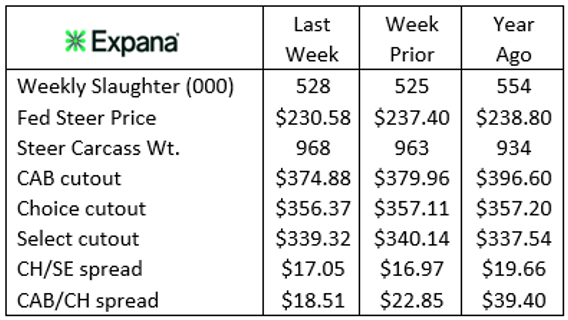
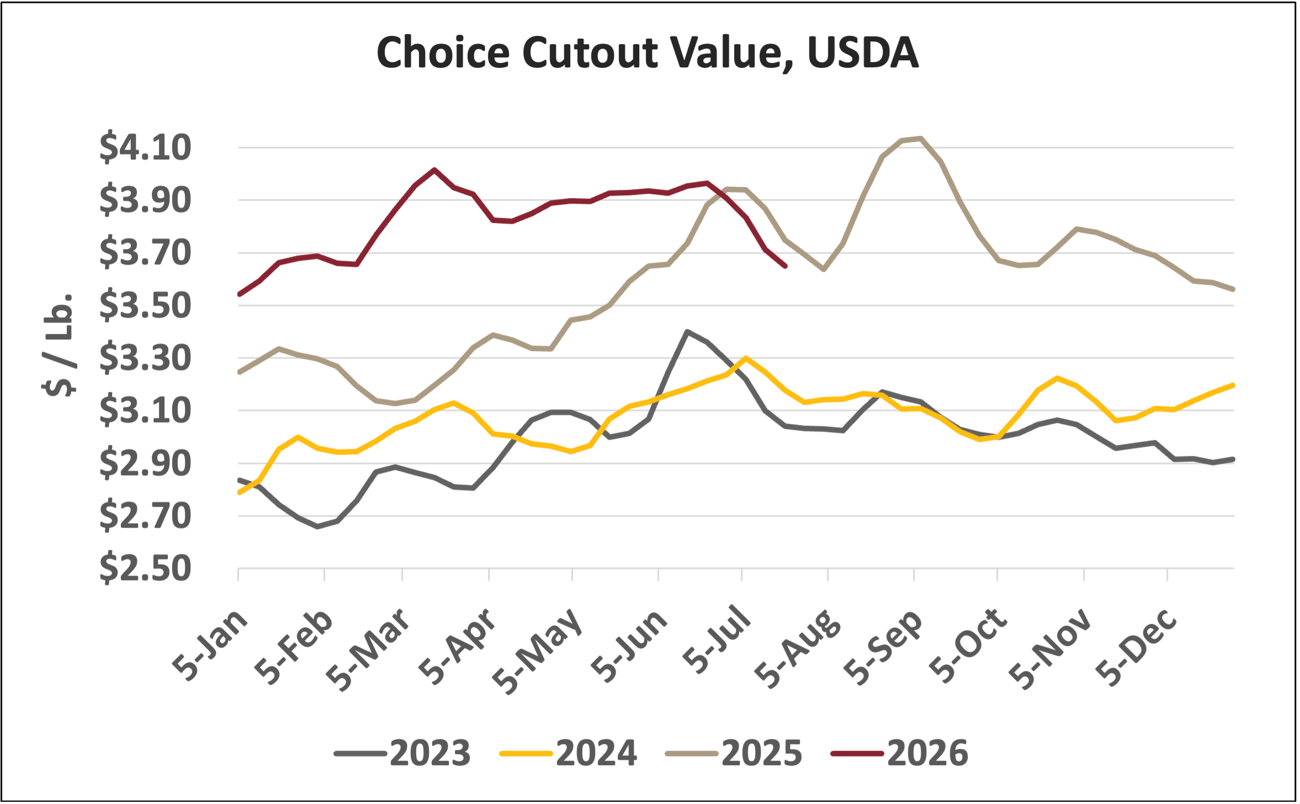
In the South: The South experienced a second consecutive week of widespread reductions in drought coverage. In fact, flash flooding and lowland flooding plagued some of the hardest-hit areas, including the Arklatex and the southeastern corner of Oklahoma, where 2-week rainfall totals locally exceeded 10 inches. Much of the northern tier of the region, from Oklahoma to Tennessee, also received multiple rounds of heavy rain. Although mostly dry weather prevailed in south-central Texas, some additional improvements were introduced, as impacts of recent downpours on long-term drought became more apparent. By June 28, the U.S. Department of Agriculture indicated that statewide topsoil moisture in agricultural regions was 28% surplus in Louisiana.

In the High Plains: Like other areas in the central and eastern U.S., a patchwork quilt of showers provided drought relief in some areas. Some of the heaviest rain, occasionally accompanied by thunderstorm-driven high winds and large hail, fell in portions of all six states in the region. However, southeastern Nebraska was one area that missed all the rain. One of the most impressive outbreaks of severe weather occurred on the night of June 28-29, when a swath of wind damage stretched from northwestern Nebraska into southeastern North Dakota and beyond. An unofficial wind gust to 131 mph was clocked in Hyde County, South Dakota, while a gust to 112 mph was recorded at a mesonet station near Ree Heights in Hand County, South Dakota. Despite all the rain, the U.S. Department of Agriculture reported that rangeland and pastures continued to struggle. On June 28, statewide rangeland and pastures were rated 66% very poor in Nebraska, along with 63% in Colorado.

In the West: During the transition from hot weather to cooler conditions, gusty winds fanned recently ignited wildfires across portions of the eastern Great Basin and the Four Corners States. Fire ignition and spread was also abetted by dry thunderstorms, low humidity levels, and near-record to record-setting dry fuels. Pockets of worsening drought were observed in the Four Corners States, including a notable expansion of extreme drought (D3) across the northern half of New Mexico. In the Northwest, however, heavy precipitation—including high-elevation snow—eased drought from central Idaho into western and northern Montana. Less significant precipitation fell in the Pacific Northwest. According to the U.S. Department of Agriculture on June 28, Western States reporting rangeland and pastures rated at least one-half very poor to poor included Arizona (70%) and Colorado (63%), while states with topsoil moisture more than one-half very short to short were Colorado (89%), Wyoming (81%), Utah (69%), New Mexico (68%), Nevada (65%), and Oregon (62%).

To view the 6-10 Day Precipitation Outlook Map, click here.

To view the 6-10 Day Temperature Outlook Map, click here.

To view the Monthly Drought Outlook Map, click here.

New World Screwworm

First Cases of New World Screwworm Reported in July Push Total Numbers to 31

USDA has reported the first cases of New World Screwworm in July on Screwworm.Gov- both were sheep infestations in Crockett County, which is about 85 miles from the international border and the Rio Grande River. The County now has the most NWS cases of any county in the state- eight.

The latest cases posted on July first on the USDA website make 31 the total number found in the US since case one was discovered June third. Ten cases have been declared inactive or resolved with 21 cases considered to be active. The active case that continues to be closest to the Oklahoma State Line (the Red River) is the one reported in Tom Green County near San Angelo on June 11th, which was a calf.

Active animalcases are those that involve ongoing disease mitigation efforts on the individual animal until it is free of NWS myiasis, including treatment and wound management of the infested animal. 

Inactive animal cases refer to situations where mitigation activities are no longer required on that animal. Either the animal has fully recovered, with myiasis resolved and treatment completed, or appropriate measures have been taken to prevent the spread of NWS, such as appropriate carcass management of a deceased infested animal.

USDA's APHIS continues to place sterile flies in north Mexico and south Texas- concentrating on the counties where the active cases are The sterile insect release area, or polygon, is adjusted as needed to maintain broad suppression and help prevent the pest from spreading to new areas.

According to the Texas Animal Health Commission- There is currently a quarantine in place due to an established New World Screwworm Infested Zone in parts of the following Texas counties: Bandera, Coke, Crockett, Edwards, Gillespie, Jim Hogg, Kerr, Kimble, La Salle, Medina, Pecos, Schleicher, Starr, Sutton, Terrell, Tom Green, Uvalde, Val Verde, Webb, Zapata, Zavala.

According to the Executive Director Orders issued, all warm-blooded animals in a zone may not move out of the zone without prior authorization from the Texas Animal Health Commission (TAHC). Learn more by visiting the TAHC website, available here.

NCGA Emphasizes USMCA Importance to Corn Growers, Calls for Renewal

The U.S. Trade Representative released a statement today saying officials from the United States, Mexico and Canada met to review the United States-Mexico-Canada Agreement, and that the United States did not agree to renew the agreement in its current form. The agreement will remain in force as negotiations continue.

July 1 is the deadline for all three countries to indicate the path forward on USMCA. If no agreement is reached, officials from all three countries will be required to discuss the agreement each year until it automatically expires in 2036.
 

In response to this development, Jed Bower, an Ohio farmer and president of the National Corn Growers Association, released the following statement:
 

"USMCA is the single most important trade agreement to the corn industry, with Mexico serving as the largest purchaser of corn and Canada serving as our largest ethanol market. Additionally, the dispute settlement mechanism in the agreement has been critical for corn growers challenging harmful policies impacting biotechnology access.

"Right now, we need the long-term certainty that USMCA gives us. We encourage the three countries to make progress on the agreement, and work to complete targeted improvements over the coming year."  

Growth Energy: E15 Offers $21 Million in Fuel Savings During the July 4th Holiday

American drivers could collectively save more than $21 million this Independence Day weekend if they fill up with E15— a more affordable fuel option made with 15% ethanol. The analysis is based on AAA projections that 61.4 million people will drive at least 50 miles from home over the July 4th holiday. E15, also sold as Unleaded 88, can save consumers 30 cents per gallon on average.
 
"Ethanol producers, farmers, and retailers are proud to celebrate the holiday by holding down fuel prices for Fourth of July travelers," said Growth Energy CEO Emily Skor. "Despite arbitrary federal restrictions, E15 is used by millions of American drivers, approved for more than 96% of cars on the road, and offered at thousands of fuel stations across the country. Now it's up to Congress to ensure that more American families have the freedom to choose lower-cost fuel all year long."

Skor's message echoes those of Senate champions working with Majority Leader John Thune to secure a path forward for a permanent, nationwide legislative fix offering consumers year-round access to lower-cost E15. Retailers are also calling for Congressional action to finally secure a regulatory fix that allows them to sell this more affordable fuel all year round.

"As retailers, our priority is to deliver affordable, reliable access to the fuel options our consumers need and desire," said Steve Walk, COO of Protec Fuel. "Providing fuel choices to consumers on price, performance or both. Congressional action on year-round E15 is vital to that mission."

E15 can be found at over 5,100 gas stations in 35 states and is legal for sale in every state, although sales are restricted over the summer due to outdated federal regulations drafted for a previous generation of fuels. However, this cleaner, more-affordable fuel choice remains available this summer thanks to a waiver issued by the U.S. Environmental Protection Agency. The temporary waiver ensures that retailers, refiners, and biofuel producers have the certainty they need to keep E15 on the market for the time being, but it falls short of the permanent fix retailers need to bring lower-cost E15 to more fueling locations.   
 
Travelers can plan their road trip and locate gas stations selling Unleaded 88 and other higher ethanol blends using the Get Biofuel Fuel Finder.

ARA Commends EPA for Advancing Long-Delayed Crop Protection Registrations

The Agricultural Retailers Association (ARA) today commended the U.S. Environmental Protection Agency (EPA) for taking meaningful steps forward on pending pesticide registrations, consistent with the urgent action ARA requested in a recent letter to Administrator Lee Zeldin.

"We appreciate the EPA completing its science-based reviews of new pesticides and advancing their registrations," said Richard Gupton, ARA SVP of Public Policy & Counsel. "These registrations mean farmers should have new tools in time for the 2027 growing season, though state-level review and approval is still required before any product can be used in a given state. New pesticide products being available matters as resistant weeds and disease pressure keep challenging growers. We look forward to continuing to work with EPA on the other pending registrations that are essential to the ag industry's ability to manage resistant pests and diseases."

Read ARA's previous letter to Administrator Zeldin here.

Ag Groups React To Securing Agriculture's Workforce Act

American Farm Bureau Federation: America's farmers are facing a labor crisis. Continued agriculture workforce shortages threaten farmers' ability to grow the food families rely on. Many labor challenges are addressed in new legislation introduced by House Agriculture Committee Chair G.T. Thompson.The Securing Agriculture's Workforce Act of 2026 builds on recommendations of the bipartisan Agricultural Labor Working Group and modernizes the H-2A visa program by expanding access to a year-round workforce and eliminating unpredictable swings in wage rates, among other changes. "The lack of available labor is among the largest limiting factors of American agriculture," said AFBF President Zippy Duvall. "Most Americans don't want to work on farms. In fact, only 182 domestic applications were submitted for nearly 415,000 advertised positions in 2025. If Americans won't apply for these jobs, we have no other choice but to depend on the H-2A program. Unfortunately, the current guest worker program is inadequate to meet the demands on farms across the country. "We are grateful to Chairman G.T. Thompson for listening to America's farmers. Farm Bureau members participated in the bipartisan House Agriculture Labor Working Group, and they shared the obstacles to participation in guest worker programs. Their needs are largely addressed in the Securing Agriculture's Workforce Act. It delivers meaningful farm labor reform and will provide certainty and fairness to both farmers and their employees as they contribute to a strong and healthy food supply."
The Securing Agriculture's Workforce Act would:

  • Allow temporary workers to remain on the job for up to 350 days, which gives farms like dairies greater access to the H-2A program;
  • Limit excessive or irrelevant federal fees to participate in the H-2A program, which will make it more affordable for farmers;
  • Codify an improved wage methodology and establish safeguards to prevent unpredictable Adverse Effect Wage Rate fluctuations; and
  • Affirm H-2A workers as essential.

Farm Bureau strongly supports the Securing Agriculture's Workforce Act and urges Congress to pass it. We are committed to working with lawmakers to ensure farmers have access to an adequate workforce to continue producing healthy and affordable food for America's families.


Today, the United Food and Commercial Workers International Union (UFCW), America's largest private sector union representing 1.2 million workers in meatpacking, food processing, grocery, and other essential industries across North America, released a statement in response to House Republicans' Securing Agriculture's Workforce Act (SAWA). UFCW International President Milton Jones said:  "Across the country, rural communities are powered by farm and food processing jobs. The Securing Agriculture's Workforce Act will turn these stable, permanent jobs into temporary ones, leaving workers with less money to take home and spend in their local economies.  "Americans are already shouldering the burden of an affordability crisis, but instead of addressing it, House Republicans would rather focus on weakening the jobs that keep our country running and put food on American families' tables. Jobs in meatpacking and food processing and the communities that rely on them should be invested in, not demolished. Turning dependable jobs into temporary ones will threaten the livelihoods of thousands of Americans, devastate entire communities, and threaten our food supply chain."


The Agricultural Retailers Association (ARA) today endorsed the Securing Agriculture's Workforce Act (SAWA), which makes commonsense reforms to modernize the H-2A visa process. "Agricultural retailers cannot serve farmers without a dependable workforce. The Securing Agriculture's Workforce Act (SAWA) provides practical, long-overdue reforms that will strengthen the agricultural supply chain, improve access to labor, and help ensure America's farmers have the products and services they need when they need them,"said Hunter Carpenter, ARA Senior Director of Government Affairs. "ARA strongly supports this legislation and applauds Chairman Thompson for advancing meaningful agricultural labor reform."  SAWA contains several reforms long supported by ARA, including streamlining the H-2A application process, providing greater flexibility for year-round agricultural employment, improving worker portability, and modernizing wage requirements. These commonsense reforms will help employers access a reliable workforce while maintaining important worker protections.  ARA previously sent a letter of support for this bill to Chairman Thompson, which can be found here. Read the full text of SAWA here.

Seasonal Carcass Impacts

Last week's cattle harvest total of 537,000 head was the largest since February, up 9,000 head from the week prior. The Independence Day holiday this week urged an uptick in production volume as greater holiday demand is fulfilled ahead of this week's shortened production schedule.

Feeders and packers held off trade until very late Friday again as a steady market unfolded at $259/cwt. on a live basis.

Carcass weights continue a slow descent toward anticipated summer lows as the steer carcasses averaged 968 lb. each in the confirmed data two weeks ago. While still 37 lb. heavier than a year ago, the draw down from this spring's record-highs has been a welcome relief as the share of carcasses disqualified from CAB® acceptance recedes, pulling the brand's certification rate up to 40% of eligible, Angus-type carcasses in the latest data.

Turning the calendar to July, the wholesale beef market is expected to undergo a lower price trend as consumers turn toward lighter fare as the heat turns up and families are vacationing. The latest weekly comprehensive cutout value (including all grades and delivery periods) was $390.94/cwt., up $14.99/cwt. from a year ago.

In last week's data, carcass quality price spreads repositioned as the CH/SE spread pressed higher to $19/cwt. on USDA's report and $24.86/cwt., according to Expana. This is a swift directional change in a matter of weeks, indicating that short-term spot market trends on small volume do not define an enduring market shift.

Seasonal Carcass Impacts
An overriding theme across the past 18 months in the beef sector has been increased carcass weights. In general, fed steer and heifer carcasses averaging 25-30 lb. heavier year over year has been a net positive for the industry. At the feedyard, larger gross returns, per head have driven tremendous profitability with even greater returns passed back to the cow/calf sector. Domestic beef supply has benefitted as fed cattle harvest fell 9% in 2026, while fed carcass tonnage held to a 5.8% decline. When viewed from the productivity lense, heavier weights have been a bit of a savior across mulitple sectors

Those benefits are evident downstream as well, but it's a bit more of a mixed bag. Considering record-heavy average weights, specifically, the industry has managed to adapt, or at least tolerate, the upward shift in beef cut sizes, etc. Yet the right side of the bell curve contains those ultra-heavy steers, pressing against a ton on the hoof, yielding 1,200 lb. carcasses. Stating this is not a matter of placing blame, rather, it's simply an outcome advanced by economics.

We often review the downward pressure heavier weights have imposed on CAB acceptance rates as a growing proportion of richly-marbled, exemplary carcasses fail to achieve certification due to carcass weights above the 1,100 lb. limit. This factor had an exaggerated impact in the first four months of 2026 as new record-heavy weights were recorded in March. A seasonal decline in average steer weights has mostly "righted the ship" as the latest steer weights have fallen back to 968 lb. from the 989 lb. March high.

The backfat specification is one that we have focused less attention toward, historically, as it has typically ranked fourth among the brand's 10 carcass specifications when it comes to reasons for certification failure. Yet as average days on feed have now increased to more than 200 days, external carcass fat levels have crept higher. This drove excessive backfat levels (greater than 1 inch measured between the 12th and 13th rib) to the third position among certification failures in the first four months of the year. The 2026 increase for the period indicates 11.8% of eligible carcasses failed due to excessive fat, compared to just 7.3% for that period in 2025. This 11.8% backfat failure rate was slightly greater than the 10.9% rate at which carcasses exceeded the 10 to 17 square inch ribeye specification.
As we near expected July summer lows in fed cattle harvest weights, we anticipate further improvement in acceptable ribeye sizes and backfat measurements. Yet looking ahead to the fall, the trend line data for each of these traits pose potential problems with weights seeking their seasonal, annual highs. If history repeats itself, then new record weights could be charted. This would cause related increases in ribeye area and backfat measurements exceeding brand standards. The potential is quite dependent on the trend for days on feed and feedlot economics through year-end.

An industry-wide review of these topics suggests that modern carcass outcomes, while underpinning supply, are testing upper limits for acceptability outside the scope of CAB brand specifications. Short term economic realities guide management on a "lot by lot" or "season to season" basis for cattle feeders. As cattle supplies begin to shift and utilization rates in feedyards and packing plants evolve, the "tide" has historically shifted rather quickly. The short-term profits are great but extremely abnormal economics across sectors suggests that rebalancing processor utilization could result in more discount pressure to carcasses on the excessively large and fat end of the bell curve.

Decatur man arrested in livestock theft investigation

A Decatur man was arrested following an investigation into the theft of 56 head of calves valued at more than $126,000.

Gabriel Cocanougher, 36, of Decatur, was arrested June 12 and charged with theft of livestock, a third-degree felony. Authorities allege Cocanougher failed to pay for cattle that were shipped from Florida to Decatur after agreeing to purchase them.

Texas & Southwestern Cattle Raisers Association Special Ranger Cliff Swofford opened the investigation in May. During the investigation, Swofford obtained evidence and witness statements indicating Cocanougher agreed to purchase 56 head of calves from a Florida livestock broker in September 2025. The cattle were delivered as agreed, but payment was never made despite multiple attempts by the broker to collect.

Following the investigation, Swofford submitted the case to the Wise County District Attorney's Office for review. An arrest warrant was issued, and Cocanougher voluntarily surrendered to Wise County authorities. He was later released on bond.

This investigation remains ongoing.

TSCRA Special Rangers would like to thank the Wise County Sheriff's Office for its assistance during the investigation.

Cattle Group Welcomes USDA Initiatives Supporting Independent Beef Processing

R-CALF USA today welcomed recent U.S. Department of Agriculture initiatives aimed at strengthening independent beef processing by reducing regulatory burdens, expanding processing capacity and helping preserve independent processing infrastructure during a period of historically tight cattle supplies.

The recent actions began in June with USDA's Small Processors Action Plan to reduce regulatory burdens, improve customer service and streamline USDA support for small and very small meat processors. USDA also announced an additional $60 million through the Meat and Poultry Processing Expansion Program to help expand and modernize domestic processing capacity. Most recently, USDA introduced its Strengthening Processing for U.S. Ranchers (SPUR) Program, which will provide temporary financial assistance to eligible U.S.-owned small- and mid-size beef processors to help preserve independent processing capacity while the nation's cattle herd rebuilds.

"We appreciate USDA recognizing that independent meat processors are an essential part of a competitive domestic cattle industry," said R-CALF USA CEO Bill Bullard. "For decades, R-CALF USA has advocated for strengthening state, local and regional processing capacity because it expands producer marketing opportunities, provides producers with additional marketing alternatives beyond the dominant packers, supports rural economies and helps restore competition within the cattle industry."

"Independent processors need a reliable supply of cattle, and cattle producers need profitable market conditions that encourage herd expansion," he said. "Rebuilding the U.S. cattle herd and strengthening independent processing must go hand in hand to restore competition and ensure cattle producers have long-term access to competitive marketing options."

Secretary Rollins Announces $500 Million for Fertilizer Investment & Expansion Program to Strengthen America's Fertilizer Supply Chain

U.S. Secretary of Agriculture Brooke L. Rollins today announced the launch of the $500 million Fertilizer Investment & Expansion for Long-Term Domestic Supply (FIELDS) Program, a new initiative administered through USDA Rural Development to expand domestic fertilizer manufacturing, strengthen America's fertilizer supply chain, and improve long-term affordability for American farmers.

Utilizing the authorities of the Commodity Credit Corporation (CCC), USDA will make $500 million available through the FIELDS Program to support construction and expansion of domestic fertilizer production facilities. The program prioritizes shovel-ready, financially viable projects capable of increasing production of critical crop nutrients.

"For decades, American farmers were forced to rely on unstable foreign suppliers for one of the most important inputs needed to feed our nation. Today we are announcing a plan to end this consolidation and bring competition back to the American fertilizer industry," said Secretary Brooke L. Rollins."Under President Trump's leadership, USDA is rebuilding America's fertilizer manufacturing base, strengthening supply chains, and ensuring our producers have reliable and affordable access to the fertilizer they need to remain competitive. The previous administration chose to prioritize their radical climate agenda when searching for fertilizer projects, and as result let this problem exacerbate by not getting shovels in the ground and only building 6% of their stated goal. The Trump Administration's FIELDS program is solely focused on producing fertilizer leading to lower costs for American farmers and consumers, as well as restoring a critical supply chain for our country. Farm security is national security."

"American natural resource extraction is the safest and most environmentally friendly in the world. It makes zero sense to import fertilizer from foreign competitors when we can make it right here while fueling our economy and protecting human health and the environment," said Environmental Protection Agency Administrator Lee Zeldin. "This is an obvious win-win for Americans farmers, families, and businesses. The Trump EPA stands ready to help rebuild this vital arm of American manufacturing while ensuring each facility adheres to the strict environmental standards required by law."

"President Trump's promise to restore commonsense to America's energy and climate policy continues to deliver. While past leaders harmed America's agriculture industry with anti-hydrocarbon policies that drove up the cost of our food, the Trump administration will continue to take actions across the federal government to make fertilizer more accessible and affordable," said Secretary of Energy Chris Wright. "I'm proud to be working hand-in-hand with Secretary Rollins on these important initiatives."

FIELDS builds upon USDA's review of more than 120 fertilizer projects inherited from the previous Administration. The Department worked alongside project developers, lenders, farmers, and federal partners to identify barriers to construction and financing, using those lessons to develop a program focused on implementation-ready projects capable of delivering measurable production increases.

Administered by USDA Rural Development's Rural Business-Cooperative Service, the program will support projects that expand domestic production of nitrogen, phosphate, potash, sulfur, and other critical crop nutrients, strengthen competition, improve supply chain resilience, and increase fertilizer availability for American farmers. Unlike previous fertilizer funding efforts, FIELDS emphasizes project readiness, financial strength, realistic construction timelines, and measurable production outcomes.

The FIELDS Program complements the Administration's broader fertilizer strategy to lower input costs and strengthen domestic production. In recent months, President Trump suspended countervailing duties on phosphate fertilizer imports to improve fertilizer availability and lower costs for farmers, designated phosphate and potash as Critical Minerals, established a USDA-Department of Justice Memorandum of Understanding to address anti-competitive practices affecting agricultural input markets, improved fertilizer transportation flexibility during supply disruptions, and created USDA's first dedicated Agricultural Economist focused on fertilizer markets and crop inputs.

The FIELDS Program is designed to support projects that are:

  • Made in America
  • Independent and Competitive
  • Farmer Focused
  • Innovative
  • Energy Dominant and Secure
  • Capable of Delivering Measurable Production Increases


"Food security is national security," Rollins added. "A strong domestic fertilizer industry is essential to a strong agricultural economy. This investment will help ensure American farmers have access to a secure, reliable, and domestically produced fertilizer supply for generations to come."

Individual awards will range from $15 million to $150 million, with funding focused on projects that strengthen domestic fertilizer manufacturing and deliver meaningful benefits to American agriculture.

Applications must be submitted electronically through Grants.gov by 11:59 p.m. on August 15th, 2026. Additional information, including eligibility requirements and application materials, is available through USDA Rural Development at www.rd.usda.gov and on Grants.gov.

EPA Seeks Public Comment on Draft Guidance for Reducing Risk from PFOA and PFOS in Biosolids to Make America Healthy Again

The U.S. Environmental Protection Agency (EPA) is releasing draft guidance to help wastewater utilities, landowners, and the public reduce risk from PFOA and PFOS in biosolids. This effort is part of EPA's comprehensive, lifecycle-based strategy to address PFAS and Make America Healthy Again.  

EPA is taking a radically transparent approach by ensuring robust input is gathered to inform next steps. EPA will solicit comment on the draft guidance for 60 days following publication in the Federal Register. Once the notice is published, comments can be submitted using Docket ID No.  EPA-HQ-OW-2026-2509. The notice will contain additional information on how to submit a comment.   

"One of EPA's top priorities is to Make America Healthy Again, and reducing risk from PFOA and PFOS in biosolids is a critical part of that effort," said EPA Assistant Administrator for Water Jess Kramer. "This draft guidance will provide Americans with commonsense recommendations that can protect public health, while also supporting wastewater systems and beneficial use of biosolids when appropriate." 

The Trump EPA has gathered feedback from a wide range of stakeholders on this topic and recognizes the complexity associated with biosolids contaminated with PFOA and PFOS. 

After reviewing extensive public input, EPA determined that the previous administration's Draft Risk Assessment relied on assumptions too disconnected from real-world conditions to give Americans clear, actionable information. The agency received comments that flagged that there are risks at trace concentrations near the limit of detection, levels lower than those already found in everyday soil and household products. They also commented that the assessment relied on a simplified, straight-line risk calculation that independent scientists have questioned. Commenters underscored the assessment leaned on data from atypical, industrially contaminated sites while overlooking newer research from communities where ordinary household biosolids have been safely land-applied for decades.

The Trump EPA will now issue guidance to transparently gather important feedback and chart a path forward that helps protect Americans from exposure to PFOA and PFOS in biosolids. There is real concern from farmers and ranchers who want to ensure their land is as healthy and productive as possible. At the same time, wastewater systems need a path forward for managing sewage sludge and biosolids from the communities they serve. In keeping with common best practices, EPA's draft guidance recognizes the importance of reusing biosolids through land-application. It also provides commonsense recommendations for how to reduce risk by avoiding land application of biosolids near waterways and on lands where children play, and also by avoiding using biosolids as fertilizer of crops that have higher risk of human exposure.  

Background 

Defining Biosolids and Sewage Sludge 

When domestic sewage from households and businesses is sent to wastewater treatment plants (WWTPs), the liquids are separated from the solids, producing a nutrient-rich product known as "sewage sludge." In some instances, industrial wastewater is also conveyed to a WWTP and combined with domestic sewage. The terms "biosolids" and "sewage sludge" are often used interchangeably by the public; however, EPA typically uses the term "biosolids" to mean sewage sludge that is intended to be applied as a soil amendment or fertilizer and that has been treated to meet the requirements in EPA's Clean Water Act (CWA) regulations. 

Under existing federal regulations, biosolids can be applied to agricultural lands, forests, tree farms, golf courses, turf farms, and other types of land. Biosolids can also be bagged and sold at stores to the public, generally to be used on lawns or in home gardens. Biosolids generally are not used on specialty crops, such as fresh produce, and generally are used on crops where edible parts are not in contact with the soil. Some states, Tribes, or counties also have additional rules around the use of sewage sludge and biosolids.  

Defining PFOA and PFOS  

PFOA and PFOS are two chemicals in the larger class of PFAS. PFOA and PFOS persist in the environment for long periods of time and have been linked to a variety of significant adverse human health effects. Domestic production and import of PFOA has been phased out in the United States by the companies participating in the 2010/2015 PFOA Stewardship Program. However, quantities of PFOA may be produced, imported, and used by companies not participating in the PFOA Stewardship Program and some uses of PFOS may be ongoing. While statewide surveys have found that PFOA and PFOS have been detected at varying levels in sewage sludge, it is important to note that not all sewage sludge has been found to have detectable or elevated levels of PFOA or PFOS. 

NMPF and USDEC Statement on the First USMCA Joint Review

From NMPF and USDEC Executive Vice President Shawna Morris:

"As the United States, Mexico, and Canada launch the first Joint Review of the U.S.-Mexico-Canada Agreement (USMCA), we commend the ongoing efforts to resolve outstanding issues and work toward a renewal of this vital agreement. Getting USMCA right matters enormously to our industry, which ships more than 40 percent of all U.S. dairy exports by value to Mexico and Canada.

"Mexico is our most important trading partner, and our dairy industries are deeply integrated. It is critical that a renewed USMCA fully protect the free trade of common name products, particularly against any EU-imposed geographical indication restrictions. Protecting the ability of both U.S. and Mexican producers to use common names is essential to preserving the integrated market we've built together.

"On the Canada side, USMCA was designed to deliver two key reforms: targeted new tariff-rate quotas and real disciplines on Canada's ability to distort global dairy markets through unlimited exports of artificially underpriced dairy proteins. Canada has flagrantly disregarded both commitments, underscoring exactly why this Review is such an important tool. A renewed agreement must fix what isn't working.

"We strongly support the U.S. government's efforts to address these challenges and urge focused, intensive work by our trading partners to resolve them. A stronger, durable, renewed USMCA is key to the long-term prosperity of dairy producers and exporters across North America."

June Brings Historic Straight-Line Winds and Uneven Drought Relief Across Oklahoma

An extraordinary month of severe weather and rainfall has left Oklahoma with historic wind records and complex agricultural conditions, according to State Climatologist Gary McManus. While June 2026 did not feature headline-grabbing tornado outbreaks, it delivered unprecedented straight-line winds alongside a substantial rainfall rebound that brought significant yet uneven drought relief to the state.

Unprecedented Straight-Line Winds Dominate Severe Weather

Straight-line winds took center stage during June, establishing a remarkable milestone for the state. The Oklahoma Mesonet recorded six of its top 50 all-time wind gusts during the single month, a feat unmatched since the network was commissioned in January 1994.

The most widespread destruction developed between June 21 and 22, when a powerful derecho tracked from northwest to southeast across the state. This expansive system generated two triple-digit wind gusts at the Hinton Mesonet site, peaking at 102 mph and 101 mph. The Hinton gusts ranked as the 10th and 12th strongest ever measured by the network.

During this single derecho event, the Mesonet registered 54 severe wind gusts of at least 58 mph, including 20 gusts reaching at least 70 mph and eight hitting 80 mph or higher. The resulting winds uprooted trees, downed power lines, damaged homes and agricultural structures, left tens of thousands of residents without power, and caused a BNSF train derailment near Woodward that blocked both main tracks. The damage path eventually spanned from the Kansas High Plains all the way to southwestern Arkansas.

The month's extreme wind profile extended beyond the derecho. On June 25, a severe storm in the Oklahoma Panhandle brought a 101 mph gust to Boise City, ranking 11th on the all-time list. Earlier in the month, Eva recorded a 96 mph gust on June 13, while Breckinridge matched that 96 mph mark on June 26. Additionally, an 89 mph gust at Freedom during the June 22 derecho ranked 50th all-time. To put these numbers in perspective, the state's all-time record remains the 151 mph gust recorded at El Reno during an EF5 tornado on May 24, 2011.

Rainfall Rebound Cuts Widespread Drought

Oklahoma experienced a major moisture turnaround in June, finishing as the 16th-wettest June since historical records began in 1895. The statewide average precipitation reached 6.68 inches, which is 2.42 inches above normal.

Rainfall accumulation varied dramatically across the state, with Idabel recording a state high of 16.01 inches and Goodwell recording a low of 1.40 inches. Out of the 120 Mesonet monitoring sites, 78 recorded at least 5 inches of rain, 62 saw at least 6 inches, 35 reached 8 inches or more, and 19 sites topped the 10-inch mark. More than 40 locations finished at least 2 inches above their June average, with Idabel securing an impressive 11.9-inch surplus.

This influx of moisture triggered substantial drought recovery across the eastern two-thirds of the state. According to data from the U.S. Drought Monitor, overall drought coverage dropped from 81% of Oklahoma on May 26 to 53% by June 23. Severe-to-exceptional drought fell from 47% to 42%, while extreme-to-exceptional conditions dropped from 37% to 29%.

However, the moisture distribution remained highly unequal. A focused area of rain deficits, ranging from a half-inch to over an inch below normal, stretched from west-central into southwestern Oklahoma and just south of the Oklahoma City metro area. Because western regions missed out on the heaviest downpours, exceptional drought actually expanded from 4% to 7% of the state, with the worst remaining conditions concentrated from west-central Oklahoma into the Panhandle.

June by the Numbers

  • Statewide Average Temperature: 79.1°F (1.8°F above normal, ranking as the 27th-warmest June since 1895)
  • Temperature Extremes: High of 107°F at Hollis on June 17; low of 51°F at Eva and Kenton on June 12
  • Highest Heat Index: 113°F at Cherokee and Fairview on June 8
  • Triple-Digit Temperatures: 95 individual observations of 100°F or higher across the 120 Mesonet sites
  • Triple-Digit Heat Index Readings: 1,340 observations, including 334 at or above 105°F
  • Regional Averages: Warmest monthly average was 83.3°F at Grandfield; coolest monthly average was 74.4°F at Kenton

July Outlook Points to Heat and Persistent Western Drought

As Oklahoma transitions into the typical heat of mid-summer, the Climate Prediction Center's July outlook indicates a strong probability of above-normal temperatures across the state. For precipitation, the outlook forecasts equal chances of above-, below-, or near-normal rainfall.

This neutral rain outlook leaves the trajectory of ongoing drought recovery highly uncertain. The monthly drought outlook projects that drought conditions will persist across much of western Oklahoma, including the hard-hit Panhandle and west-central communities. Conversely, eastern and central regions that benefited from June's heavy rains face minimal drought concern heading deeper into the summer months.

To read more from State Climatologist Gary McManus on his mesonet ticker, click here:

National Sorghum Producers Welcomes USDA Rule Advancing Value-Added Biofuel Feedstock Opportunities

National Sorghum Producers applauds U.S. Secretary of Agriculture Brooke Rollins and the U.S. Department of Agriculture for finalizing the Regenerative Feedstock Rule, an important step toward helping farmers capture additional value from biofuel feedstock crops, including sorghum, through voluntary conservation practices.

The final rule provides a framework for producers to document and verify eligible practices that may enhance the value of feedstocks used in biofuel production under the 45Z Clean Fuel Production Credit. Covered crops include sorghum, corn, soybeans and spring canola.

"National Sorghum Producers thanks Secretary Rollins and USDA for recognizing the role farmers play in building strong domestic energy markets and creating new opportunities for value-added agriculture," said NSP Chair Amy France, a sorghum producer from Scott City, Kansas. "Sorghum is well positioned for this moment. Our producers have long understood the value of efficiency, resilience and practical conservation, and this rule is an important step toward ensuring those practices can create real market opportunities at the farm gate."

The rule establishes a framework for field-level carbon intensity accounting, traceability, auditing and verification for eligible feedstocks. USDA also released an updated Feedstock Carbon Intensity Calculator to help producers estimate the value of approved practices, including cover crops, conservation tillage, no-till and improved nutrient management.

While USDA's final rule is a critical step, additional federal guidance is still needed to fully implement the 45Z Clean Fuel Production Credit. NSP urges Treasury in coordination with USDA and the Department of Energy, to swiftly finalize practical tax guidance that reflects the improvements made by Congress and allows farmers, biofuel producers and supply chain partners to move forward with certainty.

Investments in the biofuel value chain are critical to expanding domestic demand for American-grown crops, strengthening rural economies and creating new opportunities for producers. NSP looks forward to working with Secretary Rollins, USDA, Treasury and the DOE to ensure sorghum producers can fully benefit from the next generation of biofuel markets.

OSU Equine News: Weight loss in horses

It is well known that many horses will happily eat beyond the caloric requirements to maintain a moderate body condition. Combining improved forages with calorically dense grains and little exercise is a recipe for disaster, but not uncommon for many horses.

Our horse's ancestors were designed to meet their nutrient requirements by moving and eating continuously on low calorie forage. It is easy to see the mismatch in most modern management systems.
Achieving weight loss in horses can be difficult at best. Simply withholding grain or concentrate is often not enough. Reducing their forage intake, whether pasture or hay, can result in a bored, frustrated horse whose digestive tract then goes haywire. So, what do we do?

Caloric restriction, not nutrient restriction.
Ideally, more mature, less calorically dense hays would be selected. This is often a frustrating task for the horse owner as most hay producers attempt to produce the highest quality, most nutritious hay harvested at the ideal stage of maturity. If you can find hay that may be more mature, or less calorically dense, it is often low in other important nutrients. Owners may need to add a more nutrient dense feed, such as ration balancers or similar supplements, to provide the needed protein, vitamins and minerals without the extra calories.

Which hay?
In general, warm season grasses which are prevalent in Oklahoma will be lower in caloric density compared to cool season grasses or legumes. However, nutrient density of warm season grasses, such as Bermuda, will vary with hay producer inputs. Avoid high calorie legumes as the primary forage, but supplementing some alfalfa for protein may be appropriate.

Know your weight
Restricting the horse to consuming a portion of its body weight in consideration of the energy density of the forage is key. Many owners traditionally feed by offering flakes of hay, but this can provide a wide range of feeding weights. Investing in a scale to weigh each meal will allow owners to properly monitor the horse's intake. Further, regularly performing body weight estimations of the horse are a critical part of tracking the horse's progress and providing feedback relative to the plan's success.
In general, most owners can safely reduce a horse's intake to 1.5% of its body weight. However, some horses may be weight loss resistant and require a more stringent plan. If feeding below 1.5% it is highly recommended to consult with a nutritionist, as well as someone versed in behavioral management practices.

No pasture for you!
One of the most difficult situations to manage weight loss in horses is if they are housed on pasture. Even restricting the time on turnout to pasture may be inadequate as horses may just learn to eat quicker in their allotted time. Grazing muzzles are a useful strategy to decrease pasture intake, but recognize that not all horses will tolerate muzzles, or may learn to eat around them.

Knowing your feed
A hay analysis is an important first step in managing the obese horse as it allows the owner to calculate exactly what feed restriction is needed. Additionally, many owners may not be able to source hay specifically for just obese horses. Soaking hay prior to feeding and draining the resultant liquor can reduce the amount of water soluble nutrients. Note that this will also result in leaching of other water soluble nutrients as well. Again, this is where a ration balancer can help fill the gaps.

Keep them busy
One of the largest pieces of the weight loss puzzle is keeping the horse busy and not frustrated by lack of access of forage. Using slow feeders, whether hay nets or grids can greatly extend feeding time. Even using multiple feeders spread throughout their enclosure can encourage some movement and "grazing" behavior. Other options include puzzle feeders for pellet dispensing; just be sure you count that as part of their calories for the day. Consider adding some other training, like groundwork, to keep their mind busy by learning novel tasks.

Weight loss in horses is difficult, but impossible. Weigh your feed and routinely monitor your horse's BCS and weight. Aim for gradual weight loss and keep those horse's happy!

EPA Launches $30 Million Challenge to Help American Farmers Grow Healthy Food with Fewer Chemicals

Today, U.S. Environmental Protection Agency (EPA) announced an opportunity for the public to help shape a national innovation challenge with up to $30 million in total prize funding. The challenge will support practical, cost-effective alternatives to conventional chemical crop desiccation, the common practice of spraying pesticides to dry out crops in the final days before harvest. Grounded in gold standard science, this effort will help American farmers bring in their harvest with fewer conventional chemicals while protecting human health and the environment.

This is a win on both ends of the dinner table. Families get food grown with fewer conventional pesticides. Farmers get new, science-based tools that lower costs, protect their workers, and keep American agriculture strong and competitive in a changing global market.

"American farmers feed our families, and they deserve the best tools to do that job safely," said EPA Administrator Lee Zeldin. "This challenge backs our farmers, protects the health of American families, and helps modernize our farms. By listening to growers, researchers, and communities, we can cut exposure risks and make America's food supply stronger and more resilient."

American farmers are critical partners in the success of the Make America Healthy Again agenda. This initiative directly supports the Trump Administration's broader effort to protect human health and modernize U.S. agriculture by promoting resilient, efficient, and sustainable farming systems. Acting under its legal authority to regulate pesticides and protect human health and the environment, EPA is putting real funding behind real-world solutions that bring better science to America's farms.

Desiccants are pesticides that farmers spray to dry out plants quickly. They are usually applied in the final weeks before harvest to help a crop ripen evenly and to make harvesting faster and easier. Common crops often include small grains, pulses (beans and peas), oilseeds, potatoes, and cotton. These tools serve a purpose on modern farms, but because they are applied close to harvest, they can leave residue on food and may carry health risks for the workers who apply them. That is exactly why advancing safer, effective alternatives matters. It protects both the people who grow our food and the families who eat it.

Many of the solutions EPA hopes to encourage go hand in hand with regenerative agriculture—farming that works with nature to build healthier soil, cleaner water, and stronger crops. Integrated Pest Management (IPM) practices like smarter crop timing, natural drying methods, and precision technology can do the same job as chemical sprays with far less of them and at less cost to farmers. Less pesticide use means healthier land, healthier farm workers, and healthier families.

The Request for Information (RFI) released today will shape the design of the challenge—including its scope, who can take part, how entries will be judged, and how new ideas will be tested in the field. EPA is particularly interested in cost-effective solutions that maintain or improve harvest readiness, crop quality, and operational efficiency across a range of crop systems, including small grains, pulses, oilseeds, potatoes, and cotton.

Possible alternatives include:

  • Improved agronomic practices and crop scheduling
  • Mechanical or physical drying methods
  • Biological or lower-risk inputs
  • Precision agriculture technologies
  • Post-harvest conditioning innovations

EPA is seeking input from a broad range of stakeholders, including growers, producer organizations, equipment manufacturers, researchers, public health experts, environmental organizations, Tribes and territories, state and local agencies, and any interested member of the public.

The agency is also requesting feedback on barriers to adoption, research gaps, equipment needs, supply chain considerations, and the performance standards necessary for viable alternatives. In addition, EPA welcomes recommendations on challenge design, including prize structure, phased development approaches, and eligible uses of prize funding.

EPA encourages concise responses that include contact information, organizational background, and relevant experience. Instructions for submission and additional details can be found under docket number EPA-HQ-OPP-2026-3862 at www.regulations.gov once it is posted. Read the pre-publication RFI (pdf).

OSU's Mark Johnson on Bovine Congestive Heart Failure and Its Growing Impact on Feedlots

Bovine congestive heart failure in cattle is becoming an increasingly important issue for the beef industry, especially in feedlots where cattle are being finished to heavier weights. In a conversation with Associate Farm Reporter Carli Davenport, Mark Johnson, OSU Extension beef cattle breeding specialist, explained what producers need to know about the disease and how genetics may help reduce future losses.

Johnson said bovine congestive heart failure, commonly shortened to BCHF, has also been referred to in recent years as "late day morbidity" or "late stage morbidity." He explained that the condition is primarily seen in feedlot cattle after they have been on feed for an extended period.

"We've come to talk about it more as bovine congestive heart failure, or BCHF, and it is fundamentally cattle in feedlots, often after they've been on feed for a while, they're having heart failure," Johnson said. "It is right ventricular heart failure. Often once they've been on feed for a few months, they're dying of heart attacks."

Recognizing the Signs of BCHF

Johnson emphasized that BCHF remains a deadly condition with no effective treatment options. "The thing about bovine congestive heart failure—it's untreatable, it's fatal," Johnson said. He noted that some physical signs may resemble other cattle health issues such as hardware disease or altitude sickness. These similarities can make diagnosis difficult for producers.

Johnson recalled an example from an OSU trip to the National Western Stock Show in Denver, where a bull developed altitude-related symptoms. "The brisket begins to swell," he said. "We basically shipped that bull back to Oklahoma, and he recovered, and he's fine."

Unlike altitude sickness, however, cattle suffering from BCHF do not recover. Johnson said producers may observe several warning signs in affected cattle. "Brisket enlargement, you might be able to see the jugular vein alongside their neck a little easier, some edema in their lower body, things like that," Johnson said. He added that as cattle fatten, some of these physical changes can be difficult to distinguish from normal finishing traits.

Understanding Heart Scores in Cattle

One of the most important tools researchers are using to study BCHF is the heart scoring system, which evaluates how much remodeling has occurred in the heart. An article from Johnson about this topic can be found here.

Johnson explained that researchers have been investigating unexplained feedlot deaths for decades. "Going back 25 to 30 years, we've seen a higher incidence of cattle dying at the end of the feeding period," Johnson said. "You start looking for causes—was it pneumonia, had they become chronic, what was causing this?"

Post-mortem examinations helped researchers identify a consistent pattern. "The right ventricle of the heart is significantly remodeled," Johnson said. "It's basically worn out, and that's been the cause of heart failure."

Heart scores range from one to five:

Heart Score 1 = Normal, healthy heart
Heart Scores 2–4 = Increasing levels of remodeling
Heart Score 5 = Severe remodeling, often associated with fatal BCHF

Johnson said the goal is to identify cattle with healthier hearts and eventually use that data to improve breeding decisions. "A heart score of one shows a perfectly normal, healthy-looking heart," Johnson said. "Heart score five means probably the disaster has happened."

Genetics May Hold the Key

While environmental factors can contribute to heart failure, Johnson believes genetics play a major role in BCHF susceptibility. He explained that researchers are collecting heart score data at harvest and analyzing it alongside pedigree, age, and performance records to better understand inheritance patterns. "We have learned that this is a polygenic trait," Johnson said. "There are multiple genes involved in this heart remodeling."

Because the trait appears to be influenced by multiple genes, researchers hope to eventually develop genetic selection tools, such as an Expected Progeny Difference (EPD), specifically for heart health. "We can generate an EPD, an expected progeny difference, or a selection tool at some point in the future that gives us the potential to select for healthier hearts," Johnson said. That would give cattle producers another way to reduce losses from the disease over time.

Economic Impact on the Beef Industry

Johnson said BCHF is more than a health concern—it is an economic issue with major implications for feedlot profitability. Modern cattle are being fed to heavier finish weights than they were decades ago, and Johnson said that shift may be contributing to the rise in cases. "Going back 25 to 30 years, we are seeing a higher incidence of bovine congestive heart failure," Johnson said.

In severe cases, losses can be substantial. "There are recorded lots of cattle where upwards of 7% or more of them have died of bovine congestive heart failure," he said. "So it's a very significant form of loss. It really can impact the bottom line."

Even so, Johnson said early genetic research is encouraging. "It looks encouraging," Johnson said. "Some of the initial estimates of heritabilities for heart scores are coming back in the low to moderate range."

As more data is collected, researchers hope to better determine how much of BCHF risk is genetic and how effectively producers can breed against it. "As more phenotypes are collected and more data comes in, it permits us to connect the dots better," Johnson said. "How much of the variation in heart scores and heart failure can we explain as a result of genetics, and then parlay that into selection tools?"

What This Wheat Year Taught Farmers-Red Dirt Agronomy Podcast

A hard wheat year can still teach Oklahoma producers something useful about risk, timing, and variety decisions.

In this episode of the Red Dirt Agronomy Podcast, Dave Deken, Brian Arnall Ph.D., and Josh Lofton Ph.D. talk with Amanda Silva Ph.D., Oklahoma State University Extension small grains specialist, about the 2026 Oklahoma wheat crop. They discuss drought stress, scattered rainfall, early crop development, planting date decisions, test weight, wheat streak mosaic virus, and what variety trials can still tell farmers in a difficult year.

Key takeaways:

  • Rain timing drove much of the difference between fields, even within the same county.
  • Earlier crop development, warm winter conditions, and a cooler grain-fill period shaped yield and test weight outcomes.
  • Planting date can be used as a risk-management tool, especially when paired with different maturity groups.
  • Wheat variety trials are still valuable in stressful years, but researchers must carefully judge data quality, CV, blocks, and field variability.
  • OSU research continues on late-planted wheat, seeding rates, nitrogen management, forage production, coleoptile length, and deeper planting to chase moisture.

To listen to the full podcast, click below

Prescribed Fire Cost Share Program Sign up Period Open

Prescribed Fire Cost-Share is now available!

About the Program:

  • All 77 counties/84 conservation districts are eligible!
  • Payment assistance is limited to $20/acre, with a max of $6,000 per landowner each fiscal year.
  • Property currently under contract through another cost-share program for a prescribed burn payment will not be eligible.
  • Land parcels are only eligible for payments on a 3-year burning interval. Ex: A parcel burned in 2025 is ineligible until 2028.

Contact your local conservation district to learn more or to apply in person.

You can sign up here:

Express Ranch Plans Historic Three-Day Female Dispersal Sale in October

In today's Beef Buzz, senior farm and ranch broadcaster Ron Hays speaks with Donnie Robertson, Vice President of Express Ranch, who continues the conversation from part one, which aired yesterday, about the decision by the Funk family to disperse the iconic Express Ranches cattle operation. In this second installment, Robertson details how the ranch plans to market its massive female herd during one final major event this fall.

Why the Family Chose to Move Forward Now

Robertson said the decision came after the family carefully evaluated the operation's future, the current market, and the realities of managing such a large ranch. "We're not getting any younger," Robertson said. "Kevin and I have been here for 30-plus years, we're in a great cattle market, as you well know, Ron. I think the decision was just kind of made that, hey, it's probably time to do something like what we're doing, and just move on."

He noted that while the family was not under pressure to make an immediate decision, current market conditions made now the right time.

A Massive Herd Means a Complex Dispersal

Robertson said the sheer size of the Express Ranches operation made planning the dispersal a major undertaking. "When you look at the scope of Express, we run so many cattle here in the Canadian County area, but we also ran cattle in Guthrie," Robertson said. "Along with doing some cooperative deals on ET calves in several different states, the first thing that we did was try to find out exactly where they all were."

He admitted even the management team did not fully grasp the scale at first. "As crazy as that sounds, we knew we had a lot, but we really didn't know how many was a lot," he said. "When you do the numbers the way that we have, it's about 2,400 head of Angus cattle that are here that will be merchandised."

Three-Day October Sale to Feature Elite Females

After weighing multiple options, Robertson said management determined a three-day sale would best serve the family and maximize value. "We sat in the office and tried to figure out exactly what was the best thing to do for the family," Robertson said. "The unique thing about Bob Jr. and the family is that we weren't rushed to do this."

The female dispersal sale is scheduled for October 5, 6, and 7. Robertson said the first day will feature fall-calving cattle and fall open heifer calves. "The first day will be basically all fall-calving cattle and fall open heifer calves," he said. "I think we're looking at about 700 lots in that sale."

Day two will showcase many of the ranch's elite genetics. "Tuesday will kind of be the traditional Saturday of the Big Event," Robertson said. "That's where we'll have most of the donors, some fall opens, some spring ET calves, along with a really unique set of bred heifers that are calving in the spring of 2027."

The third day will continue with elite females and spring pregnancies. "We'll have over 300 spring pregnancies that are due to calve in January and February," Robertson said, "and those would be out of some of our elite donor cows."

Express Ranches Has Already Exited the Hereford Business

Robertson also reflected on another chapter of the ranch's history—the Hereford program, which has now been fully dispersed. "We actually sold out of all of our Herefords here within the last year," Robertson said.

He explained that while the Hereford cattle served an important role for commercial customers, the breed never reached the scale of the Angus operation. "The Hereford side of Express was never going to be as big as the Angus," he said. "There was a need for Hereford bulls here, and we supplied that need for a lot of people."

Robertson said many customers wanted a single source for both Angus and Hereford genetics. "A few of our larger commercial guys said, 'Hey, if you had some Hereford bulls, we could do all this in one stop,'" he said. "So we got into the Hereford business primarily for that reason, and we established a pretty good Hereford bull market."

Still, land and management demands eventually forced a narrowing of focus. "It really wasn't big enough for three breeds," Robertson said. "We had three breeds at one time, slowly dispersed of the Limousin, and now we're completely out of the Hereford business, outside of a few partnership cows."

More Dispersal Details Coming in Part Three

Robertson said more details about the remainder of the Express Ranches dispersal—including the bull offering and additional assets—will be discussed in the next installment of Ron Hays Beef Buzz with Express Ranches leadership.

The Beef Buzz is a regular feature heard on radio stations around the region on the Radio Oklahoma Ag Network and is a regular audio feature found on this website as well. Click on the LISTEN BAR above for today's show and check out our archives for older Beef Buzz shows covering the gamut of the beef cattle industry today.

Fireworks, Flavor, and a 250th Birthday: How to Keep Cookout Favorites Food Safe All Holiday Weekend

In preparation for America's 250th Anniversary on the Fourth of July, the U.S. Department of Agriculture's (USDA) Food Safety and Inspection Service (FSIS) provides tips for practicing safe food handling when grilling and hosting outdoor gatherings.

"The summer heat increases food safety risks, but simple steps can prevent foodborne illness from outdoor gatherings," advises Under Secretary for Food Safety Dr. Mindy Brashears. "Keeping perishables in coolers or insulated containers, following a two-hour rule (or one hour when temperatures are above 90 F), and grilling meats to safe internal temperatures are easy ways to protect friends and family from harmful bacteria as we all celebrate America's 250th birthday."

Here are some recommendations for safe outdoor food preparation and serving:

Marinating

  • Always marinate meat in the refrigerator, never on the counter or at room temperature.
  • Marinade used on raw meat or poultry must be boiled for a few minutes to destroy any harmful bacteria before reusing as a sauce or dip.


Cooking

  • Raw meat and poultry must reach a safe minimum internal temperature to ensure all harmful bacteria is killed during the grilling process.
  • Use a food thermometer to check the internal temperature in multiple spots:
    • Beef, pork, lamb, and veal steaks, chops and roasts: 145 degrees F
    • Seafood (fish and shellfish): 145 degrees F
    • Ground beef, pork, lamb and veal: 160 degrees F
    • Poultry (whole and ground): 165 degrees F


Serving

  • Use a clean platter for cooked foods. Never place cooked items on the plate that held raw meat or poultry, because harmful bacteria can cross-contaminate onto the cooked food.
  • Avoid the Danger Zone: Harmful bacteria multiply rapidly between 40 degrees F and 140 degrees F and can cause illness if foods stay in the Danger Zone for more than two hours (or one hour above 90 degrees F).
  • If serving perishable food for more than two hours (or one hour above 90 degrees F), keep hot foods hot and cold foods cold:
    • Keep hot foods at or above 140 degrees F using chafing dishes, slow cookers, or a preheated grill.
    • Keep cold foods at or below 40 degrees F by placing dishes on ice or keeping them in a cooler near the serving area.


For more information about food safety, call the USDA Meat and Poultry Hotline at 1-888-MPHotline (1-888-674-6854) or email MPHotline@usda.gov.

Access news releases and other information on FSIS' website at www.fsis.usda.gov/newsroom. Follow FSIS on X at @usdafoodsafety and USDA on Instagram @usdagov and Facebook.

Cow-Calf Corner Paul Beck: OQBN: An Extension Success Story That Changed Calf Management and Increased Value for Producers

For more than two decades, the Oklahoma Quality Beef Network (OQBN) helped Oklahoma cow-calf producers capture added value for calves managed to meet the needs of stocker operators, feedyards, and ultimately beef consumers. This program will close following the final official OQBN-certified sales in spring 2026. Looking back on the decades of success, we realize that QBN was more than a marketing program. It has been one of Oklahoma Extension's long-term beef industry success stories.

OQBN began as a collaboration between Oklahoma State University Extension and the Oklahoma Cattlemen's Association with the simple goal of helping producers document management practices that improve calf health, and make calves more predictable and more valuable. The OQBN VAC-45 program has built value around practical management. Calves had to be weaned at least 45 days, vaccinated, castrated and healed, dehorned and healed, identified with OQBN tags, and verified by Extension personnel. That verification gave buyers confidence that calves were managed according to a defined protocol and gave producers a clear way to document the work done before marketing.

The program's success never depended on one person or one office. It was a true Extension team effort involving a team consisting of the Oklahoma Cattlemen's Association, livestock markets, county Extension educators, area livestock specialists, OSU beef specialists, and veterinarians,. Leaders including David Lalman, Gant Mourer, Jeff Robe, Paul Vining, and many others helped guide the program. Economic evaluation by Kellie Raper, Derrell Peel, and their graduate students documented the value of preconditioning.

The economic record was important. Across many years, OQBN calves sold for premiums over similar non-preconditioned calves at the same sales. Those premiums showed buyers were willing to pay for calves with reduced health risk, better management history, and greater confidence in performance after purchase.

The longer-term impact may be even greater than the sale premiums. OQBN helped teach producers, markets, and buyers what effective preconditioning looks like. Practices such as castration, dehorning, weaning, vaccination, bunk training, documentation, and Beef Quality Assurance are now more commonly discussed as part of routine calf management and marketing. Some producers adopted these practices through OQBN, while others now use similar practices through local auction-market programs, video and internet sales, or industry-based programs.

Although the formal OQBN program is concluding, its influence continues. OQBN helped move value-added calf management from a specialized marketing option toward a broader industry expectation. It showed that Extension can bring education, market access, economic analysis, and producer commitment together in a way that improves cattle management and returns more dollars to Oklahoma ranchers.

Assessing Conservation Efforts: A Deep Dive into the USDA's CEEP Survey

The U.S. Department of Agriculture's National Agricultural Statistics Service (NASS) is underway with the Conservation Effects Assessment Project (CEEP) survey. Conducted in tandem with the Natural Resources Conservation Service (NRCS), which serves as the lead agency for the project, this joint effort is designed to gather real-world data on the conservation practices farmers utilize and measure their overall effectiveness.

Established in 2002 as a multi-year initiative, the CEEP survey is unique in its approach. This year marks the third installment of the series over its multi-year lifespan. It stands out as one of the few NASS surveys conducted entirely by in-field enumerators. To accomplish this, NASS contracts with the National Association of State Departments of Agriculture (NASDA) to use its enumerators for data collection.

The survey process is structured into distinct phases:

  • June through August (Initial Screening): NASDA enumerators visit selected farms to determine their eligibility for the full project. This phase verifies land ownership and ensures that producers meet the specific criteria required to provide the necessary information. This tracking includes the key agricultural regions of Oklahoma, Kansas, and Texas, where local enumerators verify operations meeting the criteria.
  • November through March (Data Collection): Landowners confirmed as eligible are contacted again to dive into the core details of the survey, gathering the comprehensive data required for the project. For producers across the southern plains and winter wheat belt—including Oklahoma, Kansas, and Texas—this timeline represents when the actual collection of conservation records and management practices will occur.

Once the data collection is finalized, NASS will hand the information over to the NRCS. The NRCS will then process the findings and publish the results on their website through detailed CEEP assessment reports.

Ultimately, the data collected through these surveys provide critical insights that the USDA can use to design future programs and support effective, science-based practices that are already working on farms across the country.

EPA Announces New Chemical Registrations and Seeks Farmer Input on Desiccation Practices

Today, the U.S. Environmental Protection Agency (EPA) announced two separate actions affecting U.S. wheat growers: the final registration of several new and innovative crop protection tools and a forthcoming effort to gather input from farmers and other agricultural stakeholders on registered pre-harvest desiccation uses.

The new registrations will provide wheat growers with additional tools to manage weeds, protect yields, and support the production of safe, nutritious, high-quality wheat.

Separately, EPA announced that it will seek stakeholder input as the agency reviews available data related to registered pre-harvest desiccation uses. That review follows President Trump's executive order directing the EPA Administrator to ensure those uses remain aligned with applicable safety and environmental standards, including accurate product labeling.

"NAWG commends EPA for completing the registration process for these important crop protection tools," said Sam Kieffer, CEO of the National Association of Wheat Growers. "Providing farmers with access to new and innovative technologies gives growers greater certainty and more options to responsibly manage weeds, protect their crops, and remain productive and competitive.

"NAWG also welcomes the opportunity to engage with EPA as it conducts its separate review of registered pre-harvest desiccation uses. This process provides an important opportunity to ensure that discussions surrounding wheat production practices are grounded in science and reflect what actually occurs on farms.

"Unfortunately, public discussions sometimes mischaracterize wheat production practices or fail to recognize the significant regional, environmental, and agronomic differences across wheat-growing states. It is essential that EPA hear directly from wheat farmers about how crop protection products are used, which practices are not commonly used, how production systems vary by region, and what practical alternatives may be available.

"NAWG looks forward to working with EPA throughout this process and encourages the agency to continue relying on rigorous, peer-reviewed science to protect farmers, consumers, and the environment."

USDA June Reports Offer Support to Wheat and Corn Markets Amid Shifting Acreage and Stock Levels

In his weekly newsletter, OSU Crop Marketing specialist Todd Hubbs writes: On Tuesday, USDA released reports that underpin U.S. market potential for spring crops leading into summer. The June Acreage and Grain Stocks reports capped a week of extreme weakness in crop futures markets as participants positioned themselves for the USDA data.

The USDA's reports delivered support to the wheat and corn market. Lower wheat acreage and a June 1 corn stocks estimate that supported usage combined to provide positive news to markets. Soybean stocks and acreage came in neutral to slightly positive for soybean prices. This newsletter reviews the major takeaways and implications from those reports.

Acreage Report

All wheat acreage is projected at 42.7 million acres for the 2026 crop year, down six percent from 2025. Lower acreage across the major classes is the consistent story from the prospective plantings report. Winter wheat acreage fell from the March Prospective Plantings report and is down around three percent from the previous estimate by NASS at 31.5 million acres. Figure 1 provides state-level winter wheat acreage with comparisons to last year.

Oklahoma dropped from 4.8 million to 4.1 million acres in this report. Kansas also fell 100 thousand to record 6.9 million acres. In total, NASS places hard red winter wheat acreage at 22.4, down from 23.1 million acres in the previous acreage report. Soft red winter acreage dropped from the March report to 5.54 million acres.

Spring wheat acreage came in six percent lower than 2025 in total acreage at 9.39 million acres. The Acreage report total is down slightly from March. All major spring wheat states came in lower on acreage except for Montana which remained unchanged. At 4.5 million acres, North Dakota reduced spring wheat acreage by 200 thousand more acres than estimated in March. In total, North Dakota spring wheat acres are down almost twelve percent from 2025. Montana spring wheat acreage came in at 2.35 million, up from 2.15 planted in 2025.

Oilseeds benefited from lower wheat and corn acres in the northern plains with canola, sunflower, and soybean area increasing across the region. Canola acreage came in at 2.965 million acres, up almost 27 percent from last year. In particular, North Dakota intends to plant 2.35 million acres, up from 1.81 million in 2025. Oklahoma upped canola acreage to 27 thousand acres in 2026. Lower winter wheat acreage was expected, but confirmation of the loss is supportive for wheat prices.

Corn acreage did not change from March with 95.34 million acres of corn expected this year. The reported corn acreage came in slightly above trade expectations of 94.9 million. Speculation on lower corn acreage was widespread due to concerns about input costs. While the final acreage total has yet to be settled on, corn acreage near this level seems assured at present. Recently, corn acreage in the June report has changed by the time NASS provides the final corn acreage. Final acreage last year jumped by a market crushing 3.58 million acres after the June report. One would like to believe that such a change is rare. Over the previous five years before last year, final corn acreage averaged 600 thousand acres below the June estimate. Final acreage decreased in 3 years and increased in the other two but overall, the changes were not excessive.

Acreage is down from last year across the Corn Belt as shown in Figure 2. Large acreage swings concentrated in the Plains with western Corn Belt states decreasing corn acreage at healthy percentages. Oklahoma dropped to 500 thousand acres, down 7.4 percent. Like after the March survey, the temptation to fade corn acreage will be discussed intensively until FSA data comes out with the August production report.

If corn planting totals 95.3 million acres, harvested grain acreage may be close to 87.4 million acres. A U.S. average yield near 183 bushels per acre leads to a 2026 production projection of 16 billion bushels. Production at that level would be down from 2025, but it would still constitute a burdensome supply given expected ending stocks.

Soybean acreage totaled 85.36 million acres, up from the March expectations of 84.7 million acres of soybeans, as shown in Figure 3. The soybean acreage intentions came in near market expectations. Soybean acreage is up across the country. In major producing states, both Illinois and Iowa exceeded 10 million acres, with robust growth in the Plains. The Delta region saw large increases as well with Mississippi and Arkansas increasing acreage by 190 and 610 thousand acres respectively in 2026. Oklahoma intends to plant 500 thousand acres, up 135 thousand from last year. Interestingly, Oklahoma soybean acreage planted after another harvested crop shot up to 53 percent of the total.

In addition to the allocation of acreage to wheat, corn and soybeans, the magnitude of total principal crop acreage shows a 1.9 million acre decrease from 2025. The USDA estimates that acreage planted to principal crops totals 309.6 million acres and continue to show acreage losses year over year. Milo acreage is projected to be 5.4 percent lower than a year ago at 6.28 million acres. declined by 17.5 peanut acreage fell 425 thousand acres to 1.53 million. Harvested acreage of hay is expected to increase by 500,000 acres to 49.8 million acres.

The acreage report held few surprises unless one believed the major shift out of corn acres due to input costs. The potential for lower corn acres still exists, but any expected change should be minor in comparison with last year's major acreage adjustment.

Grain Stocks Report

Wheat stocks, as shown in Figure 4, totaled 920 million bushels on June 1 to end the marketing year. The NASS survey on wheat stocks came in slightly below the average industry estimate. On farm wheat stocks of 177 million bushels were dominated by the 75.5 million bushels on farm in North Dakota. At the state level, Kansas and Oklahoma both saw higher stocks levels than this time last year. Stocks in the Southern Plains and North Dakota are up year over year. Disappearance for the final quarter of the old crop marketing year came in at approximately 383 million bushels, up slightly over the same period last year. Overall, the stocks report was slightly supportive for wheat.

As shown in Figure 5, March 1 corn stocks came in at 5.29 billion bushels compared to an average trade guess of 5.4 billion bushels. The stocks estimate suggested feed and residual use of corn during the 2025-26 marketing year came remains on pace to hit USDA's 6.2 billion bushel forecast for the marketing year. A bullish surprise in corn stocks is supportive for prices as the concern over a bearish stocks report will continue to see caution by traders around these report dates. March through May disappearance came in at 3.74 billion bushels and reflects to strong export and ethanol usage seen in weekly data.

The soybean stocks report appears neutral for soybean prices. The June 1 soybean stocks estimate was 1.06 billion bushels, slightly above trade expectations. The stocks estimate implied a disappearance of 1.06 billion bushels in the third quarter of the marketing year, up 18 percent from the same period last marketing year. Increased usage in the third quarter reflects the growth in crush capacity. The implications for soybean prices over the near term are small. Prices continue to reflect higher crush due to expansion in biofuel usage and trade issues.

Kansas Wheat Harvest Day 10: Rising Heat and High Variability Mark Late Stages of a Challenging Season

This is day 10 of the Kansas Wheat Harvest Reports, brought to you by the Kansas Wheat Commission, Kansas Association of Wheat Growers, Kansas Grain and Feed Association and the Kansas Cooperative Council.

Temperatures continue to rise as a heat advisory is issued for much of central, south-central and southeast Kansas, allowing for harvest to continue for the time being. However, a chance of rain later this week could cause another pause this harvest season.

Clay Schemm, a farmer in Wallace and Logan counties, reported taking their first load on June 18. Schemm reports having a wide range of test weights, with one of the highest being 62 lb; he also said that he had a load this morning with a protein level of 15.4 percent.

"I'd say we're probably two-thirds to three quarters of the way done, definitely on the back half of harvest. For others in the area, I estimate they're a little over halfway done," said Schemm. "It's been an interesting year out here; last week we had a huge amount of rain so we hardly got any harvesting done in the area. This week we've been going and people are plugging through it."

Schemm states that producers in his area are wrapping up with harvest this week, while others haven't even started because of weather delays.

"I was talking with people at the elevators and according to them, they've had farmers coming through saying they're about to finish up, and in the same breath they've got farmers that they haven't seen bring any loads in and they know those farmers have wheat out there ready to be harvested."

When speaking on how drought challenges have affected the area, Schemm says it has been a highly variable harvest season.

"The biggest thing we've seen out in this area this year is that it has been hit or miss," said Schemm. "There are some fields that aren't coming in terribly, with one field averaging about 32 (bushels), even in a hard drought area. But then you have other fields that are so stricken with drought that guys aren't even cutting them."

Cienna DeLeon, with Central Valley Ag in Jewell County, took in their first load of wheat on June 10 and reported that they are 85 percent done with harvest. In the area, they were stopped for a week due to rain but started back strong yesterday (June 29). 

"The yields are down and people are frustrated," said DeLeon. "This year has been significantly below average, but the wheat we are taking in is pretty fair quality."

Along with the weather delays, DeLeon noted the oncoming weed pressure and the race to get wheat out of the field. They expect to be finished with harvest by the end of the week. 

Doug Keesling, a farmer in Rice county reported taking in their first load on June 4, then finishing up along with most farmers in their area before the rain on June 19. He noted that the biggest challenge he continually faced was drought. 

"We had no time to slow down during harvest because of the rain," said Keesling. "Harvest should've been earlier than what it was, but then we had dreary cold days. Without them, harvest would've been a week earlier. I don't really care when harvest is, the wheat tells us when the harvest is," said Keesling. The 2026 Harvest Report is brought to you by the Kansas Wheat Commission, Kansas Association of Wheat Growers, Kansas Grain and Feed Association, and the Kansas Cooperative Council. To follow along with harvest updates on X, use #wheatharvest26. Tag us at @kansaswheat on Facebook, Instagram and X to share your harvest story and photos.


Ron salutes our daily email sponsors!

Upcoming Events

November

S M T W T F S
1 2 3 4 5 6 7
8 9 10 11 12 13 14
15 16 17 18 19 20 21
22 23 24 25 26 27 28
29 30          

Visitor Polls

Do you like the new website?
Add a Comment
(Fields are Optional)

Your email address is never published.