Ag News Archives for 2023-01

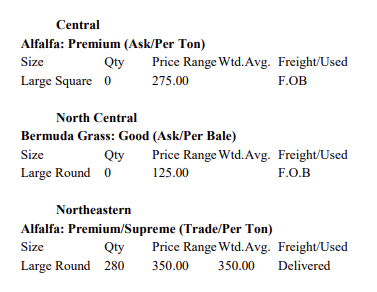
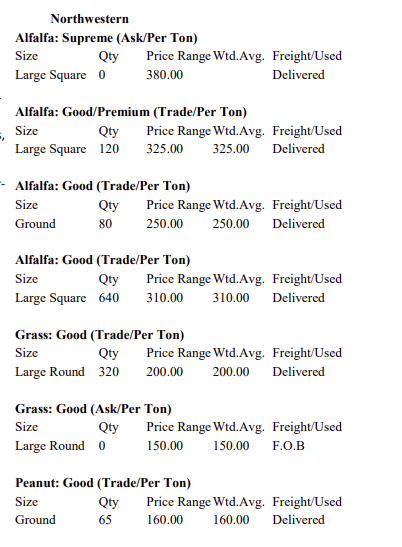
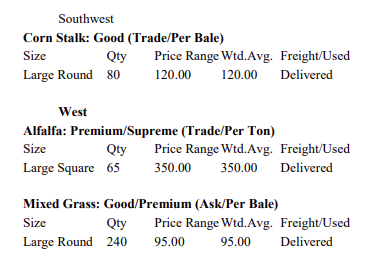
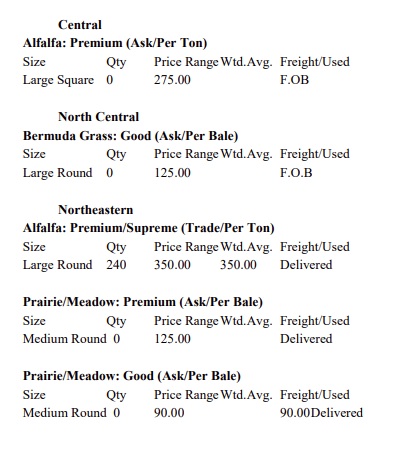
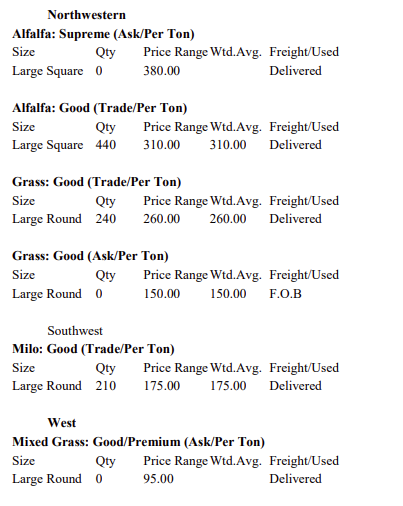
Oklahoma Hay Trades Continue to be Imported from Other States

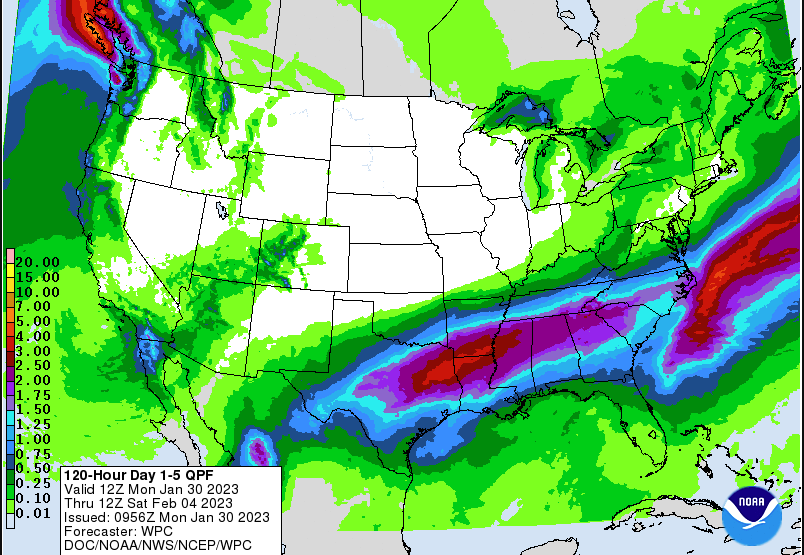
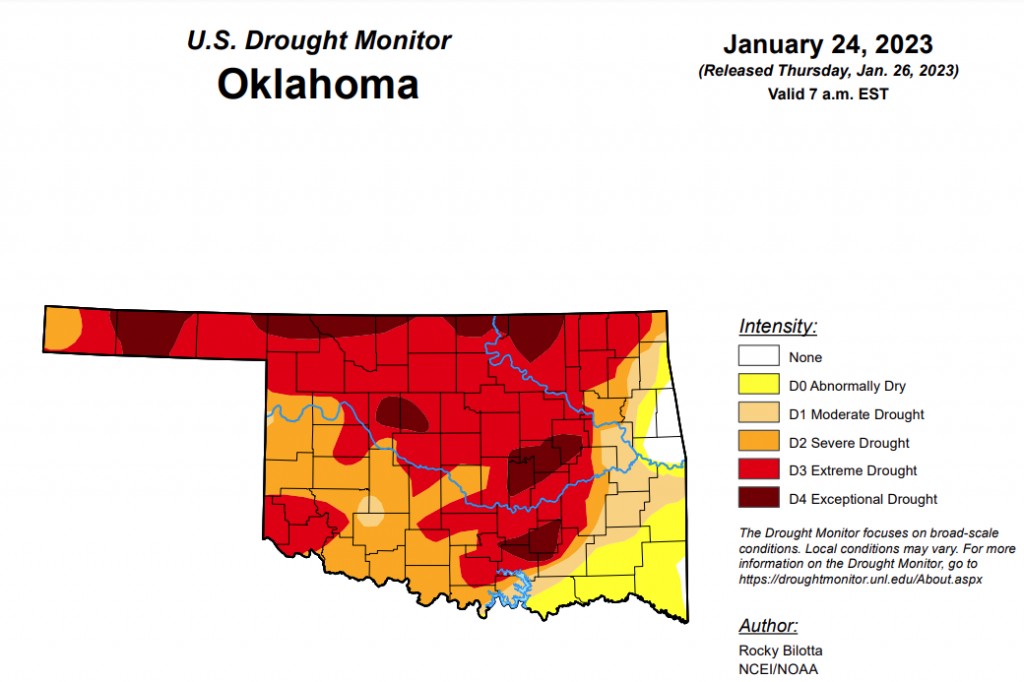
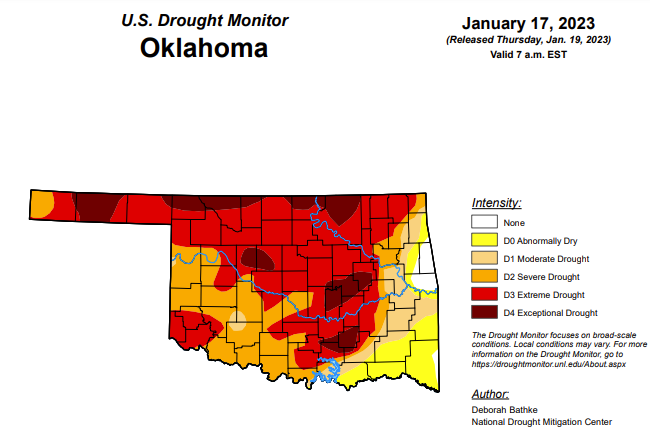
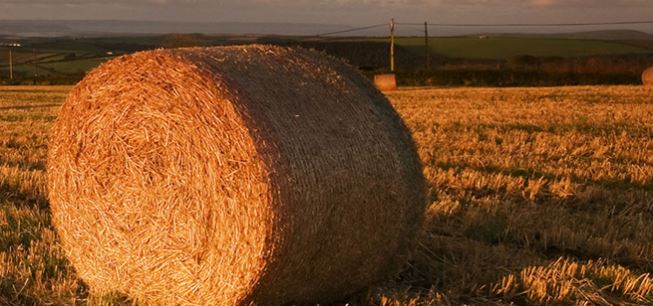
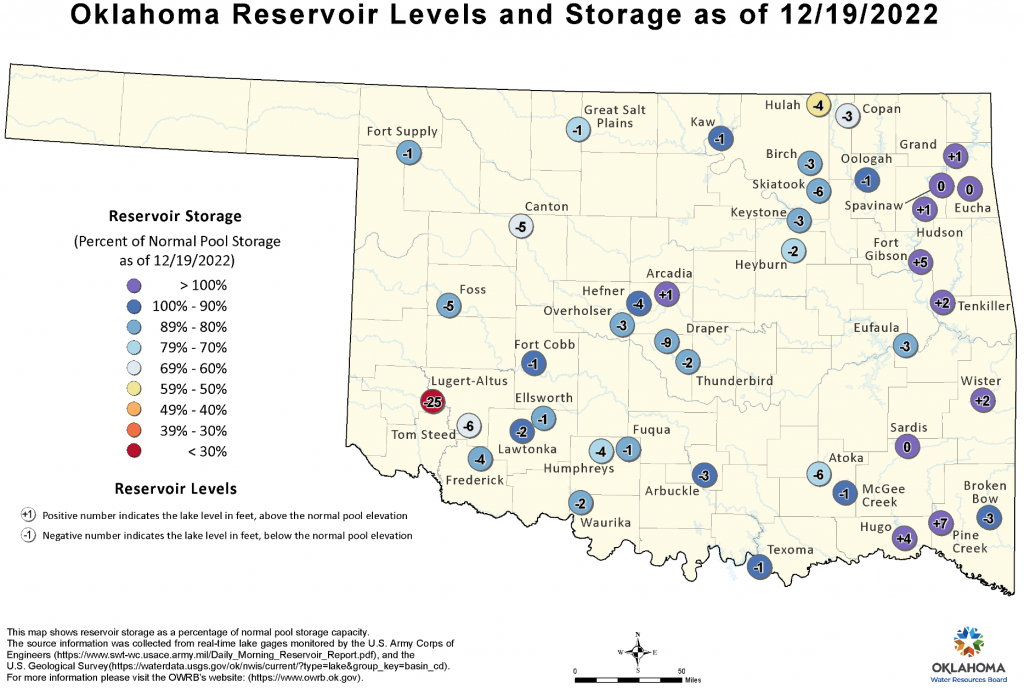
The hay trade continues to be imported into Oklahoma from other states. As the hay producers look toward the future, their top priority right now is rain. The rain will bring ease to everyone as it helps their crops, water for their ponds, and fields to graze for the future.

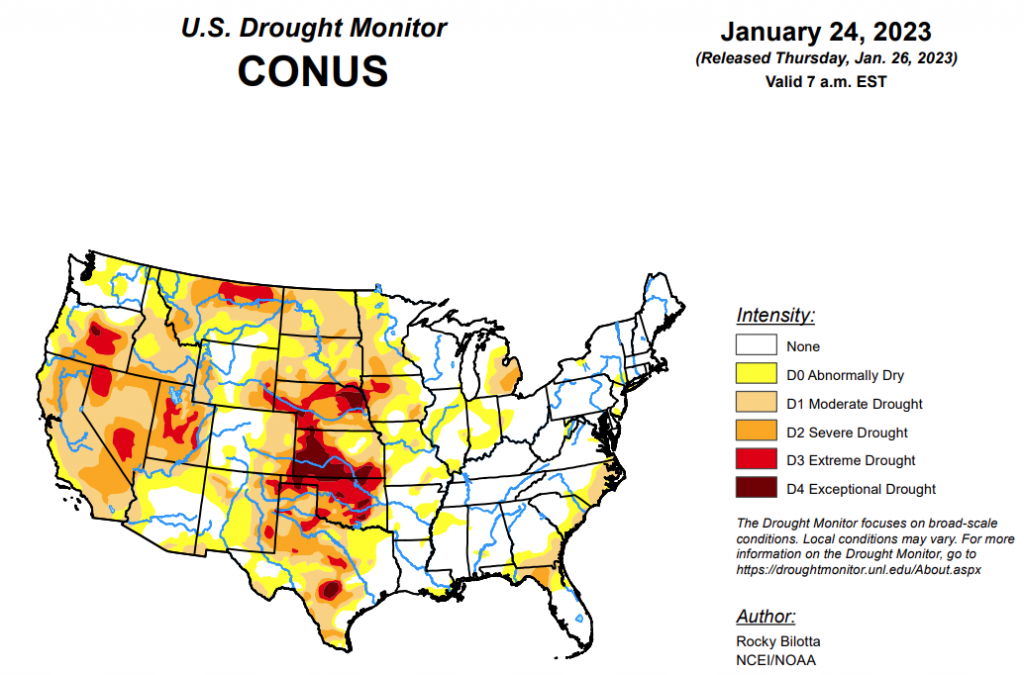
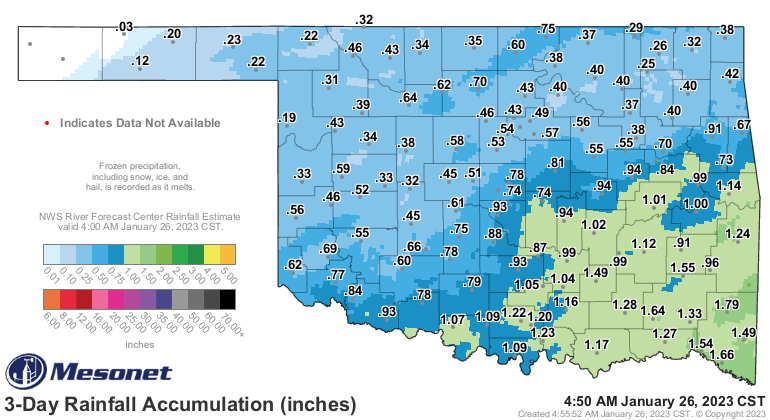
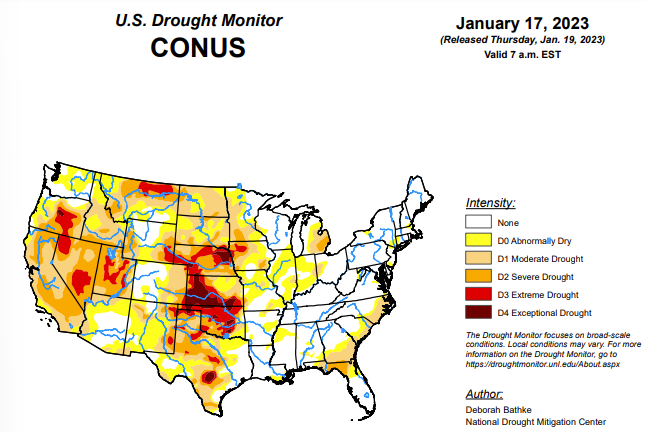
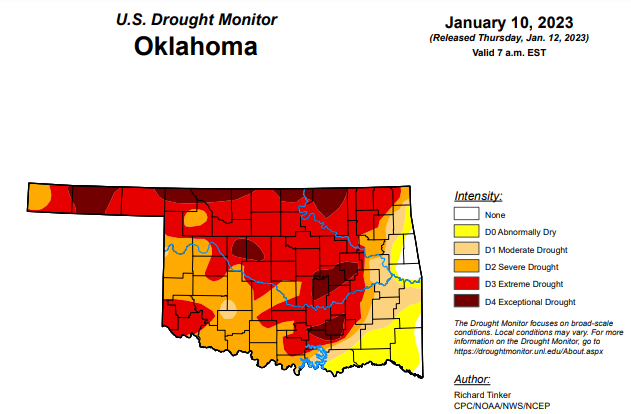
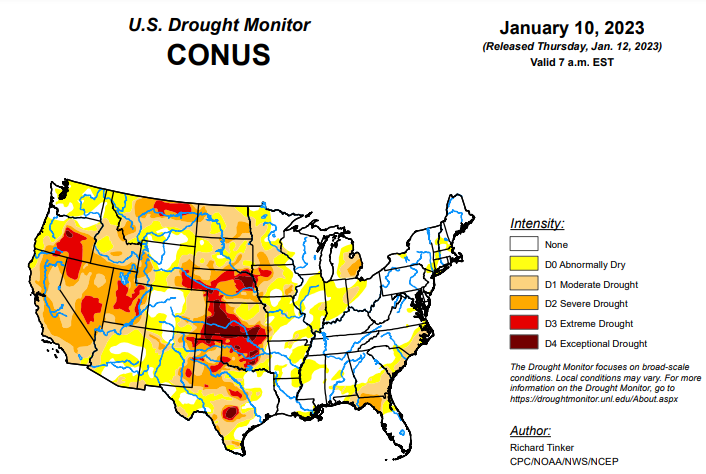
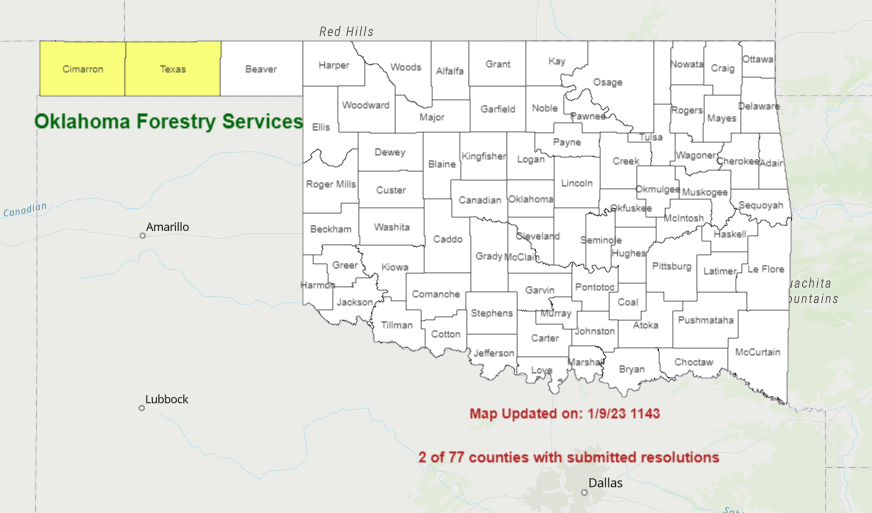
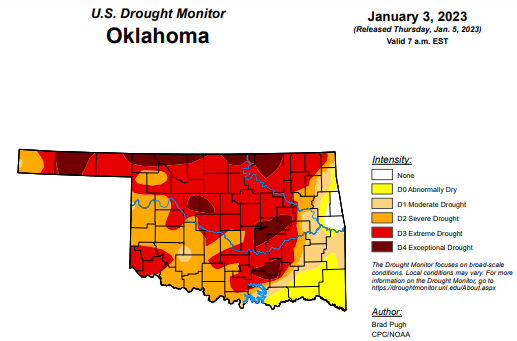
As we look at the Oklahoma Mesonet Drought Monitor we are at 11.77 percent in exceptional drought, 57.90 percent in an extreme drought, 81.01 percent in severe drought, 89.12 percent in moderate, 97.96 percent in abnormally dry conditions, and 2.04 percent that has no drought conditions are located in Adair and Sequoyah County.

* The next report release will be on February 3rd*

Oklahoma January Crop Progress Reports Winter Wheat Rated 17 Percent Good to Excellent

This week, the USDA National Agricultural Statistics Service issued the monthly summary for January of the Oklahoma Crop Progress and Condition report. According to the report:

Winter Wheat grazed reached 36 percent. Wheat conditions rated 17 percent good to excellent, 49 percent fair and 34 percent poor to very poor.

Rye grazed reached 22 percent. Rye conditions rated 17 percent good to excellent, 49 percent fair and 34 percent poor to very poor.

Oats grazed reached 36 percent. Oat conditions rated 45 percent good to excellent, 32 percent fair and 23 percent poor to very poor.

Livestock conditions rated 38 percent good to excellent, 40 percent fair and 22 percent poor to very poor. Pasture and range conditions rated 11 percent good to excellent, 35 percent fair and 54 percent poor to very poor.

View the full report below:

EPA Proposes Renewable Fuel Standards for 2023, 2024 and 2025

The Renewable Fuel Standard (RFS) program was created in the Energy Policy Act of 2005 to reduce greenhouse gas (GHG) emissions, grow the nation's renewable fuels sector and reduce reliance on imported oil, based on required use of renewable fuels to satisfy Renewable Volume Obligations (RVO) – volumes of fuels of various categories that the liquid fuel industry were required to incorporate into their supply. The program was expanded under the Energy Independence and Security Act of 2007. On Dec. 1, 2022, EPA proposed a multiyear rule that established required Renewable Volume Obligation (RVO) targets and percentage standards for 2023 to 2025 and proposed modifications to the RFS program. This Market Intel provides analysis on changes to the RFS standards and their potential impacts on farmers.

Background:

The national Renewable Fuel Standard program requires a certain volume of renewable fuel be used to replace petroleum-based fuel. The RFS is currently developing RVOs using four renewable fuel categories: total renewable fuel, advanced biofuel, cellulosic biofuel and biomass-based diesel. Under section 211 of the Clean Air Act, EPA is required to set renewable fuel percentage standards every year. EPA has historically released its proposed RVO requirements for each of the categories in June or July. This proposed rule is subject to public comments and, potentially, revision based on those comments, which are due on Feb. 10. EPA is required to release its 2023 RVOs by June 14 under a consent decree reached between EPA and Growth Energy, a national biofuels association.

What's in the Proposed Rule?

The proposed rule would increase total renewable fuel volumes by 2.05 billion gallons to 22.68 billion gallons by 2025. This would include an increase of 940 million gallons in 2023, another 1.05-billion-gallon increase in 2024, and a final increase of 810 million gallons in 2025. The 2022 biofuel mandate adds 250 gallons of conventional biofuel (largely assumed to be corn-based ethanol) required under statutory levels. Figure 1 illustrates the final volume requirements from 2014 to 2022, and the proposed volume requirements from 2023 to 2025.

Biomass-based diesel is a category that includes biodiesel, renewable diesel, heating oil or jet fuel that meets the definition of either biodiesel or renewable diesel that reduces GHG emissions by 50%, per gallon of comparable fossil fuel. The proposed rule would increase biomass-based diesel RVOs by 60 million gallons to 2.82 billion gallons in 2023, by 70 million gallons to 2.89 billion gallons in 2024, and by 60 million gallons to 2.95 gallons in 2025. The RVO is calculated by subtracting total advanced biofuel from total renewable fuel. According to U.S Bioenergy Statistics published by USDA's Economic Research Service (ERS), the United States had the capacity to produce 2.25 billion gallons of biodiesel from 72 plants on Jan. 1, 2022. When combined with renewable diesel, the overall capacity from 83 total plants is estimated at over 4 billion gallons. USDA's Higher Blends Infrastructure Incentive Program has already supported infrastructure for an addition 1 billion gallons of biodiesel capacity.

Advanced biofuel is derived from qualifying renewable biomass other than cornstarch and meets a 50% GHG reduction threshold and includes biomass-based diesel, cellulosic biofuels and other advanced biofuels. Outside of biomass-based diesel and cellulosic biofuels, which have their own RVO, other advanced biofuels include ethanol derived from sugarcane (largely imported from Brazil) and oil-like hydrocarbons such as the four-carbon alcohol butanol. The proposed rule increases the RVO requirement for advanced biofuels by 190 million gallons in 2023, 800 million gallons in 2024 and 810 million gallons in 2025. ERS estimates that the United States had a total capacity for advance biofuels including renewable diesel and other biofuel capacity of 1.75 billion gallons from 11 total plants on Jan. 1, 2022.

Renewable (or implied conventional) fuel refers to biofuel, including ethanol, derived from starch feedstocks. It must meet a 20% GHG reduction threshold and is the only RFS subset that can use ethanol to meet its biofuel requirement. The implied conventional biofuel requirement proposed by EPA is 15 billion gallons for 2023 and an additional 250 million gallons for a total of 15.25 billion gallons in 2024 and 2025. The RVO was returned to 15 billion gallons in 2022 following a 1.21-billion-gallon decrease in the RVO in 2021.

Renewable Identification Numbers under the Renewable Fuel Standard Program

Renewable Identification Numbers (RINs) are the currency of the RFS program. A RIN is attached to each gallon produced. Participants in the market, including refiners and importers of gasoline or diesel, renewable fuel producers and exporters, and registered RIN market participants trade RINs in the form of either assigned RINs or separated RINs. An assigned RIN is directly associated with a batch of fuel and remains attached to that batch of fuel as it moves from party to party. A separated RIN was formerly assigned to a batch of fuel but is no longer attached to a batch. RINs can be bought, sold or separated to meet the needs of market participants, and to allow for greater efficiency in meeting RFS requirements. Eventually the RIN is used to meet RVOs and is retired at that time.

e-RINs

The EPA rule has also proposed the addition of a RIN-generating pathway for electricity made from renewable biomass and used as transportation fuel. "e-RINs," generated by manufacturers of light duty electric vehicles, would provide a pathway for qualifying renewable electricity only. The vehicle manufacturers would generate e-RINs based on establishing contracts with generators of renewable electricity specifically derived from biomass, the proposal does not include electricity generated from solar or wind. When finalized, the system is intended to provide greater beneficial use of landfills and digesters as a source for renewable energy.

Incentives

The Inflation Reduction Act of 2022 extends biodiesel, alternative fuel and second-generation biofuel tax credits through the end of 2024. Under these provisions, a biodiesel blender may be eligible for a tax credit of $1 per gallon of pure biodiesel, agri-biodiesel or renewable diesel blended with petroleum diesel to produce a mixture containing at least 0.1% diesel fuel. To be eligible, blenders must have produced and sold or used the qualifying biodiesel blend as a fuel in their business.

Impacts on Corn, Soybean Oil and Soybeans

The initial result of the additional 250 million gallons of conventional renewable fuel is an 88-million-bushel increase in corn needed for ethanol in both 2024 and 2025 for a total impact of 166 million bushels. This provides support for corn markets while at the same time reducing the use of petroleum-based transportation fuels and reducing GHG emissions.

On the soybean side, U.S biomass-based diesel supplies (including imports) were about 3.1 billion gallons in 2021 and about 3.2 billion gallons in 2022. USDA projects 11.6 billion pounds of soybean oil will be used to produce biodiesel during the 2022/23 marketing year, up nearly 180% over the last five years. The use of soybean oil for biodiesel production, as a percent of total consumption, surpassed the use of corn for ethanol production in 2020 and has continued to climb (Figure 2). EPA's proposed rule sets RVOs for biomass-based diesel at 2.82 billion gallons for 2023, 2.89 billion gallons in 2024, and 2.95 billion gallons in 2025. According to the proposed rule, the 2.95-billion-gallon RVO for 2025 would be about 8% below 2022 supply levels. The RVO lagging behind available supply will limit the RFS's short-term positive price impact on RIN's and biofuels, and limit the incentive to growth in the biomass-based diesel industry.

Key Takeaways

Renewable fuels provide a significant and steady market for American growers. In the 2022/23 marketing year, 5.28 billion bushels of corn, or nearly 38% percent of total U.S. consumption, were used by ethanol producers. In the 2022/23 marketing year, 11.6 billion pounds of soybean oil, the oil from nearly 974 million bushels of soybeans, were used in biodiesel production (Figure 2).

The proposed volume increases raise the floor for demand in the biomass-based diesel and advanced biofuel sector; but as long as they lag behind current supply, they will not incentivize continued growth in a sector that has made a substantial contribution to corn and soy demand for American farmers, and to the overall sustainability of American energy supplies.

U.S. Dairy Praises USTR Move to Hold Canada Responsible for USMCA Violations

The National Milk Producers Federation (NMPF) and the U.S. Dairy Export Council (USDEC) commended today's announcement that the U.S. Trade Representative has formally moved to advance a U.S.-Mexico-Canada Agreement (USMCA) dispute settlement proceeding and establish a second panel to determine whether Canada has been in violation of its market access obligations under the agreement.

Canada's unwillingness to abide by the tariff-rate quota provisions of USMCA has been an issue since the agreement's implementation began. The United States won its first dispute panel on the matter in Dec. 2021, which found that Canada was reserving most of its preferential dairy TRQs for Canadian processors that have little incentive to import product. Canada's revised approach to USMCA TRQs, released in May, also provided inequitable advantages to Canadian processors.

"Canada's TRQ allocation system is not only a violation of USMCA -- it directly harms American dairy farmers, processors, and other workers by unfairly restricting access to their market," said Jim Mulhern, president and CEO of NMPF. "USTR's action is an important step in righting this wrong and sending a message that the U.S. will fight violations of trade deals in Canada and wherever else they may be committed."

"The U.S. dairy community greatly appreciates the Biden Administration's decision to prioritize steps to address Canada's USMCA violations," said Krysta Harden, president and CEO of USDEC. "Unfortunately, Canada has shown a pattern of not living up to the dairy commitments it has made in trade agreements. As long as they continue to drag their feet, we'll continue to work with USTR and USDA to fight back, and propose retaliatory action if necessary." If the panel ultimately confirms that Canada has been violating its obligations under USMCA, the U.S. would be granted the right to impose retaliatory duties should Canada fail to fix its unfair TRQ administrative practices.

The Fundamental Principles of Regenerative Agriculture and Soil Health

There is no step-by-step process to regenerative agriculture, but there are a few fundamental principles to follow.

Regenerative agriculture is not a prescription. There are no set rules or formulas for you to follow. Instead, regenerative agriculture depends on individual farmers and ranchers applying principles to their specific operations.

These principles help you make management decisions that work with the natural processes taking place in the ecosystem.

Below, we outline the fundamental principles and concepts that all regenerative farmers and ranchers should understand and follow. These principles are applicable no matter where you live or how much land you operate.

Bee hovering over flowers in pasture

SOIL HEALTH PRINCIPLES

The soil health principles are key to guiding you in building up your soil health. Always remember, the soil needs actively growing plants, vibrant communities of microbial species, and well-managed animal grazing.

Learn more about the Soil Health Principles »

KNOW YOUR CONTEXT.

Know your individual situation, including your climate, geography, resources, skills, family dynamics and goals. You need to understand how the ecosystem processes function on your land so that you can work with those processes. What works for someone else may not work for you because your context is different. Find what works for you, but recognize your context is always changing. Be willing to learn, grow and adapt with it.

Learn more about context »

COVER THE SOIL.

Soil health cannot be built if the soil is uncovered or is moving. Using a diversity of plants and leaving the proper amount of forage residue minimizes bare ground and builds soil organic matter. Plant cover further protects the soil from erosion and serves as a barrier between the sun and the raw soil, preventing escalated soil temperatures that can decrease soil microbial life.

MINIMIZE SOIL DISTURBANCE.

Mechanical soil disturbance, such as tillage, alters the structure of the soil and limits biological activity. If the goal is to build healthy, functional soil systems, tillage should be limited and only used in specific circumstances. Tillage of any specific acre even once each year is too much tillage. However, tillage is not the only disturbance. Grazing, fire, fertilizer and pesticide applications, etc., all can be soil disturbances. For this reason with grazing lands, one must ensure that the timing, frequency, intensity and duration of these management activities are implemented in a planned manner that aid in rebuilding ecosystem processes. Always ask yourself, "Are there any other options besides these disturbances?"

INCREASE DIVERSITY.

Increasing plant diversity creates an enabling environment and catalyst for a diverse underground community. In nature, grasses, legumes, forbs and woody species all work together in a native, diverse rangeland setting. The complex interactions of roots and other living organisms within the soil impact soil dynamic properties, affect carbon sequestration and enable nutrient availability for plant productivity. Managing for increased diversity can also be applied to grazing animals, wildlife, and other organisms above and below the soil.

MAINTAIN CONTINUOUS LIVING PLANTS/ROOTS.

Maintaining actively growing living plant roots is encouraged to keep the soil biology processes working, no matter the season. Perennials are a big help in this, as even when dormant their roots are living and functioning (though slower compared to during the growing season). Soil microbes use active carbon first, which comes from living roots. These roots provide food for beneficial microbes and spark beneficial relationships between these microbes and the plant. Greater plant species diversity allows for living roots during an extended period of the year.

INTEGRATE LIVESTOCK.

Research, practical application and common sense tell us the same thing: livestock are a necessity for healthy soils and ecosystems. The Great Plains evolved under the presence of animals and grazing pressure. Soil and plant health is improved by proper adaptive grazing of one or more animal species, which recycles nutrients, reduces plant selectivity and increases plant diversity. As with any management practice, grazing is a tool that requires intentional application.

Hands holding healthy soil

INDICATORS OF SOIL HEALTH

You can go out to the pasture and dig up some soil with a shovel to get an idea of your soil's health. As you start applying the soil health principles, notice how these indicators of soil health change over time.

Learn more about the Soil Health Indicators »

COVER

Soil cover can be evaluated in many ways, but the simplest is to look straight down at the soil surface and see if it is covered or bare. Soil could be covered in some important ways. The best way is by green plants. However, the surface could also be covered with dormant or dead plants, plant residue, manure or even rock. As soils get healthier, more of the surface will be covered with green, growing plants.

COLOR

Notice how dark the soil is. Generally speaking, the darker soil, the higher the organic matter and carbon content. Soil is typically darkest in the uppermost layers of the soil profile, and it lightens as depth increases. Soil organic matter and soil organic carbon are primary drivers in biologically active soil systems.

BIOLOGICAL ACTIVITY

Healthy soil is alive, meaning it's biologically active and teeming with microorganisms and macroorganisms. We cannot see the microbes with the naked eye, but we can look for earthworms, earthworm castings, dung beetles, and evidence of other living creatures and their activity. Earthworms create burrows in the soil, which enables water to move down deeper into the soil. These burrows also create channels for roots to grow into. Earthworms and other insects, as well as soil microbes, play important roles in nutrient cycling.

SOIL STRUCTURE

Soil structure is the arrangement of soil particles in different shapes and sizes, called aggregates. Soil aggregates are created when biotic glues hold these soil particles together. The microbes that create these glues must thrive in order to continuously replace the biotic glues, or the soil aggregates will collapse. Look for soil aggregation that has increased pore space; the more pore space, the more water can infiltrate. You want to see soil sticking to the roots even when you shake the plant. You also want to see a soil texture similar to cottage cheese or chocolate cake. The soil should crumble easily and not simply turn to dust. When it gets wet, it should retain some of that crumble and not get so watered down that it would easily wash away.

ROOTING RESISTANCE

You don't want to see a lot of layers of compaction, or plow pans, in the soil. These restrictive layers limit root penetration and water infiltration. Another sign of this issue is seeing "J" rooting, which happens when a root starts growing at a 90-degree angle after hitting one of these restrictive layers. This situation can cause forage growth limitations, especially during drought.

SMELL

Healthy soil smells fresh and earthy, thanks to an organic compound called geosmin. Geosmin is produced by active soil actinobacteria. The smell of unhealthy soil has been described by some as like hot copper pennies. Soil that smells like rotten eggs lacks oxygen and may be a sign of poor drainage.

EROSION

It doesn't matter how healthy the soil is if it erodes away. Likewise, it is impossible to build healthy soil while it is eroding away. Signs of wind erosion can often be seen by looking for scouring with deposition behind plants and rocks. Signs of water erosion can be seen by looking for soil and litter movement which will look like little dams across the path water has traveled downhill. Signs of erosion can also be seen when there is pedestaling around and under plants and rocks.

Diverse group of plants in a field

ECOSYSTEM PROCESSES

Ecosystem processes are the foundation upon which all the other regenerative principles and concepts are built.

Ecological principles recognize that all ecosystems (including your ranch) function through four interconnected processes. These are nature's ways of operating, which means that regenerative ranchers seek to understand and work within these processes as part of their operations.

Learn more about the Ecosystem Processes »

ENERGY FLOW

It all begins with the sun. Plant leaves are the solar panels that drive the energy flow, commonly referred to the energy cycle. A plant uses this energy to turn carbon dioxide into food for itself and soil microbes, which in turn becomes forage for grazing animals and ultimately protein for humans. To ensure this process functions optimally, we need to ensure plants are always present and are given adequate time to recover from grazing.

Learn more about the energy flow »

WATER CYCLE

The amount of water on Earth is finite, and it cycles through evaporation, precipitation, infiltration (or runoff) and transpiration. One of the ways water moves through the cycle is through its ability to permeate the soil. The amount of water that ranchers can capture on their land can be impacted by their grazing management practices. We want to make sure the ground is covered with plant life and that soil microbes are available to form soil aggregates — which help turn the soil into a sponge that soaks up air and water.

Learn more about the water cycle »

NUTRIENT CYCLE

In this cycle, energy and water are transferred between living organisms and the nonliving parts of the environment. Frequent disturbances, such as grazing, help maintain the aboveground nutrient cycle. Biotic activity, such as earthworms, insects and microbes in the soil, further improve the nutrient cycle. An optimal nutrient cycle depends on good plant diversity and soil cover.

Learn more about the nutrient cycle »

COMMUNITY DYNAMICS

Community dynamics are the changes to community structure and composition over time, including changes in microbiology, plant and animal life. Plant community management is critical to the other three cycles. Having a year-round, diverse plant community can improve the nutrient cycle and optimize the energy cycle. Managing for a wide diversity of plants — forage types (grasses, forbs and trees), perennials and annuals, and cool-season and warm-season species — works to complement the other three cycles.

Learn more about community dynamics »

Cattle walking through pasture

RULES OF ADAPTIVE STEWARDSHIP

Regenerative ranchers are adaptable and make decisions based on the circumstances at hand. They operate with an understanding of:

COMPOUNDING

Everything you do — every decision you make and practice you apply — has more than just a singular affect. Everything on the ranch affects every other part of the ranch, from the water quality to the forages to the animal health to the economics. Decisions cannot be made in isolation because all things are connected and have ripple effects that may last for years — positive or negative.

DIVERSITY

Some may like the look of a nice clean monoculture, but nature likes diversity. You can think about it in terms of how a community is stronger when it has individuals with different skill sets. We can't all be doctors or teachers. Some of us need to be plumbers and firefighters. It's the same in nature. The soil needs lots of different fungi and bacteria, each of which may be attracted by a different kind of plant. Different animals also serve different functions, which, when you add up everything, creates a healthier ecosystem.

DISRUPTION

One of the soil health principles is to minimize soil disturbance, especially minimizing or eliminating tillage, if possible. However, nature, more generally, likes a few disruptions. The key to these disruptions is being intentional with how and why you're introducing them in order to build greater resilience in the land. They need to be planned, purposeful disruptions. Some examples of intentional disruptions might be to mix up your cover crop mix or the order in which you graze your animals, if you raise multiple classes and/or species of livestock, like cattle, sheep, goats and chickens. You could alter stock density, rotation patterns, time of season or year grazing a particular pasture, prescribed fire, paddock configuration, and rest periods. You can't do the same thing over and over and expect to find the most success. Avoid routines in management practices. Remember, regenerative agriculture is not a prescription.

Article Credit: Courtney Leeper Girgis, Noble Research Institute

Commodity Classic Announces Registration is up 28% Over 2022 Event

Networking with Top Farmers Key Benefit of Attending 2023 Commodity Classic

Farmers across the country are getting excited for the 2023 Commodity Classic, which has just announced registration is up 28% over last year's event in New Orleans.

The 2023 Commodity Classic will be held March 9-11 in Orlando. Attendees can register for all three days of the event; single-day passes are also available.

Attendee surveys indicate that networking with other farmers is one of the top reasons producers enjoy Commodity Classic. Hallway conversations and in-person connections are an important part of the educational experience at Commodity Classic as farmers share their knowledge, passion, and insight with colleagues from across the nation.

"We saw near-record attendance the last time the event was held in Orlando in 2019, and our registrations this year are already up 28% over last year," said George Goblish, a Minnesota farmer, ASA member, and co-chair of the 2023 Commodity Classic. "Thousands of America's best farmers from across the nation love Commodity Classic because we share a passion for agriculture, a thirst for knowledge, and we're all interested in how we can make our farms more profitable. Learning little improvements we can make to help save money down the line really adds to the value of attending Commodity Classic."

"Striking up conversations with other farmers is one of the most valuable aspects of Commodity Classic," added Kenny Hartman, an Illinois farmer, NCGA member, and fellow 2023 co-chair. "Everywhere you look, you'll see other farmers who are just as serious about their operation as you are. There's just nothing like those in-person conversations, and there's no better place to have them than at Commodity Classic."

The 2023 Commodity Classic includes an impressive lineup of educational sessions, inspiring speakers, a huge trade show, entertainment, and a wide range of technology, innovation, and agronomic information.  Discover more and register online at CommodityClassic.com

Established in 1996, Commodity Classic is America's largest farmer-led, farmer-focused agricultural and educational experience. It is presented annually by the American Soybean Association, National Corn Growers Association, National Association of Wheat Growers, National Sorghum Producers, and the Association of Equipment Manufacturers.

Ground Pork Growing in Popularity

Ground pork continues to be a shining star in the meat case. Since 2018, the volume of sales has increased by an average of 3.4% per year. Retail partnerships have helped drive consumers to the meat case. 

For example, a Midwest retailer, implemented NPB research in 258 stores across 6 states by making the following changes. 
 

  • Offering a bigger selection of ground pork by adding 80/20 and 90/10 fat-to-lean ratio  
     
  • Expanding shelf space and placing ground pork with the other ground meats 
     
  • Offering packaged meal solutions that include pork items (gourmet pork burger was the top seller)  

Find New Ground Pork Recipes

Pork and Black Bean Enchiladas with Green Chile Sauce

Ingredients
US|METRIC
4 SERVINGS
1 lb. ground pork
15 oz. canned black beans (drained and rinsed)
1 white onion (diced)
2 cups shredded pepper jack cheese
2 Tbsp. steak seasoning
1 Tbsp. olive oil
1 cup sour cream
1/2 cup Greek yogurt
3 cans diced green chiles (4.5 oz per can)
1 cup cilantro leaves
1/2 jalapeño pepper
3 green onions (sliced)
1 tsp. salt
1/2 tsp. pepper
2 limes (juiced)
1 clove garlic
8 tortillas (fajita, 6-8, or 4 burrito sized tortillas)
1/4 cup Cotija cheese (for topping)
1/4 cup cilantro (for topping)
1/4 cup jalapeños (for topping)

Directions
In a skillet over medium high heat, heat the olive oil.
Add the onion and cook for 2-3 minutes.
Add the ground pork and cook until it is browned all the way through and reaches an internal temperature of 160°F (about 7 minutes).

NCBA Statement on Launch of the Cattle Contract Library Pilot Program

Today, NCBA Senior Director of Government Affairs Tanner Beymer released the following statement on the launch of the Cattle Contract Library pilot program:

"We have been looking forward to the launch of the Cattle Contract Library pilot program and will review the product to determine if its current format provides value to cattle producers. We will continue engaging with officials at the U.S. Department of Agriculture and providing feedback on this resource."

Clay Burtrum with Farm Data Services Looking Forward to Collaboration at 2023 Cattle Industry Convention

Listen to Ron Hays talk with Clay Burtrum at the 2023 Cattle Industry Convention and NCBA Trade Show in New Orleans.

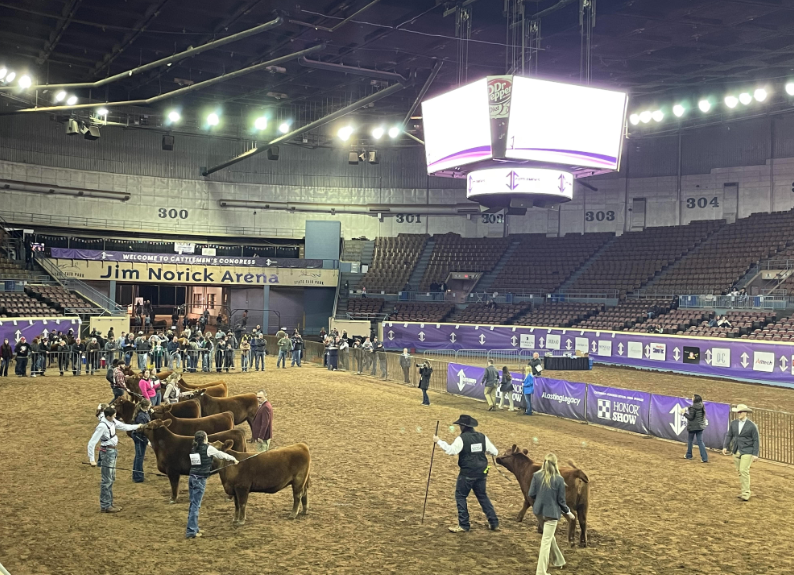
At the 2023 Cattle Industry Convention and NCBA Trade Show in New Orleans, Senior Farm and Ranch Broadcaster, Ron Hays, caught up with the Vice President of Operations at Farm Data Services and Oklahoma cattle producer, Clay Burtrum and talked about what Burtrum sees being some of the highlights of discussion this week.

The 2023 Cattle Industry Convention coverage is being powered by Performance Ranch, a part of Zoetis, and by Farm Data Services located in Stillwater, Oklahoma.

"When you come to cattle convention, it is all about meeting and greeting and seeing those folks that maybe you haven't seen in a year, establishing those connections, but really focusing in and driving down on those policy and checkoff issues that really drive us, and that is the reason that we are here to focus on those issues," Burtrum said.

Regarding the discussion on the 2023 Farm Bill and risk management, Burtrum said newer tools for the cattle industry that protect prices and the livelihood of cattle producers who utilize those programs are going to be important.

"We have got all these crop insurance tools," Burtrum said. "Livestock risk protection, annual forage, pasture rainfall forage insurance- all of these tools are available to use, and we have to protect those in this upcoming farm bill."

Because there will be no new spending, Burtrum said it will be critical to protect the programs that exist and make sure that producers are aware of those programs and how to utilize them.

"We have to make sure there is money available to educate the producers, and we have to make sure there are producers like NCBA and the Oklahoma Cattlemen's Association, that are willing to step behind us and get behind us and push those educational resource tools to the front," Burtrum said.

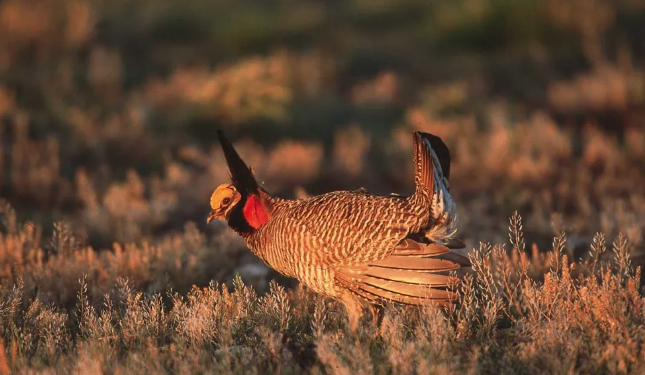
Regulations will be another hot topic at the convention, including WOTUS (Waters of the United States) and the lesser prairie chicken issue.

"We have to look and push back the regulations," Burtrum said. "We don't need them in our business; we need them out of our business so that we can focus on what we do."

Burtrum also talked about the state of the marketplace, with most issues relating to Covid now in the rearview mirror.

"We have to be looking for what may be out there," Burtrum said.

Tools such as livestock risk protection are a valuable asset, Burtrum said to protect producers from the unforeseen future.

"We have to be able to protect that bottom line and leave our topside potential open of what might not be out there," Burtrum said.

With a lower cowherd in the U.S., Burtrum said there are many factors to consider when looking at what the future will hold, including available protein and what the competition is doing. The cattle industry trade show and convention is valuable, Burtrum said, because it allows the industry to collaborate and work together on many different issues.

USDA Continues Laying Foundation for More and Better Markets with Launch of Pilot Cattle Contracts Library

The U.S. Department of Agriculture (USDA) launched its pilot Cattle Contracts Library today at Noon Eastern Time on the Agricultural Marketing Service (AMS) Cattle Contract Library webpage. The Consolidated Appropriations Act of 2022 directed USDA to create a pilot library to increase market transparency for cattle producers. This pilot library will provide new disclosure to the industry and public regarding the key terms, conditions, and volumes under which cattle are contracted, bringing sunshine to practices in what is now the largest part of the cattle market. This will empower cattle producers to negotiate better terms, more carefully monitor risks relating to marketing preferences and pricing practices, and ultimately take better advantage of market opportunities to produce cattle that the market demands.

"USDA is committed to creating a more level playing field for cattle producers and a more balanced, equitable economy for everyone working in food and agriculture," Agriculture Secretary Tom Vilsack said. "The Cattle Contracts Library Pilot Program supports this commitment by providing producers with the market information they need to make informed production, marketing, and business decisions."

"With this Cattle Contract Library pilot, America's ranchers will enjoy an exciting new window into market opportunities and trends in cattle contracts, one of the most critical parts of the cattle marketplace," said USDA's Under Secretary for Marketing and Regulatory Programs Jenny Lester Moffitt. "Transparency is the foundation of fair and competitive markets and critical for producers seeking to grow economic opportunities. As we continue to lay the groundwork for more and better markets, USDA looks forward to working with all stakeholders and Congress to enable this pilot library to deliver meaningful and lasting value to producers."

The library will have the same look and feel as the working library model developed and shared with stakeholders last year but will now be populated with information from active contracts. Packers that slaughtered an average of not less than five percent of the number of fed cattle slaughtered nationally during the immediately preceding five calendar years were required to submit this information to AMS, as outlined in a final rule published Dec. 7, 2022, and that became effective on Jan. 6, 2023.

The initial release of the library will allow users to browse a range of terms and information contained in active contracts used for the purchase of fed cattle. In addition to active contracts in use, the library will provide information on terms most commonly used in cattle contracts, such as base price determination, base price adjustments and selling basis options; contract specifications for such things as quality, yield, breed, weight, delivery, financing, profit/risk-sharing, and more (where present in a contract); and the full range of premiums and discounts used in final price determination.

Upcoming enhancements to the library will display information on the number of head of cattle moving through current contracts defined by contract base price source, including the actual numbers for the prior month and estimates for the current month. Additionally, volume information by contract specification for quality, breed, weight, source-verified and others will provide users with information about how often each specification is used. During the term of the pilot, AMS expects to further enhance transparency through additional reports and features as they are developed, subject to confidentiality.

With the library, producers will be able to see a much more complete picture of marketing practices and trends, including upcoming volumes. This transparency will empower producers to take advantage of new economic opportunities, improve their marketing strategies, and manage risks relating to contractual terms including pricing references on which they rely. AMS will conduct a series of meetings and webinars in the coming weeks and months to help stakeholders understand how to use the pilot library. The first webinar is scheduled for February 8, 2023, at 11:00 a.m. ET. Details on that webinar, and all other information related to the pilot, can be found at www.ams.usda.gov/market-news/livestock-poultry-grain/cattle-contracts-library.

Under the Biden-Harris Administration, USDA is transforming America's food system with a greater focus on more resilient local and regional food production, promoting competition and fairer markets for all producers, ensuring access to safe, healthy and nutritious food in all communities, building new markets and streams of income for farmers and producers using climate-smart food and forestry practices, making historic investments in infrastructure and clean energy capabilities in rural America, and committing to equity across the Department by removing systemic barriers and building a workforce more representative of America. To learn more, visit www.usda.gov.

For questions or to request additional information, please contact Michael Sheats, Director of the Livestock, Poultry, and Grain Market News Division, at 202-690-3145 or michael.sheats@usda.gov.

Urban Producers, Public Invited to Attend February Meeting of Federal Advisory Committee for Urban Agriculture and Innovative Production

The U.S. Department of Agriculture (USDA) encourages urban producers, innovative producers and other stakeholders to virtually attend the fourth public meeting of the Federal Advisory Committee for Urban Agriculture and Innovative Production (Committee) on Feb. 23, 2023.   

"Since last year, the Federal Advisory Committee has been a source of valuable, on the ground information and recommendations for USDA," said Terry Cosby, Chief of USDA's Natural Resources Conservation Service (NRCS), which houses USDA's Office of Urban Agriculture and Innovative Production (OUAIP). "This meeting will help us better serve urban and innovative producers and their communities."   

The Committee is part of USDA's efforts to support urban and innovative agriculture, creating a network for feedback. Members include agricultural producers, and representatives from the areas of higher education or extension programs, non-profits, business and economic development, supply chains and financing. Three public meetings of the Committee were held in 2022.   

About the Meeting   

Topics include:  

  • Addressing previous public comments.
  • Subcommittee and committee deliberations.
  • Public forum. 

The meeting will be held from 3:30-6 p.m. ET on February 23. To attend virtually, register by February 23 on the Committee's webpage. 

Written comments for the meeting must be submitted by 11:59 p.m. ET on March 9 through the Federal eRulemaking Portal. Docket #2022-24020.   

For special accommodations, contact Markus Holliday at  UrbanAgricultureFederalAdvisoryCommittee@usda.gov.  

USDA will share the agenda between 24 to 48 hours prior to the meeting on https://www.usda.gov/partnerships/federal-advisory-committee-urban-ag. Additionally, other resources include the Federal Register notice and the Committee's webpage.  

More Information    

OUAIP was established through the 2018 Farm Bill. It is led by NRCS and works in partnership with numerous USDA agencies that support urban agriculture and innovative production. The Committee is part of a broader USDA investment in urban and innovative agriculture. Other efforts include:    

  • Renewing the People's Garden Initiative, which celebrates collaborative gardens across the country and worldwide that benefit their communities by growing fresh, healthy food and supporting resilient, local food systems using sustainable practices and providing greenspace. 
  • Providing grants for urban agriculture and innovative production that target areas of nutrition access, education, business and start-up costs for new farmers, and policy development related to zoning and other urban production needs. 
  • Providing cooperative agreements that develop and test strategies for planning and implementing municipal compost plans and food waste reduction plans.
  • Investing in risk management education to broaden reach of crop insurance among urban producers.
  • Organizing 17 FSA urban county committees to make important decisions about how FSA farm programs are administered locally. Urban farmers who participate in USDA programs in the areas selected are encouraged to participate by nominating and voting. 

Learn more at usda.gov/urban. For additional resources available to producers, download the Urban Agriculture at a Glance brochure or visit farmers.gov/urban.

USDA touches the lives of all Americans each day in so many positive ways. Under the Biden-Harris administration, USDA is transforming America's food system with a greater focus on more resilient local and regional food production, fairer markets for all producers, ensuring access to safe, healthy, and nutritious food in all communities, building new markets and streams of income for farmers and producers using climate smart food and forestry practices, making historic investments in infrastructure and clean energy capabilities throughout America, and committing to equity across the Department by removing systemic barriers and building a workforce more representative of America. To learn more, visit usda.gov.   

USDA is an equal opportunity provider, employer and lender.

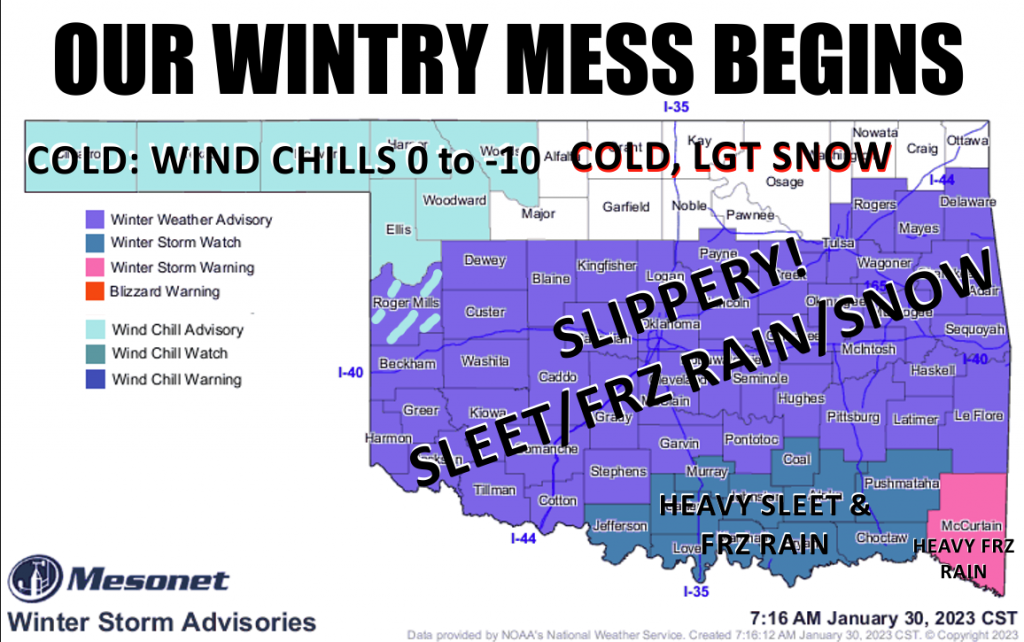
Check Driving Conditions across the State

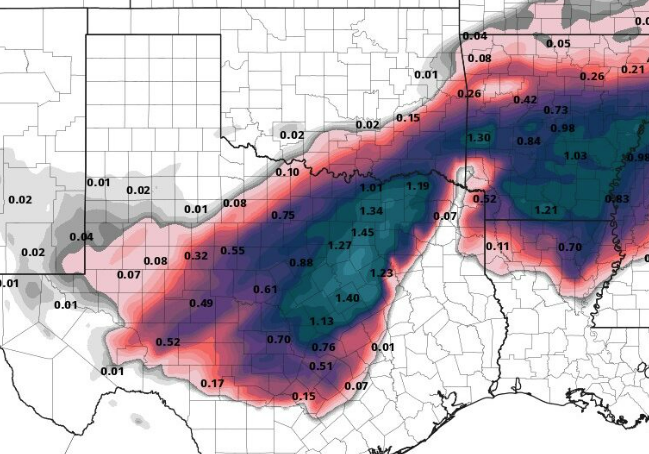
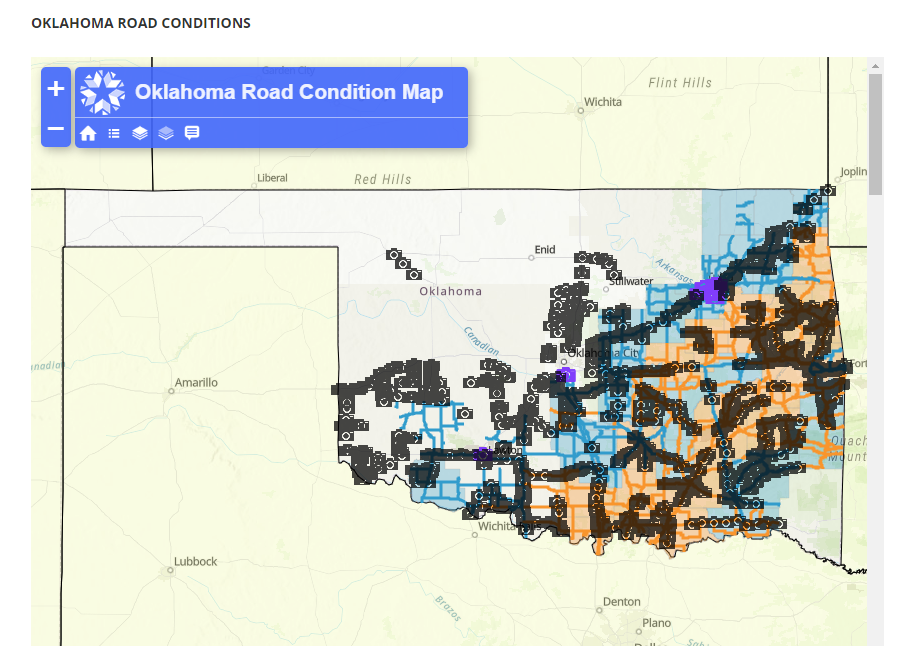
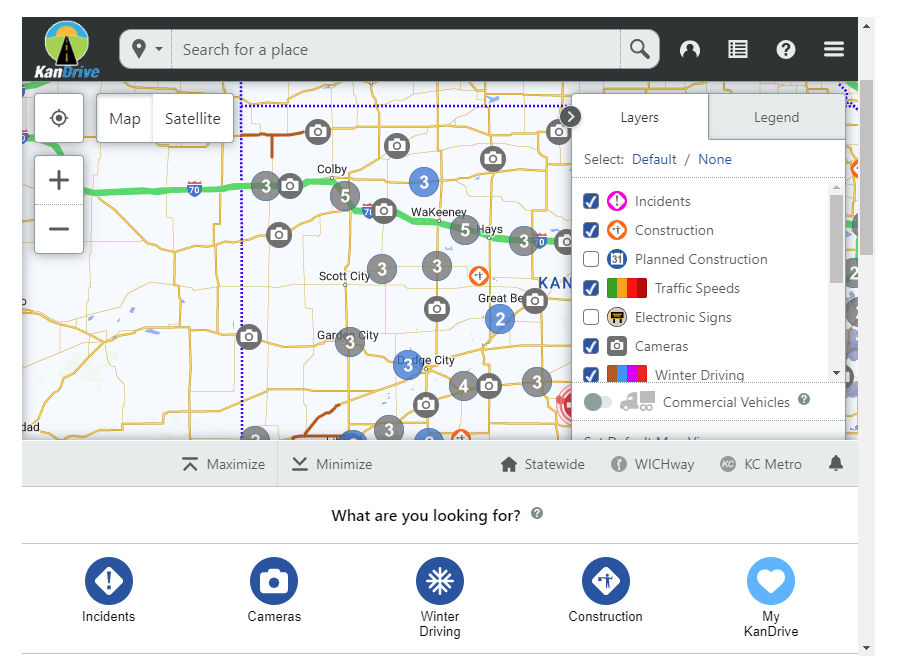
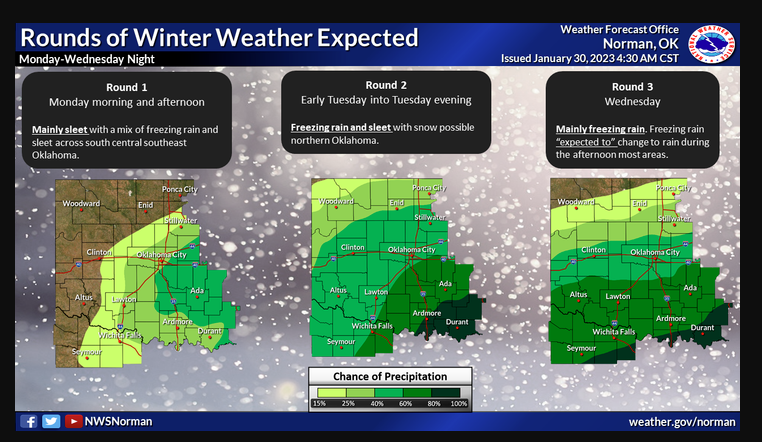
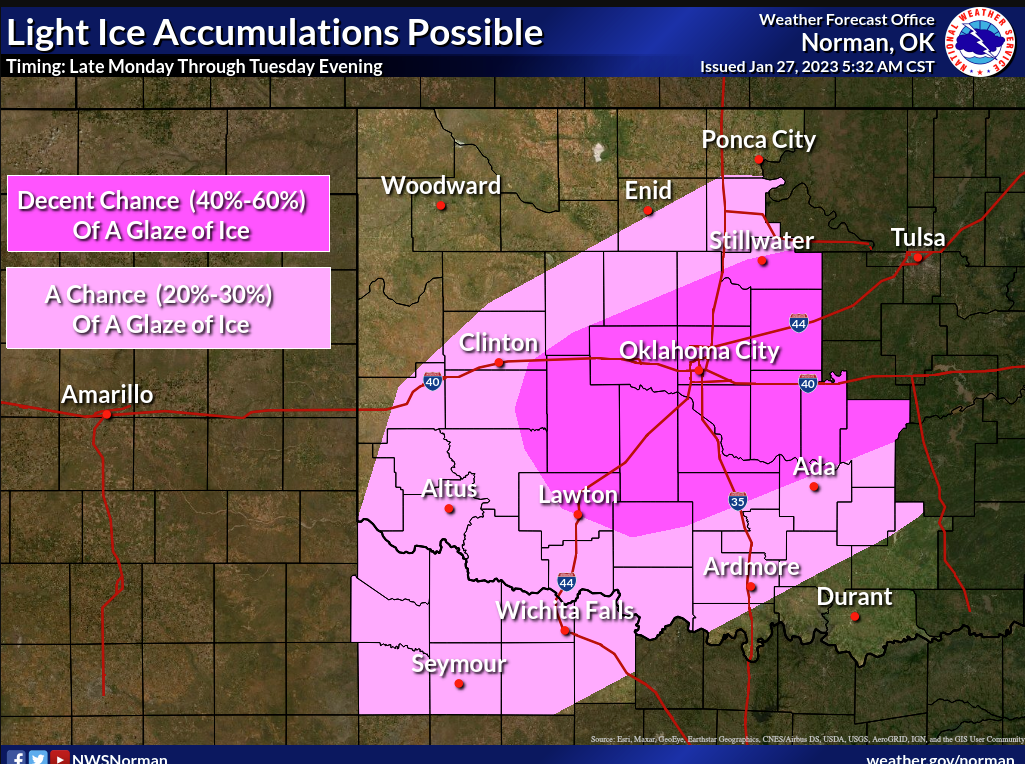
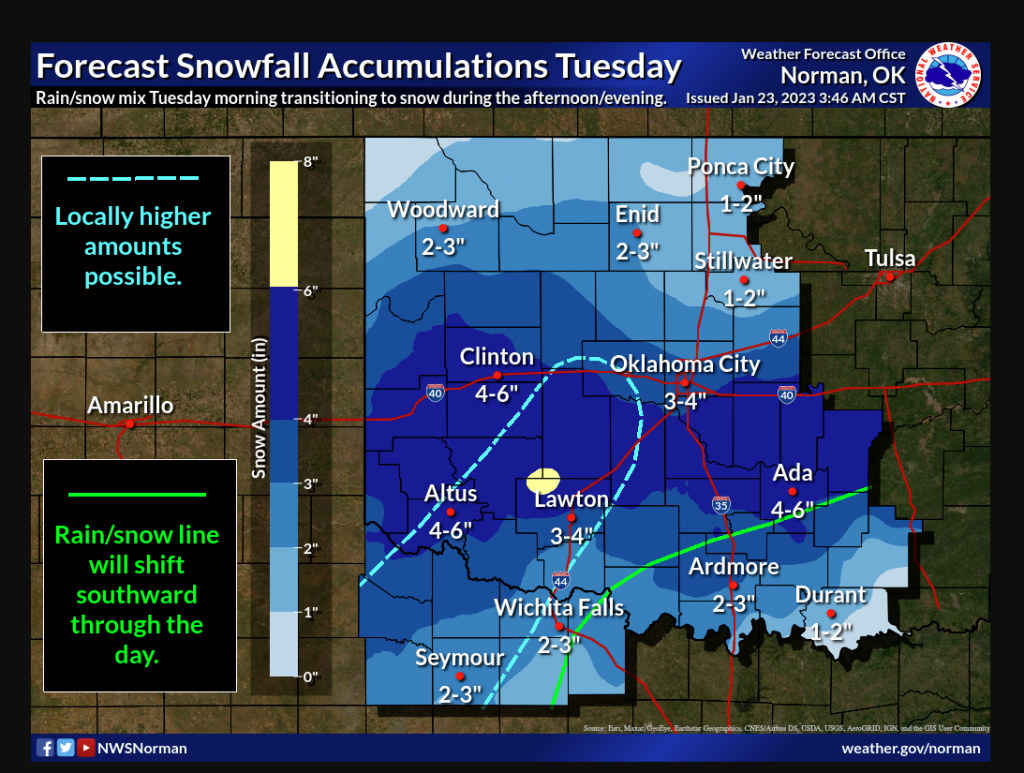
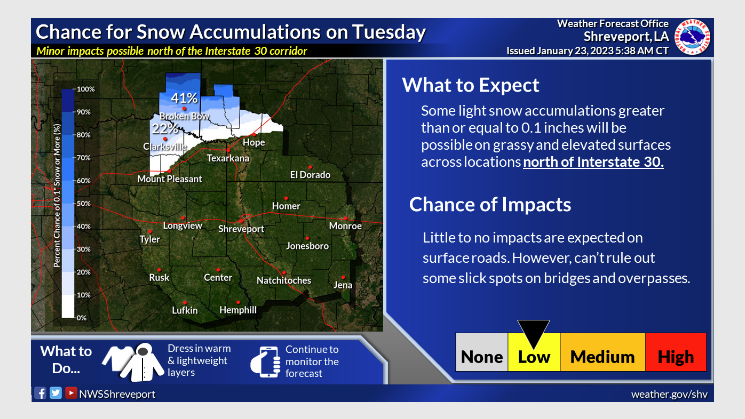
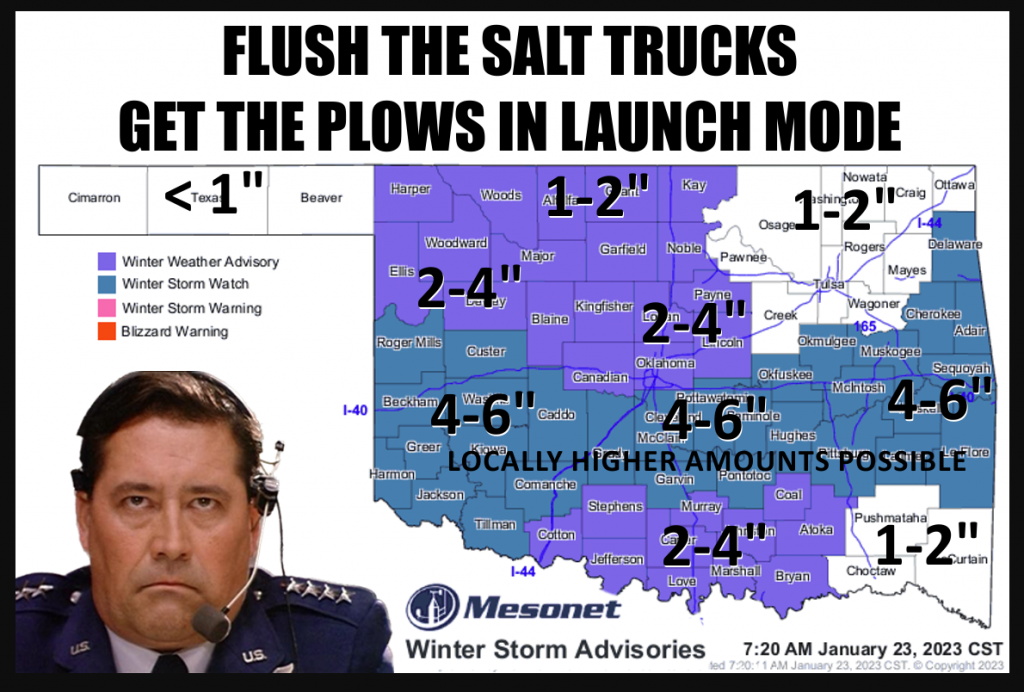
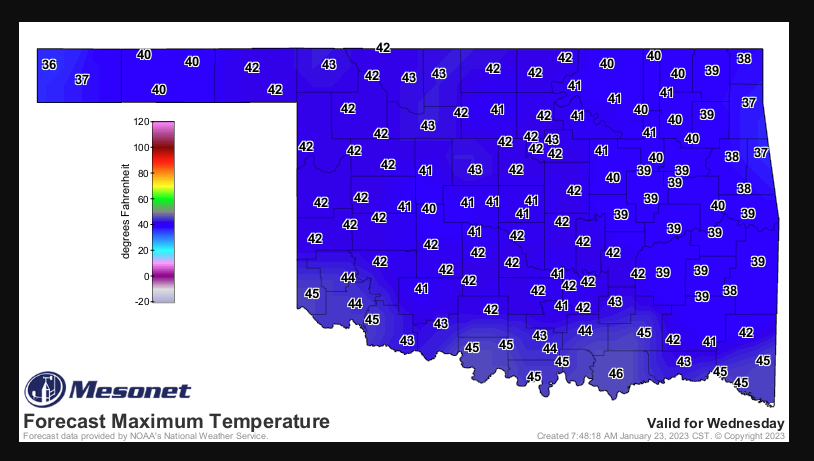
With the latest bout of Winter Weather that has hit the state, and another round on the way, if you have to get out on the roads today, here's the latest information that lets you know what road travel looks like. Aarontuttleweather.com has all road conditions listed for Oklahoma and nearby States.

During winter weather, you can monitor our ground temperatures and driving conditions to see if you will be impacted. As a rule of thumb, once the 2″ soil temperatures fall into the 30s, frozen precipitation on area roadways is much more likely cause travel issues. Another method to use is that roadways will ice over once the air temperature drops below 28 degrees. (The maps below take you to the website where everything is clickable and you can zoom in for pictures of road conditions)

If you are headed out of state, you can also check conditions for Missouri, Kansas, Texas and more.

If you would like to call to check road conditions while you are traveling, in Oklahoma, you can call 844-465-4997, and in Texas call 800-452-9292.

Don't Let Delivery and Takeout Foods Fumble Your Super Bowl

February 12 marks Super Bowl LVII and Americans from coast to coast will gather with friends and family to cheer on their team, enjoy the halftime show and partake in traditional football foods. While foods prepared at home remain a popular option, delivery and takeout options are convenient alternatives. Since this event can last up to four hours, harmful bacteria have ample time to develop in your favorite dishes, which increases the possibility of foodborne illness.

The U.S. Department of Agriculture's (USDA) Food Safety and Inspection Service (FSIS) wants to keep you in the game with some tips on how not to get benched by foodborne illness.

"Many Americans enjoy delivery and takeout foods during the Super Bowl for convenience, but food safety precautions are the same as food prepared at home," said USDA Under Secretary for Food Safety Dr. Emilio Esteban. "To prevent foodborne illness, food should not be left out for over two hours without proper heating or cooling and should be placed out in small amounts and replenished as needed to keep your family and friends safe."

Follow some tips from the food safety playbook to tackle foodborne illness head on throughout the game:

Play 1: Boost your Food Safety Defense Strategy with Four Simple Steps for Preparing Foods

You can't see, smell or taste harmful bacteria that may cause illness. When preparing food, follow the four guidelines below to keep food safe:

  • Clean — When handling raw meat and poultry, wash your hands for at least 20 seconds and clean and sanitize surfaces often with soap, water and a sanitizer.
  • Separate — Don't cross-contaminate. Use separate cutting boards, plates and utensils to avoid cross-contamination between raw meat or poultry and foods that are ready-to-eat.
  • Cook — Cook to proper internal temperatures, checking with a food thermometer.
  • Chill — Refrigerate promptly and do not leave food out at room temperature for over two hours.

Play 2: Block Foodborne Illness and Bacteria by Staying out of the Danger Zone

Leaving takeout and delivered foods out too long at room temperature is not safe. Dangerous bacteria can grow most rapidly in the range of temperatures between 40 F and 140 F (the Danger Zone), doubling in number in as little as 20 minutes.

  • If you order food and it's delivered or picked up in advance of the big game, divide the food into smaller portions or pieces, place in shallow containers and refrigerate until ready to reheat and serve. You can also keep the food warm (above 140 F) in a preheated oven, warming tray, chafing dish or slow cooker.
  • Perishable foods, such as chicken wings, deli wraps and meatball appetizers, should be discarded if left out for longer than two hours without something keeping them hot or cold. To prevent food waste, refrigerate or freeze perishable items within two hours.
  • Leftovers should be reheated to an internal temperature of 165 F as measured with a food thermometer. If using a microwave to reheat, cover and rotate the food for even heating. Food should be placed evenly in a covered microwave safe glass or ceramic dish with the lid or wrap vented to let the steam escape.

Play 3: Get in the End Zone – Store Your Leftovers Safely

  • To prevent bacterial growth, it's important to cool food rapidly so it reaches a safe temperature of 40 F or below as fast as possible. Divide large amounts of food into shallow containers and cut large items of food into smaller portions to cool.
  • Place leftovers into airtight containers to help keep bacteria out and retain moisture.
  • Leftovers can be kept in the refrigerator for 3 to 4 days or frozen for 3 to 4 months. Although safe indefinitely, frozen leftovers can lose moisture and flavor when stored for longer times in the freezer.

Stay food safe year-round with our free magnet with safe internal temperatures, available in English and Spanish. Contact the FSIS Outreach team at FSIS.Outreach@usda.gov to order yours today!

If you have food safety questions, call the USDA Meat and Poultry Hotline at 1-888-MPHotline (1-888-674-6854), email MPHotline@usda.gov or chat live at ask.usda.gov from 10 a.m. to 6 p.m. Eastern Time, Monday through Friday.

Access news releases and other information at FSIS' website at www.fsis.usda.gov/newsroom. Follow FSIS on Twitter at twitter.com/usdafoodsafety

or in Spanish at:twitter.com/usdafoodsafe_es.

USDA touches the lives of all Americans each day in so many positive ways. In the Biden-Harris Administration, USDA is transforming America's food system with a greater focus on more resilient local and regional food production, fairer markets for all producers, ensuring access to safe, healthy and nutritious food in all communities, building new markets and streams of income for farmers and producers using climate smart food and forestry practices, making historic investments in infrastructure and clean energy capabilities in rural America, and committing to equity across the Department by removing systemic barriers and building a workforce more representative of America. To learn more, visit www.usda.gov.

Merck Animal Health Announces Results of Consumer Transparency Research Study

DNA TRACEBACK® technology platform provides a transparency solution by verifying the origin of animal protein sources 

Merck Animal Health, known as MSD Animal Health outside of the United States and Canada, a division of Merck & Co., Inc., Rahway, N.J., USA (NYSE:MRK), announced today the results of the company's first-ever consumer transparency research study, finding that two-thirds of consumers say transparency in animal protein is extremely or very important.

     The consumer transparency study focused on consumers' growing interest in transparency and its importance in their purchasing decisions and brand trust. The study explored consumer desire for transparency in animal protein, such as meat, fish, eggs and dairy, and their perceptions of industry transparency when it comes to animal welfare and sustainability. It also looked at the interplay of transparency and traceability and consumers' willingness to pay for transparency label claims. 

     "The survey results tell us consumers want more information than ever in order to make informed decisions about the food they put on their dinner tables," said Allison Flinn, DVM, Executive Director, Value Chain and Consumer Affairs, Merck Animal Health. "We work to be the industry leader in improving animal health through our biopharmaceutical and technology portfolio solutions, and we also have the technology that can provide greater transparency and allow consumers to make informed decisions. In fact, our DNA TRACEBACK® technology, which uses nature's bar code – DNA – with data analytics, provides an evidence-based animal protein traceability solution to accurately trace meat and seafood that is verifiable from farm-to-table to help build trust in food labels."

     The DNA TRACEBACK platform is the most advanced meat traceability solution and the leading technology on the market that verifies the exact origin of meat products for the food producer, food retailer and consumer. Each animal in the program is DNA sampled so that in every stage of the production chain – from the farm gate, the processing plant and right through to the restaurant plate – the exact origin of meat or seafood is verified. A sample of each animal's DNA code is captured at slaughter and assigned a unique barcode number. This DNA number is then linked to the animal and can be traced through the supply chain all the way to individual cuts of meat served in restaurants. 

Study Methodology 

     The consumer transparency study surveyed more than 1,000 consumers who represent the U.S. shopper. The study defined transparency as knowing how food was grown, raised, and made. Traceability was defined as knowing where foods come from, or more specifically, being able to follow the movement of food products and ingredients through the supply chain. Highlights from the study include:

  • Two-thirds or 66% of consumers reported transparency in animal proteins (meat, fish, eggs and dairy) is extremely or very important and the reasons are personal – health and nutrition top the list;
  • 86% of consumers who reported transparency is important also rank traceability as extremely/very important and 40% of those consumers also want to know where the livestock comes from;
  • Over 50% of consumers surveyed reported they were willing to pay a 5% premium for transparency on the label and want more information than ever about how their food is grown and raised to make informed decisions at the grocery store;
  • High-transparency seekers, or those who consider transparency most important to their purchasing decisions and are willing to pay for it on the label, are typically millennial, non-Caucasian, educated males who live in urban areas with their children – and they do the grocery shopping;
  • Environmental sustainability and animal welfare are important animal protein purchase considerations with 55% surveyed reporting environmental sustainability as very/extremely important and 66% reporting animal care/treatment as extremely important/very important.

     "Sustainability, nutrition, food safety, and animal welfare are all topics consumers want to know more about, and we know greater transparency builds trust," said Dr. Flinn. "Consumers also want to know the brands they buy from are transparent, and this research provides insights into how farmers, ranchers, food brands, and allied industry partners like Merck Animal Health can collaborate to meet their expectations."

About Merck Animal Health

     At Merck, known as MSD outside of the United States and Canada, we are unified around our purpose: We use the power of leading-edge science to save and improve lives around the world. For more than a century, we've been at the forefront of research, bringing forward medicines, vaccines and innovative health solutions for the world's most challenging diseases. Merck Animal Health, a division of Merck & Co., Inc., Rahway, N.J., USA, is the global animal health business of Merck. Through its commitment to The Science of Healthier Animals®, Merck Animal Health offers veterinarians, farmers, pet owners and governments one of the widest ranges of veterinary pharmaceuticals, vaccines and health management solutions and services as well as an extensive suite of connected technology that includes identification, traceability and monitoring products. Merck Animal Health is dedicated to preserving and improving the health, well-being and performance of animals and the people who care for them. It invests extensively in dynamic and comprehensive R&D resources and a modern, global supply chain. Merck Animal Health is present in more than 50 countries, while its products are available in some 150 markets. For more information, visit www.merck-animal-health.com and connect with us on LinkedIn, Facebook, Twitter and Instagram.

Calf Scours and Calving Pasture Rotation with Mark Johnson

Mark Johnson, Oklahoma State University Extension Beef Cattle Breeding Specialist, offers herd health advice as part of the weekly series known as the "Cow Calf Corner" published electronically by Dr. Peel, Mark Johnson, and Paul Beck. Today, Johnson is talking about preventing sickness in your calves.

Calf scours results in sickness, poor performance, medical expenses and death. Scours is a complex disease with many inter-related causes. Agent, host and environmental factors collectively explain scours and these factors interact dynamically over the course of time. Infected calves, typically become ill or die from diarrhea by one or two weeks of age. Regardless of what causes the disease, the first seven to 14 days of age defines the age of susceptibility as well as the age calves are most likely to become infected and shed the agents in their manure. This is important because in many (if not most) calving systems the number of potentially infected calves may outnumber the number of susceptible calves resulting in high potential to transfer a disease causing dose of pathogens. Although the cow herd serves as the source of calf scour pathogens from year to year, the average dose load of pathogen exposure to calves is likely to increase over time within a calving season because calves infected earlier serve as pathogen multipliers and become the primary source of exposure to younger susceptible calves.

The management plan defined as the "Sandhills Calving System" works by segregating calves by age to prevent transmission of pathogens from older to younger calves through the scheduled movement of pregnant cows to clean calving pastures which have been unoccupied by cattle for several months. 

  1. Initially, pregnant cows are turned out in the first calving pasture where calving season runs its course for two weeks.
  2. After two weeks, cows that have not yet calved are moved to a second pasture while the pairs stay in the first calving pasture.
  3. After a week of calving in pasture two, the remaining bred cows are moved to a third pasture while the calves born in pasture two remain as pairs in pasture two.
  4. Each subsequent week, the remaining bred cows are moved to a new pasture and the pairs remain in their pasture of birth.

This results in pairs in multiple pastures each containing calves born within a week of each other. Cow-calf pairs from different pastures can be commingled after the youngest calf is four weeks of age at which time all calves are considered low-risk for neonatal diarrhea.

This system may take some ranch specific planning in advance, but when implemented the system continually re-creates the optimum conditions that exist at the beginning of calving season. The system uses clean calving pastures to prevent direct contact between older calves and younger calves. Accordingly, it prevents later born calves from being exposed to an accumulation of pathogens in the environment and results in less sickness, use of medications and death due to calf scours.

Reference: Basic Principles used in the "Sandhills Calving System" and How They Apply to other Production Environments. David R. Smith. Proceedings, The Range Beef Cow Symposium XX. 2007 

Cattle Marketing Issues to be Discussed This Week at the 2023 Cattle Industry Convention in New Orleans

Listen to Ron Hays talk with Troy Sander about marketing discussion at the Cattle Industry Convention in New Orleans.

Senior Farm and Ranch Broadcaster, Ron Hays, is back visiting with the Chair of the National Cattlemen's Beef Association's Live Cattle Marketing Committee, Troy Sander, talking about some of the cattle marketing issues which will be discussed this week in New Orleans at the Cattle Industry Convention and NCBA Trade Show.

The 2023 Cattle Industry Convention coverage is being powered by Performance Ranch, a part of Zoetis, and by Farm Data Services located in Stillwater, Oklahoma.

One topic of interest during the convention, Sander said, will be the live cattle contracts that are now being pulled together by the USDA.

"We have policy on our books from NCBA that says we support a cattle contract library," Sander said. "I think the challenge going forward is going to be having something that is aggregate enough that doesn't violate confidentiality. Also, specific enough that it actually makes sense, and it isn't just the big book full of pages that you can't discern anything from."

NCBA is also pushing to see a reauthorization of Livestock Mandatory Reporting.

"I could really see us putting together- as we did back in 2014- seeing us putting together some sort of a working group that would maybe look at reporting regions if you will, look at the forward contract type negotiations if you will, and what buckets they fall in, whether it is zero to seven, 14 to 21 day," Sander said.

When it comes to reporting, Sander said one of the most important factors is collecting and submitting that data in the way it was originally intended.

Sander was part of the price discovery task force put together a couple of years ago in Denver and said many good things have come out of that task force, including the ability to communicate better across the cattle industry.

"The one thing that came out of our Denver meeting is we put together these large working groups with representatives of all across the association, and we began talking to each other," Sander said. "When you see the perspective of the person that maybe you hadn't had the opportunity to talk to, it really helps you become more open-minded, and find solutions that benefit everyone."

The industry will not always agree on everything, Sanders said, but different regions are becoming better at understanding one another.

"I think those differences between feeding in the North and the South if you will, are getting closer and closer all the time in that we are changing genetics across this cowherd, if you will, so there is not as big of a genetic difference," Sanders said.

Marketing opportunities are different depending on the region, Sander said, but with some of the proposed packing plant expansions, additions, and more, he sees that disparity shrinking.

The Beef Buzz is a regular feature heard on radio stations around the region on the Radio Oklahoma Ag Network and is a regular audio feature found on this website as well. Click on the LISTEN BAR for today's show and check out our archives for older Beef Buzz shows covering the gamut of the beef cattle industry today.

On Nutrition, It's Defense That Wins for Dairy

While advocating for dairy farmers is always rewarding work, some of its most frustrating, but necessary, challenges come when, instead of working to push policy forward to improve dairy farmers' lives and businesses, we at NMPF have to push back against proposals that would threaten the progress we've made. 

Unlike achievements in which the results are clear and tangible – an excellent example is this week's announcement of $100 million in reimbursements to medium- and larger-sized dairy farmers for pandemic-related losses that weren't included in an earlier round of payments – sometimes, simply keeping bad things from happening is a policy win. 

That's especially true in the world of nutrition, where diet fads, pseudo-science and well-intentioned, but flawed, plans can work against the benefits of dairy that have been proven over generations. Many of those battles become years-long slogs over arcane definitions, filled with behind-the-scenes meetings with federal officials and full-throated efforts that use up energy to keep bad things from happening rather than make good things happen. In those cases, success isn't celebrated with a news release and a victory lap – often, it's the quiet satisfaction of seeing nothing happen at all. 

Fortunately for NMPF and dairy, we have a top-notch team of regulatory experts ready for the slogs, working with our government relations and trade staff to provide a formidable defense for dairy and keep a sharp focus on efforts to ensure that consumers can maximize the health benefits of milk, despite short-sighted and misinformed attempts to limit them.

One critical effort underway right now is to ensure that dairy access isn't reduced in the Women, Infants & Children (WIC) Program, which provides critical nutrition assistance for lower-income mothers and children. A USDA proposed rule released last November has its positive points, including approaches that would expand options for yogurt and cheese varieties and authorizes lactose-free milk as an option. But it also includes provisions that would decrease overall access to dairy products. That wouldn't only reduce access to dairy's nutrients in WIC – because dairy is one of the most popular parts of the program, reducing access to dairy foods could harm WIC participation altogether. 

The USDA rule isn't final yet, and we are working across the dairy community, including with our counterparts at the International Dairy Foods Association and others, to make sure WIC continues to reduce food insecurity, malnutrition, and diet-related disease while improving health outcomes by making it easier for all Americans to access healthy, affordable dairy foods. This work goes in tandem with our efforts to maintain legislative support for nutrition programs such as WIC, and of course our collaboration with the nutrition community to back critical Farm Bill initiatives such as SNAP (the Supplemental Nutrition Assistance Program) and the Dairy Donation Program.

Another crucial recent fight has been to stymie the cynical exploitation of a true crisis – the infant-formula shortages U.S. families experienced throughout 2022 – by certain agenda-driven groups and various foreign manufacturers that want American consumers to become dependent on their product, to the detriment of the U.S.'s own dairy manufacturing sector, and consequently U.S. jobs. Last year, we strongly supported well-defined measures that temporarily boosted imports as a way to make sure family needs were met when a critical plant in the highly centralized U.S. formula industry went offline. But as the crisis has faded, foreign interests are attempting to turn short-term reliance into longer-term dependence – and exploit a free-pass on the regulatory process normally required to ship formula to the U.S. 

The U.S. is a major supplier of dairy products around the world. It is one of the most reliable dairy industries, with a large pool of high-quality milk. The real reforms needed to ensure we can best handle any potential future supply disruptions are not further unilateral tariff cuts to encourage foreign imports, but rather an overhaul of U.S. policy that makes domestic formula companies better able to invest in new facilities here, as our cheese and ingredient sectors already do. Protecting U.S. families and developing common sense policies doesn't make an industry "protectionist" – it makes it more robust, and better able to withstand any future disruptions that may occur. That's why we won't back down from pursuing policies that will allow the U.S. infant-formula industry to expand.  

Those are only two recent efforts we've made in defending the key nutrition contributions of U.S. dairy farmers and their cooperatives. There are many others. By mid-month, NMPF, working with its allies, will submit comments on a proposed Food and Drug Administration rule governing the word "healthy" as applied to food products. No one's opposed to being "healthy," but FDA's broad-brush approach in its proposed rule, which relies on old science about fats and fails to adequately distinguish milkfat from other fats, in some cases may not best capture the essential nutrition dairy provides. 

Meanwhile, FDA guidance on plant-based beverage labeling still looms, and we're working to ensure that dairy's standard of identity is respected. Also on tap is the next Dietary Guidelines for Americans, due in 2025; that process inevitably comes along with the standard interest-group lobbying against dairy, even though the guidelines themselves cite how nearly 90 percent of the U.S. population consumes less dairy than it recommends. 

Of course, we're not always playing defense on these issues. The latest science on dietary fats helps us support the benefits of whole milk within the dietary guidelines and in federal nutrition programs, and the nation's nutritional needs alone argue for increased support for dairy at the federal policy level. But due to opposition from vegan groups, environmental and other activists who don't want to hear our story, our successes sometimes come from the bad things we prevent as well as the progress we achieve. 

On nutrition, we know that consumers, science and the strength of this industry are on our side. We defend our values and positions well -- and that sets us up to keep moving ahead. 

OBC Launches Oklahoma Beef Directory

The Oklahoma Beef Council is developing a directory of ranches that sell beef direct from their farm. Oklahoma ranchers who market beef directly from their farm on a consistent basis are encouraged to sign up to be on the directory at this link: https://www.oklabeef.org/directorysignup.

"We've been getting more questions from consumers who are looking to buy beef directly from the farm," said Heather Buckmaster, OBC executive director.  "We thought this would be a great time to compile a list and work with ranchers to get the word out about their beef retail enterprise."

The Oklahoma Beef Directory will be part of the OBC website, www.oklabeef.org. OBC will promote this list on social media, through digital ads on YouTube and Google Search, and in a quarterly consumer e-newsletter.

In addition to the Oklahoma Beef Directory, OBC has the following Beef Checkoff resources ranchers can use when marketing their beef.

Confident Cooking with Beef is a booklet that serves as a comprehensive beef resource. It provides info on how to cook various cuts of beef properly, information about beef nutrition and sustainability. OBC can provide any of these resources at no cost to the producer so they can pass them along to consumers who purchase beef. Contact the OBC office at info@oklabeef.org to order.

OBC also has an extensive library of beef recipe photos on the Beef. It's What's for Dinner. website. These photos are free to download and use in online marketing activities. Here's how to access them:  

  1. Visit beefitswhatsfordinner.com under recipes.   
  2. Type in the cut of beef. 
  3. Recipes will populate the page. 
  4. Click on a recipe photo you like and to the right of the page will be photo links. 


Beef. It's What's For Dinner.com has a vast library of beef checkoff-funded images, recipes and nutritional information that can be used by professionals in retail, foodservice and other beef-industry aligned fields to help market and promote beef. These resources are available through the Beef API and the NCBA Marketing Library. Sign up to access these photo libraries for free at https://www.beefitswhatsfordinner.com/resources/beef-marketing-asset-library. 

NCGA Joins Effort to Protect Crop Insurance as a Critical Risk Management Tool

The National Corn Growers Association joined over 60 groups in sending letters to key decision makers in the Biden administration and Congress opposing cuts to the federal crop insurance program during the upcoming fiscal year 2024 budget and appropriations processes.
 

"The last several years have brought an onslaught of uncertainty for America's farmers and ranchers – from weather extremes to the disruptions of international markets to COVID-19 and all of its unique challenges," the letter explains. "During this tumultuous time, one of the few certainties that farmers could rely on was the protection provided by the federal crop insurance policy purchased with their hard-earned dollars."
 

Protecting crop insurance continues to be a top issue for NCGA and our grower members. NCGA President Tom Haag has provided congressional testimony on the importance of the program.
 

"Our number one priority for the farm bill is to protect crop insurance from harmful budget cuts and reforms," Haag said.  

The Crop Insurance and Reinsurance Bureau, American Association of Crop Insurers and National Crop Insurance Services lead the crop insurance industry and organized the letter. NCGA joined the letter with others representing farmers, lenders, agricultural input providers and conservation groups.
 

Read the Letters:

Letter to the administration

Letter to the House and Senate Budget Committees

Letter to House and Senate Appropriations Committees

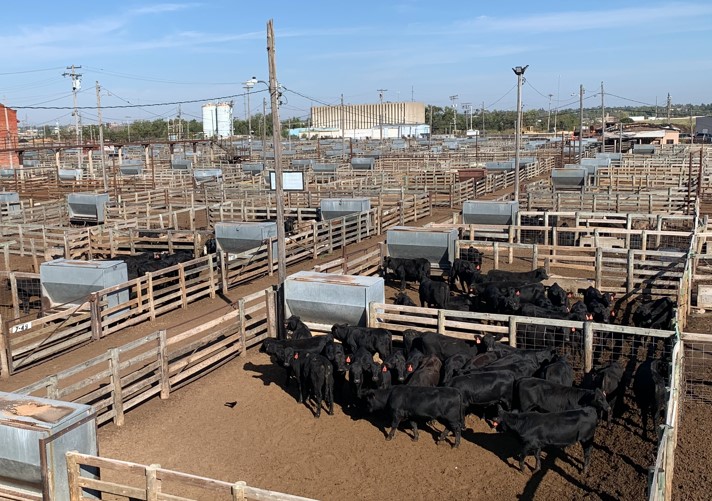
Feeder Steers and Heifers Not Well Tested, Steer Calves Steady to Higher at Oklahoma National Stockyards

Tue, 31 Jan 2023 05:15:56 CST Feeder Steers and Heifers Not Well Tested, Steer Calves Steady to Higher at Oklahoma National Stockyards Oklahoma National Stockyards Feeder Cattle - Oklahoma City, OK Mon Jan 30, 2023 AUCTION This Week                  2,750 Last Reported           9,035 Last Year                  11,125 *** Close *** Compared to last week: A winter storm moved in over the weekend dropping temps into the teens and 20's and Monday dropped sleet across parts of the state with more to come. This has hampered livestock movement and reduced receipts. Feeder steers and heifers not well tested, however few sales steady to 2.00 higher. Steer calves lightly tested and steady to 3.00 higher. Heifer calves lightly tested and under 500 lbs. 8.00-10.00 higher; over 500 lbs. sold 3.00 lower. Demand moderate to good for all classes. Supply included: 100% Feeder Cattle (62% Steers, 35% Heifers, 3% Bulls). Feeder cattle supply over 600 lbs was 59%. FEEDER CATTLE STEERS - Medium and Large 1 (Per Cwt / Actual Wt) Head       Wt Range       Avg Wt       Price Range       Avg Price 16             325-345           336              262.00             262.00 24             369-373           371        241.00-244.00     242.63 5                   363                363              259.00             259.00 Thin Fleshed 22             400-440           426        215.00-225.00     220.44 25             426-443           433        233.00-241.00      236.60 Thin Fleshed 80             463-495           484        213.00-223.00      219.47 8                   463                463              241.00              241.00 Thin Fleshed 105          510-549            535        205.00-219.00      213.03 20                 517                517              229.00              229.00 Thin Fleshed 50             551-584            570       198.00-208.00      201.39 12                 554                554              223.00              223.00 Thin Fleshed 233           612-640           634        186.00-195.00      190.75 13                  613               613              205.00              205.00 Fancy 146           655-694            681        185.00-193.00     188.61 189           701-740            720        181.00-190.00     182.89 42             769-794            785         170.00-181.00     173.72 78             811-849            824         175.00-177.00     176.08 80                 862                 862              177.00              177.00 23                 933                 933              169.00              169.00 For the complete market report from USDA Market News click on the PDF link below: Click here: 05363_OklahomaNational01302023.pdf

Feeder Steers and Heifers Not Well Tested, Steer Calves Steady to Higher at Oklahoma National Stockyards

Tue, 31 Jan 2023 05:15:56 CST


Feeder Steers and Heifers Not Well Tested, Steer Calves Steady to Higher at Oklahoma National Stockyards


Oklahoma National Stockyards Feeder Cattle - Oklahoma City, OK        

Mon Jan 30, 2023

AUCTION
This Week                  2,750
Last Reported           9,035
Last Year                  11,125

*** Close ***
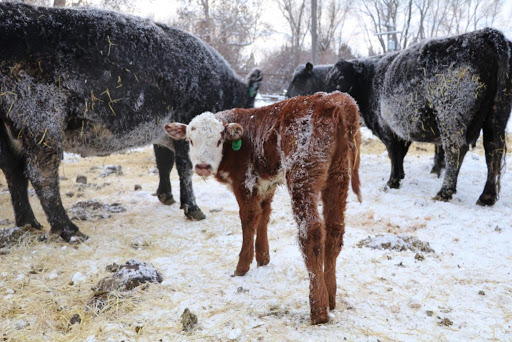
Compared to last week: A winter storm moved in over the weekend dropping temps into the teens and 20's and Monday dropped sleet across parts of the state with more to come. This has hampered livestock movement and reduced receipts. Feeder steers and heifers not well tested, however few sales steady to 2.00 higher. Steer calves lightly tested and steady to 3.00 higher. Heifer calves lightly tested and under 500 lbs. 8.00-10.00 higher; over 500 lbs. sold 3.00 lower. Demand moderate to good for all classes. Supply included: 100% Feeder Cattle (62% Steers, 35% Heifers, 3% Bulls). Feeder cattle supply over 600 lbs was 59%.

FEEDER CATTLE
STEERS - Medium and Large 1 (Per Cwt / Actual Wt)
Head       Wt Range       Avg Wt       Price Range       Avg Price
16             325-345           336              262.00             262.00
24             369-373           371        241.00-244.00     242.63
5                   363                363              259.00             259.00 Thin Fleshed

22             400-440           426        215.00-225.00     220.44
25             426-443           433        233.00-241.00      236.60 Thin Fleshed
80             463-495           484        213.00-223.00      219.47
8                   463                463              241.00              241.00 Thin Fleshed

105          510-549            535        205.00-219.00      213.03
20                 517                517              229.00              229.00 Thin Fleshed
50             551-584            570       198.00-208.00      201.39
12                 554                554              223.00              223.00 Thin Fleshed

233           612-640           634        186.00-195.00      190.75
13                  613               613              205.00              205.00 Fancy
146           655-694            681        185.00-193.00     188.61

189           701-740            720        181.00-190.00     182.89
42             769-794            785         170.00-181.00     173.72

78             811-849            824         175.00-177.00     176.08
80                 862                 862              177.00              177.00

23                 933                 933              169.00              169.00

For the complete market report from USDA Market News click on the PDF link below:


Click here: 05363_OklahomaNational01302023.pdf


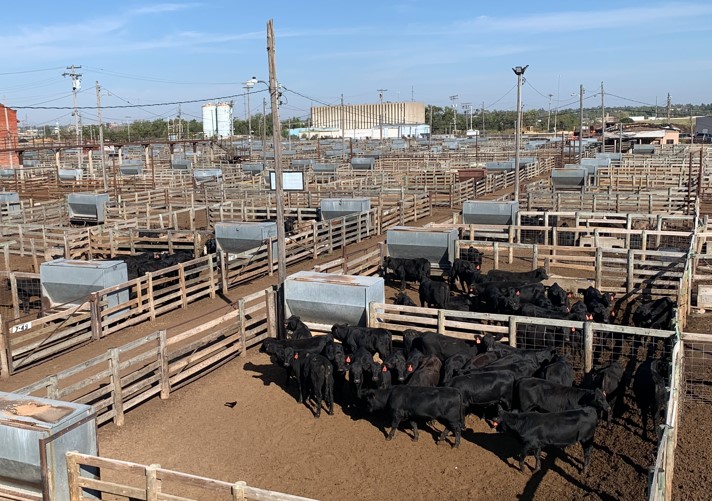
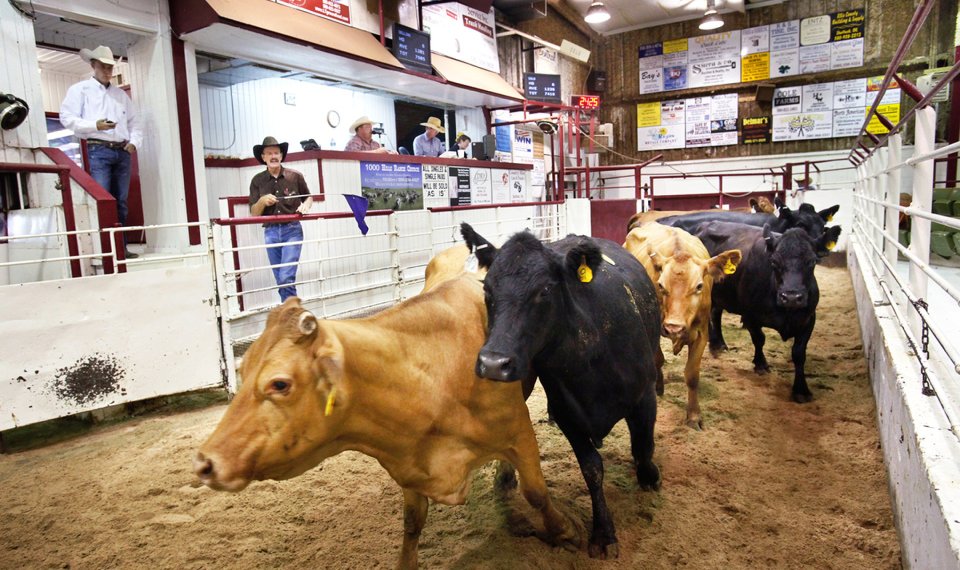
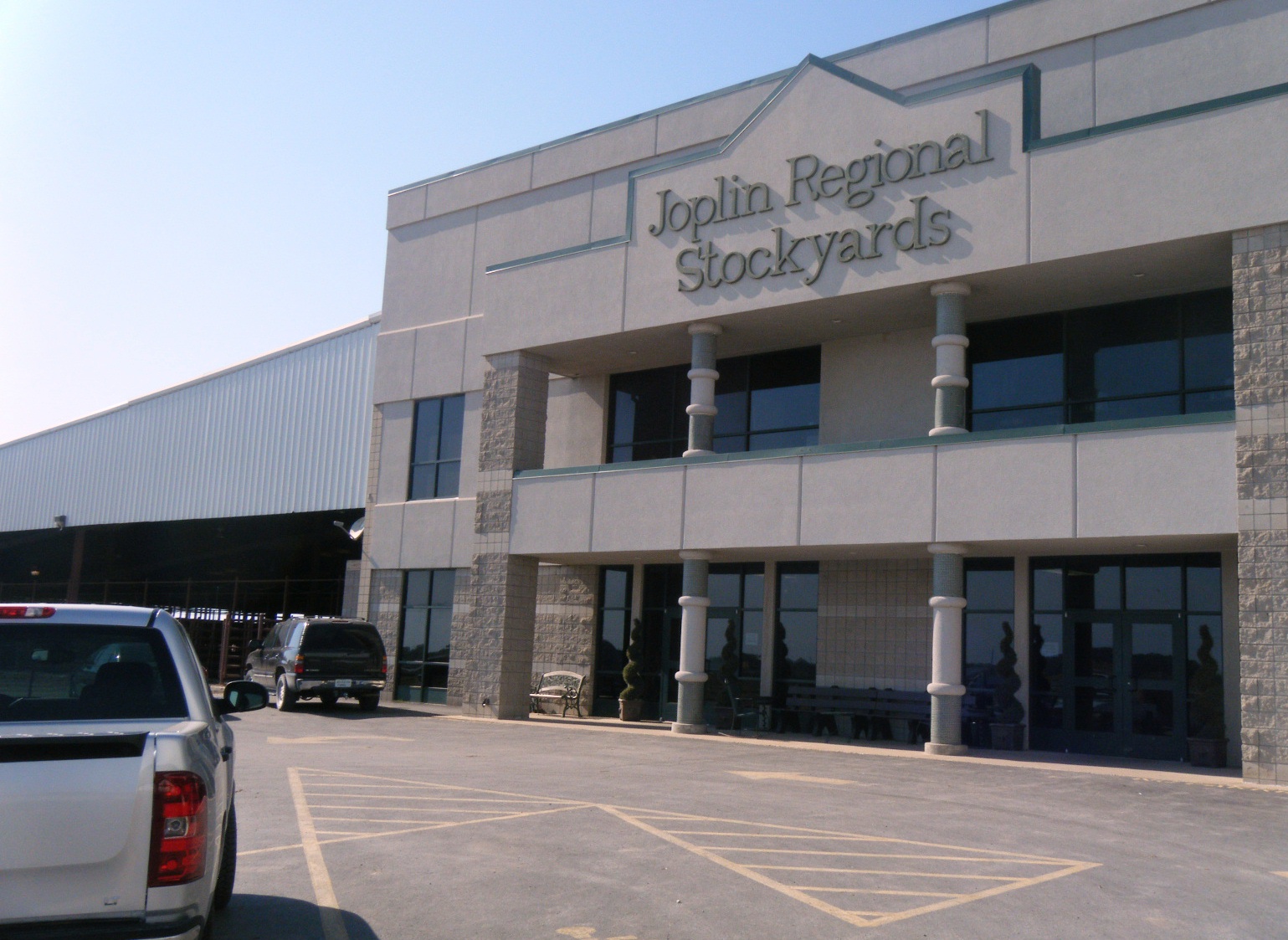
On a Cold Day- the Joplin Regional Stockyards Market was Hot

Tue, 31 Jan 2023 05:12:03 CST On a Cold Day- the Joplin Regional Stockyards Market was Hot Joplin Regional Stockyards Feeder Cattle - Carthage, MO Mon Jan 30, 2023 AUCTION This Week            2,961 Last Reported     2,795 Last Year              9,006 **CLOSE** The weather was cold and the market was hot. Icy roads with snow and sleet in the area caused the supply to be light. Compared to last week feeder steers traded 6.00-10.00 higher. Feeder heifers traded steady to 4.00 higher. Demand was very good. Supply included: 100% Feeder Cattle (59% Steers, 39% Heifers, 2% Bulls). Feeder cattle supply over 600 lbs was 55%. FEEDER CATTLE STEERS - Medium and Large 1 (Per Cwt / Actual Wt) Head       Wt Range     Avg Wt       Price Range         Avg Price 7               331-340         336        235.00-247.00        241.94 34             373-382         376        230.00-235.00        231.50 19             402-443        414        232.00-242.00         238.23 35             450-493        468        225.00-237.00         231.70 73             503-540        524        210.00-232.00         217.53 121          551-585         564        209.00-225.00         217.17 115          602-642         621        193.00-206.00         199.68 103          660-661         661        193.25-194.00         193.63 70            707-736         722        183.00-189.00         186.71 124              772             772              181.00                 181.00 168          809-830         822       177.50-179.00          178.08 70            860-883         881        171.00-176.75         176.35 27                907             907             172.00                   172.00 For the complete market report from USDA Market News click on the PDF link below: Click here: 05361_JoplinRegional01302023.pdf

On a Cold Day- the Joplin Regional Stockyards Market was Hot

Tue, 31 Jan 2023 05:12:03 CST


On a Cold Day- the Joplin Regional Stockyards Market was Hot


Joplin Regional Stockyards Feeder Cattle - Carthage, MO

Mon Jan 30, 2023

AUCTION
This Week            2,961
Last Reported     2,795
Last Year              9,006

**CLOSE**
The weather was cold and the market was hot. Icy roads with snow and sleet in the area caused the supply to be light. Compared to last week feeder steers traded 6.00-10.00 higher. Feeder heifers traded steady to 4.00 higher. Demand was very good. Supply included: 100% Feeder Cattle (59% Steers, 39% Heifers, 2% Bulls). Feeder cattle supply over 600 lbs was 55%.

FEEDER CATTLE
STEERS - Medium and Large 1 (Per Cwt / Actual Wt)
Head       Wt Range     Avg Wt       Price Range         Avg Price
7               331-340         336        235.00-247.00        241.94
34             373-382         376        230.00-235.00        231.50

19             402-443        414        232.00-242.00         238.23
35             450-493        468        225.00-237.00         231.70

73             503-540        524        210.00-232.00         217.53
121          551-585         564        209.00-225.00         217.17

115          602-642         621        193.00-206.00         199.68
103          660-661         661        193.25-194.00         193.63

70            707-736         722        183.00-189.00         186.71
124              772             772              181.00                 181.00

168          809-830         822       177.50-179.00          178.08
70            860-883         881        171.00-176.75         176.35

27                907             907             172.00                   172.00

For the complete market report from USDA Market News click on the PDF link below:


Click here: 05361_JoplinRegional01302023.pdf


Southern Plains Perspective: Another example of how protecting our natural resources really is all about protecting your wallet

There is a new blog post out at the Southern Plains Perspective! Read below:

I've said it before and I'll say it again—protecting our natural resource base, adapting to climate change and reducing greenhouse gasses are not at odds with making money.

In fact, I would argue just the opposite.

Time and time again we have seen that the same steps farmers and ranchers need to take to deal with the challenges presented by our changing climate—whether it's "hardening" your operation to extreme weather or taking steps to reduce the gasses that help reduce some the root causes of climate change—are the same things producers want to do to control soil erosion, reduce input costs, expand grazing opportunities, and address water issues, all while maintaining and potentially expanding yields. 

You can revisit many of the blogs I've put together on this subject by viewing this blog post at the Southern Plains Perspective.

I have recorded many podcasts on this subject, which brings me to my latest example of how protecting our resource base —this time, I'm talking about maintaining and protecting the Ogallala Aquifer—goes hand in hand with protecting our bottom lines and preparing for the effects of climate change.

In our most recent podcast episode, I interviewed Dr. Jean Steiner, Adjunct Professor at Kansas State University and Science Coordinator for the Sustainable Southwest Beef Project, about the research her group is conducting on the Aquifer and some of their recommendations for extending the life of this important resource.

Underlying over 111 million acres and providing water to nearly 2 million people, the Ogallala Aquifer is one of the most critical water resources in our country. It provides over 98% of all the water needs for the Oklahoma Panhandle, it accounts for billions in agriculture production in Texas  and it adds over $3.8 billion to the value of ag land in Kansas alone.  Needless to say, the loss of this aquifer would have a HUGE economic impact, not just on farmers and ranchers, but on the entire region (and the entire nation for that matter).

The challenge is that the wells are starting to run dry.

A 2013 study by Kansas State University determined that if current rates of irrigation continued nearly 70% of the water in the Ogallala Aquifer under Kansas will be gone by 2060.  In Texas, where aquifer levels in most locations are already lower, it's anticipated that these already shallower levels will decline by over 50%.

So what's to be done?

According to Dr. Steiner, plenty.

In our interview, she discussed several changes in Kansas water law, including the granting of authority for existing Groundwater Management Districts (GMDs) to recommend the approval of Local Enhanced Management Areas (LEMAs) to the chief engineer of the Kansas Department of Agriculture, Division of Water Resources. A LEMA is a geographic area where the owners of water rights voluntarily agree to have their water rights regulated to an agreed-upon, higher level of conservation, and less water use. 

According to a study by Kansas State University, this change in water regulation, combined with adoption of new irrigation technology, changes in cropping patterns and the adoption of soil health farming methods has shown promising results when it comes to both aquifer levels and producer income.  Producers inside the LEMA reported 4.3 percent more cash flow than counterparts just outside the area.  And while less irrigation has meant smaller yields, producers in the LEMA have reported that the money they saved on their energy bills by pumping less water alone was four times more than the amount of money they lost due to decreased production.

When it comes to aquifer levels, the producers within these areas have reduced their overall irrigation by as much as 35% resulting in a decline rate of the Ogallala Aquifer in the area of the LEMA that went from two feet per year to less than a half foot per year.

Dr. Steiner said this reduction in water use has actually resulted in an overall stabilization of the aquifer levels in the regions where the original LEMA was enacted and has even shown some levels of recharge and increase in limited locations.  And while few states regulate ground water to the same extent as Kansas, the concept of promoting a more sustainable approach to irrigation is applicable to the whole region and could do wonders toward extending the useable life of the aquifer.

Extending the use of a critical resource, maintaining the agriculture production of a major portion of the Great Plains, and doing all while reducing input costs....

If you're interested in what's going on with the work the original LEMA is doing, you can contact Northwest Kansas Groundwater Management District 4 in Colby, Ks. (785) 462-3915, your local Kansas State University Extension office or if you just want information about improved irrigation, crop rotations and soil health, you can contact USDA NRCS at your local USDA Service Center.

I've said it before and I'll say it again- protecting our natural resource base, adapting to climate change and reducing greenhouse gasses are not at odds with making money. 

In fact, it's just the opposite.

Livestock Marketing Association Announces New Scholarship Program

The Livestock Marketing Association (LMA) is pleased to announce the release of a new scholarship program. With the goal of investing in the next generation, the program is designed to award five (5), $2500 scholarships to individuals that are interested in or display knowledge of the importance of the agriculture industry and its supporting entities, with plans to use their career to advocate for or advance the livestock marketing industry. 

"We are excited to launch this new scholarship program to encourage and recognize the next generation of leaders in our industry," said LMA President Mark Barnett. "We are always looking for ways to get the younger generation involved, and I believe this is a step in the right direction."  

Applicants must be a graduating high school senior and/or currently enrolled at an accredited, postsecondary institution and maintain a GPA of 2.0 or higher. A letter of recommendation from an active LMA member must accompany the application at the time of submission. LMA members may not recommend more than two (2) applicants for the LMA scholarship in the same academic year. 

Applications will remain open until March 31, 2023, at 4:00 p.m. Following the deadline, scholarship applications will be reviewed by a panel of LMA leadership, LMA membership and allied-industry relations.  

For more information on the LMA Scholarship Program, visit https://lmaweb.vercel.app/About/scholarships or contact LMA at lmainfo@lmaweb.com. 

Addressing America's Debt Crisis from Congressman Tom Cole

By Congressman Tom Cole

Earlier this month, the United States hit its debt ceiling, which is currently at $31.4 trillion. After raising the debt limit by $2.5 trillion just two years ago in 2021, this sobering news should serve as a wakeup call that we must reduce our nation's spending and implement meaningful fiscal reforms to address America's debt crisis before it is too late. This fiscal trajectory is simply unsustainable.

The U.S. Department of the Treasury defines the debt limit as "the total amount of money that the United States government is authorized to borrow to meet its existing legal obligations, including Social Security and Medicare benefits, military salaries, interest on the national debt, tax refunds, and other payments."  Upon hitting this debt limit earlier this month, the Treasury Department began employing "extraordinary measures" to avoid default. However, these measures are only expected to suffice for several months until all options are exhausted to avoid defaulting on our country's debts.

Since 2002, the debt limit has been raised a staggering 20 times. While lawmakers have been in a long habit of charging up the nation's credit card, in just two years, the Biden Administration and Democrats in Congress went on a $5 trillion deficit spending binge that led to record-high inflation, soaring interest rates and a astounding $31.4 trillion national debt – larger than the entire U.S. economy.

The national debt currently makes up 98 percent of the United States' Gross Domestic Product (GDP), the highest it has been since World War II, and within a decade, it is projected to reach 110 percent of GDP and 185 percent by 2052. Although Democrats continue to threaten to repeal the Tax Cuts and Jobs Act or impose numerous revenue-raising proposals such as a wealth tax, financial transactions tax or carbon tax, none of these proposals would solve our debt crisis. In fact, our nation's tax revenue is currently the highest in history.

While Democrats' irresponsible and reckless spending over the past two years certainly led us to hit our debt limit faster than expected, the true path to long-term fiscal soundness will require lawmakers to address the solvency and trajectory of mandatory spending, which, has grown from 34 percent of the federal budget in 1965 to 71 percent today. In fact, over the next 30 years, Social Security faces a $36 trillion deficit and Medicare faces an $80 trillion deficit. These shortfalls are the prime drivers of our debt, not lack of revenue.

Although addressing mandatory spending should not entail eliminating these extremely popular programs, we must have a conversation not only as a Congress but also as a country about measures to take to protect these programs while also lowering our unsustainable budget deficits and curtailing our national debt. If we are to preserve these programs for current and future beneficiaries, ignoring the problem is only whistling past the fiscal graveyard.

In response to these shortfalls, I have already reintroduced legislation this Congress to address Social Security's solvency. Modeled after the 1983 Social Security Commission, the Bipartisan Social Security Act would create a bicameral and bipartisan commission, chaired by a presidential appointee, to work together to create solutions to ensure that Social Security is fully funded for decades to come and the millions of Americans who have paid into this program throughout their working lives receive the money they deserve.

It is extremely important that the U.S. pay its bills and avoid defaulting on payments. As Congress debates an increase in the debt limit and any concurrent measures to address federal spending, my colleagues must remember that raising the debt ceiling may postpone fiscal catastrophe, but it will not avert it. The only way to prevent a financial doomsday is to enact significant and lasting reforms and stop the spending spree Democrats have been on for the past two years.

Oklahoma Prairie Beef Solutions Picks Up Speed in Providing Value-Added Marketing Opportunities to Oklahoma Ranchers

At the Oklahoma Cattlemen's Association 2023 winter policy meeting, Farm Director, KC Sheperd caught up with the Director of Operations for Oklahoma Prairie Beef Solutions, Sydnee Gerken, about what 2023 looks like for OPBS.

"We have just in the past week had over ten calls just to discuss and kind of get a feel for what 2023 is going to hold for the program," Gerken said.

Oklahoma Prairie Beef Solutions is an entity of the OCA and is aimed at rewarding a premium to cattle producers who sell their cull cows into the program.

"We are striving to bring better prices to the Oklahoma cull cattle market to producers as well as providing local fresh beef to Oklahoma consumers," Gerken said.

If producers are interested in becoming part of the program, Gerken said, they are required to have an OCA membership, Beef Quality Assurance certification, and a 90-day minimum ownership of the cattle (in the state of Oklahoma), which can be proven through records such as vaccine records.

"There has been lots and lots of conversation about where the program is going to go this year," Gerken said. "One of our big goals is that the program can stand alone on itself. We have been graciously given a loan from the association (OCA) if you will, and it is time that we start looking at paying that forward and back to the association and to the producers that pay their membership."

OPBS has an event coming up in May with Uptown Grocery Co. where they will be offering a gourmet burger special for Mother's Day, Gerken said, and hopefully, that can be offered on Father's Day as well.

While everyone may not be able to participate in OPBS, anyone can support them by purchasing the ground beef product sold in retail stores around the state.

"Right now, we are working with Uptown Grocery and Pruett Foods," Gerken said. "They are under the same management," Gerken said. "They have 12 locations in the state of Oklahoma and two right here in Oklahoma City."

Gerken said OPBS is looking to add a few more stores into the mix to serve the entire state of Oklahoma better.

"I believe as the program continues to grow, that we will have lots and lots of states and cattlemen's associations reach out so they can find a better way to serve their own communities in their state beef industry," Gerken said.

Leprino's Durkin Elected Chair of Innovation Center for U.S. Dairy

Mike Durkin, president and chief executive officer of the Leprino Foods Company, was elected chair of the board of directors of the checkoff-founded Innovation Center for U.S. Dairy at its first meeting of 2023.

Durkin replaces Schreiber Foods Chair Mike Haddad, who served as the Innovation Center's chair for five years. Durkin joined Leprino in 2011 and has been president and CEO since 2014. He most recently served as secretary of the Innovation Center board and previously chaired its Stewardship Commitment Taskforce.

"This transition begins with our heartfelt appreciation for the tireless commitment, passion and contributions that Mike Haddad provided during his tenure," said Barbara O'Brien, president and CEO of Dairy Management Inc. and the Innovation Center. "With his deep experience and demonstrated leadership, we are fortunate to have Mike Durkin step into this role as he builds on the legacy and momentum of U.S. dairy's collective effort. We look forward to his leadership."

In addition to Durkin's appointment, the Innovation Center board also elected the following officers:

  • Vice Chair: Dennis Rodenbaugh, Dairy Farmers of America
  • Secretary: Brad Anderson, California Dairies Inc.
  • Treasurer: Jay Bryant, Maryland & Virginia Milk Producers Cooperative Association
  • At-large: Sheryl Meshke, Associated Milk Producers Inc.
  • At-large: Ron Dunford, Schreiber Foods

The Innovation Center for U.S. Dairy was established in 2008 by farmers through the dairy checkoff to foster collaboration that progresses the industry's goal of building a healthy and sustainable future for the dairy community, the people it serves and the planet. The Innovation Center convenes diverse stakeholders and leaders to advance the U.S. dairy community's positive impact on shared social responsibility and sustainability priorities that include nutrition and health, food security, the environment, animal care, workforce and food safety.

For information about the Innovation Center for U.S. Dairy, visit www.usdairy.com/about-us/innovation-center

Drummond sues Biden administration over emergency health powers delegated to WHO

Oklahoma Attorney General Gentner Drummond is suing the U.S. Department of Health and Human Services (HHS) to remove an illegal regulation from federal law that allows the World Health Organization (WHO) to exert its authority over the United States.

Filed last week in U.S. District Court in the Northern District of Texas, the lawsuit notes that the HHS's definition of public health emergency exceeds the agency's scope by unlawfully giving the WHO the authority to invoke emergency health powers in this nation.

"This regulation is an infringement on U.S. and state sovereignty," Drummond said. "It is particularly egregious that the Biden administration would delegate such sovereignty to the World Health Organization in light of the WHO's many missteps during the pandemic. The WHO's poor management, lack of accountability and alarming ties to the Chinese communist government render it less than credible. The bottom line is, no country or organization other than the United States government should have the authority to declare a health emergency and invoke the corresponding powers."

The unlawful regulation was finalized in the final days of the President Obama administration. Last year, the Biden administration refused a petition filed by Oklahoma and several other states to eliminate a part of the federal code that inappropriately delegates excessive power to the WHO. 

John Deere offering HarvestLab 3000 Grain Sensing for combines

HarvestLab 3000 Grain Sensor

John Deere is now offering HarvestLab™ 3000 Grain Sensing on 2018 or newer John Deere S700 Series Combines. Grain Sensing continuously measures and monitors protein, starch and oil values in wheat, barley or canola in real time as the combine is harvesting. This site-specific data can then be viewed in the combine, or in the John Deere Operations Center™.
 
"When a farmer has site-specific data on a field's harvest quality they know if the wheat coming out of the field is of baking or fodder quality," said Christopher Murray, marketing manager for John Deere. "This knowledge gives them the ability to store their grain in separate batches according to quality and then market that grain more selectively."
 
Site-specific data helps farmers precisely document the harvest as the grain quality is recorded at each individual point in the field. "This level of detail lets them compare varieties or confirm if machines were properly set," Murray said. "They are also able to see areas of the field that most successfully converted nutrients into yield, protein or oil, so next season's fertilizer plan can be adjusted."

Grain Sensing is the fourth application of John Deere HarvestLab 3000. For years, farmers have successfully used HarvestLab for constituent sensing on John Deere self-propelled forage harvesters, for manure sensing on liquid manure applicators, and as a stationary desktop unit to analyze forage and samples.

"This fully integrated John Deere solution helps small grain farmers be successful at every production step, from tillage, planting, protecting and nurturing, to harvest," Murray said.

John Deere HarvestLab 3000 Grain Sensing in-cab protein map


As the combine moves through the field, a motor-driven auger pushes grain in front of the HarvestLab 3000 near-infrared sensor. Together, with the StarFire™ receiver, site-specific data is generated on the Generation 4 Display and sent to Operations Center via JDLink™. Farmers can use Operations Center to review harvest results and field profitability with different tools that include Analyze and Field Analyzer. Farmers can also pair information in Operations Center with partner software to gain additional insights or to create application maps for fertilizer or other inputs.

HarvestLab 3000 Grain Sensing can be ordered for 2018 and newer John Deere S700 Series Combines. For more information, visit John Deere.com or contact your local John Deere dealer.

New Videos on Managing Weeds in Organic Row Crops

Farmers have long relied on herbicides to control weeds in row cropping systems. But as consumer preferences change, many farmers are seeking to eliminate or reduce their use of synthetic herbicides where possible. Managing weeds without herbicides can be daunting, and it requires producers to understand the biology and behavior of problem weeds in order to develop control strategies that exploit their weaknesses.

In two new videos from SARE, Charlie Johnson shares how he and his family control weeds on 1,600 acres of organic corn and soybeans in Madison S.D. Ecological Weed Management at Johnson Farms and Managing Weeds in Organic Corn and Soybeans are the first in a series of new SARE videos featuring farmers who use ecological strategies to control weeds without herbicides. 

In Ecological Weed Management at Johnson Farms, Johnson explains how late planting, patience, diversity and a six year crop rotation all play a role in managing weeds on his farm. "There is no such thing as a weed-free organic field, and there's no such thing as a weed-free farm," says Johnson.

Watch Ecological Weed Management at Johnson Farms on YouTube:

Watch Managing Weeds in Organic Corn and Soybeans on YouTube:

Learn about the full Manage Weeds on Your Farm video series here. The series is a companion to SARE's Manage Weeds on Your Farm, a definitive guide to understanding agricultural weeds and how to manage them efficiently, effectively and ecologically. Manage Weeds on Your Farm shows you how to outsmart your weeds by identifying the right tactic for the right weed at the right time, which will reduce as much as possible the labor required, while ensuring your weeds don't impact crop yields. Download your free copy or order it in print today at www.sare.org/weeds.

Midwest Dairy is building trust and demand for dairy in 2023

Building trust and demand for dairy in 2023

Programs from the Midwest Dairy Association are reaching more consumers than ever in the 10-state region with 39 million consumers. Already, the year is off to a running start with dairy products playing a key role in consumers' resolutions for a healthier version of themselves.

"Our accomplishments and progress towards building trust and demand show the value of our checkoff at work," said Molly Pelzer, Midwest Dairy CEO. "In 2023, we'll build on our relationships with new and existing retail partners and continue to increase trust in dairy through nutrition and education."

Since starting the three-year strategic plan in 2021, Midwest Dairy has worked towards the vision of bringing dairy to life for a better world and the mission of working with others to give consumers an excellent dairy experience. In 2023, Midwest Dairy will expand reach and increase impact of checkoff funds through partnerships, work in schools and industry innovation.

Better together

Collaboration is a key focus for all programs and activities to expand dairy's footprint and consumer trust. Midwest Dairy is maximizing dairy farmers' checkoff investment impact by working with and through partners to share information and real-time experiences that showcase how dairy products resonate with today's consumers.

  • A new partnership with Godfather's Pizza Express has received great consumer engagement from the Five Cheese and Sausage Pizza limited time offer. Midwest Dairy is funding the point-of-sale materials used in the three-month-long program.
  • Dairy continues to reach younger consumers through well-known social media influencers such as MrBeast, a gaming and YouTube icon, who shares insights and promotes dairy to his millions of followers.

Dairy in schools

Midwest Dairy continues to support dairy in schools based on research and a legacy of leadership in student health and wellness.

  • Current work on business case studies will help school administrators grow meal participation with dairy based smoothies, coffee stations and breakfasts. Studies show an opportunity to increase the number of students choosing school meals when paired with a coffee beverage, which encourages students to consume milk who otherwise may not. These dairy-based programs generate excitement both for nutritious milk and the school meal program.
  • A high school STEM pilot program gives dairy farmers an opportunity to shape the next generation and share science-based explanations. Students are learning how dairy is part of a healthy lifestyle, the scientific principles behind production decisions and get an inside look at related career opportunities.

Innovation for tomorrow

Midwest Dairy collaborates with processors, farmer-owned cooperatives, and dairy food and beverage manufacturers with the Cooperative and Processor Support (CAPS) program. Through this program, Midwest Dairy provides market research and consumer insights, ongoing communications resources and marketing assistance for new and innovative dairy products.

The farmer's dairy story is always at the center of what Midwest Dairy does. Undeniably Dairy Grants are available to Midwest Dairy farmers, dairy groups and agricultural organizations to share this story. These grants turn great ideas for promoting the dairy community to consumers into reality. In 2022, grants were used to bring dairy to new places and audiences, host on-farm events and engage with Gen Z consumers. Applications are now open again for the 2023 funding cycle.

Optimistic outlook

A solid foundation from 2022 successes sets Midwest Dairy up to adapt and respond to consumer needs.

"We will continue to build on our dairy promotion work into the new year to assure the dairy farm family's investment in checkoff is serving them well," Pelzer said. "We'll continue to focus on five areas: increasing dairy sales, growing trust, advancing research, creating dairy checkoff advocates, and developing farm and community leaders."

Follow along with Midwest Dairy to see the checkoff at work. For more information, visit www.midwestdairy.com.

Biden-Harris Administration Invests $50 Million to Improve and Expand Rural Oklahoma Electric Infrastructure

U.S. Department of Agriculture Rural Development Oklahoma State Director, Kenneth Corn, today announced the Department is investing $50 million to assist the Arkansas Valley Electric Cooperative Corporation expand and modernize the nation's rural electric grid and increase grid security for Leflore and Sequoyah Counties.

This RD investment will allow the cooperative to build and improve on 360 miles of electric line and invest in smart grid technologies. Arkansas Valley Electric Cooperative serves ten counties in Arkansas and two in Oklahoma.

"Providing better security and strengthening our rural Oklahoma electric grid is vital to the long-term health of our rural economy," Corn said. "This continues to show that the Biden Administration is following through on their commitment to assist our local cooperatives to be more reliable and affordable for our neighbors across the state.  Investing in Oklahoma infrastructure not only provides good-paying jobs but more importantly secures rural Oklahoma's future for a stable and growing economy."

In the coming months, USDA will announce additional energy infrastructure financing. The Biden-Harris Administration's Inflation Reduction Act provided more than $12 billion to USDA for loans and grants to expand clean energy, transform rural power production, create jobs and spur economic growth. This funding will help make energy cleaner, more reliable and more affordable.

USDA's Electric Loan Program can help finance wind, solar and natural gas plants, as well as improvements to produce cleaner energy from coal-fired plants. Local utilities also use the loans to invest in infrastructure to deliver affordable power to their consumers.

USDA touches the lives of all Americans each day in so many positive ways. Under the Biden-Harris Administration, USDA is transforming America's food system with a greater focus on more resilient local and regional food production, promoting competition and fairer markets for all producers, ensuring access to safe, healthy and nutritious food in all communities, building new markets and streams of income for farmers and producers using climate-smart food and forestry practices, making historic investments in infrastructure and clean energy capabilities in rural America, and committing to equity across the Department by removing systemic barriers and building a workforce more representative of America. To learn more, visit https://www.rd.usda.gov/ok.

Troy Sander Looks Forward to Price Discovery Progress in Cattle Industry

Listen to Ron Hays talk with Troy Sander about market transparency and price discovery.

Senior Farm and Ranch Broadcaster, Ron Hays, is visiting with the Chair of the National Cattlemen's Beef Association's Live Cattle Marketing Committee, Troy Sander. Located in Oklahoma City, Sander is also the Chief Operating Officer of Heritage Beef, overseeing feedlots in southwest and southeastern Kansas.

The 2023 Cattle Industry Convention coverage is being powered by Performance Ranch, a part of Zoetis, and by Farm Data Services located in Stillwater, Oklahoma.

Sander was part of the price discovery task force that was put together a couple of years ago in Denver and believes the industry has learned quite a bit from that process, which will help form a basis for some of the conversations this year at the Live Cattle Marketing Committee Meeting in New Orleans.

At the price discovery meeting in Denver, Sander was representing the Kansas Livestock Association.

"Our position and policy at KLA at the time is that we were against mandatory, and still is, against mandatory marketing, if you will, by the government," Sander said.

Sander said a big focus of his was continuing to promote the importance of negotiated trade and transparency each week, while continuing to allow alternative marketing agreements and marketing devices that add value to the cattle and back down the production chain.

"I think that we are so wrapped around the idea that is has to be cash trade," Sander said. "Really, what we are talking about is weekly negotiated trade for price discovery. That negotiated trade can also be negotiating a base price on a grid or formula marketing agreement."

Despite challenges such as Covid restrictions and a high supply of fed cattle outpacing hook space, Sander said the market transparency and price discovery plan by the industry was able to accomplish a few important goals.

"We did make some progress on weekly negotiated trade in several of the states; in fact, Kansas weekly negotiated trade was up by about an average of about 9,000 head over the last couple of years," Sander said. "Texas has increased about three to five thousand head weekly. Didn't see much change in the Nebraska numbers, and Iowa was up about a couple of thousand head."

Overall, Sander said weekly negotiated trade between specific regions increased by about 14,000 head per week.

"I really think that what came out of it more so than anything was just the awareness," Sander said.

Sander said a big accomplishment of the plan was helping packers to see that a chance is necessary.

"I think it actually allowed them to get more open-minded about doing more negotiated grid-type marketing agreements each week, if you will, so I think there was a lot of awareness that came out of it more than anything, and we did increase some numbers."

The Beef Buzz is a regular feature heard on radio stations around the region on the Radio Oklahoma Ag Network and is a regular audio feature found on this website as well. Click on the LISTEN BAR for today's show and check out our archives for older Beef Buzz shows covering the gamut of the beef cattle industry today.

From Seed Selection to Equipment Prep, Farmers Stay Busy During the Off-season

AgriGold agronomists can be a resource as farmers ready for spring

The equipment might be parked in the shed, but you can rest assured farmers aren't twiddling their thumbs over the winter months. Far from it. There's data to analyze, decisions to be made and equipment to ready for the coming growing season.  

Comparing hybrid and variety performance
"Leveling-up performance starts with product selection," says Jeff Joslin, who helped develop AgriGold's SEED1st™ tool for creating seed plans. He says seed performance is determined by three major factors: the genetics, the interaction of those genetics with the environment, and the management of those fields. 

"The type and moisture storage capacity of soil should factor heavily into product placement," says Kris Young, an AgriGold agronomist. "Some products handle stress well, while others handle high-yield response management better. Identifying where those areas are on your farm can help guide hybrid and variety selection."  

When comparing seed products, Young says farmers need to make sure they're comparing apples to apples. "We like to see comparisons within one field, but if that's not possible, make sure the fields have similar soil types and yield histories," he says. "I think it's great that farmers collect a lot of yield data across the farm, but it's also smart to compare their results with those from other locations."  

Young also encourages farmers to utilize the expertise of their local agronomist. "I like to run head-to-head comparisons of AgriGold products against competitors' seed," he says, adding this can be done across several locations and years to account for differences in growing seasons.

It's important that a farmer's portfolio includes a mix of products to reduce risk, according to Young. "A blast of heat or a wind event at the wrong time could affect that hybrid more than another." 

Developing a customized seed plan
AgriGold's SEED1st™ makes it simple to develop, share and collect input on a seed plan. To start, farmers answer a series of questions about their field management practices, crop challenges and productivity goals. The tool pulls in information about field soil texture, drainage and weather forecasts and considers product performance rankings from AgriGold agronomists to deliver a customized report with field-by-field product recommendations. 

A split plant is a good way to get an apples-to-apples comparison on hybrids, says AgriGold Agronomist Kris Young. 

"The idea behind SEED1st™ is to offer users the ability to create better seed plans for more fields and to expend less time and energy doing so," Joslin explains. "The tool is not meant to replace people. It shortens and enhances the discovery process and adds perspective. It offers advice at the field level more effectively."  

SEED1st™ can remove some emotion and biases that can come with seed buying – both for the farmer and the sales representative. "It offers users product options that might have been overlooked and can remind them to reconsider something like how a field's natural drainage is impacted by its tile drainage and the weather forecast that may not have been fully evaluated," Joslin explains.  

Readying your equipment
In the months ahead, AgriGold Agronomist Sue Brakhane advises farmers to examine each piece of equipment they intend to use in the field. "Get your parts in, your tractor serviced and your spades changed," she advises.  

Brakhane says farmers should check hoses for wear, especially at folds or higher-movement areas that rub as the machine moves down the road or field. Pay close attention to anything that's ground engaging, such as planter disc openers, seed tubes and gauge wheels, as the contact is high wear. Brakhane recommends inspecting sources of oil or fluid leaks. "Check the frame for any cracks. Check your tires for wear. Worn or low tires cost you efficiency." 

On the field cultivator, Brakhane says farmers need to "make sure the shovels are at their full width and overlap a bit. If they are too worn, they can make individual paths rather than a single, even path makes a good seed bed." The same applies to vertical tools or any seed bed preparation machinery. 

AgriGold agronomists can run head-to-head seed product comparisons over multiple locations and years.  

The other key when it comes to tillage is making sure fields are ready, Brakhane says. Impatience can result in a compaction or a smear layer that's tough for roots to push through. Once the frost line is out of the soil, she recommends taking a spade to lower or wetter spots in the field and digging down to the depth you plan on running the machine to assess moisture. 

Her final words of advice: "Make sure your monitor is ready to go and last year's data is cleaned off so you have room for spring operations."  

Off-season prep work is critical to smooth sailing in the spring and a successful growing season. Reach out to your local AgriGold agronomist for support along the way.
 

Growth Energy Responds to 5th Circuit Order on SREs

Emily Skor, CEO of Growth Energy issued the following statement in response to the 5th U.S. Circuit Court of Appeals granting motions to stay compliance obligations pending final resolution for two refineries under the Renewable Fuel Standard (RFS): "We're disappointed the court issued an order delaying compliance by two facilities, but we're confident that the RFS will be fully enforced once the merits are considered. The EPA's position is backed by reams of real-world data and analysis by public- and private-sector experts. The supposed 'cost' to these refiners is an accounting fiction. Moreover, Congress never intended for these temporary exemptions to become a permanent handout. We agree with EPA's view that it's past time to end abuse of SREs, which destroy demand for low-carbon fuel and create needless uncertainty for all stakeholders, large and small."

Coon to retire as vice president and dean of OSU Agriculture

Thomas G. Coon, vice president and dean of Oklahoma State University Agriculture, announces his plan to retire in July after nine years at the university. (Photo by Todd Johnson, OSU Agricultural Communications Services)

By Mandy Gross

Thomas G. Coon, vice president and dean of Oklahoma State University's Division of Agricultural Sciences and Natural Resources, is retiring on July 10 after nine years of dedicated service and visionary leadership to the university.

"We are blessed that Dr. Coon has spent the last nine years in positions of leadership with Oklahoma State University," said Kayse Shrum, OSU president. "He has been an influential force in an area where OSU is a recognized leader across the nation. His career of making a difference in the lives of young adults and shaping the agricultural landscape spans 40 years."

Joining OSU in July 2014, Coon provides leadership for the Ferguson College of Agriculture and the university's two state agencies: OSU Extension and OSU Ag Research.

He works extensively with public and private agencies, community leaders, and state and local elected officials. He serves as chief OSU administrator for more than 200 faculty, 300 Extension staff, and 300 support and administration staff located on-campus and across the state.

Coon has been the driving force behind New Frontiers, a capital campaign to raise funds for a $115 million new state-of-the-art teaching, research and Extension facility for OSU Agriculture. New Frontiers is recognized as one of the fastest capital campaigns at OSU and the university's first academic capital campaign of this magnitude to reach its fundraising goal before the building opens.

In addition, Coon is recognized nationally as a leader in agriculture and natural resource management. He is actively involved in the Association of Public and Land Grant Universities, serving on multiple committees, including the Board of Directors and Academic Heads Section for the Board on Agriculture Assembly and the Extension Committee on Organization and Policy.

Coon earned a Bachelor of Arts (summa cum laude) in biology from Luther College in Decorah, Iowa, and a Master of Science and doctorate in ecology from the University of California, Davis.

He began his career as an assistant professor of fisheries and wildlife at the University of Missouri. He went on to work as an assistant professor and associate professor of fisheries and wildlife at Michigan State University before becoming a full professor.

Coon also served as the director of Michigan State University Extension before assuming his leadership role at OSU.

"I have been blessed to join the OSU Agriculture family and work to advance it, and I have been blessed to have colleagues as administrators, faculty, staff and students who work together to advance the work of this noble enterprise," Coon said. "There is another leader out there somewhere who will be blessed to have that same experience, and I will do all I can to help recruit my successor."

Biden-Harris Administration Invests $2.7 Billion to Improve and Expand Rural Electric Infrastructure

Funding Includes $613 Million to Improve Grid Security and Reliability

U.S. Department of Agriculture (USDA) Secretary Tom Vilsack today announced the Department is investing $2.7 billion to help 64 electric cooperatives and utilities (PDF, 175 KB) expand and modernize the nation's rural electric grid and increase grid security.

"These critical investments will benefit rural people and businesses in many ways for decades to come," Vilsack said. "This funding will help rural cooperatives and utilities invest in changes that make our energy more efficient, more reliable, and more affordable. Investing in infrastructure – roads, bridges, broadband and energy – supports good-paying jobs and keeps the United States poised to lead the global economy."

Background:

USDA is investing in 64 projects through the Electric Loan Program. This funding will benefit nearly 2 million rural people and businesses in Alabama, Arkansas, Colorado, Florida, Georgia, Iowa, Indiana, Kentucky, Michigan, Minnesota, Mississippi, Montana, Nebraska, New Mexico, North Carolina, North Dakota, Ohio, Oklahoma, Oregon, South Carolina, South Dakota, Tennessee, Texas, Virginia, Washington and Wisconsin.

The loans include $613 million to help rural utilities and cooperatives install and upgrade smart grid technologies. Smart grid can be a catalyst for broadband and other telecommunications services in unserved and underserved rural areas in addition to improving grid security and reliability.

Nearly half of the awards will help finance infrastructure improvements in underserved communities.

Below are some examples of how the funding will be used:

  • The Northern Virginia Electric Cooperative is receiving a $111 million loan to connect 1,264 consumers and build and improve 404 miles of line. The loan includes $13.4 million for smart grid technologies. Northern Virginia Electric, headquartered in Manassas, serves 176,604 consumers over 7,614 miles of line in six counties.
  • The Carteret-Craven Electric Membership Cooperative in Newport, North Carolina, is receiving a $28 million loan to connect 3,115 consumers and build and improve 132 miles of line. The loan includes $169,437 for smart grid technologies. Carteret-Craven Electric serves 41,655 consumers through 2,493 miles of line in four counties in southeastern North Carolina.
  • Minnesota's Beltrami Electric Cooperative is receiving a $22.7 million loan to connect 1,480 consumers and build and improve 225 miles of line. The loan includes $1.3 million for smart grid technologies. Beltrami Electric is headquartered in Bemidji, Minnesota. It serves 21,772 consumers in portions of Beltrami, Cass, Clearwater, Hubbard, Itasca and Koochiching counties with 3,500 miles of distribution line covering approximately 3,000 square miles.

In the coming months, USDA will announce additional energy infrastructure financing. The Biden-Harris Administration's Inflation Reduction Act provided more than $12 billion to USDA for loans and grants to expand clean energy, transform rural power production, create jobs and spur economic growth. This funding will help make energy cleaner, more reliable and more affordable.

USDA's Electric Loan Program can help finance wind, solar and natural gas plants, as well as improvements to produce cleaner energy from coal-fired plants. Local utilities also use the loans to invest in infrastructure to deliver affordable power to millions of residential, commercial and agricultural consumers.

Under the Biden-Harris Administration, Rural Development provides loans and grants to help expand economic opportunities, create jobs and improve the quality of life for millions of Americans in rural areas. This assistance supports infrastructure improvements; business development; housing; community facilities such as schools, public safety and health care; and high-speed internet access in rural, Tribal and high-poverty areas. For more information, visit www.rd.usda.gov.

USDA touches the lives of all Americans each day in so many positive ways. Under the Biden-Harris Administration, USDA is transforming America's food system with a greater focus on more resilient local and regional food production, promoting competition and fairer markets for all producers, ensuring access to safe, healthy and nutritious food in all communities, building new markets and streams of income for farmers and producers using climate-smart food and forestry practices, making historic investments in infrastructure and clean energy capabilities in rural America, and committing to equity across the Department by removing systemic barriers and building a workforce more representative of America. To learn more, visit www.usda.gov.

Derrell Peel Recaps Experiencing Cattle Industry in Ontario

Dr. Derrell Peel, Oklahoma State University Extension Livestock Marketing Specialist, offers his economic analysis of the beef cattle industry as part of the weekly series known as the "Cow Calf Corner" published electronically by Dr. Peel and Mark Johnson. Today, Dr. Peel talks about  cattle feeding operations in Ontario.

Recently I had the opportunity to visit Ontario for the Ontario Cattle Feeders Association Annual Beef Industry Convention in London, Ontario.  The organization is celebrating its 25th anniversary in 2023.

In addition to a great convention, I had the opportunity to visit a number of cattle feeding operations and learn a bit about how cattle feeding works in this unique environment. 

Cattle feeding in Ontario is almost entirely indoors due to the cold and wet climate of the region.  The photos show several different cattle feeding operations.  Ontario is a significant crop production region and feeders utilize corn (dry and high-moisture) and co-products (mostly wet distiller's grains) intensively.

Waste management is a major issue with barns using either solid floors, which must be scraped and re-bedded weekly or slatted floors with liquid waste lagoons.  In either case, farms must have several months to a year of manure storage as manure can only be applied to cropland in short summer windows of time.  Manure is an increasingly valuable output, especially with current fertilizer prices.

The Ontario cattle feeding industry utilizes several sources of cattle.  Most of the beef cows in Canada are in the Prairie Provinces and feeder cattle have historically moved east to supply the feedlot industry in Ontario.  Cattle are also sourced from Virginia and surrounding regions in the U.S. at times when cattle prices and exchange rates are favorable.  Increasingly now, however, the rapidly growing source of cattle are beef x dairy crossbred calves from Ontario and Quebec. 

The organization is also celebrating 25 years of the Ontario Corn Fed Beef program, which continues to have success in both domestic and international beef markets. The program has been particularly successful in Japan.

Seeing cattle feeding in this environment emphasizes again to me, the extraordinary ability the beef industry to adapt to a wide range of locations and environments.

I enjoyed tremendous hospitality from cattle feeders in Ontario and I wish continued success for them.

Photos provided by Derrell Peel.

OKFB honored with four AFBF State Awards of Excellence

Oklahoma Farm Bureau was recognized with four American Farm Bureau State Awards of Excellence for outstanding programs and achievements during 2022.

OKFB was recognized for accomplishments in advocacy, coalitions and partnerships, engagement and outreach, and leadership and business development, earning awards in all four program areas.

OKFB highlights from 2022 included partnering with county Farm Bureaus to donate funds to local food banks and fire departments; hosting the inaugural Oklahoma Youth Legislative Experience for high school students at the Oklahoma State Capitol; starting the OKFB Generation Bridge program for mid-career agriculturalists; and supporting political candidates running for federal offices with the new OKFB Ag PAC political action committee.

The AFBF Awards of Excellence were awarded to state Farm Bureaus during the 2023 American Farm Bureau convention in San Juan, Puerto Rico

Farming Fun or the Whole Family

Jimmy and Jake Carter are father and son owners of Southern Belle Farm in McDonough, Georgia. Since the farm's establishment in 1938, the Carters have expanded it to grow many kinds of seasonal produce and now they welcome thousands of students and families each year to visit, learn about agriculture and participate in fun activities..

The Carters recently sat down with American Farm Bureau Federation President Zippy Duvall to talk about how they got into agritourism and how their mission has evolved beyond education.

Southern Belle Farm's attractions started as an opportunity to teach the public about agriculture. Now, the Carters also take pride in providing experiences for families to share that create bonds and memories.

"We're all guilty of sitting down at the dinner table and looking down at our phones. We think we're spending time with our family but we're not really with them. That's why we create an experience that families can enjoy doing together," Jake said.

Southern Belle Farm welcomes over 500,00 people each year from all over the world to enjoy activities like wagon rides, watching the racing pigs, sliding down the Giant Tunnel Slide and more. Guests can also taste sweet treats like strawberry shortcake and apple cider donuts.

Each year, Southern Belle Farm adds a new attraction for its guests. They are committed to providing meaningful experiences for the many families that come to visit.

Learn more about Southern Belle Farm.

Written by Kelsea Forward, Communications Assistant at AFBF

KS Rancher Dick Gehring Named Bison Assn. Member of the Year

Kansas bison producer Dick Gehring was recently honored as the National Bison Association's (NBA) 2022 Member of the Year. 

Awarded each year during the association's Winter Conference, the Member of the Year is presented to a member who goes above and beyond. In the months leading up to the award, the NBA Past Presidents' Council receives member of the year nominations from fellow NBA members and then votes on the recipient. 

Gehring, who operates Black Kettle Buffalo near Moundridge, KS, is a long-time member, current Chair of the NBA Commercial Marketers Committee, and past president of the NBA. Nominees noted his commitment to the organization through service on the Board of Directors as well as numerous committee and his work with the Gold Trophy Show and sale. On the home front, Gehring has been involved with the Kansas Buffalo Association (KBA) for many years and spearheads the group's annual auction each December. He also does consulting and is always available to answer questions and lend his support to producers both new and established. One nominee noted his strong work ethic and his mentorship, noting they could only hope to have Gehring's grit and determination. 

Gehring's tireless dedication to all things bison garnered him accolades from many in the bison community. As part of his service to the NBA, Gehring still serves on the Past Presidents' Council, making the voting on nominations a little tricky for the rest of the group. Past Presidents' Council Chair, Gail Griffin, who did the honors of presenting the award, noted that there was some evasive maneuvering done to keep Gehring in the dark about being this year's recipient.

Gehring received the award during the association's annual fundraiser dinner, in which 500 of his friends and colleagues in the bison community celebrated the recognition. The group went on to raise nearly $70,000 that evening for the NBA and its partner foundations, the National Buffalo Foundation and the Throlson American Bison Foundation. 

The National Bison Association represents nearly 1,200 bison ranchers, marketers and enthusiasts. The vision of the NBA is a community bound by the heritage of the American Bison. The mission of the National Bison Association is to bring together stakeholders to celebrate the heritage of American bison, to educate, and to create a sustainable future for our industry. More information on the association can be found at www.bisoncentral.com.

Winter Weather Arrives in the State with Thunder Sleet, Cold Temps and Round 2 on the Way

Strange weather we are having here today, even for Oklahoma! Much of the state woke up to "Thunder Sleet" With heavy showers of sleet falling, thunder, and lightning. State Climatologist Gary McManus says this is the first wave, "We start off our winter storm with waves of sleet and freezing rain today, get another dose tomorrow, then a third dose Wednesday into early Thursday."

Depending on where you are located in the state, there could be a number of things happening. Right now most of the state is in a Winter Storm Watch, "The storm is both colder and warmer than what it looked like last week. So colder at the outset in the vertical layers of the atmosphere, so we're getting sleet instead of freezing rain. And warmer later on this week, so we're getting rain instead of freezing rain/sleet/snow."

McManus says There will still be some around on Wednesday and Thursday, but it does look like we will warm up enough to melt everything and see just plain liquid rain. He says we will be getting some decent moisture across the SE half of the state or so, but unfortunately, the Northwest half misses out mostly. It will continue to be VERY cold with wind chills between 0-10 most of the day.

Road Conditions will vary depending on where you are headed., with some being snow-packed, some being covered in sleet, and some just ice, depending on Temperatures. The Travel advisory covers Central, Western and Eastern Oklahoma. Plan on slippery road conditions. The hazardous conditions could impact the morning and evening commutes. The sand trucks are currently out-treating roads.

It will be mainly dry tonight while the next round heads this way. Mixed precipitation is expected, according to Accuweather.com, with total snow accumulations of up to one inch North of I-40 and ice accumulations of from a few hundredths to nearly a tenth of an inch of rain.

Wave 2 is expected to arrive at about the same time Tomorrow. Being that it's so cold outside, anything that falls will not melt due to temperatures being only in the 20s. So far, we have not heard of many power outages, but with ice and sleet, that is always a possibility. It will be brutally cold tonight, so dripping your faucets might not be a bad idea.

Texas & Southwestern Cattle Raisers Association Representatives Appointed to Cattlemen's Beef Promotion and Research Board

The U.S. Department of Agriculture today announced the appointment of Texas & Southwestern Cattle Raisers Association representatives Seth Denbow and Claudia Wright as members of the Cattlemen's Beef Promotion and Research Board. Denbow, Weatherford, Texas, and Wright, Richmond, Texas, will serve a three-year term providing oversight to 22 boards advancing development of new markets, strengthening existing markets, and conducting important research and promotion activities across the beef industry. Denbow and Wright join previously elected TSCRA representative April Bonds, Saginaw, Texas, who is in her second-year term on the Cattlemen's Beef Promotion and Research Board.

The board is authorized by the Beef Promotion and Research Act of 1985 and is composed of 101 members representing 34 states and five units. Members must be beef producers or importers of beef and beef products nominated by certified producer organizations.

To review the full list of appointed members, click here.

National Association of State Departments of Agriculture thanks U.S. Deputy Secretary Bronaugh for her service to U.S. agriculture

Today the National Association of State Departments of Agriculture CEO Ted McKinney released the following statement to express the organization and its members' gratitude for Deputy Secretary of Agriculture Dr. Jewel Bronaugh's service to our country.
 
"NASDA thanks Deputy Secretary Bronaugh for her admirable service to U.S. agriculture. She led first in her role leading the Virginia Department of Agriculture and Consumer Services (VDACS), then as Deputy Secretary of Agriculture at USDA as confirmed by the U.S. Senate.
 
In that role, she first listened, and united the industry to overcome challenges and embrace opportunities together. Her leadership in guiding the very first USDA Equity Commission proved her steady hand and sense of fairness. She also led international agricultural trade missions to further grow agricultural trade. These are but representative portions of her job as many other tasks and projects came her way. She has made a lasting impact for communities around the nation and world, and she will always be a part of the NASDA family. We are forever grateful for her service and her friendship," McKinney said.

Lucas, Congressional Western Caucus: 'WOTUS Will Increase Regulatory Uncertainty, Worsen Conditions for Farmers, Ranchers, Landowners'

Congressman Frank Lucas (OK-03) joined Congressional Western Caucus Chairman Dan Newhouse (WA-04) and 193 House Republicans in sending a letter strongly opposing the Biden Administration's recent "waters of the United States" rule.

The Members demand the U.S. Environmental Protection Agency and U.S. Army Corps of Engineers rescind the rule and postpone any subsequent agency action on WOTUS to allow the Supreme Court to issue an opinion on Sackett v EPA.

"I am extremely discouraged by the EPA's actions regulating wetlands and waters in a manner inconsistent with the Clean Water Act," said Congressman Frank Lucas (OK-03) in a recent statement. "During this time when increased agriculture production and growth are critical, the rule fails to provide certainty for America's farmers and ranchers. Furthermore, the Biden Administration's contradictory rule ensures lengthy litigation surrounding the scope of federal regulatory authority of our nation's waterways will continue with confusion and regulatory uncertainty. Oklahoma's farmers, ranchers, and landowners have demonstrated their responsible stewardship of the land for generations, and I will continue to stand with my colleagues on both sides of the aisle in opposition to the continued inconsistent interpretation of the Clean Water Act." Read the full letter here or below:

Oklahoma Cattlemen's Association Annual Policy Meeting

Oklahoma Cattlemen's Association (OCA) members gathered in Oklahoma City on Thursday, January 26th for the 2023 Annual Winter Policy Meeting. "This is one of two policy making opportunities for OCA members during the year," said Michael Kelsey, Executive Vice President, "with the other being the annual Convention in July."

OCA members heard from two of Oklahoma's government leaders during the day long program. Governor Kevin Stitt kicked off the meeting thanking cattle men and women for their hard work, integrity and leadership establishing and maintaining Oklahoma as a top three beef state. Oklahoma Medical Marijuana Authority (OMMA) Executive Director Adria Berry updated the attendees on the work of the agency in regulating marijuana growers.  

OCA members had lively discussion in two sessions of the day, all focusing on issues important to raising beef cattle. Policy issues ranged from environmental regulation, ad valorem taxes, education priorities, cattle markets and the beef checkoff. OCA leadership provided an update of a range of bills that the Oklahoma legislature will be considering this coming session beginning on February 6th.

One of the policies discussed and passed in the morning session addresses prompt payment for cattle. "The process for prompt payment needs to be updated to include more options than standard mail," remarked OCA Beef Business Committee Chairman Jeremy Kinder. "The policy adopted allows for the expanded use of ACH and wire transfers for those buyers and sellers who desire to use that type of settlement process."

The afternoon session including many different topics focused on beef production policies. OCA members adopted a strong support for the proposed Oklahoma State University Veterinary Medicine Authority being considered by the Oklahoma Legislature this session. "Oklahoma rural food animal veterinarians are critical to the health and success of Oklahoma cattle ranchers," said Dr. Rosslyn Biggs, chair of the OCA Beef Production Committee. OCA President Byron Yeoman added, "Oklahoma's veterinary college, located at OSU is a critical need and asset for Oklahoma and OCA strongly supports prioritizing it for appropriate funding this legislation session."

OCA's Annual Winter Policy meeting is held in January and is open to all OCA members to voice and vote on proposed policies important to beef cattle production in Oklahoma.

The Oklahoma Cattlemen's Association is the trusted voice of the Oklahoma Cattle Industry. OCA is the only voice that speaks solely for the cattlemen of Oklahoma and represents beef producers in all 77 counties across the state. The OCA officers, board of directors and membership encourages you to join us in our advocacy efforts to ensure less government intervention, lower taxes and a better bottom line. For more information about OCA membership, the theft reward program or activities call 405-235-4391 or visit www.okcattlemen.org.

What's the Deal with ERP Phase 2?

Welcome to the January 27, 2023 issue of "Cotton News," a service provided by Plains Cotton Growers Inc. for the cotton industry in the Texas High Plains and beyond.

What's the Deal with ERP Phase 2?

Phase 2 of the Emergency Relief Program (ERP) has been talked about for months with the anticipation that the process would model that of Phase 1. However, the rule for Phase 2, published almost two weeks ago, is fundamentally different from Phase 1 in both formula and eligibility determination. 

A Comparison of Methodology

To understand the difference in implementation between the two phases of ERP, we'll do a side-by-side comparison.

The Challenges with Phase 2

Gross Income
A producer's actual production history (APH) is an adjusted average of 10 years' yields, which is a more accurate measurement of expected gross income. Phase 2, however, is operating off a one-year base period using an individual's taxable information. And, in some cases, this is not a true reflection of an individual's crop production year. Obviously, expenses are not considered, and with input costs ever rising, it's unfortunate that gross income is the litmus test here. 

Farm Service Agency
Phase 1 went relatively smoothly for FSA local offices. Producers received a pre-filled application from USDA and merely had to verify, sign and return to their local FSA office. Phase 2 requires local offices to input the data themselves, making it more labor intensive for offices that are already short staffed. Phase 1 was streamlined. Phase 2 is not.  

Incentive
If a producer were to jump through all the hoops and become eligible, the initial payment is a maximum of $2,000. If total calculated payments exceed the total funding available for Phase 2, the rule states that the ERP Factor may be adjusted and the final payment amounts will be prorated to stay within the amount of available funding. 

To further understand the application of Phase 2, consider the example Paul Neiffer provided to FarmJournal:

The Emergency Relief Program (ERP) Phase 2 Calculator is now available on the ERP website. This tool can help you determine eligibility for Phase 2 and can provide an estimated program payment calculation. 

The enrollment period for ERP Phase 2 closes June 2, 2023. 

Ranking Member David Scott Welcomes New and Returning House Agriculture Committee Members

Below is a statement from Ranking Member David Scott on the Democratic Members approved today to serve on the House Committee on Agriculture for the 118th Congress.

"I am honored to welcome this talented team of agricultural advocates to the Committee. These Members represent a variety of districts, covering the diversity of our industry and our country. As we continue important conversations and making critical decisions surrounding the farm bill, their input will be invaluable. I anticipate the diligence of these Members, combined with the valuable perspectives they bring on behalf of their constituents, will help the Committee deliver on its commitment to provide positive outcomes for food and agriculture in America."

Democratic Members of the House Agriculture Committee for the 118th Congress:
• Rep. David Scott (GA-13), Ranking Member
• Rep. Jim Costa (CA-21)
• Rep. Jim McGovern (MA-02)
• Rep. Alma Adams (NC-12)
• Rep. Abigail Spanberger (VA-07)
• Rep. Jahana Hayes (CT-05)
• Rep. Shontel Brown (OH-11)
• Rep. Stacey Plaskett (VI-AL)
• Rep. Sharice Davids (KS-03)
• Rep. Elissa Slotkin (MI-07)
• Rep. Yadira Caraveo (CO-08)
• Rep. Andrea Salinas (OR-06)
• Rep. Marie Gluesenkamp Perez (WA-03)
• Rep. Don Davis (NC-01)
• Rep. Jill Tokuda (HI-02)
• Rep. Nikki Budzinski (IL-13)
• Rep. Greg Casar (TX-35)
• Rep. Jasmine Crockett (TX-30)
• Rep. Jonathan Jackson (IL-01)
• Rep. Eric Sorensen (IL-17)
• Rep. Gabe Vasquez (NM-02)
• --
• --
• --

NOTE: Three additional Democratic Members will receive assignment to the House Agriculture Committee at a date to be determined.

A Historic Time for Energy Investments

Below is an OpEd by Kenneth Corn, USDA Rural Development Oklahoma State Director

When it comes to the seemingly constant wild weather changes, there is a right to be a concerned small business owner or agriculture producer here in rural Oklahoma. Thankfully the Biden-Harris Administration is committed to not only working on the effects of climate change, but also blunting the rising costs of inflation.

You might be asking yourself if you're a small business owner or rancher, "well how does that help me?" Through the Rural Energy for America Program (REAP), the president is investing millions of dollars right now here in Oklahoma for those eligible businesses and ag producers to upgrade in energy efficiency programs or install renewable energy systems. Both of which not only put more money in the pockets of our mom-and-pop establishments in rural Oklahoma, but also have a positive net impact on the effects of climate change in our state as well.

 In fact, I would argue there is no better time in Oklahoma for our businesses, farmers, and ranchers to look at the programs Rural Development can offer. This is because our Administration is investing more money than ever before into rural Oklahoma, and it truly is a historic moment for my neighbors across Oklahoma to join in the potential to prosper from Rural Development programs.

Eligible stakeholders can utilize a REAP grant for up to 40 percent of the cost of an eligible project. Items such as improved HVAC systems, lighting, refrigeration units, and improved insulation can be used with this program to help lower energy costs. Additionally, if the business or producer is interested in alternative power sources like geothermal, solar or wind a REAP grant may be the perfect choice as well.

However, the time to act on these programs and invest in your rural community is now! Our State Office in Stillwater is accepting applications for REAP until March 31. Don't let that date or process scare you though. I want to make it as simple as possible for eligible business and ag stakeholders to participate in this process. Email our REAP coordinator at okenergy@usda.gov or call 405-742-1070 and ask to speak to our REAP coordinator.

Don't let this historic moment pass you by, because Rural Development here in Oklahoma has never been this committed to a more prosperous and united rural Oklahoma.

New Standalone Status for Medical Marijuana Agency is Heading the Right Direction

Listen to Ron Hays talk with Adria Berry about the latest regarding marijuana in Oklahoma.

At the Oklahoma Cattlemen's Association's 2023 winter policy meeting, Senior Farm and Ranch Broadcaster, Ron Hays, got the chance to visit with the Executive Director of the Oklahoma Medical Marijuana Authority, Adria Berry, about the latest on all things marijuana-related in Oklahoma. 

The OMMA, Berry said, has been a stand-alone agency since November 1st of 2022.

"There is a lot of marijuana in Oklahoma," Berry said. "More supply than demand- I will say that. We have far more than we need here in Oklahoma, and you know, that goes back to how it was legalized with State Questions 788, and we are still just trying to wrap our arms around it."

Berry said there are currently 7,000 grow operations in the state of Oklahoma. Because marijuana is a federally illegal product, Berry said it is not legal to ship marijuana grown in Oklahoma out of state.

"We have staffed up this year," Berry said. "We have 89 compliance inspectors across six regions in Oklahoma now."

The moratorium on new licenses, Berry said, started in August of 2022.

"We had about 2600 applicants right when the moratorium started in August," Berry said. "The moratorium on new licenses will go through August of 2024, so of course, that will even out soon enough."

Starting in June of 2023, Berry said license fees will increase dramatically. A large producer, Berry added, could pay as much as $50,000.

Berry also talked about the "seed-to-sell" concept.

"It is a fantastic tool that we did not have before," Berry said. "It requires every single licensee of OMMA to input every single bit of information. We know how much they are growing, and they are harvesting, testing, and processing. It just helps us have actual eyes on the industry that we did not have before."

Going forward, Berry said there is a need to work with the legislature to tighten up a few more laws.

"I think it would help to tighten up the industry's ability to transfer and sell the licenses," Berry said. "We need to look at that and maybe tighten up when that is available to the industry."

Listening to Oklahoma cattle producers at the policy meeting, Berry said, gave her perspective on what many Oklahomans experience is with the marijuana industry.

"We have a complaints forum on our website, and it is addressed by a dedicated complaints team that is made up of former military and law enforcement that goes out and investigates every single complaint," Berry said.

On March 7th, if voters vote "yes" for recreational marijuana in Oklahoma, the OMMA will be in charge of all things recreational marijuana-related going forward.

To visit the Oklahoma Medical Marijuana Authority website, click here.

Bob Rodenberger Cheers on High Cattle Markets Ahead and Positive Outlook for Beef Producers

Listen to KC Sheperd talk with Bob Rodenberger about the latest on the cattle markets.

KC Sheperd, Farm Director, is back talking with Bob Rodenberger, a partner with Stockman Oklahoma Livestock Marketing, as he gives the latest on the cattle markets. 

Rodenberger is grateful for the recent moisture in Oklahoma and said the snow is a "Godsend" for wheat pasture. The weather did impact auction traffic this week, as conditions made it hard for people to get around.

The feeder market, Rodenberger said, has run into a "stall" mode this week.

"We are seeing some pullback on the choice and prime products, and I noticed cold storage was as big as we have had it in a while," Rodenberger said.

Rodenberger said the packers are building up their warehouses for down the road when it looks like we will be light on fat cattle.  Everything is setting up to be positive for the cattle market, Rodenberger said, but it will take some time to see who plays what cards.

"I know people don't like to hear it, but it is a poker game, and we are in a stalemate right now, and so until we get to the position that weather clears up, they need feeder cattle, we are going to kind of to stay about where we are for a while, and then we will be back in where there will be some demand for these feeders," Rodenberger said.

There is a lot of optimism in the beef industry, as prices are high and moisture is a lot better than it was a few months ago.

For any Questions for Bob Rodenberger at Stockman's, see their contact info below:

OCA's Michael Kelsey Highlights Oklahoma Priority Issues Ahead of Upcoming NCBA Policy Meetings

Listen to Ron Hays talk with Michael Kelsey about the discussion at the OCA 2023 winter policy session.

At the Oklahoma Cattlemen's Association's 2023 winter policy session, Senior Farm and Ranch Broadcaster, Ron Hays, had the chance to catch up with the Executive Vice President of the OCA, Michael Kelsey.

First off, Kelsey talked about issues that are on the minds of producers here in Oklahoma that he will be able to communicate at the upcoming National Cattlemen's Beef Association convention in February.

"The first one that came up was an issue called 'prompt payment,'" Kelsey said. "What it has to deal with is, this is working with our livestock marketing friends- our sale barn friends, if you will, regarding prompt payment for cattle."

Because of the way the law is written, Kelsey said checks can either be picked up immediately, or they can be mailed.

"This proposal allows for some ACH, some wire transfer, some of those types of things," Kelsey said. "In order to do that, we have to extend the day period to prompt payment, so this resolution calls for some flexibility. You can still get your check the same day if you want it."

A few more of the topics touched on during the session, Kelsey said, included regulatory issues, judicious use of antimicrobials, and McGirt v. Oklahoma. At the upcoming NCBA convention, Kelsey said, they will be working on a national level regarding Indian country issues.

As the 2023 legislative session in Oklahoma is only a few weeks away, Kelsey talked about discussions during the policy meeting on the state level.

"I am really tickled that the entire membership that is here endorsed the veterinary medicine proposal to establish the veterinary medical authority," Kelsey said. "That is going to help our OSU veterinary medical college."

During the meeting, Kelsey said there was a lot of discussion on schools and school financing.

"We wound up not taking a position on school vouchers," Kelsey said. "We are going to watch the issue, obviously, and try to be a part of the discussions, but right now, we don't have any policy on that. The membership decided it was a pretty contentious issue even in our own membership in terms of opinions and so forth."

Regarding State Question 820, the recreational marijuana vote coming up March 7, Kelsey said the OCA has strong policy opposing this.

"We hope to have a very healthy ground game to get rural Oklahoma out to vote 'no' on State Question 820," Kelsey said.

The Beef Buzz is a regular feature heard on radio stations around the region on the Radio Oklahoma Ag Network and is a regular audio feature found on this website as well. Click on the LISTEN BAR for today's show and check out our archives for older Beef Buzz shows covering the gamut of the beef cattle industry today.

Congressman Lucas Named to Digital Assets & Capital Markets Subcommittees

Congressman Frank Lucas (OK-03) released the following statement today after he was appointed to the House Committee on Financial Services Digital Assets, Financial Technology, and Inclusion Subcommittee, as well as the Subcommittee on Capital Markets:

"I'm excited in the 118th Congress I'll be returning to the Financial Services' Capital Markets Subcommittee- and joining the newly created Subcommittee on Digital Assets, Financial Technology, and Inclusion. From protecting consumers from the current Wild West crypto environment with a clear digital assets framework to ending the Biden Administration's regulation-by-enforcement approach, businesses and consumers deserve a system that protects their hard-earned savings and access to credit," said Congressman Lucas. "Under the leadership of Chairman McHenry, the Committee will pursue an agenda that strengthens public markets and access to capital and prioritizes the development of pro-innovation rules of the road for the digital asset ecosystem. Oklahoma's Third District is capital intensive- Oklahoma's economy is strong and thrives when the United States' and the global economy are sound and healthy. I look forward to working with Chairman McHenry, my Subcommittee Chairs French Hill and Ann Wagner, and my colleagues on the Committee delivering on our Commitment to America."

"I congratulate all of our Republican members on their subcommittee assignments for the 118th Congress," said Chairman McHenry. "With such a competent and dynamic team, Committee Republicans are ready to hit the ground running with our oversight, opportunity, and innovation agenda. As we work to establish clear rules of the road for the evolving digital asset ecosystem, conduct rigorous oversight of the Biden Administration, enhance capital formation opportunities, and end the politicization of our financial system, their expertise and experience will be invaluable. I look forward to working with this talented group."

Since his election in 1994, Lucas has been a Member of the House Committee on Financial Services, the longest-serving Republican on the Committee. Elected by the House Republican Conference to Chair the House Committee on Science, Space, and Technology, Lucas will also serve on the House Committee on Agriculture. 

As the Tulsa World noted, Lucas will be "a senior member of the majority on two committees with the potential for significant crypto responsibilities.

In December 2022, Lucas joined Bloomberg Crypto to discuss the bipartisan House Financial Services Committee hearing related to the collapse of the digital asset trading platform FTX and the need for a digital asset framework. 

In September 2022, Congressman Lucas introduced the Protect Farmers from the SEC Act, which would have prohibited the U.S. Securities and Exchange Commission (SEC) from requiring an issuer of securities to disclose greenhouse gas emissions (GHG) from upstream and downstream activities in the issuer's value chain arising from farms and ranches. The legislation received overwhelming support for industry leaders and Members of Congress. Lucas plans to reintroduce the legislation following the rulemaking process.

House Ag Committee Chairman GT Thompson joins Trade Talk: On the Record

Trade Talk: On the Record is a new series from USDEC, providing influential policymakers, officials and stakeholders a platform to communicate directly with America's dairy industry about the trade and supply chain issues that matter to them.

This week, we kick things off with the newly elected Chairman of the House Committee on Agriculture for the 118th Congress, Glenn "GT" Thompson. Representative Thompson (R-PA-15) is a longtime member of the Ag committee, serving as its Ranking Member from 2021-2023, and will play an important role in shaping U.S. agriculture and trade policy in 2023 and beyond.

1. What are your major priorities in the next Congress as Chairman of the House Agriculture Committee?

The 118th Congress has convened, and we have a Farm Bill that expires in just over eight months. I am committed to hitting the ground running, namely through a rigorous hearing schedule, field listening sessions, and aggressive oversight initiatives. The last Congress provided a minimal foundation, leaving us behind, and I intend to hear from Secretary Vilsack and other relevant officials and stakeholders to discuss executive actions, spending, programmatic operations, and the future of agriculture and nutrition. Not to mention we must balance the Farm Bill process with things like an outstanding Commodity Futures Trading Commission reauthorization, our continued work in the digital commodity space, and issues tangential to our jurisdiction (i.e., WOTUS) that have major implications for production agriculture.

2. With respect to the Farm Bill, would you consider reviewing the Trade Title to add tools to help U.S. ag exporters?

I am content with the hearing the Committee held in April 2022, however I remain frustrated we have yet to hear from Ambassador Tai publicly. One of my immediate objectives is to host her, as well as Under Secretary Taylor and Ambassador McKalip. I am dissatisfied with the President's lack of focus on expanding markets and do think there are opportunities to explore both with USTR and within the confines of Title III. However, I believe strongly in assessments, so until we are able to take those deeper dives with the individuals responsible for these important programs, their evaluation, and their expansion, I will refrain from identifying specific proposals.

3. Mexico and Canada represent essential markets for dairy producers across the country. We are watching implementation of USMCA closely, particularly Canada's lack of compliance with its dairy market access obligations. Do you anticipate that Congress will continue to press Canada to take the necessary steps to fully implement its commitments?

I fully expect Congress to continue to closely monitor and engage where necessary. To me, it's black and white. USMCA is an agreement that Canada is failing to uphold. Together with Chairman Jason Smith and the great team at the House Ways and Means Committee, we will not shy away from holding Canada, and this Administration, accountable to USMCA. 

4. As you know well, exports are essential to our nation's dairy producers and the world's dairy consumption continue to grow as regions with booming populations and growing economies. Yet, we have seen a complete stop in pursuing trade agreements that would provide new market access and improve competitive advantage. How do we get back in the business of opening markets to our dairy producers? What can Congress do to help?

My colleagues and I have not been shy to highlight the need for this Administration to prioritize trade and our trading relationships. I do think having Under Secretary Taylor at the helm will be a useful tool to assess and pursue market access for our producers, especially if she initiates a rigorous trade mission agenda these next two years. On the USTR side, I hope to see this notion that free trade agreements are a "20th-century tool" disappear, and the USTR devote effort to renewing Trade Promotion Authority and a reinvigoration of discussions to expand market access for our farmers. Launching trade and investment talks are helpful but do not supplant a free trade agreement. American farmers and ranchers produce the highest quality crops, livestock, poultry, and dairy products in the world, and they should be at the heart of any agricultural trade conversations. I also think there is a real opportunity for this Administration to explore and reach consensus with the EU on trade and regulatory issues. This harmonization could lead us, and other countries we continue to trade with, to much more efficient supply chains and potentially, an establishment of international norms. This also could allow us opportunities for stronger coordinating action against China.

5. As you know, the Europeans have been extremely aggressive in confiscating common food and beverage names to monopolized markets – like "parmesan" and "bologna." Even more concerning is that FTA trading partner with the United States are caving to the European pressures, giving up generic terms for exclusive European use in new trade agreements. What can Congress do to ensure that the Administration stands up to Europe and ensures that we maintain our market access in countries around the world? Judging from the ongoing bicameral, bipartisan support to fight any effort to restrict how domestic companies market their products, Congress will continue to loudly express opposition to the misuse of geographical indications to block the use of common food (and beverage) terms, whether at home or abroad. This is an unnecessary trade barrier that USTR and USDA must continue to refute. As my good friend Jim Mulhern says, American food companies have popularized many cheeses with old world origins. Any threat to that will not be tolerated.

New report outlines producer experiences with the Conservation Stewardship Program

– A survey of participants in the Midwest shows the Conservation Stewardship Program (CSP) is making strides in providing financial and technical assistance for producers to maintain agricultural production on their land and simultaneously address resource concerns with conservation practices. 

Results of the survey, conducted in spring 2022, are part of a new report, released today by the Center for Rural Affairs.

"Producing a Sustainable Future: Producers' Feedback on the Nation's Leading Conservation Program," authored by Kelsey Willardson, policy associate for the Center, includes feedback from 421 farmers and ranchers in Nebraska, Iowa, South Dakota, Minnesota, and Kansas. 

"Participants provided key insights into how CSP has helped enhance their operations," Willardson said. "They offered feedback on interpretation of soil test data, additional practice options they'd like to see available, and how the program can better serve their operation."

Administered by the U.S. Department of Agriculture's Natural Resources Conservation Service, CSP allows producers to implement conservation methods while keeping their land productive.

According to the survey, CSP has enhanced many aspects of farming operations, as indicated by the following: 

  • Nearly 79% of respondents identified the program's ability to improve the affordability of conservation practices, which is a common barrier for producers not in a working lands conservation program. 
  • More than 70% of participants said the program improved or is improving the financial health of their operations.
  • About 77% of respondents said that CSP-supported conservation efforts have improved or are improving their soil health. 

Feedback also showed there are areas in need of improvement within the program. According to the survey:

  • Under 50% of respondents reported that CSP has or is helping them understand the nutrient levels in their fields, which shows there's a need for NRCS to expand its support services for soil testing and data interpretation. 
  • More than 58% of respondents believe there should be more practices, also known as enhancements, from which to choose. Nearly 75% believe they should be able to expand on previous practices in their renewal contract.

Additionally, respondents said the program becomes less accessible after the first five-year contract has been renewed. The renewal process, according to their feedback, was more difficult than their initial CSP contract and would like to see this change.

Overall, survey respondents were happy with the program, saying it has increased their awareness of the health of their fields and pastures and, in some instances, allowed them to implement conservation on land they otherwise would not have.

Continued funding and support for CSP from Congress in the next farm bill will help agriculture operations implement and continue conservation efforts that are improving soil quality and protecting priority resources, Willardson said. 

To read and download "Producing a Sustainable Future: Producers' Feedback on the Nation's Leading Conservation Program," visit cfra.org/publications.

USDA Announces Grants for Urban Agriculture and Innovative Production

The U.S. Department of Agriculture (USDA) is making available up to $7.5 million for grants through its Office of Urban Agriculture and Innovative Production (OUAIP). The competitive grants will support the development of urban agriculture and innovative production projects through two categories, Planning Projects and Implementation Projects. USDA will accept applications on Grants.gov until 11:59 p.m. Eastern Time on March 27, 2023.

Planning Projects 

Planning Projects initiate or expand efforts of farmers, gardeners, citizens, government officials, schools and other stakeholders in urban areas and suburbs. Projects may target areas of food access, education, business and start-up costs for new farmers and the development of plans related to zoning and other needs of urban production. For example, the Texas Coalition of Rural Landowners used 2022 awarded funds to conduct a feasibility study and develop a business plan to establish a cooperative for small-scale agricultural producers serving low food access markets in Harris County, Texas.  

Implementation Projects 

Implementation Projects accelerate existing and emerging models of urban, indoor and other agricultural practices that serve farmers and communities. Projects may improve local food access, include collaboration with partner organizations, and support infrastructure needs, emerging technologies, and educational endeavors. For example, the Moka Urban Agriculture Initiative used 2022 awarded funds for a project to increase local food access and provide culturally relevant options that create economic opportunities for urban farmers. The project will help to reduce food insecurity, improve health and establish outdoor spaces for food production in Missouri. 

Webinar 

A pre-recorded webinar on Urban Agriculture and Innovative Production Grants | USDA provides an overview of the grants' purpose, project types, eligibility and basic requirements for submitting an application.  

More Information 

OUAIP was established through the 2018 Farm Bill. It is led by the Natural Resources Conservation Service (NRCS) and works in partnership with numerous USDA agencies that support urban agriculture and innovative production. The grants are part of a broad USDA investment in urban agriculture. Other efforts include:    

  • Creating and managing a Federal Advisory Committee for Urban Agriculture and Innovative Production to advise the Secretary on the development of policies and outreach relating to urban agriculture.  
  • Reopening the People's Garden Initiative. People's Gardens across the country grow fresh, healthy food and support resilient, local food systems; teach people how to garden using sustainable practices; and nurture habitat for pollinators and wildlife and greenspace for neighbors.   
  • Providing cooperative agreements that develop and test strategies for planning and implementing municipal compost plans and food waste reduction plans.  
  • Providing technical and financial assistance through conservation programs offered by NRCS.   
  • Organizing 17 Farm Service Agency urban county committees.   

USDA touches the lives of all Americans each day in so many positive ways. Under the Biden-Harris administration, USDA is transforming America's food system with a greater focus on more resilient local and regional food production, fairer markets for all producers, ensuring access to safe, healthy and nutritious food in all communities, building new markets and streams of income for farmers and producers using climate smart food and forestry practices, making historic investments in infrastructure and clean energy capabilities in rural America, and committing to equity across the Department by removing systemic barriers and building a workforce more representative of America. To learn more, visit usda.gov.    

USDA is an equal opportunity provider, employer and lender.

Artic Blast Headed toward the State with Possible Freezing Rain and Ice

Enjoy the weekend weather as we warm up in into the 50s today and near 60 tomorrow. But then A big, arctic air blast is set to move through the State Saturday into Sunday, according to State Climatologist Gary McManus, and will give us the coldest air of the year thus far (for 2023). But McManus says that's not all, "Then we have the big upper-level trough out West throwing out smaller systems our way before it moves to the east and passes over the Southern Plains somewhere, causing at least a couple of rounds of precipitation."

Right now, McManus says it's uncertain what the nature of the arctic air is, "that could mean the most dreaded form of wintry precip: freezing rain (or even freezing drizzle)." Keep in mind that with even a light glaze of ice, there could be possible travel problems, but right now, that is also unknown, "There is simply no good model consensus yet on many aspects of this storm, so the fine points are not there at this time. How deep will the cold air be, and how warm will it be in the important icing area in SE OK where heavier precip is being forecast? What is the track and strength of the main storm system as it moves over us? Remember our admonitions on how difficult it is to try and make sense of the chaos of even short-term forecasting due to lack of model consensus."

Right now, McManus says he's just keeping the forecast simple until it gets a bit closer, "There will be a large frigid air mass over our area and at least a couple of chances of precipitation to go along with it."

So enjoy the weekend because big changes are on the way with freezing rain, sleet, and snow moving in early next week!

USDA and USTR Meet With Mexican Government Over Biotech Restrictions

On Monday, U.S. Department of Agriculture Under Secretary for Trade and Foreign Agricultural Affairs Alexis Taylor and U.S. Trade Representative Chief Agricultural Negotiator Doug McKalip met with government officials in Mexico regarding the country's proposed biotech restrictions on genetically modified corn.

The visit is in response to Mexico's presidential decree, which would essentially ban genetically modified corn imports beginning January 2024 and thus break commitments under the U.S.-Mexico-Canada Agreement. Mexican officials traveled to Washington, D.C., last month to present a compromise, including delaying implementation for a year, but USTR and USDA remain concerned. In a press statement from USTR, the offices of Taylor and McKalip state, "these changes are not sufficient, and Mexico's proposed approach, which is not grounded in science, still threatens to disrupt billions of dollars in bilateral agricultural trade, cause serious economic harm to U.S. farmers and Mexican livestock producers, and stifle important innovations needed to help producers respond to pressing climate and food security challenges." While the trip highlighted USTR and USDA's commitment to strengthening the U.S.'s economic and trade relationship with Mexico, the agencies did state that if the biotech issue is not resolved the U.S. will consider all options, including taking formal steps to enforce its rights under USMCA.

NCGA Announces Fields-of-Corn Photo Contest Winners for 2022

Fields-of-Corn Photo Contest Winner, "All the Fall Colors"

Amanda Johnson of Nebraska is the grand prize winner of NCGA's 2022 Fields-of-Corn photo contest. The photo – "All the Fall Colors – was submitted under the Scenery and Landscapes category.

The most popular entry came from the Farm Family Lifestyle category, by Kari DeMoss of Iowa, with the photo, "The Future of the Farm."

Fields-of-Corn Photo Contest's most popular entry, "The Future of the Farm"

Other popular categories included Corn, Growing Field Corn, Farming Challenges, Equipment and Conservation, and a new category, Farm Babies.

"There are a lot of very talented photographers who enter the contest, and each year we get a wide variety of photographs," said NCGA Graphic Communications Manager Beth Musgrove.

"After nine years, there should be some exciting changes for the tenth contest in 2023."

In total, 26 prizes were awarded across the eight categories. Winners are determined through a combination of Facebook likes and consideration of a panel of judges. Images submitted to the contest are valuable assets for NCGA in publications, social media channels and the website.

LMA Applauds Bill to Allow Livestock Auction Investment in Small and Regional Packers

Livestock Marketing Association (LMA) applauds Congressmen Mark Alford (R-Mo.), Jimmy Panetta (D-Calif.), and Dusty Johnson (R-SD) for introducing the Amplifying Processing of Livestock in the United States (A-PLUS) Act. If enacted, the bill would remove an outdated regulatory barrier and allow livestock auction market owners to own or invest in small and regional meatpackers.  


The Administration, Congress, and the livestock industry agree there is a need for increased packer competition and additional processing capacity. Currently, livestock auctions owners are not able to own, invest, or participate in the operation of a packing plant or meat marketing business due to dated Packers and Stockyards Act restriction. This prohibition falls under a 102-year-old law and predates the current, transparent method of selling livestock at an open auction to the highest bidder. The A-PLUS Act is essential in removing this unnecessary barrier to cattle industry investment in the packing sector. The bill would allow livestock auction owners to own or invest in cattle and hog packers smaller than the current ten largest packers.  


"We greatly appreciate Congressmen Alford, Panetta, and Johnson introducing the A-PLUS Act," said LMA President and owner of Kentucky-Tennessee Livestock Market Mark Barnett. "Livestock auction markets, like mine, are in the competition business. Allowing livestock auction owners to invest in small and regional packers will create competition against large packing entities that already exist. The A-PLUS Act could spur additional capacity and especially additional packers to increase competition and improve profitability for producers."  


If you have questions about the A-PLUS Act, please reach out to Chelsea Good, Vice President of Government and Industry Affairs & Legal at cgood@lmaweb.com or 816-305-9540. 

About the Livestock Marketing Association

The Livestock Marketing Association (LMA), headquartered in Overland Park, Kan., is North America's leading, national trade association dedicated to serving its members in the open and competitive auction method of marketing livestock. Founded in 1947, LMA has more than 800 member businesses across the U.S. and Canada and remains invested in both the livestock and livestock marketing industries through support, representation and communication efforts. For more information, visit www.LMAWeb.com.

Wheat Market Monitor with OSU'S Kim Anderson

By: Dr. Kim Anderson, Oklahoma State University Grain Marketing Specialist

Currently wheat may be forward contracted in Northern Oklahoma for about $8. The 5-year average Oklahoma wheat price is $5.60.

Over the last few weeks, wheat prices have traded in 55 cent range. The KEN'23 (hard red winter wheat July futures contract) has traded between $8 and $8.55. The northern Oklahoma basis for the 2023 harvest delivered wheat has been about a minus 55 cents. Thus, wheat could have been contracted for harvest delivery between $7.45 ($8 - $0.55) and $8 ($8.55 - $0.55). Panhandle prices ($7.55 - $8.10) are 10 cents higher than Northern Oklahoma prices, and Southern Oklahoma prices ($7.00 - $7.55) are 45 cents less than Northern Oklahoma prices.

The world's 2022/23 wheat marketing year production is estimated to be a record 28.7 billion bushels. Exporting countries with record wheat production were Russia, with 3.344 billion bushels and Australia producing 1.345 billion bushels. The 5-year average production for Russia is 2.873 billion bushels, and is 891 million bushels for Australia. Compared to last year, Russia alone is projected to increase exports by 370 million bushels. This more than offsets Ukraine's 200-million-bushel decline in exports.

The 5-year average world wheat ending stocks is 10.533 billion bushels. 2002/23 wheat marketing year (June through May) ending stocks are projected to be 9.862 billion bushels. 2022/23 U.S. hard red winter wheat ending stocks are projected to be 274 million bushels compared to a 5-year average of 481 million. World and U.S. wheat stocks are relatively tight.

Other numbers include U.S. hard red winter wheat planted acres being 10 percent higher than last year. World wheat planted acres for the 2023/24 wheat crop year are expected to increase and the odds are that 2023/24 world wheat production will set a new record.

It must be noted that wheat prices have been on a downtrend since mid-October. There are signs that wheat prices may have bottomed out.

The point is that wheat may be forward contracted for 2023 harvest delivery for nearly $8 per bushel in Northern Oklahoma and I believe this is a relatively good price.

A caveat is that the only thing for certain is that the harvest price won't be $8. A larger-than-expected world wheat crop should result in lower prices. The good news is that the next world wheat harvest to be exported is the U.S. hard red winter wheat crop in Oklahoma and Texas. Prices should hold relatively good, at least until then.

Jeff and Kathi Creamer of Montrose, Colorado named 2023 Angus Herdsman of the Year

Jeff and Kathi Creamer of Lazy JB Angus in Montrose, Colorado recently received prestigious acknowledgement for nearly 40 years of hard work. Their cumulative management experience, industry knowledge and dedication to the Angus breed earned them recognition as 2023 Angus Herdsmen of the Year.

Since 1984, the Creamers have assisted Kathi's family's operation, Lazy JB Angus, which they now own and operate after taking over the reins in 1999. The couple, alongside their adult children, manages over 300 registered Angus cows, with roles including everything from breeding, feeding, marketing, daily show cattle care, secretarial work, irrigation, harvesting hay and anything else that needs to be done on the ranch.

"This award had been a lifelong goal for us as a couple," Kathi said. "For years we have watched many talented cattlemen and women come before us to receive this award and to be named amongst those individuals and couples is truly icing on the cake for our Angus story."

The Herdsman of the Year award recognizes breeders who dedicate their time and talent to bettering the Angus breed. Selected by their peers through a nomination committee and voting process, Kathi said this award makes her thankful for all the people involved.

"To know our peers, both young and old, found us worthy of this prestigious award is something we will be forever grateful for," Kathi said. "To those that have stood in our corner, we are so thankful for you; to those we have yet to cross paths, we are excited to meet you; and to all who casted their vote for us, we hope we can continue to be role-model herdsmen for generations to come and appreciate your support."
           
At Cattlemen's Congress, Angus enthusiasts gathered for the Angus Foundation's 150 Years of Angus Celebration to enjoy camaraderie and eagerly anticipate the announcement of the recipient. Unable to attend the reception, Kathi said the winning phone call caught her completely off guard. 
           
"When I received the call from Mark McCully, I really had no idea what he was calling about," Kathi said. "We had been busy preparing for Denver and had lost track of what day the winners would be announced. I was in complete shock when he told me — I even asked him if he was serious, followed by overwhelming tears of joy and gratitude."
           
Kathi said she wasted no time sharing the news with her family.

"I instantly opened the door to where my children were clipping cattle and stood there with tears streaming down my face telling them, 'We won! Your dad and I won,'" Kathi said. "The emotions were truly reflective of how appreciative, shocked and grateful Jeff and I felt knowing we had been selected."
           
As expected, the lives of herdsmen worthy of this award aren't always glamorous, but Kathi said the people keep them motivated.
           
"The people of this industry are what fuel our fire," Kathi said. "They are the reason we get up every day, why we push through seasons of drought or poor weather to raise cattle — they truly are our family."

Kathi said the Angus family is one of the most unique assets of the breed — it's truly indescribable.
           
"Being a part of the Angus family and what it means to us is something that would exhaust even the greatest vocabulary," Kathi said. "The Angus family is a bond unlike any other — it is a unique gift that is appreciated and treasured and simply can't be duplicated."            
To learn more about Jeff and Kathi's operation or the other three 2023 Herdsman of the Year candidates, visit www.bit.ly/3wrVcsY.

Six Elected to American Simmental Association Board of Trustees

Left to right: Doug Parke ( incoming chairman), Barry Wesner (immediate past chairman), Scott Trennopohl, Brandi Karisch, Scott Aggen, Troy Marple, Greg Burden, Quin LaFollette

The American Simmental Association (ASA) membership recently concluded its election, voting six cattle producers from across the country to their board of trustees. The ASA Board of Trustees is the Association's governing body, consisting of 16 members from across the United States. Each was formally sworn in during ASA's Annual Meeting, held the last week of January, 2023. 

Troy Marple, Westmoreland, Kansas, and Matt Aggen, Harmony, Minnesota, will begin their term representing the North Central region; Brandi Karisch, Starkville, Mississippi, and Scott Trennepohl, Middletown, Indiana, will represent the Eastern region; Quin LaFollette will represent the Western region; and Greg Burden, Canton, Texas, will represent the South Central region. 

Founded in 1968, the American Simmental Association is headquartered in Bozeman, MT. ASA is committed to leveraging technology, education, and collaboration to accelerate genetic profitability for the beef industry. In keeping with its commitment, ASA, along with its partners, formed International Genetic Solutions — the world's largest genetic evaluation of beef cattle. Learn more at www.simmental.org.

Beltway Beef Podcast: Special Convention Preview: Sustainability in Focus at NCBA Convention

Each week, Beltway Beef brings you the latest policy news affecting the U.S. cattle and beef industry. Hear from subject-matter experts, producers, and industry leaders on the topics that impact the business viability of farms and ranches across the country.

On this special episode, NCBA Senior Director of Sustainability Dr. Samantha Werth and Associate Director of Sustainability Projects Grace Vehige join to discuss the Cattle Industry Convention's focus on beef sustainability. Dr. Werth highlights some of the events that producers can attend at the convention, including visiting the sustainability booth on the tradeshow floor and hearing from fellow producers about conservation practices. Vehige discusses the Environmental Stewardship Award Program (ESAP), a prestigious award that recognizes the outstanding stewardship and conservation efforts of cattle producers. ESAP's regional winners will be announced at the convention. Visit convention.ncba.org to learn more and register today!

Pro Tem Treat, Oklahoma County Sheriff Johnson Warn Oklahoma County Residents About Scams Impacting Oklahoma County Residents

Senate Pro Tem Greg Treat joined Oklahoma County Sheriff Tommie Johnson III today to warn Oklahoma County residents about scams impacting area residents, after he was the target of a scam.

Recently, the pro tem received a fraud phone call from someone who claimed to be with the Oklahoma County Sheriff's Office. They said he failed to appear in front of an Oklahoma County judge.

Before the call could escalate, Treat told the individual he knew Sherriff Johnson and was going to call him. The individual hung up the phone after that.

"I am fortunate to have the luxury of knowing Sheriff Johnson as a personal friend," Treat said. "Not everyone is so lucky. If anyone else would have received the call I did, it wouldn't have been out of the realm of possibility to become a victim of a scam. The individual had my name, home address, identified a real Oklahoma County judge who I supposedly missed a hearing in front of and became aggressive when I started questioning him. That is why I wanted to partner with Sheriff Johnson on this announcement, to warn Oklahoma County residents and help them recognize the scams that are going around and how they can protect themselves and their loved ones from becoming a victim."

Sheriff Johnson said his office has seen an uptick in recent weeks in the number of individuals in Oklahoma County becoming victims to this type of fraud.

"These scams are devious and take advantage of every day, ordinary citizens," Johnson said. "The frauds are continuing to advance and become harder to spot. Just like Pro Tem Treat, we have heard from attorneys, doctors and dozens of other individuals who have succumb to this type of law enforcement scam and turn over credit card or bank account information, losing hundreds and sometimes thousands of dollars. "I appreciate Pro Tem Treat for standing up and his willingness to talk about this kind of thing. The more light we can shed on this, the better."

Sheriff Johnson said this scam is reaching people nationwide and wants to remind people that the Oklahoma County Sheriff's Office will never call an individual to collect fines, fees or offer reduced payment methods, especially via gift card.

The Sheriff's office is offering the following tips on how to avoid law enforcement scams:

  • Never give your credit card to someone claiming to be with the sheriff's office over the phone;
  • Never agree to pay via gift card;
  • Don't give in to bullying tactics by someone claiming to be with the sheriff's office;
  • Talk to your family about this scam;
  • If you receive a call like this, hang up and call the actual sheriff's office and ask to speak with someone.

If individuals become a victim of this scam, immediately contact the Oklahoma County Sheriff's Office at (405) 713-1000.

Biden-Harris Administration Invests in Oklahoma Water Infrastructure

U.S. Department of Agriculture (USDA) Rural Development Oklahoma State Director Kenneth Corn announced today that the Biden-Harris Administration is investing more than $2 million in the Pittsburg County Public Works Authority.

This investment will replace aging infrastructure, as well as update the system to the standards of today. Prior to this USDA investment the water system was deteriorating leading to significant water loss, increased costs for consumers and potential for catastrophic failure or loss of life. USDA finances this investment through the Water and Waste Water Disposal Loan and Grant Program.

"President Biden recognizes that water is a basic need for any community," Corn said. "Providing water is also the bedrock for a stable rural economy, and the Biden-Harris Administration is committed to ensuring all Americans have access to safe and sustainable water through these RD investments."

USDA will celebrate this investment along with the Pittsburg County Public Works Authority during an award presentation at 500 Second Street in Crowder on Jan. 30 at 11 a.m.

USDA touches the lives of all Americans each day in so many positive ways. Under the leadership of the Biden-Harris Administration, USDA is transforming America's food system with a greater focus on more resilient local and regional food production, fairer markets for all producers, ensuring access to safe, healthy and nutritious food in all communities, building new markets and streams of income for farmers and producers using climate-smart food and forestry practices, making historic investments in infrastructure and clean energy capabilities in rural America, and committing to equity across the Department by removing systemic barriers and building a workforce more representative of America. To learn more, visit https://www.rd.usda.gov/ok.

Registration Open for 2023 National 4-H Conference in Washington, DC

Registration is now open for the 2023 National 4-H Conference in Washington, D.C! From April 14-19, the nationally recognized event is developing the next generation of leaders alongside more federal partners than ever before.

Join Us for 2023 National 4-H Conference

Bringing hundreds of 4-H'ers to the nation's capital each spring, National 4-H Conference is the flagship youth development opportunity of USDA, hosted by the National Institute of Food and Agriculture (NIFA). From April 14-19, 2023, the nationally recognized event is developing the next generation of leaders alongside more federal partners than ever before. Experience unparalleled discovery, learning, professional development, and networking with 4-H'ers from around the world. The event features Conference roundtable sessions, Youth Career Fair exhibitions, live "cool job" panels, community service, special events, assemblies and much more.  

Register early and find more planning resources in our National 4-H Conference Delegate Handbook, including schedule overview, challenge questions, community service opportunities, chaperone roles and travel logistics. 

Registration is Now Open

Register today for 2023 National 4-H Conference to share your voice with federal agencies and congressional committees from April 14-19 at the Hyatt Regency Crystal City in Arlington, Virginia. Registration rates are $810 for youths (double occupancy room) and $1,300 for adults (single occupancy room). Registration closes at 8 p.m. ET on March 8.   

Download the Registration Form ahead of time to collect needed information before registering your delegation online.  

All registered adult chaperones must attend an online chaperone orientation on Wednesday, March 22, at 4 p.m. ET. 

Policies

National 4-H Conference is administered by the USDA-NIFA in cooperation with S. Stewart and Associates, Inc. S. Stewart and Associates, Inc. handles registration, payment policies, hotel reservations, cancelation penalty deadlines, transportation, and other logistics. Please email Susan Stewart and Ged Matthews if you have questions.  

The National 4-H Conference Guidebook for 1862, 1890 and 1994 Staff and Volunteers was developed by USDA-NIFA to help adult chaperones and volunteers understand their role in Conference. For questions contact National4-HConference@usda.gov. 

Accessibility Requests

If you need a reasonable accommodation to participate in this event, please contact Annie Ceccarini, National Program Leader, at annie.ceccarini@usda.gov no later than 14 days prior to the event. Language access services, such as interpretation or translation of vital information, will be provided free of charge to limited English proficient individuals upon request. If you need interpretation or translation services, please visit NIFA language services or contact Lois Tuttle, Equal Opportunity Specialist, at Lois.Tuttle@usda.gov or (443) 386-9488 no later than 14 days prior to the event.

Virtual Participation

The National 4-H Conference offers two programming formats – in-person and online – that empower attendees to learn, discover and connect. Make the most of your experience by understanding which of these formats will work best for you. In-person attendees will get the full experience of keynotes, assemblies, Youth Career Fair, meet ups, roundtables, presentations, community service, federal agency visits and tours in Washington, D.C. Virtual attendees will participate in roundtables, career panels and select assemblies. Email National4-HConference@usda.gov, subject line "Virtual National 4-H Conference," if interested in the virtual option.  

Scholarships

We are pleased to offer financial assistance to 4-H youth and adult chaperones to maximize who otherwise would not be able to attend Conference. For more information, email Maurice Smith and Christopher Petty at National4-HConference@usda.gov, subject line "National 4-H Conference Scholarship Program".  

Peer Leadership Model

A key component of National 4-H Conference is amplifying youth voice. One way we do this is through a peer leadership model. The Youth Leadership Team (YLT) is made up of six high school students and two adult advisors. They are assembled to provide youth voice in conference planning and implementation. 

Youth Leadership Team Adult Advisors
Tiffany Franklin, Southern University Agricultural Research and Extension Center
Morgan Beaty, University of Tennessee Extension 

The Collegiate Facilitator Team is made up of 20 college students and two adult advisors. This group is assembled to host and facilitate youth roundtable groups. 

Collegiate Facilitator Adult Advisors 
Earl McAlexander, Iowa State University Extension and Outreach
Brian Luckey, University of Nevada, Reno Extension

Lead Collegiate Facilitator 
Cade Duran, Montana State University

Information Session

Missed the National 4-H Conference Information Session in December 2022? Watch the recording below. The PowerPoint slides can be found on the National 4-H Conference Resources.   

National 4-H Conference 2023 Information Session

Youth Test Skills on Judging Bison Quality Junior Judging Competition Fosters New Bison Producers

Thirty students wandered around the pens of bison late last week at the National Western Stock Show in Denver, peering intently at the animals, and jotting down notes, before standing before a panel of seasoned bison ranchers to defend their reasons for favoring one animal over another. They were competing in the annual Larry Higgins Bison Judging Contest, hosted by the National Bison Association. 

When the dust settled and the competition ended, Regan Allen of Laramie County 4-H, won the top senior high competition, and Spencer Bohenkamp of Mountain Grove Elementary, walked away with the top junior individual honors, while the top team honors went to the Laramie County 4-H group of Blair Sanchez, Cooper Sanchez, Regan Allen, and Gavin Masters.

The second-place winter in the senior competition was Garrett Greene of Eastern Wyoming, and the third-place honor went to Gavin Masters, of Jefferson County, CO 4-H. Allen was awarded a $1,500 scholarship from the National Buffalo Foundation, Greene received a $1,200 scholarship sponsored by the Rocky Mountain Bison Association, and Masters received a $900 scholarship sponsored by Rocky Mountain Natural Meats. 

John Graves, President of the Rocky Mountain Bison Association, and organizer of the event stated, "This year's Junior Judging event was fantastic, and the participants had a wonderful time despite the cold and the snow. After a two year hiatus of the event, having 26 kids come out for the event was great to see. The GTSS animals were some of the highest quality we have had, making judging them quite a challenge, but it was a challenge the kids worked hard for. GTSS Judge Dr. Gerald Parsons helped to pick the classes for Junior Judging and threw in a couple challenging animals to really test the kids. Overall the kids performed well in the live animal placings. The kids gave oral reasons for the Two Year Old Bred Heifer class. Over the years participants have continued to improve the oral reasons, this year was no exception with very throughout and convincing reasons being given. We look forward to the 2024 Junior Judging event and hope to grow participation levels back up to where they we pre-covid."

The Junior Judging competition is held annually at the National Western Stock Show by the National Bison Association and the Rocky Mountain Bison Association, which collectively represent nearly 2,000 members in 48 states and 10 foreign countries. Information on the National Bison Association is available at www.bisoncentral.com.

Growth Energy Applauds DOE Investment in Biofuels Projects

Emily Skor, CEO of Growth Energy issued the following statement in response to the U.S. Department of Energy's announcement that it would allocate $118 million to expand the production of biofuels: "The funds awarded today by the DOE will undoubtedly accelerate the innovations taking place at U.S. ethanol plants, opening new opportunities for low-cost, low-carbon energy. As the president has said, we simply can't get to net-zero by 2050 without biofuels. Today's announcement shows that DOE remains committed to that mission. We're excited to see new technologies scaled up with these funds, particularly the work underway at Marquis, Inc., a Growth Energy member slated to receive $8 million for a project that combines CO2 with low-carbon hydrogen to create a new production stream of extra-low-carbon ethanol, slashing emissions by at least 70% or more compared to petroleum-based alternatives. 

Growth Energy applauds the Biden administration for delivering another powerful demonstration of ethanol's role in our clean energy future."

Light Receipts But Moderate to Active Demand at Woodward Livestock Auction

Fri, 27 Jan 2023 03:40:12 CST Light Receipts But Moderate to Active Demand at Woodward Livestock Auction Woodward Livestock Auction Thu Jan 26, 2023 AUCTION This Week                779 Last Reported      4,618 Last Year               4,050 Receipts were light this week due to a winter storm in the area. There were not enough receipts in any one class for an accurate trend however demand was moderate to active on the available cattle. Quality average. FEEDER CATTLE STEERS - Medium and Large 1 (Per Cwt / Actual Wt) Head       Wt Range       Avg Wt       Price Range       Avg Price 14                 342                342              245.00             245.00 6               316-328            322       219.50-228.00      223.67 Unweaned 10            360-382             378       221.00-240.00      236.38 59            415-418             416       239.00-244.00      242.13 3                  400                 400              211.00              211.00 Unweaned 27            466-486             469       211.00-238.00      233.85 4                  456                 456              185.00              185.00 Unweaned 42            510-530             527       205.00-219.00      216.74 6              578-598             588       180.00-184.50      182.21 9              603-639             627       177.00-182.00      178.60 21            664-665             665       175.00-183.00      181.10 40            700-741             718       165.00-182.00      178.64 62            809-832             813       172.00-184.00      181.62 62                861                 861              175.00              175.00 8                  902                 902              165.00              165.00 For the complete market report from USDA Market News click on the PDF link below: Click here: 05352_WoodwardLivestock_01272023.pdf

Statement from Agriculture Secretary Vilsack on Departure of Deputy Secretary Jewel Bronaugh

"Today Deputy Secretary Dr. Jewel Bronaugh announced that she is leaving the Department of Agriculture in the weeks ahead to spend more time with her family. Her service, presence and leadership will be sorely missed. She has been an incredible partner over the last two years, and she has been instrumental in helping the department seize opportunity and address a host of challenges. We are all deeply grateful for her service.

"Deputy Secretary Bronaugh has accomplished a lot during her tenure at USDA and much of her work will be felt well into the future. She has been instrumental in advancing equity and opportunity, strengthening the international trade relationships that benefit our domestic producers, enhancing food assistance programs to help those in need, and increasing engagement in innovation and research key to expanding sustainable agriculture practices. With passion, energy, and a steady hand, she's served as co-chair of USDA's first-ever Equity Commission, an independent body that will provide recommendations for how USDA and Congress can take action to remove systemic inequities and reduce barriers that hamper access to USDA programs and policies; the goal is equitable access and opportunity for all farmers, ranchers, forest landowners—and all Americans. She was also instrumental in establishing a Chief Diversity and Inclusion Office (CDIO) within the Office of the Secretary (OSEC) to institutionalize and sustain USDA's governance and management of diversity, equity, inclusion and accessibility, while contributing to attracting and retaining a workforce that is proud to represent USDA. The Deputy has been a champion and partner in many ways; also notable is tirelessly working to strengthen USDA's operations, support our employees and continue to make USDA a great place to work.  

"Through her work and leadership, Dr. Bronaugh has set a powerful example for the next generation of agriculture leadership. She's broken glass ceilings as the first African American and person of color to ever serve in her role at USDA and made history while inspiring many more- especially young people- to serve in the future, within USDA and throughout the food and agricultural sector. The Department, all those who we serve, and I personally have greatly benefited from her service, knowledge and commitment to USDA's mission, and very much respect her decision to put family first."

– Below is a statement from Ranking Member David Scott on the departure of Deputy Secretary Jewel Bronaugh.

"Congratulations to USDA Deputy Secretary Jewel Bronaugh on a job well done. Deputy Secretary Bronaugh's time at the Department of Agriculture was historic – serving as the first African American woman in the role. During her time as Deputy, she uplifted American agriculture and our rural communities, something she has long done throughout her career. She is a wonderful champion for our food and agriculture sectors in this country, and I offer my sincere gratitude for her service."

AFBF Statement on Departure of Deputy Secretary Jewel Bronaugh

 American Farm Bureau Federation President Zippy Duvall commented today on the announcement that USDA Deputy Secretary Jewel Bronaugh is stepping down at the end of February.

"We've enjoyed working with Deputy Secretary Bronaugh for the last two years of her tenure at USDA and we thank her for her service to America's farmers and ranchers. She has long been someone who understands the needs of farmers and rural communities, and we've appreciated her leadership. We wish her all the best in her future endeavors."

Improvements from This Week's Moisture Hopefully Reflected in Next Week's Drought Monitor Report

Drought in Oklahoma remains at a standstill once again, as percentages in each category remain unchanged from last week's numbers. After snow totals accumulate from this week, any improvements should be reflected in next week's drought monitor report.

Exceptional drought: 11.77%

Extreme drought or worse: 57.90%

Severe drought: 81.01%

Moderate drought or worse: 89.12%

Abnormally dry or worse: 97.96%

To view the Oklahoma Drought Map, click here.

According to the 6-10 day precipitation outlook map, the majority of the state, excluding the panhandle and the western edge of Oklahoma, is leaning above a 33 to 40 percent chance of precipitation through February 4th. As for that western edge and the panhandle, a near-normal chance of precipitation is to be expected through February 4th.

To view the United States Drought Monitor Report, click here.

According to the latest U.S. drought monitor report, over the past few weeks, a series of atmospheric rivers brought significant amounts of rain and snow across parts of the West leading to improvements in soil moisture, streamflow, reservoirs levels and snowpack. This above-normal precipitation led to abnormal dryness and drought improvements in California, the Pacific Northwest, Great Basin and the central Rockies. Despite these improvements, long-term drought persists across much of the West. In the eastern United States, winter storms brought cooler temperatures and above-normal precipitation from the Mississippi Valley to the East Coast, leading to abnormal dryness and drought improvements in the Midwest, Northeast and Southeast. Meanwhile, persistent dryness led to the expansion of drought in the southern Plains and northern Rockies, while much of the Southern and High Plains regions remain largely unchanged.

In the Southern Plains, precipitation fell across much of the South, halting most degradations or improvements this week. Up to two inches of precipitation fell from central Louisiana to southern Mississippi while much of Texas and Oklahoma received less than half an inch of rain. Precipitation over parts of southeast Oklahoma and eastern Texas were below normal, resulting in the expansion of abnormal dryness (D0) in this area. Severe (D2) drought and abnormal dryness was expanded in southern Texas in response to below-normal precipitation, declining streamflow and drying soils.

In the High Plains, a half an inch or more of precipitation fell across parts of Kansas, eastern Colorado, southeast Wyoming and Nebraska. Parts of northwest Nebraska, western Colorado, Wyoming, South Dakota, and Montana received less than half an inch of precipitation. Moderate to extreme (D1-D3) drought and abnormal dryness (D0) was contracted in Kansas, Colorado and Wyoming where snowpack is above normal and soil moisture conditions are improving.

In the West, half of an inch or more of precipitation fell in the Coastal and Cascade ranges of the Pacific Northwest, and southern Rockies while more southerly parts of the West, from southern Nevada to southern Arizona, received no precipitation. Moderate to severe (D1-D3) drought and abnormal dryness (D0) were trimmed in Washington, Oregon, Idaho, California, Nevada, Utah, and New Mexico. Extreme drought shrank in southern Oregon, Nevada and Utah. Some of the drought contraction was due to drought indicators showing slightly less severe conditions. In California, improvements were made based on multiple weeks of above normal precipitation and improving reservoirs, streamflow and indicators. In the drier areas of the West, severe drought was expanded in western Montana while moderate drought was expanded in eastern New Mexico. In Utah, much of the state has above normal snowpack but few improvements were made this week based on the current issues with groundwater and depleted reservoirs.

Looking ahead, the National Weather Service Weather Prediction Center has forecasted a winter storm (valid January 25 – January 26) that will track through the eastern Great Lakes overnight. Bands of heavy snow are expected over northern New York and New England. A second area of low pressure will develop over Southern New England and move into the Gulf of Maine by early Thursday where over 10" of snow is forecasted for interior locations. Moving into next week (valid January 28 – February 1), the forecast calls persistently cold temperatures from the northern/central Rockies into the Upper Midwest, while the West will trend colder. the Southeast on the warmer side of normal, especially after the weekend. At 8 – 14 days, the Climate Prediction Center Outlook (valid February 2 – February 8) calls for below-normal temperatures over most of the country except for the Southeast and Alaska. Parts of the Northeast, southern Southwest and central Alaska can expect near-normal temperatures, while parts of the Southeast and western Alaska have the greatest probability of warmer-than-normal temperatures. Most of the U.S. can expect near- to slightly above-normal precipitation with the probability of near-normal precipitation occurring from the northern Plains to the Northeast and from southern California to the southern Plains, including western and southeast Alaska. Southern parts of the Southwest and Alaska have increased odds for below-normal precipitation.

To view the 6-10 Day Precipitation Outlook Map, click here.

To view the 6-10 Day Temperature Outlook Map, click here.

To view the Monthly Drought Outlook Map, click here.

Governor Stitt Calls for Investment in Education and Prioritizing Needs of Rural Oklahoma

Farm Director, KC Sheperd, interviews Governor Kevin Stitt at the OCA Policy Meeting.

Listen to KC Sheperd talk with Governor Kevin Stitt about his latest work.

At the Oklahoma Cattlemen's Association policy meeting, Farm Director, KC Sheperd had the chance to catch up with Governor Kevin Stitt and talk about some of his latest accomplishments to better Oklahoma, including improving education, high-speed internet access, and more.

"It is just so good to be here with cattle producers," Stitt said. "These are my people. The rural parts of our state are just so important to me."

Recently, Stitt said he worked to expand the list of documents for county assessors so they can determine eligibility for agricultural exemptions. The agricultural enhancement and diversification program was authorized, Stitt added, to make it easier for veterans and young farmers to receive grants and loans.

"We implemented the House Bill 1682, which exempts personal property taxes on livestock and supports the families, putting more money back into our farmer's pockets," Stitt said.

Regarding conversations concerning high-speed internet access across Oklahoma, Stitt said there will be around one billion dollars brought into the state of Oklahoma to aid in high-speed connectivity all across Oklahoma.

"It is going to be so good for rural Oklahoma, for our rural schools, for AP classes, for more access for our kids," Stitt said. "We have moved up already 23 spots in our ranking since 2019, and we are going to continue that momentum, and my goal is to have 95 percent connectivity by 2028."

Stitt also talked about his new workforce initiative to grow the workforce in Oklahoma by coordinating between the workforce and education communities.

"One example of that, is we rolled out an aviation school in Norman, and I want more of these; I went to Norman High School," Stitt said. "Now, when you are a junior or senior, if you want to be a pilot or an A&P mechanic, you can actually go to this high school. So, when you graduate from high school, you are almost there."

Another important topic Stitt mentioned in his chat was his views on school choice in Oklahoma.

"School choice is just empowering parents and giving parents more options," Stitt said. "That is all it is. If you have got a son that is dyslexic or a daughter that needs reading tutoring or has special needs, or you know your son or daughter wants to be an A&P mechanic, we want them to have more options across the state of Oklahoma."

The bottom line, Stitt said, is putting the best foot forward to help students be ready for their college or career.

"We have so many great rural schools, and primarily I love our rural schools," Stitt said. "But we have some inner-city schools that are failing our young people."

Educating the next generation, Stitt said, is one of the best things he can invest in during his time as Governor of Oklahoma.

Lankford, Barrasso, Colleagues Push Back on Biden Tapping Strategic Petroleum Reserve except for US Energy Emergencies

Senator James Lankford (R-OK), who serves on the Senate Energy and Natural Resources Committee, joined Senator John Barrasso (R-WY), Ranking Member of the Committee, along with Senators Jim Risch (R-ID), Mike Lee (R-UT), Steve Daines (R-MT), Lisa Murkowski (R-AK), John Hoeven (R-ND), Bill Cassidy (R-LA), Cindy Hyde-Smith (R-MS), Roger Marshall (R-KS), and Kevin Cramer (R-ND) to introduce the Strategic Production Response (SPR) Act to prioritize American energy production. The SPR Act would prohibit the Secretary of the Department of Energy from tapping the SPR for anything other than a severe US energy supply interruption until the Secretary of the Department of Interior issues a plan to increase American oil and gas production on federal lands and waters. 

"It's ridiculous that Biden would try to 'cancel' traditional energy production here at home and then propose using our emergency reserves of oil," said Lankford. "We should not pull oil out of the public Strategic Petroleum Reserve without also increasing energy production on public lands. We should ensure the federal government can't just beg OPEC and others for foreign oil while holding back domestic energy production. This is a yet another example of Biden putting his climate-change agenda over American jobs and energy independence. I will continue to stand against it."

"America is stronger and safer when we are energy independent," said Barrasso. "The Biden administration agenda is to choke off energy development on federal land. Our legislation will prevent President Biden from raiding the SPR for political purposes without boosting American oil production. It's time to work together to lower prices for Wyoming families, unleash American energy, and strengthen our national security." 

Lankford remains a top voice in the Senate for American energy independence. Last year, Lankford joined Senator Ted Cruz (R-TX) to introduce the No Emergency Crude Oil for Foreign Adversaries Act to ensure that reserves sold from the Strategic Petroleum Reserve (SPR) are not exported to adversarial nations like China.

Lankford questioned Energy Secretary Granholm to confront the Administration on their energy policies that raise the price of everything. Lankford introduced the Energy Regulations Certainty Act to help ensure President Biden's overreaching regulations don't continue to hinder our already stifled US energy. Lankford sent two letters to President Biden, urging him to restore America's energy dominance and to end his failing energy policies that are emboldening Putin. Lankford stood up to FERC for its ongoing push to stifle and even stop US energy production because of Biden's agenda that is lock-step with climate-change extremists.

NCBA's Sigrid Johannes Sees Problems Ahead with Lesser Prairie Chicken Listing

Listen to Sigrid Johannes give an overview of the lesser prairie chicken listing and problems ahead for cattle producers.

State and regional cattle groups, along with the National Cattlemen's Beef Association, are suing the Biden administration over the lesser prairie chicken endangered species listing proposal. Among the state Associations joining NCBA in this litigation is the Oklahoma Cattlemen's Association. 

Senior Farm and Ranch Broadcaster, Ron Hays, is featuring comments from the NCBA Associate Director for Governmental Affairs, Sigrid Johannes, about this proposed listing and the complications it will create for the beef industry.

"First and foremost, the numbers of lesser prairie chickens that are out there thriving on rangeland at every different life stage that they go through are thriving in pasture, in the same sort of rangelands and varying diverse grasslands that are cultivated by cattle producers," Johannes said.

The lesser prairie chicken gravitates to areas where cattle producers are actively working to cultivate a profile of vegetation that is beneficial for livestock and many wildlife species.

"Catching cattle producers up under these overly broad restrictions under the ESA are not appropriate given the work that they are doing to support the habitat that the species needs to thrive," Johannes said.

NCBA is also concerned, Johannes said, with the way the listing was written and the dangerous precedent that this listing could set for other bird species, such as the sage-grouse.

"We think this line between the Northern distinct population segment and the Southern distinct population segment is pretty arbitrary," Johannes said. "There is not a whole lot of genomic or geospatial evidence to support the division of those two groups of birds."

The 4(d) rule written for the Northern distinct population segment, Johannes said, is overreaching, which brings up concerns about the power that U.S. Fish and Wildlife Service is giving away to third parties to oversee the way that private landowners graze on their ranches in those states.

"When listing a species under the Endangered Species Act, fish and wildlife can choose endangered or threatened," Johannes said. "If they choose threatened for a certain population segment, like the Northern DPS (distinct population segment) of the lesser prairie chicken, they can write what is called a 4(d) rule in the listing. 4(d) rules are intended to exempt certain activities from the civil and criminal penalties that come along with 'take' of a species that has been listed."

"Take" does not only mean hunting of the animal, Johannes said, but can also mean the incidental killing of a bird in the course of agricultural operations, or disturbing the bird during nesting, for example.

Johannes said 4(d) rules generally allow for industries like agriculture to continue their normal activities within reason where there might be a habitat for a listed species, but this 4(d) rule does the opposite.

"It does not really help cattle producers comply with the listing, and it puts an unnecessary level of restriction on their day-to-day operations," Johannes said. "This particular rule is saying that you will not qualify for those legal protections that the 4(d) rule is designed to provide- that is the purpose of this- you will not get those protections unless you are following a grazing management plan that has been approved by a third- party."

There has not been a conclusive answer to whom these third- parties will consist of, Johannes said, which is a concern because many activist groups would welcome the opportunity to apply to be a third party in this circumstance to attempt to shut down cattle grazing in those areas.

"Needless to say, this is a system that is not up and running, it is not in place yet, and it is not ready for cattle producers to use, so you are painting them into a corner," Johannes said.

The Beef Buzz is a regular feature heard on radio stations around the region on the Radio Oklahoma Ag Network and is a regular audio feature found on this website as well. Click on the LISTEN BAR for today's show and check out our archives for older Beef Buzz shows covering the gamut of the beef cattle industry today.

U.S. Cotton Trust Protocol Welcomes American Eagle Outfitters, Inc. as a Member

The U.S. Cotton Trust Protocol ("Trust Protocol") is pleased to announce the membership of American Eagle Outfitters, Inc. ("AEO"). AEO is a leading global specialty retailer offering high-quality, on-trend clothing, accessories and personal care products through its American Eagle, Aerie, OFFL/NE by Aerie, Todd Snyder and Unsubscribed brands.

Trust Protocol membership will support AEO in its continued efforts to provide greater transparency, communication and standardized reporting of its ESG progress. Underpinned by a focus on optimism, AEO's Building a Better World ESG strategy is centered on three key areas: planet (environment), people (social) and practices (governance). Notably, the company has set specific goals to achieve carbon neutrality in its owned and operated locations and significantly reduce water use, among other sustainability initiatives.

"AEO is excited to partner with the Trust Protocol as we work to move our sustainability practices forward, preserve our planet and meet the ambitious targets we have set on our journey to build a better world," said Mark Rose, SVP, Production and Sourcing, AEO. "The Trust Protocol will help provide AEO the opportunity to further verify our responsible sourcing practices and demonstrate the progress we're making toward meeting our environmental targets."

The Trust Protocol is the only sustainable cotton system that provides quantifiable, verifiable goals and measurement and drives continuous improvement in six key sustainability metrics – land use, soil carbon, water management, soil loss, greenhouse gas emissions, and energy efficiency. The Trust Protocol integrates these sustainability metrics from Field to Market's Fieldprint® Platform, enabling enrolled growers to measure the environmental impacts of their operation and identify opportunities for continuous improvement.

"The demand for verified data to credibly demonstrate progress on sustainability targets is representative of a clear need across the retail industry: the Trust Protocol is uniquely positioned to meet that need and is setting a new standard in sustainable cotton production where full transparency is a reality," said Dr. Gary Adams, President of the U.S. Cotton Trust Protocol. "We look forward to working with AEO to demonstrate tangible and continuous improvement across the six key sustainability metrics we track."

The Trust Protocol is aligned with the UN Sustainable Development Goals, recognized by Textile Exchange and Forum for the Future, and part of the Sustainable Apparel Coalition, Cotton 2025 Sustainable Cotton Challenge, Cotton 2040, and Cotton Up initiatives. It has also been recognized and published in the ITC Standards Map, recognized as a standard for sustainable cotton by the Partnership for Sustainable Textiles, and confirmed as an ISEAL Community Member.
 
To learn more about The Trust Protocol, visit TrustUSCotton.org. 

ABOUT THE U.S. COTTON TRUST PROTOCOL

Launched in 2020, the U.S. Cotton Trust Protocol was designed to set a new standard in more sustainably grown cotton, ensuring that it contributes to the protection and preservation of the planet, using the most sustainable and responsible techniques. It is the only farm-level, science-based program that provides quantifiable, verifiable goals and measurement in six key sustainability metrics as well as article-level supply chain transparency.  

The Trust Protocol is overseen by a multi-stakeholder Board of Directors comprised of representatives from brands and retailers, civil society and independent sustainability experts as well as the cotton-growing industry, including growers, ginners, merchants, wholesalers and cooperatives, mills and cottonseed handlers.

ABOUT AEO
American Eagle Outfitters, Inc. (NYSE: AEO) is a leading global specialty retailer offering high-quality, on-trend clothing, accessories and personal care products at affordable prices under its American Eagle® and Aerie® brands. Our purpose is to show the world that there's REAL power in the optimism of youth. The company operates stores in the United States, Canada, Mexico, Hong Kong and Japan, and ships to 81 countries worldwide through its websites. American Eagle and Aerie merchandise also is available at more than 260 international locations operated by licensees in 26 countries. In 2022, AEO released its first annual Building a Better World report, which outlines two decades of ESG achievements through the company's Planet, People and Practices initiatives. For more information, please visit www.aeo-inc.com.

First-of-Its-Kind Research Identifies $400 Million in Unrealized Soybean Value

Multi-regional research investment, focused on the soybean flower and pod retention, boasts yield potential of 10%-15%.

In some instances, two heads are better than one. For a new multi-regional research effort, five organizations put their heads together to achieve full genetic yield potential of the soybean. A new partnership, the first of its kind in more than 40 years, aims to increase soybean flower and pod retention. This unrealized value could bring $50 per acre or $400 million in economic return for U.S. soybean farmers.

The collaborative focus will test how heat and drought impact flower bud retention. Flower production dictates the final pod number and, ultimately, yield in soybeans. The Atlantic Soybean Council, Mid-South Soybean Board, North Central Soybean Research Program, Southern Soybean Research Program and United Soybean Board all agree this is a priority issue impacting the entire industry. 

"Farmer-leaders across the major soybean regions came together and asked: 'What roadblocks do we face, and how can we combine research dollars to make the most impact?'" said Suzanne Shirbroun, president of the North Central Soybean Research Program and Iowa farmer. "While we all farm differently across the country, we also share common challenges. Together we can focus on one large-scale research objective to reduce a major deterrent that limits productivity." 

Although flower retention is a leading cause of soybean yield loss in the U.S., no organized effort exists to address it. Farmers experience about 30% of flower loss under favorable conditions and up to 80% under drought and heat stress. 

Texas Tech University, in collaboration with Kansas State University, the University of Missouri and the University of Tennessee, will lead the research on this national effort. At the helm, Principal Investigator Krishna Jagadish at Texas Tech University will compile data from dryland, irrigated, severe drought and heat stress growing conditions. In total, 250 diverse genotypes with publicly available whole genome resequencing data will be assessed over the span of this three-year farmer investment.

"The collaboration and alignment of research priorities among our farmers enable advancement of groundbreaking collaboration by regional soybean research groups," said Keenan McRoberts, Ph.D., United Soybean Board vice president of strategic alignment. "This partnership and the resulting collaborative investment could improve the future of soybean production. It has the potential to strengthen soybean resiliency, increase productivity and bring economic returns back to the farm." 

Understanding the genetic diversity of flower loss opens the door to untapped yield potential in soybeans. The novel phenotyping system, which detects expressions of the various genotypes, will:

  1. Capture genetic variation across cultivars.
  2. Identify molecular switches to enhance flower and pod retention.
  3. Help develop advanced breeding lines. Ultimately, the goal is to increase flower and pod retention by 20% to 30%. That in turn could enhance yields by 10% to 15%. 

"Partnering on research of this magnitude is especially important as we continue to experience challenging weather events," said Shirbroun. "This is one example of how we can invest checkoff dollars collectively that benefits soybean farmers across 30-plus states." 
About United Soybean Board: United Soybean Board's 77 volunteer farmer-leaders work on behalf of all U.S. soybean farmers to achieve maximum value for their soy checkoff investments. These volunteers create value by investing in research, education and promotion with the vision to deliver sustainable soy solutions to every life, every day across the three priority areas of Infrastructure & Connectivity, Health & Nutrition, and Innovation & Technology. As stipulated in the federal Soybean Promotion, Research and Consumer Information Act, the USDA Agricultural Marketing Service has oversight responsibilities for USB and the soy checkoff. For more information on the United Soybean Board, visit unitedsoybean.org.

Heather Winn named OSU Extension Distinguished Educator

Damona Doye, vice president of OSU Extension, left, and Thomas G. Coon, vice president and dean of OSU Agriculture, right, present family and consumer sciences educator Heather Winn, middle, with her award. (Photo by Hayley Eberle, OSU Agricultural Communications Services)

By Gail Ellis

Oklahoma State University Extension has announced Heather Winn as the 2023 Distinguished Educator. Winn, the Family and Consumer Sciences/4-H educator for OSU Extension in Cherokee County, was recognized during an awards luncheon in Stillwater on Jan. 25.

The annual honor is presented to a county educator, district program specialist or area specialist for his or her dedicated service. The individual is known for a state, regional or national reputation that upholds OSU Extension's highest standards.

"Heather has used her significant talents to advance Extension through her roles in the different counties she has served," said Damona Doye, vice president of OSU Extension. "She has provided leadership to a variety of initiatives at the local, district and state levels, and her great networking skills have led to fruitful collaborations with many different groups and agencies."

This year marks Winn's 28th year in Extension, a career enriched by childhood memories made in a Muskogee County 4-H club. Her mother, also a past 4-H'er, felt it was important for Winn and her two younger brothers to explore the organization's opportunities.

Winn and her siblings showed cattle and lambs, and she participated in Fabrics and Fashions, the Make it Yourself with Wool contest and citizenship activities that developed her leadership skills. She served as a state 4-H vice president during her freshman year of college.

"The whole reason I became an employee of Extension was from those experiences I had in 4-H," she said.

After graduating from Oklahoma State University, Winn took a temporary job teaching high school home economics. When she interviewed for a 4-H/special projects educator role in McCurtain County, the hiring committee called that same night to offer her the job.

"I had this strong feeling about working for Extension and being able to work with kids in the same way I had been mentored as a child," Winn said.

She spent eight years in McCurtain County, coaching district officers and state ambassadors, teaching youth how to document their hard work in 4-H record books, and helping young minds discover leadership possibilities above and beyond their home county.

With support from other Extension mentors, Winn advocated for school enrichment and introduced the Ag in the Classroom program to teachers in her district who were interested in agriculture and citizenship.

"Extension became known for Character Critters and character development in our county," she said.

Winn continued focusing on leadership, citizenship and record-keeping once she moved to the 4-H educator role in Cherokee County, but when the FCS position in that office became available, she wanted to diversify her skill set.

"We focused on having a strong connection to other agencies in the county," she said. "I'm a member of the Cherokee County Health Coalition, and we've partnered with many different groups in the community like the Cherokee Nation, Northeastern State University and the Cherokee County Health Department."

Her Extension columns in the local Sunday paper are widely read, and Cherokee County's partnership with area Head Start locations helped facilitate a successful class on the Active Parenting: First Five Years curriculum. Winn was also part of the team that brought the Annie's Project to Oklahoma and conducted its pilot program in 2006. The nonprofit provides educational programs to encourage women in modern farm enterprise.

In 2019, Winn helped coordinate a study on home childcare providers with the University of Oklahoma called Happy Healthy Homes. OU researchers were interested in learning if lessons they had developed for home childcare providers were effective. A series of sessions had been conducted in Oklahoma City, and the scientists wanted the second half of the project to be shared in rural counties.

Winn and her Extension peers began teaching the sessions in local childcare facilities but had to revamp their strategy in 2020 when the pandemic prevented their final in-person workshop.

"We worked with home childcare providers to make sure they had access to participate virtually," she said. "We taught a lesson on how to use Zoom. Going from completely in-person to all virtual was definitely a learning curve for all of us, but we received a lot of great feedback."

Winn is comfortable toggling back and forth between 4-H and FCS activities. One week she's teaching Yoga for Kids at a school, Head Start or another community backdrop. The next, she's demonstrating how to make a healthy smoothie or after-school snack, all of which emphasize the importance of nutrition, movement and physical activity.

In 2022, Winn partnered with Oklahoma's Tobacco Settlement Endowment Trust program, the Tahlequah Farmers Market and the Health Coalition to establish the Cherokee County Extension office as a food hub for a pilot mobile farmers market project.

She said she's grateful for the OSU Extension state specialists who help her and other county educators stay relevant and in tune with today's trends in family and consumer sciences.

"The need for life skills is never going to change," she said. "The information people learn from Extension programming is valuable. We need to teach people how to feed their families and manage their home finances."

Winn's two sons, 26 and 20, are her life, and she embraces the adventures of being a boy mom as they race dirt bikes, hunt, fish, camp, golf and explore other outdoor hobbies. Growing up, they were also exposed to 4-H and learned skills they will carry with them for a lifetime.

Winn said the OSU Extension Distinguished Educator award is the highlight of her career, and she wants to acknowledge the many Extension educators who influenced her life from a 9-year-old 4-H member to the experienced Extension employee she is today.

"I've come full circle, and I couldn't have done it without all the people who helped me in my career and taught me how to be a good educator," she said. "When I see families I've worked with find success in the community, I know we're making a difference. I love what I do, and I do what I love – how can you beat that?"

OSU Extension uses research-based information to help all Oklahomans solve local issues and concerns, promote leadership and manage resources wisely throughout the state's 77 counties. Most information is available at little to no cost.

National FFA Organization Selected to Participate in the Advancing Racial Equity Community of Practice Initiative

The National FFA Organization is excited to announce its participation in a new community of practice with other nonprofit organizations focused on advancing racial equity. Over the next six months, leaders in the National FFA Organization will work with The Bridgespan Group to strengthen their approach to advancing racial equity internally and externally. The Advancing Racial Equity Community of Practice, led by The Bridgespan Group, is funded by the Walmart Foundation.

"We believe FFA and agricultural education is a place for all," said Scott Stump, CEO of the National FFA Organization. "By partnering with other nonprofits through this initiative, we can expand our capacity to seek and promote inclusion and diversity in our membership, leadership, and staff to reflect the belief of the FFA in the value of all human beings." 

 The National FFA Organization is participating in the cohort alongside nine organizations: American Red Cross, Center for the Future of Arizona, Education Design Lab, Goodwill Industries International, National Voluntary Organizations Active in Disaster (VOAD), Team Rubicon, The Recycling Partnership, Winrock International, and World Wildlife Fund.  

The Walmart Foundation is providing philanthropic funding to the National FFA Organization. The funding will assist in supporting the National FFA Organization to collaborate with others to share best practices and learnings on their work to prioritize equity.

"We can make a greater impact when we come together to support each other's journeys to advance racial equity," said Kirstie Sims, Senior Director, Walmart.org Center for Racial Equity. "We heard from many nonprofit organizations we work with, at varying sizes and points in their racial equity journey, that they wanted to learn and share best practices, knowledge and challenges with others. The Bridgespan Group's leadership of the Advancing Racial Equity Community of Practice provides that space."   

The National FFA Organization is a school-based national youth leadership development organization of more than 850,000 student members as part of 8,995 local FFA chapters in all 50 states, Puerto Rico and the U.S. Virgin Islands.

Precipitation Totals Edge Up From Wet Snow Event

Thu, 26 Jan 2023 05:56:10 CST Precipitation Totals Edge Up From Wet Snow Event The big flake wet snow storm of this week has seen the liquid rainfall totals rise with temperatures above the freezing mark yesterday as the system moved eastward out of the state. The map above from the Oklahoma Mesonet shows many locations with two tenths to a half inch more "rainfall" compared to the map that we posted on Wednesday morning in our daily email- and that is virtually all from the melting that has been a part of this storm. Click here to see the three day rainfall map from the Mesonet to compare additional melting that may have been happening since the snapshot above. While this is not a drought busting system- it is the best moisture that we have had since Thanksgiving in much of Oklahoma- and will help the winter wheat as well as pastures with a drink of water ahead of the next winter storm coming- which appears to be more of an artic push with colder temps and the possibility of ice associated with it. In the graphic below- here's what Jed Castles with News9 has posted early this morning on Social Media(in this case- Twitter) so get ready!

Precipitation Totals Edge Up From Wet Snow Event

Thu, 26 Jan 2023 05:56:10 CST


Precipitation Totals Edge Up From Wet Snow Event


The big flake wet snow storm of this week has seen the liquid rainfall totals rise with temperatures above the freezing mark yesterday as the system moved eastward out of the state.

The map above from the Oklahoma Mesonet shows many locations with two tenths to a half inch more "rainfall" compared to the map that we posted on Wednesday morning here in the email- and that is virtually all from the melting that has been a part of this storm.

While this is not a drought busting system- it is the best moisture that we have had since Thanksgiving in much of Oklahoma- and will help the winter wheat as well as pastures with a drink of water ahead of the next winter storm coming- which appears to be more of an artic push with colder temps and the possibility of ice associated with it.

In the graphic below- here's what Jed Castles with News9 has posted early this morning on Social Media(in this case- Twitter) so get ready!


Feeder Steers Higher, Feeder Heifers Steady, Steer and Heifer Calves Lightly Tested at OKC West - El Reno

Thu, 26 Jan 2023 03:37:34 CST Feeder Steers Higher, Feeder Heifers Steady, Steer and Heifer Calves Lightly Tested at OKC West - El Reno OKC West Livestock Auction - El Reno, OK Wed Jan 25, 2023 AUCTION This Week             3,052 Last Reported     10,555 Last Year              10,981 Compared to last week: Feeder steers sold 1.00-4.00 higher. Feeder heifers traded fully steady on light offerings. Demand moderate to good. Steer and heifer calves were to lightly tested for a trend but few comparable trades sold with a lower undertone. Demand light to moderate for calves. Several inches of snow and rain fell over the last few days hampering livestock movement. Supply included: 100% Feeder Cattle (54% Steers, 43% Heifers, 2% Bulls). Feeder cattle supply over 600 lbs was 64%. FEEDER CATTLE STEERS - Medium and Large 1 (Per Cwt / Actual Wt) Head       Wt Range       Avg Wt       Price Range         Avg Price 7                  336               336              222.50               222.50 16           374-380            377         222.00-225.00       223.32 59           401-448            422         210.00-227.50       214.82 27           454-469            461         202.50-222.00       213.74 108         501-548            526         197.00-220.00       203.45 123         566-599            585         190.50-205.00       194.58 42           614-646            630         180.00-190.00       186.03 161         657-685            669         172.00-187.00       177.56 108         703-720            716         176.00-182.50       180.42 120         753-792            772         176.00-179.50       178.22 114         804-849            825         170.00-176.00       173.10 99           809-844            818         178.00-178.50       178.36 Thin Fleshed 87           869-888            881         170.00-172.50       171.54 106         919-930            927         169.00-171.00       170.19 37           951-958            955         168.00-169.00       168.60 For the complete market report from USDA Market News click on the PDF link below: Click here: 05347_OKC_West_El_Reno_01262023.pdf

Cole to Host First Telephone Town Hall of 118th Congress

Congressman Tom Cole (OK-04) announced today that he will host a constituent telephone town hall next week to provide an update on the first few weeks of the 118th Congress.

"I am delighted to announce I will be hosting a telephone town hall to connect with Fourth District constituents," said Cole. "The new Republican majority in the House has certainly hit the ground running and there has been much legislative activity to provide an update on. I look forward to speaking directly with my constituents and the upcoming discussion."

Details for participating in the call are below:

Date: Thursday, February 2, 2023

Time: 5:30-6:30 p.m. CT

Dial In: (833) 305-1727

Sign Up: cole.house.gov/telephone-town-halls

For more information or questions, constituents can call Cole's Norman office at (405) 329-6500.

CAB Insider Market Update: Fed Cattle Projections Factor in Carcass Value

Fed cattle slaughter was encumbered last week due to very large snowfall totals in Nebraska. Wednesday's total was down 10% at just 90K head and Thursday's total was down 6K head, roughly 6% compared to the 99K head daily potential observed recently. We'd anticipate a big slaughter week to make up some of that difference this week, but keep in mind that packers may be happier to pace themselves during January. The typically lower beef demand month has started to show signs of faltering cutout values and the supply chain need for beef tonnage is not as rampant as in December.
The cash fed cattle market was uninspired last week in continuation of the lackluster January theme. The weekly average price was down more than $1/cwt. and cattle futures were lower, pulling market psychology down with it.

Feedlot conditions in Nebraska, Colorado and Kansas have turned sloppy with daily freeze/thaw cycles decreasing cattle performance and feed efficiency. These conditions also tend to build some negativity into feedlot management psychology. Live weight sales also become less numerous as dressing carcass yield is increasingly difficult to estimate.

Carcass cutout values are mixed in last week's report with the Select cutout showing a $2.62/cwt. increase while Choice was down $3.82/cwt. and CAB was $4.04/cwt. lower. The quality price spreads logically retreat from lofty December levels in the month of January. As we've highlighted in the past number of weeks the premiums for elevated marbling including CAB acceptance and Prime have been historically high.

The January 1 Cattle on Feed report was not quite as bullish as analysts expected. The 8% year-on-year marketing pace decline for the month of December was a point or two short of the more aggressive projections but bodes well for cattlemen as the outlook for tight fed cattle supplies this spring continues to build on the two prior months' lower placement data.

The December fed cattle marketing pace was also restricted at 6% lower than a year ago. The summary effect of both lower placements and marketings kept the cattle on feed number just 3% lower than January 1, 2022, at 11.68 million head.

From a beef end-user perspective, this news is much less promising as customers will be caught short on their product needs, especially those that are less apt to maintain a continual book of business with wholesale suppliers.
Fed Cattle Projections Factor in Carcass Value
The math used to calculate feeder cattle purchase price requires very few numbers and simple arithmetic. Starting with a target fed cattle finished weight minus feeder cattle purchased weight reveals pounds of feedlot gain. Multiply a current cost of gain projection ($/lb.) by the pounds of required feedlot weight gain then reveals the feedlot cost. Several variables within the feeding phase affect the cost of gain figure, generating pen-specific costs unique to health, genetics, weather and feed cost dynamics. However, cattle feeders can quickly distill some of the known and unknown qualities of a set of feeder cattle they'll use to adjust their cost of gain projection up or down by a few percent. Using the projected CME Live Cattle futures month in which the cattle will finish provides a current finished price projection that could be hedged the same day the cattle are purchased. Thus, projected sale price minus feedlot cost reveals the dollars one could pay for the feeder animal to break even.
That rudimentary review is simply a setup for the discussion often shared surrounding high feeder cattle prices. Among cattlemen who understand the above math, the question becomes: "How are these feeder cattle bringing so much money?" Mind you, it depends a lot on one's perspective and sector as to whether or not this conversation comes up. After all, prices are highly variable, as are cattle and regional supply/demand dynamics.

Some buyers may have a heightened need to fulfill a given head count of a specific quality and class of cattle, which may drive their price ceiling above what a simple breakeven calculation would recommend. Others, however, are factoring in a higher return based on better-than-projected feedlot performance and/or carcass quality premiums than average.

Focusing on carcass quality in today's fed cattle pricing environment highlights the latter of the two phenomena. For instance, a recently closed out pen of 148 head of heifers capitalized on a much better-than-average carcass return. The heifers graded 16% Prime, 52% CAB with the remaining 30% low Choice and 2% Select. The yield grade side of the ledger featured just 9% Yield Grade (YG) 4 discounts, 7% YG 1, 39% YG 2 and 45% YG 3. There were no heavyweight discounts in the pen.

In relation to industry averages the YGs for these heifers are just barely better than the latest published USDA numbers. Relatively small grid premiums and discounts across the YG 2 through 4 ended up impacting the net price/cwt. across the pen by only +$0.52/cwt. It's a win to be in a net black ink position regarding YG, but it didn't move the profit needle much.

Quality grade and CAB premiums, however, changed the revenue picture quite a lot. The $20/cwt. Prime premium, $6/cwt. CAB premium values stacked on top of the $24/cwt. Choice/Select spread made those quality attributes very attractive. Since all but 2% of the heifers were Choice or better, the net starting carcass price was $6.80/cwt. above the regional average weighted cash price. That's a big boost right out of the gate for this pen in a market scenario where historically wide Choice/Select price spreads have been present since July.

Superior marbling and CAB certification at high levels brought the quality premiums to $14.54/cwt. dressed price. The YG bump brought the net carcass premium to $15.06/cwt. across the pen, or $133.43/head.

We don't know the purchase price or in-weight of these cattle so readers can simply calculate the $/cwt. impact that $133 per head equates to on a feeder heifer. It's not a small number whether it be a four-weight or an eight-weight heifer. There's a difference!

Register for OKLAS 2023 to Connect with and Learn from Fellow Ag Producers

Listen to Reagan Calk talk with Diana Prieto and Bayleigh Acosta about OKLAS 2023.

The Oklahoma Department of Agriculture, Food and Forestry in partnership with the Oklahoma Local Ag Collaborative, are hosting the Oklahoma Local Agriculture Summit (OKLAS) – formerly Oklahoma Farmers Market & Agritourism Conference on February 28th - March 2nd at the Stoney Creek Hotel in Broken Arrow, OK.

This multi-day conference will feature hands-on workshops, panel discussions, and traditional conference sessions of interest to farmers market managers, producers, community support organizations, and agritourism site managers.

Associate Farm Editor, Reagan Calk, got the chance to visit with the individuals putting OKLAS 2023 together, Diana Prieto and Bayleigh Acosta. Prieto and Acosta give all the details about this upcoming event, including registration information.

On Monday, February 27, Prieto said there will be an innovative farm tour where registrants will have the opportunity to tour four different farms in the Tulsa area. Each farm will feature a speaker who will talk about the operation, Prieto added.

Prieto said the event will also feature a day of workshops on Tuesday, February 28, and a day of sessions targeted at growers, market managers, and agrotourism producers on Wednesday, March 1st.

On the last day of the conference, March 2, there will be an Agritourism bus tour visiting four Northeast Oklahoma Agritourism locations.

"This year, our goal is to reach more people and, of course, have returning attendees," Prieto said.

At the end of last year's summit, Prieto said feedback was submitted from attendees requesting more producers speak and present to attendees for a more personal experience.

"We will have a lot of sessions led by producers, so it is more personal," Prieto said.

Building relations within communities is important in the agricultural community. A big topic of this year's summit, Prieto said, will be bettering personal business by collaborating with locals in an individual's community.

To learn about the Oklahoma Local Ag Collaborative and register for the OKLAS 2023, Acosta said visitors can access info at https://oklac.org/oklas .

"We have a big event page with the schedule broken down," Acosta said. "There are a few different registration links for the farm tour and the agrotourism bus tour, but the event is completely free besides the agrotourism bus tour on the last day, and that is $15."

After the workshops on Tuesday, February 28, Acosta said there is a Farm-to-Table Dinner at 6:30 p.m., which is $35 per person.

"We will have registration set up at the hotel at Stoney Creek and you can also register on your phone," Prieto said. "We will have it open up until the sessions start."

The only portion of the conference that cannot be registered for the day of, Prieto said, is the innovative farm tour and the agrotourism bus tour. Once the registration is full, Prieto said other registrants will be waitlisted and notified if a spot opens back up.

To learn more about OKLAS 2023, visit the event's Facebook page or the Website.

Stockyards St. Patricks Day Parade Coming up March 11 at 10am

Save the date! Come to Historic Stockyards City, in Oklahoma City, on Saturday, March 11th for the annual St. Patrick's Parade! It is a celebration of Oklahoma Irish heritage and the western culture of Stockyards City. This family-friendly event begins at 10:00 a.m. You won't want to miss this!

The parade will be led by the Slash O Ranch Longhorns. You can see St. Patrick, marching bands, bagpipes, Irish dancers, the Shriners, cool cars, community groups, equestrian entries and much more.

Admission to the event is free. Come to Stockyards City for the St. Pats fun and stay for the day! Visit the shops, have a great meal, and enjoy the authenticity of the area.

Commodity Classic Announces Main Stage Line-Up for 2023

The nation's leading agriculture experts and well-known personalities will be featured on the Main Stage during the 2023 Commodity Classic held March 9-11 in Orlando.

The Main Stage, presented by Successful Farming® and Commodity Classic, is located right on the trade show floor. Presentations are scheduled during trade show hours, and highlights of the Main Stage line-up for 2023 include:

  • Strategies for Success: Where's the Market Going? with Farm Credit and Kluis Commodity Advisors
  • Cashing In On Carbon with Garth Boyd of Context Network, sponsored by Truterra
  • How to Make the Most Success with XtremeAg, sponsored by FMC Corporation
  • Bring Soil Health to Life, sponsored by Ducks Unlimited
  • Generation Next: A Retiring Couple's Journey to Find a Successor to the Family Farm, presented by Syngenta

"The Main Stage is where growers can find valuable information they need to improve their farming operation," said 2023 co-chair Kenny Hartman, an Illinois farmer and NCGA member. "Commodity Classic also features a robust schedule of over 30 educational sessions and a huge trade show with the latest technology, equipment, and innovation. You can also experience top-notch entertainment and the opportunity to network with thousands of progressive farmers from across the nation."

Registration and housing for the 2023 Commodity Classic is available at CommodityClassic.com. Please check the Commodity Classic website for full schedule of events and additional details. Session updates can also be found on Facebook and Twitter at @ComClassic.  Established in 1996, Commodity Classic is presented annually by the American Soybean Association, National Corn Growers Association, National Association of Wheat Growers, National Sorghum Producers, and the Association of Equipment Manufa

Oklahoman Selected for Prestigious National Leadership Program

Nineteen swine industry professionals from across the nation have been accepted into the 2023 Pork Leadership Institute (PLI).

The year-long training experience jointly hosted by the National Pork Producers Council (NPPC) and the National Pork Board (NPB) consists of multiple learning sessions, including two trips to Washington, D.C., and an international experience focused on exports.

Selected participants are educated on the legislative and regulatory processes, the importance of international trade, the roles of the national pork organizations and their state pork associations, and the issues facing producers.

These producers are also trained to be spokespeople for the pork industry and grassroots activists able to disseminate proactive, targeted messages about agriculture. 

The Oklahoma Pork Council is proud to have one of our members chosen for this impressive program in 2023. 

Alina Porta of Mooreland serves as a production manager for The HANOR Company. In this role, Porta oversees more than 10,000 sows and 45 employees.

Porta has dedicated the past 15 years of her career to the pork industry, where she is passionate about animal well-being and investing in employees.

"I am excited and grateful to be selected into the PLI training program," Porta said when her acceptance was announced.

"This means a lot to me because the pork industry has been instrumental in my personal development. I am looking forward to being part of this experience."

While working full-time, Porta is also currently pursuing her master's of agribusiness from Kansas State University.

Porta and her husband are working to raise their two children with exposure to animals, especially pigs. In their spare time, the Porta family operates a small coffee roasting business.

HANOR executive and Oklahoma Pork Council board member Tom Layne shared congratulations on behalf of their organization.

"Since joining The HANOR Company in 2017, Alina has been integral to our Production Management Team in Mooreland, Oklahoma," Layne said.

"We are excited about her professional growth through Pork Leadership Institute. HANOR is grateful for this program and has benefited from our participation in PLI."
For more information about the Pork Leadership Institute, contact the Oklahoma Pork Council at 405-232-3781

Beltway Beef Podcast: Special Convention Preview: What to Expect at NCBA's 125th Convention

Each week, Beltway Beef brings you the latest policy news affecting the U.S. cattle and beef industry. Hear from subject-matter experts, producers, and industry leaders on the topics that impact the business viability of farms and ranches across the country.

On this special episode, NCBA Executive Director of Meetings and Events Kristin Torres joins to preview the unique events happening at the 125th Cattle Industry Convention and NCBA Tradeshow. The convention schedule is jam packed with once-in-a-lifetime events like a fireside chat with NCBA President Don Schiefelbein and Yellowstone creator Taylor Sheridan and a special concert with the band Midland and opener Neal McCoy. Plus, the convention serves as an opportunity for cattle producers to participate in NCBA's grassroots policy process and discuss the issues facing the cattle industry. Register today at convention.ncba.org and get jazzed in New Orleans!

Gene Improving Technology Helps Hereford Breed Increase Sustainability by Making More with Less

Listen to Ron Hays talk with Jack Ward about new technology pushing the Hereford breed to new heights.

Senior Farm and Ranch Broadcaster, Ron Hays, is back talking with the Executive Vice President of the American Hereford Association, Jack Ward. In this episode of Beef Buzz, Hays and Ward talk about new technology pushing genetics in the Hereford industry above and beyond.

As the beef cattle seed stock business continues to utilize cutting-edge technology, Ward talked about how gene editing may be the next big thing.  

"We do have some very general rules in place in terms of how a gene-edited animal would get registered within our system, and what our board is comfortable in allowing," Ward said.

Gene editing, Ward said, will be a great tool moving forward, but there are still many aspects to look at.

As the world population increases, Ward said, beef consumption increases with it because it is a high-quality protein that fits well into a healthy diet. Because of genetic improvement, the quality of beef has increased, Ward said, aiding in the popularity increase in beef products in the U.S.

"With this population growing, we as producers are going to continue to do more with less," Ward said.

The beef cattle industry is unique, Ward said, because beef on consumer plates is raised in a variety of conditions across the U.S.

"It is a challenge as we market and try to make genetic improvement in the breed with the tools we have because it is always easy to maybe say more is always better, and that is not necessarily the case," Ward said. "I challenge, and I think our members do a wonderful job of identifying the customers and the environment that their customers fit in and making genetic selections to benefit their customers."

Regarding the Certified Hereford Beef program, Ward said he is pleased with the quality of that program but is looking forward to continued growth.

"There are so many components to what we can do here, and it has got a component for the commercial industry, the feedlot industry, the packer, the consumer, and so we have got a great product that has a tremendous story behind it as well," Ward said.

The Beef Buzz is a regular feature heard on radio stations around the region on the Radio Oklahoma Ag Network and is a regular audio feature found on this website as well. Click on the LISTEN BAR for today's show and check out our archives for older Beef Buzz shows covering the gamut of the beef cattle industry today.

OSU's Rosslyn Biggs on Raising the Orphan Calf

On this edition of Cow-Calf Corner, Rosslyn Biggs, Oklahoma State University State Extension Beef Veterinarian, gives critical tips for raising orphaned calves.

Raising an orphaned beef calf can be time consuming and may require additional expense. Additionally, calves may not be thriving at the time they are orphaned so managing health and nutrition can present challenges. Below are considerations when creating a plan.

Nutrition

Age has significant influence on the nutritional considerations for an orphaned calf. High quality colostrum should be fed to calves that lose their dams at less than 24 hours of age. Producers should not wait to administer colostrum if there is evidence the calf has not nursed.

Beyond the first day of life, calves need 10-12% of their body weight in milk per day. A good rule of thumb is that one gallon of milk equals eight pounds. Feeding multiple times per day from a bottle or bucket are both options, however, nursing from a bottle closely mimics the nursing of the udder.

The quality of a milk replacer is critical, and the calf should be consistently fed with the same product. Milk replacers should, at a minimum, be at least 15% fat and 22% protein. Milk should be at 101-105 degrees F when fed.

Within the first week after birth, offer a calf starter ration of pellets or other creep feed along with high quality hay. Once the calf is beginning to consume ½ to 2 pounds of dry feed daily, slow bottle weaning can be initiated. Unlike in dairy calves, best results are seen if a beef calf is fed milk for several months. At eight weeks of age, the calf's weight should have double since birth.

Fresh water should be always available. Water buckets, bottles, and feed pans should be regularly cleaned and sanitized.

Temperature

Calves, especially newborns, do not have the ability to easily maintain their core temperatures. Environmental conditions such as wind and outside temperatures below 50 degrees F may lead to cold stress. Especially during the winter, calves may need to be taken indoors for rewarming and fluids if their temperature drops below 99 degrees F.

Bedding can also help maintain calf temperature. Deep bedding such as straw should be available and regularly refreshed. Housing should be well ventilated areas, clean, and dry.

Health

Fever, decreased appetite, coughing, and diarrhea can all be clinical signs of concern. Producers should work with their veterinarians in advance to develop treatment plans and have medications on hand for commonly seen conditions.

Advancements in Agriculture Technology Training Coming up February 15th

Make plans to attend the advancements in agricultural technology meeting/training coming up on February 15, 20223, at the Caddo Kiowa Technology Seminar Center at 1415 N 7th Street in Fort Cobb, Oklahoma.

The event will kick off that morning at 9 am with Dr. Todd Baughman, Professor and Weed Scientist at OSU, and Jenny Dudak, Graduate research assistant in Weed Science at OSU. They will be covering weed control in Cotton, peanuts, and milo. They will also be showcasing BASF Axant Flex Cotton New technologies with four stacked herbicide traits.

OSU's Dr. Brian Arnall, Precision nutrient management at OSU will be talking about the use of drones for precision IPM agriculture and crop scouting

Those who attend both sessions can get 2 CEU credits.

National Cotton Council Delegates to Set Policy

Delegates at the National Cotton Council's (NCC) upcoming annual meeting will review and approve resolutions to help U.S. cotton's central organization guide the U.S. cotton industry in the coming year.

At this forum, set for February 10-12 at the Fairmont Hotel in Dallas, Texas, industry representatives from the 17 cotton-producing states and all seven industry segments will establish policies reflecting  common interests and promoting mutual benefits for its broad membership and ancillary industries.

Highlights of the meeting's General Session on February 12 include: 1) NCC Chairman Ted Schneider reporting on major NCC activities and issues the industry will face in 2023 and 2) Dr. Jody Campiche, the NCC's vice president of Economics & Policy Analysis, presenting the NCC's Economic Outlook that includes the NCC's 2023 planting intentions survey results.

Prior to that session, the American Cotton Producers and the National Cotton Ginners Association directors will meet on February 10. Todd Buchholz, an internationally known commentator for major media outlets on the world economy, technology and financial markets, will share his insights at a luncheon on February 11.

As the unifying force of the U.S. cotton industry, the NCC has a mission of ensuring the ability of all industry segments to compete effectively and profitably in the raw cotton, oilseed and U.S.-manufactured product markets at home and abroad.

For more information or to pre-register, visit www.cotton.org/news/meetings/am/2023/index.cfm.

Council Markets DDGS In Southeast Mexico

In Veracruz, Mexico, staff visited a ranch that has been taking part in a DDGS trial on water buffalo conducted by USGC. Since the buffalo do well in the tropical environment and require less attention than cattle, buffalo are becoming more popular in the area. Their milk is better quality, they live longer and have higher fertility rates than cattle. While the owner of the ranch did not use DDGS before the trials, he plans to now after seeing the results

When thinking of emerging markets for U.S. grains and co-products, places like Africa and Southeast Asia may easily come to mind. Southeast Mexico, however, may hold the key to new opportunities in a country that has been a strong partner for U.S. agriculture throughout the years.

Last week, U.S. Grains Council (USGC) staff spent time in the southeastern region of Mexico, sharing the results of distiller's dried grains with solubles (DDGS) trials with ranchers in the area who have not been aware of the product and its nutritional components in their animals' feed.

"Southeastern Mexico is the country's source for feeder cattle in northern Mexico. Producers rely on grassing and dual purpose to manage their cattle. By teaching how to supplement their cattle with DDGS-based concentrates, we are helping them become more efficient and productive," said Javier Chávez, USGC marketing specialist in Mexico.

"This market is very spread out, and no grain company has the ability to reach them as the Council does with their programs. Perhaps, in the short term, the results are difficult to measure, but as some of them grow, they will have the backing that our educational program has given them along with the development of suppliers to the region that we hope will become important end users as well." Follow along in the photo essay below to learn more about the Council's work in the region to educate farmers on the benefits of DDGS.

The trial presentation was offered to government officials, ranchers, researchers, feed millers and academic representatives. Javier Chávez, USGC marketing specialist in Mexico, gave an overview of the Council's work before Ruben Aguilera, USGC consultant (pictured), presented the results of the DDGS feeding trials, which were positive. The audience had many good questions and seemed interested in learning more about DDGS and its supplemental qualities in feed.

On the second day of the program in Veracruz, USGC staff visited two cattle ranches, both of which have seen the benefits of DDGS use thanks to the Council and its work in the region. The ranches varied in size, but both offered great feedback on their experiences with DDGS use for beef and dairy cattle.

To close the program, the team traveled to Campeche, Mexico, where they presented the results of two different DDGS trials - one on calves and the other on dairy cows - to the Nuevo Durango Mennonite camp. USGC Consultant Eduardo Christensen (pictured) presented the results before USGC memorandum of understanding (MOU) partner PROMEXA offered an overview of its DDGS base concentrate. Follow the Council on social media to see more photos and videos from these DDGS trial presentations.

Follow the Council on social media to see more photos and videos from these DDGS trial presentations.

Fall 2022 Survey Reveals Marginal Drought Improvements for Farmers and Ranchers

Some Regions Recently Drenched, But Still a Long Road to Recovery

  Credit: Montana Farm Bureau, Used with Permission   

Share This Article

Market IntelLivestockFarm EconomyDroughtDisaster RecoveryCrops

With over 60% of the American West, Southwest and Central Plains categorized as D1 (moderate) drought or higher, AFBF conducted a fourth round of its survey to evaluate drought's continued impact on farm and ranch businesses. A summary of the June 2021 survey results can be found here , October 2021 results here and July 2022 results here.

The 17 states including and north of Texas, up along the central Plains to North Dakota and west to California are vital to the U.S. agricultural sector, supporting nearly half of the nation's $364 billion production by value. This includes 74% of beef cattle, responsible (in total) for 18% of U.S. agricultural production by value; 50% of dairy production, responsible (in total) for 11% of U.S. agricultural production by value, over 80% of wheat production by value and over 70% of vegetable, fruit and tree nut production by value. Drought conditions, which continue in many areas, put production of these commodities at risk, along with the stability of farms, ranches and local economies reliant on crops, livestock and downstream products and services for income. 

Assessing Western Drought Conditions Survey

To further quantify some ground-level drought impacts, AFBF distributed a fourth drought conditions survey between Oct. 19  and Dec. 13 to state and county Farm Bureau leaders, staff, and farmer and rancher members in the affected states. The survey includes several demographic questions to distinguish state affiliation followed by three separate sections: Crop-Specific Factors, Livestock-Specific Factors and General Water Access. Each section consists of a set of issues farmers and ranchers may be facing because of persistent drought conditions (i.e., selling off portions of the flock/herd or reduction in expected harvest yields). On a scale of 0 (not at all prevalent) to 5 (extremely prevalent), respondents were asked to select how prevalent each issue was in their area based on their own experience or outreach with members. Each section also includes a dedicated area for further commentary. Importantly, the geographic footprint of extreme drought has shifted between 2021 and 2022, with states in the Pacific Northwest like Washington and Idaho having relatively better conditions, while states like Texas, Kansas and Arkansas have faced widespread drought in the highest, D4 - exceptional, drought category. It is worth noting, data collection took place before the many recent precipitation events. 

The survey closed with over 550 responses from 16 states in the drought-stricken region. Figure 1 summarizes weighted percentages of respondents across all states reporting a certain drought-related operational factor as prevalent or higher in their area; this includes participants who selected prevalent, very prevalent or extremely prevalent for the crop factors section of the survey. The red bar denotes results from the fall 2022 survey, the blue bar denotes results from the summer 2022 survey and the yellow bar denotes fall 2021 results.  

Expand Image

Crop Yields

Seventy-six percent of respondents rated a reduction in harvest yields due to drought as prevalent or higher in their area, slightly higher than both summer 2022 results (74%) and fall 2021 results (72%). Twenty-nine percent of respondents rated the intention to switch planned crops for the growing season due to drought as prevalent or higher, down from 42% this past summer and 37% in fall 2021. Notably, those who reported tilling under crops because of drought conditions dropped back to fall 2021 levels (24%) after jumping to 37% of respondents in the summer 2022 survey. Similarly, the 24% of respondents who reported removing orchard trees and other multiyear crops as prevalent or higher is down from 33% in the summer 2022 survey, though the number of respondents remains elevated from fall 2021 (17%). A Sutter County, California, farmer commented, "Many orchards are being removed. There are also substantially fewer rice acres farmed in our area due to lack of water." One likely reason the percentage of farmers tilling-under or removing crops due to drought has dropped is simply from already doing so earlier in the year, which is reflected in the higher summer 2022 number. For the few who choose to replant, it will be many months, or years, before an average revenue stream is present. One Sonoma County, California, farmer commented, "Some farmers are replanting vineyards, so overall production is down and yields are also reduced for vineyards that remain." Other reasons include marginally improving moisture conditions in parts of the West. In parts of Montana and Idaho, for example, farmers reported good moisture and adequate rains, a stark contrast to the conditions there a year ago. 

As expected, prevalence of orchard and multiyear crop removal remains most common in states with high fruit and tree nut crop production such as California and Oregon, where 41% and 33% of respondents, respectively, reported that factor as prevalent or higher.  

Expand Image

Across the surveyed region, respondents expected average crop yields to be down 44% in 2022 because of drought conditions (up from 38% from the summer 2022 results), with the biggest drop expected in Texas (yields reported down 66%), followed by Kansas (down 63%) and Nevada (down 60%). Washington farmers are expecting the lowest yield decline in the surveyed region (down 6%). Abysmal production conditions are testing farmers' abilities to operate. One Pinal County, Arizona, farmer commented:

"Unable to plant cotton, didn't have enough water for barley, should have eight-10 cuttings of alfalfa by now but only have one."

And a Kendall County, Texas, farmer noted:

"We planted milo, a more drought tolerant crop.  It did not grow past about 1 foot tall and then died.  November and this first part of December has seen some rain and drizzle."

Diminished crop yields have implications beyond plant crops. Apiaries and the honeybees that occupy them rely on the nectar and pollen from flowering plants to produce honey. With reduced water and reduced plant production comes reduced pollination activity and a smaller honey crop. Apiarists then become forced to feed hives through other means or face losing their bees. A Shasta County, California, farmer wrote, "Our land no longer has water, so our bees have lost their grazing land. We haul water to all of our locations. Have not made a honey crop, instead we are feeding with costs up to $100,000 and more this year alone." 

Regional disparities in precipitation continue to impact farmers in vastly different ways. Acreage experiencing continued dryness has reduced soil health and the long-term productivity concerns that come with it. One Cheyenne County, Colorado, farmer reported, "We are experiencing continued soil moisture depletion, no perceptible recharge. Soil surface becoming powdery and more fields experiencing blowing soil during high winds." 

In stark contrast, parts of California have recently been inundated with rain which occured after survey data collection. After many years of exceptional drought, soil is commonly too dry to allow moisture to seep in often resulting in excessive runoff instead of absorption and in extreme cases, mudslides. In Salinas Valley, where more than half the nation's lettuce and leafy greens are produced, rains have delayed land preparation and planting procedures. For farmers who haven't yet planted, flood waters invite time-intensive food safety testing protocols to ensure fields are safe to grow produce for human consumption. Testing for potential pathogens can take up to 60 days depending on results and how soon waters recede from fields, delaying production. Planting delays in regions that feed global markets bring uncertainty to consumers already facing volatile food prices and farmers trying to recover from years of disaster-related crop losses. 

Livestock Production

Figure 3 summarizes results from the livestock factor section of the survey. Eighty-nine percent of respondents reported an increase in local feed costs as prevalent or higher in their area, down one point from summer 2022 results. As the region provides over 70% of the nation's hay, widespread low-quality or insufficient forage means farmers and ranchers must look elsewhere for a smaller supply of feed at exorbitant prices, and often located a long distance from the farm or ranch. 

Expand Image

Slightly less than two-thirds of respondents reported prevalence of selling off portions of their herd or flock, with average herd sizes expected to be down 33% in the surveyed region (slightly less than 36% expected in summer 2022). The largest herd decline remains in Texas (herds reported down 46%), followed by Nevada (down 45%) and Arkansas (down 35%). Idaho expected to have the smallest average herd size decline (down 12%). Insufficient and poor-quality forage forces liquidations, which cut into operational income. One Perry County, Arkansas, farmer reported, "We have had several ponds completely dry up, and there is nowhere for the cattle to be moved, so we have to sell. Digging a well is just too expensive, especially with rising fuel prices. We bought some hay from out of state, but it is too expensive to buy and still pay our bills." Scarce and lower quality forage also impacts feed conversion ratios necessary to reach desired market weights. Many respondents reported lower weights of animals sold, reducing the benefits of higher per-pound beef prices due to smaller volumes. In Duchesne County, Utah, a rancher described:

"If many of our mother cows are not pregnant and are older than 5 years old, they will be sold. If they are younger than 5 years old, we will make a decision based on the quality of the cow as to whether they will be culled or not. Currently, our pasture conditions are poor, but we have sufficient hay to feed from Dec. 1 through May 1, provided snow cover allows grazing. With the forecast of at least six more months of La Nina, and the result being another light/ or dry winter, further cuts may be necessary. Our calf weights are down from mid-500 lbs. calves by mid-October each year to mid- to upper-400 lbs. calves in mid-October in 2021 and 2022. That is approximately a 10-15% loss in calf weights because of drought."

In many Western states, where the federal government owns the majority of land, drought has diminished any usable forage, with 42% of respondents reporting impaired use of public lands as prevalent or higher (down from 57% in summer 2022) and 71% reporting removing animals from rangeland due to insufficient forage as prevalent or higher (equal to summer 2022). Ranchers reliant on these lands have few alternatives for feed and can lose out on funds paid for grazing permits. Eighty percent of Nevada's area and 63% of Utah's is federally owned, creating particular hardships for ranchers in these areas. One Utah rancher wrote:

"Many livestock producers are not able to graze the entire season on winter Bureau of Land Management permits and as such will need to find other feed resources at a higher cost, reducing profitability. Many will reduce herd size to reduce expensive feed costs.  Private land grazing is reduced as well, due to feed resource reduction on account of the ongoing drought."

Respondents were again asked about land fallowing and herd management behavior if they had reduced or liquidated their inventories last year. Remember, back in summer of 2022, 67% of respondents reported reducing herd sizes in 2021, and nearly 50% were further reducing their herd or flock during 2022, 37% were maintaining the reduced herd size and only 14% were building their headcount back up. In this iteration of the survey, 62% of respondents reported reducing herd sizes in early 2022, and a much lower 17% reported they were further reducing their herd or flock. A much larger portion were maintaining the reduced herd size (28%) and a slightly higher percentage were starting to build back their herd size (17%). The difference in respondents reporting further herd reduction is likely linked to most liquidation already having occurred by this period of data collection. Many respondents likely already sold off many of the animals they could. The higher percentage of respondents maintaining or growing herd sizes may signal the bottom of the cattle supply contraction, although any progression in the cattle cycle is dependent on future weather conditions. Thirty-eight percent of the total respondents did not reduce herd sizes last year or did not raise livestock. Additionally, of those 62% who reduced their herd sizes, 67% fallowed the rangeland that was no longer in use (down from 76%), 31% leased the land to another rancher (up from 22%) and only 3% sold the land (up slightly from 2%). The fact that more respondents reported leasing rangeland could signal improving pasture conditions in some regions, good enough to rent out to other ranchers. Smaller inventories of livestock across a region that supports over 70% of domestic beef production by value decreases supply and drives up prices for consumers. 

Expand Image

Water Access

Reduced surface water deliveries and increased reliance on groundwater continue to be widespread, with regional surface water delivery expectations reported down 50% from normal (equal to summer 2022 results). These factors were highest in Nevada (reported down 63%), New Mexico (down 60%) and Texas and California (down 55%) and lowest in Washington (down 6%). Figure 5 summarizes results from the general water access factor section of the survey.

Expand Image

Over 60% of respondents continue to report increased use of groundwater resources (100% in Nevada and New Mexico), with 41% of producers reporting new well drilling in their area (65% in California).  

For many farmers, new wells are too costly or cannot be drilled because of local or state regulations, with nearly 50% of respondents reporting increased local restrictions on agricultural water use. A Pinal County, Arizona, farmer described, "We cannot drill a well and have to pay a water assessment annually that is attached to our taxes even if there is no water available. This year the water portion was over $19,000. We are also not permitted to drill a well in our water district.  The district is drilling a few wells to add to the surface water, but that water will not make it to our farm as the wells are too far away." Respondents reported the cost to drill is up over 100%, costing $120,000-$150,000 to drill a 650-foot irrigation well. Some farmers cannot drill new wells due to other reasons such as soil salinity. A San Diego County, California, farmer noted, "I am not drilling wells because the water in my area is too salty and those who have wells regularly have to dilute it with city water anyway. So, other than rainfall, my only option is to use city water. I only water food crops on my land. I do not have lawns or fill ponds."

Expand Image

One topic that frequently came up in the comments in this survey iteration was the impact of drought on local rural economies and the associated labor market. Many respondents reported having to lay off employees due to lack of work associated with drought conditions. Farmers mentioned not being able to hire seasonal staff that they had relied upon and became very close with over the years. A producer in Glenn County, California, shared, "Loss of employees, high levels of depression, possible insolvency in 2023." Not only do disaster conditions contribute to direct supply losses in food production and farm revenue, they stunt the ability for others reliant on a thriving rural economy to earn incomes and pay for everyday necessities. 

Conclusion

Many farmers and ranchers across the West continue to battle drought conditions. The ability to illustrate the severity of these conditions and their impact on agriculture with existing data is greatly limited. The results of AFBF's fall 2022 Assessing Western Drought Conditions survey offer a window into operational-level hurdles farmers and ranchers face in coping with persisting water shortages. Most of these issues and adjustments negatively impact business income, putting the solvency of many farms and ranches at risk. For consumers, drought brings higher prices and scarcity of goods not grown in other regions. While some of this data appears to reveal regionally improving conditions, it will likely be many years before farm and ranch families across the West recover. 

Managing Livestock Water Resources in the Winter

Dave Lalman, OSU Extension beef cattle specialist, discusses ways to manage ponds and other water sources over the winter. Dave also mentions the low-cost water testing services available through local county OSU Extension offices.

For Extension fact sheets & more visit https://extension.okstate.edu

Stephens hosting Legislators for Life blood drive

Sen. Blake Stephens, R-Tahlequah, will be hosting a blood drive on Feb. 9 with the Oklahoma Blood Institute. Stephens encourages the public and everyone at the Capitol to participate.

"I am looking forward to this friendly competition and making an impact through this event," Stephens said. "I encourage everyone who is able to join us in donating blood - you could help save someone's life."

The blood drive is being called "Legislators for Life: Battle of the Chambers." The Senate and House of Representatives will go head-to-head and the chamber with the most donors per capita will take home bragging rights, along with a traveling trophy and plaque.

The drive will take place at the state Capitol, from 7:30 a.m. until 2:00 p.m. on the second-floor rotunda. Donors will have their choice of an OU or OSU shirt with a custom state seal logo on the sleeve.

For more information about the donation process, please visit obi.org.

FAPC announces upcoming events in 2023

FAPC faculty and staff have expertise in business and technical disciplines to help food industry professionals stay on the forefront of cutting-edge value-added processing and technology this new year. (Photo by Kirsten Hollansworth)

By Kirsten Hollansworth

Are you ready to gain new knowledge and skills this year? The Robert M. Kerr Food and Agricultural Products Center offers a wide variety of training opportunities throughout the year to help food industry professionals increase productivity and reduce business expenses. 

FAPC has the expertise to meet the needs and demands of the food and agricultural industries. Take advantage of the educational programs, trainings and seminars at FAPC to help you stay on the forefront of cutting-edge value-added processing and technology.

Chuck Willoughby, business and marketing relations manager, said FAPC has the experience and knowledge to help someone refresh skills and renew a certification, or help a entrepreneur navigate a new business endeavor.

"FAPC has developed a nationally recognized reputation for pertinent quality trainings, especially those that are food safety related," Willoughby said. "Nearly all of the training participants work for companies that also received technical and business assistance, whether it be at their respective facilities or in the pilot plant at FAPC. The relationship FAPC has with the food industry, particularly in Oklahoma, is unique."

Jump into the new year by attending the Basic Training workshop, designed for food business entrepreneurs. It helps participants address issues through business planning assistance, market identification, strategies and an explanation of food processing regulations. This one-day training is offered Feb. 16, June 15 and Oct. 19. During the workshop, participants can expect small-group exchanges and guest speakers from government and industry assistance.

Next, the Homemade Food Freedom Act workshop will help participants interested in understanding the requirements of safely producing food and drink products made in home for resale under this new law. This workshop is offered in different locations across Oklahoma on Feb. 21, March 30, April 13, July 20, Sept. 27 and Nov. 8. Open to the public, the training will focus on explaining the new law, food safety hazards and control strategies, good manufacturing practices, labeling and allergen management, food safety in canning, liabilities and legalities. This training is specifically designed to meet the Homemade Food Freedom Act's training requirements and will provide additional tools to help producers provide a safe product to consumers and stay within the law guidelines.

The one-day Internal Auditor course slated Feb. 23, May 25 and Aug. 10 will teach food companies how to conduct internal audits in their facilities against Global Food Safety Initiative standards. A comprehensive audit system is fundamental to a company's food safety and product quality because it provides confirmation that systems and procedures are operating effectively.

The Accredited Basic HACCP workshop covers the basics of designing a Hazard Analysis Critical Control Points plan and is accredited by the International HACCP Alliance. This two-day workshop will be offered on Feb. 28-March 1, Sept. 20-21 and Dec. 6-7. Employees responsible for developing, improving or maintaining a HACCP system will benefit from attending.

Next, the Food Defense and Food Fraud workshop will provide an increased awareness of the threat of intentional contamination of the U.S. food supply. Scheduled March 8, this workshop will help managers and supervisors of food processing establishments know how to identify potential risks to food protection in their facilities. 

Are you a beginner baker who would like to learn how to make traditional and artisan bread? Playing in the Dough is a personalized, hands-on workshop instructed by Renee Nelson, FAPC milling and baking specialist, who will give tips and tricks to participants as they make these delicious bread products made with whole wheat and refined white flour. Bakers won't want to miss this workshop offered March 23.

The Safe Quality Foods workshop – Edition 9 is based on developing and implementing Safe Quality Food (SQF) Systems. Offered April 11-12, this workshop is based on the SQF code, Edition 9 for manufacturing and will provide information for participants to gain an understanding of the SQF program.

The FSPCA Preventive Controls for Human Food (Part 2) is offered twice throughout the year: April 25 and July 27. This blended course has two parts. Those who complete the Part 1: Online are eligible to attend a one-day Part 2: Instructor-led course taught by an FSPCA Lead instructor. You must complete both parts to receive the FSPCA Certificate of Training.

Are you a food industry professional interested in a crash course on Sanitation in the Food Industry? On May 4 and Oct. 12, this comprehensive day-long lecture and hands-on workshop is designed to provide the essentials of sanitation in food-manufacturing plants.

The BRC - Global Standard for Food Safety Issue 9: Sites Training offered on May 10-11 and Nov. 15-16 is an opportunity for participants to gain an in-depth understanding of the Global Standard for Food Safety, Issue 9. The course is designed to equip site technical staff, technical and quality managers, and their teams, as well as consultants with the skills and knowledge to successfully implement the Standard on site.

Anyone from a chef to a farmer, as well as bakers in small and large bakeries, will find interest in the specialized All You Knead to Know - An Artisan and Grain workshop just for the baking industry. On May 17, participants will learn about OSU's wheat breeding program and why there are many different kinds of flours on the market. In addition, participants will learn baking techniques from baking experts through hands-on activities.

FAPC will hold a public Food Labeling workshop on June 7-8 to provide information about FDA food labeling regulations and other related subjects to the regulated industry, particularly small businesses and startups. Mandatory label elements, nutrition labeling requirements, health and nutrition claims, Food Allergen Labeling and Consumer Protection Act of 2004, and special labeling issues such as exemptions are topics to be discussed during the workshop.

If learning how to make seasonal pies before the holiday baking season is of interest, join FAPC for the Playing in the Dough- Pies! workshop on Sept. 12. This hands-on workshop is targeted for the very beginning baker who will learn how to make a light and flakey pie crust for a picture-perfect pie from Renee Nelson, FAPC milling and baking specialist.

For more information about the upcoming events and registration payment, contact Karen Smith, workshop coordinator, at 405-744-6277. 

FAPC, a part of OSU's Division of Agricultural Sciences and Natural Resources, helps to discover, develop and deliver technical and business information that will stimulate and support the growth of value-added food and agricultural products and processing in Oklahoma.

AFR President Scott Blubaugh Looks forward to Added-Value Conversations at this Year's AFR Convention

Listen to KC Sheperd talk with Scott Blubaugh about the latest in AFR and their upcoming convention.

KC Sheperd, Farm Director, is visiting with the president of American Farmers and Ranchers, Scott Blubaugh, about the latest within AFR and their upcoming convention on February 16-19 in Norman, Oklahoma, at the Embassy Suites by Hilton, Norman – Hotel & Conference Center.

Blubaugh said AFR has been working hard on preparing policy that will be presented at the convention in February.

In his travels, Blubaugh said he mainly hears concerns about drought and input costs from producers. Even with higher prices for commodities, Blubaugh said it is still difficult to break even because of higher input prices.

"If you have a drought or a flood or any kind of natural disaster in there that knocks those yields down, or maybe eliminates them altogether, then you have got some real serious issues to deal with," Blubaugh said. "Our younger farmers and ranchers are the most vulnerable because they don't have a lot of equity built up yet, and it takes almost a lifetime, it seems like, for me anyway, to build up equity to be able to weather some of these bad events."

A trend Blubaugh talked about across the U.S. is that most farmers and ranchers need another source of income because it is difficult to make ends meet on farming or ranching alone.

Regarding the upcoming AFR convention this February, Blubaugh said there are a few changes he is looking forward to from last year's convention.

"We have moved our PAC auction to our banquet night, and we have, I believe it's nine or ten really good items that everyone would want to buy that we will be auctioning off for our PAC during our convention banquet," Blubaugh said. "Of course, we will have our traditional silent auction throughout the convention as well to raise money for our PAC."

The convention will feature different guest speakers on the insurance side and the farm and ranch side.

"We will be making a major announcement with our Oklahoma-certified beef association membership," Blubaugh said. "We have a speaker (who is) going to come in and going to lay out an opportunity that we have been trying to put together for a couple of years now, and we finally got it together."

Blubaugh said the president of the Farmers Union Enterprises, who is also the North Dakota Farmers Union president, will be talking about opportunities to add value within communities.

"It is absolutely amazing what they have been able to accomplish," Blubaugh said.

To see information about this year's AFR Convention, click here.

Just the Tip of the Iceberg for the Future of the Hereford Breed

Click here to listen to Ron Hays talk with Jack Ward about the progression of the Hereford breed.

Jack Ward, the Executive Vice President of the American Hereford Association, has been with the AHA for 20 years. For half of those years with AHA, he has been serving in his current role as Executive Vice President. Senior Farm and Ranch Broadcaster, Ron Hays, had the chance to talk with Ward about how the Hereford breed has changed over the last two decades that Ward has been part of the AHA staff.

"When I started at Hereford, just getting data submitted and registering cattle was done mostly by paper," Ward said.

Ward said in 2022, around 86 percent of registrations were completed online. Moving forward, one of the most important factors in the AHA's strategic plan, Ward said, is focusing on where Hereford fits into building back the cow herd in the next few years after drought implications.

"We have done so much research over the last 20 to 25 years in the area of heterosis and the value of using that Hereford bull on an alternate breed cow, whether it be a brahman influence cow in the gulf coast or obviously a red or black Angus," Ward said.

The American Hereford Association is working in the area of sustainable genetics, Ward said, in a cooperative research agreement with Colorado State University. In this project, decades of AHA research and data collected by AHA members that characterizes genetics associated with production efficiency will be utilized to highlight economic sustainability.

"It is about an economic effect and where can we help these companies downstream in the various scopes that they have to produce information in what they are doing in the area of sustainability," Ward said.

The future of the Hereford breed is bright, Ward said, as the breed remains efficient, fertile, easy to keep, and fits into many different environments around the country.

"Their effect on alternate breeds and a crossbreeding program is second to none," Ward said. "

In a fast-moving industry, Ward said the Hereford breed is at the tip of the iceberg.

Ward also talked about the evolution of the Hereford breed through breeding programs such as embryo transfer.

"There was always the mindset that full brothers or sisters that came out of ET (Embryo Transfer) programs were literally the same animal, and as we know, they are not," Ward said. "Every time you make a mating, it is a random sampling of genetics on both sides, so for us to be able to have some ability and get in there and see and document the differences through a genotype and add that to genetic evaluation for us to make genetic progress is amazing."

The Beef Buzz is a regular feature heard on radio stations around the region on the Radio Oklahoma Ag Network and is a regular audio feature found on this website as well. Click on the LISTEN BAR for today's show and check out our archives for older Beef Buzz shows covering the gamut of the beef cattle industry today.

AFBF Joins Infrastructure, Housing, Ag Groups to File WOTUS Suit

The American Farm Bureau Federation and 17 other organizations announced a legal challenge to the new WOTUS rule Thursday. AFBF Deputy General Counsel Travis Cushman says the new WOTUS rule once again gives the federal government sweeping authority over private lands, " So, the EPA just came out with another rule which doubles down on the significant nexus test, which is this unworkable test for jurisdiction of when the federal government regulates farms and ranches. And so, we filed our lawsuit to stop it."

Cushman says the new rule is vague and creates uncertainty for agriculture, "We think that a farmer and rancher should not have to hire a team of lawyers and consultants to figure out what they can and cannot farm on their land. This rule doubles down on that and we simply want to respect the limits of the Clean Water Act and what a farmer can and can't do on their land."

Listen as Micheal Clements talks with Travis Cushman on why the groups decided to file the lawsuit.

NEWSLINE PODCAST - FARM BUREAU
Newsline January 19, 2023 - WOTUS Legal Challenge

Hereford Feedout Numbers Climb

More Hereford breeders and commercial users of Hereford genetics are discovering the feedlot and carcass performance of their genetics through various American Hereford Association (AHA) programs.

Currently, 94 participants from 22 states are feeding more than 1,400 head of Hereford and Hereford-influenced feeder cattle at HRC Feed Yards, Scott City, Kan. The numbers encompass the Hereford Feedout Program* and the National Junior Hereford Association (NJHA) Fed Steer Shootout**.

"Every year, we see increased interest in these programs from our members and their customers because of the value they find in benchmarking feedlot and carcass performance in their programs and then tracking subsequent performance relative to their benchmark," says Trey Befort, AHA director of commercial programs.

These cattle feeding opportunities enable participants to enroll a few head or entire pens of cattle. They receive ongoing updates about how their cattle are performing while on feed and then receive a collective summary of all cattle enrolled in the program to see how their cattle performed relative to the entire group.

"The value of this information and being more closely engaged with the cattle feeding sector has always been important. It is becoming invaluable as more cattle are channeled into specification-based, value-added areas of the supply chain," Befort says.

All participants can attend an annual educational field day at HRC Feed Yards, which delves into various aspects of the cattle markets, cattle feeding and beef packing. This year's event is April 15.

NJHA members enrolled in the Fed Steer Shootout can partake of additional educational activities, including Beef Quality Assurance certification, as well as competitive opportunities, throughout the program.

"These programs provide value to those who have never fed their cattle before and those who do so on a routine basis," explains Bill Goehring, Libertyville, Iowa, AHA president — a Hereford breeder, commercial cow calf producer and sale barn owner and manager. "These programs are a convenient, cost-effective way for Hereford seedstock producers and their commercial customers to identify how their genetics perform in the feedlot and in the packinghouse. The data also adds increasing accuracy to the breed's genetic evaluation."

*Hereford Feedout Program — participants enroll a minimum five head of same-sex (steer or heifer) cattle for feeding within a designated delivery period; participants can enroll whole-pen groups outside of the designated delivery period.
**NJHA Fed Steer Shootout — participants enroll individual steers or pens of three steers.

NCBA Sues Biden Administration to Overturn Lesser Prairie Chicken Listing

The National Cattlemen's Beef Association (NCBA) has filed a Notice of Intent to sue the Department of the Interior and the U.S. Fish and Wildlife Service (FWS) over the listing of the lesser prairie chicken under the Endangered Species Act. This is the first step in court toward overturning the listing and revoking FWS's final rule for both the Northern and Southern Distinct Population Segments (DPS).

"The lesser prairie chicken only survives today because of the voluntary conservation efforts of ranchers," said NCBA Associate Director of Government Affairs Sigrid Johannes. "The science has proven repeatedly that healthy, diverse rangelands—like those cultivated by livestock grazing—are where the lesser prairie chicken thrives. There are numerous places where this listing goes seriously wrong and we are defending cattle producers against this overreaching, unscientific rule."

The listing was previously set to take effect at the end of January, but thanks to pressure on the Biden administration from NCBA and our allies in Congress, the rule was delayed by 60 days. The listing will now take effect on March 27, 2023, and the states included in the species' range are Kansas, Texas, Oklahoma, New Mexico, and Colorado.

NCBA's lawsuit follows a letter submitted to Secretary of the Interior Deb Haaland and FWS Director Martha Williams last week requesting a delay of the effective date of the rule and flagging particular concerns with the 4(d) rule for the Northern DPS of the bird. By permitting third parties to act as grazing authorities with the power to review and approve grazing management plans within the Northern DPS, FWS has opened the door to activist groups having oversight of cattle grazing. Without these third party-approved grazing management plans, cattle producers operating inside the species' range will be subject to a punitive degree of civil and criminal penalties for incidental take of the bird.

"This 4(d) rule would allow environmental activist groups to become 'grazing police' over cattle producers. Designing a third-party verification system puts political priorities over sound science and empowers distant bureaucrats over land managers and producers with decades of experience," said Johannes.

The lawsuit was filed in the U.S. District Court for the Western District of Texas. In addition to NCBA, the case is being brought by lead plaintiff Permian Basin Petroleum Association along with the Texas Cattle Feeders Association, Kansas Livestock Association, Oklahoma Cattlemen's Association, and New Mexico Cattle Growers' Association.

A Good Start for Baby Calves with OSU's Mark Johnson

Mark Johnson, Oklahoma State University Extension Beef Cattle Breeding Specialist, offers herd health advice as part of the weekly series known as the "Cow Calf Corner" published electronically by Dr. Peel, Mark Johnson, and Paul Beck. Today, Johnson is talking about what needs to happen promptly after a baby calf is born.

What should happen at the beginning of life for a baby calf to get off to a good start? This week we review the sequence of several steps that need to happen.  Some of these we never witness and take for granted when we find a new-born up and nursing.  But along the way, if we are watching it take place, this is what we should see:

  1. The calf begins to breathe.  This one is obviously critical.  Typically as a calf comes out of the birth canal and the umbilical cord is severed, their first reaction is to inhale.  Sometimes, a difficult birth, less calf vigor, amniotic fluid in the nostrils or throat, or part of the amniotic sac covering the nose prevents it from happening.  If you are observing the process after delivery, you need to help a calf that is not breathing immediately.  First, clear the airway. Use your fingers (or small tube with a bulb on the end) to remove fluids from the back of the mouth and remove anything covering the nostrils. Then, insert a piece of straw into the nostril as a probe to try to stimulate a sneeze reflex.  This reflex will cause the calf to blow out fluids from the airway and inhale.  It should only take a few seconds.  Avoid hanging calves over a fence rail or picking up calves by their rear legs.  This is a common mistake.  The maneuver only makes it more difficult for the calf to breath by putting the weight of internal organs against the diaphragm and lungs which need to move to bring air in.

  1. Cleaning and Drying the calf.  This is the beginning of the maternal bond during which the cow will lick the calf dry and use her muzzle to stimulate the calf to stand up.  Calving this time of year, when calves are leaving the cozy environment of the mothers womb at a temperature of 101-102 degrees F and hitting the grounds at temperatures 60 – 100 degrees colder, make this very important to the calf's survival.  An attentive cow may save her calf's life simply by cleaning it immediately after birth.  The cleaning action accomplishes two things: it removes the fluid soaking the calf and stimulates muscle contractions and circulation in the calf.  Both prevent excess loss of body heat from the calf which can be conserved to help it stand and begin the process of finding a teat to nurse.  Manually drying and warming may be necessary for a weak new-born or in extremely cold winter weather.

  1. Nursing.  Standing and nursing are extremely critical so that a calf ingests an adequate amount of colostrum in the first few hours of life to acquire passive immunity as well as energy and other nutrients to maintain body heat.  In order to have the best chance of survival, a calf needs adequate colostrum within two hours of being born.  A calf begins to lose its ability to absorb antibodies from colostrum within six hours following birth and nearly all by 24 hours after birth.  Any time you assist the birth of a calf, you should consider giving colostrum with an esophageal tube feeder to the calf before leaving the new pair on their own.  First calf heifers with less experience than cows may require a higher level of management and assistance in order to allow steps 2 and 3 to take place.  A squeeze chute or head catch will be handy if you find yourself in the situation of assisting with the nursing process.

  1. The Maternal Bond.  After steps 2 and 3 are complete the majority of the bonding process is established, but will continue to strengthen over the next several days.  During the first few hours post-calving the cow or heifer identifies her own calf and the calf learns who its mother is.  If all is proceeding normally a little privacy is best.  Too much interference by humans or other animals can be a distraction and delay the process. 

Remember the nutritional requirements of the cow or heifer will increase dramatically once she begins lactation.  The general rule of thumb is at least 25% more.  The dry cow in the last trimester of pregnancy meeting her nutritional requirements on 24 pounds of forage dry matter per day will need 30 - 31 pounds of the same forage dry matter per day post calving.  This is even more critical if you are calving out cows and heifers that are thinner than a body condition score five.  Cows in a body conditional of 5 – 6 are better prepared to produce adequate quantity and quality of milk and colostrum needed to get a calf off to a good start.  

Corn Growers Praise Biden Officials for Stance on Biotech Corn

The National Corn Growers Association praised the Biden administration today for issuing an official rejection of a recent proposed compromise from Mexico on biotech corn imports into the country.
 

The development came during a meeting between Mexican officials and U.S. Department of Agriculture's Secretary of Trade and Foreign Agricultural Affairs Alexis Taylor and the Office of the U.S. Trade Representative's chief ag negotiator Doug McKalip.
 

In a statement that came after the meeting, USTR and USDA said the changes offered by Mexico "are not sufficient and Mexico's proposed approach, which is not grounded in science, still threatens to disrupt billions of dollars in bilateral agricultural trade, cause serious economic harm to U.S. farmers and Mexican livestock producers, and stifle important innovations needed to help producers respond to pressing climate and food security challenges."
 

The statement also said that the U.S. officials made it clear to their Mexican counterparts that they are considering all options, including taking formal steps to enforce the issue under the U.S.-Mexico-Canada Agreement.

NCGA applauded the development.
 

"This is a significant development and good news for corn growers," said NCGA President Tom Haag. "Secretary Vilsack and USTR Ambassador Tai are making it crystal clear that they are going to make the Mexican government abide by what it agreed to under USMCA. These leaders understand that banning biotech corn would deliver a blow to American farmers and exacerbate current food insecurity in Mexico by drastically raising prices for corn, basic foods and other critical products derived from corn in the Mexican economy."
 

Mexican President Andrés Manuel López Obrador announced in late 2020 that he would implement a decree banning biotech corn into the country, beginning in early 2024. The majority of U.S. corn is biotech.
 

As pressure on Mexico has grown, thanks to efforts by NCGA and the Biden administration, corn growers have become increasingly concerned that Mexico would offer a compromise removing the ban on imports of corn used for livestock feed while moving forward with the proposed ban on corn for human consumption. The Biden administration's statement today shows there is no room for such a compromise.
 

The administration's actions come after the presidents of 23 state corn grower groups, joined by the president of the National Corn Growers Association, sent a letter to President Biden in December calling for him to take additional steps to address the pending decree by Mexico that would block imports of biotech corn.

Lankford, Marshall, Colleagues Secure Delay on Lesser Prairie-Chicken Endangered Species Act Listing

Following an announcement from the Fish and Wildlife Service (FWS) that it would extend the effective date of the final rule to list the lesser prairie-chicken (LPC) under the Endangered Species Act (ESA) until March 27, 2023, Senators James Lankford (R-OK), Roger Marshall, M.D., (R-KS), Jerry Moran (R-KS), and Markwayne Mullin (R-OK), along with Representatives Frank Lucas (R-OK-03), Tom Cole (R-OK-04), Stephanie Bice (R-OK-05), Tracey Mann (R-KS-01), Jake LaTurner (R-KS-02), Ron Estes (KS-04), August Pfluger (R-TX-11), Dan Newhouse (R-WA-04), and Ronny Jackson (R-TX-13) issued the following joint statement:

"While a delay gives industry stakeholders valuable time to prepare for more bureaucratic red tape, our preference continues to be that this listing of the lesser prairie-chicken be dropped," said the Members. "Each party that is targeted by this listing must take advantage of this opportunity to continue to engage in their longstanding voluntary conservation efforts, a fact that went completely ignored by the federal government when it came to this decision. We commend Secretary Haaland for the additional time, but we will continue to do what we can at the federal level to stop the rule from going into effect."

The extension announcement comes after Lankford, Marshall, and their colleagues requested an extension earlier this month.  

Sen. Burns files bill to eliminate squatter's rights

Sen. George Burns, R-Pollard, has filed Senate Bill 456, which would eliminate the ability to claim any portion of a landowner's property by adverse possession or "squatting".

"While squatting has always been an issue, we saw a huge uptick in recent years as buildings were vacated during the pandemic," Burns said. "This bill puts protections in place for property owners and gives them peace of mind that their land or home will not be infringed upon."

Burns added that issues can also arise with fence line disputes or people building a structure too far over property lines.

"Whatever the issue may be, owners should not be losing their land or homes to people taking them over. People work hard for their property and this measure will help ensure that they are protected from others attempting to claim parts of it," Burns said.

SB 456 can be heard after the legislative session begins on Feb. 6.

There's Still Time to Register for Annual Cattle Industry Convention

Register On-site in New Orleans

In just over one week, thousands of cattlemen and women will gather in New Orleans for the 2023 Cattle Industry Convention & NCBA Trade Show. Registration is available online or on-site, so make plans to join the excitement in the Big Easy.

The annual convention will kick off on February 1, with Buzz Brainard, host of Music Row Happy Hour, returning as emcee. The Opening General Session will include a casual conversation about ranch life between "Yellowstone" creator Taylor Sheridan and NCBA President and Minnesota cattle producer, Don Schiefelbein. Sheridan is an Academy Award®-nominated writer, actor, rancher as well as a member of the Texas Cowboy Hall of Fame.

CattleFax's outlook session will highlight demand and supplies for beef, cattle and competing proteins. Analysts will present a price and profitability outlook for 2023 and beyond for all classes of cattle and beef, explore export and import markets, and provide a grain outlook. Meteorologist Matt Makens will also give a 2023 weather forecast highlighting weather pattern changes for the United States and around the world.

Plan to attend the high-profile session on Friday morning and hear from government dignitaries as they provide an update on the beef business climate in the United States and around the globe, moderated by NCBA Vice President of Government Affairs Ethan Lane. 

The Closing General Session will celebrate the Beef Checkoff-funded Beef Quality Assurance (BQA) Program and BQA award winners and will feature keynote speaker Chris Koch, who doesn't let limitations or obstacles stand in his way. Despite being born without arms and legs, Koch grew up like any other small-town kid — playing road hockey, causing mischief at school, and helping on his family farm. Today, Koch is a motivational speaker who inspires his audiences to continually challenge themselves and build the life they always wanted.

While the general sessions are packed with engaging speakers and information every producer can use, entertainment will also be around every corner. Franki Moscato, winner of the 10th annual National Anthem Contest, will perform at the Opening General Session and during the Friday night event. The country trio Chapel Hart will combine their Mississippi roots and Louisiana spice in a special performance during Closing General Session. Convention will wrap up Friday evening with "Party Gras" featuring the country music group Midland and special guest Neal McCoy.

If that isn't enough, the 30th annual Cattlemen's College, which begins on January 31, will feature live animal handling demonstrations and 18 educational sessions with industry leaders tackling innovative topics. The Cattle Feeders Hall of Fame banquet and Environmental Stewardship Award Program reception will recognize leaders for their achievements, and there will be more than eight acres of trade show exhibits to explore.

In addition, producers will be hard at work guiding both NCBA policy and Beef Checkoff programs. Annual meetings of the National Cattlemen's Beef Association, the Cattlemen's Beef Board, American National CattleWomen, CattleFax and National Cattlemen's Foundation will also take place. 

Make plans to attend the 2023 Cattle Industry Convention & NCBA Trade Show in New Orleans. For more information and to register, visit convention.ncba.org. 

Feeder Steers and Heifers Steady at Joplin Regional Stockyards

Tue, 24 Jan 2023 03:33:41 CST  Feeder Steers and Heifers Steady at Joplin Regional Stockyards Joplin Regional Stockyards Mon Jan 23, 2023 AUCTION This Week            2,795 Last Reported    11,226 Last Year             10,019 **CLOSE** Compared to last week feeder steers and heifers traded steady. Supply was light with good demand. Supply included: 100% Feeder Cattle (50% Steers, 47% Heifers, 3% Bulls). Feeder cattle supply over 600 lbs was 44%. FEEDER CATTLE STEERS - Medium and Large 1 (Per Cwt / Actual Wt) Head Wt Range Avg Wt Price Range Avg Price 6 340 340 220.00 220.00 38 366-390 375 222.00-255.00 238.42 37 401-446 419 215.00-239.00 223.45 78 468-492 483 220.00-230.00 223.77 134 500-543 518 193.00-218.00 208.55 38 570-594 590 200.00-202.00 200.30 103 600-638 619 181.00-196.00 192.00 6 731 731 176.50 176.50 87 809-839 831 170.00-173.50 173.00 For the complete market report from USDA Market News click on the PDF link below: Click here: 05340_JoplinRegional01242023.pdf

Feeder Steers and Heifers Steady to Lower, Steer Calves Steady to Lower, Heifer Calves Steady at Oklahoma National Stockyards on Monday

Tue, 24 Jan 2023 03:29:08 CST  Feeder Steers and Heifers Steady to Lower, Steer Calves Steady to Lower, Heifer Calves Steady at Oklahoma National Stockyards on Monday Oklahoma National Stockyards Mon Jan 23, 2023 AUCTION This Week             8,900 Last Reported     14,391 Last Year              12,274 *** Close *** Compared to last week: Feeder steers and heifer are steady to 4.00 lower . Steer calves are trading steady to 4.00 lower and heifer calves are trading 12.00-14.00 with instances to as much as 19.00-22.00 lower. Demand light for calves. Rain and light snow is in the forecast early in the week with temperatures mostly in the low and mid 40's. Supply included: 100% Feeder Cattle (55% Steers, 44% Heifers, 2% Bulls). Feeder cattle supply over 600 lbs was 57%. FEEDER CATTLE STEERS - Medium and Large 1 (Per Cwt / Actual Wt) Head       Wt Range       Avg Wt       Price Range       Avg Price 19             258-274           267       210.00-249.00       227.53 18             322-349           334       205.00-256.00       234.90 71             373-397           390       221.00-247.00       241.60 110           414-448          439        213.00-236.00       229.68 139           463-499          482        214.00-232.00       204.40 218           502-546          519        200.00-219.00       212.42 62             545-549          548        216.00-218.00        216.74 Fancy 8                    508              508              234.00               234.00 Thin Fleshed 170           560-597          572        187.00-209.50       200.58 528           600-644          626        184.00-197.00       189.62 80                  605              605              207.00               207.00 Fancy 17                  610              610              205.00               205.00 Thin Fleshed 171           653-692          676        177.00-187.00       182.33 18                  657              657              196.00               196.00 Thin Fleshed 390           703-748          717        170.00-188.00       177.47 405           752-797          772        171.00-183.00       176.64 242           800-849          819        172.00-181.50       174.98 81             851-895           872       165.00-172.00        169.32 11                 870               870              180.00               180.00 Fancy 3                   928               928               169.00              169.00 29                 955               955               170.00              170.00 For the complete market report from USDA Market News click on the PDF link below: Click here: 05338_OklahomaNational01242023.pdf

Superior Livestock's Bellringer Auction January 18-20, 2023

Superior Livestock Auction hosted their Bellringer video auction live on January 18-20th from the Embassy Suites Northwest Ballroom in Oklahoma City, Oklahoma. Cattle producers offered over 141,000 head of calves, yearlings and bred stock from 33 states for this auction. Cattle were sold on contract to deliver immediately through October 2023. Superior Livestock went live with the auction at 8 a.m. CT. The BellringerVideo Auction was broadcast in HD on SLA-TV, Dish Network Ch. 997 and streamed on Superior Livestock Auction's Click to Bid website. Despite the market pressures last week the Bellringer Auction was met with an upwardly trending market report especially in the calf market.

Regions 1 & 2 Feeder Steers were well received by a wide buyer base. Early delivery steers were under pressure at $4 to $8 lower while deferred deliveries saw a steady demand. Feeder Heifers form the same regions followed with at $5 to $8 lower on early deliveries and fully steady on deferred deliveries. Regions 3/4/5/6 Feeder Steers and Heifers were met with some market resistance seeing prices at $5 to $7 lower delivering within the next week. However deferred deliveries witnessed steady prices. Program Steers and Heifers also saw a very uneven market with buyers being very selective in all regions. Regions 1 & 2 Weaned Calves were in strong demand with Steer Calves bringing $6 to $10 higher than last test. Heifers followed with advances at $7 to $10 higher. Weaned Calves in Regions 3/4/5/6 also followed the upward trend; large supply of grazing condition calves were well received at $6 to $10 dollars higher. Lighter weights under 500 saw advances of $15 to $20 dollars higher than our last auction.

Superior Livestock's next offering is our Monthly Holstein Steer Auction Wednesday, February 1st at 3 p.m. CT live from our Superior Livestock Auction Studio in Hudson Oaks, Texas. Our next Video auction is Thursday, February 2nd starting at 8 a.m. CT live from the Superior Livestock Auction Studio in Hudson Oaks, Texas. The consignment deadline for the February 1st Holstein Steer auction is Monday, January 30th. Be sure and visit www.superiorlivestock.com to view the online auction catalog. For a buyers' number or more information on becoming a consignor please call the Hudson Oaks office at 800-422-2117.

Top Lots:

REGION 1 & 2 FEEDER STEERS & HEIFERS:

Gumbo Flats Ranch, Fort Rice, ND. 93 Feeder Steers @ 650#. Superior Progressive Genetics, Out of Angus cows by Ellingson, Schmidt & Tokach Angus bulls. 100% Black hided. $197.00, Jan 30-Feb 7 Del.

TBeef , White Sulphur Springs, MT. 630 Feeder Steers @ 700#. VAC 60, Superior Verified, Superior Progressive Genetics, Beef CARE Certified, Out of SimAngus cows by TBEEF SimAngus bulls. Selected for extraordinarily high MARB & $TI with emphasis also on CW. Some frozen ears. Less than 7 Red, depending on sort. Could be 100% Black hided upon request. Entered in Cattle Feeder Preferred at the Premier Level. $191.00, Jan 27-31 Del.

Kory & Shanan Kessinger, Akron, CO. 75 Feeder Steers @ 725#. VAC 60, Superior Verified, NHTC, Verified Natural Beef, Veg. Fed Approved, Owner Certified Natural Plus, Superior Progressive Genetics, BQA Certified, Beef CARE Certified, Out of pred. Angus few Red Angus & Charolais cross cows, by reg. Lee Cattle Co. Black SimAngus, Kearnes Black SimAngus, Cardinal & Herbert Charolais bulls. Pred. Black hided w/a few Red & Charolais cross. $200.00, Jan 23-31 Del.

Kory & Shanan Kessinger, Akron, CO. 57 Feeder Heifers @ 710#. VAC 60, Superior Verified, NHTC, Verified Natural Beef, Veg. Fed Approved, Owner Certified Natural Plus, Superior Progressive Genetics, BQA Certified, Beef CARE Certified, Out of pred. Angus few Red Angus & Charolais cross cows, by reg. Lee Cattle Co. Black SimAngus, Kearnes Black SimAngus, Cardinal & Herbert Charolais bulls. Pred. Black hided w/a few Red & Charolais cross. $187.00, Jan 23-31 Del.

P L & L, LLC , Sidney, MT. 130 Feeder Steers @ 750#. VAC PRECON, Superior Verified, NHTC, Verified Natural Beef, Veg. Fed Approved, 100% Angus with a few BWF. Purchase verified by IMI Global & AngusLink. $200.00, Feb 5-15 Del.

Circle B LLC, Bighorn, MT. 329 Feeder Steers @ 775#. VAC 60, Superior Verified, Hereford Advantage, NHTC, Superior Progressive Genetics, BQA Certified, Beef CARE Certified, Out of Black Angus cows by Feddes Hereford bulls. Approx. 99% BWF & Brockle Face, 1% Black. $206.50, Apr 5-15 Del.

Mark & Justin Niederklein, Daykin, NE. 62 Feeder Steers @ 800#. VAC 60, Superior Progressive Genetics, BQA Certified, Out of Angus & Angus cross cows by Connealy, Baldridge & Fink Angus (Confidence Plus, Consensus 7229, Comrade, Hoover Dam, Trust Mark & Long Distance) bulls. $184.00, Feb 27-Mar 10 Del.

Snyder Farms , Hillrose, CO. 174 Feeder Steers @ 825#. VAC 60, Superior Verified, NHTC, Superior Progressive Genetics, Out of Black Angus & Black Angus cross cows by reg. Amen, Haynes & McConnell Black Angus (Final Answer, Net Worth & In Focus) bulls. Approx. 3 Charolais Black Angus cross calves. $192.00, Feb 1-8 Del.

J.C. Davis Cattle Co. , Boise, ID. 71 Feeder Steers @ 850#. Superior Verified, NHTC, Verified Natural Beef, Veg. Fed Approved, Superior Progressive Genetics, Out of Black Angus & Black Angus cross cows by Riverbend Ranch, Thomas & 44 Farms Angus bulls. 100% Black & BWF. $203.50, Feb 1-25 Del.

Jim & Alicia Bentz, Drewsey, OR. 114 Feeder Steers @ 875#. Superior Verified, NHTC, Verified Natural Beef, Veg. Fed Approved, Superior Progressive Genetics, Angus & Angus cross strs by Memory Angus Ranch & 44 Farms bulls. Bloodlines: OCC Emblazon, Mytty In Focus, Retail Product, Yield Grade, RR Hero 2418, Dateline & Danny Boy. 100% Black hided. Bulls purchased breed avg. or better for marble & ribeye EPDs. $200.50, Apr 10-30 Del.

Grant Smith, Springfield, CO. 270 Feeder Steers @ 900#. VAC 60, Superior Verified, NHTC, Verified Natural Beef, Veg. Fed Approved, Superior Progressive Genetics, Beef CARE Certified, Out of home raised Red Angus cows by reg. Beckton Red Angus bulls. $200.00, Mar 13-25 Del.

Brad Heiting, Hay Springs, NE. 60 Feeder Steers @ 925#. Superior Progressive Genetics, Out of Angus cows by high performance Angus & Kearns SimAngus bulls. $175.00, Jan 31-Feb 6 Del.

Brad Heiting, Hay Springs, NE. 65 Feeder Heifers @ 785#. Superior Progressive Genetics, Out of Angus cows by high performance Angus & Kearns SimAngus bulls. $174.50, Jan 31-Feb 6 Del.
AL Ranch, Axtell, UT. 54 Feeder Steers @ 950#. BQA Certified, Approx. 85% Black hided, balance Charolais cross & Red Angus cross. $163.00, Jan 20-27 Del.

Lee Grain & Livestock , Billings, MT. 82 Feeder Heifers @ 625#. VAC 60, Superior Verified, Superior Progressive Genetics, BQA Certified, Beef CARE Certified, Out of SimAngus cows by pred. Beggars Diamond V SimAngus & a few by Arntzen Angus Ranch Angus bulls. 100% Black hided. $185.00, Jan 25-Feb 5 Del.

Scott Runels, Fort Rock, OR. 74 Feeder Heifers @ 650#. VAC 60, Superior Verified, NHTC, Verified Natural Beef, Veg. Fed Approved, Superior Progressive Genetics, Out of Angus cross cows by reg. Black Angus bulls. 100% Black & BWF. $188.00, Jan 24-31 Del.

Kelley Cattle Co. LLC WY, Saratoga, WY. 160 Feeder Heifers @ 675#. VAC 60, Superior Verified, NHTC, Owner Certified Natural, Superior Progressive Genetics, BQA Certified, Beef CARE Certified, Out of Black & Red Angus cows by Beckton Red Angus & reg. Black Angus bulls. Approx. 60% Black & 40% Red hided, prior to sort. $182.00, Jan 23-31 Del.

JK Cattle Co. LLC & Gibson Livestock , Joes, CO. 66 Feeder Steers @ 780#. Angus & Angus cross. BWF & Black Brockle face. 100% Black hided. Livingston genetics on home raised yearlings. $180.50, Jan 21-31 Del.

JK Cattle Co. LLC & Gibson Livestock , Joes, CO. 70 Feeder Heifers @ 700#. Angus & Angus cross. BWF & Black Brockle Face. 98% Black & 2 Red. $174.00, Jan 21-31 Del.

Hauck Ranch Tracey Hauck, Richardton, ND. 35 Feeder Steers @ 725#/ 35 Feeder Heifers @ 725# $0.00/CWT Back. VAC 60, Superior Verified, NHTC, Verified Natural Beef, Veg. Fed Approved, Superior Progressive Genetics, Out of Angus & Angus cross cows by TNT, Beggars & Doll SimAngus bulls. 100% Black hided. Strs & hfrs sell at the same price. $194.00, Feb 10-22 Del.

Curtis Schroder, Campo, CO. 66 Feeder Heifers @ 750#. VAC 60, Superior Verified, NHTC, Verified Natural Beef, Veg. Fed Approved, Owner Certified Natural Plus, Superior Progressive Genetics, BQA Certified, Out of commercial Red Angus cows by reg. Red Angus (Tradesman, Norse Direct, Buffalo Creek, Trilogy, Beckton Nebula, 5L Advantage & Cowboy Kind genetics) bulls. $209.00, Mar 1-17 Del.

McNeill Ranch , Hobbs, NM. 440 Feeder Steers @ 835#. VAC 60, Samson, NHTC, Verified Natural Beef, Veg. Fed Approved, Owner Certified Natural Plus, Superior Progressive Genetics, Out of Black Angus & BWF cows by Riverbend & 44 Farms Black Angus & Holden Hereford bulls. 100% Black & BWF. $202.00, Apr 3-7 Del.

McNeill Ranch , Hobbs, NM. 440 Feeder Heifers @ 775#. VAC 60, Samson, NHTC, Verified Natural Beef, Veg. Fed Approved, Owner Certified Natural Plus, Superior Progressive Genetics, Out of Black Angus & BWF cows by Riverbend & 44 Farms Black Angus & Holden Hereford bulls. 100% Black & BWF. $198.00, Apr 3-7 Del.

Leo Basler & Sons , Akron, CO. 252 Feeder Heifers @ 800#. VAC 60, Superior Verified, NHTC, Verified Natural Beef, Veg. Fed Approved, Owner Certified Natural Plus, Superior Progressive Genetics, BQA Certified, Black Angus & Black Angus cross AI sired by 30/30 Winchester (top 3% in industry) & natural sired by Lee & Altenberg Simmental Angus cross bulls. 100% Black hided. The buyer has the option on 5 Charolais & Red colored hfrs. $200.00, Jan 23-30 Del.

Ryan & Lisa Carlson, Spiritwood, ND. 70 Feeder Heifers @ 825#. VAC PRECON, Superior Verified, NHTC, Verified Natural Beef, Veg. Fed Approved, BQA Certified, Angus & Angus cross. Purchased from Fort Peck Ranch on SLA. $178.00, Apr 1-20 Del.

Ed Dunlap, Crane, OR. 35 Feeder Steers @ 850#/ 35 Feeder Heifers @ 835# $6.00/CWT Back. Superior Verified, NHTC, Verified Natural Beef, Veg. Fed Approved, Superior Progressive Genetics, Out of Black Angus & Black Angus cross cows by 44 Farms & Tehama Black Angus bulls. 100% Black & BWF. $181.00, Feb 25-Mar 25 Del.

Stoddard Ranch , Broadus, MT. 320 Feeder Heifers @ 875#. VAC 45+, Superior Verified, NHTC, Verified Natural Beef, Veg. Fed Approved, BQA Certified, Beef CARE Certified, Out of Black Angus & BWF cows by top end SimAngus bulls. Bulls top 25% of breed for carcass EPD traits incl. ribeye area, marb., carcass weight & gain. Can make all Blk hided. 56.25% Angus according to Fdr Profit Calc. +6.49, will work for CAB. For addt'l info visit stoddard-ranch.com. $183.00, Mar 20-30 Del.

BEEF DAIRY CROSSES:

S-D Feeders, Syracuse, KS. 120 Beef Dairy Cross Steers @ 400#. VAC PRECON, Superior Verified, NHTC, Superior Progressive Genetics, Out of Holstein cows AI'd to reg. Angus (44 Second Act X811, Quaker Hill Royal Flush, Quaker Hill Disciple, Quaker Hill Big Stuff, 2 Bar Mile High & Quaker Hill Chieftain) & Cowboy SimAngus bulls. Bred for muscling. Some w/White under belly, head, socks & tip on tail. $250.00, Jun 1-Jul 1 Del.

S-D Feeders , Syracuse, KS. 120 Beef Dairy Cross Heifers @ 400#. VAC PRECON, Superior Verified, NHTC, Superior Progressive Genetics, BQA Certified, Out of Holstein cows AI'd to reg. Angus (44 Second Act X811, Quaker Hill Royal Flush, Quaker Hill Disciple, Quaker Hill Big Stuff, 2 Bar Mile High & Quaker Hill Chieftain) & Cowboy SimAngus bulls. Bred for muscling. Some w/White under belly, head, socks & tip on tail. $222.00, Jun 1-Jul 1 Del.

Kirkman Farms LLP , Kirkman, IA. 100 Beef Dairy Cross Heifers @ 500#. VAC 60, Superior Verified, Black Angus Verified Beef, NHTC, BQA Certified, Out of Holstein cows by Grimmius Cattle Co. (Springfield Prodigal, Welytok Wisdom, C7 Confidence & EPF Magnificent) bulls. Closed herd. Birthdates can be provided. Will have 840 EID tags. China & Saudi Arabia approved & approved for no growth promotants. $185.00, Jan 23-25 Del.

Oxford Cattle Co. , Woodstock, ON. 180 Beef Dairy Cross Steers @ 550#. VAC PRECON, Angus Holstein cross. $193.00, Feb 8-22 Del.

TD Beef , Amarillo, TX. 87 Beef Dairy Cross Steers @ 600#. VAC PRECON, Superior Verified, NHTC, Superior Progressive Genetics, Out of Jersey cows with 100% AI'd to reg. TD Beef, ABS InFocus & Genex Angus bulls selected for high growth & carcass merit. $170.00, Feb 14-17 Del.

TD Beef , Amarillo, TX. 240 Beef Dairy Cross Heifers @ 600#. VAC PRECON, Superior Verified, NHTC, Superior Progressive Genetics, Out of Jersey cows with 100% AI'd to reg. TD Beef, ABS InFocus & Genex Angus bulls selected for high growth & carcass merit. $159Feeders,14-17 Del.

S-D Feeders, Syracuse, KS. 154 Beef Dairy Cross Steers @ 650#. VAC 60, Superior Verified, NHTC, Superior Progressive Genetics, BQA Certified, Out of Holstein cows AI'd to reg. Angus (44 Second Act X811, Quaker Hill Royal Flush, Quaker Hill Disciple, Quaker Hill Big Stuff, 2 Bar Mile High & Quaker Hill Chieftain) & Cowboy SimAngus bulls. Bred for muscling. Some w/White under belly, head, socks & tip on tail. $213.50, Sep 1-Oct 1 Del.

S-D Feeders , Syracuse, KS. 154 Beef Dairy Cross Heifers @ 650#. VAC 60, Superior Verified, NHTC, Superior Progressive Genetics, BQA Certified, Out of Holstein cows AI'd to reg. Angus (44 Second Act X811, Quaker Hill Royal Flush, Quaker Hill Disciple, Quaker Hill Big Stuff, 2 Bar Mile High & Quaker Hill Chieftain) & Cowboy SimAngus bulls. Bred for muscling. Some w/White under belly, head, socks & tip on tail. $195.00, Sep 1-Oct 1 Del.

TD Beef , Amarillo, TX. 330 Beef Dairy Cross Steers @ 675#. VAC PRECON, Superior Verified, NHTC, Superior Progressive Genetics, Out of Holstein cows with 100% AI'd to reg. TD Beef, ABS InFocus & Genex Angus bulls selected for high growth & carcass merit. $192.50, Jan 31-Feb 3 Del.

TD Beef, Amarillo, TX. 277 Beef Dairy Cross Heifers @ 675#. VAC PRECON, Superior Verified, NHTC, Superior Progressive Genetics, Out of Jersey cows with 100% AI'd to reg. TD Beef, ABS InFocus & Genex Angus bulls selected for high growth & carcass merit. $159.50, Feb 7-10 Del.

Arch Diamond LLC , Portales, NM. 67 Beef Dairy Cross Heifers @ 725#. VAC 45+, Superior Progressive Genetics, Out of Jersey cows (closed herd) by ABS InFocus sires. Bulls selected for growth performance, carcass yield & quality. 100% Black w/a few White socks, belly or star. $152.00, Jan 31 Del.

TD Beef , Amarillo, TX. 70 Beef Dairy Cross Steers @ 750#. VAC PRECON, Superior Verified, NHTC, Superior Progressive Genetics, Out of Holstein cows 100% AI'd to reg. TD Beef, ABS InFocus & Genex Angus bulls selected for high growth & carcass merit. $172.00, Jan 24-27 Del.

TD Beef, Amarillo, TX. 72 Beef Dairy Cross Heifers @ 725#. VAC PRECON, Superior Verified, NHTC, Superior Progressive Genetics, Out of Jersey cows with 100% AI'd to reg. TD Beef, ABS InFocus & Genex Angus bulls selected for high growth & carcass merit. $153.00, Jan 24-27 Del.

REGION 3, 4, 5, 6 FEEDER STEERS & HEIFERS:

Stalwart Ranch, Grapeland, TX. 32 Feeder Steers @ 650#/ 45 Feeder Heifers @ 600# $10.00/CWT Back. VAC 60, Superior Verified, NHTC, Verified Natural Beef, Veg. Fed Approved, Owner Certified Natural Plus, Beef CARE Certified, Out of Angus & Angus cross cows by Stalwart Brangus & Ultrablack bulls. 100% Black & BWF. $198.00, Jan 25-31 Del.

Sanders Circle S Ranch LTD , Fort Worth, TX. 128 Feeder Steers @ 675#. VAC 60, Owner Certified Natural Plus, Angus & Angus cross. Approx. 95% Black hided w/a few BWF & RWF. $191.00, Jan 23-Feb 4 Del.

Horwood Ranch , Sterling City, TX. 205 Feeder Steers @ 700#. VAC 60, Superior Verified, NHTC, Verified Natural Beef, Veg. Fed Approved, Owner Certified Natural Plus, Superior Progressive Genetics, Out of Angus cows by 44 Farms, Gardiner, Connealy, Express & Wilks Angus bulls. 100% Black hided. $207.50, Mar 1-10 Del.

Mitchell Ranch , Canadian, TX. 63 Feeder Steers @ 725#. VAC 60, Superior Verified, NHTC, Verified Natural Beef, Veg. Fed Approved, Owner Certified Natural Plus, Superior Progressive Genetics, Out of Angus cows by Bradley 3 Angus & Indian Mound Hereford bulls. Black & BWF with 8 RWF. $198.50, Jan 20-30 Del.

Mitchell Ranch , Canadian, TX. 68 Feeder Heifers @ 690#. VAC 60, Superior Verified, NHTC, Verified Natural Beef, Veg. Fed Approved, Owner Certified Natural Plus, Superior Progressive Genetics, Out of Angus cows by Bradley 3 Angus & Indian Mound Hereford bulls. Black & BWF with 4 RWF. $186.50, Jan 20-30 Del.

Brumley Cattle, Hereford, TX. 63 Feeder Steers @ 750#. VAC 60, Superior Verified, Black Angus Verified Beef, NHTC, Verified Natural Beef, Veg. Fed Approved, Owner Certified Natural Plus, Superior Progressive Genetics, BQA Certified, Beef CARE Certified, Out of Angus, Angus Plus & BWF cows by reg. 44 Farms, 2 Bar & Express Ranches Black Angus bulls. 100% Black Angus sired. 5-6 hd may have Red tint to hair. Will make 100% Black hided @ buyer's request. $200.00, Mar 13 Del.

Brumley Cattle, Hereford, TX. 69 Feeder Heifers @ 690#. VAC 60, Superior Verified, Black Angus Verified Beef, NHTC, Verified Natural Beef, Veg. Fed Approved, Owner Certified Natural Plus, Superior Progressive Genetics, BQA Certified, Beef CARE Certified, Out of Angus, Angus Plus & BWF cows by reg. 44 Farms, 2 Bar & Express Ranches Black Angus bulls. 100% Black Angus sired. 5-6 hd may have Red tint to hair. Will make 100% Black hided @ buyer's request. $196.00, Mar 13 Del.

Slash V, LLC, Lovington, NM. 130 Feeder Steers @ 775#. VAC 60, Elite Beef, NHTC, Verified Natural Beef, Veg. Fed Approved, Owner Certified Natural Plus, Superior Progressive Genetics, Out of Angus cross & few Charolais cows by McKenzie Angus & Stevensons Diamond Dot Black Angus bulls. Approx. 85% Black, 15% Red & Charolais. $189.00, Mar 4-15 Del.

Slash V, LLC, Lovington, NM. 134 Feeder Heifers @ 750#. VAC 60, Elite Beef, NHTC, Verified Natural Beef, Veg. Fed Approved, Owner Certified Natural Plus, Superior Progressive Genetics, Out of Angus cross & few Charolais cows by McKenzie Angus & Stevensons Diamond Dot Black Angus bulls. Approx. 95% Black, 5% Red & Charolais. $184.50, Mar 4-15 Del.

Mayer Legacy LLC, Guymon, OK. 61 Feeder Steers @ 800#. VAC 60, Superior Progressive Genetics, Out of fancy high percentage Commercial Angus cows by high indexing GAR Angus bulls. Bulls selected for carcass & performance. 100% Black hided. $203.00, Jan 23-Feb 7 Del.

R.A. Brown Cattle Co., Stinnett, TX. 165 Feeder Steers @ 850#. VAC 60, Superior Verified, NHTC, Verified Natural Beef, Veg. Fed Approved, Owner Certified Natural Plus, Superior Progressive Genetics, BQA Certified, Beef CARE Certified, Out of reputation RA Brown genetics Angus cows by reg. RA Brown Black Angus bulls. 100% Black hided. $192.25, Jan 21-31 Del.

R.A. Brown Cattle Co. , Stinnett, TX. 65 Feeder Heifers @ 750#. VAC 60, Superior Verified, NHTC, Verified Natural Beef, Veg. Fed Approved, Owner Certified Natural Plus, Superior Progressive Genetics, BQA Certified, Beef CARE Certified, Out of reputation RA Brown genetics Angus cows by reg. RA Brown Black Angus bulls. 100% Black hided. $192.00, Jan 21-31 Del.

Billy R. & Lisa D. Hefley, Briscoe, TX. 113 Feeder Steers @ 875#. VAC 60, Superior Verified, Black Angus Verified Beef, NHTC, Verified Natural Beef, Veg. Fed Approved, Owner Certified Natural Plus, Superior Progressive Genetics, BQA Certified, Beef CARE Certified, Out of reputation Black Angus cows by reg. Gardiner, Express Ranches & Wilks Ranch Black Angus bulls. Cows are 100% reg. Sitz & Gardiner bloodlines. 100% Black. $191.00, Jan 21-28 Del.

Billy R. & Lisa D. Hefley, Briscoe, TX. 67 Feeder Heifers @ 785#. VAC 60, Superior Verified, Black Angus Verified Beef, NHTC, Verified Natural Beef, Veg. Fed Approved, Owner Certified Natural Plus, Superior Progressive Genetics, BQA Certified, Beef CARE Certified, Out of reputation Black Angus cows by reg. Gardiner, Express Ranches & Wilks Ranch Black Angus bulls. Cows are 100% reg. Sitz & Gardiner bloodlines. 100% Black. $186.50, Jan 21-28 Del.

Detrick Cattle Co., Ames, OK. 120 Feeder Steers @ 900#. Black Angus & Black Angus cross. 100% Black hided. $185.00, Apr 10-25 Del.

J and J Hale Farms, Atchison, KS. 55 Feeder Steers @ 925#. VAC 60 & VAC PRECON, Superior Progressive Genetics, BQA Certified, Out of a closed herd of Angus & SimAngus cows AI'd (10 yrs) to Select Sires top Angus & SimAngus bulls. Top 20% YW, REA, Carcass Index & top 35% MARB & natural service by sons of the same bulls. Purchased strs from neighbor w/same genetics & health. Approx. 95% Black or BWF, bal. Red. $169.50, Jan 24-25 Del.

Marvin Franz, Victoria, TX. 52 Feeder Steers @ 950#. VAC 60, Out of Brahman influence cows by pred. Charolais bulls. May be 4 or more Black by Angus bull. $161.00, Jan 24-26 Del.

REGION 1 & 2 WEANED CALVES & CALVES ON COWS:

Pancost Ranch LLC, Stoneham, CO. 108 Weaned Str Calves @ 450#. VAC 60, Superior Verified, NHTC, Verified Natural Beef, Veg. Fed Approved, Owner Certified Natural Plus, Superior Progressive Genetics, BQA Certified, Beef CARE Certified, Out of pred. Angus & Angus cross w/a few Red Angus & Charolais cross cows by reg. Black Angus bulls. Head count may vary due to sort. Might have a spot in the eye on a few. $254.00, Jan 21-28 Del.

Pancost Ranch LLC , Stoneham, CO. 110 Weaned Hfr Calves @ 450#. VAC 60, Superior Verified, NHTC, Verified Natural Beef, Veg. Fed Approved, Owner Certified Natural Plus, BQA Certified, Beef CARE Certified, Out of pred. Angus & Angus cross w/a few Red Angus & Charolais cross cows by reg. Black Angus bulls. Head count may vary due to sort. Might be a spot in the eye on a few. $232.00, Jan 21-28 Del.

Diamond Ranch Cattle LLC , Culbertson, MT. 93 Weaned Str Calves @ 475#. VAC 45, Superior Verified, NHTC, Verified Natural Beef, Veg. Fed Approved, Owner Certified Natural, Non-GMO Certified, Out of Angus cows by 100% Angus (Emblazon, Mytty Source & McConnell Altitude bloodlines) bulls. 100% Black hided. $254.00, Jan 23-Feb 1 Del.

Union Land & Grazing , Watrous, NM. 100 Weaned Str Calves @ 500#. VAC 60, Superior Verified, NHTC, Verified Natural Beef, Veg. Fed Approved, Owner Certified Natural Plus, BQA Certified, Beef CARE Certified, Out of Black Angus & Angus cross cows by Black Angus & Black SimAngus bulls. Pred. Black & BWF, balance Red & RWF. Could be some with Hereford influence. $234.00, Feb 1-10 Del.

Union Land & Grazing , Watrous, NM. 108 Weaned Hfr Calves @ 495#. VAC 60, Superior Verified, NHTC, Verified Natural Beef, Veg. Fed Approved, Owner Certified Natural Plus, BQA Certified, Beef CARE Certified, Out of Black Angus & Angus cross cows by Black Angus & Black SimAngus bulls. Pred. Black & BWF, balance Red & RWF. Could be some with Hereford influence. $202.00, Feb 1-10 Del.

Traeger Ranch/Bears Coulee Ranch LLC , Bainville, MT. 330 Weaned Str Calves @ 525#. VAC 45+, Superior Verified, NHTC, Verified Natural Beef, Owner Certified Natural Plus, Out of Angus cows by Steppler Ranch, Split Diamond Angus Ranch & Spickler Ranch Angus bulls. $234.00, Jan 23-31 Del.

Wayne & Terri Licking, Thedford, NE. 90 Weaned Str Calves @ 550#. VAC 45, BQA Certified, Out of Angus cows by Black Angus bulls. 100% Black hided. $241.00, Jan 23-31 Del.

Zeb Eldringhoff, Deer Trail, CO. 140 Weaned Str Calves @ 575#. VAC 60, Ranchers Connecting Ranchers, NHTC, Verified Natural Beef, Veg. Fed Approved, Owner Certified Natural Plus, Out of Angus & Angus cross (BWF & Black Brockle Face) cows by reg. Leachman & Mike & Julie Livingston Black Angus bulls. 100% Black hided. $222.00, Jan 21-31 Del.

Zeb Eldringhoff, Deer Trail, CO. 95 Weaned Hfr Calves @ 550#. VAC 60, Ranchers Connecting Ranchers, NHTC, Verified Natural Beef, Veg. Fed Approved, Owner Certified Natural Plus, Out of Angus & Angus cross (BWF & Black Brockle Face) cows by reg. Leachman & Mike & Julie Livingston Black Angus bulls. Approx. 79 Black hided & 6 Red hided. Can make 100% Black hided @ buyer's request. $205.00, Jan 21-31 Del.

Pine Forest Land & Stock , Winnemucca, NV. 80 Weaned Str Calves @ 600#. Red Angus FCCP, NHTC, Verified Natural Beef, Veg. Fed Approved, Superior Progressive Genetics, Pred. Red, RWF, some Blk, BWF & handful Char cross sired by Ludvigson, Frank Wedel & 9 Mile Red Angus bulls. Bloodlines Night Calver, 5L Bourne, 5L Blockade, WFL Defender & Yield Grade. Red Angus bulls purchased in the last 5 yrs: top 1/3 Gridmaster, YW, ADG, Marb, CW & REA of Red Angus breed. $220.00, Jan 24-31 Del.

Sikes Ranch , Halsley, NE. 80 Weaned Str Calves @ 625#. VAC 60, Superior Verified, Black Angus Verified Beef, NHTC, Superior Progressive Genetics, BQA Certified, Beef CARE Certified, Out of Black & a few BWF Angus, SimAngus, English & English cross cows by pred. Baldridge Performance Angus bulls that include heavy influence of Marksman & Beast Mode genetics. 100% Black w/a few BWF. $213.00, Jan 21-30 Del.

Sikes Ranch , Halsley, NE. 94 Weaned Hfr Calves @ 600#. VAC 60, Superior Verified, Black Angus Verified Beef, NHTC, Superior Progressive Genetics, BQA Certified, Beef CARE Certified, Out of Black & a few BWF Angus, SimAngus, English & English cross cows by pred. Baldridge Performance Angus bulls that include heavy influence of Marksman & Beast Mode genetics. 100% Black w/a few BWF. $194.00, Jan 21-30 Del.

Windmill Angus Ranch , Haigler, NE. 90 Weaned Str Calves @ 650#. VAC 60, Owner Certified Natural Plus, Superior Progressive Genetics, Black Angus. Sired by Black Angus (TC Forthright 428, Image Maker, O'Neils, Lucky Boy, Impression, Connealy & Final Product) bulls. 100% Black hided. $210.00, Jan 20-31 Del.

Rumble Livestock, Delta, CO. 55 Weaned Str Calves @ 675#/ 27 Weaned Hfr Calves @ 610# $10.00/CWT Back. VAC 60, Superior Progressive Genetics, Out of Angus Hereford cross & Angus SimAngus cross cows by SimAngus (Growth Fund, Inforce & Sure Fire) & a few Hereford (Cuda) bulls. Approx. 60% AI sired str calves. Pred. Black hided with a few Red, depending on sort. $183.00, Jan 23-27 Del.

Fulton Ranch LLC , Broadus, MT. 71 Weaned Str Calves @ 700#. VAC 60, Superior Progressive Genetics, Out of pred. Red Angus cows & Leachman Cattle of Colorado sired cows by Beckton Stock Farm, Ostendorf Red Angus & Leachman Stabilizer bulls. Approx. 60% Red hided, 40% Black or BWF. $191.00, Jan 30-Feb 15 Del.

Gilbert Anderson, Clark, CO. 55 Weaned Str Calves @ 725#/ 25 Weaned Hfr Calves @ 700# $12.00/CWT Back. Superior Progressive Genetics, Out of Red Angus & Red Angus cross cows by reg. Beckton Red Angus bulls. Beckton bloodlines used for 27 yrs. Head counts are approximate. $183.00, Mar 13-24 Del.

Chad & Rachel Amick, Harper, OR. 66 Weaned Str Calves @ 750#. VAC 60, Superior Verified, NHTC, Verified Natural Beef, Veg. Fed Approved, Owner Certified Natural Plus, Superior Progressive Genetics, BQA Certified, Out of pred. Black Angus & Angus English cross (1 origin, Bentz) cows by Romans Charolais bulls that include Red factor genetics. 95% Darknose Silver & Buckskin, few Charolais influence Red & Black. $195.00, Jan 21-30 Del.

Chad & Rachel Amick, Harper, OR. 74 Weaned Hfr Calves @ 670#. VAC 60, Superior Verified, NHTC, Verified Natural Beef, Veg. Fed Approved, Owner Certified Natural Plus, Superior Progressive Genetics, BQA Certified, Out of pred. Black Angus & Angus English cross (1 origin, Bentz) cows by Romans Charolais bulls that include Red factor genetics. Approx. 95% Darknose Silver & Buckskin, few Charolais influence Red & Black. $184.00, Jan 21-30 Del.

Beggers Diamond V Ranch & Nelson Livestock Co , Wibaux, MT. 87 Weaned Str Calves @ 775#. VAC 60, Superior Progressive Genetics, Out of SimAngus cows by top performance SimAngus bulls. Pred. solid Black with a few BWF. $185.00, Feb 13-20 Del.

Rahm Ranch , Yuma, CO. 65 Weaned Str Calves @ 850#. VAC 60, Superior Progressive Genetics, Out of Red Angus, Angus & Angus cross cows AI'd to Pieper Red Angus (Profit Builder) & Angus (Payweight & Hoover Dam) bulls. The majority of calves will be Red Angus. Red Angus strs have Red Angus dangle tags. $175.00, Jan 23-31 Del.

Caleb & Chelcie Cargill, Canyon City, OR. 70 Weaned Hfr Calves @ 525#. VAC 60, Superior Verified, NHTC, Verified Natural Beef, Veg. Fed Approved, Superior Progressive Genetics, BQA Certified, Beef CARE Certified, Out of Angus cows by Sinclair Cattle Co., Oxbow Ranch & Indreland Angus bulls. $207.00, Jan 28-Feb 2 Del.

Moore Ranches, Unity, OR. 88 Weaned Str Calves @ 550#. VAC 60, Superior Verified, NHTC, Verified Natural Beef, Veg. Fed Approved, Superior Progressive Genetics, BQA Certified, Out of Red Angus Composite & Black Angus Composite cows by Ludvigson, 5L Red Angus, 9 Mile Ranch, Wedel, Riverbend, 44 Farms & Crump Angus & Red Angus Composite (5L Bourne, 5L Defender & Brown Complete) bulls. Red, RWF, Black & BWF. $219.00, Jan 24-Feb 1 Del.

Moore Ranches, Unity, OR. 174 Weaned Hfr Calves @ 550#. VAC 60, Superior Verified, NHTC, Verified Natural Beef, Veg. Fed Approved, Superior Progressive Genetics, BQA Certified, Out of Red Angus Composite & Black Angus Composite cows by Ludvigson, 5L Red Angus, 9 Mile Ranch, Wedel, Riverbend, 44 Farms & Crump Angus & Red Angus Composite (5L Bourne, 5L Defender & Brown Complete) bulls. Red, RWF, Black & BWF. $213.00, Jan 24-Feb 1 Del.

Millerberg Limousin, Bluffdale, UT. 96 Weaned Str Calves @ 590#/ 0 Weaned Hfr Calves @ 560# $15.00/CWT Back. Limousin Angus cross. Approx. 85-90% Black hided. Approx. 50% strs & 50% hfrs, depending on sort. $201.00, Jan 25-Feb 3 Del.

Mt. Pennell Cattle , Bicknell, UT. 80 Weaned Hfr Calves @ 625#. VAC 60, Owner Certified Natural Plus, Superior Progressive Genetics, Out of pred. Angus based & a few Red Angus & Charolais cross cows by T-Heart Ranch SimAngus bulls selected for growth & performance w/lots of maternal influence. Pred. solid Black w/some BWF, few Red, RWF & Charolais cross, depending on sort. Strs & hfrs sell at the same price. $194.50, Jan 23-27 Del.

Mike & Pam Winterholler, Sheridan, WY. 80 Weaned Hfr Calves @ 650#. VAC 60, Superior Verified, NHTC, Verified Natural Beef, Veg. Fed Approved, Superior Progressive Genetics, Out of Black Angus & BWF cows by reg. Black Angus (Rito, Schurrtop, Hammer, Rocky & Midland) bulls. Approx. 90% Black & 10% BWF, depending on sort. $189.00, Jan 23-27 Del.

REGION 3, 4, 5, 6 WEANED CALVES & CALVES ON COWS:

Diamond A Ranch Eastern Division, Animas, NM. 330 Weaned Str Calves @ 400#. VAC 45, Owner Certified Natural, Out of Angus, Angus cross & Red Angus cross cows by reg. Hartzog Angus bulls. Approx. 80% Black & BWF, 20% Red & RWF. $260.00, Jan 23-Feb 27 Del.

Diamond A Ranch Eastern Division , Animas, NM. 258 Weaned Hfr Calves @ 380#. VAC 60, Owner Certified Natural, Out of Angus, Angus cross & Red Angus cross cows by reg. Hartzog Angus bulls. Approx. 80% Black & BWF, 20% Red & RWF. $223.00, Jan 23-Feb 27 Del.

Roger Allen, Pasadena, TX. 72 Weaned Str Calves @ 450#/ 58 Weaned Hfr Calves @ 425# $12.00/CWT Back. VAC 60, Out of Braford & Brangus type cows by reg. Charolais, Red Angus & Hereford bulls. $202.00, Jan 21-28 Del.

R Johnson Land & Cattle, Perryton, TX. 49 Weaned Str Calves @ 450#/ 44 Weaned Hfr Calves @ 450# $20.00/CWT Back. VAC 45, Superior Verified, NHTC, Verified Natural Beef, Veg. Fed Approved, Owner Certified Natural Plus, Superior Progressive Genetics, BQA Certified, Beef CARE Certified, Out of reputation Black Angus cows by reg. Rolling Rock Black Angus bulls. 100% Black hided. $248.00, Feb 1-10 Del.

A Bar Ranch , Claremore, OK. 73 Weaned Str Calves @ 480#/ 42 Weaned Hfr Calves @ 460# $15.00/CWT Back. VAC 60, Superior Verified, Black Angus Verified Beef, NHTC, Superior Progressive Genetics, BQA Certified, Beef CARE Certified, Out of Black Angus & Angus Plus cows by reg. Express Ranches Black Angus bulls. 100% Black hided. Could be some Black Brindle hided. Head counts are approximate. $230.00, Feb 1-10 Del.

Zach Foster, Sterling City, TX. 53 Weaned Str Calves @ 515#/ 34 Weaned Hfr Calves @ 480# $15.00/CWT Back. Owner Certified Natural Plus, Superior Progressive Genetics, Out of Angus cows by reg. Connealy & Knox Bros. Angus bulls. All Black hided. $224.00, Feb 7-10 Del.

Bar V Livestock , Rowena, TX. 100 Weaned Str Calves @ 525#. VAC 45, Owner Certified Natural Plus, Out of Angus, Angus cross & a few Red & Charolais cross cows by reg. Angus bulls. $239.50, Jan 23-27 Del.

Western Land & Cattle Co., Inc. , Copeland, KS. 270 Weaned Str Calves @ 550#. VAC 60, Superior Progressive Genetics, BQA Certified, Out of Angus & Angus cross cows by Sandhill Hereford, Van Newkirk Hereford & Power Genetics bulls. Pred. Black, BWF, some Red & a few with White legs. $226.50, Jan 23-31 Del.

Western Land & Cattle Co., Inc. , Copeland, KS. 190 Weaned Hfr Calves @ 525#. VAC 60, Superior Progressive Genetics, BQA Certified, Out of Angus & Angus cross cows by Sandhill Hereford, Van Newkirk Hereford & Power Genetics bulls. Pred. Black, BWF, some Red & a few with White legs. $206.00, Jan 23-31 Del.

Chain Land Cattle Company , Canton , OK. 332 Weaned Str Calves @ 575#. VAC 60, Samson (w/Dangle Tag), NHTC, Verified Natural Beef, Veg. Fed Approved, Superior Progressive Genetics, Out of Red Angus & Black Angus cows by Red & Black bulls purchased from Wulf Cattle. $219.00, Jan 21-31 Del.

Burns Ranch, Henrietta, TX. 81 Weaned Str Calves @ 600#. VAC 60, Superior Verified, Black Angus Verified Beef, NHTC, Verified Natural Beef, Veg. Fed Approved, Superior Progressive Genetics, BQA Certified, Beef CARE Certified, Out of Angus & BWF cows by reg. Black Angus (RA Brown, Wilks, Lesikar & Gardiner genetics) bulls. 100% Black hided w/a few BWF. $216.00, Feb 1-3 Del.

Burns Ranch , Henrietta, TX. 73 Weaned Hfr Calves @ 585#. VAC 60, Superior Verified, Black Angus Verified Beef, NHTC, Verified Natural Beef, Veg. Fed Approved, Superior Progressive Genetics, BQA Certified, Beef CARE Certified, Out of Angus & BWF cows by reg. Black Angus (RA Brown, Wilks, Lesikar & Gardiner genetics) bulls. 100% Black hided w/a few BWF. $200.00, Feb 1-3 Del.

Joey Sullivan, Centerville, TX. 80 Weaned Str Calves @ 625#. VAC 60, Superior Verified, NHTC, Verified Natural Beef, Veg. Fed Approved, Owner Certified Natural Plus, Out of mixed crossbred cows by Horned Hereford & Angus bulls. $211.00, Jan 23-Feb 1 Del.

Joey Sullivan, Centerville, TX. 87 Weaned Hfr Calves @ 575#. VAC 60, Superior Verified, NHTC, Verified Natural Beef, Veg. Fed Approved, Owner Certified Natural Plus, Out of mixed cross cows by Horned Hereford & Angus bulls. $179.00, Jan 23-Feb 1 Del.

Spade Ranches, Ltd. , Lubbock, TX. 150 Weaned Str Calves @ 650#. VAC 45, Out of Angus & Angus cross cows by Balancer & SimAngus bulls. Approx. 90% Black hided. $201.00, Jan 23-31 Del.

Spade Ranches, Ltd., Lubbock, TX. 155 Weaned Hfr Calves @ 625#. VAC 45, Out of Angus & Angus cross cows by Balancer & SimAngus bulls. Approx. 90% Black hided. $180.00, Jan 23-31 Del.

Bob Rice, Fairfax, OK. 75 Weaned Str Calves @ 675#. Out of Red Angus cows by reg. Red Angus (Beckton, Mushrush & Pieper) bulls & out of Black Angus & Angus cross cows by reg. Black Angus (In Focus & Net Worth bloodlines) bulls. $184.00, Jan 23-31 Del.

Bob Rice, Fairfax, OK. 80 Weaned Hfr Calves @ 635#. Out of Red Angus cows by reg. Red Angus (Beckton, Mushrush & Pieper) bulls & out of Black Angus & Angus cross cows by reg. Black Angus (In Focus & Net Worth bloodlines) bulls. $175.00, Jan 23-31 Del.

R & D Hoelscher, Temple, TX. 72 Weaned Str Calves @ 700#. Owner Certified Natural Plus, Out of mixed crossbred cows by Charolais & a few Horned Hereford bulls. $176.50, Jan 22-28 Del.

R & D Hoelscher, Temple, TX. 75 Weaned Hfr Calves @ 675#. Owner Certified Natural Plus, Out of mixed crossbred cows by Charolais & a few Horned Hereford bulls. $168.00, Jan 22-28 Del.

Rancho Darnell , Animas, NM. 69 Weaned Str Calves @ 725#. VAC 45, Owner Certified Natural, Out of Angus & Angus cross cows by reg. Black Angus bulls. Pred. Black & BWF, could be a few Red hided. $168.50, Jan 23-Feb 4 Del.

V.C. Hollingsworth Mgmt , Arcadia, FL. 105 Steer Calves @ 470#. VAC 34+, Out of English cross & English Brahman cross cows by outstanding Charolais bulls. May be a few Angus sired if needed. $220.00, Feb 14-28 Del.

V.C. Hollingsworth Mgmt , Arcadia, FL. 110 Heifer Calves @ 450#. VAC 34+, Out of English cross & English Brahman cross cows by outstanding Charolais bulls. May be a few Angus sired if needed. $190.00, Feb 14-28 Del.

Lazy M Ranch Ltd. , Shepherd, TX. 22 Steer Calves @ 480#/ 80 Heifer Calves @ 465# $15.00/CWT Back. VAC 24, Red Angus FCCP (w/Dangle Tag), NHTC, Verified Natural Beef, Veg. Fed Approved, Owner Certified Natural Plus, Superior Progressive Genetics, Out of Red Angus (Halfmann & RA Brown genetics) cows by Landers Red Angus bulls. Some may be Black. Sorting for top quality. Ranchers Connecting Ranchers & Earth Claims. $228.00, Jun 1-10 Del.

BRED STOCK:

Mike Waits, Tryon, NE. 40 Bred Heifers @ 900#. Superior Progressive Genetics, Black Angus hfrs bred to reg. Black Angus (Haynes Black Angus, Holyoke CO) bulls. Start calving approx. 3/10/23 for approx. 27 days. Preg checked 9/22 & re-preg check 14 days prior to delivery. 100% Black hided. $1740.00, Jan 30-Feb 3 Del.

Tim & Bonnie Downing dba Downing Ranch LLC, Dunning, NE. 50 Bred Heifers @ 950#. Black Angus & Black Angus cross hfrs bred to low birthweight reg. Black SimAngus (Triangle J) bulls. Preg checked 14 days prior to delivery. Start calving approx. 3/25/23 for approx. 60 days. 100% Black hided. $1575.00, Jan 23-27 Del.

GPE Farms LLC, Westville, OK. 48 Bred Heifers @ 1000#. Out of Red Angus cows by top genetics Red Angus bulls. Bred to low birthweight Halpain Red Angus bulls. Start Calving approx. 3/1/23 for approx. 90 days. 100% Red hided. $1900.00, Jan 21-Feb 11 Del.
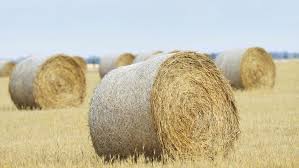
Question and Answer with Dairy MAX: 2023 and Beyond

Marty McKinzie and Kay Johnson Smith answer questions about Dairy MAX's work in 2023

Dairy MAX will hit the ground running in 2023 to fulfill its mission of advocating with purpose by connecting dairy experiences with hearts, minds, and communities everywhere. The nonprofit regional dairy council represents over 900 dairy farmers in eight states. Dairy MAX aligns its program strategy by focusing on the three strategic pillars: sales, trust, and team. Earlier in 2022, it announced the promotion of Marty McKinzie, previously vice president of industry image and relations, to chief growth officer and the addition of Kay Johnson Smith as chief operating officer. While preparing for the new year, McKinzie and Johnson Smith sat down to recap 2022 and talk about the growth of Dairy MAX in their new roles in 2023.

Q: Looking back over the last year, what are some key wins for Dairy MAX and Checkoff?
McKinzie: I'm proud of the work that we've done in esports and the relationship with Complexity. Complexity is a professional esports team that can influence a large demographic of gamers in the Gen Z-Millennial age group from an influencer standpoint. We also established another partnership with Optic, one of the most notable esports organizations in the world, where we are an official nutrition partner. 

Considering how we evolved during COVID and the challenges presented, our focus shifted to food banks and the current needs. Many of these food banks have the opportunity to purchase food and realize the nutritional benefits dairy provides, but we learned they did not have a mechanism to store dairy. There is a significant amount of milk pounds that are going through food banks. This opportunity opened a sales channel for the dairy industry. Our partnership with food banks led to the establishment of a cooler program where we have placed coolers in food banks to facilitate the delivery and availability of dairy products.


Q: Explain the importance of partnerships to the dairy checkoff?
Johnson Smith: I always say we can't do it alone. By leveraging partnerships and external relationships, we can reach more people and support our farmers while building trust.

McKinzie: Not only can we not do it alone, but the investment it takes and the resources it takes should not be the farmer's responsibility alone.

Q: With the reorganization, you have talked about your focus a little. What drove DMX to reorganize?
McKinzie: If you look back organizationally, Dairy MAX has grown geographically. Several years ago, the organization was responsible for Texas, New Mexico, the western two-thirds of Oklahoma, and the Southwest corner of Kansas. In the last five years, we have grown through a merger with Western Dairy Association and increased our geography to include Colorado, Wyoming, Montana, and, shortly after, Louisiana through a partnership opportunity. At the time of the mergers, with the increase in our size and reach, we wanted to ensure that the people doing the work were where they needed to be and that departments fully staffed could conduct the job effectively. One area not adjusted at that time was management, particularly upper management. We had a sound system in place and an excellent strategy to expand from a work standpoint, but the leadership and management at the highest level was something that Mike Konkle, our CEO, had taken upon himself for the last five years.

Johnson Smith: Coming from the Animal Ag Alliance and running a national organization for 27 years, I hope to bring some of that operational understanding to Dairy MAX to help streamline some of our processes and assist with collaboration and communication across departments, providing for more cohesiveness to the organization. 


Q: Share the work done with strategic planning regarding 'DMX's strategic pillars of sales, trust, and team.
McKinzie: We have done strategic planning for quite a while. But we have evolved in our approach; it's allowed for a more collaborative and cohesive opportunity to bring focus to sales, trust, and team.  Sales are essential to our dairy farmers as we look to increase dairy consumption. The trust element and the industry's reputation certainly lend themselves to making purchase decisions and having confidence in the nutrition and value of dairy products. From a team aspect, we work for dairy farmers, which is at the forefront of our mission as a company. So, together we are constantly focusing on ensuring we have the skill sets to attribute all we can to the hard-working dairy farm families across the region we serve.
 

Johnson Smith: Marty summed it up well about what our priorities are. Looking long term, one of our values is being forward-thinking. This strategic planning process is for a three-year period that allows us to be a little more aspirational and more forward-thinking. With established checkpoints over the three years, we can ensure we're staying on track and allowing for adjustments along the way. The other point that I would add is the team commitment. We've been intentional about team engagement because we can do more together on behalf of the dairy industry and our farmers. This process ensures we work together as a team, being more intentional in our efforts in the different departments and looking at shared projects and goals. 

Q: As we move into 2023, what are the key focus areas for Dairy MAX?
Johnson Smith: Last year, Dairy MAX invested in research to better understand the demographics of the region we serve. It's essential to understand who our consumers are throughout our region. When you look from Louisiana to Texas to Colorado, all the way up to Montana, it's a very diverse consumer base, and every state is different. This investment shows Dairy MAX's commitment to being insights-driven. Not everybody grew up with dairy necessarily as a natural part of their diet, or they may have reservations about it. So, this year in 2023, we will do more research on dairy perceptions among our consumers in our diverse region. We will use that information to inform our communications and outreach because we need to meet people where they are. We need to understand their likes, dislikes, concerns, reservations, and biases that they may have for or against dairy and tailor our messaging and communications outreach to them to have an impact.

Q: How does the dairy industry create a holistic approach to have true long-term sustainability and define it where it makes sense to so many people?
McKinzie: When you look at sustainability, we must tie it to nutrition regardless of your definition. As an industry, we have highlighted the value of sustainable nutrition. We must communicate to the consumer the value of the nutrition they are receiving, and the relatively small costs environmentally compared to the value of food. Dairy foods provide about 54% of the calcium, 56% of the vitamin D, and 18% of the protein consumed by Americans, which is a small price in environmental terms with less than two percent of all U.S. greenhouse gas emissions and roughly five percent of the water to get that type of nutritional value.

Q: Dairy MAX has been a leader in issues and crises. When we think of issues and crises, the first thing we think of is animal activism. Tell us how the organization will collaborate to protect the dairy's image and reputation moving forward.
Johnson Smith: It is more than activists. I know that's what people tend to think of, and we often do, but it could be everything from natural disasters, food safety issues, regulations, or what's happening in other countries. We need to be on the lookout for many problems, not just activism. We want to understand the vulnerabilities across our departments and potential issues for all our stakeholders. 


Q: How is DMX working to help but also expand programs and amplify National programming?
Johnson Smith: For me, we are elevating the work stream on issues and crises. With my background from the Animal Ag Alliance and having now a dedicated team focused on issues and crises, we will be able to enhance the foundation Dairy MAX has built. They've done a great job being proactive in telling your story training, the crisis drills, and establishing resources and protocols for handling a crisis. 

McKinzie: As it relates to sustainability, specifically as a new work area within Dairy MAX and under my new role, there's a tremendous amount of focus on research within the dairy industry. The dairy industry has a long history of improving sustainability. Over the last 70 years, we've reduced our carbon footprint by two-thirds. We're producing more milk today, with nine million cows, than 70 years ago, with 26 million cows. So that is the definition of sustainability, doing more with less. Our dairy farmers are increasing that efficiency and being more sustainable in the dairy industry. Communicating about that will be crucial, not only what we have done to this point but what we are looking to do in the future. Over the last six months, I have focused many of my efforts on identifying new opportunities. For example, there are some excellent options with our regional universities. We have a robust system through extension with our dairy extension specialists, and many of them are engaged in sustainability and different aspects of research.

NMPF Applauds Additional Pandemic Market Volatility Assistance Program Payments

The National Milk Producers Federation (NMPF) commended Agriculture Secretary Tom Vilsack and leading congressional dairy advocates for providing $100 million in additional, targeted payments under the Pandemic Market Volatility Assistance Program that will aid medium-sized and larger producers who missed out on equitable payments during the first round of assistance in 2021.

"While losses due to the combination of unforeseen market circumstances and an inadequate Class I pricing system have not been fully remedied, USDA and congressional efforts will aid thousands of dairy producers who otherwise would have absorbed losses created by policies that didn't work for them," said Jim Mulhern, president and CEO of NMPF. "It's not every day that lawmakers step up and resolve a problem that could have been left to lie. We never gave up, and we're pleased that others didn't either."

NMPF singled out for praise, along with Vilsack, Reps. Sanford Bishop (D-GA); Jim Costa (D-CA); David Valadao (R-CA); Kat Cammack (R-FL); Josh Harder (D-CA); Kim Schrier (D-WA); and Andy Harris (R-MD) as well as Senators Dianne Feinstein (D-CA) and Patty Murray (D-WA) for their efforts, which directly reflect their dedication to the dairy farmers who live in their districts and nationwide. "The leadership of these lawmakers, and others, were critical in ensuring that available USDA funds were directed toward their best use – making life fairer for dairy farmers," Mulhern said. "It's heartening to see such effective leadership for our industry on Capitol Hill as well as in the administration."

In this round of payments, USDA's Agricultural Marketing Service (AMS) will make PMVAP payments to eligible dairy farmers for fluid milk sales between 5 million and 9 million pounds from July through December 2020. This level of production was not eligible for payment under the first round of the PMVAP, which capped payments at 5 million pounds during that same period. Payment rates will be identical to the first round of payments, which distributed $250 million in assistance to 25,000 dairy farmers. 

USDA will again distribute monies through agreements with independent handlers and cooperatives, with reimbursement to handlers for allowed administrative costs. USDA will contact handlers with eligible producers to notify them of the opportunity to participate. 

NMPF will continue in its efforts to remedy losses among dairy farmers of all sizes, as well as for those farmers unable to receive program funds because their milk was not pooled on a Federal Milk Marketing Order but still endured similar price losses.

USDA Announces Additional Assistance for Dairy Farmers

The U.S. Department of Agriculture (USDA) today announced the details of additional assistance for dairy producers, including a second round of payments through the Pandemic Market Volatility Assistance Program (PMVAP) and a new Organic Dairy Marketing Assistance Program (ODMAP). The update to PMVAP and the new ODMAP will enable USDA to better support small- and medium-sized dairy operations who weathered the pandemic and now face other challenges.

"The Biden-Harris administration continues to fulfill its commitments to fill gaps in pandemic assistance for producers. USDA is announcing a second set of payments of nearly $100 million to close-out the $350 million commitment under PMVAP through partnerships with dairy handlers and cooperatives to deliver the payments," said USDA Under Secretary for Marketing and Regulatory Programs Jenny Lester Moffitt. "USDA is also announcing new assistance targeted to small to medium size organic dairy farmers to help with anticipated marketing costs as they face a variety of challenges from weather to supply-chain challenges."

Pandemic Market Volatility Assistance Program

PMVAP assists producers who received a lower value due to market abnormalities caused by the pandemic and ensuing Federal policies. As a result of the production cap increase, USDA's Agricultural Marketing Service (AMS) will make PMVAP payments to eligible dairy farmers for fluid milk sales between 5 million and 9 million pounds from July through December 2020. This level of production was not eligible for payment under the first round of the PMVAP. Payment rates will be identical to the first round of payments, 80 percent of the revenue difference per month, on fluid milk sales from 5 million to 9 million pounds from July through December 2020. USDA will again distribute monies through agreements with independent handlers and cooperatives, with reimbursement to handlers for allowed administrative costs. USDA will contact handlers with eligible producers to notify them of the opportunity to participate.

As part of the first round, PMVAP paid eligible dairy farmers on up to 5 million pounds of fluid milk sales from July through December 2020. The first round of payments distributed over $250 million in payments to over 25,000 eligible dairy farmers. These dairy farmers received the full allowable reimbursement on fluid milk sales up to 5 million pounds.

More information about the PMVAP production cap increase is available at www.ams.usda.gov/pmvap.

Organic Dairy Marketing Assistance Program

The new ODMAP, to be administered by USDA's Farm Service Agency (FSA), is intended to help smaller organic dairy farms that have faced a unique set of challenges and higher costs over the past several years that have been compounded by the ongoing pandemic and drought conditions across the country. Many small organic dairy operations are now struggling to stay in business and FSA plans to provide payments to cover a portion of their estimated marketing costs for 2023. Final spending will depend on enrollment and each producers projected production, but ODMAP has been allocated up to $100 million.

The assistance provided by ODMAP will be provided through unused Commodity Credit Corporation funds remaining from earlier pandemic assistance programs. The assistance will help eligible organic dairy producers with up to 75 percent of their future projected marketing costs in 2023, based on national estimates of marketing costs. This assistance will be provided through a streamlined application process based on a national per hundredweight payment. The payments will be capped at the first five million pounds of anticipated production, in alignment with preexisting dairy programs that target assistance to those smaller dairies that are most vulnerable to marketing challenges. This program is still in development.

Details about the Organic Dairy Marketing Assistance Program will be available and updated at www.farmers.gov as more details are released in a Notice of Funds Availability later this year.

USDA touches the lives of all Americans each day in so many positive ways. In the Biden-Harris administration, USDA is transforming America's food system with a greater focus on more resilient local and regional food production, fairer markets for all producers, ensuring access to safe, healthy, and nutritious food in all communities, building new markets and streams of income for farmers and producers using climate smart food and forestry practices, making historic investments in infrastructure and clean energy capabilities in rural America, and committing to equity across the Department by removing systemic barriers and building a workforce more representative of America. To learn more, visit www.usda.gov.

Rolling Out Revenue Based Disaster and Pandemic Assistance Programs

By Zach Ducheneaux, Farm Service Agency Administrator

Today, agricultural producers can begin to apply for two new important programs for revenue losses, from 2020 and 2021 natural disasters or the COVID-19 pandemic. Both programs equitably fill gaps in earlier assistance.

First, you may be eligible for assistance through the Emergency Relief Program (ERP) Phase Two if you experienced revenue losses from eligible natural disasters in 2020 and 2021. ERP Phase Two is for producers who didn't receive assistance from ERP Phase One.

You may be eligible for the Pandemic Assistance Revenue Program (PARP) if you experienced revenue losses in calendar year 2020. PARP is addressing gaps in previous pandemic assistance, which was targeted at price loss or lack of market access, rather than overall revenue losses.   

Applications for both new programs are due June 2, 2023, and you can apply for both programs during your same appointment with USDA's Farm Service Agency (FSA). 

Two people talking to each other
Historically, FSA programs have been designed to make direct payments to producers based on a single disaster event or for a single commodity loss. For many of you, this may be the first revenue-based program that you've applied for with FSA.

Why revenue-based programs?  

ERP Phase Two and PARP take a much more holistic approach to disaster assistance, ensuring that producers not just make it through a single growing season but have the financial stability to invest in the long-term well-being of their operations and employees.  

In general, ERP Phase Two payments are based on the difference in allowable gross revenue between a benchmark year, representing a typical year of revenue for the producer and the disaster year – designed to target the remaining needs of producers impacted by qualifying natural disasters and avoid duplicative payments. ERP Phase Two revenue loss is based on tax years.   

For PARP, an agricultural producer must have been in the business of farming during at least part of the 2020 calendar year and had a decrease in revenue for the 2020 calendar year, as compared to a typical year. PARP revenue loss is based on calendar years.

How to Apply

In preparation for enrollment, producers should gather supporting documentation including:  

  • Schedule F (Form 1040); and 
  • Profit or Loss from Farming or similar tax documents for tax years 2018, 2019, 2020, 2021 and 2022 for ERP and for calendar years 2018, 2019 and 2020 for PARP.   

Producers should also have, or be prepared to have, the following forms on file for both ERP and PARP program participation:  

  • Form AD-2047, Customer Data Worksheet (as applicable to the program participant);  
  • Form CCC-902, Farm Operating Plan for an individual or legal entity; 
  • Form CCC-901, Member Information for Legal Entities (if applicable); and  
  • Form AD-1026 Highly Erodible Land Conservation (HELC) and Wetland Conservation (WC) Certification.  
  • Form CCC-860, Socially Disadvantaged, Limited Resource, Beginning and Veteran Farmer or Rancher Certification, as certain existing permanent and ad-hoc disaster programs provide increased benefits or reduced fees and premiums. 

Most producers, especially those who have previously participated in FSA programs, will likely have these required forms on file. However, those who are uncertain or want to confirm should contact FSA at their local USDA Service Center.  

Yes, FSA is stepping outside of the box.

I am a big proponent of agricultural producers having a say in the design, implementation and delivery of the programs that directly impact their livelihoods. I also believe that some of the most creative and useful ideas for program and process improvements come from the FSA employees who administer this assistance through our network of over 2,100 county offices. I want to thank producers across the country, along with the entire FSA workforce, for not just thinking outside of the box but also providing their input—oftentimes to me directly—to make sure that we can improve and enhance our programs and our approach to assistance to better and more efficiently serve all producers who need our help. 

Please visit your local USDA Service Center for more information on ERP Phase Two, PARP and our full portfolio of conservation, prices support, safety-net, credit and disaster assistance programs. 

Additional resources include:

Zach Ducheneaux serves as the Administrator of USDA's Farm Service Agency. He can be reached at zach.ducheneaux@usda.gov and 202-941-4675.

Rural Development Now Accepting Rural Energy for America Program Grant Applications

U.S. Department of Agriculture (USDA) Rural Development Oklahoma State Director, Kenneth Corn today announced that the Oklahoma State Office is now accepting Rural Energy for America Program (REAP) Grant Applications.

A REAP grant is designed to aid small businesses or farms in rural Oklahoma with energy efficiency improvements or renewable energy projects. Potentially more than $5.2 million is available for rural Oklahoma businesses and agriculture producers to apply for up to 40% financial assistance on an energy efficient improvement. Past uses of the grant have included LED lighting, energy-efficient fans, improved refrigeration, solar power, and other energy efficient projects. Applicants must submit their grant package to the Oklahoma State Office no later than March 31, 2023, by 4:30 p.m.

"These grants can be used by a small grocery store to install improved refrigeration units or an ag producer that wants to save costs on cooling for a chicken farm," Corn said. "Really any small business owner in Rural Oklahoma can benefit from this program with an energy efficient improvement project. Not only do these grants help save Oklahoma businesses or ag producers on their electric bill, but they also have real impact on our electric grid and our climate by reducing energy demand. By increasing the investments available in Oklahoma from previous years, the Biden-Harris Administration continues to demonstrate how serious they are at finding climate-friendly solutions that benefit all Americans and grow our economy."

To learn more about the REAP process visit: https://www.rd.usda.gov/programs-services/energy-programs/rural-energy-america-program-renewable-energy-systems-energy/ok.

Stakeholders can also email the Oklahoma State Office for more information at: okenergy@usda.gov.

To subscribe to USDA Rural Development updates, visit the GovDelivery subscriber page.

OKFB Members Attend the 2023 AFBF Convention

The 2023 American Farm Bureau convention in Puerto Rico Jan. 6-10 was a great time for Oklahoma Farm Bureau members to gather with fellow farmers and ranchers from around the country to celebrate Mi Familia – the Farm Bureau family.

This year's convention was a great one for OKFB members. Check out all the convention highlights for OKFB below:

Young Farmers & Ranchers contestants advance

Several Young Farmers & Ranchers competitive events participants advanced in their competitions at the 2023 AFBF Convention.

Travis and Rylee Schnaithman were among the 10 national finalists for the AFBF YF&R Achievement Award. The Garfield County farmers and ranchers progressed to the interview round of the contest and appeared on stage during the closing general session along with the other nine finalists.

Dillon Johnson advanced to the Sweet 16 round of the AFBF YF&R Discussion Meet. Johnson competed in two opening rounds, then participated in the Sweet 16 round discussing issues affecting agriculture alongside fellow YF&R members from around the nation.

Rogers County Farm Bureau member Chris Hoskins represented Oklahoma in the AFBF YF&R Excellence in Agriculture competition, where he gave a presentation to a panel of judges about his on- and off-farm activities, Farm Bureau experience and future goals.

Women's Leadership Committee participate in Women's business session 

OKFB Women's Leadership Committee members gathered with Farm Bureau women from across the nation to elect leaders and prepare for the coming year.

OKFB WLC Chair Mignon Bolay served as the credentials committee chair for the AFBF Women's Leadership Meeting, where she gave the credentials report before the group.

Speakers, sessions and trade show

OKFB members attended three general sessions, numerous breakout sessions on a variety of agricultural topics and visited vendors and fellow organizations at the trade show.

Keynote speakers at the general sessions included AFBF President Zippy Duvall, U.S. Secretary of Agriculture Tom Vilsack, country music artist "Big Kenny" Alphin, and Life is Good Co-Founder Bert Jacobs.

Additional convention highlights

The convention was full of daily highlights for OKFB members as they enjoyed the convention and San Juan.

OKFB members gathered for a group breakfast on Monday, Jan. 9, to fellowship and visit about Oklahoma's achievements during the convention.

Farm Bureau members took time to enjoy Puerto Rico through a variety of tours in the San Juan area focusing on the culture, history and attractions of the island.

OKFB members were also featured heavily in the AFBF convention video, which highlighted Farm Bureau families from around the nation.

For additional convention news and highlights from AFBF, visit annualconvention.fb.org.

The National Association of State Departments of Agriculture announces Secretary Blayne Arthur as Vice President

The National Association of State Departments of Agriculture is pleased to announce the election of Oklahoma Department of Agriculture Secretary Blayne Arthur as Vice President of the organization by the NASDA Board of Directors. As Vice President, Secretary Arthur will help direct the organization to meet its mission of enhancing American food and agricultural communities through policy, partnerships and public engagement.
 
"I am honored to be chosen to serve as NASDA's Vice President, and I thank the NASDA Board of Directors for considering me for this position. I welcome the opportunity to partner with state departments of Agriculture from across the United States to strengthen and promote our nation's most vital industry. NASDA ardently works to ensure agriculture and food businesses of all sizes thrive, and I am grateful to help carry out this commitment," NASDA Vice President and Oklahoma Secretary of Agriculture Blayne Arthur said.
 
NASDA President, Director Doug Miyamoto, and NASDA CEO Ted McKinney shared their excitement to welcome Secretary Arthur's leadership.
 
"I am thankful for Secretary Arthur's enthusiasm and passion for ensuring state agriculture departments' voices are heard when solving challenges and seizing opportunities for agriculture across the nation and the world. Secretary Arthur has proven to be one of the finest leaders in American agriculture today. The NASDA Board of Directors is excited to welcome her leadership and perspective," NASDA President and Wyoming Director of Agriculture Doug Miyamoto said. 
 
"Secretary Arthur's experience and leadership will be incredibly valuable as we continue our work to ensure federal policy represents the needs of U.S. farmers, ranchers and all the communities they serve. We thank Secretary Arthur for her continued dedication to NASDA and commitment to seeing agriculture lead the way toward a healthy and resilient world," NASDA CEO Ted McKinney said.
 
Secretary Arthur has also served as Chairwoman for the NASDA Animal Agriculture Committee since 2019. Her leadership has kept NASDA members actively engaged at the state, federal and international levels on issues such as African swine fever, meat processing and animal health and welfare to protect the safety and profitability of U.S. agriculture. Animal Agriculture Committee 2022-2023 Vice Chair Tennessee Commissioner of Agriculture Charlie Hatcher will now serve as 2022-2023 chair for the committee. Secretary Arthur was sworn in as Oklahoma Secretary of Agriculture on Jan. 14, 2019 and is currently the state's first female to hold the position. Secretary Arthur is also Food Export-Midwest President, the 2016 Oklahoma Cattlemen's Association Distinguished Service Award Recipient, an Oklahoma Agricultural Leadership Program Class XV inductee, Journal Record 2011 Achievers Under 40 honoree and 2014 Oklahoma Agricultural Woman of the Year.
 
NASDA also extends its thanks and congratulations to Bruce Kettler, who served as NASDA Vice President from August 2022 – December 2022 and as a NASDA Board Member since 2019. Kettler was recently announced as Agribusiness Council of Indiana President & CEO.
 
"Bruce's leadership as NASDA Vice President and a longstanding NASDA Board Member has made an impression on the organization that will last for years to come. We deeply thank Bruce for his service to NASDA and we know he will continue to further opportunities for the agriculture industry in his new role," McKinney said.

Southern Plains Perspective: USDA upstream flood control program

There is a new blog post out at the Southern Plains Perspective by Clay Pope! Read below:

Droughts often end with a deluge...that's why we have the USDA upstream flood control program.

I had never heard the term "atmospheric river" before the recent stretch of insane rain on the West Coast, but boy am I familiar with the term now (here is a pretty interesting news story about hte west coast storms from the time of my writing this blog https://www.cnn.com/2023/01/17/weather/california-flooding-atmospheric-river-tuesday/index.html).  Some news sources are saying that the flooding will rank as one of the most expensive disasters in State History.  

While it's good to see that part of the United States finally getting some moisture, it would be better if it didn't all come at once.  Unfortunately, more frequent extreme, violent rain events seem to be part of the challenges that many experts are saying we will have to deal with as our climate continues to change.  On top of that, it often takes a heavy deluge to break severe droughts like the one currently plaguing so much of the Southern Plains.  With that in mind, I think it's important to give a little "shout out" to a program that I consider to be one of the first climate adaption efforts undertaken by USDA—the Watershed Protection and Flood Prevention Program.

I have written about this program before,  and while the watershed program makes up close to a $15 billion investment in public infrastructure and saves the United States an estimated $2.3 billion  in flood damage that annually does not happen because of protection provided by the dams and other projects created under this program, most people have no idea that this initiative exists.   This includes many who live directly below these flood control structures.

Beginning with the passage of the flood control act of 1936 and then the watershed protection and flood control act of 1954, the Soil Conservation Service (now the Natural Resources Conservation Service or NRCS) was charged with planning and constructing watershed projects nationwide.  To date, NRCS has constructed over 11 thousand dams in over 2,000 watershed projects that provide flood control, water supplies, recreation, and wildlife habitat benefits to communities throughout the nation.  

Oklahoma and Texas both have over 2 thousand of these structures within their borders.  In Oklahoma alone, it's estimated that the over 2,100 flood control structures in the state provide around $100  million in flood control savings annually. 

It's important to remember that this program itself owes its existence largely to weather events similar to what we have recently seen in California.  After all, it was in response to the record flooding in the 1930s that finally broke the Dust Bowl drought that the USDA Watershed Protection and Flood Prevention Program was originally created.   Ironically enough, the program showed its worth decades later when another round of record flooding hit Oklahoma and Texas in May of 2015 and broke the extreme drought that had plagued the two states since 2011. 

The difference couldn't have been starker—with the best example being that of Hammon, Oklahoma

Hammon is a small town in far Western Oklahoma. During the Dust Bowl of the 1930s, Hammon, like so much of the region, was hit with a crushing drought.  Poor land management left the soil hard, erodible and nearly impervious to water.  When the rain finally came in April 1934 the Washita River swelled two miles beyond its banks in a 14 inch down poor. According to The National Weather Service, the flood that swept through Hammon took 17 lives and caused $53 million in damage in today's dollars.

Fast forward to the record drought of 2011-15.  Hammon was again in the grip of record dry weather—at least they were until the spring of 2015 when in Late April and Early May the town was hit with over 26 inches of rain—nearly twice what they received in the flood of 1934.

The difference was that in 2015 there were 143 USDA flood control dams that had been constructed above Hammon and the surrounding area that held back nearly 60% of all the floodwater upstream, resulting in minimal damage to the town.

That tells the story.  Minimal damage in 2015......lives lost and $53 million in damage in 1934.

You can read more on the  comparisons of these two floods both with and without the Watershed Program https://www.nacdnet.org/2015/06/22/flood-control-structures-curb-major-losses/ and here https://conservation.ok.gov/from-drought-to-flood-the-hammon-story/.

One thing we can be certain of is that extreme weather will continue to challenge agriculture producers and our rural communities.  Climate Change means that droughts will tend to be longer and hotter, and rain events will have a tendency to be more violent and extreme.   We saw this play out in the Dust Bowl.  We saw it play out in the Southern Plains drought of the 1950s (which was worse in the Southern Plains than the Dust Bowl).  We saw it again in the record drought we faced in 2011-15.   And while these recent violent rains won't necessarily break the horrible drought in California, the recent weather on the West Coast seems to be playing to script.   

If you're interested in a little more information that on what USDA is doing in this area you might check out the podcast that we did with Dan Sebert Executive Director of the National Watershed Coalition,  or the episode we recorded with Larry Caldwell, Flood Control Program Specialist with USDA NRCS.  You can also learn a little about what the USDA Agriculture Research Service is doing in this area by listening to the podcast we recorded with Dr. Sherry Hunt, the Research Leader at the USDA ARS  Hydraulic Engineering Research Unit.

Its programs like the USDA Watershed Protection and Flood Prevention Program that give us the tools we need to be ready for whatever mother nature throws our way.  Just thought it was due another "shout out."

To read this post at the Southern Plains Perspective, click here.

To access all other content at the Southern Plains Perspective, click here.

Hereford Champions Named at the 2023 National Western Stock Show

Herefords took Denver, Colo., by storm in the Yards and on the Hill at the National Western Stock Show, Jan. 13-14. Judges Donnie Robertson, Yukon, Okla., and Miles Shout, Piedmont, Okla., sorted the 36-head of bulls and 90-head of heifers in the open show, Saturday, Jan. 14. A total of 223 Hereford cattle were exhibited throughout the two-day event.
"We have always been impressed by this breed, both its cattle and its people, and it's an honor to
be called to judge a show of this level," Robertson remarked.


Bull show
Grand champion horned bull, BR GKB Winchester 1314, first won the senior bull calf division.
Owned by Barber Ranch, Channing, Texas, and GKB Cattle, Desdemona, Texas, the winning entry is a
Sept. 19, 2021, son of BR Belle Air E133 ET. The reserve champion horned bull and champion yearling
bull title went to H Front Runner 1495 ET, owned by 4 J Farms, Cabot, Ark. He is a Feb. 6, 2021, son of
H The Profit 8426 ET.


Winning grand champion polled bull and the yearling bull division was GKB Cattle, and Dylan
Kottkamp, Clayton, Ind., with EKS DWK B26 Final Chapter J10. He is a March 17, 2021, son of CRR
719 Catapult 109. Reserve champion polled bull and reserve champion yearling bull division honors went
to Stellpflug Cattle Co. LLC, Glenrock, Wyo., with H WMS Thomas County 1443 ET. He is a Jan. 27,
2021, son of EF Beef Resolute CEO.

Female show
Grand champion polled female and champion intermediate yearling division honors went to Paige
Lemenager, Hudson, Ill., with HAWK Myla 39J ET. She is a May 21, 2021, daughter of KLD RW
Marksman D87 ET. Kynsleigh, Sage and Kashlyn Krebs, Gordon, Neb., claimed the reserve champion
polled female and champion spring yearling female title with K Jemma 149 ET. She is a March 5, 2021,
daughter of SR Dominate 308F ET.


Kinnick Paulsen, Preston, Iowa, exhibited the grand champion horned female, HAWK Murphy
14J ET. The March 26, 2021, daughter of KLD RW Marksman D87 ET first claimed spring yearling
division honors. Cierra, Claire and Cricket Collins, Chattanooga, Okla., won the reserve champion horned
female and the junior heifer calf banner with H BL Carmel 223 ET. She is a Feb. 4, 2022, daughter of
UPS Entice 9365 ET.


Other awards
At the conclusion of the show, GKB Cattle, and Hannah and Hadley Harrison, Montague, Calif.,
were named polled premier exhibitors. GKB Cattle, and Chesney Doubet, Belgrade, Mont, were named
horned premier exhibitors. Kynsleigh Krebs, Gordon, Neb., was named horned premier breeder and Hawk
Livestock, Earlville, Ill., was named polled premier breeder.

Winter Storm Could Bring Much-Needed Moisture to the State

A winter Storm is brewing and could bring some pretty good snow to the state. According to State Climatologist Gary McManus, "Some folks could see a LOT more (or less, obviously) with convective elements within the broader storm possible, meaning thunder-snow. Again, lots has to happen to get all these things working in the same direction, but those areas will have the potential to see greater than 6-8" in localized areas. "

McManus says this storm won't be bringing super cold temps, so the snow will remain slushy, "Originally, it was thought the roads would remain pretty clear during the event because of the air and ground temperatures, but with the possibility of heavy snow of the large, wet flake variety, those roads could go downhill pretty quickly. Thus the Winter Storm Watch as well as the Winter Weather Advisory."

McManus says to Watch for upgrades and downgrades later today to a Winter Storm Warning, as well as some counties coming in and out of both advisories, "There is a lot of moisture available for this storm, so regardless of whether we see lots of snow or just a really really cold rain--or a mix--this will be very beneficial moisture for most of the state, save for the Panhandle and far northern OK."

The Snow won't stick around too long as above freezing temps are expected for Wednesday.

Hopefully, this storm system will drop some much-needed moisture throughout the state. To read more from Gary McManus on his mesonet ticker, click here:

OSU's Derrell Peel: Less Heifers in Feedlots...Finally

Mondays, Dr. Derrell Peel, Oklahoma State University Extension Livestock Marketing Specialist, offers his economic analysis of the beef cattle industry. This analysis is a part of the weekly series known as the "Cow Calf Corner." Today, Dr. Peel talks about fewer heifer numbers in feedlots.

The January Cattle on Feed report from USDA-NASS showed the fourth consecutive month of declining feedlot inventories starting in October.  The January 1 on-feed total for feedlots with capacity of 1,000 head or more was down 2.9 percent year over year.  The January 1 feedlot total of 11.682 million head was larger than the December 2022 total by a scant 9,000 head but still below the November total of 11.696 million head.  It looks increasingly like the early November seasonal peak will hold.  If so, the November total was 4.1 below the previous seasonal peak in February 2022 and suggests sharply tighter feedlot numbers going forward.

December marketings were down 6.1 percent year over year, close to pre-report expectations. The marketings number is in line with December fed (steer + heifer) slaughter, which was down 5.9 percent year over year. Feedlots appear to still be current though the lower December marketings may reflect delayed shipments due to the December winter storm.

December placements were down 8.0 percent year over year, also as expected.  Monthly feedlot placements were down year over year in nine of the twelve months of 2022.  Total placements the last six months from July – December, which accounts for almost all cattle in the feedlots currently, is down 3.1 percent from last year.

The latest report also included the quarterly breakdown of steers and heifers in feedlots.  The steer total on January 1 was down 4.5 percent year over year.  Steers in feedlots have decreased on a year over year basis for 6 of the last 7 quarters going back to July 2021.  The feedlot heifer inventory on January 1 was down by 0.5 percent year over year.  This is a small decrease but significant as it is the first year over year quarterly decrease in feedlot heifer inventories since July 2021.  Large heifer numbers in feedlots supported the 4.8 percent year over year increase in heifer slaughter in 2022 and was the largest heifer slaughter total since 2004.  The decrease in feedlot heifers does not, at this point, reflect heifer retention but simply a lack of heifers due to large heifer slaughter the past two years.

The Cattle report to be released on January 31 will include a feedlot total for all feedlots.  The total U.S. feedlot inventory for January 1 averages 122.9 percent of the monthly January 1 total and accounts for feedlots smaller than 1,000 head capacity.  This suggests that the January 1 U.S. feedlot inventory is expected to be 14.4 million head, down 2.3 percent from 2022.

NRCS in Oklahoma Announces New Funding Opportunity for Conservation Activities

The USDA Natural Resources Conservation Service (NRCS) in Oklahoma is announcing the fiscal year 2023 signup period for Conservation Incentive Contracts (CIC), a new option available through the Environmental Quality Incentives Program (EQIP). Oklahoma producers should apply by February 24 to be considered for funding in fiscal year 2023. 

The Environmental Quality Incentives Program (EQIP) offers many services including the Conservation Incentive Contracts (CIC) program. CIC offers producers financial assistance to adopt conservation management practices on working landscapes and provides a steppingstone to the Conservation Stewardship Program (CSP).

Through these contracts, NRCS works with producers to strengthen the quality and condition of natural resources on their operations using management practices, such as prescribed grazing and residue and tillage management that target the priority resource concern(s).

A producer participating in CIC is not required to include their entire operation in the contract but can select which acres and land uses they wish to address. Under CIC, a producer must address at least one priority resource concern with a management practice within a high-priority area on an eligible land use.

Producers will receive an annual incentive payment to implement management practices and will have the opportunity to install conservation practices that support the management practice(s) in addressing the primary resource concern. Contracts under CIC last five years and a practice must be completed in the first 12 months following obligation.

The priority resource concern and land uses identified by the Oklahoma State Technical Committee in 2023 were Soil Quality Limitations on Cropland, Pastureland, and Rangeland. Eligible management practices to address the resource concern are:

  • 328 - Conservation Crop Rotation (Crop)
  • 329 - Residue and Tillage Management, No-Till (Crop)
  • 340 - Cover Crop (Crop)
  • 345 - Residue and Tillage Management, Reduced Till (Crop)
  • 528 - Prescribed Grazing (Pasture and Range) 

How to Apply

NRCS accepts applications for EQIP Conservation Incentive Contracts year-round; however, producers and landowners should apply by February 24, 2023, to be considered for this year's funding. To apply, producers should contact their local USDA Service Center. 

Dairy Defined Podcast: Farmers Face Unique Mental-Health Challenges, Roecker Says

Farming is a uniquely stressful occupation, and farmer mental-health needs tend to be underserved, said Loganville, WI dairy farmer Randy Roecker in the latest Dairy Defined podcast. Roecker, a board member for Foremost Farms USA, is a co-founder of the Farmer Angel Network, a Wisconsin organization that helps support farmers' mental health needs. 

"A lot of farmers are very isolated and they don't get off the farm very much. This leads to getting stuck in the same rut over and over again," he said. "The main thing is to just be there for each other." The full podcast is here. You can also find the podcast on Apple Podcasts, Spotify and Google Podcasts

To listen to the latest podcast episode, click here.

FFA Members Explore Agriculture in Costa Rica

To kick off 2023, 75 current and former state FFA Officers visited Costa Rica to learn about the various types of agriculture in the country.

State officers traveled the country experiencing CATIE, the Tropical Agricultural Research and Higher Education Center; the Tibas Farmers Market; La Paz Waterfall Gardens; a palmito plantation; pineapple plantation; wildlife reserve center; Arenal Volcano; the rainforest; an organic farm and much more.

The experience, International Leadership Seminar for State Officers, ILSSO, was thanks to support from FFA corporate donors John Deere and Bunge.

FFA members who participated in the experience include:

Reese Mitchell and William Blankenship from Arkansas; Tyson Schneider from Colorado; Robert Eselby from Connecticut; Trinity Ranshaw from Delaware; Austin Holcomb, Carleigh Newsom, Tyler Laib, Addie Ferguson, Abby Kruse, Anelise Bullard, Laken Troup of Florida; Katelyn Schaefer and Annie Bower of Iowa; Mackenzie Malson and Elizabeth Shaw of Idaho; Kirsten Kyger, Karlie Albright, Cali Newdigger, Aidan Yoho and Emma Kepley of Kansas; Emma Sherman of Kentucky; Lauren Poole, Annie Heard of Louisiana; Teagan Flaherty, Kendall Abruzzese and Hannah Haines of Maryland; Patricia Hebenstreit and Olivia Coffey of Michigan; Emily Matejka of Minnesota; Riley Larson of Montana; Madeline Kluttz and Elizabeth Espino of North Carolina; Dustin Andreasen, Faith Miller, Emelia Rourke, and Elizabeth Wilkins of Nebraska; Roland Norris of Nevada; Aubrey Schwartz, Luke Jennings, Aly Murphy, Graham Carson, Kennedy Short, Dalton Mullins, Katherine Oestreich and Hannah Saum of Ohio; Kinsley Kemble, Brekkan Richardson, Grant Hills, Maddie Dollarhide, Jessie Samarin, Uriel Aguilar Torres of Oregon; Trinity Peterson, Tessa Erdmann and Hadley Stiefvater of South Dakota; Taylor Cantrell of Tennessee; Savannah Goodwin, Jordan Petrie, Makenna Garrett, Emily Jenkins, Elizabeth Bates, Jill Reiter, Carly Thomas, Gabriella Martin and Katherine Powell of Virginia; Esther Grosz, Pedro Mendoza Zamora, Madison Weber and Lillian McGregor of Washington; Garrett Ammons, Rylee Brown, Creed Ammons and Caroline Greenleaf of West Virginia and Bree Coxbill of Wyoming.

The National FFA Organization is a school-based national youth leadership development organization of more than 850,000 student members as part of 8,995 local FFA chapters in all 50 states, Puerto Rico and the U.S. Virgin Islands.

January Cattle on Feed Report Three Percent Under Year Ago- Derrell Peel Says Tighter Supplies Will Be Around for Awhile

Mon, 23 Jan 2023 05:15:10 CST January Cattle on Feed Report Three Percent Under Year Ago- Derrell Peel Says Tighter Supplies Will Be Around for Awhile

Ron Hays Beef Buzzes with Derrell Peel on Cattle on Feed Released January 20th

For the fourth month in a row- feedlot inventories fell in the January first USDA Cattle on Feed Report. Oklahoma Farm Report's Ron Hays talked with OSU Extension Livestock Market Economist Dr. Derrell Peel about the numbers, all of which were under year ago levels. USDA's on feed number as of January first was 97% of a year ago, the Decmber placements were 92% of a year ago and marketings were 94% of one year ago. Peel says that all of these numbers were very close to average pre report expectations. Peel tells Hays "Last month I might have mentioned the December one inventory had an unusual month to month decrease that suggests that maybe November was an early seasonal peak in the feedlot inventories- normally we are peaking anywhere from January to March or April and it was at a lot lower level than a year ago. This January number is slightly above than the December level but not very much so it does suggest that we are putting in an earlier seasonal peak in these numbers- and that they are going to go on down from here- we simply don't have the cattle to support larger feedlot inventories in the forseeable future." Peel also believes that the leverage that was controlled by the packers during the 2020 COVID has moved back up the pipeline- feedlot operators have had the ability to demand higher prices in recent months but that leverage is going to further slide all the way back to the primary production level- and that is the cow calf level. "the shortage of cattle will be reflected in calf prices and then everyone above them will is a margin operator and the margin operators are all gonna feel the squeeze." Peel reminds us that this is a quarterly report- so it gives us a breakdown in steers and heifers on feed. "we did see a slight decrease in the number of heifers on feed- that's the first time in sixth quarters that we have had a year over year decrease of heifers on feed." He believes that suggests that we are getting close to ending the worse of the liquidation of heifers available for our beef cattle herds. Click here for the complete Cattle on Feed report from USDA released on Friday, January 20, 2023. The Beef Buzz is a regular feature heard on radio stations around the region on the Radio Oklahoma Ag Network and is a regular audio feature found on this website as well. Click on the LISTEN BAR for today's show and check out our archives for older Beef Buzz shows covering the gamut of the beef cattle industry today.

click to play audio or right-click to download

January Cattle on Feed Report Three Percent Under Year Ago- Derrell Peel Says Tighter Supplies Will Be Around for Awhile

Mon, 23 Jan 2023 05:15:10 CST January Cattle on Feed Report Three Percent Under Year Ago- Derrell Peel Says Tighter Supplies Will Be Around for Awhile


For the fourth month in a row- feedlot inventories fell in the January first USDA Cattle on Feed Report. Oklahoma Farm Report's Ron Hays talked with OSU Extension Livestock Market Economist Dr. Derrell Peel about the numbers, all of which were under year ago levels.

USDA's on feed number as of January first was 97% of a year ago, the Decmber placements were 92% of a year ago and marketings were 94% of one year ago. Peel says that all of these numbers were very close to average pre report expectations.

Peel tells Hays "Last month I might have mentioned the December one inventory had an unusual month to month decrease that suggests that maybe November was an early seasonal peak in the feedlot inventories- normally we are peaking anywhere from January to March or April and it was at a lot lower level than a year ago. This January number is slightly above than the December level but not very much so it does suggest that we are putting in an earlier seasonal peak in these numbers- and that they are going to go on down from here- we simply don't have the cattle to support larger feedlot inventories in the forseeable future."

Peel also believes that the leverage that was controlled by the packers during the 2020 COVID has moved back up the pipeline- feedlot operators have had the ability to demand higher prices in recent months but that leverage is going to further slide all the way back to the primary production level- and that is the cow calf level. "the shortage of cattle will be reflected in calf prices and then everyone above them will is a margin operator and the margin operators are all gonna feel the squeeze."

Peel reminds us that this is a quarterly report- so it gives us a breakdown in steers and heifers on feed. "we did see a slight decrease in the number of heifers on feed- that's the first time in sixth quarters that we have had a year over year decrease of heifers on feed." He believes that suggests that we are getting close to ending the worse of the liquidation of heifers available for our beef cattle herds.

Click here for the complete Cattle on Feed report from USDA released on Friday, January 20, 2023.

The Beef Buzz is a regular feature heard on radio stations around the region on the Radio Oklahoma Ag Network and is a regular audio feature found on this website as well. Click on the LISTEN BAR for today's show and check out our archives for older Beef Buzz shows covering the gamut of the beef cattle industry today.


Ron Hays Beef Buzzes with Derrell Peel on Cattle on Feed Released January 20

click to play audio or right-click to download

Sharing Stories About U.S. Farm Families And Delicious Food

U.S. Wheat Associates (USW) is pleased to help share the positive stories about how U.S. farmers, ranchers and fisheries are producing excellent quality, delicious food for the world in highly sustainable ways.

In fact, U.S. wheat farm families are featured in several video stories created by USDA and U.S. trade associations as part of a "DelicioUS!" promotion on YouTube, Facebook and LinkedIn.

Common Themes, Shared Values

These high-quality videos illustrate the reality of U.S. agriculture using an approach that shows the diversity and uniqueness of agriculture and cultures in each region of the country. At the same time, the stories capture common themes shared by the multi-generational family operations including their commitment to sustainability, innovation, producing delicious food, and community.

These are values shared by the U.S. wheat farmers USW represents in overseas markets.

Scenes from the Volk family farm in North Dakota and Peters family operation in Oklahoma are included in the "Midwest" program that features the people, crops and food grown in the heartland of the United States.

The images of "amber waves of grain" from Padget Ranches in Oregon and the Bailey family farm in Washington open the video about food production in the "West."

Sustainable Source of Wheat for the World

U.S. wheat farmers work every day to contribute to a sustainable future in agriculture. Sustainability is reflected in agronomic practices, research and development, and transportation methods, all of which contribute to making the United States a sustainable source of wheat for export. They are proud to represent U.S. agriculture and help share delicious food with other families across the planet.

Senate completes bill filing for 2023 session

The Senate has completed filing bills for the First Session of the 59th Legislature.  The deadline was Thursday, Jan. 19.  A total of 1,116 Senate Bills and 18 Senate Joint Resolutions were filed. 

The Thursday deadline did not apply to appropriations bills, which can be filed throughout the session. 

Senate rules also allow for bills by the President Pro Tempore of the Senate to be filed throughout the session. Senate Resolutions and Senate Concurrent Resolutions can be filed throughout the session as well.

Members of the public can read and download current legislation by going to the official Senate website at oksenate.gov and following the link for legislation at the top of the homepage.  The Senate website also includes daily agendas, meeting notices, calendars, and other helpful information.

The 2023 legislative session will convene at noon on Monday, Feb. 6.  The Senate offers streaming audio and video with closed captioning from the Senate Chamber, as well as from all committee rooms on its website.  Wireless Internet access is available to all Capitol visitors throughout the Senate Gallery, rotunda, committee rooms, offices and press rooms.

You can also follow the Oklahoma State Senate @oksenate on Twitter, Facebook, Instagram and YouTube.

USDA Announces Signup for 2023 Assistance for On-Farm Food Safety Expenses for Specialty Crop Growers

The U.S. Department of Agriculture (USDA) reminds specialty crop producers of available assistance to help cover certain costs of complying with regulatory and market-driven food safety certification requirements. Applications for the Food Safety Certification for Specialty Crops (FSCSC) program for eligible 2022 costs are due by Jan. 31, 2023. USDA's Farm Service Agency (FSA) will accept applications for 2023 costs from Feb. 1, 2023, to Jan. 31, 2024. 

FSA is making available up to $200 million through the FSCSC program, which is part of USDA's broader effort to transform the food system to create a more level playing field for small-scale agricultural operations and a more balanced, equitable economy for everyone working in food and agriculture.  

USDA first announced and opened this program for signup in 2022, delivering critical assistance for specialty crop operations, with an emphasis on equity in program delivery while building on lessons learned from the COVID-19 pandemic and supply chain disruptions.  

"Specialty crops growers experienced many challenges meeting regulatory requirements and accessing additional markets due to the COVID-19 pandemic," said FSA Administrator Zach Ducheneaux. "Many of these producers had to pivot quickly as demand shifted away from traditional markets, like restaurants and food service, and many continue to feel the impacts of those abrupt changes. By helping mitigate the costs of on-farm food safety certification, the Food Safety Certification for Specialty Crops program will help create new markets and opportunities for small-scale producers. In turn, these producers will have another tool to leverage as they work to become more nimble and more resilient in the face of unforeseen challenges, serve their local and regional economies, and support fairer and more transparent markets.  

Program Details  

FSCSC assists specialty crop operations that incurred eligible on-farm food safety certification and expenses related to obtaining or renewing a food safety certification in calendar years 2022 and 2023 for certifications issued on or after June 21, 2022. For each year, FSCSC covers a percentage of the specialty crop operation's eligible costs of obtaining or renewing their certification, as well as a portion of their related expenses.  

To be eligible for FSCSC, the applicant must: 

  • Be a specialty crop operation. 
  • Meet the definition of a small business or very small business.  
  • Have paid eligible expenses related to certification.  

Specialty crop operations may receive assistance for the following costs:  

  • Developing a food safety plan for first-time food safety certification.  
  • Maintaining or updating an existing food safety plan.  
  • Food safety certification.  
  • Certification upload fees.  
  • Microbiological testing for products, soil amendments and water.  
  • Training.    

FSA calculates FSCSC payments for each category of eligible costs. FSA set a higher payment rate for underserved farmers and ranchers, which includes socially disadvantaged, limited resource, beginning and veteran producers who have a CCC-860 on file with FSA. 

FSA will issue payments at the time of application approval for 2022 and after the application period ends for 2023. The 2023 application period opens Feb. 1, 2023, and closes Jan. 31, 2024. If calculated payments exceed the amount of available funding, payments will be prorated. 

Applying for Assistance  

Interested specialty crop producers can apply by completing the application, FSA-888. The application, along with other required documents, can be submitted to the FSA office at any USDA Service Center nationwide by mail, fax, hand delivery or via electronic means. Producers can visit farmers.gov/service-locator to find their local FSA office. Specialty crop producers can also call 877-508-8364 to speak directly with a USDA employee ready to assist. 

Producers can visit farmers.gov/food-safety for additional program details, eligibility information and forms needed to apply.  

USDA touches the lives of all Americans each day in so many positive ways. Under the Biden-Harris administration, USDA is transforming America's food system with a greater focus on more resilient local and regional food production, fairer markets for all producers, ensuring access to safe, healthy and nutritious food in all communities, building new markets and streams of income for farmers and producers using climate smart food and forestry practices, making historic investments in infrastructure and clean energy capabilities in rural America, and committing to equity across the Department by removing systemic barriers and building a workforce more representative of America. To learn more, visit usda.gov.   

USDA is an equal opportunity provider, employer and lender.

Fugate Releases Educational Safeguards

State Rep. Andy Fugate, D-Del City, announced the release of two education bills to restore balance to the state Board of Education and to preserve religious freedom for private school students. Fugate's bill HB 1903 expands the State Board of Education to include members with required educational experience and expertise and broader perspectives, something lacking in the current board. Said Fugate, "The model for this bill is Oklahoma's best-in-nation Judicial Nominating Commission. This new Board makeup requires a mix of experts and lay people. It provides representation from public school, private school, home school, urban and rural areas, and teacher preparation programs. It also restricts the Governor's appointees to having no more than three members from any one political party. Education policy should be set by a board that is representative of Oklahoma."

HB 1905 is the "Prevent Religious Indoctrination from Corrupting Education" Act. Under the PRICE Act, any K-12 school that receives public dollars will be prohibited from spending those taxpayer funds on religious activities, instruction, or religious-based curriculum. It also prohibits those schools from selecting or rejecting students based on the student's willingness to participate in religious activities associated with or provided by that school. "We heard the Governor state in his inaugural address that 'we must teach kids how to think and not what to think.' We also heard him say he intends to protect everyone's right to practice their own religion freely. The PRICE Act does this. It also addresses the concerns of those who fear school indoctrination. Oklahoma families should not have to exchange their religious freedom for their education. That's too high a PRICE for Oklahoma."

USDA Names 2023 Agricultural Outlook Forum Future Leaders in Agriculture Program Winners

The U.S. Department of Agriculture (USDA) has selected 30 university students who will attend USDA's 2023 Agricultural Outlook Forum (AOF) as winners of the USDA Future Leaders in Agriculture program. These undergraduate and graduate students from land-grant, non-land-grant colleges of agriculture and Hispanic-serving institutions will receive a weeklong trip to Washington, D.C., and attend the 99th annual Agricultural Outlook Forum, USDA's largest annual meeting. This year's forum convenes on February 23-24, 2023 at the Crystal Gateway Marriott Hotel in Arlington, Virginia.

"These young people are the next generation of agriculture, and it is important for USDA to support their training," said Agriculture Secretary Tom Vilsack. "Through the Future Leaders Program, USDA is expanding career opportunities in USDA-related fields and building an agriculture workforce that reflects the diversity of the American people."

Now in its 16th year, the USDA Future Leaders in Agriculture Program introduces undergraduate and graduate students to the work of USDA and partner organizations. The program also provides real-world learning opportunities in contemporary agribusiness, scientific research, and agricultural policy to 21 undergraduates and 9 graduate students who are majoring in agriculture-related subjects, including business, economics, communications, nutrition, food science and veterinary studies. Applicants submit essays on agricultural careers and challenges. During their visit to Washington, D.C., students will participate in a USDA briefing and discuss career development with agriculture leaders in academia, government, and industry. They will tour the nation's capital and attend the forum, where Agriculture Secretary Tom Vilsack will present their awards.

"I am very pleased to see such a group of promising young students showing a strong interest in the agriculture sector and USDA's work, and I am looking forward to meeting them in person at our annual Agricultural Outlook Forum next month," said USDA Chief Economist Seth Meyer.

Among the winners, Megan Cherry is an Agricultural Communications major at the University of Georgia. In her essay on "Agriculture as a Career," she wrote "Being a first-generation college student, I can faithfully say I would not be where I am today if it were not for agriculture and all the career agriculturalists who choose to invest in me. Agriculture as a career is a complex statement but ultimately, I could not imagine a more rewarding career path."

Undergraduate Winners

Graduate Winners

*Non-Land-Grant College of Agriculture

The Future Leaders in Agriculture Program is supported by academic institutions, corporations, and government institutions dedicated to promoting the education of the next generation of agriculturalists. This year's sponsoring organizations include the University of Maryland Eastern Shore and Farm Credit. USDA sponsors include the Agricultural Research Service, Animal and Plant Health Inspection Service, Economic Research Service, Foreign Agricultural Service, National Agricultural Statistics Service, Natural Resources Conservation Service, Office of the Chief Economist, and the Office of Partnerships and Public Engagement.

The Agricultural Outlook Forum is the USDA's largest annual meeting, attracting as many as 2,000 attendees from the U.S. and abroad. The forum highlights key issues and topics within the agricultural community, offering a platform for conversation among producers, processors, policymakers, government officials, and non-governmental organizations, both foreign and domestic. Follow the conversation at #AgOutlook23 on USDA's Twitter, Instagram and Facebook.

USDA touches the lives of all Americans each day in so many positive ways. In the Biden-Harris Administration, USDA is transforming America's food system with a greater focus on more resilient local and regional food production, fairer markets for all producers, ensuring access to safe, healthy and nutritious food in all communities, building new markets and streams of income for farmers and producers using climate smart food and forestry practices, making historic investments in infrastructure and clean energy capabilities in rural America, and committing to equity across the Department by removing systemic barriers and building a workforce more representative of America. To learn more, visit www.usda.gov.

Fugate Releases Election Reform Package

State Rep. Andy Fugate, D-Del City, announced the release of five bills targeted at improving Oklahoma's election laws. Fugate refiled HB 1902, carryover legislation he proposed in the 58th Legislature that will allow absentee voters to cast provisional ballots to correct absentee ballot errors. Today, legally cast votes are discarded when a voter makes a clerical error on their absentee ballot. Something as simple as failing to include both envelopes will cause that ballot to be rejected. Fugate's bill would allow voters to cast a provisional ballot on election day that would be counted only if their absentee ballot is rejected. Said Fugate, "All voters deserve to have their voices heard at the ballot box. Free and fair elections must include all legally cast votes."

HB 1916 and HB 1917 are also carryover legislation and address issues where Oklahoma voters are not allowed to elect their own representatives. Although there were 125 open legislative seats in 2022, just 38 seats (30%) appeared on the general election ballot. HB 1916 would require single-party races to advance the top two candidates from the primary to the general election. HB 1917 would have unopposed candidates stand for retention just like statewide judicial officers. "Voters should always decide who represents them. These two bills would restore power to the people," said Fugate.

Fugate also filed HB 1918, new legislation that would require Oklahoma's political parties to pay for the cost of closed primary elections. Said Fugate, "Closed primaries are party processes, not people processes. Party processes should be paid for by political parties - not by the taxpayers." 

Finally, Fugate has filed a HJR 1022 to create a state question where voters can decide whether to remove party affiliation from future ballots. Fugate filed this legislation in response to a request from a Libertarian constituent in his district.

Oklahoma Cattlemen's Association District Meetings

The Oklahoma Cattlemen's Association Annual District Meetings will provide OCA members with a legislative update, an overview of OCA activities and a delicious steak supper in the company of fellow beef producers. New this year vendor and sponsor visitation will begin at 6 p.m. and meetings will begin with dinner at 6:30 p.m.

Meetings are open to all beef producers.

District Meeting dates and locations are as follows:

February 6 – Southeast District – Southeast Oklahoma Expo Center, McAlester, OK 

February 7 – Southwest District – Comanche County Fairgrounds, Lawton, OK 

February 9 – Northwest District - Woodward County Fairgrounds, Woodward, OK 

February 13 – Northeast District - Mayes County Fairgrounds, Pryor, OK

February 20 – North Central District – Payne County Fairgrounds, Stillwater, OK 

February 23 – South Central District – Murray County Fairgrounds, Sulphur, OK

Attendees are encouraged to RSVP online at www.okcattlemen.org or call 405-235-4391.

The Oklahoma Cattlemen's Association is the trusted voice of the Oklahoma Cattle Industry. OCA is the only voice that speaks solely for the cattlemen of Oklahoma and represents beef producers in all 77 counties across the state. The OCA officers, board of directors and membership encourages you to join us in our advocacy efforts to ensure less government intervention, lower taxes and a better bottom line. For more information about OCA membership, the theft reward program or activities call 405-235-4391 or visit www.okcattlemen.org.

Oklahoma Continues to Grow Best Sorghum in the U.S.

Listen to Reagan Calk talk with Dr. Josh Lofton about growing sorghum varieties in Oklahoma.

At the Oklahoma Sorghum Producers meeting in Enid, Associated Farm Editor, Reagan Calk, had the chance to visit with OSU Extension Specialist for Cropping Systems, Josh Lofton, about his work growing sorghum varieties in Oklahoma.

During his presentation, Lofton talked about his work with sorghum variety trials and about what sets Oklahoma sorghum apart from other states.

"One thing that we try to do in Oklahoma is we are accessibly open," Lofton said. "Companies can come any day of the week, any time of day, we make sure that if we work with a grower that, they know that companies might be stopping by. So, we are very open, and we encourage everybody to stop by."

Lofton said that during variety trials, he aims to provide the best-unbiased information for each seed variety.

"We typically look at varieties during the course of the year as just a number and not individual companies or varieties," Lofton said. "They all get intermixed, and they all have the potential to do the absolute best."

Oklahoma has preferable conditions to grow sorghum, Lofton said, regardless of what system it is to be grown in.

In these sorghum variety trials, Lofton talked about the role played by variability.

"If I put a yield number by a variety, I want to be able to stand by that number," Lofton said.

Many times, Lofton said, if one plot has a certain number of bushels and the next few plots of the same variety all yield a different number of bushels, that trial is not used.

"We just don't use that trial," Lofton said. "We don't show that data. We give it to the companies, but then we don't give it to the Oklahoma growers because I can't stand by that number. Our biggest thing is to say that in that field, at that location, this year, we are very confident that the variety yielded a certain value."

Lofton said one practice used in the state of Oklahoma is weeding out varieties that come down the genetic pipe that may not fit well in the Southern Plains. Varieties that do not perform well in the Southern Plains, Lofton said, may be a better fit in a different region.

"We get some varieties, that I am not afraid to tell a company, 'This is not good,'" Lofton said.

Lofton spoke on many interesting topics during his presentation at the meeting, one of those being the reevaluation of prussic acid and nitrate.

"The one thing that we came to the conclusion this year, and the last couple of years, is situations to where we thought prussic acid shouldn't be an issue, or nitrate shouldn't be an issue, we found that reports or testing reports found that they were an issue," Lofton said. "I don't necessarily think that what we are doing is incorrect. I think what we are doing is the best situation we have right now."

Everything has some variability to it, Lofton said, but that variability just needs to be corrected to see what the best direction is for sorghum growers.

"We look forward to working with Texas A&M in the next three years to kind of evaluate what the best foot forward is for sorghum growers in the state of Oklahoma and the southern Great Plains as a whole," Lofton said. "We look to be working with Texas A&M in the next couple of years trying to reevaluate and readdress what prussic acid is, where it is sensitive, and where we can make steps forward to get better estimations of nitrate and prussic acid and where they could be an issue."

CoBank Quarterly: Inflation is Beginning to Loosen its Grip

The Federal Reserve rate hike cycle will soon end, but commodity market supplies remain vulnerable.

The U.S. economy will progressively slow through the first half of 2023 and fears of a recession are still high, and still warranted. Inflation and interest rate increases intended to combat swiftly rising prices are behind the broad economic slowdown. But with the unemployment rate at a 53-year low and inflation trending lower, forecasts are turning at least a little less gloomy.

U.S. consumers are still spending but doing so by increasing dependence on credit. They are also finally pushing back on price increases on goods, a response to continuous declines in real wages and dwindling reserves of pandemic savings. Like consumers, businesses economy-wide are also spending more cautiously, according to a new quarterly report from CoBank's Knowledge Exchange.

"The economic cracks that emerged in late 2022 in housing and tech are beginning to spread to manufacturing, finance and retail," said Dan Kowalski, vice president of CoBank's Knowledge Exchange division. "These sectors are showing signs of weakness but not to the degree of pointing to an imminent recession. Manufacturing and retail are both undergoing a normalization phase as pandemic consumption of goods has shifted to post-pandemic consumption of services."

The Federal Reserve raised its benchmark overnight rate by more than 400 basis points in 2022 and it is not finished hiking. The Fed has made it clear it is focused less on headline inflation and more squarely on the labor market and core services inflation excluding housing. With job growth far outpacing the availability of workers, the scarcity of labor is cause for concern, especially for the services sector.

China's abrupt reversal of its zero-COVID policy is unleashing the full brunt of the virus. The humanitarian toll has been severe. Little data is coming out of China, but reports have estimated that in some regions up to 75% of the labor force has been infected — forcing shutdowns at manufacturing plants and causing major delays in trucking and at ports. U.S. exporters are feeling the impacts now, as supply chain problems have been preventing the movement of many goods into and around China.

Grains, Farm Supply & Biofuels

Grain markets balanced several challenges in the fourth quarter, from the war in Ukraine and economic slowdowns in China and Europe to interest rate hikes in the U.S. and other developed economies. The continuation of these factors and La Nina weather conditions into 2023 will likely put pressure on grain storage and merchandising margins. Stocks-to-use ratios for corn, soybeans and wheat finished 2022 at multi-year lows driven by strong domestic demand.

For the second year in a row, ag retailers posted exceptionally strong revenue and profit growth, driven by sturdy grain market fundamentals. Interestingly, despite high spring demand and tight global supplies, fertilizer prices declined during the fourth quarter amid falling prices for natural gas. While the farm supply sector begins 2023 on strong financial footing, rising wages, higher interest rates and continued high transportation costs are likely to tighten margins. 

Ethanol production in the fourth quarter nearly caught up to pre-COVID levels, averaging 15.5 billion gallons for the quarter. Profit margins averaged $0.27/gallon compared to $0.25 for the first nine months of 2022 and long-run historical average levels of $0.25 to $0.30. Profitability was well above average during October and November, but increasing corn prices, coupled with a 12% decline in ethanol fuel prices, pushed down margins in December. Year-round sales of E15 gained momentum with the Biden administration's announcement of its intention to review states' proposals. 

Animal Protein & Dairy

Animal protein production surged in the fourth quarter, with the weekly average increasing 6% compared to the third quarter. While cold storage inventories edged higher through the second half of the year, they remain below the five-year average due to the ongoing strength of demand.

In a major shift from the prevailing conditions earlier in the year, chicken markets were well-supplied during the fourth quarter thanks to increased placements and higher live weights. Retail chicken prices remained elevated, averaging $1.85/lb. for the quarter. However, wholesale chicken prices crumbled amid the pressure of mounting supplies. Export markets have been less affected. Overall, U.S. chicken remains supported by global markets despite the weakening fundamentals at home.

Shrinking market-ready fed cattle supplies are bullish for cattle prices, but beef prices have drifted down from their summer highs. While retailers provided modest relief at the meat case during the fourth quarter, and a discount to year ago levels, consumer demand remained resilient despite comparatively high prices. At the wholesale level, however, beef prices have dropped from their elevated levels. From January highs to December lows, the boxed beef cutout lost 15% of its value. Processor margins suffered through the fourth quarter due to moderating beef prices and higher operating costs.

Nearby lean hog futures accelerated quickly to begin 2022 and had gained 68% in value by late July, peaking at $122/cwt. Hogs retained much of that support through the third quarter. But despite tight hog supplies, valuation succumbed to the pressure of seasonal tendencies and processing limitations during the fourth quarter. The lean hog index dropped into the upper $70s to end the year, and the hog market appears poised for a significant bounce in 2023.

U.S. milk prices continued softening in the fourth quarter with Class III milk futures falling 5%. Butter prices have also fallen in a faster-than-expected retreat. Spot butter prices are down nearly 10% from the record highs scored in October. Record large total U.S. dairy exports for 2022 carried through the fourth quarter, underpinned by recent weakening of the U.S. dollar. However, the outlook for U.S. exports in the first half of 2023 is deteriorating. Dairy product prices are expected to grind lower as post-holiday season demand wanes amid uncertain global demand.

Cotton, Rice & Specialty Crops

China's worsening COVID situation adds even more uncertainty to cotton markets, which were already under pressure from the deteriorating global economic outlook. China represents about one-third of global mill use and textile exports, so widespread or long-lasting mill shut-downs would send cotton prices lower yet again. Cotton futures have fallen sharply since May. The steep decline in prices will impact 2023 cotton planting decisions and ultimately, global supply.

Rough rice prices climbed in the fourth quarter as USDA continued shrinking its estimate of the U.S. rice crop amid tightening global supplies. The 2022 U.S. long grain crop is down 8.9% year-over-year while the medium/short grain crop is down 30.7%. The small U.S. crop and strong U.S. dollar have stimulated imports of rice to a record fast pace, mostly of the jasmine and basmati varieties. Exports, meanwhile, have fallen as U.S. rice is priced out of the world market.

Sugar has been one of the best-performing U.S. farm commodities in 2022. Wholesale refined sugar prices averaged the year near $0.60/lb., nearly double the long-term average. And the 2023 outlook is for continued price strength and resilient consumer demand for groceries, particularly in the sweet snack and confectionery categories.

Frozen orange juice concentrate prices ended 2022 at the highest level since 2016 and near an all-time record high. USDA estimated Florida's crop in December at a sparse 18 million boxes, down 56% year-over-year and the lowest since 1937. Processors are filling their needs with increased purchases of imported concentrates from Mexico and Brazil.

Power, Water & Communications

Higher energy costs will continue to squeeze the majority of U.S. consumers this year. Nearly half of all U.S. households heat primarily with natural gas and they will spend 28% more to do so this winter, according to the U.S. Energy Information Administration. The cost of electricity this season is also set to increase, with consumers likely to notice a 10% seasonal adjustment in their bill. Unfortunately, high energy costs have a cascading effect, feeding inflation and hampering economic growth.

Charter Communications signaled its commitment to stick with its hybrid fiber-coaxial infrastructure as it announced a three-year plan to deploy DOCSIS 4.0 across its cable footprint. This will bring top speeds of 10Gbps by 2025 at a cost significantly less than fiber. Comcast has also voiced its support for DOCSIS 4.0 and recently completed a trial in Philadelphia. These announcements are important to the broadband industry because they represent a meaningful competitive threat to companies deploying fiber to the home as cable companies build on their existing (and cost-effective) infrastructure. Meanwhile, a tight labor market and access to critical equipment continue to negatively impact operators' ability to meet their network build schedules.

Read The Quarterly. Each CoBank Quarterly provides updates and an outlook for the Macro Economy and U.S. Agricultural Markets; Grains, Biofuels and Farm Supply; Animal Protein; Dairy; Cotton and Rice; Specialty Crops and Rural Infrastructure Industries.

To read the full report, CLICK HERE.

About CoBank

CoBank is a cooperative bank serving vital industries across rural America. The bank provides loans, leases, export financing and other financial services to agribusinesses and rural power, water and communications providers in all 50 states. The bank also provides wholesale loans and other financial services to affiliated Farm Credit associations serving more than 76,000 farmers, ranchers and other rural borrowers in 23 states around the country.

CoBank is a member of the Farm Credit System, a nationwide network of banks and retail lending associations chartered to support the borrowing needs of U.S. agriculture, rural infrastructure and rural communities. Headquartered outside Denver, Colorado, CoBank serves customers from regional banking centers across the U.S. and also maintains an international representative office in Singapore.

Dr. Glynn Tonsor: Meat Demand Slips while Feedlots to Enjoy Black Ink Well into 2021

Listen to Ron Hays talk with Dr. Glynn Tonsor about feedlot closeout numbers and U.S. domestic meat demand

Senior Farm and Ranch Broadcaster, Ron Hays, is visiting with Kansas State University Extension Livestock Market Economist, Dr. Glynn Tonsor, about the latest feedlot closeout numbers and U.S. domestic meat demand.

For the first few months of 2023, Tonsor said feedlots will have good opportunities to make money on the cattle they are selling.

"January through September, we are projecting positive returns, so what I mean by that is cattle leaving the yards in January through September are projected to come out at a net positive," Tonsor said. "Eighty-eight dollars is the positive number for January, down to about 45 dollars when we got to September."

Where things peak, Tonsor said, is in the April to June period. Specifically, he added that the May closeouts are currently over 200 dollars per head.

Current projected fed cattle prices and feeder cattle prices, Tonsor said, are higher than a year ago. The projected revenue is growing higher than the cost, he added.

"Cost of gain is expected to improve," Tonsor said. "Still be high by a historical standard, but coming off some of the very high levels, and that is helping some of these margins as well in the next few months."

It is important to note that these closeouts could be further enhanced by risk management. Risk management calculations are not included in the closeouts that Tonsor is putting together.

Tonsor also talked about the meat demand, which he said is down a bit.

"We closed the year, 2022, with meat demand slipping," Tonsor said.

Specifically, Tonsor said, there is less demand for grocery store proteins that consumers prepare at home along with food service.

"December compared to November, domestic meat demand was weaker for most categories," Tonsor said. "There was a couple that were flat. So, pork chop and chicken breasts were flat, so there was no big change. Ribeye steak, ground beef, and bacon were all down compared to November on the retail side."

Foodservice in every category he tracks, Tonsor said, was weaker than in November.

"December of '22 demand was weaker than December of 2021, so the prior year demand, for everything we track," Tonsor said. "Consumer willingness for meat to take it home or for an entre at a restaurant was down."

Tonsor said much of this can be credited to how U.S. consumers feel about their financial status.

"U.S. residents ended 2022 more pessimistic about their household finances than we not only ended 2021, but more importantly than even how we ended 2020," Tonsor said.

This past December, when asking U.S. consumers how 2022 compared to 2021, Tonsor said, only 19 percent said they are better now than the year before. In 2021, Tonsor said that statistic was 24 percent.

When asking consumers to look forward into 2023, Tonsor said only 29 percent expect things are going to improve, and 23 percent believe things will be worse.

"There is a lot of pessimism in U.S. households regarding their finances, and I think that is what is driving a lot of the pullback on domestic meat demand," Tonsor said.

Tonsor noted that U.S. consumers still enjoy the quality of meat products, but many do not have the purchasing power to buy those products as frequently.

The Beef Buzz is a regular feature heard on radio stations around the region on the Radio Oklahoma Ag Network and is a regular audio feature found on this website as well. Click on the LISTEN BAR for today's show and check out our archives for older Beef Buzz shows covering the gamut of the beef cattle industry today.

House Completes Bill Filing for 2023 Session

The Oklahoma House of Representatives completed bill filing Thurs., Jan. 19, for the first session of the 59th Legislature. A total of 1,901 House Bills and 44 House Joint Resolutions were filed. One House Resolution was filed outlining House Rules and was adopted on Organizational Day earlier this month. 

The full text of the bills, along with additional information including authors and co-authors, can be found online at www.okhouse.gov.

Last year, the Clerk of the House reported 1,482 House Bills, 18 House Joint Resolutions and 2 House Resolutions were filed. Joint resolutions may be filed at any point during the session.

The House is comprised of 81 Republicans and 20 Democrats. The first session of the 59th Legislature will begin Mon., Feb. 6 at noon with the State of the State address from Gov. Kevin Stitt in the House Chamber.

Bob Rodenberger says Cattle Market is Considerably Higher than Year Ago as Big Runs Continue

Listen to KC Sheperd talk with Bob Rodenberger about the latest in the livestock markets.

KC Sheperd, Farm Director, is back talking with Bob Rodenberger, a partner with Stockman Oklahoma Livestock Marketing, as he gives the latest on the cattle markets. 

Compared to a year ago, Rodenberger said he is still seeing some pretty big runs.

"Cow runs have come down, but still bigger than a year ago," Rodenberger said. "Still seeing a lot of open, just normal killing cows."

The feeder cattle market softened up this week, but Rodenberger said it is most likely because of weather up north slowing the demand.

"We have still got a market that is considerably higher than a year ago, but it would be from five to eight dollars cheaper than it was the week before," Rodenberger said. "In general, we still got a very positive livestock market."

Compared to other auctions in the U.S., Rodenberger said the market in the Southern Plains is just as good as those further north.

"I have seen this thing change in the last five years than I have seen in the whole forty years I have been on the stockyards or in the livestock business, and it is all premium based," Rodenberger said.

Cattle are coming off wheat earlier, Rodenberger said, and for those, the gains have still been pretty decent.

"Somewhere between this Monday and the first Monday in May, we are going to wake up with way less cattle," Rodenberger said.

For any Questions for Bob Rodenberger at Stockman's, see their contact info below:

Angus Foundation hosts 150 Years of Angus Celebration

Members of the Angus family gather for an evening of fellowship at the 150 Years of Angus Celebration in Oklahoma City. The Angus Foundation hosted the event January 6 during Cattlemen's Congress to commemorate the 150-year anniversary of the first Angus bulls arriving in the United States.

Event held at Cattlemen's Congress celebrates Angus cattle arriving in the United States.

The Angus Foundation kicked off the year with a celebration commemorating 150 years since Angus cattle first arrived in the United States. The 150 Years of Angus celebration was held January 6 in Oklahoma City during Cattlemen's Congress and raised nearly $20,000 to support the Foundation's mission. The event welcomed the Angus family for an evening of fellowship and featured refreshments, door prizes, auction items and the announcement of the 2023 Angus Herdsman of the Year.

In 1873, George Grant settled in Victoria, Kansas, with four Angus bulls from Scotland. In the following 150 years, the breed has built a legacy in the beef industry. The Angus Foundation works to ensure this legacy continues through its mission to support education, youth and research efforts for the breed. In support of the Foundation's mission, the event featured several auction and door prize items. Past National Junior Angus Board foundation director Josh Jasper served as the auctioneer, and items sold included: a Live Oak Plantation Experience, an Angus History Sketch, a Custom Greeley Hat and a Two-Night Wine Country Getaway for Six.

"We had a wonderful evening celebrating this huge milestone for our breed with the Angus family," said Jaclyn Boester, Angus Foundation executive director. "It's through our donors' generous support that we can ensure the legacy we've built for the last 150 years continues well into the future."

The program concluded with the announcement of Jeff and Kathi Creamer of Lazy JB Angus, Colorado, as the 2023 Angus Herdsmen of the Year. The Creamers' longstanding dedication to Angus cattle is a testament to the breed's influence on cattlemen and their operations.
"We always feel fortunate to have an opportunity like this for our breeders to gather," said Mark McCully, American Angus Association CEO. "This year it's extra special as we commemorate such an important event in Angus history."

The Foundation supports a diverse set of efforts focused on ensuring the Angus legacy remains strong. For more information about the Angus Foundation, visit www.AngusFoundation.org.


A complete list of auction items, donors and buyers follows:

Auction Items:
Live Oak Plantation Experience
Donated by: Circle G Angus Ranches, Adel, Georgia
Purchased by: Springer Farms, Paoli, Indiana

Angus History Sketch
Donated by: J. Gordon Clark, Gretna, Virginia
Purchased by: Heritage Farm, Shelbyville, Kentucky

Custom Greeley Hat
Donated by: Greeley Hat Works, Greeley, Colorado
Purchased by: Turner Meadow Ranch, Wills Point, Texas

Two-Night Wine Country Getaway for Six
Donated by: Little Vineyards Family Winery, Glen Ellen, California
Purchased by: Windy Hill Meadows, Aviston, Illinois

Door Prize Items:
Nut House Crate
Donated by: Yon Family Farms, The Nut House and Country Market, Ridge Spring, South Carolina

Alltech Basket
Donated by: Alltech, Nicholasville, Kentucky

Custom Glove Order
Donated by: PlainJan's, Scott City, Kansas

Custom Rubber Tip Glove Order
Donated by: PlainJan's, Scott City, Kansas

Everything Beef Basket
Donated by: Maplecrest Meats, Hillsboro, Ohio

— Written by Peyton Schmitt, Angus Communications

Sadie Lackey Joins NCGA's Staff

The National Corn Growers Association is pleased to announce that Sadie Lackey has joined the organization as the manager of grassroots advocacy and leadership development. In this role, she will foster grower activism, execute grassroots advocacy campaigns and oversee NCGA's slate of leadership development programs. She will also work closely with staff focused on public policy, policy communications and CornPAC.

Lackey has served several members of Congress in recent years, most recently as a legislative aide to Rep. Jerry Carl (R- Ala.) and as a press assistant to Sen. John Kennedy (R-La.) Prior to her time on the Hill, Sadie worked at the U.S. Department of Agriculture in the Office of Partnerships and Public Engagement.

"Sadie is a welcome and valuable addition to NCGA's public policy staff," said Brooke S. Appleton, NCGA's vice president of public policy. "Her impressive experience on Capitol Hill has positioned her well to serve in her new role as a key advocate for the nation's corn growers."

Lackey, a Georgia native, holds a Bachelor of Science in agricultural communication from the University of Georgia and is working towards a Master's in agricultural communication at Texas Tech University.

Oklahoma Cattlemen's Association Policy Meeting Speakers Announced

Governor Kevin Stitt will kick off the Oklahoma Cattlemen's Association's Annual Policy Meeting on Thursday, January 26. Oklahoma Medical Marijuana Authority Executive Director Adria Berry is the luncheon speaker.

"OCA members will have the opportunity to hear Governor Stitt and Director Berry as keynote speakers this year at the OCA Winter Policy Meeting," said Byron Yeoman, Oklahoma Cattlemen's Association president. "Governor Stitt, who was just re-elected, will share his outlook for Oklahoma while Director Berry will update us on the progress of the Oklahoma Marijuana Medical Authority. We are honored to have these two great leaders coming to our meeting."

The meeting will take place at the Embassy Suites Oklahoma City Northwest located in Oklahoma City, Okla. and will begin at 9 a.m. with the Governor's address. The day will consist of committee meetings, lunch and the OCA quarterly board of directors meeting.

The winter policy meeting provides OCA members an opportunity to consider and create policies that drives the organization. OCA membership is required to attend.

Michael Kelsey, OCA Executive Vice President stated, "The OCA Winter Policy meeting is of utmost importance as it is a key opportunity for OCA members to review, debate and set the policy direction of their association. We encourage OCA members to plan makes to attend this day long intense meeting of policy discussion."

The timing of the Winter Policy Meeting in late January allows for OCA members to discuss bills of the upcoming Legislative Session which begins in February as well as proposed policies for the National Cattlemen's Beef Association (NCBA) Annual Convention which takes place after OCA's Policy Meeting.

To register for the event please visit www.okcattlemen.org. Early registration including luncheon is $45 per person, and the cut-off is January 23. You can also register on-site, at the meeting for $60 per person.

OCA membership is fortunate to have industry partners to provide support for OCA events and meetings such as this one. We appreciate Association Insurance Services, Farm Data Services, Ag Risk Management & Insurance, Livestock Nutrition Center, and Hargrove Insurance. 

The Oklahoma Cattlemen's Association is the trusted voice of the Oklahoma Cattle Industry. OCA is the only voice that speaks solely for the cattlemen of Oklahoma and represents beef producers in all 77 counties across the state. The OCA officers, board of directors and membership encourages you to join us in our advocacy efforts to ensure less government intervention, lower taxes and a better bottom line. For more information about OCA membership, the theft reward program or activities call 405-235-4391 or visit www.okcattlemen.org.

National Institute for Animal Agriculture Selects Second Cohort for the Advanced Training for Animal Agriculture Leaders Program

The second class participating in the National Institute for Animal Agriculture's (NIAA) Advanced Training for Animal Agriculture Leaders has been selected and will convene in February 2023 for their introductory session.

NIAA is in its second year of providing an opportunity for animal agriculture leaders to gain next-level leadership and professional development training. What makes the Advanced Training for Animal Agriculture Leaders unique is its curriculum is specifically designed for the animal agriculture segment of the industry and participants co-design their experience.

The 16-month program is sponsored by the United Soybean Board and was created by NIAA to empower professionals in the early to midpart of their careers to build on previous leadership development experiences and collaborate with peers across the industry. The cohort attends five in-person meetings with additional virtual working sessions to focus on four areas of development: critical thinking, leadership development, connecting and relating skills, and operational excellence.

"Part of NIAA's mission is to foster collaboration and cooperation throughout the industry. This program was intentionally developed to build upon existing leadership experiences, so professionals advance their skills - specifically, collaboration," said Eric Moore, NIAA Board Chairman. "It was important to me to participate in the inaugural cohort and it has been an enriching experience for me and my fellow leaders."

The second cohort represents a range of agricultural sectors to advance animal agriculture's role in today's food system. NIAA welcomes:

  • Tressa Alderson, ABS Global/TransOva
  • Jared Bramer, Kemin Animal Nutrition & Health – North America
  • Amanda Butterfield, AmpliSource
  • TJ Flax, Dexer
  • Trisha Klement, Datamars Livestock
  • Phillip Lancaster, Kansas State University
  • Miriam Martin, North American Meat Institute
  • Chandler Mulvaney, National Cattlemen's Beef Association
  • Jake Renner, American Gelbvieh Association
  • Jennette Rietcheck, Norbrook
  • Kayla Rink, Dairy Farmers of America
  • Grant Sardella, ABS Global
  • Jennifer Schmitt, Institute on the Environment, University of Minnesota
  • Austin Snook, Merck Animal Health
  • Sarah Thomas, The Ohio State University
  • Brandon Treichler, Treichler Consulting Services
  • Stephanie Ward, NC State University
  • Jonathan White, United Producers NC
  • Tim Bardole, United Soybean Board
  • Shannon Ellis, United Soybean Board

To learn more about the program, it's sponsors and how to participate in the next cohort, visit https://www.animalagriculture.org/leadership-program/.

Grand Opening Of India Office Enhances Relationships, Promotion Efforts

In a country where the U.S. Grains Council (USGC) has had a presence for decades, the organization held its official ribbon-cutting ceremony in India last week to mark the opening of its office there. The first new office for the organization since 2010, Council staff and member-leaders, including Josh Miller, USGC chairman; Brent Boydston, USGC vice chairman; Verity Ulibarri, USGC secretary-treasurer; and Chad Willis, USGC past chairman, along with Greg Krissek, Kansas Corn Commission CEO, traveled to New Delhi to be there in person for the event.

"After more than 25 years of engagement in India, we now have our own office with full-time staff on the ground in New Delhi. India is increasing in importance in the global demand for feed grains and their co-products," said USGC Vice President Cary Sifferath.

Greg Krissek (right), Kansas Corn Commission CEO, traveled to India for the event as well to represent his organization at the grand opening.

"India is already a top customer of U.S. ethanol for industrial use. The potential for more ethanol and feed grains demand is there and having a full-time presence and staff on the ground working on the constraints to open the market is key for future development. Thanks to the Kansas Corn Commission for additional grant funding that has allowed us to make the expansion of a full-time office and staff in this growing market possible."

Over the years, the Council has worked in the India market with the local livestock feed industry before shifting its efforts to primarily advocating for ethanol imports. To grow this demand for ethanol and distiller's dried grains with solubles (DDGS), the Council began the process of opening its newest office in 2018 and staff officially moved into it in July 2022.

"In early 2019, USGC hired a law firm to identify the steps to create a legal entity in India," said Alejandra Danielson-Castillo, USGC director in India. "That process involved two parts – setting up a liaison office (LO) with the Government of India and once that was done, registering with the Reserve Bank of India (RBI) to open a bank account. The application documents went through several hands, offices and departments within the Indian government and the U.S. embassy in India. The first part of the application process began in February 2019, and USGC was granted LO status in November 2021. The registration with the RBI and subsequent opening of a bank account started in November 2021 and was finished by May 2022."

In addition to the grand opening ceremony, the Council's India office took part in the India Auto Expo that ran from Jan. 12-18. The Council used this event as a time to highlight its efforts in ethanol promotion and the benefits biofuels can bring to the country within the automotive industry.

The Council has formed important relationships with champions for fuel ethanol in the country over the past few years, including the Society of Indian Automobile Association (SIAM). Last week, the Council solidified that partnership. The organizations came together at the expo to sign a memorandum of understanding (MOU) through which SIAM has agreed to support the Council's efforts to promote higher ethanol blending in India.

"The Council has always sought to build relationships that are mutually beneficial, and we are delighted to be partnering with the leaders of the automotive sector, especially as they are the ones leading the Indian ethanol program," Danielson-Castillo said. "It was incredible to see such ferocious support for this industry and to have been invited to be participants and sponsors. As we look to the years ahead, the Council is convinced that the work begun with this MOU will expand to highlight the many benefits that ethanol can bring to India's economy." The opening of the Council's new office marks an important milestone in the organization's history. By having a physical office in India, the Council is building a long-term strategy that goes beyond transactions and focuses on relationship building.

Biodiversity And Productivity Has Grown In Modern U.S. Wheat Varieties

Reprinted with Permission from the University of Minnesota.

Agriculture is seen as both a key cause of the global biodiversity crisis and a principal means of addressing it. Though some advocates are calling for farmers to return to heirloom varieties of crops as a way for the agriculture industry to address the growing challenges posed by climate change, new research from the University of Minnesota suggests that the solution lies primarily in modern scientifically-bred crop varieties, which have led to an increase in biodiverse cropping practices and significantly higher wheat yields in the U.S.

In a paper recently published in the Proceedings of the National Academy of Sciences, researchers from the University's GEMS Informatics Center, Department of Applied Economics, and the Minnesota Supercomputing Institute assembled area data and the associated genetic pedigrees for the 1,353 commercial wheat varieties that made up most of the U.S. crop from 1919 to 2019. They factored in phylogenetic breadth when estimating both the spatial and temporal diversity of commercial wheat varieties found in fields, and tracked how that breadth changed over time across the country.

"Many perceive that science has led to cropping systems that are less biodiverse. We set out to see if that was indeed the case using newly developed, long-run data for a scientifically intensive cropping landscape," said Philip Pardey, a professor in the Department of Applied Economics.

The researchers found:

  • The increasingly intensive use of scientifically-selected crop varieties has led to more, not less, biodiverse cropping practices, at least regarding biodiversity in the U.S. wheat crop.
  • This substantial increase in varietal diversity over the past century has been achieved in tandem with a fourfold increase in U.S. average wheat yields.

Success Story of Modern Agriculture

"The increasing number of locally adapted varieties and faster turnover of newer varieties grown by wheat farmers in the U.S. demonstrated a success story of modern agriculture achieved by farmers and breeders," said lead author Yuan Chai, a researcher at GEMS Informatics Center.

"The push for farmers en masse to return to heirloom varieties or landraces is not a sustainable solution. Innovation in scientifically bred varieties is enabling us to feed more people on less land, fertilizer and water while improving overall crop diversity," said Kevin Silverstein, scientific lead at the Supercomputing Institute.

The internationally recognized Wheat Genetics Resource Center is located at Kansas State University, that collects, conserves, and utilizes germplasm in crop improvement for sustainable production by broadening the crop genetic base.

Agriculture is being asked to address an increasingly large number of sustainable development challenges. In addition to the long-standing role of crop productivity improvement to alleviate poverty and improve food security, ever-more sustainable cropping systems are required to address the growing challenges posed by climate change, land and water scarcity, and new pest and disease threats.

Biodiversity, Breeding Innovation Needed

However, public investment in crop breeding research is now on the decline in the U.S., and falls chronically short in many other countries, especially lower-income countries. Building meaningful climate and pest resilience into the world's food crops in ways that also achieve global food security goals requires doubling down on crop improvement research that enhances not undermines crop biodiversity.

Some of the analytic tools developed by the GEMS Informatics Center to examine this research are being further developed to enable other investigations of the changing crop diversity landscape in other crops and other countries.

This work was undertaken with primary support from the GEMS Informatics Center with funding from MnDRIVE, a partnership between the University of Minnesota and the State of Minnesota, and additional support from the International Science and Technology Practice and Policy Center and the Minnesota Supercomputing Institute. Partial support was also received from the Minnesota Agricultural Experiment Station.

Read more about the dedicated scientists producing new, improved wheat varieties:

Wheat Breeding Builds on Historic Processes and Genetic Traits

Public Wheat Breeding Programs Serving Southern and Central Plains Farmers

Public Wheat Breeding Serving Northern Plains Farmers

Public Wheat Breeding Serving Soft Red Winter Wheat Farmers

Public Wheat Breeding Serving West Coast Farmers

AgriPro and Westbred Apply Advanced Research in Wheat Breeding Programs

R-CALF USA's Bill Bullard Calls APHIS EID Tag Plan Wrongheaded

Fri, 20 Jan 2023 04:05:03 CST R-CALF USA's Bill Bullard Calls APHIS EID Tag Plan Wrongheaded On Thursday, the U.S. Department of Agriculture (USDA) Animal and Plant Health Protection Service (APHIS) published a proposed rule to require adult cattle shipped interstate to bear a radio frequency identification eartag. Though APHIS has changed its terminology from radio frequency identification (RFID) eartags to electronic identification (EID) eartags, it acknowledges that "the only official electronically readable identification tags are RFID tags." "The proposed rule is a proposal to mandate the use of RFID eartags when adult cattle are shipped across state lines, period," said R-CALF USA CEO Bill Bullard. According to Bullard, the Regulatory Impact Analysis that accompanies the proposed RFID rule reveals a primary, if not the primary, reason APHIS persists in its efforts to mandate RFID eartags. In support of its RFID mandate, the analysis asserts that if restrictions on U.S. beef exports are imposed, then domestic markets can be flooded with products that were intended for foreign markets and this increased supply will lower domestic prices and producers' profits. APHIS then cites the 2003 restrictions placed on U.S. beef exports following the discovery of an imported Canadian cow in the U.S. with bovine spongiform encephalopathy (BSE) or mad cow disease. The agency states that the resulting restrictions on U.S. beef exports caused upwards of $7.1 billion (adjusted for inflation) in losses to the "U.S. beef industry." "We don't contest that the "beef industry" sustained over $7 billion in losses, but those are losses sustained by the "beef industry" – mainly the multinational beef packers – who had to pay more for U.S. cattle when those export restrictions were in place," Bullard said. Bullard explained that immediately following the 2003 trade restrictions, financial returns to cow/calf producers increased to historically high levels for two years in a row, due principally to the increased prices the beef packers paid for domestic cattle for several years after the restrictions were put in place. "It's clear the proposed RFID mandate is intended to serve the trade interests of the multinational beef packers by protecting them from having to pay higher prices for cattle as occurred following the BSE-related trade restrictions imposed in 2003. "A government mandated RFID scheme is wrongheaded. If the multinational packers believe RFID eartags will help them avoid losses associated with trade restrictions, then those packers should offer economic incentives to the cattle industry to encourage more voluntary RFID participation. "APHIS' proposal is a gift to the multinational packers, granting them economic benefits that they won't have to pay for because the proposed rule would require cattle producers to bear the cost. In addition, it's a windfall for multinational eartag manufacturers who, by virtue of the government mandate, are guaranteed millions of dollars in eartag sales," Bullard added. The agency's analysis further shows that disease traceability has improved exponentially under current law that has been in place since APHIS' 2013 regulations that did not mandate RFID eartags and instead granted producers flexibility in choosing the type of animal identification to use when shipping adult cattle interstate. The agency explained that after implementation of the 2013 regulations, the time each state took to trace the movement of an animal was reduced from 490 hours in 2013 to 11.5 hours in 2020, meaning it is now 42 times faster to trace a suspect animal than it was prior to the 2013 regulation. According to the agency's chart depicting the reduced trace time, there have been year-over-year improvements each year since the current regulation has been in place. "The agency's own analysis demonstrates it is continually improving its disease trace-back capabilities under existing law, which is not a justification for mandating the use of high-cost RFID eartags," Bullard commented. In its previous Regulatory Impact Analysis, APHIS estimated the cost of tags required by the 2013 regulations based on the interstate movement of 30 million cattle per year, and the cost to producers for the metal tags authorized in that regulation was zero. In today's proposal, the agency is estimating that only 11 million cattle would be subject to the RFID mandate, but at a cost upwards of $3.65 per eartag. "The agency does not explain why it has reduced its estimate of cattle moving interstate by nearly a third, nor does it explain how independent cattle producers who have long suffered from depressed cattle prices can withstand upwards of a $3.65 per head increase in production costs with no expectation of recovering that cost in the marketplace. "We are deeply disappointed in APHIS' persistent kowtowing to multinational beef packers and multinational eartag manufactures as demonstrated by this proposed rule," Bullard concluded.

Feeder Steers and Heifers Lower, Steer and Heifer Calves Lower at Woodward Livestock on Thursday

Fri, 20 Jan 2023 03:13:07 CST Feeder Steers and Heifers Lower, Steer and Heifer Calves Lower at Woodward Livestock on Thursday Woodward Livestock Auction Feeder Cattle - Woodward, OK Thu Jan 19, 2023 AUCTION This Week               4,618 Last Reported        7,095 Last Year                 4,675 Compared to last week: Feeder steers 3.00 to 5.00 lower. Feeder heifers steady to 4.00 lower. Steer calves 10.00 to 15.00 lower with instances of 20 lower. Heifer calves 8.00 to 10.00 lower. Demand moderate. Quality average. Supply included: 100% Feeder Cattle (47% Steers, 46% Heifers, 7% Bulls). Feeder cattle supply over 600 lbs was 58%. FEEDER CATTLE STEERS - Medium and Large 1 (Per Cwt / Actual Wt) Head        Wt Range        Avg Wt        Price Range        Avg Price 16              315-337            329        251.00-267.00       255.85 10              320-326            325        251.00-261.00       252.97 Unweaned 32              367-386            381        225.00-234.00       226.80 55              419-447            429        210.00-242.00       216.07 16                  408                408               268.00               268.00 Thin Fleshed 21              421-449            441        198.00-226.00       205.64 Unweaned 39              455-485            470        192.00-233.00       212.80 5                    483                 483              184.00               184.00 Unweaned 171            501-546            526        185.00-220.00       205.71 32              543-547             545        176.50-191.00       181.96 Unweaned 46              553-593             579        175.00-199.00       192.53 140            601-640             618        177.00-189.00      186.61 16              602-637             617        168.00-185.00      182.38 Unweaned 272            650-697             679        178.00-190.00      182.30 6                    666                  666              177.00              177.00 Unweaned 186            712-748             729        172.00-177.50      175.30 183            751-793             778        168.00-178.00       172.43 81              817-828             822        169.50-177.00       174.11 156            859-897             878        163.00-175.25      169.96 18                  968                 968               160.00              160.00 17            1018-1020         1019       159.00-161.00       160.29 For the complete market report from USDA Market News click on the PDF link below: Click here: 05329_WoodwardLivestock_01202023.pdf

Dairy Industry Eager for Reforms to Federal Milk Marketing Orders

"Make allowances" last updated in 2008 no longer reflect dairy manufacturing costs

U.S. dairy producers and processors are paying close attention to preliminary discussions about the 2023 Farm Bill in anticipation of critical reforms to Federal Milk Marketing Orders (FMMOs). Prevailing consensus within the industry is that the FMMOs currently in place do not reflect today's market environment, which could increasingly have detrimental consequences for dairy processors and farmers alike.

Key among the industry's concerns are so-called "make allowances," an important part of FMMOs that have not been updated since 2008, and were based on data from as far back as 2006. Make allowances are an estimate of dairy processors' cost of converting milk into dairy products. Many of those production costs, including labor and energy, have skyrocketed since make allowances were last updated 15 years ago.

According to a new research brief from CoBank's Knowledge Exchange, the discrepancy between the make allowances currently in place and actual manufacturing costs sends inaccurate price signals to the marketplace, potentially leading to a misallocation of capital and resources.

"Inadequate make allowances may lead to underinvestment in dairy processing facilities or result in over investment in low-cost plants," said Tanner Ehmke, lead dairy economist for CoBank. "Ultimately, that could result in limited market access for U.S. dairy products and allow international export competitors to meet the rising global demand for high-value dairy products."

Aside from milk and other milk components, which are the highest input cost for dairy product manufacturers, plants also spend money on labor, energy, packaging, transportation and other inputs to create finished products. The combined costs of labor and utilities like energy account for at least one-third, and up to one-half, of total production costs for dairy manufacturers.

While current make allowances in FMMOs have remained static since implemented in 2008, prices for industrial electric power rose 64% from 2006 to 2022, according to U.S. Bureau of Labor Statistics. Industrial natural gas prices fell 11% but were highly volatile. Labor costs in dairy product manufacturing climbed 48% per unit of production from 2006 to 2021.

"Cost structures among dairy processors or handlers will continue to change, requiring more frequent adjustments to make allowances over time," said Ehmke. "And while updating make allowances does not guarantee more investment in new processing assets with every handler, failing to update them may result in lost market access and diminished growth opportunities for the U.S. dairy industry long term."

Make allowances are also used to set the monthly minimum prices that regulated processors must pay for farm milk. While the first effect of increasing make allowances would be to lower prices paid to farmers, reducing the industry's vulnerability to international competitors and export market access offers important long-term benefits.

Read the brief, Updating Make Allowances is Central to the Future of Federal Milk Marketing Orders.

About CoBank

CoBank is a cooperative bank serving vital industries across rural America. The bank provides loans, leases, export financing and other financial services to agribusinesses and rural power, water and communications providers in all 50 states. The bank also provides wholesale loans and other financial services to affiliated Farm Credit associations serving more than 76,000 farmers, ranchers and other rural borrowers in 23 states around the country.

CoBank is a member of the Farm Credit System, a nationwide network of banks and retail lending associations chartered to support the borrowing needs of U.S. agriculture, rural infrastructure and rural communities. Headquartered outside Denver, Colorado, CoBank serves customers from regional banking centers across the U.S. and also maintains an international representative office in Singapore.

Members of the 2025 Dietary Guidelines Advisory Committee Announced

Scientific experts will review the body of evidence on key nutrition topics to help inform HHS-USDA's development of next guidelines

The U.S. Department of Health and Human Services (HHS) Secretary Xavier Becerra and U.S. Department of Agriculture (USDA) Secretary Tom Vilsack today announced the appointment of 20 nationally recognized scientists to serve on the 2025 Dietary Guidelines Advisory Committee (the Committee).

The Committee will be tasked with reviewing the current body of science on key nutrition topics and developing a scientific report that includes its independent assessment of the evidence and recommendations for HHS and USDA as they develop the Dietary Guidelines for Americans. The Committee's review, public comments, and input from other federal nutrition experts will help inform HHS and USDA as the Departments develop the 10th edition of the Dietary Guidelines for Americans.

The Dietary Guidelines serve as the foundation for national nutrition programs, standards, and education. In addition, they provide health professionals with guidance and resources to assist the public in choosing an overall healthy diet that works for them.

"The recent White House Conference on Hunger, Nutrition and Health underscored the need to understand the science of nutrition and the role that social structures play when it comes to people eating healthy food," said HHS Secretary Xavier Becerra. "The advisory committee's work will play an instrumental role in that effort, and in helping HHS and USDA improve the health and wellbeing of all Americans."

The list of members appointed to the expert committee can be found at DietaryGuidelines.gov.

The 2025 Dietary Guidelines Advisory Committee will examine the relationship between diet and health across all life stages and will use a health equity lens throughout its evidence review to ensure factors such as socioeconomic status, race, ethnicity, and culture are described and considered to the greatest extent possible based on the information provided in the scientific literature and data.

"Diet-related diseases are on the rise across all age groups, and we must rise to the challenge by providing nutrition guidance that people from all walks of life can tailor to meet their needs," said USDA Secretary Tom Vilsack. "We are fortunate to have a committee of nutrition experts who will provide science-driven recommendations with health equity in mind. I am confident this committee will provide our Departments with evidence-based recommendations that help all Americans achieve better nutrition and health."

Starting today, a public comment period will open and remain open throughout the duration of the Committee's work. HHS and USDA encourage the public to participate in the process by attending the Committee meetings and submitting public comments.

The inaugural meeting of the Committee is scheduled for February 9-10, 2023 and will be open for the public to view virtually via live webcast. Additional information, including meeting details and how to submit public comments, are available at www.DietaryGuidelines.gov.

The Dietary Guidelines for Americans are updated every five years and serve as the cornerstone of federal nutrition programs and policies, providing food-based recommendations to help prevent diet-related chronic diseases and promote overall health. The administrative responsibility for leading the process alternates between HHS and USDA. The Office of Disease Prevention and Health Promotion at the HHS is the administrative lead for the 2025 process.

John Deere and Nutrien Ag Solutions Announce Release of Advanced Digital Connectivity

Nutrien Ag Solutions Inc., a subsidiary of Nutrien Ltd., and John Deere jointly announced today the release of advanced digital connectivity between the John Deere Operations Center™ and Nutrien Ag Solutions' Digital Hub. This connectivity enables both companies to better serve growers by optimizing logistics and enabling variable rate agronomic recommendations to be seamlessly transferred to their equipment for execution. In addition, the two companies announced a multi-year commitment to deepen the integration and jointly develop streamlined solutions so that growers can more easily benefit from precision ag technology.

This combination of optimized logistics and enablement of variable rate technology allows growers to realize improved agronomic outcomes. Growers control the access level to the data in their John Deere Operations Center account and can share access with Nutrien Ag Solutions' Digital Hub where Nutrien Crop Consultants can create customized recommendations. Integration with Operations Center PRO's logistics tools improves equipment dispatch efficiency and wireless work order transmission to the cab. This results in the right products, the right rate, at the right place, at the right time on grower fields.

"Nutrien Ag Solutions is committed to being the most grower-focused agronomic solutions provider, and this collaboration enhances that service by further transforming the way we support and digitally engage with our growers," said David Elser, Senior Vice President of North America for Nutrien Ag Solutions. "The expertise John Deere brings in equipment, connectivity, and fleet management solutions allows our crop consultants to have improved access to data, and to provide better services to our growers via Nutrien Ag Solutions Digital Hub."

Deanna Kovar, John Deere's Vice President of Production Systems adds, "John Deere Operations Center is the leading digital ag platform for growers globally with over 200 connected software companies that provide seamless connections to trusted advisors. We recently launched our professional tier of Operations Center to provide ag service providers with dispatching and logistics solutions for their complete fleets, regardless of equipment manufacturer. We are pleased to have Nutrien Ag Solutions adopt Operations Center PRO for their operations management solution in North America and look forward to working closely with them to jointly create an even better integrated experience in the future that will benefit growers."

John Deere's Operations Center PRO Dispatch is a complete dispatching and work order management solution that is integrated with most leading retailer back-office systems. It allows fleet managers to view equipment and tender location and status in real time, analyze machine productivity, and provide data management services to growers. To learn more, visit johndeere.com/OperationsCenterPRO or a local John Deere dealer.

Nutrien Ag Solutions' Digital Hub allows growers to digitally collaborate with their Nutrien Crop Consultant, view agronomic plans, as well as make easier purchases and payments of crop inputs online. To learn more or find a local Nutrien Ag Solutions representative near you, visit https://nutrienagsolutions.com.

Biodiversity And Productivity Has Grown In Modern U.S. Wheat Varieties

Story Credit: U.S. Wheat Associates Wheat Letter Blog

Reprinted with Permission from the University of Minnesota.

Agriculture is seen as both a key cause of the global biodiversity crisis and a principal means of addressing it. Though some advocates are calling for farmers to return to heirloom varieties of crops as a way for the agriculture industry to address the growing challenges posed by climate change, new research from the University of Minnesota suggests that the solution lies primarily in modern scientifically-bred crop varieties, which have led to an increase in biodiverse cropping practices and significantly higher wheat yields in the U.S.

In a paper recently published in the Proceedings of the National Academy of Sciences, researchers from the University's GEMS Informatics Center, Department of Applied Economics, and the Minnesota Supercomputing Institute assembled area data and the associated genetic pedigrees for the 1,353 commercial wheat varieties that made up most of the U.S. crop from 1919 to 2019. They factored in phylogenetic breadth when estimating both the spatial and temporal diversity of commercial wheat varieties found in fields, and tracked how that breadth changed over time across the country.

"Many perceive that science has led to cropping systems that are less biodiverse. We set out to see if that was indeed the case using newly developed, long-run data for a scientifically intensive cropping landscape," said Philip Pardey, a professor in the Department of Applied Economics.

The researchers found:

  • The increasingly intensive use of scientifically-selected crop varieties has led to more, not less, biodiverse cropping practices, at least regarding biodiversity in the U.S. wheat crop.
  • This substantial increase in varietal diversity over the past century has been achieved in tandem with a fourfold increase in U.S. average wheat yields.

Success Story of Modern Agriculture

"The increasing number of locally adapted varieties and faster turnover of newer varieties grown by wheat farmers in the U.S. demonstrated a success story of modern agriculture achieved by farmers and breeders," said lead author Yuan Chai, a researcher at GEMS Informatics Center.

"The push for farmers en masse to return to heirloom varieties or landraces is not a sustainable solution. Innovation in scientifically bred varieties is enabling us to feed more people on less land, fertilizer and water while improving overall crop diversity," said Kevin Silverstein, scientific lead at the Supercomputing Institute.

The Wheat Genetics Resource Center at Kansas State University

The internationally recognized Wheat Genetics Resource Center is located at Kansas State University, that collects, conserves, and utilizes germplasm in crop improvement for sustainable production by broadening the crop genetic base.

Agriculture is being asked to address an increasingly large number of sustainable development challenges. In addition to the long-standing role of crop productivity improvement to alleviate poverty and improve food security, ever-more sustainable cropping systems are required to address the growing challenges posed by climate change, land and water scarcity, and new pest and disease threats.

Biodiversity, Breeding Innovation Needed

However, public investment in crop breeding research is now on the decline in the U.S., and falls chronically short in many other countries, especially lower-income countries. Building meaningful climate and pest resilience into the world's food crops in ways that also achieve global food security goals requires doubling down on crop improvement research that enhances not undermines crop biodiversity.

Some of the analytic tools developed by the GEMS Informatics Center to examine this research are being further developed to enable other investigations of the changing crop diversity landscape in other crops and other countries.

This work was undertaken with primary support from the GEMS Informatics Center with funding from MnDRIVE, a partnership between the University of Minnesota and the State of Minnesota, and additional support from the International Science and Technology Practice and Policy Center and the Minnesota Supercomputing Institute. Partial support was also received from the Minnesota Agricultural Experiment Station.

Read more about the dedicated scientists producing new, improved wheat varieties:

Wheat Breeding Builds on Historic Processes and Genetic Traits

Public Wheat Breeding Programs Serving Southern and Central Plains Farmers

Public Wheat Breeding Serving Northern Plains Farmers

Public Wheat Breeding Serving Soft Red Winter Wheat Farmers

Public Wheat Breeding Serving West Coast Farmers

AgriPro and Westbred Apply Advanced Research in Wheat Breeding Programs

Biden-Harris Administration Launches New Efforts to Address the Wildfire Crisis

Today, Agriculture Secretary Tom Vilsack announced expanded efforts to reduce wildfire risk across the western U.S. These investments, made possible through President Biden's landmark Bipartisan Infrastructure Law (BIL) and the Inflation Reduction Act (IRA), will directly protect at-risk communities and critical infrastructure across 11 additional landscapes in Arizona, California, Idaho, Nevada, Oregon, Utah and Washington.

"It is no longer a matter of if a wildfire will threaten many western communities in these landscapes, it is a matter of when," said Secretary Vilsack. "The need to invest more and to move quickly is apparent. This is a crisis and President Biden is treating it as one. Today's announcement will bring more than $490 million to 11 key landscapes across the western United States, and will be used to restore our national forests, including the restoration of resilient old-growth forest conditions."

The Forest Service announced their original 10 landscape project areas last year as part of the agency's broader strategy to protect communities, critical infrastructure and forest resources from catastrophic wildfire. Combined with these initial landscape investments, the additional efforts being announced today represent a total USDA investment of $930 million across 45 million acres.

This work spans 134 of the 250 high-risk "firesheds" identified in the Wildfire Crisis Strategy and will mitigate wildfire risk to around 200 communities in the western U.S. Firesheds are areas where wildfire is likely to pose the greatest risk to communities and resources.

The landscapes for these additional investments were selected based on the potential for wildfire to affect nearby communities and buildings, with a focus on protecting underserved communities, critical infrastructure, public water sources and Tribal lands. USDA also considered more than 3,000 comments from 11 roundtable meetings held in the first half of 2022, which included partners, industry, Tribes and other stakeholders.

"We are building on the investments announced last year and by expanding the Forest Service effort to cover 21 landscapes where communities, critical infrastructure and our natural resources are most in need of protection from the growing threat of wildfires," said USDA Undersecretary for Natural Resources and the Environment (NRE), Dr. Homer Wilkes. "This is part of our agency wide focus to reduce wildfire risk across the country. We will use every tool we have to address this crisis and make your communities safer."

Secretary Vilsack is also directing the Forest Service to use and prioritize a suite of provisions authorized in the Bipartisan Infrastructure Law to more quickly apply targeted treatments to the high-risk firesheds identified in the Wildfire Crisis Strategy, while opening up additional opportunities to pursue science-based reforestation, restoration of old growth forests and recovery of other areas impacted by wildfire.

These treatments are required to be ecologically appropriate, maximize the retention of large trees, protect old growth, and to consider possible effects on historically underserved communities and Tribes. Treatments are also to be carried out collaboratively alongside participating communities and partners.

"Doing this work in the right place, at the right time, and at the right scale, combined with the use of emergency authorities, will accelerate our planning, consultation, contracting, hiring and project work to reduce wildfire risk and improve forest health and resilience," said Forest Service Chief Randy Moore. "Collaboration with Tribes, communities and partners will remain a priority, and we will continue to use the best available science when carrying out this important work."

Background: The Forest Service Wildfire Crisis Strategy

This announcement comes on the anniversary of the launch of the Forest Service's Wildfire Crisis Strategy, which debuted Jan. 18, 2022. A few months later, the agency introduced the initial 10 fire-prone landscapes that are now funded for the next five years through Bipartisan Infrastructure Law funds. In addition, President Biden's Inflation Reduction Act will commit $1.8 billion to hazardous fuels reduction projects on national forests and grasslands.

Since releasing its Wildfire Crisis Strategy one year ago, the Forest Service and its partners have used the best available science and data to identify the highest risk landscapes for treatment projects. The Forest Service found that around 80% of the wildfire risk to communities is concentrated in less than 10% of firesheds. These targeted investments focus on firesheds of the highest risk, where projects are ready to begin or to expand.

The 10-year strategy calls for treating up to 20 million acres on national forests and grasslands and up to 30 million acres on other federal, state, Tribal, private and family lands to assure our forests are more resilient to wildfire and other effects of climate change, safer for communities, and remain key refuges for plants, fish and wildlife.

Over the past 20 years, many states have had record catastrophic wildfires, devastating communities, lives and livelihoods, and causing billions of dollars in damage. More than 10 million acres – more than twice the size of New Jersey – burned each year across the U.S. in 2020, 2017 and 2015.

The Wildfire Crisis Strategy builds on current work by leveraging congressional authorities and partnerships to support the department's work to mitigate wildfire risk, and restores forest health over the next decade. In addition to State Forest Action Plans, the strategy also aligns with the Collaborative Forest Landscape Restoration Program, Tribal Forest Protection Act, Good Neighbor Authority, Joint Chiefs' Landscape Restoration Partnership and Shared Stewardship agreements.

In June 2022, USDA released the Secretary's Memorandum on Climate Resilience and Carbon Stewardship of America's National Forests and Grasslands. The Secretary's memo builds on previous actions on climate change, equity, and forest resilience, and provides more specific and time-bound actions to integrate into agency programs. The Forest Service used the guidance in the Secretary's memo to better inform the selection criteria for projects under the Wildfire Crisis Strategy, including equity, source water protection, community infrastructure and wildlife corridors. Recognizing that insects, disease, and wildfire are among the most significant threats to mature and old growth forests, in alignment with the Biden-Harris Administration, the Forest Service will be targeting hazardous fuels reduction projects to address these threats to promote the protection and restoration of mature or old-growth forests.

USDA touches the lives of all Americans each day in so many positive ways. Under the Biden-Harris Administration, USDA is transforming America's food system with a greater focus on more resilient local and regional food production, promoting competition and fairer markets for all producers, ensuring access to safe, healthy and nutritious food in all communities, building new markets and streams of income for farmers and producers using climate-smart food and forestry practices, making historic investments in infrastructure and clean energy capabilities in rural America, and committing to equity across the Department by removing systemic barriers and building a workforce more representative of America. To learn more, visit www.usda.gov.

OSU to host pecan pest management workshop Feb. 21

Pest management techniques will be the focus of the upcoming 2023 Pecan Pest Management Workshop slated for Feb. 21. (Photo by OSU Agricultural Communications Services)

By Trisha Gedon

Consumers may think about pecans when they're ready to make a pecan pie or other tasty treat, but this nut is always on the minds of producers in the pecan industry.

Oklahoma pecan producers will focus on pest control in the orchard at the 2023 Pecan Pest Management Workshop from 8:30 a.m. to 4:30 p.m. on Feb. 21 at the Gordon Cooper Technology Center, 1 John C. Bruton Dr., in Shawnee, Oklahoma. Registration is free but required by Feb. 17.

"Oklahoma ranks second in native pecan production and fifth in overall production, so this is an important agricultural crop," said Becky Carroll, Oklahoma State University Extension associate specialist for fruits and pecans. "With increased prices for management inputs, such as pesticides and fertilizers, producers are looking for ways to better manage their crops and increase profitability."

Using Integrated Pest Management methods of scouting and monitoring for pests, producers can better target pest management or eliminate sprays when not needed. Carroll said it's beneficial for producers to know what's going on in the orchard or grove and how to identify these issues before they become big problems and affect profit margins.

"This workshop, led by OSU and industry specialists, will demonstrate pest management methods, discover potential new products and learn effective ways to use them when needed," she said.

Continuing education units are available in categories 1A and 10 for private pesticide applicators. Licensees should have their applicator number available when signing in at the workshop.

Participants are responsible for lunch, and door prizes will be given throughout the day.

For more information, contact Carroll at 405-744-6139 or email becky.carroll@okstate.edu.

OSU Extension uses research-based information to help all Oklahomans solve local issues and concerns, promote leadership and manage resources wisely throughout the state's 77 counties. Most information is available at little to no cost.

Lesser Prairie Chicken Rule Pressures Fragile Rural Economies

Over 18 months ago, on June 1, 2021, the U.S. Fish and Wildlife Service (USFWS) published a proposed rule in the Federal Register to list the lesser prairie chicken under the Endangered Species Act. With the final rule released, implications of the listing on agriculture in the affected region are becoming more clear. Today's Market Intel describes some of these possible implications, which could undermine years of voluntary conservation efforts by farmers and ranchers.

The lesser prairie chicken (LPC) is a medium-sized brown and white striped chicken-like grouse found in western Kansas, western Oklahoma, eastern New Mexico, southeastern Colorado and the Texas Panhandle. The birds inhabit shortgrass prairies and are well known for their lekking behavior in which males gather in small clearings called leks and inflate bright red air sacs in their neck and "dance." The final rule distinguishes two populations of LPC known as distinct population segments (DPS). The Northern DPS inhabits the Texas Panhandle, Oklahoma, Kansas and Colorado and will be listed as threatened while the Southern DPS, located in West Texas and New Mexico, will be listed as endangered.

The ESA prohibits the "take" of a species listed as endangered which, under the ESA, is defined as "to harass, harm, pursue, hunt, shoot, wound, kill, trap, capture, or collect, or attempt to engage in such conduct." The act also defines "harm" to include significant habitat modifications or degradation that "kill or injure wildlife by significantly impairing essential behavioral patterns including breeding, spawning, rearing, migrating, feeding or sheltering." This means many human, crop and livestock interactions with a listed species could be defined as harm if determined by USFWS to be disruptive to that species.

For a species or DPS listed as threatened rather than endangered, special rules and protections are provided under section 4(d) of the ESA that can extend some or all of endangered classification protections but at varying levels. These levels are dependent on goals for a specific species' conservation at the discretion of the director of the USFWS. Under the 4(d) rule, "take" of the Northern LPC DPS will not be prohibited if that take is incidental to agricultural practices including plowing, mowing and other mechanical manipulation of lands, routine activities that directly support cultivated agriculture and use of chemicals in direct support of agriculture when done in accordance with label recommendations on land that has been cultivated in the last five years. Producers who convert grassland into cultivated land outside this timeframe are not protected under these exceptions.

The 4(d) rule is more specific about grazing. The rule recognizes "the value that livestock grazing provides when managed compatibly and we want to encourage compatible grazing management." However, the rule sets up a process by which ranchers must follow a site-specific grazing plan developed by a "Service-approved party." To date, it is unclear what entities will be "Service-approved" and what the process will be for developing a new site-specific grazing plan. The rule goes into effect on Jan. 24, creating significant calendar pressures on this new process. Although criminal penalties are uncommon, violations of ESA take prohibitions can carry civil penalties of up to $25,000 per violation and criminal penalties of up to $50,000 and one-year imprisonment per violation.

The combined total value of direct agricultural receipts from crops and livestock across the five states inhabited by LPCs is nearly $55 billion or 15% of total U.S. production by value. This includes 37% ($25 billion) of the nation's cattle and calves, 28% ($2.4 billion) of wheat and 44% ($2.6 billion) of upland cotton production by value. The LPC does not inhabit the entire area of these states, so to calculate a more precise representation of direct agriculture overlap, USDA's National Agricultural Statistics Service's county-by-county census of agriculture was overlaid with the Western Association of Fish and Wildlife Agencies' data on crucial habitat locations. The southern Great Plains Crucial Habitat Assessment Tool (CHAT) separates land area for LPCs into four categories. CHAT 1 areas consist of the most critical focal areas for LPC conservation and where landowners may be most likely to experience encounters. CHAT 2, 3 and 4 consist of less critical but still important land area for LPC conservation such as corridors, lek locations and general occupied range, respectively. All categories within a DPS yield ESA enforcement. Figure 1 displays the breakdown of CHAT distribution by category to show the breadth of land targeted for LPC conservation efforts. In total, over 10,000 square miles of land is designated under a CHAT 1 categorization (roughly the size of Massachusetts) and over 60,000 square miles of land is designated under any CHAT (1-4) category (roughly the size of the state of Georgia) - a significant portion of agricultural land.  

Expand Image

Next the percent of each county covered by CHAT 1 and CHATs 1-4 was calculated and multiplied by the agricultural sales value reported by each county under the most recent census of agriculture. For example, it was estimated that 90% of Gray County, Texas, was categorized under any CHAT (1-4) category and 32% of Gray County was categorized under the CHAT 1 category. The total value of annual animal sales in the latest ag census out of Gray County was $150 million, with 90% corresponding to a value of $135 million and 32% corresponding to a value of $48 million to estimate production value by CHAT categorization. This methodology seeks to provide an improved method of agricultural production by value overlap with an assumption that agricultural production is evenly distributed across any given county.

Figure 2 displays the value, in millions, of all agricultural sales on land categorized under all CHAT categories for the LPC. In total, nearly $14 billion in agricultural sales value occurs in the entire range of the LPC, with the bulk, or $8 billion, occurring in Kansas. Of this $14 billion figure, $10.9 billion, or 78%, comes from livestock production and the remaining $3 billion, or 22%, comes from crop production. As expected, most, or $6.9 billion, of the livestock production value is from cattle and calves.

Expand Image

Drilling down further, Figure 3 displays the value, in millions of all agricultural sales on land categorized under CHAT 1, or the most crucial habitat, for the LPC. In total, $3.2 billion in agricultural sales value occurs in the most critical range of the LPC, with the vast majority or $2.6 billion occurring in Kansas. Of this $3.2 billion figure, $2.6 billion, or 82%, comes from livestock production and the remaining $568 million, or 18%, comes from crop production. 

Expand Image

The value of direct livestock and crop sales in the LPC's range is a small piece of the broader economic impact of agriculture in this region. The bulk of these counties are rural areas reliant on food, fuel and fiber production as a primary income and employment driver. Hurdles, regulatory or otherwise, to farming or ranching diminish the economic viability of living in rural counties and can have broader impacts to the national food supply and access to it. Across Texas, New Mexico, Kansas, Oklahoma and Colorado, agriculture and its downstream economic value supports over 6.3 million jobs that paid over $307 billion in wages, which, together, contribute to a total economic output of over $1 trillion around the globe. The wide range of taxes paid by farmers, ranchers, downstream industries and their employees total over $80 billion across these states, funding vital services including local schools and public safety.

According to the latest iteration of the "Range-Wide Population Size of the Lesser Prairie Chicken 2012-2021," the lesser prairie chicken population had been gradually increasing until 2021. Figure 4 displays the three-year annual average LPC population compared to the five-state region's agricultural production by value. 

Expand Image

LPC populations have increased about 50% between 2012-2014 and 2020-2021 (no surveys were completed in 2019). During the same timeframe, agricultural production by value in these states hovered around $55 billion in nominal (current) dollars. In other words, LPC populations have been able to recover by 50% while agricultural production in the region remained relatively stable. The rule admits "grazing by domestic livestock is not inherently detrimental to lesser prairie-chicken management and, in many cases, is needed to maintain appropriate vegetative structure" when appropriate grassland management approaches are followed; grazing approaches most ranchers in the region have voluntarily put into practice to improve land productivity.  

As of the Jan. 19 drought monitor, 60% of the land area in Colorado, 77% of the land area in Texas, and over 90% of the land area in Kansas, New Mexico and Oklahoma is categorized under abnormally dry conditions or worse. Many counties in the states rated D3 (extreme) or D4 (exceptional) drought overlap directly with critical habitat zones for the LPC. Federally listed species that limit agricultural production in an area reeling from water deficits adds another obstacle to local farmers' and ranchers' ability to endure.

Expand Image

Conclusion

Farmers and ranchers are committed to the health of the ecosystems they rely on to grow crops and raise livestock. The families who choose to live in rural communities are often drawn by the diversity in vegetation and wildlife and the inherent role they play in stewarding the land as farmers and ranchers. With each dollar produced by an agricultural community multiplying through downstream channels into trillions in economic value, even small regulatory hurdles that harm farmers and ranchers can have a large impact well beyond rural America. The lesser prairie chicken ESA listing further stresses already fragile drought-stricken rural economies while alienating producers who have worked diligently and voluntarily on wildlife conservation projects. 

Credit: American Farm Bureau Federation

Taking time for Animal Husbandry Practices Can Increase Return on Investment in the Cow Herd

Listen to Ron Hays talk with Dr. Randall Spare about remembering to practice animal husbandry on the ranch.

Senior Farm and Ranch Broadcaster, Ron Hays, is back speaking with the operator of the Ashland Veterinary Center, Dr. Randall Spare. Today, Hays and Spare talk about mitigating stress in the beef cow herd.

In the wintertime, Spare said that sometimes a windbreak is not enough to keep cattle healthy. Taking the time to put down bedding or take other actions that will allow those animals to lay down and rest, he added, is critical to protecting that health status.

"I have a saying that what goes on in the rumen, we can see it in those feet as early as 90 days later," Spare said. "When that animal goes through ruminal stresses, it shows up as what I call 'hardship grooves.' That is somewhat of a simplistic terminology, but I think it is a good idea to consider that."

Spare said now is the time to redefine animal husbandry.

"We have the world looking at us, watching us how we are raising these beef cattle, and we need to go back and implement good animal husbandry in these ways and asking them to succeed and giving them every opportunity to succeed," Spare said.

Cattle producers make many investments in their cow herd, Spare said, whether that is their nutrition program, health program, or through genetics. An important investment to be made, Spare said, is putting animal husbandry back into practice.

"For an animal to succeed today, we make those investments," Spare said. "The longer we own that animal, the more likely we are going to get a return on that investment."

To be sustainable, Spare said, producers should aim to make each day a good day for every cow on the ranch.

Spare also talked about the accuracy of bull fertility tests, which he says cannot quantify how many cows the bull will breed.

"He is either going to breed cows, or he is not going to breed cows, and that is all that test can measure today," Spare said.

These bull fertility tests must be used in conjunction with good animal husbandry, Spare said, because a bull can have specific results one day, but they can become injured the next, and those results will no longer be accurate.

The Beef Buzz is a regular feature heard on radio stations around the region on the Radio Oklahoma Ag Network and is a regular audio feature found on this website as well. Click on the LISTEN BAR for today's show and check out our archives for older Beef Buzz shows covering the gamut of the beef cattle industry today.

Oklahoma Drought Monitor Sees Minimal Increase in Two Drought Categories

Not much change this week in the drought monitor report, and according to the Oklahoma Mesonet, warmer temperatures and below-normal precipitation can be expected through April. There is a chance for some snow in the Oklahoma panhandle this weekend, and northwest Oklahoma may see some precipitation (rain/snow mix) on Saturday.

Exceptional drought is unchanged from last week's 11.77 percent.

Extreme drought or worse has increased only slightly from last week, as it moved from 57.21 percent to 57.90 percent over the past week.

Severe drought or worse remains at 81.01 percent.

Moderately dry or worse also remains unchanged at 89.12 percent.

Abnormally dry or worse conditions see a slight change, with an increase from 97.46 percent to 97.96 percent.

To view the Oklahoma Drought Map, click here.

According to the 6–10-day precipitation outlook map, the majority of the state is leaning above a 33-40 percent chance of precipitation through January 28th. The far southeast corner of the state is leaning above a 40-50 percent chance of precipitation.

To view the United States Drought Monitor Report, click here.

According to the latest U.S. drought monitor report, an atmospheric river brought heavy rain and high-elevation snow across part of the West, leading to drought improvements in California, the Pacific Northwest, the northern Rockies and the Great Basin. A band of heavy rainfall, combined with severe weather, impacted the Southeast, leading to areas of drought improvement in Georgia. Meanwhile, persistent dryness led to the expansion of drought in the Carolinas. Drought in the High Plains remains largely unchanged; much of the excess moisture is tied up in snowpack and its effects on soil moisture and groundwater recharge remain to be seen. Drought expanded across parts of the South where short-term moisture deficits on top of longer-term drought continue to build.

In the Southern Plains, much of Oklahoma and Texas missed out on this week's precipitation events, resulting in the expansion of drought. In Oklahoma, temperatures averaged 10 to 13 degrees above normal over the previous 2 weeks while precipitation has been less than 50% of normal over the past 4 months. Extreme (D3) drought expanded in response to well-below-normal (10th percentile or lower) measurements of streamflow, groundwater and soil moisture conditions. Texas also saw a swath of degradations from the north-central region to South Texas where short-term moisture deficits, on top of longer-term drought, have continued to build, and streamflow, soil moisture and groundwater levels range from below (10th to 24th percentile) to well below normal (10th percentile or lower). In the eastern part of the region, last week's rainfall erased lingering areas of abnormal dryness.

In the High Plains, much of the High Plains remained in a holding pattern last week. Areas that received abundant snowfall over the Water Year are slow to make improvements due to the long-term nature of drought in the region. Until spring melt shows verified evidence of soil moisture and groundwater recharge, it will be difficult to tell how much effect snow has had on drought conditions. Severe (D2) drought improved in eastern North Dakota, which has received 16 to 20 inches of snow this season. No areas deteriorated significantly, except for areas of abnormal dryness (D0) in South Dakota and Colorado.

In the West, the long-term drought continues across California, the Great Basin and parts of the Pacific Northwest. However, a barrage of atmospheric river events – streams of moisture in the atmosphere that transport water vapor from the tropics – has reduced the drought intensity over the past few weeks. In California, 1-category improvements were made along the Northern Coast, around the Delta and along the South Coast region. While precipitation over much of the state was over 300% of normal over the previous 2 weeks (2 to 12.5 inches, depending on location), deficits have been years in the making. While this last round of rain has helped return smaller reservoirs to the historical averages, many of the larger reservoirs still remain below the historical average for this time of year. Historically, long-term drought is interrupted by a period of abnormally wet weather. However, it's too early to tell if the wet weather is enough to end the drought. Many other parts of the West also saw improvements to drought and abnormally dry areas. In Oregon, 1-category improvements were made to extreme (D3) and severe (D2) drought in the southeast and near Klamath County based on above-average snow water equivalent and improvements to long-term indicators such as 6- to 24-month precipitation and shallow groundwater. In Idaho, severe (D2) and moderate (D1) drought improved where precipitation deficits over the past 12 months and streamflows show improvement. In Utah, areas of D3 and D2 improved based on precipitation in excess of 300% of normal (3 to 10 inches, depending on location) over the last 30 days and its resulting effect on streamflows, soil moisture, and groundwater. Heavy precipitation helped erase areas of abnormal dryness in parts of Washington, Oregon, western Wyoming, western Colorado, Arizona and New Mexico. The only places in the West seeing an expansion of drought were Oregon and Colorado. In Oregon, D1 was introduced in the south Willamette Valley and central Oregon Cascades and D1 and D2 expanded in the north-central part of the state. These expansions were in response to below-normal water-year-to date precipitation on top of longer-term deficits and groundwater impacts.

Looking ahead, The National Weather Service Weather Prediction Center forecast for the remainder of the week (valid January 18 – January 20) calls for a winter storm to bring freezing rain and snowfall to the High Plains and Upper Midwest. To the southeast, showers and thunderstorms are expected with localized areas of heavy rainfall. Chances will increase for a wintry mix of snow, sleet and freezing rain along the East Coast as the storm system moves into the northeast on Thursday. Much of the southern U.S. can expect unseasonably warm temperatures. Meanwhile, another storm system is expected to move southeastward through the Pacific Northwest into the Northern Rockies, the Great Basin, California and the Desert Southwest, bringing rain and snow at lower elevations and heavier mountain snow. Moving into next week (valid January 21 – January 25), the forecast calls for a storm system to track from the central Plains to the Northeast, bringing strong winds and wintry weather to the northern regions and rain to the south. At 8 – 14 days, the Climate Prediction Center Outlook (valid January 25 – January 31) calls for below-normal temperatures over most of the country except for the Northeast, Southeast and Alaska. The Northeast can expect near-normal temperatures, while the Southeast and Alaska have the greatest probability of warmer-than-normal temperatures. Most of the U.S. can expect near- to slightly above-normal precipitation. Only the Pacific Northwest and northern Minnesota have increased odds for below-normal precipitation.

To view the 6-10 Day Precipitation Outlook Map, click here.

To view the 6-10 Day Temperature Outlook Map, click here.

To view the Monthly Drought Outlook Map, click here.

Value Creation on the Ranch

On today's Cow-Calf Corner, Kellie Curry Raper, Livestock Marketing Specialist at the OSU Department of Agricultural Economics is talking about strategies for creating value at the ranch.

If you are like me, your New Year's Resolution process doesn't necessarily have a hard deadline of 12:01 am on January 1st. I confess that my New Year's Resolutions tend to be more New Year's "ish"... When it comes to 2023 resolutions for your cow-calf operation, you've probably been asking yourself questions as 2022 unfolded that impact your 2023 decision-making. How will my cows winter through what has set up to be a limited forage scenario for many? Is that feed truck going to make it through one more production year? How will those first-calf heifers work out? What will my calving percentage be? How can I increase the value of my future calf crop? How will I manage those calves once they hit the ground? Will I do it differently this year? You ARE asking that question too – right?

Creating economic value is a continuous process. One place to start is to objectively assess the success and failure of your past calf management practices with respect to value creation and plan your calf management strategy for the coming year accordingly. Another is to step back completely and ask, in the words of famous management guru Peter Drucker, "If we weren't already doing it this way, how would we start?"  This one includes a hard look at tradition for the economic value that it adds rather than simply for tradition's sake.

What's your optimal value strategy? It is the strategy that best fits your resource base, including labor and management capabilities, facilities, time, knowledge and/or the capacity to add new knowledge, and the ability to handle any upfront costs that facilitate changing your strategy. In short, assess your capabilities, the costs and returns from your current calf management strategy and the predicted costs and returns from a strategy change. An important thing to understand is that your best strategy may look a little different than your neighbor's because of differences in that resource base.

Don't forget that part of your strategy should include finding the right market for your calves. You've heard me say it before – Market Your Management!  The right market will often be the difference between a profitable strategy and an unprofitable one. Basic calf health management practices on the ranch impact the efficiency and quality of cattle moving through the supply chain and, ultimately, the quality of beef on the consumer's table. Buyers have incentive to pay premiums for cattle that are more likely to thrive as they move to the next phase of production. Find the market where buyers value - with their wallet - the calf health management strategy that you've implemented. The right market may be your local auction market, a regional auction market, a special sale through a certified program or selling direct to someone further down the supply chain. The best market outlet for your cattle depends on multiple things, but much of it is determined by the attributes that you've built into your calves through your management. Who is your target buyer for those attributes and how do you access those buyers?

OSU Fact Sheet AFS-3305 lays out the requirements for Oklahoma Quality Beef Network's (OQBN) VAC-45 preconditioning program at https://extension.okstate.edu/fact-sheets/oklahoma-quality-beef-network-vac-45-program-requirements.html. Because the list of program requirements represents attributes that, even implemented individually, can add value when it's time to market your cattle (at the appropriate venue – see above!), this list is a good place to start when considering calf health management strategies, even if you don't participate in a marketing program. OQBN's program requirements include:

  • Vaccinated with two rounds of a 5-way respiratory vaccine for BVD Type 1 & 2, IBR, PI3, and BRSV
  • Vaccinated with two rounds of at least a 7-way clostridial vaccine (a.k.a. Blackleg)
  • Vaccinated with one dose of M. haemolytica (a.k.a. shipping fever) vaccine
  • Weaned a minimum of 45 days
  • Males castrated and healed
  • Dehorned and healed
  • Bunk trained
  • Producer Beef Quality Assurance (BQA) certification
  • Raised at the ranch of origin
  • OQBN program ear tag identified
  • Third party verification by Oklahoma State University Extension personnel

What's in this list that you are already doing? What are you not doing that you have the capacity to implement with the next calf crop? I encourage you to make a New Year's "ish" resolution to examine your calf health management and marketing strategy!

Nine ranches support Angus Foundation through heifer pregnancies

Levi Landers, American Angus Association regional manager, takes bids on the Poss Angus heifer pregnancy during the Foundation Angus Sale at the National Western in Denver, Colorado. Four heifer pregnancies sold at Cattlemen's Congress and the National Western Stock Show

Pregnancies sold at Cattlemen's Congress and National Western Stock Show raise funds to support Angus Foundation's mission.

The Angus Foundation started the year with strong support for its mission, raising $61,000 through the sale of four heifer pregnancies at Cattlemen's Congress and the National Western Stock Show. The pregnancies sold in Oklahoma City at the Bases Loaded, Denim and Diamonds and Angus at the Congress sales and in Denver at the Foundation Angus Sale at the National Western Stock Show. Money raised benefits the Angus Fund, which provides unrestricted funding for Angus education, youth and research.

The pregnancies were generously donated by Brinkley Angus Ranch and Lazy H Ranch, Big Timber Cattle Company, Williams Angus and Poss Angus. Lathrop Livestock Services donated complimentary trucking of the females.

"Those who supported our heifer pregnancies weren't just investing in elite genetics — they were also investing in the future of our breed," said Jaclyn Boester, Angus Foundation executive director. "We're thankful to this set of donors and buyers for their commitment to the Angus legacy, as well as the sale management companies who included the pregnancies in their sales."

The Angus Fund sustains a variety of programs including academic scholarships, leadership conferences and cutting-edge research to enhance the future of the breed. To learn more about the Angus Foundation, visit www.AngusFoundation.org.

Heifer Pregnancies:

Bases Loaded Sale | January 3
Sire: Connealy Clarity — Reg: 19555171 Dam: Reg: 18141005
Donated by Brinkley Angus — Milan, Missouri and Lazy H Ranch — Hays, Kansas
Purchased by Dixie Valley Ranch, — Montague, California | $17,500.

Denim and Diamonds Sale | January 4
Sire: Poss Winchester— Reg: 20060473 Dam: Reg: 20049638
Donated by Big Timber Cattle Company — Lithia, Florida
Purchased by Running J Ranch LLC — Wernersville, Pennsylvania | $12,000

Angus at the Congress Sale | January 5
Sire: Poss Deadwood — Reg: 19597261 Dam: Reg: 18861105
Donated by Williams Angus — Gray, Tennessee
Purchased by Soaring Eagle Farms — Springfield, Missouri | $13,500

Foundation Angus Sale at the National Western Stock Show | January 12
Sire: Poss Deadwood — Reg: 19597261 Dam: Reg: 19738407
Donated by Poss Angus — Scotia, Nebraska
Purchased by Heritage Farms — Shelbyville, Kentucky | $18,000

— Written by Peyton Schmitt, Angus Communications

About the Angus Foundation
Established as a 501(c)(3) organization in 1980, the Angus Foundation remains focused on its mission to support Angus education, youth, and research. The organization has distributed more than $4.2 million in youth scholarships since 1998 and has also invested more than $1.3 million in beef cattle research in the past decade.

For more information, contact the Angus Foundation at 816-383-5100.

ANGUS MEANS BUSINESS. The American Angus Association® is the nation's largest beef breed organization, serving more than 22,000 members across the United States, Canada and several other countries. It's home to an extensive breed registry that grows by more than 300,000 animals each year. The Association also provides programs and services to farmers, ranchers and others who rely on Angus to produce quality genetics for the beef industry and quality beef for consumers.

For more information about Angus cattle and the American Angus Association, visit www.angus.org.

NCBA Statement on USDA Proposed Traceability Rule

National Cattlemen's Beef Association (NCBA) President-Elect Todd Wilkinson, a South Dakota cattle producer and chairman of the NCBA traceability working group, today released the following statement regarding the U.S. Department of Agriculture's (USDA) proposed rule on electronic identification for cattle moving interstate:
 
"As USDA has worked toward a nationally significant animal disease traceability program, NCBA has remained engaged in the conversation with industry stakeholders and USDA to ensure the interests of cattle producers are represented and protected. It is critical that any program ultimately adopted by USDA allows for maximum flexibility and privacy. At the same time, USDA must also minimize the costs for producers and any business disruptions to the industry.
 
"Foot-and-mouth disease outbreaks across the globe continue to result in disruptions to commerce and depopulated livestock, the need for bold action is immediate and evident. However, NCBA is committed to working with USDA to ensure workable solutions are identified and ultimately implemented. Cattle producers can be confident that any finished product will protect our national livestock herd. We will ensure it provides maximum producer privacy and flexibility with minimal costs, exactly what our stakeholders have told us they expect from USDA." 
 
NCBA is reviewing the proposed rule in its entirety to determine whether it meets the criteria that NCBA's policy has outlined below.
 
Background
 
NCBA grassroots policy, which is brought forward and voted on by individual cattle producers, states that NCBA believes an effective animal disease traceability program should:
 

  • Be compatible with private sector animal ID and verification programs backed by the USDA.
  • Be compatible with the general traceability principles of the World Organization for Animal Health (WOAH).
  • Recognize existing USDA programs for beef exports.
  • Be built using infrastructure that supports other potential uses of ID.
  • Utilize low-cost electronic official tagging devices paid for by federal and/or state funds, when possible.
  • Require that cattle ID information for disease traceability be kept confidential and strongly protected from disclosure.
  • Protect ownership information from disclosure to future owners.
  • Protect producers from liability for acts of others, after the cattle have left the producer's control.
  • Operate at the speed of commerce.
  • Not replace or impede existing state brand inspection activities.

Work within a framework to accommodate all classes of cattle.

AFBF Files Legal Challenge to New WOTUS Rule

American Farm Bureau Federation President Zippy Duvall commented today on AFBF's legal challenge to the new Waters of the United States rule. AFBF joined 17 other organizations representing agriculture, infrastructure and housing, as well as county and state Farm Bureaus in filing suit.

"Farmers and ranchers share the goal of protecting the resources we're entrusted with. Clean water is important to all of us. Unfortunately, the new WOTUS rule once again gives the federal government sweeping authority over private lands. This isn't what clean water regulations were intended to do. Farmers and ranchers should not have to hire a team of lawyers and consultants to determine how we can farm our land.

"The new rule is vague and creates uncertainty for America's farmers, even if they're miles from the nearest navigable water. We believe a judge will recognize these regulations exceed the scope of the Clean Water Act, and direct EPA to develop rules that enable farmers to protect natural resources while ensuring they can continue stocking America's pantries."

Read the lawsuit here.

Kansas Agri-Women Member Jean Goslin Named to National Board

American Agri-Women elected and installed officers for 2023 at its recent national convention. Officers included (from left to right): Jean Goslin, Kansas, vice president of education; Laura Hart, Texas, vice president of communications; Kathy Goodyke, Minnesota, treasurer; Arlene Kovash, Oregon, secretary; Rose Tryon Vancott, California, first vice president; and Heather Hampton+Knodle, Illinois, president. Past President Karolyn Zurn, Minnesota, is not pictured.

State group represented Kansas at the recent
American Agri-Women national convention

Members of Kansas Agri-Women (KAW) represented the state at the 48th national convention of American Agri-Women (AAW), held recently in Bozeman, Mont.

Jean Goslin of Dwight, Kan., was elected vice president of education for a two-year term.

AAW promotes the welfare of our national security through a safe and reliable food, fiber and energy supply. Since 1974, AAW members have worked together to educate consumers, advocate for agriculture, and offer networking and professional development opportunities.

KAW is one of AAW's first affiliates. KAW focuses on ag education and advocacy. Its motto is "From Producer to Consumer with Understanding." The organization is known for its "One Farmer Feeds" highway signs that promote agriculture's contribution to the state, along with other ag advocacy projects.

About Kansas Agri-Women

Kansas Agri-Women focuses on ag education and advocacy. Its motto is "From Producer to Consumer with Understanding." Find KAW online: www.ksagriwomen.org; www.facebook.com/Kansas-Agri-Women and www.twitter.com/KSWomen4Ag (@KSWomen4Ag).

NCBA Announces Lawsuit Against Biden Administration WOTUS Rule

Today, the National Cattlemen's Beef Association (NCBA) filed a lawsuit against the Environmental Protection Agency (EPA) challenging the Biden administration's final "Waters of the U.S." (WOTUS) rule.
 
"The Biden administration's WOTUS definition is an attack on farmers and ranchers and NCBA will be fighting back in court," said NCBA Chief Counsel Mary-Thomas Hart. "The rule removes longstanding, bipartisan exclusions for small and isolated water features on farms and ranches and adds to the regulatory burden cattle producers are facing under this administration. We look forward to challenging this rule in court and ensuring that cattle producers are treated fairly under the law."
 
NCBA previously filed technical comments on this rule, highlighting the importance of maintaining agricultural exclusions for small, isolated, and temporary water features, like ephemeral streams that only flow during limited periods of rainfall but remain dry the majority of the year. Regulating these features at the federal level under the Clean Water Act disrupts normal agricultural operations and interferes with cattle producers' abilities to make improvements to their land.
 
"Farmers are stewards of the land and understand the importance of clean water. Unfortunately, this rule lacks common sense and makes our lives more complicated," said NCBA Policy Vice Chair Gene Copenhaver, a Virginia cattle producer. "My cattle operation in southwest Virginia has a creek that only carries water after large storms. Under this WOTUS rule, we could be subject to complex federal regulation. I'm proud of NCBA's work fighting back against this rule and I hope the uncertainty created by WOTUS will soon be a thing of the past."
 
Last year, over 1,700 individual cattle producers sent messages to the EPA opposing the administration's overly broad definition of WOTUS. Producers once again shared their views with the EPA at an agency roundtable last June and even the EPA's own Farm, Ranch, and Rural Communities Advisory Committee urged the EPA to consider a more limited rule. Unfortunately, EPA failed to incorporate the cattle industry's recommendations, and NCBA will be suing to stop this rule from harming cattle producers.
 
"NCBA is also concerned that the EPA charges headfirst on a controversial rulemaking while this very issue is currently before the Supreme Court. We look forward to a decision in Sackett v. EPA," said Hart.
 
The Supreme Court heard oral arguments in the Sackett case on October 3, 2022, and is expected to release a decision in early 2023.
 
View the full complaint here. 

OKFB Disappointed in Poultry Case Decision

Oklahoma Farm Bureau members are disappointed with the conclusion reached by the U.S. District Court for the Northern District of Oklahoma today finding in favor of the state of Oklahoma and holding poultry companies liable for high phosphorous levels causing pollution in the Illinois River Watershed.

For decades, Oklahoma poultry farmers have been regulated by the Oklahoma Department of Agriculture, Food and Forestry which requires nutrient management plans and limits on poultry litter application.

Additionally, in the almost 20 years since this lawsuit was filed, our members have worked with agencies like the Oklahoma Conservation Commission to improve water quality in the Illinois River Watershed using conservation practices like streambank restoration and filter strips. These farmer-led, proactive efforts have contributed to consistent improvement in water quality in the watershed.

Oklahoma's family farmers have a vested interest in protecting the very environment where they and their families live, and they have implemented extensive steps including water testing and moving poultry litter out of the watershed to ensure that our state's natural resources are protected. As proud caretakers of the land, our members are willing to meet and exceed environmental standards as they raise the protein that our state and our world rely upon.

Feeder Steers and Heifers Lower, Steer and Heifer Calves Lower at OKC West - El Reno

Thu, 19 Jan 2023 04:00:11 CST  Feeder Steers and Heifers Lower, Steer and Heifer Calves Lower at OKC West - El Reno OKC West Livestock Auction - El Reno, OK Wed Jan 18, 2023 AUCTION This Week             10,555 Last Reported        5,000 Last Year                 9,817 Compared to last week: Feeder steers traded 5.00-9.00 lower. Feeder heifers sold 4.00-8.00 lower. A severe winter storm is expected across the Northern Plains towards the end of the week hampering movement towards the north. Demand light to moderate for yearlings as recent weeks have seen large placements of feeder cattle limiting pen space in many yards. Steer calves traded 6.00-8.00 lower. Heifer calves sold 3.00-5.00 lower. Demand moderate for the bulk of the offering, few stick out offerings that were in thinner flesh more suitable for grazing sold with good demand. Supply included: 100% Feeder Cattle (53% Steers, 45% Heifers, 2% Bulls). Feeder cattle supply over 600 lbs was 60%. FEEDER CATTLE STEERS - Medium and Large 1 (Per Cwt / Actual Wt) Head       Wt Range       Avg Wt       Price Range       Avg Price 28                326                 326             240.00              240.00 27            363-394            372        232.50-265.00      254.81 29            403-440            425        230.00-238.00      233.18 53            418-432            428        260.00-277.50      265.16 Thin Fleshed 10                446                446              245.00               245.00 Value Added 261         454-493             474        209.00-238.00      215.82 14           488-493             490        200.00-205.00      201.80 Unweaned 228         508-547             530        206.00-227.00      209.70 266         550-590             579        195.00-206.00      197.26 77               578                  578              193.00              193.00 Unweaned 566         603-648             624        184.00-199.00      191.37 216         650-695             670        176.00-186.00      181.36 501         702-745             727        176.00-187.50      180.11 564         750-799             789        170.00-181.00      175.06 469         804-840             827        169.75-172.00      170.44 266         856-893             875        167.00-176.00      171.72 19                934                 934              171.00              171.00 48           951-973              961        162.00-164.00      163.07 For the complete market report from USDA Market News click on the PDF link below: Click here: 05325_OKC_West_El_Reno_01192023.pdf

Oklahoma Farm Bureau Disappointed by Federal Ruling Against Major Poultry Companies 18 Years After the Fact

Wed, 18 Jan 2023 20:09:43 CST


Oklahoma Farm Bureau Disappointed by Federal Ruling Against Major Poultry Companies 18 Years After the Fact


Oklahoma's largest general farm organization, Oklahoma Farm Bureau, is expressing disappointment on a ruling by Federal Judge David Frizzell from a case brought by former Oklahoma Attorney General Drew Edmondson in 2005 against multiple poultry companies.  Here is the statement  from OKFB released on Wednesday evening:

"Oklahoma Farm Bureau members are disappointed with the conclusion reached by the U.S. District Court for the Northern District of Oklahoma today finding in favor of the state of Oklahoma and holding poultry companies liable for high phosphorous levels causing pollution in the Illinois River Watershed.

"For decades, Oklahoma poultry farmers have been regulated by the Oklahoma Department of Agriculture, Food and Forestry which requires nutrient management plans and limits on poultry litter application.

"Additionally, in the almost 20 years since this lawsuit was filed, our members have worked with agencies like the Oklahoma Conservation Commission to improve water quality in the Illinois River Watershed using conservation practices like streambank restoration and filter strips. These farmer-led, proactive efforts have contributed to consistent improvement in water quality in the watershed.

"Oklahoma's family farmers have a vested interest in protecting the very environment where they and their families live, and they have implemented extensive steps including water testing and moving poultry litter out of the watershed to ensure that our state's natural resources are protected. As proud caretakers of the land, our members are willing to meet and exceed environmental standards as they raise the protein that our state and our world rely upon."

Read more about this case by clicking here for reaction from current Oklahoma Attorney General Gentner Drummond.


State of Oklahoma Wins 2005 Poultry Case Brought by Then Attorney General Drew Edmondson

Wed, 18 Jan 2023 19:47:34 CST State of Oklahoma Wins 2005 Poultry Case Brought by then Attorney General Drew Edmondson Attorney General Gentner Drummond lauded today's decision by Oklahoma Northern District Federal Judge Gregory Frizzell favoring the State of Oklahoma in a long-running federal lawsuit over environmental damage to Oklahoma waters, particularly the Illinois River watershed and Lake Tenkiller. In 2005, then-Attorney General Drew Edmondson filed the suit against 13 poultry companies and subsidiaries for improper litter disposal. "This is a great and historic day for Oklahoma," Drummond said. "While this decision has been a long time coming, it is important to note that in the intervening years since the filing of the suit, the poultry industry has made, or is willing to make, strong improvements in waste disposal to ameliorate the extent of the problem. Oklahoma has amazing natural resources that deserve our vigilant protection. We will thoroughly review the judge's decision and determine the appropriate path forward." Judge Frizzell found in favor of the State and has ordered the parties to meet and attempt to reach an agreement by March 17, 2023. If one is not reached by then, Frizzell will render a judgment on remedies. The judge also stated that he would have to approve any agreement between the parties. As the AG stated- Between 2005 and today- there has been a tremendous reduction in the amount of phosphorus that has been applied from chicken litter in the Illinois River watershed. According to a 2016 report from the Oklahoma Farm Report- the numbers are significant. "Jeremy Seiger is the Director of the Agricultural Environmental Management Services division of the Oklahoma Department of Agriculture, Food and Forestry (ODAFF) and oversees the program that regulates concentrated animal feeding operations, poultry feeding operations and poultry litter applications in Oklahoma. "ODAFF data shows that in 2009 in Oklahoma approximately 31,660 tons of poultry litter were applied to cropland and pastures in the Illinois River Watershed (IRW)," Seiger said. "Over time that number has decreased substantially and in 2014 approximately 8,000 tons of poultry litter were applied in the IRW. Improving water quality in the watershed is a team effort by all, and on both sides of the state line. Decreasing the amount of poultry litter that is applied is only one of the many changes that have occurred to help improve our water resources." Click on the PDF link below to read the full decision that was released by Judge Frizzell on the case that dates back to 2005. Click here: 05322_Findings_of_Fact_and_Conclusions_of_Law_Edmondsons_poultry_case.pdf Oklahoma's largest general farm organization, Oklahoma Farm Bureau, is expressing disappointment on this ruling from this long ago case.  Here is the statement  from OKFB released on Wednesday evening: "Oklahoma Farm Bureau members are disappointed with the conclusion reached by the U.S. District Court for the Northern District of Oklahoma today finding in favor of the state of Oklahoma and holding poultry companies liable for high phosphorous levels causing pollution in the Illinois River Watershed. "For decades, Oklahoma poultry farmers have been regulated by the Oklahoma Department of Agriculture, Food and Forestry which requires nutrient management plans and limits on poultry litter application. "Additionally, in the almost 20 years since this lawsuit was filed, our members have worked with agencies like the Oklahoma Conservation Commission to improve water quality in the Illinois River Watershed using conservation practices like streambank restoration and filter strips. These farmer-led, proactive efforts have contributed to consistent improvement in water quality in the watershed. "Oklahoma's family farmers have a vested interest in protecting the very environment where they and their families live, and they have implemented extensive steps including water testing and moving poultry litter out of the watershed to ensure that our state's natural resources are protected. As proud caretakers of the land, our members are willing to meet and exceed environmental standards as they raise the protein that our state and our world rely upon."

State of Oklahoma Wins Poultry Case Brought by Attorney General Drew Edmondson in 2005

Wed, 18 Jan 2023 19:44:26 CST State of Oklahoma Wins Poultry Case Brought by Attorney General Drew Edmondson in 2005 Attorney General Gentner Drummond lauded today's decision by Oklahoma Northern District Federal Judge Gregory Frizzell favoring the State of Oklahoma in a long-running federal lawsuit over environmental damage to Oklahoma waters, particularly the Illinois River watershed and Lake Tenkiller. In 2005, then-Attorney General Drew Edmondson filed the suit against 13 poultry companies and subsidiaries for improper litter disposal. "This is a great and historic day for Oklahoma," Drummond said. "While this decision has been a long time coming, it is important to note that in the intervening years since the filing of the suit, the poultry industry has made, or is willing to make, strong improvements in waste disposal to ameliorate the extent of the problem. Oklahoma has amazing natural resources that deserve our vigilant protection. We will thoroughly review the judge's decision and determine the appropriate path forward." Judge Frizzell found in favor of the State and has ordered the parties to meet and attempt to reach an agreement by March 17, 2023. If one is not reached by then, Frizzell will render a judgment on remedies. The judge also stated that he would have to approve any agreement between the parties. As the AG stated- Between 2005 and today- there has been a tremendous reduction in the amount of phosphorus that has been applied from chicken litter in the Illinois River watershed. According to a 2016 report from the Oklahoma Farm Report- the numbers are significant. "Jeremy Seiger is the Director of the Agricultural Environmental Management Services division of the Oklahoma Department of Agriculture, Food and Forestry (ODAFF) and oversees the program that regulates concentrated animal feeding operations, poultry feeding operations and poultry litter applications in Oklahoma. "ODAFF data shows that in 2009 in Oklahoma approximately 31,660 tons of poultry litter were applied to cropland and pastures in the Illinois River Watershed (IRW)," Seiger said. "Over time that number has decreased substantially and in 2014 approximately 8,000 tons of poultry litter were applied in the IRW. Improving water quality in the watershed is a team effort by all, and on both sides of the state line. Decreasing the amount of poultry litter that is applied is only one of the many changes that have occurred to help improve our water resources." Click on the PDF link below to read the full decision that was released by Judge Frizzell on the case that dates back to 2005. Click here: 05320_Findings_of_Fact_and_Conclusions_of_Law_Edmondsons_poultry_case.pdf Oklahoma's largest general farm organization, Oklahoma Farm Bureau, is expressing disappointment on this ruling from this long ago case.  Here is the statement  from OKFB released on Wednesday evening: "Oklahoma Farm Bureau members are disappointed with the conclusion reached by the U.S. District Court for the Northern District of Oklahoma today finding in favor of the state of Oklahoma and holding poultry companies liable for high phosphorous levels causing pollution in the Illinois River Watershed. "For decades, Oklahoma poultry farmers have been regulated by the Oklahoma Department of Agriculture, Food and Forestry which requires nutrient management plans and limits on poultry litter application. "Additionally, in the almost 20 years since this lawsuit was filed, our members have worked with agencies like the Oklahoma Conservation Commission to improve water quality in the Illinois River Watershed using conservation practices like streambank restoration and filter strips. These farmer-led, proactive efforts have contributed to consistent improvement in water quality in the watershed. "Oklahoma's family farmers have a vested interest in protecting the very environment where they and their families live, and they have implemented extensive steps including water testing and moving poultry litter out of the watershed to ensure that our state's natural resources are protected. As proud caretakers of the land, our members are willing to meet and exceed environmental standards as they raise the protein that our state and our world rely upon."

State of Oklahoma Wins Poultry Case Brought by Attorney General Drew Edmondson in 2005

Wed, 18 Jan 2023 19:44:26 CST


State of Oklahoma Wins Poultry Case Brought by Attorney General Drew Edmondson in 2005


Attorney General Gentner Drummond lauded today's decision by Oklahoma Northern District Federal Judge Gregory Frizzell favoring the State of Oklahoma in a long-running federal lawsuit over environmental damage to Oklahoma waters, particularly the Illinois River watershed and Lake Tenkiller. In 2005, then-Attorney General Drew Edmondson filed the suit against 13 poultry companies and subsidiaries for improper litter disposal.

"This is a great and historic day for Oklahoma," Drummond said. "While this decision has been a long time coming, it is important to note that in the intervening years since the filing of the suit, the poultry industry has made, or is willing to make, strong improvements in waste disposal to ameliorate the extent of the problem. Oklahoma has amazing natural resources that deserve our vigilant protection. We will thoroughly review the judge's decision and determine the appropriate path forward."

Judge Frizzell found in favor of the State and has ordered the parties to meet and attempt to reach an agreement by March 17, 2023. If one is not reached by then, Frizzell will render a judgment on remedies. The judge also stated that he would have to approve any agreeement between the parties.

As the AG stated- Between 2005 and today- there has been a tremendous reduction in the amount of phosphorus that has been applied from chicken litter in the Illinois River watershed.

According to a 2016 report on the Oklahoma Farm Report- the numbers are significant.
"Jeremy Seiger is the Director of the Agricultural Environmental Management Services division of the Oklahoma Department of Agriculture, Food and Forestry (ODAFF) and oversees the program that regulates concentrated animal feeding operations, poultry feeding operations and poultry litter applications in Oklahoma.


"ODAFF data shows that in 2009 in Oklahoma approximately 31,660 tons of poultry litter were applied to cropland and pastures in the Illinois River Watershed (IRW)," Seiger said. "Over time that number has decreased substantially and in 2014 approximately 8,000 tons of poultry litter were applied in the IRW. Improving water quality in the watershed is a team effort by all, and on both sides of the state line. Decreasing the amount of poultry litter that is applied is only one of the many changes that have occurred to help improve our water resources."

Click on the PDF link below to read the full decision that was released by Judge Frizzell on the case that dates back to 2005.


Click here: 05320_Findings_of_Fact_and_Conclusions_of_Law_Edmondsons_poultry_case.pdf


State Climatologist, Gary McManus says Oklahoma's Best Bet for Rain is this Spring

Listen to KC Sheperd talk with Gary McManus about what to expect for Oklahoma weather.

KC Sheperd, Farm Director, is visiting with the State Climatologist of Oklahoma, Gary McManus, about what to expect in the weather for the next few months.

Parts of eastern Oklahoma have received rain this week, McManus said, but the rest of the state is still waiting on decent rainfall.

"What we have seen over the last 34 to 35 days, most of the state has gone consecutive days without at least a quarter an inch of rain or even a tenth of an inch of rain in a single day," McManus said. "Unfortunately, most of the state is still continuing on that streak."

Looking into the future, McManus said he sees some storm systems coming through. It is still uncertain how much moisture those will bring and how quickly they will travel through the state.

"Probably just a best bet to wait on spring to count on a good rainfall, unfortunately," McManus said.

This year's time period from December to January, McManus said, is the fourth driest since 1921. Although December to January is typically a dry time of year, being the fourth driest of that period on record is significant, especially dealing with long-term drought impacts in the background.

McManus compared this drought to the drought that occurred from 2010 to 2015.

 "The current drought we are in, of course, just like that drought back in 2010 through 2015, it was basically a five to six-year drought, started in the fall of 2010 and came out of it in the spring of 2015," McManus said. "This one is just a baby compared to that one."

Hopefully, McManus said, the current drought will break as we go into the spring.

"Even during drought periods, you can get these extreme events that lay down a lot of snow or a lot of rainfall," McManus said. "We haven't really seen that this year like we have the last few years, but again, it is dangerous to say it is going to stay that way as we are going into February or March in Oklahoma when some of our bigger snowfall events have occurred, especially recently."

McManus said there is a possibility of light snow for northern Oklahoma and maybe even western Oklahoma coming up.

"Don't give up hope if you want snow," McManus said. "We still have a good month, or two left to maybe make that happen."

Looking back to the weather last summer, McManus said he expects this coming summer to be hotter than usual.

Pork Exports Peak to Record-Setting Numbers

The November exports of U.S. pork were the largest of 2022 in both volume and value, according to data released by USDA and compiled by the U.S. Meat Export Federation (USMEF).   

Global Pork Exports 
November 2022 Compared to 2021


Pork exports to Mexico set another value record in November, topping $200 million for the second consecutive month, and volume was record-large at 87,809 mt.  

Overall results were also bolstered by excellent growth in variety meat exports, which were up more than 25% year-over-year at just over 50,000 mt, valued at $116.9 million – up 21% and the fourth highest on record, driven by growth to China and Mexico.  

NPB also analyzes trade data YTD compared to the 5-year averages and with and without China – an important perspective as the world looks to normalize trade trends after a global pandemic. 


2022 YTD compared to the 5 Year Average (Jan-Aug) 

  • With China
    • +1% in volume, +8% in value 
       
  • Without China
    • +3% in volume, +17% in value 
       
  • Well performing markets – top 10 trading partners (value)
    • Mexico, Japan, Canada, Colombia, Dominican Republic, Guatemala 
       
  • Declining markets – top 10 trading partners (value)
    • China, South Korea, Australia, Honduras 

Key Markets in Value and Volume 2022 YTD Compared to 2021 


To read more about pork markets, click here.

Last Chance to Register: Finding Work-Life Balance on the Farm Webinar

Tuesday, Jan. 24 | 12:00 PM Eastern Time
There may never be a true balance between work and life because as a farm owner or manager, accountability ultimately falls on you. Instead, Encore Consultants Founder Tim Schaefer suggests focusing on healthy boundaries. Join us for an honest discussion about finding balance in your work and personal lives. 
Tim Schaefer Founder, Encore Consultants   Tim Schaefer, founder of Encore Consultants, provides specialized advising and coaching to agribusiness owners, with a focus on building stronger businesses and enduring legacies. Schaefer has more than 20 years of experience in complex estate and financial planning for business owners, especially multi-generational farms.
The webinar will be held from 12:00 PM - 12:45 PM ET on Tuesday, Jan. 24. Participation is free of charge, but registration is required. Please submit any questions for the Q&A to tsweeney@nmpf.org.
REGISTER NOW

U.S. Wheat Associates Promotes Tyllor Ledford to Market Analyst

U.S. Wheat Associates (USW) has promoted Tyllor Ledford to Market Analyst. Ledford has served as USW Assistant Director of the West Coast Office in Portland, Ore., since August 2021. USW is the export market development organization for the wheat industry.   "We are very pleased to recognize Tyllor's strong contribution to our customer support and crop quality efforts with this promotion to Market Analyst," said USW Vice President of Communications Steve Mercer. "Providing global and domestic market analysis, including unique information on U.S. wheat export pricing, is an important part of our trade service effort. Tyllor has the educational background and people skills to excel in this position."   Ledford joined USW after completing both bachelor's and master's degrees in agricultural and applied economics from Texas Tech University. Her master's thesis focused on the relationship between food security and conflict patterns in Africa and was awarded the "2022 Outstanding Master's Thesis" by the Southern Agricultural Economics Association. She gained valuable experience as a Texas Tech graduate research assistant, by interning with Colorado State University Extension and through agribusiness academic immersion programs in China and Spain. Ledford is a native of Colorado, growing up on her family's farm where they raised Quarter Horses and irrigated alfalfa.
Tyllor Ledford, U.S. Wheat Associates Market Analyst
U.S. Wheat Associates' (USW) mission is to "develop, maintain, and expand international markets to enhance wheat's profitability for U.S. wheat producers and its value for their customers." USW activities in more than 100 countries are made possible through producer checkoff dollars managed by 17 state wheat commissions and cost-share funding provided by USDA's Foreign Agricultural Service. USW maintains 15 offices strategically located around the world to help wheat buyers, millers, bakers, wheat food processors and government officials understand the quality, value and reliability of all six U.S. wheat classes. For more information, visit www.uswheat.org.

USDA Publishes Strengthening Organic Enforcement Final Rule

Today, the USDA National Organic Program (NOP) previewed the Strengthening Organic Enforcement (SOE) final rule. This update to the USDA organic regulations strengthens oversight and enforcement of the production, handling, and sale of organic products. This final rule implements 2018 Farm Bill mandates, responds to industry requests for updates to the USDA organic regulations, and addresses National Organic Standards Board (NOSB) recommendations.

"Protecting and growing the organic sector and the trusted USDA organic seal is a key part of the USDA Food Systems Transformation initiative," said Under Secretary for Marketing and Regulatory Programs Jenny Lester Moffitt. "The Strengthening Organic Enforcement rule is the biggest update to the organic regulations since the original Act in 1990, providing a significant increase in oversight and enforcement authority to reinforce the trust of consumers, farmers, and those transitioning to organic production. This success is another demonstration that USDA fully stands behind the organic brand."

What does the rule do?

SOE protects organic integrity and bolsters farmer and consumer confidence in the USDA organic seal by supporting strong organic control systems, improving farm to market traceability, increasing import oversight authority, and providing robust enforcement of the organic regulations. Key updates include:

  • Requiring certification of more of the businesses, like brokers and traders, at critical links in organic supply chains.
  • Requiring NOP Import Certificates for all organic imports.
  • Requiring organic identification on nonretail containers.
  • Increasing authority for more rigorous on-site inspections of certified operations.
  • Requiring uniform qualification and training standards for organic inspectors and certifying agent personnel.
  • Requires standardized certificates of organic operation.
  • Requires additional and more frequent reporting of data on certified operations.
  • Creates authority for more robust recordkeeping, traceability practices, and fraud prevention procedures.
  • Specify certification requirements for producer groups.

SOE complements and supports the many actions that USDA takes to protect the organic label, including the registration of the USDA organic seal trademark with the USPTO. The registered trademark provides authority to deter uncertified entities from falsely using the seal, which together with this new rule provides additional layers of protection to the USDA organic seal.

Who is affected?

The rule may affect USDA-accredited certifying agents; organic inspectors; certified organic operations; operations considering organic certification; businesses that import or trade organic products; and retailers that sell organic products. To see if you are affected by SOE, please read the full rule available at: www.federalregister.gov/public-inspection/2023-00702/national-organic-program-strengthening-organic-enforcement

When must organic operations comply with the rule?

Organic operations, certifying agents, and other organic stakeholders affected by the rule will have one year from the effective date of the rule to comply with the changes.

Learn more about the final rule: www.ams.usda.gov/organic/SOE

Annual Voter Registration Statistics--Voter List Maitenance Conducted

An official voter registration report by the Oklahoma State Election Board shows 2,225,086 people are registered to vote as of January 15, 2023. The annual report comes days after the State Election Board conducted its statutorily-required voter list maintenance process, removing inactive voters and duplicate voters.

Current numbers show Republicans make up 51.9% of registered voters, while Democrats constitute 29.5% of the voting population. Libertarians consist of 0.9% of the voter registration rolls and Independents account for nearly 17.7%.

The routine voter list maintenance process was conducted on January 13 and removed 2,855 duplicate voter registrations and 83,719 inactive voter registrations from Oklahoma's voter rolls. The removal of inactive and duplicate voter registrations is a thorough, multi-step process the State Election Board is required by law to conduct every two years following a General Election.

Duplicate registrations that were deleted matched newer registrations by the same person at a new address. Inactive registrations that were removed were for voters who failed to confirm their address in 2019 and then had no voter activity through the 2022 General Election. (The 2019 Address Confirmation Notices were sent to some voters for one of several different reasons required by law, including those who surrendered an Oklahoma driver license upon being issued a new one in another state, or who had a first-class mailing from the Election Board returned as "undeliverable," or who were identified as a potential duplicate of a voter registration in another county or state, or who had no voter activity from the 2016 General Election through the 2018 General Election.)

The State Election Board reminds voters that the deadline to register or update their registration for the February 14 election is Friday, January 20. The voter registration deadline for the March 7 election is Friday, February 10. Applications must be postmarked or received by the deadline.

For more information on voter registration or to view voter registration statistics, visit the State Election Board website.

URL GUIDE:
Annual Report: https://oklahoma.gov/elections/voter-registration/voter-registration-statistics.html
Voter Registration: https://oklahoma.gov/elections/voter-registration/register-to-vote.html 
Voter Registration Statistics: https://oklahoma.gov/elections/voter-registration/voter-registration-statistics/voter-registration-statistics-archive.html

Make Your Soil Work For You To Optimize Ranch Production And Profit

Optimizing your ranch's soil health can help reduce inputs, increase available forage and improve your bottom line.

Many ranchers are in a "more is best" mindset — more production, more livestock, more income. Yet, maximizing your ranch's output doesn't always maximize your profit, because this constant pressure to produce more sometimes overlooks the input side of the equation, as well as potential negative effects on soil and other resources.

Hugh Aljoe, Noble Research Institute's director of producer relations, recommends instead of maximizing a ranch's production, ranchers make their goal to optimize it.

Optimizing your ranch's production strikes the balance between inputs (direct costs, labor, equipment) and gross output (actual production and revenue), which makes the operation more profitable. And one way to optimize your land's production is to put your soil to work. Healthy soil stands as the cornerstone of a profitable regenerative ranch, because it can help ranchers simultaneously reduce inputs and increase net margins, and often increase forage production with a few years of adopting regenerative management.

Aljoe shares four reasons to put your soil to work on your ranch:

cow in pasture

1. SAVE MONEY; USE WHAT YOU'VE GOT

Inputs typically are costly, and they've gotten more costly over the course of the last few years, Aljoe says.

"So the low-hanging fruit for people with introduced pasture and grazed cropland is to reduce inputs. On Noble Ranches, we really learned to make good use of what we already had first, and then have a better understanding of what that additional input will provide and be able to assess whether that's going to be worthwhile or not," he says.

"Long story short ... as we begin to pull inputs from the system and learn to make do with what nature provides, there's some significant cost-cutting."

Some ranchers may be stuck in an endless cycle of applying fertilizer and chemicals to maintain pristine improved pastures. Yet, the cost of these added inputs doesn't stop at the ever-increasing fertilizer bill; it also takes a toll on the land.

"One of the misnomers that we have with introduced pasture is if we just fertilize it and take care of the weeds, we can continue to perpetuate this indefinitely without detriment," Aljoe says. "But we just can't put enough back of what's being removed at the rate that needs to be cycled to have a highly functional nutrient cycle and ecosystem.

"We spend a lot of effort and money on introduced pastures trying to keep them productive and pristine, weed-free monocultures. We have come to believe that by applying nitrogen, phosphorus, potassium, occasionally lime and other macro- and micro-nutrients we can replace, mimic and enhance what nature does in native grazing lands. However, synthetic N, P, and K are not the same amendments as what nature and regenerative grazing provides to the soil; and the temporal benefits that come occur at the expense of soil health."

The regenerative ranching approach starts with simply using what you've got. By beginning to manage your land to improve soil health, and by maintaining plant materials to cycle and feed the organisms and the soil in addition to the cattle, ranchers can stop using fertilizers and chemicals on their land. Instead, the natural processes – such as the water cycle, energy flow and community dynamics – work together to create a highly functional, self-sustaining ecosystem. When your soil works optimally, as nature intended, it produces more forages.

understanding ag soil

2. INCREASE GREEN BY OPTIMIZING SOIL HEALTH

Healthy soils produce more green — literally and sometimes figuratively. Healthy soils absorb more rainfall with less runoff. They also grow more forages over the year, which keeps the ground covered and protected, according to Aljoe.

"Within the year, it just adds grazing days over a period of time that builds carrying capacity or forage production, and therefore gives us opportunities to enhance our stocking rate or better utilize our stocking rate with different enterprises," Aljoe says.

But, having more available forages is just part of the optimized ranching equation. Mindfully managing these forages is of the utmost importance. Overgrazing can set back your stand of grass and hamstring livestock production. Think of your lawn as an example.

"When you mow your yard really short, down to about 2 inches, you don't have to go back and mow it every week," Aljoe says. "But if you mow it at a height of 3 to 3.5 inches, you have to mow it the following week because it recovers so fast. It's the same thing with the pastures."

Ideally, he explains, we want to be able to grow more grass throughout the growing season. The easiest way to do that is not graze pastures short. Then, pastures are ready to graze again sooner because it only has to regrow leaves and not structural parts of the grass plant.

"If we take all the forage by grazing it way short, we may never reach the pasture's potential, because plants have to regrow from the ground up and not just the leaves," Aljoe says. "That pasture may never fully recover before we are ready to graze it again. The plants just can't grow back fast."

So, by not allowing grazing livestock to remove too much forage from a field, ranchers can keep the ground covered, thereby increasing organic matter, decreasing weed pressure and encouraging forage rest and regrowth.

This careful attention to detail also saves ranchers dollars when it comes to supplementing their grazing livestock. Noble Ranches have saved on supplements by rotating cattle more often to help manage soil health. Not only does it help the pasture rest and recover, but it also ensures cattle always have nutritional forages available.

This year, Noble Research Institute's ranch managers hope to feed hay for fewer than 30 days, Aljoe says, by making the most of their forages and keeping their soil healthy.

Any way you look at it, healthier soils produce more green.

grazing sheep

3. ADD PROFITABILITY BY EXPLORING NEW WAYS TO USE AVAILABLE FORAGES

Having plenty of available forage for cattle grazing is certainly a goal of most ranchers. But what if their management decisions were made based on what is best for their land instead of their cow herd? Often ranchers focus on their cattle production when making decisions, yet by pivoting their decision-making process to become more land-centric, ranchers may have more opportunities to make money.

A simple example of this land-centric approach would be stocking fewer cattle to ultimately realize more profits by managing the ranch with fewer added inputs. But looking beyond cattle could also mean adding a complementary grazing species, such as sheep or goats, as an added income source. Or reviewing your marketing strategy based on available forage supply. If you have ample forage, you might be able to capture more added value by backgrounding your calves on grass to heavier weights rather than selling them at weaning.

"You know, it's really easy for us to put a value on a cow because we sell its calf," Aljoe says, "but we've got to treat the land like it's got to sustain us into the future."

oswalt ranch pasture

4. OBSERVE AND LEARN FROM REAL-WORLD RESULTS

Aljoe sees producers who manage their ranch for optimal soil health become more profitable, and he experiences it firsthand. On one of the Noble Ranches, staff saved about $50,000 on fertilizer when they started managing the 3,000 acres of bermudagrass pastures for soil health.

They also saved more than $15,000 by not spraying the weeds on that ranch. Which, as Aljoe will tell you, means the ranch isn't always a pristine or pretty picture. The pastures were admittedly weedy yet through regenerative grazing we utilized many of the weeds or forbs as a forage (forbs are usually higher in crude protein and energy than grasses). As the soil cover increased, weeds or forbs became more scarce and diverse. Interestingly, using regenerative grazing, those pastures yielded 30-40% more grazing days — "weeds" and all.

He has also seen some stark examples of how an optimized soil-health management style yielded more profit. One rancher weathered the 2011-2012 drought by being mindful of his land's well-being. After monitoring winter rainfall leading into the spring, that rancher could see there would likely be a drought. So, he pared down his cow herd by a quarter, selling older pairs and problem cows for good money before the market reacted to the coming drought.

"He said, 'I'm going to get rid of everything that is older, has bad udders, poor performers, ugly, I don't like and has ever looked at me the wrong way,'" Aljoe recalls.

With a lighter stocking rate, that rancher easily made it through the drought with plenty of available forages. In fact, that year ended up being one of the most profitable his ranch had. To sweeten the deal, the rancher was in the position to buy the heart of his neighbor's cow herd when his neighbor no longer had the forage needed to sustain the cattle during the drought.

So, that soil-centric rancher cared for his land, and his land rewarded him greatly with a profitable year during a challenging time plus new, improved genetics to continue to build his cow herd.

Another rancher sold all his cattle to focus on managing his land. According to Aljoe, his healthy, ungrazed pastures soon caught the eye of a local cattle producer who had rented the land for the last several years. Not only did the producer agree to graze the cattle in a way which would keep the rancher's land healthy, they also provided a steady revenue stream which proved more reliable and profitable than the rancher's own cattle ever had.

Ultimately, managing land in a regenerative fashion with a focus on what's below the ground can yield more significant profit, and these management decisions can be implemented slowly and steadily over time to improve both the ranch and the bottom line. Aljoe often recommends producers start with low-cost improvements with the potential for big returns, such as temporary fencing to more intensively manage grazing livestock to optimize soil health.

"One of the common misperceptions out there is you've got to put a lot more infrastructure in right away," he says. "You always start with what you already have. Then you want to put your first dollars where you're going to get your biggest return — your more productive pastures. And start with a manageable size area. Step into regenerative grazing and soil health management at a scale that you can successfully manage."

As Aljoe says, the most crucial part of managing your ranch is constantly evolving and bettering your practices.

"I think the big thing is we never stop learning," Aljoe says. "You know, we have spent most of our time looking at the cow. We've got to begin to look not only at the cows but also at the pasture and below ground. We've got to look at the soil."

Credit: Katie Miller, Noble Research Institute

To read this article at the Noble Research Institute, click here.

USDA Seeks Public Comment on Proposal to Strengthen Animal Disease Traceability Regulations

The United States Department of Agriculture's (USDA) Animal and Plant Health Inspection Service (APHIS) announced a proposed rule today to amend animal disease traceability regulations. The agency is soliciting public comment on the proposal until March 22, 2023. 

What will be the biggest change?
 
Official USDA tags will now be defined as those that are both visually and electronically readable. Here are some examples of official identification.
 
Who will this impact? 

About 89 percent of the national herd of approximately 100 million cattle and bison WILL NOT be impacted by the changes in this proposal. The proposal would only apply to certain classes of cattle that are crossing state lines and meet any of the following conditions: 

  • sexually intact and 18 months of age or older; 
  • all female dairy cattle of any age and male dairy animals born after March 11, 2013;
  • cattle and bison of any age used for rodeo or recreational events; and
  • cattle or bison of any age used for shows or exhibitions.

What else you should know:

  • USDA will remain technology neutral at this time – meaning, they will not standardize which frequency tag you must use.  

U.S. Cattlemen's Association (USCA) members understand the importance of building an animal disease traceability system that doesn't burden producers, is effective for disease tracebacks, and maintains the confidentiality of individuals. 

Over the past several years, USCA participated in listening sessions, industry meetings, and public comment periods hosted by APHIS on the use of electronic identification eartags. USCA will continue to engage with senior animal health officials to establish a workable program to treat, monitor, and ultimately contain an endemic disease as quickly and efficiently as possible.

USCA's Animal Health and Identification Committee will soon meet to discuss the contents of the proposed rule released today and formulate a response.

To read the proposed rule, click here.

Hereford Champions Selected at the 2023 Cattlemen's Congress

Excitement was in the air as Jason Hoffman, Thedford, Neb., sorted the
72-head Hereford bull show and 186-head Hereford female show at the 2023 Cattlemen's Congress in
Oklahoma City, Okla. A total of 309 Herefords were exhibited throughout the four-day national Hereford
show, Jan. 4-7.


"I think it's so flattering as a breeder to be able to have the balance in this breed that we do," Hoffman
said during the champion polled Hereford bull selection. "You can have these really nice heifers that can
go out and compete, and their bull mates in a flush also serve a purpose. There's no byproduct of the
Hereford breed."


Bull show champions

The champion horned bull went to Rylee Barber, Channing, Texas, with BR E133 Belle Air 1314,
sired by BR Belle Air E133 ET. The Sept. 19, 2021, entry was first named champion senior bull calf.
Chad Breeding, Miami, Texas, exhibited the reserve champion horned bull; B&C El Sensation 1207J.
Sired by B&C El Jefe 7086E, this champion yearling bull was born March 5, 2021.

Champion horned bull


Dry Creek Farm, Pell City, Ala.; Walker Herefords, Morrison, Tenn.; Landgren Ranch, Bartlett,
Neb.; and Dirt Road Farms, Franklin, Tenn., took home polled champion bull honors with Land Slinger
2296 1046. This son of UPS Sensation 2296 ET was born April 16, 2021, and was first named champion
yearling bull. Moore Cattle Co., Madill, Okla., received the polled reserve champion bull banner with BK CMCC Kool Profit K001ET. The champion junior bull calf was born Feb. 26, 2022, and was sired by H
The Profit 8426 ET.

Champion polled bull


Female show champions
Ella Weldon, Piedmont, Okla., claimed the polled champion female title with BK CMCC Jungle
Cat 149J ET, sired by KLD EB Trump D58. The Feb. 2, 2021, entry was first awarded champion junior
yearling female honors. The polled reserve champion female went to Paige Lemenager, Hudson, Ill., with
HAWK Myla 39J ET. The KLD RW Marksman D87 ET daughter was born May 21, 2021, and was first
named champion intermediate yearling female.

Champion polled female


Maddie Jenkins, Athens, Texas, and her champion junior yearling female, BACC 228Z Tara 108
ET, were awarded the horned champion female title. This daughter of KLD RW Marksman D87 ET was
born Feb. 19, 2021. Cruz Colyer, Bruneau, Idaho, with C D83 Miles 1266 ET, claimed reserve horned
champion female. The Aug. 25, 2021, entry was sired by C Double Your Miles 6077 ET and was first
awarded the champion senior heifer calf honors.

Champion horned female


Buck Cattle Co., Madill, Okla., was recognized as the horned and polled premier breeder. Polled
and horned premier exhibitor honors went to GKB Cattle, Desdemona, Texas.

Premier Hereford Breeder
Premier Hereford Exhibitor

2023 OKFB Leadership Conference Slated for Feb. 21

Join Oklahoma Farm Bureau for the 2023 OKFB Leadership Conference Tuesday, Feb. 21 at the Embassy Suites – Downtown Medical Center in Oklahoma City.

Members will hear from lawmakers, state officials and leaders from around the state to hone their leadership skills, hear about the latest Farm Bureau news, and learn about legislative and regulatory issues that affect agriculture. The evening will conclude with a legislative reception and awards dinner.

Registration

OKFB members should contact their county Farm Bureau office to register for the event.

Accommodations

Overnight accommodations are available at a discounted rate for the conference. Call the Embassy Suites at 1-800-445-8667 before Friday, Jan. 27 to book the special rate.

For more information about the 2023 OKFB Leadership Conference, contact Steve Thompson at (405) 523-2300.

Full event schedule coming soon.

Producers, and business owners Encouraged to apply for Rural energy program by March 31

For agricultural producers and rural business owners interested in making the shift to renewable energy, the time is now to apply for the Rural Energy for America Program (REAP).  

Administered by the U.S. Department of Agriculture's Rural Development, the program provides funding through grants and guaranteed loans for renewable energy systems and energy efficiency improvements. The application deadline is March 31.

"This year, REAP received an additional $250 million from the Inflation Reduction Act, for a program total of $300 million," said Kalee Olson, policy associate for the Center for Rural Affairs. "This increase translates to more opportunities for renewable energy projects across rural America."

REAP funding is available for a wide range of projects, from installing solar panels to updating HVAC systems and insulation. To be eligible, farmers and ranchers must show that more than 50%of their annual gross income is generated by their agricultural operation. Businesses must be located in a rural area, defined as having a population of 50,000 people or less.

Grants may cover up to 40% of eligible project costs, and guaranteed loans may cover up to 75%. Grant and loan funding may also be combined for up to 75% of eligible expenses.

"The benefits of receiving REAP funding are two-fold," Olson said. "In addition to the financial assistance provided by the program, new or improved energy systems have the potential to save producers and business owners money over time."

For more information about REAP or for help applying, contact your state's rural development energy coordinator.

John Deere introduces Operations Center PRO for ag retailers

Operations Center PRO helps ag retailers efficiently manage equipment fleets and agronomic data.

Today, John Deere released Operations Center PRO, an all-new level of the John Deere Operations Center™ built specifically for ag service providers requiring specialized fleet and logistics management capabilities beyond what is currently provided with Operations Center.
 
Operations Center PRO Dispatch, the first specialized tool within Operations Center PRO, integrates features from AgLogic™, John Deere's previous dispatching solution, into the Operations Center suite of fleet and data management tools. Operators receive and manage work orders from the PRO dispatch system on a mobile app that works for all equipment brands, providing a complete fleet solution for ag retailers.
 
Operations Center PRO Dispatch integrates with most leading retailer back-office systems providing a seamless flow of work orders and prescriptions between the equipment and the back-office system for billing. Fleet managers can also view equipment and tender location and status in real time, analyze machine productivity, and easily manage agronomic data for customers.
 
New to Operations Center PRO Dispatch, is the ability to also send work orders directly to Generation 4 displays paired with JDLink™ modems, without operator input. "This automatic flow of data reduces operator setup time and data entry mistakes," said Ryan Stien, marketing manager for John Deere.
 
"Operations Center PRO helps ag retailers efficiently manage equipment fleets and agronomic data on the same platform many of their farmer-customers currently use," said Stien. "This allows retailers to more effectively serve their customers while still giving farmers control of their data through secure permissions management."   
  
The core John Deere Operations Center will remain free of charge to farmers and ranchers. To learn more, visit johndeere.com/OperationsCenterPRO or contact your local John Deere dealer.   
 

National Association of State Departments of Agriculture to host first "A Taste of the States: Las Vegas" at SIAL America for food and beverage businesses

With new funding received from the U.S. Department of Agriculture Foreign Agricultural Service, the National Association of State Departments of Agriculture will commence a trade show pavilion titled, "A Taste of the States: Las Vegas," to help state agriculture departments promote local food and beverage products for export. The NASDA pavilion within SIAL America will take place in Las Vegas on March 28-30, 2023. SIAL America is the top food and beverage event in the United States.
 
The funding NASDA will use to host "A Taste of the States: Las Vegas," comes from a 40-year-old cooperative agreement between NASDA and USDA FAS designed to empower small business owners with the tools and relationships needed to export their U.S.-grown and made products around the world.
 
"NASDA has produced more than 50 trade show events in the U.S. and has assisted with scores of U.S. pavilions in events outside the U.S.," NASDA CEO Ted McKinney said. "We are excited that this will be the first event NASDA has hosted in the western United States, opening new opportunities for food and beverage producers from all corners of the country."
 
"We are thrilled to have NASDA as a partner at SIAL America 2023. Their impact and influence as a longstanding American food organization is unmatched in the industry," said Colleen Truman, Vice President of Global Food Group from SIAL America. "The NASDA exhibit will provide a great opportunity for domestic businesses to introduce their products to global buyers and distributors at SIAL America."
 
In 2022, NASDA's trade promotion activities led to over $54 million in projected export sales and over 100 companies acquiring new export markets for their business.

"NASDA thanks USDA FAS for their continued partnership and support with the addition of the 'A Taste of the States: Las Vegas'," McKinney said. "We will increase sales of U.S. food and agricultural products, strengthening trade relationships and the global food system."

Learn more about exhibiting with A Taste of the States: Las Vegas and NASDA's partnership with USDA and work to create trade opportunities for small to medium-sized food and beverage companies at nasda.org/tradeshows.


Adam York with National Sorghum Producers Gives Sorghum Policy Update

Listen to Reagan Calk talk with Adam York about the latest in the sorghum industry.

At the Oklahoma Sorghum Producers meeting in Enid, Oklahoma, Associate Farm Editor, Reagan Calk visited with the Sustainability Director for the National Sorghum Producers, Adam York.

In his role, York provides leadership and advocacy surrounding the industry's strategic sustainability initiatives to help advocate for sorghum. York works with brands and companies to demonstrate how sorghum farmers, mainly in the high plains, produce a sustainable crop responsibly.

Through USDA'S Partnerships for Climate-Smart Commodities, National Sorghum Producers was recently awarded a grant of up to 65 million dollars.

"National Sorghum Producers was awarded a grant of up to 65 million dollars from USDA for their partnerships for climate-smart commodities programs," York said. "This program will be utilized to pay farmers for new practices that they adopt on their field to collect data for what is the back-end carbon sequestration and carbon intensity for those practices associated with the sorghum or the sorghum-based rotation that they have on their farm, ultimately for added-value and markets downstream that are looking for consumer demand climate-smart products."

From the policy side in Washington, D.C, York said he is most focused on looking at what the circumstances are for the House and Senate and producing a farm bill that will be in the best interest of growers.

"It is still early, so time will tell, but we certainly will be following that discussion along," York said.

Dr. Randall Spare Offers Insight Into Getting the Most Out of Your Bull Investment

Listen to Ron Hays talk with Randall Spare about getting the most from your bull investment.

Senior Farm and Ranch Broadcaster, Ron Hays, had the chance to speak with the operator of the Ashland Veterinary Center, Dr. Randall Spare, at a recent Angus education event that took place at the 2023 Cattlemen's Congress. Hays and Spare talk about the development of bulls for the cow herd and how to be successful in the bull business for those buying or selling.

Ashland Veterinary Center is located in Ashland, Kansas, and serves cattle producers in a four-state region.

For those purchasing bulls for their cow herd, Spare said it is most important to take into consideration the environment and geographic area the animal was raised in. Doing so, Spare said, can help with the transition.

"That is understanding, maybe the disease prevalence he was raised in, or what nutritional environment was he raised in, and then how can I transition him," Spare said.

The bottom line, Spare said, is taking action to get the most out of that investment so that in three or four years, the offspring of that bull will be profitable.

One of the challenges today, Spare said, is that many are now selling bulls at a younger age.

Similar to a 12-month-old heifer, a younger bull is still growing and needs enough to consume in order to flourish, grow, and maintain his health so he can do his job.

"We need to make sure that we are thinking about what we are going to do to take care of him later," Spare said. "He needs to have enough margined to go through that and to succeed during that short breeding season."

Another important factor to understand from a parasite standpoint, Spare said, is that some bulls are raised in arid environments and have never been exposed to parasites.

"That doesn't make them good, bad, or indifferent, but we need to know that," Spare said. "Those animals raised in an environment where they have been exposed to parasites- they have been used and dewormed in a strategic fashion so that there is a balance of very few parasites succeeding your environment."

 The Beef Buzz is a regular feature heard on radio stations around the region on the Radio Oklahoma Ag Network and is a regular audio feature found on this website as well. Click on the LISTEN BAR for today's show and check out our archives for older Beef Buzz shows covering the gamut of the beef cattle industry today.

The Calving Process – Understanding the Three Stages of Parturition

Mark Johnson, Oklahoma State University Extension Beef Cattle Breeding Specialist, offers herd health advice as part of the weekly series known as the "Cow Calf Corner" published electronically by Dr. Peel, Mark Johnson, and Paul Beck. Today, Johnson is talking about the stages of parturition.

Parturition, or the birthing process, has three stages. Understanding the stages is critical in order to know when/if we need to provide assistance during calving season to increase the likelihood a live calf is born alive and off to a good start.

Stage 1: Dilation of the Cervix.  The may take hours or days to complete and can easily go unnoticed.  Uterine muscular activity is quiet during this stage as the cervix softens and the pelvic ligaments relax. During this stage, you may notice switching of the tail and a thick clear mucus string hanging from the vagina.  Cow's appetite may decrease and they may separate themselves off from the herd.  Increased uterine contractions at the end of this stage push uterine contents against the cervix causing further dilation. 

Stage 2:  Delivery of the Calf.  This stage officially begins with the appearance of the water bag at the vulva.  This is the time to start your clock.  Recent research has found that healthy heifers with normal calf presentation will calve unassisted within one hour of the onset of stage two.  Healthy cows with normal calf presentation will calve within 22 minutes of the start of stage two.  This suggests that normal stage two of parturition should be defined as approximately 60 minutes for heifers and 30 minutes for adult cows. In heifers, not only is the pelvic opening smaller, but the soft tissue has never been expanded prior to that first birth. Older cows have had deliveries before and birth often proceeds quite rapidly unless there is some abnormality such as a very large calf, backwards calf or twin birth.

When Should We Assist? Offering assistance is a matter of judgement and good judgement is the result of experience.  If you have a cow or heifer laboring and don't know when stage two began you will need to do a vaginal exam.  If possible, have the cow up on her feet, restrained in a well-lit area that is safe for both you and the cow. It is much easier when both you and the cow are standing.  Start by cleaning the cow's vulva, rectum and surrounding area, as well as your hands and arms with soap and water.  Cleanliness is important.  Wear protective sleeves.  Gentleness and lubrication are important.  Feel for the cervix, if not dilated it will feel as if your hand passes through or along a firm, tubular or circular structure.  Once fully dilated, you should no longer feel the cervical ridge.  Can you feel the calf?  A normal anterior presentation will permit you to feel the calf's feet and nose with the spine of the calf resting just under the cow's spine.  If the presentation is normal and the water bag is still intact around the calf, you can allow up to an hour to permit the cow to calf unassisted.  If the water bag has broken and the cervix is fully dilated, the calf needs to be delivered sooner.  If you detect an abnormal presentation, encounter something that doesn't feel right or a situation you can't manage, you will need to contact a veterinarian for assistance.   

Stage 3: Delivery of the Placenta.  The placenta should be shed within 8 – 12 hours after delivery of the calf.  If retained, do not forcibly remove it.  Administering antibiotics may be necessary if the cow acts sick.  The placenta will slough out in 4 – 7 days.

Reference: The 3 Stages of Bovine Parturition. fyi.extension.wisc.edu

Below, Mark Johnson, OSU Extension beef cattle breeding specialist, gives an overview of the three stages of calving on SunUp TV from January 15, 2022

American Agri-Women Foundation Awards Daughters of American Agriculture Scholarships

The American Agri-Women (AAW) Foundation announces the latest recipients of its Daughters of American Agriculture Scholarships, Deidra Meyer of Amery, Wisc. and Kestlyn Willert of Aurora, S.Dak.

The Foundation, which is part of American Agri-Women, a national coalition of farm, ranch and agribusiness women, promotes educational and leadership programs and opportunities relevant to agriculture. These $1,000 scholarships are available to any farm, ranch or agribusiness woman or her daughter to pursue accredited courses directly related to agriculture.

Meyer received the Jean Ibendahl Scholarship for a high school graduate (for those 18-23 years old) and Willert received the Sister Thomas More Bertels Continuing Education Scholarship (for those 24 years or older).

Downs is attending the University of California – Davis and is pursuing a bachelor's degree in plant and soil science. She then plans to pursue her master's degree and earn her doctorate.

Sondericker is studying to be a doctor of veterinary medicine at Cornell University College of Veterinary Medicine in Ithaca, N.Y. She earned her bachelor's degree in animal science with a minor in poultry and avian sciences from Pennsylvania State University, University Park, Pa. Upon completing her doctorate, Sondericker plans to practice as a food animal veterinarian in a rural area, with dairy cattle as her main interest.
2023 SCHOLARSHIP IS NOW OPEN

The American Agri-Women (AAW) Foundation is now accepting applications for the 2023 Daughters of American Agriculture Scholarships. The deadline is March 1.

The Jean Ibendahl Scholarship (for ages 18-23) and the Sister Thomas More Bertels Scholarship (for ages 24+) honors the memory of these courageous and adventurous women who played an essential role in serving and leading and who encouraged agricultural pursuits.

These scholarships are available to any farm, ranch, or agri-business woman to pursue accredited courses in agriculture leadership, communications, rural sociology, medicine or other college-level studies directly related to agriculture. American Agri-Women members and affiliates maintain the scholarships. You can find the application at https://americanagriwomen.org/scholarships.

About American Agri-Women


American Agri-Women
(AAW) promotes the welfare of our national security through a safe and reliable food, fiber and energy supply. Since 1974, AAW members have worked together to educate consumers, advocate for agriculture, and offer networking and professional development opportunities. Go to the AAW web site for more information and to join, www.americanagriwomen.org. Find AAW on social media  at: Facebook.com/AgriWomen/, Twitter.com/Women4Ag/ (@Women4Ag) and Instagram.com/americanagriwomen/ (@americanagriwomen. #standupspeakout4ag

University Products Alerts U.S. Cattle Ranchers: 'FDA Set to Change Status of Antimicrobial Drugs from Over the Counter to Prescription Soon, Forcing Many Ranchers to Use Expensive and Difficult-to-Obtain CTCs – So Prepare Now by Vaccinating Your Herd Against Anaplasmosis'

University Products LLC recently alerted cattle ranchers to an official move by the FDA that will soon make it much harder to access antimicrobial drugs. The Center for Veterinary Medicine's (CVM) Guidance for Industry #263 goes into effect on June 12, 2023. The guidance applies to all food animals and animals not intended for food, and includes penicillin, sulfa-based drugs, boluses, intramammary mastitis tubes, and topical products. For decades, antimicrobials were used to treat seasonal diseases like anaplasmosis in cattle, but there are better options – like vaccines produced by University Products.

Additionally, as of February 21, 2023, the FDA will again hold veterinarians to federal requirements for a veterinarian-client-patient relationship which "requires animal examination and/or medically appropriate and timely visits to the premises where the animal(s) are kept." These requirements, temporarily put aside for the COVID-19 pandemic, can no longer "be met solely through telemedicine."

"In the past, before the FDA tightened antibiotic restrictions, ranchers treated anaplasmosis infections indiscriminately with an oxytetracycline or chlortetracycline supplied in feed and mineral supplements," said Dr. Donald Luther, University Products vaccine developer. "All of these treatments required a Veterinary Feed Directive (VFD). But even without restrictions, what decades of using these medicines have shown us is this: most cows do not eat enough feed for an effective dose and ultimately spread anaplasmosis to the herd anyway."

"It is difficult to know which cows have been infected and which cows are not until it is too late. And research has also found that this treatment is scattershot at best when used for anaplasmosis. But even worse, it has extremely harmful effects overall. Constant antibiotic use produces antimicrobial-resistant 'super bugs' that are almost completely immune to these medicines. So eventually, the whole cycle becomes a waste of time and money, while also breeding far more dangerous variations of illness. Frankly, the only effective treatment that makes sense anymore is vaccination."

Louisiana-based University Products produces the only clinically tested and effective vaccine against anaplasmosis that is approved for experimental use and has been successfully deployed in the U.S., Puerto Rico, and South America for over two decades.

"And just as importantly, we have to think of what consumers want," explained Dr. Luther. "The industry has changed, society has changed. As veterinarians, we can make all sorts of legitimate rational and evidence-based arguments about the therapeutic effects of antibiotics and their uses. How these medicines have revolutionized animal agriculture and food production in a wide variety of good ways. But as ranchers, we also have to face the bottom line. Customers don't want to consume cattle that have been routinely fed antibiotics. They have made that fact very clear. Fortunately, we have an alternative ready for widespread seasonal epidemics like anaplasmosis. We have a vaccine, and it works. We are also in the research phase for a vaccine to fight another tick-borne bovine disease: Theileria orientalis."

About University Products LLC

The University Products vaccine does not prevent infection, but when properly used, significantly reduces clinical signs in at-risk animals. The vaccine requires only two doses in the first year, with one annual booster each year thereafter and is safe to use in any stage of bovine pregnancy. A detailed description of the vaccine and its method of administration is publicly available for PDF download.

For more information on the University Products vaccine, with availability for farmers and producers, please instruct veterinarians to contact Dr. Luther directly by email at docndoc@aol.com.

NACD Announces Application Period for Urban and Community Conservation Grants

Today, the National Association of Conservation Districts (NACD) announced the open application period for the 2023 Urban and Community Conservation (UAC) grant initiative. The grants are open to any conservation district or tribe within the U.S. and in the territories and nations that NACD serves.

Since 2016, NACD has led the efforts of this successful grant program in collaboration with the Natural Resources Conservation Service to help urban and rural communities build technical capacity within nontraditional agricultural systems.

Through this partnership, NACD has awarded over $6.5 million to 131 conservation districts and tribes in 37 states and Puerto Rico. As part of an ongoing effort to build capacity in the community oriented agricultural space, NACD started offering UAC planning grants, for up to $10,000, in 2022.

The planning grants will allow organizations who are new to urban or community agriculture to begin early-stage development of a program to provide conservation technical assistance. For example, funds may be used for workshops to conduct needs assessments with local urban farmers, or to spend time developing partnerships for their planned program.

NACD will continue to offer the planning grants, as well as the traditional implementation grants which are more focused on the provision of technical assistance. The maximum budget for the implementation grants has been raised to $60,000 this fiscal year.

NACD's UAC grant program enables communities to address multiple resource concerns, while supporting underrepresented clients and addressing important themes like local food sovereignty and security.

More information about the program, including past grantees and the application process for 2023, is available on NACD's Urban and Community Conservation webpage.

2023 Commodity Classic Show Floor Approaches Sell-Out

Limited Spaces Remain for Orlando Event

Exhibit space at the 2023 Commodity Classic in Orlando is rapidly reaching sell-out status with nearly 400 companies and over 2,600 booth spaces already committed. A limited number of prime visibility booths are expected to sell quickly.

The 2023 Commodity Classic will be held March 9-11 at the Orange County Convention Center West Concourse in Orlando, Florida.

Exhibitors at Commodity Classic will have direct interaction with thousands of top producers, first-time attendees, and key ag media representatives. Commodity Classic attracts top farmers from across the nation who are the early adopters, thought leaders, and innovators in agriculture. Attendee data from the most recent Commodity Classic in New Orleans indicated that the average farmer at Commodity Classic farmed 3,483 acres and represented $3.5 million in total gross farm income.

Commodity Classic provides farmers with a unique combination of outstanding education, top-notch speakers, a huge trade show with the latest technology and innovation, entertainment, and the opportunity to network with thousands of farmers from across the nation.

For information on exhibiting at the 2023 Commodity Classic — including the trade show floor plan, contract documents, and booth costs — visit CommodityClassic.com. For more information, contact Kristi Burmeister, Commodity Classic Trade Show Manager, at 636.745.3008 or tradeshow@commodityclassic.com

Established in 1996, Commodity Classic is America's largest farmer-led, farmer-focused agricultural and educational experience. It is presented annually by the American Soybean Association, National Corn Growers Association, National Association of Wheat Growers, National Sorghum Producers, and the Association of Equipment Manufacturers.

Sander to Lead NCBA Live Cattle Marketing Committee

Today, the National Cattlemen's Beef Association (NCBA) announced the appointment of Troy Sander as chair of the Live Cattle Marketing Committee.

"In addition to his years of experience in cattle feeding, Troy has been deeply involved with NCBA in tackling some of the most difficult challenges our industry has seen in generations," said NCBA Senior Director of Government Affairs Tanner Beymer, staff liaison to the committee. "As NCBA works to safeguard crucial risk management programs and grow opportunities to take advantage of an improving cattle market, Troy's leadership will be highly valued."

As a grassroots organization, NCBA policy committees provide a venue for cattle producers to discuss issues facing the cattle industry and pass policy resolutions that direct the association's advocacy efforts in Washington, D.C. The Live Cattle Marketing Committee has jurisdiction over price discovery, futures and options trading, price reporting, beef grading, and related issues.

Sander is a 23-year member of NCBA and is active in the Kansas Livestock Association (KLA) and Texas Cattle Feeders Association (TCFA). He currently serves on the KLA Board of Directors and previously served on the KLA Executive Committee. He was vice chair and chair of the KLA Cattle Feeders Council Executive Committee, a member of the TCFA Tax and Finance Committee, and vice chair the NCBA Live Cattle Marketing Committee.

Sander is a native of Victoria, Kansas. As early as 10 years old he began learning the intricacies of feedyard management by working with his father who spent 25 years in management at the local Feedyard. He later went on to obtain his Bachelor of Science degree in Animal Science from Fort Hays State University and his Master of Science in Business Management Science from Friends University. Upon graduation he spent 12 years in progressive management positions, at 3 locations for Continental Grain Company (now Five Rivers Cattle Feeding), and the past 16 years as Chief Operations Manager for Heritage Beef, LLC. He and his family now reside in Oklahoma City, Oklahoma. Through his years of cattle feeding experience, Sander has learned the business from the ground up and was able to gain valuable experience in all facets of the cattle feeding business including, operations, financial management, negotiation, marketing, cattle and grain procurement, risk management, people management, and regulatory control.

Policy committee leaders serve a two-year term expiring at the end of 2024. To learn more about NCBA's grassroots policy process, visit ncba.org/policy.

U.S. Cotton Trust Protocol Provides Growers with Tools to Improve Year after Year

Listen to KC Sheperd talk with Tillman White about the U.S. Cotton Trust Protocol.

KC Sheperd, Farm Director, is visiting with the Program Operations Manager for the U.S. Cotton Trust Protocol, Tillman White, talking about how the U.S. Cotton Trust Protocol aids cotton producers in growing a sustainable cotton crop.

White said he primarily covers the supply side of the programs within the U.S. Cotton Trust Protocol.

The 2022 year, White said, was full of ups and downs for cotton growers, with some areas receiving too much rain, and some not enough. White encourages growers to look into utilizing the U.S. Cotton Trust Protocol to access data to help them improve each year.

One of the biggest benefits of the U.S. Cotton Trust Protocol, White said, is market opportunities.

"One of the biggest driving forces for the trust protocol was our end-use customer," White said. "Our brands and retailers were looking for ways to source their fiber that checked different boxes, so they wanted to ensure that the fiber they sourced was grown sustainably, also had low labor risk, and I think the U.S. Cotton Trust Protocol provides that for our growers that join the program."

The data aspect of the U.S. Cotton Trust Protocol is another advantage for growers who enroll, White said, because they can compare their data to others and see their environmental footprint.

"When they market their bales, those bales are going to be Trust Protocol bales," White said. "They are going to have the data attached with each of their bales within the program."

Aside from the sustainability aspect of the U.S. Cotton Trust Protocol, White said being good stewards of the land and continuously improving practices around the farm is another important portion.

For producers who are not enrolled in the U.S. Cotton Trust Protocol, White said they can visit the https://trustuscotton.org/ website and view the information and helpful aspects of the program.

"Then they can go to a 'join now' tab, select their role in the industry, which is a producer, and then they can create an account," White said. "From there, they would be able to see all the different information and data that each of our growers go through."

USDA Introduces an E-Application for the 1890 National Scholars Program

The U.S. Department of Agriculture (USDA) has unveiled a new e-application for the USDA/1890 National Scholars Program, which aims to encourage students at 1890s institutions to pursue food and agriculture career paths. For the first time, the new e-application for the USDA/1890 National Scholars Program allows young people around the country to complete and submit their applications online. The program is administered through USDA's Office of Partnerships and Public Engagement (OPPE).

"The USDA/1890 National Scholars Program is crucial to USDA's efforts to provide career opportunities for the next generation of leaders in food and agriculture," said Office of Partnerships and Public Engagement Director Lisa Ramirez. "It introduces young people to the vast array of current needs and priorities in food, agriculture and natural resources, at a time in their lives when they are making decisions about their future careers."

The USDA/1890 National Scholars Program is a partnership between USDA and the country's 19 historically Black land-grant universities that were established in 1890. USDA partners with these 1890 universities to provide scholarship recipients with full tuition, fees, books, room, and board. Scholarship recipients attend one of the 1890 land-grant universities, and pursue degrees in agriculture, food, natural resource sciences, or related academic disciplines. The scholarship also includes work experience at USDA.

USDA awarded 126 1890 scholarships in Fiscal Year 2022, the most in one year since the program began in 1992. The USDA/1890 National Scholar program helps to create a pipeline of skilled employees for USDA and the United States agriculture sector, which is a crucial part of USDA's next generation efforts.

The USDA/1890 National Scholars Program is available to high school seniors entering their freshman year of college and rising college sophomores and juniors. Learn more and apply online at USDA/1890 National Scholars Program. The application deadline is Wednesday, March 15, 2023. For more information, contact 1890init@usda.gov.

USDA has a long history of investing in and supporting historically Black universities, especially the land-grant universities that were established under the Second Morrill Act of 1890. The 19 universities of the 1890 land-grant system are: Alabama A&M, Alcorn State University, Central State University, Delaware State University, Florida A&M University, Fort Valley State University, Kentucky State University, Langston University, Lincoln University, North Carolina A&T State University, Prairie View A&M University, South Carolina State University, Southern University and A&M College, Tennessee State University, Tuskegee University, University of Arkansas Pine Bluff, University of Maryland Eastern Shore, Virginia State University and West Virginia State University.

USDA touches the lives of all Americans each day in so many positive ways. In the Biden-Harris Administration, USDA is transforming America's food system with a greater focus on more resilient local and regional food production, fairer markets for all producers, ensuring access to safe, healthy, and nutritious food in all communities, building new markets and streams of income for farmers and producers using climate smart food and forestry practices, making historic investments in infrastructure and clean energy capabilities in rural America, and committing to equity across the Department by removing systemic barriers and building a workforce more representative of America. To learn more, visit www.usda.gov.

The National Association of State Departments of Agriculture sets its federal policy focus for 2023

NASDA members, the state commissioners, secretaries and directors of agriculture, hand-selected seven issues to serve as the organization's primary policy focus for 2023. They include the 2023 Farm Bill, animal health, environmental regulations, food production and the supply chain, food safety, international trade and workforce development.

NASDA CEO Ted McKinney remarked on the timeliness and importance of these issues for 2023.
 
"These issues were chosen for the organization's 2023 focus as NASDA members see specific opportunities for progress regarding each of these areas to best serve farmers, ranchers and all communities across the nation. Further, we believe these are the areas where state departments of agriculture are uniquely positioned to lead impact and direct policymaking solutions this year," McKinney said.

NASDA has published one-pagers offering background and insight for each policy priority.

2023 Farm Bill
The next farm bill must remain unified, securing a commitment to American agriculture and the critical food and nutritional assistance programs for those who need it most.

Environmental regulation
NASDA supports the science-based and comprehensive regulatory framework the Federal Insecticide, Fungicide, and Rodenticide Act provides to ensure environmental and public health protection. NASDA stands ready to assist the U.S. Environmental Protection Agency in implementing FIFRA, ensuring our environment, including endangered species, is protected and U.S. farmers and public health officials have access to the technologies they need.

Regarding the recently published "waters of the U.S." rule, NASDA will continue to impress the role of states in regulating non-navigable waters.

Food production and the supply chain
NASDA is committed to ensuring long-term stability and resilience in our nation's food supply chain through supporting projects to increase U.S. meat processing, food and nutrition security and reducing food waste.

Food Safety
NASDA will continue to advocate for funding state Food Safety Modernization Act programs because state departments of agriculture are the front line of protection for consumers when it comes to food safety. State agencies, including state departments of agriculture, play a vital role in implementing and enforcing our nation's food safety and inspection laws.
 
Animal Health
NASDA is committed to working with intergovernmental agencies and industry stakeholders to foster a collaborative approach to animal health initiatives, especially in protecting U.S. livestock from foreign and emerging animal diseases.

International trade
To increase export opportunities for U.S. food, agriculture and forestry producers NASDA is asking Congress and the Biden Administration to leverage existing trading relationships, secure new trade agreements, fully fund trade promotion programs and engage with global trade institutions. NASDA continues to advocate for the promotion of science-and-evidence based trade standards globally.

Workforce development
NASDA is committed to working with the federal government, private industry and academia to identify and address agricultural workforce challenges.

Read more about each of the 2023 policy priories and all NASDA's policy work at NASDA.org/policy. 

Genomic Testing Opens New Doors for Red Angus Breed

Click here to read more and listen to Ron Hays talk with Tom Brink about genomic testing in the Red Angus breed.

While EPDs have been utilized for many years, genomic EPDs offer a new world of opportunity to the beef cattle industry. Senior Farm and Ranch Broadcaster, Ron Hays, is back visiting with the Chief Executive Officer of the Red Angus Association, Tom Brink, about the value the Red Angus industry has found in genomics.

Having the ability to take a sample of DNA from a seedstock animal and use the information within that sample to enhance the resulting EPDs, Brink said, is incredibly valuable.

"We can add significant intel, if you want to call it that, early on in an animal's life and have more accurate EPDs on very young animals," Brink said. "That helps us make better breeding decisions."

On an annual basis, Brink said around 30 percent of registered Red Angus cattle are genomically tested. That number, he added, grows each year.

Genomic testing helps to publish more accurate EPDs, Brink said, which is good for commercial cattlemen buying genomically tested bulls that have more accurate EPDs, as well as the female side, which lays the foundation for the next generation.

Brink said he urges commercial producers to consider testing their replacement heifer candidates and using the information to help them fine-tune their final picks.

"Commercial DNA testing can always add to our knowledge and understanding of the heifers we are putting back in the herd," Brink said.

Looking ahead to the next three to five years, Brink said the Red Angus Association is pushing for the Red Angus breed to be included in more Angus brands.

"Red Angus is Angus," Brink said. "That is who we are genetically, and of course, black Angus and Red Angus have common ancestry, and yet Red Angus historically has not been included in as many branded beef programs that have the name Angus on it."

The market is going to need quality, Brink said, and Red Angus brings quality marbling to the table.

Brink also mentioned the Red Choice female program launched by the Red Angus Association. The program embraces proven reproductive and genetic management practices which, in turn, lead to high-quality, long-lasting females that are ready to hit the ground running in commercial herds.

"Groups of commercial females that go through that program are truly going to be value-added females that can serve the producer for a long time," Brink said.

The Beef Buzz is a regular feature heard on radio stations around the region on the Radio Oklahoma Ag Network and is a regular audio feature found on this website as well. Click on the LISTEN BAR for today's show and check out our archives for older Beef Buzz shows covering the gamut of the beef cattle industry today.

Preparing for Winter Calving with OSU's Mark Johnson

Mark Johnson, Oklahoma State University Extension Beef Cattle Breeding Specialist, offers herd health advice as part of the weekly series known as the "Cow Calf Corner" published electronically by Dr. Peel, Mark Johnson, and Paul Beck. Today, Johnson is talking about getting ready for calving in the winter.

Calving during the winter months can present some unique challenges.  Cold and/or wet weather, higher birth weights, fewer hours of daylight and in most herds this is the time of year when we, as producers, are the primary source of nutrition provided in the form of harvested forage and supplemental feeds.  What can we do to make calving in the late winter months as problem-free as possible?  GET PREPARED!

Calving Kit and Facilities

Prior to Calving Season it is important to take inventory of our facilities.  Our working pens, chutes and alley ways need to be in good working order.  If we have a calving barn or indoor facility remember to check cameras, batteries and light bulbs.  We want all facilities ready BEFORE we find ourselves assisting that first heifer in the calving process.

To be fully prepared, have the following list of supplies in a cooler, bucket or tool box:

  • Colostrum and feeding bottle
  • Flashlight and batteries
  • OB Sleeves
  • Non-detergent lubricant
  • Antiseptic
  • OB chains and calf puller
  • Paper towels
  • Rope halter
  • Large cloth towel

Also, understand the three stages of bovine parturition (also covered in the Cow-Calf Corner newsletter this week).  It's important to know what to expect when a cow or heifer goes into labor in order to know when and how to provide assistance.  

Account for Cold Weather

Cold, wet weather drives up cow nutritional requirements and cows should be fed accordingly.  The Mesonet Cattle Comfort Advisor is an excellent tool for monitoring weather conditions and the impact they have on cattle.  According to the Mesonet Cattle Comfort Advisor, cow energy requirements increase 1% for each degree the cattle comfort index is below 32 degrees F.  This energy need will double to 2% if the animal is wet to the skin.  In regard to new born calves, consider that in the birth process they are leaving the cozy environment of their mother's womb at a temperature of 101-102 degrees F and hitting the ground at temperatures as much as 100 degrees colder.  Add in rain, snow, muddy ground or high winds and the situation can be catastrophic for newborns.  While nature equips calves with a limited amount of brown adipose tissue which is burned internally to create heat for survival.  Extreme cold can overwhelm the ability to create enough internal heat and hypothermia can occur.  Calves suffering from hypothermia are more susceptible to naval infections, pneumonia and scours.  Best management practices for cold weather calving include:

  • Provide adequate wind breaks, shelter and bedding so cows can separate and calve in a warmer, dryer, protected environment.
  • Plan ahead to provide the additional protein and energy needs of cows during the final trimester of pregnancy and the beginning of lactation.
  • Sort first calf heifer from cows and manage accordingly.  Heifers are inexperienced and more likely to need a higher level of attention during calving and the initial stages of claiming and raising a calf.

Check out the Mesonet Cattle Comfort Advisor to get an idea of increased feed needs as we move into February.https://www.mesonet.org/index.php/weather/map/cattle_comfort_conditions

Below, Mark Johnson, OSU Extension beef cattle breeding specialist, talks about preparing cows for winter and spring calving season in Cow-Calf Corner on SunUpTV.

OSU set to host 2023 Grape Management course

The 2023 Grape Management Course will give current and potential grape growers a close-up view of the grape growing industry and offer information vital to successful production. (Photo by Shutterstock)

By Trisha Gedon

When traveling across Oklahoma's landscape, it's easy to find wheat, cotton or corn fields, but if you look closely, you'll spot agricultural land dedicated to growing grapes.

Due to more Oklahomans venturing into the grape-growing arena, Oklahoma State University's Department of Horticulture and Landscape Architecture will host the 2023 Grape Management course. Starting March 2 and meeting one Thursday per month through September, the course is geared toward both seasoned and novice growers. Classes will take place from 1 to 5 p.m. at the Cimarron Valley Research Station, 10820 S. Jardot, Perkins, Oklahoma. Registration is $250 and due by Feb. 17. The course is limited to 50 registrants.

"Traditional agriculture typically takes many acres of land, but viticulture can be successful on a few acres of land," said Aaron Essary, OSU Extension assistant specialist with grapes and wine. "This course will familiarize participants with grape management requirements throughout the growing season."

Each of the monthly classes will coincide with what is occurring in grape production at that time of year. Topics include site selection, sprayer calibration, Mesonet tools, soil and water quality, insect management, irrigation, marketing, harvesting and more.

The course will feature both classroom and hands-on learning opportunities in the vineyard. Specialists from OSU Extension will lead discussions and share research-based information with participants.

Continuing Education Units from the Oklahoma Department of Agriculture, Food and Forestry, are requested for categories 1A and 10, as well as private applicators. Participants must attend at least four classes to receive a certificate.

For additional information, contact Essary at 405-744-7472 or email at aaron.essary@okstate.edu.

OSU Extension uses research-based information to help all Oklahomans solve local issues and concerns, promote leadership and manage resources wisely throughout the state's 77 counties. Most information is available at little to no cost.

NCBA Announces Policy Committee Leaders

Today, the National Cattlemen's Beef Association (NCBA) announced the appointment of key cattle industry leaders to serve on the association's policy committees. The policy committees review, discuss, and vote on policy resolutions brought forward by NCBA members. These grassroots policies guide NCBA's advocacy efforts in Washington, D.C.
 
"Policy committee leaders play a crucial role in directing NCBA's advocacy efforts and addressing the issues facing the cattle industry," said NCBA President-Elect Todd Wilkinson, a South Dakota cattle producer. "As a grassroots organization, we rely on volunteer leaders to step up and make their voices heard. I am proud of this new group of committee leaders and know they will serve NCBA and the entire cattle industry well."
 
The new committee leaders are:
 
Agriculture and Food Policy Committee

  • Ken Herz, chair (Nebraska)
  • Jeff Schafer, vice chair (North Dakota)

 
Cattle Health and Well Being Committee

  • Dr. Tom Portillo, chair (Texas)
  • Barbara Jackson, vice chair (Arizona)

 
Federal Lands Committee

  • Jim Hellyer, chair (Wyoming)
  • Alisa Ogden, vice chair (New Mexico)

 
International Trade Committee

  • Jaclyn Wilson, chair (Nebraska)
  • Tony Toso, vice chair (California)

 
Live Cattle Marketing Committee

  • Troy Sander, chair (Oklahoma)
  • Mike Drinnin, vice chair (Nebraska)

 
Property Rights and Environmental Management Committee

  • Charlie Besher, chair (Missouri)
  • Barb Cooksley, vice chair (Nebraska)

 
Tax and Credit Committee

  • Dan Rorvig, chair (North Dakota)
  • Jeff Magee, vice chair (Mississippi)

 
Additionally, appointments were made to the NCBA-PAC Committee—the political arm of the association—and the Resolutions Committee, which provides technical review of policy resolutions moving through other committees. The NCBA-PAC Committee leaders will take office following the Cattle Industry Convention and NCBA Tradeshow in New Orleans, Louisiana.
 
Political Action Committee  

  • Will Mayfield, chair (Tennessee)
  • Donnie Lawson, vice chair (Indiana)

 
Resolutions Committee

  • Linda Barnes, chair (Tennessee)
  • Margaret Ann Smith, vice chair (Virginia)

"Here in Washington, D.C., we take our marching orders from our grassroots members through the policy resolutions passed by these committees. Our grassroots policy process ensures that cattle producers of all size and in every region are represented in the halls of Congress, the White House, and federal agencies," said NCBA Vice President of Government Affairs Ethan Lane. "Our team is excited to work with this next group of grassroots leaders as we tackle the issues in D.C. that impact cattle producers outside the beltway."  

Policy committee leaders serve a two-year term expiring at the end of 2024. To learn more about NCBA's grassroots policy process, visit ncba.org/policy.

4th Driest January on the Books, but slight chances of Rain in the Forecast

According to State Climatologist Gary McManus says, there's not a BIG chance, but there IS a chance for some rain in the next seven days, "The next seven days, even though there are at least a couple of chances for moisture tonight into tomorrow morning, and again over the early weekend with possibly some snow across northern OK....still don't look like much of an end to the current dry spell."

If we don't see any rain out of this system, there is another front coming on Thursday that will get temperatures back to normal.

Will we see Snow in February? Maybe, but McManus says at this point its just a fantasy cast, "ONE deterministic model run from ONE model is showing some definite excitement for the first couple days of February."

To read more from McManus on his ticker, click here:

Global Clean Energy Joins National Sorghum Producers Industry Partner Program

National Sorghum Producers (NSP) is pleased to announce Global Clean Energy has joined the NSP Industry Partner program as a sponsor.

"We are excited to add a new partner to our valued industry program with the addition of Global Clean Energy," NSP Industry Relations Director Jamaca Battin said. "Camelina is a rotation option with sorghum and adds one more tool to the toolbox in a world trying to decarbonize and seek more clean energy options."

Global Clean Energy joins NSP as a Contributor level sponsor. The company produces renewable diesel from camelina – a crop that provides cover crop benefits while allowing farmers to harvest the crop and earn additive income. Camelina is bred and sold through their subsidiary, Sustainable Oils, Inc., the largest camelina supplier worldwide. Through its membership, Global Clean Energy seeks to provide more benefits to sorghum growers through education on the sustainable rotation benefits of their patented camelina varieties, which use low water, have a quick maturity of 85-105 days and can be harvested using existing equipment. 

"We like to say that our camelina protects like a cover crop but pays like a cash crop," Global Clean Energy Senior Vice President of Global Clean Energy and President of Sustainable Oils Mike Karst said. "Through our partnership with NSP, we are excited to share the benefits of camelina with sorghum producers and work together to build a successful future for growers."

Support from industry partners like Global Clean Energy helps NSP better advocate, promote and defend sorghum farmers and the industry. For more information about the NSP Industry Partner program, contact Jamaca Battin at jamaca@sorghumgrowers.com, or visit SorghumGrowers.com/industry-partners.

Feeder Steers Lower, Feeder Heifers Steady to Higher at Joplin Regional Stockyards on Monday

Tue, 17 Jan 2023 02:30:45 CST Feeder Steers Lower, Feeder Heifers Steady to Higher at Joplin Regional Stockyards on Monday Joplin Regional Stockyards Feeder Cattle Mon Jan 16, 2023 AUCTION This Week             11,226 Last Reported      11,796 Last Year                 6,515 **CLOSE** Compared to last week feeder steers traded 2.00-4.00 lower. Feeder heifers traded steady to 2.00 higher. Supply was heavy with good demand. Supply included: 100% Feeder Cattle (62% Steers, 37% Heifers, 1% Bulls). Feeder cattle supply over 600 lbs was 56%. FEEDER CATTLE STEERS - Medium and Large 1 (Per Cwt / Actual Wt) Head       Wt Range       Avg Wt       Price Range      Avg Price 11                 282               282               260.00            260.00 24             300-348           325        222.00-242.00     231.31 69             352-384           371        225.00-249.00     232.47 121           405-447          426         217.00-235.00     226.92 22                 405               405               255.00             255.00 Fancy 212          450-499           470         215.00-228.00     221.56 10                473                473               236.00             236.00 Thin Fleshed 320          500-543            526       193.00-222.00      204.36 263          550-599            573       192.50-205.00      198.06 18                 550                550             209.00              209.00 Value Added 541          600-649            613       183.00-195.00      189.69 23                 632                632             189.00              189.00 Value Added 159          650-688            665       186.00-199.00      190.22 302          700-745            716       180.00-192.50      185.60 268          754-795            774       177.00-182.50      180.08 131          801-826            815       171.00-178.00      173.77 128          855-877            868       171.00-174.50      172.11 56            923-946            945       167.00-167.25      167.24 9                  958                 958               168.00            168.00 For the complete market report from USDA Market News click on the PDF link below: Click here: 05311_JoplinRegional01172023.pdf

Feeder Steers and Heifers Steady to Higher, Steer Calves Unevenly Steady to mixed Heifer Calves Unevenly Steady at Oklahoma National Stockyards on Monday

Tue, 17 Jan 2023 02:27:37 CST Feeder Steers and Heifers Steady to Higher, Steer Calves Unevenly Steady to mixed Heifer Calves Unevenly Steady at Oklahoma National Stockyards on Monday Oklahoma National Stockyards Feeder Cattle - Oklahoma City, OK Mon Jan 16, 2023 AUCTION This Week               14,600 Last Reported        17,784 Last Year                 15,073 *** Close *** Compared to last week: Feeder steers and heifers steady to 3.00 higher. Steer calves under 500lbs unevenly steady, over 500lbs, 6.00 - 8.00 higher. Heifer calves unevenly steady. Demand moderate to good. Dry weather continues and a strong market continue to drive cattle to town. Supply included: 100% Feeder Cattle (52% Steers, 45% Heifers, 3% Bulls). Feeder cattle supply over 600 lbs was 46%. FEEDER CATTLE STEERS - Medium and Large 1 (Per Cwt / Actual Wt) Head       Wt Range       Avg Wt       Price Range       Avg Price 7                   234                234              269.00             269.00 Thin Fleshed 9                   299                299              259.00             259.00 58            325-346            329        255.00-273.00      268.41 56            360-396            389        225.00-237.00      230.44 28            363-388            369        252.00-269.00      256.47 Thin Fleshed 134          405-445            425        227.00-240.00      233.41 19                432                432               260.00              260.00 Fancy 54            408-428            417        246.00-253.00      250.15 Thin Fleshed 275          450-496            473        216.00-233.00      223.27 32            450-486            470        240.00-247.00      242.93 Fancy 74            459-485            473        235.00-238.50      236.70 Thin Fleshed 367          500-545            521        205.00-223.50      214.84 56            512-527             516       235.00-236.00      235.27 Fancy 140          511-525             518       227.00-238.00      234.19 Thin Fleshed 246          550-573             561       201.00-215.00      209.76 109          553-585             577       217.00-230.00      223.29 Thin Fleshed 239          608-647             625       190.00-200.00      193.76 35                620                  620             209.50              209.50 Fancy 493          651-699             667       182.00-190.00      184.96 223          655-686             662       195.50-201.00      198.21 Thin Fleshed 368          705-749             722       178.00-189.50      181.07 71                710                  710             193.25              193.25 Fancy 384          757-792             778       177.50-184.00      180.93 363          801-848             822       175.00-184.00      177.94 204          860-885             875       163.00-175.50      171.58 59             905-912              908      165.00-173.50      171.44 24                 970                  970            164.00              164.00 12                1008                1008           163.00              163.00 For the complete market report from USDA Market News click on the PDF link below: Click here: 05309_OklahomaNational01172023.pdf

Former House Ag Committee Chair Frank Lucas Officially Back on US House Ag Committee

Mon, 16 Jan 2023 20:58:59 CST Former House Ag Committee Chair Frank Lucas Officially Back on US House Ag Committee Congressman Frank Lucas (OK-03) today released the following statement after the House Republican Steering Committee and House Agriculture Committee Chairman Glenn "GT" Thompson announced the Republican Members who will serve on the Committee for the 118th Congress, which includes former House Agriculture Committee Chairman Congressman Frank Lucas: "I'm coming home to the Ag Committee," said Congressman Frank Lucas. "I'm proud in the 118th Congress that I'll be returning to the House Agriculture Committee. Since being elected to Congress in 1994, I've been a Member of the Agriculture Committee, having had a hand in writing every Farm Bill since 1996 and serving as Chairman of the Committee from 2011 to 2015 crafting the landmark 2014 Farm Bill. "At a time when strengthening safety nets and accounting for higher input costs are a necessity, it's the responsibility of the Committee to work across the aisle to craft a comprehensive 2023 Farm Bill, ensuring America's farmers, ranchers, and families have the tools and resources they need to grow the food and fiber and thrive in a 21st century America. Even in the hyper-political and terse times we live in today, I have the utmost confidence the House Agriculture Committee can provide certainty for our producers and innovation in nutrition programs. I thank Chairman Thompson for his leadership and his steadfast dedication to American agriculture, and I look forward to working with my colleagues delivering a Farm Bill for the American people." "The House Committee on Agriculture will hit the ground running in the 118th Congress to address the many headwinds facing farm families and rural America," said House Agriculture Committee Chairman Thompson. "I am thankful my friend and former Chairman, Rep. Lucas, will be returning to the Committee and bringing valuable knowledge and experience to the Farm Bill process and the Committee as a whole." Earlier this week, House Financial Services Committee Chairman Patrick McHenry (NC-10) announced the Committee Members of the House Committee on Financial Services for the 118th Congress. "I'm also delighted that in the 118th Congress I'll be returning to the House Financial Services Committee as the longest-serving Republican on Committee. Oklahoma's Third Congressional District is capital intensive- agriculture and energy require vast and responsible investment opportunities where the strengthen and health of the U.S. economy is sound. I look forward to working with Chairman McHenry and my colleagues, serving as a bridge between the Agriculture Committee and the Financial Services Committee, as we work to develop a clear framework for digital assets and fintech as well as strengthening capital formation opportunities across our economy." Lucas was elected by the House Republican Conference to Chair the House Committee on Science, Space, and Technology in the 118th Congress. From 2011 to 2015, Lucas served as the Chairman of the House Committee on Agriculture, where he led the passage of the 2014 Farm Bill. Since his election in 1994, Lucas has been a Member of the House Committee on Financial Services, serving as the longest-serving Republican on the Committee.

Former US House Ag Committee Chair Frank Lucas Officially Back on House Ag Committee

Mon, 16 Jan 2023 20:58:27 CST Former US House Ag Committee Chair Frank Lucas Officially Back on House Ag Committee Congressman Frank Lucas (OK-03) today released the following statement after the House Republican Steering Committee and House Agriculture Committee Chairman Glenn "GT" Thompson announced the Republican Members who will serve on the Committee for the 118th Congress, which includes former House Agriculture Committee Chairman Congressman Frank Lucas: "I'm coming home to the Ag Committee," said Congressman Frank Lucas. "I'm proud in the 118th Congress that I'll be returning to the House Agriculture Committee. Since being elected to Congress in 1994, I've been a Member of the Agriculture Committee, having had a hand in writing every Farm Bill since 1996 and serving as Chairman of the Committee from 2011 to 2015 crafting the landmark 2014 Farm Bill. "At a time when strengthening safety nets and accounting for higher input costs are a necessity, it's the responsibility of the Committee to work across the aisle to craft a comprehensive 2023 Farm Bill, ensuring America's farmers, ranchers, and families have the tools and resources they need to grow the food and fiber and thrive in a 21st century America. Even in the hyper-political and terse times we live in today, I have the utmost confidence the House Agriculture Committee can provide certainty for our producers and innovation in nutrition programs. I thank Chairman Thompson for his leadership and his steadfast dedication to American agriculture, and I look forward to working with my colleagues delivering a Farm Bill for the American people." "The House Committee on Agriculture will hit the ground running in the 118th Congress to address the many headwinds facing farm families and rural America," said House Agriculture Committee Chairman Thompson. "I am thankful my friend and former Chairman, Rep. Lucas, will be returning to the Committee and bringing valuable knowledge and experience to the Farm Bill process and the Committee as a whole." Earlier this week, House Financial Services Committee Chairman Patrick McHenry (NC-10) announced the Committee Members of the House Committee on Financial Services for the 118th Congress. "I'm also delighted that in the 118th Congress I'll be returning to the House Financial Services Committee as the longest-serving Republican on Committee. Oklahoma's Third Congressional District is capital intensive- agriculture and energy require vast and responsible investment opportunities where the strengthen and health of the U.S. economy is sound. I look forward to working with Chairman McHenry and my colleagues, serving as a bridge between the Agriculture Committee and the Financial Services Committee, as we work to develop a clear framework for digital assets and fintech as well as strengthening capital formation opportunities across our economy." Lucas was elected by the House Republican Conference to Chair the House Committee on Science, Space, and Technology in the 118th Congress. From 2011 to 2015, Lucas served as the Chairman of the House Committee on Agriculture, where he led the passage of the 2014 Farm Bill. Since his election in 1994, Lucas has been a Member of the House Committee on Financial Services, serving as the longest-serving Republican on the Committee.

Chairman Thompson Announces Agriculture Committee Roster for 118th Congress

Today, the House Republican Steering Committee selected the Republican members who will serve on the House Committee on Agriculture for the 118th Congress. Following the announcement, Rep. Glenn "GT" Thompson, Chairman of the House Committee on Agriculture, issued the following statement:

"I welcome this diverse group of legislators to the House Committee on Agriculture for the 118th Congress. It's imperative we hit the ground running through a rigorous hearing schedule, listening sessions, and aggressive oversight. I look forward to working closely with my colleagues as we put forward commonsense solutions that provide certainty for rural America."

Returning Members
Rep. Glenn "GT" Thompson (PA-15), Chairman
Rep. Austin Scott (GA-08)
Rep. Scott DesJarlais (TN-04)
Rep. Doug LaMalfa (CA-01)
Rep. David Rouzer (NC-07)
Rep. Trent Kelly (MS-01)
Rep. Don Bacon (NE-02)
Rep. Dusty Johnson (SD-AL)
Rep. Jim Baird (IN-04)
Rep. Tracey Mann (KS-01)
Rep. Mary Miller (IL-15)
Rep. Barry Moore (AL-02)
Rep. Kat Cammack (FL-03)
Rep. Brad Finstad (MN-01)

New Members
Rep. Frank Lucas (OK-03)
Rep. John Rose (TN-06)
Rep. Ronny Jackson (TX-13)
Rep. Mark Alford (MO-04)
Rep. Lori Chavez-DeRemer (OR-05)
Rep. Monica De La Cruz (TX-15)
Rep. John Duarte (CA-13)
Rep. Nick Langworthy (NY-23)
Rep. Max Miller (OH-07)
Rep. Marc Molinaro (NY-19)
Rep. Zach Nunn (IA-03)
Rep. Derrick Van Orden (WI-03)

NOTE: The House Steering Committee is responsible for recommending Members to serve on standing Committees in the House of Representatives. The recommendations are subject to approval by the House Republican Conference.

Register for Oklahoma Local Ag Summit 2023

For the ninth year, Oklahoma Department of Agriculture, Food and Forestry in partnership with the ONIE Project will be hosting an educational packed summit for local ag. The Oklahoma Local Agriculture Summit, formerly called the Oklahoma Farmers Market and Agritourism Conference, is taking place February 27 - March 2 at the Stoney Creek Hotel. The summit's focus is to continue the momentum for local food in Oklahoma. By providing a summit that strengthens local food systems, farmers markets, and agritourism sites through resources, education, and networking opportunities.

February 27 participants can choose to attend OLAC's Innovative Farm Tour, where we will visit 3-4 innovative farms in NE Oklahoma. February 28 will kick off the summit with in-depth workshops, including marketing workshops, hands-on growing demonstrations, and industry meetings. On March 1, over 20 breakout sessions will be provided covering topics for growers, market managers, agritourism sites, and support organizations. On March 2nd, participants can attend a bus tour showcasing agritourism sites.

Registration is required for all events. Workshops and main summit day sessions are free to attend. Lunch is included on March 1st.

To register, click here.

Ag Secretary Blayne Arthur Looking Forward to Increased Opportunities for Oklahoma Commodities

Oklahoma Secretary of Agriculture, Blayne Arthur, speaking at the Oklahoma Sorghum Producers meeting in Enid, Oklahoma.

Listen to Reagan Calk talk with Blayne Arthur about her next term as Secretary of Ag and more.

At the Oklahoma Sorghum Producers meeting in Enid, Oklahoma, Associate Farm Editor, Reagan Calk, got the chance to visit with Oklahoma Secretary of Agriculture, Blayne Arthur, about what she looks forward to in her next term as Secretary of Ag and adding value to commodities in Oklahoma.

"Very excited to be working with Governor Stitt again," Arthur said. "We have a lot of things on our 'to-do' list, certainly. One thing we are really going to spend a lot of time on is our value-added products in the state of Oklahoma and really trying to access some of those international markets. We think there is a lot of opportunity there for Oklahoma producers and a lot of opportunity to really increase some rural development and just economic development in general in the state."

Arthur talked about highlights from her previous term as Ag Secretary.

"One thing I am very proud that we have seen here in the state of Oklahoma is we have seen a tremendous increase in our meat processing capacity in the state of Oklahoma, and we continue to see growth in that industry," Arthur said.

Arthur said she is also looking forward to more of the expansion of local products in Oklahoma.

"These consumers that really want to meet those producers, we have seen an expansion in farmers markets in the meat processing sector, direct-to-consumer sales, and I think we will see continued growth there, and that really gives a lot of opportunity to producers on their margins and the opportunities that exist for them," Arthur said.

Aside from beginning another term as Secretary of Agriculture in Oklahoma, Arthur has recently been named President of the Food Export Association of the Midwest USA.

"I will be representing all of the 14 states that are in our Midwest region and spending a lot of time looking to find ways to get our products into those international markets," Arthur said. "So certainly, being from Oklahoma, that is going to kind of give us a 'leg up,' and I look forward to working with our commodity groups, hopefully traveling with a lot of producers and folks with our commodity groups to those international markets and seeing some direct sales from Oklahoma hopefully across the world."

After attending the meeting of the Oklahoma Sorghum Producers, Arthur talked more about adding value to commodities in Oklahoma.

"Sorghum is doing tremendous things, and we have had some discussions about looking for more research dollars," Arthur said.

Dieticians and nutritionists have been hired, Arthur said, to encourage consumers that there are ways sorghum can be utilized in a healthy daily diet.

"We look forward from the department's perspective to working with our sorghum producers, but also all of our other partners," Arthur said.

Sorghum does very well in the state of Oklahoma, Arthur said, and those producers are enthusiastic about growth in the industry.

"I think we have good things to come," Arthur said.

10 Things You Should Do To Get Started With Regenerative Grazing

An important part of the regenerative ranching process is regenerative grazing. The use of livestock grazing is an important part of the ecological process to improve soil health and plant diversity. In starting this process, you might be asking yourself "What do I need to get started with regenerative grazing?"

Regenerative grazing is first and foremost a change in mindset from traditional grazing management. It is the proactive planning and active management of the grazing events: grazing the appropriate amount of leaf production at the optimal time, encouraging the grazing livestock to uniformly utilize the pasture or paddock, and managing grazing to maintain ample residual and allow full recovery of grazed plants before the next grazing event. Being adaptive and flexible, active monitoring, and managing for positive changes to improve soil health are the main differences between regenerative and traditional grazing management.

The flexibility of an adaptive system allows and encourages changes in grazing management of a property from year to year. These changes include:

  • Shape of grazing paddock
  • Size of grazing paddock
  • Stock density (number of animals temporarily grazing an area)
  • Duration (length of time an area is grazed)
  • Intensity (amount of plant remaining after grazing)
  • Frequency (how often it is grazed)
  • Time of year

Other considerations are what type of grazing animal species to use (cattle, sheep, goats, etc.) and the physiological stage of production of those grazing animals (growing, mature, bred, open, lactating, dry).

Steers grazing on tall cover crops
Regenerative grazing allows you to use livestock, such as cattle, to improve soil health and plant diversity.

YOUR REGENERATIVE GRAZING PLAN

As your mindset toward grazing becomes more adaptive and flexible, you'll need a plan to implement adaptive grazing. The plan is important, because it helps you map the process needed to achieve the outcomes. A regenerative grazing management plan should include:

  1. Goals
  2. Support system (develop one)
  3. Maps (aerial and soil)
  4. Existing infrastructure (fences, corrals, pond, etc.)
  5. Existing forage types and production
  6. Grazeable acres
  7. Potential stocking rates
  8. Any additional equipment or infrastructure needs
  9. Identified limiting factors
  10. Scale (start small)

Let's look at each part of the plan in more detail.

1. SET GOALS FOR YOUR AGRICULTURAL OPERATION

Goals are important, because they give you outcomes to strive for and help define the practices that are needed to meet the outcomes. Goals are most impactful when you develop them with all involved parties on the ranch and write them down. In developing the goals, periodic milestones/steps should be laid out. This method allows for many smaller victories, providing encouragement along the way. Common grazing goals include improving soil and animal health, increasing plant diversity, reducing brush encroachment, increasing livestock production and increasing profitability.

Producer looks at spreadsheets on their tablet in their truck
Keeping track of your goals in spreadsheets or on paper allows you to monitor your success along the way and make informed adjustments.

2. DEVELOP A SUPPORT SYSTEM TO ASSIST YOU ALONG YOUR REGENERATIVE JOURNEY

Unfortunately, far too many people entering their regenerative journey do not get the necessary support or guidance needed. Attempt to locate like-minded individuals to help support you through the process. Use these individuals as sources of information, sounding boards and advisers. Odds are these individuals went through the same challenges and struggles you are facing now or will soon face. Most of them will be happy to share their experiences and help you grow.

3. UTILIZE MAPS AND AERIAL PHOTOS OF YOUR FARM OR RANCH

Maps are an essential step in the process. Aerial photos and soil maps allow you to view the property as a whole and draw in your infrastructure, forage types, etc. Aerial photos can be obtained online from websites such as Google Maps, Google Earth, Daft Logic, etc. There are also numerous apps that can be used on your phone as well. Local USDA Natural Resources Conservation Service offices can also help provide maps.

Soil maps are useful in determining the different soil types on your property and estimating the forage productivity of an area. Soil differences typically explain why some areas of a property are more productive than others. The USDA Web Soil Survey is an excellent source for soil maps.

Soil map from Esri and GIS
Aerial photos and soil maps let you see your entire operation at a glance.
Image Source: Esri, DigitalGlobe, GeoEye, i-cubed, USDA, USGS, AEX, Getmapping, Aerogrid, IGN, IGP, swisstopo, and the GIS User Community

4. DRAW EXISTING INFRASTRUCTURE ON YOUR MAPS

Now that maps have been developed for the property, draw in any existing infrastructure such as fences, corrals, water sources (pond and plumbed), roads, paddocks, forage types and other structures. Knowing these locations helps identify areas that need infrastructure development to improve the utilization of the entire property to meet your regenerative grazing goals.

Rancher in truck looks at cows behind polywire fencing
Take stock of your existing infrastructure to see what assets you can use moving forward and determine where and what you need to develop.

5. KNOW THE EXISTING FORAGE TYPES ON YOUR RANCH

Knowing the types of forage present and production of each type is important to determine an appropriate stocking rate. Most pastures have one or multiple species of forages, and knowing the differences between them will help direct your grazing plan. For help identifying plants, use the Noble Research Institute Plant Image Gallery. Base forage production numbers on past production records or estimates developed using the Web Soil Survey.

Cow grazing in very tall grass
The existing forages on your property will determine the appropriate number of animals to stock your pasture.

6. ESTIMATE THE NUMBER OF GRAZEABLE ACRES ON YOUR LAND

Determining the number of grazeable acres is the next step. Grazeable acres are the areas where the selected grazing animal could forage. To do this, use one of the aerial photo websites (preferably Google Earth or Daft Logic) or phone apps to outline these areas. If the grazing animal is cattle, outline the areas not dominated by trees, brush, water or other non-grazeable cover. If goats are used, the entire property minus water and infrastructure could possibly be used. Once all the areas are drawn, total their areas for the grazeable acres. Be conservative, because overestimating the number of grazeable acres will lead to properties being overgrazed.

Cattle grazing in shade area
Use your aerial maps to outline and determine how many of your acres can be used for grazing.

7. DETERMINE THE PROPER STOCKING RATE

Proper stocking rate is the most important management decision you can make, regardless of goals. Stocking rate can be defined as the total number of animals that can use the whole grazeable area for the entire grazing period during a year. Stocking rate impacts not only livestock production but every aspect of the operation and property (soil and plant health, wildlife, economics, etc.).

Overgrazing is a significant cause of poor forage and livestock production, wildlife habitat loss, soil erosion, weed problems and lower profitability on millions of acres across the country. A correctly stocked property provides flexibility in operational management, such as wildlife habitat management, prescribed fire implementation, preparation for drought or other adverse weather conditions, or a temporary increase in livestock numbers during years of better-than-average growing conditions. Proper stocking rate varies throughout time due to changes in precipitation patterns, plant communities, pasture/range condition, historical management and other environmental factors. The articles Proper livestock stocking rate supports operation, wildlife and Stocking Rate: The Key to Successful Livestock Production are good resources to help you determine the proper stocking rate.

Sheep standing in pasture
As you begin your journey in regenerative agriculture, knowing how many animals to stock on your pasture is key to ensuring that your acres are not being overgrazed.

8. DETERMINE NEW EQUIPMENT AND INFRASTRUCTURE NEEDS

If you are transitioning from a traditional grazing system to a regenerative grazing system, you may already have much of the necessary equipment. In most cases, a system of fences and water sources are already in place. To accommodate higher stock densities commonly used in regenerative grazing, more temporary fences typically are required. These additional fences can be constructed with temporary electric fencing. This could be as simple as a few geared reels with polywire, fiberglass or step-in posts, and a fence charger. A temporary fence can be installed on foot, but it is easier to put in longer stretches from a vehicle. It is also important to have a good fence tester.

In some cases, you may need additional water sources to optimize grazing management. There are often cost-share programs through the USDA or NGOs available to producers to help offset these costs. The article Where to Find Technical Guidance for Land Management and Conservation can help you get started.

Rancher setting up temporary fencing attached to a permanent fence
Regenerative grazing requires more temporary fencing, like polywire, to allow for the necessary rotation of livestock across your acreage. This allows you flexibility to control how much forage is being consumed in a given location.

9. IDENTIFY THE LIMITING FACTORS THAT ARE HOLDING YOU BACK

After you have completed the list above, determine what limiting factors exist. These are the items that are most likely to hold you back from completing your goals. They are different for everyone. Typically, there are several, but identify the one most-limiting factor first. It could be knowledge, water, quality forage, equipment, money, etc. At Noble, water infrastructure is the limiting factor on many of our properties. Initially, focus your resources and time on that one item. The most-limiting factor needing your focus likely will change over time.

10. START SMALL FOR PRACTICE (SAFE TO LEARN)

Start small before implementing the new grazing management practices across the entire property. Select an area or areas that will be "safe to learn" in. This area will probably already have everything you need to get started, such as reliable water and good fences. Ideally, it would be one of your more productive areas, as they are more resilient and will respond more rapidly to good management (and recover sooner should there be an "oops"). This area may only be big enough to graze for a few days or week, or a month. The thing to remember is that starting small and selecting a safe-to-learn area will allow you to gain knowledge and become comfortable with the practice before scaling it up to the entire property.

In summary, regenerative grazing is a change from the traditional grazing mindset. It is the intentional mindset of being adaptive and flexible, employing active monitoring, and managing for positive changes for improved soil health. You likely already have most of the equipment and facilities you need to get started, so the most important first step is being open to changing the way you think about and implement grazing on your ranch.

Story Credit: Steven Smith, Noble Research Institute

To view this article at the Noble Research Institute, click here.

Free NCBA Trade Show Admission for FFA Members

The annual Cattle Industry Convention & NCBA Trade Show brings producers and their families from across the country together for education, entertainment and engagement. This year's event, Feb. 1-3 in New Orleans, also provides an opportunity for the industry's youth to gather, learn and share ideas. 

To encourage young producers to participate, there will be a special FFA Day at the NCBA Trade Show on Friday, Feb. 3. The first 50 FFA members to register using the code "FFA" will receive complimentary trade show admission. 

The NCBA Trade Show offers new and experienced cattle producers opportunities to network, learn, shop and dine. It is a solutions center with more than 350 exhibitors across eight acres featuring animal health products, equipment, irrigation technology, software, trailers and so much more. In addition to finding the right product or service to solve any problem, there are a variety of educational opportunities within the show. 

New in 2023, Cattle Chats will feature 20-minute beef industry educational sessions, with special spotlight sessions focusing on sustainability. Attendees can also stop in the Learning Lounge to enjoy informal, face-to-face talks in an intimate setting right on the trade show floor. Industry leaders will tackle topics such as ranch succession, effective probiotics, deworming protocols, animal welfare and tax trends. The popular Stockmanship & Stewardship Demonstration Arena also returns with stockmanship experts providing low-stress cattle handling demonstrations, Beef Quality Assurance educational sessions, industry updates and facility design sessions. 

FFA members must use the code, FFA, to receive free NCBA Friday Only Trade Show registration. A variety of other registration options are also available. For more information and to register and reserve housing, visit convention.ncba.org.

Oklahoma County Farm Bureau Donates $5,000 to Food Bank

Oklahoma County Farm Bureau donated $5,000 to the Regional Food Bank of Oklahoma on Jan. 12.

The food bank distributes food and provides other resources to 53 counties in central and western Oklahoma through more than 1,300 partner agencies.

"For every dollar donated, we can turn that into four meals for an Oklahoman living with hunger," said Chan Klingensmith, RFBO development officer. "Annually, the food bank is able to donate over 50 million pounds of food. This is a high need state, especially with the economic conditions of inflation, lingering supply chain issues and other things. We have seen an uptick in need. We are here to help feed hungry Oklahomans."

Through Jan. 15, sponsors APMEX and the Cresap Family Foundation are matching donations up to $350,000 with their holiday matching program. Oklahoma County's donation will be matched and effectively total $10,000.

"As a farmer and rancher myself, we are trying to feed the world, and this is another way to give back," said Bob Bierschenk, Oklahoma County Farm Bureau president.

Visit the food bank's website at regionalfoodbank.org to learn how to donate today.

While fire danger continues across Oklahoma, peak burning conditions will be Abbreviated

Statewide Discussion: Dry conditions persist along with above normal temperatures and breezy conditions under clearing skies over dormant fuels. While fire danger continues across Oklahoma, peak burning conditions will be abbreviated. The greatest alignment of fire danger indices today will reside in southwestern Oklahoma. Precipitation chances enter the forecast Tuesday evening although potential amounts across western and central Oklahoma appear negligible with best opportunity for wetting rains in eastern Oklahoma on Wednesday.
Today: Fire danger will be highest in southwestern Oklahoma today with a shorter active burning period elsewhere. Cloud cover will diminish, and relative humidity values will dip into a range encouraging receptive fuels although winds will gradually decrease late into the afternoon across most of Oklahoma. Energy Release Component values are moving above the 80th percentile pointing to increasing resistance to control.
• Southwest Oklahoma: Temperature in the upper-60°'s to mid-70°'s and relative humidity values falling below 30%
midday with observations during peak burning conditions 18-22% under mostly-clear skies yielding fine-dead fuel moisture values 5-6%. West winds 15-20 mph with some gusts 25 mph will support moderate to rapid rates of fire spread in areas where grazing/haying have been absent. Rangeland fuels will exhibit head fire rates of spread 130-195 ft/min with flame lengths 10-13 ft. West winds are expected to taper off with sunset affording good opportunity for successful initial attack efforts.
• Western Oklahoma: Active burning conditions will develop slowly today clipping the burning period short as skies clear
and relative humidity values drop into the 16% (Cimarron County) to 30% (along I-35) as temperature warms into the 60°'s north 70° further south. Southwest winds early will become westerly 9-15 mph with some higher gusts. During peak
burning conditions, grass-dominated fuels where grazing has not occurred will exhibit head fire rates if spread 95-154
ft/min and flame lengths 8-12 ft. Peak burning conditions will occur around 3:00 PM with recovery lessening with the onset of sunset.
• Eastern Oklahoma: Stronger winds this morning across northeastern Oklahoma are expected to decrease by afternoon
when southwest to west winds will be sustained 9-13 mph and some gusts near 20 mph before becoming calm in the
overnight hours. This afternoon, temperature will warm into the 60°'s with relative humidity briefly dipping into the 26-33% range. Grass-dominated fuels will exhibit head fire rates of spread 80-130 ft/min with flame lengths around 13 ft. while timber-litter fuels will exhibit ROS 15-20 ft/min with FL 4-5 ft. Again, peak burning conditions will occur briefly late in the afternoon subsiding with sunset.

Near-Term: Overall fire danger conditions moderate on Tuesday with precipitation chances entering the mix. Wednesday may present near-critical fire weather across much of western Oklahoma and fire danger will be dependent on both location and amount of any precipitation realized. Further east, rain chances continue Wednesday.

Burn Bans:
Refer to: https://ag.ok.gov/divisions/forestry-services/ for the most current burn
ban information and links to specific burn ban proclamations.

Red Angus Remains an Exceptional Stand-Alone Breed while Complementing Other Breeds Through Crossbreeding

Listen to Ron Hays talk with Tom Brink about the Red Angus breed.

Senior Farm and Ranch Broadcaster, Ron Hays, is visiting with the Chief Executive Officer of the Red Angus Association, Tom Brink, about the value of the Red Angus breed alone, and when it comes to crossbreeding.

Red Angus showed up and showed out at the 2023 Cattlemen's Congress, as the breed won Supreme Bull, shown by Pembrook Cattle Company of Fairview, Oklahoma.

The center of the Red Angus breed's success, Brink said, is the Red Angus Association's tagline, "Ranch Tested. Rancher Trusted."

Red Angus has a tremendous reputation on the female side, Brink said, and there is quite a bit of data from Superior Livestock Actions to show that Red Angus females will sell above the price of just about any other breed.

"People know these cattle do work at the ranch level, and they are looking for that Red Angus cow," Brink said. "She is a productive cow, she is a fertile cow, and she tends to last very well."

Red Angus is an "all traits breed," Brink said, and consists of genetics that can contribute to all segments of the cattle business and make all segments of the industry more profitable. Over the years, Brink said breeders have successfully improved a variety of traits within the breed, while sticking to that maternal base that Red Angus is known for.

"That is the reason I think we have done a good job in terms of gaining market share, and growth even in difficult times like we have seen with high input costs and drought," Brink said. "We feel good about our position- we just have to keep plugging away because it is a competitive environment out there, and our ranchers are faced with plenty of challenges."

Data generated with Superior Livestock over the past 12 years, Brink said, documents that statistically, Red Angus is the most favored female.

Brink also talked about programs such as the Lim-Flex program, in which purebreds are crossed with Red Angus to achieve the traits the market is looking for.

"At the Red Angus Association, we are a big proponent of cross-breeding," Brink said.

A 50/50 F1 is going to produce one more calf per lifetime, per female than a straight-bred female, Brink said, which is too much of an added value to ignore.

"Crossbreeding really is something that helps everybody," Brink said. "It creates cattle that are just more fertile, more thrifty, they are durable, they tend to get a bump in a bunch of different traits because of that heterosis, and it is too big to ignore," Brink said.

The Beef Buzz is a regular feature heard on radio stations around the region on the Radio Oklahoma Ag Network and is a regular audio feature found on this website as well. Click on the LISTEN BAR for today's show and check out our archives for older Beef Buzz shows covering the gamut of the beef cattle industry today.

Statement from Agriculture Secretary Tom Vilsack on Martin Luther King Jr. Day

Rev. Dr. Martin Luther King Jr.'s legacy continues to serve as a powerful source of inspiration and a catalyst for action for the American people. Today, people of all backgrounds in our Nation carry forth his dream: to bring justice where there is injustice, freedom where there is oppression, peace where there is violence, and opportunity where there is poverty.

"Founded in 1862, the story of the U.S. Department of Agriculture is concurrent with the history of America. Modernizing our institutions to reflect the beloved community that Dr. King envisioned is the work of our time. Under the Biden-Harris Administration, the U.S. Department of Agriculture has committed to advancing racial justice, equity, and opportunity. To move from concept to action, we have stood up a USDA Equity Commission and created a Chief Diversity and Inclusion Officer as part of our effort to ensure the workplace prioritizes Diversity, Equity, Inclusion, and Accessibility. We have mobilized a department-wide emphasis on removing barriers that prevent equitable access to our programs and services for all Americans, including an emphasis on ensuring USDA resources reach underserved communities and those who need them most. This is just the beginning of what must be a collective and ongoing effort to enable USDA to live up to its name as 'The People's Department.'

"Last week, I visited Savannah, Georgia and joined community members working together to cultivate a community garden and provide meals to seniors. By virtue of their volunteer service, fresh fruits and vegetables will make their way to families in need that would otherwise not have access to such foods. It was a small but mighty example of the power of connecting people to their community. Dr. King once said, 'Life's most persistent and urgent question is 'What are you doing for others?' I was inspired to see these volunteers living up to Dr. King's legacy through the values of service, nutrition, equity, and opportunity and by beautifying the community that surrounds them.

"What Dr. King believed our Nation could become requires more than just reflection — it requires action. Today and every day, let us strive to answer Dr. King's clarion call to serve and contribute. In the coming year, USDA looks forward to answering this call and continuing to build on the significant progress we've made towards building an equitable and climate-smart food and agriculture economy, increasing economic prosperity in rural and underserved communities, and ensuring all people have the opportunity to succeed in the communities they love."

Derrell Peel talks Record Low Hay Stocks This Winter

Dr. Derrell Peel, Oklahoma State University Extension Livestock Marketing Specialist, offers his economic analysis of the beef cattle industry as part of the weekly series known as the "Cow Calf Corner" published electronically by Dr. Peel and Mark Johnson. Today, Dr. Peel talks about winter hay stocks.

Two years of drought have severely depleted U.S. hay stocks.  The recently released December 1 hay stocks from USDA showed total stocks of 71.9 million tons, 16.4 percent below the previous ten-year average and the lowest December 1 stocks on record in the data back to 1973 (Table 1).

Each of the top ten states for hay stocks was down compared to the ten-year average and collectively were down 20.8 percent from the 2012-2021 average December 1 stocks level (Table 1).  The largest hay stocks on December 1 were in Texas, 25.8 percent below the ten-year average for the state.  Other top ten states were down from the ten-year average ranging from Tennessee, down 10.9 percent, to Oklahoma, down 32.7 percent (Table 1). 

Table 1. December 1 Hay Stocks, All Hay, Alfalfa Hay, and Other Hay Production,

    Top Ten States and U.S., 2022 and 2012-2021 Average.

 December 1 StocksAll Hay ProductionAlfalfa Hay ProductionOther Hay Production
RankState1,000 Tons% chg.*State1,000 Tons% chg.*State1,000 Tons% chg.*State1,000 Tons% chg.*
1TX5150-25.8TX6528-34.0ID4558+6.4TX6150-33.9
2MO4650-15.2MO5828-10.1CA3240-32.9MO5490-5.1
3SD4350-19.7KS5361-4.6MT2870-21.4KY4224-8.9
4KS4100-15.7ID5328+7.3SD2805-17.7TN3570-9.3
5ND3300-21.1KY4620-10.6IA2701+3.7OK3500-25.3
6MT3250-21.8SD4560-15.8WI2480-13.5KS3315-1.4
7KY3100-15.7CA4418-31.6NE2449-24.7PA2600+24.4
8NE3000-30.0NE4339-26.7ND2145-8.0AR2180-11.2
9OK3000-32.7MT4116-18.8AZ2132-6.0VA2100-15.2
10TN2680-10.9OK3940-26.4KS2046-9.3NE1890-29.2
Top 10 36580-20.8 49038-18.7 27426-13.6 35019-15.4
             
U.S.202271911-16.4 112801-12.4 47958-13.2 64843-11.9
10 yr avg.2012-202185973  128826  55248  73578 

*% Change 2022 to 2012-2021 Average

Table 1 also presents 2022 production of All Hay, Alfalfa Hay, and Other Hay for the U.S. and the top-ten states of each hay category.  All hay production in 2022 was down 12.4 percent from the previous ten-year average, with alfalfa hay down 13.2 percent and other hay down 11.9 percent.  Hay production in 2022 was the lowest on record in data that began in 1974.   Total hay production in the top ten states combined represents 43 percent of U.S. total hay production and was down 18.7 percent compared to the ten-year average for those states.  The top ten hay production states include eight of the top ten beef cow states along with the number one dairy cow state, California and the number three dairy cow state, Idaho. 

The top ten state lists for alfalfa and other hay production indicates that alfalfa hay tends to be more important in the northern half of the country, along with California and Arizona, while other hay production is more important in the central and southern plains, mid-south and eastern seaboard.  Kansas and Nebraska are the only two states that feature in the top ten lists for both alfalfa and other hay production.

Decreased December 1 hay stocks means that the cattle industry could face additional liquidation this winter and is particularly vulnerable to severe winter weather in the next couple of months.  The December storm already will have taken a chunk out of the reported December 1 hay stocks.  New forage production is several months away in the south and even farther away in northern regions.

A recent Rancher's Thursday Lunchtime Webinar series focused on Wintering Cows with Limited Forage. Archived presentations from this series can be found at https://extension.okstate.edu/programs/beef-extension/ranchers-thursday-lunchtime-series/wintering-cows-with-limited-forage.html

Drummond announces new leadership team for Office of Attorney General

Attorney General Gentner Drummond today announced the addition of key leaders to the Oklahoma Office of Attorney General (OAG) and outlined various structural changes to the operations of the office.

Newly hired leaders include General Counsel Rob Johnson; Chief of the Criminal Division, Jimmy Harmon; Chief of the Civil Division, Stacy Morey; Solicitor General Garry Gaskins; and Chief of Staff Trebor Worthen.

"I am excited these hardworking, dedicated and extremely talented professionals have joined the leadership team," said Drummond. "The Office of Attorney General – and, more importantly, the people of Oklahoma – will benefit greatly from the expertise of these committed leaders."

Drummond said all divisions and staff members in the office will now report up to him through each of the five key leaders. A new organizational chart will be released in the coming days.

Johnson is a former member of the Oklahoma House of Representatives and the Oklahoma State Senate. In the House, he was the Rules Committee chairman, Judiciary Committee vice chairman and Appropriations Subcommittee on Public Safety and Judiciary vice chairman. As a state senator, Johnson chaired the Appropriations Subcommittee on Public Safety and Judiciary as well as the Rules Committee, and he was vice chairman of the Judiciary Committee. He received his bachelor's degree from Oklahoma State University and law degree from the University of Oklahoma College of Law.

Harmon leads the agency's criminal division. The veteran prosecutor has tried cases in Haskell, Jackson, Kiowa, Oklahoma, Pittsburg, Tillman and Washita Counties and previously served as an assistant attorney general in the state Attorney General's office. Most recently, Harmon was first assistant district attorney in the Oklahoma County District Attorney's office. He received his bachelor's from Northeastern State University in Tahlequah and earned his law degree from OU.

Leading the civil division is Morey, who is also interim first assistant attorney general. Her extensive experience includes serving as deputy general counsel for the Oklahoma State Department of Health and the Oklahoma Tax Commission, chief assistant attorney general in the state Office of the Attorney General and chief legal counsel for the Oklahoma State Bureau of Investigation. In addition, Morey has been in private practice and an Oklahoma County assistant district attorney. She earned both her bachelor's and law degrees from the University of Oklahoma.

Gaskins has been in private practice, most recently as president of Tulsa-based Drummond Law, and has served as first or second chair in approximately 75 trials. He received his law degree from the University of Tulsa College of Law, where he was editor of the law review and graduated with the highest honors.

Worthen is a former member of the Oklahoma State House of Representatives and a successful businessman and investor. He has served as a senior advisor to various public officials and operated a successful political consulting firm for over a decade. Most recently, Worthen served on the board of directors of a Tulsa cyber security company and worked as a Mergers and Acquisitions Strategist for a publicly traded company based in Arizona.

Ranking Member David Scott Previews Farm Bill Priorities

Below is a statement from Ranking Member David Scott on his priorities for the 2023 Farm Bill.

"During my time as Chairman of the House Agriculture Committee, we conducted numerous hearings to review the 2018 Farm Bill and improvements that we can make in the 2023 Farm Bill."

"Additionally, we hosted five farm bill listening sessions across the nation to hear directly from our producers, consumers, and stakeholders about what is – and is not – working for them in our current policies," Ranking Member David Scott said.

"The feedback we received both here in Washington, DC, and across the country has developed my key priorities as now Ranking Member, and I look forward to working with my colleagues on defining our shared priorities for the 2023 Farm Bill," Ranking Member David Scott continued.

Ranking Member David Scott's Priorities for the 2023 Farm Bill

1. Expand rural broadband: We must ensure that appropriate funding is given to USDA to help us bridge the digital divide between rural and urban America. USDA knows what works for our rural communities better than many other Federal agencies and will provide a more immediate solution to our rural communities who do not have adequate and affordable broadband access.

2. Make the 1890 Land Grant African American College and Universities Student Scholarship Program permanent and add an additional $100 million in funding: This is critical to developing our future generations of scientists, producers, and leaders in our agriculture industry.

3. Assist our small family cattle farmers and ranchers: Extending and strengthening the safety net for our livestock producers and increasing marketing and business financial incomes of our small farmers and ranchers by adding value to their operations.  

4. Defend and protect SNAP and our nutrition programs: We need to maintain the nutrition safety net and examine any gaps in coverage while ensuring that job opportunities, education, and training are available.

5. Help producers combat dramatic changes in weather patterns and climate: Our farm bill conservation title programs are oversubscribed, and we need to increase the available technical assistance to work with our agriculture producers.

Lucas: House Republicans Will Hold Biden Administration Accountable

Congressman Frank Lucas (OK-03) released the following statement after the House passed H.R. 23- the Family and Small Business Taxpayer Protection Act and H.Res. 12- Establishing a Select Subcommittee on the Weaponization of the Federal Government as a select investigative subcommittee of the Committee on the Judiciary earlier this week:

"Our government should work for you, not against you. As a part of our Commitment to America, House Republicans assured the American people a Republican majority would conduct rigorous oversight of President Biden and end the Biden Administration's unchecked one-party rule. In our first week, House Republicans are staying true to that promise," said Congressman Lucas. "Last Congress, Washington Democrats dramatically expanded the overreach of the federal government. In our first action, House Republicans passed the Family and Small Business Taxpayer Protection Act, which would defund the Biden Administration's plan to hire 87,000 new IRS agents and block the Administration's efforts to drastically increase audits on middle class families and small businesses while preserving funding for important customer service reforms and IT modernization. Along with rescinding irresponsible spending, House Republicans' plan for oversight in the 118th Congress will examine the concerning actions of numerous departments and agencies. As promised, a House Republican majority will hold the federal government accountable."

H.R. 23- the Family and Small Business Taxpayer Protection Act, would defund the Biden Administration's plan to hire 87,000 new IRS agents and block efforts to drastically increase audits on middle class families while preserving funding for customer service and IT modernization.

H.Res. 12- Establishing a Select Subcommittee on the Weaponization of the Federal Government as a select investigative subcommittee of the Committee on the Judiciary, establishes a Select Subcommittee of the Committee on the Judiciary in the 118th Congress to address the weaponization of the federal government.

H.Res. 12 outlines that the subcommittee will be composed of up to 15 Members, 9 Republicans and 6 Democrats. The resolution authorizes the subcommittee to conduct investigations and study the Article II authority to collect information on and investigate American citizens vested in the FBI, DHS, and DOJ. The subcommittee will also investigate and study how these agencies go about obtaining and using the information from other agencies and the private sector including any unconstitutional, illegal, or unethical activities engaged in by these entities or committed against American citizens. It is also authorized to investigate the laws, programs, and activities of the Executive Branch as they relate to the collection of information on American citizens and any issues related to the violation of the civil liberties of American citizens by any Executive Branch agencies.

The subcommittee is required to issue a final report to the House on its findings no later than January 2, 2025.

Attorney General Drummond announces new Leadership team

Attorney General Gentner Drummond today announced the addition of key leaders to the Oklahoma Office of Attorney General (OAG) and outlined various structural changes to the operations of the office.

Newly hired leaders include General Counsel Rob Johnson; Chief of the Criminal Division, Jimmy Harmon; Chief of the Civil Division, Stacy Morey; Solicitor General Garry Gaskins; and Chief of Staff Trebor Worthen.

"I am excited these hardworking, dedicated and extremely talented professionals have joined the leadership team," said Drummond. "The Office of Attorney General – and, more importantly, the people of Oklahoma – will benefit greatly from the expertise of these committed leaders."

Drummond said all divisions and staff members in the office will now report up to him through each of the five key leaders. A new organizational chart will be released in the coming days.

Johnson is a former member of the Oklahoma House of Representatives and the Oklahoma State Senate. In the House, he was the Rules Committee chairman, Judiciary Committee vice chairman and Appropriations Subcommittee on Public Safety and Judiciary vice chairman. As a state senator, Johnson chaired the Appropriations Subcommittee on Public Safety and Judiciary as well as the Rules Committee, and he was vice chairman of the Judiciary Committee. He received his bachelor's degree from Oklahoma State University and law degree from the University of Oklahoma College of Law.

Harmon leads the agency's criminal division. The veteran prosecutor has tried cases in Haskell, Jackson, Kiowa, Oklahoma, Pittsburg, Tillman and Washita Counties and previously served as an assistant attorney general in the state Attorney General's office. Most recently, Harmon was first assistant district attorney in the Oklahoma County District Attorney's office. He received his bachelor's from Northeastern State University in Tahlequah and earned his law degree from OU.

Leading the civil division is Morey, who is also interim first assistant attorney general. Her extensive experience includes serving as deputy general counsel for the Oklahoma State Department of Health and the Oklahoma Tax Commission, chief assistant attorney general in the state Office of the Attorney General and chief legal counsel for the Oklahoma State Bureau of Investigation. In addition, Morey has been in private practice and an Oklahoma County assistant district attorney. She earned both her bachelor's and law degrees from the University of Oklahoma.

Gaskins has been in private practice, most recently as president of Tulsa-based Drummond Law, and has served as first or second chair in approximately 75 trials. He received his law degree from the University of Tulsa College of Law, where he was editor of the law review and graduated with the highest honors.

Worthen is a former member of the Oklahoma State House of Representatives and a successful businessman and investor. He has served as a senior advisor to various public officials and operated a successful political consulting firm for over a decade. Most recently, Worthen served on the board of directors of a Tulsa cyber security company and worked as a Mergers and Acquisitions Strategist for a publicly traded company based in Arizona.

2023 Cattlemen's Congress Angus Pen & Carload Show results

Angus genetics showcased at 2023 Cattlemen's Congress Pen & Carload Show

            Angus producers competed for top honors during the 2023 Cattlemen's Congress Angus Pen & Carload Show, Jan. 6 in Oklahoma City, Okla. Two carloads and nine pens-of-three were showcased.

            John McCurry, Hutchinson, Kan.; Kevin Yon, Ridge Spring, S.C.; and Matt Perrier, Eureka, Kan., evaluated the bulls and heifers before selecting champions.

            Deer Valley Farm, Fayetteville, Tenn., claimed grand champion carload, with eight August, September and October 2021 bulls sired by G A R Greater Good, SG Salvation and Deer Valley Growth Fund. The group weighed an average of 1,609 pounds and posted an average scrotal circumference of 39.4 centimeters.

            Express Angus Ranches, Yukon, Okla., exhibited the reserve grand champion carload, with eight January 2022 bulls sired by EXAR Grenade 9152B, G A R Home Town and EXAR Vanguard 0614B and DB Iconic G95. The bulls posted an average weight of 1,476 pounds and an average scrotal circumference of 40.5 centimeters.

            Boyd Beef Cattle, May's Lick, Ky., showcased the grand champion pen of three bulls with January and February 2022 sons of G A R Home Town and Dvar Huckleberry 871. The trio posted an average weight of 1,279 pounds and an average scrotal circumference of 37.3 centimeters. The bulls first won early calf champion.

            Conley Cattle, Sulphur, Okla., captured the reserve grand champion pen of three bulls after first claiming late calf champion. The February 2022 sons of Conley Verified 0853 and DB Iconic G95 posted an average weight of 1,283 pounds and an average scrotal circumference of 35.7 centimeters.

            Oklahoma State Purebred Center, Stillwater, Okla., captured the grand champion pen of three heifers. The January 2022 daughters of DB Iconic G95 posted an average weight of 1,076 pounds.

A complete list of winners follows:

2023 CATTLEMEN'S CONGRESS ANGUS CARLOAD & PEN SHOW

OKLAHOMA CITY, OKLAHOMA

Judges:

John McCurry, Hutchinson, Kan.; Kevin Yon, Ridge Spring, S.C.; and Matt Perrier, Eureka, Kan.

Carloads   2   Shown:

Grand Champion Carload of Bulls: Deer Valley Farm, Fayetteville, Tenn.

Reserve Grand Champion Carload of Bulls: Express Angus Ranches, Yukon, Okla.

Pens   9   Shown:

Late Calf Champion Pen of Three Bulls:  Conley Cattle, Sulphur, Okla.

Reserve Late Calf Champion Pen of Three Bulls:  NONE

Early Calf Champion Pen of Three Bulls:  Boyd Beef Cattle, May's Lick, Ky.

Reserve Early Calf Champion Pen of Three Bulls:  Express Angus Ranches, Yukon,

        Okla.

Senior Calf Champion Pen of Three Bulls:  Express Angus Ranches, Yukon, Okla.

Reserve Senior Calf Champion Pen of Three Bulls:  Roseda Farm, Monkton, Md.

Champion Yearling Pen of Three Bulls:  Linz Heritage Angus, Byars, Okla.

Reserve Champion Yearling Pen of Three Bulls:  NONE

Grand Champion Pen of Three Bulls:  Boyd Beef Cattle, May's Lick, Ky.

Reserve Grand Champion Pen of Three Bulls:  Conley Cattle, Sulphur, Okla.

Grand Champion Pen of Three Heifers:  Oklahoma State Purebred Center, Stillwater,

              Okla.

State Treasurer Todd Russ Hits the Ground Running

Oklahoma State Treasurer Todd Russ was sworn in Monday as the 20th State Treasurer of Oklahoma. Russ, a banker for more than 30 years, a farmer, rancher, and small business owner, said he is ready to get to work on behalf of all Oklahomans.

 "I am deeply committed to evaluating the systems used to manage our money as a state," Russ said. "The taxpayers deserve to know that their money is being invested in areas that comply with our laws and align with our standards and values."

Russ laid out a plan to evaluate all the state's investment partners and their policies regarding Environmental, Social, and Governance (ESG) to evaluate risk and growth opportunities. He is also committed to increasing the return of unclaimed property to its rightful owners, ensuring the value for the 529 College Savings Program and assuring that Oklahoma STABLE program investors receive the best rates possible.

"The dangers of ESG to our state's financial well-being is a top issue for me," Russ said. "I am concerned that companies that utilize these non-financial factors to make key financial decisions are missing the mark. We will not do business with those who are punishing Oklahomans based on these unattainable environmental or social values."

"I plan to reevaluate the dollars invested on behalf of our state and ensure Oklahomans' taxes are invested in companies that prioritize our values and ethical standard," Russ said.

The mission of the Office of the State Treasurer is to serve the people of Oklahoma by providing sound banking and investment services, reuniting individuals and businesses with their unclaimed property, and promoting economic opportunities in a fiscally responsible and efficient manner while adhering to the highest professional and ethical standards.

Final Champion at 2023 Cattlemen's Congress is Grand Market Steer Shown by Kirtsten Bezner of Dalhart, Texas

Sun, 15 Jan 2023 10:53:47 CST Final Champion at 2023 Cattlemen's Congress is Grand Market Steer Shown by Kirtsten Bezner of Dalhart, Texas The final show for the 2023 Cattlemen's Congress was the Market Steer show on Friday- and a pair of Texas steers topped the contest- with a Charolais cross from Okahoma placing third overall. All three of the top winners were the top of the Exotic Division. The Grand Champion Market Steer was the Champion Exotic- shown by Kirtsten Bezner of Dalhart, Texas.(pictured above). Beznar won $20,000 for her market steer being selected as Grand Champion. The Reserve Grand Steer was shown by Mason Grady of Cleburne, Texas. Grady won $10,000 for the Reserve The Third  third overall Market Steer was shown by Claire Collins of Chattanooga, Oklahoma.  and Collins picks up a $5,000 prize for winning third overall. With the breed shows now complete- the 2023 Cattlemen's Congress showcased 28 breeds of Beef Cattle from 42 states and 4 Canadian provinces. Over 2,200 exhibitors came to the 2023 show and competed with over 10,000 cattle since December 31st. The sales of live animals and frozen genetics were tremendous again in 2023, with 24 total sales at the OKC Fairgrounds and at several other venues in the metro area grossing over $10 million, which does not include the many sales that were concluded by private treaty in the barns in the last two weeks. Earlier this week on Tuesday, the British and European breed Supreme drive was held- click here to jump to our earlier story of those champions selected. The Fourth Cattlemen's Congress will be held December 30th through January 12, 2024 at the OKC Fairgrounds.

Final Champion at 2023 Cattlemen's Congress is Grand Market Steer Shown by Kirtsten Bezner of Dalhart, Texas

Sun, 15 Jan 2023 10:53:43 CST


Final Champion at 2023 Cattlemen's Congress is Grand Market Steer Shown by Kirtsten Bezner of Dalhart, Texas


The final show for the 2023 Cattlemen's Congress was the Market Steer show on Friday- and a pair of Texas steers topped the contest- with a Charolais cross from Okahoma placing third overall. All three of the top winners were the top of the Exotic Division.

The Grand Champion Market Steer was the Champion Exotic- shown by Kirtsten Bezner of Dalhart, Texas.

The Reserve Grand Steer was shown by Mason Grady of Cleburne, Texas while the third overall Market Steer was shown by Claire Collins of Chattaonooga, Oklahoma.

With the breed shows now complete- the 2023 Cattlemen's Congress showcased 28 breeds of Beef Cattle from 42 states and 4 Canadian provinces. Over 2,200 exhibitors came to the 2023 show and competed with over 10,000 cattle since December 31st. The sales of live animals and frozen genetics were tremendous again in 2023, with 24 total sales at the OKC Fairgrounds and at several other venues in the metro area grossing over $10 million, which does not include the many sales that were concluded by private treaty in the barns in the last two weeks.

Earlier this week on Tuesday, the British and European breed Supreme drive was held- click here to jump to our earlier story of those champions selected.

The Fourth Cattlemen's Congress will be held December 30th through January 12, 2024 at the OKC Fairgrounds.


Final Champion at 2023 Cattlemen's Congress is Grand Market Steer Shown by Kirtsten Bezner of Dalhart, Texas

Sun, 15 Jan 2023 10:53:43 CST


Final Champion at 2023 Cattlemen's Congress is Grand Market Steer Shown by Kirtsten Bezner of Dalhart, Texas


The final show for the 2023 Cattlemen's Congress was the Market Steer show on Friday- and a pair of Texas steers topped the contest- with a Charolais cross from Okahoma placing third overall. All three of the top winners were the top of the Exotic Division.

The Grand Champion Market Steer was the Champion Exotic- shown by Kirtsten Bezner of Dalhart, Texas.

The Reserve Grand Steer was shown by Mason Grady of Cleburne, Texas while the third overall Market Steer was shown by Claire Collins of Chattaonooga, Oklahoma.

With the breed shows now complete- the 2023 Cattlemen's Congress showcased 28 breeds of Beef Cattle from 42 states and 4 Canadian provinces. Over 2,200 exhibitors came to the 2023 show and competed with over 10,000 cattle since December 31st. The sales of live animals and frozen genetics were tremendous again in 2023, with 24 total sales at the OKC Fairgrounds and at several other venues in the metro area grossing over $10 million, which does not include the many sales that were concluded by private treaty in the barns in the last two weeks.

Earlier this week on Tuesday, the British and European breed Supreme drive was held- click here to jump to our earlier story of those champions selected.

The Fourth Cattlemen's Congress will be held December 30th through January 12, 2024 at the OKC Fairgrounds.


Lucas Joins Sen. Marshall, Congressman Mann Requesting Extension for Lesser Prairie-Chicken Listing

Yesterday, Congressman Frank Lucas (OK-03) joined U.S. Senator Roger Marshall (R-KS), Congressman Tracey Mann (KS-01), and 8 of his colleagues in sending a letter to Deb Haaland, Secretary of the U.S. Department of the Interior, requesting an extension to delay the final rule that will list the lesser prairie-chicken (LPC) under the Endangered Species Act. The Members suggested April 1 be the new deadline, which is before the primary nesting season of the bird. If this request isn't granted the rule will become effective on January 24, ending the ability for industry stakeholders to adjust their operations and finalize voluntary efforts to conserve the bird.

"First and foremost, we believe the Service should promote voluntary conservation work that has proven successful at conserving the bird and not list the LPC whatsoever. Given the decades-long history of private lands conservation in coordination with the Service and state partners, we believe listing the LPC undermines private property rights and will discourage critical conservation efforts on private lands. Let us be clear, while we strongly urge the Service to revoke the listing, at minimum it is necessary to delay the effective date for involved parties to effectively comply with the rule," wrote the Members. "An extension of the effective date will give industry stakeholders more time to participate in or expand voluntary conservation prior to the primary nesting season of the LPC and give ranchers time to comply with the new 4(d) rule for grazing activities or establish Candidate Conservation Agreement with Assurances (CCAA)."

Read the letter here. 

On December 21, 2022, Congressman Lucas, Sens. Marshall, Moran, Inhofe, Lankford, and Representatives Mann, LaTurner, Estes, Mullin, and Bice introduced a Congressional Review Act (CRA) joint resolution of disapproval in their respective chambers to strike down the Biden Administration's recent listing of the lesser prairie-chicken (LPC) under the Endangered Species Act (ESA). 

On June 15, 2021, Congressman Lucas joined his colleagues in expressing deep concern regarding the U.S. Department of Interior's actions proposing to list the Lesser Prairie-Chicken under the ESA. "The citizens of our states have long strived to protect wildlife and provide for livestock in the region. This area is still home to some of the most open and rural land in the country today. Pushing forward with relisting the LPC under the Endangered Species Act would adversely impact our constituents and their voluntary conservation efforts," wrote the lawmakers.

On June 28, 2021, Congressman Lucas and Senator Inhofe led a group of their colleagues in requesting at least a six-month extension to the comment period for the proposed listing of the LPC. 

Congressman Frank Lucas Stresses Importance of the Safety Net in 2023 Farm Bill

Listen to Reagan Calk talk with Congressman Frank Lucas about 2023 Farm Bill.

Associate Farm Editor, Reagan Calk, had the chance to visit with Congressman Frank Lucas about the 2023 Farm Bill and being chosen to chair the House Science, Space, and Technology Committee in the 118th Congress.

Chairing the House Science, Space, and Technology Committee, Lucas said, will put him at the Chairman's table, which means jurisdiction over the National Science Foundation, research programs at national labs, and more.

"A big thing on the committee that is important to us in Oklahoma and rural America is the National Weather Service- the folks who help us forecast whether it is going to rain and what the weather patterns are going to be," Lucas said. "We are going to work very hard this time to pass something called an 'Organic Act,' which basically takes it from being an agency on an executive order, and making it real."

Concerning the 2023 Farm Bill, Lucas said the big challenge will be ensuring that there is enough funding to give producers everything they need.

Input prices and the cost of business have dramatically increased, Lucas said, because of Covid and the wars in Europe. The challenge with the 2023 Farm Bill, Lucas said, will be coming up with the resources to adjust the safety net to reflect those higher prices.

"We will spend the first half of this year doing the hearings that are necessary for the groundwork, legislatively," Lucas said. "At that point, I think we will know from the budget committee, and leadership how many dollars will be available to us, and we will take that and the money that exists and determine how to best use it or how to reallocate some funds to create that function safety net."

The Senate will have to hold their weight too, Lucas said, and the President must sign it for everything to happen in a timely manner.

"In the worst case scenario, we might have to extend for a few months or a year, but the bottom line is this- as good as the '18 Farm Bill has been, things have changed, and the Farm Bill has to change to reflect that if we are going to have a real safety net for farmers and ranchers so they can feed the country and the world," Lucas said.

Overview of Title II Conservation Programs in the Farm Bill

First incorporated into a farm bill in 1985, the conservation title is what some would consider the original Green New Deal. Its voluntary conservation initiatives give farmers and ranchers flexibility to adopt practices in a market-based approach. 

Farmers and ranchers have always been good stewards of water and land, but the 2018 farm bill, called the Agriculture Improvement Act of 2018, expanded conservation programs designed to help farmers and ranchers improve water quality and wildlife habitats and populations, protect natural resources and provide many other benefits to surrounding ecosystems. Of the $867 billion of mandatory funding required for farm bill programs over 10 years, $60 billion is allocated for the conservation title of the farm bill, equal to 7% of the bill's total projected mandatory spending in that timeframe. 

The three main programs that make up the conservation title cover working lands and land retirement initiatives. The 2014 farm bill revolutionized conservation programs, consolidating 23 programs into 13 for ease of use and access for farmers and ranchers. The largest land retirement program is the Conservation Reserve Program, with outlays close to $2 billion per fiscal year. The two largest working lands programs are the Environmental Quality Incentives Program and the Conservation Stewardship Program, with a combined dedicated $25 billion over 10 years. Funding for CSP was shifted away from an acreage limitation to limits based on funding. EQIP was expanded and reauthorized with increased funding levels. 

History of Conservation Programs

Conservation programs are intended to help share the costs farmers would bear through the implementation or improvement of conservation practices on a farm or ranch. The goal is to help producers with practices that improve soil quality, water quality, air quality and wildlife habitat and reduce greenhouse gas emissions. 

United States conservation programs are among the oldest in the world. Conservation programs were included in the first farm bill through the Natural Resources Conservation Service, formerly known as the Soil Conservation Service. Enacted in 1935 through the Soil Conservation Act, conservation programs supported farmers in their efforts to preserve the country's natural resources. Early on, technical assistance was the primary offering, until 1954 when project-based assistance became the norm across the United States to conserve resources and rehabilitate depleted sources. The turning point for conservation practices came during the farm crisis in the 1980s with the creation of the Conservation Reserve Program (CRP). The launch of CRP, in addition to other programs, placed a greater emphasis on conservation. 

Conservation programs represent 7% of the $428 billion 2018 farm bill over the 2019-2023 period, which is about $29.96 billion over the bill's five-year life span.

Programs  in Title II: Conservation 

Conservation Reserve Program, A Land Retirement Program

The Conservation Reserve Program was first introduced in the 1985 farm bill as a way to set aside highly erodible land not suited as prime farmland. Under a CRP contract between the U.S. government and a producer, the producer agrees to take land out of agricultural production for 10 to 15 years. A large majority of CRP contracts enroll whole fields or whole farms, but recently, there has been increased interest in enrolling high-priority, partial-field practices like filter strips and grass waterways. CRP is considered a land retirement program as enrolled acres are retired from farm production for the life of the contract. There is a competitive general sign-up period at select times as well as a continuous sign-up option that is less competitive but only offered to those who qualify.

CRP provides financial compensation via a cash rental rate that is based on the relative productivity of soils within each county and the average cash rent of the county according to the National Agricultural Statistics Service (NASS) to landowners who voluntarily enroll highly erodible and environmentally sensitive lands. With that, more productive ground remains in agricultural production, while resource-conserving and wildlife habitat preservation practices are installed on marginal acres. In addition to CRP, there are four other land retirement programs in which CRP acres can be enrolled including the Conservation Reserve Enhancement Program, Farmable Wetlands Program, CLEAR30 and the piloted Soil Health Income Protection Program. 

The 2014 farm bill implemented a "step down" policy for the acreage cap allowed in CRP over the five-year life of the 2014 farm bill, reducing acreage from 27.5 million acres in fiscal year 2014 to 24 million acres by fiscal year 2018. In contrast, the 2018 farm bill was a "step up" policy for the CRP acreage cap, moving from 24 million acres in fiscal year 2019 to 27 million acres by fiscal year 2023. For fiscal year 2019, CRP enrollment was capped at 24 million acres; 24.5 million acres in fiscal year 2020; 25 million acres in fiscal year 2021; 25.5 million acres in fiscal year 2022; and 27 million acres in fiscal year 2023. 

While the enrollment limits are increasing, actual acreage enrolled has gone in the opposite direction. In fact, until recently, the total number of acres enrolled in CRP has declined every year since fiscal year 2007, as shown in the figure below. CRP enrollment for 2019 was 22.32 million acres and 21.92 million acres for 2020. 2021 enrollment was first reported to be 20.8 million acres, a little more than 4 million acres below the 25-million-acre cap. However, USDA made the decision in 2021 to reopen CRP enrollment to add up to 4 million new acres to the program using a 3%, 5% or 10% climate-smart incentive payment on top of the CRP rental rate. These increased rental rate payments were tied to soil productivity and included additional incentives to implement climate-smart practices on CRP acres. The department also expanded the number of incentivized environmental practices that were allowed in CRP. Through this reopened enrollment period, USDA added 2.5 million acres in Grassland CRP, almost 1.9 million acres in General CRP and 902,000 acres in Continuous CRP for 2021. This is a total of 3.4 million additional acres in 2021. 

Expand Image

In 2022, CRP enrollment was closer to previous years' enrollments, sitting at 22.1 million acres. However, for the 2022 program year, USDA made another change to CRP to allow producers to voluntarily terminate a CRP contract in its final year. This flexibility was granted so that land could be returned to production using working lands conservation programs to help mitigate potential global food supply challenges resulting from Russia invading Ukraine at the end of February 2022. 

The figure below is a map of CRP enrollment for fiscal year 2022. Texas holds the largest number of acres enrolled in CRP with 2.3 million acres, followed by Colorado with just over 2 million acres enrolled in CRP. South Dakota holds the third-largest number of acres enrolled in CRP at 1.7 million acres, along with Kansas, which has a slightly lower amount of CRP acres enrolled. There are only eight states with over 1 million acres enrolled in CRP and they are largely concentrated where drought has been more prevalent recently. 

Expand Image

CRP Rental Rates

Along with increasing the annual enrollment acreage cap, the 2018 farm bill also adjusted CRP rental rates to better align the program with market-based conditions. These provisions aimed to reduce the amount of rental payment to producers, including the per-acre costs of enrolling in CRP. The change was intended to help CRP more accurately serve its purpose of retiring more sensitive lands without competing with the local farmland market. This would prevent the government from limiting farmers' and ranchers' access to prime farmland and keep highly productive land in production while using working lands conservation programs.

The 2018 farm bill limited CRP rental rates for general enrollment to 85% of the county average rental rate, while continuous enrollment rental rates were limited to 90% of the county average rental rate. This supports the requirement that the program account for the potential impact on the local farmland rental market of a market-based approach that would improve the availability of farmland for farmers and ranchers. The current maximum rental rate NRCS can offer for CRP is calculated in the following ways:

General CRP Rental Rate Cap:              CRP rental rate < 85% of county average rental rate

Continuous CRP Rental Rate Cap:         CRP rental rate < 90% of county average rental rate

It is important to note that the maximum CRP rental rates can change year-to-year since they are coupled with the NASS county average rental rate. This means that rising or declining county rental rates can impact the maximum amount of rent CRP can offer in a given contract year. 

Working Lands Programs

Working lands programs were first introduced in the 2002 farm bill as a way to complement programs promoting conservation stewardship without taking away production. While CRP is a voluntary land retirement program, the other two main programs, the Environmental Quality Incentives Program and the Conservation Stewardship Program, are working lands programs that provide financial and technical assistance for implementing conservation practices to address area-specific natural resource and land management concerns on active farm or ranch working lands. 

Environmental Quality Incentives Program

EQIP, through USDA, provides financial and technical assistance to agricultural producers to address natural resource concerns and deliver environmental benefits such as improved water and air quality, conserved ground and surface water, increased soil health and reduced soil erosion and sedimentation, improved or created wildlife habitat, and mitigation against drought and increasing weather volatility. It is a voluntary program with a requirement that 50% of funds go to livestock-based projects. Eligible producers enter into contracts to receive payment for implementing conservation practices. There are hundreds of approved EQIP practices, with the most widely used EQIP practices being cover cropping, nutrient management, irrigation water management, prescribed grazing, fencing and forest stand improvements. The availability and applicability of these practices vary by geography and cropping system. Approved activities are carried out according to an EQIP plan developed in conjunction with the producer that identifies the appropriate conservation practice(s) to address resource concerns on the land. Contracts last from five years up to 10 with a $450,000 payment limitation. 

The 2002 farm bill removed the restriction for EQIP funds to be used to assist livestock farmers as they work to construct animal waste management facilities. Provisions in the 2002 farm bill also required NRCS to direct 60% of EQIP assistance to livestock producers. The 2018 farm bill reduced this provision from 60% to 50% and increased allocation for wildlife-related practices from 5% to 10%. Multiple amendments to EQIP focus on issues such as water quality and quantity-related practices, soil health improvement, and wildlife health improvement.  

Other programs within the EQIP bucket include General EQIP, also known as state and local EQIP, which provides opportunities to address priority local or state natural resource concerns. National EQIP offers a number of initiatives, including those related to air quality, on-farm energy, organic production, high tunnel systems and landscape. Conservation Innovation Grants, the Colorado River Basin Salinity Project and Strike Force are also national EQIP initiatives.

The 2018 farm bill authorized a new stewardship contract within EQIP called the Conservation Incentive Contract, which limits the number of priority resource concerns for up to three years based on each geographic region. These contracts last for five to 10 years to incentivize the increased adoption of conservation practices. USDA is required to determine the level and extent of the practice being adopted, the cost of adoption and compensation ensuring the longevity of the practice.

Mandatory EQIP funding first set out in the 2018 farm bill increased from $1.75 billion in fiscal year 2019 to $2.025 billion by fiscal year 2023. However, the Inflation Reduction Act, which passed in August 2022, included an additional $18.05 billion for working lands programs, bringing EQIP's total appropriation to $8.45 billion through 2026.

The most recent data available from NRCS indicates there were 33,701 active and completed EQIP contracts across 10.5 million acres in the U.S. in 2020. Texas has the highest amount of active and completed EQIP acres at 1.7 million acres, followed by Arizona with 1.3 million acres. New Mexico is third with just over 1 million acres enrolled in an active and completed EQIP contract for 2020. This first figure displays the total acres enrolled in active and completed EQIP in 2020.

Expand Image

During fiscal year 2020, EQIP funding totaled $1.8 billion for financial assistance. At the state level, EQIP funding was the highest in California at $121 million, followed by Texas at $120 million. The third-highest funded state is Mississippi with just over $63 million contributing to EQIP projects. The next figure highlights total EQIP financial obligations for fiscal year 2020. 

Expand Image

Conservation Stewardship Program

The Conservation Stewardship Program provides financial and technical assistance to support ongoing and new conservation improvements by producers who work to meet stewardship requirements on working agricultural land. In CSP, participants must meet a "stewardship threshold" for a set number of priority resource concerns when they apply for the program and must agree to meet or exceed the stewardship threshold for additional priority resource concerns by the end of the contract. In exchange, participants receive annual payments that are based, in part, on conservation performance. Contracts last up to 10 years and enrollment in the program is offered through a continuous sign-up period. Applications for CSP are accepted on a year-round basis. The program focuses on applicants' actual and expected increase of conservation benefits, making it a unique voluntary conservation incentive that is based not just on practice, but also performance. The program is very competitive and bases selection criteria on accrued costs for similar projects. Additionally, former applicants looking to re-enroll in CSP must compete with new applications, rather than being re-enrolled automatically.

The 2018 farm bill limited CSP funding for each fiscal year, rather than limiting the number of total acres that could be enrolled in the program. Mandatory funding first set out in the 2018 farm bill for CSP was $700 million in fiscal year 2019 and increased to $1 billion in fiscal year 2023. The IRA includes an additional $3.25 billion for CSP through 2026.

NRCS data indicates there were 4,922 active CSP contracts across more than 6.4 million acres in the U.S. in 2020. New Mexico has the largest amount of acres on active CSP contracts, leading with 933,753 acres. The state with the second most acres enrolled in CSP contracts is Utah with 563,636 acres, then Oregon with 469,438 acres on active CSP contracts.

Expand Image

Total CSP financial obligations for fiscal year 2020 were $2.2 billion, with $306 million in technical assistance funding and $1.9 billion in financial assistance. CSP outlays in fiscal year 2020 were the highest in South Dakota at $203 million, followed by Arkansas with $188 million, then Mississippi with $171 million. The figure below highlights total CSP financial obligations for fiscal year 2020.

Expand Image

Summary

While conservation efforts have existed in farm policy since the very first farm bill, they became more prominent when the conservation title was created in the 1985 farm bill. The programs in Title II provide financial and technical assistance so that farmers and ranchers can proactively manage soil and water quality, improve wildlife habitat and enhance carbon sequestration efforts to boost the farm's or ranch's environmental sustainability without compromising its economic viability. 

The conservation title has provided farmers and ranchers with voluntary, market-based incentives to adopt various conservation practices through land retirement programs like CRP and working lands programs like EQIP and CSP. While the 2018 farm bill increased enrollment limits in CRP, actual acreage enrolled has declined. The adjusted CRP rental rates implemented in the 2018 farm bill better align the program with current local farmland market conditions to prevent the government from barring farmers and ranchers from accessing prime farmland. So far, this change has encouraged farmers to install resource-conserving practices on environmentally sensitive farmland and helped keep highly productive land in production using good stewardship practices that can preserve wildlife habitat, soil and water. The working lands programs like EQIP and CSP have allowed private land to continue to be in production and have helped to provide cost-share assistance to implement conservation practices.  However, the demand for these programs has consistently outpaced the amount of funding provided in the 2018 farm bill. 

The Inflation Reduction Act's $18.05 billion for working lands programs will potentially allow more producers to access these working lands program funds to implement conservation practices. Additional agriculture-specific provisions in the IRA total nearly $40 billion for spending on programs and initiatives ranging from farm bill working lands conservation and technical assistance, as mentioned in this article, to rural development and forestry. There continues to be questions about whether or not the added IRA funds contribute to added baseline dollars for the 2023 farm bill. Until those questions are answered, the current expectation is that Congress has provided more to over-subscribed working lands programs, rather than land retirement programs, with more technical assistance on voluntary incentives to help producers meet their conservation and sustainability goals. 

Credit: American Farm Bureau

By: Shelby Myers

USDA Lowers Expected Corn Ending Stocks for 2022/23

The following is a brief analysis by Krista Swanson, the lead economist for the National Corn Growers Association.

The United States Department of Agriculture released the January World Agricultural Supply & Demand Estimates (WASDE) report yesterday. The expected reductions in use were met with notable changes to U.S. production, resulting in lower-than-expected ending stocks for the 2022/23 marketing year.
 

As compared to the December WASDE report, a 200 million bushel drop in total production was spurred by a 1.6 million acre cut in final 2022 harvested acres, more than offsetting a one bushel per acre increase in yield to 173.3 bushels per acre. The downward adjustment to 79.2 million harvested acres brings 2022 harvested acres to the lowest level since 2008. This translates to 89.4% of planted corn acres harvested in 2022, the lowest share of planted acres harvested since 2002.

The decline in harvested acres from the December report was highly concentrated in four states, with Kansas (-710,000 acres) and Nebraska (-480,000 acres) accounting for nearly three-quarters of the total and South Dakota (-240,000 acres) and Colorado (-120,000 acres) rounding out most of the remaining quarter. Compared to 2021, 2022 harvested acres of corn silage were 75% higher in Kansas and 65% higher in Nebraska. Given the negative impact of drought on yields and pastures, some acres that would normally have been harvested as grain were instead harvested as silage, particularly in the larger drought-impacted livestock-producing states.  
 

On the demand side, domestic use was trimmed by 35 million bushels from December, while exports were cut by 150 million bushels. The net result was a 15 million bushel drop in expected ending stocks to 1.24 billion bushels for the 2022/23 marketing year. If realized, these will be the lowest ending stocks since 2013/14 and would put stock levels, relative to use, at 8.9%, also historically low compared to most years. The forecast for tight supply and low stocks-to-use ratio remains.
 

On the global scale, The January WASDE shows foreign corn production also forecast lower than the December forecast, with hot and dry weather in South America leading to cuts in Argentina and Brazil production over the past month. Despite those cuts, 2022/23 corn production in both nations is forecast higher than in 2021/22 bringing continued strong competition in the world export market.

USCA Joins Large Coalition Urging Enactment of the American Beef Labeling Act

On Tuesday, 50 cattle, farm, rural and consumer groups sent a joint letter to U.S. Senate and House members who, during the last session of Congress, cosponsored the American Beef Labeling Act that restores mandatory country of origin labeling (MCOOL) for beef.

The letter expressed the groups' gratitude for the congressional members' leadership and support of the American Beef Labeling Act during the last session of Congress and urged them to reintroduce the measure in the new Congress that started on January 3, 2023.  In their letter, the groups pledged their support to assist Congress in the swift enactment of the bill.

"We're appreciative of the diverse coalition of groups who understand the importance of having accurately labeled beef in the grocery store," said U.S. Cattlemen's Association (USCA) president Justin Tupper. "When we come together as an industry like this, producers, as well as consumers, benefit.  This sort of collaboration brings us closer to our shared goal of reinstating truth in labeling on U.S. beef" 

The letter was addressed to the American Beef Labeling Act's bipartisan group of Senate cosponsors:  Sens. John Thune (R-SD), Jon Tester (D-MT), Mike Rounds (R-SD), Cory Booker (D-NJ), John Hoeven (R-ND), Ben Ray Lujan (D-NM), Cynthia Lummis (R-WY), Martin Heinrich (D-NM), John Barrasso (R-WY), and Kirsten Gillibrand (D-NY); and to its bipartisan group of U.S. Representatives: Reps. Lance Gooden (R-TX), Ro Khanna (D-CA), and Morgan Griffith (R-VA).

Groups that joined the letter include: American Economic Liberties Project, American Grassfed Association, Buckeye Quality Beef Association (OH), Campaign for Contract Agriculture Reform, Campaign for Family Farms and the Environment, Cattle Producers of Washington, Coalition for a Prosperous America, Colorado Independent CattleGrowers Association, Consumer Federation of America, Dakota Rural Action, Farm Action Fund, Farm Aid, Farm and Ranch Freedom Alliance, Food & Water Watch, Government Accountability Project Food Integrity Campaign, Hometown Credit Union in Kulm, ND, Independent Beef Association of North Dakota, Independent Cattlemen of Missouri, Independent Cattlemen of Nebraska, Independent Cattlemen of Wyoming, Institute for Agriculture and Trade Policy, Iowa Citizens for Community Improvement, Kansas Cattlemen's Association, Kansas Farmers Union, Missouri Rural Crisis Center, Montana Cattlemen's Association, Montana Farmers Union, National Dairy Producers Organization, National Family Farm Coalition, National Farmers Union, National Latino Farmers & Ranchers Trade Association, National Sustainable Agriculture Coalition, National Women Involved in Farm Economics (WIFE), Nebraska Chapter of WIFE, Nebraska Farmers Union, Northern Plains Resource Council, Oglala Sioux Livestock & Landowners Association, Oklahoma Independent Stockgrowers Association, Organization for Competitive Markets, Pennsylvania Farmers Union, R-CALF USA, Rural Advancement Foundation International-USA, Rural Vermont, South Dakota Stockgrowers Association, Southern Colorado Livestock Association, Stevens County Cattlemen's Association (WA), Texas Animal Protein Producers Prosperity & Security Group (TAPPPS Group), United Food & Commercial Workers International Union (UFCW), United States Cattlemen's Association, and Western Organization of Resource Councils.

Congressman Lucas Welcomes New Field Representative to District Staff

Congressman Frank Lucas (OK-03) today announced an addition to his District Office staff following the hiring of Pilar Cipollone as a Field Representative. Since moving to Oklahoma City in 2005, Pilar has served on various community boards, including as the Hispanic Liaison & Director of Family Services for Central Oklahoma Habitat for Humanity. She currently serves as the Vice President of the SW 29th District Association, a nonprofit organization that promotes growth and improvement for the district and its surrounding community. Pilar will serve Oklahoma County, including Southwest Oklahoma City and the surrounding communities. She will represent Representative Frank Lucas at meetings and events while also conducting staff outreach on behalf of the office.

"It's a pleasure to welcome Pilar to Team Lucas," said Congressman Lucas. "There's no question Pilar has a heart of service to her community, having long been an advocate and leader for her neighbors and those who call Oklahoma City home. Pilar's roots and mindfulness of what's impacting South Oklahoma City and the surrounding communities will make her an invaluable part of our team, and I look forward to working with her as she continues to serve her community."

"I'm honored to have the opportunity to represent Congressman Frank Lucas in South Oklahoma City," said Pilar. "Serving the Latino community is a great privilege and I'm thrilled to continue to do so in my new role as Field Representative."

Pilar is married to Angelo Cipollone, who have two adult children, Izzy and Brandon.

Congressman Lucas' District Office provides several services to constituents, including providing assistance with federal casework and information regarding federal grants. For any type of assistance, visit lucas.house.gov.  

Farmers and Ranchers: Don't Wait to Talk with Your Local FSA Office About Available Programs

Listen to KC Sheperd talk with Carl Josefy about FSA programs for ag producers.

Farm Director, KC Sheperd, is visiting with the County Executive Director for the Jackson County Farm Service Agency about different FSA programs available to ag producers.

One deadline Josefy said producers need to be aware of is that January 17 is the final date for producers to report their small grains acreage.

Many producers are waiting until the last minute to make the best decision for use of their crop, Josefy said, which is good, but at the same time, this leads to everyone reporting their acreage all at once.

"The acreage reports are used for a variety of things," Josefy said. "First, of all, it is really important for their crop insurance to have the same information. The acreage reports with FSA are used by RMA- their crop insurance agents- to learn and to certify the number of insurable acres they may have for grain production."

The acreage reports are also used for a multitude of other programs within FSA, such as ARC (Agricultural Risk Coverage), PLC (Price Loss Coverage), and LFP (Livestock Forage Program).

"We must know the number of acres to apply to all the programs," Josefy said. "The basics of all of our programs come from the actual cropland acres- the acres that producers plant."

Josefy also explained how the PLC program works.

"The crop base acres on your farm- if you enroll in PLC on a base acre or all of the base acres on the farm, then the only limiting factor is the price," Josefy said.

If the national average price for a crop is less than the benchmark price for the previous five years, Josefy said a price loss coverage loss has occurred, and it can be issued a payment.

The deadline to sign up for the ARC and/or PLC programs, Josefy said, is by March 15. A person signing up for ARC/PLC for 2023, he added, would not see payment until October of 2024.

Josefy also talked about programs that could benefit cattle producers.

"There are several counties, including Jackson, that are across the state, where the U.S. drought monitor has already triggered us for 2023 Livestock Forage Program," Josefy said. "Now, it is way too early to enroll anyone into that program, we don't have software, we don't have the rates, we don't have the availability for that yet, but we already know that we are going to qualify."

Producers interested in signing up for LFP, Josefy said, should be able to do so around April or May. The last day to sign up for LFP 2022 benefits, Josefy said, is January 30.

In addition to the LFP program, Josefy said the Emergency Livestock Assistance Program provides benefits to producers who have had to go out and buy more hay, and feed than they have in years past and travel to do so.

"What ELAP does, is it can pay some benefits to those producers based upon the loaded miles from the feed to their pasture, or where they have taken their livestock from their pasture to feed," Josefy said.

Josefy urges producers to contact their FSA office and ask questions about the different programs that may benefit their operation.

Brett Carver awarded the OSU Eminent Faculty Award

Brett Carver, regents professor and wheat genetics chair in the Oklahoma State University Department of Plant and Soil Sciences, received the Eminent Faculty Award last month for his contributions to instruction and service.

"As leader of the Wheat Improvement Team, Dr. Carver has unparalleled success in the development of plant variety cultivars with a record five wheat varieties in 2020," said Tom Coon, vice president and dean of OSU Agriculture. "These 2020 wheat varieties give farmers the best virus resistance package of genes to date."

The Eminent Faculty Award honors one faculty member in the university system each year who has made sustained contributions to scholarly/creative activity, teaching and service, bringing honor and recognition to the university. The award includes $10,000 and a commemorative plaque.

"It was a great feeling because it shows there is recognition that we have different ways of accomplishing the same mission at this university," Carver said. "The precedent has been set that the university recognizes all walks of life related to the land-grant mission.

"This was not just an individual award," he added. "It's a culmination of a lot of interactions and a lot of growing up over the years, and I didn't grow up alone."

OSU wheat varieties lead in planted acres of hard red winter wheat across the state. According to the March 2022 Oklahoma Variety Report from the U.S. Department of Agriculture-National Agricultural Statistics Service, for the fifth year in a row, the top four leading wheat varieties planted in the state were developed by OSU, with another four listed in the top eight.

"Dr. Carver is a sought-after speaker and collaborator and is known nationally and internationally for his work," Coon said. "He easily transitions from speaking to highly technical wheat breeders and geneticists to working with lay people and farmers."

Carver's collaboration with colleagues in Eastern Europe resulted in the establishment of germplasm exchanges that benefit breeding programs and stakeholders throughout the southern Great Plains. His relationships with colleagues at the Romanian National Agricultural Research and Development Institute and Hungarian Agricultural Research Institute resulted in wheat varieties that are more adaptive to climate change and provide genetic resistance to disease and insects, reducing the need for pesticide use.

"When they find out I work for a university, the first question people ask me is, 'What do you teach?' I teach genetics," Carver said. "I would never say I don't teach. It just comes with the job as a wheat breeder. I have to step out of the scientific realm and not just educate about wheat but market the product we're developing. It's part of educating beyond the scientific and university community."

Carver collaborated with the Wheat Foods Council to advocate for wheat and to educate the public on wheat products through a video series.

He served on trade team delegations for the U.S. Wheat Associates and the Oklahoma Wheat

Commission and has been named a Fellow in both the Crop Science Society of America and the American Society of Agronomy. He is connected to multiple patents, trademarks and grants, and he has mentored graduate students who now work throughout the world in the field of crop science.

"I am not sure how many miles Dr. Carver walks in wheat fields in a typical wheat production season, but it must be equivalent to several marathons," Coon said. "Brett Carver's multi-disciplinary approach embraces our mission to help feed the world and embodies the land-grant mission of OSU. His dedication to his profession, service to OSU, contributions to science through the Wheat Improvement Team and highly successful student program make him an outstanding candidate for the Eminent Faculty Award."

Sec. Arthur Named Food Export–Midwest President

NASDA U.K. Trade Mission in October 2022. Sec. Arthur joined NASDA members to build relationships with U.K. farmers and agricultural businesses.
 

Oklahoma Secretary of Agriculture Blayne Arthur has been named President of the Food Export Association of the Midwest USA. Arthur had previously served on the Food Export–Midwest Board of Directors.

Food Export–Midwest is a non-profit organization that assists U.S. companies looking to start or expand export sales. The organization is composed of agricultural promotion agencies from 13 Midwestern states, with the mission of facilitating trade between Midwestern food suppliers and importers around the world.

"Food Export–Midwest has been a tremendous tool for Oklahoma companies looking to expand their reach into other countries around the world," Arthur said. "I am excited to partner with colleagues in other states to lead the organization and continue that work."

Since being appointed Oklahoma Secretary of Agriculture in 2019, Arthur and her team at the Oklahoma Department of Agriculture, Food and Forestry have put an emphasis on getting more Oklahoma products into global markets. During Arthur's first term, ODAFF helped develop new agriculture trade relationships with more than 10 countries.

In 2021, Arthur accompanied Oklahoma Gov. Kevin Stitt on a trade mission to Azerbaijan, which led to establishing an Oklahoma business in the Azerbaijani market. Last year, Arthur hosted Israeli veterinarians who were exploring the process of exporting live cattle from Oklahoma to Israel.

Under Arthur's leadership, ODAFF has also worked with beef cattle and pork producers to discuss opportunities to export Oklahoma products to the United Kingdom and helped Oklahoma wheat producers open trade pipelines to Taiwan, Ecuador, and Peru.

ERP Phase II Initial Details

The U.S. Department of Agriculture (USDA) has published the official rule for Phase II of the Emergency Relief Program (ERP).

As it stands today, this is the methodology used to determine a Phase II payment.

ERP Phase 2 Payment Calculation

Although producers will be able to apply for both the 2020 and 2021 disaster years, as applicable, on one form, ERP Phase 2 payments will be calculated separately for each disaster year. If a producer indicates that they have expected revenue for both specialty and high value crops and other crops for a disaster year, a payment will be calculated separately for specialty and high value crops and other crops for a disaster year.

To determine a producer's ERP Phase 2 payment amount, FSA will calculate:

(1) The ERP factor of 70 percent [8] multiplied by the producer's benchmark year allowable gross revenue, adjusted according to 7 CFR 760.1903, if applicable, minus
(2) The producer's disaster year allowable gross revenue; minus
(3) The sum of the producer's net ERP Phase 1 payments for the 2020 program year, if the calculation is for the 2020 disaster year, or for the 2021 and 2022 [9] program years, if the calculation is for the 2021 disaster year; minus
(4) The sum of the producer's net CFAP payments (excluding payments for contract producer revenue), net 2020 WHIP+ payments, and net 2020 Quality Loss Adjustment (QLA) Program payments, if the calculation is for the 2020 disaster year; and
(5) Multiplied by the percentage of the expected disaster year revenue for specialty and high value crops or other crops, as applicable.

ERP Phase 2 payments are subject to the availability of funds. FSA will issue an initial payment equal to the lesser of:
• The amount calculated as described above; or
• A maximum initial payment of $2,000.

If a producer has also received a payment under ERP Phase 1, FSA will reduce the producer's initial ERP Phase 2 payment amount by subtracting their ERP Phase 1 gross payment amount.

If total calculated payments exceed the total funding available for ERP Phase 2, the ERP Factor may be adjusted and the final payment amounts will be prorated to stay within the amount of available funding. If there are insufficient funds, a differential of 15 percent will be used for underserved producers similar to ERP Phase 1, but with a cap at the statutory maximum of 70 percent.

For example, if the ERP Factor is set at 50 percent, the factor used for underserved producers will be 65 percent, but if the factor is set at 55 percent or higher, the factor for underserved producers will be capped at 70 percent. An initial payment to a producer will not be recalculated or reduced if the total calculated ERP Phase 2 factored payment for that producer is less than the initial payment amount.

If a producer receives additional assistance through CFAP or ERP Phase 1 after a producer's ERP Phase 2 payment is calculated, the producer's ERP Phase 2 payment will be recalculated and the producer must refund any resulting overpayment.

If you have questions you may call the office at 806-792-4904 or contact your Farm Service Agency county office.

Timeline for Phase II signup is January 23, 2023, through June 2, 2023.

Bob Rodenberger says Livestock Market is Tremendous Right Now

Listen to KC Sheperd Visit with Bob Rodenberger at Stockmans about this week in the cattle market.

The cattle market started off strong on Monday, with roughly 17,500 being sold at Oklahoma National Stockyards. Bob Rodenberger at Stockman's said the morning started well, and ended well, "Good demand, a tremendous run of quality cattle, cattle stayed good all day, and we had good demand on them weighing 300-900 pounds."

Rodenberger said if you've been waiting on a good market, the market is here. Cow numbers are still pretty substantial, but a little smaller than last week, "Still nothing but killing cows. Cull cows. No young cows are coming to town." He says the market is just tremendous right now: "These lightweight cattle, there's a lot of demand if you go out and look at your August, September and October feeder board. There's a lot of money to be locked up to these folks that have the ability to carry these cattle forward either onto wheat or onto grass. There's some good profit potential."

Looking to next week, he expects another good week, "We know down the road we are going to sell less cattle, and that's going to maintain this fat market. The Feed yards have to keep inventory; they've got a hotel and a smorgasbord lunch. They've gotta keep the hotel full, and they've gotta feed the feed."

For any Questions for Bob Rodenberger at Stockman's, see their contact info below:

Stay busy this winter with spring garden planning

Although it's too early in the season for gardeners to plant any seeds in the ground, the winter months are the perfect time of year for spring and summer garden planning.

Taking care of a few tasks before the glory days of gardening begin will help ensure gardeners have ample time to grow their vegetables in the warmer days ahead, said Casey Hentges, Oklahoma State University Extension associate specialist and host of the weekly television show, "Oklahoma Gardening."

"What do you want your garden to look like? Map out your plan by writing it down," Hentges said. "Make a list of the plants you love and want to grow. It may help to walk your garden space and make note of where the sunny and shady areas are located. This information will help with plant selection."

Seasoned growers need to keep in mind what did and didn't work last year. Hentges said not to let a previous failure deter this year's plans. Take that information, learn from it and correct the problems or try something different.

"It can be easy to get in over your head and become overwhelmed. Start small this year with just a few plants or containers. You'll be able to adjust as the season moves along," Hentges said. "Our growing season can go well into the fall, so there's plenty of time to adjust your plan."

It's easier to start the growing season with a tidy space, said David Hillock, OSU Extension consumer horticulturist. Raking up leaves and removing fallen branches provides gardeners with a clean slate. The organic matter can be composted and later used to improve the soil in traditional garden beds, raised beds and containers.

"High-quality soil provides essential nutrients and the right texture for roots to spread out," Hillock said. "Your landscape soil can vary, so it's a good idea to boost its capabilities."

Adding organic matter whenever possible improves soil structure, and soil tests every few years can provide guidance on nutrient supplementation and fertilizer application timing.

Gardeners who may have been in a hurry to store tools at the end of last year's growing season should take time over the next few weeks to tune them up. Sharpen hand tools and loppers to make pruning easier. Check spark plugs and oil levels on motorized tools to ensure they're in good working order.

Hillock said winter is a good time to prune deciduous trees because they're dormant.

"Wait as late in the season as possible to prune fruit trees. Pruning allows more light penetration to the growing fruit," he said. "Also, keep in mind younger trees are more likely to suffer freeze injury than older trees," he said.

Early spring is a good time to get a jump start on weed control. Apply a pre-emergent weed spray to help prevent new weeds before they appear.

"For gardeners who can't wait to get some dirt under their fingernails, go ahead and get some seedlings started. Once the temperatures are consistently above 45 degrees, harden off these seedlings to prepare for outdoor planting," Hentges said. "Container plants brought indoors last season can be moved back outside after dangers of frost and freezes. Also, after it warms up a bit, divide and transplant fall-blooming perennials to promote more blooms. It's a good idea to keep frost blankets ready in the event of unexpected freezing temperatures."

OSU Extension offers more gardening information online. Check out the Oklahoma Gardening website for show segments, links to gardening resources, featured recipes and more. "Oklahoma Gardening" also has a channel on YouTube and can be found on Facebook, Twitter and Instagram. The new season of "Oklahoma Gardening" begins Feb. 11 on OETA.

OSU Extension uses research-based information to help all Oklahomans solve local issues and concerns, promote leadership and manage resources wisely throughout the state's 77 counties. Most information is available at little to no cost.

BASF recognizes Cotton Marketer, Cotton Specialist of the Year at Beltwide Cotton Conferences

Left to right: Hunter Frame and Murilo Maeda

At this week's Beltwide Cotton Conferences, BASF sponsored two prestigious professional awards: Cotton Specialist of the Year and Cotton Marketer of the Year. Dr. Murilo Maeda, assistant professor and extension cotton specialist from Texas A&M University AgriLife Extension, in Lubbock, Texas, was named the 2023 Cotton Specialist of the Year, and Arkansas cotton grower Joe Mencer was named Cotton Marketer of the Year.

Cotton Specialist of the Year

Voted on by cotton specialists in the 17 states where cotton is grown, this highly esteemed award is based on several considerations, including exceptional leadership and outstanding industry service.

Dr. Maeda works as a Texas extension cotton specialist. He has been in the cotton industry his entire life, growing up in Brazil on his family's cotton farm. Maeda came to the U.S. in 2010 to pursue his master's degree in agronomy and crop physiology in 2012 and his doctoral degree in agronomy and crop physiology in 2015 from Texas A&M University. In 2018, he made his debut in the extension industry. Maeda was the recipient of the 2021 Dr. J. Tom Cothren Outstanding Young Cotton Physiologist Award.

"Along with solid field knowledge, Dr. Maeda also brought an excellent focus in technology, specifically a focus into drone use for producers," said Kenny Melton, BASF Agronomic Services Manager. "He does a great job bringing West Texas producers into the 21st century and beyond. Not only does he bring the technology knowledge needed to make advancements, but he also does a great job explaining what he is doing and why so that the producers can have a baseline knowledge as well."

Maeda recently accepted a full-time position with BASF as its Breeding Technology Manager. Along with his wife and two children, he will be moving back to Brazil to use his focus on drones and the sensing industry to work on BASF's cotton breeding business in Brazil.

Cotton Marketer of the Year

The Joseph J. O'Neill Cotton Marketer of the Year award presented by ICE Futures (formerly the New York Cotton Exchange) and BASF dates back to 1991.

Joe Mencer is this year's award winner. Mencer is a third-generation farmer and has been farming since 1979 when he started his operation in Lake Village, Arkansas, with 125 acres of rice on his father and uncle's land. Mencer had been working for his family since he was old enough to drive the equipment used on their farm. Today, Mencer grows 1,800 acres of cotton, 1,800 acres of rice, 1,000 acres of corn and 2,400 acres of soybeans. He also manages 1,600 acres of timber across Arkansas and Mississippi.

Left to right: Joe Mencer and O.A. Cleveland

"Mencer has been doing this a long time, and he understands all aspects of the business, which goes beyond just growing the crop itself," said Jerry Ford, BASF Area Manager. "Marketing and sharing knowledge of product, along with the production of the product are a huge part of our industry, a part that Mencer has taken pride in and woven into his business fluidly."

Mencer runs a family business with the help of his wife and two sons. His younger son runs a trucking company that hauls the cotton and grain for the farm, while his older son has a law degree and assists with all legal matters for the operation. Mencer is also heavily involved in many agriculture boards and committees, including the Arkansas Boll Weevil Board, representing Arkansas on the National Boll Weevil Board, the USA Rice and Arkansas Rice boards, the Arkansas Ag Council, the local NRCS Board, and the local Farm Bureau Board and Delta ACA Farm Credit Board.

Dr. Murilo received his award on Wednesday evening during a virtual award presentation. Mencer was recognized during the Cotton Economic Outlook Symposium as part of the virtual Beltwide Cotton Conferences.

About BASF's Agricultural Solutions Division 
Farming is fundamental to provide enough healthy and affordable food for a rapidly growing population while reducing environmental impacts. Working with partners and agricultural experts and by integrating sustainability criteria into all business decisions, we help farmers to create a positive impact on sustainable agriculture. That's why we invest in a strong R&D pipeline, connecting innovative thinking with practical action in the field. Our portfolio comprises seeds and specifically selected plant traits, chemical and biological crop protection, solutions for soil management, plant health, pest control and digital farming. With expert teams in the lab, field, office and in production, we strive to find the right balance for success — for farmers, agriculture and future generations. In 2021, our division generated sales of €8.2 billion. For more information, please visit www.agriculture.basf.com or any of our social media channels.  

About BASF 

BASF Corporation, headquartered in Florham Park, New Jersey, is the North American affiliate of BASF SE, Ludwigshafen, Germany. BASF has more than 16,700 employees in North America and had sales of $25.9 billion in 2021. For more information about BASF's North American operations, visit www.basf.com/us.  

At BASF, we create chemistry for a sustainable future. We combine economic success with environmental protection and social responsibility. Around 111,000 employees in the BASF Group contribute to the success of our customers in nearly all sectors and almost every country in the world. Our portfolio comprises six segments: Chemicals, Materials, Industrial Solutions, Surface Technologies, Nutrition & Care and Agricultural Solutions. BASF generated sales of €78.6 billion in 2021. BASF shares are traded on the stock exchange in Frankfurt (BAS) and as American Depositary Receipts (BASFY) in the U.S. Further information at www.basf.com. 

A Brief Warming Trend through the Weekend into Monday will support some increased Fire Danger

Statewide Discussion: A brief warming trend through the weekend into Monday will support some increased fire danger leading to potential for increasing initial attack occurrence. No critical fire weather is expected over dormant fuels limiting large fire occurrence potential. The strongest alignment of fuels and fire weather will develop each afternoon generally along, north and west of I-44


Today:
Following a chilly start, temperatures will warm into the upper-40°'s to mid-50°'s west and 40°'s to low-50°'s east.
Afternoon relative humidify values will be lowest in the Panhandle counties where 18-26% observations and fine-dead fuel moisture values are expected at 5-6% with the main body of the state generally 29-37% and afternoon FDFM at 7%. Generally light and variable winds this afternoon will limit fire spread potential providing very good opportunity for initial attack success. Head fire rates of spread in grass-dominated fuels generally less than 90 ft/min.
Saturday: Fire behavior potential will increase into the afternoon hours especially north/west of I-44 with increasing winds overavailable dormant fuels. Sky cover is expected to gradually increase through the day into the evening hours.

• North/West of I-44: Temperature will warm into the upper-50°'s to mid-60°'s with afternoon relative humidity values 15% in the western Panhandle to 30% along I-44 under partly-cloudy skies yielding fine-dead fuel moisture at 6% across most of the area (5% obs likely in Cimarron County). South-southwest winds sustained 15-21 mph with some gusts nearing 30 mph will support moderate to rapid rates of spread in rangeland fuels at 136-204 ft/min with flame lengths 11-14 ft.
• South/East of I-44: Temperature in the mid- to upper-50°'s with relative humidity values 26-35% under increasing sky
cover yielding fine-dead fuel moisture values 6-8%. South winds sustained 6-15 mph with some higher gusts will support
moderate rates of spread in grass dominated fuels 70-130 ft/min and flame lengths 10-15 ft. Timber-litter will exhibit ROSnearer to 20 ft/min with FL 3-5 ft. Expect periods of problematic fire behavior in both brush and pine-plantation fuels. Sunday: Well-above normal temperatures and stout southerly winds will support more active fire behavior on established fires noting that overall fuel receptiveness will likely be limited by shading from cloud cover. Again, the best alignment of fuels and fire weather resides in western Oklahoma where some large fire potential will be present through the peak of the burning periodalthough probability of initial attack success remains good.
• West of US 81: Elevated fire weather will develop briefly during the afternoon with temperature in the mid- to upper-60°'s and afternoon relative humidity values 24-30% under partly- to mostly-cloudy skies yielding fine-dead fuel moisture 6-7% during peak burning conditions. Southerly winds sustained 18-26 mph with occasional gusts over 30 mph will support rates of spread in rangeland fuels at +/-220 ft/min and flame lengths 14 ft. on established fires.

Near-Term: Dry conditions persist into the Martin Luther King, Jr. holiday ahead of a trough shifting into Oklahoma on Tuesday. Current forecast guidance is a bit unclear with regard to precipitation potential dependent on the speed and strength of the system.


Burn Bans:
Refer to: https://okforestry.maps.arcgis.com/apps/webappviewer/index.html?id=b60723d1490d4d84a95cf2776d88998a&extent=-11344098.9167%2C3925553.7399%2C-10677568.03%2C4512590.1171%2C102100

Limousin Attract Attention at the 2023 National Western Stock Show Junior Show

Members of the North American Limousin Junior Association attract attention out at the 2023 National Western Stock Show Junior Show. The Show was held Wednesday, January 11 in Denver, Colo. Judge Taylor Graham evaluated the junior animals.

In the Junior Lim-Flex Show, Grand Champion Lim-Flex Female was J6 Caitlyn 685K ET exhibited by Ben Spencer. She is a 31% Lim-Flex female born 3/5/2022 and sired by SCC SCH 24 Karat 838.

The Reserve Champion Lim-Flex Female was exhibited by Kinlie Lewis. TASF Karen 608K is a 66% Lim-Flex female born on 3/2/2022 and sired by AUTO Lucky Guy 140D ET.

In the Junior Limousin Show, Grand Champion Limousin Female was LJRL CSVN Ms Brown Sugar exhibited by Breck Boyce. She is an 84% Limousin female born 3/1/2021 and sired by TASF Crown Royal 960C ET.

The Reserve Champion Limousin Female was exhibited by Ben Spencer. TASF CLAC Karma 639K ET is a Purebred female born on 4/3/2022 and sired by AUTO Lucky Guy 140D ET.

A complete list of winners follows:

2023 National Western Stock Show Junior Show
January 11, 2023
Denver, Colo.
Judge: Taylor Graham


Grand Champion Lim-Flex Female: J6 Caitlyn 685K, 3/25/2022, 31% Lim-Flex, homozygous black, heterozygous polled, sired by SCC SCH 24 Karat 838, out of SSTO Caitlyn 5818C ET, exhibited by Ben Spencer, Gibbon, Neb.

Reserve Grand Champion Lim-Flex Female: TASF Karen 608K, 3/2/2022, 66% Lim-Flex, homozygous black, double polled, sired by AUTO Lucky Guy 140D ET, out of TASF Erica 367H, exhibited by Kinlie Lewis, Iliff, Colo.

Grand Champion Limousin Female: LJRJ CSVN Ms Brown Sugar, 3/1/2021, 84% Limousin, double black, polled, sired by TASF Crown Royal 960C ET, out of SCAS Enchantress 940E, exhibited by Breck Boyce, Lipan, Texas.

Reserve Grand Champion Limousin Female: TASF CLAC Karma 639K ET, 4/3/2022, Purebred, homozygous black, homozygous polled, sired by AUTO Lucky Guy 140D ET, out of AUTO Peyton 206Y, exhibited by Ben Spencer, Gibbon, Neb.

Lim-Flex Junior Show Division Winners:

Division I Champion: J6 Caitlyn 685K, 3/25/2022, 31% Lim-Flex, homozygous black, heterozygous polled, sired by SCC SCH 24 Karat 838, out of SSTO Caitlyn 5818C ET, exhibited by Ben Spencer, Gibbon, Neb.
Division I Reserve: TASF Karen 608K, 3/2/2022, 66& Lim-Flex, homozygous black, double polled, sired by AUTO Lucky Guy 140D ET, out of TASF Erica 367H, exhibited by Kinlie Lewis, Iliff, Colo.

Division IV Champion: DL Jezebel 610J ET, 2/2/2021, 56% Lim-Flex, homozygous black, double polled, sired by RLBH Air Force One, out of WLR Eden ET, exhibited by Ben Spencer, Gibbon, Neb.

Limousin Junior Show Division Winners:

Division I Champion: TASF CLAC Karma 639K ET, 4/3/2022, Purebred, homozygous black, homozygous polled, sired by AUTO Lucky Guy 140D ET, out of AUTO Peyton 206Y, exhibited by Ben Spencer, Gibbon, Neb.

Division IV Champion: LJRJ CSVN Ms Brown Sugar, 3/1/2021, 84% Limousin, double black, polled, sired by TASF Crown Royal 960C ET, out of SCAS Enchantress 940E, exhibited by Breck Boyce, Lipan, Texas. 

Limousin Cattle Outshine at the 2023 National Western Stock Show Open Show

Limousin Breeders brought out a high-quality set for the 2023 National Western Stock Show. The Open Show was held Wednesday, January 11 in Denver, Colo. Judge Tom Hawk evaluated the open show animals.

The Grand Champion Limousin Female was LJRL CSVN Ms Brown Sugar exhibited by Breck Boyce. She is an 84% Limousin female born 3/1/2021 and sired by TASF Crown Royal 960C ET.

Hayden Holdgrafer exhibited the Reserve Champion Limousin Female. CLAC Kandy 172K ET is a 1/28/2022, 50% Lim-Flex female sired by SCC SCH 24 Karat 838.

In the bull Show, OLIM Keystone 23K was named Grand Champion Limousin Bull. He is a 2/11/2022, 75% Lim-Flex bull sired by MAGS Cable. This bull was exhibited by Ochsner Limousin.

The Reserve Champion Limousin Bull was Wulfs Joint Venture G579J, an 9/1/2021, Purebred bull sired by Wulfs Fifty T804F. This bull was exhibited by Wulf Cattle.

A complete list of winners follows:

2023 National Western Stock Show Open Limousin Show
January 11, 2023
Denver, Colo.
Judge: Tom Hawk


Grand Champion Limousin Female: LJRJ CSVN Ms Brown Sugar, 3/1/2021, 84% Limousin, double black, polled, sired by TASF Crown Royal 960C ET, out of SCAS Enchantress 940E, exhibited by Breck Boyce, Lipan, Texas.

Reserve Grand Champion Limousin Female: CLAC Kandy 172K ET, 1/28/2022, 50% Lim-Flex, homozygous black, homozygous polled, sired by SCC SCH 24 Karat 838, out of TASF Envy 161E ET, exhibited by Hayden Holdgrafer, Bryant, Iowa.

Grand Champion Limousin Bull: OLIM Keystone 23K, 2/11/2022, 75% Lim-Flex, heterozygous black, homozygous polled, sired by MAGS Cable, out of OLIM Fortuna 860F, exhibited by Ochsner Limousin, Kersey, Colo.

Reserve Grand Champion Limousin Bull: Wulfs Joint Venture G579J, 9/1/2021, Purebred, black, homozygous polled, sired by Wulfs Fifty T804F, out of DHIL TMG 5795C ET, exhibited by Wulf Cattle, Morris, Minn.

Female Show Division Winners:

Division I Champion: SHSK Sherri ET, 3/17/2022, 43% Lim-Flex, homozygous black, homozygous polled, sired by Silveiras Style 9303, out of WLR Prada, exhibited by Carly Kolterman, Garland, Neb.
Division I Reserve: GGCG Katniss 802K, 4/4/2022, 25% Lim-Flex, homozygous black, double polled, sired by MRRC Legal 441E ET, out of GCC Miss Elite D612, exhibited by Griswold Cattle, Stillwater, Okla.

Division II Champion: CLAC Kandy 172K ET, 1/28/2022, 50% Lim-Flex, homozygous black, homozygous polled, sired by SCC SCH 24 Karat 838, out of TASF Envy 161E ET, exhibited by Hayden Holdgrafer, Bryant, Iowa.
Division II Reserve: J6 Caitlyn 565K ET, 2/9/2022, 31% Lim-Flex, homozygous black, heterozygous polled, sired by STAG Good Times 201 ET, out of SSTO Caitlyn 5818C ET, exhibited by Ben Spencer, Gibbon, Neb.

Division V Champion: LJRJ CSVN Ms Brown Sugar, 3/1/2021, 84% Limousin, double black, polled, sired by TASF Crown Royal 960C ET, out of SCAS Enchantress 940E, exhibited by Breck Boyce, Lipan, Texas.
Division V Reserve: ALYN Jewel 155J, 3/8/2021, 74% Lim-Flex, homozygous black, homozygous polled, sired by CELL Envision 7023E, out of ALYN Duchess 600D, exhibited by Ashlyn Ochsner, Kersey, Colo.

Bull Show Division Winners:

Division I Champion: RUNL Keno 166 K, 3/29/2022, 70% Lim-Flex, double black, double polled, sired by CELL Glass Ceiling 9459G, out of RUNL Gee Gee 544 G, exhibited by Running Creek Ranch, Elizabeth, Colo.

Division II Champion: OLIM Keystone 23K, 2/11/2022, 75% Lim-Flex, heterozygous black, homozygous polled, sired by MAGS Cable, out of OLIM Fortuna 860F, exhibited by Ochsner Limousin, Kersey, Colo.
Division II Reserve: RODZ Kingston 199K, 2/21/2022, 82% Limousin, homozygous black, homozygous polled, sired by JBV Yellowstone 901G, out of RODZ Farrah F199, exhibited by Reynolds Land and Cattle, Sanford, Colo.

Division III Champion: Wulfs Joint Venture G579J, 9/1/2021, Purebred, black, homozygous polled, sired by Wulfs Fifty T804F, out of DHIL TMG 5795C ET, exhibited by Wulf Cattle, Morris, Minn.

Division V Champion: RODZ Jericho 102J, 3/3/2021, Purebred, homozygous black, homozygous polled, sired by RODZ Fantastico 147F, out of REYR Miss Direct Hit X102, exhibited by Reynolds Land and Cattle, Sanford, Colo.

Brangus Cattle Continue to Increase Carcass Value with Renowned Maternal Genetics

Jeremy Jackson, President of the International Brangus Breeders Association and Briana Hicks, President of the Brangus Junior Breeders Association at the 2023 Cattlemen's Congress.

Listen to Ron Hays talk with Jeremy Jackson about the Brangus breed.

During the 2023 Cattlemen's Congress, Senior Farm and Ranch Broadcaster, Ron Hays, caught up with the President of the International Brangus Breeders Association, Jeremy Jackson, talking about today's Brangus breed.

"The International Brangus Breeders Association mainly registers cattle in the United States and also other countries around the world," Jackson said.

Like other breed associations, Jackson said the primary responsibility of the IBBA is the registration of Brangus cattle and overseeing the functionality of the organization.

Although Brangus is a mix of the Angus and Brahman influence, Jackson said, through stabilization of those genetics throughout the years, Brangus has become a "stand-alone breed."

"We do go back and dip into the well with Ultrablacks and Ultrareds by crossing either to a Red Angus or a Black Angus animal," Jackson said. "Those Ultrablacks and Ultrareds have become extremely popular within our breed. A significant amount of our growth at this time is within those two portions of the population because they are more readily acceptable north of the Mason-Dixon line, and they have done very, very well for our association."

Today, Jackson said Brangus cattle are completely black or red hided, and very maternal. The breed has always been known for being maternal, Jackson said, so the biggest change over the years has been the improvement of carcass value.

"On the carcass side of this thing, we look significantly different than what we did a long time ago," Jackson said. "Over 90 percent of the cattle that we are doing research with and what we are seeing our customers bring in are grading Choice or better."

The main goal, Jackson said, is to continue breeding exceptional maternal traits along with traits that will yield value on the rail.

Jackson also talked about the Ultrared and Ultrablack breeds and what they bring to the table.

"It cleans up that sheath design underneath a little bit and has helped our carcass quality, obviously, moving forward, and we use that Ultrablack program and Ultrared as a breed up program," Jackson said.

The first cross between an Angus and a Brangus is an Ultrablack I or Ultrared I, Jackson said, then, if you cross back to Brangus again, it is an Ultrablack II or an Ultrared II. A third cross, he added, goes back to a stabilized Brangus genetic.

"So, we have used that as a way to incorporate some of these Angus and Red Angus animals back into our herd book, and some of these higher quality marbling genetics, carcass genetics, and that is how we have taken some of those steps forward," Jackson said.

The Beef Buzz is a regular feature heard on radio stations around the region on the Radio Oklahoma Ag Network and is a regular audio feature found on this website as well. Click on the LISTEN BAR for today's show and check out our archives for older Beef Buzz shows covering the gamut of the beef cattle industry today.

Dr. Michael Gore Receives 2022 Cotton Genetics Research Award

Dr. Michael Gore, noted scientist and professor in Cornell University's School of Integrative Plant Science (SIPS), is the 2022 Cotton Genetics Research Award recipient.

The announcement was made today during the 2023 Beltwide Cotton Improvement Conference, which convened as part of the National Cotton Council-coordinated 2023 Beltwide Cotton Conferences in New Orleans. Gore, who was selected by the Joint Cotton Breeding Committee, received a plaque and a monetary award.

SIPS Director Dr. Jocelyn Rose, one of Dr. Gore's nominators, said his ground-breaking cotton genetics research has had a lasting impact on the cotton breeding and genetics community and beyond. She said that he has an innate passion for genetically improving crops through the large-scale identification of causal genes and the development of predictive models that are now being collaboratively used by breeders to accelerate the breeding process.

Specific to cotton, Dr. Rose said Dr. Gore's research supported efforts to transfer the superior fiber traits of Pima cotton to higher yielding upland cotton. She noted that among other achievements, he has helped reveal the levels and patterns of genetic diversity for several cotton species and "his work has helped breeders on how to best find and utilize allelic diversity to increase the resiliency of cotton to changing weather patterns and rapidly evolving pests and pathogens."

Another nominator, Dr. Jonathan Wendel, a professor in Iowa State's Department of Ecology, Evolution and Organismal Biology, said Dr. Gore is "a remarkably productive, versatile, and accomplished scientist" who has been awarded more than $9.3 million in grant funding and his research accomplishments reported in 143 peer-reviewed articles. He said Dr. Gore, in fact, has averaged an astonishing 10 peer-reviewed publications per year in predominantly high impact journals since completing his Ph.D. in 2009. Dr. Gore, a member of multiple scientific and professional societies, currently serves as editor of The Plant Phenome Journal.

Dr. Gore has received numerous awards throughout his career among them being recently named a Fellow by the Crop Science Society of America.

Dr. Gore earned his bachelor's degree in Plant Breeding from Cornell and his master's and his Ph.D. in Crop and Soil Environmental Sciences from Virginia Tech. He was a researcher for Rohm and Hass, Pioneer Hi-Bred International and Lancaster Labs before joining USDA's Agricultural Research Service as a research geneticist in Arizona in 2009. In 2013 he joined Cornell in SIPS' Plant Breeding and Genetics Section as an associate professor later becoming a professor and then chair of that section.

The annual Cotton Genetics Research Award was established in 1961 by U.S. commercial cotton breeders to recognize and encourage basic research in cotton genetics, cytogenetics and breeding. It is administered by the Joint Cotton Breeding Committee consisting of representatives of the NCC, the USDA, state experiment stations, Cotton Incorporated and commercial breeders.

Specialty Crop Grants Now Available

Funding opportunities to enhance the specialty crop industry within Oklahoma are now available through the Specialty Crop Block Grant Program. The program is made possible through the United States Department of Agriculture's Agriculture Marketing Services. Eligible applicants include non-profits, local, state, and federal government entities, for-profit organizations, and colleges and universities.

To be eligible, projects must: 

  • enhance the competitiveness of an Oklahoma specialty crop 
  • show how the project impacts and produces measurable outcomes for the specialty crop industry, OR 
  • show how the project impacts and produces measurable outcomes for the public 

Applications that only benefit an individual grower or business are not eligible. 

Projects involving the following specialty crops are eligible: 

  • fruits 
  • vegetables 
  • tree nuts 
  • culinary herbs and spices 
  • nursery, floriculture, and horticulture crops 

Proposals may be for, but not limited to research, promotion, marketing, nutrition, food safety and security, education, increased knowledge and consumption, improved efficiency and reduced costs of distribution systems, conservation, product development, food agricultural practices, good handling practices and good manufacturing practices.

Completed grant applications must be emailed as a word document to Jason.harvey@ag.ok.gov no later than 5:00 p.m. on Friday, Feb. 24 to be eligible for consideration.

For more information on the program, and to apply for a Specialty Crop Block Grant, visit https://ag.ok.gov/economic-development-and-agriculture-markets/.

2023 Cattlemen's Congress Super Point Roll of Victory (ROV) Angus Show results

Champions named at 2023 Cattlemen's Congress Super Point ROV Angus Show

Conley FRKG Queen Meg 1085 won grand champion female at the 2023 Cattlemen's Congress Super Point Roll of Victory (ROV) Angus Show, Jan. 4-7 in Oklahoma City, Okla. Houston Ferree, Sullivan, Ind., owns the April 2021 daughter of BRDG Mahogany Prime 904B. She earlier won junior champion - division 1. Jim Pipkin, Republic, Mo., Dave Nichols, Manhattan, Kan., evaluated the 251 entries. Photo by Next Level Images

            Angus enthusiasts led 251 entries at the 2023 Cattlemen's Congress Super Point Roll of Victory (ROV) Angus Show, Jan. 4-7 in Oklahoma City, Okla. Jim Pipkin, Republic, Mo., and Dave Nichols, Manhattan, Kan., evaluated the 206 females, 42 bulls and three cow-calf pairs.

            Ferree Fitz Black Label 2229 claimed the grand champion bull title after first earning the junior calf champion – division 2 title. Houston Ferree, Sullivan, Ind., owns the February 2022 son of PVF Blacklist 7077.

            Case Conley, Sulphur, Okla., owns the reserve grand champion bull. Conley Ransom 1810 is an April 2021 son of Conley No Limit and was first named junior champion.

            Houston Ferree owns the grand champion female. Conley FRKG Queen Meg 1085 is an April 2021 daughter of BRDG Mahogany Prime 904B and first won junior champion – division 1.

            Ty Collum, Perkins, Okla., claimed reserve grand champion female. Conley DT Georgina 1076 is a September 2021 daughter of Colburn Primo 5153 and first won senior calf champion – division 2.

TLF Northern Miss won grand champion cow-calf pair. Holly Marsh, Earlville, Ill., owns the May 2020 daughter of Colburn Primo 5153. A May 2022 bull calf sired by Deer Valley Growth Fund completes the winning pair.

McCoy Blackbird 9961-5523 won reserve grand champion cow-calf pair. Taylor Olson, La Grande, Ore, owns the September 2019 daughter of Leachman Saugahatchee 3000C. A September 2022 heifer calf sired by Gateway Follow Me F163 is at side.

TLF Northern Miss won grand champion cow-calf pair at the 2023 Cattlemen's Congress Super Point Roll of Victory (ROV) Angus Show, Jan. 4-7 in Oklahoma City, Okla. Holly Marsh, Earlville, Ill., owns the May 2020 daughter of Colburn Primo 5153. A May 2022 bull calf sired by Deer Valley Growth Fund completes the winning pair. Jim Pipkin, Republic, Mo., Dave Nichols, Manhattan, Kan., evaluated the 251 entries. Photo by Next Level Images.

A complete list of winners follows:

2023 CATTLEMEN'S CONGRESS SUPER POINT ROV ANGUS SHOW

OKLAHOMA CITY, OKLAHOMA

Total number shown:  251

Judges:  Jim Pipkin, Republic, Mo., and Dave Nichols, Manhattan, Kan.

HEIFERS   206   Shown

Junior Heifer Calf Champion – Division 1:  Seldom Rest Sandy Jo 2123

Exhibitor:  Kathryn Coleman, Modesto, Calif.

Reserve Junior Heifer Calf Champion – Division 1:  Dameron C-5 Lucy 2242

Exhibitor:  Anne Dameron, Towanda, Ill.

Junior Heifer Calf Champion – Division 2:  BF BCII Birdie 1822

Exhibitor:  Josie Phillips, Maysville, Ky.

Reserve Junior Heifer Calf Champion – Division 2:  KLM Sandy 2282

Exhibitor:  Kasey Meyer, Blue Hill, Neb.

Junior Heifer Calf Champion – Division 3:  BCR Lucy K039

Exhibitor:  Charlee Gibson, Mooreland, Ind.

Reserve Junior Heifer Calf Champion – Division 3:  Conley Sandy 2300

Exhibitor:  Mercedes Ferree, Sullivan, Ind.

Junior Heifer Calf Champion – Division 4:  Seldom Rest Sandy 2030

Exhibitor:  Jack Dameron, Towanda, Ill.

Reserve Junior Heifer Calf Champion – Division 4:  SULL Lucy 2101K

Exhibitor:  Josie Phillips, Maysville, Ky.

Junior Heifer Calf Champion – Division 5:  BCII Henning Sandy 0122

Exhibitor:  Josie Phillips, Maysville, Ky.

Reserve Junior Heifer Calf Champion – Division 5:  WB Princess 206

Exhibitor:  Macy Bowling, Greencastle, Ind.

Senior Heifer Calf Champion – Division 1:  Checkerhill Saras Dream 180

Exhibitor:  Cohen Navinsky, Easton, Kan.

Reserve Senior Heifer Calf Champion – Division 1:  Conley Sandy 1126

Exhibitor:  Camden Upchurch, Lineville, Ala.

Senior Heifer Calf Champion – Division 2:  Conley DT Georgina 1076

Exhibitor:  Ty Collum, Perkins, Okla.

Reserve Senior Heifer Calf Champion – Division 2:  Seldom Rest Pin Up Gal 1221

Exhibitor:  Houston Ferree, Sullivan, Ind.

Intermediate Champion Heifer:  MLA Proven Queen 2156

Exhibitor:  Dakota Allen, Ottawa, Kan.

Reserve Intermediate Champion Heifer:  BBR Blackbird 372J

Exhibitor:  Sara Sullivan, Dunlap, Iowa

Junior Champion Heifer – Division 1:  Conley FRKG Queen Meg 1085

Exhibitor:  Houston Ferree, Sullivan, Ind.

Reserve Junior Champion Heifer – Division 1:  BCR Phyllis 092J

Exhibitor:  Josie Phillips, Maysville, Ky.

Junior Champion Heifer – Division 2:  Seldom Rest Bardot 1030

Exhibitor:  Alyson Friesen, Arnett, Okla.

Reserve Junior Champion Heifer – Division 2:  Dameron C-5 Enchantress 2110

Exhibitor:  Houston Ferree, Sullivan, Ind.

Senior Champion Female:  Hunters Blackbird 043 PBCC

Exhibitor:  Rance Wheeler, Paris, Mo.

Reserve Senior Champion Female:  McCoy Blackbird 0220-5523

Exhibitor:  Taylor Olson, La Grande, Ore.

Grand Champion Female:  Conley FRKG Queen Meg 1085

Exhibitor:  Houston Ferree, Sullivan, Ind.

Reserve Grand Champion Female:  Conley DT Georgina 1076

Exhibitor:  Ty Collum, Perkins, Okla.

BULLS    42   Shown

Junior Bull Calf Champion – division 1:  Moffitt FMJ 06

Exhibitor:  Jillian Moffitt, Colfax, Iowa

Reserve Junior Bull Calf Champion – Division 1:  WGA Maverick 12K

Exhibitor:  Holly Marsh, Earlville, Ill.

Junior Bull Calf Champion – Division 2:  Ferree Fitz Black Label 2229

Exhibitor:  Houston Ferree, Sullivan, Ind.

Reserve Junior Bull Calf Champion – Division 2:  Twin Falls Abbott TF93

Exhibitor:  Twin Falls Angus, Cheney, Kan.

Senior Bull Calf Champion:  BRDG Primary 26B

Exhibitor:  Bowen Bridges, Edmond, Okla.

Reserve Senior Bull Calf Champion:  Sankeys Frontline 150

Exhibitor:  Collins Angus Ranch, Fruitland, Idaho, and Chris & Sharon Sankey, Council Grove, Kan.

Intermediate Champion Bull:  EXAR Cobra 1734B

Exhibitor:  Express Angus Ranches, Yukon, Okla.

Reserve Intermediate Bull:  Silveiras Heritage 1028

Exhibitor:  Silveira Bros., Firebaugh, Calif.

Junior Champion Bull:  Conley Ransom 1810

Exhibitor:  Case Conley, Sulphur, Okla.

Reserve Junior Champion Bull:  HAG Black Crow 106

Exhibitor:  Sunrise Sunset Farm, Williamsburg, Ind.; The Haggards, Modoc, Ind.; and

       Winegardner Show Cattle, Harrod, Ohio

Senior Champion Bull:  AML Point Taken 020

Exhibitor:  Brent Boyce Farms, Marshfield, Mo.; AM Livestock, Richmond, Kan.; and Jackson

        Dill, Marshfield, Mo.

Reserve Senior Champion Bull:  BAAR USA Class 6114-0042

Exhibitor:  Brax Friedrich, Stephenville, Texas

Grand Champion Bull:  Ferree Fitz Black Label 2229

Exhibitor:  Houston Ferree, Sullivan, Ind.

Reserve Grand Champion Bull:  Conley Ransom 1810

Exhibitor:  Case Conley, Sulphur, Okla.

COW-CALF PAIRS   3   Shown

Grand Champion Cow-Calf Pair:  TLF Northern Miss

Exhibitor:  Holly Marsh, Earlville, Ill.

Reserve Grand Champion Cow-Calf Pair:  McCoy Blackbird 9961-5523

Exhibitor:  Taylor Olson, La Grande, Ore.

Lankford, Colleagues Request Extension for Lesser Prairie-Chicken Listing

Today, Senators James Lankford (R-OK) and Roger Marshall, M.D. (R-KS), along with nine of their colleagues, sent a letter to Interior Secretary Deb Haaland requesting an extension to delay the final rule that will list the lesser prairie-chicken (LPC) under the Endangered Species Act. The Members suggested April 1 be the new deadline, which is before the primary nesting season of the bird. If this request isn't granted the rule will become effective on January 24, ending the ability for industry stakeholders to adjust their operations and finalize voluntary efforts to conserve the bird.

In their letter the Members wrote in part, "First and foremost, we believe the Service should promote voluntary conservation work that has proven successful at conserving the bird and not list the LPC whatsoever. Given the decades-long history of private lands conservation in coordination with the Service and state partners, we believe listing the LPC undermines private property rights and will discourage critical conservation efforts on private lands. Let us be clear, while we strongly urge the Service to revoke the listing, at minimum it is necessary to delay the effective date for involved parties to effectively comply with the rule. An extension of the effective date will give industry stakeholders more time to participate in or expand voluntary conservation prior to the primary nesting season of the LPC and give ranchers time to comply with the new 4(d) rule for grazing activities or establish Candidate Conservation Agreement with Assurances (CCAA)."

Lankford and Marshall were joined by Senators Jerry Moran (R-KS) and Markwayne Mullin (R-OK) and Representatives Tracey Mann (R-KS), Jake LaTurner (R-KS), Ron Estes (R-KS), August Pfluger (R-TX), Stephanie Bice (R-OK), Dan Newhouse (R-WA), Ronny Jackson (R-TX), Frank Lucas (R-OK), and Tom Cole (R-OK).

You may click HERE to read the full letter.

We write today with serious concerns regarding the final rule to list the lesser prairie-chicken (LPC) under the Endangered Species Act (ESA) by the United States Fish and Wildlife Service (Service) and request that you delay the effective date of the final rule to April 1, 2023. This will provide industry stakeholders time to adjust their operations and finalize voluntary efforts to conserve the bird.

First and foremost, we believe the Service should promote voluntary conservation work that has proven successful at conserving the bird and not list the LPC whatsoever. Given the decadeslong history of private lands conservation in coordination with the Service and state partners, we believe listing the LPC undermines private property rights and will discourage critical conservation efforts on private lands. Let us be clear, while we strongly urge the Service to revoke the listing, at minimum it is necessary to delay the effective date for involved parties to effectively comply with the rule. An extension of the effective date will give industry stakeholders more time to participate in or expand voluntary conservation prior to the primary nesting season of the LPC and give ranchers time to comply with the new 4(d) rule for grazing activities or establish Candidate Conservation Agreement with Assurances (CCAA).

A major issue with the final rule, making a delay necessary, is the 4(d) rule regarding grazing practices. Instead of granting incidental take protections for routine grazing practices on existing grasslands, as it did for routine agricultural practices on existing cultivated lands, the Service chose a path to dramatically increase control over private property. Requiring a third-party verified grazing plan on millions of acres of private property is nothing short of an egregious federal takeover of private property, effectively making private property in LPC range no different than federal lands. Even the Service acknowledges that "[g]razing has long been an ecological driving force throughout the ecosystems of the Great Plains" and that it is in fact needed to maintain the LPC, yet this rule presumes that the Service could conduct grazing activities better than local ranchers who have been doing it for decades.

Delaying the effective date provides the Service proper time to approve qualified parties to develop prescribed grazing plans. According to the final rule, prior to the effective date of the rule the Service will post a list of Service-approved parties to develop site-specific grazing plans. Individuals or entities must also request to be on the list of Service-approved parties to develop site-specific grazing plans. Finally, those Requests for approval to develop site-specific grazing management plans must be written and submitted to the Service's Lesser Prairie-Chicken Coordinator and must include a statement of qualifications and a commitment to develop site specific management plans. This is an impractical timeline for people to submit their applications to the Service's Lesser Prairie-Chicken Coordinator for approval. Not only this, but the Service expects ranchers to be in compliance with the rule and have grazing management plans established by the time the rule is effective. There is certainly not enough time for interested parties to submit applications to the Service for approval and for the Service to approve the submission, and then for millions of acres of grazing land to establish site-specific grazing plans.

Delaying the effective date will also help establish more conservation through CCAAs. Unfortunately, CCAA enrollment cuts off on the effective date, however, the Service has indicated enrollment does not need to be completed by the effective date, but the process needs to have been started. Delaying the effective date will provide industry stakeholders, including ranchers in the Southern Distinct Population who cannot use the 4(d) rule, time to start the CCAA process already established and successfully used by the Service. Finally, because the final rule was not published until late November and the Service waited until mid-December to report the rule to Congress under the Congressional Review Act, Congress won't get a chance to potentially act to strike the rule until after it becomes effective. In fact, the joint resolution of disapproval cannot even be introduced in the new Congress until after the rule becomes effective. Delaying the effective date of the rule to April 1 will give Congress time to act on the rule before it becomes effective.

There is no question that this listing will hurt our nation's agricultural economy, hinder our oil and gas independence, increase utility costs, and prevent the development of renewable energy. If the goal of the rule is to conserve the habitat of the LPC, the Service should delay the effective date. The current plan to allow the final rule to become effective in less than 60 days after its publication severely limits the choices of those who can actually promote and protect the bird. We strongly urge you to delay the effective date to April 1, 2023.

12 ASA Representatives Testify at EPA RVO Hearing

ASA, along with others in the biofuels industry, weighed in this week on EPA's draft "set" rule, which sets annual biofuel blending targets under the Renewable Fuel Standard, including proposed Renewable Volume Obligations for 2023, 2024, and 2025.

EPA released its draft in early December, drawing surprise and concern from ASA and others. In a media statement on the decision, ASA said the draft set rule is "deeply disappointing for the biofuels industry and threatens the integrity of the RFS by significantly dialing back annual increases in volume obligations."

On Tuesday, ASA Directors Dave Walton (IA); Chris Hill (MN); Rob Shaffer (IL); Monte Peterson (ND); Josh Gackle (ND); Alan Meadows (TN); Daryl Cates (IL); Steph Essick (IA); Dennis Fujan (NE); Charles Atkinson (KS); and Jordan Scott (SD), along with ASA Chief Economist Scott Gerlt testified on the set rule during EPA's virtual public hearing.

Soy growers said the new proposed rule will negatively impact producers by derailing the progress and growth made in biofuels investment. They said it also does not align with the administration's previous commitment to mitigating climate change and lowering greenhouse gas emissions.

As companies across the soybean growing region have announced expanded crush capacity expected over the next three years that would increase soybean oil supplies by about 5.5 billion pounds, Shaffer shared his concerns that EPA's proposed rule will severely undercut those investments.

"EPA sent a signal to the market in its last rule that affirmed the government's commitment to biomass-based diesel. The market responded appropriately announcing tremendous investments in the industry to spur growth and increase domestic soybean oil supplies. The draft rule for 2023 and beyond would bring those investments to a grinding halt and prevent growth in the industry and our rural economy," Shaffer said.

ASA President Daryl Cates shared similar concerns in his testimony.

"EPA made assumptions based on data that doesn't take into account all the investments that have been announced across the biofuel value chain," he said. "The fact that biomass-based diesel production has already surpassed the Renewable Volume Obligations set forth in this rule tells you all you need to know—the proposal is deeply flawed and needs to be reconsidered to reflect the current state of the market."

Essick urged EPA not to let weak renewable volume obligations stifle the progress being made in the low-carbon fuel sector.

"The rule shuts the door on growth in the biomass-based diesel sector and puts new soybean crush plants like Platinum Crush in northwest Iowa that are being built with state support in jeopardy," she said. "In northwest Iowa, the closest plant can be more than an hour away for some farmers, and it often has wait times of more than three hours. This new plant will save farmers time and money, and it will lower their emission outputs because of the shorter travel and wait times." ASA appreciates the opportunity for public comment and will continue to strongly urge EPA to reevaluate its proposed Renewable Volume Obligations for 2023 and beyond before publishing a final rule. Through a consent decree submitted by EPA and Growth Energy, EPA is required to release the final set rule by June 14.

American Supreme Bull is the Black Brangus Bull Breed Champion Shown by Eris Basey of Florence, Tx

Fri, 13 Jan 2023 04:10:29 CST American Supreme Bull is the Black Brangus Bull Breed Champion Shown by Eris Basey of Florence, Tx KC Sheperd talks with Jim Williams of V8 Ranch about his  American Supreme Open Female  & Reserve Bull Click here to listen to audio The second round of Supremes being selected at Cattlemen's Congress was for the American Breeds that were shown and were a part of the third Cattlemen's Congress- from Texas Longhorns that were shown on the first day the show to Brahmans shown earlier on Thursday. First up were the ten Junior Female Champions vying for the American Supreme Junior Female title, with the Champion Beefmaster taking the American Supreme Champion title- shown by Lane Hagan of Yoacham, Texas. Hagan earned a $2,500 Scholarship for his Beefmaster heifer, Ellis Jazz. The Reserve Supreme Junior Female was the Black Brangus Champion- shown by Railee Steele of Lake Butler, Florida. Next up was the drive for the American Supreme Female with the judges picking the Grey Brahman- Miss V8 279/9- owned and shown by V8 Ranch out of Boling, Texas. The Reserve American Supreme Heifer was the Simbrah- owned by Miranda Skaggs of Bryan, Texas. Jim Williams, owner of V8 Ranch, was awarded a John Deere Gator donated by P&K Equipment for winning the American Supreme Female Championship. Finally- the finale came with the 10 American Bull Champions that were competing in the Jim Norick Arena for the American Supreme Bull Championship. The three judges really fell in love wiith the Black Brangus Bull Breed Champion- with two of them picking him number one and the other number two. That made 6B JOHN BOY 804J10 shown by Eris Basey of Florence, Texas the third and final Supreme Champion of the evening- Basey also winning a John Deere Gator from P&K Equipment to commemorate his Supreme Championship. (American Supreme Bull is pictured above) The Reserve American Supreme Champion Bull was owned by V8 Ranch- as the mother breed of most of the other breeds showing this evening- the Grey Brahman- was again honored- this Bull owned by V8 Ranch, MR. V8 891/8, took the Reserve American Supreme title. After the American Supreme drive, Oklahoma Farm Report's KC Sheperd talked with Jim Williams of the V8 Ranch of south Texas about his big day at Cattlemen's Congress as he about having one of his Brahmans selected in both the Open Female and Bull American Supreme classes. Of his Supreme Champion Open Female- he told Sheperd that she showed as a Pair- with a bull calf at side- "she's already producing, has a nice udder and as the judge said, she has a lot of balance. She's a female who is square on her feet and legs- very feminine and refined- good length of body" adding she is a "really good example of a good docile American Barhman female." Grey Brahman breeder Jim Williams with family at American Supreme Drive Listen to KC and Jim Williams talk about his winning Grey Brahman cattle at the American Supreme Drive at the third Cattlemen's Congress on Thursday evening at the OKC Fairgrounds. With the breed shows now complete- the 2023 Cattlemen's Congress showcased 28 breeds of Beef Cattle from 42 states and 4 Canadian provinces. Over 2,200 exhibitors came to the 2023 show and competed with over 10,000 cattle since December 31st. The sales of live animals and frozen genetics were tremendous again in 2023, with 24 total sales at the OKC Fairgrounds and at several other venues in the metro area grossing over $10 million, which does not include the many sales that were concluded by private treaty in the barns in the last two weeks. Earlier this week on Tuesday, the British and European breed Supreme drive was held- click here to jump to our earlier story of those champions selected. The Fourth Cattlemen's Congress will be held December 30th through January 12, 2024 at the OKC Fairgrounds. click to play audio or right-click to download

Woodward Feeder Steers Lower, Feeder Heifers Mostly Steady, Steer and Heifer Calves Unevenly Steady

Fri, 13 Jan 2023 03:13:22 CST Feeder Steers Lower, Feeder Heifers Mostly Steady, Steer and Heifer Calves Unevenly Steady Woodward Livestock Auction Feeder Cattle Thu Jan 12, 2023 AUCTION This Week              7,095 Last Reported       4,551 Last Year                5,013 Compared to last week: Feeder steers 3.00 to 6.00 lower. Feeder heifers mostly steady. Steer and heifer calves unevenly steady. Demand was moderate. Quality was average. Supply included: 100% Feeder Cattle (53% Steers, 42% Heifers, 5% Bulls). Feeder cattle supply over 600 lbs was 53%. FEEDER CATTLE STEERS - Medium and Large 1 (Per Cwt / Actual Wt) Head       Wt Range       Avg Wt       Price Range       Avg Price 27             307-346            324       285.00-302.00      293.50 13             305-307            305       278.00-280.00      279.69 Unweaned 75             355-395            382       238.00-277.00      270.21 12             367-390            382       261.00-274.00      265.16 Unweaned 122           400-442            425       235.00-264.00      250.71 8                    401                401       255.00-259.00      257.00 Unweaned 224           450-494            472       222.00-264.00      243.33 25             450-460            451        223.00-234.00     233.10 Unweaned 238           501-549            529       204.00-239.00      220.63 30             501-513            504       191.00-209.00      204.83 Unweaned 300           551-596            569       190.00-221.50      207.63 7                   598                 598              179.00             179.00 Unweaned 262           603-646            625       180.00-211.00      193.49 341           652-697            667       172.00-196.75      187.11 476           704-747            729       172.00-181.75      178.72 311           750-794            767       174.60-183.50      176.90 336           805-843            828       167.00-179.50      177.06 76             855-886             883       173.75-174.50      173.85 67             912-941             921       167.00-173.00      172.61 12                1004               1004             150.00             150.00 For the complete report from USDA Market News click on the PDF link below: Click here: 05297_WoodwardLivestock_01132023.pdf

American Supreme Bull is the Black Brangus Bull Breed Champ Shown by Eris Basey of Florence, Texas

Thu, 12 Jan 2023 21:05:34 CST

Listen to KC Sheperd talk with Jim Williams of the V8 Ranch of Poling, Texas about Grey Brahman Champs

The second round of Supremes being selected at Cattlemen's Congress was for the American Breeds that were shown and were a part of the third Cattlemen's Congress- from Texas Longhorns that were shown on the first day of the show to Brahmans shown earlier on Thursday.

The opening round was for the American Supreme Junior Female, with the Champion Beefmaster taking the Supreme Champion title- shown by Lane Hagan of Yoacham, Texas. Hagan earned a $2,500 Scholarship for his Beefmaster heifer, Ellis Jazz. The Reserve Supreme Junior Female was the  Black Brangus Champion- shown by Railee Steele of Lake Butler, Florida.

Next up was the drive for the American Supreme Female with the judges picking the Grey Brahman- Miss V8 279/9- owned and shown by V8 Ranch out of Boling, Texas. The Reserve American Supreme Heifer was the Simbrah- owned by Miranda Skaggs of Bryan, Texas. Jim Williams, owner of V8 Ranch, was awarded a John Deere Gator donated by P&K Equipment for winning the American Supreme Female Championship.

Finally- the finale came with the 10 American Bull Champions that were competing in the Jim Norick Arena for the American Supreme Bull Championship. The three judges really fell in love wiith the Black Brangus Bull Breed Champion- with two of them picking him number one and the other number two. That made 6B JOHN BOY 804J10 shown by Eris Basey of Florence, Texas the third and final Supreme Champion of the evening- Basey also winning a John Deere Gator from P&K Equipment to commemorate his Supreme Championship. (American Supreme Bull is pictured above)

The Reserve American Supreme Champion Bull was owned by V8 Ranch- as the mother breed of most of the other breeds showing this evening- the Grey Brahman- was again honored- this Bull owned by V8 Ranch, MR. V8 891/8, took the Reserve American Supreme title.

After the American Supreme drive, Oklahoma Farm Report's KC Sheperd talked with Jim Williams of the V8 Ranch of south Texas about his big day at Cattlemen's Congress as he about having one of his Brahmans selected in both the Open Female and Bull American Supreme classes. Of his Supreme Champion Open Female- he told Sheperd that she showed as a Pair- with a bull calf at side- "she's already producing, has a nice udder and as the judge said, she has a lot of balance. She's a female who is square on her feet and legs- very feminine and refined- good length of body" adding she is a "really good example of a good docile American Brahman female."

Jim Williams and Family at American Supreme Drive

Listen to KC and Jim Williams talk about his winning Grey Brahman cattle at the American Supreme Drive at the third Cattlemen's Congress on Thursday evening at the OKC Fairgrounds.

With the breed shows now complete- the 2023 Cattlemen's Congress showcased 28 breeds of Beef Cattle from 42 states and 4 Canadian provinces. Over 2,200 exhibitors came to the 2023 show and competed with over 10,000 cattle since December 31st. The sales of live animals and frozen genetics were tremendous again in 2023, with 24 total sales at the OKC Fairgrounds and at several other venues in the metro area grossing over $10 million, which does not include the many sales that were concluded by private treaty in the barns in the last two weeks.

Earlier this week on Tuesday, the British and European breed Supreme drive was held- click here to jump to our earlier story of those champions selected.

The Fourth Cattlemen's Congress will be held December 30th through January 12, 2024 at the OKC Fairgrounds.

Kim Anderson talks Lower Wheat Prices and Movement in Grain Markets

Listen to Kim Anderson talking about the grain markets on OSU's SUNUP.

This Week on SUNUP is Oklahoma State University Extension grain market economist Kim Anderson. During this week's edition, Anderson talks about the different factors impacting the grain markets this week.

"You look at wheat prices, they took a beating this last week," Anderson said. "Go back to the September time period, we had wheat prices up $9.75, came into September and October, and leveled off around $8.50."

Now, Anderson said wheat is down around $7.70, depending on the area.

"If you look at this past week, we had the seedings report come out," Anderson said. "Increased planted acres for your winter wheat crop."

Anderson said Australia is harvesting a 1.5-billion-bushel wheat crop, ahead of their record last year of 1.34 billion bushels. Australia is having some issues with quality, Anderson said, as it started raining when they got into the harvest.

Fertilizer prices are starting to come down, Anderson said, although that will vary depending on the region.

This week on SUNUP: 

  • Brian Arnall, OSU Extension precision nutrient management specialist, has guidance on whether to apply fertilizer to wheat this winter. 
  • Wes Lee, OSU Extension Mesonet agricultural coordinator, discusses La Nina's impact on winter temperatures. State climatologist Gary McManus looks at the observed water accumulation from the past three months and updates the latest drought monitor map. 
  • Becky Carroll, OSU Extension fruit and pecan specialist, looks back at the 2022 pecan crop and invites viewers to the upcoming 2023 Pecan Pest Management workshop.
  • Mark Johnson, OSU Extension beef cattle breeding specialist, discusses the importance of colostrum during the first 12 hours after a calf is born. 
  • Kim Anderson, OSU Extension grain marketing specialist, explains why world wheat exports have been on a steady decline. 
  • Finally, a heartwarming story about Lenny Hughes, a landscape architect who's helping ensure all children can enjoy themselves on the playground. Hughes is a distinguished alumnus of the Ferguson College of Agriculture. 

Join us for SUNUP:
Saturday at 7:30 a.m. & Sunday at 6 a.m. on OETA (PBS)
YouTube.com/SUNUPtv

Cole, LaTurner Reintroduce Bipartisan Social Security Commission Act

Congressman Tom Cole (OK-04) and Congressman Jake LaTurner (KS-02) issued the following statements after reintroducing the Bipartisan Social Security Commission Act to address the long-term solvency of Social Security. Cole has been a lead sponsor of the bill's introduction for six consecutive Congresses.

According to the Social Security and Medicare Boards of Trustees 2022 Annual Report, absent policy changes, Social Security's combined trust funds will be exhausted in 2035. Modeled after the 1983 Social Security Commission, Cole's legislation would create a bicameral and bipartisan commission, chaired by a presidential appointee, to ensure that Social Security is fully funded for decades to come.

"The solvency of Social Security is at a critical point, and millions of Americans who have paid into this program throughout their working lives may not receive the money they deserve," said Cole. "It is time for Congress to address this issue in earnest, or these funds will dry up and leave millions of American seniors at risk. That is why my first action in the 118th Congress is the reintroduction of the Bipartisan Social Security Commission Act to find commonsense solutions that will ensure the long-term survival of this program. I am proud to join Representative LaTurner on the reintroduction of this important legislation and look forward to working with my colleagues on both sides of the aisle to save Social Security."

"Social Security isn't just another program. It's a promise made to American seniors, and Congress must work to ensure that promise is kept," said LaTurner. "If we don't take action, Social Security will soon lack the funding to pay retirees their hard-earned benefits. I am proud to join Rep. Cole in reintroducing the Bipartisan Social Security Commission Act, which focuses on commonsense solutions to save Social Security and helps guarantee Kansans get the benefits they deserve."

Specifically, the legislation would provide for the following:

  • A 13-member commission, the Commission on Long Term Social Security Solvency, with 12 members appointed by leadership from both parties in the House and Senate (three appointees from each party's leader in each chamber). Two of the congressional appointees must be non-elected experts.
  • The commission is chaired by the 13th appointee, named by the president. The president's appointee means that the president's party would appoint seven members, the other party appointing six.
  • Within one year of its first meeting, the commission must report to Congress on the 75-year health of Social Security and provide recommendations for how to improve the program.
  • The commission's report must have a minimum of nine votes, guaranteeing bipartisan consensus.
  • The legislation based on the commission's plan would then receive expedited consideration in Congress for an up or down vote.

Bill text is available here.

Kim Anderson: Market Analysts Miss U.S. winter Wheat Seedings for 2023

Below, read a statement on the 2023 Winter Wheat and Canola Seedings report by Oklahoma State University Grain Marketing Specialist, Kim Anderson:

A Reuters survey of market analysts' predictions of the USDA's U.S. 2023 Winter Wheat Seedings show that the average of the analysts' predictions was 34.485 million acres. The analysts' highest estimate was 36.2 million acres. The USDA estimate came in at 36.95 million acres. The analyst's average estimate was seven percent below USDA's estimate.

The average of the analysts' hard red winter (HRW) wheat seedings predictions was 23.8 million acres with a high estimate of 25 million acres. USDA estimates HRW seedings to be 25.3 million acres. The analysts missed the HRW seedings by five percent.

After the seedings estimate was released, the KE July '23 wheat contract price was up about 12 cents.

This implies that the relatively large increase in wheat planted acres was more than offset by tight U.S. and world wheat stocks, current drought conditions and the forecast of continued dry conditions.

Since December 1, 2022, prices for 2023 harvested wheat delivered to Medford, Oklahoma has been between $7.50 and $8.50. At this writing, wheat may be forward contracted in Medford for harvest delivery for $7.71.

Between now and the 2023 harvest, weather will be the major price factor. The world needs wheat and Oklahoma's wheat is one of the next wheat crops to be harvested that will be available for export. A short crop would indicate higher prices.

An above-average crop could result in lower prices.

Russian wheat exports are the joker in the deck.

To view the Winter Wheat and Canola Seedings report posted by USDA-NASS on January 12, 2023, click here.

Lucas: Energy Security is National Security

Today, Congressman Frank Lucas (OK-03) released the following statement after the U.S. House of Representatives voted overwhelmingly in support of H.R. 22- the Protecting America's Strategic Petroleum Reserve from China Act:

"In the wake of a politically-motivated, multi-country oil embargo that contributed to then-record high fuel prices, global energy shortages, and American energy security concerns, Congress established the Strategic Petroleum Reserve. Since its inception the SPR has been both a national security and an energy security asset, helping reduce true energy supply disruptions. Yet, more recently, President Biden has irresponsibly utilized the SPR to cover up his failed policies, rapidly draining America's petroleum reserves to its lowest levels since 1983," said Congressman Lucas. "As well as tying the hands and limiting the U.S.'s ability to respond to energy disruptions, the Biden Administration is bolstering the oil reserves of the Chinese Communist Party, who continues to ramp up its purchases of crude oil from Russia and the United States. We must reverse the Biden Administration's dangerous course of action. 

"The Protecting America's Strategic Petroleum Reserve from China Act would prohibit the sale and export of America's crude oil to our greatest generational threat- China- and would be a step in the right direction towards unleashing American energy production.  American energy security and independence is essential to our national security and the economic security of every single American family, which is why we must invest in new technologies and expand our all-of-the-above energy production strategy. I applaud Chairwoman Rodgers for her leadership and look forward to working with my colleagues strengthening America's energy security and making energy cleaner, more affordable, and more reliable for all Americans."

H.R. 22- the Protecting America's Strategic Petroleum Reserve from China Act, prohibits the sale and export of crude oil from the Strategic Petroleum Reserve (SPR) to China. Specifically, the bill prohibits the Department of Energy (DOE) from selling petroleum products (e.g., crude oil) from the SPR to any entity that is under the ownership, control, or influence of the Chinese Communist Party.

"To cover up his failed policies driving our energy and inflation crisis, President Biden is draining our nation's Strategic Petroleum Reserves at an alarming rate. America's SPR – once the world's largest stockpile – has been depleted to the lowest levels since 1983. To date, President Biden has released more from the SPR than all U.S. presidents in history combined. Millions of barrels of that oil have gone to China, which now has the world's largest government-controlled stockpile of oil. Draining our strategic reserves for political purposes and selling it to China is a significant threat to our national and energy security," said House Energy & Commerce Chairwoman Cathy McMorris Rodgers. "This must be stopped, which is why I'm proud to join my Republican colleagues in passing H.R. 22, one of the most bipartisan votes on an energy bill in many years and multiple Congresses. There's more to come. This is just the beginning."

According to the DOE, in April 2022, the Biden Administration sold almost a million barrels of SPR oil to Unipec America, a subsidiary of Sinopec, a company owned by the Chinese Communist Party, at $103.30 a barrel for a total of about $98 million dollars.

The Strategic Petroleum Reserve has an authorized storage capacity of 714 million barrels. According to a recent report, as of December 30, 2022, there were 372.4 million barrels remaining in the SPR- its lowest level in 39 years. 

In March of 2022, Lucas criticized President Biden after his decision to release 180 million barrels of oil from the Strategic Petroleum Reserve stating, "President Biden's decision to further tap into the Strategic Petroleum Reserve to backfill the deficit in global oil yields is irresponsible, misguided, and will further jeopardize our national security as the Biden Administration continues to drain important emergency reserves."

Oklahoma 2023 Winter Wheat Area Seeded Up 7 Percent from 2022

For the United States, planted area of winter wheat for harvest in 2023 is estimated at 37.0 million acres, up 11 percent from 2022 and up 10 percent from 2021. Seeding of the 2023 acreage was underway in early-September and began the month equal to the 5-year average pace. Throughout much of the season, planting progressed on pace with the 5-year average and reached 96 percent complete by November 13. Emergence was 1 percentage point ahead of the 5-year average pace on November 27. Hard Red Winter (HRW) wheat-seeded area is expected to total 25.3 million acres, up 10 percent from 2022. Planted acreage is up from last year across most of the growing region. The largest increase in planted acreage is estimated in Texas, while North Dakota and South Dakota are estimated to be unchanged.

OKLAHOMA:

Oklahoma winter wheat area seeded for 2023 is estimated at 4.6 million acres, up 7 percent from 2022 at 4.3 million acres.

KANSAS:

Kansas winter wheat area seeded for 2023 is estimated at 7.5 million acres, up 3 percent from 2022 at 7.3 million acres.

TEXAS:

Texas winter wheat area seeded for 2023 is estimated at 6.7 million acres, up 26 percent from 2022 at 5.3 million acres.

To view the Winter Wheat and Canola Seedings report posted by USDA-NASS on January 12, 2023, click here.

Allendale's Rich Nelson Dives into USDA's January Crop Production, WASDE, Grain Stocks and Winter Wheat Seedings Reports

Along with the WASDE report, several different reports were released by USDA NASS today. KC Sheperd, Farm Director, visits with Allendale's Rich Nelson about the highlights of these reports.

With higher beginning stocks for wheat, as well as some better demand, Nelson said USDA lowered their stock numbers.

"USDA did make some moderate adjustments to the prior year's marketing year," Nelson said. "Remember, this year's marketing year started as of June 1, so they adjusted ending stocks from that number."

Nelson said on the livestock side, the reports were positive.

"USDA did revise their numbers a little higher," Nelson said. "For beef production, they added 170 million pounds added to this report. It is still a little aggressive, though. They are still looking for a large 6.6 percent decline in production for this year, here."

Nelson said he feels USDA is probably very low on their production numbers on the beef side.

Click to listen to KC Sheperd's full conversation with Rich Nelson with all of the details from the reports released.

USDA on Thursday lowered corn export demand for corn by another 150 million bushels (mb), but USDA also cut corn production by 200 mb and lowered ending stocks for the crop.

USDA on Thursday released its January Crop Production, World Agricultural Supply and Demand Estimates (WASDE), quarterly Grain Stocks and Winter Wheat Seedings reports.

WHEAT

USDA left wheat production unchanged at 1.65 bb for 2022-23, with a national average yield of 46.5 bpa.

The agency increased beginning stocks to 698 mb, up 29 mb from December's report. The agency increased seed demand by 3 mb and feed and residual use by 30 mb to 80 mb. Domestically that boosts use to 1.126 bb, up from last month's 1.093 mb estimate. Exports were left unchanged, putting ending stocks at 567 mb, down 4 mb from last month.

Globally, ending stocks increased by just over 1 mmt to 268.39 mmt. The agency left Russian and Australian production changed but increased Ukrainian wheat production by 0.5 mmt to 21 mmt. It increased Ukraine's export estimate by 0.5 mmt to 13 mmt.

SOYBEANS

Farmers produced 4.276 bb of soybeans in 2022, incorporating lower harvested acreage and a lower national average yield of 49.5 bpa. That's 70 mb less than previously forecast and below the range of pre-report estimates. The agency said the reductions came from Missouri, Indiana, Illinois and Kansas.

For the 2022-23 marketing year, USDA pegged ending stocks at 210 million bushels, down 10 mb from last month. USDA incorporated the lower production estimate but also cut export demand 55 mb and residual use by 4 mb to get to its lower stocks estimate. The agency said the export reduction reflects reduced supplies, lower import demand from China and a higher export forecast for Brazil. The national average farm gate price was $14.20 per bushel, up 20 cents from last month.

Globally, 2022-23 ending stocks climbed to 103.52 million metric tons, reflecting higher beginning stocks but also lower production, crush and trade. USDA raised Brazil's 2021-22 (old crop) production to 129.5 mmt, up 2.5 mmt from December. For the 2022-23 season, USDA bumped Brazilian production higher by 1 mmt to 153 mmt while cutting Argentina's production to 45.5 mmt from last month's estimate of 49.5 mmt. USDA also increased its estimate for China's domestic soybean crop by 1.9 mmt to 20.3 mmt. China's import demand was lowered by a corresponding 2 mmt.

CORN

USDA made several significant changes to corn supply and demand.

Production for the 2022-23 corn crop was dropped 200 mb to 13.730 billion bushels (bb), the lowest in three years and below the pre-report average.

USDA increased yield by 1 bushel per acre (bpa) to 173.3 bpa, but USDA also cut harvested acreage by 1.6 million acres as well.

Total supply was held at 15.157 bb, marking the 200 mb decline in production.

Feed and Residual also at 5.275 bb, down 25 mb. Ethanol use was held pat at 5.275 bb. Total domestic use came in at 11.99 bb, down from 35 mb.

Export demand was cut to 1.925 bb, down 150 mb for the January report after a 75 mb cut in the December report.

Total use came in at 13.915 bb, down 185 mb.

All of those adjustments put corn ending stocks at 1.242 bb, down 15 mb from the December forecast.

The farmgate price was pegged at $6.70 per bushel, the same as last month.

Globally, USDA lowered 2022-23 corn beginning stocks by 1.14 million metric tons (mmt) to 305.95 mmt. Total production was lowered 5.93 mmt, to 1,155.93 mmt. Global ending stocks for 2022-23 were lowered 1.98 mmt to 296.42 mmt.

Brazil's production was lowered 1 mmt to 125 mmt for 2022-23. Argentina was cut 3 mmt to 52 mmt as well. Ukraine's production held firm at 27 mmt. Yet, USDA raised Ukraine's exports 3 mmt to 20.5 mmt.

LIVESTOCK

Thursday's WASDE report painted a supportive outlook for the 2023 cattle market. For 2023, beef production was raised by 170 million pounds, with the first quarter of the year being the most aggressive in terms of slaughter. Strong boxed beef prices will entice packers to continue to run aggressive chain speeds, but if boxed beef weaken, we could see chain speeds drastically reduced. Noting the quarterly price projections for 2023 was interesting as the first, second and third quarters are all expected to average $157, and the fourth quarter of 2023 is expected to average $162. Compared to last month, the first quarter of 2023 increased in price expectation by $4.00, the second quarter increased by $3.00, and the third quarter increased by $2.00. Beef imports for 2023 were raised by 50 million pounds (of which Brazil is expected to be the biggest supplier), but exports for 2023 remained unchanged from last month.

Thursday's WASDE report laid out a hopeful and mostly supportive outlook for the 2023 hog market. For 2023, pork production was increased by 135 million pounds as demand in the second and third quarters is expected to increase, which also affected quarterly price projections. For the first quarter of 2023, hog prices are expected to average $63, which is unchanged from last month. For the second quarter, hog prices are expected to average $71 which is $1.00 higher than last month. For the third quarter of 2023, hog prices are expected to average $69 which is $4.00 more than what last month's report depicted. Hog imports for 2023 were decreased by 395 million pounds, but exports for 2023 did increase by 70 million pounds.

QUARTERLY GRAIN STOCKS

Corn stored in all positions on Dec. 1, 2022, totaled 10.8 bb, down 7% from Dec. 1, 2021. Of the total stocks, 6.75 bb are stored on farms, down 7% from a year earlier. Off-farm stocks, at 4.06 bb, are down 8% from a year ago. The September to November 2022 indicated disappearance is 4.30 bb, compared with 4.67 bb during the same period last year.

Soybeans stored in all positions on Dec. 1, 2022, totaled 3.02 bb, down 4% from Dec. 1, 2021. Soybean stocks stored on farms totaled 1.48 bb, down 3% from a year ago. Off-farm stocks, at 1.55 bb, are down 4% from last December. Indicated disappearance for September to November 2022 totaled 1.53 bb, down 4% from the same period a year earlier.

All wheat stored in all positions on Dec. 1, 2022, totaled 1.28 bb, down 7% from a year ago. On-farm stocks are estimated at 362 million bushels, up 32% from last December. Off-farm stocks, at 918 mb, are down 17% from a year ago. The September to November 2022 indicated disappearance is 498 mb, 26% above the same period a year earlier.

WINTER WHEAT SEEDINGS

Farmers planted 37.0 million acres to winter wheat this fall, up 11% compared to last year and above the average pre-report estimate of 34.5 million acres.

USDA said area seeded to hard red winter wheat is expected to total 25.3 million acres, up 10% from 2022.

Soft red winter wheat area, at 7.9 million acres, is up 20% from last year.

Farmers planted 3.73 million acres to white winter wheat, a 3% increase from 2022.

In Kansas and Oklahoma, USDA said farmers planted 16,000 acres to canola, a 41% decrease from last year.

You can also access the full reports here:

-- Crop Production: https://www.nass.usda.gov/...

-- World Agricultural Supply and Demand Estimates (WASDE): https://www.usda.gov/oce/commodity/wasde

To view the Winter Wheat and Canola Seedings report posted by USDA-NASS on January 12, 2023, click here.

Dr. Michael Gore Receives 2022 Cotton Genetics Research Award

Dr. Michael Gore, noted scientist and professor in Cornell University's School of Integrative Plant Science (SIPS), is the 2022 Cotton Genetics Research Award recipient.

The announcement was made today during the 2023 Beltwide Cotton Improvement Conference, which convened as part of the National Cotton Council-coordinated 2023 Beltwide Cotton Conferences in New Orleans. Gore, who was selected by the Joint Cotton Breeding Committee, received a plaque and a monetary award.

SIPS Director Dr. Jocelyn Rose, one of Dr. Gore's nominators, said his ground-breaking cotton genetics research has had a lasting impact on the cotton breeding and genetics community and beyond. She said that he has an innate passion for genetically improving crops through the large-scale identification of causal genes and the development of predictive models that are now being collaboratively used by breeders to accelerate the breeding process.

Specific to cotton, Dr. Rose said Dr. Gore's research supported efforts to transfer the superior fiber traits of Pima cotton to higher yielding upland cotton. She noted that among other achievements, he has helped reveal the levels and patterns of genetic diversity for several cotton species and "his work has helped breeders on how to best find and utilize allelic diversity to increase the resiliency of cotton to changing weather patterns and rapidly evolving pests and pathogens."

Another nominator, Dr. Jonathan Wendel, a professor in Iowa State's Department of Ecology, Evolution and Organismal Biology, said Dr. Gore is "a remarkably productive, versatile, and accomplished scientist" who has been awarded more than $9.3 million in grant funding and his research accomplishments reported in 143 peer-reviewed articles. He said Dr. Gore, in fact, has averaged an astonishing 10 peer-reviewed publications per year in predominantly high impact journals since completing his Ph.D. in 2009. Dr. Gore, a member of multiple scientific and professional societies, currently serves as editor of The Plant Phenome Journal.

Dr. Gore has received numerous awards throughout his career among them being recently named a Fellow by the Crop Science Society of America.

(more)

Dr. Gore earned his bachelor's degree in Plant Breeding from Cornell and his master's and his Ph.D. in Crop and Soil Environmental Sciences from Virginia Tech. He was a researcher for Rohm and Hass, Pioneer Hi-Bred International and Lancaster Labs before joining USDA's Agricultural Research Service as a research geneticist in Arizona in 2009. In 2013 he joined Cornell in SIPS' Plant Breeding and Genetics Section as an associate professor later becoming a professor and then chair of that section. 

The annual Cotton Genetics Research Award was established in 1961 by U.S. commercial cotton breeders to recognize and encourage basic research in cotton genetics, cytogenetics and breeding. It is administered by the Joint Cotton Breeding Committee consisting of representatives of the NCC, the USDA, state experiment stations, Cotton Incorporated and commercial breeders.

OKFB members set 2023 legislative priorities

As another legislative session kicks off in the coming weeks, Oklahoma Farm Bureau members have set the organization's 2023 legislative priorities to guide Farm Bureau's work at the state Capitol.

This year's top priorities are broken down into four primary focus areas, including rural infrastructure, Oklahoma's future, landowner advocacy and marijuana.

RURAL INFRASTRUCTURE

High-speed broadband internet and wireless cell phone service has become a necessity in modern society but is hard to come by in many parts of rural Oklahoma. The expansion of these services is integral to the continued vibrance of rural communities in Oklahoma.

Access to quality and affordable healthcare is crucial for all Oklahomans, especially those in rural areas. Whether it is the preservation of rural hospitals or the expansion of rural telehealth services, OKFB has long supported the advancement of rural healthcare.

OKFB supports funding for improved maintenance to roads and bridges in Oklahoma to ensure residents can safely travel to and from their homes and companies can conduct business and transport products.

Oklahoma is no stranger to wildfire, and OKFB supports increased resources for rural fire departments and the Oklahoma Department of Agriculture, Food and Forestry's Forestry Services Division to manage wildfire across the state.

OKLAHOMA'S FUTURE

Farm Bureau members take pride in engaging in civic efforts and participating in local, state and national elections. In recent years, OKFB members have become increasingly concerned with the requirements for a proposal to appear on a statewide ballot and strongly support state initiative petition reform to ensure the integrity of the petition process is upheld.

OKFB has long supported the efforts of land-grant universities and advocates for increased funding for Oklahoma State University Extension, agricultural research and the OSU College of Veterinary Medicine.

With Oklahoma's unpredictable weather patterns, assistance in years of drought is invaluable for farmers and ranchers. Farm Bureau members appreciate the state legislature's recognition of this important issue and support the continuation and development of the Oklahoma Emergency Drought Commission.

LANDOWNER ADVOCACY

Farm Bureau members oppose all forms of county zoning authority and oppose new or increased ad valorem taxes as property taxes unfairly burden farmers and ranchers who often have a large amount of land and capital that does not always generate a profit.

OKFB also supports landowners' rights to protect livestock and property from wildlife depredation. Current laws make it difficult or impossible for farmers and ranchers to take action to protect their animals and property from invasive and dangerous species of wildlife like the black-headed vulture.

MARIJUANA

Oklahoma's marijuana industry took the state by storm after medical marijuana usage was legalized in 2018. The industry has had an unprecedented impact on rural Oklahoma as marijuana grow facilities emerged by the thousands, placing a significant strain on rural Oklahoma's utility providers and causing uncertainty with neighboring agricultural operations when it comes to basic practices like herbicide application.

As a special election approaches in March 2023 to potentially legalize recreational marijuana use, OKFB stands strongly opposed. Farm Bureau members support the continued enforcement and compliance efforts of the Oklahoma Medical Marijuana Authority and support increased transparency in medical marijuana businesses.

To learn more about OKFB's top issues, visit okfarmbureau.org/advocacy/issues.

To stay up to date with OKFB's work at the state Capitol in 2023, follow us on Facebook and Twitter (@okfarmbureau) and check out our weekly legislative updates at okfarmbureau.org.

Mark Gardiner Believes 2023 Could Be Great Year for Cattle Industry from Price Standpoint

Listen to Ron Hays talk with Mark Gardiner about growth in the cattle industry.

At the 2023 Cattlemen's Congress, Senior Farm and Ranch Broadcaster, Ron Hays, had the chance to visit with Mark Gardiner of Gardiner Angus about growth in the cattle industry.

"It is exciting to be here in Oklahoma City, and this is in the heart of cattle country and cattle producers, and we like to say, 'it's where the action is,'" Gardiner said. "I think the great plains is so good for beef cattle and beef cattle producers- this is where the professionals are."

As 2022 was a tough year for those in the cattle industry facing drought, Gardiner reflects back on the similarities to the drought in 2011. Gardiner said he is thankful for the moisture that his ranch received during the year, even if it was not much.

"All the weather forecasters are talking about spring of '23 going to be much improved, and I think that is exciting, and necessary as we look at the opportunity that we have in the beef cattle business," Gardiner said. "We are going to see prices and values that we have never seen before."

Gardiner talked about the opportunities that new technologies in the beef industry have made for his family and many more in the cattle business.

"You wouldn't be talking to me here today if it wasn't for technology," Gardiner said. "Without genetic predictions, without genomics, without the technology of artificial intelligence insemination, embryo transfer- all of these things are opportunities."

There is a reason that American beef producers are the best in the world, Gardiner said, and that is because of their willingness to adopt and adapt to new technologies.

"I was lucky that my dad was a real pioneer when they invented AI- he was in college at that time, and he made the decision in 1964 to be total AI," Gardiner said. "I actually joke that I had never seen a bull breed a cow until I was older in life."

The acceleration of technologies in the industry, Gardiner said, allows progress to be made at a faster rate. The Certified Angus Beef Program, Gardiner said, is another way that value is improved in the industry.

"Look at where we are today," Gardiner said. "We enjoy the greatest beef demand in the history of our industry, and when we look at where beef is as a protein, because we as producers have used this technology, used the genetics to make beef better, we are the protein of choice. We have differentiated from our competitors- pork and poultry. We are the protein that the world wants, and we are going to make it even better in the future."

Looking forward to 2023, Gardiner said if cattle producers can receive good moisture to help with input costs, it could be the greatest year in the history of the beef industry from a price standpoint.

"Not only that value from a market-driven standpoint, but from a demand-driven standpoint," Gardiner said. "People want our high-quality beef, and I think that makes value for all of us in the beef business."

The Beef Buzz is a regular feature heard on radio stations around the region on the Radio Oklahoma Ag Network and is a regular audio feature found on this website as well. Click on the LISTEN BAR for today's show and check out our archives for older Beef Buzz shows covering the gamut of the beef cattle industry today.

Weinheimer Joins AHA Field Staff

The American Hereford Association (AHA) welcomes Cord Weinheimer, Madisonville, Texas, as the organization's new Southwest region field representative. Weinheimer will represent AHA members in the region and assist with Association activities and services.

Along with attending Hereford sales and events, he will sell advertising for Hereford Publications Inc. and work to broaden relationships across the industry. Weinheimer will also help Hereford breeders and commercial users of Hereford genetics utilize AHA promotional and marketing programs.

"We are excited Cord is joining our team as the AHA Southwest region field representative," says Joe Rickabaugh, AHA director of seedstock marketing. "Cord hails from a long-time Hereford family and has deep roots in the Hereford breed. He also has a wealth of commercial cattle management experience and great enthusiasm for the Hereford seedstock and commercial industries."

A native Texan, Weinheimer is a fifth-generation cattle producer with a love for Hereford cattle and Hereford people. He graduated with a bachelor's degree in animal science from Texas A&M University in 2017. Weinheimer formerly managed several ranches in Texas and is a former director for the Stonewall Chamber of Commerce, along with the South Texas Hereford Association.

"I am very excited about the opportunity to work for the AHA," Weinheimer says. "My long-time passion for the Hereford breed and its people will be my catalyst for building a positive impact across the industry. As I embark on this new career, I look forward to working with producers and promoting Herefords in all facets of the beef industry."

Weinheimer will begin his duties Feb. 1.

Drought Monitor Sees Slight Movement After Weeks of Unchanged Percentages

After weeks of unchanged drought percentages in the weekly drought monitor, this week in Oklahoma shows only slight changes in the numbers. According to the Oklahoma Mesonet, temperatures should be cooling down for the next few days.

Exceptional drought is up slightly from last week's 11.65 percent and is now at 11.77 percent.

Extreme drought or worse has increased from last week's 56.13 percent and is now at 57.21 percent.

Severe drought or worse has increased from last week's 80.92 percent to this week's 81.01 percent.

Moderately dry or worse has decreased from last week's 89.73 percent to this week's 89.12 percent.

Abnormally dry or worse conditions have decreased from last week's 98.18 percent to this week's 97.46 percent.

To view the Oklahoma Drought Map, click here.

According to the 6-10-day precipitation outlook map, through January 21, the majority of the state is leaning above a 40-50 percent chance of precipitation. The northeast corner of the state and along the far east border is likely above a 50 to 60 percent chance of precipitation. The farthest southwest corner is leaning above a 33 to 40 percent chance.

To view the United States Drought Monitor Report, click here.

According to the latest U.S. drought monitor report, a series of atmospheric rivers (AR) led to heavy rain and high-elevation snow across parts of the West, especially across California. Precipitation totals exceeding 4 inches (liquid-equivalent) were widespread, and several areas in and near the Sierra Nevada, Cascades, and coastal ranges recorded over one foot of precipitation. Moderate to heavy precipitation was also common along the coast and in the higher elevations of the Pacific Northwest, some higher elevations in the central and northern Rockies, part of the upper Midwest, portions of the lower Mississippi Valley, the interior Southeast, and scattered locales across the Ohio Valley and the Northeast. Precipitation totals generally exceeded 1.5 inches, and topped 4 inches in parts of the Southeast, central Utah, and the higher elevations in the Pacific Northwest. Much of the precipitation fell on areas experiencing dryness and drought, so across the country, improvement was much more common than deterioration. Mild temperatures prevailed across the country except where significant precipitation was observed in the northern Plains and Far West. Daily high temperatures averaged more than 12 deg. F above normal in central and southern Texas while daily low temperatures averaged 10 to 13 deg. F above normal across the Great Lakes, the Southeast, and the southern Plains.

In the Southern Plains, moderate to locally heavy rain in Tennessee and Mississippi kept those states free from drought. The small area of D0 remaining in Tennessee was removed, and D0 areas in Mississippi contracted slightly. Moderate to locally heavy rain also fell on most of Louisiana and eastern Texas, reducing the extent of D0 in northern Louisiana and improving the west side of the D0 and D1 areas in the Bayou. Farther west, little or no precipitation fell. Exacerbated by much above normal temperatures, conditions deteriorated in portions of Texas and Oklahoma, although most locations were unchanged by the week's dryness. Much of Oklahoma remained in extreme drought (D3), and similarly dry conditions existed across scattered areas in central and northern Texas. Exceptional drought (D4) now covers part of central Texas, scattered areas across Oklahoma, along with the northern tier of the state. 90-day precipitation amounts were only 10 to 25 percent of normal through the Oklahoma Panhandle, part of adjacent Texas, and in far western Texas from Big Bend National Park northwestward for a few hundred miles along the Rio Grande. Locations in and near the central Texas D4 region recorded 3 to 5 inches less precipitation than normal during this period.

In the High Plains, most of the Region was much drier than the prior week, with a few tenths of an inch of precipitation restricted to southeastern South Dakota and adjacent portions of Nebraska, as well as isolated sites in the higher elevations of Colorado and southern Wyoming. Other areas recorded little if any precipitation. Most of the region remained unchanged from last week, but some improvement occurred in southeastern South Dakota and adjacent Nebraska. No areas appeared to deteriorate significantly due to the heavy precipitation of the previous week and seasonably cold temperatures reducing human and natural water demand. But most of the region remained in at least moderate drought (D1), with extreme to exceptional drought (D3-D4) stretching from southeastern Wyoming eastward across most of Nebraska into adjacent Iowa, and southward from western Nebraska through most of southern and western Kansas. A broad swath covering the southwestern half of Kansas and much of northeastern Nebraska remained in exceptional drought (D4).

In the West, a long-term drought, dating back to the 2019-2020 winter, continues across California, the Great Basin, and parts of the Pacific Northwest. However, the intense precipitation in California the past few weeks – particularly late December and early January – has significantly reduced drought intensity in California. Most of the state saw a 1-category improvement this week. The D3 across interior northern and central California that covered over 35 percent of the state two weeks ago, is now confined to a small area adjacent to Oregon. But Despite the record and near-record precipitation over the past 6 weeks, large parts of the state remain in D1-D2 since moisture deficits have been entrenched across some areas for the last 2-3 years. At least one-third of the state has been in drought (D1+) since February 2020.

To view the 6-10 Day Precipitation Outlook Map, click here.

To view the 6-10 Day Temperature Outlook Map, click here.

To view the Monthly Drought Outlook Map, click here.

Conference Set to Bring Together Oklahoma Local Agriculture Community

The ninth annual Oklahoma Local Agriculture Summit is set to take place Feb. 28 - March 2, at the Stoney Creek Hotel located at 200 W. Albany Street, Broken Arrow, Okla. The focus of the conference is to increase the availability of local food in Oklahoma communities and strengthen farmers markets and agritourism sites through education and networking opportunities. 

The conference is facilitated by the Oklahoma Department of Agriculture, Food and Forestry, ONIE Project, Langston University and key stakeholders from agricultural, community and public health agencies. The innovative farm bus tour will take place on Monday, Feb. 27. Two in-depth workshops will take place on Tuesday, Feb. 28, including hands-on marketing training and a workshop sharing best farm practices. The full summit with more than 20 breakout sessions is scheduled for Wednesday, March 1 followed by the agritourism rolling workshop bus tour on Thursday, March 2. 

Most of the events associated with the summit are free to attend; however, registration is required for each event. Registration is open online at https://oklac.org/oklas and will close on Feb. 28 or once capacity is met. 

The conference has five tracks addressing topics of special interest to farmers market managers, growers, agritourism producers, Christmas tree growers, and community support organizations. Topics will include accepting SNAP/EBT, growing practices, marketing to consumers, and more. A meal on March 1 will be provided to all registrants. 

There are more than 45 registered farmers markets and 400 agritourism producers in Oklahoma, providing quality and tasty local food and enjoyment to communities across the state. Information on Oklahoma's agritourism industry can be found at www.oklahomaagritourism.com. 

Pen Shows on Fire at the National Western Stock Show

The Limousin and Lim-Flex Pen Shows were on fire at the 2023 National Western Stock Show. The show took place on Tuesday, January 10, 2023. Jason Hoffman, Thedford, Neb., evaluated the bulls. 

Wulf Cattle exhibited the Grand Champion Pen of Limousin Bulls. The champion pen included January to March 2022 born bulls. They combined for an average weight of 1255 pounds with an average weight per day of age of 3.75. All pen bulls were ultrasound scanned at check-in time. This champion pen had average actual scan data of 15.66 ribeye area, 2.90% IMF and 0.19 back fat.

The Reserve Champion Pen of Limousin Bulls was exhibited by ROM'N Limousin. The March and April 2022 born pen had an average weight of 1095 pounds with a 3.66 average weight per day of age. Their average ultrasound scan data was 13.71 ribeye area, 3.36% IMF and 0.32 back fat.

Wulf Cattle also won the People's Choice Champion Limousin Pen award with their January to March 2022 born pen.

Ochsner Limousin exhibited the Grand Champion Pen of Lim-Flex Bulls. The February 2022 born pen had an average weight of 1185 pounds with a 3.55 average weight per day of age. Their ultrasound scan data averaged 14.83 ribeye area, 3.72% IMF and 0.34 back fat.

The Reserve Champion Pen of Lim-Flex Bulls was exhibited by Lawrence Family Limousin. The September and October 2021 born pen had an average weight of 1598 pounds with a 3.36 average weight per day of age. Their average ultrasound scan data was 15.20 ribeye area, 3.57% IMF and 0.37 back fat.

Ochsner Limousin won the People's Choice Champion Lim-Flex Pen award with their February 2022 born pen.

To locate Limousin and Lim-Flex breeders near year or for more information about the North American Limousin Foundation, visit www.NALF.org or call 303-220-1693.

A complete list of winners follows:

2023 National Western Stock Show
Limousin & Lim-Flex Pen Show
January 10, 2023
Denver, Colo.
Judge: Jason Hoffman, Thedford, Neb.

Entries: 13 Pens

Grand Champion Limousin Pen: Wulfs Kit Carson 7358K, 1/24/2022, Purebred, sired by Wulfs Holliday 4841H; Wulfs Kut Above 7118K, 2/22/2022, 75% Lim-Flex, sired by Wulfs Horton 7358H; Wulfs Kadoka 7064K, 3/6/2022, Purebred, sired by Wulfs Fifty T804F; average WDA 3.75, average weight 1255, exhibited by Wulf Cattle, Morris, Minn.

Reserve Grand Champion Limousin Pen: ROMN King Tut 110K, 3/1/2022, Purebred, sired by Auto Lucky Guy 140D ET; ROMN Kingsbury 114K, 3/14/2022, Purebred, sired by ROMN Floyd Mudhenkey; ROMN Kick The Habit 115K, 4/4/2022, Purebred, sired by JYF Genuine 354G; average WDA 3.66, average weight 1095, exhibited by ROM'N Limousin, Arlington, S.D.

People's Choice Grand Champion Limousin Pen: Wulfs Kit Carson 7358K, 1/24/2022, Purebred, sired by Wulfs Holliday 4841H; Wulfs Kut Above 7118K, 2/22/2022, 75% Lim-Flex, sired by Wulfs Horton 7358H; Wulfs Kadoka 7064K, 3/6/2022, Purebred, sired by Wulfs Fifty T804F; average WDA 3.75, average weight 1255, exhibited by Wulf Cattle, Morris, Minn.

Grand Champion Lim-Flex Pen: OLIM Kingsman 21k, 2/4/2022, 56% Lim-Flex, sired by MAGS Cable; OLIM Keystone 23k, 2/11/2022, 75% Lim-Flex, sired by MAGS Cable; OLIM Kodiak 24K, 2/15/2022, 79% Limousin, sired by CELL Envision 7023K; average WDA 3.55, average weight 1185, exhibited by Ochsner Limousin, Kersey, Colo.

Reserve Champion Lim-Flex Pen: LFL Johnny 1117 J, 9/3/2021, 57% Lim-Flex, sired by LFL Deluxe Edition 6029D ET; LFL Jumper 1310J ET, 9/16/2021, 76% Limousin, sired by Cole Genesis 86G; LFL Johnson 1178 J, 10/17/2021, 53% Lim-Flex, sired by LFL Esquire 7084E ET; average WDA 3.36, average weight 1598, exhibited by Lawrence Family Limousin, Anton, Texas.

People's Choice Grand Champion Lim-Flex Pen: OLIM Kingsman 21k, 2/4/2022, 56% Lim-Flex, sired by MAGS Cable; OLIM Keystone 23k, 2/11/2022, 75% Lim-Flex, sired by MAGS Cable; OLIM Kodiak 24K, 2/15/2022, 79% Limousin, sired by CELL Envision 7023K; average WDA 3.55, average weight 1185, exhibited by Ochsner Limousin, Kersey, Colo.

Limousin Pen Show Division Winners:

Division I Champion: RUNL Jagr 278 J, 4/4/201, Purebred, sired by RUNL Compass 341 C; RUNL Justice 347 J, 4/7/2021, Purebred, sired by RUNL Rialto 135R; RUNL Justified 364 J, 4/7/2021, Purebred, sired by RUNL Rialto 135R; average WDA 2.78, average weight 1792, exhibited by Running Creek Ranch, Elizabeth, Colo.

Division IV Champion: Wulfs Kit Carson 7358K, 1/24/2022, Purebred, sired by Wulfs Holliday 4841H; Wulfs Kut Above 7118K, 2/22/2022, 75% Lim-Flex, sired by Wulfs Horton 7358H; Wulfs Kadoka 7064K, 3/6/2022, Purebred, sired by Wulfs Fifty T804F; average WDA 3.75, average weight 1255, exhibited by Wulf Cattle, Morris, Minn.

Division V Champion: ROMN King Tut 110K, 3/1/2022, Purebred, sired by Auto Lucky Guy 140D ET; ROMN Kingsbury 114K, 3/14/2022, Purebred, sired by ROMN Floyd Mudhenkey; ROMN Kick The Habit 115K, 4/4/2022, Purebred, sired by JYF Genuine 354G; average WDA 3.66, average weight 1095, exhibited by ROM'N Limousin, Arlington, S.D.
Division V Reserve: SYES Kendrick 684K, 3/2/2022, Purebred, sired by SYES Encore 315E; SYES Keynote 65K, 3/31/2022, Purebred, sired by Wulfs Horton 7358H; SYES Kane 601K, 4/2/2022, Purebred, sired by SYES Hardrock 65H; average WDA 3.44, average weight 1012, exhibited by Symens Bros Limousin, Amherst, S.D.

Division VI Champion: SYES Karst 48K, 4/3/2022, Purebred, sired by RMKR Hercules 020H; SYES Kept Over 425K, 4/8/2022, Purebred, sired by JBV Yellowstone 901G; SYES Karma 32K, 4/10/2022/ Purebred, sired by SYES Encore 315E; average WDA 3.68, average weight 1022, exhibited by Symens Bros, Limousin, Amherst, S.D.
Division VI Reserve: JYF Kentucky 25K, 4/8/2022, 90% Limousin, sired by JYF Chunk 35C; JYF Kansas 29K, 4/10/2022, 86% Limousin, sired by JYF Chunk 35C; JYF Kingpin 36K, 4/12/2022, Purebred, sired by JASB Federal 57F; average WDA 3.39, average weight 933, exhibited by J Yorga Farms LTD, Flintoft, SK.

Lim-Flex Pen Show Division Winners:

Division III Champion: LFL Johnny 1117 J, 9/3/2021, 57% Lim-Flex, sired by LFL Deluxe Edition 6029D ET; LFL Jumper 1310J ET, 9/16/2021, 76% Limousin, sired by Cole Genesis 86G; LFL Johnson 1178 J, 10/17/2021, 53% Lim-Flex, sired by LFL Esquire 7084E ET; average WDA 3.36, average weight 1598, exhibited by Lawrence Family Limousin, Anton, Texas.

Division IV Champion: OLIM Kingsman 21k, 2/4/2022, 56% Lim-Flex, sired by MAGS Cable; OLIM Keystone 23k, 2/11/2022, 75% Lim-Flex, sired by MAGS Cable; OLIM Kodiak 24K, 2/15/2022, 79% Limousin, sired by CELL Envision 7023K; Average WDA 3.55, average weight 1185, exhibited by Ochsner Limousin, Kersey, Colo.
Division IV Reserve: EDLE Klondike 204K ET, 2/5/2022, 65% Lim-Flex, sired by MAGS Firestone 218F; EDLE Kip 208K ET, 2/6/2022, 53% Lim-Flex, sired by MAGS Firestone 218F; EDLE Kodiak 203K ET, 2/21/2022, 75% Lim-Flex, sired by TASF Crown Royal 960C ET; average WDA 3.32, average weight 1107, exhibited by Edleman Ranch, Willow Lake, S.D.

Division V Champion: Wulfs Kalculus 6067K, 3/6/2022, 25% Lim-Flex, sired by J Bar J Flintrock 899F ET; Wulfs Kombo 4499K, 3/22/2022, 25% Lim-Flex, sired by Wulfs Endorse K917E ET; Wulfs Keynote 4815K, 3/27/2022, 60% Lim-Flex, sired by LFL Gamer 9116G ET; average WDA 3.72, average weight 1107, Wulf Cattle, Morris, Minn.
Division V Reserve: HUNT Keystone 68K ET, 2/19/2022, 51% Lim-Flex, sired by MAGS Faultless 154F; HUNT Killin Me Smalls 147K, 3/3/2022, 68% Lim-Flex, sired by Wulfs Desmond G261D; DANH Krave 92K, 3/6/2022, 56% Lim-Flex, sired by HUNT Herdsman 80H; average WDA 3.54, average 1120, exhibited by Hunt Limousin Ranch, Oxford, Neb.

USDA Reminds Producers of Continuous Certification Option for Perennial Forage

The U.S. Department of Agriculture (USDA) reminds agricultural producers with perennial forage crops of an option to report their acreage once, without having to report that acreage in subsequent years, as long as there are no applicable changes on the farm. Interested producers can select the continuous certification option after USDA's Farm Service Agency (FSA) certifies their acreage report.  

"FSA's continuous certification option simplifies future acreage reporting of perennial crops, and it can also help streamline the application process for many of our farm programs, including disaster assistance programs," said FSA Administrator Zach Ducheneaux. "For example, when persistent drought conditions over the past year affected livestock producers in the West and Great Plains, producers who had previously filed a continuous acreage report were able to benefit from a streamlined application process for the Livestock Forage Disaster Program."  

An acreage report documents a crop grown on a farm or ranch and its intended uses, including perennial crops like mixed forage, birdsfoot trefoil, chicory/radicchio, kochia (prostrata), lespedeza, perennial peanuts and perennial grass varieties. To access many USDA programs, producers must file an accurate and timely acreage report for all crops and land uses, including failed acreage and prevented planting acreage.  

The perennial crop continuous certification process requires a producer to initially complete an acreage report certifying the perennial crop acreage. The producer may select the continuous certification option any time after the crop is certified.  Once the continuous certification option is selected, the certified acreage will roll forward annually and does not require additional action on the producer's part in subsequent years unless the acreage report changes.  

Once an producer selects continuous certification, then continuous certification is appliable to all fields on the farm for the specific crop, crop type and intended use. If continuous certification is selected by any producers sharing in the crop, then the continuous certification is appliable to fields in which the producer has a share for the specific crop, crop type and intended use.   

"Currently less than half of the 336.5 million acres of perennial forage is being reported using the continuous certification process," Ducheneaux said. "Producers can help streamline the reporting process by selecting continuous certification after filing their crop acreage report." 

Producers can opt out of continuous certification at any time. The continuous certification will terminate automatically if a change in the farming operation occurs.  

How to File a Report   

To file a crop acreage report, producers need to provide:   

  • Crop and crop type or variety.   
  • Intended use of the crop.   
  • Number of acres of the crop.   
  • Map with approximate boundaries for the crop.   
  • Planting date(s).   
  • Planting pattern, when applicable.   
  • Producer shares.   
  • Irrigation practice(s).   
  • Acreage prevented from planting, when applicable.    
  • Other information as required.   

More Information  

Producers can contact their local FSA office to see if their crops are eligible for continuous certification or to make an appointment. Producers can make an appointment to report acres by contacting their local USDA Service Center.    

USDA touches the lives of all Americans each day in so many positive ways. In the Biden-Harris administration, USDA is transforming America's food system with a greater focus on more resilient local and regional food production, fairer markets for all producers, ensuring access to safe, healthy and nutritious food in all communities, building new markets and streams of income for farmers and producers using climate smart food and forestry practices, making historic investments in infrastructure and clean energy capabilities in rural America, and committing to equity across the Department by removing systemic barriers and building a workforce more representative of America. To learn more, visit www.usda.gov.    

USDA is an equal opportunity provider, employer and lender.

Center for Rural Affairs launches multi-million dollar initiative to support small meat processing

Independent meat processors in Nebraska now have access to $10 million in loan capital through the Center for Rural Affairs.

The new initiative comes at a time when small lockers across the state have seen an increase in use. When packing plants were suffering from COVID-19 worker health challenges and the national meat supply chain faltered, these small businesses kept serving local customers.

This boost to Nebraska's rural economy is made possible with a U.S. Department of Agriculture Rural Development Meat and Poultry Intermediary Lending Program grant.

"Small meat lockers—independent businesses by definition—help anchor small town main streets," said Brian Depew, executive director of the Center. "They provide jobs and a retail outlet for affordable and quality local food. Independent livestock farmers rely on them to process their animals into marketable products. And, as the pandemic illustrated, they're a critical pillar of a resilient food system in times of crisis."

However during the pandemic, local farmers who depend on small lockers found themselves waiting months for an open slaughter date.

"The challenges for small meat lockers started long before the pandemic," Depew said. "Consolidation in livestock production, retiring owners, and aging facilities had already shuttered many small-town lockers. It is common for local farmers to drive an hour or more to find custom slaughter and processing."

For more than 30 years, the Center for Rural Affairs has offered loans, one-on-one business counseling, and other support to small businesses in Nebraska. Expanding these services for independent meat processors and in turn, supporting local farmers, was the next step, according to Depew.

These loans can be used for expansion of existing processors, start-up of new processors, real estate purchase, facilities update or expansion, equipment purchase, energy efficiency upgrades to facilities and equipment, sale of an existing business in cases where the sale will avert closure, or working capital.

Both primary and secondary meat processing facilities are eligible. 

"Our local meat lockers need and deserve our support and assistance," Depew said. "We will continue to bring policy change, technical assistance, and lending support to the sector because we understand that local food processing infrastructure is a cornerstone of a vibrant and sustainable rural future."

Interested borrowers can contact Wyatt Fraas at 402.254.6893 or wyattf@cfra.org.

For more information, visit cfra.org/meatprocessingloans.

Feeder Steers Mixed, Feeder Heifers Steady, Steer Calves Mixed, Heifer Calves Higher at OKC West - El Reno

Thu, 12 Jan 2023 03:16:49 CST Feeder Steers Mixed, Feeder Heifers Steady, Steer Calves Mixed, Heifer Calves Higher at OKC West - El Reno OKC West Livestock Auction - El Reno, OK Wed Jan 11, 2023 AUCTION This Week             14,536 Last Reported        7,000 Last Year               11,319 Compared to last week: Feeder steers under 850 lbs sold steady to 3.00 lower, over 850 lbs 1.00-3.00 higher. Feeder heifers traded fully steady. Demand moderate for feeders. Steer calves under 500 lbs sold steady to 2.00 higher, over 500 lbs 1.00-3.00 lower compared to last weeks sharply higher market. Heifer calves traded fully 1.00-3.00 higher. Warmer temperatures are in the near forecast. Demand moderate to good as several local buyers were in the stands. Supply included: 100% Feeder Cattle (52% Steers, 46% Heifers, 2% Bulls). Feeder cattle supply over 600 lbs was 60%. FEEDER CATTLE STEERS - Medium and Large 1 (Per Cwt / Actual Wt) Head       Wt Range       Avg Wt       Price Range       Avg Price 47             272-291            284      260.00-262.50       261.58 15                 341                341             237.50               237.50 67             360-395            376      238.00-272.50       262.48 122           387-398           391       271.00-280.00       276.51 Fancy 117           402-440           416       227.50-254.00       240.59 128           400-445           432       257.50-270.00       263.63 Fancy 341           455-498           476       215.00-241.00       224.73 549           502-547           527       208.00-234.00       220.97 17                 511                511             245.00               245.00 Fancy 199           553-589           570       202.00-226.00       217.29 335           600-638           621       189.00-207.50       197.27 45             620-630           628       186.00-188.00       186.48 Unweaned 345           654-698           672       183.50-192.00       186.18 336           702-737           723       180.00-190.00       182.41 45             731-749           739       175.00-179.00       177.53 Unweaned 807           751-799           782       175.00-183.00       178.87 288           802-838           820       177.00-189.00       179.13 441           850-878           863       174.00-179.00       175.47 141           900-934           918       172.00-174.00       173.86 12                  981               981             171.50               171.50 43            1000-1011       1002     164.50-167.50       166.87 For the complete market report from USDA Market News click on the PDF link below: Click here: 05293_OKC_West_El_Reno_01122023.pdf

OSU Livestock Judging Team Wins Champion Team at the 2023 Cattlemen's Congress

The Oklahoma State University livestock judging team was awarded Champion Team honors at the 2023 Cattlemen's Congress. In addition to being named Champion Team Overall, the team had a clean sweep winning hogs, sheep and goats, cattle, and reasons divisions.

Results below!

INDIVIDUAL RESULTS:

Eric Schafer

High Individual Overall

2nd Reasons

High Individual Sheep and Goats

High Individual Swine

Jentry Squires

2nd High Individual Overall

3rd Reasons

4th Cattle

2nd Sheep and Goats

Ty Drach

4th High Individual Overall

7th High Individual Reasons

High Individual Cattle

9th High Individual Swine

Pace Mittelstaedt

8th High Individual Overall

4th High Individual Reasons

3rd High Individual Sheep and Goats

Kade Pendley

17th High Individual Overall

8th High Individual Reasons

10th High Individual Swine

Caden Church

23rd High Individual Overall

Other team members included:

Shawn Agar

Baxter Blair

Luke Daniels

Caleb Edens

Chance Greene

Kolby Griffin

Kasey Johnson

Alexis Lake

Kloie Nation

Hagen Puentes

Easton Ray

Skye Schumaker

Riley Scott

Braylon Spears

Tom Royer to retire after more than 26 years of service

Tom Royer, Oklahoma State University Extension entomologist and Integrated Pest Management coordinator, is retiring on Feb. 1 after more than 26 years of service to the university and integrated pest management program. (Photo by Todd Johnson, OSU Agricultural Communications Services)

– Tom Royer, Oklahoma State University professor, Extension entomologist and Integrated Pest Management coordinator with the OSU Department of Entomology and Plant Pathology, is retiring on Feb. 1 after more than 26 years of service to the university and integrated pest management program.

"Dr. Royer's contributions to our land-grant mission and the agricultural producers of Oklahoma are something I would consider priceless," said Tom Coon, vice president and dean for OSU Agriculture. "He and his colleagues developed sampling systems for detrimental insects in crops, smartphone apps and much more. He is quick to respond to emerging issues, such as sugar-cane aphid outbreaks and keeping our food supply across the southern plains region safe and plentiful."

In 1984, Royer found his calling to become an Extension entomologist while working with a team of research entomologists at the Texas Agricultural Research and Extension Center in Weslaco. He returned to school, graduating with a doctorate from Texas A&M University in 1991. He then worked for the University of Illinois Cooperative Extension Service for six years as an area IPM educator.

 "In 1997, I applied for an assistant professor and Extension entomologist position with the department of entomology at OSU, and the faculty took a chance on me," Royer said. "Being an Extension entomologist has truly been my dream job."

Over the course of his career, Royer has had statewide Extension responsibilities for insect management in cereal grains and field crops as well as supervised aphid and pest control in wheat, sorghum, canola, corn, soybeans, and rangeland and pasture. He has also served as the coordinator for IPM Oklahoma!, an OSU Extension program that currently supports IPM projects in cotton, wheat, sorghum, soybeans, fly management in livestock and pests in public housing.

Royer and his IPM team have screened for effective insecticides and host plant resistance while developing economic thresholds and several rapid pest scouting tools. Their projects have saved Oklahoma growers $6.2 to $14.4 million per year in lost grain yield. His Extension programs have addressed weed control, insect pest management in different cropping systems and livestock pest management.

"Dr. Royer is the consummate Extension specialist. He has directly impacted Oklahoma agriculture by serving as the IPM Coordinator for the state, which has garnered over $10 million in IPM-related funding," said Justin Talley, head of the entomology department. "His legacy will resonate with Oklahoma for many years through his countless efforts that addressed pest management issues as they impacted Oklahoma agriculture. I personally consider Dr. Royer a mentor, who has shown me on countless occasions how to communicate important information in an applicable manner."

In 2022, Royer received the Gerrit Cuperus Integrated Pest Management Award for outstanding IPM leadership from OSU Extension, the Lifetime Achievement Award of Recognition at the 10th International IPM Symposium and the Friends of IPM Hall of Fame Award from the Southern IPM Center.

"The most satisfying thing about my job has been my interactions and collaborations with my 'team' of regional and state research and Extension professionals, local USDA-ARS scientists, undergraduate and graduate students, ag professionals, and Oklahoma producers as we worked to solve pest problems," Royer said. "Any success I can claim is due in large part to the people that I have worked with. This job has exceeded every career expectation I ever had; it has been interesting, challenging and fully satisfying both professionally and personally."

OSU Agriculture is dedicated to improving the quality of life of Oklahomans through science-based information and education. It is comprised of the Ferguson College of Agriculture and two state agencies: OSU Ag Research and OSU Extension.

USDA Expands Eligibility, Enhances Benefits for Key Disaster Programs

The U.S. Department of Agriculture (USDA) made updates to several conservation, livestock and crop disaster assistance programs to give more farmers, ranchers, and tribes the opportunity to apply for and access programs that support recovery following natural disasters.  Specifically, USDA's Farm Service Agency (FSA) expanded eligibility and enhanced available benefits for a suite of its programs. These updates will provide critical assistance to producers who need to rebuild and recover after suffering catastrophic losses of production and infrastructure due to natural disasters.

FSA has updated the following programs: The Emergency Conservation Program (ECP), the Emergency Forest Restoration Program (EFRP), the Emergency Assistance for Livestock, Honeybees, and Farm-raised Fish (ELAP), the Livestock Forage Disaster Program (LFP), the Livestock Indemnity Program (LIP) and the Noninsured Crop Disaster Assistance Program (NAP).   

"As I meet with producers across the country, I have gained a better understanding of the ways in which our programs work—and the ways in which they can be improved to better support all producers, especially those who are working to rebuild their operations after a disaster," said FSA Administrator Zach Ducheneaux. "This set of updates to our disaster assistance programs reflects FSA's commitment to listening to producers and responding to their needs wherever we have the authorities to do so. We are confident that these changes will increase the both the accessibility and efficacy of our disaster assistance programs, consistent with our goal to build equity into the fabric of our work at the FSA." 

Conservation Disaster Assistance Updates 

 FSA updated ECP to: 

  • Allow producers who lease Federally owned or managed lands, including tribal trust land, as well as State land the opportunity to participate.
  • Provide advance payments, up to 25% of the cost, for all ECP practices before the restoration is carried out, an option that was previously only available for fence repair or replacement. The cost-share payment must be spent within 60 days.  

Additionally, Congress also authorized the Federal government to pay 100% of the ECP and EFRP cost for damage associated with the Hermit's Peak/Calf Canyon Fire in New Mexico. This fire burned over 340,000 acres from April 2022 to June 2022 and was the largest wildfire in recorded history in New Mexico. ECP and EFRP cost-share assistance is typically capped at 75%.  This policy change for 100% cost-share applies only to those locations impacted by the Hermit's Peak/Calf Canyon Fire. 

ECP and EFRP provide financial and technical assistance to restore conservation practices like fencing, damaged farmland or forests. 

Livestock Disaster Assistance Updates 

FSA also expanded eligible livestock under ELAP, LFP and LIP. Specifically, horses maintained on eligible grazing land are eligible for ELAP, LFP and LIP. Many family farms and ranches use their forage to raise horses to augment their other agriculture endeavors. FSA recognizes that animals maintained in a commercial agriculture operation, add value to the operation and could be available for marketing from the farm. FSA regulations have been updated to include these animals as eligible livestock  

Horses and other animals that are used or intended to be used for racing and wagering remain ineligible. 

Ostriches are also now eligible for LFP and ELAP. FSA is making this change because ostriches satisfy more than 50% of their net energy requirement through the consumption of growing forage grasses and legumes and are therefore considered "grazing animals". 

This change for ostriches is effective for the 2022 program year for both LFP and ELAP. ELAP requires a notice of loss to be filed with FSA within 30 days of when the loss is first apparent.  Because this deadline may have passed for 2022, FSA is extending the deadline for filing notices of loss through March 31, 2023. 

LIP and ELAP reimburses producers for a portion of the value of livestock, poultry and other animals that died as a result of a qualifying natural disaster event or for loss of grazing acres, feed and forage. LFP provides benefits for grazing losses due to drought and eligible wildfires on federally managed lands.  

Noninsured Crop Disaster Assistance

NAP provides financial assistance to producers of non-insurable crops when low yields, loss of inventory or prevented planting occur due to natural disasters. Basic NAP coverage is equivalent to the catastrophic level risk protection plan of insurance coverage, which is based on the amount of loss that exceeds 50% of expected production at 55% of the average market price for the crop.  

Previously, to be eligible for NAP coverage, a producer had to submit an application (Form CCC-471) for NAP coverage on or before the application closing date. For 2022, if a producer has a Socially Disadvantaged, Limited Resource, Beginning and Veteran Farmer or Rancher Certification (Form CCC-860) on file with FSA, it will serve as an application for basic coverage for all eligible crops having a 2022 application closing date and all NAP-related service fees for basic coverage will be waived for these producers.  

FSA will notify all eligible producers who already have the CCC-860 certification form on file of their eligibility for NAP basic coverage for 2022. To potentially receive NAP assistance, producers who suffered losses due to natural disasters in 2022 should file an acreage report as well as a notice of loss with the FSA at their local Service Center.  

Producers who are interested in obtaining NAP coverage for 2023 and subsequent years should also contact their local FSA county office for information on eligibility, coverage options and applying for coverage.  

Reporting Losses 

Producers impacted by a natural disaster should report losses and damages and file an application with their FSA county office. Timelines for reporting losses and applying for payments differ by program.  

For LIP and ELAP, producers will need to file a Notice of Loss for livestock and grazing or feed losses within 30 days and honeybee losses within 15 days. For LFP, producers must provide a completed application for payment and required supporting documentation to their FSA office within 30 calendar days after the end of the calendar year in which the grazing loss occurred.

For NAP, producers should contact their local FSA office for guidelines on submitting a notice of loss and filing an acreage certification.

More Information  

The updates to these programs build on other Biden-Harris administration efforts to improve disaster assistance programs, including additional flexibility in obtaining Noninsured Crop Disaster Assistance Program (NAP) basic coverage for socially disadvantaged, beginning, limited resource and veteran farmers and ranchers.    

Previous enhancement to the ELAP provide program benefits to producers of fish raised for food and other aquaculture species as well as cover above normal expenses for transporting livestock to forage and grazing acres and transport feed to livestock impacted by qualifying drought. And earlier updates to the LIP payment rates better reflect the true market value of non-adult beef, beefalo, bison and dairy animals.  

Yesterday, FSA announced it would begin accepting applications for the Emergency Relief Program (ERP) Phase Two and the new Pandemic Assistance Revenue Program (PARP) on Jan. 23, 2023, through June 2, 2023. ERP Phase Two is designed to fill gaps in the delivery of program benefits not covered in ERP Phase One and improves equity in program delivery to underserved producers.  PARP will help address gaps in previous pandemic assistance, which was targeted at price loss or lack of market access, rather than overall revenue losses. Learn more in the Jan. 9, 2023 news release.  

Additional Resources 

 On farmers.gov, the Disaster Assistance Discovery Tool, Disaster Assistance-at-a-Glance fact sheet, and Farm Loan Discovery Tool can help producers and landowners determine program or loan options. For assistance with a crop insurance claim, producers and landowners should contact their crop insurance agent. For FSA and Natural Resources Conservation Service programs, contact the local USDA Service Center. 

USDA touches the lives of all Americans each day in so many positive ways. In the Biden-Harris administration, USDA is transforming America's food system with a greater focus on more resilient local and regional food production, fairer markets for all producers, ensuring access to safe, healthy and nutritious food in all communities, building new markets and streams of income for farmers and producers using climate smart food and forestry practices, making historic investments in infrastructure and clean energy capabilities in rural America, and committing to equity across the Department by removing systemic barriers and building a workforce more representative of America. To learn more, visit usda.gov.   

USDA is an equal opportunity provider, employer and lender.

USCA Hosts Annual Meeting, Appoints New Leadership

The U.S Cattlemen's Association (USCA) hosted its 15th Annual Meeting & Cattle Producer's Forum on December 8-10, 2022 in Nashville, TN.

The event drew attendees from across the U.S., and served as a platform for key industry leaders and decisionmakers to discuss what the future holds for the U.S. cattle industry. The organization also welcomed new leadership appointments for 2023. 

USCA's Senior Policy Advisor Jess Peterson provides a DC Update.


Tennessee Commissioner of Agriculture Dr. Charles Hatcher provided a lunchtime keynote address. Several federal government officials were also on-hand to interact with attendees, including USDA Deputy Under Secretary for Food Safety Sandra Eskin and the Department of Justice Antitrust Division's Deputy Assistant Attorney General Michael Kades. 

On December 9, after conferring with their respective policy committees in breakout sessions, USCA members debated prior and prospective policy resolutions. Each resolution in the current USCA policy book is reviewed every two years at the Annual Meeting and will now be mailed to the full membership for a vote.

The Board of Directors also approved the slate of nominations for USCA officer positions. Justin Tupper of South Dakota will assume the presidency in 2023, alongside Whitney Klasna of Montana as his Vice President. Chuck Kiker of Texas will remain the Parliamentarian, while Ann Miller continues to serve as the organization's Treasurer. Amanda Kita graciously volunteered to take on the role of Secretary.

USCA would like to extend its gratitude to immediate past president Dr. Brooke Miller of Virginia for his years of service to the U.S. cattle industry. He will fill the advisor role that Kenny Graner of North Dakota occupied since 2019 as past president.

Keep an eye out for the announcement of our 2023 events, including the Washington, D.C. Fly-In and Annual Meeting!\

To see photos from annual meeting, click here.

Oklahoma Farmer and AFBF Delegate, Scott Neufeld Gives Overview of AFBF Policy Meeting

Listen to Dustin Mielke talk with Scott Neufeld about the 2023 AFBF Policy Meeting.

Following the policy meeting at the 2023 American Farm Bureau Federation Convention in San Juan, Puerto Rico, Vice President of Communications and Public Relations for the Oklahoma Farm Bureau, Dustin Mielke, had the chance to visit with Scott Neufeld, who was one of the AFBF delegates from Oklahoma discussing the issues in the policy session.

As a farmer and rancher from Fairview, Oklahoma, Neufeld has also served on an Oklahoma Farm Bureau Farm Bill committee in the past.

"Not a lot of Earth-shaking things that happened this year on the delegate body floor, but some good, solid policy that we adopted," Neufeld said.

Neufeld said he feels confident in the process AFBF has gone through in laying the groundwork for the Farm Bill in 2023.

"They had a Farm Bill working group that had done a tremendous amount of homework ahead of time, so actually, at this session, there wasn't a lot of debate," Neufeld said.

A few areas of interest, Neufeld said, were keeping ESG themes out of the Farm Bill package.

"There are a lot of themes that go along with the conservation title and trying to isolate that and make those incentives voluntary instead of mandatory, and a resolution that was passed was to move to increase the Title I farm bill spending, which is directly linked to the commodity title," Neufeld said.  

The baseline for this Farm Bill is going to be over a trillion dollars, Neufeld said, making it the largest Farm Bill in history.

Neufeld said the AFBF took a strong stance on keeping crop insurance robust and healthy.

"A lot of the resolutions talked about having flexibility for some of the specialty crops and, so, that was interesting," Neufeld said. "Another area that was discussed was the definition defining regenerative and sustainable agriculture."

Every county in the entire U.S., Neufeld said, has a voice in the AFBF public policy-making process.

"Here, we have delegates from all of those counties, from all those states that are representative, and those ideas are being heard," Neufeld said.

CHS Reports First Quarter Earnings: Strong Global Demand for Ag and Energy Generated $782.6 Million in Fiscal 2023 First Quarter Net Income

CHS Inc.(NASDAQ: CHSCP), the nation's leading agribusiness cooperative, today released results for its first quarter ended Nov. 30, 2022. The company reported quarterly net income of $782.6 million compared to $452.0 million in the first quarter of fiscal year 2022.

Fiscal 2023 first quarter highlights include:

  • Revenues of $12.8 billion compared to $10.9 billion in the first quarter of fiscal year 2022, a year-over-year increase of 17%.
  • Continued robust global demand for commodities, coupled with market volatility, resulted in strong earnings across all business segments.
  • Significantly improved earnings in our Energy segment resulted primarily from higher refining margins driven by strong demand in rural America and global market conditions.
  • Our soybean and canola processing businesses in our Ag segment benefited from strong demand for meal and oil.
  • Our CF Nitrogen investment delivered strong earnings due to robust urea and UAN demand.

"The U.S. agricultural industry has benefited from ongoing strong global demand for grain and oilseed commodities," said Jay Debertin, president and CEO of CHS Inc. "Our continued strong earnings are attributable to market dynamics and supported by our investments on behalf of our owners in infrastructure, supply chain capabilities and innovative technology that drive efficiency and operational improvements. As we enter 2023, CHS remains well-positioned to maximize value for our member cooperatives, farmer-owners and customers."

Energy
Pretax earnings of $396.6 million for the first quarter of fiscal year 2023 represent a $327.4 million increase versus the prior year period and reflect:

  • Improved refined fuels market conditions including higher refining margins and discounts on heavy Canadian crude oil, partially offset by higher renewable energy credit costs and increased refinery maintenance expenses
  • Higher refined fuels and propane volumes driven by strong demand due to more favorable weather conditions during fall harvest compared to the same period in fiscal year 2022
  • Lower propane margins resulting from hedging-related impacts due to volatile pricing in the first quarter

Ag
Pretax earnings of $287.3 million represent a $0.9 million increase versus the prior year period and reflect:

  • Strong global demand and constrained supply for grain and oilseed
  • Improved margins in our oilseed processing business due to robust demand as well as mark-to-market gains
  • Lower margins on our grain and oilseed commodities, driven by unfavorable mark-to-market impacts, as well as less favorable pricing for our agronomy products
  • Decreased volumes across most of our Ag segment due to numerous factors, including drought conditions in portions of our trade territory

Nitrogen Production
Pretax earnings of $96.9 million represent a $0.3 million increase versus the prior year period and reflect continued favorable performance of our strategic investment in CF Nitrogen due to strong global demand for urea and UAN.

Corporate and Other
Pretax earnings of $36.7 million represent a $22.2 million increase versus the prior year period and reflect increased equity income from our Ventura Foods joint venture, which resulted from more favorable market conditions for edible oils.

CHS Inc. Earnings*
by Segment
(in thousands $)
Three Months Ended November 30,
20222021
Energy$              396,594$                 69,190
Ag287,299286,425
Nitrogen Production96,87396,583
Corporate and Other36,70414,465
Income before income taxes817,470466,663
Income tax expense34,55414,720
Net income782,916451,943
Net income (loss) attributable to noncontrolling interests318(18)
Net income attributable to CHS Inc. $              782,598$               451,961
*Earnings is defined as income (loss) before income taxes.

CHS Inc. (www.chsinc.com) is a leading global agribusiness owned by farmers, ranchers and cooperatives across the United States. Diversified in energy, agronomy, grains and foods, CHS is committed to creating connections to empower agriculture, helping its farmer-owners, customers and other stakeholders grow their businesses through its domestic and global operations. CHS supplies energy, crop nutrients, seed, crop protection products, grain marketing services, production and agricultural services, animal nutrition products, foods and food ingredients, and risk management services. The company operates petroleum refineries and pipelines and manufactures, markets and distributes Cenex® brand refined fuels, lubricants, propane and renewable energy products.

This document and other CHS Inc. publicly available documents contain, and CHS officers and representatives may from time to time make, "forward-looking statements" within the meaning of the safe harbor provisions of the U.S. Private Securities Litigation Reform Act of 1995. Forward-looking statements can be identified by words such as "anticipate," "intend," "plan," "goal," "seek," "believe," "project," "estimate," "expect," "strategy," "future," "likely," "may," "should," "will" and similar references to future periods. Forward-looking statements are neither historical facts nor assurances of future performance. Instead, they are based only on CHS current beliefs, expectations and assumptions regarding the future of its businesses, financial condition and results of operations, future plans and strategies, projections, anticipated events and trends, the economy and other future conditions. Because forward-looking statements relate to the future, they are subject to inherent uncertainties, risks and changes in circumstances that are difficult to predict and many of which are outside of CHS control. CHS actual results and financial condition may differ materially from those indicated in the forward-looking statements. Therefore, you should not place undue reliance on any of these forward-looking statements. Important factors that could cause CHS actual results and financial condition to differ materially from those indicated in the forward-looking statements are discussed or identified in CHS filings made with the U.S. Securities and Exchange Commission, including in the "Risk Factors" discussion in Item 1A of CHS Annual Report on Form 10-K for the fiscal year ended August 31, 2022. These factors may include: changes in commodity prices; the impact of government policies, mandates, regulations and trade agreements; global and regional political, economic, legal and other risks of doing business globally; the ongoing war between Russia and Ukraine; the impact of inflation; the impact of epidemics, pandemics, outbreaks of disease and other adverse public health developments, including COVID-19; the impact of market acceptance of alternatives to refined petroleum products; consolidation among our suppliers and customers; nonperformance by contractual counterparties; changes in federal income tax laws or our tax status; the impact of compliance or noncompliance with applicable laws and regulations; the impact of any governmental investigations; the impact of environmental liabilities and litigation; actual or perceived quality, safety or health risks associated with our products; the impact of seasonality; the effectiveness of our risk management strategies; business interruptions, casualty losses and supply chain issues; the impact of workforce factors; our funding needs and financing sources; financial institutions' and other capital sources' policies concerning energy-related businesses; uncertainty regarding the transition away from LIBOR and the replacement of LIBOR with an alternative reference rate; technological improvements that decrease the demand for our agronomy and energy products; our ability to complete, integrate and benefit from acquisitions, strategic alliances, joint ventures, divestitures and other nonordinary course-of-business events; security breaches or other disruptions to our information technology systems or assets; the impact of our environmental, social and governance practices, including failures or delays in achieving our strategies or expectations related to climate change or other environmental matters; the impairment of long-lived assets; and other factors affecting our businesses generally. Any forward-looking statements made by CHS in this document are based only on information currently available to CHS and speak only as of the date on which the statement is made. CHS undertakes no obligation to update any forward-looking statement, whether written or oral, that may be made from time to time, whether as a result of new information, future developments or otherwise except as required by applicable law.

SOURCE CHS Inc.

OKFB members assess farm bill, beef marketing and other issues at 2023 AFBF business session

Oklahoma Farm Bureau delegates review national Farm Bureau policy proposals at the 2023 American Farm Bureau convention Tuesday, Jan. 10 in San Juan, Puerto Rico.

Five Oklahoma Farm Bureau members helped set national Farm Bureau policy for the coming year during the business session of the American Farm Bureau convention Tuesday, Jan. 10 in San Juan, Puerto Rico.

The top issues monitored by OKFB delegates included policies addressing national farm programs in preparation for farm bill discussions that the organization anticipates will happen throughout the year. Resolutions passed by delegates updated the organization's policies on several farm program areas, including crop insurance; conservation programs; disaster relief programs; ensuring environmental, social and governance scoring is not tied to farm program eligibility; and a call for increased funding for farm programs.

"The main focal point this year was getting ready for the farm bill that is supposed to happen later this year," said Rodd Moesel, OKFB president, who served as an AFBF voting delegate. "There was a lot of attention paid to many facets from the crop insurance and risk management issues to individual commodity and conservation issues."

Beef cattle and livestock marketing considerations were also a top priority for OKFB delegates along with climate issues, expanding and preserving trade opportunities for American agriculture, and requesting more research into carbon markets.

The AFBF business meeting allowed farmers and ranchers from across the nation to consider, discuss and vote on proposed changes to the organization's grassroots policy. The changes the group adopted came from local Farm Bureau members from across the country, starting at the county Farm Bureau level.

"Part of what makes the national organization work so well is to have input from all over the country," Moesel said. "Of course, we have a responsibility to make sure Oklahoma farmers and ranchers are represented and that the rest of the country understands the viewpoints from Oklahoma."

Major County farmer and rancher Scott Neufeld was one of the five delegates representing Oklahoma agriculture at the business session. After taking part in this year's policy development process, he said he has confidence in the positions he and fellow Farm Bureau members arrived at during the meeting.

"It gives me a lot of confidence to see the thought and the ability for anyone from every state to talk to any issue," Neufeld said. "There's freedom in that. There was a lot of input and a lot of discussion on a number of different items that were contentious, and I think we all came to some good resolution."

The adopted policies will form the framework of the national policy efforts AFBF will undertake for Farm Bureau members in the coming year.

After Record High Temps, a Cold Front is Headed this Way

Oklahoma Set some records yesterday, with this being the 4th warmest January on Record for Oklahoma City. According to State Climatologist Gary McManus, "Burneyville tied the all-time record high-temperature yesterday for anywhere in the state on any January 10 dating back to the 1880s."

Today McManus says we will see extreme fire weather conditions setting up across far Western Oklahoma, "As that cold front approaches from the west, we'll see those winds kick up to 50-60 mph out that way, the humidity drop into the 10-15% range."

A cold front is headed toward the state, and with Oklahoma winds, it will feel much colder than the actual air temps.

So far no rain is in the forecast. McManus said we may see something later into the weekend and possibly early next week.

To read more from Gary McManus on his weekly Ticker, click here:

Southern Plains Perspective: Planning for Wildfire

There is a new blog post out at the Southern Plains Perspective titled, "A hot time in the old town tonight...maybe. Just in case let's start thinking about wildfire." Read below!

If you have kept up with the weather news, you know that California has been getting inundated by "bomb cyclones" and "atmospheric rivers."   Needless to say, that is good news when it comes to the record drought that has been hitting that part of the country (at least in the short term-although there is a lot of damage also coming with that much water in that short amount time-we'll talk about flooding later).  Unfortunately, based on the latest forecasts, it doesn't look like much of that moisture will be making its way to the Southern Plains. 

What it could bring, however, is wind.

It looks like a real possibility for a strong gust front to be heading through parts of the region as a result of the west coast storm system moving its way across the country.  Combine that with the drought we are currently in and the above-normal temperatures we (for the most part) have been seeing, and it starts to whip together some real potential wildfire danger.  

As we have said before, the worse time to plan for wildfires is when you see smoke on the horizon.  With this latest wind blast coming our way, now might be a good time to go over your fire planning.

Here are a few suggestions from our partners at Oklahoma State University:

First–Survey the status of your home, out buildings and equipment. How would the property handle the blaze if you were in the path of a wildfire and help is delayed or not available?

Next–Keep the area around your home or farmstead mowed down short and make sure any kind of flammable shrubs or trees are a safe distance from your home or buildings.

Prune the limbs of your trees to prevent fire from spreading to the crown of trees.

Clean up other flammable items around your home and buildings, including firewood. Stack or store firewood a safe distance away from them.

Consider the fire entry points of your home. Keep windows and doors shut on barns to prevent the entry of flying embers.

Identify bare ground or a gravel area where equipment can be stored in case of a fire.

Spread out a hay supply — don't store all your hay in one spot.

Develop a livestock contingency plan. Determine where animals can be moved to—like a trampled-down area or a corral—until the fire passes.

Check with your insurance company for details of current wildfire coverage. Make sure your policy is up to date and determine if the plan needs to be enhanced.

Remember also that wildfire isn't just a rural issue. Suburban areas are also at risk, especially those on the edge of metro areas where heavy fuel loads grow up to the edge of housing developments. Also, remember that the more you can do to reduce fuel load, the less risk we have for wildfire when conditions develop. Longer-term strategies like prescribed fire are helpful in controlling invasive species like eastern redcedar and reducing the amount of dry vegetation that can help fuel an out-of-control blaze.

For more information on what you can do to better prepare for wildfire, check out this link  to a handbook from Oklahoma State, K-State, Texas A&M and others that provides some suggestions on how to get your farm, ranch and rural homestead ready for fire danger.

Let's stay ahead of the danger this year and do a little fire planning.

To read this post at the Southern Plains Perspective website, click here.

To view all more blog posts and content at the Southern Plains Perspective, click here.

CAB Insider Market Update: Cattlemen Will Continue to Reap Quality Rewards in 2023CAB Insider Market Update:

The six-state fed cattle average price has traded in a narrow range over the past four weeks, with a slow upward bias from $156 to just over $157/cwt. Last week's average of $157.07/cwt. was only a few cents below the prior week.

The December market rounded out the fourth quarter in a price pattern modeled nicely after recent years where the fed cattle price followed a firm upward bias, on average.

The table shows the slaughter pace from Christmas through January 2 was reduced, as expected, through the first week in January due to the New Year falling on a Sunday. December head counts were also impacted by winter weather production difficulties ahead of the holidays.

These smaller production weeks were beneficial to realigning packer margins to the positive side very quickly, a recovery from the "cash to cash" negative territory seen in mid-December. Shorter boxed beef supplies helped turn cutout values higher, specifically for many end meat and thin meat items, many of which had found 52-week lows—or levels very near that—prior to Christmas.

As the calendar turned to 2023 end users immediately dropped the recent red-hot demand for ribs and tenderloins as attention turned to cheaper end cuts more typical of the January spot market. Prices in late December for delivery 21+ days in the future also showed significant middle meat discounts in contrast to the spot market price spikes for those items.

From early April through the beginning of December 2022, the Certified Angus Beef ® brand cutout value lagged the 2021 market for the period by 12.7% or -$40.30/cwt. However, the 2022 price pulled higher than the year prior in the final three weeks of December. The CAB cutout begins 2022 with a $13.28/cwt. premium over the first week of January a year ago.

Cattlemen Will Continue to Reap Quality Rewards in 2023

Diving into 2023, the much-discussed beef cow herd culling comes home to roost,
bringing on a supply challenge for the beef industry. We'll start to see the projected smaller fed cattle offerings come through in the January weekly data. Keep in mind that last January's slaughter pace was not impressive due to COVID impacts to their personnel, so weekly head counts for the month should be compared with that knowledge.

Fed cattle carcass quality grade in December was erratic but the USDA Choice grade managed to net a 2 percentage points improvement by the end of the month to finish the year at 74.6% of the carcass mix, just 0.8 percentage points higher than that final week in 2021.

Estimated net Choice carcass tonnage in the latest three weeks' data shows just a 1.3% smaller volume in December 2022 than the prior year. However, the Choice/Select price spread kicked off the new year on packer grids at $25.20/cwt. on average, 140% higher than a year ago.
Packers may pay a Choice premium for cattle anywhere north of 65% or 75% Choice, depending on region and grid format. This results in a net Choice carcass price of either $8.82 or $6.30/cwt. over the cash market average, respectively. At a carcass weight of 880 lb. that starts a pen of 100% Choice cattle from $55 to $78 per head above the cash carcass price.

The 2021 to 2022 track record for high-quality boxed beef pricing suggests a projection that tighter cattle supplies this year will support a continuation of premiums near the record highs. CAB grid premiums started the year with a $5.02/cwt. average across the packers with this week's high of $10/cwt. by at least one packer. Added on top of the Choice price, the CAB carcass value then averages in a range from $99 to $122/head, depending on the Choice value. With a $10 premium at the top of the CAB range, the carcass generates a value just over $155/cwt.

In 2022, record Prime and CAB Prime premiums over Choice were all the rage, and appropriately so. The 11% dip in estimated total Prime carcass tonnage last year spurred the October grid premium to average $32/cwt. over Choice. While marbling genetics continue to progress and feedyards may manage cattle carefully to fulfill their quality grade potential this year, a lot would have to change to bring Prime carcass tonnage measurably higher in a smaller pool of fed cattle.

Market prices illustrated above aren't predictive of every week ahead in 2023. Seasonal demand trends and cattle grading fluctuations tend to rule the ebb and flow of premiums throughout most years. While this is true, different demand levers have elevated premiums in a more prolonged fashion during the second half of the past two years.

Everyone downstream from the packer needs to be prepared to see more frequent, potentially wider price spreads for quality within the shrinking supply setting. That's a decent bet without factoring in any major socioeconomic changes ahead. From the cattlemen's perspective, evidence shows that pressing ahead with a quality carcass mindset is the course to pursue.

Cole Announces Staff Changes in D.C. and District Offices

Congressman Tom Cole (OK-04) announced staff changes and promotions in his D.C. and District offices for the 118th Congress.

Will McPherson will be promoted from District Director in Cole's Norman office to State Policy Advisor in the Washington, D.C. office. Before his promotion to District Director in 2019, McPherson previously served as Field Representative for the northern part of the Fourth District of Oklahoma since 2015. Scott Chance will take over for McPherson as District Director. Chance joined Cole's office in 2019 and has previously covered the southwest and northern areas with distinction as Field Representative.

"I am very proud of Will and Scott, and I look forward to seeing them excel in their new roles," said Cole. "Will's understanding and knowledge gained working in the state will be undoubtedly beneficial in helping shape policy in D.C. that reflects the values of Oklahomans in the Fourth District. In addition, Scott's experience as a Field Representative in two key areas of the Fourth District has uniquely prepared him to assume the position of District Director. I look forward to working with him as he continues to further outreach and deepen relationships within the Fourth District."

Staff changes also include the promotion of Melissa Stooksbury from Press Secretary to Communications Director. Stooksbury has worked in Cole's Washington, D.C. office since 2019 in various positions. In her new role, she will head Cole's communications strategy in the personal office while also serving as the point of contact for national and Oklahoma media outlets. Zach Kensinger has also been promoted from Legislative Aide to Legislative Assistant, with the addition of immigration, transportation and infrastructure and homeland security issues to his legislative portfolio. Kensinger has worked in Cole's office since 2021 as Legislative Correspondent and Legislative Aide.

"Melissa is an incredibly hard worker, and I enjoy having her on my staff and am thankful for her advice and counsel," said Cole. "She is well-versed in the issues that matter to Oklahomans, and I am confident in her ability as Communications Director. I am also proud of Zach's growth within the legislative team and his dedication to his job. He is passionate about the issues he is taking on, and as a native Oklahoman, I know he will handle them with our state's values at the forefront of his mind."

Finally, Jessie Troutman will be promoted from Legislative Correspondent in the Washington, D.C. office to Field Representative in Cole's Norman office covering the northern part of the Fourth District. Troutman has worked on Cole's staff since 2021 in various positions.

"Jessie's personable character and experience interacting with constituents as Staff Assistant and Legislative Correspondent certainly makes her the perfect fit for the Field Representative position," said Cole. "Additionally, as a graduate from the University of Oklahoma and native Oklahoman, she knows this area and the surrounding communities well. I look forward to working with her in the days ahead."

U.S. Ethanol Industry Praises India On Achieving Blending Target

The U.S. Grains Council, Growth Energy and the Renewable Fuels Association congratulated India for recently achieving its ethanol fuel blending target of 10 percent, five months ahead of schedule. The three groups issued the statement ahead of India's upcoming Auto Expo 2023, one of Asia's largest automotive trade shows that's expected to welcome more than 115,000 visitors to New Delhi next week. The U.S. Grains Council, Growth Energy and RFA will all be on-site at the trade show.

"Ethanol presents an immediate solution to tackling two of the world's greatest modern challenges: it represents an efficient alternative to petrol without infrastructure change and is a preeminent solution to mitigating the impending climate crisis," the groups said. "When adopted through clear and long-term public policies, ethanol can also significantly contribute to the reduction of air pollution in urban centers leading to more positive public health outcomes.

"India's decision will provide economic benefits to domestic producers, facilitating new cycles of innovation and investment. By reducing dependencies, this forward-looking policy will equally allow the country to save up to $4 billion or 32,000 crore every year in foreign exchange.

"We are delighted to be so warmly welcomed here in India at the Auto Expo 2023 and fully support India's bright and ambitious goal of transitioning toward higher blends. We look forward to working together with Indian businesses on the path toward net zero."

Prime Minister Narendra Modi announced in 2021 that India would attain net zero emissions by 2070, with ethanol set to play a prominent role in the country's reduced reliance on fossil fuels. India's transition toward renewables is further supported by a target of 20 percent ethanol blending by 2025, driving the country to use ethanol to fast-forward to a resilient and sustainable economy.

Jarold Callahan Getting Positive Feedback about 2023 Cattlemen's Congress

Listen to Ron Hays talking with Jarold Callahan about year three of Cattlemen's Congress.

Senior Farm and Ranch Broadcaster, Ron Hays, is visiting with the Cattlemen's Congress Board Chairman, Jarold Callahan, talking about the third year of Cattlemen's Congress as it winds down this week.

"I think the feedback has been tremendous from the exhibitors and also from the spectators," Callahan said.

Three years ago, when the show began, Callahan said there was not as much traffic from non-exhibitors due to Covid. This year, Callahan said the crowd numbers have been up.

"The sales have been really, really good," Callahan said. "There have been a lot of commercial men come in and participate in the various actions. Most of the sales are up dramatically this year."

The higher prices seen in the cattle markets due to factors such as drought, Callahan said, were reflected in the sales at this year's Cattlemen's Congress.

Callahan also noted there has been positive feedback concerning the trade show.

"We have tried to keep with the theme that it is a cattle show for cattle people, run by cattlemen," Callahan said. "We have tried to make it very, very user-friendly for the exhibitors and also for the people that want to come in and look around."

Free parking and admittance to the show, Callahan said, has yielded good participation from all over the country.

 "The junior deal has been a big driver in the purebred cattle market on the females, and I think that is going to continue," Callahan said. "I think these junior shows are stout. The quality is really, really good."

Callahan had the chance to judge the Limousin junior heifer show.

"When you are judging a heifer show, you are trying to project them, and it is not an exact science," Callahan said. "You are trying to project which ones are going to go on and be a contributor in the seed stock industry and make a good cow, and transmit her phenotype and her characteristics, EPD's as well, and transmit the most breeding value onto her progeny over a period of time."

The Beef Buzz is a regular feature heard on radio stations around the region on the Radio Oklahoma Ag Network and is a regular audio feature found on this website as well. Click on the LISTEN BAR for today's show and check out our archives for older Beef Buzz shows covering the gamut of the beef cattle industry today.

NCGA Applauds USDA Secretary for Stand on Biotech Corn Trade with Mexico, Urges Quick Action to Resolve Trade Impasse

As President Biden wraps up meetings with his counterparts in Mexico and Canada, NCGA is praising a key administration official for taking a tough stand on the trade impasse and encouraging quick action to resolve the issue.
 

Secretary Tom Vilsack indicated on Monday that there would be no compromise on Mexico's proposal to ban biotech corn. The secretary's statement came as Biden met with Mexico's President Andrés Manuel López Obrador.
 

The National Corn Growers Association weighed in on the developments.
 

"We appreciate Secretary Vilsack for taking a firm stand on this issue," said NCGA President Tom Haag. "We would encourage the Biden administration to keep this issue front and center and push for a quick resolution, as farmers have already made their purchasing decisions for the 2023 crop year. We also continue to urge the Biden administration to file a dispute under the U.S.-Mexico-Canada Agreement."

Talks between the two countries started in the fall of last year, as NCGA and state corn grower groups encouraged the Biden administration to act to prevent López Obrador from moving forward with a promise to ban shipments of biotech corn beginning in early 2024.

In December, Haag, along with the presidents of 23 state corn grower groups, sent a letter to President Biden calling for him to take additional steps to address the pending decree by Mexico that would block imports of biotech corn.
 

Mexico is a major purchaser of U.S. corn, and 90 percent of corn grown in this country is biotech corn.
 

NCGA has argued that the decree is a violation of USMCA.

Hay Trade Light through the Holiday Weeks

Hay trade was light during the holiday weeks. Few trades did move but not enough for any trends to be
made. As we look at the Oklahoma Mesonet Drought Monitor we are at 11.65 percent in exceptional drought, 56.13 percent in an extreme drought, 80.92 percent in severe drought, 89.73 percent in moderate, 98.18 percent in abnormally dry conditions, and 1.82 percent that has no drought conditions are located in Adair County.

OSU Extension awarded funding to add Native American educator roles

The Native American Agriculture Fund grant awarded to the Muscogee Nation will provide education and training on the benefits of growing a garden. (Photo by Todd Johnson, OSU Agricultural Communications Services)

By Gail Ellis

The northeast district of Oklahoma State University Extension has received two Native American Agriculture Fund grants to support new and ongoing partnerships with multiple Native American tribes and nations in Oklahoma.

NAAF provides funding to eligible organizations for business assistance, agricultural education, technical support and advocacy services to support Native farmers and ranchers. Nancy Johnson, director of OSU Extension in the northeast district, said OSU Extension received similar grants from the Federally Recognized Tribes Extension Program in the past, but this most recent award is the first distributed by NAFF.

The two grants, one allotted to the Muscogee Nation and another designated for a group of nine tribes in the northeast part of the state, will provide approximately $335,000 over the next four years for agricultural projects tied to the preservation of Native American culture.

Objectives outlined for the Muscogee Nation grant by Johnson and co-principal investigator Leslie Lewis include establishing a new OSU Extension educator position to help relaunch an archery club, introduce anti-bullying and health curricula and train youth in meat judging. Native Farmers and Ranchers programming will explore pecan grafting as well as beef and small animal production and management.

Other portions of funding for the Muscogee Nation will support community development with training in resume writing, job skills and soft skills, along with education on the dangers of substance abuse and social media safety. Tribe members will learn about county and tribal government, the benefits of growing their own food, food distribution and how to ensure a healthy diet.

"Some of the training opportunities will be intertwined with their native language, and we hope to incorporate elders into the process of cultural preservation through customs such as basket weaving," Johnson said.

The Muscogee Nation has about 87,000 members in Oklahoma; the nation covers Okmulgee, McIntosh, Okfuskee, Hughes, Creek, Tulsa and Wagoner counties along with portions of Mayes, Rogers and Seminole counties. Johnson said the NAAF grant was written in collaboration with the College of the Muscogee Nation, and the new educator will be housed on its campus when hired.

The goal of the nine-tribes grant, co-authored by Kathy Enyart, is to fund an educator to build upon resources already in place, including free water testing and childcare training.

"The Eastern Shawnee Tribe has an outdoor classroom it's going to let us use, and the Quapaw Nation could potentially let us use its meat processing plant for meat judging," Johnson said.

The nine tribes of the Inter-Tribal Council are the Eastern Shawnee Tribe, Miami Tribe, Modoc Nation, Ottawa Tribe, Peoria Tribe, Quapaw Tribe, Seneca-Cayuga Nation, Shawnee Tribe and Wyandotte Nation, all located in Ottawa County.

In addition to the latest round of funding through NAAF, Federally Recognized Tribes Extension Program grants currently support projects involving community gardening in Pawnee County and an OSU Extension educator position and full-time program assistant in Osage County.

"We'll collaborate with 12 different tribes in this grant cycle, and that's pretty substantial," Johnson said. "Our county educators connected and partnered with these tribes to lay the groundwork before we applied for this latest grant, and that has been successful."

OSU Extension uses research-based information to help all Oklahomans solve local issues and concerns, promote leadership and manage resources wisely throughout the state's 77 counties. Most information is available at little to no cost.

Cow Efficiency and Forage Intake Research at the OSU Range Cow Research Center

Weekly, Oklahoma State University Extension Beef Cattle Nutrition Specialist Paul Beck offers his expertise on the beef cattle industry. This is a part of the weekly series known as the "Cow-Calf Corner." Today, he talks about forage intake and cow efficiency.

Growth rates and carcass weights have been increasing over the last 30 years. However, little research has been conducted to determine how aggressive selection for production traits affects beef cow maintenance requirements. It is thought that cows with greater genetic capacity for growth, milk and mature weight have greater maintenance energy requirements. To measure this Amanda Holder, a graduate student at the OSU Range Cow Research Center examined the effects of diet type on greenhouse gas emissions and dry matter intake estimation. They used 42 Angus cows with a wide range in DMI EPD (-1.36 to 2.29) and were fed either grass hay only or a mixed diet of 35% hay and 65% concentrate feeds. They found that intake of the mixed ration and the long-stem hay were correlated, but cow weight gain while consuming hay was not correlated with cow weight gain while consuming the concentrate-based diet. As intake of both diets increased, both CO2 and methane production increased. Daily greenhouse gas emissions increased with increasing feed intake and were lower when cows consumed hay compared to emissions during the period cows consumed the mixed diet.

A study by OSU graduate student Emma Briggs investigated hay voluntary intake and its relationship to both recovered energy (cow weight gain and milk production) and maintenance energy requirements during the dry period in Angus cows. Twenty-four mature fall-calving Angus cows were individually fed in amounts to ensure minimal weight and body condition change. Recovered energy was calculated as the total of maternal tissue energy change (weight gain or loss) plus milk recovered energy (milk yield plus milk composition). From this information, maintenance energy requirements were calculated for each cow. After calves were weaned, a voluntary feed intake study was conducted to determine the influence of total recovered energy during lactation and lactation maintenance energy requirement on voluntary intake of a low-quality grass hay diet. The energy required for maintenance declined as net energy recovery increased, but there was no relationship between the amount of daily milk energy produced to post-weaning voluntary forage intake. However, increasing weight loss during lactation was associated with greater post-weaning feed intake. In contrast to previous work, these results suggest that cows within a breed that are better able to maintain their body condition and produce more milk energy at the same time have lower maintenance energy requirement.

Around 74% of the maintenance energy required to produce beef is used by the beef cowherd and consequently about 70% of the greenhouse gas emissions generated by beef production are from the cowherd. Cow efficiency and greenhouse gas emissions are important to consumers and government regulators; thus, they are important for our industry.

Below, Dr. David Lalman discusses these feed efficiency studies on SunUpTV from November 1, 2021:

Congressman Tom Cole Appointed House Rules Committee Chairman

Today, Congressman Tom Cole (OK-04) was officially appointed Chairman of the House Rules Committee for the 118th Congress by Speaker Kevin McCarthy. Before consideration on the House floor, every major piece of legislation must first pass through the Rules Committee. 
 
"I am honored to be selected as Chairman of the House Rules Committee, and I am grateful to Speaker Kevin McCarthy for appointing me to serve in this key role as we enter a new era of leadership in the House," said Cole. "The American people made it abundantly clear that they want to see change in the way things operate in Washington, and our Republican majority is already taking steps to reopen the People's House, restore freedom and security, hold government accountable, bring back fiscal sanity and build a transparent and effective body. I look forward to my continued part in the critical work ahead for the American people."
 
"As chair of the House Rules Committee, Tom Cole is boldly leading the shift from the centralized power of the past and returning to regular order that empowers the American public," said Speaker McCarthy. "Republicans are keeping our commitment to make Congress more open, accountable, and responsive."
 
Prior to this appointment, Cole served numerous stints on the House Rules Committee. He was first selected as a member from 2004 to 2006, then reappointed in 2013 in the 113th Congress and remained on the panel during each consecutive Congress – including serving as Vice Chairman of the committee beginning in 2017 and as Ranking Member of the committee during the past two congresses. He is the first Oklahoman and Native American to chair the committee.

A Republican, Drummond is the 19th Oklahoman to serve as Attorney General

Sworn into office Monday, new State Attorney General Gentner Drummond said he is getting to work immediately as Oklahoma's chief legal and law enforcement officer. His top priorities include working to improve relations with Oklahoma's Native American tribes, eliminating illegal marijuana growing operations in the state, prosecuting fraud and corruption, and ensuring governmental transparency.

"I am deeply honored that Oklahomans have entrusted me to serve as their Attorney General," said Drummond, an attorney, rancher and businessman. "As a seventh-generation Oklahoman who deeply loves our state, I am committed to upholding the rule of law, protecting the rights of our people and promoting public safety."

Improving Tribal relations

Drummond said he will prioritize working with tribal nations to restore a positive working relationship between them and the State of Oklahoma. Drummond cited gaming disputes and various issues related to McGirt v. Oklahoma present opportunities to collaborate with tribal leaders to reach workable solutions in the best interests of all Oklahomans.

"Oklahoma's relationship with our great tribal nations has been damaged by divisive rhetoric and combative litigation," he said. "Oklahoma must forge commonsense agreements with our tribal brothers and sisters that respect their sovereignty and ensure public safety. This is very simple and achievable; we all want good people protected and bad people in jail."

Cracking down on Illegal marijuana grow operations

In the wake of Oklahoma's legalization of medical marijuana, rural Oklahoma has been plagued by an onslaught of illegal marijuana growing operations, many of which have been traced back to organized crime and foreign nationals.

"These operations are in direct violation of our laws," Drummond said. "I look forward to partnering with law enforcement agencies across the state to rid Oklahoma of illegal operations that threaten public safety and damage rural communities. Rural Oklahoma cannot keep paying the price for those who circumvent the law."

Fighting a culture of corruption and scandal

Despite a flurry of recent cases allegedly involving state corruption, Oklahoma's previous attorney general had left such investigations and potential prosecution to county district attorneys. Drummond said it is essential that the state Office of Attorney General not shirk its responsibility.

"Over the past several years, Oklahomans have been inundated with news stories of scandal and corruption," he said. "It's little wonder that so many citizens lose faith in their governmental institutions. Oklahoma taxpayers deserve true accountability for wrongdoing. My office will be working to investigate recent allegations and take appropriate action in the best interest of justice."

Moreover, the new Attorney General vowed to strongly enforce the Open Records and Open Meetings Acts to ensure transparency in governance.

"Citizens should not have to sue their own government to receive records to which they are clearly entitled," Drummond said. "As Attorney General, I will demand transparency. I plan to aggressively enforce Oklahoma's open records and open meetings laws across state government."

A Republican, Drummond is the 19th Oklahoman to serve as Attorney General.

50 Diverse Groups Urge Swift Enactment of American Beef Labeling Act

Today, 50 cattle, farm, rural and consumer groups sent a joint letter to U.S. Senate and House members who, during the last session of Congress, cosponsored the American Beef Labeling Act that restores mandatory country of origin labeling (MCOOL) for beef.

The letter expressed the groups' gratitude for the congressional members' leadership and support of the American Beef Labeling Act during the last session of Congress and urged them to reintroduce the measure in the new Congress that started on January 3, 2023.  In their letter, the groups pledged their support to assist Congress in the swift enactment of the bill.

Referencing a recent poll conducted by Morning Consult, the letter states that 86% of American voters favor the American Beef Labeling Act and that it is a commonsense policy that has remained popular with the American people since Congress rescinded country of origin labeling for beef in 2015.

The letter was addressed to the American Beef Labeling Act's bipartisan group of Senate cosponsors:  Sens. John Thune (R-SD), Jon Tester (D-MT), Mike Rounds (R-SD), Cory Booker (D-NJ), John Hoeven (R-ND), Ben Ray Lujan (D-NM), Cynthia Lummis (R-WY), Martin Heinrich (D-NM), John Barrasso (R-WY), and Kirsten Gillibrand (D-NY); and to its bipartisan group of U.S. Representatives: Reps. Lance Gooden (R-TX), Ro Khanna (D-CA), and Morgan Griffith (R-VA).

The letter reveals the objective of the American Beef Labeling Act is to ensure that beef produced from U.S. born and raised cattle is distinguished in the marketplace and that consumers have accurate information as to the origins of the beef they purchase for their families.

Groups that joined the letter include: American Economic Liberties Project, American Grassfed Association, Buckeye Quality Beef Association (OH), Campaign for Contract Agriculture Reform, Campaign for Family Farms and the Environment, Cattle Producers of Washington, Coalition for a Prosperous America, Colorado Independent CattleGrowers Association, Consumer Federation of America, Dakota Rural Action, Farm Action Fund, Farm Aid, Farm and Ranch Freedom Alliance, Food & Water Watch, Government Accountability Project Food Integrity Campaign, Hometown Credit Union in Kulm, ND, Independent Beef Association of North Dakota, Independent Cattlemen of Missouri, Independent Cattlemen of Nebraska, Independent Cattlemen of Wyoming, Institute for Agriculture and Trade Policy, Iowa Citizens for Community Improvement, Kansas Cattlemen's Association, Kansas Farmers Union, Missouri Rural Crisis Center, Montana Cattlemen's Association, Montana Farmers Union, National Dairy Producers Organization, National Family Farm Coalition, National Farmers Union, National Latino Farmers & Ranchers Trade Association, National Sustainable Agriculture Coalition, National Women Involved in Farm Economics (WIFE), Nebraska Chapter of WIFE, Nebraska Farmers Union, Northern Plains Resource Council, Oglala Sioux Livestock & Landowners Association, Oklahoma Independent Stockgrowers Association, Organization for Competitive Markets, Pennsylvania Farmers Union, R-CALF USA, Rural Advancement Foundation International-USA, Rural Vermont, South Dakota Stockgrowers Association, Southern Colorado Livestock Association, Stevens County Cattlemen's Association (WA), Texas Animal Protein Producers Prosperity & Security Group (TAPPPS Group), United Food & Commercial Workers International Union (UFCW), United States Cattlemen's Association, and Western Organization of Resource Councils.

Oklahoma Breeder Takes Supreme Open Bull Championship at 2023 Cattlemen's Congress

Wed, 11 Jan 2023 02:38:56 CST Oklahoma Breeder Takes Supreme Open Bull Championship at 2023 Cattlemen's Congress After ten days of showing some of the finest cattle with the very best genetics to be found in the US Beef Cattle Herd- the 2023 set of Supreme Champions were selected on Tuesday evening at the Third Cattlemen's Congress. That included the Supreme Junior Female, Supreme Open Female and Supreme Open Bull as the best of more than twenty breed champions in each category was selected literally by committee. In each case, the judges described the drives as extremely competitive and in the Supreme Bull competition as a set of animals that exhibit "stoutness in bulls, masculinity but above all, bulls that will get out and travel and are structurally sound." Opening up the evening in the Jim Norick Arena at the OKC Fairgrounds, over two dozen Junior Female Champions were led into the arena- and after the initial group was reduced to ten by the judges- the Simmental Junior Female Breed Champion was called Supreme- 4/B Miss Honey Butter 08J, owned by Sara Sullivan of Dunlop, Iowa won a $2,500 scholarship and more. The Reserve Supreme Champion in the Junior Female category was the Polled Hereford- Hawk Myl 39J ET that was shown by Paige Lemenager of Hudson, Illinois. Next were the top breed champions in the Open Female (Heifer) division. The same process narrowed the breed champions down to a handful- and for the second year in a row- the Angus Open Female Breed Champion was declared the Cattlemen's Congress Supreme Champion for 2023. The Angus champ, Conley FRKG Queen Meg 1085 was shown by Houston Ferree of Sullivan, Indiana. The Supreme Open Female won the top prize of the evening- a year lease for a Ford F-250 Pickup provided by Seminole Ford. The Reserve Supreme Open Female was the Percentage Simmental Breed Champion- shown by Circle M Farms and Rocking P Livestock of Maysville, Kentucky. Finally, the Supreme Open Bull lineup had twenty five Breed Champions eligible- and Pembrook Cattle Company and Jackson Bragg of Fairview, Oklahoma came away with the honor of Supreme Open Bull Champion for 2023-claiming top honors with their Red Angus Breed Champion. The Supreme Champion bull is aptly named "Red Diamond El Rey" and earned for his honors the bragging rights of being the only Supreme Champion Open Bull in America- and a John Deere Gator provided by P&K Equipment. The Reserve Supreme Bull was the Shorthorn Plus entrant- and was exhibited by Schaffer Show Cattle of Hagerstown, Indiana. The American Supreme drive in the same three categories will be held Thursday afternoon at 4 PM.

Oklahoma Breeder Takes Supreme Open Bull Championship at Third Cattlemen's Congress

Wed, 11 Jan 2023 02:35:43 CST Oklahoma Breeder Takes Supreme Open Bull Championship at Third Cattlemen's Congress After ten days of showing some of the finest cattle with the very best genetics to be found in the US Beef Cattle Herd- the 2023 set of Supreme Champions were selected on Tuesday evening at the Third Cattlemen's Congress. That included the Supreme Junior Female, Supreme Open Female and Supreme Open Bull as the best of more than twenty breed champions in each category was selected literally by committee.  In each case, the judges described the drives as extremely competitive and in the Supreme Bull competition as a set of animals that exhibit "stoutness in bulls, masculinity but above all, bulls that will get out and travel and are structurally sound." Opening up the evening in the Jim Norick Arena at the OKC Fairgrounds, over two dozen Junior Female Champions were led into the arena- and after the initial group was reduced to ten by the judges- the Simmental Junior Female Breed Champion was called Supreme- 4/B Miss Honey Butter 08J, owned by Sara Sullivan of Dunlop, Iowa won a $2,500 scholarship and more. The Reserve Supreme Champion in the Junior Female category was the Polled Hereford- Hawk Myl 39J ET that was shown by Paige Lemenager of Hudson, Illinois. Next were the top breed champions in the Open Female (Heifer) division. The same process narrowed the breed champions down to a handful- and for the second year in a row- the Angus Open Female Breed Champion was declared the Cattlemen's Congress Supreme Champion for 2023. The Angus champ, Conley FRKG Queen Meg 1085 was shown by Houston Ferree of Sullivan, Indiana. The Supreme Open Female won the top prize of the evening- a year lease for a Ford F-250 Pickup provided by Seminole Ford. The Reserve Supreme Open Female was the Percentage Simmental Breed Champion- shown by Circle M Farms and Rocking P Livestock of Maysville, Kentucky. Finally, the Supreme Open Bull lineup had twenty five Breed Champions eligible- and an Oklahoma breeder came away with the honor of Supreme Open Bull Champion for 2023- Pembrook Cattle Company and Jackson Bragg of Fairview, Oklahoma claimed top honors with their Red Angus Breed Champion. The Supreme Champion bull is aptly named "Red Diamond El Rey" and earned for his honors the bragging rights of being the only Supreme Champion Open Bull in America- and a John Deere Gator provided by P&K Equipment. The Reserve Supreme Bull was the Shorthorn Plus entrant- and was exhibited by Schaffer Show Cattle of Hagerstown, Indiana. The American Supreme drive in the same three categories will be held Thursday afternoon at 4 PM.

USDA Expands Eligibility, Enhances Benefits for Key Disaster Programs

Policy changes will help more producers recover from natural disasters 

The U.S. Department of Agriculture (USDA) made updates to several conservation, livestock and crop disaster assistance programs to give more farmers, ranchers, and tribes the opportunity to apply for and access programs that support recovery following natural disasters.  Specifically, USDA's Farm Service Agency (FSA) expanded eligibility and enhanced available benefits for a suite of its programs. These updates will provide critical assistance to producers who need to rebuild and recover after suffering catastrophic losses of production and infrastructure due to natural disasters.

FSA has updated the following programs: The Emergency Conservation Program (ECP), the Emergency Forest Restoration Program (EFRP), the Emergency Assistance for Livestock, Honeybees, and Farm-raised Fish (ELAP), the Livestock Forage Disaster Program (LFP), the Livestock Indemnity Program (LIP) and the Noninsured Crop Disaster Assistance Program (NAP).   


"As I meet with producers across the country, I have gained a better understanding of the ways in which our programs work—and the ways in which they can be improved to better support all producers, especially those who are working to rebuild their operations after a disaster," said FSA Administrator Zach Ducheneaux. "This set of updates to our disaster assistance programs reflects FSA's commitment to listening to producers and responding to their needs wherever we have the authorities to do so. We are confident that these changes will increase the both the accessibility and efficacy of our disaster assistance programs, consistent with our goal to build equity into the fabric of our work at the FSA." 


Conservation Disaster Assistance Updates 

 FSA updated ECP to: 

  1. Allow producers who lease Federally owned or managed lands, including tribal trust land, as well as State land the opportunity to participate.
  • Provide advance payments, up to 25% of the cost, for all ECP practices before the restoration is carried out, an option that was previously only available for fence repair or replacement. The cost-share payment must be spent within 60 days.  

Additionally, Congress also authorized the Federal government to pay 100% of the ECP and EFRP cost for damage associated with the Hermit's Peak/Calf Canyon Fire in New Mexico. This fire burned over 340,000 acres from April 2022 to June 2022 and was the largest wildfire in recorded history in New Mexico. ECP and EFRP cost-share assistance is typically capped at 75%.  This policy change for 100% cost-share applies only to those locations impacted by the Hermit's Peak/Calf Canyon Fire. 

ECP and EFRP provide financial and technical assistance to restore conservation practices like fencing, damaged farmland or forests. 

Livestock Disaster Assistance Updates 

FSA also expanded eligible livestock under ELAP, LFP and LIP. Specifically, horses maintained on eligible grazing land are eligible for ELAP, LFP and LIP. Many family farms and ranches use their forage to raise horses to augment their other agriculture endeavors. FSA recognizes that animals maintained in a commercial agriculture operation, add value to the operation and could be available for marketing from the farm. FSA regulations have been updated to include these animals as eligible livestock  

Horses and other animals that are used or intended to be used for racing and wagering remain ineligible. 

Ostriches are also now eligible for LFP and ELAP. FSA is making this change because ostriches satisfy more than 50% of their net energy requirement through the consumption of growing forage grasses and legumes and are therefore considered "grazing animals". 

This change for ostriches is effective for the 2022 program year for both LFP and ELAP. ELAP requires a notice of loss to be filed with FSA within 30 days of when the loss is first apparent.  Because this deadline may have passed for 2022, FSA is extending the deadline for filing notices of loss through March 31, 2023. 

LIP and ELAP reimburses producers for a portion of the value of livestock, poultry and other animals that died as a result of a qualifying natural disaster event or for loss of grazing acres, feed and forage. LFP provides benefits for grazing losses due to drought and eligible wildfires on federally managed lands.  

Noninsured Crop Disaster Assistance

NAP provides financial assistance to producers of non-insurable crops when low yields, loss of inventory or prevented planting occur due to natural disasters. Basic NAP coverage is equivalent to the catastrophic level risk protection plan of insurance coverage, which is based on the amount of loss that exceeds 50% of expected production at 55% of the average market price for the crop.  


Previously, to be eligible for NAP coverage, a producer had to submit an application (Form CCC-471) for NAP coverage on or before the application closing date. For 2022, if a producer has a Socially Disadvantaged, Limited Resource, Beginning and Veteran Farmer or Rancher Certification (Form CCC-860) on file with FSA, it will serve as an application for basic coverage for all eligible crops having a 2022 application closing date and all NAP-related service fees for basic coverage will be waived for these producers.  

FSA will notify all eligible producers who already have the CCC-860 certification form on file of their eligibility for NAP basic coverage for 2022. To potentially receive NAP assistance, producers who suffered losses due to natural disasters in 2022 should file an acreage report as well as a notice of loss with the FSA at their local Service Center.  

Producers who are interested in obtaining NAP coverage for 2023 and subsequent years should also contact their local FSA county office for information on eligibility, coverage options and applying for coverage.  

Reporting Losses 

Producers impacted by a natural disaster should report losses and damages and file an application with their FSA county office. Timelines for reporting losses and applying for payments differ by program.  

For LIP and ELAP, producers will need to file a Notice of Loss for livestock and grazing or feed losses within 30 days and honeybee losses within 15 days. For LFP, producers must provide a completed application for payment and required supporting documentation to their FSA office within 30 calendar days after the end of the calendar year in which the grazing loss occurred.

For NAP, producers should contact their local FSA office for guidelines on submitting a notice of loss and filing an acreage certification.

More Information  


The updates to these programs build on other Biden-Harris administration efforts to improve disaster assistance programs, including additional flexibility in obtaining Noninsured Crop Disaster Assistance Program (NAP) basic coverage for socially disadvantaged, beginning, limited resource and veteran farmers and ranchers.  
 

Previous enhancement to the ELAP provide program benefits to producers of fish raised for food and other aquaculture species as well as cover above normal expenses for transporting livestock to forage and grazing acres and transport feed to livestock impacted by qualifying drought. And earlier updates to the LIP payment rates better reflect the true market value of non-adult beef, beefalo, bison and dairy animals.  


Yesterday, FSA announced it would begin accepting applications for the Emergency Relief Program (ERP) Phase Two and the new Pandemic Assistance Revenue Program (PARP) on Jan. 23, 2023, through June 2, 2023. ERP Phase Two is designed to fill gaps in the delivery of program benefits not covered in ERP Phase One and improves equity in program delivery to underserved producers.  PARP will help address gaps in previous pandemic assistance, which was targeted at price loss or lack of market access, rather than overall revenue losses. Learn more in the Jan. 9, 2023 news release.  

Additional Resources 


On farmers.gov, the Disaster Assistance Discovery Tool, Disaster Assistance-at-a-Glance fact sheet, and Farm Loan Discovery Tool can help producers and landowners determine program or loan options. For assistance with a crop insurance claim, producers and landowners should contact their crop insurance agent. For FSA and Natural Resources Conservation Service programs, contact the local USDA Service Center. 

USDA touches the lives of all Americans each day in so many positive ways. In the Biden-Harris administration, USDA is transforming America's food system with a greater focus on more resilient local and regional food production, fairer markets for all producers, ensuring access to safe, healthy and nutritious food in all communities, building new markets and streams of income for farmers and producers using climate smart food and forestry practices, making historic investments in infrastructure and clean energy capabilities in rural America, and committing to equity across the Department by removing systemic barriers and building a workforce more representative of America. To learn more, visit usda.gov.   

Lucas Applauds Creation of Select Committee on China

Today, Congressman Frank Lucas (OK-03) released the following statement after the U.S. House of Representatives adopted H.Res. 11- Establishing the Select Committee on the Strategic Competition Between the United States and the Chinese Communist Party:

"Addressing the generational threats posed by the Chinese Communist Party is not a Republican issue or a Democrat issue- it's an American issue. From the coverup and deception of COVID-19 to the threats and vulnerabilities levied at the U.S. economy to the undermining and theft of our military strength and innovation, the Chinese Communist Party has made it abundantly clear it will not stop short in exporting totalitarianism, aggression, and ideological control around the globe," said Congressman Lucas. "America's national and economic security depends on the actions of Congress in the coming years- and the time to address the full spectrum of threats from the CCP is now. We must respond to Beijing's aggression with policies that restore supply chains and end critical economic dependencies on China; strengthen our military; and end the CCP's theft of American personal data, intellectual property, and jobs. I applaud the creation of the Select Committee on China. As Chairman of the House Science, Space, and Technology Committee, our Committee will continue our focus on these issues as it relates to research security and competition with China in technology and space, and I look forward to working with Select Committee Chairman Mike Gallagher and other Chairs and Ranking Members to strengthen America's ability to address the generational threats posed by the Chinese Communist Party."

House Republicans have long recognized the threat that the CCP poses to the U.S. and our allies around the world. In 2020, then-House Republican Leader Kevin McCarthy launched the China Task Force to develop new and enduring solutions to address the CCP's global malign behavior. The China Task Force released a comprehensive report with key findings, policy recommendations, and legislative solutions across the domains critical to U.S. strategic competition against the CCP. 

The Select Committee created by H.Res. 11 will be empowered to continue the work started by the China Task Force. 

The Select Committee will be composed of 16 members appointed by the Speaker, including nine Republicans and seven Democrats and will have the authority to investigate and submit policy recommendations on the status of the Chinese Communist Party's economic, technological, and security progress, and its competition with the United States. 

American Farm Bureau Establishes 2023 Policies

Farmer and rancher delegates to the American Farm Bureau Federation's 104th Convention today adopted policies to guide the organization's work in 2023. Key topics ranged from expanding risk management programs and improving dairy pricing transparency to battling hunger.

Delegates were polled regarding their farms at the beginning of the voting session. The results show almost 99% (334 delegates) of those who cast votes operate family farms and almost 65% represent small- to mid-size farms as defined by USDA.

"Delegates demonstrated the strength of Farm Bureau by coming together to represent hard-working farm families from all 50 states and Puerto Rico," said AFBF President Zippy Duvall. "There's a lot of work to do in 2023 as Congress drafts the next farm bill, and the policies set forth today will guide AFBF as we work to ensure farmers and ranchers can continue to meet the growing needs of families in America and around the world."

Delegates to the American Farm Bureau business meeting voted to modernize the farm bill by expanding baseline funding, developing more flexible disaster relief programs and extending protection to more specialty crops.

They also voted to bring more transparency to the federal milk pricing system. Several changes to policy include support for more USDA audits of processing costs to ensure data remains accurate, and a Federal Milk Marketing Orders voting procedure that requires cooperatives to communicate more clearly with members regarding proposed changes. The results of an FMMO forum hosted by AFBF in October served as a guidepost for policy changes.

Recognizing growing food insecurity in the United States, delegates approved new policy to support access to nutrition programs including connecting farms directly with food banks, increasing the number of SNAP-approved food sales outlets, and other efforts to make produce available to families living in food deserts.

On trade, delegates added policy for USDA to continue working with the Mexican government to drop a proposed ban on imports of biotech corn. The new policy also encourages USDA to urge the Mexican government to accept established science on the safety of U.S. biotech products.

Voting delegates also formalized Farm Bureau's position opposing the 2022 Waters of the U.S. rule and a proposed Securities and Exchange Commission rule if it requires Scope 3 emissions reporting from farms.

Beyond policy changes, delegates also elected members to serve on the AFBF board of directors and national program committees.

Chris Hoffman, president of Pennsylvania Farm Bureau and Wayne Stafford, president of Maryland Farm Bureau (Northeast Region) were elected to fill one-year terms on the AFBF board of directors. Joe Newland, president of Kansas Farm Bureau (Midwest Region); and Scott Mugrage, president of Alaska Farm Bureau (Western Region) were elected to two-year terms on the AFBF board of directors.

Fifteen other state Farm Bureau presidents were re-elected to two-year terms to represent their regions on the board.

NCGA President to EPA: Biofuels Can Contribute More to Lower Greenhouse Gas Emissions, Reduce Fuel Prices, and Improve Energy Security

In the face of high fuel prices and global uncertainties, expanding access to renewable fuels may be even more relevant today than it was almost two decades ago when the Renewable Fuel Standard (RFS) was enacted, the president of the National Corn Growers Association told the U.S. Environmental Protection Agency today.


His comments came during an EPA public hearing on the proposed RFS volume rule for 2023-2025.


"We support the growth trajectory in EPA's proposal; however, with continued pressure on energy security and costs and the need to accelerate carbon emission reductions, biofuels can contribute even more," said NCGA President Tom Haag. "We ask EPA to continue working with us on complementary policies that advance higher ethanol blends, enabling ethanol to do more to cut both emissions and costs."
 

Haag said corn growers also urge EPA to simply adopt the U.S. Department of Energy's Argonne National Lab GREET model for lifecycle GHG assessment to most accurately account for the GHG emission reductions from biofuels like ethanol and the RFS. Today's ethanol cuts GHG emissions by 50 percent compared to gasoline.

"EPA acknowledges that its 2010 modeling framework is old and requires updating," he noted. "Yet instead of adopting the federal government's most robust and updated analysis, EPA included outdated estimates and proposed more reviews."
 

In addition, he said corn grower leaders continue to review EPA's proposal for generating RFS credits from biomass electricity to ensure consistency with RFS crediting for other energy sources.
 

"Corn growers are proud to supply low carbon feedstocks for low-cost, low-emission ethanol," said Haag. "We stand ready to work with EPA to build on the growing biofuel volumes proposed to continue to make the RFS an energy, environmental and economic success."


Read Testimony

Sec. Arthur Sworn in for Second Term as Oklahoma Secretary of Agriculture

Surrounded by family and friends, Blayne Arthur was sworn in Monday for her second term as Oklahoma Secretary of Agriculture. The ceremony followed Gov. Kevin Stitt taking the oath of office for his second term as Oklahoma governor. 

"I'm grateful to Gov. Stitt for the opportunity to serve another four years as Oklahoma Secretary of Agriculture," Arthur said. "I look forward to continuing our work with farmers and ranchers across the state as we show the nation that Oklahoma is the premier place for agricultural innovation, production, and business." 

There were many accomplishments during Arthur's first term at the Oklahoma Department of Agriculture, Food and Forestry. With an eye on the future, ODAFF created the Ag Youth Council in 2019 to help high school students develop leadership skills and explore career opportunities in Oklahoma agriculture. In 2020, ODAFF administered grants to invest in the meat processing sector to address the skilled labor shortage and to increase processing capacity across the state. In 2021, Sec. Arthur traveled to Azerbaijan and established an Oklahoma business in their market. And in 2022, ODAFF approved 20 new meat processing facilities, while new sales records were set for the Made in Oklahoma program. 

Over the years, ODAFF has also helped develop new agriculture trade relationships with more than 10 countries. 

"I'm fortunate to work with an amazing team at ODAFF," Arthur said. "We are eager to build off all the accomplishments we've made over the last four years." 

AFBF 2023 Cattle Market Outlook

2022 was filled with mountains for U.S. cattle producers to climb. From high feed costs to the third consecutive year of drought, there was no shortage of complex obstacles, many with effects that will carry through well beyond 2023. This Market Intel is a deep dive into the 2023 cattle outlook, and what producers can do to position themselves for what lies ahead. 

Inventory

All eyes will be on USDA's semi-annual cattle inventory report, set for release on Jan. 31. This inventory of cattle and calves in the United States will set the tone for 2023. Many industry experts are forecasting the inventory to be 4-5% below 2022, which was 2% less than the Jan. 1, 2021, inventory. If the report estimates are 3.9% or more below Jan. 1, 2021, the inventory of all cattle and calves in the Unites States would be the lowest since 2013. If the inventory comes in near 5% below 2021, the inventory would be the lowest since we approached 82.08 million in 1951. The last time the Jan. 1 cattle inventory declined by 3% or more was in 1987. 

The most recent Cattle on Feed (COF) report estimates that all cattle and calves on feed in U.S. feedlots with capacity of 1,000 head or more were 11.7 million on Dec. 1, 2022. This is 3% below 2021. Placements of cattle into feedlots in November were 1.93 million head, down 2% from the same time in 2021. Marketings of fed cattle in November 2022 totaled 1.89 million head, 1% above the same time last year. This is a record high for November marketings since the survey began in 1996 and comes after a record low for cattle placed into feedlots in October. Marketings of fed cattle outpaced placements of cattle on feed for much of 2022. This is an indicator that farmers are culling cattle and reducing herd size. This was mostly due to farmers facing higher feed costs, and extreme drought conditions, especially in the West and Southern Plains. The next COF report will be released on Jan. 20, ahead of the semi-annual inventory report mentioned earlier. 

Expand Image

Production

Beef production for November 2022 was 2.42 million pounds, 2% higher than the same time in 2021. Accumulated production was estimated to be 26.07 billion pounds, 2% higher than 2021, which was a record year for beef production. Production has been aggressive through much of 2022 with packers taking advantage of profitable margins that may not be as easy to come by in 2023. Supplies of cattle will be tighter in the upcoming year, which may force packers to pay more to secure cattle and meet demand. If inventory drops between 4% and 5%, the U.S. will be looking at a 400,000-500,000 metric ton decrease in production in 2023 and will provide price support. 

Dressed and live weights were also up for much of 2022, with the average live weight for November coming in at 1,384 pounds. This is up 2 pounds from this time last year. USDA's Economic Research Service (ERS) raised estimates for fourth quarter beef production by 70 million pounds, to 28.4 billion pounds, due to higher expected cattle slaughter and heavier carcass weights. The combination of increased cattle slaughter and higher average dressed weights should make 2022 a record year for production. ERS estimates 2023 production to slow year-over-year, dropping 7% to 26.4 billion pounds. This is largely due to the expectations for a smaller cattle inventory for the upcoming year. 

Weather

For the third consecutive year, drought has plagued much of the U.S. in 2022. The West and Southern Plains experienced some of the worst drought conditions in recent history. This has taken a toll on pasture and rangeland conditions in regions of the country with the highest concentrations of cattle. On Oct. 30, 2022, 64% of the cattle in the U.S. were in regions where more than 40% of pasture and rangeland conditions were rated as poor to very poor. These conditions were among the top reasons we saw contraction in the cattle industry in 2022. 

To begin with, the Southern winter wheat crop was damaged because of the drought. Then temperatures dropped during the last week of December before there was adequate snowfall to protect crops from the cold. Winter kill of the winter wheat crop would be another incentive for famers to market cattle and continue contraction of the cattle industry into the spring. 

The good news is there have been signs that La Nina has started to weaken. The National Oceanic and Atmospheric Administration's National Climate Prediction Center updates the Nina status on the second Thursday of every month. According to the most recent summary, La Nina is still present. However, there is an equal chance that ENSO-neutral (El Nino Southern Oscillation – Neutral) status will develop between January and March, and a 71% chance of an ENSO-neutral event occurring in February through April 2023. An ENSO-neutral event is one where neither El Nino or La Nina are present. The ENSO-neutral event is one of the most important climate phenomena because it can change circulation patterns of the global atmosphere. What this means in plain language is that chances are pretty good for breaking the La Nina trend that has caused the drought. 

Prices

For the week ending Dec. 6, the U.S. Drought Monitor reported 78% of the United States was experiencing some level of drought. While winter weather has provided some much-needed moisture since the beginning of December, much of the U.S. remains under threat of drought conditions for 2023. The winter weather has given packers some trouble securing cattle, causing a drop in cattle slaughter last week and a jump in beef prices.

Cash asking prices in the Southern Plains have been holding at $158/cwt for fed cattle. So far packers have not been willing to pay that, but the declining cattle marketings reported by COF will force them to eventually pay some higher prices as supplies continue to tighten. In Midwestern states such as Iowa and Nebraska, prices been as high as $160/cwt for fed cattle with the greatest volume of trade occurring near $158/cwt. Prices have been much higher for replacement heifers with desirable genetics, especially in the Midwest. The 5-market weekly regional weighted average fed steer price for the week ending Dec. 4 was $156.42/cwt, the highest price since May 31, 2015, when the average price was $155.59/cwt.

Expand Image

Outside markets such as corn and stock markets are playing a major role in futures price volatility in live and feeder cattle. When stock markets move upward on the day, this is supportive of upward movement in livestock futures because it means consumers have more money to spend. Corn futures are reflective of a primary feed source for livestock. When the price of corn drops, it is supportive of livestock futures. On the other hand, when corn futures increase, it puts pressure on livestock futures. 

Feeder cattle are changing the market situation. Recently, feeders and live cattle have really broken out to the upside in the futures markets. Recall placements in the most recent COF report were down 3% year over year. The tighter supply is first felt in feeder cattle contracts. The market is becoming current. This means that the fundamental events are changing futures prices. The January feeder cattle contract is currently trading at $185.22 with the deferred (months outside the nearest contract month) months being much stronger. This really puts things in perspective when the deferred contracts are analyzed. May feeder cattle were trading at $191.86 on Jan. 4, which indicates the expected supply/demand effects later in the year. Live cattle have moved higher as well but not at the same rate as feeders. Lower numbers of placements of cattle on feed are being built into feeder cattle contracts. Live cattle are still available in good numbers from a time when placements were still strong, so the live cattle futures contracts aren't moving higher as fast. 

Cutout

The choice/select spread (the price difference between choice grade and select grade beef) narrowed a bit after getting quite wide during the holidays. When the spread is particularly wide, it can be an indicator of consumer willingness to pay a premium price for higher grade beef (choice grade). Choice beef was up $9.12 for week ending Dec. 23, 2022. Beef prices continued to jump during the first week of January due to weather issues, with choice up $4.97 at $286.95/cwt and select up $3.70 at $254.63/cwt on Jan. 3. Positive packer margins will spark aggressive buying because packers will want to take full advantage of profitability when it occurs. Packers will be facing periods of negative margins in 2023. The growing spread between choice and select beef combined with record production are an indicator that demand for beef is very strong. If it holds, strong demand with tighter cattle supplies should keep a very positive environment for cattle producers in 2023. 

Production Costs

One obstacle to profitability in 2023 will be the cost of production. Net farm income for farmers reached record levels driven by record percent increases in cash receipts across many sectors of agriculture. However, there were other records set as well. Production expenses were also estimated up $70 billion, or 19%, to a record $442 billion in 2022. Costs for feed, fertilizer, chemicals and fuel to maintain pastures are expected to stay elevated in 2023. 

Drought has further exacerbated production costs, driving up prices for hay and feed, especially in regions particularly hard hit. Corn prices have come down since their highs in May and June. At that time corn prices approached $7.50 for fall delivery while soybeans were near $15.50 in many production regions of the country. The futures price for the March contract was $6.52, while the December 2023 contract was $5.91. While feed prices have come down from their highs, in most cases these prices are still nearly double what they were just a few years ago. 

The cost of debt is another concern for farmers. Farming in general requires a great deal of working capital to continue operating. Interest rates for operating loans will be double or even triple what they were just a couple years ago. This is largely due to the series of interest rate hikes by the Federal Reserve to combat inflation. Inflation has many negative effects including dropping land values, which were recently at record levels.  

Consumer Demand

With beef prices expected to go up in 2023, what about consumer demand? Stock market variability and the threat of a recession are on the minds of many and would affect the amount of money in the pockets of U.S. consumers. Households will likely consume as much beef as they can afford. Government programs for nutrition benefits are also supportive of beef demand. The question is, how high will beef prices have to go before consumers start looking for substitutes such as pork and poultry? Retail prices for pork and poultry remain elevated as supplies are tight and avian influenza is continuing to cause problems.

Retail beef prices have been elevated over the last couple of years, reaching as high as $7.55 per pound in October 2021 due to supply chain issues. Since then, beef prices have remained elevated with the average retail price at $7.37 per pound on Nov. 22, 2022. Demand has the potential to drop off if prices move higher but so far it has remained resilient. 

Total red meat in cold storage decreased 4%, from 9.75 billion pounds to 9.42 billion pounds in the month of November, but it is up 10% compared to the same time in 2021. Beef in freezers on Nov. 30 was 521.87 million pounds, rising 2% and up 6% from 490.41 million pounds last year. A drop in total red meat in cold storage is typical in the month of November, with an average decline of about 3% ahead of the holiday season. These strong levels of meat in cold storage should help keep retail prices tempered for a while. This is good for producers who rely on keeping consumer demand strong. 

Global Market/Trade

With the U.S. looking at reduced production and continued demand, the question then becomes who can satisfy this appetite? Beef importers will be looking to benefit from the decline in production but where will the product come from? Canada and Mexico are historically the top two suppliers in the U.S. market. However, Canada is currently in the contraction phase of their cattle cycle as well. Australia is beginning the expansion phase of their cycle, which will limit beef available for export. South America has the potential to satisfy some of the demand gap. USDA has recently moved to allow trim to be imported into the U.S. from Paraguay under certain conditions. Brazil has enough beef to export but lacks sufficient infrastructure to move beef product efficiently. 

On the export side of things, accumulated U.S. beef exports through November 2022 were just under 1.087 million metric tons, about 4.5% ahead of the same time last year. The top buyers of U.S. beef so far in 2022 in order are South Korea, Japan, China, Mexico and Canada. These five countries are responsible for 82% of all U.S. beef export sales. South Korea, Japan and China alone are responsible for 70% of all export sales. 

Expand Image

China has been in the spotlight lately. 2022 is forecast to be a record year for U.S. red meat exports with China buying huge amounts beef. China has begun loosening COVID restrictions, resulting in growing cases of the virus. Last year analysts were expecting loosened COVID restrictions to stimulate demand. On the contrary, when restrictions let up, COVID cases skyrocketed, keeping consumer demand from rising. Beef prices in China have remained strong despite a weakening economy. However, beef prices are also nearly twice that of pork, which is a substitute. This may limit the ability of beef prices to continue their climb in China, which should keep demand strong. 

Summary and Outlook

The beef outlook for 2023 is very positive. Cash prices have gone up and still have room for more. A decreasing cattle supply resulting from contraction in the cattle industry should combine with adequate demand to provide support for prices throughout the year. Tighter supplies are showing up through smaller placements of cattle on feed. Lower placements have driven feeder cattle futures higher with live cattle trailing. The deferred months are higher than the nearby and are accounting for the tighter supply and demand. There will be many factors that have the potential to offset higher prices. Farmers will be up against weather, high input costs, inflation and potentially a recession that would leave consumers with less money to buy beef. The good news is demand for beef is very strong in domestic and global markets after what was likely a record year for beef production. Cattle producers will be looking for relief from drought so damaged pasture and rangeland can begin to recover before contraction in the cattle business can come to an end.  

Understanding female reproduction accelerates positive momentum in the cow herd

Latest Angus University webinar discusses improving fertility and overall income.

Everyone wants cattle that breed easily, calve early and display good reproductive performance. Though this may sound simple enough, how do cattlemen achieve those things simultaneously?

"I'm a big fan of a concept called 'positive momentum' because I believe really good reproductive success this year ensures really good reproductive success next year," said Dr. Bob Larson, a veterinarian with the Beef Cattle Institute at Kansas State University.

During the Angus University webinar, Keys to Reproductive Success: Female Edition, held Dec. 13, Larson shared tools and practices to help cattlemen achieve optimal success in their cow herds.

One way to achieve this goal is to benchmark a producer's current situation and compare it to a desired plan. For example, a producer with an eight percent open rate might set a goal of Larson's ideal open rate of five percent. This allows for a significant increase in earned income as earlier calving cows leads to heavier weaning calves and a faster rebreed window.

Larson also described the difference in reproductive success for first-calf heifers. To meet the constraints of having an 83-day period for cows to rebreed and calve at the same time next year, Larson recommended heifers calve ahead of cows for their first calf. To help ensure heifers reach puberty at the right time, he advised assistance from your veterinarian.

"It is important for veterinarians to really evaluate the heifers to make sure each individual heifer and the group as a whole can reach puberty in time to get bred a little ahead of the cows," Larson said.

He explained how the onset of puberty is primarily influenced by age and weight within breeds. Which leads to a common question, what is the appropriate target weight?

"The real question is, what ration should I feed heifers to result in the desired number reaching puberty by the desired date," Larson said. He emphasized again how working alongside a veterinarian and nutritionist helps producers answer those questions.

Larson reiterated for producers to achieve this success in their operations, they must avoid the primary threats to positive momentum. These threats include having heifers who don't calve ahead of cows, calving in thin body condition, bulls that fail to successfully breed cows and diseases ending pregnancy. Avoiding these issues promises potential for success year after year.
To dive deeper into Dr. Larson's presentation, visit bit.ly/DecemberAUrecording. To learn more about Angus University webinars and the upcoming episode, Keys to Reproductive Success: Bull Edition, visit www.angus.org/Pub/AngusNewsRoom/2023-cattlemens-congress-au-session.   —   Written by Whitney Whitaker, Angus Communications

Clean Fuels Expresses Frustration with EPA's RFS Proposal for 2023-2025

Eighteen Clean Fuels speakers testify at public hearing on the proposed RFS volume

Today, Clean Fuels Alliance America and its members testified at the Environmental Protection Agency's "Public Hearing for RFS Standards for 2023–2025 and Other Changes," held via teleconference. Clean Fuels staff expressed frustration with the proposed volumes for biomass-based diesel since they do not match the volumes that are already in the market and do not account for expected growth in capacity and feedstocks.

"The proposed rule significantly undercounts existing biomass-based diesel production and fails to provide growth for investments the industry has already made in additional capacity, including for sustainable aviation fuel," Clean Fuels CEO Donnell Rehagen stated in testimony to EPA.

According to data from EPA's Moderated Transaction System, the U.S. market exceeded 3 billion gallons of biomass-based diesel in 2021 and 2022. The Energy Information Administration's Short Term Energy Outlook, which until this proposal has informed EPA's decisions on annual RFS volumes, projects a 500-million-gallon increase in biodiesel and renewable diesel consumption for 2023. But EPA's proposed volumes for the biomass-based diesel category limit growth in the category to 65 million gallons per year through 2025 and do not reach 3 billion gallons even in the final year.

Clean Fuels Vice President of Federal Affairs Kurt Kovarik stated at the hearing, "Clean Fuels is once again frustrated that EPA has the wherewithal needed to determine current production, the knowledge of the investments being made, and the resources to accurately determine feedstock availability -- yet proposes a no growth scenario." Clean Fuels members highlighted investments that have been made to increase biodiesel and renewable diesel production and distribution capacity, pointing to the successful USDA Higher Blends Infrastructure Incentive Program as one source of investment.

Clean Fuels members also highlighted the availability of additional supplies of feedstocks such as soybean oil and canola that will result from more than $4.75 billion in new investments in processing capacity.

Rehagen added, "In addition to growing volumes above and beyond the proposed rule, the clean fuels industry is meeting and exceeding all of the statutory factors that EPA is supposed to consider when setting BBD volumes. Increasing production of clean fuels through the RFS improves U.S. energy security, lowers diesel fuel prices, and generates carbon and emission reductions today that are necessary to meet future national environmental goals. Additionally, our members are generating new jobs and increasing economic opportunities for growers, fuel producers and other economic sectors." Kovarik concluded his testimony by stating, "In finalizing the overdue rules for 2021 and 2022, Administrator Regan committed to increase availability of homegrown fuels, put the RFS program back on track, and deliver certainty and stability. Today, however, EPA is failing to follow through. Where the 2022 volumes were supposed to be a jumping off point for growth in advanced biofuels, the proposed 2023 volumes return to the same flat line we experienced in prior years."

Frank Lucas Chosen to Chair House Science, Space, and Technology Committee

Today, the House Republican Conference elected Rep. Frank Lucas (R-OK) to chair the House Science, Space, and Technology Committee in the 118th Congress.

"I am deeply honored that my colleagues have chosen me to lead the Science, Space, and Technology Committee," Lucas said. "Our Committee's work ensures the United States remains the world's leader in science and technology and stays competitive in the global economy. As Chairman, I'm looking forward to getting right to work on forward-looking issues, including securing our supply chain for advanced technologies, renewing our leadership in space and aeronautics, researching ways to make American energy cleaner and more affordable, and combating the threats we face from the Chinese Communist Party. We will also conduct critical oversight on the billions and billions of dollars the Democratic-led Congress and Administration have poured into our agencies over the last two years, to hold them accountable and ensure taxpayer dollars are protected from waste, fraud, and abuse. 

"The Science Committee has a history of bipartisan work, and my hope is that we will continue to have a productive and collaborative relationship with our colleagues across the aisle. I'm looking forward to working with Ranking Member Lofgren on our shared priorities. 

"America has long been the global leader because of our commitment to innovative, fundamental research and our ability to leverage public-private partnerships. It will be our job on the Committee to ensure the U.S. stays at the cutting edge of science and technology by supporting and protecting American research. I'm eager to get to work."

Lucas has served as Ranking Member of the Science Committee since 2019, and prior to that was Vice Chairman. From 2011 to 2015 he was the Chairman of the House Agriculture Committee, where he led the passage of the 2014 Farm Bill. 

Luke Bowman Praises Simmental Breed for Maternal Superiority and Carcass Excellence

Listen to Ron Hays talk with Luke Bowman about the Simmental breed.

Senior Farm and Ranch Broadcaster, Ron Hays, is featuring comments from the Director of SimGenetic Development at the American Simmental Association, Luke Bowman, about the Simmental breed at the 2023 Cattlemen's Congress.

"This is the preeminent show for us," Bowman said. "Nationally, every year, when it comes to a halter show, showing cattle based on phenotype and visual appraisal, there is just not another 'Super Bowl' force of the show season than Cattlemen's Congress in Oklahoma City."

The Simmental breed, Bowman said, is traditionally considered a continental breed, and, therefore a terminal breed.

"Anytime we can add some growth and performance to the cattle, that is what we want to do," Bowman said. "Pounds of beef is worth more dollars. We want these cattle to have some growth."

Calving ease is a trait the Simmental breed is known for, Bowman said, which is why the SimAngus composite is growing in popularity nationally. Bowman said the ASA also had an EPD for temperament, and the genetic trend for temperament has improved over the years.

"Simmental considers ourselves very open-armed to a lot of folks," Bowman said. "We don't look at the fact that you have to use straight Simmental or go home. We don't have the philosophy of 'breed them all Simmental,' we have the philosophy of 'have Sim genetics somewhere in your herd.' Your herd doesn't have to be 100 percent Simmental, but if you use some of the genetic traits that we have for maternal superiority and carcass excellence, you can't lose."

The Simmental breed, Bowman said, balances and complements many other breeds.

"What we will find, especially with our SimAngus deposit, is these cattle are extremely sound and super maternal, and they still have some utility to them, so you can still have some stouter bone and a lot of power behind these cattle while still being somewhat calving ease," Bowman said.

The Simmental breed's growth in numbers at every show, Bowman said, shows that the market is leaning toward Simmental genetics.

Bowman also talked about the new geneticist joining the ASA team, Ryan Boldt.

"He brings a lot of openness, and he was with the Red Angus Association of America, and he is going to bring in a lot of thoughts and ideas from other breed societies to Simmental," Bowman said.

For 2023, Bowman said he is looking forward to growth and expansion.

"A lot of breeds kind of trend one direction or another, but we are trying to fill all buckets in growing the value of commercial bulls," Bowman said. "Superior Livestock Auction, over the years, has shown that the value of Sim genetic feeder cattle are the highest priced calves out there."

The Beef Buzz is a regular feature heard on radio stations around the region on the Radio Oklahoma Ag Network and is a regular audio feature found on this website as well. Click on the LISTEN BAR for today's show and check out our archives for older Beef Buzz shows covering the gamut of the beef cattle industry today.

John Deere packs more hay into every bale with the new L341R High-Density Large Square Baler

The L341R creates 3x4 high-density large square bales.

Deere & Company is adding to its lineup of balers with the introduction of the new L341R High-Density Large Square Baler. The new baler creates 3x4 high-density bales. For straw bales, farmers can expect bale weight increases of up to 30% when using the new baler.
 
"There are fewer bales to pick up and move which leads to less in-field compaction," said Chase Milem, marketing manager at John Deere. "Since fewer bales need to be removed from the field, farmers save time, labor, and fuel. In addition, the heavy bales help ensure trucks are loaded with the most amount of hay possible for enhanced efficiency."
 
High-density balers are commonly used in crops having more elastic characteristics, such as straw. The L341R, features increased plunger force, tension panel pressure, and an 18-inch longer bale chamber than previous models to provide the extra pressure to the bales. Added pressure is applied to the crop as it is moved through the baler, packed, and then formed into a bale.
 
For example, the L341R can form up to 1,200-pound, densely packed 3x4 straw bales. Previously, the same-sized bale weighed up to 925 pounds. Across a 160-acre field, with straw yielding 2-tons per acre, a farmer could get by with four fewer trailers to transport the bales. In this scenario, hauling bales 200 miles at $4.80 per mile can save $3,840, or $960 per trailer load. "The time farmers will need to retrieve the bales from the field will be less. Since there are fewer bales to pick up and move, and less traffic in the field, potential crop regrowth can increase," Milem said.
 
John Deere is also making new Bale Documentation technology available on its large square balers to support greater agronomic and resource management. Using Bale Doc, farmers can track bale weight and moisture, and flow that data into the John Deere Operations Center for analysis and permanent record keeping.
 
"Gathering bale yield data may offer farmers insights into irrigation frequencies and water-volume applied. It also can improve nutrient application plans and provide an estimate on the volume of residue removed from a field," Milem said. "The L341R helps our customers leverage John Deere equipment and technology they may already use, while maintaining the valuable parts and service support they are accustomed to receiving from their local dealer."
 
For more information about the L341R, High-Density Large Square Baler, visit JohnDeere.com, or your local John Deere dealer. 

Growth Energy CEO Testifies at EPA Virtual Hearing on RFS Set Proposal

Emily Skor, CEO of Growth Energy, testified today at a virtual hearing hosted by the U.S. Environmental Protection Agency (EPA) on its 2023-2025 plan for biofuel blending obligations under the Renewable Fuel Standard (RFS). In her remarks, Skor recommended that EPA approve a backlog of renewable fuel pathways and urged the agency to leave room in its final rule for the innovation taking place in the American biofuels industry.

"We are greatly encouraged by EPA's strong Set proposal with implied conventional biofuel volumes at 15 billion gallons for 2023 and increasing to 15.25 billion gallons for 2024 and 2025," Skor said. "Moving forward, our opportunities for growth across both conventional and advanced biofuels are linked, so it is important that the proposed volumes reflect industry growth and innovation. Specifically, we ask that EPA clear the backlog of pathway approvals for renewable fuels, including cellulosic biofuels from kernel fiber, advanced biofuels from corn oil produced at bioethanol wet mills, and bioethanol produced using carbon capture technologies."

"We also ask that EPA account for the innovation in the biofuels industry, which requires updated lifecycle emissions modeling to reflect the best available science on low-carbon bioethanol that will be used not only to decarbonize our on-road fleet, but also for sustainable aviation fuel," she added.

Skor also used her remarks to push the agency to allow the sale of lower-carbon, lower-cost fuels like E15 (a blend of gasoline and 15% ethanol) all year round.

"While not directly addressed under this proposal, EPA must continue to work to allow the sale of E15 year-round and finalize its proposal to broaden use of existing retail infrastructure and simplify E15 labeling," she said. "We can maximize biofuels' ability to reduce greenhouse gas emissions while saving consumers money at the pump by allowing the sale of E15 year-round."

EPA released its Set proposal in December, outlining the agency's plan to require fuel in the U.S. to be blended with a certain amount of renewable fuels like ethanol. Under the terms of a consent decree with Growth Energy, EPA must finalize its proposal by June 14, 2023. 

A full copy of Skor's remarks can be found here.

Guardian™ Technology by Energis Achieves Pathogen Reduction Milestone in Wheat Temper

Validated 3rd party study confirms an average 5.40 log reduction of pathogens in wheat temper with the Guardian™ System.

Energis Solutions™ has released results from a recent validated study confirming its pathogen reduction technology, Guardian™, which is highly effective in reducing common pathogens found in the wheat tempering process. The study shows Guardian™ performs at a 225% higher kill rate than acid based(1) solutions without leaving chemical residuals or altering the functionality of wheat and flour.

As part of the study, Hard Red Winter wheat was inoculated with E. faecium (salmonella) and e-coli (STEC) and then treated using Energis Solutions™, Guardian™, Treatment technology. Results showed an average 5.40 log reduction of e-coli and an average 3.93 log reduction of salmonella when analyzed against the non-treated control samples. The study was performed by a trusted 3rd party lab in partnership with Panhandle Milling at their facility in Dawn, Texas.

Guardian™ by Energis uses patented technology and equipment to create an on-demand "energized" water-based solution. The Guardian™ System seeks to provide an effective and affordable solution that solves current pathogen challenges that are inherent to the flour milling wheat tempering process. Guardian™ achieves higher kill rates at a lower cost while avoiding functionality challenges that are typically associated with heat-treated flour(2) or corrosion that can be experienced in the use of peracetic and lactic acid treatments(3).

For more information about Energis Solutions™ revolutionary Guardian™ Technology visit energissolutions.com or email contact@energissolutions.com.

Fire Danger Increases Across the State

Statewide Discussion: Most of Oklahoma is currently 27-133 days separated from wetting precipitation with above normal temperatures firmly in place with dormant, available fuels dominating the landscape driving enhanced fire
danger statewide. Fire weather inputs will remain below critical thresholds today while a Red Flag Warning is likely tomorrow across parts of far western Oklahoma, including the Panhandle counties. A Fire Weather Watch is in effect
for tomorrow (01/11/2023) across far western Oklahoma and the Oklahoma Panhandle in the pre-frontal fire environment where dry, dormant fuels will be very receptive and fire weather inputs will support potential for rapid rates of spread. Passage of the front is expected to be dry for most Oklahoma reserving rainfall chances for far eastern counties late Wednesday.

Western Oklahoma / Oklahoma Panhandle: Today, temperatures will be around 20 degrees above normal with afternoon
temperatures 68°-78° under mostly clear skies and relative humidity values 15-23% yielding fine-dead fuel moisture values at 4% across most of the area. Southwest to west winds sustained 10-20 mph with some higher gusts will support moderate to rapid rates of fire spread in rangeland fuels this afternoon. Head fire rates of spread of 154-200 ft/min with flame lengths 12 ft should be anticipated where grazing/haying has not occurred. Winds are expected to calm following sunset providing good opportunity to contain new fires.

Central/Eastern Oklahoma: The significant cold snap late in December thrust most cool-season species into dormancy
increasing dead fuel loading and overall fuel availability. The temperature this afternoon ranging from the mid-60°'s north to upper70°'s south-central coupled with relative humidity values 25% central to around 40% east will support fine-dead fuel moisture values 5-6% along I-35 and 7% further east. Southerly winds sustained 5-14 mph with some higher gusts will support moderate rates of fire spread in grass-dominated fuels 82-154 ft/min with head fire flame lengths 13 ft. Timber fuels will generally exhibit head fire ROS 15-25 ft/min with surface fire flame lengths 4-6 ft.

Near-Term: Fire danger will increase again on Wednesday as a cold front approaches. Ahead of the front, temperatures remain well-above normal with fine-dead fuel moisture values 4-5% and strong winds gusting near 40 mph in far western Oklahoma late in the afternoon. The temperature will drop with the frontal passage late Wednesday and relative humidity values increase overnight, although winds will likely remain elevated, especially west. Rainfall potential with this system is rather limited and reserved for eastern Oklahoma. Dry conditions prevail through the near-term forecast and elevated fire weather returns late-week as temperatures again rebound to above normal.

National Chicken Council Releases its Most Comprehensive Guidelines to Date for Well-Being of Broiler Chickens

Consumers want to be sure that all animals being raised for food are treated with respect and are properly cared for during their lives. The people and companies involved in raising chickens for food share the public's concern. 
 
To assist chicken producers and processors in this effort, the National Chicken Council (NCC) in 1999 developed the NCC Broiler Welfare Guidelines and Audit Checklist which have been widely adopted by chicken farmers and processors to ensure all chickens are being properly cared for and treated humanely. Annually reviewed, the guidelines cover every phase of a chicken's life and offer the most up-to-date recommendations for the proper treatment and humane care of broiler chickens – those chickens raised for meat. 
 
The 2023 update of the NCC Broiler Welfare Guidelines is more robust than ever before and incorporates new parameters to improve bird welfare.  
 
The guidelines include:

  • The identification of Key Welfare Indicators (KWIs) including paw/footpad health, gait scoring, effective processing parameters, and minimizing leg/wing injuries;
  • Whistleblower protection;
  • Additional focus on training programs for proper handling;
  • More documentation and monitoring of various practices;
  • A more streamlined auditing tool for ease of auditing;
  • An increased focus on bird behavior, objective measures and welfare outcomes; and
  • Updated scoring guides developed by the American Association of Avian Pathologists (AAAP).

NCC's guidelines were updated with assistance from an academic advisory panel consisting of poultry welfare experts and veterinarians from across the United States and were recently certified by the Professional Animal Auditor Certification Organization (PAACO), a leading authority on animal welfare auditing who provides high quality training and certification credentials for auditors and audits. 

"With this certification, consumers and customers can feel confident that when buying and eating chicken, the birds were well-cared for and treated humanely," said Ashley Peterson, Ph.D., NCC senior vice president of scientific and regulatory affairs. "Our approach to the well-being of birds is to focus on objective measures and welfare outcomes throughout the birds' entire lives by carefully observing the chickens' behavior."

NCC also plans to release an updated version of its Broiler-Breeder Welfare Guidelines by the end of 2023.

OSU's Mark Johnson Explains the Importance of Colostrum

Mark Johnson, Oklahoma State University Extension Beef Cattle Breeding Specialist, offers herd health advice as part of the weekly series known as the "Cow Calf Corner" published electronically by Dr. Peel, Mark Johnson, and Paul Beck. Today, Johnson is talking about the value of colostrum.

Being ready and prepared before the start of calving season can make life much easier for cow-calf producers and potentially save a calf.  By the time calving season starts, you need everything on hand that might be necessary and all equipment and facilities in working order.  Operators should have several doses of colostrum or colostrum replacer on inventory before the start of calving season. 

Adequate colostrum intake is extremely crucial for newborn calves in order to gain passive immunity.  Calves born after a prolonged delivery through the pelvic canal can suffer from severe respiratory acidosis. Such calves are less efficient at absorbing colostral immunoglobulins or antibodies even if artificially fed colostrum. The only disease protection baby calves will receive is from the passive transfer of antibodies from the colostrum they ingest. Colostrum also contains transferrin and lactoferrin, which bind iron and restrict bacterial growth. These factors, together with immunoglobulins, help limit growth of bacteria in the gut.

Colostrum or colostrum replacer will need to be administered by bottle suckling or tube feeding within a few hours of birth for maximal absorption of immunoglobulins.  The general rule of thumb is the sooner colostrum is ingested the better and calves will typically stand, walk and nurse within one hour after birth.  Bottomline: if there is any question of if a calf has received adequate colostrum, then colostrum should be administered immediately to the newborn.  Calves that miss getting timely colostrum ingestion are much more likely to suffer from calf scours, which can have lifelong effects on general hardiness and disease resistance.

Previously obtained colostrum must be kept frozen to protect the integrity of the large protein molecules that make up the various immunoglobulins. Fresh colostrum can be stored in one-quart doses by putting that much in a gallon-size Ziploc bag. Lay the bags flat to freeze in the freezer. When the time comes to thaw the colostrum and feed it to the newborn calf, the "best practice" is to thaw in a warm water bath at 122 degrees Fahrenheit for one hour.  Avoid thawing at room temperature of in a microwave oven.

The amount of immunoglobulin ingested is a major factor in final blood immunoglobulin concentration and disease protection. A practical rule-of-thumb is to feed 5% to 6% of the calf's body weight within the first six hours and repeat the feeding when the calf is about 12 hours old. For an 80-pound calf, this will equate to about 2 quarts of colostrum per feeding.

Commercial colostrum replacers contain more than 100 grams of immunoglobulin per dose. Always read the label before purchasing. It is important not to confuse supplements and replacers.  Supplements are used to boost antibody protection a calf gets from nursing and contain 40 to 60 grams of immunoglobulins, which is not enough to provide protection in a calf that has not nursed.

Below, Mark Johnson, OSU Extension beef cattle breeding specialist, provides management tips for calving during the winter and ways to successfully give colostrum to newborn calves on OSU SunUpTV from January 8, 2022.

Feeder Steers Higher, Feeder Heifers Steady to Higher at Joplin Regional Stockyards on Monday

Tue, 10 Jan 2023 03:23:18 CST Feeder Steers Higher, Feeder Heifers Steady to Higher at Joplin Regional Stockyards on Monday Joplin Regional Stockyards Feeder Cattle - Carthage, MO Mon Jan 9, 2023 AUCTION This Week            11,796 Last Reported     10,017 Last Year              11,331 Special Note: JRS will hold a special replacement sale this Wednesday, January 11th, at 4:30 pm. This will follow the regular slaughter/replacement sale which begins at 9:00 am. **CLOSE** Compared to last week feeder steers traded 2.00-6.00 higher. Feeder heifers traded steady to 3.00 higher. 43 head of 423 lb. steers traded at 248.00. Over 1,100 drafts crossed the scales. Supply was heavy with very good demand. Supply included: 100% Feeder Cattle (59% Steers, 38% Heifers, 2% Bulls). Feeder cattle supply over 600 lbs was 50%. FEEDER CATTLE STEERS - Medium and Large 1 (Per Cwt / Actual Wt) Head       Wt Range       Avg Wt       Price Range       Avg Price 19             312-330           324        222.00-232.00      225.57 59             356-395           374        222.00-245.00      231.37 17                 356               356              256.00               256.00 Thin Fleshed 95             408-441           421        220.00-240.00      230.29 43                 423               423              248.00               248.00 Thin Fleshed 285           451-496          471         217.00-240.00      228.57 462           500-549          530         194.00-222.00      209.17 74             500-514           507         224.00-231.00      227.55 Fancy 6                  515                515              193.00               193.00 Unweaned 351           551-596           568         195.00-215.00      205.42 891           601-646           627         183.00-204.00      190.50 388           651-696           671         184.00-196.00      190.02 516           701-749           720         177.00-193.85      182.82 386           751-798           790         176.75-188.75      184.35 125           801-821           808         176.00-184.00      181.27 364           853-897           871         175.00-179.00       177.62 25                 929                929              179.00                179.00 For the complete market report from USDA Market news click on the PDF link below: Click here: 05285_JoplinRegional01102023.pdf

Feeder Steers Steady to Higher, Steer Calves Mostly Steady at Oklahoma National Stockyards on Monday

Tue, 10 Jan 2023 03:19:49 CST Feeder Steers Steady to Higher, Feeder Heifers HIgher, Steer Calves Mostly Steady, Heifer Calves Higher at Oklahoma National Stockyards on Monday Oklahoma National Stockyards Feeder Cattle Mon Jan 9, 2023 AUCTION This Week                  17,500 Last Reported                      0 Last Year                    16,260 *** Close *** Compared to the last sale on 12/19/22: Feeder steers steady to 4.00 higher, most advance on heavier weights. Feeder heifers 1.00-3.00 higher. Steer calves mostly steady but thin fleshed calves continue to sell at a big premium. Heifer calves 3.00-6.00 higher. Demand very good for calves. Several calves in supply are in thin condition. The effects of the drought are evident with several light weight cattle available and few over 600 lbs. Also because of the drought, it appears that many mid weight cattle are headed to dry winter grass or the feedyard instead of wheat. Quality average to attractive. Supply included: 100% Feeder Cattle (52% Steers, 46% Heifers, 3% Bulls). Feeder cattle supply over 600 lbs was 46%. FEEDER CATTLE STEERS - Medium and Large 1 (Per Cwt / Actual Wt) Head       Wt Range       Avg Wt       Price Range        Avg Price 14                 264                264             261.00               261.00 4                   340                340             252.00               252.00 66             327-330            328      265.00-271.00       266.92 Thin Fleshed 6                   313                313             220.00               220.00 Unweaned 147          354-394            378       224.00-245.00       238.85 38             350-391            370      250.00-267.00       259.72 Thin Fleshed 17                 370                370             256.00               256.00 Value Added 123           407-448           426      225.00-250.00        238.81 9                    419               419             251.00               251.00 Fancy 162           400-432           419      258.00-267.00        262.38 Thin Fleshed 312           452-492           474      207.00-229.00        224.03 24                 454                454            253.50                253.50 Fancy 196           456-483           473      232.50-248.00        239.68 Thin Fleshed 20             463-468            465      235.00-247.00        241.57 Value Added 276           509-548           533      203.00-213.00        208.09 159           511-546           537      215.00-225.00        219.35 Fancy 229           503-549           521      214.00-232.00        220.78 Thin Fleshed 458           554-596           572      196.00-209.00        201.16 11                 565                565            223.00                223.00 Fancy 234           555-579           562      210.00-220.00        214.24 Thin Fleshed 481           600-644           618      186.00-198.00        189.56 82             609-632            624      205.00-210.00        206.39 Thin Fleshed 854           651-698           673      179.00-188.50        182.28 762           709-743           728      177.50-185.00        179.46 459           755-799           775      175.00-183.00        178.19 276           800-844           821      175.50-187.00        180.94 260           851-877           860      172.00-184.60        180.32 47             917-949            922      166.00-174.50        170.76 35                 955                955      168.00 168.00 For the complete market report from USDA Market News click on the PDf link below: Click here: 05283_OklahomaNational01102023.pdf

Walters sworn in as new State Superintendent of Public Instruction

State Superintendent of Public Instruction Ryan Walters was sworn in at the State Capitol today beginning his four-year term.

"It is an honor to be elected and serve as the next State Superintendent. I look forward to giving Oklahoma students the best opportunity to learn from the great teachers here in Oklahoma," Walters said. "We have some of the most amazing and high performing teachers in this state and keeping it that way is a top priority of my administration. I will audit every educational dollar, fight to increase teacher pay and evaluate best practices. The next four years my focus will ensure we are putting Oklahoma's students first. We will do what is best for the schools, students, parents and teachers. I look forward to working with Governor Stitt, the Legislature and the State Board of Education to empower parents, increase teacher pay, protect girls' sports and keep the fundamentals of Oklahoma's educational system at the forefront during my tenure."

Most recently, Walters served as the Executive Director of Every Kid Counts Oklahoma (EKCO) and serves as the Secretary of Education. Born and raised in Oklahoma, he taught at McAlester public schools before transitioning into the nonprofit sector. He and his wife, Katie, have four children and live in Oklahoma City.

American Farm Bureau Recognizes Young Farmer and Rancher Competition Winners

Winners of the Young Farmers & Ranchers Achievement Award, Discussion Meet and Excellence in Agriculture competitions were announced at the American Farm Bureau's 104th Convention. Young farmers and ranchers from across the country competed for the awards by demonstrating knowledge, achievement and commitment to promoting agriculture.

First place award winners in each of the three competitions receive $35,000 in credit toward a new Ford vehicle, as well as paid registration to the AFBF FUSION Conference, which will be held March 3-6 in Jacksonville, Florida. Both prizes are provided by Ford Motor Company.

Runners-up who finish in second place in each competition receive a $25,000 credit toward new Case IH equipment, courtesy of Case IH.  Finalists in third place receive a $2,500 Investing in Your Future cash prize from AmericanAg, a Case IH-branded safe, courtesy of Case IH, as well as $1,665 worth of Stanley Black & Decker merchandise, courtesy of Stanley Black & Decker. Finalists in fourth place receive a Case IH-branded Solo Stove worth more than $1,000, courtesy of Case IH.

Daniel & Carla Trantham, Achievement Award winners; AFBF President Zippy Duvall; YF&R Chair Alisha Schwertner; and Melissa Bufford, account supervisor, Ford.    Credit: AFBF Photo, Michael LoBiondo   

Achievement Award

  • Daniel and Carla Trantham of Alabama won the Achievement Award.
  • Derek and Micayla Giffin of Tennessee are the second-place runners-up.
  • Evan Hultine of Illinois won third place.
  • Rachael Sharp of South Carolina is the fourth-place finalist.

The Achievement Award recognizes young farmers and ranchers who have excelled in their farming or ranching operations and exhibited superior leadership abilities. Participants are evaluated on a combination of their agricultural operation's growth and financial progress, Farm Bureau leadership and leadership outside of Farm Bureau.

Discussion Meet

  • Mike Hannewald of Ohio won the Discussion Meet.
  • Bernie LeFils of Florida is the second-place runner-up.
  • Kreg Vollmer of Colorado won third place.
  • Rachel Hyde of Indiana is the fourth-place finalist.

The Discussion Meet simulates a committee meeting in which active discussion and participation are expected. Participants are evaluated on their ability to exchange ideas and information on a predetermined topic.

Mike Hannewald, Discussion Meet winner.   Credit: AFBF Photo, Michael LoBiondo   

Excellence in Agriculture Award

  • Stacie Anderson of Ohio won the Excellence in Agriculture Award.
  • Kristy Miron of Minnesota is the second-place runner-up.
  • Garrett and Miranda Driver of California won third place.
  • Kaylee Heap of Illinois is the fourth-place finalist.    

The Excellence in Agriculture Award recognizes young farmers and ranchers who do not derive the majority of their income from an agricultural operation, but who actively contribute and grow through their involvement in agriculture, leadership ability and participation in Farm Bureau and other organizations.

New YF&R Executive Team
Also during the convention, members of the AFBF YF&R Committee elected a new executive team. Matt Fimon of Virginia will be the committee's chair for 2023, taking over the position in March at the end of the FUSION Conference, and will serve for one year. He will also serve a one-year term on the AFBF board of directors.

Heather Graham of Kentucky was elected vice chair and Joel Currier of Colorado was elected secretary. They will each serve one-year terms. 

AFBF Working on a Number of Issues Causing Complications in Agriculture Industry at 2023 Convention

Click here to listen to Ron Hays talk with Steve Thompson about AFBF Policy.

As the American Farm Bureau Convention takes place in San Juan, Puerto Rico, Senior Farm and Ranch, Broadcaster, Ron Hays, got the chance to visit with the Vice President of Public Policy at the Oklahoma Farm Bureau, Steve Thompson about the upcoming AFBF policy discussion and regulation issues from the Biden Administration.

Tuesday, January 10, AFBF will be establishing policy for the next year. Thompson talks about what delegates will be focused on most during this time.

"One of the number one things that is going to be discussed, and kind of the takeaway message, I predict, is centered around the current administration in Washington, DC, and some displeasure with a number of programs and philosophies," Thompson said. "The one that really jumps out is everything related to ESG and how that mindset is implemented and whether it is going be kind of mandated down in any number of ways."

Issues related to ESG, Thompson said, will be the highlight and the biggest area AFBF focuses on.

Thompson also talked about how it may be challenging to come up with enough funding for some of the programs in the 2023 Farm Bill.

"The farm bill is really our top target for the year, and that has a pretty large price tag, so we are going to have our work cut out for us on that," Thompson said.

Thompson said it is going to be a major struggle to have a fully formed piece of legislation in a timely manner.

"We have seen that before- Congressman Lucas has had to take a process that was a multi-year thing, so he has gotten to experience that," Thompson said. "His guidance and his wisdom and his experience in that process is going to be, no doubt, invaluable to Chairman Thompson, so we are always lucky to have him, but in issues and years like this, I think he may really prove what an incredible leader he is."

The Biden Administration has been very active in recent issues such as the Waters of the U.S., endangered species, and more. Regarding many of these issues, Thompson said there are a number of specific asks and statements within AFBF's proposed policy that target the difficulties those in the U.S. agriculture industry are facing.

"There are a number of statements all through the packet that request simplification or just some common sense into how we deal with some of these specific federal regulations," Thompson said. "It has become so difficult to understand- not just to achieve, but to understand. It feels like the administration writes things in such a way, and they don't want to give you an answer, and it feels like you have to play a game with them to get a straight answer."

Regarding the upcoming policy discussion for AFBF delegates, Thompson said while there are regional differences for all 50 states, plus Puerto Rico, he feels everyone is on the same page.

"I expect it to be a really fun day, but I think we will all be able to shake hands when we leave the room, and there won't be too many hard feelings," Thompson said.

USDA Announces Major Program Improvements, Progress, and Investments to Benefit American Farmers, Ranchers, and Producers

Today, at the American Farm Bureau Federation annual convention, Agriculture Secretary Tom Vilsack announced several major developments at the U.S. Department of Agriculture that will benefit farmers, ranchers and producers across the nation.  

"At USDA, our goal is to provide all farmers, including new and underserved producers, with the opportunity to receive the assistance they need to continue farming, to build and maintain their competitive-edge, and to access more, new, and better markets," said Vilsack, who spoke at the American Farm Bureau Federation annual convention today. "Working together we can ensure American agriculture is as resilient as ever and will do so by implementing a holistic approach to emergency assistance, by lowering input costs through investments in domestic fertilizer production, and by promoting competition in agricultural markets." 

Secretary Vilsack announced that USDA continues to make progress in the following areas by:

  • Assisting producers facing high input costs to access domestic, innovative fertilizer capacity.  
  • Improving risk protection for underserved producers.  
  • Investing in new choices and meat processing capacity for livestock producers.
  • Providing relief for producers impacted by disaster and the pandemic.  

These programs and efforts are part of the Biden-Harris Administration's commitment to lower costs for producers, increase competition and access to market opportunities, and ensure equity in designing and developing programs to help all producers.  Additionally, the announcements are a continuation of the Biden-Harris Administration's focus on targeting assistance based on need, reaching everyone who is eligible, and removing the bureaucratic burden on producers.     

USDA Moving Forward with Fertilizer Production Expansion Program; Publishes Comments on Importance of Increased Competition 

USDA will soon begin accepting public comments on environmental and related aspects of 21 potentially viable projects to increase fertilizer production across the United States totaling up to $88 million. These applicants have requested grant funding through the first round of the Department's newly established Fertilizer Production Expansion Program.  This program is one of many ways the Biden-Harris Administration invests in the agricultural supply chain right here at home. Investing in projects to increase fertilizer production will bring production and jobs back to the United States, promote competition and support American goods and services. Under the leadership of President Biden and Vice President Harris, USDA continues to create a competitive, resilient, secure and sustainable economy to support opportunities for local businesses and people across this nation. The Fertilizer Production Expansion Program is a critical part of that effort.  

The Department is considering fertilizer production projects in Alabama, Arizona, Colorado, Florida, Iowa, Louisiana, Massachusetts, Minnesota, Missouri, Montana, Ohio, Oregon, Texas, Washington, and Wisconsin. In response to prior feedback requesting more time for public comment on the environmental and related impact of USDA-funded projects, USDA is seeking comments from the public on the following questions and projects pertaining to the National Environmental Policy Act of 1969 (NEPA) and Section 106 of the National Historic Preservation Act of 1966 (NHPA).  The 30-day public comment period will close February 8, 2023. Additional information is available at www.rd.usda.gov/fpep-environmental-review-comments.

The Fertilizer Production Expansion Program is part of a whole-of-government effort to promote competition in agricultural markets.  USDA has also released a summary of the comments received through a Request For Information on Access to Fertilizer: Competition and Supply Chain Concerns, which highlights the variety of concerns about the limited competition and dependence of foreign sources for significant amounts of fertilizer.  

Improving Risk Protection for Beginning, Veteran, Limited Resource and Minority Producers  

The Noninsured Crop Disaster Assistance Program (NAP) provides financial assistance to producers of non-insurable crops when low yields, loss of inventory or prevented planting occur due to natural disasters.  There is a Congressionally mandated fee waiver for basic coverage for underserved producers. However, a previous set of procedures and regulations created a paperwork burden that stood in the way of many producers taking advantage of the basic coverage option.  The recent rule removes barriers and establishes procedures through which an underserved producer with a CCC-860, Socially Disadvantaged, Limited Resource, Beginning and Veteran Farmer or Rancher Certification, on file prior to the applicable NAP application closing date will automatically receive basic coverage for any NAP-eligible crops they plant. Underserved producers on file for 2022 will also receive retroactive basic coverage.  Like all other covered producers, underserved producers will still need to file a notice of loss and apply for benefits. 

In addition to the basic catastrophic level coverage under NAP, producers can buy-up higher levels of coverage by paying a premium.  Underserved producers receive a 50 percent discount on any premiums.  Producers who are interested in obtaining NAP coverage for 2023 should also contact their local FSA county office for information on eligibility, coverage options and applying for coverage.  FSA also plans to target outreach to previous producers of NAP-eligible crops to ensure these producers are aware of their options.  For more information, reference our NAP Fact Sheet. 

USDA Making More Investments in Meat and Poultry Processing  

USDA is investing more than $12 million to expand independent meat and poultry processing capacity in Ohio, Michigan and Minnesota. Vilsack announced that Meat and Poultry Processing Expansion Program grants will help fund the following projects:  

  • In Ohio, International Food Solutions Inc. is receiving $9,575,250 to help redevelop and expand a vacant building in Cleveland into a plant with the capacity to process 60 million pounds of poultry. The expansion will include cold and dry storage and two processing lines. The project will create 227 good-paying jobs. International Food Solutions is a woman- and minority-owned business that has produced thousands of prepared meals for K-12 students receiving free and reduced-price school meals. 
  • In Michigan, grower-owned cooperative Michigan Turkey Producers is receiving $1,531,204 to help upgrade the hot water system, wastewater treatment facilities and refrigerated trailers to accommodate an expansion at its plant in Grand Rapids. With recent automation upgrades and the continuing expansion made possible by the grant, the plant will be able to add a shift and double its processing capacity to 10 million turkeys annually. The additional capacity also will allow the plant to provide back-up for other facilities of similar size in neighboring states.  
  • In Minnesota, Benson + Turner Foods Inc. is receiving $962,954 to build a 6,788-square-foot cattle and hog processing plant on the White Earth Indian Reservation and storefront near Waubun. The grant will help the company achieve its goal of building a sustainable business that benefits the local economy by using locally grown livestock and providing new opportunities for producers to market their products by providing USDA-certified processing for them. 

This is in addition to recent announcements of $74 million in 22 MPPEP projects, $75 million in grants through the Meat and Poultry Intermediary Lending Program, $3.9 million in Value Added Producer Grants, and $5.7 million in Food Supply Chain Loan Guarantees, all supporting meat and poultry processing. These programs are a few of the suite of programs facilitating investment in meat and poultry processing.

New Programs to fill gaps in 2020/2021 Natural Disaster Assistance (Emergency Relief Program (ERP) Phase 2) and 2020 Pandemic Assistance (Pandemic Assistance Revenue Program (PARP).    

USDA is announcing two new programs that wrap-up and fill remaining gaps in previous natural disaster and pandemic assistance.  To be eligible for ERP Phase Two, producers must have suffered a decrease in allowable gross revenue in 2020 or 2021 due to necessary expenses related to losses of eligible crops from a qualifying natural disaster event. Assistance will be primarily to producers of crops that were not covered by Federal Crop Insurance or NAP, since crops covered by Federal Crop Insurance and NAP were included in the assistance under ERP Phase One. 

To be eligible for PARP, an agricultural producer must have been in the business of farming during at least part of the 2020 calendar year and had a 15% or greater decrease in allowable gross revenue for the 2020 calendar year, as compared to a baseline year. 

The ERP Phase 2 and PARP application period is open from January 23, 2023 through June 2, 2023. For more information, producers should contact their local USDA service center or reference the ERP Phase Two Fact Sheet, PARP Fact Sheet or the ERP Phase Two-PARP Comparison Fact Sheet.    

USDA touches the lives of all Americans each day in so many positive ways. In the Biden-Harris administration, USDA is transforming America's food system with a greater focus on more resilient local and regional food production, fairer markets for all producers, ensuring access to healthy and nutritious food in all communities, building new markets and streams of income for farmers and producers using climate smart food and forestry practices, making historic investments in infrastructure and clean energy capabilities in rural America, and committing to equity across the Department by removing systemic barriers and building a workforce more representative of America. To learn more, visit usda.gov.      

USDA is an equal opportunity provider, employer and lender.

OKFB Names Bartel as Economic Development Coordinator

Oklahoma Farm Bureau recently named Amarie Bartel as the organization's new economic development coordinator.

Amarie Bartel

Bartel will work to expand OKFB's economic development efforts in rural Oklahoma, working with rural small business owners and entrepreneurs to help them grow their ideas and businesses through a variety of programs and resources.

"I'm really excited to act as part of a change agent for rural small business owners and agricultural innovators so that they can have prosperity in their future endeavors and feel like somebody in our state is in their corner cheering for them as they work to make their own dreams come true," Bartel said.

Bartel joins OKFB from the Oklahoma National Stockyards with an array of experiences in both agriculture and economic development.

"That is where I really realized I had a love for the people in the agriculture industry and that I loved essentially getting to be a professional problem-solver and boots on the ground for our state's producers," she said.

Bartel said she is looking forward to working with the state's largest general farm organization in her new role.

"I'm really attracted to the way Oklahoma Farm Bureau stands with and behind our state's agricultural producers and agricultural innovators," she said. "Sometimes it seems as though agriculture is many pieces of a puzzle, but at Farm Bureau, it seems like we bring all the pieces together."

Originally from Cushing, Bartel earned her bachelor's degree in agricultural communications and agricultural business from Oklahoma State University.

Forum Reaffirms Beef Industry's Commitment to Sustainable Future

Annual Cattle Industry Convention Showcases Sustainability Efforts

Every day cattle producers across the country reaffirm their commitment to protecting environmental resources, supporting communities and creating an economically viable future through effective management practices. The "Beef Sustainability Forum – Continuing our Commitment to a Sustainable Future," sponsored by Elanco, will be held on Thursday, Feb. 2 at 12:30 p.m. in New Orleans to highlight the industry's sustainability efforts.

Moderated by National Cattlemen's Beef Association CEO Colin Woodall, the panel discussion will include opening remarks from Katie Cook, Elanco's vice president of global farm animal innovation & U.S. farm animal marketing; and will feature John Ferry, co-owner of JY Ferry & Son, Inc., in Corinne, Utah, the 2021 national winner of the Environmental Stewardship Award Program; Tom McDonald, senior vice president of environmental affairs & sustainability for Five Rivers Cattle Feeding; Drake Yon, farm operations manager at Yon Family Farms in Ridge Spring, South Carolina, the 2008 national winner of the Environmental Stewardship Award Program; and Sara Place, PhD, associate professor and feedlot systems specialist at Colorado State University. 

"Sustainability continues to be a top priority for NCBA and is an issue at the forefront of the entire beef industry," said Josh White, senior executive director of producer education and sustainability at NCBA. "This special event will include cattle producers and industry leaders from various sectors discussing strategies that improve sustainability, and how those efforts can enhance sustainability for the entire industry."

In addition to the Sustainability Forum, convention attendees can find sustainability-focused educational sessions on the NCBA Trade Show floor in the "Cattle Chats" area. During these brief presentations, industry leaders will share the latest trends in sustainability and other issues impacting the beef cattle industry. From cowherd nutrition and record keeping to animal health and alternative financing, these unique sessions will provide producers the resources needed to develop a lasting legacy.

The annual Cattle Industry Convention & NCBA Trade Show is the oldest and largest convention for the cattle business. The 2023 convention, Feb. 1-3 in New Orleans, features education, entertainment and business meetings. For more information and to register, visit convention.ncba.org.

Maine Anjou Breed Offers Power with Maternal Qualities for the Cow Herd

Listen to Ron Hays talk with Blake Nelson about the Maine Anjou cattle breed.

At the 2023 Cattlemen's Congress, Senior Farm and Ranch Broadcaster, Ron Hays, got the chance to catch up with the Executive Vice President of the American Maine Anjou Association, Blake Nelson. Hays and Nelson talk about today's Maine Anjou breed across the United States.

"The Maine Anjou breed originated in France," Nelson said. "They were first imported to Canada and then brought down there in the late 60s to the U.S."

Initially, Nelson said, a full-blood Maine Anjou was red and white.

"We still have full bloods today, like a lot of the continentals, our breeders turned them black, which is the primary color of the breed today," Nelson said.

The Maine Anjou breed, Nelson said, is one of the best breeds at converting forages to quality beef.

"That is something our cattle can do," Nelson said. "We are kind of known as the 'power cross,' if you are wanting to put the muscle and beef back in your cow herd, Maine Anjou can do that as quickly in one generation as any breed out there."

Nelson also talked about the MaineTainer Program.

"We require a quarter-blood Maine Anjou breed for them to be registrable, and then that from a showing standpoint, from a quarter blood up to 75 percent qualifies a MaineTainer," Nelson said. "Then, after 75 (percent) we show those as high Maines."

The Maine-Angus breed has also been developed, Nelson said, which adds the Maine Anjou's growth and power to the maternal and functionality traits of Angus cattle.

"Those two breeds work extremely well," Nelson said.

The Maine-Angus breed, Nelson said, is being geared more toward a commercial standpoint, and many producers have been impressed with the genetics.

"You are getting a lot of the same traits you see in some of those British breeds with just a little more punch to them," Nelson said. "Particularly those calves, when they go to market, they will push down the scales and really do what they are supposed to do for our cattlemen."

While many may think of the Maine Anjou breed as a 'muscle breed' or a 'show breed,' Nelson said, Maine Anjou has great maternal traits as well.

"Most of our cattle are really good-uddered, and have some longevity from that standpoint," Nelson said. "In today's world, feet are so critical in terms of foot shape, and hoof, and longevity. That is one place we are really strong."

Like many other breeds in the beef industry, utilizing EPDs plays an important role in marketing Maine Anjou cattle to commercial breeders. Because the Maine Anjou breed is crossed frequently with the Angus breed, Nelson said Angus Genetics Incorporated genetically evaluates the Maine Anjou breed's data.

"We feel like that is one of the strongest programs in the country and they do a great job getting our EPDs as accurate as possible so we can have those predictions and more information for our customers when they are thinking about the impact our cattle will make on their herds," Nelson said.

The Beef Buzz is a regular feature heard on radio stations around the region on the Radio Oklahoma Ag Network and is a regular audio feature found on this website as well. Click on the LISTEN BAR for today's show and check out our archives for older Beef Buzz shows covering the gamut of the beef cattle industry today.

Southern Plains Perspective: Broken Records and Dry Times

There is a new blog post out at the Southern Plains Perspective, written by Clay Pope. Read below!

"Sometimes words have two meanings,"  –Robert Plant, (Stairway to Heaven lyrics-Led Zeppelin)

When you say the term "broken record" it can mean many things.   In the case of today's blog it definitely has two meanings.

First, I feel like a broken record, skipping over and over and over again on dry weather and drought.   In the past, when I've written about extensive dry conditions in the region, we inevitably get rain. 

Not this time. 

Here is the latest drought monitor map (on the left) compared with last week's (on the right):

Talk about something being stuck on repeat.    Not a lot of change in the region, is there?

That brings me to the second meaning of the term "broken record"—actually breaking a record.   It just so happens that our friends at the Oklahoma MESONET put together a graphic showing the annual rainfall at all of their monitoring stations in 2022.   Check it out:

As you can see, the MESONET station in Goodwell in the Panhandle recorded a total accumulation of precipitation in 2022 of just 6.48 inches.  That's all the rain that fell there for the whole year. 

That's it.

This breaks a record that goes all the way back to 1956.  In fact, this is the least amount of recorded rainfall at a single location going back to 1888. 

How's that for a broken record?

Unfortunately, there doesn't seem to be any relief in sight.   In the meantime, you can check out our latest voices from the drought video with Northwest Kansas ag producer Michael Thompson here.   We also will be visiting later in the month with Victor Muphy of the national weather service on our podcast to discuss current conditions and what the future may have in store for us weather-wise.  You can check out our past visits with Victor (and our other podcasts) here.

Let's hope the weather changes soon and we can start writing about all the rain!

To view this post at the Southern Plains Perspective site, click here.

To visit the Southern Plains Perspective site and check out other content, click here.

Soybean Architecture Study Helps Guide Farmer Seed Selection

AgriGold agronomist tests varieties' ability to flex under low and high seeding rates 

For many years, soybeans have played second fiddle to corn, but expanding market opportunities have heightened attention on the oilseed. AgriGold Agronomist Nick Frederking saw an opportunity for farmers to build yields with more customized soybean variety placement.  

"We know the corn plant has the ability to flex ear size," Frederking explains. "Soybeans can also flex, but with soybeans you're talking about hundreds of fruiting structures versus one for corn. There are a lot more variables involved."  

With that in mind, he started trials studying the plant architecture of 10 soybean varieties at both low and high seeding rates, studying the plants' ability to genetically flex. "If I could separate plants by architectural differences, that could help farmers place and manage soybean varieties," Frederking explains.  

Parameters of the study on soybean architecture
Frederking chose 10 varieties for the 2022 trial on his research plot in southern Illinois with maturities ranging from 3.4 to 4.3.  

"To see the maximum flex of these 10 varieties, I planted each at 80,000 seeds per acre in 15-inch rows. Then I planted those same varieties right next to it at 160,000 seeds per acre," he explains. An average seeding rate for his area of the state ranges from 120,000 to 140,000 seeds per acre.  

In a perfect year, Frederking would have planted in April, but a wet spring delayed planting until June 5. "The later planting date was challenging because soybean production is largely determined by how much vegetation can be put on before the day starts to get shorter after June 21," he says.  

As the growing season progressed, he focused on capturing data and taking pictures to document architectural differences.   

Diverse soybean plant responses to low and high seeding rates
Frederking reports for the low seeding rate, "There were some varieties that branched aggressively and others that would not branch." Those narrow-lined "stick figure" plants loaded pods on the main stem, he details. 

Frederking kept tabs on whether those branches were able to produce pods and subsequently seeds. "Any piece of vegetation on the plant requires energy," he explains. "If a plant creates vegetation, I want to make sure its branches are being utilized to make seeds." 

Some varieties branched aggressively and made a lot of pods, while other branchy varieties didn't do anything more than make vines, according to Frederking. He sums up the results as follows: "Now I have categorized how 10 varieties handle low seeding rates – some are narrow-lines, some that have the ability to branch and add pods, and some that branch out but do not convert the vegetation to pods." 

With the higher population trials, Frederking reports, "The narrow-lined 'sticklike' varieties that didn't branch at the low populations also did well at high populations because they don't need or want a lot of space. They genetically 'want' to grow vertically, not get wide." Farmers will get their biggest bang for their buck planting those varieties in medium to higher populations, Frederking says.  

When those branchy varieties were planted at a high population, the results were more of a mixed bag. "When you go to these higher populations, every variety becomes more sticklike naturally due to interplant competition for resources and sunlight. But they vary in terms of how well they branch at the low populations and in the ability to convert that energy to producing pods at a high seeding rate," Frederking explains. Roughly half of those varieties did a good job converting that energy into pod production.  

"From an architecture standpoint, my study showed more diversity with the XtendFlex® lineup. The Enlist E3® plants I tested tended to be branchier and shorter, on average, than the XtendFlex® varieties," Frederking details, emphasizing this was specific to the varieties he tested.  

Study enables better seed placement driven by farmers' management styles
Frederking sums up his findings as follows: "We've learned there are some varieties that can compensate, regardless of the population. We've also learned that some varieties have no business being in a low population environment. And we've learned some need to be in a low population environment to maximize their genetic capability."  

When Frederking talks with farmers, he starts by asking about their current soybean planting practices. "I don't want to change someone's program if I don't have to," he explains. For the farmer working to back off populations to boost yield, Frederking says he's now better equipped to direct them toward a soybean variety that branches out and maximizes that space, in addition to having the agronomic factors needed for that farm.  

For farmers using a high seeding rate, Frederking can now direct them toward varieties that don't need a lot of space to produce well.  

AgriGold will expand the trials to include a wider range of geographies and maturities in 2023, with pilots planned as far north as North Dakota and Minnesota.   "Interest in soybeans is rising, and we're excited to expand our understanding of AgriGold's soybean varieties and how they perform at either end of the seeding spectrum," Frederking explains. "It improves our ability to get it right, helping a farmer to place the best variety for his or her unique location and management style."  

Ryan Rash Proud to Judge 2023 Cattlemen's Congress at a Time of Elite Quality in the Cattle Industry

Listen to KC Sheperd talk with Ryan Rash about judging at the 2023 Cattlemen's Congress.

At the 2023 Cattlemen's Congress, Farm Director, KC Sheperd, had the chance to catch up with Ryan Rash, who is judging several of the breeds at Cattlemen's Congress, such as Simmentals, Santa Gertrudis, and more.

"I grew up showing Simmentals in the junior program, and it really shaped a lot of who I was," Rash said.

While having the chance to judge any breed at Cattlemen's Congress is special, Rash said because of his background showing Simmentals, being asked to judge the Simmental breed means a lot to him. In today's cattle industry, Rash said cattle are of greater quality and structure, which makes it an exciting time to be in the cattle business.

"Judging is just an opinion," Rash said. "It doesn't make mine right or wrong. On that given day, it makes it official in that ring. But, the important thing, or what I strive to do as a judge, is to try to describe the cattle as accurately as I can and why they are aligned the way they are, so even though you don't have to agree with it, you can see and understand why it is done the way it is done on that given day."

Rash said his passion is the cattle industry- especially the kids who work hard and are a part of it.

"You keep that at the forefront, and I really don't think you can go wrong," Rash said. "That is what has worked for me."

Rash also has a podcast with Dale Hummel called, Beyond the Ring, which talks about the "ins and outs" of the show industry.

"This industry is the greatest industry to raise a kid, but with that being said, it doesn't mean that it doesn't have problems, and we can't do better," Rash said. "The point of our podcast is to highlight what is really good but also to bring up where we can improve."

2023 Angus Foundation Heifer Package sells for $130,000

The 2023 Angus Foundation Heifer Package, donated by Coleman Angus of Charlo, Montana was purchased by Ingram Angus LLC of Pulaski, Tennessee for $130,000 on January 6 at Cattlemen's Congress in Oklahoma City.

Ingram Angus LLC of Tennessee purchases bred heifer Coleman Chloe 173 at the National Angus Bull Sale in Oklahoma City.

Since 1980, the Angus Foundation Heifer Package has been sold to generate unrestricted funds to further its mission of supporting education, youth and research for the breed. This year, Ingram Angus LLC of Pulaski, Tennessee purchased the Foundation Heifer Package, donated by Coleman Angus of Charlo, Montana. The package sold to lead off the National Angus Bull Sale on Jan. 6 during Cattlemen's Congress in Oklahoma City and raised $130,000 to continue the legacy of the Angus breed.

Coleman Angus generously donated Coleman Chloe 173 (AAA+*20076459) for the 2023 Angus Foundation Heifer Package. The bred heifer is the highest $M valued Coleman Chloe female in the ranch's herd, with a pedigree comprised of the operation's most notable cow families. She is due to calve to Coleman Full Deck 118 on January 20. The heifer package also includes an Advanced Reproductive Technology Package from Trans Ova Genetics, trucking to the buyer donated by Lathrop Livestock Services and 30 days of mortality insurance donated by Liberty Specialty Markets.

Coleman Angus is a family operation who prides themselves in placing emphasis on the power of the Angus cow. Through meticulous selection for maternal traits, they have grown a loyal base of customers who value their herd's genetics. The ranch hosts an annual bull sale in February, offering between 175 to 200 bulls, and holds a female sale each year in October.
"We couldn't be more thankful for the generosity of the Coleman, Haag and Ingram families," said Jaclyn Boester, Angus Foundation executive director. "The Coleman's brought us an outstanding female to offer, and coupled with the Ingram's generosity, the tradition of the Foundation Heifer Package continues to pave a bright future for the Angus breed."

Funds raised through the sale of the heifer package will benefit the Angus Fund, which provides unrestricted dollars to further the Foundation's mission of education, youth and research. The Foundation supports a diverse set of efforts focused on ensuring a bright future for the breed. Academic scholarships, leadership conferences and cutting-edge research are among the many programs sustained by the Angus Fund.

The Angus Foundation Heifer Package has raised more than $2.7 million since the inception of the program. For more information about the Angus Foundation or the annual Angus Foundation Heifer Package Sale, visit AngusFoundation.org.

— Written by Peyton Schmitt, Angus Communications

NORDEF Wins Ag Innovation Challenge

The Farm Bureau Ag Innovation Challenge, now in its ninth year, provides opportunities for Farm Bureau members to showcase business innovations being developed for agriculture. NORDEF is the winner of this year's competition. The American Farm Bureau Federation, in partnership with Farm Credit, announced the winner from among four finalists at the 2023 American Farm Bureau Convention.

NORDEF developed technology to produce diesel exhaust fluid at the point of use and received a total of $50,000 in prize money to help grow the business. DEF is injected into the exhaust stream of diesel vehicles to break down emissions to meet Environmental Protection Agency standards. Austin Hausmann, a Kansas Farm Bureau member, is team lead for the company.

EmGenisys Inc. was named runner-up in the contest and received a total of $20,000. The company offers a noninvasive solution to improve pregnancy outcomes of assisted reproductive techniques in livestock. Cara Wells, a Texas Farm Bureau member, is team lead for the company.

Cara Wells, EmGenisys Inc.   Credit: AFBF Photo, Michael LoBiondo   

Finalist MycoLogic LLC won the People's Choice Award, which is decided by public vote, and received $5,000 in additional prize money. Chris Cornelison, a Georgia Farm Bureau member, is team lead for the company, which developed technology farmers can use to grow larger quantities of mushrooms more efficiently.

Finalist ChopLocal also competed in the final four round of the competition and provided an excellent overview of the company and future growth for their online meat marketplace.

The final four teams were selected on Friday from semi-finalist business owners who presented to a panel of three industry judges: Will Hileman, president & CEO, Farm Bureau Bank; Trey Davis, state policy & advocacy lead, Bayer CropScience; and Brett Sciotto, founder and CEO, Aimpoint Research.

Chris Cornelison, MycoLogic LLC   Credit: AFBF Photo, Michael LoBiondo   

Each of the semi-finalist teams was awarded $10,000; the final four teams were awarded an additional $5,000 each.

"The start-up companies we're recognizing today are committed to helping rural communities and supporting farmers and ranchers in their mission to provide the food, fuel and fiber we all rely on," said AFBF President Zippy Duvall. "The four finalists are all impressive and I am confident that they are going to succeed. More broadly, the innovative solutions developed by these entrepreneurs are helping shape the future of agriculture."

Katie Olthoff, ChopLocal   Credit: AFBF Photo, Michael LoBiondo   

The Ag Innovation Challenge winner was selected by a three-person judging panel: Ricardo Fernandez, president and CEO, Puerto Rico Farm Credit; George Gough, policy and advocacy programs manager, Bayer CropScience; and Patricia Ramírez, collaborator, Grupo Guayacán Inc.

Farm Bureau is proud to recognize these innovative businesses, in partnership with sponsors Farm Credit, Bayer Crop Science, John Deere, Farm Bureau Bank and Farm Bureau Financial Services.

2024 Ag Innovation Challenge

Applications are now being accepted for the 2024 Ag Innovation Challenge. Learn more at fb.org/challenge.

Growth Energy Calls for Lower Fuel Costs, Lower Emissions, and Increased Access to E15 in 2023 Policy Priorities

Growth Energy, the nation's leading biofuel trade association, released its federal policy priorities for 2023 today, outlining an ambitious agenda to work with a new Congress and the Biden Administration to lower prices at the pump, lower carbon emissions, and increase consumer access to higher blends of ethanol. 

"2022 was a record-setting year for the ethanol industry and now that the new Congress has arrived in D.C. and been sworn in, the work begins to raise the bar even higher in 2023," said Growth Energy CEO Emily Skor. "Our three biggest priorities for this year are to lower prices at the pump and reduce emissions in the transportation sector through a strong Renewable Fuels Standard (RFS); lower the carbon intensity of ethanol through innovative technologies and climate smart agriculture; and give American drivers more choices at the pump by expanding access to lower-carbon, lower-cost higher ethanol blends.

"These three pillars will guide all of our advocacy efforts in 2023, and have the potential to make an immediate, measurable, and lasting positive impact on the economy and the environment," she added. 

Among many specific policy goals outlined today by Growth Energy, some of the biggest are to: 

  • Restore unrestricted access to E15 year-round nationwide.
  • Ensure the Environmental Protection Agency finalizes its Renewable Volume Obligations (RVOs) under the RFS Set by the June 14, 2023 deadline set out in its consent decree with Growth Energy.
  • Ensure the U.S. Department of the Treasury allows a wide range of technologies and industrial processes to qualify under the new 45Z tax incentive, the Clean Fuel Production Credit, when the provision takes effect January 1, 2025, including carbon capture and storage, renewable electricity, and sustainable farming. 

To learn more about Growth Energy's 2023 Policy Priorities, click here. 

State agriculture officials to embark on first Emerging Markets Program trade mission

National Association of State Departments of Agriculture members and leadership will travel to Vietnam to conduct its first trade mission to explore global emerging markets on Jan. 9-13, 2023, through the U.S. Department of Agriculture Emerging Markets Program.
 
NASDA President and Wyoming Department of Agriculture Director Doug Miyamoto, Washington State Department of Agriculture Director Derek Sandison, Delaware Secretary of Agriculture Michael Scuse, Texas Department of Agriculture Assistant Commissioner Dan Hunter and NASDA CEO Ted McKinney will all participate in the mission to explore trading opportunities and educate Vietnamese agricultural, government and business leaders on American agriculture and markets. American Feed Industry Association President & CEO Constance Cullman will also attend as a guest of NASDA to share additional industry perspective.
 
"NASDA is excited to embark on this mission to foster relationships in Vietnam, carry the federal government's messages and bring alive from a state-local level the value and quality of U.S. agricultural products," NASDA CEO Ted McKinney said.
 
NASDA was recently awarded $925,000 from USDA to promote exports of U.S. agricultural products to developing countries with strong growth potential, including Vietnam. NASDA will also conduct trade missions to Thailand, Indonesia and Kenya in 2023.
 
NASDA will share more about the delegation's experience in Vietnam on its social media platforms.
 
NASDA is a nonpartisan, nonprofit association which represents the elected and appointed commissioners, secretaries and directors of the departments of agriculture in all 50 states and four U.S. territories. NASDA enhances American food and agricultural communities through policy, partnerships and public engagement. To learn more about NASDA, please visit www.nasda.org.

USDA Announces Major Program Improvements, Progress, and Investments to Benefit American Farmers, Ranchers, and Producers

Today, at the American Farm Bureau Federation annual convention, Agriculture Secretary Tom Vilsack announced several major developments at the U.S. Department of Agriculture that will benefit farmers, ranchers and producers across the nation.

"At USDA, our goal is to provide all farmers, including new and underserved producers, with the opportunity to receive the assistance they need to continue farming, to build and maintain their competitive-edge, and to access more, new, and better markets," said Vilsack, who spoke at the American Farm Bureau Federation annual convention today. "Working together we can ensure American agriculture is as resilient as ever and will do so by implementing a holistic approach to emergency assistance, by lowering input costs through investments in domestic fertilizer production, and by promoting competition in agricultural markets."

Secretary Vilsack announced that USDA continues to make progress in the following areas by:

  • Assisting producers facing high input costs to access domestic, innovative fertilizer capacity.
  • Improving risk protection for underserved producers.
  • Investing in new choices and meat processing capacity for livestock producers.
  • Providing relief for producers impacted by disaster and the pandemic.

These programs and efforts are part of the Biden-Harris Administration's commitment to lower costs for producers, increase competition and access to market opportunities, and ensure equity in designing and developing programs to help all producers. Additionally, the announcements are a continuation of the Biden-Harris Administration's focus on targeting assistance based on need, reaching everyone who is eligible, and removing the bureaucratic burden on producers.

USDA Moving Forward with Fertilizer Production Expansion Program; Publishes Comments on Importance of Increased Competition

USDA will soon begin accepting public comments on environmental and related aspects of 21 potentially viable projects to increase fertilizer production across the United States totaling up to $88 million. These applicants have requested grant funding through the first round of the Department's newly established Fertilizer Production Expansion Program. This program is one of many ways the Biden-Harris Administration invests in the agricultural supply chain right here at home. Investing in projects to increase fertilizer production will bring production and jobs back to the United States, promote competition and support American goods and services. Under the leadership of President Biden and Vice President Harris, USDA continues to create a competitive, resilient, secure and sustainable economy to support opportunities for local businesses and people across this nation. The Fertilizer Production Expansion Program is a critical part of that effort.

The Department is considering fertilizer production projects in Alabama, Arizona, Colorado, Florida, Iowa, Louisiana, Massachusetts, Minnesota, Missouri, Montana, Ohio, Oregon, Texas, Washington, and Wisconsin. In response to prior feedback requesting more time for public comment on the environmental and related impact of USDA-funded projects, USDA is seeking comments from the public on the following questions and projects pertaining to the National Environmental Policy Act of 1969 (NEPA) and Section 106 of the National Historic Preservation Act of 1966 (NHPA). The 30-day public comment period will close February 8, 2023. Additional information is available at www.rd.usda.gov/fpep-environmental-review-comments.

The Fertilizer Production Expansion Program is part of a whole-of-government effort to promote competition in agricultural markets. USDA has also released a summary of the comments received through a Request For Information on Access to Fertilizer: Competition and Supply Chain Concerns, which highlights the variety of concerns about the limited competition and dependence of foreign sources for significant amounts of fertilizer.

Improving Risk Protection for Beginning, Veteran, Limited Resource and Minority Producers

The Noninsured Crop Disaster Assistance Program (NAP) provides financial assistance to producers of non-insurable crops when low yields, loss of inventory or prevented planting occur due to natural disasters. There is a Congressionally mandated fee waiver for basic coverage for underserved producers. However, a previous set of procedures and regulations created a paperwork burden that stood in the way of many producers taking advantage of the basic coverage option. The recent rule removes barriers and establishes procedures through which an underserved producer with a CCC-860, Socially Disadvantaged, Limited Resource, Beginning and Veteran Farmer or Rancher Certification, on file prior to the applicable NAP application closing date will automatically receive basic coverage for any NAP-eligible crops they plant. Underserved producers on file for 2022 will also receive retroactive basic coverage. Like all other covered producers, underserved producers will still need to file a notice of loss and apply for benefits.

In addition to the basic catastrophic level coverage under NAP, producers can buy-up higher levels of coverage by paying a premium. Underserved producers receive a 50 percent discount on any premiums. Producers who are interested in obtaining NAP coverage for 2023 should also contact their local FSA county office for information on eligibility, coverage options and applying for coverage. FSA also plans to target outreach to previous producers of NAP-eligible crops to ensure these producers are aware of their options. For more information, reference our NAP fact sheet (PDF, 622 KB).

USDA Making More Investments in Meat and Poultry Processing

USDA is investing more than $12 million to expand independent meat and poultry processing capacity in Ohio, Michigan and Minnesota. Vilsack announced that Meat and Poultry Processing Expansion Program grants will help fund the following projects:

  • In Ohio, International Food Solutions Inc. is receiving $9,575,250 to help redevelop and expand a vacant building in Cleveland into a plant with the capacity to process 60 million pounds of poultry. The expansion will include cold and dry storage and two processing lines. The project will create 227 good-paying jobs. International Food Solutions is a woman- and minority-owned business that has produced thousands of prepared meals for K-12 students receiving free and reduced-price school meals.
  • In Michigan, grower-owned cooperative Michigan Turkey Producers is receiving $1,531,204 to help upgrade the hot water system, wastewater treatment facilities and refrigerated trailers to accommodate an expansion at its plant in Grand Rapids. With recent automation upgrades and the continuing expansion made possible by the grant, the plant will be able to add a shift and double its processing capacity to 10 million turkeys annually. The additional capacity also will allow the plant to provide back-up for other facilities of similar size in neighboring states.
  • In Minnesota, Benson + Turner Foods Inc. is receiving $962,954 to build a 6,788-square-foot cattle and hog processing plant on the White Earth Indian Reservation and storefront near Waubun. The grant will help the company achieve its goal of building a sustainable business that benefits the local economy by using locally grown livestock and providing new opportunities for producers to market their products by providing USDA-certified processing for them.

This is in addition to recent announcements of $74 million in 22 MPPEP projects, $75 million in grants through the Meat and Poultry Intermediary Lending Program, $3.9 million in Value Added Producer Grants, and $5.7 million in Food Supply Chain Loan Guarantees, all supporting meat and poultry processing. These programs are a few of the suite of programs facilitating investment in meat and poultry processing.

New Programs to fill gaps in 2020/2021 Natural Disaster Assistance (Emergency Relief Program (ERP) Phase 2) and 2020 Pandemic Assistance (Pandemic Assistance Revenue Program (PARP)

USDA is announcing two new programs that wrap-up and fill remaining gaps in previous natural disaster and pandemic assistance. To be eligible for ERP Phase Two, producers must have suffered a decrease in allowable gross revenue in 2020 or 2021 due to necessary expenses related to losses of eligible crops from a qualifying natural disaster event. Assistance will be primarily to producers of crops that were not covered by Federal Crop Insurance or NAP, since crops covered by Federal Crop Insurance and NAP were included in the assistance under ERP Phase One.

To be eligible for PARP, an agricultural producer must have been in the business of farming during at least part of the 2020 calendar year and had a 15% or greater decrease in allowable gross revenue for the 2020 calendar year, as compared to a baseline year.

The ERP Phase 2 and PARP application period is open from January 23, 2023 through June 2, 2023. For more information, producers should contact their local USDA service center or reference the ERP Phase 2 fact sheet (PDF, 1.7 MB), PARP fact sheet (PDF, 540 KB) or the ERP Phase Two-PARP Comparison fact sheet (PDF, 2.5 MB).

USDA touches the lives of all Americans each day in so many positive ways. In the Biden-Harris administration, USDA is transforming America's food system with a greater focus on more resilient local and regional food production, fairer markets for all producers, ensuring access to healthy and nutritious food in all communities, building new markets and streams of income for farmers and producers using climate smart food and forestry practices, making historic investments in infrastructure and clean energy capabilities in rural America, and committing to equity across the Department by removing systemic barriers and building a workforce more representative of America. To learn more, visit usda.gov.

Heritage Place's Spence Kidney talks about "Where Champions are Sold"

Listen to KC Sheperd and Spence Kidney talking about OKC's Heritage Place.

KC Sheperd, Farm Director, is visiting with the general manager of Heritage Place in Oklahoma City, Spence Kidney, talking about the facilities and events that have taken place there.

Kidney describes Heritage Place as a "hidden gem" located in south Oklahoma City.

"It is the premier horse sale facility for quarter horse racing," Kidney said. "The company was founded in 1978, and we sell about 2500 to 3000 head of registered quarter horses, primarily for racing. There is a lot of cross-over disciplines with those now for barrel racing and other performance events, but primarily premier quarter horse racing."

The Heritage Place facility was primarily built for horse sales; however, Kidney said, other types of events are welcomed.

"We basically have a theater-style auditorium that seats about 800 folks where we actually have our sales, and then there is about three and a half or four acres under roof that is contiguous to our sale auditorium," Kidney said. "So, there are 630 stalls, and a demonstration arena and other areas that we can utilize to host those events."

Kidney said there is a sale coming up on January 19-21 featuring 960 head of horses. The horses sold at Heritage Place, Kidney said, are top of the line.

"Initially, we were kind of branded at Heritage Place, 'where champions are sold,' so we try to hold true to that; however, we don't necessarily pick and choose what we sell," Kidney said. "We may pick and choose the sales they go into from time to time when it comes to some of those yearling events, but this company was founded and the place was built for a marketplace for quarter horse racing, and that is what we are."

The sales at Heritage Place, Kidney said, are open to the general public. This week, Heritage Place hosted a premier Angus sale, the Bases Loaded Elite Angus Sale, which was previously held at Coors field as part of the National Western Livestock Show in Denver, CO.

"They have continued that tradition now as part of the Cattlemen's Congress here in Oklahoma City," Kidney said. "The Bases Loaded sale- this has been home to it since COVID, and they just had their largest sale here Tuesday night, I believe it was, and sold over a million dollars' worth of premier Angus genetics."

While Heritage Place was primarily built for horse sales, Kidney said the 90x90 foot indoor arena has hosted a variety of events from cornhole tournaments to dances.

"The whole facility sits on about 40 acres," Kidney said.

For those interested in hosting a sale or event at Heritage Place, Kidney said those interested can contact Heritage Place directly.

"We are in to be good neighbors to Oklahoma City and support the youth and other venues as we can," Kidney said.

A New Year for Cattle and Beef Markets

Dr. Derrell Peel, Oklahoma State University Extension Livestock Marketing Specialist, offers his economic analysis of the beef cattle industry as part of the weekly series known as the "Cow Calf Corner" published electronically by Dr. Peel and Mark Johnson. Today, Dr. Peel talks about the cattle and beef markets in 2023.

The cattle and beef market momentum at the end of 2022 has carried over into the first week of the new year.  The new year looks to contrast with last year with noticeably tighter cattle numbers, especially at the feedlot level, driven by previous herd liquidation and sharply lower feeder cattle supplies. 

The price of 500-pound, M/L, No. 1 steers at Oklahoma auctions averaged $227.50/cwt. the first week of 2023, up 19.3 percent year over year.  The price of 800-pound steers averaged $180.97/cwt., up 14.7 percent over the beginning of 2022.  The Feeder Cattle futures market anticipates higher prices and tightening supply fundamentals with a $26/cwt. contract price increase from the nearby January contract at about $182/cwt. to the November contract price over $209/cwt. at the current time.

The 5-market fed cattle price averaged $157.83/cwt. the first week of January, up 14 percent from one year ago.  The Live Cattle futures price for February is currently just under $157/cwt. while the December contract is priced at $164/cwt. at the current time. 

The Choice boxed beef price in early January was $283.62/cwt., up 5.8 percent compared to the beginning of 2022.  Beef demand in 2022 remained strong in the face of record beef production.  Beef product markets do, however, sharply contrast between middle meats and end meats.  The Rib primal leads the way currently, up 33.8 percent year over year, with heavy boneless Ribeye (IMPS 112A) currently priced at $1,194.03/cwt, up 47.0 percent year over year.  The Loin primal is up 9.0 percent compared to last year with the tenderloin (IMPS 189A), up 25.1 percent year over year and the boneless Strip Loin (IMPS 180) up 14.2 percent compared to one year ago.  Sirloin tri-tip (IMPS185D), however, is currently 17.2 percent below levels in early January 2022.  It appears that food service (restaurant) demand is carrying much of the strength in beef markets compared to retail grocery.

End meat markets are doing well to hold steady year over year. The Chuck and Round primals are priced about equal to last year with numerous chuck and round cuts at or below year ago levels.  The Brisket primal starts 2023 down 29.7 percent from year earlier levels.  Beef demand remains a concern and will bear close monitoring in the coming months.  Numerous macroeconomic threats persist and decreasing beef production will keep pressure on to push beef prices higher.  While there is scant indication of "trading down" among beef consumers thus far, shifts in beef product demand are more likely in the coming year.

Drought remains the biggest issue for many producers aggravated by persistently high feed costs.  The revenue side of cattle production will be less of a concern in 2023, at least as far as cattle prices go.  However, managing and maintaining production and managing the rising cost of production will continue to be major challenges for cattle producers this year.

Looking back on the livestock markets Derrell Peel, OSU Extension livestock marketing specialist, says cattle producers faced a lot of challenges in 2022 on SunUpTV:

Farm Bureau Names 2023 Farm Dog of the Year

Tough, 2023 Farm Bureau Farm Dog of the Year with her owners, Denny and Donna Ashcraft.

"We're very excited to partner with Purina for the fifth annual Farm Dog of the Year contest, providing the public a look into daily life on the farm," said AFBF President Zippy Duvall. "Farmers and ranchers love what they do, but it can be stressful, even on the best days. Because farm dogs often play a dual role as both working dogs and companions to farm families, they can help ease the burden."

Everyone on the family farm pitches in and does their part, including four-legged friends, prompting Farm Bureau to launch the Farm Dog of the Year contest five years ago – now a popular feature of the American Farm Bureau Federation's Convention.

The winner of the 2023 Farm Bureau Farm Dog of the Year award is Tough, a Border Collie owned by Kansas Farm Bureau members Denny and Donna Ashcraft. AFBF, with support from Nestlé Purina PetCare, recognized Tough, four regional runners-up and a People's Choice Pup today at its convention.

The contest celebrates farm dogs that work alongside farmers and ranchers as they sustainably produce nutritious food for families and their pets across America. Rounding up livestock and chasing off predators are among the many tasks performed by farm dogs.

Tough, the grand prize winner of the 2023 Farm Bureau Farm Dog of the Year award, is 14 years old and has been with the Ashcrafts since the age of two. Working livestock – helping move them where they need to go – is Tough's primary role on the farm. Until the age of 7, when she suffered a severe spinal cord injury that left her paralyzed from the neck down for a week, Tough also competed against the top herding dogs in the nation in livestock shows in Houston, San Antonio, Denver and Fort Worth, taking home champion, reserve and third place honors several times.

Tough, 2023 Farm Bureau Farm Dog of the Year    Credit: AFBF, Big Foot Media   

Although the initial prognosis was uncertain, "Tough persevered, worked at rehab and is now about 90% back to normal," Denny said. "She's an inspiration to keep on keeping on." The injury ended Tough competing at stock dog shows but there's plenty to keep her busy on the farm.

"She lives to work, and she lives for Denny," is how Donna describes what makes Tough tick.

Purina donated prizes for the contest again this year. This included $5,000 in prize money, a trophy plate, a year's supply of Pro-Plan dog food and other Purina products for Tough. The company has been helping dogs and cats live longer, healthier lives through scientifically based nutritional innovations for more than 90 years.

"Purina is proud to once again support the American Farm Bureau's Farm Dog of the Year contest and congratulate this year's winner, Tough," said Jack Scott, vice president of sustainable sourcing at Nestlé Purina PetCare. "We recognize the important role dogs play on farms and believe this is at the core of our purpose that people and pets are better together."

Four regional runners-up in the contest will each also receive $1,000 in prize money, a trophy plate and Purina products. They are:

Stan, owned by Lexie Hain, New York Farm Bureau member (Northeast region);
Pepper, owned by Tom and Stephanie Barnett, Tennessee Farm Bureau members (Southern region);
Bree, owned by the Nowobielski family, Wisconsin Farm Bureau members (Midwest region); and
Fez, owned by Alexa Coniglione, Montana Farm Bureau member (Western region).

Stan, owned by Lexie Hain, New York Farm Bureau member.    Credit: Marguerite Wells   
Pepper, owned by Tom and Stephanie Barnett, Tennessee Farm Bureau members.    Credit: Barnett family photo   
Bree, owned by the Nowobielski family, Wisconsin Farm Bureau members.    Credit: Emily Nowobielski   
Fez, owned by Alexa Coniglione, Montana Farm Bureau member.    Credit: Alexa Coniglione   

A panel of judges with expertise in the pet care industry, veterinary medicine and communications reviewed more than 100 nominations to select the 2023 Farm Dog of the Year. Judging criteria included the dog's helpfulness to the farmer and his/her family, playfulness and their role in making life better on and off the farm. Farm Bureau members submitted written responses to questions, photos and video clips to nominate their dogs for Farm Dog of the Year.

Learn more and nominate your dog for the 2024 contest at https://www.fb.org/farmdog.

People's Choice Pup

Case, owned by Louisiana Farm Bureau members Kelsi and Amanda Duhon, was named People's Choice Pup in a social media contest with online voting as part of the overall competition. Case wins bragging rights, a year's supply of Pro-Plan dog food and other Purina products.

Case, owned by Kelsi and Amanda Duhon, Louisiana Farm Bureau members.   Credit: Duhon family photo   

Four other dogs were contenders for People's Choice Pup: Bernice, owned by Illinois Farm Bureau members John and Sandy Brix; Sage, owned by New York Farm Bureau member Denise Andrews; Zora, owned by Wyoming Farm Bureau member Andrea Parish; and Hasty, owned by Arizona Farm Bureau members Ben and Ashley Menges.

About Nestlé Purina PetCare Company

Nestlé Purina PetCare creates richer lives for pets and the people who love them. Founded in 1894, Purina has helped dogs and cats live longer, healthier lives by offering scientifically based nutritional innovations. Purina manufactures some of the world's most trusted and popular pet care products, including Purina ONE, Pro Plan, Fancy Feast and Tidy Cats. Its more than 8,000 U.S. associates take pride in the company's trusted pet food, treat and litter brands that feed 51 million dogs and 65 million cats every year. More than 500 Purina scientists, veterinarians and pet care experts ensure the brand's commitment to unsurpassed quality and nutrition. Purina is part of Nestlé, a global leader in Nutrition, Health and Wellness.

About American Farm Bureau Federation

The American Farm Bureau Federation is the Voice of Agriculture. We are farm and ranch families working together to build a sustainable future of safe and abundant food, fiber and renewable fuel for our nation and the world.

Biden-Harris Administration Invests in Rural Economy and Equitable Access in Puerto Rico

Agriculture Secretary Tom Vilsack today announced the U.S. Department of Agriculture's (USDA) Forest Service will invest $1 million to improve access to El Yunque National Forest.

This investment is part of the Biden-Harris Administration's commitment to ensure rural communities have equitable access to the infrastructure and economic opportunities they need to grow and thrive.

"El Yunque is a special place to the people of Puerto Rico and USDA is committed to investing in the Forest to promote visitation, recreation, and economic development -- outcomes that can be maximized through collaboration and partnerships with the public and private sector," said Secretary Vilsack.

"Improving equitable access means visitors can experience this amazing place and support rural economies on the island at the same time."

People come to El Yunque for its breathtaking scenery, clear mountain rivers and outdoor recreation opportunities. About 1.2 million people visit El Yunque each year, which represents 20% of the Puerto Rican tourism economy. Vehicle congestion in El Yunque National Forest has been a challenge for 80 years. While up to 3,000 cars look to enter each day, the Forest only has 300 parking spaces.

"El Yunque is one of the most unique forests in the world, and it is up to us to ensure access to its recreation and enjoyment for everyone," said Forest Service Chief Randy Moore. "This investment reflects our agency's values and demonstrates our commitment to El Yunque National Forest, our neighboring communities and those who visit this special place."

In December, USDA kickstarted this effort with a $250,000 investment to develop a master transit plan to improve the visitor experience. Those engaged with this project envision a park and ride system to shuttle visitors into the Forest, allowing more people to enjoy El Yunque. The $1 million being announced today is an additional investment as well as an invitation to public, non-profit and private sector partners to join the Forest Service in laying the groundwork to make this vision a reality.

Today's announcement builds on a decades-long collaboration between Puerto Rico communities, non-profit organizations and the private sector. This includes the Puerto Rico Department of Transportation and Public Works, which has evaluated vehicle traffic in and around El Yunque.

"Everyone has come together to enrich the lives of people and the communities connected to this forest," said El Yunque National Forest Supervisor Keenan Adams.

These joint efforts between USDA, the Forest Service and Puerto Rico lay the groundwork for increased collaboration in the future, including through Shared Stewardship. This approach recognizes urgent land management challenges do not know borders or boundary lines. Through Shared Stewardship, the Forest Service works with others to find solutions and explore opportunities across management jurisdictions. This collaborative approach to land management builds on a long history of partnerships to manage the nation's forests and grasslands.

About El Yunque National Forest

El Yunque National Forest is one of Puerto Rico's icons. It is considered a sacred place in Puerto Rican culture. It also is the only tropical rainforest in the National Forest System.

El Yunque is one of our nation's most biologically diverse forests. In fact, there are about as many tree species at El Yunque — about 250 different types of trees on less than 30,000 acres — as on all the 192 million acres of other national forests combined. It was established in 1876 to protect watersheds; the forest provides about 20% of Puerto Rico's drinking water.

About El Portal de El Yunque

El Portal de El Yunque is the National Forest's visitor center — a hub for educational and interpretive services. It is co-stewarded by three partners: Vitrina Solidaria, Fundación Amigos de El Yunque and Eastern National. These partner organizations provide leadership in programs while delivering the Forest Service mission within a sustainable economic development perspective. El Portal offers an arts program that highlights the connection between nature and humans, a concessionaire selling local products, a coworking space and an event pavilion for visitors and community members. It also features a movie that introduces visitors to the unique aspects of the forest, its ecosystems and historical background.

The 40,000 square foot open-architecture facility re-opened last year after it was closed for nearly four years due to damages caused by Hurricanes Irma and Maria. For more information about El Portal Visitor and Community Center visit here: www.fs.usda.gov/recarea/elyunque/recarea/?recid=43379

USDA touches the lives of all Americans each day in so many positive ways. Under the Biden-Harris Administration, USDA is transforming America's food system with a greater focus on more resilient local and regional food production, promoting competition and fairer markets for all producers, ensuring access to safe, healthy and nutritious food in all communities, building new markets and streams of income for farmers and producers using climate-smart food and forestry practices, making historic investments in infrastructure and clean energy capabilities in rural America, and committing to equity across the Department by removing systemic barriers and building a workforce more representative of America. To learn more, visit www.usda.gov.

Dairy Defined Podcast: Falling Prices, Rising Opportunities on Tap for 2023

Record milk prices seen in 2022 likely won't repeat themselves, as production increases and consumers grapple with an economic slowdown, according to members of the NMPF and U.S. Dairy Export Council's joint economics unit, in a Dairy Defined Podcast released today. But exports are on track to increase, and demand will likely be resilient as dairy remains must-have for buyers.

"Consumers around the world still gravitate towards dairy, even when they're experiencing tighter economic situations," said Will Loux, head of the team Vice President for Global Economic Affairs with NMPF and USDEC. "They ultimately view dairy as an essential item and will continue to consume it." Loux discusses the global and domestic dairy outlook with NMPF's Chief Economist, Peter Vitaliano; Economic Research and Analysis Director, Stephen Cain; and the joint economic team's newest member, Economic Policy and Global Analysis Coordinator, Allison Wilton. The full podcast is here. You can also find the podcast on Apple Podcasts, Spotify and Google Podcasts.

To listen to the latest podcast episode, CLICK HERE.

American Farm Bureau Convention Sunday Recap: President Zippy Duvall Highlights AFBF Successes in 2022, Farm Dog of the Year, Distinguished Service and Founders Awards Announced and More

The American Farm Bureau Convention continued today with a full slate of keynote addresses, workshops, Cultivation Center Stage programming and awards.

AFBF President Zippy Duvall inspired and motivated convention attendees with an optimistic keynote address, where he discussed the organization's successes in the previous year, including grassroots advocacy efforts to send more than 38,000 messages to lawmakers and regulatory agencies.

"We have a mighty force of Farm Bureau advocates. When we combine these advocates with our team of expert lobbyists, we are a force to be reckoned with," Duvall said.

Duvall also shared the exciting announcement that AFBF agreed on a memorandum of understanding with John Deere that ensures farmers' and ranchers' right to repair their own farm equipment. The MOU is the culmination of several years of discussions between AFBF and John Deere.

The agreement, which was signed during the opening press conference, formalizes farmers' access to diagnostic and repair codes, as well as manuals (operator, parts, service) and product guides. It also ensures farmers will be able to purchase diagnostic tools directly from John Deere and receive assistance from the manufacturer when ordering parts and products. More information on the MOU is available here.

During the mid general session, renowned artist, songwriter and humanitarian Big Kenny Alphin spoke about his efforts to end hunger, and President Duvall signed a memorandum of understanding with Agriculture Future of America. The agreement launches a collaborative effort between AFBF and AFA to drive engagement among their constituents and further the missions of both organizations.

Former AFBF Executive Vice President Dale Moore was recognized with the Distinguished Service Award. Larry Wooten of North Carolina was honored with the Farm Bureau Founders Award. More information is available here.

A Kansas Border Collie named Tough was dubbed the 2023 Farm Dog of the Year, and "I LOVE Strawberries" by Shannon Anderson was announced as the Foundation for Agriculture's 2023 Book of the Year.

Additionally, several state Farm Bureaus were recognized for exemplary financial support of the Foundation and Arizona, Kansas, Mississippi, Montana and North Carolina earned the Pinnacle Award, the highest honor a state Farm Bureau can be awarded for program and membership achievement. The New Horizon Award was given to six state Farm Bureaus and 33 states were recognized with Awards of Excellence. Read more here.

Workshop topics included insights into helping farmers and ranchers cope with stress and anxiety, ways to engage Generation Z, also known as "the change makers," and outlook for the 2023 farm bill. The AFBF Public Policy team also participated in two sessions on the topics likely to emerge as the 118th Congress gets underway.

During the workshop focused on mental health, panelist Anne Montgomery, assistant professor of community medicine at Mercer University School of Medicine, talked about the various ways farmers cope with stress, such as exercising, talking to family and friends and spending time on hobbies, and how farmers' coping mechanisms vary based on demographics and whether they're a first generation or multigeneration farmer. Also on the panel were Georgia farmer Matt Berry and his wife, Alicia, who shared how she supports Matt just by listening and taking very seriously her role as sounding board for things weighing on him, big and small.  

Nearly half of Generation Z adults spend more than three hours a day on social media, and they're using apps to help shape their views of food, sustainability and culture. Panelists in the "Engaging Gen Z – The 'Change Makers'" workshop learned how to foster relationships with a group of consumers which represents more than $143 billion in purchasing power. Attendees were encouraged to take an interest in the Gen Z perspective and find opportunities to share stories from agriculture.

On the Cultivation Center Stage, ag influencers Tara Vander Dussen and Natalie Kovarik urged farmers and ranchers to keep it simple when they're sharing what they love about agriculture on social media. If you're showing people what you're passionate about and focusing on providing value to your followers, you're on the right track, Vander Dussen and Kovarik explained.

"I put my time and energy into great content, rather than focusing on algorithms," Vander Dussen said.

Additional workshop recordings are available on the virtual convention platform.

Monday Preview

Tomorrow's hallmark events include the closing general session featuring remarks from Secretary of Agriculture Tom Vilsack and Bert Jacobs, co-founder of the Life is Good® brand. YF&R award winners will also be announced as well as the 2023 Ag Innovation Challenge winner, runner-up and People's Choice Award.

A full program of engaging workshops is also offered tomorrow. Among them, AFBF economists will discuss the 2023 outlook for U.S. crop and livestock production, how the current political landscape could affect farm policy and the many factors that will influence U.S. farm profitability in the coming year.

Virtual registration remains open throughout convention. The full schedule and virtual registration information can all be found at annualconvention.fb.org/virtual.

American Farm Bureau Signs Right to Repair Memorandum of Understanding with John Deere

Mon, 09 Jan 2023 04:14:14 CST American Farm Bureau Signs Right to Repair Memorandum of Understanding with John Deere The American Farm Bureau Federation and John Deere signed a memorandum of understanding today that ensures farmers' and ranchers' right to repair their own farm equipment. The MOU, signed at the 2023 AFBF Convention in San Juan, Puerto Rico, is the culmination of several years of discussions between AFBF and John Deere. "AFBF is pleased to announce this agreement with John Deere. It addresses a long-running issue for farmers and ranchers when it comes to accessing tools, information and resources, while protecting John Deere's intellectual property rights and ensuring equipment safety," said AFBF President Zippy Duvall. "A piece of equipment is a major investment. Farmers must have the freedom to choose where equipment is repaired, or to repair it themselves, to help control costs. The MOU commits John Deere to ensuring farmers and independent repair facilities have access to many of the tools and software needed to grow the food, fuel and fiber America's families rely on." David Gilmore, John Deere Senior Vice President, Ag & Turf Sales & Marketing, said, "This agreement reaffirms the longstanding commitment Deere has made to ensure our customers have the diagnostic tools and information they need to make many repairs to their machines. We look forward to working alongside the American Farm Bureau and our customers in the months and years ahead to ensure farmers continue to have the tools and resources to diagnose, maintain and repair their equipment." The MOU sets parameters and creates a mechanism to address farmers' concerns. John Deere commits to engaging with farmers and dealers to resolve issues when they arise and agrees to meet with AFBF at least twice per year to evaluate progress. The agreement formalizes farmers' access to diagnostic and repair codes, as well as manuals (operator, parts, service) and product guides. It also ensures farmers will be able to purchase diagnostic tools directly from John Deere and receive assistance from the manufacturer when ordering parts and products. The MOU has the potential to serve as a model for other manufacturers and AFBF has already begun those discussions. Read the MOU here.

American Farm Bureau Federation Signs Right to Repair Memorandum of Understanding with John Deere

Sun, 08 Jan 2023 15:05:35 CST American Farm Bureau Federation Signs Right to Repair Memorandum of Understanding with John Deere The American Farm Bureau Federation and John Deere signed a memorandum of understanding today that ensures farmers' and ranchers' right to repair their own farm equipment. The MOU, signed at the 2023 AFBF Convention in San Juan, Puerto Rico, is the culmination of several years of discussions between AFBF and John Deere. "AFBF is pleased to announce this agreement with John Deere. It addresses a long-running issue for farmers and ranchers when it comes to accessing tools, information and resources, while protecting John Deere's intellectual property rights and ensuring equipment safety," said AFBF President Zippy Duvall. "A piece of equipment is a major investment. Farmers must have the freedom to choose where equipment is repaired, or to repair it themselves, to help control costs. The MOU commits John Deere to ensuring farmers and independent repair facilities have access to many of the tools and software needed to grow the food, fuel and fiber America's families rely on." David Gilmore, John Deere Senior Vice President, Ag & Turf Sales & Marketing, said, "This agreement reaffirms the longstanding commitment Deere has made to ensure our customers have the diagnostic tools and information they need to make many repairs to their machines. We look forward to working alongside the American Farm Bureau and our customers in the months and years ahead to ensure farmers continue to have the tools and resources to diagnose, maintain and repair their equipment." The MOU sets parameters and creates a mechanism to address farmers' concerns. John Deere commits to engaging with farmers and dealers to resolve issues when they arise and agrees to meet with AFBF at least twice per year to evaluate progress. The agreement formalizes farmers' access to diagnostic and repair codes, as well as manuals (operator, parts, service) and product guides. It also ensures farmers will be able to purchase diagnostic tools directly from John Deere and receive assistance from the manufacturer when ordering parts and products. The MOU has the potential to serve as a model for other manufacturers and AFBF has already begun those discussions. Read the MOU here.

American Farm Bureau Signs Right to Repair Memorandum of Understanding with John Deere

Sun, 08 Jan 2023 15:05:03 CST American Farm Bureau Signs Right to Repair Memorandum of Understanding with John Deere The American Farm Bureau Federation and John Deere signed a memorandum of understanding today that ensures farmers' and ranchers' right to repair their own farm equipment. The MOU, signed at the 2023 AFBF Convention in San Juan, Puerto Rico, is the culmination of several years of discussions between AFBF and John Deere. "AFBF is pleased to announce this agreement with John Deere. It addresses a long-running issue for farmers and ranchers when it comes to accessing tools, information and resources, while protecting John Deere's intellectual property rights and ensuring equipment safety," said AFBF President Zippy Duvall. "A piece of equipment is a major investment. Farmers must have the freedom to choose where equipment is repaired, or to repair it themselves, to help control costs. The MOU commits John Deere to ensuring farmers and independent repair facilities have access to many of the tools and software needed to grow the food, fuel and fiber America's families rely on." David Gilmore, John Deere Senior Vice President, Ag & Turf Sales & Marketing, said, "This agreement reaffirms the longstanding commitment Deere has made to ensure our customers have the diagnostic tools and information they need to make many repairs to their machines. We look forward to working alongside the American Farm Bureau and our customers in the months and years ahead to ensure farmers continue to have the tools and resources to diagnose, maintain and repair their equipment." The MOU sets parameters and creates a mechanism to address farmers' concerns. John Deere commits to engaging with farmers and dealers to resolve issues when they arise and agrees to meet with AFBF at least twice per year to evaluate progress. The agreement formalizes farmers' access to diagnostic and repair codes, as well as manuals (operator, parts, service) and product guides. It also ensures farmers will be able to purchase diagnostic tools directly from John Deere and receive assistance from the manufacturer when ordering parts and products. The MOU has the potential to serve as a model for other manufacturers and AFBF has already begun those discussions. Read the MOU here.

American Farm Bureau Convention Sunday Preview: Remarks from President Zippy Duvall, Ag Innovation Challenge Final Four, Opening News Conference and More

The American Farm Bureau Federation continues with an exciting calendar of in-person and virtual programming Sunday, focused on the hottest topics and most pressing issues for farmers, ranchers and consumers in 2023.

Sunday's plethora of programming includes two general sessions, 12 workshops, the live pitch competition for the final four Ag Innovation Challenge teams and the Sweet 16 round of the Young Farmers & Ranchers Discussion Meet. AFBF President Zippy Duvall will deliver his keynote remarks during the opening general session at 9:30 a.m. Atlantic Time.

The mid general session, which begins at 4 p.m. Atlantic Time, features an inspiring keynote address from renowned artist, songwriter and humanitarian Big Kenny Alphin. The Farm Dog of the Year and Distinguished Service Award winner will be announced during this session as well.

Featured workshops available for virtual attendees will focus on what to expect for the 118th Congress, helping farmers cope with stress and anxiety, the 2023 farm bill and the geopolitical outlook for agriculture in the new year. Cultivation Center Stage programming includes a discussion between President Duvall and Dr. Marcus Bernard, president of Minorities in Agriculture, Natural Resources and Related Sciences (MANRRS).

Start times, locations and descriptions of all workshops are available here. Learn more about the Cultivation Center Stage programming here.

Saturday Recap

Though the Convention fully opens Sunday, plenty of action took place today. From tours of Puerto Rico agriculture to the opening of the trade show and Cultivation Center Stage, Saturday had plenty to offer for attendees in-person and online.

AFBF Chief Economist Roger Cryan and Economist Danny Munch reported on the results of the Federal Milk Marketing Order Forum at the Cultivation Center Stage during the Recap of the AFBF Federal Milk Marketing Order Forum and Next Steps in Federal Order Reform. All parties reached consensus on several issues and the event was well-attended by state Farm Bureaus.

"We are representing farmers and we are taking your policy concerns to the hearing process so that the farmer's voice is heard," Dr. Cryan said.

Later, AFBF Senior Director of Advocacy and Political Management Randy Dwyer summarized the results of the midterm election, which issues mattered most to voters and what the new leadership means to rural communities at the Cultivation Center Stage session titled Election Recap, Rural Priorities and Key Congressional Leaders. AFBF Executive Vice President Joby Young discussed funding opportunities available through the Native American Agriculture Fund with the Fund's CEO Toni Stanger-McLaughlin.

To end the day, AFBF Women's Leadership Committee Chair Isabella Chism facilitated a conversation on Breaking Through the Chaos in Washington featuring AFBF Senior Directors of Government Affairs Courtney Briggs and Shelby Hagenauer and Dr. John Newton, chief economist for the Senate Agriculture Committee. Briggs, Hagenauer and Newton all emphasized the importance of getting to know your elected officials and establishing a relationship with them.

"They say, in Washington, it's not about what you know, it's about who you know," Briggs said.

Virtual registration is available throughout convention. The full schedule and virtual registration information can all be found at annualconvention.fb.org/virtual.

Farming is More Effective and Efficient with Vive Crop Protection

Listen to KC Sheperd talk with David Reif about what Vive products can offer to farmers.

KC Sheperd, Farm Director, is visiting with the Northern Sales Agronomist for Vive Crop Protection, David Reif. Sheperd and Reif talk about how Vive products help to increase farming efficiency and make the lives of farmers a little easier.

"Vive is a crop protection company," Reif said. "We create precision chemistry that we use to make farmers' lives easier and basically taking crop protection inputs from chemicals to biologicals, using our nano polymer Allosperse system to basically make them more effective and more efficient for farmers to use."

The products Vive offers to producers, Reif said, help farmers become more efficient by taking liquid fertilizers and mixing them with inputs to make a more convenient application.

"That saves potential trips over the top, so you can save fuel, save time, save labor and condenses applications," Reif said.

The main crops Vive works with, Reif said, are corn and sugar beets, but they are also expanded in potatoes, cotton, peanuts, and most other row crops across the country.

"Most standard crop protection inputs don't like to mix with liquid fertility, so if a farmer is making an in-furrow application, they can now fertilize and add a crop protection at the same time," Reif said.

Reif said Vive already has some products labeled and ready to be used on Oklahoma cotton.

"Our brand new one, Averland, which is a nematicide for cotton, goes in-furrow," Reif said. "It is actually Abamectin based product, and it is the only Abamectin that carries an in-furrow label for cotton, so for growers that face nematode issues, that is a nice convenient application."

New Mexico auctioneer wins World Livestock Auctioneer Championship qualifier

(L to R): Sixto Paiz - WLAC Qualifying Event Champion; Mike VanMaanen, LMA Vice President; Jake Drenon, Windsor Livestock Auction Co. Inc.

Sixto Paiz, of Portales, N.M., was named champion at the 2023 World Livestock Auctioneer Championship (WLAC) qualifying event at Windsor Livestock Auction Co., Inc. in Windsor, Mo. A total of 45 contestants competed for a top 10 placing, granting them a spot in the 2023 WLAC semifinals at Arcadia Stockyard in Arcadia, Fla.  

"To be around guys like I was around today – that's what I live for," Paiz said. "That's why we all go to these competitions. It's for the comradery with people that you know are doing the same things you do each and every day and have the same passion for it. If they didn't, they wouldn't be entering in the competition."

Paiz has been auctioneering for around seven years, and currently sells regularly for three livestock auctions, a car sale and an equipment auction company out of Midland, Texas. This was his fourth time competing at a WLAC qualifying event and third time qualifying for the semifinals.

"The first one I went to I drew second in the competition order, so I got to sit there that day and listen to everybody go to find out I didn't make it," Paiz said. "Here I am, four years later, and to win one, it feels amazing."

A live cattle sale took place, with the market's regular buyers and sellers in the seats. Auctioneer contestants were judged on the clarity and quality of their chant, presentation, ability to catch bids/conduct the sale and how likely the judge would be to hire the auctioneer. Judges for the qualifying event were livestock market owners, managers, dealers and/or allied industry members from across the nation.

Individuals advancing to the semifinals with Paiz are Neil Bouray, Webber, Kan.; Leon Caselman, Long Lane, Mo.; Dean Edge, Rimbey, Alberta; Michael Imbrogno, Turlock, Calif.; Brennin Jack, Virden, Manitoba; Jacob Massey, Petersburg, Tenn.; Runner Up Champion Daniel Mitchell, Cumberland, Ohio; Reserve Champion Andrew Sylvester, Wamego, Kan.; and Tim Yoder, Montezuma, Ga.

Other contestants who competed were Cinch Anderson, John Day, Ore.; Jared Anstine, Holden, Mo.; Jeremy Anstine, Holden, Mo.; Chris Arnaman, Cameron, Mo.; Spencer Cline, Kingston, Ark.; Gary Crawley, Kiowa, Okla.; Cody Davis, Garnett, Kan. (High Score Rookie); Ryan Dean, Roland, Okla.; Eric Drees, Caldwell, Idaho; Steve Goedert, Dillon, Mont.; Cody Hanold, Brighton, Ill.; Jacob Hills, Ridgeway, Wis.; Travis Holck, Lake Crystal, Minn.; Joshua Houston, Bell Buckle, Tenn.; Tanner Jessup, Iola, Kan.; Rex Lasyone, Winnfield, La.; Cody Manspile, Lexington, Va.; Tilon Mast, Auburn, Neb.; Justin Mebane, Bakersfield, Calif.; Justin Moore, Barnesville, Ohio; Kyle Mueller, Cassville, Wis.; Mark Oberholtzer, Loyal, Wis.; Ross Parks, New Concord, Ohio; Mason Plumly, Somerton, Ohio; Austin Schaben, Dunlap, Iowa; Jim Settle, Arroyo Grande, Calif.; Barrett Simon, Rosalia, Kan.; Robert Strickler, Banco, Va.; Lonnie Stripe, Humeston, Iowa; J.R. Sullivan, Quitman, Ark.; Clayton Taylor, Washburn, Mo.; Brooks Thompson, Prague, Okla.; Marshal Tingle, Nicolasville, Ky.; Benjamin Weber, Lone Jack, Mo.; and Zack Zumstein, Marsing, Idaho.

 The World Livestock Auctioneer Championship will be held in conjunction with the LMA Annual Convention June 7-10, 2023, in Arcadia and Punta Gorda, Fla. 

Oklahoma Sorghum Annual Meeting Jan. 13

The Annual Oklahoma Sorghum Meeting is coming up on January 13th. All farmers who plant sorghum and farmers who might are welcome!

The meeting will be held Friday, January 13, from 10am to Noon at the Chisholm Trail Expo Center meeting room at 111 W Purdue Ave in Enid, Oklahoma.

You will be able to hear updates from Congressman Frank Lucas, Ag Secretary Blayne Arthur, OSU Sorghum Expert Dr. Josh Lofton and National Sorghum producers.

Refreshments will be provided.

Pork Exports Continue to Gain Momentum; Beef Export Value Sets Annual Record

Listen as Dan Halstrom talks about this months' Numbers

November exports of U.S. pork were the largest of 2022 in both volume and value, according to data released by USDA and compiled by the U.S. Meat Export Federation (USMEF). November beef exports were below the large year-ago totals, but 2022 export value already set a full-year record of nearly $11 billion. In this report,  USMEF President and CEO  outlines what has driven the growth in pork exports and explores the continued optimism on global beef demand.

Pork exports reached 245,663 metric tons (mt) in November, up 3% from a year ago, while export value climbed 10% to $725.1 million. In both volume and value, exports were the highest since May 2021. For January through November, pork exports were 10% below the previous year at 2.43 million mt, valued at just under $7 billion (down 7%).

Pork exports to Mexico set another value record in November, topping $200 million for the second consecutive month, and volume was record-large at 87,809 mt. Overall results were also bolstered by excellent growth in variety meat exports, which were up more than 25% year-over-year at just over 50,000 mt, valued at $116.9 million – up 21% and the fourth highest on record, driven by growth to China and Mexico.

"I cannot say enough about the tremendous performance of the Mexican market and its importance to the U.S. pork industry," said USMEF President and CEO Dan Halstrom. "U.S. pork faces heightened competition in Mexico, especially with the recent suspension of import duties. But U.S. industry efforts to educate the trade and consumers about the outstanding quality, consistency and value of U.S. pork continue to pay dividends and elevate overall demand. The rebound in pork variety meat exports is also excellent news for the U.S. industry, reflecting broad-based demand growth and an improved labor situation."

November beef exports totaled 115,777 mt, down 6% from the previous year's large volume, while export value declined nearly 20% to $846.6 million. However, through the first 11 months of 2022, beef export value still increased 14% year-over-year to $10.9 billion, already topping the full-year record ($10.58 billion) set in 2021. January-November export volume was 1.36 million mt, up 3% from the record pace of 2021.

"Similar to the previous month, November results for U.S. beef exports reflected severe headwinds in our large Asian markets," Halstrom said. "Key currencies in the region were still slumping, which impacted the buying power of importers and consumers. COVID cases and lockdowns in China were also intensifying, prompting widespread protests and the eventual lifting of many restrictions. But the U.S. dollar mainly peaked in late October and early November and global demand has remained relatively strong. Even with a high level of economic uncertainty, 2022 has been a fantastic year for U.S. beef exports and the outlook for the coming year remains positive."

Despite November slowdown, beef export value sets records in key markets

In addition to setting a global value record with one month to spare, U.S. beef exports also set annual value records in several individual markets. This included value leader South Korea, where January-November exports reached $2.51 billion – already a full-year record not only for Korea, but for any single destination. November export volume to Korea increased slightly year-over-year to 23,612 mt, despite economic obstacles and a trucker strike that slowed cargo movement near the end of the month. November export value was $185.6 million, down 24% from the large total posted a year ago. January-November export volume to Korea was up 4% to 267,664 mt and the market is well-positioned to break the 2021 volume record when December results are available.

November beef exports to China/Hong Kong also held fairly steady year-over-year, declining only slightly to 20,233 mt, while export value fell 10% to $184.3 million. These results were impressive, given the economic turmoil resulting from China's COVID-related restrictions and widespread protests that escalated late in the month. January-November exports to the region set new annual records, increasing 20% in volume (263,431 mt) and 27% in value ($2.41 billion). China's recent lifting of most COVID restrictions has fueled optimism among importers, especially those serving the foodservice and hospitality sectors, but the benefits of these policy changes are likely to be delayed until China works through its current wave of COVID cases.

Led by growth in the Philippines and Vietnam, November was another strong month for beef exports to the ASEAN. Growth is widespread in the region, as exports to the Philippines, Singapore and Cambodia already set annual records and shipments to Thailand are on a record pace. Despite facing significant tariff disadvantages in the ASEAN and the added costs of the strong U.S. dollar, January-November exports increased 20% from a year ago to 60,168 mt, while value climbed 60% to $427.5 million.

Other January-November results for U.S. beef exports include:

  • Despite trending lower in the second half of 2022, beef exports to Taiwan already surpassed the previous annual value record through November at $698.4 million, up 16% from a year ago. Export volume is also on a record pace at 60,472 mt, up 5% from a year ago and well-positioned to top the 2020 record of 63,752 mt.
  • Exports to Japan, the leading volume market for U.S. beef, took a step back in November, falling 13% in volume (23,840 mt) and 36% in value ($155.8 million) from the large year-ago totals. January-November shipments to Japan totaled 284,158 mt, down 4% from a year ago, while value remained slightly above the record pace of 2021 at $2.17 billion.
  • While beef exports to the Middle East also declined in November, shipments to the region still achieved significant growth in 2022. Through the first 11 months of the year, exports reached 60,772 mt, up 5% from a year ago, while export value jumped 42% to $278.7 million. In Egypt, the leading destination for U.S. beef livers, exports slipped 3% to 43,396 mt, but value still climbed 32% to $85.6 million. For beef muscle cuts, export growth was driven by Saudi Arabia, Qatar, the United Arab Emirates, Israel and Kuwait.
  • November beef exports to Canada climbed 11% from a year ago to 9,170 mt, while export value increased 5% to $65.3 million. Through November, exports to Canada were 4% above the previous year's pace at 96,671 mt, while value increased 13% to $771.7 million. Export value to Canada will reach its highest level since 2015, when shipments totaled just over $900 million.
  • January-November exports of beef variety meat were steady with the previous year at 274,336 mt. But these items commanded higher prices, as export value increased 18% to $1.15 billion – already topping the full-year record of $1.09 billion reached in 2021, led by value growth in Japan, Mexico, China, Egypt, Korea and the ASEAN.
  • November beef export value equated to $382.46 per head of fed slaughter, down 20% from a year ago, but the January-November average was still up 13% to $452.42. Exports accounted for 13.9% of total November beef production and 11.9% for muscle cuts only, down from 15.2% and 12.9%, respectively, in November 2021. The January-November ratios were 15.2% and 13%, each up 2/10 of a percentage point from a year ago.

Record-shattering performance for pork exports to Mexico, Dominican Republic

November pork exports to leading market Mexico increased slightly from a year ago in volume to a record 87,809 mt, while export value soared 38% to a record $210.1 million. For January through November, exports to Mexico totaled 869,526 mt, up 9% from a year ago and just short of the full-year record achieved in 2021. Export value reached $1.84 billion, up 20% year-over-year and already setting an annual record. U.S. pork's remarkable performance in Mexico comes despite increased competition, with import duties from all eligible pork suppliers suspended since May. Mexico also recently opened for the first time to Brazilian pork, provided that it originates from approved plants in the state of Santa Catarina and goes directly into further processing.

Pork exports to the Dominican Republic had already set annual records through October, and demand further intensified in November. Shipments reached a record 10,229 mt in November, up 70% from a year ago and up notably from the previous high of 8,966 mt in April. November export value nearly doubled year-over-year to a record $30.1 million (up 97%). January-November exports to the DR totaled 76,085 mt, up 42% from a year ago, while value increased 48% to $204.8 million. Similar to Mexico, the DR temporarily suspended import duties on red meat and poultry in June, heightening competition in the market. But the decree suspending these duties recently expired, meaning the U.S. is once again the only major pork supplier with duty-free access. Imports from other major suppliers are subject to the DR's most-favored-nation rate of 25%. Canadian pork exports to the DR fell back to zero in November after gaining some momentum when duties were suspended.

Following a slow start in 2022, pork exports to China/Hong Kong regained considerable momentum in the second half of the year. This trend continued in November, with exports climbing 39% from a year ago to 54,410 mt, valued at $140.3 million (up 40%). While driven in large part by strengthening demand for variety meat, pork muscle cut exports to the region also increased 37% to 20,699 mt, valued at $59.8 million (up 64%). For January through November, pork and pork variety meat exports to China/Hong Kong were 31% below the previous year's pace at 486,213 mt, valued at $1.25 billion (down 24%).

Other January-November results for U.S. pork exports include:

  • Pork variety meat exports, which averaged nearly $10 per head slaughtered in 2021, posted another strong performance in November at 50,002 mt, up 26% from a year ago, while export value increased 21% to $116.9 million. Growth was driven primarily by China/Hong Kong (33,711 mt, up 41% from a year ago), but shipments also increased to Mexico, the ASEAN region and Colombia. For January through November, global exports of U.S. pork variety meat totaled 476,234 mt, down 2% from a year ago, but export value was slightly ahead of the record pace of 2021 at $1.15 billion. Exports to China were just below the previous year's record pace at 302,442 mt, and could reach an annual record.
  • November exports to South Korea increased 6% year-over-year to 14,633 mt, while value increased slightly to $49.2 million. This pushed January-November totals to 160,139 mt, up 5% from a year ago, while value increased 11% to $560.1 million. Korea also broadened access for pork suppliers last year by opening a 70,000 mt, duty-free quota for imported pork, and recently announced a 10,000 mt duty-free quota for the first half of 2023. Imports from the U.S., the European Union and Chile already enter Korea at zero duty, but the duty-free quotas helped drive growth from Canada, Mexico and Brazil.
  • November pork exports to the Philippines reached 3,205 mt, up 62% from the low volume posted a year ago, while value climbed 128% to $10.7 million. January-November exports were still well below 2021, but November was the fourth consecutive month in which exports to the Philippines trended higher year-over-year. Exporters serving the Philippines also received positive news this week, as President Ferdinand Marcos, Jr. extended an order reducing tariff rates on imported pork cuts through the end of 2023. Since mid-2021, imports have been subject to duties of 15% in-quota and 25% out-of-quota. Without the extension, rates would have returned to 30% and 40%, respectively.
  • While Japan remains the second largest value market (behind Mexico) for U.S. pork exports, shipments trended lower in 2022 as U.S. ground seasoned pork and frozen pork faced cheaper offerings from European suppliers and chilled pork was challenged by persistent shipping issues. Through November, exports to Japan were down 9% year-over-year to 331,657 mt, with value declining 11% to $1.37 billion.
  • November pork export value equated to $66.43 per head slaughtered, up 12% from a year ago and the second highest of 2022. The January-November average was $60.77 per head, down 4%. Exports accounted for 29% of total November pork production, up from 27.4% a year ago, while the ratio for muscle cuts was 24.9% (up from 24.6%). The January-November ratios were 27.2% and 23.6%, down from 29.4% and 25.9%, respectively, in the first 11 months of 2021.

Mexico and Canada drive strong performance for lamb muscle cut exports

November exports of U.S. lamb muscle cuts more than doubled the year-ago volume, reaching 247 mt (up 129%), while export value increased 72% to $1.38 million. For January through November, exports increased 72% to 2,125 mt, valued at $12.5 million (up 61%). While 2022 growth was primarily driven by strong demand in the Caribbean, November exports were bolstered by larger shipments to Mexico and Canada.

Complete January-November export results for U.S. pork, beef and lamb are available from USMEF's statistics web page.

For questions, please contact Joe Schuele or call 303-547-0030.

Bob Rodenberger sees Possibility of Good Cattle Markets for Next Three Years

Listen to KC Sheperd talk with Bob Rodenberger as he gives the latest update on the cattle markets.

After a short break, livestock sales are back on. KC Sheperd, Farm Director, is back talking with Bob Rodenberger, a partner with Stockman Oklahoma Livestock Marketing, as he gives the latest on the cattle markets.

"After Tuesday, about everybody that normally is in that schedule had some sales," Rodenberger said.

There were some good runs this week, Rodenberger said, and to his surprise, more cull cows came through.

"I thought we had sold every old, worn-out cow in Oklahoma, and I had 500 of them again yesterday," Rodenberger said. "I don't know where they are coming from. I am not talking about young cows- I am talking about worn-out cows that were open, super thin, and mismanaged."

The quality in the calves and feeder cattle, Rodenberger said, was tremendous.

"Excellent market on everything," Rodenberger said.

While expenses are higher, Rodenberger said, cattle prices are also higher, which is good.

"We have got a possibility for a good market probably for the next three years," Rodenberger said.

Buyers are purchasing large amounts of cattle, Rodenberger said, in anticipation of fewer numbers in the future. Looking into 2023, Rodenberger said he has concerns with economics.

"We can't price our product out of line, but right now, we have not met consumer resistance, yet," Rodenberger said.

To get in touch with Bob Rodenberger, call 1-800-926-9696

Rep. Josh West Comments on Majority Leader Status

Rep. Josh West, R-Grove, today commented on leaving his role as majority leader for the House of Representatives.

"It has been a privilege to serve as the majority leader for the last four years, and I am thankful for the trust that was placed in me.

"Two of the most important traits of a good leader are strong character and integrity, and I'm proud that I've maintained my integrity during my tenure as majority leader.

"We will elect a new speaker-designate next year, who will begin service in 2025, and it is necessary that we give other members leadership experience as we prepare for this transition."

Superior Livestock Auction – January 5, 2023


Superior Livestock Auction hosted their video auction live on January 5th from the Superior Livestock Auction Studio in Hudson Oaks, Texas. Cattle producers offered over 17,468 head of calves, yearlings and bred stock from 18 states for this auction. Cattle were sold on contract to deliver immediately through September 2023. Superior Livestock went live with the auction at 8 a.m. CT. The January 5th Video Auction was broadcast in HD on SLA-TV, Dish Network Ch. 997 and streamed on Superior Livestock Auction's Click to Bid website. The first auction of 2023 was met with much anticipation and delivered a very bullish market report. Started off the new year on a strong market with aggressive bidding on all classes. Region 3/4/5/6 Feeder Steers were steady to $6 higher on lighter weights and $3 to $10 higher on heavier weights. Heifers were also steady to $5 higher on all weights. Region 1 & 2 Feeder Steers were in short supply but were met with aggressive bidding. Strong showing for Beef Dairy Crosses moving out $15 to $25 higher than our last auction. Calves from all regions were $15 to $30 higher on lighter weights as much of the country's grazing areas have received welcomed moisture.  

Superior Livestock's next offering is our Bellringer Video Auction on January 18-20 starting at 8 a.m. CT each day live from the Embassy Suites Northwest in Oklahoma City, OK. Featuring 143,495 head of feeders, calves and bred stock. Be sure and visit www.superiorlivestock.com to view the online auction catalog. For a buyers' number or more information on becoming a consignor please call the Hudson Oaks office at 800-422-2117.

Top Lots:

REGION 3, 4, 5, 6 FEEDER STEERS & HEIFERS:

JK Farms, Welch, OK. 77 Feeder Steers @ 650#. Black, BWF, Charolais cross & Red Angus cross. Approx. 75-85% Black hided. Could be a few with Brangus influence. True yearlings with lots of condition. $193.50, Jan 8-25 Del.

Warren Thompson, Byars, OK. 140 Feeder Steers @ 725#. VAC PRECON, English & English cross. Some carrying up to 1/8 ear, handful could show up to 1/4. Pred. Black hided. $183.50, Jan 09 Del.

Brett Britten, Groom, TX. 65 Feeder Steers @ 775#. Angus & Angus cross. Pred. Black hided. Approx. 80% home raised, balance purchased. $184.00, Jan 07 Del.

Drywood Cattle, Garland, KS. 66 Feeder Steers @ 800#. VAC 45+, Superior Verified, NHTC, Verified Natural Beef, Veg. Fed Approved, Superior Progressive Genetics, Out of Charolais & Charolais cross cows by Harris Ranch Red Angus bulls. May be few with a tic of ear, depending on sort. May be 1 Black hided. $192.00, Jan 7-18 Del.

Drywood Cattle, Garland, KS. 76 Feeder Heifers @ 700#. VAC 45+, Superior Verified, NHTC, Verified Natural Beef, Veg. Fed Approved, Superior Progressive Genetics, Out of Charolais & Charolais cross cows by Harris Ranch Red Angus bulls. Seller retained most or all heifers with a tic of ear for replacements. May be few with a tic of ear, depending on sort. May be a few Black hided. $186.00, Jan 7-18 Del.

Brandon Roenbaugh, Lewis, KS. 98 Feeder Steers @ 825#. VAC 60, Superior Progressive Genetics, English & English cross. 100% Black Angus & BWF. Buyers option on 4 Red, RWF & 1 Hereford. $189.00, Feb 20-Mar 2 Del.

CRX Cattle Inc., Friona, TX. 180 Feeder Steers @ 850#. VAC PRECON, Angus cross & Charolais cross. Approx. 75% Black, 25% Red & Charolais. 1/8 to no ear. $185.00, Jan 16-30 Del.

CRX Cattle Inc., Friona, TX. 600 Feeder Heifers @ 750#. VAC PRECON, Angus cross & Charolais cross. Approx. 90% Black, 10% Red & Charolais. 1/8 to no ear. $174.00, Feb 1-10 Del.

Kevin & Tyler Alpers, Hudson, KS. 60 Feeder Steers @ 875#. VAC 60, Out of Angus, Angus cross & Angus Charolais cross cows by Smokey Hill Charolais & Lazy H Angus bulls. Sires represented GAR Surefire & SCC Cash 5128. Approx. 60 hd out of 195 hd total AI sired by Wall Street, Quaker Hill Manning or Connealy Legendary. 100% Charolais cross. $177.50, Jan 6-13 Del.

Wes Hopper, Pitts, GA. 46 Feeder Steers @ 950#/ 6 Feeder Heifers @ 900# $8.00/CWT Back. VAC 60, Superior Verified, NHTC, Superior Progressive Genetics, BQA Certified, Beef CARE Certified, Out of Yon Angus sired cows that show some Simmental. Approx. 25% AI sired by Angus (Justified, Resource & Rainfall) & cleaned up with Partisover Ranch Angus bulls.100% Black hided. $172.00, Jan 9-13 Del.

Three Lakes Ranch Todd Harris, Knoxville, GA. 84 Feeder Steers @ 1150#/ 0 Feeder Heifers @ 0# $8.00/CWT Back. Black & Red Angus with approx. 20% showing 1/4 or less Brahman influence. $142.00, Jan 9-13 Del.

Rocking A Ranch, Mullinville, KS. 67 Feeder Steers @ 790#. VAC 60, Superior Verified, NHTC, Verified Natural Beef, Veg. Fed Approved, Superior Progressive Genetics, Out of Angus & some BWF cows by Fink Charolais bulls. $194.00, Jan 23-27 Del.

Rocking A Ranch, Mullinville, KS. 65 Feeder Heifers @ 725#. VAC 60, Superior Verified, NHTC, Verified Natural Beef, Veg. Fed Approved, Superior Progressive Genetics, Out of Angus & a few BWF cows by Fink Charolais bulls. $190.00, Jan 23-27 Del.

Bill Cannon, Madisonville, TX. 62 Feeder Steers @ 835#. VAC 60, Superior Progressive Genetics, Out of Angus cross & Brangus cows by Black Angus & Hereford bulls. Approx. 75% Black, 25% Red & Charolais. $173.00, Feb 1-15 Del.

Bill Cannon, Madisonville, TX. 66 Feeder Heifers @ 775#. VAC 60, Owner Certified Natural Plus, Superior Progressive Genetics, Out of Angus cross & Brangus cows by Black Angus & Hereford bulls. Approx. 75% Black, 25% Red & Charolais. $178.75, Feb 1-15 Del.

Bressler Ranch Operations, Canyon, TX. 70 Feeder Heifers @ 775#. VAC PRECON, Superior Verified, Black Angus Verified Beef, NHTC, Verified Natural Beef, Veg. Fed Approved, Owner Certified Natural Plus, Superior Progressive Genetics, Other, Out of reputation Northern genetics Black Angus cows by MT, WY & Dakotas (Hoover, Connealy, Consensus, Capitalist, Payweight 1682, Traveler & Musgrave Aviator) bulls. Industry leading bulls. Calved in 45-day window w/numbered tag. 100% Black hided. May be replacement prospects. $206.00, Jan 9-22 Del.

REGION 1 & FEEDER STEERS & HEIFERS:

Lynn & Kinsy Ryan, Ansley, NE. 65 Feeder Steers @ 740#. VAC 60, Superior Progressive Genetics, Out of Red Angus & Red Angus cross cows by Red Angus & high percentage Red Angus Balancer (bloodlines include Conquest, Seneca, Redemption, Allegiance, Net Worth & Lemke Cattle) bulls. $190.00, Jan 6-13 Del.

Berg Ranch/Marlin Berg, Broken Bow, NE. 182 Feeder Steers @ 890#. VAC 60, Superior Progressive Genetics, Out of Angus & Angus cross cows by Angus & SimAngus bulls. Approx. 90% Black, balance Red & a few Charolais cross. $183.25, Jan 9-20 Del.

Vernon & Coral Young, Eckley, CO. 180 Feeder Steers @ 825#. VAC 60, AngusLink, Superior Progressive Genetics, Out of 100% Angus cows by reg. Basin Angus (sons of Generation, Basin Yuma, Basin Challenger & Basin Stud) bulls. AI'd calves by Basin Monumental. 100% Black hided. Buyers option on 1 Charolais cross. ***Angus Verified w/AngusLink. *** $187.50, Jan 10-20 Del.

RK Staheli Farms Ralph Staheli, Washington, UT. 125 Feeder Steers @ 800#. VAC 60 & VAC PRECON, BQA Certified, Angus & SimAngus cross. 100% Black hided. $180.00, Jan 15-30 Del.

Dan Filippini, Battle Mountain, NV. 125 Feeder Steers @ 800#. Superior Verified, NHTC, Verified Natural Beef, Veg. Fed Approved, Superior Progressive Genetics, Approx. 50% Black hided, balance Red & RWF. Sired by Wedel & Leachman Red Angus & Leachman Red & Black Stabilizer bulls. Approx. 1/8 Brangus cross. $184.00, Jan 10-15 Del.

Berg Ranch/Marlin Berg, Broken Bow, NE. 170 Feeder Heifers @ 740#. VAC 60, Superior Progressive Genetics, Out of Angus & Angus cross cows by Angus & SimAngus bulls. Approx. 75% Black hided, balance Red & a few Charolais cross, depending on sort. $181.00, Jan 9-20 Del.

BEEF DAIRY CROSSES:

Tuls Cattle Company III, Clovis, NM. 240 Beef Dairy Cross Steers @ 400#. Superior Verified, NHTC, Superior Progressive Genetics, Out of straight Holstein cows by Angus & SimAngus Beef bulls. 100% Black hided. Few w/White socks, stars, tails &/or bellies. Approx 1/3 Alta, 1/3 ABS & 1/3 ST Gen sired calves. Dairies are required to meet guidelines in feeding high quality colostrum to create a vigorous immune system. $209.00, Apr 1-30 Del.

Tuls Cattle Company III, Clovis, NM. 240 Beef Dairy Cross Heifers @ 400#. Superior Verified, NHTC, Superior Progressive Genetics, Out of straight Holstein cows by Angus & SimAngus Beef bulls. 100% Black hided. Few w/White socks, stars, tails &/or bellies. Approx 1/3 Alta, 1/3 ABS & 1/3 ST Gen sired calves. Dairies are required to meet guidelines in feeding high quality colostrum to create a vigorous immune system. $193.00, Apr 1-30 Del.

Kirkman Farms LLP, Kirkman, IA. 100 Beef Dairy Cross Steers @ 520#. VAC 60, Superior Verified, Black Angus Verified Beef, NHTC, BQA Certified, Out of Holstein cows by Grimmius Cattle Co. (Springfield Prodigal, Welytok Wisdom, C7 Confindence & EPF Magnificient). Closed herd. Birthdates can be provided. Will have 840 EID tags. China & Saudi Arabia approved & approved for no growth promotants. $215.00, Jan 9-11 Del.

S-D Feeders, Syracuse, KS. 120 Beef Dairy Cross Steers @ 400#. VAC PRECON, Superior Verified, NHTC, Superior Progressive Genetics, BQA Certified, Out of Holstein cows AI'd to reg. Angus (44 Second Act X811, Quaker Hill Royal Flush, Quaker Hill Disciple, Quaker Hill Big Stuff, 2 Bar Mile High & Quaker Hill Chieftain) & Cowboy SimAngus bulls. Bred for muscling. Some w/White under belly, head, socks & tip on tail. $233.00, May 1-Jun 1 Del.

S-D Feeders, Syracuse, KS. 154 Beef Dairy Cross Steers @ 650#. VAC 60, Superior Verified, NHTC, Superior Progressive Genetics, BQA Certified, Out of Holstein cows AI'd to reg. Angus (44 Second Act X811, Quaker Hill Royal Flush, Quaker Hill Disciple, Quaker Hill Big Stuff, 2 Bar Mile High & Quaker Hill Chieftain) & Cowboy SimAngus bulls. Bred for muscling. Some w/White under belly, head, socks & tip on tail. $207.50, Aug 1-Sep 1 Del.

S-D Feeders, Syracuse, KS. 154 Beef Dairy Cross Heifers @ 650#. VAC 60, Superior Verified, NHTC, Superior Progressive Genetics, BQA Certified, Out of Holstein cows AI'd to reg. Angus (44 Second Act X811, Quaker Hill Royal Flush, Quaker Hill Disciple, Quaker Hill Big Stuff, 2 Bar Mile High & Quaker Hill Chieftain) & Cowboy SimAngus bulls. Bred for muscling. Some w/White under belly, head, socks & tip on tail. $191.00, Aug 1-Sep 1 Del.

Robinway Dairy, Kiel, WI. 40 Beef Dairy Cross Steers @ 600#/ 40 Beef Dairy Cross Heifers @ 600# $10.00/CWT Back. Superior Verified, Superior Progressive Genetics, Out of reg. Holstein cows heavy on ABS genetics by Angus & SimAngus ABS In Focus bulls. Few with White stars, bellies, socks or tails. 100% Black hided. $185.00, Mar 15-30 Del.

REGION 1 & 2 WEANED CALVES & CALVES ON COWS:

Sampinos Livestock Co., Price, UT. 51 Weaned Str Calves @ 560#. VAC 60, Superior Verified, NHTC, Verified Natural Beef, Veg. Fed Approved, Owner Certified Natural Plus, Superior Progressive Genetics, Other, BQA Certified, Beef CARE Certified, Out of Angus & SimAngus cows by Leachman, Diamond Peak & Lechleiter SimAngus bulls. Buyers option on 5 strs that were doctored once for $10.00/cwt back. Enrolled in Cattle Feeder Preferred - Base Level. $210.00, Jan 9-13 Del.

Wade Jensen, Cleveland, UT. 30 Weaned Str Calves @ 570#/ 57 Weaned Hfr Calves @ 560# $10.00/CWT Back. VAC 60, Owner Certified Natural Plus, Out of Optimizer (Salers Angus Hereford cross) cows by 80% Red Angus & 20% Optimizer bulls. $199.00, Jan 7-14 Del.

Triple R Ranch LLC, Sanford, CO. 43 Weaned Str Calves @ 590#/ 43 Weaned Hfr Calves @ 590# $10.00/CWT Back. VAC 60, Superior Progressive Genetics, Out of home raised Black Stabilizer (Porterhouse & Yosemite genetics) cows by 100% PAP tested Stabilizer (sons of Accelerate, Capitalist, Prophet & Astronaut) bulls. Pred. Black, balance Red. $191.00, Jan 9-15 Del.

O'Sullivan Livestock, LLC, Burns, OR. 76 Weaned Str Calves @ 640#. VAC 45, Superior Verified, Black Angus Verified Beef, NHTC, Superior Progressive Genetics, Out of Angus cows by reg. Black Angus (44 Farms, Riverbend & Monte Pearce) bulls. 95% BWF & 5% RWF. $204.00, Jan 10-15 Del.

O'Sullivan Livestock, LLC, Burns, OR. 90 Weaned Hfr Calves @ 540#. VAC 45, Superior Verified, Black Angus Verified Beef, NHTC, Verified Natural Beef, Veg. Fed Approved, Superior Progressive Genetics, Out of Angus cows by reg. Black Angus (44 Farms, Riverbend & Monte Pearce) bulls. 100% Black & BWF. $207.50, Jan 10-15 Del.

CW McCoy Sheep Co., Vernal, UT. 148 Weaned Str Calves @ 650#. VAC 60, Angus Limousin cross. Sired by Sessions Limousin bulls. Approx. 90% Black hided. $189.00, Jan 9-13 Del.

Lone Pine Land & Livestock LLC, Firth, ID. 90 Weaned Str Calves @ 680#. VAC 60, Superior Progressive Genetics, BQA Certified, Out of pred. Black Angus & BWF with a few Red or RWF cows by Black Angus bulls. Approx. 90% Black or BWF, 10% Charolais cross. $188.00, Jan 6-12 Del.

Rock Creek Cattle Co., Penokee, KS. 140 Weaned Str Calves @ 700#. VAC 60, Superior Verified, NHTC, Superior Progressive Genetics, BQA Certified, Out of Angus & F1 Angus Hereford cross cows by reg. RFI tested Black Angus bulls from McDonnell Angus (Columbus, MT). Have genetics to perform well in feedyard. 100% Black hided (several BWF & Brockle Face). Mid-March to mid-May calves. $203.00, Jan 23-Feb 3 Del.

McMurry Land & Livestock, Nathrop, CO. 83 Weaned Str Calves @ 710#. VAC 60, Superior Verified, NHTC, English, English Exotic & Exotic cross (pred. Balancer influence). Approx. 90% Black hided, depending on sort. $186.00, Jan 9-14 Del.

McMurry Land & Livestock, Nathrop, CO. 73 Weaned Hfr Calves @ 630#. VAC 60, English, English Exotic & Exotic cross (pred. Balancer influence). Approx. 90% Black, depending on the sort. $183.50, Jan 9-14 Del.

Mike Stremler, Fallon, NV. 24 Weaned Str Calves @ 735#/ 49 Weaned Hfr Calves @ 630# $15.00/CWT Back. VAC 60, Superior Progressive Genetics, Out of English & English cross cows by DeBruycker Charolais & Hutchings Black Angus bulls. 40-50% Charolais cross, balance Black, BWF, Red & RWF. $183.00, Jan 6-11 Del.

Shane Jacobson, Rigby, ID. 80 Weaned Str Calves @ 775#. VAC 60, Superior Progressive Genetics, Out of Black Angus & a few BWF cows by Carter & Alleman Angus & HD Dunn & Sons SimAngus bulls. 100% Black & BWF. $185.50, Jan 9-13 Del.

Severson Farms, Stevensville, MT. 74 Weaned Str Calves @ 800#. VAC 45, Angus w/a few BWF & 4 RWF. AI'd using Mytty Natural & cleaned up with Mytty Natural sons (Angus) & 1 Hereford bull. $165.00, Jan 11 Del.
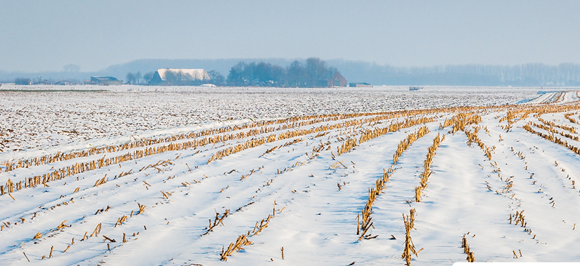
REGION 3, 4, 5, 6 WEANED CALVES & CALVES ON COWS:

Bray Angus Farms, LLC, Paris, TX. 70 Weaned Str Calves @ 400#/ 50 Weaned Hfr Calves @ 375# $30.00/CWT Back. VAC 60, Superior Progressive Genetics, Out of Brangus & Brangus cross cows by Angus (Gardiner & 44 Farms bloodlines) bulls. Pred. Black hided. $242.00, Jan 10-12 Del.

Jack Horne Ranch, Coleman, TX. 106 Weaned Str Calves @ 475#. VAC 60, Red Angus FCCP, Superior Progressive Genetics, Out of Angus & a few Red Angus cows by reg. RA Brown & Pharo Red Angus bulls. $250.00, Jan 11-14 Del.

David Diver, Kosse, TX. 103 Weaned Str Calves @ 485#. VAC PRECON, Angus cross & Charolais cross with 1/4 or less Brahman influence. $240.00, Feb 6-22 Del.

SC Cattle Co, Fort Sumner, NM. 100 Weaned Str Calves @ 500#. VAC 60, Angus cross & Charolais cross. Pred. 1/8 ear. Approx. 80% Black, 20% Red & Charolais. $234.00, Jan 9-14 Del.

SC Cattle Co, Fort Sumner, NM. 105 Weaned Hfr Calves @ 475#. VAC 60, Angus cross & Charolais cross. Pred. 1/8 ear. Approx. 80% Black, 20% Red & Charolais w/a few Hereford. $209.00, Jan 9-14 Del.

Wilson Cattle, Welch, OK. 30 Weaned Str Calves @ 550#/ 30 Weaned Hfr Calves @ 500# $20.00/CWT Back. VAC 45, Superior Progressive Genetics, Out of Angus & a few Angus Hereford cross cows by Angus bulls. Black & a few BWF. $211.00, Jan 6-13 Del.

Mertz 05 Ranch, San Angelo, TX. 60 Weaned Str Calves @ 600#. VAC 45, Owner Certified Natural Plus, Superior Progressive Genetics, Out of Gardiner bred Angus cows by Gardiner Angus bulls. Ranch has used Gardiner bulls since 1991. 100% Black hided. $212.00, Jan 9-14 Del.

Mertz 05 Ranch, San Angelo, TX. 45 Weaned Hfr Calves @ 550#. VAC 45, Owner Certified Natural Plus, Superior Progressive Genetics, Out of Gardiner bred Angus cows by Gardiner Angus bulls. Ranch has used Gardiner bulls since 1991. 100% Black hided. $201.00, Jan 9-14 Del.

Woolco Properties, Bentonville, CO. 82 Weaned Str Calves @ 635#. VAC 45, Superior Progressive Genetics, Out of Northern type Angus & Angus Hereford cross cows by Angus & 1 Hereford bull. Approx. 90%+ Black or BWF, balance RWF. $200.00, Jan 7-12 Del.

Bobby Gray, Ralston, OK. 80 Weaned Str Calves @ 665#. VAC 60, Out of Angus & Angus cross cows by reg. Horned Hereford & reg. Black Angus bulls. Pred. Black hided. $200.00, Jan 7-14 Del.

Bobby Gray, Ralston, OK. 85 Weaned Hfr Calves @ 620#. VAC 60, Out of Angus & Angus cross cows by reg. Horned Hereford & reg. Black Angus bulls. Pred. Black hided. $180.00, Jan 7-14 Del.

Wolf Creek Ranch, Wilson, KS. 143 Weaned Str Calves @ 700#. VAC 60, Out of Angus & Angus cross cows by Circle S Ranch & Don Johnson bulls. Approx. 80% Black & 20% Red, depending on the sort. $187.00, Jan 9-16 Del.

3R Joint Ventures, Okeechobee, FL. 100 Steer Calves @ 490#/ 0 Heifer Calves @ 450# $12.00/CWT Back. VAC 34+, Out of English cross & Brahman cross cows by Brangus & Charolais bulls. $185.00, Jan 16-27 Del.

Perry Cattle Ranch LLC, Okeechobee, FL. 92 Steer Calves @ 525#/ 0 Heifer Calves @ 525# $12.00/CWT Back. VAC 24, Superior Progressive Genetics, Out of English cross & Brahman cross cows by 100% Town Creek Farm Brangus bulls. Approx. 70% Black & BWF. $182.00, Jan 16-27 Del.

BRED STOCK:

TM&R, Inc., Ashland, KS. 37 Bred Cows @ 1250#. Black Angus (Gardiner genetics base) bred to Gardiner Angus bulls. Start calving approx. 2/15/23. 7 & 8 yr olds. Solid mouth. $1500.00, Jan 9-13 Del.

House Committee, Leadership Appointments Made

The Oklahoma House of Representatives committee leadership and Republican majority leadership appointments have been made for the 59th Oklahoma Legislature.

House Speaker Charles McCall, R-Atoka, was formally elected Tuesday by the full House to his fourth two-year term as speaker, making him the longest-serving speaker in state history. Speaker Pro Tempore Kyle Hilbert, R-Bristow, was formally elected Tuesday by the full House to his first full term as speaker pro tempore, the chamber's second ranking officer.

McCall appointed the following members to majority leadership positions for the 59th Legislature:

  • Majority Floor Leader Jon Echols, R-Oklahoma City
  • Deputy Floor Leader John Pfeiffer, R-Orlando
  • Deputy Floor Leader Steve Bashore, R-Miami
  • Assistant Floor Leader Mark McBride, R-Moore
  • Assistant Floor Leader Josh West, R-Grove
  • Assistant Floor Leader Kevin West, R-Moore
  • Assistant Floor Leader Brian Hill, R-Mustang
  • Majority Leader Tammy West, R-Oklahoma City
  • Appropriations & Budget Committee Chair Kevin Wallace, R-Wellston
  • Appropriations & Budget Committee Vice Chair Ryan Martinez, R-Edmond
  • Majority Whip Terry O'Donnell, R-Catoosa
  • Assistant Whips:
    • Rep. Nicole Miller, R-Oklahoma City
    • Rep. Mark Vancuren, R-Owasso
    • Rep. David Hardin, R-Stilwell
    • Rep. Jim Grego, R-Wilburton
    • Rep. Rusty Cornwell, R-Vinita
    • Rep. Eddy Dempsey, R-Valliant
    • Rep. Mike Dobrinski, R-Okeene
    • Rep. Dick Lowe, R-Amber
    • Rep. Preston Stinson, R-Edmond
    • Rep. Eric Roberts, R-Oklahoma City
    • Rep. Denise Crosswhite Hader, R-Piedmont
    • Rep. Ross Ford, R-Broken Arrow
  • Presiding Officers:
    • Rep. Jeff Boatman, R-Tulsa
    • Rep. Toni Hasenbeck, R-Elgin
    • Rep. Chris Kannady, R-Oklahoma City
    • Rep. Dell Kerbs, R-Shawnee
    • Rep. Mark Lawson, R-Sapulpa
    • Rep. Ryan Martinez, R-Edmond
    • Rep. Marcus McEntire, R-Duncan
    • Rep. Anthony Moore, R-Clinton
    • Rep. Carl Newton, R-Cherokee
    • Rep. Terry O'Donnell, R-Catoosa
    • Rep. Jay Steagall, R-Yukon
    • Rep. Tammy West, R-Oklahoma City

The 81 members of the House Republican Caucus previously elected the following Caucus leadership positions:

  • Caucus Chair Stan May, R-Broken Arrow
  • Caucus Vice Chair Danny Williams, R-Seminole
  • Caucus Secretary Sherrie Conley, R-Newcastle

"Each of these leaders has a unique background and talents that I believe are well-suited for their new roles," McCall said. "I look forward to working with them, and the rest of our colleagues, as we strive during the next two years to lay a strong foundation for the future of Oklahoma."

The 59th Legislature formally began Tuesday with a constitutionally-required Organizational Day meeting to officially seat members, install officers and approve rules. Session begins Monday, Feb. 6.

Committee leadership appointments for the House's 39 committees for the 59th Legislature are:

Administrative Rules/JCAR

  • Rep. Gerrid Kendrix, R-Altus, chair
  • Rep. Denise Crosswhite Hader, R-Piedmont, vice chair

Agriculture

  • Rep. Dell Kerbs, R-Shawnee, chair
  • Rep. Kenton Patzkowsky, R-Balko, vice chair

Alcohol, Tobacco and Controlled Substances

  • Rep. TJ Marti, R-Broken Arrow, chair
  • Rep. Neil Hays, R-Muskogee, vice chair

Appropriations and Budget

  • Rep. Kevin Wallace, R-Wellston, chair
  • Rep. Ryan Martinez, R-Edmond, vice chair

Banking, Financial Services and Pensions

  • Rep. Mark Lepak, R-Claremore, chair
  • Rep. John Kane, R-Bartlesville, vice chair

Business and Commerce

  • Rep. Kevin McDugle, R-Broken Arrow, chair
  • Rep. Chris Banning, R-Bixby, vice chair

Children, Youth and Family Services

  • Rep. John Talley, R-Stillwater, chair
  • Rep. Danny Williams, R-Seminole, vice chair

Common Education

  • Rep. Rhonda Baker, R-Yukon, chair
  • Rep. Mark Vancuren, R-Owasso, vice chair

County and Municipal Government

  • Rep. Lonnie Sims, R-Jenks, chair
  • Rep. Josh Cantrell, R-Kingston, vice chair

Criminal Justice and Corrections

  • Rep. Justin Humphrey, R-Lane, chair
  • Rep. David Hardin, R-Stilwell, vice chair

Elections and Ethics

  • Rep. Jim Olsen, R-Roland, chair
  • Rep. Max Wolfley, R-Oklahoma City, vice chair

Energy and Natural Resources

  • Rep. Brad Boles, R-Marlow, chair
  • Rep. Dean Davis, R-Broken Arrow, vice chair

General Government

  • Rep. Kevin West, R-Moore, chair
  • Rep. Nick Archer, R-Elk City, vice chair

Government Modernization and Technology

  • Rep. Jeff Boatman, R-Tulsa, chair
  • Rep. Eric Roberts, R-Oklahoma City, vice chair

Health Services and Long-Term Care

  • Rep. Chad Caldwell, R-Enid, chair
  • Rep. Marilyn Stark, R-Bethany, vice chair

Higher Education and Career Tech

  • Rep. Anthony Moore, R-Clinton, chair
  • Rep. Sherrie Conley, R-Newcastle, vice chair

Insurance

  • Rep. Chris Sneed, R-Fort Gibson, chair
  • Rep. Mark Tedford, R-Tulsa, vice chair

Judiciary – Criminal

  • Rep. Rande Worthen, R-Lawton, chair
  • Rep. Collin Duel, R-Guthrie, vice chair

Judiciary – Civil

  • Rep. Chris Kannady, R-Oklahoma City, chair
  • Rep. Bob Ed Culver, R-Tahlequah, vice chair

Public Health

  • Rep. Cynthia Roe, R-Lindsay, chair
  • Rep. Toni Hasenbeck, R-Elgin, vice chair

Public Safety

  • Rep. Robert Manger, R-Oklahoma City, chair
  • Rep. John George, R-Newalla, vice chair

Rules

  • Rep. Mike Osburn, R-Edmond, chair
  • Rep. Brian Hill, R-Mustang, vice chair

Rural Development

  • Rep. Daniel Pae, R-Lawton, chair
  • Rep. Rick West, R-Heavener, vice chair

States' Powers

  • Rep. Jay Steagall, R-Yukon, chair
  • Rep. Cody Maynard, R-Durant, vice chair

Tourism

  • Rep. Tammy Townley, R-Ardmore, chair
  • Rep. Ajay Pittman, D-Oklahoma City, vice chair

Transportation

  • Rep. Ronny Johns, R-Ada, chair
  • Rep. Jim Grego, R-Wilburton, vice chair

Utilities

  • Rep. Trey Caldwell, R-Lawton, chair
  • Rep. Mike Dobrinski, R-Okeene, vice chair

Veterans and Military Affairs

  • Rep. Josh West, R-Grove, chair
  • Rep. Rusty Cornwell, R-Vinita, vice chair

Wildlife

  • Rep. Ty Burns, R-Pawnee, chair
  • Rep. Eddie Dempsey, R-Valliant, vice chair

Appropriations Subcommittees

Common Education

  • Rep. Mark McBride, R-Moore, chair
  • Rep. Dick Lowe, R-Amber, vice chair

Finance

  • Rep. Scott Fetgatter, R-Okmulgee, chair
  • Rep. Clay Staires, R-Skiatook, vice chair

General Government

  • Rep. Judd Strom, R-Copan, chair
  • Rep. Daniel Pae, R-Lawton, vice chair

Health

  • Rep. Marcus McEntire, R-Duncan, chair
  • Rep. Tammy West, R-Oklahoma City, vice chair

Human Services

  • Rep. Mark Lawson, R-Sapulpa, chair
  • Rep. Randy Randleman, R-Eufaula, vice chair

Judiciary

  • Rep. Danny Sterling, R-Tecumseh, chair
  • Rep. Stan May, R-Broken Arrow, vice chair

Natural Resources

  • Rep. Carl Newton, R-Cherokee, chair
  • Rep. John Pfeiffer, R-Orlando, vice chair

Public Safety

  • Rep. Ross Ford, R-Broken Arrow, chair
  • Rep. Kevin West, R-Moore, vice chair

Select Agencies

  • Rep. Ken Luttrell, R-Ponca City, chair
  • Rep. David Smith, R-Arpelar, vice chair

Transportation

  • Rep. Nicole Miller, R-Edmond, chair
  • Rep. Preston Stinson, R-Edmond, vice chair

Joint Standing Committees

Joint Committee on Administrative Rules

  • Rep. Gerrid Kendrix, R-Altus, chair
  • Rep. Denise Crosswhite Hader, R-Piedmont, vice chair

Joint Committee on Appropriations & Budget

  • Rep. Kevin Wallace, R-Wellston, chair
  • Rep. Ryan Martinez, R-Edmond, vice chair

Joint Committee on Pandemic Relief

  • Speaker Pro Tempore Kyle Hilbert, R-Bristow, chair
  • Rep. Jeff Boatman, R-Tulsa, vice chair

Joint Committee on Tribal Relations

  • Rep. Kevin Wallace, R-Wellston, chair
  • Rep. Mike Osburn, R-Edmond, vice chair

Legislative Office of Fiscal Transparency (LOFT)

  • Rep. Kevin Wallace, R-Wellston, chair
  • Rep. Ryan Martinez, R-Edmond, vice chair

Full committee membership will be named before the regular session begins.

With Drought Funds Depleted, OCC's Trey Lam Seeks More Permanent Solution

Listen to KC Sheperd talk with Trey Lam about the latest work within the Emergency Drought Commission.

The Emergency Drought Commission met Thursday to direct all remaining funding allocated to the Commission. The Emergency Drought Commission also determined any funds unused and returned by the local conservation districts should be redirected with the remaining funds. The funding directed by the Emergency Drought Commission in Thursday's meeting totals approximately $5 million. 

At the latest meeting held on January 5, 2023, Farm Director KC Sheperd caught up with the Executive Director of the Oklahoma Conservation Commission, Trey Lam, and talked about the drought relief efforts.

The Emergency Drought Commission directed the funding to the Oklahoma Conservation Commission to distribute through the existing Emergency Drought Cost-Share Program. The funding will be dispersed by the Oklahoma Conservation Commission to conservation districts based on the number of unfunded applications in each local district. 

"There was 4.5 million remaining in the drought fund, so we are going to allocate that out to conservation districts really based on the number of open applications that they had," Lam said.

The greatest need present based on applications, Lam said, was in northeastern Oklahoma.

The top five districts for applications are Nowata, Craig, Okfuskee, Dewey, and Pittsburg counties, while the bottom five are Tulsa, Marshall, Little River, Jefferson, and Cleveland counties.

"Nowata county alone, which is a relatively small county, had over 207 applications," Lam said.

There were over 6,000 applications, Lam said, and the program designed was for a maximum of 7500 dollars per producer.

"That is considering the high cost of drilling a water well, the high cost of cleaning out a pond- everything is so expensive that if you only give them a minimum amount of money, then it is really not helping," Lam said. "So, we wanted it to be significant enough that it helps them get through this drought, while at the same time, it spreads it as far around the state as we could."

Looking at the number of applications that were not funded, but are still eligible and worthy, Lam said an additional 20-30 million dollars could be spent right away on drought relief.

"Over the next couple of months, as the receipts come in and people are actually getting paid, we will have an exact number and a better idea of what the need is, but I would say there is at least another 20 million out there in need," Lam said.

Four hundred eighty claims have already been paid, Lam said, for those producers who have already put in the work on their property and brought in the receipts to their local conservation district office.

For individuals who have called to have drought relief work completed on their property, but have been put on hold, Lam said, they can simply call their local conservation district office and let them know they need an extension on that payment as long as they can provide proof work has been scheduled to be completed.

"As those receipts come in and the producer gets back in, I should say in no more than a week, they should have money in their hands," Lam said.

As Oklahoma is known for unpredictable weather, during the meeting, an idea was presented to work on a more permanent solution for drought relief. By having money in an emergency drought fund, ready to be used if the governor declares a state of emergency, Lam said, when the drought commission meets again, the money would be ready to allocate.

Having emergency funds on hand, Lam said, would be more ideal than having to wait for an entire legislative cycle.

"We try to make this the easiest application," Lam said. "It is not a lot of paperwork; it is not a book worth of things or a bunch of computer entries. You come in, you pick your practice from the list, you fill out a one-page application, you go out and do the work, and if your application is chosen- and we have been doing those in most counties by random draw, simply because each person's need was equal."

No new applications are being accepted by local conservation districts for the Emergency Drought Cost-Share Program at this time. 

All actions of the Commission are pending approval by Governor Kevin Stitt. 

To see county-by-county application status for A though H, click here.

To see county by county application status for H though W, click here.

No Big-Time Changes in Drought expected over the next 7-10 Days

According to State Climatologist Gary McManus, even though we have had our fair share of random weather throughout the state, he still doesn't see any drought busters headed this way in the short term, "I'm still not seeing any bigtime changes in our weather for the next 7-10 days. The upper-level storms that move our way are moving just too fast with not enough return moisture and a bit too far east. For big-time changes, you have to go way out 10-11 days to see a fairly robust system in our area, but not with a big rush of arctic air...sorry snowers. With little sign of any big arctic air outbreaks down into the Southern Plains, the most we can hope for is a spring-like system with some big rainers."

Right now, McManus says right now the impacts of the drought are masked in the Winter with soil Moisture replenishment in the upper layers, but it's still desperately dry, Fire danger comes first, but that's more of a day-to-day weather thing in the cool season, but the prime-time for fire danger is fast approaching."

McManus said if you even think for a minute the drought is gone, just look at our Oklahoma Lakes.

To read more from McManus on his ticker click here:

Emergency Drought Commission Allocates Remaining Funds to Emergency Drought Cost-Share Program

The Emergency Drought Commission met Thursday to direct all remaining funding allocated to the Commission. The Emergency Drought Commission also determined any funds unused and returned by the local conservation districts should be redirected with the remaining funds. The funding directed by the Emergency Drought Commission in Thursday's meeting totals approximately $5 million. 

The Emergency Drought Commission directed the funding to the Oklahoma Conservation Commission to distribute through the existing Emergency Drought Cost-Share Program. The funding will be dispersed by the Oklahoma Conservation Commission to conservation districts based on the number of unfunded applications in each local district. 

No new applications are being accepted by local conservation districts for the Emergency Drought Cost-Share Program at this time. 

All actions of the Commission are pending approval by Governor Kevin Stitt. 

Strong Year for Gross Receipts

A thriving Oklahoma economy for most of 2022 helped propel Gross Receipts to the Treasury to a record calendar year high, but recently there has been a slowdown in growth, State Treasurer Randy McDaniel announced today.

The 12-month gross receipts of $17.4 billion set a new all-time high. Compared to last year, revenues expanded almost 15 percent. However, during the past few months, the rate of growth has moderated. For December, the monthly total collections grew 5.7 percent compared to a year ago.

"The performance of Oklahoma's economy has been impressive this year," said Treasurer McDaniel. "Robust consumer demand coupled with an expanding energy sector led to record revenues for the year. With that said, the rate of growth has started to taper off."

During December, combined sales and use taxes were up by 5 percent compared to December 2021. Total individual and corporate income tax receipts grew by 2.3 percent, while motor vehicle collections declined 6.3 percent.

The gross production tax on oil and natural gas continued to climb, finishing 26.9 percent higher than in December 2021.

Calendar year 2022 collections are over $2.2 billion higher than 2021 collections with the top three major revenue streams showing expansion, ranging from 70.9 percent in gross production receipts to 9.6 percent in sales and use taxes.

Other indicators

As measured by the Consumer Price Index, the U.S. Bureau of Labor Statistics (BLS) reports the annual inflation rate at 7.1 percent in November. The energy component of the index is up 13.1 percent over the year. The food index rose by 10.6 percent.

The Oklahoma unemployment rate in November was reported as 3.4 percent by the BLS. That is the same percentage declared for October. The U.S. jobless rate was listed as 3.7 percent in November, the same as it was in October.

The Oklahoma Business Conditions Index in December was again below growth neutral after dipping in November. According to Creighton University, the December index was set at 40.2, compared to 39.8 in November. Numbers below 50 indicate that economic contraction is expected during the next three to six months.

December collections

December 2022 collections compared to gross receipts from December 2021 show:

  • Total monthly gross collections are $1.5 billion, up by $80.4 million, or 5.7 percent.
  • Gross income tax collections, a combination of individual and corporate income taxes, generated $485.8 million, up by $10.7 million, or 2.3 percent.
    • Individual income tax collections are $380.2 million, an increase of $4.3 million, or 1.1 percent.
    • Corporate collections are $105.6 million, up by $6.5 million, or 6.5 percent.
  • Combined sales and use tax collections, including remittances on behalf of cities and counties, total $611.3 million – up by $29.3 million – or 5 percent.
    • Sales tax collections total $508 million, an increase of $24.3 million, or 5 percent.
    • Use tax receipts, collected on out-of-state purchases including internet sales, generated $103.3 million, an increase of $5 million, or 5.1 percent. 
  • Gross production taxes on oil and natural gas total $195.1 million, an increase of $41.4 million, or 26.9 percent.
  • Motor vehicle taxes produced $68.7 million, down by $4.7 million, or 6.3 percent.
  • Other collections composed of some 60 different sources including taxes on fuel, tobacco, medical marijuana, and alcoholic beverages, produced $134.6 million – up by $3.6 million, or 2.7 percent.
    • The medical marijuana tax produced $4.2 million, down by $733,429, or 14.9 percent.

Twelve-month collections

Combined gross receipts for the past 12 months compared to the prior period show:

  • Gross revenue totals $17.44 billion. That is $2.26 billion, or 14.9 percent, above collections from the previous 12 months.
  • Gross income taxes generated $6.04 billion, an increase of $824.7 million, or 15.8 percent.
    • Individual income tax collections total $5 billion, up by $616.3 million, or 14 percent.
    • Corporate collections are $1.04 billion, an increase of $208.4 million, or 25.1 percent.
  • Combined sales and use taxes generated $6.87 billion, an increase of $602.8 million, or 9.6 percent.
    • Gross sales tax receipts total $5.82 billion, up by $484.6 million, or 9.1 percent.
    • Use tax collections generated $1.05 billion, an increase of $118.2 million, or 12.7 percent.
  • Oil and gas gross production tax collections generated $1.98 billion, up by $823.7 million, or 70.9 percent.
  • Motor vehicle collections total $870.3 million, an increase of $1.9 million, or 0.2 percent.
  • Other sources generated $1.67 billion, up by $9.5 million, or 0.6 percent.
    • Medical marijuana taxes generated $54.7 million, down by $11.5 million, or 17.3 percent.

About Gross Receipts to the Treasury 

The monthly Gross Receipts to the Treasury report, developed by the State Treasurer's Office, provides a timely and broad view of the state's economy.

It is released in conjunction with the General Revenue Fund report from the Office of Management and Enterprise Services, which provides information to state agencies for budgetary planning purposes. 

The General Revenue Fund, the state's main operating account, receives less than half of the state's gross receipts with the remainder apportioned to other state funds, remitted to cities and counties, and paid in rebates and refunds.

Angus Link Partners with IMI Global to Offer More Value-Added Opportunities to Cattle Producers

Mark McCully, American Angus Association CEO

Listen to Ron Hays talk with Mark McCully about Angus Link joining up with IMI Global.

As the American Angus Association is spending plenty of time at Cattlemen's Congress this week, they have also announced they are joining forces with IMI Global to create an improved experience for cattle producers. Senior Farm and Ranch Broadcaster, Ron Hays, is talking with CEO of the American Angus Association, Mark McCully, about two of the leading third-party verification companies coming together to offer more value-added opportunities to the cattle industry.

IMI Global is a leading provider of verification solutions for the agricultural industry. A division of Where Food Comes From, Inc., IMI Global audits to numerous standards to enable any and all livestock producers to access certain markets or brands that require specific production assessments. 

McCully describes IMI Global as the "gold standard" in third-party verification.

"They have been in that business for a long time with their process-verified programs," McCully said. "The American Angus Association has as well."

The American Angus Association's experience with process verified programs, McCully said, lies within the Angus Link Program, which helps buyers identify cattle from producers who have invested time and resources to separate their calves from the rest.

"Really, what we did is come together in a working collaboration where they will provide the USDA process verification services for our Angus Verified, which is the program that documents that cattle are out of registered Angus bulls," McCully said. "So, for feeder cattle, of course, is what we are talking about."

This working collaboration uses the IMI Global expertise, McCully said, and the American Angus Association's expertise in describing and validating Angus genetics.

For some buyers, McCully said, third-party verification has become an expectation. Because many cattle now are black-hided, McCully said it can be harder to sort through the differences in genetic merit.

"We want to be able to provide programs out there so that those producers that are using registered Angus genetics and providing this really excellent genetic merit package in their feeder cattle are able to identify that and communicate that in the marketplace," McCully said.

Genetic Merit Scores, McCully said, will be as commonplace as EPDs in the seedstock world.

Now available to IMI customers, the AngusLink Genetic Merit ScorecardSM gives producers the ability to effectively communicate the genetic potential of their feeder calves to prospective buyers with three scores: Beef, Feedlot, Grid. The scores are calculated based on the Association's extensive genetic database with more than 80 million datapoints. In addition, AngusLink customers will also have access to IMI's new sustainability standard, CARE Certified, which encompasses Animal Care, Environmental Stewardship and People & Community, which are all of growing importance in today's marketplace. Other PVP claims available include AngusVerifiedSM, Source, Age, Non-Hormone Treated Cattle (NHTC), Verified Natural Beef and more.

"Our business isn't a commodity business as much as it used to be," McCully said. "We sell our product differently, we sell our product differentiated, so producers that are providing cattle that fit those targets should be paid accordingly as well. It is all about getting those dollars that are out there for these premium products back into the pockets of the producers using registered Angus genetics and doing all the right things."

The Beef Buzz is a regular feature heard on radio stations around the region on the Radio Oklahoma Ag Network and is a regular audio feature found on this website as well. Click on the LISTEN BAR for today's show and check out our archives for older Beef Buzz shows covering the gamut of the beef cattle industry today.

New Year's Resolutions with BEEF

Happy New Year, beef advocates! As the New Year begins friends and followers alike are going to be looking for inspiration and ideas to achieve their health and wellness resolutions in 2023.  

That makes January a great time to share your resolutions and highlight how beef keeps you fueled for your day on the farm/ranch and is part of a healthy sustainable diet! Read more below for other ideas to get you started this month.  

INGREDIENTS:

  • 1 pound beef Sirloin Tip Steaks, cut 1/8 to 1/4 inch thick
  • 1-1/2 teaspoons seasoned pepper blend or garlic-pepper seasoning
  • 2 teaspoons vegetable oil
  • Salt
  • 4 tablespoons reduced-fat or fat-free blue cheese dressing
  • 4 medium flour tortillas (8 to 10-inch diameter), warmed
  • 4 romaine lettuce leaves

Toppings:

  • Sliced tomatoes, sliced red onion

Cooking:

  1. Stack beef steaks; cut lengthwise in half, then crosswise into 1-inch wide strips. Combine beef and garlic-pepper in medium bowl; toss to coat.
  2. Heat 1 teaspoon oil in large nonstick skillet over medium-high heat until hot. Add half of beef; stir-fry 1 to 3 minutes or until outside surface of beef is no longer pink. (Do not overcook.) Remove from skillet. Repeat with remaining beef and oil. Season with salt, as desired.
  3. Spread dressing evenly on tortillas; top with lettuce leaf. Divide beef and toppings, as desired, among tortillas. Roll up tightly.

SAFE HANDLING TIPS:

  • Wash hands with soap and water before cooking and always after touching raw meat.
  • Separate raw meat from other foods.
  • Wash all cutting boards, utensils, and dishes after touching raw meat.
  • Do not reuse marinades used on raw foods.
  • Wash all produce prior to use.
  • Cook steaks and roasts until temperature reaches 145°F for medium rare, as measured by a meat thermometer, allowing to rest for three minutes.
  • Cook Ground Beef to 160°F as measured by a meat thermometer.
  • Refrigerate leftovers promptly.

For more information on degree of doneness and other cooking tips visit: https://www.beefitswhatsfordinner.com/cooking/determining-doneness

For more information on safe food handling and beef safety, see: https://www.beefitswhatsfordinner.com/cooking/food-safety

The Nutrition section on BeefItsWhatsForDinner.com is a great place to find additional inspiration and resources to share with your followers! Let us know what you are sharing on your social channels in the MBA Facebook Group, and by tagging Beef. It's What's For Dinner. in your social media posts!   

Economist's Angle: EPA's Proposed Blending Levels Threaten Ongoing Industry Growth

By Scott Gerlt • ASA Chief Economist

Under the Renewable Fuel Standard, the Environmental Protection Agency must set annual biofuel blending levels for gasoline and diesel supplies. As part of that process, EPA releases a proposal and receives feedback from stakeholders. The past few years, EPA has acted slowly, setting blending levels after the relevant year had passed or retroactively changing the levels. This uncertainty made for operational difficulty within the industry. A consent decree—or settlement agreement approved by the court—with Growth Energy forced EPA to release the proposed 2023 blending obligations on Dec. 1, 2022.

EPA attempted to provide more certainty to the industry by setting the volumes for three years instead of the usual one. However, the agency failed to account for growth in the soybean industry when setting the levels, which significantly threatens the investment in the sector to lower carbon emissions from fuels. EPA justified this decision by utilizing a baseline that assumed no growth in the blending obligations to claim the industry could not meet increased obligations. While the soybean industry has been experiencing tremendous growth and it is expected to continue, the EPA announcement potentially grinds that growth to a halt.

The past couple of years have been awash in announcements to construct renewable diesel plants. This  biofuel is distinct from biodiesel and meets the same standards as diesel produced from petroleum. More about renewable diesel and the announcements can be found here. The soybean industry has been investing in crushing plants to meet the need for renewable diesel feedstocks, with well over 20 announcements for increased capacity over the next few years. State and federal policies encouraged transitions to low carbon fuels, and the soybean industry has been investing billions of dollars to help that transition. Biofuels provide an unpriced benefit to the public in that they help reduce carbon emissions. Given the higher cost of producing BBD than petroleum, the blending obligations help correct the classic market failure. However, EPA's proposed rule allows almost no growth for biomass-based diesel (BBD) over the next few years (Figure 1).

BBD includes most renewable diesel, biodiesel and sustainable jet fuel. EPA's proposed Renewable Volume Obligation has only 60 to 70 million gallons of growth per year for the next three years, which is a total increase of about 190 million gallons from the 2022 level. In contrast, announcements for renewable diesel total about 3.8 billion gallons over that period. Further, as of Sept. 2022, biodiesel, renewable diesel and other biofuel [1] capacity totaled 4.2 billion gallons [2] compared to an RVO of 2.82 million gallons of BBD in 2023. BBD sector expansion means the current capacity already exceeds the RVO volumes proposed by EPA. With growth in BBD RVOs of only 60 to 70 million gallons per year under the EPA proposed rule, the industry's capacity far exceeds the EPA levels. While it was always unlikely that all the proposed renewable diesel plants would be built, even a partial buildout quickly adds to overcapacity in the industry given the low volumes proposed by EPA. This RVO will essentially freeze the BBD industry at current levels for at least the next three years.

2023 American Farm Bureau Convention Kicks Off Today

The 2023 American Farm Bureau Convention is officially underway. The convention is being held Jan. 6-11 in San Juan, Puerto Rico, with a virtual option for portions of the event available.

Anchoring this year's event is an outstanding lineup of keynote speakers. AFBF President Zippy Duvall will give his annual address to Farm Bureau members during the opening general session of the convention at 9:30 a.m. Atlantic Time on Sunday, Jan. 8. Agriculture Secretary Tom Vilsack will speak during the closing general session at 11:30 a.m. Atlantic Time on Monday, Jan. 9.

Other general session keynote speakers are sure to inspire, engage and entertain attendees. Renowned artist, songwriter and humanitarian Big Kenny Alphin will speak about his efforts to end hunger during the afternoon general session on Sunday, Jan. 8, at 4 p.m. Atlantic Time. Bert Jacobs, co-founder and Chief Executive Optimist of the $150 million lifestyle brand Life is Good®, will share a powerful message on why he has championed the same mission for more than 25 years—to spread the power of optimism—during the closing general session on Monday, Jan. 9, at 11:30 a.m. Atlantic Time.

Sixteen workshops will focus on advancements in agriculture and opportunities— such as a new farm bill—as well as challenges, like inflation and supply chain issues, facing farmers and ranchers in the coming year. Eight workshops will be available via the virtual convention platform. 

Convention programming begins today at 10:00 a.m. Atlantic Time when the Ag Innovation Challenge semi-finalists participate in a live pitch competition. The winners of the Ag Innovation Challenge, Foundation Book of the Year and Farm Dog of the Year will all be announced during convention as well, along with numerous state Farm Bureau awards.

An opening news conference, featuring remarks from President Duvall, AFBF Executive Vice President Joby Young and several industry partners will be livestreamed to all media, not just those registered for convention, on Sunday, Jan. 8, at 11:30 a.m. Atlantic Time.

Registered media may also attend the AFBF Annual Meeting of Voting Delegates in-person on Tuesday, Jan. 10. A digital stream of the session will not be provided.

If you are unable to attend the 2023 American Farm Bureau Convention in-person, consider registering for the virtual event. Select workshops and sessions will be broadcast live, and recordings will be available for on-demand viewing on the convention virtual platform for 90 days following the conclusion of convention.

Learn more and view the full convention schedule on the 2023 American Farm Bureau Convention website.

Feeder Steers Higher, Feeder Heifers Steady to Higher, Steer Calves Higher, Heifer Calves Steady at Woodward Livestock Auction

Fri, 06 Jan 2023 03:52:31 CST


Feeder Steers Higher, Feeder Heifers Steady to Higher, Steer Calves Higher, Heifer Calves Steady at Woodward Livestock Auction


Woodward Livestock Auction Feeder Cattle
Thu Jan 5, 2023


AUCTION
This Week            4,551
Last Reported     2,922
Last Year                      0

Compared to the last feeder cattle sale on Dec. 15th: Feeder steers 5.00 to 10.00 higher. Feeder heifers steady to 5.00 higher. Steer calves 12.00 to 17.00 higher. Heifer calves steady. Demand was moderate to active. Quality was average. Supply included: 100% Feeder Cattle (62% Steers, 35% Heifers, 3% Bulls). Feeder cattle supply over 600 lbs was 56%.

FEEDER CATTLE
STEERS - Medium and Large 1 (Per Cwt / Actual Wt)
Head       Wt Range       Avg Wt       Price Range        Avg Price
15             301-338           321        263.00-287.00       276.33
23             361-398           380        273.00-285.00       277.31
3                   393                393              263.00               263.00 Unweaned

166          405-446            427        246.00-275.00       263.80
142          455-498            480        220.50-262.00       239.92
4               450-485            468        221.00-239.00       229.66 Unweaned

278          500-549            526        201.00-240.00       219.75
6                   507                507              223.00               223.00 Unweaned
337          550-599            572         193.00-226.00      215.57

229          600-642            622         182.00-211.00      196.77
18             626-649            637        178.50-191.00      185.64 Unweaned
318          661-688            670         175.00-201.50      190.85
9               660-693            671         170.00-185.00      179.84 Unweaned

239          701-747            723         180.00-188.25      185.84
4                  748                 748                176.00             176.00 Unweaned
247          765-794            776          172.00-185.75     181.28

162          816-848            831          179.25-183.75     180.76
124          854-897            868          180.00-182.00     180.40

5                   904                904                180.50             180.50
58                 978                978                175.00             175.00

For the complete market report from USDA Market News click on the PDF link below:
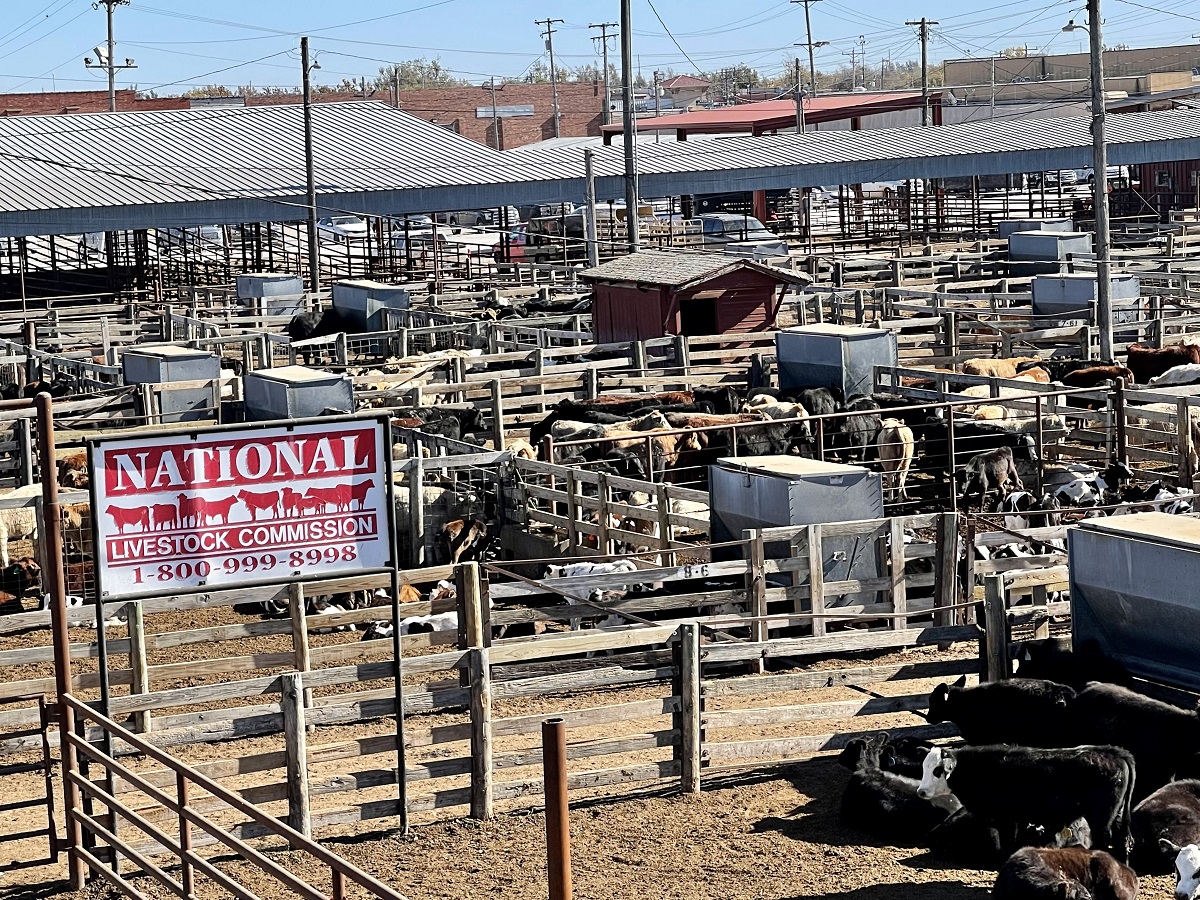
Click here: 05271_WoodwardLivestock_01062023.pdf


USDA Oklahoma Farm Service Agency Accepting CRP Offers to Restore Playa Wetlands

The U.S. Department of Agriculture's (USDA) Farm Service Agency (FSA) is accepting Conservation Reserve Program (CRP) offers to participate in the Kansas Nebraska Oklahoma Migratory Birds, Butterflies, and Pollinators State Acres for Wildlife Enhancement (SAFE) project. FSA is currently accepting offers, and qualifying farmers and landowners have until February 17, 2023 to submit an initial offer, with final offers due March 17, 2023.

"Through unique partner opportunities like this, SAFE helps restore vital habitat in order to meet high-priority state wildlife conservation goals," said FSA Oklahoma State Executive Director Steve Kouplen. "In addition to supporting key species like our state bird, the Scissor-tailed Flycatcher, and the Monarch Butterfly, this SAFE project will provide habitat for other wildlife, including deer, game birds, waterfowl, and pollinators that have significant social and economic value."

The following three counties in Oklahoma are eligible for the SAFE project: Beaver, Cimarron, and Texas. Additional counties in Kansas and Nebraska are also eligible.

FSA partners with states to conduct CRP SAFE projects that give qualifying landowners and agricultural producers an opportunity to participate in CRP with an emphasis on establishing wildlife habitat.  This tri-state SAFE project is designed to improve habitat for migrating birds and beneficial insects by restoring playa wetlands. Playas are shallow depressions that fill with water after rainstorms which provides critical habitat for migratory birds and other wildlife while also recharging the underlying aquifer.

This project uses a competitive bid process that allows landowners to submit an offer with an annual rental payment they are willing to accept to enroll in CRP. Contracts are for periods of 10-15 years. Minimum offer size is two acres and offers must be in the project area.

Producers who are interested in learning more about this SAFE project are encouraged to call their County FSA Office.

More Information

Currently, SAFE has 64 projects in 32 states with more than 2,580,000 acres enrolled nationally. To learn more, see the SAFE fact sheet.

USDA touches the lives of all Americans each day in so many positive ways.  Under the Biden-Harris administration, USDA is transforming America's food system with a greater focus on more resilient local and regional food production, fairer markets for all producers, ensuring access to safe, healthy and nutritious food in all communities, building new markets and streams of income for farmers and producers using climate smart food and forestry practices, making historic investments in infrastructure and clean energy capabilities in rural America, and committing to equity across the Department by removing systemic barriers and building a workforce more representative of America. To learn more, visit usda.gov.

USDA is an equal opportunity provider, employer and lender.

Ag Secretary Blayne Arthur Pleased with Additional Drought Relief Dollars Allocated and Hopeful for More Soon

Listen to KC Sheperd talk with Ag Secretary Blayne Arthur at the latest Emergency Drought Commission Meeting.

At the meeting of the Emergency Drought Commission, KC Sheperd, Farm Director, caught up with Secretary of Agriculture, Blayne Arthur, and talked about highlights from the meeting.

Data was shared by the director of the drought commission, Trey Lam, on what has been allocated for the drought districts. While there is still a significant need for drought assistance in many districts, Arthur said it was voted to push another 4.5 million dollars out to the conservation commission that will go out to the districts.

"I think the big focus was that we all realized there is still a very significant need," Arthur said. "There is still a lot of drought across the state of Oklahoma."

Arthur said some counties that did not have as many applications due to less severe drought. The funds allocated to those counties that were not put to use, she added, came back to the conservation commission to help those still in need of relief.

Some concerns were raised at the meeting by Oklahomans who felt that the funding was not being released fast enough.

"We also want to make sure that we are meeting our fiduciary responsibility and checking all the boxes and making sure that folks need to remember these are appropriated dollars, so those are tax dollars that are then going back out," Arthur said.

Being good stewards of taxpayer dollars, Arthur said, takes a little more time.

Arthur also talked about why she is grateful for the members of the legislature who have been attending the drought meetings.

"We have had, probably, greater participation from members of the legislature in this emergency drought commission maybe than some of the things we have ever done, at least at the department of ag," Arthur said. "We are so appreciative of that. I think I have heard from so many legislators because they have heard from their constituents- they are hearing that need still exists."

Attendance to the drought meetings that have taken place so far, Arthur said, have ranged from all over the state of Oklahoma. Hearing from these different producers about their drought experiences, Arthur said, has been really impactful for legislators as they prepare to go into this next legislative session.

"The reality is, we have extremes here in Oklahoma weather," Arthur said. "We have forever and ever. That is just the nature of what we as ag producers have to deal with."

The drought commission is operating as long as a drought exists, Arthur said, but because there are not additional funds to be allocated following this meeting, a date for the next meeting has not been set yet.

"We will wait to see if there is movement from the legislature and what that might be, and then, very optimistically, we will just hope that it rains and that will make all of us very happy."

Three Weeks of Unchanged Drought Percentages for Oklahoma

Last week, Oklahoma's drought conditions remained unchanged from the week prior. According to this week's drought monitor, those conditions from two weeks ago have carried into this week, leaving Oklahoma at a three week stand-still on those drought percentages.

Exceptional drought- 11.65 percent

Extreme drought or worse – 56.13 percent

Severe drought or worse – 80.92 percent

Moderate drought or worse – 89.73 percent

Abnormally dry or worse- 98.18 percent

To view the Oklahoma Drought Map, click here.

According to the 6-10 day precipitation outlook map, the majority of the state minus the southern border is leaning below a 33-40 percent chance of precipitation through January 15, 2023. The southern border of Oklahoma has a "near normal" chance of precipitation.

To view the United States Drought Monitor Report, click here.

According to the latest U.S. Drought Monitor Report, An atmospheric river (AR) led to heavy rain and high-elevation snow across the West with the largest amounts throughout California on December 30 and 31. Preceding this AR, enhanced onshore flow also resulted in widespread rain and high-elevation snow from the West Coast eastward to the Continental Divide. 7-day total amounts (liquid equivalent), from December 27, 2022 - January 2, 2023, ranged from 2 to 6 inches (locally more) across much of California, western Oregon and Washington, and parts of the Great Basin and central Rockies. A pair of low pressure systems brought widespread, heavy rainfall (1 to 3 inches, locally more) from the lower Mississippi Valley northward to the Ohio Valley. A winter storm affected southern South Dakota and western to central Nebraska where 6 to 18 inches of snowfall occurred on January 2. Mostly dry weather prevailed along most of the East Coast and southern Great Plains. Following the Arctic air outbreak during late December, a rapid warming trend began during the final days of 2022. 5-day temperatures (December 27, 2022 - January 2, 2023) averaged more than 10 degrees F above normal across the central and eastern U.S.

In the Southern Plains, Widespread heavy rainfall (2 to 6 inches) resulted in a broad 1-category improvement to the lower Mississippi Valley and eastern Texas, which makes much of these areas drought-free. Degradations made to central and southern Texas were based on SPI at various time scales and 28-day streamflow. Following a dry week, much of Oklahoma and northwestern Texas remain designated with severe (D2) to exceptional (D4) drought.

In the High Plains, based on heavy precipitation (1 to 3 inches, liquid equivalent) this past week along with above-normal snowpack, a 1-category improvement was made to western Colorado. Beneficial precipitation also prompted improving drought conditions across north-central and northeastern Colorado. A decrease in the spatial coverage of extreme (D3) drought was made to central Nebraska. 12-month SPI and the long-term blend support the continued widespread severe (D2) to exceptional (D4) drought coverage for the central Plains. Norfolk, Nebraska, with a period of record dating back to 1888, had its driest year on record in 2022.

In the West, A long-term drought, dating back to the 2019-2020 winter, continues across California, the Great Basin, and parts of the Pacific Northwest. One-category improvements to severe (D2), extreme (D3), and exceptional (D4) drought made this week in California, Nevada, and Utah balanced recent heavy precipitation with 24 to 36-month SPIs. As of January 4, snow water equivalent (SWE) is running 133, 182, and 205 percent of normal for the Northern, Central, and Southern Sierra Nevada Mountains, respectively. Water-year-to-date (WYTD) precipitation, valid since October 1, 2022, has averaged more than 150 percent of normal across central California. Despite this favorable start to the wet season across California, a number of major water supply reservoirs remain below 60 percent of their historical average. The Trinity reservoir in northern California was only 38 percent of average, as of January 3. The lowest 36-month SPIs (< -2) are focused across northern California and south-central Oregon. In addition, WYTD precipitation remains below-normal across northwestern California despite the heavy precipitation at the end of December 2022. Elsewhere, across northwestern Oregon and western Washington, improvements were necessary after above-normal precipitation this past week and the short-term drought impact was discontinued given the recent wetness. Near and to the east of Seattle, 28-day streamflows remain below the 20th percentile, supporting moderate (D1) drought. Abnormal dryness (D0) was maintained for the Olympic Peninsula where SWE is running below-normal. A mix of small improvements and degradations were made to Montana based on SPI/SPEI at various time scales and current snowpack.

To view the 6-10 Day Precipitation Outlook Map, click here.

To view the 6-10 Day Temperature Outlook Map, click here.

To view the Monthly Drought Outlook Map, click here.

OSU's Kim Anderson says Watch Today's Crop Prices to Predict Future Crop Prices

Listen to Kim Anderson talk about the commodity markets on OSU's SUNUP.

This Week on SUNUP is Oklahoma State University Extension grain market economist Kim Anderson. During this week's edition, Anderson gives an overview of markets in 2022 and talks about the new year.

"Most Oklahomans have sold their 2022 crop, Anderson said, so many do not feel the need to continue to watch crop prices.

"Today's price is the best predictor of the price in the future," Anderson said.

Looking back on 2022, Anderson gave an overview of how those commodity prices moved throughout the year.

Next week, Anderson said the USDA will release the seeded acres report for winter wheat and canola and the first WASDE of the year will we coming out. While many are talking about the impacts of the war in Russia and Ukraine, weather, the Black Sea area, and more, Anderson said using resources such as these reports is useful as well in determining market conditions.

"We are in a weather market," Anderson said. "We are watching the world weather, and in the United States- especially in this area, we have got drought problems."

Current crop prices are higher than usual, Anderson said, because stocks around the world are relatively high, and input prices are high as well.

"The market has got to set the price high enough to pay for production so that we will have commodities to consume," Anderson said.

This week on SUNUP:

  • Dave Lalman, OSU Extension beef cattle specialist, discusses ways to manage ponds and other water sources over the winter. Dave also mentions the low-cost water testing services available through local county OSU Extension offices. 
  • Wes Lee, OSU Extension Mesonet agricultural coordinator, compares last year's rain and temperatures to the 30-year averages. State climatologist Gary McManus says Oklahoma starts off the year with 90% of the state still in drought. The data also shows Goodwell had its driest year ever. 
  • Gary Strickland, Jackson County OSU Extension director, has an overview of cotton harvest and invite's SUNUP viewers to the upcoming Red River Crops Conference.
  • Kim Anderson, OSU Extension grain marketing specialist, talks about the current markets and why some crops are priced higher right now. 
  • Mark Johnson, OSU Extension beef cattle breeding specialist, offers guidance on the equipment and materials producers should have on hand during spring calving season. 
  • In Naturally Speaking, Dwayne Elmore, OSU Extension wildlife specialist, has tips on creating great quail habitats. 

Join us for SUNUP:
Saturday at 7:30 a.m. & Sunday at 6 a.m. on OETA (PBS)
YouTube.com/SUNUPtv

32nd Butter Sculpture Unveiled: "Pennsylvania Dairy: Rooted in Progress for Generations to Come"

Purpose, Education, Community: Sculpture Honors Dairy Families

American Dairy Association North East, in conjunction with the Pennsylvania Department of Agriculture, revealed the highly anticipated butter sculpture, a tableau that showcases the importance of the dairy industry's traditions and its focus on sustainability.

"Pennsylvania Dairy: Rooted in Progress for Generations to Come" is the theme for the 32st butter sculpture. The sculpture depicts several generations of a dairy farming family, enjoying a moment together amid the background of their family farm, celebrating how they work together to produce wholesome food for their community in a sustainable way.

Dairy farmer Steve Harnish of Central Manor Dairy in Washington Boro, said, "The butter sculpture is a creative way to showcase the important role agriculture plays in our lives. Producing nutritious milk and dairy products, and feeding people, is what I love most about being a dairy farmer."

"This sculpture could be my own family," Harnish said. "This is a meaningful way to show how dairy farmers work with their loved ones on land where they have deep roots, but always farming for the future."

The sculpture was constructed over several weeks by artists Jim Victor and Marie Pelton of Conshohocken, Pennsylvania, using more than 1,000 pounds of butter donated by Land O' Lakes in Carlisle, Cumberland County.

"Creating art that showcases the hard work of dairy farmers is an immense source of pride for us," said Jim Victor. "We also enjoy knowing that the sculpture tells an impactful story about the importance of dairy farming," added Marie Pelton.

The butter sculpture is on display in the Farm Show's Main Hall. Following the Farm Show, the butter will be moved to the Reinford Farm in Juniata County to be converted into renewable energy in the farm's methane digester.

Half a million people are expected to visit the butter sculpture at the PA Farm Show during its eight-day run from January 7th through January 14th.

SOURCE American Dairy Association North East

Biden-Harris Administration Invests in Projects to Promote Competition and Strengthen the Nation's Meat Supply Chain

U.S. Department of Agriculture (USDA) Secretary Tom Vilsack today announced the Biden-Harris Administration is investing $9.6 million across the country and taking several other steps to help farmers, ranchers, processors and rural businesses diversify the nation's meat supply.

"USDA is putting the needs of farmers, ranchers and consumers at the forefront of the Biden-Harris Administration's work to strengthen the resiliency of America's food supply chain while promoting competition," Vilsack said. "USDA has undertaken a Department-wide approach to coordinate ways to deliver more opportunities and fairer prices for producers, to give people access to healthier foods, eliminate bottlenecks in the food supply chain and ultimately lower prices for consumers."

Secretary Vilsack announced 25 new investments to increase independent meat processing capacity.

The Department is awarding 23 Value Added Producer Grant program grants totaling $3.9 million to help producer-owned companies process and market new products. USDA is also providing guarantees for a total of $5.7 million in loans to two companies through the Food Supply Chain Guaranteed Loan Program using American Rescue Plan funding. This program supports new investments in infrastructure for food aggregation, processing, manufacturing, storage, transportation, wholesaling and distribution.

Through these two programs, USDA is investing in 25 projects in California, Illinois, Iowa, Kansas, Kentucky, Maine, Montana, Nebraska, New York, Ohio, Oklahoma, Texas, Virginia, Washington and Wisconsin.

Below are some examples of how the funding will be used:

  • Bottomland Prime LLC will use a $4.95 million Food Supply Chain Guaranteed Loan to acquire and expand Edes Custom Meats ("Edes"). Edes is a cattle meat processing and retail outlet in Amarillo, Texas. Bottomland Prime projects its business will include custom USDA-inspected processing for local producers and specialty markets, as well as local retail sales of beef cuts, sausage, jerky, pork and lamb. In addition, it will include wholesale markets through different convenience stores and cold storage services.
  • In Kents Store, Virginia, Gillispie's County Line Farm LLC is receiving a $44,000 Value Added Producer Grant to support the processing of pasture-raised chickens, beef cattle and hogs into individually cut and processed poultry, beef and pork products. The farm will sell the meat directly to retail consumers online and through farm sales. Gillispie's also plans to hire new employees to assist with processing and sales labor, and expand its marketing activities to reach a larger customer base.
  • Todd Family Meats in Big Timber, Montana, is receiving a $48,173 Value Added Producer Grant to increase its production of packaged beef and lamb to meet growing demand. The family-owned company also will use the funds for marketing, packaging and processing.

Secretary Vilsack also highlighted some of USDA's accomplishments to date to support meat producers, promote competition and strengthen local and regional food supply chains. Last January, Secretary Vilsack joined President Biden at the White House to launch the Biden-Harris Action Plan for a Fairer, More Competitive, and More Resilient Meat and Poultry Supply Chain — part of USDA's efforts to implement President Biden's Executive Order on Promoting Competition in the American Economy.

He noted that under the leadership of the Biden-Harris Administration, USDA's Agricultural Marketing Service (AMS) has provided $54.6 million to 278 businesses and individuals through the Meat and Poultry Inspection Readiness Grant Program (MPIRG) for strengthening and developing new market opportunities for U.S. meat and poultry processors.

To further these efforts, AMS also invested up to $25 million to establish the Meat and Poultry Processing Capacity Technical Assistance Program (MPPTA). This program consists of a nationwide network to ensure that participants in USDA's Meat and Poultry Supply Chain initiatives have access to a full range of technical assistance to support their project development and success.

Facility improvements and expansions funded through MPIRG will help processors obtain a Federal Grant of Inspection or qualify for a state's Cooperative Interstate Shipment program. Achieving a Federal Grant of Inspection or operating under a Cooperative Interstate Shipment program allows meat and poultry processors to ship products across state lines, develop new markets, increase capacity, and better meet consumer and producer demand along the supply chain. USDA also invested in efforts to strengthen its local and regional food supply chain with the Local Food Promotion Program (LFPP). LFPP grants support local and regional food business enterprises that engage as intermediaries in indirect producer-to-consumer marketing. Projects that receive funding through LFPP focus on activities such as supporting the processing, aggregation, distribution and storage of local and regional food products; developing value-added products; and aiding regional food chain coordination.

Under the Biden-Harris Administration, Rural Development provides loans, grants and loan guarantees to help expand economic opportunities, create jobs and improve the quality of life for millions of Americans in rural areas. This assistance supports infrastructure improvements; business development; housing; community facilities such as schools, public safety and health care; and high-speed internet access in rural, Tribal and high-poverty areas. For more information, visit www.rd.usda.gov.

USDA touches the lives of all Americans each day in so many positive ways. Under the Biden-Harris Administration, USDA is transforming America's food system with a greater focus on more resilient local and regional food production, promoting competition and fairer markets for all producers, ensuring access to safe, healthy and nutritious food in all communities, building new markets and streams of income for farmers and producers using climate-smart food and forestry practices, making historic investments in infrastructure and clean energy capabilities in rural America, and committing to equity across the Department by removing systemic barriers and building a workforce more representative of America. To learn more, visit www.usda.gov.

Pen Show Ramps Up the Cattlemen's Congress Limousin Activities

The Limousin and Lim-Flex Pen Show ramps up Limousin activities at the 2023 Cattlemen's Congress. The show took place on Tuesday, January 3, 2023. Mike Horrell evaluated the bulls. 

Becky Craig Cattle Co exhibited the Grand Champion Pen of Limousin Bulls. The champion pen included February 2022 born bulls. They combined for an average weight of 675.33 pounds with an average weight per day of age of 2.13. All pen bulls were ultrasound scanned at check-in time. This champion pen had average actual scan data of 8.25 ribeye area, 2.86% IMF, and .13 back fat.

Becky Craig Cattle Co. won the People's Choice Champion Limousin Pen award with her February 2022 born pen.

Lawrence Family Limousin exhibited the Grand Champion Pen of Lim-Flex Bulls. The May 2022 born pen had an average weight of 750 pounds with a 3.22 average weight per day of age. Their ultrasound scan data averaged 11.44 ribeye area, 3.75% IMF, and .21 back fat.

The Reserve Champion Pen of Lim-Flex Bulls was also exhibited by Lawrence Family Limousin. The September and October 2021 born pen had an average weight of 1603 pounds with a 3.43 average weight per day of age. Their average ultrasound scan data was 16.31 ribeye area, 3.55% IMF, and .27 back fat.

Bruce Lawrence won the People's Choice Champion Lim-Flex Pen award with his September and October 2021 born pen.

To locate Limousin and Lim-Flex breeders near year or for more information about the North American Limousin Foundation, visit www.NALF.org or call 303-220-1693.

2023 Cattlemen's Congress
Limousin & Lim-Flex Pen Show
January 3, 2023
Oklahoma City, Okla.
Judge:
Mike Horrell

Grand Champion Limousin Pen & Division IV Champion: BCRA Nikki Sixx 594K ET, 2/18/2022, 82% Limousin, sired by TASF Crown Royal 960C ET; BCRA Vince Neil 591K ET, 2/20/2022, 82% Limousin, sired by TASF Crown Royal 960C ET; BCRA Tommy Lee 691K ET, 2/21/2022, 82% Limousin, sired by TASF Crown Royal 960C ET.

People's Choice Grand Champion Limousin Pen: BCRA Nikki Sixx 594K ET, 2/18/2022, 82% Limousin, sired by TASF Crown Royal 960C ET; BCRA Vince Neil 591K ET, 2/20/2022, 82% Limousin, sired by TASF Crown Royal 960C ET; BCRA Tommy Lee 691K ET, 2/21/2022, 82% Limousin, sired by TASF Crown Royal 960C ET.

Grand Champion Lim-Flex Pen & Division VI Champion: LFL Kurtis 2064 K, 5/11/2022, 60% Lim-Flex, sired by LFL Gambler 9058G ET; LFL Kryptonite 2066 K, 5/13/2022, 77% Limousin, sired by LFL Gamer 9116G ET; LFL Kingsbury 2074 K, 5/21/2022, 63% Lim-Flex, sired by LFL Dividend 6084D ET.

Reserve Champion Lim-Flex Pen & Division III Champion: LFL Johnny 1117 J, 9/3/2021, 57% Lim-Flex, sired by LFL Deluxe Edition 6029D ET; LFL Jumper 1310J ET, 9/16/2021, 76% Limousin, sired by Cole Genesis 86G; LFL Johnson 1178 J, 10/17/2021, 53% Lim-Flex, sired by LFL Esquire 7084E ET.

People's Choice Grand Champion Lim-Flex Pen: LFL Johnny 1117 J, 9/3/2021, 57% Lim-Flex, sired by LFL Deluxe Edition 6029D ET; LFL Jumper 1310J ET, 9/16/2021, 76% Limousin, sired by Cole Genesis 86G; LFL Johnson 1178 J, 10/17/2021, 53% Lim-Flex, sired by LFL Esquire 7084E ET.

Governor Kevin Stitt Sees Cattlemen's Congress Becoming Largest Cattle Show in the Country

Listen to Ron Hays talk with Governor Kevin Stitt at the 2023 Cattlemen's Congress.

At the 2023 Cattlemen's Congress, Senior Farm and Ranch Broadcaster, Ron Hays, got the chance to catch up with Governor Kevin Stitt and talk about the exciting third year of Cattlemen's Congress.

"This is the story that I tell, and kind of an example of a state like Oklahoma that believes in freedom versus Colorado, and when they shut their state down, we were very opportunistic and actually recruited this show to Oklahoma, and you are seeing the fruits of that play out year after year, so this show is here to stay," Stitt said. "We have got tons of exhibitors and cattle folks from all over the country spending money here in the great state of Oklahoma."

Cattlemen's Congress, Stitt said, has a huge economic impact on central Oklahoma and promotes the agricultural community's way of life.

"It is something we are proud of in Oklahoma, it is who I am, it is my roots, and so for me, it is really fun to be the governor and come hang out here with all of my friends from all over the country," Stitt said.

Governor Kevin Stitt and Secretary of Agriculture Blayne Arthur at the 2023 Cattlemen's Congress.

Stitt said he believes Cattlemen's Congress will become the largest cattle show in the country.

"We think this thing will be in Oklahoma City now for over 100 years," Stitt said.

Stitt said Oklahoma City has been an excellent venue for hosting Cattlemen's Congress.

"We gave money to the fairgrounds last year to upgrade their facility, so we are going to continue to invest to make sure that they stay here year after year," Stitt said.

Senior Farm and Ranch Broadcaster, Ron Hays, visits with Governor Kevin Stitt.

John Deere Debuts New Planting Technology & Electric Excavator During CES 2023 Keynote

During John Deere's CES 2023 keynote address, the company revealed two new technologies, ExactShot™ and an electric excavator, that will help Deere's customers be more productive, profitable, and sustainable.
 
"Everything we do at John Deere is focused on real purpose and real impact," said Jahmy Hindman, CTO at John Deere. "This means we're developing technology that enables our customers to provide the food, fuel, fiber and infrastructure that our growing global population needs."
 
ExactShot allows farmers to reduce the amount of starter fertilizer needed during planting by more than 60%. The technology uses sensors and robotics to place starter fertilizer precisely onto seeds as they are planted in the soil, rather than applying a continuous flow of fertilizer to the entire row of seeds.
 
The electric excavator, powered by a Kreisel battery, will provide construction workers and road builders with lower daily operating costs, reduced jobsite noise, enhanced machine reliability, and zero emissions, without sacrificing the power and performance they need in a machine.
 
ExactShot Details:

  • ExactShot will help farmers be economically and environmentally sustainable as they work tirelessly to grow the food, fuel and fiber that we all rely on. With the global population expected to grow from 8 billion to nearly 10 billion by 2050, farmers need to increase production by 60% to 70% on today's arable land.
  • ExactShot uses a sensor to register when each individual seed is in the process of going into the soil. As this occurs, it will spray only the amount of fertilizer needed, about 0.2 ML, directly onto the seed at the exact moment as it goes into the ground.
  • Across the U.S. corn crop, ExactShot could save over 93 million gallons of starter fertilizer annually and prevent wasted fertilizer from encouraging weed growth or increasing the risk of running off the field into a waterway.

Electric Excavator Details:

  • Deere's new electric excavator, powered by a Kreisel battery, will improve reliability, performance and safety in construction. Its use on construction sites will result in fewer moving parts, less noise pollution, and fewer emissions.
  • Deere acquired a majority stake in Kreisel Electric, which created state-of-the-art battery technology for a wide range of mobile and stationary applications. Kreisel's patented immersion cooling architecture provides unsurpassed lifetime, enhanced safety, and improved performance for battery-powered equipment.
  • Kreisel's charging technology results in faster and lower-cost connections to the electrical grid.

Learn More:

  • ExactShot and the electric excavator are on display at John Deere's CES 2023 booth (#5617) from January 5-8, 2023, located in West Hall at the Las Vegas Convention Center. The booth also features Deere's See & Spray and autonomous technology.
  • Deere's full keynote address can be viewed on John Deere's CES microsite: www.JohnDeere.com/CES.  

Ranking Member David Scott Statement on Chairwoman Debbie Stabenow

Below is a statement from Ranking Member David Scott on Senate Agriculture Committee Chairwoman Debbie Stabenow's announcement that she will not seek re-election:

"Chairwoman Debbie Stabenow has been an invaluable part of critical food and agriculture legislation since her service on the House Agriculture Committee. She is a tremendous leader for agriculture and a great partner to have in the Senate as we serve as the Democratic leaders of our respective committees. Senator Stabenow's influence has helped safeguard nutrition funding, promote the diversity and breadth of the specialty crop industry, advance urban agriculture, and protect conservation programs, among countless other issues. I look forward to continuing our work together as we defend Democratic priorities in the next farm bill."

USW Board Member Bill Flory Shares His Experience At The IGP-KSU Flour Milling Course

Bill Flory compared it to sliding his feet into someone else's shoes. It's a well-worn analogy but one that perfectly describes his experience during the recent flour milling course presented by the International Grains Program (IGP) Institute and Kansas State University (KSU).

"Getting a first-hand look at how wheat from my farm is milled to meet the needs and demands of customers is incredibly valuable," Flory, a wheat farmer from Winchester, Idaho, and member of the U.S. Wheat Associates (USW) Board of Directors, said. "You analyze things from our customers' points of view. The technical aspect of milling is something we as farmers — even those of us active with our state associations – rarely get to see. The knowledge we gained in the course can be shared with other farmers. And the things we learned will come in handy when we host trade teams from other countries or when we visit international markets to meet our customers."

The IGP-KSU course conducted on the KSU campus in mid-December was considered a "deep dive" into flour milling. It was constructed specifically for producers who sit on the boards of state wheat organizations, as well as people who work for those organizations. Representatives from Idaho, Kansas, Oklahoma and Oregon engaged in the course led by Shawn Thiele, IGP Institute associate director and flour milling and grain processing curriculum manager.

Here is a short video featuring Flory's take-aways from the three-day course:

Limousin and Limflex Bringing Top-of-the-Line Beef to Consumer Plates

Click here to read more and listen to Ron Hays talk with Mark Anderson about the Limousin breed.

Senior Farm and Ranch Broadcaster, Ron Hays, is visiting with the Executive Director of the North American Limousin Foundation, Dr. Mark Anderson, about the Limousin breed's involvement at the 2023 Cattlemen's Congress show, including the national Limousin sale held in conjunction with the event.

Anderson said the 2023 National Limousin Sale and Ken Holloway Genetics on Ice Benefit Auction were both extremely successful. The sale jumped over 60 to 70 dollars over last year, and Junior Genetics on Ice Raised over 100,000 dollars, which he said was a record.

Around 20,000 dollars worth of scholarships are issued each year with the funds raised in the Ken Holloway Genetics on Ice Benefit Auction.

Anderson talked about the vision for continued progress in the Limousin breed over the next few years. This vision, Anderson said, starts with continuing to grow commercial demand with quality cattle.

"I know they work," Anderson said. "We have had to battle back through some issues and at one time, we had a knock on docility, but this breed was the first one to start tracking it on EPD 20 years ago, and now they rank right at close to number one on docility. That is proof EPD's work when you sort and cull cattle right."

The Limousin breed has also increased in marbling over the last few years, Anderson said.

"We don't want to make them too ripe," Anderson said. "We know who we are. We bring ribeye-better yield grades."

One of the keys to that growth in the Limousin industry, Anderson said, also involves the Limflex breed, which is a Limousin and Angus cross. 

"The two breeds compliment one another- actually three, because we can make them with Angus and Red Angus," Anderson said. "But you put the two together from the standpoint of what we bring for ribeye and what the Angus side brings for marbling, you put that together, and we can produce pretty good females."

The Limousin breed consists of a large portion of structurally correct cattle, Anderson said, and the soundness of the breed is a big advantage. Another lead in the Limousin industry has been that most of the breed is black-hided, which Anderson said brings white a bit more revenue.

"Being able to be making that cross out there and retaining that black hide so feeder cattle can achieve that extra premium through these, whether it is superior or out in the auction trade, or in the country," Anderson said.

This is an advantage because those black-hided cattle can qualify as Certified Angus Beef. While there was a time the Limousin breed had many red cattle, Anderson said, the breed is now almost 90 percent black-hided.

The Beef Buzz is a regular feature heard on radio stations around the region on the Radio Oklahoma Ag Network and is a regular audio feature found on this website as well. Click on the LISTEN BAR for today's show and check out our archives for older Beef Buzz shows covering the gamut of the beef cattle industry today.

Cattlemen's Congress to be here for Years to Come

Listen to Reagan Calk talk with Craig Sand about the 2023 Cattlemen's Congress.

At the 2023 Cattlemen's Congress show, Associate Farm Editor, Reagan Calk, caught up with Craig Sand of Stillwater, Oklahoma. Sand talks about how the show has progressed since its first year in 2020.

Sand was chosen to judge the Red Angus this week at Cattlemen's Congress and has attended the show all three years.

Initially, Sand said Cattlemen's Congress was created to give individuals planning on attending the National Western Livestock Show in Denver, Colorado, which was canceled due to COVID-19, a place to showcase their livestock.

"This will be here for years to come," Sand said.

Sand said there are exhibitors all the way from Canada who have made the trip to Oklahoma City for Cattlemen's Congress. For many cattle producers in the U.S., Sand said the show being centrally located makes it convenient for many to attend.

"I got the honor and privilege to judge the Red Angus open cattle," Sand said. "I did the bulls yesterday, on Monday, and it was a good show. There were about 45 head of bulls, it was their national Red Angus show. I sure thought the quality was good, I sure thought the top-end was really good."

Sand said he is also looking forward to judging Red Angus females on January 5.

In regard to places the show has grown over the last few years, Sand said the show has done a good job of improving the way cattle are exhibited at the show to help market the breeder's cattle.

For being around for only three years, Sand said Cattlemen's Congress has made significant progress.

American Angus Association partners with IMI Global

Strategic collaboration drives profitability for independent cattle producer
For today's cattle producers, it is more important than ever to be able to differentiate their cattle in the marketplace. Two of the leading third-party verification companies, IMI Global and the American Angus Association's AngusLinkSM, have joined forces to create an improved experience for those cattle producers, while offering more value-added opportunities.
Through this new relationship, IMI Global will be providing the verification services for the U.S. Department of Agriculture Process Verified Program (PVP) for IMI Global and AngusLink customers. The collaboration makes it easier and more efficient for producers to access an extensive suite of verification programs and the feeder cattle industry's leading genetic merit evaluation tool in one enrollment.
"With tightening margins, the need for producers to differentiate their cattle and create market access with flexibility is key. At the same time, the value of superior genetics has never been greater," said Mark McCully, Association chief executive officer. "These two market drivers are creating tremendous opportunities for producers to describe and verify their cattle."
Now available to IMI customers, the AngusLink Genetic Merit ScorecardSM gives producers the ability to effectively communicate the genetic potential of their feeder calves to prospective buyers with three scores: Beef, Feedlot, Grid. The scores are calculated based on the Association's extensive genetic database with more than 80 million datapoints.
In addition, AngusLink customers will also have access to IMI's new sustainability standard, CARE Certified, which encompasses Animal Care, Environmental Stewardship and People & Community, which are all of growing importance in today's marketplace. Other PVP claims available include AngusVerifiedSM, Source, Age, Non-Hormone Treated Cattle (NHTC), Verified Natural Beef and more.  
"This working relationship streamlines the process for producers by making it easier for them to enroll in all verification programs at once while also allowing them access to programs they may not have had before," said John Saunders, IMI Global chief executive officer.  "This partnership proves that everyone involved is prioritizing innovation and collaboration in order for cattlemen all over the country to achieve success."
IMI Global, a division of Where Food Comes From, Inc., is the market leader in third-party verification services enrolling over 1.25 million cattle annually in various verification programs. American Angus Association is the leader in Angus genetics and creating value for Angus-sired feeder cattle through their AngusLink Genetic Merit Scorecard and AngusVerified programs.    

— Written by Holly Martin, Angus Communications

39th OCA Ranch Rodeo Applications Now Open

The Oklahoma Cattlemen's Association is now accepting ranch applications for our ranch rodeo! We will hold our 39th OCA Ranch Rodeo at Lazy E Arena in Guthrie on August 18 and 19.

The OCA Ranch Rodeo features 12 historic Oklahoma ranch teams in head-to-head competition for bruises and bragging rights. The OCA event is comprised of six events depicting day-to-day ranching jobs. 

The Round-up benefits the Children's Miracle Network.

Each ranch wanting to participate in the OCA Ranch Rodeo must fill out and submit this application to
the OCA office. The OCA Ranch Rodeo Committee will meet in March to determine the twelve teams
from the application pool.

Fill out the application HERE

OKFB Members Prepare to Discuss Ag, Rural Issues at 2023 AFBF Meeting

Oklahoma Farm Bureau will send five voting delegates to represent OKFB members at the business session of the 2023 American Farm Bureau Annual Meeting in Puerto Rico.

American Farm Bureau business session

Farm Bureau delegates from around the country will gather on Tuesday, Jan. 10 to discuss and vote on policy proposals to determine AFBF policy for the coming year.

OKFB members submitted grassroots policy proposals to be considered by the AFBF delegate body, and resolutions and ideas submitted by Oklahoma members will be heard on the business session floor.

One of the top areas of interest for the business session is anticipated to be the role and impact of environmental, social, and governance considerations upon businesses, and especially production agriculture. Numerous resolutions concerning ESG were submitted, and AFBF created a new title in the organization's policy book concerning the issue. OKFB members voiced their concerns about the potential use of ESG scoring on businesses during the 2022 OKFB annual meeting.

OKFB delegates will also be watching policy proposals focusing on changes to commercial driver's license requirements. Farm Bureau members are especially interested in ensuring requirements for new CDLs and renewals of the licenses do not impose overburdensome requirements on license holders.

With farm bill discussions on the horizon, OKFB members will be monitoring policy proposals concerning farm programs, conservation efforts, crop insurance and nutrition assistance programs to ensure an appropriate safety net for agricultural producers is available while keeping federal spending at appropriate levels.

Environmental regulations, and especially the actions of the Environmental Protection Agency, are another area of concern for Oklahoma agriculturalists. OKFB delegates intend to support policies that ensure the EPA does not overstep its regulatory authority and ensure that sound science is used by the EPA to make decisions.

Oklahoma delegates will also watch policies concerning interstate commerce as well as trucking and vehicle regulations.

For more information about the 2023 AFBF Annual meeting, including virtual registration opportunities, visit annualconvention.fb.org.

2022's Top Ag Issues and A Look Ahead

By Joby Young

For many, 2022 was a year of change and transition. As we all thankfully watched the worst of the pandemic pass, new challenges arose, especially in farm country, as post-pandemic changes in consumer behavior, global supply chains, and monetary policy caused major shifts in the economy.

It was a year of transition for me personally, as I joined the American Farm Bureau as Executive Vice President. A priority for me once onboard was to get out and meet our members, so I traveled the country doing just that. I'm grateful to have been warmly welcomed into the Farm Bureau family and look forward to advocating for solutions in 2023.

While the last year will be remembered for issues such as sharply rising input costs, ag labor concerns, and overzealous regulatory proposals, many of these will carry into 2023 as well. On some, we'll look to build on great progress in 2022, while in others we'll be seeking solutions that were elusive last year. 

 An issue at the forefront last year was the rising cost of everything. 

Rising input costs

An issue at the forefront last year was the rising cost of everything. The high cost of fuel severely impacted farmers and ranchers, especially as they navigated the fall harvest season. The cost of fertilizer increased by more than 60% from 2021 to 2022. Thankfully, at our urging, the U.S. International Trade Commission rejected proposed tariffs on imports of a key fertilizer ingredient. Whether in fuel, fertilizer, or other supply costs—continued increases in 2023 are not sustainable. We will pursue every policy option possible to stabilize and lower supply costs.

Ag labor

The lack of farmworkers continues to be U.S. agriculture's most frustrating challenge. With rising wage rates and record usage of the H-2A visa program, labor shortages must be addressed. We spent a great deal of time trying to negotiate a bipartisan solution. Unfortunately, negotiators were unable to reach agreement. We are right back at the table with a new Congress as we work to make the H-2A program accessible and affordable.

Trade

We are very concerned about Mexico's push to phase out the importation of biotech corn and agriculture products. This import ban would hurt the people of Mexico as well as America's farmers, who are dedicated to growing safe and affordable food for families on both sides of the border. We appreciate Secretary Vilsack for standing firm in support of American agriculture – fair trade with Mexico is a must. With the U.S. falling behind other ag exporting countries, agricultural trade leaders have their work cut out for them to catch up with meaningful trade agreements.

Water regulation and rights

In 2023, water is going to continue to be a big issue. The new Waters of the U.S. rule gives government sweeping control over private property and doubles down on the old, confusing significant nexus test. Then there is the issue of limited water supplies, particularly in the west. Farmers and ranchers want to conserve this resource, ensure its quality, and remain true partners in addressing water issues. We'll keep advocating for policy solutions that recognize this in 2023.

Farm bill

The farm bill will be front and center in 2023. It's a critical tool to ensure our nation's food and farm security but we need to modernize it to meet today's challenges. The farm safety net, including risk management tools like crop insurance, must be strengthened. Farm bill conservation programs and research funding – pivotal to the sustainability advances we've achieved – must be appropriately targeted and focused on partnership with producers to achieve the goals of tomorrow. My hope is that the long tradition of bipartisan cooperation to pass farm bills continues in 2023. It's key to America's farmers and ranchers continuing to provide the safest, most affordable food supply in the world.

Joby Young is executive vice president at the American Farm Bureau Federation.

Feeder Steers and Heifers Steady to Higher, Steer and Heifer Calves Higher at OKC West - El Reno

Thu, 05 Jan 2023 02:41:31 CST Feeder Steers and Heifers Steady to Higher, Steer and Heifer Calves Higher at OKC West - El Reno OKC West Livestock Auction - El Reno, OK Wed Jan 4, 2023 AUCTION This Week              8,347 Last Reported       4,500 Last Year                        0 Compared to the last sale on 12/13-14/22: Feeder steers and heifers sold steady to 2.00 higher. Demand good for feeders. Steer and heifer calves sold 12.00-15.00 higher. Demand very good. Quality mostly average to attractive with several large strings of very attractive calves that were in very good weigh-up conditions. Supply included: 100% Feeder Cattle (57% Steers, 38% Heifers, 4% Bulls, 1% Dairy Heifers). Feeder cattle supply over 600 lbs was 55%. FEEDER CATTLE STEERS - Medium and Large 1 (Per Cwt / Actual Wt) Head       Wt Range       Avg Wt       Price Range       Avg Price 9                   276                276              275.00              275.00 Thin Fleshed 16            332-343            336        237.50-250.00      242.28 91            352-383            372        232.50-266.00      250.49 24            370-398            392        272.50-275.00      274.51 Fancy 34            402-446            429        222.50-247.50      231.45 112          408-447            431        250.00-272.50      259.16 Fancy 161          461-499            478        220.00-240.00      228.29 6                   463                463             250.00               250.00 Fancy 218          502-543            524        210.00-235.00      223.54 47            520-525             524       238.00-239.00      238.27 Fancy 363          550-597            576        201.00-226.00      214.91 183          602-637            616        189.00-207.00      198.57 176          611-639            638        209.50-211.00      210.11 Fancy 26                649                 649             174.00               174.00 Unweaned 242          652-695            673        183.50-193.00      188.44 158              652                652              207.00              207.00 Fancy 13                653                 653             182.00              182.00 Unweaned 319         703-742             724        179.50-193.00      185.19 25                720                720              170.00               170.00 Unweaned 337         757-795            771         172.00-185.50      181.99 78                756                756               189.00              189.00 Fancy 500          806-837            814        178.00-181.50       179.87 23                862                862               174.50               174.50 92            923-949            930         168.50-173.00       170.12 4                  965                 965              169.00                169.00 For the complete market report from USDA Market News click on the PDF link below: Click here: 05265_OKC_West_El_Reno_01042023.pdf
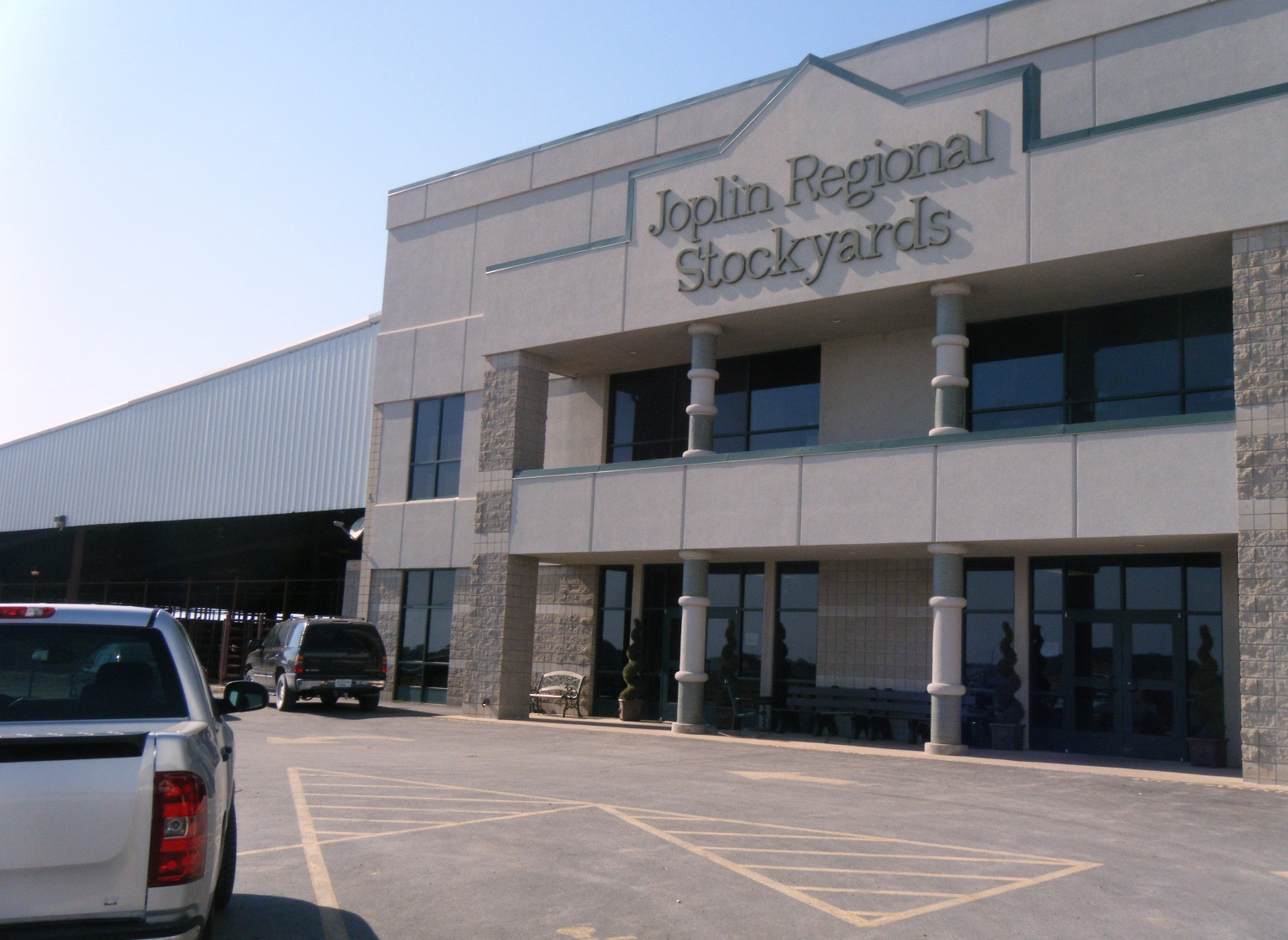
House Democratic Caucus Announces Leadership Team

The Oklahoma House of Representatives Democratic Caucus finalized and announced their leadership positions for the 59th Oklahoma Legislature.

"We have a diverse caucus that come from a range of backgrounds and I'm excited that our leadership team reflects that diversity," said Representative Cyndi Munson (D-Oklahoma City.)  "We have teachers, non-profit professionals, business owners, attorneys, insurance agents, and even an award winning recording artist."

Rep. Munson, Representative Trish Ranson (D-Stillwater), and Representative John Waldron (D-Tulsa) were elected by their colleagues in the Democratic Caucus to serve as the Democratic Leader, Caucus Chair, and Caucus Vice-Chair/Secretary, respectively, in 2021. Representative Melissa Provenzano (D-Tulsa) was selected by Rep. Munson to serve as the Assistant Democratic Leader.

"Rep. Provenzano brings a wealth of experience as a legislator and educator and I know I can trust her to help lead our caucus as Assistant Leader," said Munson. "Like me, she represents a district that has almost an even number of Democrats and Republicans so she knows how to work with people from all over the political spectrum."

"The minority caucus represents Oklahomans from all walks of life and we will make sure their voices are heard," said Democratic Caucus Chair Ranson. "I look forward to working with Leader Munson and the rest of our leadership team to do what is right for all Oklahomans."

59th Oklahoma Legislature House of Representatives Democratic Leadership
Democratic Leader- Rep. Cyndi Munson (D- Oklahoma City)
Assistant Democratic Leader- Rep. Melissa Provenzano (D- Tulsa)
Democratic Caucus Chair- Rep. Trish Ranson (D- Stillwater)
Democratic Caucus Vice-Chair/Secretary- Rep. John Waldron (D-Tulsa)
Democratic Floor Leader- Rep. Andy Fugate- (D- Del City)
Assistant Democratic Floor Leader- Rep. Regina Goodwin (D- Tulsa)
Democratic Whip- Mickey Dollens (D- Oklahoma City)

Help Represent the Pork Industry in Ag Census

All pork producers are asked to participate in the 2022 Census of Agriculture, which is open now through Feb. 6.  

The census is taken every 5 years and is a complete count of U.S. farms, ranches and the people who operate them. 

Any farm that sold or produced $1,000 or more of agricultural products during the census year should participate. 

The data collected for the census will be released as soon as spring 2024, and it will inform decisions about agriculture policy, farm and conservation programs, infrastructure and rural development, research, education, beginning farmer programs and more. 

Complete the census by mail, phone or online at the link below. 

Respond Now

Registration now open for Animal Agriculture Alliance's 2023 Stakeholders Summit

Become "Partners in Progress" May 4-5 in Arlington, Va.

The Animal Agriculture Alliance announced today that registration is now open for the 2023 Stakeholders Summit, themed "Partners in Progress: Building a Sustainable Future for Animal Ag." The event is set for May 4-5 in Arlington, Va. An outline of the Summit agenda has been posted on the event website and the full speaker lineup will be announced soon. To register, visit bit.ly/AAA23Summit. Early registration discounts are available through March 10. Discounted hotel rooms are available to attendees through April 11 at the Renaissance Arlington Capital View hotel.

A picture containing icon

Description automatically generatedHow can we create a sustainable future for animal agriculture? By building it together. The 2023 Stakeholders Summit is your opportunity to help take the incredible progress we've already made to new heights. It's your best chance to partner with stakeholders throughout the food chain and across commodities. To share ideas and form connections that will elevate the farm and food communities in ways that lift everyone. To collaborate toward vital progress. And to learn how you can do your part to help protect, sustain and advance our entire community. So, wherever you are in the food chain, join us in making a real difference. Join us as Partners in Progress.

"Sustainability is a continuous journey, not a destination. It takes a continued commitment from all stakeholders in the food supply chain to advance progress already made in animal care, environmental stewardship, responsible antibiotic use, and food safety," said Hannah Thompson-Weeman, president and CEO, Animal Agriculture Alliance. "The Alliance's 2023 Stakeholders Summit is the ideal place for everyone involved in producing, processing, and providing meat, poultry, dairy, eggs, and seafood to connect with others throughout the food supply chain, engage on key issues, and safeguard the future of our food supply."

Be sure to check the Summit website for the most up-to-date information. You can also follow the hashtag #AAA23 for periodic updates about the event. For general questions about Summit, please contact summit@animalagalliance.org or call (703) 562-5160.

Get involved:

Show your support for the Alliance's premier event by becoming an official Summit sponsor today! For 2023 sponsorship opportunities, please visit https://animalagalliance.org/initiatives/stakeholders-summit/. For more information, contact Hannah Thompson-Weeman at hthompson@animalagalliance.org. 

Thank you to our 2023 Summit sponsors: Farm Journal, Meatingplace, National Pork Producers Council, Watt Global Media, Farm Credit, American Farm Bureau Federation, American Feed Industry Association, Progressive Dairy, Protect the Harvest, and Trans Ova Genetics.

The Alliance also thanks the following members for their continued support of Summit and other Alliance programs: U.S. Poultry & Egg Association, Zoetis, Merck Animal Health, C.O.nxt, Diamond V, Genus PLC – PIC/ABS, Aviagen Group, Boehringer Ingelheim, Cargill, Dairy Farmers of America, Hendrix Genetics, Hy-Line North America, LLC, Iowa Soybean Association, JBS, Kanas Soybean Commission, Midwest Dairy, National Turkey Federation, Nutrien, Provimi North America, Inc., Seaboard Foods, and Tyson.

About the Alliance:

The Animal Agriculture Alliance safeguards the future of animal agriculture and its value to society by bridging the communication gap between the farm and food communities. We connect key food industry stakeholders to arm them with responses to emerging issues. We engage food chain influencers and promote consumer choice by helping them better understand modern animal agriculture. We protect by exposing those who threaten our nation's food security with damaging misinformation. Find the Alliance on Facebook, Twitter, Instagram, and TikTok.

Hilbert Elected to First Full Term as House Speaker Pro Tempore

On Tuesday, the Oklahoma House of Representatives elected Rep. Kyle Hilbert, R-Bristow, as Speaker Pro Tempore of the House for his first full term.

"It is truly an honor to continue serving in this role," Hilbert said. "The House is in a prime position to keep moving the needle on important policy for our state. As we start the first session of the 59th Legislature, I'm excited to continue working with my colleagues as we strive to better our state for all Oklahomans."

Hilbert has represented House District 29 since 2016. Prior to his election as Speaker Pro Tempore in 2022, Hilbert served as vice chair of the House Appropriations & Budget Committee. He and his wife Alexis live in Bristow with their two daughters, Addison and Dorothy.

The House also adopted rules for the upcoming 59th legislative session, which begins Monday, February 6. 

Vendor's Perspective: 2023 Cattlemen's Congress Features Excellent Trade Show Organization and Buyer Traffic

Kay Knight at her 2023 Cattlemen's Congress trade show booth, Kay Knight Designs.

Listen to Reagan Calk talk with Kay Knight about her experience as a vendor at Cattlemen's Congress.

At the 2023 Cattlemen's Congress trade show, Associate Farm Editor, Reagan Calk visited with Kay Knight of Kay Knight Designs located in Mason, TX. Knight talks about her experience as a vendor in the Cattlemen's Congress trade show.

Knight had her booth set up at last year's trade show at Cattlemen's Congress and said it was one of her best shows of the year, if not the best.

"It was a great show- there are a lot of people here," Knight said. "You figure if you have got 10,000 head of cattle, how many people are here to support 10,000 head of cattle? It is a bunch of people."

As Cattlemen's Congress is known for bringing in people from all over the U.S., Knight said she has already visited with customers from states such as Pennsylvania and Alabama.

"They come from everywhere," Knight said. "They have to, to have 10,000 head of cattle here."

The reason the trade show at Cattlemen's Congress stands out from other shows Knight has been in, she said, is because of the high rate of sales she receives from visitors.

"I sell a high-end product, and it takes a certain buyer to appreciate what we have and be willing to buy it," Kay said. "We have found a market for it here in Oklahoma City with Cattlemen's Congress."

Knight said she sets up her booth in many different trade shows throughout the year, and Cattlemen's Congress remains one of her favorites.

"I have to say this is the best, well-organized show we have ever been to," Knight said.

The individuals in charge of organizing and running the trade show, Knight said, help vendors unload their products and put their booths together upon arrival.

"They are awesome," Knight said. "They gave us a fantastic location- we love it here. If all the shows ran that well, it would be really nice, but unfortunately, that is not the case."

You can visit Kay Knight at her booth, Kay Knight Designs, at the 2023 Cattlemen's Congress trade show! Visit the website at https://kayknightdesigns.com/ .

Champions Selected at the 2023 Cattlemen's Congress Junior Limousin Show

Members of the North American Limousin Junior Association flaunted their Limousin and Lim-Flex entries in the 2022 Cattlemen's Congress junior show. The show was held Tuesday, January 3 in Oklahoma City, Okla. Judge Jarold Callahan evaluated the junior Limousin and Lim-Flex animals.

In the Junior Lim-Flex show, Grand Champion Lim-Flex Female was MKLN 1105J exhibited by Sara Sullivan. She is a 25 percent Lim-Flex female born 11/3/2021 and sired by PVF Blacklist 7077.

The Reserve Champion Lim-Flex Female was exhibited by Makayla Massey. Ratliff Jail Break 137J ET is a 50 percent Lim-Flex heifer born 4/10/2021 and sired by Silveiras Style 8303.

In the Junior Limousin show, Grand Champion Limousin Female was Boss Lake Ms Molly 131J ET exhibited by Elly Roessler. She is a purebred female born 3/22/2021 and sired by Cottage Lake Border Agent.

The Reserve Champion Limousin Female was exhibited by Bentley London. BNTL Java is an 81 percent Limousin female born on 2/12/2021 and sired by AUTO Black Coffee 512A.

For more information about the North American Limousin Junior Association or to locate Limousin and Lim-Flex breeders in your area, call 303-220-1693 or visit www.NALF.org.

A complete list of winners follows:

2023 Cattlemen's Congress Junior Lim-Flex & Limousin Shows
January 3, 2023
Oklahoma City, Okla.
Judge: Jarold Callahan
Entries: 110 head


Grand Champion Lim-Flex Female: MKLN 1105J, 11/3/2021, 25% Lim-Flex, sired by PVF Blacklist 7077, out of JSZC HH TSSC Larissa 101G ET, exhibited by Sara Sullivan, Dunlap, Iowa.

Reserve Grad Champion Lim-Flex Female: Ratliff Jail Break 137J ET, 4/10/2021, 50% Lim-Flex, homozygous black, double polled, sired by Silveiras Style 9303, out of Riverstone Charmed, exhibited by Makayla Massey, London, Ky.

Grand Champion Limousin Female: Boss Lake Ms Molly 131J ET, 3/22/2021, Purebred, double black, double polled, sired by Cottage Lake Border Agent, out of Auto Olga 498A, exhibited by Elly Roessler, Bargersville, Ind.

Reserve Champion Limousin Female: BNTL Java, 2/12/2021, 81% Limousin, homozygous black, horned, sired by AUTO Black Coffee 512A, out of MAGS Beach Comber, exhibited by Bentley London, Collinsville, Texas.

Lim-Flex Junior Show Division Winners:

Division I Champion: SSUL 2412K ET, 3/26/2022, 56% Lim-Flex, homozygous black, double polled, sired by RLBH Air Force One, out of WLR Eden ET, exhibited by Sara Sullivan, Dunlap, Iowa.
Division I Reserve: Ratliff Keep Up The Charm, 1/25/2022, 50% Lim-Flex, homozygous black, double polled, sired by Gateway Follow Me F163, out of Riverstone Charmed, exhibited by Trace Falkenstien, Oswego, Kan.  

Division II Champion: MKLN 1105J, 11/3/2021, 25% Lim-Flex, sired by PVF Blacklist 7077, out of JSZC HH TSSC Larissa 101G ET, exhibited by Sara Sullivan, Dunlap, Iowa.
Division II Reserve: KLCS MK Jam Packed, 9/9/2021, 75% Lim-Flex, homozygous black, double polled, sired by TASF Crown Royal 960C ET, out of KLCS Driving Miss Daisy, exhibited by Keely Shultz, Danielsville, Ga.

Division III Champion: CELL 1401J ET, 7/14/2021, 50% Lim-Flex, homozygous black, double polled, sired by Silveiras Style 9303, out of Riverstone Charmed, exhibited by Karly Payne, Sharpsburg, Md.
Division III Reserve: BKBM Joleen 9037J, 6/9/2021, 31% Lim-Flex, double black, double polled, sired by Schilling's R&L Confidential, out of LFL Gone Girl 9037 G, exhibited by Baron Mitchell, Wellington, Texas.

Division IV Champion: Ratliff Jail Break 137J ET, 4/10/2021, 50% Lim-Flex, homozygous black, double polled, sired by Silveiras Style 9303, out of Riverstone Charmed, exhibited by Makayla Massey, London, Ky.
Division IV Reserve: SHSK Stella 100J ET, 1/16/2021, 43% Lim-Flex, double black, homozygous polled, sired by EXAR Classen 1422B, out of WLR Prada, exhibited by Skyler Ward, New Paris, Ohio.

Limousin Junior Show Division Winners:

Division I Champion: TASF CLAC Karma 639K ET, 4/3/2022, Purebred, homozygous black, homozygous polled, sired by AUTO Lucky Guy 140D ET, out of AUTO Peyton 206Y, exhibited by Ben Spencer, Gibbon, Neb.
Division I Reserve: SC Kiara 522K, 5/3/2022, 78% Limousin, double black, double polled, sired by Legacy's Hercules, out of SCAS designer 922D, exhibited by Braxton Chaplin, Fredonia, Kan.

Division II Champion: PC Journey 111J, 12/4/2021, homozygous black, heterozygous polled, sired by LFL Deluxe Edition 6029D ET, out of XOXO Hugs & Kisses, exhibited by Tucker Parkinson, Levelland, Texas.
Division II Reserve: TASF Jersey Girl 569J ET, 10/17/2021, 78% Limousin, homozygous black, homozygous polled, sired by CJSL Dauntless 6257D ET, out of AUTO Peyton 206Y, exhibited by Sage Hanrahan, Okarche, Okla.

Division III Champion: TASF Just As Classy 541J ET, 5/21/2021, 82% Limousin, homozygous black, double polled, sired by TASF Crown Royal 960C ET, out of TASF Forever Classy, exhibited by Claire Kessler, Crawfordsville, Ind.
Division III Reserve: Ratliff Just Dandy 195J ET, 5/5/2021, 81% Limousin, homozygous black, double polled, sired by RLBH Air Force One, out of Riverstone Ever After ET, exhibited by Ashley Schrag, Moundridge, Kan.

Division IV Champion: Boss Lake Ms Molly 131J ET, 3/22/2021, Purebred, double black, double polled, sired by Cottage Lake Border Agent, out of Auto Olga 498A, exhibited by Elly Roessler, Bargersville, Ind.
Division IV Reserve: BNTL Java, 2/12/2021, 81% Limousin, homozygous black, horned, sired by AUTO Black Coffee 512A, out of MAGS Beach Comber, exhibited by Bentley London, Collinsville, Texas.

Cattlemen's Congress Quickly Becoming Major Show for Herefords

Click here to listen to Ron Hays talk with Shane Bedwell about Herefords at Cattlemen's Congress.

Senior Farm and Ranch Broadcaster, Ron Hays, is visiting with the American Hereford Association's Chief Operating Officer and Director of Breed Improvement, Shane Bedwell, about the 2023 Cattlemen's Congress.

Bedwell has been part of the Cattlemen's Congress board of directors for all three years the show has been in existence.

"I think folks here in the third year- they kind of know what to expect," Bedwell said. "The first two years, it was all new."

Exhibitors seem to be adjusting nicely to the pace of Cattlemen's Congress, Bedwell said, and everyone seems very comfortable.

"This show has a long way to go relative to just traditions of some of the other shows out there, but you kind of see it on its way," Bedwell said. "You look at the overall numbers of this show, and it has kept up pace very strong with where we have been in the last two years, and so that tells me that 95 to 98 percent of the exhibitors really like being here."

It takes a lot of power to keep cattle comfortable in the barns and prepare to exhibit those cattle in the show ring, Bedwell said, so Cattlemen's Congress staff has done a good job of increasing that power availability.

"They have updated the barns," Bedwell said. "In some of the barns, you will see a higher amp power, and that has been nice."

Cattlemen's Congress continues to make upgrades each year, Bedwell said, and exhibitors notice those efforts. As for the Hereford breed, Bedwell said Cattlemen's Congress attracts many Hereford exhibitors.

"We have seven national shows this year, and they are all over the country, but this is our biggest one. We will have our national sale here on Friday night and, of course, our pen shows, and our regular open bull and open female show and a great junior show."

The American Hereford Association welcomes commercial cattlemen and women, and Hereford breeders to attend the Hereford Pen Show in the Performance Arena on Thursday, Jan. 5. for a luncheon. The Pen Show begins at 11:00 AM.

During the show, enter to win a W-W Livestock Systems Producer 640 Chute. Tickets for the complimentary Certified Hereford Beef luncheon will be available at the AHA booths located in the Super Barn and Performance Arena on Thursday prior to the show. Those who enter must be present to win.

"We are going to serve everybody a steak sandwich, a certified Hereford beef steak sandwich if you come and watch, and then we are going to raffle off a WW chute," Bedwell said.

The Beef Buzz is a regular feature heard on radio stations around the region on the Radio Oklahoma Ag Network and is a regular audio feature found on this website as well. Click on the LISTEN BAR for today's show and check out our archives for older Beef Buzz shows covering the gamut of the beef cattle industry today.

TSCRA announces 2023 Cattle Raisers Convention & Expo student opportunities

Texas & Southwestern Cattle Raisers Association announced several student opportunities during the 2023 Cattle Raisers Convention & Expo including free admission for students, a graduate research poster showcase and a youth photo contest. 

Students will receive free admission to the 2023 School for Successful Ranching and Expo by using the code STUDENT when registering at cattleraisersconvention.com. Students must present a student ID at the registration desk on site.

During the 2023 Cattle Raisers Convention & Expo, TSCRA will host a graduate research poster showcase. March 25 at the Fort Worth Convention Center, graduate-level students will have the opportunity to present their research to industry leaders, TSCRA members and affiliates. Graduate students from accredited universities in Texas or Oklahoma are invited to apply to participate. All research posters must relate to the beef industry. Applications are due March 1.

TSCRA will also host a youth photo contest for youth ages 5-18. Contestants can mail their photographs and entry forms to the TSCRA office by March 1. All qualifying entries will be judged at the 2023 Cattle Raisers Convention & Expo. For more information about the showcase and photo contest, visit cattleraisersconvention.com/student-opportunities.

Younger students, ages 5-10, have the opportunity to attend Cow Camp hosted by the Cattle Raisers Museum, Saturday, March 25. The event will run from 9 a.m. to 3 p.m. at the museum, located at 1600 Gendy Street on the second floor of the Fort Worth Museum of Science and History. During Cow Camp, young cattle raisers will get to explore the Cattle Raisers Museum, the National Cowgirl Museum, and the Fort Worth Museum of Science and History as well as participate in fun, hands-on activities throughout the day. Price per child is $35 if registered before February 15, and $45 if registered before March 15th. Registration includes lunch, snacks and camp supplies. Space is limited so early registration is recommended. Camp registrations can be completed when registering for convention at cattleraisersconvention.com.

For more information or questions related to student opportunities at the 2023 Cattle Raisers Convention & Expo please contact education@tscra.org <mailto:education@tscra.org>  or call 817-916-1753.

National Bison Association Junior Judging Contest Offered at 2023 National Western Stock Show

Individuals 8 - 21 years of age are invited to compete in the Larry Higgins Bison Junior Judging Contest on Friday, January 20th at 9 am in the Yards at the National Western Stock Show. This event is hosted by the National Bison Association and the Rocky Mountain Bison Association and held in conjunction with the Gold Trophy Show and Sale (GTSS) during the National Western Stock Show in Denver, Colorado.

The GTSS has been the industry's premier bison breeding stock auction at the National Western Stock Show for over 40 years, and participants will judge bison that are already there for the show and sale. Students will judge four classes of bison and provide oral reasons on one class, to be selected by the judges.

Top three individual contestants are eligible to earn up to $1,500 in college scholarships. Additional recognition will be provided for the top three registered teams and the top three junior participants (12 years of age or younger). There are no entry fees. This event is open to individuals 8-21 years old who are academically eligible. Registration in advance is encouraged.

Registration and full competition rules are available at: https://bit.ly/3ePi8gw .

The NBA's Junior Judging program is based on criteria used in 4-H and FFA livestock judging contests. The bison judging program is a brainchild of NBA member and Stratford, Okla., veterinarian and bison producer, Dr. Gerald Parsons, who proposed taking the contest to the national level after success with bison judging contests within the state of Oklahoma.

"The bison industry wants to attract young people to the business, and this judging contest is one way to encourage young people to learn about bison," Parsons said.

The NBA Junior Judging contest has been held for over a decade at the National Western Stock Show and has educated nearly 1,000 young people about how to discern a healthy, quality American bison that would be a beneficial addition to a breeding program. The event was named the Larry Higgins Bison Junior Judging Contest in memory longtime Colorado bison rancher and Junior Judging volunteer, Larry Higgins.

The NBA offers a Youth membership at a highly discounted rate to those 21 years of age and younger who would like to learn more about this emerging sector of American agriculture. Learn more at www.bisoncentral.com.

Farmers Lead Land Purchases, Setting Record Sales Levels in Several States

The land market momentum that began in late 2021 accelerated into 2022 and was driven by competition for high quality cropland; it resulted in both record sales and overall increases in land values across the country. 

Strong demand across all of the country's regions brought opportunities to landowners interested in capitalizing on the current land market. Aggressive land buyers continue to drive competition through public/online auction methods, giving us a true market value in those specific areas.  

In most cases, landowners selling property experienced values never-before-seen for their farmland. The final results at these auctions set records in several states and have increased year-to-year values between 20 percent to 34 percent across Corn Belt states, according to the most recent report from the Kansas City Federal Reserve. 

Landowners continue to turn to Farmers National Company to market their farmland assets, which has resulted in a new record sales volume of $766 million during 2022. This sales volume exceeds the previous record set in 2021 of $750 million. The majority of these sales came through competitive auction methods (76%) with increases in both total transactions and acres sold.  

"What we are seeing is a true supply/demand scenario. There are simply more buyers willing to bid on the limited amount of land coming to the market. Current commodity markets and strong cash rents provide buyers with the necessary returns to meet their investment criteria while giving them the opportunity to expand operations or add land to their investment portfolio," explained Paul Schadegg, Senior Vice President of Real Estate Operations for Farmers National Company. "Our anticipation is that these values will remain strong coming into the new year with continued strength in the ag economy although we may see less and less of the record sales." 

Who are the land buyers? Farmers National Company reports seeing the traditional local farmer-operator as the successful buyer of farmland 75 percent of the time.  

"With that being said, land investors are certainly part of the equation as they have been active bidders at most sales to a point that has set the floor on values. While the investor may not always be the buyer of land, they are part of the competition driving the values higher," Schadegg said. "We also expect this trend to continue as many investors see the long-term value of farmland, the opportunity to diversify investments and the value of land as a hedge against rising inflation." 

What factors will continue to drive the land market or slow its growth? 

"Commodity markets will continue to be the main driver in land value. When coupled with the supply/demand scenario, the outlook for continued strong land values remains strong moving into 2023. 

      However, we are cautious as interest rates continue to rise and inflation becomes a large factor in cropping inputs. These factors have the impact to decrease net farm income, erode operator equity and subsequently pressure farmland value," Schadegg said. "So we sit at a somewhat precarious point in time where opportunity exists for both land sellers and buyers, but is dependent on the continued strength of the agriculture economy to stabilize or grow." 

Local Bounti Breaks Ground at New High-Tech Controlled Environment Agriculture Facility in Texas to Support Growing Demand

Currently operating the largest national distribution footprint in the industry, future operations in Texas signal Local Bounti's commitment to reduce food miles throughout the United States

Local Bounti Corporation (NYSE: LOCL, LOCL WS), a leading U.S. controlled environment agriculture (CEA) company committed to growing locally and distributing nationally with the largest distribution footprint in the industry, today announced plans to construct and operate a new state-of-the-art indoor facility in Mount Pleasant, Texas. To kickoff construction, Local Bounti will be joined by state and local leaders for a groundbreaking ceremony at the facility scheduled for 9:15 AM CT Wednesday, January 4.

Following the groundbreaking, the Company will begin construction of a six-acre facility, which will leverage Local Bounti's proprietary Stack & Flow Technology™ to grow and sell its indoor grown line of packaged leafy greens. Varieties include spring mix, butter lettuce, romaine crisp, green leaf, and additional blends. The facility is expected to commence operations in the fourth quarter of 2023.

"Mount Pleasant is thrilled to welcome Local Bounti to the region," said Nathan Tafoya, Executive Director of the Mount Pleasant Economic Development Corporation. "With its innovative and proprietary controlled-environment agriculture (CEA) approach, Local Bounti adds a much-desired agri-tech ingredient to Mount Pleasant's rich history in food production. We've already begun integrating workforce training and partnership conversations with our college's Ag program. As Local Bounti's chosen Texas location for a multimillion-dollar investment, and multiple planned phases, Mount Pleasant looks forward to growing with Local Bounti for many years to come."

The addition of the new facility in northeast Texas is expected to fortify Local Bounti's distribution in markets across Texas, Oklahoma, Louisiana, Mississippi, Arkansas, Kansas, and Missouri. Further, the facility is designed to provide additional capacity to meet existing demand from Local Bounti's direct relationships with blue-chip retailers and distributors throughout the region.

"Local Bounti is excited to call Mount Pleasant home to our latest facility in a rapidly expanding national footprint. Future local operations will help us answer existing customer demand within the Lone Star State and adjacent markets," said Craig Hurlbert, Co-Founder & Co-CEO of Local Bounti. "Today's announcement comes at a time when demand is surging across the country for our sustainable produce, and we are excited to establish a new regional base of operations where we can continue to reduce food miles."

The construction phase of the facility will begin immediately and is expected to generate approximately 50 direct jobs in Mount Pleasant, Texas. Once the facility is operational in the fourth quarter of 2023, Local Bounti expect to generate approximately 200 direct and indirect jobs throughout Titus County.

Local Bounti is building one of the largest networks of high-tech CEA facilities in the U.S. with the ability to grow sustainable, fresh produce year-round, providing consumers with extended shelf life versus traditional farming methods.

About Local Bounti

Local Bounti Corporation (NYSE: LOCL, LOCL WS), is changing how food is grown and delivered to kitchen tables by utilizing patent-pending Stack & Flow Technology™ to locally grow a variety of fresh, delicious, and sustainable products 365 days a year and distribute nationally with the largest distribution footprint in the controlled environment agriculture industry. The company operates advanced indoor facilities with its two brands: Local Bounti® and Pete's®, reducing the food miles required to ship to consumers across the United States. Our team is delivering on Local Bounti's promise to increase produce shelf life, reduce waste, conserve water, address food scarcity in local communities, and lower GHG emissions. To find out more, visit localbounti.com or eatpetes.com, or follow Local Bounti on LinkedIn for the latest news and developments.

If interested in interviewing Local Bounti executives or learning about the company's products and operations, including patent-pending Stack & Flow Technology ™, please contact press@localbounti.com. For investor news and information, please contact investors@localbounti.com.

Forward-Looking Statements

Certain statements included in this press release that are not historical facts are forward-looking statements for purposes of the safe harbor provisions under the United States Private Securities Litigation Reform Act of 1995. In some cases, you can identify these forward-looking statements by words such as "anticipate," "approximate," "believe," "commit," "continue," "could," "estimate," "expect," "hope," "intend," "may," "outlook," "plan," "project," "potential," "should," "would," "will," and other similar words or expressions. Forward-looking statements reflect Local Bounti's current expectations or beliefs concerning future events and actual events may differ materially from historical results or current expectations. The reader is cautioned not to place undue reliance on these forward-looking statements, which are not a guarantee of future performance and are subject to a number of uncertainties, risks, assumptions and other factors, many of which are outside the control of the Company. The forward-looking statements in this press release address a variety of subjects including, for example, plans to construct and operate the Mount Pleasant, Texas, facility, the size of the facility, the construction schedule, Local Bounti's planned distribution network, and expected jobs relating to the facility. These risks and uncertainties include, but are not limited to, the ability to effectively integrate the operations of any businesses it may acquire; restrictions contained in debt facilities; ability to repay, refinance, restructure and/or extend its indebtedness as it comes due; unknown liabilities that may be assumed in acquisitions; ability to generate revenue; the ability to achieve or sustain profitability; the ability to obtain additional necessary capital when needed on acceptable terms, or at all; the ability to build out additional facilities; the ability to develop and maintain its brand or brands it may acquire; the ability to manage the risks of diseases and pests destroying crops; the ability to defend itself against intellectual property infringement claims; changes in consumer preferences, perception and spending habits in the food industry; seasonality; and other risks and uncertainties indicated from time to time, including those under "Risk Factors" and "Forward-Looking Statements" in Local Bounti's Annual Report on Form 10-K for the year ended December 31, 2021, filed with the SEC on March 30, 2022, as supplemented by subsequent Quarterly Reports on Form 10-Q and Annual Reports on Form 10-K, and other reports and documents Local Bounti files from time to time with the SEC. Local Bounti does not undertake or accept any obligation or undertaking to update or revise any forward-looking statements to reflect any change in its expectations or any change in events, conditions or circumstances on which any such statement is based.

NMPF CEO's Corner: 2023 Promises Policy Progress

A Washington truism is that the period that occurs after an election cycle is complete, but the next one hasn't yet overtaken everyone's attention, is when policy gets done. That makes it important for this industry to push for significant progress in 2023, as the 118th Congress convenes and clear policy challenges lie ahead. 

High on NMPF's priorities is leading the way toward federal adoption of a modernized Federal Milk Marketing Order system for producers that promotes a stable industry and provides fairer, more-up-to-date pricing for the nutritious and necessary products dairy farmers and their cooperatives provide. We made tremendous progress on this issue in 2022, driving a consensus approach that gathered many of this industry's smartest minds and, through more than 100 committee and task force meetings of NMPF Board members and producers, and marketing experts from our member cooperatives, from all regions of the country, arrived at a proposal unanimously endorsed at our annual meeting in October. That's a lot.  

But there's much more required to bring these efforts to fruition – much, much more. NMPF's proposal itself isn't quite complete – an important part of the plan, recommendations on updates to the nation's Class I price surface, are expected this month. From there, we will seek a final endorsement that prepares the way for us to request a USDA federal order hearing. That also will require extensive preparation, as the national consensus we've built among NMPF members will then form the basis of a conversation in which the entire industry will participate. 

We welcome that conversation, which undoubtedly will include some good and not-so-good ideas from multiple interests. But throughout that conversation – and the hearing, and ultimately a producer vote – it will be critical to transcend narrow self-interest and work in a spirit of good faith to ensure that FMMO modernization is truly in the best interests of all producers. NMPF has kept that goal throughout; by crafting the most thoroughly researched, discussed, vetted and voted-upon of all proposals, we are in a strong position to meet the leadership challenge that falls to us as the nation's dairy producer organization. We look forward to meeting this challenge, which will benefit all of dairy for years to come.

At the same time the FMMO discussions advance, we will be very active in shaping the farm bill due later this year, along with engaging in other legislative opportunities (and challenges) that come dairy's way. 

The twice-a-decade reauthorization of federal farm and nutrition programs sets the rhythm of ag policy in Washington, but it's also important to remember that, in the end, the 2023 Farm Bill is simply another vehicle for advancing better policy, and it's far from the only one available. Unlike the previous two farm bills, in which dairy policy clearly required significant change, this time around the main farm bill dairy safety net and risk-management programs – the Dairy Margin Coverage Program created at NMPF's insistence, and the Dairy Revenue Protection and Livestock Gross Margin programs, which NMPF's efforts made workable for broad producer participation – need evolution more than revolution. 

Let's not forget that the Farm Bill has many components, including sections governing trade, conservation and other areas critical to agriculture, so we'll make sure all our priorities in the bill are addressed while pursuing other legislative goals, which range from financial incentives that support dairy's Net Zero vision to immigration programs that work for dairy, through any means possible.  

FMMO modernization and the farm bill alone would be more than enough to fill one year of Washington policy work. But of course, these two items are only the beginning of a long list of what must get done, from other legislative initiatives to federal nutrition policy proposals to overcoming regulatory challenges to expanding overseas markets The Biden Administration needs to pick up the pace on new trade deals even as it aggressively enforces existing ones. Yet another iteration of EPA's Waters of the U.S. rule – this one going the wrong direction for agriculture – requires a strong response. And of course, we're still waiting for FDA to give its guidance on labeling of plant-based dairy imitators, eternally hoping the agency charged with enforcing accurate nutrition labeling does what's right for consumers. Each year in Washington represents a new beginning. Opportunities are plentiful, and opportunities go to those who seize them. We embrace the challenge and expect that, working with the community that moves dairy forward, we can achieve great policy progress in the year ahead. 

By:

Jim Mulhern

President and CEO 

National Milk Producers Federation

Lankford Sworn in as Senior Senator for Oklahoma in the 118th Congress

Senator James Lankford (R-OK) today issued the following statement as the 118th Congress gets underway and he begins his second full, six-year term as the senior Senator for Oklahoma:

"It is humbling to stand before God and the nation to take my oath again to protect and defend the United States Constitution on behalf of Oklahoma. I welcome Senator Markwayne Mullin and his beautiful family to the Senate, as he becomes the newest Senator for Oklahoma. I have known Markwayne, his wife, and his family for years through his service in the House of Representatives. I look forward to partnering with him to make Oklahoma and our nation better, safer, and more prosperous. I pray the Senators in the 118th Congress are determined to answer the issues we face as a nation. Our nation needs more than dialogue. We need solutions."

Beef Quality Assurance Training Offered at Cattlemen's Congress Ensures Superior Performance of Beef Industry

Click here to listen to Reagan Calk talk with Rosslyn Biggs about the value of BQA training.

At the 2023 Cattlemen's Congress, the Oklahoma Beef Council is offering opportunities to receive or renew Beef Quality Assurance certification in the Super Barn Sales Arena. Today, Associate Farm Editor, Reagan Calk, got the chance to attend the first training and met up with OSU's Dr. Rosslyn Biggs afterward to talk about the value of BQA training for those in the cattle industry.

Along with other OSU Extension staff, Biggs took part in the BQA presentation.

"Beef Quality Assurance training is really a commitment by all of us in the beef industry to our consumers that we are providing a healthy, welfare-focused product all the way through the system that ends up on their supermarket shelves and on their plates," Biggs said.

Biggs said the BQA training can also be taken online. The training, she added, is applicable to practical, everyday practices on producer's farms or ranches.

This summer, Biggs said, producers need to be aware that over-the-counter antibiotics are going to move under veterinary prescriptions according to FDA rules and guidance.

"One of the biggest focuses for me, as a veterinarian, is developing the veterinarian-client-patient relationship and setting forward some goals, creating an operation that can be profitable with herd health focus, with treatment focus and with records that are ready to for both the veterinarian and most importantly, the producer," Biggs said.

The next BQA training at Cattlemen's Congress will be held Thursday, January 5, at 10 a.m. in the sale arena outside of the coliseum.  Following each training, Biggs said, is a free lunch.

"Registration is free, come bring the family, bring everybody," Biggs said.  

Opportunities for BQA Certification at Cattlemen's Congress in the Super Barn Sales Arena at the Oklahoma State Fairgrounds:

  • Tuesday, January 10,2023-BQA with Luncheon 11:00 a.m.-12:30 p.m. 
  • Special Event-Commercial Cattlemen's Luncheon January 5, 2023 BQA Training-10:00 a.m.-11:00 a.m. with Free Ticket to Cattlemen's Luncheon featuring ribeye steak sandwiches with successful completion of BQA certification  

To register, click here.

State Senate re-elects Treat as President Pro Tem, Sets Rules for February Session

The Oklahoma Senate Tuesday re-elected Sen. Greg Treat as president pro tempore and adopted rules for the upcoming 59th legislative session that begins February 6.

Today's vote marks the fifth consecutive session that Treat will serve in this leadership role. Senate members also approved rules for the 59th Legislature and approved committee membership.

The votes came during the Senate's organizational day, a constitutional requirement of both the state House and Senate before the start of each two-year session.

"I am humbled and honored beyond measure to be re-elected into this leadership role," Treat said. "I take this position very seriously and look forward to working with my colleagues in the Senate, across the rotunda in the House and the executive branch to ensure the decisions we are making are for the benefit of Oklahomans. The Senate is ready to meet all the challenges ahead and we look forward to making our state a better place for our families, friends and loved ones to thrive."

Treat and his wife Maressa have three children: Mason, Cooper and Olivia. He represents District 47 in the Senate, which includes northwest Oklahoma City and portions of Edmond and Deer Creek.

The following individuals were also named to Pro Tem Treat's leadership team:

  • Greg McCortney, R-Ada, Floor Leader
  • Lonnie Paxton, R-Tuttle, Assistant Floor Leader
  • Julie Daniels, R-Bartlesville, Assistant Floor Leader
  • Roger Thompson, R-Okemah, Appropriations Chair
  • Chuck Hall, R-Perry, Appropriations Vice Chair
  • Casey Murdock, R-Felt, Whip (elected at caucus retreat)
  • Bill Coleman, R-Ponca City, Assistant Whip
  • Dewayne Pemberton, R-Muskogee, Assistant Whip
  • Cody Rogers, R-Tulsa, Assistant Whip
  • Dave Rader, R-Tulsa, Republican Caucus Chair (elected at caucus retreat and ran unopposed)
  • David Bullard, R-Durant, Republican Caucus Vice Chairman (elected at caucus retreat)
  • Darcy Jech, R-Kingfisher, Rural Caucus Chair
  • Brent Howard, R-Altus, Chief Presiding Officer

Last month, Treat announced his appointments of Senate committees, committee chairs and vice chairs. These appointments were voted on and formalized on Tuesday. For a complete membership list for each committee, click here.

The 59th legislature convenes Monday, February 6.

Oklahoma Farm Bureau sending Five Delegates to Convention in Puerto Rico

Oklahoma Farm Bureau will send five voting delegates to represent OKFB members at the business session of the 2023 American Farm Bureau Annual Meeting in Puerto Rico.

Farm Bureau delegates from around the country will gather on Tuesday, Jan. 10 to discuss and vote on policy proposals to determine AFBF policy for the coming year.

OKFB members submitted grassroots policy proposals to be considered by the AFBF delegate body, and resolutions and ideas submitted by Oklahoma members will be heard on the business session floor.

One of the top areas of interest for the business session is anticipated to be the role and impact of environmental, social, and governance considerations upon businesses, and especially production agriculture. Numerous resolutions concerning ESG were submitted, and AFBF created a new title in the organization's policy book concerning the issue. OKFB members voiced their concerns about the potential use of ESG scoring on businesses during the 2022 OKFB annual meeting.

OKFB delegates will also be watching policy proposals focusing on changes to commercial driver's license requirements. Farm Bureau members are especially interested in ensuring requirements for new CDLs and renewals of the licenses do not impose overburdensome requirements on license holders.

With farm bill discussions on the horizon, OKFB members will be monitoring policy proposals concerning farm programs, conservation efforts, crop insurance and nutrition assistance programs to ensure an appropriate safety net for agricultural producers is available while keeping federal spending at appropriate levels.

Environmental regulations, and especially the actions of the Environmental Protection Agency, are another area of concern for Oklahoma agriculturalists. OKFB delegates intend to support policies that ensure the EPA does not overstep its regulatory authority and ensure that sound science is used by the EPA to make decisions.

Oklahoma delegates will also watch policies concerning interstate commerce as well as trucking and vehicle regulations.

For more information about the 2023 AFBF Annual meeting, including virtual registration opportunities, visit annualconvention.fb.org

NCGA Expresses Disappointment in EPA WOTUS Rule

The U.S. Environmental Protection Agency and Army Corps of Engineers released a final rule on December 30 that determines what constitutes Waters of the United States, or WOTUS, under the Clean Water Act.
 

The rule was released as the U.S. Supreme Court prepares to decide a case, Sackett vs. EPA, which will provide more clarity on the issue.  

"We are disappointed that EPA moved ahead with its final rule when the Supreme Court will soon render a decision on this matter," said National Corn Growers Association President Tom Haag. "The Court's ruling could negate major elements of this WOTUS rule and will create even more uncertainty for farmers."

This year, NCGA submitted comments to EPA and encouraged corn growers to do the same as the rule was being considered. The group also participated in regional hearings held by EPA.

NCGA has made it clear that farmers are committed to the objectives of the Clean Water Act and the protection of water quality around agricultural operations and downstream. But, the organization has argued, achieving these objectives does not require drainage and water features, which are distant from relatively permanent flowing tributaries, be made subject to EPA's regulations.

"As farmers, we are the ones who will feel the impact of this rule," said Haag. "Yet, it appears that our comments fell on deaf ears.

Oklahoma Cattleman's Ball Raises over $6,000

The Gelbvieh Association of Oklahoma held its 2nd annual Cattleman's ball on Sunday, where over 300 attendees, along with friends and family, gathered together to raise money to benefit the Way out West Classic (WOW Classic), which is the American Gelbvieh Junior National show to be held in Woodward coming up in July of 2024.

This year's attendance more than doubled from the first year of the ball. Lots of good food and fellowship were on hand as over 175 pounds of calf fries (mountain oysters) were served with 200 pounds of "Cowboy Candy" beef fillet from calf fry award-winning Piguet's Prime Time Catering of Vinita.

Oklahoma Cattlemen's Association was well represented, with Byron Yeoman (current President), Mike Weeks (Past President), and Dr. Troy Shelby (President-Elect) showing their support along with Oklahoma CattleWomen President Connie Tabor.


American Gelbvieh Association and the AGA Foundation showed their support with Executive Director Megan Slater, Marketing director Tom Strahm, Youth Activities Coordinator Jake Renner, AGA Foundation Director Tom Murphy, and others attending.

The GAO looks forward to continuing the 3rd Annual Cattleman's Ball in 2024 and beyond. The goal is to provide a family-friendly atmosphere for Congress attendees and local calf fry enthusiasts to fellowship and basically have a "Ball".

Cattle Raisers Convention & Expo registration now Open

Texas & Southwestern Cattle Raisers Association (TSCRA), the largest and oldest livestock association based in Texas, announced the opening of registration for the 2023 Cattle Raisers Convention & Expo®. The annual event, which will be held March 24-26 in downtown Fort Worth, is the largest gathering of livestock producers in the Southwest, drawing more than 3,500 landowners together.

The 2023 Cattle Raisers Convention & Expo® featured speakers include former White House Press Secretary Dana Perino, CattleFax CEO Randy Blach, and a host of other industry experts. In addition, TSCRA's School for Successful Ranching will host more than 30 hours of educational sessions on topics like direct-to-consumer beef, legal matters, carbon credits, border security and more.

Guests can register for the 2023 Cattle Raisers Convention & Expo® by visiting www.cattleraisersconvention.com.

Ag Producers Can Be Paid for the Carbon in their Soil, says Jerry Stephens of Agoro Carbon Alliance

Listen to KC Sheperd talk with Jerry Stephens about climate-smart ag.

At the National Association of Farm Broadcasters Conference in Kansas City, Farm Director, KC Sheperd talked regional sales manager for Agoro Carbon Alliance out of South Dakota, Jerry Stephens. Sheperd and Stephens talk about encouraging producers to partake in climate-smart agriculture.

"I work with producers every day in these carbon markets, developing carbon credits," Stephens said.

Stephens helps producers implement new environmentally friendly practices on their farms or ranches.

On a farm, Stephens said this could mean less tillage or implanting a cover crop. On a ranch, he added, this could mean improving grazing by adding more species.

"Really, the bottom line for carbon is really simple," Stephens said. "We all know what organic matter is. We know what it looks like and what it smells like when you till the soil. If you can increase the organic matter of your soil, you are increasing carbon."

Farmers who have added or captured additional carbon in their soil, Stephens said, can be paid for that.

"The money that is involved in the carbon markets is great because it will help implement these practices," Stephens said. "For example, I was in western South Dakota, and they were talking about how one percent of change in organic matter will hold another inch of water. Well, last three years, we have been in a drought- can you imagine what one more inch of water-holding capacity would mean to a rancher in any of these arid states we live in?"

To learn more about how carbon credits work, Stephens said producers can visit https://agorocarbonalliance.com/ and an agronomist can come and visit with them about their operation.

Stephens said many producers automatically assume they will not qualify for enrollment. While not all of a producer's ground may be eligible, Stephens said they might be surprised by what would qualify.

"We actually pay people for tons of carbon we find in the soil," Stephens said. "So, we take a baseline sample in year zero, and come back in year five and in year ten, and we can measure how much new carbon is out there."

It is not about the activity, Stephens said, it is about proving that it is a "pay for performance" type program.

"If you are good about the way you conserve your land and the way you farm or operate your ranch and you are increasing your soil health- your forage base, you are sequestering carbon," Stephens said. "We can measure that with a soil test."

Farmer sentiment rebounds at year end on stronger 2022 income

Following a two-month decline and a year of weak sentiment, the Purdue University/CME Group Ag Economy Barometer closed out the year on a more positive note, rallying 24 points in December to a reading of 126. U.S. farmers were more optimistic about both their current situation and expectations for the future. The Current Conditions Index jumped 37 points to a reading of 135, while the Future Expectations Index increased 18 points to a reading of 122. The Ag Economy Barometer is calculated each month from 400 U.S. agricultural producers' responses to a telephone survey. This month's survey was conducted from December 5-9.

"The improvement in current sentiment was motivated by producers' stronger perception of current financial conditions on their farms and could be attributed to producers taking time to estimate their farms' 2022 income following the completion of the fall harvest," said James Mintert, the barometer's principal investigator and director of Purdue University's Center for Commercial Agriculture.

The Farm Financial Performance Index climbed 18 points to a reading of 109 in December. Notably, this was the only time in 2022 that the index was above 100. The turnaround was driven by a sharp increase in the percentage of producers who expect better performance than last year, which jumped from 23% to 35% of respondents, and is consistent with USDA's forecast for strong net farm income in 2022.

The Farm Capital Investment Index climbed 9 points this month to 40, the highest reading for the index since February; yet, it remains 9 points lower than a year earlier. Among the nearly three-quarters of respondents who said it was a bad time for large investments, the most commonly cited reason was high prices for farm machinery and new construction (41%) followed by rising interest rates (28%).

Despite the improvement in farmers' perception of their financial situation, both the short-term and long-term farmland value indices continued to drift lower in December. The short-term index fell 5 points to 124 while the long-term index declined 4 points to 140. When examined over the course of the last year it's clear that sentiment among producers about farmland values has shifted. For example, compared to a year ago, the percentage of respondents who expect to see farmland values decline in the upcoming year increased from 6% to 15%, while the percentage expecting to see values rise declined from 59% to 39%. Among producers who expect farmland values to rise over the next 5 years, just over three-fourths of them said that a combination of non-farm investor demand and inflation are the main reasons they expect to see values rise.

Looking to the year ahead, the December survey asked producers to compare their expectations for their farm's financial performance in 2023 to 2022. Producers indicated they expect lower financial performance in 2023 and cited rising costs and narrowing margins as key reasons. Concerns about costs continue to be top of mind for producers. Nearly half (47%) of crop producers said they expect farmland cash rental rates in 2023 to rise above the previous year. Other top concerns for 2023 include higher input costs (45% of respondents), rising interest rates (22% of respondents) and lower crop or livestock prices (13% of respondents).

Read the full Ag Economy Barometer report at https://purdue.ag/agbarometer. The site also offers additional resources – such as past reports, charts and survey methodology – and a form to sign up for monthly barometer email updates and webinars.

Each month, the Purdue Center for Commercial Agriculture provides a short video analysis of the barometer results, available at https://purdue.ag/barometervideo. For more information, check out the Purdue Commercial AgCast podcast available at https://purdue.ag/agcast, which includes a detailed breakdown of each month's barometer and a discussion of recent agricultural news that affects farmers.

The Ag Economy Barometer, Index of Current Conditions and Index of Future Expectations are available on the Bloomberg Terminal under the following ticker symbols: AGECBARO, AGECCURC and AGECFTEX.

Charolais Breed Continues to Stand out for Feed Efficiency and Muscle Quality

Click here to listen to Ron Hays talk with Clink Rusk about the Charolais Cattle Breed.

As the 2023 Cattlemen's Congress is underway, Senior Farm and Ranch Broadcaster, Ron Hays, talks with the Executive Director of the American International Charolais Association and former animal science department head at Oklahoma State University, Clint Rusk, about the Charolais breed.

Two dozen breeds are showing at the third annual Cattlemen's Congress held at the Oklahoma City fairgrounds- the Charolais breed being one of them. Originally from France, this breed is praised for its feed efficiency, heavy muscle and more.

"Charolais cattle have done extremely well this year," Rusk said. "We have been through a few things- a few challenges- but as a breed, we are coming through those in good shape."

The Charolais breed, Rusk said, is an important asset to the cattle industry because of the breed's significant muscle, performance, and efficiency.

"Charolais cattle tend to gain weight with less pounds of feed than other breeds, and they are extremely muscular," Rusk said. "They are also very lean cattle, so they do well, and they cross well with a number of other breeds, and I think that is where our niche is at."

Held in a central location, Rusk said Cattlemen's Congress has provided an excellent venue for individuals to travel from all over the country to exhibit their cattle.

"We get exhibitors from as far away as North Carolina, and we get exhibitors from the West and the North as well," Rusk said. "It has been a good venue for us, and the folks here just do an outstanding job managing a livestock show for parking and exhibitors- all that kind of stuff. They just make it exhibitor friendly."

The Beef Buzz is a regular feature heard on radio stations around the region on the Radio Oklahoma Ag Network and is a regular audio feature found on this website as well. Click on the LISTEN BAR for today's show and check out our archives for older Beef Buzz shows covering the gamut of the beef cattle industry today.

NMPF Statement on New WOTUS Rule

From NMPF President and CEO Jim Mulhern: 

"NMPF is disappointed that once again dairy farmers, who every day strive to be leaders in environmental stewardship, may need to live under a WOTUS rule that is cumbersome, unclear and overly complicated. Because the EPA's most recent iteration fails to resolve what is now a 50-year struggle to define what constitutes a water body subject to federal regulation under the Clean Water Act, our members will face continued uncertainty as they attempt to comprehend and comply with unclear regulations.  

"NMPF was pleased with the Navigable Waters Protection Rule (NWPR) and disappointed when it was revoked. NMPF is also disappointed that EPA failed to listen to numerous agriculture stakeholders that called on the agency to stay rulemaking on a new WOTUS rule until the Supreme Court ruled on the Sackett case, expected this spring. 

"It's important to note that EPA's latest iteration is not a complete return to the unworkable rule adopted in 2015. EPA's listed exemptions at least try to address some of agriculture's concerns over lack of clarity. Even so, EPA is reintroducing considerable ambiguity in this version of the rule as it attempts to determine what is a "Water of the US" as seen in the treatment of ditches, ephemeral streams and groundwater, all of which were largely categorically out under the NWPR. NMPF fully anticipates continued litigation as a result of this rule. "It's now clear that four successive administrations of both political parties have been unable to resolve this matter in a way that satisfies the broad range of stakeholders and provides long-term regulatory certainty which is badly needed. Depending on the outcome of the Sackett case this spring, it may be time for Congress to step in in a bipartisan manner to provide clarity regarding which bodies of water are under the jurisdiction of the Clean Water Act."

North American Limousin Foundation Elects New Board of Directors

New Board of Directors George Hubbard and Mark Haden.

The North American Limousin Foundation (NALF) elected new members and officers for its board of directors during the annual meeting held in Oklahoma City, Okla. on Monday, January 2, 2023. Those newly elected to serve the Foundation for three-year terms are, George Hubbard, Miami, Okla. and Mark Haden, Rogersville, Mo. 
 
Bruce Lawrence, Anton, Texas, was selected to serve as the NALF president again. Dan Hunt, Oxford, Neb., will serve on the board as ex-officio. Wade Beckman, Robert, Idaho, was chosen to serve as vice president. The remaining executive committee consists of Ronn Cunningham, Rose, Okla., as secretary; Randy Corns, Altoona, Kan., serving as treasurer; and Jerry Wulf, Morris, Minn., as member-at-large.
 
The additional breeders on the board of directors include, Joey Freund, Elizabeth, Colo.; Troy Gulotta, Independence, La.; Austin Hager, Karlsruhe, N.D.; Bart Mitchell, Wauzeka, Wisc.; Jay Wilder, Snook, Texas; Kevin Ochsner, Kersey, Colo.; Rob Brawner, Wood Lake, Neb.; Lance Sennett, Waynetown, Ind.
 
The North American Limousin Foundation would like to thank the two retiring board members for their service. The retiring members are Curt Wieczorek, Mount Vernon, S.D., and Joe Moore, Raphine, Va.

W.B. "Dub" Yarborough Lectureship on Real Estate Law for Ranchers

The The 2023 W.B. "Dub" Yarborough Lectureship on Real Estate Law for Ranchers On January 5-6, 2022 in Kingsville,TX & Online. There's still time to register for the 2023 lectureship. Don't forget our virtual option if you can't join us in person!

Few things pose a greater threat to ranch sustainability than drought and litigation; preparation for both is essential. Participants will gain a better understanding of landowner rights and responsibilities, which is vital in today's litigious society. Discussion topics include: fence law, ground and surface water, easements and condemnations, landowner liability, mineral and renewable energy law, and other emerging issues. Texas case law affecting ranching will be presented. Click below to learn more or register for the lectureship.

Learning objectives include:

Learning Objectives

  • Understand the provisions of an oil, gas, and mineral lease
  • Discuss landowner rights and ownership of surface and groundwater
  • Recognize recent developments in the Rule of Capture, statutes, and case law
  • Identify landowner liability for injuries and list measures to avoid liability
  • Understand the condemnation process and determine strategies to protect property rights
  • Recognize how private easements are created and terminated
  • Identify how small estates transfer property to the next generation

Instructor will be Tiffany Lashmet, J.D. • Agricultural Law Specialist, Texas A&M AgriLife Extension

For event agenda and registration info, click here!

Purchasing Thin Cows: Opportunity or A Train Wreck?

On today's Cow Calf Corner, Paul Beck, Oklahoma State University State Extension Beef Cattle Nutrition Specialist, talks about purchasing thinner cows.

In every drought cycle some producers have an earlier end to the drought than others and some are more severely affected by drought than others. As producers liquidate productive cows due to drought, there is opportunity to ship in cows with high quality genetics that otherwise would be in the prime of their productive life. But often these cows have been held on to for too long by a producer waiting for the "ranch saving rain" that never materialized, with too little grass and little to no hay or feed in reserve. It is hard to turn loose of genetics we have been building and working toward for years, so you can understand the thought process, nevertheless these cows have become much too thin and weak to survive a severe weather event, let alone be productive. However, with the right management, these cows can be a massive benefit in building a cowherd for your future, or a windfall for short term gain if sold when the market correction occurs (it always does).

There are reasons why these cattle are cheap:

Thin cows have less cold tolerance. Cows in good condition can withstand temperatures below 32°F reasonably well, thin cows with thin haircoat may have a lower critical temperature of around 40°F. For every degree below the lower critical temperature energy requirements increase by 1%. A winter storm hitting thin cows with little protection can be a disaster. Dana Zook and I covered feeding cows through cold weather events in the Cow Calf Corner Newsletter from December 19, 2022 refer to  https://extension.okstate.edu/programs/beef-extension/cow-calf-corner-the-newsletter-archives/2022/december-19-2022.html for more details.

Thin cows have more problems calving. This is especially true for heifers. It takes a lot of energy to expel a fetus and often new heifers run out of power before the process is even getting going. If we take too dramatic steps to improve the condition of the cow, we can influence the size of the calf. My rule of thumb is over nutrition on a 3rd trimester cow can increase the calf weight by 10%. This is not usually a problem for a mature cow or a well-developed heifer in good condition. A 10-pound heavier calf can be disaster for a 750-pound weak thin heifer.

Thin cows have weaker calves. Calves born from assisted births are usually weaker and take longer to get up and start nursing. Both the cow and the calf are exhausted. This will delay the uptake of colostrum, which has huge effects on health and resilience of the calf. Undernutrition during fetal development limits production of fat in the calf, especially the essential brown adipose tissue needed for quick energy early in life. If calving happens during a cold winter storm the calf may wind up laying in the cold wind and freezing to death.

Thin cows produce less (and weaker) colostrum. As mentioned above colostrum is essential for early passive immunity transfer from the cow to the calf. Maternal antibodies in our research often are still found in the calf for up to 4 months. Calves that get limited or no colostrum shortly after birth are less resilient to disease more likely to succumb to scours or respiratory disease before weaning and have more health issues throughout production.

Glenn Selk explains why colostrum is important for newborn calves. SunUp TV from January 4, 2021. https://www.youtube.com/watch?v=ieiW3htJtEk and the long-term effects of inadequate colostrum from January 9, 2021. https://www.youtube.com/watch?v=Sfni3cB6G0M&t=39s

Mark Johnson, OSU Extension beef cattle breeding specialist, provides management tips for calving during the winter and ways to successfully give colostrum to newborn calves from SunUpTV on January 8, 2022. https://www.youtube.com/watch?v=gvCtLOgrGE4

Thin cows have problems rebreeding. Research at OSU from the 80's and 90's has shown us the importance of body condition at calving on post-partum interval and rebreeding success. Cows in BCS 3 have been shown to have 20-day longer post-partum interval and 20% lower pregnancy percentage than cow in BCS 5 (90-days to first breeding vs 60 and 60% pregnancy vs 80%). Cows that needed assistance during calving also have lower rebreeding percentages.

Cows calving in thin body condition have also been shown to have improved pregnancy rates when they are increasing in body condition before breeding. Increasing body condition during lactation is not easy and is expensive because of large increases in protein and energy requirements, but it can be done in the right situations.

Below, Mark Johnson, OSU Extension beef cattle breeding specialist, explains how manage body condition scores in beef calves on SunUpTV's Cow-Calf Corner from October 3, 2022.

Savvy operators can manage through these challenges and have successful outcomes with these challenging sets of cows. Having a clean calving pasture with plenty of cover from the weather that is handy to the working facilities is a must. Adding flesh to thin cows post-calving is not easily done using hay and supplement. We have had much greater success putting young pairs on high quality wheat pasture or limit feeding a high concentrate TMR(see Dr. David Lalman's discussion on a recent Rancher's Thursday Webinar for more information https://extension.okstate.edu/programs/beef-extension/ranchers-thursday-lunchtime-series/wintering-cows-with-limited-forage.html) to cows than trying to supplement along with even good quality hay.

Tyler Norvell with Cattlemen's Congress Talks 2023 Supreme Drives and Commercial Cattleman Luncheon

Tue, 03 Jan 2023 05:49:48 CST Tyler Norvell with Cattlemen's Congress Talks 2023 Supreme Drives and Commercial Cattleman Luncheon Ron Hays talks Supreme Drives and Commercial Producer Lunch with Tyler Norvell Click here to listen to audio The 2023 Cattlemen's Congress is quickly moving forward with national breed shows and sales. Tyler Norvell, with the Cattlemen's Congress Board of Directors, says that already excitement is building toward the two Supreme Drives planned for next week. Norvell says that Congress is the only major national show in the US that brings together all of the breeds showing in a Supreme Drive. Next Tuesday, January 10th- the first of the two Supreme drives will happen with the champions in the Open Bull and Female shows in the European breeds- as well as the Champion Junior Female in each breed will be evaluated against all the other breeds and a Supreme Champion will be selected. This will be the third set of Supreme Champions of these breeds that will be selected. Two nights later- the American Breeds will have a similar show in those three categories. This will be the second time that the American breeds will have a chance to select a Supreme Champion.- as the 2022 show was the inaugural year for the American Supreme Drive. Norvell says the idea was suggested as they planned the first ever Cattlemen's Congress in 2021 to model a Supreme drive after the one that is held annually in Canada. "Agribition does this and it's their country's National Championship- and if you have ever seen this- you know it's a big deal. People love it!" He adds that the breed champions have felt it was worth it to stay(in some case for an extra week) to participate in such a National Champion Drive. The Supreme Drive is set for Tuesday, January 10 at 5 PM in the Jim Norrick Arena. The American Supreme Drive happens Thursday, January 12 at 5 PM- also in the Jim Norrick arena. Norvell and Hays also talk about the special effort to engage commercial cattle producers in the show in 2023. On Thursday, January 5th- "We have the Hereford Pen Bull Show on Thursday- and the Herefords wanted to pair up with us to do a luncheon for any commercial cattlemen that wanted to come in from the six state region- and we have a lot of RSVPs but even if you did not RSVP- we still want you to come." He adds "This is a great place to see elite genetics- whether they are looking for a $2,500 to a $5,000 bull or a $100,000 bull- there is something here for everyone- so if you are a commercial cattleman and you are out there- come to Oklahoma City on Thursday." Listen to the Oklahoma Farm Report's Ron Hays and Tyler Norvell on this update about the 2023 Cattlemen's Congress by clicking on the Listen Bar above. (Picture above is the Gelvbieh Pen of Five Bulls Show on Monday in the Performance Arena at the OKC Fairgrounds at Cattlemen's Congress) Ron Hays talks Supreme Drives and Commercial Producer Lunch with Tyler Norvell click to play audio or right-click to download

Tyler Norvell with Cattlemen's Congress Talks Supreme Drives and Commercial Cattleman Luncheon

Tue, 03 Jan 2023 05:49:25 CST Tyler Norvell with Cattlemen's Congress Talks Supreme Drives and Commercial Cattleman Luncheon Ron Hays talks Supreme Drives and Commercial Producer Lunch with Tyler Norvell Click here to listen to audio The 2023 Cattlemen's Congress is quickly moving forward with national breed shows and sales. Tyler Norvell, with the Cattlemen's Congress Board of Directors, says that already excitement is building toward the two Supreme Drives planned for next week. Norvell says that Congress is the only major national show in the US that brings together all of the breeds showing in a Supreme Drive. Next Tuesday, January 10th- the first of the two Supreme drives will happen with the champions in the Open Bull and Female shows in the European breeds- as well as the Champion Junior Female in each breed will be evaluated against all the other breeds and a Supreme Champion will be selected. This will be the third set of Supreme Champions of these breeds that will be selected. Two nights later- the American Breeds will have a similar show in those three categories. This will be the second time that the American breeds will have a chance to select a Supreme Champion.- as the 2022 show was the inaugural year for the American Supreme Drive. Norvell says the idea was suggested as they planned the first ever Cattlemen's Congress in 2021 to model a Supreme drive after the one that is held annually in Canada. "Agribition does this and it's their country's National Championship- and if you have ever seen this- you know it's a big deal. People love it!" He adds that the breed champions have felt it was worth it to stay(in some case for an extra week) to participate in such a National Champion Drive. The Supreme Drive is set for Tuesday, January 10 at 5 PM in the Jim Norrick Arena. The American Supreme Drive happens Thursday, January 12 at 5 PM- also in the Jim Norrick arena. Norvell and Hays also talk about the special effort to engage commercial cattle producers in the show in 2023. On Thursday, January 5th- "We have the Hereford Pen Bull Show on Thursday- and the Herefords wanted to pair up with us to do a luncheon for any commercial cattlemen that wanted to come in from the six state region- and we have a lot of RSVPs but even if you did not RSVP- we still want you to come." He adds "This is a great place to see elite genetics- whether they are looking for a $2,500 to a $5,000 bull or a $100,000 bull- there is something here for everyone- so if you are a commercial cattleman and you are out there- come to Oklahoma City on Thursday." Listen to the Oklahoma Farm Report's Ron Hays and Tyler Norvell on this update about the 2023 Cattlemen's Congress by clicking on the Listen Bar above. (Picture above is the Gelvbieh Pen of Five Bulls Show on Monday in the Performance Arena at the OKC Fairgrounds at Cattlemen's Congress) Ron Hays talks Supreme Drives and Commercial Producer Lunch with Tyler Norvell click to play audio or right-click to download

Feeder Steers and Heifers Higher at Joplin Regional Stockyards on Monday

Tue, 03 Jan 2023 03:16:39 CST  Feeder Steers and Heifers Higher at Joplin Regonal Stockyards on Monday Joplin Regional Stockyards Mon Jan 2, 2023 AUCTION This Week             10,017 Last Reported        9,019 Last Year                        0 **CLOSE** Compared to the sale 2 weeks ago feeder steers traded 4.00-7.00 higher with feeder heifers trading 6.00-11.00 higher. Supply was heavy with very good demand. Supply included: 100% Feeder Cattle (60% Steers, 0% Dairy Steers, 38% Heifers, 1% Bulls). Feeder cattle supply over 600 lbs was 68% FEEDER CATTLE STEERS - Medium and Large 1 (Per Cwt / Actual Wt) Head       Wt Range       Avg Wt       Price Range        Avg Price 10             376-397           384        221.00-235.00      226.78 134          403-441           426         215.00-237.50      228.02 57            453-492           468         217.00-224.00      221.41 335          503-547           528         194.00-215.00      203.58 90                503                503                228.50             228.50 Fancy 157          550-585           572         195.00-207.00      197.75 293          601-649           632         185.00-195.50      187.94 75                600                600                203.50             203.50 Fancy 128          658-682           672         178.00-189.50      185.73 279          702-744           724         177.00-183.50      178.96 282          750-799           783         178.00-191.50      182.95 450          803-849           828         175.00-183.00      176.65 270          850-877           858         177.25-180.00      178.95 106          906-936           917         171.00-172.50      171.83 13          1013-1036       1027        164.00-166.00      164.76 For the complete market report from USDA Market News click on the PDF link below: Click here: 05254_JoplinRegional01032023.pdf
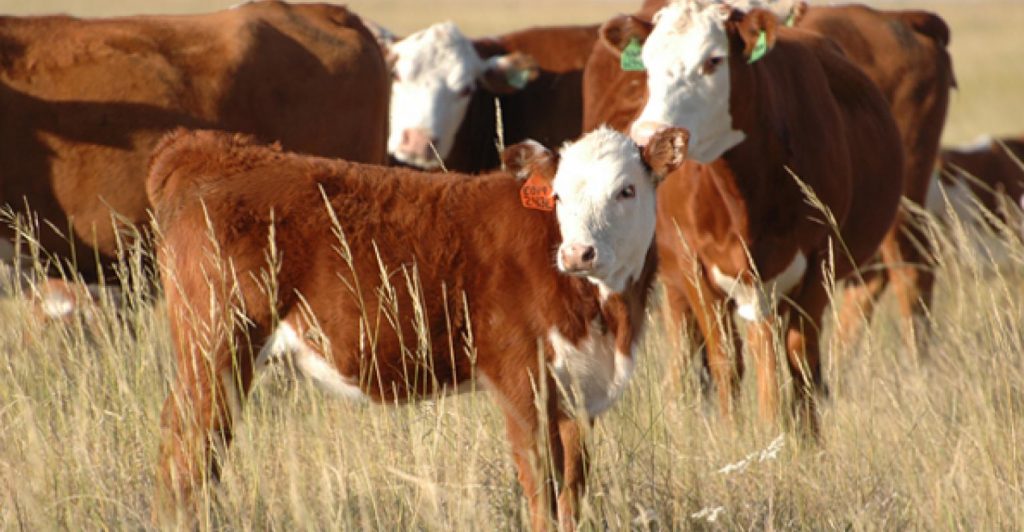
BQA Training Available at Cattlemen's Congress

 When cattlemen and women gather in Oklahoma City for Cattlemen's Congress, Jan. 1-16, 2023, to showcase and market their elite cattle genetics, they will also have three opportunities to receive their Beef Quality Assurance (BQA) certification or re-certification and attend a special Commercial Cattlemen's Luncheon for free. BQA training and certification is common sense cattle management that helps the industry produce better beef while demonstrating its commitment to good animal care.

In the Super Barn Sales Arena at the Oklahoma City Fairgrounds, the Oklahoma Beef Council will host three seminars with lunch taught by OSU staff, including two seminars from 11:00 a.m.to 12:30 p.m. on Tuesday, January 3 and Tuesday, January 10. On Thursday, January 5, cattle producers can attend a BQA seminar from 10:00 a.m.to 11:30 a.m. All who attend and complete their certification will receive a free ticket to the Commercial Cattlemen's Luncheon.

According to Heather Buckmaster, executive director for the Oklahoma Beef Council, "This is a wonderful opportunity for cattle producers to achieve their BQA certification, have lunch, visit with their peers, attend a wonderful trade show and see some of the best cattle in the U.S."

There is no cost to attend the event. However, registration is required at www.oklabeef.org/bqa.

BQA certification is valid for three years. If your last BQA training occurred prior to 2019, your BQA certification could be expired. Beef producers are encouraged to attend to keep their BQA certification current. For those unable to attend training in person, BQA certification is also available online at www.bqa.org.

--Article courtesy of Morning Ag Clips.

2023 Begins with Continuing Drought

Mondays, Dr. Derrell Peel, Oklahoma State University Extension Livestock Marketing Specialist, offers his economic analysis of the beef cattle industry. This analysis is a part of the weekly series known as the "Cow Calf Corner," published electronically by Dr. Peel and Mark Johnson. Today, Dr. Peel talks about the continuing drought.

The new year is beginning with more of the same.  The U.S. has been in significant drought since late 2020 with drought conditions continuing into 2023.  The final Drought Monitor of 2022 showed that 74.05 percent of the U.S. is abnormally dry or worse (D0-D4) with 49.65 percent of the country in D1-D4 levels of drought.  The drought categories can be combined into the Drought Severity and Coverage Index (DSCI), which can range from 0 to 500 and currently stands at 165.  The DSCI for the U.S. has been 150 or above for 117 consecutive weeks, dating back to October 2020 (Figure 1).  Prior to this period, the U.S. DSCI has not been above 150 since 2013.  The current period with DSCI above 150 is the longest period with the index at this level and accounts for 47 percent of all the time the U.S. DSCI has been above 150 in the 23-year history of the Drought Monitor dating back to 2000.

As 2023 begins, 17 states have a DSCI greater than 150, mostly in the central plains and western U.S. Six states, including California, Kansas, Nebraska, Nevada, Oklahoma and Utah have a current DSCI over 300, with a maximum DSCI of 358 in Nebraska.  These six states had 6.64 million head of beef cows at the beginning of 2022, accounting for 22 percent of the total beef cow herd.  No doubt these states have already seen significant herd liquidation in 2022 but clearly will face more herd liquidation if conditions do not improve. 

Drought in January is a concern for the coming year but not a major problem now.  There is plenty of time for conditions to improve going into the 2023 growing season.  The current seasonal drought outlook map provided by the Climate Prediction Center suggests that conditions are unlikely to improve over the winter in major beef cow states with drought persisting in the central and southern plains, although some improvement is indicated in the intermountain west.  However, current climate outlook from the Climate Prediction Center predicts La Niña conditions to fade to neutral by spring, thus reviving some hope for improved conditions heading into the growing season.

Final EPA WOTUS Rule to be Costly and Burdensome for Farmers and Ranchers

Click here to listen to Ron Hays talk with Mary-Thomas Hart about the EPA's final WOTUS ruling.

On Friday, December 30, 2022, the U.S. Environmental Protection Agency (EPA) and the U.S. Department of the Army (the agencies) announced a final rule establishing a definition of "waters of the United States" (WOTUS). Senior Farm and Ranch Broadcaster, Ron Hays, got the chance to visit with the Chief Counsel for NCBA for the National Cattlemen's Beef Council, Mary-Thomas Hart about how this final WOTUS rule will impact ag producers going forward.

"When NCBA looks at any WOTUS definition, regardless of administration, we are looking for whether that rule regulates isolated features, whether it regulates ephemeral features, and if there are agricultural exemptions in place," Hart said. "We got one out of three on today's rule."

The new rule includes agricultural exemptions for stock ponds, prior converted cropland, and certain drainage ditches, however, Hart said, the rule leaves open the possibility that the federal government can regulate ephemeral features or features that only carry water after a precipitation event.

"The federal government could also assert jurisdiction over isolated features like prairie potholes and playas," Hart said.

The new rule, Hart said, will force many "case by case" determinations, which means extra cost and trouble for landowners.

"Landowners are going to have to pay a consultant or work with the Army Corps of Engineers and have them come out and make a determination about whether an individual feature is subject to the Clean Water Act, which is going to have a lot of time and cost, especially when producers want to implement a new project," Hart said.

NCBA and many other agricultural groups were diligent in pushing the Biden administration to step back on a new WOTUS ruling until the Supreme Court decision on the Sackett v. EPA case is made. Unfortunately, the administration went forward with their decision early.

"We expect to hear from the Supreme Court in the spring, which is I think really concerning for us that EPA thought it appropriate or thought it necessary to kind of go ahead of the Supreme Court, even though we know the court is considering this question directly," Hart said.

Not only does this early ruling create additional confusion for landowners and producers across the country, Hart said, but it also is a waste of government dollars to finalize a rule, knowing that within six months, the rule could be written again.

"It is important to note that when the Supreme Court considered Sackett in October, six of those nine justices were considering the definition of WOTUS for the first time," Hart said. "They weren't on the bench for the Rapanos case-they certainly weren't on the bench for earlier Supreme Court cases related to WOTUS, and the consensus among those six justices was that they were tired of talking about significant nexus and relative permanence."

It will not be surprising, Hart said, if the Supreme Court comes out with a totally new rule.

"If the Supreme Court ditches the Rapanos standards, then EPA has to go back to the drawing board," Hart said.

more details on the Final WOTUS Rule from EPA is available HERE.

Warm Front Brings a Surge of Moisture with Possibility of Severe Weather

Parts of the state could see severe weather today, according to State Climatologist Gary McManus, "A warm front has brought a surge of moisture into the state, setting us up for the possibility of severe storms later today as we see yet another cold front fire through the state tonight. Kingfisher's temperatures went up 25 degrees over the last 3 hours!"

There is a risk for some pretty big storms tonight, especially to the East of I-35, and the possibility of strong tornadoes across Southeast Oklahoma. McManus reminds everyone to be weather aware.

McManus says as we wrap up 2022, we did see "Extremely Extreme Extremes" throughout the state, "Our extremely extreme extremes would be normal if not for some extremely extreme happenings each year, and this year's biggie, which makes our extremely extreme extremes extremely extreme is that 6.48 inches of precipitation measured by Goodwell, that becomes the lowest rainfall total in state history, and we're talking back to the 1880s."

McManus says there have been some other totals come close, "Hooker's 6.2 inch total back in 2011. That was found to be a bit iffy due to our rain gauges under-catching a bit of snowfall in a blizzard situation. We've always talked about that total from then at Hooker as "one of the lowest in state history," but sadly could not put it forth as THE lowest to the Extremes Committee."

Other extremes this year in Oklahoma include

--The 108.4 mph wind gust from Nov. 4 at Idabel. That was associated with the EF4 monster twister than ravaged Idabel and clipped the Mesonet site.

--The 114.8 degree day at Mangum as well, which tied for the highest temperature ever recorded by the Mesonet, at least rounded to whole numbers of 115. Buffalo holds the actual lead at 115.2 degrees from July 9, 2009

--The -33.2 degrees wind chill from just a couple of weeks ago on Dec. 22. The previous extreme was -27.2 degrees from Hooker on Feb. 4, but that blast of Siberian air from the arctic circle region late in the year erased that one.

--The 84.3 degrees dewpoint at Antlers from July 20, and the 120.2 heat index from Webbers Falls on June 12.

To Read more from McManus on his mesonet ticker, click here:
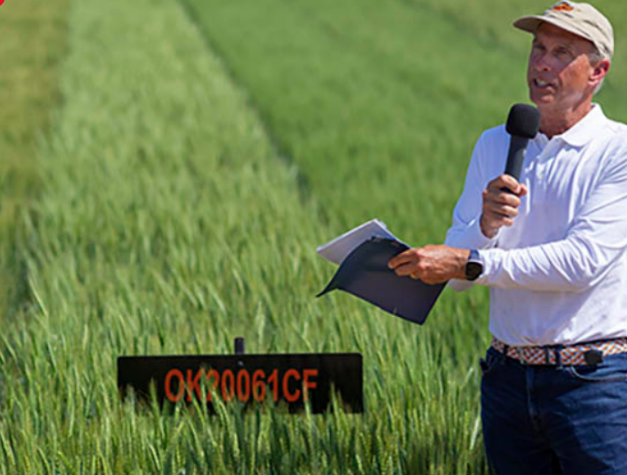
OSU researchers study how technology impacts agriculture

Oklahoma State University animal and food science graduate students Brittany Lippy and Addie Womack put new batteries into virtual fencing collars during a recollaring session.

Improving the sustainability, efficiency and environmental impacts of crops, water and cattle requires precise decisions.
Researchers at Oklahoma State University are focused on how technology and science can aid in that process.

"The whole goal of precision ag is improving efficiencies — efficiencies of input and output — and to be more sustainable both economically and environmentally," said Dr. Brian Arnall, professor and OSU Extension specialist. "The purpose of most precision ag technologies is to put the right amount of something in the right place at the right rate at the right time. We need data and information to do that, and that's what precision ag is — using data and information to make management decisions."

Arnall, a specialist in precision nutrient management, and his colleagues are trying to find better ways to identify what nutrients soil needs. They are especially focused on phosphorus (P) and potassium (K) fertilizers in soil, conducting their tests through soil testing with sensors and remote imagery.

The research began in the fall of 2022 with researchers applying P and K fertilizer strips on wheat and soybean fields to determine if there are technologies that do a good job of predicting crop needs.

But technological innovations in precision agriculture at OSU don't stop with crop management. OSU and the Oklahoma Water Resources Center are working hand-in-hand to not only make cattle production more efficient but to also improve the health of Oklahoma's water resources.

Virtual Fencing

OSU researchers took their research on virtual fencing technology to the next level in the fall of 2022 with a $1.4 million grant from the U.S. Department of Agriculture-Natural Resources Conservation Service.

"We're looking at how managed grazing with virtual fencing can improve grazing distribution, pasture biodiversity and productivity, and wildlife and pollinator habitat," said Dr. Ryan Reuter, professor of range beef cattle nutrition in the Department of Animal and Food Sciences.

The technology was introduced in 2019 during a pilot project. There, researchers observed where a group of cattle liked to congregate for two weeks before implementing a virtual fence and exclusion zone on that spot for about 10 days. The experiment resulted in a 99% success rate at keeping cattle out of that zone. 

The current phase of the research is studying the grazing habits of cattle in riparian zones — areas bordering bodies of surface water — and upland areas — land at a higher elevation.

The team hopes to learn how much time the cattle spend in areas preferred by researchers versus how often they move into areas researchers want them to avoid. The study will also show how virtual fencing improves the grasslands environment where cattle graze.

"We'll have an exclusion zone around the riparian area so they can't get down in the creek, and we will do some rotational grazing where we move cattle around the pasture to control their grazing patterns," Reuter said. "We're going to look at whether the water runoff quality improves when we do that."

Improving Dam Infrastructure

Many dams in Oklahoma are reaching the end of their planned life spans.

One year into a five-year project to improve dam infrastructure, U.S. Department of Agriculture and Oklahoma Water Resources Center scientists are adding some high-quality tech to their tool bag.

"These dams are still considered quite safe, but due to the number of these structures and their planned service life coming to an end, we need to be vigilant in monitoring them and develop cost-effective rehabilitation options so communities can continue to benefit from these structures for years to come," said Sherry Hunt, supervisory civil engineer for the Hydraulic Engineering Research Unit (HERU) with the USDA-Agricultural Research Service.

Oklahoma dams provide $90 million in annual benefits to residents, Hunt said.

"These dams are located on the upper tributaries of small watersheds and provide flood protection, rural and municipal water supplies, irrigation water, healthy ecosystems, and recreation and tourism," Hunt said.

At HERU, researchers design miniature versions of these flood control structures made of natural earth materials and run water over them or through them to see how the dams hold up. 

The USDA and OWRC partners are developing tools to assess dam erosion and stability. These tools include artificial intelligence, drones and smartphone applications that can predict future issues with earthen dams.

Another aspect of the project entails creating a cloud-based storage system for the sensor data collected and making it available to researchers and decision makers on a continuous basis. Researchers are also developing an app to go with the cloud system as a streamlined way of viewing the data.

The Oklahoma Well Owner Network Program

Oklahoma well owners are on their way to healthier drinking water thanks to the Oklahoma Well Owner Network (OWON) Program.
The program, led by the OWRC and OSU Extension, provides free residential well water testing and training to rural counties in Oklahoma.

"In 2018, we surveyed citizens across Oklahoma on what their biggest water resource concerns were," said Dr. Kevin Wagner, OWRC director. "Consistently across the state, Oklahomans' key concern was drinking water quality."

To address this concern in rural Oklahoma, OWRC conducted a pilot program in Alfalfa, Pontotoc and Tillman counties in spring 2022 with the help of OSU environmental science students. Over 150 water samples were tested during the pilot program, and two-thirds of participants said they planned to adopt annual well water testing.

Senior environmental science student Rayna Ellison said she conducted the research in her hometown during the pilot program. Then, in the summer of 2022, OWRC partnered with the OSU Rural Renewal Initiative to expand services to Greer, Tillman and Harmon counties, along with training and teaching experience for Ellison. OWRC and OSU Extension hope to obtain additional funding to continue the program into 2023.

"The citizens who participated in the program were grateful to have access to water quality information, and they were coming back with questions on how to improve their water and began working to improve their wells in the weeks following the program," Ellison said.

To participate, well owners in these counties submit a water sample from their private wells to their local OSU Extension office for testing. OWRC researchers then test the samples for nitrates, total dissolved solids (salts), pH levels and bacteria. The test results are relayed to the well owners through a one-hour, in-person educational program led by OSU students and OWRC staff.

"This program demonstrates OSU's land-grant mission in the terms of Extension, ag research and education," said Dr. Abu Mansaray, a research specialist with OWRC, who has been part of the planning and execution of the program. "We are reaching out to Oklahoma communities to help address a critical problem that is not covered by federal and state agencies."

Irrigation Management Research

Knowing when crops need water can be difficult, but technology may help make those crucial decisions easier.
In collaboration with faculty, students from the OSU Department of Biosystems and Agricultural Engineering recently completed a study to evaluate the effectiveness of common soil moisture sensors.

The Oklahoma Water Resources Board predicts that crop irrigation will make up 36% of the total water demands in 2060.
The goal was to determine the effectiveness of smart irrigation technologies — such as sensors and other WiFi-connected devices. 

These sensors were designed to be affordable while still providing highly accurate readings. The sensors mount in the ground and connect to a data logger that sends their data to a cloud-based storage system. 
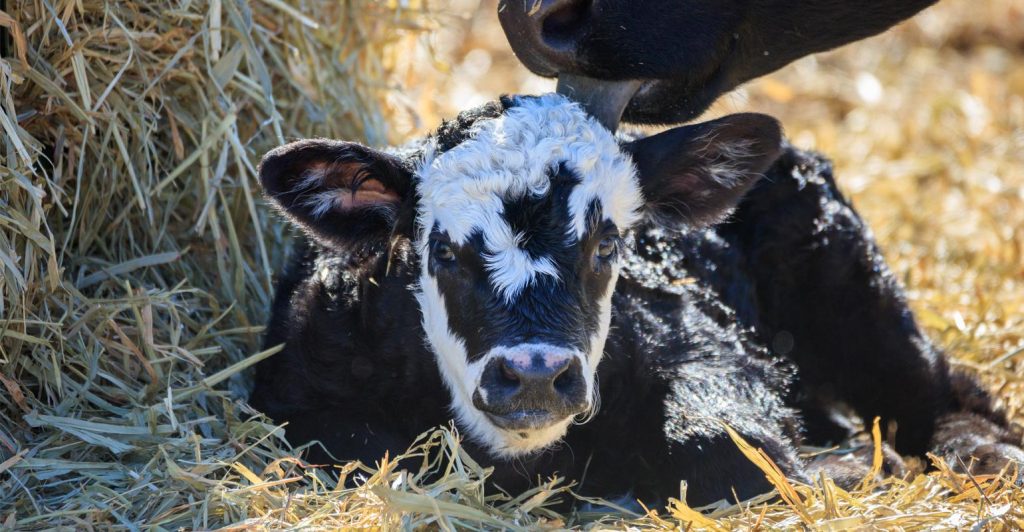
To test the sensors, the team monitored soil moisture in cotton crops for two growing seasons. Researchers also collected soil samples and analyzed them for bulk density, soil moisture content, texture, salinity and soil moisture thresholds. This allowed for a comparison of the two methods.

"Specifically, we wanted to see what the water content was in those samples so we could compare them to the data being taken by the sensors," said Mukesh Mehata, biosystems engineering graduate student. "By doing so, we could see how accurate the sensors are." 

The results showed that the sensors were effective in monitoring soil moisture at multiple root zone depths. However, their accuracy degraded rapidly as the clay content and salinity increased in the soil with as high as 30% error in these conditions. The main finding was that the sensors are effective when clay content and salinity are low, but site-specific calibration is required as those and other factors increase.

"We can't ask producers to adopt technologies that are inaccurate and too expensive," said Rio Bonham, a senior in biosystems engineering. "We feel confident a producer can put these in the ground, and with proper calibration, they are not going to over or under water their fields."

Continuing Innovation

Continuously looking for ways to improve the efficiency and output of agricultural production through the use of technology will not stop there for OSU, according to Dr. Scott Senseman, associate vice president of OSU Ag Research.

"In my view, agriculture has always been more technical than it has been given credit for, but agriculture in 2022 is even more technical," Senseman said. "The use of advanced genetics,  along with management of crops using drone technology and the creation and analysis of large data sets is another realm of advancement in ag technology. 

"Our land-grant university is right in the middle of technological advancements and helping our producers incorporate these advancements in their production systems."

Flickner Innovation Farm to present current projects at workshop

Ray Flickner (far right) talks about research being done on his farm near Moundridge. The Flickner Innovation Farm will host a workshop in Inman Jan. 12 to update farmers on recent research projects

The Flickner Innovation Farm will host a January 12 workshop to present up-to-date outcomes from the farm's technology implementation and projects studying natural resource use. There will also be a presentation from NASA about how their programs can benefit farm management.

The workshop will take place at the Inman Community Center and will feature a range of experts speaking on a variety of subjects, including groundwater nitrate dynamics, protein sampling and grain quality, using cover crops for soil health, irrigation management, and more.

Organizers say the investigations from Kansas State University and University of Kansas researchers, local producers, and industry partners are helping to fine-tune current and emerging technologies that conserve water use while improving water quality and soil health.

"We have done just about everything this year, from looking at the water quality in our wells to chatting with scientists from NASA about the satellites in space," said Ray Flickner, who owns and operates the Flickner Innovation Farm, located near Moundridge, Kan. "I'm excited to let people know what we've learned, in hopes that it will make a difference for other producers."

The program begins at 10 a.m. and ends at 3 p.m. The event is free, and lunch will be provided. More information, including registration, is available online from the Kansas Center for Agricultural Resources and the Environment (KCARE).Those interested in attending should register with KCARE by January 9.

The Innovation Farm is a partnership between Flickner, university scientists, watershed specialists and industry leaders. Together, they are conducting studies in a large-farm setting to identify the most efficient technologies and techniques for Kansas producers to use on their own farms.

Several K-State faculty members are conducting research at the Innovation Farm, including studies about soil health and cover crops; nutrient management; weed management; protein mapping and grain quality studies; and investigations on the effects of long-term cropping systems on fertilizer requirements.

In addition to presentations about ongoing projects and upcoming research, the meeting will also include opportunities to meet with vendors and other industry representatives.

--K-State Research and Extension news service

Rep. Cole's Column: Social Security Must Be Saved

The solvency of Social Security has reached a turning point, and millions of Americans who have paid into this program throughout their working lives are at risk of not receiving the money they deserve. The reality of the challenge facing Social Security is that without reforms, these funds will dry up. Congress must find solutions to save this program rather than sacrifice the hard-earned retirement of working Americans.

Since 2020, the costs of the Old-Age and Survivors Insurance (OASI) fund, one of two trust funds that comprise Social Security, have been higher than the fund's income and will be for the foreseeable future. This is a result of the number of beneficiaries growing significantly faster than the number of workers paying into Social Security. While OASI provided benefits to 50 million retired workers and their dependents and 6 million survivors of deceased workers in 2021, unfortunately, the fund's reserves decreased from $2.812 trillion in 2020 to $2.753 trillion in 2021.

Due to the imbalance between income and costs, Social Security's Board of Trustees expects OASI's depletion by 2034, resulting in beneficiaries receiving an immediate and detrimental 23 percent cut in benefits because Social Security will only be able to pay around 77 percent of scheduled benefits. To put that in perspective, that would be like the average beneficiary's 2023 monthly payment being reduced from $1,827 to $1,407, or $420 less per month.

The topic of Social Security is certainly a sensitive issue, and reasonably so as it has to do with the livelihoods of millions of American seniors. However, lawmakers have a duty to the American people to find a solution. We cannot afford to sweep this issue under the rug any longer. Rather than risk breaking the promise made to generations who have paid or will pay into the system, this Congress I will reintroduce legislation that would result in commonsense solutions to save Social Security for future generations of retirees.

If enacted into law, the Bipartisan Social Security Commission Act would create an independent, bipartisan commission of 13 members from both the executive and legislative branches appointed by leaders in both parties. Any recommendation by the commission must reach a 9 out of 13 vote threshold. The commission's findings and recommendations to save Social Security would then be adopted or rejected by a vote in Congress. It is long overdue for Congress to finally have a serious and civil discussion about how we preserve and maintain this program.

Since its establishment in 1935, Social Security has been a critical tool to lift seniors out of poverty, and it is also an earned benefit that all Americans pay into and rely upon for benefits in old age. I am committed to working with my colleagues in Congress on both sides of the aisle to ensure the program's long-term survival.

Oklahoma Cattlemen's Association Responds to Finalized 2022 WOTUS Definition

On the final Friday of 2022, the Biden Administration's Environmental Protection Agency (EPA) issued its final rule related to the Clean Water Act, commonly called WOTUS (Waters of the United States). As expected from the proposed rules, the Administration is seeking further jurisdiction over water infringing upon Oklahoma's cattle producer's private property.

"This version of WOTUS seems to revert back to some of the provisions of the original Obama Administration rule," said Michael Kelsey, Oklahoma Cattlemen's Association (OCA) Executive Vice President. "In an attempt to control more water and water ways, EPA is reaching to control private property."

Under The Clean Water Act, the U.S. Environmental Protection Agency and the Department of the Army are given the authority to define "waters of the United States" in regulations.

OCA President Byron Yeoman commented, "Oklahoma cattle producers need certainty with WOTUS, which is what was achieved under the Navigable Waters Protection Rule in 2020. EPA's effort to rewrite and issue a new rule does nothing but cause confusion and uncertainty."

OCA will continue to monitor the rule as EPA prepares to implement while communicating the deficiencies in the rule to Congress.

The OCA is the trusted voice of the Oklahoma Cattle Industry. OCA is the only voice that speaks solely for the cattlemen of Oklahoma and represents beef producers in all 77 counties across the state. The OCA officers, board of directors and membership encourages you to join us in our advocacy efforts to ensure less government intervention, lower taxes and a better bottom line. For more information about OCA membership, the theft reward program or activities call 405-235-4391 or visit www.okcattlemen.org. 

As cows begin calving, K-State experts advise moving the pregnant cows to new pastures every few weeks to reduce disease spread among the newborns

By Lisa Moser, K-State Research and Extension news service

The old saying that "an ounce of prevention is worth a pound of cure" is one that commonly refers to the importance of reducing the risk for disease spread.

And in the case of beef cattle scours, where cows calve has a lot to do with how well the newborns can stay healthy in the first few weeks of life, say the experts at Kansas State University's Beef Cattle Institute.

Speaking on a Cattle Chat podcast, veterinary experts outlined how calf diarrhea, also known as scours, can be a serious issue in newborn calves but one that can be minimized by rotating the pastures where the cows calve. Scours can lead to dehydration and death in newborn calves, said Bob Larson, K-State veterinarian.

"A newborn calf's worst enemy from a germ standpoint is a calf that is a few weeks old because those older calves shed more germs that cause scours," Larson said.

To reduce the exposure between newborns and calves that are few weeks old, Larson and the other experts recommend following the Sandhills Calving System that was developed through University of Nebraska research done years ago in the Sandhills.

"The Sandhills Calving System is one of the most impactful interventions that we have for calf scours," Larson said.

In this system, cows that are heavy in their pregnancy are moved to new pastures every 2-3 weeks, and once they calve, they stay in the same pastures where they gave birth until the calves are old enough to be co-mingled with the others in the herd, according to veterinarian Brian Lubbers.

"This allows the calves to be born on the cleanest pastures, and then once a certain percentage of the herd has calved, those cows that are still pregnant move to a new pasture," Lubbers said.
Larson said the goal of each herd following this system would be to move the pregnant cows away from cows that have already calved at least three times from the start to the end of the calving season.

"After cows have been calving for two or three weeks, move the pregnant cows to a new pasture and do that again after the next two to three weeks of calving," Larson said.
Lubbers added that the bacteria and viruses that cause scours are spread through fecal to oral transmission, so by having a fence between the calving groups, most of the risk for scours passing through the groups of calves is minimal.
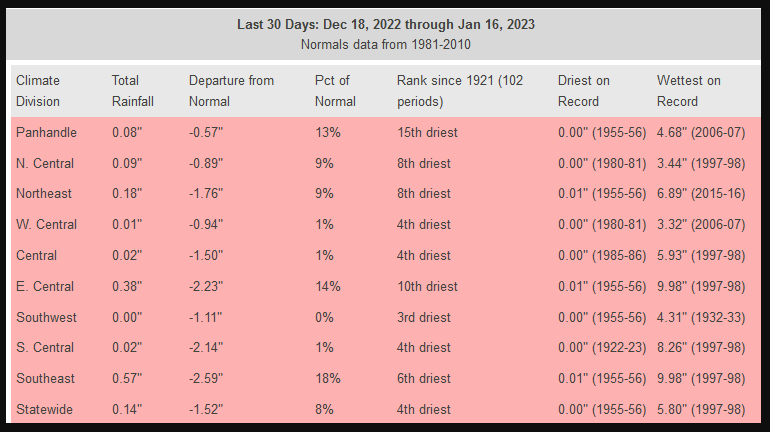
Regarding the timing of bringing all the spring calves together in the same pasture with their dams, the veterinarians agreed that when the youngest calves are six weeks of age the greatest risk from scours is passed and it is safe to bring the herd together again.

"Make sure the last pasture they go to as a group is not one that was used for calving earlier in the season so that they are all being moved to a clean pasture," Lubbers said.

To hear the full discussion on these topics, listen to the Cattle Chat podcast online or through your preferred streaming platform.

2023 Cattlemen's Congress Jumps Off to a Great Start

Sun, 01 Jan 2023 15:03:16 CST 2023 Cattlemen's Congress Jumps Off to a Great Start

Texas Longhorn showing in the inaugural Longhorn Non Halter Show at 2023 Cattlemen's Congress

Ron Hays talks the opening weekend of Cattlemen's Congress with Bray Haven

Click here to listen to audio The third Cattlemen's Congress is underway at the OKC Fairgrounds and the Executive Vice President of the show, Bray Haven, is pleased with how the opening weekend has gone. Haven tells Oklahoma Farm Report's Ron Hays that "lots of people moving in the weather is going great and that always helps everything" and invites cattle producers from across the region to come in as the show ramps up and see the many different cattle breeds that are showing and having sales of top genetics representing their part of the beef cattle industry. "it's neat to see people from literally all over North America flooding into Oklahoma City from commerce to displaying good cattle- it's exciting times here at the Oklahoma City fairgrounds. Haven adds, "we have something for everybody- and that is what our message has been- there are cattle here for just about anybody- whether you have a 150 to 200 head herd in western Oklahoma or a hobby farm with 20 or 30 herd- whatever it might be- there is something here for you." And that includes the Trade Show. He says there is a lot to see there as well- "Just walking around- you can enjoy boutiques, western apparel, livestock equipment, livestock feed and supplements, and more in addition to seeing a lot of great cattle." Click here for the schedule for the third Cattlemen's Congress- and remember that there are opportunities to get certified for the BQA program(or get recertified) on Tuesdays, January 3rd and 10th as well as on Thursday, January 5th. On the Fifth- there will be a Commercial Cattlemen's Luncheon and if you do the BQA certification that day- you earn a free ticket for the luncheon. Click on the listen bar to hear Ron Hays and Bray Haven talk about the start of the third Cattlemen's Congress. Ron Hays talks the opening weekend of Cattlemen's Congress with Bray Haven click to play audio or right-click to download

Cattlemen's Congress Jumps Off to a Great Start

Sun, 01 Jan 2023 15:02:52 CST

Cattlemen's Congress Jumps Off to a Great Start Inaugural Non Halter Longhorn Show at the 2023 Cattlemen's Congress
Ron Hays talks the opening weekend of Cattlemens Congress with Bray Haven Click here to listen to audio The third Cattlemen's Congress is underway at the OKC Farigrounds and Executive Vice President of the show, Bray Haven, is pleased with how the opening weekend has gone. Haven tells Oklahoma Farm Report's Ron Hays that "lots of people moving in- the weather is going great- and that always helps everything" and invites cattle producers from across the region to come in as the show ramps up and see the many different cattle breeds that are showing and having sales of top genetics representing their part of the beef cattle industry. "it's neat to see people from literally all over North America flooding into Oklahoma City from commerce to displaying good cattle- it's exciting times here at the Oklahoma City fairgrounds. Haven adds "we have something for everybody- and that is what our message has been- there are cattle here for just about anybody- whether you have a 150 to 200 head herd in western Oklahoma or a hobby farm with 20 or 30 herd- whatever it might be- there is something here for you." And that includes the Trade Show. He says there is a lot to see there as well- "Just walking around- you can enjoy boutiques, western apparel, livestock equipment, livestock feed and supplements and more in addition to seeing a lot of great cattle." Click here for the schedule for the third Cattlemen's Congress- and remember that there are opportunities to get certified for the BQA program(or get recertified) on Tuesdays January 3rd and 10th as well as on Thursday January 5th. On the Fifth- there will be a Commercial Cattlmen's Luncheon and if you do the BQA certification that day- you earn a free ticket for the luncheon. Click on the listen bar above to hear Ron Hays and Bray Haven talk about the start of the third Cattlemen's Congress. Ron Hays talks the opening weekend of Cattlemens Congress with Bray Haven click to play audio or right-click to download

Oklahoma Secretary of Ag Blayne Arthur Calls New WOTUS Rule Concerning for Oklahoma Agriculture

Sun, 01 Jan 2023 14:37:23 CST Oklahoma Secretary of Ag Blayne Arthur Calls New WOTUS Rule Concerning for Oklahoma Agriculture Oklahoma Secretary of Agriculture Blayne Arthur released the following statement in response to the announcement of the EPA's Final Rule on WOTUS released by the Biden Administration on Friday, December 30th: In a year that's seen Oklahoma agriculture negatively impacted by supply chain complications, inflation, drought, labor challenges, and transportation issues, constantly changing regulation by the EPA and their counterparts in federal agencies is concerning. EPA's newly announced WOTUS rule makes it unclear if the federal government will regulate water resources located on farmland and other private property. That uncertainty will only impede the ability of Oklahomans to do their jobs. Further, the timing of this announcement coincides with the Supreme Court currently considering a case that will provide much-needed clarity related to the WOTUS definition. EPA has chosen to make their own ruling ahead of the SCOTUS decision, which may lead to yet another rule change in the near future. We believe this illustrates a lack of regard for those that are doing the work to feed our nation and world. Details about the Biden Administration Final Rule on WOTUS is available here.

Ron salutes our daily email sponsors!

Upcoming Events

November

S M T W T F S
1 2 3 4 5 6 7
8 9 10 11 12 13 14
15 16 17 18 19 20 21
22 23 24 25 26 27 28
29 30          

Visitor Polls

Do you like the new website?
Add a Comment
(Fields are Optional)

Your email address is never published.