Ag News Archives for 2023-05

The 2023 Oklahoma Wheat Harvest Begins

Oklahoma Harvest Report

By: The Oklahoma Wheat Commission

Wednesday May 31, 2023

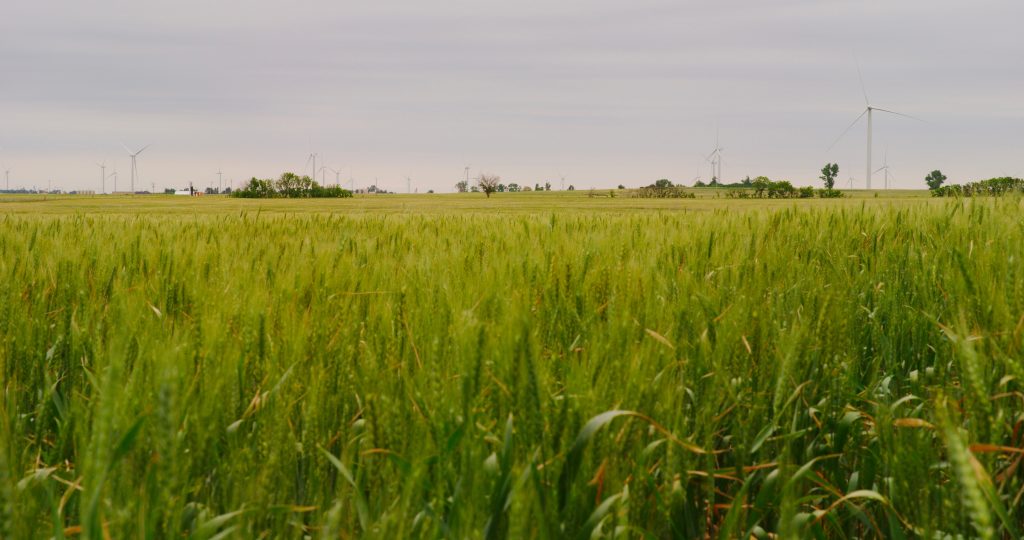
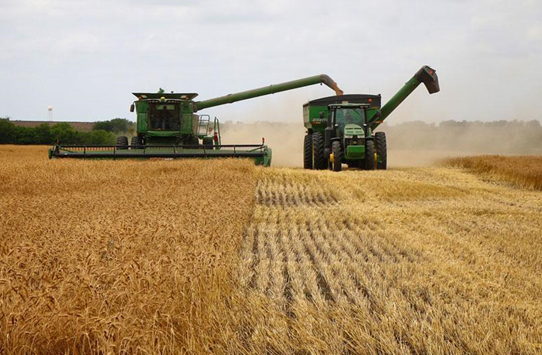
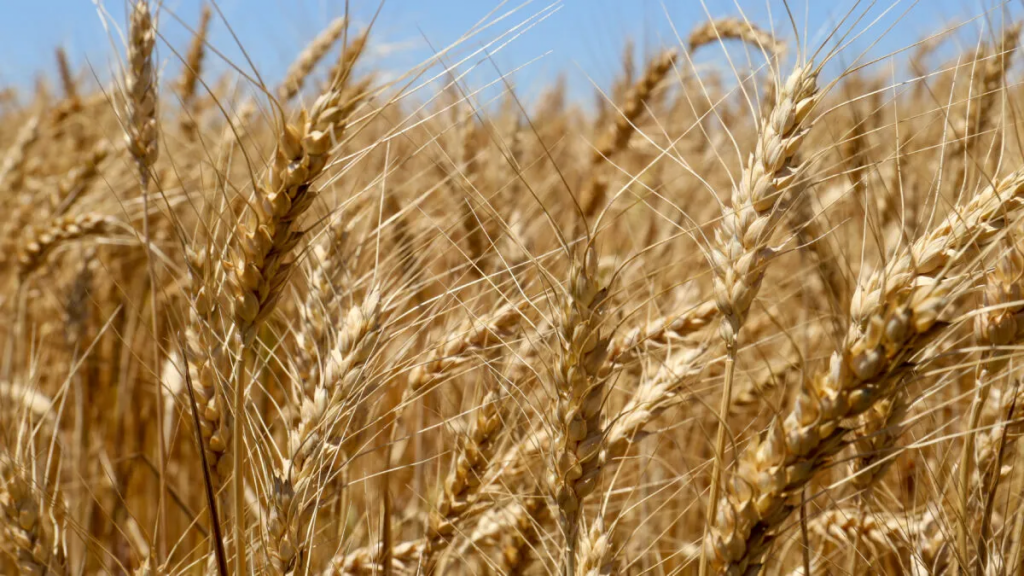
Oklahoma Wheat Harvest had test cuttings with small deliveries last Thursday evening in Eldorado, OK. Rains over the Memorial Day weekend delayed producers from getting into the fields, but machines started moving across the Southern border of Oklahoma in many locations on Monday and Tuesday this week.  Light rains and high humidity in parts of Southwest Oklahoma will make a slow start today, but producers are hopeful to get rolling in these locations by late this afternoon.   All locations being reported this afternoon are reporting favorable test weights in all locations with ranges from 60-64 lbs. per bushel.  Several locations are reporting 62-64 lbs. per bushel.
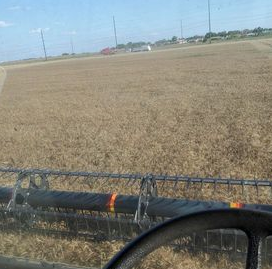
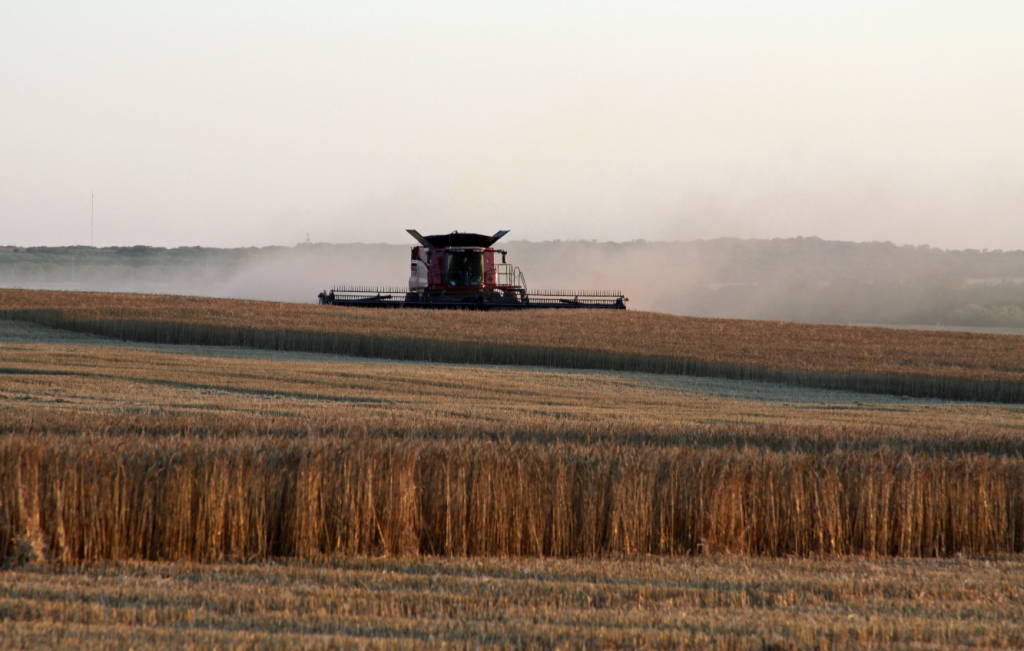
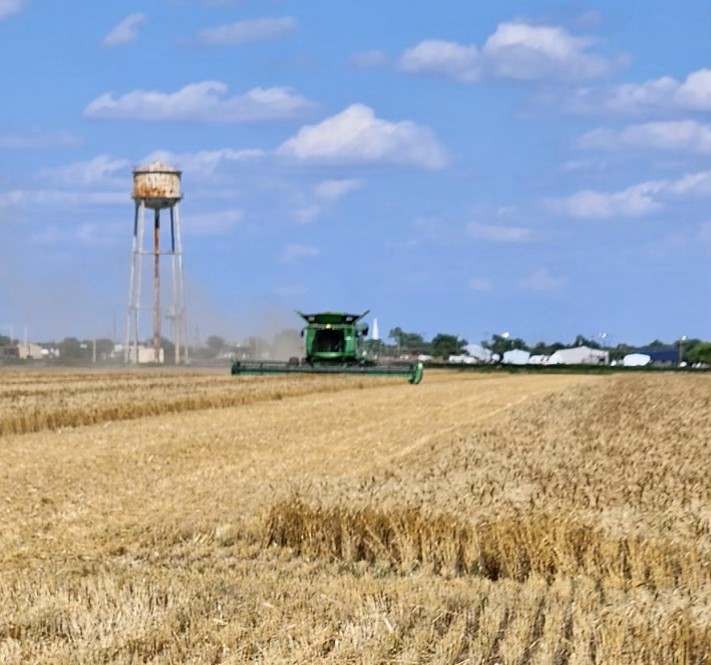
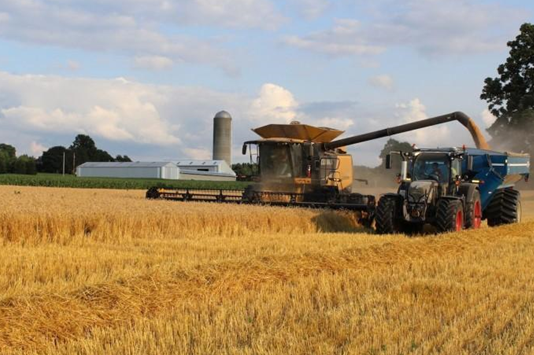
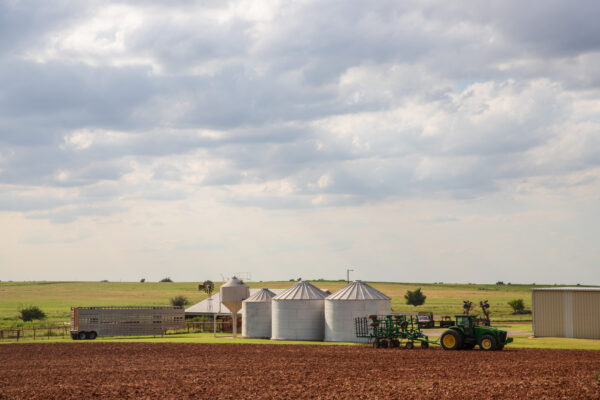
Cutting taking place near Altus, Oklahoma. Photo submitted by Jennifer Walters

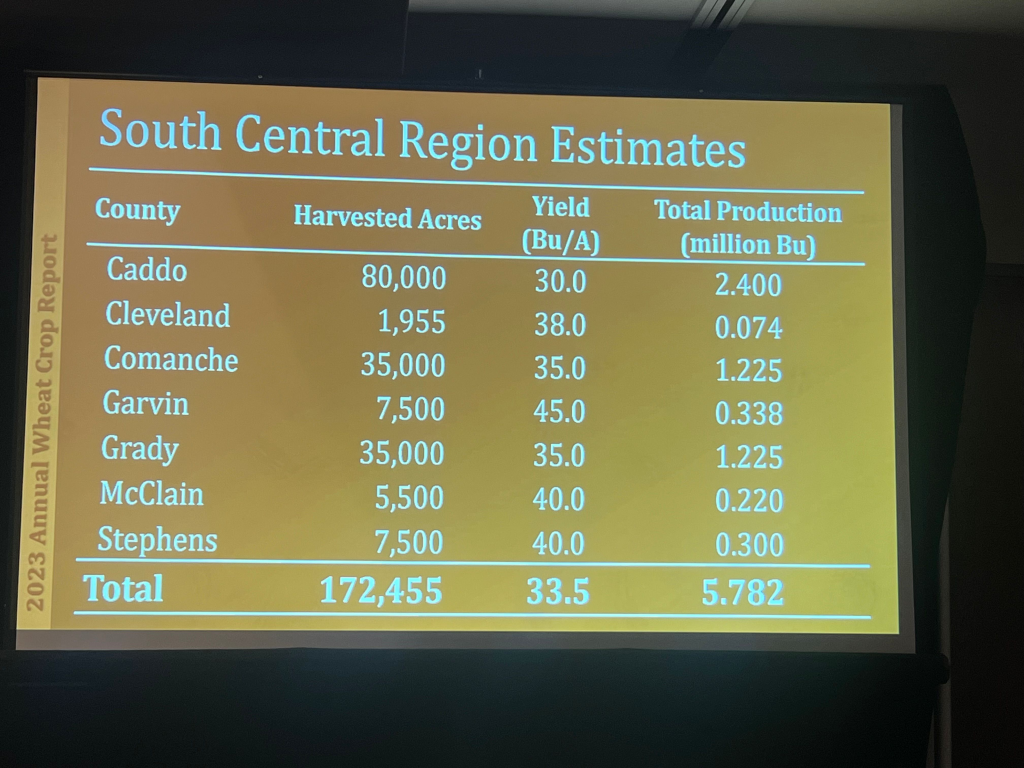
Moisture has been ranging from 12-13.5%, with most wheat being taken in at around 12.5%.  Early yields being reported in Southern Oklahoma are ranging from the mid 20's to low 40's depending on location and management practices. Some high management intensive producers have reported a couple locations to be making in the mid 40's with one report coming in at 55 bushels per acre.  Most yields being reported are ranging from the low 30's to low 40's in Southern and South Central Oklahoma.  Those regions are predicted to have the best overall crop conditions for Oklahoma this year. Protein has not been reported on most early samples throughout the region, although some locations have reported proteins ranging from 12.5% to as high as 15%.

Eldorado- Test weights on early wheat ranging from 60 to 63 lbs. per bushel. No yields reported on early cuttings.

Grandfield/Devol/Chattanooga- Test weights ranging from 62-64 lbs. per bushel. Moisture reported at 12.5% to 13%. Yields ranging mostly from 30 bushels to 40 bushels per acre.

Frederick- Test weights on early cuttings ranging mainly from 60 to 62 lbs. per bushel. Moisture was reported at 12.5% to 12.7%  Yields ranging from the low 30's to low 40's on the wheat being harvested.

Tipton- This area suffered more from drought than other areas in South Central, Oklahoma. Yields are being reported from the low 20's to low 30's depending on location.  Test weight has been lower on some fields,  but the average for the region is 60 lbs. per bushel.  Moisture was ranging from 12.5% to 13%.
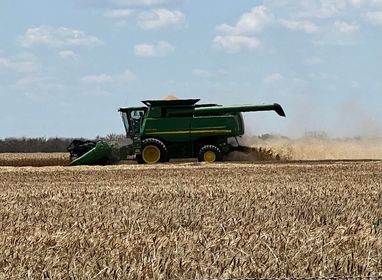
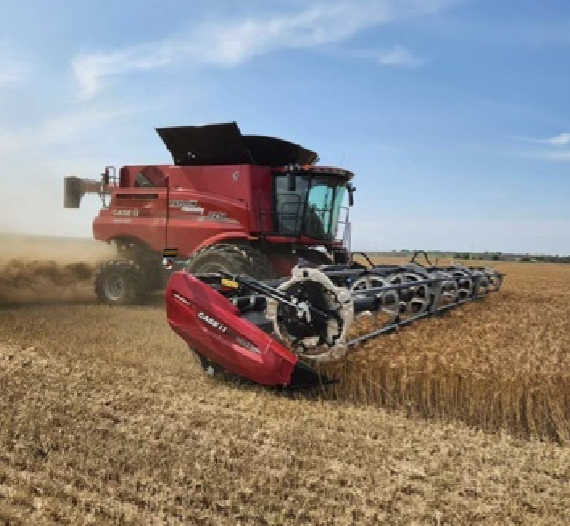
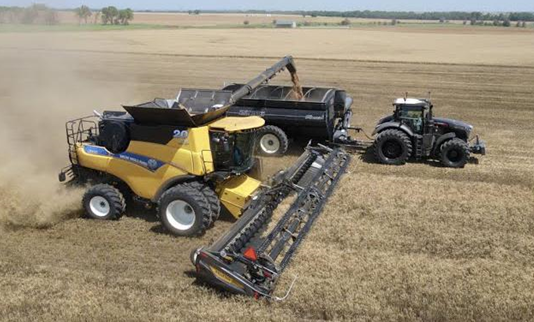
Zeller Farms cutting wheat South of Chattanooga, Oklahoma.

Altus/Duke- Harvest has started in this area with great movement yesterday afternoon.  Light rains and high humidity will make the start slower this afternoon.  Test weights ranging from 60 lbs. to 62 lbs. per bushel. Early yields reported from the high 20's to low 40's.

Hobart/Gotebo- A couple loads have just been received in these locations. Test weights reported at 60 to 62 lbs. per bushel. Yields ranging from the mid 20's to low 30's.  Early reports indicate this area has struggled harder with drought conditions.

Lawton- A couple loads have been taken in at Lawton.  Test weight was 62 lbs. per bushel, no yields reported. Moisture was 13.5%.

Rocky/Sentinel- Samples have been received at these locations but nothing has been cut, producers were hoping to start late this afternoon or tomorrow.

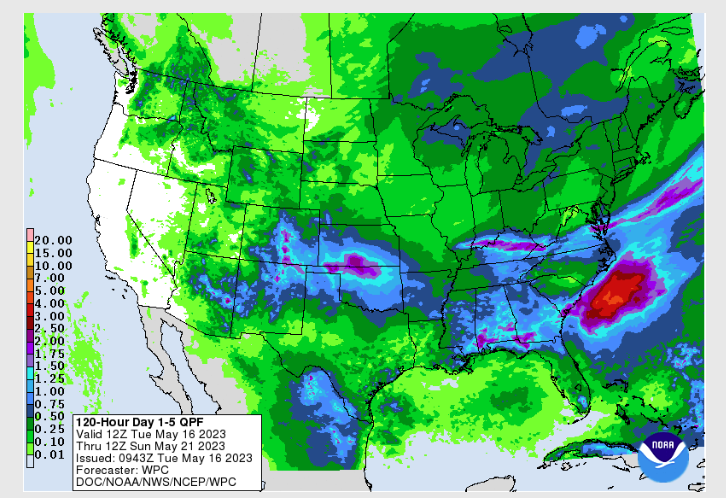
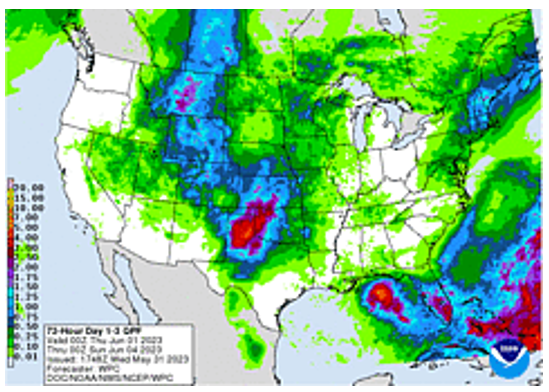
Below, see the next 1-3 day rain prediction forecast models provided by the Oklahoma Mesonet.  The next Oklahoma Harvest Report will be published on Monday, June 5, 2023, and a regional report will be published by Plains Grain Inc. on Friday, June 2, 2023.
Rising Cost of Grain Storage Will Force Elevators to Lower Bids, Widen Basis

High-interest rates and crop prices send grain ownership and inventory costs to record levels.

The cost of storing grain, commonly referred to as the cost of carry, has soared to record highs due to rising interest rates, high commodity prices and increasing costs for labor, insurance, transportation and energy. That is putting a significant squeeze on grain elevators, which may be forced to lower their local bids on grain to manage through the unfavorable economics of holding commodities.

According to a new report from CoBank's Knowledge Exchange, the interest-related cost of carry in the 2023-2024 crop year will increase 21% for corn, 42% for soybeans and 50% for all-wheat, year-over-year. Each of those costs is estimated to be the highest on record. The projections are based on the forecasted average annual interest rate for grain merchandisers of 7.75% for the 2023-2024 crop year, and USDA's marketing year average price forecasts of $4.80/bu. for corn, $12.10/bu. for soybeans and $8.00/bu. for all-wheat. 

Financing the ownership of corn, wheat and soybean inventories is a major cost of carry for grain elevators. Interest expense as a percentage of the total cost of carry can vary widely among grain merchandisers and between crop years. But it can typically comprise one-quarter to one-third or more of a grain elevator's total cost of storing grain and oilseeds.

"For grain elevators, the sharp rise in interest rates couldn't have come at a worse time as they borrow higher-priced funds on commodities that have also remained at historically high prices," said Tanner Ehmke, lead grains and oilseeds economist for CoBank. "And while grain elevators are motivated to move inventory as fast as possible to lower carrying costs, processors and end users will want to delay ownership of commodities to reduce their own inventory costs." 

The persistent inverse in futures markets, where the price of later-dated contracts are lower than spot prices, further complicates matters for grain elevators. In normal market conditions when supplies are abundant, forward futures contracts are priced higher than the nearby spot prices to account for storage costs and a small risk premium. When futures prices are lower than spot prices, farmers are motivated to sell commodities rather than hold them for future sale.

Cooperative elevators are in business to buy and market their members' grain. That means they will be obligated to carry inventory despite the economic disincentive of doing so. Holding commodities in high-interest rate environments also ties up a company's working capital, which can put a strain on other business operations. This is especially problematic in volatile markets when liquidity is needed for managing margin calls on futures hedges.

"It's a challenging situation for cooperative grain elevators as well as farmers, because it comes at a time when farmers are also facing higher costs," said Ehmke. "Co-op managers will need to closely scrutinize their operating costs and impose greater discipline on cost wherever possible. And if they need to lower their bids and widen basis to cover storage costs, they should communicate early and consistently with farmer members who will be impacted."

The positive news on carrying costs is that the Federal Reserve is expected to hold interest rates at their current levels for the foreseeable future. And USDA is forecasting corn, soybean and all-wheat prices to drop for the 2023-2024 crop year from the year prior, which will take some pressure off carrying costs.

Watch a video synopsis and read the report, Rising Cost of Carry Will Force Cooperative Grain Elevators to Lower Bids, Widen Basis.

About CoBank

CoBank is a cooperative bank serving vital industries across rural America. The bank provides loans, leases, export financing and other financial services to agribusinesses and rural power, water and communications providers in all 50 states. The bank also provides wholesale loans and other financial services to affiliated Farm Credit associations serving more than 76,000 farmers, ranchers and other rural borrowers in 23 states around the country.

CoBank is a member of the Farm Credit System, a nationwide network of banks and retail lending associations chartered to support the borrowing needs of U.S. agriculture, rural infrastructure and rural communities. Headquartered outside Denver, Colorado, CoBank serves customers from regional banking centers across the U.S. and also maintains an international representative office in Singapore.

CAB Insider: Smaller Supply Meets Seasonal Demand

Last week's cash fed cattle trade brought about an unexpected uptick in prices as Nebraska and Cornbelt feedlots captured values $2 to $4/cwt. higher, averaging $180 to $184/cwt. The wide price spread remains, contrasting the northern to southern regions with Texas and Kansas live cash trade occurring at $170 to $171/cwt. That represents roughly a $1/cwt. Weekly advance.

Carcass weights continue their seasonal decline toward the spring lows but latest weight data shows a trend shift. Starting at the first of the year, weights had trended primarily in a range of 15 to 20 lb. lighter than a year ago due to extreme weather conditions and a current fed cattle supply. Yet carcass weights declined more rapidly in the second quarter of 2022 in contrast to this year's more marked decline in the first quarter, which has given way to smaller downward moves in the second quarter.

Average steer weights actually moved up four pounds in the first week of May before dropping four pounds in the subsequent week. The slowing trend suggests a potential earlier realization of the year's lightest carcass weights versus the mid-June timeframe marked in the past two years. Industry average carcass marbling achievement will be assisted in the upfront weeks if this shift occurs.
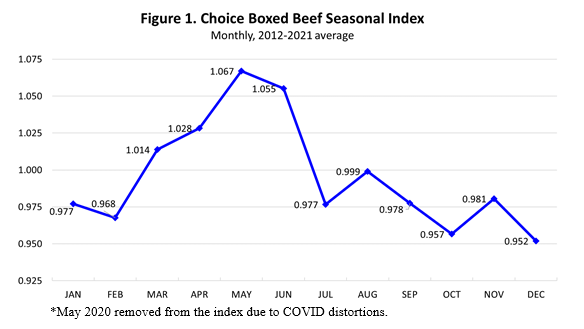
On the product side of the business boxed beef values were mixed in last week's report with weekly average cutout values varying slightly depending on grade. The CAB cutout was up just $0.34/cwt. while commodity Choice was lower by $0.24/cwt. Select gained on Choice a bit with a $1.21/cwt. cutout increase. This presented a softer Choice/Select price spread in line with that of a year ago. The CAB premium to Choice firmed up fractionally to average $12.66/cwt., placing it almost $2/cwt. lower than a year ago.

A relatively strong quality grade mix, considering the time of year, plus recent upticks in weekly fed cattle slaughter is underpinning production volume in the commodity Choice and Premium Choice brands certified into branded programs. This has CAB traditional carcass counts in the 121,000 per week average for the past four weeks versus 119,000 for that period a year ago. Lighter cut weights for the period compressed pounds per head but as indicated above, weights are now par to a year ago.
Prime Carcass Tonnage Set to Decline
Most recent USDA quality grade data updates carcass grading trends through May 19th. This is precisely the week on the calendar at which the percentage of carcasses meeting USDA Prime marbling levels have sharply decreased in each of the past three years.

Throughout the supply chain many stakeholders are familiar with the annual spring phenomenon when U.S. average quality grades typically decline from winter highs toward spring lows. Many of us may think of the grade decline following a trend line generally paralleling that of the annual, similarly predictable, carcass weight lows around this time of year. While lighter average carcass weights are correlated with lower marbling scores, the annual realization of the lowest measurements for each of these traits is far from perfectly aligned.

Assessing any annual carcass weight pattern in recent history results in the same line graph shape each year. The variation is found in the details as it relates to the exact date that the annual high and low weight weeks are realized. Except for the COVID irregularities of 2020, the annual low has been reached from May 1 through early June in the past 10 years.

It is much more difficult to predict the week when the annual low in the combined percent Choice and Prime quality grades is realized. In the past 10 years the "low grade" week occurred as early as mid-April and as late as the end of October. In the most recent 4 years the lows were placed in September or October. From 2014 to 2018 the lows came in April and May.
Singling out annual percent Prime grade trends results in a much more consistent pattern than when percent Choice is included. The ten-year trend for percent Prime suggests a strong vote that the annual low for the top USDA grade will come in June with six out of ten years claiming the June low. The month of July comes in as a second-place favorite with the seasonal bias favoring the two-month window.

Since 2018 the share of carcasses meeting all 10 carcass specifications for CAB has peaked in unison with the spring marbling highs in March. It then declines into early October when Modest and higher marbling (Premium Choice and Prime) carcasses are near their annual lows and carcass weights plus ribeye sizes are near their annual highs. The combination of these risk factors results in the annual lowest acceptance rates at that time.

As we turn the calendar to June it's a fair assumption that percent USDA Prime and percent CAB Prime carcasses will fall off rapidly. The latest 9.5% Prime carcass grading rate is 0.25 percentage points ahead of a year ago. The year-over-year increase for the most current week is an improvement on the year as the Prime share has run 0.39 percentage points below 2022 so far.

More importantly, Prime carcass tonnage is 4.6% lower (over the last four weeks) than a year ago due to lower slaughter head counts. This smaller supply and projected sharp drop in the coming weeks meets up with seasonally heightened beef demand. The Prime carcass cutout value rests at 12.8% higher than a year ago and retail prices are hefty for Prime cuts. The supply side is set to build further premiums into USDA Prime and CAB Prime carcasses. That's great to the extent that producers should see the rewards. Yet, the consumer side of the equation remains a question as to demand resiliency in a more challenging economic market.

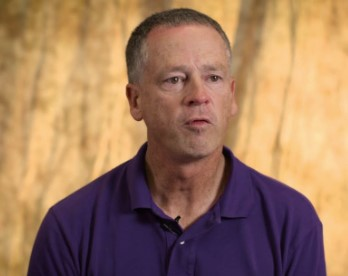
Wheat Harvester Paul Paplow Overviews Wheat Conditions in the Southern Plains

Listen to Paul Paplow talk about wheat harvest in the southern plains.

Farm Director KC Sheperd is talking with Paul Paplow from Paplow Harvesting and Trucking about wheat harvest in the southern plains.

Paplow Harvesting and Trucking is a full-service harvesting business, Paplow said, that starts harvesting in Wichita Falls, Texas, and Walters, Oklahoma.

"Their ground conditions (in Walters) are a little bit dryer, so they have no trouble moving up there," Paplow said. "They have got a very nice crop up there. I would say 35-to 40-bushel wheat and all the quality is really good on it also."

The next stops will include Kingfisher, Oklahoma, and a few locations in Kansas. They finish up harvest in North Dakota, he added.

Wheat conditions around Wichita Falls are good, Paplow said, but looking into Oklahoma and Kansas, conditions worsen.

"Hopefully, we are surprised with what the yields do, but Kansas is going to be a pretty rough year for most farmers there and for harvesters passing through there," Paplow said.

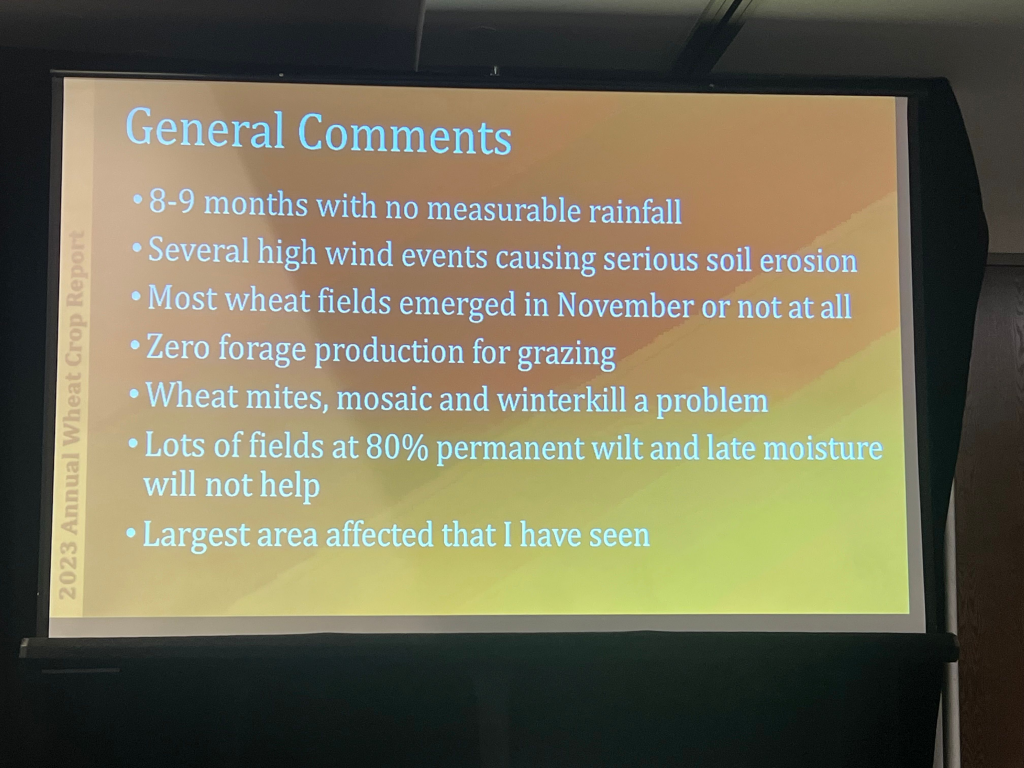
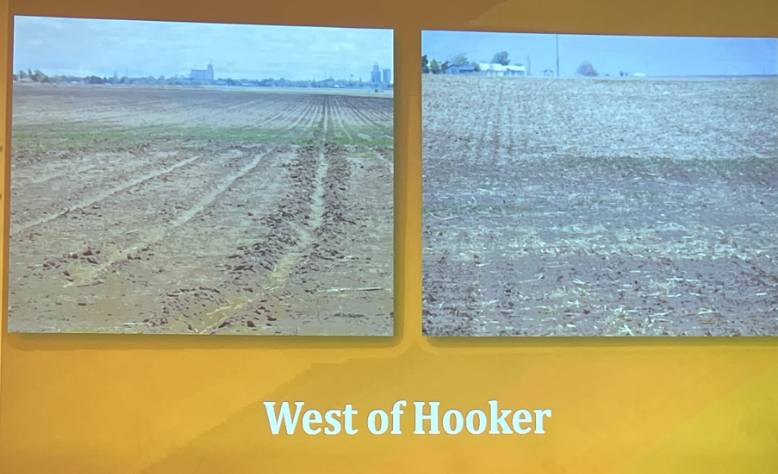
Paplow said around 25 to 30 percent of wheat fields have been abandoned this year in Kansas due to the drought.

"As of right now, I feel like we are lucky if we maybe lost about 10 to 15 percent of our acres, so we are probably below the average, but there is a lot of abandonment this year," Paplow said.

Although Oklahoma has received some good rains recently, and the latest crop progress report from USDA showed significant increases in those crop conditions, Paplow said those rains are a little too late.

"I think the winter wheat crop is kind of already set in stone of what it is going to be," Paplow said.

Making Improvements in the Cattle Industry Collectively with Clint Rusk

Listen to Ron Hays talk with Clint Rusk about the future of the beef industry.

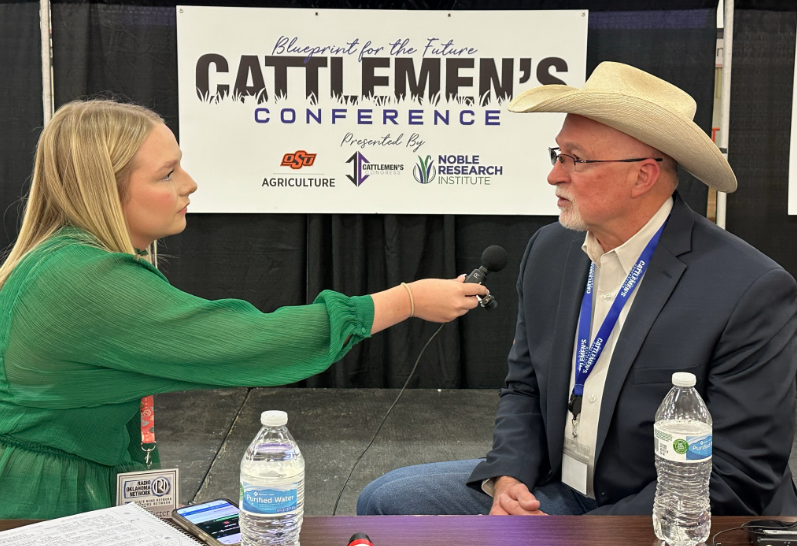
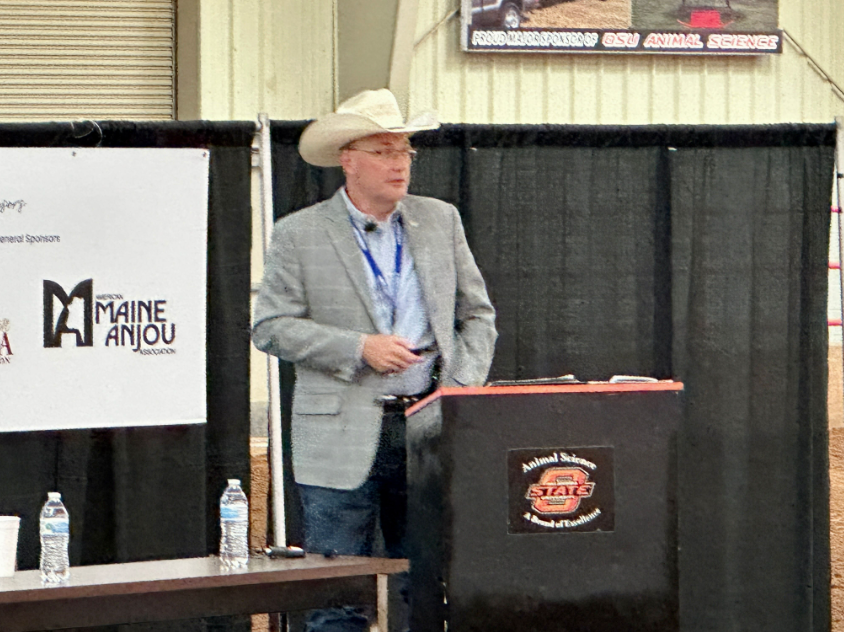
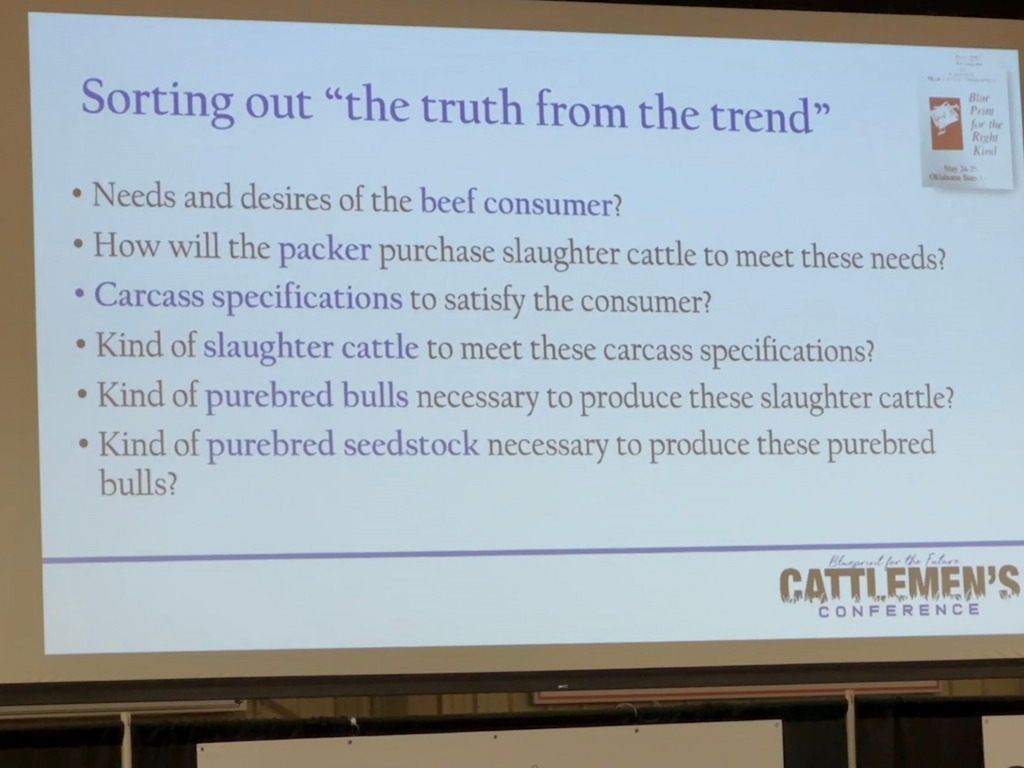
At Cattlemen's Conference, Senior Farm and Ranch Broadcaster, Ron Hays, caught up with the Executive Director of the American International Charolais Association and former animal science department head at Oklahoma State University, Clint Rusk, about the future of the cattle industry.

The most valuable part of the conference, Rusk said, was the ability to see individuals in the cattle industry come together and talk about operational goals and goals of the industry as a whole.

"Some of the things that actually end up changing our industry are some of the discussions that happen in the hallway, or in the evening," Rusk said. "But just getting people to come together and openly talk about their feelings is really good."

These conversations had over the course of the conference, in and out of sessions, Rusk said, are bound to change the industry in a positive way. Many points of discussion at the conference aimed to leave cattlemen with questions to take home and apply when they are working their operations.

"When I left here, the thing we talked a lot about at the university was 'how do we feed the world in 2050,'" Rusk said. "I am not going to be here in 2050, but some of my children will still be involved in 2050, and other people. I think we are going to have to use the best technology and the best crossbreeding systems we can."

Each day, grass acreage becomes smaller as the population grows, Rusk said, so producing enough protein is going to become more and more critical.

Rusk also talked about the value of raising cows that fit one's environment.

"The cows that are most successful out around Leedey and Guymon and Woodward are probably different than the cows that survive in eastern Oklahoma where they get more rain and have more forage on a regular basis, so the cows don't all need to be the same size," Rusk said.

As commercial producers, Rusk said refusing to crossbreed means leaving money on the table.

"That extra heterosis produces healthier calves, calves that grow faster, and there are just a number of advantages when you combine two complementary breeds," Rusk said.

The Beef Buzz is a regular feature heard on radio stations around the region on the Radio Oklahoma Ag Network and is a regular audio feature found on this website as well. Click on the LISTEN BAR for today's show and check out our archives for older Beef Buzz shows covering the gamut of the beef cattle industry today.


Katelyn McCullock of LMIC talks Economic Trends of the Next Decade

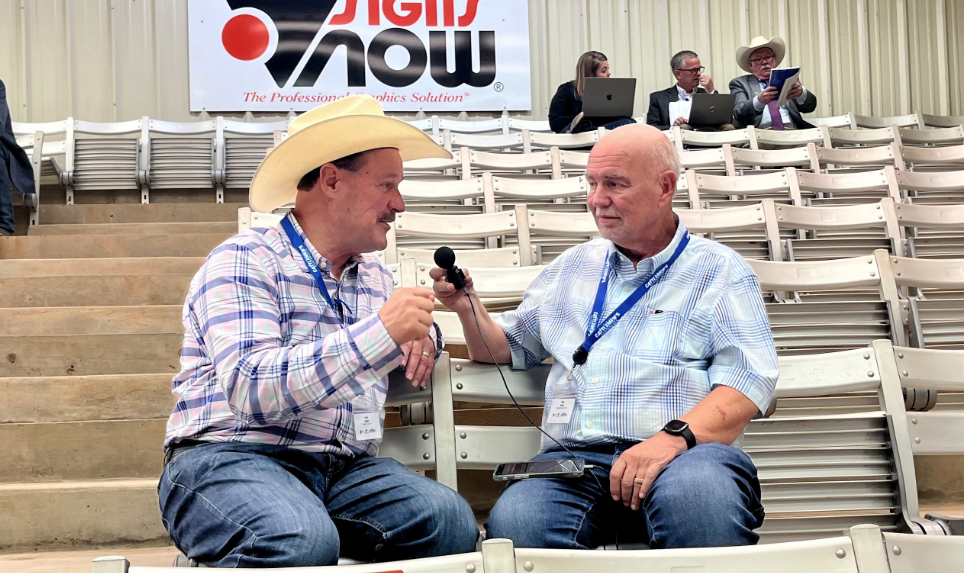
Listen to Maci Carter talk with Katelyn McCullock at the Cattlemen's Conference.

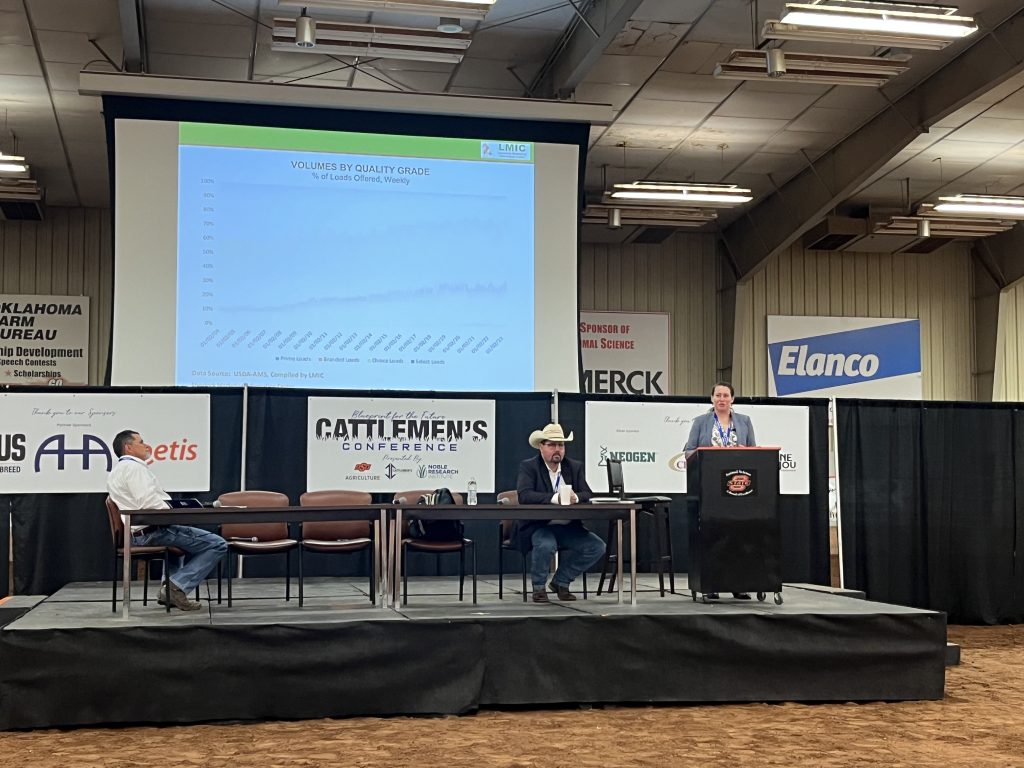
At this year's Cattlemen's Conference, Blueprint for the Future, Radio Oklahoma Ag Network Intern, Maci Carter, had the chance to visit with Katelyn McCullock of the Livestock Management Information Center about consumer and economic trends of the next decade.

As a speaker at Cattlemen's Conference, McCullock was asked about the future of the beef industry moving forward.

"Beef prices at the retail level have remained relatively stable thus far," McCullock said. "What that tells us is that we're probably not losing a lot of demand, but they haven't really been able to go any higher. So the question is, do we eventually hit a price point where things really back off? I think we do. But with the recessionary pressure that the consumer might be feeling, that might actually not actually happen until maybe 2024 or 2025."

As forecasts are only available through 2024, McCullock said a daily record-high for fed cattle has already been reached in April, which has moved down slightly since. McCullock said she expects an all-time annual average record high in 2025.

The beef cow herd declining in 2023 and 2024, McCullock said, means the new all-time record high is yet to be seen. This does not mean new record highs will not be set in between now and the all-time high.

"So beef exports in terms of volume for both 2021 and 2022 are new record highs, which is fantastic for the beef industry," McCullock said.

McCullock said trading down for cheaper proteins is happening in the beef industry, but there are many factors that play into this. From less variety at the meat counter to the relative prices of other products that are usual trade downs for beef, and the price pressure from other commodities.

"The thing that to watch is going to be the center of the plate cuts and how those things move either together or not together and how relatively expensive they are," McCullock said.

Exports for beef have been strongly driven by high demand in China, McCullock said, including Japan and Korea.

"Beef exports in terms of volume for both 2021 and 2022 were new record highs, which is fantastic for the beef industry," McCullcock said.

McCullock said 2012 and 2022 have been record-breaking years in terms of volume, however, the Chinese markets that were consuming this commodity are starting to back off. She said her main concern is how expensive beef is going to become in other countries, but she's still confident the U.S. beef industry will have great growth potential outside of our borders moving forward.

"Anytime there is a new wave of consumer preferences that dramatically shift protein consumption, either to or away from protein, it can have a pretty major impact on how consumers consume beef and what choices they're making," McCullock said. "Generally speaking, total protein may be more impacted by the financial aspect of the consumer more than diet trends, I think in the near term. That's going to be a pretty big thing to overcome."

McCullock shared that diet trends can have a large impact on beef consumption. These unavoidable cultural changes have a large impact on how much beef our consumers are purchasing at the grocery store, so marketing to combat these fads is important in keeping the beef industry prevalent.

"I would say most consumers already agreed they like beef, and so you're basing less choices maybe on tastes and preferences because they already know they like it, and it might not become too different," McCullock said. " They might be making those choices on non-carcass merit things like the environment, animal welfare, how it was raised, etc. So those might become a bigger aspect of how we need to market beef in the future."
Another important cultural change is generational preferences. McCullock said, as each generation has a different preference in terms of beef consumption. She said she predicts the newest generation will base their decisions more on non-carcass and ethical merits rather than taste, and that is something that producers have to account for and adapt to.

"I think that financial aspect will eventually probably erode some demand," McCullock said.
"I just don't know when, and how long it lasts might depend on how high actual beef prices get."

Katelyn said she understands the impact recent inflation has had on individuals from all sides of the equation. In terms of the beef industry, McCullock said she predicts some demand will be diminished by inflation,but it is too early to say.

University Products Highlights Anaplasmosis Threat and Economic Impact of Thin Cows: Encourages Body Condition Scoring and Vaccination to Promote Economic Prosperity in the Beef Industry

-- University Products, a frontrunner in animal health innovation, recently brought attention to the economic challenges associated with thin cows, particularly those suffering from anaplasmosis, and the dangers posed by Cattle Fever Ticks (CFT) in the beef industry. The company encourages farmers to prioritize body condition scoring (BCS), along with anaplasmosis vaccination, to support cattle health initiatives that optimize productivity and minimize economic losses.

The importance of BCS as a crucial tool for assessing the physical condition of cows during the most demanding period of gestation cannot be overstated, particularly in winter. Thin cows can have difficulty rebreeding, are more susceptible to diseases such as anaplasmosis, and are expensive additions to a herd. Early corrective measures can prevent a wide array of health issues and improve the overall well-being of the herd.

But defining "thinness" is not always easy. The University of Guelph found that even trained evaluators have difficulty determining accurate body condition scores in winter. The ideal BCS for mature cows at calving is 2.5, while first-calf heifers should have a score of 3.0. All females should have a score of 2.5, 30 days before the start of the breeding season.

Dr. Donald Luther of University Products also emphasized the importance of BCS: "Body condition scoring is a cost-effective and accurate method to assess the health of your cows. Proper BCS management not only promotes the welfare of the animals but also contributes to the economic success of the farm."

University Products recommends a comprehensive approach to herd health, which includes the services of a livestock nutrition expert to balance rations and ensure cattle receive adequate levels of energy, protein, fiber, vitamins, and minerals. Maintaining proper body condition during pregnancy supports the immune systems of both the dam and calf, improving the overall health of the herd. And of course, vaccination helps protect the entire herd from the ongoing tick-borne anaplasmosis endemic.

The USDA Animal and Plant Health Inspection Service recently emphasized the importance of addressing Cattle Fever Ticks (CFTs: Rhipicephalus (Boophilus) annulatus and R. (B.) microplus), which serve as vectors for bovine babesiosis and anaplasmosis. The Cattle Fever Tick Eradication Program, launched in 1906, has confined CFT to a permanent quarantine zone running from Brownsville to Del Rio, Texas, along the Mexican border. Mounted tick patrols (tick riders) help collect and treat stray animals that wander in from Mexico and work alongside partners at the Texas Animal Health Commission. The program systematically detects, treats, and eradicates tick infestations, while other CFT populations are found in Puerto Rico and the U.S. Virgin Islands. Unfortunately, while these diseases can and continue to be mitigated, they still continue to plague the cattle industry.

University Products is committed to developing a wide spectrum of modern solutions for the challenges facing the cattle industry, including groundbreaking research into vaccines for bovine babesiosis and theileriosis. The company's focus on proactive management strategies, such as BCS, addressing the threat of CFT, and combining both with innovative vaccine research and products, aims to create a healthier and more sustainable future for the cattle industry.

*Facts and statistics sourced from: CanadianCattlemen.ca, "Thin Cows Cost Money"; and the USDA Animal and Plant Health Inspection Service.

Can the Cattle Industry Have a Positive Impact on Climate Change? YES!

Mark Johnson, Oklahoma State University Extension Beef Cattle Breeding Specialist, offers herd health advice as part of the weekly series known as the "Cow Calf Corner" published electronically by Dr. Peel, Mark Johnson, and Paul Beck. Today, Johnson talks about the cattle industry's impact on climate change.

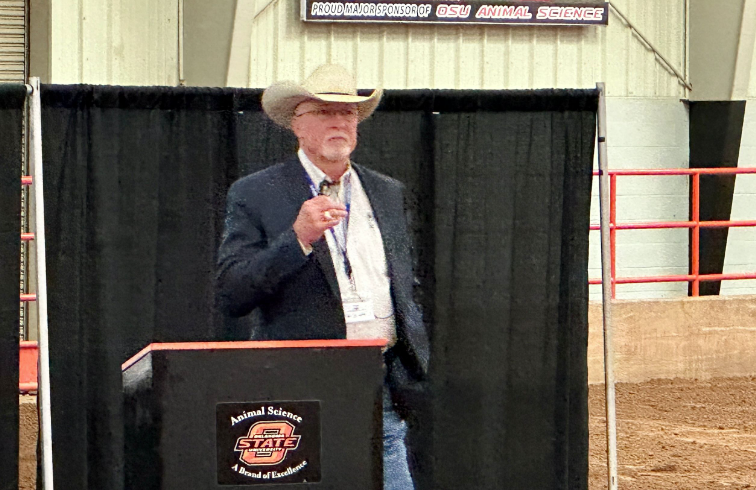
At the recently completed Blueprint For The Future Cattlemen's Conference, I had the opportunity to interview Dr. Frank Mitloehner. Dr. Mitloehner is a professor and air quality specialist in cooperative extension in the Department of Animal Science at the University of California, Davis. As such he shares his knowledge and research, both domestically and abroad, with students, scientists, farmers and ranchers, policy makers, and the public at large. Dr. Mitloehner served the keynote speaker at the conference banquet and is highly regarded as the "greenhouse gas guru" and an advocate for animal agriculture. He collaborates with animal agriculture to create better efficiencies and mitigate pollutants. His focus is on understanding and mitigating air emissions from livestock operations, as well as studying the implications of these emissions on the health of farm workers and neighboring communities. In addition, he is focused on the food production challenge that will become a global issue as the world's population grows to nearly 10 billion by 2050. 

Dr. Mitloehner made the following points in his presentation:

  • The most concerning greenhouse gas from animal agriculture is methane. Cattle (as a ruminant animal), swamps and even more sources produce methane. Methane is quite different from other greenhouse gases because it is naturally destroyed within about 10 years. While there is a constant source of methane produced by cowherds, it is not contributing to additional global warming because a similar amount of what is produced is also destroyed. The same is not true of other greenhouse gases, like vehicle emissions, which accumulate in the atmosphere.
  • Furthermore, as a result of his work, California Dairy herds have actually been successful in reducing the amount of methane produced and in some cases, as a result of covering lagoons to trap biogas (much of which is methane) it is being converted into transportation fuel. As such, it has turned into a second "cash crop" for these Dairy operations.
  • Decreasing methane emissions will decrease global warming. This means the cattle industry can be part of the climate solution because there are ways to reduce methane that are cost-effective and have positive impact on climate.
  • Dr Mitloehner's most important "take home" message was that this is a positive news story for the beef industry and cattle producers which we should embrace.

Reference: clear.ucdavis.edu

2023 Wheat Harvest Underway in Oklahoma

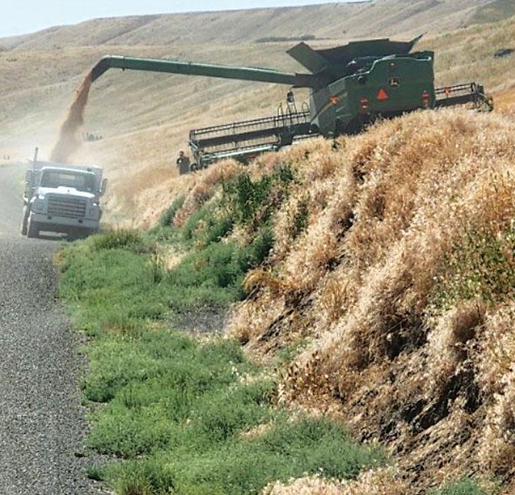
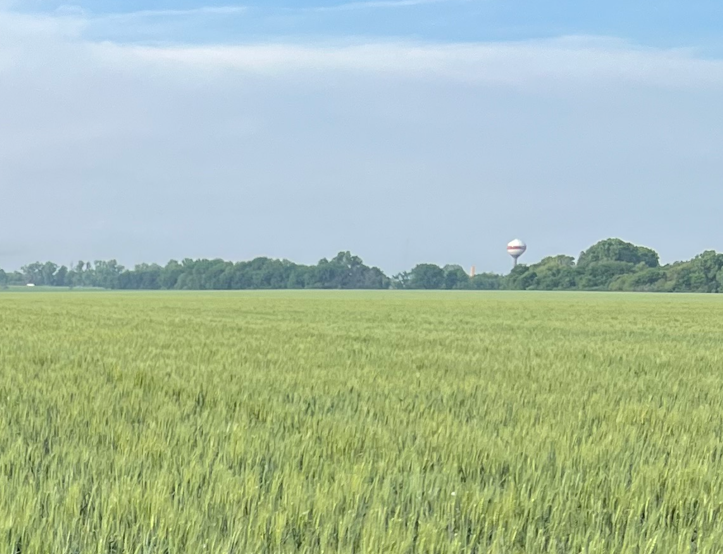
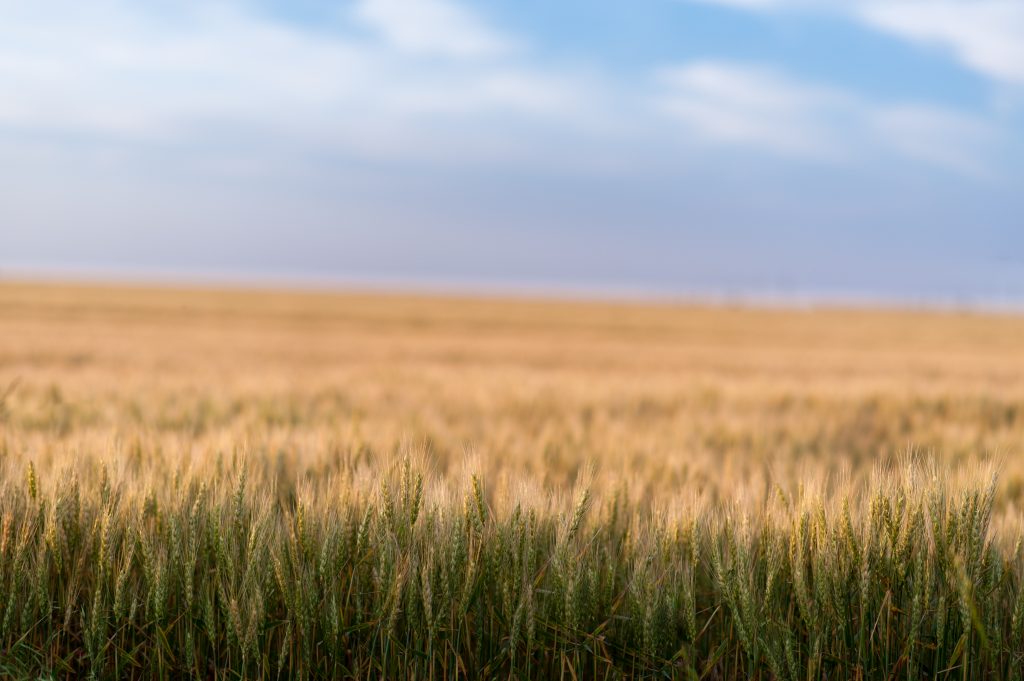
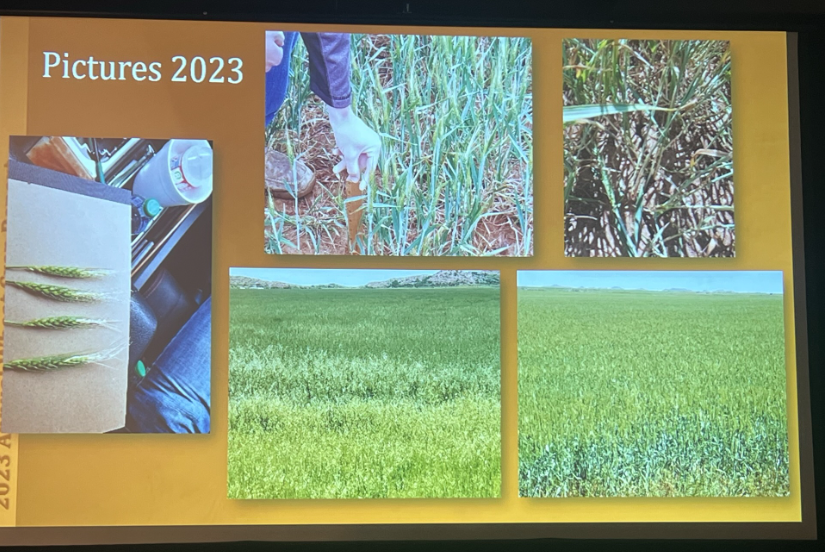
2023 Wheat Harvest Underway southwest of Altus on May 30th

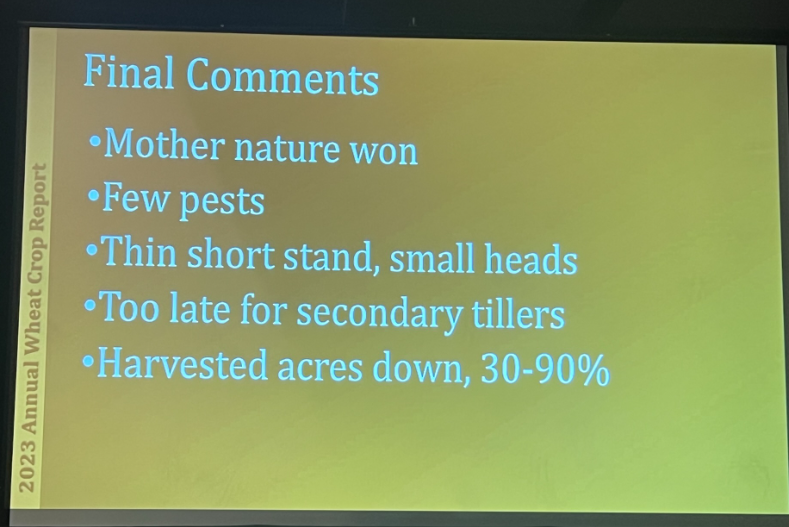
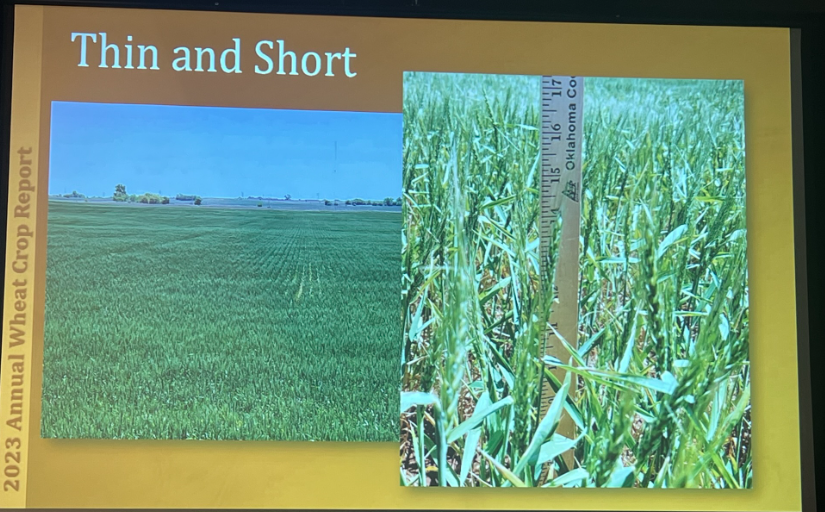
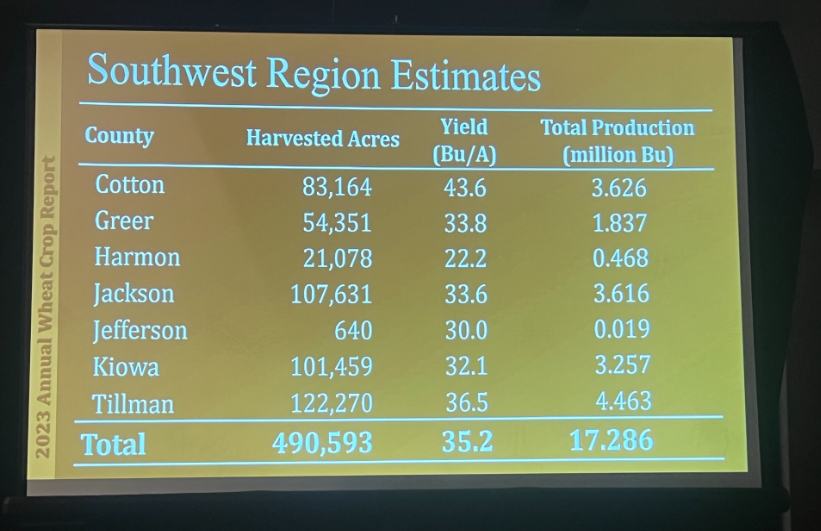
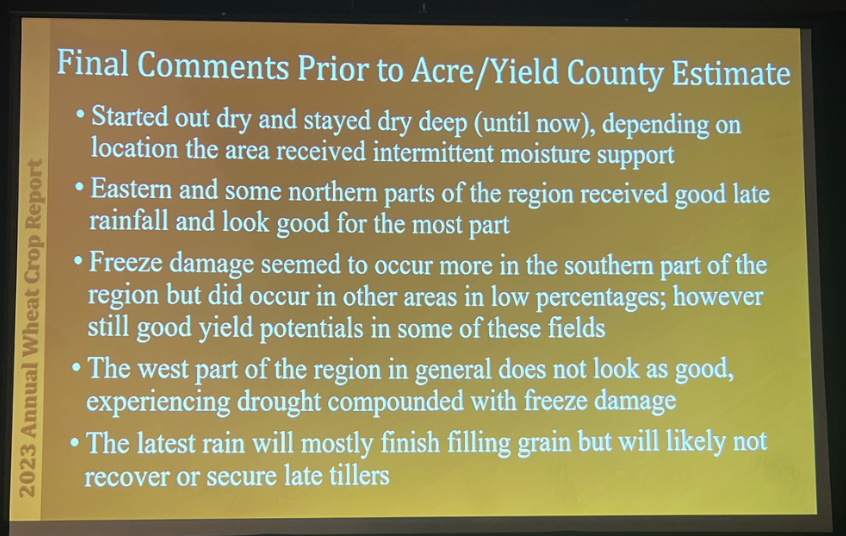
As we wrap up the month of May- combines are rolling in the southwest counties of Oklahoma- and Mike Schulte with the Oklahoma Wheat Commission has shared some early numbers ahead of his first official report that he plans to release later today.

The picture above is from a wheat field southwest of Altus on Tuesday.

Schulte tells us that one of the very first reports has come in from Eldorado- it was the end of last week (Thursday) for a half load of wheat- moisture was borderline at 14.7 percent- test weight was 60.5 pounds per bushel and protein was reported at 15 percent.

At the start this week on Monday- there were a few loads taken in in Grandfield and Frederick.

Moisture was running 12.5% to 13.5% and test weights are running 60 to 62 pounds per bushel. Mike says that he was told of one small patch that was making 43 bushels per acre in the Frederick area- but adds "keep in mind this is considered the bright spot in the state as far as crop conditions go."

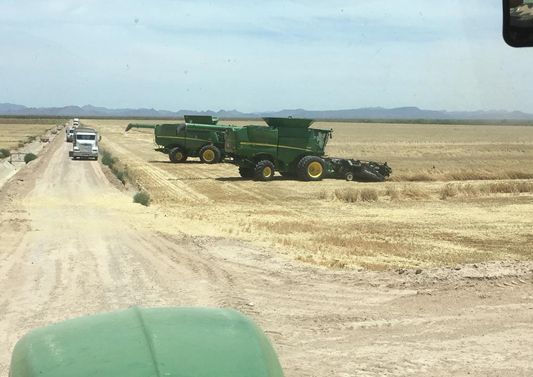
We also have one Facebook report from Jimmy Kinder of Walters- the pic below was from Monday with the message- harvest starts tomorrow- Jimmy tells us last night on his page "1st field 40bu/acre. Good test weight. I'm happy."

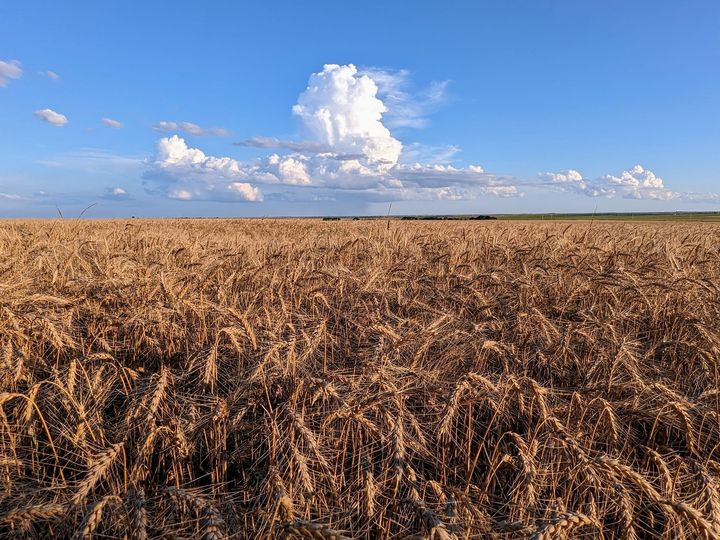
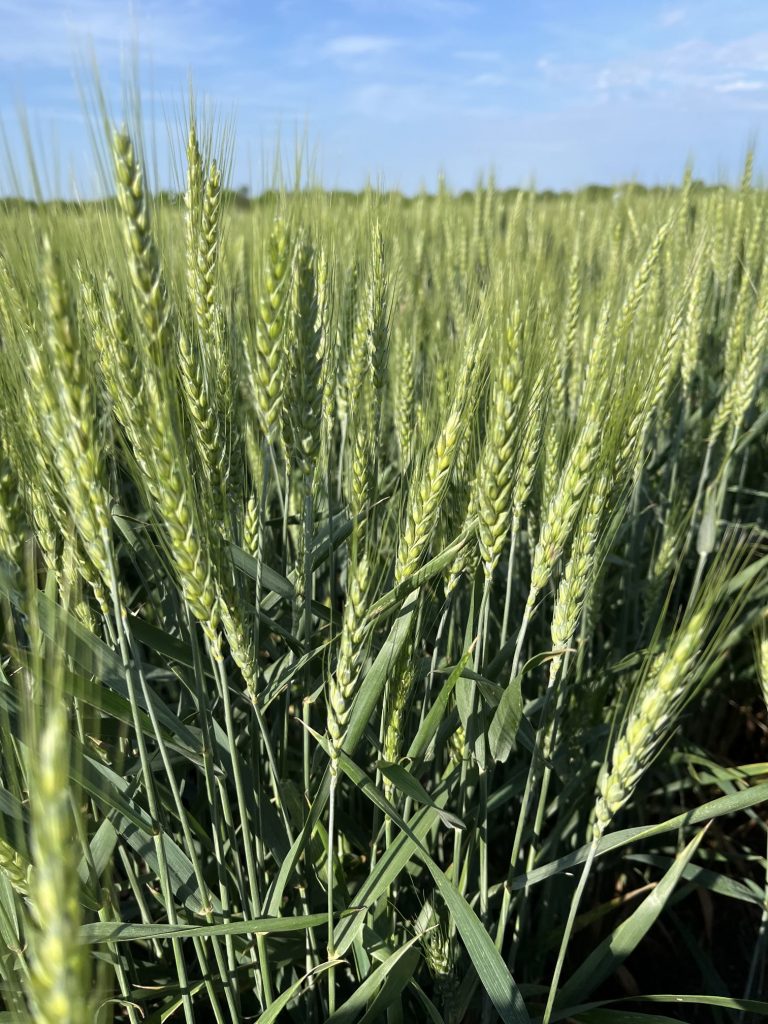
Fully Ripe Wheat Field near Walters (courtesy of Jimmy Kinder via Facebook)

We have been praying for rain for months- and God has provided- farmers that have wheat that will make a crop are praying now for a bit of dry weather- this is the face of rain chances in many of these locations now into the weekend.

More harvest info from Mike Schulte and the Oklahoma Wheat Commission later on Wednesday, May 31st.

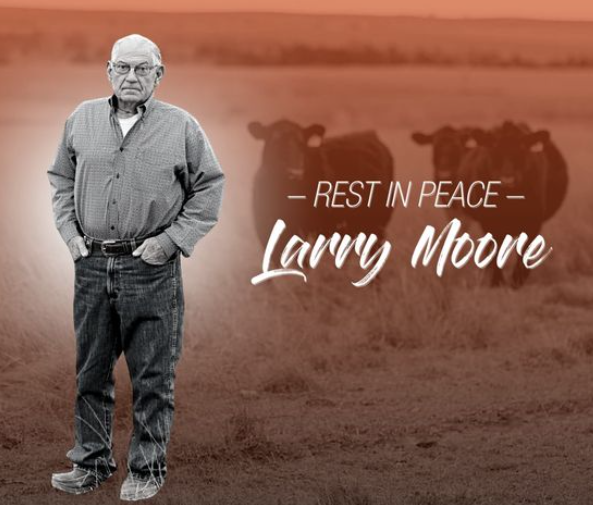
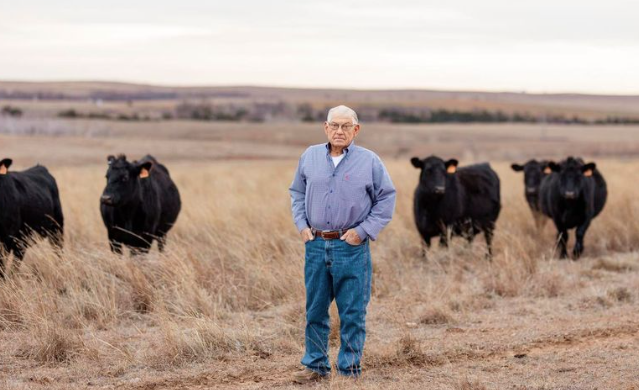
Services for Larry Moore are to be held Saturday, June 3, at Taloga High School Auditorium

Funeral services for Larry Moore will be held Saturday, June 3, at 1 pm at the Taloga High School Auditorium.

Memorial contributions may be made through the Shaw Funeral Home of Vici, Oklahoma to the Larry Moore Memorial Fund where the family will honor his legacy with the 4-H and FFA showing programs through the Woodward District Livestock Show and the Oklahoma Youth Expo.

Oklahoma Youth Expo gave the following statement,

"We are deeply saddened to hear of the passing of our dear friend, Mr. Larry Moore.

Larry took over as the OYE Gilt Sale Superintendent in 2013 and helped build it into the success it is today. He had an impact on countless lives of students across the state, both as a teacher and volunteer. All of us at the Oklahoma Youth Expo are grateful to him for his positive influence on Oklahoma's youth and the swine industry. May he rest in peace. 🧡"

Moore Hog Farms gave the following announcement:

"It is with broken hearts that we share with you the passing of the man that was husband, dad, and Papa to us.

Whether you knew him as Mr. Moore, Larry, or even Mugsy, we all know he was a man of few words who loved the 4-H and FFA programs, raising livestock, and supporting young people with their show projects.

We will have a huge void in our lives, but are at peace knowing today God chose to heal him of the leukemia he has been fighting. We'd like to thank the doctors and nurses who helped him with this fight. We have been touched by all of the connections we have made through this journey, with many of the nurses and doctors taking care of him having ties to the livestock industry."

Moore impacted many throughout his life with his leadership as not only a teacher but a friend and mentor.

Memorials may be made to:

Larry Moore Memorial Fund

(Used to benefit the Woodward District Livestock Show and O.Y.E.)

Oklahoma's Good to Excellent Winter Wheat Ratings Jump 20 Percent This Week

U.S Crop Progress:

Winter wheat headed for the U.S. reached 72 percent, up one percentage point from the previous year and down one from the average. Winter wheat conditions rated 34 percent good to excellent, 31 percent fair, and 35 percent poor to very poor. Last week's conditions rated 31 percent good to excellent, 29 percent fair, and 40 percent poor to very poor. 

Corn planted reached 92 percent, up 8 percentage points from the previous year and the average. Corn emerged reached 72 percent, up 14 points from the previous year and up 9 points from the average. Corn conditions rated 69 percent good to excellent, 26 percent fair and 5 percent poor to very poor.

Soybeans planted reached 83 percent, up 19 percent from the previous year and up 18 percent from the average. Soybeans emerged reached 56 percent, up 20 percentage points from the previous year and up 16 from the average.

OKLAHOMA:

Winter Wheat conditions rated 30 percent good to excellent, 43 percent fair and 27 percent poor to very poor. Last week's conditions rated 10 percent good to excellent, 38 percent fair and 52 percent poor to very poor. 

Corn planted reached 75 percent, down 1 point from the previous year and down 2 points from normal. Corn emerged reached 61 percent, up 2 points from the previous year but down 1 point from normal. Corn conditions rated 71 percent good to excellent, 26 percent fair and 3 percent poor to very poor.

Sorghum planted reached 26 percent, up 2 points from the previous year but down 1 point from normal.

Soybeans planted reached 35 percent, up 1 point from the previous year but down 7 points from normal. Soybeans emerged reached 12 percent, down 3 points from the previous year. Peanuts planted reached 37 percent, up 6 points from the previous year but down 5 points from normal.

Cotton planted reached 32 percent, down 6 points from the previous year but unchanged from normal.

Livestock conditions rated 51 percent good to excellent, 39 percent fair and 16 percent poor to very poor. Last week's conditions rated 48 percent good to excellent, 43 percent fair and 9 percent poor to very poor. 

Pasture and range conditions rated 45 percent good to excellent, 39 percent fair and 16 percent poor to very poor. Last week's conditions rated 33 percent good to excellent, 28 percent fair and 39 percent poor to very poor.

KANSAS:

Winter wheat jointed was 95 percent, near 99 percent for both last year and the five-year average. Headed was 84 percent, behind 94 percent last year and 90 percent average. Winter wheat conditions rated 10 percent good to excellent, 21 percent fair and 69 percent poor to very poor. Last week's conditions rated the same.

Corn condition rated 3 percent very poor, 6 percent poor, 39 percent fair, 45 percent good, and 7 percent excellent. Corn planted was 82 percent, near 85 percent last year and 84 percent average. Emerged was 66 percent, ahead of 59 percent last year, and near 65 percent average.

Soybeans planted was 71 percent, ahead of 55 percent last year and 52 percent average. Emerged was 46 percent, ahead of 33 percent both last year and the average.

Sorghum planted was 22 percent, near 19 percent last year, and ahead of the 17 percent average.

Cotton condition rated 2 percent very poor, 10 percent poor, 47 percent fair, 40 percent good, and 1 percent excellent. Cotton planted was 59 percent, well behind 82 percent last year, and near the 60 percent average.

Pasture and range conditions rated 15 percent good to excellent, 34 percent fair and 51 percent poor to very poor. Last week's conditions rated 15 percent good to excellent, 35 percent fair, and 50 percent poor to very poor.

TEXAS:

Winter wheat headed reached 95 percent, even with the previous year and down 2 percent from the average. Winter wheat conditions rated 23 percent good to excellent, 37 percent fair and 40 percent poor to very poor. Last week's conditions rated 23 percent good to excellent, 32 percent fair, and 45 percent poor to very poor. 

Corn planted reached 92 percent, down 2 percentage points from the previous year and the average. Corn emerged reached 85 percent, down 2 points from the previous year and the average. Corn conditions rated 75 percent good to excellent, 21 percent fair, and 4 percent poor to very poor.

Peanuts planted reached 45 percent, down 13 percent from the previous year and down 12 from the average. Peanut conditions rated 44 percent good to excellent, 38 percent fair and 18 percent poor to very poor.

Sorghum planted reached 83 percent, up 2 percentage points from the previous year and down one from the average.

Range and pasture conditions rated 39 percent good to excellent, 35 percent fair, and 27 percent poor to very poor. Last week's conditions rated 33 percent good to excellent, 31 percent fair, and 36 percent poor to very poor. 

U.S. Cattle Producers Oppose Opening Borders to Paraguayan Beef

The U.S. Cattlemen's Association (USCA) wrote in strong opposition to a proposal by the U.S. Department of Agriculture's Animal and Plant Health Inspection Service (USDA APHIS) to allow the importation of fresh (chilled or frozen) beef from Paraguay. 

In its comments, USCA cited several reasons why it opposes the proposed rule, including the need to protect the health of the domestic cattle herd, the estimated U.S. producer market losses, and the lower standards of production in Paraguay.

Specifically, the Regulatory Impact Analysis that accompanied the proposed rule estimated that U.S. producers would suffer losses of $12 million to $23 million each year due to the increase of Paraguayan beef imports.

The risk analysis also fully admits that "...a vaccinated herd may not mean all the animals in the herd are FMD free. This may result in beef from an infected animal being imported."

USCA president Justin Tupper issued the following statement:

"The nearly ten-year gap since the last visit of USDA APHIS staff to Paraguay does not inspire conference in the strength of the country's animal health and food safety protocols.

"The U.S. has been FMD-free since 1929. An outbreak of the disease in the U.S. would devastate the U.S. cattle and beef industry and significantly strain the nation's food supply. Opening our borders to risky trade is a gamble I'm not willing to bet on. USCA requests the immediate recission of this proposed rule for all the reasons outlined in our written comments." 

Read more below:

Growth Energy Applauds Passage of Nebraska Bill Expanding Access to E15

Growth Energy applauded legislation approved today by the Nebraska legislature that will provide motorists better, more affordable options at the fuel pump. Sponsored by Sen. Myron Dorn (R-30), the Adopt the E-15 Access Standard Act (LB 562) would expand access to E15 at more Nebraska fueling stations and increase tax incentives for fuel retailers selling higher bioethanol blends. 

"This legislation cements Nebraska's leadership role in homegrown, renewable energy, ensuring that more drivers can enjoy savings at the pump thanks to the state's world-class biofuel sector," said Growth Energy CEO Emily Skor. "We're grateful to Senator Dorn, Governor Pillen, and other leaders in the legislature for working to get this important new law over the finish line. Growth Energy looks forward to working alongside our farm and retail partners to fully unleash E15 in Nebraska, boost the state's rural economy, and cut fuel costs for working families."  

Passage of LB 562 followed months of work by Growth Energy, POET, Renewable Fuels Nebraska, and other biofuel and ag leaders in the state to expand access to E15. Under the bill, requirements for new fuel sites would take effect in January 2024, while requirements for existing sites would take effect in January 2028, if the state's blend rate remains below 14 percent. Modeled after a similar E15 access standard in Iowa, the final bill is expected to be signed into law by Governor Pillen.  "The Biden administration should take a page from Governor Pillen's leadership on this issue and move quickly to ensure permanent, nationwide access to cleaner, more affordable E15 fuel," added Skor. "We're excited to see Governor Pillen emerge so quickly as one of rural America's most effective biofuel champions." 

OKFB's Steve Thompson Discusses Wins for Rural Oklahoma from Legislative Session

Listen to Ron Hays talk with Steve Thompson about Oklahoma's Legislative Session.

Senior Farm and Ranch Broadcaster, Ron Hays, is visiting with the Oklahoma Farm Bureau Vice President of Public Policy, Steve Thompson, about highlights from Oklahoma's legislative session.

Thompson described this year's legislative session as "a bit of a grind," as some difficult conversations took place.

"Along the way, we managed to get some pretty decent legislation passed, but honestly, I think the one point that I look back on is how nice it was that rural Oklahoma was such a critical component of so many discussions," Thompson said. "Obviously, the education fight- that was the headlining issue of almost the entire session, and so much of that centered around what was going to be done for rural schools all around the state."

Throughout the session, Thompson said it was evident that there is a large focus on rural Oklahoma at the state's Capitol.

Beyond the education package, Thompson said he is feeling best about House Bill 2053 relating to water and water rights and applications for permits to take and use groundwater. This bill passed almost on the last day of session, Thompson said, and it was a big victory for the ag community.

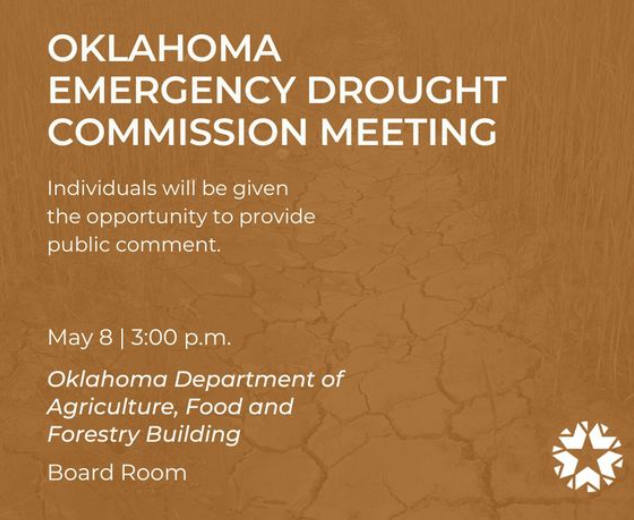
"The other two things that pop up are part policy and part funding related," Thompson said. "We talked a lot the last year about the Emergency Drought Commission and the work they have done with the limited funding, so it was really exciting to see a deposit made there to address the backlog of approved applications that they ran out of funding for in the last go-round as well as another payment made to that so they can maybe address some things moving forward in a targeted manner."

Two more seats were added to the Emergency Drought Commission, Thompson said, as there have previously only been three individuals tackling the duties of the commission.

"The third thing has to do with the OSU College of Veterinary Medicine," Thompson said. "That was a priority of ours all the way through, and we are really proud to support President Shrum and her strategic plan to revamp what they are doing there. They received 14 million dollars of recurring funding as well as a one-time capital projects funding of 79 million to do a complete renovation and rehab of their teaching hospital."

Kansas Farm Bureau Program Provides Global Perspective to Grow Local Leaders

Launched in 2021, Kansas Farm Bureau's Casten Fellows program is focused on developing individuals who can engage at the highest levels to enact change through meaningful relationships, innovation in ideas and processes, and effective leadership. The program was developed to honor the life of Kansas Farm Bureau staffer Jill Casten-Downing and her love for Kansas, agriculture, leadership development and international travel.

"As we developed the program, we knew we wanted to focus on change leadership and the ability to equip leaders to see what was possible for their communities," explained Edie Doane, Kansas Farm Bureau director of training and development.

With room for up to 10 participants identified through a rigorous application and selection process, the 10-part program is ideal for Farm Bureau members who demonstrate a commitment to intentional life-long growth and active and long-time involvement in the organization.

"We want to know class members are ready to show up and can start at a high level of engagement," said Leigh Ann Maurath, Kansas Farm Bureau director of leadership and field services.

Much of the program involves participants working, learning, reading and watching on their own, then coming together via Zoom to do a deep dive on their "homework," which is laid out month-by-month in a handbook. To ensure quality remote interaction, Kansas Farm Bureau starts the fellows off with a solid in-person base during an orientation connected to the Kansas Farm Bureau annual meeting in December.

"We want them to have really good discussions throughout the year, so we set a strong foundation at orientation. We also establish expectations and do some leadership development work," Doane said.

Each month has a different focus: January – leadership and innovation; February – change leadership; March – understanding bias; April – cultural intelligence; May – international government and agriculture systems (focused on the country/countries the fellows will be traveling to); July – international trip preparation; August – 10-14-day international experience; September-November – program impact and leadership legacy; and December – graduation. The fellows have June off as that's a busier time for Kansas farmers.

In a nod to how Casten creatively exposed her agricultural peers to ideas and thought leaders outside of agriculture, Kansas Farm Bureau intentionally taps into leaders, perspectives and innovations from other industries.

In addition, the small group size and the number and quality of the group's engagements ensure that the fellows know each other well enough – and have already had some of the trickier and more uncomfortable conversations – that they could maximize their learnings and bonding when they travel overseas.

The international trip includes farm visits and many conversations with people involved in the country's or region's agriculture.

"We think about things through the lens of rural communities, what's working, what's not working and what challenges they're having. We also look at how agriculture interacts with the systems around it, especially the government system and how that impacts what people can do on their farms and ranches and in their communities," Doane said.

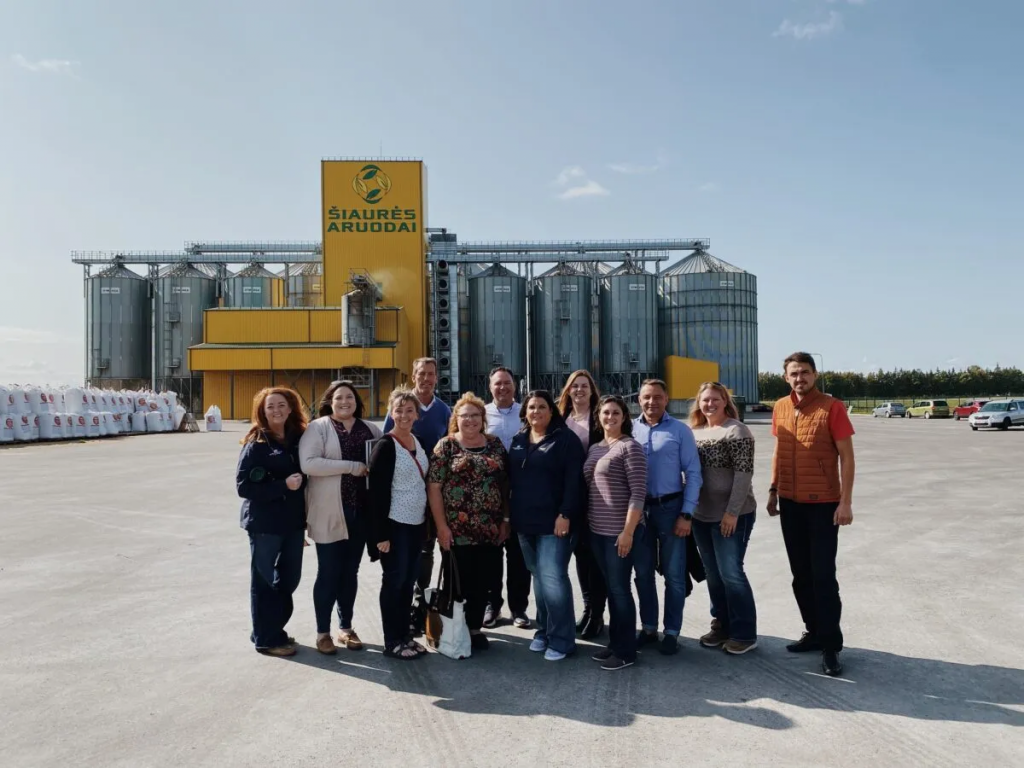
The first fellow cohort went to the Baltics (Lithuania, Latvia and Estonia) in 2021 where they looked at post-Soviet culture and issues, European Union systems for agriculture, innovation on farms and in markets and developing markets.

The second cohort will travel to Uganda and Tanzania this year where they'll dive into U.S. and international research and investment, rural challenges, ag as a solution and developing markets.

Upon returning, the fellows are encouraged to do at least three community presentations about their experience.

They're also asked to create an artifact, which could be a journal, a scrapbook, a piece of art or something else.

"We want them to memorialize what they've learned throughout the program and how it's impacted them," Doane said.

The program is funded through a combination of funds from the Jill Casten-Downing Memorial Fund in the Kansas Farm Bureau Foundation for Agriculture, annual KFB budget dollars, partner support and participant fees. Participants are responsible for a $2,500 participant fee, which can be derived from personal finances, support from the individual's county Farm Bureau and/or other local supporters.

Learn more at https://www.kfb.org/Get-Involved/Training/Casten-Fellows.

New Horizon Award

The Casten Fellows program garnered Kansas Farm Bureau a 2023 New Horizon Award from the American Farm Bureau Federation. The award, which honors state Farm Bureaus with the most innovative new programs, is presented annually at the AFBF Convention.

Wines of the West Coming up Saturday June 3 in Historic Stockyards City

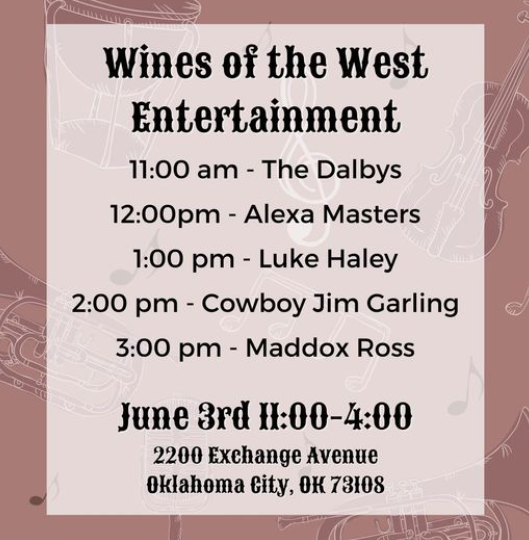
Come to Historic Stockyards City for the 13th annual Wines of the West event on Saturday, June 3rd from 11:00 am to 4:00 pm. This year's event will be held in a new location in the heart of the business district, directly behind 1910 Western Wear and Oklahoma Native Art and Jewelry, in the 2200 block of Exchange.

Attendees will be able to sample different varieties and to purchase bottles of wine, watch live entertainment, and enjoy a Made in Oklahoma Market. While in Stockyards City, shop at the most unique boutiques and knowledgeable western merchants around! There will be entertainment and dining options throughout the evening as well.

Follow the link to purchase a ticket:

Drought Conditions Pave a Long Road Ahead to Rebuild the Cow Herd

Listen to Ron Hays talk with Derrell Peel about rebuilding the cow herd and drought conditions.

Senior Farm and Ranch Broadcaster, Ron Hays, is talking with Oklahoma State University Extension Livestock Marketing Specialist, Dr. Derrell Peel, about the state of the cow herd as it relates to forage availability.

As pasture and range ratings are not ideal from Nebraska through Texas, Peel said there is still a long way to go before improvements are seen.

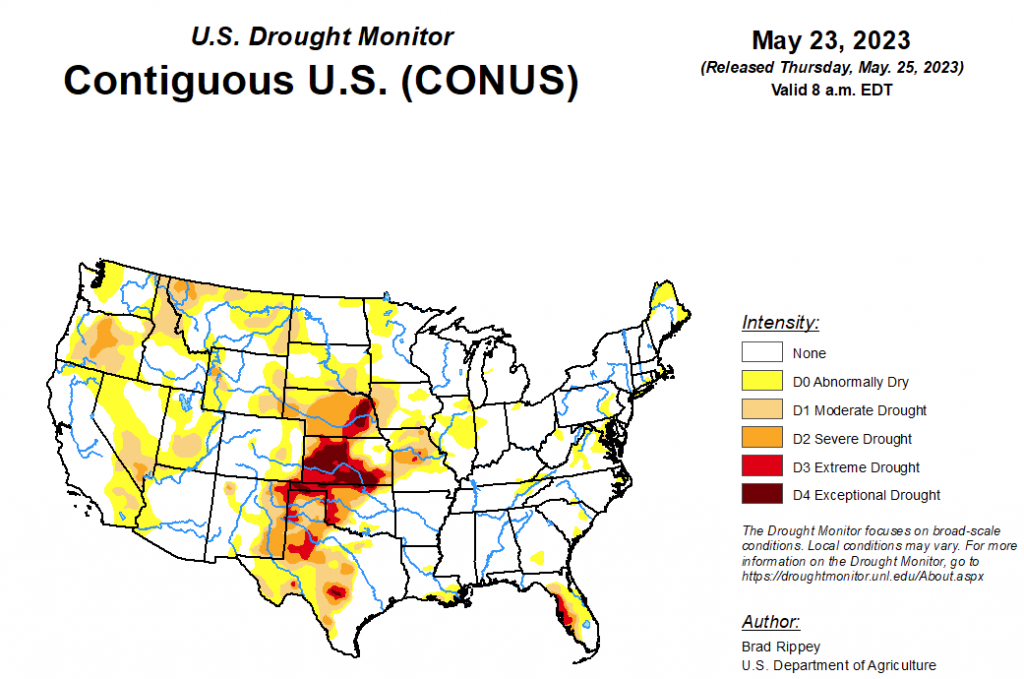
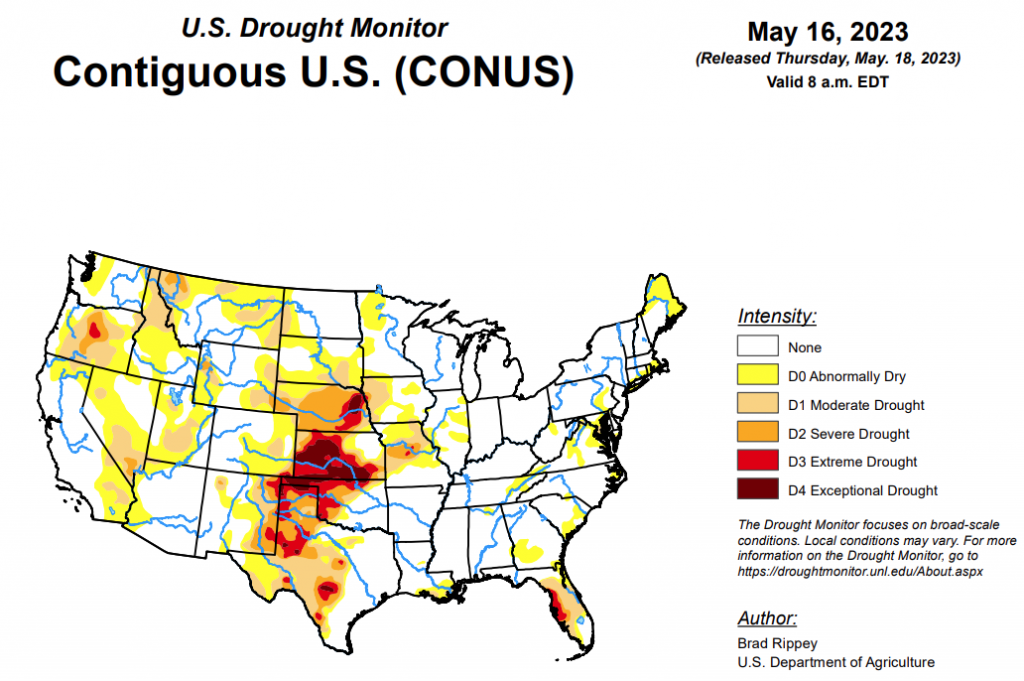
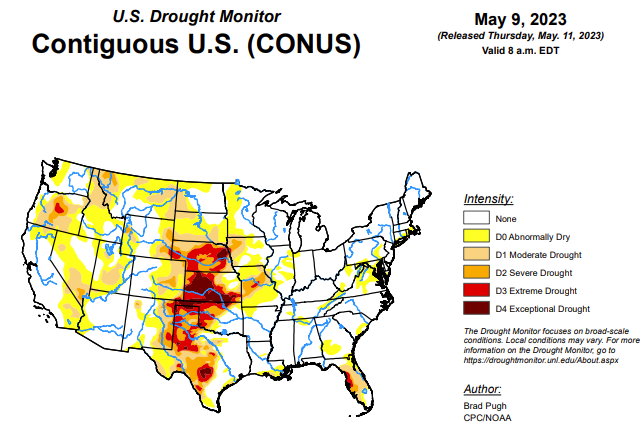
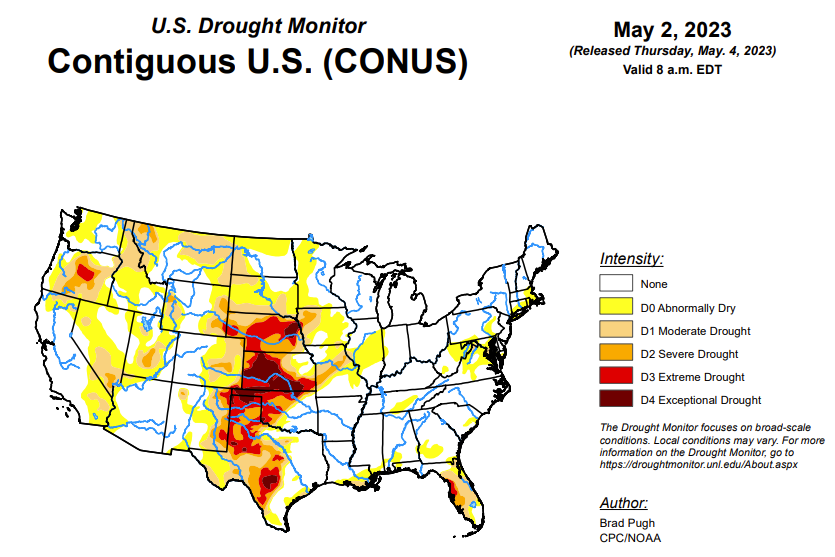
"These four states now (Nebraska, Kansas, Oklahoma, and Texas), really are kind of the epicenter of the drought in the country," Peel said. "From a national perspective, from January 1 until now, drought has diminished considerably in the country, but not in that region. Most of the remaining severe drought is in those four states."

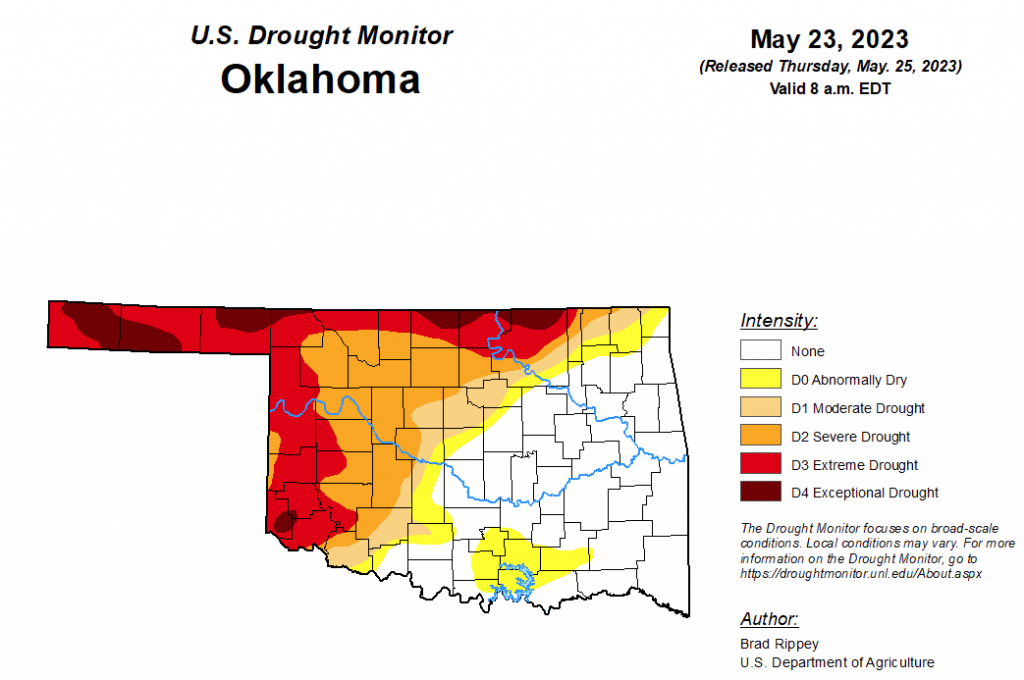
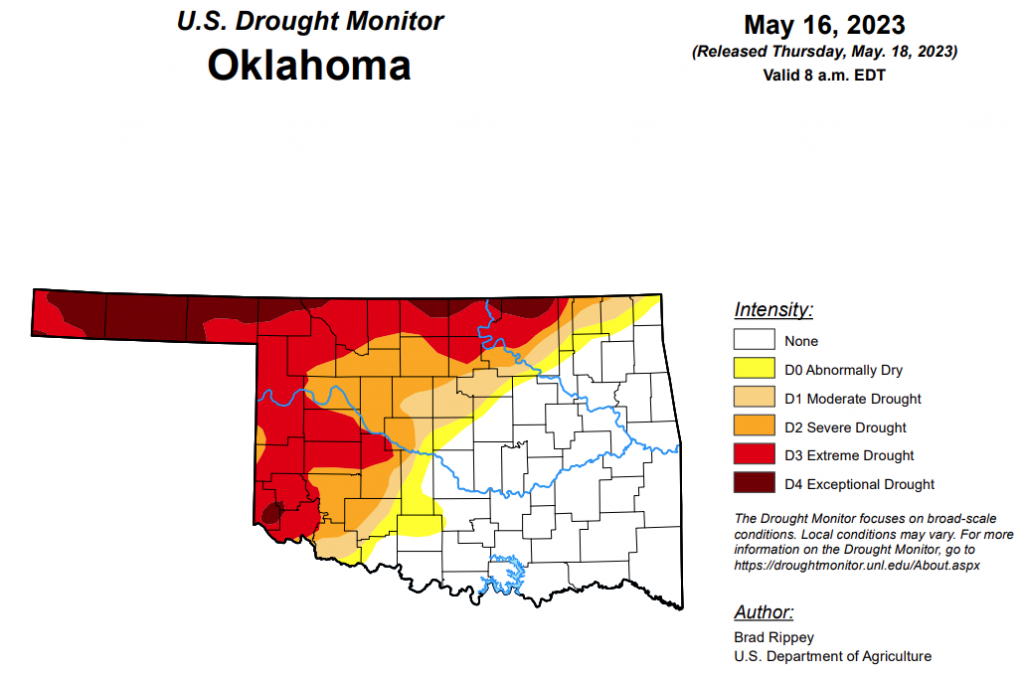
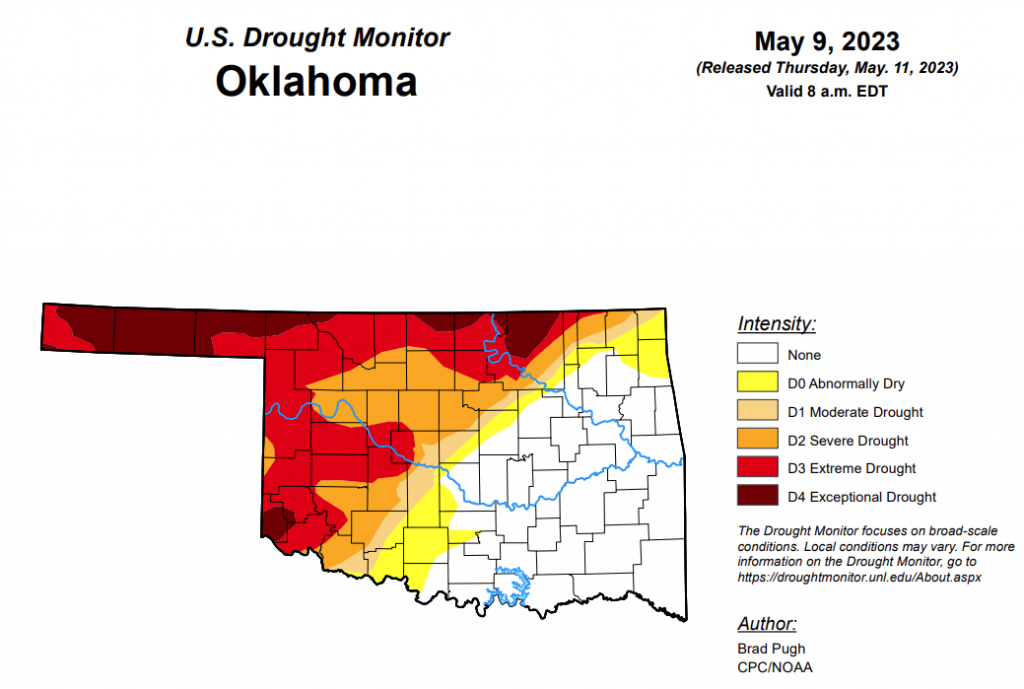
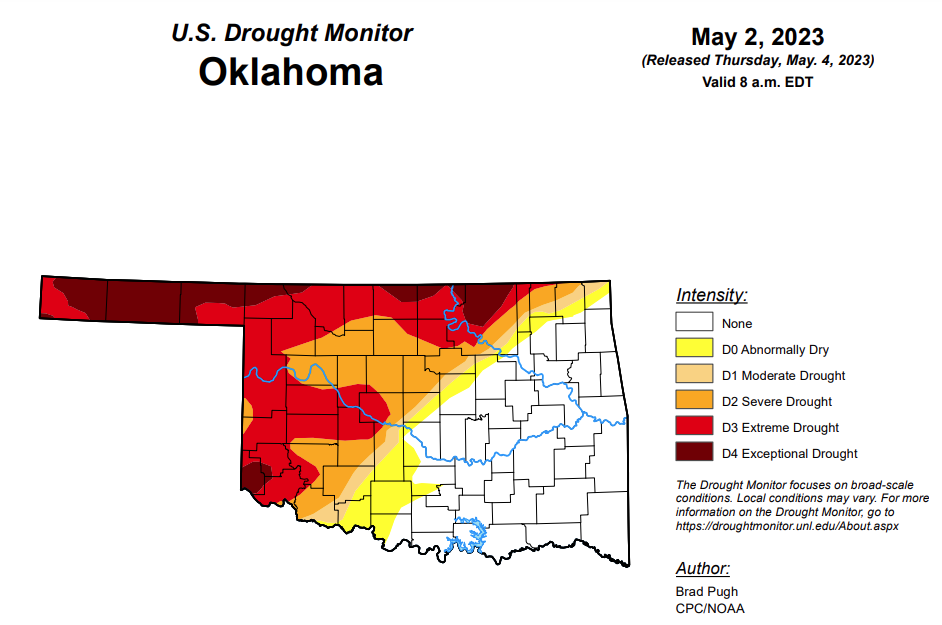
In Oklahoma, much of the state still suffers from all categories of drought, with over 50 percent in moderately dry or worse conditions. To see the latest Oklahoma drought numbers, click here.

Extremely poor pasture ratings, Peel said, means less forage availability.

"Nationwide, hay stocks were down about 13 percent, but if you look at those four states, we are down well below that in terms of a ten-year average or something," Peel said. "The bottom line is forage remains very tight."

Herd liquidation cannot end nationally, Peel said, until conditions improve in Nebraska, Kansas, Oklahoma and Texas.

"Those four states on January 1 of this year had 32 percent of the beef cows," Peel said.

This year will be more of a stabilizing situation, Peel said, as better conditions can possibly be anticipated for 2024. As of now, Peel added, 2023 is not going to turn around so quickly.

"I think the national cow herd will continue to decline a little bit in 2023, and that will show up as an even lower number on January 1 of 2024," Peel said.

It is not clear how quickly things are transitioning to better conditions this year, Peel said, but in any event, the forage deficit will leave the region with a small chance of rebuilding any time soon.

"From a longer-term perspective, we have been in enough drought long enough that those pastures take time to heal, and those pastures need time to recover," Peel said.

In the short run, there have been some rains to help green up pastures, Peel said, but the growth isn't anything substantial.

"That is indicative of the fact that we are in a fairly serious hole," Peel said. "Even if the drought conditions sort of went away instantly, which doesn't happen, but if they did, I think we are still talking about most of this year and very much in recovery mode and rehabilitation mode."

Even if the drought conditions went away overnight, Peel said that because of the damaging effects of long-term dry conditions, it would not be a good idea to fully stock pastures with cattle immediately.

Peel also talked with Hays about the latest cattle on feed numbers. Click the listen bar above the story to hear the full conversation.

"In general, that report was very well anticipated," Peel said.

The Beef Buzz is a regular feature heard on radio stations around the region on the Radio Oklahoma Ag Network and is a regular audio feature found on this website as well. Click on the LISTEN BAR for today's show and check out our archives for older Beef Buzz shows covering the gamut of the beef cattle industry today.

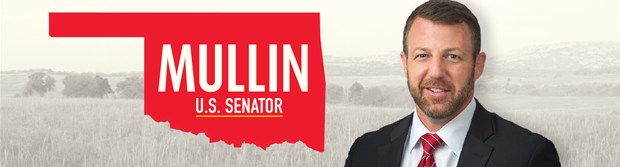
ICYMI: "Sounding the alarm on grid reliability, again"

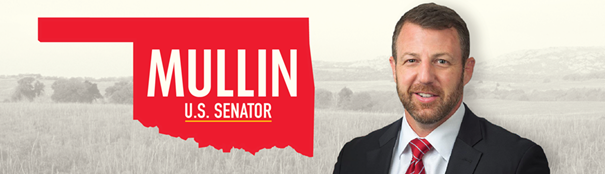
ICYMI, U.S. Senator Markwayne Mullin (R-OK) authored the below opinion piece on the consequences of President Biden's rush to green energy policies. In the column, Senator Mullin argues that Democrats' climate hysteria is getting ahead of operational reality, and the American people are taking notice.

Read Mullin's full Fox News Digital column HERE or below.

Sounding the alarm on grid reliability, again

By Senator Markwayne Mullin

The Biden administration's overreaching energy regulation is sacrificing Americans' ability to run their businesses and power their homes.

Democrats' Green New Deal (GND) policies have left America dependent upon unreliable energy sources that strain our electric grids, cause rolling blackouts across the country, and have increased energy costs by over 40%. Just this past December, more than 10 states experienced rolling blackouts as the demand for electricity exceeded our available supply. Time and again, environmentalists have overlooked the continued necessity of fossil fuels to power our world.

These GND proponents have failed to learn from Europe's rush for renewables or acknowledge how many European Union countries have now returned to fossil fuels after their premature abandonment. Germany, as a prime example, now generates more than a third of its electricity from coal-fired power plants after their abandonment of natural gas and subsequent rising power demand from France.

Domestically, we have watched as greenwashed Californians experience blackouts and are told to which degree to heat their homes. Yet, we continue to see lawmakers enact the same policies that led to these disasters in the first place. 

Biden's Environmental Protection Agency (EPA) recently proposed a set of burdensome regulations that will force the closure of coal and gas-fired power plants, regulations reminiscent of the illegal Obama-era Clean Power Plan. This proposal is a direct attack on our domestic energy producers and electric grid operators, forcing them to shutter reliable baseload power plants while relying on risky renewable sources that can't deliver the certainty American families and businesses need. 

In 2022, approximately 60% of electricity generated in the U.S. came from burning fossil fuels at our nation's 3,400 coal and gas-fired plants. By requiring fossil fuel plants to capture nearly 90% of emissions, knocking their generating capacity down to uneconomical levels, the EPA will force a de facto shutdown of our nation's affordable, reliable energy.

Ironically, this rule comes amid the administration's continued push for electrification that has already catalyzed concern for our electrical grid's ability to withstand an uptick in consumption. From 2017 to 2021, according to data from the U.S. Energy Information Administration, electricity consumers nationwide spent an average of almost seven hours a year without power, which is an increase of three hours per year from 2013 to 2016. 

Democrats' climate hysteria is getting ahead of operational reality, and Americans are taking notice.

In February, PJM Interconnection, the nation's largest grid operator, released a report warning that retirements are at a risk of outpacing the construction of new resources onto the bulk power system. Simply put, fossil generation retirements are the key accelerator of grid unreliability.

I'm a firm believer in an all-of-the-above energy approach. The United States should strongly embrace oil and natural gas to power our grid, while continuing to explore alternative energy sources, just as we have done in my home state of Oklahoma.

During my time on the House Energy and Commerce Committee, we repeatedly questioned the Department of Energy and EPA Administrator Michael Regan on how they planned to mitigate the impending blackouts last summer. We were met with silence. 

I now sit on the Senate Environment and Public Works Committee and the Senate Armed Services Committee, and in just five months, we have questioned both the Department of Energy Secretary Jennifer Granholm and EPA Administrator Michael Regan on what energy reliability and security truly means for our country. Despite the continued pressure we have put on Democrat officials to implement policies that allow reliable energy to thrive, we are provided with nonsensical explanations that quickly suffocate a viable path forward for our grid. 

Forcing cost and reliability to take a back seat to emissions considerations is a dangerous approach, and I will continue to fight for realistic solutions for all Americans.

Over the past 50 years, emissions of the six most common greenhouse gases dropped by 78%. Utilities and power companies have taken dramatic steps to curb emissions while still providing affordable and reliable power. Environmentalists often forget that innovation is America's greatest export. President Biden's EPA, however, refuses to acknowledge this progress and continues to push unrealistic standards that weaken our grid.

Unstable grids result in blackouts that are life-threatening and dangerous. Not to mention, Americans deserve dependable electricity at a price they can afford. We have seen what has happened to coastal states on both sides of the country that have rushed to green and paid the price; the rest of America shouldn't have to worry about the same.

U.S. Senator Markwayne Mullin (R-OK) is a successful business owner and working cow-calf rancher serving Oklahoma on the Environment and Public Works; Armed Services; Health, Education, Labor, and Pensions; and Indian Affairs Committees. He is an enrolled member of Cherokee Nation and is the first Tribal citizen to serve in the U.S. Senate in nearly two decades. 

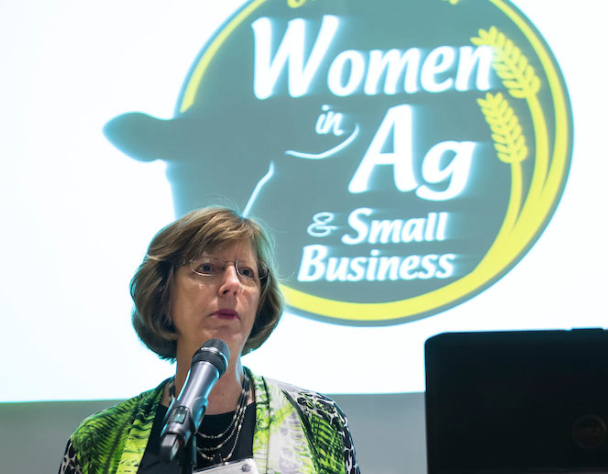
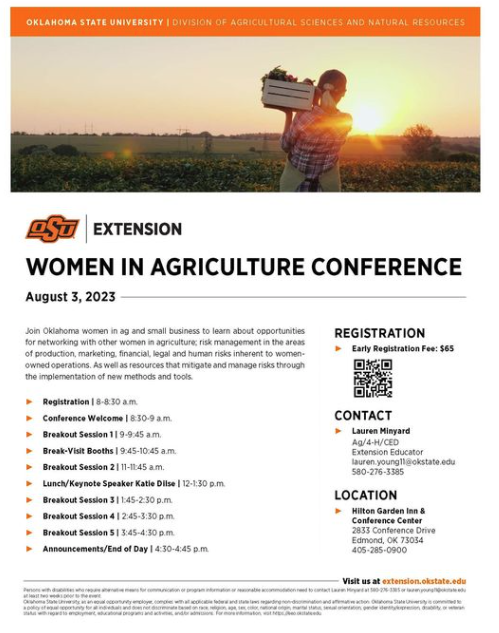
Oklahoma Women in Agriculture and Small Business Conference coming Up on August 3

Keynote Speaker: Katie Dilse

Mark your calendars for August 3rd, 2023 to join us at the Hilton Garden Inn & Conference Center in Edmond for the 2023 Women in Ag Conference!

Fill out the registration form and pay online.

Early Registration Fee is $65

The Oklahoma Women in Ag and Small Business conference provides risk management education in the areas of production, marketing, financial, legal and human risks inherent to women-owned operations. Four general sessions and 24 concurrent workshops focusing on educational information and resources to mitigate and manage risks through implementation of new methods and tools.

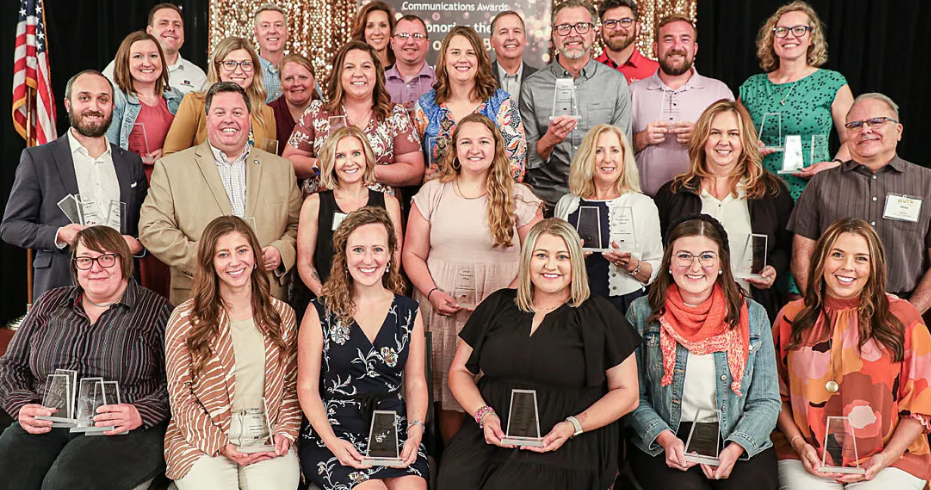
State Farm Bureau Professionals Recognized for Excellence in Communications

The American Farm Bureau Federation recently hosted a national competition to recognize top professionals from state Farm Bureau organizations for their exceptional work in communications. New York, Illinois and Utah Farm Bureaus received the most awards overall, earning honors in several categories including writing, media relations, social media and video production.

This year's contest included 177 submissions for work produced in 2022 by state Farm Bureaus across the country.

"Highlighting the important work farmers and ranchers do each day is critical to the mission of Farm Bureau," said AFBF President Zippy Duvall. "State Farm Bureau communicators are the best in their field, amplifying the trusted voices of our grassroots members to become a powerful voice for agriculture across the country."

Awards were presented to Farm Bureau communicators in Alabama, California, Illinois, Iowa, Kansas, Michigan, Mississippi, Missouri, Montana, New York, North Carolina, Oklahoma, South Carolina, Texas, Utah and Wisconsin.

A list of award winners follows. This year's honorees are being recognized for excellence in several new digital categories as well as the inaugural Anne Marie Moss Team Effort Award. The Moss Award recognizes outstanding collaboration on an issue that is a priority for AFBF; sustainability is the issue for this year's contest. Each award is divided into three groups based on membership size, with larger state membership winners listed first. Only two awards are listed in categories where there were entries in only two of the divisions.

Anne Marie Moss Team Effort Award

New York, for "Focusing on the Future," a multi-faceted initiative that shares the innovative sustainability work farmers are doing – Seth Moser-Katz, Steve Ammerman, Brooks Brown, Tim Bigham, Renee Ciardi, Lauren Williams, Ashley Oeser, Kyle Wallach, Renee St. Jacques, Mark James, Todd Heyn, Lauren McGrath

Wisconsin, for "35 Under 35," a program that recognizes members for leadership in environmental, social and economic activities – Rachel Gerbitz, Amy Eckelberg, Cassie Sonnentag, Lynn Siekmann, Wendy Volkert, Bob Nash

Alabama, for "Down to Earth: Agriculture Sustains Alabama," a campaign that shares the sustainable- and conservation-minded practices of farmers and forest landowners –

Jeff Helms, Mary Wilson, Marlee Jackson, Laura Unger, Matt Wilson, Kevin Worthington, Maggie Edwards, Mike Moody, Chris Thomas, Melissa Martin, Sara Beth Beals, Brooke Foster, Brooke McBrayer

Best Agriculture Story

New York – Brooks Brown

Kansas – Greg Doering

Alabama – Marlee Jackson

Best Single Blog Item, Editorial or Column

New York – Steve Ammerman, David Fisher

Utah – Matt Hargreaves

Michigan – Mitch Galloway

Best Newspaper or E-Newsletter - published at least quarterly

New York – Steve Ammerman, Brooks Brown

California – Christine Souza, Ching Lee, Caleb Hampton, Peter Hecht, Nicole Pacheco, Paula Erath

Illinois – Deana Stroisch, Timothy Eggert, Daniel Grant, Kay Shipman, Allison Preston, Tammie Sloup, Catrina Rawson, Nicole Dowling, Jenny Gentes

Best Magazine - published at least quarterly

Montana – Rebecca Colnar, Bobbi Burow

California – Christine Souza, Ching Lee, Barbara Arciero, Linda Dubois, Paula Erath, Peter Hecht, Nicole Pacheco

Illinois – Chris Magnuson, Mike Orso, Nan Fannin, Jeff Brown, Tammie Sloup

Best Member/Leader Newsletter - print or e-newsletter

Kansas – Sheridan Wimmer

Illinois – Brenda Matherly, Ryan Tate, Ryan Whitehouse, Jenny Eisenbeis, Melissa Rhode, Nicole Dowling, Jeff Brown, Katie Zelechowski

Best Graphic Design

New York – Brooks Brown

Missouri – Rebecca Hoelscher

Illinois – Melissa Rhode, Tifani Shea, Katie Zelechowski, DeAnne Bloomberg

Best Audio News Story, Feature Story or Commentary/Editorial

New York – Steve Ammerman, Seth Moser-Katz

Kansas – Shelby Varner

Texas – Tom Nicolette

Best Video News Story

New York – Seth Moser-Katz, Steve Ammerman

California – Aubrey Aquino, Jeff Bell

Texas – Pedro Rosas, Ed Wolff, Julie Tomascik

Best Video Feature Story

New York – Seth Moser-Katz, Steve Ammerman

South Carolina – Carey Herndon

Kentucky – Matthew Hilton, Michael Corrigan

Best Promotional or Education Video or Ad

New York – Seth Moser-Katz

Utah – Matt Hargreaves, Wade Garrett, Faith Jolley, Phil Tuttle

Mississippi – Jon Kalahar, Alex Lowery, Karen Miller, Sam Boone

Best Unique Tactic or Execution

Wisconsin – Cassie Sonnentag, Lynn Siekmann, Bob Leege

Iowa – Caitlyn Lamm, Zach Bader, Aaron Siskow, Andrew Wheeler, Sara Payne

Best Website

California – Christina Apkarian

Illinois – Gracie Pierson

Best Social Media Video

New York – Seth Moser-Katz, Steve Ammerman

Oklahoma – Dustin Mielke, Rebekah Nash

North Carolina – Kathy Bostrom, Lynda Loveland, Mark Stebnicki, Jamie Thomas

Best Social Media Campaign

Kansas – Sheridan Wimmer, Meagan Cramer, Sandi Cowdin, Greg Doering, Jennifer Alonso, Shelby Varner

Iowa – Dana Ardary, Zach Bader, Bo Geigley, Sara Payne

Best Social Media Presence

Montana – Rebecca Colnar, Dylan Davidson

Wisconsin – Cassie Sonnentag, Amy Eckelberg, Lynn Siekmann, Rachel Gerbitz

Illinois – Sabrina Burkiewicz, Katie Zelechowski, DeAnne Bloomberg

Best Media Relations Event

Utah – Matt Hargreaves, Aubree Thomas, Clayton Beckstead, Susan Furner, Heidi LeBlanc, Jennie Taylor

Mississippi – Jon Kalahar, Alex Lowery, Karen Miller, Sam Boone

Best Public Relations Campaign

New York – Steve Ammerman, Tonya Van Slyke, Chyresse Wells

Utah – Matt Hargreaves, Aubree Thomas

Mississippi – Jon Kalahar, Alex Lowery, Karen Miller, Sam Boone

Dave Lane Award for Media Relations Excellence

Utah – Matt Hargreaves

Illinois – DeAnne Bloomberg, Sierra Henry, Andrea Casali

Dairy Defined Podcast: Dairy's Future Found in New Markets, New Leaders

Dairy's future will be increasingly global and diverse, as emerging markets increase demand and women take on greater leadership roles in the industry, this year's chairwoman of the NMPF Young Cooperators program said in a dairy defined podcast.

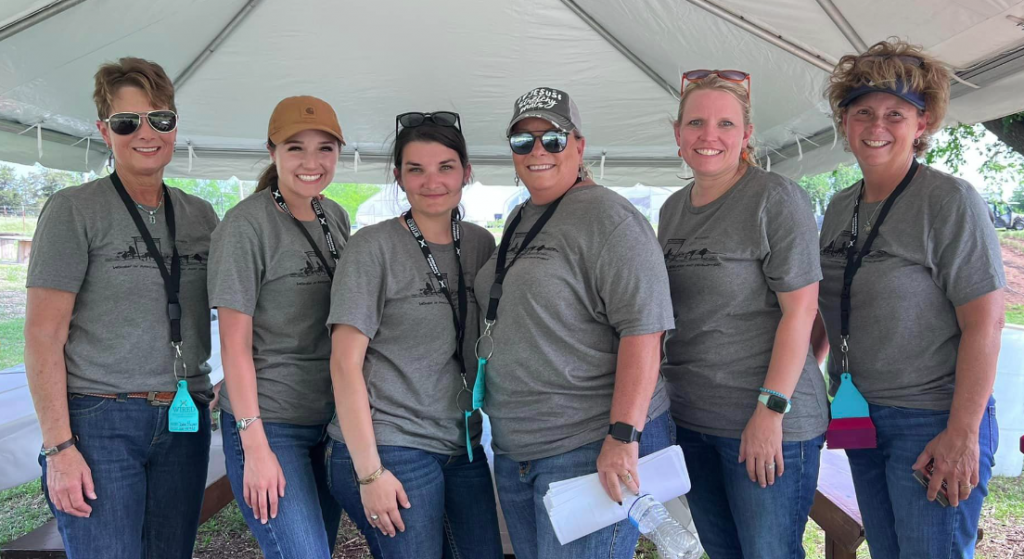
"The U.S. really had a competitive edge, as far as the quality and safety of the products," said Lorilee Schultz, who milks 60 registered Holsteins and manages more than 200 acres at Mil-R-Mor Farm in Orangeville, IL, said of her time briefly working with the USDA's Foreign Agriculture Service. The member of Prairie Farms cooperative is very active in community leadership and has a special interest in teaching kids about agriculture, including interactions with more than 200,000 school children through the Adopt-A-Cow program, a free, years-long virtual experience where students care for a calf and interact with a dairy farmer. 

That investment in dairy's future will also be critical as new leaders emerge through programs such as NMPF's YCs, which will be in Washington next week for their annual congressional fly-in, she said. Schultz, 38, said one of her messages to lawmakers will be that "If we want to retain the talented young people that we have in our rural communities, we really need to make sure that we're investing in those communities, making sure we have things like good schools, access to healthcare, quality and affordable childcare."

And for dairy's next generation of leadership – especially for women, who are currently under- represented in top industry positions – it's critical to get involved, Schultz said. "It's really important to have our voices heard," she said. "I just want to encourage everybody to know that they can be involved in leadership and make a difference." The full podcast is here. You can also find the podcast on Apple Podcasts, Spotify and Google Podcasts.

OSU's Derrell Peel Explains the Cattle and Beef Margin Squeeze

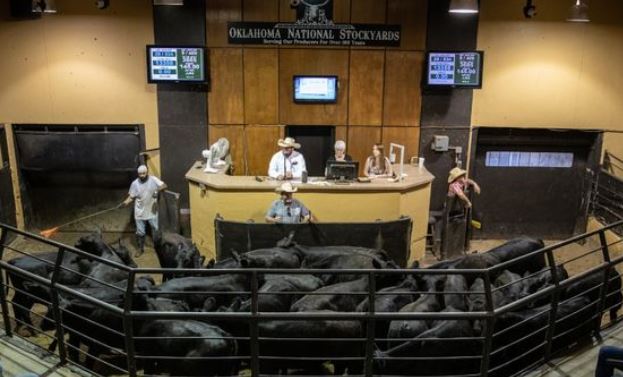
Feeder Cattle Auction at the Oklahoma National Stockyards

Dr. Derrell Peel, Oklahoma State University Extension Livestock Marketing Specialist, offers his economic analysis of the beef cattle industry as part of the weekly series known as the "Cow Calf Corner" published electronically by Dr. Peel and Mark Johnson. Today, Dr. Peel talks about rising cattle prices and how they will impact retail beef prices in the days ahead.

The cattle and beef industry consists of primary production at the cow-calf level followed by a series of margin sectors for stocker and feedlot production; slaughter and fabrication at the packing level; and a multitude of beef product markets including retail grocery, food service and exports.  Price adjustments in each of the industry sectors are related but variable in magnitude and timing.  It is generally true in food markets that prices at retail adjust less and more slowly than farm level.  Increasingly tight cattle supplies suggest that margins at all levels above the cow-calf sector will be squeezed in the coming months.  The severity of the squeeze and the timing will vary across beef industry segments.

Retail beef prices are mostly unchanged over the last 16 months, with the most recent monthly retail all fresh beef price down 0.7 percent year over year.  However, current Choice boxed beef prices are up over 14 percent from one year ago.  It appears that retail margins are decreasing as wholesale values are increasing faster than retail prices.  The reported retail beef prices reflect only grocery sales and less is known about beef price adjustments in food service and export markets.  The ability of retail beef prices to move higher as limited supplies and rising wholesale prices squeeze retail margins is perhaps the biggest concern in beef markets currently.

Packer margins are already being squeezed with more pressure expected ahead.  Fed cattle prices are up 25 percent year over year, outpacing the 14 percent increase in boxed beef prices.  Additionally, packers will face increased overhead costs as declining cattle numbers will reduce packing plant utilization rates in the coming months.

Feedlots are currently enjoying good profits due to the long time lags in feedlot production and the fact that fed prices increased quickly to record levels this year.  The increase in fed cattle prices are balanced against the price of feeder cattle placed in feedlots roughly six months ago.   However, it's just a matter of time before feedlot margins feel the squeeze of rising cattle prices.  The prices of feeder cattle currently being placed in feedlots are up about 39 percent year over year.  Feedlot breakevens for fed cattle will increase sharply by the end of the year.

Calf prices are currently up roughly 50 percent year over year.  With calf prices increasing faster than feeder cattle prices, stocker margins or value of gain is eroding.  However, similar to feedlots, the time lags in stocker production will allow the uptrend in prices feeder sales to offset part of the high calf purchase prices.  A significant uptrend in feeder prices is priced into Feeder futures contract for the deferred months and, depending on the details, stocker or backgrounding programs may still show decent prospects for positive returns.  Calf prices are likely to continue increasing faster than feeder cattle prices in the coming months.  

Cattle markets are increasingly focused on calf prices in order to build the incentives for herd expansion in the coming months.  Cow-calf producers will see sharply rising revenues as calf prices continue to increase.  Cow-calf production is the primary source of supply for the industry and, thus, cow-calf producers do not face buy-sell margins like the rest of the industry.  However, input costs for fertilizer, chemicals and fuel have been a significant challenge for the cow-calf sector.  Drought impacts and record high hay prices are a particular challenge for some producers.  High calf prices that encourage herd rebuilding will be accompanied by sharply higher breeding cow and replacement heifer prices in the coming months. Undoubtedly there will be considerable dynamics and volatility in cattle and beef markets at all levels for the foreseeable future.


Senate Pro Tem Treat Comments on Conclusion of the 2023 Regular Session

Senate President Pro Tem Greg Treat, R-Oklahoma City, today commented on the conclusion of today's regular session that began in February.

The pro tem said the Senate Republican caucus was more united than ever before and built momentum going into the summer, which he hopes to carry into next year.

"I am proud beyond measure of all of our accomplishments this session," Pro Tem Treat said. "We passed comprehensive school choice, significant teacher pay raises, record investments in schools and many more policy initiatives that will benefit Oklahomans across the state for generations. We also accomplished a lot for business development that will create jobs and opportunities for communities across the state.

"I appreciate the leadership team, the members of the Senate Republican caucus, the Senate staff and everyone involved this session. We wouldn't have been able to accomplish as much as we have without everyone working in the same direction. After this year's session, members of the Oklahoma Senate can say without a doubt that they have made Oklahoma a better place for the future of the state."  

The following are notable accomplishments by Senate Republicans this year where they worked with their House counterparts to get the measures passed and signed into law.  

Education Package

The Oklahoma Parental Choice Tax Credit Act provides refundable tax credits to parents. The following are the income brackets and annual amount of for each tax credit:

  • $7,500 per student in households earning under $75,000;
  • $7,000 per student in households earning between $75,000 - $150,000;
  • $6,500 per student in households earning between $150,000 - $225,000;
  • $6,000 per student in households earning between $225,000 - $250,000; and
  • $5,000 per student in households earning over $250,000 annually.
  • The act also provides $1,000 per child for parents who homeschool their kids.

Additional public education measures include:

  • $625 million recurring total investment into public education.
  • $500 million directly into the education funding formula, including six weeks of paid maternity leave.
  • Longevity-based pay raises for all certified staff, ranging from a $3,000 increase for teachers with 0-4 years' experience; $4,000 for 5 to 9 years; $5,000 for 10-14 years; and $6,000 for teachers employed 15 years or more. .
  • An additional $10 million into a three-year literacy program to employ a literacy instructional team to support school districts.
  • $125 million to the Redbud Fund, largely benefiting rural schools that don't have the same ad valorem tax collection as other districts.
  • An additional $150 million into a three-year pilot program for school safety and security. This will provide every district with a school resource officer, or security upgrades depending on needs. For each year of the program, each public school district in the state will receive approximately $96,000.

Tax Reform

  •  The elimination of the franchise tax will save businesses in the state around $55 million annually, which put Oklahoma at a competitive advantage over neighboring state, Texas.
  • Eliminating the 'marriage tax' will treat married couples fairly, while saving married couples in Oklahoma around $14.7 million annually.

Collegiate Athlete Name Image and Likeness Legislation  

  • Oklahoma's NIL bill is transformative for Oklahoma's universities and is a model for other states. 
  • The legislation allows for college athletes to make a profit off of their names, image or likeness.
  • Among other things, the measure also allows schools to set parameters to prevent NIL activities from interfering with school or team activities;
  • Allows schools to be compensated for use of logos or facilities;
  • Prohibits students from securing NIL compensation using a school logo; and
  • Allows schools to require that athletes take financial literacy and contract courses.
  • It does not count scholarships as compensation.

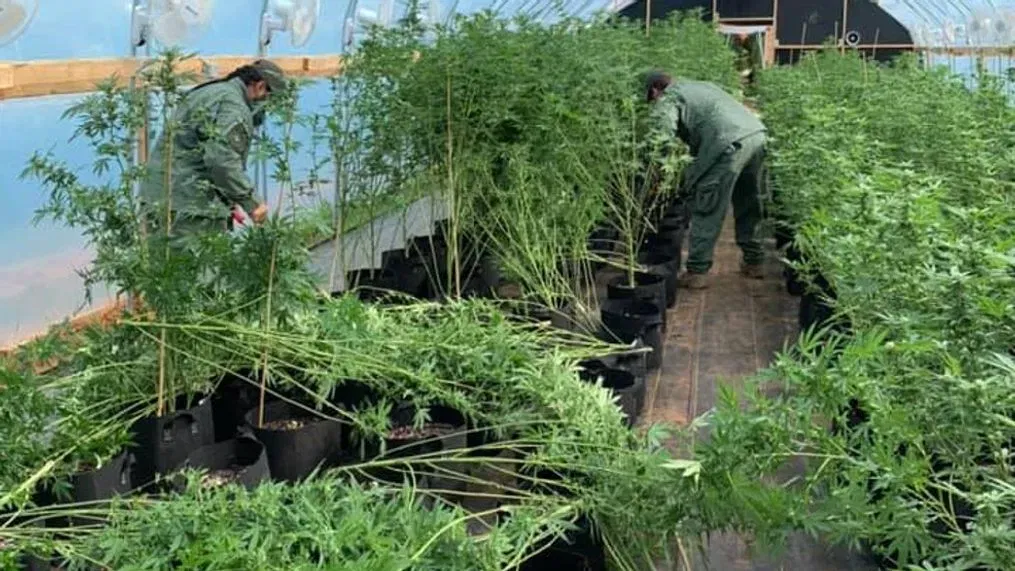
Cracking Down on Illegal Marijuana Grows

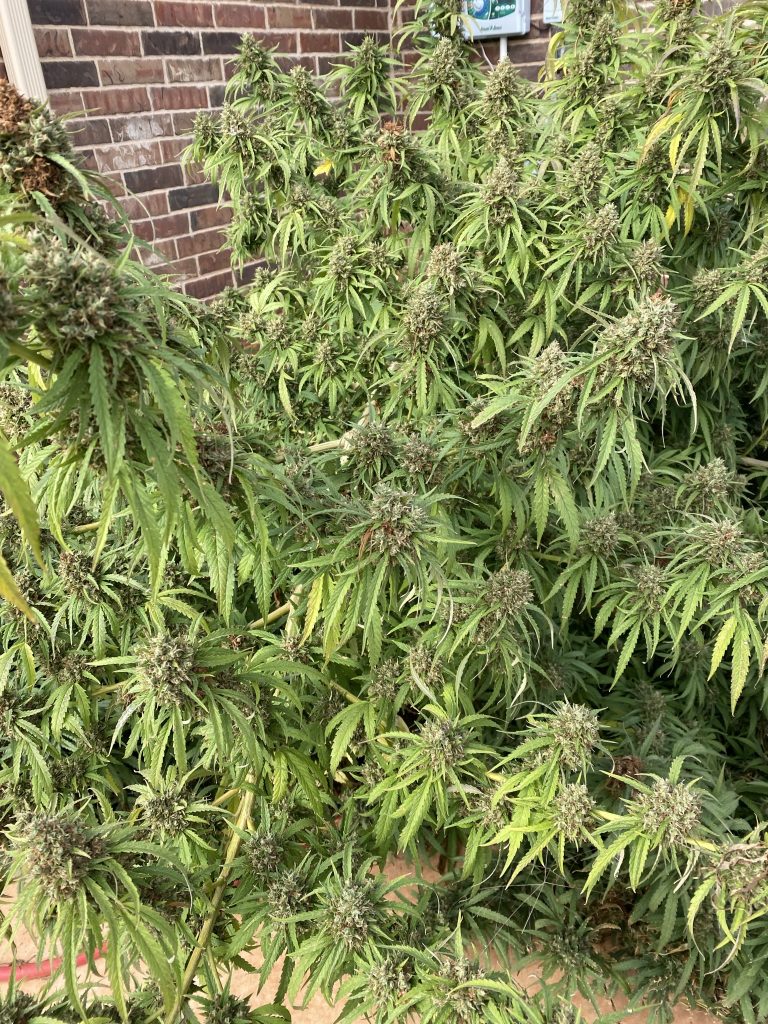
  • This law is intended to help law enforcement crack down on illegal marijuana cultivation in the state. 
  • The measure allows the Attorney General's Office to subpoena business documents, conduct unannounced on-site inspections, seize and destroy illegal products, and enter into agreements with other state agencies to combat illegal marijuana grow operations.
  • The new law also extends a moratorium on new grow licenses through 2026 to give law enforcement additional time to shut down illegal marijuana farms.

Expanding Religious Freedom

  • Senate Bill 404 clarified Oklahoma law to prevent discrimination against religious entities.
  • Oklahoma is one of 23 states that has enacted a state-level Religious Freedom Restoration Act, providing protections for religious freedom. 
  • This law amends Oklahoma's Religious Freedom Act to state that it shall be deemed a substantial burden to exclude any person or entity from participation in or receipt of governmental funds, benefits, programs, or exemptions based solely on the religious character or affiliation of the person or entity.

Stronger Human Trafficking Laws

  • A new law addresses the demand side of human trafficking. 
  • The law will strengthen the penalty for changing the crime of paying a person for sex from a misdemeanor to a felony. 
  • Attaching a felony to these crimes will hopefully deter this kind of behavior and help stem human trafficking. 

ARPA

  • The legislature allocated the final $56 million of federal American Rescue Plan Act (ARPA) funds.
  • The projects will address critical needs like expanding broadband services, increasing access to health and mental health care, including children needing long-term care and treatment, assisting hunger programs, replacing and updating water and wastewater systems, and strengthening workforce development in key fields like nursing and healthcare.

Access to NARCAN

  • Senate Bill 710 allows school nurses and other designated personnel to administer an emergency opioid antagonist as a rescue medication without a prescription or standing order when dealing with a student who may be overdosing on opioids.
  • Senate Bill 711 provides emergency opioid antagonists and overdose education to the Department of Corrections and county jails, and inmates diagnosed with an opioid use disorder would also get this education and two doses of this rescue medicine upon their release.
  • Senate Bill 712 would require hospitals to provide education and two doses of emergency antagonist medication when emergency rooms discharge someone with opioid overdose symptoms.

Protecting and supporting vulnerable seniors

  • Senate Bill 369 better protects seniors living in nursing homes by requiring employers to conduct criminal background checks on nurse aides before hiring them. It also prohibits long-term care facilities from employing anyone on the Juvenile Sex Offender Registry or who has been convicted of human trafficking. Currently, the Juvenile Sex Offender Registry is closed to the public due to it including the information of minors.
  • Senate Bill 369 would grant long-term care facilities access to the registry to properly vet prospective employees. The bill also decreases the time period that nurse aides may be precluded from employment by such facilities for nonviolent offenses from seven to five years.
  • Senate Bill 249 removing a regulatory barrier to better ensuring hospice patients living in nursing homes can have access to pain management through exception from electronic prescription requirement.

Drummond lauds Supreme Court decision to limit EPA authority in Oklahoma

Attorney General Gentner Drummond lauded the U.S. Supreme Court's 5-4 ruling yesterday in Sackett v. EPA, a decision that limits the authority of the Environmental Protection Agency.

At issue was the EPA's Waters of the United States (WOTUS) rule that had been opposed by Oklahoma and other states.

"I am pleased the U.S. Supreme Court has again reined in the excesses of the Biden Administration," Drummond said. "At the urging of my office and 25 other states, the court today embraced a reasonable definition of 'waters of the United States' that respects the text and structure of the Clean Water Act. A contrary ruling, on the other hand, would have given the federal government far too much power throughout Oklahoma, and it would have undermined our own efforts at conservation."

The decision held that the federal Clean Water Act extends only to wetlands that have a continuous surface connection with U.S. waters and can't be distinguished from those waters. It reversed an earlier decision by the U.S. Court of Appeals for the Ninth Circuit.

An attack on Fairness for Farmers

Last week, the U.S. House of Representatives Agriculture Appropriations subcommittee passed its Fiscal Year 2024 agriculture funding bill. The legislation includes harmful provisions that would prevent USDA from completing long-awaited Packers and Stockyards Act rules to protect family farmers and ranchers from abuses of market power by the meat industry. The bill also makes unacceptable cuts to funding that would help distressed borrowers, address climate change, and ensure the food and nutrition security of our communities. 

"Family farmers and ranchers should be allowed to do what we do best: sustainably produce food, feed, fiber, and fuel. But we can't do this without fair and competitive markets," said NFU President Rob Larew. "Our markets are heavily consolidated, with few buyers and sellers, and are ripe for manipulation. That's why we are dismayed by the proposal in the House Agriculture Appropriations bill to halt ongoing rulemakings that would strengthen and modernize enforcement of the Packers & Stockyards Act." 

The bill includes several other harmful provisions, including: 

  • Cutting funds that would support distressed borrowers of Farm Service Agency loans. 
  • Rolling back funding for programs that help address climate change and promote the growth of renewable energy on farms and ranches. 
  • Tightening requirements for low-income individuals to qualify for the Supplemental Nutrition Assistance Program (SNAP), which is an essential antipoverty and food assistance program. 

With last week's passage by the House Agriculture Appropriations subcommittee, the Fiscal Year 2024 Agriculture Appropriations bill now awaits consideration by the full committee sometime in June. NFU will work to keep these harmful provisions out of the final bill. 

Oklahoma House Approves $12.8B State Budget

The Oklahoma House of Representatives today approved the final appropriations bills for Fiscal Year 2024, which begins July 1, fulfilling their constitutional duty to pass a balanced budget. The FY24 legislatively-appropriated budget is $12,866,390,628.

House Speaker Charles McCall, R-Atoka, said the budget includes a historic investment into K-12 education, the largest increase to higher education in recent history, six weeks of paid maternity leave for both teachers and state employees, savings from criminal justice reform to community mental health efforts, a new family caregiver tax credit, additional funding for home-based services for developmentally disabled individuals and hundreds of millions into affordable housing programs.

"House Republicans started session with a to-do list we received from our constituents, and this state budget includes many of the issues we prioritized," McCall said. "This forward-thinking, innovative budget is a testament to the dedication of House Republicans to building a flourishing state for every current and future Oklahoman while also committing to fiscal responsibility by maintaining healthy state reserves. I commend Chairman Wallace, Vice Chairman Martinez, our subcommittee chairs and every member of the House for their diligent work on budget throughout session."

House Appropriations & Budget Chair Rep. Kevin Wallace, R-Wellston, said the budget makes a remarkable impact in numerous areas of priority.

"This budget is historic on a number of fronts," Wallace said. "We've increased education funding by 21.5%, giving teachers another large pay raise, and supporting classroom learning and school safety. We've included more funding for affordable housing, health care and the Rural Economic Transportation Reliability and Optimization Fund as well as many other services to benefit all Oklahomans. We have economic incentives that will bring more investment and thousands of jobs to our state. Our agencies will have the discretion of boosting state employee pay. We're protecting state assets and lowering our debt financing going forward through our Legacy Capital Financing Fund.

"I'm just enormously proud of the work of each person involved in this package, from the Speaker of the House to Vice Chairman Martinez to the members who chair and serve on our Appropriations & Budget subcommittees to our fiscal staff who have worked countless hours to draft a plan that will improve the lives of all Oklahomans in a number of positive ways."

House A&B Committee Vice Chair Rep. Ryan Martinez, R-Edmond, said the budget agreement follows months of discussion.

"This excellent budget is an investment in the people and the future of Oklahoma," Martinez said. "It is the result of an enormous amount of hard work by numerous legislators who took input from their constituents and turned that into a product that not only takes care of the needs of millions of Oklahomans but shows fiscal restraint and fiscal responsibility."

The legislatively appropriated budget takes months to prepare. It is based on input received throughout dozens of public legislative budget hearings, hundreds of publicly-available agency budget requests, the governor's executive budget proposal introduced at the beginning of session, and the requests and input of all elected representatives, who each serve on standing budget committees and subcommittees.

The largest area of the budget continues to be education, at $5.65 billion, or 43.9%. Public K-12 schools continue to be funded at the highest level in state history, $3.97 billion.

Higher education receives just over $1 billion, including a $130 million, or 14.9%, state appropriation increase, the largest increase to colleges and universities in recent history.

Health remains the second largest area of investment at 18.2% of the budget for a total of $2.34 billion. Human services receives the third largest apportionment, with 7.1%, or $909 million. Transportation and public safety make up 6.3% and 5.7%, respectively, of the state budget.

The budget agreement is contained in House Bill 1004X, the general appropriations bill, and several other House and Senate bills passed off the House floor this week.

Budget bills were approved in the First Extraordinary Session of the 59th Legislature, which runs concurrently with the regular session, which concluded Sine Die on Friday, May 26. Since budget bills were approved in the First Extraordinary Session, legislators have the option of reconvening at a later date to consider any veto overrides.

White House, Congressional Leaders Report Debt Ceiling Deal Getting Closer, Lawmakers Head Home for Memorial Day but Urged to Prepare for Quick Return

After a tumultuous week, Congressional leaders and White House negotiators have reportedly gotten closer to a resolution on the debt ceiling. The news of progress comes as the date by which the nation could default on its debts and no longer pay its bills, June 1, is less than one week away. House Speaker Kevin McCarthy (R-CA) told reporters on Thursday afternoon, "We worked well past midnight last night. There's still some outstanding issues and I've directed our teams to work 24/7 to try to solve this problem." He also noted that the two sides were making progress. Media reports suggest that the debt ceiling could be lifted for two years with spending caps on non-defense discretionary spending over the same period. Defense and Veterans discretionary funding would be set at the President's FY 2024 levels and unobligated COVID funds would be rescinded as would some of the new money given to the IRS. The reports also indicate that there would also be a mechanism to ensure passage of all twelve appropriations bills each year without the need for an end of the year omnibus package, permitting reform for energy production, and work requirements under some programs, such as SNAP.

It is believed that an agreement needs to be reached today or Saturday in order for the House to consider the measure on Wednesday and the Senate to pass it on Thursday. Members of the House of Representatives left for recess on Thursday but received word from Majority Leader Steve Scalise (R-LA) that they would receive 24-hour notice should they need to return to Washington, D.C., for a vote on the agreement. Meanwhile, the House Appropriations Committee postponed a series of markups planned for Wednesday of this week, including a markup of the agriculture appropriations bill, because the outcome of debt ceiling negotiations may well impact topline spending numbers for FY 2024 appropriations bills. House Appropriations Committee Chairwoman Kay Granger (R-TX) stated, "Given the recent developments in the negotiations between Speaker McCarthy and the president, in order to give the Speaker maximum flexibility as talks continue, the committee will postpone this week's markups." Read more here.

Legislators comment on the passage of marijuana Guardrails

In the final days of the legislative session, the Senate and House passed additional reforms to Oklahoma's medical marijuana industry through Senate Bills 437 and 813. Sen. Jessica Garvin, R-Duncan, and her House authors released the following statements Friday. If signed by the governor, SB 437 would go into effect immediately while SB 813 would become effective June 1, 2023.

"These bills are the result of months of collaboration with the House, industry professionals, and patients, as well as research of other states' medical marijuana industries to see what has and hasn't worked. This is an industry that has helped many Oklahomans and boosted local economies, but there are still areas that need attention. I urge the governor to sign these critical reforms into law.

"These bills will help improve quality assurance testing, limit access to minor patients, better ensure individuals have an actual medical necessity, and that recommending physicians receive proper education on this treatment. We're going to create a registry of qualified recommending physicians to ensure patients are seen by Oklahoma doctors, not out-of-state or international physicians just trying to make an easy buck. This will close the loophole that has allowed so many illegal foreign actors to purchase Oklahoma land and shut down more of the black market. In order for this industry to be truly beneficial to patients and businesses, we must strengthen our regulations, and I want to thank everyone who worked with me to ensure a higher quality, more secure industry for all Oklahomans." 

Rep. John Pfeiffer, R-Orlando, is the principal House author of SB 437.

"These measures will help us protect the safety of Oklahomans and our resources through enhanced regulation of the medical marijuana industry."

Rep. T.J. Marti, R-Tulsa, is the principal House author of SB 831.

"Establishing compliance testing in medical marijuana businesses is crucial for safeguarding consumer well-being and product safety. By further regulating the medical marijuana industry, we can create a transparent and accountable framework that promotes ethical business practices and discourages illegal activities."

Oklahoma Lawmakers Up the Level of Oversight of Medical Marijuana

In the final days of the legislative session, the Senate and House passed additional reforms to Oklahoma's medical marijuana industry through Senate Bills 437 and 813. Sen. Jessica Garvin, R-Duncan, and her House authors released the following statements Friday. If signed by the governor, SB 437 would go into effect immediately while SB 813 would become effective June 1, 2023.

"These bills are the result of months of collaboration with the House, industry professionals, and patients, as well as research of other states' medical marijuana industries to see what has and hasn't worked. This is an industry that has helped many Oklahomans and boosted local economies, but there are still areas that need attention. I urge the governor to sign these critical reforms into law.

"These bills will help improve quality assurance testing, limit access to minor patients, better ensure individuals have an actual medical necessity, and that recommending physicians receive proper education on this treatment. We're going to create a registry of qualified recommending physicians to ensure patients are seen by Oklahoma doctors, not out-of-state or international physicians just trying to make an easy buck. This will close the loophole that has allowed so many illegal foreign actors to purchase Oklahoma land and shut down more of the black market. In order for this industry to be truly beneficial to patients and businesses, we must strengthen our regulations, and I want to thank everyone who worked with me to ensure a higher quality, more secure industry for all Oklahomans." 

Rep. John Pfeiffer, R-Orlando, is the principal House author of SB 437.

"These measures will help us protect the safety of Oklahomans and our resources through enhanced regulation of the medical marijuana industry."

Rep. T.J. Marti, R-Tulsa, is the principal House author of SB 831.

"Establishing compliance testing in medical marijuana businesses is crucial for safeguarding consumer well-being and product safety. By further regulating the medical marijuana industry, we can create a transparent and accountable framework that promotes ethical business practices and discourages illegal activities."

Application Period Now Open for Regional Conservation Partnership Program

The Biden-Harris Administration today announced the availability of $500 million in funding to advance partner-driven solutions to conservation on agricultural land through the U.S. Department of Agriculture's Regional Conservation Partnership Program (RCPP). RCPP leverages a voluntary approach to conservation that expands the reach of conservation efforts and climate-smart agriculture through public-private partnerships. Increased funding for fiscal year 2023 is made possible by the Inflation Reduction Act, and this year's funding opportunity reflects a concerted effort to streamline and simplify the program. Program improvements will enable USDA to efficiently implement the $4.95 billion in Inflation Reduction Act funding for the program while improving the experience for partners, agricultural producers, and employees.  
 
"The Regional Conservation Partnership Program leverages the collective power and resources of public-private partnerships to deliver meaningful results for agriculture and conservation," said Agriculture Secretary Tom Vilsack. "Thanks to the additional resources unlocked by the Inflation Reduction Act, as well as the improvements being made to the program, more farmers, ranchers, and foresters than ever before will be able to access and deploy conservation and climate-smart practices that will combat the climate crisis, enhance water and soil quality, protect vulnerable wildlife habitat, and more." 
 
This announcement is part of President Biden's Investing in America agenda, which is growing the American economy from the bottom up and middle-out – from rebuilding our nation's infrastructure to driving over $435 billion in private sector manufacturing and clean energy investments in the United States, to creating good paying jobs and building a clean-energy economy that will combat climate change and make our communities more resilient. The Inflation Reduction Act represents the single largest investment in climate and clean energy solutions in American history and it includes $19.5 billion for NRCS programs over five years.  

RCPP Improvement Effort  

The improvements included in this year's RCPP funding opportunity are part of an ongoing effort to streamline NRCS conservation programs and efficiently implement the Inflation Reduction Act. The RCPP improvement effort identified problems and central issues associated with the program and is working to develop meaningful and actionable improvements.  
   
Based on partner listening sessions and employee and partner surveys, NRCS identified seven key focus areas for improvement, each with a dedicated team working to address identified issues and provide recommendations:    
    

  1. Simplifying and Reducing the Number of Agreements   
  2. Reducing Lengthy RCPP Easement Transactions   
  3. Improving the RCPP Portal   
  4. Consistent Guidance and Training for Employees and Partners   
  5. Simplifying the Technical Assistance Structure   
  6. Improving the Conservation Desktop      
  7. Simplifying the Partner Reimbursement Process  

   
For more information about RCPP and a list of frequently asked questions, visit the NRCS website.  
 
Earlier this month, NRCS also announced improvements to the Agricultural Conservation Easement Program to improve efficiency and effectiveness in conservation easements. In addition, NRCS recently called for input on its targeted water quality initiatives.   

Notice of Funding Opportunity   

The application period is now open for RCPP Classic and RCPP Alternative Funding Arrangements (AFA).  RCPP Classic projects are implemented using NRCS contracts and easements with producers, landowners and communities, in collaboration with project partners. Through RCPP AFA, the lead partner must work directly with agricultural producers to support the development of new conservation structures and approaches that would not otherwise be available under RCPP Classic.    
 
Today's RCPP Notice of Funding Opportunity (NOFO) showcases a number of program improvements including the increase of project funding ceilings, the simplification of financial assistance and technical assistance structures, a stronger emphasis on locally led conservation, and easement deed flexibilities. 
   
Up to $500 million will be available through the RCPP for fiscal year 2023, of which up to $50 million will prioritize AFAs with Indian Tribes.  
  
Projects selected under this NOFO may be awarded funding through either the Inflation Reduction Act or Farm Bill 2018. Applications for RCPP climate-related projects will receive priority consideration for Inflation Reduction Act funding. The 2023 RCPP priorities are climate-smart agriculture, urban agriculture and projects and, as a Justice40 covered program, projects that serve underserved farmers and ranchers. 
  
NRCS will accept applications now through Aug. 18, 2023 via the RCPP portal. Please note that to request access to the portal, you must have a level 2 verified eAuthentication account with USDA. This can be obtained by following the instructions on the USDA eAuthentication page.      

Webinar for Interested Applicants  

NRCS encourages interested applicants to participate in upcoming webinars that will provide general information about this funding announcement. The webinars will take place on May 24 and June 7, from 2-3:30 p.m. ET. Join via this links posted on the RCPP How to Apply website. Additional webinars may be announced as needed.  
  
USDA touches the lives of all Americans each day in so many positive ways. In the Biden-Harris administration, USDA is transforming America's food system with a greater focus on more resilient local and regional food production, fairer markets for all producers, ensuring access to safe, healthy and nutritious food in all communities, building new markets and streams of income for farmers and producers using climate smart food and forestry practices, making historic investments in infrastructure and clean energy capabilities in rural America, and committing to equity across the Department by removing systemic barriers and building a workforce more representative of America. To learn more, visit www.usda.gov.   

Pork Producers Celebrate SCOTUS Ruling on WOTUS

What happened: This week's historic Supreme Court's (SCOTUS) decision to define the limits of the Environmental Protection Agency's (EPA) authority under the Clean Water Act is a tremendous victory for America's pork producers.  For nearly two decades, NPPC played a lead role in fighting against attempts to expand the federal government's power over private land.

The Sackett v. EPA case challenged the defined Water of the United States (WOTUS). The 9-0 SCOTUS ruling was decisive and spelled the end of the Obama/Biden WOTUS rule.

The lowdown on what the decision stated:

  • Significant-Nexus: The judges were unanimous – 9-0 – on eliminating the use of significant-nexus. This is the foundation of the Obama/Biden WOTUS rules.
  • WOTUS Decision: The Clean Water Act's (CWA) use of "waters" encompasses only those relatively permanent, which are standing or continuously flowing bodies of water forming geographical features that are described in ordinary parlance as streams, oceans, rivers and lakes.
  • Wetlands: As for wetlands, the CWA extends to only those wetlands that are as a practical matter indistinguishable from waters of the United States. This requires the party asserting jurisdiction over adjacent wetlands to establish first, that the adjacent body of water constitutes WOTUS (i.e., a relatively permanent body of water connected to traditional interstate navigable waters) and second, that the wetland has a continuous surface connection with that water, making it difficult to determine where the water ends and the wetland begins. Four justices (Kavanaugh, Kagan, Sotomayor and Jackson) thought this went too far.
  • Implications on 2023 WOTUS Rule: The Sackett v. Environmental Protection Agency case addresses the pre-2015 WOTUS definition, not the 2023 rule. As a result, the 2023 rule remains in the books, but functionally, EPA and the Corps cannot enforce it.
  • Return Power to the States: Most amici briefs argued to push authority away from the federal government, leaving many to wonder whether this would create a vacuum in regulations over pollution. Parts of our broad coalition filed a brief arguing the inverse – explicitly advocating that the states are best positioned to regulate features within their borders and already do so.

NPPC's take: "The Supreme Court's historical decision to define the limits of EPA authority under the Clean Water Act is a tremendous victory for America's pork producers who have played a leading role for almost two decades in opposing the agency's heavy-handed efforts to micromanage our farms. This ruling is a clear punctuation point after decades of attempts by activists and the EPA to expand the federal government's power and control over private land. Farmers are the originators of conservation and are taught the key to preservation is to protect our natural resources. We can now proceed with certainty to use all our conservation assets to best farm our land so we can deliver healthy food to our customers for generations to come." – Duane Stateler, NPPC vice president and Ohio pork producer

Learn more: NPPC's News and Resources and SCOTUSblog

Drummond, 23-state coalition oppose Biden Administration's unlawful immigration policy

Attorney General Gentner Drummond has joined an amicus brief led by Virginia Attorney General Jason Miyares in the case of Florida v. Mayorkas, supporting the State of Florida's lawsuit against the Biden Administration's unlawful immigration policy that is creating a dangerous crisis on our southern border. Rather than detaining illegal immigrants as the law requires, the Biden Administration has released those cited at the border into the U.S. This policy flagrantly violates federal immigration law and encourages immigrants to try crossing the border illegally.

Since taking office, President Biden has overseen an illegal immigration explosion of more than 5.5 million – larger than the population of 28 states. The Administration has released more than a million immigrants it encountered at the border into the U.S. The Administration's policy of "catch and release has not only encouraged more illegal immigration, but also has enabled criminal activities such as fentanyl smuggling and human trafficking. 

"The Biden Administration's is failing to secure our southern border and protect our communities," said Drummond. "This catch-and-release immigration policy is worse than irresponsible. It is shameful and presents a serious threat to public safety. Sex trafficking and the fentanyl trade are enacting a horrific toll on our nation. I am proud to stand with fellow attorneys general across the country to protect the rule of law."

In addition to Oklahoma, Attorney General Miyares' brief was joined by the following states: Alabama, Alaska, Arkansas, Georgia, Idaho, Indiana, Iowa, Kansas, Kentucky, Louisiana, Mississippi, Missouri, Montana, Nebraska, North Dakota, Ohio, South Carolina, South Dakota, Utah, West Virginia and Wyoming. 

The First Step is Giving Darn: Mental Health on the Farm, With Jeff Ditzenberger and Dr. Josie Rudolphi

In honor of Mental Health Month, we talk with a former grower who uses his past struggles with suicide to help others today.

The suicide rate among farmers is three and a half times higher than the general population. It's a shocking statistic.

We're losing good people, but we don't have to.

From weather to markets, to prices, to the issues that come with a family business, farmers face a number of stressors that are unique to their occupation. And in rural America, suicide rates increased 46% from 2000-2020, compared to 27.3% in metro areas, according to the Centers for Disease Control and Prevention.

So one of the National Corn Growers Association action teams is working with partners across the industry to spread the message that saying something could mean everything. In this episode, two of those partners share their stories and their expertise.

Jeff Ditzenberger is a former grower from southern Wisconsin who uses his past struggles with suicide to help other people today. He travels around the country delivering his outspoken message that, "It's okay to not be okay."

And Dr. Josie Rudolphi is an Associate Professor in the University of Illinois School of Agricultural and Biological Engineering with expertise in not only mental health, but its specific impacts in agricultural populations.

If you or someone you know is struggling, please share one of these important resources we discuss in this episode:

  • 988, the National Suicide Prevention Lifeline
  • 1-800-447-1985, The Iowa Concern Hotline, a resource serving the agricultural community nationwide 
  • FarmStress.org, a central clearinghouse for mental health and financial resources for American farmers
  • TugsGroup.com, Jeff Ditzenberger's Wisconsin-based support group

To listen to NCGA's latest podcast episode, CLICK HERE.

Ethics Must Continue to Play a Big Role as Quality of Beef Industry Increases

Listen to Ron Hays talk with Jirl Buck at Cattlemen's Conference.

At the 2023 Cattlemen's Conference, Senior Farm and Ranch Broadcaster, Ron Hays talked with Jirl Buck of Buck Cattle Co. about integrity in the beef industry and positive growth due to new technologies.

Buck grew up on a small cow-calf operation, mainly producing Limousin cattle, and running yearlings on grass in the summer. His family showed steers and heifers. Buck attended Murray State College and Oklahoma State University, and during that time, he worked for several top cattle producers, including McKown Limousin, Magness Land & Cattle Co., American Cattle Services, Hal Courtney, and Ferris Ranch.

In 1987, Buck began buying and selling show steers and heifers and began to build his own breeding program. His goal was to produce cattle that have the style, balance, and power to compete in the show ring but also be able to perform in the real world of beef production, and that is still the goal today.

Today, Buck operates Buck Cattle Company alongside his wife, Brenda, and his daughter, Bailey. Buck Cattle Company runs 450 cows and produces Maine-Anjou, Hereford, and bucking bulls. They host two annual production sales in March and October and have several online sales throughout the year. Their bulls and groups of bred females are marketed through private treaty.

During the conference, Buck had the chance to discuss ethics in business when it comes to communicating with customers and other cattle producers.

"Integrity was a big word that came out today, and I think that fortunately, in our industry, there is a lot of integrity," Buck said.

Ethical communication is critical with customers, Buck said, as many times, cattle may be purchased without an in-person evaluation. Video footage has become increasingly popular in the cattle business, Buck added.

"In all parts of the beef industry, the quality has gotten so good," Buck said. "From the show cattle side, it is so highly competitive nowadays, and there are a lot of good cattle."

Because of this quality and competitiveness, Buck said that communication plays a critical role.

"I feel like the future is bright," Buck said. "I think it really is for a seed stock business, I think we are just going to see technology take more effect, and a lot of the stuff we have visited about in the last two days- I think that is what we are going to see change. The cattle are going to have to have the genomics behind them, and the EPDs are so much more valuable."

The industry continues to head in the right direction, Buck said, but it takes time to see those big changes.

Ranking Member David Scott Exhorts President Biden to Stand Strong and Reject Republican Efforts to Take Food Away from Low-Income Americans

"By standing firm, President Biden can send a powerful message that fighting poverty should never be compromised for political gain," said Ranking Member David Scott. 

House Agriculture Committee Ranking Member David Scott today released the below statement as the White House continues debt limit negotiations with House Republicans who have been pushing to take food assistance away from low-income Americans.

"Since entering office, President Biden has advanced an ambitious policy agenda that has grown the American economy from the bottom up and middle out. Unfortunately, extreme House Republicans are now demanding that he knocks the bottom out by taking food assistance away from our military veterans, our children, our grandmothers, and our disabled citizens.

"Cutting SNAP at a time when families are strapped for cash and struggling with high food prices puts the well-being of children and adults in low-income households at risk. Older people facing age-based hiring discrimination will suffer. Homeless veterans will suffer. People with undiagnosed disabilities will suffer. Single parents and caretakers of young children will suffer. And for all this suffering, the Republicans will still be no closer to their purported goal of lowering the national debt. "These extreme demands by extreme Republicans are bad for the American people and the American economy. Taking food away from SNAP beneficiaries only serves to smother the American Dream, shrink our economy, and put vulnerable Americans at risk of food insecurity. This is not a policy that supports economic growth from the bottom up and middle out; it is a boot crushing the fingers of those at the bottom climbing the ladder of upward mobility. I encourage the Biden-Harris Administration in the strongest possible terms to hold the line against these cruel and ineffective policies. By standing firm, President Biden can send a powerful message that fighting poverty should never be compromised for political gain."

Supreme Court Ends Significant Nexus in WOTUS as Cattlemen Cheer

Listen to Ron Hays talk with Mary-Thomas Hart about the Supreme Court's WOTUS ruling.

On May 24, the U.S. Supreme Court ruled in favor of landowner rights in the Sackett v. EPA ruling over the scope of the EPA's regulatory authority regarding what waters constitute a Waters of the United States.

Senior Farm and Ranch Broadcaster, Ron Hays, is talking with National Cattlemen's Beef Association Chief Counsel, Mary-Thomas Hart, about what this ruling will mean for the beef industry.

"It is an exciting day here at NCBA and I think that for landowners across the country," Hart said. "In a 9-0 holding, the Supreme Court found in favor of the Sackett family, and killed the significant nexus test which has kind of been the 'burr under our saddle.' It has caused a lot of problems for landowners across the country, and we are happy to see that test go away."

Cattle producers should be very excited, Hart said, and breathing a sigh of relief regarding this ruling.

"The latest news in the WOTUS universe has been related to the 2023 Biden rule, which kind of has a foundation in the significant nexus test," Hart said. "So, the holding against the significant nexus test is certainly, at a minimum, going to require the Biden administration to pull their 2023 definition back for some serious reconsideration and revisions."

In the ruling, the Supreme Court unanimously agreed that the Federal Government, EPA, and the Army Corps of Engineers had overreached their jurisdiction over the Sackett's property.

"The goal of eliminating the significant nexus test is to provide more regulatory certainty," Hart said. "NCBA wrote an amicus brief to Supreme Court highlighting a lot of issues with the significant nexus test, one of those issues is the criminal liability attached to the Clean Water Act and attached to violations of the Clean Water Act."

Hart said NCBA argued to the court that there is no way to constitutionally hold someone liable for a violation of the Clean Water Act if they are not aware they are violating it.

"The significant nexus test was so broad and so vague that someone could violate the clean water act without realizing it," Hart said. "That is a piece of our amicus brief that the court adopted and included in their opinion, so we were really excited to see that."

The bottom line, Hart said, is that the new Supreme Court ruling provides much more regulatory certainty for regulators and America's farmers and ranchers. In Hart's conversation with Hays, she also gave a timeline of how the WOTUS definitions have changed over the years through different administrations.

"In the last eight years, we have had three different regulatory definitions of WOTUS, really all hinging on how to apply the significant nexus test," Hart said. "That is something this court recognized."

The Beef Buzz is a regular feature heard on radio stations around the region on the Radio Oklahoma Ag Network and is a regular audio feature found on this website as well. Click on the LISTEN BAR for today's show and check out our archives for older Beef Buzz shows covering the gamut of the beef cattle industry today.

Cattle Markets Continue Strong as Producer Optimism Increases with Recent Rains

Listen to KC Sheperd talk with Bob Rodenberger about the latest in the cattle markets.

KC Sheperd, Farm Director, is back talking with Bob Rodenberger, a partner with Stockman Oklahoma Livestock Marketing, as he gives the latest on the cattle markets. 

On Monday and Wednesday of this week, Rodenberger said runs were normal.

"We had 9,000 plus at what I have seen in Oklahoma City," Rodenberger said. "I think El Reno had the same. That would be our two bigger markets; That is what we gauge our runs off of."

Because of the rain in areas with smaller runs, like Apache, Rodenberger said runs were lighter.

"There are places that got from an inch to three inches around, which is good, so our run was lighter," Rodenberger said. "We only had about 1,100."

Producers are optimistic now with recent moisture yielding more hay to cut, Rodenberger said, but they are still needing ponds full.

"The market is excellent," Rodenberger said. "It has even got an upbeat in it."

The cow market is strong, Rodenberger added, and for those who have been waiting to sell cull cows, now is the time.

Prolonged drought leaves mark on beef industry

Oklahoma's multi-year drought has depleted forage options for the state's cattle inventory. (Photo by OSU Agriculture)
 

By Gail Ellis

Drought throughout the Southern Plains has taken its toll on Oklahoma cattle producers over the past two years. Ponds are dry, pastures are brown and cattle herds have been liquidated, especially in western Oklahoma.

Drought Monitor maps from the Oklahoma Mesonet consistently displayed a prominent drought line slashing across the state from northeast to southwest. Now that rain has fallen across much of the state this past month, weary producers wonder if a long-awaited recovery is near.

Difficult decisions on the horizon

Families who have devoted generations of blood, sweat and tears to their herds have held on as long as they can but could still face difficult decisions this summer.

Lindsay Coker and her brother left careers in Houston to move back home with their own families to help their parents farm near Texola. They grow cotton, wheat and hay while managing an Angus cow-calf operation. Some western Oklahoma producers like Coker live in an area teetering in the extreme to exceptional drought category.

"My dad always taught me to not overstock, but that has gotten a little more challenging," she said. "This past winter, we had the leanest pastures we've ever started with, and we had to supplement more with forage, cake and protein."

Coker's operation uses a pasture rotational program to ensure forages recover to maintain cattle grazing and minimize inputs. However, this method is more difficult to follow when grass is stunted or dormant from drought. As a result, additional hay must be purchased, and the concentrated, processed cake cattle feed made from distillers' grains, soybean meal, sunflower meal and other crude protein is expensive.

When hay can't be found and water is scarce, older cattle and those not bred are sold to reduce expenses. This year, the Coker family's thorough pregnancy checking improved the operation's efficiency.

"We knew it wasn't going to be an ideal situation going into this past winter, so we wanted to give our cows an optimal chance to thrive and produce to the best of their ability," she said.

The recent rain recorded in Texola has stirred a new sense of optimism, and Coker anticipates the day when pastures can thrive and provide much-needed forage.

"Everything is starting to green up, and that helps our mood and outlook," she said. "I hope this is the start of the turnaround. You've just got to have hope and faith that things will work out."

Two-and-a-half hours north, rancher Johnny Owens owns yearlings near Buffalo in northwestern Oklahoma. He has 50% fewer cattle this year and said if his area doesn't receive additional rain soon, he will be forced to sell his stock.

"Since last August, up until three weeks ago when we got a couple of inches of rain, we've had almost no moisture whatsoever," he said. "We have 20% of what our normal grass growth would be this time of year."

After dusting in wheat last fall with no moisture, Owens and his Harper County neighbors are facing a failed wheat crop. Owens grazed his failed wheat, and others have followed suit to buy time.

"It's too expensive to feed all winter and this summer," he said. "Producers with cows have culled heavily and will begin liquidating herds if a turnaround does not occur within the next 30 to 60 days."

Timely rains for a green spring

In eastern Oklahoma, lush, green forage covers the landscape, a stark contrast to western Oklahoma's cracked, bare earth. Cattleman Dax Burchett manages Burchett Cattle Co. in Talala with his father and uncle and has worked as director of sales and operations at Mid America Feeds for 25 years.

"We're on the edge of stocker country, but we also have a lot of smaller, mom-and-pop operations that rely on hay when they don't have a lot of forage," Burchett said.

Mid America Feeds typically provides feed for about 300,000 head of cattle in northeast Oklahoma every day, but drought conditions earlier this year forced local producers to cull at least 10% of their herds. The reduction in numbers trickled down to lower feed sales at the mill.

Burchett's cow-calf and stocker operation was also impacted by the drought with diminished pond water, hay and forage. The Burchett family pregnancy checked cows and heifers, culling 10% to 20% of the herd. Average weaning weights dropped, and fewer cows bred back from the previous year. A dry, barren landscape began to affect the livestock that lived on it.

"We were watering a large percentage of our animals on city water, which because we live next to a large lake wasn't an issue, but we would have had to reduce numbers due to water needs," he said.

But in February, Burchett's area of northeast Oklahoma received a lifesaving rain that filled some ponds and alleviated the drought's intensity. Timely showers also fell in March and April, and now Burchett is developing a pasture recovery plan after two years of poor forage yields.

"We're going to top dress our pasture more for a quicker healing process," Burchett said. "Even in drought years, we didn't skip on weed spray. You want every little bit of moisture to go to grass, and we've fertilized a little now that it's more affordable."

The countdown to recovery

Improving weather conditions are chipping away at the broader area of drought, but drought recovery takes years, said Derrell Peel, Oklahoma State University Extension livestock marketing specialist. In his latest segment on SUNUP, OSU Agriculture's weekly production agriculture television show, Peel said 54% of Oklahoma pastures are still in poor condition.

"It's highly unlikely that we could stop herd liquidation completely," Peel said. "It's deceiving – pastures look green, but producers tell me there's not a lot of growth. Unless we get a lot of follow-up moisture within the next couple of months, we'll still see a somewhat limited forage season."

During the first half of 2023, cow and heifer slaughter has climbed as producers reduced numbers. During a drought, more female cattle are sent to market, a key indicator of desperate times, Peel said.

"It's all related to the female side of the industry. The fastest thing we can do [for recovery] is cut back on cow slaughter. I think it will drop as we go throughout 2023," he said.

If a wetter weather pattern continues, pastures and hay fields will produce more forage yields this summer, and producers can hang on to what's left of middle-aged cows and young heifers to begin rebuilding herds. Only then can the Oklahoma beef industry begin to recover.

"Producers will rebuild in earnest this fall, and females will be extremely expensive next spring," Peel said. "That's going to add another challenge for the ones who need to buy females to rebuild."

Currently, Peel said calf market prices are 40% higher than they were in October 2022, and those prices will jump even more when drought conditions subside enough to the point that cows and heifers are pulled off the market and retained on the ranch.

High prices are a good thing in theory, but for those ranchers who had to liquidate and now want to get back in the game, the price to play will be very expensive.

"High input costs and drought impacts mean a little bit slower recovery process than the last drought," Peel said, referring to the drought from 2011 to 2013. "We had two years of high cattle prices in 2014 and 2015, but this time around, we'll see a relatively elevated cattle price situation for an extended period of time."

Tighter supplies, higher prices

While ranchers watch the skies for rain, beef consumers can expect to feel the effects of a drought-stricken industry. Beef production is expected to slow. Supplies will tighten, and shoppers will pay higher prices for beef.

"Next year and beyond, we're going to make a decreasing supply of beef even smaller, because to increase production long term, we will have to save heifers," Peel said. "You can't fix things fast – this industry turns slowly."

Peel said current retail beef prices have been steady for the past 15 to 18 months. As cattle inventory drops to recover from the drought, consumers should expect higher prices at the meat counter.

"We're setting ourselves up for better conditions in 2024. That's the earliest I would expect to see the tightest squeeze on cattle sold at market," Peel said.

As summer grilling season begins, consumers should take note of their grocery bill during the next few months. Chances are that the cost of a steak or ground hamburger will cost even more next year as Oklahoma endures the painstaking process of drought recovery.

OSU Extension uses research-based information to help all Oklahomans solve local issues and concerns, promote leadership and manage resources wisely throughout the state's 77 counties. Most information is available at little to no cost.

Angus Foundation honors breed's anniversary with celebratory events

Ranchers' Revelry, hosted on May 19 by Audley Farm in Berryville, Va., celebrated 150 years of Angus in America. A total of over $160,000 was raised through the Angus Foundation's celebratory events honoring the breed's anniversary.

A total of $160,000 was raised through the Foundation's Angus Day of Giving and Ranchers' Revelry events. 
The Angus Foundation had a successful week commemorating the 150-year anniversary of the breed's arrival to the United States. On May 17, 1873, Scottish Angus breeder George Grant settled in Victoria, Kansas, with the first four Angus bulls. This milestone was celebrated May 17 with the Foundation's annual Angus Day of Giving and May 19 in Berryville, Virginia at the Ranchers' Revelry event. Angus Day of Giving raised over $80,000 for the Foundation's Legacy Built campaign, and Ranchers' Revelry raised over $80,000 as well. In total, the breed's anniversary celebrations garnered $160,000 in unrestricted funds to help support the organization's mission and ensure the Angus legacy continues.
 
Angus Day of Giving has been celebrated since 2021 to commemorate the day Grant arrived to the prairies of Kansas. This year, Angus Day of Giving marked the starting point of the Foundation's goal of 1,000 donations by December 31, 2023, to its Legacy Built campaign. The campaign was launched to honor the breed's 150-year milestone, and asks donors to pledge $150 to sustain the Angus legacy for the future. Donations are earmarked to the Angus Fund, which uses unrestricted funds to support a multitude of American Angus Association® programs.
 
The Foundation received 309 donations to the Legacy Built campaign to kick off its challenge. These gifts had double the impact with the help of a $30,000 matching gift from an anonymous donor. In total, the celebration raised over $80,000 to support the Angus Foundation's mission to advance Angus education, youth and research.
 
"It's always amazing to see the outpouring of support from our Angus family, and this day of giving was no different," said Jaclyn Boester, Angus Foundation executive director. "With the generosity of all who contributed to the Legacy Built campaign, including our anonymous match donor, we're well on our way to ensuring the Angus legacy is sustained for the next 150 years."
 
Ranchers' Revelry was held May 19 in Berryville, Virginia, at Audley Farm. For over two centuries, Audley Farm has been a part of American history, with the most well-known of its residents being Eleanor "Nelly" Custis Lewis, the adopted daughter of George and granddaughter of Martha Washington. Nelly was known for her "revelry" as the hostess of Audley Farm.
 
"We thought we could bring a little bit of a unique offering with our Thoroughbred program, our Angus program and just the rich history of this farm," said Turner Kobayashi, Audley Farm general manager. "To be a part of history and honor it and honor Mr. Grant, and just to meet and develop the fellowship and comradery with other ranchers out here, it's just a wonderful opportunity."
 
During the Friday evening event, a unique collection of exclusive experiences, art, collectibles and business services were auctioned, raising $67,950. Attendees enjoyed a night of Angus fellowship in celebration of the anniversary, with Audley Farm beef served for dinner. The evening also featured "The Steaks Races," a tribute to Audley's Thoroughbred racehorses with prizes sponsored by Certified Angus Beef. The opportunity allowed guests to "claim horses," entering to win a variety of Certified Angus Beef ® branditems. In total, the event raised over $80,000 to benefit the Angus Foundation's mission.
 
"Ranchers' Revelry was an incredible evening to celebrate our great breed among Angus friends and family, and we are so appreciative to those who made it possible," Boester said. "The Angus Foundation is grateful to Audley Farm for underwriting this event, the Angus breeders and allied industry members who donated to this fundraiser and those who supported by bidding and buying in our auction. This was a truly memorable event that gives me great confidence in the future of our legacy."
 
In addition to Audley Farm, Ranchers' Revelry was made possible by a dedicated group of volunteers. Event coordinators Julie McMahon French, Belle Point Ranch, and Wynn Dalton, Daltons on the Sycamore, along with many Virginia Angus breeders and Angus Foundation supporters, volunteered their time and efforts to the event. The auction garnered support from Angus enthusiasts around the country, as both item donors and buyers.
 
A complete list of auction items, donors and buyers follows.
 
Auction Results:
 
Lot 1: 150th Celebration Silk Scarf – Number 1 of Limited Edition of 150
Donor: Angus Foundation
Buyer: Tom McGinnis, Heritage Farm – Shelbyville, Ky.
 
Lot 1X: Certified Angus Beef ® Vintage Tie
Donor: John & Bernice Mrotek – Gainesville, Va.
Buyer: Tim & Gretchen Clark, Clark Boys at Elba West – Gretna, Va.
 
Lot 2: 1850s Scottish Thistle Pendant
Donor: Pete & Connie Henderson, Edgewood Angus, LLC – Williamsburg, Va.
            KVK Jewelers, The Jewelers Vault – York, Neb.
Buyer: Pete & Connie Henderson, Edgewood Angus, LLC – Williamsburg, Va.
 
Lot 3: "Thistle Downs" 1 of 1 Quilt & Pillow
Donor: Joe & Mary Zarella, Bliss Lane Cattle Company – Great Falls, Va.
Buyer: Audley Farm – Berryville, Va.
 
Lot 4: Auld Aberdeen Scottish Terrier – Pick of Litter
Donor: Dick & Diane Beck – Red Lodge, Mont.
Buyer: Don & Carol Bloom, Bloom Angus Farm, LLC – Westville, Ind.
 
Lot 5: Ultimate Herd Visit, Biltmore – Culinary and Wine Tasting Experience for 8
Donor: The Biltmore Company, Biltmore Livestock – Asheville, N.C.
Buyer: Audley Farm – Berryville, Va.
 
Lot 6: Ultimate Herd Visit, Fort Worth – Western Spirit & Style Experience for 4
Donor: Dan & Farris Wilks, Wilks Ranch Texas, LTD – Cisco, Texas
Buyer: Tim & Kara Coleman, Sierra Ranches – Modesto, Calif.
           Tim & Gretchen Clark, Clark Boys at Elba West – Gretna, Va.
 
Lot 7: A Day in the Life of a Real Montana Rancher – Collection of Angus Fine Art Photography
Donor: 7A: Kurt Kangas – Big Timber, Mont.
7B: Erica Coleman – Charlo, Mont.
7C: Seana Brown – Bigfork, Mont.
7D: Bree Swanson – Chinook, Mont.
Buyer: 7A, B, D: Earl & Candy Enix, Enix Farms LLC – Aurora, Colo.
7C: Wynn Dalton – Lynchburg, Va.
 
Lot 8: Sue Rucker's Vintage Angus Brooch & 6 Fashionable Fringe Scarves
Donor: The family of Sue Rucker, Hill Crest Farm – Delaplane, Va.
Jodi Hendrickson, Fringe Scarves – Millsap, Texas
            KVK Jewelers, The Jewelers Vault – York, Neb.
Buyer: Tom McGinnis, Heritage Farm – Shelbyville, Ky.
 
Lot 9: One of a Kind, Custom-Made Dinnerware
Donor: Larry & Ryan Cotton, Cotton & Associates – Howell, Mich.
Buyer: Tom McGinnis, Heritage Farm – Shelbyville, Ky.
 
Lot 10: Moore & Giles Benedict Weekend Bag
Donor: Moore & Giles – Forest, Va.
Buyer: Paul & Tracy Bennett, Knoll Crest Farms Inc. – Red House, Va.
 
Lot 11: Ad Agency Press Proof of "The Blacks"
Donor: John & Claudia Mitchel, Optum Angus – Seaman, Ohio
Buyer: Belle Point Ranch – Fort Smith, Ark.
 
Lot 12: First Angus in the U.S. Fine Art Print
Donor: Christy Collins, CCI.live – Frederick, Okla.
Buyer: Mark & Cindy Ahearn, Turner Meadow Ranch – Wills Point, Texas
 
Lot 13: USPS American Commemorative Stamps
Donor: John & Claudia Mitchel, Optum Angus – Seaman, Ohio
Buyer: Audley Farm – Berryville, Va.
 
Lot 14: Grand Champion Cast Metal Art
Donor: Tom & Lois Ames, Spruce Mountain Ranch LLC – Larkspur, Colo.
Buyer: Tom Burke, American Angus Hall of Fame – Smithville, Mo.
 
Lot 15: She Speaks to Me Framed Canvas Print
Donor: John & Claudia Mitchel, Optum Angus – Seaman, Ohio
Buyer: Ryan Borer – Buchanan, Va.
 
Lot 16: Angus Revelry To-Go
Donor: Joan and Blanford Pierce, Woodlawn Farm – Creston, Ill.
Reese Tuckwiller – Christiansburg, Va.
Dean & Marcia Bryant, Roseda Farm – Monkton, Md.
Buyer: Richie & Kelley Longanecker, Big Timber Cattle Company – Lithia, Fla.
 
To learn more about the Angus Foundation and its mission, visit www.AngusFoundation.org.
—    Written by Peyton Schmitt, Angus Communications

Cole Invites OK04 Students to Participate in 2023 Congressional App Challenge

Congressman Tom Cole (OK-04) announced today that Fourth District middle and high school students can pre-register to enter the 2023 Congressional App Challenge. Hosted each year by the Congressional Internet Caucus, the challenge promotes innovation, engagement and excellence in computer science through student development of an application ("app").

"I am excited to invite Fourth District middle and high school students to participate in this year's Congressional App Challenge which gives students an opportunity to develop their skills in programming and invest in their future careers," said Cole. "The STEM field is rapidly growing in our nation, and this is a wonderful way to engage Oklahoma students in science and technology. I am always impressed to see students' creativity and technical skill when designing and programming their apps each year."

Pre-registration is now open to students and the submissions portal will open June 15. Students can pre-register to participate at congressionalappchallenge.us. Questions can be directed to StudentSupport@CongressionalAppChallenge.us or by calling Cole's office at (202) 225-6165. For more information, including rules and regulations, visit Cole's website at cole.house.gov/services/app-challenge.

All entries must be original in concept, design and execution and will be judged and selected by a local panel of relevant experts. While students participating in this year's challenge are encouraged to register online by early fall, the final deadline for entries is 11:00 a.m. CT on November 1, 2023.

Harvest Report for May 26, 2023

Sporadic rains across the HRW growing region slowed harvest progress in Texas and stabilized the crop in unharvested areas. In Alabama, 9% of the SRW crop is now harvested. Samples of SRW will begin arriving in the coming weeks; initial grade and crop quality data should be available mid-June. Planting of the HRS and durum crops continues apace. SW in the Pacific Northwest remains in good to excellent condition.

This Week's #WheatHarvest23 Round-Up Follow #WheatHarvest23 on social media for daily coverage throughout the U.S. wheat harvest season.
A scene from the 2022 Texas wheat harvest. According to Texas Wheat, harvest was progressing slowly in South Texas and the Coastal Bend. Harvest in the Central Texas region was expected to begin by June 1. Meanwhile, there have been some test cuts in the Rolling Plains. Test cutting began in the southern Blacklands, too. Started harvesting and have a photo for our 2023 report? Send it to ralphloos@uswheat.org.
A scene from the 2022 wheat harvest in Oklahoma. Wheat harvest in Oklahoma typically begins around Memorial Day and is usually complete by the first week of July.
A scene from the 2022 wheat harvest in North Dakota, where the 2023 harvest is still a few month away. According to the North Dakota Wheat Commission, above normal temperatures and below normal precipitation the past week allowed North Dakota farmers to make great progress planting this year's spring wheat and durum crops. As of May 25, the North Dakota spring wheat crop was considered half planted.
A scene from the 2022 Maryland wheat harvest. The 2023 crop has received good ratings and harvest is expected to begin in June and July.
All of the photos featured in this email link back to the original posts if available. Would you like to see your photo or video included in next week's USW Harvest Report? Tag U.S. Wheat Associates on social media or email it to ralphloos@uswheat.org.

Construction Begins for Lock & Dam #25

ASA communications staff Wendy Brannen and Jordan Bright joined media on a two-day MS River lock & dam tour hosted by Waterways Council last year. The tour highlighted the vital U.S. inland waterway system and barge industries with stops at Melvin Price L&D and L&D 25.

Celebrations were in order at the $732 million Lock and Dam #25 expansion May 18 groundbreaking ceremony at the Winfield, MO, site. The funding for the project is part of the Navigation and Ecosystem Sustainability Program (NESP), which will include construction of a new 1,200-foot lock chamber adjacent to the existing one. The lock will now be able to host a 15-barge tow, transporting more than 800,000 bushels of soybeans in one single pass compared to disassembling the barge tow into two sections, which results in two passes. In addition, a second lock will provide needed resiliency and redundancy, allowing a key link in the supply chain to remain operational if one of the lock chambers is closed. The U.S. Army Corp of Engineers estimates the project will be completed in 2034.

ASA has pushed aggressively for L&D #25 funding and other, similar waterways infrastructure improvements, as have the Soy Transportation Coalition and other groups. STC Executive Director Mike Steenhoek attended the ceremony and shared the industry perspective on the much-needed upgrades with RFD-TV. "Agriculture is a tight margin industry, so any time you can make your supply chain more economical, it betters positions you for success. And this is just an example of an enhancement to our supply chain that will make us more competitive," said Steenhoek. First opened in 1939, Lock and Dam #25 is the most southern lock and dam on the Mississippi River, with a single 600 ft. by 110 ft. lock chamber. Almost every bushel of soybeans, corn, and other grain transported along the Mississippi River from Illinois, Iowa, Minnesota, Missouri, and Wisconsin will pass through Lock and Dam #25 en route to export facilities near the Gulf of Mexico.

Clean Fuels Welcomes Final Determination in "Sunset" Review of Duties on Biodiesel from Argentina and Indonesia

Today, Clean Fuels Alliance America welcomed the final determination of the U.S. International Trade Commission (USITC) in its five-year ("sunset") review of anti-dumping and countervailing duty orders on biodiesel from Argentina and Indonesia. The USITC found that revocation of the existing orders would likely lead to material injury to U.S. producers through unfair trade practices.

The U.S. Department of Commerce first finalized the orders in 2018, following a lengthy review. Per U.S. law, Commerce initiated a required five-year review in March 2022. Clean Fuels' Fair Trade Coalition fully engaged in the process and filed substantive responses during the review. On March 29, 2023, Commerce concluded its review, finding that revocation of the antidumping and countervailing duty orders would likely lead to continuation or recurrence of subsidies and dumping. "Clean Fuels' Fair Trade Coalition fought hard to protect domestic biodiesel producers from the potential resumption of unfair trade practices," stated Kurt Kovarik, Vice President of Federal Affairs with Clean Fuels. "Our members have made significant investments to meet growing demand for better, cleaner fuels. We appreciate Commerce and the International Trade Commission carefully reviewing the information provided by the Fair Trade Coalition and preserving trade remedies that have been vitally important to our biodiesel industry."

Agriculture Workforce Coalition Statement on the Dignity Act of 2023

"We appreciate U.S. Representatives Salazar and Escobar, along with a bipartisan group of members, for including meaningful agricultural labor reform provisions in their reintroduction of the Dignity Act. The domestic labor shortage remains one of agriculture's greatest challenges, impacting farmers today and jeopardizing the future of American agriculture. Congress must address this workforce crisis threatening farms across the U.S. so our producers can continue to grow, feed, clothe and fuel our nation."

About the Agriculture Workforce Coalition
The Agriculture Workforce Coalition (AWC) brings together organizations representing the diverse needs of agricultural employers across the country. AWC serves as the unified voice of agriculture in the effort to ensure that America's farmers, ranchers and growers have access to a stable and secure workforce. For more information, please visit www.agworkforcecoalition.org.

Beltway Beef Podcast: Behind the Badge: The Special Rangers Protecting the Cattle Industry

Each week, Beltway Beef brings you the latest policy news affecting the U.S. cattle and beef industry. Hear from subject-matter experts, producers, and industry leaders on the topics that impact the business viability of farms and ranches across the country.

Across Texas and Oklahoma, specially trained law enforcement officers protect the cattle industry and investigate crimes against farmers and ranchers. These Special Rangers of the Texas and Southwestern Cattle Raisers Association (TSCRA) are part of a historic agency that has been compared to the famed Texas Rangers, Scotland Yard, and Royal Canadian Mounted Police. On this episode from outside the beltway, we talk with Special Ranger Bo Fox to learn more about the day-to-day work of these law enforcement officers and the future of this agency. This Law Enforcement Appreciation Month, NCBA salutes all of the agricultural law enforcement officers protecting America's farmers and ranchers.


Lankford Applauds Supreme Court Halting Biden Admin Overreach on Waters of the US

Senator James Lankford (R-OK) today released the following statement after the Supreme Court issued a ruling in Sackett v. Environmental Protection Agency:

"Oklahomans want clean, safe water. But President Biden's tried to use the Waters of the United States rule to control almost every inch of Oklahoma so farmers, ranchers, and developers will have to play 'Mother, May I?' for months or years with Washington, DC, before they can operate on their own land. The Supreme Court today affirmed that a small stream of runoff water is not navigable water, and that we can protect our water without giving near total control of our land to the Washington bureaucracy."

Background

In 2015, the Obama Administration finalized a rule that expanded the definition of WOTUS, creating confusion and burdensome red tape, especially for Oklahoma's agriculture, construction, and energy industries.  The Trump Administration released a proposed rule, the Navigable Waters Protection Rule (NWPR), to replace the 2015 WOTUS rule with a new one that provided much-needed predictability and certainty for farmers by establishing clear and reasonable definitions of what qualifies as a "Waters of the United States." The NWPR was finalized in 2020.

On day one of his Administration, President Biden signed an executive order to begin the process of rolling back the previous Administration's NWPR. In December 2022, the EPA issued a new rule repealing the NWPR and changing the definition of WOTUS in a way that will expand federal regulatory authority.

Lankford and his colleagues immediately responded by sending a letter with the entire Senate Republican Conference to urge the EPA and the US Army Corps of Engineers to suspend the pending rulemaking to redefine the scope of waters protected under the Clean Water Act (CWA), specifically "Waters of the United States," until the US Supreme Court completes its consideration of Sackett.

Lankford joined Senator Shelley Moore Capito (R-WV) and all of their Senate Republican colleagues in introducing the formal challenge earlier this year.

NCGA Applauds Supreme Court Decision on WOTUS Decision

The U.S. Supreme Court today handed a huge win to landowners, including farmers, in a case involving the U.S. Environmental Protection Agency's jurisdiction over Waters of the United States, often referred to as WOTUS. 

The National Corn Growers Association (NCGA) applauded the decision.

"This sensible ruling preserves protections for our nation's valuable water resources while providing clarity to farmers and others about the process of determining federal jurisdiction over wetlands," said NCGA President Tom Haag. "This is a great day for corn growers."

In the decision, the court narrowed the scope of the Clean Water Act's jurisdiction by clearly rejecting the vague "significant nexus test," upending the Biden administration's overreaching WOTUS rule.

A 5-4 majority on the court issued an opinion, written by Justice Samuel Alito, that significantly narrowed the definition of adjacent wetlands, saying that to be adjacent and therefore a WOTUS, the wetland must have a continuous surface connection to a relatively permanent body of water connected to a traditional navigable water. The four-justice minority disagreed in an opinion, written by Justice Brett Kavanaugh, saying that a continuous surface connection test is too narrow, and overturns decades of precedent followed by both Republican and Democratic administrations.

NCGA, which has long said that EPA's broad definition of WOTUS creates pervasive uncertainty and confusion for the agricultural community and farmers trying to manage land they own and operate, has spoken out forcefully on the issue and joined other agricultural groups in filing an amicus brief as the Supreme Court considered the case.

EPA is now expected to issue a revised WOTUS rule, since its current rule relies heavily on the significant nexus test. 

Farmer Co-ops Applaud Supreme Court Ruling on Clean Water Act Jurisdiction

The National Council of Farmer Cooperatives (NCFC) today applauded the U.S. Supreme Court's unanimous ruling on Sackett v. Environmental Protection Agency (EPA). This case reviewed federal Clean Water Act jurisdiction, and the Supreme Court's decision rejected the highly disputed "significant nexus" test.

"The years of whiplash over what is or is not a water of the U.S. had brought us to a point where no one could tell their headwater from their estuary," said Chuck Conner, president and CEO of NCFC. "The Supreme Court's ruling today is a victory for farmers, ranchers, and private property owners across the country and starts us down a path of Clean Water Act implementation that can be sustained."

"Water quality is a critical issue, but that doesn't mean every puddle on the farm needs to be subject to federal jurisdiction," Conner concluded. "NCFC and the farmer-owned cooperatives we represent remain fully committed to federal, state and local efforts to work with agriculture to protect surface water quality throughout the U.S. We hope the certainty provided by today's decision will give us all a solid framework to work together for lasting solutions."

Ag Secretary Blayne Arthur Statement on SCOTUS Decision in Sackett v EPA

"Today's unanimous SCOTUS ruling in Sackett v. EPA is a win for agriculture not just in Oklahoma, but across the nation.

For years, the ever-changing definition of 'WOTUS' has led to uncertainty and confusion for farmers, ranchers, and landowners due to complicated regulatory burdens. The Supreme Court's majority opinion provides clarity to the 'WOTUS' definition and reaffirms the rights of property owners.

I hope Oklahoma farmers and ranchers can continue their valuable work of feeding our nation and world without the fear of unnecessary regulations impeding their ability to do their jobs."

OCA Reacts to Supreme Court WOTUS Decision

"The SCOTUS unanimous ruling in Sackett v. EPA is perhaps one of the most significant rulings POSITIVE to the beef industry in some time.  This is so very important!  OCA is very pleased and very honored to be a small supportive part of NCBA's leadership against egregious WOTUS rules since the Obama Administration.  Today is a good day."

USDA Accepting Applications to Help Cover Costs of Organic Producers

The U.S. Department of Agriculture (USDA) will cover up to 75% of the costs associated with organic certification, up to $750 per category, through the Organic Certification Cost Share Program (OCCSP). Oklahoma Farm Service Agency (FSA) encourages organic agricultural producers and handlers to apply for OCCSP by Oct. 31, 2023, for expenses incurred from Oct. 1, 2022, through Sept. 30, 2023. 

As part of USDA's broader effort to support organic producers and in response to stakeholder feedback, this year FSA increased the cost share to the maximum amount allowed by statute. 

"We're taking steps to better support Oklahoma organic producers," said Steve Kouplen, State Executive Director for FSA in Oklahoma. "We've heard about this program's value in helping Oklahoma organic producers and handlers obtain or renew their certifications under the National Organic Program, and I'm pleased that we're able to increase and restore the cost share to the statutory limit this year. Organic certification costs have long been identified as a barrier to certification, and this assistance, at its full levels, will help Oklahoma organic producers participate in new markets while supporting and growing our local and regional food systems." 

Cost Share for 2023

The cost share provides financial assistance for organic certification, and producers and handlers are eligible to receive 75% of the costs, up to $750, for crops, wild crops, livestock, processing/handling and state organic program fees (California only). 

Oklahoma producers have until Oct. 31, 2023, to file applications, and FSA will make payments as applications are received.  

How to Apply 

To apply, Oklahoma producers and handlers should contact their local FSA office USDA Service Center. As part of completing the OCCSP application, producers and handlers will need to provide documentation of their organic certification and eligible expenses.  

Organic producers and handlers may also apply for OCCSP through participating state departments of agriculture. Additional details can be found on the OCCSP webpage. 

Opportunity for State Departments of Agriculture 

FSA is also accepting applications from state departments of agriculture to administer OCCSP. FSA will post a synopsis of the funding opportunity on grants.gov and will electronically mail the notice of funding opportunity to all eligible state departments of agriculture.  

If a state department of agriculture chooses to participate in OCCSP, both the state department of agriculture and FSA County Offices in that state will accept OCCSP applications and make payments to eligible certified operations. However, the producer or handler may only receive OCCSP assistance from either FSA or the participating state department of agriculture.  

Other USDA Organic Assistance  

USDA offers other assistance for organic producers, including the new Organic Transition Initiative (OTI), which includes direct farmer assistance for organic production and processing, conservation and crop insurance.  

For conservation, USDA's Natural Resources Conservation Service (NRCS) is helping producers adopt the new organic management standard, which allows flexibility for producers to get the assistance and education they need such as attending workshops or requesting help from experts or mentors. It supports conservation practices required for organic certification and may provide foregone income reimbursement for dips in production during the transition period.  

USDA's Risk Management Agency (RMA) reminds producers interested in the Transitional and Organic Grower Assistance Program, also part of OTI, to visit with their crop insurance agent for more information. Premium benefits for eligible policies will be automatically applied to the producer's billing statement later this year.     

For producers that participated in the Transitional and Organic Grower Assistance Program, also part of OTI, premium benefits for eligible policies will be automatically applied to the producer's billing statement later this year.      

USDA's Risk Management Agency (RMA) also administers federal crop insurance options, including Whole Farm Revenue Protection and Micro Farm, which may be good options for organic producers.  

Also under OTI, is the USDA Agricultural Marketing Service (AMS) National Organic Program's (NOP) Transition to Organic Partnership Program (TOPP). TOPP builds mentorship relationships between transitioning and existing organic farmers to provide technical assistance and wrap-around support in six U.S. regions.  

On May 10 USDA AMS announced the availability of approximately $75 million in grant funding for the Organic Market Development Grant (OMDG) program. OMDG will fund businesses transitioning to organic or initiating new organic production or processing and support new, improved and expanded markets for domestically produced organic products with a focus on processing capacity, market access, and product development. 

USDA touches the lives of all Americans each day in so many positive ways. In the Biden-Harris administration, USDA is transforming America's food system with a greater focus on more resilient local and regional food production, fairer markets for all producers, ensuring access to safe, healthy and nutritious food in all communities, building new markets and streams of income for farmers and producers using climate smart food and forestry practices, making historic investments in infrastructure and clean energy capabilities in rural America, and committing to equity across the Department by removing systemic barriers and building a workforce more representative of America. To learn more, visit www.usda.gov.  

USDA is an equal opportunity provider, employer and lender.

Wheat Market Most Volatile of Commodities Due to Tight Stocks

Listen to Kim Anderson talk about the grain markets on SUNUP.

This Week on SUNUP is Oklahoma State University Extension grain market economist Kim Anderson. During this week's edition, Anderson talks about the latest movement in the commodity markets and the factors contributing to those movements.

"In the wheat market, there is a lot going on, a little less in corn, and not much going on in soybeans and, of course, cotton," Anderson said.

Going back about two and a half weeks on wheat prices, Anderson said they have moved back and forth quite a bit.

"They fell off about $1.30 to $1.35, then they increased $1.60 to $1.65 and fell off 77 cents, then increased 20 cents and decreased 20 cents," Anderson said. "A lot of volatility going on in that wheat market."

In the last couple of weeks, Anderson said corn prices have dropped 70 cents and gained 20 cents back. Forward contracting prices for corn are around five dollars now, he added.

"Soybeans knocked off a dollar in the last two and a half weeks," Anderson said. "Down to around 11 for the forward contract for harvest delivery and is stabilized down there."

In hard red winter wheat, Anderson said the volatility is due to the tight stocks.

This week on SUNUP: 

  • Amanda De Oliveira Silva, OSU Extension small grains specialist, gives a quick wheat update and then discusses how the variety trails are performing at the North Central Research Station at Lahoma. 
  • Wes Lee, OSU Extension Mesonet agricultural coordinator, explains how to use the Mesonet's drift risk advisor tool. State climatologist Gary McManus says more rain could be in the future. 
  • Brett Carver, OSU Wheat Genetics Chair, begins his annual Lahoma Field Day variety demonstration. 
  • Kim Anderson, OSU Extension grain marketing specialist, explains why there has been recent movements in the crop markets. 
  • Mark Johnson, OSU Extension beef cattle breeding specialist, says analyzing your production system can help cattle producersidentify traits of economic importance. 
  • Finally, Shannon Ferrell, OSU agricultural law specialist, says it's important for producers to focus on their mental health given all the challenges many have faced the past year. 

Saturday at 7:30 a.m. & Sunday at 6 a.m. on OETA (PBS)
YouTube.com/SUNUPtv

Supreme Court WOTUS Decision a Step in the Right Direction for Oklahoma Agriculture

The U.S. Supreme Court today ruled in favor of landowner rights in their Sackett v. EPA ruling over the scope of the EPA's regulatory authority regarding what waters constitute a Waters of the United States.

"Oklahoma Farm Bureau members are encouraged that today's ruling by the U.S. Supreme Court recognizes the need to consider landowners when the federal government makes rules regarding water use," said Oklahoma Farm Bureau President Rodd Moesel. "We are pleased the ruling places limits on the EPA's administrative reach regarding Waters of the U.S., which we hope will ensure more reasonable and realistic rules and actions by the agency in the future."

The Oklahoma Farm Bureau Legal Foundation joined with 20 other state Farm Bureaus to file an amicus curiae – or "friend of the court" – brief in the Sackett v. EPA case review. The court's majority decision referenced the brief, recognizing the ability of states to regulate water within their boundaries.

Opponents of federal government overreach argued the over-regulation stems from "the absence of a clear and definitive test" to determine what constitutes a WOTUS. The court ruled in favor of the Sacketts, stating the Clean Water Act does not allow the agency to regulate wetlands that are isolated from other bodies of water, protecting the private property rights of landowners.

"Farmers and ranchers are the original stewards of the land, and they have a generations-long commitment to the responsible use of our natural resources, including water," Moesel said. "Oklahoma agriculture producers need to be regarded as trusted partners in ensuring environmental quality, and we hope today's ruling is the first step to creating a national framework that will consider our industry's commitment to responsible water use and water quality to empower our farmers and ranchers to continue raising food, fiber and fuel."

This ruling does away with the "significant nexus" test, which agriculture groups argued was a confusing and burdensome method to determine what constitutes a WOTUS.

American Farm Bureau Federation President Zippy Duvall also commented on the decision:

"AFBF appreciates the Supreme Court justices for their careful consideration of the implications of Sackett v. EPA. The EPA clearly overstepped its authority under the Clean Water Act by restricting private property owners from developing their land despite being far from the nearest navigable water.

"The justices respect private property rights. It's now time for the Biden administration to do the same and rewrite the Waters of the United States Rule. Farmers and ranchers share the goal of protecting the resources they're entrusted with, but they deserve a rule that provides clarity and doesn't require a team of attorneys to properly care for their land."

USDA Previews Emergency Relief Assistance for Agricultural Producers Who Incurred Losses Due to 2022 Natural Disaster Events

Agriculture Secretary Tom Vilsack today announced plans to roll out $3.7 billion in Emergency Relief Program (ERP) and Emergency Livestock Relief Program (ELRP) assistance to crop and livestock producers who sustained losses due to a qualifying natural disaster event in calendar year 2022. USDA is sharing early information to allow producers time to gather documents in advance of program delivery. Through distribution of remaining funds, USDA is also concluding the 2021 ELRP program by sending payments in the amount of 20% of the initial ELRP payment to all existing recipients.

"U.S. agricultural producers nationwide endured crippling natural disaster events in 2022 including a megadrought, Hurricane Ian, epic flooding and catastrophic wildfires. To say these events were costly is an understatement," Vilsack said. "Last year USDA streamlined the delivery of natural disaster assistance, speeding up the timing of payments and cutting the time spent on paperwork by 90% or one million hours relative to the previous disaster programs. While we will use the same streamlined approaches, funding is limited and significantly less than the estimated losses. We are designing payment factors that ensure the fair, equitable and efficient delivery of program benefits to help as many producers as possible offset the significant financial impacts resulting from these ongoing and widespread natural disasters."    

Background

On December 29, 2022, President Biden signed into law the Disaster Relief Supplemental Appropriations Act, 2023 (P.L. 117-328) that provides about $3.7 billion in financial assistance for agricultural producers impacted by wildfires, droughts, hurricanes, winter storms and other eligible disasters occurring in calendar year 2022.  

Additionally, the Act specifically targets up to about $500 million to livestock producers for losses incurred due to drought or wildfire in calendar year 2022.

ERP 2022 for Crop Producers

USDA, through the Farm Service Agency (FSA), intends to deploy the lessons learned from the development and implementation of ERP and ELRP for previous years' losses to ensure expedited assistance for 2022 losses. 

Based on positive feedback from producers, stakeholder groups and FSA county office staff, USDA intends to provide an ERP track for producers who had coverage through Risk Management Agency's federal crop insurance or FSA's Noninsured Crop Disaster Assistance Program (NAP). Through a streamlined application process, USDA intends to be in a position to send pre-filled applications directly to eligible producers in early summer.  

For producers who have not been able to avail themselves of risk management coverage or whose losses were not covered, USDA intends to offer a program track to access ERP assistance with assistance provided to producers who suffered a decrease in allowable gross revenue in 2022 due to necessary expenses related to losses of eligible crops from a qualifying natural disaster event.    

Instead of implementing these program tracks as two separate phases on different timelines, FSA intends to make both tracks available to producers at the same time, noting that the first track will follow a streamlined process with less paperwork burden, based on existing, available risk management data. The second ERP track would require that producers provide FSA with certain information related to revenue.  

ELRP 2022 for Livestock Producers and Close Out of ELRP for 2021

For impacted ranchers, USDA intends to leverage FSA's Livestock Forage Disaster Program (LFP) data to deliver ELRP assistance for increases in supplemental feed costs in 2022.

To be eligible for an ELRP payment for 2022 losses, livestock producers will need to have suffered grazing losses from wildfire or in a county rated by the U.S. Drought Monitor as having a D2 (severe drought) for eight consecutive weeks or a D3 (extreme drought) or higher level of drought intensity during the 2022 calendar year and have applied and been approved for 2022 LFP. Additionally, otherwise eligible producers whose permitted grazing on federally managed lands was disallowed due to wildfire will also be eligible for ELRP payments if they applied and were approved for 2022 LFP.  

In a continued effort to streamline and simplify the delivery of ELRP benefits, eligible producers will not be required to apply for payment.   

Meanwhile, FSA also intends to provide additional assistance to ranchers for qualifying livestock losses from drought and wildfire in 2021. More information will be announced in the coming months. 

How Producers Can Prepare  

To participate in ERP and ELRP for 2022 losses, both crop and livestock producers should have or be prepared to have the following forms on file with FSA:   

  • Form AD-2047, Customer Data Worksheet (as applicable to the program participant);  
  • Form CCC-902, Farm Operating Plan for an individual or legal entity; 
  • Form CCC-901, Member Information for Legal Entities (if applicable); and  
  • Form AD-1026 Highly Erodible Land Conservation (HELC) and Wetland Conservation (WC) Certification.   

Most producers, especially those who have previously participated in FSA programs, will likely have these required forms on file. However, those who are uncertain or want to confirm should contact FSA at their local USDA Service Center.   

In addition to the forms listed above, underserved producers are encouraged to register their status with FSA, using Form CCC-860, Socially Disadvantaged, Limited Resource, Beginning and Veteran Farmer or Rancher Certification, as certain existing permanent and ad-hoc disaster programs provide increased benefits or reduced fees and premiums.   

Producers with eligible crop losses who did not have federal crop insurance or NAP risk management coverage for 2022 and intend to apply for ERP assistance will need to pull together revenue information that is readily available from most tax records. FSA encourages producers to have their tax documents from the past few years and supporting materials ready including Schedule F (Form 1040) and Profit or Loss from Farming or similar tax documents. FSA will not require these forms to be submitted with the ERP application, but will require a certification, similar to Adjusted Gross Income certification that has been used for many years for Farm Bill programs. Applicants simply report and certify to the information required for the program. 

Crop producers who have federal crop insurance coverage should ensure that information on file with their insurance agent is accurate and that any pending activities needed to file loss claims for 2022 losses are addressed as soon as possible. Producers who received ERP assistance last year or who will receive assistance for 2022 losses are required to purchase crop insurance or NAP for the next two crop years. 

More Information  

In the coming months, USDA intends to provide additional information on how to apply for assistance through ERP and ELRP for 2022 losses. Through proactive communications and outreach, USDA will keep producers and stakeholders informed as program eligibility, application and implementation details unfold.   

USDA touches the lives of all Americans each day in so many positive ways. In the Biden-Harris administration, USDA is transforming America's food system with a greater focus on more resilient local and regional food production, fairer markets for all producers, ensuring access to healthy and nutritious food in all communities, building new markets and streams of income for farmers and producers using climate smart food and forestry practices, making historic investments in infrastructure and clean energy capabilities in rural America, and committing to equity across the Department by removing systemic barriers and building a workforce more representative of America. To learn more, visit usda.gov.    

USDA is an equal opportunity provider, employer and lender.

The Cattle Industry is not the Villain When It Comes to Climate Change

Listen to Ron Hays talk with Dr. Frank Mitloehner on the cattle industry's part in climate change.

At the Cattlemen's Conference, Senior Farm and Ranch Broadcaster, Ron Hays, talked with Dr. Frank Mitloehner of the University of California, Davis, about the value of the cattle industry as it relates to climate change.

The most concerning greenhouse gas when it comes to animal agriculture, Mitloehner said, is methane.

"Methane is interesting because it is really a different beast compared to the other ones," Mitloehner said.

Cattle, swamps, and more produce methane, Mitloehner said, but it is naturally destroyed within about ten years.

While there is a constant source of methane emitted by cow herds, Mitloehner said it is not contributing to additional global warming because a similar amount of what is produced is also destroyed.

"The same is not true for other greenhouse gases, and so vehicle emissions, for example, just accumulate in the atmosphere," Mitloehner said.

Decreasing methane emissions, Mitloehner said, will decrease global warming.

"That is something that can help the livestock sector become part of a climate solution, because there are ways we can reduce methane that are cost-effective and have a really good impact on climate," Mitloehner said.

Farmers can be paid to reduce emissions, Mitloehner said, and many farmers are covering their lagoons and trapping biogas (much of which is methane) and converting it to transportation fuels.

"We now have a new 'gold rush' in the state of California in our dairy sector to find ways to reduce this gas because it does not just make ecological sense, but it also makes economic sense," Mitloehner said.

Mitloehner also talked about feed supplements for beef and dairy cattle that can help reduce methane emissions while improving performance. Companies such as Starbucks, Mitloehner said, are paying their supplying beef and dairy producers the cost of the feed additives to reduce those emissions.

The discussion on carbon footprint is not going away, Mitloehner said, as companies are going to continue to ask questions, and if a producer will not participate in the conversation, there is another producer who will.

Mitloehner talked more with Hays offering fascinating information on the cattle industry's role in reducing methane emissions. Click the listen bar above the story to hear the full conversation!

Rainfall famine to feast...will the 2023-24 El Niño be a strong one?

There is a new blog post out at the Southern Plains Perspective. Read below!

A few weeks ago I wrote in this blog space about how folks at the National Oceanic and Atmospheric Administration (NOAA) were predicting that we were in for an El Niño weather pattern later this year (https://southernplainsperspective.wordpress.com/2023/05/22/el-nino-comethmaybe/).    Sure enough, NOAA is now calling the chance of El Niño later this summer to be 90%–and more and more it looks like it could be a strong one.

If you remember some of our past podcasts with the Oklahoma State Climatologist Gary McManus or Victor Murphy at the National Weather Service in Fort Worth, Texas, again and again we heard that even if we have an El Niño develop, it won't have much of an impact in North Texas and Oklahoma if it isn't a "strong" El Niño, defined as having a high Oceanic Niño Index (ONI) which is the rolling 3-month average temperature anomaly—difference from average—in the surface waters of the east-central tropical Pacific near the equator.

Well, guess what—-we may be in for it.

According to a study published in April in the Journal Ocean-Land-Atmosphere Research, the increase that we are seeing in global temperatures may be resulting in higher-than-normal temperatures in the waters of the east-central Pacific.  Research has already shown that the ocean heat content in 2022 was the hottest ever recorded-a record that we may very well break in 2023.  As the Pacific Ocean heat content rises, so does the likelihood of a very strong El Niño cycle. 

Does this change in temperature and ocean heat content automatically mean we are in for a super-strong El Niño cycle like the one we last saw in 2015?  Not necessarily, but it does help increase the likelihood that we could see a definite change in the weather (at least in Oklahoma and Texas and if its strong enough, maybe even Kansas).   If this trend continues warmer, wet winters and more precipitation in the spring could be on the horizon.   If the El Niño is indeed strong, we also could see heavy, violent rain events and potentially flooding (remember the wettest month EVER in the history of Oklahoma and Texas was May 2015—during a super strong El Niño event).

Now might be a good time to do a little planning on how you would deal with these types of events.    Are you taking steps to control the sheet, gulley and rill erosion that come with heavy rain storms?   Do you have ponds and other storage and impoundment structures that can hold on to rain water for future use? Have you worked to improve the health of your soil and increase its water holding capacity?

We may or may not have a strong El Niño and with it, heavy rain events.   The worst time to plan for a flood however is when you see the water rising.

Cattlemen's Conference Day Two Hits on Show Ring Ethics and More

Listen to Ron Hays talk with Mark McCully about Cattlemens' Conference Day Two.

Senior Farm and Ranch Broadcaster, Ron Hays, is back talking more about Cattlemen's Conference with the CEO of the American Angus Association, Mark McCully. The event began on May 24 at Oklahoma State University's Totusek Arena and will be wrapping up today.

One of the topics that will be discussed at the conference, McCully said, is show ring ethics.

"The show ring has changed over the years," McCully said. "It used to be an incredibly powerful marketing tool for registered breeders to bring their cattle out and exhibit and market. It has largely gone, today, to our junior projects."

The economy around these youth shows is enormous, McCully said, and they have become increasingly competitive. It is important to remember those youth, McCully said, as the level of competition has the potential to overwhelm the bigger goal of making sure the next generation of cattlemen and stockmen are raised well, and willing to come back into the business.

Ethics and judging are difficult topics to tackle, McCully said, but the goal is to have open-ended conversations about these topics to identify issues in the industry and find some ways to improve.

McCully said that when it comes to judging, it is always good to focus on "form and function, not fashion and fad." There is variability, he added, as all judges will have a different preference.

"This is not a perfect science when we are out there, especially today, these young people and the families around them have become so good at feeding them, fitting them, and selecting them," McCully said. "We tend to split hairs, literally, when we are out there."

Looking at the industry as a whole, McCully talked about how the conference will improve different aspects of the industry while being efficient, profitable, and ethical.

"When you come together collectively as different breeds, as different parts of the industry, and making sure we are all sizing things up the same," McCully said. "Ultimately, we are in the beef business, and we have got to satisfy a customer and make sure we do not ever lose sight of that."

To listen to part one of the conversation with Mark McCully on Cattlemen's Conference, CLICK HERE.

The Beef Buzz is a regular feature heard on radio stations around the region on the Radio Oklahoma Ag Network and is a regular audio feature found on this website as well. Click on the LISTEN BAR for today's show and check out our archives for older Beef Buzz shows covering the gamut of the beef cattle industry today.

Talley Comments on New Oil Refinery in Cushing

Rep. John Talley, R-Stillwater, today commented on the news that Southern Rock Energy Partners (SREP) has selected Cushing as the site for a $5.6 billion refinery in Cushing.

"The creation of this refinery is a generational gamechanger for Cushing and the surrounding north central Oklahoma community. The economic impact of Southern Rock Energy Partner's new refinery is the most significant development in Cushing's recent history, and I look forward to seeing the future of SREP in Oklahoma. For the past two years, I've worked with the leaders at the Cushing Economic Development Foundation and the City of Cushing to secure this investment, and I want to thank them for their diligent work and support as we deliver for our community."

The 250,000 b/d crude refinery will process domestically produced light, sweet shale (WTL and WTC) and light, sweet crudes (WTI) into low carbon transportation fuels by utilizing advanced technologies with a zero-carbon footprint.

The refinery project will generate and consume hydrogen as a fuel source, capture and sequester carbon dioxide emissions, generate and consume electricity from waste heat, geothermal, and renewable assets, produce water from waste vapor streams, and recycle and repurpose wastewater.

As a result, 95% of greenhouse gas emissions will be reduced or eliminated, water production and consumption will be reduced by 90% with 80% being recycled and repurposed, 100% renewable electricity will be consumed, 98% of fugitive emissions will be eliminated, and the land footprint will be reduced by 65%.

Cushing, known as the "Pipeline Crossroads of the World" for crude oil, is home to approximately 100 million barrels of storage in the tank farms surrounding the community.

The project, announced Wednesday, is anticipated to create over 400 full-time jobs. Construction is scheduled to begin in 2024 and operations are expected to begin in 2027.

USDA Offers Livestock Disaster Program Flexibilities; Responds to Needs Expressed by Producers Hard-Hit by Natural Disasters

USDA's Farm Service Agency (FSA) has provided additional flexibilities and further enhanced disaster recovery assistance provided by the Emergency Assistance for Livestock Honeybees, and Farm-raised Fish Program (ELAP), Livestock Indemnity Program (LIP) and Livestock Forage Disaster Program (LFP) in response to needs expressed by livestock producers across the U.S. who have experienced significant feed, forage and animal losses from natural disasters. These livestock disaster program policy enhancements include an extended June 2, 2023, deadline to submit notices of loss and applications for payment for 2022 losses. The deadline extension and program flexibilities are available to eligible producers nationwide who incurred losses from a qualifying natural disaster event.  

"Impacted producers are encouraged contact their FSA county offices to take advantage of ELAP enhancements. Expenses eligible for assistance can include above normal feed purchases, above normal freight" said Steve Kouplen, State Executive Director for FSA in Oklahoma. "This Administration continues to demonstrate our understanding of and commitment to livestock production. Last year, we changed a policy in LIP to better reflect the investment producers have in newborn livestock. This year, we are extending the deadline to apply for these critical programs to allow these producers the time they need to manage their recovery." 

LIP and ELAP reimburses producers for a portion of the value of livestock, poultry and other animals that died because of a qualifying natural disaster event or for loss of grazing acres, feed, and forage. LFP provides benefits for grazing losses due to a qualifying drought or wildfire. For fire, losses must occur on federally managed lands. ELAP provides benefits for grazing losses not covered under LFP.     

New Program Applications for 2022  

FSA is accepting 2022 LIP notices of loss and applications for payment through June 2, 2023, for all covered livestock that may have been eligible in 2022.   

Producers who did not sign up for ELAP assistance for hauling livestock, forage and feedstuff hauling or other losses covered under ELAP in 2022 can also apply through June 2, 2023.   

FSA will accept LFP applications for only newly eligible covered livestock through June 2, 2023.  

All required supporting documentation must be received and on file in the county office by the established deadline.   

Revising 2022 Applications   

Producers who have a 2022 ELAP, LIP or LFP application on file with FSA as of the program deadline or were placed on an approved register, may revise their application with the newly updated eligible livestock no later than June 2, 2023.  

Filing a Notice of Loss for ELAP due to 2022 and 2023 Drought 

To support program access for counties that do not currently have a 365-day grazing season, FSA is waiving the 30-day timeframe for producers to submit a notice of loss for the 2023 ELAP program year due to qualifying drought in calendar years 2022 or 2023. Producers can now submit a notice of loss from the date the loss is apparent, as far back as Jan. 1, 2023, for 2022 eligible losses and 2023 eligible losses that occur before June 2, 2023.   

For counties that have a 365-day grazing season, producers must have a qualifying drought in the 2023 calendar year to be eligible for 2023 livestock, water and feed hauling in 2023.  

More Information  

Livestock producers must provide evidence that livestock death was due to an eligible adverse weather event or loss condition. In addition, livestock producers should bring supporting evidence, including documentation of the number and kind of livestock that died, photographs or video records to document the loss, purchase records, veterinarian records, production records and other similar documents. Owners who sold injured livestock for a reduced price because the livestock were injured due to an adverse weather event, must provide verifiable evidence of the reduced sale of the livestock.  

Producers can apply for ELAP, LFP and LIP benefits at their local FSA county office. For more information or to submit a notice of loss or an application for payment, please contact your local FSA office or visit farmers.gov/recover.  

USDA touches the lives of all Americans each day in so many positive ways. Under the Biden-Harris administration, USDA is transforming America's food system with a greater focus on more resilient local and regional food production, fairer markets for all producers, ensuring access to safe, healthy and nutritious food in all communities, building new markets and streams of income for farmers and producers using climate smart food and forestry practices, making historic investments in infrastructure and clean energy capabilities in rural America, and committing to equity across the Department by removing systemic barriers and building a workforce more representative of America. To learn more, visit www.usda.gov.    

USDA is an equal opportunity provider, employer and lender.

USDA Offers Assistance to Help Organic Dairy Producers Cover Increased Costs

The U.S. Department of Agriculture (USDA), announces assistance for dairy producers with the new Organic Dairy Marketing Assistance Program (ODMAP).  ODMAP is established to help mitigate market volatility, higher input and transportation costs, and unstable feed supply and prices that have created unique hardships in the organic dairy industry. Specifically, under the ODMAP, USDA's Farm Service Agency (FSA) is making $104 million available to organic dairy operations to assist with projected marketing costs in 2023, calculated using their marketing costs in 2022.  

"Oklahoma organic dairy producers have faced significant and unique increases in their marketing costs, compounded by increases in feed and transportation costs and the limited availability of organic grain and forage commodities," said Steve Kouplen. "Without assistance, many organic dairies, particularly small organic dairies, will cease production, which not only impacts the domestic supply and consumption of organic milk but also the well-being of many rural communities across the country. This program will keep Oklahoma small organic dairies in operation as they continue to weather a combination of challenges outside of their control."  

Oklahoma FSA office will begin accepting applications for ODMAP on May 24, 2023. Eligible producers include certified organic dairy operations that produce milk from cows, goats and sheep.  

How ODMAP Works  

FSA is providing financial assistance for a producer's projected marketing costs in 2023 based on their 2022 costs. ODMAP provides a one-time cost-share payment based on marketing costs on pounds of organic milk marketed in the 2022 calendar year.  

ODMAP provides financial assistance that will immediately support certified organic dairy operations during 2023 keeping organic dairy operations sustainable until markets return to more normal conditions.   

How to Apply  

Oklahoma FSA offices are accepting applications from May 24 to July 26, 2023. To apply, producers should contact FSA at their local USDA Service Center. To complete the ODMAP application, producers must certify to pounds of 2022 milk production, how documentation of their organic certification, and submit a completed application form.  

Organic dairy operations are required to provide their USDA certification of organic status confirming operation as an organic dairy in 2023 and 2022 along with the certification of 2022 milk production in hundredweight.    

ODMAP complements other assistance available to dairy producers, including Dairy Margin Coverage (DMC) and Supplemental DMC, with more than $300 million in benefits paid for the 2023 program year to date.  Learn more on the FSA Dairy Programs webpage.  

More Information  

To learn more about USDA programs, producers can contact their local USDA Service Center. Producers can also prepare maps for acreage reporting as well as manage farm loans and other programs by logging into their farmers.gov account. If you don't have an account, sign up today.  

USDA touches the lives of all Americans each day in so many positive ways. In the Biden-Harris administration, USDA is transforming America's food system with a greater focus on more resilient local and regional food production, fairer markets for all producers, ensuring access to safe, healthy and nutritious food in all communities, building new markets and streams of income for farmers and producers using climate smart food and forestry practices, making historic investments in infrastructure and clean energy capabilities in rural America, and committing to equity across the Department by removing systemic barriers and building a workforce more representative of America. To learn more, visit usda.gov.   

USDA is an equal opportunity provider, employer and lender.

SCOTUS decision in Sackett v. EPA clarifies states' authority and brings hope of regulatory certainty for farmers

In response to the U.S. Supreme Court's decision in Sackett v. U.S. Environmental Protection Agency today, National Association of State Departments of Agriculture CEO Ted McKinney shares its impact on states, farmers and NASDA's next steps.
 
"The Supreme Court's unanimous decision in Sackett v. EPA today comes as welcome news to farmers, landowners and state departments of agriculture who sought clarity on what has been an over-litigated issue for decades," McKinney said. "We take relief in this decision as the justices clearly state the 'significant nexus theory is particularly implausible' and the EPA has no statutory basis to impose the standard."
 
In his opinion, Justice Alito also recognizes the limits of federal jurisdiction, and in doing so, acknowledges "Regulation of land and water use lies at the core of traditional state authority."
 
"Today's ruling proves that protecting our nation's waterways and growing food, fiber and fuel are two tandem efforts – not two competing interests," McKinney said. "There is, however, still work to be done to ensure farmers and ranchers are equipped to best care for their land while following applicable federal or state requirements."
 
NASDA turns to EPA and the U.S. Army Corps of Engineers to issue a revised version of their prematurely released WOTUS rule. Going against volumes of stakeholder input, EPA and the Corps issued a WOTUS rulemaking before today's SCOTUS decision, which now renders portions of the agency's final WOTUS rule moot.
 
Looking forward, NASDA will continue to work with EPA, the Corps and NASDA members to update and implement a regulatory framework that better reflects the needs of state agriculture departments, farmers, ranchers and all the communities they serve.

Congressman Lucas Applauds Supreme Court's WOTUS Ruling

Today, Congressman Frank Lucas (OK-03) released the following statement in response to the United States Supreme Court's decision in Sackett v. EPA, which ruled in favor of the Sackett's and America's landowners:

"Today's ruling by the Supreme Court is a win for Oklahoma's farmers, ranchers, landowners, and all of rural America. Beginning with the Obama Administration and resurrected by President Biden, Washington Democrats have attempted to expand the role of the federal government under the Clean Water Act and erode the private property rights of Americans. Today's unanimous decision by the Supreme Court to define wetlands regulated by the Clean Water Act takes a step towards clarity, regulatory certainty, and allowing landowners to continue to be their own responsible steward of their land," said Congressman Lucas. "Now that the Court has ruled in conflict with the Administration's rule, the Biden Administration must immediately rescind its burdensome proposed rule."

In 2015, the Obama Administration's WOTUS Rule significantly expanded the definition of "waters of the United States" and gave the federal government authority to regulate almost any waters, including streams, ditches, ponds, and creeks.

In 2020, the Navigable Waters Protection Rule (NWPR), finalized by the Trump Administration, revised the definition of WOTUS and reversed this overreach, bringing back a balance between federal and state jurisdiction under the Clean Water Act. 

Following his inauguration on January 20th, 2021, President Joe Biden signed Executive Order 13990 which directed federal agencies to review all existing regulations, orders, guidance documents, policies, and any other similar agency actions promulgated, issued, or adopted between January 20, 2017, and January 20, 2021, including the Navigable Waters Protection Rule.

Under the direction of Executive Order 13990, on June 9th, 2021, the EPA and the U.S. Department of the Army announced their intent to revise the definition of WOTUS. Lucas strongly opposed the Biden Administration's Order. 

On December 30, 2022, the U.S. Environmental Protection Agency (EPA) and the U.S. Army Corps of Engineers released a final rule to again redefine WOTUS per the Clean Water Act.

On March 9, 2023, the U.S. House passed  H.J. Res. 27, a joint resolution of disapproval under the Congressional Review Act (CRA) on the Biden Administration's "Waters of the United States" (WOTUS) rule. On March 29th, the U.S. Senate voted in favor of the resolution overturning the Biden Administration's WOTUS rule by a vote of 53-43. 

On April 6, 2023, President Biden vetoed the CRA resolution. 

On April 12, 2023, Lucas applauded the preliminary injunction by U.S. District Court of North Dakota Judge Daniel Hovland which prohibited the enforcement, implementation, or application of the Biden Administration's revised "Waters of the United States" (WOTUS) rule in 24 states, including Oklahoma. 

The United States Supreme Court's ruling of Sackett v. EPA significantly reduces the scope of the Clean Water Act as interpreted by the federal government, ruling that the law only regulates wetlands when they are "as a practical matter indistinguishable from waters of the United States."

Thompson Issues Statement on WOTUS Ruling

Following the Supreme Court ruling in favor of Michael and Chantell Sackett in the Sackett v. Environmental Protection Agency case, Glenn "GT" Thompson, Chairman of the House Committee on Agriculture, issued the following statement:

"Today's unanimous ruling in Sackett v. EPA is a victory for America's farmers, ranchers, and land owners. The decision reaffirms the rights of property owners and provides long-needed clarity to rural America. In light of this decision, the Biden Administration should withdraw its flawed final WOTUS rule. It is time to finally put an end to the regulatory whiplash and create a workable rule that promotes clean water while protecting the rights of rural Americans."

Cattle Producers Rejoice in Supreme Court Ruling on WOTUS Case

Today, the U.S. Supreme Court ruled unanimously in favor of the Sackett family in Sackett v. EPA – the court's most recent consideration of which features are subject to federal Clean Water Act jurisdiction. In its holding, the court soundly rejected the contentious "significant nexus" test. National Cattlemen's Beef Association (NCBA) strongly supports this ruling and is currently engaged in a litigation against the Environmental Protection Agency (EPA) regarding the Biden Administration's WOTUS definition.

"Cattle producers across the country can breathe a sigh of relief today. Since EPA's adoption of the "significant nexus" test, cattle producers have had to retain costly legal services to determine if water features on their property are federally jurisdictional," said Todd Wilkinson, South Dakota cattle producer and President of the National Cattlemen's Beef Association. "Today's Supreme Court opinion refocuses the Clean Water Act on protecting our water resource through regulatory clarity. We look forward to working with the EPA and U.S. Army Corps of Engineers as they implement the Court's new Continuous Surface Connection standard."
 
NCBA submitted an amicus brief in the Sackett case, encouraging elimination of the Significant Nexus test in exchange for a more practical standard. "In its brief to the Court, NCBA highlighted the unconstitutionality of imposing criminal penalties for violations of vague standards under the Clean Water Act. The Court recognized and reversed the Significant Nexus test, in part due to the constitutional due process risk that it created," said Mary-Thomas Hart, Chief Counsel for the National Cattlemen's Beef Association.

NCBA has been heavily involved in litigation surrounding the WOTUS rule since 2015. NCBA filed suit against the Obama-era WOTUS definition, defended the Trump-era definition that brought more clarity to what water features are included under WOTUS, and filed suit against the Biden administration's WOTUS rule that did not include critical agricultural exemptions.

Producers- It's Not Too Late to Fill out the 2022 Census of Agriculture

Listen to KC Sheperd talk with Troy Marshall about the 2022 Census of Agriculture.

KC Sheperd, Farm Director, is visiting with Troy Marshall with USDA's National Agricultural Statistics Service, talking about the 2022 Census of Agriculture. Producers are urged to respond by May 31st.

"We are at that last home stretch, and I am sure all of those producers that responded back in January and February are tired of the broken record of us bringing this up, but we're still appealing to those ones that still haven't filled it out," Marshall said.

At this point in the process, producers have already received information about how to fill out the census through the mail and other methods, Marshall said, and USDA is now making phone calls and visiting with some of those producers who have yet to fill out their census information in person.

While there are a number of producers who have not filled out their census, Marshall said he is pleased with the number of producers who have taken the initiative.

"We're just a tick behind where we were in 2017, so we're tracking along right with what we have done in the past," Marshall said. "But one thing I did notice when we kind of looked through the data, you know, we are a tick down on the return rate. However, those that have returned it have been those that are actually producing, so we're probably up just a tick on those that are actually farming. So, I say that we have better data because we have more that actually are in ag that have responded so far."

Marshall made sure to add that while those numbers are good, it is still critical that everyone responds to the census. The information collected in the census, Marshall added, is also used to help producers receive more funding.

"It may not be direct, right at that moment," Marshall said. "It's affecting you in rural communities. We've seen this data. I've seen this data here in Oklahoma, the use for grants for broadband internet usage, and you know, who would think that agriculture data would be used for broadband internet, but we ask those questions on this, and there's not a lot of data out there around broadband usage in rural areas so we can use this data to help justify getting some of that."

In the census, Marshall said there are questions about tillage practices and cover crop usage. Some of that data is used for practices such as EQIP (Environmental Quality Incentives Program) and CSP (Conservation Stewardship Program).

New data is critical, Marshall said, because right now, the 2017 data is still being used to make important decisions on behalf of producers.

The Census of Agriculture, Marshall said, is the most comprehensive piece of data for agriculture in the U.S., and it helps defend and fund those initiatives inside and outside of USDA to help producers.

While the census may seem intimidating because of the number of questions, Marshalls said very rarely do all of those questions apply to one person.

"One of the things that I have to remind people is that the same questionnaire goes to Oklahoma and that goes to California that goes to Hawaii, so a lot of those questions are routed so that we can collect everything in every state," Marshall said. "So very rarely have I seen someone fill out every section of that questionnaire, and it's just really hard to do unless you're really diverse, but most of the time for producers here in Oklahoma, I can get them through there pretty quick."

For producers who have not filled out the questionnaire yet, Marshall said the USDA's National Agricultural Statistics Service Oklahoma Field Office is happy to help with any questions over the phone or in person.

Clean Fuels Applauds Governors' Letter on RFS BBD Volumes

Letter calls proposed RVOs "exactly the wrong signal to send right now"

Today, Clean Fuels Alliance America welcomed a letter sent by Govs. Kim Reynolds (R-IA), Mike Parson (R-MO), and Jim Pillen (R-NE) to EPA Administrator Michael Regan, asking the agency to substantially increase the biomass-based diesel (BBD) and advanced biofuels volumes in the Renewable Fuel Standards for 2023, 2024 and 2025. The letter points out that the Environmental Protection Agency proposed BBD volumes below 3 billion gallons through 2025, even though the U.S. industry produced more than 3 billion gallons in 2022. EPA is expected to finalize the RFS volumes by June 14.

"Considerable investments by biodiesel and renewable diesel producers, oilseed processors, and farmers in our states will be put at risk without a true upward trajectory for the RFS volumes," the governors write.

"Limiting rural economic development and hindering opportunities for farmers in our states is the wrong approach," the letter continues. "Adding to the supply of fuel, expanding agriculture markets, and supporting rural economies is the right thing to do right now."

The letter is available for download at cleanfuels.org.

"Domestic biodiesel, renewable diesel, and sustainable aviation fuel producers, soybean growers and processors, and many other allied industries are looking to EPA to deliver on the promise of an upward trajectory for RFS volumes," stated Kurt Kovarik, Vice President of Federal Affairs with Clean Fuels. "Our members have made significant investments to grow the industry, and those investments are already paying off."

"We thank Governors Reynolds, Parson and Pillen for highlighting the imbalance between EPA's promised trajectory for the RFS and its proposal," Kovarik added. "In the first three months of 2023, the clean fuels industry increased biodiesel and renewable diesel production enough to completely fill the meager space that EPA proposed for the next three years. EPA must significantly expand the RFS volumes to support the continued growth and availability of advanced biofuels."

Dave Walton, a member of Clean Fuels Alliance America's governing board and a farmer from Wilton, IA, stated, "A year ago, our industry cautiously celebrated what EPA called a 'jumping off' point that would put RFS volumes on an upward trajectory. But EPA's proposal did not deliver on that promise; it wouldn't provide any growth at all if you weigh it against the current pace of industry expansion. Biodiesel producers, oilseed processors and farmers face real-world consequences from low RFS volumes. There are 19 soybean processing projects in the Midwest to expand or build new facilities. As drafted, EPA's proposed rule could put these investments at risk."

Missouri Soybean Association President Matt Wright, a soybean grower from Emden, MO, said, "Planned growth of the biodiesel and renewable diesel industry promises substantial economic opportunities for farming communities. Biodiesel production adds nearly $500 million to the value of our state's soybean crop and supports thousands of jobs. Expected growth has encouraged investment in additional soybean processing capacity that will keep more value of our soybean crop here in our local communities. As capacity and production grows, the economic benefits will increase – unless EPA fails to get the RFS volumes right." Greg Anderson, also a member of the Clean Fuels governing board and a farmer from Newman Grove, NE, added, "Homegrown biodiesel and renewable diesel production meets every one of the goals for the Renewable Fuel Standard – cleaner air, energy security, rural economic growth and opportunity. And it is providing drivers a break on fuel prices at the pump by increasing the supply. EPA has no reason to set low goals for the advanced biofuel sector."

WOTUS

ARA Commends SCOTUS Ruling to Restore "Common Sense" WOTUS Rule

The Agricultural Retailers Association (ARA) applauds the U.S. Supreme Court for their ruling in Sackett v. EPA. ARA President and CEO Daren Coppock issued the following statement:

"All of agriculture has been waiting for this ruling on defining Waters of the United States (WOTUS). The Court stated that the wetland under the jurisdiction of the Clean Water Act (CWA) must have 'a continuous surface connection with that water,' making it difficult to determine where the water ends and the wetland begins.

"The decision finally restores common sense back into WOTUS regulation. Hopefully it lays to rest efforts by EPA and the Army Corps of Engineers to extend CWA jurisdiction well beyond Congressional intent. 

"When EPA issued their WOTUS rule earlier this year, ARA remarked that the decision was premature with a Supreme Court ruling pending and would likely result in wasted effort. This prediction has now proven true.

"The Court's ruling today should provide the legal certainly necessary for ag retailers and their farmer customers. The EPA needs to expeditiously update the WOTUS regulation according to the clear ruling issued by the Supreme Court."

Statement on Supreme Court Decision in Sackett V. EPA

Today, in response to the Supreme Court decision in Sackett v. Environmental Protection Agency, EPA Administrator Michael S. Regan issued the following statement:

"As a public health agency, EPA is committed to ensuring that all people, regardless of race, the money in their pocket, or community they live in, have access to clean, safe water. We will never waver from that responsibility.

I am disappointed by today's Supreme Court decision that erodes longstanding clean water protections. The Biden-Harris Administration has worked to establish a durable definition of 'waters of the United States' that safeguards our nation's waters, strengthens economic opportunity, and protects people's health while providing the clarity and certainty that farmers, ranchers, and landowners deserve. These goals will continue to guide the agency forward as we carefully review the Supreme Court decision and consider next steps.

In 1972, an overwhelming bipartisan majority in Congress passed the Clean Water Act, giving EPA and Army Corp implementation responsibilities. In doing so, our leaders recognized that protecting our nation's waters is vital to ensuring a thriving economy and agricultural sector, to sustaining diverse ecosystems, and to protecting the water our children drink.  Over the past 50 years, we have made transformational progress — rivers that were once on fire have been restored and now sustain vibrant communities in every corner of the country. A common sense and science-based definition of 'waters of the United States' is essential to building on that progress and fulfilling our responsibility to preserve our nation's waters — now and for future generations."

Dairy MAX Celebrates National Dairy Month

Month-Long Recognition Highlighting the Innumerable Contributions of the U.S. Dairy Farmer

Every year the month of June signifies the end of the school year and the beginning of summer vacation for most American families, but for dairy farmers it takes on a more significant meaning. This June will mark the 86th year celebrating the contributions dairy farmers, their cows and the entire dairy industry give to communities.


Initially, the dairy industry coined the month of June as "National Milk Month" and the angle was to connect consumers with ice cold milk during one of the hottest months of the year. The month-long celebration has evolved into a month filled with highlights encompassing every aspect of the dairy industry.


Dairy farmers have long been known for their tireless efforts in providing nutritious meals to schools, families and communities. Recognizing the year-round intensive labor put forth by our dairy farmers to provide this nutrition, while also being great stewards of the environment, is what National Dairy Month is all about.


"I have seen firsthand the sacrifice our farmers make in order to provide their communities with a vital source of nutrition," said Todd Green, vice president of industry image and relations for Dairy MAX. "On this 86th year recognizing National Dairy Month, I think it is important we honor the determination and resiliency of every farmer and the critical role they play in our daily lives."


For the month of June, Dairy MAX, a non-profit dairy council representing more than 900 dairy farm families across eight states, will honor and recognize the tenacious heart of the dairy farmer and their commitment to their animals, their land and their communities.


Understanding natural resources is essential to everything dairy farmers do, they continuously seek ways to give more than they use, paving the way for future generations of farmers. The role of the dairy farmer is vital and Dairy MAX plans to honor the annual month-long event by amplifying the importance of this industry and the admirable practices farmers have adopted along the way in their efforts to ensure future generations have access to the same nutrition.


"We, as dairy farmers, recognize the obligation we have in providing safe and nutritious dairy to our communities," said Leanne Robison, Oklahoma dairy farmer. "Dairy farmers, for decades, have put forth great effort in taking care of the animals and the land on which they produce food for their communities. This is something we hope our communities recognize and celebrate during the month of June with National Dairy Month."


Aside from providing cost-efficient, nutritious food, the dairy industry also creates jobs and stimulates local economies. For decades dairy farms have provided a significant source of income for families across the world. Over three million U.S. jobs are created by the dairy industry, generating around $41.6 billion in direct wages, proving the multi-faceted dairy industry is not only beneficial to our health, but to our economy as well.


Join us this June as people across the nation give well-deserved applause to the dairy industry for providing a safe source of nutrition, caring for their animals, preserving the land and leaving a legacy that showcases the grit and determination of the American farmer. Visit DairyMAX.org or DairyDiscoveryZone.com to learn more and find additional resources to honor our farmers during National Dairy Month.

WHAT THEY ARE SAYING: Cattle Industry Groups Strongly Support the Foreign Animal Disease Prevention, Surveillance, and Rapid Response Act

Leading national and state cattle industry organizations have announced their support for the Foreign Animal Disease Prevention, Surveillance, and Rapid Response Act introduced by Sens. Amy Klobuchar (D-MN), John Cornyn (R-TX), and Joni Ernst (R-IA) and Reps. Ronny Jackson (R-TX), Angie Craig (D-MN), Jim Costa (D-CA), Don Bacon (R-NE), and Don Davis (D-NC).
 
National Cattlemen's Beef Association President Todd Wilkinson: "The threat of a foreign animal disease outbreak in the United States represents an existential threat to every cattle producer. It would also threaten this nation's food and national security. We must act now to ensure we are prepared to combat a potential crisis before it happens. As a cattle producer, it is reassuring to see bipartisan support for legislation like the Foreign Animal Disease Prevention, Surveillance, and Rapid Response Act, which will help our industry prepare for, and ultimately prevent a national crisis."
 
California Cattlemen's Association President Steve Arnold: "The wellness and care of cattle is not taken lightly by California ranching families and cattle producers throughout the U.S. We thank California Rep. Jim Costa and Congress for also making animal health a priority with the bipartisan support of the Foreign Animal Disease Prevention, Surveillance, and Rapid Response Act. These proactive investments to ensure the stability of our cow herds and ranching lifestyles amid a future foreign animal disease outbreak are invaluable steps forward."
                                               
Iowa Cattlemen's Association President Bob Noble: "It is not a matter of if, but rather when the U.S. cattle industry will face a foreign animal disease outbreak. We should take what we learned from the COVID-19 pandemic response, such as the need for enhanced vaccine manufacturing, improved precautionary planning, and disease mitigation practices and apply those key learnings to protect cattle production so as to not find ourselves in a situation of trying to play catch up. It is crucial that the new Farm Bill continue to support and expand animal disease prevention and management with proactive measures to not only protect the livelihoods of cattle producers, but more importantly to sustain a food supply reliant on the high-quality protein beef cattle provide for a growing world population."
 
Minnesota State Cattlemen's Association Executive Director Kaitlyn Root: "Support for foreign disease prevention and response programs is crucial for ensuring Minnesota cattle producers can continue operating safely and efficiently. A foreign animal disease could destroy the U.S. cattle industry, so financial support for these programs in the Farm Bill is necessary and appreciated."
 
Nebraska Cattlemen President Steve Hanson: "Food security is national security, which makes additional investments vital for prevention, preparedness, and response capabilities in the case of a foreign animal disease outbreak. Our producers rely on these programs to protect their livelihood in the case of an outbreak."
 
North Carolina Cattlemen's Association President Scott West: "Here in North Carolina, cattle producers often run diversified farming operations with many different types of livestock, which would only compound the overall devastation caused by a foreign animal disease. We appreciate leaders like Rep. Don Davis and many others for introducing the Foreign Animal Disease Prevention, Surveillance, and Rapid Response Act to help us be better prepared for a foreign animal disease outbreak before it happens. Making these critical investments today will protect the U.S. livestock industry for generations to come."
 
Texas and Southwestern Cattle Raisers Association President Arthur Uhl: "The U.S. cattle industry has built its strong reputation on its safe, nutritious and high-quality beef. Preparing our nation to work together in the case of a foreign animal disease outbreak is a top priority for Texas. Thank you to the leaders championing this issue, including Sen. John Cornyn and Rep. Ronny Jackson."
 
Texas Cattle Feeders Association Chairman Michael Bezner: "Increased investments to enhance disease surveillance, secure beef supply plans for cattle feeders, and expansion of the vaccine bank for foreign animal diseases will significantly increase resiliency of the U.S. cattle and beef production supply chain. TCFA supports the Foreign Animal Disease Prevention, Surveillance, and Rapid Response Act of 2023 and we appreciate Sen. Cornyn's and Rep. Jackson's leadership to advance this bipartisan legislation in collaboration with other members of Congress."

Some Drought Categories Improve This Week While Others Worsen

To view the Oklahoma Drought Map, click here.

According to the latest Oklahoma Drought Map, Exceptional drought has improved from last week, decreasing from last week's 8.88 percent to this week's 5.68 percent.

Extreme drought or worse has improved significantly, decreasing from last week's 30.67 percent to this week's 25.09 percent.

Severe drought or worse has decreased slightly from last week's 43.81 percent to this week's 43.18 percent.

Moderate drought or worse conditions have worsened slightly, moving from last week's 50.19 percent to this week's 50.44 percent.

Abnormally dry or worse conditions have also worsened, moving from last week's 55.79 percent to this week's 60.14 percent.

According to the 6-to-10-day precipitation outlook map, the majority of the state, aside from the northeast corner, down into the southeast corner, is leaning above a 40 to 50 percent chance of precipitation through June 3. The remaining part of the state is leaning above a 33 to 40 percent chance of precipitation through that date.

To view the United States Drought Map, click here.

According to the latest U.S. Drought Monitor, showery weather across the southern half of the Plains provided additional drought relief, following the previous week's major storm. Still, much of the rain arrived too late to rescue winter wheat, although rangeland, pastures, and summer crops greatly benefited from the soil moisture improvements. Variable rainfall extended westward into the central and southern Rockies and eastward to the southern Atlantic Coast, maintaining generally favorable growing conditions for pastures and summer crops. Eventually, rain shifted northward along the northern Atlantic Coast, easing dry conditions. Meanwhile, light showers dotted the Northwest, while little or no rain fell across the remainder of the country, including the north-central U.S. and the Far West. A week-long hot spell elevated temperatures in the Pacific Northwest, although temperatures began to fall late in the drought-monitoring period. A separate area of heat, accompanied by high humidity, affected much of the Deep South. Elsewhere, near- or slightly below-normal temperatures prevailed across the central and southern Plains, while cooler-than-normal weather covered much of the Northeast and environs.

In the Southern Plains, significant drought improvement occurred in some of the hardest-hit areas of Oklahoma and Texas, as rain benefited rangeland, pastures, and summer crops. In Texas, rangeland and pastures rated in very poor to poor condition by the U.S. Department of Agriculture improved from 51 to 36% during the week ending May 21. On the same date, topsoil moisture was rated less than one-third very short to short in Texas (29%) and Oklahoma (28%). Still, even with abundant showers and thunderstorms, pockets of extreme to exceptional drought (D3 to D4) persisted in western and central Texas and across the northwestern half of Oklahoma. Farther east, most areas remained free of dryness and drought, aside from a few areas in the central Gulf Coast region.

In the High Plains, following the previous week's substantial drought relief, mostly dry weather returned across the High Plains. However, locally heavy showers continued in parts of eastern Colorado and southern and western Kansas, leading to some additional reductions in the coverage of moderate to exceptional drought (D1 to D4). By May 21, Nebraska led the U.S. with rangeland and pastures rated 55% very poor to poor, according to the U.S. Department of Agriculture. On the same date, Nebraska led the High Plains with topsoil moisture rated 58% very short to short, followed by Kansas at 52% and South Dakota at 36%. Much of the recent rainfall has bypassed eastern sections of South Dakota and Nebraska, with some increase in drought coverage noted in the latter state.

In the West, some further improvements were introduced across roughly the southern two-thirds of the West, a combination of precipitation—especially in the central and southern Rockies—and further analysis and assessment of snow that fell during the impressively wet winter of 2022-23. In fact, recent warmth has caused some rapid melting of high-elevation snowpack, leading to some flooding. In south-central Idaho, for example, the Big Wood River at Hailey recently rose more than 2 feet above flood stage to reach its highest level since May 2017. The northern tier of the western U.S. received less winter precipitation, and in combination with the recent early-season heat wave, has experienced the return of patchy dryness (D0). During the week ending May 21, topsoil moisture rated very short to short by the U.S. Department of Agriculture increased from 32 to 47% in Oregon and 23 to 40% in Washington.

Looking ahead, a slow-moving Southeastern disturbance interacting with a plume of Atlantic tropical moisture could lead to heavy rain in the southern and middle Atlantic States, especially in coastal areas, through the Memorial Day weekend. Five-day rainfall totals could reach 2 to 4 inches or more from Florida to the Carolinas. Meanwhile, a cold front draped across the northern High Plains and the northern Intermountain West will remain the focus for widespread rain, which could total at least 1 to 2 inches in Montana and portions of neighboring states. A separate area of rain—in the form of daily thunderstorms—will affect the central and southern High Plains, resulting in additional drought relief. In contrast, dry weather will prevail during the next 5 days in much of the Southwest, Midwest, and Mississippi Valley. The NWS 6- to 10-day outlook for May 30 – June 3 calls for the likelihood of near- or above-normal temperatures and precipitation across most of the country. Cooler-than-normal conditions should be confined to an area stretching from southern California to the southern High Plains, while drier-than-normal weather should be limited to western Washington and an area stretching from the Great Lakes region to New England.

To view the 6-10 Day Precipitation Outlook Map, click here.

To view the 6-10 Day Temperature Outlook Map, click here.

To view the Monthly Drought Outlook Map, click here.

Congressman Lucas' National Drone & Advanced Air Mobility Act Passed Out of Science Committee

Today, the House Committee on Science, Space, and Technology voted to advance H.R. 3560- the National Drone and Advanced Air Mobility Research and Development Act of 2023 out of Committee. Sponsored by Congressman Frank Lucas (OK-03), Chairman of the House Committee on Science, Space, and Technology, the National Drone and Advanced Air Mobility Research and Development Act would provide for a coordinated Federal initiative to accelerate the United States' leadership in unmanned aircraft systems (UAS) and advanced air mobility (AAM) research and development to strengthen economic and national security. 

Oklahoma is ranked #1 in the United States, according to the Mercatus Center at George Mason University, in preparedness for the drone industry. Oklahoma State University, the University of Oklahoma, and the University of Tulsa are leading national efforts investing in UAS and AAM research technologies- including with the establishment of the Oklahoma State University Unmanned Systems Research Institute in 2015 and the recent launch of the Oklahoma Aerospace Institute for Research and Education (OAIRE) at Oklahoma State University.

"We're already dangerously behind when it comes to the production of UAS. To say China has cornered this market is an understatement," said Chairman Lucas. "This bill will develop strong, safe, and secure domestic UAS and AAM industries that will grow our economy and counter foreign threats. I want to thank Ranking Member Lofgren for working with me to put together a strong bipartisan bill. I'm proud to move it forward at this critical time where we face mounting global competition."

The National Drone and Advanced Air Mobility Research and Development Act would:

  • Establish a National Drone and Advanced Air Mobility Initiative to coordinate UAS activities.
  • Authorize a Network of Drone and Advanced Air Mobility Research Institutes to be supported by federal research agencies.
  • Promote the development of voluntary standards for UAS.
  • Mitigate risks to supply chains, public safety, and national security.
  • Support and expand the U.S. workforce to integrate UAS across all sectors of the economy.
  • Increase environmental observations and establish a data management strategy for scientific data.
  • Establish a counter-UAS center of excellence to support the work necessary to improve our abilities to respond to threats from adversaries using UAS. 
  • Support research and development activities at the National Institute of Technology (NIST), National Science Foundation (NSF), National Aeronautics and Space Administration (NASA), Department of Energy (DOE), Department of Homeland Security (DHS), National Oceanic and Atmospheric Administration (NOAA), and Federal Aviation Administration (FAA).

In March, the House Committee on Science, Space, and Technology held a hearing on, "Advanced Air Mobility: The Future of Unmanned Aircraft Systems and Beyond" where Dr. Jamey Jacob, Executive Director of the Oklahoma Institute for Research and Education and Williams Chair in Energy and Professor of Aerospace Engineering at Oklahoma State University, highlighted the need for support in UAS and AAM research and development stating, "We believe the future of advanced aviation is bright, and that the quality of life for all Americans can be enhanced by advancing and exploiting this emerging technology. Research conducted at land grant and other universities play a critical role in this potential prosperity, but we require the federal government's support to ensure that these technologies flourish and provide the benefits to society that we know are possible."

The National Drone and Advanced Air Mobility Research and Development Act would also drive economic growth supporting the research, development, and deployment of UAS and AAM technologies that would strengthen national security efforts and expand transportation options within and between cities and improve delivery and transportation services to rural areas. 

Currently, 90% of local and regional public safety agencies are using drones made by DJI, a Chinese drone manufacturer. The National Drone and Advanced Air Mobility Research and Development Act would strengthen America's security and public safety and secure UAS and AAM supply chains in the United States.

According to reports, the Unmanned Aerial Systems market is expected to grow to more than $63 billion by 2025- up from $5 billion in 2018. The Advanced Air Mobility market is expected to increase to $115 billion by 2035, creating over 280,000 new jobs. 

For more information on the bill, an executive summary of the legislation is available here and a fact sheet is available here.

USMEF Conference Examines Industry Challenges, Opportunities for U.S. Market Share Gains

The U.S. Meat Export Federation (USMEF) Spring Conference got underway Wednesday in Minneapolis, with USMEF senior staff updating members on industry efforts to expand the international footprint for U.S. red meat and bolster demand for underutilized pork, beef and lamb cuts.

Minnesota Agriculture Commissioner Thom Petersen welcomed a strong turnout of producers, exporters, packers, processors and traders from across the nation, praising their collaborative efforts to advance U.S. agriculture by building global demand.

"I really wasn't a 'feed-the-world' type of person when I started as commissioner," Petersen said. "But as you get out on trade missions and see the world – big cities like Bogota and Lima, and even London and Manila – you realize there's just a lot of people that need to be fed. This association and others do really good work to bring that forward."

USMEF President and CEO Dan Halstrom followed with an overview of the competitive landscape, identifying and detailing a number of opportunities for U.S. market share gains. This included a discussion of the sharp decline in European pork production, which fell nearly 6% last year. With this trend continuing in 2023, Halstrom explained that the U.S. pork industry is in an outstanding position to capitalize on a favorable price and supply situation, especially in the Asia Pacific region.

"One of the largest suppliers of pork in the world is down and is likely to remain hamstrung," Halstrom said. "And when you look at the whole global protein pie, this has implications for beef as well. I'm a marketing guy, and I see this as a big opportunity for the U.S. industry."

Halstrom noted that exports of U.S. beef began the year considerably lower than a year ago, due in part to tight supplies, but began regaining momentum in March. He said consumer demand in markets such as Mexico and the Caribbean has strengthened with the rapid recovery in travel, tourism and foodservice activity, but the COVID pandemic's impact has lingered longer in many Asian markets.

"There are parts of the world where COVID is well in the rearview mirror," he said. "We just need to get Asia the same way."

Halstrom then introduced attendees to USMEF's top culinary experts, which included Mexico-based Corporate Chef Germán Navarrete, ASEAN Director Sabrina Yin, ASEAN Chef Jonathan Neo, Chilean Chef Sebastian Gre and Caribbean Representative Liz Wunderlich. Halstrom explained that maximizing carcass value is a global objective for USMEF, with the pork loin and beef round as featured primals in these market development efforts. The panelists described how USMEF partners with importers and distributors to educate customers in the foodservice sector on the versatility and adaptability of underutilized cuts for use as center-of-the-plate items in both traditional cuisine and new menu concepts.

Wunderlich described how the focus on underutilized cuts is driving marketing efforts in the Caribbean for U.S. lamb, which is more expensive than product from Australia and New Zealand. The most popular cuts in the region are lamb rack and leg of lamb, but USMEF is actively promoting alternative cuts such as sirloin, Denver ribs and bellies in dishes that highlight the flavor and tenderness of high-quality American lamb.

USMEF's commitment to promoting underutilized cuts is especially critical during times of tight supplies, Yin added. She noted the importance of USMEF's consistent staff presence for gaining the confidence of importers and distributors who often need assistance educating customers on the attributes of lesser-known cuts.

The session closed with a joint presentation by Joel Haggard, USMEF's longtime senior VP for the Asia Pacific, and his successor Jihae Yang. After overseeing very successful efforts to expand demand for U.S. beef and pork in South Korea, Yang has taken on the expanded role of Asia Pacific vice president as Haggard moves toward retirement.

Haggard recapped the U.S. industry's decades of investment in Asian markets, laying the groundwork for future demand even when market access was severely limited by high tariffs and other obstacles. As these barriers eased over time, U.S. pork and beef exports achieved tremendous growth in major destinations such as Japan, South Korea and China, but always with an eye on potential expansion in emerging markets. Yang detailed the prospects for continued growth in Asia with a particular focus on the ASEAN. She explained that the region's enormous consumer base has a growing need for high-quality protein at a time when domestic livestock producers are challenged by high input costs and significant animal health issues.

The conference continues Thursday with a general session examining the current state of U.S.-Mexico trade relations. This will be followed by meetings of USMEF's standing committees, which focus on issues specific to the organization's pork, beef, exporter and feedgrains and oilseeds sectors. At Friday's closing session, former House Agriculture Committee Chairman Collin Peterson will provide an update on development of the next Farm Bill.

$13.6 Million Grants Boost Technical Assistance for Farmers Adopting Cover Crops Through Farmers for Soil Health

Farmers adopting cover crops through Farmers for Soil Health can look forward to enhanced technical assistance. The recent $13.6 million grants from the National Fish and Wildlife Foundation mark a significant step forward for farmers who plan to enroll in the program later this year. The grants, a key component of the U.S. Department of Agriculture's $95 million Partnership for Climate-Smart Commodities, will offer personal, on-the-ground technical support to farmers in 19 states.

Farmers for Soil Health is a collaboration between the National Corn Growers Association, National Pork Board and United Soybean Board with the goal to advance conservation practices to improve soil health across the U.S., including doubling cover crop acres in the U.S. to 30 million acres by 2030.

"U.S. farmers are dedicated to implementing sustainable practices that will not only feed and fuel a growing population but also protect our environment," said Jack Cornell, director of sustainable supply for the United Soybean Board. "Adopting cover crops is one way farmers can continue to pursue best management practices. These grants provide technical assistance from crop advisors familiar with each state's agronomic and production environment. The advisors will help farmers select cover crops that offer the most soil health benefits, minimize issues during planting and add value to their overall production efforts."

Regionally based technical assistance is important as farmers work toward economic and long-term success. The grants ensure that the technical assistance providers are trusted partners that have established relationships with farmers.

"We are excited to offer this opportunity to our state partners and affiliated organizations," said Nathan Fields, National Corn Growers Association vice president of production and sustainability. "We recognize that the success of Farmers for Soil Health will be determined by these partners who work tirelessly on the front lines and have already earned the trust and support of their local farming communities. It's a privilege to provide them with the resources they need to carry out this important work."

Grantees will also help farmers enroll in a digital platform facilitating the marketing of crops to end users interested in sustainably produced corn and soybeans.

For more information on Farmers for Soil Health and the National Fish and Wildlife Foundation grants, visit farmersforsoilhealth.com or nfwf.org/programs/farmers-soil-health.

Hugh Aljoe of Noble Research Institute Talks Regenerative Ranching at Cattlemen's Conference

Listen as Oklahoma Farm Report Intern Maci Carter visits with Hugh Aljoe at Cattlemen's Conference .

At this year's Cattlemen's Conference, Blueprint for the Future, Radio Oklahoma Ag Network Intern, Maci Carter, had a chance to visit with Hugh Aljoe of the Noble Research Institute about land stewardship for improved soil health.

Regenerative ranching, Aljoe said, is land stewardship for improving soil health in grazing animal production with lasting producer profitability. Aljoe said regenerative ranching is simply trying to mimic nature and incorporate the sciences available today to improve the quality of soils and their health over time.

"Making it a reality, really begins with grazing management," said Aljoe. "We need to be stocked lightly enough, or conservatively enough so that whenever we have those rotations, as we're moving these cattle from pasture to pasture, every pasture is fully recovered. We want to maintain as much leaf area, so the plants continue to photosynthesize and maintain their root capacity. So, bring up moisture and nutrients so they can regrow rapidly. We want to make sure that we're using these different pastures in different seasons of the year and don't get in the same routine time and time again."

Aljoe said he believes in starting with what you have to make these changes. He also added it is beneficial to start small and make little changes to provide the rest needed for your soil to recover and regrow using its own capabilities.

"One of the best ways to actually measure soil health is to run a Haney test.," Aljoe said. "If you hadn't ever done it before, at least get a benchmark to see what your organic matter is. But if you want to really look at it yourself and have these early experiences of success, what you do is you begin to look to make sure that your ground stays covered. If you look down between the grass plants, do you have plant residual covering the soil to where you see no soil at all? That is what we ought to be looking for."

Aljoe said covering the soil is an important first step to seeing a difference. Evaluating it is as simple as running a nutrients test, he added, or simply taking a shovel and looking a few inches into your soil.

Aljoe also emphasized the importance of evaluating your soil firsthand with a good shovel today.

"The beef industry takes kind of a hard rap when we start looking at greenhouse gases," Aljoe said. "The greater amount of organic matter we can put back into the soil, the more carbon that we can sequester over time, which helps be part of the solution. The other economic industries across the country can't do that. It's agriculture that has the opportunity."

While the beef industry gets a bad rap for carbon emissions, Aljoe said the truth is that growing America and other industries are the ones feeding the greenhouse emissions. Our lifestyles have created activities that have inflamed this problem, but agriculture has the opportunity to be a part of the solution.

"Just start with what you have and can cost cost-effectively try," said Aljoe.

Aljoe's biggest advice for hesitant ranchers looking to make the change was to start small and incorporate these practices for the first time on land that they know will have a better chance of being successful to offset any hiccups in the road and put it somewhere they can see so they are reminded of the change that is needed.

OSU Agriculture tapping into the potential sweetness of Oklahoma

Oklahoma State University researchers are exploring the potential of maple syrup production in the state. (Photo by Shutterstock)

By Alisa Boswell-Gore

Oklahoma State University researchers are hoping to tap into the potential of a $132 million industry by exploring maple syrup production in the state.

Maple syrup production in the U.S. produces 4.37 million gallons annually, but the industry currently does not exist in Oklahoma. That's why Lu Zhang, OSU assistant professor of horticulture, and her colleagues are spending the summer visiting maple groves across Oklahoma.

"There is a large maple production industry in the northern part of the U.S., but not here, so we wanted to look at whether maple syrup collection was possible here," Zhang said.

Five maple tree species are indigenous to Oklahoma — sugar maple, red maple, silver maple, boxelder and Florida maple. Sugar maple, the maple species most commonly used to produce syrup, and silver maple are found in at least 15 Oklahoma counties. According to Zhang's preliminary research data, sugar maple syrup can be harvested, and the other four Oklahoma species have potential for being harvested.

"The potential taps in Oklahoma for the five maple species are 5.8 million," Zhang said. "It is important to explore the potential of alternative maple species for syrup production in different geographic locations."

Through a $500,000 U.S. Department of Agriculture grant, OSU researchers and Extension specialists will visit maple groves in Idabel, Talihina and Quapaw this summer to establish them as sap harvesting locations for research. Sap from sugar maple trees has traditionally been collected by Oklahoma Native American tribes for certain uses. Zhang and colleagues Bob Heinemann, superintendent of the OSU Kiamichi Forestry Research Station, Mike Schnelle, OSU professor and Extension ornamental/floraculture specialist, and Lu Zhai, assistant professor of natural resources, have formed a working relationship with the Choctaw Nation to explore syrup production.

"We will determine how much maple sap can be collected seasonally from the five maple species using traditional buckets/bags, gravity-based tubing systems and high-vacuum tubing systems," Zhang said. "This project will answer the basic questions landowners ask before investing in maple syrup production. This could be the start of a maple syrup industry in Oklahoma."

The other part of the project is letting people know about the potential of syrup production, Zhang said. Researchers will create and share information through a regional maple tapping network that uses standardized tapping techniques for sap collection and data recording. Schnelle will establish maple production workshops this fall to share the research findings with potential syrup producers.

"Over the next two years, I will be providing outreach to landowners. I want to work with people already blessed with large trees and people who are just starting out," Schnelle said. "For those who aren't established, they can start up for the future. If people are willing to wait years for pecan and chestnut trees to come to full term, they should be willing to do so for maple trees."

Schnelle said he wants to encourage people to grow dual-purpose maple trees for syrup production and ornamental use as well as encourage landowners with maple trees who do not want to harvest syrup to lease their land to others who want to do so.

He said he and his colleagues will bring in Michael Farrell, an expert from New Leaf Tree Syrups, to train the research and Extension specialists in maple tapping. Initial planning for fall workshops is underway for the Idabel and Talihina areas.

"Right now, we are staying with indigenous maples, but I could see us expanding to other maples in the future. This could be a great long-term project," Schnelle said. "We're excited with what we are seeing and hearing so far with people's interest. This whole idea of Oklahoma-made syrup is exciting. I think people could make a good living out of this, especially as a side business."

OSU Ag Research is Oklahoma's premier research and technology development agency in agriculture, natural resources and the life sciences.

MEDIA CONTACT: Alisa Boswell-Gore | Agricultural Communications Services | 405-744-7115 | alisa.gore@okstate.edu

Pluton Biosciences Raises $16.5M Series A Led by Illumina Ventures and RA Capital to Discover and Deploy Microbes that will Fight Climate Change

Pluton Biosciences, a startup leveraging the power of microbes to create cost-effective innovative solutions that address sustainability challenges facing agriculture, announces the close of a $16.5 M Series A funding round. The round was co-led by Illumina Ventures and RA Capital, with participation from existing investors Fall Line Capital, The Grantham Foundation, and First In Ventures, as well as new investors Wollemi, Radicle Growth (first investment from their second fund), and iSelect.

"The funding will accelerate the development of Pluton's flagship product, the Microbial Cover Crop™, through field trials and towards commercial partnerships," remarked Elizabeth Gallegos, CEO of Pluton. "It will also enable us to expand our team, advance a microbial-derived pesticide to combat the fall armyworm, and harness the full potential of our Micromining™ platform to swiftly identify tailored solutions for agriculture."

Illumina Ventures' Charles Lin, PhD, who has joined Pluton's Board of Directors, expressed his excitement about the fund's first AgBio investment, "In the past two decades, we have witnessed how genomics revolutionized the landscape of human diagnostics and therapeutics. We expect genomics to also enable breakthroughs in agriculture. Pluton's Micromining™ approach, combining genomics with rigorous data science, can unlock the potential of soil microbes for more sustainable agriculture and beyond."

"Pluton's technology will benefit farmers' bottom lines as well as our environment," said RA Capital's Michael Gillespie, MD, who has also joined Pluton's Board of Directors. "Microbial Cover Crops™ will enrich the soil with nitrogen to increase crop yields while reducing fertilizer costs, improving profits and sustainability, limiting erosion, and boosting both soil quality and carbon sequestration. We are proud to support Pluton in their work to improve nature's toolkit and revolutionize agriculture."

Concurrent with this investment, agricultural industry veterans Jerry Steiner and Neal Gutterson, Ph.D. also joined Pluton's Board of Directors. Steiner, Board Executive Chair, is enthusiastic about Pluton's promise to utilize discoveries to make a positive impact on both agriculture and climate, "Pluton's vision of using the vast potential of microbial genetic diversity to make agriculture carbon-negative is inspiring. Our Micromining™ platform enables the vision, with field-level proof for the Microbial Cover Crop™ product building over the next few years. This product will complement many other innovations growers can use to improve their farms' profitability while helping the planet."

BASF introduces Revylok fungicide — an innovative solution created for high disease pressure

For more than 50 years, BASF Agricultural Solutions has worked hard to bring industry-leading fungicides to farmers. Revylok™ fungicide is the latest soybean fungicide solution from BASF, which brings together Revysol® and Xemium®, two of the latest[MB1]  fungicidal active ingredients from BASF. This fungicide offers long-lasting curative and preventative control for growers in areas with a broad disease spectrum and extended disease pressure. Recently registered by the U.S. Environmental Protection Agency (EPA), Revylok [MB2] will be available for the 2024 growing season.

Developed for Elite Disease Control

As the latest fungicide solution from BASF, Revylok fungicide benefits growers who prefer the flexibility of one product across their rotational crops. It shows consistent performance on many key target diseases, including:

  • Frogeye leaf spot 
  • Cercospora blight
  • Septoria brown spot 
  • Rhizoctonia aerial blight (aerial web blight)

"Revylok fungicide will be an effective tool to protect yield due to its fast uptake into the plant and long-lasting residual," said Joan Jordan, Product Manager for BASF. "It equips growers with the confidence to get the most out of their acres by avoiding stressful onsets of disease." 

Broader, Stronger, Longer — A Fully Innovative Product

Revysol and Xemium, the active ingredients in Revylok fungicide, provide many advantages including:

  • Premium disease control in soybeans: Preventative and curative, flexible across crops, and effective against many challenging pathogens.
  • Effective resistance management tool: Two modes of action and a unique chemical structure that allows great binding flexibility.
  • Long-lasting yield protection: Fast plant uptake, rainfastness and outstanding residual activity.

BASF expects to put out more than 400 trials in the 2023 season with commercial use planned for the 2024 season.

Revylok fungicide joins BASF's robust fungicide portfolio. To learn more about Revylok fungicide, contact your local BASF representative or visit Revylok.com.

Always read and follow label directions. Revysol and Xemium are registered trademarks of BASF. Revylok is a trademark of BASF. © 2023 BASF Corporation. All rights reserved.

About BASF's Agricultural Solutions division            
Farming is fundamental to provide enough healthy and affordable food for a rapidly growing population while reducing environmental impacts. Working with partners and agricultural experts and by integrating sustainability criteria into all business decisions, we help farmers to create a positive impact on sustainable agriculture. That's why we invest in a strong R&D pipeline, connecting innovative thinking with practical action in the field. Our portfolio comprises seeds and specifically selected plant traits, chemical and biological crop protection, solutions for soil management, plant health, pest control and digital farming. With expert teams in the lab, field, office, and in production, we strive to find the right balance for success — for farmers, agriculture, and future generations. In 2022, our division generated sales of €10.3 billion. For more information, please visit www.agriculture.basf.com or any of our social media channels.

About BASF

BASF Corporation, headquartered in Florham Park, New Jersey, is the North American affiliate of BASF SE, Ludwigshafen, Germany. BASF has approximately 16,000 employees in North America and had sales of $25.7 billion in 2022. For more information about BASF's North American operations, visit www.basf.com/us. 

At BASF, we create chemistry for a sustainable future. We combine economic success with environmental protection and social responsibility. More than 111,000 employees in the BASF Group contribute to the success of our customers in nearly all sectors and almost every country in the world. Our portfolio comprises six segments: Chemicals, Materials, Industrial Solutions, Surface Technologies, Nutrition & Care and Agricultural Solutions. BASF generated sales of €87.3 billion in 2022. BASF shares are traded on the stock exchange in Frankfurt (BAS) and as American Depositary Receipts (BASFY) in the United States. Further information at www.basf.com.


 [MB1]Repetitive wording. I suggest something like, "two of the strongest or leading..."

 [MB2]Is it necessary to say fungicide after every mention of the product name? I leave it to your decision 😊

Oklahoma's 2023 Cotton Crop Off Might Be Off To A Better Start Than 2022

Listen to KC Sheperd talk with Rick Minzenmayer about Oklahoma's cotton.

Farm Director, KC Sheperd, is visiting with BASF Senior Agronomist in Oklahoma and Texas, Rick Minzenmayer, about the 2022 cotton crop and this year's cotton crop.

As cotton planting conditions were similar last year with a lot of wet soil, Minzenmayer talked about planting conditions for this year.

"In the southern part of my territory, we will plant up until the 20th of June," Minzenmayer said.

Cotton plantings in Oklahoma and Texas are not behind schedule by any means, Minzenmayer said, but by the first of June, farmers will need to "get serious" about putting seed into the ground.

Last year, Minzenmayer said the biggest issue cotton producers faced was the drought. Many growers planted, Minzenmayer said, and the seed never came up.

"In some situations where it did come up, it was a real skippy stand, and basically, fortunately, we have crop insurance, and the adjusters just 'disastered' it out," Minzenmayer said.

The first thing growers need to concentrate on this year, Minzenmayer said, is having a clean field.

"We have been very fortunate, got a lot of moisture in places, and that is going to bring on weeds," Minzenmayer said. "So, a top priority for growers to get started is to get in there and get a burndown and get a residual herbicide down prior to planting. We always want to start clean and stay clean."

Planting into a clean field, Minzenmayer said, allows small seedlings to grow without competition.

"When we come back with our herbicides, post-emergent, be sure to add a residual to your Roundup or whatever herbicide you are using," Minzenmayer said.

Looking at last year's cotton crop, Minzenmayer said there is not much to talk about.

"Keep in mind that Lake Altus, which supplies irrigation water to the water district there in Oklahoma, was dry, so all that irrigated ground around Altus and the southwestern part of the state was dry land," Minzenmayer said. "It came up and died. What few farmers were able to get their crop up and established and have well water had an average crop."

Recent rains around the state have left many cotton growers with optimism about this year's crop, Minzenmayer said, as it is starting out with better conditions than 2022.

"We are getting some good underground moisture, we are going to plant into a good seed bed, we are going to get the crop up, and I think with weather patterns that the weather people are telling us are changing, for the better, they are very optimistic that we will have a good to excellent crop this year," Minzenmayer said.

Minzenmayer also talked about what BASF has to offer for cotton producers.

"We have got several varieties that have performed extremely well in Oklahoma," Minzenmayer said. "FiberMax 2398 GLTP is a smooth leaf variety, mid-maturing, somewhat vigorous. So, you want that especially early on, getting that seed popped up out of the ground and growing. It's got a very good disease package that goes with that, as well as a very good fiber package."

For growers who aren't able to plant until later in the season, FiberMax 1730 GLTP is an early maturing variety that works well in situations where farmers have to delay planting or re-plant later on.

"When it comes to drought, varieties play a significant role," Minzenmayer said. "In the selection process, you are going to have to have a variety and a drought situation that is pretty indeterminant that will come up out of the ground, sit there, and wait for conditions to get better. Then, once they get that rainfall event, it will go on and make cotton."

Nevada Ag Director and Livestock Industry Leader Testifies Before House Natural Resources Committee

Highlights Issues Facing Public Lands Ranchers

Today, Nevada Department of Agriculture Director J.J. Goicoechea, D.V.M., testified before the House Natural Resources Subcommittee on Oversight and Investigations regarding the Biden administration's burdensome regulations on public lands, including the highly controversial proposed rule entitled "Conservation and Landscape Health" issued by the Bureau of Land Management (BLM).

"The proposed rule would give conservation – and these leases – the ability to prevent other users from accessing and using public lands if the use is 'incompatible' with the conservation lease. This is a power no other multiple use has," Goicoechea testified. "Hikers, bikers, grazers, hunters, fishermen, energy development – including wind and solar – would all be at risk the way this rule is written. That means that the $29 billion derived from BLM lands each year in Nevada would also be at risk."

Major concerns with the proposed rule include the BLM's claims that the rule would not have a major economic effect, and the agency's attempt to implement it without Congressional direction or oversight.

"[The Nevada Department of Agriculture] interprets this as BLM circumventing Congress' ability to represent the best interests of their constituencies and denying other federal agencies the opportunity to ensure BLM is adequately considering the full breadth of stakeholder impacts," Goicoechea testified.

Goicoechea, a regional policy vice chair for the National Cattlemen's Beef Association (NCBA) and a board member for the Public Lands Council (PLC), also highlighted concerns with the utilization of the Antiquities Act to designate large national monuments. The last three presidents have each used the Antiquities Act to change the management of at least 1,507,751 aces in the State of Nevada alone, occurring without local consultation and creating challenges for agriculture and land management.

"Western ranchers and rural communities face a unique set of challenges that bureaucrats in Washington simply do not understand," said PLC and NCBA Natural Resources Executive Director Kaitlynn Glover. "The BLM should hear the concerns voiced by Director Goicoechea and reverse course on their extremely overreaching proposed rule that clearly targets public lands ranchers."

Prior to his current position, Goicoechea served as Nevada's State Veterinarian. He is a past president of the Nevada Cattlemen's Association and has also served on the board of the Nevada Association of Counties, chaired the Nevada Sagebrush Ecosystem Council, and operated a veterinary practice for over 20 years. Goicoechea is a fourth generation cattle producer stewarding both his family's private land and public lands managed by the BLM and U.S. Forest Service.

View the hearing here.

Read the written testimony here.

Background

The Federal Land Policy and Management Act of 1976 (FLPMA) governs the BLM's administration of public lands and tasks the agency with managing landscapes under "multiple use" meaning that public lands are used in combination to provide the best range of benefits to the American people. This includes recreation, agriculture, hunting and fishing, and energy development, all of which provide an important societal benefit when balanced. NCBA and PLC will continue advocating for the important role of public lands ranchers who steward the environment, reduce wildfire risk, and strengthen our nation's food security.

CAB Insider Quarterly: Lighter Carcass Weights and Shrinking Supply

The first CAB Insider Quarterly shares an update on the cattle and beef industry trends observed in 2023.
By Paul Dykstra, Director of Supply Management & Analysis at Certified Angus Beef

Now, we're well into the second quarter of 2023, but backing up to the first of the year, there have been two overriding trends in the fed cattle supply. The first of which has been those fewer headcounts that we've seen harvested on a weekly basis, down about 2.7% year to date as well.

Carcass weights have shown the effects of winter weather as seen across the northern tier of the cattle feeding region. That has brought carcass weights to about 15 to 20 lbs. under a year ago for the same time period. These two factors combined have reduced fed cattle supplies so far in 2023 by about 5%. Now, those dramatically lower carcass weights have had some impact on quality grade, but we've been impressed at how well quality grades have held up under the pressure of these lighter weights.

Later into the spring, we've seen more, lesser-finished cattle being harvested. At the same time, the Prime quality grade has shown some effects and has been lower since last fall than we'd like to see as demand for Prime beef has been exceptional the last few years. Even so, the USDA Prime percentage has faltered by one to even two percentage points compared to a year ago. In total, that's affected total Prime volume by about 10% of tonnage.

The Choice quality grade has fared much better, capturing a greater proportion of carcasses –some of those just narrowly missed Prime. And as a result, the USDA Choice grade has captured a record large proportion of those fed steer and heifer carcasses this season.

Premium Choice quality is essential to the Certified Angus Beef ® brand tradition label, which has benefited from richly graded carcasses that were just below Prime. In total, we've captured more than 40% of those Angus-eligible cattle into the Certified Angus Beef ® brand several weeks since the first of the year and consequently have touched those record-high acceptance rates during that same period. As we moved into spring, we've seen the shorter cattle supplies and higher beef demand push fed cattle and cutout values to record levels.

As we move forward, we expect the lower quality grades in May and lighter carcass weights combined with shorter fed cattle supplies to continue to drive premiums into the high-quality cattle and beef markets for the next number of weeks.

USDA, DHS Cut Ribbon on National Bio and Agro-Defense Facility

Today, U.S. Department of Agriculture (USDA) and the Department of Homeland Security (DHS) Science and Technology Directorate (S&T) officials celebrated the dedication and ribbon-cutting of the National Bio and Agro-Defense Facility (NBAF). This facility, which offers the highest level of biocontainment laboratories and safety protocols, is the first of its kind in the United States and will allow scientists to study and diagnose critical animal diseases.

"America's farmers, ranchers and consumers count on our researchers to understand, monitor for and develop solutions to combat a variety of high-consequence animal pathogens, and a facility of this magnitude positions us to respond," said Agriculture Secretary Tom Vilsack. "This new, innovative facility will give USDA scientists access to cutting-edge, safe and secure technology so they can continue to lead the world in animal health research, training and diagnostics to protect our food supply, agricultural economy and public health."

The valuable scientific information delivered by researchers at NBAF will also allow America to remain a leading contributor of countermeasures that will protect agriculture, economies and citizens across the globe.

NBAF will replace DHS' Plum Island Animal Disease Center, which is a biosafety level-3 facility in New York that is more than 68 years old. Both departments have collaborated on the requirements for this next-generation science facility since 2006, and Manhattan, Kan. was selected as NBAF's site in 2009. DHS led NBAF's design and construction, and USDA will own and operate the facility.

"NBAF is a historic investment for agriculture and our Nation in ensuring the health, safety and security of the U.S. food supply," said Under Secretary and USDA Chief Scientist Chavonda Jacobs-Young. "As the first facility of its kind in the United States, the innovative and cutting-edge solutions our scientists and partners can produce here will lead efforts to protect public health and address new and emerging diseases for many years to come."

"This new facility highlights USDA's commitment to taking every step possible to protect the United States from transboundary, emerging, and zoonotic animal diseases," said Under Secretary for USDA's Marketing and Regulatory Programs Jenny Moffitt. "Through investments like these, we can ensure our country has the tools to keep the American people and our agricultural animals safe, and to prevent diseases costly to farmers."

With more than 400 employees, USDA's Agricultural Research Service (ARS) and Animal and Plant Health Inspection Service (APHIS) will share NBAF's operational responsibilities. ARS will primarily focus on research to understand high-consequence and emerging animal diseases and develop countermeasures, such as vaccines and antivirals. APHIS will focus on prevention, surveillance, diagnosis and response to these diseases, including the expertise to manage two vaccine banks and train state and federal veterinarians to recognize livestock diseases.

A ribbon-cutting ceremony held at the facility today highlighted the state and local community's support. City of Manhattan Mayor Mark Hatesohl, Kansas State University President Dr. Richard Linton, Kansas Governor Laura Kelly, U.S. Senator Jerry Moran, and former U.S. Senator Pat Roberts also addressed the crowd during the ceremony.

Agriculture Secretary Tom Vilsack provided closing remarks. Dr. Simon Liu, USDA ARS Administrator, also led a moderated conversation with Jenny Lester Moffitt, USDA Marketing and Regulatory Programs Under Secretary; Dr. Chavonda Jacobs-Young, USDA Chief Scientist and Under Secretary for Research, Education and Economics; and Julie Brewer, DHS S&T Executive Director of Innovation & Collaboration. Katie Zenk, Deputy Under Secretary for Marketing and Regulatory Programs, also participated in the program.

"NBAF's Midwest location offers researchers and diagnosticians closer proximity to develop key partnerships with the animal health industry and several academic institutions," said NBAF Director Dr. Alfonso Clavijo. "NBAF will create opportunities between scientists and animal health companies to enhance and expedite the transition of new veterinary countermeasures from research to market to protect the nation's agriculture if needed."

Adjacent to Kansas State University and on the Western edge of the largest concentration of animal health companies in the nation, the 48-acre NBAF campus includes more than 700,000 square feet of total building space. The main building, at 500,000 square feet, includes containment laboratories, animal holding facilities, office spaces, facility support areas and required safety systems — such as redundant high efficiency particulate air filter and waste decontamination systems.

Cattlemen's Conference to Help Shape the Future of the Cattle Industry

Listen to Ron Hays talk with Mark McCully about Cattlemen's Conference.

Senior Farm and Ranch Broadcaster, Ron Hays, is talking about Cattlemen's Conference with the CEO of the American Angus Association, Mark McCully. The conference is taking place today and tomorrow at Oklahoma State University at the Totusek Arena.

McCully was asked to answer the question, "Why this conference," to help kick off the meeting. Cattlemen's Conference, McCully said, is an important meeting based on previous meetings that took place decades ago and helped shape the U.S. beef cattle industry.

Those past conferences were instrumental in helping ranchers become more aligned in goals regarding consumer and production targets.

"In that era, our industry wasn't quite as transparent, and we didn't have much information flowing up and down the chain," McCully said. "Those were really important for cattlemen to get centered on the targets."

Today, McCully said the industry has not focused on this type of conference in quite a while.

"Some of the purposes of what those early-type conferences are for is a little different, and yet I still think it is so important that we get together as breeders and industry stakeholders and share perspectives, talk about what is working, what maybe needs to get tweaked," McCully said.

McCully quoted former head of the OSU Animal Science Department, Dr. Bob Totusek, from the 1988 conference when he told attendees 35 years ago the goal of that meeting was to separate "truth from the trend."

With so many tools available for producers to accelerate production and genetic progress, McCully said one of the topics discussed at the conference will be how to effectively use these different tools.

"It is hard with all of the information overload if you will," McCully said. "I think we probably deal with it in every part of our lives."

The Beef Buzz is a regular feature heard on radio stations around the region on the Radio Oklahoma Ag Network and is a regular audio feature found on this website as well. Click on the LISTEN BAR for today's show and check out our archives for older Beef Buzz shows covering the gamut of the beef cattle industry today.

Legislative Session Update with Representative Ty Burns

Listen to KC Sheperd talk with Ty Burns about Oklahoma's legislative session.

Farm Director, KC Sheperd, is talking with Representative Ty Burns about Oklahoma's legislative session.

"The biggest difference this year, obviously, is with the education package being the number one," Burns said. "It has taken all the oxygen out of the rooms, if you will; that is all we have talked about. We understand education is so important in this state, and getting our kids and our workforce and everything up to this standard is number one. It is a priority for the legislature."

One program Burns is working on is the "Gold Star Bill," which is aimed to provide college scholarship opportunities for kids who have lost a parent in war.

This year, the session has been exposed to the media more, Burns said, which created a few difficulties.

"There are so many falsehoods that come out, and it opens the door for pundits, if you will, just to come in and really put wrinkles in things, and so we are correcting people more than we are educating people, which always slows us down," Burns said.

Burns said he was also working on a grant program for county roads allowing individuals to donate and receive a tax credit that unfortunately did not make it through.

"Another one that died that I was really disappointed with all the stuff that went on was, you know, Morrison in the Ag in the Classroom did the soybean as the state legume, and we got it all the way to the Senate side," Burns said. "Then, the Senate was going through whatever they were going through with the House, and it was one of the bills that got shocked at the end and didn't meet a deadline."

Burns said a concurrent special session has been opened just in case.

"The reason we did this, obviously, with the education taking so long to get an agreement on, it pushed everything back," Burns said. "So, now we are trying to plug everything in a week, that sometimes we needed a month."

One of the tactics the executive branch tried to use this year was a veto, Burns said, in trying to force the Senate to pass the education bill.

Items such as the OSU Vet Med funding bill were vetoed, Burns said, so there is work to be done to try and override a few of those.

As Summer Travel Season Kicks Off, UNL88 Offers Drivers a Way to Reduce Costs, Emissions

With drivers expected to hit the roads in near pre-pandemic numbers this Memorial Day weekend, Growth Energy—the nation's largest biofuels trade association—urged travelers to fill up with Unleaded 88 (UNL88), a fuel blend with 15 percent ethanol, to save money at the pump and reduce their emissions over the holiday.

Memorial Day weekend travel is expected to increase to by around 7% over last year with nearly 90% of that travel taking place on the roads, according to AAA, signaling a strong start to summer travel season.

With travel on the rise, consumers looking to save money on fuel should look at UNL88, also known as E15. In total, UNL88 has the potential to save drivers more than a combined $12 million just this weekend. That means more money in consumers' pockets that they can spend on cookout supplies, fireworks, or maybe just a longer vacation.

Last summer, when the national average for a gallon of gas was more than $4, drivers were able to save 16-cents per gallon on average by using UNL88. UNL88 can also be used in 96 percent of vehicles on the road today and contributes to cleaner air, reducing smog-forming pollutants and lowering emissions of particulate matter up to 50 percent compared to gasoline.

"UNL88 makes it easy for drivers to save money at the pump and reduce their carbon emissions all in one step," said Growth Energy CEO Emily Skor. "As the summer travel season officially begins we hope all consumers take advantage of the cost savings and environmental benefits of filling up their cars and trucks with fuel that's at least 15% ethanol."

"Not many products exist in the fuel market today that allow drivers to both save money and lower their carbon emissions at the same time," said Jennifer Forbess, Fuel Supply and Trading Manager at Midwest fuel retailer Kwik Trip, Inc. "That's what makes UNL88 such a popular, high-value fuel, and we hope our customers take advantage of this more affordable, lower-carbon product as they hit the road this holiday weekend."

Travelers can plan their road-trip and locate gas stations selling E15 and other ethanol blends using Get Biofuel Fuel Finder. To date, Americans have driven approximately 75 billion miles on UNL 88. Since 2018 the number of miles has increased by an astounding 543%, according to Growth Energy calculations.

The U.S. Environmental Protection Agency (EPA) recently took an important step to allow continued sales of UNL88 (E15) throughout this summer and has proposed allowing year-round sales in eight Midwestern states beginning next year. Growth Energy and its member companies have urged the EPA to allow year-round sales of UNL88 to provide continued cost savings, increased energy independence, support for rural jobs, and immediate emissions reductions from automotive travel.

New Food & Ag-ISAC Announced

The Information Technology - Information Sharing and Analysis Center (IT-ISAC), today announced that its 'Special Interest Group' for Food and Agriculture has evolved into the Food and Agriculture - Information Sharing and Analysis Center (Food and Ag-ISAC). The Food and Ag-ISAC will serve as a tailored forum for food and agriculture companies to engage with leading security experts and analysts from industry peers to share cyber and physical threat intelligence, alerts, analysis, and mitigation practices.

The food and agriculture sector is one of the most personally connected critical infrastructures because people depend on the reliable and steady delivery of food. The sector increasingly integrates new technology to feed the nation and the world, bringing important benefits for Americans' everyday lives.  This interdependency also has the potential to increase risk. With the two-year anniversary of the ransomware attack on meat processing company, JBS S.A. approaching, the need for an ISAC dedicated to the food and agriculture industry has never been greater.

Until the formation of the Food and Ag-ISAC, the food and agriculture sector was one of the few remaining U.S. Department of Homeland Security designated critical infrastructures without an ISAC. The formation of the Food and Ag-ISAC comes as threat actors become more sophisticated and coordinated, resulting in growing ransomware attacks and other threats across critical infrastructures.

"The IT-ISAC has been helping food and agriculture companies defend themselves and the global food supply chain for over 10 years, and we are excited that this essential work will continue through the Food and Ag-ISAC," said Scott Algeier, Executive Director of the IT-ISAC and the Food and Ag-ISAC.  "With two dozen leading companies from across the food and ag industry already members, the Food and Ag-ISAC is built by industry for industry.  We are grateful for the partnerships we have developed within the industry and look forward to working with them to grow the Food and Ag-ISAC to ensure it meets the needs of its members and the industry."

Leveraging capabilities built through the IT-ISAC, the Food and Ag-ISAC launches with mature capacity already in place to immediately help the industry keep pace with the increasingly complex threat environment. Underpinned by the IT-ISAC's 23+ years of experience, partnerships, and abilities, the Food and Ag-ISAC member companies will have day-one access to a trusted intelligence management platform, collaboratively developed adversary attack playbooks, vendor-neutral analyses, ransomware trackers, effective security practices, and regular meetings with analysts in peer companies, among other benefits.

"I applaud the IT-ISAC's initiative in launching a dedicated ISAC focused on the food and agriculture industry. Food security is national security, and cyber threats present one of the greatest risks to America's supply chain," said Representative August Pfluger from the 11th District of Texas. "I introduced the Food and Agriculture Industry Cybersecurity Support Act earlier this year to help support the industry and am pleased to see significant momentum from industry and government in tackling cyber threats."

"The food and agriculture sector relies on information technology to feed the world, from precision farming to supply chain management and modern production processing, transportation and logistics," said Paul Hershberger of Cargill, a Board Member of the IT-ISAC and a Founding Board Member of the Food and Ag-ISAC. "Maintaining a close relationship between the Food and Ag ISAC and the IT-ISAC enables critical collaboration between the food, agriculture and technology industries to manage cybersecurity risk across the value chain."

Food and Agriculture industry companies who are already members of the IT-ISAC can join the newly launched center for no additional cost. This will enable members to take advantage of over $100,000 worth of benefits each year for a fraction of the cost. Founding Board members of the Food and Ag-ISAC are Bunge Limited, Inc., Cargill, Conagra Brands, Corteva Agriscience, Inc. PepsiCo, and Tyson Foods.

To learn more about Food and Ag-ISAC, visit www.foodandag-isac.org or email info@foodandag-isac.org.

ARA Applauds Committee Vote Passing Supply Chain Bills

The Agricultural Retailers Association (ARA) President & CEO Daren Coppock released the following statement in support of the House Committee on Transportation & Infrastructure's vote yesterday to pass bills aimed at addressing ongoing supply chain challenges:

"The bills passed through Committee will bring economic and environmental benefits to ag retailers who depend on rail, shipping and truck transportation to continue operating in support of our nation's farmers.

"The success of the ag retail industry is dependent on a strong and efficient supply chain, which is why the issue of transportation and supply chain solutions has been a top priority for ARA."

ARA co-signed an Agricultural Transportation Working Group letter sent to the House Committee members on May 19 that voiced support for the bills. 

The full legislative text and a link to the recording of the markup will be posted here. The Committee announcement of the vote can be found here.

Biosecurity: Do You Have a Plan?

On today's Cow-Calf Corner is Dr. Rosslyn Biggs, DVM, OSU State Extension Beef Cattle Veterinarian talking about biosecurity measures.

Biosecurity is a commonly used term in animal health circles. Simply stated biosecurity measures are those practices taken to prevent the introduction of disease into an animal population and spread of disease within an existing group. Biosecurity focuses on both infectious and non-infectious concerns. Many farms and ranches may have incorporated biosecurity practices for decades, but not necessarily considered those practices under the umbrella of biosecurity. The foundation of good biosecurity is good animal husbandry.

Cattle producers, veterinarians, and animal health officials have long known the benefits of good biosecurity practices in relationship to overall health for individual animals as well as state and national herds. Food safety, profitability, marketability, business continuity, and consumer demands are all reasons to consider developing or reevaluating a herd's biosecurity plan. Additionally, biosecurity is important for animal welfare, environmental stewardship, and judicious use of pharmaceuticals.

Cattle producers, veterinarian, and animal health officials have long utilized biosecurity plans in national efforts to eradicated diseases such as brucellosis and tuberculosis. Biosecurity plans can apply to national plans to prevent foreign animal and emerging diseases just as they apply to an operation with forty cows or even a youth show project. However, biosecurity plans are not one size-fits-all.

Three key principles are found in every biosecurity plan: 1. the identification of a biosecurity manager, 2. a written operation-specific plan, and 3. the establishment of a line of separation. These three principles provide the foundation of a customized plan for a specific operation.

For many operations, biosecurity efforts are usual everyday practices that just simply need to be put down on paper and reevaluated as necessary.  It may be helpful to have a veterinarian or another individual familiar with biosecurity take a fresh look at the plan annually. OSU's Beef Cattle Manual, the Beef Quality Assurance program, and Secure Beef Supply offer great reference material for those writing plans, as well recommendations for reevaluating a plan's effectiveness. 

Cattlemen's Conference- a Blueprint for the Future Kicking Off Today in Stillwater

Totusek Arena Hosting Cattlemen's Congress This Week in Stillwater, Oklahoma

Ron Hays previews Cattlemen's Conference with Jarold Callahan and Mark McCully

Purebred and Commercial cattle industry leaders are gathering for the first industry "type" conference in a quarter of a century as they hope to assess the current status of the US Beef Cattle Industry- and discuss where to point the ship in the weeks and months and years ahead.

The two day meeting will not just talk about cattle production and topics like Genomics and breeding traits- but because the world has changed compared to the 1980s and 1990s- outside influences that demand attention. The agenda includes a look at soil health as it relates to the ranch, the need to be sustainable, the need to prioritize animal well being in how we raise our animals, what the consumer is thinking when they decide to buy beef or another protein for their family and even show ring ethics.

The Wednesday evening keynote speaker is the Greenhouse Guru- Dr. Frank Mitloehner of the University of California- Davis who will talk about the carbon footprint of our US Beef Cattle Industry- a story that he believes we can be very proud of.

The CEO of the American Angus Association, Mark McCully, will help set the table on Wednesday morning as he asks the question- Why Are We Here? He tells Oklahoma Farm Report's Ron Hays that in prepping for his presentation that he looked back 25 years to a previous "type" conference and studied what former head of the Department of Animal Science, Dr, Bob Totusek, who said in 1998 that these type meetings help separate "truth from the trends."

Click here for the webpages that tell more about the conference- and click here for the latest agenda.

Part one of our conversation with Mark McCully will be featured in the Wednesday May 24th Beef Buzz on this website.

Cargill expands its award-winning regenerative agriculture program to Europe

Cargill RegenConnectTM is building on two years of success in North America by expanding to France, Germany, Poland and Romania and adding nine new states across the U.S.

Cargill is leveraging its unique position in the supply chain to pioneer its award-winning regenerative agriculture program in Europe, which will see farmers in Germany, Poland, Romania, and France financially compensated to adopt climate-friendly farming practices.

Building on two years of success in North America, Cargill RegenConnectTM will also expand from 15 to 24 states, introducing the program in nine new states including North Carolina, South Carolina, Georgia, Colorado, Mississippi, Alabama, Oklahoma, Louisiana and Texas. It will also provide U.S. farmers with higher payments, cover more commodities (such as cotton) and improve ease and access to enrollment via mobile devices.

Cargill RegenConnectTM has not only received positive feedback from growers and customers but has also been recognized by the prestigious 2023 Edison Awards™ for its innovative approach to creating a more resilient and secure food system. Its expansion demonstrates Cargill's commitment to helping farmers adopt sustainable agricultural practices across its global supply chain, rooted in the firm belief that change starts where the food system begins – at the farm.

"Companies like Cargill are helping to make it economically feasible for farmers to implement sustainable practices around the world. It is how agriculture and farmers can be part of the climate solution, helping to reduce emissions, improve water quality and use, increase yields and build up the resilience of our soils for the next generation. Our vision is to make regenerative agriculture commonplace across our global supply chain, enabling farmers to produce food more sustainably while increasing their profitability and resiliency," said Chantelle Donahue, North America Agriculture Supply Chain Vice President, from Cargill. 

"Cargill RegenConnect's success to date demonstrates how making sustainable, regenerative agriculture financially viable for farmers can help nature-positive production practices scale more quickly and become standard. It is one of the many ways we plan to meet our goal to reduce emissions in our supply chain and will impact every area of our business – from sourcing wheat and corn for our starches, and sweeteners to growing rapeseed oil for our salmon feed," she added. 

Cargill RegenConnectTM is a voluntary, market-based regenerative agriculture program which helps farmers improve soil health and decarbonize the agriculture supply chain.

Farmers enrolled in the program can choose the practices that are best suited to their operation's unique growing conditions, which includes planting cover crops and implementing reduced- or no-till farming. These practices help sequester carbon in the ground, build soil resilience and improve water quality.

In addition to providing technical support and resources to enable farmer success, the program offers an environmental market opportunity for participants, who are then able to connect with some of the world's largest companies actively seeking to reduce their environmental footprint while supporting regenerative agriculture.

Eligible farmers in North America are invited to enroll now through Sept. 15 by visiting Cargill Regenerative Ag Program (cargillag.com)

Eligible farmers in participating EU countries are invited to enroll beginning June 1 through July 15, 2023 at regenconnect.cargill.com 

Bushels for Books applications due June 15

The Oklahoma Farm Bureau Women's Leadership Committee and Oklahoma Farm Bureau Foundation for Agriculture's Bushels for Books application is now available.

The program provides accurate agriculture books to schools across the state. Pre-k to eighth-grade teachers can submit an application for their grade level or a school librarian can submit an application for books that span multiple grade levels.

All books available are grade level appropriate and will be chosen from the American Farm Bureau Foundation for Agriculture's agriculture book database.

The 2023 application can be found on the OKFB website in the application center. All applicants will receive one book upon submission of the application.

2023 Bushels for Books application must be submitted by June 15, 2023, to:

Oklahoma Farm Bureau
Attn: Marcia Irvin
2501 N. Stiles
Oklahoma City, OK 73105

Or submitted by email to:

marcia.irvin@okfb.org

For more information, contact OKFB Senior Director of Women's Leadership Committee and Safety Marcia Irvin at (405) 523-2300.

New Right to Repair MOUs Bring Industry Coverage to 70%

The American Farm Bureau Federation signed two more memoranda of understanding with two agricultural equipment manufacturers, AGCO and Kubota, providing farmers and ranchers the right to repair their own farm equipment. The MOUs, which were negotiated independently with each manufacturer, follow similar agreements AFBF entered into with John Deere and CNH Industrial Brands earlier this year. Combined, the four MOUs cover roughly 70% of the agricultural machinery sold in the United States.

"The American Farm Bureau Federation is pleased to announce new agreements with AGCO and Kubota," said AFBF President Zippy Duvall. "Farmers and ranchers urged us to find a private sector-solution to the challenges of repairing their own equipment. These agreements represent ongoing efforts to ensure farmers have access to the tools necessary to keep their equipment running, and to keep food on the table for families across America."

AGCO Vice President of Customer Support Barry O'Shea said, "AGCO's farmer-first focus guides us in everything we do, and we support farmers' ability to repair the equipment they own. We are dedicated to being their most trusted partner for smart farming solutions, and this MOU with Farm Bureau is an outcome of that commitment. We appreciated the American Farm Bureau's diligence, and we will continue delivering tools farmers can use to diagnose, maintain, and repair their AGCO machinery."

Todd Stucke, Senior Vice President of Marketing for Kubota Tractor Corporation, said, "Kubota is pleased to join the AFBF in signing a memorandum of understanding to ensure our customers are empowered with the information and tools needed to safely maintain, diagnose and make repairs on their own equipment. Through our network of over 1,100 dealers, Kubota makes available the shop tools, parts, guides and manuals to owners who choose to work directly on their machines. We strive to ensure that our equipment is manufactured to the highest engineering standards to maximize performance for our customers, and this agreement is a good step toward further protecting their safety while operating, maintaining and repairing it."

The MOUs respect the intellectual property rights of the manufacturers while setting a framework for farmers and independent repair facilities in all 50 U.S. states and Puerto Rico to access AGCO and Kubota manuals, tools, product guides and information to self-diagnose and self-repair machines, as well as support from the manufacturers to directly purchase or lease diagnostic tools and order products and parts.

Read the AGCO MOU here.

Read the Kubota MOU here.

OSU's Josh Lofton Talks Implementing Cover Crops at Lahoma Wheat Field Day

Listen to Maci Carter talk with Josh Lofton at the Lahoma Wheat Field Day.

At this year's Lahoma Wheat Field Day, Radio Oklahoma Ag Network Intern, Maci Carter, had a chance to visit with Associate Professor and Extension Economist of Cropping Systems, Josh Lofton, about the benefits of implementing cover crops.

"We've found that if growers are interested in it, they can fit it in their system and select the right cover crops to get to get the outcome they really desire," said Lofton.

Lofton said he has no doubt that cover crops can be implemented in almost any operation. He explains they may not always be the answer, but they are a broad tool for improving soil health.

"Generally speaking, the more you integrate some of these practices, you know, things like cover crops, and no-till, good crop rotation, good diversity in your cropping systems, the more resilient your system is going to be," Lofton said. "So the more likely it is over time, they will fit in better and better."

Lofton said soil health has proven benefits; however, it is not an overnight fix. He explained that these things take time to make a large and positive impact, but the benefits they can provide to a farm have proven to be worth it.

"The biggest thing is just, I always tell growers to do that one thing that you think is going to help," Lofton said.

Lofton explained that cover crops are a learning curve. The best approach is changing one thing at a time and learning from our mistakes. He also added that soil health is a lot about finding what works best for your operation and making the little changes to improve that over time.

Growers that practice good soil health, Lofton said, build resistance when drought comes.

Oklahoma is no stranger to drought, however, Lofton said growers who have been doing better soil health practices are seeing a resilience to things like a drought. Like with anything, these practices have their own challenges, and Lofton explained it as a "kiss curse," but playing the long game can have immense benefits for any operation.

"I think very few people ever got it right on the first time," Lofton said. "You have to give it time. You know, we have talked to growers, and they want to give these practices one or two years. When you're in a system where you're going to make mistakes, you know one or two years isn't necessarily going to make it work, so give it some time."

Keep your eye on the prize and what you want to get out of your field, Lofton said, by continuing to practice soil health.

NBQA Showcases Beef Industry Efforts to Achieve Excellence from Every Angle

Listen to Ron Hays talk with Clay Mathis about the 2022 NBQA.

Senior Farm and Ranch Broadcaster, Ron Hays, is talking about the 2022 National Beef Quality Audit with the Director and Endowed Chair of the King Ranch Institute for Ranch Management, Dr. Clay Mathis.

"These quality audits have been a great tool for our industry to be able to benchmark our progress, to help us build strategy to make improvements as an industry, and I think at the same time when we do this, and we get better at what we do, that is good for our industry because consumers can see that," Mathis said.

The NBQA is a tool that supports continuous improvement in the beef cattle industry, Mathis said, on many different fronts.

"This Beef Quality Insurance program and information in Beef Quality Insurance trainings is key to being able to do a good job and continually do better," Mathis said.

Mathis also talked about the quality of our slaughter cattle, as the audit showed that some are carrying more fat than preferred.   

"The market signals that we want to feed these cattle a little bit longer to make sure they will grade in that upper part of choice and into prime," Mathis said. "So, there are incentives to get these cattle a little fatter. We just need to be thoughtful when we consider those incentives and getting back more money for those higher-quality carcasses. We just need to be thoughtful about how much trim is going to come off those yield grade four and yield grade five cattle."

Because the market supports feeding cattle longer, Mathis said those NBQA numbers that suggest some cattle are a little heavier is not a crisis.

"During this audit time, at the same time, Covid was going on," Mathis said. "That is when they were in these plants, and a lot of these cattle just couldn't find shackle space during that time, so they got fed a little bit longer."

Overall, Mathis said consumers are happy with the high-quality beef they have access to today. Another part of that audit, Mathis said, is sustainability.

"We know that when consumers think about sustainability when they think about our industry, the first thing they are concerned with is animal wellbeing," Mathis said.

The beef industry has been dedicated to animal wellbeing practices for centuries, Mathis said, but the NBQA provides another way to showcase those practices.

"I think it is good when somebody looks at our industry from the outside and says, 'Wow, look at all this educational effort to ensure that we are taking care of these animals well,'" Mathis said.

The Beef Buzz is a regular feature heard on radio stations around the region on the Radio Oklahoma Ag Network and is a regular audio feature found on this website as well. Click on the LISTEN BAR for today's show and check out our archives for older Beef Buzz shows covering the gamut of the beef cattle industry today.

Regenerative Bison Ranching Field Day Cherokee Valley Bison Ranch near Thornville, Ohio - June 24th

The National Bison Association (NBA), in cooperation with Cherokee Valley Bison Ranch and the Eastern Bison Association, will hold its fourth Regenerative Bison Ranching Field Day outside of Thornville, Ohio, on Saturday June 24th, in the six-workshop series funded by a grant from the North Central Region Sustainable Agriculture Education and Research (SARE) at the University of Minnesota.

The field day will within steps of the bison herd at Cherokee Valley Ranch, which has been family owned for over 50 years. Bison have lived there since 2008, and are grass fed to feed their family and the community. The ethic of stewardship leads their choices in how their animals are raised, and the land is cared for. The field day will feature field sessions that will cover an array of topics including how to utilize bison as a tool in regenerating healthy soils and grasslands, while sequestering carbon and adding value to your farm or ranch, and adding diversity to the farm through silvopasture. 

In addition to enjoying the little slice of paradise at Cherokee Valley, there will also be the treat of a bison lunch provided by Chef Meagan's Food Truck, highlighting bison three ways. Kimchi grilled teriyaki bison brats, juicy lucy bison burgers, and tender traditional bison brisket will be on the menu. 

Said NBA Program Manager, Lydia Whitman, "This is a great opportunity to come out and see first-hand how to raise bison in a regenerative manner that is not only good for the land that they graze on, but also for the farm's bottom line. This is a well rounded day that will not only focus on regenerative agriculture in the field, but other components that makeup a successful bison operation, including how to fund your operation, a conversation with the Natural Resources Conservation Service, even a specialist presenting on Paw Paws! There's something here for everyone."

Registration is just $50/person and includes access to all field day sessions and a bison lunch. Please register online at - https://bisoncentral.com/nba-conferences/. 

The NBA thanks the North Central Region Sustainable Agriculture Education and Research (SARE) and the University of Minnesota for their support in this project. Learn more at https://www.sare.org/. 

Willis Appointed to MAIZALL Board

Minnesota farmer and past U.S. Grains Council (USGC) chairman Chad Willis has been selected to serve as the Council's representative on MAIZALL's board of directors.

"I'm excited to get started and use my experiences as a farmer here in the U.S. to contribute to the important work that MAIZALL is doing," Willis said. "Our collaboration will make a significant impact in developing new markets and fighting global food insecurity."

MAIZALL was established in 2013 by leaders from the Council, the National Corn Growers Association (NCGA), ABRAMILHO (Brazilian Association of Corn Producers) and MAIZAR (Argentine Corn and Sorghum Federation). Growers in all three countries work together to resolve shared problems with non-tariff barriers in global markets, primarily related to agricultural biotechnology, plant breeding innovation and crop protection.

"I'd like to thank Chad for accepting this responsibility and continuing to represent the Council's mission and values on the global stage," said Ryan LeGrand, USGC president and CEO. "Chad's position in MAIZALL will ensure that a farmer's perspective is always at the forefront of the organization as we take on the challenge of sustainably feeding and supplying markets around the world."

MAIZALL's directors advocate for modern farming practices through position papers and discussions with private sector stakeholders, government officials and others from international organizations such as the European Union and the World Trade Organization. Additionally, MAIZALL directors often speak at international conferences where they can share their firsthand practical farming experiences.

Willis has been farming corn and soybeans for nearly 30 years and is a member of the Minnesota Corn Research and Promotion Council. Since joining the USGC , he has served on its Value-Added Advisory Team (A-Team) and was a vocal advocate for creating the Council's Ethanol A-team before being elected chairman in 2021.

Adequate Wheat Globally Despite Poor Wheat Numbers in Oklahoma This Year

Listen to Reagan Calk talk with Kim Anderson about Oklahoma's wheat crop and the markets.

Associate Farm Editor, Reagan Calk, had the chance to catch up with Oklahoma State University Extension grain market economist Kim Anderson, and talk about the wheat markets and Oklahoma's wheat crop.

As this year will mark year two of a short hard red winter wheat crop in Oklahoma, Anderson said the weather will get all the credit.

"We had problems putting wheat in the ground and we had problems in the growing season in Oklahoma, Texas, and Kansas," Anderson said.

Oklahoma had a tremendous number of planted acres to start out with, Anderson said, but there were numerous troubles regarding growth.

"Just like prices, weather is unpredictable," Anderson said. "We will know what we got when we get there. What we do know is that you are going to have bad years and you are going to have good years. In the good years, you have to prepare yourself financially with your equipment and your plans so that you can build up that nest egg for the last two years like we have had this time."

This time last year, Anderson said wheat was over ten dollars.

"This year, we have had to opportunity to forward the contract at $8.50-$8.60," Anderson said. "Right now, it is a little over eight dollars. It may go a little lower, but we are still going to have the upper sevens to lower eights for prices."

Anderson also talked about how the global wheat harvest impacts prices in Oklahoma.

"Where we have had two bad years in a row, the world has had two record crops in a row," Anderson said.

When it comes to around the world, Anderson said there is an adequate amount of wheat to meet demand.

"Stocks are tight, and our prices will stay relatively high, but Oklahoma is less than one percent of the world's crop," Anderson said. "The U.S. is ten percent of world export now. Russia, Ukraine, and Kazakhstan are almost 50 percent of exports."

The price of wheat, Anderson said, is going to be determined in the Black Sea area due to their abundance of production overall.

Anderson advises producers to always sell their wheat at harvest.

"Another thing they should do if they are not selling off the combine, is they should set price targets," Anderson said.

U.S. Dairy Advances Collaboration, Action Toward Sustainability Priorities

Industry leaders and stakeholders from across the dairy value chain discussed priorities, best practices, challenges, work and considered opportunities that align U.S. dairy and collectively puts the industry on a path to providing sustainable solutions for people and planet during the recent 2023 Dairy Sustainability Alliance® Spring Meeting.

Barbara O'Brien

Barbara O'Brien, who serves as president and CEO of the Innovation Center for U.S. Dairy and Dairy Management Inc. (DMI), opened the meeting by saying the Alliance – a multi-stakeholder group involving more than 180 companies and organizations who want to contribute to dairy's social responsibility journey – is more important than ever amid escalating challenges related to the environment, inflation and increasing supply chain protocols, standards and reporting requirements.

"The stakes are high, and the challenges, competition and counter narrative only get more intense," O'Brien said. "I hear and am inspired by the people, commitment and hard work taking place across the industry."

O'Brien said the Alliance, in its 15th year, follows principles that contribute to the long-term viability of the U.S. dairy industry, such as knowledge sharing and use of science-based research and tools. The Alliance works to identify solutions that reflect the diversity of farmers, products and the industry overall.

O'Brien told the 240 meeting attendees – including 19 dairy farmer representatives – they are "doing the doing and helping to raise all boats." She cited the many farmer-led conservation groups that have received climate smart agriculture grants and the 36 companies representing 75 percent of milk production that have adopted the U.S. Dairy Stewardship Commitment, all of which signal voluntary action that advances sustainability leadership and transparent reporting of progress.

"While challenges continue, I hope you're as confident as I am in the future for U.S. dairy and that's in large part to the people in this room and your peers across the country," she said. "Because, ultimately, people and relationships are at the very heart of what we do as we bring great minds together to advance dairy as a category – across environmental, social and economic priorities."

Following O'Brien, a panel discussion addressed efforts to deliver dairy nutrition that meets emerging and personalized health needs for consumers, today and tomorrow. Dr. Katie Brown, executive vice president of scientific and nutrition affairs for National Dairy Council, said assuring food security is vital with more than one in five U.S. adults – 34 million people including 9 million children – facing food insecurity.

Brown said the industry's partnership with Feeding America, which has a network of 200 food banks, is increasing access to dairy. In 2016, 226 million pounds of dairy moved through Feeding America's network, but it grew to 664 million pounds in 2021 during the pandemic when food insecurity rates soared. Last year, 506 million pounds were distributed.

"Feeding America knows dairy is a nutritional powerhouse and is important to their clients," Brown said. "Milk is one of the most requested and least donated items in food banks and Feeding America has set an ambitious goal that dairy will be 10 percent of foods distributed throughout its network by 2025. This is the power of partnerships."

Representatives of ZS – a global management consulting and technology firm – shared research results that revealed which aspects of foods have growing appeal to younger consumers, particularly as it relates to their broadening views of holistic health and wellbeing. The group examined 37 of the most managed health and wellness conditions and conducted research to determine which areas hold the greatest potential for dairy.

ZS is working with the Innovation Center's Health and Well-Being Task Force to narrow the areas where dairy can best meet consumers' changing expectations of food now and in the future. Examples include physical/athletic performance, bone health energy, and Alliance attendees discussed opportunities to inform the task force's work.

Environmental stewardship emphasized

A large part of the meeting focused on U.S. dairy's environmental actions and how that work contributes to addressing climate change, supporting biodiversity and healthy ecosystems. This includes how dairy practices at the farm and plant level contribute to a circular economy, such as better utilization of the nutrient and biological value of manure and the upcycling of protein-rich whey from cheesemaking.

In another session, Dr. Tim Kurt, senior vice president, environmental research for DMI, shared how the checkoff is partnering to advance several projects that support the industry in reaching its collective 2050 environmental stewardship goals. Kurt provided updates on projects focused on reducing dairy's greenhouse gas footprint related to feed, enteric methane, manure and energy, including:

  • Dairy Soil and Water Regeneration: Feed footprint and water quality
  • Greener Cattle Initiative: Enteric methane mitigation
  • Ruminant Farms Systems: Whole farm process-based model to enable scenario planning

"We support pre-competitive research that benefits the entire industry, including the development of practices and technologies and evaluating their impact through modeling work," Kurt said. "Our scientists seek to improve the understanding of the effectiveness and credibility of the solutions available today and in the future so farmers and the broader industry can feel confident in choosing the ones right for their farm and business."

When U.S. dairy set its environmental stewardship goals in 2020, the Innovation Center committed to report progress toward them every five years. Karen Scanlon, executive vice president of environmental stewardship for DMI, and Nicole Ayache, chief sustainability officer for National Milk Producers Federation (NMPF), outlined the approach for measuring and reporting progress on the goals over the short and long term and how the industry-developed FARM Environmental Stewardship and Processor Stewardship Reporting tools will aggregate data for reporting.

"More and more, companies, farmers and food categories are called upon to report on sustainability-related topics," Scanlon said. "Consumers, customers, retailers are all calling on dairy – from farms to cooperatives to processors – to report on environmental, social and governance topics. Measuring and reporting matters. Industry reporting enables us to credibly and transparently communicate what we want people to know about how U.S. dairy is fulfilling its social responsibility commitments."

A panel discussion featuring Ahold Delhaize USA, Hannaford Supermarkets, HP Hood, Dairy Farmers of America, Agri-Mark and NMPF focused on dairy value chain collaboration to advance worker well-being.

Farmworker safety and well-being are priorities addressed through the National Dairy FARM Program's Workforce Development tool. Assessments help identify areas where additional education, training, or resources can support farmers.

"When we talk about the value a dairy farm brings to a community, we have to remember to value the people we depend on every day to care for our cows, to make sure our milk is high quality, safe and fresh and making sure they are nourishing our communities near and far," said Maine dairy farmer Jenni Tilton-Flood, an Agri-Mark member. "FARM Workforce Development gives us a lens that isn't size specific and allows everyone to get a better look at what is going on at our farms. This program builds trust and transparency."

Pennsylvania dairy farmer, Innovation Center board member and DMI Chair Marilyn Hershey closed the meeting with credit given to Alliance members for their collaboration that has led to continued environmental success and improvements. Hershey shared insights from representing U.S. dairy in global meetings, such as one hosted by the Food and Agriculture Organization, an agency of the United Nations.

"It was very eye-opening," Hershey said. "There have been a lot of conversations happening for decades about farming without farmers being there. Everyone is so pinpoint focused on food, climate change and the production of food. Thankfully collaboration is happening even more, but it needs to go past dairy and into all of agriculture. We need to bring the whole barnyard together.

"Progress and collaboration are what make U.S. dairy stand out as a leader in the agriculture sector. I hear it over and over that we are a leader in the sustainable food systems space."

To learn more about the Innovation Center for U.S. Dairy, visit www.usdairy.com/about-us/innovation-center.

Ranking Member Abigail D. Spanberger Opening Statement at Natural Resources Conservation Service and Farm Service Agency Hearing

House Agriculture Committee Ranking Member Abigail D. Spanberger delivered the following statement at today's Conservation, Research, and Biotechnology Subcommittee hearing "For the purpose of receiving testimony from the U.S. Department of Agriculture's Natural Resources Conservation Service and Farm Service Agency."

[As prepared for delivery]

Thank you, Chairman Baird. I appreciate the opportunity today to hear from these two witnesses about USDA's conservation work. And thank you for being here today, Chief Cosby and Administrator Ducheneaux.

Last month, I convened a Farm Bill Summit in my district to hear directly from Virginia crop and livestock producers, farm groups, and conservation organizations about their priorities as we work to craft and advance the Farm Bill. We had over 100 folks in attendance and heard from a wide range of commodities and perspectives. I would like to thank Administrator Ducheneaux  for attending, sharing about FSA's important work, and listening to Virginia farmers' questions and feedback firsthand.

Throughout the day, farmers shared the value of NRCS conservation programs to their operations. Farmers explained that these programs are critical for their ability to fund and start conservation projects on their land and receive payments for protecting land, among other benefits of these programs. Farmers also shared some of the challenges they experienced in enrolling in these programs. One Virginia farmer shared that he spent over a year waiting to enroll in EQIP, due to the program being oversubscribed, and a shortage of Technical Service Providers in the area resulting in a long wait to get a TSP to come out to his operation and develop the plan he needed to enroll.

In the last year, we've made historic investments in meeting producers' demand for these programs through additional funding. This is an important step to make sure the funds are there for farmers who want to enroll in these voluntary conservation programs. Now, we need to focus on making it easier for farmers to enroll in these programs.

Among the opportunities to strengthen these programs, is the bipartisan bill I co-lead with Chairman Baird, the Increased TSP Access Act, which will help boost the number of TSPs to provide assistance to America's farmers and ranchers. I want to thank Chairman Baird for his leadership and partnership on this legislation, and I look forward to other opportunities where this Subcommittee can strengthen NRCS conservation programs on a bipartisan basis. In closing, I look forward to learning more about NRCS and FSA's work, what you are hearing from farmers, and how the Farm Bill can help support your important missions and move conservation forward. These programs are very popular across all regions and commodities, so we must continue to work with partners and leverage resources to help farmers, ranchers, and foresters continue their work as the original conservationists. I yield back. 

Don't Let Your Outdoor Meal Become a Feast for Bacteria

As summer approaches, millions of Americans will hit the road to visit national parks, beaches and campgrounds. While packing that sunblock, bug spray and picnic blanket, make sure to also take some U.S. Department of Agriculture (USDA) food safety tips along for the ride.

"USDA reminds summer travelers not to let your outdoor meal become a feast for bacteria," said USDA Under Secretary for Food Safety Dr. Emilio Esteban. "Bacteria grows faster during the summer months because it's warmer and more humid. Pack perishable foods safely with a cold source and wash your hands thoroughly while preparing food."

Keep these safety tips in mind while planning your summer getaway:

Avoid the Danger Zone

Food that is between the temperatures of 40 F and 140 F is in the Danger Zone and only has a limited time before it becomes a food safety risk.

  • Remember to refrigerate perishable food within two hours, and within one hour if it's a hot day (above 90 F).
  • Keep cold foods at 40 F or below by keeping food nestled in ice on the picnic table or kept in a cooler until ready to serve.
  • Keep hot foods at 140 F or above by placing food in warming trays or on the grill.
  • Divide leftovers into smaller portions, place them inside small containers and keep them in a cooler below 40 F.

Safety on the Road

  • Ensure your cooler is fully stocked with ice or frozen cold sources that can help keep perishable foods safe.
  • Pack beverages in one cooler and perishable food in another cooler. The beverage cooler may be opened frequently, causing the temperature inside the cooler to fluctuate and become unsafe for perishable foods.
  • Once outside, place the cooler in the shade.
  • Full coolers will keep your perishable foods cold and safe for longer than half full ones.
  • Fill extra space in the cooler with more ice. You can pack your foods when they are frozen to maintain a cold temperature.

Camping and Backpacking

  • If you are camping or backpacking for more than a day, plan ahead for when your cold sources run out. Consider packing shelf stable items that don't need to be kept cold.
  • Shelf stable options include:
  • pre-packaged, shelf-stable meals
  • peanut butter in plastic jars
  • concentrated juice boxes
  • canned tuna, ham, chicken and beef
  • dried noodles and soups
  • beef jerky and other shelf-stable meats
  • dehydrated foods
  • whole or dried fruits
  • nuts
  • powdered milk and fruit drinks

Wash Your Hands

Wash your hands before your meals.

  • If running water is available, follow proper handwashing steps to stop bacteria from spreading from your hands to your meal. Make sure to wet hands, lather with soap, scrub for 20 seconds, rinse and dry.
  • If no running water is available, use hand sanitizer or moist towelettes that contain at least 60 percent alcohol.
  • Do not use water from streams and rivers. The water is untreated and not safe for drinking.

For more food safety information, call the USDA Meat and Poultry Hotline at 1-888-MPHotline (1-888-674-6854), email MPHotline@usda.gov or chat live at ask.usda.gov from 10 a.m. to 6 p.m. Eastern Time, Monday through Friday.

Access news releases and other information at USDA's Food Safety and Inspection Service's (FSIS) website at www.fsis.usda.gov/newsroom.

Follow FSIS on Twitter at twitter.com/usdafoodsafety or in Spanish at: twitter.com/usdafoodsafe_es.

USDA touches the lives of all Americans each day in so many positive ways. In the Biden-Harris Administration, USDA is transforming America's food system with a greater focus on more resilient local and regional food production, fairer markets for all producers, ensuring access to safe, healthy and nutritious food in all communities, building new markets and streams of income for farmers and producers using climate smart food and forestry practices, making historic investments in infrastructure and clean energy capabilities in rural America, and committing to equity across the Department by removing systemic barriers and building a workforce more representative of America. To learn more, visit www.usda.gov.

Custom Agronomics appoints new Chief Financial Officer

Custom Agronomics, a leading provider of private-label liquid plant nutrition and other specialty products for the agriculture, turf, and ornamental markets, announced today that Jerry Cook has been appointed Chief Financial Officer.

"We are excited to have Jerry join our executive leadership team," said Brian Scott, Custom Agronomics co-founder and co-CEO. "He is a skilled financial leader who will help manage our growth as we pursue strategic acquisitions to expand our business."

Cook is an experienced financial executive with extensive experience in corporate accounting, financial analysis, and strategic planning and budgeting.

"I look forward to providing financial leadership to Custom Agronomics," Cook said. "The company is doing exciting work around custom formulations that improve soil and plant health, and I look forward to helping the company build its capacity and expand its reach."  

Cook previously served in financial leadership roles at major chemical firms, including Ascent Chemicals, DanChem Technologies, and TCI Powder Coatings. He has previously worked with private equity firms and has more than a decade of international experience.

ICYMI: "We Shouldn't Let Our Veterans Go Hungry"

"Veteran hunger must be met not with apathy but with action," writes Ranking Member David Scott

House Agriculture Committee Ranking Member David Scott in an op-ed for the Atlanta Journal-Constitution addressed ongoing political attacks against the Supplemental Nutrition Assistance Program (SNAP) by extreme House Republicans, who are currently threatening to bankrupt the U.S. economy if their demands to weaken the program are not met."I refuse to accept that our nation is one where brave men and women can put on a uniform and put their lives on the line to fight in deadly wars only to return home and be left to fight another war alone: a personal war against poverty and hunger... Veteran hunger must be met not with apathy but with action," he wrote.

He continued:
"[i]t is outrageous that Speaker Kevin McCarthy and House Republicans are attempting to undermine food assistance programs as they negotiate an increase of the debt limit with the White House." 

Read the full op-ed here.

Analyzing Your Production System and Strategic Use of Genetic Prediction

Mark Johnson, Oklahoma State University Extension Beef Cattle Breeding Specialist, offers herd health advice as part of the weekly series known as the "Cow Calf Corner" published electronically by Dr. Peel, Mark Johnson, and Paul Beck. Today, Johnson talks about evaluating your production systems.

Cow-calf operations should analyze their production system and critically evaluate the following:

1 – your cattle and their current level of performance.

2 – your production environment.

3 – your fixed resources and management.

4 – your production inputs and marketing endpoints.

Careful evaluation of your production system permits you to identify the traits of primary economic importance. It is easy to find superior genetic potential in many bulls and many breeds. That genetic potential will only increase the profit potential of your operation if it is offered for the traits is primary economic importance to your operation.

What is an Expected Progeny Difference (EPD)?

An EPD is a prediction of how future progeny of a parent are expected to perform relative to the progeny of other animals.  EPDs are expressed in the unit of measure for that trait, plus or minus.  EPDs are based on:

  1. Performance of the individual animal we are looking at relative to the contemporary group of animals it was raised with.
  2. The performance of all the animals in the breed's database which have pedigree relationship to that animal.  Including all ancestors, siblings, cousins, offspring, etc.
  3. Genomics, whereby the DNA of the animal is analyzed to identify if the animal carries genes known to influence quantitative, polygenic traits like birth weight, weaning weight, yearling weight, etc.

EPDs are the result of genetic prediction, based on performance data collected by cattle breeders over many generations of beef production.  This performance data is submitted to respective breed associations and statistically analyzed accounting for pedigree relationship to yield EPDs.  EPDs are an estimate of an individual animal's genetic potential as a parent for a specific trait.

Accuracy Values (ACC) are reported along with each EPD to reflect how much information has been taken into account in calculating the EPD.  Accuracy values range from 0 to 1.0, values closer to 1.0 indicate more reliability.  Accuracy is impacted by genomic testing as well as the number of progeny and ancestral records included in the analysis.  The more information taken into account in calculating the EPD, the higher the ACC value associated with that EPD.

An example of comparing two potential sires and our selection priority is to improve weaning weight:

Sire A has a Weaning Weight EPD of 65.

Sire B has a Weaning Weight EPD of 50. 

If mated to the same cows, the calves by Sire A should weigh 15 pounds more at weaning (65 – 50 = 15).

Virtually all beef breeds publish a Sire Summary.  Sire summaries include a great deal of useful information.  This would include the definitions of each of the EPDs reported by that breed and how the EPDs can be used to benefit your operation.

Below, Mark Johnson explains expected progeny difference and tells us how it is used in the cattle industry.

Nature's Path Continues Its Fight Against Food Insecurity with Gardens for Good Program

Nature's Path, North America's largest certified breakfast and snack food company, is awarding 15 community gardens $7,500 each through its annual Gardens for Good program. Gardens for Good celebrates the meaningful work organic community gardens do across North America.

"Community gardens play a vital role in increasing access to organic food for everyone," says Jyoti Stephens, VP Mission & Strategy at Nature's Path. "Not only do community gardens bring people together to connect in nature, they can also increase food security by providing access to fresh and nutritious organic food, where they otherwise may not be easily available." 

According to the United States Department of Agriculture (USDA), food-at-home prices increased by more than 11 percent over the past year. In Canada, food costs have risen almost nine percent from March 2022 to March 2023. Because of this, finding ways to increase access to fresh, organic food is more important now than ever. According to numerous peer reviewed studies, organic produce contains more vitamins, minerals, enzymes, and micronutrients compared to non-organic food.

Nature's Path has been a trailblazer in the organic movement and believes organic food and farming is the best way to care for our bodies and for the planet. Nature's Path's Gardens for Good program supports community gardens that grow organic produce and make it accessible for those in need in their communities. Since launching the program in 2010, Nature's Path has donated more than $615,000 to 74 gardens across North America. 

"Receiving our grant from Nature's Path in 2017 was incredibly valuable for us and contributed to an important time of growth," says Alexa Pitoulis, Executive Director of Fresh Roots, a non-profit organization working with school communities in Vancouver, Canada. "The funds enabled us to launch additional school yard farming programs, and distribute more delicious, organic food into schools and local communities."

Ten gardens in the U.S. and five gardens in Canada will be awarded grants. Eligible gardens can submit their applications through the following links until June 4th:

Applicants can rally their communities to vote for their applications during the voting period June 12th-25th. Winners will be announced July 6th.

To learn more about the Gardens for Good program, please visit https://naturespath.com/ca/pages/gardens-for-good/. 

Op-Ed in Response to Drovers Article "mRNA Conspiracy Theories: Ranch Group Offers 'Fearmongering' and 'Misinformation'"

Let the Truth Be Known  --By R-CALF USA CEO Bill Bullard

When was the last time a ranch group went public and said that despite grandiose reports from the pharmaceutical industry and government about the safety of a novel and yet unapproved synthetically produced immunization delivery system for cattle, in this case messenger ribonucleic acid or mRNA, that the truthful answer is we don't yet know the long-term effects of mRNA injections in livestock? 

In a recent public commentary, R-CALF USA said this twice. And in a public news release, the ranch group stated that "because the research on mRNA is still in its infancy, no one really knows the full impact it has on either humans or animals, particularly its long-term impact" and "this itself warrants more extensive mRNA research focused on safety, heightened public vigilance, and greater transparency."

In its public commentary, the ranch group blamed the pharmaceutical companies and the government for "not providing clear, factual, and concise information to the public about messenger ribonucleic acid or mRNA, and by not allowing the public adequate time to consider factual information and to ask questions."

In harsh opposition, Drovers magazine and its pharmaceutical backers attacked R-CALF USA in an April 24, 2023, article, by Drovers' Greg Henderson, titled "mRNA Conspiracy Theories: Ranch Group Offers 'Fearmongering' and 'Misinformation.'"

The presumed purpose of the Drovers article is to silence the ranch group's criticism of pharmaceutical companies and the government's failure to provide full transparency regarding impending plans to obtain approval for mRNA injections in cattle and their safety. For example, Iowa State University researchers submitted a multi-year research project to the U.S. Department of Agriculture to test a cattle mRNA vaccine system for bovine respiratory syncytial virus (RSV) infection. According to the submission, researchers planned to test the mRNA on cattle during the second year of the project with a completion date of 2026. It would be naïve not to assume that such a research project signals an effort to obtain approval for mRNA injections in U.S. cattle.  

Drovers even took exception to R-CALF USA's use of the term "mRNA injection" rather than "mRNA vaccine". There is a good reason for this. According to research by Robert Thornsberry, DVM, contemporary vaccines typically use the same germs that cause disease, but in a killed or weakened state so they don't make the patient sick. An mRNA injection is different because it contains a synthetically produced genetic code that tricks living cells into manufacturing a protein-based germ antigen itself. Dr. Thornsberry indicates mRNA injections belong in the category of gene therapy – experimental techniques that use genes to treat disease.

Drovers also criticized R-CALF USA's statement that mRNA injections hijack living cells. But that is exactly what they do. Living cells are factories that produce more living cells. But when injected with mRNA, the factory retools and begins producing antigens pursuant to the coded instructions delivered to it by the synthetically produced mRNA injection.

Drovers then brought in an associate professor of animal science at Texas A&M, Dr. Penny Riggs, to refute R-CALF USA's points of concern regarding mRNA injections. Riggs was quoted making the following definitive assertions:

"No food safety risk exists for meat from animals that have received any vaccination."

"mRNA from a vaccine will NOT be passed along in meat."

But research by Dr. Thornsberry includes findings that render Riggs' definitive findings at least uncertain, if not false.

For example, Dr. Thornsberry cites the following research and findings:

"Fertig et al. found lipid nanoparticles with mRNA were measurable in plasma for 15 days. Recently, Castruita et al. demonstrated mRNA in blood out to 28 days. Röltgen et al. have found mRNA in lymph nodes 60 days after injection."

"As recently as January 31, 2022, researchers have published techniques for mRNA administration through the human stomach."

"A recent review paper written by Helene Banoun, a pharmacist biologist from France, raises alarms about the shedding of COVID-19 coded mRNA from vaccinated to unvaccinated close associates. Banoun is quoted as stating, 'Vaccine mRNA-carrying lipid nanoparticles spread after injection throughout the body according to available animal studies and vaccine mRNA ...  is found in the bloodstream...' Based on her findings, Banoun stated, 'It is urgent to enforce the legislation on gene therapy that applies to mRNA vaccines and to carry out studies on this subject while the generalization of mRNA vaccines is being considered.'"

"Swedish researchers published inCurrent Issues Molecular Biology 2022, 44, 1115–1126 their findings that directly dispute the claim that mRNA injections do not enter the nucleus of the cell where our DNA (genetic material) is located. While their study was performed utilizing liver cancer cells in culture, within 6 hours of exposing the liver cells to COVID-19 spike antigen coded mRNA, reverse transcription occurred, placing the mRNA carried genetic code into the nuclear DNA of the cells."

With so many unknowns, just how should a responsible ranch group respond amidst this ongoing battle between scientific experts regarding the short and long-term safety of mRNA injections for cattle? 

Should we simply trust the pharmaceutical companies and the government as Riggs suggests when she advised that "we should be celebrating the advances in technology that enable more precise and effective strategies for ensuring animal health and well-being in order to continue producing the nutritious and safe meat, milk, and other animal source products that sustain life and good health"?

R-CALF USA disagrees. Instead, we intend to learn the truth by continuing to disclose differing scientific findings, seeking more research into the long-term effects of mRNA injections for cattle, and demanding more transparency from pharmaceutical companies and the government.

Meanwhile, Congress should immediately enact the American Beef Labeling Act (S.52) so consumers can begin distinguishing beef produced exclusively in the United States, where mRNA is not approved for cattle, from imported beef that may be subjected to mRNA injections.

Bill Bullard is the CEO of R-CALF USA, the nation's largest nonprofit trade association exclusively representing cattle farmers and ranchers.

Cargill expands its award-winning regenerative agriculture program to Europe

Cargill is leveraging its unique position in the supply chain to pioneer its award-winning regenerative agriculture program in Europe, which will see farmers in Germany, Poland, Romania, and France financially compensated to adopt climate-friendly farming practices.

Building on two years of success in North America, Cargill RegenConnect™ will also expand from 15 to 24 states, introducing the program in nine new states including North Carolina, South Carolina, Georgia, Colorado, Mississippi, Alabama, Oklahoma, Louisiana and Texas. It will also provide U.S. farmers with higher payments, cover more commodities (such as cotton) and improve ease and access to enrollment via mobile devices.

Cargill RegenConnect™ has not only received positive feedback from growers and customers but has also been recognized by the prestigious 2023 Edison Awards™ for its innovative approach to creating a more resilient and secure food system. Its expansion demonstrates Cargill's commitment to helping farmers adopt sustainable agricultural practices across its global supply chain, rooted in the firm belief that change starts where the food system begins – at the farm.

"Companies like Cargill are helping to make it economically feasible for farmers to implement sustainable practices around the world. It is how agriculture and farmers can be part of the climate solution, helping to reduce emissions, improve water quality and use, increase yields and build up the resilience of our soils for the next generation. Our vision is to make regenerative agriculture commonplace across our global supply chain, enabling farmers to produce food more sustainably while increasing their profitability and resiliency," said Chantelle Donahue, North America Agriculture Supply Chain Vice President, from Cargill.

"Cargill RegenConnect's success to date demonstrates how making sustainable, regenerative agriculture financially viable for farmers can help nature-positive production practices scale more quickly and become standard. It is one of the many ways we plan to meet our goal to reduce emissions in our supply chain and will impact every area of our business – from sourcing wheat and corn for our starches, and sweeteners to growing rapeseed oil for our salmon feed," she added.

Cargill RegenConnect™ is a voluntary, market-based regenerative agriculture program which helps farmers improve soil health and decarbonize the agriculture supply chain.

Farmers enrolled in the program can choose the practices that are best suited to their operation's unique growing conditions, which includes planting cover crops and implementing reduced- or no-till farming. These practices help sequester carbon in the ground, build soil resilience and improve water quality.

In addition to providing technical support and resources to enable farmer success, the program offers an environmental market opportunity for participants, who are then able to connect with some of the world's largest companies actively seeking to reduce their environmental footprint while supporting regenerative agriculture.

Eligible farmers in North America are invited to enroll now through Sept. 15 by visiting Cargill Regenerative Ag Program (cargillag.com).

Eligible farmers in participating EU countries are invited to enroll beginning June 1 through July 15, 2023 at regenconnect.cargill.com.

Oklahoma's Good to Excellent Pasture and Range Conditions Jump 10 Percentage Points This Week

U.S. Crop Progress:

Winter wheat headed for the U.S. reached 61 percent, even with the previous year and the average. Winter wheat conditions rated 31 percent good to excellent, 29 percent fair, and 40 percent poor to very poor. Last week's conditions rated 29 percent good to excellent, 30 percent fair, and 41 percent poor to very poor. 

Corn planted reached 81 percent, up 12 percentage points from the previous year and up 6 points from the average. Corn emerged reached 52 percent, up 17 percentage points from the previous year and up 7 points from the average.

Soybeans planted reached 66 percent, up 19 percentage points from the previous year and up 14 points from the average. Soybeans emerged reached 36 percent, up 17 points from the previous year and up 12 points from the average.

Range and pasture conditions rated 37 percent good to excellent, 34 percent fair and 29 percent poor to very poor. Last week's conditions rated 34 percent good to excellent, 33 percent fair and 37 percent poor to very poor. 

OKLAHOMA:

Winter wheat headed reached 95 percent, up 2 points from the previous year and unchanged from normal. Winter wheat conditions rated 10 percent good to excellent, 38 percent fair and 52 percent poor to very poor. Last week's conditions rated 11 percent good to excellent, 38 percent fair and 51 percent poor to very poor. 

Corn planted reached 66 percent, down 1 point from the previous year and down 2 points from normal. Corn emerged reached 48 percent, down 2 points from the previous year and down 4 points from normal.

Sorghum planted reached 24 percent, up 6 points from the previous year and up 4 points from normal.

Soybeans planted reached 24 percent, down 5 points from the previous year and down 11 points from normal.

Peanuts planted reached 28 percent, up 4 points from the previous year but down 4 points from normal.

Cotton planted reached 27 percent, up 2 points from the previous year and up 4 points from normal.

Livestock conditions rated 48 percent good to excellent, 43 percent fair and 9 percent poor to very poor. Last week's conditions rated 44 percent good to excellent, 38 percent fair and 18 percent poor to very poor. 

Pasture and range conditions rated 33 percent good to excellent, 28 percent fair and 39 percent poor to very poor. Last week's conditions rated 23 percent good to excellent, 33 percent fair and 44 percent poor to very poor.

KANSAS:

Winter wheat jointed was 92 percent, behind 97 percent for both last year and the five-year average. Headed was 73 percent, behind 82 percent last year, and near 75 percent average. Winter wheat conditions rated 10 percent good to excellent, 21 percent fair, and 69 percent poor to very poor. Last week's conditions rated 10 percent good to excellent, 22 percent fair and 68 percent poor to very poor. 

Corn planted was 71 percent, near 74 percent last year, and 75 percent average. Emerged was 54 percent, ahead of 43 percent last year, and near the 50 percent average.

Sorghum planted was 12 percent, near 10 percent last year, and 9 percent average.

Cotton planted was 40 percent, well behind 66 percent last year, and equal to to the average.

Pasture and range conditions rated 15 percent good to excellent, 35 percent fair and 50 percent poor to very poor. Last week's conditions rated 13 percent good to excellent, 27 percent fair and 60 percent poor to very poor. 

TEXAS:

Winter wheat headed reached 92 percent, up one point from the previous year and down 2 points from the average. Winter wheat conditions rated 23 percent good to excellent, 32 percent fair, and 45 percent poor to very poor. Last week's conditions rated 20 percent good to excellent, 28 percent fair, and 52 percent poor to very poor. 

Corn planted reached 88 percent, down 3 percentage points from the previous year and the average. Corn emerged reached 77 percent, down 6 points from the previous year and down 4 points from the average. Corn conditions rated 72 percent good to excellent, 23 percent fair, and 5 percent poor to very poor. Last week's conditions rated 72 percent good to excellent, 25 percent fair, and 3 percent poor to very poor.

Peanuts planted 30 percent, down 7 percentage points from the previous year and down 12 points from the average.

Sorghum planted reached 79 percent, up one percentage point from the previous year and down 2 points from the average.

Range and pasture conditions rated 33 percent good to excellent, 31 percent fair, and 36 percent poor to very poor. Last week's conditions rated 27 percent good to excellent, 22 percent fair, and 51 percent poor to very poor. 

Oklahoma Sees 77-Cent Price Decline in Wheat Followed by 53-Cent Increase

Below is an analysis of the wheat markets by OSU's Dr. Kim Anderson:

During the last three trading days (May 18, 19, and 22), Oklahoma wheat prices declined 77 cents. The 77-cent price decline followed a three-day 53-cent price increase. Some market analysts attributed the price increase to the May WASDE and USDA Production reports (released May 11), which projected U.S. hard red winter (HRW) wheat to be 514 million bushels (Mb) compared to 531 Mb in 2022 and a 10-year average of 806 Mb.

Oklahoma wheat production was predicted to be 49.5 million bushels (Mb) compared to 69 Mb in 2022 and a 10-year average of 95.5 Mb.

Kansas was the big news with a 2023 wheat production estimate of 191 Mb compared to 244 Mb in 2022 and a 10-year average of 321 Mb.

All U.S. wheat production was projected to be 1.66 billion bushels (Bb) compared to 1.65 Bb in both 2021 and 2122. The 10-year average U.S. wheat production is 1.92 Bb.

Some analysts also attributed the 53-cent price increase to Russia's reluctance to extend the Ukraine/Black Sea export agreement which would stop Ukraine's wheat exports.

When Russia agreed to extend the Black Sea export agreement for two months, Oklahoma wheat prices broke the uptrend and declined 77-cents.

In all probability, the 77-cent price decline is the result of the Black Sea export agreement and the weather.

A producer stated that he is now going to harvest wheat rather than disaster the acres and collect crop insurance. He contends, and other producers agreed, that recent rains and mild temperatures are conducive to filling the wheat kernels and increasing production.

One other market factor should be mentioned. 2023/24 wheat marketing year world wheat production is projected to be 29 Bb. Increases in foreign wheat production are expected to offset below-average U.S. wheat production.

USDA to Bring New Jobs and Improved Infrastructure to Rural Partners Network Communities

U.S. Department of Agriculture (USDA) Secretary Tom Vilsack today announced that USDA is helping rural communities across eight states and Puerto Rico address some of their immediate needs and foster long-term economic growth.

"President Biden's Investing in America agenda provides a historic opportunity to transform our economy from one that benefits a few to one that benefits many," Vilsack said. "Through Rural Partners Network, USDA staff is on the ground listening to those many different voices in rural America and responding with funding and resources that will help people in small towns, rural places and on Tribal lands build stronger communities and brighter futures."

USDA is providing loans and grants to help people living in rural and Tribal communities in the Rural Partners Network (RPN) access good-paying jobs, improved infrastructure, affordable housing and quality health care.

In all, the funding will support 52 projects in Alaska, Arizona, Georgia, Kentucky, Mississippi, New Mexico, North Carolina, West Virginia and Puerto Rico. Some projects also will benefit people outside RPN communities in Alabama, Florida and Texas.

In the West, the funding will help Tribal communities improve water and wastewater services and bring solar power and other forms of renewable energy to Tribal lands and farms. For people living in Southern communities, projects will increase access to fresh foods in high-poverty areas and allow electric cooperatives to connect thousands of people to power with smart-grid technologies. Residents in parts of Appalachia will benefit from new investments in clean water, expanded health care services and safe, affordable housing.

RPN is an all-of-government program more than 800 federal, state and local partners that collaborate to address specific needs in communities that have long struggled to access government programs and funding.

Today's announcement includes $394 million in awards from USDA that will benefit RPN communities and support their long-term visions for strong, local economies.

A complete list of projects is available online.

Background: Rural Partners Network

Launched in April 2022 and expanded in November 2022, the Rural Partners Network is now active in 36 community networks in 10 states and Puerto Rico.

Community networks receive support from full-time USDA staff who live and work locally. These staff members provide technical assistance based on each community's needs, helping them navigate federal programs, build relationships and prepare successful applications for funding. In addition to USDA staff, there are staff at about 20 other federal agencies dedicated to RPN and making resources across the government easier to access for people in rural communities.

RPN communities also benefit from coordination through other federal efforts such as the Interagency Working Group on Coal and Power Plant Communities and Economic Revitalization and President Biden's Justice40 Initiative. The Rural Prosperity Interagency Policy Council, co-led by the White House Domestic Policy Council and USDA, advises the RPN program and shares lessons learned through RPN for policy consideration.

For more information on RPN, visit Rural.gov.

USDA touches the lives of all Americans each day in so many positive ways. In the Biden-Harris Administration, USDA is transforming America's food system with a greater focus on more resilient local and regional food production, fairer markets for all producers, ensuring access to safe, healthy and nutritious food in all communities, building new markets and streams of income for farmers and producers using climate-smart food and forestry practices, making historic investments in infrastructure and clean-energy capabilities in rural America, and committing to equity across the Department by removing systemic barriers and building a workforce more representative of America. To learn more, visit www.usda.gov.

Under the Biden-Harris Administration, Rural Development provides loans and grants to help expand economic opportunities, create jobs and improve the quality of life for millions of Americans in rural areas. This assistance supports infrastructure improvements; business development; housing; community facilities such as schools, public safety and health care; and high-speed internet access in rural, tribal and high-poverty areas. For more information, visit www.rd.usda.gov.

Oklahoma Certified Meat Program to Create More Value-Added Opportunities for Producers in Oklahoma

Listen to KC Sheperd talk with Rep. Ty Burns about the Oklahoma Certified Meat Program.

Farm Director KC Sheperd is visiting with State Representative Ty Burns about the Oklahoma Certified Meat Program.

The Oklahoma Certified Beef Program was signed into law in 2020, and since, Burns has been working with Representative Jim Grego on adding more proteins into the mix.

"This year, we got across the finish line House Bill 1589, which is Oklahoma Certified Meat," Burns said. "We added, obviously, bovine, swine, goat, lamb, poultry, and fish products that are born, bred, raised, and processed in the state of Oklahoma that can fit the description for the Oklahoma Certified Meat Program."

This program, Burns said, will yield numerous benefits for producers in the state of Oklahoma.

"One of the biggest things with the Oklahoma Certified Beef Association- we have really come together and tried to establish a distributing hub and push all of our products in one area," Burns said. "We obviously want to be commercial. We want restaurants to take this product, promote it and use it as a marketing tool to not only get people in the state to eat the beef but almost have a tourist attraction."

Now that the Oklahoma Certified Beef Program has taken off, Burns said this presents a great opportunity to market that protein as a state. The Oklahoma Certified Meat Program, Burns added, should yield the same results.

"Phase two is the processing," Burns said. "Obviously, distribution was an integral part, but still, the processing we know is an issue."

Burns said he is working to earmark 25 million dollars for a processor to come to Oklahoma and slaughter around 600 head per day. The processor, he added, will be incentivized to process Oklahoma Certified Meats.

"Obviously, we know that is not all they can do, but that 25 million would come from the more Oklahoma Certified products they process, the more incentive money they are going to get," Burns said.

OCA's Michael Kelsey Provides Comments on Recent Atypical BSE Detection

Listen to Ron Hays talk with Michael Kelsey about BSE.

Senior Farm and Ranch Broadcaster, Ron Hays, is talking with the executive vice president of the Oklahoma Cattlemen's Association, Michael Kelsey, about atypical BSE (Bovine Spongiform Encephalopathy).

On May 19, the USDA announced an atypical case of BSE in a cow at a slaughter plant in South Carolina. This animal never entered slaughter channels and at no time presented a risk to the food supply or to human health. Due to the United States' negligible risk status for BSE, USDA does not expect any trade impacts as a result of this finding. 

USDA Animal and Plant Health Inspection Service's (APHIS) National Veterinary Services Laboratories (NVSL) confirmed that this cow was positive for atypical L-type BSE. The animal was tested as part of APHIS's routine surveillance of cattle that are deemed unsuitable for slaughter.  The radio frequency identification tag present on the animal is associated with a herd in Tennessee.  

"What we do know in all of these cases is that none of the products, that beef from these animals, enters the food chain," Kelsey said. "All of this testing is done ahead of time- either when the animal is at slaughter or before and set aside until that test comes back. Once that test is clear, the product can move through."

If an animal tests positive for BSE, Kelsey said the entire carcass is condemned.

In the past 20 years, Kelsey said the beef industry has improved significantly in successfully keeping the food supply safe. One of those methods, Kelsey added, is through the use of EID tags.

"I am hopeful that we understand better how that type of animal identification can help us in this type, or any type of animal disease surveillance or traceback to quickly, accurately, and efficiently move through the process and get information that is accurate and complete, and keep the beef supply chain moving at an efficient manner," Kelsey said.

These types of atypical cases, Kelsey said, are naturally occurring and extremely rare. Because of the robust testing and protocol system in the U.S., Kelsey said this atypical case of BSE did not have an impact on the beef supply chain.

"We can continue to enjoy beef knowing that we have one of the safest beef supply chains in the entire world," Kelsey said.

The Beef Buzz is a regular feature heard on radio stations around the region on the Radio Oklahoma Ag Network and is a regular audio feature found on this website as well. Click on the LISTEN BAR for today's show and check out our archives for older Beef Buzz shows covering the gamut of the beef cattle industry today.

Modest Herd Expansion Possible Next Year, says Derrell Peel

Dr. Derrell Peel, Oklahoma State University Extension Livestock Marketing Specialist, offers his economic analysis of the beef cattle industry as part of the weekly series known as the "Cow Calf Corner" published electronically by Dr. Peel and Mark Johnson. Today, Dr. Peel talks about cattle numbers.

For the second time in a decade, drought has pushed cattle numbers in the U.S. lower than planned and lower than needed to meet the demands of the market.  Figure 1 shows how the current situation is similar to the beginning of the previous low in beef cow numbers. 

Cattle prices are trending higher, starting to increase much as they did in 2013 prior to the herd rebuilding that commenced in 2014.  However, while drought has diminished in much of the country, important beef cattle regions in the central and southern plains that are still in drought limit how the cattle industry is able to respond.  Beef cow slaughter is falling so far this year, usually the first sign of ending liquidation and stabilizing the cow herd.  However, with the year more than one-third over, cow slaughter is down about 11 percent year over year and that is not enough of a decrease to ensure the end of herd liquidation. In 2014, beef cow slaughter dropped just over 18 percent from the previous year to put the brakes on herd liquidation. I suspect that the ongoing drought is masking continued liquidation in some areas up to this point. While signs are encouraging that the drought will continue to fade through the year, more beef cow herd liquidation is likely in 2023.

The supply of bred heifers on January 1 was down 5.1 percent year over year to the lowest inventory since 2011.  The low bred heifer inventory combined with the relatively slow reduction in beef cow slaughter makes additional beef cow herd liquidation this year probably unavoidable.  In other words, if drought conditions continue to improve, 2024 will probably be the low point of the herd similarly to 2014, albeit at even lower beef cow inventories.  The peak in cattle prices in 2014, extending into 2015, precipitated record heifer retention in 2015 and 2016 that pushed the beef cow herd higher. 

The supply of replacement heifer calves (available to be bred this year) on January 1 was very low, suggesting that the ability to add heifers next year may be limited.  However, some heifers not reported as replacements typically get bred and that number may increase this year.  Nevertheless, the overall supply of heifers remains limited.  The inventory of heifers in feedlots remains high, though it is declining.  Thus far, heifer slaughter in 2023 is fractionally higher year over year on top of the large heifer slaughter level last year.  Heifer slaughter in 2022 was 30.6 percent of total cattle slaughter, the highest proportion since 2005.  Heifer slaughter is expected to decrease through the year but, like beef cow slaughter, at a relatively slow rate.  What all of this means is that heifer retention likely will begin in earnest this fall with heifer calves to be bred in 2024.  Modest herd expansion is possible next year with faster herd expansion after 2024.

Dairy Defined: The World Wants Protein. Dairy Builds on That.

Ah, protein –a building block of life. That refreshing post-exercise recovery drink, that yogurt in a school lunch box, that succulent cut of meat, those humble but mighty dry beans. All rich with exquisite chains of amino acids that repair your cells and make new ones. Without protein, we are nothing. With it, we are human, and resilient. 

So it's no wonder that, as people become wealthier, one of the first things they seek out is protein – both more protein and higher-quality protein. And just as protein is a basic need for life, that may be the basic reason why dairy – coveted for its protein and unparalleled in its quality, has been steadily rising as a share of global protein consumption for the entire 21st century. From our friends at the NMPF/USDEC Economics Unit:

From just under 11.5 percent of global protein consumption to just over 13 percent today, dairy keep inching upward in serving global protein needs. Combine that with the fact that global population itself is growing, and you have a recipe for profound growth in coming decades. Higher population + higher incomes that help consumers meet their daily nutrition needs and access quality nutrients = rising dairy demand. 

And who is supplying that dairy? Increasingly, the United States, which saw record exports in 2020, 2021 and 2022. With world-leading sustainability and productivity, U.S. dairy exports have powerhouse potential for a powerhouse product, providing protein to a world in which demand will only rise. 

So if you ever hear anyone doubt the importance of dairy exports, or wonder whether international trade is critical to the industry's future, just show them this chart and say, "It's the protein, stupid." Because protein isn't going away, and dairy's only becoming more important to providing it.  Now that's a block to build on. 

U.S. Dairy Advances Collaboration, Action Toward Sustainability Priorities

Barbara O'Brien

Industry leaders and stakeholders from across the dairy value chain discussed priorities, best practices, challenges, work and considered opportunities that align U.S. dairy and collectively puts the industry on a path to providing sustainable solutions for people and planet during the recent 2023 Dairy Sustainability Alliance® Spring Meeting.

Barbara O'Brien, who serves as president and CEO of the Innovation Center for U.S. Dairy and Dairy Management Inc. (DMI), opened the meeting by saying the Alliance – a multi-stakeholder group involving more than 180 companies and organizations who want to contribute to dairy's social responsibility journey – is more important than ever amid escalating challenges related to the environment, inflation and increasing supply chain protocols, standards and reporting requirements.

"The stakes are high, and the challenges, competition and counter narrative only get more intense," O'Brien said. "I hear and am inspired by the people, commitment and hard work taking place across the industry."

O'Brien said the Alliance, in its 15th year, follows principles that contribute to the long-term viability of the U.S. dairy industry, such as knowledge sharing and use of science-based research and tools. The Alliance works to identify solutions that reflect the diversity of farmers, products and the industry overall.

O'Brien told the 240 meeting attendees – including 19 dairy farmer representatives – they are "doing the doing and helping to raise all boats." She cited the many farmer-led conservation groups that have received climate smart agriculture grants and the 36 companies representing 75 percent of milk production that have adopted the U.S. Dairy Stewardship Commitment, all of which signal voluntary action that advances sustainability leadership and transparent reporting of progress.

"While challenges continue, I hope you're as confident as I am in the future for U.S. dairy and that's in large part to the people in this room and your peers across the country," she said. "Because, ultimately, people and relationships are at the very heart of what we do as we bring great minds together to advance dairy as a category – across environmental, social and economic priorities."

Following O'Brien, a panel discussion addressed efforts to deliver dairy nutrition that meets emerging and personalized health needs for consumers, today and tomorrow. Dr. Katie Brown, executive vice president of scientific and nutrition affairs for National Dairy Council, said assuring food security is vital with more than one in five U.S. adults – 34 million people including 9 million children – facing food insecurity.

Brown said the industry's partnership with Feeding America, which has a network of 200 food banks, is increasing access to dairy. In 2016, 226 million pounds of dairy moved through Feeding America's network, but it grew to 664 million pounds in 2021 during the pandemic when food insecurity rates soared. Last year, 506 million pounds were distributed.

"Feeding America knows dairy is a nutritional powerhouse and is important to their clients," Brown said. "Milk is one of the most requested and least donated items in food banks and Feeding America has set an ambitious goal that dairy will be 10 percent of foods distributed throughout its network by 2025. This is the power of partnerships."

Representatives of ZS – a global management consulting and technology firm – shared research results that revealed which aspects of foods have growing appeal to younger consumers, particularly as it relates to their broadening views of holistic health and wellbeing. The group examined 37 of the most managed health and wellness conditions and conducted research to determine which areas hold the greatest potential for dairy.

ZS is working with the Innovation Center's Health and Well-Being Task Force to narrow the areas where dairy can best meet consumers' changing expectations of food now and in the future. Examples include physical/athletic performance, bone health energy, and Alliance attendees discussed opportunities to inform the task force's work.

Environmental stewardship emphasized

A large part of the meeting focused on U.S. dairy's environmental actions and how that work contributes to addressing climate change, supporting biodiversity and healthy ecosystems. This includes how dairy practices at the farm and plant level contribute to a circular economy, such as better utilization of the nutrient and biological value of manure and the upcycling of protein-rich whey from cheesemaking.

In another session, Dr. Tim Kurt, senior vice president, environmental research for DMI, shared how the checkoff is partnering to advance several projects that support the industry in reaching its collective 2050 environmental stewardship goals. Kurt provided updates on projects focused on reducing dairy's greenhouse gas footprint related to feed, enteric methane, manure and energy, including:

  • Dairy Soil and Water Regeneration: Feed footprint and water quality
  • Greener Cattle Initiative: Enteric methane mitigation
  • Ruminant Farms Systems: Whole farm process-based model to enable scenario planning

"We support pre-competitive research that benefits the entire industry, including the development of practices and technologies and evaluating their impact through modeling work," Kurt said. "Our scientists seek to improve the understanding of the effectiveness and credibility of the solutions available today and in the future so farmers and the broader industry can feel confident in choosing the ones right for their farm and business."

When U.S. dairy set its environmental stewardship goals in 2020, the Innovation Center committed to report progress toward them every five years. Karen Scanlon, executive vice president of environmental stewardship for DMI, and Nicole Ayache, chief sustainability officer for National Milk Producers Federation (NMPF), outlined the approach for measuring and reporting progress on the goals over the short and long term and how the industry-developed FARM Environmental Stewardship and Processor Stewardship Reporting tools will aggregate data for reporting.

"More and more, companies, farmers and food categories are called upon to report on sustainability-related topics," Scanlon said. "Consumers, customers, retailers are all calling on dairy – from farms to cooperatives to processors – to report on environmental, social and governance topics. Measuring and reporting matters. Industry reporting enables us to credibly and transparently communicate what we want people to know about how U.S. dairy is fulfilling its social responsibility commitments."

A panel discussion featuring Ahold Delhaize USA, Hannaford Supermarkets, HP Hood, Dairy Farmers of America, Agri-Mark and NMPF focused on dairy value chain collaboration to advance worker well-being.

Farmworker safety and well-being are priorities addressed through the National Dairy FARM Program's Workforce Development tool. Assessments help identify areas where additional education, training, or resources can support farmers.

"When we talk about the value a dairy farm brings to a community, we have to remember to value the people we depend on every day to care for our cows, to make sure our milk is high quality, safe and fresh and making sure they are nourishing our communities near and far," said Maine dairy farmer Jenni Tilton-Flood, an Agri-Mark member. "FARM Workforce Development gives us a lens that isn't size specific and allows everyone to get a better look at what is going on at our farms. This program builds trust and transparency."

Pennsylvania dairy farmer, Innovation Center board member and DMI Chair Marilyn Hershey closed the meeting with credit given to Alliance members for their collaboration that has led to continued environmental success and improvements. Hershey shared insights from representing U.S. dairy in global meetings, such as one hosted by the Food and Agriculture Organization, an agency of the United Nations.

"It was very eye-opening," Hershey said. "There have been a lot of conversations happening for decades about farming without farmers being there. Everyone is so pinpoint focused on food, climate change and the production of food. Thankfully collaboration is happening even more, but it needs to go past dairy and into all of agriculture. We need to bring the whole barnyard together.

"Progress and collaboration are what make U.S. dairy stand out as a leader in the agriculture sector. I hear it over and over that we are a leader in the sustainable food systems space."

To learn more about the Innovation Center for U.S. Dairy, visit www.usdairy.com/about-us/innovation-center.

USDA is rolling out clean energy grants and preparing the grid for crazy weather

There is a new blog post out at the Southern Plains Perspective! Read Below:

Generally, I focus on issues dealing with agriculture, weather, climate and conservation on this blog space, but something big happened this month.  In what is being touted as the single largest investment in rural power infrastructure since the original passage of the 1936 Rural Electrification act, USDA rolled out nearly $11 billion in clean energy grants to electric cooperatives, municipalities and investor-owned utilizes in rural areas across the nation through two new loan and grant programs-the Empowering Rural America Program (ERA) and the Powering Affordable Clean Energy Program (PACE).

The first (and larger) program, the ERA, provides roughly $9.7 billion to build renewable energy programs, carbon capture systems and zero-emissions projects just for Rural Electric Cooperatives (RECs). The small PACE program provides $1 billion for partially forgivable loans to renewable energy developers and electric power producers including not just RECs but also municipal and investor-owned utilities in rural areas to help cover the cost of large-scale wind, solar, biomass, hydropower, geothermal and energy storage projects.

All of this has the potential to expand USDA's utility lending to as high as $2.7 billion and help meet the goal that has been set by the Federal Government of having 100% clean energy by 2035.

In addition, the dollars are being targeted in an effort to not just expand clean energy in Rural America, but to also make the overall rural electric system more resilient—something that has taken on more urgency as we have seen an increase in extreme weather events.

All of this comes on top of the $10.5 billion that was invested last January through the Grid Resilience and Innovation and Partnership Program (GRIP), itself a major investment designed to help "harden" the nations power grid to extreme weather.

As someone who lives in Rural America, who is a member of an electric cooperative and has been without power for over a month in the depths of winter thanks to record ice storms in 2002, I understand the importance of strengthening our electrical system to extreme weather.   We need to get ready for these kinds of shocks in the future and these dollars should help us get there.

OSU's Dr. Silva Talks Oklahoma Wheat Conditions at Lahoma Field Day

Listen to Reagan Calk talk with Amanda Silva at the Lahoma Wheat Field Day

At the Lahoma Wheat Field Day, Associate Farm Editor Reagan Calk had the chance to visit with Oklahoma State University small grains extension specialist, Amanda Silva, about Oklahoma's wheat crop and more.

"I am excited to see that with this rain we have been receiving these past weeks- how it is helping the wheat that we have out there," Silva said.

If the weather continued to be hot and dry, Silva said there was concern that some fields would have no crop at all. Already, Silva said, many wheat crops have been cut for hay or abandoned due to the drought.

"For the wheat fields that we had out there, this rain and cool weather is really helping with grain filling, and I am sure it is going to help with test wheat as well," Silva said.

For those who have not cut their fields for hay, Silva said this moisture will make a big difference when it comes to finishing out the crop.

"In some cases, we may see a 20–30-bushel wheat yield," Silva said. "It is not very big, but we were at a point where we were seeing zero at fields that we saw in several cases."

The drought has uncovered the ability of different varieties to bounce back, Silva said, as all varieties are different in their ability to handle drought. There are 47 different varieties planted in the trials, Silva said, so producers have plenty of available tools.

"Usually, the traits they are looking for are grazability, so especially the ability of a variety to come back from grazing," Silva said. "They can see that. Maybe not here at Lahoma, because we don't have dual-purpose testing here, but we do have it in some other locations, and they can see that in our program."

Bees and other pollinators are fundamental for the health of ecosystems and food security

The Fort Peck Reservation beehive allowed children to learn about the importance of pollinators and how their life cycles work. Credit: Fort Peck Extension. 

Bees and other pollinators are fundamental for the health of ecosystems and food security. They help maintain biodiversity and ensure the production of nutritious food. However, intensive monoculture production and improper use of pesticides pose serious threats to pollinators by reducing their access to food and nesting sites, exposing them to harmful chemicals and weakening their immune systems.

Under the theme, "Bee engaged in pollinator-friendly agricultural production," World Bee Day 2023 calls for global action to support pollinator-friendly agricultural production and highlights the importance of protecting bees and other pollinators, particularly through evidence-based agricultural production practices. Learn about how Native American farmers, ranchers and youth are supporting bees and pollinators through community outreach and practical programming across Indian Country through NIFA's Federally Recognized Tribal Extension Program (FRTEP). 

A Pollinator Garden Planned at Pawnee Nation 

Oklahoma State FRTEP Extension program at Pawnee Nation is preparing a pollinator garden that will provide habitat and recharge for native bees and other pollinator species, including migrating butterflies like monarchs.  

Pawnee County is in central Oklahoma, about 60 miles northwest of Tulsa. The Pawnee Tribe was relocated to the area from their traditional homelands along the North Platte River in Nebraska between 1873 and 1875. The Tribe is comprised of four distinct bands: the Chaui "Grand," the Kitkehahki "Republican," the Pitahawirata "Tappage" and the Skidi "Wolf." 

Volunteers and Pawnee Nation College students are growing more than 40 flowering plant species to restore a pasture to native prairie, that will bloom year-round and will sustain bees throughout their life cycle. In addition, the presence of native flowering plants throughout the growing season will increase pollinator activity, improving the yield of produce and ancestral seeds grown in the community garden that has been affected by a sharp decrease in pollinators.   

Pumpkin Patch and Beehive at the Fort Peck Reservation 

Located in the northeastern corner of Montana about 450 miles from Bozeman, Fort Peck is home to the Assiniboine, Nakota, Lakota and Dakota people. The reservation consists of more than two million acres and is home to about 10,000 residents. During COVID-19, Fort Peck Extension grew a pumpkin patch that included a beehive to encourage outdoor activities and agri-tourism. 

The pumpkin patch provided an opportunity for kindergarteners to learn about pumpkins, summer squash, native squashes and Indian-Painted corn. The beehive allowed children to learn about the importance of pollinators and how their life cycles work. Even though there was a severe drought, and many local hives were not full, the Tribal Extension Garden Hive was completely full. More than 50 pounds of honey were spun and bottled in two-ounce containers to be given away to the Community Services Program. 

Learn more about another project: Tribal Youth Use 'Seed Bombs' to Heal Wildfire-Damaged Lands 

Congressman Lucas Announces Winner of Congressional Art Competition

Congressman Lucas announced Kadence McCullough, a junior at Stillwater High School, as the winner of the 2023 Congressional Art Competition for Oklahoma's Third Congressional District.

Kadence's art, "The Manor", will hang in the U.S. Capitol for a full year, along with other congressional district winners from across the nation.

"I'm thrilled Kadence McCullough will represent the Third District of Oklahoma in this year's Congressional Art Competition," said Congressman Lucas.  "I'm always amazed to see the wonderful and creatives pieces of art put together by young artists of the Third District. I know I, and all my fellow Oklahomans, look forward to seeing Kadence's artwork hang in the halls of the Capitol."

About the Congressional Art Contest 

Each spring, the Congressional Institute sponsors An Artistic Discovery, a nationwide competition for high school students interested in the arts and looking for an opportunity to showcase their creativity. The annual contest recognizes and encourages artistic talent of young constituents across the nation, including those who live in Oklahoma's Third Congressional District. 


Each district winner's artwork is displayed for one year in the Cannon Tunnel of the U.S. Capitol in Washington, D.C.  

Senators Marshall, Welch Introduce ReConnect Rural America Act to Expand Broadband Access in Rural Communities, Rural Broadband, Agriculture Groups Support Introduction

U.S. Senator Roger Marshall, M.D. introduced the ReConnect Rural America Act with Sen. Welch (D-VT), bipartisan legislation that helps to champion rural communities' access to high-speed broadband. This lack of accessibility to internet service leaves community members with less access to good-paying jobs, isolation from markets, and lack of health care provider technologies. 

"The importance of high-speed internet cannot be understated. Unfortunately, in many parts of the country, a quality internet connection is not accessible or affordable. Our rural hospitals, schools, farms, small businesses, and families deserve a reliable and speedy internet connection to meet their family's needs and fulfill their job requirements," Sen. Marshall said. "I am proud to lead this bipartisan legislation with Senator Welch that would ensure the more sparsely populated areas of the country are able to access the same internet connectivity as their urban counterparts. When it comes to broadband accessibility, we need to focus on solid infrastructure that is built to last and meets the connectivity demand across every region regardless of its size."

"Rural communities across the country—whether in my home state of Vermont or Sen. Marshall's beloved Kansas—have been left behind as our economy has become increasingly digital and better connected. That's unacceptable. Support from ReConnect can change that and help our communities close the digital divide. I'm proud to introduce the ReConnecting Rural America Act with Sen. Marshall to reauthorize and strengthen this important program," Sen. Welch said. 

"As small broadband providers in rural areas work tirelessly to bridge the digital divide, the ReConnect program has been an important resource to get the job done," said National Telephone Cooperative Association CEO Shirley Bloomfield. "The ReConnecting Rural America Act improves upon this already successful program to better target funding where it is needed most, recognizes that experience matters when it comes to delivering rural broadband, and ensures that those in the most rural and hard to serve areas receive the same high-quality, high-speed broadband as those in urban areas. We greatly appreciate Senators Welch and Marshall for introducing this legislation today and thank them for their leadership on this critical issue."

"Efforts to close the digital divide began nearly 25 years ago, and yet many rural families and businesses still lack access to a reliable internet connection simply because of where they choose to live. That's unacceptable. The bipartisanReConnecting Rural America Act will make USDA's ReConnect Program permanent, and provide the tools and flexibilities necessary for rural providers to meet the unique challenges of building lasting broadband networks in rural areas. We appreciate Senator Welch and Senator Marshall's efforts to ensure that every family, no matter where they live, has access to broadband," said Louis Finkel, Senior Vice President of Government Relations of the National Rural Electric Cooperative Association.

"The Fiber Broadband Association applauds Senators Welch and Marshall for introducing the 'ReConnecting Rural America Act of 2023,' which reauthorizes the very successful Rural Utilities Service ReConnect program.  Over the years, the ReConnect program has provided funding to ensure more remote communities in America have the same broadband capabilities as urban areas, connecting them largely with reliable, fiber broadband networks.  But, far too many rural communities are still stranded on the wrong side of the digital divide.  The legislation introduced by the Senators addresses that important concern.  By reauthorizing ReConnect and requiring that projects offer a minimum service build out speed of 100 Mbps symmetrical broadband service, the legislation will ensure that taxpayer dollars are used wisely and most importantly that rural Americans and their communities will receive the broadband connectivity that meets their needs today and tomorrow," said Gary Bolton, President & CEO, Fiber Broadband Association. 

"Reliable and consistent broadband is a necessity, not a luxury. This essential service is integral to keeping rural communities thriving.  Broadband is needed to attract the next generation of producers into agriculture and for keeping rural residents in rural communities. Farm Credit is committed to supporting our customers' success, and we thank Senators Welch and Marshall for their leadership to ensure rural communities and residents have access to high-speed broadband service, just as their urban and suburban peers do," Farm Credit Council CEO Todd Van Hoose said. 

Texas cattle Raisers applaud Texas Legislature for passing Landowner liability Protections

Texas & Southwestern Cattle Raisers Association (TSCRA) today applauded the passage of House Bill (HB) 73 that provides needed liability protections to landowners for damage caused by sources outside of their control.

"Our Texas cattle raisers spend their days raising high-quality beef and going above and beyond to keep our animals, land, and communities safe," said TSCRA Second Vice President Stephen Diebel. "But despite their best efforts, events occur outside of their control due to trespassers, natural disasters, and other extenuating circumstances. Providing liability protections in limited situations for good actors is the right thing to do, and Texas should be proud to support landowners and private property owners who steward our state's natural resources. TSCRA thanks Rep. Andrew Murr and Sen. Drew Springer for their hard work and leadership on this legislation."

Under the proposed legislation, ranchers, farmers, and landowners are not liable for damage caused to other property and people by a trespasser. They are not liable for actions of peace officers and firefighters that cause damage while performing their duties or for damage caused by other sources beyond their control, such as wildlife or natural disasters.  

The passage of HB 73 comes after testimony from Diebel, TSCRA President, Arthur Uhl, and TSCRA members Ed Bordovsky and Martha Santos.

HB 73 was authored by Reps. Andrew Murr, Tracy King, Four Price, Ernest Bailes, and Drew Darby. Coauthors include Reps. Brad Buckley, DeWayne Burns, Stan Lambert, Eddie Morales, Angela Orr, Glenn Rogers, Shelby Slawson, David Spiller, and Cody Vasut.

Bison Conference Coming to South Dakota

The National Bison Association (NBA), in cooperation with 777 Bison Ranch and the Dakota Territories Buffalo Association, will hold its first of three regional summer conferences in 2023. The setting for this event will be the beautiful 777 Bison Ranch near Hermosa, South Dakota, on Saturday June 17th. 

"Mark your calendars and plan to join the NBA, in cooperation with the Dakota Territory Buffalo Association, on June 17th at the 777 Bison Ranch in the Black Hills of South Dakota. The 777 team is graciously opening up their bison operation to NBA and DTBA members for the first of the NBA's 2023 regional summer/fall conferences. This is a great opportunity to tour one of the premier bison operations in the US today, tour their well-managed herd and see first-hand the results of over 30 years of holistic land management," shared NBA President Chad Kremer.

The field day will on the prairie where the Hillenbrand family has been raising bison for over 30 years. It is located in southwestern South Dakota, where the landscape is comprised of mixed, short grass prairie. The 777 Bison Ranch raises its animals holistically, sustainably, and humanely. It has a strong belief to care for the land, plants, and the wildlife in the same manner. It plans for the whole, using Holistic Management, which has helped set its goals and achieve them.  

Leaders in holistic management and bison restoration from across the continent are scheduled to present, including Liz Riffle, Glenn Plumb, and Cody Smith. The event will lead with gathering at the host hotel, the Ramkota, in Rapid City, South Dakota Friday night. All day Saturday will be ranch time, featuring field sessions that will cover an array of topics including how to utilize bison as a tool in regenerating healthy soils and grasslands, while sequestering carbon and adding value to your farm or ranch. 

Registration is currently open for this event, and is only $150/ person and includes all meals. Please register online at - https://bisoncentral.com/nba-conferences/. 

"We have a great lineup of expert speakers addressing pertinent bison topics, ranging from handling to holistic management to species restoration, - weather permitting - live in the field, concluding with a bison BBQ at the 777 Ranch! We'll also have a great bison gathering and networking event the previous evening at the host-hotel, the Rapid City Ramkota, with dinner and a fundraiser. Don't miss out on this unique bison opportunity!" said NBA Executive Director, Jim Matheson.

Learn more about the National Bison Association and their work at www.bisoncentral.com

Tennessee Cow Detected with Atypical Case of BSE- USDA Expects No Trade Impacts

The U.S. Department of Agriculture (USDA) is announcing an atypical case of Bovine Spongiform Encephalopathy (BSE), a neurologic disease of cattle, in an approximately five-year-old or older beef cow at a slaughter plant in South Carolina.  This animal never entered slaughter channels and at no time presented a risk to the food supply or to human health in the United States. Given the United States' negligible risk status for BSE, we do not expect any trade impacts as a result of this finding. 

USDA Animal and Plant Health Inspection Service's (APHIS) National Veterinary Services Laboratories (NVSL) confirmed that this cow was positive for atypical L-type BSE. The animal was tested as part of APHIS's routine surveillance of cattle that are deemed unsuitable for slaughter.  The radio frequency identification tag present on the animal is associated with a herd in Tennessee.  APHIS and veterinary officials in South Carolina and Tennessee are gathering more information during this ongoing investigation.

Atypical BSE generally occurs in older cattle and seems to arise rarely and spontaneously in all cattle populations.

 This is the nation's 7th detection of BSE. Of the six previous U.S. cases, the first, in 2003, was a case of classical BSE in a cow imported from Canada; the rest have been atypical (H- or L-type) BSE.

The World Organization for Animal Health (WOAH) recognizes the United States as negligible risk for BSE. As noted in the WOAH guidelines for determining this status, atypical BSE cases do not impact official BSE risk status recognition as this form of the disease is believed to occur spontaneously in all cattle populations at a very low rate. Therefore, this finding of an atypical case will not change the negligible risk status of the United States, and should not lead to any trade issues. 

 The United States has a longstanding system of interlocking safeguards against BSE that protects public and animal health in the United States, the most important of which is the removal of specified risk materials - or the parts of an animal that would contain BSE should an animal have the disease - from all animals presented for slaughter. The second safeguard is a strong feed ban that protects cattle from the disease. Another important component of our system - which led to this detection - is our ongoing BSE surveillance program that allows USDA to detect the disease if it exists at very low levels in the U.S. cattle population. 


U.S. Cattlemen's Association (USCA) president Justin Tupper issued the following statement in response to the BSE case announcement:

"USCA is grateful to the nationwide team of veterinarians, animal health officials, meat inspectors, and others who ensure the wellbeing of the U.S. cattle herd and the safety of our food supply. The swift detection of this case proves that the systems and protocols we have put in place are working.

"This animal never entered slaughter channels and at no time entered the food supply chain due to the effectiveness of the surveillance team and, as a result, domestic and international trade markets can reman active and strong with no hit to consumer confidence." 

More information about this disease is available in the BSE factsheet.

Legislature Sends Historic Education Package to Governor

The Legislature today gave final passage to a set of bills directing a historic investment into public education. 

Senate Bill 1119 provides longevity-based pay raises for all certified staff, ranging from a $3,000 increase for teachers with 0-4 years' experience; $4,000 for 5 to 9 years; $5,000 for 10-14 years; and $6,000 for teachers employed 15 years or more. 

Senate Bill 1121 provides six weeks' paid maternity leave for teachers employed for at least a year. 

House Bill 2901 appropriates a recurring $500 million to the school funding formula to cover costs associated with SB1119 and SB1121. 

Senate Bill 1120 directs $125 million to the Redbud Fund to address property tax revenue disparities in districts with lower ad valorem bases to help meet basic infrastructure and maintenance needs. 

Senate Bill 1118 creates a three-year literacy instructional team within the State Dept. of Education to assist school districts. The team will have five regional locations across the state and will help teachers recognize educational needs of students, with an additional emphasis on students who have dyslexia. The program is funded through a one-time appropriation of $10 million. 

House Bill 2903 creates a three-year school safety pilot program to provide every district with a school resource officer or security upgrades. 

House Bill 2904 provides a one-time appropriation of $150 million toward HB2903. Each school district will receive approximately $96,000 annually throughout the three-year program. 

Each bill passed both chambers overwhelmingly, with final votes delivered Friday, May 18. They now move to the governor's desk for consideration and, if signed into law, would take effect in Fiscal Year 2024, which begins July 1, 2023. 

--- 

"Every year, our constituents tell us they want to see additional investments into public education, and thanks to thoughtful budgeting, we have been able to direct historic levels of new money into our public schools this year. With the implementation of this year's education plan, the Legislature will have invested more funding into public education in the past five years than in the previous 27 years combined. I'm proud of the work we have done to provide more resources and flexibility to every student, every parent, every teacher and every school district in the state." – House Speaker Charles McCall, R-Atoka

"Negotiations were tough and combative at times but I value the transformative product that came out of the process. We are making historic investments in public education, giving meaningful teacher pay raises, delivering maternity leave, making critical investments for school safety, and delivering choice for kids and parents in Oklahoma. I want to sincerely thank Senators Pugh, Pemberton, and McCortney for the months of work that went into this. Also, I want to thank Justice Steven Taylor for directing the negotiations in a productive fashion. Finally, I want to thank all 40 members of my caucus who gave incredibly meaningful input to improve the legislation."– Senate Pro Tem Greg Treat, R-Oklahoma City

"Each year I have served in the House of Representatives, we have worked to pass historic education funding. This year's plan surpasses them all. We've secured $625 million in new recurring funding for our public schools and another $160 million to go toward literacy and school safety efforts. Under this plan, every certified teacher in the state will get thousands of extra dollars in their paychecks aligning with their years of service to students in their classrooms. I am so proud of our efforts to support public education with our actions and our resources." – House Common Education Chair and former teacher Rep. Rhonda Baker, R-Yukon

"Oklahoma public school teachers prepare hundreds of thousands of students each year to succeed in life and work after high school. This strengthens our communities and Oklahoma's economy. This package gives these teachers the largest pay raise in state history, showing them our confidence and appreciation for the job they do. It also appropriates historic amounts of funding to our classrooms, and ensures rural, suburban and urban schools can thrive. At the same time, we've given parents, a.k.a. taxpayers, some control over their own income so they have more educational choices. We accomplished this in a way that doesn't touch public school funding. In fact, we've worked to make our public education budget the biggest and best in our state's history. Of that, I'm enormously pleased." – House Appropriations & Budget Subcommittee on Education Chair Rep. Mark McBride, R-Moore

"Many of these reforms came from hours of discussions with hundreds of teachers, administrators, parents and education advocacy groups. My colleagues and I worked tirelessly on these measures and the end result will be improvements to our public education system and historic pay raises for teachers. These measures will keep us competitive with other states, while improving our ability to recruit and retain teachers. I appreciate everyone's hard work on these valuable pieces of legislation." – Senate Education Committee Chair Sen. Adam Pugh, R-Edmond

"I applaud the hard work and dedication by the negotiators in both the House and Senate, who met repeatedly for many hours to get to the finish line on the education plan. This slate of bills will have a positive, lasting impact on our education system in Oklahoma. As a retired educator, I am grateful to be part of this historic funding package that helps rural and urban schools, parents, teachers and provides needed safety measures to ensure our students are kept safe." – former teacher Sen. Dewayne Pemberton, R-Muskogee

Bill to stop illegal purchases of Oklahoma land heads to Governor

In an overwhelming vote Friday, the Senate gave its final approval to Senate Bill 212 to strengthen the state's fight against illegal purchases of Oklahoma land by aliens and non-U.S. citizens. Sen. David Bullard, R-Durant, said with the proliferation of land grabs following the legalization of medical marijuana, the state must take swift, definitive action to preserve and protect Oklahoma and its citizens.

"I have been working to stop the foreign takeover of our state by means of illegally purchasing our land," Bullard said. "To date, they have consumed over 380,000 acres of land. Senate Bill 212 closes the loopholes they are using and adds an affidavit to the process to create a paper trail for law enforcement to shut it down."

SB 212 clarifies that no alien or any person who is not a U.S. citizen may directly or indirectly, through a business entity or trust, own land in Oklahoma unless otherwise authorized by current law. The measure requires any deed recorded with a county clerk to include an affidavit executed by the person or entity coming into title attesting that the person, business entity, or trust is lawfully obtaining the land and that no funding source is being used in the sale or transfer in violation of any states' laws or federal law. The bill further requires an affidavit before a county clerk may record any deed. The attorney general would create a separate affidavit for individuals and for business entities or trusts to comply with this legislation. Businesses engaged in regulated interstate commerce in accordance with federal law would be exempt from this prohibition.

Rep. Justin Humphrey, R-Lane, is the bill's principal House author, which now goes to the governor's office.

"We know the grass is greener here in Oklahoma, but we don't need the Red Chinese Communist Party, drug cartels or the mafia coming here to buy up our land to grow black market marijuana that will get shipped to other states or around the world," Humphrey said. "This measure will help us crack down on this illegal foreign ownership of land in our state through straw purchasers and better protect our citizens. I'm glad to see it pass the Senate with our House amendments."

If signed, the new law will go into effect Nov. 1, 2023.

Dairy MAX Supports Future Dairy Leaders with Scholarships

Dairy farmers are committed to their communities and giving back to the next generation. With 24 applicants this year, Dairy MAX has awarded $7,500 in scholarships to three students across the region who have ties to the dairy industry and are planning to continue their education in the agriculture industry.

The 2023 scholarship recipients are Layne Burnett of Carpenter, Wyoming, Carmen Kuiper of Hico, Texas, and Abby van Adrichem of Hereford, Texas. Each recipient was awarded $2,500 in scholarships to go towards their college education. Scholarships are awarded based on a combination of scholastic achievement, leadership, and involvement in agriculture.

"Dairy farmers know the value of investing in the future," said Todd Green, vice president of industry image and relations at Dairy MAX. "The Dairy MAX scholarship program allows the organization to support the next generation of the dairy industry and play a role in these young people advancing their education. We are honored to have these three students represent Dairy MAX and the industry."

Layne Burnett grew up on her family's dairy farm in Carpenter, Wyoming. When she is not busy with her various club involvements as a junior at Texas Tech University, Burnett can be found at the farm doing day-to-day tasks managing the herd and farm data. She is currently studying agricultural communications and plans to use her skills to serve the dairy industry.

Carmen Kuiper will be a freshman at Oklahoma State University and plans to study animal science with a concentration in production and a minor in agricultural economics. Kuiper is an active FFA member and currently serves as the Texas FFA Area IV Secretary. Outside of her involvement in school and FFA, Kuiper plays an active role on her family's dairy farm and helps coach her local 4-H Dairy Judging Team. Kuiper's goal is to use her time at Oklahoma State University to work with and learn from different dairy operations and ultimately own her own dairy farm.

Abby van Adrichem will be a freshman at Texas A&M University and plans to study animal science. When she is not working on her family's dairy, van Adrichem is active in FFA and band. She also works part-time at a local feed store and volunteers at her community's animal shelter. After completing her college education, van Adrichem hopes to come back to the family dairy.

A total of 24 scholarship applications underwent an in-depth judging process. To be eligible for the Dairy MAX scholarship, students must reside in the Dairy MAX region, be a graduating high school senior or undergraduate student currently enrolled in college and be a child of a dairy farmer, child of a dairy farm employee or an FFA/4-H dairy show participant.

"These three students represent the dairy industry well. Their knowledge of the industry and efforts in furthering their education are what make them assets to the dairy industry. We are honored to be a part of their success," said Green.

Investing in the recipients' education propels dairy forward to continue feeding the world while nourishing communities. The 2024 Dairy MAX Scholarship application will open in January 2024. To see a full list of eligibility requirements and information about applying, visit DairyMAX.org/Dairy/Scholarships.

Farm Driving Permit Signed into Law

Rep. Carl Newton, R-Cherokee, this week thanked the governor for signing into law a bill that will allow teens as young as 14 years old who live or work on a family farm to be eligible for a driving permit to go directly to or from home, work or school.

House Bill 1962 becomes effective Nov. 1, which will allow Service Oklahoma time to prepare the new permit.

"Those who run family farms work from dawn to dusk to raise food and other crops to provide for families across the nation," Newton said. "Allowing these responsible teens to be a more effective part in meeting the needs on the farm by using their driving skills in work around the farm or driving to school will be a major benefit for family farms. I've already heard from a number of constituents that this will help them tremendously, and I'm very pleased to be able to offer them this added benefit."  

Sen. Darcy Jech, R-Kingfisher, was the principal Senate author of the bill.

"Many children from rural communities begin working on their family farm at a very young age," Jech said. "By the time they are teenagers, they are well-versed in agricultural practices and ready to take on larger roles on the operation. The farm permits and licenses available under House Bill 1962 will aid these teens in their work on their own farms and ranches, as well as make it easier for them to work at other local operations. I'd like to extend my appreciation to Representative Newton for his work on this legislation, as well as Governor Stitt supporting our state's young agriculturists and entrepreneurs by signing it into law."

Newton pointed out the neighboring state of Kansas has had this legislation in place for over 60 years and has found it beneficial.

Newton also issued the reminder to teens that this is a special permit to help their farm families. It is a privilege that comes with responsibility. Applicants must pass all driving requirements as any other licensed driver.  The measure also specifies restrictions for teens operating a motor vehicle while in possession of a farm permit as well as penalties for those who violate the terms of the new law, including the potential revocation of their driving privileges.

After 25 Years, AFIA's Constance Cullman Would Like to See an Update to FDA Feed Ingredient Program

Listen to Reagan Calk's full conversation with Constance Cullman.

Associate Farm Editor, Reagan Calk, is talking with the President and CEO of the American Feed Industry Association, Constance Cullman, about biosecurity in feed facilities, the FDA Feed Ingredient Program and more.

Although Covid was the root of many challenges, Constance said it was a learning opportunity for the food and ag industry.

"We actually learned additional biosecurity protocols through the Covid pandemic in addition to ones we already had in place for all kinds of animal diseases," Cullman said. "We have taken some of those learnings, applied that to our biosecurity protocols, and really enhanced them, and are working to find out if there are any other things that we are missing when it comes to very virulent diseases like African swine fever."

Cullman also talked about a study AFIA is partnering on with Kansas State University involving decontaminating a feed mill of African swine fever. The study uses proxy viruses to decontaminate feed mills, as it can be difficult to wash all the different parts of equipment inside.

"We do have tools right now in hand to be able to do that," Cullman said. "We just have to keep EPA from getting rid of important tools like formaldehyde, which is one of the key tools we would have to use to decontaminate a feed mill."

Foot traffic and tire traffic are the most common ways an animal disease would be transmitted, Cullman said, so a big part of the study is working on protocols in those areas.

Cullman also talked about the FDA Feed Ingredient Program.

"It is a hot topic because it has been so cold for 25 years," Cullman said. "Twenty-five years ago, is the last time they actually modernized the regulatory approval process for feed ingredients in animal drugs."

Under the current regulatory program, Cullman said feeding ingredients that help with an animal's gut health, for example, cannot have claims associated with it unless it is labeled as a drug.

Many countries have the ability to label products with those health benefits associated without the product going through a long approval process.

"We have been working with the FDA Center for Vet Med to modernize that system and allow the feed ingredients to have some of those claims associated with it so companies can actually communicate to farmers and ranchers what that product does," Cullman said.

Looking forward, Cullman said she is cautiously optimistic as the FDA Center for Vet Med will need to receive plenty of congressional support to make those changes and get adequate resources to implement the program.

"We need about ten million dollars more a year going to FDA's Center for Vet Med for them to actually review these products and get them out to the public and into farmers' and ranchers' hands," Cullman said.

Nicole Hasheider Tapped to Lead NCGA's Marketing and Communications Program

Nicole Hasheider has been selected as the vice president of Marketing and Communications at the National Corn Growers Association. She will begin her new role on Monday.

NCGA CEO Neil Caskey said Hasheider will help deliver on his vision for the organization.

"I am thrilled that Nicole is assuming this leadership role, which is critically important to fulfilling the mission of the organization," Caskey said. "Her extensive marketing experience and strategic mind will take NCGA to new heights."

Hasheider, who previously served as NCGA's director of Crop Inputs and Investor Relations, will manage the organization's marketing and communications functions, member services and relationships with checkoff and industry investor partners.

"I am excited to take on this new role and elevate the influence of America's corn farmers and NCGA," Hasheider said. "Our farmers have an incredible story to tell, and I look forward to working with them to share that narrative."

With a long record of accomplishments at NCGA, Hasheider is credited with playing a leading role in the reimagining of NCGA's National Corn Yield Contest, including the launch of a new pilot class focused on nitrogen management. 

Before coming to NCGA in 2019, Hasheider worked for Osborn Barr Paramore, a leading advertising and public relations firm, where she led a team responsible for communications initiatives with the soybean checkoff program and oversaw efforts to inform soybean growers about the return on their checkoff investments.

Hasheider replaces Caskey who was promoted to CEO in February.

Raised on a farm in Southern Illinois, Hasheider holds a B.A. and master's degree in political science from the University of Illinois.

NPPC Testifies on Pork Producers' 2023 Farm Bill Priorities

What happened: Scott Hays, a fifth-generation pork producer from Missouri and president of the National Pork Producers Council (NPPC), testified before the House Committee on Agriculture's Subcommittee on Livestock, Dairy and Poultry as part of its hearing on "A Review of Animal Agriculture Stakeholder Priorities."

NPPC appreciated the opportunity to advocate and discuss policy priorities for the 2023 Farm Bill – ranging from funding that supports the programs that safeguard the nation's food supply against threats posed by foreign animal diseases to key initiatives that expand foreign markets for U.S. agricultural products.

What was said: Throughout his testimony, Hays outlined the tough economic challenges for pig farmers with hog prices having moderated significantly since 2022. Current losses are largely due to record-high production costs that have increased by about 50 percent since 2020. On top of that, the industry has faced trade retaliation, supply chain issues, labor shortages and threats from foreign animal disease outbreaks and the U.S. Supreme Court's recent unfavorable decision on California Proposition 12.

"This is putting a pinch on the pork industry and could drive consolidation at the farm-level, as producers may be forced to exit the industry due to this economic reality," said Hays. "We are committed to ensuring our consumers have food on the table, our pork producers and family farms are strong, and working with champions to address implications from unnecessary and unscientific measures that restrict producers' ability to take care of their animals."

Hays said NPPC is hopeful the 2023 Farm Bill fully funds programs that are vital to ensuring animal health across species.

"The growing threat of foreign animal disease, specifically African swine fever, is of particular concern, and farmers need the tools to prevent and rapidly respond to an outbreak, should one ever occur," said Hays. "The 'three-legged stool' of animal health laid out in the 2018 Farm Bill has set the course for what pork producers need in the upcoming farm bill."

What policy priorities were discussed:

  • A one-year extension of Livestock Mandatory Price Reporting as the industry gathers input from producers in advance of a full reauthorization.
  • NPPC opposes the proposed changes under the Packers and Stockyards Act and requested that USDA works with the industry to find meaningful reforms that provide greater transparency for pork producers.
  • Absent meaningful trade access, increased funding for the Market Access Program and Foreign Market Development Program through the farm bill are critical to building commercial export markets for U.S. agricultural products.
  • Address the ongoing labor shortage by improving and updating the H-2A visa program to grant access to year-round agriculture industries.

Why it's important: The farm bill authorizes for five years the various agricultural programs, sets farm, conservation, forestry and nutrition policy and provides a safety net for farmers.

While the industry faces many challenges, pig farmers and NPPC's industry allies are committed to working together to maintain the strength of the U.S. pork industry.Learn more: Scott Hays' full testimony can be found here

USDA Previews Emergency Relief Assistance for Agricultural Producers Who Incurred Losses Due to 2022 Natural Disaster Events

Agriculture Secretary Tom Vilsack today announced plans to roll out $3.7 billion in Emergency Relief Program (ERP) and Emergency Livestock Relief Program (ELRP) assistance to crop and livestock producers who sustained losses due to a qualifying natural disaster event in calendar year 2022. USDA is sharing early information to allow producers time to gather documents in advance of program delivery. Through distribution of remaining funds, USDA is also concluding the 2021 ELRP program by sending payments in the amount of 20% of the initial ELRP payment to all existing recipients.

"U.S. agricultural producers nationwide endured crippling natural disaster events in 2022 including a megadrought, Hurricane Ian, epic flooding and catastrophic wildfires. To say these events were costly is an understatement," Vilsack said. "Last year USDA streamlined the delivery of natural disaster assistance, speeding up the timing of payments and cutting the time spent on paperwork by 90% or one million hours relative to previous disaster programs. While we will use the same streamlined approaches, funding is limited and significantly less than the estimated losses. We are designing payment factors that ensure the fair, equitable and efficient delivery of program benefits to help as many producers as possible offset the significant financial impacts resulting from these ongoing and widespread natural disasters."

Background

On December 29, 2022, President Biden signed into law the Disaster Relief Supplemental Appropriations Act, 2023 (P.L. 117-328) that provides about $3.7 billion in financial assistance for agricultural producers impacted by wildfires, droughts, hurricanes, winter storms and other eligible disasters occurring in calendar year 2022.

Additionally, the Act specifically targets up to about $500 million to livestock producers for losses incurred due to drought or wildfire in calendar year 2022.

ERP 2022 for Crop Producers

USDA, through the Farm Service Agency (FSA), intends to deploy the lessons learned from the development and implementation of ERP and ELRP for previous years' losses to ensure expedited assistance for 2022 losses.

Based on positive feedback from producers, stakeholder groups and FSA county office staff, USDA intends to provide an ERP track for producers who had coverage through Risk Management Agency's federal crop insurance or FSA's Noninsured Crop Disaster Assistance Program (NAP). Through a streamlined application process, USDA intends to be in a position to send pre-filled applications directly to eligible producers in early summer.

For producers who have not been able to avail themselves of risk management coverage or whose losses were not covered, USDA intends to offer a program track to access ERP assistancewith assistance provided to producers who suffered a decrease in allowable gross revenue in 2022 due to necessary expenses related to losses of eligible crops from a qualifying natural disaster event.

Instead of implementing these program tracks as two separate phases on different timelines, FSA intends to make both tracks available to producers at the same time, noting that the first track will follow a streamlined process with less paperwork burden, based on existing, available risk management data. The second ERP track would require that producers provide FSA with certain information related to revenue.

ELRP 2022 for Livestock Producers and Close Out of ELRP for 2021

For impacted ranchers, USDA intends to leverage FSA's Livestock Forage Disaster Program (LFP) data to deliver ELRP assistance for increases in supplemental feed costs in 2022.

To be eligible for an ELRP payment for 2022 losses, livestock producers will need to have suffered grazing losses from wildfire or in a county rated by the U.S. Drought Monitor as having a D2 (severe drought) for eight consecutive weeks or a D3 (extreme drought) or higher level of drought intensity during the 2022 calendar year and have applied and been approved for 2022 LFP. Additionally, otherwise eligible producers whose permitted grazing on federally managed lands was disallowed due to wildfire will also be eligible for ELRP payments if they applied and were approved for 2022 LFP.

In a continued effort to streamline and simplify the delivery of ELRP benefits, eligible producers will not be required to apply for payment.

Meanwhile, FSA also intends to provide additional assistance to ranchers for qualifying livestock losses from drought and wildfire in 2021. More information will be announced in the coming months.

How Producers Can Prepare

To participate in ERP and ELRP for 2022 losses, both crop and livestock producers should have or be prepared to have the following forms on file with FSA:

  • Form AD-2047, Customer Data Worksheet (as applicable to the program participant);
  • Form CCC-902, Farm Operating Plan for an individual or legal entity;
  • Form CCC-901, Member Information for Legal Entities (if applicable); and
  • Form AD-1026 Highly Erodible Land Conservation (HELC) and Wetland Conservation (WC) Certification.

Most producers, especially those who have previously participated in FSA programs, will likely have these required forms on file. However, those who are uncertain or want to confirm should contact FSA at their local USDA Service Center.

In addition to the forms listed above, underserved producers are encouraged to register their status with FSA, using Form CCC-860, Socially Disadvantaged, Limited Resource, Beginning and Veteran Farmer or Rancher Certification, as certain existing permanent and ad-hoc disaster programs provide increased benefits or reduced fees and premiums.

Producers with eligible crop losses who did not have federal crop insurance or NAP risk management coverage for 2022 and intend to apply for ERP assistance will need to pull together revenue information that is readily available from most tax records. FSA encourages producers to have their tax documents from the past few years and supporting materials ready including Schedule F (Form 1040) and Profit or Loss from Farming or similar tax documents. FSA will not require these forms to be submitted with the ERP application, but will require a certification, similar to Adjusted Gross Income certification that has been used for many years for Farm Bill programs. Applicants simply report and certify to the information required for the program.

Crop producers who have federal crop insurance coverage should ensure that information on file with their insurance agent is accurate and that any pending activities needed to file loss claims for 2022 losses are addressed as soon as possible. Producers who received ERP assistance last year or who will receive assistance for 2022 losses are required to purchase crop insurance or NAP for the next two crop years.

More Information

In the coming months, USDA intends to provide additional information on how to apply for assistance through ERP and ELRP for 2022 losses. Through proactive communications and outreach, USDA will keep producers and stakeholders informed as program eligibility, application and implementation details unfold. USDA touches the lives of all Americans each day in so many positive ways. In the Biden-Harris administration, USDA is transforming America's food system with a greater focus on more resilient local and regional food production, fairer markets for all producers, ensuring access to healthy and nutritious food in all communities, building new markets and streams of income for farmers and producers using climate smart food and forestry practices, making historic investments in infrastructure and clean energy capabilities in rural America, and committing to equity across the Department by removing systemic barriers and building a workforce more representative of America. To learn more, visit usda.gov.

FAPC studies potential of meat-based hummus

Many think of hummus as a blended chickpea spread, but an untraditional meat-based hummus with an extended shelf life is dipping into the food industry.

The Robert M. Kerr Food and Agricultural Products Center recently hosted a research project on the potential product. A group of survey participants gathered in a FAPC sensory evaluation lab to sit at isolated desks separated by dividers. The panelists were then presented with various samples of meat-based hummus.

Ranjith Ramanathan, associate professor of animal and food sciences, said there is not a meat-based hummus product currently available on the market.

"We are developing a novel meat-based hummus," Ramanathan said. "Participants who are a meat eaters and hummus lovers have the opportunity to support research by making the product tastier and more palatable."

Hummus is a popular Middle Eastern food, and the proposed meat-based, alternative version incorporates traditional lamb meat and innovative flavors. The possibilities for value-added products are inspired by consumer preference.

Meena Goswami, visiting scientist from India, said the goal of the research is to develop a new kind of hummus to improve the nutritional quality and extend the shelf life of the popular dish.

"This six-month project supports the continued research for exploring different packaging of hummus," Goswami said. "Our three-step process focuses on optimization, decreasing listeria and extending the shelf life."

Consumers enjoy plant-based hummus for seven to eight days once the packaging is opened and stored under refrigeration, but Goswami anticipates FAPC research will extend the shelf life of hummus to at least 15 to 20 days. 

"For the sensory panelists, the team of researchers prepared over 21 different samples with unique treatments," Goswami said. "Participants were asked to select a final sample based on individual preference during the sensory evaluation. Different sets of samples were provided to 18 participants total in the study."

The faculty and staff at FAPC are extremely supportive and always ready to help with new product innovation, Goswami said.

Ravi Jadeja, associate professor and food safety specialist at FAPC, said consumers prefer minimally processed products made with clean ingredients.

"As there is high consumer demand for clean labeled food products, we are investigating the suitability of natural antimicrobials and novel non-chemical agents to increase the shelf life of meat-based hummus products," Jadeja said.

Darren Scott, food technology program manager, said sensory analysis can play an important supporting role in the development of new products. 

"Feedback from panelists allow researchers to determine if there are noticeable differences between formulations," Scott said. "Feedback from panelists can also help rank which formulations are more desirable than others. Having this information early allows researchers to adjust products before they reach the market."

FAPC, a part of OSU's Division of Agricultural Sciences and Natural Resources, helps to discover, develop and deliver technical and business information that will stimulate and support the growth of value-added food and agricultural products and processing in Oklahoma.

Bob Rodenberger says he sees a Good Market and Positive Attitudes for Beef

Listen to KC Sheperd Visit with Bob Rodenberger at Stockmans Livestock Auction about this weeks cattle market.

Rain has fallen across drought-stricken areas in Oklahoma giving cattle producers a reason to smile again. At Stockman's Livestock Auction in Apache, Bob Rodenberger says the market looks good and producers are in a better mood, "Runs in the city were light, a lot of that was all due to excessive rain where they were they couldn't get to them. Yesterday, we had a normal run. We ended up with 1600, and this market is good. What's crazy is the grazing cattle and cattle weighing six and down. I mean, people were fighting over them. The feeder cattle market is still good, a little bit of concern on demand. Moving the product at the level it's at but we're still moving it. The Pipelines kind of plugged up a little bit with all the cattle being moved off of wheat. Even though we don't have nearly the amount of cattle they still all got to come at the same time and there are only so many trucks, and you can only load so many a day and all these places, but in general we've got a positive good market and positive attitude."

This week the coverage on Livestock Protection has increased from $226 cwt to $235 cwt on 8 weights steers on September contracts; Rodenberger says the purpose is to cover producers on those 'black swan' type events, "What if China decides not to buy anything? I mean, or what if our brilliant government makes some implementation that uses agriculture as a political bargaining tool? I mean, that's the things that it protects you against, and that's what we need. I mean, you know, if you can pay back the bank, make your crop payment, your grazing bill, your interest, that is a huge victory."

Rodenberger expects the runs to be lighter over the next few months as we enter the summer months, "The calves being born now, the September October, November sales, the calves born in the fall. Normally, you know, start coming to the end of July 1 of August. Now we are seeing some of those cattle come to town because there are areas that still are behind on grass and are still trying to hold on to their cows. And I mean, at this price, you know, a three-weight calf for $1,000, and a 4 weight calf for 1200, and a five-weight calf at 14-1500. They're not losing anything. They're way ahead of where we were a year ago for what the value per head of an animal so it's still a win for them."

Grower Shares Challenges from 2022 Growing Season

Farm Director KC Sheperd is talking with Brian Threlkeld, a soybean and corn grower from Missouri. Threlkeld talks about the challenges he and others faced in the 2022 growing season.

Because the growing season in Threlkeld's area started off so wet, he said planting was delayed until mid-May.

"So, we started out from behind, and it was just kind of like a mad rush to get it in," Threlkeld said. "Once we got it in, we got timely rains until about August, into August or September, and then it turned off kind of dry."

Threlkeld said he was satisfied with Missouri's corn and soybean yields in 2022.

"We ended up with an average of about 200-bushel corn and 56 to 57-bushel beans," Threlkeld said. "So, for us, that's pretty good."

Threlkeld also talked about this year's crop.

"We've been done now for almost two weeks, and we turned off really dry," Threlkeld said. "We keep missing all these rains, and the crop is a little spotty. So, we got some corn that is up six to seven inches tall and in corn in the same field that's just now coming through the ground and in the claim spots. So, we're hoping it's all going to even out here in the next couple of weeks."

Currently, the biggest challenge for Threlkeld is the direction of commodity prices.

"So, we're hoping that turns around, for sure," Threlkeld said. "We're off to a good start. But you know, we're, we're awfully dry for this time of year, that's a concern to us because, you know, usually we get rained out a time or to put in a crop in and so we're probably lacking on the subsoil moisture. So right now, I would say that's one of my concerns."

This Week's #WheatHarvest23 Round-Up

May 19, 2023
Welcome to the first Harvest Report for the 2023/24 U.S. wheat crop. The 2023 Hard Red Winter Wheat Tour hosted by the Wheat Quality Council wrapped up this week; for updates about the crop in Kansas, southern Nebraska and northern Oklahoma, follow #wheattour23 on Twitter. HRW harvest is off to a slow start in Texas due to rain delays. Further north, rains have delayed spring wheat planting in North Dakota and Minnesota, but farmers are making steady progress.

This Week's #WheatHarvest23 Round-Up
Follow #WheatHarvest23 on social media for daily coverage throughout the U.S. wheat harvest season.

Farmers in South Texas began the 2023 wheat harvest earlier this month. The state's harvest is typically completed by the beginning of July. According to the National Agricultural Statistics Service (NASS), the first estimate for Texas winter wheat production is 56 million bushels, averaging 28 bushels per acre on 2 million acres.

A scene from the 2022 wheat harvest in Oklahoma. Estimates presented at Oklahoma Grain and Feed Association's annual meeting last week in Oklahoma City point to statewide production of 40.7 million bushels, an all-time low. Wheat harvest in Oklahoma typically begins around Memorial Day and is usually complete by the first week of July.

Skills in the hills. This scene from a past harvest in Lamont, Washington, combine operator Amund Melville and truck driver Jacob Swannack adjust to successfully unload the hopper. Wheat harvest in Washington typically begins in early July and is complete by September. (Photo by Michelle Ringwood)

A scene from the 2022 durum harvest in Arizona. Arizona's Desert Durum wheat harvest typically begins in early May and is complete by mid-July.

An Ohio farmer during an early July harvest. According to NASS, winter wheat seedings in the Buckeye State were up 27% compared to 2022. That's 140,000 more acres planted in wheat, for a total of about 650,000.

Don't Miss Out on Cattlemen's Conference Next Week

Listen to Ron Hays talk with Dr. Mark Johnson about Cattlemen's Conference.

Senior Farm and Ranch Broadcaster, Ron Hays, is talking with Oklahoma State University Extension Beef Cattle Breeding Specialist, Dr. Mark Johnson, about the upcoming Cattlemen's Conference set to take place on May 24-25 in Stillwater, Oklahoma. Online registration is closed, but attendees can register on-site at the Totusek Arena before the event.

Derived from the idea of similar conferences in the past, such as the National Steer Symposium in 1981, the Cattlemen's Conference is aimed at discussing selection trends in breeding cattle and the importance of using genetic values and selection programs.

"It really led us to where we are today to do the best job we could to make improvement in cattle and increase profit potential in beef production," Johnson said. "We needed to be using EPDs and genetic values for the traits that we could measure objectively."

The topics to be discussed at the Cattlemen's Conference, Johnson said, will be broad in scope.

"We are going to address pasture management, dealing with drought, and making our soil plants and beef production systems sustainable long-term," Johnson said. "We are going to take a look at current trends in the meat packing industry. We are going to take a look at some data that we are collecting right now in terms of what is going on nationally in terms of carcass size and carcass specifications that we get into right now."

There will be panel discussions on how to continue to collect data to make genetic improvements in beef breeds, Johnson said, and the conference will discuss selection for extremes with respect to a variety of things.

"We are going to address ethics in the show ring and ethics in marketing," Johnson said. "We are going to get some experts in to speak from competing protein sources. We are going to take a look at marketing beef in 2023 as opposed to the next 10 or 20 years and what consumers are going to want."

Marketing outlooks based on the population and inventory of cattle in the country will also be discussed, Johnson said, as drought has impacted the industry.

"We have got a dynamic panel of speakers coming in from all over the country to address a variety of topics," Johnson said.

Regarding the cattle that make up today's beef herd, Johnson said he believes the U.S. cattle producers have become more aware of the benefits of utilizing genetic values to improve the function of the cow herd.

"We have got genetic values now we can incorporate into selection to try to program these cowherds to better fit one production environment or another," Johnson said.

To listen to Ron Hays talk more with Mark Johnson about Cattlemen's Conference from a previous Beef Buzz episode, click here.

To see more information and to register for Cattlemen's Conference, click here.

The Beef Buzz is a regular feature heard on radio stations around the region on the Radio Oklahoma Ag Network and is a regular audio feature found on this website as well. Click on the LISTEN BAR for today's show and check out our archives for older Beef Buzz shows covering the gamut of the beef cattle industry today.

Oklahoma and Texas RD Host Rural Mental Health Summit

U.S. Department of Agriculture (USDA) Rural Development Oklahoma State Director, Kenneth Corn, and Texas State Director, Lillian Salerno, will host the Inaugural Texoma Rural Mental Health Summit May 23 at 9 a.m. in the Choctaw Nation Headquarters in Durant, Okla.

This free summit will focus on the unique geographical challenges and solutions for the ongoing rural mental health crisis in the Texoma Region. The summit will feature guest speakers from federal and state agencies, as well as tribal leaders, community leaders, health care professionals and nonprofit organizations who specialize in rural mental health.

"Folks in rural Texas and Oklahoma who suffer a mental health crisis are not able to access the services they need and many times the local sheriff, pastor, high school principal or neighbor is the only resource available to a rural person in crisis," Salerno said. "Long driving distances, lack of internet and stigmas in asking for help all contribute to the mental health crisis in rural areas and we need to act now."

Rural Development is hosting this summit due to the feedback State Directors have received from Oklahoma and Texas rural towns and tribal nation.

"President Biden has made it clear from day one, that the days of leaving behind our rural communities needs to end," Corn said. "However, our rural and tribal communities are hitting roadblocks in their path to prosperity, because of the growing gaps in mental health services. Thankfully under the leadership of the Biden-Harris Administration, Rural Development is taking action after hearing from our neighbors in Oklahoma and Texas about these needs and start looking for real solutions with the professionals and advocates for improved mental health services in our communities."

Health care professionals, government employees and mental health advocates, who are interested in participating in this free summit can register at: https://www.eventbrite.com/e/inaugural-texoma-rural-mental-health-summit-tickets-623926168967?utm-source=strongmail&utm-term=checkoutwidget&utm-campaign=social%2Cemail&utm-medium=discovery&utm-content=attendeeshare

House T&I Committee Considers Legislation Related to Supply Chain Issues

On Tuesday, May 23, the House Transportation and Infrastructure Committee will consider over 15 individual pieces of legislation related to supply chain issues.

Several provisions within Rep. Dusty Johnson's (R-SD) SHIP IT Act—legislation that ASA endorsed—will be under consideration. Bills include:

  • The LICENSE Act to create more flexibility in CDL testing (LaHood, R-IL)
  • Truck Parking Improvement Act to improve safety for truck operators (Bost, R-IL)
  • Legislation to allow a 10% axle variance for dry bulk hauling (Crawford, R-AK)
  • Legislation to authorize a 91,000 lb. weight exemption pilot program (Johnson, SD)

Specifically looking at the weight exemption pilot program, increasing weight limits remains a top priority for ASA. The legislation will require the Secretary of Transportation to establish a voluntary pilot program allowing a state to increase weight limits on federal interstates up to 91,000 pounds on 6-axle vehicles.

Participants will submit a report on the number of accidents involving 6-axle vehicles in the program and the estimated gross vehicle weight of each vehicle at the time of the accident. Through this pilot program, the goal is to prove that heavier trucks are not necessarily more dangerous, and that higher federal weight limits should be considered seriously. ASA will be monitoring this markup but encourages ASA members with Congressional representatives on the T&I Committee to reach out to their members in support of the weight exemption pilot program via ASA's advocacy platform.

Abandoned Fields and Low Yields Result in Prediction of 178 Million Bushel Kansas Wheat Crop

Tanner Ehmke of Co-Bank calls this Marion County Field the Best Dryland Field He saw during the tour- calculated at 82.4 BPA on Day Three

The 2023 Wheat Quality Council's Hard Winter Wheat Tour across Kansas wrapped up on May 18. During the three days of wheat scouting, tour participants traveled six routes from Manhattan to Colby to Wichita and back to Manhattan. This year's tour hosted 106 people from 22 U.S. states plus Mexico, Canada and Colombia, in 27 vehicles while traveling across the state.

The three-day average calculated yield for the fields that will be harvested was 30 bushels per acre.

While an estimated 8.1 million acres of wheat were planted in the fall, the Kansas wheat crop has suffered from a multi-year drought, which has robbed the state's yield potential and resulted in many abandoned fields. The scouts are suggesting that the final harvested acres number may be around 5.9 million acres, well under the 6.6 million acres that USDA predicted would be harvested in their May Crop Production report.

The official tour projection for total production of wheat to be harvested in Kansas is 178 million bushels, indicating that tour participants thought abandonment might be quite a bit higher than normal at 26.75%. The production number is the average of estimated predictions from tour participants who gathered information from 652 fields across the state. Based on May 1 conditions, NASS predicted the crop to be higher at 191 million bushels, with a yield of 29 bushels per acre and abandonment at 18.5%.  This yield estimate is only for the fields that will make it to harvest, and does not account for the large amount of abandoned fields that were seen.

Day Three Statistics from Hard Red Winter Crop Tour

On Thursday, yields in areas between Wichita and Manhattan were better than what participants had seen earlier on the tour, improving as they moved north, averaging 44.1 bushels per acre.

For fields that have not yet headed out, scouts use an early season formula model to calculate the potential yield of the fields. The model uses an average head weight based on 2013-2022 Kansas wheat objective yield data. For the fields that had already headed, attendees were able to use a late-season formula to calculate yields, based on number of wheat heads, number of spikelets and kernels per spikelet. These formulas are provided by USDA's National Agricultural Statistics Service. The formulas do not take into consideration variables such as weed pressure, disease and pests. Tour scouts didn't see much disease pressure this year with the drought conditions.

Day Three of HRW Wheat Tour- Field near Goessel, Ks Calculated at 37.4 BPA- Picture from CHS Hedging on Twitter

On Wednesday, Mike Schulte from Oklahoma Wheat Commission actually had multiple numbers to share with the scouts gathered in Wichita- Two of those numbers came from the May 2nd report session at the Oklahoma Grain and Feed Association- click here for our coverage from May second– those numbers were 54.3 million bushels seen by the district by district reports and 40.7 million bushels guestimated by the members of the Grain and Feed Association in downtown OKC that morning. He also reported on the USDA estimate of last week showing 49.9 million bushels, with about 2.2 million acres of wheat harvested out of 4.6 million acres planted. USDA estimated yield of 23 bushels per acre. Schulte told the Wichita meeting that the USDA number of 49 million bushels seems to be right on target at this point as we near the harvest of the 2023 crop. Schulte reported the four largest wheat producing counties in Oklahoma are looking very rough, extremely dry. They did not receive enough moisture, and many farmers are cutting their wheat for hay.

The tour captures a moment in time for the yield potential for fields across the state. These fields are still 3-6 weeks from harvest. A lot can happen during that time to affect final yields and production.

Oklahoma's Best Beef Competition Receives Statewide Award

The Oklahoma Main Street Center announced the winners of the program's annual statewide awards competition. Finalists were recognized and the winners announced during the 33rd annual Main Street Awards Banquet, May 2nd, in Oklahoma City. The Oklahoma's Best Beef Competition was a finalist for 'Creative New Event' and won the award for 'Premier Special Event Under 1,000 Attendees'. 

Programs across the state competed in 23 award categories representing the "Four Points" of the Main Street Approach: Organization, Promotion, Economic Vitality and Design. Panels of outside judges for each point reviewed the entries and determined the winners. In addition, Program of the Year and the Watonga Bog Shoemaker Award (Program Director of the Year) were also recognized. 

"These awards truly showcase the hard work and efforts by so many in our local programs," said Buffy Hughes, director of the Oklahoma Main Street Center. "Through the unique and time-honored events, the volunteers, the restoration efforts and all the small businesses that make our downtowns and historic commercial districts so great, these awards prove that Main Streets across Oklahoma are alive and thriving. Congratulations to all the top three finishers and the winners." 

The Oklahoma's Best Beef Competition was created with the idea to showcase Oklahoma Ranchers and their braded beef product straight to the consumer. Partnership with Stockyard's City allowed the Foundation to pair ten different ranchers with local and state celebrities, and the public was invited to vote for the People's Choice award. Contestants served sirloin steak samples to participants and shared their personal ranch stories and educate on their product. For this inaugural event, approximately 600 people got to sample delicious steak from across Oklahoma. The 2nd Oklahoma's Best Beef Competition will be held October 21, 2023. 

The Oklahoma Cattlemen's Foundation strives to support the Oklahoma cattle industry by preserving past traditions and educating current and future generations in coordination wih OCA and OJCA.

The 2023 Point award winners are: 

ORGANIZATION: 

Premier Partner Enid – Park Avenue Thrift 

Best Main Street Community Education Campaign 

Yukon – Yukon's Best History & Display Contest 

Outstanding Community Engagement Effort 

Ponca City – Ice on the Plaza 

Main Street Hero 

Ardmore – Matt Hoage 

Best Creative Fundraising Effort 

Ponca City – Ice on the Plaza 

Outstanding Public Official 

Pryor – Larry Lees 

PROMOTION: 

Premier Special Event Under 1,000 Attendees 

Stockyards City – "Oklahoma's Best Beef" Competition 

Premier Special Event Over 1,000 Attendees 

Ponca City – Ice on the Plaza 

Best Main Street Retail Event 

Tahlequah – Ladies Night Out 

Outstanding Image Promotion 

Tahlequah – Community Rebrand 

Creative New Event 

Sapulpa – Route 66 Christmas Chute 

DESIGN: 

Best Placemaking Project 

Ardmore – Depot Park 

Best Interior Design Project Under $25,000 

Woodward – Persimmon Creek Gifts 

Best Interior Design Project Over $25,000 

Okmulgee – The Merc on Morton Loft 

Best Façade Rehabilitation Over $10,000 

Perry – 1893 Axe House & Red Earth D'Signs 

Best Visual Merchandising 

Sapulpa – Gasoline Alley Classics 

Best Building/Business Branding 

Altus – Perry & Co. 


ECONOMIC VITALITY: 

Best Adaptive Reuse Project Under $25,000 

Ponca City – My Media Matters 

Best Adaptive Reuse Project Over $25,000 

Sapulpa – Gasoline Alley Classics 

Outstanding Entrepreneurial Endeavor 

Altus – The Studio 

Outstanding Business Expansion 

Stockyards City – National Saddlery 

Best New Business 

Ponca City – The Farm House Kids Co. 

Business of the Year 

Yukon – The Arrangement

Beltway Beef Podcast: Animal Rights Activists Attack the Beef Checkoff

Each week, Beltway Beef brings you the latest policy news affecting the U.S. cattle and beef industry. Hear from subject-matter experts, producers, and industry leaders on the topics that impact the business viability of farms and ranches across the country.

On this episode, NCBA CEO Colin Woodall joins to discuss the animal rights activist groups that are attacking the Beef Checkoff through the deceptively titled "Opportunities for Fairness in Farming" or OFF Act. Despite false claims from proponents of the OFF Act, the Beef Checkoff is strongly supported by cattle producers, is producer-led, and receives robust oversight from the Cattlemen's Beef Board and the U.S. Department of Agriculture. Woodall also explains how the checkoff supports producers' livelihoods and strengthens the cattle industry as a whole.  

Kim Anderson Talks Overview of Global Hard Red Winter Wheat

Listen to Kim Anderson talking about the wheat markets.

This Week on SUNUP is Oklahoma State University Extension grain market economist Kim Anderson. During this week's edition, Anderson talks about the wheat crop all over the world.

This time last week, Anderson said the USDA released the May WASDE report, and NASS released the 2024 crop production report. The news concentrated on the hard red winter wheat crop, Anderson said, which is at 513 million bushels, only three percent less than last year, but significantly lower than the 800-million-bushel average.

"It is the second short hard red winter wheat crop in a row, and hard red winter wheat stocks are tight," Anderson said. "The market concentrated in on Oklahoma's crop at 49.5 million bushels- second low crop in a row."

Texas, Anderson said, has had a short crop as well.

"Kansas had a disaster as well at 1.91 million bushels," Anderson said.

Looking back to April 1, Anderson said there has been a $1.65 increase in hard red winter wheat prices.

"If you compare hard red winter wheat prices to soft red winter wheat prices, hard red winter wheat prices are about $2.50 higher than the soft prices," Anderson said.

The world is looking at another record wheat production at over 29 billion bushels, Anderson said, which is only a few million higher than last year's record.

"What that implies is that there is adequate wheat in the world, so if you look at the potential export market, the export market could result in lower prices in Oklahoma as the world wheat harvest in June, July, and August moves in other parts of the world," Anderson said.

Right now, 2024 wheat prices are about 80 cents below current prices, Anderson said, and only time will tell what those prices will do.

This week on SUNUP:

  • Justin Talley, OSU Extension livestock entomologist, explains how we can keep ourselves and our pets safe from pests like ticks and mosquitoes this summer. 
  • Wes Lee, OSU Extension Mesonet agricultural coordinator, shows how much soil moisture levels have changed over the past few weeks. State climatologist Gary McManus discusses improvements to the drought monitor. 
  • Derrell Peel, OSU Extension livestock marketing specialist, says though pastures are looking green in drought-stricken areas, more rain is needed for better grazing prospects.
  • Kim Anderson, OSU Extension grain marketing specialist, breaks down the latest movements in the crop markets.
  • Mark Johnson, OSU Extension beef cattle breeding specialist, discusses internal parasite control in spring calving herds. 
  • Finally, we learn what makes Joe Williams an OSU 2022 Distinguished Alumnus. 

Join us for SUNUP:
Saturday at 7:30 a.m. & Sunday at 6 a.m. on OETA (PBS)
YouTube.com/SUNUPtv

Updates to Mississippi River Infrastructure, Key to Corn Growers, Begin North of St. Louis

The U.S. Army Corps of Engineers held a groundbreaking ceremony today marking the beginning of repairs to a lock and dam on the Upper Mississippi River that is crucial to the shipment of corn and other commodities.
 

Lock and Dam 25, which is almost 50 miles North of St. Louis, has not been extensively repaired since it was constructed in the early part of the 20th century, but thanks to decades of advocacy, funding for the project was included in the Infrastructure Investment and Jobs Act when it passed in 2021. Now, thanks to that federal funding, updates to the structure have begun.

The Illinois Corn Growers Association, which has been at the forefront of advocating for updates to Lock and Dam 25, praised the development.

"The Illinois Corn Growers Association and the diverse partners brought together by Waterways Council Inc. have worked tirelessly to update our inland waterways infrastructure for nearly three decades," said  ICGA President Matt Rush. "Our hope is this will be the beginning of a waterfall of infrastructure work on the Illinois and Mississippi Rivers."
 

Lock and Dam 25 is crucially important to corn growers as 60 percent of America's corn and soybean exports are transported on the Mississippi River. The river is also important in shipping products to key markets in the U.S. and abroad. When barges are delayed because of problems with aging locks and dams, farmers are economically affected.

The repairs will be made over a ten-year period.

NPPC Applauds Introduction of Bipartisan Animal Health Bill

NPPC applauds the introduction of the Foreign Animal Disease Prevention, Surveillance and Rapid Response Act of 2023. The legislation reauthorizes animal disease prevention and management programs.

"We appreciate Senators John Cornyn (R-TX), Amy Klobuchar (D-MN) and Joni Ernst (R-IA) and Representatives Ronny Jackson (R-TX), Don Bacon (R-NE), Jim Costa (D-CA), Angie Craig (D-MN) and Don Davis (D-NC) for introducing this critical legislation to protect animal health," said NPPC President and Missouri pork producer Scott Hays. "With threats of African swine fever and other foreign animal diseases to livestock and poultry industries, having these provisions in the farm bill will ensure the U.S. remains positioned to deliver safe and affordable food to consumers worldwide."

NPPC is advocating for a farm bill that fully funds critical programs safeguarding the nation's food supply against threats posed by foreign animal diseases (FAD). These include the National Animal Vaccine and Veterinary Countermeasures Bank, the National Animal Health Laboratory Network, and the National Animal Disease Preparedness and Response Program.

"A FAD outbreak would immediately cripple the entire agricultural sector," added Hays. "Funding these programs is vital for our success as they support efforts to prepare, prevent and mitigate any FAD threats."Learn more about NPPC's farm bill priorities, and read the full U.S. Senate bill and U.S. House of Representatives bill.

USDA Funds 36 Projects Aimed at Connecting Families to WIC through Partnership with FRAC as part of Investing in America Agenda

The U.S. Department of Agriculture (USDA), through a cooperative agreement with USDA's Food and Nutrition Service (FNS) and the Food Research & Action Center (FRAC), has awarded $16 million in subgrants funding from the American Rescue Plan Act of 2021 to 36 projects aimed at testing innovative outreach strategies to increase participation and equity in the Special Supplemental Nutrition Program for Women, Infants, and Children, known as WIC. The WIC Community Innovation and Outreach Project, or WIC CIAO, subgrantees include WIC state and local agencies and community-based organizations, including four subgrants led by tribal nations or entities.

"The Biden-Harris Administration is making a difference in the lives of pregnant women, moms, babies and young children by providing proven health interventions through the WIC program," said Agriculture Secretary Tom Vilsack. "We're pleased to work with such a strong and diverse group of subgrant partners across the nation to ensure everyone eligible for WIC can tap into its incredible benefits."

WIC is one of the most powerful, evidence-based public health programs available, with a long history of improving health and developmental outcomes for children. Yet, only 50 percent of all eligible individuals participate in WIC, a shortfall of almost 6 million moms, babies, and young children missing out on key benefits.

"While our efforts to increase participation among eligible groups appear to be taking hold, we have more work to do," said Stacy Dean, deputy under secretary for Food, Nutrition and Consumer Services.

The WIC CIAO project aims to expand partnerships with community organizations and use community-level data to develop and implement innovative WIC outreach efforts. For example, projects include co-locating WIC staff at medical offices and partnering with Head Start in the Cherokee Nation in Oklahoma; developing culturally and linguistically appropriate materials for outreach to communities with large numbers of Middle Eastern and North African residents in Michigan; and increasing retention of Black and Latino families after infants turn one by addressing language, culture, and environmental barriers in Mobile County, Ala.

The full list of grantees and their project details can be found on the hellowic.org project summaries webpage.

"FRAC deeply appreciates the opportunity and support from USDA to ensure this vital program is available and accessible to all who need it," said Luis Guardia, president of FRAC. "WIC has played an essential role in helping children grow up healthy and ensuring mothers get the support they need before, during, and after pregnancy. But for the program to truly maximize its potential, we need to get 100 percent of eligible individuals enrolled and actively participating. We look forward to working closely with our partners to achieve this important goal."

Today's announcement is part of President Biden's Investing in America agenda, which is investing in the prosperity and well-being of families and communities and growing the American economy from the bottom up and middle-out.

These projects are part of a broader strategy to modernize and innovate in WIC to connect more eligible people to the program and serve them well throughout the entire time they're eligible. FNS has recently invited WIC state agencies to apply for several grant opportunities funded by the American Rescue Plan Act of 2021 to:

  • Improve the WIC shopping experience. This includes improving the in-store experience by making it easier to identify WIC products, streamlining the checkout experience through innovations such as self-checkout and working toward online shopping.
  • Make WIC easier to access through technology, such as text messaging, mobile-friendly websites, appointment scheduling and language tools.
  • Implement mobile pay in the WIC Farmers' Market Nutrition Program so that participants can more conveniently buy fresh and locally grown fruits and vegetables.

USDA competitively awarded the WIC Community Innovation and Outreach Cooperative Agreement to FRAC, which is supported by partners UnidosUS,Native American Agriculture Fund, and Gretchen Swanson Center for Nutrition. Visit hellowic.org to learn more about the WIC CIAO Project and subgrant awardees. Visit WIC Modernization to learn more about USDA's WIC modernization and innovation efforts in action.

These efforts are part of the National Strategy on Hunger, Nutrition, and Health which was released in conjunction with the first White House Conference on Hunger, Nutrition, and Health in over 50 years, hosted by President Biden on September 28, 2022.

USDA touches the lives of all Americans each day in so many positive ways. In the Biden-Harris Administration, USDA is transforming America's food system with a greater focus on more resilient local and regional food production, ensuring access to healthy and nutritious food in all communities, building new markets and streams of income for farmers and producers using climate smart food and forestry practices, making historic investments in infrastructure and clean energy capabilities in rural America, and committing to equity across the Department by removing systemic barriers and building a workforce more representative of America. To learn more, visit www.usda.gov and follow on Twitter. The Food Research & Action Center improves the nutrition, health, and well-being of people struggling against poverty-related hunger in the United States through advocacy, partnerships, and by advancing bold and equitable policy solutions. To learn more, visit FRAC.org and follow on Twitter, Facebook, and Instagram

NCBA Endorses Bipartisan Legislation to Protect Animal Health

Today, the National Cattlemen's Beef Association (NCBA) announced support for H.R. 3419/S. 1666, the Foreign Animal Disease Prevention, Surveillance, and Rapid Response Act of 2023. This bipartisan and bicameral legislation would continue making critical investments in foreign animal disease response programs currently overseen by the U.S. Department of Agriculture (USDA). The bill was introduced in the Senate by Sens. Amy Klobuchar (D-MN), John Cornyn (R-TX), and Joni Ernst (R-IA) and in the House by Reps. Ronny Jackson (R-TX), Angie Craig (D-MN), Jim Costa (D-CA), Don Bacon (R-NE), and Don Davis (D-NC).

"The threat of a foreign animal disease outbreak in the United States represents an existential threat to every cattle producer. It would also threaten this nation's food and national security. We must act now to ensure we are prepared to combat a potential crisis before it happens," said NCBA President Todd Wilkinson, a South Dakota cattle producer. "As a cattle producer, it is reassuring to see bipartisan support for legislation like the Foreign Animal Disease Prevention, Surveillance, and Rapid Response Act, which will help our industry prepare for, and ultimately prevent a national crisis."

The Foreign Animal Disease Prevention, Surveillance, and Rapid Response Act would provide additional funding for three important animal health programs established through the 2018 Farm Bill including the National Animal Vaccine and Veterinary Countermeasures Bank (NAVVCB), the National Animal Disease Preparedness and Response Program (NADPRP), and the National Animal Health Laboratory Network (NAHLN).

"Together, the vaccine bank, NADPRP, and laboratory network form a 'three-legged stool' that represents our strategy for protecting the cattle and beef industry from a foreign animal disease outbreak," said Tom Portillo, D.V.M, chairman of NCBA's Cattle Health and Well Being Committee. "To protect the cattle industry, Congress must provide adequate funding for each of these three important programs."

In addition to NCBA, this legislation is supported by our state affiliates across the country.

Background

The NAVVCB was established thanks to NCBA's advocacy efforts during the 2018 Farm Bill and currently houses foot-and-mouth disease vaccines and diagnostic test kits. The NADPRP supports programs like the Secure Beef Supply plan, which develops continuity of businesses resources to help farms, ranches, processors, and retailers continue to safely operate in the event of a foreign disease outbreak. Finally, the NAHLN conducts essential research, disease monitoring, and testing. All three programs are strongly supported by NCBA and our affiliates.

Seed Must Provide Economic and Environmental Benefits for Producers and Consumers

Listen to Reagan Calk's full conversation with Janae Brady.

Associate Farm Editor, Reagan Calk, is visiting with the Vice President of Government Affairs at the American Seed Trade Association, Janae Brady, about a seed industry update and 2023 farm bill priorities.

Brady first talked about the importance of intellectual property protection to innovation.

"Intellectual property is really key for our plant breeders to be able to put forward the most innovative technology available, and it is something that our industry relies on to encourage innovation largely, so we are constantly looking for the next best type of technology out there," Brady said. "I think often, the general public doesn't think about seeds in the world of technology, but we really have been able to produce the best seed in the world because of our systems in place for plant breeders in particular."

Risk management tools such as crop insurance are critical for producers going forward, Brady said, to continue to have those innovations in the seed industry.

"For us, one of the front lines of risk management is the high-quality, professionally produced seed that you put into the ground," Brady said. "If you are trying to overcome challenges with weather or if you are trying to get the highest yields, or nutritional value, or so many different things that you want in that end-product of food, really does start with that seed you put into the ground."

At the end of the day, Brady said the producer must get the most they can out of the seed they are putting into the ground.

"We want to make sure that the seed we are providing is going to provide economic benefits for the product as well as environmental benefits," Brady said. "Being able to put in commodities that will be able to overcome drought or deal with various environmental issues around the world has to benefit the producer, and I think that is sort of the goal we are all striving for."

While many issues such as the farm bill are political in nature, Brady said it is important to remember that everyone is striving for the same goal, which is to ensure that we have a food-secure world.

To visit the American Seed Trade Association website, click here.

OSU Ag Research collaborates with African researchers to combat ticks

Thorn bushes and trees house ticks in the country of Namibia where an Oklahoma State University researcher visited to build collaborative relationships for tick research. (Photo by OSU Agriculture)

An Oklahoma State University researcher recently traveled to Namibia, located in southwest Africa, to establish a relationship with the University of Namibia in hopes of combating one of the world's most problematic parasites.

"I've wanted to get back to Namibia ever since I arrived here," said Bruce Noden, OSU associate professor of medical and veterinary entomology, who worked at the Polytechnic of Namibia (now the Namibia University of Science and Technology) from 2010 to 2013.

In Oklahoma, Noden has studied the encroachment of eastern red cedar and the tendency of ticks to live underneath the invasive tree species. In the dry climate of western Oklahoma, ticks prefer the humid climate under eastern red cedars.

Namibia faces a similar tick problem with the invasive plant species of thorn bushes and trees.

"The eastern red cedar is providing a habitat that ticks would not normally have in the dry climate, so our question was if it's happening here with this tree, what's happening in parts of Africa experiencing woody plant encroachment?" said Noden, who traveled to Namibia for six weeks in January and February through the Department of State's Fulbright Specialist Program, which allows short-term trips for creating collaborative relationships, teaching courses or helping institutions establish curriculum.

Noden said the goals of his trip were to establish a relationship with Dr. Simbarashe Chitanga, associate professor of veterinary parasitology at the University of Namibia, and to renew old contacts in the country to get a feel for its current research climate. Chitanga previously reached out to him about his tick research, and the two researchers discussed collaboration.

"A good amount of the time was spent getting to know each other, going out and looking for ticks in the vegetation, pulling ticks off of cattle, identifying ticks, providing feedback on some of their research proposals, and updating my records on what has been found in southern Africa regarding ticks," Noden said. "In general, we were trying to develop an ecological framework, so if I go back there to work on this issue, we know what is already known and what still needs to be done."

Noden is concerned about Africa's tick problem because of the human and animal diseases that can result from pathogens in the ticks.

"A lot of these encroached areas in Africa are where high amounts of free-range, hormone-free beef is being raised for export to the U.S. and Europe, and there are some significant pathogens in their ticks," he said. "If we can link the ticks with encroached areas, then they can get rid of their encroachment to take care of some of their tick problem. But we don't know that yet. That's why we need to be there."

Noden said he is applying for funding in hopes of returning to Namibia for two to three months next year.

"It is a whole different world than ours, so the question is can we take what we're learning here and apply it there?" he said. "If I were to return, I would focus on getting preliminary data on what's happening with thornbush encroached pastures and ticks in Namibia."

OSU Ag Research is Oklahoma's premier research and technology development agency in agriculture, natural resources and the life sciences.

May 31st, National Dam Safety Awareness Day

National Dam Safety Awareness Day occurs on May 31st of each year to commemorate the failure of the South Fork Dam in Johnstown, Pennsylvania in 1889. The dam failure resulted in the loss of more than 2,200 lives and was the worst dam failure in the history of the United States.

The collapse of the South Fork Dam was a tragedy and is not an isolated incident. As we observe and reflect on the South Fork Dam tragedy 133 years later, we encourage you to understand the continued importance of dam safety, the roles various parties play, current issues, and why investment in this infrastructure is urgently needed.

In Honor of National Dam Safety Awareness Day, we encourage everyone to:

1. Learn about the dams in Oklahoma and the United States

2. Learn about "hazard creep" at dams

3. Learn about the cost of dam rehabilitation

4. Register for an upcoming dam safety training

OSU's Morgan Pfeiffer Highlights Beef Industry Progress in NBQA

Listen to Ron Hays talk with Morgan Pfeiffer about the NBQA.

Senior Farm and Ranch Broadcaster, Ron Hays, is visiting with Oklahoma State University's Morgan Pfeiffer about the National Beef Quality Audit.

The National Beef Quality Audit (NBQA) is a comprehensive survey that evaluates beef industry efforts to improve beef quality. Conducted every five years since 1991, the checkoff-funded Audit assesses progress the industry makes on a variety of production issues that ultimately affect consumer demand for beef. Pfeiffer is one of the researchers aiding in the 2022 National Beef Quality Audit.

"Part of the audit is also training graduate students, so that is how I got started," Pfeiffer said. "In 2016, I was a Ph.D. student at Oklahoma State, and I served as our lead grad student on the audit. During that time, I helped with interviews, implant collections and was able to go to the strategy workshop."

Now, as a member of the faculty in the OSU animal and food sciences department, Pfeiffer said her role is a little different.

"I served as a faculty mentor, doing those same things, collecting all that data, and training grad students to go out and help do that as well," Pfeiffer said.

As Pfeiffer has been a part of a few of these audits, she said she has seen the progress made over the years.

"To look back at those documents that were produced and see that they were concerned with increasing quality and making sure the product was exactly what consumers wanted from that aspect, and today we are concerned with more 'nit-picky' type of things because the quality of our products has become so expected and it is something we should be really proud of," Pfeiffer said. "We are producing a product that consumers love because of that quality."

The 2022 audit, Pfeiffer said, has its own unique differences compared to previous years. A few of those, she added, include an increase in prime and choice products and the utilization of branded programs.

"We are putting a lot of cattle into a specific branded program, which makes it where consumers want it more," Pfeiffer said. "There is an outlet for a lot more cattle than there was before."

On the market cow and bull side, Pfeiffer said positive growth has been seen in the image.

"The food safety is expected on both sides, and it is something they really appreciate, but the overall image of that sector has gotten better," Pfeiffer said. "The fed side has had a good image for a long time, but the cow and bull side has struggled more, and this time they were very positive on the image."

This year's audit saw a body condition and muscle score decrease from previous audits, Pfeiffer said, which can be credited to the drought.

"Those products are not just being ground, so we are selling primals out of those, and if we will make sure they are at the right time and point to go to market, they are going to capture a lot better product for the consumer," Pfeiffer said.

With the branded programs and premiums available today, Pfeiffer also added that commodity beef could be a thing of the past.

The Beef Buzz is a regular feature heard on radio stations around the region on the Radio Oklahoma Network and is a regular audio feature found on this website as well. Click on the LISTEN BAR below for today's show and check out our archives for older Beef Buzz shows covering the gamut of the beef cattle industry today.

Improvements Seen in All Categories in This Week's Oklahoma Drought Monitor

To view the Oklahoma Drought Map, click here.

According to the latest Oklahoma Drought Map, Exceptional drought has decreased from last week's 10.09 percent and is now at 8.88 percent.

Extreme drought or worse has also improved this week, as it decreased from 33.10 percent last week to 30.67 percent this week.

Severe drought or worse has decreased significantly from last week's 48.07 percent to this week's 43.81 percent.

Moderate drought or worse has improved from last week's 52.47 percent to this week's 50.19 percent.

Abnormally dry or worse conditions have improved significantly, moving from last week's 60.81 percent to 55.79 percent this week.

According to the 6-10-day precipitation outlook map, the probability of precipitation increases as the map moves west. The far east side of the state stands as a near normal chance of precipitation through May 27, and that chance increases all the way through the far west side of the panhandle, which is leaning above a 50 to 60 percent chance of precipitation.

To view the United States Drought Map, click here.

According to the latest U.S. Drought Monitor, a complex, slow-moving storm system delivered heavy rain across much of the nation's mid-section, but largely bypassed some of the country's driest areas in southwestern Kansas and western Oklahoma, as well as neighboring areas. Still, the rain broadly provided much-needed moisture for rangeland and pastures, immature winter grains, and emerging summer crops. Significant rain spread into other areas, including the southern and western Corn Belt and the mid-South, generally benefiting crops but slowing fieldwork and leaving pockets of standing water. Excessive rainfall (locally 4 to 8 inches or more) sparked flooding in a few areas, including portions of the western Gulf Coast region. Little or no rain fell across much of the remainder of the country, including southern Florida, the Northeast, the Great Lakes region, and an area stretching from California to the southern Rockies. Warmth in advance of the storm system temporarily boosted temperatures considerably above normal across parts of east-central Plains, western Corn Belt, and upper Great Lakes region. Meanwhile, record-setting heat developed in the Pacific Northwest, setting several May temperature records.

In the Southern Plains, most of the region remained free of drought, but moderate to exceptional drought (D1 to D4) persisted in parts of central and western Texas and across the northwestern half of Oklahoma. During the drought-monitoring period, ending on the morning of May 16, extremely heavy rain drenched the western Gulf Coast region, especially near the central Texas coast. On May 10, Palacios, Texas, measured 6.21 inches of rain—part of a very wet stretch that included an additional 3.93 inches on May 13-14. Heavy showers extended northeastward into southeastern Oklahoma, northern Louisiana, Arkansas, and western Tennessee. By May 14, the U.S. Department of Agriculture reported that topsoil moisture was rated 30% surplus in Arkansas, along with 29% in Louisiana. Farther west, however, serious drought impacts persisted, despite spotty showers. Statewide in Texas, rangeland and pastures were rated 51% very poor to poor on May 14. Any rain was generally too late for the southern Plains' winter wheat, which is quickly maturing. More than half of the wheat—52 and 51%, respectively, in Texas and Oklahoma—was rated very poor to poor by mid-May. A recent estimate by the U.S. Department of Agriculture indicated that 32.6% of the nation's winter wheat will be abandoned—highest since 1917—including 70.1% of the Texas crop.

In the High Plains, phenomenal rainfall totals led to significant reductions in drought coverage, especially from eastern Colorado and northwestern Kansas into western North Dakota. Goodland, Kansas, received consecutive daily-record totals of 1.50 and 1.12 inches, respectively, on May 10 and 11. Daily-record totals topped 3 inches on the 11th in Imperial, Nebraska (3.56 inches), and Colorado Springs, Colorado (3.18 inches). That marked the wettest May day on record in Colorado Springs, toppling 2.34 inches on May 30, 1935. In Denver, Colorado, where 2.92 inches fell on the 11th, it was the wettest calendar day since May 6, 1973, when 3.27 inches fell. Denver's storm total (4.40 inches from May 10-12) represented more than 30 percent of its normal annual precipitation. During the week ending May 14, the U.S. Department of Agriculture reported double-digit improvements in topsoil moisture rated very short to short in several states, including Nebraska (from 66 to 46%), South Dakota (from 38 to 19%), and Colorado (from 45 to 35%). The rain also helped to revive winter wheat and benefited emerging summer crops. Still, even with the rain, Kansas led the nation on May 14 with 68% of its winter wheat rated in very poor to poor condition. In addition, the rampant storminess largely bypassed some of the extreme to exceptional drought (D3 to D4) areas in a strip extending from southwestern Kansas into eastern Nebraska.

Looking ahead, showers and thunderstorms will linger for the next couple of days across the lower Southeast, in the vicinity of a weakening cold front, with an additional 1 to 3 inches of rain possible in some areas. Meanwhile, another cold front will race eastward across the northern U.S., generating showers before reaching the Atlantic Coast on Saturday. Rainfall associated with the Northern cold front will be short-lived, with most locations receiving less than an inch. However, late-week thunderstorms may become heavy along the tail of the cold front, with 1 to 3 inches of rain possible in central and southern sections of the Rockies and Plains. Elsewhere, little or no precipitation will fall during the next 5 days along and near the Pacific Coast. The NWS 6- to 10-day outlook for May 23 – 27 calls for the likelihood of near- or above-normal temperatures and precipitation across most of the country. Cooler-than-normal conditions will be confined to parts of the South, while drier-than-normal weather should be limited to the Pacific Northwest and an area stretching from the mid-South and lower Midwest into the Northeast.

To view the 6-10 Day Precipitation Outlook Map, click here.

To view the 6-10 Day Temperature Outlook Map, click here.

To view the Monthly Drought Outlook Map, click here.

Ag Energy Coalition Opposes Cuts to REAP, New ERA in Agriculture Appropriations

Today, the Agriculture Energy Coalition (AgEC) voiced opposition to proposed cuts to crucial agriculture programs in draft fiscal year 2024 appropriations for Agriculture and Rural Development, which will be marked up this morning by the House Appropriations Subcommittee on Agriculture. The draft bill would slash agriculture, nutrition and rural development program funding by more than a third – fully $9 billion below 2023 funding. The agriculture community has not seen support levels this low since 2006.

"USDA's Rural Development programs enable rural communities and businesses alike to make essential investments in affordable, reliable, clean energy while improving energy security, the environment, public health and helping all of America address climate change," said Lloyd Ritter, Ag Energy Coalition Executive Director. "Congress made historic investments in agriculture and rural electrification programs last year. Maintaining and growing resources for rural communities is fundamentally important to ensure all Americans have equal access to clean energy."

"The Rural Energy for America Program is sound public policy that has helped more than 20,000 farms and rural businesses access affordable, renewable energy and energy efficiency systems," Ritter continued. "The popularity of this program has left some technologies underutilized and underfunded. REAP grants and loans are in demand across rural America and have brought particular benefit to farmers, ranchers, dairy and other rural businesses."

In the Inflation Reduction Act, Congress provided much-needed funding for the oversubscribed Rural Energy for America Program, including dedicated funding for underutilized technologies. Congress also provided historic funding for rural electrification that is supported by NRECA and the Rural Power Coalition; USDA this week announced funding availability for the New ERA program. The draft legislation would rescind funding for those programs.

AgEC particularly opposes the following provisions of the bill:

  • Section 722: would rescind $500 million of unobligated funds made available through the Inflation Reduction Act for the Rural Energy for America Program (REAP).

Section 733: would rescind $3.25 billion of unobligated funds made available through the Inflation Reduction Act for USDA assistance to Rural Electric Cooperatives.

NPPC Outlines Pork Industry Priorities in House Ag Subcommittee Hearing

Scott Hays, a fifth-generation pork producer from Missouri and President of the National Pork Producers Council (NPPC), testified before the House Committee on Agriculture's Subcommittee on Livestock, Dairy and Poultry as part of its hearing on "A Review of Animal Agriculture Stakeholder Priorities."

NPPC appreciated the opportunity to advocate and discuss policy priorities for the 2023 Farm Bill – ranging from funding that supports the programs that safeguard the nation's food supply against threats posed by foreign animal diseases to key initiatives that expand foreign markets for U.S. agricultural products.


Throughout his testimony, Hays outlined the tough economic challenges for pig farmers with hog prices having moderated significantly since 2022. Current losses are largely due to record-high production costs that have increased by about 50 percent since 2020. On top of that, the industry has faced trade retaliation, supply chain issues, labor shortages and threats from foreign animal disease outbreaks and the U.S. Supreme Court's recent unfavorable decision on California Proposition 12.

"This is putting a pinch on the pork industry and could drive consolidation at the farm-level, as producers may be forced to exit the industry due to this economic reality," said Hays. "We are committed to ensuring our consumers have food on the table, our pork producers and family farms are strong, and working with champions to address implications from unnecessary and unscientific measures that restrict producers' ability to take care of their animals."

Hays said NPPC is hopeful the 2023 Farm Bill fully funds programs that are vital to ensuring animal health across species.

"The growing threat of foreign animal disease, specifically African swine fever, is of particular concern, and farmers need the tools to prevent and rapidly respond to an outbreak, should one ever occur, said Hays. "The 'three-legged stool' of animal health laid out in the 2018 Farm Bill has set the course for what pork producers need in the upcoming farm bill."

Hays outlined the additional perspective on the U.S. pork industry's policy priorities that include:

  • A one-year extension of Livestock Mandatory Price Reporting as the industry gathers input from producers in advance of a full reauthorization.
  • NPPC opposes the proposed changes under the Packers and Stockyards Act and requested that USDA works with the industry to find meaningful reforms that provide greater transparency for pork producers.
  • Absent meaningful trade access, increased funding for the Market Access Program and Foreign Market Development Program through the farm bill are critical to building commercial export markets for U.S. agricultural products.
  • Address the ongoing labor shortage by improving and updating the H-2A visa program to grant access to year-round agriculture industries.

As Hays rounded out his remarks, he noted: "While the industry is facing many challenges, pig farmers, like me, and our industry allies are committed to working together to maintain the strength of the U.S. pork industry. We are proud of the work we do and appreciate the opportunity to help feed America's families." Scott Hays' full testimony can be found here.

Implanting Calves Preweaning with Paul Beck

Weekly, Oklahoma State University Extension Beef Cattle Nutrition Specialist Paul Beck offers his expertise on the beef cattle industry. This is a part of the weekly series known as the "Cow-Calf Corner." Today, he talks about implanting before weaning.

Implanting preweaning is one of the most cost-effective ways to increase production for the cow calf producer. The timing of preweaning implants is typically when the calves are between two months and four months of age when cows are getting prepared for breeding and the move to summer grazing. Research shows that implants given during the suckling phase will increase average daily gain of steer calves by approximately 0.10 pound per day. The increase in gains by implanting heifers is slightly better at 0.12 pounds per day. Implanting heifer calves at birth decreases pregnancy rate of replacement heifers by 30 to 50%, but implanting heifers between 1 and 3 months of age does not affect pregnancy rate later in life.

An analysis of calf sales through the Superior Livestock Auction by Kansas State University and Merck Animal Health looked at traits of load lots of calves that had impacted sales price. This analysis included 15,287 lots with over 2.5 million calves. One practice that did not affect sale price was implanting. In this analysis, there was no discount for implanted calves. The 10 to 20-pound increase in sale weight from implanting preweaning with a value of $27 to 55 per head is being left on the table, which is the equivalent of a $5 to 10 per hundred discounts for the calves sold. The Oklahoma cow-calf survey indicated only 20% of producers implant calves preweaning.

Many producers follow the practice of leaving bull calves intact until weaning rather than castrating them at an early age. Jokingly known as the "Oklahoma Implant" in other beef producing areas, the idea is that natural hormones produced in the testicles increases ADG and weaning weight of the calves. Numerous research trials have shown that implanted steer calves gain weight faster and wean heavier than bull calves. This is because bull calves have very little testosterone production until they reach puberty at a much later age than normal weaning.

The stress of castration at weaning reduces post-weaning gain potential and the calf's ability to withstand diseases typically associated with weaning and marketing. This difference in post-weaning performance of bulls versus steers is recognized by cattle buyers, as indicated by the $12 to $15 per hundred premiums for steers over intact bull calves. Producers wanting to maximize the value of male calves at weaning should consider early castration at birth or at two months to four months of age and use an implant approved for nursing calves.

Implanting your calves before weaning is cost effective and will increase weaning weights of both steers and heifers with very little impact on reproduction rates of replacement heifers. There are several products labeled for use in pre-weaned calves, using the right product at the right time can provide returns of $25 to 50 for each dollar invested in implants, this will help pay for increases in production costs we have been dealing with over the past few years.

The video below rom the Oklahoma Quality Beef Assurance by David Lalman and Paul Beck shows the proper placement and use of implants and ear tags:

Lankford Wants to Keep Improving Access to Health Care for Rural Oklahomans

CLICK HERE to download Lankford's Q&A from Box.

CLICK HERE to watch Lankford's Q&A on YouTube.

CLICK HERE to watch Lankford's Q&A on Rumble.

WASHINGTON, DC – Senator James Lankford (R-OK) today participated in a Senate Finance Committee Health Care Subcommittee hearing entitled, "Improving Health Care Access in Rural Communities: Obstacles and Opportunities." Lankford's questions focused on the meaningful work Oklahoma rural health care facilities provide in caring for their communities, the challenges they face, and his work to ensure they not only stay open but are able to thrive under a payment system that best suits their needs. Lankford also asked about rural health care facilities' challenges recruiting quality providers to their locations, while specifically citing Duncan Regional Hospital's success in creating a local pipeline for health workforce needs in that area. He also discussed the success of federally qualified health centers in Oklahoma but also highlighted their challenges within the 340B program. Lankford also asked about Direct and Indirect Remuneration (DIR) fees and their overwhelmingly negative impact on even the highest quality pharmacies in rural Oklahoma.

Lankford remains a strong advocate for addressing health care access deficiencies in rural Oklahoma and around the nation. Last week, Lankford introduced his Rural Hospital Closure Relief Act, which would support financially vulnerable rural hospitals facing risk of closure. Lankford announced a huge win late last year for rural hospital access in Oklahoma and around the nation after the Centers for Medicare and Medicaid Services (CMS) announced its Rural Emergency Hospital (REH) rule. The rule, among other things, redefined a "primary" road for purposes of establishing the distance a hospital must be from another hospital to receive CMS' Critical Access Hospital (CAH) designation.

Witnesses at today's hearing include Erin Aune, MBA, CRHCP, Vice President Of Strategic Programs at Frances Mahon Deaconess Hospital; Sara Rich, President And CEO of Choptank Community Health System; David Herman, MD, CEO of Essentia Health; and Mark Holmes, Director of the Cecil G. Sheps Center For Health Services Research at the University of North Carolina at Chapel Hill.

Excerpt

On Oklahoma-specific success in trying to attract rural health providers

Lankford: Oklahoma State University has had a process for a while of trying to attract people out of rural Oklahoma so that they would return to rural Oklahoma to be able to practice medicine. OU has been very aggressive in trying to be able to train physicians as well, nurses, other practitioners...

Lankford: Duncan Regional Hospital in my state has done a lot of work in partnering with local universities, even reaching into high schools, doing programs there, and then helping them through their education to be able to then return back to Duncan Regional on that...

On DIR fees driving out rural and independent pharmacies

Lankford: ...On the pharmacy side of this as well. This has been one of my frustrations, and I know none of you are pharmacists in that sense, but you're interacting with those folks in a lot of our rural settings. That local pharmacy in many areas is the only real health care professional that's in that area. I have a lot of concerns—our Committee's talked about this quite a lot—I'm going to continue to be able to raise the issue of the DIR fees, especially for our rural pharmacists and those independent pharmacists. Literally PBMs are driving our rural pharmacies out of business for their benefit, but not to the benefit of health care advice for many of these folks in rural areas...

On Medicare Advantage not actually offering providers to rural America

Lankford: Medicare Advantage, we have quite a few Medicare Advantage carriers that are advertising to rural America to get Medicare Advantage, people are signing up for it and finding out there aren't actually providers in their area, and they have to travel in very long distances...that's definitely affecting rural America as well.

Wheat Quality Council's HRW Wheat Crop Tour Day Two Sees 27.5 Bushels Per Acre in Fields Likely to Be Harvested

Field in Wichita County- Short, Drought Stressed and will need more rain to make a crop- Picture on Twitter from K-State Wheat Specialist Romulo Lollato

On Wednesday, approximately 106 people on the Wheat Quality Council's 2023 winter wheat tour made their way from Colby to Wichita, Kansas, stopping in wheat fields along six different routes. 

Wednesday's wheat tour scouts made 276 stops at wheat fields across western, central and southern Kansas, and into northern counties in Oklahoma. The wheat in Southwest Kansas looks rough, with intense drought conditions, poor stands and some freeze damage. During the tour, participants saw how far east these drought conditions reached. Short wheat plants even extended into central Kansas, like around Wichita. In central Kansas, many scouts reported seeing hail damaged wheat, and the first apparent signs of pest damage.

Wheat field west of Larned in Pawnee County- if it is harvested, Scouts calculated it at 9 bushels per acre

One of the participants that was in group that dipped into Oklahoma was the President of the Oklahoma Wheat Growers, Dennis Schoenhals. Oklahoma Farm Report's Ron Hays talked with him last night about the fields they stopped and surveyed - click on the listen bar below to hear their conversation.

Ron Hays talks with OWGA President Dennis Schoenhals about what he saw on Day Two of the Wheat Quality Council's Hard Red Winter Wheat Crop Tour
Detail from the Routes and Cars traveling Day Two of the Wheat Qaulity Council's Hard Red Winter Wheat Crop Tour

The calculated yield from all cars was 27.5 bushels per acre. This yield estimate is only for the fields that will make it to harvest, and does not account for the large amount of abandoned fields that were seen. This compares to the 37 bushel per acre average for day two a year ago and 56.7 bushels per acre seen two years ago in 2021.

Scouts were able to mainly use the late season formula provided by USDA's National Agricultural Statistics Service, which includes counting wheat heads, number of spikelets and kernels per spikelet. The calculated yields were based on this formula, but many tour participants remarked that those yields seemed high. The wheat is so short that some of the heads will not be able to be picked up by the combines at harvest. The yield formula doesn't take abandonment, disease, pests or weed pressure into consideration. Scouts saw some instances of wheat streak mosaic virus, into areas farther east than expected or typical, but western Kansas didn't have many instances of WSMV because of the drought. 

Some of the best wheat seen by scouts came in Barton County- this field was calculated at 50 bushels per acre but was turning blue from drought and running out of water

Mike Schulte from Oklahoma Wheat Commission actually had multiple numbers to share with the scouts gathered in Wichita- Two of those numbers came from the May 2nd report session at the Oklahoma Grain and Feed Association- click here for our coverage from May second- those numbers were 54.3 million bushels seen by the district by district reports and 40.7 million bushels guestimated by the members of the Grain and Feed Association in downtown OKC that morning. He also reported on the USDA estimate of last week showing 49.9 million bushels, with about 2.2 million acres of wheat harvested out of 4.6 million acres planted. USDA estimated yield of 23 bushels per acre. Schulte told the Wichita meeting that the USDA number of 49 million bushels seems to be right on target at this point as we near the harvest of the 2023 crop. Schulte reported the four largest wheat producing counties in Oklahoma are looking very rough, extremely dry. They did not receive enough moisture, and many farmers are cutting their wheat for hay.

Many of the day's drivers were able to introduce wheat tour participants to farmers around western Kansas. Getting this chance for end users to talk with producers gives everyone across the industry a glimpse into each other's lives and how they contribute to the "grain chain."

For one participant, Mariam Dunlin with Ardent Mills, this was her first wheat tour.

"I have been so excited to be able to get out into the field, see the wheat growing, talk to farmers, learn more about the industry that I really only have a small materialist snapshot of what actually happens," Dunlin said. "The first day I was with a farmer that was one of people in my car, just learning about how much management for several years goes into producing the wheat crop. You might be planting cover crop, beans, soybeans, corn, for three and four years, you might be leaving your field fallow to be able to for one year grow, hopefully grow a wheat crop that will pay off and be a high yield, high quality crop and just getting to know about that I think has been a massive eye opener."

Field in Lane County- Lots of weeds- Scouts calculate it at 13.8 bushels per acre

Wheat Tour 23 continues Thursday with six routes between Wichita and Manhattan. Follow along with the tour at #wheattour23. A final production estimate will be announced Thursday afternoon. 

Farm and Ranch news for May 18, 2023 with KC Sheperd

Listen as KC visits with Senator Darcy Jech about the importance of Beef In Oklahoma, and KC talks about Legislation introduced called the Feral Swine Eradication act.

AFIA Applies Pressure to Protect Animal Feed Exports

Listen to Reagan Calk talk with Mallory Gaines and Constance Cullman about the 16-4 Veterinary Services Form.

While in Washington, D.C., Associate Farm Editor, Reagan Calk, talked with Mallory Gaines and Constance Cullman of the American Feed Industry Association about the 16-4 veterinary services form.

As the Director of Market Access and Trade Policy, Gaines was able to give an update on the 16-4 veterinary services form, and how changes to this form will impact the animal agriculture industry going forward.

"If you have any animal-based products or pet food, you predominantly use this form to export, and it is important for farmers and ranchers as well because those are all part of the animal food supply chain," Gaines said.

Parts of slaughtered livestock that are not used in the supply chain, Gaines said, ultimately become animal biproducts to export.

"On this form, APHIS (Animal & Plant Health Inspection Service) had these disease statements on the letterhead of the form," Gaines said. "They were diseases like foot and mouth disease, African swine fever, classical swine fever- things that thankfully we do not have in the United States. But, if we were to get one of those foreign animal diseases, all of a sudden, that entire form becomes invalid."

After working with APHIS and the U.S. Department of Ag, Gaines said the disease statements have been moved from the letterhead of the form into the additional declarations section.

"What that means is, if we were to get one of those terrible foreign animal diseases in real-time, they can scratch that disease out, they can edit the form quickly without having to go through the arduous office of management and budget process, which is what they would have had to originally done, adding months and months of time to changing and updating that form," Gaines said.

President and CEO of AFIA, Constance Cullman, added that now APHIS can remove any diseases that are not applicable to the animal product being exported.

"For instance, if you are exporting a poultry product, but we do have African swine fever here, I hope not, but if we do have African swine fever here and you are exploring a poultry product, you can still do that," Cullman said.

Before, Cullman said, if there was a case of African swine fever, even a poultry product would not have been able to be exported.

"The loose string right now is there still a standard form, so right now it is still every disease declaration for every commodity," Gaines said. "We are now working with APHIS to go species by species, product by product, disease by disease, to make sure if you are exporting a poultry product, you don't even have a swine disease on the form."

The end goal, Gaines said, is to be able to create a form that fits each species, rather than a form with diseases that are not applicable to every species.

Bipartisan Group of Members of Congress Introduce Legislation to Strengthen Common Name Protection in Upcoming Farm Bill

A coalition of American agricultural organizations hail introduction of legislation to proactively establish protections for foods and beverages using common terms in export markets.

The National Milk Producers Federation (NMPF), U.S. Dairy Export Council (USDEC), Consortium for Common Food Names (CCFN) and allied organizations commend today's introduction of the Safeguarding American Value-Added Exports (SAVE) Act to promote the protection of common names in the 2023 Farm Bill. Led in the Senate by Sen. John Thune (R-SD), Tammy Baldwin (D-WI), Roger Marshall (R-KS) and Tina Smith (D-MN) and led in the House by Representatives Dusty Johnson (R-SD), Jim Costa (D-CA), Michelle Fischbach (R-MN) and Jimmy Panetta (D-CA), the language would explicitly direct USDA Foreign Agricultural Services (FAS) to work with the U.S. Trade Representative to include the protection of commonly used terms like "parmesan", "chateau" and "bologna" as a priority in international negotiations. This is the first farm bill effort on common names.

"The lack of strong action by previous administrations has allowed the European Union to misuse and abuse its geographical indications, hurting U.S. exporters in several markets," said Jaime Castaneda, Executive Director of CCFN. "This new emphasis on protecting common names is a much-needed step in the right direction to ensure that our producers can sell their products in markets around the world."

The proposed language would amend the Agricultural Trade Act of 1978 to define "common names" and direct the Secretary of Agriculture to coordinate with the U.S. Trade Representative to proactively defend the right to use common names for agricultural commodities or food products in international markets.

"For years, the European Union has been using illegitimate GIs to boost its own producers at the expense of others, putting a tremendous political priority on giving European companies a leg up over producers in the U.S. and other countries," noted Castaneda. "It is time that our government takes a more proactive approach to tackling this challenge so that we can turn the tide to stand up for food and beverage producers relying on common names."

  • Many agricultural producers in the United States and around the world depend on common food and beverage terms – such as parmesan, chateau, or bologna – to market and sell their products.
  • Since 2009, the EU has used trade negotiations and intellectual property rules to confiscate common names for their own producers – essentially monopolizing certain products in specific markets.
  • For American farmers and producers, this leads to lost opportunities overseas and expensive fights domestically, in addition to fewer choices for consumers.

Recently, there has been significant efforts from the private sector to defend common names, including a favorable U.S. Court of Appeals ruling and actions by congressional champions on Capitol Hill. 

How to Find Tenants Who Will Take Care of Your Soil

Shared goals and long-term mindsets make the best partnerships for regenerative management of leased land.

Whether you're an owner-operator, tenant, or landlord, the success of regenerative management rests upon adopting a long-term mindset, Noble Research Institute livestock consultant Robert Wells says.

"It's looking at everything you do as a lifelong journey — actually, more than lifelong," he explains. "Everything you do on that land impacts generations down the road; our lives are just a small fraction of time."

If you're a non-operating landlord striving to find a tenant who will take care of your soil and practice regenerative management for the long haul, the first step is to identify the health and regeneration of the land as your No. 1 shared priority.

"If both parties keep the land as the center of their focus, and we're both doing the right thing for the land first, then everything else will come," Wells says.

Get into the right groups and networks, ask questions

If you're a new landowner or simply taking a new approach to longstanding holdings, an important first step toward finding a leaseholder with shared, regenerative values is to get involved in the right networks.

"Social media is a wonderful tool to find groups with the same interests as you," Wells says. He suggests seeking out organizations and groups — both online and at in-person conferences or gatherings — that specifically speak to a holistic or regenerative ranching audience. Join in, monitor discussions, listen, learn and participate as you can.

"This is a great way to meet potential employees or tenants, but also to keep you educated and up to date with what's current in the field," he says. In the course of your participation, make it known that you're a landowner looking for a tenant who will share your values.

If you're coming from the same discussion group or gathering, you're more likely to start with shared ideas and vocabulary, a good basis for relational success.

working cattle

Be ready with an application form

Have a tenant application form ready to share when you meet a potential leaseholder. Many county extension offices will have templates you can customize to get started with an application form.

"Most importantly, actually follow up on that application," Wells says. "Call the references, do the background check, make sure that person has a history of ethical behavior and the experience, ability and resources they need to be successful on your land."

Be prepared to sit down with your potential leaseholder and ask a lot of questions. Ask about their capacity, how many other leases they hold or how much other property they manage, and how they've marked progress on other land. Do they have other people working for them? If so, learn more about their hired help as well as business partners.

grazing sheep

Know what you've got and where you want it to go

Once you've selected a potential leaseholder, help create a shared understanding of your land's baseline and potential. Sharing historic and current biological soil test results, forage tests and/or data from monitoring transects with your new leaseholder will give you a strong foundation to build regenerative goals upon.

"Consider having a county extension agent or NRCS advisor come out to do some pasture assessments to give you a third-party estimate on what the land's capacity is," Wells says. Having current and accurate maps of your land — available through Google Earth or services like the USDA's Web Soil Survey — can also help identify and plan out management tactics and goals.

"Having that information upfront will help you and your tenant see the direction you want to take that land," Wells says. Then, you can set goals together and look for ways the leaseholder's management can contribute to moving the needle toward those objectives.

cows grazing in pasture

Work toward long-term wins

Regenerative management often appeals to stewards who want to work with nature instead of against it. Successful regenerative relationships call for similar collaboration.

"Both the landlord and the tenant have to remember that both sides are in this as a business," Wells says.

It's natural for each party to try to attain the best deal for themselves in a lease negotiation, but at the end of the day, there's no room for micro-management. Consider yourself partners with the shared, long-term goal of improving your soil health.

He suggests two parameters when negotiating a lease agreement with your new partner.

First, aim for a multi-year agreement. It might be nerve-wracking to tie yourself to a long-term contract right off the bat, but nothing engenders near-sighted thinking like short-term agreements. Wells suggests not less than three years, with an aim for more.

"Tenants will be more encouraged to put the effort in to improve a lease pasture if they know they have it for a longer period of time and feel that they have a good chance of keeping it," he says. "It is disheartening to put a lot of work into a property only to have it leased to the highest bidder next time — and have them capitalize from the hard work you have put into the property."

Second, lease the land on an animal-unit basis. Wells suggests a lease based on an average animal-unit capacity with flexibility to 'float' that number between good years and bad.

That means you might agree to a 20,000 average animal unit lease over six years. If it's dry one year, they might only stock 15,000. In a good year with more forage growth, they might move up to 25,000.

"That flexibility allows the manager to really put the land first, and you both win there," Wells says.

"When you find a good management relationship that can last for 10, 15, 20, 50 years, even span generations, that's when you can have the most positive impact on the land," Wells says.

"Change really does take time, and when you get that kind of longevity, you know you're putting your efforts into something that is going to last."

Students Selected to Attend OKFB Youth Conference

Twenty incoming high school seniors were selected to attend the 2023 Oklahoma Youth Leading Agriculture conference June 13-16 in Oklahoma City.

The Oklahoma Youth Leading Agriculture conference is hosted by the Oklahoma Farm Bureau Young Farmers and Ranchers committee to instill leadership skills and provide attendees a deeper look into Oklahoma agriculture.

The conference features a variety speakers, team-building opportunities, and media communications training. Selected students will also complete a community service project at the Regional Food Bank of Oklahoma and visit different agricultural businesses surrounding the Oklahoma City metro.

The students selected for the 2023 conference are:

  • Aubrey Koehn, Canadian County
  • Cora Sullivan, Comanche County
  • Ashlee Purvine, Dewey County
  • Jaci Gholson, Jefferson County
  • Patience Green, Johnston County
  • Rhianna Ross, Johnston County
  • Rylan Harris, Kiowa County
  • Berklee Gossen, Lincoln County
  • Cooper Kline, Lincoln County
  • Presley Strickland, McClain County
  • Courtney Blagg, Rogers County
  • Kelsey Smith, Okfuskee County
  • Erin Stevenson, Payne County
  • Jake Odom, Payne County
  • Ryne Crosthwait, Payne County
  • Blake Weeks, Pottawatomie County
  • Trenton Briley, Rogers County
  • Kendall Guinn, Wagoner County
  • Madison Church, Washita County
  • Meliah Sutton, Washita County

Selected students are those at the top of their class with the intention to pursue a post-secondary education, especially in the agricultural industry. Students plan to attend multiple universities including Black Hawk College, Murray State College, Oklahoma State University, Redlands Community College and Rogers State University.

The participants plan to pursue degrees in a variety of industries including agricultural business, agricultural communications, agricultural education, agricultural leadership, animal science, applied exercise science, crop production management, elementary education, entomology, political science, recreational therapy and veterinary technology.   

NCBA President Testifies Before Congress on State of the Livestock Industry

Today, National Cattlemen's Beef Association (NCBA) President Todd Wilkinson testified before the House Agriculture Committee Subcommittee on Livestock, Dairy, and Poultry at a hearing titled "A Review of Animal Agriculture Stakeholder Priorities." Wilkinson, a second-generation cattle producer from South Dakota, highlighted stronger market conditions in the cattle industry and discussed new challenges facing farmers and ranchers from burdensome regulations and inflation.
 
"Many of you have said it before, and I wholeheartedly agree, food security is national security," Wilkinson testified. "Working together, we can ensure the long-term success and viability of those on the front lines providing said crucial food security. We owe it to the next generation to get it right."
 
Wilkinson explained that the cattle industry faces challenges including the threat of a foreign animal disease, the U.S. Department of Agriculture's overreaching Packers and Stockyards rules, and activist attacks against the Beef Checkoff.
 
Wilkinson's testimony also focused on key priorities for the cattle industry during the 118th Congress including:

  • Passing the 2023 Farm Bill with provisions to protect animal health, promote voluntary conservation programs, reinforce disaster programs, and support risk management programs.
  • Nullifying the U.S. Department of Agriculture's harmful Packers & Stockyards rule that injects heavy-handed government mandates in cattle producers' businesses.
  • Defending the Beef Checkoff, which supports the cattle industry's long-term success and is supported by the majority of producers.
  • Reauthorizing the Animal Drug User Fee Act to protect the efficient Food and Drug Administration review of animal drugs that keep livestock healthy.
  • Recognizing that cattle producers are America's original conservationists and that cattle play an important role in strengthening grasslands and upcycling forages that are inedible to humans into wholesome beef. 
  • Supporting new trade opportunities by reauthorizing Trade Promotion Authority and seeking a trade agreement with the United Kingdom.
  • Reducing regulatory burdens producers face from the Endangered Species Act and National Environmental Policy Act.
  • Reauthorizing Livestock Mandatory Reporting to provide cattle producers with consistent, timely, and transparent market information.
  • Expanding beef processing capacity through legislation like the DIRECT Act without jeopardizing food safety.

Read the full testimony here. Watch the hearing here.

Senator Darcy Jech Applauds Oklahoma's Beef Industry

Senator Darcy Jech

Listen to KC Sheperd talk with Darcy Jech about Beef Day at the Capitol

During Beef Day at the Capitol on May 16, Farm Director, KC Sheperd, had the chance to visit with Senator Darcy Jech about the significance of the beef industry.

"There is no question, beef is important not just in Senate District 26 but all over the state of Oklahoma," Jech said.

Beef producers have faced numerous challenges this year, Jech said, from input prices to drought.

"Fortunately, lately, we have been blessed with some rain, so things are looking good or better, at least," Jech said. "Unfortunately, the wheat crop is probably too far into that to make a difference in that. It is great to see Director (Michael) Kelsey here, and he has got some board members here. It is always good to see them show up on Beef Day at the Capitol."

It is great to see the beef industry well represented at the Capitol, Jech said, as they visit with legislators, and advocate for their issues on an informal basis.

"This is a great bunch," Jech said. "These are people I deal with a lot in my other life outside of the Senate, but also within the Senate. It is good to see them here."

OSU students eager to experience new Ferguson College of Agriculture home

Left to right, Oklahoma State University Ferguson College of Agriculture students Baylee Bowen, Easton Fraser and Hailey Spray stand in front of the New Frontiers Agricultural Hall construction site during a recent hard hat tour. (Photo by Mandy Gross, OSU Agriculture)

As the New Frontiers Agricultural Hall is taking shape on the Oklahoma State University campus, the Ferguson College of Agriculture family eagerly awaits the completion of the new, state-of-the-art facility.

Baylee Bowen, Easton Fraser and Hailey Spray are three students pursuing degrees in the OSU Ferguson College of Agriculture and will experience opportunities in the new building when it opens in fall 2024.

A Journey to New Frontiers video series was created to learn more about these students and capture their perceptions of the new facility, said Cynda Clary, associate dean for the Ferguson College of Agriculture.

"Over the next couple of years, we will follow these students on their college journey and record their experiences inside and outside the classroom," Clary said. "We will get their perspectives on how the New Frontiers Agricultural Hall will foster their learning during their time as part of our Ferguson family, and we will watch them grow towards their career goals in the agricultural field."

Growing up close to Stillwater in Chandler, Oklahoma, Bowen said OSU has always been a part of her life. As an agribusiness and agricultural communications sophomore, Bowen immediately found her home at OSU and the Ferguson College of Agriculture.

"I'm eager about New Frontiers opening and the opportunities it will provide for college students, such as the huddle rooms and Student Success Center," she said. "It represents the progressiveness of the Ferguson family."

For Fraser, an animal science sophomore from Grapevine, Texas, coming to OSU was eye-opening. He felt a connection to the university right away.

Fraser said he is enthusiastic about the new facility's teaching classrooms, research laboratories and Student Success Center.

"New Frontiers sets OSU and the Ferguson College of Agriculture ahead of its peers in teaching, research and Extension," Fraser said. "It solidifies our place as a top university."

Spray, a food science sophomore from Riverton, Wyoming, grew up with a deep love for horses and music. As she got older, her interests branched out to the agricultural industry and showing livestock through 4-H and FFA.

Spray says her time on campus has been shaped by her experiences as a team member of multiple collegiate judging teams.

"When I first heard 'New Frontiers,' I thought about new experiences and new opportunities," she said. "And watching this building grow, that's exactly what I see."

The Journey to New Frontiers video series will highlight how the new building will impact the students' futures, said Thomas G. Coon, vice president and dean of OSU Agriculture.

"Our students will have access to modern classrooms, laboratories, huddle rooms, a Student Success Center and more to harness their energy and excitement for innovation," Coon said. "This video series will allow us to share compelling stories about the significance and uniqueness of the facility from student perspectives."

The New Frontiers Agricultural Hall will be the hub of innovation and scientific discovery for the Ferguson family and help strengthen OSU Agriculture's teaching, research and Extension missions.

The New Frontiers campaign, which helped make the cutting-edge building possible, reached its $50 million fundraising goal in record time.

Although the campaign is recognized as one of the fastest capital campaigns at OSU and the first academic capital campaign of this magnitude to reach its fundraising goal before the building opens, more support is needed to address additional building costs and added features.

Visit New Frontiers to learn more about getting involved in the campaign or for construction updates and donor stories.

The New Frontiers campaign was launched in January 2020 to build a new state-of-the-art facility for OSU Agriculture. The New Frontiers Agricultural Hall, expected to open in fall 2024, further advances teaching, research and Extension efforts that are critical to the state's economy, citizens' safety and quality of life. By advancing OSU Agriculture and its programs, New Frontiers is fostering innovation to help feed the world.

Checkoff Building Trust with Youth Through Dairy-Focused Science Education

The dairy checkoff is bringing a new approach to building trust with young Americans by helping high school curriculum writers across the country incorporate accurate science behind dairy farming.

The "On The Farm STEM" (science, technology, engineering and math) experience is co-funded by National Dairy Council and Midwest Dairy, and it is bringing leading science educators and curriculum directors to dairy farms to discover ideas that can fit into high school curriculum. Ultimately, the program – created in partnership with the American Farm Bureau Foundation for Agriculture – will offer a science-based counterbalance to misunderstanding about how dairy is responsibly produced by farmers and its contributions to health and wellness.

The curriculum is expected to be implemented in several states by early 2024.

The on-farm immersion experiences began last year when Midwest Dairy arranged for educators from 15 states and Puerto Rico to visit dairy farms and other industry entities in Minnesota to see firsthand how farmers use many STEM-aligned aspects to care for the environment and their cows.

More recently, the Dairy Council of Florida hosted nearly 30 STEM thought leaders and curriculum directors from across the state to three dairy farms. Similar dairy visits are being arranged by the Oregon Dairy and Nutrition Council, Dairy Farmers of Washington and United Dairy Industry of Michigan for this summer.

Greg Watts of Full Circle Dairy in Florida was among the farmers who hosted a visit and said STEM curriculum featuring dairy is critical for teachers and students who are generations removed from farming.

"The connection back to ag and dairy is so important in today's world where there is so much misinformation out there," Watts said. "It's nice for us to offer our perspective to show what we're dealing with on a day-to-day basis to care for the environment and our cows. We're sharing it with somebody who may teach this to students and that gives us hope and encouragement for the future generation. To me, this is mission critical."

On The Farm STEM has its beginnings in the beef checkoff after ranchers sought a positive and proactive measure to anti-animal agriculture groups sending information to schools. Daniel Meloy, executive director of American Farm Bureau Foundation for Agriculture, said the beef program has been successful and led to a similar collaboration with the dairy checkoff.

"It has been a terrific opportunity and already has had a significant impact," Meloy said. "The best part is when I hear from teachers who say they have students who are suddenly seeing ag careers in a different light. They may have had an image of overalls and digging in the dirt, but the students are now applying to colleges to pursue an agricultural career. The kids are getting excited about agriculture because the program makes it relevant. Everyone eats, so it makes it very real for them."

National Dairy Council's Lindsay Datlow, who serves as senior vice president of nutrition affairs, said 29 million more young people will enter U.S. high schools this decade. Nearly every student is required to take a life science (i.e., biology) course, with 45,000 high school teachers directing the classroom curriculum.

Datlow said the STEM partnership can help educate the next generation on the science-based evidence supporting dairy's contributions to sustainable foods systems and health, instilling confidence and trust in dairy.

"With education and action, today's youth will be empowered to understand how dairy foods fit into an overall healthy and sustainable food system, providing important nutrition for people, while minimizing impact on the environment," Datlow said. "This program will give students the science to evaluate misinformation."

Some dairy-focused classroom materials already are being used in school pilot programs. National Dairy Council and Midwest Dairy are creating an implementation handbook that other state and regional checkoff organizations can customize based on the characteristics of their local needs.

The checkoff is building relationships with key education organizations such as the National Science Teaching Association and respected curriculum reviewers to bring awareness to the STEM content.

Heather Ihde, an educator from Nashville, Tennessee, was among the teachers who participated in the dairy farm tours in Minnesota. She saw much potential for dairy-focused curriculum following her farm visit.

"The sustainability message that runs through all the experiences is going to be incredible for all classrooms," Ihde said. "I had never been on a farm before, and it was really eye-opening to see the technology and the relevance to my students' lives. I want to find local farms and see how we can replicate experiences like this for our teachers and our students and help them bring more ag science into the classroom."

To learn more about the dairy checkoff, visit www.usdairy.com.

Ranking Member Jim Costa Opening Statement at "A Review of Animal Agriculture Stakeholder Priorities" Hearing

House Agriculture Subcommittee on Livestock, Dairy, and Produce Subcommittee Ranking Member Jim Costa delivered the following statement at today's hearing entitled "A Review of Animal Agriculture Stakeholder Priorities." Watch the full hearing here.

[As prepared for delivery]

Good morning and thank you all for being here today and thank you Chairman Mann for holding this hearing. As all of you know, we are in the middle of a Farm Bill year, and while livestock may not have its own title, it is critical that we enact policies that benefit the entire livestock industry. The pandemic exposed some issues in our supply chains and led to incredibly difficult circumstances for many producers across the livestock industry, and I believe there is work to do to address those problems.

While we have recently seen a gradual increase in cattle prices for small producers, I think it is critical that we take the lessons from the pandemic to ensure that we create and maintain policies that ensure that livestock operations can remain viable during economic downturns. I think we all have an interest in providing security to producers to create stability, and I am happy to work with all of you to bring forward policies that work for everyone. I have been through a number of farm bills where I have worked in a bipartisan manner, and I will continue to work with stakeholders, USDA, and across the aisle to advocate for programs that help producers and bring high quality products to consumers.

As a farmer, I know the importance of effective programs, and I hear frequently from both state and national groups about the importance of moving a bipartisan and on time farm bill. California is the top agricultural producing state, and cattle and calves are one of California's top agricultural products, valued at over 3 billion dollars in 2021, while dairy topped the charts in California at close to 7.4 billion. Farm bill programs are critical for California producers, and producers across the country.

Programs such as the Livestock Indemnity Program (LIP), and the Livestock Forage Program (LFP), do not get as much attention as some others, but they are essential tools for producers, especially as we see impacts from climate change lead to more and more extreme weather. This year in California alone we have gone from intense drought to atmospheric rivers. And producers in the central valley are reliant upon disaster programs to ensure that they can maintain their businesses. While we should continue to focus on ways to reduce emissions and address the root causes of climate change, it is critical that we support producers as they navigate the fallout from changing weather patterns.

Last month we heard from Under Secretary Moffitt on the animal health programs, which are critical tools to maintaining a safe and secure food supply. It is important that we reauthorize those programs and work with stakeholders such as yourselves to improve them where possible. I want to thank you all for the testimony that you will provide today. Livestock are an essential part of agricultural and we have before us an impressive and well-qualified group of witnesses to speak about livestock issues. It is critical that we get the farm bill right and your testimony and answers to questions today will inform how we move forward. Thank you and I yield back.

NCBA's Colin Woodall Pushes Back on Beef Industry Misinformation

Listen to Ron Hays talk with Colin Woodall about beef industry misinformation.

Senior Farm and Ranch Broadcaster, Ron Hays, is back visiting with National Cattlemen's Beef Association's CEO, Colin Woodall, about misinformation in the beef industry.

"There are people that believe that NCBA is the Checkoff, that we control the Checkoff and that we ultimately write our own checks out of the Checkoff funds, and that is not the way this program works," Woodall said. "NCBA is one of nine groups that serve as a contractor. We are the largest contractor of the National Beef Checkoff, but each year we have to go to a group called the Beef Promotion Operating Committee, sometimes just called the 'OC,' which is made up of cattle producers- ten of them representing the Federation of State Beef Councils, and ten of them representing the Cattlemen's Beef Board."

Woodall said any ideas from the Beef. It's What's For Dinner. campaign to research must be pitched to the Beef Promotion Operating Committee for approval.

"Only if they like what we are pitching, will they authorize us to do that work and provide the funds to do that work," Woodall said. "That work has to be audited. We audit it internally at NCBA, and it is audited and approved by the Cattlemen's Beef Board, and also by USDA. Every once in a while, the Office of Inspector General will come in and look at it too."

Woodall said great effort is put forward into making sure those Checkoff dollars are being spent properly.

Regarding the Supreme Court recently letting California's Proposition 12 stand, Woodall said other parts of the agriculture industry are next on the list.

"There is nothing that is going to stop them," Woodall said. "This is part of their continued strategy to take us off just one little piece at a time."

Many activist groups know that Proposition 12 is going to make production more difficult for pork producers, just as supporting more regulations with matters such as Waters of the U.S. will have the same negative impacts on the animal ag industry.

"This is the bigger strategy of animal activists looking at every little component they can find in order to squeeze us to the point where they ultimately get their goal, which is to reduce consumption of red meat or all meats among Americans and globally," Woodall said.

Woodall also gave insight on how to handle these situations going forward as they become more frequent.

"We don't have to be respectful anymore on this," Woodall said. "This is a full-on fight."

One example Woodall talked about as a way that animal activist groups are receiving support from consumers is through ASPCA (American Society for the Prevention of Cruelty to Animals) donations.

"There was some information that was released just a couple of weeks ago that showed where the ASPCA only spends two percent of the money they generate off the commercials that every single one of your listeners has probably heard- only two percent of that money goes to help dogs, cats, and pets. The rest of it goes toward their activist agenda."

The Beef Buzz is a regular feature heard on radio stations around the region on the Radio Oklahoma Network and is a regular audio feature found on this website as well. Click on the LISTEN BAR below for today's show and check out our archives for older Beef Buzz shows covering the gamut of the beef cattle industry today.

Mullin it Over Column – "Uplifting Oklahomans in Foster Care"

By Senator Markwayne Mullin

Please join me in recognizing and honoring May as National Foster Care Awareness Month.

God has blessed Christie and me with six wonderful children who are the pride and joy of our lives. We often say when it comes to our kids, 'three came natural, and three we chose,' meaning that three of our children came into our family through the blessing of adoption. Our hearts have only gotten bigger with the addition of Jayce, and our twin girls Ivy and Lynette. 

Every child in America deserves a safe and loving home, and I am dedicated to walking alongside Oklahoma's children and families to ensure a happy, healthy, and stable future for all in foster care.

The United States currently has 391,000 children in the foster care system, and out of that large number, around 6,552 are local to Oklahoma, and 449 are without a current foster care placement. There's no question that each of these children deserve a caring family that prioritizes their safety and development. As a member of the Senate Foster Youth Caucus, I'm working across the aisle to improve the quality of life of children, teens, and young adults in the foster care system, and aid those who are aging out of the system and face additional challenges.

I could not be more grateful for the Oklahomans who have made this their lives work. I was thrilled to spend the afternoon with the Court Appointed Special Advocates of Oklahoma City (CASA) recently at their annual clay shoot in support of CASA's mission to train volunteers to advocate for the best interests of foster youth. To our CASA trainers and volunteers – thank you from the bottom of my heart.

I also offer my most profound appreciation to the 4,560 approved foster homes across the state. We recognize and value you; we can't thank you enough for your contribution to the foster care system. I know it's not always easy, but your perseverance and selflessness does not go unnoticed.

For children and young adults in the foster care system, each day is an uphill battle, and my greatest hope is that together we can lessen the challenges they face. While these children have experienced immense adversity, they are resilient. Youth in foster care are our future leaders, world changers, educators, and neighbors – beloved by God with endless capabilities. Support from their neighbors, community members, and representatives is the first step in helping them to succeed.

U.S. Senator Markwayne Mullin (R-OK) is a successful business owner and working cow-calf rancher serving Oklahoma on the Armed Services; Environment and Public Works; Health, Education, Labor, and Pensions; and Indian Affairs Committees. He is an enrolled member of Cherokee Nation and is the first Tribal citizen to serve in the U.S. Senate in nearly two decades. 

MyLand Grows Leadership Team with the Addition of Vice President of Technology and Manufacturing

Jerry Trotter

MyLand Company Inc. ("MyLand"), a soil health company, is pleased to announce the continued growth of the company's leadership team with the appointment of Jerry Trotter as Vice President of Technology and Manufacturing. In his new role, Trotter will oversee the technology and manufacturing teams and lead the growth and expansion of MyLand's capacities and capabilities to meet growing demand for the company's soil health solutions. Trotter will focus on integrating the two teams to build a cohesive and efficient process to drive MyLand's pioneering improvements in healthy soil on a global scale.

"A lot of great work was done before I came into this role; I want to build upon that hard work and lead the excellent team in transforming innovation to ensure the scalability of our Soil as a Service approach," says Trotter. "I plan to support this fast-growing organization by strengthening our technology and manufacturing teams to ensure we can meet the demand of our grower partners."

A North Dakota native, Trotter brings a wealth of agriculture experience to MyLand with over 20 years of experience in sugar processing, ethanol production, and large food and farming operations. He most recently led the engineering and business analysis for RD Offutt Company where he oversaw capital projects throughout the enterprise.

"I've always been involved with agriculture, and together with my background in business management this opportunity is a great fit. I am very excited to work with the MyLand team to drive success in our movement for rebuilding soil," Trotter says.

When asked about his new role at MyLand, Trotter shares, "The company's vision aligns with my professional expertise and background. I am impressed with the culture of the company and the team's commitment to delivering a high-quality service to our growers. With joint effort, I am eager to be a part of impacting soil health for generations to come."

MyLand Chief Operating Officer, Sascha Welz shares that Trotter will be an important addition to the company as it expands.

"Jerry is an excellent addition to the MyLand leadership team. With his wealth of experience in technology and manufacturing, his impact on the company will be great," says Welz. "Jerry will play a significant role in our future success as we begin to scale our Soil as a Service model."

Trotter joined MyLand on March 29, 2023.

No Bull – The Value of Castration for Calves

In this episode of Cow-Calf Corner, Kellie Curry Raper, Oklahoma State University Extension Livestock Marketing Economist talks about castrating calves.

A look at previous numbers collected by OSU Extension specialists indicate that, in 2013, 10.3% of the lots coming through the livestock auction at selected weaned and feeder calf sales were lots containing bulls. That number dropped to 7.1% in 2014, 4.7% in 2020 and 2022 data indicate that only 5% of lots at these selected sales contained uncastrated males. With the exception of a blip at 12% in 2021 - likely attributable in part to an untimely extended arctic blast - this decrease is a trend in the right direction.

Castration of bull calves prior to marketing has long been encouraged by Extension educators and the recommendation is backed by objective research, from multiple perspectives. From a health perspective, calves castrated at less than three months old experience lower stress levels, less sickness, and lower rates of death loss (Campbell). From an animal welfare perspective, older calves experience more stress at castration and a longer period of stress-related impacts relative to calves castrated at birth or at branding. Bull calves also show more aggressive behavior while uncastrated, implying greater risks of injury for other animals and for humans. From a beef quality perspective, calves weighing more than 500 pounds at castration generally have carcasses with less marbling and lower tenderness ratings. In addition to potentially missing out on quality grade premiums, from an economic perspective, bull calves castrated past 3 months of age will weigh 20 pounds less, on average, at slaughter and will take 12 days longer to reach slaughter weight in the feedlot relative to a calf castrated at less than 3 months of age, resulting in a higher cost of gain at the feedlot.

Finally, from a cow-calf operator's perspective, bull calves are usually discounted at the sale barn relative to steers of the same weight, impacting your bottom line. And that discount typically grows as calf weight increases. Williams, et al. (2012) found that bull calves were discounted an average of $5.77/cwt relative to steer calves at feeder cattle auctions in Oklahoma in 2010.  More recent data indicates a discount for bull calves in the range of $11/cwt to $12/cwt.  For a 500-pound calf, that's a difference in revenue ranging from approximately $30-$60 per head.  Those discounts are for bulls and steers of the same weight. What if the bull calf gains at a faster rate than the steer while he is on my ranch? This implies that I can sell more pounds of calf at marketing if the bull and steer are the same age at marketing. That higher weight also implies, however, that the bull's price will be impacted not only by the bull discount, but also by the price slide for selling into a heavier weight category. How much more would a bull calf have to weight to make up for those price impacts?  Burdine (2021) illustrates that bull calves would have to be 67 to 100 pounds heavier than the steer calf of the same age to account for the bull discount and price slides of $10/cwt or $15/cwt, respectively.

If you don't regularly castrate male calves prior to sale, consider whether you have the resources to add it to your standard calf management protocol. Unlike some management practices, buyers can easily observe this one, making it an easy one for "marketing your management" and one that has a relatively high return for your efforts. If you need assistance with the how-to and when of castration, contact your county extension educator.

Burdine, Kenny. "The Steer-Bull Price Differential: A Historical Perspective." Economic and Policy
Update (21):8, Department of Agricultural Economics, University of Kentucky, August 30th, 2021.

Campbell, Stacy. "When to Castrate Calves Could Affect Weight Later On."  http://beef2live.com/story-castrate-calves-affect-weight-later-0-112823. Published November 10, 2015.

Day One of Hard Red Winter Wheat Crop Tour Sees 26% Drop in Yield From Year Ago- 50% Off Two Years Ago

Kansas Wheat Crop Tour- Day One near Cawker City, Ks (From Twitter as posted by Joel Reichenberger with DTN)

Going in- the more than a hundred crop scouts- veterans of previous tours as well as firstimers here in 2023- expected to see a lot of drought stressed wheat. On Day One, they saw some really good wheat early as they left Manhattan, Kansas, but that did not last. Oklahoma Wheat Grower President Dennis Schoenhals of Kremlin, Oklahoma is one of those firstimers on the 2023 tour- and told Oklahoma Farm Report's Ron Hays that the first few stops they made- wheat had responded to recent rains and looked good and yields were reflecting the recent improvement. But- as they crossed US 81 going west- the landscape- and the wheat fields they sampled- turned decidedly worse.

Many fields were already headed out, very short and under a lot of drought stress. You can listen to the Oklahoma Farm Report's Ron Hays talk with Dennis Schoenhals about what he saw traveling from Manhattan to Colby on Tuesday by clicking on the Listen Bar below:

Ron Hays talks with Dennis Schoenhals, Oklahoma Wheat Grower President as they talk about Day One of the Hard Red Winter Wheat Crop Tour

2023 Kansas Wheat Crop Tour- Day One Near Wakenney- Picture taken by Andrew Zollen and posted on Twitter

As the scouts ended their day and discussed what each car load of scouts saw and measured- they tallied up 318 total stops and came up with an average yield of 29.8 bushels per acre for day one- versus 39.5 bushels per acre over the same routes a year ago and 59.2 bushels per acre in 2021.

Day One Route Results- as posted on Twitter by Jennifer Latzke of Kansas Farmer

Based on the May USDA Crop Production Report released last Friday, Statewide, based on May 1 conditions, Kansas' 2023 winter wheat crop is forecast at 191.4 million bushels, down 42.8 million bushels from last year's crop, according to NASS. Average yield is forecast at 29 bushels per acre, down 8 bushels from last year. Acreage to be harvested for grain is estimated at 6.60 million acres, off planted acres of 8.1 million acres. This would be 81% of the planted acres, below the 10-year average of 93% harvested.

Day 2 will find the scouts loading up and traveling south to the southwestern corner of the state- with the car that will include Schoenhals heading into the Oklahoma Panhandle and then eastward along the top line of counties before sliding back into Kansas to join the report session in Wichita Wednesday night. Almost the entire journey on Wednesday will be in territory that has been or is still in exceptional drought- based on the Drought Monitor.

It's likely to give us a solid idea of whether the 191 million bushel wheat crop prediction for Kansas by USDA last week is a real possibility of being true or not. If it is- it will be the first time since 1963 that Kansas has had a HRW crop under 200 million bushels.

You can read the Day One Kansas Wheat summary of the 2023 Wheat Crop Tour by clicking here.

U.S. Corn Farmers May Be Called to Fill Void Left by War in Ukraine

Black Sea Initiative Success & Status

The Black Sea Initiative has allowed for the safe export of over 30 million metric tons (MMT) of grain and foodstuffs from Ukraine since initial agreement in July 2022, according to the United Nations. As of May 11, 2023, 50% of the total grain and foodstuffs cargo exported through the program has been corn, the grain most affected by blockages at the beginning of the war. Officials from United Nations, Ukraine, Turkey, and Russia are meeting this week in pursuit of extending the agreement beyond the approaching expiration date on May 18, 2023.

The grain corridor has accounted for 25.2 MMT, or 50% of Ukraine's 52.9 MMT total grain and oilseeds shipments from July 2022 to March 2023. Three ports on the Danube River provide another increasingly used pathway for grain exports from Ukraine, accounting for 22% of grain and oilseed exports in that time frame. Ukraine now exports 1.5 million tons of grain monthly on the Danube, and expansion of a river canal should allow for an additional 500,000 metric tons each month, or 6 MMT per year.

Without an extension, Ukraine's ability to export corn and other grains from ports that are part of the deal would be restricted. But alternatives exist, such as expanded potential for exports via the Danube. The fate of the Black Sea Grain Initiative may impact Ukraine's export potential. Further impacting export potential are unknowns about planted area and production for 2023.

Ukraine produced a record 42.1 MMT of corn in 2021, representing more than 400% growth in production in the fifteen-year period from 2007 to 2021. Even more significant is the growth in corn exports over the same period, rising from 2.1 MMT to 25-30 MMT in recent years. That translates to more than 1200% growth in exports as an increasing portion of the corn produced in Ukraine has been exported over time. Although Ukraine produces less than 4% of world corn in recent years, the nation has remained among the world's top four largest corn exporters contributing 13% to 17% to world trade.

Corn exports as a percent of production trended upward from 28% in 2007/08 to around 80% in the three years leading up to the Russian invasion. After Russia invaded Ukraine in February 2022, corn exports were stalled for a few months until the Black Sea Grain Deal allowed exports to resume. The 27 MMT exported in the 2021/22 marketing year represented 64% of production, falling short of the approximately 80% of production exported in recent years that may have been expected to continue in a non-war scenario. This resulted in 2021/22 ending stocks at 6.1 MMT, significantly higher than normal ending stocks range over the past one and half decades.

War zone complications reduced planted and harvested acres last year, resulting in a 36% decline from the 2021 pre-war record corn production to 27 MMT of corn in 2022. Despite the lower production level, Ukraine is on track to export 25.5 MMT of corn in the current 2022/23 marketing year, supported by higher beginning stocks carried over from the previous year. With that level of exports, Ukraine will end the 2022/23 marketing year with ending stocks at 1.4 MMT, in line with the nation's normal stock levels.

Ukraine 2023 Production & Exports

In the May World Agriculture Supply & Demand Estimates report, USDA projects Ukraine will produce 22 MMT or corn, an 18.5% drop from last year's already reduced level. The projection for exports is 16.5 MMT, or 75% of production.

Ukraine remains a war zone, making it difficult to predict 2023 production. Given the cost of production compared to other crops and continued war related challenges, corn production is expected to be lower as USDA projections indicate. Even in a best-case scenario, it's unlikely production could exceed 2022 production of 27 MMT, so that could be considered the maximum end of a possible production range for 2023. At 75% of production, exports would be 20.3 MMT in the maximum scenario.

On the other hand, a recent survey of 3,000 farmers in Ukraine indicates farmers may only plant half of the corn acres planted in 2022. If production were also half of last year at 13.5 MMT, exports at 75% of production would be 10.1 MMT. This likely represents a minimum scenario.

While exports near USDA's mid-range estimate for Ukraine corn exports is most likely, the range between the maximum and minimum scenarios represents a possible fluctuation equivalent to more than 5% of total world corn exports.

Ramifications for U.S. Farmers  

A wide range of possible corn production levels in Ukraine translates to a wide range of possible export levels for the nation. Pair that with the unknown fate of the Black Sea Grain Deal, and there is a lot of uncertainty in the world market for corn in the 2023/24 marketing year. As U.S. corn exports fall behind the pace of recent years in an increasingly competitive global market, U.S. farmers may be expected to fill the void left by the ongoing war in Ukraine.

Farm Bill Math Updated Again in May CBO Baseline

The Congressional Budget Office's (CBO) most recent Baseline for Farm Programs, released on May 12, identifies expected outlays for farm program spending, assuming existing programs continue without changes, and indicates program spending available to Congress as crafting of the 2023 farm bill kicks into high gear. CBO releases these projections on expected spending for farm programs for the 10-year baseline – the current budget year plus 10 years – up to three times a year.

Farm bill math creates a few possible scenarios. Depending on negotiations between the Budget and Agriculture committees, lawmakers crafting the next farm bill could be required to be budget neutral, meaning any increase in spending in one part of the bill would require a decrease in spending elsewhere in the bill; they could be required to have an overall net reduction; or they may be able to increase spending. Given such budget directives, scoring (estimating the additional outlays and potential savings relative to the baseline) is one of the most critical components of farm bill development. From now through the farm bill's passage, any change in policy will require an estimate of the budgetary impact.

In general, the May report reveals only minor housekeeping adjustments compared to February's release. Future policy proposals that arise during 2023 farm bill discussions will most likely be scored against these values. An analysis of the February CBO release can be found here.

Nutrition Spending Rises Again

The May CBO release includes updates to expected outlays for the Supplemental Nutrition Assistance Program (SNAP). In the February projections CBO increased its estimate of SNAP outlays by $8 billion (6%) for 2023 and by $93 billion (8%) between 2024-2033. This increase was linked to higher estimated program utilization as a result of higher unemployment as well as upward adjustments in expected food costs under the Thrifty Food Plan (TFP), which is utilized to estimate the cost of a healthy diet, including USDA's choice to not make their 5-year updates of the TFP composition cost-neutral. With the May CBO release came another upward revision in these costs due to higher expected SNAP participation. For 2023 alone, projections moved from $127 billion to $145 billion, an $18 billion (14%) increase. Between the 10-year period of 2024-2033, the May release also forecasts an $18 billion cumulative increase, from $1.205 trillion to $1.223 trillion. Combined with other programs normally authorized in the farm bill, nutrition spending makes up over 81% of expected outlays. Nutrition revisions make up 56% of the total $31 billion increase between the February 2024-2033 projection and May 2024-2033 projection.

Based on the 2024-2033 10-year outlay projection, a 2023 farm bill would cost nearly $1.5 trillion, making it the most expensive on record. This is 1.73 times higher than the original estimated cost of the 2018 farm bill ($867 billion). After nutrition, crop insurance outlays, which include delivery expenses, underwriting gains and premium cost sharing, make up the second largest outlay category, projected at $101 billion or 7% of the 2024-2033 timeframe. This is a $4 billion increase from the February CBO baseline. The third-largest category includes spending on commodity support programs such as Dairy Margin Coverage (DMC), Price Loss Coverage (PLC), Agriculture Risk Coverage (ARC) and the many authorized disaster support programs. The May report expects these commodity programs to cost $65.7 billion between 2024-2033, up almost $10 billion from the February baseline. Estimated outlays for livestock disaster assistance programs alone almost doubled from $5.7 billion to $10.9 billion. Conservation programs such as the Environmental Quality Incentives Program (EQIP) and the Conservation Reserve Program (CRP) are estimated at $60 billion, or 4%, of the total score. This $2.5-billion increase from February's projections is primarily linked to CRP outlays.

Figure 1 also includes $34.7 billion in spending that was passed in the Inflation Reduction Act for agriculture, forestry and rural development. CBO scored the IRA conservation baseline at $18.05 billion for programs traditionally authorized through the farm bill. Questions persist on how this IRA funding could impact farm bill program spending, prompting its tentative inclusion in our analysis below. There was no update to IRA spending expectations included in the May projections.

Overall, 2024-2033 expected outlays are up nearly $30 billion from the February projections – a 2% increase.

Cost of Farm Programs Higher for Some Commodities

Costs for many of the provisions of current farm programs move in the opposite direction of commodity prices. Recent periods of higher prices have resulted in lower commodity support payments. The distribution of farm program payments follows base acreage in the U.S. Corn, soybeans and wheat represent nearly 70% of all program payments, while rice, cotton and peanuts represent another 20%. Sorghum, upland cotton, dairy and other smaller field crops represent the remaining 10% or so of outlays, as shown in Figure 4. These outlays come in the form of PLC or ARC payments, and the margin protection program for dairy outlays through DMC. Compared to the February baseline, all analyzed crops except peanuts saw a forecasted increase in outlays. The increase was the highest for upland cotton, which moved from an expected $3.616 billion for 2024-2033 in February to $5.376 billion in May, mainly linked to increases in the PLC category.

Figure 5 displays the CBO-projected average market price for a number of major crops as well as the DMC margin for milk. Most commodities have experienced very minor price adjustments. Traditionally, lower prices for commodities increase the cost of support programs. For example, the expected 2024-2033 average milk margin dropped from a projected $10.70/cwt in February's baseline to $10.09/cwt in May's, resulting in an expected outlay increase from $2.338 billion to $3.253 billion under DMC (excluding premiums paid).

Conclusions

This most recent CBO baseline on farm program outlays is an important indicator of the budget outlook and is expected to set spending boundaries during current farm bill debates. From a political standpoint, the expected increase in outlays, primarily linked to higher forecasted nutrition costs, can reduce the arguable space for expanding funding for new or existing programs. Higher payouts under existing commodity programs further constrict this budgetary "wiggle-room." Notably, however, agriculture and nutrition programs normally authorized through the farm bill only make up about 1.85% of total federal spending. Drilled down further, farm income support and crop insurance account for less than one quarter of one percent (0.1% and 0.13%, respectively) of federal spending. Whereas Medicare, Medicaid, net interest on debt, defense spending and Social Security make up 76% of federal spending.

Like consumers purchasing food at the grocery store, farmers and ranchers face macroeconomic pressures when they purchase inputs and services. Few pieces of legislation are more significant than the farm bill when it comes to safeguarding our domestic food supply. Ensuring that program funding is reflective of market changes is critical to maintaining the farm bill's role in national security and the health and well-being of rural communities.

USDA Natural Resources Conservation Service (NRCS) – Notice to all Oklahoma residents

A virtual State Technical Committee meeting will be held on Thursday, May 18th from 1:30p.m. - 3:30p.m. by video conference.

This committee serves in an advisory capacity on technical matters related to Natural Resources Conservation Service (NRCS) programs. The meeting is open to the public, but registration is required so that participants can be provided with a link to access the meeting.

We will be talking about the Inflation Reduction Act (IRA), climate smart practices, new producers and participants, and urban agriculture. To register, send agenda items, or request special accommodation to ensure full participation in the meeting, send an email to nrcsinfo-ok@usda.gov

OAMP Offers Mediation Services to Farmers and Ranchers Free of Cost

Listen to KC Sheperd talk with Mike Mayberry about the OAMP.

At the Dedication Display of Mona Lee Brock, Farm Director KC Sheperd had the chance to visit with the Executive Director of the Oklahoma Agriculture Mediation Program, Mike Mayberry.

"The history in this room today was amazing, from the standpoint that those that lived in the farm crisis of the 80s- many of them were here, and they were still very, very emotional about what their stories told of those times," Mayberry said. "Many of them are worried that we are headed that way again."

Today, Mayberry said, there are more resources available to help farmers facing stress.

"The Oklahoma Ag Mediation Program is just one of those that can help, but there are others that are for the farmers that are truly, truly in crisis and considering options of what they think might help, but really won't, and we need to protect those people," Mayberry said.

When a farmer in need calls the office at the Ag Mediation Program, Mayberry said they will connect them to the people and resources they need to help them through.

"If somebody calls our office at the ag mediation program, we are going to resource them to somebody that is truly an expert in the hotline field and mental health professionals," Mayberry said. "We want to do that, but if it is an issue that is one that needs a little attention with a dispute or a bank loan, or something that is not working on the farm that we might be able to help with, we will jump in there with everything we have to try and help."

Mayberry said he works hard to spread the word that the Ag Mediation Program is offered to farmers and ranchers throughout the state of Oklahoma, free of cost.

"Ag Mediation is a dispute resolution effort that doesn't cost anything," Mayberry said. "It is a free service to Oklahoma farmers and ranchers, and we will put everybody in a room and talk and talk, in a good way, trying to get to the solution and improve what is going on. Sometimes, people quit talking when they are in dispute. We bring them back together and ask them to let us coach them through a process that might work it out."

Oklahoma Ag Mediation aims to keep the conversations going in a productive way, Mayberry said, so folks can keep talking and reach a solution outside of the courtroom.

"We want to be there if somebody has got a debt problem or a feud going with a neighbor," Mayberry said. "We are seeing a lot of cases right now where it is a family farm transition, where the founders of the farm or maybe the second generation is retiring or has moved on, and now it is the kids trying to sort it out and figure out what to do. These aren't 20-year-old kids; these are 50 and 60-year-old kids that are trying to figure out what to do with the family farm."

To learn more about the Oklahoma Agriculture Mediation Program, Inc., click here.

Beef Day at the Capitol: A Great Opportunity to Celebrate Oklahoma Beef

Listen to KC Sheperd talk with Michael Kelsey during Beef Day at the Capitol.

During Beef Day at the Capitol, Farm Director KC Sheperd caught up with the Executive Vice President of the Oklahoma Cattlemen's Association, Michael Kelsey, and talked about the event. Beef Day is open to the public, and features booths, lunch, and more.

"It is just a fun day," Kelsey said. "It is a day to celebrate what we do really well in Oklahoma, and that is beef. Boot shines, information, fun t-shirts- it is a great way to celebrate the beef industry in Oklahoma. We are blessed that we have a lot of members in the legislature, and then we have a lot of members that will show up."

Beef Day, Kelsey said, is a great opportunity for the rural community to come out and talk with legislators about the beef industry and build those relationships.

"We are not asking legislators for anything," Kelsey said. "We are not saying, 'Hey, we need you to do this,' we are not asking staff to do anything. We are just saying, 'We are here to celebrate what we do, and we want to celebrate that with you.'"

Regardless of voting party or background, Kelsey said Beef Day is an easy day for anyone to celebrate and be a part of at the Capitol.

"From an OCA perspective, it really helps us in delivering our message to the Capitol all year long," Kelsey said. "We don't want to overlook that. It is very important as an organization that we present our message to legislators, to staff members, etc."  

Because so many look forward to Beef Day at the Capitol, Kelsey said the event helps to open doors for the beef industry year-round. Another part of the event attendees look forward to, Kelsey said, is the steak lunch served.

"If it is anything like last year, the line will be wrapped around the second-floor rotunda, and we will run out, which is a great problem to have," Kelsey said.

Sirloin Club Awards Braeton Kimble Livestock Production Agriculturalist Award for 2023 Agriculturalists Under 40

On May 9, at the 2023 Sirloin Gallery of Grands, the Sirloin Club of Oklahoma announced their five award winners for the 2023 agriculturalists under 40. The Sirloin Club of Oklahoma is a group of agriculture enthusiasts who gather each year to support Oklahoma's 4-H and FFA students. The Sirloin Club supports exhibitors at the Oklahoma Youth Expo and Tulsa State Fair in their premium sales and also sponsors the National Land and Range Judging Contest.

Over the last few days, we have been showcasing the five award winners from five different categories: agricultural education, agricultural business, agricultural professional, crop production agriculturalist, and livestock production agriculturalist.

Today we conclude our award spotlights with Braeton Kimble, who received the 2023 Livestock Production Agriculturalist Award presented by the Sirloin Club of Oklahoma.

Braeton Kimble is the owner and operator of Kimble Livestock, and currently serves as a loan officer and assistant vice president of the Bank of Western Oklahoma in Weatherford.

Kimble grew up on a farm and ranch located in Hydro, where his family runs commercial cows, stocker cattle, and farms wheat pasture. Today, Kimble is a fourth-generation farmer and livestock producer in his family.

Growing up, Kimble spent his time outside of school helping his father and grandfather farm and tend to the cattle. Helping around the farm and learning to evaluate the calves is what sparked his passion for livestock and livestock judging. Kimble exhibited livestock while he was growing up and judged livestock at the collegiate level while managing to stay involved by helping kids from surrounding towns place and feed their projects.

Kimble stayed an extra year in Lubbock, Texas, to assistant coach their livestock judging team at Texas Tech University. After coaching, he came back home to the family farm and began Kimble Livestock. Currently, he raises show pics, feeds projects for junior exhibitors, and continues to run cattle and farm.

$12.6 Billion Budget Hinges on Republican Agreement to Fund Private School Vouchers, Still No Budget Agreement

House Democrats said closed-door, backroom deals around funding private school vouchers have delayed the budget and is hurting all Oklahomans.

"The legislature determines how much money each state agency will receive to provide education, healthcare, public safety, care for Veterans and affordable healthcare for Oklahomans. These agencies are not able to make serious decisions about meeting the needs of Oklahomans when Republican legislators delay the budget and exclude the public from this process," House Democratic Leader Cyndi Munson said.

Democratic Caucus Chair Rep. Trish Ranson, D-Stillwater said, "While the Republican supermajority is fighting to tie public school funding to private school vouchers, House Democrats are concerned about the quality of life for ALL Oklahomans."

Key House Democratic Budget Priorities Include:

  • $6000-$12,000 teacher pay raises and $50 million for support professionals pay raises uncoupled with voucher schemes to fund private schools.
  • Expand SoonerCare to cover more children and pregnant women, especially since nearly 300,000 Oklahomans will lose their health insurance coverage.
  • Eliminate childcare deserts and expand affordable childcare options so more parents can enter the workforce.
  • Eliminate fines and fees used to fund government that disproportionately impact low-income Oklahomans.
  • Sustain funding for Oklahoma's publicly funded television network OETA.
  • Increase the state earned income tax credit to 10% of federal credit.
  • Increase the affordable housing tax credit.
  • Provide tax credit for 100% service-connected disabled veterans who rent.

House Democratic leaders said they will also oppose any budget that includes tax cuts.

"In the past, tax cuts led directly to revenue failure. Tax cuts are short-sighted and put the future of Oklahoma in jeopardy. It is important that we invest taxpayer dollars in critical services like expanding access to healthcare so that every Oklahoman can see a doctor when they need to, making sure all Oklahoma students attend a good public school fully-staffed with highly-qualified teachers and that our schools are safe and places where students and their families feel welcomed and included," Leader Munson said.

NCBA, PLC Open Application for Spring 2024 D.C. Internships

Today, the National Cattlemen's Beef Association (NCBA) and the Public Lands Council (PLC) announced that applications are now open for spring 2024 public policy internships in Washington, D.C.

"Interning in Washington, D.C. is the best way to understand how Congress and federal agencies develop policy," said NCBA Vice President of Government Affairs Ethan Lane, the head of NCBA's Washington, D.C. office. "For students looking for a way to learn about agriculture and protect the farming and ranching way of life, there is no better opportunity than interning for NCBA."

The internship provides students with the opportunity to work jointly with NCBA and PLC to advance policies important to the beef and sheep industries.

"The Public Lands Council represents western beef and sheep producers who hold federal grazing permits and face a unique set of challenges," said PLC Executive Director Kaitlynn Glover. "This internship is a fantastic way to learn about all the different issues that western ranchers face while advocating for people whose livelihoods depend on our work in Washington."

Key responsibilities for public policy interns include participating in lobbying efforts, communicating with NCBA and PLC members, reviewing Federal Registry notices, participating in meetings with federal agencies, collaborating with Congressional and agency staff, and other duties as assigned.

Applicants must be a junior or senior undergraduate student, or a graduate student. A background in agriculture or the beef industry is preferred. Applicants must have a minimum GPA of 3.0 and be available for the duration of the internship (January 2024 – May 2024). Successful applicants will also have excellent research, writing, and communications skills.

NCBA and PLC are affiliate organizations working on behalf of cattle producers and ranching families across the country. NCBA represents grassroots cattle producers and advocates for federal policy while PLC specifically represents livestock producers who hold federal grazing permits. Together, NCBA and PLC represent the cattle and sheep industries and producers who operate on both public and private lands.

Interested students should apply here or visit the careers page of ncba.org. Applications are due by August 28, 2023.

2022 National Beef Quality Audit Shows Efficiency Improvements

Since 1991, the Beef Checkoff-funded National Beef Quality Audit (NBQA) has delivered a set of guideposts and measurements for cattle producers and other stakeholders to help determine quality conformance of the U.S. beef supply. Results from the 2022 NBQA indicate that the beef cattle industry is producing a high-quality product that consumers want more efficiently and the industry's primary focus across the supply chain remains food safety.

"The NBQA is an important tool for the industry to identify where improvements are being made and where there are opportunities to capture more value," said Josh White, senior executive director of producer education and sustainability at NCBA. "The good news is, overall, the beef industry is providing a quality product to consumers that they enjoy."

Early NBQAs focused on the physical attributes of beef such as marbling, external fat, carcass weight and carcass blemishes. These cattle industry concerns have evolved to include food safety, sustainability, animal well-being and the growing disconnect between producers and consumers. As a result, over the past 30 years, NBQA researchers have made significant changes to the research, leading to an increasingly meaningful set of results.

Based on individual interviews with stakeholders from across the cattle industry as well as in-plant research, key findings for fed cattle from the 2022 NBQA include:

  • Market segments no longer consider food safety as a purchasing criterion, but an expectation.
  • When comparing 2016 and 2022 NBQAs, the largest improvement was overall increased efficiency across the beef supply chain.
  • Market sectors indicated that their companies strive to increase their sustainability, and work with the entire beef supply chain to do so.
  • The entire industry felt the effects of the COVID-19 pandemic, nonetheless, beef proved to be a choice of consumers, and the industry persevered to provide products.
  • Due to pandemic pressures, more cattle over 30 months of age were harvested.
  • The beef industry's image improved within fed cattle market sectors.
  • Foreign materials continue to present a problem, but the industry is making strides to decrease incidence.
  • There was an increase in usage of electronic identification (EID).
  • There was an increase in the frequency of Prime and Choice quality grades, while Select decreased drastically.
  • While the industry is improving the quality of beef being produced, that quality is being accompanied by an increase in carcass weight and fat thickness, as well as large increases in percentages of Yield Grade 4 and 5 carcasses.

The NBQA, conducted approximately every five years, provides an understanding of what quality means to the various industry sectors, and the value of those quality attributes. This research helps the industry make modifications necessary to increase the value of its products. The efforts of the findings from the 2022 NBQA serve to improve quality, minimize economic loss, and aid in advancements in producer education for the U.S. beef industry. For more information about the 2022 National Beef Quality Audit, visit www.bqa.org.

May WASDE Report – Record Corn Crop, Increased Soybean Production Suggest Bearish Marketing Year Ahead

he May World Agricultural Supply and Demand Estimates gives the first look at USDA's supply and demand expectations for the newest marketing year since the USDA Agricultural Outlook Forum in February. This is the highlight of USDA's spring reports as it incorporates farmer planting decisions from the March Prospective Plantings report and adapts supply estimates to reflect weekly planting progress reports. This Market Intel dives into the May WASDE for updated estimates of the current 2022/23 marketing year crop and looks at what may be in store for the 2023/24 marketing year, which starts in September.

Corn

This was a bearish report for corn. USDA estimates corn planted for the 2023/24 marketing year will be 92 million acres, up 4% from 2022/23, when 88.6 million acres of corn were planted. USDA forecasts farmers will harvest 84.1 million acres of corn in 2023 with a trendline yield of ­­­­181.5 bushels per acre. This puts corn production projections in 2023 at 15.26 billion bushels, up 1.5 billion bushels, or 11%, from 2022's 13.7 billion bushels. This would be 7% above the five-year average of 14.2 billion bushels and would be a record high. Something to consider will be how growing conditions affect yield. Higher than expected yields would make an already record crop bigger, while lower yields could bring corn back below record production levels. Both scenarios would likely result in market volatility.

On the demand side, for the new 2023/24 marketing year, USDA estimates ethanol use will be up slightly this year at 5.3 billion bushels. Corn export estimates for the newest marketing year are projected up 325 million bushels to 2.1 billion bushels, after an estimated 696-million-bushel decline this year from 2.47 billion bushels in 2021/22.

Despite lower exports and steady ethanol use, next year's projected production decline would lead to an 805-million-bushel increase in ending stocks in September 2024, to 1.36 billion bushels. Of course, these early 2023/24 demand projections could change considerably over the next 15 months.

USDA estimates put the 2022/23 (ending) stocks-to-use ratio at 15.3%, up from the current year's estimated 9.7%, and the highest since 2020. USDA projects the 2023/24 corn price at $4.80 per bushel, down $1.80 from this year's estimate; this would be the lowest price since $4.53 in 2020/21, and USDA tends to be conservative when projecting big price changes. This would be a bad day to be a corn farmer if the futures market had not already built this news into prices. December corn futures reached session highs up about 6 cents at $5.19 per bushel before closing off session lows at $5.08 after the report. Traditionally, seasonal highs for new crop corn (corn to be harvested later in the year) occur between the last week of May and the first week of June.

Soybeans

Soybean farmers are expected to plant 87.5 million acres of soybeans in 2023/24, unchanged from 2022. This was up nearly 5% from 2020. Soybean yields are projected at 52 bushels per acre for 2023/24 (up 2.5 bushels from the latest estimate for 2022/23) on 86.7 million acres harvested (up slightly). As a result, U.S. soybean farmers are projected to produce 4.51 billion bushels in the new marketing year, 5% above the current year's latest estimate of 4.28 billion bushels, and 7% above the five-year average. These are bearish numbers for soybeans.

The continuing increase in soybean production for 2022/23 follows rising crush demand to meet a rapidly rising demand for soy-based diesel fuels. Though export demand dipped in 2021/22 to 2.14 billion bushels, it is projected to fall again in 2023/24 to 1.98 billion bushels, which is above the five-year average of 1.96 billion bushels. Demand for soybeans is expected to be up 56 million bushels for 2023/24.

Production increases in 2023/24 are expected to be partially offset by increased crushings but will still drive a projected 125-million-bushel increase in ending stocks to 335 million bushels. The stocks-to-use ratio for 2023/24 is projected to be 7.6%, well above the estimated 4.8% ratio for 2022/23.

This increase in supply is projected to outweigh the small increase in demand in the new marketing year. For the 2022/23 marketing year, the average farm price for soybeans is estimated at $14.30 per bushel; and the price for 2023/24 is projected down about 15%, at $12.10.

Wheat

Wheat planted acres in 2023/24 are estimated at 49.9 million acres, up 9% from 2022/23's 45.7 million acres. Yield is forecasted down 1.8 bushels per acre due to high levels of abandonment in Texas, Kansas and Oklahoma. The projected yield would generate wheat production of 1.66 billion bushels, a very slight increase on last year's wheat crop, but about 7% below the five-year average of 1.79 billion bushels.

Estimated wheat demand in 2022/23 is down 2% from 2021/22, and 2023/24 demand is expected to drop another 2%, to 1.84 billion bushels, largely the result of reduced exports. Stocks at the end of 2023/24 are projected at 556 million bushels, down 7% from this year and down nearly 34% from the end of 2020/21. Feed use of wheat for 2022/23 is expected to increase by 15 million bushels in 2023/24 to 70 million bushels, while exports are anticipated to fall 50 million bushels to 725 million bushels in 2023/24. The resulting stocks-to-use ratio for wheat in 2023/24 is expected at 30.3.

USDA estimates the average farm price of wheat for the 2023/24 marketing year to be $8 per bushel, a 10% decrease from USDA's record-high projection of $8.90 per bushel this time last year. There is a great deal of uncertainty surrounding grain movement through the Black Sea: if Russia lets the current agreement expire, grain movement by sea from Ukraine to other countries could shut down, with the potential to have a major impact on wheat prices.

Cotton

Cotton planting expectations for the 2023/24 marketing year are 11.3 million acres, 18% below the 2022 estimate. Farmers are projected to harvest 8.7 million acres, based on historical rates of abandonment and slightly improved soil moisture in the Southern Plains. USDA anticipates a 10% yield drop to 854 pounds per acre, which brings production estimates to 15.5 million 480-lb. bales, down 5.8% from the current year and about 9% below the five-year average.

Overall cotton use, which consists largely of exports, is projected at 15.7 million bales, up about 1.4 million bales from the estimated 2022/23 use. Exports are projected to be up about 1.3 million bales, to 13.5 million bales in 2023/24.

Cotton ending stocks for 2022/23 are estimated at 4.1 million bales and USDA projects that higher production will be offset by increased exports and domestic use, leaving ending stocks for 2023/24 at 3.3 million bales, a decrease of 20%. For 2022/23, USDA estimates have the cotton stocks-to-use ratio sitting at 28.7% and the 2023/24 stocks-to-use ratio at 21%.

Higher ending stocks and increased production are expected to contribute to slightly lower prices in 2023/24. USDA projects an average price of 78 cents per pound for upland cotton, 4 cents below the estimated price for 2022/23 of 82 cents following USDA's record projection for the 2022 marketing year, which was 90 cents per pound in last year's May WASDE report.

Conclusions

The May WASDE is the long-awaited first look at the upcoming marketing year for corn, soybeans, wheat and cotton. There is a lot of room for changes over the coming months, but this was a bearish report, especially for corn and soybeans. USDA projected record-high production for corn, and above average production for soybeans. Strong domestic demand for wheat and tight ending stocks should provide market support. Much like last year, this May there is much uncertainty about the impacts of the Russian invasion of Ukraine on global grain and oilseed markets. Farmer planting decisions will not be updated by USDA until the June 30 acreage report and will provide more information that can be used to build expectations for the newest marketing year. Winter has just made way for spring in the Dakotas and Central Minnesota, with late snow and cool soil temperatures leading to delayed planting. These delays could result in revisions to production expectations. Any adjustments, especially in corn, could result in price variability in the 2023/24 marketing year.

Animal Activist Groups Continue to Attack the Beef Industry through the OFF Act

Listen to Ron Hays talk with Colin Woodall about the OFF Act.

Senior Farm and Ranch Broadcaster, Ron Hays, is visiting with National Cattlemen's Beef Association's CEO, Colin Woodall, about the threat of the Opportunities for Fairness in Farming Act to the beef industry.

"The concern is that this is not about the (Beef) Checkoff," Woodall said. "It is actually about animal activists attacking us as beef producers. The reason why I say that is when you look at the provisions of the OFF Act, the bill that was put in place or introduced, rather, by Senator Cory Booker, who is a Democrat vegan from New Jersey, and Senator Mike Lee, who is a meat-eating Republican from Utah, you can quite clearly see they do not understand how the checkoff works."

For example, Woodall said the OFF Act says Checkoff money should not be used for lobbying.

"You can't do that today," Woodall said. "It says that checkoff money should not be used to disparage other agricultural commodities. You can't do that with the checkoff today."

Woodall said the OFF Act also states that the financials of checkoffs should be published so producers can see them. Producers can easily visit the Cattlemen's Beef Board website and see all of this information, he added.

"It says that the checkoff should be allowed to be investigated or audited by the office's inspector general- something else that can also happen today," Woodall said. "So, you have to step back and say, 'If all this stuff is already happening, why are they doing it?' Because it is an attack on the checkoff and the real underlying support here are animal activist groups."

The OFF Act, Woodall said, is part of a bigger effort to slow down meat consumption.

"They figure the best way to hit us now is just to make it harder for us to do what we do," Woodall said. "In all honestly, when you look at that strategy in the checkoff in the OFF Act, it shows that the checkoff is extremely successful because we have been able to build some great beef demand with the checkoff programs. These animal activist groups know if they make it harder for us to use the checkoff, then hopefully, that will impact demand."

The Beef Buzz is a regular feature heard on radio stations around the region on the Radio Oklahoma Network and is a regular audio feature found on this website as well. Click on the LISTEN BAR below for today's show and check out our archives for older Beef Buzz shows covering the gamut of the beef cattle industry today.

Internal Parasite Control in Spring Calving Herds

Mark Johnson, Oklahoma State University Extension Beef Cattle Breeding Specialist, offers herd health advice as part of the weekly series known as the "Cow Calf Corner" published electronically by Dr. Peel, Mark Johnson, and Paul Beck. Today, Johnson talks about parisite control.

Modern beef cattle production is a business. As such, the expense of each production input should be weighed against the profit potential it creates. Successfully managing a commercial cow-calf operation is based on making the best economic decisions on a day-to-day basis.  Making good decisions each day is the result of planning, anticipating what will happen and reacting positively to what does happen. With this in mind, this week's topic is parasite control. For spring calving herds, it's the time of year to turn out on warm season grass pastures. For spring born calves, decisions on when to administer the first round of vaccinations, castration, growth implants and parasite control will impact the profit potential of those calves in the months ahead.

Veterinarians and producers realize the potential negative impact parasites can have on cattle performance, health, well-being and economic return. Parasitism can have subclinical effects such as suppression of the immune system, reduced weight gain, reduced conception rates and reduced milk production. As well as clinical effects such as anemia, diarrhea, rough hair coat and death.

Adult Cattle

Although immunity to internal parasites develops with maturity in most cattle, adult cattle (over two years of age) still harbor internal parasites and can be a major source of pasture contamination. While it is difficult to justify the practice of deworming adult cattle strictly for the performance benefit to the individual animal, untreated adult cattle are a significant source of pasture contaminations for young cattle. A non-treated cow-calf pair can deposit millions of eggs onto a pasture during grazing season.

Young Cattle

Milk is the primary source of nutrition for young calves. These young calves learn grazing behavior from their dams starting at a few weeks of age. A good rule of thumb to use: young calves will benefit from deworming medication at approximately two months of age or at 200 pounds of body weight. Studies have shown deworming the cow and her calf at this time provides significant economic return. Calves younger and lighter than this typically don't need to be treated for internal parasites; however, in cases of severe drought or lack of milk production from the dam, young calves will start to graze earlier and accordingly develop internal parasite infections earlier negatively impacting their growth. If calves are two months of age or more than 200 pounds at spring grazing turnout, it is safe to assume they will start to acquire internal parasite infections on day one of grazing.

Because of the numerous factors involved in developing a practical, cost effective parasite control program, it is advised that cattle producers work closely with their veterinarians to develop a customized control program that results in the most optimum benefit to their operation. More detail can be found on the topic of internal parasite control in chapter 37 of the OSU Beef Cattle Manual.

Reference:

Chapter 37. OSU Beef Manual, eighth edition.

STX Beef Co. Announces Purchase of Missouri Prime Beef Packers, LLC

Today, STX Beef Company, LLC (STX) announced the purchase of Missouri Prime Beef Packers. STX will take over operatorship immediately.

Missouri Prime Beef Packers is located approximately 20 miles north of Springfield in Pleasant Hope, Missouri. The plant, which sits on 256 acres, currently processes approximately 750 head of cattle per day in its 88,000 square foot facility.

"STX prides itself on taking care of our customers while offering customized solutions, and developing long-lasting commercial relationships," Terry Maul, STX Beef Company CEO said. "Missouri is home to a thriving beef industry, and we will be focused on delivering reliable service and dependable products to our customers."

STX is a JDH Capital company based in Corpus Christi, Texas, that currently operates a 250,000 square foot facility that processes over 1,000 head of cattle per day.

About STX Beef Company

STX Beef Company is a portfolio company of JDH Capital and is located in Corpus Christi. STX offers a comprehensive product line, including a consistent supply of boxed beef across USDA Prime, Choice, Select, Ground Beef and Export products.

About JDH Capital

JDH Capital is a private investment firm based in Houston, TX. JDH Capital engages in a wide range of investment activities including private equity and structured debt across multiple industries. It has partnered with numerous portfolio companies to provide growth capital or assist with special situations.

Winter Wheat Areas in Drought Might see Rain This Week

Timely rains have been falling across the state for the past two weeks. Still, several counties in dire need of rain, including Woodward, Woods, Dewey, Marshall, Johnston, and Pontotoc counties, all got missed by the moisture; according to State Climatologist Gary McManus, "Their wheat crop is gone, already devastated by drought. Oklahoma's projected winter wheat yield is already down 17.9% from a year ago from a harvest that was also heavily damaged by drought. Almost all of Oklahoma's Wheat Belt was ensconced in drought through its entire life cycle from last fall to present."

Even though several counties have received good amounts of moisture, McManus says we will still need more to fill up the ponds that have been depleted over the past few months, "There are also farm ponds that need to be filled to water cattle, and prairie and range grass that needs improvement, not only to feed livestock but to hold that soil in place. And there's the psychological aspect, just the oppressive beatdown of a person's psyche that can pound on you day-by-day without rainfall, let alone the cost to someone's ag operations. So this is our best chance in a while for significant rain in some of those areas."

Oklahoma will see some more chances for good rain as another system moves into the state possibly on Thursday with the possibility of flooding potential and heavy rains, "We could have added to the hopeful environment by going out to 5 days, but we stuck with the 3-day period for hopefully a forecast with a bit more accuracy if not precision."

To read more from State Climatologist Gary Mcmanus on his Mesonet ticker, click here:

Great Recipes to Celebrate Beef Burger Day

Nothing says summer quite like the smell and sound of real beef sizzling on the grill, and there's no better time to enjoy a juicy burger than on May 28 for National Beef Burger Day. While beef burgers are always a good idea, National Beef Burger Day creates a special occasion for families across the country to come together and celebrate their love of real beef burgers. 

National Beef Burger Day is all about honoring America's favorite grilling protein – beef! According to Google, hamburgers were one of the most searched recipes, and that makes sense because today's consumers are eating beef more frequently than ever before. More than 95 percent of consumers are eating beef, and more than 70 percent of consumers say they are consuming beef at least weekly or more, according to the Consumer Beef Tracker managed by the National Cattlemen's Beef Association, a contractor to the Beef Checkoff.

If you're looking for a new burger recipe to enjoy on National Beef Burger Day, Beef. It's What's For Dinner. has some wonderful burger recipes.  These are the most popular burger recipes on BeefItsWhatsForDinner.com:

  • Lean Mean Cheeseburger: The most searched for burger recipe on BeefItsWhatsForDinner.com, this burger will keep you feeling full and fit with 93 percent lean ground beef, oats, low fat cheese and a whole wheat bun.
  • Classic Beef Cheeseburgers: A simple crowd pleaser sure to make even the pickiest of eaters happy at mealtime. 
  • Zesty Barbecue Cheeseburgers: This recipe kicks the classic burger up a notch with the addition of barbecue sauce. 
  • Deli Burgers: This burger recipe mixes things up with the addition of corned beef, mustard and Swiss cheese on rye bread. 
  • Caribbean Beef Burgers with Mango Salsa: Spicy, sweet and oh-so-simple, this burger has a peppery boost from jerk seasoning, but finishes cool thanks to freshly chopped mango salsa.
  • Maple-Bacon Beer Burger: Maple and beer team up to take this classic bacon cheeseburger to the next level. 

If you want to go out and enjoy a beef burger, this is a great time to get the Oklahoma Beef Passport. This all-digital passport has 30 local Oklahoma restaurants participating and many of them have delicious beef burgers on their menu. You'll get points for ordering beef and could win some great prizes from the Oklahoma Beef Council at the end of the summer.  Go to oklabeef.org/passport to sign up today!

Biden-Harris Administration Makes Historic, $11 Billion Investment to Advance Clean Energy Across Rural America Through Investing in America Agenda

Two new programs made possible by the Inflation Reduction Act will support clean and affordable energy, new jobs and healthier communities

The Biden-Harris Administration today announced the availability of nearly $11 billion in grants and loan opportunities that will help rural energy and utility providers bring affordable, reliable clean energy to their communities across the country. This represents the single largest investment in rural electrification since President Franklin D. Roosevelt signed the Rural Electrification Act into law in 1936.

"The Biden-Harris Administration's commitment to cleaner energy provides rural communities with an affordable and reliable power grid, while supporting thousands of new jobs and helping lower energy costs in the future," Agriculture Secretary Tom Vilsack said. "These investments will also combat climate change and significantly reduce air and water pollution that put children's health at risk. The U.S. Department of Agriculture stands ready to partner with municipalities, tribal entities, entrepreneurs, rural electric cooperatives and other utilities to see this transformative investment come to life and create new economic growth and healthier communities."

Funding is available through two programs under President Biden's Inflation Reduction Act, which makes the nation's largest-ever investment in combatting the climate crisis. Specifically, the U.S. Department of Agriculture (USDA) will be opening a Letter of Interest process for the Empowering Rural America ("New ERA") program, which makes $9.7 billion available to eligible rural electric cooperatives to deploy renewable energy systems, zero-emission and carbon capture systems. In addition to New ERA, USDA will also be opening a Letter of Interest process for the Powering Affordable Clean Energy (PACE) program, which makes $1 billion available in partially forgivable loans to renewable-energy developers and electric service providers, including municipals, cooperatives, and investor-owned and Tribal utilities to help finance large-scale solar, wind, geothermal, biomass, hydropower projects and energy storage in support of renewable energy systems.

"This new funding from the Inflation Reduction Act shows that President Biden, and our entire administration, is serious about investing in rural America," said John Podesta, Senior Advisor to the President for Clean Energy Innovation and Implementation. "This announcement embodies what the Investing in America Agenda is all about—building a clean energy economy that works for everyone."

Together, these two programs represent the single largest investment in rural electrification since President Franklin Delano Roosevelt signed the Rural Electrification Act into law in 1936. This announcement is part of President Biden's Investing in America agenda to grow the American economy from the bottom up and the middle out by rebuilding our nation's infrastructure, driving more than $435 billion in private-sector manufacturing investments, creating good-paying jobs, and building a clean-energy economy to tackle the climate crisis and make our communities more resilient.

"All across America, rural cooperatives lift up our rural communities. President Biden's investment agenda positions his Agriculture Department as the ultimate partner in this work – financing not just upgrades to clean and affordable power, but also economic empowerment and uplift," said Ali Zaidi, Assistant to the President and National Climate Advisor. "For so many of our rural communities, this is simply a gamechanger. It's a big deal."

More information on the New ERA program is available at www.rd.usda.gov/programs-services/electric-programs/empowering-rural-america-new-era-program. Rural electric cooperatives, including current and previous USDA borrowers, are eligible for funding. To apply, eligible entities must submit a Letter of Interest between July 31 and Aug. 31, 2023.

More information on the PACE program is available at www.rd.usda.gov/programs-services/electric-programs/powering-affordable-clean-energy-pace-program. Loans through this program may be forgiven by 40% of the loan amount, and the maximum loan amount is $100 million. Applicants in Puerto Rico, the Federated States of Micronesia, the Republic of the Marshall Islands, the Republic of Palau, and Tribal communities are eligible for up to 60% loan forgiveness. For this program, USDA will begin accepting Letters of Interest starting on June 30, 2023, on a rolling basis until Sept. 29, 2023.

The goal of the PACE program is to make clean energy affordable for vulnerable, disadvantaged, Tribal and energy communities to heat their homes, run their businesses and power their cars, schools, hospitals and more. USDA may be able to leverage nearly $3 billion in projects through this program. This is in line with President Biden's Justice40 Initiative, which aims to ensure that 40% of the overall benefits of certain federal investments reach disadvantaged communities that are marginalized and overburdened by pollution.

Background: Inflation Reduction Act

The Biden-Harris Administration championed the Inflation Reduction Act to help provide new funding and unprecedented incentives to expand clean energy, transform rural power production, create jobs and spur economic growth.

The Inflation Reduction Act provides several funding opportunities to USDA Rural Development to help eligible organizations invest in renewable energy infrastructure and zero-emission systems and make energy-efficiency improvements that will significantly reduce greenhouse gas emissions.

For example, the Inflation Reduction Act provides up to $2 billion for the Rural Energy for America Program (REAP), with $303 million set aside for underutilized technologies and technical assistance. USDA anticipates funds will support renewable energy and energy-efficiency projects for more than 41,500 farms and small businesses.

The Inflation Reduction Act also provides up to $500 million in grants for infrastructure improvements to blend, store or distribute biofuels to give consumers more fueling options. This includes installing, retrofitting or upgrading dispensers for ethanol at retail fueling stations, as well as home heating oil distribution centers.

For more information on the Inflation Reduction Act, visit: www.rd.usda.gov/inflation-reduction-act.

USDA touches the lives of all Americans each day in so many positive ways. Under the Biden-Harris Administration, USDA is transforming America's food system with a greater focus on more resilient local and regional food production, fairer markets for all producers, ensuring access to safe, healthy and nutritious food in all communities, building new markets and streams of income for farmers and producers using climate-smart food and forestry practices, making historic investments in infrastructure and clean energy capabilities in rural America, and committing to equity across the Department by removing systemic barriers and building a workforce more representative of America. To learn more, visit www.usda.gov.

Ranking Member Scott Touts $11 Billion Investment in Rural Utilities and Electrification Programs

House Agriculture Committee Ranking Member David Scott today released the below statement, following an announcement by Agriculture Secretary Tom Vilsack that the United States Department of Agriculture (USDA) is using nearly $11 billion in funding from the Inflation Reduction Act to invest in rural clean energy projects.

"When House Democrats passed the Inflation Reduction Act last year, I was adamant that it include ample funding to help rural America embrace a clean energy future," said Ranking Member Scott. "By making $11 billion in Federal funding available to rural electric cooperatives and other power providers that have invested in clean energy production and storage, the Biden-Harris Administration is keeping its word to help lower energy costs in rural communities and transition to renewable energy sources. I thank Secretary Vilsack for ensuring this critical funding gets to the people and businesses that need it, and President Biden for his continued commitment to rural communities across the country."

The funding will be distributed via two programs administered by the USDA Rural Utility Service:

Powering Affordable Clean Energy (PACE) Program: This program, authorized under Section 22001 of the IRA, makes available $1 billion in budget authority for partially forgivable loans for solar, wind, biomass, hydropower, and geothermal projects and energy storage projects. New Empowering Rural America (New ERA) Program: This program, authorized under Section 22004 of the IRA, makes available $9.7 billion in budget authority for loans, grants, loan modifications, and other financial assistance to rural electric cooperatives. This program will support the purchase of renewable energy systems, zero-emission systems, and carbon capture systems. The program also allows funding to deploy these systems or make energy-efficiency improvements to eligible entities' generation and transmission systems. 

Historic Education Package Announced Monday- OKFB and AFR Offer Rural Oklahoma Reaction

Speaker Charles McCall, Senate Pro Tem Greg Treat and Governor Kevin Stitt at the State Capitol as the Education Deal is Revealed (Pic courtesy of Non Doc)

After weeks of stalemate- Oklahoma House and Senate Leaders, along with Governor Kevin Stitt, have agreed to a massive $625 million dollar education package- which breaks the Capitol logjam and will allow other appropriation measures to come together as a part of a fiscal year 2024 budget as we rapidly approach the end of the regular session of the legislature for 2023.

According to NonDoc- "the grand agreement that will pump more than $625 million of additional dollars into public school districts, adjust the state funding formula to support smaller schools and raise teacher salaries statewide between $3,000 and $6,000.

"According to House Speaker Charles McCall (R-Atoka), the historic education funding agreement will also cause him to send the governor HB 1934, a new refundable tax credit program for private school and homeschool families that the House had withheld from the governor's desk despite voting to approve it May 2. That tax credit package has a payout cap of $150 million for its first year, which brings the total new allocation toward education closer to $800 million in a year where lawmakers have had about $1.2 billion in additional recurring revenue to allocate." Click here for the complete NonDoc story on the Education deal.

Both Oklahoma Farm Bureau and the AFR provided the Oklahoma Farm Report with reaction following the announcement at the State Capitol.

OKFB's Steve Thompson provided us his view of the key elements of the deal- "$500 mil recurring increase to the funding formula. $3-6k teacher pay raise based on years of experience. (This will be the third teacher pay raise in the last six years.) Six weeks paid maternity leave and $10 mil over three years for reading specialists.

"From a rural perspective the funding formula will be adjusted to benefit smaller schools and schools with longer bus routes. It increases the Redbud Fund for low property tax revenue districts to $125 mil, up from the current $44 mil. And it provides $50 mil for school safety, split evenly per school ($96k/district) for three years.

Thompson adds that OKFB is " Very thankful rural Oklahoma was so thoughtfully considered throughout the negotiations and excited about the additional support our rural schools will be receiving."
As for the AFR- here's their initial reaction: "AFR policy—developed and voted on by AFR member delegates—strongly opposes vouchers or tax credits. Although AFR does not support those funding mechanisms, we do support the several positives for public schools in this education plan, including an increase in funding, teacher pay raises and a significant allowance for school safety.

"In particular, we appreciate the Legislature's trigger mechanism that cuts the aforementioned tax credits if public education money is reduced. We intend to hold lawmakers accountable for that trigger in the future."

Scott, Thompson Lead Colleagues in Requesting Increased Support for 1890 Land-Grant Institutions in Letter to Governors, State Legislatures

House Agriculture Committee Ranking Member David Scott (GA-13)  and Chairman Glenn "GT" Thompson (PA-15) today sent a letter to the governors and legislative leaders of 18 states encouraging them to increase investments in 1890 Land-Grant Institutions. The letter was signed by Representatives Abigail Spanberger (VA-07), Sanford Bishop (GA-02), Bobby Scott (VA-03), and Alma Adams (NC-12).

"These institutions, originally established to support the education of Black students, continue to help bridge the gap in underserved communities, diversifying American agriculture and developing the pipeline of talented minds joining our agricultural workforce. As the industry takes on the major challenges that lie ahead, investing in our 1890 Land-Grant Institutions will be important to advance the leadership and competitiveness of the American food and agriculture industries," the lawmakers wrote.

The 1890 Land-Grant System consists of the following 19 universities: Alabama A&M, Alcorn State University, Central State University, Delaware State University, Florida A&M University, Fort Valley State University, Kentucky State University, Langston University, Lincoln University, North Carolina A&T State University, Prairie View A&M University, South Carolina State University, Southern University, Tennessee State University, Tuskegee University, University of Arkansas Pine Bluff, University of Maryland Eastern Shore, Virginia State University and West Virginia State University.The letter writers continued, "Valuable research provided by 1890 Land-Grant Institutions helps to innovate new technologies and methods addressing various issues in agriculture, the benefits of which extend to communities well beyond the farm. For American agriculture to remain resilient, secure, and globally competitive, we must ensure equitable investment in all our Land-Grant Institutions, who have been drivers of innovation. Your State's commitment to matching funding for 1890 Land-Grant Institutions will maximize agriculture's talent pipeline and positively impact the next generation of agricultural leaders."

Read the full letter here.

In March of this year, Ranking Member Scott, a graduate of Florida A&M University, introduced a bill to make permanent and provide $100 million additional dollars in funding for student scholarships at 1890 Land-Grant Institutions.

Oklahoma's Winter Wheat Conditions Get a Boost in This Week's Crop Progress Report

U.S. Crop Progress:

Winter wheat headed for the U.S. reached 49 percent, up 3 percentage points from the previous year and up one point from the average. Winter wheat conditions rated 29 percent good to excellent, 30 percent fair and 41 percent poor to very poor. Last week's conditions rated 29 percent good to excellent, 27 percent fair and 44 percent poor to very poor. 

Corn planted reached 65 percent, up 20 percentage points from the previous year and down 6 points from the average. Corn emerged reached 30 percent, up 17 points from the previous year and up 5 points from the average.

Soybeans planted reached 49 percent, up 22 points from the previous year and up 13 points from the average. Soybeans emerged reached 20 percent, up 12 points from the previous year and up 9 points from the average.

Range and pasture conditions rated 34 percent good to excellent, 33 percent fair and 37 percent poor to very poor. Last week's conditions rated 33 percent good to excellent, 30 percent fair and 37 percent poor to very poor.

OKLAHOMA:

Winter wheat headed reached 84 percent, up 9 points from the previous year but down 2 points from normal. Winter wheat conditions rated 11 percent good to excellent, 38 percent fair and 51 percent poor to very poor. Last week's conditions rated 7 percent good to excellent, 29 percent fair, and 64 percent poor to very poor. 

Corn planted reached 58 percent, up 16 points from the previous year and up 2 points from normal. Corn emerged reached 43 percent, up 19 points from the previous year and up 8 points from normal.

Sorghum planted reached 23 percent, up 16 points from the previous year and up 9 points from normal.

Soybeans planted reached 18 percent, down 5 points from the previous year and down 8 points from normal.

Peanuts planted reached 15 percent, up 3 points from the previous year but down 6 points from normal.

Cotton planted reached 16 percent, down 2 points from the previous year and down 1 point from normal.

Livestock conditions rated 44 percent good to excellent, 38 percent fair and 18 percent poor to very poor. Last week's conditions rated 40 percent good to excellent, 44 percent fair, and 16 percent poor to very poor. 

Pasture and range conditions rated 23 percent good to excellent, 33 percent fair and 44 percent poor to very poor. Last week's conditions rated 19 percent good to excellent, 27 percent fair and 54 percent poor to very poor. 

KANSAS:

Winter wheat jointed was 87 percent, behind 92 percent last year, and near 91 percent for the five-year average. Headed was 54 percent, near 56 percent last year, but ahead of 49 percent average. Winter wheat conditions rated 10 percent good to excellent, 22 percent fair and 69 percent poor to very poor. Last week's conditions rated 11 percent good to excellent, 21 percent fair and 38 percent poor to very poor. 

Corn planted was 61 percent, near 58 percent last year and 62 percent average. Emerged was 36 percent, ahead of 26 percent last year, and near 34 percent average.

Soybeans planted was 42 percent, ahead of 30 percent last year and 29 percent average. Emerged was 17 percent, ahead of 10 percent last year and 8 percent average.

Sorghum planted was 7 percent, near 5 percent both last year and average.

Cotton planted was 35 percent, near 37 percent last year, but ahead of 21 percent average.

Pasture and range conditions rated 13 percent good to excellent, 27 percent fair and 60 percent poor to very poor. Last week's conditions rated 11 percent good to excellent, 25 percent fair and 64 percent poor to very poor.

TEXAS:

Winter wheat headed reached 84 percent, down one point from the previous year and down 3 points from the average. Wheat conditions rated 20 percent good to excellent, 28 percent fair and 52 percent poor to very poor. Last week's conditions rated 20 percent good to excellent, 24 percent fair, and 56 percent poor to very poor.

Corn planted reached 81 percent, down 5 points from the previous year and down 3 points from the average. Corn emerged reached 75 percent, up 3 points from the previous year and up 4 points from the average. Corn silking reached 20 percent, up 11 points from the previous year and up 7 points from the average. Corn conditions rated 72 percent good to excellent, 25 percent fair and 3 percent poor to very poor.

Cotton planted reached 30 percent, up one point from the previous year and down two points from the average.

Sorghum planted reached 76 percent, up 3 points from the previous year and down one point from the average. Sorghum headed reached 20 percent, up 7 points from the previous year and up 4 points from the average.

Soybeans planted reached 50 percent, down 11 points from the previous year and the average. Soybeans emerged reached 30 percent, down 4 points from the previous year and the average.

Range and pasture conditions rated 27 percent good to excellent, 22 percent fair and 51 percent poor to very poor. Last week's conditions rated 26 percent good to excellent, 22 percent fair, and 52 percent poor to very poor.

Beef Day at the Capital, Tomorrow May 16th

The purpose of Beef Day is to provide our elected officials and those that work with them a tasty beef meal while promoting beef and building relationships. Oklahoma is the 5th largest beef producing state with more than 55,000 ranches statewide.

"Beef cattle is Oklahoma's #1 Commodity adding over $3 billion to the Oklahoma economy annually," said Michael Kelsey, OCA Executive Vice President. "It's important for us to educate our elected officials that beef is more than just what's for dinner here in Oklahoma!"

In addition to the OCA, The Oklahoma Beef Council, Oklahoma CattleWomen, Noble Research Institute and the Oklahoma State University Animal Science Extension set up booths inside the capitol rotunda all in an effort to promote beef and enlighten attendees on the daily, diligent efforts of ranchers to care for land and cattle.

"Events like this are a great tool to educate and create relationships," Kelsey said. "Cultivating relationships with legislators and their staff is vital to my staff and I while advocating for Oklahoma beef producers."

Complimentary boot shines will also available throughout the day. 

Mona Lee Brock Dedication: "The Angel on the End of the Line"

Ronnie Brock, Wayne Allen, Scott Blubaugh & Blayne Arthur

Listen to KC talk with Paul Jackson at the Dedication Display of Mona Lee Brock.

At the Dedication Display of Mona Lee Brock, Farm Director KC Sheperd had the chance to visit with the American Farmers and Ranchers Secretary, Paul Jackson, about the impact Brock had on the lives of many.

The event honored the late Mona Lee Brock for her farm stress advocacy work during the 1980s Farm Crisis.

Ronnie Brock
Blayne Arthur

Brock is recognized within Oklahoma and across the nation for her work—country music star Willie Nelson called her "The Angel on the End of the Line" as she took farm stress calls from distressed farmers and ranchers facing foreclosure and dealing with drought, low farm prices, high-interest rates and devalued land prices (high inflation). 

Mona Lee Brock was a retired educator whose own family experienced the loss of their farm. Over time, Brock began to take calls not just from Oklahomans, but from farmers across the country.  She ultimately helped save not only thousands of farms but also thousands of families. Remarks were made by several families impacted by Brock including Jim Esbenshade, Scott Blubaugh, Wayne Allen, and Brock's son, Ronnie Brock. Ag Secretary, Blayne Arthur was also on hand for the reveal.

Not only did Mona Lee Brock touch so many lives, Jackson said, but she also impacted many generations because of the lives she saved.

Lots of folks gathered to celebrate Mona Lee Brock

"It was not just in the 1980s- it truly was a long time that folks have been impacted," Jackson said.

At the dedication event, Jackson said many individuals expressed personal stories of how their lives and the lives of people they know and love have been impacted by Mona Lee Brock

Paul Jackson

"We hope we never see interest rates go to that 21 percent of the 1980s, but already this last year, we have seen the doubling of interest rates," Jackson said.

Tough times in the 1980s, similar to today, make staying in business hard for many farmers. The difference between farming and other career paths, Jackson said, is the pressure these individuals feel because of their connection to the land, and in many cases because the farm has been in their family for generations.

"It is part of your heritage," Jackson said. "It is part of your lifeblood, and your soul, if you will. You put your life into that, you work long hours, and you are always hopeful there is another good crop and everything."

Most farmers have a lot of pride, Jackson said, which can lead them to keep all of their stress held up.

"Farmers and ranchers, we are very independent, we are bullheaded, we just want to do it our way, and we don't think we need any help," Jackson said. "I think that is one of the big hurdles that we all have to get over in agriculture."

Miller Named Rep of the Year by OK Veterans Council

Rep. Nicole Miller, R-Edmond, was honored as the Representative of the Year by the Oklahoma Veterans Council during a joint legislative session of the Oklahoma House of Representatives and the Oklahoma Senate. She is the first woman to receive the Representative of the Year award.

May 3 was Veterans Awareness Day at the Oklahoma State Capitol, a chance for veterans to visit with their state legislators and discuss legislation related to veterans issues.

"I was immensely humbled and honored to be named the Oklahoma Veterans Council's Representative of the Year," Miller said. "I've worked on military and veterans issues throughout the entirety of my career and been a military spouse during my husband's 20 years of service in the Air Force. Both personally and professionally, I've seen firsthand the brave sacrifices of our veterans and the selflessness of military families. I am grateful for this recognition and will continue to honor the legacy of all veterans by serving House District 82 and Oklahoma to the best of my abilities."

Miller was elected to the House in 2018 and currently serves as chair of the House Appropriations & Budget Subcommittee on Transportation. She is also as an Assistant Majority Whip.

While serving in the House, Miller has worked on multiple pieces of legislation related to student veterans and military families. She is a member of the Oklahoma State Council for Educational Opportunity for Military Children, a position she was appointed to in 2021.

Prior to being elected, she worked for the Oklahoma National Guard and the Oklahoma Department of Veterans Affairs.

Busch Light Releases Fan-Favorite Corn Cans Supporting American Farmers

Busch Light is excited to announce the return of its fan-favorite Busch Light Corn Cans.  For each case of Corn Cans sold through July 2023, Busch Light will donate $0.25 - up to $200,000 -  to its long-time partner Farm Rescue. 

Busch Light is launching these cans to honor and celebrate America's farmers who work tirelessly to grow food for their communities, and to raise awareness and funding for Farm Rescue to continue its mission of providing critical aid to farms in crisis. 

Farmers are truly the backbone of America and Busch Light recognizes it has a responsibility to support the agriculture community. Since the inception of Busch Light's relationship with Farm Rescue in 2019, the brand has delivered nearly $1 million in donations!  

NCGA Supports New Legislation that Would Level the Playing Field for Ethanol

Legislation was introduced today in the U.S. House of Representatives that would remove an outdated provision from the Renewable Fuels Standard that prevents corn ethanol from being categorized as an advanced biofuel. The legislation recognizes the progress made in cutting the carbon intensity of ethanol since the RFS was enacted.

The bill, introduced by Rep. Mariannette Miller-Meeks (R-Iowa) and original cosponsors Reps. Nikki Budzinski (D-Ill.), Eric Sorensen (D-Ill), Wesley Hunt (R-Texas) and Stephanie Bice (R-Okla.), would also require that the U.S. Environmental Protection Agency use the more modern and accurate Argonne GREET model to assess the carbon reductions from biofuels under the RFS.

The National Corn Growers Association supports the legislation.

"We applaud Rep. Miller-Meeks and the original cosponsors for introducing legislation that recognizes the declining carbon intensity of today's low-carbon ethanol and helps level the playing field," said NCGA President Tom Haag. "Farmers are proud to contribute to lowering ethanol's carbon footprint through our production practices, and this bill would ensure EPA uses the most recent science and data to accurately measure the greenhouse gas reduction benefits of biofuels."

Published analysis from the Department of Energy's Argonne National Laboratory concludes corn ethanol's carbon intensity decreased 23 percent from 2005 to 2019 due to increased corn yield, reduced fertilizer intensity and improved ethanol production efficiency, with corn ethanol now between 44 and 52 percent lower in carbon intensity than the gasoline it replaces. Argonne's analysis is consistent with recent research from Environmental Health and Engineering, with contributors from Harvard and Tufts Universities, that corn ethanol today is 46 percent lower in carbon intensity than gasoline, with the potential for further reductions from additional corn feedstock and production process improvements.

Begun in 2005 and expanded in 2007, the RFS requires transportation fuel sold in the United States contain a minimum volume of renewable fuels. Under the law, advanced biofuels must deliver a 50 percent or more reduction in greenhouse gas emissions compared to gasoline, a requirement today's ethanol is capable of meeting.

Sirloin Club Awards Dr. Joe Freeman Agricultural Business Award for 2023 Agriculturalists Under 40

On May 9, at the 2023 Sirloin Gallery of Grands, the Sirloin Club of Oklahoma announced their five award winners for the 2023 agriculturalists under 40. The Sirloin Club of Oklahoma is a group of agriculture enthusiasts who gather each year to support Oklahoma's 4-H and FFA students. The Sirloin Club supports exhibitors at the Oklahoma Youth Expo and Tulsa State Fair in their premium sales and also sponsors the National Land and Range Judging Contest.

Over the next few days, we will be showcasing the five award winners from five different categories: agricultural education, agricultural business, agricultural professional, crop production agriculturalist, and livestock production agriculturalist.

Today we spotlight Dr. Joe Freeman of Bovi-Gene, who received the 2023 Agricultural Business Award presented by the Sirloin Club of Oklahoma.

Officially established in the fall of 2022, Bovi-Gene, LLC is owned and operated by Dr. Joe Freeman. He is a licensed veterinarian by training and practice, but deep down believes himself to be an agriculturalist- most specifically- a lifelong student of animal science.

Within his practice, Dr. Freeman provides general veterinary care to both cattle and small animals but has focused a large part of his time on improving reproduction in beef cattle and developing his own cattle handling facility that is both safe and efficient for the cattle and the operator.

He began designing the Bovi-Gene facility in the winter of 2020. With the years of veterinary experience from his father, who has been a veterinarian for 50 years this May, and himself, they have seen many great facilities and many that were also in need of improvement. Bovi-Gene was established to provide advanced beef reproductive services in the region of southwest Oklahoma and north Texas. Today, Dr. Freeman provides embryology services (both IVF and conventional), artificial insemination, and bull fertility services at the facility. Additionally, he provides ovum pickup for in vitro fertilization every two weeks at the facility, as well as other reproductive services as scheduled.

Should You Make an Early Fungicide Application?

An LG Seeds agronomist walks through its advantages and where it can pay off.

LG Seeds Agronomist Jed Norman (right) says knowing what disease pressures you're facing can help you get the most out of an early fungicide application.  

An early fungicide application gives farmers another tool for safeguarding plant health and yield potential. "A fungicide application doesn't add yield. It protects the yield potential that's there," explains LG Seeds Agronomist Jed Norman. "The goal is to make sure the corn plant doesn't have a bad day. Applying an early-season fungicide at the V4 to V8 development stage extends your plant protection."  

An early fungicide application isn't a silver bullet, nor should it be viewed as a replacement for a fungicide application when the crop is tasseling. Norman emphasizes Midwest farmers will still likely get their biggest return on investment from an application when the crop is tasseling. But there are scenarios where an early-season fungicide application can pay off.   

Candidate fields for early-season fungicide
"Where I have seen an early fungicide application work the best is on continuous corn, especially in fields with a history of disease," Norman says. In a similar vein, he notes Corn Belt areas with a history of heavier disease pressure may also benefit from an early-season treatment.  

 "It all comes down to the disease triangle," he says, adding it depends on the weather and when diseases arrive.  

"Tar spot could have another aggressive year in Iowa if conditions are right," Norman continues, noting some areas were hard hit last season. He points out tar spot takes advantage of stressed plants – whether that's due to crown rot, northern corn leaf blight, hail damage or some other threat. Farmers looking to up their defenses might consider an early fungicide application, in addition to planting a diverse selection of tar spot-tolerant hybrids.  

Advantages of an early fungicide application
An early fungicide application can help crops get off on the right foot. "There's a lot going on with corn at the V4 to V8 development stages," Norman explains.  

The shorter stature of the crop at these stages also offers some advantages. "You can scout more efficiently when corn is waist high or shorter," Norman observes. "Another thing farmers like about an early fungicide application is they can usually spray it themselves. That lends some cost efficiencies and gives them more control over the application itself."  

Fungicide can be bundled with a nutrient pack or herbicide during an early application, allowing the farmer to apply several products in one trip.  

Some fields benefit from an early fungicide application when corn is in the V5 to V8 stages of development, says Norman. 

Get the most bang for your buck
If you opt for an early fungicide application, Norman says knowing field history and looking at prior year scouting notes can be helpful. Choosing products with multiple modes of action is also important for near-term effectiveness and preventing resistance issues down the road.  

When it comes to spraying, Norman says good coverage should be a priority. "Make sure you use adequate carrier volume, use nozzles that produce finer droplets, and make sure every square inch of the plant is covered." He also warns farmers combining an early fungicide with other products like a surfactant or crop oil not to spray beyond the V8 stage.  

Norman says farmers should "follow the label and be prepared to adjust to whatever Mother Nature throws their way."  

Reach out to your local LG Seeds agronomist for more tips for maximizing your return on investment this season.  

Pecan conference and trade show slated for June 1-3

The statewide pecan conference and trade show features something for both novice and seasoned growers. (Photo by OSU Agriculture)

Pecan growers are invited to three days of learning, networking and fun at the annual Oklahoma Pecan Growers Association Conference and Trade Show June 1-3 at Tulsa's Cox Business Convention Center.

The event brings together industry professionals and vendors from across Oklahoma. Pre-registration, due by May 24, is $125 for OPGA members and $175 for non-members. On-site registration will be available during the event. Private pesticide applicator CEUs are available for some of the workshops.

The conference will feature several educational sessions geared toward all pecan producers, from novice to seasoned growers, said Becky Carroll, Oklahoma State University Extension fruit and pecan specialist.

"The first afternoon of the conference features a mini-pecan class with topics including pecan insects, diseases, cultivar selection and tips for successful plantings. A social is planned for that evening," she said. "The next day's educational program highlights issues such as crop insurance, soil health, new pecan cultivar releases, protecting pecan crop quality, microbial biopesticides, agritourism and more."

The first night of the conference, guests are encouraged to attend the awards banquet where the State Pecan Show awards, the Pecan Food Show awards and several special awards are presented. Banquet tickets must be purchased before May 24.

Participants will also have the opportunity to go to Great Buffalo Pecan Farm for a field day and lunch. Business owners Dewey Bartlett, Jr., and JP Bennett will share how they started the business and highlight some of their new projects.

Other highlights of the conference include a trade show offering new pecan-related products and the Pecan Food Show.

"This time-honored event started 70 years ago, and to draw more attention to this competition, it was added to the OPGA Conference and Trade Show," Carroll said. "Bakers and cooks do not have to be OPGA members to enter the Pecan Food Show."

Participants can enter in the following categories: pies, breads and rolls, candy, cakes, cookies, meats and a specialty category. Entries can be dropped off June 2 from 7:30 a.m. to 10 a.m. at the Cox Business Convention Center.

Oklahoma produces an average of 17 million pounds of pecans each year and ranks second in native pecan production in the U.S.

For additional information about the OPGA Conference and Trade Show, contact Carroll at 405-744-6139 or becky.carroll@okstate.edu.

OSU Extension uses research-based information to help all Oklahomans solve local issues and concerns, promote leadership and manage resources wisely throughout the state's 77 counties. Most information is available at little to no cost.

Drought and Forage Challenges Continue in 2023

Dr. Derrell Peel, Oklahoma State University Extension Livestock Marketing Specialist, offers his economic analysis of the beef cattle industry as part of the weekly series known as the "Cow Calf Corner" published electronically by Dr. Peel and Mark Johnson. Today, Dr. Peel talks about drought implications on the cattle industry.

Persistent drought in major beef cattle production regions continues to have a significant impact on the cattle industry despite improvements in drought conditions in other parts of the country.  USDA-NASS released two reports recently that indicate that forage challenges continue in the central and southern Great Plains.

The weekly Crop Progress reports include range and pasture conditions in each state, from May-October each year.  The U.S. average of poor to very poor pasture conditions in early May was 37 percent, less severe than one year ago across the country. The first week of May showed that the worst pasture conditions, measured as the percent poor and very poor, are in the states of Kansas (64 percent); Nebraska (68 percent); Oklahoma (54 percent) and Texas (52 percent).  Kansas and Oklahoma are in significantly worse shape this year compared to last year with poor/very poor ratings of 41 and 39 percent, respectively one year ago.  The Nebraska rating slightly improved from last year at 68 versus 73 percent poor/very poor, while Texas is less bad compared to the 74 percent poor to very poor rating one year ago.  

The latest monthly crop production report from NASS also included the December and May 1 hay stocks.  For the beginning of the hay crop year, May 1, U.S. hay stocks were down 13.4 percent year over year and were down 26.4 percent from the ten-year 2012-2021 average.  Compared to the ten-year average, in Kansas, May 1 hay stocks were down 25.5 percent; Nebraska was down 51.6 percent; Oklahoma was down 62.3 percent; and Texas was down 41.3 percent.  Collectively, these four states account for 25 percent of U.S. May 1 hay stocks on average.  In 2023, these four states accounted for 18.7 percent of total May 1 hay stocks and are down by 44.9 percent compared to the ten-year average for the four-state total. 

Not only were the May 1 hay stocks very limited in these states, but continued drought is impacting 2023 hay production.  On average, the states of Kansas, Nebraska, Oklahoma, and Texas account for about 21 percent of total U.S. hay production.  These states ranked (1) Texas; (4) Nebraska; (5) Kansas; and (7) Oklahoma for hay production in the last decade. Reduced hay production this year in this region has implications well beyond the borders of these four states.

These four states accounted for 9.3 million beef cows on January 1, 2023, just over 32 percent of the total U.S. beef cow herd and include four of the top ten beef cow states, Texas (1), Oklahoma (2), Nebraska (4) and Kansas (6).  Delayed, slow and limited pasture and hay growth in these areas is likely still provoking some cattle liquidation. Total beef cow slaughter through April this year is down 11.2 percent from last year's elevated level.  However, it is likely that reduced beef cow slaughter in drought-free areas is masking some additional herd liquidation in these worst drought areas.  In Oklahoma, for example, the auction volume of cull cows and bulls is up 21.9 percent year over year for the first 19 weeks of 2023. The much-anticipated herd rebuilding and corresponding market conditions in the beef cattle industry cannot begin in earnest until drought conditions ease significantly in these major beef cattle states.

Below, Derrell Peel, OSU Extension livestock marketing specialist, explains why rising beef prices could be the way on SunUp TV

ANCW's Ruth Coffey Shares Her Passion for Telling the Beef Industry's Story

Listen to Ron Hays talk with ANCW's Ruth Coffey.

Senior Farm and Ranch Broadcaster, Ron Hays, is visiting with American National CattleWomen President-Elect, Ruth Coffey about her time with ANCW and sharing the beef industry's story.

"I actually started as a young person going to Oklahoma CattleWomen meetings with my mother, and I got to know a lot of the ladies there, and just noticed the friendship, the comradeship, the abilities of the ladies to just come together when called to get out and get the beef story or beef message to consumers or whoever that they were targeting," Coffey said. "That was where I actually started, and later I went to a national beef cookoff in Washington, D.C., and there it was just ANCW members. I didn't know a single person, but through spending a week with those ladies, I decided to pursue further into ANCW."

ANCW strives to work with all of the agricultural organizations and associations, Coffey said, and help members to be versatile as they serve the industry. An important duty of CattleWomen, Coffey said, is sharing the beef industry's story with consumers.

"We have a safe product as we utilize what we have learned from these science-based organizations," Coffey said.

Many issues being faced by ranchers in Oklahoma, Coffey said, are the same issues those cattle producers are facing throughout the U.S.

"We are all concerned for the same issues that are happening in our legislation and also just environmentally," Coffey said. "We all want to learn from each other how we can protect what we have."

Coffey also talked about the fire ecology program that is utilized on her and her husband's property.

"If you see some smoke, it could be from us," Coffey said. "We utilize the fire management, and also the water distribution and management program where we try to utilize the grass, not only for our livestock but also for wildlife and trying to preserve the land for the next generations."

The Beef Buzz is a regular feature heard on radio stations around the region on the Radio Oklahoma Ag Network and is a regular audio feature found on this website as well. Click on the LISTEN BAR for today's show and check out our archives for older Beef Buzz shows covering the gamut of the beef cattle industry today.

John Deere debuts new 4075R Compact Utility Tractor and MY2024 upgrades for 3R- and 4-Series models

Deere 4075R tackling the terrain.

Offering premium power and versatility to its customers, John Deere debuts its 2024 model-year upgrades on its lineup of 3R- and 4-Series compact utility tractors. In addition, John Deere unveils its latest 4-Series model, the 4075R Compact Utility Tractor, equipped to tackle jobs for customers in the commercial snow removal and large-property owner markets. Highlighting increased reliability and technology readiness, the updated 4R-, 4M- and 3R-Series machines feature a variety of improvements to help elevate tractor performance and operator experience, especially in heavy-duty work applications.

"Our customers are always seeking solutions to help get the job done faster and with more ease. Our MY24 compact utility tractors are equipped with game-changing features to help do exactly that," said Mark Davey, go-to-market manager, John Deere. "By taking our customer-trusted models, and elevating their comfort and performance features, we are setting our customers up for success year-round, even in the most challenging conditions."
 
Built with heavy-duty applications in mind, the new 4075R Compact Utility Tractor boasts a 75-horsepower engine and heavy-duty front axle for ideal power and endurance on the job. Building on operator comfort and convenience, the 4075R, along with the full lineup of MY24 4R cab machines, boasts an electrohydraulic (EH) rear hitch control, promoting simplified operation for precise control and repeatability during rear-implement applications. To further elevate performance, packages designed specifically for snow application are available on the 4R cab models to help ensure optimum operation and performance in even the most severe winter weather conditions.

John Deere 4075R Tractor.


Adding to the full suite of trusted John Deere technology solutions, the latest 4-Series models provide an ideal operator experience with the inclusion of technology-ready capabilities, including integration into the already existing Tractor Plus application.
 
Keeping visibility in mind, all MY24 3R- and 4R-Series tractors, as well as heavy-duty 4M models, feature lighting enhancements, including LED headlights, LED work lights and an LED beacon light option for cab models. Also new for MY24, customers can benefit from elevated creature comforts, including Bluetooth Radio on the 3R- and 4R-Series cab models.

Dairy Defined Podcast: California Flood Woes Far from Ebbing

A record snowpack that's far from fully melted, combined with last winter's record rains, may mean it will be some time before Cory Vanderham, owner of Vanderham West Dairy in Corcoran, CA, will get his 4,500 cows all back to his farm.

In the meantime, he's relying on leases in other locations, help from friends, and faith, to get through an ongoing disruption to the dairy industry in the nation's top milk-producing state that creates new challenges every day. 

"You don't realize how strong this community is and how strong ag is until things get wild like this," said Vanderham, a member of NMPF's Board of Directors and the California Dairies Inc. cooperative, said in a Dairy Defined podcast released today. "And when it got wild, everybody showed up to help."

Vanderham also discusses his on-the-ground observations on what kind of policy changes and investments at all levels of government could improve the state's water management and infrastructure as farmers look toward a more resilient future in the face of weather extremes.

To listen to the latest podcast episode, click here.

Practicing Biosecurity to Prevent Disease and Spread with Dr. Rosslyn Biggs

Listen to KC Sheperd talk with Dr. Biggs about biosecurity.

Farm Director KC Sheperd is talking with Oklahoma State University State Extension Beef Veterinarian, Dr. Rosslyn Biggs about Equine Herpesvirus and biosecurity.

"We did have an incident of equine herpes myeloencephalopathy that occurred in Tulsa County, and that occurred at a show," Biggs said. "Kudos to the Oklahoma Department of Agriculture for their response to that event, and kudos to our Tulsa Expo staff and leadership for getting right on it, getting the testing done, and getting isolation established for those."

Equine Herpesvirus is a very common virus seen in the horse population, Biggs said, so it is one regularly vaccinated for. However, she added, vaccination does not guarantee full protection against the neurologic form.

"The challenge with our neurologic form is those that start exhibiting neurologic signs is 30 to 50 percent of those horses are going to die as a result of that infection," Biggs said. "We want to be prepared. We want to have vaccinations on board, and we want to have those done well in advance, have those horses protected as much as we can immunologically before they hit that horse show and/or other events."

Biggs also talked about the importance of biosecurity.

"Biosecurity is the measures we take from getting disease, and if we find disease, it is those measures we take from keeping it from spreading," Biggs said. "Biosecurity is really important. One of the easiest things equine owners can do, particularly if we are going to be in a stalling situation, is getting that pump sprayer ready to go, and we are looking for a bleach-to-water combo, about one to ten, that will inactivate that virus in short order."

When taking horses back home, Biggs said they should be isolated from other horses on the property to prevent potential spread.

"Biosecurity is one of those things that we can't overstate," Biggs said.

How Innovation Helps Dairy Farmers Take Control of Their Time

By Association of Equipment Manufacturers (AEM) staff

The increase in dairy farm productivity over the past 15 years is helping preserve the environment. It's also helping preserve the overall well-being of the dairy farmer, 97% of whom are involved in family-owned farms where the line between work and play is blurry, at best.

"It doesn't matter how much time you give a dairy farmer, they are always going to work because it is simply who they are," said Suzanne Meck, chief operations officer at AEM member company AMS Galaxy USA, a provider of precision dairy farming equipment.

In today's dairy farming industry, however, efficiency-enhancing innovation is giving farmers an opportunity to gain more control of their time. Whether it's automated equipment, data-collecting sensors, animal health monitors or other technologies, farmers are able to delegate many of the more monotonous tasks that have always consumed big chunks of their day. Now farmers can spend that time on other things, whether that's looking for ways to diversify and grow, or just carving out a little more family time.

With that in mind, let's take a look at how innovation is helping transform the way farmers go about managing the different facets of a dairy farming operation, helping them gain control of their time and improve their work-life balance.

ANIMAL HEALTH

Improved animal health translates directly to increased animal productivity. Fortunately, the dairy industry has gained a great deal of knowledge over the past several decades regarding cow biology and physiology.

Devices that monitor cow health and activity play directly into it. By monitoring for things like rumination changes or reduced walking, these devices help identify cows that are sick before they begin showing signs of sickness. Then dairy farmers can be more proactive with their treatment.

Tracking devices can also be beneficial, especially on large dairy farms where physically monitoring large numbers of cows is incredibly time-consuming.

"On our CEO Brad Biehl's own personal farm, for example, we contract with a breeder and use GPS on our cows," Meck said. "The breeder logs into an app to see which cows need to be bred that day. GPS tells the breeder exactly where each cow is located in the barn. That cow is bred, and we never even have to talk to the breeder."

ROBOTIC MILKING

A dairy farmer has always been tied to cow's schedule. That doesn't have to be the case anymore.

"Installing a robotic milking system allows you to have a more flexible schedule," Meck said. "Generally speaking, you won't have to miss your kid's 5 o'clock concert because your milking window is from 4 to 7. Cows milk themselves around the clock. Maybe you can even stay out a bit later one night because you don't have to worry about getting up at the crack of dawn the next morning to start chores."

That doesn't mean there won't be the occasional instance where a robotic system needs a little maintenance that could interrupt a family dinner. But by and large, robotic milking equipment grants more schedule flexibility because the farmer doesn't have to be completely hands-on, 24/7.

A robot can also be a pretty good farm hand.

"Automation helps eliminate some of the more monotonous activities that not every dairy farmer wants to do," said AEM Director of Agriculture Services Austin Gellings. Gellings pointed to tasks like putting cups on teats and spraying each one individually. "With a robotic system, you no longer have to do that. And now you have some time to do those things you never seemed to be able to get to." 

ADVANCED FEEDING

Robotic feeding equipment eliminates some monotonous dairy farming tasks, as well. But according to Meck, there are additional advantages that are even more beneficial.

First is efficiency. "A lot goes into mixing feed for cows," Meck said. "You're running tractors and skid loaders. You're burning diesel. A lot of time goes into it. Advanced feeding systems, on the other hand, are typically battery-powered. Cutting down on that fuel cost is hugely beneficial."

Secondly, any misstep in the creation of the final feed ration can have a significant impact on both animal health and milk production.

"When you switch to automation, as long as you're setting everything up the way you're supposed to, the machine is going to mix the feed exactly the same way, every single time," Meck said. "You no longer have to worry about human error. This helps ensure that the highest-quality ration is being delivered to every single cow, every single day."

FEED TESTING

Feed quality starts with the quality of the crop coming out of the field. Technology is helping dairy farmers here, too.

NIR (near infrared) sensors, which are attached to harvesting equipment, test the crop at a typical rate of 4,000 times per second. The traditional, manual method results in an average of 15 to 20 tests per season. By utilizing NIR sensors, the dairy farmer is spared from having to coordinate those manual feedstock tests. Additionally, data quality is better because it is faster and more robust. This allows the farmer to quickly make any necessary adjustments, helping ensure that the ration is exactly what the cow needs.

Additional field-related technologies are helping dairy farmers take control of their time. Auto Steer on tractors is a key innovation. Gellings said studies show how Auto Steer greatly reduces the stress a farmer is under while operating machinery.  Additionally, Meck said farmers appreciate the fact that Auto Steer allows them to plant after dark because the tractor is self-guided by GPS. 

BARN MANAGEMENT

There are two ways technology is making a big impact in the area of a dairy farm where some of the farmer's least favorite chores take place: the barn.

Automated barn cleaning equipment delivers three benefits: farmer saves time, barn is kept cleaner, animal health is improved. This innovation is especially helpful on farms that have also migrated to a robotic milking system. That's because robotic milking systems result in cows that are spending a lot more time in the barn all day. That makes it more challenging for the farmer to get in there and complete chores.

"It's more efficient and less stressful for everybody if there is some kind of automated manure cleaning system," Meck said. "There are many options, including a flush system, a variety of scrapers, and now robotic manure collectors that drag through the barn and take the manure to a deposit area. This automated equipment also does a really good job because it's running around the clock."

Automated bedding equipment also helps reduce a dairy farmer's stress level, not to mention the cows'. First, the farmer doesn't have to drive a skid loader around the stalls anymore. Secondly, bedding can happen on a more frequent basis, which benefits both the cow and the farmer's bottom line.

"Automation allows farmers to bed three or four times a day, as opposed to once or twice a week doing it the manual way," Meck said. "Cows like that fresh bedding more frequently. Bedding waste is also reduced because you're putting smaller quantities in at a time, reducing the chances of the cows kicking most of it out."

TELEMATICS

Sensors on today's dairy farm equipment help farmers monitor how the equipment is performing. This helps reduce stress and save time by granting the farmer the ability to proactively service equipment before it breaks down.

Telematics can actually be deployed all over the farm. Sensors on chemical drums can help alert farmers to any potential leaks. Lagoon monitoring can provide feedback on manure levels, alerting a farmer if something isn't working properly.

"Being able to get ahead of some of these issues, as opposed to being rushed in the moment of crisis, will not only help reduce waste and cost, but also an incredible amount of stress," Gellings said.

Reducing stress and saving time are the two biggest ways dairy farmers are improving their work/life balance today. Make no mistake, a dairy farmer's quality of life has always been tethered to an abundance of hard work—and that's something that will probably never change. But thanks to today's technologies that are making dairy farms exponentially more efficient, now it's just a matter of where the farmer is going to direct his or her efforts.

The Association of Equipment Manufacturers (AEM), The National Milk Producers Federation and Dairy Farmers of America, issued a study quantifying the benefits of modern dairy technologies and how they have positively impacted consumers, dairy farmers and cows over the past 15 years.  

The study was unveiled at World Dairy Expo in Madison, Wisc. 

About the Association of Equipment Manufacturers (AEM)

AEM is the North America-based international trade group representing off-road equipment manufacturers and suppliers with more than 1,000 companies and more than 200 product lines in the agriculture and construction-related industry sectors worldwide. The equipment manufacturing industry in the United States supports 2.8 million jobs and contributes roughly $288 billion to the economy every year.

Listening Session Reinforces Support For Key Farm Bill Programs Impacting U.S. Farmers And Their Global Customers

Between ceiling-high stacks of seed and against a backdrop of multi-colored combines, House Agriculture Chairman Glenn 'GT' Thompson (PA-15) and U.S. Representative Tracey Mann (KS-01) conducted a food and agriculture listening session in early May. The remarks revealed support for the future of market development programs, food aid assistance and the continued reliability of the U.S. wheat supply.

The listening session took place at the farm of Justin Knopf, immediate past president of the Kansas Association of Wheat Growers. Trade teams may recall visiting this machine shed in Saline County, where farmers, ranchers, agricultural producers and leaders in Kansas agriculture gathered to provide their comments and questions. The current version of the Farm Bill expires on September 30, 2023, so this session is one of many happening across the country.

Photo of Kansas farmer Justin Knopf in his wheat field examining plant leaves for disease pressure with the front of a self-propelled application machine in the background.

Kansas Farmer Justin Knopf hosted a Farm Bill listening session in early May. "When we think about being the most reliable, consistent supplier of grain around the world to our international customers, crop insurance is an important part of our ability to do that," Knopf said.

Farm Safety Net

"We heard a lot about the importance of the U.S. farm safety net from a production standpoint to feed not just consumers here in the U.S., but around the world," said USW Vice President of Policy Dalton Henry.

Behind the shed, Knopf's wheat crop is in better shape than many, but still below average. Knopf started his welcome by recognizing that thousands of Kansas wheat acres will not be harvested due to extreme drought conditions – a point repeated by numerous commentators. For these producers, crop insurance is a vital Farm Bill program, benefiting both farmers and customers that rely on a steady supply of U.S. wheat.

"When we think about being the most reliable, consistent supplier of grain around the world to our international customers, crop insurance is an important part of our ability to do that," Knopf said. "Because in the wake of a disaster, it allows us the means to move forward in putting in that next crop that hopefully will fare better the following year."

The Farm Bill provides direct support to overseas markets through food aid assistance, which both lawmakers and commenters expressed support for during the listening session. Kansas farmers, in particular, feel a strong tie to programs like USAID Food for Peace, the roots of which originated in Kansas.

"I'm very proud of the legacy of Food for Peace and food aid," Knopf said. "We can stand as a country that is here to support people around the world that are experiencing hard, difficult times and provide food as a beacon of hope and freedom."

Vital Export Market Development

Both lawmakers also recognized the importance of two other internationally focused Farm Bill programs – the Market Access Program (MAP) and the Foreign Market Development (FMD) program. These public-private partnerships provide competitive grants for export development and promotion activities to non-profit farm and ranch organizations, like USW, that contribute funds from checkoff programs and industry support.

Both programs need more investment to strengthen their effectiveness as MAP's authorized funding has not changed since 2006 and FMD funding has remained the same since 2002. Congressman Mann is helping lead the effort to double the funding for this pair of agricultural export market development programs administered by the USDA's Foreign Agricultural Service (FAS). He was a lead sponsor for the Agriculture Export Promotion Act (H.R. 648), which is currently making its way through the U.S. political process, along with the Senate equivalent – the Expanding Agricultural Exports Act (S. 176).

In the end, export promotion programs, food aid and crop insurance were just a few topics discussed at the Kansas listening session. Still, supportive comments from lawmakers and Kansans alike will help ensure the next Farm Bill supports not only U.S. farmers, but also their global customers.

By Julia Debes

USDA Opens Full-Time, Entry-Level Soil Conservationist Positions in Oklahoma as Part of Broader Effort to Implement the Inflation Reduction Act

USDA's Natural Resources Conservation Service (NRCS) is quickly ramping up hiring of new team members to help implement $19.5 billion from the Inflation Reduction Act (IRA) for conservation programs, which is part of President Biden's Investing in America agenda. For example, NRCS opened job announcements this week for soil conservationists in Oklahoma and elsewhere across the country. This batch of job openings is part of a broader effort by NRCS to help producers develop conservation plans and implement conservation practices, including critical climate-smart practices. Learn More.

The announcements are currently open and close on May 15, 2023, at 11:59 p.m. Eastern Daylight Time. Interested candidates can find more information and apply to the job on USAjobs.gov.

OSU's Kim Anderson Weighs in on May WASDE

The USDA released the May WASDE (World Agriculture Supply and Demand Estimates), which contained the first estimates for the 2023/24 wheat marketing year. Also released were the 2023 wheat production estimates. After the reports were released, Oklahoma wheat prices increased 35 cents.

The Pond Creek Oklahoma harvest wheat price ended the day at $8.37. The Perryton, Texas wheat price was $8.47, and the Snyder, Oklahoma price was $8.07.

Oklahoma's wheat production was estimated to be 49.5 million bushels (Mb) compared to 69 Mb in 2022 and a 10-year average of 95 Mb. 2023 Oklahoma wheat production is the lowest since 2014's 47.6 Mb.

U.S. hard red winter wheat production was estimated to be 514 Mb compared to 531 in 2022 and a 10-year average of 806 Mb.

All 2023 U.S. wheat production was projected to be 1.659 billion bushels (Bb) compared to 2022 wheat production of 1.650 Bb. USDA's production estimate was 130 Mb below the trade's prerelease estimate.

U.S. 2023/24 wheat ending stocks were projected to be 556 Mb compared to 598 Mb for the 2022/23 marketing year.

World wheat 2023/24 wheat marketing-year production was estimated to be 29 Bb compared to 28.96 Bb in 2022/23. 2023/24 world wheat ending stocks are projected to be 9.784 Bb compared to 9.783 Bb for 2022/23.

The USDA reports for U.S. wheat were obviously a surprise to the market. Irrespective of the final U.S. wheat production, U.S. wheat stocks will remain relatively tight, and that will tend to support Oklahoma wheat prices, at least in the short term.

The biggest long-term price determinant is world wheat production and demand. The WASDE report projected little change in the world's wheat supply and demand situation.

Today's reports indicate that there may be more upside price potential than downside price risk. We will know the world's 2023 wheat production in January 2024 when the 2023 world wheat crop is in the bin.

Southern Plains Perspective: Rising Population and Carbon Dioxide Levels

There is a new blog post out at the Southern Plains Perspective! Read Below:

Don't be alarmed, but we have a lot of work to do.

By 2050 it's estimated that there will be roughly 9.8 billion people on the globe, more than in the entire history of our species.  That is a scary thought when you consider that a 2022 study led by the University of Massachusetts Amherst estimated that, since Euro-American settlement approximately 160 years ago, agricultural fields in the midwestern U.S. may have lost, on average, two millimeters of soil per year–nearly double the rate of erosion that the USDA considers sustainable.  In fact, this study concludes that current USDA estimates of erosion (which are high enough in their own right) may be between three and eight times lower than what the researchers involved in this effort think is happening.

Regardless of what the number is, it's disconcerting.

I can hear some of you now saying "gee this sounds familiar.  Haven't you written about all this before?"

Yes, yes, I have.

I have written several blogs about how we need to get our farms in the fight to feed this growing population and how soil erosion is a quiet crisis that we ignore at our own peril.   And while I apologize for sounding somewhat like a broken record, I truly feel that we need to do what we can to get ahead of these challenges.

Now today I came across a story about a study conducted by the USDA Agriculture Research Service (ARS) on how certain varieties of wheat react to increased levels of carbon dioxide (CO2); specifically wheat varieties that are resistant to Fusarium, a fungus that thrives under warm, wet conditions and causes Fusarium head blight, a costly disease of wheat, barley and oats that can damage the grain and contaminate it with mycotoxins, rendering the grain unsafe for food or feed use.  The purpose of this research was to try and develop a strategy to get ahead of the metabolic response these resistant wheat varieties have to high levels of CO2; specifically, the build-up of starch and other carbohydrates that corresponds to a drop in grain protein and mineral levels. 

You see, all things being equal, overall grain yields tend to increase when CO2 levels rise while at the same time showing an overall decrease in nutritional value.  But that's not all—the ARS research on this issue suggests that as wheat plants lose nutrients, they also increase their risk of mycotoxin contamination, threatening grain end-use quality, potentially delivering an economic hit to both wheat growers and millers while also reducing the overall amount of grain we have to feed this growing world population.

According to the National Oceanic and Atmospheric Administration (NOAA), CO2 levels are now more than 50% higher than they were in the 18th century (pre-industrial revolution).  In fact, they have gone up over 100 parts per million since 1958.  More CO2 means more challenges feeding all those people (I haven't even touched on what temperature changes can do to grain). And if you have ever seen anyone conduct the "earth as an apple" demonstration you already know that only a very small fraction of the planet can actually produce food and fiber.  With the amount of soil we lose each year to erosion, we have some real challenges ahead.

All this said there is some good news.  The research that ARS conducted on wheat and carbon dioxide provides solid information to help crop breeders shore up wheat's climate resiliency.  It is also helping guide growers to adopt crop management strategies that could offset wheat's metabolic responses to high CO2 levels and, in turn, the likelihood of mycotoxin contamination.

We also know that we can do a lot to reduce soil erosion.   From the days of the Dust Bowl to today, the USDA Natural Resource Conservation Service (supported by research by ARS and Universities) has been providing agriculture producers with financial and technical assistance to help address soil loss and other natural resource challenges.   As always, farmers and ranchers can touch base with their local USDA Service Center to see what type of help is available.

There are a lot of obstacles out there when it comes to meeting the challenge of feeding the world.   We need to do all we can to get ahead of the curve.

USDA Forecasts Oklahoma Wheat Production Around 28 Percent Lower Than 2022

Nationwide:

Winter wheat: Production is forecast at 1.13 billion bushels, up 2 percent from 2022. As of May 1, the United States yield is forecast at 44.7 bushels per acre, down 2.3 bushels from last year's average yield of 47.0 bushels per acre. Area expected to be harvested for grain is forecast at 25.3 million acres, up 8 percent from last year. Producers expect to harvest 67 percent of the planted acres for grain. If realized, this harvest ratio would be the lowest since 1917. Dry conditions in Colorado, Kansas, Nebraska, Oklahoma, and Texas are factoring into the increased abandonment.

As of April 30, the winter wheat crop in Kansas and Oklahoma was rated in poor to very poor condition at 64 percent and 61 percent, respectively. Spring drought conditions have caused condition ratings to worsen compared with last year in these States.

OKLAHOMA:

According to the USDA's crop production report released on May 12, 2023, Oklahoma's wheat production for 2023 is forecasted to be significantly lower than in 2022.

In 2022, Oklahoma produced 68.6 million bushels of winter wheat. The 2023 forecast by USDA is sitting at 49.4 million bushels, which is about 28 percent less than the 2022 production numbers.

Oklahoma is forecasted to harvest 2.15 million acres of winter wheat in 2023, which is below the 2022 acres harvested, which was 2.45 million acres.

USDA estimates Oklahoma to yield 23 bushels per acre in 2023, which is below the 2022 yield of 28 bushels per acre.

KANSAS:

In 2022, Kansas produced 244.2 million bushels of winter wheat. The 2023 forecast by USDA is 191.4 million bushels, which is about 22 percent less than the 2022 production numbers.

Kansas is forecasted to harvest 6.6 million acres of winter wheat in 2023, which is even with the 2022 acres harvested.

USDA estimated Kansas to yield 29 bushels per acre in 2023, which is below the 2022 yield of 37 bushels per acre.

TEXAS:

In 2022, Texas produced 39 million bushels of winter wheat.  The 2023 forecast by USDA is 56 million bushels, which is about 30 percent more than the 2022 production numbers.

Texas is forecasted to harvest 2 million acres of winter wheat in 2023, which is above the 2022 acres harvested of 1.3 million.

USDA estimates Texas to yield 28 bushels per acre in 2023, which is slightly below the 2022 yield of 30 bushels per acre.

USDA Predicts Record Corn, Soybean Crops with Tight Wheat Stocks in May WASDE

Listen to KC visit with Allendale's Rich Nelson about the latest WASDE numbers for Wheat, Corn, Soybeans, Cotton and Livestock

Farm Director, KC Sheperd, caught up with Allendale's Rich Nelson and talked about the numbers in the latest WASDE report.

"Biggest issue we were kind of watching for today was on the wheat side," Nelson said. "I think the trade was a bit relieved to see that USDA did not hit the export sale numbers for old crop like they could have and left those unchanged."

USDA is implying some tightness in wheat supply for the U.S. balance sheet, Nelson said, and he expects those to stay tight.

"The Hard Red Crop- 514 million bushels- the trade expected 591, so in this case, a good 70 million bushel plus change," Nelson said.

USDA projects farmers are in the midst of planting the country's largest corn crop on record at 15.265 billion bushels (bb) and a record soybean crop at 4.51 bb with 2023-24 "new-crop" ending stocks for corn projected at 2.22 bb and soybeans pegged at 335 million bushels (mb).

Friday's U.S. ending new-crop stocks estimates were bearish for corn and soybeans, but bullish for wheat. Hultman sees the world ending stocks estimates from USDA as slightly bearish for corn, soybeans and wheat.

Farm Director KC Sheperd caught up with Allendale's Rich Nelson after the report and he said we did see some bearish numbers for Corn, "USDA did cut export sales and the old crop side by 75 million bushels, and therefore we now have old crop stocks up to 1.417. So certainly a bit higher than the average trade estimate here. New crop stocks, of course with trend yield and with those March planting numbers 2.222 billion bushels. So this is the largest in seven years for stocks to use in five years. So right now, a little negative discussion on the corn side ."

When talking about the Wheat Numbers Nelson said it seems the trade was a bit relieved that USDA didn't hit the export sales numbers for old crop numbers like they could have "They could have left those unchanged. But the new crop numbers certainly with the small unexpected production which was posted 1.659, This was quite a bit lower than the trade estimate here and certainly with a smaller stock number 556, they are right now implying some some tightness of supply for the US balance sheet at least."

Nelson belives wheat stocks will stay tight for awhile, "The hard red crop 514 million bushels, the trade expected 591. So in this case, a good 70 million bushel+ change and certainly giving a lot discussion as we go into summer here."

You can also access the full reports here:

-- Crop Production: https://www.nass.usda.gov/...

-- World Agricultural Supply and Demand Estimates (WASDE): http://www.usda.gov/...

WHEAT

USDA projects domestic 2023-2024, or new-crop, wheat production at 1.659 bb with an average yield set at 44.7 bushels per acre.

New-crop ending stocks are expected to land at 556 mb. Food, seed and residual use for new crop are pegged at 1.112 bb, with exports at 725 mb. U.S. farm gate prices were pegged at $8.00.

USDA estimates U.S. wheat for 2022-2023, or old crop, ending stocks at 598 mb. Old-crop wheat production is estimated at 1.650 bb. U.S. farm gate old-crop prices were pegged at $8.85.

Winter wheat production in the new crop is forecast at 1.13 bb, up 2% from 2022.

As of May 1, the United States yield is forecast at 44.7 bushels per acre, down 2.3 bushels from last year's average yield of 47.0 bushels per acre. Area expected to be harvested for grain or seed is forecast at 25.3 million acres, up 8% from last year.

Of those acres, hard red winter production is projected at 514 mb down 3% from a year ago. Soft red winter at 406 mb, is up 21% from 2022. White winter at 210 mb, is down 11% from last year. Of the white winter production, 10.2 mb are hard white and 200 mb are soft white.

Globally, USDA pegged new-crop wheat production at 789.76 mmt, with new-crop ending stocks at 264.34 mmt.

USDA estimates the old-crop ending stocks at 266.28 mmt. On old-crop world ending wheat stocks excluding China, USDA estimates 127.20 mmt.

New world wheat crop production in 2023-2024 is estimated at 139.00 mmt in the European Union; 81.5 mmt in Russia; 16.5 mmt in Ukraine; 37.00 mmt in Canada; 29.00 mmt in Australia; and 19.5 mmt in Argentina.

CORN

For the 2023-24 new crop corn, USDA came in with its initial production forecast at a record 15.265 bb – if realized that would top 2016's record production. USDA projects farmers will plant 92 million acres with a record yield of 181.5 bushels per acre.

USDA also pegged 2023-24 ending stocks at 2.222 bb, which would come in as the largest ending stocks in the last five years.

On the demand side, USDA projects the 2023-24 Food, Seed and Industrial use at 6.735 bb. Ethanol use is forecast at 5.3 bb. Total domestic use is forecast at 12.385 bb. Exports for the new crop are pegged at 2.1 bb.

The farmgate price for the 2023-24 crop is projected at $4.80 a bushel.

Globally, beginning stocks for the 2023-24 new crop start at 297.41 million metric tons (mmt). Production globally was pegged at 1,219.63 mmt. Global exports were forecast at 195.26 mmt. Global ending stocks for the new crop are forecast at 312.9 mmt.

Ukraine's production for the new crop was pegged at 22 mmt, down an estimated 5 mmt from the old crop year. Keep in mind estimates for 2023-24 South American production are nearly a year away. Brazil's new crop production was pegged at 129 mmt. Argentina was forecast at 54 mmt.

In the 2022-23 "old crop" corn, USDA raised ending stocks 75 mb to 1.417 bb.

The cut in demand came from exports, which were lowered 75 mb to 1.775 bb.

Food, Seed and Industrial use held pat at 6.68 bb. Ethanol use also held pat at 5.25 bb. Total use came in at 13.73 bb.

The farmgate price for the old crop was pegged at $6.60 a bushel, the same as April.

Globally, beginning stocks for 2022-23 corn were increased 1.24 mmt to 308.15 mmt Total production was raised 5.7 mmt estimated at 1,150.2 mmt. Global ending stocks for 2022-23 were raised 2.06 mmt to 297.41 mmt.

Eyes remain on South America's current crop. Brazil's production was raised 5 mmt to 130 mmt and exports were increased 3 mmt to 53 mmt. Argentina production was held pat at 37 mmt, despite drought concerns, and Argentina's exports held at 25 mmt as well. Ukraine's production held firm at 27 mmt and Ukraine's exports held pat at 25.50 mmt.

SOYBEANS

USDA said farmers will produce 4.51 bb of soybeans in the new-crop marketing year, based on an acreage estimate of 87.5 million and yield estimate of 52 bushels per acre.

For the 2023-24 marketing year, USDA sees ending stocks growing to 335 mb. The first forecast for new-crop crush demand is 2.31 bb; exports, 1.975 bb; seed, 101 mb, and residual, 25 mb. The result is total usage of 4.411 bb. USDA said favorable crush margins for biofuel production will shift crush demand higher, while South American competition in the export market will cause U.S. sales oversees to decline compared to the current season. The national average farm gate price is forecast at $12.10.

On the old-crop, or 2022-23, ledger, USDA estimates ending stocks at 215 mb, up 5 mb from last month. The shift is a result of a 5 mb increase in imports. The national average farm gate price was lowered by a dime to $14.20.

Globally, most traders and farmers follow the old-crop marketing year estimates as South America is just finishing up harvest. For the 2022-23 season, USDA adjusted world ending stocks higher by .75 million metric tons to 101.04 mmt. Brazil's production forecast was bumped up 1 mmt to 155 mt, while Argentina's was left unchanged at 27 mmt.

Looking ahead to the 2023-24 season, USDA forecast ending stocks at 122.5 mmt. Crops in Brazil and Argentina are both forecast to be larger at 163 mmt and 48 mmt, respectively, but those crops won't be planted until fall. USDA sees China's import demand climbing by 4 mmt to 100 mmt.

LIVESTOCK

Friday's WASDE Report was rather favorable to the cattle and beef markets again this month. Beef production for 2023 was raised by 146 million pounds as both fed cattle and non-feed cattle slaughter speeds have been more aggressive than originally assumed. This isn't expected to hinder quarterly steer prices, however.

For the remaining three quarters of the year, every single quarter saw a higher anticipated price point than what April's WASDE report shared. The second quarter is now expected to average $172 (up $3.00), the third quarter is now expected to average $164 (up $2.00) and the fourth quarter is expected to average $169 (up $2.00). Beef imports for 2023 were increased by one million pounds, but 2023 beef exports rose by 89 million pounds.

Friday's WASDE report shared mixed news for the hog and pork markets. Pork production for 2023 was raised by 21 million pounds based on recent slaughter data. Unfortunately, quarterly price projections were pulled back from what April's WASDE report depicted. Barrow and gilt prices in the second quarter are expected to average $56 (down $4.00), prices in the third quarter are expected to average $60 (down $7.00) and prices in the fourth quarter are expected to average $55 (down $7.00). Pork imports for 2023 were raised by 4 million pounds, but 2023 pork exports were increased by 123 million pounds.

Supreme Court's Decision on Proposition 12 Should Serve as Warning for Beef Producers to Prepare for Similar Initiatives

Listen to Ron hays talk with Hannah Thompson-Weeman about Proposotion 12.

Senior Farm and Ranch Broadcaster, Ron Hays, is back talking with the Animal Agriculture Alliance president and CEO, Hannah Thompson-Weeman, about the Supreme Court ruling to uphold California's Proposition 12, which mandates a wide array of animal production standards and would specifically ban the in-state sale of pork from hogs not raised in accordance with the California law, even if those hogs were raised in other states.

"Thus far, beef cattle have not been impacted by most of these ballot initiative campaigns," Thompson-Weeman said. "They have been focused on chickens, egg-laying hens, pork, and then veal."

While there have not been ballot initiatives targeting beef at a major level yet, Thompson-Weeman said beef has been included in some legislation aimed at other parts of animal agriculture, such as the use of Artificial Insemination.

"Certainly, it would be a false sense of security to think that beef isn't going to be impacted by these types of campaigns," Thompson-Weeman said.

Now is the time, Thompson-Weeman said, for the beef community to come together and be proactive about how to handle these ballot initiatives when they do come.

While the Animal Agriculture Alliance does not lobby, Thompson-Weeman said, they do very close tabs on legislation and the way those decisions impact producers.

"Proposition 12 has been a major priority for a lot of our members, and it is a great example of these ballot initiatives campaigns that animal rights extremist organizations put forth with the sole intention of capitalizing on emotions and oversimplifying a very important issue of animal welfare as a means to an end, which for them is raising the cost of meat, poultry, dairy, and egg so that consumers have to make tough choices at the grocery store," Thompson-Weeman said.

Upholding Proposition 12, Thompson-Weeman said, is going to make food production more difficult, less efficient, and will drive up costs for California residents to purchase pork, primarily.

"California consumes 13 percent of U.S. pork, but they raise far less than one percent, so it is exactly a perfect storm for these types of campaigns where you don't have a lot of the industry in question," Thompson-Weeman said. "A lot of consumers aren't familiar with the industry in question, so when they are asked to weigh in on a very simplified topic, especially an emotional one like animal welfare on the ballot, they don't necessarily know what the science is behind the issue."

Unfortunately, Thompson-Weeman said the Supreme Court's decision to let Proposition 12 stand is only going to give animal rights organizations encouragement to create more initiatives that will impact producers all over the U.S.

"We are only going to see more legislative campaigns that are going to continue to impact producers, again with the end goal of driving up costs, making production less efficient, in hope that is going to lead consumers to make other choices," Thompson-Weeman.

The Beef Buzz is a regular feature heard on radio stations around the region on the Radio Oklahoma Ag Network and is a regular audio feature found on this website as well. Click on the LISTEN BAR for today's show and check out our archives for older Beef Buzz shows covering the gamut of the beef cattle industry today.

Sirloin Club Awards Kylee Deniz Agricultural Professional Award for 2023 Agriculturalists Under 40

On May 9, at the 2023 Sirloin Gallery of Grands, the Sirloin Club of Oklahoma announced their five award winners for the 2023 agriculturalists under 40. The Sirloin Club of Oklahoma is a group of agriculture enthusiasts who gather each year to support Oklahoma's 4-H and FFA students. The Sirloin Club supports exhibitors at the Oklahoma Youth Expo and Tulsa State Fair in their premium sales and also sponsors the National Land and Range Judging Contest.

Over the next few days, we will be showcasing the five award winners from five different categories: agricultural education, agricultural business, agricultural professional, crop production agriculturalist, and livestock production agriculturalist.

Today we spotlight Kylee Deniz of the Oklahoma Pork Council, who received the 2023 Agricultural Professional Award presented by the Sirloin Club of Oklahoma.

Deniz serves as the Executive Director of the Oklahoma Pork Council based in Oklahoma City. The Oklahoma Pork Council is a producer organization that represents the interests of pork producers in Oklahoma. As the leader of the association, Deniz works side-by-side with a highly respected board of directors, the National Pork Producers Council's Iowa and Washington, D.C. offices, the National Pork Board, and a broad range of stakeholders to promote and protect Oklahoma's pork industry.

Additionally, Deniz leads a highly qualified staff team who has expertise in animal science, business operations, policy development, marketing, and communications. Specifically, her role includes leading the association's strategic planning, issues management, advocacy, membership, and financial performance evaluation, including management of Pork Checkoff-funded programming.

Soybean Industry on the Rise as New Opportunities for Soy Continue to Grow

Listen to KC Sheperd talk with Laurie Isley about the U.S. soybean industry.

While at the National Association of Farm Broadcaster's Washington Watch event in Washington, D.C., Farm Director KC Sheperd talked with the United Soybean Board executive committee, communication and education chair, Laurie Isley, about the latest work in the soybean industry.

"We are excited about a couple of different things," Isley said. "One is the many, many new products that have been used that we know now that soybeans can be used in. Biofuels are certainly a big one. More and more of our soybean oil is going into that, but there are also other products."

The uses for soybeans products are broad, Isley said, as soybeans are being utilized for tires, plywood, and more.

"Ninety-seven percent of our soybeans go into livestock, so there certainly is a strong partnership there between the soy producers and our livestock producers. We are always doing research at USB to continue to build that market for our meal as well as through our oil. We do some of that through exports and some of that through what we do for our domestic market.'

The United Soybean Board conducts significant research related to health and nutrition, Isley said, aimed at helping farmers with production issues such as resistant weeds.

"(We conduct research in) those kinds of areas where we can do research on a larger scale that we can then get that information back to the farmers," Isley said. "So, I sit on the communication and education committee. I chair that for USB, and so our goal is to try and get that information- all of the research that is done through USB and get that information back to the farmers."

One of the biggest wins for USB recently, Isley said, has been through the expansion of export markets.

"We really have been able to open up some markets for farmers, so when we had issues with China, we were able to have other markets that were available for us and look at that," Isley said. "Some of the research that has been done in things like aquaculture, which we have really not given much though to 15 or 20 years ago. A lot of the research that was funded through USB has really helped that develop as a brand-new market for soy."

Looking ahead, Isley said she is excited about new opportunities for soy, including routes with biofuels and livestock feed.

"Certainly, the possibility of seeing soy grow as a biofuel is exciting, but some of the work we are doing in researching is just understanding what a quality product it is to be incorporated into livestock feed," Isley said. "Particularly, we are doing some research with hogs that seems to indicate that using soybean meal not only is a great protein source, but it also seems to increase the rate of gain and also help hogs stay healthier, particularly during those summer months."

Lankford Leads the Charge to Help Rural Hospitals Keep Their Doors Open

Senator James Lankford (R-OK) was joined by Senator Dick Durbin (D-IL) to introduce the Rural Hospital Closure Relief Act, which would support financially vulnerable rural hospitals facing risk of closure. 

"It is not sustainable or safe for patients in rural Oklahoma and around the nation to be forced to drive hours to get to their nearest hospital," said Lankford. "Our bill would ensure hospitals serving low-income or rural areas can keep their doors open and continue to serve their communities. There are many areas of health care in our nation that need our attention, but while we continue to work to address them, we cannot leave out our rural communities. Oklahomans should be able to live where they want and still be able to access quality health care."

"Rural hospitals are the backbone of the communities in Illinois and across the country, providing essential access points to health care and anchoring the local economy. Yet, many grapple with financial vulnerabilities that have only increased, and patients across rural Illinois face challenges accessing the health care they need—with too few medical providers and long distances between them. Our bipartisan bill protects our rural hospitals from closing and strengthens our commitment to the communities that depend on these essential health providers," Durbin said. 

Lankford remains a strong advocate for addressing health care access deficiencies in rural Oklahoma and around the nation. Lankford announced a huge win late last year for rural hospital access in Oklahoma and around the nation after the Centers for Medicare and Medicaid Services (CMS) announced its Rural Emergency Hospital (REH) rule. The rule, among other things, redefined a "primary" road for purposes of establishing the distance a hospital must be from another hospital to receive CMS' Critical Access Hospital (CAH) designation.

The legislation would update Medicare's CAH designation so more rural hospitals can qualify for this financial lifeline and continue to serve their communities with quality, affordable health care services. Small and rural hospitals are the backbone of their communities, and often the largest employers, contributing nearly $5 billion in direct spending on payroll, goods, and services. Yet more than 135 rural hospitals have closed nationwide in the past dozen years, and an estimated 51 percent of rural hospitals ran operating losses last year and 450 hospitals are facing closure risk.

Under CAH status, hospitals are paid a higher Medicare rate—101 percent of their actual costs, rather than set rates per service, as long as they have fewer than 25 inpatient beds; are located 35 miles from other hospitals; maintain patient length of stays less than 96 hours; and offer 24/7 emergency care. 

The Rural Hospital Closure Relief Act would support and stabilize rural hospitals by providing flexibility around the 35-mile distance requirement and enabling states to certify a hospital as a "necessary provider" in order to obtain CAH designation. This authority ended in 2006, but Lankford's bill would re-open this financial lifeline for certain rural hospitals that serve a low-income community, are located in a health professional shortage area, and that have operated with negative margins for multiple years. 

Bob Rodenberger says Good Cattle Runs Considering Wheat Pasture Conditions

Listen to KC Visit with Bob Rodenberger at Stockman's Livestock Auction in Apache

KC Sheperd, Farm Director, is back talking with Bob Rodenberger, a partner with Stockman Oklahoma Livestock Marketing, as he gives the latest on the cattle markets.  

Rodenberger said runs this week were steady. Normally runs in May are up around 10,000 head, Rodenberger said, but the shortage of wheat to graze has impacted those numbers.

"Everybody keeps talking about, 'less cattle, less cattle,'" Rodenberger said. "Well, a year ago, we had 6200. This week we had 7500."

After May, Rodenberger said he expects to start seeing some changes.

"We plugged the pipeline," Rodenberger said. "There is only so many trucks, and they can only unload so many cattle at all of these feed yards. That has been an issue, but it hasn't affected the market that bad."

While there might be a bigger spread between lower-quality cattle and the top end, Rodenberger said that it may be more visible now, but it has been happening all year.

"In general, the market is good," Rodenberger said.

Rodenberger said runs next week are going to depend on the weather.

"In general, I think we are going to see basically what we have seen Monday in Oklahoma City, you know, 7500," Rodenberger said.

Lahoma Wheat Field Day coming up May 19th, 9am

OSU provides extensive support for wheat producers through the Small Grains and Wheat Improvement Team programs. This site is designed to serve as a resource for anyone interested in small grains production in the Southern Great Plains. 

Oklahoma farmers sow approximately 4 million acres of winter wheat each year, making wheat Oklahoma's largest cash crop. Fall forage production potential is one of the major considerations in deciding which variety to plant. Check out our Grain Yield and Forage Yield page to learn more about our variety testing results.

The Lahoma Wheat Field Day and Crop Tour will take place from 9am to 1:30pm on May 19th in Lahoma.

Register Here:

"There is an interconnectivity between ag research and Extension, and we want to build on that interconnectivity. Our Field Days programming highlights OSU's land-grant mission by bringing Extension and research together."

- Dr. Scott Senseman

Congressman Brad Finstead says 2023 Farm Bill Should be By Farmers for Farmers

Listen to the full conversation with Brad Finstead.

While in Washington, D.C., for Washington Watch, the National Association of Farm Broadcasters group had the chance to visit with Congressman Brad Finstad. Farm Director KC Sheperd is featuring comments from the Minnesota Republican talking about his priorities for the 2023 Farm Bill, as a farmer himself.

"One of the things that I just keep pounding the drum on is that we have to make sure that we don't screw this up in D.C.," Finstead said. "This farm bill needs to be by the farmer and for the farmer. It needs to be by rural America and for rural America."

There is a strong importance to protect and enhance crop insurance, Finstead said, as risk management is critical for all farmers, especially younger generations.

"I hear it all the time that farmers are solidifying their relationship on the front end with their banks because of the crop insurance," Finstead said. "They are using it as marketing decisions on the back end, and it is a really sustainable way to manage their farm."

As for the enhancement of crop insurance, Finstead said that could mean expanding to different commodities and looking into how livestock plays a role.

"I am also hearing that, as we approach the conversation on the conservation title, to make sure that those programs remain voluntary, and they are not directly tied to different practices and mandated practices," Finstead said.

Another overarching piece that goes beyond the farm bill, Finstead said, involves high input prices.

"We in farm country have not been immune to the high gas prices, the high input prices," Finstead said. "I had a farmer tell me that he instantly saw the inputs increase when Russia invaded Ukraine. We felt that right there in little old southern Minnesota. I know we felt that all over rural America."

There is no doubt that those in the ag industry are in a marketing battle, Finstead said, as it can be difficult to make connections with consumers.

"So many of my friends were connected to the farm via grandma and grandpa," Finstead said. "Grandma and grandpa have passed, and we have lost that generational connection to the farm, and now it is just this thought or this memory or this dream. When we lose that connection, we lose that opportunity to really get dirt under their fingernails and have people understand it."

Making the connection from the farm to the plate, Finstead said, is critical.

"Food security is national security, and we have to just keep talking about that," Finstead said. "Moreover, to the input side, we also have to really be strong about that we need an 'America first' input type input conversation in this country. I think what we have realized is we have become very vulnerable, and we have outsourced the very critical things we need, whether it is fertilizer, or whether it is computer chips."

USDA-NRCS in Oklahoma Announces Sign-up for Farmers Transitioning to Organic Production

Acting State Conservationist for the United States Department of Agriculture's (USDA) Natural Resources Conservation Service (NRCS) in Oklahoma, Tina Jerome is announcing a sign-up for the Organic Transition Initiative (OTI) through the Environmental Quality Incentives Program (EQIP).

This Oklahoma NRCS sign-up follows a recent national announcement detailing the USDA's multi-agency approach to assist producers beginning or in the process of transitioning to achieve organic certification. Only those producers are eligible to apply for this sign-up. While NRCS accepts applications for conservation programs year-round, those interested should apply by Thursday, June 15, 2023, to be eligible for this funding batch.

"Producers who are transitioning to organic production can take comfort in knowing the NRCS is here to help them through this process," said Jerome. "This multi-agency initiative is allowing us at USDA, to expand and improve our assistance by providing new tools and practices to those going down this road."

The new organic management standard gives producers the flexibility to get the assistance and education they need, such as attending workshops or requesting help from organic production experts or mentors. It supports conservation activities and practices required for organic certification and may provide foregone income reimbursement for dips in production during the transition period.

The OTI-specific practices included in this sign-up are as follows:

  • Organic Management (Practice Code 823)
  • Conservation Plan Supporting Organic Transition (Practice Code 138)
  • Transition to Organic Design (Practice Code 140)
  • Conservation Cover (Practice Code 327)
  • Conservation Crop Rotation (Practice Code 328)
  • Cover Crops (Practice Code 340)
  • Field Borders (Practice Code 386)
  • Nutrient Management (Practice Code 590)

Flexible education and training activities can include field days, working alongside organic experts and more. You can work with NRCS field staff, approved technical service providers, and other approved organic partners.

This funding is part of the $70 million in American Rescue Plan funding for technical and financial assistance as part of the OTI.

Higher payment rates and other options are available for historically underserved producers including socially disadvantaged, beginning, veteran, and limited resource farmers and ranchers. 

More Information For more information, visit farmers.gov/your-business/organic.

USDA touches the lives of all Americans each day in so many positive ways. Under the Biden-Harris administration, USDA is transforming America's food system with a greater focus on more resilient local and regional food production, fairer markets for all producers, ensuring access to safe, healthy and nutritious food in all communities, building new markets and streams of income for farmers and producers using climate smart food and forestry practices, making historic investments in infrastructure and clean energy capabilities in rural America, and committing to equity across the Department by removing systemic barriers and building a workforce more representative of America. To learn more, visit www.usda.gov.

Scott, Thompson, Stabenow, Boozman Joint Statement on White House Farm Bill Meeting

House Agriculture Committee Chairman Glenn "GT" Thompson, House Agriculture Committee Ranking Member David Scott, Senate Agriculture Committee Chair Debbie Stabenow, and Senate Agriculture Committee Ranking Member John Boozman, released the following statement today following a meeting at the White House about the 2023 Farm Bill: "Today, the four leaders of the Agriculture Committees had a conversation with President Biden and Secretary Vilsack on the importance of passing a bipartisan Farm Bill this year. The Farm Bill is a jobs bill. It is a safety net for farmers and consumers, and it is an investment in our rural communities and the health of the American people. The Agriculture Committees have a long tradition of bipartisan cooperation, and we look forward to continuing that tradition through our work on the 2023 Farm Bill."  

Mullin Introduces Bill to Strengthen Tribal Law Enforcement Access to Firearms

U.S. Senator Markwayne Mullin (R-OK) introduced the Tribal Police Department Parity Act to eliminate burdensome regulation and streamline Tribal police department access to duty weapons. Under current law, the Bureau of Alcohol, Tobacco, Firearms, and Explosives (ATF) places an undue burden on Indian Tribes while exempting state and local entities from the same bureaucracy. U.S. Congressman Dusty Johnson (R-SD) introduced companion legislation in the House, ahead of National Police Week. 

"Tribal police departments work tirelessly to protect and serve our communities in Oklahoma and around the nation," said Senator Mullin. "However, under current law, the ATF treats non-cross-deputized Tribal law enforcement as 'second class' agencies, no different than civilians. Tribal police departments should receive equal treatment under the law without being subject to transfer fees, banned interstate transfers, and other excessive red tape. It's my honor to introduce the Tribal Police Department Parity Act to push back against unfair regulatory restrictions and support Tribal law enforcement."

"Tribal governments with low resources have to jump through more hoops to properly supply appropriate duty weapons to their law enforcement," said Rep. Johnson. "This bill reduces unnecessary regulatory burdens for tribal law enforcement agencies."

Background:

Tribal police departments that lack a cross-deputization agreement with the Bureau of Indian Affairs (BIA), must (1) pay a National Firearms Act (NFA) transfer tax stamp, (2) are prohibited from interstate transfers, and (3) are prohibited from possessing of "post 1986" machineguns. Absent this legislation, the ATF treats non-cross-deputized Tribal police departments as civilians under the NFA and the Gun Control Act (GCA). See ATF guidance HERE.

Chairman Thompson and Chairman Mann Express Concern Regarding SCOTUS Prop 12 Ruling

Today, the United States Supreme Court ruled to uphold California's Proposition 12, which mandates a variety of animal production standards and would specifically ban the in-state sale of pork from hogs not raised in accordance with the California law, even if those hogs were raised in other states. Glenn "GT" Thompson (PA-15), Chairman of the House Committee on Agriculture, and Tracey Mann (KS-01), Chairman of the House Agriculture Subcommittee on Livestock, Dairy, and Poultry, released the following statements:

"I certainly respect the authority of the individual States and I appreciate the Supreme Court's instinct to exercise caution when adjudicating conflicting state interests. That said, I am disappointed in today's decision on California's Proposition 12. U.S producers simply cannot operate in a system where one state can dictate production standards for the entire country," said Chairman Thompson. "I will continue to review today's decision and explore solutions that ensure the hardworking farmers and ranchers who put the food on the tables of the American people can do so without being unduly burdened by excessive regulation."

"States have the right to govern affairs within their borders, but today's ruling is a gross misstep by the Supreme Court as it not only threatens the livelihoods of American hog farmers, but also sets a terrible precedent for interstate commerce," said Rep. Mann. "This decision opens the door to unthinkable, unscientific regulatory overreach against all producers. Today it's the pig pen, tomorrow it's the whole barnyard."

Proposition 12 bans the sale of pork within the state of California unless pregnant sows are allowed at least 24 square feet of space and the ability to stand up and turn around in their pens. Read the full Supreme Court decision here

Fight the Animal Rights Groups Infiltrating Our Industry

By Todd Wilkinson, NCBA President

Over the past few weeks, I have seen news articles and social media posts lying about our industry, attacking our association, and endangering the programs that generations of farmers and ranchers worked hard to establish—and I am fed up.
 
This week, a group of animal rights activists and those who do their bidding sent a letter to Congress in support of the deceptively named "Opportunities for Fairness in Farming" or OFF Act. Well let's call it what it really is: the Obliterating Family Farms Act. The bill is nothing but an attack on cattle producers who have worked hard to build a program that promotes our wholesome American beef while also strengthening our family farms and ranches. The unholy alliance that supported this letter is stunning: Animals Are Sentient Beings, Inc., a group that says because of animals' feelings we should no longer eat meat; Attorneys for Animals, a law firm that sues to treat animals as individuals; Four Paws, a group trying to end livestock hauling in Europe; Mercy for Animals, whose mission is ending "the exploitation of animals for food." Also included are groups that claim to support producers but have turned their backs on our industry by hiring animal rights activists like former Humane Society of the United States (HSUS) staffers Joe Maxwell and Angela Huffman. R-CALF has even joined this dubious group, hoping again to use an alliance with animal rights activists to tear down the Checkoff. How can anyone who raises livestock or eats meat put their name on the same letter as groups that dream about seeing our farms and ranches shut down for good?
 
At the same time, we have seen animal rights activists infiltrating conservative organizations like FreedomWorks. The new Chief Operating Officer of FreedomWorks is Marty Irby and before he took up his latest post, he worked for the disgraced leader of the Human Society of the United States, the animal rights activist group Animal Wellness Action, and the Center for a Humane Economy. Irby is no friend of animal agriculture, and he has turned FreedomWorks into a lobbying machine for the OFF Act and for ending our way of life.
 
Proponents of the OFF Act say it's about reform, oversight and saving family farms and ranches, but make no mistake, that's completely false. One part of the OFF Act being about reform and oversight that really irritates me is that we've already been down this road. In 2021, cattle producers overwhelmingly denied a referendum to end the Checkoff, and the legality and implementation of this vital program has been upheld by multiple courts. The agenda behind passing the OFF Act is about undermining the producers who direct the Beef Checkoff program, stopping critical research, education and promotion, and anti-meat animal rights activists using government regulation to kill our industry with a thousand cuts.

I want all cattle producers to know about this latest attempt at extremists trying to hijack our industry and livelihoods. Don't align yourself with groups that say they have your future in mind but back politicians and activists who think our way of life is morally wrong.
 
We need to reject the activist groups pushing for the OFF Act and I hope you give your member of Congress an earful about why they should say no to activists and say NO to the OFF Act.

Todd Wilkinson is a cattle producer from South Dakota and the president of the National Cattlemen's Beef Association.

Wheat Stocks to Stay Tight into Next Marketing Year, says OSU's Kim Anderson

Listen to Kim Anderson talk about the latest in the grain markets.

This Week on SUNUP is Oklahoma State University Extension grain market economist Kim Anderson. During this week's edition, Anderson talks about the latest in the grain markets and the upcoming WASDE (World Agricultural Supply and Demand Estimates) report.

As the USDA will release the May WASDE report on Friday, May 12, Anderson said those estimates will be important because it is the first time the USDA will release the estimates for the 2023 and 2024 crop year numbers.

"I think the most important numbers, though, are the '22 and '23 crop years for wheat that ends in May for corn and beans that end in August and for cotton that ends in July," Anderson said. "I think those numbers are important because they set the foundation for the next year."

Anderson also talked about the supply and demand for wheat. World wheat stocks, he added, are tight.

"I think the best way to look at that is ending stocks," Anderson said. "You could look at the stocks to use, but I like those ending stocks. You look at the world for the '22-'23 marketing year- 9.7 billion bushels. Your average is 10.5."

The industry's wheat ending stocks estimate for 2023 (not USDA's estimate), Anderson said, was slightly lower at 9.5 billion.

"Looks like wheat stocks are going to stay tight into the next marketing year," Anderson said.  

This week on SUNUP:

  • Becky Carroll, OSU Extension fruit and nut specialist, discusses the upcoming Oklahoma Pecan Growers Association Convention.
  • Wes Lee, OSU Extension Mesonet agricultural coordinator, says summer crops are having a hard time getting established given the cool soil temperatures. State climatologist Gary McManus updates the latest drought monitor map. 
  • Josh Lofton, OSU Extension cropping systems specialist, explains what needs to happen for a successful summer crop season. 
  • Kim Anderson, OSU Extension grain marketing specialist, gives advice for how producers should sell their wheat. 
  • Mark Johnson, OSU Extension beef cattle breeding specialist, discusses reproductive tract scoring. 
  • We revisit a story about OSU research on salt water application for crops. 
  • Finally, SUNUP learns what makes John Fenderson an OSU 2022 Distinguished Alumnus. 

Join us for SUNUP:
Saturday at 7:30 a.m. & Sunday at 6 a.m. on OETA (PBS)
YouTube.com/SUNUPtv

U.S. Sales of Self-Propelled Combines and 4WD Farm Tractors Continue to Grow

Combine harvesters in the U.S. and Canada continue to grow while total tractor unit sales declined below the 5-year average, according to the latest data from the Association of Equipment Manufacturers (AEM).

Total U.S. ag tractor unit sales decreased in April 2023, down 16 percent year-over-year, with unit sales increasing in the 4WD farm tractor segment (up 54.1 percent) and in the +100hp tractor sales segment (up 5 percent).  U.S. self-propelled combine sales grew 23.1 percent for the month, leading to the year-to-date gain of 71.9 percent. Sales decreased in both the sub-40hp segment (down 20.1 percent) and the 40-100hp segment (down 13.7 percent) for the month of April.  

In Canada, combine harvesters continue to increase, up 50.9 percent for the month, and 132.5 percent year-to-date. Total unit sales in tractors finished the month down 25.5 percent due to continued losses in all tractor segments, the sub-40 hp (down 34.4%), the 40-100hp segments (down 5.2 percent), and the 100+hp segment (down 24.9 percent).  Sales of 4WD farm tractors increased 36.6 percent, with a year-to-date gain of 52 percent.

"In April we saw an increase in sales of the 100+hp farm tractors, but a decline in both the smaller tractor units, which is likely due to sub-compact market decline, which represents a large volume of units and had record sales in 2020 through 2022," said Curt Blades, senior vice president, industry sectors and product leadership at the Association of Equipment Manufacturers. "And because commodity markets for agriculture products remain strong, we continue to see increases in sales of the larger, more expensive segments of 4WD tractors and self-propelled harvesters."

The full reports can be found in the Market Data section of the AEM website under Ag Tractor and Combine Reports.

U.S.:  https://www.aem.org/market-data/statistics/us-ag-tractor-and-combine-reports/

Canada:  https://www.aem.org/market-data/statistics/canadian-ag-tractor-combine-reports/  

Prop 12 Supreme Court decision sets a dangerous precedent

Today, the Animal Agriculture Alliance released the following statement regarding the U.S. Supreme Court's ruling on California's Proposition 12:

"Animal rights extremist organizations have been pushing for state-level legislation banning frequently-used animal care practices, such as gestation stalls for pregnant sows or cages for laying hens, for years. The true motive of these changes is to make it less efficient and more expensive for farmers to raise animals for food, driving up the cost of meat, dairy, poultry, and eggs for consumers, forcing them to make tough choices about what they can afford to feed their families and forcing farmers to make costly changes that may make it impossible to keep their business afloat.

"Today's Supreme Court decision on California's Proposition 12 sets a dangerous precedent for animal rights extremist groups to target other states with similar ballot initiatives. The Humane Society of the United States is a prime example of a group that focuses efforts on states that will be minimally impacted by the legislation, knowing they will receive less resistance within the state while setting a precedent. In California, specifically, farmers in the state raise less than 1% of pigs in the U.S. yet consume 13% of the pork.  This means that a significant majority of California's pork is produced in other states, who will now be expected to comply with regulations passed by voters outside of their own state.

"Other states should prepare for similar initiatives, particularly those that allow for legislation to be passed via ballot measures. Ballot initiatives allow these extremist groups to bypass the traditional legislative process to go straight to voters on issues that the general public typically has little knowledge of and that tend to be oversimplified in ballot measure wording. This is particularly effective when it comes to emotional issues such as animal welfare. It's extremely costly for the animal agriculture community to push back against ballot initiative campaigns, as the target audience is the state's entire population rather than a limited number of state legislators. We need to be proactive in communicating and building trust with the public to reduce the effectiveness of these animal rights extremist-led campaigns that attempt to capitalize on misinformation.

"Animal care is too important of a topic to be dictated by oversimplified legislation based on emotion. Rather, it needs to be based in science and research.

About the Alliance:

The Animal Agriculture Alliance safeguards the future of animal agriculture and its value to society by bridging the communication gap between the farm and food communities. We connect key food industry stakeholders to arm them with responses to emerging issues. We engage food chain influencers and promote consumer choice by helping them better understand modern animal agriculture. We protect by exposing those who threaten our nation's food security with damaging misinformation. Find the Alliance on Facebook, Twitter, Instagram, and TikTok.

SCOTUS Lets Proposition 12 Stand

California's controversial Proposition 12 stands, as the Supreme Court on Thursday sided with the state and the law that prohibits the sale of pork in the state not produced according to California's production standards.

The ruling is a significant loss for the pork industry. Livestock groups have argued that if California's law stands, then other states can set separate requirements, making it harder to meet each state's production standard.

In a 5-4 ruling, the court affirmed a decision from the U.S. Court of Appeals for the Ninth Circuit. That court dismissed a lawsuit filed by agriculture interests against the law, on the grounds the industry groups did not state a claim of damages.

Proposition 12 makes it a criminal offense and civil violation to sell whole pork meat in California unless the pig it comes from is born to a sow that was housed within 24 square feet of space and in conditions that allow a sow to turn around without touching an enclosure. Proposition 12 applies to any uncooked pork sold in the state, regardless of whether it was raised in California.

Justice Neil Gorsuch wrote for a majority that included Justices Clarence Thomas, Sonia Sotomayor, Elena Kagan and Amy Coney Barrett, declaring the type of meat sold in California is not a constitutional issue.

"What goods belong in our stores?" he wrote. "Usually, consumer demand and local laws supply some of the answer. Recently, California adopted just such a law banning the in-state sale of certain pork products derived from breeding pigs confined in stalls so small they cannot lie down, stand up, or turn around. In response, two groups of out-of-state pork producers filed this lawsuit, arguing that the law unconstitutionally interferes with their preferred way of doing business in violation of this court's dormant Commerce Clause precedents. Both the district court and court of appeals dismissed the producers' complaint for failing to state a claim.

"We affirm. Companies that choose to sell products in various states must normally comply with the laws of those various states. Assuredly, under this court's dormant Commerce Clause decisions, no state may use its laws to discriminate purposefully against out-of-state economic interests. But the pork producers do not suggest that California's law offends this principle.

"Instead, they invite us to fashion two new and more aggressive constitutional restrictions on the ability of states to regulate goods sold within their borders. We decline that invitation. While the constitution addresses many weighty issues, the type of pork chops California merchants may sell is not on that list."

Scott Hays, president of the National Pork Producers Council and a Missouri pork producer, said in a statement the court's decision will hurt the industry.

"We are very disappointed with the Supreme Court's opinion," he said.

"Allowing state overreach will increase prices for consumers and drive small farms out of business, leading to more consolidation. We are still evaluating the court's full opinion to understand all the implications. NPPC will continue to fight for our nation's pork farmers and American families against misguided regulations."

Julie Anna Potts, president and CEO of the North American Meat Institute, said the court's decision leaves in place a law that "remains a costly burden to producers and provides no benefit to animals or consumers. We are disappointed in the court's decision and will carefully study the ruling to determine next steps."

Animal-welfare groups were quick to point to the court's ruling as a victory.

"Today's decision by the Supreme Court preserves states' rights to protect the interests of their own citizens, and creates markets for America's independent hog farmers," said Joe Maxwell, president of Farm Action and a Missouri hog farmer.

"Proposition 12 is a lifeline for farmers working to feed their communities and stay in business."

Farm Action said the law allows independent farmers to "compete in a market dominated by monopoly meatpacking corporations like Smithfield Foods, Tyson Foods, JBS USA and Cargill."

Kitty Block, president and CEO of the Humane Society of the United States, said the court's decision, "made clear that preventing animal cruelty and protecting public health are core functions" of state governments.

"We are grateful to our many outstanding allies who helped make Proposition 12 a success," Block said in a statement.

"We won't stop fighting until the pork industry ends its cruel, reckless practice of confining mother pigs in cages so small they can't even turn around."

A 2021 Rabobank report said the U.S. pork industry faces a daunting task to comply with the law.

"With less than 4% of the U.S. sow housing currently able to meet the new standard, Rabobank expects a shortfall in compliant pork to bifurcate the U.S. market, leaving California with a severe pork deficit (and high prices), while generating a surplus in the rest of the U.S. market," the report said.

Rabobank said Proposition 12's restrictions likely would lead more producers across the country to think twice about exporting to California.

If producers outside California adjust their operations to meet Proposition 12, Rabobank said production flows would drop by at least 25%, "which disrupts the entire supply chain."

Rabobank estimates at least 15% of U.S. hog producers would face "considerable cost" to convert their operations.

To make a move from the industry standard of 18 to 20 square feet per sow to a compliant spacing of 24 square feet per sow, a producer would require 20% to 25% more barn space or force a reduction in stocking densities, the study said.

Rabobank said an average barn could cost $1,600 to $2,500 per sow, or $3 million to $4.5 million total. The report said the average costs to comply may be made more difficult by rising building costs since the COVID-19 outbreak, estimated at about 129% higher since October 2020.

The California market is critical for many producers, as the state boasts the largest domestic market for pork at 14% of all U.S. consumption.

Based on current estimates of the number of producers likely to convert sow housing to meet California's demands, Rabobank said the U.S. producers would fill just 40% to 50% of demand.

Today, the Animal Agriculture Alliance released the following statement regarding the U.S. Supreme Court's ruling on California's Proposition 12:

"Animal rights extremist organizations have been pushing for state-level legislation banning frequently-used animal care practices, such as gestation stalls for pregnant sows or cages for laying hens, for years. The true motive of these changes is to make it less efficient and more expensive for farmers to raise animals for food, driving up the cost of meat, dairy, poultry, and eggs for consumers, forcing them to make tough choices about what they can afford to feed their families and forcing farmers to make costly changes that may make it impossible to keep their business afloat.

"Today's Supreme Court decision on California's Proposition 12 sets a dangerous precedent for animal rights extremist groups to target other states with similar ballot initiatives. The Humane Society of the United States is a prime example of a group that focuses efforts on states that will be minimally impacted by the legislation, knowing they will receive less resistance within the state while setting a precedent. In California, specifically, farmers in the state raise less than 1% of pigs in the U.S. yet consume 13% of the pork.  This means that a significant majority of California's pork is produced in other states, who will now be expected to comply with regulations passed by voters outside of their own state.

"Other states should prepare for similar initiatives, particularly those that allow for legislation to be passed via ballot measures. Ballot initiatives allow these extremist groups to bypass the traditional legislative process to go straight to voters on issues that the general public typically has little knowledge of and that tend to be oversimplified in ballot measure wording. This is particularly effective when it comes to emotional issues such as animal welfare. It's extremely costly for the animal agriculture community to push back against ballot initiative campaigns, as the target audience is the state's entire population rather than a limited number of state legislators. We need to be proactive in communicating and building trust with the public to reduce the effectiveness of these animal rights extremist-led campaigns that attempt to capitalize on misinformation.

"Animal care is too important of a topic to be dictated by oversimplified legislation based on emotion. Rather, it needs to be based in science and research.

(Article Courtesy of DTN's Todd Neeley)

Mullin Resolution to Cut Runaway Regulation Passes U.S. Senate

Today, the U.S. Senate passed Senator Markwayne Mullin's (R-OK) legislation to reverse a federal regulatory penalty on states and protect key Oklahoma infrastructure projects from runaway regulation. Mullin's legislation to strike down the Biden administration's listing of the northern long-eared bat (NLEB) as 'endangered' under the Endangered Species Act passed with bipartisan support. 

Listing the NLEB as 'endangered' forces blanket prohibitions across the country, leaving countless infrastructure project consultations in limbo that affect crop production, animal feeding operations, grazing, irrigation, power generation and transmission, roads, bridges, communication towers, dams, levees, pipelines, wastewater treatment, water supply, residential and commercial development, forestry, military operations, and mining. As a result of this up-listing, public and private landowners conducting activities that are "reasonably certain" to result in incidental take of the species will also have to develop habitat conservation plans and secure a permit from the federal government. In addition, any activity funded, authorized, or permitted by a federal agency will have to go through a lengthy Endangered Species Act Section 7 consultation process to ensure those activities don't affect the species.

"The decision to arbitrarily classify the northern long-eared bat as 'endangered' will have serious consequences for landowners, businesses, and infrastructure projects across the state," said Senator Mullin. "There is no reason to disproportionately increase regulatory burden and hinder economic development when this rule will not affect the primary cause of decline for the northern long-eared bat. I am strongly against one-size-fits-all regulation from Washington bureaucrats, and this is no different. We must stop this reclassification and ensure our state and other impacted states can continue efforts to protect the northern long-eared bat without the heavy hand of the federal government getting in their way. I am proud to have led this resolution of disapproval in the Senate and grateful for my colleagues who joined me in this effort."

U.S. Senators Shelley Moore Capito (R-WV), Joe Manchin III (D-WV), Cynthia Lummis (R-WY), Roger Marshall (R-KS), Ted Budd (R-NC), John Boozman (R-AR), James Lankford (R-OK), Kevin Cramer (R-ND), Dan Sullivan (R-AK), Roger Wicker (R-MS), Tommy Tuberville (R-AL), Katie Boyd Britt (R-AL), Tom Cotton (R-AR), and John Hoeven (R-ND) joined Mullin on this legislation. The House version of the CRA was introduced by Congressman Pete Stauber (MN-08).

Background:

  • On November 30, 2022, the U.S. Fish and Wildlife Service (FWS) published its final rule listing the northern long-eared bat as endangered under the Endangered Species Act.
  • After Republican opposition, FWS announced it would delay the effective date for the final rule to March 31, 2023.
  • On March 6, 2023, FWS announced interim guidance to assist stakeholders in the transition to the reclassification.
  • FWS has identified 3,095 projects for which an incidental take statement will be needed as a result of the up-listing of the NLEB.

Preserving Am Radio In Vehicles

Listen as KC hears from NAFB President Joe Gill about the importance of Keeping AM Radio in vehicles.

Unlike satellite radio or streaming, local broadcast radio is always available with no cellular data, subscription or signal required. Many of our affiliate stations are powered by AM radio and cover extensive areas across the United States.

Despite this, some auto manufacturers have recently removed AM radio from their electric vehicle models.

The Importance of AM Radio in Rural Areas Remains High

Radio is the most used source of daily agribusiness information. Farmers and ranchers depend on AM radio to obtain information about topics such as weather, markets, ag news, ag commentary, and local events. AM radio is especially critical in areas where reliable broadband has yet to be deployed as well as in areas where FM signals don't extend. AM radio gives a larger coverage area and is often the only stable form of communication for rural areas.

Numerous lawmakers, regulators, and former FEMA administrators agree that AM radio is critical to ensuring information can reach the public during times of crisis. Taking AM radios out of cars will put Americans at risk.

AM Radio serves a vital role in our nation's emergency infrastructure as the backbone of the Emergency Alert System. When the power goes out and cell networks are down, the car radio often is the only way for people to get information, sometimes for days at a time.

AM RADIO MATTERS TO ALL COMMUNITIES AND IS STILL VALUED BY AUTOMOTIVE CONSUMERS

There are more than 4,470 licensed AM stations across the country. Of those, 1,500+ provide agriculture programming. It is clear AM radio plays a vital role in connecting communities with stations that serve these audiences with niche and in language programming. Urban and suburban residents rely on AM radio for news, weather, sports, and more. Consumers still desire AM in-car listening. Thirty-three percent of new car buyers say AM radio is a very important feature in a vehicle
— higher than dedicated Wi-Fi (31 percent), SiriusXM satellite radio (27 percent), and personal assistants such as Google
Assistant or Amazon Alexa.

NEXT STEPS
Please join our efforts to preserve AM radio in all future vehicles. Your involvement will ensure you receive the latest news and information on ways you can help with our initiatives aimed at connecting with members of Congress and the
automotive industry on this important issue.

TELL LEGISLATORS WHY YOU DEPEND ON AM RADIO
Local AM radio stations keep us connected. They provide the news, sports, weather, traffic, and music on which we all depend. And during emergencies, local stations offer a lifeline to keep us safe, informed, and connected. For millions of drivers, local radio is what keeps them company on their commutes or road trips. In fact, nearly 90% of prospective car buyers say an AM/FM radio should be standard in every car. Despite AM radio's continued popularity, some automakers have begun discontinuing the feature in new vehicles. If you want to help keep free, local radio in cars, now is the time to act! Take action today and tell your legislators why you depend on AM radio. Your voice matters.

Angus Tackles Bovine Congestive Heart Failure on Recent Podcast Episode

A recent episode of The Angus Conversation explored bovine congestive heart failure.

Biological challenges are rarely simple to solve. With a host of variables in real-world scenarios, bovine congestive heart failure (BCHF) certainly falls into the "complicated" category.

Is it a management issue, a genetic problem or a little bit of both?

A recent episode of The Angus Conversation explored the topic, with guests Randall Spare, Ashland Veterinary Center; Darrell Stevenson, Stevenson Angus Ranch; and Kelli Retallick-Riley, Angus Genetics Inc. (AGI).

"If there is an underlying genetic component, no matter how small it is or large it is, we want to find that out for American Angus Association members, because when they make a change, it's a change for the beef industry," Retallick-Riley said.

If genetics are even partially to blame, breeding tools could allow cattlemen to mitigate the risk, she said.

"This isn't 100% controlled by genetics, and so that means to us that obviously there [are] a lot of other environmental and management factors that are going to influence this," Retallick-Riley explained.

At its core, BCHF is a noninfectious form of heart disease that causes the heart to stop as the condition progresses. Chronic high blood pressure damages tissues, causing inflammation that results in less elasticity — and that makes the heart work harder. While the definition seems straightforward enough, the challenge is finding out what causes it and what cattlemen can do about it.

When trying to solve any health puzzle, clients will often ask Spare, "Why?"

"They generally want me to give them one specific answer. Well, because you have low vitamin A, or you're not feeding them enough," he noted. "I'm reminded about a gentleman at a diagnostic lab when I was first starting to practice, and I was wanting to give that one specific answer. And he said, 'Well, Randall, oftentimes it's not one thing that causes the problem; it's a myriad of issues.'"

That's proven true throughout his career, and early research on BCHF would show the same.

"We've changed the animals that we're feeding today, and we've changed our practices ... does that make a difference?" Spare asked.

Animals go on feed heavier, are fed longer and are more profitable the more efficient they are, so that's been the target for decades.

Labor challenges at the yard could contribute, too, he said.

"We've created systems to feed cattle according to what the computer says, and we don't have those people who have been raised on ranches and farms that drive the feed truck and ride a horse in the feedyard," Spare said, noting not all yards see the same pressure.

That leads him to believe there is a strong management component.

Kansas State University's Beef Cattle Institute completed a retrospective analysis that also showed a wide range in BCHF incidence across yards of all sizes, types and location.

"There is no bias," Stevenson said, recapping the study. "There's no significance towards sex, towards weight, towards breed of cattle — and the simple fact is that as of today, over 70% of the harvested cattle in the United States are black-hided."

BCHF happens in native beef, beef-on-dairy and straight dairy populations at nearly the same incidence, and that's close to 0.07% of deaths across a population of 4.5 million. Yet, making hearts healthier is a hot topic, because in addition to curtailing feedyard deaths, it could help make the surviving population better, too.

"I think we will be overwhelmed with results in general cattle health and general feed efficiency if we can actually narrow this down," Stevenson said.

Today, Angus is supporting research through the Angus Foundation, working on the Heart Health Initiative through AGI, providing information through Angus Media and funding from Certified Angus Beef. It's an across-entity approach to helping find answers and solutions, Stevenson says.

Additionally, Cargill, Five Rivers Cattle Feeding, Colorado State University and the U.S. Meat Animal Research Center (USMARC) are collaborating to find answers.

To catch the entire conversation, find "Bovine Congestive Heart Failure: An Angus Issue, an Industry Issue or No Issue At All?" on all major podcast platforms, or visit www.TheAngusConversation.com.

— Written by Miranda Reiman, The Angus Conversation

Sirloin Club Awards Brittany Hukill Crop Production Agriculturalist Award for 2023 Agriculturalists Under 40

Listen to Ron Hays talk with Brittany Hukill about her Crop Production Agriculturalist Award.

On May 9, at the 2023 Sirloin Gallery of Grands, the Sirloin Club of Oklahoma announced their five award winners for the 2023 agriculturalists under 40. The Sirloin Club of Oklahoma is a group of agriculture enthusiasts who gather each year to support Oklahoma's 4-H and FFA students. The Sirloin Club supports exhibitors at the Oklahoma Youth Expo and Tulsa State Fair in their premium sales and also sponsors the National Land and Range Judging Contest.

Over the next few days, we will be showcasing the five award winners from five different categories: agricultural education, agricultural business, agricultural professional, crop production agriculturalist, and livestock production agriculturalist.

Today we spotlight Brittany Hukill of Krehbiel Farms LLC, who received the 2023 Crop Production Agriculturalist Award.

From western Oklahoma, Hukill is the owner and daily operations manager for her family farm, Krehbiel Farms. Krehbiel Farms began in 1902, and through five generations, the legacy continues.

"It means a lot to me, this award specifically, because of all of the years that the people I care about invested in me as a young person, so to see an organization look to the next generation and invest in those people is really important and really neat," Hukill said.

Krehbiel Farms added a center pivot irrigation business in the 1980s, selling and servicing T-L hydraulic center pivots around the state of Oklahoma and surrounding states. Hukill plays an integral role in the family farm as well as the center-pivot irrigation business.

"Currently, we raise seed wheat for our neighbors, and that is a pretty big portion of what we do is raising beardless wheat, specifically from OSU," Hukill said. "We found that a lot of our customers appreciate the beardless qualities for grazing and hay and things like that, so we focused and switched completely to beardless wheat."

The secret to surviving in the agriculture industry in this day and time, Hukill said, is having faith.

"There is no way we could do it without that," Hukill said. "You put a seed in the ground, you put livestock out, and you pray that God protects them, and he makes them multiply."

Agriculture and Interior Departments Invest $2.8 Billion to Improve Public Lands Access and Support Conservation Efforts Across the United States

The Departments of Agriculture and the Interior today announced a proposed $2.8 billion in funding for fiscal year 2024 authorized by the Great American Outdoors Act (GAOA) to improve infrastructure, recreation facilities, federal lands access, and land and water conservation.

Enacted in August 2020, GAOA established the National Parks and Public Land Legacy Restoration Fund, authorizing up to $1.9 billion per year, from fiscal years 2021 through 2025 to reduce the deferred maintenance backlog on federal lands and at Bureau of Indian Education schools. GAOA also provides permanent, full funding of the Land and Water Conservation Fund at $900 million annually to secure public access and improve recreation opportunities on public lands; protect watersheds and wildlife; and preserve ecosystem benefits for local communities. Funding for the fiscal year 2024 proposed projects is subject to Congressional approval.

Investments from GAOA work in concert with President Biden's Bipartisan Infrastructure Law and other Investing in America initiatives to strengthen our nation's infrastructure and prepare it to meet future needs.

"These deferred maintenance projects are essential as many communities rely on the Forest Service road network to get to schools, stores and hospitals, and it provides access to forest management and recreation opportunities on national forests and grasslands," said Agriculture Secretary Tom Vilsack. "We feel responsibility for this maintenance strongly, and we take great pride in being the stewards of our nation's forests and grasslands. Funding made possible through the Great American Outdoors Act's Legacy Restoration Fund allows us to enhance equitable access for recreators, create job opportunities, advance community well-being, and improve rural and urban economies."

"Every child in America deserves to have a safe and nearby place to experience the great outdoors. Working together with state, local and Tribal governments, we are committed to advancing environmental justice and ensuring equitable access to nature and its benefits," said Secretary of the Interior Deb Haaland. "The Great American Outdoors Act allows us to increase outdoor recreation opportunities, improve infrastructure on our public lands, invest in the U.S. economy, and honor our commitment to Tribal communities."

These necessary investments are an important part of enabling equitable access to the outdoors and meeting the commitments outlined in the President's America the Beautiful Initiative, which is supporting locally led efforts to conserve at least 30% of U.S. lands and waters by 2030, and USDA Forest Service's Equity Action Plan and Tribal Action Plan.

Visit Interior's GAOA project page and the USDA Forest Service's GAOA story map to see the difference these projects are making for local communities by improving access and outdoor recreation opportunities across federal lands.

National Parks and Public Land Legacy Restoration Fund (LRF)

With fiscal year 2024 funding from the GAOA LRF, the USDA Forest Service and Department of the Interior enter their fourth year of addressing high priority deferred maintenance across our federal lands.

For fiscal year 2024, the second to last year of funding, the Department of the Interior has proposed 56 LRF projects, and the USDA Forest Service has identified 83 deferred maintenance bundled projects aimed at improving recreation facilities, buildings, water and utility infrastructure, and overall enhancements to roads, trails, bridges and parking areas.

In total, these projects are projected to support more than 20,700 jobs and contribute over $2 billion to the economy. Economic benefits of the LRF are far-reaching across the nation, as projects take place in urban, suburban and rural areas across the U.S. and its territories.

The LRF continues to serve as a critical funding source to make major investments that are normally out of reach with annual funding.

Details about USDA's authorized and funded deferred maintenance projects approved in Fiscal Year 2023 are available on the Forest Service Great American Outdoors Act website.

Land and Water Conservation Fund (LWCF)

The fiscal year 2024 budget allocates $900 million for LWCF projects and programs managed by the Department of the Interior and the USDA Forest Service. This includes $430 million for federal land acquisition programs and projects and $470 million for state and local grants.

The LWCF program has a long and important bipartisan legacy and continues to protect unique and important at-risk natural and cultural resources; strengthen the resilience and biodiversity of our lands, waters, and ecosystems to climate change impacts; increase access to outdoor recreation; engage strong local partnership support; and provide benefits to a broad audience that includes underserved and at-risk communities. Since its inception, the LWCF has funded $4 billion worth of projects in nearly every county in the country.

These investments will provide recreation opportunities across America, safeguard important natural areas and cultural heritage sites on federal lands, and support locally driven conservation and outdoor recreation projects through grants to states and local governments. LWCF is also part of President Biden's Justice40 Initiative, which set the goal that 40% of the overall benefits of certain federal investments flow to disadvantaged communities.

The Department of the Interior will allocate $681.9 million for LWCF programs, including $306.2 million for federal land acquisition projects and programs. Land acquisition projects acquire critical lands or easements from willing sellers to protect at-risk natural, cultural, or historic resources, including critical habitats and migration corridors, and increase access to outdoor recreation. The Department will invest more than $160.0 million to fund 66 projects in as many as 40 states across the country, in addition to smaller recreation access projects.

The Interior Department proposes to allocate another $375.7 million to support conservation and recreation state and local grants, which includes state LWCF formula grants and Outdoor Recreation Legacy Program (ORLP) grants. The ORLP, established in 2014, enables urban communities to create new outdoor recreation spaces, reinvigorate existing parks, and form connections between people and the outdoors in economically underserved communities. This nationally competitive grant program delivers funding to urban areas — jurisdictions of at least 50,000 people — with priority given to projects located in economically disadvantaged areas and lacking in outdoor recreation opportunities.

In Fiscal Year 2024, the USDA Forest Service proposes to allocate $94 million to fund 10 Forest Legacy Program projects and $124 million to fund 16 Land Acquisition Program projects and projects for recreation access and other needs.

USDA touches the lives of all Americans each day in so many positive ways. In the Biden-Harris administration, USDA is transforming America's food system with a greater focus on more resilient local and regional food production, fairer markets for all producers, ensuring access to safe, healthy and nutritious food in all communities, building new markets and streams of income for farmers and producers using climate smart food and forestry practices, making historic investments in infrastructure and clean energy capabilities in rural America, and committing to equity across the Department by removing systemic barriers and building a workforce more representative of America. To learn more, visit usda.gov.

Oklahoma man arrested for writing $187,650 bogus check for cattle

Truth Allen Stephens of Guymon, Oklahoma was arrested May 4 on felony charges for a writing a fraudulent check. The arrest is the result of an investigation led by Texas & Southwestern Cattle Raisers Association Special Ranger Bart Perrier and the Okmulgee County Sheriff's Office.

In March, Stephens allegedly wrote a check from a closed account for $187,650 to buy cattle from an Okmulgee County rancher. Stephens took possession of the fraudulently purchased cattle totaling 139 cows and 46 newborn calves. He allegedly transported them to western Oklahoma to sell them. Soon after, the rancher discovered the check was not valid and attempted to contact Stephens. Stephens avoided the victim, refusing to provide a valid form of payment for the cattle.

According to Perrier, Stephens purchased additional large sets of cattle, along with horses, tack and a Peterbilt semi-truck using the same sequence of checks from the closed checking account. TSCRA Special Rangers are continuing to investigate and request any other potential victims in the Oklahoma area who believe they may have been victimized by Stephens contact Perrier at 918-440-8360.

Perrier advises individuals who agree to sell cattle or personal property through private sales to refrain from accepting personal checks without prior verification. Opting for a cashier's check or securing funds through wire drafts between financial institutions is a more secure practice.

Texas & Southwestern Cattle Raisers Association Special Ranger team would like to thank Okmulgee County Sheriff Eddy Rice and Texas County Sheriff Matt Boley along with their offices for the joint effort in this investigation. 

NAWG's Jake Westlin Highlights Value of Risk Management Tools and Increased Reference Prices in 2023 Farm Bill

Listen to Reagan Calk talk with Jake Westlin about 2023 Farm Bill priorities.

While in Washington, D.C., Associate Farm Editor Reagan Calk talked with the Vice President of Policy and Communications at the National Association of Wheat Growers, Jake Westlin, about 2023 Farm Bill priorities.

Westlin is based in Washington, D.C., where his primary focus is policy. Because it is a farm bill year, Westlin said the 2023 Farm Bill is his main priority during this time.

"Our number one priority within the farm bill is protecting crop insurance," Westlin said. "It is a critical risk management tool for growers across the country. Particularly in Oklahoma this year, given the devastating drought that is currently impacting growers from across the state."

There are some areas of opportunity to improve the farm bill, Westlin said, beginning with increasing reference prices for wheat growers.

"Looking at those other areas outside of crop insurance, trying to look at the reference price in Title I, increasing the statutory reference price for wheat growers is one of the things that we are looking at this reauthorization," Westlin said.

Increasing that price is an expensive task, Westlin said, but it will help growers more accurately cover their cost of production in years where there might be a revenue decline.

"On one other note in the farm bill, I think it is a critical time this year, and just making sure that growers across the country are continuing to educate their lawmakers on the importance and effectiveness of the risk management tools that are authorized and making sure Congress works diligently to reauthorize that and find a long-term extension that makes those meaningful investments in agriculture to help protect producers across the country," Westlin said.

Oklahoma Broadband Office Launches 17-Stop "Let's Get Digital" Listening Tour

The Oklahoma Broadband Office's statewide broadband listening tour will be making several tour stops in the coming weeks across the state, and Oklahoma Farm Bureau members are encouraged to attend.

The "Let's Get Digital: Oklahoma Broadband Tour" will pass through 17 cities and towns to gather public input for a five-year plan to connect the entire state to high-speed internet. The tour kicked off on May 8 and will continue through June 23 with meetings in all four corners and points in-between of Oklahoma.

Data show more than 800,000 Oklahomans currently lack access to dependable high-speed internet service in Oklahoma. That's more than one-in-five Oklahoma residents.

"Access to affordable and reliable high-speed internet service has become a necessity. Our mission is to ensure every family, student, business, farmer and tribal community in Oklahoma has that access," said Mike Sanders, Oklahoma Broadband Office executive director.

"A key priority to ensure our mission is successful is to hear from and talk with Oklahomans who lack adequate service today. We welcome anyone with questions or concerns, or who wants to learn more about our efforts to attend one of the 17 meetings scheduled across the state in May and June."

Ensuring quality access to broadband services across Oklahoma is a priority for Oklahoma Farm Bureau members.

The public is encouraged to register at oklahoma.gov/broadband/outreach for any of the stops on the tour, which will take place at libraries in the following cities and towns:

  • May 11 at 4:30 p.m. — Enid
    Enid Public Library
    120 W. Maine St., Enid
  • May 12 at 1:00 p.m. — Stillwater
    Central Rural Electric Cooperative
    3305 S. Boomer Rd., Stillwater
  • May 15 at 4:30 p.m. — Vinita
    Piguet's Prime Time
    440626 E. 230 Rd., Vinita
  • May 16 at 9:00 a.m. — Poteau
    Don W. Reynolds Community Center
    105 Reynolds Ave., Poteau
  • May 18 at 4:30 p.m. — Broken Bow
    Broken Bow Public Library
    404 N. Broadway St., Broken Bow
  • May 22 at 9:30 a.m. — Oklahoma City
    Ronald J. Norick Downtown Library
    300 Park Ave., Oklahoma City
  • May 23 at 4:30 p.m. — Durant
    Don W. Reynolds Community Center
    1515 W. Main, Durant
  • May 26 at 4:30 p.m. — Chickasha
    Chickasha Public Library
    527 W. Iowa Ave., Chickasha
  • June 2 at 4:30 p.m. — Altus
    Altus Public Library
    421 N. Hudson, Altus
  • June 6 at 4:30 p.m. — Sallisaw
    People, Inc.
    205 S. J.T. Stites St., Sallisaw
  • June 8 at 4:30 p.m. — Sulphur
    Parker Memorial Library
    500 W. Broadway, Sulphur
  • June 9 at 4:30 p.m. — Lawton
    Lawton Public Library
    110 SW 4th St., Lawton
  • June 13 at 4:30 p.m — Ada
    Ada Public Library
    124 S. Rennie, Ada
  • June 20 at 4:30 p.m. — Okmulgee
    OSU-IT
    1804 N. 4th St., Okmulgee
  • June 22 at 4:30 p.m. — Goodwell
    Panhandle State University
    323 Eagle Blvd., Goodwell
  • June 23 at 4:30 p.m. — Woodward
    Woodward Conference Center
    3401 Centennial Ln., Woodward

Residents, business owners, farmers and ranchers, leaders, members of tribal communities, and representatives for schools, hospitals, nonprofits, and other community organizations are encouraged to attend.

For questions regarding the broadband listening tour, the public is encouraged to email or call MJ Barton, Tribal & Programs Outreach Manager, OBO at mj.barton@broadband.ok.gov or (405) 517-2393.

Time is Running Out- Apply for the NCGA Women and Mentors Program Today

There's still time to apply for the third class of the NCGA Women and Mentors Program to be held in St. Louis on June 22-23. In addition to networking with other women committed to their success, participants learn how to quiet their inner critic, explore what they can learn from another woman's leadership journey, and develop an action plan for their own mentorship journey. Each participant will leave the retreat with an action plan and mentorship pairing to help each other reach their goals.

In this third year of the program, participation is expanding to include a state, national, and industry staff component—creating a support network and a place for these women to discuss issues they face as women in a male-dominated industry.

Members of the new class will be welcomed to an ongoing quarterly virtual leadership lunch and learning sessions already underway with the prior year's participants.

Do you know of any women looking for the next step in their leadership journey? Anyone, male or female, who has a vested interest in increasing the number of women in leadership positions within agriculture? Please have them apply here.

The last day to apply for the program is May 19.

Dr. Rosslyn Biggs Emphasizes Importance of Veterinary-Client Relationships as FDA's Antimicrobial Regulations Approach

Listen to Rosslyn Biggs talk about the upcoming regulations from FDA on antimicrobials.

Senior Farm and Ranch Broadcaster, Ron Hays, is featuring comments from Farm Director KC Sheperd's visit with Oklahoma State University State Extension Beef Veterinarian, Rosslyn Biggs about the upcoming regulatory changes the Food and Drug Administration (FDA) is making regarding antimicrobials.

Starting on June 11, The FDA will be changing the status of over the counter "medically important" antimicrobials used in animals to prescription only. Without a relationship with a licensed veterinarian, obtaining these antimicrobials will be much more difficult, as they have previously been accessible with no prescription.

"FDA came out with guidance about two years ago that put us all on notice that they have asked pharmaceutical companies to voluntarily transition their over-the-counter antibiotics," Biggs said. "So, common ones we would see in the beef cattle industry would be penicillin, oxytetracycline, that sort of thing, is going to go from the feedstore shelf back under veterinary prescription."

These over-the-counter antibiotics, Biggs said, will soon need a veterinary prescription to obtain.

"We do see a number of our feedstore-type outlets that are getting pharmacy licensed, so the convenience of it in many cases may not change, other than you are going to have a veterinary prescription, and in order to have a veterinary prescription, you have to have a veterinary client-patient relationship, and in most cases, that is going to require you to have an evaluation of an individual animal in that case or your herd," Biggs said.

Biggs encourages producers who do not have a VCPR (Veterinarian-Client-Patient Relationship) with their veterinarian to establish one soon. This initiative for regulatory changes, Biggs said, was not veterinarian-led.

"We are seeing increasing resistance to a number of our antibiotic products, and so that is the big basis for this move," Biggs said. "I will point out, too, it does not change anything producers are doing with their veterinary feed directives. It also is only for those antibiotics that are medically important. That particular definition is antibiotics that are used in human medicine."

However, Biggs said other antimicrobials that are not used in human medicine such as Rumensin, would not be impacted because they are not used in human medicine.

"The relationship is really key for a number of things," Biggs said. "Certainly, in this regard, you want to be able to have that prescribing capability and you want to have that relationship established with your veterinarian."

Veterinarian practices already have a lot on their plates, Biggs said, so having a relationship is essential for more urgency.

"In many cases, they do not see emergency cases for non-clients," Biggs said. "You want to prepare for the worst."

As veterinarians are operating within the guidelines required of them, Biggs said having a mutually beneficial relationship is key.

"I want to make sure it is mutually beneficial, that we are both ending up with positive outcomes at the end of the day," Biggs said.

For more information from the FDA on Frequently Asked Questions about this subject, click here.

The Beef Buzz is a regular feature heard on radio stations around the region on the Radio Oklahoma Ag Network and is a regular audio feature found on this website as well. Click on the LISTEN BAR for today's show and check out our archives for older Beef Buzz shows covering the gamut of the beef cattle industry today.

Minimal Improvements in This Week's Drought Monitor, Only One Category Showing Decline

To view the Oklahoma Drought Map, click here.

According to the latest Oklahoma Drought Map, Exceptional drought is unchanged from last week, remaining at 10.09 percent.

Extreme drought or worse has decreased only minimally, changing from last week's 33.47 percent to this week's 33.10 percent.

Severe drought or worse also saw minimal changes, improving slightly from last week's 48.9 percent to this week's 48.07 percent.

Moderate drought or worse is unchanged from last week, remaining at 52.47 percent.

Abnormally dry or worse conditions have actually worsened since last week, moving from 59.42 percent to this week's 60.81 percent.

According to the 6-10-day precipitation outlook map, the northeastern corner of the state is standing at a "near normal" chance of precipitation through May 10. East of the panhandle down through central Oklahoma and into the southeast corner of the state is leaning above a 33 to 40 percent chance of precipitation. The panhandle, down through the southwest corner stands at a 40 to 50 percent chance of precipitation. Lastly, the far western corner of the panhandle is likely above a 50 to 60 percent chance of precipitation through May 10.

To view the United States Drought Map, click here.

According to the latest U.S. Drought Monitor, a strong area of mid-level low pressure, near the West Coast, resulted in anomalously wet weather during the first week of May throughout the Pacific Northwest, Northern Rockies, Great Basin, and California. Scattered thunderstorms brought pockets of heavy rainfall (more than 2 inches), from May 2 to 8, to parts of Texas, central Nebraska, and the Midwest. However, much of Kansas, Missouri, and southern Nebraska missed out on this beneficial rainfall. Following a wet end to April across the East, drier weather prevailed this past week from the Mid-Atlantic south to Florida. 7-day temperatures, ending on May 8, averaged below-normal across most of the East along with California, the Great Basin, and Desert Southwest. Weekly temperatures averaged above-normal across the Great Plains.

In the Southern Plains, a mix of degradations and improvements were made this past week to the Southern Great Plains, western Gulf Coast, Lower Mississippi Valley, and Tennessee Valley. Severe drought (D2) was slightly expanded in southeast New Mexico, based on 90-day SPI and USGS 28-day average streamflows falling below the 10th percentile along parts of the Black River. Based on declining soil moisture indicators, extreme drought (D3) was expanded westward across the Edwards Plateau. More than 1.5 inches of rainfall this past week resulted in a 1-category improvement to parts of central and northwest Texas, the Texas Panhandle, and central Oklahoma. According to NDMC's long-term objective drought blend, there remains a sharp gradient between extreme to exceptional drought (D3-D4) in northwest Oklahoma to anomalously wet conditions in southeast Oklahoma. An increase in abnormal dryness (D0) was warranted for parts of northwest Arkansas based on increasing 30-day precipitation deficits and 28-day average streamflows below the 30th percentile. The D0 coverage was modified across Tennessee after central parts of the state received more than 1.5 inches of rainfall. However, D0 was expanded to include more of western and northeastern Tennessee, based on 30 to 60-day SPI and 28-day average streamflows. Recent heavy rainfall and 120-day SPI supported elimination of D0 in coastal Mississippi and a slight D0 decrease in southeastern LA. Also, the coverage of moderate drought (D1) decreased across southeastern Louisiana. A small area of D0 was added to central Louisiana where 30 to 60-day precipitation deficits are increasing.

In the High Plains, convective rainfall, typical for early May, occurred this past week across parts of Kansas and Nebraska. In areas such as central Nebraska, that received more than 2 inches of rainfall and there was a lack of support from SPI at various time scales and NDMC's objective drought blends, a 1-category improvement was made. However, in areas that missed out on this rainfall, a 1-category degradation was necessary for parts of southern Nebraska and central to eastern Kansas. According to the U.S. Department of Agriculture, 64 and 68 percent of the pastures and ranges for Kansas and Nebraska, respectively, are rated poor to very poor. Abnormal dryness (D0) was expanded westward near and along the Colorado Rockies based on SPIs at various time scales, while an increase in severe drought (D2) coverage was justified for parts of the High Plains of eastern Colorado that missed out on the recent heavier precipitation. Based on multiple indicators including Condition Monitoring Observer Reports, abnormal dryness (D0) was reduced across northern parts of North Dakota.

In the West, 30 to 60-day SPI along with soil moisture indicators support an expansion of abnormal dryness (D0) and moderate drought (D1) across southeastern Montana. 30 to 90-day SPIs, recent warmth, and soil moisture led to a 1-category degradation in northwestern Montana. Following major improvements during the past few months across California and the Great Basin, no changes were made this week after little or no precipitation. Drought of varying intensity is designated for parts of Oregon and northern Idaho where precipitation averaged below-normal for the Water Year to Date (October 1, 2022 to May 1, 2023).

Looking ahead, during the next five days (May 11 - 15, 2023), widespread moderate to heavy rainfall (1 to 5 inches, locally more) is forecast across the Great Plains with the heaviest amounts expected to occur from southwestern Oklahoma south to the Middle Rio Grande Valley. Lighter amounts are predicted for southeastern Nebraska, northeastern Kansas, and the Middle Mississippi Valley. Rainfall amounts are expected to vary throughout the Midwest and Southeast, while the Northeast remains mostly dry. Compared to the start of May, much drier weather is forecast for the West.

The Climate Prediction Center's 6-10 day outlook (valid May 16-20) depicts a highly amplified pattern with anomalous mid-level high pressure over the Northwest. Therefore, large probabilities for above-normal temperatures are forecast throughout the West. Associated with a wetter pattern likely for the south-central U.S. during mid-May, below-normal temperatures are favored for the Southern Great Plains and Lower Mississippi Valley. Below-normal temperatures are also favored across the Great Lakes, Eastern Corn Belt, and Northeast, while above-normal temperatures are more likely across the Southeast. Above-normal precipitation is favored across the southern tier of the U.S. with the largest probabilities forecast for the Southwest which is typically dry during this time of year. Elevated probabilities for below-normal precipitation are forecast across the Northern to Central Great Plains, Upper to Middle Mississippi Valley, and Corn Belt.

To view the 6-10 Day Precipitation Outlook Map, click here.

To view the 6-10 Day Temperature Outlook Map, click here.

To view the Monthly Drought Outlook Map, click here.

Michael Peters Re-Appointed to Serve on the Oklahoma Wheat Commission

US Wheat Officer Michael Peters talking with Senior Farm and Ranch Broadcaster Ron Hays at NAFB Trade Talk

Oklahoma Secretary of Agriculture, Blayne Arthur, recently re-appointed Michael Peters to a five-year term on the Oklahoma Wheat Commission Board. Peters, a wheat producer from Okarche, will represent District III, which includes Beckham, Blaine, Canadian, Custer, Dewey, Kingfisher, Roger Mills and Washita counties.


"We are excited that Michael Peters has been re-appointed to the Oklahoma Wheat Commission board," said Mike Schulte, Executive Director of the Oklahoma Wheat Commission. "His knowledge and experience with wheat production as a farmer and active roles held with the OWC Board and U.S. Wheat Associates Board (USW) continue to make him a valuable leader for the wheat industry on both state and national levels. It has been wonderful having him move up in leadership roles for our industry at a national level serving as an officer for USW. He will become Chairman of USW this summer in 2023 for a one-year term." USW is the export market development organization for the U.S. wheat industry. USW promotes reliability, quality and value of all six U.S. wheat classes to wheat buyers, millers, bakers, food processors and government officials in more than 100 countries around the world. Its mission is to develop, maintain, and expand international markets to enhance wheat's profitability for U.S. wheat producers and its value for their customers.


Peters' responsibilities as a member of the commission include working with the other members to develop and oversee the implementation of policy and programs, approve budget expenditures, direct the funding of research, market development and public education, represent district producer interests, and promote Oklahoma wheat.


Michael and his wife Linda currently farm approximately 2800 acres with 2100 acres of that in wheat production. Peters serves on the Board of Directors for the CHS Coop Board in Oklahoma, the First Bank of Okarche, the Wheat Marketing Center, the Okarche Rural Fire Association and is the current Vice-Chairman of U.S. Wheat Associates. He and his family are members of St. John's Lutheran Church in Okarche, OK and are members of Oklahoma Farm Bureau.


He will continue his service with current commission members, David Gammill, Chattanooga, Don Schieber, Ponca City, Raymond Parrish, Hunter and Jerry Wiebe, Hooker. The Oklahoma Wheat Commission promotes greater utilization of wheat in both domestic and international markets through research, market development and public education.

CAB Insider: Value Cuts and Thin Meats Lead

The last two weeks have brought on a trend reversal in fed cattle prices succeeding the $178/cwt. spring high. Last week's fed steer price was nearly $3/cwt. lower than the week prior. Most in the cattle feeding sector became quickly convinced that $178 would be the high and it became a self-fulfilling prophecy. With spot market prices at such a premium to futures, there was no holding back hedgers to take advantage of the scenario. Others sold cattle for two-week delivery at prices just below the high.
Weekly slaughter is trudging along at a steady pace with fed cattle most recently over 5% smaller than a year ago. No divergence is expected this week.
Boxed beef prices have been under pressure to start beef month as current CAB and Choice wholesale prices are 14% higher than a year ago. Over the past 10 years, cutout values increased on average 6.8% from the first through the third week of May.
A week and a half into May, and there isn't convincing evidence that a price rally will develop. That's logical at current price levels and beef buyers appear to be more hand-to-mouth in securing inventory at this time. In the past four weeks comprehensive beef load purchases for 22-60 days out have been down 3.7% compared to the same period a year ago but loads bought for 61-90 day delivery are down 42% in the same comparison.
Carcass quality is holding fairly strong as seasonally appropriate lower marbling scores are noted in USDA grade data. The percentage of Angus-type carcasses eligible for CAB successfully certified into the brand has recently run near 40%. This has been a couple of percentage points higher than a year ago and either side of the historical highs for the period seen in 2021.
Carcass quality of this magnitude is impressive given all that cattle in the northern feeding region endured this winter. As well, the switch from yearlings to the youngest calf-fed steers entering packing plants has effectively pulled marbling achievement down. Price spreads are as strong as ever with the Choice/Select spread over $22/cwt. as of today. Packers are paying an average of $4.83/cwt. on top of Choice for CAB carcasses with the top of the range at $9/cwt. Prime carcasses are averaging $18/cwt. over Choice on the grid with the Prime cutout a $27/cwt. premium to Choice, about $3.69/cwt. lower than a year ago.
As marbling trends lower into May there will be continued premium strength for high-quality carcasses.
Value Cuts and Thin Meats Lead
A broad view of recent carcass cutout values shows plenty of strength in wholesale boxed beef prices. To contrast current values to a year ago, CAB and commodity Choice cutouts are 14% higher.
That news comes across rather positive for beef demand but since demand is a function of both price and volume, we must address the caveat. The fed cattle supply year to date has been down through late April by 2.7% but adding the factor of a 17 lb. per head drop in carcass weights pulled fed cattle production down by 5%.
With this perspective, there's more to the demand story looking at price action for various cuts across the carcass. Starting with middle meat steak cuts, demand for ribeyes has been on a downtrend since late March. That's in line with last year's trend but counter to the more common uptick in May with grilling demand. Strip loins deflated from their lofty first-quarter price point but stayed firm in a sideways trend until last week's uptick to a price near that of last year. As we've mentioned in previous weeks, tenderloins are the lone ranger in middle meats holding a record-high price since before the first of the year. At $16/lb. wholesale, some consumers could view tenderloins as too expensive to purchase.

The "value" steak items are the headline cuts making stronger upward price moves in recent weeks. Ball tips, teres majors and flank steaks are each on a much stronger upward price trend compared to ribs and strips. Flank steaks moved firmly higher in early April and are now matching their $7.95/lb. record-high at wholesale.
Moving on to thin meats (which could include flanks as well) there are exciting prices and stronger trends reported. While export demand has pushed outside skirts to higher trading ranges the spring rally has price soaring rapidly higher on that item. Inside skirts are the secondary skirt item when it comes to price point. But this cut has posted strong spring demand in 2020 and 2021. The current year trend for insides has seen prices ratchet firmly higher since early February, and the line is moving nearly straight up recently.
Briskets are no stranger to late spring demand with volatile pricing best describing the trend in 2021. This season brisket values are not that extreme but are up 15% since late March, adding support to cutout resiliency.    
Finally, the all-important ground beef category deserves attention. Cooler spring weather has been a general theme this year and grilling demand may not be pulling product to higher prices just yet. CAB ground chuck is priced right at the 2022 levels currently while ground round and ground sirloin are interestingly lower than a year ago.      
On the other hand, 50% lean and 90% lean trim (separate from CAB price quotes) are priced over $2/lb. and $3/lb., respectively. These are record-high for this time period, excluding the 2020 pandemic volatility.      
In summary, current carcass values are being underpinned by positive price moves from several carcass cuts, and we've just named a few. The classic spring price rally from ribs is in a counter-seasonal pattern and strips are modestly sideways. End users are seeking value items to partially offset shorter supplies and higher prices.

NCBA Backs DIRECT Act to Expand Opportunities for Small Meat Processors

Today, the National Cattlemen's Beef Association (NCBA) reiterated support for the Direct Interstate Retail Exemption for Certain Transactions (DIRECT) Act, introduced by Sens. Roger Marshall (R-KS) and Peter Welch (D-VT), to expand marketing opportunities for smaller meat processors.

"American consumers are buying beef in new ways, whether it is directly from local farms and ranches or online through e-commerce," said NCBA President-Elect Mark Eisele, a Wyoming cattle producer. "The DIRECT Act allows smaller processors to sell beef in different and innovative ways, supporting cattle producers while also ensuring the safety of our product. NCBA is proud to support the DIRECT Act and we thank Sens. Marshall and Welch for their efforts to strengthen the cattle and beef industry."

The DIRECT Act would allow state-inspected meat processors to sell beef across state lines, in limited quantities and through e-commerce, direct to consumers. Many of these marketing methods increased in popularity during the COVID-19 pandemic and consumers have recognized the convenience of buying local beef online. Most importantly, the DIRECT Act protects food safety by ensuring a paper trail exists for tracing and containing potential food safety issues.

Sirloin Club Awards Alisen Anderson the 2023 Agriculturalists Under 40 Ag Education Award

Listen to Ron Hays talk with Alisen Anderson about her passion for agricultural education.

On May 9, at the 2023 Sirloin Gallery of Grands, the Sirloin Club of Oklahoma announced their five award winners for the 2023 agriculturalists under 40. The Sirloin Club of Oklahoma is a group of agriculture enthusiasts who gather each year to support Oklahoma's 4-H and FFA students. The Sirloin Club supports exhibitors at the Oklahoma Youth Expo and Tulsa State Fair in their premium sales and also sponsors the National Land and Range Judging Contest.

Over the next few days, we will be showcasing the five award winners from five different categories: agricultural education, agricultural business, agricultural professional, crop production agriculturalist, and livestock production agriculturalist.

Today we will spotlight the first of the five- Alisen Anderson of Northeastern Oklahoma A&M College, who received the 2023 Agricultural Education Award.

Anderson teaches a wide variety of courses at NEO, including plant and soil science, soil systems, agricultural leadership, pasture and range management, agriculture capstone, freshman year experience, and many more.

"It is an incredible honor to be recognized with this organization, and I am just so humbled," Anderson said.

Additionally, Anderson sponsors the Collegiate Farm Bureau Club and the Agricultural Education Club. Through her teaching and club sponsorship, Anderson said her goal is to keep students engaged and ignite their passion for agriculture.

"We either try to get them ready for the university road or get them ready to farm and ranch," Anderson said. "We think it is extremely important for those kids that want to go back to the farm and ranch. We want to give them all the tools in their toolbox to go back and do that with land prices like they are and input prices like they are. We want to make sure they have every tool they need to be successful as a farmer or rancher."

Anderson is a senator on the faculty senate governing body, committee assignments that include academic advisory, NEO Women and Friends, and more. She has also secured two NIFA USDA grants with Oklahoma State University. Both grants, the Agricultural Leadership grant, and the Paths to Provide grant, aid students in reaching their educational goals.

Among other things, Anderson is also active in the Oklahoma Farm Bureau and the American Farm Bureau Federation.

"It is an incredible opportunity for my husband and I to be the state YF&R chairs," Anderson said. "We have just loved every minute of it, and we are so excited to be able to get back on the state and the national level."

In 2019, Anderson helped to raise over $100,000 for a new greenhouse at NEO. Along with the greenhouse, they were able to partner with the city of Miami and local farmers and ranchers to secure 22 acres of farm ground where the greenhouse now resides.

They have also partnered with OSU to implement field studies to help students learn real-world solutions to feeding the globe.

Sanitize garden pots before spring planting

"Oklahoma Gardening" host Casey Hentges offers gardeners tips on sanitizing flower pots before spring planting. (Photo by OSU Agriculture)

Before the first scoop of potting soil goes into a planter, it's a good idea for gardeners to sanitize the pots to help avoid any disease issues this growing season.

Casey Hentges, Oklahoma State University Extension associate specialist and host of "Oklahoma Gardening," said a simple bleach solution, wire brush and bit of elbow grease is all it takes to get the pots ready to plant.

"Pots and containers used last year likely have some residue in them from both the soil and plant materials, but it's not just about what we can see," Hentges said. "It's about what we can't see. That residue can harbor different bacteria and fungus that can cause potential problems for new plants."

Some containers, especially clay pots, may also have a buildup of minerals, including salt on the container's exterior. Hentges recommends giving the plants a good start by scrubbing their pots with a kitchen brush, steel wool or wire brush.

It's important to remove salt buildup from the pots because it can cause desiccation to plants that trail over the edge of the pot and come into contact with the salt.

Once the pots have been scrubbed, Hentges said gardeners need to sanitize them in a mixture of one part bleach to nine parts water.

"This solution will help kill any bacteria or pathogens that remain on the pots," she said. "Submerge the pots in the sanitizing solution for about 10 minutes. Be sure to wear protective gloves since you're working with bleach. An apron will help protect your clothes from any bleach splashes."

After the pots have soaked, remove them from the bleach solution and rinse well with clean water. Gardeners can add a bit of dish soap to help ensure all of the bleach gets washed off the pots.

If gardeners don't plan to put new plants in the pots right away, consider leaving them to soak in the clean rinse water until ready to plant. This will keep the pots saturated so when soil and plants are added and watered in, the pot won't wick away moisture from the plant's roots.

The leftover bleach mixture can be used to clean and sanitize other garden tools as well as concrete surfaces around the home.

"Gardeners can use this solution to clean any moldy areas on their patio or driveway," Hentges said. "When that is done, the best way to dispose of the solution is to continue diluting it. Take it away from the landscape and keep adding water until it reaches an unharmful level."

OSU Extension offers additional gardening and lawncare information.

OSU Extension uses research-based information to help all Oklahomans solve local issues and concerns, promote leadership and manage resources wisely throughout the state's 77 counties. Most information is available at little to no cost.

Kansas Representative Tracy Mann Fights for Farmers and Ranchers on All Fronts

Listen to the full conversation with Tracy Mann.

While in Washington, D.C., the National Association of Farm Broadcasters had the chance to talk with Congressman Tracy Mann. Farm Director KC Sheperd is featuring comments from the Kansas Republican talking about some of the latest issues concerning agriculture, including the Waters of the U.S. Rule, the lesser prairie chicken, and more.

Mann first talked about threats from the EPA (U.S. Environmental Protection Agency) regarding regulating on the use of atrazine.

"These products are safe; they have been used for decades," Mann said. "My big thing is to follow the science, not the political science, but the science, and provide certainty."

Mann said he does not support the Biden administration's position on fossil fuels and the biofuel industry.

"I co-sponsored legislation for year-round E15," Mann said. "It is way past time, in my view, that we approve E15 year-round. We have Republican and Democrat administrations that have been okay with it. We just need to move forward and get that done."

The legislation to repeal the WOTUS rule was co-sponsored by Mann, he said, and it will need to continue to be fought in the courts as that legislation to repeal did not pass.

This next farm bill, Mann said, will need to reflect the record high prices producers are being faced with.

"We do farm bills every five years for a reason, and that is so that the bill is long enough to provide some certainty but short enough that it can respond and react to changing market conditions and dynamics for our ag producers," Mann said.

Looking at the regulations on lesser prairie chicken, Mann said the population of the bird reflects rainfall amounts. Because many states are facing intense drought, Mann added that the population of the lesser prairie chicken is down.

"I have been very vocal about the administration- the process they have used to make this decision, the way they have not been very forthright with a lot of the information they have been providing," Mann said. "We have been fighting this tooth and nail. Now it is in the courts as well."

Stepped-up basis is another controversial topic at the moment, Mann said, as it can be a "farm killer."

"If you change the stepped-up basis, this is not a game changer for our family farming operations," Mann said. "It is a game-ender for thousands of our family farms."

USDA Announces New Steps to Enhance Organic Markets and Support Producers

Agriculture Secretary Tom Vilsack today announced that the U.S. Department of Agriculture (USDA) is taking additional steps as part of its commitment to strengthen the market for domestically grown organic goods, and to support producers seeking organic certification. These funding opportunities are part of the U.S. Department of Agriculture's (USDA) Organic Transition Initiative, launched in fall 2022, which is a suite of offerings to help existing organic farmers and those transitioning to organic production and processing.

"As USDA works to help make our nation's food system more resilient and create more options for producers and consumers, we recognize the important role the organic industry can play in expanding opportunities for value-added agriculture, strengthening supply chains and generating revenue for farmers," Vilsack said. "For many farmers, the transition period before attaining organic certification can be cost-prohibitive, so USDA is also helping mitigate the risk involved for farmers who want to be able to grow and market organic crops."

Consumer demand for organically produced goods surpassed $67 billion in 2022, and multi-year trends of strong growth in the sector provide market incentives for U.S. farmers across a broad range of products. However, through public comment and listening sessions USDA has heard that producers may be less willing to commit to the three-year transition to organic certification because of risks related to inadequate organic processing, storage, and handling capacity, cost barriers due to limited markets for rotational crops, a lack of certainty about market access, and insufficient supply of certain organic ingredients. The organic livestock and processed product markets depend heavily on imported agricultural products for feed grains and key ingredients. These are longstanding market issues that were brought into sharp focus due to the impacts of the pandemic and international conflicts in critical overseas organic supply regions, resulting in limitations on certain domestic organic products in the face of rising demand. Both opportunities announced today help to address these challenges.

Organic Market Development Grants Program

Through the new Organic Market Development Grant (OMDG) Program, USDA's Agricultural Marketing Service (AMS) will issue up to $75 million in competitive grants. Eligible entities include business entities who produce or handle organic foods, non-profit organizations, tribal governments, and state and local government entities to fund projects designed to expand and improve markets for domestically produced organic products. OMDG is intended to increase the consumption of domestic agricultural commodities by aiding in the expansion of markets or development of new markets, marketing facilities, and uses for such commodities. For example, applicants may seek funding to develop and launch new consumer products using rotational grains, or invest in infrastructure like processing equipment to give producers better access to markets.

Through OMDG, AMS encourages applications that serve smaller farms and ranches, new and beginning farmers and ranchers, underserved producers, veteran producers and underserved communities.

AMS is accepting applications for the program now through July 10, 2023.

Cost Share for Organic Certification

As part of USDA's broader effort to support organic producers and in response to stakeholder feedback, this year the Farm Service Agency increased the cost share amount under the Organic Certification Cost Share Program (OCCSP), which helps organic producers cover organic certification costs, to the maximum amount allowed by statute.

Specifically, FSA will cover up to 75% of costs associated with organic certification, up to $750 for crops, wild crops, livestock, processing/handling and state organic program fees (California only). OCCSP will cover costs incurred from Oct. 1, 2022, through Sept. 30, 2023.

FSA begins accepting applications for OCCSP Monday, May 15. Applications are due Oct. 31, 2023. To apply, producers and handlers should contact the FSA at their local USDA Service Center. As part of completing the OCCSP application, producers and handlers will need to provide documentation of their organic certification and eligible expenses. Organic producers and handlers may also apply for OCCSP through participating state departments of agriculture.

FSA is also accepting applications from state departments of agriculture to administer OCCSP. FSA will post a synopsis of the funding opportunity on grants.gov and will send more information to all eligible state departments of agriculture. Additional details can be found on the OCCSP webpage.

Other USDA Organic Assistance

These two programs build on several others offered under USDA's Organic Transition Initiative, which range from conservation assistance to improved crop insurance options.

For example, USDA's Natural Resources Conservation Service recently announced $75 million in assistance for conservation practices required for organic certification. AMS' Transition to Organic Partnership Program (TOPP) builds mentorship relationships between transitioning and existing organic farmers to provide technical assistance and wrap-around support in six U.S. regions.

Additionally, as announced earlier in 2023, the Organic Dairy Marketing Assistance Program (ODMAP) will provide marketing assistance to organic dairy producers facing a unique set of challenges, such as significant increases in marketing costs, compounded by increases in feed and transportation costs and the unavailability of organic grain and forage commodities. FSA will announce program and application details soon.

More information about these initiatives and more can be found at farmers.gov/organic-transition-initiative.

USDA touches the lives of all Americans each day in so many positive ways. In the Biden-Harris administration, USDA is transforming America's food system with a greater focus on more resilient local and regional food production, fairer markets for all producers, ensuring access to safe, healthy and nutritious food in all communities, building new markets and streams of income for farmers and producers using climate smart food and forestry practices, making historic investments in infrastructure and clean energy capabilities in rural America, and committing to equity across the Department by removing systemic barriers and building a workforce more representative of America. To learn more, visit usda.gov.

Can Management Alone Build Plant Diversity, or Are Cover Crops Always Needed? One Expert Weighs In.

Cover crops have skyrocketed in popularity over the last several years — and for good reason. But are they always the only answer? Steve Swaffar, ag consultant at Noble Research Institute, says, "it depends."

Below, Swaffar outlines three scenarios and gives his recommendations to answer the question of "plant or manage" for each one, as well as tips for how and when to plant or overseed cover crops. The No. 1 goal in all of them is to increase forage diversity to improve soil health, ideally while still being able to graze.

sheep grazing

Scenario 1: Park the sprayer and close the gates.

He says there are certain situations where "you can park the sprayer and close the gates and let the forages rest. You will begin to see more native species starting to express themselves, because you're no longer spraying them out."

However, Swaffar says, the natives that start to come up are typically forbs (still grazeable), and not immediately the "big four" desirable native grasses: little bluestem, Indiangrass, big bluestem and switchgrass.

And, he puts the emphasis on resting the forage, "because it won't reset seed if you continue to graze it. Realistically, you're talking about a lengthier restoration project if you're just going to let it happen through rest. It is probably the most cost-effective way to do it just from an investment standpoint, but you've got a temporary loss in available forage as well."

cropland to grazing forage

Scenario 2: Go from cropland to grazing forage.

This possibility arises when a rancher has a farm field used for crop production, he says.

"You can let that, as we say, "go back" — and typically there is some seed still resident in the soil that will begin to express itself." And again, most of the time it's what many crop producers have determined is undesirable for them, as in "it's a weed, and I don't want it."

Swaffar says, however, "what we are discovering is that most of those weeds are forage. It's just when do you eat it, who eats it and how much of it."

When it comes to seeding cropland to help the process along, he says one method is to use a "perennial break" by planting a species like alfalfa, chicory or crimson clover — or a suite of species better adapted to growing in those soil conditions. Put in such crops with a grass base, either fescue or another "tame" grass, and let that grow for five to six years.

"You can graze it in the meantime as you build soil and reintroduce animal impact," he says. "After year five or six, you can either go back to cropping in a really improved soil, or you can now begin the restoration of native species. You've already got a suite of perennial species that will be there to help shepherd those more sensitive grasses and forbs."

Yes, it's a long process. "Those grasses just don't reestablish easily," he says. "By keeping the soil covered and having something growing and feeding that soil biology in the meantime, is going to be really important to the success of those native grasses now coming back."

introduced grass monocultures

Scenario 3: Adding diversity to introduced-grass monocultures.

"Down here in the Southern Great Plains, where we have a lot of introduced grasses, the best way to introduce diversity is through annuals," he says. There are two windows in which to do that: in the fall, and in the spring before the bermudagrass or other established, introduced grasses start to green up and grow.

In the fall, "you can get some diversity through winter-hardy species, which are primarily small grains such as wheat, rye, barley, those kinds of things," Swaffar says. "The other opportunity is, as the Bermuda starts to go back to a less-productive state and head toward dormancy, you can plant annuals, and that will give you a late-summer-into-fall grazing as well as a lot of diversity."

He says he believes that the greatest opportunity to introduce diversity in this scenario is from both annuals and perennials. Swaffar inserts an important caveat before he describes a plan for doing that, however.

"Realize that you're not going to take a Bermuda-based pasture to a more diverse perennial pasture in one season. It just doesn't happen," he says. "Bermuda is too aggressive, and the soils just aren't capable of it."

So, he recommends a step-wise process. When selecting an annual cover-crop mix — whether it's four or five species, or it's eight or 10, depending on the individual and the soil — "also include a small percentage of perennial seed in with those annuals."

Specifically, Swaffar says he typically starts with a clover species, "because clover do really well in some pretty crappy conditions. It's a small seed, so you can get good seed-to-soil contact right off the bat, and typically you'll see some growth out of clover that first season."

Some of the natives in the mix may take three or four years for that seed to germinate and express itself, he says, and some are even triggered by fire. It's really a matter of trying to pick the species that are going to have the greatest chance of success in your pasture conditions at the time.

"If your soils are pretty degraded and not really going to provide that nutrient value for a multi-species planting," Swaffar says, "you probably have to start fairly simple with two or three species and increase that over the years."

When it comes to increasing diversity bermudagrass pastures, he says the key "is to quit spraying it. A lot of stuff will come up if you don't spray it. It may not all be grazeable, but the idea is you're trying to create a competitive advantage for these other species over that Bermudagrass or over that fescue or whatever that other grass is. And over time, that will happen."

Story Credit: Marilyn Cummins, Noble Research Institute

John Bode Sees Commodities in Oklahoma Holding Promise For Growth in Different Avenues

Listen to Reagan Calk's full conversation with CRA's John Bode.

In Washington, D.C., Associate Farm Editor, Reagan Calk visited with the CEO and president of the Corn Refiners Association, John Bode. Bode is originally from Geary, Oklahoma, where his family raised wheat and cattle.

"Products made from corn are all around us," Bode said. "We know about the food, we know about the fuels, but do we know about pharmaceuticals, medical devices, and industrial materials? All the building materials in whatever building you are in; the adhesives are probably made from corn. Increasingly, renewable chemicals, including renewable plastics, are made from corn. It is all because American farmers are more efficient at producing carbohydrates than anyone in the world, and they support this industry of chemical engineering."

As there are countless different uses for corn and other agricultural products today, Bode said the future holds even more opportunities for the industry.

"There is tremendous growth in renewables, and that is showing up in plastics, textiles and all kinds of things," Bode said. "That is the big growth opportunity, but I want to emphasize it is not just corn. It is agricultural products broadly."

While there is not an abundance of corn grown in the state of Oklahoma, Bode said many commodities hold tremendous promise for growth in different areas.

"The benefits reach far beyond the farm gate," Bode said. "We have twice as many Americans working in manufacturing of agricultural products as automobiles."

Bode also talked about the latest work CRA staff has been doing to help grow the bioeconomy.

"We work with the Plant Based Products Council, and that is focused on growing the bioeconomy basically by building the infrastructure," Bode said. "We want to get the terminology that consumers use defined in a way that is nationally uniform throughout the country, so everybody knows what those terms mean, and it can be relied upon."

As getting biomanufacturing off the ground is a big task, Bode said CRA would like to see the government offer some assistance. To increase manufacturing in the U.S., Bode said steps need to be taken to make those jobs available.

"When you look at Europe and Asia, they are far behind the U.S. in developing the basic science for these renewables, but they are far ahead of us in manufacturing," Bode said. "The reason is, they do a better job of supporting this manufacturing."

Looking into the 2023 Farm Bill, Bode said CRA would like to see a good risk management system to give producers the ability to manage risk, as well as conservation programs to work well for those producers who are the stewards of the soil.

"I am really proud of the fact that I am a fifth-generation farm family from Oklahoma, and I think throughout our country, farmers are focused on protecting their farms and preserving them for the future," Bode said.

Bode said the Corn Refiners Association has also been working with a broad array of food and agriculture associations on an economic analysis that is updated each year called feedingtheeconomy.com. The website offers economic data, Bode said, on the impact of agriculture to America, the state of Oklahoma, and congressional districts.

"Pretty soon, we will be updating it down to the county level," Bode said. "That is very important because many people do not understand the economic importance of agriculture. It is a foundational block for the American economy."

Twenty percent of America, Bode said, is related to agriculture.

"My generation has seen a 28 percent loss in American agricultural lands, but a 400 percent increase in our agricultural productivity," Bode said. "That is because of technology on the farm and technology after the farm gate."

The report information at feedingtheeconomy.com is updated each agricultural day.

"National Ag Day, March 21, was the last update, but this year as a special feature for the farm bill year, we are going to add the county data," Bode said.

Inflation Takes its Toll on U.S. Beef Demand

Listen to Glynn Tonsor talk about the latest data from the meat demand monitor.

Senior Farm and Ranch Broadcaster, Ron Hays, is talking with Kansas State University Extension Livestock Market Economist, Dr. Glynn Tonsor, about the latest data from the meat demand monitor he helps oversee at Kansas State University.

"That is a beef and pork checkoff-funded project that is a domestic survey-based effort," Tonsor said. "All the information, the raw data, the surveys, all the reports, you name it, is on our agmanager.info website as well. This is a national effort. A lot of stakeholders behind it."

Retail and food service demand are the two different market channels tracked in the survey, Tonsor said, and those channels give insight on beef, pork, and chicken demand.

"Retail demand was up for three of the eight categories that we track in April compared to March, however, in all eight categories we track, demand was down compared to April of '22," Tonsor said. "Grocery store channel demand has slipped below a year before. We have a few instances, including the two beef categories, where it was up a little bit compared to March.

Food service demand was up versus March, Tonsor said, specifically willingness to pay for a meal with a meat entre at dinner. Demand for all types of meals, Tonsor said, were flat or down compared to a year earlier.

"We are having some demand slippage," Tonsor said.

The drop in demand, Tonsor said, could be because of rising costs impacting consumer buying power.

"The point is the majority of our public, working age public, has recently experienced inflation they haven't experienced before, and their wages didn't keep up the cost of living," Tonsor said. "Not surprisingly, one of the things we pick up on is in April of '23, we had more people pessimistic, I'd say, on their household finances than we had in April of '22 and April of '21."

The large percentage of individuals who are pessimistic about the cost of living, Tonsor said, directly impacts their willingness to purchase beef.

"Specifically, about 20 percent in April said their finances were better than they were a year ago, which means 80 percent say they were either the same or worse," Tonsor said. "So, more are definitely concerned than are optimistic. If you are in the optimistic bucket, so if you tell me your finances are better today than they were a year ago, you are much more likely to have also told me, 'I had beef in one of my meals yesterday,' and by the way, the same statement holds for pork yesterday."

In summary, the more concerned people are about their finances, Tonsor said, the less willing they are to purchase beef and pork at home and away from home.

Tonsor also gave an update on foreign demand for U.S. meat.

"USDA's foreign ag service is where we get that trade data from, and then we have other measures we bring into that, that allows me to say that, unfortunately, foreign demand for U.S. beef slipped all the way up through February, declined since last July," Tonsor said.

Demand is a measure of how much someone is willing to pay, Tonsor said, and consumption is just a volume number with no consideration of price.

"What I am sharing here is demand information, which is the value people are putting on the pounds" Tonsor said.

There are no signs that indicate that the foreign public does not want U.S. beef, Tonsor said, but as global economies slow down, the buying power of those individuals is also slowed down, which impacts the ability to pay for U.S. beef.

The Beef Buzz is a regular feature heard on radio stations around the region on the Radio Oklahoma Ag Network and is a regular audio feature found on this website as well. Click on the LISTEN BAR for today's show and check out our archives for older Beef Buzz shows covering the gamut of the beef cattle industry today.

Beef Calf Preconditioning Practices Improve Calf Health while Increasing Performance and Carcass Quality

On today's cow-calf corner, Paul Vining, Oklahoma State University Cooperative Extension Service OQBN Coordinator, talks about preconditioning practices while yeilding multiple performance benefits.

Calves enrolled in the OQBN Vac-45 Program attained an average market premium of $18.67/cwt in 2022 and an average of $13.06/cwt over the past 12 years, compared to similar nonpreconditioned calves in the same sales. Common beef calf preconditioning practices include weaning calves for 45 days or more, providing vaccinations for clostridial bacteria (blackleg) and bovine respiratory disease (BRD), castrating, dehorning, and bunk training. Implementing these practices bolsters the immune system, allowing calves to remain healthy during the rigors of the stocker and feedlot phases.

It has been shown that healthy calves usually outgain sick calves during the beginning of the feedlot period (4 to 6 weeks). A study by Richeson et al., (2012) indicated that upon entering the feedlot, preconditioned beef steers exhibited an increased average daily gain (ADG) of 0.77 lbs. and a 90% reduction in BRD morbidity (sickness) compared to nonpreconditioned beef steers. Calves that receive medical treatment for BRD may recover and often exhibit compensatory gain, allowing them to achieve similar final body weights compared to their untreated, healthy counterparts. However, medical treatment and additional days on feed increase production costs and decrease profitability. Calves that must be treated for BRD exhibit a decrease in carcass quality compared to healthy, untreated cattle. An Oklahoma State University study by Wilson et al. (2017), indicated that healthy beef calves (not requiring treatment for BRD) graded choice or prime 70% of the time, while calves treated for BRD once, twice, and three or more times, graded choice or prime 56%, 60%, and 36% of the time respectively (Figure 1). Reduced carcass quality results in a decrease in carcass value. Wilson et al. (2017) indicated the average carcass values of calves treated for BRD once, twice, and three or more times were reduced by $31, $54, and $103 respectively, compared to the carcass value of untreated, healthy calves (Figure 2).

Figure 1. The impact of BRD Treatment on USDA Quality Grade, in a 2017 Oklahoma State study. Source: Wilson et al., 2017

Figure 2. Actual cattle gross income of feedlot cattle treated for BRD, in a 2017 Oklahoma State study. Source: Wilson et al., 2017

Beef calf preconditioning practices increase calf immunity and health. Calves that remain healthy usually demonstrate greater ADG than those that suffer from BRD-related illness. Healthy calves yield higher-quality carcasses compared to calves requiring BRD treatment. Higher-quality carcasses attain a greater dollar value compared to poorer-quality carcasses. Therefore, it may be assumed that beef calf preconditioning practices not only increase profitability for the cow-calf producer, but also result in an increase in calf feedlot performance, carcass quality, and carcass value.  

References:

Richeson, J.T., E.B. Kegley, J.G. Powell, P.A. Beck, B.L. Vander Ley, and J.F. Ridpath. 2012. Weaning management of newly received beef calves with or without continuous exposure to a persistently infected bovine viral diarrhea virus pen mate: Effects on health, performance, bovine diarrhea titers, and peripheral blood leukocytes. J. of Anim. Sci. 90:1972-1985.

Wilson, B.K., D.L. Step, C.L. Maxwell, C.A. Gifford, C.J. Richards, and C.R. Krehbiel. Effect of bovine respiratory disease during receiving period on steer finishing performance, efficiency, carcass characteristics, and lung scores. 2017. The Prof. Anim. Sci. 33:24-36.

High Fertilizer Prices and Declining Soil Health Lead to a Solution Chemical Companies Don't Want You to Know, Dr.JimZ Explains

A fourth-generation, family-based business in Idaho offers a product that solves the problem for big agriculture by supplying a revolutionary nutrient called Chicken Soup for the Soil®. It brings dead soil back to life and supplies all the nutrients most fertilizers neglect.

Since WWII large chemical companies have persuaded American farmers to use high doses of synthetic nitrogen on row crops, gardens, hay fields, and pasture land. Studies show nitrogen temporarily helps increase yields while simultaneously taking a toll on soil health. Research has shown that for every pound of nitrogen applied to the soil, 20 pounds of beneficial carbon is lost from that soil.

Jim Zamzow, founder of Dr. JimZ®, quotes an old Dutch saying: "commercial fertilizer is good for the father and bad for the son" suggesting that chemical fertilizer does well in the short term but harms the health of the soil in the process. Unhealthy soils typically have more problems such as lower quality produce, less nutritional value, insect infestation and disease. In response to a growing number of problems, farmers are then told to apply more nitrogen, pesticides, and fungicides to meet yield requirements. Sadly, destroying soil health by applying high doses of synthetic chemicals turns into a vicious cycle.

Recent market studies show many farmers are starting to understand the value of healthy soil and how it improves crop production. Healthy soil that is full of life can reverse the effects of chemical fertilizer to restore crop quality. The colloidal, non-leaching nutrients found in Dr. JimZ® Chicken Soup for the Soil® are designed to stimulate life in the soil and provide an abundance of nutrients to the microbes. The microbes process the nutrients and transform them into an absorbable form plants can use. When plants receive nutrients at a biologic level everything improves.

Chicken Soup for the Soil® contains many ingredients not typically found in commercial fertilizers, including an array of essential amino acids, multiple sources of minerals, trace minerals and micro trace minerals all in naturally chelated forms, organic acids from mineral extracts, multiple sources of carbon, sea-plant extracts and some compounds found in the sea. Ingredients are transformed into a colloidal, non-leaching nutrient that is easy for microbes to consume, digest, and feed plants at a biologic level.

Sirloin Club Celebrates 2023 OYE Success at Their Gallery of Grands

Current and Past Sirloin Club Show Honorees of the Oklahoma Youth Expo

The Sirloin Club hosted an evening of celebration after a successful 2023 Oklahoma Youth Expo back in March- as well as publicly recognizing five high achievers in their corner of the ag world with the 2023 Agriculturalists Under 40 Awards- and raising some money for next year's OYE.

After a couple of years of working around the pandemic- the longtime support group for the OYE tried a new timeframe- after the annual Oklahoma Youth Expo- and a new venue- the Express Ranch Sale Facility and had a great gathering of supporters of the "Greatest Show" including more than twenty current and past Sirloin Club Show Honorees (pictured above).

Randy Pirtle and Greg Ramsey were honored as the 2023 Show Honorees.

Randy Pirtle- 2023 Sirloin Club OYE Show Honoree
Greg Ramsey, 2023 Sirloin Club OYE Show Honoree

The Sirloin Club President's Award was presented to the Oklahoma Oil and Natural Gas industry and there were five Agriculturalists Under 40 honored. They included:

Ag Educator- Alisen Anderson

Crop Farmer- Brittany Hukill

Livestock Producer- Braeton Kimble

Ag Professional- Kylee Deniz

Ag Business- Dr. Joe Freeman

Editor's Note- We will have stories on each of the Ag Under 40 winners in the next few days.

As for raising money- over $35,000 was raised during the evening that will be earmarked for the Sirloin Club to support 4-H and FFA youth at the 2024 Oklahoma Youth Expo.

Oh- we almost forgot the food part- five competitors cooked up vittles and competed in a People's Choice Cook-Off. The groups that stepped up and competed included Farm Credit of Western Oklahoma, Oklahoma Rural Water Association, P&K Equipment, Oklahoma Pork Council and the Oklahoma Farm Bureau. (plus the Oklahoma Wheat Commission brought desserts) After sampling them all- the audience selected P&K as the winner- Iots of folks especially liked their bacon wrapped jalapeno poppers- really tasty!

Beltway Beef Podcast: Cattle Diplomacy: How Farm and Ranch Tours Educate Foreign Ag Officials on U.S. Production Methods

Each week, Beltway Beef brings you the latest policy news affecting the U.S. cattle and beef industry. Hear from subject-matter experts, producers, and industry leaders on the topics that impact the business viability of farms and ranches across the country.

On this episode, we are joined by NCBA Executive Director of Government Affairs Kent Bacus and Whitestone Farm Managing Partner and General Manager Mark Duffell for an update on a recent farm tour conducted for the British Minister of State for Food, Farming and Fisheries the Rt Hon Mark Spencer MP. Bacus explains how farm tours for foreign officials are an important way to educate them on U.S. cattle production practices, our industry's sustainability, and animal welfare programs like the Beef Quality Assurance program. Duffell provides background on Whitestone Farm's operations and explains from a producer perspective why sharing our story with policymakers is important

How To Use Your Best Stockmanship When Moving to Greener Pastures

Regardless of ranch size or management methods, stockmanship serves as a cornerstone of ranching. For more intensively managed operations utilizing regenerative grazing methods, however, proper livestock handling and close observation are essential, and in turn drive and inform many herd-management decisions.

"Stockmanship becomes a priority, because your animals will tell you when they're content, and they will tell you when something is insufficient — whether that be forage availability or nutrition," says Caitlin Hebbert, livestock consultant for Noble Research Institute. Proper stockmanship also can pay off in reduced labor, improved animal comfort and performance and, ultimately, an improved bottom line.

Contented creatures are a good sign

Hebbert uses contentedness as a critical metric for evaluating grazing management on the Noble Ranches. The body language and habits of the animals serve as cues for observant ranchers.

"You'll notice whether the cattle are comfortable whenever you move pastures," Hebbert says. "Understanding body language and cues, such as if they're meeting you at the gate ready to move or bawling before you even get there, lets you know if the cattle have been on a pasture too long or are getting enough to eat."

Simple habitual indicators also help ranch managers tell if their animals are content. Ruminants often go out and graze before bedding down midday to rest, digest and ruminate. Taking note of these "ruminating" periods (timing, frequency and duration) can tell a manager a lot about their animals' grazing patterns.

On the other hand, Hebbert says, "If you notice that it is the absolute heat of the day and your animals are constantly grazing and never seem to get content, that probably means they can't afford to rest from grazing because there isn't enough forage quality or quantity, and they're having to hustle to meet their needs."

bawling cattle

Avoid bawling congregations

One of the best indicators of animal contentedness is their reaction when it is time to move pastures. Cattle crowding or bawling at the gate when you arrive can mean they didn't have adequate forage for that grazing period.

Likewise, carefully look for and note certain behaviors after the animals move into a new paddock.

"If cattle come through the gate and immediately begin to graze and block traffic at the gate, it can often mean they're too hungry to explore deeper into the paddock," Hebbert says. "You may not have had enough forage in the last paddock, or you left them there too long. You can use these behaviors as a metric to help you time your next move."

Ideally, she says, satiated and calm animals will enter the new pasture or paddock and slowly make their way to the backside of the paddock. Cattle often do this as a way of exploring their new boundaries and scoping out new forage availability – maybe seeking preferential forage species or communities.

moving cattle slowly

Slow and steady is the way

Not all animal behavior at a newly opened gate can be chalked up to hunger, though. Some comes down to good old-fashioned stockmanship.

Moving cattle or other ruminants offers ranchers an excellent opportunity to assess and check on their stock as they change pastures. However, if livestock have a history of poor handling or even a lack of handling, they likely won't respond well to pressure from either the caretaker or a small paddock, and you run the risk of them blowing out a fence.

Ensuring your animals are calm enough to exhibit behavior that truly reflects their contentedness takes a little finesse and a lot of patience, Hebbert says. Getting in a hurry to move intensively managed livestock is the most common mistake she sees ranchers make.

"Think of it like slow is fast," she says.

Calmly regulating the flow of livestock while letting them choose to enter a new pasture or paddock can be an art of inches, not miles. Especially in the beginning, an animal's flight zones can exaggerate any of the handler's movements, leading to more frustrating consequences, such as trampled fencing and learned bad habits.

"Sometimes you might take two steps when one was sufficient, and two was too much," Hebbert says. "Making big movements is one of the worst things you can do when you're trying to work with a large number of animals in a small paddock, because you can really drive them to too much pressure pretty quickly."

moving acclimated cattle

Take time to train and acclimate

Noble Research Institute's ranch managers don't get in a hurry when moving their grazing animals. After acclimating new stock to people and electric fencing in sturdy-built training paddocks, Kevin Pierce, ranch manager at Noble's Red River Ranch, often spends up to an hour moving new stocker cattle to a new pasture for the first time. He calmly stands next to the open gate and lets the calves slowly filter past him into the fresh pasture. Usually, during this first encounter, the first few calves may blow or race past him after much hesitation before they and the rest of the herd realize he isn't a threat.

Soon, that same set of calves will easily and calmly file through an open gate to greener pastures in less than ten minutes. By standing at the gate to filter the flow of cattle, ranchers like Pierce and Hebbert can assess their stock and check all the animals.

"There's a lot of value to that, because then you get to set eyes on every single animal while they're in a calm state, and if something's wrong, you have a greater chance of seeing it sooner," Hebbert says.

Fortunately, grazing animals that are moved often (and calmly) begin to associate their caretakers as their cue to move and often prefer to follow than to be pushed. This "pull" instead of "push" dynamic can be a timesaver with livestock that know the routine.

"There's this concern about labor to move cattle more often on regenerative ranches," Hebbert says. "You think you are going to need more people to move cattle. But, often, it's the opposite. One person can move a large number of head of grazing animals because they want to follow and they know the drill – and they're well-accustomed to the reward of fresh forage."

herd with young pairs

Stockmanship with small ruminants

Although intensive grazing discussions often tend to be cattle-centric, Hebbert urges everyone not to forget about working with small ruminants — goats and sheep. While all species have management quirks – such as the follow-the-leader dynamics of sheep, and goats' escape-artist reputations – stockmanship is still an essential ingredient for success. And, in the case of small ruminants, stockmanship includes the livestock guardian dogs.

"Having a good relationship with your guardians is a lifesaver, because the dogs have a closer relationship with that herd or flock than you ever will. The livestock trust the dogs," Hebbert says. "The dogs often have to feel comfortable and safe with the move before they'll lead the flock into a new pasture. They may hold up the gate until they feel confident, but once they're through, the entire flock goes without hesitation. For me, the importance of stockmanship when it comes to small ruminants has much to do with your guardians."

No calf left behind

Moving young pairs (or livestock in the heat of calving/kidding/lambing season) are a special case, because just throwing open the gate to move the group can cause some hiccups. Before starting the move, take a quick inventory of the herd and ensure all the cows have had time to retrieve their calves and gather at the gate. Letting the whole herd arrive at the gate before moving can be a lesson in patience, but is imperative to keep animals paired up. If you see straggler cows, they may have a young calf bedded down or have not yet picked up their calf to move. Once the herd has filtered into the new field, again note their behavior.

"Pay attention to behavior cues. If you have a cow falling behind the herd, is restless, not grazing well or traveling the fence line, she probably has a calf behind in the previous pasture," Hebbert says.

The best course of action for a straggling or hidden calf is to let the dam go back to retrieve it. Otherwise, unnoticed calves can often be hard to catch or coax through the gate. You don't want the cow and calf to run the fence or potentially blow through it to reunite, or worse, for a calf to be left behind for too long.

Hebbert also suggests using experienced herd members to help break in first-calf heifers. If your operation's management can allow, comingling cows and heifers can be a great way to show heifers the ropes when keeping tabs on calves.

moving herd

Stockmanship is all about relationships

Whether it is the bond between ranchers and their herds or between livestock guardian dogs and their flocks, stockmanship is first and foremost relationship-based. Strive to not only understand the relationships between animals within a herd, but also to build a positive relationship with them. As Hebbert says, the relationship between man and animal is a sacred thing. It is also a reflection of how your holistic, regenerative ranching system is working.

"It's all working together, and that includes the animals and yourself," she says. "If you find yourself constantly having to work against your animals, find it generally unenjoyable, or if your animals dread seeing you, there's something broken in the system.

"Regenerative ranching is all about these systems working together for a shared purpose, and if you don't cultivate that relationship with your livestock as much as you do your business or your land, the whole system will suffer."

Story Credit: Katie Miller, Noble Research Institute

Corey Rosenbusch Pushes for More Regulatory Certainty in Fertilizer Industry

Listen to KC Sheperd talk with Corey Rosenbusch of The Fertilizer Institute.

While in Washington, D.C., Farm Director KC Sheperd talked with the president of The Fertilizer Institute, Corey Rosenbusch, about the latest in the fertilizer industry.

"We represent the entire fertilizer supply chain," Rosenbusch said. "Manufacturers, distributors, and retailers, and we make sure we advocate for policy that helps ensure farmers get the fertilizer supply they need."

The fertilizer market softened around January and February, Rosenbusch said, but now that planting has begun, there will be an uptick in market demand.

"At the end of the day, global stocks to use ratios are still very tight," Rosenbusch said. "We still have strong commodity prices, and we are expecting high planted acres, so we are going to see the demand for fertilizer this spring."

A big concern of his, Rosenbusch said, is whether or not farmers made commitments early enough to ensure supply is positioned.

"Just to be clear, we are not going to have supply issues," Rosenbusch said. "Just-in-time delivery is going to dictate whether that product is where it needs to be for the farmer."

Rosenbusch said the transportation issues farmers faced last year have not improved.

"We dealt a little bit with some of the geopolitical concerns last year with Russia and Belarus," Rosenbusch said. "We are always going to have rail constraints and river issues. Those aren't going to go away, and that is why pre-planning is so critical."

Rosenbusch also talked about his recent comments with the House Ag Committee.

"The most important thing they can do for the fertilizer industry is to provide regulatory certainty," Rosenbusch said. "When you talk about a nitrogen facility, it is three to four billion dollars to build. Those kinds of investments are made on the back of regulatory certainty, and we need Congress and this administration to deliver that for the industry."

The feedback received from these comments, Rosenbusch said, was excellent.

"I think everyone realized how critical fertilizer supply is and how dependent we are on where phosphate and potash reserves are," Rosenbusch said. "We had a number of members of Congress that are now on board with introducing the concept of phosphate and potash being a critical mineral, believe it or not, it wasn't. We also had a lot of interest in ensuring permitting gets streamlined."

The most important thing The Fertilizer Institute would like to see in the farm bill, Rosenbusch said, is to ensure conservation resources in the farm bill can get to the farmer.

Oklahoma Grassroots Rural & Ag Business Accelerators 2023 program application deadline is May 19

Oklahoma innovators have until Friday, May 19, to apply for an opportunity to receive business support and resources as part of the inaugural Oklahoma Grassroots Rural & Ag Business Accelerators cohorts.

The program is coordinated by Oklahoma Farm Bureau along with state and national partners and consists of two unique business development pipelines that will connect rural Oklahoma innovators and ventures with business support and potential investment.

The Cultivate Oklahoma agricultural innovation pipeline – powered by national partner AgLaunch Initiative working with Ag Ventures Alliance, a farmer cooperative that invests in ag tech startups – will focus on innovations and technologies that have on-farm or production agriculture applications to provide new opportunities for Oklahoma farmers.

The Activate Oklahoma rural innovation pipeline connects rural entrepreneurs with Oklahoma-based resources through curriculum provided by Oklahoma Small Business Development Centers created to help innovators navigate the business landscape to bring their ideas and technologies to market.

Each pipeline starts with a bootcamp-style program featuring a diverse curriculum that provides businesses with business resources, input from business development experts and mentorship connections. Cultivate Oklahoma programming runs from June to September, and Activate Oklahoma programming is planned to run from June through November, but is subject to change based on programming needs.

Graduates of the Activate Oklahoma pipeline qualify for an opportunity to pitch their innovation, technology or venture to a panel of investment capital partners for a chance to receive equity investment in their enterprise. Ventures that complete Cultivate Oklahoma have the opportunity to be selected by a panel of Oklahoma farmers and their peers in the farmer network to participate in the national AgLaunch365 accelerator, where they could receive pre-seed-stage equity investment.

To apply, companies must have operations, investment or impact in Oklahoma and must be located in a community with a population of 50,000 or less.

The application to apply for either pipeline is available on the Oklahoma Farm Bureau website at okfarmbureau.org/accelerator. Applications must be completed by Friday, May 19, and successful applicants will be notified no later than June 9.

There will be no cost for successful applicants to participate in either the Cultivate Oklahoma or Activate Oklahoma pipelines. However, travel, lodging and other costs must be paid by participants for their involvement, and any product or innovation development costs resulting from participation in either track is the responsibility of program participants.

The program is a collaborative effort coordinated by Oklahoma Farm Bureau along with national and state-level partners including AgLaunch Initiative, Oklahoma CareerTech, Oklahoma SBDC, Oklahoma i2E, Oklahoma State University's Food and Agricultural Products Center, Noble Research Institute and Cortado Ventures.

OSU researchers bringing more flower power to special occasions

Abby Pace, an Oklahoma State University undergraduate student in horticulture, works on her research project by applying phosphorescent powder to roses to make them glow in the dark.  (Photo by Alisa Boswell-Gore, OSU Agriculture)
 

This weekend, moms all over the nation will receive bouquets of flowers for their special day. But what if you could give mom flowers she could enjoy day and night?

Researchers in the Oklahoma State University Department of Horticulture and Landscape Architecture are studying how flowers can shine as bright in the night as they do in the daytime.

"I've always had an interest in glow-in-the-dark plants," said Professor Bruce Dunn. "When you receive a flower arrangement, you only get to enjoy it for 10 to 14 days, so you should get to see it during the day and at night. This quality would give it increased value."

Abby Pace, an OSU undergraduate student who entered the Horticulture Research and Extension Experience for Undergraduates program during her sophomore year, was given the task of researching how white carnations could glow in the dark.

"No one has really done anything related to glow-in-the-dark applications," Dunn said. "When you tint a flower, you increase its economic value, but most tinting that has been done to flowers has just been normal coloring of flowers. We wanted to achieve that glow-in-dark factor."

Giving flowers a glow-in-the-dark quality is normally done through gene therapy, which is expensive. Dunn said the closest thing he and Pace found to their study was a research project on root uptake with beets that gave them a slight glow.

"I knew I wanted to do a greenhouse study. Dr. Dunn had two different studies, and I was selected for this one. So, it kind of chose me, but I've been really excited about it," Pace said. "It's an interesting topic, and I have been happy to be part of this research."

In fact, Pace was so passionate about her research that it turned into three research projects over the course of two years.

Pace and Dunn found that flowers uptaking glow-in-the-dark substances through their roots did not give them a strong enough glow, so they moved on to topical methods, such as spray paint and highlighter markers. They found that the spray paint worked to give the glow-in-the-dark effect, while the highlighters did not. But glow-in-the-dark spray paint only comes in green, so Pace tried glow-in-the-dark powder mixed in water.

Now, as a senior for her Honors College project, Pace is applying red, orange, white, green and blue phosphorescent powder topically to the petals of red and white roses.

"When you get a bouquet of flowers, you don't usually get all white flowers; you get them in different colors," Pace said. "We decided to see how each of the colors showed up on darker-colored flowers. That's where the red roses and the additional colors came in."

Pace said their research has found that powder is the best method to achieve a glow. The red powder gave no glow to the roses, while the blue and green powders gave the strongest glow. The white roses emitted the brightest glow.

"In all the studies, we found that exposure to ultraviolet light increases the glow," Pace said. "After charging the flowers with the light, the glow of the flowers was really enhanced."

"And this method does not deteriorate the flowers' quality," Dunn added. "You still get 10 days out of the flowers."

Pace took her research one step further. She took pictures of the flowers, then analyzed them through a computer program to see what the RGB values of the colors were. She then used a computer program to convert those values into wavelengths. This told the researchers which color in the picture was more dominant, allowing them to determine in another way which colors had a stronger glow.

Pace's research was published in the prominent scientific magazine "HortScience" last year.

"There has been a lot of learning and growth for me over the three years of this research. Once I learned the process of research, I realized it was not as intimidating as it appeared to be," Pace said. "This research has made me want to continue my education and go on to graduate school. It has been a great experience."

OSU Ag Research is Oklahoma's premier research and technology development agency in agriculture, natural resources and the life sciences.

Emergency Drought Commission Works to Ensure Drought Relief Needs of Producers are Met

Listen to KC Sheperd talk with Trey Lam about drought relief in Oklahoma.

At the Oklahoma Emergency Drought Commission meeting on Monday, Farm Director KC Sheperd visited with the Executive Director of the Oklahoma Conservation Commission, Trey Lam, about the meeting highlights and the needs of producers in Oklahoma due to the dry conditions.

"We had over 6,000 applications originally and with the maximum of 7500 dollars per producer," Lam said. "We still had probably 17 million dollars' worth of applications that we currently have that we aren't able to fund."

Some producers who have not yet been funded, Lam said, have already completed their drought relief projects.

"We are really optimistic that the legislature will provide some funding to clean up those applications, but we are also a little concerned that maybe we need to move some funds from areas where it has rained, where the drought has been relieved, which is east and southeast, especially of the Oklahoma City area," Lam said.

Lam said there are some districts with up to 100 open applications.

"These are folks that have either spent money or need to get something done," Lam said. "We would hate to see them not funded, but there is a couple of different ways. One is to move money around, and another is to get another appropriation from the legislature."

Lam said some districts have already come close to filling the needs of those approved applications. If someone was not able to complete a practice or could not clean a pond out because it had rained and filled up, Lam said those funds could be moved to a conservation district with a large waiting list or individuals who still do not have available water.

"This drought was so unusual in the sense that there were some areas in northeastern Oklahoma that we never think about drought, that had over 100 applications that were really, really dry," Lam said. "There are some of those areas in northern Nowata County that are still really dry right now. Some of those people went ahead and cleaned out ponds, and through the flexibility of this program, we can pay for those retroactively. We hate to see those people that have already spent the money miss out on that opportunity to get paid."

ODAFF released the following Information:

The Emergency Drought Commission met Monday and provided further guidance to producers who have been approved for pond clean out through the Emergency Drought Cost-Share Program.

Those approved producers who have not completed their pond clean out by June 1, 2023, will be contacted by their local conservation district to alert them that they have 45 days to complete the pond clean out project. Pond clean out projects that require water to be pumped out of the pond are allowed.

No new applications are being accepted by local conservation districts for the Emergency Drought Cost-Share Program at this time.

All actions of the Commission are pending approval by Governor Kevin Stitt. 

Rep. Cole's Column: Countering Coercion

The Chinese Communist Party (CCP) for quite some time has used malign economic coercion tactics to intimidate its neighbors in the Indo-Pacific region and manipulate them to surrender to various types of political, economic and other demands. The U.S. has an interest in countering such economic coercion in order to retain our influence on the international stage and protect critical allies and partners such as Japan, Taiwan, South Korea and many others. Unfortunately, the U.S. has only seen Chinese influence grow in recent years. To help stop such economic coercion from happening, we must first significantly update our policy toolkit. 

From 2010 to 2020, the CCP committed dozens of acts of notable economic coercion. An early example being Japanese maritime dispute from 2010 to 2012 in which the CCP restricted exports to Japan, one of our most critical international partners, of rare earth elements due to an inauspicious collision involving boats from the two countries. The fallout ultimately resulted in Japan spending an estimated $1 billion on mitigation and diversification.

In 2020, in response to Australia's call to conduct an inquiry into the origins of the COVID-19 pandemic, the CCP cut exports of coal, barley, beef, copper, wheat and other necessities. While in 2020, 66 percent of Chinese iron ore imports came from Australia and 88 percent of Australian exports went to China. Luckily, in this case, Australia was able to make a shift in their private sector and develop new markets to ease the burden of this embargo. And more recently, beginning in 2021, the CCP blocked all imports and exports to Lithuania in retaliation to the Lithuanian government's decision to open a Taiwanese Representative office. The CCP has since then also imposed informal secondary sanctions on exported goods from EU countries made with Lithuanian materials. Initial estimates of this have resulted in a 0.5 percent decrease in gross domestic product for Lithuania.

As a lead sponsor of the Countering Economic Coercion Act of 2023, I am pleased that a portion of the jurisdiction for this legislation rests with the House Rules Committee, and this week I will chair the first committee hearing on the provision. If signed into law, the legislation would provide the president new tools to provide rapid economic support to partners and allies facing economic coercion from any aggressive and ill meaning state actor and hold it accountable for its actions. This bill would enable the U.S. government to initiate a response against any such bad actor until the victim nation and markets can adjust. While the U.S. already has limited relief tools in place in case a nation such as China were to retaliate, including exporting credit lines and expedited licensing, it is simply not enough, and the targeted victim be supported in their effort to resist pressure to surrender, including in many cases to benefit to protect American consumers and producers.

Everyone saw and recalls the recent incident where the CCP sent several spy balloons throughout the world, including the U.S., and also allegedly set up discrete policing stations to gather intel and counter political and cultural influences within the U.S. This, along with the CCP's past coercive tactics against countries on numerous known occasions, is evidence that it is not a matter of if Communist China will continue to provoke the U.S. or antagonize our international friends and allies. By standing idly by, the U.S. is succumbing to these coercive tactics by not ensuring our private sector is prepared.

Viticulture and Enology Fund Now Available in Oklahoma

Funding opportunities to advance the grape and wine industry within Oklahoma are now available through the Oklahoma Viticulture and Enology Fund. Eligible applicants include higher education institutions, government agencies (state or subdivisions of Oklahoma), and trade groups promoting grape and wine production in Oklahoma.

Applications that only benefit an individual grower or business are not eligible.

The maximum award amount is $50,000. Projects may be two years in length and must focus on one of the following areas: 

  • Scientific research 
  • Education 
  • Product development 
  • Producer outreach 
  • Tourism & Marketing

Each application must include letters of support from a minimum of 3 vineyards/wineries OR one letter of support from the Oklahoma Grape Industry Council.

Completed grant applications must be emailed as a word document to Jason.harvey@ag.ok.gov before 5:00 p.m. on Thursday, June 1, 2023, to be eligible for consideration.

For more information on the program, and to apply for the Oklahoma Viticulture and Enology Fund, visit https://ag.ok.gov/economic-development-and-agriculture-markets/.

Friedt Joins the AHA as North Central Region Field Representative

Aaron Friedt, Mott, N.D., joined the American Hereford Association (AHA) as the North Central region field representative May 8.

As an AHA field representative, Friedt represents Association members in the region and assists with AHA activities and services. In addition to attending Hereford sales and events, he serves as a resource for Hereford breeders interested in using advertising and other marketing services provided by Hereford Publications Inc., while continuing to build relationships industry-wide. Friedt helps Hereford breeders and commercial users of Hereford genetics use AHA promotional and marketing programs to add value to their cattle.

"Aaron is a great young man with extensive knowledge of the breed and marketing Hereford genetics," says Joe Rickabaugh, AHA director of seedstock marketing. "We are excited for the talent and promotional experience he brings to the AHA team of field representatives. Growing up in a Hereford family, he knows the value of Hereford genetics for the entire cattle industry. We are eager to welcome Aaron to the AHA team."

Friedt has a variety of livestock marketing skills, from the auction block to the pasture. He is a former online sales manager for the online bidding platform The Livestock Link. Friedt graduated from the Western College of Auctioneering in 2016, and has marketing, sales and consulting experience. He has deep roots in the Hereford breed and helps manage his family's ranch, Friedt Herefords.

"As the newest Hereford field representative, I'm excited to assist in the breed's advancement and use my past experiences in the auction industry to help producers market their Hereford genetics," Friedt says. "I believe the Hereford breed provides benefits to all facets of the cattle industry, and I look forward to helping promote the breed. The current market environment will provide plenty of opportunities for the Hereford breed in both the commercial and seedstock sectors, and I'm excited to be part of it."

Friedt's territory includes the states of Kansas, Minnesota, Nebraska and South Dakota. He can be contacted at 701-590-9597 or at afriedt@hereford.org.

Family Cattle Operations Must Tell Their Story As Biden Administration Pushes Higher Taxes

Listen to Kent Bacus talking about the tax policy's impact on the beef industry.

Senior Farm and Ranch Broadcaster Ron Hays is back featuring comments from Farm Director KC Sheperd's interview with the National Cattlemen's Association executive director of government affairs, Kent Bacus, talking about tax policy.

"I think we have a lot of concerns with this administration's approach to tax policy," Bacus said. "They want to, in the name of equity and inclusion and building from the bottom up, they are taking out a lot of our smaller producers with some of these tax proposals."

Many of these changes the Biden administration is pushing, Bacus said, are going to make it tough for family cattle operations to say in business.

"While that may not be their intent, that is the reality if these policies go through," Bacus said. "This is where we need people to engage. We need you to tell your story, we need you to talk about what the estate tax has done to you, what it could do to you, what it could do to your children. We need you to talk about the importance of all of these relief measures because they will pass the buck onto something else. They want to fund a lot of these big programs, and they will do it on your backs unless you stand up to them and say, 'No, that is not how we are going to do things.'"

Bacus said a pro-growth economy is not achieved through large tax increases.

"You have to do it through expanded trade, you have to do it through a stronger economy, and you don't do that on the backs of mom-and-pop operations, family-owned businesses, and multi-generational cattle operations that depend on stability in the tax code, predictability in the tax code and economic opportunities that allow them to invest and keep the next generation on the farm and the ranch," Bacus said.

While most provisions are set to expire in 2025, Bacus said a large portion of Congress was not present when they were voted on.

"What may sound good or what may sound like it is not a threat to some people here in Washington could be a real threat to your operation," Bacus said. "That is why we need to speak up. We have to be the face of these issues."

The Beef Buzz is a regular feature heard on radio stations around the region on the Radio Oklahoma Ag Network and is a regular audio feature found on this website as well. Click on the LISTEN BAR for today's show and check out our archives for older Beef Buzz shows covering the gamut of the beef cattle industry today.

Selection of Replacement Heifers and Reproductive Tract Scoring this Spring with Mark Johnson

Mark Johnson, Oklahoma State University Extension Beef Cattle Breeding Specialist, offers herd health advice as part of the weekly series known as the "Cow Calf Corner" published electronically by Dr. Peel, Mark Johnson, and Paul Beck. Today, Johnson talks about replacement heifer selection and RTS.

In a normal year in Oklahoma, sometime during the spring, replacement heifers would be selected from the yearling females coming off wheat pasture.  Individual producers selection criteria and breeding objectives would determine which heifers were to be retained.  It would be safe to assume most heifers coming off wheat pasture would have achieved a target weight of reaching 65% of their mature weight by 14-15 months of age and accordingly, over 90% would be fully pubertal and ready for their first breeding season.  At worst (in a normal year), heifers would reach 55% of their mature weight and the majority of those heifers would be ready for breeding.  However, the past year or two haven't been "normal" with regard to precipitation and wheat pasture grazing.  As a result producers may be evaluating a group of replacement heifers that are a little behind schedule with regard to target weights and body condition. 

If this sounds familiar there is a management tool available that can be very helpful in determining if heifers are ready for breeding.  Reproductive Tract Scoring (RTS) is the management tool.  RTS is a subjective measurement which involves the rectal palpation of the heifer reproductive tract (uterine horns and ovarian structures) and the subsequent assignment of a reproductive tract score, ranging from 1 to 5 (1 = immature; 5 = presence of a corpus luteum), to assist the producer in making replacement heifer decisions.  Since age at puberty is difficult to measure directly, RTS can estimate pubertal status, and if performed before the onset of the breeding season, can be a predictor of heifer reproductive performance allowing for heifers with a poor breeding potential to be removed from the breeding group before any further costs are incurred. The RTS system has been shown to be a repeatable measure between and within practitioners and to be moderately heritable.  

A RTS of 1 is refers to a prepubertal heifer, a RTS of 2 or 3 is refers to a peripubertal heifer (transitional stage), and a RTS of 4 or 5 is refers to a pubertal (cycling) heifer.  The reproductive performance of heifers with an RTS of 1 or 2 is less than that of heifers with an RTS of 3 or greater.  Heifers with a RTS of 1 or 2 are less likely to be cycling at the beginning of the breeding season and therefore are less likely to become pregnant or if they do become pregnant, do so later in the breeding season suggesting that heifers with a RTS of 1 should possibly be eliminated from the breeding group.  It is worth mentioning, that some heifers do not exactly fit a particular RTS score and it is up to the producer and/or practitioner to decide on which of the measures are to be given the most emphasis.

RTS should be done about 1 month or less prior to breeding if the score is to be used as a culling tool as an indicator of a heifer's ability to conceive early during the first breeding season.  If RTS is to be used as a selection tool to place pressure on age at puberty, the best time to evaluate the heifers is when approximately 50% of the heifers are thought to be cycling based on age, weight, and occasional observations for estrus.

Another possible application of the RTS system is to assess the nutritional program being utilized by the producer.  If RTS is taken within a sufficient time before the start of the breeding season (approximately 30 to 60 days); based on the results of the tract scores, the producer can adjust the ration to help the heifers reach developmental goals prior to the beginning of the breeding season or the beginning of the breeding season can be adjusted.  

Consult with your Veterinarian about RTS.  It can be informative and beneficial in the selection process of yearling replacement heifers.

BASF Safety Scouts farm safety program launches in the US, supporting farm safety for families across North America

BASF is excited to support a safe growing season in 2023 with the launch of the BASF Safety Scouts program for U.S. farm families.

The BASF Safety Scouts program supports children in learning about the value and importance of farm safety by providing safety kits to families free of charge. The kits contain a high-visibility safety vest, educational activities, and more, and encourages participants to take on the role of their farm's safety ambassador – an interactive and fun way to engage in learning about farm safety.

The BASF Safety Scouts program offers two kits. The Safety "Scout" kit is designed for children six years of age and younger while the Safety "Captain" kit activities are geared for children seven and older and promote additional safety tasks, including working with an adult to choose a designated "Safety Spot" muster point on the farm.

This spring, the BASF Safety Scouts program will provide 2,000 kits to farm families throughout the U.S. with an additional 2,000 kits available in Canada, free of charge, while supplies last.

"BASF is committed to advocating for and prioritizing farm safety year-round," says Scott Kay, BASF Vice President, US Agricultural Solutions. "For our grower customers, retail and industry partners, there is nothing more important than the safety of the people who work on their farms and agricultural operations."

"Farmers go to work every day doing the biggest job on earth. We take great pride in supporting the next generation of farmers through the BASF Safety Scouts program designed to support farms to be safer and healthier places for all to live, work and play," Kay adds.

Within their kits, participants in the Safety Scouts and Safety Captain programs will receive content catered toward farm safety and tailored for their respective age groups. The kits include:

  • An adjustable child-sized safety vest, compliant with safety standards
  • A customizable name badge
  • Safety-themed activity/coloring sheets
  • A safety pledge
  • A BASF Safety Scouts reward badge
  • An official BASF Safety Scouts participant certificate

With an ever-present need for awareness around farm safety, the BASF Safety Scouts program plays a critical role in helping farm families and caregivers keep safety top of mind and instil these values at a young age. Safety Scouts and Safety Captains can share pictures, videos, drawings and safety tips by tagging @BASFAgProducts on Twitter using the hashtag #BASFSafetyScouts.

Angus Foundation announces challenge to sustain breed's 150-year legacy

Annual fund campaign encourages 1,000 donors to continue the Angus legacy in 2023.

The Angus Foundation recently announced a new challenge for its supporters: 1,000 donations to the Legacy Built campaign by December 31, 2023. With 2023 marking 150 years since the arrival of the Angus breed in the United States, the Foundation launched the campaign to celebrate the significant milestone. The campaign asks donors to pledge $150 to sustain the breed's legacy. The Foundation will kick off the challenge on May 17, the date of the breed's arrival in 1873.

Since 2021, May 17 has been celebrated as Angus Day of Giving, commemorating the day Scottish Angus breeder George Grant brought the first Angus bulls to the prairies of Victoria, Kansas. Grant came to America with the dream to build a legacy — a legacy that went on to make a lasting impression on the beef industry. When crossed with the Texas longhorn cows native to the plains, the bulls sired calves well-suited to the region. These results demonstrated the Angus breed's initial value in the United States. The legacy is still being built 150 years later through the Angus Foundation. This year, Angus Day of Giving will mark the starting point of the Foundation's goal of 1,000 Legacy Built campaign donations.

"We're bringing this challenge to the Angus ­family because we know they understand the importance of sustaining the Angus legacy for the next 150 years," said Jaclyn Boester, Angus Foundation executive director. "With a $150 gift, donors ensure we can continue building a bright future through the Foundation's mission of advancing Angus education, youth and research."

Whether it's a one-time donation on May 17 or designated as an annual or monthly occurrence, donors can contribute to sustaining the breed's legacy. Donations are earmarked to the Angus Fund, which uses unrestricted funds to support a multitude of American Angus Association® programs.

"If we can rise to the challenge of 1,000 donations to the Legacy Built campaign in 2023, that's $150,000 to support the Angus Fund," Boester said. "Those dollars will sustain the Angus legacy our breeders have built for the past 150 years.

To participate in the Legacy Built campaign, donations can be made online at bit.ly/ALegacyBuilt, mailed via check or even pledged at Angus events like the National Junior Angus Show or Angus Convention. For more details, contact Jaclyn Boester at JBoester@Angus.org.

Winter Wheat Drops to 7 Percent Good to Excellent in Oklahoma This Week

Parts of Oklahoma received rainfall and experienced warmer temperatures last week. Rainfall totals in the state averaged 0.52 of an inch. The warmer temperatures caused small grains to progress quickly. Producers are continuing to cut small grains for hay, due to little grain development.

U.S. Crop Progress:

Winter wheat headed for the U.S. reached 38 percent, up 6 percentage points from the previous year and up 3 points from the average. Winter wheat conditions rated 29 percent good to excellent, 27 percent fair and 44 percent poor to very poor. Last week's conditions rated 27 percent good to excellent, 30 percent fair and 43 percent poor to very poor.

Corn planted reached 49 percent, up 28 percent from the previous year and up 7 points from the average. Corn emerged reached 12 percent, up 7 percentage points from the previous year and up 1 point from the average.

Soybeans planted reached 35 percent, up 24 points from the previous year and up 14 points from the average. Soybeans emerged reached 9 percent, up 6 points from the previous year and up 5 points from the average.

Range and pasture conditions rated 33 percent good to excellent, 30 percent fair and 37 percent poor to very poor.

OKLAHOMA:

Winter wheat jointing reached 98 percent, up 4 points from the previous year. Winter wheat headed reached 77 percent, up 20 points from the previous year and up 4 points from normal. Winter wheat conditions rated 7 percent good to excellent, 29 percent fair, and 64 percent poor to very poor. Last week's conditions rated 9 percent good to excellent, 30 percent fair, and 61 percent poor to very poor.

Corn planted reached 41 percent, up 4 points from the previous year but down 6 points from normal. Corn emerged reached 27 percent, 11 points from the previous year and up 6 points from normal.

Sorghum planted reached 20 percent, up 15 points from the previous year and up 10 points from normal.

Soybeans planted reached 8 percent, down 10 points from the previous year and down 9 points from normal.

Peanuts planted reached 5 percent, up 1 point from the previous year but down 3 points from normal.

Cotton planted reached 5 percent, up 1 point from the previous year but down 3 points from normal.

Livestock conditions rated 40 percent good to excellent, 44 percent fair, and 16 percent poor to very poor. Last week's conditions rated 37 percent good to excellent, 45 percent fair, and 18 percent poor to very poor. 

Pasture and range conditions rated 19 percent good to excellent, 27 percent fair and 54 percent poor to very poor. Last week's conditions rated 16 percent good to excellent, 26 percent fair and 58 percent poor to very poor. 

KANSAS:

Winter wheat jointed was 78 percent, near 81 percent last year, and 82 percent for the five-year average. Headed was 32 percent, ahead of 27 percent last year and 24 percent average. Winter wheat conditions rated 11 percent good to excellent, 21 percent fair and 38 percent poor to very poor. Last week's conditions rated 13 percent good to excellent, 23 percent fair and 64 percent poor to very poor. 

Corn planted was 47%, near 44% last year and 48% average. Emerged was 20%, near 16% last year, and equal to average.

Soybeans planted was 29%, ahead of 15% last year and 14% average. Emerged was 6%, ahead of 1% last year, and near 2% average.

Sorghum planted was 3%, near 2% both last year and average.

Cotton planted was 3%, behind 10% last year and 8% average.

Pasture and range conditions rated 11 percent good to excellent, 25 percent fair and 64 percent poor to very poor.

TEXAS:

Winter wheat headed reached 77 percent, up 2 percentage points from the previous year and up 3 points from the average. Winter wheat conditions rated 20 percent good to excellent, 24 percent fair, and 56 percent poor to very poor. Last week's conditions rated 17 percent good to excellent, 26 percent fair, and 57 percent poor to very poor.

Corn planted reached 77 percent, down 3 points from the previous year and even with the five-year average. Corn emerged reached 43 percent, up 20 points from the previous year and up 8 points from the average.

Cotton planted reached 23 percent, up one point from the previous year and the average.  

Sorghum planted reached 73 percent up 4 percentage points from the previous year and even with the average.

Range and pasture conditions rated 26 percent good to excellent, 22 percent fair, and 52 percent poor to very poor. Last week's conditions rated 24 percent good to excellent, 25 percent fair, and 51 percent poor to very poor.

2023 Summit keynote speakers discuss strategic attack on animal agriculture

A recording pass to the Animal Agriculture Alliance's 2023 Stakeholders Summit is available through May 19 to those who were not able to attend in person. Purchase your pass here! The event, themed "Partners in Progress: Building a Sustainable Future for Animal Ag," was held in Arlington, Va. May 4-5 and attracted nearly 320 attendees. A highlights report with key quotes and takeaways will be available soon.

The premise of Starling's "Farmers Versus Foodies" concept and the idea behind his book of the same name is that those of us involved in food production are proud of the current state of our food system, while those who are not involved or connected think the system is "broken." According to Starling, this belief stems from investor influence, policymakers that are increasingly removed from the farm, and legal schools promulgating the notion. "What we are seeing happen on the other side is a strategic, targeted, well-funded, and coordinated attack," said Starling. He added that we need to be more strategic in influencing the influencers. He concluded with the thought, "Most people actually still like farmers. They are grateful for the system, and they don't really think a lot about agriculture."

Jack Hubbard, partner and owner of D.C.-area public affairs firm Berman, provided the closing keynote with an update on the current state of the animal rights movement and how extremist groups are exploiting animals and donors to bankroll their anti-animal agriculture campaigns. "They want this generation to be the last generation of people raising animals for food. And if they don't do it this generation, they're going to turn their focus to your children or your grandchildren," said Hubbard. "The root of this movement is a very, very small group of people who have extreme, extreme radical points of view, trying to force it on the entire American public."

According to Hubbard, animal rights groups have drastically increased funding for their campaigns over the last few years. Much of this increase in funding is attributed to the perceived connection of groups like the Humane Society of the United States and the American Society for the Prevention of Cruelty to Animals (ASPCA) to local shelters. Hubbard shared that the ASPCA was recently criticized for only sharing 2% of its budget to support pet shelters while providing its CEO a $1 million salary and keeping $11 million in offshore Caribbean accounts.

Hubbard also discussed pressure campaigns on restaurant, retail, and foodservice groups to adopt certain practices and sourcing policies. "They're trying to essentially get the food service community to dictate changes to you that will drive up costs and decrease demand. That's their game," said Hubbard. "The minute you raise your hand and invite any of these people to the table you are making yourself a target for the next campaign. It's a move the goal post strategy." The keynote session concluded with a call-to-action to flip the narrative and put animal rights groups on the defensive.

Save the date for the 2024 Summit, set for May 8-9 in Kansas City, Mo. Follow the hashtag #AAA24 for periodic updates about the event. For general questions about Summit, please contact summit@animalagalliance.org or call (703) 562-5160. 

Thank you to our 2023 Summit sponsors: Farm Journal, MEAT + POULTRY, Meatingplace, National Pork Producers Council, Watt Global Media, American Feed Industry Association, National Cattlemen's Beef Association, National Pork Board, Smithfield, United Soybean Board, Dairy MAX, Elanco, Farm Credit, Mountaire Farms, United Egg Producers, American Farm Bureau Federation, American Veal Association, Bayer Crop Science, Cal-Maine Foods, Cobb-Vantress, Inc., Filament Marketing, Kemin, Aviagen Group, National Chicken Council, Progressive Dairy, Protect the Harvest, Trans Ova Genetics, Tyson Foods Inc., Vivayic, Agricultural Modeling and Training Systems, Edge Dairy Farmer Cooperative, Eggland's Best, Live Oak Bank, North Carolina Farm Bureau, and Sustainable Environmental Consultants. 

The Alliance also thanks the following members for their continued support of Summit and other Alliance programs: U.S. Poultry & Egg Association, Zoetis, Boehringer Ingelheim, Cargill, C.O.nxt, Dairy Farmers of America, Diamond V, Genus PLC – PIC/ABS, Hendrix Genetics, Hy-Line North America, LLC, Iowa Soybean Association, JBS, Kanas Soybean Commission, Merck Animal Health, Midwest Dairy, National Turkey Federation, Nutrien, Provimi North America, Inc., and Seaboard Foods.

About the Alliance:

The Animal Agriculture Alliance safeguards the future of animal agriculture and its value to society by bridging the communication gap between the farm and food communities. We connect key food industry stakeholders to arm them with responses to emerging issues. We engage food chain influencers and promote consumer choice by helping them better understand modern animal agriculture. We protect by exposing those who threaten our nation's food security with damaging misinformation. Find the Alliance on Facebook, Twitter, Instagram, and TikTok.

Sam Smidt Named AFT's New Director of Land Use and Protection Research

American Farmland Trust has named Sam Smidt as National Director of Land Use and Protection Research to develop and implement the organization's land use protection research agenda.  

Among his duties, Smidt will lead the Land Use and Protection Research Initiative, which includes and builds upon the existing Farms Under Threat projects. He will also be part of both AFT's internal virtual research team that discusses and prioritizes overall research needs and AFT's farmland protection unit which will work with Sam to help identify and prioritize research questions that could advance farmland protection and retention efforts and AFT's policy and program development.  

"We could not be any more thrilled and grateful for someone with Sam's impressive background to lead AFT's efforts to advance farmland protection and retention," said Beth Sauerhaft, AFT Vice President of Programs. "Sam is a natural leader, and his extensive agricultural background will prove invaluable in advancing AFT's mission of promoting sound farming practices and keeping farmers on the land."   

Smidt's career in academia and agriculture has prepared him well for his new leadership role at AFT. As an Assistant Professor at The University of Florida's Institute of Food and Agricultural Sciences, Smidt was director of the Land and Water Lab which was widely regarded for its elite teaching and research related to sustainable agricultural and natural resources management. With an extensive agricultural background, Smidt is skilled at evaluating and modeling land transformation impacts on human and natural systems. He is active among private, non-profit, governmental, and intergovernmental organizations, and is currently funded by the United States Department of Agriculture and the National Science Foundation.  

Smidt is a native of Morton, Illinois, the pumpkin capital of the world, and he has graduate degrees in both earth and environmental science and policy from Michigan State University and The University of Iowa.  

"I cannot think of too many places where I'd want to progress from my academic career and apply what I have learned thus far than with AFT," said Smidt. "Joining AFT is an ideal next step in my career to build upon the work I have done in agriculture and land protection and take it to new heights. I am excited about the chance to be creative, build upon existing work of projects such as Farms Under Threat, and shape the future of AFT's protection research and policy."  

Cattle raisers applaud Texas Legislature for passage of strengthened Right to Farm provisions for rural Texas

Texas & Southwestern Cattle Raisers Association (TSCRA) today praised the passage of House Bill (HB) 2308, the Texas Rural Right to Farm Bill. The legislation protects Texas agricultural operations from unwarranted nuisance and other legal and governmental actions.

"Texas is growing at a rapid pace and bringing with it new pressures to cattle raisers across the state," said TSCRA First Vice-President Carl Ray Polk. "The Right to Farm statute has not been updated in over a decade and does not adequately protect our members from the ever-expanding list of legal challenges used against them. The hard work and leadership of Rep. Trent Ashby and Sen. Charles Perry carried this legislation, as well as the leadership of Lt. Gov. Dan Patrick and Speaker Dade Phelan."

This legislation provides protections that allow agricultural operations to continue and grow, while simultaneously ensuring the food security of Texas. HB 2308 was championed by Rep. Trent Ashby and Sen. Charles Perry.

"As a private landowner and rural Texan, I was honored to play a role in helping to protect agricultural operations in rural areas from unwarranted nuisance restrictions and other legal challenges," said Rep. Ashby. "House Bill 2308 not only strengthens protections for agriculture operations, but also reaffirms our commitment to the farmers and ranchers who play a critical role in delivering the food and fiber to our growing population." 

"Texas farmers and ranchers who provide our food, fiber, and fuel deserve protections against unnecessary actions intended to halt or restrain them," said Sen. Perry. "HB 2308 does just that – prevents nuisance actions such as lawsuits or injunctions that could easily put them out of business. Coming from a predominantly rural district, it is my job to help garner those protections down here in Austin."

HB 2308 was authored by Reps. Trent Ashby, Ernest Bailes, Glenn Rogers, Stan Kitzman, and Briscoe Cain. Co-authors included Reps. Brad Buckley, R.D. "Bobby" Guerra, Cole Hefner, Kyle Kacal, Janie Lopez, Eddie Morales, Jared Patterson, Bryan Slaton, David Spiller, and Cody Vasut.

Sen. Charles Perry sponsored HB 2308 in the Texas Senate. Sen. César Blanco was a co-sponsor.

Blayne Arthur Talks Highlights from the Latest Emergency Drought Commission Meeting

Listen to KC Sheperd talk with Blayne Arthur following the latest Emergency Drought Commission meeting.
Representative Kenton Patzkowsky

Following the latest Oklahoma Emergency Drought Commission meeting, Farm Director KC Sheperd caught up with Ag Secretary Blayne Arthur and talked about the highlights from the meeting.

"Our last meeting was in January, and certainly, we have gotten some moisture across different parts of the state, which we are very excited about, but Trey Lam gave us an update, and there are about eight million dollars that still need to go out the door in the different districts across the state," Arthur said.

There was plenty of discussion during the meeting, Arthur said, about completing some of those projects for which funds were allocated.

"We know it is still difficult to get some of those wells drilled, so we want to give those extensions there, but on the pond cleanout, if you got rain, which hopefully you did, it makes it a little tough to complete those pond cleanouts," Arthur said. "Doing some adjustments and hopefully giving some direction to the districts that if folks need to put a timeline on when they might utilize some of those funds, and if they are unable to, then we can move down that list to other producers to really get those dollars out the door."

While additional funds have not been provided yet, Arthur said the discussions about fund usage were strictly pertaining to the funds that already exist.

Senator Blake "Cowboy" Stephens

"There have been some really positive discussions about additional funds that might be sent to do some work," Arthur said. "We know certainly in the northwestern part of the state and northcentral part of the state, it is still very dry, and that is just part of living in Oklahoma sometimes, but we have learned a lot through the process working with conservation commission and water resources board, and I think we can look at some opportunities long term to have some programs in place that will hopefully help farmers and ranchers."

Going forward, Arthur said she would like to see some longer-term solutions that will help mitigate drought.

"If that is different irrigation methods, if that is pond cleanout, water well drilling, I think those things help us long term, and we want to be conscious," Arthur said. "We never know what the weather is going to be like in Oklahoma, and long-term solutions are going to be important."

The drought commission started out with 24.5 million dollars to administer, Arthur said, and while the state is grateful for those funds, there are many districts that still have a need for more assistance. Of that 24.5 million dollars, 15.72 million dollars has been spent.

"We see that need, and even today, for a lot of our wheat producers, it is tough," Arthur said.

Kent Bacus Hopes to See U.S. Empowering Beef Demand by Leading More Trade Conversations

Listen to Kent Bacus talking about U.S. beef trade.

Senior Farm and Ranch Broadcaster Ron Hays is featuring comments from Farm Director KC Sheperd's interview with the National Cattlemen's Association executive director of government affairs, Kent Bacus. Bacus talks about trade issues in the beef industry.

"Over the last several years, we have seen a very aggressive approach from the U.S. government as far as negotiating new market access for our exports," Bacus said. "Because of that, we have been able to benefit from a lot of that strong foreign demand for our products. Unfortunately, the Biden administration has decided to take a big step back, and in many ways, take a different approach altogether where treaty agreements are no longer the 'norm.'"

As the Biden administration aims to have conversations about regulatory changes and adopting science-based standards, Bacus said they are giving no incentive or reason to go through with these practices.

Market access has been taken off the table, Bacus said, which means tariff reductions.

"That means even though Thailand may be willing to adopt a science-based provision or two related to beef, they are still going to have a fifty percent tariff on some of our cuts that are going in there," Bacus said. "It is really hard to move the needle to capture that foreign demand if we don't have real access. By that, I mean comprehensive that includes both tariff and non-tariff issues."

While the accomplishments of the Biden administration have been disappointing, Bacus said they have been helpful with some key issues, such as renegotiating a safeguard into Japan.

"We have got to look bigger," Bacus said. "We have got to look for opportunities in the United Kingdom. A lot of things have been left on the table throughout the Pacific Rim, and until we are fully engaged, and we are talking about both tariff and non-tariff barriers, it is going to be hard to really deliver more gains for U.S. cattle producers."

One important factor on the policy side, Bacus said, will be the reauthorization of the Trade Promotion Authority.

"We need to make sure that Congress plays a very important role in these negotiations and that there is oversight involved so that you don't have an administration that is off negotiating what they want, but they are negotiating what the people want," Bacus said. "That is really where Congress plays an important role. That is currently expired, and we need that to come back."

Regarding trade in China, Bacus said work must be done to change the way deals are completed in Pacific Rim.

"The Indo-Pacific economic framework is good in concept, but it doesn't include market access," Bacus said. "Until that is there, it is going to be really hard to hold China in check."

The Beef Buzz is a regular feature heard on radio stations around the region on the Radio Oklahoma Ag Network and is a regular audio feature found on this website as well. Click on the LISTEN BAR for today's show and check out our archives for older Beef Buzz shows covering the gamut of the beef cattle industry today.

Summer Grilling Season is Near

Dr. Derrell Peel, Oklahoma State University Extension Livestock Marketing Specialist, offers his economic analysis of the beef cattle industry as part of the weekly series known as the "Cow Calf Corner" published electronically by Dr. Peel and Mark Johnson. Today, Dr. Peel is talking about beef demand.

May is upon us with all the weather uncertainty that is typical of the month but also the assurance that summer is coming.  The Memorial Day holiday at the end of the month will kick of the summer grilling season.  Lots of attention is being focused on beef demand as the tightening of beef supplies will increase the pressure for higher wholesale and retail beef prices.  How high can they go and how fast?

In the first full week of May, Choice boxed beef prices averaged $309.41/cwt., up over 9 percent from the beginning of the year and 20 percent higher year over year.  The boxed beef price increase thus far in 2023 is following quite close to an average seasonal pattern as shown in Figure 1.  Boxed beef prices typically peak in May with wholesale buying ahead of summer grilling season, before dropping lower in the second half of the year.   The seasonal pattern of boxed beef prices reflects the net impact of seasonal demands for the various beef products that are included in the boxed beef price as reported by the Agricultural Marketing Service (USDA-AMS).  Current daily boxed beef reports include prices for more than 40 different beef cuts and subprimals.  The price seasonality of each of these products varies according to the different uses of the products and the alternative supply chains in which they are mostly marketed.  Beef products may flow primarily through the supply chains of retail grocery, food service (including restaurants) or export markets.  Nearly all of the reported wholesale beef prices are currently higher year over year.

The May peak in boxed beef price is largely driven by retail grocery demand for Strip Loins and Sirloin cuts that move primarily through retail grocery channels.  Chuck Roll prices are also very strong currently, which may be driven by export demand and retail grocery demand, including ground beef.  The most valuable cuts of Tenderloin and Ribeye are not typically seasonally strong this time of year, but both have been higher all year so far in 2023, reflecting continued strong restaurant demand. 

Ground beef demand typically increases in the summer, not only because of grilling demand but also because more people are traveling and utilizing drive-throughs.  Food service ground beef demand, especially the Quick Service Restaurants (QSRs), really heavily on beef trimmings as sources for ground beef production.  The price of 90 percent lean trimmings (mostly cow beef), have beef rising all year and are currently moving higher than year ago levels.  More dramatically, the price of 50 percent lean trimmings has moved sharply higher to a current level that is unprecedented except for a brief spike during the pandemic in 2020. 

Tightening beef supplies, underlying general strength in beef demand and seasonal grilling demand are all pushing wholesale beef prices higher.  Consumer beef demand has continued to be remarkably resilient and wholesale beef prices are likely to go higher yet as beef production continues to decrease going forward.

Wrap of the ANCW Region IV and WIRED Events with Oklahoma CattleWomen's Cheyenne Sparks

Listen to KC Sheperd talk with Cheyenne Sparks about this weekend's CattleWomen events.

At the 2023 Oklahoma WIRED event hosted at the Payne Ranch and Growing Paynes in Mustang, Oklahoma, Farm Director KC Sheperd caught up with Oklahoma CattleWomen president, Cheyenne Sparks and talked about the Region IV ANCW (American National CattleWomwn, Inc.) meeting and Saturday's WIRED festivities.

"Oklahoma was excited to host the Region IV meeting for 2023," Sparks said. "In our region, that is Oklahoma, Arkansas, and Texas, so we had women from all three of those states join us."

The Region IV meeting was held at the Cattlemen's Special Event Center in the Oklahoma National Stockyards, Sparks said, and featured a group of dynamic speakers.

"I am beyond honored and excited to announce that I will be the 2024 Region IV director coming in at our annual convention in January at Orlando, Florida," Sparks said.

Sparks said the entire event would not have been possible without the help from the Payne family.

"We are just ecstatic to have them be a part of the CattleWomen and be supportive of us every step of the way," Sparks said.

On Saturday, Sparks said the women who attended the event had the chance to operate different machinery provided by sponsors and learn and practice a variety of different skills that are valuable on a farm or ranch.

"We went right along into more hands-on with Merck and Allflex," Sparks said. "They brought real cattle ears, and these women got to implant, they got to do ear tagging, they got to learn how to do vaccinations right there in real-time."

Afternoon activities included sessions featuring KC Sheperd talking about media training, OSU's Dr. Rosslyn Biggs on disease traceability, and more.

Coming up, Sparks said the Oklahoma CattleWomen will have a spring board of directors meeting in Chickasha, Oklahoma, held in conjunction with the Oklahoma Cattlemen's Association meeting. Beef Day at the Capitol, she added, will be held on May 16.

"We are focusing on that beef and focusing on what we truly love," Sparks said. "Making sure legislators know that we are here and what we need. In July, coming up on the 21 and 22, we have got the Oklahoma Cattle Convention in Norman, Oklahoma, at the embassy suites. Registration is open on the OCA's website."

To see info and register for the 71st Annual OCA Convention and Trade Show, click here.

AIM for Climate Summit Opens with Global Food Systems Innovation and Climate-Smart Agriculture Initiatives

U.S. Secretary of Agriculture Tom Vilsack, co-host for the Agriculture Innovation Mission for Climate (AIM for Climate) Summit, today announced during the Summit's opening plenary that AIM for Climate partners from around the globe are increasing investment in, and support for, climate-smart agriculture and food systems innovation.

"Climate change continues to impact longstanding agricultural practices in every country and a strong global commitment is necessary to face the challenges of climate change head-on and build more sustainable, equitable, and resilient food systems," said Secretary Vilsack. "We need all of us working together to address the challenges of climate change and food security through innovative technology and approaches, and the AIM for Climate Summit gives me hope that we will rise to the occasion, as future generations depend on us to do."

Her Excellency Mariam bint Mohammed Almheiri, the United Arab Emirates (UAE) Minister of Climate Change and Environment, reiterated that strengthening national and global food security through sustainable technology and innovation is one of the key strategic pillars of the UAE's National Food Security Strategy 2051. Through this strategy, the country aims to elevate the entire food value chain and build a sustainable future for all.

"Under the vision and guidance of its wise leadership, the UAE is committed to building a solid foundation for international cooperation to find solutions to various challenges facing global food and agricultural systems within a larger framework aimed at addressing climate change and mitigating its negative impacts on the future of humanity. The AIM for Climate Initiative, launched in collaboration between the UAE and the United States, embodies this important approach, reflecting our commitment to transforming global agricultural systems into more advanced and sustainable systems to confront the scarcity of water and arable land in many countries, and thereby contributing to the eradication of hunger in the world," said Minister Almheiri.

Launched at the 26th United Nations Climate Change Conference (COP26) in November 2021, AIM for Climate is co-led by the United Arab Emirates and the United States.

Secretary Vilsack, Former U.S. Vice President Al Gore and Minister Almheiri shared the stage at the Summit's opening.

AIM for Climate Progress

Secretary Vilsack noted that the Summit is a pivotal moment to demonstrate AIM for Climate progress, as there is a global appetite to accelerate progress in meeting the challenges of global food and nutrition security and climate change. Secretary Vilsack announced new investments, partners, and resources to propel the initiative into COP28, including:

  • Increased Investment: Partners have increased investment in climate-smart agriculture and food systems innovation to more than $13 billion (over a 2020 baseline), exceeding the challenge by U.S. Special Envoy for Climate John Kerry at COP27 to achieve $10 billion by COP28.
  • Innovation Sprints: 21 new innovation sprints totaling an additional $1.8 billion in increased investment in climate-smart agriculture and food systems innovation, bringing the total number of innovation sprints to 51 (over $3 billion).
  • Partners: New partners including the governments of Argentina, Fiji, Guatemala, India, Panama, Paraguay and Sri Lanka, bringing the total number of government, innovation sprints, and knowledge partners to more than 500.

USDA Science and Research Strategy

Secretary Vilsack also announced the release of the "USDA Science and Research Strategy, 2023-2026: Cultivating Scientific Innovation (PDF, 25.5 MB)" during the opening plenary. This Strategy drives USDA's science priorities for the next three years to establish a scientific framework to transform the U.S. food system and support our nation's farmers, ranchers, producers, and foresters.

"We know that scientific innovation can enable new, cost-effective solutions for addressing some of our most daunting challenges," said Secretary Vilsack. "This is a forward-looking Strategy that aligns with USDA's strategic priorities and allows us to make significant advances in food, agriculture and natural resource sectors."

The Strategy's five science and research priorities include: Accelerating Innovative Technologies & Practices, Driving Climate-Smart Solutions, Bolstering Nutrition Security & Health, Cultivating Resilient Ecosystems, and Translating Research into Action. This cross-cutting strategy demonstrates how USDA science begins with innovation and moves across key priorities to address the obstacles we face in agriculture and ensure our research translates into real-world solutions to meet this moment.

To review the strategy and join the conversation, please visit: www.usda.gov/topics/research-and-science.

International Climate Hub Launch

Building on the announcement at COP27 to launch an International Climate Hub based on the success of its domestic Climate Hubs, Secretary Vilsack announced the launch of the International Climate Hub website. This new portal will enable science-based, climate-informed agricultural decision making by providing information and resources tailored to specific regions and needs, including a focus on the countries and producers most vulnerable to the effects of global climate change.

A tool included in the International Climate Hub, the COMET-Planner Global Assessment Tool, will enable land managers around the world to estimate the current and potential greenhouse gas mitigation and carbon sequestration benefits of common agricultural conservation practices. This foundational tool leverages USDA's and Colorado State University's decade of experience building climate-smart conservation planning tools and will help measure and demonstrate the beneficial impacts of climate-smart conservation practices on working lands worldwide.

The Summit's opening-day lunch session explored the potential impacts of climate change on the availability of popular foods, curated by former White House Chef Sam Kass. Diane Holdorf, Executive Vice President of the World Business Council for Sustainable Development led a panel discussion with the CEOs of ADM, Gro Intelligence, PepsiCo, and Planet FWD on the role of agri-business in driving credible climate action for COP28.

For more information about AIM for Climate and how to become a partner, please visit aimforclimate.org/#partners.

Co-ops Lead in Developing Milk-Pricing Consensus

It would seem daunting that the highly diverse dairy community, which ranges from small, 20 cow farms to 20,000+ animal operations using state-of-the-art equipment for everything from housing to enhanced sustainability, would be able to reach a unanimous consensus on a comprehensive proposal to modernize milk pricing, which is both incredibly important and incredibly complicated for each of those farms. 

But dairy farmers, as represented by the members of NMPF, have a mechanism that allows the industry to tackle complex issues and work on solutions that can make improvements for all: the cooperative. And after two years and more than 150 meetings on milk marketing orders, that structure again is proving essential to industry progress. 

Even after decades of consolidation and increasingly sophisticated operations, the co-op remains the heart and soul of dairy. Cooperatives handle 85 percent of U.S. milk, produced on farms that are 97 percent family owned. By providing technical and risk-management support, economic expertise and most importantly, a guaranteed buyer for a perishable product, co-ops meet dairy needs – including the need to reach agreement on all-encompassing issues such Federal Milk Marketing Order modernization. Working together for mutual self-help is the cooperative spirit. It's the engine that makes dairy move.  

Though not every dairy cooperative is an NMPF member (although they should be, if they want to be engaged in building industry positions on critical issues such as FMMO modernization), the strength of its membership covers two-thirds of the U.S. milk supply –which enables us to solidly speak for dairy farmers in federal policy debates. That's why NMPF became the natural place to craft an FMMO modernization proposal. Top economists and analysts from member cooperatives talked with the farmer-leaders of NMPF co-ops nationwide, arriving at solutions to thorny problems that respected the interests of all and, in total, achieves mutual benefits. 

The result is the plan NMPF submitted to USDA last week. That's how things should be done – and that's how things will continue to be done as the Agriculture Department considers the plan and, assuming successful consideration, a federal order hearing takes place. 

Not every dairy farmer is a co-op member, of course, and the industry includes other parts of the supply chain that have an interest in FMMO issues. That's obvious, and the farmer-led plan NMPF has submitted wouldn't have been as well-considered – and certainly not as likely to succeed – without the input and support from stakeholders across dairy.  But in the end, the vehicle driving the first major FMMO update in nearly a quarter-century is the farmer-owned cooperative. Co-ops are where the ideas come from, and where the initiative to realize those ideas come from as well. As the federal-order process continues, each will be important to success. Fortunately, supplies of both are ample.  

May Celebrates Beef Month

For many, May celebrates Beef Month! While a month isn't long enough to celebrate beef's great taste, nutrition, and sustainability, we encourage you to highlight beef this month. Be sure to share your posts in the MBA Facebook group and tag Beef. It's What's For Dinner. in your social media posts. Read more below for resources to share and celebrate. Happy Beef Month! 

As spring rolls into summer, there are many reasons to celebrate together! Including National Beef Burger Day as it kicks off the start of summer grilling and as many celebrate National Beef Month in May! These big moments and the small everyday moments are all a reason to celebrate with beef!

INGREDIENTS:

  • 1 pound beef Top Sirloin Steak boneless, cut 1 inch thick
  • 1 Tablespoon steak seasoning blend
  • 1 Tablespoon olive oil
  • 8 ounces red-skinned potatoes
  • 4 ounces cherry tomatoes
  • 4 ounces portobello mushrooms

Basting Sauce

  • 4 Tablespoon butter
  • 1 teaspoon fresh rosemary
  • 2 teaspoon fresh parsley
  • 1.5 teaspoon garlic, minced

Garnish

  • 1 teaspoon fresh parsley
  • 1 teaspoon fresh rosemary

GET INGREDIENTS

Powered by Chicory

COOKING:

  1. Cut potatoes into 1-1/2-inch pieces. Place in microwave-safe dish; cover with vented plastic wrap. Microwave on HIGH 6 to 8 minutes or until just tender, stirring once. Cool slightly.
  2. Cut beef  Top Sirloin Steak into 1-1/4 inch pieces. Combine beef, mushrooms, tomatoes, potatoes, olive oil, and steak seasoning in a large bowl; toss. Alternately thread beef and vegetables onto metal skewers. 
  3. Place kabobs on grid over medium, ash-covered coals. Grill, 9 to 12 minutes (over medium heat on preheated gas grill, 8 to 10 minutes) for medium rare (145°F) to medium (160°F) doneness, turning once and brushing with sauce during last 5 minutes. Remove from grill and brush with remaining sauce. Garnish with remaining rosemary, parsley mixture. 
BASTING SAUCE
  1. In a small sauce pot combine butter, parsley, garlic, and rosemary. Melt butter mixture over low heat either on the stove top or on your grill; until melted. stir occasionally. 

SAFE HANDLING TIPS:

  • Wash hands with soap and water before cooking and always after touching raw meat.
  • Separate raw meat from other foods.
  • Wash all cutting boards, utensils, and dishes after touching raw meat.
  • Do not reuse marinades used on raw foods.
  • Wash all produce prior to use.
  • Cook steaks and roasts until temperature reaches 145°F for medium rare, as measured by a meat thermometer, allowing to rest for three minutes.
  • Cook Ground Beef to 160°F as measured by a meat thermometer.
  • Refrigerate leftovers promptly.

For more information on degree of doneness and other cooking tips visit: https://www.beefitswhatsfordinner.com/cooking/determining-doneness

For more information on safe food handling and beef safety, see: https://www.beefitswhatsfordinner.com/cooking/food-safety

NSP Past Chairman Kody Carson Testifies Before Senate Agriculture Subcommittee on Need to Strengthen Farm Safety Net

The Senate Agriculture Committee's Subcommittee on Commodity Programs, Risk Management and Trade hosted two hearings this week. The first hearing, entitled, "Producers Perspectives on the Farm Safety Net", featured the leaders of the American Farm Bureau Federation (AFBF) and the National Farmers Union (NFU), along with 10 producers representing sorghum, wheat, dry beans, dairy, rice, cotton, soybeans, sugarbeets, peanuts, and corn.

Past Chairman Kody Carson represented National Sorghum Producers, stating, "Right now, the farm safety net is not adequate. While the changes in the 2018 Farm Bill have been helpful, given the level and speed at which costs have increased, statutory PLC reference prices are now far too low to provide effective support in light of the many risks facing farmers in 2023." Carson's full opening testimony may be viewed here.

Ghost Cattle Operations in Kentucky and Texas at the Center of Major Fraud Allegations

The cattle industry is wondering how wide of an impact the apparent cattle marketing fraud unfolding this spring will have in cattle country. According to reports from Drovers and Beef Magazine online, upwards of 80,000 cattle may have been involved- and based on the bankruptcy filings of the companies connected to Brian McClain of Benton, Kentucky- there could be $50 to $100 million dollars worth of liabilities that creditors may not find recoverable.

Apparently- investors have been swindled out of millions- and some cattle producers have sold loads of cattle and had checks bounced as this scheme has come to a head.

McClain committed suicide in mid April- and Beef Magazine cites sources that say two others connected with the case have committed suicide- a commodity broker as well as one investor.

McClain Farms Inc., 7M Cattle Feeders Inc. and McClain Feed Yard Inc. all filed Chapter 7 bankruptcy in the United State Bankruptcy Court for the Northern District of Texas at the end of April. Farm Credit Associations in Texas, Oklahoma and Kansas, Lazy J Arena in Stillwater, Cactus Feeders Finance LLC, First Capital Bank of Texas, Caterpillar and Rabo AgriFinance are just a few of the over 100 creditors owed by the entities. Estimated assets range from $1 million- $10 million while estimated liabilities range from $50 million- $100 million. 

According to the Drovers article written by Greg Henderson- "McClain's scheme allegedly dates back six years when, as sources told Drovers under condition of anonymity due to the nature of the allegations, he began seeking investors for his cattle operations with the "guarantee" of a 30% return on investment. Over time McClain's inventory of cattle grew and some investors did see hefty profits. But those investors were apparently paid with more borrowed money."

The AMS issued a release on May third- as they search for anyone that may have been caught up in selling their cattle and not getting payment- saying "The U.S. Department of Agriculture's (USDA) Agricultural Marketing Service (AMS) is notifying anyone who sold livestock to and has not received payment from McClain Farms Inc., 7M Cattle Feeders Inc., McClain Feed Yard Inc., or Brian McClain to file Dealer Trust claims promptly.

"Unpaid livestock sellers may be protected under a provision of the Packers and Stockyards Act of 1921, that requires all livestock purchased by a dealer in cash sales, and all receivables or proceeds from such livestock to be held in trust for the benefit of all unpaid cash sellers.

"Unpaid sellers must act quickly as the law requires that claims be filed with USDA and McClain within 30 days after payment is due, or within 15 business days after a payment instrument issued to the livestock seller has been dishonored.  Claim amounts should be for the gross amount McClain agreed to pay for livestock.

"Claims should be submitted to: Agricultural Marketing Service, Fair Trade Practices Program, Packers and Stockyards Division, Midwestern Regional Office, 210 Walnut Street, Room 317, Des Moines, IA 50309. Claims may also be emailed to PSDDesMoinesIA@usda.gov.

"For questions regarding the claims process, please contact the PSD Midwestern Regional Office at (515) 323-2579."

Cattle market sources tell the Oklahoma Farm Report that it's important to understand that if a purchase of cattle was made through a livestock market or a commission firm like found at the Oklahoma National Stockyards- the seller of the cattle would be protected from bad payment from one of these companies of McClain that might issue a check that bounces. The Market or Commission Firm would be bonded and have funds to protect the original cattle owner- but if a cattle producer made a direct private treaty sale- they would have no such protection.

If you have had an encounter with these companies or with the late Brian McClain- email Ron Hays at ron.hays@radiooklahoma.net and tell us your story.

Southern Plains Perspective: Niño cometh......(maybe)

There is a new blog post out at the Southern Plains Persepctive. Read below!

El Niño cometh.  That was the subject line in an email from the good folks with the National Oceanic and Atmospheric Administration National Center for Environmental Information (https://www.ncei.noaa.gov/).    

The way it looks now, there is a 62% or better chance that we will see a El Niño pattern develop between now and July.   Just what does that mean?  Well, as those of you who keep up with the weather news (and who follow this blog) know, we just have come out of our third year in a row of La Niña...a rare "triple dip" of the climate pattern that describes the cooling of surface-ocean waters along the tropical west coast of South America.  La Niña is the counterpart to El Niño, which is characterized by unusually warm ocean temperatures in the equatorial region of the Pacific Ocean.

Why is this important?

Well, if you are a "weather watcher," you already know that generally La Niña events lead to higher-than-normal temperatures and drought in the Southern Plains and the Southeast, while El Niño can result in normal to cooler than normal temperatures across the region and higher amounts of precipitation (especially during the fall and winter) with a greater impact the further south you go (sorry Kansas).

I don't know about you, but to me more rain and cooler temperatures in the Southern Plains sounds much preferable to the weather we have seen these last three years.   The kicker is that this may or may not happen.

Just because we are more likely than not moving into an El Niño pattern it doesn't necessarily mean we are in for a wet summer, fall, and winter.  As Gary McManus, the Oklahoma State Climatologist, told the Oklahoma Farm Report in mid-April, summer is not the best season to break a drought in our part of the world.  Gary said that generally we need a strong or "super strong" El Niño event to really see relief in the Southern Plains.  That said, just the chance of an El Niño changing our weather is far better than a never heard of the fourth year of La Nina.

One wildcard, however, is what this change in the Pacific Ocean could mean to overall global temperatures and what that, in turn, could mean for weather patterns.

Reuters news service reported that some experts feel that El Niño could result in record-breaking temperatures worldwide.  Carl Bountempo, the Director of the European Union's Copernicus Climate Change Service, said "El Niño is normally associated with record-breaking temperatures at the global level. Whether this will happen in 2023 or 2024 is not yet known, but it is, I think, more likely than not."

In addition, the School of the Environment at Yale posted in 2019 a report that showed that since the 1970s, El Niño's has been forming farther west in the Pacific Ocean, where temperatures are warmer. Strong El Niño's (as Gary McManus said) can result in more rain in our part of the world.....but the last "super El Niño" we had was in 2015.  If you remember what happened in May 2015, we had the wettest month EVER in the history of Texas and Oklahoma, resulting in record setting flooding in both states. While the record rainfall that May did finally bring an end to the crippling drought of 2011-15, it also generated over $66 billion in storm damage just in Oklahoma.

Does all this mean we will have another record-breaking year?  Not necessarily. The new El Niño could be weak and have very little effect on the region (outside of South Texas), meaning potentially more hot, dry weather.  El Niño might not even form at all.  Remember, if you have a better than 60% chance that it will develop, it still means you have around a 40% chance it won't.  Of course, it could also develop into a "super El Niño" with results similar to 2015.

Pick your poison.

Either way, you need to be prepared for extreme weather regardless if we are looking at droughts or floods.  Like Will Rogers said, "If you don't like the weather in Oklahoma, wait a minute."

March Pork Exports Largest in Nearly Two Years; Beef Exports Show Signs of Rebound

March exports of U.S. pork were the largest since May 2021, according to data released by USDA and compiled by the U.S. Meat Export Federation (USMEF). While below last year's high volume, March beef exports were the largest since October.

March pork exports totaled 260,195 metric tons (mt), up 17% year-over-year and the ninth largest volume on record. Export value was also ninth largest at $724 million, up 18% from a year ago. These results capped a strong first quarter for U.S. pork as exports reached 716,691 mt, up 14% from a year ago, valued at $1.96 billion (up 15%). 

"It's great to see U.S. pork exports continue to expand in many of our Western Hemisphere markets, but there is also notable momentum in the Asia Pacific," said USMEF President and CEO Dan Halstrom. "With consumer activity in the region rebounding toward pre-COVID levels and U.S. pork very competitively priced compared to European product, 2023 holds excellent potential for broad-based growth."

Beef exports totaled 120,495 mt in March, down 5% from a year ago. Export value fell 17% to $892.6 million, but both volume and value were the highest in five months. Through the first quarter, beef exports were down 8% year-over-year to 326,494 mt, valued at $2.35 billion (down 22%).

 "U.S. beef exports faced considerable headwinds late last year and at the beginning of 2023, but the March results show some encouraging trends," Halstrom said. "Most Asian markets showed renewed momentum in March, while exports continued to trend higher to Mexico, the Caribbean and South Africa."

Mexico is the pacesetter, but pork exports strengthen in several regions

March was another terrific month for pork exports to Mexico, which remain well above last year's record pace. March exports totaled 95,030 mt, up 15% from a year ago and the second largest on record (behind January 2023), while value climbed 31% to $195.7 million. First quarter shipments to Mexico were up 11% to 270,056 mt, while value soared 34% to $541.7 million. Brazilian pork gained access to Mexico late last year, and small volumes have arrived in the market. Brazil reported shipments to Mexico of 27 mt in February and 189 mt in March. 

March pork exports to the Dominican Republic totaled 13,181 mt, up 87% from a year ago and shattering the previous record (10,681 mt) set in February. Export value to the DR also reached a record $33.6 million, up 88%. With a rapid rebound in tourism, strong retail demand, a significant tariff advantage over other major suppliers and domestic production still limited due to African swine fever (ASF), first quarter exports to the DR climbed 72% from last year's record pace to 32,047 mt, while export value was up 87% to $85.1 million. Exports also trended higher to the Bahamas, Leeward-Windward Islands, Netherlands Antilles and Cayman Islands and rebounded to Trinidad and Tobago, pushing first quarter shipments to the Caribbean up 63% to 36,598 mt, valued at $101.5 million (up 72%). 

With reduced import tariffs and domestic production still struggling to recover from ASF, demand for U.S. pork is strengthening in the Philippines. March exports were the largest since August at 5,077 mt, up 65% from a year ago, valued at $9.6 million (up 42%). First quarter exports to the Philippines totaled 11,769 mt, up 49%, while export value climbed 43% to $28.9 million. For the ASEAN region, first quarter exports increased 49% in volume (13,960 mt) and 40% in value ($35.2 million). Exports to Malaysia are on a record pace at 556 mt, up from just 73 mt a year ago, including record-large shipments of 467 mt in March as Malaysian production is also impacted by ASF and high input costs. 

Other first quarter highlights for U.S. pork exports include: 

  • March pork exports to South Korea increased 26% from a year ago to 19,054 mt, with value up 14% to $58.6 million. This pushed the first quarter volume 3% above last year's pace at 45,059 mt, though value was still down 7% to $143.4 million. 
  • After trending lower in recent years, pork exports to Australia – a key market for boneless hams and loins for further processing – have started to rebound in 2023. First quarter exports climbed 26% from a year ago in both volume (10,106 mt) and value ($36 million). 
  • Pork exports to Japan also edged higher in March, increasing 4% to 33,297 mt, though value was slightly lower at $133.1 million. For the first quarter, exports to Japan trailed last year's pace by 1% in volume (90,329 mt) and 8% in value ($362.8 million). 
  • Exports to China/Hong Kong continue to trend well above year-ago levels, with first quarter shipments up 29% to 134,881, while export value increased 26% to $352.2 million, mainly driven by the strong growth in variety meats. 
  • Demand for U.S. pork is also rebounding in Taiwan, where first quarter shipments nearly tripled the low volume posted a year ago, climbing 191% to 1,492 mt. Export value soared 275% to $5.5 million. 
  • While China/Hong Kong (see above) remains the top destination for U.S. pork variety meat, first quarter exports also increased significantly to Mexico, the Philippines, Colombia, the Dominican Republic, Honduras and Vietnam. First quarter shipments totaled 147,338 mt, up 37% from a year ago, while value increased 23% to $345.6 million. 
  • March pork export value equated to $63.15 per head slaughtered, up 15% from a year ago, while the first quarter average increased 11% to $60.29. March exports accounted for 29.1% of total pork production and 25% for muscle cuts only. The first quarter ratios were 28.2% and 24.1%, respectively, up from 25.4% and 22.6% in the first quarter of 2022. 

Beef exports improving after slow start to the year

Mexico continued to be a bright spot for U.S. beef exports in March, with shipments up 17% from a year ago to 17,454 mt, valued at $97.3 million (up 26%). This pushed first quarter exports to 50,509 mt, up 16% from a year ago, while value increased 17% to $283.6 million. One factor bolstering Mexico's beef demand in 2023 is the strength of the peso, which has given Mexican customers greater purchasing power compared to buyers in several other key markets. Mexico is the largest volume destination for U.S. beef variety meat, with first quarter exports increasing 13% from a year ago to 25,533 mt, valued at $72.6 million (up 20%). Top variety meat export items to Mexico include livers, tripe, lips, hearts and tongues. First quarter shipments of beef lips were the highest since 2017 at 7,202 mt, up 38% from a year ago, valued at $16.6 million (up 35%). 

Although March beef shipments to South Korea were down slightly from a year ago, export volume was the largest in 10 months at 25,605 mt. Export value was down significantly from the enormous total posted in March 2022, but was still the highest since August at $200.5 million. For the first quarter, exports to Korea trailed last year's record pace by 15% in volume (63,883 mt) and 36% in value ($505.3 million). 

March beef exports to China/Hong Kong were also below last year but were the largest since October at 21,211 mt. March export value was $188.5 million, down 9% from a year ago but also the highest since October. First quarter exports to China/Hong Kong were down 11% from a year ago to 55,122 mt, while value fell 18% to $477.2 million. 

Other first quarter results for U.S. beef exports include: 

  • Japan is this year's leading volume market for U.S. beef exports at 69,280 mt, down 4% from a year ago, while first quarter value fell 20% to $473.9 million. Prospects brightened for U.S. beef demand at the end of April, when Japan lifted all COVID-related restrictions for arriving travelers. This is expected to provide a significant boost for Japan's tourism and hospitality sectors, which have been slow to recover from the pandemic. 
  • Led by impressive growth in the Dominican Republic, Jamaica, the Bahamas, Netherlands Antilles, Trinidad and Tobago, Bermuda and Barbados, first quarter beef exports to the Caribbean climbed 21% from a year ago to 7,638 mt, valued at $67.1 million (up 18%). March shipments to the Dominican Republic were record-large at 1,056 mt, up 9% year-over-year, valued at $11.8 million (up 14%).   
  • The Philippines continues to be a growth market for U.S. beef, with March exports climbing 24% from a year ago to 1,492 mt, valued at $9.3 million (up 3%). First quarter exports increased 15% to 3,782 mt, though value fell 12% to $22.4 million. 
  • Demand for U.S. beef increased dramatically in South Africa, where first quarter exports nearly tripled from a year ago to 5,825 mt – up 184%. All but 33 mt were beef variety meat as shipments of beef livers and kidneys have rebounded following challenges in 2022. Export value to South Africa was up 206% to $6.3 million. With first quarter shipments of beef variety meats also increasing to Cote D'Ivoire, total beef exports to Africa were up 84% from a year ago to 6,816 mt, valued at $7.9 million (up 77%). 
  • Beef variety meat demand also fueled first quarter growth in Peru, where variety meat exports quadrupled from a year ago to 1,024 mt, with value climbing 91% to $1.9 million.  March shipments totaled 637 mt, up significantly from the previous year's muted volumes and the highest since September. Beef muscle cut exports to Peru also trended higher, increasing 49% in volume (488 mt) and 30% in value ($5.5 million). 
  • March beef export value equated to $397.22 per head of fed slaughter, down 16% from a year ago, while the first quarter average was down 21% to $373.42. Exports accounted for 14.6% of total March beef production and 12.3% for muscle cuts only, each down about one-half percentage point from a year ago. The first quarter ratios were 14% and 11.8%, down from 14.7% and 12.5%, respectively, a year ago. 

March lamb export volume lower, but value increases

March exports of U.S. lamb muscle cuts totaled 218 mt, down 5% from a year ago, but export value still climbed 11% higher to $1.4 million. First quarter exports increased 35% to 664 mt, valued at $3.7 million (up 23%). 

First quarter lamb exports to Mexico were the largest since 2017, while exports also increased to the Netherlands Antilles, the Bahamas, Guatemala and Taiwan.

Complete first quarter export results for U.S. pork, beef and lamb are available from USMEF's statistics web page.

For questions, please contact Joe Schuele or call 303-547-0030.

NOTES:

  • Export statistics refer to both muscle cuts and variety meat, unless otherwise noted.
  • One metric ton (mt) = 2,204.622 pounds.
  • As noted the past several months, USMEF has raised concerns in recent years with USDA about export data collected by the Department of Commerce for lamb variety meat to Mexico. Reported volumes have declined dramatically since July, suggesting that the data reported in prior months and years were disproportionately high. USMEF is therefore focusing year-over-year comparisons on lamb muscle cuts only.
  • U.S. pork and beef currently face retaliatory duties in China. In February 2020, China announced a duty exclusion process that allows importers to apply for relief from duties imposed in response to U.S. Section 301 duties. When an application is successful, the rate for U.S. beef can decline to the MFN rate of 12% and the rate for U.S. pork can decline to 37% (the MFN rate plus the 25% Section 232 retaliatory duty, which remains in place).

Senator Roger Marshall Emphasizes Role of Crop Insurance for Producers and Consumers

Listen to the full conversation with Senator Roger Marshall.

At the National Association of Farm Broadcaster's Washington Watch event in Washington, D.C., the group of farm broadcasters had the chance to talk with Senator Roger Marshall. Farm Director KC Sheperd is featuring comments from the Kansas Republican talking about farm bill education, nutrition, and crop insurance.

As farmers and ranchers are businessmen and businesswomen, Marshall said they need up-to-date reports.

"You cannot give a farmer or rancher too much information," Marshall said.

Marshall said he sees the challenges regarding how the EPA is slow to adopt chemistry and new technology. It is important for producers to keep the EPA (Environmental Protection Agency) up to date for their own benefit, he added.

"There are three carbon sinks out there, right, three big carbon sinks," Roger Marshall said. "The ocean, trees, and soil. So, if you want me to continue to no-till farm on our ranch, then we need these chemicals to do that. I just don't think many people with EPA understand that you have to trade one for the other and see which is the maximum benefit. So, that is what we need to be sharing is that part of the story."

One of Marshall's biggest frustrations, he said, is that the USDA scientists are not receiving the respect they deserve.

"The EPA is not listening to them, is not listening to our Secretary of Agriculture who is fighting for us," Marshall said.

The main priority of many large ag groups, Marshall said, is crop insurance.

"You just don't live in Kansas and not have any experience to loss yourselves," Marshall said.

The beauty of the farm bill, Marshall said, is that it allows Americans to have affordable, reliable, safe food for generations. Americans have the luxury of paying close to 20 percent less than many other nations for groceries, he added, because of crop insurance.

"That is the number one priority out here from everybody," Marshall said. "I think that most people in the ag committee get that. I think it is important that we communicate that to other people, but again, realizing crop insurance is such a small part of this big budget here."

Marshall also talked about the USMCA (United States-Mexico-Canada Agreement) and how to hold everyone accountable. One common misconception, Marshall said, is that the biggest trade partner of the U.S. is China.

"Our number one ag trade partners are Canada and Mexico," Marshall said. "If we give an inch, they are going to take a mile."

As the Secretary of Agriculture, Tom Vilsack stands up and fights the issue with GMO corn, Marshall said, those continued efforts are critical.

"Everyone wants America to feed the world," Marshall said. "One of the ways we do that is through GMO corn."

Farm Bureau Foundation Fellows Launch Free Digital Skills and Ag Literacy Lessons

The 2023 Farm Bureau Foundation Fellows have launched four free Applied Digital Skills lessons dedicated to helping students learn about food, fuel and fiber. The lessons were developed with support from Grow with Google to make digital skills and agricultural literacy more accessible to students across the country, with a focus on rural classrooms.

The lessons are part of the Agriculture and Rural Communities Collection, which is available for free to educators across the U.S. Each of the lessons focuses on a different theme: careers, celebrating local food events, pollinators and regenerative agriculture. The lessons will give students a strong foundation in digital skills as they learn about these important topics and gain a better understanding of how their food is safely and sustainably grown.

"Our Foundation Fellows have done an outstanding job crafting these unique and engaging lessons," said Daniel Meloy, executive director of the Foundation for Agriculture. "Whether you're a teacher in a rural, urban or suburban classroom, these lessons can be used to teach a broad variety of technical skills while fostering understanding of agriculture."

The lessons were developed over the course of an eight-month fellowship. As part of the program, each Fellow will receive a stipend and Chromebooks for their classroom. The first two lessons became available on National Ag Day, March 21.

For more information on the Foundation Fellows program and to learn more about the four Fellows, visit the Foundation webpage.

NCGA Investing in the Future of Ag, Awards Thousands in Scholarships

A committee of the National Corn Growers Association (NCGA) grower leaders announced the finalists for the 2023 NCGA Scholarship Programs. Twelve students will be awarded scholarships for the fall 2023 semester. NCGA is proud to support these programs in partnership with BASF Corporation.

"NCGA works to build a strong future for corn farmers in all programs. These scholarships provide an important investment in building tomorrow's ag industry leaders and problem-solvers," said NCGA Member and Consumer Engagement Action Team Chair Dan Nerud. "Given the number of quality applicants and the breadth of their talents, I am excited to see how these students will help shape the industry and find solutions that keep farms strong well into the next generation."

Learn more about the program winners below and read their full bios.

Graduate Student Scholarship Winners:

Maxwell Harman, Michigan State University

Autumn Mclaughlin, University of Tennessee

William C. Berg Academic Excellence Scholarship Winners:

Sponsored by BASF Corporation

Molly Niewoehner, Iowa State University

Delaney Nichols, Iowa State University

Tyler Schneider, West Texas A&M University

Kiley Holbrook, The Ohio State University

Natalie Beckendorf, University of Minnesota – Twin Cities

Madison Kreifels, University of Nebraska - Lincoln

Technical School and Community College Scholarship Winners:

Erik Keeton, Lincoln Land Community College

Carli Wright, Black Hawk College – East Campus

Riley Hudnall, Murray State University

Aaron Kendrick, Black Hawk College – East Campus

Congratulations to this outstanding group of students and thank you to all applicants for their interest.

High Path Avian Influenza Update – What's next?

Since the first case of the 2022/2023 highly pathogenic avian influenza outbreak was detected in the U.S. – in a turkey flock – on Feb. 7, 2022, the virus has affected 58.8 million birds in 831 flocks in 47 states. All levels of the supply chain have felt impacts from HPAI, from the farmer facing the risk of depopulation, all the way up to the consumer paying record prices for eggs and turkey due to tighter supplies. This Market Intel provides an update of the status of HPAI in the United States including the measures USDA has taken and what steps might be taken to mitigate the risks and impacts of HPAI in the United States.

Then & Now

The current outbreak of HPAI H5N1 is much different from the H5N2 outbreak in 2015. The first case of the 2015 outbreak occurred on Dec. 11, 2014, with the last detection occurring on June 16, 2015. Then, the virus accelerated quickly. Affected birds jumped from 0 to 30 million in the first nine weeks. A total of 211 commercial detections occurred, along with 21 detections in backyard flocks. Approximately 43 million egg-layers/pullet chickens and 7.4 million turkeys were affected in 21 states over about seven months.

The current outbreak has been different than the 2015 outbreak in a few ways. First, the current outbreak has been going on for about twice as long as the one in 2015. Second, there have been far more birds affected overall, along with more detections in backyard flocks in the current outbreak. Some of this may be a result of an uptick in backyard flocks during the COVID-19 pandemic.

The HPAI H5N1 virus strain has been circulating the globe for many years and continues to evolve into different groups called "clades." The current clade, 2.3.4.4b, was first detected in wild birds in the United States in late 2021 and is well adapted to spread throughout wild birds and poultry. This is a new virus for wildlife and strains can continue evolving. Migratory waterfowl, more specifically dabbling or puddle ducks, are the main vector for the virus. Dabbling ducks, such as mallards and teal, are shallow water ducks that feed near the surface by tipping headfirst into the water to graze on vegetation and insects. The H5N1 virus has been found far less in other types of migratory waterfowl.

Response

USDA continues to take a reactive approach to mitigating the spread of HPAI. Reactive measures were able to contain the virus until detections dropped off. Now the amount of the virus being found in wild birds is astounding. USDA has stated that 85% of HPAI is introduced to a flock through outside factors such as wild birds, while only 15% is introduced by lateral movement (from one house to another). USDA is not able to quantify how many cases biosecurity is keeping out of barns. While these reactive measures have been effective, this disease is no longer being seen as something that comes and goes, it is being considered a long-term problem.

USDA's Animal and Plant Health Inspection Service (APHIS) has three goals for its response to HPAI:

1) Detect, control and contain HPAI in poultry as quickly as possible.

2) Eradicate the HPAI virus using strategies to protect public health and the environment, and stabilize animal agriculture, the food supply and the economy.

3) Provide science- and risk-based approaches and systems to facilitate continuity of business for non-infected animals and non-contaminated animal products.

APHIS follows three principles to contain, control and eradicate HPAI in the U.S. poultry population:

1) Prevent contact between the HPAI virus and susceptible poultry. This is the biosecurity portion of the APHIS response. This is accomplished by quarantining infected poultry along with biosecurity procedures to protect non-infected poultry. Under certain circumstances, accelerated depopulation of poultry at risk of exposure may be warranted. Stringent biosecurity measures should include cleaning, disinfecting and avoiding contact between poultry and anything that may have been in contact with HPAI including people.

2) Stop the production of the HPAI virus by infected or exposed animals. This is accomplished by rapid mass depopulation and disposal of infected and potentially infected poultry. Proper disposal of depopulated poultry is extremely important. Predatory birds can feed on exposed carcasses, leading to further spread of HPAI.

3) Increase the disease resistance of susceptible poultry to the HPAI virus or reduce the shedding of HPAI in infected or exposed poultry. This would be accomplished through the strategic implementation of an emergency vaccine, should a suitable vaccine become available.

Indemnity Program

USDA offers an indemnity program for birds and eggs that are destroyed due to HPAI. This program has compensated growers with nearly $416 million in indemnities. So far in the 2022/2023 HPAI outbreak, only 21 flocks have had repeat detections responsible for a total of $75 million in indemnities. This program does not pay for birds that were killed by HPAI itself, only those that must be de-populated. Since HPAI can move quickly through a flock it is important to promptly report dead birds as soon as they are found to begin the inventory process. USDA indemnity values are based on national average prices and are updated annually using data from USDA's Agricultural Marketing Service, Livestock Market Information Center and other sources. Click here for more information on the indemnity program and instructions on filing a claim.

Potential Audit Program

APHIS would like to introduce an audit process to fix weak areas in an operation after detections. The party being audited would be responsible for compliance. Operations that do not comply with the required changes would face reduced indemnity payments if a repeat detection occurs.

Proactive Responses

One proactive strategy APHIS has taken is implementing its Defend the Flock education program. This program, founded in 2018, offers free tools and resources to help anyone who handles poultry to follow proper biosecurity practices. APHIS provides resources such as videos, webinars, posters, workbooks and even games and activities in the Flock Defender Toolkit. The toolkit guides producers through protecting their flocks by preventing wildlife access, reducing food and water sources that are attractive to potential carriers of the virus, and disposing of carcasses in ways that do not attract predatory birds.

Vaccination

Another proactive or preventative approach to controlling HPAI is vaccination. APHIS says that more work needs to be done before it can conclude that vaccination is the best strategy, but the modern virus strains are forcing non-vaccinating countries to consider vaccination.

Vaccines for HPAI have been point of conflict across epidemiologists and across countries because countries that vaccinate are often thought of as endemic for the disease and risk losing export markets. Many countries across the world, including the United States, do not allow vaccinated poultry to be imported out of concern that vaccines could mask the spread of the virus by allowing infected birds to slip in undetected. APHIS estimates that 80 trade partners (countries) would be lost if the United States began vaccinating under current trade policies. Using 2022 values, this would result in about $6.2 billion in losses.

Countries that consume most of their poultry products domestically, like China, have used vaccination to combat HPAI for years. HPAI was first detected in China in 1996 and China began vaccinating against the virus in 2002. China's vaccination strategy has demonstrated effectiveness and has reduced the incidence of H5N1 in poultry and humans but has not eliminated the virus.

A viable vaccine for clade 2.3.4.4b of H5N1 is not expected to be produced for another 18-24 months. The lack of incentive for pharmaceutical companies to make this a priority because of the policy and trade implications of vaccinating flocks is a big obstacle. However, it is more important than ever to have a vaccine available to deploy alongside a vaccination strategy should the outbreak become severe enough.

One concept being introduced as a tool to promote trade is DIVA (Differentiate Infected from Vaccinated Animals). The goal of DIVA is to allow detection of infected birds distinct from vaccinated because trading partners will not accept infected birds. This strategy could be used to assure trading partners that poultry has not been exposed to HPAI.

France has ordered 80 million doses of a vaccine for HPAI. They will be the first to jump into the fire and see how other countries respond. Many countries will be paying close attention to France to see how policies may need to be adjusted.

Cage-Free Production

Nine states have passed legislation that only allows the sale of eggs from hens raised under cage-free standards. Farms that operate using cage-free methods are expected to increase from 31% of operations in 2023 to as high as 50% by 2025. There are trade-offs associated with different poultry housing systems. Housing systems that allow hens to perform natural behaviors, for example, may expose hens to more disease and risk of natural injury, while improving disease and injury control by confining hens may limit a hen's ability to engage in natural behaviors. Cage-free systems that allow more freedom of movement make it more difficult to consistently vaccinate and/or boost a flock if a vaccination protocol was implemented. Click here for more information on comparing cage and non-cage housing systems.

Summary & Conclusions

The APHIS response to the current HPAI outbreak is proving effective in controlling the spread of the virus. The current virus strain is well adapted to spread through migratory waterfowl and to mutate. Now is the time to develop a proactive plan in case the outbreak becomes more severe. A viable vaccine is still 18-24 months from being ready to distribute. Being labeled as endemic for HPAI is a barrier to vaccination because it could cause costly trade disruptions. The U.S. is not ready to begin using vaccines as a tool to fight high path AI, but it is essential that a plan is ready in case the need arises. One thing is certain, HPAI now is not the same as it was in 2015, and, unfortunately, it isn't expected to go away anytime soon.

Kim Anderson Predicts Oklahoma Will Produce Slightly Above Wheat Production Estimates

Listen to Kim Anderson talk about the latest in the commodity markets.

This Week on SUNUP is Oklahoma State University Extension grain market economist Kim Anderson. During this week's edition, Anderson talks about the latest in the grain markets and Oklahoma's wheat production.

Anderson said Oklahoma's wheat production estimates revealed that wheat production in the state in 2023 would be somewhere around 54 million bushels. That estimate, Anderson said, could be a little low.

"A couple of weeks ago, when our crop conditions were not quite as bad as they are right now, I had that production up in the 70-million-bushel range," Anderson said. "However, our crop conditions went from about 45 percent down to 65 percent for the poor to very poor conditions."

Comparing this year's conditions to last year's during harvest, Anderson said conditions last year were not near this poor.

"Last year we produced 69 million bushels," Anderson said. "You would expect production lower than that. However, we had a ten percent increase in wheat planted acres."

Looking at the overall crop for U.S. hard red winter wheat, Anderson said he expects production to be similar to last year.

"Russia has pretty much said they are not going to renew the export agreement with Ukraine, and that is going to stop Ukraine's wheat production coming out," Anderson said. "If you go back and look at the $1.40 price decrease and then today's 40-cent price increase, I think that is a Russian deal."

This week on SUNUP:

  • Amanda Silva, OSU Extension small grains specialist, says some wheat producers are taking advantage of high hay prices and baling their crop instead of harvesting it for grain.
  • State climatologist Gary McManus says the latest rainfall event had a positive impact on the drought monitor.
  • Derrell Peel, OSU Extension livestock marketing specialist, explains why rising beef prices could be on the way.
  • Kim Anderson, OSU Extension grain marketing specialist, discusses the latest movements in the crop markets.
  • Mark Johnson, OSU Extension beef cattle breeding specialist, goes over his spring checklist for cattle producers.
  • Paul Beck, OSU Extension beef cattle specialist, has advice for producers who will be feeding wheat hay during the summer.
  • Finally, we learn what makes Jeff Hilst a Distinguished Alumnus of the OSU Ferguson College of Agriculture.

Join us for SUNUP:
Saturday at 7:30 a.m. & Sunday at 6 a.m. on OETA (PBS)
YouTube.com/SUNUPtv

Equine herpes a growing concern this show season

A busy travel season for horses performing at shows and rodeos poses the risk of viruses such as equine herpes myeloencephalopathy. (Photo by OSU Agriculture)

A case of equine herpes myeloencephalopathy was reported at a Tulsa horse show in April.

As exhibitors gear up for a busy show and rodeo season this summer, Oklahoma State University Extension animal health specialists advise owners to closely monitor the health of their horses and implement smart biosecurity measures to safeguard against infection.

"Equine herpes myeloencephalopathy is the neurologic form of equine herpesvirus-1, which is a very common virus within our equine population," said Dr. Rosslyn Biggs, clinical assistant professor of veterinary clinical sciences and OSU Extension director of continuing education. "We're particularly concerned because in most instances, there's a 30-50% mortality rate if a horse starts exhibiting neurologic signs."

Clinical signs of a neurologic issue could include:

  • Incoordination
  • Instability
  • Lethargy
  • Loss of tail tone and hind limb weakness
  • Head tilt
  • Urine dribbling

The virus can also appear in neo-natal form or abort foals in pregnant mares. The incubation period is 7-14 days after respiratory or nose-to-nose transmission. Biggs said common drinking areas and humans who handle horses may transmit the virus; it can also be carried on clothes or hands, spreading from horse to horse.

"Once we have a detection, we want to isolate and monitor those horses who came in contact with the infected horse," she said. "At a very minimum, take their temperature twice a day and look for any signs of fever. Neither ill nor exposed horses should travel."

When attending a show, exhibitors and horse owners should practice careful biosecurity and only use stalls that have been disinfected. A 1:10 ratio of bleach to water mixture is effective for spraying down stalls. If symptoms appear in a horse, isolate the animal, determine with a veterinarian's assistance if the condition is contagious and notify show management immediately.

"In Oklahoma, it's required that any equine neurologic case be reported to the Oklahoma Department of Agriculture," Biggs said. "ODAFF has funds to do free testing on horses that are neurologic to determine the potential cause. It's a concern for the equine industry in Oklahoma and nationwide."

Biggs discusses equine herpes myeloencephalopathy on a Vet Scripts segment of SUNUP, the production agriculture television show of OSU Extension. SUNUP airs Saturdays at 7:30 a.m. and Sundays at 6 a.m. on OETA.

OSU Extension uses research-based information to help all Oklahomans solve local issues and concerns, promote leadership and manage resources wisely throughout the state's 77 counties. Most information is available at little to no cost.

Morale Lifts for Ranchers in Oklahoma after Recent Rains

Listen to KC Sheperd talk with Bob Rodenberger about the latest in the livestock markets.

KC Sheperd, Farm Director, is back talking with Bob Rodenberger, a partner with Stockman Oklahoma Livestock Marketing, as he gives the latest on the cattle markets. 

Morale is high for cattle producers this week, Rodenberger said, as many have received some good rains.

"Even the ones that have had good moisture, their next statement was, 'We have got to have pond water now,'" Rodenberger said. "We are starting to replenish our soils, but we have got to have some pond water."

Wheat pasture, Rodenberger said, is hit or miss throughout the state.

"We have got customers that have cattle on wheat that the wheat is outrunning the cattle, and we have got customers that are barely going to make a wheat crop," Rodenberger said.

There were lighter runs this week to auction, Rodenberger said, mainly due to the weather.

"These grazing cattle weighing 600 and down, that market is still exceptional," Rodenberger said. "These feeder cattle, we have seen a softness in them this week."

The market is a little cheaper now, Rodenberger said, because many cattle are coming off of wheat all at once.

"They'll clean the pipeline out, and everybody will be back doing business as normal," Rodenberger said. "I am still very optimistic. We may hit a plateau here for a minute to let everybody regenerate and rethink this thing."

While demand is good, and he is optimistic about the industry, Rodenberger still recommends that cattle producers should use price protection.

How To Use Your Best Stockmanship When Moving to Greener Pastures

Stockmanship takes on extra importance and value when moving animals in a regenerative ranching operation.

Regardless of ranch size or management methods, stockmanship serves as a cornerstone of ranching. For more intensively managed operations utilizing regenerative grazing methods, however, proper livestock handling and close observation are essential, and in turn drive and inform many herd-management decisions.

"Stockmanship becomes a priority, because your animals will tell you when they're content, and they will tell you when something is insufficient — whether that be forage availability or nutrition," says Caitlin Hebbert, livestock consultant for Noble Research Institute. Proper stockmanship also can pay off in reduced labor, improved animal comfort and performance and, ultimately, an improved bottom line.

moving content catle

Contented creatures are a good sign

Hebbert uses contentedness as a critical metric for evaluating grazing management on the Noble Ranches. The body language and habits of the animals serve as cues for observant ranchers.

"You'll notice whether the cattle are comfortable whenever you move pastures," Hebbert says. "Understanding body language and cues, such as if they're meeting you at the gate ready to move or bawling before you even get there, lets you know if the cattle have been on a pasture too long or are getting enough to eat."

Simple habitual indicators also help ranch managers tell if their animals are content. Ruminants often go out and graze before bedding down midday to rest, digest and ruminate. Taking note of these "ruminating" periods (timing, frequency and duration) can tell a manager a lot about their animals' grazing patterns.

On the other hand, Hebbert says, "If you notice that it is the absolute heat of the day and your animals are constantly grazing and never seem to get content, that probably means they can't afford to rest from grazing because there isn't enough forage quality or quantity, and they're having to hustle to meet their needs."

bawling cattle

Avoid bawling congregations

One of the best indicators of animal contentedness is their reaction when it is time to move pastures. Cattle crowding or bawling at the gate when you arrive can mean they didn't have adequate forage for that grazing period.

Likewise, carefully look for and note certain behaviors after the animals move into a new paddock.

"If cattle come through the gate and immediately begin to graze and block traffic at the gate, it can often mean they're too hungry to explore deeper into the paddock," Hebbert says. "You may not have had enough forage in the last paddock, or you left them there too long. You can use these behaviors as a metric to help you time your next move."

Ideally, she says, satiated and calm animals will enter the new pasture or paddock and slowly make their way to the backside of the paddock. Cattle often do this as a way of exploring their new boundaries and scoping out new forage availability – maybe seeking preferential forage species or communities.

moving cattle slowly

Slow and steady is the way

Not all animal behavior at a newly opened gate can be chalked up to hunger, though. Some comes down to good old-fashioned stockmanship.

Moving cattle or other ruminants offers ranchers an excellent opportunity to assess and check on their stock as they change pastures. However, if livestock have a history of poor handling or even a lack of handling, they likely won't respond well to pressure from either the caretaker or a small paddock, and you run the risk of them blowing out a fence.

Ensuring your animals are calm enough to exhibit behavior that truly reflects their contentedness takes a little finesse and a lot of patience, Hebbert says. Getting in a hurry to move intensively managed livestock is the most common mistake she sees ranchers make.

"Think of it like slow is fast," she says.

Calmly regulating the flow of livestock while letting them choose to enter a new pasture or paddock can be an art of inches, not miles. Especially in the beginning, an animal's flight zones can exaggerate any of the handler's movements, leading to more frustrating consequences, such as trampled fencing and learned bad habits.

"Sometimes you might take two steps when one was sufficient, and two was too much," Hebbert says. "Making big movements is one of the worst things you can do when you're trying to work with a large number of animals in a small paddock, because you can really drive them to too much pressure pretty quickly."

moving acclimated cattle

Take time to train and acclimate

Noble Research Institute's ranch managers don't get in a hurry when moving their grazing animals. After acclimating new stock to people and electric fencing in sturdy-built training paddocks, Kevin Pierce, ranch manager at Noble's Red River Ranch, often spends up to an hour moving new stocker cattle to a new pasture for the first time. He calmly stands next to the open gate and lets the calves slowly filter past him into the fresh pasture. Usually, during this first encounter, the first few calves may blow or race past him after much hesitation before they and the rest of the herd realize he isn't a threat.

Soon, that same set of calves will easily and calmly file through an open gate to greener pastures in less than ten minutes. By standing at the gate to filter the flow of cattle, ranchers like Pierce and Hebbert can assess their stock and check all the animals.

"There's a lot of value to that, because then you get to set eyes on every single animal while they're in a calm state, and if something's wrong, you have a greater chance of seeing it sooner," Hebbert says.

Fortunately, grazing animals that are moved often (and calmly) begin to associate their caretakers as their cue to move and often prefer to follow than to be pushed. This "pull" instead of "push" dynamic can be a timesaver with livestock that know the routine.

"There's this concern about labor to move cattle more often on regenerative ranches," Hebbert says. "You think you are going to need more people to move cattle. But, often, it's the opposite. One person can move a large number of head of grazing animals because they want to follow and they know the drill – and they're well-accustomed to the reward of fresh forage."

herd with young pairs

Stockmanship with small ruminants

Although intensive grazing discussions often tend to be cattle-centric, Hebbert urges everyone not to forget about working with small ruminants — goats and sheep. While all species have management quirks – such as the follow-the-leader dynamics of sheep, and goats' escape-artist reputations – stockmanship is still an essential ingredient for success. And, in the case of small ruminants, stockmanship includes the livestock guardian dogs.

"Having a good relationship with your guardians is a lifesaver, because the dogs have a closer relationship with that herd or flock than you ever will. The livestock trust the dogs," Hebbert says. "The dogs often have to feel comfortable and safe with the move before they'll lead the flock into a new pasture. They may hold up the gate until they feel confident, but once they're through, the entire flock goes without hesitation. For me, the importance of stockmanship when it comes to small ruminants has much to do with your guardians."

No calf left behind

Moving young pairs (or livestock in the heat of calving/kidding/lambing season) are a special case, because just throwing open the gate to move the group can cause some hiccups. Before starting the move, take a quick inventory of the herd and ensure all the cows have had time to retrieve their calves and gather at the gate. Letting the whole herd arrive at the gate before moving can be a lesson in patience, but is imperative to keep animals paired up. If you see straggler cows, they may have a young calf bedded down or have not yet picked up their calf to move. Once the herd has filtered into the new field, again note their behavior.

"Pay attention to behavior cues. If you have a cow falling behind the herd, is restless, not grazing well or traveling the fence line, she probably has a calf behind in the previous pasture," Hebbert says.

The best course of action for a straggling or hidden calf is to let the dam go back to retrieve it. Otherwise, unnoticed calves can often be hard to catch or coax through the gate. You don't want the cow and calf to run the fence or potentially blow through it to reunite, or worse, for a calf to be left behind for too long.

Hebbert also suggests using experienced herd members to help break in first-calf heifers. If your operation's management can allow, comingling cows and heifers can be a great way to show heifers the ropes when keeping tabs on calves.

moving herd

Stockmanship is all about relationships

Whether it is the bond between ranchers and their herds or between livestock guardian dogs and their flocks, stockmanship is first and foremost relationship-based. Strive to not only understand the relationships between animals within a herd, but also to build a positive relationship with them. As Hebbert says, the relationship between man and animal is a sacred thing. It is also a reflection of how your holistic, regenerative ranching system is working.

"It's all working together, and that includes the animals and yourself," she says. "If you find yourself constantly having to work against your animals, find it generally unenjoyable, or if your animals dread seeing you, there's something broken in the system.

"Regenerative ranching is all about these systems working together for a shared purpose, and if you don't cultivate that relationship with your livestock as much as you do your business or your land, the whole system will suffer."

Jarold Callahan Sees Upcoming Cattlemen's Conference to Have a Tremendous Impact on the Cattle Industry

Listen to Ron Hays talk with Jarold Callahan about the upcoming Cattlemen's Conference.

Senior Farm and Ranch Broadcaster, Ron Hays, is talking with Jarold Callahan of Express Ranches about Cattlemen's Conference coming up on May 24 and 25 in Stillwater, Oklahoma, at Oklahoma State University.

As board chairman of Cattlemen's Congress, Callahan has been instrumental in bringing together the parties to work on Cattlemen's Conference. Themed "Blueprint for the Future," the conference will look at past industry trends, where the industry is today, and what the future needs to hold.

This national event, Callahan said, is sponsored by OSU Animal Science Extension, The Noble Research Institute, and Cattlemen's Congress.

"We have combined to try to do an event that will be pretty much-cutting edge and will talk about genomics, will talk about cattle type, will talk about the future, will talk about grass management, and sustainability," Callahan said.

Callahan said the conference will also feature conversations about ethics in the show ring, fitting practices, and more.

"The national steer symposium that was held at OSU was certainly a huge event in 1981 and 1982, and it really had a tremendous impact," Callahan said. "I was one of the co-chairmen of the national beef cattle conference held at OSU in 1988. Those two events had a tremendous impact- a positive impact- in terms of helping shape and turn the corner on type and kind and the usage of EPDs and the usage of technology, and the explanation."

Looking back at these past events, Callahan said he can see that significant process has been made in the cattle industry.

"Change is slow, but I think both of those events really impacted the industry in a positive way," Callahan said. "I don't think we are upside down now, or anything. I think we have got a good product to sell, and I think most breeders are doing good. I think we need to do a little tweaking. I think there is a lot of technology out there now that a lot of us need help understanding, me included."

Breed associations including, but not limited to, the American Hereford Association and the American Angus Association, will also be involved in the event, Callahan added.

"We think we have searched the country over and got a tremendous set of speakers," Callahan said. "I think it will be extremely informative. It is a two-day event held on the campus of OSU. There will be some live cattle as well as we purchased some cattle and put them on feed that we will see the videos of, and we will actually see the carcasses and have the data on those cattle."

The Beef Buzz is a regular feature heard on radio stations around the region on the Radio Oklahoma Ag Network and is a regular audio feature found on this website as well. Click on the LISTEN BAR for today's show and check out our archives for older Beef Buzz shows covering the gamut of the beef cattle industry today.

Congressman Josh Brecheen Introduces The DRIVE Act To Protect Ranchers, Farmers, and Truckers from Biden Overreach

On May 2, Congressman Josh Brecheen introduced the Deregulating Restrictions on Interstate Vehicles and Eighteen-Wheelers (DRIVE) Act, which would prohibit the Federal Motor Carrier Safety Administration (FMCSA) from implementing any rule or regulation requiring vehicles over 26,000 pounds that are engaged in interstate commerce to be equipped with a speed limiting device set to a maximum speed. The rule would negatively impact both the agricultural and trucking industries and include vehicles like semi-trucks, livestock trailer/truck combos, grain trucks, and other large commercial vehicles. See more examples of vehicles impacted here.

"This overreach by the Biden Administration has the potential to negatively impact all facets of the agricultural and trucking industries. I know from experience driving a semi while hauling equipment, and years spent hauling livestock, that the flow of traffic set by state law is critical for safety instead of an arbitrary one-size-fits-all speed limit imposed by some bureaucrat sitting at his desk in Washington, D.C.," said Congressman Josh Brecheen. "This rule will add one more needless burden and Congress must stop it. For example, if a rancher is transporting cattle in a trailer across state lines, under this rule, the federal government would require a speed limiter device when above 26,000 lbs. Out-of-control bureaucrats are trying to impose ridiculous regulations on Americans who are trying to make ends meet." 

FMCSA's proposed rule to require speed limiters on commercial vehicles with a gross weight over 26,000 pounds will add extra transportation costs to the private sector and make our roads less safe. In fact, one study found that the "The frequency of interactions by a vehicle traveling 10-miles per hour below the posted speed limit was found to be 227% higher than a vehicle moving at traffic speed." 

Groups in support include: Owner-Operator Independent Drivers Association (OOIDA), American Farm Bureau Federation, National Cattlemen's Beef Association, United States Cattlemen's Association, Western States Trucking Association, Livestock Marketing Association, National Association of Small Trucking Companies, and Towing and Recovery Association of America. 

"The physics is straightforward - limiting trucks to speeds below the flow of traffic increases interactions between vehicles and leads to more crashes," said OOIDA President Todd Spencer. "OOIDA and our 150,000 members in small business trucking across America thank Congressman Brecheen for his leadership in keeping our roadways safe for truckers and for all road users."

Co-sponsors include: Representatives Pete Sessions (R-TX), Lauren Boebert (R-CO), Scott Perry (R-PA), Eric Burlison (R-MO),  John Moolenaar (R-MI), and Matt Rosendale (R-MT). 

U.S. Cattlemen's Association Applauds Introduction of DRIVE Act

On Tuesday, Representative Josh Brecheen (R-OK), a fourth-generation rancher and former trucking company owner himself, introduced the Deregulating Restrictions on Interstate Vehicles and Eighteen Wheelers Act, or DRIVE Act.

The bill would prohibit the Federal Motor Carrier Safety Administration from "implementing any rule or regulation requiring vehicles over 26,000 pounds that are engaged in interstate commerce to be equipped with a speed limiting device set to a maximum speed." 

In 2022, the FMCSA issued a notice of intent that it was considering rules requiring speed-limiting devices for certain large commercial vehicles.

U.S. Cattlemen's Association Transportation (USCA) Committee Chairman Steve Hilker issued the following statement: 

"Our members are responsible for the daily transportation of millions of animals. Livestock haulers must take into consideration the welfare of their cargo which means avoiding rough-road conditions, adjusting speed, and being more aware of their surroundings to prevent animal injury.
 
"USCA is opposed to any federal mandate that limits a driver's autonomy over their own truck and trailer. We'd like to thank Rep. Brecheen for his support of our nation's livestock haulers through the introduction of the DRIVE Act."
The bill was co-sponsored by Reps. Pete Sessions, R-Tex., Lauren Boebert, R-Colo., Scott Perry, R-Pa., Eric Burlison, R-Mo., John Moolenaar, R-Mich. and Matt Rosendale, R-Mont.

Lankford Calls Out Passport Backlog

Senator James Lankford (R-OK) today sent a letter to Secretary of State Antony Blinken to address the passport application backlog of more than 3 million that is forcing Oklahomans to face months-long delays. The current backlog is far above the pandemic-era peak that Lankford sounded the alarm on in 2020 and higher than it was when he raised a similar concern in 2021. In his letter, Lankford outlined several solutions to address this systemic problem.

"I write to express concern about the Department of State's current policies pertaining to the processing of passport applications. This is a vitally important function of the federal government that directly affects the lives, plans, and finances of millions of Americans. The current approach has led to an application backlog of more than 3 million, which far exceeds pandemic-era levels. This is unacceptable and your leadership is needed to implement changes as soon as possible," Lankford wrote in the letter.

"Additionally, the Department is not publishing the size of the backlog on the State Department website, which the Trump Administration did regularly through the end of September 2020. From my assessment, there are three key challenges that are compounding these ongoing delays: insufficient technology infrastructure, insufficient staffing, and insufficient in-person adjudication appointments," Lankford continued. 

View letter here or below.

Dear Secretary Blinken,

I write to express concern about the Department of State's current policies pertaining to the processing of passport applications. This is a vitally important function of the federal government that directly affects the lives, plans, and finances of millions of Americans. The current approach has led to an application backlog of more than 3 million, which far exceeds pandemic-era levels. This is unacceptable and your leadership is needed to implement changes as soon as possible.

The COVID-19 pandemic is over and Americans have resumed their normal lives, including plans for international travel. On April 10, President Biden ended the national emergency for the COVID-19 pandemic, yet the Department of State has found itself unprepared to address this surge from both a personnel and technology standpoint. This is now the fourth year in a row where my constituents are facing significant delays for their passport applications and renewal requests. It is clear that the Passport Services Directorate is plagued by systemic problems that are in need of comprehensive reform in order to deliver for the American people.

On March 18, 2020, the Department of State suspended normal operations in the Bureau of Consular Affairs due to the COVID-19 pandemic, which included a pause in passport processing. This policy led to massive delays for my constituents and ultimately produced a backlog of 1.7 million applications in June 2020. In response to this problem, Secretary Pompeo implemented a variety of changes recommended by myself and colleagues, which ultimately brought the average processing time for passport applications to 4-6 weeks in the fall of 2020.

Unfortunately, it has come to my attention that the current processing time for a routine passport or passport renewal application is 14-16 weeks – nearly three times as long as the fall of 2020, the height of the pandemic. In addition to these concerning delays, the current backlog of 3 million applications far exceeds the pandemic-era peak of 2.2 million. This backlog will continue to grow over the coming months since the number of incoming applications exceeds the number of outgoing passports. Additionally, the Department is not publishing the size of the backlog on the State Department website, which the Trump Administration did regularly through the end of September 2020.

From my assessment, there are three key challenges that are compounding these ongoing delays: insufficient technology infrastructure, insufficient staffing, and insufficient in-person adjudication appointments. First, the technology infrastructure has failed to deliver for the American people. A recent State Department Inspector General Report found that Consular Affairs did not effectively manage its responsibilities related to passport IT modernization activities, and that inter-departmental planning lacked project management processes, timelines, and milestones for key implementation decisions. This is discouraging for many of us who worked to secure funding and language in the State and Foreign Operations appropriations bill for this very purpose.  Most notably, the Department launched an "Online Passport Renewal" (OPR) tool several months ago, which failed to function properly and resulted in the misplacement of tens of thousands of applications. Additionally, the passport status tool has not provided sufficient information to Americans about the status of their application, which has led many of them to call the NPIC and wait on hold for long periods of time, or reach out to their Congressional office seeking assistance. It is vital that we modernize these tools to improve the customer experience and reduce pressures on the workforce to respond to urgent inquiries.

Second, the insufficient staffing has inhibited the Department's productivity in processing passports. While I am glad to hear that all employees have fully returned to work in-person, I am convinced that more productivity is needed outside of normal operating hours. The status-quo is unacceptable and requires an "all hands on deck" approach from the Consular Affairs workforce, including overtime and weekend shifts, as well as utilizing employees from other offices and divisions.

Third, the insufficient in-person services are particularly challenging for my constituents. While I understand that in-person adjudication appointments are the least efficient method for the Department to process applications, it is ultimately the only method for people who have imminent travel plans. My office has worked with dozens of Oklahomans whose applications were lost in the process, and ultimately needed to drive to Denver or Dallas to have their application adjudicated in-person. I am concerned that the number of in-person appointments presently offered at the 26 regional passport agencies fall well short of pre-pandemic levels, and that the ability of individuals with emergency cases to come by on a walk-in basis has also been curtailed. We must increase these options so that Americans can receive the services they need.

I urge you to address these issues before the problem gets worse. As such, I respectfully request responses to the following questions within 30 days.

  • How many adjudication appointments are currently being offered at the 26 regional passport agencies across the country, and how does the number of appointment offerings compare to 2019 levels?
  • Have all 26 regional passport agencies resumed the practice of allowing walk-ins at their facilities, which was permitted prior to the suspension of normal operations on March 18, 2020?  If not, what is the plan and timeline to return this practice to pre-pandemic levels?
  • What challenges is the Department facing in securing the participation of its workforce to work overtime and process applications around the clock?
  • What challenges is the Department facing in bringing on new hires, including contract hires, to address this challenge?
  • Does the Department plan to reimburse individuals who paid for expedited service and did not receive it?
  • What is the Department's plan to improve the customer services experience at the National Passport Information Center, such as reducing hold times and developing digital solutions where customers can check on the status of their application online?
  • Consistent with the practice of the previous Administration from March 2020 to September 2020, does the Department plan to release the number of pending applications online and update the figure weekly so that Congress and the public are appraised of the Administration's progress in reducing the size of this backlog?

Thank you for your prompt attention to this matter. I forward to working with you to remedy this problem.

Biden-Harris Administration Invests $63M for Fuel Breaks to Protect Communities, Increase Firefighter Safety, as Part of Investing in America Agenda

Today, Agriculture Secretary Tom Vilsack announced that the Biden-Harris Administration is investing $63 million from the Bipartisan Infrastructure Law and the Inflation Reduction Act to expand wildfire barriers, known as fuel breaks, to protect communities and firefighters across the West.

Fuel breaks slow a fire's spread, create a safe zone for firefighters to work, and a safer place to conduct hazardous fuel reduction treatments like prescribed burns.

This new round of investments will support projects in Colorado, Montana, Oregon, South Dakota and Wyoming to improve firefighter response, protect critical infrastructure and natural resources, ensure clean drinking water, support local timber industries, enhance rural economies and create jobs.

"For nearly a decade, scientists at the USDA Forest Service and risk management experts have tested and refined building these defensible spaces before a wildfire starts," said Secretary Vilsack. "With climate change fueling the wildfire crisis, we are investing in this work through President Biden's Investing in America agenda on an even larger scale as one of the many actions we are taking to protect the people and communities we serve."

These opportunities were identified through a cross-boundary process that brings together Tribes, local wildland fire managers, business owners, elected officials and scientists to plan for future fires. In addition to using the best available science about fire operations and risks to communities, ecosystems and responders, this process supports the National Cohesive Wildland Fire Management Strategy as well as complementary fuels treatment efforts.

Through this planning process, the Forest Service works with local communities to identify fire barriers such as roads, rivers and other landscape features that can prevent wildfires from spreading. In 2015, scientists at the Forest Service's Rocky Mountain Research Station began work with research universities, federal agencies, states, and independent land and resource management partners to identify these fire barriers in the development of wildfire strategies.

Reinforcing these barriers and constructing adjacent fuel breaks will help reduce the risk of high-severity wildfires in the project areas, all of which are in, or adjacent to, high-risk firesheds that are outside of the initial 21 Wildfire Crisis Strategy landscapes.

This announcement is part of President Biden's Investing in America agenda to grow the American economy from the bottom up and the middle out by rebuilding our nation's infrastructure, driving over $435 billion in private sector manufacturing investments, creating good-paying jobs, and building a clean energy economy to tackle the climate crisis and make our communities more resilient.

Learn more about how USDA is confronting the wildfire crisis on the Forest Service website.

USDA touches the lives of all Americans each day in so many positive ways. In the Biden-Harris Administration, USDA is transforming America's food system with a greater focus on more resilient local and regional food production, fairer markets for all producers, ensuring access to safe, healthy, and nutritious food in all communities, building new markets and streams of income for farmers and producers using climate smart food and forestry practices, making historic investments in infrastructure and clean energy capabilities in rural America, and committing to equity across the Department by removing systemic barriers and building a workforce more representative of America. To learn more, visit www.usda.gov.

Delores Dean Overviews USDA Insurance Services for Producers

Listen to Delores Dean talk about USDA insurance programs for producers.

During the National Association of Farm Broadcaster's Washington Watch event in Washington D.C., the group of broadcasters had the chance to meet with the deputy administrator for insurance services at the USDA, Delores Dean. Farm Director, KC Sheperd is featuring comments from the deputy administrator talking about programs available for ag producers.

Regarding the expansion of livestock risk protection programs, Dean said that effort is ongoing.

"We are actually considering starting road shows for livestock products this year," Dean said. "We are actively looking at livestock programs. (There is) potentially something new on the horizon coming out as well on that front."

In many states, including Oklahoma, insurance for wildfires has been a topic of discussion for producers as dry weather, heat, and wind have taken their toll on many operations. Dean communicated to the group of farm broadcasters that crop insurance covers wildfire loss.

"I think crop insurance is solid in their funding," Dean said.

For producers who need assistance with wildfire protection or learning more about the programs offered, Dean suggested working through their regional office.

"There are several options of coverage available to producers," Dean said.

If there is a need for expansion in some programs, Dean said the regional office is also a great place to start by submitting data for collection and talking with an agent.

Mullin, Gaetz Introduce Stand Your Ground Act to Strengthen Self-Defense Protections

Today, U.S. Senator Markwayne Mullin (R-OK) and U.S. Congressman Matt Gaetz (FL-01) introduced the National Stand Your Ground Act of 2023. This bill codifies a "Stand Your Ground" law at the federal level, eliminating any duty to retreat when threatened with violence.

"States like Oklahoma and Florida recognize that the use of lethal force may be justified to prevent death or serious bodily harm," said Senator Mullin. "Every American should have the right to defend himself or herself against a threat to personal safety without the duty to retreat. I'm proud to introduce the Stand Your Ground Act in the Senate to codify these commonsense self-defense protections for all law-abiding Americans." 

"Every American has the right to defend themselves and their loved ones from an attacker. If someone tries to kill you, you should have the right to return fire and preserve your life. It's time to reaffirm in law what exists in our Constitution and in the hearts of our fellow Americans. We must abolish the legal duty of retreat everywhere," said Congressman Gaetz.

Fox News carried the exclusive on this announcement. Read here.

Full bill text here.

Background:

Oklahoma law allows a law-abiding person the right to use reasonable force, including deadly force, without the duty to retreat, if the law-abiding resident has a reasonable belief that it is necessary to prevent great bodily injury or death. About 35 states have enacted some form of "Stand Your Ground" laws or expanded "castle doctrine" laws as protected means of self-defense.

USDA Announces Approval of D-SNAP for Oklahoma Disaster Areas

The U.S. Department of Agriculture (USDA) announced that low-income Oklahoma residents in two counties (McClain and Pottawatomie) recovering from tornadoes and severe storms that began on April 19, 2023, could be eligible for a helping hand from the USDA's Disaster Supplemental Nutrition Assistance Program (D-SNAP).

Agriculture Secretary Tom Vilsack said that approximately 900 households that may not normally be eligible under regular Supplemental Nutrition Assistance Program (SNAP) rules may qualify for D-SNAP – if they meet certain criteria, including the disaster income limits and have qualifying disaster-related expenses.

"D-SNAP approval is vital to helping Oklahomans recover from the impact of recent tornadoes and severe storms by ensuring food supplies," Vilsack said.

To be eligible for D-SNAP, a household must live in an identified disaster area, have been affected by the disaster, and meet certain D-SNAP eligibility criteria. Eligible households will receive one month of benefits – equal to the maximum monthly amount for a SNAP household of their size – that they can use to purchase groceries at SNAP-authorized stores or from select retailers online to meet their temporary food needs as they settle back home following the disaster. Oklahoma will operate its D-SNAP application May 8, 2023, through May 12, 2023. Oklahoma will share additional information about D-SNAP application dates and locations through local media.

The timing of D-SNAP varies with the unique circumstances of each disaster, Vilsack said, but always begins after commercial channels of food distribution have been restored and families are able to purchase and prepare food at home. Before operating a D-SNAP, a state must ensure that the proper public information, staffing, and resources are in place.

Although current SNAP households in the identified areas are not eligible for D-SNAP, they may request supplemental SNAP benefits to raise their allotment to the maximum amount for their household size for one month if they do not already receive that amount.

The D-SNAP announcement today is the latest action USDA has taken to help Oklahoma residents cope with recent severe storms and their aftermath. USDA previously approved a waiver for the 10-day reporting requirement for the replacement of food purchased with SNAP benefits that were lost as a result of power outages due to tornadoes and storms that occurred on April 19, 2023, and April 20, 2023. The waiver request applies to the five counties of Lincoln, Cleveland, Oklahoma, Pottawatomie and McClain. The waiver is in effect through May 19, 2023.

For more information about this and other available aid, callers from Oklahoma can dial 2-1-1. For more information about Oklahoma SNAP, visit Oklahoma's Department of Human Services.

USDA touches the lives of all Americans each day in so many positive ways. In the Biden-Harris Administration, USDA is transforming America's food system with a greater focus on more resilient local and regional food production, ensuring access to healthy and nutritious food in all communities, building new markets and streams of income for farmers and producers using climate smart food and forestry practices, making historic investments in infrastructure and clean energy capabilities in rural America, and committing to equity across the Department by removing systemic barriers and building a workforce more representative of America. To learn more, visit www.usda.gov.

Noble County Tractor Closes its Doors After 75 Years of Service and Memories

Listen to KC Sheperd talk with Richard and Wally Randall about Noble County Tractor.

Noble Country Tractor, based in Perry, Oklahoma, is closing down after almost 75 years of service to Perry and the surrounding areas. The company was started by Olin Randall, father of the current owner Richard Randall, who came to the area from Blackwell, OK, after 20 years in the tractor and automobile business in that area. The enterprise began selling Ford Tractors in 1949 and added the Mercury and Edsel lines in 1955 and 1958, respectively. Noble County Tractor also handled the Ford Motor Company lines from 1983 until 2018.

Farm Director, KC Sheperd, had the opportunity to visit with Richard Randall and his son, Wally Randall, about the legacy of Noble Country Tractor as they look back on countless decades of memories, relationships, and hard work.

"My father had two partners when he originally started," Richard Randall said. "I moved down here May 14 of '49. My brother and I ran it for a number of years, and I bought him out, and I have had it by myself for over 50 years now in all."

Richard and his son Wally have enjoyed working together each day, doing business with four generations of people in Perry and the surrounding community.

"In my early days in the car business, I didn't even sign a contract," Richard Randall said. "Everything was done with a shake of a hand. You have got to do a little more than that today."

Wally Randall said that along with his father's honest way of business, his father also prefers to keep technology to a minimum.

"If you walk into his office, you won't find a computer," Wally Randall said. "You will find a ten-key on his desk, and you will find a telephone on his desk."

The business closed permanently on Friday, March 31, and Mr. Randall commissioned Pickens Auctions to liquidate the entire remaining assets of Noble County Tractor on Saturday, May 6, beginning at 9:00 am. The assets include Prime Perry, OK, commercial real estate, parts, shop tools, equipment, trucks, and trailers. Also included in the auction will be a 1959 Edsel with only 62,000 original miles that Richard sold brand new and purchased back from the original owner years later.

"We have lots of unique items," Wally Randall said.

See Auction Info Below:

NCBA Hopes to See Pullback on Significant Nexus in Supreme Court's WOTUS Ruling

Listen to Mary-Thomas Hart talk about the latest on WOTUS.

Senior Farm and Ranch Broadcaster, Ron Hays, is featuring comments from Associate Farm Editor, Reagan Calk's visit with the Chief Council at the National Cattlemen's Beef Association, Mary-Thomas Hart. In today's Beef Buzz, Hart talks about the Waters of the U.S. rule.

"We have had a couple of different court opinions across the country that have granted preliminary injunctions, so the first was in the southern district of Texas where we got a preliminary injunction for Texas and Idaho, and that was followed shortly after by a much larger preliminary injunction in North Dakota that granted a PI, or expanded that PI to cover 24 additional states," Hart said. "Up to 26 states, or over half of the country, is currently protected from the implementation of the Biden administration's WOTUS definition."

As for the states that do not have a preliminary injunction, Hart said having the PI is dependent on where the government in those states stands. All 26 states who received the PI, Hart said, have a Republican attorney general who filed.

"If you are in a state with a Democratic-led attorney general or a Democratic-led state government, your state was less likely to file and ask for that preliminary injunction because they might be more okay with the Biden rule," Hart said.

Hart said NCBA continues to engage with those Democratic-led states, to ensure the producers and state governments have the resources they need.

"The Supreme Court is kind of a black box, and 99.9 percent of the time, we don't know what they are going to say before they issue an opinion," Hart said. "I can't speak to what is going to happen at the Supreme Court. I can tell you what we are looking for, though, and I think it is going to be pulling back on the significant nexus test, which was kind of the foundation, not only for a prior Supreme Court ruling, that hasn't been helpful at all, but also the Obama and Biden WOTUS definition."

If the Supreme Court pulls back on the significant nexus test in any way, then we think the Biden administration is going to have to take this rule back to the drawing board.

According to EPA Administrator, Michael Regan, the WOTUS rule should only have to be tweaked a little after the Supreme Court makes its ruling. Hart said she believes this is unlikely.

"That is ambitious, isn't it," Hart said. "I think just like we don't know what is coming from the Supreme Court, the Biden administration probably does not know what is coming from the Supreme Court either."

One of the things that was most concerning about the WOTUS rule-making process, Hart said, was that the Biden administration felt it was necessary to finalize a rule while the Supreme Court was actively considering the exact issue.

"At least in our opinion, I think it seems like a waste of limited federal resources to put a lot of time and effort into finalizing a rule, not really knowing what the legal standard is going to be in six months," Hart said. "Regardless of what we see from the Supreme Court, unless they have some very narrow holding that aligns exactly with this rule, I think the Biden Administration has some more work to do."

The Beef Buzz is a regular feature heard on radio stations around the region on the Radio Oklahoma Ag Network and is a regular audio feature found on this website as well. Click on the LISTEN BAR for today's show and check out our archives for older Beef Buzz shows covering the gamut of the beef cattle industry today.

Thinking Beyond VL5 for Reproductive Vaccines

By Jeff Sarchet, DVM, MPH, DACVPM, DABVP, Zoetis Beef Technical Services

As cow/calf producers and veterinarians evaluate options for pre-breeding vaccinations on heifers and cows it is critical to think about the long-term effects of the disease pathogens that you are protecting against. The immediate thought is protecting against vibriosis and leptospirosis; sometimes that occurs at the sacrifice of not effectively protecting against the reproductive forms of bovine viral diarrhea virus (BVDV) types 1 and 2 and infectious bovine rhinotracheitis (IBR), which may have larger effects on overall health of the herd and greater financial implications for the producer.

In developing a vaccination plan for the cowherd, it's important to understand the potential impact of each disease challenge.

  • BVDV has the greatest long-term impact if allowed to enter the herd. If cows or heifers are exposed to BVDV during pregnancy, those pregnancies are at risk of early embryonic death, abortion, birth defects, or stillbirth.  Or if exposed in the first 140 days of pregnancy, the unborn calf can become infected for life with BVDV, which is called BVD persistent infection (BVD-PI). A calf born as BVD-PI will shed the virus and be a carrier as long as it is alive. BVD-PI calves nursing their dams allows for BVD exposure to other nursing calves as well as other dams and their unborn calves in next year's calf crop.
  • IBR can cause an abortion storm in naïve cows that are exposed. Overall, IBR causes fetal losses and is costly to producers.
  • Leptospirosis has five main strains: Leptospira canicola, L. grippotyphosa, L. hardjo, L. icterohaemorrhagiae, and L. pomona. The five most common strains of Leptospira can cause abortions or pregnancy loss or less commonly make animals sick with kidney disease. Another less obvious, but important strain is Leptospira borgpetersenii serovar Hardjo-type hardjo-bovis (HB). Most commonly, Lepto hardjo-bovis causes early embryonic death manifested as conception issues. Leptospirosis protection from the five most common strains only lasts six months, but some Lepto hardjo-bovis vaccines have a duration of immunity of 12 months which needs to be considered when developing a vaccination program
  • Vibriosis (Campylobacter fetus) is a sexually-transmitted disease that can cause infertility, irregular estrus cycles, delayed conception, and occasionally abortion.

When I designed vaccination programs for my clients, I asked a series of questions to help me give them a program that would be most effective in protecting the cowherd but also fit their management style. The first question I asked was if they could work the cows and calves prior to bull turnout. If this is the case, you have several options for the cows and calves because the cows are not pregnant at this time so giving the calves a modified-live virus (MLV) vaccination is safe even though the calves are nursing, and it is also safe to give the cows a MLV vaccination, like the Bovi-Shield GOLD FP® vaccines, because they are not pregnant. It is important to look for FP in the name of the vaccine because that means the product is indicated to protect against the reproductive consequences of BVDV and IBR.

If a producer doesn't handle the cowherd at pre-breeding, vaccination history is unknown, or the client is uncomfortable with MLV vaccination, I would recommend using a product like CattleMaster Gold FP®, a killed BVD reproductive vaccine that provides protection against BVD-PI and IBR abortions. Not every killed virus vaccine has reproductive protection, so make sure to read the label indications.

If Leptospira borgpetersenii serovar Hardjo-type hardjo-bovis (HB) is a potential challenge, then it is important to add a vaccine that protects against that type of Leptospira; otherwise, protection against the basic five Leptospira strains is adequate.

The final disease to consider is vibriosis. If vibriosis is a potential problem then I recommend using a product that incorporates vibrio protection with BVD-PI and IBR abortion indications, or a stand-alone product for vibrio protection at pre-breeding. It is key that vibrio protection is given at pre-breeding to protect against early embryonic loss and reduced conception rates because like the common 5-way Lepto vaccines, vibrio vaccines typically only have a duration of immunity of 5-6 months.

Again, it is important to think beyond protecting just against vibrio and leptospirosis. BVD persistent infection and losses due to abortion storms caused by IBR exposure have greater financial impact on the cowherd and can have lasting consequences on herd health and sustainability.

Last of all don't forget to vaccinate your bulls. These diseases can be transmitted by the bulls either through direct contact or venerably during breeding. Bulls are also vulnerable to contracting these diseases from infected cows or calves, especially BVD-PI calves. BVDV has a predilection to reproduce in testicular tissue which can then be transmitted through the semen during breeding. Some vaccines have the label indication for protection from BVD testicular infection.

Vaccination is one part of ensuring a healthy herd, but biosecurity and disease surveillance/testing are also important. Work with your veterinarian to help develop the most effective and comprehensive herd health program that will work for your management to help protect your whole herd and help set your future calf crops up for success.

Do not use in pregnant cattle (abortions can result) unless they were vaccinated, according to label directions, with any Bovi-Shield GOLD FP or PregGuard GOLD FP vaccine prebreeding initially and within 12 months thereafter. Do not use in calves nursing pregnant cows unless their dams were vaccinated within the past 12 months as described above. To help ensure safety in pregnant cattle, heifers must receive at least 2 doses of any Bovi-Shield GOLD FP or PregGuard GOLD FP vaccine with the second dose administered approximately 30 days prebreeding.

About Zoetis 

As the world's leading animal health company, Zoetis is driven by a singular purpose: to nurture our world and humankind by advancing care for animals. After innovating ways to predict, prevent, detect, and treat animal illness for more than 70 years, Zoetis continues to stand by those raising and caring for animals worldwide — from veterinarians and pet owners to livestock farmers and ranchers. The company's leading portfolio and pipeline of medicines, vaccines, diagnostics and technologies make a difference in over 100 countries. A Fortune 500 company, Zoetis generated revenue of $8.1 billion in 2022 with approximately 13,800 employees. For more, visit zoetis.com.

Slow-emerging Crops May Be Vulnerable to Pest Pressure

Farmers planting into cool, wet soils should prioritize seed with strong emergence .

Each season brings a different set of disease challenges. Cool late-April weather that slowed soil warming has AgriGold Agronomist Nick Frederking concerned about below-ground pests like wireworm, white grub and seed corn maggots.   

Farmers can protect against below-ground threats like white grub with seed treatments and planting timing, says AgriGold Agronomist Nick Frederking.   

Frederking is concerned the insecticide protection included in a seed treatment could wear off before plants are ready to defend themselves. "That seed treatment is only active for 21 days," he explains. "In an ideal season, the corn plant gets out of the ground within seven days and has protection for the next two weeks until the plant is big enough to defend itself. But if the plant is just emerging at two weeks, it will be more vulnerable to pest and disease pressure."  

Seed treatment protection has a shelf life
Frederking fielded a lot of calls from farmers in southern Illinois who were debating whether to plant as April wound down. "My advice has been to plant, but not to push," he says.  

While Frederking doesn't expect germination issues, he warns fading seed treatment protection is an associated risk. "If you have a history of wireworm, white grub, seed corn maggot or have greenery in your fields, it'd probably be better to hold off on planting until things are a little warmer and the plant can actively grow while it has that protection with the seed chemistry," Frederking says. "Wheat fields going to corn or soybeans may also face higher wireworm pressure." 

Prioritize hybrids and fields
Farmers who opt to plant while soil is cool and moist should prioritize hybrids based on their emergence scores. Then they should decide where to plant.  

"Greenery in the field presents the opportunity for higher pest pressure," Frederking says, advising farmers to remove foliage as quickly as possible. It presents a place for adult pests to lay their eggs that hatch into black cutworm, fall armyworm and corn borers. "If you are in a cover crop situation, make sure you get the cover crop terminated in a timely manner," he says.  

Good furrow closure should be another priority. "If you're not closing the furrow well, insects and slugs can make their way in," Frederking says. "Slugs can devastate crops. They use a more open furrow as a highway and feed unrestricted on actively emerging seedlings." 

Slow-emerging seed may be vulnerable to damage from pests like wireworm.  

Management practices also come into play. "If you are in a no-till environment and like to plant early, you know slugs," Frederking explains. "If you're typically a conventionally tilled, May-planted farmer, you probably don't."  

Below-ground pests can force replants, above-ground pests can threaten plant health
Scouting for white grub and seed corn maggots is tough because they are in the soil. Wireworms are a bit easier to scout because they come to the soil surface early in the season to feed. Farmers can use bait stations two to three weeks ahead of planting to gauge pressure. 

The damage these below-ground pests cause is relatively immediate. "Once they feed on the seed, you've either lost the seed or compromised emergence, leaving the farmer with a replant decision," Frederking explains. Black cutworm's impact is similar; if cutworms clip enough plants, a farmer may need to replant. On the other hand, pests like corn borer, armyworm or corn earworm can induce stalk rot or open a plant to infection – impacts that can plague farmers season-long.  

Farmers can minimize these above-ground threats with smart trait selection and insecticide application. The most effective ways to manage below-ground pests are with planting timing and seed treatments, according to Frederking. "Seed treatments are a good investment."  

For help making those difficult risk/reward decisions as the growing season gets underway, reach out to your local AgriGold agronomist. 

Azotic Technologies Boosts Envita Sales and Service with U.S. Sales Team Addition

With tremendous growth in the U.S. demand for flagship product Envita®, Azotic™ Technologies, Ltd. is pleased to announce the addition of a robust U.S. sales and service team.

First introduced to the U.S. market in 2019, Envita is a naturally occurring, food-grade bacteria that provides a sustainable solution to meeting the nitrogen demands for a vast array of crops. The symbiotic relationship formed between Envita and its host forms nitrogen cells throughout the plant. The formation of these nitrogen cells, both above and below the soil's surface, creates a systemic supply of nitrogen when and where a plant needs it throughout the growing season.

"With the introduction of a unique product that fills the nitrogen gap for crops all season long, our team at Azotic worked to get Envita in the hands of farmers as quickly as possible. The most streamlined opportunity to achieve that goal was to partner with retail distributors throughout the U.S.," Tom Chavez, VP of Sales and Marketing, Azotic Technologies, Ltd. "The partnerships also provide us a direct line to the fields to vet Envita's successes on different crops in different climates and under different stressors."

Chavez says that the demand for Envita warranted the development of a U.S. sales team to better service existing retail partnerships while expanding into new geographies and partnering with additional retailers.

Aaron Eddy, U.S. Sales Manager, assumed his role in leading the U.S. sales team in October 2022. Since accepting the role, Eddy has put his more than 15 years of sales and leadership experience to work for the U.S. Envita team to establish new distribution accounts that expand Envita's market base. Additionally, Eddy has also served instrumentally in building the U.S. sales team and looks forward to getting the product he calls a "stand-out success" into the hands of more farmers across the U.S.

"Envita really stood out to me as a product, after seeing and working with so many different biologicals over the course of my career. It's the only product that works to fix nitrogen inside the plant systemically and moves throughout the plant. It doesn't need connections with the soil, other microbes or bacteria. Envita is simple, you just have to get the product on the plant, and it will start fixing nitrogen. First, I got excited about the product and then met with Azotic Technologies' leadership and saw the direction the company was headed, those three things made coming on board an easy decision," Eddy says. 

Currently, Eddy manages a team of three U.S. sales representatives. Troy Dean, Scott Bishop and John Squire all serve as Envita relationship and performance sales representatives throughout their respective regions.

With more than 30 years of experience in the crop protection industry, Dean serves as a seasoned sales representative, managing relationships from Maine to Florida while working to grow additional partnership opportunities. Dean began his role with Azotic Technologies in January 2023 and shares that the role has allowed him to continue to cultivate the relationships he has built throughout his career. Dean says that helping farmers to optimize their nitrogen management combined with the opportunity to work with a global team to prove Envita's ROI in many different crops and growing conditions are rewarding aspects of his role.

Midwest sales representative, Scott Bishop, also began his role in October 2022 and provides support for corn, wheat, soybean, potato, sugar beet, carrot, onion and tomato growers and notes that Envita was the first biological product that was able to show him the proof of working inside the plant.

"Not all biologicals are the same," he says. "Envita stands out in its flexibility of application, which can be in-furrow or foliar; its ease-of-use; and the consistency of positive results across a multitude of test field locations and crops. It's a cost-effective solution that almost always shows a positive result."

Rounding out the newly formed U.S. sales team, John Squire comes to Azotic Technologies with extensive third-party experience and promotion of Envita.

"I first learned about Envita when I worked for Winfield and I remember thinking, "If this product does what they say it does, it will revolutionize agriculture," Squire says. "When I joined Legend Seeds, I brought my knowledge of Envita with me and put it to work in tests. We saw incredible results with even greater potential. I sought out Azotic Technologies and told them that I wanted to work with them, that's how excited I was about Envita."

As the most senior member of the Envita sales team, Squire joined Azotic Technologies in the fall of 2020, bringing with him 30 years of agronomic experience to serve the western U.S. and Pacific Northwest.

"It is an exciting time of growth for Envita," says Chavez. "We have proven ROI in several crops and it has been rewarding to watch the demand for Envita grow through expanded acres and word-of-mouth. The performance is there and we are pleased to grow our team of knowledgeable agriculture sales professionals to better support that growth."

For additional information or to schedule a media interview, contact Marilyn Hall at marilyn.hall@azotictechnologies.com.

Oklahoma Drought Monitor Reflects Significant Improvements After Recent Rains

To view the Oklahoma Drought Map, click here.

According to the latest Oklahoma Drought Map, Exceptional Drought has decreased significantly from last week's 20.62 percent- now at 10.09 percent this week.

Extreme Drought or worse levels have decreased from 43.19 percent last week to 33.47 this week.

Severe Drought or worse saw some slight improvement, moving from last week's 49.87 percent to 48.9 percent this week.

Moderate drought or worse is now at 52.47 percent, improving from last week's 54.07 percent.

Abnormally dry or worse conditions have improved since last week, moving from last week's 64.52 percent to 59.42 percent this week.

According to the 6 to 10-Day Precipitation Outlook Map, the northeast corner of the state, along with most of the panhandle region spilling over into western Oklahoma, is leaning above a 33 to 40 percent chance of precipitation through May 13. The far western edge of the panhandle is standing at a "near normal" chance of rain. The rest of the state is leaning above a 40 to 50 percent chance of rain through that May 13 date.

To view the United States Drought Monitor Report, click here.

According to the latest U.S. Drought Monitor, a pair of low pressure systems tracked from the Southeast northward along the East Coast, bringing a swath of widespread precipitation (2 to 4 inches, locally more) to much of the East Coast at the end of April. During the final week of April, the Southern Great Plains along with the Lower Mississippi Valley also received widespread precipitation with amounts exceeding 2 inches across southeastern Colorado, northern and eastern Oklahoma, and northeastern Texas. Late April was mostly dry across the Central to Northern Great Plains and Middle Mississippi Valley. Little to no precipitation was observed throughout the West where a significant warmup at the end of April resulted in rapid snowmelt, runoff, and flooding along streams and rivers. In contrast to these above-normal temperatures, cooler-than-normal temperatures occurred across the Great Plains, Corn Belt, and much of the East from April 25 to May 1.

In the Southern Plains, balancing longer term SPIs and recent widespread rainfall (1 to 3.5 inches), a 1-category improvement was made to parts of Oklahoma and Texas. Improvements were also made to parts of central Texas along with the Texas Gulf Coast after more than 1.5 inches of rainfall this past week. CPC's leaky bucket soil moisture and 90 to 120-day SPI supported a slight expansion of moderate (D1) to severe (D2) drought in west-central Texas. Based on soil moisture considerations and impact reports (very dry pastures), extreme (D3) drought was increased in coverage across the Texas Panhandle. The addition of abnormal dryness (D0) in east-central Tennessee was based on increasing 30-day deficits, SPEI, soil moisture, and 28-day average streamflows.

In the High Plains, rainfall of 1.5 to 2 inches, or more, during the past week along with SPI at various time scales and soil moisture supported a 1 to 2-category improvement to southeastern Colorado. For similar reasons, a 1-category improvement was made to southwestern Kansas. However, 12-month SPI still supports D3-D4 across much of western and central KS. Wichita has only received 0.72 inches of precipitation from March 1 to April 30, which made it the 2nd driest March and April on record and the driest since 1936. Based on the NDMC's short and long-term objective blends and CPC's leaky bucket soil moisture, D1-D3 expansion was warranted for northern Kansas and south-central Nebraska. D3 increased westward across west-central Nebraska following a very dry April. North Platte tied the driest April on record. Degradations were also made to southeastern Kansas based on 60 to 120-day SPEI. Abnormal dryness (D0) coverage increased in northeastern Wyoming based on recent dryness and declining soil moisture. A small improvement was made to the southwest corner of South Dakota, based on a local report that was consistent with VegDri and objective drought blends.

In the West, 30 to 60-day SPI along with soil moisture indicators support an expansion of abnormal dryness (D0) and moderate drought (D1) across southeastern Montana. 30 to 90-day SPIs, recent warmth, and soil moisture led to a 1-category degradation in northwestern Montana. Following major improvements during the past few months across California and the Great Basin, no changes were made this week after little or no precipitation. Drought of varying intensity is designated for parts of Oregon and northern Idaho where precipitation averaged below-normal for the Water Year to Date (October 1, 2022 to May 1, 2023).

Looking ahead, during the next five days (May 4 - 8, 2023), moderate to heavy precipitation (0.5-1.5 inches, locally more) is forecast for the Pacific Northwest, Great Basin, Northern Rockies, and higher elevations of California. An active weather pattern is expected from the Great Plains east to the Mississippi Valley with varying 5-day precipitation amounts forecast. Following a very wet end to April along the East Coast, drier weather is forecast to be accompanied by a gradual warming trend across the East.

The Climate Prediction Center's 6–10-day outlook (valid May 9-13) favors below-normal temperatures across the West, while above-normal temperatures are more likely throughout the central and eastern U.S. Elevated probabilities for above-normal precipitation are forecast for the Pacific Northwest, northern California, Great Plains, Mississippi Valley, and Southeast. Near normal precipitation amounts are favored for much of the Great Lakes and Northeast.

To view the 6-10 Day Precipitation Outlook Map, click here.

To view the 6-10 Day Temperature Outlook Map, click here.

To view the Monthly Drought Outlook Map, click here.

Caleb Horne of Morrison FFA Elected to Lead Oklahoma FFA Officer Team for 2023-24

Caleb Horne (pictured above), member of the Morrison FFA Chapter, will lead the more than 29,500 members of the Oklahoma FFA Association for 2023-24.

Members elected the 19-year-old to his presidential position during the 97th Oklahoma FFA Convention on May 3. A biochemistry and molecular biology major at Oklahoma State University, Horne previously served as the 2022-23 Oklahoma FFA Northwest Area Vice President. He is the son of Wes and Sharbee Horne of Morrison.

State Officer Team- Seated, Left to Right- Pedro Valles, Caleb Horne, Clara Duncan Standing Left to Right- Garrett Case, Alec Anderson, Trey Myers, Kayla Poling and Kylee Falasco

Seven additional FFA members will join Horne on the 2023-24 Oklahoma FFA Association officer team: Pedro Valles, Dover FFA, secretary; Clara Duncan, Chickasha FFA, reporter; Garrett Case, Skiatook FFA, northeast area vice president; Alec Anderson, Ringwood FFA, northwest area vice president; Trey Myers, Perkins-Tryon FFA, central area vice president; Kayla Poling, Silo FFA, southeast area vice president; and Kylee Falasco, Weatherford FFA, southwest area vice president.

FFA is an integral part of the Agricultural Education division in the Oklahoma Department of Career and Technology Education system. With more than 29,500 members and 366 chapters, the Oklahoma FFA Association is the fifth-largest state FFA association. The FFA mission is to make a positive difference in the lives of students by developing their potential for premier leadership, personal growth and career success through agricultural education. To learn more about the Oklahoma FFA, visit okffa.org.

Your coverage of the 2023 Oklahoma FFA Convention is sponsored by Hilliary Communications- who deliver the latest cutting-edge communications services supporting tens of thousands of customers across 22 counties throughout Oklahoma, Texas and Iowa. The company offers internet, voice and HilliaryTV. Hilliary Communications continuously researches the marketplace for innovations and strives to improve underserved areas, offering services that exceed customer expectations. Click here to learn more about Hilliary Communications.

NCBA & OCA Welcome Senate Passage of Resolution to Negate Lesser Prairie Chicken Listing

Lesser Prairie Chicken

The National Cattlemen's Beef Association (NCBA) welcomed Senate passage of the Congressional Review Act Resolution of Disapproval that would stop the implementation of the U.S. Fish and Wildlife Service's listing of the lesser prairie chicken under the Endangered Species Act (ESA). The resolution was led by Sen. Roger Marshall (KS).

"The lesser prairie chicken listing will do little to benefit the bird, but it will succeed in shutting down the voluntary conservation work that is responsible for the species surviving today. NCBA thanks Senator Marshall for his leadership on this issue, and we appreciate the support of those in the Senate who are listening to the concerns of farmers, ranchers and local officials," said NCBA Policy Division Chair Gene Copenhaver. "This resolution puts flexible, locally led conservation efforts back at the forefront. The Biden administration's actions to list the bird, micromanage grazing operations on private lands, and implement a top-down approach will not benefit the bird or the land."

Rep. Tracey Mann (KS) is leading the companion House resolution to disapprove the lesser prairie chicken listing, which passed the House Natural Resources Committee last week.

NCBA is currently suing the Department of the Interior and the U.S. Fish and Wildlife Service over the listing of the lesser prairie chicken. The lawsuit was filed in the U.S. District Court for the Western District of Texas in March. In addition to NCBA, the case is being brought by lead plaintiff Permian Basin Petroleum Association along with the Texas Cattle Feeders Association, Kansas Livestock Association, Oklahoma Cattlemen's Association, and New Mexico Cattle Growers' Association.

Michael Kelsey with the Oklahoma Cattlemen's Association described the news of the Senate vote as huge. "The Oklahoma Cattlemen's Association sincerely appreciates the US Senate for passing this important resolution.  The listing of the Lesser Prairie Chicken was an overstep by the Biden Administration ignoring the everyday commitment to animal, environmental and wildlife stewardship of cattle producers.  We look forward to the full House passing the companion resolution as the next step. "

Lankford Votes to Stop the Continued Weaponization of the Endangered Species Act

Lesser Prairie Chicken

Senator James Lankford (R-OK) today voted to strike down the Biden Administration's recent listing of the lesser prairie-chicken (LPC) under the Endangered Species Act (ESA). Lankford supported a Congressional Review Act resolution to disapprove of the rule put forward by the Biden Administration's Fish & Wildlife Services (FWS). The resolution passed in a vote off 50 to 48.

"The Endangered Species Act continues to be weaponized by Democrats to push their federal takeover of private energy, agriculture, and commerce in my state," said Lankford. "Oklahomans have diligently worked to conserve the lesser prairie-chicken and it's habitat so we could preserve the species and avoid its listing under the Endangered Species Act. Studies have shown that the lesser prairie-chicken population is impacted mostly by drought. Despite years of work, Biden's Fish and Wildlife Service has ignored the drought and all the work of land owners by moving forward with their listing. Considering the Endangered Species Act has cost land owners, producers, and many more millions of dollars and yet only has about a 2-percent success rate, I remain adamantly opposed to listing the lesser prairie-chicken." 

Lankford introduced the measure with Senator Roger Marshall, M.D. (R-KS) and their colleagues as a joint resolution of disapproval in both chambers of Congress. Lankford also secured a delay of the final rule.

FDA rule requiring veterinary prescriptions takes effect in June

Veterinary Feed Directive (VFD) Sunup Television visited with Stillwater Agri Center about the upcoming changes in supplements and antibiotics used in animal production.

By Gail Ellis

Beginning June 11, livestock owners must obtain a veterinarian's prescription to purchase certain animal medications.

The new rule is a continuation of the Food and Drug Administration's efforts to ensure the judicious use of medically important antimicrobials.

In 2017, the FDA implemented the original Veterinary Feed Directive rule, converting about 96% of the antibiotics used in animal medicine to veterinary feed direction drugs or prescription drugs. The FDA promotes judicious use of medically important antibiotics. Judicious use means the application of antibiotics only for the treatment, prevention and control of disease under the guidance of a veterinarian.

The latest guidelines enforce a prescription requirement for over-the-counter drugs such as injectable penicillin, tetracycline, sulfur drugs, oral medications like neomycin, and intramammary tubes like those used to treat mastitis.

"For a veterinarian to write a prescription, they have to have a proper veterinary client patient relationship, as defined by the Oklahoma State Board of Veterinary Medical Examiners," said Barry Whitworth, Oklahoma State University Extension southeast area food and animal quality health specialist.

A veterinarian must have sufficient knowledge of an animal by examining it or knowing information about how the animal is cared for in a livestock operation.

"For livestock producers, now is the time—if you don't have a relationship with a veterinarian—you need to get one," Whitworth said.

He is advising animal owners to take inventory of the medications they currently administer and consult with their veterinarians on what is needed for continued use after June 11.

Whitworth discusses the upcoming changes to veterinary drug guidelines in a recent segment of SUNUP, OSU Agriculture's production agriculture television show. Livestock owners can learn more about the list of medications that will soon require a prescription by contacting their local veterinarian's office.

Watch SUNUP Saturdays at 7:30 a.m. and Sundays at 6 a.m. on OETA, America's most watched Public Broadcasting Service network. OETA partners with OSU Agriculture to disseminate educational programming and information on topics such as horticulture and agriculture.

OSU Extension uses research-based information to help all Oklahomans solve local issues and concerns, promote leadership and manage resources wisely throughout the state's 77 counties. Most information is available at little to no cost.

Luke Gallagher of Altus FFA Wins State Star Farmer

Listen to KC Sheperd talk with Luke Gallagher ahead of the State FFA Convention in Tulsa, Oklahoma.

Luke Gallagher of the Altus FFA chapter was announced Oklahoma FFA State Star Farmer during the fifth session of the 97th Oklahoma FFA Convention and Expo on May 3 at the BOK Center.

2023 Oklahoma Star Farmer- Luke Gallagher of Altus FFA

Gallagher's supervised agricultural experience focuses on beef cattle.

"My project is a stocker steer operation," Gallagher said. "I run stocker steers on wheat pasture, and I have a small cow/calf herd that I run typically just on grass pasture. I run about 400 head of wheat pasture calves right now."

Gallagher said his grandfather and dad have always run steers on wheat in the winter and on grass pasture in the summertime while he was growing up.

"That is how I grew up — taking care of cattle, feeding cattle, gathering cattle," Gallagher said. "Doing all those things growing up and helping my dad and grandpa, I just knew that is where I belonged, and that was my place."

Gallagher said he is grateful for the help from his agricultural education teachers and his family during his project. He added that he plans to attend Oklahoma State University to study animal science or agribusiness.

The 20 Area Stars each received a plaque and $500 cash award co-sponsored by Masonic Charity Foundation, McDonald's, The Chickasaw Nation, Blue and Gold Sausage Co., Davis Farms, Sirloin Club of Oklahoma, and Oklahoma Farm Bureau.

As Star Farmer, Gallagher and the other State Stars over Oklahoma will each receive $31,855 in scholarships or capital grant funds through a $3.2 million gift from the Carl C. Anderson Sr. and Marie Jo Anderson Charitable Foundation. The late Carl C. Anderson, after whom the State Star awards are now named, was born in Naples, Oklahoma, in 1911. One of 10 children, he dropped out of high school to earn money and support his family. From those modest beginnings, the Anderson Corp. grew across the country as well as in Canada and South America.

FFA is an integral part of the Agricultural Education division in the Oklahoma Department of Career and Technology Education system. With more than 29,000 members and 366 chapters, the Oklahoma FFA Association is the fifth-largest state FFA association. The FFA mission is to make a positive difference in the lives of students by developing their potential for premier leadership, personal growth and career success through agricultural education. To learn more about the Oklahoma FFA, visit okffa.org.

Your coverage of the 2023 Oklahoma FFA Convention is sponsored by Hilliary Communications- who deliver the latest cutting-edge communications services supporting tens of thousands of customers across 22 counties throughout Oklahoma, Texas and Iowa. The company offers internet, voice and HilliaryTV. Hilliary Communications continuously researches the marketplace for innovations and strives to improve underserved areas, offering services that exceed customer expectations. Click here to learn more about Hilliary Communications.

Steven Sanders of the Guthrie FFA Wins State Star Award in Agribusiness

KC Sheperd talks with Steven Sanders ahead of the 2023 Oklahoma FFA Convention in Tulsa.

Steven Sanders of the Guthrie FFA Chapter won the State Star in Agribusiness award at the 97th Oklahoma FFA Convention and Expo on May 3 at the BOK Center.

2023 Oklahoma FFA Star in Agribusiness- Steven Sanders of Guthrie FFA

            Sanders first became involved with agriculture the fall of his freshman year. He began his project when the Oklahoma Youth Expo's gilt sale was moved to an online format, and the sale allowed exhibitors to scratch gilts from the sale.

            "That is what started my business," Sanders said. "I actually scratched one of them from the sale and started breeding sows."

            Not only does Sanders have his breeding sows, but also, he has boars he collects semen from. Sanders said his operation branches from his family's larger operation.

            Sanders explained that his marketing plan consisted of bringing in three to four show prospect pigs at a time and talk about them as individuals and answer any questions the customers might have. With a new location that is more user friendly to host live farm sales, Sanders can utilize online sale features like ShowPig.com.

            Knowing that he needed to take the next step in his operation, Sanders said he pursued finding a Duroc boar to be a herd sire for his sows. Sanders said that he couldn't wait until his first crop was born because he saw an opportunity to start a semen sales company since there were no true Duroc boars in stud in central Oklahoma.

            "I make safety a priority in our business," Sanders said. "So, when I expanded the operation, I had a lot of learning to do."

            When collecting, Sanders said that it's important to keep the collection clean and properly store the semen in a timely manner. He also makes sure to have the proper equipment to safely allow the boar to perform the reproduction act.

            Knowing that he had to make a high-quality product, Sanders said that he takes a small sample of raw semen and look at it under a microscope to test mobility and look for any debris.

            "I was quick to find that when trying to grow my business it was vital to make sure a high percentage of my customer base returns," Sanders said. Trying to ensure that he builds a positive bond with his customers, Sanders offers help with projects, reposting their success on social media and genuinely giving his support.

            After high school graduation, Sanders said his parents will help with the operation when he goes to college, but he plans to come home on the weekends and during school breaks to do his part.

            "I am going to Redlands Community College next year to be a part of the livestock judging team, while also majoring in general agriculture," Sanders said. "After two years there, I'm hoping to transfer to Oklahoma State University or maybe another senior college."

The 20 Area Stars each received a plaque and $500 cash award co-sponsored by Masonic Charity Foundation, McDonald's, The Chickasaw Nation, Blue and Gold Sausage Co., Davis Farms, Sirloin Club of Oklahoma, and Oklahoma Farm Bureau.

As Star in Agribusiness, Sanders and the other State Stars over Oklahoma will each receive $31,855 in scholarships or capital grant funds through a $3.2 million gift from the Carl C. Anderson Sr. and Marie Jo Anderson Charitable Foundation. The late Carl C. Anderson, after whom the State Star awards are now named, was born in Naples, Oklahoma, in 1911. One of 10 children, he dropped out of high school to earn money and support his family. From those modest beginnings, the Anderson Corp. Grew across the country as well as in Canada and South America.

FFA is an integral part of the Agricultural Education division in the Oklahoma Department of Career and Technology Education system. With more than 29,000 members and 366 chapters, the Oklahoma FFA Association is the fifth-largest state FFA association. The FFA mission is to make a positive difference in the lives of students by developing their potential for premier leadership, personal growth and career success through agricultural education. To learn more about the Oklahoma FFA, visit okffa.org.

Our coverage of the 2023 Oklahoma FFA Convention is sponsored by Hilliary Communications- who deliver the latest cutting-edge communications services supporting tens of thousands of customers across 22 counties throughout Oklahoma, Texas and Iowa. The company offers internet, voice and HilliaryTV. Hilliary Communications continuously researches the marketplace for innovations and strives to improve underserved areas, offering services that exceed customer expectations. Click here to learn more about Hilliary Communications.

Emergency Drought Commission Meeting Coming up May 8th 10am

The Oklahoma Emergency Drought Commission will meet on May 8 at 10:00 Am at the Oklahoma Department of Agriculture Building in the board room. There will be an opportunity for public comment.

Oklahoma's Emergency Drought Commission, enabled through passage of Enrolled House Bill 1923 in 2013, provides funding for drought mitigation and related projects in Oklahoma in conjunction with a formal gubernatorial drought declaration. The Emergency Drought Commission consists of the Executive Director of the Oklahoma Conservation Commission, the Secretary of Agriculture and the Executive Director of the Oklahoma Water Resources Board. 

The Emergency Drought Commission shall determine the expenditures to be made from the Emergency Drought Relief Fund, totaling up to three million dollars as appropriated by House Bill 2959, and shall determine the appropriate agency to expend the funds. The activities of the Emergency Drought Commission shall continue until it is determined by the Governor that a drought emergency no longer exists in the state. Specific assistance projects are limited to the affected counties and must be approved by the Oklahoma Emergency Drought Commission. The Emergency Drought Commission also serves as a permanent drought advisory panel to the Governor and appropriate state agencies.

The Emergency Drought Commission shall have the authority to consider requests for use of Emergency Drought Relief Funds from proposed projects located, or operating, within one, or more, of Oklahoma's 77 counties, in accordance with EO 2022-23.

To see the full agenda, or learn more about the council, visit https://ag.ok.gov/oklahoma-emergency-drought-commission/

Gage Slagell of the Hydro-Eakly FFA Wins State Star in Agricultural Placement Award

KC Sheperd talks with Gage Slagell ahead of the 2023 Oklahoma FFA Convention in Tulsa.

Gage Slagell of the Hydro-Eakly FFA Chapter earned the title of State Star in Agricultural Placement during the fifth session of the 97th State FFA Convention and Expo May 3 at the BOK Center.

2023 Oklahoma FFA Star in Ag Placement- Gage Slagell of Hydro-Eakly FFA

Slagell's supervised agricultural experience is working for Triple S Farms in Hydro, Oklahoma. Triple S Farms focuses on producing watermelons, sweet potatoes, potatoes, cantaloupe, wheat, soybeans and peanuts. They produce roughly 360 acres of watermelons and 40 acres of cantaloupe.  

Triple S Farms is owned by Slagell's grandfather and his great-uncle. Slagell said he is grateful for the help he has received with his project, especially from his dad and grandpa.

"They are constantly pushing me to do better," Slagell said.   

Slagell is involved in all aspects of Triple S Farms. He assists in packaging, marketing and shipping the crops. During watermelon harvest, he oversees the whole operation to ensure everything is working smoothly and has learned the importance of leading through example, Slagell added.

Learning the importance of trying new ideas has been his biggest learning experience, Slagell said.

"Although there are somethings that don't work the majority of the time, I learn a lot of valuable information from these new ideas," Slagell said. "It has really pushed me to start doing the same and to try many different things for my future."

After high school, Slagell plans to attend Connors State College to compete on the shotgun sports team. Following his time at CSC, he plans to transfer to Oklahoma State University to continue his education.

The 20 Area Stars each received a plaque and $500 cash award co-sponsored by Masonic Charity Foundation, McDonald's, The Chickasaw Nation, Blue and Gold Sausage Co., Davis Farms, Sirloin Club of Oklahoma, and Oklahoma Farm Bureau.

As Star in Agricultural Placement, Slagell and the other State Stars over Oklahoma will each receive $31,855 in scholarships or capital grant funds through a $3.2 million gift from the Carl C. Anderson Sr. and Marie Jo Anderson Charitable Foundation. The late Carl C. Anderson, after whom the State Star awards are now named, was born in Naples, Oklahoma, in 1911. One of 10 children, he dropped out of high school to earn money and support his family. From those modest beginnings, the Anderson Corp. grew across the country as well as in Canada and South America.

FFA is an integral part of the Agricultural Education division in the Oklahoma Department of Career and Technology Education system. With more than 29,000 members and 366 chapters, the Oklahoma FFA Association is the fifth-largest state FFA association. The FFA mission is to make a positive difference in the lives of students by developing their potential for premier leadership, personal growth and career success through agricultural education. To learn more about the Oklahoma FFA, visit okffa.org.

Our coverage of the 2023 Oklahoma FFA Convention is sponsored by Hilliary Communications- who deliver the latest cutting-edge communications services supporting tens of thousands of customers across 22 counties throughout Oklahoma, Texas and Iowa. The company offers internet, voice and HilliaryTV. Hilliary Communications continuously researches the marketplace for innovations and strives to improve underserved areas, offering services that exceed customer expectations. Click here to learn more about Hilliary Communications.

Abigail Burton of Stillwater FFA Wins State Star Award in Agriscience

KC Sheperd talks with Abigail Burton ahead of the 2023 Oklahoma FFA Convention in Tulsa.

Abigail Burton of Stillwater FFA Chapter won the State Star in Agriscience award at the 97th Oklahoma FFA Convention and Expo on May 3.

The State Star in Agriscience represents the best of the best within FFA member-led research in Oklahoma.

2023 Oklahoma FFA Star in Agriscience Abigail Burton of Stillwater

 Hailing from Stillwater, Oklahoma, Burton has been an active member since her eighth-grade year. She is the 2022-2023 chapter president and served as the 2021-2022 chapter vice president. Last year, Burton qualified for the National FFA Agriscience competition and received third place.

Burton became interested in competing in agriscience when she attended the career development event fair at her local high school. While working in the garden with her family, she made observations and knew she could apply them in agriscience, Burton said.

In one of her projects, Burton researched how different acids would affect the germination rate of strawberry seeds. Strawberry seeds have a naturally low germination rate, which is why using acid to eat away the seed coat to improve germination is important, Burton said.

In addition to research projects, Burton also competes in cattle grading, floriculture judging and showing goats, she said.

Burton plans to use the scholarships she receives for State Star to attend Oklahoma State University to study biology and allied health. After acquiring her bachelor's at OSU, Burton said she plans to attend a perfusion program in Houston.

The 20 Area Stars each received a plaque and $500 cash award co-sponsored by Masonic Charity Foundation, McDonald's, The Chickasaw Nation, Blue and Gold Sausage Co., Davis Farms, Sirloin Club of Oklahoma, and Oklahoma Farm Bureau.

As Star in Agriscience, Burton and the other State Stars over Oklahoma will each receive $31,855 in scholarships or capital grant funds through a $3.2 million gift from the Carl C. Anderson Sr. and Marie Jo Anderson Charitable Foundation. The late Carl C. Anderson, after whom the State Star awards are now named, was born in Naples, Oklahoma, in 1911. One of 10 children, he dropped out of high school to earn money and support his family. From those modest beginnings, the Anderson Corp. grew across the country as well as in Canada and South America.

FFA is an integral part of the Agricultural Education division in the Oklahoma Department of Career and Technology Education system. With more than 29,500 members and 366 chapters, the Oklahoma FFA Association is the fifth-largest state FFA association. The FFA mission is to make a positive difference in the lives of students by developing their potential for premier leadership, personal growth and career success through agricultural education. To learn more about the Oklahoma FFA, visit okffa.org.

Our coverage of the 2023 Oklahoma FFA Convention is sponsored by Hilliary Communications- who deliver the latest cutting-edge communications services supporting tens of thousands of customers across 22 counties throughout Oklahoma, Texas and Iowa. The company offers internet, voice and HilliaryTV. Hilliary Communications continuously researches the marketplace for innovations and strives to improve underserved areas, offering services that exceed customer expectations. Click here to learn more about Hilliary Communications.

Mullin, Colleagues Introduce Bill to Address Primary Care Physician Shortages in Rural America

Today, U.S. Senators Markwayne Mullin (R-OK) and Jacky Rosen (D-NV), along with Reps. Tom Cole (OK-04) and Dina Titus (NV-01) introduced the bipartisan, bicameral Medical Student Education Authorization Act to authorize the Medical Student Education (MSE) Program through fiscal year 2025.

The MSE Program provides grants to public institutions of higher education to expand or support graduate education for physicians in states with the most severe primary care provider shortages. First created in 2019 by Congressman Cole and former Senator Jim Inhofe, the MSE Program is currently subject to annual authorizations, which results in significant uncertainty over funding and long-term planning for funded institutions.

"Many Oklahomans have to travel long distances to see their primary care provider at small, rural hospitals or IHS and Tribal-run facilities," said Senator Mullin. "Over the past few years, our communities have faced a growing physician shortage that is making it more difficult for rural, Tribal, and underserved areas to receive proper care. Our bipartisan bill will authorize the MSE Program to support graduate education for physicians in states like Oklahoma to ensure rural Americans receive the care they need. I'm grateful to Rep. Cole, Rep. Titus, and Sen. Rosen for their partnership in reintroducing the Medical Student Education Authorization Act."

"The shortage of physicians in Nevada continues to impact our communities and threatens our communities' access to quality medical care," said Senator Rosen. "I'm introducing bipartisan legislation to incentivize the next generation of doctors to come learn at one of our medical schools and then stay in Nevada to practice. This will help increase the number of doctors in states like ours and expand access to quality medical care."

"It is well known that medical students and residents are likely to practice in communities similar to their own and to ones similar to where they were trained," said Rep. Cole. "By offering medical training and education in rural, tribal and underserved communities and focusing on recruiting students from these areas, the Medical Student Education Program works to place providers in these communities long-term and ensure access to quality health care. One key indicator of the program's current success in tribal communities is the fact that nearly half of medical students self-identifying as Native American are enrolled in a medical school participating in this program. I am thankful for my colleagues' continued support on this critical legislation and look forward to working with them to move this bill across the finish line and bring relief to areas that face severe healthcare provider shortages."

"We need a whole-of-government approach to address the physician shortages plaguing communities here in Nevada and across the country. By supporting medical student training in underserved areas, we can invest in the next generation of providers while improving care access and patient outcomes," said Rep. Titus.

Full bill text here.

The Medical Student Education Authorization Act is endorsed by the following stakeholders:

  • American Medical Association
  • Association of American Medical Colleges
  • American Association of Colleges of Osteopathic Medicine
  • Children's Hospital Association
  • National Rural Health Association
  • National Indian Health Board
  • National Council of Urban Indian Health
  • Oklahoma State Medical Association
  • Oklahoma Hospital Association
  • OU College of Medicine
  • OSU Center for Health Sciences
  • OSU College of Osteopathic Medicine at the Cherokee Nation
  • OSU College of Osteopathic Medicine

Tough Times for Winter Wheat in Oklahoma- Comparable to 2014 Conditions

Listen to Amanda Silva talk about Oklahoma's wheat crop.

Following the 125th Annual Meeting of the Oklahoma Grain and Feed Association, Farm Director KC Sheperd caught up with Oklahoma State University small grains specialist Dr. Amanda Silva and talked about Oklahoma's winter wheat crop.

"Oklahoma wheat production this year is a mixed bag," Silva said. "We have some fields that are looking good. Of course, not up to our yield potential, but looking good considering our conditions."

In some fields, Silva said there is no wheat at all.

"We started last week in the southwest and south-central areas, and I was very surprised with some of the fields that we saw, especially on the variety trials," Silva said. "Some good-looking wheat, again, considering the conditions, and I am very excited to move north now in these following weeks and see the overall situation."

While these conditions are not ideal, Silva said it is a good opportunity to harvest data that can be useful in tough years going forward.  

"There are some good-looking wheat fields, but the need for hay is so high, and the prices of it are also good, so we may not see those fields being cut for grain," Silva said.

Comparing this year's wheat to that of last year, Silva said both years have been tough years to grow winter wheat in.

"I think the main difference is just the timing that we got the rain and where we got the rain," Silva said.  

As the crop in 2014 suffered significantly from drought, Silva said this year is similar in terms of the amount of wheat that was not able to be harvested.

"No moisture, and not much yield, so it is a very tough year again," Silva said.

NASDA Foundation selected by USDA to establish the Northeast Regional Food Business Center

The National Association of State Departments of Agriculture Foundation celebrates being selected by the U.S. Department of Agriculture to establish the USDA Northeast Regional Food Business Center. The food business center will help farmers, ranchers and other food businesses access new markets and navigate federal, state and local resources, thereby closing the gaps to success. The Northeast Regional Food Business Center will work specifically in 11 states: Connecticut, Delaware, Maine, Maryland, Massachusetts, New Hampshire, New Jersey, New York, Pennsylvania, Rhode Island and Vermont.
 
NASDA Foundation Senior Director Chris Jones shared the organization's excitement and gratitude for the new Regional Food Business Center partnership with USDA.
 
"The NASDA Foundation is thrilled to bring together state departments of agriculture in the Northeast and public-private partners Buffalo Go Green and Cornell University's Center for Regional Economic Advancement to build the USDA Northeast Regional Food Business Center. Collaborative partnerships and aligned efforts will enable a more resilient food system and focused support for local communities in the Northeast.
 
NASDA Foundation thanks the USDA, Under Secretary Moffitt and Secretary Vilsack for the opportunity to facilitate this cooperative agreement and we look forward to serving the region and communities in numerous ways to uplift small and mid-sized food and farm businesses. Together we can and will do remarkable things."
 
The NASDA Foundation enhances American food and agricultural communities through education, outreach and research. Creating more resilient, diverse and competitive food systems amplifies this mission and is a central tenet of the USDA Regional Food Business Center program.
 
Through the Regional Food Business Center program, USDA will establish a total of 12 Regional Food Business Centers that will serve all areas of the country with a focus towards historically underinvested communities and will provide coordination, technical assistance and capacity building for farmers, ranchers, and other food businesses.

Visit the Oklahoma Beef Directory

A one-stop-link to local ranches selling beef directly to you.

May is Beef Month, the perfect time to check out the Oklahoma Beef Council's new Oklahoma Beef Directory. This directory has more than 30 ranches on it, and more are being added all the time.

Each listing has a way to reach the ranch online, and many have websites where you can order individual beef cuts. Several ranches offer the chance to purchase shares of beef, such as halves and quarters, that works well when you're looking to stock your freezer. The directory is organized by county, so you can easily find a ranch near you.

You can find the beef directory at oklabeef.org. Ranchers who would like to list their ranch on the directory will also find a link to an application on the website.

"We are excited to offer this resource to Oklahomans who are looking to purchase beef directly from a ranch," said Heather Buckmaster, OBC executive director. "We are also grateful for the opportunity to help Oklahoma ranchers reach new customers."

Pros and Cons of Pre-Planting Nitrogen for Winter Wheat with Brian Arnall

Listen to Ron Hays talk with Brian Arnall about utilizing nitrogen for winter wheat crops.

Senior Farm and Ranch Broadcaster, Ron Hays, is visiting with Precision Nutrient Management Extension Specialist for Oklahoma State University, Brian Arnall, about nitrogen application on winter wheat crops.

Arnall talked about the value of in-season nitrogen management so the environment can "play out" a little bit.

"On the forage side, we need that nitrogen to create the biomass, but on the grain-only side, we have seen for many ears that we are not getting any return on that pre-plant, versus something later season," Arnall said. "We thought earlier we needed it for early vigor, we thought we needed it for tiller management and tiller production. All of these things we thought we needed early nitrogen for on our grain only crop isn't playing that way."

While on the forage side, that nitrogen is needed to create biomass, Arnall said on the grain-only side, there have not been any returns on the pre-planting of nitrogen versus the early season.

"It takes rain to grow grain and forage in Oklahoma- we all know that," Arnall said. "When our nitrogen fertilizer goes into the soil, it turns into a mobile nutrient nitrate, so if we have a lot of rains, it is going to create leaching, it is going to create water movement below the root system. Early nitrogen on a good grain or forage year is likely to be lost due to leaching."

As this year has presented its own challenges for producers, Arnall said he hopes producers can learn that there is no need to make massive shifts of production methods, as systems have the ability to adapt.

ANCW Region IV Meeting & WIRED Event Coming up this Weekend

Listen to KC Visit with OCW President Cheyenne Sparks about the upcoming Regional Meeting and WIRED

The Regional Meeting will take place on May 5th at the Cattlemen's special event center (1309 S Agnew, OKC). They will be holding elections, touring the Stockyards, and afterward will enjoy the Oklahoma River Cruise.

On Saturday, the WIRED event will kick off at Payne Ranch in Mustang with plenty of great activities and speakers.

For more information on the event, click here:

USDA Announces Finalists for Twelve New USDA Regional Food Business Centers and $420 Million in Funding to Strengthen Food Supply Chain Infrastructure

Today the U.S. Department of Agriculture (USDA) announced the creation of 12 new USDA Regional Food Business Centers that will provide national coverage coordination, technical assistance, and capacity building to help farmers, ranchers, and other food businesses access new markets and navigate federal, state, and local resources, thereby closing the gaps to success. In addition, USDA also announced a $420 million Resilient Food Systems Infrastructure Program (RFSI) to fund innovative projects designed invest in processing and distribution capacity to build resilience across the middle of the supply chain and strengthen local and regional food systems. USDA's Agricultural Marketing Service (AMS) will partner with state and territories' departments of agriculture for this program.

"The Biden-Harris Administration is committed to transforming our food system to one that offers new market opportunities to small and mid-sized farming operations through a strengthened local and regional food system," said Agriculture Secretary Tom Vilsack. "The Regional Food Business Centers, along with investments through the Resilient Food Systems Infrastructure Program will create new and expanded local market opportunities which will improve farm income, create good paying jobs and build greater resilience in our overall food system."

"USDA recognizes that local and regional food systems are essential to the overall food supply chain and the new Regional Food Business Centers are the cornerstone of our efforts to support them," said Under Secretary for Marketing and Regulatory Programs Jenny Lester Moffitt. "The resources and diverse knowledge offered through the Centers will make the opportunities available through dozens of USDA programs more accessible to small and mid-sized producers and food and farm businesses. The Centers technical assistance coupled with the additional funding for processing capacity and infrastructure improvements through the Resilient Food Systems Infrastructure program is bringing us many steps closer to reaching the goals of the Food System Transformation framework."

USDA Regional Food Business Centers In September 2022, USDA announced $400 million to fund this initiative and 12 organizations were selected to lead efforts in their region and together serve all areas of the country. The Regional Food Business Centers will support producers by providing localized assistance to access a variety of markets, including linking producers to wholesalers and distributors. By strengthening connections between rural and urban areas, the Regional Food Business Centers will drive economic opportunities across the region, creating a more diversified and resilient food system. Collectively, the organizations selected to lead each Center reflect an impressive cross-section of the varied institutions, organizations, and associations that must cooperate to achieve genuinely strong and distributed food systems. These organizations are engaging with grassroots food and farm organizations and employing a range of creative strategies to build food system resiliency. Regional Food Centers will target their work to historically underinvested communities in their region.

Lead Organization Selected for Each Center:

Appalachia USDA Regional Food Business Center, Rural Action Inc.

Delta USDA Regional Food Business Center, Mississippi Delta Council for Farmworker Opportunities

Great Lakes Midwest USDA Regional Food Business Center, Michigan State University

Heartland USDA Regional Food Business Center, University of Nebraska

National Intertribal Food Business Center, Intertribal Agriculture Council

Island and Remote Areas USDA Regional Food Business Center, Hawaii Good Food Alliance

North Central USDA Regional Food Business Center, Region Five Development Commission

Northeast USDA Regional Food Business Center, NASDA Foundation

Northwest and Rocky Mountain USDA Regional Food Business Center, Colorado State University

Rio Grande Colonias USDA Regional Food Business Center, Texas A&M AgriLife

Southeast USDA Regional Food Business Center, Georgia Minority Outreach Network

Southwest USDA Regional Food Business Center, University of California

More information is available on the USDA Agricultural Marketing Service Regional Food Business Centers Program webpage.

Resilient Food Systems Infrastructure Program

RFSI is another important component of USDA's framework to transform the food system to benefit consumers, producers, and rural communities by providing more options, increasing access, and creating new, more, and better markets for small and mid-size producers. Through RFSI, AMS will enter into cooperative agreements with state agencies, commissions, or departments that are responsible for agriculture in states or U.S. territories. This program is funded through the American Rescue Plan and is intended to provide similar support to that provided in other USDA funding for meat and poultry processing, but for the non-meat and poultry sectors.

USDA will work with recipients to competitively subaward funding to projects that expand capacity for the collection, processing, manufacturing, storing, transporting, wholesaling, and distribution of food products, including specialty crops, dairy, grains for human consumption, aquaculture, and other food products, other than meat and poultry. Entities eligible for subawards include agricultural producers or processors, non-profit organizations, local government entities, tribal governments, and institutions such as schools, universities, or hospitals.

Interested subaward applicants will apply directly through their state agency. AMS encourages applications that serve smaller farms and ranches, new and beginning farmers and ranchers, underserved producers, veteran producers, and/or underserved communities.

USDA touches the lives of all Americans each day in so many positive ways. Under the Biden-Harris administration, USDA is transforming America's food system with a greater focus on more resilient local and regional food production, fairer markets for all producers, ensuring access to safe, healthy and nutritious food in all communities, building new markets and streams of income for farmers and producers using climate smart food and forestry practices, making historic investments in infrastructure and clean energy capabilities in rural America, and committing to equity across the Department by removing systemic barriers and building a workforce more representative of America. To learn more, visit www.usda.gov.

Compromise To Play a Critical Role in a Completed 2023 Farm Bill

Listen to John Thune talk about the 2023 farm bill process.

At the National Association of Farm Broadcaster's Washington Watch event in Washington, D.C., the group of farm broadcasters had the chance to talk with Senator John Thune. Farm Director KC Sheperd is featuring comments from the South Dakota Republican as he talks about the challenges the 2023 farm bill has presented so far.

The current baseline for this upcoming farm bill, Thune said, is 1.5 trillion dollars. The 2018 farm bill, he added, operated close to the 800-billion-dollar range.

"We have never been anywhere close to that range before," Thune said.

Eighty to 85 percent of those 1.5 trillion dollars, Thune said, will go toward the nutrition title. While both sides of the aisle have different opinions on what should be prioritized, Thune talked about how they must meet in the middle if the bill is going to pass in a timely manner.

"The other components that directly affect production agriculture aren't the big part of that spending, and the big reason for the increase in the CBO baseline didn't have to do much with the commodity title or crop insurance or the conservation title," Thune said. "It had more to do with this decision that was made by USDA to dramatically expand the side of the SNAP program administratively."

As support is built for farm bills, Thune said one of the only things that grabs the attention of those who are not agriculturally focused is the nutrition title.

Thune said this farm bill could likely not be completed until 2024.

"It has happened before," Thune said. "We have done extensions of the existing farm bill when we weren't able to execute on getting the one that we were working on in time for the deadline. So, that is entirely possible."

Thune said the debt limit and overall budget debate will also have an impact on the time frame that the farm bill is completed.

"If the debt ceiling debate happens mid-July or late July, which is kind of what right now the current thinking is, that doesn't give us a lot of time to write a bill within the budget parameters we have to work with," Thune said.  

Governor Stitt Proclaims May 2023 as Flood Awareness Month

https://www.owrb.ok.gov/floodplain/index.php

In Oklahoma, May has historically been the month with the highest number of flood disasters. Governor Kevin Stitt has proclaimed May 2023 as Flood Awareness Month.

Flooding causes billions of dollars in property damage and numerous deaths each year in the United States. However, many people are unaware that losses due to flooding are not covered under most homeowners or business insurance policies. The National Flood Insurance Program (NFIP) allows residents of participating communities to purchase affordable flood insurance in exchange for regulating floodplain development.

The Oklahoma Water Resources Board coordinates the NFIP in Oklahoma. More information on the OWRB's Floodplain Management Program is available at https://bit.ly/3LqphjJ.

Derrell Peel Predicts Beef Exports to Remain Strong, but Not at Record Levels

Listen to Ron Hays talk with Derrell Peel about beef demand and more.

Senior Farm and Ranch Broadcaster, Ron Hays, is back speaking with Oklahoma State University Extension Livestock Marketing Specialist, Dr. Derrell Peel, about beef demand and packing capacity going forward.

Since before the pandemic, Peel said he has been watching beef demand closely.

"We have been concerned about the potential for weakness there, and it has just remained remarkably resilient through all of this," Peel said.

Coming out of the pandemic in 2021, Peel said there was an incredible demand for beef. While we have backed off from those levels, Peel said 2022 prices stayed high, and he sees them continuing at those high levels going into 2023.

"We recognize that consumers have a lot of issues on their plate," Peel said. "Interest rates are rising, they have still got inflation area concerns, and all of those macroeconomic concerns are still out there, and yet it really isn't affecting beef demand at this point in time, and it doesn't really look like it is going to at least in terms of what we can see right now."

While many have predicted consumers would start to trade higher value cuts for a cut of lower priced cuts due to inflation, Peel said, he is yet to see this trend.

"I think there are some adjustments happening, and I think there will be more adjustments as we go forward that comes with the herd liquidation that we have been in," Peel said. "2022 was an all-time record level of beef production, but that is now coming down. So, there will be less beef, and some producers will get priced out of the market to some extent because there is just not as much beef, so we are not going to eat as much, and we are not going to produce as much."

At the same time, Peel said it looks like beef demand is remarkably strong, and he doesn't see any underlying weakness.

"I think the cattle prices and the supply fundamentals are going to continue to push that retail level as high as it could possibly go, and it looks like it could stay at a fairly lofty level at this point," Peel said.

On the export side of things, Peel said that at the end of 2022, he saw slight adjustments, which he expects to see again due to less beef and higher prices.

"The dollar has come down quite a lot recently, so the exchange rate issues are not quite the challenge they were maybe three or four months ago, but they are still there, so I fully expect we will see beef exports drop back from record levels, but it doesn't look like there is any broad-based weakness in that market," Peel said. "I think it is just more kind of the natural reaction to the market situation that we are in at this point, and I think beef exports will remain fundamentally strong, but probably not at record levels."

Regarding packing capacity, Peel said now that cattle numbers have dropped, packers are going to have to work hard to fill rail space.

"We are trying to bring some new capacity online," Peel said. "I think the timing is going to be a real challenge for those folks to say the least. It is hard, because it takes a long time to bring capacity online, and you sort of have to look ahead."

Anything that comes online in the next two to five years, Peel said, is going to face issues due to low cattle supplies.

The Beef Buzz is a regular feature heard on radio stations around the region on the Radio Oklahoma Ag Network and is a regular audio feature found on this website as well. Click on the LISTEN BAR for today's show and check out our archives for older Beef Buzz shows covering the gamut of the beef cattle industry today.

Milk-Pricing Modernization: Consensus Can Help Pick Up the Pace

Below is the latest from NMPF CEO's Corner, by Jim Mulhern, the President and CEO  National Milk Producers Federation.

The thing about any long journey is, even after you've come a long way, you still more steps to take. 

But with proper preparation and a clear plan, the rest of your journey may be smoother. That's our hope now that we've submitted to USDA our comprehensive proposal for Federal Milk Marketing Order reform.

Without torturing the metaphor further by saying we have the wind at our backs, I will say that our disciplined approach has had encouraging results. More than 150 meetings over nearly two years, with many of the industry's best minds, including producers of all sizes and in all regions of the country, as well as the cooperative-led processing community, has generated a strong consensus among producers that portends well for the proposal we've presented USDA. The Federal Milk Marketing Order system is, in the end, focused on farmers – and we've gained unanimity among our producer-leaders in backing this proposal.

And it's not just us at NMPF. We deeply appreciate the collaborative spirit and helpful conversations we've had with numerous national, state and regional groups, including the American Farm Bureau Federation. Many of these groups have their own perspectives specific to their circumstances, and we've appreciated the good faith efforts to find consensus. Those conversations have made our proposal stronger as it's deepened our producer support. 

A lot of work has gone into this effort. We have examined the program in great detail and come up with a plan to modernize and update federal milk marketing orders so they can work better for today's dairy industry. And it's also important to note, to everyone involved, how much the elements of our proposal rely on one another to succeed. 

Take the make allowance, for example – a key priority of our hearing request. That specific portion of federal orders, which helps cover processing costs, is of intense interest to some, but still needs to be addressed in a way that benefits all. The make allowance is important; it hasn't seen a meaningful update in 15 years. But handling that issue in isolation would have the effect of reducing milk prices to farmers, a non-starter in a program that's ultimately supported by a vote from producers. 

And the make allowance is far from the only issue the USDA needs to address. That's why we have the make allowance issue in our proposal, but as one of five provisions on which we're seeking a hearing. Other necessary updates to milk pricing help economically offset our proposed make allowance adjustment, by bringing pricing formulas up-to-date and minimizing disruption to markets.

One example of a needed update is changes to formulas that are based on the composition of milk itself. Key pricing factors are tied to the protein, solids-not-fat and the other solids content of milk. The factors currently in use date to the late 1990s, before the last major change in the federal order program in 2000. A quarter-century later, the protein content, the solids-not-fat, and the other solids content of milk coming off the farm is higher. We need to adjust those factors, because they have an impact on the price that is reported and then, ultimately, paid to producers. That's one issue.

Another example is Class I fluid milk pricing. Given the example of the pandemic, which showed how a change in the Class I pricing system we supported in the 2018 Farm Bill ended up placing too much price risk on farmers, we're calling for a return to the "higher of" approach that priced milk off Class III and Class IV prices. While the pandemic exposed the problems with the new formula, the problems occurred last year as well, demonstrating the need to return to the "higher of."

We've also updated the Class I differentials, a fixed price per hundredweight of milk, in each of the 11 federal orders around the country. The fluid market – the bottles of milk you see in the stores – is a higher-cost market to service, and farmers need a federal order system that more accurately reflects costs and manages risks than what we have today, rather than the environment of 2000, when the current Class I differentials were set. Updating differentials and returning to the higher of are key components of furthering the key purpose of the Federal Milk Marketing Order system – to ensure orderly milk markets nationwide. 

Returning to the make allowance: While it's clear that updates to make allowances are needed, it's also become clear that a fair, lasting solution is going to require sound, higher quality data, from which we then can build producer consensus. 

To move toward that outcome, we're first proposing an interim increase in the make allowance of cheese, whey, butter and nonfat dry milk. This increase already has support from producers, who unanimously endorsed it at our NMPF annual meeting last October. But to go much further on adjusting make allowances, we need to address the need for solid data, so we can make changes that reflect current conditions with greater certainty than what is now possible. 

For that, we need to go to Congress to get authority for USDA to conduct a mandatory manufacturing cost survey. We are going to pursue that in the farm bill, through a provision from Congress that gives USDA the authority to do a mandatory, auditable survey of plants that are reporting their price information to USDA and get further information from them on their manufacturing costs.

By reporting that every two years to the industry, we then can have a mechanism to more regularly update make allowances going forward. That's important for a truly modernized system. It's also critically important to get it right, which is why we're taking the path we've chosen. 

Modernization of the Federal Milk Marketing Order system has been due for some time, and the pandemic experience, which exposed disorderliness in the system, underscored just how overdue this effort has been and created the necessary momentum for change. Yes, we've been deliberate – but we wanted solutions that had benefits for everyone, and we wanted to make sure that we addressed the concern that Agriculture Secretary Vilsack had stated, well over a year ago, when he said it was important to have consensus within the producer community.

We have achieved that consensus. I've been very heartened by the strong degree of support for the proposal that we submitted to USDA on Monday. To keep this momentum going, we now need to prepare to make the best case possible before USDA. And we'll need to maintain the strong consensus we've achieved. That's important for the best outcome, and it's important for keeping the pledge we made at the outset to pursue modernization that leaves this industry better positioned to meet today's – and tomorrow's – challenges.

The key to a successful journey is to prepare well, anticipate the challenges in advance, go in with a plan, and execute that plan without wasting energy. We've been dedicated to those principles so far, and they will continue to guide this process. That's not just how you reach a destination. It's how you succeed – and in less time than others may have thought possible. Thank you to everyone who has helped bring us this far. It's time now to move forward. 

By: Jim Mulhern, President and CEO  National Milk Producers Federation

Calving Season- Does it Matter?

On today's Cow-Calf Corner, Kellie Curry Raper, Oklahoma State University Extension Livestock Economist talks about all things calving season.

Among cow-calf producers, breeding season for the herd varies from a 30-day window to year-round. The chart below reflects calving season decisions reported by producers through the Oklahoma Beef Management and Marketing Survey in 2017. When producers were asked, 91% reported a defined calving season, with nearly half reporting both a fall and spring season.

However, when compared to the same producers' percentages of calf crop born by month, only 34% had a defined calving season, defined as 80% of calves born in a 90-day window, or 80% of calves born across two distinct 90-day windows, i.e. dual seasons. This result is similar to the 2017 National Animal Health Monitoring System data, where 58.7% of operations had no set season.

Does a defined calving season – and thus a defined breeding season - matter? Let's take a look.

Year-round calving - Why shouldn't the bull be on continuous duty? If you want to keep cows on an annual calving cycle, they should be rebred within 80 days after calving. If the bull is a constant presence, females with reproductive issues that should be culled may take longer to detect. And the longer those issues take to detect, the more likely a cow misses a calving season – and the producer has cost associated with the cow, but no revenue to show for it. A defined breeding season highlights any breeding issues more quickly, allowing producers to select cows over time that return the highest value. It also facilitates more focused attention on bred cows and heifers as calving season starts, because there are fewer surprises as to the timing of births.

That's only one piece of the puzzle. Here are a couple more.

Impact on Cost per Cow – Though Ramsey et al's (2005) study of standardized performance data from 394 ranches in Texas, Oklahoma, and New Mexico is more than 15 years old now, we can still learn from it. Note that breeding season length in their study ranged from extremely short (less than one month) to 365 days, that is, year-round presence of the bull. In the ranches represented, each additional day in the breeding season decreased average pounds of calf weaned per cow per year by 0.16 pounds and increased the annual cost of producing 100 pounds of weaned calf by 4.7 cents. A year-round breeding season (365 days) would result in 45.82 fewer pounds of calf per cow per year on average than a 75-day breeding season. In 2004, cost per hundredweight of weaned calf was $13.63 higher for producers with year-round breeding seasons compared to those with 75-day breeding seasons. Producer price indices for September 2004 and September 2022 indicate those costs can be multiplied by 1.5 to get today's cost, estimated at $20.45 per hundredweight, or an additional cost of $112.48 for a 500-pound weaned calf.

Impact on Calf Value –What does breeding season have to do with calf value?A relatively narrow calving window facilitates recommended calf management practices, such as vaccinations, extended weaning, and other health management practices because calves are in a narrower age range and ready for practice implementation at the same time. This also facilitates marketing larger lots of uniform calves at sale time. This has value, even in small increments. Increasing lot size from a one-head lot to a five-head lot increased calf value on average by approximately $17/head in Oklahoma auctions with an increase of approximately $25/head for a ten-head lot over a one-head lot (Mallory, et al. 2016). This suggests that even small producers can benefit from a strategic calving season.

The Takeaway

If you haven't recently contemplated how your breeding and calving seasons contribute to the value of your cattle operation, take some time to consider whether there are incentives to change it. If you want hard data, track cost and value for your own operation and compare it to alternative scenarios. Decision making on the ranch is a continuous feedback loop – and it's never out of season!

Mallory, S., E.A. DeVuyst, K.C. Raper, D. Peel, and G. Mourer. "Effect of Location Variables on Feeder Calf Basis at Oklahoma Auctions." Journal of Agricultural and Resource Economics 41(2016):393-405.

Ramsey, R., D. Doye, C. Ward, J. McGrann, L. Falconer, and S. Bevers. "Factors Affecting Beef Cow-Herd Costs, Production, and Profits." Journal of Agricultural and Applied Economics 37(2005):91-99.

Senate Pro Tem Treat Responds to House Education Votes

Senate Pro Tem Greg Treat, R-Oklahoma City, today issued the following statement after the Oklahoma House of Representatives rejected the largest teacher pay raise in state history, while holding school choice hostage in the lower chamber.

"It is beyond disappointing that the Oklahoma House of Representatives chose to unanimously reject the largest teacher pay raise in state history on Teacher Appreciation Day, of all days," said Pro Tem Treat. "The Senate is committed to fighting for our hard-working teachers to get them the pay raise they deserve. I encourage every teacher in the state to ask their House members and Speaker Charles McCall why they didn't want them to get a pay raise this year.

"Further, the unprecedented move to hold the school choice legislation hostage until the Senate agrees to pass the constitutionally questionable Oklahoma Student Fund and other pet projects is also a non-starter for the Senate Republican caucus. The plan we sent them treats every student the same no matter what their zip code is. Their plan with the Oklahoma Student Fund is to disproportionately give kids in certain areas (for instance, Atoka Public Schools) more money than all others. Their plan is a ridiculous and shameful notion that segregates children. The Senate is simply saying – treat every kid the same.  

"The mantra from the House has been every student, every parent and every teacher. The House today cut teachers completely out of getting a pay raise, and is holding the school choice legislation captive, and if the Senate doesn't do what they want, they will come back in and kill the school choice legislation.

"In reality, the only thing the House of Representatives is doing for every student, every parent and every teacher is telling them they are not worth being taken serious and they are more interested in playing a zero-sum game where no one is going to win.

"For these reasons and more, is why I continue to call for House Speaker Charles McCall, Governor Kevin Stitt and Superintendent Ryan Walters to join me in a public meeting on all of the plans on the table and let the public see what we continue to argue about."

House Democrats Reject Private School Voucher Scheme

The Republican supermajority continues to create dysfunction and slow the budget process leaving education funding unresolved, House Democrats said.

HB1934, a voucher scheme bill, returned to the House with Senate amendments and was held by House Republicans for further consideration. The bill can be reconsidered at any time during the 59th Legislature.

"HB1934 prioritizes vouchers over public schools. The bill takes hundreds of millions of dollars from public schools and reroutes it to subsidize the private school education of wealthy families. We continue to ignore the needs of 700,000 public school students to satisfy a few wealthy donors," said House Democratic Caucus Vice Chairman Rep. John Waldron, D-Tulsa.

Assistant House Democratic Leader Melissa Provenzano said voucher schemes do not provide choices for all children and is simply a false narrative.

"Vouchers don't create choices. This bill has nothing to do with choice. This bill is not for all kids or all families. It subsidizes tuition for students already sitting in private schools," Rep. Provenzano said.

House Democratic Leader Cyndi Munson said the actions of House Republican Leadership are just a continuation of the games and power struggle of the Republican supermajority.

"House Republican leaders will hold on to the bill to use HB1934 and the amendments made by Republican Senators as a bargaining tool to get what they want—which is millions of taxpayer dollars going to fund private schools," said Rep. Cyndi Munson.

Drummond praises signing of law to crack down on illegal marijuana grows

Attorney General Gentner Drummond commended Gov. Stitt for signing legislation today that will help law enforcement crack down on Oklahoma's rash of illegal marijuana grow operations. Authored by Rep. Jon Echols and Sen. Lonnie Paxton, House Bill 2095 gives the Office of the Attorney General, the Oklahoma Bureau of Narcotics and Dangerous Drugs Control, and the Oklahoma State Bureau of Investigation full enforcement authority over the state's medical marijuana laws.

"I want to thank Gov. Stitt, as well as Rep. Echols and Sen. Paxton, for this tremendous step forward in Oklahoma's efforts to stamp out illegal marijuana grow operations," said Drummond. "The illegal marijuana industry is crawling with Mexican cartels and Chinese crime syndicates that pose a serious threat to public safety, particularly in our rural communities. Gov. Sttt's approval of HB 2095 ensures the Attorney General's Office and our excellent law enforcement partners have the tools and authority to shut down these dangerous criminal enterprises."

Specifically, the measure allows the Office of the Attorney General to subpoena business documents, conduct unannounced on-site inspections, seize and destroy illegal products, and enter into agreements with other state agencies to combat illegal marijuana grow operations. Moreover, HB 2095 extends the moratorium on new grow licenses through 2026 so law enforcement has additional time to shut down illegal marijuana farms.

McCall Comments on Passage of HB1934

House Speaker Charles McCall, R-Atoka commented on the House's passage of House Bill 1934:

"In crafting an education plan, the House has continuously focused on a policy that works for everyone in our state: Every student, every parent and every teacher. The House supports parental choice in education, and as I have said repeatedly over the past year, we are committed to making sure any education plan that is passed doesn't hurt our public schools. Today, the House passed the Senate's tax credit plan, but I am holding the bill from going to the governor's desk until we get agreement on a public education funding plan.

The Senate has made it clear that their priority was a tax credit bill that reflected the will of their members. We have passed that and are now asking them to work with our members on funding public schools, particularly in rural areas, a priority for our chamber. We are calling on the Senate to either pass the governor's compromise plan, or move off their hardline position and come back to the negotiation table on a public education plan that works for every school in the state.

The House's only requirement is the Oklahoma Student Fund to support our rural schools. We are open to more money through the formula, increased funding to urban and suburban schools, higher teacher pay raises and other Senate priorities, but we are adamant that we must provide needed support to rural schools.

There are various stakeholders in education, but the common denominator is students. The House supports students. We support parents. We support teachers. We support schools. We don't want any more political games played with school funding, and it's time for the Senate to work with us to create a public school funding plan that works for all. We are confident we can get this done, and have passed the Senate tax credit plan as a show of good will and compromise. The ball is now in the Senate's court to meet the House halfway on public education funding."

Grassroots Cattle Feeding and Carcass Knowledge

"We would all love to identify that one bull that does it all — easy birth weight, his cattle all grow, and they all grade well and feed well," says Lee Mayo, general manager of HRC Feed Yards, Scott City, Kan. "The only way to get the information needed to identify that bull is by testing the genetics. That's what these programs are about."

Mayo refers to the American Hereford Association (AHA) Hereford Feedout Program* and the National Junior Hereford Association Fed Steer Shootout**. Both provide Hereford breeders and commercial users of Hereford genetics the opportunity to send a few head or entire pens to feed at HRC Feed Yards. They learn more about the cattle feeding and beef packing sectors while collecting performance data from their cattle.

"As a registered breeder, we just needed to do it, and all of the stars aligned this year," explains first-year participant, Matt Beery of Beery Land and Livestock (BLL), Vida, Mont. "We're hoping to bring this information back to our bull customers and say, 'Here's how your bulls' younger brothers do in the feedlot and as carcasses."

The BLL program includes both seedstock and commercial herds. Beery sent 54 straightbred Hereford steers and 52 red baldy steers to feed and evaluate. While also a marketing decision, more than anything, he says it is the chance to see how his cattle perform in the feedlot and on the rail, in order to improve his program and to help the Hereford breed.

Currently, 94 participants from 22 states are feeding more than 1,400 head of Hereford and Hereford-influenced feeder cattle at HRC Feed Yards.

Hands-on learning
Beery took advantage of the annual Fed Steer Shootout field day April 15 to visit HRC and see his cattle.

"I wish more people could see this side of the business and understand it. I wish I could have had 50 of my commercial producers with me that day," Beery says. "When I showed up, all of the cattle across the yards were so clean and so well taken care of. I was so happy to see what Lee is doing. It's just a win-win for us, for the breed and all of the way through."

Mayo and his crew welcomed more than 100 participants and guests to the field day, which included intensive informational and hands-on educational sessions. A talented team from Cargill Protein North America led producers through rotations including a carcass cutout demonstration, along with focuses on beef quality and consistency, carcass defects and cattle hide value points.   Corbin Stevens, DVM, HRC Feed Yards consulting veterinarian, performed necropsies and showed participants the difference between healthy bovine lungs and those scarred by respiratory infection.   AHA staff led participants through the ins and outs of live market cattle evaluation including estimating grade and yield to arrive at value differentiations.   Kevin Good, CattleFax vice president of industry relations, provided an overview of current cattle markets and the drivers behind them.   Gregg Barfield, BlockTrust Network and Mike John, MFA Health Track manager, introduced a new information sharing system fueled by blockchain technology.
"The field day continues to strengthen the overall program," says Trey Befort AHA director of commercial programs. "Our hands-on approach to education brings a lot of value to the experience. Once program participants also come to the field day, everything comes full circle for them."

"I am so happy the association is providing a program like this, doing something to get some numbers back that we can take to the commercial industry," Beery says. "Lee Mayo also deserves a great deal of thanks for providing this opportunity."

Tracing value
Current participants are also the first, on a voluntary basis, to be part of a collaborative pilot program testing the efficacy of blockchain technology to share data from pasture through the packing house. AHA, HRC, BlockTrust Network and National Beef LLC are partners in the project.

"You have more value points associated with the genetics of these cattle on feed than I've ever seen. I don't think I've ever seen a feeding trial of this size with this much complete data attached to it," explained Mike John, manager of MFA Health Track. He and Gregg Barfield, president of BlockTrust Network developed the system being tested.

"This opportunity you have with the genetic data, the growth data and carcass data is very rare. It's an amazing opportunity for you to get some really important feedback to your genetic programs," John told the crowd.

Mayo summed up the many opportunities at the outset.

"Everyone, every day can produce the champion beef animal. That's a Prime Yield Grade 1. Everyone has a shot at being a champion every day," Mayo says. "There aren't many of those champions in the country today, but that should be the goal. How do we get there? And how do we create that animal where its mother still does a good job on grass, yet her calf converts well, gains well and performs well in the feedyard and then does that on the rail. That's the idea, and we're all striving for it."

*Hereford Feedout Program — participants enroll a minimum five head of same-sex (steer or heifer) cattle for feeding within a designated delivery period; participants can enroll whole-pen groups outside of designated delivery period.
**NJHA Fed Steer Shootout — participants enroll individual steers or pens of three steers.

Texas & Southwestern Cattle Raisers Association applauds Texas Legislature on passage of truth in labeling legislation

Today, Texas & Southwestern Cattle Raisers Association (TSCRA) thanks the Texas Legislature for passing Senate Bill (SB) 664 relating to the labeling of analogue and cell-cultured products. SB 664 and its House counterpart, House Bill (HB) 1788, work to protect consumers from misleading claims about fake meat products.

"The passage of SB 664 represents the outstanding work of elected leaders who not only care about Texas consumer rights, but also protecting the rights of cattle raisers," said TSCRA President Arthur Uhl. "These bills ensure consumers are more informed and understand the source and origin of their food. The beef community would like to thank Sen. Charles Perry and Rep. Brad Buckley for their leadership in passing this legislation."

The passage of legislation comes after testimony from TSCRA Director Dustin Dean, owner of Dean & Peeler Meatworks, and TSCRA member BJ McElroy, chief operating officer of 44 Farms.

SB 664 was authored by Sen. Charles Perry and co-authored by Sens. Pete Flores and Lois Kolkhorst.

HB 1788 was authored by Rep. Brad Buckley with joint authors Reps. Dustin Burrows, Mary González, Ernest Bailes, and Stan Kitzman, and co-authors Reps. John Kuempel, Four Price, Bryan Slaton, and David Spiller.

The final bill has been passed to Gov. Abbott for his signature.

Oklahoma Prepared Public Speech Overall Champ is Gianna Nichols of Edmond FFA

Gianna Nichols after winning the Oklahoma FFA Prepared Public Speech Contest May 2nd in Tulsa

Edmond FFA's Gianna Nichols rose to the top of the prepared public speech world in Oklahoma FFA in Tulsa on Tuesday, as the High School Senior captured the State Speech Sweepstakes Championship at the 97th Annual Convention of the Oklahoma FFA.

Nichols won the Animal Science Division of the Prepared Speech Competition this past weekend in Stillwater- earning the right to be one of six state winners to deliver her speech again in front of a panel of judges. "Curbing Cattle Carbon" was the title of her winning speech, as Gianna defending the US cattle industry in the conversation over the industry's role in greenhouse gas emissions.

Oklahoma Farm Report's Ron Hays talked with Nichols after she was named the best Prepared Public Speaker in 2023 by the Oklahoma FFA- and she told him that when it comes to cattle burps and methane emissions "cattle are not the villain they've been made out to be" saying she started her speech talking about their methane emissions being considered incorrectly a super villain by many in the general public and that she considers that a real shame.

She acknowledges that while cattle are a significant source of carbon emissions- the advantages of using a ruminant animal to turn unusable plant materials into a high quality protein for human nutrition cannot be denied. Nichols pointed out in her speech that research that is underway to lessen the amount of methane being burped by cattle shows great promise and will help the industry in their efforts to reaching climate neutrality and net-zero warming in both the beef and dairy sectors.

Nichols says "that "I want to stay up to date on all of this- it really interests me as I want to go into a career as a livestock veterinarian and it's something that will grow bigger day by day."

Listen to Gianna Nichols as she shared her passion on this topic with Ron Hays by clicking on the Listen Bar at the top of this story.

Nichols will be working on this topic for at least the next six months as she prepares to represent Oklahoma at the National Prepared Public Speaking Contest in early November in Indianapolis at the 96th National FFA Convention.

Your coverage of the 2023 Oklahoma FFA Convention is sponsored by Hilliary Communications- who deliver the latest cutting-edge communications services supporting tens of thousands of customers across 22 counties throughout Oklahoma, Texas and Iowa. The company offers internet, voice and HilliaryTV. Hilliary Communications continuously researches the marketplace for innovations and strives to improve underserved areas, offering services that exceed customer expectations. Click here to learn more about Hilliary Communications.

For more information about the 97th Oklahoma State FFA Convention, click here.

AFBF Market Intel: OEWS Data

On April 25, the Bureau of Labor Statistics released the results of the May 2022 Occupational Employment and Wage Estimates (OEWS). This is important because under the new Adverse Effect Wage Rate (AEWR) final rule that went into effect on March 30, the OEWS data is now the basis for the single-Standard Occupational Classification (SOC) H-2A AEWRs, which are the wage rates paid to H2-A visa holders with specific jobs outside the primary farm occupations, unless the six SOC code AEWR is higher and then it must be paid. In accordance with the final rule, the single-SOC AEWRs based on the newly released OEWS data will be announced in a Federal Register notice and become effective on or about July 1. The single-SOC OEWS-based AEWRs will apply from July 1, 2023, through June 30, 2024.

The new methodology for single-SOC AEWRs stipulates that wage rates will be set at the state level if a state-level OEWS wage rate for an SOC code is available. If a state-level OEWS is not available, then the national wage rate for the SOC code will be utilized to set the single-SOC AEWR. According to fiscal year 2022 disclosure data, of the 371,619 H-2A positions that were certified in fiscal year 2022, 8,521 positions fell outside of the six SOC code AEWR group (those in six standard farm occupations) and thus would now have single-position AEWRs. This is how DOL justified the new methodology only impacting 2% of H-2A positions, though we discuss this faulty logic (and explain the program) in some detail in the Market Intel article AEWR Methodology Change a Blow to Growers.

However, as is usually the case, the average occurrence of H-2A positions that fall outside the six SOC code AEWR group varies significantly from state to state. The fiscal year 2022 disclosure data reveals that there are some states like Alaska, Delaware, Massachusetts, Rhode Island, West Virginia and Wyoming that didn't have a single certified H-2A position that fell outside of the six SOC code AEWR group. For another 13 states (Kentucky, Pennsylvania, Georgia, Nevada, Washington, North Carolina, South Carolina, Michigan, Montana, New York, Maryland, California and Virginia) there were a handful of positions that were classified with SOC codes outside of the six SOC code AEWR group, but the number of those positions relative to the total number of certified positions rounded down to 0%. For another 20 states, the share of SOC codes outside of the six SOC code AEWR group rounded to 1-4% of the total number of certified positions. But, as shown in Figure 1, for 12 states, the share of SOC codes outside of the six SOC code AEWR group accounted for 5% or more of total H-2A positions. The two states that stand out the most here are Iowa and South Dakota, where the share of SOC codes outside of the six SOC code AEWR group accounted for 37% and 42% of total H-2A positions, respectively.

The role of SOC codes outside of the six SOC code AEWR group was significant under the previous methodology in some states; but it is likely that the new methodology will lead to even more positions being given an SOC code that will fall outside of the six SOC code AEWR group. If one reads the job titles in the disclosure data, rather than just the SOC title for requested positions, it becomes clear that many more positions would be classified with an SOC code that would warrant an individual position AEWR under the new rule.

For example, in one application, certified positions were given the SOC code 45-2091 (SOC title: Agricultural Equipment Operators), but the job title is "Farm Worker – Grain Hauler." It is likely that these positions would receive a different SOC code under the new rule. Likely SOC codes for these positions might be 53-3032 – Heavy and Tractor-Trailer Truck Drivers or 53-3033 – Light Truck Drivers, depending on the type of vehicle being driven. SOC occupation profiles can be found here.

Beyond reading job titles in the disclosure data, it is also pertinent to put oneself in the shoes of a grower completing an H-2A application. How many growers consider driving a truck (either light or heavy/tractor-trailer) to be part of an agricultural equipment operator's job and thus would expect to see those positions reclassified into single SOC AEWR positions? Seven percent of all H-2A positions across the U.S. in fiscal year 2022 were classified as ag equipment operator positions (SOC 53-2091). But, like above, the percentage of positions currently classified as ag equipment operator varies significantly from state to state. In Figure 2, it can be observed that in fiscal year 2022, the share ranged between a low of 0% in 10 states and a high of 69% in Kansas. The best part? Growers won't know how their positions are classified until they receive an application determination and they have little recourse for challenging the SOC code selected by the reviewer.

How big of a deal would that be? Well, for example, in Kansas the six SOC code AEWR in calendar year 2023 is $17.33. The recently released May 2022 OEWS wage data for Kansas reveals that the individual AEWRs for July 1, 2023-June 30, 2024, for SOC 53-3032 – Heavy and Tractor-Trailer Truck Drivers and 53-3033 – Light Truck Drivers will be $24.84 and $20.63, respectively. The difference between the six SOC code AEWR and the individual AEWRs? A 43% increase for SOC 53-3032 – Heavy and Tractor-Trailer Truck Drivers and a 19% increase for SOC 53-3033 – Light Truck Drivers. Check out your state's May 2022 OEWS wage rates here. The standard six SOC AEWR for calendar year 2023 was covered in this Market Intel from November 2022.

Finally, this author has on many occasions complained that the Office of Foreign Labor Certification has not published an annual report since fiscal year 2016. This was the primary tool to learn more about H-2A usage in all 50 states. However, I recently discovered the following notice on the OFLC website: "[I]n order to promote more efficient use of limited resources, [OFLC] is discontinuing the publication of our Annual Report. OFLC will continue to publish and publicly release program data on our website through our quarterly-released Selected Statistics and Disclosure Data reports." While the annual reports were more user-friendly, it is welcome that the disclosure data reports allow us to know more about H-2A usage across the U.S. We will go into more detail about the number of certified positions in each state over the years in subsequent Market Intel articles, but a summary of the fiscal year 2022 disclosure data reveals that, indeed, the H-2A program is utilized in every state, as depicted in Figure 3.

Summary

The release of the May 2022 OEWS data begins to help growers who utilize the H-2A program more fully understand what their wage outlays will be for the second half of calendar year 2023, if they have already received an approved application. However, for growers who have outstanding applications, knowing the OEWS wage data is only part of the picture. They can now focus solely on worrying about how their positions will be classified, knowing that that opaque determination will have significant implications on their total wage outlays.

2023 Wheat Crop Tour Estimates Differ by over 13 Million Bushels vs OGFA Member Projections

Listen to KC Sheperd talk with Mike Schulte about this year's Oklahoma Winter Wheat estimates.

At the 125th Annual Meeting of the Oklahoma Grain and Feed Association, which provides estimates of the size of the Oklahoma Wheat Crop, Farm Director KC Sheperd talked with Mike Schulte of the Oklahoma Wheat Commission about this year's numbers and factors impacting the wheat market.

"Certainly, just not the numbers we really want to see for the state-wide averages for our wheat crop," Schulte said. "We were expecting the numbers that were reported, but it certainly, I think, hits home that things are going to be a challenge for our wheat producers this year during harvest."

Schulte said wheat producers are still facing the challenge of deciding what is going to be harvested and what will be used for hay going forward.

"The number that was put together for this 2023 year from our extension agents, our crop consultants, and area agronomists across the state came in at 54.3 million bushels is what they are estimating," Schulte said. "They are saying that we are going to have a little over 2.2 million acres of wheat harvested, and they are giving that a 24.65-bushel average for the state."

The number that came out from the ag professionals who went across the state this week, Schulte said, was much higher than those estimates from the group members at the meeting.

"Generally, that number is right on par," Schulte said. "I have never seen that much of differentiation since I have been in my ten years at the Oklahoma Wheat Commission, but the group number right now, estimate, is 40.7 million bushels for statewide production. They are saying we are going to have just a little over two million acres of wheat harvested across the state with a 22.2-bushel average." The 40.7 million bushels would be, if realized, even lower than the 2014 wheat crop in Oklahoma of 47.6 million bushels.

Many producers have been wondering why the market has not reacted to these conditions, Schulte said, and one reason is because the domestic industry is not aware of how things are looking in the Southern Plains.

"I think once these numbers start coming in, they are going to start looking at that, but we also have some other issues just with marketing challenges across the globe," Schulte said. "The World Bank and USDA, and the Congressional Budget Office are looking for maybe a downward trend in prices just because world production in other places is so high right now."

All the way back to 1955, Schulte said, this may be the worst year winter wheat producers in Oklahoma have seen yet. The 1955 harvest was the worse, post Dust Bowl, of any crop year with just 23.8 million bushels, based on just 8 bushels per acre on 2.97 million acres.

Panhandle Region Comments from Darrell McBee:

North Central-East Region Estimates from Jeff Mitchell:

West Central Region Estimates from Greg Hartman:

Central Region Estimates from Grant Mason:

Northeast Region Estimates from Adam Barbee:

South Central Region Estimates from Heath Sanders:

Southeast Region Estimates from Michael Trammell:

North Central-West Region Estimates from Josh Bushong:

Southwest Region Estimates from Gary Strickland:

Oklahoman and National FFA Officer Karstyn Cantrell Speaks About Her Time in Office

Karstyn Cantrell

Listen to Ron Hays talk with Karstyn Cantrell at the 2023 FFA Convention in Tulsa.

At the 97th Oklahoma FFA Convention, Senior Farm and Ranch Broadcaster Ron Hays had the chance to visit with National FFA officer from Oklahoma, Karstyn Cantrell about the difference FFA has made on her life, and the difference she hopes to make in the lives of others.

"Immediately after the National FFA Convention, we reported for some training, and our training actually continued through the month of January," Cantrell said. "Starting in February, my teammates and I hit the road. We have been going all over. Since then, I have been to five state FFA conventions- 14 states in March, ten in April, and I might hit 11 by the end of May."

By the end of the year, Cantrell said she will have visited around 40 different states.

"Something that I love watching is just the passion within every single student," Cantrell said. "Everyone has such a different and unique story. For me, my story looked like agricultural communications and living on a farm, but I go to new places, and I see students who are incredibly passionate about welding and power structures. I see students who love veterinary science and have so many different projects and interests."

Cantrell said it is humbling to see the number of students who pour into their communities in many different ways. These students, Cantrell added, are the next generation of leaders.

The journey of becoming a National FFA Officer, Cantrell said, consisted of a lot of self-reflection.

"I have been taking the time to learn more about who I am as a person, both in and out of the blue and gold corduroy jacket, and I believe that just makes me more dominant when I am in it," Cantrell said. "I have a chance to understand what it is like to be out in the community, understand what it is like to be on the chapter level and in the classroom, and not I have the opportunity to just do that on a much larger scale, and it makes me much for grateful for the chances I have the opportunity to represent the 820,823 members."

One of Cantrell's goals this year, she said, is to create a relationship with each FFA member she meets.

"I believe that creating relationships is so important within this position, but for me, it is about maintaining that relationship and how I can pour into that student over the next coming years so that one day they can do the same things I am doing right now in a blank jacket," Cantrell said. "I am just grateful that this jacket is an open (door) to that conversation."

Each time Cantrell has the chance to visit with FFA students, she said she is always sure to encourage them to say "yes" to new opportunities both in, and out of the blue and gold jacket.

"I believe there is so much power in saying yes to opportunities, and if that is one thing I leave National FFA with this year, then I know it has been a job well done," Cantrell said.

Your coverage of the 2023 Oklahoma FFA Convention is sponsored by Hilliary Communications- who deliver the latest cutting-edge communications services supporting tens of thousands of customers across 22 counties throughout Oklahoma, Texas and Iowa. The company offers internet, voice and HilliaryTV. Hilliary Communications continuously researches the marketplace for innovations and strives to improve underserved areas, offering services that exceed customer expectations. Click here to learn more about Hilliary Communications.

For more information about the 97th Oklahoma State FFA Convention, click here.

NAWG's Keeff Felty Talks Wheat Crop in Southwest Oklahoma

Listen to KC Sheperd's full conversation with Keeff Felty.
Keeff Felty

Farm director, KC Sheperd is visiting with Keeff Felty of the National Association of Wheat Growers about the winter wheat crop in Oklahoma.

"In comparison to last year for sure, in southwest Oklahoma where I am from in Altus, it looks like we are going to have a better crop," Felty said. "Not appreciably better, but it looks like it going to be a better crop."

The conditions of this drought, Felty said, are comparable to the drought around the years 2012 and 2013.

"We learned that you do your best-case scenarios, and you see what happens with the weather and things," Felty said. "Of course, we do have some different wrinkles this time with high input costs and commodity prices are higher, but nothing makes up for lack of production."

Altus got a little rain last week, Felty said, but not a significant amount.

"Last year, we had no irrigation," Felty said. "To date, it looks like we aren't going to have any this year, but things can change in a hurry."

The remaining wheat in Altus that has not been taken out or converted to hay, Felty said, has shown some improvements after recent rains.

"We are still definitely in a very deficit situation as far as soil moisture goes, and in any of our spring and early summer planted crops, we are not sufficient to sustain those at this point," Felty said.

New technology helps to make many things easier for farmers, Felty said, but at the end of the day, no one can control the weather conditions.

"You just do the best you can with the information that you have," Felty said.

Looking at the 2023 Farm Bill, Felty said crop insurance is the number one component of the farm safety net.

"It is what is enabling things to work through the extremes, shall we say, of weather and other conditions beyond our control," Felty said.

9th-Generation Farmer to Senate Ag Committee: Stronger Safety Net Needed to Keep Lights on in Tough Times

Speaking on behalf of the American Soybean Association and fellow soy growers, ASA Secretary Caleb Ragland of Magnolia, Kentucky, talked about preserving crop insurance and improving the Title I farm safety net for soy. Ragland was invited to testify before the Senate Committee on Agriculture, Nutrition, and Forestry's Subcommittee on Commodities, Risk Management, and Trade, where he offered soy producers' perspectives on the farm safety net.

Ragland called crop insurance the most effective and important component of farm policy for soybean farmers, noting that, without it, "the risk would be more than many farmers and lenders could stand—it certainly would be for me."

Regarding the Title I farm safety net for soybeans, Ragland called for improvements. In a February report, USDA projected a 20.7% decline in net cash farm income in 2023 relative to 2022. This is cause for concern for farmers like Ragland, especially without a more effective safety net when faced with unexpected challenges.

While the industry has worked aggressively to build and diversify markets, China remains U.S. soy's #1 export customer, with a third of domestic beans sent there.

Ragland shared, "During the height of the trade war with China in 2018, U.S. soy stopped flowing to the Chinese market in our peak export period that fall. Soybean prices dropped significantly, but we received no PLC benefits and little from the ARC program." USDA stepped in with ad hoc, temporary support to farmers, but, he said, "the trade war that shrunk soybean demand by over 30% hardly triggered the farm safety net provided in the current farm bill, making it difficult to envision a scenario that would provide meaningful assistance without significant improvements to the current reference price and program elements of ARC and PLC."

Another challenge is the disparity in recent soybean planted acres compared to base acres, on which ARC and PLC benefits are provided. This difference impacts the accessibility and effectiveness of the farm safety net: In 2022, soybeans were planted nationally on 87.5 million acres. By comparison, soybean base totals 53.2 million acres. Over 30 million acres of soybeans were not protected by the soybean provisions of ARC and PLC in 2022.

"The land that I farm has approximately 25% base acres, which does not make me feel confident about the farm safety net available to me and the next generation," stated Ragland, who said an option to voluntarily update program acres based on a more recent historical time period would provide soybean farmers—including young and beginning farmers—greater access to the soybean safety net when combined with other improvements to ARC and PLC. ASA released soy's 2023 Farm Bill priorities May of 2022 and urges an option to update base acres combined with other improvements to ARC and PLC for soybeans, along with protecting crop insurance and other objectives. The organization's farmer leaders are pleased to offer testimony, and ASA looks forward to continuing to work with Congress as it drafts this important legislation that will remain in place roughly the next five years.

NSP Past Chairman Carson Testifies to Senate Agriculture Subcommittee on "Producer Perspectives on the Farm Safety Net"

National Sorghum Producers Past Chairman Kody Carson, a sorghum farmer from Olton, Texas, testified today in front of the Senate Agriculture Committee Subcommittee on Commodities, Risk Management, and Trade during a hearing on "Producer Perspectives on the Farm Safety Net."

Carson's testimony highlighted the persistent drought impacting his farm on the Texas High Plains and other regions of the Sorghum Belt, underscoring the need for a stronger farm safety net.

"Right now, the farm safety net is not adequate. While the changes in the 2018 Farm Bill have been helpful, given the level and speed at which costs have increased, statutory PLC reference prices are now far too low to provide effective support in light of the many risks facing farmers in 2023," Carson said in his testimony. "We continue to believe the sorghum reference price and marketing loan rates must be adjusted upward to remain relevant to U.S. sorghum farmers as we work to maintain productivity through extremely turbulent times."

Carson also reaffirmed support for crop insurance, adding, "the tool has been absolutely critical in helping us manage the ongoing drought conditions decimating the Sorghum Belt."

Read Carson's written testimony at SorghumGrowers.com and watch the hearing here.

Senator John Boozman says the U.S. Will not See Labor Reform Until the Border is Secure

Listen to the full conversation with John Boozman.

While in Washington, D.C., the National Association of Farm Broadcasters group had the chance to visit with Congressman John Boozman. Radio Oklahoma Ag Network's Farm Director KC Sheperd features comments from the Arkansas Republican talking about issues regarding the 2023 Farm Bill.

"We have really worked hard to listen to everyone that represents virtually every aspect of the farm economy as we try and get a farm bill passed," Boozman said. "I think there is a real willingness in the House and the Senate to get things done. Farm Bills are not partisan. They are about different regions of the country."

As each region of the country has different needs, Boozman said the farm bill is not a "one size fits all" approach.

"I do think there is a real willingness for both Republicans and Democrats to get this thing done," Boozman said. "My goal is to come up with a bill that everybody can live with."

The price tag on the 2023 Farm Bill, Boozman said, is 1.3 trillion dollars. Almost all of that, Boozman said, is toward nutrition.

"That is not to say that we don't need to take care of those individuals," Boozman said. "In fact, I would argue that there is a tremendous need right now. If you are on a fixed income, if you are living on 1200 or 1400 dollars of social security, you are in big trouble. We are not cheating in measuring inflation. We just don't do a very good job of it."

Along with helping those people in need, Boozman said, comes supporting work programs that can help those individuals make a living wage.

"To say that we don't have money for the safety nets for farmers- to me, that is a non-starter," Boozman said. "If we don't take care of risk management and we don't make sure that ARC, PLC, the reference prices, crop insurance, all of those things- the data from that goes back to 2012. The world now is a very different place than it was then. If we don't have the safety nets in, then as far as I am concerned, there is no reason to have the farm bill, and it won't be one that I can support."

Labor is another serious issue at the moment, Boozman said, and not only in the agricultural community.

"This is something we need to work on as a country," Boozman said. "You are not going to see significant immigration reform until you secure the border."

With record numbers of immigrants at U.S. borders, Boozman said, there will be even more once the Remain in "remain in Mexico" program.

"I don't know what is going to happen, but until you get that sorted out, we are not going to see significant reform," Boozman said. "So, we need to use the programs that we have got, and make sure they are working as efficiently as possible."

As Cow Herd Rebuilding Nears, Derrell Peel Sees Higher Cattle Prices

Listen to Ron Hays talking with Derrell Peel about this year's cattle cycle.

Senior Farm and Ranch Broadcaster, Ron Hays, is speaking with Oklahoma State University Extension Livestock Marketing Specialist, Derrell Peel, about profitability outlook and many other factors in this year's cattle cycle.

"Prices obviously are going up, and they are really strong for feeder cattle," Peel said. "We set new records for fed cattle early in April. We are really just getting started. We haven't really started any rebuilding yet, although recent rains in the plains may actually put enough of a dent in this drought area that we can start to think about this rebuilding process."

The rebuilding process should begin this year, Peel said, but it will probably be 2024 or 2025 before the bulk of the rebuilding is seen.

"That means there is a lot more ahead on the revenue side," Peel said.

Costs for producers remain relatively high, Peel said, although some moderation has been seen in a number of areas, such as fertilizer, chemicals, and fuel to some extent in places where those are important inputs for forage and hay production.

"There are a lot of dynamics on the input side, typically with these forage conditions and these forage costs," Peel said. "I think it is putting a little bit of caution in some producers. They are taking it a little bit more slowly. That is probably not a bad thing from the industry standpoint."

Hay costs are still extremely high right now, Peel said, and with improved conditions, there could be some relief in those high prices. As time goes forward, Peel said, heifer and cow prices from a replacement standpoint are going to become much more expensive.

"I don't think we will see a normal seasonal decline this summer, but by this fall, there is almost no doubt that we will hit that two-dollar mark for fed cattle," Peel said. "Next spring, we may push even significantly above the two-dollar mark for fed cattle."

Fed cattle prices hit record levels sooner than he expected, Peel said, and while the feeder cattle have not reached that point yet, they are headed in the right direction.

"More than likely, the actual record will happen sometime in 2024," Peel said. "We are going to push these calf prices above the previous record, which was in 2014. So, again, we are kind of on the left shoulder of this upward trend in these feeder cattle markets and fed cattle markets. So, there is a lot more to go before we are done with this."

The drought has forced cattle numbers into levels that are smaller than ideal, Peel said, so that the rebuilding will occur, but the question is how fast.

"I think it will be a little bit slower than it was after the drought about a decade ago," Peel said. "We spiked up and had high prices for two years, and then it was pretty much all over. I think this one might last a little longer, partly because I think we will be a little slower to build up, and I don't think we have the animals to rebuild very fast in any event."

The Beef Buzz is a regular feature heard on radio stations around the region on the Radio Oklahoma Ag Network and is a regular audio feature found on this website as well. Click on the LISTEN BAR for today's show and check out our archives for older Beef Buzz shows covering the gamut of the beef cattle industry today.

Join the Angus Family in Orlando for an Unforgettable Vacation!

There are lots of great things about Florida.
1.      The sun
2.      The attractions
3.      And Nov. 3-6, the Angus Family is gathering in Orlando for the 2023 Angus Convention

Why don't you plan to join us, bring the whole family and take in a few of the tours with other Angus enthusiasts. We've planned several options for tours this year that take full advantage of the Orlando location.

Spots on tours are limited, so those who wish to attend should book, when registration for the convention opens on July 1. All reservations for tours and hotels can be made through registration for the convention on the convention website.

Thursday, Nov. 2

Kennedy Space Center: Highlighting the journey of discovery and history-making achievements, participants will travel to the headquarters of modern exploration at Cape Canaveral, the home of the Kennedy Space Center. A behind the gates, bus tour to the Apollo/Saturn V Center showcases historic space exploration along with details of day-to-day Kennedy Space Center operations.   Length: Approximately 7 hours Includes: Admission, all films and shows, a meal voucher and bus transportation from the headquarters hotel

Cost: $180 per person

Gatorland and Ziplining: No visit to Orlando is complete without a stop at this classic attraction, but instead of a leisurely stroll, participants will soar over the Floridian treetops while looking for reptiles gathered below. Take in a one-of-a-kind reptilian show and swamp walk to see Florida's native creatures.   Length: Approximately 5 hours Includes: Admission to Gatorland, lunch and transportation from the headquarters hotel.

Cost: $155 per person

Friday, Nov. 3

National Angus Tour: An annual tradition for many breeders, this year's tour includes Deseret Ranch and Kempfer Cattle Company. Deseret uses a three-way rotational breeding system with Angus, Brahman, Simmental, Red Poll and South Devon to maximize the adaptability to Florida's sub-tropical climate. Kempfer Cattle Company consists of three separate commercial herds of Brahman, Angus and Shorthorn, but all with Brahman influence to fit in the environment.   Length: Approximately 7 hours Includes: Includes the tour, lunch and bus transportation from the headquarters hotel

Cost: $75 per person

Beef Blitz: One of the most popular tours every year, the Beef Blitz provides attendees a closer look at how beef makes its way to consumers. See how the quality of Angus beef that starts at the ranch adds value to users further down the supply chain. Get an inside look at Certified Angus Beef ® brand licensees and how they leverage the logo for more customer loyalty.

Length:
Approximately 7 hours
Includes: Tour, lunch and bus transportation from the headquarters hotel
Cost: $50 per person

Wild Florida: Leave the horses at home and join this tour to take an hour-long airboat ride through an undeveloped area, beginning with exploring a lush nature preserve. Following the airboat tour where local inhabitants will be visible from the shoreline, participants will get up close with a gator during an expert-led Gator Demo.

Length:
Approximately 6 hours
Includes: The narrated airboat excursion, park admission, Gator Demo, souvenir photo with an alligator, lunch and bus transportation from the headquarters hotel
Cost: $165 per person

Clean Fuels Alliance America Hopes to See Increase in EPA's Renewable Fuel Volume

Listen to Reagan Calk talk with Kurt Kovarick about the latest from Clean Fuels Alliance America.

Associate farm editor, Reagan Calk, had the chance to visit with the vice president of federal affairs at the Clean Fuels Alliance America, Kurt Kovarick, and talk about policy priorities for Clean Fuels and more.

"Clean Fuels Alliance America is the domestic trade association representing U.S. biodiesel, renewable diesel, sustainable aviation fuel producers, and also feedstock providers," Kovarick said. "Our industry is the largest sector producing low-carbon biofuels and placing distillate diesel fuel, jet fuel, etc."

The top policy priority right now for Clean Fuels, Kovarick said, is dealing with the EPA's (U.S. Environmental Protection Agency) renewable volume obligation of the RFS (Renewable Fuel Standard).

"The proposal that came out in December, which we anticipate to be finalized sometime in June, would set volumes in our industry for the next three years, for 2023, 2024, and 2025," Kovarick said. "Unfortunately, the proposal that came out undercounts our ability to produce and is actually setting volumes below our current level of production."

Kovarick said the soybean industry is seeing great expansion in the renewable diesel space.

"Announced, we have seen about 6 billion dollars of crush expansion, expanding soybean crush about a third, and that is in response to the demand for low-carbon fuels," Kovarick said. "Unfortunately, EPA didn't recognize that when they put the proposal out, so what we are doing right now is trying to convince EPA to raise that volume before they make it final in June."

While there has been a good bit of positive movement on this front, Kovarick said it is too early to know what the outcome may be.

"We are doing everything we can to impress upon them with data and information that there is ability to produce more, the feedstock is there and that it is in the interest of the U.S. environment, the economy and the ag industry to do that," Kovarick said. "If this administration wants to decarbonize transportation fuel, there is no better way to do it in the heavy-duty sector than through low-carbon biodiesel and renewable diesel."

If the EPA chooses to go forward with volumes that are below the current industry levels, Kovarick said Clean Fuels would prefer the EPA only to set one volume rather than three.

"We would rather come back and have this fight again for 2024 and 2025," Kovarick said. "Don't set three years' worth of volumes if you are going to set them below what our industry is currently producing."

Regarding the 2023 Farm Bill, Kovarick said the main priority of Clean Fuels is to maintain support through the energy title and support feedstock providers.

"One thing that our industry does is support members like Seaboard Energy," Kovarick said. "Seaboard is a pork producer that also owns biodiesel and renewable diesel facilities where they convert the waste animal fats into low-carbon fuel, and they are doing that in Guymon, Oklahoma with rendered animal fats from their pig slaughter operations."

Grass Fever and Spring Checklist with OSU's Mark Johnson

Mark Johnson, Oklahoma State University Extension Beef Cattle Breeding Specialist, offers herd health advice as part of the weekly series known as the "Cow Calf Corner" published electronically by Dr. Peel, Mark Johnson, and Paul Beck. Today, Johnson is goes through a good checklist for this time of the year for cattle producers.

Much of Oklahoma has received a good rain this week. Soft, slow and 1 – 3 inches of quantity over much of the state. I am extremely bullish on the future of the cattle business. Low cow inventories are, and will continue to add value to all ages and classes of beef cattle. The key to capitalizing on the future value of cattle is run your operation as a business. Managing your operation like a business means making sound, prudent financial decisions regarding your cattle inventories, pasture management, herd health and the purchase of inputs like feed. At this time of year it is easy for me to catch "grass fever" as the pastures green up. I immediately want more inventory and look forward to not rolling out hay and supplemental feed on as daily basis.  At this time of year I am forced to remind myself: "not so fast."

If you find yourself in the same situation, take a deep breath, remember you are operating a business, and review the following checklist:

  • Have my bulls undergone a Breeding Soundness Exam?
  • Have I given pre-breeding vaccinations and dewormed my cow herd?
  • Are my replacement heifers of adequate age and target weight to breed up quick and early ahead of my mature cow herd?  
  • Are my cows and bulls in adequate Body Condition for the onset of breeding season?
  • Based on that answer, Do I need to continue with supplemental feed?
  • Have I made a plan for weed control, fertilizer, deferred grazing and proper pasture management to insure my drought stressed grazing system gets ahead of grazing pressure?
  • Do I have semen and supplies needed if I intend to synchronize estrus and Artificially Inseminate my cowherd?
  • What is my hay and feed plan for next winter?
  • Do I have ample bull power on hand to get cows covered early in the breeding season? 

Bottomline: This is the time of year when it is easy to get excited about the cattle business. It is also time to be planning for the future and keep your business poised for economic sustainability.

Below, listen to Mark Johnson, OSU Extension beef cattle breeding specialist, as talks about the Blueprint for the Future Cattlemen's Conference on SUNUPTV from April 15, 2023.

NRCS Conservation Workshop in Ardmore

The Natural Resources Conservation Service (NRCS), the Oklahoma Tribal Conservation Advisory Council (OTCAC) and Farm Service Agency (FSA) will partner together for a free conservation workshop on Thursday, May 11, 2023.

Join the agencies to discuss free technical assistance and conservation funding opportunities. You will also learn how producers can gather soil moisture and climate data from Tribal Soil Climate Analysis Network (Tribal SCAN) to assist with their conservation decisions regarding livestock and crops, and how to extract data on soil moisture and climate for livestock and crops. NRCS staff will provide information regarding soil fertility, how to take a soil test, managing grazing land during a drought, and the benefits of a seasonal high tunnel.

Partners who will provide USDA program updates include NRCS, FSA, and the National Agricultural Statistics Service (NASS). Conservation district partners from Carter, Garvin, Jefferson, Love, Murray, and Stephens Counties will be available to share information on their state cost share funds and the locally led process.   

When: Thursday, May 11, 2023, 9:30 a.m. to 1:30 p.m. Lunch will be provided.

Location: Holiday Inn Conference Room, 2207 North Rockford Road, Ardmore, OK 73401

RSVP: Participants must register before the workshop using following link: register here.

Persons with disabilities who require accommodations to attend or participate in this meeting/event/function should contact Carol Crouch via voice #405-742-1203, Federal Relay Service at 1-800-877-8339, or Carol.Crouch@usda.gov by Friday, May 5, 2023.

NRCS assists producers with implementing conservation concerns and addressing resource concerns. FSA administers a wide variety of programs covering commodity crops, livestock, conservation, and disaster programs with varying degrees of requirements for participation. Landowners and operators are encouraged to utilize workshops and webinars to learn more about the 2018 Farm Bill Programs and to ask questions regarding USDA programs.

Tuesday Preopening Market Update with Dave Lanning

RON's Dave Lanning has a pre-opening look at today's agricultural Markets.

Click the audio tab below for today's report.

Tuesday Pre-opening Market Report

Cooperative Broadband Coalition Reaches 100,000+ Subscriber Milestone

Rural broadband is a game changer, and rural electric cooperatives know that too well. The Cooperative Broadband Coalition (CBC) unites 10 distribution electric cooperatives with fiber subsidiaries in the state of Oklahoma. Collectively, these cooperatives have reached the milestone of connecting 100,000-plus subscribers in rural areas, a significant investment in the quality of life for rural Oklahomans and the statewide economy.

On Monday- the Coalition celebrated their milestone by gathering at the Oklahoma State Capitol.

Lawmakers and Stakeholders Celebrate the 100,000 Customer Milestone of Cooperatives Serving Rural Customers with High Speed Broadband

"The cooperative business model is uniquely suited to provide this essential service," says Hunter Robinson, Chair of the CBC and CEO of Central Rural Electric Cooperative based in Stillwater, Okla. "More than 80 years ago, co-ops brought electricity to areas that were left in dark. We stand on a legacy of bringing service to the unserved and underserved; it's in our DNA. Co-ops will be here for the next 80-plus years to come, serving Oklahomans with the best possible service."

Co-op broadband customers have access to the latest and most advanced technology, enjoying the benefits of fiber broadband with at least 1 gigabyte symmetrical speed and consistently high customer satisfaction rates.

Co-op fiber subsidiaries are experiencing adoption rates as high as 52%, far exceeding industry averages.These subsidiaries are bringing reliable, high-speed internet not only to residences across rural Oklahoma but to county offices, city offices, small businesses, farming operations, health organizations, public schools and educational institutions.

"Everyone [in education] – teachers, staff, and students – is dependent on quality internet access and devices. Education would look very different without it," says Ryan Swank, Assistant Superintendent for Westville Public Schools. "Our school district has been doing business with BOLT [subsidiary of Northeast Oklahoma Electric Cooperative] for many years. They have always been there if we need anything at our school. I would give them the highest recommendation."

Customers receiving high-speed internet from CBC members enjoy exceptional quality of service. The care and attention to detail is inherent of the cooperative difference, which makes the electric cooperative business model stand out. With this legacy, co-op fiber subsidiaries are committed to speed, service and support, going places where others don't go. They have gone the extra mile to provide electricity, and they're going the extra mile again to provide fiber broadband service, currently connecting over 2,000 subscribers a month.

"Providing rural broadband is an extension of the cooperatives' mission to work toward quality-of-life improvements in rural areas of the state," says Chris Meyers, General Manager of the Oklahoma Association of Electric Cooperatives. "Rural communities deserve the same opportunity as their urban neighbors, and broadband is a key component of bridging the digital divide."

With this milestone, co-ops remain committed to expanding their network, improving services and making broadband more accessible to customers across the state.

Learn more about the Coalition by clicking here.

CO-OP HIGHLIGHTS:

  • The Cooperative Broadband Coalition, a coalition of 10 distribution electric cooperatives in the state of Oklahoma, connects 100,000+ subscribers, the majority who were previously unserved or underserved.
  • Co-op fiber subsidiaries are experiencing adoption rates as high as 52%, far exceeding industry averages. Collectively, the co-ops are connecting over 2,000 new subscribers per month, improving quality of life in rural Oklahoma.
  • Customers enjoy exceptional quality of service, which is inherent of the cooperative difference. Co-ops focus on making the rural investment based on speed, service and support.

After Recent Rains, Oklahoma Winter Wheat Conditions Improve in Weekly Crop Progress Report

Corn and soybean planting progress moved ahead by double digits last week, and winter wheat conditions edged slightly higher nationwide thanks to much-needed rain across parts of the Southern Plains, USDA NASS reported in its weekly Crop Progress Report on Monday.

Winter Wheat headed for the U.S reached 21 percent, down 4 percentage points from last year and down 2 points from the five-year average. Winter wheat conditions rated 27 percent good to excellent, 30 percent fair and 43 percent poor to very poor.

Corn planted for the U.S. reached 13 percent, down 13 percentage points from the previous year and the five-year average. Corn emerged reached 3 percent, down 3 points from the previous year and down 2 points from the average.

Soybeans planted for the U.S. reached 7 percent, down 12 percentage points from the previous year and down 4 points from the five-year average.

Cotton planted for the U.S reached 15 percent, even with last year and up one point from the five-year average.

Sorghum planted reached 20 percent, down 1 point from the previous year and down 2 points from the five-year average.

OKLAHOMA:

Winter wheat jointing reached 92 percent, up 8 points from the previous year. Winter wheat headed reached 43 percent, up 6 points from the previous year but down 5 points from normal. Winter wheat conditions rated 9 percent good to excellent, 30 percent fair and 61 percent poor to very poor. Last week's conditions rated 6 percent good to excellent (zero percent excellent), 31 percent fair and 63 percent poor to very poor. 

Corn planted reached 37 percent, up 6 points from the previous year and up 3 points from normal. Corn emerged reached 21 percent, up 15 points from the previous year and up 10 points from normal.

Sorghum planted reached 16 percent, up 13 points from the previous year and up 10 points from normal.

Soybeans planted reached 5 percent, down 10 points from the previous year and down 4 points from normal.

Livestock conditions rated 37 percent good to excellent, 45 percent fair, and 18 percent poor to very poor. Last week's conditions rated 37 percent good to excellent, 40 percent fair, and 23 percent poor to very poor. 

Pasture and range conditions rated 16 percent good to excellent, 26 percent fair and 58 percent poor to very poor. Last week's conditions rated 14 percent good to excellent, 25 percent fair and 61 percent poor to very poor. 

KANSAS:

Winter wheat jointed was 61 percent, near 64 percent last year and behind 68 for the five-year average. Winter wheat headed reached 11 percent, near 9 percent last year and the 8 percent average. Winter wheat conditions were rated 13 percent good to excellent, 23 percent fair and 64 percent poor to very poor. Last week's conditions rated 14 percent good to excellent, 24 percent fair, and 62 percent poor to very poor. 

Soybeans planted was 14 percent, near 10 percent last year, and ahead of 6 percent average.

Sorghum planted was 2 percent, near 1 percent both last year and on average.

Cotton planted was 1 percent, near 3 percent last year, and equal to the average.

TEXAS:

Winter wheat headed reached 69 percent, up 6 percentage points from the previous year and up 1 point from the five-year average. Winter wheat conditions rated 17 percent good to excellent, 26 percent fair, and 57 percent poor to very poor. Last week's ratings were 14 percent good to excellent, 31 percent fair, and 55 percent poor to very poor. 

Corn planted reached 74 percent, up 1 percentage point from the previous year and up 5 points from the average. Corn emerged reached 65 percent, up 3 points from the previous year and up 9 points from the average. Corn conditions rated 72 percent good to excellent, 14 percent fair and 14 percent poor to very poor.

Sorghum planted reached 69 percent, up 3 points from the previous year and up 1 point from the five-year average.

Cotton planted reached 20 percent, even with the previous year and up 3 points from the five-year average.

Range and pasture conditions rated 24 percent good to excellent, 25 percent fair and 51 percent poor to very poor. Last week's ratings were 20 percent good to excellent, 24 percent fair, and 56 percent poor to very poor. 

U.S. Grains Council Releases 2022/2023 Corn Export Cargo Quality Report

The average aggregate quality of U.S. corn samples tested for the U.S. Grains Council's (USGC's) 2022/2023 Corn Export Cargo Quality Report released this week was better than or equal to U.S. No. 2 on all grade factors.

"Foreign buyers have many options when it comes to sourcing their corn for feed, food and fuel, and this report ensures they have the latest and most detailed information when considering U.S. corn," said USGC Chairman Josh Miller. "International importers and consumers can know that they are making a smart, informed purchase by seeing the exact benefits and characteristics of this year's crop."

The report is based on 430 export cargo samples collected from corn shipments undergoing federal inspection and grading processes at export terminals. It also provides information on grading, handling and how U.S. corn is moved and controlled through export channels.

The 2022 U.S. growing season was warm and dry from May to September, accelerating maturation and allowing for a timely harvest that contributed to the 2022 corn crop's high overall quality.

Average test weight found by the analysis was higher than in 2021/2022 and the five-year average, with 93.3 percent of samples at or above the minimum requirements for U.S. No. 1 grade corn, indicating overall good quality. Chemical composition indicated an 8.7 percent protein concentration, higher than 2021/2022 and the five-year average. The exports had lower average stress cracks and higher average percent of whole kernels than in 2021/2022 and only two export samples tested below the U.S. Food and Drug Administration (FDA) action level for aflatoxins and all the samples tested below advisory levels for deoxynivalenol (DON) or vomitoxin.

The export cargo quality report is a companion to the 2022/2023 Corn Harvest Quality Report that provides information about the quality of the most recent U.S. corn crop at harvest as it enters the international merchandising channels.

Both reports provide reliable information on U.S. corn quality from the farm to the customer based on transparent and consistent methodology, offering an early view of grading factors established by the U.S. Department of Agriculture (USDA), moisture content and other characteristics not reported elsewhere. The reports identify any noticeable changes occurring between these two time periods caused by shipping and logistics.

The Council will roll out the new results in a series of crop quality seminars next month, including events in Honduras, Guatemala, Costa Rica, Colombia, Mexico and Korea. These outreach activities help establish clear expectations with buyers and end-users regarding the quality of corn this marketing year.

"To help fulfill this mission, the Council offers this report as a service to our partners as part of its mission to develop markets, enable trade and improve lives," Miller said. "This annual study helps us do our part in strengthening global food security and mutually uplifting economies by informing global importers about the crop they are considering."

You can read and download the 2022/2023 Corn Export Cargo Quality Report and the 2022/2023 Corn Harvest Quality Report here.

NMPF Submits Milk-Pricing Plan to USDA, Moving FMMO Modernization Forward

The National Milk Producers Federation (NMPF) today submitted to USDA its comprehensive proposal for modernizing the Federal Milk Marketing Order (FMMO) system, the product of two years of examination and more than 150 meetings held to build consensus behind updates to a program that last saw significant changes in 2000. 

"Dairy farmers and their cooperatives need a modernized Federal Milk Marketing Order system that works better for producers," said NMPF President and CEO Jim Mulhern. "By updating the pricing formulas to better reflect the value of the high-quality products made from farmers' milk, by rebalancing pricing risks that have shifted unfairly onto farmers, and by creating a pathway to better reflect processing costs going forward, we are excited to submit this plan as a path toward a brighter future for dairy." 

Upon official acceptance, USDA will have 30 days to review the plan and decide whether and how to move forward with a federal order hearing to review the plan. Highlights include:

  • Updating dairy product manufacturing allowances (the "make allowance") contained in the USDA milk price formulas;
  • Discontinuing the use of barrel cheese in the protein component price formula;
  • Returning to the "higher of" Class I mover;
  • Updating milk component factors for protein, other solids and nonfat solids in the Class III and Class IV skim milk price formulas; and
  • Updating the Class I differential price system to reflect changes in the cost of delivering bulk milk to fluid processing plants.

NMPF will pursue two other components of its Federal Order proposal, approved unanimously by the organization's Board of Directors in March, outside of the federal-order hearing process, as they don't involve changing federal order regulations. The recommendations, which remain essential parts of NMPF's modernization plan, are:

  • Extending the current 30-day reporting limit to 45 days on forward priced sales on nonfat dry milk and dry whey to capture more exports sales in the USDA product price reporting, which can be implemented through federal rulemaking; and
  • Developing legislative language for the farm bill to ensure the make allowance is regularly reviewed by directing USDA to conduct mandatory plant-cost studies every two years.

Mulhern urged USDA to grant a hearing on the entire NMPF proposal, noting how the effectiveness of some components are dependent on the inclusion of others. Mulhern also thanked other organizations that have helped NMPF forge necessary producer consensus by sharing views and insights throughout the process, saying that spirit of unity and good-faith discussion will help FMMO modernization move forward more quickly. "From state and regional dairy associations to the American Farm Bureau Federation, dairy farmers have had many allies and friends throughout this process," Mulhern said. "As Secretary Vilsack has stated, consensus is necessary to successful modernization. We have that producer consensus, and we look forward to working together toward adoption and implementation of our plan."

Rep. Cole's Column: Bringing Critical Supply Chains Home

Last week, the House of Representatives passed two critical pieces of legislation. While the more widely known bill addressed the debt ceiling, we also passed a consequential bipartisan and bicameral resolution to hold the Chinese Community Party (CCP) accountable for its illegal trade subsidies and return critical manufacturing capacity to the United States where it belongs.

In 2011, the International Trade Commission and Department of Commerce began investigating the CCP over unfair trade practices in the solar panel manufacturing industry. In 2012, both agencies concluded China was subsidizing its solar manufacturing industry to make its products cheaper and sell them at less than fair value in foreign markets, a practice called "dumping." Because dumping undermines American manufacturers, the United States subsequently used antidumping trade laws to impose tariffs on solar cells and modules coming from China and ensure a level playing field for domestically produced solar products.

While these tariffs worked for a time, in early 2022, the Department of Commerce initiated another investigation, this time into whether the CCP was routing its subsidized solar products through Cambodia, Malaysia, Thailand and Vietnam to evade the tariffs. Yet before the Department of Commerce issued its findings, President Joe Biden issued a Presidential Proclamation waiving any tariffs on solar products coming from these countries. The president dubiously claimed electricity production would be compromised without the use of CCP-produced solar panels, despite U.S. electricity production and solar capacity being at their highest ever. Even after the Department of Commerce determined last December that the CCP was skirting American tariffs, President Biden still refused to reimpose tariffs on these countries, forcing American manufacturers to compete in the face of unfair trade practices.

The joint resolution passed in the House last week will overturn the Biden Administration's ill-advised rule implementing Biden's proclamation, hold the CCP accountable for its unfair trade practices and ensure the CCP cannot circumvent U.S. tariffs that have been in place for more than a decade. Additionally, this resolution will make clear the United States will not endorse the use of slave labor to further the president's radical environmental agenda. Finally, this resolution will help restore American manufacturing capability, ensuring that supply chains for critical products – including solar cells and modules – will be brought back to the homeland, where they belong. As we saw during the COVID-19 pandemic, supply chains are fragile, and the United States is best served by bringing back essential manufacturing capacity.

The United States cannot continue to ignore China's unfair trade practices and sacrifice American manufacturing jobs on the altar of Green New Deal policies. Indeed, we cannot risk our energy supply chains becoming even more dependent on our adversaries. Moreover, the president's radical environmental agenda should not lead us to ignore the fact that the CCP relies heavily on the use of forced labor in its solar manufacturing industry, a clear human rights violation.

USDA is Providing $130 Million in Assistance to Help Farmers Facing Financial Risk

The U.S. Department of Agriculture (USDA) today announced that nearly $130 million in additional, automatic financial assistance has been obligated for qualifying farm loan program borrowers who are facing financial risk. The announcement is part of the $3.1 billion to help distressed farm loan borrowers that was provided through Section 22006 of the Inflation Reduction Act (IRA).

Since the IRA was signed by President Biden in August 2022, including the payments announced today, USDA is providing approximately $1.1 billion in immediate assistance to more than 20,000 distressed borrowers.

"Through the Inflation Reduction Act, Congress directed USDA to deliver financial assistance to distressed farm loan borrowers as quickly as possible, and that is what we are delivering to help producers across the country stay on their land," said Agriculture Secretary Tom Vilsack. "USDA is hard at work to provide our most vulnerable producers the opportunity to generate long-term stability and success. Our goal is to make sure we provide producers access to the tools they need to help get back to a financially viable path and ultimately succeed as thriving agricultural businesses."

Borrowers who received these automatic payments include Farm Service Agency (FSA) direct loan borrowers whose interest exceeded principle owed on outstanding debts; borrowers who had a balance up to 60 days past due as of Sept. 30, 2022 and remained delinquent; and borrowers with a recent restructure between Feb. 28, 2020 through March 27, 2023, or who had accepted an offer to restructure on or before March 27, 2023, but had not yet closed that restructure.

Individual Applications for Farmers Seeking Assistance

In May, FSA will begin accepting and reviewing individual distressed borrower assistance requests from direct loan borrowers who missed a recent installment or are unable to make their next scheduled installment. All FSA borrowers should have received a letter detailing the process for seeking this type of assistance even before they become delinquent. As the letter details, borrowers who are within two months of their next installment may seek a cashflow analysis from FSA using a recent balance sheet and operating plan to determine their eligibility.

Also in May, FSA borrowers will receive a letter detailing a new opportunity to receive assistance if they took certain extraordinary measures to avoid delinquency on their loans, such as taking on or refinancing more debt, selling property, or cashing out retirement or college savings accounts. FSA also plans to begin working through these types of cases in May.

As USDA learns more about the types of situations financially distressed farmers are facing, the Department will continue to update borrowers and the public about new eligibility criteria. USDA will also provide regular updates about its progress in deploying this funding to farmers who need it.

Gardeners can reuse, recycle last year's potting soil

Gardeners can reduce costs this growing season by reusing potting soil from the past growing season. (Photo by Shutterstock)

With inflation at an all-time high, gardeners may look for a few dirt-cheap ways to still enjoy their pastime. Instead of replacing the potting soil in all of their planting containers, some gardeners reuse potting mix from the past year or two. But is this a good option for the plants?

"Your wallet can take a hit if you replace potting soil every year. Of course, that depends on how much you use annually," said David Hillock, Oklahoma State University Extension consumer horticulturist. "Keep in mind, potting soil isn't soil in the traditional sense. It's a combination of peat, vermiculite and composted matter. If your plants did well last year and weren't showing any signs of disease, go ahead and reuse it this season."

Even though the potting soil still looks good, gardeners may have to amend the potting medium for optimal results. In the previous growing season, plants used nutrients in the potting soil that were added when it was manufactured.

Nutrients also leach out from the soil as plants are irrigated. Gardeners who opt to reuse potting soil this season will need to improve the porosity and fertility of the soil before planting new plants.

Porosity is the presence of air pockets and drainage space. Used soil will be more compact than fresh potting medium. The added fertilizers in a new bag of potting soil generally last three to six months; therefore, a slow-release fertilizer will need to be added to the used soil this season.

"Another option for gardeners who have larger containers is to remove only the top 6 inches or so of the old potting soil and replace it with new potting soil," he said. "Since they aren't replacing all the soil, they're saving money while still refreshing the upper area, which will aid in root growth. As gardeners begin to add the new potting soil, they should mix it into the old potting soil as they go."

Hillock cautions gardeners against reusing potting soil if they had problems with diseases, weeds or insects last year. Viruses, fungi and bacteria will remain in the potting soil long after the life of the plant.

"It's possible to destroy these pathogens, but it isn't worth the risk. The time, effort and money you put into gardening outweigh the cost savings of reusing an infected potting medium," he said.

Hillock advises gardeners to use recycled potting soil with plants that don't require rich soil to thrive.

"If you choose to replace the potting soil in your containers, don't just toss the old stuff. Add the used potting soil to your compost pile," he said. "A good compost pile has a mixture of green material, brown material and soil. The finished compost can be used to fill garden containers later in the season. The used potting soil can also be added to garden beds."

OSU Extension offers additional gardening information.

OSU Extension uses research-based information to help all Oklahomans solve local issues and concerns, promote leadership and manage resources wisely throughout the state's 77 counties. Most information is available at little to no cost.

Oklahoma FFA Alumni Members 2022-2023 Seniors of Significance

Congratulations to these eight individuals.

The Seniors of Significance Award recognizes students who have excelled in scholarship, leadership and service to campus and community and have brought distinction to Oklahoma State University.

Biden-Harris Administration Announces $36M to Improve Roads, Trails, Water Quality as part of Investing in America Agenda

Today, the Biden-Harris Administration is announcing investments of more than $36 million in nearly 100 projects to improve water quality, roads, trails, bridges and fish habitat on national forests and grasslands nationwide.

The announcement is part of President Biden's Investing in America agenda and the Administration's work to build a clean energy economy while creating economic opportunity in communities across the country.

The investments are made possible by President Biden's Bipartisan Infrastructure Law, which devotes unprecedented resources to infrastructure improvements. The funds are delivered by the U.S. Department of Agriculture's Forest Service through their Legacy Roads and Trails Program, which supports 98 projects in fiscal year 2023. The program funds projects, along with other restoration and infrastructure work, to improve water quality and aquatic habitat while making transportation systems safer, more sustainable and durable.

In addition to improving roads and trails for communities, businesses, and visitors, the program creates jobs, including those in stream restoration, environmental design and heavy equipment operations.

"President Biden's Bipartisan Infrastructure Law continues to make a difference in the lives of Americans, and especially across our national forests and grasslands," said Agriculture Secretary Tom Vilsack. "Through these investments, we are ensuring roads and bridges on national forests and grasslands can withstand the unpredictable climate and weather so visitors and surrounding communities stay safe, and so that millions of Americans continue to enjoy the clean water and recreation opportunities forests and grasslands provide."

The Legacy Roads and Trails Program supports projects like Little Gold Creek, recently completed on the Beaverhead-Deerlodge National Forest in southwest Montana. This project replaced a narrow culvert on a Forest Service road with a larger, more flood resilient design that provides uninterrupted passage for fish and other aquatic species, including the endangered bull trout, which is being affected by the changing climate. This project and others like it improve infrastructure durability, protect water quality, and ensure public access by preventing roads from flooding and washing out. Replacing culverts also improves access and safety for visitors and surrounding communities.

The Forest Service is responsible for more than 160,000 miles of trails, 6,700 road bridges and 7,200 trail bridges, as well as 370,000 miles of roads in a variety of ecological settings and landscapes. Approximately 80 million people receive drinking water that originates on, or flows through, national forests and grasslands. The road and trail improvements announced today will improve ecological connectivity and watershed health while protecting infrastructure and ensuring national forests continue to provide drinking water to communities.

For a complete list of projects being funding in fiscal year 2023 visit the Legacy Roads and Trails | US Forest Service (usda.gov).

USDA touches the lives of all Americans each day in so many positive ways. In the Biden-Harris Administration, USDA is transforming America's food system with a greater focus on more resilient local and regional food production, fairer markets for all producers, ensuring access to safe, healthy, and nutritious food in all communities, building new markets and streams of income for farmers and producers using climate smart food and forestry practices, making historic investments in infrastructure and clean energy capabilities in rural America, and committing to equity across the Department by removing systemic barriers and building a workforce more representative of America. To learn more, visit www.usda.gov.

Congressman Dusty Johnson says the World is a Safer Place When America Plays a Leading Role

Dusty Johnson

Listen to Dusty Johnson talk about the 2023 Farm Bill, smart policy, and more.

While in Washington, D.C., the National Association of Farm Broadcasters group had the chance to visit with Congressman Dusty Johnson. Radio Oklahoma Ag Network's Farm Director KC Sheperd features comments from the South Dakota Republican talking about the 2023 Farm Bill, smart policy, and more.

Johnson first talks about the threat that China poses to the United States.

"The Chinese Communist party has a pattern of decades of aggression toward our country, and there are certainly some issues with the Chinese Communist party that garner more headlines," Johnson said. 'We talk about spy balloons and Tik Tok, but the reality is, this is a multi-dimensional threat, and Tik Tok doesn't even make the top 50 list of the greatest concerns that we should have."

The reality is, Johnson said, is that China has been very deliberate in gaining what experts call "coercive power," particularly over food and critical minerals across the globe.

The world is a lot safer when America plays a leading role, Johnson said, and a lot less safe when people look to the Chinese Communist Party for leadership.

When it comes to the Biden Administration's overwhelming push for the use of electric vehicles when China has most of the parts for those, Johnson said American passivity in developing critical mineral capacity here at home has been a strategic blunder.

"We use critical minerals for a lot of things, but certainly, electric vehicles are very high on the list," Johnson said. "When we say that we have to have this push for electric vehicles, but then we will make it impossible to do mining activity in this country, then I think we are playing in the hands, whether purposefully or by accident, we are playing into the hands of the Chinese Communist Party and giving them more coercive power over our country. It is a big mistake."

Johnson also gave an update on the cattle contract library and the cattle market reform.

"I think the library is a good tool," Johnson said. "I don't think anybody would have insinuated that it was going to be a 'silver bullet,'" Johnson said. "I do think it provides us with some additional data for us to understand what is happening in the marketplace, and as we get a little bit more time to digest those findings, I think it is going to inform some legislation on what we need to do to make sure we have a more robust market."

The next several steps, Johnson said, will be to continue focusing on adding capacity outside of the big four packers.

Johnson expressed his concern about Ford making the decision to take AM radio out of new vehicles.

"I just cannot imagine that it costs very much to implement that AM frequency into the dashboard," Johnson said.

Address Confirmation Notices Mailed to Oklahoma Voters

Over the next several weeks, 326,603 registered voters in Oklahoma will receive an Address Confirmation Notice from the State Election Board. The notices are required by state law.

Voters who receive an Address Confirmation Notice have 60 days to respond. However, State Election Board Secretary Paul Ziriax (pronounced ZEER-icks) is encouraging voters to respond as quickly as possible, "It takes just a couple of minutes to confirm or update your registration. The easiest way to respond is online through the OK Voter Portal. You can also fill out the card and mail it back to us – postage paid," said Ziriax.

Voters who don't respond and confirm their address within 60 days will be designated as "inactive," and are required by law to be removed from the voter rolls after the 2026 General Election. "Inactive" voters can reverse their status and avoid removal by updating their voter registration or by voting in any election on or before the 2026 General Election.

Not every voter will receive an Address Confirmation Notice – only those that meet one of several reasons specified by state law. Voters that may receive an Address Confirmation Notice include those that have had a first-class mailing returned as "undeliverable," those with a possible duplicate registration in Oklahoma or another state, or those that have not voted or updated their registration through the 2020 and 2022 General Election cycles.

Address Confirmation Notices have played a vital role in keeping voter registration rolls clean and have been required by law for almost three decades. Additionally, election officials conduct monthly maintenance – as required by law – using information provided by authorized sources such as felony convictions from courts and death records from the State Department of Health.  

To learn more about the Address Confirmation Notice process in Oklahoma, see 26 O.S. § 4-120.2 or visit the State Election Board website. Voters with specific questions regarding their registration should contact their County Election Board.

URL Guide:
Address Confirmation Notice- https://oklahoma.gov/elections/ovp/2023-address-confirmation-notice.html
OK Voter Portal – https://okvoterportal.okelections.us/
State Law - https://www.oscn.net/applications/oscn/DeliverDocument.asp?CiteID=78475
State Election Board Website – https://oklahoma.gov/elections/ovp/2023-address-confirmation-notice.html
County Election Boards – https://oklahoma.gov/elections/about-us/county-election-boards.html

Legislative update: Vet bill vetoed, groundwater permitting bill moves forward

The last legislative deadline week ahead of sine die was met with gridlock at 23rd and Lincoln. The major issue affecting nonrelated legislation is the difference of opinion over an education package and tax cuts. The House and the governor have spent most of the session in nearly lockstep on both of those issues while the Senate has had a considerably different opinion.

This week the governor began vetoing nearly all Senate bills on his desk, issuing a message that he would continue doing so until the Senate threw their support behind his education and tax cut plans. The Senate responded by voting down several of the governor's executive nominations.

Typically, at this point in the legislative session, attention turns toward budget negotiations. However, with current relations between the two chambers and the governor's office, there seems to be no budget in sight.

One bill that was vetoed this week was HB 2863 by Rep. Kevin Wallace and Sen. Chris Kidd. The bill would have created the Oklahoma State University Veterinary Medicine Authority,which would have given the College of Veterinary Medicine flexibility and oversight in the funding and operations of the vet school. Gov. Stitt vetoed the bill due to the ability it would have given the authority to make and issue bonds worth up to $50 million.

HB 2863 passed both chambers with veto-proof majorities, so there is still a possibility that the House and Senate could eventually override the veto.

HB 2053 by Rep. David Hardin and Sen. Brent Howard received Senate approval this week. The Senate version was amended from the version sent over by the House, so the bill will have to be approved a second time by the House before the governor could consider the legislation.

HB 2053 clarifies who qualifies as an interested party in a groundwater permit application protest. Specifically, those appealing a groundwater permit based solely on the industry or entity applying to use the water are not to be considered an interested party, and such claims would be considered frivolous, opening the protestor up to court sanctions.

Both chambers approved modified education packages. The House version models similar ideas as the education plan unveiled last week by Gov. Stitt. The House plan would still send additional funding to school districts across the state and would cap the funds any one school district can receive at $2 million. Additionally, the House approved an update to their teacher pay raise plan that matches the governor's plan. Instead of a flat raise for all teachers across the state, raises would be between $2,000 and $5,000 based on the teacher's years of service. The Senate's version still contains merit-based stipends for teachers, the largest teacher pay raise, and additional per-pupil funding based on the state education funding formula.

It could be an interesting May as we barrel toward the May 26th sine die deadline with broken-down relations at the Capitol, more vetoes expected, and no budget on the horizon.

For an update on weekly happenings at the Capitol and an outlook on what is ahead, be sure to tune in to Oklahoma Farm Bureau's Weekly Public Policy Update each Friday at noon.

Altosid® IGR Interrupts Horn Fly Life Cycle, Increasing Cattle Profit Margins

Listen to Ron Hays talk with Paul Kropp about fly control for the cattle herd.

Senior Farm and Ranch Broadcaster, Ron Hays, is visiting with the director of sales and feed additives at Central Life Sciences, Paul Kropp, about Altosid® IGR fly control.

"We consider it the gold standard of feed-through fly control," Kropp said. "There are a lot of different options that we have out there for trying to control flies. Altosid has been around for a number of years and really does an outstanding job in a very user-friendly way of controlling horn fly infestation in our pasture cattle."

Altosid® has a unique approach, Kropp said, because it is passed through the animal into manure, where it breaks the life cycle of horn flies to prevent adults from emerging. 

By breaking the fly lifecycle in the manure, Kropp said the horn fly infestation is kept to a minimum.

"We will never be fly-free," Kropp said. "That is the one thing to kind of keep in mind. I don't care which product that you use, but their data will support that we can keep that horn fly population below 200 flies per-animal, then they are going to have a great chance of success to reach their genetic potential and flourish."

A study conducted by Oklahoma State University confirmed that cattle treated with Altosid® IGR experienced a 15.8% increase in average daily weight gains compared to untreated cattle. This represents a potential return on investment as high as 13:1 with Altosid® IGR, now priced at 2 to 3 cents per animal, per day.

"The great thing about Altosid® is the return on investment," Kropp said.

Horn flies are the root of many different problems in the cow herd, Kropp said, so keeping that population down is going to reduce stress, reduce blood loss, and allow those cattle to be more comfortable as they convert forage into meat or milk.

"Now is the time," Kropp said. "We definitely want to get this product out before flies begin to emerge."

The Beef Buzz is a regular feature heard on radio stations around the region on the Radio Oklahoma Ag Network and is a regular audio feature found on this website as well. Click on the LISTEN BAR for today's show and check out our archives for older Beef Buzz shows covering the gamut of the beef cattle industry today.

Derrell Peel Gives a Global Beef Market Outlook

Dr. Derrell Peel, Oklahoma State University Extension Livestock Marketing Specialist, offers his economic analysis of the beef cattle industry as part of the weekly series known as the "Cow Calf Corner" published electronically by Dr. Peel and Mark Johnson. Today, Dr. Peel gives a global beef market outlook.

The latest Livestock and Poultry: World Markets and Trade report issued by the USDA Foreign Agricultural Service in April provides updates and forecasts of beef, pork, and chicken meat production, consumption, exports, and imports for the major countries in each market. 

Global beef production is projected to increase slightly in 2023 with decreased production in the U.S., the largest beef producing country, but continued growth in beef production in Brazil, the number two beef producer as well as number three China.  Beef production is projected to be steady to slightly lower in the European Union (E.U.), the number four beef producer, along with India (number five), Argentina (number six) and Canada (number nine).  Increases are also forecast for Mexico (number seven) and Australia (number eight).

Total beef consumption is forecast to decrease in the U.S., the largest beef consuming nation. China/Hong Kong is the second largest beef consuming region with continued growth in beef consumption projected in 2023. Brazil and the E.U. are the third and fourth largest beef consuming countries, both expected to have slight growth in beef consumption this year. The top four beef consuming nations are projected to account for 65 percent of global beef consumption. India is the number five beef consuming country, followed by Argentina and Mexico.

Total beef exports are projected to increase just slightly in 2023. Brazil is the largest beef exporting country with exports forecast to increase slightly in 2023.  U.S. beef exports are expected to decrease slightly with declining beef production, dropping the U.S. from second to third place as a beef exporting country behind India.  Australia continues to recover and rebuild its beef industry with beef exports increasing and putting Australia just behind the U.S. as the number four beef exporter.  These top four beef exporting countries account for 61 percent of global beef exports.  Behind the top four beef exporters, the next tier of beef exporting countries includes Argentina, New Zealand, the E.U., Canada, Uruguay, Paraguay, and Mexico.    

The combined China/Hong Kong market is by far the largest beef importing region in recent years with total imports more than double the beef imports into the U.S., the second largest beef importing country.  These top two markets account for 51 percent of global beef imports. Imports of beef into China/HK are forecast to be steady this year after growing rapidly in the past six years.  U.S. beef imports are projected to increase in 2023 as declining beef production will reduce beef supplies, especially supplies of processing beef for the ground beef market.  Other major beef importers include Japan, South Korea, the E.U., United Kingdom and Chile.

Global macroeconomic concerns continue to keep beef markets nervous.  Slowdowns in some markets, notably China, have had some impact and, yet, global beef markets continue to be resilient and demonstrate continued, albeit rather slow, growth.  

Below, Derrell Peel discusses potential record-high prices for cattle on SUNUPTV from April 15, 2023.

Ag Retailers Association Focusses on Improving Supply Chain and Transportation

Listen to Reagan Calk's full conversation with ARA's Hunter Carpenter.

While in Washington, D.C., Associate Farm Editor Reagan Calk had the chance to visit with the Senior Director of Public Policy at the Agricultural Retailers Association, Hunter Carpenter, about the ARA's most recent priorities for producers and their latest work.

"We want to continue to work with industry coalitions to promote development and use of all liquid fuels and kind of support an 'all of the above" energy strategy,'" Carpenter said. "This legislation goes a long way to help do that. Obviously, we want more U.S. independence on energy, and we want to make sure that we have a less volatile market, not only for diesel and gas but also for Nitrogen and natural gasses."

The energy sector plays a large role, Carpenter said, as it pertains to on-time delivery or products for ag retailers delivering to their former customers.

Carpenter also talked about some of ARA's main priorities concerning transportation and supply chain.

"We have always been concerned with supply chain disruptions and trying to make sure that our members can get the inputs to their farmers on time," Carpenter said. "Obviously, you want to make sure that the surface transportation board is reauthorized. (We) continue to be interested in what goes on with entry-level driver training requirements. That certainly increases costs for ag retailers and employing drivers. We also have continued concerns on freight rail and what is going on in that industry right now, not only on the labor dispute side but on the safety side of things as we continue to see more and more train derailment."

Carpenter said there is certainly a "multi-pronged" approach to transportation and the length it plays in the on-time delivery of products.

Regarding ARA's position on utilizing worker visa programs while also securing U.S. borders, Carpenter said ARA is in support of having secure borders.

"We do want to make sure that our retailer customers and their farmers have what they need to not only plant, but harvest a crop," Carpenter said. "(It is) certainly dependent on guest worker programs like the H2A program. We want to make sure that necessary reforms are made there to ensure that there are on-time and easy-to-use certification processes to make sure that folks are coming over here legally and have the proper permits to work that they are allowed to do so."

Turning the page to the 2023 Farm Bill, Carpenter said ARA is supportive of increased farm safety nets on crop insurance. ARA continues to stay involved in conservation programs at NRCS and is focused on making sure that ARA members are certified as technical service providers to help their grower customers put together nutrient management plans for their farms.

Trust Protocol Enrollment open, New timeline announced

The U.S. Cotton Trust Protocol announced today that enrollment for the 2023 crop year is open now through September 1, providing growers the opportunity to complete data entry prior to harvest. The updated timing also better aligns with peak cotton marketing dates and allows a member's cotton to be verified and visible as Protocol Cotton bales right after ginning.

This timing will also provide growers who are members of the program with additional benefits, including more timely insights that can be implemented into management plans as they work towards continuous improvement from pre-planting to post-harvest activities.   

The Trust Protocol is a voluntary, farm level science-based sustainability program that is setting a new standard for delivering value to all stakeholders across the entire supply chain from farms to finished products. The program's mission is to bring quantifiable and verifiable goals and measurement to the key sustainability metrics of U.S. cotton production.

"With the Trust Protocol all of our work begins with growers and as we look to continuously improve the program and provide further value, we're pleased to share the updated grower enrollment timing will better align with peak cotton marketing dates," said Dr. Gary Adams, President of the U.S. Cotton Trust Protocol. "Knowing that more than half of the U.S. cotton crop is marketed within a critical three-month window beginning at the height of ginning in November, the transition will allow members' cotton to be verified as Protocol Cotton on their initial Electronic Warehouse Receipt."

"This means a grower member's cotton can also be marketed as Protocol Cotton right after ginning and visible sooner for brands and retailers looking to source that fiber," Adams continued.

To date, the Trust Protocol has welcomed more than 1,200 brand, retailer, mill and manufacturer members, including Levi Strauss & Co., Old Navy, Gap, American Eagle Outfitters, Inc., and J.Crew.   

As enrollment will now be open for four months, instead of 12, growers are encouraged to begin their data entry as soon as possible. The actual enrollment process will remain the same, with the only change being the window for data completion. In 2024, the program will further refine the grower enrollment window to begin in January and end prior to planting on May 1. Those interested in participating in the Climate Smart Cotton Program should also be watchful for Trust Protocol communications once the grant is finalized.

To complete enrollment and data entry for the 2023 crop year ahead of the September 1 deadline, growers can visit TrustUSCotton.org. For enrollment assistance, contact info@trustuscotton.org.

Monday Preopening Market Update with Dave Lanning

RON's Dave Lanning has a pre-opening look at today's agricultural Markets.

Click the audio tab below for today's report.

Monday's Pre-Opening Markets

Interscholastic and Agriscience Titles Nailed Down Ahead of 97th Oklahoma FFA Convention

Stillwater FFA members a Part of the 2023 Agriscience Fair Sweepstakes Championship

Thousands of FFA members in their Blue and Gold will be descending on downtown Tulsa this week for the 97th Convention of the Oklahoma FFA.

Ahead of that- the past few days have been filled with competitions in a variety of skill sets for FFA members.

One of the contests held was the 2023 FFA Agriscience Fair- and Stillwater built on the success of last fall when they had a dominant performance at the National level-According to the Stillwater FFA Facebook page- "the State Agriscience Fair Contest involved a record 15 State Champion Projects (22 students), 6 State Runner Up Projects (9 students), and the Champion Oil and Gas Project. Overall, All 39 Stillwater FFA Members placed in the Top 5 of their divisions!

"For the amazing accomplishments of all 39 of these outstanding leaders, we were named the State Champion Agriscience Fair Sweepstakes for only the second time in program history." (Stillwater Agriscience participants are pictured above)

Meanwhile in two of the more competitive judging team contests- the Tuttle FFA Chapter won the state championship Livestock Judging Contest on Saturday- Guthrie was runner up and Hartshorne placed third at the state level. FFA and 4-H Livestock Judging Placings available here.

In the Meats Judging Contest- The State champions for 2023 is the Porter FFA Chapter- State Runner ups were the Dover FFA Chapter and third was Ok Union. FFA and 4-H Placings Available Here.

Other Interscholastic Champion Chapters named over the weekend: (Contest Placing Details Available Here)

Ag Communications- Champion: Weatherford , Reserve: Fairview

Ag Sales- Champion: Amber Pocasset, Reserve: Elgin

Ag Tech and Mechanics- Champion: Edmond Reserve: Strother

Agronomy- Champion: Afton Reserve: Sterling

Electricity- Champion: Strother Reserve: Jenks

Entomology- Champion: Silo Reserve: Morrison

Environment and Natural Resources- Champion: Byng Reserve: Silo

Farm Business Management- Champion: Amber Pocasset Reserve: Morrison

Floriculture- Champion: Byng Reserve: Silo

Food Science- Champion: Cache Reserve: Sterling

Homesite- Champion: Vian Reserve: Whitesboro

Land Judging- Champion: Vian Reserve: Stratford

Milk Quality- Champion: Broken Bow Reserve: Calumet

Milk Quality DQ- Champion: Kingfisher

Nursery and Landscape- Champion: Byng Reserve: Edmond

Poultry Evaluation- Champion: Westville Reserve: Coweta

Rangeland- Champion: Roland Reserve: Gans

Soil and Water Management- Champion: Gans Reserve: Sallisaw

Turfgrass- Champion: Silo Reserve: Edmond

Check out all things 2023 Oklahoma FFA Convention- click here.


Ron salutes our daily email sponsors!

Upcoming Events

November

S M T W T F S
1 2 3 4 5 6 7
8 9 10 11 12 13 14
15 16 17 18 19 20 21
22 23 24 25 26 27 28
29 30          

Visitor Polls

Do you like the new website?
Add a Comment
(Fields are Optional)

Your email address is never published.