National Cotton Council Chairman Ted Schneider said the U.S. cotton industry appreciates the House for its approval today of legislation that would force a tentative rail labor agreement and avert a national strike or lockout.
The Louisiana producer said, "A rail strike would have had severe consequences on our industry from producers to textile manufacturers. We are grateful the House recognized the gravity of the situation and urge the Senate to do likewise and approve this much-needed legislation."
The NCC earlier today joined with numerous food and agriculture groups on a letter sent to House and Senate leadership urging legislation be passed immediately to adopt the tentative agreement.

The U.S. House of Representatives voted today to block a national rail strike that would have dire consequences for the nation's economy. The vote comes as the country continues to struggle with supply-side issues and problems with key transportation hubs, including low-water levels along the Mississippi River.
The National Corn Growers Association said the vote was a welcome development.
"Rail is crucially important to America's corn growers, who rely on it to ship grains and fertilizer," said NCGA President Tom Haag. "We are pleased to see that Congress is taking the necessary action to ensure that rail service continues to operate."
A deal to avert a strike appeared imminent in recent months, but a disagreement over paid sick days put the country back on the pathway to a strike, which could have begun as early as Dec. 9. Left with no other options, Pres. Biden urged Congress to act.
The House passed a separate bill that would give rail workers seven sick days. Both bills now move to the Senate. The first is expected to pass. The fate of the second is unclear.

The Agricultural Retailers Association (ARA) joined more than 200 members of the Agricultural Transportation Working Group today urging Congress to pass legislation to avoid a national rail strike.
On Nov. 28, 2022, President Joe Biden issued a statement calling on Congress to pass legislation immediately to adopt the tentative agreement reached between railroad unions and management in September. ARA thanks the U.S. House of Representatives for passing legislation today, and urges the Senate to do the same.
In a letter sent to congressional leaders on Nov. 30, the agricultural groups noted that a rail strike or lockout combined with existing challenges in the U.S. transportation system would have harmful consequences for the agricultural and broader U.S. economies.
"We urge Congress to deliver a bipartisan bill to the president's desk well in advance of Dec. 9 at 12:01 a.m. when a strike or lockout could occur," the agricultural groups noted. "As experienced in September, rail services are anticipated to begin winding down approximately one week in advance of Dec. 9. We thank you for your responsiveness to this imminent supply chain issue."
ARA shared a grassroots alert with its membership to encourage them to send a message to their elected officials in Congress about avoiding a rail strike.
A tentative agreement was reached in time to avert a rail strike or lockout in September, but some of the railroad unions voted against ratification. ARA along with the National Grain & Feed Association (NGFA) and other stakeholders are urging Congress to intervene before the "cooling-off" period ends on Dec. 9.
The National Cotton Council is imploring Congress to adopt a tentative agreement between railroad management and labor to avoid an economy-crippling national rail shutdown. The NCC was among numerous food and agriculture groups which signed onto a letter sent to Senate and House leadership today urging legislation be passed immediately to adopt the tentative agreement.
NCC Chairman Ted Schneider said, "A rail strike would be extremely detrimental to every cotton industry segment." He said that includes 1) farmers who need equipment parts, fertilizer and plant protection products, 2) cottonseed being shipped to feed cattle; 3) gins, warehousers, and merchandisers trying to meet obligations for raw cotton shipments and 4) domestic textile mills who need this fiber to employ thousands of U.S. workers.
The Louisiana cotton producer noted that coupled with the supply chain disruptions within the trucking sector and at the ports, a rail strike or lockout is just an untenable situation.
"The tentative agreement between management and labor is the only train on the tracks and Congress should act to adopt it well ahead of the December 9 deadline for a strike or lockout," Schneider stated. "The U.S. cotton industry appreciates the Biden-Harris Administration's role in reaching the agreement and is particularly thankful for Secretary Vilsack's proactive role in representing U.S. agriculture's needs and his efforts at trying to avert a strike that not only would hurt agriculture, but the broader U.S. economy."
The Memphis-based NCC has a mission of ensuring the ability of all seven cotton industry segments to compete effectively and profitably in the raw cotton, oilseed and U.S.-manufactured product markets at home and abroad.
Today, the House voted to ratify a bill between rail companies and labor unions granting rail workers additional sick-leave benefits, aiming to prevent a strike that would negatively impact U.S. supply chains and prevent an economic downturn.
The House approved emergency resolution, H.J.Res. 100, to implement the tentative agreement as brokered by the Biden administration with the rail labor unions and the operators. The resolution will now go to the Senate for consideration. It will need 60 votes to pass the Senate before arriving at President Biden's desk for his signature.
In a statement today, the U.S. Grains Council offered:
"The U.S. railway system is vital to movement of grains and co-products to export markets, and the U.S. Grains Council believes the federal government, the railroads and the private sector should work together to assure no shutdown occurs," said Ryan LeGrand, U.S. Grains Council president and CEO. "Ratifying the tentative agreements already in place is a step in the right direction to coming to a solution agreeable to all parties."
Cattle feeders capitalized on a tighter supply of market-ready cattle last week, confidently passing on early bids of $152/cwt. Packers came back with sharply higher bids as they competed to own inventory needed to fulfill boxed beef sales commitments.
The slaughter pace during the holiday-shortened week was impressive with a 579,000 weekly total, the largest Thanksgiving week total since 2006. Packers back-filled Thursday's holiday void, harvesting 76,000 head of fed cattle on Saturday—50,000 more than the previous Saturday.
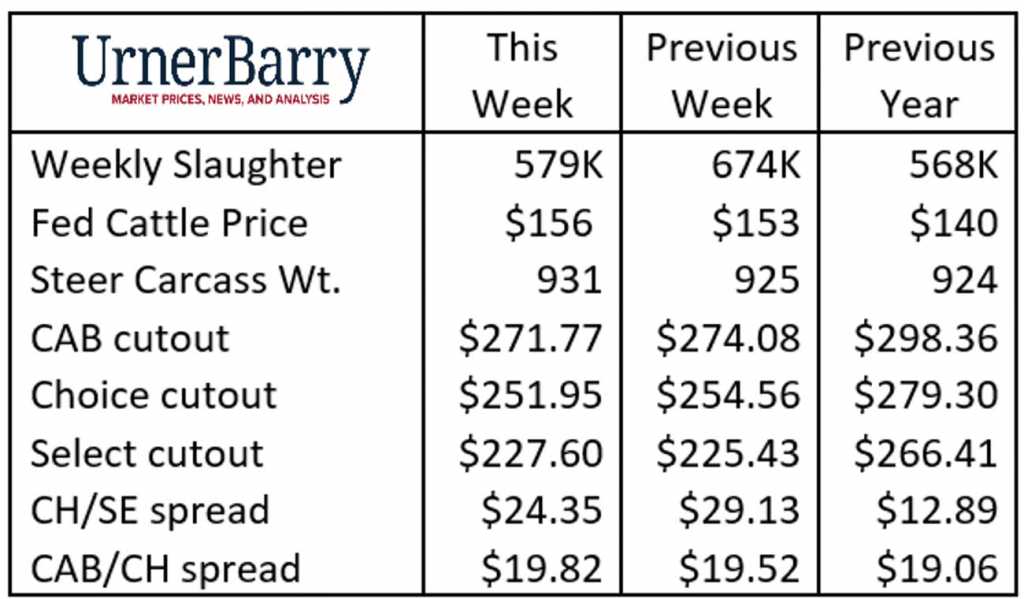
| Despite the $3 advancement in the cash trade, the December Live Cattle futures contract closed $0.37/cwt. lower at Friday's close versus Monday's open. The December contract continued to reflect a disconnect from the cash trade, closing at $152.68/cwt. this Tuesday. Carcass weights continue to increase, pushing toward an annual high as data for the week ending November 12 showed steer weights making a 6-pound advance to average 931 pounds. Steer carcasses have not been this heavy since reaching 930 pounds last January and currently matching the October 2020 record. Testing record-highs in the current market, of course, is not a reflection of an overabundance of finished cattle. In fact, fed supplies are quite current as compared to the fall of 2020 when the feeding sector continued to work through the backlog. Last week's feedyard showlists in the largest four feeding states was 2,000 head smaller (3.5%) than a year ago. Turning the calendar to December, the weekly spot wholesale boxed beef market should likely signal a lower price trend. The last three years have seen an average 8% decline in the Choice cutout price in December. Mixed price direction will be noted across the beef carcass cuts, but the month should be characterized by the upward early push of rib and tenderloin prices and a generally lower pull by several other cuts. Outside of middle meats the trend has been softer in the past few weeks. |
| DEMAND FOR PREMIUM QUALITY BEEF HIGH, SUPPLY SHOWING IMPROVEMENT |
| Fourth quarter demand for premium quality grade beef carcasses is predictably high. End users—grocery stores in particular—place orders several weeks ahead of the December timeline to fulfill holiday middle-meat needs. Prime grade carcass supplies have disappointed throughout the year with 11.2% fewer total pounds of Prime carcasses acquired so far. Premium Choice grade carcasses followed the trend since early July with a notable decline through late October. The latest data, however, shows an erratic improvement in the obtainment of Choice and Premium Choice carcasses. The Choice trend line had drifted high enough to touch the 2021 percentage by late October. But in the past three weeks percentage Choice jumped from 71% to 73.6% before settling a bit lower two weeks ago to 72.3%. |
 |
| The week-to-week Choice percentage changes admittedly read as fractional adjustments. Yet as we analyze the Premium Choice segment of the Choice grade category we see significant reaction to the proportion of carcasses qualifying for CAB. In the second full week of November the percentage of brand-eligible carcasses increased from 33.1% to 34.9%. With the brand's hot carcass weight limit adjustment having taken effect on October 31, the two-week increase reflects marbling improvement shown in the data. Turning back to the coveted Prime and CAB Prime carcasses, grading has been much more seasonal with incremental weekly increases bringing the Prime grade to 9% of the total, up from the summer low of 7.5%. This is still one-half of a percentage point lower than the same week last year, leaving the industry around 3,000 head fewer Prime carcasses on a full week's production in that comparison. |
 |
| As a result, quality premium spreads remain robust at the current time. Although the Prime cutout premium has given up $10/cwt. in the past two weeks, all the quality premiums remain in record territory for this time of year. Further grade improvement in December, coupled with cooling middle meat demand, will tighten the premium price spreads in the coming weeks. |
"I would like to applaud today's action by the House of Representatives to adopt the Tentative Agreement reached in September between railroad companies and labor unions. A labor dispute that disrupts the rail system would have dramatic impacts across the agri-food value chain, from farmers in the fields to consumer here in the U.S. and around the world. We urge to Senate to act on this bill immediately so that it can be signed into law by the president well in advance of the strike deadline on December 9."
Growth Energy's CEO Emily Skor issued the following statement after the House of Representatives passed a bill to avert a nationwide rail strike:
"Nearly 70% of U.S. ethanol production is moved by rail – more than 400,000 carloads annually. No one wants to see American motorists cut off from a vital supply of lower-cost, lower-carbon fuels so we're glad to see Congress take the threat of a rail strike seriously and urge the Senate to work quickly to adopt this legislation. The sooner the bill is passed, the sooner our industry can confidently get back to work for American consumers without having to worry about a deeply disruptive, and wholly avoidable rail strike."
Background Growth Energy has signed on to numerous coalitions and comment letters urging all parties involved in the negotiations to come to a voluntary agreement. In the absence of such an agreement, Growth Energy and its membership have vocally supported a legislative fix that prevents a destructive rail strike. The ethanol industry ships more than 400,000 ethanol carloads per year (USDA data: Annual U.S Rail Carloads of Ethanol | Open Ag Transport Data (usda.gov)), an estimated 200,000 carloads of distillers dried grains (DDGS), and more than 10,000 cars of corn oil. The ethanol fleet is now more than 36,000 cars (RSI data: Progress – Tank Car Resource Center).
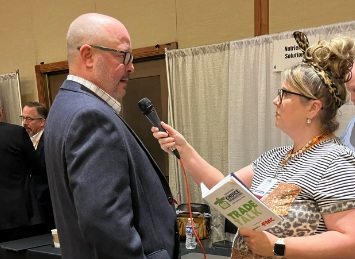
Director, KC Sheperd, visited with the Nutrien Ag North American lead for cotton, rice, and specialty crops, Frank Groves talking about this year's cotton crop and ways Nutrien Ag can aid producers.
"It was a very challenging year for cotton producers across the entire cotton belt," Groves said. "We have our fingers crossed that we are going to get a little rain this year and come into the season in a little better position than we were last year."
Groves said he is excited about the portfolio products Nutrien Ag has to offer.
"Through that portfolio, I believe we have a solution for any scenario that comes up; of course, the challenge in agriculture always is you don't have a crystal ball, and you don't know what you are getting into," Groves said.
Going into 2023, Groves said, Nutrien Ag is focused on giving growers the best local solution.
"This would have been the year, certainly, to have something that has a little larger seed, a little earlier season vigor, and a little more drought tolerance," Groves said.
As a representative at Nutrien Ag Solutions, Grove said he feels like Nutrien Ag has the broadest portfolio of anyone in the industry.
"We have our proprietary brand of Dyna-Gro, as well as all of our seed partners that we work with," Groves said. "Very close relationships with all of them. We have local crop consultants at each and every store. We have a team of agronomists, we operate in a digital space- crop protection, fertility, the entire package all the way from planting through harvest."
To check out the Nutrien Ag portfolio, visit https://nutrienagsolutions.com/
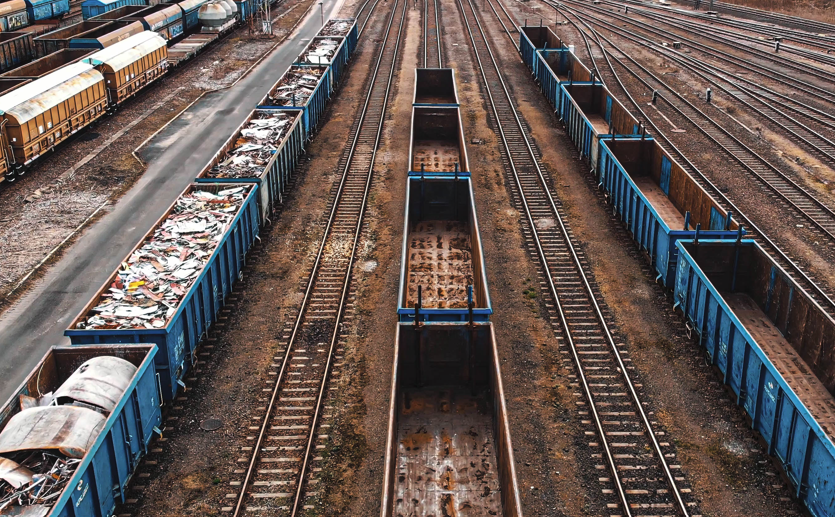
Today, the National Cattlemen's Beef Association (NCBA) recognized the Biden Administration for taking quick action to avoid rail disruptions.
"On behalf of America's cattle producers, we thank President Biden and Secretary Vilsack for their action to prevent a disruption in critical rail service across the country. We are also pleased to see bipartisan leaders in Congress working together to address this issue and protect our supply chains," said NCBA CEO Colin Woodall. "We urge Congress to quickly pass the tentative agreement, which enforces the Presidential Emergency Board's recommendations from September and ensures reliable rail service moving forward."
Cattle producers rely on rail service to transport essential feed, fuel, and fertilizer.
Attorney General John O'Connor and 17 other state attorneys general are challenging new policies implemented by major shipping companies to obtain data on gun purchasers with unprecedented specificity. These policies could allow federal agencies to bypass warrant requirements to obtain that information.
UPS and FedEx are reportedly now burdening federal firearm license (FFL) holders by requiring them to ship separately and track firearms, firearms parts, and firearm products. This surveillance would allow gun purchases and purchasers to be tracked and that information to be used or shared by the companies.
General O'Connor and the coalition of attorneys general sent letters today to both companies requesting additional information on their new policies and asking whether the effort was coordinated with the federal Bureau of Alcohol, Tobacco, Firearms and Explosives (ATF).
"These demands, in tandem, allow [UPS/FedEx] to create a database of American gun purchasers and determine exactly what items they purchased. This could strip Americans of their rights to require federal agencies to follow due process to obtain warrants for that information in certain instances. This allows UPS and FedEx to provide information at will or upon request to federal agencies—information detailing which Americans are buying what guns," the letters state. "Additionally, we recommend that you consider taking actions to limit potential liability moving forward, including the immediate cessation of any existing warrantless information sharing with federal agencies about gun shipments."
In addition to requesting updated FFL-related shipping policies from the two companies, Attorney General O'Connor asked them to clarify the following:
Montana Attorney General Austin Knudsen led the effort. In addition to Knudsen and Attorney General O'Connor, attorneys general from Alabama, Alaska, Arkansas, Florida, Indiana, Kansas, Kentucky, Louisiana, Mississippi, New Hampshire, Ohio, South Carolina, Texas, Utah, West Virginia, and Wyoming signed one or both letters.
Click here to read the letters.
Wed, 30 Nov 2022 09:55:34 CST
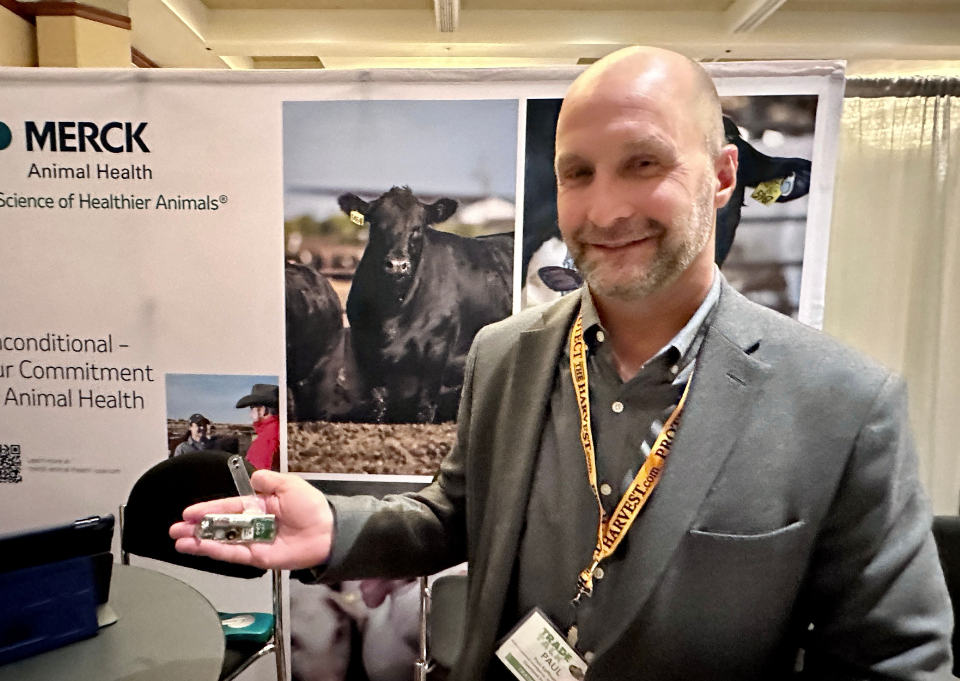
Senior Farm and Ranch Broadcaster, Ron Hays, is talking with Merck Animal Health's Paul Koffman, about technology Merck Animal Health has been working with to help producers stay ahead of the curve when it comes to looking at animal health issues on individual animals.
"For Merck animal health, our approach has really been to look holistically at that whole health outcome," Koffman said. "Just a few years ago, we were known specifically as a biopharmaceutical company, but over the last four or five years, we have made some significant investments in building our own technology as well as acquisitions."
One of those technology investments, Koffman said, is an ear tag that can be used in feedlots to track the activity and temperature of cattle. Koffman said the information collected is compared to "normal" data to identify outliers.
This device can help to find symptoms two to four days earlier than a human would find them, Koffman said, resulting in improved health outcomes.
"We are also saving on that challenge that we have with finding labor," Koffman said. "Everywhere in the United States today, we seem to have a lot of labor challenges, so really providing a lot of interesting opportunities and then bringing that together is an overarching health approach, when you think about it."
In 2019, Koffman said Merck animal health acquired a parent company of Allflex, which many producers are familiar with through ear tags.
"As part of that, we acquired a dairy monitoring business," Koffman said. "So, we are very strong in that space. It has been the foundation."
Merck is engaged in many other investments over a broad range of species and operations to close the circle on the comprehensive animal health approach regarding combining biopharmaceuticals and technologies.
For cow-calf operations, Koffman said Merck is focusing on using identification methods to collect information on individual animals to learn more about them through their lifecycle.
An example of technologies Merck has adopted to aid the cow-calf sector includes a company they recently acquired called, Vence, which is a technology that tracks animal movement and uses that movement to set up virtual fencing to be used in rotational grazing.
The technology Merck is applying to animal agriculture has an increasing number of benefits, beginning with less labor application and earlier identification of sick cattle for a better health outcome, which eventually results in more pounds to sell when the time comes.
Aside from many benefits for producers, Koffman said the overarching advantage of these technologies lies in providing consumers with valuable information about how their food is raised.
The Beef Buzz is a regular feature heard on radio stations around the region on the Radio Oklahoma Ag Network and is a regular audio feature found on this website as well. Click on the LISTEN BAR for today's show and check out our archives for older Beef Buzz shows covering the gamut of the beef cattle industry today.
Have you ever wondered what will happen to your ranch when you're gone? The key to putting your mind at ease is by building an effective and transparent succession plan.
To help farmers and ranchers start planning for the future, AgriWebb is hosting a virtual discussion with succession planning experts and ranchers to answer the following questions:
Who is on the panel?
*The time of this webinar is 10:30 a.m. Central Standard Time / 9:30 a.m. Mountain Standard Time.

Today the Agricultural Retailers Association (ARA) kicked off its 2022 Conference & Expo with more than 600 agricultural retail industry professionals convening to share insights, network, and celebrate 30 years of ARA.
"A lot has changed for our industry since we last gathered for the annual ARA conference," says 2022-2023 ARA Board Chair Ian McGregor with The McGregor Company. "But what remains consistent is our industry's dedication to a safe and secure food system. This week, our speakers and attendees will share timely and useful insights that will inform our business decisions as we continue to navigate challenges in our supply chain, economy, and workforce recruitment efforts."
Special events such as the ARA Invitational Golf Tournament at the prestigious Torrey Pines South Course and a Harbor Cruise tour offered participants a taste of the San Diego's local flair before they gathered for the first educational session of the week. Risk management expert Drew Van Winkle with StoneX Financial led the Pre-Conference Session: Fertilizer Market Outlook.
"On behalf of the ARA Board of Directors, I welcome this year's attendees as we celebrate the 30th anniversary of the association," says ARA President and CEO Daren Coppock. "During what has been another tough year in ag retail, I applaud participants for coming together to find new approaches to manage the many uncertainties in our industry and across the globe. As ARA looks onto the next 30 years in our industry, we will continue to serve as your eyes and ears in Washington."
This afternoon's Expo Hall grand opening reception will be a must-attend networking opportunity for attendees to build connections and discover valuable services and products to add to their company's toolbox.
Tomorrow's keynote and breakout session speakers will equip attendees with cutting-edge knowledge related to geopolitical developments from the Russia-Ukraine War, the farmer of the future, and more.
Learn more about the ARA Conference & Expo on the website or on ARA's social media.

Growth Energy CEO Emily Skor issued the following statement today regarding the introduction of a bill to allow the year-round sale of E15 by Senators Deb Fischer (R-NE), Amy Klobuchar (D-MN) and 13 other senators: "This summer, in the face of record-high gas prices, drivers across the country found savings at the pump of nearly a dollar per gallon thanks to E15 availability. In addition to putting money back in the pockets of American families and enhancing U.S.
energy security and independence, E15 offers a lower-carbon fuel choice. In fact, a nationwide move to E15 would reduce carbon emissions by more than 17.62 million tons, the equivalent of taking 3.85 million cars off the road each year. While last summer's temporary E15 waiver from the Biden Administration helped show the consumer benefits of E15, a permanent fix is vital to delivering and growing lower-cost, lower-carbon options at the pump and providing certainty to the fuel market. We're grateful to Senators Fischer, Klobuchar, and other biofuel champions across the country for working with all involved stakeholders to finalize a solution for year-round E15 ahead of the 2023 driving season."

Sens. Deb Fischer (R-Neb.) and Amy Klobuchar (D-Minn.), and 13 bipartisan Senate cosponsors, introduced the Consumer and Fuel Retailer Choice Act today, which would ensure permanent, full-market access to E15, often marketed as Unleaded 88.
The National Corn Growers Association (NCGA) applauded the new legislation, which has drawn support from a wide range of agriculture, fuel and retail stakeholders as a new opportunity to address a persistent issue.
"Ethanol saves Americans millions of dollars a year at the pump and is a critical part of our nation's energy security," said NCGA President Tom Haag. "We thank Sens. Fischer and Klobuchar and their cosponsors for introducing legislation today that will ensure drivers across the country continue to have year-round access to safe, low-cost, low-emission E15 and provides a commonsense resolution to a long-standing outdated barrier to consumer choice."
Despite EPA approving E15 for use in all 2001 and newer vehicles and a 2019 update to regulations, a 2021 court decision would have ended year-round market access to E15 last summer without the Biden administration using emergency authority to keep E15 in the market. The administration's temporary action increased the fuel supply and reduced fuel prices, but fuel choice is again in question for 2023.
This legislation would provide a permanent remedy to the problem on a national basis, even as several Midwest governors have also initiated a state-by-state solution.
"Following roadblocks and uncertainty on federal actions, governors took matters into their hands this year, and their initiative spurred renewed interest in a nationwide solution," said Haag. "Corn growers support EPA moving forward to implement the governors' notices for 2023 until a national solution, like the one senators introduced today, becomes law and resolves this issue once and for all."
Ensuring continued E15 sales year-round keeps a lower-emission fuel choice in the marketplace that costs less. E15 cuts evaporative, carbon and tailpipe emissions compared to standard 10 percent ethanol blended fuels. Blending more ethanol to make E15 displaces more toxic components in gasoline, reducing exhaust emissions for cleaner air.
From NMPF President and CEO Jim Mulhern:
"Congress needs to take immediate action to avert a nationwide rail strike that would damage dairy producers and deprive consumers of critical nutrition. Dairy is a 24/7 industry producing a highly perishable commodity. Any disruption of national transit networks not only keeps products from moving efficiently to markets; it deprives farmers and their processing cooperatives of everything from the feed they need for their animals to the supplies needed to continue production.
"A rail strike also would bring chaos to agricultural supply chains, as its ripple effects on trucking and other industries would complicate transport of goods everywhere from grocery stores to export markets, all the while adding another cold blast of inflation to consumer expenses this winter as products inevitably become scarce. "With a strike looming in mere days, now is the time to act. We urge Congress to make prevention of this strike today's top priority."
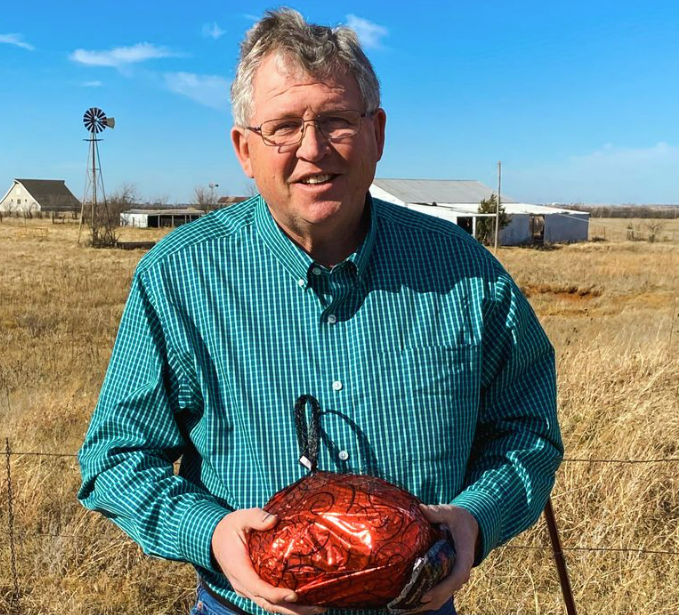
On November 29, which is Giving Tuesday, Oklahoma Pork Council Board of Directors President Angie Johnson launched the 2022 Give-A-Ham challenge with a donation to the Ronald McDonald House Charities® of Oklahoma City (RMHC-OKC). Her donation included more than 950 pounds of pork product, 200 pounds of shelf-stable food items and $1,000 for future pork purchases. This donation was made possible by the partnership of Tyson Foods, The Pork Group, Ben E. Keith Foods and the Oklahoma Pork Council.
"Oklahoma pig farmers care for their local communities," Johnson said. "As an Oklahoma pig farmer, I take pride in raising pigs and providing Oklahomans in need with nutritious pork. I am honored to be a part of this special donation."
RMHC-OKC provides a comfortable place to stay for families of seriously ill or injured children who are receiving inpatient care from the Oklahoma Children's Hospital. In 2021, they served 804 families representing 70 of the 77 Oklahoma counties.
"We are simply astonished by the generosity of Tyson Foods, The Pork Group, Ben E. Keith Foods and the Oklahoma Pork Council", said Judy Reyes-Henderson, executive director of development for RMHC-OKC. "We received more than 950 pounds of pork and other food products, which is enough to feed more than 2,850 guests at our Ronald McDonald House®. Our goal is to provide the families who stay with us one hot meal each day--one less thing they will have to think about while they are caring for their critically ill child. Thank you. Thank you. Thank you."
In addition to the donation, Johnson also challenged Oklahoma Governor Kevin Stitt to participate in the Give-A-Ham challenge, which will continue from today until Christmas Eve.
All eleven Oklahoma Pork Council Board of Directors will donate pork to their local communities and keep the generosity going by tapping friends and colleagues to accept the challenge.
We encourage you to get involved in your community this holiday season. Join Oklahoma's Give-A-Ham challenge by posting a photo or video of yourself accepting the challenge on social media using #GiveAHam and #OklahomaPork, or visit okpork.org/giveaham to commit to giving this holiday season.
Winter wheat conditions improved slightly last week but remained at a two-decade low, USDA NASS reported in its final weekly national Crop Progress report of 2022 released Tuesday. The weekly reports, which run from the beginning of April to the end of November each year, will resume on Monday, April 3, 2023.
Nationwide Winter Wheat:
Winter wheat emerged for U.S. reached 91 percent, even with the previous year and up 1 percentage point from the average.
Winter wheat conditions for the 18 states reported rated 34 percent good to excellent, 40 percent fair and 26 percent poor to very poor.
Nationwide Cotton:
Cotton harvested in the U.S. reached 84 percent, even with the previous year and up 5 percentage points from the average.
To view the final 2022 Crop Progress Report for the U.S., click here.
Oklahoma:
Winter wheat emerged reached 95 percent, unchanged from the previous year but up 1 point from normal. Wheat conditions rated 30 percent good to excellent, 45 percent fair and 24 percent poor to very poor. (Last week, good to excellent ratings were at 23 percent.)
Cotton harvested reached 84 percent, up 1 point from the previous year and up 7 points from normal. Cotton conditions rated 5 percent good to excellent, 31 percent fair and 64 percent poor to very poor.
Soybeans harvested reached 90 percent, up 4 points from the previous year and up 9 points from normal. Soybean conditions rated 19 percent good to excellent, 44 percent fair and 37 percent poor to very poor.
Hay:
The fifth cutting of alfalfa hay reached 70 percent, up 14 points from the previous year and up 5 points from the previous week. The fourth cutting of other hay reached 65 percent, up 17 points from the previous year and up 5 points from the previous week.
Pasture, Range and Livestock:
Livestock conditions rated 24 percent good to excellent, 56 percent fair and 20 percent poor to very poor. Pasture and range conditions rated 16 percent good to excellent, 27 percent fair and 57 percent poor to very poor.
Since last week, good to excellent pasture and range ratings have increased by 9 percentage points!
To view this week's Oklahoma Crop Progress Report, click here.
Kansas:
Winter wheat emerged reached 87 percent, down 8 percentage points from the previous year and down 5 points from the average. Winter wheat conditions rated 21 percent good to excellent, 36 percent fair, and 43 percent poor to very poor.
Cotton harvested reached 91 percent, up24 points from the previous year and up 33 points from the average.
Range and Pasture:
Pasture and range conditions rated 6 percent good to excellent, 14 percent fair and 80 percent poor to very poor.
To view this week's Kansas Crop Progress Report, click here.
Texas:
Winter wheat emerged reached 85 percent, up 3 percentage points from the previous year and up 5 points from the average. Winter wheat conditions rated 21 percent good to excellent, 50 percent fair and 29 percent poor to very poor.
Cotton harvested reached 77 percent, down 3 percentage points from the previous year and up 5 points from the average. Cotton conditions rated 12 percent good to excellent, 18 percent fair and 70 percent poor to very poor.
Peanuts mature reached 95 percent, up 1 percentage point from the previous year and up 6 points from the average. Peanuts harvested reached 87 percent, even with the previous year and up 1 point from the average. Peanut conditions rated 30 percent good to excellent, 51 percent fair and 19 percent poor to very poor.
Range and Pasture:
Range and pasture conditions rated 17 percent good to excellent, 29 percent fair and 54 percent poor to very poor.
To view this week's Texas Crop Progress Report, click here.
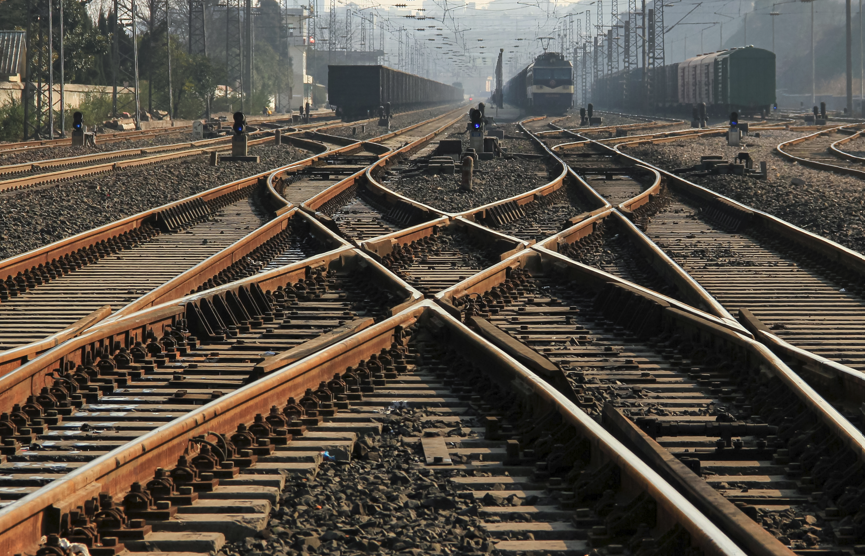
American Farm Bureau Federation President Zippy Duvall commented today on President Biden's request to Congress to prevent a rail worker strike.
"America's economy is driven, in large part, on its rail system, which makes the smooth operation of the railroads crucial. Farmers not only rely on trains to transport food and feed, they also rely on rails to bring important supplies like fertilizer to the farm. A shutdown or slowdown would have devastating consequences to our national and global food security.
"We appreciate President Biden for recognizing the damaging impact a strike would have, and we urge Congress to act now, well in advance of the December 9 deadline, to prevent damage to the economy and the food supply chain."
The U.S. Department of Agriculture (USDA) announces two initiatives to increase access to USDA programs and services among Hispanic communities. The Department is renewing the USDA-HACU Leadership Group, a partnership with the Hispanic Association of Colleges and Universities (HACU). USDA is also accepting applications for the 2023 E. Kika De La Garza Fellowship Program, which brings faculty and staff from Hispanic-Serving Institutions (HSIs) and Hispanic-Serving School Districts around the nation to USDA headquarters in Washington, D.C. to learn more about USDA programs and resources. The E. Kika De La Garza Fellowship Program was established in 1998 by a previous USDA-HACU Leadership Group.
"USDA is committed to centering Latino voices and experiences to provide equitable access to programming," said Agriculture Secretary Tom Vilsack. "Our partnership with HACU through this Leadership Group is crucial to providing leadership and strategic direction for USDA's work with Hispanic-Serving Institutions."
The USDA-HACU Leadership Group
The USDA-HACU Leadership Group is a national body that focuses on ensuring that the Hispanic community equitably participates in and benefits from USDA education and employment programs, resources and services. The current group was established by a Memorandum of Understanding signed by Agriculture Secretary Vilsack and HACU on August 25, 2021. The USDA-HACU Leadership Group consists of an equal number of USDA representatives and presidents from HSIs, which are defined as institutions that have an undergraduate full-time equivalent of at least 25 percent Hispanic students.
USDA members include:
Jenny Lester Moffitt, USDA Under Secretary for Marketing and Regulatory Programs (Co-Chair)
Karama Neal, Administrator, Rural Business – Cooperative Service, USDA Rural Development
Bruce Summers, Administrator, USDA Agricultural Marketing Service
Randy Moore, Chief, USDA Forest Service
Dionne Toombs, Acting Director, USDA National Institute of Food and Agriculture
HACU members include:
Mike Flores, Chancellor, Alamo Colleges District (Co-Chair)
Cesar Maldonado, Chancellor, Houston Community College System
Tomás Morales, President, California State University, San Bernardino
Madeline Pumariega, President, Miami Dade College
Saúl Jiménez-Sandoval, President, California State University, Fresno
E. Kika De La Garza Fellowship Program
The application period is open for the annual E. Kika De La Garza Fellowship Program. The program brings faculty and staff from Hispanic-Serving Institutions and Hispanic-Serving School Districts to Washington, D.C., where they meet with USDA leaders, learn about the federal government, and share their insights with students and colleagues in their home institutions and communities.
The fellowships take place in the summer of 2023 and applications are due March 1, 2023.
Education and High School Fellowships are for faculty and staff at Hispanic-Serving Institutions or Hispanic-Serving School Districts. Participants attend a one-week program in Washington, D.C. Science Fellowships are for science faculty at HSIs to collaborate with leading USDA scientists. Participants attend the first week in Washington, D.C. and then spend a second week at a USDA research facility.
To apply for the Kika De La Garza program and learn more about the USDA-HACU Leadership Group, visit USDA's Hispanic-Serving Institutions National Program or contact partnerships@usda.gov.
USDA touches the lives of all Americans each day in so many positive ways. In the Biden-Harris Administration, USDA is transforming America's food system with a greater focus on more resilient local and regional food production, fairer markets for all producers, ensuring access to safe, healthy and nutritious food in all communities, building new markets and streams of income for farmers and producers using climate smart food and forestry practices, making historic investments in infrastructure and clean energy capabilities in rural America, and committing to equity across the Department by removing systemic barriers and building a workforce more representative of America. To learn more, visit www.usda.gov.
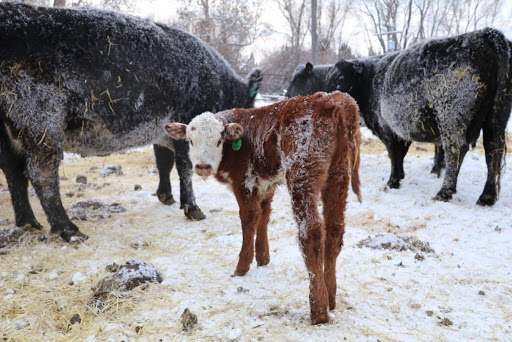
Weekly, Oklahoma State University Extension Beef Cattle Nutrition Specialist Paul Beck offers his expertise on the beef cattle industry. This is a part of the weekly series known as the "Cow-Calf Corner" published electronically by Beck. Today, he talks about highlights about feeding cows though the winter from the Rancher's Thursday Webinar on November 17.
The Rancher's Thursday Webinar on November 17th had Dr. Mary Drewnoski from the University of Nebraska-Lincoln present over feeding baled crop residues to beef cows as an alternative to feeding normal hay crops. To effectively feed cows through the winter producers should understand the quality of the forage they are feeding and how it fits the cow's nutrient requirements and impacts forage intake.
Crop residues like wheat straw, corn stalks, or soybean residue are low quality roughages, with total digestible nutrient (TDN) content ranging from around 39% for soybean residue to 45% for wheat straw and corn stalks. Protein levels are also very low at around 3 to 5%. Also, the bottom end of the corn or sorghum stalk is very low in nutrient quality, cows will sort out most of this portion and intake will be very low. Drewnoski stated that grain sorghum residue is actually higher in TDN and crude protein at 52 5o 55% TDN and 5 to 7% crude protein.
Grain sorghum residue can meet the requirements of a cow in late gestation, the stage most of our spring calving cows are in from now through mid-February, while other residues from corn, wheat, or soybean harvest will need significant supplementation for these cows.
Hay baled from a failed soybean crop is much higher in quality than residues baled after harvest. Soybean hay often reaches 55% TDN and 14 to 20% crude protein. It is key to capture the soybean leaf because that is where the best nutrient content is, and the stems are low in energy. Also, the pod adds a lot of protein and energy as it fills, because of the high protein and oil content of the soybean seeds. It is very hard to dry down soybean hay because of the stems and pods, so Drewnoski warns of the potential of mold forming in the bales.
Drewnoski's final comments:
This webinar and other archived webinars from this series can be found at the Oklahoma State University Beef Extension website at: https://extension.okstate.edu/programs/beef-extension/ranchers-thursday-lunchtime-series/index.html
This Thursday producers, County Extension Educators and Area Livestock Specialists will cover limit feeding hay and concentrate in Atoka county and using cotton crop residues to winter beef cows in Comanche county. Register for this webinar at: https://dasnr.zoom.us/webinar/register/WN_xPsdKmWASsqlxmtU9cRXBA
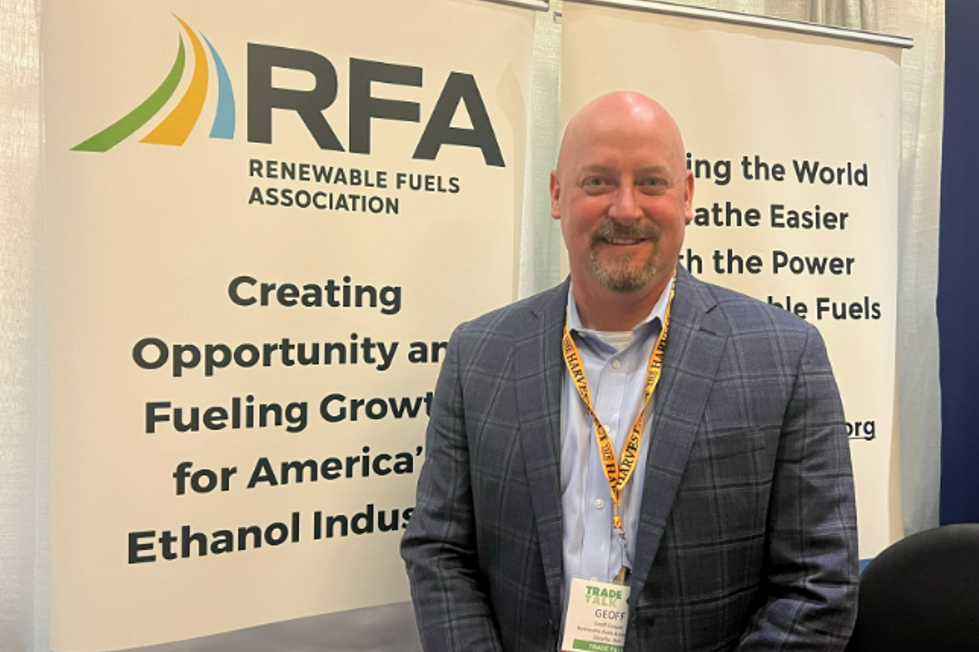
At the National Association of Farm Broadcasters convention in Kansas City, Farm Director, KC Sheperd, got the chance to visit with the President and CEO of the Renewable Fuels Association, Geoff Cooper, about the mission of the RFA and an outlook for the ethanol industry moving forward.
The Renewable Fuels Association, Cooper said, represents U.S. ethanol producers and supporters of renewable fuels.
"We represent the industry's interest in Washington D.C., but also across the nation in terms of interacting with consumers, with the media, with market development initiatives, but a very strong focus on policy as well," Cooper said.
The year 2022 has been a profitable year for the ethanol industry, Cooper said, but there have been logistical challenges such as low water levels on rivers, truck driver shortages, infraction, and the threat of rail strikes.
"Over 70 percent of what we produce is shipped on rail," Cooper said. "We have been keeping a really close eye on these labor discussions and disputes between the rail unions and the railroads."
Railroads shutting down for any period of time, Cooper said, would be devastating for the ethanol industry.
Solutions to issues impacting the industry, Cooper said, can be found in educating lawmakers and agency officials in Washington D.C., about what is going on in the industry and opportunity for improvement.
"We also expect to benefit significantly from the Inflation Reduction Act, which had a whole lot of tax credits in there for renewable energy, and we believe ethanol- the products that our folks are producing- will qualify for a lot of those tax credits," Cooper said.
Going into 2023, Cooper said the split congress will create some unique challenges, but also some opportunities.
The most exciting thing for the ethanol industry going forward, Cooper said is uses and opportunities for ethanol that go far beyond a motor fuel and fuel additive for gasoline.
"There is a lot of interest and investment happening in sustainable aviation fuels today, and ethanol is one of the top candidates to play a leading role in sustainable aviation fuels," Cooper said. "Today we are a fuel for cars, SUVs and trucks. Tomorrow we could very well be the key ingredient in fuel for airplanes and we think that would be a huge opportunity for the industry."
Regarding the 2023 farm bill, Cooper said he expects to see the continuation of different grant programs, loan guarantees and more that have helped to expand the ethanol industry.
"USDA has been fantastic about investing in the infrastructure necessary to get higher blends of ethanol out to consumers and we think the next farm bill provides an opportunity for the next chapter of those investments," Cooper said.
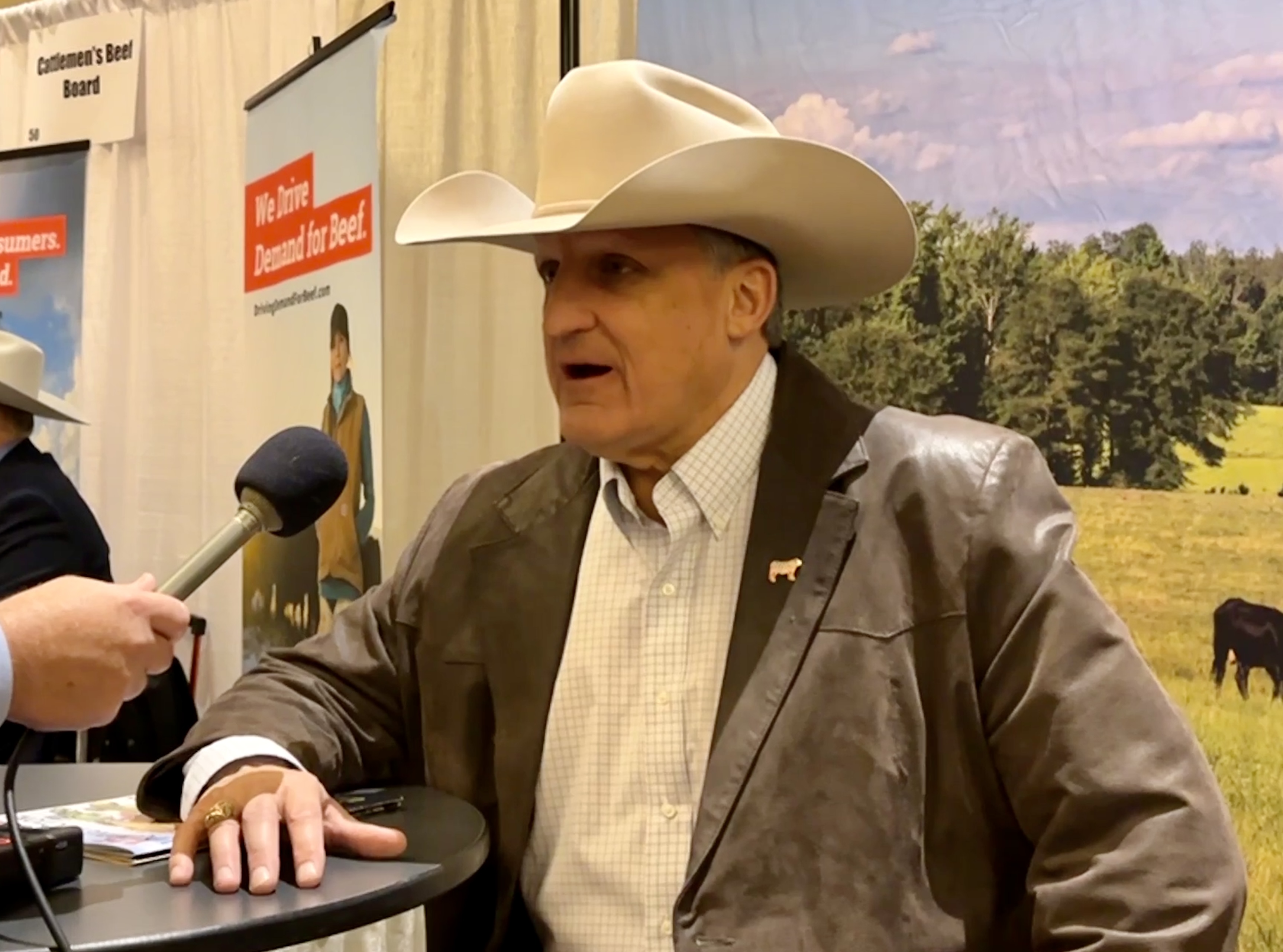 Ron Hays Beef Buzzes with NCBA President Elect Todd Wilkinson
Senior Farm and Ranch Broadcaster, Ron Hays, is back with the 2022 President-Elect of the National Cattlemen's Beef Association, Todd Wilkinson, about regulatory challenges impacting the beef industry.
A rancher out of South Dakota, Wilkinson indicates one of the big challenges for the cattle industry in the days to come is going to be regulatory overreach by the Biden administration.
The big takeaway from the midterm elections, Wilkinson said, is likely to be an increase in regulatory activity.
"I never would have guessed I would see in my career the Securities and Exchange Commission trying to get involved to say that there needs to be some sort of climate dictate that goes all the way back to the producer," Wilkinson said. "How we get from Wallstreet out to that cow-calf operator is a major stretch."
Following midterms, Wilkinson said producers are going to see more overreach than before. The ongoing issues with defining WOTUS (Waters of the U.S.), Wilkinson said, continue as the Biden administration has not responded well to the agriculture industry's requests to halt policy implementation until the Supreme Court has made a decision.
"It appears that the government bureaucrats want to dictate how we want to run our operation, even though they have no clue as to our environmental footprint and the fact that we are a good solution, not a negative," Wilkinson said.
It is beyond the regulatory framework of the Securities and Exchange Commission, Wilkinson said, to be involved in making regulations that will impact the agriculture industry.
"We are going to be prepared to throw a punch and fight for the producer because I think that is the future we are going to be dealing with and we need to protect that producer," Wilkinson said. "The days of just taking it are done. Now it is time to deliver the message back hard and fast."
Wilkinson talked about his goals to impact the industry positively through his position in office of the cattle organization.
"I firmly believe it is the people in our industry that are prepared to get out, protect themselves and move forward," Wilkinson said. "That is the ones that are going to chart the future. It is not the guys that are going to sit there and simply complain at the coffee shop, because complaining at the coffee shop doesn't do anything. I am convinced that NCBA is the tool and the message and has the delivery to be able to help the producer out there."
Animal disease traceability is a big focus for him as be becomes President of NCBA this coming February, Wilkinson said, as the spread of foreign animal disease has the potential to negatively impact the United States economy on a broad scale.
"Unless we bring our animal disease traceability up to the speed of commerce, we are going to get caught behind," Wilkinson said.
The Beef Buzz is a regular feature heard on radio stations around the region on the Radio Oklahoma Ag Network and is a regular audio feature found on this website as well. Click on the LISTEN BAR for today's show and check out our archives for older Beef Buzz shows covering the gamut of the beef cattle industry today.
Ron Hays Beef Buzzes with NCBA President Elect Todd Wilkinson
click to play audio or right-click to download
Growth Energy yesterday submitted comments to the U.S. Department of Agriculture (USDA), making recommendations to the agency's Rural Business-Cooperative Service (RBCS) on how to make the most of certain provisions in the Inflation Reduction Act (IRA).
"Our industry is poised to work with you and the administration to help achieve the ambitious climate goals sought by the enactment of the IRA," said Growth Energy in its comment. "To that end, we look forward to working with you on the implementation of the new law including section 22003 that provides $500M in funding for biofuels infrastructure."
Specifically, Growth Energy recommended that USDA administer the aforementioned $500 million in a way that maximizes the use of higher ethanol-blended fuels like E15, a blend of gasoline and 15% ethanol that can be used in more than 96% of the vehicles currently on the road today.
Among its recommendations, Growth Energy urged USDA to
A full copy of the letter can be found here.

Dover Fueling Solutions becomes the first manufacturer to offer optional UL-certified E40 fuel dispensers as standard
Today, Dover Fueling Solutions (DFS), part of Dover Corporation and a leading global provider of advanced customer-focused technologies, services and solutions in the fuel and convenience retail industry, announced all North American Wayne Ovation Fuel Dispensers will be supplied as compatible and UL-listed to E40/B20 as a standard feature. The announcement extends DFS' UL compliance from E25 to E40, with the continued option of up to E85 available across all models and configurations, and cements DFS as the first manufacturer of fuel dispensers to offer an E40 UL listing.
"In response to consumer demands for greater fuel efficiency and a desire to lower greenhouse gasses, DFS and Wayne's Ovation Fuel Dispensers are proud to provide E40 UL listings," said Scott Negley, Senior Director, Product Management at Dover Fueling Solutions. "This reflects DFS' commitment to supplying retailers with the most flexible, reliable and future-proofed equipment options. Regardless of the direction policy and next-generation vehicle technologies take, retailers can rest assured that their investments in our fuel dispensers will be viable for years to come."
DFS works in partnership with the National Corn Growers Association (NCGA) to prepare for fueling advancements, enhance dispenser offerings and meet infrastructure needs for future mid-level ethanol blends. Over the past six years, DFS, with the support of NCGA, have produced and sold fuel dispensers certified to deliver fuel with up to 25 percent, and now, 40 percent ethanol.
"DFS continues to innovate by producing and selling dispensers certified to deliver fuel containing up to 40 percent ethanol," said NCGA Vice President of Market Development Jim Bauman. "This initiative complements our policy priorities like the Next Generation Fuels Act and supports future demand for ethanol and corn farmers."
"We want to congratulate DFS for being the first manufacturer to offer UL-certified E40 fuel dispensers," said NCGA President Tom Haag. "This is an important step toward offering consumers additional choices at the pump supplied by ethanol, an affordable, domestically-produced source of octane that helps to reduce the environmental footprint of liquid fuels."
For more information on Wayne Ovation Fuel Dispensers, go to https://www.doverfuelingsolutions.com/wayne.
For more information on NCGA's ethanol priorities, go to www.ncga.com/ethanol.
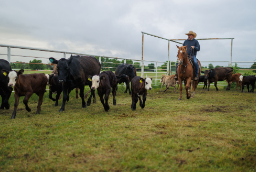
Agriculture is the seventh-most-hazardous industry in the United States, but ranch owners and operators can take steps to make their working facilities and equipment safer for their staff and families.
Recently Noble Research Institute and the U.S. Roundtable for Sustainable Beef created and published a new guide to help improve ranch safety.
Ranch Employee Safety: Working Cattle and Related Facilities and Equipment takes ranchers through four stages of improved safety:
Additionally, the guide provides 30 pages of resources and tools, ready to use on any operation.
Hugh Aljoe, Noble Research Institute's director of producer relations, said he believe the guide will benefit all producers.
"Everyone wants the safest environment possible for their families and staff — they just may not know how to effectively accomplish that in an effective way that doesn't overcomplicate the work," he said. "This guide is simple to use and practical to apply on any cow-calf operation."
Ranch Employee Safety: Working Cattle and Related Facilities and Equipment is available for download at no cost here.
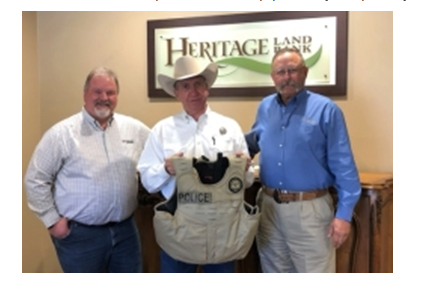
Several Farm Credit organizations recently joined forces to make a record donation to the Texas and Southwestern Cattle Raisers Association (TSCRA) Special Ranger Foundation in support of the foundation's efforts to provide law enforcement and investigative resources to agricultural producers and rural communities.
AgTexas Farm Credit, Capital Farm Credit, Central Texas Farm Credit, Heritage Land Bank, Legacy Ag Credit, Lone Star Ag Credit, and Texas Farm Credit combined to donate $77,000, smashing the foundation's fundraising goal of $60,000.
"The donation from these Farm Credit organizations will be used to supply training, equipment, and advanced investigative resources to TSCRA Special Rangers," said Scott Williamson, executive director, law enforcement, brand and inspection services. "The investment by these Farm Credit associations will help prevent livestock and equipment theft and help ensure our law enforcement professionals are equipped with the latest safety equipment."
"Since 1917, Farm Credit has supported rural communities and agricultural operators," said Bill Tandy, chief executive officer of Heritage Land Bank. "We are proud to support the Special Rangers and their work to protect and serve ranchers, farmers, and rural landowners throughout Texas and Oklahoma.
Founded in 1877, 29 Special Rangers operate throughout Texas and Oklahoma, providing law enforcement and theft prevention to agricultural producers and rural communities. TSCRA Special Rangers are an elite group of law enforcement officers who have extensive knowledge of the cattle industry. While they primarily investigate cattle theft and other agricultural crimes, they are well-trained in all facets of law enforcement and are commissioned through the Texas Department of Public Safety or Oklahoma State Bureau of Investigation.
An online event with Dr. Thomas Jayne discussing the findings of this report will take place today at 10 a.m. ET. To watch the event, visit this Zoom link.
Climate change is already tangibly affecting smallholder farmers in developing countries, and increased U.S. investments in agricultural development and innovation are needed to make global food systems more resilient and to alleviate hunger worldwide, according to a new report commissioned by Farm Journal Foundation.
While climate change is impacting agriculture all around the world, its effects are "substantially more severe" in warm regions including Africa, Latin America, and the Caribbean, according to the report released today, authored by Dr. Thomas Jayne, professor emeritus of Agricultural, Food, and Resource Economics at Michigan State University. As much as 80% of the world's poor people, who predominantly work in agriculture, live in areas increasingly affected by climate change, the report said, citing the Global Panel on Agriculture and Food Systems for Nutrition.
The new report follows the United Nations' COP27 conference earlier this month in Sharm El-Sheikh, Egypt, where leaders discussed the impact of climate change on the global food system and solutions to make agriculture more resilient. Today, the world is facing an "unprecedented" global food crisis, according to the World Food Program, due to COVID-19, the Russia-Ukraine war, and a series of devastating weather events driven by climate change, including severe flooding in South Asia and extended droughts in East Africa.
"Unless sufficient resources are devoted to adapting agricultural systems to climate change, billions of people who rely on agriculture for their livelihoods could be hit hard, and global progress made in recent years to reduce poverty and hunger will be reversed," Dr. Jayne said.
The report put forward a series of recommendations for where increased investments and coordination efforts by the U.S. government could make a substantial difference in enabling smallholder farmers and food systems to adapt to climate change. These recommendations included:
According to the report, investing in agricultural sustainability in developing countries is in the U.S. national interest, as it would prevent future food crises, reduce the need for emergency food aid, support stability in developing countries, and potentially reduce mass migration and civil unrest.
"Our global food system is at a crossroads. Climate change is creating greater and greater risks, especially for smallholder farmers in developing countries, and we are seeing increased levels of global hunger as a result," said Katie Lee, Vice President of Government Affairs at Farm Journal Foundation. "The U.S., as a global leader in agriculture, has an important role to play in building more resilient food systems. As this report shows, making robust, coordinated, and targeted investments in agricultural research, development, and extension now will pay dividends down the road, creating a more sustainable, stable, and food secure future for everyone."
To read the executive summary and the full report, click here.
The National FFA Foundation announced its new chair for the Sponsors' Board during the 95th National FFA Convention & Expo in Indianapolis this fall.
David Hollinrake, global head of strategy and portfolio management for Syngenta, was named chair for the upcoming year. Hollinrake grew up on a farm in Illinois and has been involved with agriculture his entire life. He received a Bachelor of Science in agriculture economics from the University of Illinois and a Master of Business Administration from Washington University in St. Louis. Hollinrake has held progressive leadership roles throughout his career with some of the largest agriculture input companies.
Mary Snapp, vice president of strategic initiatives for Microsoft, was named chair-elect. Snapp joined Microsoft in 1988 as the company's fourth and first female attorney and now leads various strategic initiatives in the Office of the President. She formerly led Microsoft's Global Philanthropies, investing the company's strongest assets - technology, money, employee talent, and the company's voice – to partner with nonprofits and communities to create a lasting positive impact.
"The leadership development experiences I gained from participating in FFA were foundational to helping me develop as a leader and have a successful career in the industry I love," said Hollinrake. "I am honored to play a role in helping create the next generation of leaders who will change the world and ensure the agriculture industry overcomes the many challenges we face, including how to feed, fuel and clothe the world sustainably."
"Helping the next generation of leaders grow and learn has been a lifelong passion, from scholarships in my Kansas hometown to support for global aid organizations, but I am most proud to work with the National FFA Foundation in achieving that goal," said Snapp.
The National FFA Sponsors' Board is made up of top corporate executives who wish to support agricultural education and the National FFA Organization. During their service, sponsors' board members are integral to advising National FFA on opportunities to improve programs and secure funding for the continued development of the next generation of leaders who will change the world.
In addition to Hollinrake being named the board chair and Snapp being named chair-elect, seven other new board members were announced. Those include Seth Crawford, senior vice president and general manager, precision ag and digital for AGCO; Steve Evans, vice president, community development for Smithfield Foods; Patrick Gottsch, president/founder, Rural Media Group Inc; Jeremy Kelly, quality services manager for Darling Ingredients; Doug Naylor, national director of key western accounts for Wrangler; Dave Paul, underwriting/vice president for NAU Country; Leslie Stasiek, learning and development lead for Elanco and Colby Tanner, group vice president, industrial products for BNSF Railway.
These members will serve on the board for three years.
"We are so thankful to those who serve on our board," said Molly Ball, president of the National FFA Foundation. "Their expertise from the industry is instrumental in helping FFA grow the next generation of leaders while opening doors for a broader audience."
The National FFA Organization is a school-based national youth leadership development organization of more than 850,000 student members as part of 8,995 local FFA chapters in all 50 states, Puerto Rico and the U.S. Virgin Islands.
For the second year in a row, Americans will experience the most expensive holiday season on record as inflation remains at a 40-year high. While this was first felt while celebrating Thanksgiving last week, unfortunately it does not look like our economic hardships will improve during the rest of this year.
According to the Bureau of Labor Statistics, prices increased at an annual rate of 7.7 percent in October. More specifically, the price of turkey is up 21 percent, stuffing mix is up 69 percent, pumpkin pie mix is up 18 percent and dinner rolls are up 22 percent. This makes it significantly harder for families to put a holiday meal on the table. In fact, according to a recent Morning Consult poll, nearly 40 percent of Americans plan to ease this financial burden by reducing their holiday meals and cutting out some side dishes.
Additionally, because Democrats have significantly slowed down U.S. energy production, the cost for Americans to travel and visit their families is higher than ever before. In fact, the price of gasoline is up 17.5 percent while airfare is up almost 43 percent.
A sign pointing toward more economic downturn is that seasonal hires this year for the holiday shopping season have already decreased 37 percent compared to last November. Corporations and small businesses' inability to fully staff up will not only be more disastrous for our economy, but also shows our nation's recession is crushing America's job creators. Also, more than half of U.S. CEOs recently surveyed by CNBC are considering layoffs because of the recession, leaving nearly 40 percent of Americans worried about losing their jobs. While this should be a season of thankfulness, giving and time with family and loved ones, many Americans are worried about the future of their jobs and income.
Democrats unfortunately remain focused on the wrong things as unaffordable prices continue to hurt Americans and our businesses. However, now that Republicans have regained control of the House of Representatives, Democrats and President Joe Biden must come to the table and reach across the aisle on policies to rebuild our once strong economy and get America back on the right track.
Although this season is filled with financial struggles and worries of a slowing economy, it is possible to pump the brakes on Democrats' car of disastrous policies that has been moving full steam ahead the last two years. As the incoming majority in the House next year, Republicans are committed to fighting inflation, reducing gas prices by restoring American energy independence and securing our supply chains. And we are ready to work with our Democratic colleagues on these issues that are most important to the American people.
"I take seriously overriding the ratification procedures and the views of those who voted against the agreement. But in this case – where the economic impact of a shutdown would hurt American agriculture and millions of other working people and families –Congress must use its powers to adopt this deal. There is no time to waste on political gamesmanship or the search for a more perfect resolution.
"I join the President in calling on Congress to quickly pass legislation adopting the Tentative Agreement between railroad workers and operators – without any modifications or delay – to avert a potentially crippling national rail shutdown. "The U.S. food and agricultural industry relies heavily on rail networks for the transport of inputs and raw materials and for taking products to market. A rail shutdown would have significant and long-lasting effects on some sectors of American food and agriculture and could be devastating to parts of our economy."
U.S. Department of Agriculture Secretary Tom Vilsack met with Mexican President Andrés Manuel López Obrador today to discuss a looming decree proposed by the Mexican president that would ban imports of biotech corn into the country. The talks come on the heels of an aggressive campaign by the National Corn Growers Association (NCGA) encouraging the Biden administration to intervene in the dispute.
"We are very appreciative of Secretary Vilsack for taking the lead on this issue that is so important to American corn growers," said NCGA CEO Jon Doggett. "Today's meeting shows that the Biden administration is listening to NCGA and American corn grower leaders and that Secretary Vilsack is willing to go to the mat for America's farmers. This is an extremely important development."
A statement released tonight by USDA showed how strongly Secretary Vilsack feels about this issue.
"We must find a way forward soon and I emphasized in no uncertain terms that – absent an acceptable resolution of the issue – the U.S. Government would be forced to consider all options, including taking formal steps to enforce our legal rights under the USMCA," Vilsack said in a statement.
Pres. López Obrador has promised to enact a decree that would end imports of corn grown using biotech and certain herbicides by 2024. Biotech corn makes up over 90% of U.S. corn crops.
NCGA has been at the forefront of this issue. In a Reuters article published in September, NCGA called on USTR to intervene in the dispute and then followed up with an op-ed that reached across Washington. NCGA has also worked closely with Congress on the issue.
"We will continue to press this issue with the Biden administration and other policymakers," said Doggett. "But having the secretary of USDA in our corner comes as a great relief, as you can't ask for a tougher or better advocate than Secretary Vilsack."

Sen. Blake "Cowboy" Stephens has officially filed Senate Bill 7 ahead of the 2023 session, which calls for Oklahoma to remain in Daylight Saving Time (DST) year-round. The measure will be a "trigger law" that would go into effect following the passage of the Sunshine Protection Act by Congress, which would give states the option to end the time change.
Stephens has carried related legislation during his tenure in the state Senate and said he is hopeful that the shift in congressional leadership will encourage passage of the act.
"I could go on and on about why it is beneficial to remain in DST," Stephens said. "Just one example is Oklahoma having one of the highest rates of childhood obesity, which could be combatted with having an extra hour of daylight in the evening for exercise and outdoor activities. This is a common-sense bill that would help us in our efforts to become a healthier state."
Stephens said the bill number is representative of the favorite number he shares with God, seven, providing examples that there are seven days in a week, seven colors in the rainbow, and seven continents. He hopes to add seven more hours of productivity to each week in the winter months with the elimination of Central Standard Time.
SB 7 can be heard after the 59th Legislature convenes on Feb. 6.
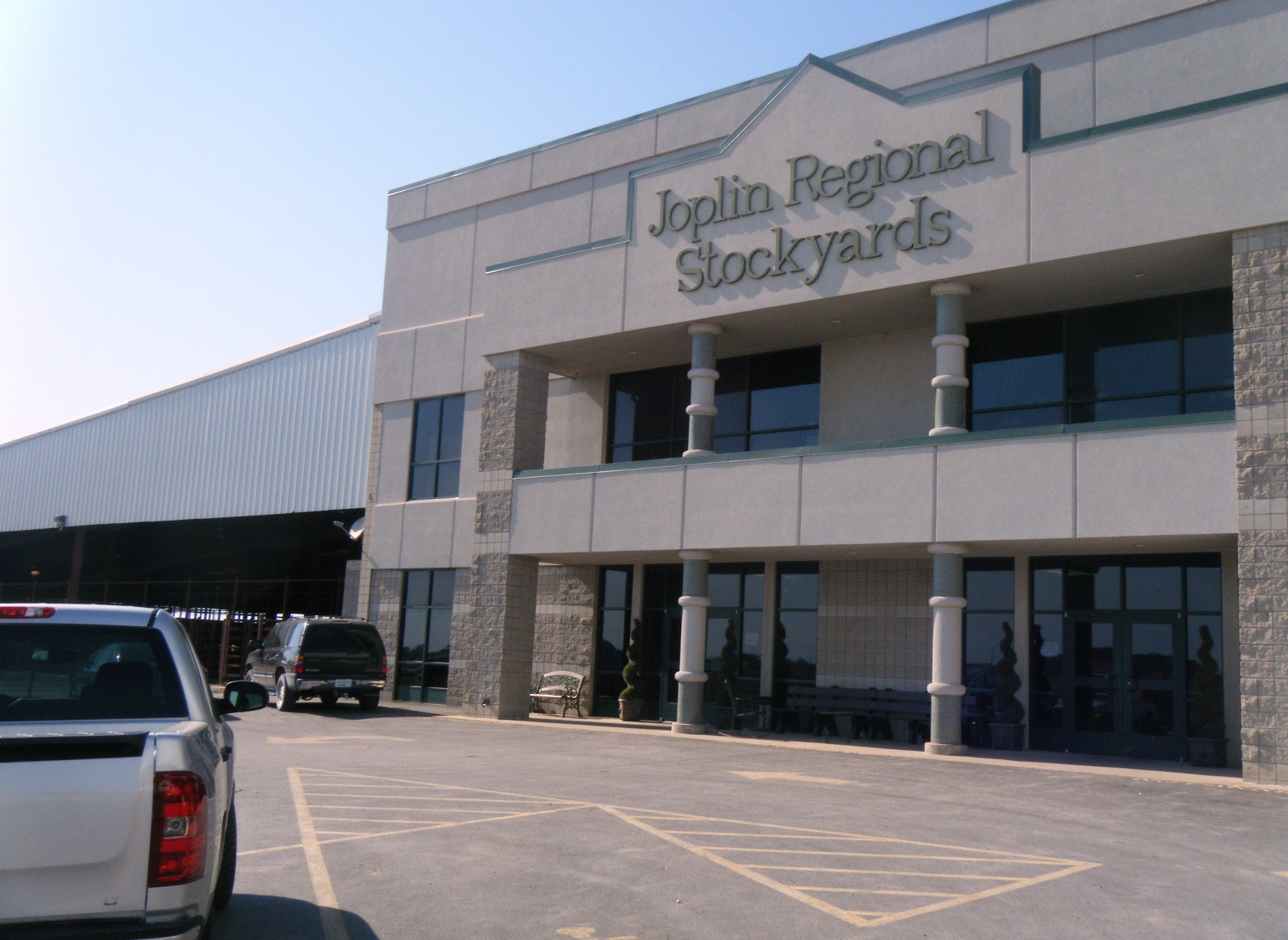 Joplin Regional Stockyards
Mon Nov 28, 2022
AUCTION
This Week 10,063
Last Reported 11,936
Last Year 8,342
**CLOSE**
Compared to last week feeder steers under 800 lbs. traded steady with heavier weights trading steady to 2.00 lower. Feeder heifers under 475 Lbs. traded steady to 3.00 higher with heavier weights trading steady. Supply was heavy with very good demand. Supply included: 100% Feeder Cattle (59% Steers, 40% Heifers, 1% Bulls). Feeder cattle supply over 600 lbs was 54%.
FEEDER CATTLE
STEERS - Medium and Large 1 (Per Cwt / Actual Wt)
Head Wt Range Avg Wt Price Range Avg Price
14 381-389 384 232.00 232.00
149 402-446 423 206.00-227.00 216.81
106 453-491 474 205.00-217.00 211.67
290 500-548 519 190.00-213.00 198.47
243 550-598 572 190.00-207.00 195.53
398 601-645 623 179.00-193.00 185.15
323 650-692 668 180.00-187.00 184.43
204 709-734 724 177.00-184.00 179.16
397 759-795 773 178.00-181.50 180.58
80 840-846 843 173.00-174.00 173.51
147 850-887 870 174.00-180.00 176.79
401 920-948 922 169.00-173.50 169.22
74 961-967 966 170.00 170.00
For the complete market report from USDA Market News click on the PDF link below:
Click here: 05114_JoplinRegional11292022.pdf
Tue, 29 Nov 2022 02:48:47 CST
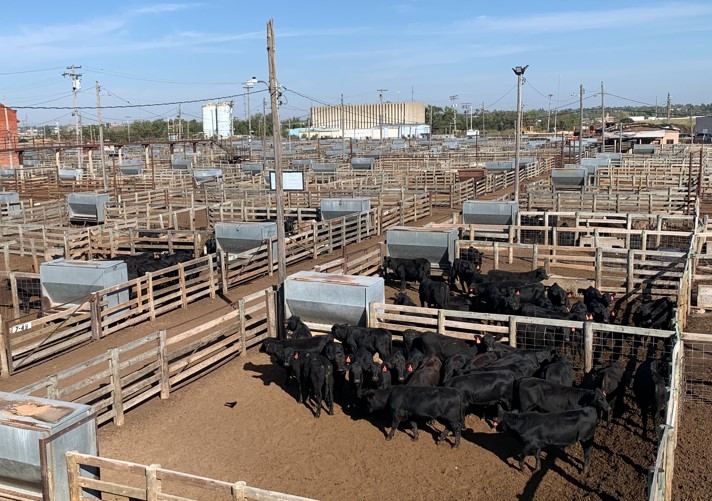
Oklahoma National Stockyards
Mon Nov 28, 2022
AUCTION
This Week 6,500
Last Reported 8,769
Last Year 10,817
*** Close ***
Compared to last week: Feeder steers and heifers 1.00 - 3.00 higher with instances 6.00 - 10.00 higher. Steer calves 3.00 - 7.00 higher. Heifer calves steady to 3.00 lower. Quality average to attractive. Demand moderate to good. Recent rains and warmer temperatures has definitely improved demand for wheat pasture cattle. Supply included: 100% Feeder Cattle (58% Steers, 41% Heifers, 1% Bulls). Feeder cattle supply over 600 lbs was 44%.
FEEDER CATTLE
STEERS - Medium and Large 1 (Per Cwt / Actual Wt)
Head Wt Range Avg Wt Price Range Avg Price
6 289 289 255.00 255.00 Value Added
38 309-347 338 234.00-253.00 239.97
102 359-396 378 200.00-237.00 218.73
18 353 353 243.00 243.00 Value Added
42 404-438 429 200.00-223.00 214.63
19 402-437 418 232.00-234.00 232.87 Thin Fleshed
259 456-499 479 203.00-221.50 211.49
76 451-473 468 223.00-232.00 230.29 Thin Fleshed
24 488 488 225.00 225.00 Value Added
123 503-540 521 192.00-210.00 202.79
81 501-548 519 215.00-223.00 218.04 Thin Fleshed
6 530 530 214.00 214.00 Value Added
229 554-598 574 186.00-200.00 193.20
56 556 556 213.00 213.00 Thin Fleshed
10 559 559 180.00 180.00 Unweaned
258 601-630 616 181.00-195.00 186.53
26 646 646 171.00 171.00 Unweaned
60 601 601 207.50 207.50 Value Added
358 658-698 673 174.00-189.50 178.97
318 703-732 716 173.50-183.00 179.51
165 751-779 768 173.00-188.00 184.40
184 813-847 825 174.50-179.00 177.21
16 850-868 855 163.00-169.50 167.85
For the complete market report from USDA Market News click on the PDF link below:
Eligible Partners have until December 30, 2022, to sign up for funding.
Through the Agricultural Conservation Easement Program's Agricultural Land Easement component (ACEP-ALE), the Natural Resources Conservation Service (NRCS) enters into agreements with eligible partners for purchasing easements that protect the agricultural use and conservation values of eligible land. This program helps farmers and ranchers keep their land in agriculture production. It also protects grazing uses and related conservation values by conserving grassland, including rangeland, pastureland and shrubland. The program helps protect the long-term viability of the nation's food supply by preventing conversion of productive working lands to non-agricultural uses. Land protected by agricultural land easements provides additional public benefits, including environmental quality, historic preservation, wildlife habitat and protection of open space.
Landowners who are interested in ACEP-ALE on their property must work with an eligible partner to participate in this program. Interested landowners can visit the NRCS website to find potential partners, www.nrcs.usda.gov/programs-initiatives/ale-agricultural-land-easements. Eligible partners include American Indian tribes, state and local governments and non-governmental organizations that have farmland, rangeland, or grassland protection programs. Land eligible for agricultural easements includes cropland, rangeland, grassland, pastureland, and nonindustrial private forest land. NRCS will prioritize applications that protect agricultural uses and related conservation values of the land and those that maximize the protection of contiguous acres devoted to agricultural use.
NRCS accepts applications on a continuous basis; however, to be considered for funding during the Fiscal Year 2023 budget cycle, applications from eligible partners must be received by December 30, 2022.
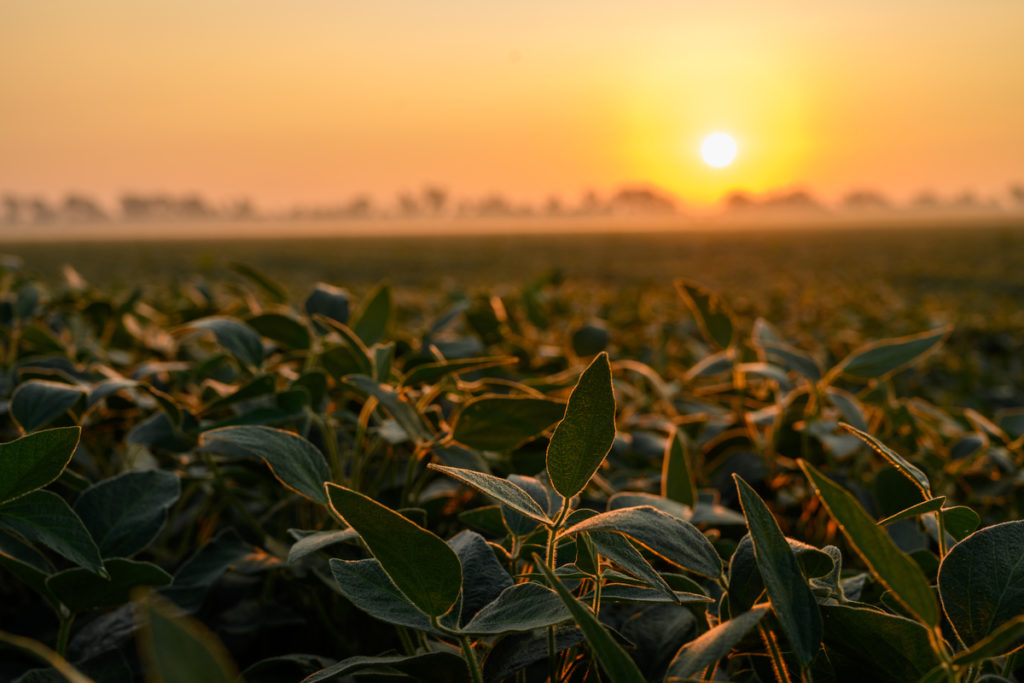
The U.S. Department of Agriculture appoints 19 U.S. soybean farmers to serve on the United Soybean Board and reappoints 24 directors for an additional term.
The U.S. Department of Agriculture announced the appointment of 19 new farmer-leaders to serve on the United Soybean Board (USB). In addition, 24 farmer-leaders were reappointed. Forty-six leaders and alternates will serve three-year terms, and one new appointed member will serve a one-year term. Leaders will be sworn in for service during the USB December Meeting in St. Charles, Mo.
"We are thrilled about this group of directors joining us, whether they are new or returning farmer-leaders," said Ralph Lott, USB Chair and farmer from New York. "Each of them offers different expertise and industry insights that will assist with making strategic checkoff investments to benefit all U.S. soybean farmers now and looking at what's ahead."
The soy checkoff provides significant value to farmers by continuing to fund programs that build preference for U.S. soybeans across the country and throughout the world. Authorized by the Soybean Promotion, Research and Consumer Information Act, the checkoff is composed of 77 members representing 29 states, in addition to the Eastern and Western regions. The number of seats on the board and farmer representation is based on bushels produced in each of the production regions. Members must be soybean farmers nominated by a Qualified State Soybean Board.
"I look forward to the diverse perspectives these farmer-leaders will bring to our board. Together, we will work to create value for U.S. soybean farmers through strategically designed research, education and promotion programs,'' said Meagan Kaiser, USB Vice Chair and Missouri farmer.
Newly appointed farmer-leaders include:
Reappointed farmer-leaders include:
Newly appointed alternates include:
To see USDA's Notice of Trade about appointments, click here. To learn more about key investments made on behalf of U.S. soybean farmers, sign up for the Soy Hopper newsletter at unitedsoybean.org/newsletter.
Join program staff and leadership Thursday, Dec. 1, as they provide a summary of the Version 5 open comment period feedback and other development updates.
This town hall is a public forum designed for engagement from all industry stakeholders including dairy farmers, veterinarians, and program participants. For more information on Version 5, visit the development page.
To register, click here.
As farmers across the country wrap up harvest, the National Corn Growers Association (NCGA) reminds them of one important step for many – submitting yield results for contest entries in the 2022 National Corn Yield Contest. Only days remain to complete this important task.
All harvest results must be submitted by the deadline of November 30 to be included in the 2022 rankings.
The contest winners will be announced on December 14.
Enter your harvest results online, click here.
Contact NCYC at 636-733-5512 or email ncyc@ncga.com with any questions.
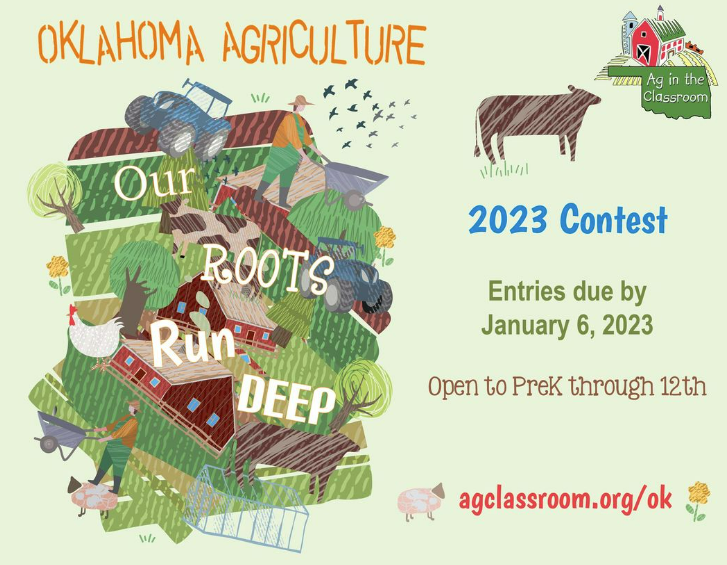
The 2023 Oklahoma Ag in the Classroom Art & Photography Contest is now LIVE!!
Our theme this year is Oklahoma Agriculture: Our Roots Run Deep. We hope you will explore Oklahoma's rich agricultural heritage through a variety of Ag in the Classroom lessons. Find your agricultural "roots" through family; genetics; crops; livestock; or pioneers and historical figures in agriculture.
Our goal this year is to have all 77 counties in Oklahoma represented!! We have an art contest for grades PK-12th grade (Coloring Sheet for PK-2nd, Poster for 3rd-12th) or a Photography contest for grades 9th-12th. Please follow the link below to find out more information about the contest: https://oklahoma.agclassroom.org/contest/
Warmer weather is headed our way this week, according to State Climatologist Gary McManus. He says," It's gonna get nice and warm, relatively speaking, on Tuesday, then really cold Tuesday night and Wednesday then warms up again by the weekend. It's the classic Oklahoma temperature roller coaster, just in time for December."
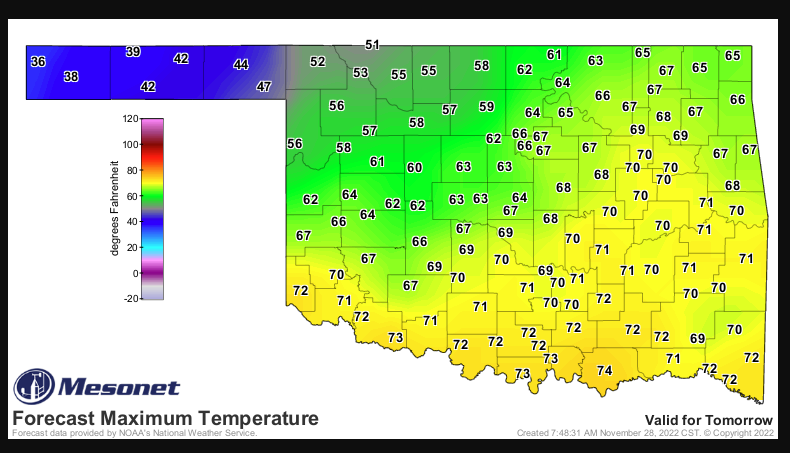
McManus says this will be a dry front, though; no rain is expected until we get closer to the weekend, "The rain over the Thanksgiving Holiday will further erode the drought in that part of the state. It would be nice to spread some of that moisture farther to the NW, but that's the nature of things right now."
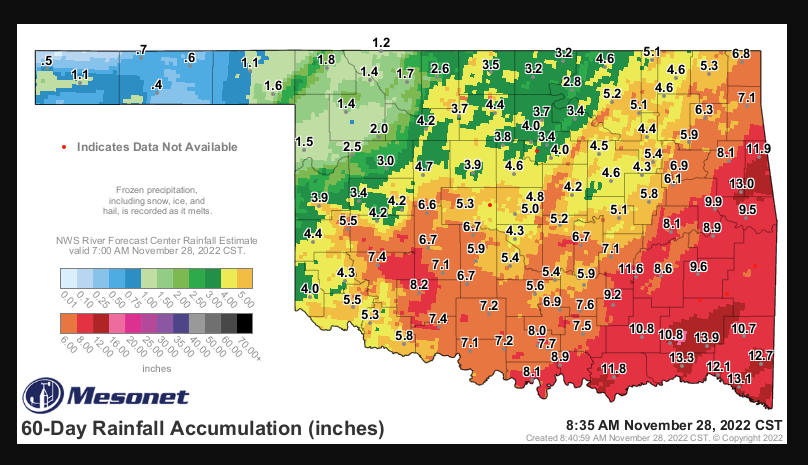
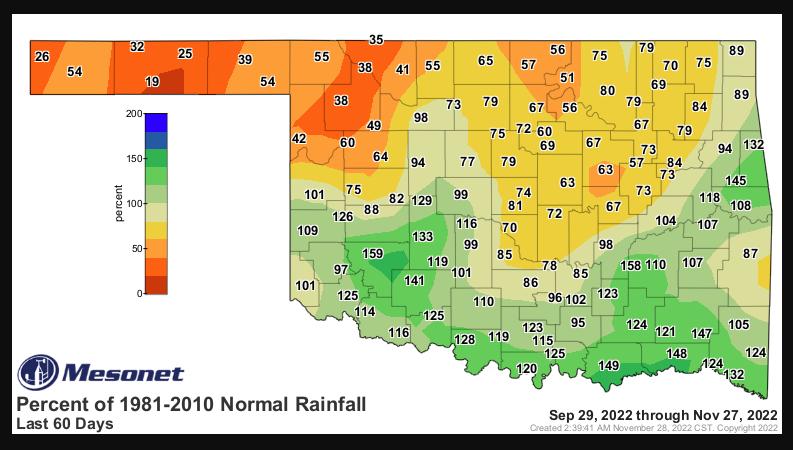
McManus says while much of southern and east central Oklahoma have gotten a substantial amount of help the northern half, especially the far Northwest is still lacking.
To Read more from Gary McManus click here; https://ticker.mesonet.org/
Strip trials provide insights to local hybrid and variety needs
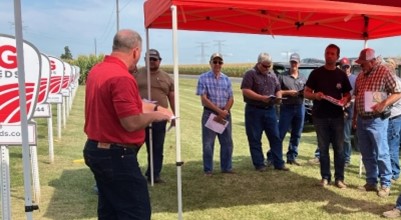
While corn and soybean test plots don't show the whole picture, LG Seeds agronomist Jim Rowley says they offer key insights.
"Local strip plots are important to give a farmer the opportunity to observe and to evaluate which corn hybrids and soybean varieties work in that local environment or in that specific soil type," Rowley says.
Broad spectrum and replicated companywide research from LG Seeds are reinforced with local plot testing, giving dealers confidence in product placement.
Evaluating plot results
When analyzing the results of plot tests and field trials, Rowley encourages farmers to look at some specific details to see the bigger picture.
What plot tests revealed in 2022
Rowley says in 2022, strip trials showed that full-season hybrids significantly outperformed short- and mid-season hybrids. That's different from last year in regional performance, where mid-seasons performed relatively better.
"The thing about the differing maturities is that it falls back on the development of that individual hybrid or that maturity and what critical growth stages it's going through during the different stresses of an individual season," he explains.
According to Rowley, full-season hybrids missed the extreme heat when pollinating, whereas the short- and mid-season plants may have been going through pollination with a lot of heat stress.
"It's all about timing and how that can impact crop development," he adds.
In terms of specific hybrid and variety performance, Rowley offers this insight:
You can find out more about how LG Seeds performed this year in the Corn Harvest Update and 2022 Soybean Harvest articles.
Making 2023 seed selection decisions
To use plot results to make future decisions, Rowley says farmers should plan to diversify maturity and vary their planting dates. "That way the nick of the critical pollination phase doesn't always occur at the exact same time," he says. "And it's not just about the reproductive stage and pollination, but also about other developing things with kernel fill, trying to beat the first frost and a whole array of other environmental factors brought on by the weather."
Rowley encourages farmers to reflect on strip-trial differences to provide affirmation for the things that you suspect, "but don't consider them the end-all when it comes to interpreting yield results," he adds.
Reach out to your local LG Seeds agronomist for information about local trials and for guidance choosing the best seed and seed treatment package for your acres.
At the National Association of Farm Broadcasters in Kansas City, Farm Director, KC Sheperd, had the chance to visit with Ag Economic and Policy Advisor at Farm Credit Services of America, Matt Erickson, about an outlook for 2023 as many factors continue to impact the markets.
"We have had quite a 2022 year," Erickson said. "Farmers have been through black swan events, drought in South America, even drought here in the U.S."
Specifically for corn and soybeans, Erickson said everyone he has seen or heard has had a safe and relatively successful harvest, but there is a tight supply situation.
Looking at the corn crop, Erickson said the stock-to-use ratio was at about 8.3 percent, and soybeans were at about 5 percent, which is both under the ten-year average.
"When we enter into 2023, planning for volatility is going to be really important," Erickson said.
Regarding issues with the Mississippi River drying up, Erickson said problems with waterways or any mode of transportation is always concerning.
"We have always been relatively dry in the fall months, but nothing like this," Erickson said. "I think that is something to keep an eye on. I know parts of the Midwest have gotten some rains that have increased the Mississippi River a little bit but not to the point where it is back up to normal by any stretch of the imagination."
Erickson said farmland values are strong and have been increasing.
"Strong profitability since, really after the 2020 harvest as well as buyer demand have really driven up farmland values," Erickson said. "Commodity prices have been relatively strong. That has also been increasing farmland values as well."
Looking at the 2023 farm bill, Erickson said it is important to give the committees a chance to work and understand what has worked well, and what can be improved from the 2018 farm bill.
"When I look back at my time on the Senate Ag Committee, what is so hard about writing a farm bill is it is not about looking at what is going to happen in 2023 when you write it," Erickson said. "It is about the next 5 years and what economic conditions are going to look like."
From talking with producers, Erickson said he knows they want predictability and certainty with regard to making sure that the 2023 farm bill gets finished.
"We are pushing for that as well," Erickson said. "We want to make sure producers have the certainty and predictability for those risk management programs."
The 2023 year is expected to be profitable, Erickson said, but there is a tremendous amount of risk.
"When we enter 2023, it is so important for us to preserve our working capital and not to pay off that low-fixed debt that you have had," Erickson said. "The second thing is really understanding your cost and revenue structure within your budgets. With a volatile year likely in 2023, that is so important."
The best way for producers to better manage volatility going forward, Erickson said, is learning to understand their numbers and margins.
Mondays, Dr. Derrell Peel, Oklahoma State University Extension Livestock Marketing Specialist, offers his economic analysis of the beef cattle industry. This analysis is a part of the weekly series known as the "Cow Calf Corner" published electronically by Dr. Peel and Mark Johnson. Today, Dr. Peel talks about a change in the rate of beef cow slaughter.
Weekly beef cow slaughter has been higher year over year for 70 consecutive weeks. In that period, on only four occasions has the year over year increase been less than 3.0 percent. The latest weekly data shows that beef cow slaughter was up 2.7 percent year over year, just the second week this year up less than 3.0 percent. It's too early to be sure but beef cow slaughter may be slowing down. In Oklahoma auctions, the weekly volume of cull cows was double last year from July through early November before declining the past two weeks. Two weeks ago, the weekly cull volume was about equal to last year, and the volume in the latest weekly data is down 9.0 percent year over year.
For the year to date, beef cow slaughter is up 12.3 percent year over year. If beef cow slaughter were to decline to just equal year ago levels for the remaining weeks of the year, total beef cow slaughter for the year would be up 10.5 percent year over year. This would be a net beef cow herd culling rate of 13.1 percent for the year, a new record level. The actual culling rate is likely to be a little higher.
However, heifer slaughter has not yet shown any signs of decreasing. The October 1 quarterly cattle on feed report showed that the number of heifers in feedlots was still up 1.7 percent year over year. Since that report, weekly heifer slaughter has continued to be up over four percent year over year with the most recent week up 5.8 percent over the same week one year ago. Lower feedlot placements in October presumably means fewer heifers entering feedlots as well and reduced heifer slaughter eventually.
For the year to date, heifer slaughter is up 4.9 percent over last year. By several relative measures, 2022 heifer slaughter is at the highest level since 2003. Similar to the beef cow slaughter speculation, if heifer slaughter dropped to be just equal to last year for the remainder of the year, total annual heifer slaughter would be up 4.3 percent year over year. Beef cow and heifer slaughter could drop to year ago levels, or even lower, but it seems unlikely at this point and the number of weeks remaining in the year is dwindling rapidly.
With drought continuing, it is not clear what to expect for cow and heifer slaughter going forward. It seems likely that many producers have adjusted herd inventories, given hay and feed supplies, to be able get through the winter. This might mean that cow culling will slow down through the winter. If La Niña persists next spring, more liquidation can be expected going into the next growing season.
In any event, the damage to cattle industry female inventories is already done in 2022. Total cow plus heifer slaughter is over 51 percent of total cattle slaughter so far this year and is likely to average over 50 percent for the entire year. This is the highest female slaughter percentage since 1986. The female slaughter percentage varies in a fairly narrow range, and it looks like the percentage for 2022 will be more than two standard deviations above the average of the past 30 years. In other words, the level of cow plus heifer slaughter this year is very rare and indicates the most severe depletion of female cattle inventories in more than three decades.
Senior Farm and Ranch Broadcaster, Ron Hays, is visiting with the 2022 President-Elect of the National Cattlemen's Beef Association, Todd Wilkinson, about the state of the cattle industry and producer morale as 2022 comes to an end.
"The ability of that producer to maybe see some dollars coming back into their pocketbook has permeated the countryside," Wilkinson said. "Suddenly, the cow-calf guys are getting a little bit more for their calves, and maybe we are getting some competitive advantage back up on the packers, simply because of the numbers out there."
Wilkinson said he has seen a sentiment of optimism across the countryside in the beef industry.
"I think the beef industry is looking for a pretty good run," Wilkinson said. "I think we are going to be back in that 2014-15 range where we can put some money in our pockets. Goodness knows we need an opportunity to do that."
Wilkinson also talked about the work NCBA is doing to improve the market.
"From the producers that I talk to, we really just want to have the ability to not have somebody tell us how we have to market our cattle in any particular fashion," Wilkinson said. "The biggest thing that I hear from the countryside is we certainly need some fixes on some of these areas. We definitely need the livestock marketing act reauthorized and maybe some tweaks to that."
The results of the government becoming involved in market manipulation, Wilkinson said, could be devastating for the beef industry. Regarding increasing beef packing plant capacity, Wilkinson said he believes it is a good thing to have more space.
"The biggest problem with the way the beef industry functions is you have got a pipeline of calves up at the top, and then into that feeder cattle market, and then you have a narrow funnel that they have to pass through to the packers," Wilkinson said. "It is that choke point when you get down to that funnel that becomes a problem."
Having the ability to add packing capacity, particularly small and mid-size, gives producers more leverage in negotiating where they want to sell their cattle and gives them the ability to retain multiple bids.
"So, competition is a good thing, and the ability that we are seeing other people to go out there and develop some new packing facilities- that is going to put us in a distinct advantage from the cow-calf guy and the feeder side," Wilkinson said. "That has not been the norm. The fact that we are going to have the upper hand just gives me a great big smile on my face."
The Beef Buzz is a regular feature heard on radio stations around the region on the Radio Oklahoma Ag Network and is a regular audio feature found on this website as well. Click on the LISTEN BAR for today's show and check out our archives for older Beef Buzz shows covering the gamut of the beef cattle industry today.
The International Dairy Federation (IDF) World Dairy Summit brings unique opportunities for U.S. dairy as the host nation for the Chicago event, to be held next Oct. 16-19. The global conference returns to the United States for the first time in three decades, at a moment when rising exports and world-leading sustainability gives the U.S. industry a great story to tell, according to three leaders in organizing next year's events.
"It's a really exciting time for our industry, and we think that there's a tremendous opportunity, a tremendous amount of potential that dairy, globally, has here," said Shawna Morris, Senior Vice President for Trade at the National Milk Producers Federation (NMPF) and the U.S. Dairy Export Council (USDEC). "Looking at how we tap into that together is what we're focused on doing through the conference."
"Bringing all of these folks to the United States creates an opportunity to get folks into facilities, to get them out to farms, to really show the rest of the global dairy industry what the U.S. dairy industry is all about," said Nick Gardner, chairman of the U.S. International Dairy Federation, the Senior Vice President for Sustainability and Multilateral Affairs at USDEC, and with Morris the co-chair of next year's summit.
"This is an excellent opportunity for the U.S. dairy industry to highlight its world leading dairy production from the farm through our cooperatives and processors and out to the consumers," said Jamie Jonker, NMPF's chief science officer and chair of IDF's Science Program Coordinating Committee. "It's a way for us to step on the world stage, reintroduce U.S. dairy, its innovation and technology to the global marketplace, and demonstrate how we are world leaders." Morris, Gardner and Jonker also discuss how the dairy community can get involved with supporting the event, already highlighted by platinum-level sponsor Dairy Management Inc., as planning for it is already in full swing. More in the summit can be found here. The full podcast is here. You can also find the podcast on Apple Podcasts, Spotify, Google Podcasts and Amazon Music.
The National FFA Foundation announced its new chair for the Sponsors' Board during the 95th National FFA Convention & Expo in Indianapolis this fall.
David Hollinrake, global head of strategy and portfolio management for Syngenta, was named chair for the upcoming year. Hollinrake grew up on a farm in Illinois and has been involved with agriculture his entire life. He received a Bachelor of Science in agriculture economics from the University of Illinois and a Master of Business Administration from Washington University in St. Louis. Hollinrake has held progressive leadership roles throughout his career with some of the largest agriculture input companies.
Mary Snapp, vice president of strategic initiatives for Microsoft, was named chair-elect. Snapp joined Microsoft in 1988 as the company's fourth and first female attorney and now leads various strategic initiatives in the Office of the President. She formerly led Microsoft's Global Philanthropies, investing the company's strongest assets - technology, money, employee talent, and the company's voice – to partner with nonprofits and communities to create a lasting positive impact.
"The leadership development experiences I gained from participating in FFA were foundational to helping me develop as a leader and have a successful career in the industry I love," said Hollinrake. "I am honored to play a role in helping create the next generation of leaders who will change the world and ensure the agriculture industry overcomes the many challenges we face, including how to feed, fuel and clothe the world sustainably."
"Helping the next generation of leaders grow and learn has been a lifelong passion, from scholarships in my Kansas hometown to support for global aid organizations, but I am most proud to work with the National FFA Foundation in achieving that goal," said Snapp.
The National FFA Sponsors' Board is made up of top corporate executives who wish to support agricultural education and the National FFA Organization. During their service, sponsors' board members are integral to advising National FFA on opportunities to improve programs and secure funding for the continued development of the next generation of leaders who will change the world.
In addition to Hollinrake being named the board chair and Snapp being named chair-elect, seven other new board members were announced. Those include Seth Crawford, senior vice president and general manager, precision ag and digital for AGCO; Steve Evans, vice president, community development for Smithfield Foods; Jeremy Kelly, quality services manager for Darling Ingredients; Doug Naylor, national director of key western accounts for Wrangler; Dave Paul, underwriting/vice president for NAU Country; Leslie Stasiek, learning and development lead for Elanco and Colby Tanner, group vice president, industrial products for BNSF Railway.
These members will serve on the board for three years.
"We are so thankful to those who serve on our board," said Molly Ball, president of the National FFA Foundation. "Their expertise from the industry is instrumental in helping FFA grow the next generation of leaders while opening doors for a broader audience."
The National FFA Organization is a school-based national youth leadership development organization of more than 850,000 student members as part of 8,995 local FFA chapters in all 50 states, Puerto Rico and the U.S. Virgin Islands.
"Get Jazzed" for the 2023 Cattle Industry Convention & NCBA Trade Show
The Big Easy is ready to host the 2023 Cattle Industry Convention & NCBA Trade Show, Feb. 1-3. New Orleans, famous for its world class cuisine, jazz music and lively nightlife, is a perfect venue to bring the cattle industry together for education, entertainment and engagement.
The annual convention will kick off on Feb. 1, with Buzz Brainard, host of Music Row Happy Hour, returning as emcee. The Opening General Session will include a casual conversation between "Yellowstone" creator Taylor Sheridan and NCBA President and Minnesota cattle producer, Don Schiefelbein. The two will discuss ranch life, today's challenges and sharing the industry's story in an authentic way. Sheridan is an Academy Award-nominated writer, actor, rancher as well as a member of the Texas Cowboy Hall of Fame.
CattleFax's outlook session will highlight demand and supplies for beef, cattle and competing proteins. Analysts will present a price and profitability outlook for 2023 and beyond for all classes of cattle and beef, explore export and import markets, and provide a grain outlook. Meteorologist Matt Makens will also give a 2023 weather forecast highlighting weather pattern changes for the United States and around the world.
Plan to attend the high-profile session on Friday morning and hear from government dignitaries as they provide an update on the beef business climate in the United States and around the globe, moderated by NCBA Vice President of Government Affairs Ethan Lane.
The Closing General Session will celebrate the Beef Checkoff-funded Beef Quality Assurance (BQA) Program and BQA award winners and will feature keynote speaker Chris Koch, who doesn't let limitations or obstacles stand in his way. Despite being born without arms and legs, Koch grew up like any other small-town kid — playing road hockey, causing mischief at school, and helping on his family farm. Today, Koch is a motivational speaker who inspires his audiences to continually challenge themselves and build the life they always wanted.
While the general sessions are packed with engaging speakers and information every producer can use, entertainment will also be around every corner. Franki Moscato, winner of the 10th annual National Anthem Contest, will perform at the Opening General Session and during the Friday night event. The country trio Chapel Hart will combine their Mississippi roots and Louisiana spice in a special performance during Closing General Session. Convention will wrap up Friday evening with "Party Gras" featuring the country music group Midland and special guest Neal McCoy.
If that isn't enough, the 30th annual Cattlemen's College, will feature live animal handling demonstrations and 18 educational sessions with industry leaders tackling innovative topics. The Cattle Feeders Hall of Fame banquet and Environmental Stewardship Award Program reception will recognize leaders for their achievements, and there will be more than eight acres of trade show exhibits to explore.
In addition, producers will be hard at work guiding both NCBA policy and Beef Checkoff programs. Annual meetings of the National Cattlemen's Beef Association, the Cattlemen's Beef Board, American National CattleWomen, CattleFax and National Cattlemen's Foundation will also take place.
"Get Jazzed" for convention by registering today at convention.ncba.org. A variety of registration and housing options are available.
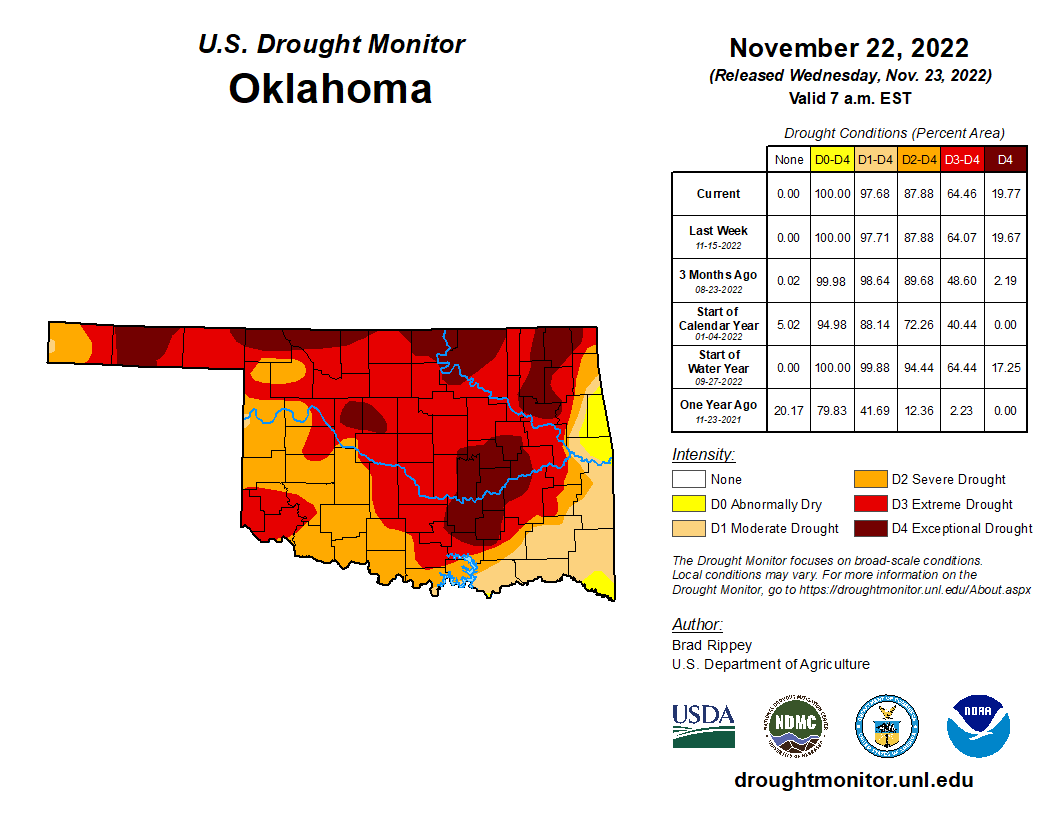 There is little change in the latest Oklahoma Drought Monitor that was released on Thanksgiving morning, November 24th. The drought status on conditions as of Tuesday morning, November 22, 2022.
All of Oklahoma remains abnormally dry or worse in the latest week versus a week earlier.
97.68% of the state is in moderate drought or worse- versus 97.71% a week earlier.
87.88% of Oklahoma is in severe drought or worse- exactly the same as a week earlier.
64.6% of the state is a exteme drought or worse- versus 64.07% a week earlier/
19.77% of Oklahoma is in exceptional drought- versus 19.57% a week ago. There are five areas across the state in exceptional drought- from Texas County in the Panhandle to three areas bordering Kansas from Harper County to Ottawa County. Eight counties in eastern Oklahoma just south of I-40 including all(or virutally) all of Coal, Hughes, Pontotoc and Seminole counties are in the fifth exceptional drought island.
According to the National Drought Summary- Cold, dry weather prevailed nearly nationwide, with a few exceptions. Notably, mid-November snow squalls developed downwind of the Great Lakes, resulting in localized totals of 2 to 6 feet or more. In addition, precipitation fell in parts of the South, East, and Midwest, primarily early in the drought-monitoring period, although most liquid-equivalent totals were under 2 inches. Snow broadly blanketed the Midwest and interior Northeast, especially on November 15-16, although amounts were mostly light to moderately heavy. Meanwhile, deep snow from a previous storm remained on the ground in much of Montana and North Dakota. As the period progressed, rain lingered in the western Gulf Coast region. Elsewhere, negligible precipitation fell across the western half of the country. On the Plains, the combination of cold weather and soil moisture shortages maintained significant stress on rangeland, pastures, and winter wheat. Weekly temperatures averaged at least 10°F below normal nationwide, except in the Desert Southwest and along the Atlantic and Pacific Coasts.
The National Weather Service 6- to 10-day outlook for November 28 through December 2 calls for the likelihood of below-normal temperatures across the northern Plains and much of the West, while warmer-than-normal weather will prevail east of a line from the southern Rockies to Lake Michigan. Meanwhile, near- or below-normal precipitation in much of the southern and eastern U.S. should contrast with wetter-than-normal conditions from the Pacific Coast to the northern half of the Plains, Midwest, and mid-South.
More details on the latest Drought Monitor is available here.
Sat, 26 Nov 2022 10:06:10 CST
Tulsa is set once-again to host Oklahoma's largest indoor farm show December 8, 9 & 10, 2022. The annual event brings area farmers and ranchers to the SageNet Center at Expo Square to view the latest in agricultural & ranching technology. Show Sponsor, Oklahoma Farm Bureau, along with more than 300 exhibitors will feature thousands of agricultural products, ranching equipment, and services, making the Tulsa Farm Show one of the country's premier agricultural events and the largest show of its kind under one roof.
Show Manager, Scott Guttormson commented, "We are excited to be hosting the 29th Annual Tulsa Farm Show, once again. This is a great end of year event for the areas farm and ranch community and exhibitors are eager to get in front of customers. As always, the show is free for attendees and there is always plenty of free parking. It's going to be a great 29th Annual Tulsa Farm Show."
Ag producers and ranchers from Oklahoma, Kansas, Missouri, Arkansas and Texas regularly make the Tulsa Farm Show part of their end-of-year activities. Attendees enjoy free admission and plenty of free on-site parking. The SageNet Center is main expo facility at Tulsa's Expo Square, the area's premier event complex and host of the Tulsa State Fair. The facility is one of the largest and most versatile exhibit halls in the country, with over 350,000 square feet of available exhibit space. As one of the largest clear-span buildings in the world, it is well-suited for big equipment and large exhibits and provides easy access for exhibitors and attendees.
Great Events at the Show
In addition to exhibits, many events, demonstrations, competitions, test drives, performances, and prize drawings are popular attractions at the show.
Craig Cameron, renowned natural horse trainer, will provide daily horsemanship seminars and interact with attendees throughout the show. Craig's entertaining and interactive demonstrations have been a Tulsa Farm Show favorite for the past 27 years. Country singer, Rusty Rierson, will also be performing daily acoustic music sets each day of the show.
Livestock management is also a key focus of the show and cattle producers can see the new products put to the test in side-by-side demonstrations. Ten brands of cattle chutes will be demonstrated with live cattle and moderated by experienced livestock industry experts. The demos will occur twice daily in the southwest corner of the SageNet Center, adjacent to the Behlen Country exhibit.
Daily Prize Drawings
Prize drawings are always popular at the Tulsa Farm Show. A $1000 Showbucks drawing will be held at 1:00pm daily. The winner must be present to win. Showbucks can be used currency to purchase products and services from any farm show exhibitor. Spartan Mowers is also hosting a Test Drive and Win promotion, with the chance to win a new Spartan Mower. Attendees who take a test drive of a zero-turn mower will be included in the drawing held at 3:00pm Saturday afternoon. The winner does not need to be present to win.
Additional details and a full event schedule can be found at www.TulsaFarmShow.com along with an interactive show floor plan, sponsored by Stewart Martin Equipment. The Tulsa Farm Show runs December 8, 9 & 10, 2022 at the SageNet Center (located at Expo Square, home of the Tulsa State Fair). Admission and parking are free.
 Ring-necked pheasants remain a popular upland game species among Oklahoma hunters, with about 43,000 pheasants harvested in 2022. The Oklahoma Department of Wildlife Conservation monitors the pheasant population through two surveys; spring crow counts and summer brood surveys. The data collected provides an index of the spring breeding population (crow counts) and recruitment success for that year (brood surveys).
Traditionally Alfalfa, Beaver, Cimarron, Grant, and Texas counties have had the highest pheasant numbers. These five counties have had spring crow surveys conducted since 1973, and brood surveys since 1980. In 1998, the surveys were expanded to 13 counties to include Ellis, Garfield, Harper, Kay, Major, Noble, Woods, and Woodward (Map below).
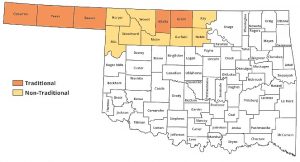 The spring 2022 crow count survey showed a lower number of calls heard per point than in 2021. Looking at the numbers from 1973 to 2022, there is a positive trend in the number of calls heard during the spring crow call count surveys. The August brood surveys showed an increase over the past two years in the traditional counties but was slightly lower statewide. The five traditional counties were up from 0.005 in 2021 to 0.01 in 2022. However, the total number of pheasants observed was down from 36 in 2021 to 27 in 2022.
This past winter again saw several cold fronts and storms that brought potential for negative impacts, which were most likely more severe in areas of marginal habitat quality. The spring and summer saw flash drought across much of the state. Rainfall throughout spring and summer was sporadic, coming at times in monsoon-type storms rather than more normal systemic rains. Current conditions show that 99.7 percent of the state is experiencing at least moderate drought as of Nov. 15, with 64 percent of the state in extreme or exceptional drought (D3-D4).
Figure 4 below shows a comparison of drought levels in Oklahoma from March 8 to Oct. 18. When this report was prepared, all the pheasant range in Oklahoma was in at least moderate drought (D1), with over 99 percent in at least severe drought (D2). Figure 5 shows the departure from normal rainfall from May 26-Nov. 21, with areas up to 14 inches below normal rainfall. Too little rain can have just as much of an impact as too much rain. However, there were still reports coming in from people seeing three-fourths-grown birds.
Pheasant numbers this season will again most likely be patchy. Properties or areas where habitat is good for pheasants, insects are plentiful, forbs are abundant, and drought has not had a severe impact should hold a fair number of birds.
Pheasant hunting season opens Dec. 1, and runs through Jan. 31, 2023. Hunters may harvest two cock pheasants daily. Open areas include Alfalfa, Beaver, Cimarron, Garfield, Grant, Harper, Kay, Major, Noble, Osage, Texas, Woods, and Woodward counties; and the portions of Blaine, Dewey, Ellis, Kingfisher, and Logan counties north of State Highway 51. Seasons on public lands may vary from the statewide season. For complete regulations and more information, consult the Oklahoma Fishing and Hunting Regulations online at http://www.wildlifedepartment.com/hunting/regs, the Go Outdoors Oklahoma mobile app for Apple or Android, or in print wherever hunting and fishing licenses are sold.
Story from Tell Judkins, Upland Game Biologist
 Ring-necked pheasants remain a popular upland game species among Oklahoma hunters, with about 43,000 pheasants harvested in 2022. The Oklahoma Department of Wildlife Conservation monitors the pheasant population through two surveys; spring crow counts (Figure 2) and summer brood surveys (Figure 3). The data collected provides an index of the spring breeding population (crow counts) and recruitment success for that year (brood surveys).
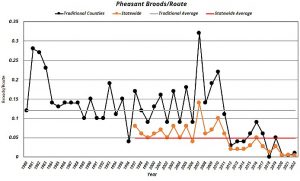 Traditionally Alfalfa, Beaver, Cimarron, Grant, and Texas counties have had the highest pheasant numbers. These five counties have had spring crow surveys conducted since 1973, and brood surveys since 1980. In 1998, the surveys were expanded to 13 counties to include Ellis, Garfield, Harper, Kay, Major, Noble, Woods, and Woodward (Figure 1).
The spring 2022 crow count survey showed a lower number of calls heard per point than in 2021 (Figure 2). Looking at the numbers from 1973 to 2022, there is a positive trend in the number of calls heard during the spring crow call count surveys. The August brood surveys showed an increase over the past two years in the traditional counties but was slightly lower statewide (Figure 3). The five traditional counties were up from 0.005 in 2021 to 0.01 in 2022. However, the total number of pheasants observed was down from 36 in 2021 to 27 in 2022.
This past winter again saw several cold fronts and storms that brought potential for negative impacts, which were most likely more severe in areas of marginal habitat quality. The spring and summer saw flash drought across much of the state. Rainfall throughout spring and summer was sporadic, coming at times in monsoon-type storms rather than more normal systemic rains. Current conditions show that 99.7 percent of the state is experiencing at least moderate drought as of Nov. 15, with 64 percent of the state in extreme or exceptional drought (D3-D4).
Figure 4 below shows a comparison of drought levels in Oklahoma from March 8 to Oct. 18. When this report was prepared, all the pheasant range in Oklahoma was in at least moderate drought (D1), with over 99 percent in at least severe drought (D2). Figure 5 shows the departure from normal rainfall from May 26-Nov. 21, with areas up to 14 inches below normal rainfall. Too little rain can have just as much of an impact as too much rain. However, there were still reports coming in from people seeing three-fourths-grown birds.
Pheasant numbers this season will again most likely be patchy. Properties or areas where habitat is good for pheasants, insects are plentiful, forbs are abundant, and drought has not had a severe impact should hold a fair number of birds.
Pheasant hunting season opens Dec. 1, and runs through Jan. 31, 2023. Hunters may harvest two cock pheasants daily. Open areas include Alfalfa, Beaver, Cimarron, Garfield, Grant, Harper, Kay, Major, Noble, Osage, Texas, Woods, and Woodward counties; and the portions of Blaine, Dewey, Ellis, Kingfisher, and Logan counties north of State Highway 51. Seasons on public lands may vary from the statewide season. For complete regulations and more information, consult the Oklahoma Fishing and Hunting Regulations online at http://www.wildlifedepartment.com/hunting/regs, the Go Outdoors Oklahoma mobile app for Apple or Android, or in print wherever hunting and fishing licenses are sold.
Story from Tell Judkins, Upland Game Biologist
Farmers & Hunters Feeding the Hungry, the national venison donation ministry, announced today the launch of a new Hunt Down Hunger campaign. Hunt Down Hunger is a national campaign encouraging hunters across America to help feed the hungry by donating their legally harvested game such as deer and elk to local hunger relief charities and ministries. The campaign will help individuals and families this holiday season and beyond, as costs for necessities such as food and fuel have risen.
Participating local butcher shops have agreed to receive and process the donations into nutritious meat at a discounted price for Farmers & Hunters Feeding the Hungry and other similar organizations found in 37 states. These organizations raise money to pay the processing bills. The meat is then distributed free of charge to community food banks, soup kitchens, and other hunger relief programs to help feed the needy.
Over the past 25 years Farmers & Hunters Feeding the Hungry has facilitated the donation, processing, and distribution of meat for 23 million meal servings to hungry individuals, children, and families across the country. During that same time, the hunters for the hungry organizations across America have collectively provided a staggering 10 times that amount or more – meat for hundreds of millions of meals!
"Throughout history, hunters have provided food for their families and communities, and their generosity is still needed and appreciated today," said Josh Wilson, Executive Director of Farmers & Hunters Feeding the Hungry. "And in the Bible we see time and again that God has great compassion for the poor and needy. We are grateful for this opportunity He has provided to help hunters bless their hungry neighbors."
Other organizations and businesses related to hunting and the outdoors are invited to join in support of the Hunt Down Hunger campaign.
"The Hunters' Leadership Forum is grateful for the opportunity to partner with organizations like Farmers & Hunters Feeding the Hungry to help solve the hunger issue in the United States," said Peter Churchbourne from the NRA Hunters' Leadership Forum. "We encourage the donation of game meat to help with this effort, and advocate for sharing the important role hunters fill in solving the food security equation. We look forward to building future campaigns that will add much needed value, funding, and awareness to this extremely important effort."
As many people prepare to celebrate Christmas, and other winter holidays with family gatherings and warm meals, it is important to remember the less fortunate among us. The Hunt Down Hunger campaign aims to help by mobilizing hunter participation and public support for the various organizations like Farmers & Hunters Feeding the Hungry that enable hunters to provide meat for their neighbors in need.
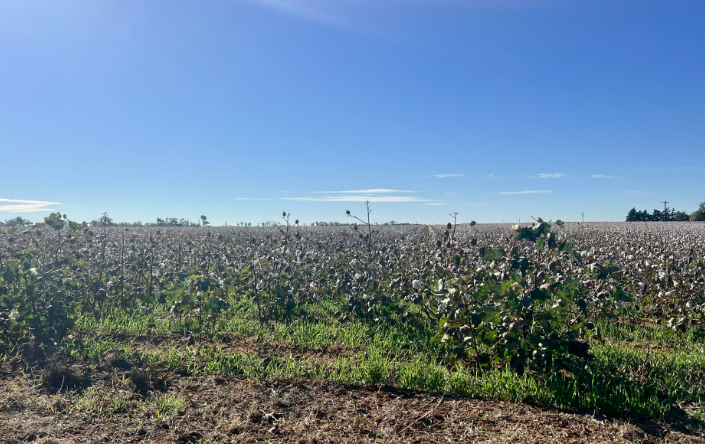
The Oklahoma Cotton Crop has had a rough year with the drought, too much early rain, and not enough as the crop grew. However, Oklahoma State University Cooperative Extension Cotton Agronomist, Dr. Seth Byrd, says harvest is progressing, "I'd say we've got a lot of the irrigated crop out if not all of it. Hopefully, for the dryland crop, I'd say a lot of the good stuff is out, but maybe not, according to the classing report. It doesn't look that bad yet, but there are not a lot of bales that have been classed yet in Oklahoma. So I'd say whatever we have left going into December will be dryland."
So far, Byrd says there are few reports of a stellar cotton crop, "I think there have been some decent irrigated fields. That's rarely going to be even 50% of our acres. And, of course, we didn't have any irrigation around the district or the lake near Altus. So that took out nearly 50,000 acres that would normally be irrigated."
Byrd said this year's crops were met with Extremes, either too dry or too wet, "We would like to see that even out better next year. But, of course, price is always going to play a role."
Byrd said looking ahead, producers have to keep an eye on their costs, "Looking ahead on price, looking ahead to cost of seed, cost of our crop protection inputs, and availability of inputs as well. You know that's been a problem in the past couple of years. Then we have supply issues we've been dealing with on top of everything else."
In an extreme year like this year for producers, Byrd said certain varieties of cotton could play a role, "In other places in the cotton belt, where they've had a better year than we have had, maybe they can gain some knowledge from that. I think it's tough for us to gain knowledge in a year like this because you hope you don't see it again." But Byrd says he's not surprised that there have been some differences, "You get a year of extremes as we saw in 2022; I'm not surprised there were some extreme differences between the varieties."
Byrd said it's been a tough year all around for Cotton producers, "This year unless we figured out a way to make it rain, it wasn't going to help anybody out." Byrd advised producers to keep an eye on the market, input prices, and get their plans for next year.
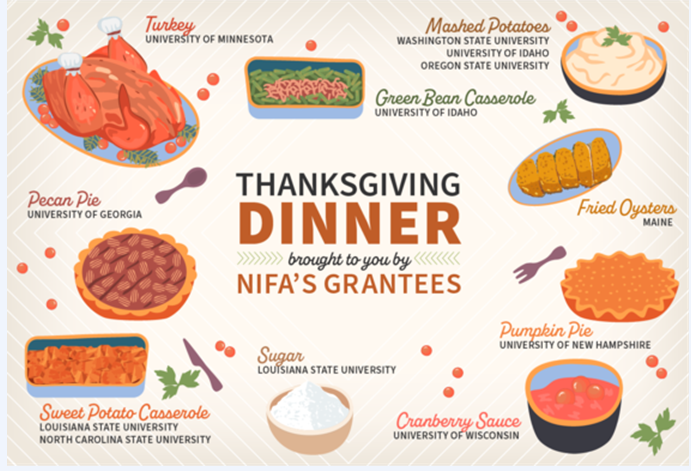
As you sit down with family and friends this Thanksgiving, you may not realize how key our nation's Land-grant Universities are to making sure you have a bounty of food to enjoy. Since 1887, researchers at these public institutions have been conducting research to improve the nutrition and quality of the food we eat. Learn more about NIFA-funded research on foods that may be on your Thanksgiving menu.
The United States is the world's largest turkey producer and exporter of turkey products, with Minnesota as the top turkey-producing state. In 2021, 216.5 million turkeys were raised on farms across the United States for a total economic impact of $103.4 billion, according to USDA's Economic Research Service (ERS).
However, climate change has led to hotter days and an increase in the number of extreme-temperature days. A team of researchers at the University of Minnesota recently examined how temperature extremes are affecting the well-being and economic value of turkeys. The researchers found birds specifically bred to be larger and grow faster—more closely resembling commercial turkeys—can respond to extreme temperatures with gene changes that would lead to decreased muscle size.
The United States leads the world in production of cranberries. Wisconsin was the top cranberry producer in the U.S. in 2021 at about 4.17 million barrels, followed by Massachusetts with 1.8 million barrels of cranberries, according to ERS.
Unfortunately, 75% of growers surveyed by the University of Wisconsin reported that cranberry fruit rots (CFR) significantly reduced marketable yields in the last five years, and for many, the losses were annual.
At the Wisconsin Cranberry Research Station, scientists are taking a multidisciplinary approach to understand and manage CFR. They are evaluating the impact of environmental stressors and fertilizer on fruit chemistry and symptom development and determining the genetic resources for CFR resistance and stress tolerance to guide breeding. They are also developing predictive models for CFR management and distributing tailored solutions to U.S. growers through Extension networks and training.
Potatoes are the fourth most important food crop in the world and the leading vegetable crop in the U.S. Together, Idaho and Washington produce more than half of the annual supply, which totaled 424 million cwt in 2019 and was valued at $3.94 billion, according to USDA's National Agricultural Statistical Service (NASS).
The Tri-State Potato Variety Development program is a collaborative effort of Washington State University, University of Idaho, Oregon State University, USDA's Agricultural Research Service, the potato industry and commissions from the three states.
The team's concerted efforts have brought change to the Washington potato industry. This is demonstrated by a decrease in acreage planted with Russet Burbank vs. an increase in new cultivars and numbered clones during recent years.
At least 89% of new cultivars and clones were developed by the Tri-State breeding program. U.S. economic value of the recently released Tri-State varieties is placed at approximately $135 million annually. A recent economic analysis of the program revealed that every dollar invested in the Tri-State program results in a $39 return to the industry.
Idaho ranks the first in green bean production in the U.S. Idaho's long growing season, rich volcanic soils, mountain water supply and a comprehensive quality control program allow Idaho to produce the highest quality, disease-free bean seed recognized worldwide.
With soil and water conservation practices like direct-seed and strip-tillage and high-efficiency drip irrigation becoming more popular among crop producers, there is a tremendous need for evaluating how tillage and water application methods and amounts may affect green bean production.
Plant and soil scientists and water management engineers at the University of Idaho are conducting two field experiments to develop sustainable water and soil conservation strategies for green bean production. The three-year study focuses on the effects of water management using drip irrigation versus furrow irrigation in two tillage systems: conventional and strip tillage. Crop growth, bean yield and quality will be measured in response to these water and soil management practices.
Researchers estimate that within five to 10 years, adoption of drip irrigation by 25% of bean growers will result in a water savings of at least 15% compared to current water used for bean irrigation. Similarly, growers adopting drip irrigation will see an increase in production value of over $585/acre with an additional savings of over $135/acre; and farmers will decrease nitrogen fertilizer use by 50% within five years of adopting reduced till practices.
Louisiana has the only research station in the nation solely devoted to sweet potatoes. In 1949, the first foundation seed was planted at the Louisiana State University Sweet Potato Research Station. Sprouts from these roots formed the nucleus of the foundation seed program, which continues to supply producers with healthy seed.
Released in 1987, the Beauregard sweet potato had a beautiful shape and color, and a sweet taste unlike previous earlier varieties. Developed by entomologist Larry Rolston for its insect resistance, the Beauregard went on to reinvigorate Louisiana's sweet potato industry. It is widely adopted throughout the U.S. industry.
North Carolina has ranked as the No. 1 sweet potato-producing state in the U.S. since 1971. According to NASS, North Carolina produced 1.8 billion pounds of sweet potatoes in 2021, accounting for roughly 64% of all production in the nation.
Diseases caused by plant pathogens such as fungi, bacteria, nematodes and viruses can significantly limit vegetable production and quality, and in some cases, threaten the survival of the vegetable industry. In 2014, North Carolina State University researchers began to see samples of sweet potatoes infected with black rot. By the end of 2015, sweet potatoes infected with black rot went from 5% statewide to 85%, and 100% in the packing houses.
In response to the sweet potato black rot epidemic, researchers quickly began collecting isolates to see if fungicides could kill the pathogen. One fungicide tested was effective. An emergency label to apply the fungicide post-harvest was secured, and in three months, the black rot threat had been cleaned up with the effort reducing disease-related sweet potato losses from 80% to 5%. Following the epidemic, NC State Extension faculty developed integrated pest management strategies to prevent disease transmission and steps to limit and control future black rot outbreaks.
Oysters are harvested across the country, and some of the most delicious are said to be found in the Damariscotta River estuary in Maine. The largest site for oyster growth in the state, 80% of all Maine oysters are harvested from this river.
Since 1978, the Maine Aquaculture Association has worked to support Maine's aquatic growers in developing economically and environmentally sustainable business practices, promoting the benefits of aquaculture in the local food system and preserving Maine's heritage of a vibrant working waterfront.
Funding in 2021 from NIFA's Agriculture and Food Research Initiative (AFRI) Beginning Farmer and Rancher Development Program provided more than 70 beginning Maine aquaculture farmers with in-depth training on business planning, risk management, marketing, diversification and benchmarking.
A new round of AFRI funding will expand the initial successes of these beginning aquaculture farmers who produce oysters, mussels, scallops and seaweed. Advanced training will help growers learn more about analyzing their farm, business plan, initial performance during the pre and early revenue stages, and develop strategies and plans to ensure future success.
Florida and Louisiana account for nearly 97% of U.S. sugarcane production. Agricultural research in Louisiana officially began with the establishment of the Louisiana Sugar Experiment Station in 1885 at Louisiana State University (LSU).
The Audubon Sugar School began in 1891 as part of the Louisiana Sugar Experiment Station. The school grew into the present-day Audubon Sugar Institute and offered what is believed to be the first chemical engineering class.
One hindrance to sugarcane breeding in Louisiana was the plant's lack of flowering because of low fall temperatures. An LSU plant pathologist and sugarcane breeder established artificial photoperiod schedules that would allow sugarcane to flower in Louisiana. This groundbreaking research in the late 1940s and 1950s was conducted in LSU campus facilities. This meant sugarcane crossing could be conducted locally instead of relying on Florida facilities.
The Sugar Research Station's primary goal continues to be the development of new sugarcane varieties and integrated pest management systems for sugarcane. New variety development takes nearly 12 years, and much of the groundwork is performed there. Through this station's efforts, Louisiana's sugarcane industry remains profitable and poised to continue a tradition that is more than 200 years old.
Pumpkin production is widely dispersed across the country with crop conditions varying greatly by region. According to NASS, nearly 66,200 acres of pumpkins were harvested in the U.S. in 2020, producing more than 1.5 billion pounds of usable pumpkins with more than 2 billion produced overall.
At the University of New Hampshire (UNH), researchers have been squashing the competition when it comes to releasing new varieties of cucurbits, which includes pumpkins, cucumbers, melons and squash. UNH is home to the longest, continuous squash and pumpkin breeding program in North America. This work has resulted in more than 80 new cucurbit varieties sold in seed catalogs around the world.
Pecans are one of the nation's most important nut crops. NASS reports pecan production increased 18% in 2020 from 2019 to 302 million pounds with a total value of $399 million. Georgia holds the spot as the top pecan-producing state, harvesting 142 million pounds on more than 215,000 acres.
According to the University of Georgia Extension, one of the most important decisions a pecan producer makes is about the establishing a new orchard. A well-planned, organized orchard will be more efficient, require less input and offer larger potential returns.
Fortunately, UGA Extension offers resources to help future pecan farms establish new orchards. This includes evaluating soil and site characteristics; preparing the orchard site for planting; and designing the orchard for proper pollination, ease of operation and aid in future tree thinning.
Additionally, UGA Extension provides resources on options for planting trees such as starting by planting seeds in place; planting seedling trees and grafting them in two years; or planting grafted trees. They provide guidance on irrigating young trees via sprinkler, drip or micro-irrigation; fertilizing young trees; and controlling weeds.
Happy Thanksgiving from USDA's National Institute of Food and Agriculture.
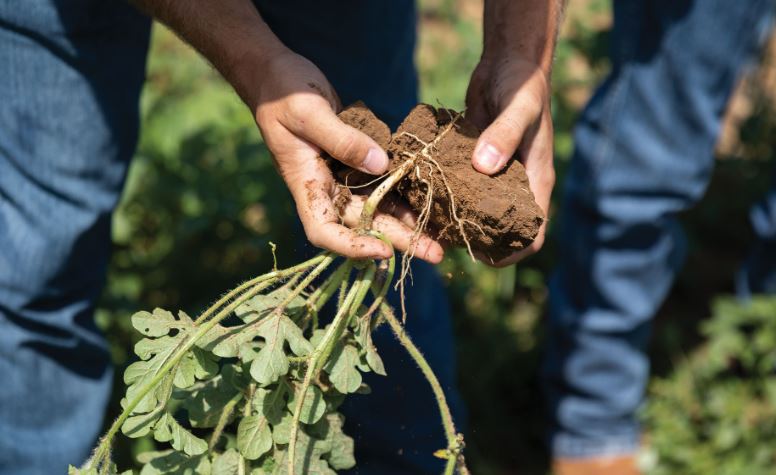
U.S. Representatives Salud Carbajal (D-CA), Jim Baird (R-IN) and Jahana Hayes (D-CT) concluded their bipartisan congressional delegation trip to Cuba as representatives of the United States and the House Agriculture Committee.
The four-day trip included meetings with Cuban farmers, agricultural business operators, and local officials to discuss the current state of agriculture in Cuba.
"Our journey to Cuba was an important opportunity to see the impact that U.S. agriculture is having in a nation that relies heavily on U.S. agricultural imports. As members of the House Agriculture Committee, we work every week in Washington to understand how U.S. agriculture and agricultural trade is affecting peoples around the world–and Cuba is no exception," said the delegation. "We also had the chance to meet with farmers and local experts to better understand Cuba's own agricultural operations, as well as discuss where opportunities for mutual economic benefit may exist for American businesses and the Cuban people. We look forward to sharing our findings with our colleagues and the rest of our committee in the coming weeks."
The House Agriculture Committee members also met with the Vice President of Cuba Salvador Valdés Mesa, officials from the Cuban Ministry of Foreign Affairs, and Representatives of the National Assembly.
In addition to discussing agriculture, the congressional delegation also raised concerns about human rights, migration, and consular issues.
The bipartisan delegation trip began on Saturday, November 19, 2022.
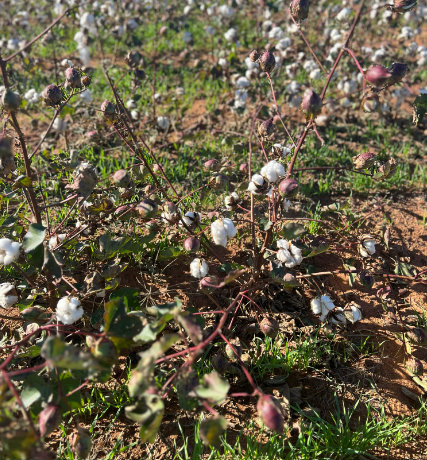
Traders Change Focus to March
• Mixed Economic News Kept Markets Busy
• Winter Weather Could Impact Crop
December futures are all but gone after today, with traders having changed their positions from the December contract to March. March futures will now be the central focus after First Notice Day and the shortened trading week due to Thanksgiving. Futures traded in a wide range throughout the week, with outside markets, Covid fears in China, and the seemingly always present concern of demand keeping the market volatile. March futures closed limit down on Monday and attempted to make up for the losses to end the week. For the week ending November 23, March futures closed at 82.90 cents per pound, down 238 points since last Thursday. Total open interest continued downward decreasing 4,165 contracts, finishing the week at 191,947.
Outside Markets
Outside markets had a busy week with the release of mixed economic news. Stocks were trending up compared to last week, with home sales rising in October, consumer sentiment also rising, and the anticipation of the FOMC minutes getting released helping keep them up. Upon release, the minutes showed an uncertain outlook for raising interest rates at the current pace and hinted that the hikes could slow soon. On the bearish side, weekly unemployment claims rose to 240,000, a sign the labor market could be weakening. China has also reported the highest number of Covid infections in almost seven months, which could increase Covid restrictions in the country again. The Dollar Index was down from the various economic news received this week, helping boost commodities.
Crop Progress and Weather
After seeing little precipitation recently, the Panhandle and Southern High Plains of Texas are bracing for snow this coming weekend. With Texas being 71% harvested, the possibility of upcoming moisture could slow progress as farmers try to get cotton out of the fields. Although producers are rushing to get the crop out of the field, the quality of cotton remaining could be impacted. The rest of the Cotton Belt will see colder temperatures and precipitation in the coming week. The U.S. has currently harvested 79% of the cotton crop, staying above the five-year average of 71% typically seen at this point in the year.
The Week Ahead
With the holiday passing, normal business will resume next week. All eyes will now be on March futures and the usual reports will be released on the typical schedule. From a fundamental perspective, traders will be keeping their eyes on daily classing reports, crop progress, and the Export Sales Report. Continuing monitoring of macroeconomic data will also be a point of focus.
We hope all our readers enjoy the holiday with heartfelt thanks, good food, great fellowship, and safe travels. Happy Thanksgiving!
In the Week Ahead
• Friday at 7:30 a.m. Central – Export Sales Report
• Friday at 2:30 p.m. Central – Cotton On-Call
• Monday at 2:30 p.m. Central – Commitments of Traders
• Monday at 3:00 p.m. Central – Crop Progress and Condition
 Ron Hays Beef Buzzes with Sigrid Johannes of NCBA/PLC about the ESA Listing of the Lesser Prairie Chicken
Once again, the US Fish and Wildlife Service has listed the Lesser Prairie Chicken across parts of five states- including western Oklahoma and Kansas, southeastern Colorado, New Mexico and the Texas Panhandle. After the bird was listed as threatened a few years back- the listing here in 2022 is in two parts- the southern population area for the bird in New Mexico and the southern half of the Texas Panhandle is being called endangered- while the areas in Colorado, Kansas, Oklahoma and the northern part of the Texas Panhandle is being called threatened.
According to the Fish and Wildlife release on the final rule- "The lesser prairie-chicken serves as an indicator for healthy grasslands and prairies – needing large, unfragmented parcels of intact native grasslands to maintain self-sustaining populations. This makes them an important measure of the overall health of America's grasslands, a treasured and storied landscape.
"While historical estimates suggest lesser prairie-chickens once numbered in the hundreds of thousands, or even millions, across nearly 100 million acres, populations have declined drastically due to habitat loss and fragmentation. Lesser prairie-chicken habitat has diminished across its historical range by about 90 percent. Aerial survey results from 2012 through 2022 estimate a five-year average lesser prairie-chicken population of 32,210 across the five-state region. Their decline reflects the larger decline in the vitality and resilience in shinnery oak, sand sagebrush and mixed- and short-grass prairie ecosystems."
Two groups that have reviewed the final rule and find it lacking is the National Cattlemen's Beef Association and the Public Lands Council. Oklahoma Farm Report's Ron Hays talked this week after the release of the rule with Sigrid Johannes, the Associate Director of the groups and she is our guest on this edition of the Beef Buzz.
"We are deeply disappointed by the Fish and Wildlife Service's decision to impose redundant bureaucracy and punitive restrictions on the very same people that we have to thank for the lesser prairie chicken's continued existence on the range."
To make matters worse, the Service is also establishing a 4(d) rule for the Northern DPS that enables them to appoint private third parties – such as environmental activist groups – as the grazing authorities in the range of the LPC. FWS has stipulated that cattle producers in the Northern DPS range will only qualify for legal protection under the 4(d) rule if they are following a grazing management plan that has obtained arbitrary approval from a yet-to-be-named, FWS-approved third party. By contrast, other agricultural practices that are listed as key factors in the Service's decision are granted far more flexibility. According to Johannes- the FWS has told the groups that they have ruled out using the USDA's National Resource and Conservation Service as the third party- opening the way for a less qualified and less friendly to the cattle industry group to likely be named by the Biden Administration.
Designing a third-party verification system to empower distant bureaucrats over land managers and ranchers with decades of experience, with parameters that blatantly prioritize political objectives over sound science, effectively ensures that the only use of the 4(d) rule will be to obstruct grazing activities.
The rule establishes two Distinct Population Segments (DPS) for the species: the Southern DPS that covers New Mexico and the southwest Texas panhandle, and the Northern DPS that covers southeastern Colorado, Kansas, Oklahoma, and the northeast Texas panhandle. The Southern DPS will be listed as endangered and the Northern DPS will be listed as threatened. The final rule does not include any critical habitat designation. Cattle grazing provides immense benefit by conserving the very habitat the species needs to thrive. These birds favor diverse rangeland with a variety of plant species rather than uniform grasslands or cropland.
To read the release from FWS on the double listing of the LPC- click here.
Click on the LISTEN BAR above or on the link below to listen to Ron and Sigrid talk about the ESA listing of the Lesser Prairie Chicken and what that could mean for beef cattle producers across the five state region once the rule goes into effect January 24, 2023.
The Beef Buzz is a regular feature heard on radio stations around the region on the Radio Oklahoma Ag Network and is a regular audio feature found on this website as well. Click on the LISTEN BAR for today's show and check out our archives for older Beef Buzz shows covering the gamut of the beef cattle industry today.
Ron Hays Beef Buzzes with Sigrid Johannes of NCBA on the Lesser Prairie Chicken ESA Listing
click to play audio or right-click to download

Soybean farmers throughout the country will be able to access the newly funded expansion of the AG Processing Inc. (AGP) Port of Grays Harbor in Aberdeen, Washington, bolstering international trade of soybean meal. The checkoff is investing $400,000 in research, analysis and design.
Once completed, the terminal will increase soybean meal exports from 3 million metric tons to 6 million metric tons — opening up room for more soybean meal exports for U.S. soybean farmers as oil demand and international trade increases.
"This upgrade will bring value to soybean farmers in the United States by accessing markets wanting increased soybean meal. The checkoff understands how improvements in different areas of the country benefit soybean farmers in the Midwest," said Tony Johanson, checkoff director and Soy Transportation Coalition board member from Nebraska. "The investment helps answer the big question in the soybean industry: 'With all the new soybean crushing added in the U.S. to produce more oil, what are we going to do with all that additional meal?'"
The growing opportunity at Port of Grays Harbor requires efficient and accessible transportation from the Midwest to the Pacific Northwest. AGP, which owns 10 soybean processing plants throughout the Midwest, is committed to expanding the rail system to help farmers transport their products to the harbor.
This investment totals up to $1.3 million in funding, with the additional investment coming from the Soy Transportation Coalition, Iowa Soybean Association, Kansas Soybean Commission, Nebraska Soybean Board, North Dakota Soybean Council, and South Dakota Soybean Research and Promotion Council.
"We understand that investments in the Pacific Northwest will result in greater farmer profitability in the Midwest. In turn, profitable farmers in the Midwest result in increased investment in the Pacific Northwest," said Mike Steenhoek, executive director of the Soy Transportation Coalition. "The project at the Port of Grays Harbor is the most immediate opportunity for soybean farmers to assist with the need for increased soybean meal export capacity."
The checkoff has funded key research projects, including the lower Mississippi River deepening project, the Missouri River barge loading terminal and the Lock and Dam #25 project, which have established the soybean checkoff funds as a meaningful catalyst for significant infrastructure enhancements.
Oklahoma State University Extension's Master Irrigator Program kicks off its third year in January 2023 to educate producers on water conservation and irrigation practices.
"The overall goal of the program is to facilitate adoption of water management strategies and technologies by the producers while improving farm income, increasing producer participation in water conservation strategies and enhancing the peer-to-peer exchange of information between producers and Extension personnel," said Sumit Sharma, OSU Extension specialist for high plains irrigation and water management.
The program launched in Goodwell in 2021, and Altus hosted it in 2022. The educational series returns to Goodwell for 2023, and its coordinators plan to eventually expand to other areas of the state.
The Master Irrigator Program will take place 9 a.m. to 3 p.m. every Tuesday over the course of four weeks. The dates for 2023 are Jan. 17, 24, 31 and Feb. 7. Registration is $100 per person. Participants will also have the option of attending in-field events for hands-on learning next fall.
Curriculum for the 2023 program includes Ogallala hydrology, soil/water relationship, soil moisture sensors, economic value of Ogallala water, irrigation scheduling models, the Oklahoma Mesonet, irrigated forage production, irrigation equipment, well energy efficiency, drip irrigation, VFDs, center pivots, soil health and nutrient management.
Master Irrigators offers a platform for sharing peer-to-peer knowledge with producers while discussing irrigation techniques they have used, problems they have faced and management techniques they are curious about, said Jason Warren, OSU Extension specialist for soil and water conservation.
Sharma said he has invited speakers from surrounding states to provide expertise on irrigation practices. Producers are consulted before the program begins to ensure their specific needs will be addressed.
"The information generated from discussions during the program is also helpful in shaping our research and Extension efforts," Sharma said.
The Oklahoma Water Resources Center works with several state and federal agencies to provide funding and opportunities to producers following the program. They can receive up to $2,000 to purchase irrigation technology, such as soil moisture sensors or irrigation schedulers. Program graduates are also eligible for benefits to improve their irrigation systems.
Program participants can receive additional points on their Environmental Quality Incentives Program applications for financial assistance from the U.S. Department of Agriculture-Natural Resources Conservation Service. They can also request free irrigation audits to measure how much energy and water an irrigation system uses in daily operations as well as locate leaks in pipelines and assess the uniformity of irrigation application.
"We hope to increase participant capacity and use lessons learned from each program to evolve the curriculum as we move forward," Sharma said.
For more information, contact Sharma at sumit.sharma@okstate.edu or 580-349-5441. Registration can be completed online.
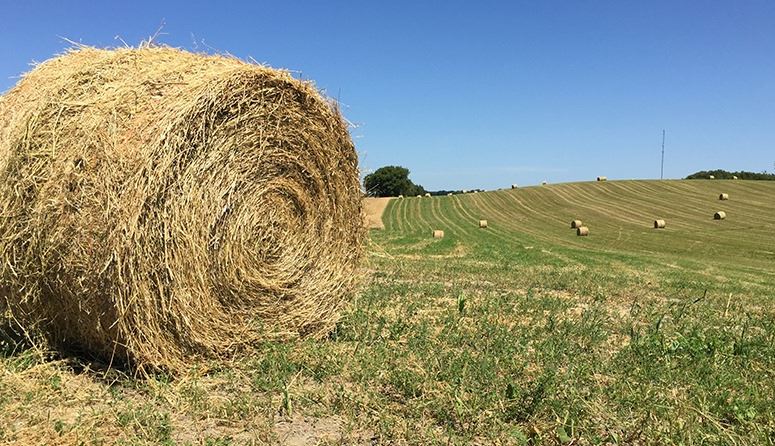
Not much has changed hay volume continues to lower. As we look at the drought, we continue to see more hay coming into Oklahoma and being traded compared to trading our own Oklahoma hay crop. As we look at the Oklahoma Mesonet Drought Monitor, we are at 22.3 percent in exceptional drought, 64.5 percent in an extreme drought, 88.7 percent in severe drought, 97.7 percent in moderate, and 100 percent in abnormally dry conditions.
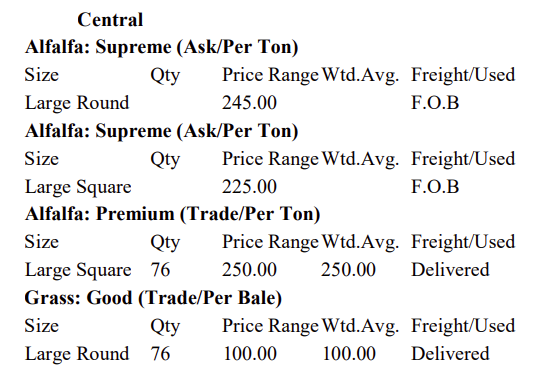
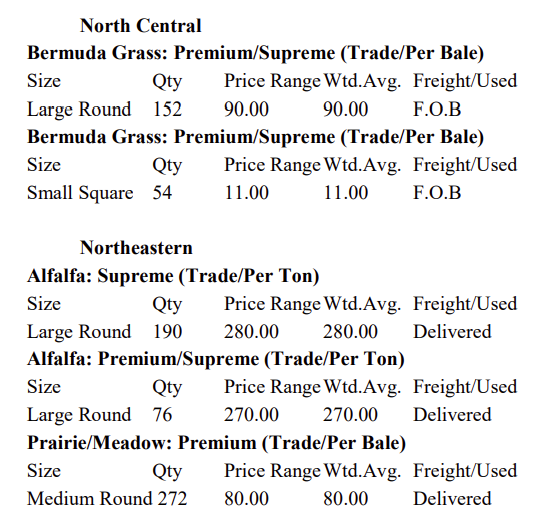
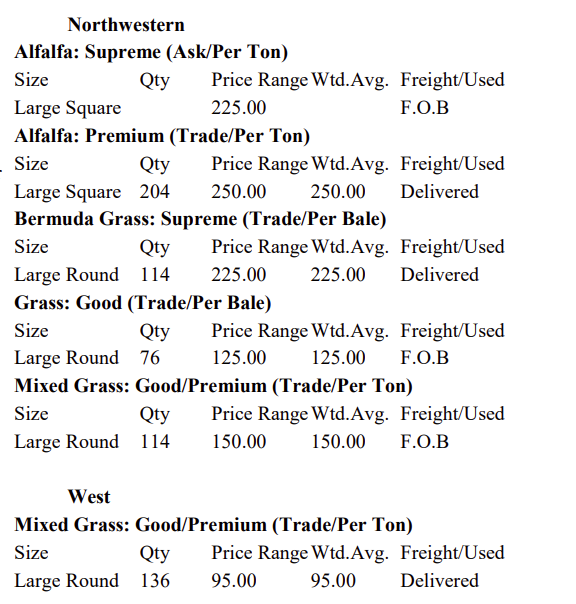
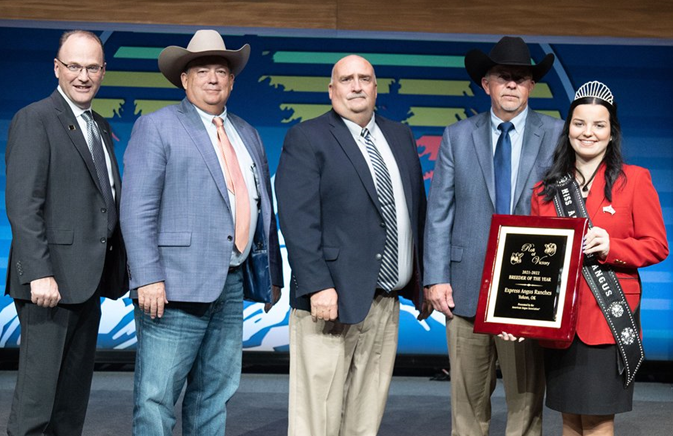
Express Angus Ranches, Yukon, Okla., was recognized for the Roll of Victory (ROV) Show Breeder of the Year during the 2022 Angus Convention in Salt Lake City, Utah. Pictured from left are Mark McCully, American Angus Association CEO, Jarold Callahan, Mark Squires, Donnie Robertson and 2022 Miss American Angus Mary Wood.
| Angus cattle have a tradition of excellence in the show ring and that history continues across the country each year. The American Angus Association® created the Roll of Victory (ROV) Show Program to recognize show-winning animals, their sires, dams, breeders and owners. The ROV Show Heifer of the Year, the ROV Bull of the Year and the ROV Breeder of the Year were honored at the 2022 American Angus Association Awards Dinner and Reception on November 6 in Salt Lake City, Utah. "The 2021-2022 ROV show program included 20 shows across the country. We love seeing how the competition improves every year" said Caitlyn Brandt, director of events and junior activities. "We congratulate the winners on their achievements." The ROV season runs from June 1 through May 31. There are seven Super ROV shows and 13 other recognized shows for a total of 20 shows per year. Points for these shows are accumulated on an annual basis. The ROV Show Heifer of the Year was SSF Lady 5030 owned by Houston Ferree of Sullivan, Indiana. The heifer received grand champion honors at the American Angus Breeders Futurity and the World Beef Expo and reserve honors at the North American International Livestock Exposition and Fort Worth Stock Show. The ROV Show Bull of the Year was Conley DS Clear Cut 0510 owned by Conley Cattle, Sulphur, OK; Ferree Fitzgerald, Sullivan, IN; David Smith, Boulder, CO. This bull was grand champion bull at the National Western Stock Show, Western National Angus Futurity, Atlantic National and the Tennessee State Fair. The ROV Breeder of the Year was Express Ranches of Yukon, Oklahoma. Express Ranches earned 832 points from the 20 eligible shows throughout the year. This is the 11th consecutive year Express Ranches has won the award. For news about Angus Convention, visit www.angus.org/Pub/NewsRoomReleaseList. |
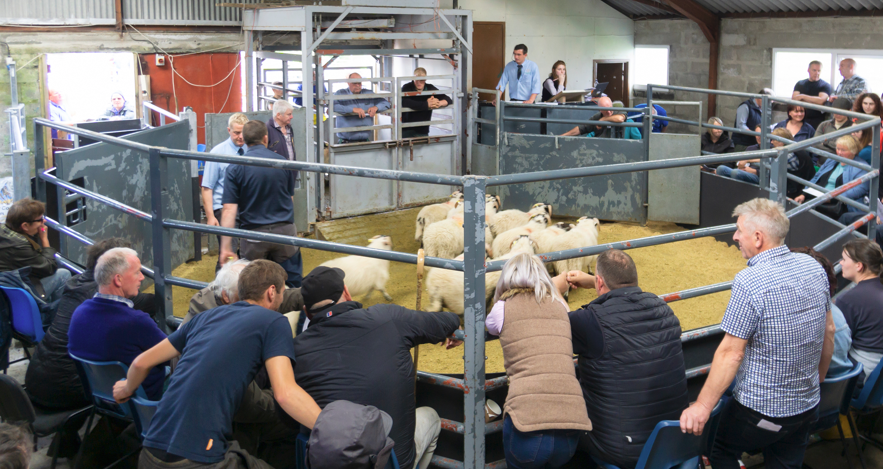
The second of three qualifying events for the World Livestock Auctioneer Championship (WLAC) will be hosted by Longview Livestock in Longview, Texas, on December 1, 2022.
Opening ceremonies will commence at 1:00 p.m. (CT), with the awards presentation following the competition. A total of 31 contestants will compete for a top 10 placing, granting them a spot in the semi-finals for the 2023 WLAC at Arcadia Stockyard in Arcadia, Fla.
Each qualifying event is a live sale where each contestant auctions at least 8 drafts of livestock (traditionally cattle) to actual bidders. Contestants are judged on the clarity of their auction chant, professionalism, and their ability to conduct the sale while catching bids.
Contestants competing are Andy Baumeister, Goldthwaite, Texas; Gary Crawley, Kiowa, Okla.; Shannon Davis, Winnsboro, Texas; Justin Dodson, Welch, Okla.; Keelan Dunn, Bowie, Texas; Quest Flesner, Hannibal, Mo.; Cody Hanold, Brighton, Ill.; Kirby Hill, Paris, Texas; Travis Holck, Lake Crystal, Minn.; Calvin Hollis, Mannford, Okla.; Michael Imbrogno, Turlock, Calif.; Takoda Kiser, Wytheville, Va.; Jonathan Lopinto, Amite, La.; Lane Marbach, Victoria, Texas; Tilon Mast, Auburn, Neb.; Brandon McLagan, Elmer, Mo.; Justin Mebane, Bakersfield, Calif.; Bill Nance, Sheldon, Mo.; Tate Rainey, Sweetwater, Texas; Troy Robinett, Decatur, Texas; Luke Schubert, Brainerd, Minn.; Ethan Schuette, Washington, Kan.; Jeff Showalter, Broadway, Va.; Barrett Simon, Rosalia, Kan.; Dustin Smith, Jay, Okla.; Brooks Thompson, Prague, Okla.; Scott Twardowski, Swanville, Minn.; Seth Waldroup, Westminster, S.C.; Curtis Wetovick, Fullerton, Neb.; Tim Yoder, Montezuma, Ga.; Zack Zumstein, Marsing, Idaho. The public may attend the livestock auction and competition free of charge. It will also be streamed live on the Livestock Marketing Association's Facebook page.
Qualifying events are balanced across LMA membership. The final qualifying event will be held at Windsor Livestock Auction Co., Inc. in Windsor, Mo., on January 4, 2023.

At the National Association of Farm Broadcasters last week in Kansas City, Senior Farm and Ranch broadcaster Ron Hays caught up with Mary Kay Thatcher with Syngenta to talk about the midterm elections and her thoughts on 2023. Thatcher said she wasn't sure it would make a massive difference, " Every incumbent in the Senate was reelected that wanted to be reelected. And in the House, it's like 97%. So we're not going to see a big change come January." However, Thatcher said she did think we would see a bit of emphasis change having the Republicans in charge of the House Ag Committee versus the Democrats. Still, she said that's not to say Republicans won't be thinking about climate change and conservation measures, " I think both the House and Senate Ag Committee learned a long time ago that we got to be bipartisan or we're going to lose whatever battle we come into, and I think that will continue to be the same."
With Oklahoma Congressman Frank Lucas winning re-election, Thatcher says she is thrilled to have the possibility of having him back on the House Ag Committee, "I'm thrilled to have him back; it's just wonderful." Of course, GT Thompson will be a great chairman. But you know, Frank Lucas has been through it several times, and he knows things he knows the right kind of people, and I'm really pleased he's coming back to the House Ag Committee."
Thatcher said she would like to see both parties working together on the next farm bill. One of the significant issues she fears is that farmers think there will be new money to improve the safety net, "I'm not sure that comes to fruition. I think you're going to see the Republicans in the House really think about the deficit, the debt, something nobody's really cared about for 20 years." Thatcher said agriculture would not be getting more money if that does happen. At the same time, everything else is being cut, "I think a lot is going to rest on what happens to that 18-19 billion dollars that we got for conservation and climate change programs. And do the new budget committees decide that it stays in the baseline, and we get to use it to write a new farm bill? And if it stays in the baseline, does all of it stay in conservation, or do we put some money towards improving the safety" Thatcher says there are still a lot of unknowns that we probably won't know till May or June.
Thatcher said one of her worries is that if we see a trillion-dollar farm bill, people will get confused about where all the farm bill dollars go, "You look at the last farm bill; I think it was supposed to be 860 billion and DC people get confused over are we talking billions or millions? But people don't get confused over a trillion dollars. It gets played up as "The Farm Bill," so you get a lot of urban people who think oh, that means farmers are getting the whole 1.3 trillion, which of course, isn't true. 84% of it is still going to nutrition so it will require a lot of education."
Beyond just the Farm Bill, Thatcher said they would be paying attention to what is going on with EPA, " I think there'll be a lot of oversight of EPA whether it's Waters of the US or taking away pesticide tools or Endangered Species Act or ethanol. So there's a lot of overseeing there."
Thatcher thinks with Republicans in charge, there we will be more transparent about what's going on there, "That's going to be important. Because this administration, in my opinion, realized six months ago they probably were going to lose either the House or the Senate, or maybe both, and so if they really wanted to accomplish their mission, they're going to have to do it by regulation and like government edict. So we now will have a lot more transparency into that."
Thatcher would also see trade discussions ramp up: " I'm not sure we're going to convince this administration of anything, but you know, cutting trade deals that only deal with the environment and maybe sanitary phytosanitary issues. While there may be some positives, the real positive would come if we went in and cut tariffs and other countries worldwide are going on without us, and we just can't let that happen."
To hear the complete conversation between Thatcher and Hays, click or tap below.
Hog Farmer: The Trials of Joey Carter is a documentary that shares the untold story of Joey Carter, a family farmer who found himself in the middle of a federal lawsuit involving some of the nation's most ruthless trial lawyers and one of the world's largest food companies.
Streaming services are full of movies that maliciously spread disinformation about agriculture in America. This documentary is a valuable and effective way to respond and fight back.
While his neighbors leveled charges of environmental racism in hopes of winning multi-million-dollar verdicts, Joey Carter was left wondering how this could happen to an honest, hard-working family farmer who has always taken pride in playing by the rules.
It is a stark reminder of how agriculture in America is under attack.
Streaming services are full of movies that maliciously spread disinformation about agriculture in America.
This documentary is a valuable and effective way to push back.
Please join us in promoting the documentary.
Watch on Amazon Prime HERE
Learn More About the Trial Here

Attorney General John O'Connor is urging Oklahomans to use caution when making purchases and donations this holiday season to avoid scams and fraud.
"As we enter another exciting holiday season, I want to make sure Oklahomans are prepared with the latest consumer protection tips to help ensure safe, joyful festivities and shopping," said General O'Connor. "Scam artists view the holiday season as an opportune time to take advantage of consumers, which is why it is more important than ever to take precautions to protect yourself and your money. Remember, if it seems too good to be true, it is."
The FBI's 2021 Internet Crime Report found losses due to cybercrime exceeded $6.9 billion in the United States last year. The report noted 4,156 Oklahomans made complaints to the FBI and lost more than $50 million. Read the FBI's report here.
According to AARP, 78% of Oklahomans have been targeted by or experienced at least one form of fraud in the past.
Attorney General O'Connor's Consumer Protection Unit is offering the following tips to protect Oklahomans and their families this holiday season:
Paul Vining,Oklahoma Quality Beef Network Program Coordinator
The Oklahoma Quality Beef Network (OQBN) Vac-45 Program is a beef calf preconditioning program implemented by Oklahoma State University Extension in partnership with the Oklahoma Cattlemen's Association, with the goal of providing a value-added marketing opportunity for cow-calf producers. For calves to become OQBN Vac-45 certified, they must be weaned for at least 45 days and receive two rounds of vaccinations (initial vaccination and booster) against pathogens responsible for bovine respiratory disease (BRD) and clostridial bacteria that cause blackleg. Viral pathogens responsible for respiratory infection include infectious bovine rhinotracheitis (IBR), bovine viral diarrhea virus (BVD), parainfluenza virus type 3 (PI3), and bovine respiratory syncytial virus (BRSV). It is also necessary to vaccinate against the common respiratory bacterial pathogen Mannhemia haemolytica, which is an opportunistic colonizer of the lower respiratory tract, often causing calf morbidity and mortality following a primary viral infection.
In addition to being weaned and vaccinated, calves must be bunk broke, castrated, and dehorned before the date of sale, and deworming is recommended. Oklahoma State Extension Agents verify that calves have met program requirements. Once verified, calves receive OQBN Vac-45 Certification and may participate in OQBN Vac-45 Program-sanctioned sales, taking place at various Oklahoma livestock auction facilities.
Each year sale data is collected by extension professionals for calves participating in the OQBN Vac-45 program, other preconditioning programs, and calves not participating in a branded preconditioning program. This sale data is useful in identifying and evaluating current market trends and beef calf characteristics. Eleven years of OQBN sale data (2011-2021) were recently analyzed. Data was collected at 91 individual livestock sales, which took place at 10 Oklahoma livestock facilities, with an average of 8 sales conducted each year. A total of 149,525 calves were described using 42 market characteristics for 12 market traits (the number of assigned characteristics depended on the given trait).
There was an increase in the percentage of red calves sold over time, increasing from approximately 2% of total sales in 2011, to approximately 12% of total sales in 2021. However, black-hided calves continue to dominate the market and accounted for approximately 68% of total sales in 2021.
Sale data indicated a decrease in the sale of over-conditioned "fleshy" or "fat" calves, with an increase in the sale of calves in "average" body condition, over time. Fleshy calves receive market discounts for exhibiting excess body condition. The decrease in the sale of fleshy calves is evidence of improved calf nutritional management.
This data also shows there were increases in the percentage of calves selling as weaned and vaccinated, that were not part of a specific preconditioning program, even though there appears to be value in participating in some form of preconditioning program.
From 2011 to 2021 calves enrolled in the OQBN Vac-45 Program received an average premium of $12.55/cwt compared to non-preconditioned calves sold in the same sales. So far this year, preconditioned calf sales have started out with considerable premiums over non-preconditioned cattle. The first preconditioned calf sales in Oklahoma for the fall of 2022 have preliminary weighted average premiums of over $15/cwt.
Dairy industry leaders discussed how USDA Partnerships for Climate-Smart Commodities projects can help secure a climate-smart and profitable future for farmers during the Dairy Sustainability Alliance® Fall Meeting.
The Alliance, formed through the checkoff-founded Innovation Center for U.S. Dairy, consists of companies and organizations across the dairy community and others who want to contribute to dairy's social responsibility journey. Nearly 300 industry stakeholders, including about 30 farmers, attended the Nov. 15 meeting.
Mike Haddad, who serves as chair of the Innovation Center for U.S. Dairy and chair of Schreiber Foods Inc., opened the meeting with a message of how industry unity and alignment on sustainability goals can help secure a bright future for dairy.
"What we're truly, ultimately after is trust," Haddad said. "Nobody wants to consume our products just because we tell them, 'these are so efficiently produced and we can't believe the yields we got.' They don't care about that. What they want to know is that we took care of our animals, our earth and our communities along the way and we can prove it. It takes us all working together to do that.
"One of our Innovation Center guiding principles is that we are better together. We will go faster by teaching and learning and challenging each other. As an Alliance, we should share freely our best practices so dairy can be seen as a sustainability solution."
The Alliance meeting provided insights into the USDA Partnership for Climate Smart Commodities grants totaling up to $2.8 billion for 70 projects announced in September. The projects that include dairy will provide technical and financial assistance for farmers, support the development of expanded markets and revenue streams, and help the industry make progress toward its collective 2050 Environmental Stewardship Goals at the field and farm levels.
The meeting's opening panel featured lead partners who previewed their projects and the goals they hope to achieve. The California Dairy Research Foundation, in partnership with 20 other organizations, including Dairy Cares, was among the projects selected. Michael Boccadoro, executive director of Dairy Cares, said the project was selected to receive an approximate funding ceiling of $85 million that will be enhanced with an additional $40 million from the state of California. The project will support efforts to build climate-smart dairy markets and provide financial incentives for the state's farmers to adopt manure management practices that reduce methane emissions and manage nitrogen.
"It's a tremendous project that is going to build on and leverage the real unique efforts California has initiated in dairy methane reduction," Boccadoro said. "We've been working on this since 2016 and we have made tremendous progress reducing over 2 million metric tons of methane in the dairy sector."
Another project led by Wisconsin-based Edge Dairy Farmer Cooperative was selected to receive an approximate funding ceiling of $50 million to expand climate-smart markets and establish dairy and sugar as climate-smart commodities through the implementation of new production practices. Tim Trotter, CEO of Edge Dairy Farmer Cooperative, said the co-op's commitment to sustainable practices starts with farmer input.
"We are blessed to have a visionary membership who about six years ago decided sustainability is a topic we want to address," Trotter said. "What we looked at was how can we build this from the ground up? We want the farmers to be centric in the conversation and be engaged with the conversation and make the best decisions for them, so we need to check all boxes."
Lisa Watson, social responsibility officer of the Innovation Center, offered an update on the U.S. Dairy Stewardship Commitment, launched in 2018 to support farmers, cooperatives and processors who voluntarily work across the industry to advance sustainability leadership and transparently report progress. Commitment terms of adoption are reviewed every 3 to 5 years for consistency with the latest science, insights and priorities. Commitment adopters represent more than 75 percent of U.S. milk production.
Watson thanked the companies that are part of the Commitment for "raising all boats for U.S. dairy."
"The Commitment helps us earn the trust of stakeholders, achieve aggregate reporting and demonstrate that U.S. dairy is a true global sustainability leader," Watson said. "The metrics within the Commitment are aligned with global standards and protocols that help us gain credibility for our work. Through the Commitment, we can say with confidence that U.S. dairy farmers and processors are making a real difference and moving the needle toward achieving the Sustainable Development Goals of the United Nations."
The meeting featured other sessions focused on:
Dairy Farmers Participate in Sustainable Agriculture Summit
The Sustainable Agriculture Summit followed the Alliance meeting and is billed as "the premier sustainability event for agriculture and by agriculture." The meeting featured more than 700 farmers, suppliers, processors, brands, academia, conservation organizations and the public sector and is produced in partnership by the Innovation Center for U.S. Dairy and Field to Market.
The dairy industry was represented on several parts of the Summit's agenda, including a panel discussion moderated by New Mexico producer Tara Vander Dussen, who also is an environmental scientist and co-founder of Elevate Ag. The discussion centered on how western farmers, including Jim Boyle, Jr. of Casa Grande Dairy in Arizona, are advancing sustainability, while highlighting challenges they face and the need for industry-wide collaboration that can build economically viable pathways.
For information about the industry's sustainability work and the dairy checkoff, visit www.usdairy.com.
National Sorghum Producers commends the U.S. Department of Agriculture (USDA) Risk Management Agency (RMA) for creating enhanced coverage for irrigated grain sorghum producers. The new coverage will be effective November 30, 2022, for the upcoming 2023 crop year.
"This expanded coverage for irrigated sorghum producers is the culmination of a decade of work between NSP, Congress and RMA, and we thank the agency for continuing to work with our industry to improve coverage options for sorghum producers," NSP CEO Tim Lust said. "Improved rates and yields for sorghum producers will offer a greater level of aid and new opportunity for the 2023 growing season."
RMA said in its announcement it has developed a modification to the Area Risk Protection Insurance (ARPI) program to improve crop insurance options for irrigated grain sorghum producers in select counties in Colorado, Kansas, Oklahoma and Texas. This modification was pursuant to the 2018 Farm Bill, a policy component NSP advocated to include, that required RMA to research and develop potential improvements to insurance for grain sorghum.
RMA said it will now allow irrigated grain sorghum producers to index grain sorghum indemnities to corn, which will be used as a "proxy" crop, and producer data shows when there is a loss for irrigated corn, there is a high correlation to a loss for irrigated grain sorghum.
"The existing rates for irrigated corn will be used for irrigated grain sorghum and 80 percent of the irrigated corn yield will be used to determine the guarantee," RMA said. "There is no change to the grain sorghum price. This modification will be available for Area Yield and Revenue Protection, as well as Area Revenue Protection with Harvest Price Exclusion. If there is not an irrigated corn ARPI offer in a county, there will not be an irrigated grain sorghum offer."
NSP encourages producers to contact their crop insurance agent to learn more about the new coverage, and view the RMA fact sheet and frequently asked questions for more information.
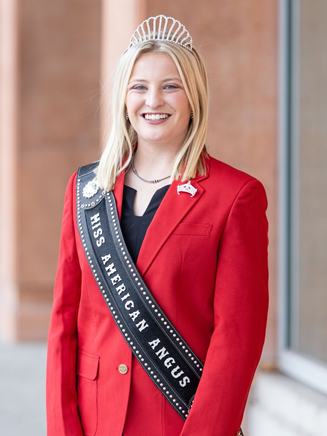
Kelsey Theis of Leavenworth, Kansas, recently achieved something many young girls in the Angus breed dream of — she was named Miss American Angus. Theis was crowned at the annual American Angus Association® Awards Dinner and Reception Sunday, Nov. 6 and will represent the breed as an advocate and role model in the coming year. With three older siblings involved in the National Junior Angus Association, Theis has been around the breed her entire life.
"My first birthday was actually at nationals [National Junior Angus Show] in Denver," Theis said. "So as long as I can remember, I've always been involved."
Growing up in the industry, many of Theis's inspirations served as Miss American Angus. She said to join the ranks of this group of female leaders she looked up to as a young girl is an honor.
"It's very surreal just watching other girls who have gotten this opportunity," Theis said. "Some of them have been my biggest mentors or role models and it's crazy to consider myself on the same level as them in that position. I'm just very excited and honored to get to do this."
Throughout her time in the red coat, Theis hopes to serve the breed well and inspire young women to believe in themselves. She knows the responsibility that comes with the title and looks forward to taking on the role with enthusiasm.
"I just want to do the best job I can representing the breed, and I want to make sure I have an influence on younger members so they have the same experience with me that I did with past Miss American Angus titleholders," Theis said. "I just hope to inspire them and show them they can do anything they set their mind to."
Theis is the daughter of Jerry and Tonya Theis and attends Northern Oklahoma College. She is obtaining a degree in animal science and is a member of the livestock judging team. After graduation, she plans to pursue a career in veterinary medicine or accounting.
Look for Theis in the crown, red coat and sash during her travels this year. For more information about the American Angus Auxiliary-sponsored contest, visit angusauxiliary.com.
— Written by Peyton Schmitt, Angus Communications

Valliant FFA Chapter: Baylee Weatherford, Sydney Tyler and Audry Davis
Thirty youth from across Oklahoma competed in the 2022 Midwest Shows Livestock Handling Scholarship Contest Nov. 18. The annual competition showcases the skills of young FFA members in practical, real-life cattle handling scenarios, such as weighing for accurate dosage, vaccinating and tagging calves in a manual chute. Contestants are judged on skill, accuracy and efficiency as they process the animals.
"While stress-free processing has always been a goal of good cattlemen, proper and efficient handling has become even more important in the modern age of livestock production," said AFR Cooperative President Scott Blubaugh. "With an increased need to diversify herds, producers can now expect cattle of all ages and backgrounds to be sent through the chute. It's vital that young producers understand the needs of each animal."
The annual contest begins with a written exam that measures students' knowledge of livestock handling practices. At the state level, the competition emphasizes the application of classroom study to actual agricultural production scenarios. In order to excel, students must take knowledge out of the classroom and apply it in a real world situation.
"The industry needs young producers more than ever," said Ddee Haynes, Sales Representative for Multimin USA and contest coordinator. "We hope this contest encourages young producers on their path to becoming full-fledged cattlemen and cattle women. This is a noble profession to pursue. We want them to know we'll be supporting them every step of the way."
Ten teams—two top teams from each FFA district—of three students each qualified for the state competition. Top-placing overall teams received caps and cash scholarship awards. The first place team in the livestock handling portion of the contest also received the Frank Elliot Scholarship and $2,000 in Priefert equipment to be used by the entire FFA chapter.
The overall winners of this year's Midwest Shows Livestock Handling Scholarship Contest were:
1st Place – Valliant FFA Chapter: Baylee Weatherford, Sydney Tyler and Audry Davis
2nd Place – Cherokee FFA Chapter: Abby Guffy, Brant Failes and Aiden Sanborn
3rd Place – Battiest FFA Chapter: Luke Delozier, Charlie LeForce and Emalee Plemmons
4th Place – Guthrie FFA Chapter: Maysen Garrett, Ridge Garrett and Ronnie Adams
5th Place – Perkins-Tryon FFA Chapter: Nick Rains, Hagen Cundiff and Logan Hering
6th Place – Pawnee FFA Chapter: Mason Rieman, Brooklyn Flores and Kate Sherrill
7th Place – Navajo FFA Chapter: Abby Brooks, Rylee Jackson and Carson Brooks
8th Place – Caney Valley FFA Chapter: Dally Harp, Dalton Conner and Jeff Childress
9th Place – Amber-Pocasset FFA Chapter: Claire Jansse, Ladd Turner and Sage Schenk
10th Place – North Rock Creek FFA Chapter: Cooper Kline, Stephen Wicked and Raice Abney
The 2022 Midwest Shows Livestock Handling Scholarship Contest was sponsored by American Farmers & Ranchers (AFR) Cooperative, Ballou Cattle Company, Midwest Show, Behlen Country Farm & Ranch Equipment, Cattleac Cattle Equipment, Datamars Livestock, Oklahoma Cattlemen's Foundation, Oklahoma Farm Bureau, Oklahoma National Stockyards, Dale and Tammi Didlot, Multimin and Priefert Rodeo & Ranch Equipment.
For more information on the Midwest Shows Livestock Handling Scholarship Contest or other youth events contact Ddee Haynes at 580-772-4053 or ddeehpj@gmail.com.
At the National Association of Farm Broadcasters, Farm Director KC Sheperd caught up with American Farm Bureau president Zippy Duvall to talk about this year's cost of Thanksgiving dinner, obstacles they have faced this year, and what they would like to see in the 2023 Farm Bill. Duvall says it seems like every year the cost of thanksgiving dinner goes up, but that this year, the price of everything has gone up, "Yeah, they have a lot of people across the country purchasing. I think 225 people were out buying stuff and comparing prices. I think this is 37th year doing that, so everybody looks forward to it coming out."
Duvall said he doesn't recall a year in which the prices went down, "You know, this one was about 20% higher this year. I think last year was 14% higher than the year before that. Duvall says that the prices reflect the trouble we are seeing with inflation, "The troubles we see in input costs, packing and transportation we see that reflected in the prices. When you're a farmer, you're concerned about whether it's high in a grocery store. We don't want those people to think we're getting rich because we're not really still only eight cents on every dollar that they spend at the grocery store ends up back at the farmer's farm to be able to pay for all that stuff to produce."
Looking ahead to next year Farm Bureau is thinking about its priorities and the challenges that come along with a new farm bill. Still, Duvall also considers this a bright spot, " Coming out of the pandemic, everybody realizes that being able to afford food and have availability of food is important to every American. And maybe some of those families have never thought about they're probably thinking about that now, and it's often at the front of their minds. So when we go to Target congressmen and senators, they will be more aware of how important the farm bill is."
Duvall said another challenge with the farm bill is that we will see over 100 congress members that have never written a Farm Bill. Still, he will be excited to see Congressman Frank Lucas back to help, "Mr. Lucas is a true American hero when it comes to Agriculture." Duvall said Farm Bureau will be on Capital hill trying to help Lucas build relationships with those newly elected officials, "We want to make sure they understand that we'll be a resource to them because we have the policy that comes straight from the farm."
From his perspective, Duvall said the most challenging thing about writing a farm bill is the fight around nutrition and how that program is delivered, "Really and truly, a lot of times it's not around the farm programs, but we're going to be there to make sure that crop insurance stays intact, do no harm to it. Because it's the cornerstone in the farm bill and gives risk management that all farmers need and deserve." Duvall said they will also be talking about title one, "We're looking forward to our convention to see whether or not delegates want us to ask for adjustments in Title one because of the increase in production costs."
Duvall says they have always supported conservation and values that their farmers volunteer for programs to continue and move in the direction of climate-smart agricultural and conservation programs. However, he says the one thing they don't talk about enough is the Research and development dollars, "These need to be in the farm bill to be able to be spent to discover those new technologies that we need to continue on that road of climate-smart practices."
Duvall said he would like to see labor issues improve, "it is one of those issues that seems never to find a solution. It is time for Congress to realize this is not a political issue. This is an issue that affects the economy of our country, and especially in rural America, and agriculture."
Duvall said if kids want to return to the family farm after college, there has to be a better solution for Labor, "The future of our industry and bringing young people back is going to be determined on whether or not we can have the labor there to get the work done."
Duvall looks forward to AFBF's annual convention, which is coming up on January 6-11th in San Juan, Puerto Rico. He looks forward to seeing delegates and hashing out the most critical issues. Click or tap to hear KC's conversation with President Zippy Duvall.

The U.S. Department of Agriculture (USDA) today announced an investment of $59.4 million to support the Gus Schumacher Nutrition Incentive Program's (GusNIP) Produce Prescription and Nutrition Incentive programs designed to encourage families and individuals to eat more healthfully by increasing access to fresh fruits and vegetables. This investment delivers on a commitment made in the Biden-Harris Administration's National Strategy on Hunger, Nutrition, and Health to improve access to healthy and affordable food.
Dr. Chavonda Jacobs-Young, USDA Chief Scientist and Under Secretary for Research, Education and Economics, visited the Takoma Park Silver Spring (TPSS) Co-op in Takoma Park, Maryland. Crossroads Community Food Network in partnership with TPSS is receiving funding under this program to launch "Year-Round Fresh Checks" to expand access to affordable fresh fruits and vegetables in the Takoma/Langley Crossroads community, a primarily immigrant neighborhood just outside Washington, D.C. Over the course of the project, it is anticipated that 3,000 Supplemental Nutrition Assistance Program (SNAP) users will spend $450,000, which will be matched with $450,000 in incentives ($250,000 from federal funds and $200,000 from state and local matching dollars).
"Partners such as Crossroads Community Food Network, Inc., are invaluable for USDA's nutrition security efforts," said Jacobs-Young. "By understanding the lived experiences of their community, they help deliver USDA programs into the hands of the people who need them most."
GusNIP programs strive to improve dietary health through increased consumption of fresh produce, improve individual and household food security, and reduce health care use and associated costs. GusNIP Nutrition Incentive programs provide incentives at the point of purchase among income-eligible consumers participating in USDA's SNAP and income-eligible consumers participating in other USDA nutrition assistance programs. Produce Prescriptions leverage medical assistance programs to provide "prescriptions" from a health care provider for fresh fruits and vegetables.
"Since its creation in 2019, GusNIP projects have increased access to healthy foods, and this investment serves to ensure that even more consumers can provide fresh, locally-grown fruits and vegetables for their families," said Dr. Dionne Toombs, Acting Director of the USDA National Institute of Food and Agriculture (NIFA), the entity administering the awards. "In fact, as a result of additional funding provided through the American Rescue Plan Act, NIFA is expanding our reach to many first-time program applicants from underrepresented communities nationwide."
Forty-three awards make up a $20.7 million Produce Prescription Program investment through USDA's American Rescue Plan funding for the GusNIP program. Among the 43 FY22 Produce Prescription Program proposals awarded, 95% are first-time applicants to the GusNIP Produce Prescription Program, and 60% are new entries to NIFA overall. In addition, $38.7 million will support eight GusNIP Nutrition Incentive projects.
In addition to Crossroads Community Food Network, Inc., examples of projects receiving funding include:
By bringing together stakeholders from various parts of the food and health care systems, GusNIP projects help foster understanding to improve the health and nutrition status of participating households, facilitate growth in underrepresented communities, and collect and aggregate data to identify and improve best practices on a broad scale.
The Biden-Harris Administration's National Strategy provides a roadmap of actions the federal government will take to end hunger and reduce diet-related diseases by 2030 – all while reducing disparities. The National Strategy was released in conjunction with the first White House Conference on Hunger, Nutrition and Health in over 50 years, hosted by President Biden on September 28, 2022.
USDA touches the lives of all Americans each day in so many positive ways. In the Biden-Harris Administration, USDA is transforming America's food system with a greater focus on more resilient local and regional food production, fairer markets for all producers, ensuring access to safe, healthy and nutritious food in all communities, building new markets and streams of income for farmers and producers using climate-smart food and forestry practices, making historic investments in infrastructure and clean-energy capabilities in rural America, and committing to equity across the Department by removing systemic barriers and building a workforce more representative of America. To learn more, visit www.usda.gov.
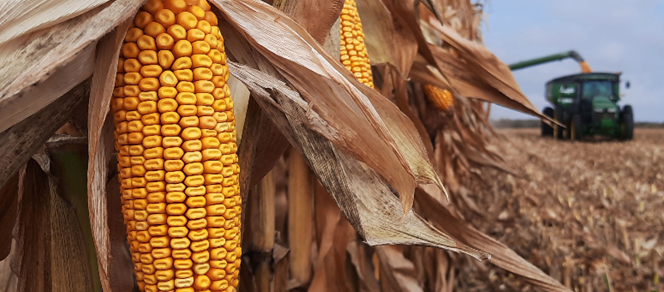
In a letter sent today to U.S. Senate and House leadership, a broad coalition of energy and agriculture organizations called on Congress to quickly adopt legislation that would resolve inconsistent fuel volatility regulations. Specifically, the groups expressed support for legislation that would result in equal regulatory treatment for all gasoline blends containing 10 percent ethanol (E10) or more, including gasoline with 15 percent ethanol (E15). Such legislation would permanently remove the regulatory barrier that has historically made it extremely difficult for retailers to offer E15 in the summertime.
The letter, sent to Senate Leaders Chuck Schumer and Mitch McConnell, House Speaker Nancy Pelosi, and House Minority Leader Kevin McCarthy, was signed by the Renewable Fuels Association, American Petroleum Institute, American Farm Bureau Federation, Association of Equipment Manufacturers, Growth Energy, National Association of Convenience Stores, National Corn Growers Association, National Council of Farmer Cooperatives, National Farmers Union, National Sorghum Producers, NATSO, representing truckstops and travel plazas, and SIGMA: America's Leading Fuel Marketers.
"Due to the current policy, it is extremely difficult for many fuel marketers and retailers that may desire to offer E15 to their customers in the summer months to source that product," according to the letter. "Our groups have come together—for the first time ever—to support legislation that would resolve this issue once and for all."
The groups are advocating for a simple legislative fix that would provide equal treatment nationwide to all gasoline blends containing 10 percent ethanol or more, while simultaneously superseding state regulatory action recently sought by a group of governors. "By ensuring uniformity across the nation's fuel supply chain, federal legislation will provide more flexibility and result in more consistent outcomes than a state-by-state regulatory landscape," the letter says.
"In the absence of such legislation, we could see gasoline marketplace uncertainty and political disputes over E15 that would continue to resurface every summer. Thus, we urge Congress to act quickly to adopt legislation that will bring certainty and consistency to the fuel market, while also finally resolving long-standing differences among many stakeholders about fuel volatility regulations."

Thanks to U.S. Poultry & Egg Association (USPOULTRY), donations made to the Animal Agriculture Alliance will be matched on Giving Tuesday, November 29. USPOULTRY has pledged to match donations so every contribution will go twice as far to safeguard the future of animal agriculture. Visit animalagalliance.org/support-us/donate/ to make your contribution.
This is the Alliance's 35th year of bridging the communication gap between the farm and food communities and its eighth year participating in Giving Tuesday – the first Tuesday after Thanksgiving. Giving Tuesday is a global day of giving that harnesses the power of social media and community collaboration. As a 501(c)(3) nonprofit, the Alliance relies on generous supporters to keep its mission alive. Mark your calendar for November 29, so after celebrating with your family, you can continue celebrating the giving season with the Alliance.
USPOULTRY has pledged a 2X match on donations from new donors and a 1X match for returning donors up to $100,000. "The Animal Agriculture Alliance gives the agriculture community a unified voice and arms stakeholders with resources to address emerging issues," said Gwen Venable, executive vice president, communications at USPOULTRY. "Our Association is pleased to once again support the Alliance this giving season by matching donations for the fourth year in a row."
The Animal Agriculture Alliance is a 501(c)(3) nonprofit organization so donations are 100% tax deductible. All donations made on Tuesday, November 29, 2022 from 12:00 a.m. EST to 11:59 p.m. EST will be matched up to a total of $100,000.
About the Alliance:
The Animal Agriculture Alliance safeguards the future of animal agriculture and its value to society by bridging the communication gap between the farm and food communities. We connect key food industry stakeholders to arm them with responses to emerging issues. We engage food chain influencers and promote consumer choice by helping them better understand modern animal agriculture. We protect by exposing those who threaten our nation's food security with damaging misinformation.
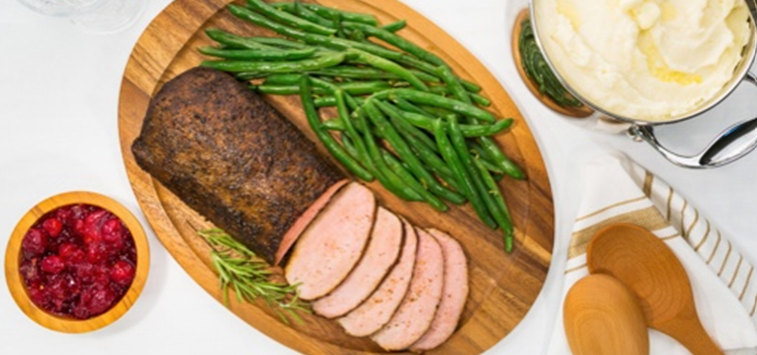
In this time of giving thanks, we give ours to you. Thank you for everything you do to support the pork industry each day — we're grateful for your feedback, support and partnership.
Below are a few of our favorite pork recipe ideas that are perfect for celebrating with family and good friends.
Happy Thanksgiving!
From all of us at the National Pork Board
Holiday Dinner Ideas Whether you're feeding a crew or hosting a more intimate holiday dinner, there's a pork cut for every occasion.
🍽️ Spicy Cranberry Pork Tenderloin
🍽️ Pork Roast with Bacon, Brussels Sprouts and Pomegranate
🍽️ Sweet Potato Tart with Bacon
Explore More Dinner Ideas
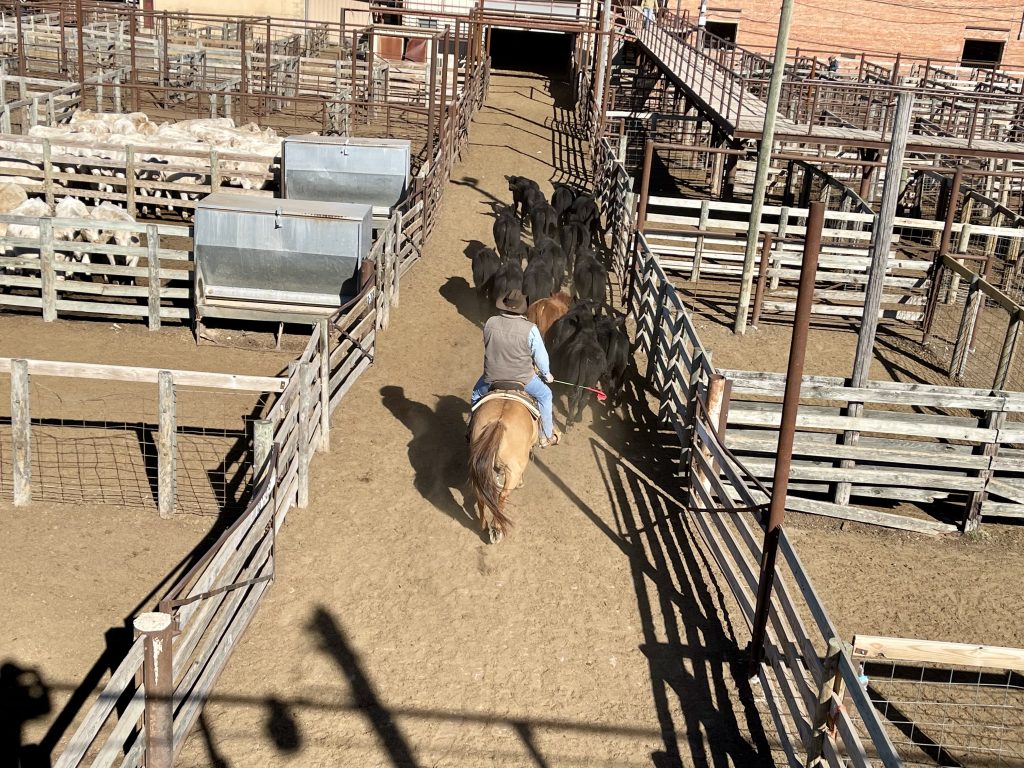
Cattle Moving at the Oklahoma National Stockyards
Today, the U.S. Department of Agriculture (USDA) announced a 45-day extension of the comment period for the proposed rule titled, "Inclusive Competition and Market Integrity Under the Packers and Stockyards Act." The National Cattlemen's Beef Association (NCBA) welcomed the extension while urging USDA to proceed in a cautious, deliberative manner.
"While we appreciate the additional time to submit thorough comments, overall USDA should tap the brakes on this rulemaking effort," said NCBA Senior Director of Government Affairs Tanner Beymer. "This is a significant undertaking rooted in decades of legislative, regulatory, and judicial history. Stakeholders must be afforded the opportunity to holistically evaluate the effects of both this rule and those which the Department has suggested are forthcoming."
NCBA, along with other national livestock partners, requested an extension of the comment period last month in a letter to USDA. In addition, this coalition secured 100 bipartisan signatures on a congressional letter, led by Reps. Jim Costa (D-CA) and Steve Womack (R-AR), to USDA echoing this request.
The proposed Packers and Stockyards Act rule spans 180 pages, poses 44 specific questions, and covers over 14 years of regulatory history, making the initial 60-day comment period too short for stakeholders to provide meaningful feedback.
Mark Z. Johnson, Oklahoma State University Extension Beef Cattle Breeding Specialist
Winter is coming and hay inventories are low. Given the current situation, it can come as a relief to just find hay to purchase. In 2022 many of us in Oklahoma find ourselves making hay purchases from out of state that are not the typical harvested forages we use in Oklahoma. Regardless of the hay source you are considering, ask the following questions and consider the following before making purchases:
When he was 7 years old, Rob Bomhoff attended his first Oklahoma State University Cowboys football game. After seeing Bullet and the OSU Spirit Rider race across the field after the first touchdown, Bomhoff told his mom he wanted to do that one day.
That day has arrived. Following a year on the Spirit Rider ground crew, Bomhoff was selected as the 2022-2023 Spirit Rider. He has raced out to the 30-yard line following each Cowboys touchdown at Boone Pickens Stadium this football season. It's guaranteed that the smile on his face when he and Bullet run back into the tunnel in the west endzone is just as big as it was when he was sitting in the stands as a 7-year-old watching Bullet for the first time.
Bomhoff isn't the first member of his family to sit atop Bullet. His dad's cousin, Warren Ahlden, was the ninth Spirit Rider. Bomhoff's cousin, Dan Bomhoff, had his turn in the saddle as the 18th Spirit Rider. Rob Bomhoff is Spirit Rider No. 36.
It wasn't just the family legacy that led Bomhoff to be a Spirit Rider. He attributes the skills he learned as a member of the Oklahoma 4-H Youth Development program in Kingfisher County to helping him achieve the goal he set for himself as a youngster.
"In my role as the Spirit Rider, I talk to so many people. I did a lot of speeches and participated in horse camps and clinics when I was in 4-H," said Bomhoff, an animal science/pre-vet junior and Alpha Gamma Rho fraternity member from Okarche. "The leadership roles I had helped me manage a team and my time. Everything I did in 4-H is what I'm doing now, but I'm representing OSU instead of 4-H. Being in 4-H was probably the best thing I ever did to prepare me for being the Spirit Rider."
As an active 4-H'er, he served as a Kingfish County 4-H president and was selected as a Kingfisher County 4-H Ambassador. He also was inducted into the Kingfisher County 4-H Hall of Fame. When he was a junior in high school, he and his dad resurrected the local 4-H Horse Club, which his dad continues working with today.
Laine Martin was Bomhoff's OSU Extension 4-H educator from the time he was in seventh grade until he graduated from high school.
"Rob was a great leader and role model for the Kingfisher County 4-H program. He was great in working with the shier kids and getting them involved in different things," Martin said. "He was one of those kids you want to be a representative of the club and 4-H program. I always had a good feeling he was going to succeed in life."
What does a typical football game day look like for Bomhoff? The night before a game, he drives to the farm near Tulsa where Bullet lives. He gets Bullet washed and cleaned up before heading back to Stillwater early Saturday morning. About four hours before the game, Bullet, Bomhoff and the ground crew join the Block Party on the stadium's north side, signing autographs and posing for photographs.
"It's these types of activities where the ground crew really helps out," Bomhoff said. "They're there to keep the kids safe and Bullet safe."
It's then off to the ConocoPhillips OSU Alumni Center for more pictures, and children get the chance to pet Bullet. Later, Bomhoff and Bullet warm up on the lawn by Old Central then make their way to Boone Pickens Stadium where they get into position for the band run before kickoff.
He said it's hard to put into words the feeling he gets when he and Bullet gallop onto the field in front of 60,000 fans.
"That first time was like nothing I'd ever felt. There was so much adrenaline, and it was the biggest rush," he said. "I'm more used to it now and I really don't even hear the crowd – it's more like white noise. But there are times when I'm making the ride and the student section will start chanting R-O-B instead of O-S-U."
In addition to football games, Bomhoff makes other appearances with Bullet throughout the year. He enjoys the opportunity to share his story about being the Spirit Rider and talking to the kids.
"It's a lot of fun being there for the kids, both at games and other appearances," he said. "Seeing Bullet up close makes their entire game. I love seeing their faces light up and encouraging them to dream big and make it happen."
Fun facts about Bullet:
Jennifer Roberts has served as the OSU Spirit Rider team coordinator for 18 years. As a former Spirit Rider herself during the 2000 football season, she has worked with all four of the Bullet horses.
"I've accumulated a lot of data that we use to keep the atmosphere around Bullet as calm as possible," Roberts said. "The qualities we need for Bullet include a horse that is really broke, sound and smart. We also need a horse that's not easily excitable, remains calm and can handle the environment. An OSU ballgame isn't a natural environment for a horse."
Roberts receives a script before gameday that outlines any special events taking place during the game such as fireworks, flyovers or other animals on the field. This helps the ground crew prepare to keep Bullet calm and safe.
"We've got the ground crew plus others who keep their heads on a swivel the whole game, looking at and listening to the surroundings to mitigate the risk of any problem," she said. "Our goal is to keep the atmosphere around Bullet as calm as possible."
| Cost of gain increases, black-hided cattle market saturation and tight supplies due to weather are all challenging the commercial cattlemen today. How do they stay profitable amidst the market? During the 2022 Angus Convention in Salt Lake City, Utah November 5, the AngusLinkSM team hosted the Capturing Value session. The session aimed to help commercial producers learn how to capture more value for their calves so they can continue to face challenges but remain profitable. Troy Marshall, director of commercial industry relations for the American Angus Association®, moderated a panel including Terrill Ostrum, livestock broker; Jordan Willis, cow-calf producer; Joe Goggins, Angus breeder and auctioneer; and Jed Connealy, Angus breeder and cattle marketer. Each panelist actively engages with cow-calf producers, but also have a hand in other sectors of the industry. |
| Regardless of their positions, panelists talked optimistically about the future, especially when discussing ways to earn a premium or a few more dollars for their calves. There are plenty of programs and opportunities, said Ostrum. Connealy agreed. "I think there is a pile of opportunity and the gap between good cattle and bad cattle gets wider all the time," he said. For those focused on raising good cattle, panelists shared ways those producers could earn more money and stay profitable. For many of them, genetics were key. Goggins said the number one thing to consider is buying good bulls with genetic value. "Those invested in the feeding industry, we know the people who buy good bulls. We know the people who have watched their Ps and Qs as far as not only carcass but performance and fertility and everything," said Goggins. Connealy takes those superior genetics and quantifies them through AngusLink's Genetic Merit Scorecard. Understanding exactly what kind of bulls those producers bought and how those cattle are geared, it's easy to make a connection and know where cattle would fit best, said Connealy. "We work pretty closely with customers, so I don't know who else would be better versed to do that [match cattle to buyers] rather than the genetic guy in the equation," said Connealy. Willis said commercial producers have opportunities to capture more value if they start thinking about marketing. He stressed that marketing is what sets themselves apart on sale day. "I think as cow-calf producers, we must put our marketing caps on," said Willis. "We work our tails off every day doing the daily jobs, but when it comes to marketing, I think we fall short." Cow-calf producers also need to find the right seedstock producer and build a relationship with them. Seedstock providers needs to know what works and what we need in our operation said Willis. Connealy adds that producers should get behind a program that already aligns with their goals to help build consistency in their operation. Ostrum said he purchases program cattle because of their consistency. "The most predictable cattle I buy on an annual basis are cattle who have tied to a program year after year after year and are taking some advice and some counsel from the seedstock producer," said Ostrum. Flipping the script, seedstock producers can communicate with their customers to build relationships and help them be successful. One step can be helping their customers interpret the important data needed for bull buyers to make better decisions based on their environment and situation, said Ostrum. For Goggins, he said people buy people they like, know and trust. "We all work in the agricultural business, but we are also in the people business," said Goggins. Through genetics and marketing programs, the panel shared several tactics and thought processes commercial cattlemen can use to grow their operation. At the end of the day, getting better might just mean doing something new. "Let's get out of that paradigm and dare to do something no matter what part of the world you're in," said Ostrum. "Look at those different opportunities and dare to do something different." For news about Angus Convention, visit www.angus.org/Pub/NewsRoomReleaseList. - Written by Whitney Whitaker, Angus Communications |

MorganMyers, a strategic marketing and communications agency specialized in agriculture and food CPG brands, announces the addition of two accomplished communicators who will deepen the company's agricultural and digital capabilities to serve its growing client base. Greg Ehm joins the company as senior counselor while Alex Blake will serve as senior digital strategist.
An Iowa native, Ehm has spent nearly 30 years leading results-generating marketing and communications efforts in the areas of animal health, animal nutrition, equipment manufacturing, advanced manufacturing, and renewable fuels. With experience in corporate, association and agency settings, Greg brings deep agricultural insights and strong strategic communication abilities as well as content marketing expertise to the MorganMyers team.
Blake previously worked for Angus Media where she drove agrimarketing digital strategy and created integrated marketing campaigns across all digital avenues. Her robust experience in digital advertising, email marketing, social media, video production, and internal marketing will be a valuable addition to the MorganMyers team and its clients.
In addition to these two hires, MorganMyers also promotes two current members of its team. Julianne Johnston is named a senior counselor, reflecting her passion and extremely strong media relations and content development expertise that helps MorganMyers' clients create significant impact for their brands in the agricultural space. Jen Mohorek is promoted to digital strategist as she helps develop plans and execute a wide array of digital projects for MorganMyers' clients.
"For an agency focused on real movement, we love the momentum we're experiencing at MorganMyers," says Tim Oliver, MorganMyers president. "The exceptional work we continue to deliver for our clients is a reflection of great talent like Julianne and Jen. We know Greg and Alex will be no exception to this and we're excited to have them on our team." About MorganMyers:
MorganMyers is a strategic marketing and communications firm that builds, promotes and protects great brands that help feed the world. Our experience with farmers, food companies, climate-smart agriculture thought leaders, popular brands and consumers gives us a unique 360-degree perspective to solve communications challenges and build trust across the farm-to-table value chain. MorganMyers has offices in Waukesha, Wisconsin, and Waterloo, Iowa. Learn more about MorganMyers at www.morganmyers.com
Today, National Farmers Union (NFU) released the 2022 Farmer's Share of the food dollar for several items typically served for the Thanksgiving holiday.
"Corporate profits and consumer food costs continue to go up and up, but the share of the farmer's share of the food dollar remains low," said NFU President Rob Larew. "Thanksgiving is a time of family and community, often centered around food, but thanks to price gouging by corporate monopolies in the food system, that meal is getting increasingly difficult to afford. NFU will continue to push back against harmful anti-competitive practices and for policies that bring fairness to farmers and consumers alike."
Even though consumers are paying more for food this year, almost none of that increase is being passed on to America's family farmers and ranchers. Multiple waves of mergers and acquisitions during the last several decades resulted in agriculture and food supply chains that are not only uncompetitive and fragile but also underpay farmers.
Included in the 2022 Thanksgiving Farmer's Share numbers are:
Farmer's Share social media posts can be found here:
Farmer's Share data is derived from USDA, NASS "Agricultural Prices". Retail prices based on Washington, D.C. based Safeway locations. Click here for more information on the Farmer's Share and to sign up for monthly updates.

In a letter sent yesterday to U.S. Senate and House leadership, a broad coalition of energy and agriculture organizations called on Congress to quickly adopt legislation that would resolve inconsistent fuel volatility regulations. Specifically, the groups expressed support for legislation that would result in equal regulatory treatment for all gasoline blends containing 10 percent ethanol (E10) or more, including gasoline with 15 percent ethanol (E15). Such legislation would permanently remove the regulatory barrier that has historically made it extremely difficult for retailers to offer E15 in the summertime.
The letter, sent to Senate Leaders Chuck Schumer and Mitch McConnell, House Speaker Nancy Pelosi, and House Minority Leader Kevin McCarthy, was signed by Growth Energy, the American Farm Bureau Federation, American Petroleum Institute, Association of Equipment Manufacturers, National Association of Convenience Stores, National Corn Growers Association, National Council of Farmer Cooperatives, National Farmers Union, National Sorghum Producers, NATSO, representing truckstops and travel plazas, the Renewable Fuels Association (RFA) and SIGMA: America's Leading Fuel Marketers.
"Due to the current policy, it is extremely difficult for many fuel marketers and retailers that may desire to offer E15 to their customers in the summer months to source that product," according to the letter. "Our groups have come together—for the first time ever—to support legislation that would resolve this issue once and for all."
The groups are advocating for a simple legislative fix that would provide equal treatment nationwide to all gasoline blends containing 10 percent ethanol or more, while simultaneously superseding state regulatory action recently sought by a group of governors. "By ensuring uniformity across the nation's fuel supply chain, federal legislation will provide more flexibility and result in more consistent outcomes than a state-by-state regulatory landscape," the letter says.
"In the absence of such legislation, we could see gasoline marketplace uncertainty and political disputes over E15 that would continue to resurface every summer. Thus, we urge Congress to act quickly to adopt legislation that will bring certainty and consistency to the fuel market, while also finally resolving long-standing differences among many stakeholders about fuel volatility regulations."
Read a full copy of the letter here.
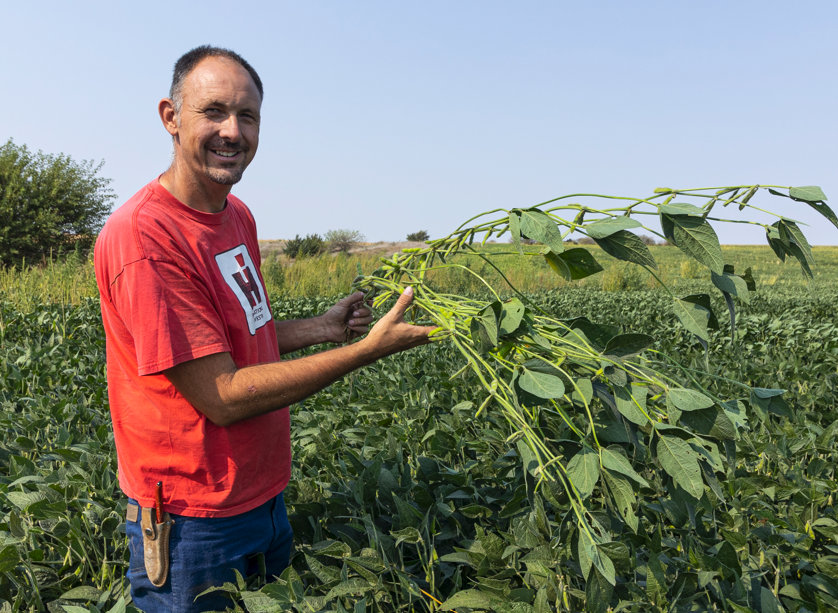
Michael Thompson of Almena has been selected as the recipient of the 2022 Kansas Leopold Conservation Award®.
Given in honor of renowned conservationist Aldo Leopold, the award recognizes farmers, ranchers and forestland owners who inspire others with their dedication to land, water and wildlife resources in their care.
In Kansas the award is presented annually by Sand County Foundation and national sponsor American Farmland Trust, with state partners: Kansas Association of Conservation Districts and the Ranchland Trust of Kansas.
Thompson grows crops and raises beef cattle at Thompson Farm and Ranch in Norton County with his father Richard, and brother Brian. He's a vocal advocate for soil stewardship among other farmers and ranchers. He was announced as the recipient of the award at the Kansas Association of Conservation Districts' 78th Annual Convention in Wichita, and receives $10,000 and a crystal award for being selected.
"Michael's passion for conservation and improving soil health serves as an inspiration to farmers and ranchers across Kansas," said Mike Beam, Kansas Secretary of Agriculture. "His commitment to sharing his experience and knowledge with others makes him very deserving of the honor of being a Leopold Conservation Award winner."
"Michael's passion and drive as a leader in the soil health movement is contagious. He is always learning and sharing his knowledge and experiences with others," said Dan Meyerhoff, Kansas Association of Conservation Districts Executive Director. "Michael exemplifies the extraordinary commitment celebrated by the Leopold Conservation Award."
"Congratulations to Michael Thompson regarding his selection as the 2022 Kansas Leopold Conservation Award recipient," said Chelsea Good, Ranchland Trust of Kansas Chair of the Board. "RTK is pleased to recognize great advocates for and practitioners of conservation, such as Michael Thompson."
"These award recipients are examples of how Aldo Leopold's land ethic is alive and well today. Their dedication to conservation shows how individuals can improve the health of the land while producing food and fiber," said Kevin McAleese, Sand County Foundation President and CEO.
"As the national sponsor for Sand County Foundation's Leopold Conservation Award, American Farmland Trust celebrates the hard work and dedication of Michael Thompson," said John Piotti, AFT President and CEO. "At AFT we believe that conservation in agriculture requires a focus on the land, the practices and the people and this award recognizes the integral role of all three."
Earlier this year, Kansas landowners were encouraged to apply (or be nominated) for the award. Applications were reviewed by an independent panel of agricultural and conservation leaders. Among the many outstanding Kansas landowners nominated for the award were finalists: Ray and Susan Flickner of Wichita, Kevin Karr of Emporia, and Glenn and Barbara Walker of Brookville.
The first Kansas Leopold Conservation Award was presented to Sproul Ranch of Sedan in 2015. Last year's recipient was Dwane Roth of Holcomb. View all recipients at www.SandCountyFoundation.org/Kansas
The Leopold Conservation Award in Kansas is made possible thanks to the generous support of American Farmland Trust, Kansas Association of Conservation Districts, Ranchland Trust of Kansas, Sand County Foundation, Farm Credit Associations of Kansas, ITC Great Plains, Evergy, Kansas Department of Agriculture (Division of Conservation), Kansas Department of Wildlife and Parks, Kansas Forest Service, McDonald's, The Nature Conservancy, USDA-Natural Resources Conservation Service and a Kansas Leopold Conservation Award recipient.
In his influential 1949 book, A Sand County Almanac, Leopold called for an ethical relationship between people and the land they own and manage, which he called "an evolutionary possibility and an ecological necessity."
Sand County Foundation presents the Leopold Conservation Award to private landowners in 24 states for extraordinary achievement in voluntary conservation. For more information, visit www.leopoldconservationaward.org.
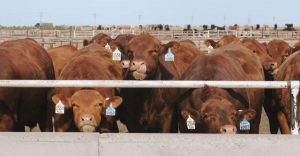 Ron Hays Beef Buzzes with Dr. Derrell Peel of OSU as they discuss the Nov Cattle on Feed Report
The November USDA Cattle on Feed Report appears to be a confirmation of what finally showed up in the October report thirty days earlier- cattle numbers in our nation's feedlots have finally peaked and will likely be getting tighter for the foreseeable future- so says Extension Livestock Market Economist Dr. Derrell Peel.
Peel tells Oklahoma Farm Report's Ron Hays that what we are seeing in the November report is building on what was reported in October. From our story on the October report- " Peel says that this is the first time we have had a lower on feed number compared to a year earlier this year- the last time we had a lower on feed number compared to a year ago came in December 2021. "You know, we have been setting new records on a month by month basis here really all year...now we have reached the point where we have turned the corner."
"On the four percent fewer placements compared to a year ago, Peel says "I think we have finally reached the end of the rope there- there just aren't more cattle out there." Peel adds that the under 600 pound category are still up by two percent - saying there are still some of these lightest cattle coming into feedlots- but the heavier weights were under a year ago and made the overall cattle number down by one percent compared to last October first.
"Peel adds that this is all about the drought- "we have known that the overall feeder supply has been getting tighter- but that the fact that the feedlots have been able to sorta defy gravity this long has been a testament to what the drought has done and has been masking the real situation on cattle numbers- but you can only do that for so long and we have reached the lmits of that."
Fast forward to the November report released this past Friday. USDA reported the November 1 On Feed 98.0% of last year, October Placements 93.9% and October Marketings 100.6%. The placement number was a record low placement for the month of October since the data series started 1996- and that is two months in a row of a changed placement pattern.
In today's Part two of our conversation with Derrell Peel, he tells Hays higher prices are already starting to become reality as beef supplies get tighter- and that is just the beginning of the stronger cattle prices, which he says will really trend up when we finally get the drought past us and are able to restock our beef cow herds- "and we don't know if that will happen in 2023- it depends on the drought conditions- but at some point in time- we are going to take smaller supplies of cattle and smaller beef production and squeeze it even farther because we are going to have to save a lot of heifers for herd rebuilding- we are going to cut cow culling to the bone and we will do the same thing in 2015 when we saw cattle slaughter drop to the lowest levels since 1963 and we will do something similar to that again at some poiint- probably not in 2023 but I think maybe in 2024 or 2025."
Peel says that we may have liqudated even more of the female population than we did in 2011 and 2012 in this current drought cycle and that means a potentially more explosive upward price move that will come as we rebuild the cow herds in the months/years ahead.
Go back and listen to Part One of Dr. Peel's comments on the November Cattle on Feed repport by clicking here. Listen to our part two by clicking on the Listen bar below as we do a deeper dive into what these numbers suggest for beef supplies, cattle numbers and price outlook for cattle producers in the short and longer runs.
The Beef Buzz is a regular feature heard on radio stations around the region on the Radio Oklahoma Ag Network and is a regular audio feature found on this website as well. Click on the LISTEN BAR for today's show and check out our archives for older Beef Buzz shows covering the gamut of the beef cattle industry today.
Ron Hays Beef Buzzes with Dr. Derrell Peel of OSU as they discuss the Nov Cattle on Feed Report
click to play audio or right-click to download
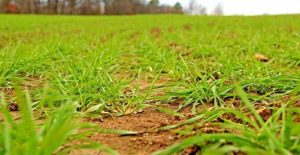 In our next to last Crop Progress of the season- harvest across the US is largely complete. USDA is no longer showing a state by state breakdown on soybeans as harvest of that crop is complete- the US corn harvest is 96% complete, cotton harvest is 79% done, Grain sorghum 97% harvested and peanuts are 94% harvested.
Eighty seven percent of the US Winter Wheat Crop is now emerged, one point ahead of the five year average and two points ahead of this time last year.
There's no change in the national winter wheat crop condition from a week ago at 32% in good to excellent condition- 12 points under the 44% good to excellent in the middle of November last year. The Oklahoma winter wheat crop remains unchanged this week versus last at 19% good to excellent- but far below the 55% good to excellent last year at this point. Kansas is also unchanged from last week with 24% of the winter wheat crop being in good to excellent condition- and less than half the ratings of last November, which were at 61% good to excellent. Finally, Texas is at 19% good to excellent- up one point from last week and three points under a year ago.
Click here for the November 21st USDA Crop Progress report (next to last of this growing season)
In Oklahoma- here's the rundown on harvest progress on the spring planted crops:
Row Crops:
Sorghum harvested reached 97 percent, up 5 points from the previous year and up 9 points
from normal.
Soybeans harvested reached 82 percent, up 3 points from the previous year and up 9 points
from normal.
Peanuts harvested reached 95 percent, up 6 points from the previous year and up 8 points
from normal.
Cotton harvested reached 75 percent, up 3 points from the previous year and up 11 points
from normal.
Meanwhile- the Oklahoma Pasture and Range Conditions actually improved by three points from 4% good last week to 7% good this week- and also saw a drop in poor to very poor ratings from 82% last week to 75% this week. In November 2021, we had pasture and range ratings at 31% in good to excellent condition.
Click here for the Oklahoma Crop Progress report from November 20th.
Click here for the Kansas Crop Progress report dated November 21st.
Click here for Texas Crop Progress report dated November 21st.
Tue, 22 Nov 2022 02:49:13 CST
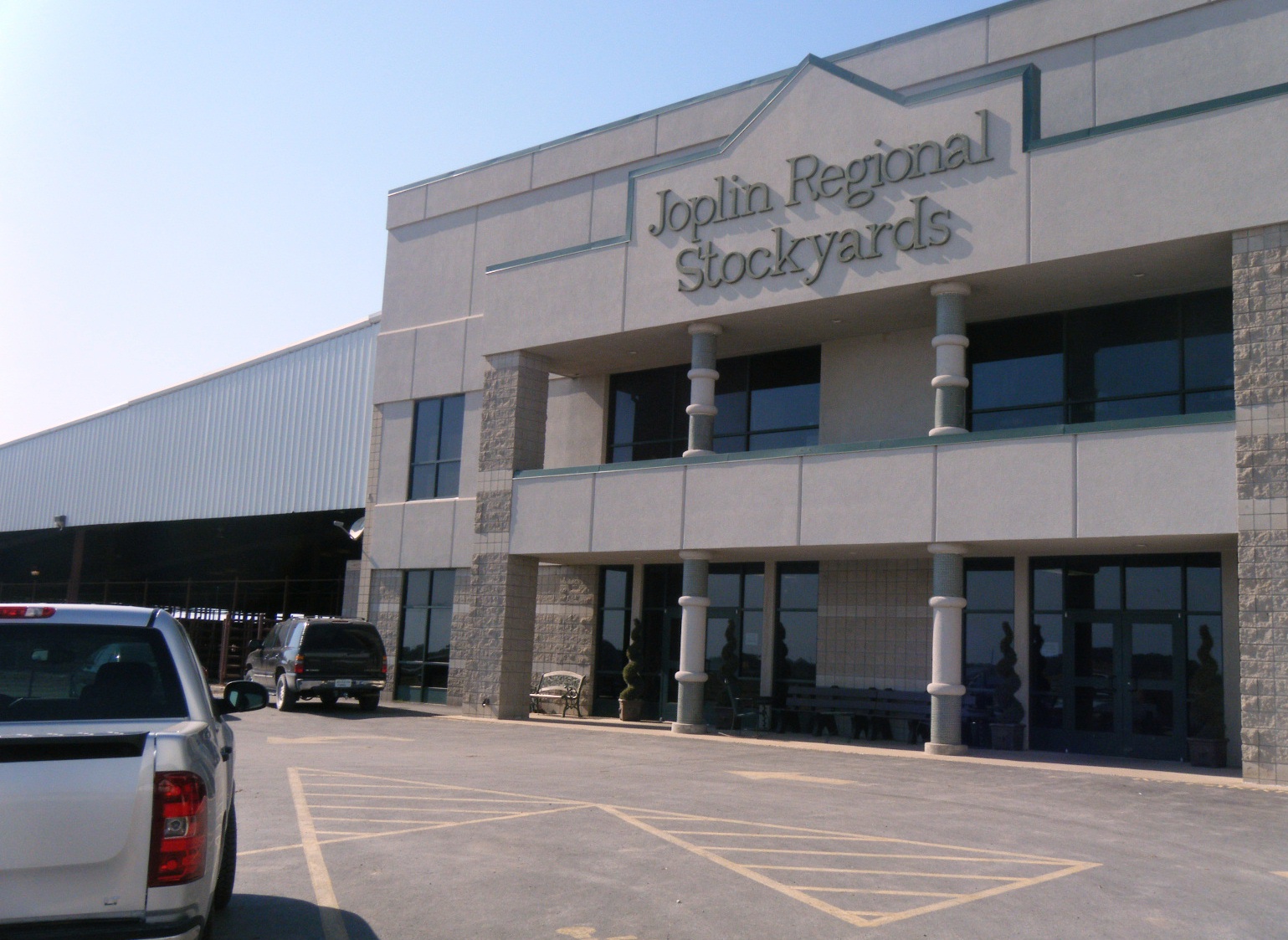
Joplin Regional Stockyards
Mon Nov 21, 2022
AUCTION
This Week 11,936
Last Reported 8,835
Last Year 12,811
Special Note: The next JRS sale will be the regular slaughter/replacement sale on Wednesday, November 23rd, at 9:00 am.
**CLOSE**
Compared to last week feeder steers traded steady to 3.00 higher. Feeder heifers traded steady to 4.00 higher. 16 head of fancy steers weighing 610 lbs. traded at 200.00. This sale featured several large drafts of yearling cattle. Supply was heavy with good demand. Supply included: 100% Feeder Cattle (68% Steers, 31% Heifers, 1% Bulls). Feeder cattle supply over 600 lbs was 78%.
FEEDER CATTLE
STEERS - Medium and Large 1 (Per Cwt / Actual Wt)
Head Wt Range Avg Wt Price Range Avg Price
17 306-339 327 237.50-250.00 241.62
19 397 397 231.00 231.00
39 428-447 435 205.00-217.50 212.35
103 453-495 472 203.00-224.00 211.58
8 478 478 235.00 235.00 Fancy
156 504-549 525 192.00-210.00 199.78
224 558-591 576 190.00-201.00 195.17
316 601-648 632 179.00-197.50 187.24
14 610 610 200.00 200.00 Fancy
306 650-695 678 181.50-190.00 185.60
636 701-749 731 178.75-191.00 181.35
266 750-799 779 177.00-187.00 182.23
801 805-848 825 176.50-186.00 180.82
294 851-895 871 176.00-186.00 180.89
616 907-949 925 169.00-174.00 171.32
99 952-969 956 168.50-171.00 169.73
For the complete market report from USDA Market News click on the PDF link below:
Tue, 22 Nov 2022 02:44:29 CST
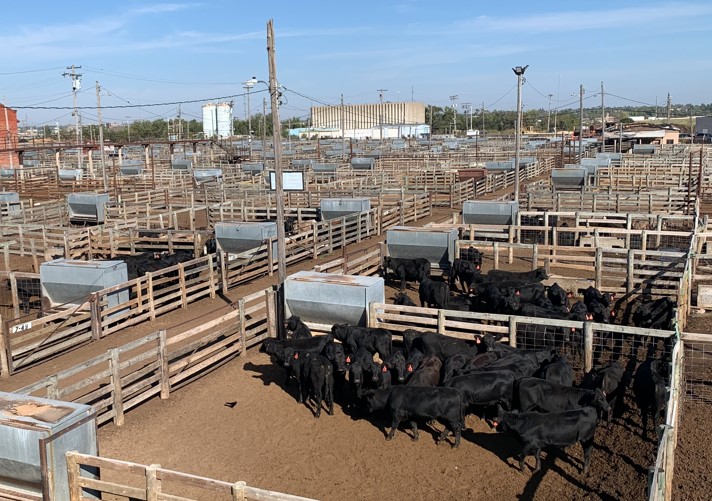
Oklahoma National Stockyards
Mon Nov 21, 2022
AUCTION
This Week 8,950
Last Reported 10,046
Last Year 9,605
*** Close ***
Compared to last week: Feeder steers steady to 2.00 higher. Feeder heifers mostly steady. Demand moderate to good for feeder cattle. Steer and heifer calves traded mostly 3.00-6.00 higher. Demand good for lightweight grazing cattle. Quality average to attractive with several nice feeders available. Supply included: 100% Feeder Cattle (56% Steers, 41% Heifers, 3% Bulls). Feeder cattle supply over 600 lbs was 42%.
FEEDER CATTLE
STEERS - Medium and Large 1 (Per Cwt / Actual Wt)
Head Wt Range Avg Wt Price Range Avg Price
8 295 295 221.00 221.00
14 320-336 328 211.00-229.00 220.44
34 313-346 339 231.00 231.00 Thin Fleshed
88 358-397 376 197.00-225.00 219.82
40 386 386 230.00 230.00 Thin Fleshed
164 401-449 433 195.00-215.00 206.09
45 403-426 417 217.00-223.00 220.00 Thin Fleshed
313 454-499 482 194.00-217.00 203.37
89 465-469 466 224.00-226.00 224.27 Thin Fleshed
9 484 484 188.00 188.00 Unweaned
174 502-548 523 190.00-215.00 201.19
34 500-527 512 208.00-210.00 209.10 Thin Fleshed
36 540 540 179.50 179.50 Unweaned
422 550-599 581 169.00-209.00 188.74
27 566-590 580 167.00-174.00 172.68 Unweaned
310 610-648 627 171.00-194.00 180.22
272 667-698 680 168.00-183.00 177.52
172 700-746 721 170.00-181.00 176.60
266 763-797 781 159.00-179.00 174.15
283 820-844 834 170.00-180.00 177.66
118 866-877 875 168.00-176.00 174.66
76 904-914 906 172.00-176.00 175.04
111 950-986 952 150.00-168.25 167.40
For the complete market report from USDA Market News click on the PDF link below:
Mon, 21 Nov 2022 17:13:38 CST
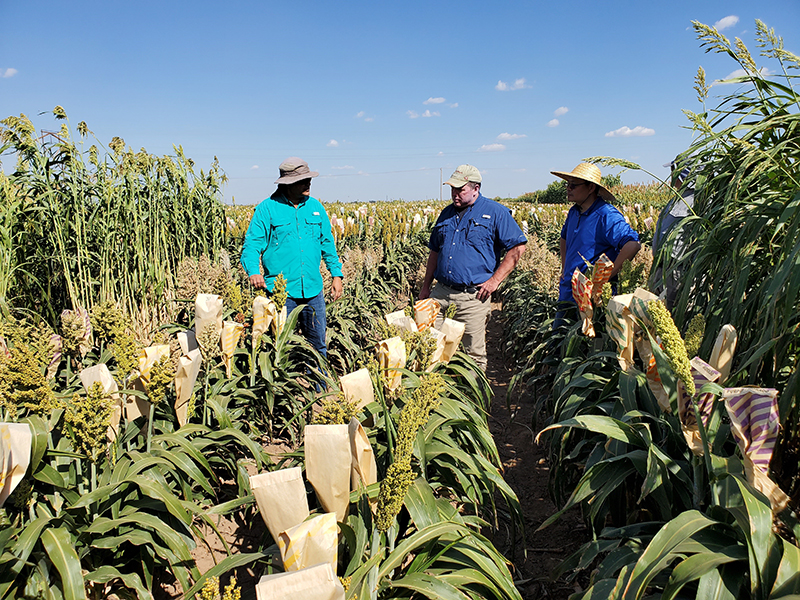
Sorghum has served as a food and feed crop for thousands of years, yet it can become poisonous under drought or freezing conditions. The problem is dhurrin, which breaks down to form prussic acid, also known as hydrogen cyanide.
But Purdue University's Mitch Tuinstra, professor of plant breeding and genetics and scientific director of the Institute for Plant Sciences in the College of Agriculture, has developed a dhurrin-free sorghum technology that will set farmers' minds at ease. The S&W Seed Co. of Longmont, Colorado, has licensed the technology, which will be widely available to growers in 2023.
"Cyanide poisoning is something that people who graze cattle on sorghum always have to be concerned about. It doesn't happen all that often. But when it does happen, it's a serious thing. This technology eliminates that risk," said Brent Bean, director of agronomy at the United Sorghum Checkoff Program in Lubbock, Texas. USCP is a producer-funded organization dedicated to improving the sorghum industry through research, promotion and education.
At $1,300 or more per steer, cattle are a big investment.
"You lose even one, that is a big downside to the bottom line," Bean said.
Making cyanide helps sorghum fend off chewing insects and grazing animals. But farmers still use sorghum as a forage crop because it works well in high temperatures, it tolerates drought and it produces a lot of feed with fairly minimal input.
"Sorghum is grown where it's too hot and dry to grow other crops," said Tuinstra, who also is Purdue's Wickersham Chair of Excellence in Agriculture Research. "It's grown where you don't have other options. You can't grow corn in these environments because it won't survive."
Farmers who grow sorghum in such environments have to manage it carefully to minimize the risk.
"Every farmer I talk to has stories about animals having problems, either small problems or major problems," said Tuinstra. "This is a technology that can help alleviate that concern."
Tuinstra began thinking about removing dhurrin from sorghum in late 2008.
"I thought that would be interesting because we know the genes, the enzymes, the biochemistry, but many questions about dhurrin metabolism remain unanswered," he said. "So, the next summer, we started producing the genetic materials for this study."
Sorghum is used worldwide, including in Africa, Australia, North and South America, and South Asia.
"Sorghum is an important crop in any place you have a hot, dry climate. And with climate change, that's potentially very important," said Jay Hulbert, president and CEO of Ag Alumni Seed in Romney, Indiana. "There are areas in the U.S. and globally where people grow other crops, especially corn, where they'd probably be better off growing sorghum."
Scott Staggenborg, S&W's sorghum product marketing manager for the Americas, expressed excitement for the technology because it solves a problem in a widely used product. Growers are also enthused.
"I have people saying, 'I'll buy every bag you have," Staggenborg said. He noted that the technology can work in any type of sorghum, including sorghum-sudangrass, a summer annual with a robust yield that is hard to match.
"Lots of cattle are grown in semiarid and arid environments. Sorghum-sudangrass is important globally because of its drought tolerance and heat tolerance," Staggenborg said.
Tuinstra partnered with Hulbert to develop prototype varieties, a patent and a business plan for the technology. They had considered launching a seed company in Indiana, but they learned that sorghum seed production works better in dry climates.
"Indiana is great for a lot of things, but not necessarily for making sorghum seed on a large scale," Hulbert said. This led them to the S&W Seed Co., which is running trials this year in west Texas on Tuinstra's most promising hybrids.
"This is a classic example of how university research is supposed to work," Hulbert said. "Mitch had an idea and started working on something successful that none of the sorghum seed companies were working on. Then we find a way to take it to farmers through commercial channels to the private sector."
Another key aspect of the technology was working with the Indiana Crop Improvement Association, an agency that certifies seed quality. The ICIA patented a new seed-quality assay using dhurrin-free sorghum as the prototype. The assay makes it possible to test large lots of seed with a high-tech, DNA sequencing-based approach to quality assurance.
"At Purdue University, we're interested in developing transformative technologies that solve farmer challenges, and we're trying to do that very broadly within Indiana, the U.S. and internationally," Tuinstra said.
Source- Purdue University Ag News
(Picture above A field in west Texas where S and W Seed Co. is testing a prussic acid-free sorghum developed by Purdue's Mitch Tuinstra. Photo courtesy of Scott Staggenborg/S and W)
 In our next to last Crop Progress of the season- harvest across the US is largely complete. USDA is no longer showing a state by state breakdown on soybeans as harvest of that crop is complete- the US corn harvest is 96% complee, cotton harvest is 79% complete Grain sorghum 97% harvested and peanuts are 94% harvested.
Eighty seven percent of the US Winter Wheat Crop is now emerged, one point ahead of the five year average and two points ahead of this time last year.
There's no change in the national winter wheat crop condition from a week ago at 32% in good to excellent condition- 12 points under the 44% good to excellent in the middle of November last year. The Oklahoma winter wheat crop remains unchanged this week versus last at 19% good to excellent- but far below the 55% good to excellent last year at this point. Kansas is also unchanged from last week with 24% of the winter wheat crop being in good to excellent condition- and less than half the ratings of last November, which were at 61% good to excellent. Finally, texas is at 19% good to excellent- up one point from last week and three points under a year ago.
Click here for the November 21st USDA Crop Progress report (next to last of this growing season)
In Oklahoma- here's the rundown on harvest progress on the spring planted crops:
Row Crops:
Sorghum harvested reached 97 percent, up 5 points from the previous year and up 9 points
from normal.
Soybeans harvested reached 82 percent, up 3 points from the previous year and up 9 points
from normal.
Peanuts harvested reached 95 percent, up 6 points from the previous year and up 8 points
from normal.
Cotton harvested reached 75 percent, up 3 points from the previous year and up 11 points
from normal.
Meanwhile- the Oklahoma Pasture and Range Conditions actually improved by three points from 4% good last week to 7% good this week- and also saw a drop in poor to very poor ratings from 82% last week to 75% this week. In November 2021, we had pasture and range ratings at 31% in good to excellent condition.
Click here for the Oklahoma Crop Progress report from November 20th.
Click here for the Kansas Crop Progress report dated November 21st.
Click here for Texas Crop Progress report dated November 21st.

Bert Jacobs, co-founder and Chief Executive Optimist of the $150 million lifestyle brand Life is Good®, will address attendees as general session keynote speaker during the 2023 American Farm Bureau Convention. When Jacobs and his brother John started the company in 1994, they had $78 in their pockets, lived out of their van and sold T-shirts on the streets of Boston. Jacobs will speak during the closing general session at the convention on Monday, Jan. 9, in San Juan, Puerto Rico. His powerful message will include why he has championed the same mission for more than 25 years: to spread the power of optimism.
"We're looking forward to hearing Bert Jacobs' message because farmers and ranchers are eternal optimists, rising each day to grow a safe and sustainable food supply, but we all need a boost once in a while and Bert's message is powerful," said AFBF President Zippy Duvall. "We have a great line-up in January, including great speakers, big competitions and critical conversations about the farm bill and other top priorities for agriculture."
While Bert and John believe life is good, they also know life isn't perfect, which is why Life is Good donates 10% of its annual net profits to the Life is Good Playmaker Project, which helps over 1 million kids overcome the impact of poverty, violence and illness each year. In making their company a fully integrated for-profit/nonprofit model, the brothers hope to use their business as a vehicle to do good in the world.
Virtual and In-person Convention Registration
The convention will be held Jan. 6-11, 2023, in San Juan, Puerto Rico, with Duvall giving his annual address to Farm Bureau members during the opening general session on Sunday morning, Jan. 8.
In-person and virtual registration options are available. Virtual-only registrants have access to convention keynote speeches including those from Jacobs and Duvall, select workshops and Cultivation Center Stage presentations (town hall-style workshops covering a variety of topics). View the high-level convention agenda here. Learn more and register here. The official event hashtag is #AFBF23 and the event website is https://annualconvention.fb.org/
Today, Representatives Frank Lucas (OK-03), Tom Cole (OK-04), Markwayne Mullin (OK-02), Kevin Hern (OK-01), and Stephanie Bice (OK-05) announced that Express Scripts (ESI), the pharmacy benefits manager for the U.S. Department of Defense (DoD), will extend an additional opportunity for independent and community pharmacies to join the TRICARE Pharmacy 5th Generation (TPharm5) network. On December 1st, the TRICARE pharmacy contract will be shared with pharmacies and Pharmacy Services Administrative Organizations (PSAO) who will have until December 16th to rejoin the network. The action is welcomed news for Oklahoma's veterans, service members, and their families who rely on rural and community, independent pharmacies for their prescription access.
"Over the past few months, it came to our attention that many of Oklahoma's veterans and their preferred family-owned pharmacies would be losing prescription access and access to the TRICARE network. After multiple calls demanding accountability for their actions, the Defense Health Agency and Express Scripts has announced a change to ensure that these benefits aren't lost. Oklahoma is home to more than 290,000 veterans and thousands of active-duty military members and their families who depend on TRICARE. We believe every military service-member, veteran, and TRICARE beneficiary deserves to have easy and convenient access to the military health care and benefits they dutifully earned, which is why we value the Department of Defense's and Express Scripts' decision to extend additional time for independent pharmacies to join the new TRICARE network," said the Members. "Family-owned, independent and community pharmacies are important in ensuring Oklahoma's rural communities and our cities' suburbs have accessible health care options. We are privileged and honored to serve Oklahoma's veterans, service members, and their families and the family-owned businesses that help provide them the care they deserve."
As recently as 2021, over 56,000 pharmacy retailers were recognized within the TRICARE network. TRICARE beneficiaries include active-duty service members, veterans, and their families. However, as a result of ESI's newly negotiated contract on behalf of the Defense Health Agency (DHA), nearly 15,000 pharmacy retailers are no longer part of the TRICARE network, as of October 24th. The exodus of pharmacy retailers leaving the network leaves roughly 400,000 beneficiaries living in suburban, rural, and underserved communities with limited access to care- including thousands across Oklahoma.
On November 14th, ESI announced it would reopen the contracting process to allow for more independent and community pharmacies to join the TRICARE retail network next year. Independent pharmacies – including those affiliated with a Pharmacy Services Administrative Organization (PSAO) – will receive a notice from Express Scripts regarding the update and next steps. On December 1st, the TRICARE pharmacy contract terms and conditions will be shared with pharmacies and PSAOs, who must respond by December 16th to rejoin the network, effective January 15, 2023.
Pharmacies that have questions related to the update may reach out to FederalRecontracting@express-scripts.com.
KC Sheperd, Farm Director, caught up with the director of NASS's National Operations Division in St. Louis, Joe Prusacki, and talked about why it is important for ag producers to take time to complete the 2022 Census of Agriculture.
The 2022 Census of Agriculture will be mailed in phases, starting with an invitation to respond online during the month of November, followed by paper questionnaires in December. Farm operations of all sizes, urban and rural, which produced and sold, or normally would have sold, $1,000 or more of agricultural product in 2022 are included in the ag census.
"The census of ag is conducted every five years, the years ending with a two or a seven," Prusacki said. "We are going to be mailing out about 2.6 million pieces of stuff starting on the 22nd of November."
The Census of Agriculture, Prusacki said, is the only instrument that allows USDA NASS to develop a total picture at the county level. Some of the questions asked in the census, Prusacki said, include acres operated, livestock, operating arrangements, expenditures, broadband and more.
By gathering data such as the demographics of a certain area, Prusacki said the census is a valuable asset to many different entities. An example Prusacki talked about is that a machinery company may target an area with a multitude of smaller farming and ranching operations and sell equipment best fit for those places in that area.
The census also impacts the farm bill, Prusacki said.
"Every five years, we see less and less enthusiasm for the census of agriculture," Prusacki said. "We may get to the point where we have no information.
Prusacki highlighted that filling out the census only helps to create more benefits for those working in agriculture. The Census of Agriculture tells the story and shows the value of U.S. agriculture. It highlights land use and ownership, producer characteristics, production practices, income, and expenditures, among other topics.
The due date for filled-out censuses, Prusacki said, is February 4, 2022.
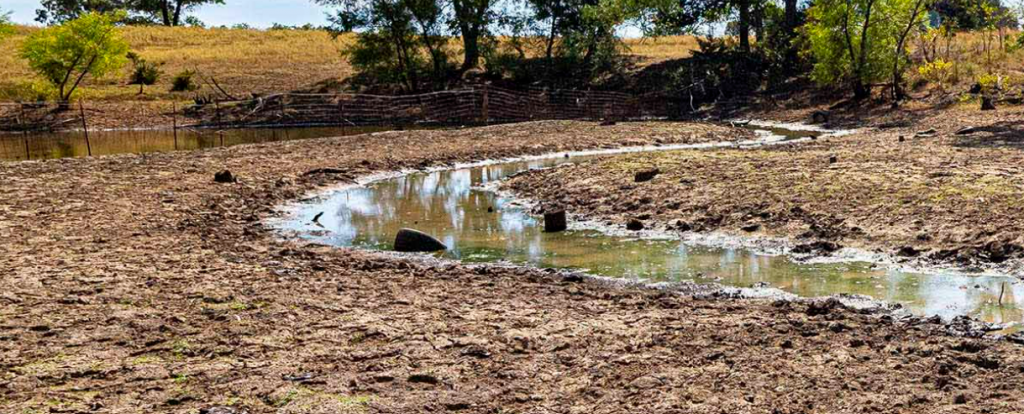
Welcome rains have fallen across the state in recent weeks, but much of Oklahoma is still in a drought.
Oklahoma State University Extension has rounded up the following drought relief funding channels that are currently available to producers and noted some of the most important drought policies in effect during this challenging season.
Water availability
Livestock
Fire, Disease and Loss
Risk Management Tactics
As a reminder, $3 million was set aside in mid-September from Oklahoma's emergency drought fund. Since then, Gov. Stitt has allocated another $20 million for additional drought-related initiatives.
"The Emergency Drought Commission has used $20 million of the $23 million for water initiatives such as drilling wells, piping water to livestock and pond cleanout," said Amy Hagerman, OSU Extension ag and food policy specialist, on OSU Agriculture's television show, SUNUP. "Applications must be submitted to local conservation districts by Nov. 28. The money will be split between each of the 77 counties to address needs identified in the applications, so about $250,000 per county."
Hagerman said some of the $20 million could be reallocated to other counties with higher numbers of applications.
"It's important to remember these programs are designed to be complimentary to federal drought programs," she said. "All federal programs are still at play."
Hagerman recommends talking to a county Extension educator about the biggest needs of an operation to sort out which federal or state programs work best.
For more information about agricultural risk management and drought policies, please contact Hagerman at 405-744-9811 or amy.hagerman@okstate.edu.
This week, Americans will gather around their dinner tables with family and loved ones to reflect upon and count our blessings. As one of our most unifying American traditions, it is important to join in collective gratitude.
Indeed, since the first pilgrims arrived on Plymouth Rock in 1621, our nation has long celebrated the tradition of Thanksgiving, including when America was still a young nation in 1789 and President George Washington declared "a day of public thanksgiving and prayer" and in the thick of the Civil War when President Abraham Lincoln reaffirmed in 1863 the need for this significant national observance every year. Many Thanksgivings later, it remains true that we live in a truly blessed nation with precious freedoms for which we should all be grateful.
Our nation is facing a tumultuous time, and we live in a challenging era. War is breaking out in Europe, the U.S. is in the midst of a recession and we are coming out of a very hard-fought and divisive election season. However, we still live in the greatest country in the world. We still operate in the freest society in the world, we are still the most secure country in the world and we still have the blessings of liberty in a way that would have astounded our Founding Fathers when they first embarked on the American experiment. Just as we have in the past, we will get through these hard times if we stick together as Americans.
Throughout this season of thankfulness, we should also be grateful that we can be with our families and loved ones during the holidays and remember those who cannot. While we thank our military members who could not be home, we should also think of our first responders who are always on duty to provide help in emergencies.
This Thanksgiving, we certainly thank the Lord for our family, friends and neighbors and most profoundly for the blessing of living in the United States of America. We are blessed for the sacrifices generations of Americans made before us to create, defend and improve upon this remarkable country. Happy Thanksgiving!

The Federal Reserve has increased interest rates in June, July, September, and November. This has slowed real estate markets as the borrowing rate has reached 4%. Buyers now have significant additions to cost, which means they are seeking lower prices overall. Sellers are now adjusting to this market change, and it will take time for those two sides to come together.
Land markets are impacted by these changes, especially for land that requires financing. However, the land market tends to revolve around more cash and instruments like 1031 exchanges, so it has not seen the whiplash we see in residential markets. We still see this when it comes to land tied to food production. Farmland with ready access to water is at an all-time high, and in several Midwest states, it is still inching upward. Land is real estate, but not all real estate behaves the same.
Food production has faced challenges in terms of natural gas and diesel supply, fertilizer prices, and additives such as nitrogen continue to be expensive and have experienced supply shortages. However, the good part here is that commodity prices are also high, and most sections of agriculture not affected by water shortage are seeing good returns in 2022. This combination of external factors has strengthened the value of the land on which food is grown.
As we move into 2023, we see increased conversation revolving around economic downturns and market corrections. There is a lot of fear-based language in markets, but that has historically been a good thing for the land industry. Many investors push money into land to hedge against market volatility. Rural land tends to be a protective investment against this kind of market volatility.
One place where we see a bit more market correction is out West, where demand over the past two years has been extremely high. This high demand drove land values to some of their highest levels on record. We look at this as a proper market correction. We hear "decline," but that's not how we see it. We are witnessing a market slowly moving back to a more realistic and sustainable level than we have seen over the past two years. So, the Western markets are not so much correcting as they are normalizing. Keep in mind, though, that areas experiencing water crises might see a bit more price fluctuation than other lands.
This is a blanket statement, and there are always exceptions, but for the past two years, we have seen land selling merely for the value of land. There were a lot of purchases made by individuals who wanted a more rural lifestyle and first-time farmers. We are seeing more emphasis on what is actually on that land, whether hunting tracts, farmland with plentiful crops, or ranches with plenty of pasture and water. We are seeing more experienced buyers who plan on working the land themselves, and they know the value of it.
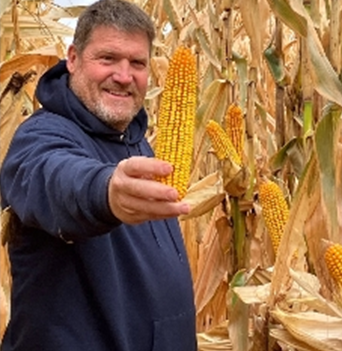
Tar spot has spread across much of the Corn Belt, and while it arrived too late in 2022 to have a major impact for most farmers, farmers know its spores can overwinter in corn residue. That has heightened attention on residue management, particularly for corn-on-corn acres that are more prone to diseases like tar spot, anthracnose and gray leaf spot.
Goals of residue management
"Tar spot has become such a challenging and widespread disease," comments Joe Stephan, an AgriGold agronomist and farmer in Indiana and Michigan. While AgriGold has some of the best tar spot tolerance products on the market, the germplasm pool hasn't yet delivered fully resistant products. "That means we also need to incorporate old-school ways of managing the disease focused on residue breakdown," he says.
"When we talk about residue management, we're trying to reduce the amount of pathogen that's in that field that can impact the following crop," Stephan explains. "I suspect there will be more acres of corn in 2023, and some of those will come from corn-after-corn acres. When you're in a continuous corn scenario, there's a lot of residues that pathogens can live in, increasing the risk of disease the following season.
"We try to mitigate some of that with fungicides, but I think there's a lot of wisdom in trying to reduce residue that's in the field," he adds. Even if you are doing a good job managing residue, Stephan notes that diseases can blow in from neighboring fields.
One of the most critical elements of residue management is getting good soil-to-residue contact. Stephan explains, "That allows microbes and earthworms in the soil to break down residue and the pathogens it contains."
Tools for managing residue
"Getting residue in contact with the soil doesn't necessarily mean burying it," according to Stephan. "Managing residue might involve steps like using stalk stompers on corn heads to push the residue down or a making a light pass with a vertical-tillage tool to make sure you get that stalk knocked down and in contact with the soil."
More aggressive tillage that buries residue deep is popular in some parts of the U.S. While Stephan says that's good for breaking down residue, it also opens the potential for erosion via wind or water. He recommends those doing heavier tillage focus on less erodible land.
Other tools that can help include chopping corn heads that "chop up that residue and allow the leaves to get down in better contact with the soil," Stephan says. "If a farmer uses a chopping corn head, rotary mower, or vertical tillage to help manage tar spot residue, he or she should make sure to follow that up in the spring with row cleaners to try to get as uniform environment for that seed as possible.
"Some are also applying biologicals and stubble digestors to help break down residue or increase microbial activity," he continues, adding, "Anything you can do to speed up or increase breakdown is good."
Stephan is also a proponent of managing disease pressure with fungicides, especially for corn-on-corn acres. "Fungicides address two sides of the disease triangle, making a susceptible host less susceptible and, in some forms, reducing the amount of pathogen," he explains.
He encourages farmers to start making plans, talking to ag retailers and making fungicide purchases for the 2023 growing season now. "The days of calling up an ag retailer in July and saying you want to spray fungicide are over for now," Stephan says.
Placement of residue matters, too
Stephan has two philosophies when it comes to tillage. "One, you either are aggressive and move residue down below the main part of the root zone (from 0 to 4 inches deep) or two, you keep residue very shallow, which is where vertical tillage comes into play."
He explains, "Putting residue in that root-zone band can be problematic because those microbes will fight the corn plant for nitrogen. And the microbes will win."
That fight for nitrogen is why Stephan is concerned so many farmers are jumping on the bandwagon for high-speed disc tillage. "They drive fast and do a beautiful job, but they incorporate corn residue right into the root zone," he explains. "I'm worried farmers could show nitrogen deficiency on their corn because the nutrients are being utilized by bacteria first." A look to the future
The spread of diseases like tar spot, along with an increased focus on reduced tillage and cover crops, signals managing residue will remain a major focus. Thankfully, farmers have many options doing so. If you need help determining which practices might be the best fit for your farm, reach out to your local AgriGold agronomist

The National Cattlemen's Beef Association (NCBA) announces that Franki Moscato of Oshkosh, Wisconsin, is the winner of the 10th annual National Anthem Contest, sponsored by Norbrook®. Moscato will sing the "Star-Spangled Banner" at the 2023 Cattle Industry Convention & NCBA Trade Show in New Orleans during the Opening General Session as well as at the Friday night "Party Gras" concert.
"Farming has been part of my family's history since before my ancestors arrived from Wales in 1857," said Moscato. "It is an honor to be chosen to sing for an industry that means so much to me."
Moscato first sang the National Anthem at the age of 11, has performed at Lambeau Field and competed on the television show "American Idol". She was cast in two feature films and a human trafficking documentary series used in schools across the nation. Moscato is actively engaged in her community as a hospital volunteer, and she created the Franki Moscato Foundation to fight the growing teen suicide epidemic. She inspires kids to recognize bullying and suicide awareness through regular school assembly performances and keynote presentations.
"My goal is to inspire people of all ages to try their best, to take risks and to do things that they otherwise wouldn't attempt," said Moscato.
As the winner of the contest, Moscato will receive roundtrip airfare to New Orleans, hotel room for three nights, convention registration, a meet-and-greet hosted by Norbrook®, plus a pair of boots, jeans and a shirt from Roper or Stetson. Online voting by the public determined the winner.
The annual Cattle Industry Convention & NCBA Trade Show is the oldest and largest convention for the cattle business. The 2023 convention is Feb. 1-3, and features education, entertainment and meetings of NCBA, Cattlemen's Beef Board, CattleFax, National Cattlemen's Foundation and American National CattleWomen. For best pricing, register before December 1 at convention.ncba.org
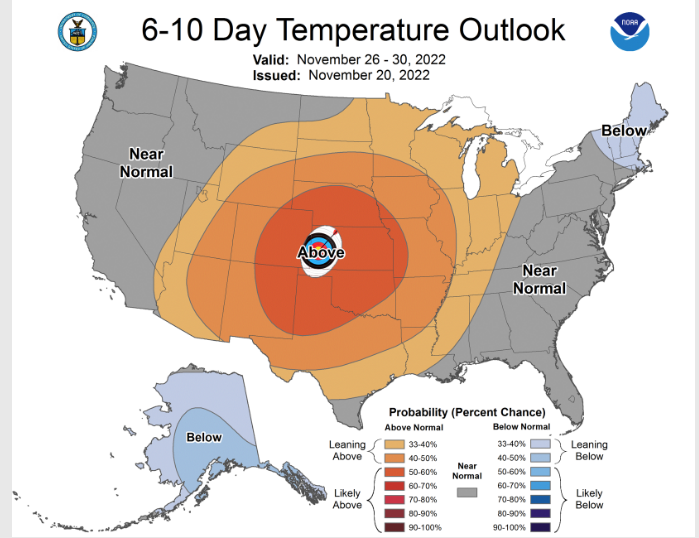
Its been chilly since the cold front blew in back on November 10th. According to State Climatologist Gary McManus, "This is the most serious below-normal period we've seen in the state since...well, we haven't seen anything like this in the state since probably Feb. 2021"
McManus said we have seen periods where we were colder, but for the extent and magnitude, its been almost two years. McManus says our entire summer in Oklahoma was well above normal temps, and that stretched back into May and into October. However, McManus says we will have a near-to-above-normal stretch of weather to complete Thanksgiving week, as well as to end the month.
Thanksgiving Day should be pretty nice with near normal temps and some light rain possible across Eastern Oklahoma.
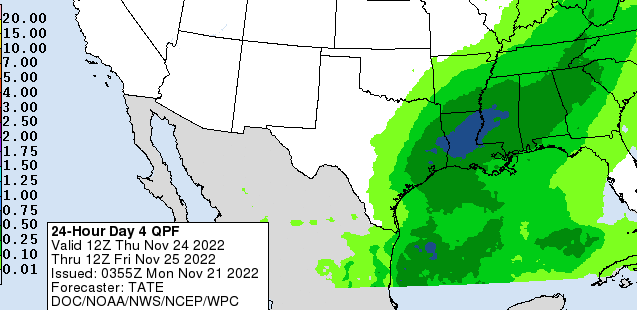
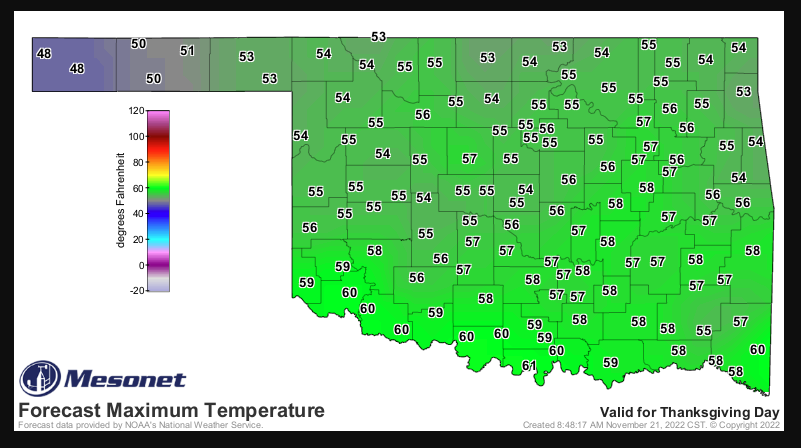
McManus says the forecast looks fairly boring for the rest of the week, "All in all, though, the weather looks fairly boring to the extent of accurate forecasts, and even beyond (inaccurately). Boring can be good if you're traveling, but not so great if you're in drought." To read the latest Ticker from Gary McManus, click here:
November 21 in Mesonet History*:
Record Maximum 82 F at WAUR in 2010
Record Minimum 13 F at GOOD in 2007
Record Rainfall 4.52" at TALI in 2011
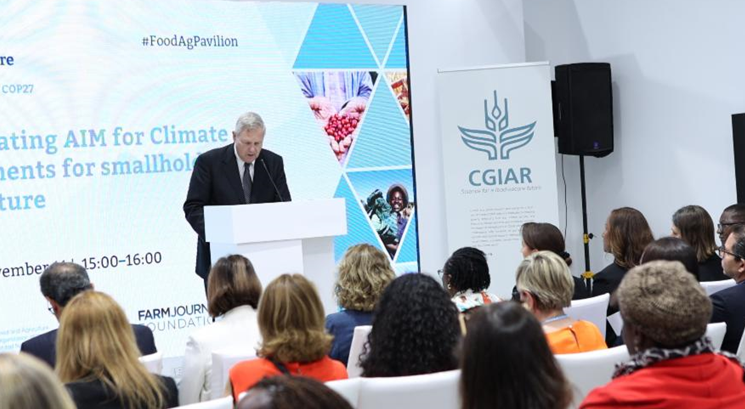
On Friday, November 11, Farm Journal Foundation and CGIAR held an event at COP27 in Egypt focusing on accelerated investments in climate-smart agriculture and food systems innovation, spearheaded through the Agriculture Innovation Mission for Climate (AIM for Climate) initiative. These investments will benefit smallholder farmers in developing countries in becoming more resilient against climate change.
AIM for Climate is a global initiative launched last November at the 26th United Nations Climate Change Conference (COP26) by the United Arab Emirates and the United States. Supported by 42 government partners and 235 non-governmental partners such as international organizations, nonprofits, and private-sector companies, AIM for Climate today announced an increased investment of more than $8 billion, up from $4 billion at COP26, by partners in climate-smart agriculture and food systems innovation and a tripling of innovation sprints and partners since its launch.
Click to Tap and watch below:
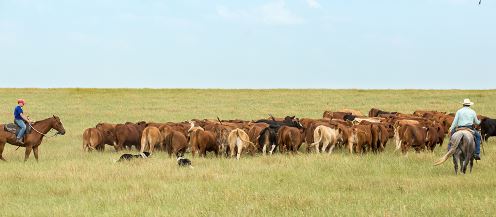
Mondays, Dr. Derrell Peel, Oklahoma State University Extension Livestock Marketing Specialist, offers his economic analysis of the beef cattle industry. This analysis is a part of the weekly series known as the "Cow Calf Corner." Today, Dr. Peel talks about the latest dynamics in the cattle industry.
The latest Cattle on Feed report pegs November 1 feedlot inventory at 11.706 million head, 98.0 percent of last year and the second consecutive monthly year-over-year decrease. The 12-month moving average of feedlot totals, which shows the average feedlot total for the previous year, peaked in September 2022 (Table 1). Feedlot inventories are expected to decrease year over year for the foreseeable future. Table 1 shows how cattle industry dynamics have developed since the last cyclical peak, with peak totals for each category highlighted in yellow. The peak average cow herd and calf crop occurred in 2018 with the peak feeder supply noted on January 1, 2019.
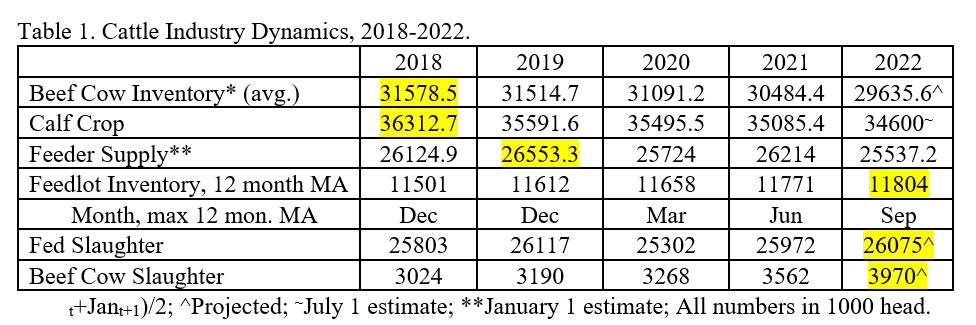
The combination of effects from the pandemic in 2020 and drought since 2020 has pushed the peak in feedlot numbers and cattle slaughter into 2022, well past the cyclical peak in the calf crop in 2018. The pandemic in 2020 caused a backlog of cattle in feedlots and in the country. As a result, the estimated feeder supply on January 1, 2021 was higher than 2020. The drought in 2021 and 2020 caused cattle to be marketed earlier than usual and resulted in reduced heifer retention and increased heifer and cow slaughter in 2021 and 2022. Early marketing of cattle, reduced heifer retention and herd liquidation have kept feedlot inventories higher in 2022 and temporarily increased beef production. Beef production is projected at a record large 28.4 billion pounds in 2022 as a result of the highest total cattle slaughter in 15 to 20 years.
As 2022 comes to a close, it appears that feedlot inventories have peaked and cattle slaughter should begin to decline in the next few months. On October 1, 2022, the inventory of heifers in feedlots was higher than the previous year, with the heifer percentage of total feedlot inventories the highest in 21 years. The number of heifers in feedlots should begin to decline and will drop sharply when herd rebuilding begins. Feedlot inventories are beginning to reflect the fact that feeder cattle supplies have been declining since 2019. With drought conditions continuing, it is unclear when herd liquidation will cease and herd rebuilding can begin. However, it is clear that feedlot production, cattle slaughter beef production will fall in 2023. How much they will fall depends on when drought conditions will improve. Nevertheless, declining feedlot supplies mean that all levels of the cattle are finally on the same page and are reflecting the tighter cattle supplies in the country.

After months of gathering feedback from farm and rural leaders across the Midwest, the Center for Rural Affairs has released its 2023 farm bill platform.
The platform outlines opportunities for improvement within working lands conservation, access to USDA programs, crop insurance, rural entrepreneurship, and small meat processing.
"These recommendations will protect and improve the Conservation Stewardship and Rural Microentrepreneur Assistance programs," said Kayla Bergman, policy manager for the Center. "They will also improve access to USDA programs for underserved producers, better serve organic producers or those using cover crops looking to purchase crop insurance, and secure long-term support for small meat processors."
The farm bill priorities continue the Center's decades-long work of addressing the real needs of rural America, Bergman said.
"We want to make sure farmers, ranchers, and rural communities have access to farm bill programs and understand how they work," she said "This platform was developed after dozens of one-on-one conversations with agricultural producers, several round table discussions, a paper survey sent to nearly 5,000 individuals, and numerous conversations with organizations and individuals participating in U.S. Department of Agriculture programs."
The current farm bill expires on Sept. 30, 2023.
To read and download the Center's "A Farm Bill for Rural America: 2023 Farm Bill Platform," visit cfra.org/publications.
The U.S. Department of Agriculture (USDA) began mailing ballots this week for the Farm Service Agency (FSA) county and urban county committee elections to all eligible agricultural producers and private landowners across the country. Elections are occurring in certain Local Administrative Areas (LAA) for these committee members who make important decisions about how federal farm programs are administered locally. Producers and landowners must return ballots to their local FSA county office or have their ballots be postmarked by Dec. 5, 2022, in order for those ballots to be counted.
"County committees provide an opportunity for producers to play a meaningful role in delivering farm programs, but in order for county committees to be effective, they must truly represent all who are producing," said Steve Kouplen, state executive director for FSA in Oklahoma. "Voting in these elections is your opportunity to help ensure our county committees in Oklahoma. Elect the diversity of our agriculture. Your voice and vote matter, don't miss your chance to cast your ballot."
Producers must participate or cooperate in an FSA program to be eligible to vote in the county committee election. A cooperating producer is someone who has provided information about their farming or ranching operation but may not have applied or received FSA program benefits. Additionally, producers who are not of legal voting age but supervise and conduct farming operations for an entire farm are eligible to vote in these elections.
Each committee has from three to 11 elected members who serve three-year terms, and at least one seat representing an LAA is up for election each year. Ballots must in the mail or delivered in person by close of business Dec. 5, 2022, to be counted. Newly elected committee members will take office Jan. 1, 2023.
Producers can find out if their LAA is up for election and if they are eligible to vote by contacting their local FSA county office. Eligible voters who do not receive a ballot in the mail can request one from their local FSA county office. Visit farmers.gov/service-locator to find your local USDA Service Center and fsa.usda.gov/elections for more information.
More Information USDA touches the lives of all Americans each day in so many positive ways. In the Biden-Harris administration, USDA is transforming America's food system with a greater focus on more resilient local and regional food production, fairer markets for all producers, ensuring access to safe, healthy and nutritious food in all communities, building new markets and streams of income for farmers and producers using climate smart food and forestry practices, making historic investments in infrastructure and clean energy capabilities in rural America, and committing to equity across the Department by removing systemic barriers and building a workforce more representative of America. To learn more, visit usda.gov.
USDA is an equal opportunity provider, employer and lender.
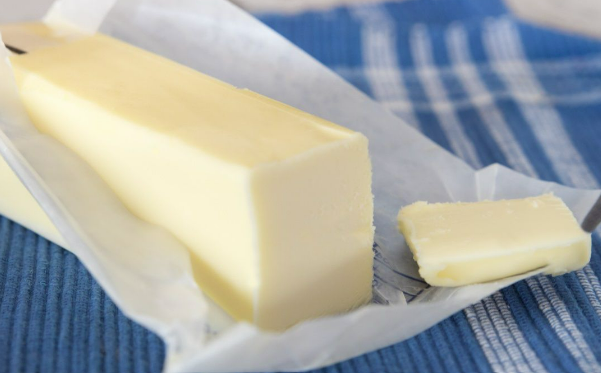
First, the bad news (for consumers): Heading into the holiday baking season, butter prices are, indeed at an all-time high. That's for a few reasons. The biggest one is simple demand. Americans love butter, with the highest per capita consumption since the 1960s leading to the highest overall demand ever for the nation's pre-eminent spread and ubiquitous baking ingredient. Overseas markets are also getting in on the act, with another record year for dairy trade possible in 2022.
Meanwhile, butter supplies haven't, as of yet, been able to keep up with that demand enough to stabilize prices. That's especially been the case in the past couple months, when retailers traditionally stock up in anticipation of the holidays. And of course, once you get past the actual cost of making butter itself and then add transportation, packaging, labor, and all the other the costs that are making everything else more expensive too, you have a recipe for record butter prices on the grocery shelf. And that's making consumers (and media) notice.
But are higher prices the same thing as a "shortage"? We posit, not. Are store shelves empty? There's always some one-off instances somewhere, but with those exceptions, no. Are crowds of consumers lining up for blocks outside local supermarkets to buy out rationed supplies, like early-COVID toilet paper? (Everyone stand six feet apart, please!) No again. And is anyone who wants to buy butter currently being deprived of anything other than $5 should they choose a four-pack, maybe a little extra if it's extra-creamy European Style?!?? (And often less is you catch a good sale.)
That's three strikes, and still, no one's out of butter. It's easy to understand the concern: Butter is, after all, nature's most perfect sandwich spread, the ingredient that makes a top-quality croissant worthy of a nasal-sounding French pronunciation. And even with all this, the underlying concern that's fueled the "shortage" worries is itself showing signs of fading. Milk production is on the rise again, and with that, butter futures traded on commodities markets are declining. While some product prices rise and stay that way, butter goes up and down. Take a look at this chart -- a dozen years of butter-price history that includes both the value of butterfat to a farmer (blue line) and the cost at the grocery store (orange line). See how they move together – and see where the blue line's expected to go in 2023.
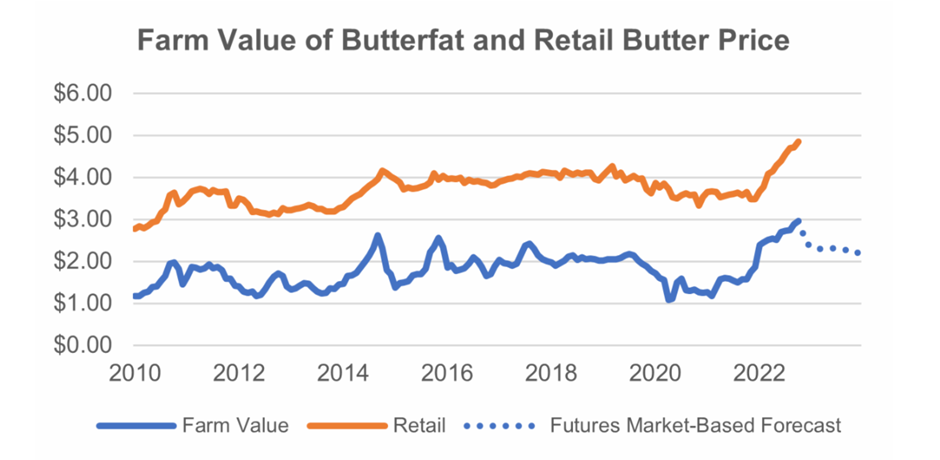
"What goes up, must come down" applies to butter. Production chases prices, and eventually higher production pushes prices down. That's not always so great for farmers, by the way – and one nice thing for them about current pricing is that it's helping farmers smooth out a challenging few years and rebuild the balance sheets they need to thrive. So be patient if you're feeling sticker shock, and in the meantime, feel good that you're helping a farmer. But above all, don't feel like you're at risk of a butterless Christmas. The food chain, and the law of supply and demand, are ensuring that doesn't happen. The holidays would be less happy without butter, but it just ain't gonna happen. So Happy Thanksgiving. And here's to, um, butter days ahead.
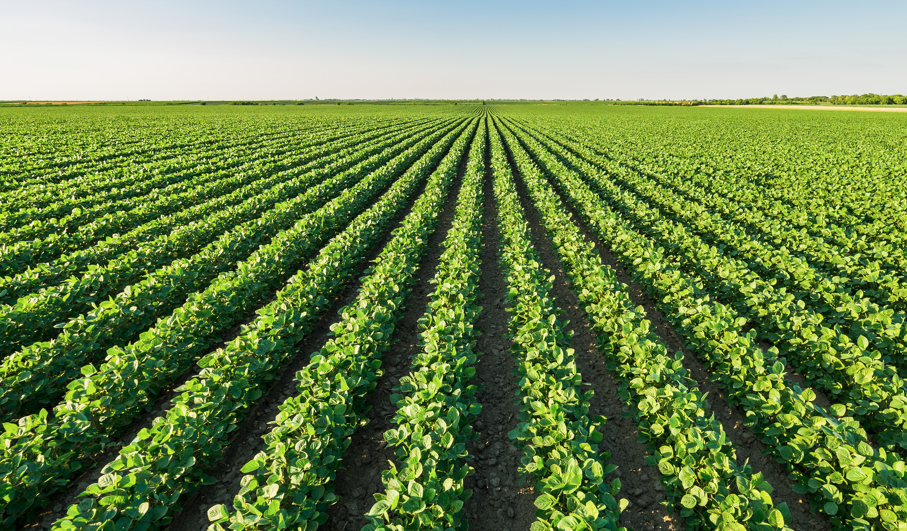
Agriculture Secretary Tom Vilsack today announced plans for additional emergency relief and pandemic assistance from the U.S. Department of Agriculture (USDA). USDA is preparing to roll out the Emergency Relief Program (ERP) Phase Two as well as the new Pandemic Assistance Revenue Program (PARP), which are two programs to help offset crop and revenue losses for producers. USDA is sharing early information to help producers gather documents and train front-line staff on the new approach.
"We have worked diligently to help agricultural producers bounce back from devastating natural disasters as well as the coronavirus pandemic through an extensive suite of programs," said Vilsack. "No matter how well we design these targeted efforts, we often find that some producers fall through the cracks or were harmed more severely than their neighbors. These new programs apply a holistic approach to emergency assistance – an approach not focused on any one disaster event or commodity but rather one focused on filling gaps in assistance for agricultural producers who have, over the past few years, suffered losses from natural disasters and the pandemic."
ERP Phase Two will assist eligible agricultural producers who suffered eligible crop losses, measured through decreases in revenue, due to wildfires, hurricanes, floods, derechos, excessive heat, winter storms, freeze (including a polar vortex), smoke exposure, excessive moisture and qualifying droughts occurring in calendar years 2020 and 2021.
PARP will assist eligible producers of agricultural commodities who experienced revenue decreases in calendar year 2020 compared to 2018 or 2019 due to the COVID-19 pandemic. PARP will help address gaps in previous pandemic assistance, which was targeted at price loss or lack of market access, rather than overall revenue losses.
Emergency Relief Program Phase Two
ERP is authorized under the Extending Government Funding and Delivering Emergency Assistance Act, which includes $10 billion in assistance to agricultural producers impacted by wildfires, droughts, hurricanes, winter storms and other eligible disasters experienced during calendar years 2020 and 2021.
Phase Two builds on ERP Phase One, which was rolled out in May 2022 and has since paid more than $7.1 billion to producers who incurred eligible crop losses that were covered by federal crop insurance or Non-insured Crop Disaster Assistance Program.
ERP Phase Two includes producers who suffered eligible losses but may not have received program benefits in Phase One. To be eligible for Phase Two, producers must have suffered a loss in allowable gross revenue as defined in forthcoming program regulations in 2020 or 2021 due to necessary expenses related to losses of eligible crops from a qualifying natural disaster event.
Eligible crops include both traditional insurable commodities and specialty crops that are produced in the United States as part of a farming operation and are intended to be commercially marketed. Like other emergency relief and pandemic assistance programs, USDA's Farm Service Agency (FSA) continues to look for ways to simplify the process for both staff and producers while reducing the paperwork burden. The design of ERP Phase Two is part of that effort.
In general, ERP Phase Two payments are expected to be based on the difference in certain farm revenue between a typical year of revenue as will be specified in program regulations for the producer and the disaster year. ERP Phase Two assistance is targeted to the remaining needs of producers impacted by qualifying natural disaster events, while avoiding windfalls or duplicative payments. Details will be available when the rule is published later this year.
Deadline for Emergency Relief Program Phase One
Producers who are eligible for assistance through ERP Phase One have until Friday, Dec. 16, 2022, to contact FSA at their local USDA Service Center to receive program benefits. Going forward, if any additional ERP Phase One prefilled applications are generated due to corrections or other circumstances, there will be a 30-day deadline from the date of notification for that particular application.
Pandemic Assistance Revenue Program
PARP is authorized and funded by the Consolidated Appropriations Act of 2021.
To be eligible for PARP, an agricultural producer must have been in the business of farming during at least part of the 2020 calendar year and had a certain threshold decrease in allowable gross revenue for the 2020 calendar year, as compared to 2018 or 2019. Exact details on the calculations and eligibility will be available when the forthcoming rule is published.
How Producers Can Prepare
ERP Phase Two and PARP will use revenue information that is readily available from most tax records. FSA encourages producers to have their tax documents from the past few years and supporting materials ready, as explained further below. Producers will need similar documentation to what was needed for the Coronavirus Food Assistance Program (CFAP) Phase Two, where a producer could use 2018 or 2019 as the benchmark year relative to the disaster year.
In the coming weeks, USDA will provide additional information on how to apply for assistance through ERP Phase Two and PARP. In the meantime, producers are encouraged to begin gathering supporting documentation including:
Producers should also have, or be prepared to have, the following forms on file for both ERP and PARP program participation:
Most producers, especially those who have previously participated in FSA programs, will likely have these required forms on file. However, those who are uncertain or want to confirm should contact FSA at their local USDA Service Center.
In addition to the forms listed above, underserved producers are encouraged to register their status with FSA, using Form CCC-860, Socially Disadvantaged, Limited Resource, Beginning and Veteran Farmer or Rancher Certification, as certain existing permanent and ad-hoc disaster programs provide increased benefits or reduced fees and premiums.
More Information
Through proactive communications and outreach, USDA will keep producers and stakeholders informed as program eligibility, application and implementation details unfold.
USDA touches the lives of all Americans each day in so many positive ways. In the Biden-Harris administration, USDA is transforming America's food system with a greater focus on more resilient local and regional food production, fairer markets for all producers, ensuring access to healthy and nutritious food in all communities, building new markets and streams of income for farmers and producers using climate smart food and forestry practices, making historic investments in infrastructure and clean energy capabilities in rural America, and committing to equity across the Department by removing systemic barriers and building a workforce more representative of America. To learn more, visit usda.gov.
USDA is an equal opportunity provider, employer and lender.
Mon, 21 Nov 2022 08:00:09 CST
The Beef Checkoff-funded Trailblazers program is seeking applications for its next class of beef advocates. Trailblazers, developed by the National Cattlemen's Beef Association (NCBA), a contractor to the Beef Checkoff, takes advocacy to the next level by giving participants the tools and training they need to promote beef to new audiences while addressing and correcting myths.
"Trailblazers develops the next generation of beef advocates through a highly engaging and interactive program," said Chandler Mulvaney, director of grassroots advocacy & spokesperson development at NCBA. "Our goal is to empower the beef community to share their stories, which ultimately helps safeguard the work of cattle farmers and ranchers across the country."
Trailblazers is looking for new spokespeople to participate in a year-long hands-on program designed to train, equip and empower beef advocates. Selected candidates receive training to become expert communicators, excel in media interviews and understand how to build confidence in beef related practices when talking to consumers.
Each year, 10 new Trailblazers are selected to create a tight-knit community that works together to find solutions to social and practical issues impacting the beef community. Throughout the year, Trailblazers receive advanced in-person and virtual training from subject matter experts, learning how to effectively engage on various social media platforms, interact with the media, and enhance public speaking skills. Upon completion of the program, Trailblazers serve as industry spokespeople and inform beef advocates at the local and state levels on advocacy, media and spokesperson best practices.
"The Trailblazers program increased my confidence to share the truth about beef in my own unique way while providing the resources, experiences and network to do so," said Trailblazer Shaye Koester of North Dakota. "This professional, yet fun program is like no other."
Applications will be accepted through December 30 and selected participants will be notified mid-January. Applicants must be 21 years of age, have completed their Masters of Beef Advocacy certification, and provide at least two references with their online application. To apply, visit the website and for more information, contact Chandler Mulvaney at cmulvaney@beef.org.
The National Cattlemen's Beef Association (NCBA) and the Public Lands Council (PLC) announced their opposition to the U.S. Fish and Wildlife Service's (FWS) final rule to list the lesser prairie chicken under the Endangered Species Act.
"Over and over the science has proven that healthy, diverse rangelands – the exact kind of landscape maintained by livestock grazing – are where the lesser prairie chicken thrives. Cattle ranchers' efforts to conserve these acres are absolutely critical to the survival of the species," said NCBA Executive Director of Natural Resources and Public Lands Council Executive Director Kaitlynn Glover. "We are deeply disappointed by the Fish and Wildlife Service's decision to impose redundant bureaucracy and punitive restrictions on the very same people that we have to thank for the lesser prairie chicken's continued existence on the range."
To make matters worse, the Service is also establishing a 4(d) rule for the Northern DPS that enables them to appoint private third parties – such as environmental activist groups – as the grazing authorities in the range of the LPC. FWS has stipulated that cattle producers in the Northern DPS range will only qualify for legal protection under the 4(d) rule if they are following a grazing management plan that has obtained arbitrary approval from a yet-to-be-named, FWS-approved third party. By contrast, other agricultural practices that are listed as key factors in the Service's decision are granted far more flexibility.
Designing a third-party verification system to empower distant bureaucrats over land managers and ranchers with decades of experience, with parameters that blatantly prioritize political objectives over sound science, effectively ensures that the only use of the 4(d) rule will be to obstruct grazing activities.
The rule establishes two Distinct Population Segments (DPS) for the species: the Southern DPS that covers New Mexico and the southwest Texas panhandle, and the Northern DPS that covers southeastern Colorado, Kansas, Oklahoma, and the northeast Texas panhandle. The Southern DPS will be listed as endangered and the Northern DPS will be listed as threatened. The final rule does not include any critical habitat designation. Cattle grazing provides immense benefit by conserving the very habitat the species needs to thrive. These birds favor diverse rangeland with a variety of plant species rather than uniform grasslands or cropland.
"To truly support lesser prairie chicken habitat, the Fish and Wildlife Service should make it easier for ranchers to graze, not harder," said Glover.
| If you're a feedyard operator, veterinarian or nutritionist, we need your help. Certified Angus Beef is seeking your input about strategies to mitigate and manage heat stress in feedyards. Your feedback will help identify base efforts for future research and the development of improved tools for feedyards to manage heat stress. If you are directly involved in the cattle feeding industry, please complete this survey before December 1. It will take approximately 20 minutes to complete. We ask that the survey be completed by the individual feedyard managers at each location rather than by the sole manager of all the yards for a company or organization to help us gather more detailed data. This research effort is a collaboration between Certified Angus Beef, the Angus Foundation, Kansas State University and Colorado State University. At the beginning of the survey, we ask for your consent to participate in this research, and the results will be published in aggregate form. If at any time you do not wish to answer a survey question, you may skip to the next question without terminating the survey. Responses are anonymous; all procedures have been approved by the Colorado State University Institutional Review Board. |
If you have any questions about the survey, or research objectives, please contact a member of the research team (Dr. Lily Edwards-Callaway, Lily.Edwards-Callway@colostate.edu; Dr. Sara Place, Sara.Place@colostate.edu; Dr. Anthony Tarpoff, tarpoff@ksu.edu).
USDA's Natural Resources Conservation Service (NRCS) will use the investments provided through IRA-funded conservation programs to support farmers and ranchers in adopting and expanding climate-smart activities and systems. NRCS asks for comments on how to target program benefits, quantify impact, and improve program delivery and outreach, especially for underserved producers. Comments are due Dec. 21, 2022. NRCS will identify immediate changes that can be made in fiscal year 2023 and will continue to identify and adopt additional changes in future years.
"Agriculture is at the forefront of the nation's effort to address climate change, and we want to hear from people on the ground how to implement our programs to maximize climate benefits, promote equity and assist all producers," said Agriculture Secretary Tom Vilsack. "From climate-smart agriculture, to supporting healthy forests and conservation, to tax credits, to biofuels, infrastructure and beyond, this legislation provides USDA with significant additional resources to lead this historic charge."
The Inflation Reduction Act provided unprecedented funding levels for several of the existing programs that NRCS implements. The increased funding levels begin in fiscal year 2023 and rapidly build over four years, totaling these additional amounts:
NRCS is asking for public input on to how to best maximize benefits for climate mitigation, including targeting practices and programs that provide quantifiable reductions in greenhouse gas emissions. Additionally, NRCS is requesting feedback to help identify strategies and provide recommendations on how to maximize, target, monitor, and quantify improvements to soil carbon, reductions in nitrogen losses, and the reduction, capture, avoidance, or sequestration of carbon dioxide, methane or nitrous oxide emissions associated with agricultural production. NRCS is also seeking ideas for how to further streamline and improve program delivery to increase efficiencies and expand program access for producers, especially underserved producers.
Public comments can be submitted to NRCS.IRA.Input@usda.gov until Dec. 21, 2022. More details are available in this Federal Register notice.
On August 16, President Biden signed the Inflation Reduction Act into law. It is a historic, once-in-a-generation investment and opportunity for the agricultural communities that USDA serves. The Inflation Reduction Act will help producers stay on the farm, prevent producers from becoming ineligible for future assistance and promote climate-smart agriculture by increasing access to conservation assistance. In October, USDA took action using Inflation Reduction Act funds to immediately provide relief to qualifying distressed borrowers whose operations are at financial risk while working on making transformational changes to loan servicing.
USDA has already provided nearly $800 million in assistance to financially distressed borrowers and has outlined steps to administer up to an additional $500 million in payments.
USDA touches the lives of all Americans each day in so many positive ways. Under the Biden-Harris administration, USDA is transforming America's food system with a greater focus on more resilient local and regional food production, fairer markets for all producers, ensuring access to safe, healthy and nutritious food in all communities, building new markets and streams of income for farmers and producers using climate smart food and forestry practices, making historic investments in infrastructure and clean energy capabilities in rural America, and committing to equity across the Department by removing systemic barriers and building a workforce more representative of America. To learn more, visit usda.gov.
Correction: An earlier version of this news release listed the incorrect deadline. On Nov. 21, the deadline was corrected to Dec. 21.
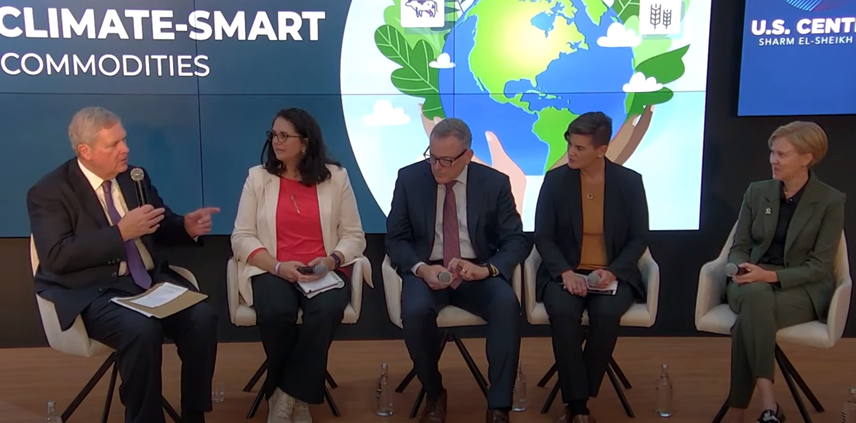
Sorghum was recently spotlighted during COP27 hosted in Sharm El-Sheikh, Egypt, at the U.S. Center on Adaptation and Agriculture Day. This conference highlighted events and initiatives that focused on how U.S. leadership is providing solutions to the climate crisis. Former Sorghum Checkoff Chairwoman and National Sorghum Producers member Verity Ulibarri represented U.S. agriculture producers, speaking to the climate-smart benefits of sorghum and showcasing how U.S. sorghum farmers are poised to preserve our world and conserve resources with the help of NSP's $65 million USDA Partnerships for Climate-Smart Commodities grant initiative.
With 6 seats in the House Chamber still yet to be called, Republicans officially gained the 218 seats necessary to control the House of Representatives following Representative Mike Garcia's (R-CA) win in California's 27th Congressional District late Wednesday night. The Senate balance of power stands at 50-49, with Georgia's December 6 runoff election determining whether the chamber will remain evenly divided or if Democrats gain a one seat edge. Read more here.
USDA released a preview of ERP Phase II on Wednesday, which will take a significantly different approach from past disaster programs, including ERP Phase I. According to the release, payments will be calculated based on a comparison of income under tax records from either 2018 or 2019 and income under tax records from either 2020 or 2021. A payment is essentially equal to the amount by which benchmark year income exceeds income in the loss year in question, less any factor applied to keep the program within budget. The official rule containing the specifics is expected to be released late this year or early next year. Concerns have already been raised over the new approach. For example, a producer's income in 2020 or 2021 could be equal to or higher than that in 2018 or 2019 despite a significant crop loss. For instance, the producer could have sold his crop from the previous year in the loss year in question or he could have suffered a significant crop loss that was offset by income elsewhere. A whole farm approach to disaster aid was not envisioned by Congress when it authorized the program. USDA's press release on both programs may be viewed here.
Amongst the legislative items that many in Congress are seeking to enact into law before Christmas include an Omnibus Appropriations Bill for FY 2023, wrapping up all 12 appropriations bills that were supposed to have been enacted by September 30. This legislation must be enacted by December 16, the date on which the Continuing Resolution (CR) keeping government doors open is set to expire. A critically important element of this legislation would be the prevention of deeper budget sequestration from kicking in next year due to the $1.9 trillion in unpaid-for COVID-19 relief passed under reconciliation early last year.
Last December, Congress passed legislation to protect Medicare and farm programs from deeper cuts this year, but another bill is required to stave off such cuts next year. An extension of the Emergency Relief Program (ERP) could also be a part of this package as might provisions included in the House and Senate bills to address the serious problems caused by the cap on A&O under crop insurance, a provision to help rice producers who did not have higher crop prices to offset higher input costs, and other potential asks. The defense authorization bill is also thought to be a must-pass piece of legislation, though some key Congressional leaders have raised the possibility of delaying the measure until early next year. Tax extenders legislation is also in the mix of possible bills Congress might complete before the 117th Congress adjourns sine die. Read more here.
Extended disaster relief for producers for 2022 losses continues to be a major priority for sorghum farmers as much of the country remains gripped by severe, chronic drought while other parts have been impacted by hurricanes, freezes, and other natural disasters. Earlier this year, a bipartisan group of lawmakers introduced legislation in the House to extend ERP for 2022. Senator John Boozman (R-AR), the Ranking Member of the Senate Agriculture Committee, and Senator John Hoeven (R-ND), the Ranking Member on the Agriculture Appropriations Subcommittee, have previously suggested that ERP stood a good chance of being extended in the context of an omnibus. However, an extension is by no means guaranteed, and it is essential sorghum producers weigh in on the need for this extension with your representatives. The uncertainty also underscores the importance of continuing to strengthen Federal Crop Insurance which offers farmers certainty.
In a document intended for the U.S. House and Senate Agriculture Committees, leading agriculture groups, including National Sorghum Producers, called for "sufficient budgetary resources" needed in order to pass the 2023 Farm Bill. The document details farmer challenges such as market volatility, increased input prices, and devastating natural disasters, which have "tested the effectiveness of the farm safety net provided in the 2018 Farm Bill." The groups are requesting a departure from relying on off-budget ad-hoc assistance, which can be unpredictable, and asking Congressional leaders to instead invest more up-front into a comprehensive farm bill. NSP representative Tom Sell was featured on Agri-Talk this week to discuss this issue, along with other issues impacting America's farmers and ranchers. His segment can be heard here.
National Sorghum Producers and 331 other agriculture groups signed onto a letter addressed to Congressional leaders on Monday urging that Congress affirm through legislation the long-standing government position that the Federal Insecticide, Fungicide, and Rodenticide Act (FIFRA) occupies the field with respect to the regulation of crop protection products, to the exclusion of state and local laws and regulations of the same. In short, the groups asked Congress to affirm FIFRA's federal preemption over state and local laws. The likeliest vehicle for such a provision is the Omnibus Appropriations Bill but there will be considerable opposition from biotech opponents in and outside Congress.
Media and industry reports both suggest that a potentially devastating railroad strike could still materialize before Christmas and potentially in early December — December 5 or 9 — as union railroad workers continue to reject the proposed terms between railroads and workers that staved off a railroad strike before the elections. Such a strike it is feared would seriously exacerbate supply chain problems and inflation and work particular hardship on the nation's farmers and ranchers and agriculture sector. Read more here and here.
The price of diesel has risen nearly 50 percent this year, costing $5.35 per gallon on average. Rising prices across the board have hurt America's producers, and with the Energy Information Administration's announcement of a dwindling diesel reserve (the lowest levels since 2008), prices of the fuel have continued to rise. Read more here and here.
Senator Deb Fischer (R-NE) has shared her intent to introduce a bill that provides a clear path towards year-round E15. Senator Fischer has reportedly worked closely with the American Petroleum Institute and the Renewable Fuels Association in order to achieve a solution. Though there has been no legislative text brought forth yet, agriculture industry leaders including NCGA President Tom Haag and Growth Energy CEO Emily Skor have publicly voiced their support for the initiative. Read more here.
A number of USDA and USTR nominations remain in limbo in the U.S. Senate. Mr. Doug McKalip, who was nominated to serve as chief agriculture negotiator at USTR and Ms. Alexis Taylor, who was nominated to serve as USDA Undersecretary for Trade and Foreign Agricultural Affairs, await a full Senate confirmation vote. Mr. Jose Emilio Esteban, nominated to be undersecretary for food safety at USDA, and Ms. Stacy Dean, who the Biden Administration has tapped to formally lead USDA's food, nutrition and consumer branch, are also awaiting a confirmation hearing before the Senate Agriculture Committee but Ms. Dean reportedly faces stiff opposition. Read more here.
The EPA announced two different actions on biofuel this week, including an upcoming announcement regarding a final rule on canola and rapeseed oil lifecycle analysis, and meetings to discuss a proposed rule on RFS levels for the future. Meetings to discuss EPA's proposed rule on the volume requirements for 2023 and beyond under the Renewable Fuel Standard (RFS), as well as other meetings to discuss electric vehicles (EVs) and decarbonization efforts, have been scheduled. EPA committed via a court-approved agreement with Growth Energy to issue its proposed rule no later than Nov. 30. This does not affect the consent decree deadline for finalizing the RVOs by no later than June 14, 2023. Read more here and here.
Following a tense negotiation period, Russia's withdrawal and subsequent rejoining of the deal, Russia and Ukraine officially reached an agreement to extend the Black Sea Grain Initiative until March 18, 2023. Wheat and corn prices fell sharply following the U.N. announcement on Thursday morning. Details of the renewal have not yet been released but Russian officials have stated their interest in expanding the deal to include facilitation of Russian food and fertilizer exports. The Black Sea Grain Initiative, brokered with assistance from Turkey and the U.N., is critical in delivering vital food supplies to nations experiencing shortages and receiving food aid. Ukrainian President Volodymyr Zelenskyy has called for the deal to be extended indefinitely. Read more here.
Mon, 21 Nov 2022 05:54:58 CST
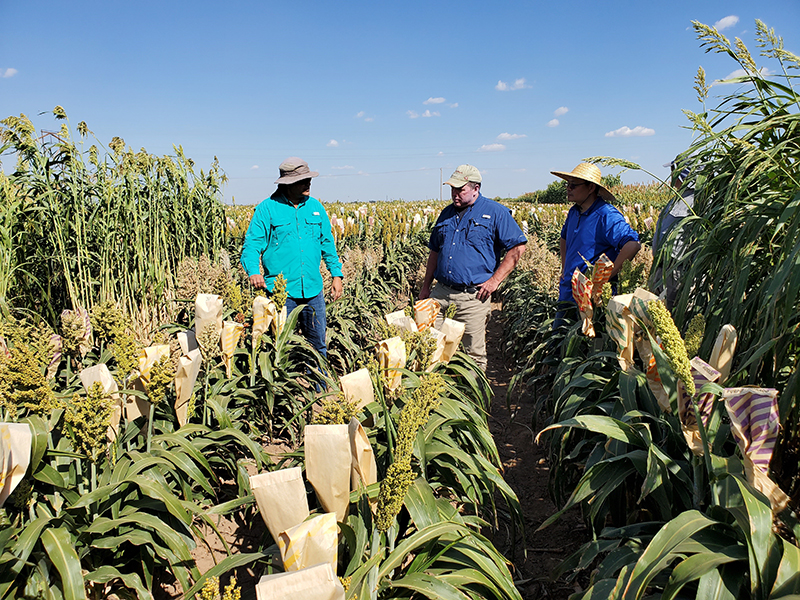
Sorghum has served as a food and feed crop for thousands of years, yet it can become poisonous under drought or freezing conditions. The problem is dhurrin, which breaks down to form prussic acid, also known as hydrogen cyanide.
But Purdue University's Mitch Tuinstra, professor of plant breeding and genetics and scientific director of the Institute for Plant Sciences in the College of Agriculture, has developed a dhurrin-free sorghum technology that will set farmers' minds at ease. The S&W Seed Co. of Longmont, Colorado, has licensed the technology, which will be widely available to growers in 2023.
"Cyanide poisoning is something that people who graze cattle on sorghum always have to be concerned about. It doesn't happen all that often. But when it does happen, it's a serious thing. This technology eliminates that risk," said Brent Bean, director of agronomy at the United Sorghum Checkoff Program in Lubbock, Texas. USCP is a producer-funded organization dedicated to improving the sorghum industry through research, promotion and education.
At $1,300 or more per steer, cattle are a big investment.
"You lose even one, that is a big downside to the bottom line," Bean said.
Making cyanide helps sorghum fend off chewing insects and grazing animals. But farmers still use sorghum as a forage crop because it works well in high temperatures, it tolerates drought and it produces a lot of feed with fairly minimal input.
"Sorghum is grown where it's too hot and dry to grow other crops," said Tuinstra, who also is Purdue's Wickersham Chair of Excellence in Agriculture Research. "It's grown where you don't have other options. You can't grow corn in these environments because it won't survive."
Farmers who grow sorghum in such environments have to manage it carefully to minimize the risk.
"Every farmer I talk to has stories about animals having problems, either small problems or major problems," said Tuinstra. "This is a technology that can help alleviate that concern."
Tuinstra began thinking about removing dhurrin from sorghum in late 2008.
"I thought that would be interesting because we know the genes, the enzymes, the biochemistry, but many questions about dhurrin metabolism remain unanswered," he said. "So, the next summer, we started producing the genetic materials for this study."
Sorghum is used worldwide, including in Africa, Australia, North and South America, and South Asia.
"Sorghum is an important crop in any place you have a hot, dry climate. And with climate change, that's potentially very important," said Jay Hulbert, president and CEO of Ag Alumni Seed in Romney, Indiana. "There are areas in the U.S. and globally where people grow other crops, especially corn, where they'd probably be better off growing sorghum."
Scott Staggenborg, S&W's sorghum product marketing manager for the Americas, expressed excitement for the technology because it solves a problem in a widely used product. Growers are also enthused.
"I have people saying, 'I'll buy every bag you have," Staggenborg said. He noted that the technology can work in any type of sorghum, including sorghum-sudangrass, a summer annual with a robust yield that is hard to match.
"Lots of cattle are grown in semiarid and arid environments. Sorghum-sudangrass is important globally because of its drought tolerance and heat tolerance," Staggenborg said.
Tuinstra partnered with Hulbert to develop prototype varieties, a patent and a business plan for the technology. They had considered launching a seed company in Indiana, but they learned that sorghum seed production works better in dry climates.
"Indiana is great for a lot of things, but not necessarily for making sorghum seed on a large scale," Hulbert said. This led them to the S&W Seed Co., which is running trials this year in west Texas on Tuinstra's most promising hybrids.
"This is a classic example of how university research is supposed to work," Hulbert said. "Mitch had an idea and started working on something successful that none of the sorghum seed companies were working on. Then we find a way to take it to farmers through commercial channels to the private sector."
Another key aspect of the technology was working with the Indiana Crop Improvement Association, an agency that certifies seed quality. The ICIA patented a new seed-quality assay using dhurrin-free sorghum as the prototype. The assay makes it possible to test large lots of seed with a high-tech, DNA sequencing-based approach to quality assurance.
"At Purdue University, we're interested in developing transformative technologies that solve farmer challenges, and we're trying to do that very broadly within Indiana, the U.S. and internationally," Tuinstra said.
Source- Purdue University Ag News
(Picture above A field in west Texas where S and W Seed Co. is testing a prussic acid-free sorghum developed by Purdue's Mitch Tuinstra. Photo courtesy of Scott Staggenborg/S and W)
Mon, 21 Nov 2022 04:36:38 CST
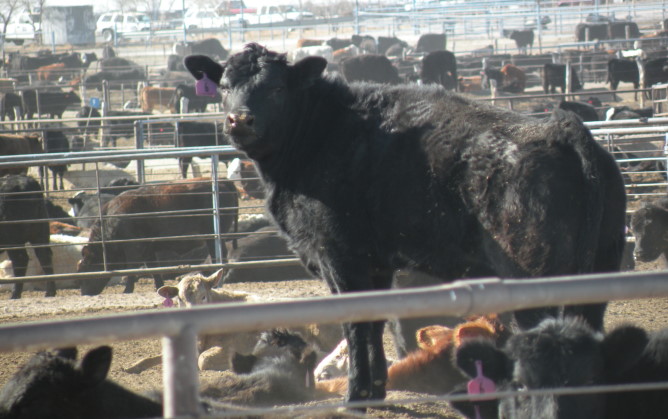
The latest USDA Cattle on Feed Report was released on Friday afternoon and is being called friendly to bullish, depending on who you listen to. Oklahoma Farm Report's Ron Hays talked after the numbers were released with Oklahoma State University's Dr. Derrell Peel who described the report as being "very well anticipated- it was actually a little bit friendly in terms of the placements being a little bit smaller but within the range of estimates and so this report is a continuation of what we have seen in the last month- I think we have finally turned the corner, it's taken several months to get here but we are going to see these inventories continue to tighten as we go forward."
Peel adds "for several months, because of the drought, we have marketed feeder cattle earlier than usual- they have gone into the feedlot and that has maintained feedlot inventories longer than we would have otherwise seen I think in the absence of the drought impact- but you can only do that for so long."
You can listen to part one of Dr. Peel's comments on today's Beef Buzz by clicking on the Listen link at the bottom of this story.
Meanwhile, according to Rich Nelson with Allendale- "Cattle on Feed bullish. Nov 1 On Feed 98.0% of last year, Oct Placements 93.9% and Oct Marketings 100.6%. Record low placement for the month of October since the data series started 1996. Two months in a row of a changed placement pattern." (via twitter)
And Brady Sidwell from Enid with Sidwell Strategies writes in Barchart "Friday's USDA Cattle-on-Feed report leaned bullish with October placements lower than expected and in fact, the lowest on record for that month. November 1st on-feed numbers were as expected as were October marketings."
From the actual USDA report- one number that really jumps out is the Texas placements, which were only 86% of a year ago- the deficit of available cattle seemingly bigger than in other regions here in the south. As for the summary of the numbers from Friday:
Cattle and calves on feed for the slaughter market in the United States for feedlots with capacity of 1,000 or more head totaled 11.7 million head on November 1, 2022. The inventory was 2 percent below November 1, 2021.
On Feed, by State (1,000 hd – % Nov 1 '21)
Colorado ...... 1,070 – 93
Iowa ............. 620 – 102
Kansas .......... 2,340 – 93
Nebraska ...... 2,600 – 102
Texas ............ 2,860 – 100
Placements in feedlots during October totaled 2.11 million head, 6 percent below 2021. Placements were the lowest for October since the series began in 1996. Net placements were 2.05 million head. During October, placements of cattle and calves weighing less than 600 pounds were 545,000 head, 600-699 pounds were 465,000 head, 700-799 pounds were 450,000 head, 800-899 pounds were 378,000 head, 900-999 pounds were 190,000 head, and 1,000 pounds and greater were 80,000 head.
Placements (1,000 hd – % Oct '21)
Colorado ...... 175 – 95
Iowa ............. 103 – 90
Kansas .......... 420 – 97
Nebraska ...... 590 – 94
Texas ............ 440 – 86
Marketings of fed cattle during October totaled 1.80 million head, 1 percent above 2021. Other disappearance totaled 54,000 head during October, 5 percent below 2021.
Marketings (1,000 hd – % Oct '21)
Colorado ...... 170 – 106
Iowa ............. 81 – 79
Kansas .......... 430 – 97
Nebraska ...... 450 – 103
Texas ............ 390 – 104
Click here to review the complete report from the USDA's NASS.
The Beef Buzz is a regular feature heard on radio stations around the region on the Radio Oklahoma Ag Network and is a regular audio feature found on this website as well. Click on the LISTEN BAR for today's show and check out our archives for older Beef Buzz shows covering the gamut of the beef cattle industry today.
Ron Hays Beef Buzzes with Dr. Derrell Peel on the November 1 USDA Cattle on Feed Report
Fri, 18 Nov 2022 16:25:11 CST
The U.S. Department of Agriculture and the Oklahoma Department of Agriculture are now putting the Daily Cash Grain Report into a PDF format - we are saving that PDF and archiving them for today's specific report. To see today's update, click on the PDF report link at the bottom of this story.
In addition to the PDF of the daily report, you can also listen to the Cash Grain Report by calling 405-621-5533. Push 2 for the grain report.

Former Radio Oklahoma Ag Network Broadcaster, Sam Knipp, had the chance to visit with Tim Bates of Mutual Oklahoma about his opportunity to travel to Berlin, Germany, this January for the International Meeting of Young Farmers and the Global Forum for Food and Agriculture.
The Global Forum for Food and Agriculture (GFFA) isan international conference on central issues of vital importance for global agricultural and food policies. As the only American farmer to be participating in the forum, Bates talks about this unique opportunity.
Bates is a first-generation farmer, and he also does quite a bit of custom farming. Personally, Bates grows mainly hay crops and grazes stocker cattle in the winter.
The forum, Bates said, focuses on how farmers and ranchers can combat the global food crisis. The message Bates wants to share at the forum is that is critical to find ways to grow more food for the growing population.
"We have to do better about fighting the drought control and, from my standpoint, have better moisture control so we can continue to raise crops year in and year out despite droughts or any other kind of things that mother nature could throw at us," Bates said.
Bates said he is looking forward to sharing how Oklahoma produces quality crops with individuals at the forum.
"I feel that American producers are the best in the world," Bates said.
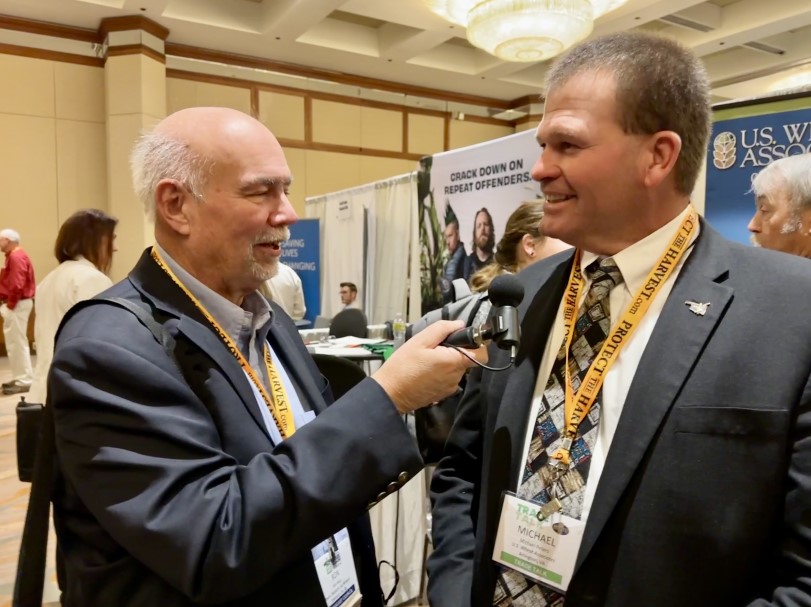
Senior Farm and Ranch Broadcaster, Ron Hays, visited with the vice chairman of U.S. Wheat Associates and Oklahoma wheat producer, Michael Peters at the National Association of Farm Broadcasters convention in Kansas City. Hays and Peters talk about the mission of U.S. wheat.
Through operations and offices in several different countries, Peters said U.S. Wheat Associates meets with millers and bakers in those countries to help in areas such as the baking and shipping of that wheat.
"As you well know, U.S. wheat is always going to be priced higher than other countries, but we have the best quality," Peters said.
It is critical to have offices and people overseas to promote U.S. wheat and teach about the quality, Peters said, so they can utilize that high-quality wheat for the flour they mill. Other countries are out promoting their own wheat at the same time, Peters said, so it is important that the U.S. continues to teach about the quality wheat we produce.
"If we are not, there is another country there," Peters said.
Peters talked about the impact of the Russia and Ukraine conflict on global wheat prices and availability.
Russia has had a good wheat crop this year, Peters said, and they have exported more wheat this year than they have in previous years, which has increased the price based on the fear of what may or may not happen in the future.
"I think the biggest issue there from a U.S. wheat standpoint, the American farmer, we always want to feed the world," Peters said. "So, these increased prices, due to that conflict, for some of your developing countries is really tough on those. They can't necessarily afford the higher prices to feed their country."
Hard red winter wheat, which is used mostly for bread wheat, Peters said, is a valuable product in countries south of the U.S., such as Mexico. Because of the drought in Argentina, which is a large competitor of U.S. wheat, the U.S. had the chance this year to export more wheat to Brazil.
Information about the wheat crop is extremely important to the global community, Peters said, as they look at metrics such as protein, loaf volume, and more. This information is gathered through sampling, he added and represented in a booklet for customers to utilize.
"If you look as far as everything that gets put into our programs to educate and promote U.S. wheat overseas, a study done a few years ago said for every dollar we spend on that, there is a 24-dollar return back to the U.S. economy," Peters said.
As for Oklahoma's wheat crop, Peters is hopeful for continued moisture as hay and water supplies have been short.
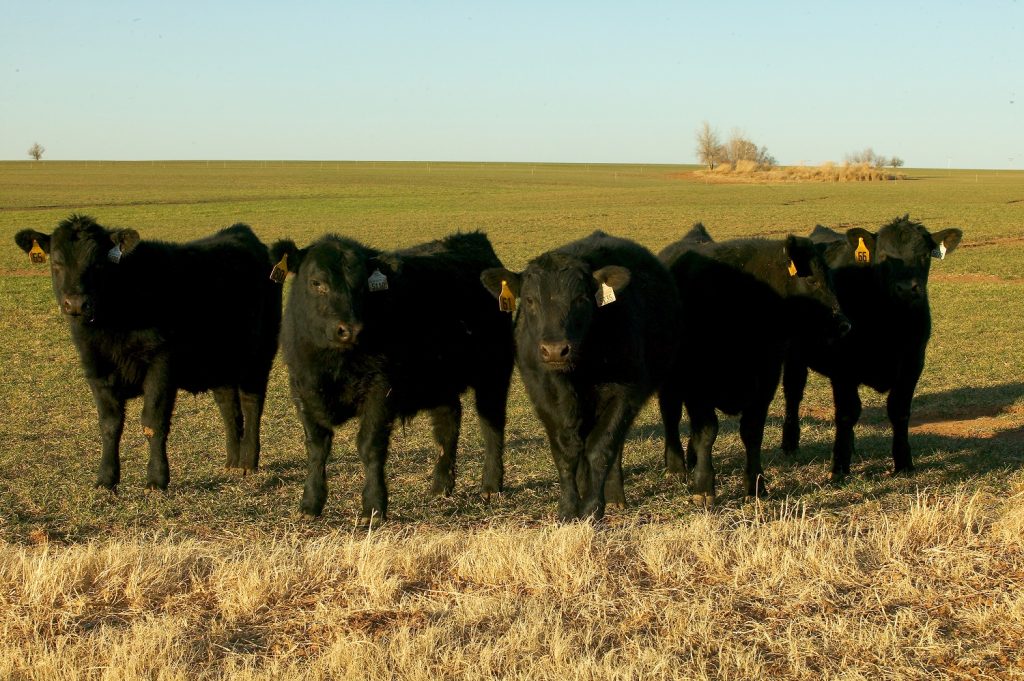
Reagan Calk, Associate Farm Editor, is visiting with Bob Rodenberger, a partner with Stockman Oklahoma Livestock Marketing, as he talks about the latest in the cattle markets.
This week started out with good runs, Rodenberger said, with 10,000 head in Oklahoma City. Runs are not any bigger than normal, Rodenberger said, and a large percentage of volume continues to be culled cows.
"With the wheat pasture growing like it is, that has still not eliminated the problem with the water, grass, or hay for the cowman," Rodenberger said. "For the cow people, it is going to be next June or July until we see where we are at and see what kind of grass we get and how much water we can fill back up our ponds."
The calf market, Rodenberger said, is fully steady and 20 to 25 dollars higher than it was 30 days ago. Rodenberger expects that market to continue steady.
As for the cattle on feed report coming out later today, Rodenberger said there are plenty of positives, and money to be made for those who can start calves and carry them over to grass until August.
Senior Farm and Ranch Broadcaster, Ron Hays, is talking with National Cattlemen's Beef Association Vice President of Government Affairs, Ethan Lane, about the midterm elections and what those results mean for the cattle industry.
"It feels like we are on day seven of election day, still, you know, we are still looking at some of those races where it would appear at this point that Republicans are over the finish line as far as control of the house, but just barely- nowhere near some of the totals that were predicted," Lane said. "It has been interesting to talk to some of our friends in the campaign community and talk about some of the polling data."
In the ag space, Lane said a few losses were seen, such as Tom O'Halleran from Arizona on the ag committee who lost his seat to Eli Crane. In a similar circumstance, Abigail Spangerger on the other side of the country, held on to her seat.
"It does kind of beg the question of candidate quality," Lane said. "That is not making a judgement on either of those candidates, but I think we have heard Mitch O'Connell talk about that, and we have heard others talk about that. I think that is going to really be where a lot of people's heads are going to go now."
Through this election, Lane said there is a lot to learn about what a "winning candidate" looks like in today's time and what voters' understanding of certain issues are, and what is working to connect with voters.
"Even on individual ballots in some of these states, we saw real splits in those returns," Lane said. "The governor's race in Georgia was called by 10- 10:30 at night, and we are not going to know the results of the senate race there until early December."
It has been an odd election cycle, Ethan said, and there will be quite a few changes for the Ag Committee as a result.
"First and foremost, that pressure on Leader McCarthy that we are hearing about this week- the debate amongst him and the freedom caucus and how much authority he is going to sort of give up in order to become a speaker to the freedom caucus- the biggest impact that might be felt from that could very well be farm bill negotiations next year," Lane said. "When you talk about that kind of fiscal conservative tone that we are going to hear from this new group coming in, we know some of these members are coming to Washington have sort of stridently said, 'I am not voting for a farm bill.' We are going to see just how serious they are about that when their constituents start calling them and telling them they want them to vote for a farm bill."
With inflation impacting everything in the country, the farm bill package is directly impacted, Lane said, which is why the farm bill may be close to a trillion dollars.
"Whether it is the cost of food, whether it is the cost of conservation programs, whether it is the cost of FMD vaccine bank implementation, you name it, if it is in the farm bill, it costs more than it did five years ago," Lane said.
The Beef Buzz is a regular feature heard on radio stations around the region on the Radio Oklahoma Network and is a regular audio feature found on this website as well. Click on the LISTEN BAR below for today's show and check out our archives for older Beef Buzz shows covering the gamut of the beef cattle industry today.
Today, the National Cattlemen's Beef Association (NCBA) and the Public Lands Council (PLC) announced their opposition to the U.S. Fish and Wildlife Service's (FWS) final rule to list the lesser prairie chicken under the Endangered Species Act.
"Over and over the science has proven that healthy, diverse rangelands – the exact kind of landscape maintained by livestock grazing – are where the lesser prairie chicken thrives. Cattle ranchers' efforts to conserve these acres are absolutely critical to the survival of the species," said NCBA Executive Director of Natural Resources and Public Lands Council Executive Director Kaitlynn Glover. "We are deeply disappointed by the Fish and Wildlife Service's decision to impose redundant bureaucracy and punitive restrictions on the very same people that we have to thank for the lesser prairie chicken's continued existence on the range."
To make matters worse, the Service is also establishing a 4(d) rule for the Northern DPS that enables them to appoint private third parties – such as environmental activist groups – as the grazing authorities in the range of the LPC. FWS has stipulated that cattle producers in the Northern DPS range will only qualify for legal protection under the 4(d) rule if they are following a grazing management plan that has obtained arbitrary approval from a yet-to-be-named, FWS-approved third party. By contrast, other agricultural practices that are listed as key factors in the Service's decision are granted far more flexibility.
Designing a third-party verification system to empower distant bureaucrats over land managers and ranchers with decades of experience, with parameters that blatantly prioritize political objectives over sound science, effectively ensures that the only use of the 4(d) rule will be to obstruct grazing activities.
The rule establishes two Distinct Population Segments (DPS) for the species: the Southern DPS that covers New Mexico and the southwest Texas panhandle, and the Northern DPS that covers southeastern Colorado, Kansas, Oklahoma, and the northeast Texas panhandle. The Southern DPS will be listed as endangered and the Northern DPS will be listed as threatened. The final rule does not include any critical habitat designation. Cattle grazing provides immense benefit by conserving the very habitat the species needs to thrive. These birds favor diverse rangeland with a variety of plant species rather than uniform grasslands or cropland.
"To truly support lesser prairie chicken habitat, the Fish and Wildlife Service should make it easier for ranchers to graze, not harder," said Glover.
In a letter to lawmakers, the National Milk Producers Federation urged support for domestic infant formula production as the production shortfalls that stripped store shelves of necessary infant formula have eased. Given the improving situation, tariff waivers that could discourage the production of a safe, secure domestic infant formula supply should be allowed to expire at end of this year as scheduled, NMPF said in the letter to the chairmen and ranking members of the Senate Finance Committee and House Ways and Means Committee.
"Given that the temporary production shortfall that gripped American families in need of formula earlier this year has abated, we urge Congress to ensure that the unique, unilateral tariff benefits granted to our trading partners under the Formula Act and the Bulk Infant Formula to Retail Shelves Act end as scheduled at the close of this year," said NMPF Chairman and CEO Jim Mulhern in the letter, dated Nov. 17. "We respectfully request your opposition to any effort to extend these preferential tariff benefits beyond the end of this year."
A strong, diversely sourced domestic infant formula production industry ensures the highest quality, safest products while supporting rural jobs and domestic producers.
Representing dairy farmers, cooperatives, and processors, the National Milk Producers Federation (NMPF) and the International Dairy Foods Association (IDFA) issued the following joint statement in response to USDA's proposed changes to the Special Supplemental Nutrition Program for Women, Infants, and Children (WIC) released today:
"It is unfortunate for WIC participants that the proposed rule would decrease access to dairy products and the unique nutrient profile they provide, especially considering the current Dietary Guidelines for Americans (DGA) note that a staggering nearly 90 percent of the U.S. population does not consume enough dairy to meet dietary recommendations. At a time of rising food costs and high food insecurity, we should focus on increasing access to a wide variety of healthful, nutrient-dense, and affordable foods, including both fresh produce and dairy products. It's disappointing that the proposed rule would limit WIC family purchasing power for nutritious dairy foods, particularly at a time like this.
"WIC is central to helping ensure pregnant women, new mothers, infants, and children have access to the nutrients needed for growth and development at the critical life stages surrounding pregnancy, birth, and early childhood. The vast body of nutrition science demonstrates that nutritious dairy products like milk, yogurt, cheese, and cottage cheese are especially important in the diets of women, infants, and children. Dairy is a source of 13 nutrients, including three of the four nutrients of public health concern as noted by the DGA, which is why dairy has always played a significant role in the WIC program.
"NMPF and IDFA commend USDA for suggesting approaches to make the nutrient-dense food provided by the WIC program more accessible, including expanded options for yogurt and cheese varieties and for proposing WIC participants be able to purchase these dairy products in a wider variety of product package sizes that are more commonly found in grocery stores. We also applaud USDA for its continued commitment to nutritional equivalency in substitute products, rejecting those that do not provide an equivalent nutrition package, as recommended by the DGA. "We look forward to working with USDA to modernize the WIC food package for eligible families to access nutrient-dense milk, yogurt, and cheese varieties that are a part of their everyday diets and accessible in neighborhood stores, thus fulfilling the program's nutritional objectives. IDFA, NMPF, and our members will advocate against reducing the amount of nutritious dairy foods provided through WIC in USDA's final rule because we are committed to reducing food insecurity, malnutrition, and diet-related disease while improving health outcomes by making it easier for all Americans to access healthy, affordable foods, including nutritious dairy products. We hope USDA will work to achieve these same objectives as they develop a final WIC rule, which, given dairy's unique nutrient package and incomparable role in nourishing WIC participants, will require USDA not to decrease access to dairy in the WIC program."
In a letter to congressional leadership, ASA and more than 300 agriculture, environment, academic, infrastructure, and other stakeholder groups are calling on Congress to reaffirm federal pesticide preemption on labeling and packaging.
Why it matters: Failing to do so, the groups warn, could hold disastrous consequences for our food security, the environment, public health, vital infrastructure, and other uses where pesticides provide important societal benefits.
The Federal Insecticide, Fungicide, and Rodenticide Act is clear that states "shall not impose or continue in effect any requirements for labeling or packaging in addition to or different from those required" by the federal government. However, in recent years, states have sought to impose health claim label requirements that directly contradict federal findings. This not only risks eroding public trust in science and evidence-based regulation, but also opens the door for a patchwork of conflicting state and municipal labels that could disrupt commerce and limit access to vital tools.
The ask of Congress: The letter, which drew 332 signers, calls on Congress to reaffirm that states may not impose additional labeling or packaging requirements that conflict with federal findings.
What ASA says: Brad Doyle, soy farmer from Arkansas and ASA president, said, "Farmers and other pesticide users need predictable access to these tools to protect their crops and maintain important conservation practices. Contradictory state labels that would create an unworkable patchwork risk disrupting access to pesticides, which would harm our food supply and the ability to protect our environment." Read ASA's news release sent earlier this week and see what other groups are saying here. Bottom line: While this week's letter is not specific as to when or how Congress should act, the groups are clear that action is needed to prevent this dangerous, misguided legal interpretation from undermining important societal needs. Many signers of the letter sent a separate letter to President Biden in May urging him to withdraw a brief submitted by the Solicitor General to the Supreme Court that erroneously suggested that state health claim labels are not preempted by federal regulatory findings.
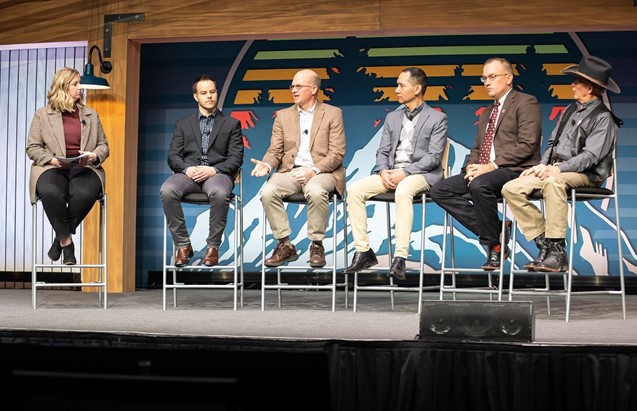
| Panelists discuss the functional longevity EPD and genetic enhancements. |
Take a look into the future and what do you see? For the Angus breed, the future includes leaps into enhanced genomic comprehension and expanded maternal tools for breeders. The 2022 Angus Convention featured a Genetics Symposium, sponsored by NEOGEN, which hosted a panel of industry leaders to discuss the future of genetic data.
Speakers included moderator Kelli Retallick-Riley, Angus Genetics Inc. (AGI®) president, and five panelists – Larry Kuehn, USDA Meat Animal Research Center geneticist; Andre Garcia, AGI geneticist; Gale Haynes, owner of Haynes Cattle Company; Alan Miller, owner of Prairie View Farms and 2021-2022 AGI board chairman; and Duc Lu, AGI geneticist.
For several years, the focus to understand and leverage maternal traits has been a top priority and only continues to become more important. Providing a progress update on the Functional Longevity EPD research for the American Angus Association®, Garcia explained the EPD relies on robust data in mass amounts.
"For those maternal traits it comes down to the data," Garcia said. "We need to collect those records in order to characterize the genetic variability in the population. To get good spread and accuracy behind those EPDs, we really need to have sires with a lot of daughter records in the population specifically for functional longevity which is lowly heritable."
As with any EPD, the prediction has little value without accuracy. Lu explained how accuracies shift — when new progeny data is added to an EPD with low accuracy, the accuracy shifts. When new data is added to a high accuracy EPD (accuracy > 0.90), the accuracy isn't likely to change much because the bull himself is already proven with progeny data. If the animal is already genotyped, this change, or forward movement, can only occur from the collection of more phenotypic data.
"Animals with low accuracies need to have more data because there is not much information estimating that particular animal," said Lu. "You have to increase the number of phenotypes. You need to collect on that particular animal or its relatives in order to move the accuracy."
Kuehn added that to increase the spread in EPDs, phenotype and genotype must be used in tandem to create variation in the population.
"We're actually tying together parts of the family and assumptions about how [animals are] inheriting genetics from those families much better with genomics than what we were ever able to do with pedigree-based genetic evaluation systems alone," said Kuehn.
Garcia reminded breeders that genetic change cannot occur overnight. He said through careful planning and selection, breeders will see progress.
"Not only is it important to create a breeding objective and have clear goals of where you want to go, but also being disciplined because to make genetic change, it takes generations," said Garcia. "Creating those goals, being disciplined and following those goals along the way, I think that's what really is going to move the needle to see the population evolving."
To aid this forward movement, the Association must continue to add value to the database and tools for the membership. Miller stressed the freedom the Association grants AGI to work with industry partners in order to develop new tools to leverage the competitive advantage.
"We have to make sure we provide that next level of tools so our membership can really be at the forefront of quantifying all sorts of traits and not fall behind any competitors out there," said Miller.
For news about Angus Convention, visit www.angus.org/Pub/NewsRoomReleaseList.
– Written by Briley Richard, Angus Communications
American Farmland Trust's Farmland Information Center recently released results from its annual survey of state Purchase of Agricultural Conservation Easement (PACE) programs. Purchase of Agricultural Conservation Easement programs use public funds to compensate property owners for keeping their land available for agriculture. The findings from the 2022 survey are summarized in "Status of State Purchase of Agricultural Conservation Easement Programs."
As of the start of this calendar year, PACE programs in 30 states have invested more than $5 billion in state funds to acquire nearly 18,500 easements and permanently protect more than 3.4 million acres. Pennsylvania, Maryland, New Jersey, Delaware, and Massachusetts lead the nation in easements acquired while Colorado, Pennsylvania, Maryland, New Jersey, and California stood out for acres protected to date (see maps). Key partners, including local governments, USDA Natural Resource Conservation Service and other federal agencies, foundations, and landowners, have spent an additional $3 billion to complete these projects.
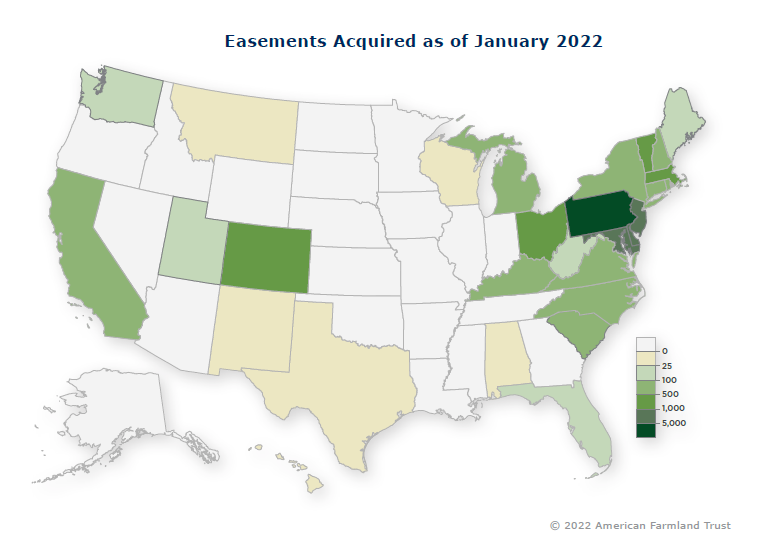
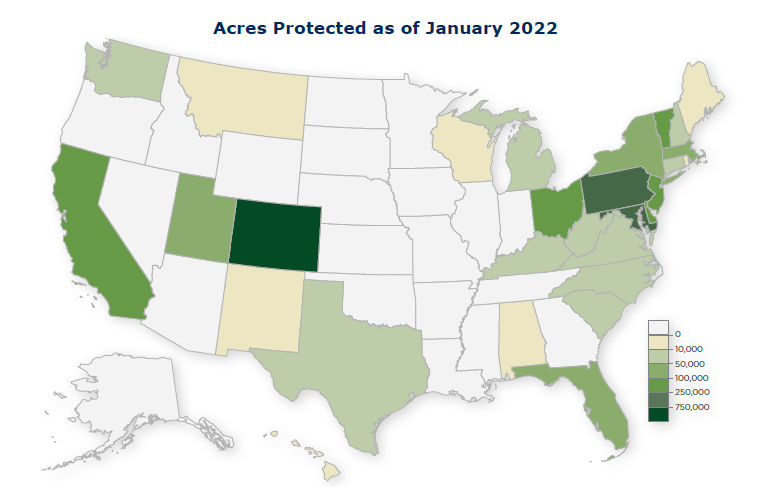
Annual Trends Show Increased Pace of Protection, Lower Acquisition Costs, and Uptick in Local Match
In 2021, programs reported acquiring 589 easements on approximately 106,700 acres, spending over $183.7 million in state funds and leveraging more than $118 million from other sources to do deals. For the single year, program activity in Pennsylvania, Maryland, Delaware, Ohio, and New Jersey topped the list for easements acquired. California, Pennsylvania, New York, Colorado, and Maryland lead for acres protected (see tables).
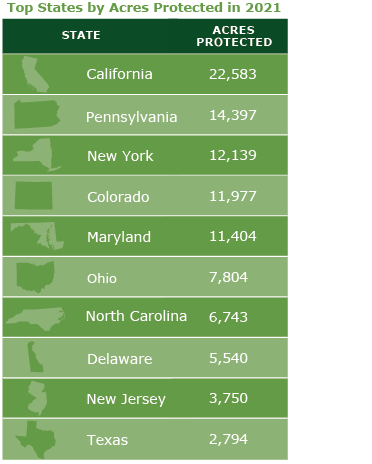
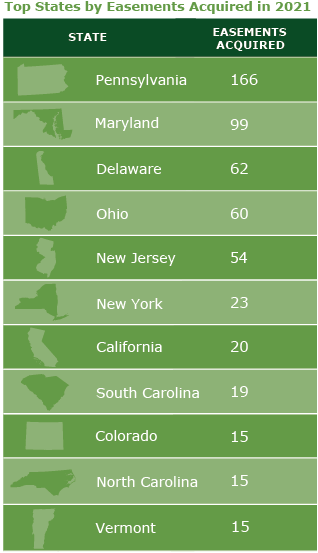
While annual state spending was down 3%, total funds invested in easement acquisitions grew 8% from 2020 levels. This reflects a nearly 31% rise in funding from non-state sources, as reported by program managers. Local government contributions represented the most significant share of non-state funding, up 70%. The value of landowner donations also more than doubled, while the Agricultural Conservation Easement Program – Agricultural Land Easement component (ACEP-ALE) kicked in an additional 18% of the non-state dollars. ACEP-ALE is a voluntary federal conservation program implemented by the USDA Natural Resources Conservation Service (NRCS) that protects agricultural land from conversion to non-agricultural uses. ACEP-ALE provides matching funds to eligible entities to acquire conservation easements on farmland and ranch land.
The number of easements acquired in 2021 decreased from 2020, but the total acreage protected increased by more than 12% year-over-year. Notably, the average easement size increased 28% from 141 acres per easement in 2020 to 181 acres per easement in 2021—also an increase from both the 2018 and 2019 average easement sizes.
Average cost for acquisition, meanwhile, was at its lowest point in four years. Based on total funds spent, the average cost to protect an acre of farmland or ranchland dropped 3% from $2,926 per acre in 2020 to $2,833 in 2021.
AFT's Farmland Information Center has been conducting its annual survey of State PACE programs since 1995. The 2022 State PACE Program Survey collects information about transactions completed in calendar year 2021 and summarizes cumulative data through January 2022. Other nationwide surveys conducted by the Farmland Information Center include a survey of local PACE programs, and of land trusts that protect agricultural land. The data collected through these surveys help AFT track the progress of on-the-ground programs working to save our nation's farmland.
For more information on Purchase of Agricultural Conservation Easements, visit AFT's Farmland Information Center website. The FIC is a clearinghouse for information about farmland protection and stewardship and is a public/private partnership between the USDA Natural Resources Conservation Service and American Farmland Trust.
Fri, 18 Nov 2022 05:16:19 CST
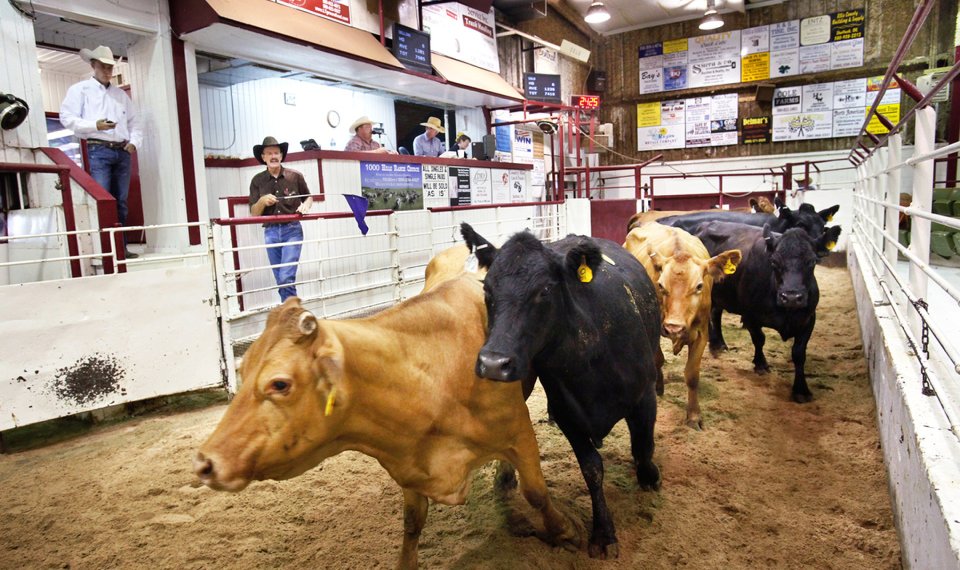
Woodward Livestock Auction - Woodward, OK
Thursday, November 17, 2022
AUCTION
This Week 2,955
Last Reported 4,302
Last Year 4,273
Compared to last week: Feeder steers and heifers mostly steady. Steer calves 8.00 to 10.00 higher with instances of 15.00 higher. Heifer calves steady to 2.00 lower. Demand was moderate. Quality average to good. Supply included: 100% Feeder Cattle (53% Steers, 41% Heifers, 6% Bulls). Feeder cattle supply over 600 lbs was 52%.
FEEDER CATTLE
STEERS - Medium and Large 1 (Per Cwt / Actual Wt)
Head Wt Range Avg Wt Price Range Avg Price
17 338-341 340 204.00-229.00 221.44
2 345 345 215.00 215.00 Unweaned
53 356-399 384 224.00-233.50 232.40
22 380-397 391 217.00-228.00 223.82 Unweaned
17 409-435 415 213.00-227.00 223.76
22 415-435 429 210.00-226.00 221.39 Unweaned
61 451-488 476 211.00-230.00 218.04
77 458-499 486 188.00-217.00 211.02 Unweaned
71 503-548 521 185.00-219.00 205.00
18 503-548 527 175.00-206.00 195.72 Unweaned
75 552-594 576 175.50-196.00 185.16
92 552-588 565 174.00-199.00 190.18 Unweaned
30 612-642 634 177.00-181.00 178.86
95 607-640 631 165.00-179.50 173.61 Unweaned
139 656-694 677 177.00-181.50 179.74
64 650-678 667 155.00-168.00 161.51 Unweaned
44 706-735 729 173.00-179.00 176.84
35 702-724 714 159.00-163.00 160.56 Unweaned
134 750-786 775 164.00-176.50 174.42
22 750-757 755 156.00-158.00 157.37 Unweaned
161 802-844 819 175.00-179.75 177.69
7 850 850 174.00 174.00
6 944 944 162.00 162.00
For the complete market report from USDA Market News click on the PDF link below:
This Week on SUNUP is Oklahoma State University Extension grain market economist Kim Anderson. During this week's edition, Anderson talks about the latest in the commodity markets.
"Wheat was a little more active than the other markets this week," Anderson said. "You look at about a 35-cent price range for wheat prices from $8.90 up to $9.25 end of the week in the middle there somewhere."
On corn, Anderson said only 11 cents moved from the bottom to the top. Corn moved $7.27 to $7.38, he added.
Soybeans didn't have any big moves this week, Anderson said, as they moved from $14.28 to $14.50. Cotton, Anderson said, is unchanged from last week.
"The winds aren't blowing in the market," Anderson said.
2022 harvest for all practical purposes is completed, Anderson said, and there are still drought issues and uncertainty about production.
"The market adapts to shocks in the market," Anderson said.
Things are starting to adjust to the shocks that have been in the market, Anderson said, and prices are waiting to see what is going to happen in the future.
While there is always the chance of prices lowering in the market, Anderson said there are tight stocks in the commodity markets which will help those high prices hold.
This week on SUNUP:
Join us for SUNUP:
Saturday at 7:30 a.m. & Sunday at 6 a.m. on OETA (PBS)
YouTube.com/SUNUPtv
Thu, 17 Nov 2022 15:14:43 CST
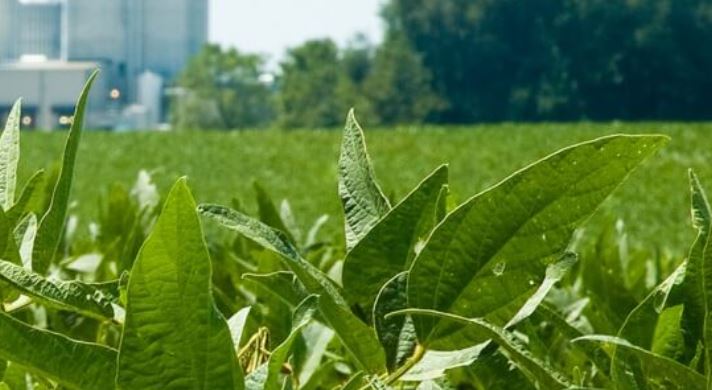
The U.S. Department of Agriculture and the Oklahoma Department of Agriculture are now putting the Daily Cash Grain Report into a PDF format - we are saving that PDF and archiving them for today's specific report. To see today's update, click on the PDF report link at the bottom of this story.
In addition to the PDF of the daily report, you can also listen to the Cash Grain Report by calling 405-621-5533. Push 2 for the grain report.
At the National Association of Farm Broadcasters' annual trade talk for 2022, Senior Farm and Ranch Broadcaster, Ron Hays, caught up with National Cattlemen's Beef Association Vice President of Government Affairs, Ethan Lane, talking about the 2023 Farm Bill and concerns for the cattle industry going forward.
Regarding Congressman Frank Lucas being back on the Farm Bill committee in 2023, Lane said that Lucas will be a valuable resource as he has a great understanding of the Farm Bill.
"He will be a fantastic resource for Chairman Thompson coming into this, and we are sure excited to see him back in that conversation," Lane said. "There are very few people in Washington that are as good a friend of the cattle industry as Frank Lucas is, and we are excited to have him back in this arena."
NCBA priorities for the 2023 Farm Bill, Lane said, involve continuing to focus on holding together programs that were in the last farm bill. One program that is top of mind, Ethan said, is keeping the vaccine bank for foot and mouth disease funded and growing.
"That is four years and now to building that bank out," Lane said. "They have a lot more work to do, and we need to make sure we don't lose ground on that, especially as we see new needs, whether it is increased risk of African swine fever, the lumpy skin disease, or some of these other things we are seeing pop up. Not that they aren't important too, but we need to make sure we continue to make progress on that front."
Risk management for producers, Lane said, has become a big issue around the country. Cow calf producers are asking for more tools, Lane added, and they are seeing a dramatic increase in the use of the tools that are available.
"That is certainly something that remains at the top of cattle producers list is keeping those voluntary incentive-based conservation programs going in a way that is very useful for them to keep the needle moving in the right direction," Lane said. "We have our climate goal of being climate neutral or climate positive in this industry by 2040. We think we are going to hit that early, and a lot of these programs in the farm bill provide the necessary resources and tools to make that happen."
There continues to be a market conversation that has taken place over the past few years with plenty of congressional scrutiny. The industry is in the middle of a pilot program implementation for the cattle contract library, Lane said, which is important in identifying how much information USDA needs, where they get it from, and most importantly, where the money is being made.
This program will aid producers in seeing where they need to adjust their operations to have a higher success rate based on what others in the industry are doing.
"That is going to be a really important tool, I think, for producers around the country," Lane said. "We appreciate USDA sticking with that. We are not there yet on quite how that needs to look to make sure we protect the producer's privacy. USDA is a government agency, and as such, they tend to default to, 'give me as much information as possible,' and we just don't necessarily believe that they need every private business detail of every cattle producer in the country in order to display some information on what contracts look like."
Lane said he is hopeful to see a full five-year reauthorization in mandatory price reporting.
"I am hopeful that as we get into the new congress and kind of have a chance to hit the reset button, you know, if there is some bipartisan agreement that it is time to go ahead and get that done, maybe that is something we can work on next year," Lane said. "We would sure like to do that."
The Beef Buzz is a regular feature heard on radio stations around the region on the Radio Oklahoma Network and is a regular audio feature found on this website as well. Click on the LISTEN BAR below for today's show and check out our archives for older Beef Buzz shows covering the gamut of the beef cattle industry today.
Thu, 17 Nov 2022 14:25:16 CST

Listen to today's report with Justin Lewis, by clicking or tapping on the LISTEN bar
Justin Lewis of KIS Futures has all the details on today's agricultural markets for RON listeners, below.

The Federal Reserve has increased interest rates in June, July, September, and November. This has slowed real estate markets as the borrowing rate has reached 4%. Buyers now have significant additions to cost, which means they are seeking lower prices overall. Sellers are now adjusting to this market change, and it will take time for those two sides to come together.
Land markets are impacted by these changes, especially for land that requires financing. However, the land market tends to revolve around more cash and instruments like 1031 exchanges, so it has not seen the whiplash we see in residential markets. We still see this when it comes to land tied to food production. Farmland with ready access to water is at an all-time high, and in several Midwest states, it is still inching upward. Land is real estate, but not all real estate behaves the same.
Food production has faced challenges in terms of natural gas and diesel supply, fertilizer prices, and additives such as nitrogen continue to be expensive and have experienced supply shortages. However, the good part here is that commodity prices are also high, and most sections of agriculture not affected by water shortage are seeing good returns in 2022. This combination of external factors has strengthened the value of the land on which food is grown.
As we move into 2023, we see increased conversation revolving around economic downturns and market corrections. There is a lot of fear-based language in markets, but that has historically been a good thing for the land industry. Many investors push money into land to hedge against market volatility. Rural land tends to be a protective investment against this kind of market volatility.
One place where we see a bit more market correction is out West, where demand over the past two years has been extremely high. This high demand drove land values to some of their highest levels on record. We look at this as a proper market correction. We hear "decline," but that's not how we see it. We are witnessing a market slowly moving back to a more realistic and sustainable level than we have seen over the past two years. So, the Western markets are not so much correcting as they are normalizing. Keep in mind, though, that areas experiencing water crises might see a bit more price fluctuation than other lands.
This is a blanket statement, and there are always exceptions, but for the past two years, we have seen land selling merely for the value of land. There were a lot of purchases made by individuals who wanted a more rural lifestyle and first-time farmers. We are seeing more emphasis on what is actually on that land, whether hunting tracts, farmland with plentiful crops, or ranches with plenty of pasture and water. We are seeing more experienced buyers who plan on working the land themselves, and they know the value of it.
Funds raised at Angus Convention will benefit the Angus Foundation's mission.
The Angus Foundation raised $15,000 with the auction of a highly desired Certified Angus Beef(CAB)barn painting at the 2022 Angus Convention in Salt Lake City, Utah. The painting was auctioned at the annual American Angus Association® Awards Dinner and Reception Sunday, Nov. 6 and was purchased by Gardiner Angus Ranch of Ashland, Kansas. Funds raised will help further the Foundation's mission of supporting Angus education, youth and research.
In 2018, CAB celebrated 40 years in business with the "Brand the Barn" campaign, painting 40 barns belonging to Angus breeders in 25 states across the country with the Certified Angus Beef ® brand logo. In response to the campaign, many Angus enthusiasts joined the wait list to have their own barn painted. The Foundation offered breeders the unique chance to skip the line and proudly represent the brand on their operation.
"We're incredibly thankful for the Angus family's support of this offering from Certified Angus Beef," said Jaclyn Boester, Angus Foundation executive director. "The generosity of the Gardiner family will help continue the Angus legacy and is an investment in the future of our breed."
CAB will commission artist Troy Freeman to brand the Gardiner Angus Ranch barn and will also provide $1,000 to host a celebration event in conjunction with the barn painting. Funds raised will support a variety of programs including educational opportunities for breeders, leadership development conferences for Angus youth and groundbreaking industry research.
To learn more about the Angus Foundation, visit www. AngusFoundation.org. For news about Angus Convention, visit www.angus.org/Pub/NewsRoomReleaseList.
— Written by Peyton Schmitt, Angus Communications
Yesterday, the U.S. Environmental Protection Agency (EPA) announced the appointment of Clay Pope, National Association of Wheat Growers (NAWG) board member and Oklahoma wheat farmer, to serve on the Farm, Ranch, and Rural Communities Federal Advisory Committee (FRRCC). The FRRCC serves an important role and provides independent policy advice and recommendations to the EPA on a variety of issues that impact farmers across the United States.
"Serving on the FRRCC is an exciting opportunity to help advise the EPA and the administrator by providing a dryland farming perspective, which is outside the traditional corn/soy belt and will contribute different perspectives based on climatic pressures and crop rotations," said Clay Pope, NAWG board member and Oklahoma wheat farmer. "I am looking forward to working with this committee and playing a role in ensuring the EPA understands the impacts of their policies on wheat farmers and seek solutions that work for all of agriculture."
"NAWG is excited about having Clay Pope serve on the EPA's advisory committee, which plays a key role in telling the story about how wheat producers are having a positive impact on the environment and have increased resource-efficient practices in land, water and energy use," said Nicole Berg, NAWG President and Washington wheat farmer. "Clay has demonstrated his ability to work for growers of different viewpoints on the NAWG Special Climate and Sustainability Committee over the last years, and in his years of working on policy development and program delivery in Oklahoma. This announcement is good news for farmers across the country."

Whether you've been blasting Christmas music for weeks or you are patiently waiting until Thanksgiving to pull out the Christmas decorations, it is not too early to start planning where to get your tree! Oklahoma is home to 20 Christmas tree farms where you can cut your own tree or purchase beautiful pre-cut evergreen trees and wreaths. Visit Oklahoma Agritourism to find a Christmas Tree farm near you or check out the list below.
Central Oklahoma
November 25 - All Pine Christmas Tree Farm (Yukon)
November 25 - Cross Timbers Christmas Tree Farm & Pumpkin Patch (Harrah)
November 25 - Leafer Lodge Farms (Stillwater)
November 25 - Martinbird Tree Farm (Tuttle)
November 25 - Pioneer Homestead Christmas Tree Farm (Oklahoma City)
November 25 - Silver Bells Christmas Tree Farm (Tuttle)
November 25 - Sorghum Mill Christmas Tree & Blackberry Farm (Edmond)
November 25 - Wells Christmas Tree Farm (Norman)
November 26 - Wonderland Farms (Harrah)
Northeast Oklahoma
November 25 - Akecheta Christmas Tree Farm (Hitchita)
November 25 - Cal2Homa Farm (Gore)
November 19 - D & C Holiday Farm (Muldrow)
November 25 - Molly & Socks Christmas Tree Farm (Bristow)
November 19 - Owasso Tree and Berry Farm (Owasso)
November 25 - Pleasant Valley Farms (Sand Springs)
November 25 - Wilkinson's Christmas Forest (Tahlequah)
Northwest Oklahoma
November 25 - Red Bird Farm (Enid)
November 26 - Santa's Forest Christmas Tree Farm (Ponca City)
Southeast Oklahoma
November 24 - Red Barn Christmas Tree Farm (Kiowa)
Southwest Oklahoma
November 25 - D & L Christmas Tree Farm (Fletcher)

There is a new blog post out on the Southern Plains Perspective by Clay Pope. Read below!
You can tell that I have a real heart for environmental protection....I am even recycling blog posts now...
In all seriousness though, the last couple of weeks have been extremely busy. As I write this it's past 8pm and I am in a hotel room deep in the heart of Texas trying to play catch-up for two weeks spent on the road. I enjoy the chance to get out and visit with people about how they can both adapt to and mitigate climate change and how USDA programs (and the programs of our partners) can help them deal with a multitude of natural resource challenges, but between road trips, 4-H speech contests, youth basketball games and farm chores, it can get tough to actually find the time to write down your thoughts.
On top of all this, Thanksgiving is next week!!! We all know the stress of the holidays. Time is tight under the best of circumstances, let alone when the schedule is already packed.
With all of this in mind, I hope you will forgive me for "recycling" part of my Thanksgiving post from last year. After all, what I wrote then still holds true today...and I promise I will set down and write something original next week! Understanding all this, here again is what I am thankful for.....
First and foremost, I am thankful for the relationships in my life. My family, my friends, my colleagues—many of which are all in the same. It's their love and support that has allowed me the opportunity to do what I do. They have provided me help and wisdom to navigate the hard times and they have been with me to celebrate the good times.
First among those relationships is my wife and our children. I have been blessed with the opportunity to work in partnership with my wife going all the way back to our days at the Oklahoma Association of Conservation Districts. She is the "city girl" that married the "farm boy" and blended together the love that we both share for the environment and for the people who live and work on the land. She is truly my love. I am so thankful that I have a partner like her helping me in all things; that includes what I believe is the most important work we could do-helping folks feed and clothe a growing world while protecting our natural resource base.
Our kids are a blessing for sure--all of them are incredible individuals full of amazing potential and ability. I only hope that I can do for them a fraction of what my parents did for me, both in the lessons I teach them and the world that I leave behind for them to inherit.
Speaking of parents--I am thankful for mine. They gave (and still give) me love and they taught (and still teach) me lessons about life. They instilled in me a work ethic that has given me the ability to take on anything life throws my way. They guided me in finding a faith that gives me hope in knowing that all things will work out in the end and that all things happen for a reason. They instilled in me a love for the land and for our home. A love that started me on this path that has given me the chance to play a small part in dealing with climate change and the challenges it creates.
I am thankful for grandparents that were always there with a love that I can never truly explain. They showed me through their examples of how that faith I mentioned before can play out over time. I learned first-hand lessons from them on how to overcome adversity while holding on to what's most important.
I am thankful for the opportunity to work with folks at USDA and their local and state partners- from the Secretary on down-who recognize the challenges farmers and ranchers face both environmentally and economically and who are dedicated to helping agriculture find solutions to keep producers profitable while protecting our natural resources.
I am thankful for the chance to work with farmers and ranchers around the region and nation. Working on the land isn't easy, but like the FFA creed says," I believe that to live and work on a good farm or to be engaged in other agricultural pursuits, is pleasant as well as challenging; for I know the joys and discomforts of agricultural life and hold an inborn fondness for those associations which, even in hours of discouragement, I cannot deny." I am thankful that I cannot deny my ties to American agriculture and I am thankful that I get this small chance to help the industry deal with the challenges posed by the changing climate.
And when it comes to climate change and the challenges it creates, I'm thankful that many of the solutions we are proposing are often the same things that we are suggesting farmers and ranchers consider to improve their bottom lines. Helping folks with positive solutions makes this work a joy even though we are dealing with what seems like monumental issues.
Finally, I am thankful that all things are interconnected. I truly believe that everything happens for a reason and in the end, we are all connected in ways we don't truly understand. I believe that all of nature, and that includes mankind and our society, is part of a vast moving machine with each piece having a part to play as it drives forward toward its intended destination. I am thankful that I have the chance to help keep those gears rolling.
To again quote the FFA creed "I believe that American agriculture can and will hold true to the best traditions of our national life and that I can exert an influence in my home and community which will stand solid for my part in that inspiring task." For my part in all that, I am truly thankful.
To read this blog post at the Southern Plains Perspective, click here.
To check out more blog posts, podcasts and content at the Southern Plains Perspective, click here.
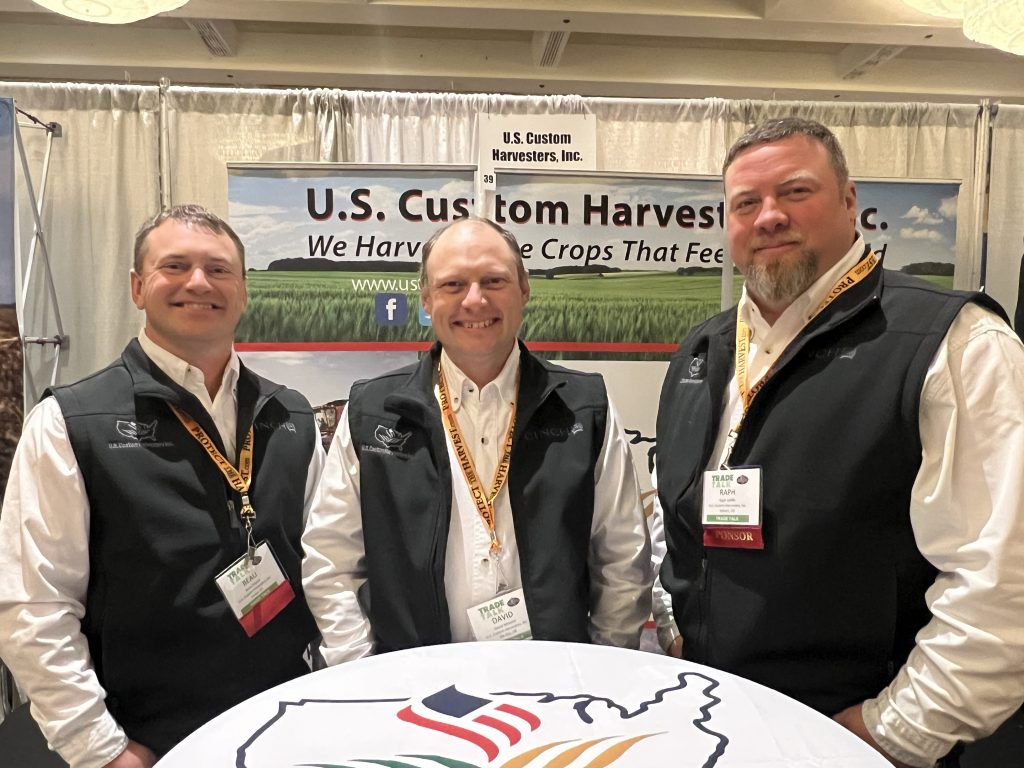
Vice President of U.S. Custom Harvesters, Inc., David Misener (Middle)
At the National Association of Farm Broadcasters convention in Kansas City, Farm Director, KC Sheperd, got the chance to visit with the Vice President of U.S. Custom Harvesters, Inc., David Misener. Misener and Sheperd talk about what the U.S. Custom Harvesters have to offer to farmers and the condition of this year's crops.
Many acres of cotton in Oklahoma, Misener said, will not be harvested due to poor conditions.
"This whole year, Oklahoma was our worst," Misener said. "We swathed a lot of wheat at the beginning of the year in May, so that way, we got something out of nothing. In Kansas, we did some really good wheat- we did some sorry wheat as well."
Misener lives in the Elk City area in Oklahoma, but as Vice President of the U.S. Customer Harvester, Inc., Misener has had the opportunity to travel the U.S. and see how crops in different states compare to one another. In Misener's travels, he said the common trend he saw was many areas that were short on moisture.
"We, as an organization, try to help the farmer out and get their crops harvested, so if anybody does need help getting that product into the elevator or into the feed bunk- whatever it might be depending on your style of operation," Misener said. "You can call us, and we are there to try and help make that happen."
Using close to new equipment, Misener said U.S. Custom Harvesters are readily available to help out producers where they can when called.
"We have members all throughout the U.S. just willing to do everything," Misener said. "We will make it happen wherever it can be done. That is what we do."
To reach the office, Misener said to call 620-200-1381.
For more information, visit the U.S. Custom Harvesters website at https://uschi.com/ . You can also visit their Facebook page at https://www.facebook.com/uscustomharvesters .
By Kenneth Corn, USDA Rural Development State Director
As we celebrate National Rural Health Day this year, we are reminded that a strong community is rooted in its people. The Biden-Harris Administration is committed to serving those who live in the rural areas of this country, like the small towns and communities right here in Oklahoma. At the United States Department of Agriculture, we are hard at work offering the resources to the rural and agricultural communities that feed and fuel our nation and provide the everyday essentials upon which America depends.
As I've traveled across Oklahoma, I've seen firsthand the unique challenges people in rural communities and remote parts of the state have in accessing the health resources they need and deserve. These challenges are especially true for people living in our nation's Tribal communities who have been underserved for far too long.
At USDA Rural Development, we are committed to making sure that people, no matter where they live, have access to high-quality and reliable health care services like urgent care, primary care, and dental care. That's why I've been a proud champion of programs like the Emergency Rural Health Care Grants, which was created by President Biden's historic legislative package, the American Rescue Plan Act.
In the last year, this program has helped rural health care organizations across the state purchase supplies, deliver food assistance, renovate health care facilities and provide people with reliable medical testing and treatment.
Just last week I was in Pawnee Nation, where I had the pleasure of meeting with President Walter Echo-Hawk at the site of the future Pawnee Nation Behavioral Health Center. This new facility is funded in part by a $1 million Emergency Rural Health Care Grant and is going to help fill a vital gap in health coverage in North Central Oklahoma. I'm excited to partner with President Echo-Hawk on this venture, as the Pawnee Nation has declared war on trauma and is making a valiant commitment to better the behavioral health for our rural and tribal communities in Oklahoma. Many of our Tribal partners, like the Pawnee Nation, are committed to helping our communities, and with President Biden's commitment to rural America we intend to assist as many communities as possible improve access to healthcare across our great State of Oklahoma.
We also know that increasing access to telemedicine and distance learning in rural Oklahoma is critical to building healthier and more resilient communities.
Oklahomans in remote parts of the state like Ringling or Stigler often need to travel greater distances to see a health care provider and are less likely to have access to high-speed internet to utilize telehealth services and are more likely to live in an area that has a shortage of doctors, dentists and mental health providers.
Through programs like the Distance Learning and Telemedicine Grants Program, we are making it easier for people living in rural areas to access health care services remotely. One way we are improving these remote services is by assisting in funding the wireless networks that are necessary for telehealth. Just this past week I was in Chickasha, where the President's Emergency Rural Health Care grant is providing $191,300 in funding these for networks and access points at Grady Memorial Hospital. As someone who grew up in Howe, Okla., I know how much of an impact this will have on the lives of those who depend on medical care in the Chickasha region but can't necessarily drive the long distances to see a medical professional.
Health is about much more than medical care. Access to modern, reliable water and wastewater infrastructure is a critical necessity for the health and well-being of every American.
In Oklahoma, we continue to work hand-in-hand with our partners and local community leaders to promote a healthy community and environment through our Water and Environmental Programs.
These programs help rural communities obtain the technical assistance and capital financing necessary to develop clean and reliable drinking water and waste disposal systems. Safe drinking water and sanitary waste disposal systems are vital not only to public health, but also to the economic vitality of rural America
Through these programs, we make sure people, children and families across the state have clean water and safe sewer systems that prevent pollution and runoff.
One of the water projects Rural Development here in Oklahoma is investing in is the Pittsburg County Public Works Authority by helping them finance much needed water system improvements. This will include 8,000 feet of new water lines and 3,700 feet of water line replacements. In addition, the combination of a grant of $375,000 and a loan of $495,000 will rehabilitate the county's water treatment plant and help provide new automatic read water meters to help better serve the citizens of Pittsburg County. As I mentioned before about the importance our tribal partners are making in rural Oklahoma, Choctaw Nation is partnering in this effort by helping fund $50,000 for these projects. One of the best aspects about rural Oklahomans, is that our neighbors are always looking for ways to help one another and I couldn't be more proud to be a life-long Oklahoman.
USDA Rural Development is a partner who invests in keeping rural people healthy. Join us this National Rural Health Day, Thursday, Nov. 17 as we celebrate the power of rural Oklahoma!
You can learn more about our programs by visiting our website or by calling 405-742-1070.
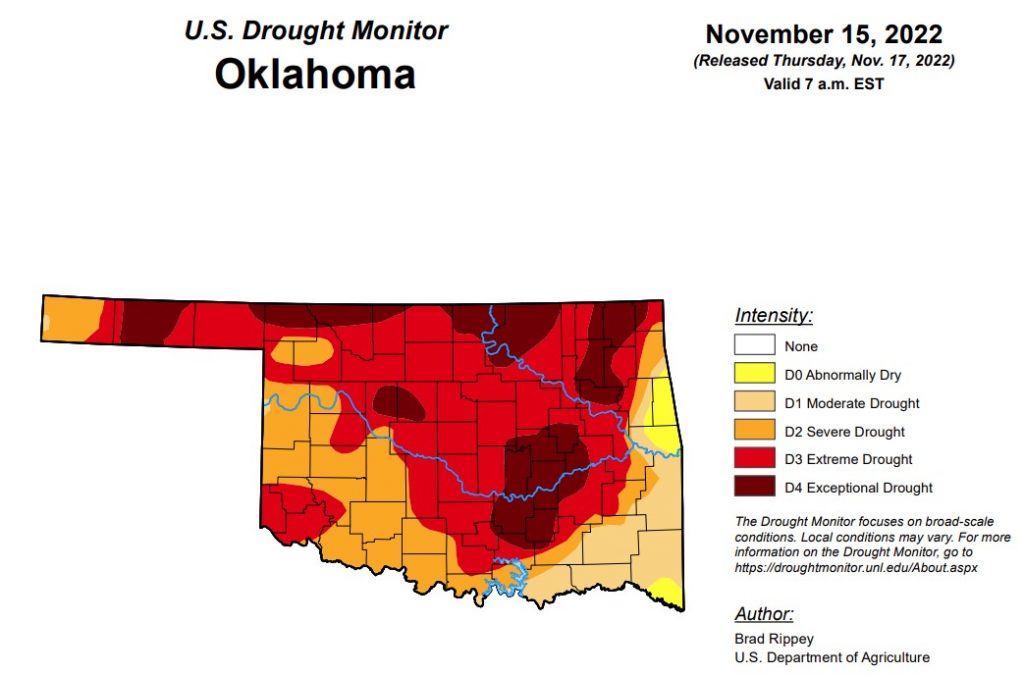
According to the Oklahoma Mesonet, colder temperatures can be expected to come through this Friday and into the weekend; the panhandle may see single digits. The weather around Thanksgiving looks a bit unsettled, with some moisture possible, but not cold enough for snow or ice as of now.
In Oklahoma, exceptional drought has improved from last week and is now at 19.67 percent (last week was at 22.38 percent).
Extreme drought or worse is down just slightly from last week's 64.54 percent and is now at 64.07 percent.
Severe drought or worse is down from last week's 88.7 percent and is now at 87.8 percent.
Moderate drought or worse is unchanged from last week at 97.7 percent, and abnormally dry or worse is also unchanged as it remains at 100 percent.
According to the 6–10-day precipitation map for Oklahoma, through November 26, all but the northern edge and southwest part of the state are predicted to receive near-normal amounts of precipitation. The far western edge of the panhandle is leaning below a 40 to 50 percent chance of rain, and the remaining part of the panhandle is learning below a 33 to 40 percent chance of rain.
To view the Oklahoma Drought Map, click here.
According to the latest U.S. drought monitor report, in some areas of the country, storminess chipped away and dryness and drought. Notably, on the 10th, Nicole became the first November hurricane to make landfall on the U.S. mainland since 1985, when Kate struck near Mexico Beach, Florida, on November 21. Nicole, a Category 1 hurricane with sustained winds near 75 mph, moved ashore just south of Vero Beach, Florida, around 3 am EST. Nicole's remnants eventually affected the entire eastern U.S., providing varying degrees of relief from autumn dryness. Some of the heaviest rain, locally 4 inches or more, fell in the central and southern Appalachians and neighboring areas. The rain helped to boost streamflow in the upper reaches of the Ohio River basin, with runoff moving downstream as the drought-monitoring period ended. Farther west, a storm system produced heavy snow and local blizzard conditions in the north-central U.S., while parts of the West received drought-easing precipitation. However, many other areas of the country remained mostly dry. Frigid conditions developed in conjunction with the Western storminess and expanded eastward, while much of the lingering warmth in the South and East was swept away, shortly after Nicole's departure.
To view the United States Drought Monitor Report, click here.
In the Southern Plains, late in the drought-monitoring period, precipitation developed across eastern sections of Oklahoma and Texas before spreading into the lower Mississippi Valley. Targeted reductions in drought coverage up to one category were made where the heaviest rain fell. However, much of the region received little or no precipitation. By November 13, the U.S. Department of Agriculture rated topsoil moisture at least one-half very short to short in Oklahoma (76%), Texas (71%), and Louisiana (58%). On the same date, the recently planted winter wheat crop continued to struggle in the driest areas, with 48% of the crop rated in very poor to poor condition in Texas, along with 42% in Oklahoma. In Arkansas, only 59% of the winter wheat had emerged by November 13, compared to the 5-year average of 66%. Rangeland and pastures continued to reflect the effects of drought, with 82% rated in very poor to poor condition in Oklahoma, along with 62% in Arkansas, and 57% in Texas.
In the High Plains, an early-season winter storm produced significant, wind-driven snow and freezing rain across parts of the Dakotas. Officially, 17.0 inches of snow—with a liquid equivalency of 1.23 inches—blanketed Bismarck, North Dakota, on November 10, accompanied by wind gusts as high as 37 mph. Elsewhere in North Dakota, wind gusts at the height of the storm reached or exceeded 40 mph in Garrison, Jamestown, and Minot. Bitterly cold weather trailed the storm. The northern Plains' moisture, while highly beneficial for winter wheat, had a limited immediate effect on the drought situation, leading to only small improvements in the depiction. Farther south, drought continued to gradually worsen in other parts of the region. On November 13, the U.S. Department of Agriculture reported topsoil moisture rated very short to short ranging from 65% in North Dakota to 87% in South Dakota. On the same date, winter wheat across the region remained in dismal condition, with more than one-third of the crop rated very poor to poor in Colorado (45%), Kansas (40%), Nebraska (38%), and South Dakota (37%).
In the West, Over the past couple of weeks, beneficial precipitation has helped to establish high-elevation snowpack and has provided limited relief from long-term drought. The improved moisture has also benefited winter grains and cover crops. The latest round of significant rain and snow overspread much of the region early in the drought-monitoring period and lasted for several days. On November 7, the last full day of the previous period, Spokane, Washington, measured a daily-record snowfall of 3.8 inches. Also on the 7th, Elko, Nevada, set daily records for precipitation (0.76 inch) and snowfall (7.5 inches). Elko's November 7-9 snowfall reached 13.1 inches. Similarly, Alta, UT, noted a 3-day (ending November 10) storm total of 27.7 inches. On November 8, daily-record amounts in southern California included 1.44 inches at Los Angeles International Airport and 1.13 inches in Burbank. Elsewhere in southern California, 48-hour totals on November 7-9 reached 6.84 inches on Palomar Mountain, 6.76 inches at Big Bear Lake, and 4.80 inches in Idyllwild. In Utah, 24-hour precipitation totals on November 8-9 topped an inch in Randolph (1.20 inches), Logan (1.09 inches), and Zion National Park (1.05 inches). Daily-record snowfall on the 9th totaled 3.1 inches in Pocatello, ID, and 3.0 inches in Kanab, UT. During the extended period of unsettled weather, Pocatello noted 8.8 inches of snow from November 7-10. Later, cold, dry weather replaced previously stormy conditions throughout the West. Sub-zero temperatures were common across the northern Rockies and northern Intermountain West, with Greybull, Wyoming, reporting five consecutive readings below 0°F from November 10-14, along with a daily-record low of -14°F on the 11th. In Glasgow, Montana, a daily-record low of -15°F on November 10 was preceded and accompanied by 11.5 inches of snow, starting on the 8th. Other sub-zero, daily-record lows in Montana included -15°F (on the 8th) in Great Falls and -17°F (on the 11th) in Miles City.
Looking ahead, Cold weather will continue to dominate much of the country through the weekend and into early next week. At the height of the cold wave, temperatures could fall to 20°F or below as far south as the Tennessee Valley, while freezes may reach nearly to the Gulf Coast in Louisiana, Mississippi, Alabama, and northern Florida. Meanwhile, continental U.S. storminess during the next 5 days will be minimal. However, snow squalls will continue for several days downwind of the Great Lakes. In addition, rain may develop in the western Gulf Coast region. Elsewhere, aside from snow showers in the Rockies and adjacent High Plains, dry weather will prevail during the next 5 days from the Pacific Coast eastward across the central and southern Plains, the middle and lower Mississippi Valley, and much of the Southeast.
The NWS 6- to 10-day outlook for November 22 – 26 calls for the likelihood of near- or above-normal temperatures nationwide, except for lingering cooler-than-normal conditions in the middle and northern Atlantic States and parts of the south-central U.S. Meanwhile, near- or below-normal precipitation from California to the Plains, Midwest, and mid-South should contrast with wetter-than-normal weather in the Northwest and large sections of the Gulf and Atlantic Coast States.
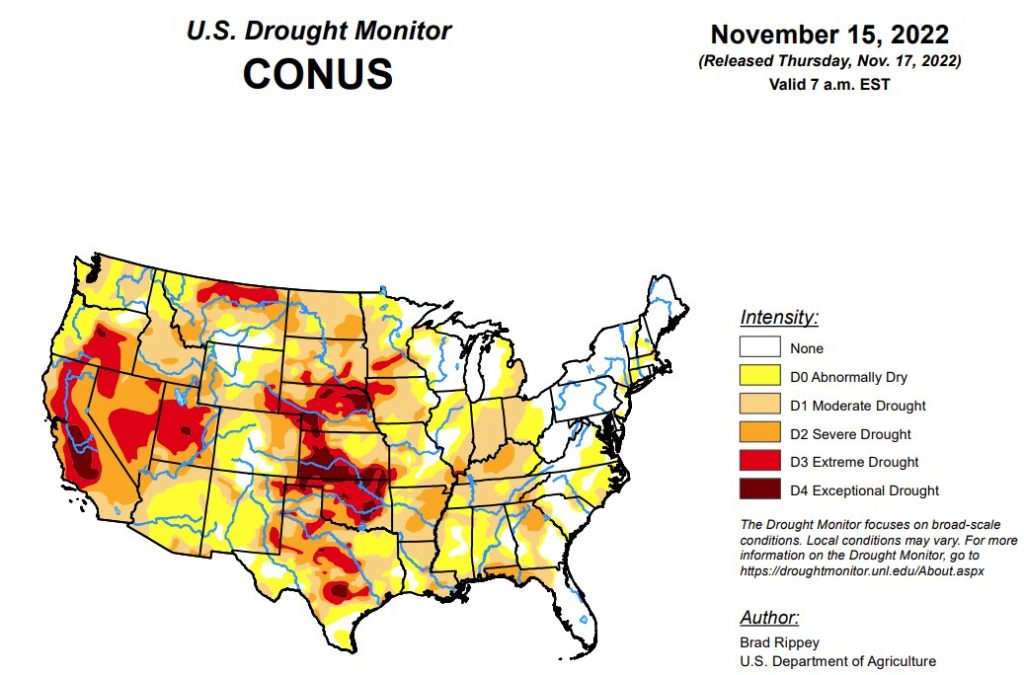
To view the 6-10 Day Precipitation Outlook Map, click here.
To view the 6-10 Day Temperature Outlook Map, click here.
To view the Monthly Drought Outlook Map, click here.
Ninety-four members of the Oklahoma House of Representatives took their oaths of office Wednesday, Nov. 16, in the House Chamber.
The oath was administered by the Honorable Richard Darby, Chief Justice of the Oklahoma Supreme Court. The remaining seven members will take their oaths of office on a later date.
The House will consist of 81 Republicans and 20 Democrats. There are 16 new members and 85 returning members.
Newly-elected Republicans include John Kane, House District 11; Neil Hays, House District 13; Cody Maynard, House District 21; Chris Banning, House District 24; Collin Duel, House District 31; John George, House District 36; Josh Cantrell, House District 49; Nick Archer, House District 55; Clay Staires, House District 66; and Mark Tedford, House District 69.
Newly-elected Democrats include Jared Deck, House District 44; Annie Menz, House District 45; Suzanne Schreiber, House District 70; Amanda Swope, House District 71; Ellyn Hefner, House District 87; and Arturo Alonso, House District 89.
The full House will officially convene for an organizational day on Tuesday, Jan. 3, 2023, and the First Session of the 59th Legislature reconvenes on Monday, Feb. 6.
John Deere (NYSE: DE) has been named a CES 2023 Innovation Awards Best of Innovation honoree in the Robotics category, and an honoree in the Vehicle Tech & Advanced Mobility category for its fully autonomous tractor. This is the fourth consecutive year John Deere has received an Innovation Award from the Consumer Technology Association (CTA). The announcement was made ahead of CES 2023, the world's most influential technology event, during which John Deere will deliver a keynote. CES 2023 takes place January 5-8 in Las Vegas, NV and digitally.
John Deere's fully autonomous tractor integrates technology such as cameras, artificial intelligence (AI), sensors, and ultra-fast GPU processors to navigate through a field without an operator in the cab – helping customers be more efficient, productive, and profitable.
"Farmers never have a shortage of work to do on any given day," said Jahmy Hindman, chief technology officer for John Deere. "With our fully autonomous tractor, farmers have the flexibility to focus on the most pressing tasks within their operation while the machine handles what they don't have time or labor to do. We continue to invest in autonomy and automation to support the important work our customers do every day."
The CES Innovation Awards program, owned and produced by the CTA, is an annual competition honoring outstanding design and engineering in 28 product categories. Judges reviewed submissions based on innovation, engineering and functionality, aesthetic, and design.
The Robotics category of the Innovation Awards highlights programmable or otherwise intelligent machines capable of performing specific tasks or replicating human movement or interactions. The Vehicle Intelligence & Advanced Mobility category highlights automotive and other transportation products and services that integrate technology into the driving or riding experience, whether by enhancing safety, navigation, improving the passenger experience, or enabling self-driving functionality.
Today, EPA Administrator Michael Regan announced the appointment of 20 new members to the Farm, Ranch, and Rural Communities Federal Advisory Committee (FRRCC), which provides policy recommendations to EPA on a range of important environmental issues impacting agriculture and rural communities. New FRRCC members will join the Committee's 17 existing members, which includes NACD President Michael Crowder. The Committee includes representatives from academia, industry, non-governmental organizations, and state, local, and tribal governments. FRRCC members represent all 10 EPA regions and hail from 24 states.
Earlier this year, EPA directed FRRCC to determine how the Agency can best employ policies and programs to advance the agriculture sector's climate goals and help farmers and ranchers reduce emissions and improve their agriculture systems. Visit the FRRCC's webpage to learn more about the Committee's mission, structure, and meetings.
"I'm very pleased to welcome our new, highly qualified members to the FRRCC," said NACD President Michael Crowder. "I look forward to working with all members of the Committee to provide insights and recommendations that will help EPA empower producers and land managers to strengthen agriculture operations and take meaningful steps to address climate change."
Congressman Frank Lucas (OK-03) released the following statement after U.S. Senator Jim Inhofe gave his farewell address today on the Senate Floor:
"On the day of my swearing-in, then Representative Jim Inhofe spoke of the change that was happening in Oklahoma as I joined the ranks of my colleagues in the U.S. House of Representatives. He spoke of the conservative shift that Oklahoma was in the midst of and reflected on the values that I and my neighbors hold dear as rural Oklahomans. Now, 28 years later, Oklahoma is going through another change- a monumental change- as Senator Inhofe begins to bid farewell to the hallowed halls of Congress and as our Dean of the Oklahoma Delegation.
"For five decades Oklahoma has known no greater statesman and advocate. Senator Inhofe's moral compass and unwavering devotion to public service has and will continue to benefit Oklahomans and all Americans for generations to come. While the fruits of Senator Inhofe's labors are recognizable across Oklahoma and the United States, it will be Jim's legacy and steadfast leadership that the Oklahoma Delegation will now be responsible to fill. And while it will be the 118th Congress that will miss Jim's presence, fortunately for Oklahoma and the U.S. Senate Jim is serving with us through the end of this Congress where we'll soon consider the James M. Inhofe National Defense Authorization Act.
"I take great pride in saying it was Congressman Inhofe that introduced me on the House Floor 28 years ago, but I take even greater pride in calling Jim Inhofe a friend. Thank you, Jim for your friendship, leadership, and public service to a grateful state."
Thu, 17 Nov 2022 05:18:49 CST
OKC West Livestock Auction - El Reno, OK
Wednesday, November 16, 2022
AUCTION
This Week 9,428
Last Reported 8,982
Last Year 7,922
Feeder steers steady to 1.00 lower. Feeder heifers 2.00-4.00 lower. Steer calves steady to 3.00 higher, instance of up to 8.00 higher on heavy 5 weights. Heifer calves unevenly steady. Demand was moderate to good.
FEEDER CATTLE
STEERS - Medium and Large 1 (Per Cwt / Actual Wt)
Head Wt Range Avg Wt Price Range Avg Price
8 276 276 230.00 230.00
33 312-348 328 220.00-231.00 228.35
66 350-397 390 210.00-235.00 228.82
12 361-385 363 245.00-247.00 246.82 Thin Fleshed
58 400-435 405 190.00-219.00 203.62
19 429 429 232.00 232.00 Thin Fleshed
193 451-494 475 192.00-231.00 207.17
195 502-541 522 185.50-198.00 193.96
171 550-599 570 184.00-191.00 186.26
9 551 551 195.00 195.00 Fancy
49 591 591 179.50 179.50 Unweaned
237 603-628 615 178.00-184.50 181.80
165 653-689 669 174.50-180.00 177.52
1106 702-749 728 171.00-180.00 176.77
207 754-764 755 173.00-178.50 175.06
454 813-829 813 172.50-173.40 173.38
282 864 864 171.00 171.00
For the complete market report from USDA Market News click on the PDF link below:
Wed, 16 Nov 2022 15:14:39 CST
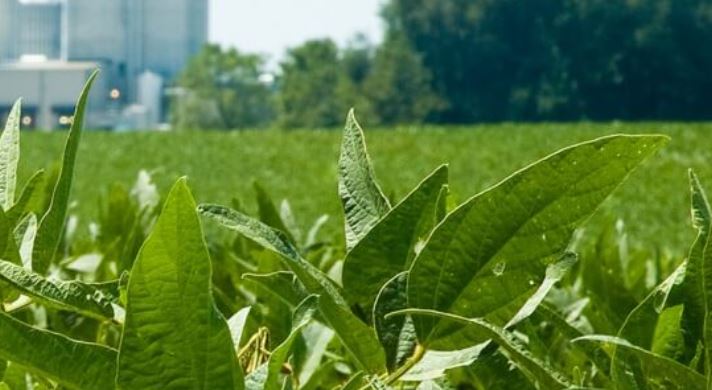
The U.S. Department of Agriculture and the Oklahoma Department of Agriculture are now putting the Daily Cash Grain Report into a PDF format - we are saving that PDF and archiving them for today's specific report. To see today's update, click on the PDF report link at the bottom of this story.
In addition to the PDF of the daily report, you can also listen to the Cash Grain Report by calling 405-621-5533. Push 2 for the grain report.
Wed, 16 Nov 2022 14:53:11 CST

Listen to today's report with Justin Lewis, by clicking or tapping on the LISTEN bar
Justin Lewis of KIS Futures has all the details on today's agricultural markets for RON listeners, below.
As December edges closer, there are many opportunities to prepare for the upcoming Christmas holiday within the state of Oklahoma. Associate Farm Director, Reagan Calk, caught up with Micaela Halverson and Jenna Brinlee with the Oklahoma Department of Ag, Food, and Forestry and talked about Christmas Tree Farms across the state and some holiday shopping opportunities within the Made in Oklahoma Program.
The Made in Oklahoma Program, Brinlee said, is a membership of over 800 companies within the state of Oklahoma that grow, process, or manufacture a good or product within the state. These goods and products, Brinlee added, range from food and drink to items such as candles, leatherwork, and jewelry.
"One of the best ways you can shop for your family or friends and shop local this holiday season is by going to madeinoklahoma.net," Brinlee said.

There is an E-commerce page on the site where companies have uploaded their products to be shopped online, Brinlee said, and there is a "Retailers" tab on the site as well that lists stores in Oklahoma that carry Made in Oklahoma items.
"You can see the map on there, find a store closest to you, and go shop those Made in Oklahoma items in-person at a retail store near you," Brinlee said.
There is also a gift basket guide on the Made in Oklahoma website, Brinlee said, for those who may be looking for a gift set.
For those who may not understand the difference between the Made in Oklahoma Coalition and the Made in Oklahoma Program, Brinlee Offered some clarity on the subject.
The Made in Oklahoma Coalition, Brinlee said, is only for food and beverage companies that produce in Oklahoma. The MIO Coalition, she added, focuses on grocery stores and food service, whereas the Made in Oklahoma Program encompasses all types of products in Oklahoma.
For those with a product or good made in Oklahoma wanting to join the program, Brinlee said there is an application on the website, and it is free to join.
"As long as you are meeting our rules that state you are growing, processing, or manufacturing a product in Oklahoma, you can qualify, and I would love to have that conversation with you about what your membership could look like and the benefits of being included," Brinlee said.
Brinlee said applications are sent to her to be approved. Those who are approved, she added, will be added to the Made in Oklahoma Program's email database, allowing members to be part of any marketing initiatives that they do throughout the year or events.
Aside from some great holiday shopping in the Made in Oklahoma Program, Micaela Halverson talked about Christmas tree activities across the state.
"Though our Oklahoma Agritourism Program, we have 19 different you-cut Christmas tree farms across the state," Halverson said. "You can find them on our website at oklahomaagritourism.com to figure out which Christmas tree farm is near you and what different activities they have going on."
Most of the Christmas tree farms, Halverson said, will open on Black Friday, November 25. A few of the Christmas tree farms, she added, will be opening the day before or a few days before Black Friday.
"If you have not cut your own real Christmas tree before, I highly recommend it," Halverson said. "It is a lot of fun. It is a great way to make memories and build traditions with your family."
Most of the Christmas tree farms are in the central and northeast regions of the state, Halverson said, but there is one in each region of the state.
Aside from offering visitors the chance to cut their own Christmas trees, Halverson said many of the Christmas tree farms have plenty of activities and shopping options for families as well.
"A lot of my Christmas tree producers say that they see the same returning families year after year, and then they watch the kids grow up, and then they are bringing their kids and their family back," Halverson said. "It is pretty special, and if a Christmas tree farm is not part of your Christmas family traditions, you should seriously look into it."
Fed cattle prices were steady last week with a $152.73/cwt. average six-state steer price. The northern end of the feeding region sold some as high as $156/cwt. but a volume at $153/cwt. Very light cash trade volume in Kansas and Texas found an average near $150/cwt.
Live Cattle futures contracts have traded up and down in the past two weeks with the December contract gaining nearly $2/cwt. from the beginning of the month through last week. With volatility in the markets, that increase has since been erased in the past four days with the contract closing yesterday at $151.27/cwt. The February 2023 contract has declined around $3/cwt. since the first of November.
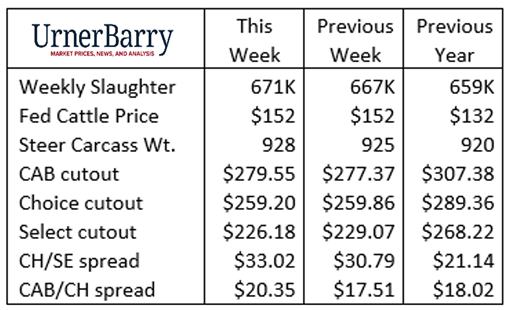
In the same timeframe, corn futures worked to the cattle feeder's advantage with a 40-cent drop from November 1 through Monday morning's opening. Reports this Tuesday of Russian aggression in Ukraine spilling over into Poland sent corn prices higher as heightened tensions in that region once again generated volatility in grain prices.
Despite the weekly average data showing the CAB cutout $2.18/cwt. higher last week, the Choice boxed value has declined daily since last Tuesday by $0.07/cwt. With Thanksgiving meal preparations at the focus of many retailers, the beef spot market demand tends to decline in the week prior to the holiday. Emphasis on "spot market" is important since beef purchasing for late fourth quarter needs has been well underway.
Ahead of Thanksgiving, ribeyes and tenderloins are not giving up any ground. These two cuts, in each of the quality grades (including the Certified Angus Beef ® brand,) are reflecting the typical seasonal demand climb. We reported record-high tenderloin prices two weeks ago and the trend has only strengthened in the meantime. This Tuesday's heavy Choice tenderloin price was $15.24/lb., wholesale, versus $13.73/lb. a year ago. Last week the heavy CAB tenderloin price was $1.20/lb. premium to Choice.
Across the rest of the carcass items, prices are mixed with notably weaker prices on thin meats and round subprimals. Chuck rolls have been difficult for buyers to source in the past few weeks and are consequently 25% pricier at wholesale than a year ago.
TIGHT CATTLE SUPPLIES AND INCREASING CARCASS WEIGHTS
The current cattle markets can provide a history lesson for those new to the scene.With last week's $152/cwt. fed cattle average, feedyards experienced the highest price since June 2015. To give a quick recap of that era: record-high prices, fueled by a supply chain starved for cattle numbers, came to an abrupt end. The November 2014 record steer price of $171/cwt. eroded rapidly and bottomed out 9 months later in September 2015. Following the 31% drop to $117/cwt., the market stabilized and turned higher. This signaled the end of tight cattle supplies, caused by drought liquidation, and beef cattle producers were able to restock the nation's cow herd.
At the market high in November 2014, weekly steer/heifer slaughter head counts were near 445,000 head, just 13% smaller than the average in the most recent four-week period. At the 2014 market high, carcass weights averaged 874 lb. whereas most recent carcass weights in 2022 have been 18 lb. heavier at 892 lb. The resulting estimated carcass tonnage is 15% larger in recent weeks than in November 2014.
It's interesting to note that while fed cattle prices declined precipitously in 2015, weekly slaughter head counts continued to trend lower in 2015 as well. As a matter of fact, fed slaughter was 4.8% smaller in 2015 than the prior year even as price declined at three times this pace.
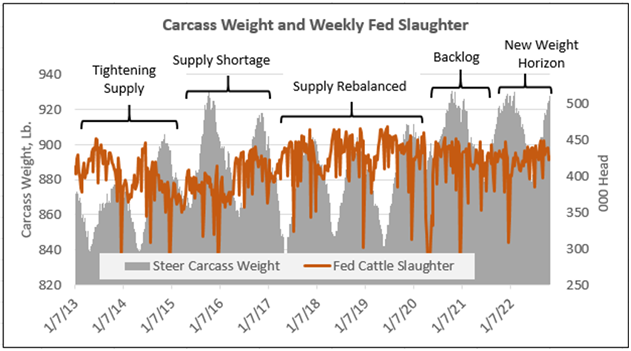
The feedlot sector's response to tight cattle supplies in late 2015 was to send carcass weights to new record highs. During that October steer carcasses averaged 930 lb., 24 lb. heavier than the fall 2014 high and 51 lb. heavier than that period in 2013. It was a conscious effort by packers and feeders to capture more pounds from fewer head.
As noted, today's weekly slaughter is much more robust than in 2015 and cattle supplies are at least adequate for the short term. Yet fed cattle numbers will certainly tighten as we move into 2023 due to the shrinking cow herd and a 2022 calf crop at least 1% smaller than last year according to USDA's July report . The latest steer carcass weight average of 928 lb. is just two pounds lighter than the 2015 fall heaviest, a record that, at the time, seemed an excessive departure under extreme circumstances.
As we stare down the road at a scenario similar to what we experienced a decade ago it's difficult to imagine that we'll be able to capitalize on more pounds per head in the fed cattle sector. Carcass weights are starting the upcoming supply dip at an already-elevated level. The beef industry has added an average of 5 lb. of carcass weight annually across a very long time span. Another two-year, 50 lb. increase response to tight head counts is a bit unimaginable today. However, odds are great that carcass weights will press upward, within normal seasonal patterns for many months to come.
Today, Rep. Glenn "GT" Thompson, Republican Leader of the House Committee on Agriculture, delivered the following remarks on the House floor slamming President Biden's self-inflicted energy crisis and the ensuing diesel shortage that continues to hamper domestic food and fiber production in rural America.
The National Council of Farmer Cooperatives (NCFC) today joined with members of the House of Representatives and a dozen other farm and ag groups to call on the Senate to take up and pass a bill to address the labor crisis faced by agriculture before the end of the year. The call came at a press conference on Capitol Hill organized by the American Business Immigration Coalition (ABIC) that launched a Washington fly-in bringing producers from around the country to the Hill to push the Senate for action.
"Farmers and ranchers have taken time out from running their farms to come to Washington because they want the Senate to know that it's now or never when it comes to passing an ag labor reform bill," said Chuck Conner, president and CEO of NCFC. "Farmers and their co-ops face increasing difficulty in filling thousands of on-farm jobs across the country. They know that if this effort fails, it will likely be many years before this labor crisis is addressed. That's why we are all speaking with one voice when saying to Senate: 'Act now and pass ag labor reform.'"
Conner noted that Senators Michael Bennett (D-Colo.) and Mike Crapo (R-Idaho) were working with their fellow senators to introduce a bill during the upcoming lame duck session. The House of Representatives passed its version of ag labor reform, the Farm Workforce Modernization Act, on a strong bipartisan vote last year.
About NCFC
Since 1929, NCFC has been the voice of America's farmer cooperatives. Our members are regional and national farmer cooperatives, which are in turn composed of nearly 2,000 local farmer cooperatives across the country. NCFC members also include 26 state and regional councils of cooperatives. Farmer cooperatives allow individual farmers the ability to own and lead organizations that are essential for continued competitiveness in both the domestic and international markets.
America's farmer-owned cooperatives provide a comprehensive array of services for their members. These diverse organizations handle, process and market virtually every type of agricultural commodity. They also provide farmers with access to infrastructure necessary to manufacture, distribute and sell a variety of farm inputs. Additionally, they provide credit and related financial services, including export financing.
Dairy MAX Expands Trendy, Student-Friendly, Dietitian-Approved Dairy Solutions

That old saying, "breakfast is the most important meal of the day," is correct. Sadly, too many children start their school day on an empty stomach. Whether they miss this important meal simply due to a hectic schedule or because there is not enough to eat at home, skipping breakfast comes at a high price for all students – research shows this habit negatively impacts academic performance.
As school nutrition departments strive to compete with outside food and beverage establishments, coffee and smoothie bars have steadily grown in popularity across the country. Coffee shops have become a regular part of life for today's teenagers, and you can often find them hanging outside their favorite local shops. So why not keep them on campus to enjoy their favorite beverages? Adding coffee and smoothies to innovative breakfast programs is increasing student participation in breakfast while helping them gain the vital nutrition to fuel student success while also elevating a school's nutrition program. Plus, bringing this environment inside the school building can help increase school revenue and milk consumption.
"Through our Nutrition NOW program, Dairy MAX is working with school districts to feed more students through innovative breakfast programs designed to increase dairy consumption and access to good nutrition," says Julie Stefko, M.S., director of school marketing, sales and operations at Dairy MAX.
USDA allows sales of coffee and espresso beverages in high schools up to 12 ounces and under 60 calories as part of the Smart Snacks in School program. Coffee contains essential nutrients, including riboflavin, pantothenic acid, manganese, potassium, magnesium and niacin. So along with being popular, combined with the powerhouse of milk, coffee beverages can be nutritious.
Smoothies are made with yogurt, milk, fruit and, on occasion, other healthful add-ins and offer a variety of health benefits for growing kids. Both items can count for multiple food components and can be incorporated during breakfast, lunch, or supper service as a part of a reimbursable meal.
To expand milk consumption in districts, Dairy MAX has partnered with To Taste, an organization founded by two RDNs/chefs with a focus on K-12 culinary nutrition. Together they developed nine milk-based coffee recipes, which include 8 oz of milk and 16 smoothie recipes containing one or two servings of dairy.
"It's rewarding to see growing interest across the region for our Dairy MAX branded smoothie and coffee recipes. Our recipes are unique and designed specifically to serve the interest of all our stakeholders including child nutritionists, students and our farmers. Dairy-based smoothies and coffee drinks keep school meals relevant and attract more customers, and in turn, more customers mean higher revenue for child nutrition programs and increased dairy sales for farmers," said Holly Stojanik, RDN, LD, Dairy MAX school marketing territory manager.
The majority of schools that offer school lunch also offer school breakfast,however, it is often underutilized by students. In fact, the number of students participating in breakfast is just half of those participating in lunch, so there is a significant opportunity to impact the growth of dairy and child nutrition programs while also increasing student access to the nutrition they need to be successful.
NMPF called on the U.S. Food and Drug Administration to use existing legal authority to modernize its regulations allowing for faster approval of animal-feed additives that reduce greenhouse gas emissions, submitting comments to the agency today that highlighted the need for urgent action to enhance dairy's role as a climate solution.
"Innovative and voluntary solutions are needed to reduce greenhouse gas (GHG) emissions, including methane," said Dr. Jamie Jonker, NMPF's chief science officer, in the comments submitted today. "Enteric emissions directly from cows currently account for roughly one third of all GHG emissions from dairy farms and present an important area of opportunity for methane reductions. Feed composition changes can directly or indirectly reduce enteric emissions resulting from livestock."
While animal-feed additives are a promising path toward a net-zero future for dairy as outlined in industry goals, the pace of their approval lags that of competitors such as the European Union due to current FDA processes. By streamlining bureaucracy and allowing feed-additives to be treated as foods rather than as drugs, the United States can maintain and advance its global leadership in sustainability, Jonker wrote.
Through the U.S. Dairy Net Zero Initiative, a collaboration across dairy organizations, dairy-farm research is advancing new technology and new market development opportunities to make sustainability practices more accessible and affordable to farms of all sizes, including enteric methane reduction.
"One of the greatest opportunities that exists for U.S. dairy farmers is their ability to provide real solutions to many of today's biggest environmental challenges like GHG emissions," Jonker wrote. "Embracing new practices and technologies is key to making America's dairy farmers an environmental solution while providing wholesome and nutritious dairy products to the U.S. and the world." For more on how dairy is advancing its stewardship and best practices, visit the National Dairy FARM (Farmers Assuring Responsible Management) Program's Environmental Stewardship page.
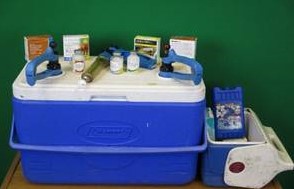
On today's Cow-Calf Corner, Bob LeValley, Oklahoma Beef Quality Assurance Coordinator, talks about how to correctly handle and store vaccinations for your livestock.
The highest quality vaccine that producers purchase may be of little value if not handled and stored properly. Even experienced producers may overlook key principles when preparing and administering vaccines and other animal health products. Product storage and handling is important to ensure that the efficacy of products is not compromised.
Modified live vaccines must be reconstituted with a sterile diluent prior to administration. It is generally recommended that these products be used within an hour of reconstitution. The products are routinely used with a good response when administered and handled according to label directions. The processing speed in a stocker operation is often considerably faster than a cow/calf operation. Cow/calf processing facilities are often in area that are not well sheltered from the weather. This stresses the need to exercise caution when handling and administering modified live products. Common handling techniques can render MLV products ineffective and even reduce the effectiveness of killed vaccines and other products.
It is always a good practice to purchase vaccines from a reputable distributor. A vaccine will have less than normal effectiveness if it has ever been stored improperly. Improper storage includes freezing, and/or exposure to heat or sunlight. Maintaining a high level of efficacy is critical to establishing immunity in a majority of vaccinated cattle. Vaccines should be stored in a dependable refrigerator that maintains a temperature (typically 35-45⁰ F) as directed by the product label. Chute side vaccine coolers work well for holding the vaccines during processing. These coolers have slots for holding syringes after they are loaded, and vaccines are placed inside the cooler to maintain temperature. Remember to take that cooler with you when you go purchase vaccines so that you can keep the products at the recommended temperature on the way home. Vaccine coolers can be purchased ready to use, or can easily be constructed by converting small coolers for this intended purpose. Instructions for making an inexpensive vaccine cooler are available by accessing the beefextension.okstate.edu website, scroll to the Ok Beef Quality Assurance link, then click on "Chute Side Vaccine Cooler". While you are at the site, take some time to review the numerous additional OSU Extension beef cattle resources available.
It is also important to maintain a record of lot/serial numbers of products in the event of a recall or other situations that may arise. A quick and easy method of recording the lot and serial numbers while working cattle is to simply to take a photo of the information on the vial label with a cell phone camera. It can be transferred later to more permanent records. Products that are out of date should be properly discarded. Through proper record keeping, storage and handling, animal health products will be an effective piece of a comprehensive cattle health program.
At the National Association of Farm Broadcasters convention in Kansas City, Farm Director, KC Sheperd, got the chance to visit with Roger McEowen. McEowen is a professor of agricultural law and taxation at Washburn University School of Law in Topeka, Kansas. Sheperd talks with McEowen about why it is critical for producers to be knowledgeable about tax law to help them stay ahead.
"One slight mistake can be pretty costly, and it can affect the profitability of the farm or ranch pretty quickly," McEowen.
For example, McEowen said, if a producer is not reporting income in the right year, they can suffer from IRS penalties for not reporting properly and under-reporting income. Not deferring crop insurance proceeds properly, McEowen said, is another big issue.
"One of the big issues right now has to do with deferability of certain types of USDA indemnity payments- the Emergency Relief Program payments," McEowen said. "That seems to create a whole bunch of confusion in producer's minds right now."
Getting into an issue with the IRS, McEowen said, should be avoided at all costs, because it is extremely time-consuming and expensive. Producers have a lot to juggle such as keeping track of ERP payments, crop insurance depreciation, and more, McEowen said, so having a good tax counsel would be a valuable asset.
Rules for ag tax and ag law are different for farmers and ranchers, McEowen said, so finding a tax professional who knows the rules is critical.
For 2023, McEowen said one big issue is the U.S. Supreme Court defining what a wetland is for the Clean Water Act. California's Proposition 12, he said, will also be a case to watch as it can impact all of agriculture.
Proposition 12 is a worrisome subject for producers because if one state is allowed to regulate what happens in another state, there may be no end in sight.
McEowen's biggest piece of advice for producers, he said, is that it is good to have legal and tax counsel at your disposal.
"Stay in contact with them regularly," McEowen said. "The laws change frequently, particularly on the tax side of things. Those rules change all the time. You want to be doing some pre-planning for the next year."
Planning ahead for the next year and considering factors such as the current economic situation, McEowen said, will directly impact the profitability of the farm or ranch.
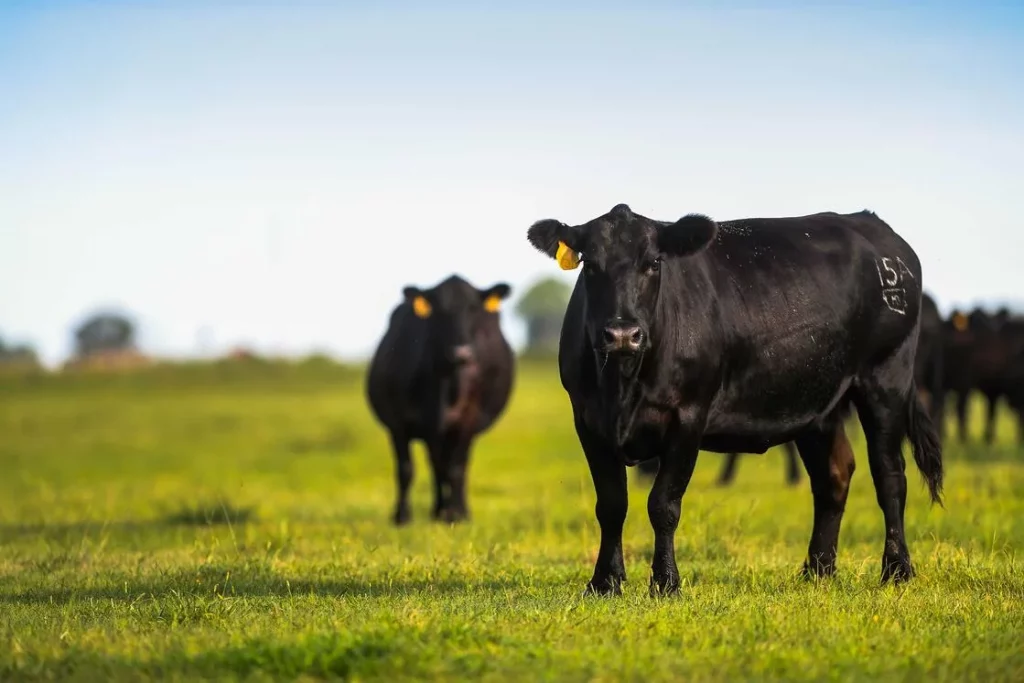
Listen to Ron Hays talk with John Pfeiffer about the Angus industry and his outlook for cattle producers.
Senior Farm and Ranch Broadcaster, Ron Hays, is visiting with Oklahoma rancher and former president of the American Angus Association, John Pfeiffer about the Angus business and what Pfeiffer is hearing from producers during this time.
Pfeiffer attended the 2022 American Angus Association's convention and said the morale in the Angus business and the entire cattle business, in general, is positive.
"We kind of think if we get a rain, then with all the cows that have been liquidated and go to town, that again, the cow-calf producer is going to be in the driver's seat," Pfeiffer said. "We expect with just a few showers that mother nature and the good Lord will work with us. We are going to have a really good year next year."
The cow numbers are lower than they were in the drought one 2011 and 2012, Pfeiffer said, so producers who have been able to hold onto their herd numbers are going to have an advantage in the market.
"They are also going to be in the driver's seat with the packer somewhat too because we are going to be able to dictate price somewhat," Pfeiffer said. "In some ways, it is almost kind of sad because we have worked really hard the last five or six years trying to increase the number of places to go to go these and with some independent people to do slaughtering and processing, and it is going to be really tough for them to make those ends meet, and I hope that is not the case."
Pfeiffer talked about the remarkable improvements made to the Angus breed over the past 10 years.
"If you look about 10 years ago, 11 years ago, we were at about 17 percent acceptance rate for Certified Angus Beef," Pfeiffer said. "This last year, we set a record number of pounds- over 1.265 billion pounds, and we had acceptance rates of over 35 percent."
There is a demand for Certified Angus Beef, Pfeiffer said, but there is also a demand for prime Certified Angus Beef. It is going to be difficult to produce more prime Angus beef, he added, with cattle on feed facing the consequences of high corn prices, but with good genetics, it is possible.
"I think it is important as people in the cattle business that we begin to look at increasing the marbling in these cattle and make it so we end up with more prime cattle," Pfeiffer said.
Those purebred seed stock Angus producers who have been able to hold onto their herd so far in the drought, Pfeiffer said, will most likely make it out without having to cull their good cows. Most producers he has spoken with, he added, are only having to sell their older cows.
"Whenever we sell old cows and open cows, that is a good thing because that means we are going to put new genetics in to take their place," Pfeiffer said. "Genomics has become a really big thing in the Angus business. I mean, we are over a million head that we gnomically tested right now."
Larger producers, Pfeiffer said, are even beginning to gnomically test their commercial animals.
"We are sorry whenever anybody has to liquidate some or get rid of some, and we have some older producers that are just getting out, but it is always improvement in genetics," Pfeiffer said. "The other thing we are working on a lot right now is the consumer wants to know where their product comes from, and they also want to know how well it is treated, so we are pushing very hard that all of the registered Angus producers become BQA (Beef Quality Assurance) certified."
Becoming BQA certified, Pfeiffer said, helps the consumer feel better about purchasing a product when they know it has been treated correctly.
Producers can now take a nationwide survey to help the U.S. Department of Agriculture (USDA) improve and increase access to its programs and services for America's farmers, ranchers, and forest managers. The survey includes new and existing customers. USDA encourages all agricultural producers to take the survey, especially those who have not worked with USDA previously. The survey gathers feedback on programs and services available through USDA's Farm Service Agency (FSA), Natural Resources Conservation Service (NRCS) and Risk Management Agency (RMA).
The survey is available online at farmers.gov/survey, and producers should complete by March 31, 2023. Stakeholder organizations are also encouraged to share the survey link through their networks. The survey is available in 14 different languages including Arabic, Chinese, English, French, Hmong, Korean, Navajo, Punjabi, Somali, Spanish, Tagalog, Thai, Urdu and Vietnamese.
"A robust survey response that includes the perspectives of all of our customers, including underserved producers, will help USDA better understand the unique needs of both existing and prospective customers, while identifying opportunities to enhance government programs and services. Please take the survey, especially if we haven't worked with you before," said Robert Bonnie, USDA's Under Secretary for Farm Production and Conservation (FPAC). "This survey will provide USDA with critical data to help USDA serve all of agriculture."
In addition to the online survey, the FPAC Business Center, which is administering the survey, will also mail 11,000 printed surveys to various local state stakeholder organizations and farmers markets.
The survey is an Office of Management and Budget requirement supported by the Biden-Harris President's Management Agenda (PMA), which identified FSA and NRCS as High-Impact Service Providers. These agencies provide critical customer-facing services and are expected to use the survey data to make targeted improvements.
More Information
USDA touches the lives of all Americans each day in so many positive ways. Under the Biden-Harris administration, USDA is transforming America's food system with a greater focus on more resilient local and regional food production, fairer markets for all producers, ensuring access to safe, healthy and nutritious food in all communities, building new markets and streams of income for farmers and producers using climate smart food and forestry practices, making historic investments in infrastructure and clean energy capabilities in rural America, and committing to equity across the Department by removing systemic barriers and building a workforce more representative of America. To learn more, visit usda.gov.
USDA is an equal opportunity provider, employer and lender.
| Applications for four internships are open until January 10, 2023. |

In a world full of opportunity, internship experiences allow students the best trial-run. The American Angus Association is excited to announce four internship positions for the summer of 2023. These 10-week internship programs provide a unique, hands-on experience to allow students to grow and prosper while dipping their toes in the workforce.
"This internship is one of the most unique opportunities in the cattle industry for young professionals," said Ian Kane, 2022 intern. "The Association staff is welcoming, helpful and are great teachers, plus you get to travel and meet with Angus breeders — I just can't say enough about this experience."
Internships allow students to gain industry-relevant experience and refine their skills, but the value of networking and working alongside the team at the Association will prove valuable for a lifetime. The summer 2023 internship experience will be filled with Angus cattle, tasty beef and a staff eager to share knowledge and wisdom.
The four internships being offered are:
Angus Media: This writing-intensive opportunity offers the chance to join a multi-media effort, which includes the Angus Journal® print publication and the AJ Daily electronic newsletter, as well as the Angus Journal's website and social media presence. The internship can be tailored to the intern's strengths, but many duties can be anticipated, including traveling to industry events. Experience in news and feature writing, editing and photography are strongly suggested.
Communications: From print stories to video scripts, photography, graphic design and more, the communications intern will truly gain valuable agricultural communications experience. Applicants should have strong writing and design skills and have completed coursework in news and feature writing, editing and design. Experience in photography, video and social media is preferred.
Events & Junior Activities: The intern will assist in planning and executing youth events hosted by the National Junior Angus Association (NJAA), including preparations, correspondence and coordination for junior shows and events. Applicants should be self-starters, detail-oriented and outgoing with the ability to work well with others. Livestock and event planning experience is preferred, but not required. Travel to the 2023 National Junior Angus Show (NJAS), Leaders Engaged in Angus Development (LEAD) Conference and other events is expected.
Angus Genetics Inc. (AGI): Students pursuing their master's degree or Ph.D. in animal breeding and genetics are encouraged to apply for the AGI summer internship. The intern will have the opportunity to work with one of the world's largest beef genomic databases. The internship will focus on research that involves data analysis, therefore candidates should have experience in analyzing animal breeding data sets and genomic data.
For more information and a full description of each internship opportunity, visit angus.org/careers. Students who wish to apply should upload their resume, cover letter and references to by January 10, 2023.
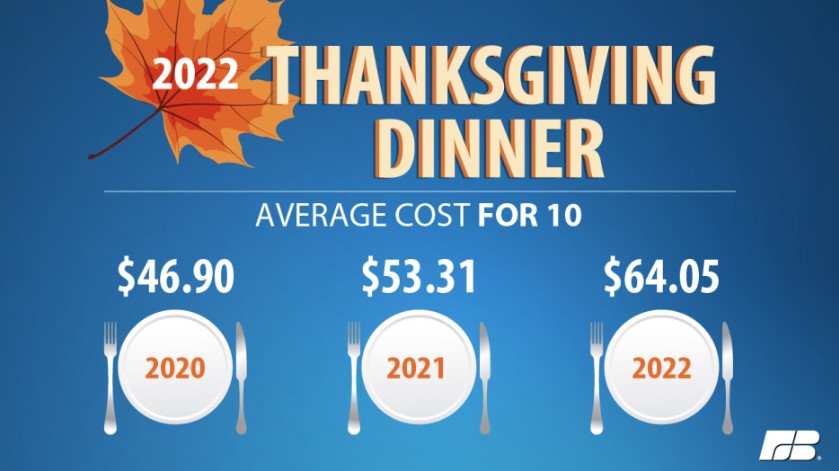
Spending time with family and friends at Thanksgiving remains important for many Americans and this year the cost of the meal is also top of mind. Farm Bureau's 37th annual survey provides a snapshot of the average cost of this year's classic Thanksgiving feast for 10, which is $64.05 or less than $6.50 per person. This is a $10.74 or 20% increase from last year's average of $53.31.
The centerpiece on most Thanksgiving tables – the turkey – costs more than last year, at $28.96 for a 16-pound bird. That's $1.81 per pound, up 21% from last year, due to several factors beyond general inflation. Farm Bureau "volunteer shoppers" checked prices Oct. 18-31, before most grocery store chains began featuring whole frozen turkeys at sharply lower prices. According to USDA Agricultural Marketing Service data, the average per-pound feature price for whole frozen turkeys was $1.11 the week of Nov. 3-9 and 95 cents the week of Nov. 10-16, a decline of 14% in just one week; and the share of stores offering feature prices rose from 29% to 60%. This means consumers who have not yet purchased a turkey should be able to find one at a lower cost than the Farm Bureau average.
"General inflation slashing the purchasing power of consumers is a significant factor contributing to the increase in average cost of this year's Thanksgiving dinner," said AFBF Chief Economist Roger Cryan. General inflation has been running 7% to 9% in recent months, while the most recent Consumer Price Index report for food consumed at home reveals a 12% increase over the past year.
"Other contributing factors to the increased cost for the meal include supply chain disruptions and the war in Ukraine," Cryan said. "The higher retail turkey cost at the grocery store can also be attributed to a slightly smaller flock this year, increased feed costs and lighter processing weights." Cryan said the supply of whole turkeys available to consumers should be adequate this year, although there may be temporary, regional shortages in some states where avian influenza was detected earlier this year.
"Farmers are working hard to meet growing demands for food – both here in the U.S. and globally – while facing rising prices for fuel, fertilizer and other inputs," said Cryan.
The shopping list for Farm Bureau's informal survey includes turkey, stuffing, sweet potatoes, rolls with butter, peas, cranberries, a veggie tray, pumpkin pie with whipped cream, and coffee and milk, all in quantities sufficient to serve a family of 10 with plenty for leftovers.
"We should not take our food supply for granted," said AFBF President Zippy Duvall. "Supporting sustainable productive agriculture in the U.S. and globally is imperative. As many of us gather with family and friends for a special meal, it's a time for giving thanks and doing our part to help those who can't afford a big holiday feast," he added. "State and local Farm Bureaus across the country have strong partnerships with local food banks and I'm proud of their collective efforts to help ensure no one goes hungry."
In recognition of changes in Thanksgiving dinner traditions, the Farm Bureau price survey also includes ham, Russet potatoes and frozen green beans, in an expanded holiday menu. Adding these foods to the classic Thanksgiving menu increased the overall cost by $17.25, to $81.30. This updated basket of foods also increased in price (up 18%) compared to 2021.
This year's national average cost was calculated using 224 surveys completed with pricing data from all 50 states and Puerto Rico. Farm Bureau volunteer shoppers checked prices in person and online using grocery store apps and websites. They looked for the best possible prices without taking advantage of special promotional coupons or purchase deals.
The AFBF Thanksgiving dinner survey was first conducted in 1986. The informal survey provides a record of comparative holiday meal costs over the years. Farm Bureau's classic survey menu has remained unchanged since 1986 to allow for consistent price comparisons.
Individual Prices
Regional Averages
AFBF analysis revealed regional differences in the cost of the meal.
The cost for the classic meal was the most affordable in the South - $58.42, followed by the Northeast - $64.02, Midwest - $64.26 and West - $71.37. The expanded meal (classic meal plus ham, green beans and Russet potatoes) was the most affordable in the South - $74.90, followed by the Midwest - $81.53, Northeast - $82.76 and West - $88.55.
Tue, 15 Nov 2022 15:09:18 CST
The U.S. Department of Agriculture and the Oklahoma Department of Agriculture are now putting the Daily Cash Grain Report into a PDF format - we are saving that PDF and archiving them for today's specific report. To see today's update, click on the PDF report link at the bottom of this story.
In addition to the PDF of the daily report, you can also listen to the Cash Grain Report by calling 405-621-5533. Push 2 for the grain report.
Tue, 15 Nov 2022 15:08:35 CST

Listen to today's report with Justin Lewis, by clicking or tapping on the LISTEN bar
Justin Lewis of KIS Futures has all the details on today's agricultural markets for RON listeners, below.
New Programs Will Provide Additional Pandemic and Natural Disaster Assistance for 2020 and 2021; Deadline Announced for Previous Emergency Relief
Agriculture Secretary Tom Vilsack today announced plans for additional emergency relief and pandemic assistance from the U.S. Department of Agriculture (USDA). USDA is preparing to roll out the Emergency Relief Program (ERP) Phase Two as well as the new Pandemic Assistance Revenue Program (PARP), which are two programs to help offset crop and revenue losses for producers. USDA is sharing early information to help producers gather documents and train front-line staff on the new approach.
"We have worked diligently to help agricultural producers bounce back from devastating natural disasters as well as the coronavirus pandemic through an extensive suite of programs," said Vilsack. "No matter how well we design these targeted efforts, we often find that some producers fall through the cracks or were harmed more severely than their neighbors. These new programs apply a holistic approach to emergency assistance – an approach not focused on any one disaster event or commodity but rather one focused on filling gaps in assistance for agricultural producers who have, over the past few years, suffered losses from natural disasters and the pandemic."
ERP Phase Two will assist eligible agricultural producers who suffered eligible crop losses, measured through decreases in revenue, due to wildfires, hurricanes, floods, derechos, excessive heat, winter storms, freeze (including a polar vortex), smoke exposure, excessive moisture and qualifying droughts occurring in calendar years 2020 and 2021.
PARP will assist eligible producers of agricultural commodities who experienced revenue decreases in calendar year 2020 compared to 2018 or 2019 due to the COVID-19 pandemic. PARP will help address gaps in previous pandemic assistance, which was targeted at price loss or lack of market access, rather than overall revenue losses.
Emergency Relief Program Phase Two
ERP is authorized under theExtending Government Funding and Delivering Emergency Assistance Act, which includes $10 billion in assistance to agricultural producers impacted by wildfires, droughts, hurricanes, winter storms and other eligible disasters experienced during calendar years 2020 and 2021.
Phase Two builds on ERP Phase One, which was rolled out in May 2022 and has since paid more than $7.1 billion to producers who incurred eligible crop losses that were covered by federal crop insurance or Non-insured Crop Disaster Assistance Program.
ERP Phase Two includes producers who suffered eligible losses but may not have received program benefits in Phase One. To be eligible for Phase Two, producers must have suffered a loss in allowable gross revenue as defined in forthcoming program regulations in 2020 or 2021 due to necessary expenses related to losses of eligible crops from a qualifying natural disaster event.
Eligible crops include both traditional insurable commodities and specialty crops that are produced in the United States as part of a farming operation and are intended to be commercially marketed. Like other emergency relief and pandemic assistance programs, USDA's Farm Service Agency (FSA) continues to look for ways to simplify the process for both staff and producers while reducing the paperwork burden. The design of ERP Phase Two is part of that effort.
In general, ERP Phase Two payments are expected to be based on the difference in certain farm revenue between a typical year of revenue as will be specified in program regulations for the producer and the disaster year. ERP Phase Two assistance is targeted to the remaining needs of producers impacted by qualifying natural disaster events, while avoiding windfalls or duplicative payments. Details will be available when the rule is published later this year.
Deadline for Emergency Relief Program Phase One
Producers who are eligible for assistance through ERP Phase One have until Friday, Dec. 16, 2022, to contact FSA at their local USDA Service Center to receive program benefits. Going forward, if any additional ERP Phase One prefilled applications are generated due to corrections or other circumstances, there will be a 30-day deadline from the date of notification for that particular application.
Pandemic Assistance Revenue Program
PARP is authorized and funded by the Consolidated Appropriations Act of 2021.
To be eligible for PARP, an agricultural producer must have been in the business of farming during at least part of the 2020 calendar year and had a certain threshold decrease in allowable gross revenue for the 2020 calendar year, as compared to 2018 or 2019. Exact details on the calculations and eligibility will be available when the forthcoming rule is published.
How Producers Can Prepare
ERP Phase Two and PARP will use revenue information that is readily available from most tax records. FSA encourages producers to have their tax documents from the past few years and supporting materials ready, as explained further below. Producers will need similar documentation to what was needed for the Coronavirus Food Assistance Program (CFAP) Phase Two, where a producer could use 2018 or 2019 as the benchmark year relative to the disaster year.
In the coming weeks, USDA will provide additional information on how to apply for assistance through ERP Phase Two and PARP. In the meantime, producers are encouraged to begin gathering supporting documentation including:
Producers should also have, or be prepared to have, the following forms on file for both ERP and PARP program participation:
Most producers, especially those who have previously participated in FSA programs, will likely have these required forms on file. However, those who are uncertain or want to confirm should contact FSA at their local USDA Service Center.
In addition to the forms listed above, underserved producers are encouraged to register their status with FSA, using Form CCC-860, Socially Disadvantaged, Limited Resource, Beginning and Veteran Farmer or Rancher Certification, as certain existing permanent and ad-hoc disaster programs provide increased benefits or reduced fees and premiums.
More Information
Through proactive communications and outreach, USDA will keep producers and stakeholders informed as program eligibility, application and implementation details unfold.
USDA touches the lives of all Americans each day in so many positive ways. In the Biden-Harris administration, USDA is transforming America's food system with a greater focus on more resilient local and regional food production, fairer markets for all producers, ensuring access to healthy and nutritious food in all communities, building new markets and streams of income for farmers and producers using climate smart food and forestry practices, making historic investments in infrastructure and clean energy capabilities in rural America, and committing to equity across the Department by removing systemic barriers and building a workforce more representative of America. To learn more, visit usda.gov.
Several large retailers and wholesalers (including Sysco, US Foods, Kroger, Hy-Vee, Albertson, Associated Grocers, Subway, SuperValu, and Cheney Brothers) recently filed claims similar to those brought originally in April 2019 by R-CALF USA and National Farmers Union (NFU) against the Big 4 packers. Those claims are that the packers' efforts to jointly manage their slaughter volume and their cattle purchasing practices caused beef prices to rise while also pushing cattle prices lower. In response, the U.S. District Court held a hearing and decided to coordinate these new claims with R-CALF USA and NFU's suit ahead of trial. This does not substantially affect the current case. While the Court may amend the existing schedule to fold these new claims in, fact discovery is already expected to continue across 2023 given that the parties have only just begun document production.
As a continuing update on the consolidated case, the next major event is plaintiffs' motion for class certification, presently due in August 2023. In that motion, R-CALF USA, NFU, and the other named cattle feeder plaintiffs will ask the Court to certify that their claims should proceed on behalf of feeders who sold fat cattle to Tyson, National Beef, Cargill, or JBS from January 1, 2015, to the present (other than on a cost-plus basis), and everyone who traded live cattle futures or options during that period. The Court appointed Scott+Scott Attorneys at Law LLP and Cafferty Clobes Meriwether & Sprengel LLP to act as co-lead counsel, and Robins Kaplan LLP as liaison counsel, on behalf of the proposed class. If the Court grants that motion everyone who did sell fat cattle to one of the Big 4, or traded live cattle, would be included in Plaintiffs' proposed class, without the need to file separate suits or engage separate legal counsel.
"For years we've talked about how the packers have been squeezing ranchers and consumers," said NFU President Rob Larew. "This addition of some of the largest retailers in the nation shows just how widespread the impacts of this rampant consolidation have been on the American economy."
According to R-CALF USA CEO Bill Bullard, "while our original case was filed in early 2019 to address suppressed fed cattle prices, we soon saw consumer beef prices skyrocket to new historical highs in early 2020. That has obviously caused additional focus throughout the entire supply chain." NFU and R-CALF USA look forward to litigating the case on behalf of all cattle feeders and working to correct years of unfair and suppressed fat cattle prices.
Farmers and Ranchers receive exclusive AgPack® benefits when purchasing qualified Trucks & SUVs through local Certified Agriculture Dealers.
Ford Motor Company's business division serving commercial customers, Ford Pro, is the latest entity to become a part of AgPack®, the bundle of exclusive farm & ranch supply discounts available only through Certified Agriculture Dealerships across the country. With the addition of Ford Pro, AgPack now boasts 18 total participants, with an aggregated supply savings valued at more than $30,000* per truck purchase.
"That $30,000 in farm & ranch supply savings can go a long way writing down the cost of a truck purchase" says Pat Driscoll, CEO of the Certified Agriculture Dealership program. "Where else can you get a 60% return on your $50,000 farm truck investment?"
Ford Motor Company, through its Ford Pro division, joins AgPack® by offering an exclusive 15% discount on the monthly fees for it's Ford Pro Telematics Software Services. While these services are owned by Ford, it is important to note they will run and perform on any make and model, from any truck manufacturer with an active modem or installed plug-in device.
"The agriculture community is extremely data driven, especially when it comes to technology that can help improve operational efficiency," said Travis Hunt, Ford Pro Intelligence Business Development Manager. "As a part of the Ag Pack program, Ford Pro Telematics will help farmers connect their vehicles to always on, real-time insights that can improve fleet uptime and lower their total cost of ownership."
"Humbling. That's the only word I can use to explain what it means having the #1 pick-up company, join AgPack." Driscoll concluded by adding, "Beginning in January, we're going to make this process even easier for farmers and ranchers. All they will need to do is go to www.AgTruckTrader.com to get an individual AgPack ID number. That number can be used to claim an AgPack for every truck they may need to buy, at any Certified Ag Dealer in the country. And because they're registering for their AgPack at AgTruckTrader.com, they can stay right there to shop the inventory of every Certified Agriculture Dealer in the country. Only CADs are allowed to put their AgPack eligible inventory on the site. True one stop, farm & ranch truck shopping."
AgPack® savings will continue to grow as additional businesses are added to the program in January. Other current AgPack® participants include Michelin and BFGoodrich tires; AgroLiquid Crop Nutrition; Rhino Ag equipment; Dixie Chopper commercial mowers; AgriEdge farm management system; Reinke Irrigation; Gallagher Fencing & Weighing Equipment; Eby Trailers and truck bodies; Viasat high speed internet; Mystik lubricants; Walkabout Mother Bins, grain storage; Outback Wrap hydraulic hose identification; PUTCO truck accessories; VanAir mobile power solutions ; DTN Progressive Farmer Digital Marketing and Farm Market iD agricultural data. Details for each of our Partner's offerings, as well as a Bonus Regional Offering from Dairyland Seed, can be found at: www.AgPack.ag.
For terms & conditions of all our AgPack Partner offerings, please visit www.CertifiedAgDealer.com/terms-and-conditions

U.S. Department of Agriculture (USDA) Chief Scientist Chavonda Jacobs-Young today announced a nearly $24 million investment across 45 organizations and institutions that teach and train beginning farmers and ranchers.
"Investing in the professional development of our nation's newest farmers and ranchers will help our food and agriculture sectors to flourish from the ground up," said Jacobs-Young, who is also USDA's Under Secretary for Research, Education and Economics. "Strengthening and growing our next generation pipeline is vital to the continued success of American agriculture and prosperity of rural communities."
This investment is part of the National Institute of Food and Agriculture's (NIFA) Beginning Farmer and Rancher Development Program (BRDDP) that supports a wide range of professional development activities across an array of important topics for new farmers and ranchers, such as managing capital, acquiring and managing land, and learning effective business and farming practices.
"We recognize that beginning farmers and ranchers have unique needs for education, training and technical assistance. Their success, especially in the first 10 years, often hinges on access to reliable, science-based information and the latest educational resources so they can improve their operations' profitability and sustainability long-term," said NIFA Acting Director Dr. Dionne Toombs. "This investment will benefit a rising generation of beginning farmers and ranchers that truly reflect the tapestry of American agriculture and the many diverse communities we serve."
NIFA's BFRDP funds three types of projects:
Examples of the 45 newly funded BFRDP projects for FY 2022 include:
NIFA invests in and advances agricultural research, education, and Extension across the nation to make transformative discoveries that solve societal challenges. NIFA supports initiatives that ensure the long-term viability of agriculture and applies an integrated approach to ensure that groundbreaking discoveries in agriculture-related sciences and technologies reach the people who can put them into practice. In FY2022, NIFA's total investment was $2.2 billion. USDA touches the lives of all Americans each day in so many positive ways. In the Biden-Harris Administration, USDA is transforming America's food system with a greater focus on more resilient local and regional food production, fairer markets for all producers, ensuring access to safe, healthy and nutritious food in all communities, building new markets and streams of income for farmers and producers using climate smart food and forestry practices, making historic investments in infrastructure and clean energy capabilities in rural America, and committing to equity across the Department by removing systemic barriers and building a workforce more representative of America. To learn more, visit www.usda.gov.
Mark Johnson, Oklahoma State University Extension Beef Cattle Breeding Specialist, offers his weekly write-up relating to the beef industry as part of a weekly series known as the "Cow Calf Corner" published electronically by Dr. Peel, Mark Johnson, and Paul Beck. Today, Johnson is talking about enjoying beef on the menu this Thanksgiving.
"Beef. It's What's for Dinner" is an American advertising slogan and marketing campaign aimed at promoting the consumption of beef. The ad campaign, originally launched in 1992, has been long-lived, highly effective and award winning. The slogan is said to be recognized by more than 88% of Americans, accordingly, I borrowed from this well-known phrase for my title.
Thanksgiving is a time when Americans come together to celebrate a holiday that connects each and every one of us. The holiday was first celebrated in 1621 when the Plymouth settlers, joined with the Wampanoag Indians to enjoy a fall feast to celebrate a bountiful harvest. The tradition of Thanksgiving became official when President George Washington declared the nation would celebrate the day on November 26, 1789. President Abraham Lincoln wrote a proclamation declaring all states would celebrate the day in 1863. President Franklin D. Roosevelt signed a resolution from Congress in 1941 that established the official date of Thanksgiving to be the fourth Thursday in November each year. While Thanksgiving is observed in varied ways in different nations, in American the holiday is truly rooted in agriculture. We may bring our own flavors and traditions to the table but Thanksgiving is a time for all of us to celebrate our nation's harvest and ability to efficiently produce food, to express gratitude for our blessings, and look ahead to the future.
Alexander Hamilton once proclaimed: "No citizen of the U.S. shall refrain from turkey on Thanksgiving Day". With all due respect to Mr. Hamilton whose ideas are credited with laying the foundation for American government and finance, I encourage you to make plans to enjoy BEEF this year at Thanksgiving. Please give consideration to the following when planning.
If your answer is not much, consider grilling or pan frying. Middle meats from the beef carcass like ribeye, strip loin, filet and sirloin steaks are very tender and can be cooked quickly at high temps on the grill or stove top to seal in the tenderness, juiciness and flavor. If you intend to grill or pan fry steaks remember to give them adequate time to thaw. Burgers made from ground beef are also great when grilled or pan fried.
If you have more time to spend in preparation, smoking or oven roasting can result in the same tender, succulent beef flavor. Roasts from the chuck or round can be seasoned and slow cooked to bring out "melt in your mouth" flavor. Beef brisket is ideal for smoking and slow cooking. An intact rib roast also can work great for smoking or slow cooking.
Typically the steaks or middle meats will be the more expensive cuts to purchase. The cuts that require more cooking time (because they contain more connective tissue) can be purchased at a lower price per pound. Ground beef is also less expensive.
More information about cooking methods, recipes and beef cuts can be found at www.beefitswhatsfordinner.com. Regardless of the cut of beef you enjoy this Thanksgiving you will be eating a nutrient dense, delicious source of protein, B vitamins, iron and zinc that is a healthy diet choice.
This year on Thanksgiving, I want to say thanks to America's farmers, ranchers and everyone in production agriculture that make it possible. Whatever we eat on Thanksgiving Day, it is the ingenuity, perseverance, efficiency, work ethic and "can do" attitude of America's ag producers that permit us to spend a relatively small percentage of our income on food.
Thanks for reading and I hope you enjoy BEEF for Thanksgiving!
Sen. Blake "Cowboy" Stephens, R-Tahlequah, is urging farmers and ranchers to report the number of black vultures killed on their property. The Migratory Bird Treaty Act protects black vultures, meaning Oklahomans can only take up to five birds a year with a sub-permit, but Stephens said this is a growing problem, and the current limits are no match for the rapidly expanding black vulture population.
"Our goal is to work with the U.S. Fish and Wildlife Service to amend the limits in place for black vulture mitigation," Stephens said. For this to be possible, producers must first submit an online request for a permit and then accurately report the number of birds they've killed as quickly as possible to justify the need for increased takes per year. I ask that producers are accurate in their reporting, as this will help us know exactly what we are up against and allow us to put programs in place to combat this growing problem."
Stephens held an interim study last month to look into the harm caused by predatory birds, with a focus on the black vulture, which he said is the bird most destructive to property and the largest threat to livestock. Black vultures kill and injure livestock, especially calves and vulnerable mothers. They destroy property by tearing off shingles, ripping out wiring, and picking at parts of structures, vehicles and more. The birds' highly acidic feces also damages paint and metal on farm equipment and buildings. As farmers and ranchers deal with the ongoing drought and high inflation, every animal lost or property damaged is detrimental and costly to agricultural operations.
"The experts who shared statistics with us during the interim study painted a pretty good picture of the damages these predatory birds are causing on Oklahoma farms and ranches," Stephens said. "But what truly shows the seriousness of this situation are the horrible stories we are hearing from producers across the state. Once again, I encourage you to keep an accurate record of black vulture mortalities so the records and data can be used to show that we need to introduce methods like trapping and raise the take limit."
Depredation permits can be obtained through the Oklahoma Department of Agriculture, Food and Forestry at ag.ok.gov/black-vulture-sub-permittee-application/.

Senator Jim Inhofe was recognized with the Distinguished Service to Oklahoma Farm Bureau Award on Saturday, Nov. 12 during the organization's 81st annual meeting in Norman.
The award honors individuals who have made outstanding contributions to agriculture and the Farm Bureau organization.
Inhofe earned the award for his dedication to agriculture and rural Oklahoma throughout his nearly three decades in the U.S. Senate and more than 50 years in public office.
"Sen. Jim Inhofe has been a steadfast partner to Farm Bureau members and a strong supporter of agriculture during his time in public office," said Rodd Moesel, OKFB president. "He will leave enormous shoes to fill when he retires from the U.S. Senate at the end of the year, and OKFB members sincerely thank him for his tireless work to protect and preserve agriculture and our rural way of life."
The Oklahoma Farm Bureau annual meeting is the organization's largest gathering of farmers and ranchers every year. At the event, members vote on grassroots policy, elect leaders and award outstanding individuals. OKFB has a presence in all 77 Oklahoma counties and serves as the voice of agriculture and the rural way of life. To learn more, visit okfarmbureau.org.
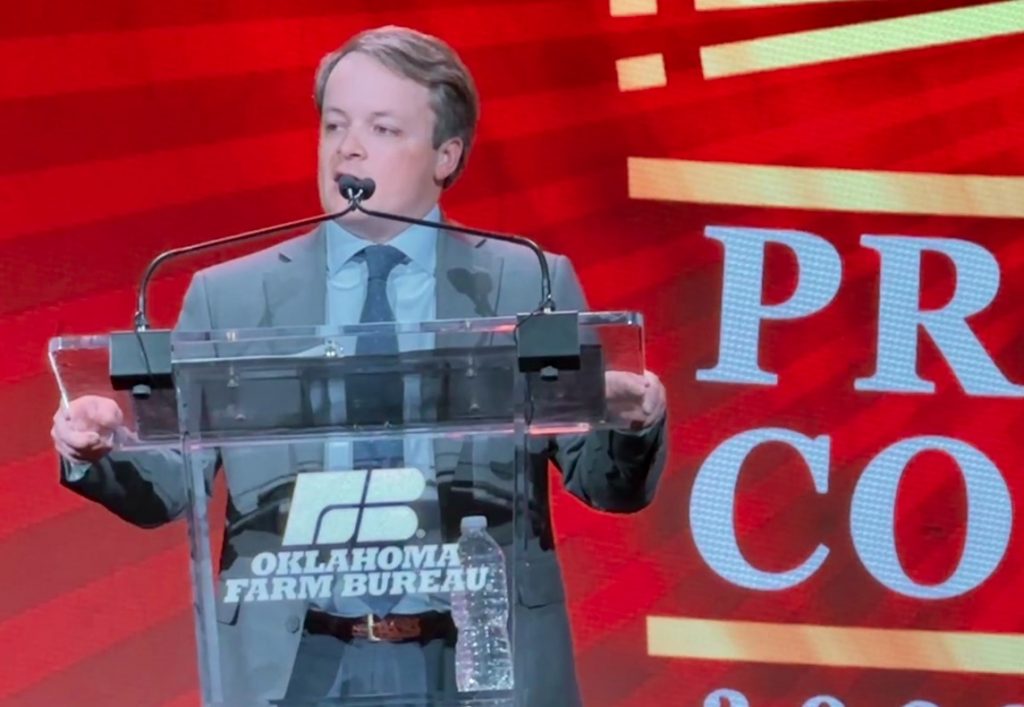
Senior Farm and Ranch Broadcaster, Ron Hays, is visiting with the Executive Vice President of the American Farm Bureau Federation, Joby Young, talking about what led him to take on his position with AFBF.
"It is great to be here in Oklahoma and great to be with the Farm Bureau members here gathered for their annual meeting," Young said. "I am four months into American Farm Bureau Federation, and it has been a great experience."
While there are always issues in ag policy in the agriculture sector, Young acknowledged that there are many important issues going on currently, such as WOTUS (Waters of the United States), the 2023 Farm Bill, and Proposition 12.
"We look forward to engaging with a new group of congressmen that are coming into congress, but not just the new members- there are a lot of members across the country that might have been elected in 2018 and 2020 that have never been a part of a farm bill process before, and so we look forward to those conversations and talking about what the future holds for agriculture."
Young said AFBF has been engaged in the Proposition 12 issue, because while it is a danger to the pork industry, there are also potential ramifications for all of agriculture. Young said that along with the National Pork Producers, AFBF was a principal plaintiff in the Proposition 12 case, so he had the opportunity to listen to oral arguments firsthand.
"The reason for American Farm Bureau's involvement is the potential wide-ranging ramifications of that issue," Young said. "It is not really confined just to one industry. That could have effects across a lot of ag industries and then also industries that are outside of ag. When you talk about these interstate commerce issues and whether one state can set rules that govern production methods in other states- that is why we were involved."
AFBF, Young said, has been working to decide what positions they will be advocating for in the 2023 farm bill.
"We have gone through a process the last few months with the farm bill working group that articulates our priorities, and that involves state members all across the country that are involved in that working group," Young said. "They take our current policy and create those priorities that we released a few weeks ago."
The overarching priorities, Young said, are things such as maintaining a unified Farm Bill, having the nutrition title and the farm program titles put together, maintaining the funding levels for the current farm bill programs, and maintaining risk management products.
"We are in a time with a lot of uncertainty and a lot of inflation right now in farm country," Young said. "Supply chain snarls and all the rest, so that is really important at this specific time, of course."
AFBF is focused-in on protecting crop insurance, Young said, as it is a great tool for uncertainties farmers are faced with.
A large part of the Farm Bureau approach, Young said, is educating members about advocacy for agriculture.
"We spend a lot of time engaging with our members, making sure that they have to tools to be effective advocates as part of the whole overall Farm Bureau approach, which involved folks at the county level, the state level, the national level- all facets of the organization," Young said.
The American Farm Bureau Federation, Young said, has a great history of being the voice of agriculture and representing farmers and ranchers across the country in all walks of agriculture. That history of supporting those in the agriculture industry, he added, is to continue.
By Katie Miller- Noble Research Institute
Landowners who plan to offer hunting leases on their regenerative ranch should take steps to ensure that all parties — lessors and lessees — are protected.
Hunting leases provide ranchers with additional income. But, with that extra income comes added risk, legalities and liability. Sadly, when problems occur, after the fact is too late to ensure your ranch is properly protected.
Before opening your land for hunters, take these steps to set up a proper hunting lease to protect all parties involved — you as the landowner/lessor and the lessee and guests (if allowed).
When it comes to hunting leases, the first and perhaps most important tip is to simply put the agreement in writing, according to Tiffany Dowell Lashmet, an agricultural law specialist for Texas AgriLife Extension.
Written leases make the agreement legally enforceable and help hold either party accountable for any breach of contract.
The latter is why Lashmet doesn't recommend form leases haphazardly printed from an online website. Hunting leases need to be customized to each ranch's individual needs.
Lashmet suggests including the following parameters within the hunting lease:
While this list covers many essential facets of hunting leases, it is not all-inclusive. Lashmet suggests landowners sit down with potential hunters to discuss both parties' needs and agree to the lease terms.
"Hunting leases just let you get on the same page," she stresses. "Both parties agree on what can be done and how to handle situations that arise."
Lease writing doesn't require any magic words or legal language; it can be written in laymen's terms. A lease must identify both parties, the length of the agreement and the terms both parties agreed upon to be legal and valid.
Although written leases don't require legal language, an experienced agricultural attorney can draft a custom lease document for individual landowners, which can be used as a form year after year to ensure their needs are met, and their land is protected.
"If you're going to have a lot of hunters or it's kind of a business enterprise, I think it's a good idea to use a lawyer to draft those leases," Lashmet says.
As she says, a written lease is simply an agreement, and it is much easier for all parties to agree by chatting over coffee in advance (and signing a lease) than yelling after an accident.
Hunting leases certainly add to ranch revenue, but they can also open the ranching operation to added liability. Lashmet encourages landowners to take these three steps to ensure their ranch is protected.
Some farm and ranch policies exclude paying hunters, so additional insurance must be purchased to cover hunting-land lessees.
"Liability insurance is the best protection you can have," Lashmet says. "Everybody needs to have it from a liability perspective. That's probably the most important thing you can do."
"Every state is different," Lashmet says of state landowner protections. "The scope of them is different; their requirements are different. But you want to look at those [protections] and make sure you understand how they operate and what you have to do to qualify for those protections."
Unlike leases, which can be written in laymen's terms, liability waivers need to be in precise legal language and are best drafted by an attorney.
"This is where there can be some 'magic language' that may have to be used and written exactly right for these waivers to be enforceable," Lashmet says. "So again, this is a place where I recommend finding an attorney in your jurisdiction to draft up a good liability waiver."
Additionally, every person who enters the property (if guests are allowed) should sign a waiver, not just the lessee.
In Texas, where Lashmet practices law, landowners must apply for a hunting-lease license before leasing their land for hunting for profit. Without these licenses, Texas ranchers can face legal consequences in the form of a misdemeanor or fine.
While such laws differ from state to state, check with your state's agency governing game, hunting and fishing to ensure your ranch has the proper license or licenses (if required) before leasing your land to hunters.
Landowners seeking to add a revenue stream to their ranch through hunting leases need to manage more than just the livestock on their land. Wildlife management needs to be top of mind for any rancher offering leases.
Of course, wildlife management means making decisions that provide the best habitat for chosen game animals, but it can also mean setting harvest parameters. Lashmet notes such management philosophies will vary based on target species. For example, a hunting lease for feral hogs will have much different harvest parameters than a lease for hunting deer.
She suggests thinking about what animals you want to be harvested. If landowners would like hunters to harvest only bucks with a certain number of antler tines per side, for instance, such additional stipulations must be outlined in the hunting lease.
Lastly, and most importantly, any such harvest parameters set by a landowner must be in addition to, and not in contradiction with, any state-wide hunting rules and regulations.
"The biggest takeaway, whether we're talking about the lease itself, the liability waivers or making sure that you have the right insurance, is that you want to make sure that all of this is in order (and in writing) before there's a problem," Lashmet says.
"There are so many things you can do ahead of time to protect yourself, try to avoid issues and be prepared if something happens. But once something goes wrong, it's very difficult to go back and fix it at that point. Being proactive will benefit you in the event that something happens."
The National Association of Wheat Growers (NAWG) and U.S. Wheat Associates (USW) will be in Kansas City on Nov. 16, 2022, at the National Association of Farm Broadcasting Trade Talk event. We invite farm broadcasters to stop by our Booth #27 to get the inside story on global wheat market volatility, wheat industry Farm Bill priorities and production outlook for 2023.
From NAWG, you can meet with Oregon wheat farmer and Vice President Brent Cheyne and Vice President of Policy and Communications Jake Westlin. Oklahoma wheat farmer and Vice Chairman Michael Peters will be there representing USW.
Even if you cannot do an interview, we hope you will drop off your business card so we can add you to our media list.
If you are not attending Trade Talk – or if you are interested in wheat industry story ideas – please feel free to contact Mariah Wollweber at NAWG or Steve Mercer at USW. Thank you for all you do for American agriculture and the wheat industry!
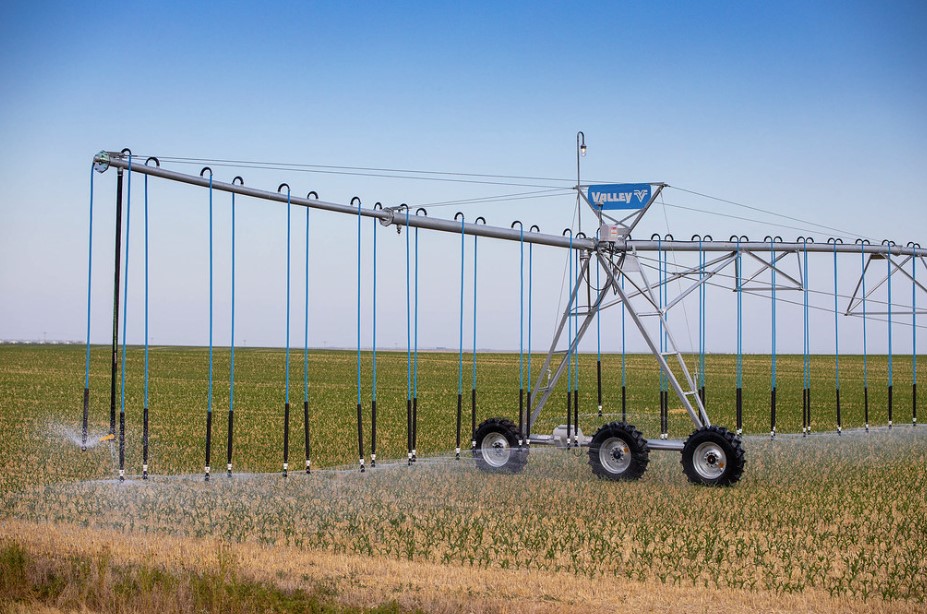
By Alisa Boswell-Gore
Oklahoma State University Extension's Master Irrigator Program kicks off its third year in January 2023 to educate producers on water conservation and irrigation practices.
"The overall goal of the program is to facilitate adoption of water management strategies and technologies by the producers while improving farm income, increasing producer participation in water conservation strategies and enhancing the peer-to-peer exchange of information between producers and Extension personnel," said Sumit Sharma, OSU Extension specialist for high plains irrigation and water management.
The program launched in Goodwell in 2021, and Altus hosted it in 2022. The educational series returns to Goodwell for 2023, and its coordinators plan to eventually expand to other areas of the state.
The Master Irrigator Program will take place 9 a.m. to 3 p.m. every Tuesday over the course of four weeks. The dates for 2023 are Jan. 17, 24, 31 and Feb. 7. Registration is $100 per person. Participants will also have the option of attending in-field events for hands-on learning next fall.
Curriculum for the 2023 program includes Ogallala hydrology, soil/water relationship, soil moisture sensors, economic value of Ogallala water, irrigation scheduling models, the Oklahoma Mesonet, irrigated forage production, irrigation equipment, well energy efficiency, drip irrigation, VFDs, center pivots, soil health and nutrient management.
Master Irrigators offers a platform for sharing peer-to-peer knowledge with producers while discussing irrigation techniques they have used, problems they have faced and management techniques they are curious about, said Jason Warren, OSU Extension specialist for soil and water conservation.
Sharma said he has invited speakers from surrounding states to provide expertise on irrigation practices. Producers are consulted before the program begins to ensure their specific needs will be addressed.
"The information generated from discussions during the program is also helpful in shaping our research and Extension efforts," Sharma said.
The Oklahoma Water Resources Center works with several state and federal agencies to provide funding and opportunities to producers following the program. They can receive up to $2,000 to purchase irrigation technology, such as soil moisture sensors or irrigation schedulers. Program graduates are also eligible for benefits to improve their irrigation systems.
Program participants can receive additional points on their Environmental Quality Incentives Program applications for financial assistance from the U.S. Department of Agriculture-Natural Resources Conservation Service. They can also request free irrigation audits to measure how much energy and water an irrigation system uses in daily operations as well as locate leaks in pipelines and assess the uniformity of irrigation application.
"We hope to increase participant capacity and use lessons learned from each program to evolve the curriculum as we move forward," Sharma said.
For more information, contact Sharma at sumit.sharma@okstate.edu or 580-349-5441. Registration can be completed online.
OSU Extension uses research-based information to help all Oklahomans solve local issues and concerns, promote leadership and manage resources wisely throughout the state's 77 counties. Most information is available at little to no cost.
U.S. Department of Agriculture (USDA) Chief Scientist Chavonda Jacobs-Young today announced a nearly $24 million investment across 45 organizations and institutions that teach and train beginning farmers and ranchers.
"Investing in the professional development of our nation's newest farmers and ranchers will help our food and agriculture sectors to flourish from the ground up," said Jacobs-Young, who is also USDA's Under Secretary for Research, Education and Economics. "Strengthening and growing our next generation pipeline is vital to the continued success of American agriculture and prosperity of rural communities."
This investment is part of the National Institute of Food and Agriculture's (NIFA) Beginning Farmer and Rancher Development Program (BRDDP) that supports a wide range of professional development activities across an array of important topics for new farmers and ranchers, such as managing capital, acquiring and managing land, and learning effective business and farming practices.
"We recognize that beginning farmers and ranchers have unique needs for education, training and technical assistance. Their success, especially in the first 10 years, often hinges on access to reliable, science-based information and the latest educational resources so they can improve their operations' profitability and sustainability long-term," said NIFA Acting Director Dr. Dionne Toombs. "This investment will benefit a rising generation of beginning farmers and ranchers that truly reflect the tapestry of American agriculture and the many diverse communities we serve."
NIFA's BFRDP funds three types of projects:
Examples of the 45 newly funded BFRDP projects for FY 2022 include:
NIFA invests in and advances agricultural research, education, and Extension across the nation to make transformative discoveries that solve societal challenges. NIFA supports initiatives that ensure the long-term viability of agriculture and applies an integrated approach to ensure that groundbreaking discoveries in agriculture-related sciences and technologies reach the people who can put them into practice. In FY2022, NIFA's total investment was $2.2 billion.
USDA touches the lives of all Americans each day in so many positive ways. In the Biden-Harris Administration, USDA is transforming America's food system with a greater focus on more resilient local and regional food production, fairer markets for all producers, ensuring access to safe, healthy and nutritious food in all communities, building new markets and streams of income for farmers and producers using climate smart food and forestry practices, making historic investments in infrastructure and clean energy capabilities in rural America, and committing to equity across the Department by removing systemic barriers and building a workforce more representative of America. To learn more, visit www.usda.gov.
The National Corn Growers Association (NCGA) is pleased to announce Krista Swanson joined the organization as Lead Economist. Swanson will serve as the economic analyst resource for NCGA and its state affiliates. She will be responsible for developing analysis and research needs on a wide variety of economic and political issues which impact corn farmers.
Swanson comes to NCGA from the University of Illinois Urbana-Champaign where she served as a Research Specialist for the Gardner Agricultural Policy Program. Her responsibilities there included researching data on economic and policy topics, designing models for projecting future farm income under specific policy scenarios, and writing articles and budgets for the farmdoc website.
"As NCGA moves forward with defining economic sustainability for corn growers, Krista's background in economic analysis—with specific emphasis in corn--will assist us with initial goal-setting, benchmarking and measurement," said NCGA Production and Sustainability Vice President Nathan Fields. "We are likewise excited to be able to call on her expertise as we approach the next Farm Bill."
Swanson also brings experience from her time at Integrated Financial Analytics and Research LLP (iFAR) where she consulted on projects for Field to Market, farm credit associations and NCGA. A graduate of the University of Illinois Urbana-Champaign with a bachelor's degree in Crop Science and master's degree in Agricultural and Applied Economics, she specializes in production economics and agricultural policy analysis.
Swanson and her husband, Brett, farm in Oneida, Illinois. As a team, the two received American Farm Bureau Federation Young Farmers & Ranchers 2020 Excellence in Agriculture Award (Fourth Place).
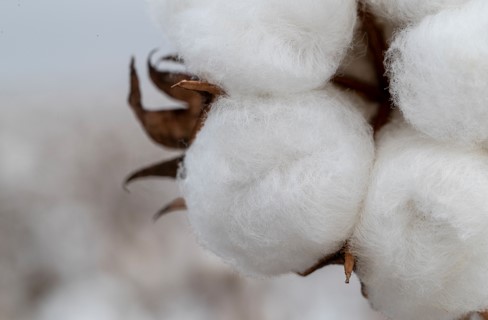
BASF is pleased to announce that for the first time since 2019, both the FiberMax® One Ton Club™ and Stoneville® Legacy Club™ will celebrate the hard work and hard-earned yields of FiberMax and Stoneville cotton growers in person. Club enrollment is now open and could land growers impressive rewards, like a lease on a Ford® Super Duty® F-350 Lariat® truck or a trip to the beach.
FiberMax One Ton Club
The application deadline for FiberMax One Ton Club is February 28, 2023. Printed qualification forms were mailed to FiberMax growers in early November, and applications can also be submitted online (fibermax.com/otc-form). Qualifying growers who attend the banquet in Lubbock, Texas, on March 30, 2023, can enter for a chance to win a two-year lease on a Ford Super Duty F-350 Lariat truck. Ford is not a sponsor of the FiberMax One Ton Club. Terms and conditions apply.
To qualify for the club, FiberMax One Ton Club growers must produce a minimum of 2,000 pounds of ginned cotton per acre on a minimum of 20 acres planted with 100% FiberMax cotton from January 1 to December 31, 2022. The FiberMax One Ton Club is open to growers in AL, AR, AZ, CA, GA, KS, LA, MO, MS, NC, NM, OK, SC, TN, TX and VA. Cotton acreage can be either irrigated or dryland. Growers must providean accurate and complete qualification form and gin recap sheets to verify 2,000 lb/A yields. See full details for qualification.
Stoneville Legacy Club
The application deadline for the Stoneville Legacy Club is January 15, 2023. Printed qualification forms were mailed to Stoneville growers in early November, and applications can also be submitted online (stoneville.com/lc-form). Applicants who rank in the top 10% of yields submitted for their state will qualify to receive an all-expenses-paid getaway for two to the Henderson Beach Resort in Destin, Florida, this winter. Terms and conditions apply.
To apply for the Stoneville Legacy Club, growers must plant Stoneville cotton on a minimum of 20 acres from January 1 to December 31, 2022. The Stoneville Legacy Club is open to growers in all cotton-producing states: AL, AR, AZ, CA, FL, GA, KS, LA, MO, MS, NC, NM, OK, SC, TN, TX and VA. There are two divisions: one for Stoneville cotton grown on irrigated land, and one for Stoneville cotton grown on non-irrigated land/dryland. Growers must provide an accurate and complete qualification form and gin recap sheets to verify yield. See full details for qualification.
"There's no denying that growing cotton is challenging," says Rachel Walters, Regional Grower & Channel Marketing Manager Seeds, BASF. "It's a crop unlike any other that takes a grower unlike any other. And it's this heart and hard work that wecan't wait to celebrate in person through our cotton clubs."
Learn more about the clubs by visiting fibermax.com/otc, stoneville.com/lc or by contacting your BASF Agronomic Solutions Advisor or Agronomic Services Team Member.
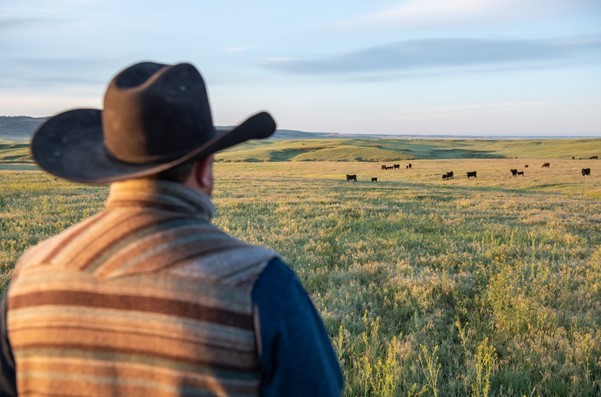
Last week, President Biden signed a National Security Memorandum to Strengthen the Security and Resilience of U.S. Food and Agriculture. Ahead of the signing of this memorandum, National Cattlemen's Beef Association's CEO, Colin Woodall, participated in a White House pre-briefing with senior federal law enforcement and homeland security officials. In today's Beef Buzz, Senior Farm and Ranch Broadcaster, Ron Hays, features comments from Woodall talking about food as a national security priority.
The memorandum instructs top government officials to identify threats to U.S. food and agriculture and respond appropriately.
"What it means is that the Biden Administration clearly understands that food security and U.S. food production is national security," Woodall said. "So, for them to take this move to put out a national security notice memorandum shows quite clearly they understand the role we play in feeding ourselves here in the United States and feeding the global community."
The memorandum, Woodall said, opens up the opportunity for ag producers to have more connection to the administration as we look at the threats against all American agriculture and especially cattle production. Another benefit of the memorandum, Woodall said, is the opportunity to find ways to continue to protect U.S. production and respond in the event of either terrorist action or unintentional action that results in having a foreign animal disease or other threats.
The White House briefing included many different players, Woodall said, not just the USDA.
"We had the FBI at the table, the National Security Council, Department of Defense, Department of Homeland Security, Customs and Border Protection, and many other agencies that all understand what threats truly mean to this country and their job in trying to respond to those threats," Woodall said. "To have them around the table talking about agriculture and talking more specifically about cattle production, I felt was a very positive sign that they understand the role that we play and that they are willing to work with us more in sharing information and putting in place all the procedures that could potentially protect us."
Foreign animal disease, Woodall said, is at the top of the list for issues that could arise in the future for the industry. A particular foreign animal disease that is most concerning, Woodall said, is foot and mouth disease.
"We know that foot and mouth disease is out there and could be introduced in the United States either unintentionally, just by someone who may have been on a farm or ranch in a country that has foot and mouth disease coming back and not cleaning off their boots- that could unintentionally bring it forward, or intentional introduction by a terrorist group because it would not be hard to get that concentrated, put it in some sort of vessel, and bring it into the United States," Woodall said.
The next step, Woodall said, is working with the agencies present at the meeting to ensure that they are talking to the agriculture community to find out more about what is going on. Many of these agencies, Woodall added, may not have a lot of expertise when it comes to cattle production, which is where the NCBA can be of valuable help.
"One of those next steps is how we rely more on data, rather than political agendas, to drive not only the identification of the threats, the analysis of the threats, but more importantly the response to the threats," Woodall said. "I think that will really be important as FDA becomes a part of this particular memorandum. They were at the meeting. We know that if we can really get FDA focused more on data, we can have a much more positive relationship."
The Beef Buzz is a regular feature heard on radio stations around the region on the Radio Oklahoma Network and is a regular audio feature found on this website as well. Click on the LISTEN BAR below for today's show and check out our archives for older Beef Buzz shows covering the gamut of the beef cattle industry today.
Control of the House of Representatives remains in doubt nearly one week after last Tuesday's elections. But regardless of who is in charge in 2023, dairy's priorities will move forward, says Paul Bleiberg, NMPF's Senior Vice President for Government Relations, in a Dairy Defined podcast released today.
"The basic policy priorities remain the same," said Bleiberg. "There are some areas where we might have more support from Republicans, some where we might have more support from Democrats, some where we might have more support on regional lines, and it's really a question of strategy. Who's going to be on the Agriculture Committee? Who's going to be on the Appropriations Committee or the Ways and Means committee? Who are the members that we might go to kind of champion different priorities in those or other committees? That sort of is subject to those dynamics, but our priorities will be our priorities." The full podcast is here. You can also find the podcast on Apple Podcasts, Spotify, Google Podcasts and Amazon Music.
"Talking Todes Together with BASF" video series highlights how farmers can actively manage SCN.
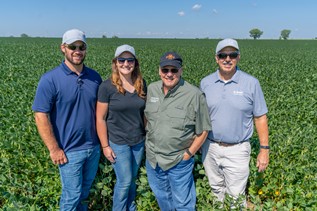
Soybean cyst nematode (SCN) is a stealthy thief, robbing yields from seemingly healthy fields. "Our yields seemed to stagnate in that 55 to 60 bushel an acre range. Explosive yields for some fields showed we had good genetics, but we didn't have the consistency across our acres to pull up the average," says Dan Ory, a fifth-generation farmer in southwest Iowa. "We knew we had issues with sudden death syndrome (SDS). We dug deeper and realized we had problems with SCN."
SCN is widely distributed across the Midwest. But due to the lack of visible symptoms and because the pathogen had for decades been suppressed by the PI 88788 source of SCN resistance, farmers like Ory weren't actively managing it.
To build awareness about SCN's $1.5 billion annual toll and how farmers can protect soybean yields, The SCN Coalition and BASF Agricultural Solutions partnered on a video series featuring Ory, Iowa State University Nematologist Greg Tylka and BASF Senior Field Technical Representative for Seed Treatment for the Western Corn Belt Troy Bauer.
This isn't the Orys' first battle with SCN
"We've had SCN problems with beans in the past," Ory says, referencing a soybean field that his dad and uncle farmed for 40 years. "Even though it had one of their best CSRs [corn suitability ratings], they could not obtain the soybean yields they had on other farms. They found one of the first genetic lines that had the PI 88788 source of SCN resistance. They pushed the yield envelope by implementing that new technology."
But after decades of use, SCN has developed resistance to PI 88788, which is used in more than 95% of SCN-resistant varieties in Iowa. Consequently, farmers like Ory are now battling the same pathogen their parents did.
Ory suspected some of his fields had issues with SCN, but the degree of pressure revealed by soil tests was eye-opening. "We had counts as high as 9,000, and we had counts as low as 1,000," Ory says, noting the highest SCN population densities came in a field along a heavily trafficked gravel road with high soil pH.
Fighting SCN and pushing boundaries to ensure the longevity of the Ory farm
The Ory family manages SCN by soil sampling in the fall, keeping fields in a rotation between corn and soybeans, planting SCN-resistant varieties (including varieties with the Peking SCN resistance trait, when possible) and using a nematode-protectant seed treatment. "ILEVO® is our preferred seed treatment," Ory says. His trials indicate the seed treatment has pushed yields and diminished SDS.
"Our goal moving forward is to continue to push boundaries and stay on the cutting edge with genetics, treatments and technology to make sure we're relevant and sustainable 10, 20 and 30 years down the road," Ory says. "I believe a true sustainable farm shows profit," Ory continues. "You continue to improve soil health, air quality, water quality and the area around you by implementing new technologies, by finding new ways to do things that don't hurt the bottom line."
Ory, who farms with his wife and brother, concludes, "If one of our three children or my brother's children would like to farm, we want to have the opportunity to present it to them."
To learn more about the Ory family and their fight against SCN, check out the video series. For more information about managing SCN, visit thescncoalition.com.

Cow-calf producers, stockers and feedyards implement Beef Quality Assurance (BQA) practices on their operations to produce the highest quality cattle and provide consumers with the best possible eating experience. However, BQA doesn't end at the farm gate, and those transporting cattle are encouraged to become BQA Transportation (BQAT) certified.
"Hauling can be one of the most stressful times in the life of cattle," said Colby Carpenter with W&J Carpenter Trucking Inc., a 2022 BQA Award winner. "BQAT provides anyone transporting cattle with the information and resources they need to make sure animals are handled properly, resulting in less stress and a higher quality product for consumers."
BQAT is a comprehensive management program that incorporates responsible practices in all phases of transporting cattle. In-person training and free online courses are designed for both ranchers hauling cattle in gooseneck trailers and professional drivers who are transporting animals in semi-trailers. These courses teach proper methods for hauling cattle including biosecurity, fitness for transport, pre-trip planning and loading, and emergency management.
BQAT is science-based, and producer-driven and online modules have been updated. A working group of industry leaders from all sectors of the cattle industry came together to revise BQAT material and provide updates needed to fit industry needs for hauling cattle.
"As the industry changes and evolves, educational materials are revised," said Trey Patterson, Wyoming rancher and chair of the Beef Quality Assurance Advisory Group. "We work with producers and those hauling cattle to create a program that meets the needs of the animals and the industry."
The Beef Quality Assurance (BQA) program, funded by the Beef Checkoff, provides information to U.S. beef producers and beef consumers about how common-sense husbandry techniques can be coupled with accepted scientific knowledge to raise cattle under optimum management and environmental conditions. BQA guidelines are designed to make certain all beef consumers can take pride in what they purchase – and can trust and have confidence in the entire beef industry.
BQA and BQAT certifications are available through in-person trainings and online courses. To learn more about BQA and to become certified, visit www.bqa.org.
In a letter to congressional leadership, more than 300 agriculture, environment, academic, infrastructure, and other stakeholder groups are calling on Congress to reaffirm federal pesticide preemption on labeling and packaging. Failing to do so, the groups warn, could hold disastrous consequences for our food security, the environment, public health, vital infrastructure, and other uses where pesticides provide important societal benefits.
The Federal Insecticide, Fungicide, and Rodenticide Act is clear that states "shall not impose or continue in effect any requirements for labeling or packaging in addition to or different from those required" by the federal government. However, in recent years, states have sought to impose health claim label requirements that directly contradict federal findings. This not only risks eroding public trust in science and evidence-based regulation, but also opens the door for a patchwork of conflicting state and municipal labels that could disrupt commerce and limit access to vital tools.
The letter, which drew 332 signers, calls on Congress to reaffirm that states may not impose additional labeling or packaging requirements that conflict with federal findings.
Brad Doyle, soy farmer from Arkansas and president of the American Soybean Association, said, "Farmers and other pesticide users need predictable access to these tools to protect their crops and maintain important conservation practices. Contradictory state labels that would create an unworkable patchwork risk disrupting access to pesticides, which would harm our food supply and the ability to protect our environment."
"Science-based crop protection tools are critical to the success of America's farmers," said National Corn Growers Association President Tom Haag. "State labels that conflict with EPA's scientific guidance threaten public confidence in EPA's authority and science-based regulation and contributes to the misunderstanding of the critical role pesticides play in sustainably feeding a growing world."
"Between drought, war and supply chain issues, farmers' viability to feed the world is now more critical than ever," said Nicole Berg, Washington state wheat farmer and president of the National Association of Wheat Growers. "Farmers rely on crop protection tools to grow healthy, sustainable and affordable food. Too much is on the line to allow the emergence of an unscientific patchwork of state pesticide labels that would threaten grower access to these tools."
Many signers of the letter sent a separate letter to President Biden in May urging him to withdraw a brief submitted by the Solicitor General to the Supreme Court that erroneously suggested that state health claim labels are not preempted by federal regulatory findings. While today's letter is not specific as to when or how Congress should act, the groups are clear that action is needed to prevent this dangerous, misguided legal interpretation from undermining important societal needs.
Crop nutrition experts offer insights for soil testing and 2023 planning
Corn growers who harvested their crop for silage rather than grain in 2022 have unique challenges to consider as they develop nutrient plans for 2023 and subsequent crops. Harvesting corn as silage removes the entire plant from the field and with it the crop material that would normally contribute nutrients to the soil profile after decomposition. Drought conditions can skew soil test results, offering a different set of variables that must be considered in developing a sound crop nutrition plan.
Crop nutrition experts at Mosaic have insights to offer growers so they can navigate fertility planning following silage harvest with efficiency and ease. The most common nutrient additions to soil in the fall include phosphorus, potassium and lime, but fall nitrogen applications are also common and may be needed depending on the crop rotation.
Soil nutrients after silage harvest
After corn is harvested for grain, the remaining plant residue is left to decompose and return important nutrients into the soil. Since the early 2000s, more producers have been harvesting their corn as silage each year. Regardless of whether it is being done because of drought, prices or feed requirements, soil nutrients are removed from the field and must be replenished.
"A corn crop harvested as silage rather than grain removes approximately twice as much nitrogen, 40% more phosphorus, over four times more potassium and twice as much sulfur from the soil each year," explains Keith Byerly, agronomist near Bloomfield, Neb., and commercial sustainability lead for The Mosaic Company.
"When corn silage is harvested from the same fields for consecutive years, this nutrient depletion adds up, and additional fertilizer applications will be necessary. Harvesting corn for silage due to drought also removes nutrients that would normally be cycled for the following years' crops. It is important to soil test and take this into consideration for 2023 and 2024 crop years. It is also key to remember that baling dry residue after harvest can remove almost as many nutrients as silage in some cases," Byerly says.
Dry conditions affect soil nutrient test results
In October 2022, over 62% of the contiguous United States was experiencing drought conditions. While the drought affected yields for producers it continues to create challenges by skewing fall soil sample results. Mosaic experts recommend producers work closely with their local ag retail or co-op agronomist to evaluate soil nutrient results, adjust nutrient plans accordingly and apply fertilizer most efficiently.
One result of a soil test taken during a dry period may be a pH reading which is lower than the soil's true pH. Drought conditions make soil seem more acidic due to increased amounts of soluble salts that have not cycled out of the soil with rainfall.
"Producers might overcompensate by adding lime to increase soil pH, but they should be cautious and wait for normal rainfall to resume to determine accurate soil acidity and most effectively use their fertilizer budget," says Byerly.
When calculating the amount of fertilizer required to maintain critical levels of NPK, it is also important to remember that during drought plants take up less nutrients from the soil. Microorganisms and nutrient compounds rely on water as the medium to move into plants, so nutrient solutes will often remain in the soil during a drought. Nitrates are prone to remain in the soil and this should be accounted for when determining N fertilization rates for 2023. Additionally, if dry conditions and below-normal rainfall persist year after year the needed fertilization rate for N decreases.
"Ideally, soil sampling should be delayed until meaningful rainfall occurs, when possible. This will increase the probability of obtaining reliable and accurate test results. When rainfall is not likely prior to fall nutrient application, growers should turn to their local retailer, certified crop advisor or certified professional agronomist for their expertise in soil fertility testing, interpretation of the results and fall application tips," Byerly stresses.
Fall fertilizer application best practices
Regardless of soil moisture, producers should follow best practices to responsibly apply fertilizer in the fall and maximize its effectiveness. Using cover crops helps prevent erosion, helps increase organic matter, preserves soil moisture and discourages weed growth.
Anhydrous ammonia can be effectively applied in dry soils but remember to wait until temperatures are consistently below 50 degrees. When dry soils are cloddy and do not seal properly, the ammonia can be lost during application or seep through large pores between clods after application. Therefore, proper depth of injection and good soil coverage are a must for application into dry soils. If soil is dry and in good physical condition, it holds more ammonia than soil that is moist.
"Cover crops or light tilling are excellent ways for growers to lock in nutrients for the upcoming season after applying dry fertilizers in the fall, especially after a silage harvest that depleted NPK levels more than a grain harvest," emphasizes Byerly.
Growers should also take manure applications, frequency of nutrient applications and soil type into account when determining fall nutrient decisions and use fertilizer as efficiently as possible. For more information on fertilizer application after corn silage harvest visit CropNutrition.com.
Due to the runaway inflation caused by the irresponsible spending policies of Democrats, Americans are struggling more financially than they have in 40 years. Despite the ongoing economic hardships, Democrats in Congress and the White House continue to claim the state of our nation's economy is perfectly fine. Even though the most recent quarterly Gross Domestic Product (GDP) report showed small economic growth for the first time this year, our nation's economic and inflationary troubles are not yet in the rearview mirror. In fact, there are still several signs that our economy is in a recession.
Last month, the Bureau of Economic Analysis reported that the GDP rose 2.6 percent after two straight quarters of decline. Although this showed an increase in exports and government spending, prices of groceries and necessities still rose and surpassed wage increases, mortgage rates remained at a 20-year high and consumer investments and spending shrunk. Additionally, the shrinking economy has caused the average 401(k) to decrease by nearly 25 percent, averaging a loss of almost $34,000 per investor. Because of these factors, economic experts unfortunately say this "ghost growth" is merely fleeting and will not last.
Further signs of economic troubles include the U.S. Federal Reserve's decision to raise interest rates for the sixth time this year in an attempt to cool down soaring prices. This additional hike will make it even less affordable for hardworking Americans to buy homes, purchase new vehicles or make worthwhile investments for their futures. Make no mistake, the Federal Reserve would not make such a move if our economy were doing well and showing real signs of recovery.
Finally, last week in a now-deleted tweet, the White House incorrectly claimed that the Biden Administration is the reason for the most significant Social Security payment increases in 10 years. However, this increase is actually attributed to 40-year high inflation, not current presidential leadership. In fact, Social Security benefit increases are directly attributed to the Cost-of-Living Adjustment, which is calculated by the Social Security Administration and based on the increase in the Consumer Price Index, which has consistently risen throughout this year.
Unfortunately, President Biden continues to double down on his policies that landed us in this mess in the first place. With Republicans likely to regain control of the House, I am hopeful that Congress and the Administration can pursue bipartisan solutions to build back a strong economy and fight inflation. However, one thing is certain. Such solutions cannot involve more out-of-control spending that ignited and fanned the flames of our country's economic crises.

The U.S. Environmental Protection Agency (EPA) and PEMEX recently announced a significant collaboration to reduce greenhouse gas emissions, specifically methane, that will advance the ambitious global methane reduction goals of the Global Methane Pledge.
With this new collaboration, EPA and PEMEX will work through diagnostic and economic analyses to support decision making to reduce methane emissions in the near term across its onshore oil and natural gas operations. These actions will support the priorities of PEMEX to deploy readily available methane reduction technologies and practices. Implementing these studies and measures will reduce potent greenhouse gas emissions to achieve near-term climate benefits, significantly improve air quality and public health, conserve natural gas that would otherwise be wasted, improve operational efficiency, and reduce operation and maintenance costs.
Through this cooperation EPA and PEMEX will work together to:
With EPA technical support, by the first half of 2023, PEMEX will develop and release a plan for implementing these mitigation activities, beginning with PEMEX's onshore oil and gas operations, including measures to reduce routine flaring and venting and fugitive methane emissions. This will advance Mexico's goals to reduce methane emissions in line with its commitment to the Global Methane Pledge and Global Methane Pledge Energy Pathway, as well as the Global Gas Flaring and Reduction Partnership and the Zero Routine Flaring Initiative.
Tue, 15 Nov 2022 03:32:24 CST
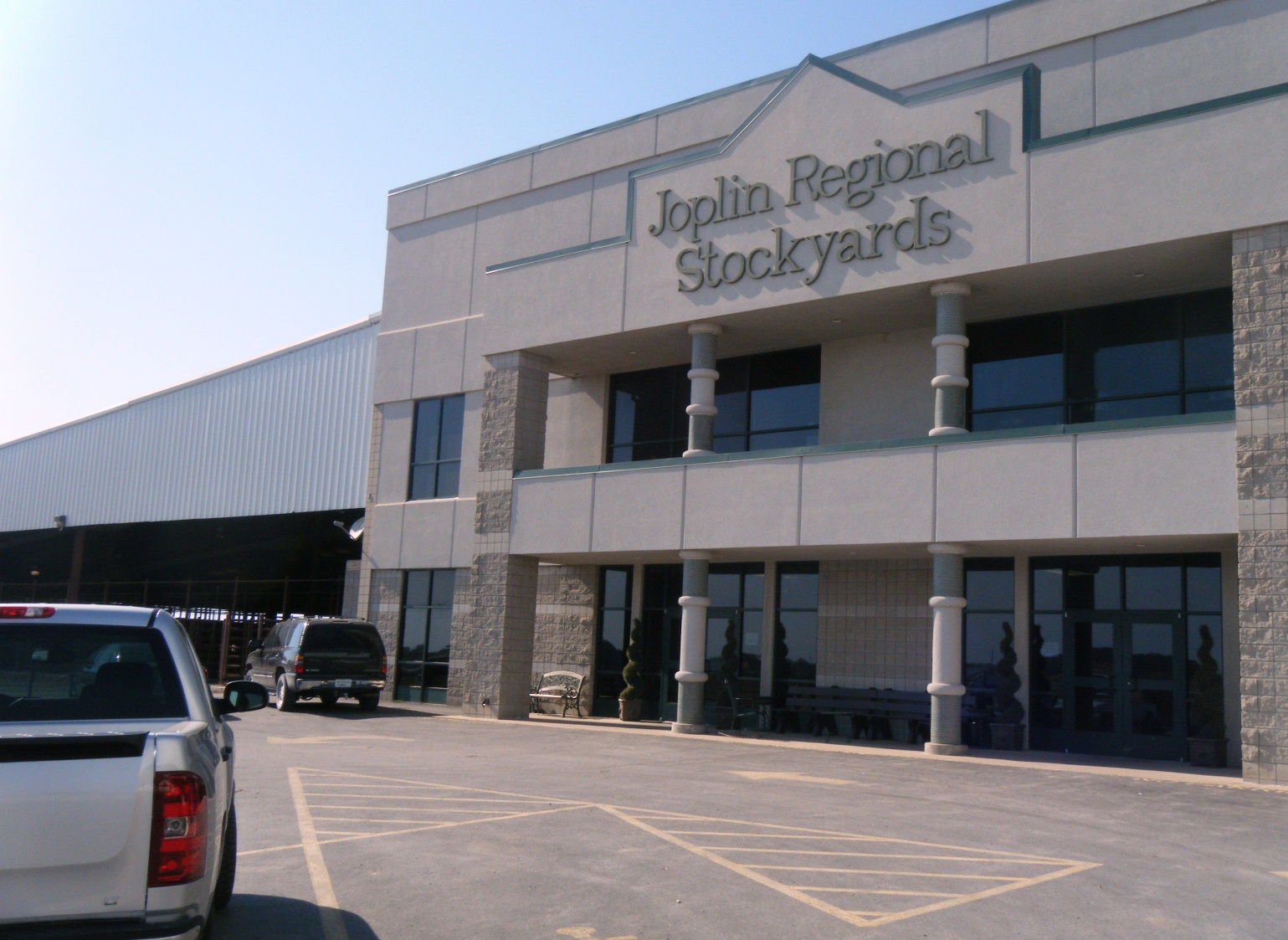
Joplin Regional Stockyards
Mon Nov 14, 2022
AUCTION
This Week 8,835
Last Reported 7,555
Last Year 7,643
**CLOSE**
Compared to last week feeder steers traded steady to 4.00 higher. Feeder heifers traded steady to 3.00 lower. Supply was heavy with very good demand. Supply included: 100% Feeder Cattle (53% Steers, 45% Heifers, 2% Bulls). Feeder cattle supply over 600 lbs was 59%.
FEEDER CATTLE
STEERS - Medium and Large 1 (Per Cwt / Actual Wt)
Head Wt Range Avg Wt Price Range Avg Price
25 322-347 332 217.00-235.00 225.74
14 321-329 326 245.00-255.00 252.15 Fancy
57 362-398 381 220.00-242.00 230.59
30 360-365 361 245.00 245.00 Fancy
106 407-445 421 204.00-230.00 222.13
14 407 407 235.00 235.00 Thin Fleshed
63 454-496 472 202.00-217.00 210.51
236 503-546 528 186.00-204.00 194.93
90 550-595 567 187.00-210.00 194.18
12 570 570 189.00 189.00 Value Added
136 603-645 633 179.00-191.00 184.64
124 651-685 665 178.00-191.00 183.73
235 702-739 716 177.50-187.00 180.32
65 750-779 759 177.00-180.50 178.83
686 809-844 837 173.00-182.50 177.45
35 850-855 852 174.00-177.00 175.28
195 948 948 170.85 170.85
16 987 987 166.00 166.00
27 1025 1025 160.00 160.00
For the complete market report from USDA Market News click on the PDF link below:
Tue, 15 Nov 2022 03:29:11 CST
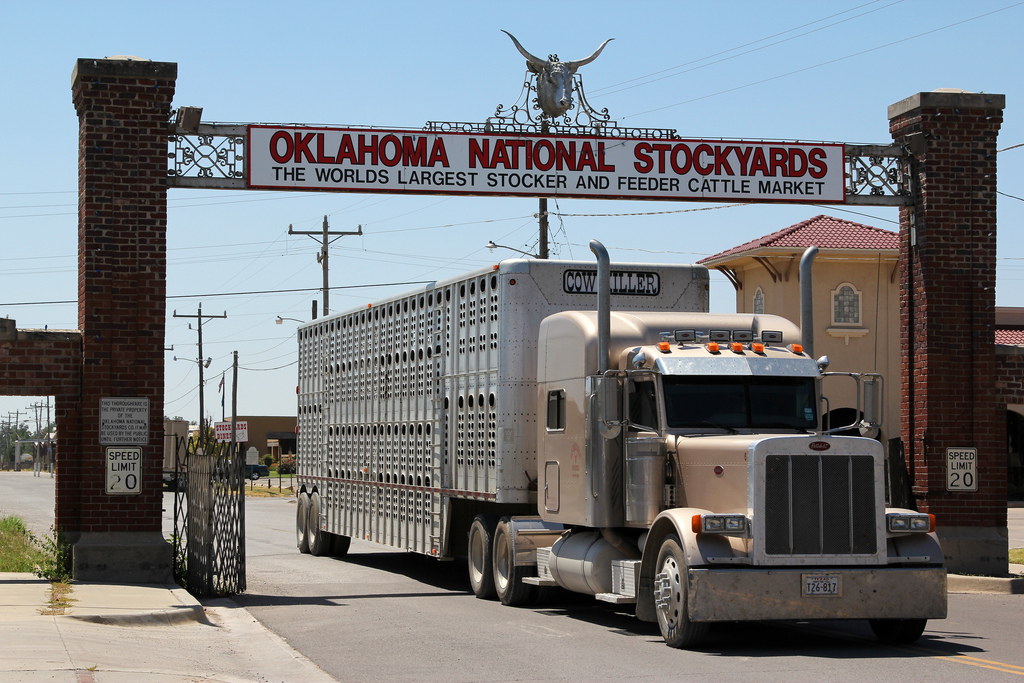
Oklahoma National Stockyards
Mon Nov 14, 2022
AUCTION
This Week 10,000
Last Reported 10,816
Last Year 13,380
***Close***
Compared to last week: Feeder steers and steer calves unevenly steady. Feeder heifers 1.00-2.00 lower. Heifer calves steady to 3.00 lower. Demand moderate to good. Quality average to attractive. Cold rain and snow expected today with somewhat heavier snows expected to fall west and northwestern Oklahoma making it hazardous for travel. Supply included: 100% Feeder Cattle (59% Steers, 40% Heifers, 1% Bulls). Feeder cattle supply over 600 lbs was 40%.
FEEDER CATTLE
STEERS - Medium and Large 1 (Per Cwt / Actual Wt)
Head Wt Range Avg Wt Price Range Avg Price
6 298 298 239.00 239.00
8 321-335 328 201.00-211.00 206.11
7 300 300 227.00 227.00 Thin Fleshed
122 368-394 378 199.00-216.00 208.78
5 362 362 225.00 225.00 Thin Fleshed
11 376-399 391 193.00-195.00 193.70 Unweaned
332 402-446 418 201.00-219.00 212.36
21 418 418 221.00 221.00 Thin Fleshed
22 401-414 407 184.00-196.00 186.64 Unweaned
236 451-497 473 193.00-209.00 202.80
99 455-479 461 216.00-219.50 218.93 Thin Fleshed
21 469-473 470 180.00 180.00 Unweaned
310 501-548 524 182.00-196.00 188.06
95 509-519 516 208.00-211.00 210.56 Thin Fleshed
77 510-547 531 178.50-184.00 181.50 Unweaned
400 557-599 578 176.00-194.00 180.50
42 552-557 555 196.00-197.00 196.55 Thin Fleshed
45 551-585 566 172.00-181.00 177.39 Unweaned
234 600-649 623 168.00-187.00 179.73
54 601-643 626 160.00-175.00 168.85 Unweaned
499 653-698 671 173.00-188.00 178.10
9 651-678 666 166.00-170.00 168.26 Unweaned
370 704-746 724 173.00-187.25 179.85
260 751-798 765 171.00-184.50 175.00
193 808-826 818 165.00-176.50 171.98
62 850-872 861 160.00-172.00 168.24
19 914 914 166.00 166.00
73 991-996 994 164.00-168.50 165.41
For the complete market report from USDA Market News click on the PDF link below:
Mon, 14 Nov 2022 16:01:55 CST
The U.S. Department of Agriculture and the Oklahoma Department of Agriculture are now putting the Daily Cash Grain Report into a PDF format - we are saving that PDF and archiving them for today's specific report. To see today's update, click on the PDF report link at the bottom of this story.
In addition to the PDF of the daily report, you can also listen to the Cash Grain Report by calling 405-621-5533. Push 2 for the grain report.
The U.S. winter wheat, corn and soybean harvests inched ahead to within single digits of completion by the end of last week.
Nationwide Winter Wheat:
Winter wheat planted in the U.S. reached 96 percent, up 2 percentage points from the previous year and up 3 points from the average. Winter wheat emerged reached 81 percent, up 1 percentage point from the previous year and even with the average.
Winter wheat conditions for the 18 states reported rated 32 percent good to excellent, 36 percent fair and 32 percent poor to very poor. Since last week, good to excellent winter wheat conditions for the U.S. has increased by 2 percentage points.
Nationwide Cotton:
Cotton harvested reached 71 percent, up 7 percentage points from the previous year and up 8 points from the average.
Nationwide Corn:
Corn harvested reached 93 percent, up 3 percentage points from the previous year and up 8 points from the average.
To see the U.S. Crop Progress Report, click here.
Oklahoma:
Winter wheat planted reached 95 percent, up 2 points from the previous year and up 2 points from normal. Winter wheat emerged reached 82 percent, up 1 point from the previous year but down 1 point from normal. Winter wheat conditions rated 19 percent good to excellent, 39 percent fair and 42 percent poor to very poor. (Since last week, good to excellent conditions have increased by 5 percentage points.)
Cotton harvested reached 61 percent, up 2 points from the previous year and up 11 points from normal. Cotton conditions rated 5 percent good to excellent, 31 percent fair and 64 percent poor to very poor. (Since last week, good to excellent cotton conditions have decreased by 5 percentage points.)
Soybeans harvested reached 70 percent, up 1 point from the previous year and up 5 points from normal. Soybean conditions rated 19 percent good to excellent, 44 percent fair and 37 percent poor to very poor.
Sorghum harvested reached 92 percent, up 8 points from the previous year and up 11 points from normal. Sorghum conditions rated 9 percent good to excellent, 30 percent fair and 61 percent poor to very poor.
Peanuts harvested reached 85 percent, up 6 points from the previous year and up 7 points from normal. Peanut conditions rated 84 percent good to excellent, and 16 percent fair.
Rye emerged reached 75 percent, down 5 points from the previous year and down 2 points from normal.
Canola emerged reached 67 percent, up 1 point from the previous year but down 2 points from normal.
Hay:
The fifth cutting of alfalfa hay reached 60 percent, up 11 points from the previous year and up 5 points from the previous week. The fourth cutting of other hay reached 55 percent, up 22 points from the previous year and up 5 points from the previous week.
Pasture and Livestock:
Pasture and range conditions rated 4 percent good to excellent, 14 percent fair and 84 percent poor to very poor. Since last week, poor to very poor pasture and range conditions have increased by 2 percentage points.
To view the Oklahoma crop progress report, click here.
Kansas:
Winter wheat planted was 96 percent, equal to both last year and the five-year average. Emerged was 75 percent, behind 85 percent last year and 83 percent average. Winter wheat conditions rated 24 percent good to excellent, 36 percent fair and 40 percent poor to very poor.
Corn harvested was 96 percent, near 95 percent last year and 93 percent average.
Soybeans harvested was 93 percent, ahead of 84 percent last year and 86 percent average.
Sorghum harvested was 90 percent, ahead of 82 percent last year and 80 percent average.
Cotton harvested was 79 percent, well ahead of 28 percent last year and 30 percent average.
Pasture and Range:
Pasture and range conditions rated 5 percent good to excellent, 14 percent fair and 81 percent poor to very poor. (Since last week, poor to very poor conditions have increased by 2 percentage points.)
To view the Kansas crop progress report, click here.
Texas:
Winter wheat planted reached 93 percent, up 5 percent points from the previous year and up 8 points from the average. Winter wheat emerged reached 75 percent, up 5 points from the previous year and up 4 points from the average. Winter wheat conditions rated 18 percent good to excellent, 34 percent fair and 48 percent poor to very poor.
Cotton harvested reached 61 percent, up 2 percentage points from the previous year and up 5 points from the average. Cotton conditions rated 12 percent good to excellent, 18 percent fair and 70 percent poor to very poor.
Soybeans harvested reached 98 percent, up 2 points from the previous year and up 7 points from the average. Soybean conditions rated 13 percent good to excellent, 24 percent fair and 63 percent poor to very poor.
Peanuts mature reached 85 percent, up 9 percentage points from the previous year and up 10 points from the average. Peanuts harvested reached 70 percent, up 3 points from the previous year and up 2 from the average. Peanut conditions rated 28 percent good to excellent, 51 percent fair and 19 percent poor to very poor.
Range and Pasture conditions:
Range and pasture conditions rated 16 percent good to excellent, 27 percent fair, and 57 percent poor to very poor.
To view the Texas crop progress report, click here.
Mon, 14 Nov 2022 15:12:54 CST

Listen to today's report with Justin Lewis, by clicking or tapping on the LISTEN bar
Justin Lewis of KIS Futures has all the details on today's agricultural markets for RON listeners, below.
Listen to KC Sheperd talking to Taz Hijikata about sharing the stories of U.S. producers with Japanese consumers.
KC Sheperd, Farm Director, got the chance to visit with the United States Meat Export Federation's Director of Consumer Affairs, Taz Hijikata, at the USMEF Strategic Planning Conference in Oklahoma City talking about how social media has helped the marketing of U.S meat to Japanese consumers.
"Before we had social media, it was challenging to talk to Japanese people directly, but these days we have a wonderful tool, digital media- to communicate with consumers directly," Hijikata said.
Hijikata talked about the educational web campaign, which was aimed at showing consumers how U.S. meat is produced.
"We produced several video clips talking about how U.S. meat is produced," Hijikata said. "We ran those videos on our website campaign."
The videos are very well received by Japanese consumers and the message has been very useful for the consumers, Hijikata said, so they plan to continue using such tactics.
Hijikata said it is important for Japanese consumers to know the story behind U.S. meat products.
"If we don't tell the story, there is no way that Japanese people learn about how U.S. beef producers produce," Hijikata said. "They need that information from us, so that is why using the video clips and telling the information through the video is very effective to them. They appreciate that, too."
Hijikata said Japanese people think that U.S. product is factory-made, so a big part of USMEF campaigning efforts involves changing that image.
"Our producer's video can make the change," Hijikata said. "It takes time- it is not quick."
Connecting U.S producers and Japanese consumers, Hijikata said, is the most important thing.
"The most important thing for the Japanese right now is food loss," Hijikata said. "However, sustainability is very important, so that is why how U.S. meat is produced is very important, and how much U.S producers care about the land and water is very important to them."
Mondays, Dr. Derrell Peel, Oklahoma State University Extension Livestock Marketing Specialist, offers his economic analysis of the beef cattle industry. This analysis is a part of the weekly series known as the "Cow Calf Corner" published electronically by Dr. Peel and Mark Johnson. Today, Dr. Peel talks about beef demand.
The all-fresh retail beef price in October was $7.25/lb., down slightly from $7.32/lb. in September and down 4.0 percent from the record high of $7.55/lb. one year ago. In 2022, the all-fresh retail beef price has remained in a narrow range from $7.37/lb. to $7.25/lb. and has averaged $7.33/lb. through October, up from the 2021 annual average of $6.95/lb. Figure 1 includes all-fresh retail beef prices since January 2018 and shows the sharp increase in prices in 2021 and steady prices thus far in 2022.
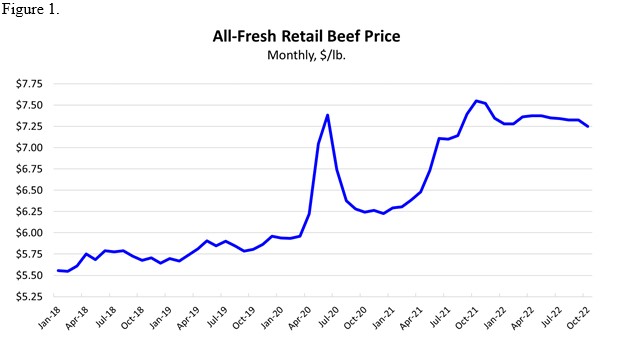
Beef demand considers retail beef prices as well as the quantity of beef consumption. Total commercial beef production is projected for 2022 at a record level of 28.3 billion pounds. After adjusting for beef trade, per capita retail beef consumption is projected at 59.3 pounds, up year over year from 58.9 pounds per capita in 2021. The fact that retail beef prices this year are averaging higher at the same time as consumption is increasing is an indication of strong beef demand.
Wholesale boxed beef prices, similar to retail prices, have traded in a narrow range for most of 2022. Since March, Choice boxed beef has averaged $261.77/cwt. with a weekly maximum of 272.48/cwt. and a minimum of $246.31/cwt. leading to a range of $26.17/cwt. This follows very strong wholesale demand in 2021 which led to an average Choice boxed beef price of $279.81/cwt. with a weekly maximum of $347.02/cwt., a minimum of $206.73/cwt. and a range of $140.29/cwt. for the year.
So far in 2022, Choice boxed beef prices reached a low for the year in October of $246.31/cwt. and have increased to over $263/cwt. in the most recent two weeks. Prices for numerous wholesale cuts have increased including the tenderloin at $15.06/lb., up nearly 38 percent from the August low and now 12 percent higher than year ago levels. This is the highest wholesale tenderloin price since September 2021. Wholesale ribeye prices normally increase in the fall ahead of holiday demand for Prime Rib, and recently reached $10.23/lb., the first time over $10/lb. since last year. Current ribeye prices are up nearly 23 percent from the summer low.
As always, there is a great deal of dynamics across various beef product markets. In addition to the middle meats discussed above, wholesale prices have increased recently for chuck rolls, mock tender, chuck flap and eye of round. Other products continue to have weak or lackluster prices including tri-tip, bottom sirloin flap and flank steak. Wholesale brisket prices have been mostly steady this year, averaging $5.86/lb. after surging to record high levels of $8.00/lb. in the summer of 2021. Wholesale ground beef prices have dropped about 10 percent since the end of summer grilling season in September. There is constant jockeying in wholesale product values due to the dynamics of domestic and international beef demand. However, beef demand appears to be generally steady and strong at the end of 2022.
Beef production is expected to decrease sharply in 2023, which will lead to higher beef prices and more beef product market dynamics. Consumers, thus far, have absorbed large supplies of beef at record prices. As beef supplies tighten, some consumers may begin to "trade down" as market prices ration a smaller supply of beef. Per capita beef consumption is expected to decrease in the coming year, not because beef demand is weak but simply because the available supply of beef will decrease.
Oklahoma Farm Bureau members from around the state convened in Norman Nov. 11-13 for the organization's 81st annual meeting where they elected new leaders, set organizational policy for the coming year, recognized outstanding members with numerous awards and learned from several speakers and presenters.
"When you get Farm Bureau folks together, they just love the chance to fellowship with one another and share stories from their activities in their parts of the state," said Rodd Moesel, OKFB president. "It has been a trying year with drought and commodity pricing swings, but everybody loves the time together and the chance to fellowship with each other."
Members set grassroots policy for 2023
OKFB voting delegates considered more than 80 proposed policy resolutions during two business sessions on Saturday, Nov. 12. The resolutions were first drafted by members in county Farm Bureaus and advanced through the state resolutions committee in October.
Delegates evaluated several issues, including ad valorem taxes, rural fire support, school vouchers, marijuana regulations, political campaign funding and more. The policies approved by members during the annual meeting will guide OKFB's efforts at the state Capitol over the next year.
Board members, other leaders elected
Roger Moore of Mayes County was elected to serve as the new OKFB district six director, filling the seat of retiring board member James Fuser. David VonTungeln of Canadian County and Jim Meek of Okmulgee County were re-elected to serve a three-year term as district three and district nine directors, respectively.
Cyndi Mackey of LeFlore County was elected to serve a two-year term on the OKFB Women's Leadership Committee representing district five.
The OKFB Young Farmers and Ranchers Committee chose newly elected at-large member Alisen Anderson and her husband Jared to serve a year-long term as YF&R committee chair. The committee also elected Katie Richards to serve as the representative for district one, Jacob and Cassidy Beck for district three, Dillon Johnson for district six, Tim Taylor for district nine and Megan Hankins for the Collegiate Farm Bureau representative.
OKFB members, counties recognized
The OKFB WLC recognized nine farm and ranch families with the OKFB District Farm and Ranch Family Recognition awards, including Stuart and Jamie Hutchison, Cimarron County, district one; Renee Howard, Jackson County, district two; Kyle and Sheri Glazier, Kingfisher County, district three; Curtiss and Brenda Nipp, Love County, district four; Joe Mac and Heidi McAlester, Latimer County, district five; Josh and Kim Emerson, McIntosh County, district six; Steve and Rhonda Regier, Major County, district seven; Dale and Deb Rich, Okfuskee County, district eight; and Tom and Jane Imgarten, Pawnee County, district nine.
Payne County was recognized as the top county Farm Bureau with the John I. Taylor Award, and Okmulgee County was honored for its programs with the Lewis H. Munn Award. More than 45 county Farm Bureaus also were recognized for excellence with the OKFB Presidential Star Awards.
Sen. Jim Inhofe was honored with the Distinguished Service to OKFB Award; Travis and Rylee Schnaithman of Garfield County received the YF&R Achievement Award; Chris and Ashley Hoskins of Rogers County received the YF&R Excellence in Agriculture Award; and Dillon Johnson of Ottawa County was named the YF&R Discussion meet winner.
Members learn from speakers and presenters
OKFB members heard from United States Senator-elect Markwayne Mullin, Oklahoma State Superintendent-elect Ryan Walters, Oklahoma State Treasurer-elect Todd Russ and American Farm Bureau Federation Executive Vice President Joby Young during the three-day event.
Convention attendees had the opportunity to attend several leadership development sessions, including presentations on micro-volunteering, financial practices, strategic planning, new county board member training and a panel discussion with several current county Farm Bureau presidents.
Members also were able to earn a continuing education credit through a session on using drones in agriculture presented by Loren Sizelove.
LeAnn Hart left Farm Bureau members with an inspiring message and musical selection at the worship service and breakfast on Sunday morning.
The Oklahoma Farm Bureau Annual Meeting is the organization's largest gathering of farmers and ranchers every year. At the three-day convention, members vote on grassroots policy, elect leaders and award outstanding individuals. OKFB has a presence in all 77 Oklahoma counties and serves as the voice of agriculture and the rural way of life. To learn more about the 2022 OKFB Annual Meeting, visit okfb.news/Meeting22.
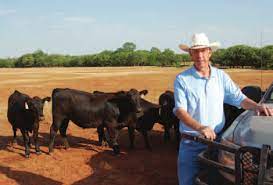
Senior Farm and Ranch Broadcaster Ron Hays is visiting with Vice Chair of the Cattlemen's Beef Promotion and Research Board, Jimmy Taylor, who is also on the board of directors at the U.S. Meat Export Federation, finishing up his three-year term. Taylor ranches in Roger Mills County near Cheyenne, Oklahoma.
"The COVID period was not business as usual," Taylor said.
Taylor commended Dan Halstrom and his staff for doing a remarkable job getting U.S. beef into the different markets around the world.
"They have 19 offices in around 80 different countries and just do a really good job getting the word out, getting people educated on the difference between the beef they are used to, and the grain fed U.S beef," Taylor said. "Quality is something they are not used to, and it takes a little bit of time to get people used to eating that, but once they acquire that taste, they love it."
Variety meats, Taylor said, is a valuable market internationally because many of those meats could not be marketed in the U.S.
"Last year we did, in dollars, 10.576 billion dollars, blew away the previous record and that is a new record," Taylor said. "The beef variety meats made up about a billion dollars of that."
Taylor said things like tongues, livers, and tripe do not sell well in the U.S. but being able to sell them so successfully in other countries adds to the value of fed cattle.
"I think the number last year was 470 dollars the exports added to a fed steer and beef variety meats is a big part of that," Taylor said.
One good thing that came out of the pandemic, Taylor said, was the ability to market products in a different way.
"E-commerce became a big part of the marketing programs because you just couldn't get out during that pandemic," Taylor said.
Taylor said USMEF is one of the nine contractors that the Cattlemen's Beef Board awarded dollars for projects.
"I believe this year, they are going to receive 8.2 million dollars out of the 38.5 million that we awarded to different contractors," Taylor said. "They do such great work, and I think it is very important moving into the future. 96 percent of the world's population lives outside of the United States."
With states moving toward making their own rules and regulations, Taylor said that will play a large part in the future as far as red meat sales.
The Beef Buzz is a regular feature heard on radio stations around the region on the Radio Oklahoma Network and is a regular audio feature found on this website as well. Click on the LISTEN BAR below for today's show and check out our archives for older Beef Buzz shows covering the gamut of the beef cattle industry today.
The National Corn Growers Association Board of Directors has hired Hedlin Ag Enterprises of Ankeny, Iowa to assist with the search for a new CEO. The initial part of the search involves identifying and vetting potential candidates for the position which will occur through the end of this year and into the beginning of 2023. Candidate interviews for the CEO position will be held in February with the intention of introducing the new CEO during Commodity Classic in March.
"We have been very thoughtful and put a lot of time and effort into this process," said NCGA President Tom Haag. "We started with a task force who developed the qualities and characteristics we want in our next CEO and now a search committee will work with Hedlin Ag Enterprises on finding the next leader of our organization to help us meet the many challenges we face."
The board will entertain both internal and external candidates. Anyone interested in applying for the CEO position with NCGA can email their resume (cover letter optional) to Kevin Drury with Hedlin Ag Enterprises. You can reach Kevin at kdrury@hedlinag.com or by calling 515-964-7997.
"I want to publicly thank our current CEO, Jon Doggett, for his time with the organization," Haag said. "Jon has worked for NCGA for more than 20 years as our Vice President of Public Policy, Executive Vice President and since 2018, as CEO. He has more than 30 years of agricultural policy experience. Jon made his intentions known to the board earlier this year and his last day with the organization will be December 31, 2022."
The NCGA management team will oversee the association between the end of 2022 and the arrival of our next CEO.
Certified crop advisors, producers and farmers/ranchers are encouraged to take part in the 2022 Winter Crops School scheduled for Dec. 14-15 at Oklahoma State University's Student Union.
Experts from OSU, University of Missouri, Kansas State University, Texas A&M, University of Arkansas, University of Georgia and the University of Tennessee are on tap to share their latest research-based information on soil conservation, soil organic matter, integrated weed management, forage, crop production, nutrient management and more.
The 2022 school will offer both in-person and virtual options. Early registration due by Nov. 30 is $150. The rate raises to $225 thereafter. Registration includes class materials, one breakfast, two lunches and the reception on Dec. 14. A virtual-only option is available for $100, and OSU Extension educators may attend for $90.
Fourteen Certified Crop Advisor continuing education units will be offered, in addition to two Oklahoma Department of Agriculture, Food and Forestry CEUs.
The Student Union is located at 100 S. Hester St. on the southeast side of campus. For additional information about the event, contact Josh Lofton, OSU Extension cropping systems specialist, at 405-744-3389 or josh.lofton@okstate.edu. More registration information is available from OSU Ag Conference Services at agconferences@okstate.edu or 405-744-6489.
OSU Extension uses research-based information to help all Oklahomans solve local issues and concerns, promote leadership and manage resources wisely throughout the state's 77 counties. Most information is available at little to no cost.
Perspectives from all sectors were discussed in the panel at the 2022 Angus Convention
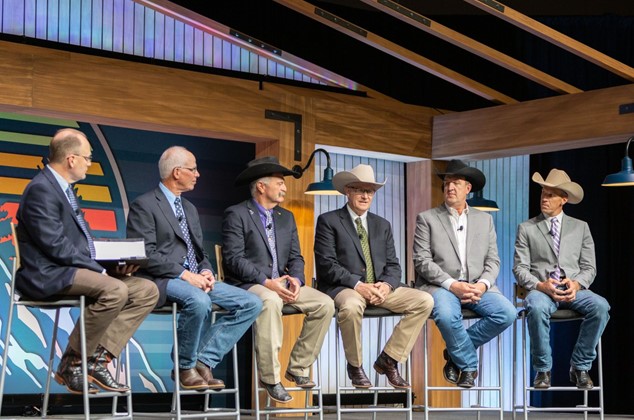
Cattlemen and women from across the United States work in different sectors of the beef industry, deal with different environmental issues and have different business strategies. But at the end of the day, all farmers and ranchers work toward the same goal; to continue raising and selling the best beef possible.
Raising top-quality beef comes with both barriers and optimism. During the 2022 Angus Convention first general session, Exploring Your Potential, five Angus breeders and industry experts spoke on a panel with Mark McCully, American Angus Association® chief executive officer, as the moderator. The panel took place November 5 in Salt Lake City, Utah.
The panel included the following backgrounds and perspectives: Jerry Connealy with Connealy Angus; Mark Gardiner with Gardiner Angus Ranch and U. S. Premium Beef; Ed Greiman with Greiman Brothers and Upper Iowa Beef; Joe Goggins with Vermillion Ranch and Northern Livestock Video Auction; and Matt Perrier with Dalebanks Angus.
Big opportunities lie ahead for the industry, the panelists said. Perrier spoke about the importance of influence and the next generation. Greiman discussed how vital it is for producers to continually improve quality so packers can find new ways to add value to the carcass. The type of supplies and increasing packing capacity brought excitement to Goggins, and Connealy shared his perspective about the value of Association tools.
"It's full circle. The American Angus Association provides the tools, and you guys [producers] have obviously done a tremendous job using those tools making a premium as demand has gone up," said Connealy. "But there is still upside that we can get better. We can always get better."
Vertical coordination is also an answer to improving the beef industry while avoiding vertical integration said Gardiner. He defines vertical integration as an entity owning things from the cut of beef all the way to the genetics.
"The only way we keep that from happening, in my opinion, is through vertical coordination and passing that information, building those alliances, sharing and being transparent with whoever it is we sell product to and with who they sell product to," said Gardiner.
Perhaps the biggest challenge, the cattlemen said, is ensuring that beef industry profitability is spread over all segments of the industry. In the past, when one segment made money, the others lost it —the "skin thy neighbor approach," as Gardiner put it.
The panelists talked about the value and quality of Angus beef creating more profitability. Perrier mentioned a quote from John Stika, Certified Angus Beef® president, who said the only new money in the beef industry comes from the consumer. If that is the case, we must ensure there is opportunity to make money through consumer demand, said Perrier.
Increasing consumer demand also means increasing consumer trust, which Connealy said is the most significant barrier to the industry's future success. If we don't do the right things, or represent our cattle and our industry correctly, consumer trust could drag us down, he said.
Pull-through demand for Certified Angus Beef® is key. As long as we can keep that, he said, "We will come out on top. I am confident in that."
The group's morale was bullish as they considered environmental and economic factors influencing profitability of producers in the coming years. Considering the market's improvement and opportunity, the group also recognized the effect rising input costs will have on cattle prices. Greiman discussed how producers should use the tools and resources available to them as prices swing. Risk management was a tool discussed as well as a genetic hedge—or the ability to protect yourself through the use of good genetics.
The Angus breed is positioned well to help with that, Perrier said. "We have one breed that can do what we do from an end product, growth standpoint and yet still have a pasture full of females that are going to make the producer money."
As the Angus breed and beef industry work toward a successful future, the panel reminded attendees how everyone is facing the same challenges and opportunities. Regardless of size and shape, there is room for success and probability of cattle producers.
For news about Angus Convention, visit www.angus.org/Pub/NewsRoomReleaseList.
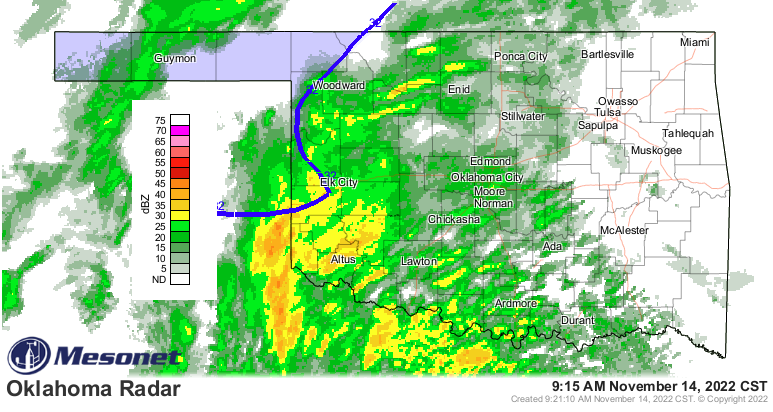
Right now we have a little shortwave moving in from the West and Weaking, according to State Climatologist Gary McManus. He says it will possibly generate enough "lift" to set up extremely heavy snow bands across western into south central Oklahoma. "Temps are still warm, of course, but as we've talked about for days (and days), the precipitation falling from above into drier air below should cool things down as it evaporates. That sets us up for rain changing to snow."
Even though temps are above freezing, they should start to inch down a degree or more after a bit, and with the wind it feels colder than it actually is outside. McManus says, "the gradient between those that receive a LOT of snow, those that receive SOME snow, and those that are left crying, should be fairly tight. Like, your Aunt Mabel in Lindsay gets 4 inches, but your location in NE Norman gets less than an inch." Places in Western Oklahoma could see anywhere from 4-6", while the Panhandle could see 3-4", and other areas around the state might see 1-2" or less.
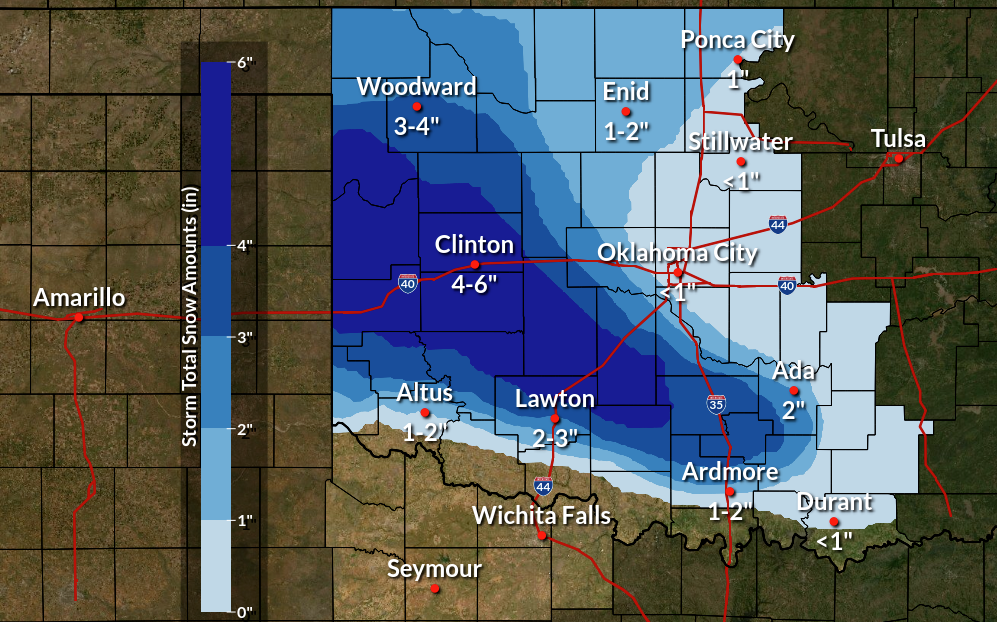
McManus says For the snowy areas, yes, the ground temps are above freezing, but "The snow will stick eventually as the precipitation draws that heat away, and in those areas with the heavy snowfall rates, roads WILL become slick. And I'm talking huge white flakes falling so thickly that driving in it will be dangerous alone due to reduced visibility. So the time to be cautious AND hopefully cancel those travel plans is NOW!"
The snow should melt pretty quickly over the next couple of days, but McManus says its going to stay cold until Thanksgiving.
Another big front is moving through this weekend, but it looks mostly dry, according to McManus.
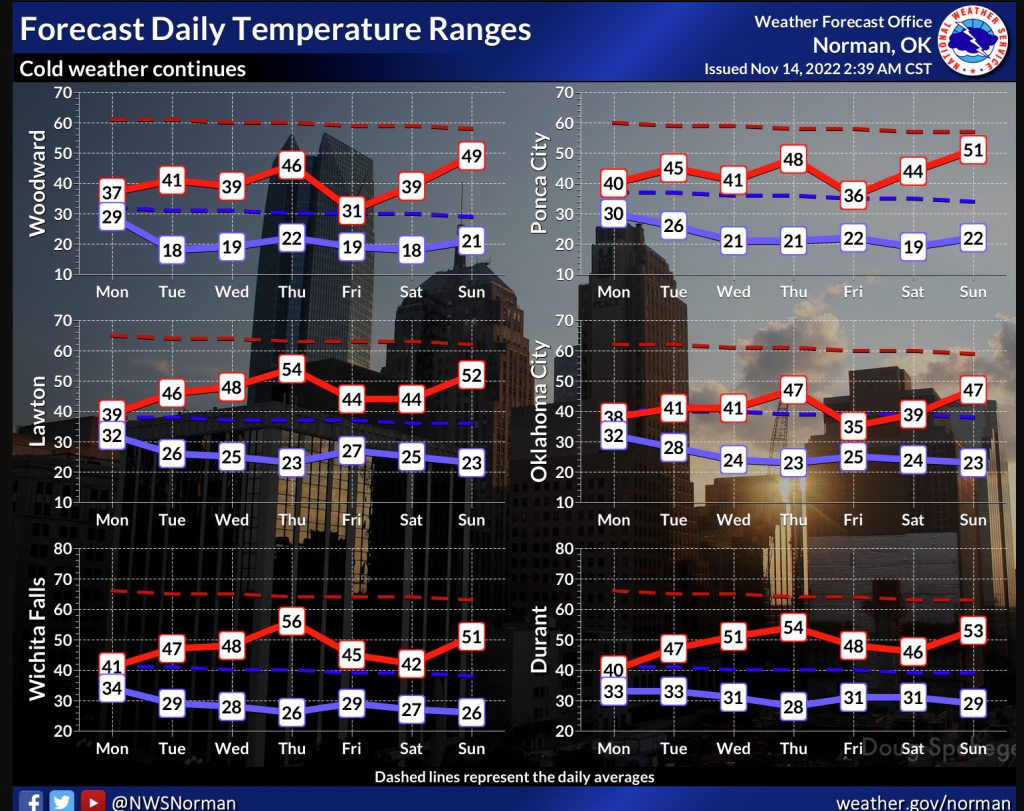
To see Gary McManus's mesonet ticker, click here:
CHS Inc., the nation's leading agribusiness cooperative, today announced the appointment of Megan Rock as vice president, sustainability and innovation and chief sustainability officer (CSO). She is responsible for developing and executing sustainability and innovation strategies across the $48 billion enterprise.
Before CHS, Rock served as VP of corporate responsibility, sustainability and sustainable solutions at Bunge, Inc. She also held sustainability and environmental management positions in the government and banking sectors.
"I'm thrilled to join CHS and guide the formalization of our sustainability and innovation business function. As the company's first CSO, I am proud to bring my experiences to the organization and my deep expertise to the job," said Rock.
In the newly created position, Rock will oversee the integration of sustainability-related topics, including reporting, and Cooperative Ventures, a capital fund focused on creating advancements in breakthrough technologies for the agriculture industry.
"Megan will help CHS develop the internal governance and processes needed to execute long-term financial success related to environmental and social factors, along with our strategic investments in innovation through our Cooperative Ventures fund," said David Black, senior vice president, enterprise transformation and chief information officer.
Rock holds a Bachelor of Science degree in soil, environmental and atmospheric science from the University of Missouri and a graduate certificate in advanced studies in environmental policy and management from the University of Denver.
Rock has served on the board of directors for Field to Market and Ag Future of America. In 2015, she received the Changemaker of Tomorrow award from Keep Akron (Ohio) Beautiful and is a member of the St. Louis Business Journal's 40 under 40 class of 2020.
CHS Inc. (www.chsinc.com) is a leading global agribusiness owned by farmers, ranchers and cooperatives across the United States. Diversified in energy, agronomy, grains and foods, CHS is committed to creating connections to empower agriculture, helping its farmer-owners, customers and other stakeholders grow their businesses through its domestic and global operations. CHS supplies energy, crop nutrients, seed, crop protection products, grain marketing services, production and agricultural services, animal nutrition products, foods and food ingredients, and risk management services. The company operates petroleum refineries and pipelines and manufactures, markets and distributes Cenex® brand refined fuels, lubricants, propane and renewable energy products.

John Deere is widening its lineup of specialty tractors designed for work in narrow orchards and vineyards with the addition of the new 5EN and 5ML Series.
The popular 5EN from the past is back and updated with a 5075EN model available in an open operator station or cab configuration. Inside the cab, operators will find all-day comfort with AC/heat, ergonomic levers and implement controls, cell phone and cup holders, 12-volt outlet, USB port and a pair of service ports. An air-ride seat is optional. With 75 engine horsepower, the 5075EN is the highest horsepower that can be purchased that meets emission requirements without the management of diesel exhaust fluid or diesel particulate filters.
"The 5075EN is an economical, narrow tractor that can be configured to a working width as minimal as 51 inches and can also be outfitted with a front hitch and mid SCVs for the ultimate implement versatility. It's ideal for fruit handling and hauling, spraying, mowing and any application that takes place within the narrow confines of an orchard or vineyard," said Greg Christensen, marketing manager for John Deere. "Not only will customers find the 5075EN to be reliable, nimble and easy to use, they'll be surprised at how much John Deere Precision Ag Technology is available to help them monitor, manage and maximize their farm or business."
Two proven transmission options are available for the 5075EN – the 12x12 PowrReverser™ and the 24x12 PowrReverser with High-Lo. A creeper option on both transmissions lets operators choose the right speed for spraying, mowing, hauling or any slow-speed application. A left-hand reverser is standard and makes changing directions easy, while freeing up the person's right hand for other tractor controls.
Moving up in horsepower and spec level, the 100- to 130-horsepower 5ML Series also gets significant updates.
"The 5ML Series has been a proven tractor in fruit and nut orchards for years, but customers either had to use it as an open operator station tractor or find a cab solution on their own, costing them time and money," Christensen said. "Now, customers can get a low-profile, feature-packed, John Deere cab that shows up from the factory ready to work."
The new 5ML cab provides head-to-toe comfort with a flat floor, spacious headroom, and ergonomic, well-placed controls. A reconfigurable in-dash 3-screen LCD display allows operators to customize their view.
On cab versions of the 5ML, two front-axle options are available for working widths as narrow as 71 inches, and down to 61 inches on the 5ML Narrow. Each come equipped with programmable LED lighting, options for a front hitch, and front PTO for added versatility, plus the choice of an easy-to-use PowrQuad™ PLUS or Powr8™ transmission.
Customers can also choose two new dealer-installed kits. A Cat IV filtration system provides an additional level of cab filtration and pressurization. A new Limb Lifter kit can be added to gently move away low hanging branches, reducing the potential for damage to the tree and tractor.
Integrated technology on the 5EN and 5ML Tractors includes JDLink™– an industry exclusive in this class of tractor that keeps growers connected to what matters. JDLink can be used to remotely track machine data – especially useful for customers who operate orchards or vineyards or manage fleets of tractors. JDLink helps customers efficiently track equipment location and proactively monitor machine health and productivity. JDLink can also be used to provide job details and work direction to operators.
For even greater efficiency and productivity, the 5EN and 5ML are AutoTrac™ capable, with AutoTrac Universal available on the 5EN, and Integrated AutoTrac through the in-dash display on the 5ML. AutoTrac guidance gives operators the ability to eliminate implement overlap and optimize machine efficiency when completing jobs such as spraying, planting or mowing.
Dealers will begin taking orders for new 5EN and 5ML Tractors beginning on November 14 with limited availability in 2023. For more information visit JohnDeere.com, or your local John Deere dealer.
According to a group of high-level global leaders speaking at a COP27 event co-hosted by Farm Journal Foundation and CGIAR, accelerated investments in climate-smart agriculture and food systems innovation, spearheaded through the Agriculture Innovation Mission for Climate (AIM for Climate) initiative, will benefit smallholder farmers in developing countries in becoming more resilient against climate change.
AIM for Climate is a global initiative launched last November at the 26th United Nations Climate Change Conference (COP26) by the United Arab Emirates and the United States. Supported by 42 government partners and 235 non-governmental partners such as international organizations, nonprofits, and private-sector companies, AIM for Climate today announced an increased investment of more than $8 billion, up from $4 billion at COP26, by partners in climate-smart agriculture and food systems innovation and a tripling of innovation sprints and partners since its launch.
Today's panel featured high-level AIM for Climate partners, including its senior leadership: U.S. Agriculture Secretary Tom Vilsack and Her Excellency Mariam bint Mohammed Almheiri, Minister of Climate Change and Environment of the United Arab Emirates, Samantha Power, Administrator of the U.S. Agency for International Development (USAID), Enock Chikava, Interim Director of Agricultural Development at the Bill & Melinda Gates Foundation, and Helena M.Q. Semedo, Deputy Director of the UN Food & Agriculture Organization.
Today's panel featured high-level AIM for Climate partners, including its senior leadership: U.S. Agriculture Secretary Tom Vilsack and Her Excellency Mariam bint Mohammed Almheiri, Minister of Climate Change and Environment of the United Arab Emirates, Samantha Power, Administrator of the U.S. Agency for International Development (USAID), Enock Chikava, Interim Director of Agricultural Development at the Bill & Melinda Gates Foundation, and Helena M.Q. Semedo, Deputy Director of the UN Food & Agriculture Organization.
"A coordinated global response is the most logical answer to our current challenges, and this is where all the partnerships come into play. AIM for Climate is a unique and inclusive platform convening 42 government and over 235 non-government partners to advance innovation in climate-smart agriculture and food systems globally, and this will empower us to learn, adapt, and support best practices to empower smallholder farmers around the world, especially from marginalized communities. Equity and inclusion are critical to the success of AIM for Climate, and we will seek to create a dialogue and draw on diverse knowledge, experiences, and cultures so no one is left behind, be it a nation, community, or individual," U.S. Agriculture Secretary Tom Vilsack said at the event.
"Climate change is rapidly upending the landscape for smallholder agriculture, negatively affecting crops as well as livestock. With over a quarter of the world's population employed in agriculture, and women making up 50 percent of agricultural workers in developing countries, it is imperative to protect farmers' livelihoods and the ecosystems they rely on while feeding a hungry world. We must focus on interventions that create better economic opportunities for resource-limited and marginalized people in rural communities, particularly women and youth," said Her Excellency Mariam bint Mohammed Almheiri.
The event announced new AIM for Climate "Innovation Sprints", while dignitaries spotlighted the progress made against previously announced projects. Innovation Sprints are initiatives led and funded by partners to achieve a specific outcome or output in agricultural innovation. There are now 30 Innovation Sprints in total, aligning with one or more focal areas: small-holder farmers in low- and middle-income countries, emerging technologies, agroecological research and methane reduction. Learn more about the AIM for Climate Innovation Sprints here.
Claudia Sadoff, Executive Managing Director of CGIAR, the world's largest global agricultural innovation network shared details on the 'Digital resources for scaling up climate-informed agroecological transitions' Innovation Sprint, which works on the Agroecological TRANSITIONS' Inclusive Digital Tools project (ATDT). It aims to leverage $25 million to develop digital solutions for smallholder farmers to scale up agroecological practices. The program will expand access of low-cost digital technical advisories and performance assessment tools to 100K farmers in ten countries and five value chains in Asia, Africa and Latin America. This will enable farmer co-creation and rapid development of site-appropriate climate change resilience and mitigation measures based on agroecological principles.
"We risk losing more lives, deepening poverty, and entrenching inequalities if the global community does not take action to set targets and invest in adaptation to make communities and farmers more resilient to climate change. The level of ambition and commitment from AIM for Climate partners is an important and welcome step-up to accelerate climate adaptation for those that need it the most," Sadoff said.
During the event, Justina Nixon-Saintil, IBM's Vice President of Corporate Social Responsibility and ESG, provided a progress summary and initial results of the first cohort of its IBM Sustainability Accelerator focused on sustainable agriculture. An AIM for Climate Innovation Sprint, the accelerator is a pro bono social impact program that applies IBM technologies, such as hybrid cloud and artificial intelligence, and an ecosystem of experts to enhance and scale nonprofit and government interventions to help populations that are vulnerable to climate change and other environmental threats. IBM will provide the first cohort of participating organizations with technology and expertise to accelerate climate-smart agriculture solutions. Through 2025, Accelerator projects will receive an estimated market value of $30 million in IBM support including $10 million focused on sustainable agriculture.
"It's clear that there's a need for more technical and institutional support for economically under-prioritized populations when it comes to bolstering our resilience in responding to climate change," Nixon-Saintil said. "IBM is working to provide this support to local and regional organizations across the globe through the IBM Sustainability Accelerator. The model that IBM is developing helps invest in equitable and long-term solutions to environmental injustice, including solutions for smallholder farmers, which is one of our priorities for the program."
Georgina Campbell Flatter, the Executive Director of TomorrowNow.org, announced 'Climate Resilience For African Farmers Through Next Generation Weather Intelligence' - a new innovation sprint undertaken by her organization, a nonprofit that aims to "close the global weather gap", and advance early warning systems in the developing world. TomorrowNow.org, Tomorrow.io, and its partners are pioneering the Africa-first innovation spirit to empower 20 million smallholder farmers by 2025 with next-generation location-based timely agri-weather services. Together, they are building on established activities in Kenya to leverage $80 million in private sector investment and $20 million in transformative philanthropy to connect governments and local agricultural value chain partners with next-gen weather intelligence and lay the foundations for rapid scale and sustainability. The Bill & Melinda Gates Foundation is a key partner of the innovation sprint, which works with the Kenya Agricultural and Livestock Research Organization (KALRO).
"We must act now to ensure those most in need and at risk of weather variability are able to adapt and thrive in our changing climate. Our innovation sprint brings together phenomenal partners from across the public, private and NGO sectors. By working better together, we are able to make a difference now while also ensuring sustainability for tomorrow," Campbell Flatter said.
"It's exciting to see African organizations like KALRO embrace advances in digital technologies and data analytics to reveal new pathways for agriculture adaptation," said Enock Chikava, Interim Director of Agricultural Development at the Bill & Melinda Gates Foundation. "This project will deliver tangible, detailed insights that will help farmers anticipate and respond to new or intensified threats caused by climate change."
USAID is also leading two innovation sprints. This first is a partnership with Bayer Crop Science and the International Rice Research Institute (IRRI) to improve the quality of life of smallholder rice farmers through the introduction, on-farm testing, and scaling of improved, climate-smart rice varieties that are sown directly in the field as opposed to the labor-intensive process of transplanting seedlings by hand. Bayer has committed up to $4 million of in-kind support and IRRI is leveraging funding from a USAID activity to participate.
The second innovation sprint is a partnership with USAID, ofi, Nestlé, Mars Wrigley, Costco Wholesale, Mondelēz International, and Blommer Chocolate Company have also launched RESTORE: "Resilient Ecosystems and Sustainable Transformation of Rural Economies", that will help smallholder cocoa farmers use more climate-smart agricultural practices. ofi and partners are investing $7 million toward this effort that aims, by 2027, to support 15,000 cocoa farmers, of which at least 25 percent will be women; USAID's West Africa Regional Mission is also matching this investment with $7 million. To watch a replay of the event, visit this link.
The U.S. Meat Export Federation (USMEF) Strategic Planning Conference wrapped up Friday in Oklahoma City with the election of a new officer team. Dean Meyer, a corn, soybean and livestock producer from Rock Rapids, Iowa, is the new USMEF chair.
In addition to raising corn and soybeans, Meyer's diversified operation – which he oversees with his three sons – includes a cattle feedlot and a farrow-to-finish hog facility. This provides him with a deep appreciation of the diverse range of agricultural sectors that make up USMEF.
"USMEF is a very unique organization where a corn grower from North Dakota, a cattle feeder from Texas and a soybean farmer from Indiana can pull together to market the same product," Meyer said. "I've seen the momentum growing in the way these sectors work together, and my goal is to enhance that even more. Wearing several different hats, I have a broad perspective – and this organization is my passion."
Meyer became involved with red meat exports through the Iowa Corn Growers Association, where he served as a director and as Iowa Corn's USMEF representative. During his time in the USMEF leadership, Meyer has had several opportunities to visit major export markets and share details of his farming operation with importers, distributors and everyday consumers. His farm was also recently featured in a video campaign promoting U.S. beef in Japan.
"It was really an honor to showcase my family and my farm, and to educate Japanese consumers on how we sustainably raise our livestock and crops," he said. "Our customers overseas love the quality and safety of U.S. red meat, but they want more than that. They want to know the story behind these products and details on how they are produced. Having the opportunity to tell that story and engage with these customers has been a very positive experience."
Meyer succeeds outgoing USMEF Chair Mark Swanson of Fort Collins, Colo., founder of food safety and management consulting firm Tru Grit KGMS Enterprises LLC. Minnesota pork producer Randy Spronk will serve as USMEF chair-elect in the coming year, while the vice chair is Steve Hanson, a cattle rancher from southwestern Nebraska. The newest USMEF officer is Secretary/Treasurer Jay Theiler, executive vice president of corporate affairs for Agri Beef, based in Boise, Idaho.
Friday's closing business session offered attendees a comprehensive overview of the Biden administration's current trade initiatives and their potential impact on red meat exports. Longtime U.S. trade negotiator Sharon Bomer Lauritsen, who is now a trade policy consultant with AgTrade Strategies, LLC, praised her successors for their efforts to address trade barriers that limit U.S. agricultural exports. But she questioned the degree to which the Biden administration has prioritized agricultural trade, noting that Congress still has yet to confirm the nominees for USTR chief agricultural negotiator and USDA undersecretary for trade.
"So it's hard to get that political push for agriculture when it's not the priority that it has been in prior administrations – including the Obama administration," Bomer Lauritsen said.
She spotlighted tense relations between the U.S. and China but noted that the vast Chinese market still holds tremendous opportunities for U.S. agricultural exports.
"I think it's important to try and separate food trade, and to calm some of the rhetoric we're seeing in our own politics related to China," she said. "While I know that your industry is having some difficulties with China, I would still argue that the Phase One Agreement that we negotiated is a huge success."
Bomer Lauritsen closed by emphasizing the critical need for U.S. agriculture to remain engaged on U.S. trade policy.
"If you're not there speaking up, you're never going to see any positive changes," she said. "You must engage with people at the civil service level – where I was – as well as with your elected officials in Congress and your foreign country counterparts, or things won't get fixed."
On Thursday, the conference focused on the 45th anniversary of USMEF's inaugural office in Tokyo. The session showcased the value the U.S.-Japan trade partnership delivers for the U.S. red meat industry, highlighting marketing initiatives and future opportunities. Japan has consistently been the leading value destination for U.S. red meat exports and 2022 is no exception, with shipments through September topping $3 billion.
Masayoshi Kinoshita, director of meat marketing and trade policy for Japan's Ministry of Agriculture, Forestry and Fisheries, kicked off the discussion with an historical overview of meat supply and demand in Japan. Kinoshita recounted his positive experiences in working with USMEF and described the challenges Japan faces in its domestic production, leading to an expanded role for imports in meeting the country's growing demand for red meat.
A panel discussion featuring USMEF-Japan staff was moderated by USMEF Vice President of Economic Analysis Erin Borror and included Japan Director Takemichi Yamashoji, Marketing Director Satoshi Kato and Taz Hijikata, consumer affairs director. The session centered on Japan's value to the U.S. red meat industry as a trusted and reliable customer, and the potential for further growth as consumers in nearly every age group continue to shift from high-priced seafood consumption toward animal proteins.
Japan's value as a trading partner goes beyond its billions of dollars in annual purchases, displaying a tremendous appetite for cuts and variety meats that are underutilized in the United States. This demand delivers value back to livestock producers and to every level of the U.S. supply chain.
"Japan is importing $20 worth of beef tongue from every animal this year and its purchases of skirts and hangers adds $10.45 to each fed animal in the U.S.," Borror explained. "Japan also accounts for more than 6% of U.S. pork loin production and about 13% to 15% of our picnic production through its demand for ground seasoned pork."
Panelists described recent marketing initiatives developed to promote new applications and uses for underutilized cuts and variety meats in Japan's foodservice and retail sectors. Longstanding industry relationships are key to USMEF's ability to introduce and test new applications in the Japanese market. This year, for example, marketing programs have targeted the foodservice sector with promotions for fried pork loin, new pulled pork recipes utilizing the picnic and new U.S. beef recipes for Japan's fast-growing yakiniku sector.
"Inflation and a weakened yen have tightened consumer budgets and the market is very receptive to trying affordable protein options," said Yamashoji. "We are conducting promotions at foodservice and retail, and these new recipe ideas are reaching millions of consumers through social media."
Thursday's activities also included meetings of USMEF's standing committees, which allow members to receive updates on issues impacting specific sectors. Members of the USMEF Feedgrains and Oilseeds Caucus were treated to an appearance by Oklahoma Secretary of Agriculture Blayne Arthur. She welcomed USMEF's first-ever meeting in Oklahoma and praised the state's agricultural organizations for their role in expanding global demand for U.S. red meat.
Global production forecasts, export projections, market access challenges and logistics updates were among the agenda items in breakout sessions for the Pork and Allied Industries Committee, Beef and Allied Industries Committee and Exporter Committee. One presentation that received particular attention was a panel discussion by USMEF's directors in Korea, South America and the ASEAN region on convenience-driven trends in product packaging.
The Exporter Committee and Pork and Allied Industries Committee collaborated on a resolution requesting that USDA and the Office of the U.S. Trade Representative make it a top priority to reach regionalization agreements with key trading partners related to African swine fever and other foreign animal diseases. The resolution notes that when implemented in cooperation with state animal health officials, these agreements can be a critical tool for mitigating trade disruptions in the event of an animal disease outbreak.
Former U.S. Trade Representative Robert Lighthizer, who spearheaded key trade agreements achieved under the Trump administration, was honored with USMEF's Michael J. Mansfield Award. The USMEF Distinguished Service Award was presented to Where Food Comes From co-founder Leann Saunders. More details on these awards can be found here.
Highlights from the conference's opening day are also available in this USMEF release.
USMEF members will next meet at the federation's spring conference in Minneapolis, May 24-26.
At the 2022 United Nations Climate Change Conference (COP27) this week, Secretary of Agriculture Tom Vilsack highlighted the U.S. Department of Agriculture's initiatives and investments in climate-smart agriculture and forestry, noting that global food security depends upon the ability of farmers and producers worldwide to increase their productivity while strengthening their climate resilience and minimizing their climate impacts.
"As we face down the dual crises of climate change and food insecurity, USDA recognizes that changes to our agriculture and food systems can only happen at the needed scale and speed if farmers are at the center of our solutions," Vilsack said. "Under the Biden-Harris Administration, the United States is making unprecedented investments in innovative approaches to climate change adaptation and mitigation. USDA is proud to play a pivotal role through our new Partnerships for Climate-Smart Commodities, once-in-a-generation investments through the Inflation Reduction Act, and other initiatives that position American agriculture as a leader in delivering climate solutions through voluntary, incentive-based, market-driven and collaborative approaches. It was an honor to highlight at COP27 the Administration's leadership role, and that of American agriculture, in tackling the climate crisis."
Partnerships for Climate-Smart Commodities
Vilsack used the international platform of COP27 to showcase the Partnerships for Climate-Smart Commodities, through which USDA is investing in new revenue streams for America's climate-smart farmers, ranchers and forest landowners. These projects will expand markets for climate-smart commodities, leverage the greenhouse gas benefits of climate-smart production and provide direct, meaningful benefits to agriculture, including for small and underserved producers.
At numerous COP27 events, Vilsack highlighted USDA's initial $2.8 billion investment in 70 pilot projects from the first funding pool that will deliver significant benefits for producers and communities in all 50 U.S. states. The projects will result in the application of climate-smart production practices on more than 25 million acres of working land, with expanded market opportunities and revenue streams for producers of all sizes and types. All of these projects require meaningful involvement by underserved producers.
Today, Vilsack announced that USDA will direct an additional $300 million to the second pool of pilot projects by the end of the year, bringing USDA's total expected investment to $3.1 billion. More than 65 additional projects will focus on enrolling small and underserved producers, as well as on methods to be developed at minority-serving institutions for monitoring, reporting and verifying the benefits of climate-smart agricultural practices.
"Small and underserved producers are at the frontlines of the worst impacts of climate change around the world. At the same time, there is enormous and growing market demand for agricultural goods that are produced in a sustainable, climate-smart way. Our goal is to expand markets for climate-smart commodities and make sure that small and underserved producers reap the benefits of these market opportunities," Vilsack said.
International Climate Hub
"As USDA and our partners worldwide invest in new programs and innovations around climate, we recognize that sharing information – on successes, challenges and approaches – can have broad global benefits. A sustained commitment to learning and action among the international community will be critical to accelerating the uptake of proven climate-smart agriculture and forestry practices," Vilsack said.
As part of USDA's commitment, Vilsack announced that USDA will establish an International Climate Hub, modeled after USDA's domestic Climate Hubs, which serve as the premier model for developing and delivering science-based, region-specific information and technologies to U.S. agricultural managers to enable climate-informed decision-making. The International Climate Hub will provide information and resources tailored to specific regions and needs, including a focus on the countries and producers most vulnerable to the effects of global climate change. The Hub will leverage results and innovations generated via USDA's domestic and international programs and initiatives, including the Partnerships for Climate Smart Commodities pilot projects.
Global Fertilizer Challenge
Earlier this year, President Biden invited world leaders to join the United States in the Global Fertilizer Challenge, with a goal of raising $100 million in support by COP27. Today, Vilsack joined Special Presidential Envoy for Climate John Kerry in announcing the United States' $25 million commitment to the challenge, which includes:
"Simply put, farmers need nitrogen, phosphorous and potassium to grow crops. But lack of access to fertilizer hampers productivity in many low-income countries, while in most major economies more than 50 percent of fertilizer fails to reach the intended crop. The adoption of innovative and efficient fertilizer and cropping practices will alleviate pressure on supplies, lower nitrous oxide emissions and reduce food insecurity globally," Vilsack said.
Agriculture Innovation Mission for Climate
In a series of events focused on the Agriculture Innovation Mission for Climate, which was launched by the United States and the United Arab Emirates last year at COP26, Vilsack highlighted the initiative's progress and achievements to date. He also announced that the United States will host the AIM for Climate Summit in Washington May 8-10, 2023, bringing together public- and private-sector partners from around the world to collaborate and further elevate their groundbreaking work on climate-smart agriculture and food systems innovation.
Vilsack also announced two new USDA contributions to AIM for Climate:
Pathways to Dairy Net Zero
Recognizing the vital role of sustainably managed livestock and dairy systems in combatting climate change and ensuring food security, Vilsack highlighted USDA's domestic and international efforts to advance climate-smart dairy production, including:
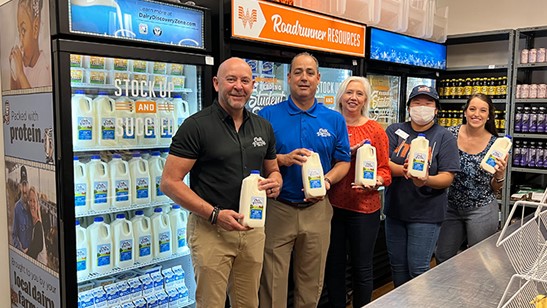
Milk, even pre-pandemic, has been one of the most requested but least available items to food banks due to its perishability and refrigeration requirements. In July 2020, Dairy MAX worked with Feeding America to create a solution to the lack of dairy in food banks due to unavailable storage setups by creating a program that provides milk coolers for food banks within the Feeding America network.
Creating consistent access and increased refrigeration capacity is essential for dairy due to its perishability and short shelf life. "Refrigeration capacity continues to be the biggest obstacle to a steady milk supply in food banks," said Michelle Van Pelt, business development manager for Dairy MAX. "By providing coolers to neighborhood food banks, we can help multiple families and introduce local dairy foods to communities."
Food prices continue to rise. Today, more than 34 million Americans are turning to food banks to help bridge the gap in accessing wholesome food for their families. Many of these individuals and their families don't qualify for government assistance, meaning having the ability to make healthier selections at the grocery store isn't always economically feasible. Healthier choices often include perishable foods, including dairy. To put this into perspective, the average food bank client receives one gallon of milk per year versus the 68 gallons they need to meet the dietary recommendations for dairy foods for Americans.
Since the program's inception, Dairy MAX has placed 78 coolers in food banks in the region, specifically in pantries that were unable to provide dairy due to a lack of cold storage. These pantries have provided more than 343,000 gallons of milk and 13 million pounds of dairy products, including milk, cheese, yogurt, and butter. An average of 300,000 households have been impacted by the program.
The coolers themselves can store up to 64 gallons of milk along with cheese, butter, yogurt and other dairy foods sought after by the communities and banks served. The coolers' exteriors are wrapped with an informative design that displays dairy's 13 essential nutrients and features dairy farmers local to the food bank. When enrolled in the program, food banks receive the coolers and additional resources like milk storage information, delicious dairy recipes, nutritional information and social media content that's sharable with their clients.
"Our partnerships are focused on sharing resources and expertise to solve challenges – and food banks are at the top of that list," said Jennie McDowell, vice president of business development for Dairy MAX. "This is a growing sales channel for milk, and we are working to ensure it remains accessible to consumers who need it. We are bringing stakeholders from the entire value chain together to improve infrastructure and educate decision-makers on programs that create consistent access to essential dairy.
Dairy MAX is committed to consistent access to dairy for everyone, not just those who can afford dairy foods from the grocery store. If you're interested in learning more about the dairy cooler program, contact your local Dairy MAX representative.
Sun, 13 Nov 2022 20:07:26 CST
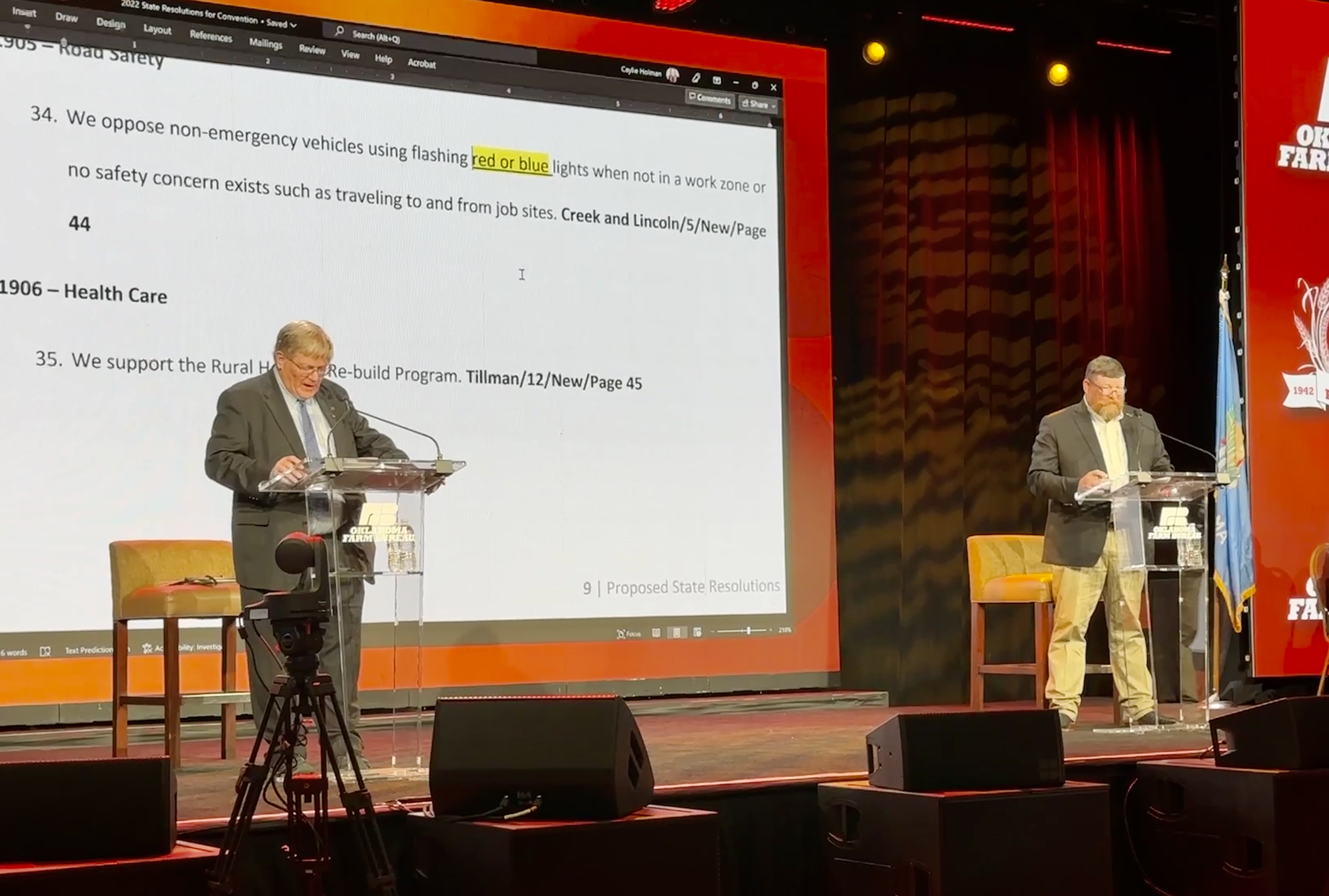
The resolution process really starts with the August area meetings for the Oklahoma Farm Bureau- followed by County Farm Bureau meetings where members are able to offer resolutions which if adopted by the county- are forwarded on to the State Resolutions Committee which meets in October. That Committee debated and adopted 83 resolutions for the state delegates at the 80th Annual Meeting of the Oklahoma Farm Bureau to consider this past weekend in Norman.
One resolution was withdrawn by the Resolutions committee- the other 82 resolutions were adopted. Four resolutions were brought up to the delegate body as what they decribe as a "Callback" and one of those met the two thirds majority standard to be considered by the delegates- that a proposal from Oklahoma and Logan Counties on biosolids. Delegates approved that measure as the last item to become a part of the general farm organization's policy for 2023.
According to Steve Thompson, VIce President for Government Affairs for Oklahoma Farm Bureau, several issues rose to the top on Saturday. Among those topics:
-School Vouchers (discussed & debated multiple times within the State Resolutions Committee meeting and then at the State Convention on Saturday morning and afternoon, but no action approved- meaning the organization has no position on the books for 2023.
-Delegates approved multiple resolutions opposing ESG (Environmental Social Goverance)- including one from Custer County stating "No criteria based on Environmental Social Governance (ESG) scoring shall be used against state or federal government, businesses, groups, or citizens of the USA as a condition of financing, pricing, services, or as a penalty or restriction of our Constitutional rights."
-Delegates opposed Campaign dark money.
-Delegates offered strong support for Rural fire department support- at least three resolutions were adopted- including "We support a state and federal program supporting a grant for volunteer only fire departments to buy higher gallons per minute/pounds per square inch (gpm/psi) trucks to support fire rating standards" as offered by Kiowa County Farm Bureau.
-Delegates approved support for four relatively minor marijuana regulatory revisions- the four were brought up and disposed of favorably in a matter of moments. One of the four was offered by Rogers County- "We support requiring marijuana grow operations to post a bond for the cleanup of abandoned marijuana grow operations that have been abandoned for one or more years. "
-Delegates approved various property tax resolutions- including one from Garfield County- "We oppose protested taxes being held in escrow for longer than two years. The schools need to get their funding."
-Delegates approved a resolution from Okmulgee and Washington Counties on mapping broadband service- "We support accurately mapping broadband infrastructure in Oklahoma to clearly identify non-served and underserved geographical areas. All new broadband services must be designed to deliver minimum download and upload speeds of 100 megabits per second (Mbps). Speeds lower than 100 Mbps would be considered an underserved area. This map should be available for public review."
Thompson tells Oklahoma Farm Report that "Bottom line is the delegates affirmed a serious distrust of the federal government on a wide variety of issues, while only requesting a few adjustments to state government operations. With support expressed for the current state funding for rural hospitals, economic development and drought relief.
Sun, 13 Nov 2022 15:17:14 CST
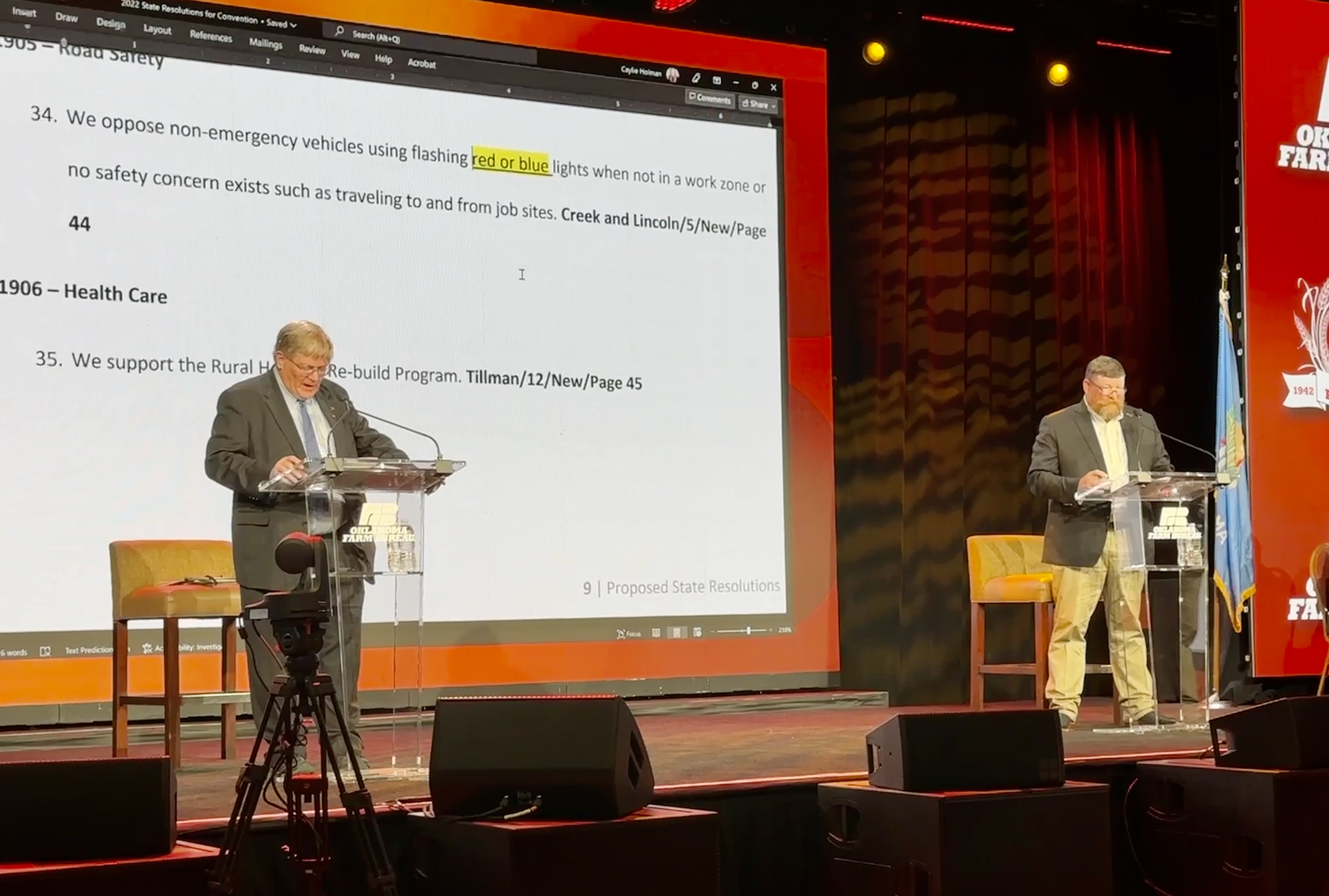
The resolution process really starts with the August area meetings for the Oklahoma Farm Bureau- followed by County Farm Bureau meetings where members are able to offer resolutions which if adopted by the county- are forwarded on to the State Resolutions Committee which meets in October. That Committee debated and adopted 83 resolutions for the state delegates at the 80th Annual Meeting of the Oklahoma Farm Bureau to consider this past weekend in Norman.
One resolution was withdrawn by the Resolutions committee- the other 82 resolutions were adopted. Four resolutions were brought up to the delegate body as what they decribe as a "Callback" and one of those met the two thirds majority standard to be considered by the delegates- that a proposal from Oklahoma and Logan Counties on biosolids. Delegates approved that measure as the last item to become a part of the general farm organization's policy for 2023.
According to Steve Thompson, VIce President for Government Affairs for Oklahoma Farm Bureau, several issues rose to the top on Saturday. Among those topics:
-School Vouchers (discussed & debated multiple times within the State Resolutions Committee meeting and then at the State Convention on Saturday morning and afternoon, but no action approved- meaning the organization has no position on the books for 2023.
-Delegates approved multiple resolutions opposing ESG (Environmental Social Goverance)- including one from Custer County stating "No criteria based on Environmental Social Governance (ESG) scoring shall be used against state or federal government, businesses, groups, or citizens of the USA as a condition of financing, pricing, services, or as a penalty or restriction of our Constitutional rights."
-Delegates opposed Campaign dark money.
-Delegates offered strong support for Rural fire department support- at least three resolutions were adopted- including "We support a state and federal program supporting a grant for volunteer only fire departments to buy higher gallons per minute/pounds per square inch (gpm/psi) trucks to support fire rating standards" as offered by Kiowa County Farm Bureau.
-Delegates approved support for four relatively minor marijuana regulatory revisions- the four were brought up and disposed of favorably in a matter of moments. One of the four was offered by Rogers County- "We support requiring marijuana grow operations to post a bond for the cleanup of abandoned marijuana grow operations that have been abandoned for one or more years. "
-Delegates approved various property tax resolutions- including one from Garfield County- "We oppose protested taxes being held in escrow for longer than two years. The schools need to get their funding."
-Delegates approved a resolution from Okmulgee and Washington Counties on mapping broadband service- "We support accurately mapping broadband infrastructure in Oklahoma to clearly identify non-served and underserved geographical areas. All new broadband services must be designed to deliver minimum download and upload speeds of 100 megabits per second (Mbps). Speeds lower than 100 Mbps would be considered an underserved area. This map should be available for public review."
Thompson tells Oklahoma Farm Report that "Bottom line is the delegates affirmed a serious distrust of the federal government on a wide variety of issues, while only requesting a few adjustments to state government operations. With support expressed for the current state funding for rural hospitals, economic development and drought relief.
Sun, 13 Nov 2022 15:15:36 CST
The resolution process really starts with the August area meetings for the Oklahoma Farm Bureau- followed by County Farm Bureau meetings where members are able to offer resolutions which if adopted by the county- are forwarded on to the State Resolutions Committee which meets in October. That Committee debated and adopted 83 resolutions for the state delegates at the 80th Annual Meeting of the Oklahoma Farm Bureau to consider this past weekend in Norman.
One resolution was withdrawn by the Resolutions committee- the other 82 resolutions were adopted. Four resolutions were brought up to the delegate body as what they decribe as a "Callback" and one of those met the two thirds majority standard to be considered by the delegates- that a proposal from Oklahoma and Logan Counties on biosolids. Delegates approved that measure as the last item to become a part of the general farm organization's policy for 2023.
According to Steve Thompson, VIce President for Government Affairs for Oklahoma Farm Bureau, several issues rose to the top on Saturday. Among those topics:
-School Vouchers (discussed & debated multiple times within the State Resolutions Committee meeting and then at the State Convention on Saturday morning and afternoon, but no action approved- meaning the organization has no position on the books for 2023.
-Delegates approved multiple resolutions opposing ESG (Environmental Social Goverance)- including one from Custer County stating "No criteria based on Environmental Social Governance (ESG) scoring shall be used against state or federal government, businesses, groups, or citizens of the USA as a condition of financing, pricing, services, or as a penalty or restriction of our Constitutional rights."
-Delegates opposed Campaign dark money.
-Delegates offered strong support for Rural fire department support- at least three resolutions were adopted- including "We support a state and federal program supporting a grant for volunteer only fire departments to buy higher gallons per minute/pounds per square inch (gpm/psi) trucks to support fire rating standards" as offered by Kiowa County Farm Bureau.
-Delegates approved support for four relatively minor marijuana regulatory revisions- the four were brought up and disposed of favorably in a matter of moments. One of the four was offered by Rogers County- "We support requiring marijuana grow operations to post a bond for the cleanup of abandoned marijuana grow operations that have been abandoned for one or more years. "
-Delegates approved various property tax resolutions- including one from Garfield County- "We oppose protested taxes being held in escrow for longer than two years. The schools need to get their funding."
-Delegates approved a resolution from Okmulgee and Washington Counties on mapping broadband service- "We support accurately mapping broadband infrastructure in Oklahoma to clearly identify non-served and underserved geographical areas. All new broadband services must be designed to deliver minimum download and upload speeds of 100 megabits per second (Mbps). Speeds lower than 100 Mbps would be considered an underserved area. This map should be available for public review."
Thompson tells Oklahoma Farm Report that "Bottom line is the delegates affirmed a serious distrust of the federal government on a wide variety of issues, while only requesting a few adjustments to state government operations. With support expressed for the current state funding for rural hospitals, economic development and drought relief.
Sun, 13 Nov 2022 14:38:01 CST
The resolution process really starts with the August area meetings for the Oklahoma Farm Bureau- followed by County Farm Bureau meetings where members are able to offer resolutions which if adopted by the county- are forwarded on to the State Resolutions Committee which meets in October. That Committee debated and adopted 83 resolutions for the state delegates at the 80th Annual Meeting of the Oklahoma Farm Bureau to consider this past weekend in Norman.
One resolution was withdrawn by the Resolutions committee- the other 82 resolutions were adopted. Four resolutions were brought up to the delegate body as what they decribe as a "Callback" and one of those met the two thirds majority standard to be considered by the delegates- that a proposal from Oklahoma and Logan Counties on biosolids. Delegates approved that measure as the last item to become a part of the general farm organization's policy for 2023.
According to Steve Thompson, VIce President for Government Affairs for Oklahoma Farm Bureau, several issues rose to the top on Saturday. Among those topics:
-School Vouchers (discussed & debated multiple times within the State Resolutions Committee meeting and then at the State Convention on Saturday morning and afternoon, but no action approved- meaning the organization has no position on the books for 2023.
-Delegates approved multiple resolutions opposing ESG (Environmental Social Goverance)- including one from Custer County stating "No criteria based on Environmental Social Governance (ESG) scoring shall be used against state or federal government, businesses, groups, or citizens of the USA as a condition of financing, pricing, services, or as a penalty or restriction of our Constitutional rights."
-Delegates opposed Campaign dark money.
-Delegates offered strong support for Rural fire department support- at least three resolutions were adopted- including "We support a state and federal program supporting a grant for volunteer only fire departments to buy higher gallons per minute/pounds per square inch (gpm/psi) trucks to support fire rating standards" as offered by Kiowa County Farm Bureau.
-Delegates approved support for four relatively minor marijuana regulatory revisions- the four were brought up and disposed of favorably in a matter of moments. One of the four was offered by Rogers County- "We support requiring marijuana grow operations to post a bond for the cleanup of abandoned marijuana grow operations that have been abandoned for one or more years. "
-Delegates approved various property tax resolutions- including one from Garfield County- "We oppose protested taxes being held in escrow for longer than two years. The schools need to get their funding."
-Delegates approved a resolution from Okmulgee and Washington Counties on mapping broadband service- "We support accurately mapping broadband infrastructure in Oklahoma to clearly identify non-served and underserved geographical areas. All new broadband services must be designed to deliver minimum download and upload speeds of 100 megabits per second (Mbps). Speeds lower than 100 Mbps would be considered an underserved area. This map should be available for public review."
Thompson tells Oklahoma Farm Report that "Bottom line is the delegates affirmed a serious distrust of the federal government on a wide variety of issues, while only requesting a few adjustments to state government operations. With support expressed for the current state funding for rural hospitals, economic development and drought relief.
Sat, 12 Nov 2022 22:51:05 CST
The opening general session of the the 80th Annual Meeting of the Oklahoma Farm Bureau welcomed the soon to be new junior Senator for Oklahoma, Markwayne Mullin. Mullin says that his rural roots- growing up in Westville just a few miles from the Arkansas state line, has provided him a foundation that includes a strong moral compass, a work ethic and a belief that failure is not an option. Mullin said those attributes helped him succssfully represent eastern Oklahoma's second District in the US House- and will allow him to serve the next four years in filling the term being vacated by Senator Jim Inhofe.
Mullin told the Farm Bureau members about living on a small ranch in Adair County helps him understand the challenges they face farming and ranching daily.
Mullin tells Oklahoma Farm Report's Ron Hays that when he becomes Olahoma's next Senator that he intends to quickly begin to build alliances and relationships- and that he wants to make sure he gets on the "right" committees. At the top of his wish list- The Senate Armed Services Committee. Beyond that- he belives that he needs to also pursue Senator Inhofe's other major COmmittee- the Environment and Public Works Committee which has oversite on regulations handled by the EPA. He also expects to be asked to serve on the Native Affairs Committee, since he will be the only member of the Senate that has Native American heritage.
Mullin doesn't expect to seek a seat on the Senate Ag Committee- as he believes that Congressman Frank Lucas serving on the House Ag Committee in the new year covers Oklahoma's bases in that area.
Listen to Hays and Senator- Elect Mullin's conversation by clicking on the Audio Link above.
Ron Hays talks with Senator Elect Markwayne Mullin at the Oklahoma Farm Bureay Annual Meeting
Sat, 12 Nov 2022 16:58:39 CST
The opening general session of the the 80th Annual Meeting of the Oklahoma Farm Bureau welcomed the soon to be new junior Senator for Oklahoma, Markwayne Mullin. Mullin says that his rural roots- growing up in Westville just a few miles from the Arkansas state line, has provided him a foundation that includes a strong moral compass, a work ethic and a belief that failure is not an option. Mullin said those attributes helped him succssfully represent eastern Oklahoma's second District in the US House- and will allow him to serve the next four years in filling the term being vacated by Senator Jim Inhofe.
Mullin told the Farm Bureau members about living on a small ranch in Adair County helps him understand the challenges they face farming and ranching daily.
Mullin tells Oklahoma Farm Report's Ron Hays that when he becomes Olahoma's next Senator that he intends to quickly begin to build alliances and relationships- and that he wants to make sure he gets on the "right" committees. At the top of his wish list- The Senate Armed Services Committee. Beyond that- he belives that he needs to also pursue Senator Inhofe's other major COmmittee- the Environment and Public Works Committee which has oversite on regulations handled by the EPA. He also expects to be asked to serve on the Native Affairs Committee, since he will be the only member of the Senate that has Native American heritage.
Mullin doesn't expect to seek a seat on the Senate Ag Committee- as he believes that Congressman Frank Lucas serving on the House Ag Committee in the new year covers Oklahoma's bases in that area.
Listen to Hays and Senator- Elect Mullin's conversation by clicking on the Audio Link above.
Ron Hays talks with Senator Elect Markwayne Mullin at the Oklahoma Farm Bureay Annual Meeting
Fri, 11 Nov 2022 14:55:14 CST
The U.S. Department of Agriculture and the Oklahoma Department of Agriculture are now putting the Daily Cash Grain Report into a PDF format - we are saving that PDF and archiving them for today's specific report. To see today's update, click on the PDF report link at the bottom of this story.
In addition to the PDF of the daily report, you can also listen to the Cash Grain Report by calling 405-621-5533. Push 2 for the grain report.
KC Sheperd, Farm Director, got chance to visit with the marketing director for USMEF Japan, Satoshi Kato, at the United States Meat Export Federation's Strategic Planning Conference in Oklahoma City. Kato talked about how campaigns in Japan have brought attention to U.S. pork products.
The Eat at Home campaign was started in 2020, Kato said, at the start of the COVID-19 pandemic. Due to the COVID outbreak, people in Japan were not able to eat at restaurants and were purchasing more meat at the grocery store.
This presented an opportunity, Kato said, to add value to U.S. pork.
Customers shopping at grocery stores in Japan were encouraged by USMEF to purchase U.S. pork instead of domestic pork or pork from other countries. The campaign developed sauces and seasonings for thick-cut pork recipes that were attached to the pork product in the grocery store. Along with the sauces and seasonings, recipe cards were distributed as well.
The campaign had a large number of participants, Kato said, and was very successful.
"We are trying to expand our American pork loin consumption in the Japanese market," Kato said.
By offering examples of different ways to cook pork, such as fried pork, Kato said, more attention was brought to U.S. pork products.
Kato talked about Porktober Fest in Japan, which came about because of Oktoberfest's popularity in Japan. Porktober is focused on expanding U.S. pork to outdoor events such as food trucks and more. The campaign also included the development of more recipes and ways to cook U.S pork.
Porktober showcases various American pork recipes and expands pork promotions to events all around Japan.
"It is important to us to make consumers taste delicious American pork," Kato said.
Another tactic being utilized in the U.S. pork campaign in Japan, Kato said, is a U.S. pork mascot, Gochipo.
"We think we can communicate with consumers through a friendly character, Gochipo," Kato said.
Gochipo has proven to be a useful marketing tactic among consumers, Kato said, and especially kids.
Now that the tariffs on pork products in Japan are to be lifted, Kato said processed pork has had a large impact on the market.
Japan's tariffs on U.S. pork muscle cuts will be eliminated over nine years. Tariffs on most processed pork products, including the 20% tariff on ground seasoned pork, will be phased to zero over five years and for ham and bacon over 10 years.
This tariff elimination, Kato said, will provide the opportunity to expand the American pork market in Japan further.
In the link below, watch a video as Gochipo Explains U.S. Pork Quality to Consumers in Japan:
The Interamerican Institute for Cooperation on Agriculture (IICA) convened its first-ever "Sustainable Agriculture in the Americas" pavilion at the UN Climate Summit (COP27) and partnered with the Protein PACT and other stakeholders to convene a total of 9 events focused on animal agriculture's key role in sustainability solutions.
The Protein PACT events included a November 9 panel on sustainable livestock across regions and production systems (see IICA press release here), National Pork Board Assistant Vice President Ashley McDonald shared U.S. pork's commitments to ethical principles, best practices, and documenting proof. The Pork Board and Pork Checkoff pioneered on-farm sustainability reports, which have been awarded $20 million in USDA Climate-Smart Commodities grant funding to expand measurement and implementation of climate-smart practices.
North American Meat Institute Chief Strategy Officer Eric Mittenthal moderated a November 10 panel featuring scientific evidence on the essential dietary contributions of animal-source foods and optimizing animal agriculture's environmental impact.
The Meat Institute's first-ever continuous improvement data report released last week found that among companies accounting for an estimated 90% of meat sold in the United States, 81% of reporting facilities are covered by company-wide commitments to reduce greenhouse gas emissions. The Meat Institute aims for 100% of members to have delivered emissions reduction targets approved by the Science-Based Targets Initiative by 2030.
Speaking on the November 10 panel, Dr. Adegbola Adesogan, Director of the University of Florida Food Systems Institute commented:
"Most common measures of environmental impact ignore nutrient-density - the contribution of foods to achieving recommended intakes of critical nutrients. Sustainability solutions must ensure sustainable production of animal-source foods, which are "brain foods" for the children our future depends on.
Eating meat, dairy, and eggs improves children's cognition and growth, and raising animals for food provides livelihoods and is a cornerstone of many cultures, particularly in the Global South."
Dr. Manual Otero, Director General of IICA, welcomed the Protein PACT's partnership and said:
"The livestock sector is moving at full tilt towards sustainability in the Americas and around the world and continues to play a central and invaluable role in global food security. IICA and its member states will continue to champion at COP27 and future COPs the critical role of sustainable agriculture, including livestock production, in the Americas."
Oklahoma King was exhibited at the International Livestock Show in 1922 by 21-year-old Felix Roy. The hog was sired by Pathrion King out of the dam Nell Orion at the OSU swine farm. (Photo provided by the Felix Roy family.)
This fall marks the centennial crowning of Oklahoma King, a progeny of Oklahoma State University's purebred Duroc operation that was declared Grand Champion Barrow at the 1922 International Livestock Show.
At 14 months old and weighing in at 550 pounds, The Duroc Journal reported that Oklahoma King reigned the land: "In competition with all breeds and when the smoke cleared away, he was given the purple (ribbon) as being the best barrow in the world."
A century ago, when the international show was held in Chicago, Oklahoma King was praised for his superiority of the Duroc breed, and OSU swine herdsmen Felix Roy established himself as one of the most skilled and knowledgeable swine nutrition experts in the country.
In a 1922 edition of The Duroc Digest, Oklahoma King and the duroc breed were raved about: "Red hogs will take hogs of any and all other colors to a cleaning right along. But when this Duroc barrow of unsurpassed conformation and finish carried off the premier honor at this greatest of livestock shows, there was recorded the absolute and undisputed proof of the value and effectiveness of Pig Club Work."
The writer's reference to Pig Club represented one of the many commodity clubs in the U.S., a precursor to today's 4-H Youth Development organization. Roy was 21 at the time of Oklahoma King's fame. Although he passed away in 1992, he left an extensive autobiography for his family to read and share.
Pig Club Success
The Roy clan was originally from Indiana and relocated to Enid in 1905. Roy wrote in his autobiography that at age 5, he remembers his father searching for part-time work and a farm where the family could settle. It was two years before Oklahoma statehood and a few months after the Oklahoma land run. His father purchased land in the Yukon area, eventually raising chickens, purebred Duroc hogs and a few Shorthorn cows.
When a county Extension agent visited the farm one day, Roy was recruited to join the Pig Club. He began showing hogs at the county and state fairs, recounting the challenging experience as "a new era of responsibility ... because we were asked to keep a current record of the amount of feed and costs of the project through the year. We also had to record our show winnings and sales returns," Roy said.
He also competed in livestock judging contests, explaining how the activity helped prepare him for his future.
"The personnel with the Oklahoma State University Extension service is due much credit for the devoted time, work and training they gave to thousands of boys and girls," Roy said.
In 1920, OSU (then Oklahoma A&M College) hired Roy to manage the school's swine herd, and he helped OSU win Duroc breed honors at the International Livestock Show in 1920 and 1921. Following his supreme win with Oklahoma King in 1922, Felix resigned from his OSU position to partner with his older brother in another swine operation. The Duroc Journal reported Oklahoma King was sold for $36 per hundred weight and was exhibited for educational purposes.
The Duroc Journal reflected on Roy's win and Oklahoma King with these words: "Tenacity of purpose and determination are grounded into these boys in their club work. How thankful should we in the Duroc breed be that this boy joined a pig club and through it, decided on breeding Durocs as his life work. All around us on our farms today are countless thousands of Felix Roys. Diamonds in the rough they are, waiting only the opportunity that will develop their latent talents."
Felix Roy's legacy
Roy spent the rest of his life in Oklahoma and had five children with his first wife, Agnes. He accepted a position with the new Oklahoma Rural Rehabilitation Corporation in 1935 and retired from the agency in 1965. After Agnes' death from a severe illness in 1952, Roy later remarried to a woman named Helen and welcomed her son, John, to the family.
Since his days as OSU swine herdsman, the Roy family has celebrated 38 family members graduating from OSU. The legacy of this champion showman and the great Oklahoma King live on.
"Felix was indeed a soft spoken and gentle man but firm in his convictions and very strong in his work ethic, which he passed on to his family," said Larry Roy, the patriarch's oldest grandson. "I remember him telling us kids that we should give a good day's work for a day's pay, and that you can learn a lot if you just listen."
Grandson Steven Felix Roy also inherited his grandfather's strong work ethic.
"We learned to apply our best effort in our work at all times from him," Steven Felix Roy said. "He told us of leaving school in the third grade to help on the farm. Being part of the Pig Club were some of the best days of his life. All things revolved around hard work with him or so it seemed."
Roy wrote: "It may appear that I was overworked in my youth and teenage years. This is not the case at all. Those were the years I learned how to work, manage, assume responsibility for my future and work with people."
He concluded his autobiography with, "The key to a useful life is the application of proper judgement and faith in action for the well-being of all mankind."
Happy 100 years to Oklahoma King's grand exhibition for OSU Agriculture and the legend of the man who made it possible.
OSU Agriculture is dedicated to improving the quality of life of Oklahomans through science-based information and education. It is comprised of the Ferguson College of Agriculture and two state agencies: OSU Ag Research and OSU Extension.
KC Sheperd, Farm Director, is visiting with Bob Rodenberger, a partner with Stockman Oklahoma Livestock Marketing, as he talks about the latest in the cattle markets.
"Monday morning, when we got there, it kind of shocked me," Rodenberger said. "We started out with 10,000 and ended up with a little over 11,000 there Monday, and then at Apache, I thought we would have 2,000 and we had 3,500."
Rodenberger said six months ago, there were many statements from individuals in the cattle industry saying that by this point, there would not be many cattle left to sell.
"Well, they are not gone," Rodenberger said. "They are still here. We are still having big calf runs, which a lot of those calves probably would be held over and put on wheat, but we sold a lot of calves early that would have been normal October calves."
Rodenberger said he calculated the cows that came through the sale barn at Apache from June to October in 2019 to 2021 and figured it to be 15,000 cows. In June through October of 2022, Rodenberger said 13,000 cows were sold.
"We have sold as many cows in four months in one year that we sold over the past three years," Rodenberger said.
There is more wheat pasture available for grazing now, Rodenberger said, than anyone thought there would be at this point.
"The attitude has changed drastically, and just overnight," Rodenberger said. "That is good for the industry."
When heifer numbers start to drop in feedlots, Rodenberger said that is when the market will start to see some high numbers.
"We are a little bit ahead of schedule right now as far as thinking it is going to get good," Rodenberger said.
This is not to say the market is not great right now, Rodenberger said, but it will get even better.
"There is nothing negative about the market," Rodenberger said. "The negative is, we are all having to buy hay, we are all having to sell cows because there is no water, or we are out of grass, or we are out of all three."
The recent rain has not helped too much at this point, Rodenberger said, so he believes cows will continue to be culled.
"It is going to be like this until the end of the year," Rodenberger said.
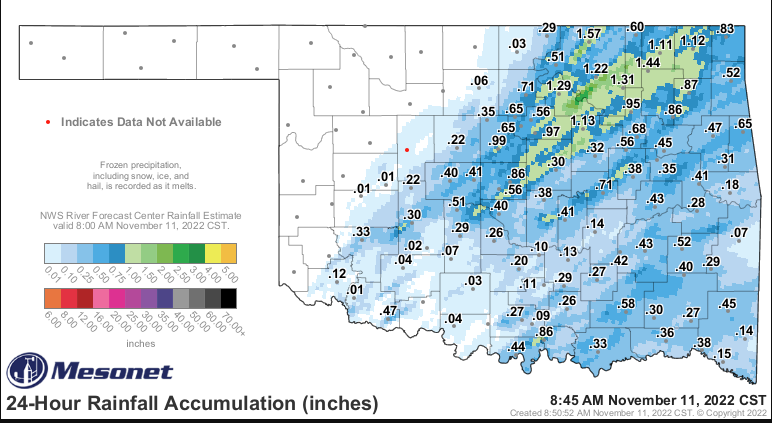
State Climatologist Gary McManus says the Blue Norther that crashed into the state has brought down the temperatures. "Temperatures have crashed from a lovely fall/spring day yesterday all the way down to January levels," said McManus.
With the temperatures dropping following the cold front, McManus says so goes the moisture as well. We did see some rain across the state.
So it looks like Winter has moved in, and its going to stay for awhile. McManus says "In the next few days, Saturday and Tuesday mornings look particularly cold." He says it is possible that we could remain in this cold pattern through Thanksgiving.
McManus says we may even see snow, "Yes, it will probably snow next Monday, maybe into early Tuesday. Unfortunately, the forecast models just don't have a great handle on the situation just yet. The storm system that could bring us snow is still off the West Coast in the Pacific Northwest, so it's not well-sampled yet." McManus says Once it moves on land, the forecast models should get a better look at the storm's track and potential. But at this point, we aren't sure.
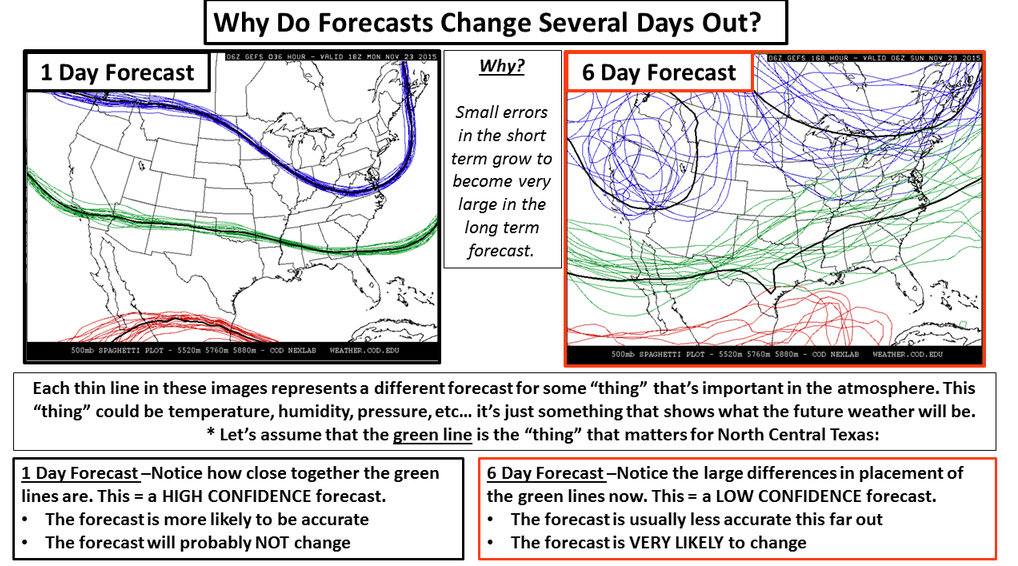
McManus says, "The trick for the models is to get the vertical profile of the atmosphere correct, IN ADVANCE, to determine what kind of precipitation might fall. You have a warm layer above the surface; you might get really cold rain, you might get freezing drizzle, you might get sleet. If you can keep that snowflake from melting as it falls, you MIGHT get snow."
He says right now it does look like the vertical profile does favor snow, but right now surface temperatures look a little bit iffy, "That snow might fall and then get closer to the surface and melt into a chilly rain, with some snowflakes mixing in. Or, if that moisture that falls can cool the air down (through evaporation) close to the freezing level, we might see accumulating snowfall."
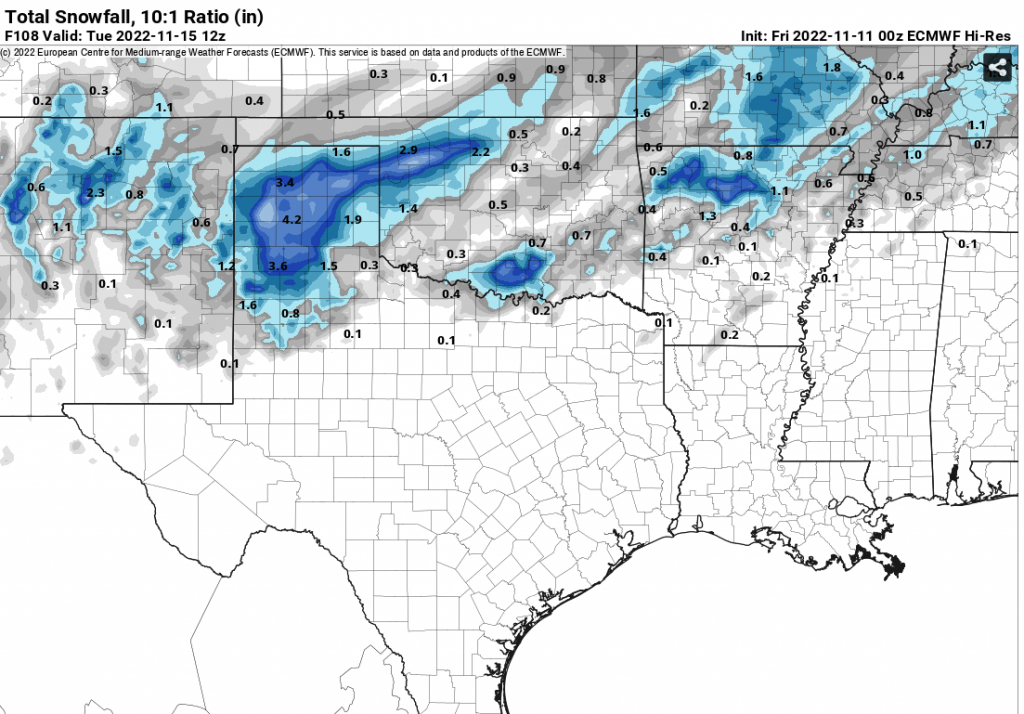
McManus also offered this fun fact on his daily Mesonet Ticker for the Weather on November 11, 1911:
On that afternoon, Oklahoma City reached a record high temperature of 83 degrees.
Soon thereafter, a norther barreled through the state, dropping temperatures
50-65 degrees in the span of a few hours. By midnight, the temperature at Oklahoma City had plunged to a frigid 17 degrees, the record low for that same date.
Both records still stand, marking November 11th, 1911, as the only date in state history in which the record high and low temperatures were broken on the same day for a single location.
The Great Blue Norther of 11/11/1911 wasn't just confined to Oklahoma. This was a massive cold frontal assault
(hint: Erie, PA also set its record high and low on Nov 12, 1911)
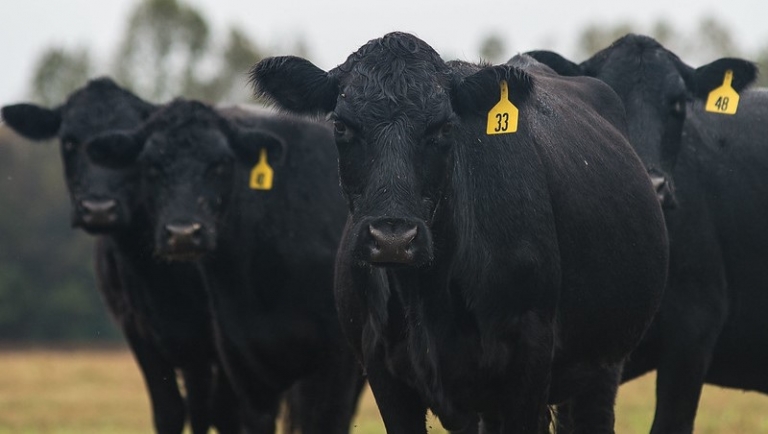
During the USMEF Strategic Planning Seminar in Oklahoma City, Senior Farm and Ranch Broadcaster, Ron Hays, got the chance to catch up with the President and CEO of CattleFax, Randy Blach, about beef cow liquidation.
Compared to January of 2022, Blach said there will be a significant reduction in the cow herd. The dairy herd remains stable, he said, but the beef cow herd has declined sharply.
As for the feeder cattle and calf supply, Blach said the number of high-quality steers and heifers will be down by around 700,000 to 800,000 head next year.
"Beef production will be down 3 percent per capita-beef consumption because we won't have the supply- we will be off 2.5lbs," Blach said. "There is just not going to be as much product out there as what there has been in the last several years."
The U.S. is coming off of record-high beef production totals in the last two years, Blach said, but those will drop significantly.
The light at the end of the tunnel, Blach said, will be the end of the drought.
"It takes two things to expand the cow herd," Blach said. "One is profitability, and the other is plenty of green grass so we can grow feed."
Blach said he wants to remind producers that the cycle high in supply would have been in 2020 if COVID-19 didn't break out. The supply was drug out an extra 18 months to two years because of the COVID impact, he added, which backed cattle up.
If producers can hold it together, Blach said a payday is coming soon. The markets are predicted to be significantly higher for the next few years, he added.
"I am not talking about a few dollars," Blach said. "I am talking dollars and dollars higher."
Blach also talked about current beef processing issues, including where the industry stands in packing plant capacity.
Several new plants are being built, the first to open being in the Pacific Northwest, Blach said, and several plants are going through expansions or enhancing technology to improve efficiency to harvest more cattle.
A few large plants are being built currently, Blach said, but completion will be a few years down the road.
"Those are going to bring in a lot of new capacity and obviously, they are going to come in when fed cattle supplies are tighter, but I really believe ultimately what we will see happening here is we just won't have the need to run these plants on Saturday," Blach said.
The Beef Buzz is a regular feature heard on radio stations around the region on the Radio Oklahoma Network and is a regular audio feature found on this website as well. Click on the LISTEN BAR below for today's show and check out our archives for older Beef Buzz shows covering the gamut of the beef cattle industry today.

BASF Agricultural Solutions has won two Crop Science Awards, one each in the "Best Industry Collaboration" and "Best Public Outreach Program" categories. The awards – formerly Agrow Awards – were presented as part of the virtual Crop Science Forum by S&P Global Commodity Insights and recognize excellence in crop protection and digital agriculture industries worldwide.
"Best Industry Collaboration": Joint award together with Corteva Agriscience and M.S. Technologies L.L.C.
Together with Corteva Agriscience and MS Technologies, BASF won in the "Best Industry Collaboration" category. In June 2022, the companies announced the execution of a mutually beneficial trait licensing agreement to develop an industry first-of-its-kind soybean trait stack. BASF licensed its nematode resistant soybean (NRS) trait to Corteva and MS Technologies for use in Enlist E3® soybeans. In turn, Corteva and MS Technologies licensed the Enlist E3 soybean trait to BASF for development with the NRS trait in BASF germplasm.
"Best Public Outreach Program": Campaign "Farming, The Biggest Job On Earth" awarded
In the "Best Public Outreach Program" category S&P Global recognized "Farming, The Biggest Job on Earth", BASF's advocacy campaign for farmers and farming relaunched in May 2021. Since then, the campaign took a stand to support farmers across the globe and grew greater understanding of Farming. BASF's podcast series "The Science Behind your Salad" was a finalist in the same category.
2022 marked the 15th year of the Crop Science Awards, with a total of 12 categories.
Farming is fundamental to provide enough healthy and affordable food for a rapidly growing population while reducing environmental impacts. Working with partners and agricultural experts and by integrating sustainability criteria into all business decisions, we help farmers to create a positive impact on sustainable agriculture. That's why we invest in a strong R&D pipeline, connecting innovative thinking with practical action in the field. Our portfolio comprises seeds and specifically selected plant traits, chemical and biological crop protection, solutions for soil management, plant health, pest control and digital farming. With expert teams in the lab, field, office and in production, we strive to find the right balance for success – for farmers, agriculture and future generations. In 2021, our division generated sales of €8.2 billion. For more information, please visit www.agriculture.basf.com or any of our social media channels.
The transgenic soybean event in Enlist E3® soybeans is jointly developed and owned by Corteva Agriscience and M.S. Technologies L.L.C.Print
| Thanksgiving in the United States is a time set aside as a national holiday the last Thursday of November each year.To celebrate the holiday, the U.S. Wheat Associates (USW) Headquarters and West Coast Offices will be closed Thursday, Nov. 24 and Friday, Nov. 25. In addition, the next Wheat Letter newsletter will be sent December 1 but you can keep up with posts in the Wheat Letter Blog. In addition, the USW Price Report will not be published Friday, Nov. 25. |
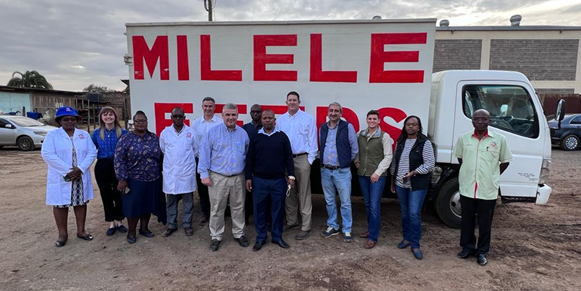
Last week, U.S. Grains Council (USGC) staff and member-leaders visited Kenya as a part of a U.S. Department of Agriculture agricultural trade mission. Pictured, the group visited several feed millers in Thika, just outside Nairobi. More than 250,000 metric tons of feed in Kenya are produced within a few blocks in Thika, most of which is being produced by small scale feed mills.
Last week, U.S. Grains Council (USGC) staff, alongside agribusiness and producer members, had the privilege of participating on the U.S. Department of Agriculture (USDA) agriculture trade mission (ATM) to East Africa. Held in both Nairobi, Kenya, and Zanzibar, Tanzania, the ATM is an example of the USDA's commitment to expanding and diversifying market opportunities globally for U.S. agriculture.
More than 30 agribusinesses and farm organizations from across the U.S. participated in the program alongside USDA's Foreign Agricultural Service (FAS) team. Participants were able to meet directly with customers and potential importers of their commodities and products.
"It was a great opportunity for U.S. businesses to strengthen or forge new relationships in Kenya and Tanzania, as well as regionally," said Cary Sifferath, USGC vice president.
This mission provided a key opportunity for the Council to bring together U.S. agribusiness and producer members to see firsthand the opportunities in East Africa – a long-term region of focus for the Council. Three USGC member-leaders, USGC Secretary/Treasurer Verity Ulibarri; Jim Massey, USGC sorghum sector director; and John Hagios, vice president of feed ingredients at The Andersons and USGC Value Added Advisory Team leader, attended the ATM. While there, the leaders had the opportunity to meet with key stakeholders involved in the Council's recently completed sorghum poultry feeding trials in Kenya. In addition, a visit to the dairy farm where the Council is looking to conduct local feeding trials with DDGS took place – Kenya would be brand new market for DDGS should market access be realized.
With a population of more than 50 million people, Kenya remains one of the leading economies in East Africa. It is generally considered the economic, commercial and financial hub of East Africa.
During the mission in Nairobi, the Council conducted a series of side visits with key partners on the ground, including with the Association of Kenya Feed Manufacturers (AKEFEMA). The Council met with AKEFEMA to discuss recent developments in the Kenya feed industry to better understand the current state of the feed and livestock industry and to discuss opportunities for U.S. feed grains use there. Commodities of keen interest in Kenya include sorghum, yellow corn and distiller's dried grains with solubles (DDGS), which can collectively serve as alternative feed grain ingredients in the market during times of shortage. Held jointly with AKEFEMA, the Council hosted a feed grains industry roundtable with more than 50 AKEFEMA members to discuss U.S. grain production and logistics as well as the nutritional advantages of using sorghum, DDGS and yellow corn in animal feed production.
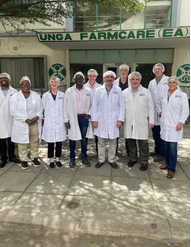
"Our roundtable meeting with AFEFEMA allowed us to work on the capacity building within the Kenyan feed industry - that is a goal of AFEFEMA," Sifferath said. "In addition, we discussed overcoming the hurdles to get U.S. feed grain products like sorghum, yellow corn and DDGS into Kenya for the feed industry to have access to these products from the U.S." Looking forward, the Council is excited to continue to partner with the Kenya feed industry to gain confidence and trust in U.S. feed grains. This will include moving forward with a DDGS QSP trial in Nairobi later this year as well as working with AKEFEMA to continue to support the local feed manufacturers to improve efficiencies and overall productivity through a series of feed manufacturing training programs.
The National Association of Conservation Districts (NACD) has been awarded $3 million by the Environmental Protection Agency's (EPA) Gulf of Mexico Division to administer a competitive subgrant program within the non-Mississippi River Drainage Region. This includes the 2-Unit Hydrologic Units 12, 13, and a portion of 03. These areas are contained within the states of Colorado, New Mexico, Texas, Alabama, Mississippi, Georgia, and Florida.
Through this grant, NACD will invest in local partnerships and collaborations within and amongst farm communities. Subrecipients will work directly with historically underserved farmers on novel or innovative techniques, methods, or approaches that reduce nonpoint source pollution and increase adoption of resilient and sustainable agricultural operations. Funded projects will include water quality, habitat restoration and/or sustainable forest management initiatives.
"NACD is excited about this meaningful opportunity to increase collaboration with partners and minority serving institutions within this region and improve outreach and technical assistance to historically underserved producers," said NACD CEO Jeremy Peters. "NACD and EPA share the goal of advancing equity and increasing access to federally funded programs."
Forthcoming program details can be found on NACD's website.

House Agriculture Committee Chairman David Scott issued the following statement in regard to the contract negotiations between American railroads and their union workers:
"As Chairman of our House Agriculture Committee, I am working with all sides on this very critical labor management relations issue to bring about a resolution that avoids a strike, and I stand at the ready to provide further assistance if needed."
Two attendees take home exciting Angus giveaways.
Angus breeders and beef industry enthusiasts headed West for the 2022 Angus Convention in Salt Lake City, and a few came home with prizes in tow. A highlight of the annual event, attendees packed the stands in the Priefert Cattle Demo Area hoping to take home one of two grand prize giveaways. Two lucky participants left the convention with new tools to help explore their operations' potential.
The first name called was Julia McPeake of Georgia, who went home with a John Deere XUV835M gator, valued at $19,469. "Nothing runs like a Deere," and McPeake and her family can experience that in her new Gator, complete with a three-person cock pit, power steering, a 54-horsepower engine, 2,000-pound towing capacity, 1,000-pound cargo box capacity and speeds up to 45 mph. Daily chores and other ranch work will soon be a breeze, thanks to this gracious donation from John Deere.
"We have two young children who are also very involved in our operation and showing livestock, and our farms are kind of piecemeal — we have some property in different places," McPeake said. "The opportunity to have something to help make that process of feeding cows and getting the kids to one place or the other is quite awesome and I feel very blessed."
Working cattle will become stress-free for Robert Kuntz of Ohio as he installs a Priefert and Datamars Complete Cattle Handling System, valued at $42,244. The extensive package features a solid sweep with a straight working alley, adjustable to one of four widths, leading to a Priefert Model S04 Squeeze Chute. The set-up is completed by a Tru-Test by Datamars complete weight and water management solution, electronic identification (EID) reader, and WaterWell 2 automatic waterer. Not only will Kuntz be able to work cattle more safely, but more efficiently as well.
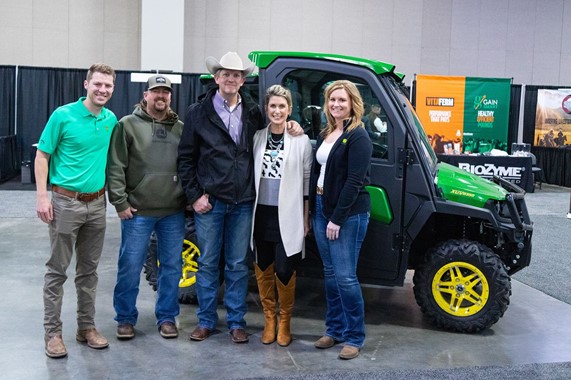
"It'll be a game changer," Kuntz said. "Right now, we're just set up with a basic chute system. To be able to capture weights and fully utilize EID tags to record data will be really nice."
Giveaway sponsors Priefert, Datamars and John Deere helped make it possible for these two Angus breeders to explore their potential well beyond convention.
The Angus Convention was held Nov. 4-7 in Salt Lake City. For news about Angus Convention, visit www.angus.org/Pub/NewsRoomReleaseList.
— Written Peyton Schmitt, Angus Communications
Fri, 11 Nov 2022 03:26:52 CST
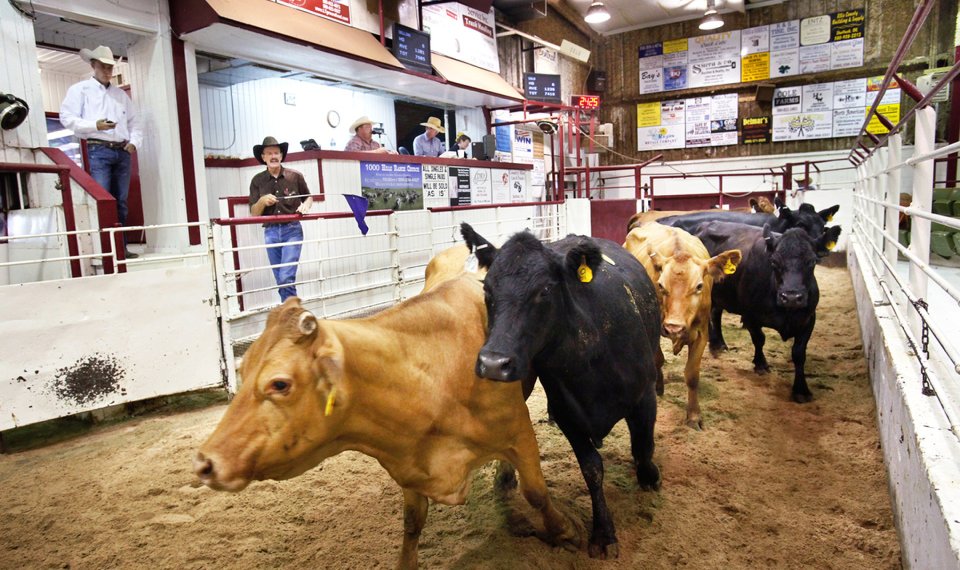
Woodward Livestock Auction
Thu Nov 10, 2022
AUCTION
This Week 4,302
Last Reported 3,512
Last Year 4,823
Compared to last week: Feeder steers and heifers mostly steady. Steer calves steady to 4.00 higher. Heifer calves steady to 4.00 lower. Demand was moderate. Quality average. Supply included: 100% Feeder Cattle (53% Steers, 42% Heifers, 5% Bulls). Feeder cattle supply over 600 lbs was 54%.
FEEDER CATTLE
STEERS - Medium and Large 1 (Per Cwt / Actual Wt)
Head Wt Range Avg Wt Price Range Avg Price
8 313-335 319 197.00-229.00 220.59
11 318-348 332 211.00-223.00 217.28 Unweaned
30 360-395 381 207.00-233.00 225.58
28 356-380 367 195.00-213.00 204.83 Unweaned
8 410-430 419 192.00-228.00 215.27
17 405-438 422 181.00-213.00 201.55 Unweaned
48 453-496 481 186.00-213.00 192.70
103 450-486 467 181.00-207.00 197.59 Unweaned
73 504-545 524 175.00-203.00 188.41
104 519-548 532 166.00-192.00 183.41 Unweaned
68 555-580 569 177.00-193.00 186.61
70 551-595 568 168.00-198.00 179.74 Unweaned
169 600-648 623 170.00-188.00 181.73
113 603-646 613 160.00-174.50 171.92 Unweaned
160 650-692 673 165.00-184.00 178.79
45 654-690 674 162.00-184.00 170.55 Unweaned
169 701-746 729 160.00-183.00 176.23
20 708-733 717 161.00-172.00 164.09 Unweaned
86 768-799 780 171.00-181.50 177.16
58 763 763 172.00 172.00 Unweaned
66 804-849 832 168.00-180.00 174.54
259 859-890 873 167.00-179.10 171.96
54 905 905 166.50 166.50
For the complete market report from USDA Market News click on the PDF link below:
Today, the National Cattlemen's Beef Association (NCBA) hailed the signing of the National Security Memorandum to Strengthen the Security and Resilience of U.S. Food and Agriculture, which will allow the federal government to identify the threats facing our food supply and enhance national preparedness and response.
"Our agricultural sector faces a variety of threats that could inhibit cattle producers' ability to bring beef from pasture to plate," said NCBA CEO Colin Woodall. "NCBA appreciates the Biden administration's focus on identifying threats and developing new ways to mitigate them. Together, we can protect our industry while ensuring that all Americans have access to wholesome foods like beef."
The memorandum instructs top government officials, including the Secretaries of State, Defense, Interior, Agriculture, Commerce, Labor, Health and Human Services, and Homeland Security, the Attorney General, the Administrator of the Environmental Protection Agency, the Director of National Intelligence, and the Director of the Office of Science and Technology Policy to identify threats to the food and agriculture sector and coordinate with federal, state, local, and tribal governments to develop responses.
Ahead of the memorandum signing, NCBA CEO Colin Woodall attended a pre-briefing at the White House yesterday that included discussion of key security issues for the cattle industry—tools like the National Veterinary Stockpile, which helps prevent the spread of disease and aids recovery, and cybersecurity and worker training programs that support the continued operations of other members of the beef supply chain.
"I am particularly pleased to hear that the administration is making security and resiliency decisions based on data. These data-driven decisions are the ones we can support," said Woodall.
View the full memorandum here and the White House fact sheet here
Thu, 10 Nov 2022 15:37:55 CST
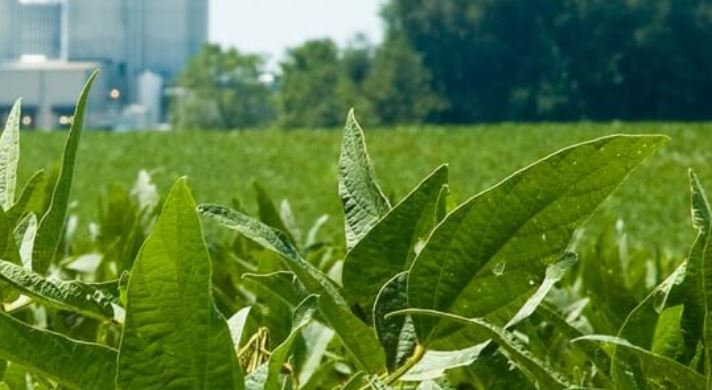
The U.S. Department of Agriculture and the Oklahoma Department of Agriculture are now putting the Daily Cash Grain Report into a PDF format - we are saving that PDF and archiving them for today's specific report. To see today's update, click on the PDF report link at the bottom of this story.
In addition to the PDF of the daily report, you can also listen to the Cash Grain Report by calling 405-621-5533. Push 2 for the grain report.
This Week on SUNUP is Oklahoma State University Extension grain market economist Kim Anderson. During this week's edition, Anderson talks about commodity prices and factors impacting the markets.
Anderson said not much has changed in the crop prices this week. Wheat has continued at a sideways trend, he added.
"Remember last week, Russia said, 'we are not going to honor that agreement for the exports,' and the price went up 50 cents, and then they said, 'we will honor it,' and it went down 50 cents."
Corn prices were slightly lower this week, Anderson said, around $7.40.
"Corn prices are reacting to slightly higher yields that we are harvesting right now in the corn," Anderson said.
There is a rally in soybeans, Anderson said, because China came into the market and bought U.S. soybeans.
"Got those bean prices up around $14.30, right at the top of that range," Anderson said.
Cotton has moved up a little higher, Anderson said, back up to about 84 cents.
The Russia and Ukraine war, Anderson said, has the potential to change prices more.
"Right now, they say they are going to honor that export agreement; however, they have slowed things out for the inspection of those ships, and so that is a quasi-saying, 'we are going to let you export a little bit, but we are going to restrict it.'"
The Australian wheat crop is the second largest crop ever expected, Anderson said, but they are facing heavy amounts of rain, so there is a concern for the loss of yield and quality. Argentina is having the opposite problem, Anderson said, whereas they are being faced with drought.
As for the November WASDE report, Anderson said there was not much change going on in the world.
Based on USDA's projections, Anderson said he sees it taking three to four years for Russia and Ukraine to get high input prices to come down, which will bring U.S. crop prices down.
This week on SUNUP:
Join us for SUNUP:
Saturday at 7:30 a.m. & Sunday at 6 a.m. on OETA (PBS)
YouTube.com/SUNUPtv

The Secretary of the State Election Board released a statement today regarding the November 8 General Election and voter turnout.
Statement from Secretary Paul Ziriax:
"For election officials, the General Election is our Super Bowl. No election is perfect, but overall this one went pretty smoothly. I want to offer a big 'thank you' to all of the poll workers, county election board members and staff, State Election Board staff, and other election officials who worked very hard to ensure Oklahomans were able to vote in a free and fair election. I am very appreciative of our partner agencies who help us protect Oklahoma's election system and keep it secure. And I want to thank the voters who took time to exercise their right to vote."
Additional Information about Oklahoma's 2022 General Election:
Quail Forever announces the hiring of Joshua Michna as the new Precision Agriculture & Conservation Specialist to support growers in the Texas High Plains region. This new role is made possible by the collaboration of Quail Forever, Cotton Incorporated, BASF Agricultural Solutions, and the United Sorghum Checkoff Program to boost farm profitability and deliver tangible environmental benefits.
Michna's new role will help landowners make best use of cutting-edge technology and voluntary wildlife conservation practices to identify acres of farmland opportunity. He will work with farmers to develop a Precision Ag Business Plan suited to their operation. By targeting return on investment at a sub-field scale, Michna will help define areas to explore alternative agricultural practices, voluntary conservation programs, cost-share and other funding opportunities to increase profits and success for a producer's operation. The end goal of this position is to offer habitat-based solutions including soil health, water quality, carbon sequestration and rural economic development while maintaining high farm revenues.
"The Habitat Organization is excited and proud to collaborate with the great programs and people at Cotton Incorporated, United Sorghum Checkoff Program, and BASF Agricultural Solutions in this effort to promote farm profitability along with conservation initiatives," Director of Sustainability Partnerships for Quail Forever Brent Rudolph said. "Texas Panhandle cotton and sorghum growers are committed to supporting a healthy environment and bright economic future for their families and communities, and quail, pheasants, and other wildlife will benefit from our efforts to work together here."
The addition of a Texas-based precision specialist adds further momentum to Quail Forever's collaborative agricultural initiatives to deliver sustainability outcomes. Starting in 2019, the Cotton Sustainability & Quail Recovery Project in cooperation with Cotton Incorporated set the table for innovation in the commodity sector. Since that time, the Sorghum for Birds initiative with the United Sorghum Checkoff Program and the recent national sponsorship announcement with BASF Agricultural Solutions have positively transformed Quail Forever's grower relationships in focal regions for upland birds.
"This program is a great opportunity for sorghum and cotton producers in Texas. The collaboration aims to help farmers apply production data and precision ag technologies to identify less profitable acres and create biodiverse habitats," Chief Sustainability Officer and Vice President for Cotton Incorporated Jesse Daystar said. "The project outcomes will benefit the environment and native bird species surrounding cotton farmland while helping producers increase profitability."
"This expanded, multi-commodity conservation collaboration—built upon the strong foundations of ongoing coordination between our industry organizations and Pheasants Forever and Quail Forever—will further enhance sorghum's recognition as The Resource Conserving Crop™️ through targeted conservation delivery in sorghum and cotton rotation systems in West Texas," Director of Sustainability for the United Sorghum Checkoff Program Adam York said. "We look forward to increasing the sustainability of both industries through the shared on-farm impacts of our new Precision Agriculture Conservation Specialist in Lubbock."
"We are excited to collaborate with Quail Forever, Cotton Incorporated, and the United Sorghum Checkoff Program to further the cause of conservation and agricultural sustainability in West Texas," Sustainability Manager for BASF's North American Seeds Ray Daniels said. "This program provides the opportunity for growers to identify alternatives for lower yielding acres that are both environmentally sustainable and economically viable. With access to the resources provided by the Precision Ag and Conservation Specialist, growers will have more options to consider when planning how to maximize their land use in 2023 and beyond."
Growing up on the outdoor traditions of hunting and fishing in South Texas, Joshua Michna has a proud farming and ranching background with experience in all aspects of agriculture including the processing of cotton and sorghum, as well as the maintenance of farming equipment. After receiving a bachelor's degree in wildlife and fisheries management from Texas Tech University, he has worked in precision agriculture as a field technician for South Plains Precision Ag since 2019. Michna was previously employed as a farm technician for Heinrich Brothers Farms and Brushy Branch Ranch since 2009 where he gained firsthand experience with irrigation systems, combine and stripper harvesting, team management, and other ranch duties.
Michna will work closely with ag retailers such as implement dealers, software companies, grain cooperatives, certified crop advisors, ag lenders, and others to support sustainability practices throughout the Panhandle. For more information about precision agriculture and conservation solutions in Texas, contact Joshua Michna at jmichna@quailforever.org or (806) 696-9422.
About Quail Forever
Pheasants Forever and Quail Forever make up the nation's largest nonprofit organization dedicated to upland habitat conservation. This community of more than 400,000 members, supporters and partners is dedicated to the protection of our uplands through habitat improvement, public access, education and advocacy. A network of 754 local chapters spread across North America determine how 100 percent of their locally raised funds are spent — the only national conservation organization that operates through this grassroots structure. Since its creation in 1982, the organization has dedicated more than $1 billion to 567,500 habitat projects benefiting 22 million acres.
Thu, 10 Nov 2022 14:44:42 CST

Listen to today's report with Justin Lewis, by clicking or tapping on the LISTEN bar
Justin Lewis of KIS Futures has all the details on today's agricultural markets for RON listeners, below.
Following the third meeting of the Oklahoma Emergency Drought Commission, KC Sheperd, Farm Director, had the chance to visit with the Executive Director of the Oklahoma Conservation Commission, Trey Lam, about important points from the meeting as producers wait to receive drought aid.
"The Emergency Drought Commission today made the decision and took action to fund cover crops that have been planted since June the 11th as erosion control," Lam said. "The idea there is if we leave the ground bare, and with the wind we have had recently, we have seen dust storms similar to what we might have had during the dust bowl."
To receive aid for the planting of these cover crops, Lam said producers can go to their conservation district and fill out an application.
Lam also talked about the decision to extend the application deadline across the state until the 28th of November.
"That will give people a little more time that didn't apply, or that thought maybe they weren't eligible to get in and apply," Lam said.
One of Lam's main concerns, he said, is to take the time to evaluate each application and ensure that taxpayer dollars are being used appropriately to create a lasting effect.
Regarding concerns from producers about the length of time that these processes take, Lam said that considering the short amount of time the Emergency Drought Commission has been working, they have been able to accomplish a lot so far, and the processes are quite lengthy.
"To be able to meet as a drought commission, move those funds over, then notify our conservation district boards, they then have to meet, and then they have to set dates when they are going to take applications, we have to have an application available for producers to come in and fill out, and then we have to have a closing date, then we have to rank those applications because we don't have enough money to give everybody everything they want," Lam said. "There has to be some way to set priorities in every county."
In some counties, Lam said there are up to 190 applications. There are not enough funds to aid that many people in one county, Lam said, so there has to be a way to differentiate those applications and make sure it is appropriate for the county.
"What is appropriate in Cimarron County probably isn't what is appropriate in McCurtain County to deal with the drought," Lam said.
Conservation districts are now moving quickly through those applications, Lam said, and are ready to award the funds and help producers get some work done.
"We are here to help farmers and ranchers and the citizens of Oklahoma," Lam said. "Especially in this emergency situation, we really appreciate what the legislature and the governor have done. We are ready to deliver this. We were founded as a result of the dust bowl, at the conservation commission. This is what we do; this is our bread and butter, so we need to deliver, and we need to deliver in a way that is responsible to the taxpayers of Oklahoma.
Senior Farm and Ranch Broadcaster, Ron Hays, is visiting with the President and CEO of CattleFax, Randy Blach, about the state of the cattle industry and what to expect in the upcoming months.
Hays caught up with Blach on the sidelines of the USMEF Strategic Planning Seminar in Oklahoma City.
"It has been a tough year, but I would say if we really put it in perspective, it has been a pretty tough stretch here over the last three or four years now," Blach said.
Starting in 2019, Blach said the industry was faced with the Tyson fire, then shortly after was COVID-19. On top of those issues, Blach said, drought came next.
"In spite of some of those headwinds, these markets have performed about as we have expected," Blach said. "We are going to end up averaging between $1.42 and $1.43 for fed cattle for the year. That is right on the forecast for what we shared with the industry back in January."
Grain and roughage prices, Blach said, have been the biggest shock to the system.
"We just aren't generating much profitability out here for cow-calf producers," Blach said. "That has been very difficult. Even though calf prices are 35 dollars and 100 higher than a year ago, there is still not much money being made."
There is a high probability, Blach said, that November and December will yield the highest profits of the year. This year, he added, is referred to as a "non-expansion" year.
"We typically take out the spring highs and make higher highs in the fall, and this year has been right on schedule," Blach said.
As for the drought, Blach said because of the lack of grass availability going into the winter season, not many cattle will be able to turn out.
"This fall, the number of cattle in our winter grazing programs is down significantly so far," Blach said. "The reality is, even if we do, we have got to remember that our feeder cow and calf supply outside of feedlots is down 800,000 head."
If rain starts to come, Blach said it will be expensive to buy those cattle and be able to turn them out.
"The market will respond very quickly when we have rain, but keep in mind, there are 800,000 fewer to pick and choose from," Blach said.
Beef cow slaughter for the end of the year, Blach said, will be around 375,000 head up from a year ago. Heifer slaughter, he added, is up around 300,000 for the year.
"What that tells you is, you are going to be looking at smaller fed cattle supplies for two to three years down the road until you see some stability in that cow or female cattle population," Blach said.
The Beef Buzz is a regular feature heard on radio stations around the region on the Radio Oklahoma Network and is a regular audio feature found on this website as well. Click on the LISTEN BAR below for today's show and check out our archives for older Beef Buzz shows covering the gamut of the beef cattle industry today.

| Thousands travel West for the Business Breed event of the year. |
After a weekend exploring new learning and networking avenues, the American Angus Association® concluded a successful 2022 Angus Convention. The four-day event, held in Salt Lake City Nov. 4 to 7, attracted 1,400 registrants and nearly 80 trade show vendors.
"This year's convention was without a doubt a tremendous success," said Mark McCully, Association chief executive officer. "Our Angus family left Salt Lake City energized, equipped, and inspired to reach new levels of success."
Each day was loaded with educational sessions, networking opportunities and wall-to-wall trade show vendors. On day one, Angus enthusiasts had a chance to partake in various tours including the National Angus Tour and the Beef Blitz tour hosted by Certified Angus Beef (CAB®). That evening marked the kickoff of the trade show floor during the Trade Show Grand Opening and Welcome Reception.
On the main stage, three general sessions presented attendees with industry relevant, cutting-edge information. The opening session, Exploring Your Potential, welcomed the Angus family with remarks from McCully and panelists about defying standards, the scope of the beef business and what's on the industry's horizon. Later, Kelli Retallick-Riley, Angus Genetics Inc. (AGI®) president, and panelists of the Genetics Symposium, sponsored by NEOGEN, discussed the functional longevity EPD, genomic advancements and the value of the Angus cow. The Consumer Perspectives Panel, sponsored by Zoetis, concluded the trio of general sessions, where Bruce Cobb, CAB executive vice president of production, alongside industry professionals, shared how cattlemen can earn consumer trust and continue driving demand for CAB.
Throughout the weekend, educational opportunities filled the schedule. Angus University continued to provide attendees opportunities to learn from industry experts, both in classroom settings and with live cattle in the Priefert Cattle Demo Area. Topics covered ranged from capturing value for all sectors and bovine heart health to innovative production practices.
American Angus Association Awards Dinner and Reception
The highly anticipated American Angus Association Awards Dinner and Reception recognized several distinguished honorees. Honored as Angus Heritage Foundation inductees were Leo & Sam McDonnell, Montana; Dave Nichols, Iowa; Becky & the late Arlen Sawyer, Nebraska; and Jim & Sue Coleman, California.
Awarded the Roll of Victory Show Heifer of the Year was SSF Lady 5030 owned by Houston Ferree, Indiana.
The Roll of Victory Show Bull of the Year was Conley DS Clear Cut 0510 owned by Conley Cattle, Oklahoma; Ferree Fitzgerald, Indiana; and David Smith, Colorado.
Concluding the Roll of Victory recipients was Breeder of the Year awarded to Express Ranches, Oklahoma.
During the dinner reception, CAB recognized two recipients of producer awards. Achieving the Seedstock Commitment to Excellence award was Larson Angus Ranch, Kansas and honored for the Ambassador Award category was Walter Angus, Colorado.
A special Angus Foundation fundraiser took place with the auction of a CAB Barn Painting. When the gavel pounded, the painting was purchased by Gardiner Angus Ranch who generously invested $15,000 to further the Foundation's mission of education, youth and research.
The announcement of a new Miss American Angus rounded out the program with Kelsey Theis, Kansas, being crowned for the 2022 to 2023 year.
139th Annual Convention of Delegates
The 139th Annual Convention of Delegates capped off the final day of the event. Elected to their first three-year term on the board of directors were Rob Adams, Alabama; Art Butler, Idaho; Alan Mead, Missouri; Henry Smith, Kentucky; and Roger Wann, Oklahoma. Serving in leadership positions for the year are President and Chairman of the Board – Chuck Grove, Virginia; Vice President and Vice Chair of the Board – Barry Pollard, Oklahoma; and Treasurer – Jonathan Perry, Tennessee.
To hear a few breeders recap Angus Convention, listen to the latest episode of The Angus Conversation here: www.angusjournal.net/episodes/episode/7b49f40b/in-demand-why-angus-breeders-are-so-optimistic. The 2023 Angus Convention will be held November 4-6 in Orlando, Florida.
For news and further information about this year's Convention, visit www.angus.org
| – Written by Briley Richard, Angus Communications |
The U.S. Cotton Trust Protocol has published its second annual report, detailing the results for the 2021-22 period (August 1st, 2021-July 31st, 2022). The farm-level, science-based sustainability program today reports significant improvements in the sustainability metrics measured; an increase in membership across the value chain; the completion of nine successful pilots; and its growing international recognition by independent and government bodies.
Growing Sustainable Results
In the 2021-22 period the Trust Protocol was able to provide farm-level data reporting showing significant improvements with grower members having demonstrated tangible results across six key metrics. Using peer-to-peer data sharing and aggregated sustainability data provided by the Trust Protocol, its 2021-22 grower members have recorded :
• a 13% increase in land use efficiency and a 14% increase in water use efficiency;
• a 25% reduction in energy use;
• a 21% reduction in greenhouse gas emissions;
• a 78% reduction in soil loss, and
• positive Soil Conservation Index for 70% of growers.
Membership Growth Across the Value Chain
Membership across the program has grown solidly both domestically in the U.S. and internationally.
• Enrolled areas of U.S. cotton production have doubled since the program's pilot year to 1.1 million acres (445k ha).
o All 17 U.S. cotton-producing states are now represented
• Mill-and-manufacturer membership has increased significantly
o counts 820 companies from 30 countries
o An increase of >50% in past year
• Total number of brand-and-retail members has grown to 40
o Members include global brand and retailer giants such as Ralph Lauren, J. Crew, Tesco, Levi Strauss & Co., GAP and Old Navy.
Scaling Solutions
The Trust Protocol has been piloting, testing and scaling the technology solutions that record and track the movement of U.S. Cotton and Protocol Cotton through brand and retailer member's supply chains to their finished products. This allows for tracking cotton through complex supply chains in a way that has not been possible at scale before.
• Nine completed pilots involving global brands and retailers with nearly 150 mills
• A further 15 pilots are confirmed to be initiated with 125 additional mills
International Recognition
In 2022 the Trust Protocol received international recognition from two major evaluation bodies.
• In May 2022 the Trust Protocol was approved by Siegelklarheit
o An initiative of the German federal government Siegelklarheit ('seal clarity') is a transparent, independent and comprehensive evaluation system that informs consumers about credible seals to allow them to make more sustainable purchasing decisions.
• The Trust Protocol was accepted as an ISEAL Community Member in June 2022
o ISEAL Community Membership comes just 18 months after the program's launch, following a rigorous and meticulous approval process.
o ISEAL supports ambitious sustainability systems and their partners to tackle the world's most pressing challenges by, among other things, defining credible practice for sustainability systems based on emerging global consensus.
Commenting on the results, Dr. Gary Adams, President of the U.S. Cotton Trust Protocol, said:
"These results are excellent, and even more so given the challenges of the past year– from increased scrutiny brought by the changing regulatory landscape, to U.S. cotton growers faced with rising production costs and weather extremes. The past year has been one of perseverance, dedication and commitment. That has meant focusing on foundational growth and making thoughtful, innovative decisions.
To continue this growth and ensure the program's success we need to maintain our unwavering commitment to, and support of, our growers as they work towards continuously improving against our six core environmental metrics. Maintaining a focus on innovation and implementation of the latest technologies will also be a key tool in helping them to improve our future environmental footprint."
Adams continued:
The results speak for themselves: in the impressive progress made by our growers on key sustainability metrics; and in how positively the supply chain has responded, demonstrated by the increase in the number of growers, mills, manufacturers, brands and retailers who are active members of the program.
As we continue to increase the number of growers participating in the Trust Protocol, we also expect that future environmental performance against our targets may change. Ultimately to have the greatest impact requires both the broadest participation and the best environmental performance. We strive for both, but we also want to be transparent about our expectations for the future with our partners as we grow."
About the U.S. Cotton Trust Protocol
Launched in 2020, the U.S. Cotton Trust Protocol was designed to set a new standard in more sustainably grown cotton, ensuring that it contributes to the protection and preservation of the planet, using the most sustainable and responsible techniques. It is the only farm level, science-based program that provides quantifiable, verifiable goals and measurement in six key sustainability metrics as well as article-level supply chain transparency.
The Trust Protocol is overseen by a multi-stakeholder Board of Directors comprised of representatives from brands and retailers, civil society and independent sustainability experts as well as the cotton-growing industry, including growers, ginners, merchants, wholesalers and cooperatives, mills and cottonseed handlers.
The Export Exchange conference hosted this fall by the U.S. Grains Council (USGC), Growth Energy and the Renewable Fuels Association (RFA) is already paying dividends, according to surveys of overseas grain buyers who attended – they purchased $225 million worth of grain and ethanol co-product.
Buyers and end-users were surveyed after the conference to see if they had made any purchase agreements with sellers and if so, how much was purchased. In total, attendees reported sales of just over $225 million with another $128 million under negotiation. That equates to 514,850 metric tons of grains and co-products traded either at the conference or immediately before or after.
The top grain traded during the two-day conference was corn, with 208,800 metric tons collectively purchased, followed by distiller's dried grains with solubles (DDGS), with 156,400 metric tons purchased.
Export Exchange 2022 offered attendees a unique opportunity to meet and build relationships with domestic suppliers of corn, DDGS, sorghum, barley and other commodities. More than 200 international buyers and end-users of coarse grains and co-products from more than 35 countries were in Minneapolis for the conference, held Oct. 12 to 14, and for related tours of U.S. farms, ethanol plants and export infrastructure as part of Council trade teams.
"Trade is absolutely critical to U.S. farmers right now, and these sales show that buyers attending Export Exchange 2022 took the buying opportunities very seriously," said Ryan LeGrand, president and CEO of the Council. "Putting buyers and sellers together, building and sustaining relationships with our top global grain buyers have been hallmarks of Council activities worldwide. We are thrilled to see how much actual trade was done at the show and in association with it."
"Exports of U.S. grains and DDGS create jobs here at home while helping international companies satisfy their demand for quality products," said Growth Energy CEO Emily Skor. "The impressive amount of business generated at this year's Export Exchange is a testament to the strength and ingenuity of U.S. producers and shows just how important this biennial event is to facilitating trade for U.S. products."
"Once again, these numbers show that Export Exchange is where international buyers and sellers go to do business," said RFA President and CEO Geoff Cooper. "In just three days, buyers purchased enough DDGS to fill three Panamax vessels. We are proud to offer this excellent deal-making opportunity every two years."
Other grains traded at Export Exchange included:
• Corn Gluten Meal—24,250 metric tons;
• Soybean Meal – 77,000 metric tons;
• Soybeans – 22,000 metric tons. The Export Exchange conference provides an ideal forum for continued relationship building among trading partners. The conference is held every two years and will next be held in 2024. More information about the recent event is online at www.exportexchange.org.
The Emergency Drought Commission met Wednesday and directed $12 million in additional funding to the existing Emergency Drought Cost-Share Program. In addition to the increase in funding, the Commission directed local conservation districts to accept applications for all approved practices.
Approved practices include:
The Commission clarified cover crops planted for the purpose of erosion control are eligible for the program.
All practices included in the Emergency Drought Cost-Share Program may be funded retroactively to June 11, 2022, pending appropriate documentation is provided by the applicant. Appropriate documentation will be determined by the Oklahoma Conservation Commission.
A statewide application period is now open across all conservation districts and is set to close on November 28, 2022.
Applications submitted prior to November 9, 2022, that have not received funding will be considered for the updated program. Applicants who have been approved for funding are not eligible to submit a new application.
All actions of the Commission are pending approval by Governor Kevin Stitt. The Commission will continue to meet in order to distribute the remaining funds appropriated by the State Legislature and approved by the Governor.

New portal will give policyholders enhanced options for both ClaimsPay® and PremiumPay®
One Inc, the leading digital payments network for the insurance industry, announced today that Oklahoma Farm Bureau Insurance (OKFB), the largest domestic insurer in Oklahoma, has selected the One Inc digital payments platform to provide both inbound and outbound digital payments. This move will enable OKFB Insurance to adapt quickly to changing market demands and enhance customer service. The integration, which is to be deployed with the Guidewire InsuranceNow all-in-one, cloud-based core system, will enable OKFB Insurance and its users to accept and disburse payments using both ClaimsPay and PremiumPay products from One Inc.
OKFB Insurance, known throughout Oklahoma for its excellent customer service and efficient claims assistance, looks to maximize its services to insureds through this partnership with One Inc. The integration will harmonize the company's payment infrastructure, making payment processes a more cohesive and seamless experience for both inbound, and outbound digital payments.
According to Stephanie Helling, vice president of information systems for OKFB Insurance, the implementation will be expedited due to InsuranceNow's 'out of the box' integration into One Inc. Guidewire recently announced One Inc as its strategic partner for payments.
"Our integration with One Inc's suite of payments products will help build a strong digital infrastructure for Oklahoma Farm Bureau Insurance to deploy next-generation technology," said Gary Buckner, executive vice president and general manager of OKFB Insurance. "OKFB Insurance is fully committed to using innovative solutions to monitor and improve the customer experience. Leveraging the One Inc Digital Payments Platform with Guidewire will help us modernize and strengthen our customer relationships and experiences at all stages of the payments process."
"We applaud OKFB Insurance's recognition of the advantages in running its business on the One Inc platform," said Ian Drysdale, CEO, One Inc. "We are humbled by the company's vote of confidence in our digital payment solutions and capabilities and applaud OKFB's mission of providing the best service to their customers."
About One Inc:
One Inc is modernizing the insurance industry through a unified and frictionless payment network. Focusing only on the insurance industry, One Inc helps carriers transform their operations by reducing costs, increasing security, and optimizing customer experience. The comprehensive end-to-end digital payments platform provides expanded payment options, multi-channel digital communications, and rapid digital claim payments, even for the most complex insurance use cases. As one of the fastest growing digital payment platforms in the insurance industry, One Inc manages billions of dollars per year in premiums and claims payments. For more information, please visit www.oneinc.com.
About The Oklahoma Farm Bureau Insurance
Since 1946, OKFB Insurance has worked to protect Oklahomans from the risks they face every day, whether it be home, auto, life, commercial or farm & ranch. With agents in all 77 counties, we are ready to serve our neighbors at a moment's notice and are committed to helping our members and their families to insure their future. To learn more, visit
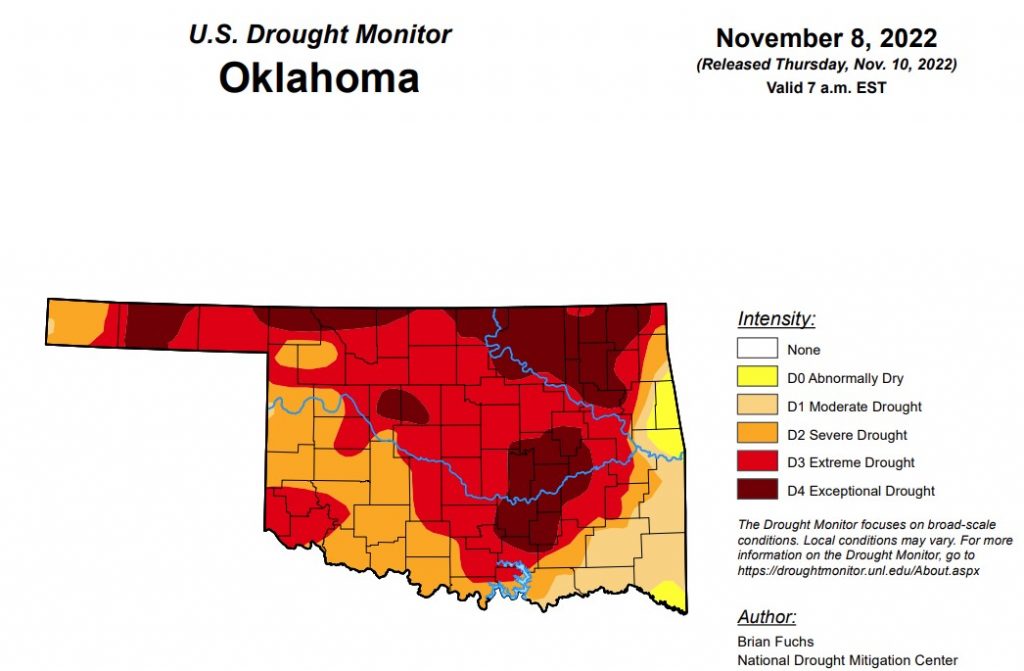
Much lower temperatures can be expected for the entire state as we enter next week. According to the Oklahoma Mesonet, this switch to colder temperatures will result in the loss of some of the moisture available in the warmer air. The rains the state experienced within the last month are going to be harder to come by, and unfortunately, Oklahoma is entering the driest part of the year with some major long-term deficits.
In Oklahoma, exceptional drought has increased slightly from last week's 21.06 percent and is now at 22.38 percent.
Extreme drought or worse is down from last week's 66.7 percent and is now at 64.54 percent.
Severe drought or worse is down significantly from last week's 97.43 percent and is now at 88.7 percent.
Moderate drought or worse has finally lowered from 100 percent and is now at 97.7 percent.
Abnormally dry or worse conditions remain at 100 percent.
According to the 6–10-day precipitation map for Oklahoma through November 19, the western part of the panhandle is leaning above a 33-40 percent chance of precipitation. Further east and down into the southwest corner of the state remains at a "near normal" chance of rain. As for the central and eastern parts of the state, those are leaning below a 33-40 percent chance of precipitation.
To view the Oklahoma Drought Map, click here.
According to the latest U.S. drought monitor report, this week continued with another active weather pattern over portions of the Pacific Northwest as well as into the central Plains and Midwest. With widespread heavy rain from Kansas into Wisconsin as well as portions of the lower Mississippi River valley, some areas recorded significant precipitation during the period. Temperatures over the eastern half of the country were above normal, some significantly, while most of the West was cooler than normal. A continued wet pattern over the Pacific Northwest as well as portions of the Midwest has allowed for continued improvement to drought intensities, especially in areas that are receiving abundant precipitation. Dryness continues to build over eastern portions of the Midwest and into the Southeast as well as along the Gulf Coast.
To view the United States Drought Monitor Report, click here.
In the Southern Plains, temperatures over the region were well above normal, with departures of 6-9 degrees above normal during the week. Only areas of the panhandles of Texas and Oklahoma were near normal. The wettest areas of the region were in eastern Oklahoma, northeast and south Texas, Arkansas and Louisiana, where some areas recorded over 200% of normal rain this week. Much of central and west Texas and central Oklahoma missed out on any rains this week. A full category improvement to the drought intensities was made over much of Arkansas, western Louisiana, and eastern Texas. Severe drought was expanded over portions of southern Louisiana where much of the recent rain has missed. Drought intensities were expanded slightly in northeast Oklahoma and central portions of Texas due to a mixture of short- and long-term drought issues.
In the High Plains, much of the High Plains remained dry this week with only portions of southeast Nebraska and eastern Kansas recording above-normal precipitation. Temperatures were mostly above normal for the area, but western portions were normal to slightly below this week, with the warmest temperatures over eastern Kansas where departures were 6-9 degrees above normal. With the continued dryness, most of the changes were worsening drought intensities. As the autumn remained dry over much of Nebraska, expansions were made to extreme and exceptional drought in the northeast and western parts of the state. Western Kansas, eastern Colorado and eastern Wyoming also had expansions of severe, extreme and exceptional drought conditions. Much of eastern and central Kansas saw improvement from several inches of rain, which lead to the reduction of all drought intensities (including the extreme and exceptional areas in the southern portion of the state) and the removal of extreme drought in the northeast.
Looking ahead, over the next 5-7 days, it is anticipated that the impact of tropical storm Nicole over the east coast will be significant, bringing a great deal of precipitation from Florida to Maine during the next several days. A winter storm is impacting the northern Plains into the upper Midwest, bringing with it some significant snow while a frontal passage over the Plains will allow for some precipitation from Nebraska south into the lower Mississippi valley. Temperatures during this period look to be well below normal, with portions of the northern Plains 20-24 degrees below normal during this time. Warmer-than-normal temperatures will impact the Northeast and Mid-Atlantic, with temperatures 6-9 degrees above normal.
The 6–10-day outlooks show that temperatures are expected to be well below normal over most of the country, with areas of the Plains having the highest likelihood of recording below-normal temperatures. In contrast, Alaska is anticipating warmer-than-normal temperatures during this time. The greatest chance of above-normal precipitation is over the Southeast as well as through the Rocky Mountains while much of the central Plains and Midwest as well as the West have the greatest chances of having below-normal precipitation.
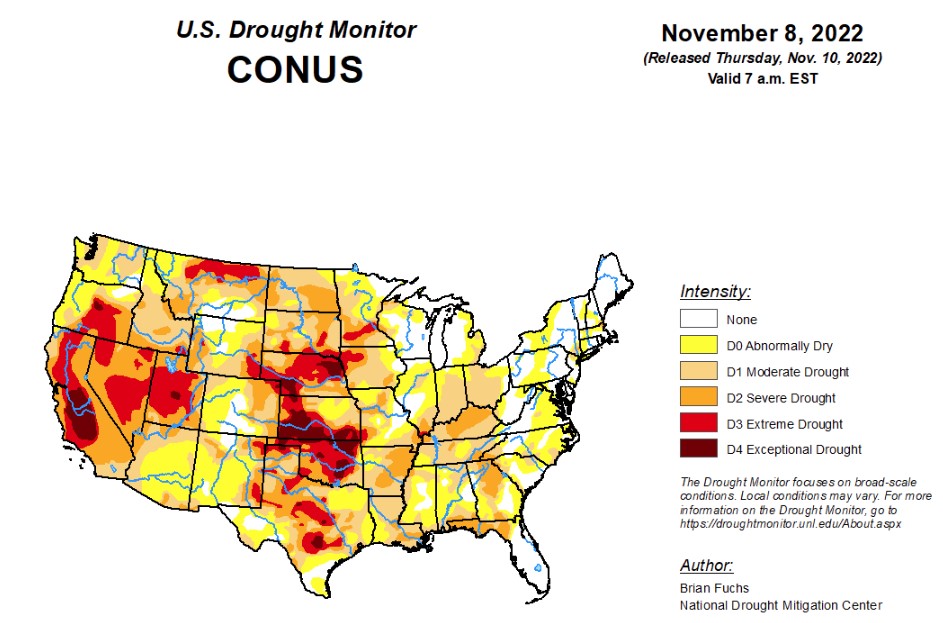
To view the 6-10 Day Precipitation Outlook Map, click here.
To view the 6-10 Day Temperature Outlook Map, click here.
To view the Monthly Drought Outlook Map, click here.
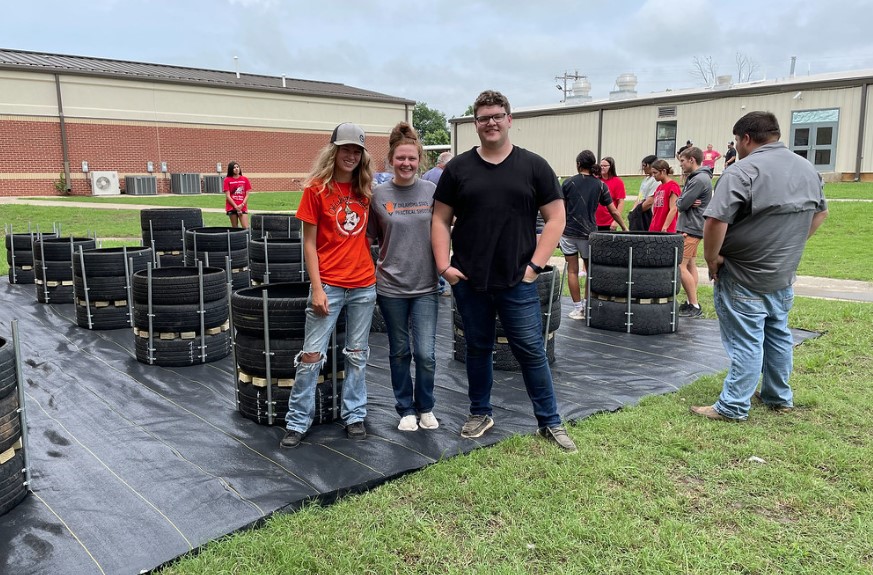
Wetumka High School students work on building recycled tire gardens. They've harvested radishes and are currently growing various types of lettuces.
By Trisha Gedon
A Hughes County recycled tire garden project has been recognized as a finalist for the Keep Oklahoma Beautiful Environmental Excellence award. The program focuses on teaching Choctaw Nation youth and adults to grow and market culturally relevant crops.
KOB has recognized and rewarded Oklahomans for their environmental efforts for 32 years.
The recycled tire garden project was part of a Federally Recognized Tribes Extension Program grant through the U.S. Department of Agriculture that installed tire gardens in various parts of Hughes County to provide education on growing produce, said Shelley Mitchell, Oklahoma State University Extension associate specialist for youth programs, and served as principal investigator on the grant. The program also included educational elements and improvements to greenhouses and school gardens throughout the Choctaw Nation.
"The tire gardens were designed by horticulture consultant Steve Upson to use old tires for something good and keep them out of the landfill," Mitchell said. "We worked with Scott Robison, community health director at the Wewoka Indian Health Center, who chose the sites for the gardens."
Gardens were built at Holdenville Elementary School, Holdenville Indian Community Center, Wetumka Public Schools, the Wetumka Indian Community Center and Muscogee Nation Nutrition Center. Students painted the tire gardens and will manage them at the school sites. Tribal elders will manage the gardens at the nutrition and community centers.
Robison said the gardens will serve as a place to grow culturally relevant crops.
"Gardening is a way of life for our people. Eating food from the earth is a symbol of strength, health and wellness," he said. "Today, our Native people are one of the unhealthiest populations. We've gotten away from our natural way of life. Through these gardens, we're trying to teach our kids that gardening is very native to our culture."
He said the gardens provide an additional learning opportunity for youth because many are not exposed to gardening at home. The students will be able to learn more about where their food comes from and understand that living from the land was a natural way of life for their ancestors.
In addition to gardening skills, Robison said the recycled tire project includes plans to incorporate nutritional education, cooking demonstrations, recipes and more.
"Overall, we want our youth to understand what it means to have a healthy lifestyle, which includes eating fresh fruits and vegetables," Robison said. "Gardening is a good form of exercise, which is good for both our students and our elders."
Students in Wetumka Public Schools put their tire gardens to use by growing radishes and are currently cultivating different lettuces.
"Our horticulture class partnered with our fifth and sixth grade science classes for this project," said Donna McGee, Wetumka School superintendent. "They grew and harvested two kinds of radishes, and the cafeteria served them on our salad bar. The students really took pride in the fact that they grew food that is being served to the whole school."
McGee said this cross-curriculum teaching has been successful in the school, and they plan to continue to use the garden throughout the year. They'll research different fertilizers and different mixtures of soil to help determine the best methods for growing. Following the lettuce harvest, students are planning to plant pansies in the winter and possibly some bedding plants for next spring.
"Getting youth involved in gardening is a great way to teach them not only about where our food comes from but also the science behind what it takes to grow food," Mitchell said. "Recycling tires that would have just gone to the landfill is an added bonus to this project."
OSU Extension uses research-based information to help all Oklahomans solve local issues and concerns, promote leadership and manage resources wisely throughout the state's 77 counties. Most information is available at little to no cost.
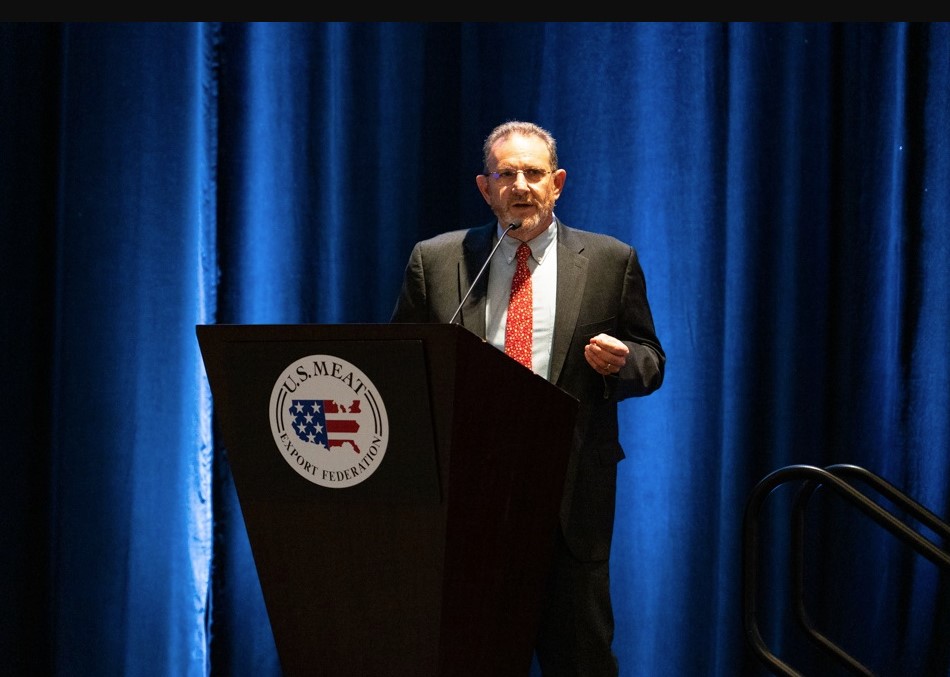
Mark Slupek of the USDA Foreign Agricultural Service discusses the working relationship between USDA and USMEF
The U.S. Meat Export Federation (USMEF) Strategic Planning Conference got underway Wednesday in Oklahoma City, attracting farmers, ranchers, processors and exporters from throughout the nation. While U.S. red meat exports will likely set a value record approaching $20 billion this year, the industry faces an array of obstacles related to the sluggish global economy, weakening currencies of key trading partners and lingering effects of the COVID pandemic. Challenges are also mounting on the production side, especially for livestock producers impacted by drought.
Keynote speaker Randy Blach, CEO of CattleFax, detailed the larger-than-expected contraction of the cattle herd, which helped drive U.S. beef production and exports to record highs in 2022 but will be a significant constraint for U.S. exporters next year. The drought has also heightened production costs for cattle feeders.
"If you're putting an animal in a feedyard anywhere in the Central Plains – let's say Kansas or Oklahoma – your cost to put on a pound of gain is between $1.30 and $1.40," Blach explained. "We have not seen that historically, not even back in 2008 when we had the ethanol mandate and for a period of time corn was at $8.00 per bushel. This is an interesting time, when the market needs more corn and where it's needed most, the corn just isn't there."
But Blach also highlighted the remarkable efficiency and sustainability of the U.S. beef industry, which he maintains is well-positioned for success even in this challenging environment.
"Whenever I ask an audience 'who's the biggest beef producer in the world?' – everyone says Brazil because it has 300 million cattle," Blach said. "But we're producing more beef than Bazil with only one-third the number of cattle. Why? Because of our high-quality, grain-fed beef. The U.S. has the best carbon footprint of anybody on the list of top beef producers, because of the way our production systems work and the amount of production that we get on a per-head basis."
Blach added that the U.S. achieved record beef production in 2022 with 30 million fewer cattle than in the 1970s.
"That's what sustainability is – doing more with less, and doing it better with great animal husbandry," he said. "And I commend each and every one of you who get up every morning to go feed those cows and calves, or feed those fed cattle. You're doing a hell of a job – keep it up."
Blach also extolled the efficiency of America's corn and soybean producers, noting that it is a critical factor in the global success of the U.S. meat industry.
"The U.S. is the largest high-quality meat producer on the planet," he said. "We produce the most beef, the most broiler meat and the third-largest amount of pork in the world. Sometimes it's easy to forget that we cannot achieve this success without the soybean meal and grain products that those of you in the corn and soybean industries produce. It's important that we recognize what a critical ingredient you provide for all of these proteins."
USMEF President and CEO Dan Halstrom gave members an update on year-to-date export results and his outlook for coming months. While challenging times lie ahead, Halstrom highlighted the importance of market diversification in keeping beef exports on a record pace through the first three quarters of 2022. Pork exports are also regaining momentum, surpassing year-ago levels the past two months.
"Global demand is strong, even record-breaking, despite rising prices," said Halstrom, "But at what point do international consumers scale back?"
He listed several mounting obstacles for U.S. exports, including global inflation, ongoing supply chain challenges and the strengthening U.S. dollar. As an example, Halstrom noted that devaluation of the Japanese yen has pushed prices for U.S. meat products 30% higher than a year ago in an extremely competitive market.
Market diversification has long been a top priority for USMEF, and Halstrom praised the U.S. industry's commitment to developing new and emerging markets for red meat exports. He noted that the often-tense U.S.-China relationship underscores the importance of this strategy. Halstrom explained that while China is a major U.S. red meat customer, on pace to purchase $4 billion in U.S. beef and pork this year, the U.S. is not nearly as dependent on China as most other suppliers.
"Uruguay exports 58% of its beef production to China, New Zealand 44%, Brazil 18% and Australia 14%," Halstrom said. "But even with our recent growth, just 3% of U.S. beef production is exported to China."
For pork muscle cuts, just 2.3% of U.S. production currently goes to China. Chile and Brazil ship 17% of their pork muscle cut production to China, while China accounts for 9% of Canada's production and 6% for the European Union.
Trade barriers often make market diversification more difficult, and Halstrom asked USMEF members to remain vigilant and make their voices heard in Washington.
"Our competitors realize the value of trade and they're not standing still," Halstrom said. "Hopefully we can encourage more aggressive action, including getting a USTR chief ag negotiator and USDA undersecretary for trade confirmed soon."
USMEF members also heard from Mark Slupek, deputy administrator of global programs for the USDA Foreign Agricultural Service (FAS). Slupek provided a brief history of USDA's investment in export market development, explaining that it dates back to the Eisenhower administration. He praised USMEF as one of FAS's most successful cooperators, noting that USDA and USMEF have had an excellent working relationship for more than 40 years. He added that strong industry support for USMEF, from a diverse range of agricultural sectors, helps ensure consistent funding from USDA.
The USMEF Strategic Planning Conference continues through Friday, Nov. 11. Thursday's general session will focus on USMEF's market development efforts in Japan, where the organization recently marked the 45th anniversary of its Tokyo office. This will be followed by breakout sessions for USMEF's pork, beef, exporter and feedgrain and oilseed sectors. Friday's closing business session will include an overview of the Biden administration's current trade initiatives and election of new USMEF officers.
Experienced Seedsman To Serve Growers and Develop Dealers in Kansas and The Plains
Experienced ag agronomist and seed rep Aaron Diederich has joined Meristem Crop Performance® Group, LLC (www.MeristemAg.com), one of the fastest-growing crop input suppliers in America. Diederich becomes Meristem's Sales Rep and dealer coach in Kansas and other Plains states, operating out of Hanover, Kansas.
"Aaron Diederich is a service-oriented expert at helping farmers get solid crop production results," says Mitch Eviston, Meristem Founder and CEO, in announcing the hire. "Aaron knows his stuff and has a passion for serving farmers. We are excited to gain the value of his experience as we continue to grow our Meristem business in Kansas and surrounding states."
Diederich has deep experience in the unique challenges of Kansas crop production at field-level, growing up on a diversified family farm operation near Hanover, Kansas, where he is still involved. The farm is now in its fourth generation.
"Being a farmer keeps it all real," says Diederich. "It really helps me understand what all of my farmer-customers are going through, so I can better come alongside with the service and products that will help them."
Diederich earned a bachelor's degree in ag economics from Kansas State University, with a specialization in farm management. After an internship with three local Channel Seed dealers, he spent nearly seven years as an Agri-Gold representative, being elevated to District Manager.
"My experience selling seed has improved my whole look at crop production," Diederich says. "Choosing the right seed is such an important decision, and it brings with it the desire to make the most of each one in the bag or box. That's where Meristem's awesome product portfolio can make a big difference." Diederich will operate from Hanover, Kansas, where he lives with his wife Sydney, their daughter Macklynn and son, Holt.
"Meristem's people and products are oriented toward boosting ROI for farmers and that fits perfectly with my personal mission of farmers and family out here," says Diederich. "I'm really excited to get started."
About Meristem Crop Performance® Group, LLC
Meristem Crop Performance Group, LLC (www.meristemag.com)is one of the fastest-growing crop input companies in America. Meristem sources, formulates, licenses, and delivers high-quality crop inputs to farmers at the highest possible value offering substantial savings. Meristem is focused on building a highly efficient channel to bring crop inputs to market so farm businesses can make the most of their infrastructure and intellectual property investments and better compete in the global agricultural market. Meristem's team of experienced ag professionals also works to create real productivity gains for farm businesses through novel biological delivery systems and accelerated access to farm-ready innovation. For more information, go to our website at www.meristemag.com, or follow us on Twitter, Facebook, LinkedIn and YouTube.
The King Ranch® Institute for Ranch Management (KRIRM) hosted a successful symposium titled Ranching in the 21st Century: Learn Proven Strategies from Industry Leaders. When creating a successful enterprise there is no silver bullet to getting it done. There are a multitude of variables that determine the decisions that need to be made. However, after looking at the philosophical approach and strategies, you start to see a common mindset amongst management of the most successful ranches, both large and small.
The 19th Annual Holt Cat® Symposium on Excellence in Ranch Management hosted a wide variety of industry leaders who shared their knowledge and philosophies that have propelled them to become some of the most successful and respected minds in the industry.
The symposium began with Derrell Peel, PhD and Professor of Agribusiness at Oklahoma State University. Dr. Peel's presentation identified key trends in the ever-changing market as he shared his insights on the future challenges and opportunities of the ranching industry, with special focus on the beef supply chain.
Following Peel's presentation was Clint Richardson, General Manager of Deseret Cattle and Citrus, and Shelby Horn, Vice President and General Manager of Abell Livestock. Richardson addressed the importance of determining "What is your business?" while sharing his perspective on the land business in relation to the business enterprise the land supports. Horn followed with discussing the opportunistic mindset and approach to finding, evaluating, and implementing less traditional ranching enterprises.
Dale Smith concluded the first day by giving his approach to managing the JA, Excell, Turkey Track, and RO Ranches. Smith discussed his philosophy on land, business, management, and risk as he described one of the most innovative models of ranching success in North America.
Day two of the symposium began with Tom Field, PhD, Executive Director of the Engler Institute for Agriculture Entrepreneurship at University of Nebraska-Lincoln. Gary Price, owner and manager of 77 Ranch, and Sage Askin, owner and manager of Askin Land and Livestock, providing proven strategies that have worked for their operations. Price and Askin addressed less discussed, but fundamentally important, topics in the industry - how to find profit on mid-sized
ranching operations and how to build a successful ranching operation from scratch, respectively.
The last two presentations of the day provided attendees with the personal success stories of James Sewell, General Manager of TA Ranches, and John Maddux, Owner and Manager of Maddux Cattle Company. Sewell explained how he adapted TA Ranch operations into the successful enterprise it is today. Maddux followed up with his perspective and unique story of the evolution of Maddux Cattle Company after working on Wall Street for 12 years.
Dave DeLaney, Practitioner in Ranch Management with KRIRM, and retired Vice-President and General Manager of Ranching and Wildlife at King Ranch, Inc., provided the closing comments and take-home message for attendees.
Key Takeaways
The symposium was full of impactful ideas and examples for attendees, challenging them to evaluate the current state of their operations and empowering them to succeed while ranching in the 21st century. The most common and proven strategies shared by industry leaders begins with having and using mission and vision (purpose) statements as guiding principles. Successful ranch-business managers hold appropriate non-compromise standards that are seldom driven solely by profit maximization which too often compromises resource sustainability, or may conflict with their mission and
vision. The ranching business should have a clear organizational structure and chain of command to facilitate communication and effective employee management.
Successful operations maintain excellent record keeping and benchmarking systems that allow accurate determination and tracking of unit cost of production and enterprise/ranch performance trends. In the same vein, they strive to be low cost producers, but do not sacrifice stewardship, animal husbandry, or product quality. These goals need not be mutually
exclusive.
Lastly, they are lifelong learners and re-learners who are passionate and committed to ranching, and take joy in their work. This joy is contagious and a positive contributor to workplace culture.
An industry tradeshow of 20 vendors offered attendees an opportunity to network with agricultural lending and supply/service companies supporting the ranching industry. A social and prime rib dinner recognized 10 individuals who
received their Texas Farm Credit Certificate in Advanced Ranch Management. To earn the certificate, the individuals completed four KRIRM lectureships and two symposia within a three-year period.
About KRIRM
Formed in 2003, KRIRM is a ranch management master's program at Texas A&M University-Kingsville created in honor of the 150th Anniversary of the legendary King Ranch. As the only Master of Science in Ranch Management program in the world, KRIRM teaches graduate students using a multi-disciplinary, systems approach to ranch management. The institute also provides the highest quality lectureships and symposia to stakeholders in the ranching industry through its event outreach component as we strive to sustain our ranching heritage. For more information about KRIRM, visit krirm.tamuk.edu.
Don't miss the opportunity to explore the source of common Thanksgiving foods. Students can also discover what their Thanksgiving dinner might look like if they only had locally grown foods available.
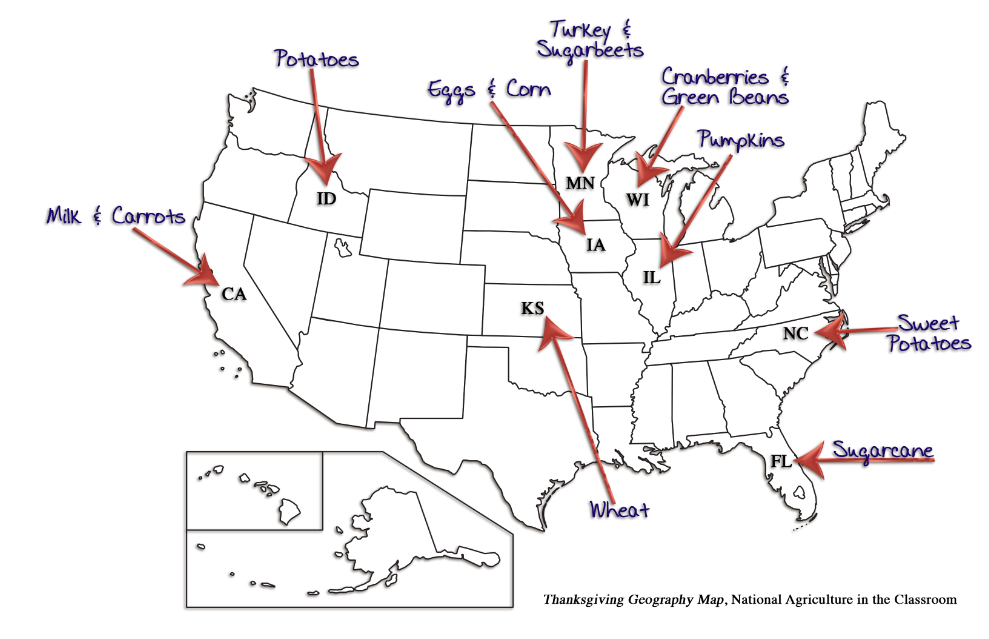
Thanksgiving is a traditional American holiday celebrated in November. The holiday has historical roots to the early pilgrims who settled America. It's purpose is to celebrate the year's harvest and give thanks. This lesson provides an opportunity for students to recognize the foods they will likely consume in a traditional Thanksgiving dinner and learn how and where they are likely produced.
As agricultural technology has improved and populations have increased, the agricultural production of our food and fiber has changed to meet the growing and changing demands in our society. Many years ago the majority of the food in our diet was provided by our own gardens and farms or from local farmers. Most consumers played some part in the production of their food. In contrast today, only a very small portion of our population produces the food for our society as a whole. Fewer Americans have first hand experience with and knowledge of farms and the production of their food.
For some Americans, it is becoming increasingly more important to them to know more about how and where their food was produced. Recent growing demand for locally and regionally produced food has opened up new market opportunities. Many efforts and initiatives have been established to increase this awareness and improve a local farmer's ability to market their products locally. Locavore is a term used to describe someone who chooses to only consume food that is produced within a certain distance of their home, usually 100 miles. As a whole, consuming locally grown foods is good for local economies. Purchasing local foods can also increase agricultural literacy for consumers and help build a greater awareness for where their food comes from.
While there are benefits to purchasing local foods, educated consumers should also be aware of the limitations. In general, choosing to eat only locally grown foods will limit the variety of foods and nutrients you will have access to. The climate of a particular region plays a huge role in determining what kind of foods can be grown there. Length of the growing season, soil fertility, access to resources and markets, water, and available open space are also key factors to be taken into consideration. Technology does increase a farmer's ability to grow crops in less suitable conditions. For example, a greenhouse can be used to extend the growing season to successfully grow produce in a colder climate. However, growing crops in a greenhouse significantly increases the cost of production, which would then be passed on to the consumer. For this and other reasons, farms are typically located in geographic locations that have the proper climate and resources to produce a commodity at the lowest cost. After the commodity is harvested it can be packaged and shipped by truck, plane, or train to locations near and far.
Here are some geographical facts about the production of common Thanksgiving dinner foods and their ingredients:
To see more ways to get students excited about Ag in the Classroom Thanksgiving, click here for the complete lesson:
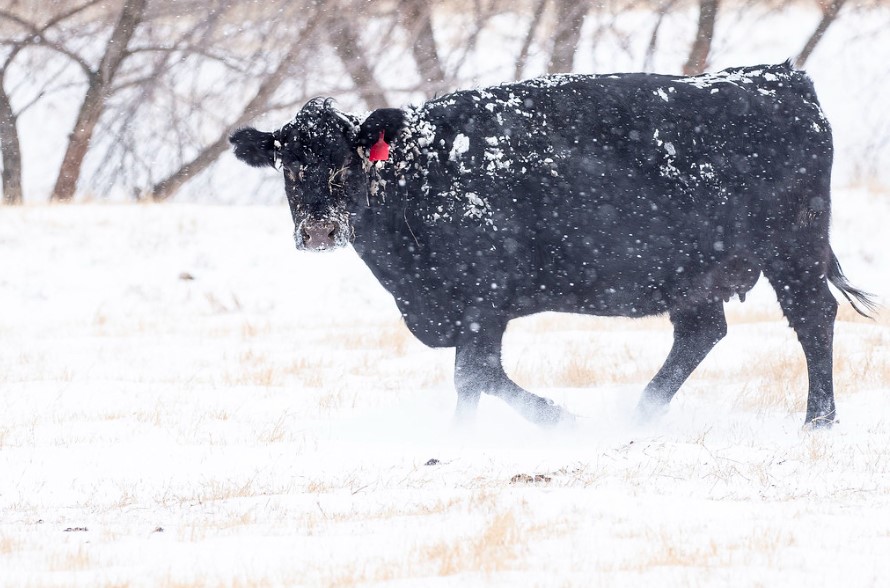
By Gail Ellis
A new round of Oklahoma State University Extension Rancher's Thursday Lunchtime Series webinars kick off Nov. 17, focusing on wintering cows with limited forage.
The OSU Extension beef cattle team will join experienced ranchers and scientists to share valuable information on production, management and marketing in the current drought. The following sessions are free and begin at noon.
November 17
December 1
December 8
December 15
Registration is required. For more information, contact David Lalman at 405-744-6060 or david.lalman@okstate.edu.OSU Extension uses research-based information to help all Oklahomans solve local issues and concerns, promote leadership and manage resources wisely throughout the state's 77 counties. Most information is available at little to no cost.
Thu, 10 Nov 2022 03:37:56 CST
OKC West Livestock Auction - El Reno, OK
Wed Nov 9, 2022
AUCTION
This Week 8,982
Last Reported 8,239
Last Year 10,869
Feeder steers sold 2.00-4.00 lower. Feeder heifers traded 1.00-3.00 lower on limited comparable sales. Demand moderate for feeders. Steer and heifer calves sold steady to firm. Demand moderate to good as buyer interest was wide spread for different types of calves, from weaned to un-weaned along with a variety of weight classes. All cattle quoted as Value Added are either part of the Oklahoma Quality Beef Network or the Integrity Beef Alliance cattle programs. These cattle have been long weaned with multiple rounds of shots and third party verified. Supply included: 100% Feeder Cattle (59% Steers, 38% Heifers, 2% Bulls). Feeder cattle supply over 600 lbs was 59%.
FEEDER CATTLE
STEERS - Medium and Large 1 (Per Cwt / Actual Wt)
Head Wt Range Avg Wt Price Range Avg Price
39 311 311 230.00 230.00
19 302 302 262.50 262.50 Fancy
46 370-391 386 210.00-225.00 221.88
22 358-373 364 250.00-260.00 255.81 Fancy
32 419 419 201.00 201.00
9 413 413 219.00 219.00 Value Added
220 451-485 468 195.00-210.00 203.84
32 473-489 485 213.00-220.00 214.92 Fancy
19 465 465 195.00 195.00 Unweaned
145 500-540 512 189.00-203.00 193.70
12 547 547 170.00 170.00 Unweaned
97 504-546 518 180.00-203.00 197.05 Value Added
171 554-596 575 170.00-182.00 177.85
70 550-574 557 195.00 195.00 Fancy
21 559 559 157.00 157.00 Fleshy
114 552-592 575 173.50-197.00 177.28 Value Added
157 610-625 621 180.00-184.00 182.78
49 610-638 621 177.00-187.00 179.15 Value Added
275 655-697 671 173.50-183.50 178.93
118 672-699 681 177.50-181.50 179.85 Value Added
283 700-740 717 173.25-179.00 174.65
27 718 718 164.00 164.00 Unweaned
127 704-725 717 172.00-179.00 176.44 Value Added
For the complete market report from USDA Market News click on the PDF link below:
To listen to KC Sheperd and Blayne Arthur talking about the third Emergency Drought Meeting, click below.
At the third meeting of the Emergency Drought Commission on November 9, KC Sheperd, Farm Director, got the chance to visit with Oklahoma Secretary of Agriculture, Blayne Arthur, about the biggest takeaways from the meeting.
"It was great to have the public input that we had today at the emergency drought commission meeting," Arthur said.
At the meeting, Arthur said producers voiced their concerns and talked about how they have been impacted by the drought.
"I think the drought commission heard those challenges today and worked toward fixing some of those and hopefully can get more of these dollars out the door in a better fashion and do good things for the producers that need them," Arthur said. "Certainly, we have heard this drought is ongoing, and the need is out there. We have had 8 million dollars that have already gone out the door, which I think gave us some time to see how the program was working, and what things might come up that we weren't aware of."
At the meeting, another 12 million dollars was appropriated for the drought commission to disperse.
The drought commission has a tough job, Arthur said, because while they want to distribute the funds quickly for farmers and ranchers, they also have to make sure that taxpayer dollars are spent in an appropriate fashion.
"I don't think we can get them out the door fast enough for many of our producers, so I think there was a real focus on that today, I have heard that certainly from legislators, and I know they will go to work to make that happen," Arthur said.
Individuals who did not apply for initial funding in their district, or did not receive funding with their first application, Arthur said, will be eligible to receive funds from the additional 12 million dollars.
For those who already applied and did not receive funding the first time, Arthur said they will not be required to reapply to receive these funds. Clarification was provided to all districts that applications from all practices will be accepted, Arthur added.
"Some districts made the decisions locally to not take applications for certain practices based on their area, so we want all of those to be taken," Arthur said.
There was also discussion on funding individuals who may have already self-funded a drought-related project or issue before the drought commission funds were available.
"Some producers who were proactive- we don't want to discount them, so they can be part of this funding as well," Arthur said.
A majority of the funding so far has been directed toward livestock producers because of the immediate need, Arthur said, but she is hopeful to address the needs of crop producers as well.
"We will still have some more meetings," Arthur said. "There are 4.5 million dollars left right now in that emergency drought relief fund. We did set a date of November 28 for this next round of funding to be the deadline for applications to be taken, so I would anticipate we will have another drought commission meeting before the end of the year and listen again to public input, how we can do this better than before and look forward to getting those dollars out to all across the districts here in Oklahoma."
As for the opportunity to serve Oklahoma for another four years as Secretary of Agriculture, Arthur said she is thankful for the opportunity.
"I certainly am very proud to be able to work here at the Department of Ag, Food, and Forestry and work with all of our staff and our team here, but ultimately represent farmers and ranchers here in Oklahoma," Arthur said. "I don't think there is any better job that anyone could have, so very pleased to have this opportunity to work in this capacity for Governor Stitt.
Wed, 09 Nov 2022 15:03:59 CST
The U.S. Department of Agriculture and the Oklahoma Department of Agriculture are now putting the Daily Cash Grain Report into a PDF format - we are saving that PDF and archiving them for today's specific report. To see today's update, click on the PDF report link at the bottom of this story.
In addition to the PDF of the daily report, you can also listen to the Cash Grain Report by calling 405-621-5533. Push 2 for the grain report.

Listen to today's report with Justin Lewis, by clicking or tapping on the LISTEN bar above.

In an intentional commitment to support the global fight against climate change, the U.S.
Grains Council (USGC), Renewable Industries Canada (RICanada), UNICA (Brazilian
Sugarcane and Bioenergy Industry Association), UNEM (National Corn Ethanol Union)
and ePURE (European Renewable Ethanol Association) have come together today to
underscore the importance of sustainable crop-based biofuels, such as renewable
ethanol.
The leaders of each organization issued a joint statement, declaring:
As the world's leading ethanol associations representing producers across the globe,
we are unified in our efforts to support the global energy transition and reduce
greenhouse gas (GHG) emissions. Renewable ethanol's benefits to the environment,
energy security, and human health, underscores its essential role in global efforts to
reach net zero by 2050 and beyond.
As countries seek to achieve their Paris Agreement commitments, the use and
implementation of renewable ethanol can offer immediate reductions of GHG emissions
within the on-road transportation sector. Moreover, technological advancements and the
adoption of more sustainable farming practices continue to lower ethanol's overall
carbon intensity score while further increasing production, making ethanol the most
effective and readily available renewable transportation fuel.
Numerous factors including rising oil prices and the war in Ukraine have driven the cost
of energy to historic highs, forcing countries to balance the need to cut their GHG
emissions at the expense of achieving energy security and stabilizing fuel prices.
Ethanol-blended fuels historically lower gasoline prices while reducing reliance on
foreign oil and improving the supply of energy. Ethanol also broadens job opportunities
in the agricultural, energy and transportation sectors, opening areas for countries to
enhance climate cooperation and bolster positive trade relations. Renewable ethanol
production also contributes to food and feed production, as well as supporting the
economic viability of farmers around the world. Ethanol's abundance and affordability
make it a clear choice for countries that seek solutions to current energy security and
inflationary economic factors.
Fuels blended with ethanol are proven to decrease harmful air pollutants that contribute
to negative health effects. Ethanol's ability to be used directly in current global vehicle
fleets and existing fueling infrastructure, make it an immediate and practical solution for
countries seeking to improve air quality and human health.
Ethanol is also a critical partner in decarbonizing hard to electrify sectors such as the
aviation industry. As the demand for low carbon, sustainably produced feedstock
continues to rise, the aviation sector can utilize biofuels such as renewable ethanol to
produce sustainable aviation fuels (SAF), demonstrating ethanol's role as a futurefacing renewable liquid fuel.
Our organizations remain committed to building a sustainable future and believe that
widely available renewable ethanol serves as an immediate affordable and effective
answer to present and future environmental, energy security and human health
challenges. While our organizations work across a range of sustainably grown
feedstocks, with regional characteristics and specific production models, we understand
that tackling climate change demands an all-of-the-above approach and that crop-based
biofuels such as renewable ethanol are vital to decarbonize the transportation sector
and help countries reach net zero by 2050 or sooner.
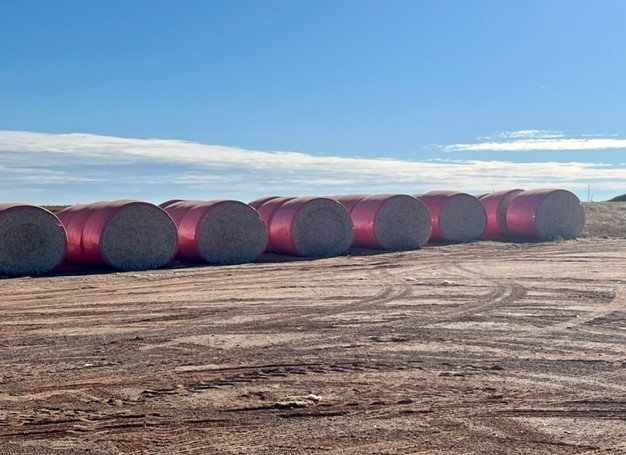
COTTON: November Oklahoma Cotton Production Estimates Decline from October – Now Down 69 Percent from 2021.
All cotton production is forecast at 14.0 million 480-pound bales, up 2 percent from the previous forecast but down 20 percent from 2021. Based on conditions as of November 1, yields are expected to average 855 pounds per harvested acre, up 13 pounds from the previous forecast and up 36 pounds from 2021. Upland cotton production is forecast at 13.6 million 480-pound bales, up 2 percent from the previous forecast but down 21 percent from 2021. Pima cotton production is forecast at 470,000 bales, up less than 1 percent from the previous forecast and up 42 percent from 2021. All cotton area harvested is forecast at 7.88 million acres, unchanged from the previous forecast but down 23 percent from 2021.
Oklahoma upland cotton area harvested is forecast at 310,000 acres as of November 1, which is unchanged from the last two month's estimates and 30 percent less area harvested than in 2021 at 440,000 acres. As for pounds per acre, the November 1 estimate of 325 pounds per acre is down from the October forecast of 341 pounds per acre and about 57 percent lower than 2021, which was 756 pounds per acre. Oklahoma is forecasted to produce 210,000 bales, down from last month's estimate of 220,000 bales and down about 69 percent from 2021's production of 693,000 bales.
In Texas, as of November 1, USDA predicts the cotton area harvested for 2022 to be 2.53 million acres, unchanged from the last two month's estimates, and 55 percent less than last year's area harvested at 5.56 million acres. Yield per acre is predicted to be 635 pounds per acre, which is down from last month's estimate of 654 pounds per acre, and down from last year's yield per acre, which was 666 pounds. For 2022, the USDA predicts Texas will produce 3.3 million bales, which is down from last month's forecast of 3.4 million bales, but about 57 percent less than in 2021. (7.7 million bales).
In Kansas, the USDA predicts the cotton area harvested for 2022 to be 152,000 acres, 49 percent greater than in 2021 at 102,000 acres. Yield per acre is predicted to be 553 pounds per acre, which is up from last month's estimate of 537 pounds per acre, but down from last year's 880 pounds per acre. For 2022, the USDA predicts Kansas will produce 175,000 bales, which is down 6 percent from 2021's 187,000 bales.
CORN: Oklahoma and Texas 2022 Production Estimates Lower from October
All corn production for grain is forecast at 13.9 billion bushels, up less than 1 percent from the previous forecast but down 8 percent from 2021. Based on conditions as of November 1, yields are expected to average 172.3 bushels per harvested acre, up 0.4 bushel from the previous forecast but down 4.4 bushels from last year. Area harvested for grain, forecast at 80.8 million acres, is unchanged from the previous forecast but down 5 percent from the previous year.
Oklahoma corn harvested for grain is forecast at 305,000 acres, which is unchanged from last month and 3.2 percent more than in 2021 at 295,000 acres. In 2021, Oklahoma averaged 150 bushels per acre. As of November 1, USDA estimates Oklahoma to yield 122 bushels per acre, down from the October forecast of 125 bushels per acre. Total corn production for Oklahoma is forecasted to be 37.2 million bushels, which is down from the October estimate of 38.1 million bushels and about 16 percent lower than the 2021 Oklahoma corn production of 44.2 million bushels.
Over in Texas, the USDA predicts corn harvested for grain to be at 1.78 million acres, unchanged from last month and 4 percent less than in 2021 at 1.8 million acres. As of November 1, Texas is forecasted to yield 94 bushels per acre- 6 bushels per acre less than the October forecast and about 27 percent lower than the 2021 yield of 128 bushels per acre. Corn production for Texas is estimated to be 167.3 million bushels, which is down from the October estimate of 178 bushels and about 29 percent less and in 2021 at 236.8 million bushels.
In Kansas, as of November 1, the USDA predicts 5.15 million acres of corn to be harvested for grain, which is unchanged from the last two months and is about 5 percent less than in 2021 at 5.4 million acres. As of November 1, Kansas is forecast to yield 115 bushels per acre, unchanged from the October estimate and down 17 percent from 2021 at 139 bushels per acre. Lastly, for 2022, Kansas is forecasted to produce 592.25 million bushels of corn, which is unchanged from the October estimate and 21 percent less than in 2021 at 750.6 million bushels.
SOYBEANS: Soybean Production in Texas Estimated Higher in 2022- Lower in Oklahoma and Kansas
Soybean production for beans is forecast at 4.35 billion bushels, up 1 percent from the previous forecast but down 3 percent from last year. Based on conditions as of November 1, yields are expected to average 50.2 bushels per harvested acre, up 0.4 bushel from the previous forecast but down 1.5 bushels from 2021. Area harvested for beans in the United States is forecast at 86.6 million acres, unchanged from the previous forecast but up less than 1 percent from 2021.
In Oklahoma, the soybean area harvested is forecast at 525,000 acres, down 1.8 percent from the 2021 acres harvested of 535,000. Yield per acre is forecasted at 17 bushels per acre, up from last month's estimate of 16 bushels per acre, and down 30.4 percent from 2021, which was 23 bushels per acre. As of November 1, USDA estimates soybean production in Oklahoma will yield 8.9 million bushels, up from the October estimate of 8.4 million bushels and down about 27 percent from 2021's production of 12.3 million bushels.
Over in Texas, the soybean area harvested is forecast at 140,000 acres, which is the same as the October estimate and up from 2021's harvested acreage of 100,000 acres. As of November 1, yield per acre is estimated at 31 bushels per acre, down from the October estimate of 33 bushels per acre and down 22 percent from the 2021 yield of 38 bushels per acre. USDA estimated soybean production in Texas will yield 4.3 million bushels, up 14.2 percent from 2021's yield of 3.8 million bushels.
In Kansas, the soybean area harvested is forecast at 5 million acres, unchanged from the October 1 estimate and up from 2021's 4.8 million harvested acres. Yield per acre is forecasted at 28 bushels per acre as of November 1, which is unchanged from the October 1 estimate and down 30 percent from the 2021 yield of 40 bushels per acre. USDA estimates soybean production in Kansas will yield 40 million bushels, unchanged from last month's estimate and down 27 percent from the 2021 soybean production of 192 million bushels.
November Crop Production Report https://release.nass.usda.gov/reports/crop1122.pdf
The U.S. Department of Agriculture (USDA) began mailing ballots this week for the Farm Service Agency (FSA) county and urban county committee elections to all eligible agricultural producers and private landowners across the country. Elections are occurring in certain Local Administrative Areas (LAA) for these committee members who make important decisions about how federal farm programs are administered locally. Producers and landowners must return ballots to their local FSA county office or have their ballots be postmarked by Dec. 5, 2022, in order for those ballots to be counted.
"County committees provide an opportunity for producers to play a meaningful role in delivering farm programs, but in order for county committees to be effective, they must truly represent all who are producing," said FSA Administrator Zach Ducheneaux. "Voting in these elections is your opportunity to help ensure our county committees reflect the diversity of our agriculture. Your voice and vote matter, don't miss your chance to cast your ballot."
Producers must participate or cooperate in an FSA program to be eligible to vote in the county committee election. A cooperating producer is someone who has provided information about their farming or ranching operation but may not have applied or received FSA program benefits. Additionally, producers who are not of legal voting age but supervise and conduct farming operations for an entire farm are eligible to vote in these elections.
Each committee has from three to 11 elected members who serve three-year terms, and at least one seat representing an LAA is up for election each year. Ballots must in the mail or delivered in person by close of business Dec. 5, 2022, to be counted. Newly elected committee members will take office Jan. 1, 2023.
Producers can find out if their LAA is up for election and if they are eligible to vote by contacting their local FSA county office. Eligible voters who do not receive a ballot in the mail can request one from their local FSA county office. Visit farmers.gov/service-locator to find your local USDA Service Center and fsa.usda.gov/elections for more information.
Urban and Suburban County Committees
The 2018 Farm Bill directed USDA to establish county committees specifically focused on urban agriculture.
Urban committee members are nominated and elected to serve by local urban producers in the same jurisdiction. Urban county committee members will provide outreach to ensure urban producers understand USDA programs and serve as the voice of other urban producers and assist in program implementation that support the needs of the growing urban community.
Urban and suburban county committees in the following cities will hold elections this year: Phoenix, Atlanta, New Orleans, Minneapolis-St. Paul, St. Louis, Albuquerque, Cleveland, Portland, Philadelphia, Dallas, and Richmond. These elections will serve local urban producers in the same jurisdiction. A fact sheet on the urban county committee election and a list of eligible cities can be found at fsa.usda.gov/elections.
Over the summer, USDA announced six new urban county committees in Chicago, Detroit, Grand Rapids, Los Angeles, New York City, and Oakland. The nomination period for these locations began Oct. 21 and will end on Dec. 2, 2022. Elections will be held from Jan. 3 through Jan. 31, 2023. Learn more at farmers.gov/urban.
More Information
USDA touches the lives of all Americans each day in so many positive ways. In the Biden-Harris administration, USDA is transforming America's food system with a greater focus on more resilient local and regional food production, fairer markets for all producers, ensuring access to safe, healthy and nutritious food in all communities, building new markets and streams of income for farmers and producers using climate smart food and forestry practices, making historic investments in infrastructure and clean energy capabilities in rural America, and committing to equity across the Department by removing systemic barriers and building a workforce more representative of America. To learn more, visit usda.gov.
USDA is an equal opportunity provider, employer and lender.

The November WASDE (World Agricultural Supply and demand estimates) was released today. Farm Director, KC Sheperd, visited with Allendale's Rich Nelson about the latest report.
"A lot of us would suggest that perhaps USDA did more or less pass the buck in terms of making substantial changes to some of the areas in the ballot sheet," Nelson said.
Production numbers, for the most part, Nelson said, have wrapped up, so on the next report in January, the focus will be on demand.
On the wheat side of things, Nelson said there were not any changes seen for production on this report, which he says is not uncommon.
"They laid low on the production side, they made moderate changes to food and seed, but they did not address maybe some moderate concerns about exports," Nelson said. "So, in future reports, that might be adjusted."
Production changes for wheat in Argentina were made, Nelson said, and lowered by 2 million tons, which was expected. A little surprise, he added, was that the USDA raised production estimates of Australia's crop despite the excess rains received.
With headwinds such as barge traffic on the Mississippi and the Russia and Ukraine war impacting the markets, Nelson said wheat should not be affected in the short term.
"The positive side for wheat, at least, is we only ship out about 12 to 13 percent of our product out of the gulf, so far, this is only going to be a corn issue," Nelson said.
Listen to KC's full conversation with Rich Nelson below:
You can access full reports here:
WASDE Report Released November 9, 2022 https://www.usda.gov/oce/commodity/wasde/wasde1122.pdf
U.S. Crop Production Report Released November 9, 2022https://release.nass.usda.gov/reports/crop1122.pdf
USDA on Wednesday went against the pre-report estimates and slightly bumped up both corn and soybean production.
USDA increased corn production 35 million bushels (mb) to 13.93 billion bushels (bb). On soybeans, production was increased 33 mb to 4.346 bb.
WHEAT
USDA estimates U.S. wheat ending stocks at 571 mb in November, a slight drop from October's estimate of 576 mb. It is still the lowest U.S. ending wheat stocks in 15 years.
U.S. wheat use is estimated at 1.87 bb, up from 1.86 bb in October.
Wheat exports were left unchanged at 775 mb. USDA left the farmgate price of wheat at $9.20.
Wheat world ending stocks were estimated at 267.8 mmt, an increase from 267.5 mmt in October.
USDA estimates global wheat production at 782.7 mmt, up from 781.7 mmt in October.
USDA estimates wheat production in Argentina at 15.5 mmt, down from October estimates. Wheat production in Australia was estimated at 34.5 mmt, an increase from last month. Argentina has been suffering from dry conditions while eastern Australia has seen flooding.
Wheat production in Russia was left unchanged at 91 mmt. Ukraine wheat production was left unchanged at 20.5 mmt. Wheat exports from Russia were unchanged at 42 mmt, as were Ukraine exports at 11 mmt.
World wheat ending stocks were raised minimally, from 267.5 to 267.8 million tonnes. Increases were noted for Australia. Despite excess moisture concerns they were raised by 1.5 mt. Other increases were noted for Kazakhstan and the UK. The trade would certainly agree with their 2 mt decline for Argentina to now 15.5 due to dryness
CORN
Production for the 2022-23 corn crop was pegged at 13.930 bb, a three-year low. USDA increased the yield by .4 bushels per acre (bpa) to 172.3 bpa. That went against the average expectations in pre-report estimates.
Total supply was increased to 15.357 bb with the rise in production.
USDA also increased Feed and Residual use by 25 mb to 5.3 bb. Total domestic use was bumped up by that 25 mb to 12.025 bb.
On exports, USDA also surprised the trade expectations by holding firm at 2.15 bb, despite lower-than-normal export sales.
Total use came in at 14.175 bb. That put ending stocks at 1.182 bb, up 10 mb from last month.
The farmgate price was pegged at $6.80 per bushel, the same as October.
Globally, USDA bumped up 2022-23 beginning stocks by .67 million metric tons (mmt) to 307.68 mmt. Total production was lowered slightly, .35 mmt, to 1,168.39 mmt. Global ending stocks for 2022-23 were lowered .43 mmt to 300.76 mmt.
Brazil's production was held firm at 126 mmt for 2022-23. Argentina was held at 55 mmt as well. USDA lowered production from South Africa by .6 mmt to 16.70 mmt. Ukraine's production was maintained at 31.5 mmt and exports at 15.5 mmt, the same as October.
SOYBEANS
USDA boosted the national average soybean yield to 50.2 bpa while leaving harvested acreage unchanged at 86.6 million. The higher yield translated into a 33-million-bushel boost in production to 4.346 bb.
On the demand side, USDA sees higher crush, by 10 mb, but left all other categories unchanged. Ending stocks for 2022-23 increased to 220 mb, up 20 mb from October's estimates. The national average farm gate price was left unchanged at $14 per bushel.
Globally, USDA raised 2022-23 ending stocks by 1.65 mmt to 102.17 mmt. To arrive at that number, USDA raised beginning stocks, which are also ending stocks for the 2021-22 marketing year, by 2.29 mmt to 94.67 mmt.
USDA reduced its forecast for Argentina's upcoming soybean crop by 1.5 mmt to 49.5 mmt but left Brazilian production unchanged at 152 mmt.
New crop world stocks were raised from 100.5 to 102.2 million tonnes. Delayed soybean planting and the current moisture profile encouraged them to lower Argentina by 1.5 mt to now 49.5. There were no changes for estimates of China.
LIVESTOCK
Wednesday's WASDE report was mostly supportive for the cattle and beef markets. Beef production for 2022 was raised by 211 million pounds, as aggressive throughput on fed cattle, combined with heavier carcass weights, contributes more beef to the market. Beef production for 2023 was decreased by 90 million pounds as the market expects fewer cows to be slaughtered and there to be tighter fed cattle supplies. Quarterly steer prices for 2022's fourth quarter jumped by $4.00 from last month to average $152.00. First-quarter 2023 steer prices are anticipated to average $153 (up $2.00 from last month) while second quarter prices in 2023 are anticipated to average $154 (also up $2.00 from last month).
Beef imports for 2022 fell by 13 million pounds, but exports also fell by 29 million pounds as the Asia markets aren't expected to buy as aggressively through the end of the year. Beef imports for 2023 remained steady at 3,350 million pounds and exports held steady at 3,070 million pounds.
Wednesday's WASDE report shared mostly supportive news for both the pork and hog markets. Pork production for 2022 was decreased by 27 million pounds as recent production speeds have waned. Quarterly hog prices for the fourth quarter of 2022 gained $1.00 from last month to average $64.00. Hog prices in the first quarter of 2023 are expected to average $63.00, and prices in the second quarter of 2023 are expected to average $71.00, both of which were steady with last month's report. Pork imports for 2022 fell by 53 million pounds, exports grew by 20 million pounds. For 2023, pork imports fell by 95 million pounds, but exports remained steady.
Cattle producers are the original stewards of land and livestock and are constantly striving to improve their operations through education and professional development. To help reduce the financial burden of attending conventions and meetings, the National Cattlemen's Foundation and Cargill created the Rancher Resilience Grant, which is administered by the National Cattlemen's Beef Association. The grant reimburses producers for registration fees and other expenses at specific educational events, including Cattlemen's College during the 2023 Cattle Industry Convention & NCBA Trade Show in New Orleans.
"Our industry continually explores technologies and production practices to support more efficient operations that focus on profitability and consistent high-quality beef," said NCBA Senior Executive Director of Producer Education Josh White. "It's exciting to see industry partners come together through a shared commitment to promote the long-term economic wellbeing of farmers and ranchers across the beef value chain while also improving our product and our care for livestock and natural resources."
Since the program began in 2020, the Rancher Resilience Grant has provided financial support and educational opportunities for hundreds of producers to attend events across the country. Past participating events include Cattlemen's College, the Beef Improvement Federation Symposium, the National Grazing Lands Coalition Conference, Stockmanship and Stewardship regional events, King Ranch Institute for Ranch Management events, and many more.
The educational events supported by the Rancher Resilience Grant are in place to provide practical tools to help cattle producers manage market shifts, mitigate financial risks, manage natural resources and withstand extreme weather events. Past grant recipients say they not only found the content of the events to be educational, but they also took away action items to implement back home.
"Attending the convention and Cattlemen's College gave me new ideas on how to improve and grow my operation," one grant recipient shared about his experience. "Since returning home I have revised my grazing plan, with the hope to not only improve forage quality but also extend our grazing period."
Producers can apply for the grant to attend the 2023 Cattlemen's College and, if selected, will receive a reimbursement of $1,097 to offset expenses. For more information and to apply, visit www.ncba.org/producers/rancher-resilience-grant.

Join hundreds of farmers and ranchers as they gather for the 2022 Oklahoma Farm Bureau Annual Meeting Nov. 11-13 at the Embassy Suites in Norman, Oklahoma. Throughout the three-day event, the state's leading agricultural organization will honor its top members and county Farm Bureaus, set grassroots policy for 2023, elect leaders and more.
Highlights include:
Remarks from Rep. Markwayne Mullin (Friday afternoon)
Farm Bureau policy development sessions (Saturday morning and afternoon)
Election of OKFB District 6 director (Saturday afternoon)
Recognition of the 2022 OKFB District Farm and Ranch Families (Saturday evening)
Naming the top young farmer and rancher (Saturday evening)
Trade show featuring agricultural and other vendors (Friday and Saturday)
Worship service (Sunday morning)
A complete schedule of the OKFB annual meeting is available at okfb.news/Meeting22. For more information, please contact Rachel Havens at rachel.havens@okfb.org or at (405) 320-0102.
Senior Farm and Ranch Broadcaster, Ron Hays, got the chance to visit with Matt Copeland, U.S. Meat Export Federation representative in Africa. Copeland talks about his involvement with USMEF over the last several years.
"It is a wonderful privilege to represent the USMEF in Africa," Copeland said.
Copeland is responsible for all countries in Africa aside from Egypt.
"A lot of what we do is building a base that we can trust," Copeland said.
The main goal of Copeland's work, he said, is making sure that U.S. meat products are making it onto as many tables as possible in Africa. Part of this process, he said, involves analysis of how to prove that U.S. meat items are of more value than competitors from other countries.
"That is really just a protein deficiency in Africa that we are trying to balance," Copeland said. "To go one step further, obviously, we have wonderful manufacturing processors in the country who can make incredible bacons, beef burgers with U.S products in-country, and then from there, we can probably go up to maybe differentiating on intensely grain-fed animals."
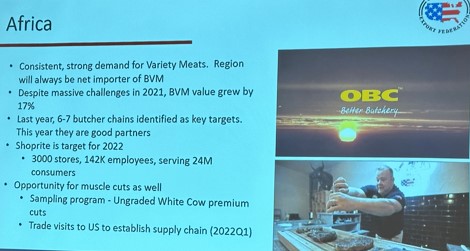
Copeland also talked about a USDA mission in Kenya he took part in recently.
"It was the first time that agri-trade mission had gone into Kenya," Copeland said. "I will say, my two biggest takeaways from there were we always think that food security is a long way off and managing logistics to an end consumer in rural third-world Africa has always seemed like a task that we probably wouldn't solve."
On the contrary, Copeland said through the trade mission, he saw many possibilities for Kenyans to gain access to resources they have had trouble accessing in the past.
"Firsthand, I experienced a company called Copia, and what they are doing is quite incredible," Copeland said. "They have 1.5 million users on their platform, they are processing about 40,000 orders a day, and they are delivering to 38,000 selling points in rural Kenya. What that means is you are empowering a Kenyan workforce to not have to worry about having to go and fetch or take time out of their day to go use substandard routes in terms of transport, but they can actually give themselves to their careers."
This experience, Copeland said, is proof that there is potential for more accessibility through meat export as well. Delivery convenience bringing food security closer to Kenyans was moving, he added.
Click the listen bar above the story to listen to Ron's full interview with USMEF's Matt Copeland.
Senior Farm and Ranch Broadcaster, Ron Hays, is visiting again with the president and CEO of the United States Meat Export Federation, Dan Halstrom, talking about key players in accomplishing success in beef exports.
"There was some optimism a week ago that China was about to change their zero-COVID policy," Halstrom said. "That zero-COVID policy is making it extremely difficult to plan things as simple as a promotion. We have had many different promotions in different provinces that have been delayed or canceled because of a positive COVID case."
A week ago, at the Shanghai Disney, Halstrom said one positive COVID case resulted in 7,000 people being tested for COVID at the facility that day. That led to another 70,000 close contact individuals that were tracked down, he added, as a result of being in contact with those 7,000 individuals.
"That was from one positive case," Halstrom said. "So, this is the uncertainty in China that is becoming a little bit difficult for the market to bear, I think. That being said, we were still 23,000 tons of U.S. beef in September, up 5 to 6 percent from a year ago, so that business continues to be really strong, and the question is how long that will last."
In 2021, China, South Korea, and Japan had two billion dollars worth of beef exports from the United States. In 2022, Japan is not performing quite as well.
"I can really point at two reasons for that," Halstrom said. "Number one is the headwinds on exchange rate. We already have a duty of 24 to 25 percent going in, and then you add 30 percent devalue to a yen versus the dollar, and you are getting up there."
Another challenge in Japan, Halstrom said, is that food service is not back to normal.
"They lifted the last emergency declaration on COVID in Japan at the end of April," Halstrom said. "There are no directives saying that you can't go out. In fact, there is really no directives on masks, even though everyone still wears them."
Halstrom said people in Japan have not adjusted to going back into food service fully yet. The desire to have minimal contact is changing slowly, he added, but not back to normal.
"At some point, food service will see a rebound in Japan, and when that happens, we will have a bit of a tailwind for a change there," Halstrom said.
A lot of work has been put into the beef market in Japan for decades, Halstrom said, which deserves recognition.
"We just had our 40th-anniversary celebration a few months ago in Japan, and it is a testament to the fact that these markets do not develop overnight," Halstrom said. "It takes years and literally decades of work from a lot of different organizations and individuals to have this sort of success."
Last year, Halstrom said the U.S had three two-billion-dollar export markets in Korea, Japan and China. Now, Halstrom said the next question is which country will be the next billion-dollar export market.
"The world is evolving, the middle class is growing, and demand, I would argue, has never been better," Halstrom said.
The tone right now, Halstrom said, is cautiously optimistic, but he expects that to continue. Halstrom said he predicts growth from 4 to 5 percent, which would be a new record, volume-wise.
"On the value side, we are still thinking it is possible we could hit the 12 billion mark," Halstrom said. "If we don't, we could be pretty close- an undoubtedly new record over last year's 10.6 billion. We have headwinds, and we have challenges, but that is nothing new. The industry is used to that. The outlook is still pretty positive."
Click the LISTEN BAR above the story to listen to Ron Hays and Dan Halstrom talking U.S. Beef Export Outlook.
The Beef Buzz is a regular feature heard on radio stations around the region on the Radio Oklahoma Network and is a regular audio feature found on this website as well. Click on the LISTEN BAR below for today's show and check out our archives for older Beef Buzz shows covering the gamut of the beef cattle industry today.
Oklahoma's Natural Resources Conservation Service (NRCS) Acting State Conservationist, Amanda Mathis, has announced the agency is accepting applications for Environmental Quality Incentive Program (EQIP). Oklahomans whose land use includes cropland, rangeland, pasture and private non-industrial forestland are eligible to apply. The deadline for applying in the current batching period is December 9, 2022.
Those applying for EQIP must:
It is important to note that starting a practice prior to written contract approval will result in the ineligibility of that practice for EQIP assistance unless a waiver has been approved. Additional restrictions and program requirements may apply.
Oklahoma's state priorities are developed annually from input from local workgroups based on county resource assessments and individual plans to address those local needs. The State Technical Committee comprised of representation from these local work groups, Tribal groups, commodity groups, and conservation partners advise NRCS on the implementation of EQIP.
The following national priorities, consistent with statutory resources concern that include soil, water, wildlife, air quality, and related natural resource concerns, may be used in determining EQIP priority implementation:
EQIP activities are carried out according to a site-specific conservation plan developed in conjunction with the producer. All conservation practices are installed according to NRCS technical standards. Oklahoma's producers may elect to use an approved technical service provider for technical assistance.
While EQIP applications are accepted on a continuous basis, NRCS establishes application "cut-off" or submission deadline dates for evaluation, ranking and approval of eligible applications. EQIP is open to all eligible agricultural producers and submitted applications may be considered or evaluated in multiple funding pool opportunities.
Oklahoma producers who apply are responsible for completing and filing all application and eligibility paperwork as required. If funded, participants are required to sign a contract and agree to implement the planned conservation practices to NRCS standards and specifications as scheduled.
The 2018 Farm Bill provides for voluntary participation, offers incentives, and focuses on equity in accessing U.S. Department of Agriculture programs and services. Oklahoma is committed to reaching out to historically underserved individuals and groups. Historically underserved participants may also receive higher payment rates in addition to being considered in high priority funding pools. The Agriculture Improvement Act of 2018 (2018 Farm Bill) includes provisions that address the unique circumstances and concerns of socially disadvantaged, beginning, limited resource, and veteran farmers and ranchers. Enhancements include increased payment rates and advance payments of up to 50 percent to purchase materials and services needed to implement conservation practices included in their EQIP contract.
Visit the USDA New Farmers website (newfarmers.usda.gov) for tips on getting started. For Information on Ranking Criteria, Screening, Eligible Practices, and Approved Payment Rates see County, Statewide, and National Initiatives web pages at NRCS National EQIP
To apply for EQIP, producers should contact their local NRCS field office, to be considered in the current application period ending December 9, 2022.
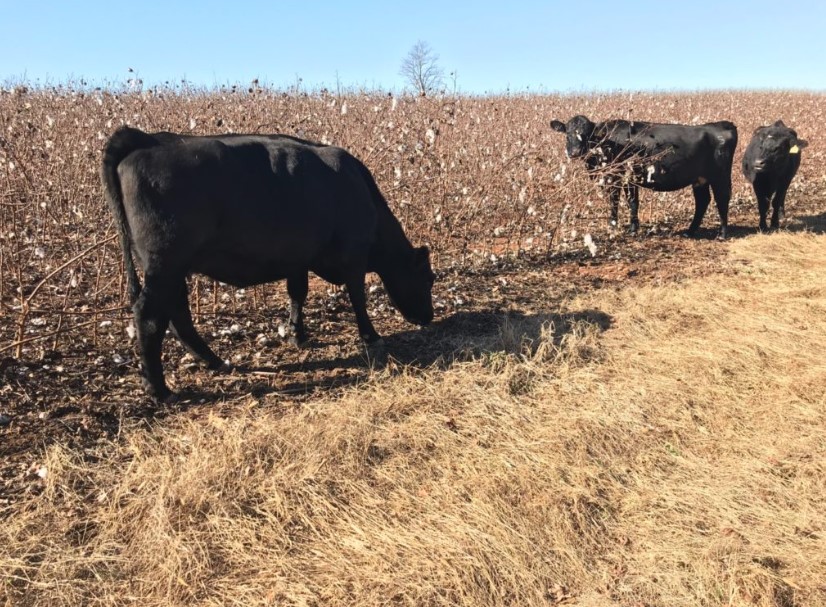
Weekly, Oklahoma State University Extension Beef Cattle Nutrition Specialist Paul Beck offers his expertise on the beef cattle industry. This is a part of the weekly series known as the "Cow-Calf Corner" published electronically by Beck. Today, he talks about the value of cotton fields or cotton residue for feeding during winter months.
Cotton gin trash is often used to replace hay fed to pregnant beef cows during the winter or as a roughage in growing and finishing cattle diets. Ginning each bale of cotton produces 150 to 200 pounds of gin trash. The gin trash consists of leaves, soil, stems, boles, burrs, lint, and cottonseed and averages 12% crude protein and 43% total digestible nutrients, which makes it adequate in protein but deficient in energy for a dry pregnant cow. Research has shown cows can maintain weight and body condition with as little as 3 pounds of grain-based supplement per day. Gin trash can contain large amounts of soil contamination and is initially unpalatable to cows, which may take several days for them to adapt and begin consuming gin trash. Because of the variability and unpalatability, intake should be closely monitored and supplemental feeding adjusted accordingly.
Large amounts of residue are left on the plant after cotton harvest. Similar to gin trash, residues include cotton lint, leaves, burrs, and unopened bolls. Cotton pickers tend to leave more residue than cotton strippers. This is an underutilized source of winter feed for dry pregnant spring-calving cows. Research in Georgia showed that dry pregnant cows can be maintained on cotton stalk residue instead of bermudagrass hay with only a slight reduction in body condition. In this research, an acre of cotton stalk residue lasted 44 days when stocked at 1 cow per acre. Cow consumed about 37 pounds of residue a day. In another study from Georgia, cows grazed cotton stalk residue along with free-choice hay. Cows were stocked at 1 cow per acre for 30-days. Total hay fed was decreased by 67% for cows grazing cotton stalks without altering weight gain or body condition scores. Analysis of the residue selectively grazed by cows showed the edible portion of the residue (the leaves, bolls, lint, and seed) were over 20% crude protein and 62% total digestible nutrients and comprised 30 to 50% of the total standing residue. Cows in this research had no adverse effects of gossypol toxicity and pesticide residues were below threshold levels.
The amount of residue varies greatly among cotton fields and in years with differing yield potential. To estimate the residue yield and the carrying capacity of the cotton field:
With hay shortages and substantial areas of failed cotton crops, grazing cotton fields or cotton residue can be a great resource to shorten the hay feeding season and reduce the hay needed to maintain cows through the winter.
Our next Rancher's Thursday Lunchtime Webinar Series will cover Wintering Cows with Limited Forage, covering this and other topics. Be sure to register for this series at
https://dasnr.zoom.us/webinar/register/WN_xPsdKmWASsqlxmtU9cRXBA

House Speaker Charles McCall, R-Atoka, issued the following statement in response to the Nov. 8, 2022, Oklahoma election results:
"Once again, the people of Oklahoma have shown through their votes that they believe Republicans are best suited to lead our state. With our marching orders in hand, we are ready to get to work moving Oklahoma forward towards a brighter future for all."
Wed, 09 Nov 2022 04:13:55 CST
Oklahoma remaned solidly red when it came to statewide races and in our US House races on Tuesday- and Oklahoma Farm Bureau's Vice President of Public Policy Steve Thompson tells senior farm and ranch braodcaster Ron Hays that "Oklahoma is very much a red state- I'd put us up against any red state in the country- and most certainly rural Oklahoma has spoke loud and clear with that" and adds that "the Governor did very well- and that was the story of the night- the top of the ticket."
Thompson says one of the factors that resonated with Farm Bureau members and others across rural Oklahoma was several of the appointees that have been working for the Governor- including Oklahoma State Secretary of Ag- Blayne Arthur.
Hays and Thompson offer an analysis of Election Day in Oklahoma- and you can hear their conversation by clicking on the LINK at the bottom of the story.
After a hotly contested campaign- Governor Kevin Stitt was reelected- defeating State School Superintendent Joy Hofmeister by a 55% to 42% margin. Stitt told supporters Tuesday night "Today, dark money lost, and the people of Oklahoma won," Stitt said in his victory speech.
Non-Doc in their report on the Stitt victory says that the Governor gave credit for his win to a higher power - "When Stitt took the stage to a rowdy room of supporters at a hotel in northwest Oklahoma City, he attributed his victory to divine intervention.
"First off, let's all give God all the praise and the glory. This really defied all natural reasoning. It really did," Stitt said. "This is proof that God has his hand on a very bright future for the great state of Oklahoma."
In other statewide elections, Lt. Gov. Matt Pinnell cruised to reelection over Democrat Melinda L. Alizadeh-Fard and Libertarian Chris Powell, whose limited campaign focused on arguing that Oklahoma does not need a lieutenant governor.
Besides the Governor's race- the State Superintendent of Public Education race was expected to be tighter than it turned out- as Republican candidate and Secretary of Education Ryan Walters will be Oklahoma's next State Superintendent of Public Instruction. Walters won almost 57 percent of the vote, beating his Democratic opponent, Jena Nelson, who garnered just 43 percent.
In the race for attorney general, Republican Gentner Drummond, who narrowly defeated current Attorney General John O'Connor in the June primary, cruised to victory over Libertarian Lydia Steele.
Rep. Todd Russ (R-Cordell) was elected state treasurer over Democrat Charles De Coune and Libertarian Gregory Sadler.
Republican Commissioner of Labor Leslie Osborn won reelection against Democrat Jack Henderson and Libertarian Will Daugherty.
Sen. Kim David won an open seat on the Corporation Commission against Democrat Margaret Warigia Bowman and independent Don Underwood.
Listen to Steve Thompson and Ron Hays as they discuss these state races, this election cycle for the State Legislature as well as Oklahoma's Congressional delegation- click on the LINK below to listen.
(Picture above from Non-Doc- as Governor Kevin Stitt waves to supporters as he declares victory at his watch party in Oklahoma City)
Ron Hays talks with OkFB's Steve Thompson about the 2022 General Election Results
Wed, 09 Nov 2022 03:44:30 CST
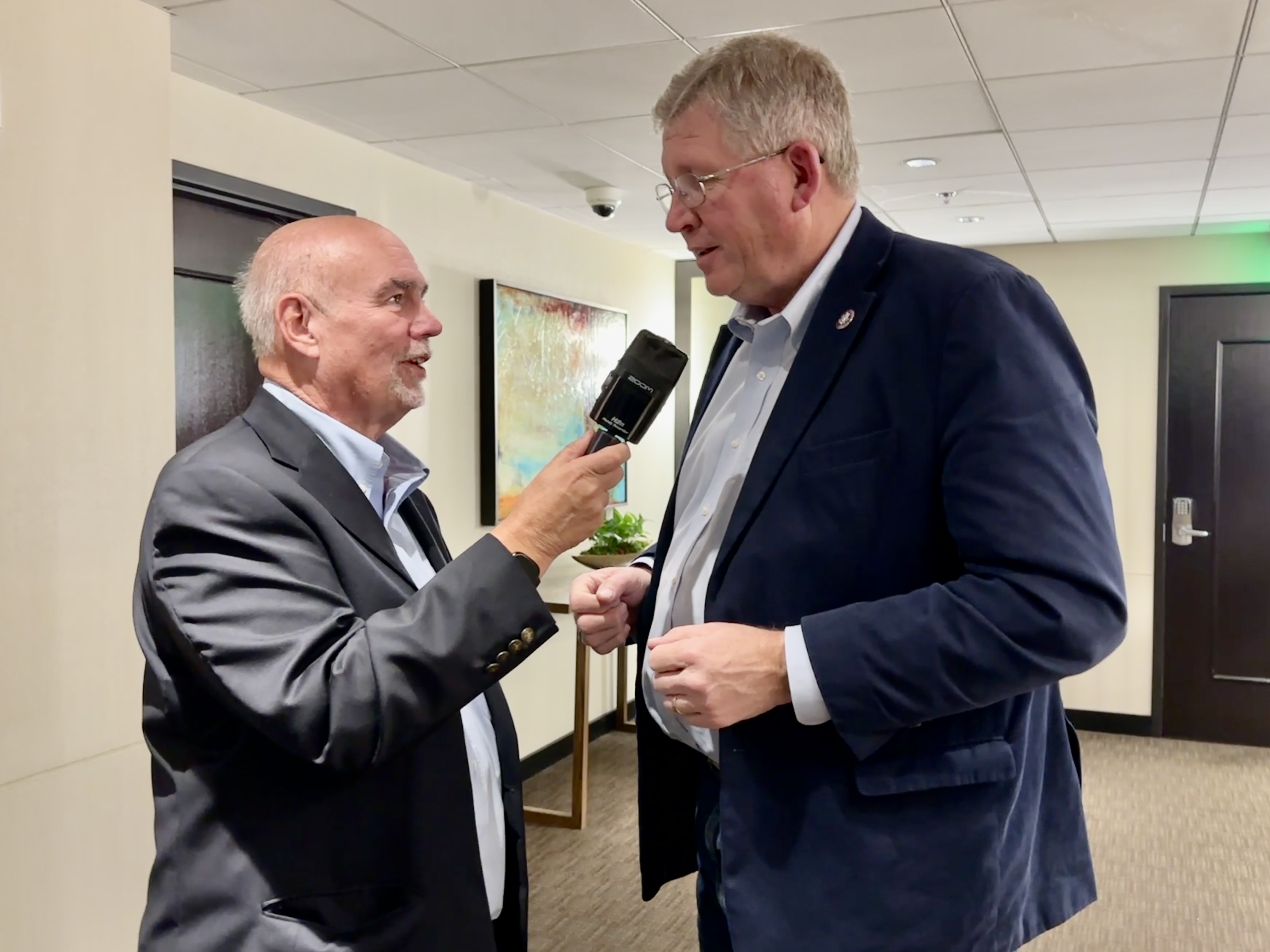
Oklahoma Congressman Frank Lucas was a part of the Red Wave in Oklahoma- something that other parts of the country did not participate in. Lucas won reelection to his third district seat with 74.45% of the vote on Tuesday- the highest winning percentage of any Oklahoma Congressional candidate. First elected to Congress in 1994- Lucas will enter 2023 as the Senior member of the Oklahoma Congressional delegation.
After the Associated Press called the race for Congressman Lucas, Senior Farm and Ranch Broadcaster Ron Hays talked with Lucas at the joint Watch Party that he and Congressman Tom Cole held in downtown Oklahoma City. Lucas says "It's always good when the folks who you have worked for and represented for a good long time now still support you and appreciate you and want to give you an opportunity to work for them."
In Oklahoma- all seven Congressional races(5 House and 2 Senate) were won by Republicans and every state wide race- including the hotly contested Governor's race- was won by the Republican nominee. Early in the evening- when Lucas was declared the winner of his race- it was still expected that the US House would be controlled by the Republicans. Several major news organizations are still projecting that will be the case- but it's not assured yet- and the margin of the majority will be razor thin based on results early Wednesday morning.
The New York Times is currently saying there is an 82% chance the GOP takes the house- and they believe that they will end up with 225 seats (needing 218 to control the House).
Around 1 AM central time- House Republican Leader Kevin McCarthy of California appeared and told the media "It is clear we are going to take the House back," McCarthy says, pointing to wins in NY. "We are on the gain in historic gains in NY." He points to wins in NY, Iowa, FL. "When we wake up tomorrow, we will be in the majority and Nancy Pelosi will be in the minority."
If that happens- Oklahoma will be making history with both Congressmen Lucas and Cole poised to become Committee Chairs in 2023. Lucas would become the Chair of the Science and Technology Committee while Cole would become Chair of the powerful Rules Committee.
Just as important for Oklahoma agriculture- being in the majority will help Congressman Lucas exercise his assurance from GOP Leadership from a couple of years ago that he could return to the House Ag Committee- preserving his senority on the Committee just as serious work gets underway to write the 2023 Farm Bill. Lucas also expects to keep his seat on Financial Services in the coming term.
What is likely to be a trillion dollar bill will be mostly food programs(in terms of cost)- but the Congressman points out that the titles of the bill that include the Federal Farm Safety Net, Conservation programs and other Titles that directly benefit production agriculture actually ensure that farmers and ranchers are able to grow the food and fiber that feed and help clothe this nation- and millions of others around the world.
Listen to Congressman Lucas and Hays as they talk about his election win on Tuesday night by clicking on the LINK below.
Ron Hays talks with Congressman Frank Lucas on Election Night 2022
Wed, 09 Nov 2022 03:29:00 CST
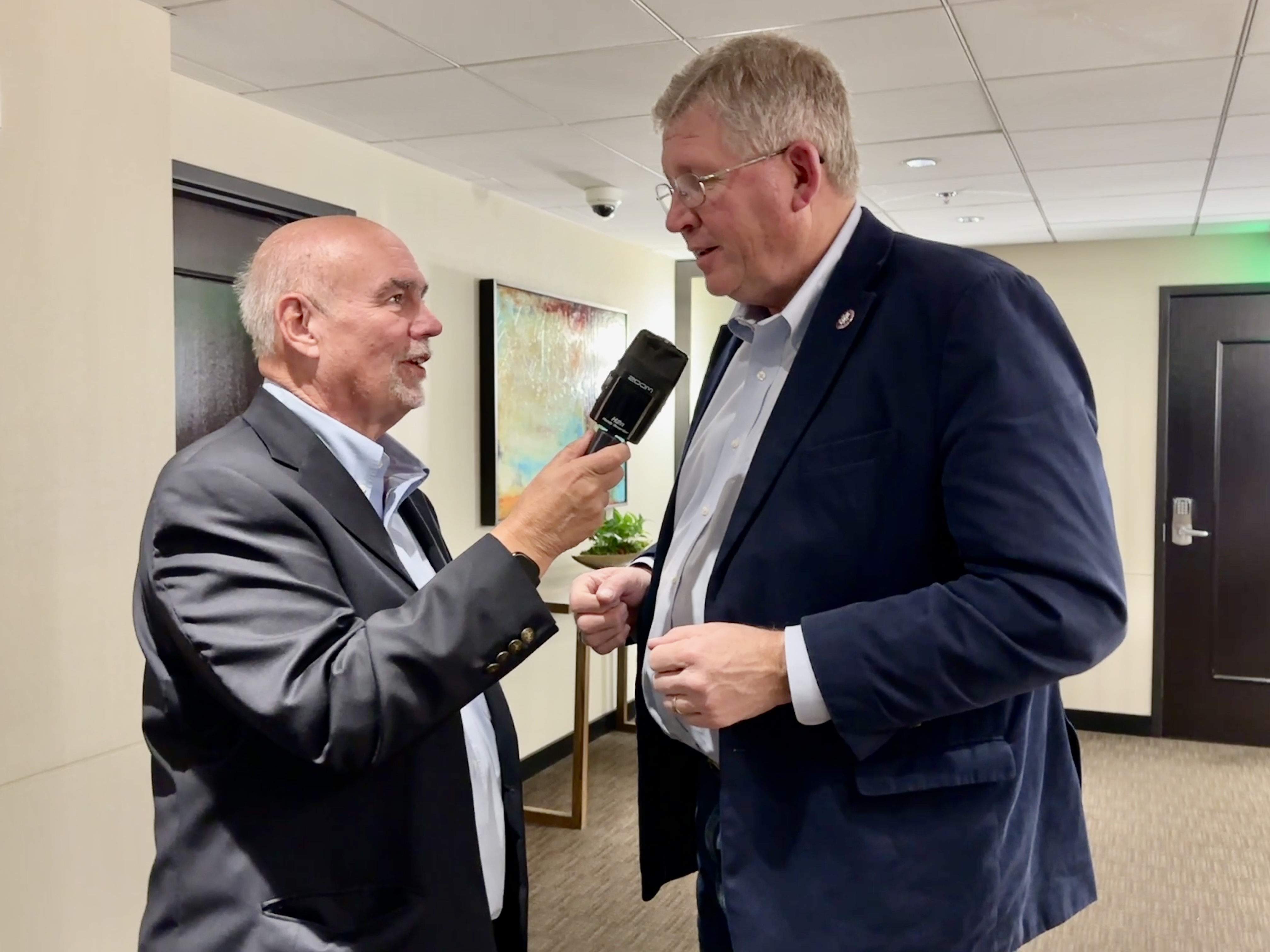
Oklahoma Congressman Frank Lucas was a part of the Red Wave in Oklahoma- something that other parts of the country did not participate in. Lucas won reelection to his third district seat with 74.45% of the vote on Tuesday- the highest winning percentage of any Oklahoma Congressional candidate. First elected to Congress in 1994- Lucas will enter 2023 as the Senior member of the Oklahoma Congressional delegation.
After the Associated Press called the race for Congressman Lucas, Senior Farm and Ranch Broadcaster Ron Hays talked with Lucas at the joint Watch Party that he and Congressman Tom Cole held in downtown Oklahoma City. Lucas says "It's always good when the folks who you have worked for and represented for a good long time now still support you and appreciate you and want to give you an opportunity to work for them."
In Oklahoma- all seven Congressional races(5 House and 2 Senate) were won by Republicans and every state wide race- including the hotly contested Governor's race- was won by the Republican nominee. Early in the evening- when Lucas was declared the winner of his race- it was still expected that the US House would be controlled by the Republicans. Several major news organizations are still projecting that will be the case- but it's not assured yet- and the margin of the majority will be razor thin based on results early Wednesday morning.
The New York Times is currently saying there is an 82% chance the GOP takes the house- and they believe that they will end up with 225 seats (needing 218 to control the House).
Around 1 AM central time- House Republican Leader Kevin McCarthy of California appeared and told the media "It is clear we are going to take the House back," McCarthy says, pointing to wins in NY. "We are on the gain in historic gains in NY." He points to wins in NY, Iowa, FL. "When we wake up tomorrow, we will be in the majority and Nancy Pelosi will be in the minority."
If that happens- Oklahoma will be making history with both Congressmen Lucas and Cole poised to become Committee Chairs in 2023. Lucas would become the Chair of the Science and Technology Committee while Cole would become Chair of the powerful Rules Committee.
Just as important for Oklahoma agriculture- being in the majority will help Congressman Lucas exercise his assurance from GOP Leadership from a couple of years ago that he could return to the House Ag Committee- preserving his senority on the Committee just as serious work gets underway to write the 2023 Farm Bill. Lucas also expects to keep his seat on Financial Services in the coming term.
What is likely to be a trillion dollar bill will be mostly food programs(in terms of cost)- but the Congressman points out that the titles of the bill that include the Federal Farm Safety Net, Conservation programs and other Titles that directly benefit production agriculture actually ensure that farmers and ranchers are able to grow the food and fiber that feed and help clothe this nation- and millions of others around the world.
Listen to Congressman Lucas and Hays as they talk about his election win on Tuesday night by clicking on the LINK below.
Ron Hays talks with Congressman Frank Lucas on Election Night 2022
Tue, 08 Nov 2022 15:14:04 CST
The U.S. Department of Agriculture and the Oklahoma Department of Agriculture are now putting the Daily Cash Grain Report into a PDF format - we are saving that PDF and archiving them for today's specific report. To see today's update, click on the PDF report link at the bottom of this story.
In addition to the PDF of the daily report, you can also listen to the Cash Grain Report by calling 405-621-5533. Push 2 for the grain report.
Tue, 08 Nov 2022 15:13:32 CST

Listen to today's report with Justin Lewis, by clicking or tapping on the LISTEN bar
Justin Lewis of KIS Futures has all the details on today's agricultural markets for RON listeners, below.

The Ecosystem Services Market Consortium (ESMC), SLM Partners, and Carbon Yield are pleased to announce a project to reward corn and soy farmers in Illinois and Michigan for conservation practices that result in measurable climate impacts. The project will test and streamline the creation and sale of environmental credits from organic farming systems – ESMC's first project focused solely on organic farming systems. In 2022, the project enrolled over 2,700 acres of organic corn and organic soybean crops.
Participating farmers are implementing practices – including tillage reduction, nutrient management, cover crops, and conversion of cropland to grassland – that reduce greenhouse gas (GHG) emissions and increase soil carbon. Outcomes from these practices will form the basis of Scope 3 soil carbon removals and reduced GHG credits that can be sold within a supply shed. Once producers are enrolled in ESMC's Eco-Harvest program, ESMC quantifies credits and arranges third party credit verification by a global certification body, SustainCERT. Corporate buyers can purchase these verified credits to help meet their supply chain sustainability targets.
SLM Partners uses investment capital to scale up regenerative agriculture and forestry. In the US, SLM Partners is focused on organic-certified farming. Their core strategy is to acquire conventional cropland and partner with local farmers to convert the land to organic production. The acreage in this project is on land acquired by SLM Partners who help producers participate in, and gain the benefits from, ecosystem services markets like ESMC's. Carbon Yield, a company that provides farmers with a support platform to enable transitions to regenerative agriculture, is providing producer enrollment and data collection for this project. ESMC's Executive Director Debbie Reed stated, "As we continue to build out our Eco-Harvest program scope and scale, we are excited to launch our first organic systems pilot project. Converting conventional agricultural systems to organic systems is a huge investment for producers. Working with our partners, SLM Partners and Carbon Yield, we are excited to reward growers for the measured outcomes from conservation practice adoption in organic systems."
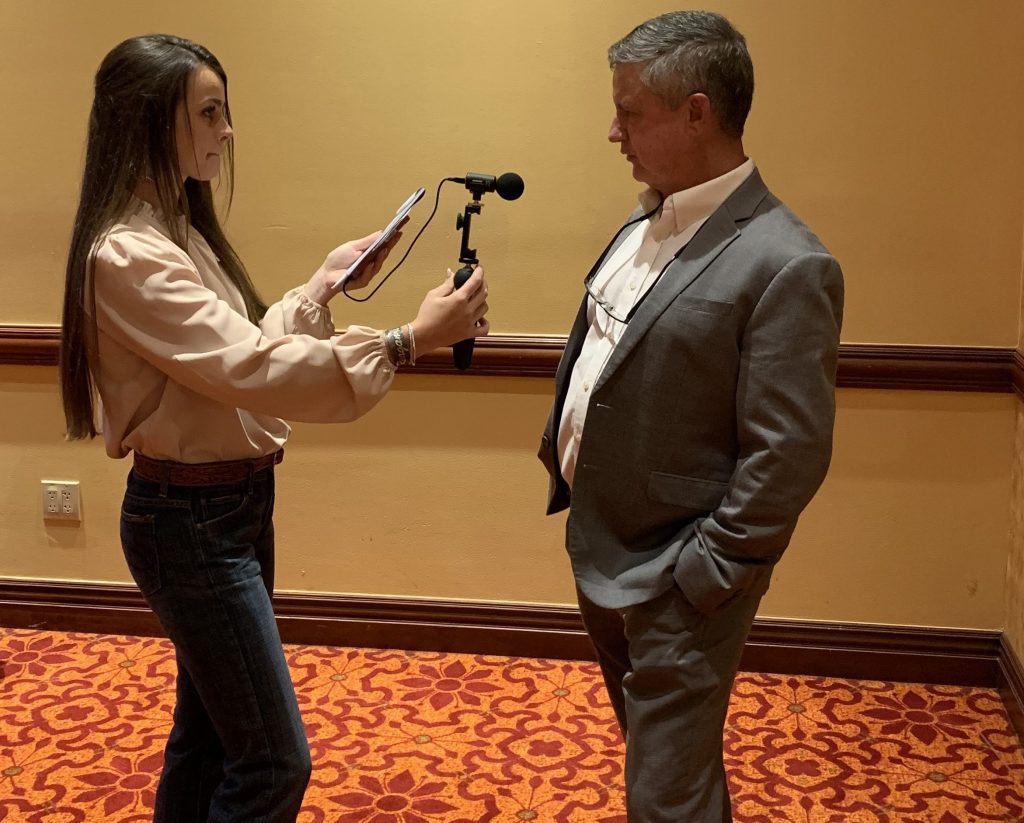
At the Oklahoma Ag Expo in Norman, Associate Farm Editor, Reagan Calk, had the chance to visit with the National Cotton Council Vice President for Technical Services, Dr. Don Parker, about how cotton producers are being impacted by the regulatory challenges for pesticide registration and use.
"We are going through some new requirements on the registration process," Parker said. "There is a lot of focus on how to comply with the Endangered Species Act. A consultation component is required for the registration of pesticide products, and there is a process that has been slow to develop on how we can then accomplish this consultation process and protect the endangered species, but still have access to these crop protection products."
Early on, Parker said, the attempt was made to simply prohibit the use of certain pesticides in endangered species counties.
"That is not a viable option whenever you just start taking products away from producers just because they live in a (specific) county," Parker said. "There are many other ways that we can address this."
The agriculture community, Parker said, is becoming more engaged in finding a solution to addressing the consultation process to enhance endangered species without giving up pesticide products.
In the registration of pesticide products, Parker said without input from the agricultural community, the EPA (Environmental Protection Agency) is left to make assumptions with the information they have.
"They are using the best information they can get, but sometimes, they don't really have some clear understanding of the way we actually use products," Parker said. "If we as the ag industry work more with EPA to help them understand how we actually use those products on our farm, how we apply them, what rates, and let them understand, we can help them correct a lot of these assumptions that they have."
Parker said the best opportunity to help the EPA better understand the importance of these products to the farm is through comments.
"These are very important critical tools for our whole agricultural production system, and we must be able to stand up and let EPA understand why these products are important to us," Parker said.
Parker also talked about the current cotton crop and what he is hearing from producers.
"This has probably been one of the strangest years I have ever seen," Parker said. "It is just about state by state that you can find good and bad areas. Usually, you have one area that may have a little bit of a yield problem, but the majority may be doing good. This year, every state has some areas that, either due to drought or due to excessive rain, that area had a much lower crop."
Click the LISTEN BAR below to listen to Don Parker talking about pesticide regulations and registration and this year's cotton crop.
Tue, 08 Nov 2022 12:54:19 CST
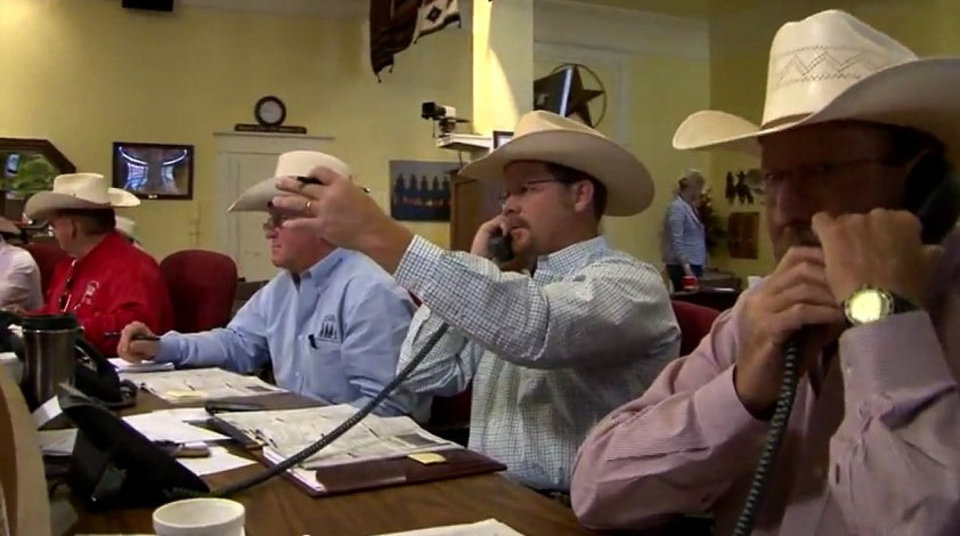
Superior Livestock Auction hosted their video auction live on November 3rd from the Superior Livestock Auction Studio in Hudson Oaks, Texas. Cattle producers offered over 32,000 head of calves, yearlings and bred stock from 19 states for this auction. Cattle were sold on contract to deliver immediately through July 2023. Superior Livestock went live with the auction at 8 a.m. CT. The November 3rd Video Auction was broadcast in HD on SLA-TV, Dish Network Ch. 997 and streamed on Superior Livestock Auction's Click to Bid website. Despite increased input costs and the political foreshadowing currently effecting the market; the November 3rd Video Auction delivered a bullish market report.
Regions 3/4/5/6 Feeder Steers witnessed wide swings in price based on quality & flesh conditions. Steers with Superior Progressive Genetic claims were $5 to $7 higher while their counterparts remained steady. Feeder Heifers from the same regions also saw a similar market trend. Regions 1 & 2 Feeder Steers & Heifers were only lightly tested but saw strong and steady demand. Beef Dairy Crosses were $10 to $15 higher on all classes compared to the last auction. Regions 1 & 2 Weaned Calves were also only lightly tested but welcomed with strong demand and increased prices. Regions 3/4/5/6 Weaned Calves lighter weights under 600 lbs were $5 to $8 higher with cattle under 500 lbs witnessing advances of as much as $15 higher. Weaned calves on growing ration were steady. Bred Heifers with Superior Progressive Genetic claims were well received at $2000.00 higher than the last offering providing optimism leading into next year.
Superior Livestock's next offering is our Weekly Video Auction on November 10th at 10 a.m. CT followed by our Holstein Steer Auction at 11 a.m. CT and concluding with our Superior Sheep Auction at 12 p.m. CT live from Superior Livestock's Studio located in Hudson Oaks, Texas. Then, tune into the November 17th Video Auction live from our Studio in Hudson Oaks, Texas. Consignment deadline for the November 10th Weekly, Holstein & Sheep Auction is Tuesday, November 8th & the consignment deadline for the November 17th Video Auction is Monday, November 7th. Be sure and visit www.superiorlivestock.com to view the online auction catalog. For a buyers' number or more information on becoming a consignor please call the Hudson Oaks office at 800-422-2117.
TOP LOTS:
REGION 3, 4, 5, 6 FEEDER STEERS & HEIFERS:
Wolf Land & Cattle, LLC, Cameron, TX. 35 Feeder Steers @ 725#/ 36 Feeder Heifers @ 700# $10.00/CWT Back. VAC 60, Superior Verified, NHTC, Verified Natural Beef, Veg. Fed Approved, Superior Progressive Genetics, Out of Brangus & a few Braford cows by outstanding Profit Maker Angus (Ultimate Answer, Total Answer, Ten X & Revival) bulls. 100% Black hided. $184.00, Nov 10-20 Del.
Wolf Land & Cattle, LLC, Cameron, TX. 140 Feeder Steers @ 725#. VAC 60, Superior Verified, NHTC, Verified Natural Beef, Veg. Fed Approved, Superior Progressive Genetics, Out of Brangus & a few Braford cows by outstanding Profit Maker Angus (Ultimate Answer, Total Answer, Ten X & Revival) bulls. 100% Black hided. $185.00, Nov 10-20 Del.
McNew Farms, Bucyrus, MO. 136 Feeder Steers @ 750#. VAC 45 & VAC PRECON, BQA Certified, Angus & Angus cross, some Charolais cross & some Red Angus. Approx. 75% to 80% Black hided. $186.00, Nov 7-15 Del.
McNew Farms, Bucyrus, MO. 74 Feeder Heifers @ 700#. VAC 45 & VAC PRECON, BQA Certified, Angus & Angus cross, some Charolais cross & some Red Angus. Approx. 90% black hided. $165.00, Nov 7-15 Del.
LSR Land & Cattle LLC, Lecompte, LA. 64 Feeder Steers @ 775#. VAC PRECON, Angus, Angus cross & Charolais cross. Few carrying up to 3/8 ear. Yellow, Black & a few Red. Will be a small percentage of plain cattle $161.00, Nov 7-12 Del.
Ford Drummond, Pawhuska, OK. 104 Feeder Steers @ 800#. VAC 60, Out of pred. Angus & Angus cross, some RWF & a handful of Exotic cross cows by SimAngus, Angus & Red Angus bulls. $175.00, Nov 9-12 Del.
Ford Drummond, Pawhuska, OK. 110 Feeder Heifers @ 775#. VAC 60, Out of pred. Angus & Angus cross, some RWF & a handful of Exotic cross cows by SimAngus, Angus & Red Angus bulls. $169.50, Nov 9-12 Del.
K. Boultinghouse, Cherokee, TX. 62 Feeder Steers @ 825#. Superior Progressive Genetics, Base herd of Beefmaster Angus cross originated from Colorado 15 yrs ago. Top Angus & a few Angus Plus bulls using Mytty In Focus & Final Answer genetics have been used to build todays herd. Black hided & 1-2 Red hided w/a touch of ear. $172.00, Nov 08 Del.
K. Boultinghouse, Cherokee, TX. 70 Feeder Heifers @ 730#. Superior Progressive Genetics, Base herd of Beefmaster Angus cross originated from Colorado 15 yrs ago. Top Angus & a few Angus Plus bulls using Mytty In Focus & Final Answer genetics have been used to build todays herd. Black hided & 1-2 Red hided w/a touch of ear. $168.50, Nov 08 Del.
Randall Brock, Gainesville, GA. 57 Feeder Steers @ 875#. VAC 60 & VAC PRECON, BQA Certified, Out of Angus cross & Angus Charolais cross cows by Angus bulls. 10 Smokey & 1 Red. $161.00, Nov 7-18 Del.
Leeco LLC, Quitman, GA. 55 Feeder Steers @ 900#. VAC PRECON, BQA Certified, Angus, Angus cross & Charolais cross. $159.00, Nov 28-Dec 9 Del.
Leeco LLC, Quitman, GA. 60 Feeder Heifers @ 820#. VAC PRECON, BQA Certified, Angus, Angus cross & Charolais cross. $157.00, Jan 1-15 Del.
Glore Farms LLC, Bowdon, GA. 50 Feeder Steers @ 1000#. VAC PRECON, Owner Certified Natural Plus, Approx 70% out of Red or Black Angus cows by Red Angus bulls from Kelly Smith (Franklin, KY) & 30% Angus Hereford crosses from Hillview Farms (Blairsville, GA). $160.50, Nov 7-18 Del.
Taylor Reed, Foraker, OK. 69 Feeder Heifers @ 625#. VAC 60, Superior Verified, Black Angus Verified Beef, NHTC, Superior Progressive Genetics, BQA Certified, Out of Black Angus & Angus cross cows by reg. Luddington Black Angus bulls. Bloodlines include Mytty In Focus, Ten X, Rampage, Upshot, Payweight & SAV Pioneer. 100% Black hided, 7 BWF or Black Motley Face. $180.00, Dec 8-14 Del.
Brian McGuire, Paris, KY. 62 Feeder Heifers @ 765#. Owner Certified Natural Plus, Superior Progressive Genetics, Out of Red Angus cows by Beckton Red Angus bulls & Bradley 3 Charolais bulls. Genetics originating from 5L, Red Hill, Pharo & Mushrush. $170.00, Nov 7-18 Del.
REGION 1 & 2 FEEDER STEERS & HEIFERS:
Simon Ranch, Laramie, WY. 42 Feeder Steers @ 715#/ 29 Feeder Heifers @ 615# $10.00/CWT Back. Red Angus. $168.00, Nov 14-21 Del.
Darrell Newman/Cole Hendren, Stites, ID. 65 Feeder Steers @ 745#. Owner Certified Natural, Out of pred. home raised Optimizer Black & Red Angus cross cows by Red Factor Val & Romans Charolais & a few Black Angus bulls. Performance genetics. $168.50, Nov 18-19 Del.
TC Ranch, LLC, Holden, UT. 84 Feeder Steers @ 750#. VAC 60, Superior Progressive Genetics, Angus & Angus Hereford cross. Sired by sons of Sitz Upward, Sitz Logo, Sitz Investment, SAV Governor, McConnell Altitude & MGR Treasure Angus bulls. 100% Black hided. Years of selective breeding to high indexing bulls for growth. $170.50, Nov 15-30 Del.
SLC, Inc., Park, KS. 126 Feeder Steers @ 825#. English & English cross. Approx. 80-85% Black hided, balance Red & Charolais, before sort. $181.00, Nov 9-23 Del.
Western States Ranches LLC, Eckert, CO. 112 Feeder Steers @ 860#. AngusLink, NHTC, Superior Progressive Genetics, Verified Grassfed, Angus & Angus cross by Leachman Stablizer bulls. Approx. 90% Black hided & 10% Red Angus. $174.00, Nov 06 Del.
Western States Ranches LLC, Eckert, CO. 68 Spayed Feeder Hfrs @ 725#. AngusLink, NHTC, Superior Progressive Genetics, Verified Grassfed, Angus & Angus cross by Leachman Stablizer bulls. Approx. 95% Black hided & 5% Red Angus. $182.00, Nov 06 Del.
TC Ranch, LLC, Holden, UT. 68 Feeder Heifers @ 725#. VAC 60, Superior Progressive Genetics, Angus & Angus Hereford cross. Sired by sons of Sitz Upward, Sitz Logo, Sitz Investment, SAV Governor, McConnell Altitude & MGR Treasure Angus bulls. 100% Black hided. Years of selective breeding to high indexing bulls for growth. $161.00, Dec 1-15 Del.
Darrell Newman/Cole Hendren, Stites, ID. 68 Feeder Heifers @ 725#. Owner Certified Natural, Out of pred. home raised Optimizer Black & Red Angus cross cows by Red Factor Val & Romans Charolais & a few Black Angus bulls. Performance genetics. $160.00, Nov 18-19 Del.
Eckhardt Farms, Goodland, KS. 66 Feeder Heifers @ 815#. Black & Red Angus cross. Approx. 75% Black hided & 25% Red hided $168.50, Nov 4-11 Del.
BEEF DAIRY CROSSES:
LJ Beef, Syracuse, KS. 120 Beef Dairy Cross Steers @ 400#. VAC PRECON, Superior Verified, NHTC, Superior Progressive Genetics, BQA Certified, Out of Holstein cows AI'd to SimAngus & Angus bulls. Resolve tested number 1, Chieftain tested number 2 & Connelly Home Grown tested number 6 in our eco feed test. Some w/White under belly, head, socks & tip on tail. $226.00, Feb 1-Mar 1 Del.
LJ Beef, Syracuse, KS. 120 Beef Dairy Cross Heifers @ 400#. VAC PRECON, Superior Verified, NHTC, Superior Progressive Genetics, BQA Certified, Out of Holstein cows AI'd to SimAngus & Angus bulls. Resolve tested number 1, Chieftain tested number 2 & Connelly Home Grown tested number 6 in our eco feed test. Some w/White under belly, head, socks & tip on tail. $193.00, Feb 1-Mar 1 Del.
Kirkman Farms LLP, Kirkman, IA. 100 Beef Dairy Cross Steers @ 500#. VAC 60, Superior Verified, Black Angus Verified Beef, NHTC, BQA Certified, Out of Holstein cows by Grimmius Cattle Co. (Springfield Prodigal, Welytok Wisdom, C7 Confindence & EPF Magnificient.) Closed herd. Birthdates can be provided. Will have 840 EID tags. China & Saudi Arabia approved & approved for no growth promotants. $206.00, Nov 7-9 Del.
Kirkman Farms LLP, Kirkman, IA. 100 Beef Dairy Cross Heifers @ 500#. VAC 60, Superior Verified, Black Angus Verified Beef, NHTC, BQA Certified, Out of Holstein cows by Grimmius Cattle Co. (Springfield Prodigal, Welytok Wisdom, C7 Confindence & EPF Magnificient.) Closed herd. Birthdates can be provided. Will have 840 EID tags. China & Saudi Arabia approved & approved for no growth promotants. $174.00, Nov 7-9 Del.
S-D Feeders, Syracuse, KS. 154 Beef Dairy Cross Steers @ 650#. VAC 60, Superior Verified, NHTC, Superior Progressive Genetics, BQA Certified, Out of Holstein cows AI'd to reg. Angus (44 Second Act X811, Quaker Hill Royal Flush, Quaker Hill Disciple, Quaker Hill Big Stuff, 2 Bar Mile High & Quaker Hill Chieftain) & Cowboy SimAngus bulls. Bred for muscling. Some w/White under belly, head, socks & tip on tail. $195.00, Jun 1-Jul 1 Del.
S-D Feeders, Syracuse, KS. 154 Beef Dairy Cross Heifers @ 650#. VAC 60, Superior Verified, NHTC, Superior Progressive Genetics, BQA Certified, Out of Holstein cows AI'd to reg. Angus (44 Second Act X811, Quaker Hill Royal Flush, Quaker Hill Disciple, Quaker Hill Big Stuff, 2 Bar Mile High & Quaker Hill Chieftain) & Cowboy SimAngus bulls. Bred for muscling. Some w/White under belly, head, socks & tip on tail. $180.00, Jun 1-Jul 1 Del.
REGION 1 & 2 WEANED CALVES & CALVES ON COWS:
Nielson Ranches, Huntington, UT. 44 Weaned Str Calves @ 540#/ 52 Weaned Hfr Calves @ 525# $12.00/CWT Back. Superior Verified, NHTC, Verified Natural Beef, Veg. Fed Approved, Owner Certified Natural Plus, Beef CARE Certified, Angus & Angus Hereford cross. $188.00, Nov 28-Dec 3 Del.
Bar 9 Prospects Cattle Co. LLC, Bayard, NE. 95 Weaned Str Calves @ 570#. VAC 60, Angus cross, SimAngus & Hereford cross. Sired by SimAngus & Hereford bulls. Approx. 90% Black & BWF, balance Red & RWF, 1 Black Hereford. $202.00, Nov 7-11 Del.
CNT Cattle Ranch, Stockton, UT. 50 Weaned Str Calves @ 575#/ 40 Weaned Hfr Calves @ 550# $10.00/CWT Back. VAC 45, Out of Angus cross cows by approx. 70% Angus, 10% Hereford & 20% Charolais bulls. Approx. 90% Black & BWF, bal. Red & RWF & Charolais cross. $179.50, Nov 25-Dec 10 Del.
REGION 3, 4, 5, 6 WEANED CALVES & CALVES ON COWS:
Agricultural Prod. Ent. Inc., Mt. Pleasant, TX. 135 Weaned Str Calves @ 370#. VAC 45, Superior Progressive Genetics, Red Angus cross, Angus cross & very few Hereford cross. Few showing ear. $259.00, Nov 20-Dec 10 Del.
United Ag, Plainview, TX. 41 Weaned Str Calves @ 430#/ 67 Weaned Hfr Calves @ 460# $15.00/CWT Back. VAC 60, Out of Angus, Brangus & Charolais cross cows by Angus, Charolais & Braford bulls. $181.00, Nov 7-18 Del.
Box M Cattle Co., Allen, OK. 103 Weaned Str Calves @ 440#. VAC 60, Superior Verified, NHTC, Out of Black Angus & Red Angus cross cows by reg. Red Angus bulls. $220.00, Nov 4-5 Del.
Box M Cattle Co., Allen, OK. 103 Weaned Hfr Calves @ 425#. VAC 60, Superior Verified, NHTC, Out of Black Angus & Red Angus cross cows by reg. Red Angus bulls. Could be 1 or 2 Brindle. $194.00, Nov 4-5 Del.
Kris Scitern, Gorman, TX. 37 Weaned Str Calves @ 475#/ 55 Weaned Hfr Calves @ 450# $20.00/CWT Back. Owner Certified Natural Plus, BQA Certified, Out of reputation Angus cross, Hereford cross & a few Braford & mixed crossbred cows by outstanding Evans Angus, Barber Horned Hereford & a few Charolais bulls. $199.00, Nov 10-20 Del.
Eric Waters, Waurika, OK. 200 Weaned Str Calves @ 500#. VAC PRECON, Pred. Angus cross, balance Red & Charolais cross. 50% with 1/8 or less Brahman influence, 40% with 1/4 & 10% with 3/8. Approx. 60% Black hided. $200.50, Dec 1-16 Del.
Wall Ranch, Evant, TX. 90 Weaned Str Calves @ 525#. Out of Angus & Angus cross cows by Horned Hereford bulls. Approx. 95% Black hided. $214.50, Nov 7-18 Del.
Wall Ranch, Evant, TX. 107 Weaned Hfr Calves @ 475#. Out of Angus & Angus cross cows by Horned Hereford bulls. Approx. 95% Black hided. $184.00, Nov 7-18 Del.
Brazos Bend Ranch, Dallas, TX. 95 Weaned Str Calves @ 550#. VAC 60, Owner Certified Natural Plus, Superior Progressive Genetics, Out of reputation Brangus cows by outstanding 44 Farms Angus bulls. 95% Black hided. $202.00, Nov 10-20 Del.
Brazos Bend Ranch, Dallas, TX. 100 Weaned Hfr Calves @ 525#. VAC 60, Owner Certified Natural Plus, Superior Progressive Genetics, Out of reputation Brangus cows by outstanding 44 Farms Angus bulls. 95% Black hided. $182.00, Nov 10-20 Del.
Sleepy Creek Cattle LLC, Fort McCoy, FL. 84 Weaned Str Calves @ 575#. VAC 45+, Superior Verified, NHTC, Verified Natural Beef, Veg. Fed Approved, BQA Certified, Beef CARE Certified, Out of English cross & English Brahman cross cows by Kempfer Brahman bulls. $159.00, Nov 15-30 Del.
McLane Ranch, Temple, TX. 230 Weaned Str Calves @ 600#. VAC 60, Owner Certified Natural Plus, Superior Progressive Genetics, Out of mixed crossbred cows (carrying approx. 3/8 or less Brahman influence) by outstanding RA Brown Red Angus bulls. $186.00, Nov 5-15 Del.
McLane Ranch, Temple, TX. 88 Weaned Hfr Calves @ 575#. VAC 60, Owner Certified Natural Plus, Superior Progressive Genetics, Out of mixed crossbred cows carrying approx. 3/8 or less Brahman influence by outstanding RA Brown Red Angus bulls. $167.00, Nov 5-15 Del.
Wes Suttle, Thornton, TX. 45 Weaned Str Calves @ 625#/ 40 Weaned Hfr Calves @ 600# $15.00/CWT Back. VAC 60, Owner Certified Natural Plus, Out of mixed crossbred & Brangus cows by outstanding Angus bulls. 100% Black hided. $180.00, Nov 15-25 Del.
Jimmy Riemer, Stinnett, TX. 75 Weaned Str Calves @ 650#. VAC 45, Superior Verified, NHTC, Verified Natural Beef, Veg. Fed Approved, Owner Certified Natural Plus, Superior Progressive Genetics, Beef CARE Certified, Angus & Angus cross. Sired by reg. Jenkins Black Angus bulls. Pred. Black & BWF, balance Charolais cross, Red & RWF. No straight Hereford. $190.00, Nov 15-30 Del.
Jimmy Riemer, Stinnett, TX. 75 Weaned Hfr Calves @ 625#. VAC 45, Superior Verified, NHTC, Verified Natural Beef, Veg. Fed Approved, Owner Certified Natural Plus, Superior Progressive Genetics, Beef CARE Certified, Angus & Angus cross. Sired by reg. Jenkins Black Angus bulls. Pred. Black & BWF, balance Charolais cross, Red & RWF. No straight Hereford. $180.00, Nov 15-30 Del.
Brooke Dunlap, Goldthwaite, TX. 296 Weaned Str Calves @ 675#. Angus cross, Charolais cross, Red Angus cross & a few English Exotic cross carrying 1/4 or less Brahman influence. $177.00, Nov 5-15 Del.
CK Ranch, Brookville, KS. 70 Weaned Str Calves @ 700#. VAC 45, Superior Verified, NHTC, Superior Progressive Genetics, Out of pred. RWF, BWF & Hereford cows by CK Ranch Red Angus & Hereford bulls. Approx. 95% Red hided. $179.50, Nov 7-19 Del.
Bull Canyon Inc./Pettigrew Ranch, Fort Sumner, NM. 251 Weaned Str Calves @ 725#. VAC 60, Superior Verified, Black Angus Verified Beef, NHTC, Verified Natural Beef, Veg. Fed Approved, Owner Certified Natural Plus, Superior Progressive Genetics, BQA Certified, Beef CARE Certified, Out of Angus & a few BWF cows by Express Ranches Angus bulls. All bulls purchased in top 10% on yearling EPD's. $189.00, Nov 14-19 Del.
Bull Canyon Inc./Pettigrew Ranch, Fort Sumner, NM. 256 Weaned Hfr Calves @ 685#. VAC 60, Superior Verified, Black Angus Verified Beef, NHTC, Verified Natural Beef, Veg. Fed Approved, Owner Certified Natural Plus, Superior Progressive Genetics, BQA Certified, Beef CARE Certified, Out of Angus & a few BWF cows by Express Ranches Angus bulls. All bulls purchased in top 10% of yearling EPD's. $186.00, Nov 14-19 Del.
TDCJ Agribusiness Land & Mineral, Huntsville, TX. 649 Weaned Str Calves @ 530#. Superior Verified, NHTC, BQA Certified, Out of Brahman cross cows by Hereford & Angus bulls. $204.50, Nov 7-18 Del.
TDCJ Agribusiness Land & Mineral, Huntsville, TX. 566 Weaned Hfr Calves @ 540#. Superior Verified, NHTC, BQA Certified, Out of Brahman cross cows by Herford bulls. $175.00, Nov 7-18 Del.
Double Rock Ranch LLLP, Lorida, FL. 122 Steer Calves @ 400#/ 0 Heifer Calves @ 400# $18.00/CWT Back. VAC 34+, Out of English cross & Brahman cross cows by 80% Horned Hereford, 10% Charolais & 10% Brangus bulls. 1/4 or less Brahman influence. $188.00, Nov 14-30 Del.
5F Cattle LLC, Moore Haven, FL. 354 Steer Calves @ 425#/ 0 Heifer Calves @ 400# $18.00/CWT Back. VAC 34+, Superior Progressive Genetics, Out of English cross & Brahman cross cows by Fink Charolais & Genetrust Brangus bulls. $187.00, Nov 14-30 Del.
Escape Cattle Co. LLC, Kenansville, FL. 110 Steer Calves @ 450#/ 0 Heifer Calves @ 430# $14.00/CWT Back. VAC 34+, Out of English & Brahman cross cows by approx. 85% Ingram Angus & 15% Horned Hereford bulls. Calves showing 1/4 or less Brahman influence. Approx. 90% Black hided. $185.00, Nov 7-18 Del.
Cow Creek Cattle LLC, Okeechobee, FL. 200 Steer Calves @ 480#/ 0 Heifer Calves @ 480# $12.00/CWT Back. VAC 34+, Out of English cross & Brahman cross cows by outstanding Charolais & Brangus bulls. $185.00, Nov 7-18 Del.
Sweetwater Preserve, Wauchula, FL. 186 Steer Calves @ 525#/ 0 Heifer Calves @ 515# $12.00/CWT Back. VAC 34+, Superior Progressive Genetics, Out of English cross & Brahman cross cows by 90% Charolais & 10% Angus bulls. $175.00, Nov 14-30 Del.
Gaved Livestock LLC, Elgin, AZ. 190 Steer Calves @ 410#. VAC 34+, Legacy Verified, NHTC, Verified Natural Beef, Veg. Fed Approved, Out of Beefmaster Red Angus cross cows by Beefmaster & Bar T Bar Red Angus Balancer bulls. All mother cows from Northern NV. Clean underneath, not much sheath. $190.00, Nov 15-20 Del.
Gaved Livestock LLC, Elgin, AZ. 130 Heifer Calves @ 350#. VAC 34+, Legacy Verified, NHTC, Verified Natural Beef, Veg. Fed Approved, Out of Beefmaster Red Angus cross cows by Beefmaster & Bar T Bar Red Angus Balancer bulls. All mother cows from Northern NV. Clean underneath, not much sheath. $188.50, Nov 15-20 Del.
Hoffmann Ranch LP, Eastland, TX. 90 Steer Calves @ 510#. VAC 34, Owner Certified Natural Plus, Superior Progressive Genetics, Out of Black Angus cows by Wilks & Evans Black Angus bulls & 1 Hereford bull. Approx. 90% Black hided & 10% Red. $203.00, Nov 10-18 Del.
Hoffmann Ranch LP, Eastland, TX. 105 Heifer Calves @ 500#. VAC 34, Owner Certified Natural Plus, Superior Progressive Genetics, Out of Black Angus cows by Wilks & Evans Black Angus bulls & 1 Hereford bull. Approx. 90% Black hided & 10% Red. $176.00, Nov 10-18 Del.
Bullard Cattle, Vinita, OK. 90 Steer Calves @ 550#. VAC 34, Approx. 60% out of Angus & Angus cross cows by Angus & Cunningham Hereford bulls. Approx. 40% out of Charolais & Charolais cross cows by Angus bulls. Pred. no ear, some showing 1/8. Black, BWF, Red, RWF & Some Charolais cross. $187.00, Nov 4-15 Del.
Bullard Cattle, Vinita, OK. 90 Heifer Calves @ 525#. VAC 34, Approx. 60% out of Angus & Angus cross cows by Angus or Cunningham Hereford Bulls. Approx. 40% out of Charolais & Charolais cross cows by Angus bulls. Pred. no ear, some showing 1/8. Black, BWF, Red, RWF & Charolais cross. $170.50, Nov 4-15 Del.
BRED STOCK:
Bunn Family LLC, Barnesville, GA. 40 Bred Cows @ 1150#. Angus & Angus cross cows by Angus & Hereford bulls. Start calving approx. 11/1/22 for approx. 90 days. 100% Black or Black Motley Face. Few cows may have touch of Brangus. 3-6 yr olds with good mouths. Preg checked 9/2/22. $1475.00, Nov 7-21 Del.
Lee Hardy, Lenora, KS. 60 Bred Cows @ 1250#. Angus cross cows bred to reg. Polled Hereford bulls from Sandhill Farms. Start calving approx. 4/1/23 for approx. 75 days. Hd counts may vary after preg check on 11/7/22. 4 yr olds or younger. $1600.00, Nov 7-21 Del.
Raymond & Mary Ann Temple, Elmore City, OK. 43 Bred Heifers @ 1000#. VAC PRECON, Superior Progressive Genetics, Angus hfrs (100% Black hided) out of Express Angus cows by Express Angus bulls. Express genetics used for 30+ yrs. Hfrs bred to Exar Monumental #9325B, Exar Legacy #9129B, Exar Full Power #8399, Exar Rapture 9664B & Exar Monumental #9017. Bulls selected for maternal & calving easy traits. Bulls turned out 4/1/22 through 6/1/22. $2000.00, Dec 1-20 Del.
Hendricks & Hall, Howard, KS. 80 Bred Heifers @ 1000#. Red Angus & Red Angus cross hfrs AI'd to Top Gun Red Angus & cleaned up with McCabe Angus bulls. Start calving approx. 2/1/23 for approx. 60 days. $1700.00, Nov 7-19 Del.
Bunn Family LLC, Barnesville, GA. 35 Cow/Calf Pairs @ 1350#. Red Angus & Charolais cross cows. Calves sired by Hudgins Brahman bulls. 3-6 yr olds with solid mouths. Cows weigh approx. 1150# & calves 200#. $1500.00, Nov 7-21 Del.
Golden Harvest today released new corn hybrid performance data and agronomic management recommendations to help farmers make plans to increase corn yield potential next year. With elite corn genetics and proactive strategies to manage soil fertility and corn rootworm pressure, farmers can lay the foundation now for a successful 2023 season.
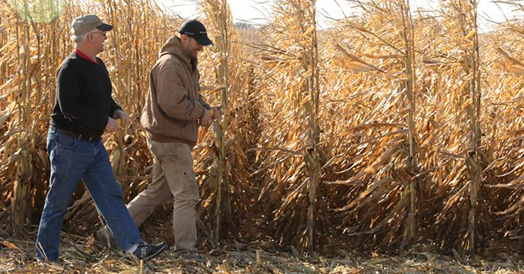
Corn performance data to guide seed decisions
Maximizing yield potential starts with selecting the right seed and placing it on the right acre. To help identify top-performing corn products, farmers should use national and local corn hybrid performance results as data points in the decision process.
Golden Harvest offers a broadly adapted corn portfolio with strong agronomics and high yield potential. In 2022, farmers saw success with Golden Harvest® corn hybrids across the Corn Belt1:
"As harvest comes to a close, we're seeing Golden Harvest corn hybrids deliver best-in-class performance," said Andy Ackley, Golden Harvest corn portfolio manager ― East. "This year has proven to be a challenging year in many areas, and our products have delivered again with industry-leading tolerance to tar spot and other diseases, great late-season standability, solid agronomics, and grain quality."
To find the right Golden Harvest corn hybrids for each field, Ackley advises farmers to:
Soil testing and nutrient management to maximize yield potential
In addition to seed decisions, farmers should be thinking about how to get the best return on their seed investment through nutrient management.
"With fertilizer prices today, we want to start with understanding what's in the soil and available to our crops," said Brad Koch, Golden Harvest agronomist for west and central Illinois. "The first step is to look at the pH of each field and adjust as needed. Soil pH is the foundation of soil fertility because it dictates how available soil nutrients are to the plant. If soil pH is too low or acidic, microbial processes shut down and we don't get the availability of applied nutrients. Ideally, we're looking for a soil pH of 6.5."
Koch recommends farmers conduct a soil test to determine the soil's pH and nutrient profile. Some nutrients, such as potassium and phosphorus, are stable so a soil test can reveal what farmers already have and what they need to apply. Other nutrients, such as sulfur and nitrogen, are highly mobile and will need an annual application based on yield goals.
Koch shares his soil testing tips:
"The small cost for soil sampling more than pays for itself to be able to understand and manage your soil nutrient profile and availability," explained Koch.
He also added that farmers, armed with soil testing results, should keep an eye on these three nutrients for next year's crop:
Five tips for corn rootworm management in 2023
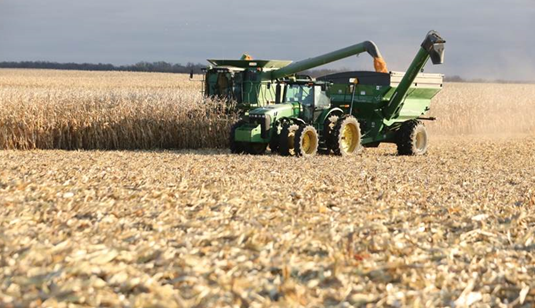
In addition to seed selection and nutrient management, Golden Harvest agronomists recommend preparing for pests, such as corn rootworm (CRW), for a successful harvest next year. To keep the billion-dollar pest at bay, start planning for CRW now. Golden Harvest Agronomist Andrew Rupe, who covers east and central Iowa, says that while summer is the time to evaluate CRW pressure, now is the time to make plans to manage it.
"After harvesting the crop, it is very difficult to understand what the CRW populations are like on a given field if we didn't scout during the summer," explained Rupe. "Many of our evaluation methods are performed during the growing season, including digging roots to score and evaluate the level of CRW feeding and beetle trapping to determine the population in each field. At this point in the year, corn roots have decayed and the females have burrowed into the soil to lay their eggs. We must try to piece together what we saw while harvesting the crop: Was there root lodged or 'goose-necked' corn in some of our continuous cornfields? Could that root lodging be the root strength of the hybrid, or was it a result of root feeding? We should consider what our CRW management strategy looks like now and evaluate how effective the plan is for the future."
Rupe recommends five corn rootworm management strategies, listed from most effective to least effective against CRW, to consider while planning for 2023:
In most cases, rotation away from corn for a single, complete year will nearly eliminate corn rootworm pressure in that field the following year. If there are no corn roots to feed on, the insect cannot survive. Farmers in the northern Corn Belt extended diapause or eastern Corn Belt variant geographies may still need to consider some CRW control methods, but planting a non-host crop can hit the reset button for corn rootworm pressure in most fields. Also keep in mind that managing volunteer corn in the non-host crop is critical to controlling the corn rootworm population.
The combination of a multi-traited corn hybrid, such as DuracadeViptera™, with a soil-applied insecticide is the best combination management practice when continuous corn must be planted in a field. Farmers with a history of unexpected corn rootworm damage or excessive root feeding may benefit from adding soil applied insecticide to a traited corn hybrid at planting. There are many different soil-applied insecticides on the market, including Force® 6.5G and Force Evo. Reach out to your Syngenta Crop Protection expert to identify the right product for each field. These tactics can also be implemented individually, but they are most effective when combined.
Understand which proteins and how many proteins a corn hybrid has that work against corn rootworm larvae. Corn hybrids may contain zero, one or multiple proteins against CRW larvae. DuracadeViptera offers multiple unique modes of action to preserve trait durability and delay insect adaptation for long-term field health. Michigan State University publishes a Handy Bt Trait Table to help farmers understand exactly which protein or proteins are within each hybrid's trait package.
Without traits, granular insecticides are typically more effective to control larvae compared to an in-furrow insecticide that is tank mixed with liquid fertilizer. The one agronomic drawback of an in-furrow insecticide is that it requires moisture to fully activate the chemical in the root zone.
In addition to other control methods, if summer scouting indicates a high population of adult CRW beetles, foliar insecticides can be utilized to reduce silk clipping and limit egg laying. This is sometimes referred to as 'beetle bombing a cornfield' and can lower the next generation's CRW population. Consider the timing of your insecticide treatment to get the best control possible of the CRW adult females. If timing aligns, it may be tank mixed with an aerial fungicide application, which will help reduce application costs.
For more tips and strategies, Golden Harvest offers a library of agronomy articles with actionable data and local insights to help precisely place products for maximized performance in farmers' fields. The Agronomy in Action 2022 Research Review provides a comprehensive review of applied and practical agronomic studies conducted during the 2021 growing season at Golden Harvest Agronomy in Action research sites.
To find better solutions for your corn and soybean acres, contact a Golden Harvest Seed Advisor at GoldenHarvestSeeds.com.
1 2022 national Syngenta internal data. For more information regarding yield comparisons against an individual product, ask your Golden Harvest Seed Advisor.
2 Golden Harvest Agronomy in Action sulfur response trials at nine locations across Illinois, Iowa, Kansas, South Dakota and Nebraska in 2021. For more information: https://www.goldenharvestseeds.com/agronomy/articles/corn-yield-response-to-sulfur

Bold Directions are the result of strong leadership and intentional action, and in these unprecedented times, it is critical to think differently about the future of your dairy. Join NMPF's National Young Cooperators Program Dec. 13-15 at the 2022 MILK Business Conference in Las Vegas as we explore the decisions and opportunities that can set your dairy on the path of BOLD DIRECTIONS.
Young Cooperators are eligible for a discounted registration rate of $150 using the code NMPF2022 during checkout.
Discover new ideas through engaging educational sessions, including:
The conference will also feature a young producer panel, sponsored by NMPF, featuring three Young Cooperators:
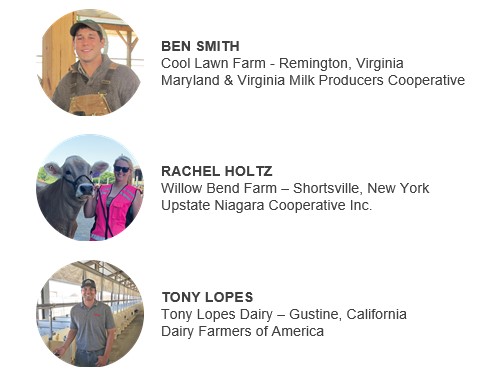
| Click here for more information about the event and contact Theresa Sweeney-Murphy at tsweeney@nmpf.org with any questions. |

Macroeconomic Overview: For a fourth consecutive time this year, the Federal Reserve increased interest rates 0.75 percentage points. In the official statements accompanying the increase, it was acknowledged the lagged effect of rising rates on the economy and that further increases may eventually need to taper. However, comments made by the Federal Reserve chairman after the release underlined the central bank's commitment to taming inflation, even if it meant further additional aggressive increases.
The labor market continues to add jobs and to post wage increases near five percent. However, both the pace of hiring and wage gains were slower last month. Labor is an ingredient to everything produced in the economy and is a cost to producers, so wage growth is associated with inflation. As the effects of rising interest rates are more fully transmitted through the economy, the labor market may cool and allow the slack to emerge to slow wage costs and tame overall inflation.
Employment: The U.S. economy was estimated to have added 261,000 jobs last month. This was the lowest addition since December 2020, but job growth has nonetheless remained resilient to interest rate increases. Revisions to previous months were mixed. The figure for August fell -23,000 positions to +292,000. The figure for September rose +52,000 to +315,000. The twelve-month average for job growth is currently +442,000.
The unemployment rate moved higher, from 3.5% to 3.7% month-over-month. This increase occurred despite a slight decrease in the size of the labor force and was a result of a decrease in the number of employed workers (the unemployment rate is the ratio of the number of people working over the number of those in the labor force or wanting to work). Nonetheless, unemployment rates below four percent are rare, and there have been just a handful of other periods when it held at levels this low.
Wage growth slowed to the lowest level in about a year (4.7%) in October. Despite the slowdown, the latest value easily exceeds growth rates experienced after the financial crisis, which topped out near 3.5% in the decade that followed the last recession.
Consumer Confidence & Spending: After two monthly increases, the Conference Board's Index of Consumer Confidence decreased month-over-month in October (from 107.8 to 102.5). The current value is the lowest since July. In both June (98.4) and July (95.3), readings were below 100. These were the only two values below 100 since early 2021. The lowest value reached after COVID was 85.7. The long-term average (since 1970) is 93.9.
Overall consumer spending increased +0.3% month-over-month in seasonally and inflation-adjusted terms in September. Year-over-year, overall spending was up +1.9%. This was the slowest rate of annual growth since early 2021. Spending on garments was up +1.4% month-over-month but was down -0.3% year-over-year.
Consumer Prices & Import Data: Retail prices for garments decreased -0.2% month-over-month in September. Year-over-year, retail apparel prices were 6.0% higher. Year-over-year increases are affected by the reflation that occurred after the onset of COVID, when clothing prices decreased as much as -8.6% (May 2020). Relative to the average in 2019, current retail prices were 2.1% higher in September.
Import costs continue to rise. The latest value for square meter equivalent (SME) of cotton-dominant apparel set a new record (data since 1989) in seasonally-adjusted terms $4.11/SME. Recent values represent quite a reversal relative to the values that were posted in the wake of COVID. In March 2021, which allowed for a 12-month lag after the onset of the pandemic, the average cost per SME was below $2.97/SME. Levels below three dollars per SME were only recorded in one other period on record, and that was after the financial crisis.
The combination of high and rising sourcing costs and an increasingly challenging retail environment can be expected to pressure retailer margins. These challenges will compound issues related to inventory. After struggling to keep up with consumer demand following the release of stimulus and with the shipping crisis, apparel import volumes have been strong in recent months. In seasonally-adjusted terms for raw fiber equivalence (weight terms), total apparel imports (all fibers) were the highest on record between February and June. More recent figures have declined slightly but remain higher than the average before COVID and may add to inventories, particularly if the consumer environment slows.
Getting roasted turkey, mashed potatoes and gravy, stuffing, green bean casserole and pie on the table this Thanksgiving is going to cost consumers more than it did in 2021.
Rodney Holcomb, Oklahoma State University Extension food economics specialist, said consumers can expect to pay 35%-45% more for their turkey this year, which typically is the centerpiece of most Thanksgiving tables.
"Bird flu has impacted the availability of turkey, which has also impacted the egg and poultry industry as a whole. While there isn't necessarily a shortage, we're not going to see the excess supply and after-holiday sales we've seen in the past," Holcomb said. "It's a good idea to go ahead and clear out some freezer space and purchase your turkey as soon as possible to help ensure you get the size you need. Consumers might also want to go ahead and pick up their Christmas turkey now if that's what is on the menu."
Holcomb said something else that is affecting the availability of turkey is the demand for turkey meat. People are consuming more turkey year-round in products like lunch meat, turkey bacon and turkey sausage and as substitutes for red meat.
It's not just the turkey that's going to cost more this year. Just about everything consumers traditionally buy for their Thanksgiving meal costs more than it did a year ago, including:
"Overall, food is about 12% higher than it was a year ago," he said. "If you normally purchase a fully prepared smoked turkey for the holiday, be prepared to pay at least 50% more due to increased labor, energy, transportation and delivery costs."
How can consumers keep the price of their traditional Thanksgiving meal more manageable? They may have to be more creative and flexible when planning this year's menu. Holcomb suggests substituting products. While beef is still expensive, prices have come down from a year ago, due partly to the impact the drought has had on ranchers having to liquidate their herds.
The challenge can be that for some families, Thanksgiving tradition is strong, and it simply isn't the holiday without specific foods. If that's the case, be prepared to take a bigger bite out of the budget to accommodate for those foods.
"It can be difficult to break away from tradition because 'we always have this food for Thanksgiving,'" Holcomb said. "Instead of making a large turkey the star of the show, consider a smaller turkey and pull in a brisket or ham. Another option is to make the meal a potluck. This will help ease the cost of the meal for the host family."
Cutting down the amount of food prepared can help cut the budget, too. Leftovers are nice to have around for a couple of days, but if cost is a factor, preparing less food will save money.OSU Extension uses research-based information to help all Oklahomans solve local issues and concerns, promote leadership and manage resources wisely throughout the state's 77 counties. Most information is available at little to no cos
A big Cool Front will hit the state on Friday, bringing cooler temperatures and a drastic change to our weather pattern. State Climatologist Gary McManus says as we see Record highs today, we could be seeing record lows that are still pretty high for November. The State will be pretty mild through Thursday, but then see colder temps move in by Friday.
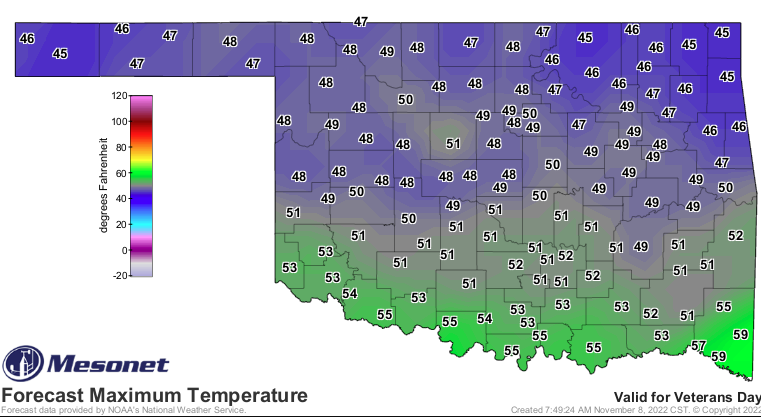
McManus says now the question becomes just how big the cold front will be next week, "How much cold air does it have behind it, and what is the timing of that cold front with any moisture return that could give us our fantasy-cast come true?"
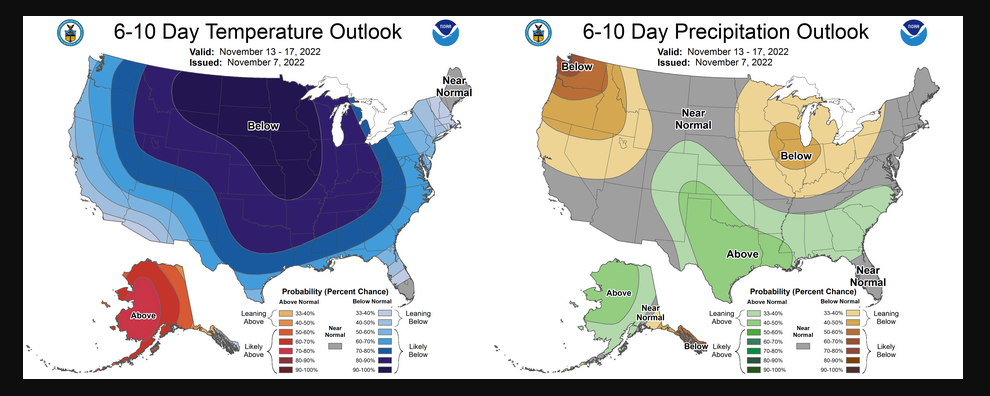
It's hard to tell if we will see any moisture out of this system. There is a slight possibility of Snow, but it's doubtful. McManus says we will just have to wait and see what the Oklahoma Weather brings us.
The American Angus Association® concluded a successful fiscal year, packed with member-wide comradery and industry-leading advances. The year marked the eighth-consecutive year of more than 304,000 registrations, with an additional 141,385 recorded transfers. The fiscal year, which concluded September 30, tallied a grand total of 22,488 regular and junior memberships combined.
"Angus breeders have completed a successful year, despite many challenges with weather and rising input costs," said Mark McCully, CEO of the Association. "Angus females averaged $6,023 last year and bulls averaged $5,909 signaling that Angus genetics are very much in demand."
Angus Genetics Inc. (AGI®), a subsidiary of the Association, continued to plant themselves at the forefront of the industry to help breeders achieve their goals and serve as the trusted industry source of advanced genetic solutions. Boasting 1.229 million animals with profiles in the genetic evaluation, a 10% increase in profile tests and 13 ongoing research projects, AGI plans to keep the momentum heading into the new year and to new heights.
In efforts to provide tools to enhance breeder success, the Angus Herd Improvement Records (AHIR®) program transitioned the Hair Shed expected progeny difference (EPD) from the research environment to a production EPD, due to the hard work of Angus breeders who diligently collected data. The EPD aims to help breeders find animals best genetically equipped to handle hot, fescue-filled environments. Additionally, AHIR continued to promote the importance of complete cow herd data through its Inventory Reporting program, enrolling 97,271 head from 768 herds.
The Angus MediaSM team created The Angus Conversation and Angus at Work podcasts to provide on-the-go information for Angus breeders and commercial cattlemen. Found anywhere you listen to podcast, the episodes feature a variety of guests who discuss everything from technology and breeding philosophies to marketing and traditions. With its goal of providing cost effective and quality marketing services to Angus breeders, Angus Media helped foster 34,000,000 online sale book page views and 3,500,000 email marketing sends.
The Certified Angus Beef ® (CAB) brand affirmed its quality standard with another year of exceeding consumer expectations. Combined focus on genetics and management led to a 35.5% brand acceptance rate. More than 5.78 million carcasses were certified and CAB marked 1.234 billion pounds sold. That's an impressive 3.4 million pounds of CAB sold per day and the entity worked with more than 18,000 licensed partners in 54 countries this year.
With the value of Angus cattle consistently increasing, the Association continued its Powered by AngusSM advertising campaign. Combating the "black-hided confusion" in the marketplace, the campaign illustrates the confidence cattlemen can put in the power of EPD data, documented pedigrees and marketing programs with the purchase of registered Angus.
The Angus family continued to pour their support into the Angus Foundation's mission of education, youth and research. With a record-setting $1.4 million in donations, each cent will impact the lives of Angus generations to come.
To view the 2022 Annual Report with in-depth information about the year, visit bit.ly/2022AngusAnnualReport and to view the Association's complete financial report, visit bit.ly/2022AngusFinancials
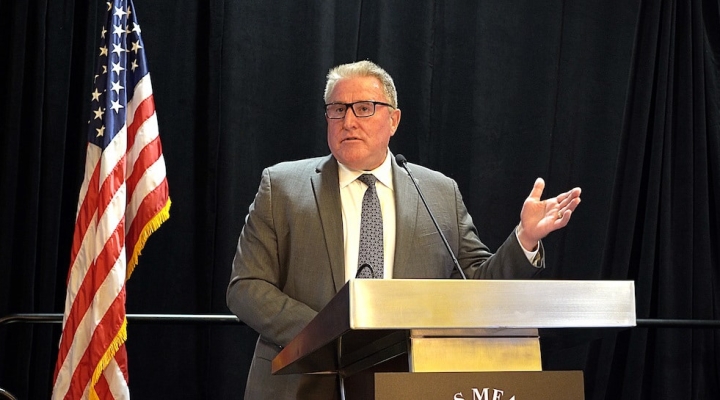
Senior Farm and Ranch Broadcaster, Ron Hays, is visiting with the president and CEO of the United States Meat Export Federation, Dan Halstrom, talking about the latest on U.S. beef export numbers.
"The September numbers just came out, and we were down a little bit on beef, but still, a 900-million-dollar month, which it wasn't too long ago, that was a record month," Halstrom said.
Despite being down a bit, Halstrom said broad-based growth was seen in specific markets.
"We had a really good month in the ASEAN region with the Philippines and Vietnam numbers up pretty big," Halstrom said. "The Caribbean continues to perform at a record pace."
Some larger markets, such as Korea, were down slightly, Halstrom said, but still had a very good month. Mexico, he added, was about even with a year ago.
"China continues to be up, off of very big numbers from a year ago," Halstrom said.
There are still many reasons to be positive, Halstrom said, but some headwinds are starting to catch up, such as global inflation and pricing in general.
"It kind of makes you wonder a little bit about the spending power in some of these countries, but nevertheless, still pretty positive overall," Halstrom said.
International logistics issues such as availability of containers and shipments being on time, Halstrom said, have improved but are not back to normal.
"You still have a lot of instances of late and delayed shipments," Halstrom said. "Not as bad as it was, but still, we were one of the premier service providers in the world as far as cargo is concerned, and while it is getting better, there is still a lot of work to be done in this area."
In two of the largest markets in the U.S, Korea, and Japan, Halstrom said an extremely strong U.S. dollar combined with inflation is slowing down some demand. The demand is still good, he added, but it is down slightly.
"It is not just the U.S. that is dealing with a strong U.S. dollar," Halstrom said.
Halstrom said that many competitor nations, supply-wise, such as Brazil and Australia, have stronger currencies against main destinations.
"I am worried about global spending power no matter who is consuming because prices everywhere are higher," Halstrom said.
Click the LISTEN BAR below to listen to Ron Hays visiting with Dan Halstrom about the latest on U.S. Meat Exports.
The Beef Buzz is a regular feature heard on radio stations around the region on the Radio Oklahoma Network and is a regular audio feature found on this website as well. Click on the LISTEN BAR below for today's show and check out our archives for older Beef Buzz shows covering the gamut of the beef cattle industry today.
– American Farmland Trust today released its updated CaRPE Tool™ and the first of a series of briefs to help states estimate greenhouse gas (GHG) emission reduction opportunities from the implementation of climate-smart cropland and grazing land management practices. The tool and state-specific briefs, which summarize the carbon benefits of climate-smart practices and provide state and federal policy recommendations to increase their adoption, are now available. These briefs are designed to help policy makers and land managers prioritize efforts for cost-effective climate benefits available from the agricultural sector.
By some estimates, as much as one-third of the carbon in our atmosphere could be returned to the soil by increasing adoption of climate-smart farming systems worldwide. And with 10 percent of the planet's arable land, the United States can make a global difference by doing so. Drawing carbon from the air and storing it in agricultural soils offers an immediately available, low-cost, and proven way to address climate change and offset emissions to reach net-zero. No other solution to climate change comes with more of the co-benefits we need for a sustainable future: resilient, viable, productive farms and ranches with improved bottom lines and lower risk; food security; flood control; improved water quality and quantity; biodiversity; and wildlife habitat, above and below ground.
"States across the U.S. are moving urgently to implement strategies that reduce emissions in pursuit of net-zero through policy change, renewable energy infrastructure build out and electric vehicle mandates. The reauthorization of the federal Farm Bill is just around the corner," said Bianca Moebius-Clune PhD, AFT Climate Initiative Director. "Agriculture is an immediately available, affordable, and necessary tool to reduce emissions and solve the climate crisis and deploying it is a win-win for producers and society. Leaving these opportunities on the table does not make sense, yet it has not been easy to determine what implementing agricultural solutions will cost and what benefits they will bring. In answering those questions, CaRPE Tool™ has been a game changer."
"The Intergovernmental Panel on Climate Change (IPCC) has emphasized how we need to not only reduce future emissions, but we also need to remove existing CO2 from the atmosphere," said Bonnie McGill PhD, AFT Senior Climate and Soil Health Scientist. "Agriculture is one of the few sectors that can do that relatively inexpensively."
"Farmers and ranchers are on the frontlines of climate change, and yet they also may be the key to offer one of the best pathways available to address the climate crisis while building their resilience to extreme weather and improving their bottom lines," said Samantha Levy, AFT's Conservation and Climate Policy Manager. "But making changes in their management systems may pose additional risk in an already risky business. We're about to head into the reauthorization of the Farm Bill and states' 2023 legislative sessions. Federal and state governments are well poised right now to build on actions they have already taken and provide more of the financial and technical assistance that farmers and ranchers need to transition to long-term adoption of proven, locally adapted, successful climate-smart practices."
The state-specific briefs provide recommendations to state leaders and elected officials on how to advance policies and programs to increase the adoption of these critical climate-smart systems. In addition, they demonstrate how adoption of these practices can contribute to state and national climate emissions reduction goals.
The first in this series published today are for Virginia, Illinois, New Hampshire and Oregon where great opportunities to adopt policies to advance the adoption of climate smart systems of practices exist. AFT will also release a brief for Michigan that focuses on 2023 Farm Bill recommendations to complement these state-level actions. Full reports providing more detailed methods and results that informed the briefs will be released soon. AFT expects to release more state-specific briefs with emissions reductions estimates from the adoption of climate smart practices, and recommendations for how state policy makers can work to support farmers in increasing adoption.
The CaRPE Tool™ has been available from AFT since fall of 2020 and used by states to build working lands solutions into climate mitigation plans and state soil health efforts. Recent updates to the tool allow users to view data by USDA Farm Resource Regions (in addition to seeing results by counties and states) and get the weighted emission reduction coefficient (county and practice-specific tonnes of CO2e per acre per year) for their scenarios and map these coefficients, among other updates.
Information on the free, publicly available CaRPE Tool™ and how to access it can be found here. State-specific briefs can be found here. AFT's 2023 Farm Bill platform can be found here. For assistance in using the tool please reach out to the AFT climate team climate@farmland.org.
On today's Cow-Calf Corner, Parker Henley, Oklahoma State University Extension Specialist, and Mark Z. Johnson, Oklahoma State University Extension Beef Cattle Breeding Specialist give insight on the benefits of mineral supplementation.
There are several reasons, in a non-drought year, that most people consider Oklahoma the greatest state for raising beef cattle. One of those reasons is that as a rule of thumb, Oklahoma forages do not have severe mineral deficiencies or high levels of mineral antagonists compared to forages in many other states. In 2022, the drought has led many of us to neighboring states for harvested forage, some of which are unconventional forage types. If you are in this situation, you may need to pay extra attention for your mineral program. We would suggest you get a feed analysis of your winter hay supply that includes mineral concentration. But, even with a test there are several mineral antagonists and unknown interactions that may occur. Mineral supplementation to the cow herd is always a good idea, this year, it is of even greater potential benefit.
Proper mineral and vitamin nutrition contributes to strong immune systems, reproductive performance and calf weight gain. Diets with mineral imbalances may cause poor animal performance, resulting in reduced profitability. Mineral requirements are dependent on forage mineral content, animal age and stage of production. However, simply knowing the animal's requirement is only one component in evaluating an animal's mineral status. Mineral needs also tend to be area specific and change with soil type, fertilization rates, rainfall and other factors.
A mineral supplement that meets the cow's macro mineral needs for things like calcium, phosphorus, and magnesium, can be fairly straight forward with a basic mineral program, but to get them bred back in a timely manner and to retain that pregnancy, delivering a highly available trace mineral supplement to the cow on a consistent basis is critical. Therefore, it is recommended producers ensure beef cows receive supplemental sources of these elements at least 60 days prior to calving through breeding and 30 days to 60 days prior to weaning.

It's Election Day for voters in all 77 counties across the state! Polls will be open from 7 a.m. to 7 p.m.
State and federal elections are on the ballot, as well as judicial races and judicial retention questions. Some voters may also have local elections to decide. Sample ballots are available in the OK Voter Portal. The election list can be found on the State Election Board website.
It is strongly recommended that voters verify their polling place before heading out to vote. Due to statutory redistricting, some precincts and polling places have changed. Voters can verify their polling place information using the OK Voter Portal or by contacting their County Election Board or the State Election Board.
Voters in McCurtain County (Precinct 8) who vote at the Trinity Baptist Church in Idabel should be aware that their polling place has been temporarily relocated to Calvary Missionary Baptist Church, located at 200 Calvary Lane in Idabel, due to tornado damage.
All voters should be prepared to show proof of identity when checking in with poll workers. Additional information is available on the State Election Board website.
Tips and reminders are available in the latest State Election Board press release.
Catch live election results on the State Election Board website after 7 p.m. on election night.
Voters with questions should contact their County Election Board or the State Election Board. More information is available on the State Election Board website.
Tue, 08 Nov 2022 03:25:26 CST
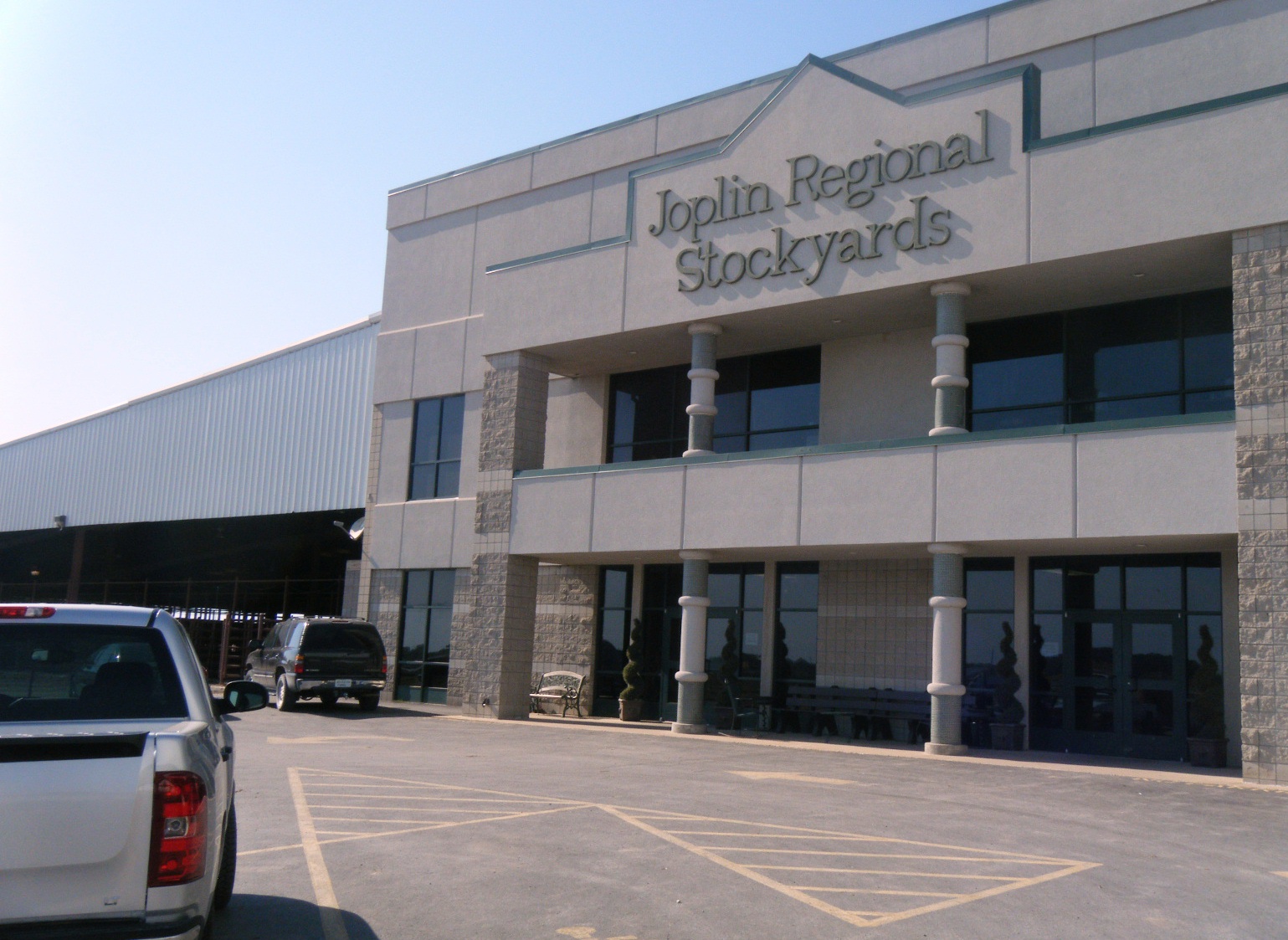
Joplin Regional Stockyards
Mon Nov 7, 2022
AUCTION
This Week 7,555
Last Reported 5,692
Last Year 7,243
**CLOSE**
Compared to last week feeder steers under 775 lbs. traded 3.00- 8.00 higher, with the following exceptions. 210 head of 728 lb. steers traded 17.00 higher. A draft of 97 head of 376 lb. steers traded at 258.00. Steers over 775 lbs. traded steady. Feeder heifers traded 5.00-12.00 higher. Supply was heavy with very good demand. Supply included: 100% Feeder Cattle (55% Steers, 42% Heifers, 4% Bulls). Feeder cattle supply over 600 lbs was 49%.
FEEDER CATTLE
STEERS - Medium and Large 1 (Per Cwt / Actual Wt)
Head Wt Range Avg Wt Price Range Avg Price
18 289 289 232.00 232.00
16 324-326 325 222.00-225.00 223.50
97 376 376 258.00 258.00 Thin Fleshed
57 405-448 430 202.00-220.00 208.83
47 408-448 441 222.00-225.00 224.45 Thin Fleshed
133 454-496 473 202.00-212.00 208.00
125 463 463 229.00 229.00 Thin Fleshed
222 510-549 534 187.00-203.00 195.95
87 567-596 582 185.00-190.00 187.06
216 600-647 627 177.00-187.00 181.67
38 615-636 629 189.00-191.50 190.73 Thin Fleshed
151 655-687 666 180.00-187.50 184.41
157 706-740 734 178.50-183.00 180.03
210 728 728 196.25 196.25 Fancy
71 753-796 781 176.00-181.00 179.81
68 840 840 174.00 174.00
459 855-877 859 175.00-179.00 178.10
142 908 908 168.75 168.75
60 1027 1027 163.25 163.25
14 1054 1054 160.00 160.00
For the complete market report from USDA Market News click on the PDF link below:
Tue, 08 Nov 2022 03:22:12 CST
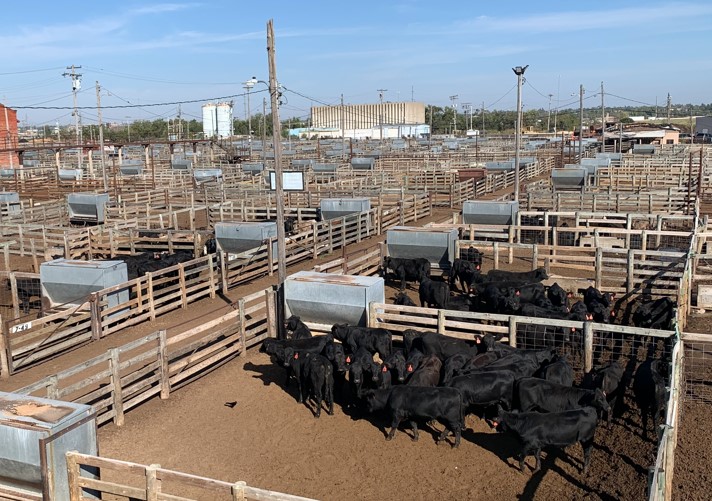
Oklahoma National Stockyards
Mon Nov 7, 2022
AUCTION
This Week 11,000
Last Reported 6,565
Last Year 10,653
***Close***
Compared to last week: Feeder steers and steer calves unevenly steady. Feeder heifers steady to 3.00 higher. Heifer calves over 500lbs steady, under 500lbs steady to 5.00 higher. Demand moderate to good. Quality average to attractive. Supply included: 100% Feeder Cattle (61% Steers, 37% Heifers, 2% Bulls). Feeder cattle supply over 600 lbs was 43%
FEEDER CATTLE
STEERS - Medium and Large 1 (Per Cwt / Actual Wt)
Head Wt Range Avg Wt Price Range Avg Price
5 331 331 233.00 233.00
16 326 326 241.00 241.00 Fancy
10 341 341 239.00 239.00 Thin Fleshed
109 350-399 381 207.00-227.00 218.12
26 360 360 234.00 234.00 Thin Fleshed
126 410-432 426 196.00-219.00 212.89
60 407-428 418 235.00-238.00 236.41 Fancy
33 420 420 221.00 221.00 Thin Fleshed
230 452-494 471 192.00-209.00 199.25
28 453-471 461 219.00 219.00 Fancy
63 451-493 472 210.00-215.00 212.45 Thin Fleshed
279 500-548 525 185.00-199.00 190.32
35 515 515 205.00 205.00 Fancy
69 502-530 517 208.00-210.00 208.54 Thin Fleshed
328 554-595 568 181.00-194.00 186.52
58 571-597 583 170.00-177.00 172.49 Unweaned
337 604-645 624 175.00-189.00 182.66
33 635 635 168.00 168.00 Unweaned
349 650-697 677 171.00-184.00 177.91
38 656-657 657 165.00-169.00 168.37 Unweaned
380 704-747 730 168.00-179.00 173.56
16 712 712 180.00 180.00 Thin Fleshed
172 752-796 772 173.00-182.50 177.42
146 802-840 816 172.00-178.00 175.46
115 859-888 880 162.00-166.75 163.66
For the complete market report from USDA click on the PDF link below:
Nationwide Winter Wheat:
Winter wheat planted in the U.S. reached 92 percent, up 2 percentage points from the previous year and the average. Winter wheat emerged reached 73 percent, even with the previous year and down 1 point from the average.
Winter wheat conditions for the states reported rated 30 percent good to excellent, 36 percent fair, and 34 percent poor to very poor. Since last week, poor to very poor conditions have decreased by 1 percentage point, and good to excellent conditions have increased by 2 points.
Nationwide Cotton:
Cotton harvested for the U.S reached 62 percent, up 8 percentage points from the previous year and up 7 from the average.
Nationwide Corn:
Corn harvested for the U.S. reached 87 percent, up 4 percentage points from the previous year and up 11 points from the average.
To view the U.S. Crop Progress Report, click here.
Oklahoma:
Winter wheat planted reached 90 percent, up 2 points from the previous year and up 1 point from normal. Winter wheat emerged reached 75 percent, up 4 points from the previous year but down 2 points from normal. Winter wheat conditions rated 14 percent good to excellent, 44 percent fair and 42 percent poor to very poor. (Since last week, good to excellent ratings have increased by 3 points and poor to very poor has increased by 6 points.)
Cotton harvested reached 45 percent, down 2 points from the previous year but up 6 points from normal. Cotton conditions rated 10 percent good to excellent, 25 percent fair and 65 percent poor to very poor. (Since last week, good to excellent cotton conditions have increased by 4 percentage points.)
Corn harvested reached 95 percent, down 2 points from the previous year but up 2 points from normal.
Sorghum harvested reached 80 percent, up 1 point from the previous year and up 7 points from normal.
Soybeans dropping leaves reached 95 percent, down 1 point from the previous year but up 5 points from normal. Soybeans harvested reached 55 percent, down 6 points from the previous year but unchanged from normal.
Peanuts harvested reached 70 percent, up 4 points from the previous year and up 1 point from normal.
Rye planted reached 85 percent, down 4 points from the previous year and down 4 points from normal. Rye emerged reached 60 percent, down 6 points from the previous year and down 5 points from normal.
Canola planted reached 85 percent, up 1 point from the previous year and up 5 points from normal. Canola emerged reached 48 percent, up 13 points from the previous year but down 2 points from normal.
Hay:
The fifth cutting of alfalfa hay reached 55 percent, up 11 points from the previous year and up 5 points from the previous week. The fourth cutting of other hay reached 50 percent, up 29 points from the previous year and up 5 points from the previous week.
Range, Pasture, and Livestock:
Pasture and range conditions rated 4 percent good to excellent, 14 percent fair and 82 percent poor to very poor. Since last week, poor to very poor conditions have increased by 2 percentage points.
Livestock conditions rated 22 percent good to excellent, 53 percent fair and 25 percent poor to very poor.
To view the Oklahoma Crop Progress Report, click here.
Kansas:
Winter wheat emerged was 68 percent, behind 79 percent last year and 76 percent average. Winter wheat planted was 93 percent, near 94 percent last year, and equal to the five-year average. Winter wheat conditions rated 26 percent good to excellent, 32 percent fair 42 percent poor to very poor.
Corn harvested was 93 percent, equal to last year, and near 89 percent average.
Soybeans harvested was 88 percent, ahead of 78 percent last year and 79 percent average.
Sorghum harvested was 82 percent, ahead of 77 percent last year and 70 percent average.
Cotton harvested was 65 percent, well ahead of 16 percent last year and 19 percent average.
Pasture and Range:
Range and pasture conditions rated 5 percent good to excellent, 16 percent fair and 79 percent poor to very poor. Range and pasture ratings are unchanged from last week.
To view the Kansas Crop Progress Report, click here.
Texas:
Winter wheat planted reached 88 percent, up 5 percentage points from the previous year and up 7 points from the average. Winter wheat emerged reached 67 percent, up 5 points from the previous year and 3 from the average. Winter wheat conditions rated 14 percent good to excellent, 37 percent fair and 49 percent poor to very poor.
Cotton harvested reached 51 percent, up 1 percentage point from the previous year and up 3 points from the average.
Sorghum harvested reached 100 percent, even with the previous year and up 6 percentage points from the average.
Corn harvested reached 100 percent, up 1 percentage point from the previous year and up 7 points from the average.
Peanuts harvested reached 60 percent, up 3 percentage points from the previous year and up 9 points from the average.
To view the Texas Crop Progress Report, click here.
Mon, 07 Nov 2022 15:48:24 CST

Listen to today's report with Justin Lewis, by clicking or tapping on the LISTEN bar
Justin Lewis of KIS Futures has all the details on today's agricultural markets for RON listeners, below.

Today, Growth Energy CEO Emily Skor participated in a virtual roundtable with the U.S. Department of the Treasury on implementation of the Inflation Reduction Act (IRA). The agency invited participants to provide perspective as it seeks to maximize the impact of the IRA's climate and clean energy provisions.
"We're grateful to be able to participate in this roundtable, and glad to see Treasury recognize how important the biofuels industry will be to securing a clean energy future and ensuring that the IRA realizes its full potential," said Skor. "Right now, the biofuels industry is already lowering carbon emissions, reducing our reliance on foreign oil, saving drivers money at the pump, and creating new American jobs. A smartly implemented IRA will allow ethanol producers to do even more and accelerate the nation's progress toward a net-zero economy."
In her remarks at the roundtable Skor urged Treasury to:
Background
President Biden signed the Inflation Reduction Act into law on August 16, 2022. The IRA represents our nation's most significant investment in clean energy and biofuels since the expansion of Renewable Fuel Standard (RFS) in 2007. Included in the IRA are several key priorities for the biofuels industry, including:
Growth Energy continues to engage with federal agencies, including the Treasury, on the implementation of the law. Just last week, Growth Energy sent a letter to Treasury calling on regulators to ensure that policies reflect the most updated and accurate science-based lifecycle carbon assessment methods, specifically those in the U.S. Department of Energy's GREET model.
House Speaker Pro Tempore Kyle Hilbert, R-Bristow, and Rep. Ty Burns, R-Pawnee, today issued statements congratulating Brent Haken being named the new director of the Oklahoma Department of Career and Technology Education.
The Oklahoma State Board of Career and Technology Education publicly announced the selection of Haken as the ninth director of the department earlier today. Haken currently is superintendent of Morrison Public Schools, a position he's held since 2019. He starts his official duties with CareerTech in January.
"I applaud the board's decision," Hilbert said. "I have had the pleasure of knowing Brent for nearly 15 years. He is a man of integrity who has always been a champion for children. He has the skill set needed to improve our workforce to help meet the needs of our growing economy and to meet the educational needs for CareerTech's traditional and non-traditional students."
Hilbert also thanked former House Speaker Pro Tempore. Lee Denney who has served as interim director of the department since February.
"I appreciate Lee for stepping up to fill this role, which gave the Board plenty of time to find an exceptional permanent director. The state is better because of her service."
Burns, who has four children in the Morrison school district and whose House District 35 includes the town, said Haken's move is a great loss to the community and the school but an incredible win for the state.
"I'm extremely proud of this decision," Burns said. "Brent is a hard worker who knows how to make the most of his resources and do what is best for the students and staff under his able care. He has been a close friend and a great resource for me. I could reach out to him at any time to talk about the effects of legislation on our school districts or just to get his opinion on a myriad of other factors. I know he'll do a terrific job in his new role at CareerTech. Students will be more prepared than ever for life and jobs in the future, which will greatly benefit our entire state."
A full press release detailing Haken's background can be found on the Oklahoma CareerTech website.
Mon, 07 Nov 2022 15:11:08 CST
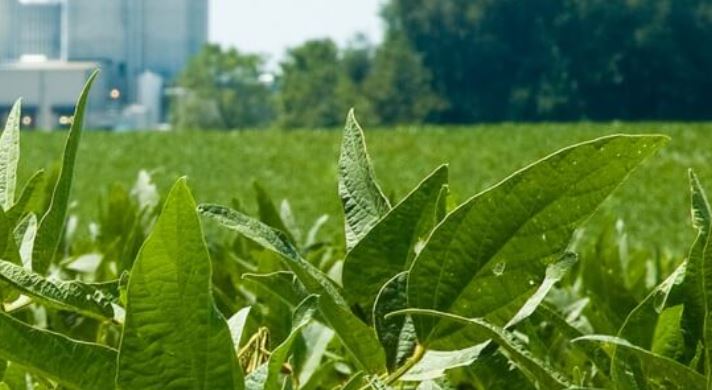
The U.S. Department of Agriculture and the Oklahoma Department of Agriculture are now putting the Daily Cash Grain Report into a PDF format - we are saving that PDF and archiving them for today's specific report. To see today's update, click on the PDF report link at the bottom of this story.
In addition to the PDF of the daily report, you can also listen to the Cash Grain Report by calling 405-621-5533. Push 2 for the grain report.

It's been dry with above normal temperatures....now is the time to get things ready for winter.
If you live in the Southern Plains thoughts of cold weather have probably been far from your mind with all the above normal temperatures and below normal precipitation that we have seen this fall; but rest assured, winter is coming. And just as it's never a good idea to start planning for drought in the middle of a dry spell, it's never a good idea to wait until the weather turns cold to start preparing your operation for winter. With that in mind, we wanted to take a little time and share with you some tips on what livestock producers should be considering as the cold weather approaches.
What will you do for water?
It seems pretty obvious that producers should be mindful about adequate water sources for livestock, but in a drought year like this one, additional challenges can present themselves. When ponds are low, they become more susceptible to freezing. There are also issues that arise from frozen water hydrants and wells. Now is the time to evaluate your water sources—do you have a plan for providing clean, abundant water for your animals even if we encounter an extreme cold snap like we did in February 2021? Give it some thought.
Do you have enough hay and feed?
The weather has not been great when it comes to forage production. Even if we saw this drought break tomorrow, we are running short on growing days for warm season grasses. More than likely, what we have in the way of grass now is all we are going to get and if you are a dual-purpose wheat producer you know that there isn't much wheat pasture out there. With the demand and price for hay increasing, getting a handle on your needs now is more critical than ever.
Build or repair windbreaks.
Shelter from the wind not only improves conditions for your livestock, it also puts money in your pocket. Simply put, the colder a cow is, the more she eats. Whether you're are making (or repairing) a permanent structure or stacking some hay bales to provide a temporary windbreak, making sure your animals have some protection should be a priority.
Monitor the body condition of your cow herd.
The dry period is the best time to put flesh and weight on cows that may have gotten too thin while raising a calf in the summer. Managing now for optimum body conditions when your cattle calve next spring will pay future dividends.
Remember too, now might be a good time to consider culling underperforming animals from your herd. Take a long hard look at your operation to see if now might be the time to make some changes.
For more information on all of this check out this Oklahoma Farm Report article from Dr. Mark Johnson at Oklahoma State University and check out this article from Successful Farming about windbreaks. You can also check out a similar blog we wrote about getting ready for winter last year or this blog that we wrote in 2021 about preparing for the record cold snap that February.
It's always a good idea to get ahead of the curve. The last thing you want to do is to try and play catch-up when the cold weather gets here.
View this blog post and other content at the Southern Plains Perspective by clicking here!
2022 Leadership selected at the Annual Convention of Delegates.
The 139th Annual Convention of Delegates assembled November 7, 2022, in Salt Lake City, Utah. Five directors were elected to the board of directors, as well as a president/chairman and a vice president/vice chairman of the board. Jonathan Perry will serve as treasurer for the 2022-2023 term.
Elected officers are Chuck Grove, Forest, Virginia, president and chairman of the board and Barry Pollard, Enid, Oklahoma, vice president and vice chairman of the board.
Grove said the Angus breed is in a prime spot to lead industry advancement. "With the vast influence Angus has on the beef industry, the breed is looked to as leaders ready to navigate both opportunities and potential obstacles," Grove said. "The future of the industry and this great breed looks bright in the coming years, and while I have been devoted to the breed for a lifetime, the next year will be the most rewarding yet."
Elected to their first terms on the board of directors are Rob Adams, Union Springs, Alabama; Art Butler, Bliss, Idaho; Alan Mead, Barnett, Missouri; Henry Smith, Russell Springs, Kentucky; and Roger Wann, Poteau, Oklahoma.
Directors can serve up to two three-year terms on the board and, if elected, serve additional one-year terms in office as president/chairman and/or vice president/vice chairman.
Adams has been a lifelong resident of Union Springs where his grandfather established their current farm in 1936. For the last 40 years the family has raised registered Angus cattle, calving about 225 females, and timber on the 925-acre farm. They have an annual bull sale and host the Maternal Gems Female Sale. Adams co-owns a financial firm, Legacy Advisors, Inc., where he works with small businesses and individuals in financial planning and investment management. A leader in his community, Adams is also a board member on the Alabama Angus Association, Alabama Beef Cattle Improvement Association (BCIA) and BCIA Foundation. Adams hopes to use his experience to help give back to the Association's diverse membership as a director
Butler is the third generation raising registered Angus at the103-year-old Spring Cove Ranch. He and his family manage a 350-headherd and host an annual production sale. The family sells feeder cattle and farms 500 acres. Technology and production tools to enhance genetics and management are used, incorporating ultrasound scans for carcass traits and parent verifying and genomically testing every calf. Butler has been committed to developing markets for Angus feeder calves through AngusLinkSM. He has served on boards of the Idaho Angus Association, Idaho Cattle Association and the family was awarded the 2019 Certified Angus Beef (CAB) Seedstock Commitment to Excellence Award and the Century Herd Award from the Association in 2019.
Mead is a third-generation Angus breeder involved in all phases of the cattle business. He currently has three annual production sales, marketing close to 700 bulls per year. After completing becoming a board-certified anesthesiologist practitioner, Mead returned home to serve his community while harboring a new vision for Mead Farms. The farm has grown to more than 7,000acres and close to 1,500 registered Angus cows in addition to several other breeds. Mead served on the Missouri Angus Association Board of Directors, Morgan County Cattlemen's Association, Missouri Cattlemen's Association, National Cattlemen's Beef Association. Mead has a strong track record of gathering information and making informed decisions, as well as approaching problems with an open mind for successful outcomes.
Smith is a fourth-generation Angus breeder who grew up on a diversified family farm consisting of registered Angus, burley tobacco, corn, soybeans and wheat. For 28 years, he has successfully operated Smithland Angus Farm recently hosting its 26th annual bull and female sale. Smith currently owns and manages 225 registered Angus cows and a small commercial herd. He has served on boards of the Natural Resources Conservation Service, County Agricultural Improvement Program, Russell County Cattlemen's Association, Kentucky Angus Association, NJAA Executive Committee, Kentucky Farm Bureau, First Bancorp, Inc. and First National Bank. Smith believes in the power of the Angus cow to continue to be the foundation of the beef industry and is committed to the advancement of the breed.
Wann was raised on a multigenerational commercial cow-calf ranch. After the purchase of commercial Angus cows and an Angus bull from Belle Point Ranch, the benefits of Angus genetics became clear. After graduating from Oklahoma State University, he earned a master's in physiology of reproduction from Texas A&M and began a career with ABS Global, where he assisted cattle producers in learning the value of efficient reproductive management programs. Wann Ranch annually hosts a production sale and markets 120 to 140 bulls. He served on the board for Oklahoma Cattlemen's Association and Oklahoma Angus Association and has helped develop their Angus feeder-calf sale. Wann has a blue-collar, grassroots viewpoint concerning all issues, with the goal of keeping the Angus breed at the forefront of the industry.
To learn more about the American Angus Association Board of Directors or how the delegate process works visit www.angus.org/assoc/board
— Written by Briley Richard, Angus Communications

By Gail Ellis
STILLWATER, Okla. – Livestock owners who plan to purchase hay over the next few months need to make careful, informed decisions to protect their animals, especially when purchasing hay from out of state.
Buyers should be aware that the drought has significantly impacted forage quality this year. Low hay yields resulted in many producers baling up failed crops and other grass varieties not typically harvested as a forage. As a result, overall hay quality is lower.
"During the last drought, there was a lot of hay baled very mature along roadsides and abandoned fields with the lowest density setting the baler could handle to produce light, low-density bales then transported across two states. Hay should be tested before purchase and priced per ton instead of by the bale." said Paul Beck, Oklahoma State University Extension beef nutrition specialist.
Mark Johnson, OSU Extension livestock evaluation specialist, advises answering these questions when buying hay:
A laboratory test is a critical step in determining the nutritive value of any lot of hay offered for sale. The National Forage Testing Association provides contact information for commercial laboratories that are certified, indicating they have met testing accuracy standards. Dave Lalman, OSU Extension beef cattle specialist, recommends evaluating the following in a hay test report:
For horse owners buying hay, Kris Hiney, OSU Extension equine specialist, suggests considering these factors:
"Remember some of the alternative or low-quality forages a cow might do okay on may not work for horses," Hiney said. "You have to remember that as a monogastric hind gut fermenter, horses will need higher quality forages than cows can get away with."
Finally, hay buyers should watch out for scams. Hay posted for sale online is not a guarantee. Always purchase hay from a trusted or verified source and never pay for bales without first viewing them in person.
OSU Extension uses research-based information to help all Oklahomans solve local issues and concerns, promote leadership and manage resources wisely throughout the state's 77 counties. Most information is available at little to no cost.
The legacy of American military service extends beyond the founding of our nation. Throughout history, tens of millions of individuals have selflessly answered the call to secure, defend and preserve freedom. With Veterans Day approaching, we are not only reminded of how thankful we are for the selfless service of those who answered the call to serve, but also the duty we have to them as a nation upon their return from service.
America indeed remains free because of those who willingly take the oath to defend our country. As we recognize the selfless service of our veterans rendered throughout history, including by the millions living among us today, we also solemnly remember those who did not make it home. Additionally, we thank the generations of family members and loved ones who have made significant sacrifices while supporting our men and women in uniform.
While we can never do enough to repay the sacrifices made by America's veterans, the needs of our veteran community remain at the forefront of my mind as I represent the Fourth Congressional District of Oklahoma. While I was making stops across the district last month, I had the privilege of visiting the Oklahoma Department of Veterans Affairs facilities in Sulphur and Norman, where my own father received top quality care in his later years of life. Spending time with those who served always moves me a great deal.
To further our nation's support of our veterans, I was proud to recently vote in favor of the Promise to Address Comprehensive Toxics (PACT) Act of 2022, which expands healthcare eligibility to veterans who participated in toxic exposure risk activity while serving our country. I remain committed to fighting for veterans' interests while I have the privilege of serving in Congress.
Veterans Day should be a day of rest and thankfulness for all Americans. Take time with your family and friends to remember all of those, from the American Revolution to today, who have worn our nation's uniform. Our veterans are an American treasure, and deserve this holiday dedicated to commemorating the sacrifices of time, blood, sweat and tears that they have given so that the United States and its allies remain free.
If you are a veteran and have experienced problems or have questions related to your earned benefits, please contact my Norman office at 405-329-6500, so my staff can help you get answers. Also, if you are a veteran experiencing a crisis, please call the Veterans Crisis Line at 988 and press 1, or text the number 838255 to receive confidential support. You can also chat with someone online at www.veteranscrisisline.net.
The American Farm Bureau Foundation for Agriculture announced today that 'I LOVE Strawberries' was named as a winner in the inaugural 2022 Good Housekeeping's Best Kids' Book Awards. The full list of awards can be found on https://www.goodhousekeeping.com/good-housekeeping-kids-book-awards-2022/and select winners are also featured in the November 2022 print issue of Good Housekeeping, which hit newsstands October 25th.
"The Foundation and our publishing team at Feeding Minds Press are honored by this award," Foundation Executive Director Daniel Meloy said. "We are committed to inspiring learners of all ages to discover where their food comes from—whether that be from a farm across the country, down the road, or in your own backyard."
Written by Shannon Anderson and illustrated by Jaclyn Sinquett, "I LOVE Strawberries," follows Jolie and her faithful rabbit Munchy as together they find out just how delicious, rewarding, and complicated it can be to grow your own food. Through Jolie's scrapbook-style journal entries, young readers will learn how strawberries grow, what pests to look out for in a garden, why ladybugs are helpful, and much more.
"I LOVE Strawberries," is the fifth printed title from Feeding Minds Press, which published "Right This Very Minute" in January 2019, "Chuck's Ice Cream Wish" in March 2020, "My Family's Soybean Farm" in January 2021, and "Barn at Night" in September 2021. Feeding Minds Press also offers several free printable books that focus on careers in agriculture. The book is available for purchase directly from Feeding Minds Press, as well as on Amazon.
About Feeding Minds Press:
Feeding Minds Press is a project of the American Farm Bureau Foundation for Agriculture. The mission of the Foundation is to build awareness and understanding of agriculture through education. The goal of Feeding Minds Press is to publish accurate and engaging books about agriculture that connect readers to where their food comes from and to who grows it.
Farm Director, KC Sheperd, caught up with the president of the Oklahoma CattleWomen's Association, Cheyenne Sparks, and talked about exciting events coming up for the association.
"First and foremost, we have our Region IV meeting," Sparks said. "ANCW (American National CattleWomen, Inc.) has regions all across the United States, and Oklahoma is in Region IV with Oklahoma, Texas and Arkansas. We like to meet up once a year and have a regional meeting where we learn about what is going on in the industry- not just in our region but nationally."
In the regional meeting, Sparks said attendees will discuss what each individual state is doing to better serve the cattle community.
"That is going to be our homecoming. That is when we get to talk with each other, learn, engage, and share the good news about beef," Sparks said. "We are looking to have that in Oklahoma this coming year in 2023. I am very excited for us to bring it to our home state and just welcome all of these Cattlewomen from all over."
The ANCW Region IV meeting will take place on May 5 in Oklahoma City, which will continue into the weekend with an event called the Women in Ranching and Education Development on May 6, and fellowship on May 7.
Women in Ranching and Educational Development, also referred to as WIRED, is for anyone in the beef community looking to become more successful and knowledgeable in their operation.
Whether you are somebody coming up in college and looking to gain knowledge before you start your own operation, whether you are managing and facilitating your operation alongside your partner, or whether you are someone later along in life that is taking on the ranch by yourself for the first time, Sparks said the WIRED program is for everyone.
"WIRED is my favorite program that the American National CattleWomen put on, so much, that the Oklahoma Cattlewomen actually adhere that to our own agenda for the cultivating CattleWomen series we have had over the past couple of years," Sparks said.
The upcoming WIRED event, Sparks said, creates a comfortable environment for attendees to build their confidence, learn with others, and fellowship with other producers.
"We are a voice for women who share a passion for the beef community," Sparks said. "We focus on the beef promotion, education, legislation, all things that we are going to be looking to do during this event with the region meeting and the WIRED program."
Sparks said there are several different ways to keep up to date with the Oklahoma CattleWomen, including visiting okcattlewomen.org, or their Facebook page.
To become an Oklahoma CattleWomen member, Sparks said applicants must pay a small annual fee of 20 dollars.
"Our year starts on October 1, so if you get in now, you get a full year of membership ahead of you, and you are up to date on everything that is coming forth," Sparks said. "We love to invite new members and current members, so this event is actually going to be open to both members and non-members."
Sparks said sign-up can be completed online, over the phone, or in person at the OCA office
"If you prefer talking to somebody in person, we love that," Sparks said. "If you prefer going online and doing it yourself, we love that too."
As for the upcoming Christmas parade at the Oklahoma National Stockyards on December 3, Sparks said the Oklahoma CattleWomen plan to have a float at this year's parade.
Click the LISTEN BAR below to hear KC's conversation with Cheyenne Sparks on the latest for Oklahoma CattleWomen
Mon, 07 Nov 2022 12:14:02 CST
Senior Farm and Ranch Broadcaster, Ron Hays, is visiting with National Cattlemen's Beef Association's vice president of government affairs, Ethan Lane, as he gives a preview of what he expects to occur in the upcoming midterm elections and the impacts it will have on agriculture.
Lane said there is a high likelihood the house will be controlled by the GOP after the November elections, but it will be important to see what happens in the Senate and House Agriculture Committees because of the 2023 Farm Bill.
"We are expecting to have extremely narrow margins regardless," Lane said. "That being the case, you end up having pretty balanced committees as far as R's and D's (Republicans and Democrats). Going into a farm bill, you are going to see the democrats sort of retooling. We have already seen that a little bit with members of the ag committee whom they are putting into those positions. Typically, they will start to load in members from more urban districts who are focused more on food assistance programs, SNAP (Supplemental Nutrition Assistance Program), and things like that."
Food assistance programs, Lane said, will be the main priority of the Democratic party in the upcoming farm bill, and that is reflected by whom they use to represent their party in the ag committee.
"We have already seen that a little bit with people like Marcy Kaptur from Toledo, Ohio returning to the Ag committee," Lane said. "That is not typically a district you would expect to be much of an ag district. I have run a campaign in that district. There are not a whole lot of farmers and ranchers there."
If Republicans take control of the house, G.T Thompson, as the new incoming presumptive chair of the House Agriculture Committee, Lane said, and he is a strong advocate for the cattle industry and a strong advocate for agriculture.
"That alone is a massive game changer just empowering him in that position," Lane said.
One thing for certain is that there will be lame-duck activity in congress after the midterm elections.
"We don't really want to see a bunch of activity and last-minute panic legislating in a lame-duck session," Lane said. "People's motives are different."
If the Democrats lose bigger than they are expecting to, Lane said it can be expected to see some last-minute desperation to push their agenda.
"Our next physical deadline to fund the government is December 16th," Lane said. "That could either be a continuing resolution again into next spring, March or something like that, or it could be a full omnibus package that funds the government through next September."
How this election plays out, Lane said, is going to be a big factor in what that package looks like.
"Anything is possible in a lame-duck, and our team here is going to have to be on their "A" game looking out for any of these things that might pop up last minute that we are going to need to engage on and make sure doesn't get across the finish line," Lane said.
Lane also talked about anti-agriculture and production agriculture groups and the impact they have had in 2022. The influence of these groups, he said, was much larger than expected.
"Animal rights activists are interesting because they have no problem selling their agenda or pushing their agenda to non-traditional allies," Lane said. "They are looking for allies in the Republican party. They have spent a tremendous amount of political dollars in this cycle on Republicans."
Lane said it is important for people to understand that animal rights activists are not just concerned with hunting, animal welfare, and the sort- they aim to shut down the rural way of life in communities across the country and agriculture with it.
Click the LISTEN BAR below to listen to Ron Hays talking with Ethan Lane on the upcoming midterm elections.
The Beef Buzz is a regular feature heard on radio stations around the region on the Radio Oklahoma Network and is a regular audio feature found on this website as well. Click on the LISTEN BAR below for today's show and check out our archives for older Beef Buzz shows covering the gamut of the beef cattle industry today.
Mondays, Dr. Derrell Peel, Oklahoma State University Extension Livestock Marketing Specialist, offers his economic analysis of the beef cattle industry. This analysis is a part of the weekly series known as the "Cow Calf Corner." Today, Dr. Peel talks about headwinds in beef exports.
So far in 2022, beef exports have increased over the record levels of 2021. The January – September period has total beef exports up 4.6 percent year over year. However, the latest data shows that exports in the month of September, were down 5.7 percent year over year, the largest, and only the second monthly decrease in beef exports in 30 months. The only other monthly decrease in beef exports since March 2020 was a 0.9 percent year over year decrease in March 2022. The recent decrease in beef exports may indicate that global economic weakness is having negative impacts on beef exports, as has been feared.
The combination of macroeconomic weakness around the world and U.S. efforts to combat inflation with higher interest rates has resulted in the U.S. dollar strengthening against many currencies. A stronger dollar makes U.S. product exports more expensive and simultaneously makes imports of foreign products more attractive. Figure 1 shows the decrease in the currency exchange rates for the three largest beef exports markets, Japan, South Korea and China/Hong Kong over the last year. The figure shows, for example, that the Japanese Yen has weakened by 30 percent in September and October compared to last year. In other words, one dollar will exchange for 147 Yen in October 2022 compared to 113 Yen one year ago. Similarly, one dollar today buys more South Korean Won and Chinese Yuan compared to last year.
Figure 1.
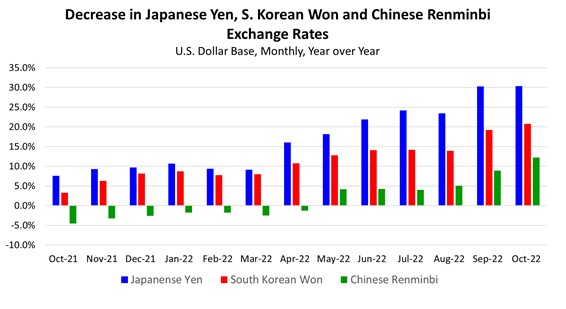
The September beef export data has monthly beef exports decreasing year over year for Japan (down 7.5 percent), South Korea (down 10.0 percent), China/Hong Kong (down 3.6 percent), Canada (down 10.7 percent) and Taiwan (down 26.2 percent). Of the top six beef exports markets, only Mexico was up in September by 5.2 percent.
For the January through September period, beef exports to Japan are down 0.9 percent; South Korea is up 1.2 percent; China/Hong Kong is up 12.6 percent; and Taiwan is up 10 percent. Year to date beef exports to Canada are down 0.3 percent and down 14.1 percent for the year to Mexico. U.S. beef exports will continue to face headwinds in 2023 and beef exports will likely decrease from record levels.
U.S. beef imports decreased for the fourth consecutive month in September, down 9.2 percent year over year. Total beef imports are 6.4 percent higher year over year for the January – September period due to strong imports early in the year. Beef imports from Brazil spiked early in 2022 as a Chinese embargo on Brazilian beef in late 2021 made large supplies of Brazilian beef available. In January 2022, Brazil was the largest source of U.S. beef imports and accounted for 28.4 percent of total imports for the month. After four months of year over year decreases, Brazil accounted for 9.0 percent of beef imports in September and was the number six source of beef imports for the month. For the year to date, beef imports are up from Canada, Mexico and Brazil and are down from Australia and New Zealand.
Beef imports are expected to continue decreasing towards the end of the year but are likely to increase in 2023 as U.S. beef production falls from record levels. Domestic production of lean processing beef may decline sharply in the coming months, making beef imports more attractive, especially when buoyed by a strong U.S. dollar.
Keep your stomach full of turkey and free from foodborne illness this Thanksgiving holiday. The U.S. Department of Agriculture (USDA) reminds us all that it's important to remember the steps to food safety during America's biggest meal.
"While the four steps to food safety — clean, separate, cook and chill — are important every day and at every meal, they are particularly significant on Thanksgiving," said USDA Deputy Under Secretary Sandra Eskin. "There will likely be many guests and many delicious dishes at your holiday table, but you don't want to invite any foodborne pathogens. Follow those four steps — in particular remember to use a food thermometer — and your Thanksgiving dinner will be a safe one."
Keep your Thanksgiving celebration food safe by following the tips below.
Clean and Sanitize
Handwashing is the first step to avoiding foodborne illness. Wash your hands for at least 20 seconds with soap and water before, during, and after handling food. In a recent study, 97 percent of participants in a USDA test kitchen failed to wash their hands properly. Make sure to follow these handwashing steps:
Clean and sanitize any surfaces that have touched raw turkey and its juices and will later touch food such as kitchen counters, sinks, stoves, tabletops, etc.
Avoid Cross-Contamination
Cross-contamination is the spread of bacteria from raw meat and poultry onto ready-to-eat food, surfaces, and utensils. One way to avoid this is by using separate cutting boards — one for raw meat and poultry, and another for fruits and vegetables. Our recent study found that sinks are the most contaminated areas of the kitchen. USDA recommends against washing your raw poultry due to the risk of splashing bacteria throughout your kitchen. Clean and sanitize any areas that will come into contact with the turkey before and after cooking.
Thaw the Turkey Safely
Never thaw your turkey in hot water or leave it on a countertop. There are three ways to safely thaw a turkey: in the refrigerator, in cold water and in the microwave.
It's safe to cook a completely frozen turkey; however, it will take at least 50 percent longer to fully cook.
Cook Thoroughly
Your turkey is safe to eat once it reaches an internal temperature of 165 F. Insert a food thermometer into the thickest part of the breast, the innermost part of the wing and the innermost part of the thigh to check its internal temperature. USDA recommends using a food thermometer even if the turkey has a pop-up temperature indicator to ensure it has reached 165 F in the three previously stated places.
Stuffing your Turkey
USDA recommends against stuffing your turkey since this often leads to bacteria growth. However, if you plan to stuff your turkey, follow these steps:
For more information on turkey stuffing, visit Turkey Basics: Stuffing.
The Two-Hour Rule
Don't leave your food sitting out too long! Refrigerate all perishable foods sitting out at room temperature within two hours of being cooked, or one hour if the temperature is 90 F or above. After two hours, perishable food will enter the "Danger Zone" (between 40 F and 140 F), which is where bacteria can multiply quickly and cause the food to become unsafe. Discard all foods that have been left out for more than two hours. Remember the rule — keep hot foods hot and cold foods cold.
When serving food to groups, keep hot food hot and keep cold food cold by using chafing dishes or crock pots and ice trays. Hot items should remain above 140 F and cold items should remain below 40 F.
Leftovers
Store leftovers in small shallow containers and put them in the refrigerator. Thanksgiving leftovers are safe to eat up to four days in the refrigerator. In the freezer, leftovers are safely frozen indefinitely but will keep best quality from two to six months.
Resources
For Thanksgiving food safety questions, call the USDA Meat and Poultry Hotline at 1-888-MPHotline (1-888-674-6854), email MPHotline@usda.gov or chat live at ask.usda.gov from 10 a.m. to 6 p.m. Eastern Time, Monday through Friday.
Do you have any last-minute turkey day questions? The Meat and Poultry Hotline will be open on Thanksgiving Day from 8 a.m. to 2 p.m. EST.
Check out the USDA FoodKeeper App, which helps to reduce food waste by providing food and beverage storage information. Access news releases and other information at USDA's Food Safety and Inspection Service's (FSIS) website at www.fsis.usda.gov/newsroom. Follow FSIS on Twitter at twitter.com/usdafoodsafety
or in Spanish at:twitter.com/usdafoodsafe_es.
USDA touches the lives of all Americans each day in so many positive ways. In the Biden-Harris Administration, USDA is transforming America's food system with a greater focus on more resilient local and regional food production; fairer markets for all producers; ensuring access to safe, healthy, and nutritious food in all communities; building new markets and streams of income for farmers and producers using climate smart food and forestry practices; making historic investments in infrastructure and clean energy capabilities in rural America; and committing to equity across the Department by removing systemic barriers and building a workforce more representative of America. To learn more, visit www.usda.gov.
Note: This column is adapted from NMPF President and CEO Jim Mulhern's remarks at NMPF's annual meeting, Oct. 25 in Denver.
This year is finally starting to feel like the new normal has arrived. The masks are fewer, offices are more full, consumers have returned to restaurants, and kids are back in schools. But in reality, we'll never return to where we were, and the changes in our industry are impossible not to notice.
This year, we've enjoyed record prices. But we're also experiencing record costs. Dairy exports are at an all-time high, even as supply chains are less reliable than any of us have ever experienced. We're seeing unparalleled innovation that's helping enhance our stewardship of land and our animals, but we're also facing increasing pressure and skepticism from a public and, in some parts of the world, from governments toward how well we're doing as an industry on these very things. The good news is for us, as all parts of agriculture face similar problems, these challenges play to our strengths. We in dairy have a proven track record of proactively moving and establishing ourselves as a leader in meeting these challenges head on.
That doesn't just happen. It's because of the leadership and the vision shown by the farmers, industry professionals and the entire U.S. dairy community. This leadership is only going to become more important in the next few years, as we see even greater pressure from consumers, from customers, and government to show progress on the issues they care about. It won't be easy. But we know that we can do it, because of the incredibly strong base we've built over the last 15+ years of forward leaning engagement on sustainability and climate issues. These are global challenges. But because of our foresight and engagement, we're in a much better position than our dairy colleagues around the world.
Recently, I was in The Netherlands attending a Global Dairy Platform conference along with several dairy leaders from across Europe, Asia, and New Zealand. I spent a lot of time talking to some of the large dairy players in the world, and what struck me most was the difference in how we're all dealing with the same challenges. For some of our counterparts, there's almost a sense of inevitability that dairy production and consumption will decline in the face of the environmental issues before us, almost a sense of resignation and acceptance that consumers were going to consider plant-based substitutes equal to milk, acceptance that dairy products would come from a lab, acceptance that government regulations limiting not just carbon or methane, but ammonia emissions and other environmental concerns. The best that could be done, they seemed to believe, was to manage the decline.
I talked to Dutch dairy farmers wondering if it's their farm or their neighbor's that will have to shut down as the country phases in binding limits on ammonia emissions. One farmer I talked with wondered whether it would be his farm or his neighbors – or several neighbors – that will go out of business in the next five, 10 years, because of these ammonia limits. Those same pressures are affecting dairy and all ag production throughout Europe.
In New Zealand, farmers took to the streets to protest a carbon tax that will hit dairy very hard. Nearly half of New Zealand's greenhouse gas emissions come from agriculture. Of those, about 85% are methane emissions, much of it from dairy. That compares to about 10% of greenhouse gas emissions coming from agriculture here in the U.S., with less than 2% of total emissions from dairy. Across Europe and New Zealand, the future for dairy is being limited, and while dairy producers there are trying to play catch-up to deal with this new reality, my sense is, they don't see a lot of options.
I don't accept that as our industry's future. But I do believe it's a danger that could easily occur if we don't keep pushing forward on our proactive efforts and do the right things. Our biggest ally is the consumer. As USDA just reported, per capita dairy consumption in this country is at the highest since 1959. That is an incredible endorsement of your hard work, and it's come because in the U.S., some of the negative assumptions that consumers and regulators elsewhere have about dairy haven't taken root.
But they will, if we don't continue to prove every day, both in our accomplishments and in our actions, that dairy is part of a sustainable, innovative future of which we can all be proud. This important point is underscored in the findings in Purdue University's Consumer Food Insights Report. Its most recent monthly survey of consumers showed the top six attributes that impact consumers' food buying choices are, in order of importance, taste, nutrition, affordability, availability, environmental impact, social responsibility. Look at that list. Talk about a list of opportunities and challenges for dairy. It's right there. Look at the first four. Taste, nutrition, affordability, availability. That's what dairy is all about, and it's why per capita consumption is at record levels of our lifetime.
Most people love and want to continue loving dairy. Our task, our goal is to make sure the consumers feel as good about dairy's contributions on sustainability as they do about dairy's taste and nutrition. That's the effort we started over 15 years ago, a journey that created the FARM program and our Net Zero Initiative -- our industry-wide sustainability commitments. We focused on this because we recognized the potential threat to us, but also because of the potential opportunity. We made the case effectively that the path of progress is through programs and efforts based on voluntary action and economic incentives for producers, not farm-killing government regulations that are limiting dairy elsewhere.
That's kept us ahead of other parts of the world, and increasingly, it's helping us build promising and important market opportunities. U.S. dairy this year is poised to ship a record percentage of our milk overseas. Even with that, we are still number three in the world behind the European Union and New Zealand, and I've talked about what they're experiencing. Who will nourish the world? The U.S. has an incredible opportunity, but only if we don't face the same limits as our competitors, and that's only if, in this critical period before us, we pick up the pace on our proactive work to make sure the pitfalls that our competitors are facing don't become forces that limit the good work we do.
That means taking the goals we've set for ourselves and turning them into tangible realities. We're already forcefully rising to meet this challenge. USDA's $2.8 billion funding for 70 projects under the Partnerships for Climate-Smart Commodities Initiative announced in September include four of our member cooperatives: CDI, DFA, Land O'Lakes, Maryland & Virginia Milk Producers led or partnered on specific projects that could receive up to $245 million in funding. Other dairy projects were funded as well. That's leadership, and we'll need more of it because regardless of which party is in office or who controls the levers of power at any individual moment.
Efforts like these have made us a leader within all of agriculture, and it's the pathway we need to stay on. What we've received from both the Congress and USDA is a signal that if we continue to step up and lead, we will have the resources and the tools needed for success.
We have a great product, one that the world wants and needs. We can be, and I firmly believe will be, the world's provider of choice. It is a great time to be in dairy, and it's only a potentially troubling time if we fail to address the dangers ahead. I am very confident that we're going to chart our way forward and not fall prey to the doom and gloom that paralyzes others. We'll do it together, and we can all be proud to be part of it. Thank you very much for the important part you play in this critical journey for our industry. As always, we're headed toward brighter horizons.
National Sorghum Sorghum Producers Chairman Craig Meeker, board director Doug Keesling, Vice Chair Amy France and Kansas Grain Sorghum staff participated in events hosted by Kansas Senator Jerry Moran and Congressman Tracey Mann (KS-01) in Kansas this week, hosting World Food Programme Executive Director David Beasley. At an event where volunteers packed food for Ukrainian refugees, NSP leaders shared the importance of sorghum as The Resource Conserving Crop™ and that U.S. sorghum farmers are committed to using food aid to address the needs of food insecure populations in unstable parts of the world in order to solve connected issues surrounding childhood hunger, food scarcity and a changing climate. Up to 10 percent of the U.S. sorghum crop is annually exported as food aid, and last year, 9.9 million bushels were purchased to be used as food aid.
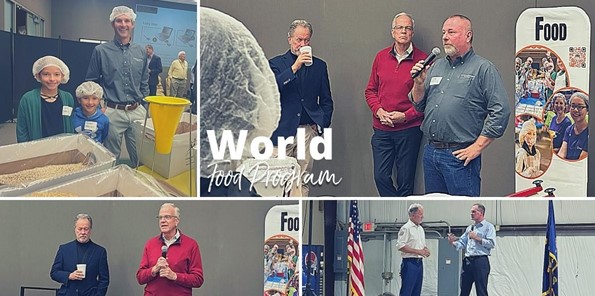
The average price of diesel is $5.32 per gallon, more than $1.50 above the same time last year. While prices are below the $5.81 peak in June, the high cost of fuel is hitting farmers hard as they navigate the fall harvest season. American Farm Bureau Federation economists analyzed the factors driving up fuel prices in the latest Market Intel report.
A ban on U.S. imports of petroleum from Russia, lower domestic production capacity, and seasonal demand are all contributing to higher costs. Russia provided 20% of the petroleum imported into the U.S. in 2021, but that was halted after Russia's invasion of Ukraine. Beyond the impact of Russia, since 2019, domestic diesel production capacity has dropped by 180,000 barrels per day. Several plants closed during the coronavirus pandemic and are not yet back online.
AFBF President Zippy Duvall sent a letter to President Biden today, calling on the administration to bring more domestic supply online, reducing costs to all Americans.
"Our nation's food supply is driven by diesel," President Duvall said in the letter. "Every input that arrives on our farms and ranches is transported by a diesel engine, whether that is by boat or barge, rail or truck. Our crops are planted by diesel engines and harvested by diesel engines. High diesel prices are severely impacting our farmers and ranchers, causing increased costs to consumers, and adding to food insecurity."
National diesel prices are expected to average $4.86 per gallon through the end of the year, according to government projections, and $4.29 per gallon in 2023.
To read the AFBF letter to President Biden, click here.
To read the full Market Intel, click here.
To have AFBF Market Intels delivered to your inbox, click here.
Fri, 04 Nov 2022 18:00:13 CDT
The U.S. Department of Agriculture and the Oklahoma Department of Agriculture are now putting the Daily Cash Grain Report into a PDF format - we are saving that PDF and archiving them for today's specific report. To see today's update, click on the PDF report link at the bottom of this story.
In addition to the PDF of the daily report, you can also listen to the Cash Grain Report by calling 405-621-5533. Push 2 for the grain report.
Fri, 04 Nov 2022 14:59:26 CDT
The following Op-Ed was published on October 26th in the Southwest Ledger in Lawton- and can be found online on their website. Please note that the Southwest Ledger and the Oklahoma Farm Report are both a part of the Hilliary Media Group LLC.
A letter from the publishers.
Dear Readers,
Voters across Oklahoma will soon be choosing the state's next Superintendent of Public Instruction- a position of great importance to the future of education in Oklahoma. We, the publishers of Southwest Ledger, want to take a minute to address the importance of this role, specifically to rural schools.
The Office of State Superintendent of Public Instruction is a constitutionally established office, charged with running the Oklahoma State Department of Education and presiding over the Oklahoma State Board of Education.
The state superintendent is ultimately responsible for the state's public school systems. It's critical that the state superintendent serve all Oklahoma students, not just those in the larger, metro-area schools. As our state's urban metro areas become increasingly more progressive and clamor for an ever-increasing share of the state's education dollars, rural Oklahoma parents are all too often left out of discussions about the future of their children's education.
More and more, we find those charged with making these decisions have spent the majority of their lives, certainly their professional lives, in the Oklahoma City or Tulsa metro areas. They just don't understand rural Oklahoma, or rural America, for that matter.
We do.
We've been providing telecommunications services to rural Oklahomans since 1958. We live, work and play in rural Oklahoma. We went to school in rural Oklahoma. Our kids go to school in rural Oklahoma. Like many of you, we are rural Oklahoma.
We know how hard it can be to teach and maintain rural family values when our schools are forced to push liberal, big city agendas or face losing what precious little funding they have.
We believe Ryan Walters understands this, too. He understands us, because he's one of us. In fact, we provide internet service to the same rural county in which Ryan taught public school.
We believe Ryan Walters will fight for rural Oklahoma schools, for rural Oklahoma values, and for rural Oklahomans and our children. As the clock winds down on the 2022 midterm elections and you prepare to cast your ballot for State Superintendent of Public Instruction, we hope you'll ask yourself this important question: "Who best represents my family, my values and my way of life?"
Having spent the last two years getting to know Ryan at community events, the Lawton Rangers Rodeo and a handful of family functions, both on and off the campaign trail, we believe that answer is easy.
Ryan Walters is the right choice for state superintendent.
Sincerely,
Dustin J Hilliary Co-Publisher State Regent for Higher Education
Public School Parent of Keegan, seventh grade; and, Kipton, second grade.
Edward Hilliary, Jr
Co-Publisher
CareerTech Board of Education
K-12 Public School Parent of Christian, Riley and Keith.
U.S. pork exports topped year-ago totals for the second consecutive month in September, according to data released by USDA and compiled by the U.S. Meat Export Federation (USMEF). September beef exports were below last year for the first time in 2022, but exports remain on a record pace through the first three quarters of the year.
Pork exports reached 222,202 metric tons (mt) in September, up 1% from a year ago. Export value increased 9% to $664.8 million – the highest since June 2021. Through September, pork exports were 13% below last year at 1.94 million mt, valued at $5.57 billion (down 11%).
September beef exports totaled 115,487 mt, valued at $890.3 million, down 7% from a year ago in both volume and value. For the first nine months of 2022, beef exports were still 4% above last year at 1.12 million mt. Export value reached $9.12 billion, up 20% and already achieving the second highest total for any calendar year, trailing only the 2021 record ($10.58 billion).
"It's very encouraging that U.S. pork exports continue to gain momentum, especially on the value side," said USMEF President and CEO Dan Halstrom. "Once again we see the importance of market diversification, as the strong September performance was achieved even as the volume shipped to Mexico eased to some degree."
While beef exports remain well-positioned to reach new heights in 2022, the September results reflected significant headwinds that have been building for some time.
"Demand for U.S. beef has been extremely resilient, but inflationary pressure on consumers and weakened currencies in key markets have definitely created a more challenging environment," Halstrom said. "Exports also continue to face logistical challenges, lockdowns in China and mounting inventories in some destinations. Still, it's hard to view September sales of nearly $900 million as a disappointment, when this would have been an all-time record just 18 months ago. That really drives home what a remarkable year this has been for U.S. beef exports."
Growth in Japan, Korea and Caribbean bolsters September pork exports
September pork exports were once again led by Mexico, though shipments slipped below year-ago volume for the first time since early 2021. September exports totaled 76,084 mt, down 4.5%, but export value still increased an impressive 25% to $176.4 million. Through the first three quarters of the year, exports to Mexico remained on a record pace at 696,802 mt, up 12% from a year ago, while value increased 15% to $1.42 billion. Demand has been bolstered by a very stable Mexican peso, which has held relatively steady with year-ago levels versus the U.S. dollar.
Pork exports to Japan rebounded in September to 31,008 mt, up 7% from a year ago, while value increased 1% to $130 million. These totals were achieved despite historic devaluation of the yen, which has increased the cost of Japan's imports of all commodities, including food and energy. For January through September, exports to Japan were 8% below last year's pace at 276,294 mt, while value was down 10% to $1.15 billion.
September pork exports to South Korea climbed 40% above last year's low volume to 12,284 mt, while value increased 39% to $43.1 million. This pushed January-September totals to 132,971 mt, up 4% from a year ago, while value increased 11% to $467.2 million. Korea recently opened a 70,000 mt, duty-free quota for imported pork, but the competitive landscape has not shifted dramatically because imports from the U.S., the European Union and Chile already enter Korea at zero duty. The move mainly benefited Canadian pork, which is tariffed at 8.6% for chilled and 9.6% for frozen. Mexico and Brazil also have a presence in the Korean pork market, with imports normally subject to Korea's most favored nation (MFN) rate of 25%, but eligible for duty-free entry within the quota.
Other January-September results for U.S. pork exports include:
While headwinds impact beef exports, annual records still within reach
Despite China's zero-COVID policies that result in travel restrictions and periodic lockdowns in metropolitan areas, September beef exports to China/Hong Kong were still 5% higher year-over-year at 23,517 mt, though well off the record total posted in August (30,806 mt). September export value increased 7% to $217.2 million. January-September exports to the region increased 23% to 217,028 mt, while value was up 34% to just under $2 billion. China/Hong Kong is now the second highest value destination for U.S. beef, trailing only South Korea. It remains the third largest volume market behind Japan and Korea.
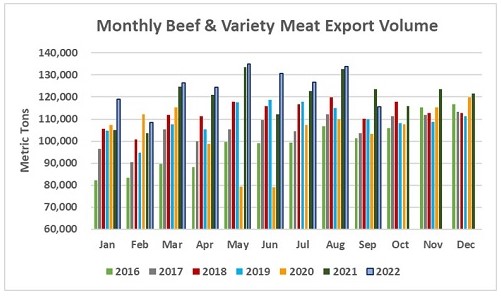
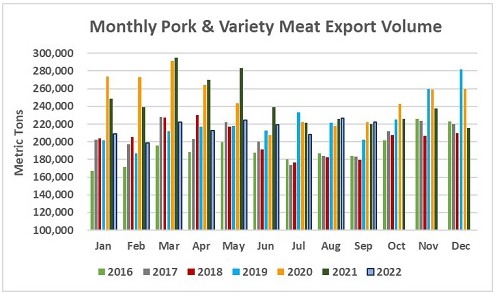
September beef export volume to Korea was down 5% from a year ago at 22,120 mt, while export value declined 9% to $188.8 million – the lowest in 15 months. Through September, exports to Korea remained 3% above last year's record pace at 219,869 mt, with value up 24% to $2.12 billion. Similar to pork, Korea recently opened a 100,000 mt, duty-free quota for imported beef, which helped bolster beef demand amid rising inflation and sharp devaluation of the Korean won. However, the quota also temporarily eliminated U.S. beef's tariff rate advantage over major competitors. The quota was scheduled to remain open through the end of the year, but it was fully utilized by mid-October.
Declining purchasing power is also a growing obstacle in Japan, where September beef exports totaled 24,520 mt, down 18% from a year ago. Export value was $177.5 million, also down 18%. Beef variety meat exports (mainly tongues and skirts), declined sharply for the second consecutive month, falling 50% from a year ago to 4,104 mt. Japan remains the leading value destination for U.S. beef variety meat exports, and despite a 15% decline in January-September volume (41,649 mt), export value still climbed 23% above last year's record pace at $421 million. Through September, total beef and beef variety meat exports to Japan totaled 236,718 mt, down 4% from a year ago, while export value increased 8% to $1.85 billion.
Other January-September results for U.S. beef exports include:
Lamb muscle cut exports rebound in September
Following a down month, September exports of U.S. lamb muscle cuts rebounded to 269 mt, up 175% from last year's low volume. Export value totaled $1.31 million, up 67%. Through September, lamb muscle cut exports increased 76% to 1,676 mt, valued at $9.9 million (up 68%). Led by the Netherlands Antilles, Dominican Republic and Bahamas, exports to the Caribbean nearly doubled from a year ago to 787 mt (up 94%) and increased 71% in value to $5.6 million. Exports also increased to Mexico, Canada, the ASEAN region, the Middle East and Panama.
As noted the past two months, USMEF has raised concerns in recent years with USDA about export data collected by the Department of Commerce for lamb variety meat to Mexico. Reported volumes declined dramatically in July, August and September, suggesting that the data reported in prior months and years were disproportionately high. USMEF is therefore focusing year-over-year comparisons on lamb muscle cuts only.
Complete January-September export results for U.S. pork, beef and lamb are available from USMEF's statistics web page.
For questions, please contact Joe Schuele or call 303-547-0030.
NOTES:
Fri, 04 Nov 2022 14:28:37 CDT

Listen to today's report with Justin Lewis, by clicking or tapping on the LISTEN bar
Justin Lewis of KIS Futures has all the details on today's agricultural markets for RON listeners, below.

The Oklahoma Cattlemen's Foundation announced today the promotion of Mariah Reimer to the role of Executive Director. Reimer has served in a contract administrator position with the Cattlemen's Foundation since February. During her time with the Foundation, Riemer has been responsible for several key events including the Clay Shoot, Steer Carcass Challenge and receiving the Foundation's first Grant. She was also key to the first annual Oklahoma's Best Beef Steak Cookoff held at the Oklahoma City Stockyards in October.
Oklahoma Cattlemen's Association Executive Vice President Michael Kelsey shared, "Mariah has done such a wonderful job in a contract Administrator role with the Foundation, it was just a natural and great step to take to make her the first Executive Director of the Oklahoma Cattlemen's Foundation. She is talented, passionate for the beef cattle industry and brings a wealth of foundation experience to this position. Great things are in store at the Oklahoma Cattlemen's Foundation under her leadership."
Reimer will be leading the Oklahoma Cattlemen's Foundation to continually expand and increase scholarship opportunities for rural and agricultural Oklahomans, fundraise to protecting the heritage of the West through disaster relief, memorials, and endowments and provide high quality educational opportunities for Oklahoma cattle producers.
Reimer is originally from Wellston, OK where her agricultural roots led her to Oklahoma State University. During her time at OSU, she graduated with a bachelor's degree in agricultural communications and went on to pursue a master's degree in administration.
"The Oklahoma Cattlemen's Foundation represents endless possibilities for not only our industry, but also agriculture as a whole," said Reimer. "I am proud to be the first Executive Director and look forward to showcasing the growth and impact the Foundation will have over many years by preserving past traditions and educating and leading future generations."
Reimer and her husband currently reside in Vinita, OK where they raise their two daughters.
The Oklahoma Cattlemen's Foundation was created to provide a charitable trust for the Oklahoma Cattlemen's Association and Oklahoma Junior Cattlemen's Association. When you support the Oklahoma Cattlemen's Foundation, you support beef cattle educational programs, research projects in cooperation with Oklahoma State University, educational scholarships for Oklahoma's 4-H and FFA youth and the preservation of the Oklahoma beef cattle industry and its traditions. For more information, please visit okcattlemen.org.
House Speaker Pro Tempore Kyle Hilbert, R-Bristow, and Reps. Trey Caldwell, R-Lawton, and Gerrid Kendrix, R-Altus, today thanked U.S. Sens. James Lankford and Jim Inhofe as well as U.S. Rep. Frank Lucas for their work to change language in rules that will improve patient access to rural critical care hospitals.
The trio of state lawmakers said the congressmen for the past four years have worked to change language by the Centers for Medicare & Medicaid Services (CMS) that defines payment rates and how close a Critical Access Hospital (CAH) can be to another hospital via a primary road.
Currently, under CAH status, hospitals are paid a higher Medicare rate—101 percent of their actual costs, rather than set rates per service. This higher rate allows many rural hospitals to remain open, the lawmakers said.
The CAH also must have fewer than 25 inpatient beds; be located 35 miles from other hospitals via a primary road; maintain patient length of stays less than 96 hours; and offer 24/7 emergency care.
This week, Oklahoma's Congressional Delegation helped secure a change in the rules that redefines "primary road" between a CAH and a Rural Emergency Hospital. Previously, the rule was any federal highway between hospitals. Now, a "primary road" must be a numbered federal highway "with two or more lanes each way, similar to the description of numbered State highways, and exclude numbered Federal highways with only one lane in each direction." As before, a CAH must be 35 miles away by primary road from another hospital, or 15 miles if in mountainous terrain. REHs will adopt the same requirement when they go into effect Jan. 1. "This will open up critical access care for a multitude of rural hospitals," the legislators said. "It's a literal lifeline to residents in rural areas. We're thankful to Senators Lankford and Inhofe as well as to Rep. Lucas for their dedication to making these common sense changes in the language to allow our hospitals to best serve the needs of our rural residents and to ensure hospitals serving different needs can exist in proximity to each other."
An integral part of the oversight and review process for future Farm Bills is getting direct input from producers, stakeholders, and consumers on how various programs are working for them. Submit your feedback here >>>
Following repeated calls from the National Corn Growers Association (NCGA) asking the Biden administration to respond to plans by Mexico to block imports of biotech corn, United States Trade Representative (USTR) Katherine Tai met virtually on Thursday with Mexico's Secretary of Economy, Raquel Buenrostro. During the meeting, Tai talked about the importance of avoiding a disruption in U.S. corn exports.
"We applaud Ambassador Tai for listening to corn grower leaders and sharing our concerns with the leadership in Mexico," said NCGA President Tom Haag. "But, given the magnitude of Mexico's threats and the fact that the embargo is set to be fully implemented by 2024, we need USTR to resolve the impasse as soon as possible by filing a dispute under the U.S.-Mexico-Canada Agreement (USMCA)."
The dispute centers around Mexico's President Andrés Manuel López Obrador's decree that would end imports of corn grown using biotech and certain herbicides by 2024. Biotech corn makes up over 90% of U.S. corn crops. One recent estimate projected a 30% increase in the price of tortillas in Mexico from the embargo.
NCGA has strongly encouraged USTR to file a dispute under the agriculture chapter of USMCA, which calls for cooperation between members on an individual government's regulation of imports. An op-ed by Haag was recently published in The Hill, a newspaper widely read by Washington policymakers and decision-makers. Corn grower leaders also continue raising the issue with lawmakers and major media outlets.
A USMCA dispute settlement would allow for extensive debate and mediation that could head off a calamitous outcome.
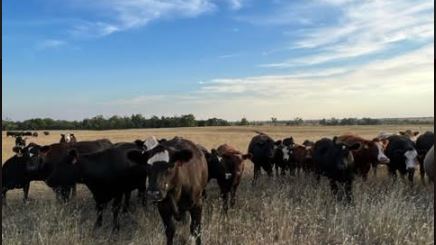
Senior Farm and Ranch Broadcaster, Ron Hays, is visiting with Greg Burden of GB Marketing, talking about how new breeding technology over the years in the cattle industry is valuable when it comes to marketing.
Greg Burden has been raised in the cattle business and recently founded GB Marketing to work with seed stock producers across the country in marketing their purebred stock. Burden is one of the sales managers that has been working with Cattlemen's Congress for the first two years, and he will be back for a third year in early 2023.
At the end of the day, whether it is a production sale or a bright lights sale like Cattlemen's Congress, Burden said you want to put your best foot forward, whether that be an open heifer, bred heifer, a bull, or genetic lot, and showcase what you are doing at your place.
"When you are breeding cattle to go toward your own production sale, you really have to start thinking about those things three or four years in advance, so you'll have the right set of breds and cows for that sale," Burden said. "It takes several years and a lot of hard work and planning to get to the production sale, and the same thing goes for when you are consigning to a big sale and show like Cattlemen's Congress. You are trying to showcase your breeding program."
As for production sales, Burden said it takes time to have the right set of breds, which comes from having the right set of genetics to breed something that is appealing to buyers.
" Embryo transfer has gotten more and more prevalent in all of the breeds," Burden said. "Now they can do IVF, and so they can do it every two weeks if they want to on those good donor cows."
Science has moved breeds forward dramatically, Burden said, because now livestock can pass their genetics on more in this lifetime than in the past.
"That has changed everything for the cattle business," Burden said. "As far as promoting those things, we sell embryos, and we sell flushes, we sell semen on some bulls that you can't get semen on a regular basis, so that is dramatically changed the way we sell cattle," Burden said. "You can generate income from those animals in a lot of different ways in today's world because you don't have to wait nine months to get those things on the ground and decide if they are or not. We can flush those things and sell those embryos and create cash flow in different ways."
Additional information such as genomic enhanced EPDs, Burden said, is a tool that makes a big difference in breeding decisions. Perfecting genetics in your herd is a time-consuming process made easier thanks to new science and technology, and marketing these attributes well is essential to achieving pay-off for the work put in.
To learn more about Burden's story and operation, visit https://gb-marketing.net/
Click the LISTEN BAR below to listen to Ron Hays and Greg Burden talking cattle and genetics marketing.
The Beef Buzz is a regular feature heard on radio stations around the region on the Radio Oklahoma Network and is a regular audio feature found on this website as well. Click on the LISTEN BAR below for today's show and check out our archives for older Beef Buzz shows covering the gamut of the beef cattle industry today.
Senior Farm and Ranch Broadcaster, Ron Hays, got the chance to visit with farmer and rancher from western Oklahoma, Monte Tucker, about his views on the upcoming election for Governor of Oklahoma from an agricultural perspective.
"It's always one of my favorite quotes from Will Rogers is, 'you have to remain politically active to be politically left alone,' and I fully get that now," Tucker said.
Tucker said he appreciates the governor and the governor's staff for allowing those in rural Oklahoma to grow and produce without added regulations, burden, and added taxes.
"Sometimes doing nothing is the best thing you can do for a person," Tucker said.
Tucker has been pleased with some of the proactive things the Governor has done, including some of his appointees, especially Ag Secretary Blaine Arthur.
"She is good. Very approachable, very common sense and that office handles way more than a lot of people realize," Tucker said. "I really believe she just handles every issue that comes in front of her with a little bit of common sense and country knowledge."
In regard to mail being sent out with accusations that the governor plans to shut down rural schools, Tucker said he doesn't believe it. Shutting down rural schools, Tucker said, doesn't work because the students would have nowhere else to go.
"He (Governor Stitt) sees the quality of kids that come out of rural schools and youth programs, and he values that one-on-one, small community touch that larger city schools can't duplicate," Tucker said.
Tucker also talked about his views on the school voucher system.
"I am a parent of two boys who go to a public school, and I am proud of it- it is a good school, but if that school just didn't fit for them, I pay an absorbent amount of tax that goes into a school system," Tucker said. "I feel like I would be cheated if I put my boys in a school that was better for them, but yet my tax dollars were still going to a school that didn't fit them."
Tucker said he could argue the issue both ways because if too many kids leave a school and the money leaves with them, that puts the school in a bind, but also, people don't want their money going to a school their kid does not attend.
"It is a tough issue," Tucker said.
Tucker also talked about Governor Stitt's opponent, Joy Hoffmeister.
"You had somebody that claimed to be a republican that converted to a Democrat," Tucker said. "Back a couple of years ago at their national convention, they basically adopted socialism. So, if that is what you are about, then go for the Democrats, but if you still love freedom and you still want choices on your farm and ranch to come down to you making the best choice for your land, your animals, and your family, then you probably need to stay on that conservative side."
Click the LISTEN BAR below to hear Ron Hays and Monte Tucker talking about the upcoming election for governor.
Today, "Cattlemen to Cattlemen," the television show of the National Cattlemen's Beef Association, announced that it will air a special "Salute to Veterans" episode on November 8th in honor of Veterans Day. The show will highlight the service of veterans involved in the beef industry and explore the connection between patriotic farmers and ranchers and our nation's servicemembers.
"Cattle producers are a patriotic group, and we are extremely grateful for the sacrifices military men and women have made to protect our freedoms and way of life," said NCBA President Don Schiefelbein, a Minnesota cattle producer. "NCBA is proud to salute our nation's veterans and highlight their personal stories."
The "Salute to Veterans" episode will air on Tuesday, November 8 at 8:30 p.m. eastern time and re-air on Wednesday, November 9 at 12:30 a.m. eastern time and again on Saturday, November 12 at 9 a.m. eastern time on RFD-TV. The full episode will also be available on the Cattlemen to Cattlemen YouTube page.
The special episode follows a group of veterans on a Tour of Honor organized by Honor Flight Central Coast California. The Honor Flight program provides veterans with the opportunity to visit monuments and memorials in Washington, D.C., and be recognized for their service. Three past presidents of NCBA joined this Honor Flight including Jerry Bohn, John Lacey, and Kevin Kester.
NCBA would like to thank key supporters that made this episode possible including the United States Department of Defense, United States Army, United States Navy, United States Air Force, Arlington National Cemetery, United States Naval Academy, National Park Service, Military Women's Memorial, and Honor Flight Central Coast California.
"It was an honor for Cattlemen to Cattlemen to share the story of these veterans," said Kate Maher, executive producer of NCBA's "Cattlemen to Cattlemen." "We also thank our partners at Elanco Animal Health for their sponsorship, which made this production possible."
For more information on NCBA's "Cattlemen to Cattlemen," contact Executive Producer Kate Maher at kmaher@beef.org.
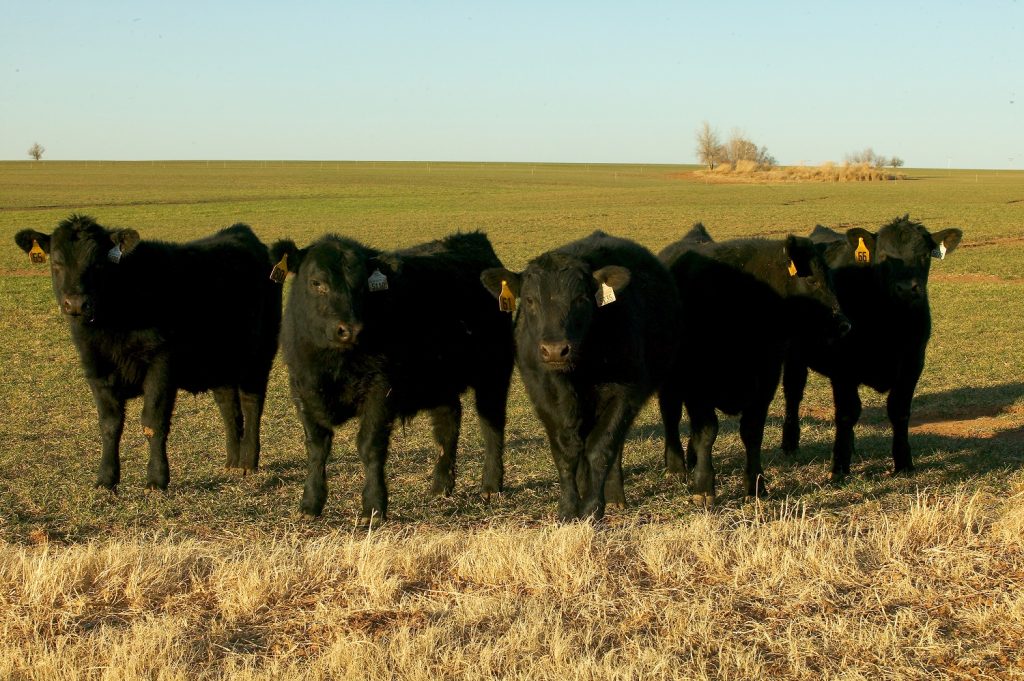
KC Sheperd, Farm Director, is visiting with Bob Rodenberger, a partner with Stockman Oklahoma Livestock Marketing, as he talks about the cattle markets and wheat pasture.
Recent rains have increased attitudes among cattle producers significantly, Rodenberger said, and many have got some wheat up. As for the cattle markets this week, Rodenberger said the feeder market was steady, and the calf market was 5 to 15 dollars higher.
"The 15 dollars would be on the very front end," Rodenberger said. "Weaned calves- 5 dollars higher would be on your in-between calves and your unweaned calves. There was some demand for some calves this week that would be staying local and wouldn't be going to grow yards."
Rodenberger said cow supplies were lower this week, but still way above last year's average.
As for those producers who are able to graze out their cattle on wheat this year, Rodenberger said those producers are going to have the chance to make a good profit.
Rodenberger talked about how government programs such as Risk Protection can aid in locking down a profit.
"It is not one of those deals where you are upside down, and you are owing money on things you don't have left," Rodenberger said.
Rodenberger said he expects to see the same trends in the cattle market next week.
"We are going to see calves through the end of the year," Rodenberger said. "We are not out of cattle."
For those with questions about the cattle market, Rodenberger said to give him a call at 1-800-926-9696.
Click the LISTEN BAR below to hear KC's full conversation with Bob Rodenberger on the cattle markets.
Today, Growth Energy sent a letter to the U.S. Department of the Treasury on implementation of Inflation Reduction Act of 2022 (IRA) tax credits for sustainable aviation fuel (SAF). In her letter, Growth Energy CEO Emily Skor calls on regulators to ensure that policies reflect the most updated and accurate science-based lifecycle carbon assessment (LCA) methods, specifically those in the U.S. Department of Energy's Greenhouse Gases, Regulated Emissions, and Energy Use in Technologies (GREET) model.
"Harnessing the U.S. ethanol industry – which at 17.4 billion gallons per year accounts for over 80% of biofuels production capacity in the U.S. - will be necessary to achieve these goals because ethanol is one of the few readily available feedstocks for SAF production," wrote Skor. "Growth Energy appreciates Treasury's consideration of this input as it implements the IRA's tax credit provisions in a manner that ensures the best available science is used to calculate eligibility for and amount of credits."
Skor's letter reflects conclusions shared by Growth Energy and other clean energy leaders since the White House first announced its SAF goals. They also reflect the intent of Congress.
"Indeed, several provisions of the IRA mandate use of GREET to calculate the LCA for other transportation fuels, such as hydrogen. Notably, these provisions require the use of GREET for other transportation fuels and hydrogen reference the same definition of 'lifecycle greenhouse gas emissions' under the Clean Air Act as the IRA's SAF provisions. In addition, EPA utilized GREET, along with other models, to implement the RFS program's major expansion in 2010. Multiple states that lead the nation on climate change regulation, including California and Oregon, also use GREET for evaluating lifecycle emissions of biofuels," wrote Skor.
Unlike GREET, the Carbon Offsetting and Reduction Scheme for International Aviation (CORSIA) which has been adopted by the International Civil Aviation Organization (ICAO), does not reflect the latest science.
"Modeling techniques have improved considerably in recent years due both to improvements in the models and improvements in the accuracy of inputs. For example, older LCA models failed to account for the ability of intensification (increasing crop yield) rather than extensification (increasing crop acreage) to meet increases in demand," she wrote.
"U.S. tax policy should not tie itself to international aviation safety organizations that are far less experienced and sophisticated in biofuels LCA modeling than the U.S. Department of Energy's National Laboratories," concluded Skor. The full letter to Treasury is available here.
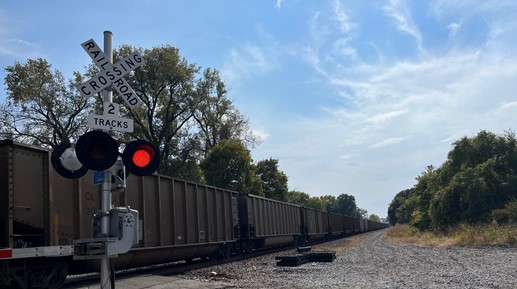
ASA and other ag industry leaders are urging Congress to take swift action to avoid a potential rail strike or lockout that would significantly harm the U.S. agricultural supply chain and devastate the economy.
The administration successfully helped mitigate a tentative agreement between the National Railway Labor Conference and 12 unions in September, preventing a potential strike or lockout. Each union is required to have its membership ratify the deal. If even one union does not reach a labor agreement, it is possible that all 12 unions will strike in solidarity. Railroads and the labor unions representing rail workers have until Nov. 19 to reconcile their differences and agree on a new labor contract.
As of now, members of four unions continue to review the agreement—following two unions that have voted to not ratify and causing concern that others will follow suit and cause a shutdown of the entire freight rail system.
While ASA and other groups continue urging the negotiators to reach an agreement among themselves, Congress may need to intervene.
In a letter to House and Senate leadership, the Ag Transportation Working Group underscores how a rail shutdown would cause further damage to the supply chain, especially while waterways remain strained.
"A strike or lockout combined with existing challenges in the rail system, at our ports, with trucking and with record low water levels on the Mississippi River impacting numerous barge shipments would be catastrophic for the agricultural and broader U.S. economies," the groups write. "Congress must act to prevent this from occurring if the parties cannot reach agreement."
This week, ASA also encouraged soy growers and soy states to reach out to Congress and urge members to act should a final rail labor agreement not be reached. Last week, ASA signed onto a coalition letter asking Biden to work with rail unions. According to the Association of American Railroads, rail annually transports 1.5 million carloads of grain—including soybeans. In addition, 248,000 carloads of processed soybeans, primarily soybean meal and oil, are transported each year. The railway is also critical to transporting fertilizer to U.S. farmers, who are already grappling with supply chain issues that have been exacerbated by the war in Ukraine.
Cooperative Ventures, a venture capital fund formed by North America's leading agricultural cooperatives, today announced its first investment in Sabanto, a hardware and software company on the forefront of developing autonomous capabilities in tractors. Sabanto, founded in 2018, is deploying fully-autonomous machinery performing row crop field operations throughout the U.S.
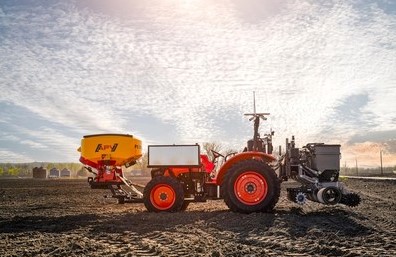
"We're very enthusiastic about the strategic benefits presented by the Sabanto investment," said GROWMARK Director of Innovation Heather Thompson. "The labor shortage in ag retail is a very real problem. Autonomy presents an exciting solution but adopting autonomous equipment creates a new set of challenges for traditional operations. By partnering with Sabanto, GROWMARK and our FS cooperatives have the advanced opportunity to test and learn the impacts of this cutting-edge technology."
Sabanto is currently focused on retrofitting 60 to 200 horsepower tractors to operate autonomously. Already, Sabanto has proven its ability to automate a variety of row crop field operations, including planting, tillage, spraying, and mowing over thousands of acres throughout the Midwest.
"While many autonomous equipment startups are focused on specialty crops, we believe Sabanto's focus on row crops presents a tremendous opportunity for farmers and our member owners," said CHS Director of Innovation and Sustainability Ben Van Straten. "This truly is an evolution of agriculture with the potential to lower equipment and labor costs for farmers and ag retailers by using smaller tractors that are more fuel efficient while further improving sustainability through less soil compaction."
"Cooperative Ventures' investment is a testament to the importance of autonomy in the future of row crop agriculture. Given the vast network of customers and acres across GROWMARK and CHS, the path to autonomous field operations will certainly be accelerated," remarked Craig Rupp, the CEO of Sabanto.
This first investment by Cooperative Ventures is aligned with the capital fund's core investment areas, or "Fields of Play," to maximize the impact of each investment: crop production, supply chain, farm business enablement, and sustainability.
About Cooperative Ventures:
Cooperative Ventures is a venture capital fund founded in late 2021 as a joint venture between CHS and GROWMARK, two of the largest farmer-owned agricultural supply cooperatives in North America. The fund focuses on innovative solutions and emerging technologies that positively impact farming. In addition to providing capital, Cooperative Ventures is committed to developing mutually beneficial commercial relationships between startups and our farmer-owned cooperative partners. CHS and GROWMARK leverage their industry expertise and farmgate network to provide valuable operational support and resources to help Cooperative Ventures' portfolio companies grow and succeed. Cooperative Ventures is comprised of teams based out of Bloomington, Illinois, and St. Paul, Minnesota with management assistance from Touchdown Ventures. More information is available at cooperativeventuresllc.com.
About GROWMARK:
GROWMARK is an agricultural cooperative serving almost 400,000 customers across North America, providing agronomy, energy, facility engineering and construction, and logistics products and services, as well as grain marketing and risk management services. Headquartered in Bloomington, Illinois, GROWMARK owns the FS trademark, which is used by its member cooperatives. More information is available at growmark.com.
About CHS:
CHS Inc. (www.chsinc.com) is a leading global agribusiness owned by farmers, ranchers and cooperatives across the United States. Diversified in energy, agronomy, grains and foods, CHS is committed to creating connections to empower agriculture, helping its farmer-owners, customers and other stakeholders grow their businesses through its domestic and global operations. CHS supplies energy, crop nutrients, seed, crop protection products, grain marketing services, production and agricultural services, animal nutrition products, foods and food ingredients, and risk management services. The company operates petroleum refineries and pipelines and manufactures, markets and distributes Cenex® brand refined fuels, lubricants, propane and renewable energy products.
About Sabanto
Headquartered in Chicago, Sabanto's mission is to accelerate autonomy in agricultural machinery to solve two primary problems: (i) the increasingly acute scarcity of labor in rural areas and (ii) ever-increasing capital expenses for modern ag machinery. Sabanto's core competency revolves around low-cost retrofits of existing agriculture machinery regardless of make or model, along with the development of necessary supporting software to maximize the utility of autonomous technology, thereby increasing producer ROI. Learn more at https://sabantoag.com.
State Climatologist Gary McManus says we could see some severe weather with the front that could include a large hail threat, but he says, "Any storms going up in the warm sector (that area ahead of the cold front) could be more dangerous."
McManus says that's expected to occur after the front moves farther into SE OK later this afternoon, but should any storms go up before then (again, in the warm sector ahead of the cold front). He says they'll need to be tracked carefully since instability is so high (the atmosphere, not me, although I'm very unstable, I can't produce tornadoes) and there is strong shear in place.
McManus said that doesn't mean the storms going on behind the front won't be severe, as he says we've had a few Thunderstorm warnings and rain showers across the state already.
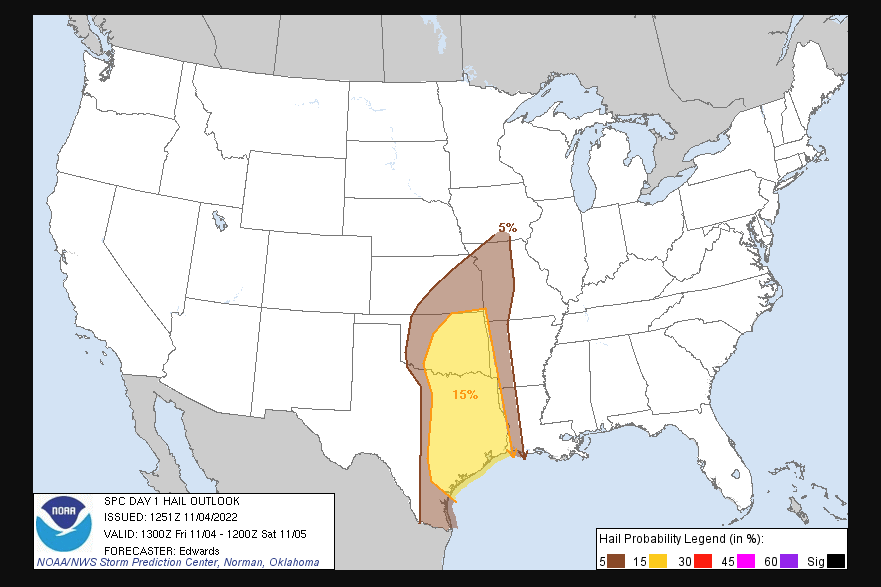
Buffalo got an inch of rain, the most rain they've received in a single day since March 21, and more rain than they've received since July 31, 96 days ago.
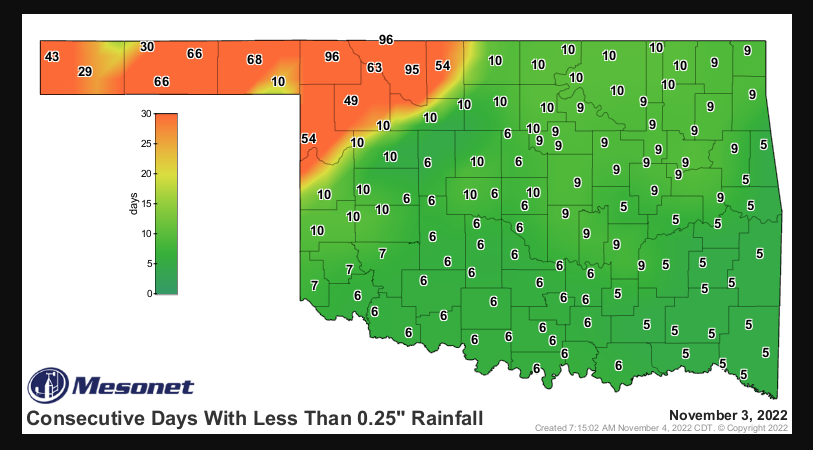
McManus says the state should prepare for severe weather, "Tuning into your local NWS office/ favorite media source for up-to-the-minute weather updates, but ESPECIALLY those down in SE OK, where there is a risk of STRONG (EF2-EF5) tornadoes today." He says we may not get the rain we need right now, but we'll take what we can get at this point.
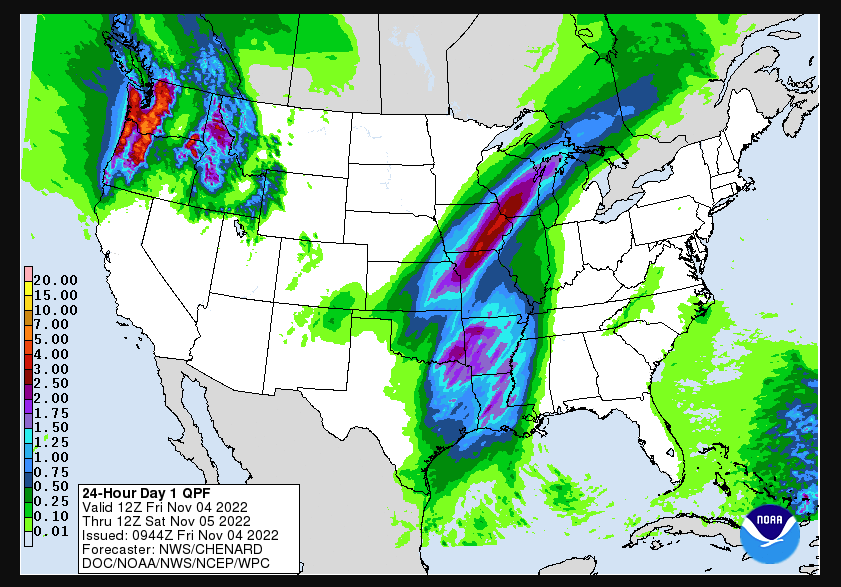
Fri, 04 Nov 2022 08:28:51 CDT

Fifteen farm and ranch women leaders graduated today from the fall session of Women's Communications Boot Camp hosted by the American Farm Bureau Federation.
The intensive four-day course completed by the agricultural leaders featured hands-on sessions related to public speaking, working with the media and messaging. Graduates will use their training in a variety of ways such as participating in local media opportunities to strategically support Farm Bureau's policy work, sharing information with elected officials and joining social media campaigns that spotlight modern agriculture.
"Consumer interest in food and how it is produced and grown remains high, which means communicating effectively about agriculture is more important than ever," said Isabella Chism, an Indiana row crop farmer and chair of the AFB Women's Leadership Committee. "The women leaders who completed this training will use their skills in their communities and for Farm Bureau on local, state and national levels."
Boot Camp graduates are Amy Hale, Louisiana; Stasha Baldwin, Maine; Jeannette Kreher-Heberling, New York; Carrie Barnhardt, North Carolina; Cindy Stroup, North Carolina; Karin Bright, Ohio; Stacy Irwin, Ohio; Karen Dodson, Oklahoma; Jacque Duyck-Jones, Oregon; Amanda Balon, Pennsylvania; Monet Bottenfield, Pennsylvania; Julie Yahnke-Schrum, Pennsylvania; Renea Jones, Tennessee; Madalynn Kainer, Texas; and Kat Peper, Wisconsin.
"Women farmers and ranchers are passionate advocates for agriculture," said AFBF President Zippy Duvall. "I applaud our graduates as they increase their engagement with both consumers and elected officials and take the next step in their leadership journey in agriculture."
This is the 17th Boot Camp. The program has 254 graduates and is open to all women involved in Farm Bureau.
"This training has been extremely beneficial," said Peper. "It provided the opportunity to improve my advocacy skills in a number of areas and gain greater confidence as a voice for agriculture. It was also valuable to connect with amazing women involved in farming and ranching from across the country."
The American Farm Bureau Women's Leadership Committee, in partnership with AFBF staff, hosts and provides training for Women's Communications Boot Camp. A spring session of Boot Camp will be held April 3-6, 2023, with applications opening in December.
Photos from this event may be downloaded at https://fb.org/bootcampfall22.
Fri, 04 Nov 2022 08:24:44 CDT
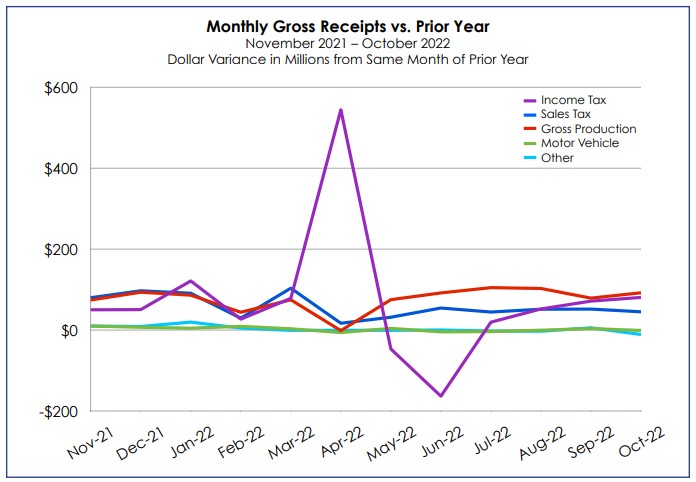
Gross Receipts to the Treasury for the past 12 months surpassed last month's record high of $17 billion by more than $200 million, State Treasurer Randy McDaniel announced today.
Twelve-month gross receipts through October are $17.24 billion, up by $2.5 billion, or 17.3 percent, from the prior 12 months. Furthermore, this aggregate is more than $4 billion higher than the slowdown in June 2020 of $13 billion.
"Gross Receipts to the Treasury continue to rise," said Treasurer McDaniel. "While inflationary pressures are offsetting the purchasing power of much of the growth, the trend lines from key revenue sources remain favorable."
Major revenue streams for the past 12 months have increased by rates ranging from 92 percent for oil and gas gross production collections to 2.6 percent for motor vehicle receipts. The largest components are taxes on income and sales. They show double-digit growth with income tax collections up 17.2 percent and the combined sales and use taxes up 11.4 percent.
Compared to last October, the economic results for the month are also robust. Total October collections of $1.48 billion are up by $204.6 million, or 16.1 percent, from October 2021. The highest percentage of growth is seen in oil and gas gross production receipts, up by 87 percent from the prior year. Sales and use tax collections continue to keep up with inflation, growing 8.5 percent compared to the same month of last year.
Other indicators
As measured by the Consumer Price Index, the U.S. Bureau of Labor Statistics (BLS) reports the annual inflation rate at 8.2 percent in September. The energy component of the index is up 19.7 percent over the year. The food index rose by 11.2 percent.
The Oklahoma unemployment rate in September was reported as 3.2 percent by the BLS. That is up from 3.1 percent in August. The U.S. jobless rate was listed as 3.5 percent in September, down by two-tenths of a percentage point from August.
The monthly Oklahoma Business Conditions Index contracted in October. The index for the month was set at 51.3, down from 55.6 in September. The outlook indicates slow growth during the next three to six months.
October collections
October 2022 collections compared to gross receipts from October 2021 show:
· Total monthly gross collections are $1.48 billion, up by $204.6 million, or 16.1 percent.
· Gross income tax collections, a combination of individual and corporate income taxes, generated $494.5 million, up by $80.4 million, or 19.4 percent.
o Individual income tax collections are $450.5 million, an increase of $70.1 million, or 18.4 percent.
o Corporate collections are $44 million, up by $10.3 million, or 30.7 percent.
· Combined sales and use tax collections, including remittances on behalf of cities and counties, total $573.9 million - up by $44.8 million - or 8.5 percent.
o Sales tax collections total $489.1 million, an increase of $36.9 million, or 8.2 percent.
o Use tax receipts, collected on out-of-state purchases including internet sales, generated $84.9 million, an increase of $7.9 million, or 10.3 percent.
· Gross production taxes on oil and natural gas total $197.7 million, an increase of $91.9 million, or 86.9 percent.
· Motor vehicle taxes produced $66.8 million, down by $1.3 million, or 1.9 percent.
· Other collections composed of some 60 different sources including taxes on fuel, tobacco, medical marijuana, and alcoholic beverages, produced $144.6 million - down by $11.3 million, or 7.3 percent.
o The medical marijuana tax produced $4.3 million, down by $672,321, or 13.4 percent from October 2021.
Twelve-month collections
Combined gross receipts for the past 12 months compared to the prior period show:
· Gross revenue totals $17.24 billion. That is $2.54 billion, or 17.3 percent, above collections from the previous 12 months.
· Gross income taxes generated $6 billion, an increase of $882.1 million, or 17.2 percent.
o Individual income tax collections total $4.97 billion, up by $657.5 million, or 15.3 percent.
o Corporate collections are $1.04 billion, an increase of $224.6 million, or 27.7 percent.
· Combined sales and use taxes generated $6.79 billion, an increase of $693.7 million, or 11.4 percent.
o Gross sales tax receipts total $5.75 billion, up by $566.2 million, or 10.9 percent.
o Use tax collections generated $1.03 billion, an increase of $127.5 million, or 14.1 percent.
· Oil and gas gross production tax collections generated $1.91 billion, up by $913.7 million, or 91.9 percent.
· Motor vehicle collections total $874.6 million, an increase of $22.4 million, or 2.6 percent.
· Other sources generated $1.67 billion, up by $27.5 million, or 1.7 percent.
o Medical marijuana taxes generated $55.9 million, down by $10.4 million, or 15.7 percent.
About Gross Receipts to the Treasury
The monthly Gross Receipts to the Treasury report, developed by the state treasurer's office, provides a timely and broad view of the state's economy.
It is released in conjunction with the General Revenue Fund report from the Office of Management and Enterprise Services, which provides information to state agencies for budgetary planning purposes.
The General Revenue Fund, the state's main operating account, receives less than half of the state's gross receipts with the remainder apportioned to other state funds, remitted to cities and counties, and paid in rebates and refunds.
To access charts and graphs, click here.
Fri, 04 Nov 2022 08:00:09 CDT
The National Chicken Council (NCC) today delivered public comments at a U.S. Department of Agriculture Food Safety and Inspection Service (FSIS) virtual meeting about the agency's recently announced regulatory framework for Salmonella in poultry products. NCC's comments addressed each of the three components the agency said it is currently considering as part of a new strategy.
Food safety is a top priority for the broiler industry, and NCC supports changes in food safety regulations that are based on sound science, robust data, and are demonstrated to positively impact public health.
As part of the framework, FSIS said it would be proposing three components, including:
· Requiring incoming flocks be tested for Salmonella before entering an establishment;
· Enhancing establishment process control monitoring and FSIS verification;
· Implementing an enforceable final product standard, while considering whether Salmonella at certain levels and/or types of Salmonella should be considered as an adulterant.
Regarding component one, Preharvest Testing, NCC's Senior Vice President of Scientific and Regulatory Affairs, Ashley Peterson, Ph.D., told the agency the biggest concern is the potential to negatively impact the welfare of the birds and the potential to limit the supply of chicken in the marketplace. "This component risks reverting to a long-abandoned command-and-control approach whereby FSIS inspectors make decisions about how plants operate," said Peterson. "In this time of extreme inflation coupled with ongoing food security challenges, a command-and-control approach will do nothing to improve public health, it will only remove chicken from the meat case.
"The industry is and should be expected to control potential pathogens, but there is not a one-size-fits-all approach in doing so," Peterson commented in response to component two, Process Control. "Overall, this approach will stymie innovation and technology which seems counter to a collaborative food safety approach." She recommended FSIS use verification sampling results, to include enumeration results, in a risk assessment model to help understand what impacts, if any, changes in indicator organisms and/or Salmonella load at various processing locations will have on public health.
Regarding the third component about a Final Product Standard, Peterson encouraged FSIS to build on the successful path established through performance standards, whereby the industry and agency collaborated to meet voluntary standards. "However," she added, "we do not believe that the Poultry Products Inspection Act provides statutory authority to create an enforceable, adulteration-based final product standard for Salmonella in raw poultry... After scientifically determining the impact on public health, FSIS could consider a quantitative approach and give industry the opportunity to meet an enumerative performance standard."
Peterson also expressed NCC's appreciation for FSIS's interest in data sharing. "We believe it is critical that we all start with robust data, and from there collaborate on the best way to approach Salmonella control," she said.
"We look forward to a continued meaningful dialogue with FSIS on the proposed Salmonella framework and are hopeful we can come up with a science-based, data-driven approach that will not only improve public health but also ensure that consumers of America's favorite protein still have an affordable product available to feed their families," Peterson concluded.
Fri, 04 Nov 2022 03:41:31 CDT
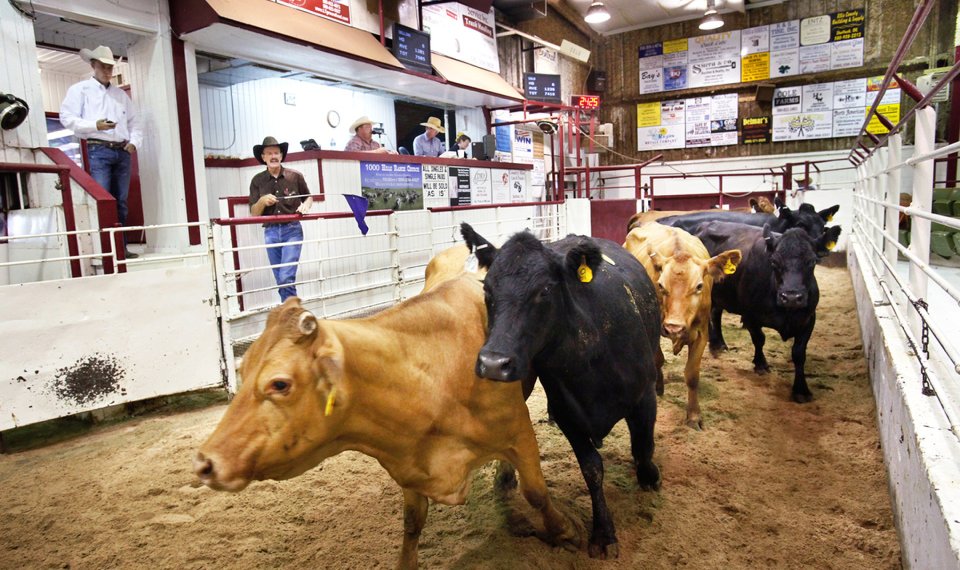
Woodward Livestock Auction
Thu Nov 3, 2022
AUCTION
This Week 3,512
Last Reported 2,788
Last Year 3,556
Compared to last week: Feeder steers steady to 5.00 higher. Feeder heifers 3.00 to 5.00 higher. Weaned steer calves steady to 5.00 higher. Weaned heifer calves 5.00 to 7.00 higher. Unweaned calves mostly steady. Demand was moderate. Quality average to attractive. Supply included: 100% Feeder Cattle (53% Steers, 41% Heifers, 6% Bulls). Feeder cattle supply over 600 lbs was 50%.
FEEDER CATTLE
STEERS - Medium and Large 1 (Per Cwt / Actual Wt)
Head Wt Range Avg Wt Price Range Avg Price
8 303-330 315 210.00-228.00 219.20
2 342 342 217.00 217.00 Unweaned
14 351-398 368 210.00-223.00 217.37
5 385-391 389 182.00-196.00 190.45 Unweaned
30 400-446 412 194.00-220.00 214.18
26 401-433 419 183.00-207.00 193.14 Unweaned
79 451-499 465 185.00-217.00 203.49
22 452-490 476 178.00-189.00 184.99 Unweaned
157 503-538 524 182.50-218.00 197.01
58 500-545 531 164.00-193.00 182.32 Unweaned
91 553-598 581 170.00-196.00 182.59
156 553-593 576 162.00-189.00 179.25 Unweaned
142 606-649 632 167.00-185.00 180.82
45 613-638 622 155.00-174.00 167.90 Unweaned
139 659-695 674 162.00-182.00 175.88
90 657-695 671 161.00-168.50 165.86 Unweaned
117 706-747 719 170.00-179.25 176.04
64 702-736 719 161.00-170.50 166.18 Unweaned
94 773-782 778 173.00-178.25 177.57
11 765-795 781 162.00-165.00 163.66 Unweaned
9 821-831 828 170.00-173.50 172.34
89 850-868 863 174.00-175.50 175.07
5 997 997 157.00 157.00
For the complete market report from USDA Market News click on the PDF link below:
Thu, 03 Nov 2022 16:43:49 CDT
This week on SUNUP is Dr. Kim Anderson, Oklahoma State University Extension grain market economist. During this week's edition, Anderson talks about the factors impacting commodity markets and crop conditions.
"President Putin announced that he was not going to support Ukraine exporting wheat, and wheat prices went up 55 cents per bushel," Anderson said. "Then he announced that he would support the export of wheat, and prices fell 48 cents a bushel. So, we have prices right now somewhere around the 9-dollar level. The basis is 46 cents."
If you are looking at forward contracting wheat for the 2023 crop, Anderson said it is $8.75 with a minus 55 cent basis off of that Kansas City July contract for 2023.
"Corn continues to move in an 18-cent range sideways," Anderson said. "Prices are about 6 dollars for forward contracting for 2023, and the basis is 25 cents under that '23 December corn contract."
We had a rally in soybeans, Anderson said, not because of the war but because of the weather in South America. There was a 36-cent price increase to prices around $14.19.
"Forward contract for beans is around $13.10 for the '23 crop with a minus 85 cent basis," Anderson said.
Cotton is falling from $1.20 about a month ago down to 72 cents early this week and back up to 79 cents, Anderson said, so it looks like cotton has probably bottomed out.
"The USDA released the crops condition report for wheat," Anderson said. "84 percent of Oklahoma wheat is planted, and the average is 85.62 percent of that wheat has emerged, and the average is 66 percent."
36 percent of that wheat is in the poor to very poor category, Anderson said, and only 11 percent at good to excellent.
"A big factor for wheat is that war between Russia and Ukraine, and it looks like that war is going to be dragged out over years," Anderson said. "It appears that when something happens to disrupt the flow of product out of Ukraine, we get about a 50 to 60 cent price move. We saw that this last week."
Ukraine's wheat right now, Anderson said, is worth about 60 cents a bushel.
This week on SUNUP:
• Brian Arnall, OSU Extension precision nutrient management specialist, has soil fertility guidance for wheat producers.
• Wes Lee, OSU Extension Mesonet agricultural coordinator, discusses the total daily average solar radiation for the year so far. State Climatologist Gary McManus looks back at the month of October and how the recent rains impacted the drought monitor.
• Mark Johnson, OSU Extension beef cattle breeding specialist, talks with Parker Henley, OSU Extension beef seedstock management specialist, about fall vaccinations in cattle herds.
• Kim Anderson, OSU Extension grain marketing specialist, gives condition reports for Oklahoma crops.
• Barry Whitworth, OSU Extension veterinarian, discusses the recent uptick in rabies cases in the state and says livestock producers need to be extra careful when handling sick animals.
• We travel to Noble County for an OSU Extension workshop that helps producers determine how much or how little feed they're giving their herds.
• Finally, we highlight the 2022 Ferguson College of Agriculture Distinguished Alumni and OSU Agriculture Champions. Dr. Tom Coon recognized the esteemed group at the recent OSU Agriculture Honors ceremony.
Join us for SUNUP:
Saturday at 7:30 a.m. & Sunday at 6 a.m. on OETA (PBS)
YouTube.com/SUNUPtv
SUNUP.okstate.edu
Thu, 03 Nov 2022 15:17:32 CDT
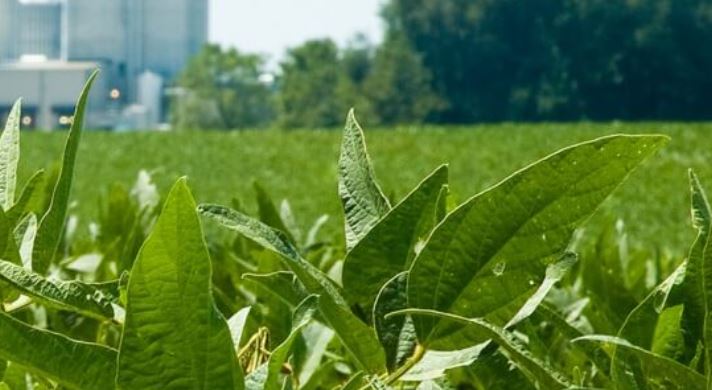
The U.S. Department of Agriculture and the Oklahoma Department of Agriculture are now putting the Daily Cash Grain Report into a PDF format - we are saving that PDF and archiving them for today's specific report. To see today's update, click on the PDF report link at the bottom of this story.
In addition to the PDF of the daily report, you can also listen to the Cash Grain Report by calling 405-621-5533. Push 2 for the grain report.
Thu, 03 Nov 2022 13:39:37 CDT
By Trisha Gedon
Some days, it can be a scramble to get a healthy dinner on the table due to sports practices, dance lessons, club meetings and other activities. Dinner time can be hectic without a plan.
Jessica Riggin, Oklahoma State University Extension educator and Lincoln County Extension director, said meal planning is a good way to serve healthy meals and save money on the grocery budget.
"With a meal plan, you determine the menu for the week and make a shopping list. When shopping, buy only what's needed for those planned meals," she said. "You save money with less impulse shopping and also save time by not making extraneous trips to the store throughout the week."
Riggin suggests meal planning for your family's biggest meal of the day, which for most people is the evening meal. Without a plan, it can be easy to fall into the habit of pizza delivery or drive-thru meals, which typically aren't as healthy and are more expensive.
Riggin said she plans an entire month of meals at a time, but someone just starting out could start with two or three meals a week and work up from there. Print off a blank calendar page to keep track of the planned meals.
"The great thing about meal planning is it's catered to the specific needs of your family," she said. "Look at your calendar and determine what nights you or your children have activities. Activities can influence what kind of meal to plan for that evening. Do you need something quick so you can make it to the ballgame? A slow-cooker meal could be an option. You can even put a drive-through meal or pizza delivery on your calendar. The point is you've planned for it."
Consider theme nights to ease the planning process, such as soup night, sheet-pan dinners, slow-cooker meals, breakfast for dinner, grilling night, etc. Riggin said if possible, cook a bigger meal on the weekend and plan to repurpose the leftovers another night during the week. Be sure to plan side dishes along with the main course.
"Try oven roasted vegetables for a different taste. A little olive oil and seasonings can change up the flavor and may entice picky eaters to give it a try," she said. "Sometimes, it takes several exposures before a child develops a taste for a particular food. Frozen vegetables are just as healthy as fresh, and the quality is good all year long. However, do take advantage of fresh in-season fruits and vegetables."
Vegetables can be served in a variety of ways, such as steamed, roasted, raw, in a stir fry or with a sauce. Each cooking method changes the flavor and texture. Someone may not like raw broccoli but can't get enough of it roasted.
Get the family involved in choosing recipes, shopping for ingredients and cooking the meals, said Riggin. These are good life skills for everyone to have. Look at online recipe sites for new ideas. Be sure to read through each recipe to ensure it fits your health goals and lifestyle.
"Another great tool to help with meal planning is the USDA's MyPlate website. It offers guidance for all age groups as well as healthy recipes on a budget and helps with setting personal goals for healthy eating," Riggin said. "Consumers can also sign up to receive tips, recipes and more through email that can be incorporated into your meal plan."
OSU Extension offers additional nutrition information online. Contact the nearest OSU Extension county office for more tips on meal planning, health and wellness.
Watch Riggin demonstrate healthy cooking tips and recipes on OSU Agriculture's Oklahoma Gardening television show.
OSU Extension uses research-based information to help all Oklahomans solve local issues and concerns, promote leadership and manage resources wisely throughout the state's 77 counties. Most information is available at little to no cost.
Thu, 03 Nov 2022 13:14:58 CDT
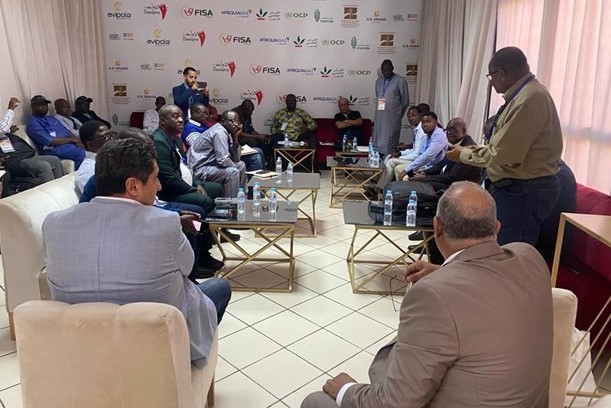
The U.S. Grains Council's (USGC's) Middle East, Africa and Europe regional office in Tunis, Tunisia, recently sponsored training for poultry industry representatives from the West African countries of Ghana and Ivory Coast. Collaborating with FISA's (The Moroccan Poultry Association's) training center, the Council is focused on educating West African poultry farmers and association members on all aspects of production and management including the technical knowledge and practical experience necessary to address industry challenges in their respective countries.
In October, using U.S. Department of Agriculture (USDA) Section 108 funds, the Council hosted 22 poultry industry professionals from Ghana and Ivory Coast for a one-week program in Morocco to learn more about the best practices of poultry farming and nutrition.
"The markets across West Africa are growing and developing, and the demand for higher protein animal products is increasing. The Council is committed to supporting the development of the feed and livestock markets in the region, specifically the feed and poultry industry across West Africa," said Kurt Shultz, USGC senior director of global strategies. "Emerging markets based in West Africa face several challenges including poor-quality feed; inefficient warehousing and storage; low productivity of producers; and inadequate safety and security of poultry products, among other challenges."
To address technical problems in the industry in West Africa, the Council is leveraging its long-time partnership with FISA's training center, Avipole, as a site for providing practical training to stakeholders. In 2017, the Council began organizing poultry management training short courses at the center, with FISA supporting the development and oversight of these short courses.
"The program held in October by FISA coincided with the Poultry Show "Dawajine" in Morocco. The West African delegation had the chance to visit their Moroccan counterparts and, as a result, expressed their interest to form an African Confederation for Poultry Development," said Dr. Ait Boulahsen, USGC consultant in Morocco. "This new regional association will create a new dynamic for capacity building in West African countries and will help the industry leverage and tackle obstacles to improve the cost of poultry production and quality of poultry meat to the final consumer within West Africa," Boulahsen said.
This new confederation is an exciting development as the poultry industries across West Africa come together to address the larger constraints to their development. This means they will be leading the effort and embrace the opportunity to collaborate with the Council and Moroccan industry leaders to develop a modern poultry industry across the region - all part of the Council's mission - to develop markets, enable trade and improve lives.
To read more about the Council's work with the Middle East and Africa region, click here.
Thu, 03 Nov 2022 11:44:35 CDT
After hearing from constituents at recent town hall meetings and directly from rural and family-owned pharmacies who serve Oklahoma veterans, military family patients, and military patients themselves, Congressman Frank Lucas (OK-03) yesterday sent a letter to Lieutenant General Ronald Place, the Director of the Defense Health Agency (DHA), expressing his concerns regarding the recent pharmacy contract that resulted in the separation of 15,000 independent or community pharmacies from the TRICARE system.
"Oklahoma is home to more than 290,000 veterans and thousands of active-duty military members and families who depend on TRICARE. I proudly represent many rural veterans who live in Oklahoma's Third District and like many of them, I share deep concerns with recent changes announced by ESI regarding military beneficiary access to pharmacies as outlined by TPharm5. In my district alone, there are over 67 pharmacies who will no longer be a part of the ESI Pharmacy Services Administrative Organization (PSAO's)."
As recently as 2021, over 56,000 pharmacy retailers were recognized within the TRICARE network. TRICARE beneficiaries include active-duty service members, veterans, and their families. However, as a result of ESI's newly negotiated contract on behalf of DHA, nearly 15,000 pharmacy retailers are no longer part of the TRICARE network, as of October 24th. The exodus of pharmacy retailers leaving the network leaves roughly 400,000 beneficiaries living in suburban, rural, and underserved communities with limited access to care- including thousands in Oklahoma's Third Congressional District.
You can read the full letter here or below:
Lieutenant General Place,
Every military service-member and TRICARE beneficiary that serves our country deserves to have easy access to Department of Defense military health care and benefits they have dutifully earned. As you are aware, on October 24, 2022, a new pharmacy contract known as TPharm5 took effect. Led by Cigna/Express Script (ESI), one immediate effect of the new contract was the separation of 15,000 independent or community pharmacies from the TRICARE system. In addition to the 15,000 independent or community pharmacies, the severance will impact approximately 400,000 beneficiaries.
Oklahoma is home to more than 290,000 veterans and thousands of active-duty military members and families who depend on TRICARE. I proudly represent many rural veterans who live in Oklahoma's Third District and like many of them, I share deep concerns with recent changes announced by ESI regarding military beneficiary access to pharmacies as outlined by TPharm5. In my district alone, there are over 67 pharmacies who will no longer be a part of the ESI Pharmacy Services Administrative Organization (PSAO's). Enclosed is a list provided by ESI, which provides further details of the list of independent or community pharmacies who are no longer considered in-network through TRICARE. Please keep in mind this list solely covers independent or community pharmacies and does not include numerous pharmacy locations from chain-retail companies such as Wal-Mart who are no longer participating in TPharm5.
I, along with thousands of rural veterans and military beneficiaries who have been impacted by the Department's actions are alarmed there are numerous independent or community pharmacies that may have unknowingly been dropped given the short notice to affirmatively respond to ESI. Our military beneficiaries, and especially our rural veterans, depend on local and independent community pharmacies for medications that are crucial to their health and well-being. Given my strong concerns coupled with critical feedback I've received from my veterans and local pharmacists, I am requesting answers to my questions by Monday, November 14, 2022.
1. I am told the original date for execution of TPharm5 was December 31, 2022. Because of concerns of rolling out TPharm5, it's my understanding the decision for implementation on October 24, 2022, was made to avoid disruptions during the holiday season. Instead of rolling out TPharm5 two months early, why wasn't the program delayed by two months to avoid confusion and provide stakeholders more time to prepare for changes?
2. If an independent or community pharmacy was unaware of ESI's October 24, 2022 deadline and they are interested in joining TPharm5, what steps is DHA and ESI taking to ensure interested pharmacies are able to re-join?
3. Is there data used in the decision-making process for TPharm5 that states military beneficiaries prefer delivery of prescriptions through mail as opposed to a brick-and-mortar pharmacy?
4. How were military beneficiaries notified their current pharmacy will no longer be a part of TPharm5? By what methods and how many times were individual military beneficiaries notified?
5. Will you commit to DHA hosting a virtual townhall, so they can hear from military beneficiaries, as well as independent and community pharmacies who wish to provide feedback on the implementation process?
I urgently request your response to these questions.
Thu, 03 Nov 2022 11:02:39 CDT
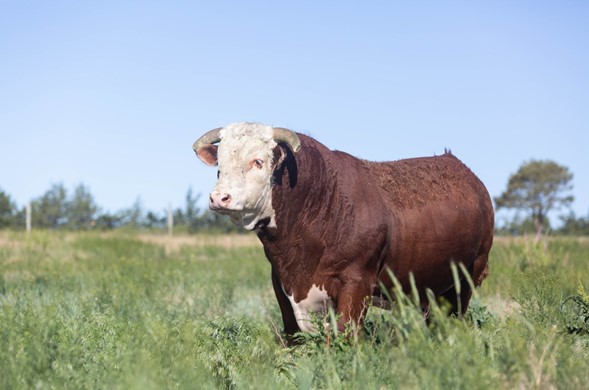
Beef producers mitigate future risk and reach goals at a faster rate with GE-EPDs.
Better genetics are quickly becoming the hero to developing sustainable, efficient cattle herds. As producers seek reliable genetics to improve efficiency and carcass quality, animals with genomic information provide opportunities to reach goals at a faster pace.
In 2022, the American Hereford Association (AHA) reaches a milestone of 10 years for using genomic-enhanced expected progeny differences (GE-EPDs) in its genetic evaluation. By blending conventional EPDs with genomic data gathered from DNA testing, GE-EPDs have a significantly higher success rate in predicting progeny performance. Shane Bedwell, director of breed improvement for the Association, explains the benefits.
"Commercial producers - they're buying a well-rounded bull that has the guesswork taken out of it. The amount of breed improvement those producers can make in buying a bull that has its data captured at an early stage in life, they have a great leg up," Bedwell says. "The possible change of a young sire becomes minimized drastically when you're buying a bull that has all of the phenotypic and genomic data included in its EPDs."
Commercial cattlemen who buy bulls with GE-EPDs - or producers who request cattle to be genotyped - will mitigate future risk in their breeding programs. The more genomic information they have, the more accurate genetic predictions and expressed phenotypes become. The accuracy of GE-EPDs on unproven animals are equal to 20 progeny records on average, depending on the trait.
"When our producers request an animal to be genotyped, they get lots of information," says Jack Ward, AHA executive vice president. "If all of the parents are there, they get a parent verification. They get all of the genetic abnormalities tested for. And then, we produce a genotype that is used in the evaluation to help predict the EPDs and make them more reliable."
The AHA was one of the first to develop and market genomic predictions, and Hereford breeders saw the improvements after applying the technology to their herds. Since then, the Baldy Maternal Index (BMI$) increased 43%, the Brahman-Influenced Index (BII$) increased 55%, and the Certified Hereford Beef Index (CHB$) increased 10%.
But 10 years is only the beginning for applying genomic technology to trait selection. Ward expects there to be more EPDs added in the future that will help the breed and its producers select for sustainable genetics in the industry.
"When you talk about sustainability and effects on the environment, I believe there is either going to be a trait in terms of an economic index or an EPD that will help us predict those genetics that are less harmful to the environment, or have a better effect on it," Ward says. "I think the sky is the limit on what we might do."
To learn more about GE-EPDs, visit Hereford.org.
Thu, 03 Nov 2022 11:00:40 CDT
Secretary of Agriculture Tom Vilsack announced today the first-round recipients of the Meat and Poultry Processing Expansion Program (MPPEP) grants and loans.
Phase I of MPPEP consists of $73 million in 21 grant projects intended to increase competition across the cattle marketplace and support increased producer opportunities. Additionally, these grants will work towards strengthening the food supply chain, creating jobs in largely rural areas, and lowering costs for consumers.
U.S. Cattlemen's Association (USCA) President Brooke Miller issued the following statement:
"USCA is pleased to see the breadth and scope of projects supported through MPPEP funding. The importance of this federal investment in our nation's independent meat processors is evident when looking at the individual projects.
"For example, Upper Iowa Beef received a grant that will expand their processing capacity by over 50% while creating new jobs for the community and premium revenue opportunities for independent producers. In North Dakota, South 40 Beef will receive just under $500,000 to increase cooler and fabrication space which will help them double their processing capacity and workforce. And Lot 279 in Nebraska will use its grant to transition its current operation into a further-processing facility to help local producers add value to their beef products.
"These federal dollars were awarded to individuals and independent processors that can help usher in a new era of U.S. food production. USCA is encouraged by the announcement made today and looks forward to working with Secretary Vilsack and his staff as they prepare for subsequent rounds of funding."
Additional information on the status of the Biden-Harris Administration's pledge to investment $1 billion to expand meat and poultry processing is available at usda.gov/meat.
Secretary of Agriculture Tom Vilsack announced today the first-round recipients of the Meat and Poultry Processing Expansion Program (MPPEP) grants and loans.
Phase I of MPPEP consists of $73 million in 21 grant projects intended to increase competition across the cattle marketplace and support increased producer opportunities. Additionally, these grants will work towards strengthening the food supply chain, creating jobs in largely rural areas, and lowering costs for consumers.
U.S. Cattlemen's Association (USCA) President Brooke Miller issued the following statement:
"USCA is pleased to see the breadth and scope of projects supported through MPPEP funding. The importance of this federal investment in our nation's independent meat processors is evident when looking at the individual projects.
"For example, Upper Iowa Beef received a grant that will expand their processing capacity by over 50% while creating new jobs for the community and premium revenue opportunities for independent producers. In North Dakota, South 40 Beef will receive just under $500,000 to increase cooler and fabrication space which will help them double their processing capacity and workforce. And Lot 279 in Nebraska will use its grant to transition its current operation into a further-processing facility to help local producers add value to their beef products.
"These federal dollars were awarded to individuals and independent processors that can help usher in a new era of U.S. food production. USCA is encouraged by the announcement made today and looks forward to working with Secretary Vilsack and his staff as they prepare for subsequent rounds of funding."
Additional information on the status of the Biden-Harris Administration's pledge to investment $1 billion to expand meat and poultry processing is available at usda.gov/meat.
Thu, 03 Nov 2022 10:37:11 CDT
U.S. Department of Agriculture (USDA) Secretary Tom Vilsack and Ambassador Susan Rice, White House Domestic Policy Advisor, today announced the expansion of the Rural Partners Network (RPN) to 17 communities in four more states and Puerto Rico. RPN is an all-of-government program that partners with rural people to access resources and funding to create local jobs, build infrastructure, and support long-term economic stability on their own terms.
Today's announcement is part of President Biden's commitment to ensure all rural communities can benefit from federal resources, including historic funding provided by the American Rescue Plan, Bipartisan Infrastructure Law and Inflation Reduction Act.
Vilsack and Ambassador Rice are in Wisconsin to meet with people, businesses and organizations who will benefit from RPN's expansion. RPN is also launching in communities in Alaska, Nevada, West Virginia and Puerto Rico. Vilsack joined White House Coordinator Mitch Landrieu last week in North Carolina to announce the RPN communities there.
"The Biden-Harris Administration is committed to ensuring that people in rural communities have every opportunity to succeed – and that they can find those opportunities right at home in rural America," Vilsack said. "Rural people make up America's spirit and character and provide the everyday essentials our country depends on. We know that when rural people thrive, America thrives. By expanding the Rural Partners Network, we can help these important but often overlooked communities receive their fair share of government resources to keep rural people and economies prepared for the future."
"Rural America is full of opportunities but these vital communities don't always have a way to navigate federal agencies or access the resources of the government," said Domestic Policy Advisor Susan Rice. "The Rural Partners Network is bringing federal staff directly to rural communities to ensure local leaders have access to federal resources as they build strong and vibrant economies."
RPN helps establish community networks in rural areas where local leaders and residents collaborate with civic and business organizations, nonprofits, service providers, development agencies and others to create new opportunities and build on the diversity of a region's population and perspectives.
RPN is expanding to the following community networks:
• In Alaska: Southeast Alaska; and Western Alaska Native Communities including areas of Bering Strait, Kashunamiut, Lower Kuskokwim and Lower Yukon.
• In Nevada: Southern Nevada Community Network including Nye and Esmeralda counties; Sierra Region Community Network including Lyon and Mineral counties; Moapa Valley Community Network including Clark County and cities of Moapa, Moapa Valley, Overton, Logandale, and Bunkerville; Nevada 95-80 Regional Development Community Network including Humboldt and Pershing counties; and Southern Clark County Community Network including Clark County and cities of Laughlin, Searchlight, Cal-Nev-Ari.
• In North Carolina: Robeson, Bladen, Columbus County Community Network; Glow House Foundation Community Network including Randolph County; Wilson, Edgecombe, Nash, and Johnston Community Network; Halifax-Northampton Community Network; and Albemarle-Roanoke Community Network including Bertie, Martin, Tyrrell, and Washington counties.
• In Puerto Rico: Southwest Puerto Rico including the municipalities of Mayaguez, Maricao and Guanica; Central Puerto Rico-Mountainous Region including the municipalities of Utuado, Jayuya, Ciales, Orcovis, Villalba, Ponce, Adjuntas, Barranquitas and Coamo; and Roosevelt Roads Community Network including Fajardo, Cieba, and Naguabo and to include El Yunque National Forest.
• In West Virginia: Southern West Virginia Community Network including Mingo, Wayne, Lincoln, Boone, Logan, Wyoming, McDowell, Mercer, Monroe, Raleigh, Summers, Fayette counties; and West Virginia Pioneer Community Network including Braxton, Calhoun, Clay, Gilmer, Nicholas, Roane, Webster, and Wirt counties.
• In Wisconsin: Northern Wisconsin Community Network including Ashland, Iron and Price counties; Greater Menominee Community Network including Menominee Indian Tribe of Wisconsin and Menominee County; Forest County Community Network; Northwestern Wisconsin Community Network including Eau Claire, Dunn, Clark, Buffalo, Pepin, and Chippewa counties; and Adams County Visionary Community Network.
Background: Rural Partners Network
The Rural Partners Network launched in April 2022 in 14 communities in Georgia, Kentucky, Mississippi, New Mexico and Native American communities in Arizona.
Community networks within these states and those announced today will receive on-the-ground support from full-time federal staff members assigned to provide technical assistance tailored to the community's unique needs and objectives. These community liaisons live and work in the rural communities they serve, allowing them to develop partnerships with local leaders to promote growth and prosperity for rural families and local communities.
These federal staff members will help rural communities navigate federal programs, build relationships and identify community-driven solutions, and develop successful applications for funding.
Additionally, RPN includes an-all -of government strategy supported by more than 20 federal agencies and commissions, working closely together with each other, rural communities, and existing programs and policies. Communities also benefit from coordination through other federal efforts such as the Interagency Working Group on Coal and Power Plant Communities and Economic Revitalization and President Biden's Justice40 Initiative. The Rural Prosperity Interagency Policy Council, co-led by the White House Domestic Policy Council and USDA, advises the RPN program and escalates lessons learned through RPN for policy consideration. A team of Rural Desk Officers representing each participating federal agency or regional commission supports the RPN program and the selected community networks.
To deliver on the promise to make federal resources more readily available to underserved communities across rural America, the Biden-Harris Administration is seeking additional federal funding in order to expand the Rural Partners Network to additional places in fiscal year 2023.
Information about the Rural Partners Network is available online at Rural.gov.
USDA touches the lives of all Americans each day in so many positive ways. In the Biden-Harris Administration, USDA is transforming America's food system with a greater focus on more resilient local and regional food production, fairer markets for all producers, ensuring access to safe, healthy and nutritious food in all communities, building new markets and streams of income for farmers and producers using climate-smart food and forestry practices, making historic investments in infrastructure and clean-energy capabilities in rural America, and committing to equity across the Department by removing systemic barriers and building a workforce more representative of America. To learn more, visit www.usda.gov.
Under the Biden-Harris Administration, Rural Development provides loans and grants to help expand economic opportunities, create jobs and improve the quality of life for millions of Americans in rural areas. This assistance supports infrastructure improvements; business development; housing; community facilities such as schools, public safety and health care; and high-speed internet access in rural, tribal and high-poverty areas. For more information, visit www.rd.usda.gov.
Thu, 03 Nov 2022 10:34:03 CDT
The first Saturday in November offers everyone an opportunity to rally around a symbol of national unity, as National Bison Day celebrates the cultural, historical and economic significance of our National Mammal. The American bison is at home in a wide variety of climates across the continent, with herds today found in American parks, refuges, national forests and grasslands, Tribal lands, private conservancies, ranches and farms.
Since 2013, the United States Senate annually has designated the first Saturday in November as National Bison Day. This resolution has the full support of a community bound by the heritage of the American Bison and includes the National Bison Association, the Wildlife Conservation Society and the InterTribal Buffalo Council. These three organizations championed the enactment of legislation in 2016 designating bison as the National Mammal of the United States.
Today's bison herds continue to grow despite a three-year cycle of pandemic, drought, and economic uncertainty. There are exciting advances in understanding bison through the Center of Excellence for Bison Studies, established in 2020 within the South Dakota State University system. Researchers and academics from across the country are bringing together projects to improve the ability of bison caretakers to manage healthy herds and produce healthy meat.
As bison return to the landscape, the National Bison Association remembers their rebound from near extinction only 150 years ago. With this National Bison Day we celebrate the heritage of the buffalo, strive to keep learning more, and create a sustainable future for the caretakers of the animals.
Thu, 03 Nov 2022 10:31:36 CDT
Annual Award Recognizes Stewardship Efforts of Cattle Producers
Applications are being accepted until March 10, 2023, for the National Cattlemen's Beef Association 2023 Environmental Stewardship Award. Established in 1991, the Environmental Stewardship Award Program annually recognizes outstanding stewardship practices and conservation achievements of cattle producers across the nation.
"Cattle producers, as individuals and as an industry, are actively working to protect and improve the environment, because they know environmental stewardship and good business go hand-in-hand," said NCBA President Don Schiefelbein. "A common trait among all ESAP winners is the desire to leave the land in better condition for future generations and inspire the next generation of land stewards."
Any individual, group or organization is eligible to nominate one individual or business raising or feeding cattle. Individuals and families may not nominate themselves, although nominees may be involved in the preparation of the application. Past nominees are encouraged to resubmit applications; however, previous winners may not reapply.
Along with a typed application, one nomination letter and three letters of recommendation highlighting the nominee's leadership in conservation are required. Nominees do not have to be members of NCBA but should support the objectives of their state and national organization.
Award winners are selected by a committee of representatives from universities, conservation organizations as well as federal and state agencies. For guidance, the judges consider the management of water, wildlife, vegetation, air, and soil along with leadership abilities and the sustainability of the business.
Seven regional winners will be recognized at the 2024 Cattle Industry Convention in Orlando, Fla., in February 2024, and the national winner will be announced at the Celebration of America's Land Stewards Event in Washington, D.C., in spring 2024. Travel and registration are provided by ESAP for winners.
The Environmental Stewardship Award Program is an initiative of the National Cattlemen's Beef Association and the National Cattlemen's Foundation, and is funded by Corteva Agriscience, McDonald's and the Natural Resources Conservation Service of the U.S. Department of Agriculture along with a partnership with the U.S. Fish and Wildlife Service. For more information and to download the nomination packet, visit www.environmentalstewardship.org.
Thu, 03 Nov 2022 09:44:38 CDT
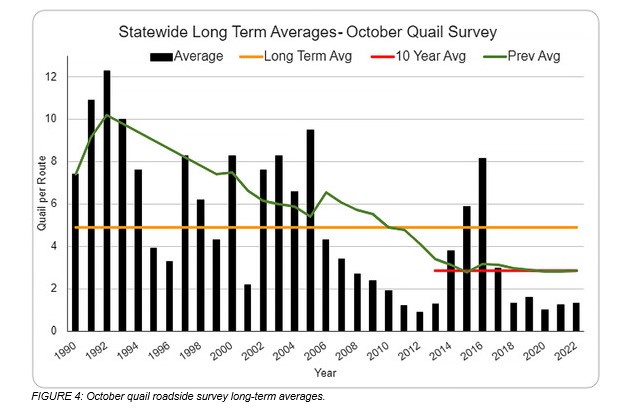
Quail Season Prospects Slightly Higher for 2022-23- 2022 Quail Roadside Survey Results and Quail Hunting Outlook
By Tell Judkins, Upland Game Biologist
More than 30 years ago, the Oklahoma Department of Wildlife Conservation began conducting roadside surveys to monitor quail numbers throughout the state. There are 83 twenty-mile routes surveyed in August and October in all counties except Oklahoma and Tulsa counties.
August surveys give biologists an idea of breeding success, while October surveys reveal a glimpse of recruitment for the fall hunting season. Typically, August survey numbers are a less reliable hunting season predictor than October's because some chicks won't survive the summer. Long-term and year-to-year trends are important for sportspeople and biologists alike. The past decade has seen survey numbers cycle, starting at the lowest recorded on these surveys in 2012 and slowly rising to a peak in 2016 that quickly fell back to previous lows. The data are analyzed in two ways: by region and by ecoregion . This year, the surveys indicated the statewide average for quail numbers is up by about 6 percent over 2021.
Regionally, the August survey numbers in the northeast and north-central regions were up over 2021's survey numbers. However, the southeast and southwest regions showed increases over 2021's numbers in October surveys . The average survey results from 1990 to 2022. This year, these graphs include a rolling 10-year average, shown as "Prev Avg," to help readers visualize the change in numbers over longer periods.
When the statewide numbers are considered by ecoregion, it becomes apparent what areas are producing better or worse year-to-year. On an ecoregion basis, the Rolling Red Plain had the largest increase this year. Looking at data by both grouping methods can help show fluctuations in quail numbers.
The past year has brought with it several challenges. Last year's season saw mild drought conditions make hunting rough. As winter continued, the drought worsened with severe cold fronts. Spring saw some reprieve for most of the state, but the far southwest and Panhandle saw little rain. It wasn't until June that those areas finally received some relief, but it was short-lived. Flash drought hit as the summer heat quickly set in. Areas in the southwest saw up to 66 days over 100 degrees F, and a majority of the state saw 90-138 days over 90 degrees F. Intermittent rains allowed much of the state to produce decent crops of forbs and insects, but overall nesting season was very dry. Currently, more than 99 percent of the state is in at least severe drought, and more than 82 percent in extreme drought.
According to limited observation data from the Game Brood Survey App created by Oklahoma State University and ODWC, it appears quail nesting season started in early June, with a majority of observations coming in mid-July. Age structure of observed bobwhites shows 63.6 percent full grown, 20 percent three-fourths grown, 12.7 percent half grown, and 3.6 percent one-fourth grown. This structure shows a decent early hatch but may also demonstrate how drought stress led to repeated nest attempts.
No scaled quail were observed during the 2022 surveys. There are only a few routes in Oklahoma with the opportunity to observe scaled quail. Therefore, this is strictly an observation and not a prediction of scaled quail abundance. ODWC biologists have received several reports of scaled quail broods in the Panhandle.
This year, ODWC is again collecting wings from harvested quail on public lands to better evaluate the quail population. Hunters who harvest a bird from a wildlife management area with a wing box are encouraged to place one wing from each harvested quail (whichever one wing is least damaged) into a provided envelope, write answer to questions on the envelope, and place it in the collection box. The WMAs that have boxes are Beaver River, Canton, Cooper, Cross Timbers, Kaw, Packsaddle, Pushmataha, and Sandy Sanders. Your participation in this data collection effort provides vital information about nesting success and timing, and helps improve the management of these game birds.
Season Outlook: In summary, hunters taking to the field will likely find patches of fair quail numbers where reproduction was not as severely impacted by weather and habitat remains in favorable condition. Hunting will not be what it was at the last observed peak in production in 2016. But hunters can expect to find birds throughout the state. This year's quail season opens Nov. 12 and runs until Feb. 15, 2023. Hunters are allowed 10 quail daily.
Regulation Change: Quail season on Wildlife Department-managed land: Closed to non-resident hunting Feb. 1-15, 2023, on many western Wildlife Management Areas. Consult the Special Area Regulations on page 55 of the Oklahoma Fishing and Hunting Regulations.
For more regulations and other information consult the Oklahoma Fishing and Hunting Regulations online at https://www.wildlifedepartment.com/hunting/regs or in print wherever hunting and fishing licenses are sold.
Ultimately, remember the outdoors are always open! Work some ground, trust your dog, and make a few memories!
Thu, 03 Nov 2022 09:35:51 CDT
Senior Farm and Ranch Broadcaster, Ron Hays, is featuring comments from the president and CEO of the U.S. Meat Export Federation, Dan Halstrom, about August beef export numbers in 2022.
Halstrom said that overall, August was another remarkable billion-dollar month full of broad-based growth.
"Of course, China continues to be strong, but we had other markets stepping up," Halstrom said. "You look at some of the ASEAN regions like Vietnam, and the Philippines, and you've got the Americas- Central and South America. Colombia, in particular, stands out. We had a pretty solid month out of Korea as well, so broad-based growth continues to be the theme."
Compared to the places such as the Middle East and Central America, where tourism and hotel activity is not back to normal, Halstrom said he would argue that the Caribbean is 100 percent back to normal.
"In a place like the Caribbean, beef really is the center of the plate, and we are seeing that in the result," Halstrom said. "So, we expected that. We are seeing it. That is really a bright spot."
The area of the world that is lagging, Halstrom said, continues to be Asia.
"Japan and Korea are still two of our largest markets, but the growth is not there, and we are down slightly in Japan," Halstrom said.
Japan is behind, Halstrom said, because they are just coming out of the COVID lockdowns as of the end of April, so restaurants are not back to normal, masks are in place, and people are not out in force.
"It takes time to come back," Halstrom said.
The strong U.S. dollar, Halstrom said, is another issue.
"You've got, a Yen devalued 30-35 percent in the last 6 months, which makes our products more expensive," Halstrom said.
Some of the other competitor currencies have devalued as well, Halstrom said.
"It is really a question about spending power," Halstrom said. "There are a few headwinds here, but I do think in the end, Japan and Korea will come back. There will be an uptake on food service, and we haven't seen that impact yet, so that bodes well going forward to the end of this year and into early next year."
Despite multiple headwinds, Halstrom said he is cautiously optimistic that beef demand will remain strong. Parts of the world, Halstrom said, are continuing to see growth in the face of inflation.
Click the LISTEN BAR below to listen to Ron Hays and Dan Halstrom talking about beef export numbers.
The Beef Buzz is a regular feature heard on radio stations around the region on the Radio Oklahoma Network and is a regular audio feature found on this website as well. Click on the LISTEN BAR below for today's show and check out our archives for older Beef Buzz shows covering the gamut of the beef cattle industry today.
Thu, 03 Nov 2022 09:25:27 CDT
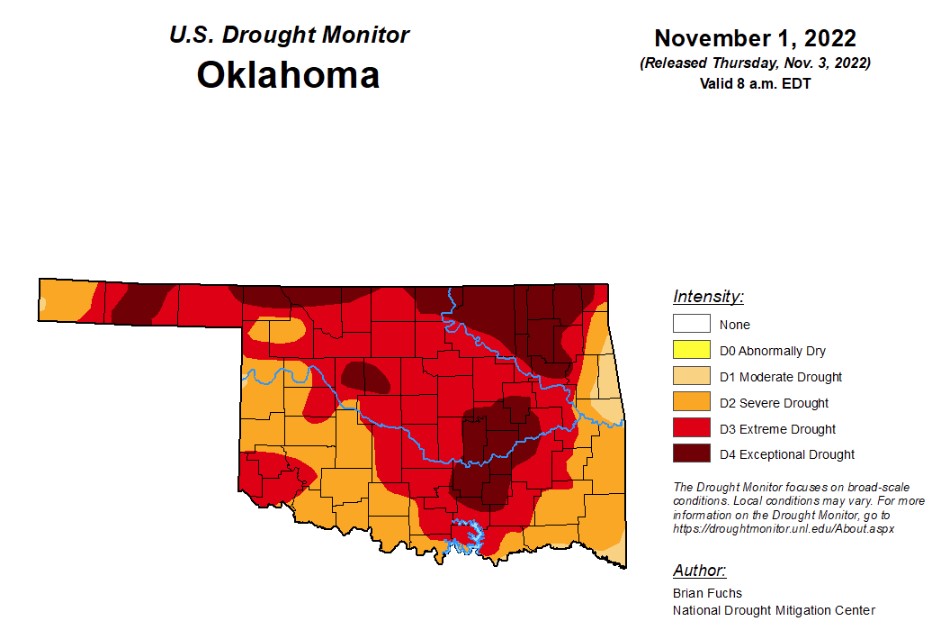
Chances for rain in the next week remain, and after recent precipitation, drought in Oklahoma has improved slightly in some categories while remaining unchanged in others.
In Oklahoma, exceptional drought is relatively unchanged from last week's 21.05 to this week's 21.06.
Extreme drought or worse, is now at 66.7, down from last week's 70.29 percent.
Severe drought or worse is at 97.43 percent, down from last week's 99.82 percent.
Moderate drought or worse and abnormally dry or worse conditions remain unchanged from last week at 100 percent.
According to the 6-10-day precipitation map for Oklahoma through November 12, the panhandle and central Oklahoma are leaning above a 33-40 percent chance of precipitation. Parts of western Oklahoma are leaning above a 40-50 percent chance of precipitation. The southeastern part of the state shows a near-normal chance of precipitation, with the far corner leaning below a 33-40 percent chance.
To view the Oklahoma Drought Map, click here.
According to the latest U.S. drought monitor report, an active weather pattern over the Midwest to southern Plains brought the most precipitation to those areas this week. Warm and dry conditions dominated the northern Plains and the upper Midwest where some areas are experiencing "flash drought" conditions that are not as common this time of year. Dryness over the Southeast is starting to impact more of the region while an active pattern has started over portions of the Pacific Northwest, bringing some moisture over the western portions of the region. Temperatures were coolest over the West and southern Plains and warmest over the northern Plains and into New England.
To view the United States Drought Monitor Report, click here.
In the Southern Plains, welcome rains over north and south Texas, Arkansas, northern Louisiana and into southern Oklahoma helped to build on recent precipitation events in some of these areas. Portions of north Texas and into southern Arkansas and northern Louisiana recorded 200-400% of normal precipitation for the week. Southern Louisiana as well as west Texas and the Oklahoma panhandle remained dry. Cooler than normal temperatures through much of Texas and Oklahoma as well as western Arkansas and Louisiana helped to slow down further drought development for this week and even allowed for some improvements. A full category improvement to drought levels was made over northern Texas and into southeast Oklahoma. In Arkansas, extreme and severe drought were improved. Extreme drought was removed from Tennessee this week with improvements in the western portion of the state while abnormally dry conditions expanded in the central and northeast portion of the state. Louisiana had some adjustments to the severe drought in the south as the western portion improved but the area expanded to the east. Additional improvements were made to moderate and severe drought in east Texas and to abnormally dry conditions in south Texas.
In the High Plains, temperatures were well above normal over the northern and eastern portion of the High Plains and below normal in the west. Temperatures were 8-10 degrees above normal in the Dakotas and 2-4 degrees above normal in Nebraska and northern Kansas. Portions of Wyoming, Colorado and western Nebraska were cooler than normal with temperatures 2-4 degrees below normal. It was quite the dry week in the region as there were only a few pockets of rain in southeast South Dakota, northeast Nebraska and into north-central Kansas. Flash drought conditions are impacting the region, especially in the Dakotas where warm, dry and windy conditions have provide ideal harvest conditions but have started taking a toll on the region. In the Dakotas, a broad expansion of severe drought conditions took place this week. Moderate drought also expanded in eastern South Dakota and into southern portions of the state. Continued dryness over Kansas, where portions of southwest Kansas had their driest October on record, allowed for the expansion of extreme and exceptional drought this week. On the plains of Colorado, moderate drought and abnormally dry conditions continue to expand.
In the West, temperatures for the week were cooler than normal over most of the region, with departures of 4-6 degrees below normal over the southwest. Warmer than normal conditions were recorded in the Pacific Northwest as well as across the northern portion of the region where temperatures were 4-6 degrees above normal with some even greater departures in Montana. Wetter than normal conditions were recorded in the Pacific Northwest as well as in western Colorado, northern Oregon, and into northern Idaho. The continued wet pattern allowed for some improvements in northeast New Mexico to the moderate, severe, and extreme drought conditions even as long-term issues remain. Western Colorado had improvements to moderate and severe drought as the ongoing wet pattern and early snows have allowed for improvements. Washington received enough rain to start showing improvements to the moderate and severe drought in the west while northern portions of the state had moderate drought expand.
Looking ahead, temperatures for the week were cooler than normal over most of the region, with departures of 4-6 degrees below normal over the southwest. Warmer than normal conditions were recorded in the Pacific Northwest as well as across the northern portion of the region where temperatures were 4-6 degrees above normal with some even greater departures in Montana. Wetter than normal conditions were recorded in the Pacific Northwest as well as in western Colorado, northern Oregon, and into northern Idaho. The continued wet pattern allowed for some improvements in northeast New Mexico to the moderate, severe, and extreme drought conditions even as long-term issues remain. Western Colorado had improvements to moderate and severe drought as the ongoing wet pattern and early snows have allowed for improvements. Washington received enough rain to start showing improvements to the moderate and severe drought in the west while northern portions of the state had moderate drought expand.
To view the 6-10 Day Precipitation Outlook Map, click here.
To view the 6-10 Day Temperature Outlook Map, click here.
To view the Monthly Drought Outlook Map, click here.
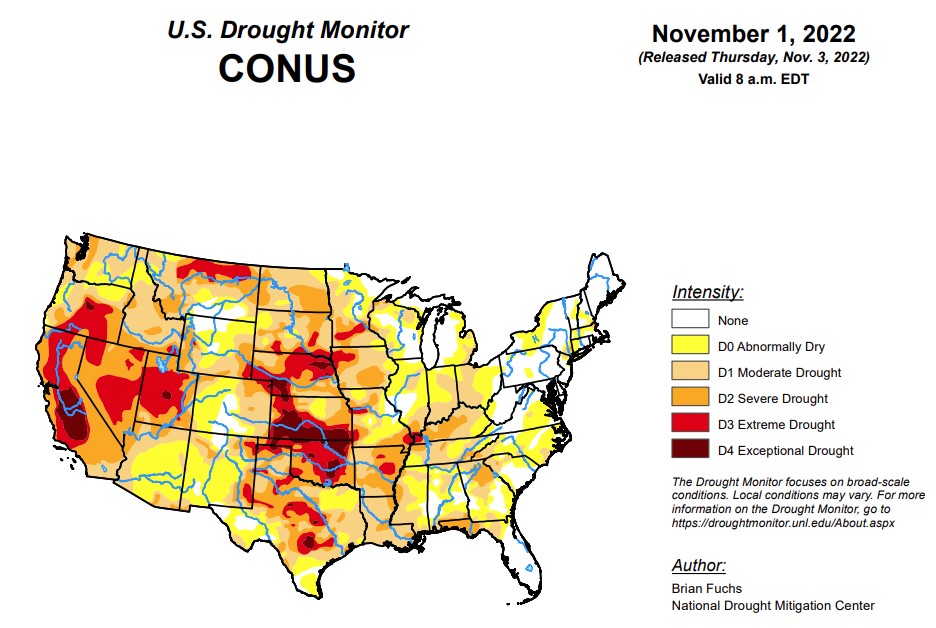
Thu, 03 Nov 2022 08:45:30 CDT
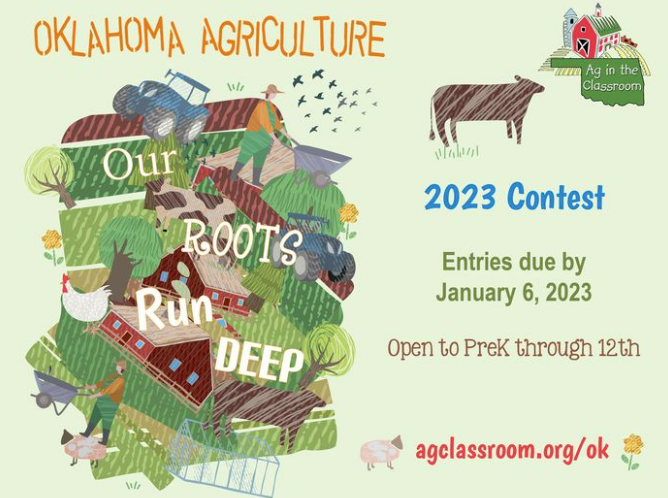
The 2023 Oklahoma Ag in the Classroom Art & Photography Contest is now LIVE!!
Our theme this year is Oklahoma Agriculture: Our Roots Run Deep. We hope you will explore Oklahoma's rich agricultural heritage through a variety of Ag in the Classroom lessons.
Find your agricultural "roots" through family; genetics; crops; livestock; or pioneers and historical figures in agriculture.
Our goal this year is to have all 77 counties in Oklahoma represented!!
We have an art contest for grades PK-12th grade (Coloring Sheet for PK-2nd, Poster for 3rd-12th) or a Photography contest for grades 9th-12th. Please follow the link below to find out more information about the contest: https://oklahoma.agclassroom.org/contest/
Thu, 03 Nov 2022 02:53:33 CDT
OKC West Livestock Auction - El Reno, OK
Wed Nov 2, 2022
AUCTION
This Week 8,239
Last Reported 5,815
Last Year 5,823
Compared to last week: Feeder steers sold 3.00-5.00 higher. Feeder heifers traded 1.00-2.00 higher. Demand good for feeder cattle. Steer and heifer calves sold 2.00-6.00 higher. Demand was moderate to good. Next week 11/08/22 will be OKC West Annual Integrity Beef Alliance and the Oklahoma Quality Beef Network calf sales in conjunction with their weekly auction. Much needed moisture fell across the trade area over the weekend with more in the forecast later in the week. Supply included: 100% Feeder Cattle (60% Steers, 37% Heifers, 3% Bulls).
Feeder cattle supply over 600 lbs was 64%.
FEEDER CATTLE
STEERS - Medium and Large 1 (Per Cwt / Actual Wt)
Head Wt Range Avg Wt Price Range Avg Price
9 281 281 230.00 230.00
15 313 313 215.00 215.00
8 304 304 242.50 242.50 Fancy
25 367-385 379 222.50-230.00 223.95
44 360-378 365 237.50-250.00 243.63 Fancy
85 401-438 426 200.00-217.00 208.83
36 420-433 423 220.00-232.00 226.75 Fancy
27 466-482 480 199.00-200.00 199.14
44 478 478 217.00 217.00 Fancy
49 474-496 478 185.00-189.00 188.15 Unweaned
191 515-536 531 185.00-202.00 192.93
61 514-537 528 171.00-181.00 177.67 Unweaned
85 557-580 577 169.00-186.00 183.17
25 569 569 196.00 196.00 Thin Fleshed
5 598 598 179.00 179.00 Unweaned
320 603-644 620 177.00-185.00 181.18
30 631 631 168.00 168.00 Unweaned
101 651-687 674 173.50-180.50 176.81
9 651 651 170.00 170.00 Unweaned
254 700-743 718 175.00-184.50 179.96
52 733 733 167.50 167.50 Unweaned
120 766-786 770 179.00-184.50 183.57
247 805-819 813 175.50-181.00 179.12
176 858-862 859 171.50-177.00 173.54
For the complete market report from USDA Market News click on the PDF link below:
Wed, 02 Nov 2022 15:24:25 CDT
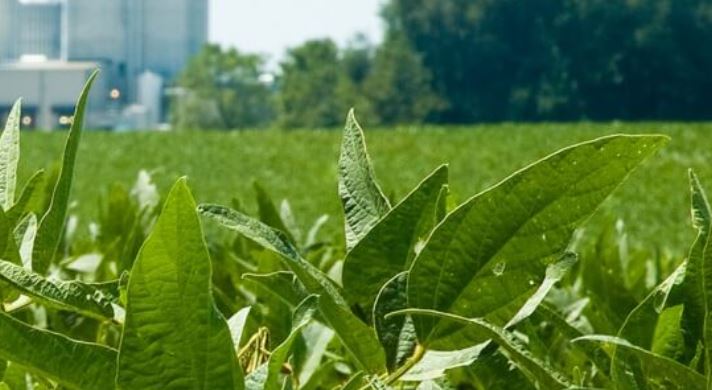
The U.S. Department of Agriculture and the Oklahoma Department of Agriculture are now putting the Daily Cash Grain Report into a PDF format - we are saving that PDF and archiving them for today's specific report. To see today's update, click on the PDF report link at the bottom of this story.
In addition to the PDF of the daily report, you can also listen to the Cash Grain Report by calling 405-621-5533. Push 2 for the grain report.
Wed, 02 Nov 2022 14:40:24 CDT

Listen to today's report with Justin Lewis, by clicking or tapping on the LISTEN bar
Justin Lewis of KIS Futures has all the details on today's agricultural markets for RON listeners, below.
Wed, 02 Nov 2022 13:40:38 CDT
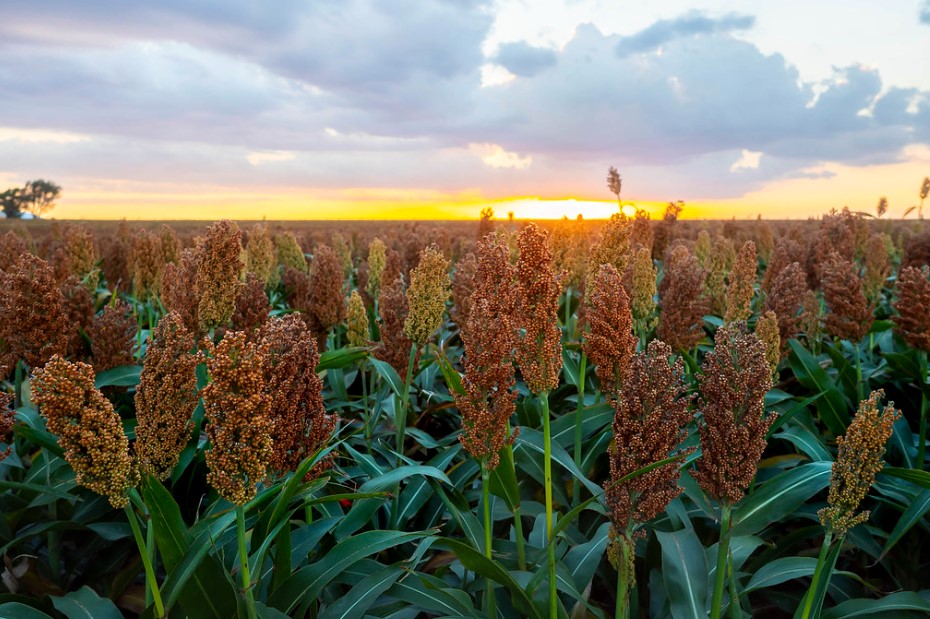
Oklahoma State University researchers have joined Texas A&M University and Kansas State University in a $2 million collaborative research project to develop better nitrogen management practices for producers.
The U.S. Department of Agriculture's Partnerships for Climate-Smart Commodities project could be allotted up to $65 million with $2 million of the funding going to the research side of the project while the rest will go toward the United Checkoff Program, which will help producers implement better nitrogen management practices and adopt smart technology into their operations.
"We're all Extension specialists, so basically, that means we take the research straight into the field, and by the end of this five-year project, we will have tools and strategies to put out there that are aimed at increasing nitrogen use efficiency," said Brian Arnall, Oklahoma State University Extension specialist for precision nutrient management. "All three universities are doing the same base set of treatments and analysis, then we may add some regionally specific ideas on nitrogen management."
Nitrogen management research is usually conducted in a variety of regions and examines factors specific to the area. Examples include studying specific fertilizers commonly used in Oklahoma or GreenSeeker technology, which reads crop health and uses an N-Rich strip to make precision nitrogen rate recommendations.
"The question is can we protect the nitrogen we've applied with products that are in the marketplace to keep nitrogen from being lost?" Arnall said. "What's nice about this project is many of us are already doing work like this on our own. This just allows a concerted effort to better focus in on management practices that can be adapted across the plains."
The research will re-evaluate nitrogen management guidelines. Arnall said in most of his research, he evaluates nutrient stabilizers and nitrogen safener technology.
Jason Warren, OSU Extension specialist for soil and water conservation, and Josh Lofton, OSU Extension specialist for cropping systems, will look at how nitrogen management affects nitrous oxide transmissions from sorghum and the impact of nitrogen management on plant physiology.
Lofton said most of the applied research conducted within plant and soil sciences at OSU, whether related to nitrogen or soil health, is connected to climate change.
"In Oklahoma, it's not necessarily just research to see the top end yield of a crop. Our job is to be focused on our environmental conditions and limit the cost and excessive inputs across the board. We're focused on putting the right things in the right places at the right time," Lofton said. "This current project came together because of decades worth of work that wasn't focused directly on climate change but had it in the background. Now that we have the background information, we can focus on more direct aspects of how the agricultural system and crop is affecting the climate."
This material is based upon work supported by the Climate-Smart Commodities Project under the U.S. Department of Agriculture. Any opinions, findings, conclusions or recommendations expressed in this publication are those of the author(s) and do not necessarily reflect the view of the USDA.
OSU Ag Research is Oklahoma's premier research and technology development agency in agriculture, natural resources and the life sciences.
Wed, 02 Nov 2022 13:18:35 CDT

The U.S. Department of Agriculture (USDA) announced the appointment of four members to serve on the United Sorghum Checkoff Program's Board of Directors. All four appointees will serve three-year terms starting December 2022 and ending December 2025.
According to the USDA press release, the sorghum farmers appointed to the board are:
• Jeffry D. Zortman, Fowler, Kansas, Kansas Member
• Kendall Hodgson, Little River, Kansas, Kansas Member
• Joshua Birdwell, Malone, Texas, Texas Member
• Zachary Rendel, Miami, Oklahoma, Oklahoma Member
The 13-member United Sorghum Checkoff Program Board is composed of nine sorghum farmers who represent the three states with the largest sorghum production – Kansas, Oklahoma, and Texas – and four at-large national representatives. More information about the board is available on the Agricultural Marketing Service (AMS) United Sorghum Checkoff Program webpage and on the board's website, sorghumcheckoff.com.
Since 1966, Congress has authorized the development of industry-funded research and promotion boards to provide a framework for agricultural industries to pool their resources and combine efforts to develop new markets, strengthen existing markets and conduct important research and promotion activities. AMS provides oversight of 22 boards, paid for by industry assessments, which helps ensure fiscal accountability and program integrity.
Wed, 02 Nov 2022 12:29:53 CDT
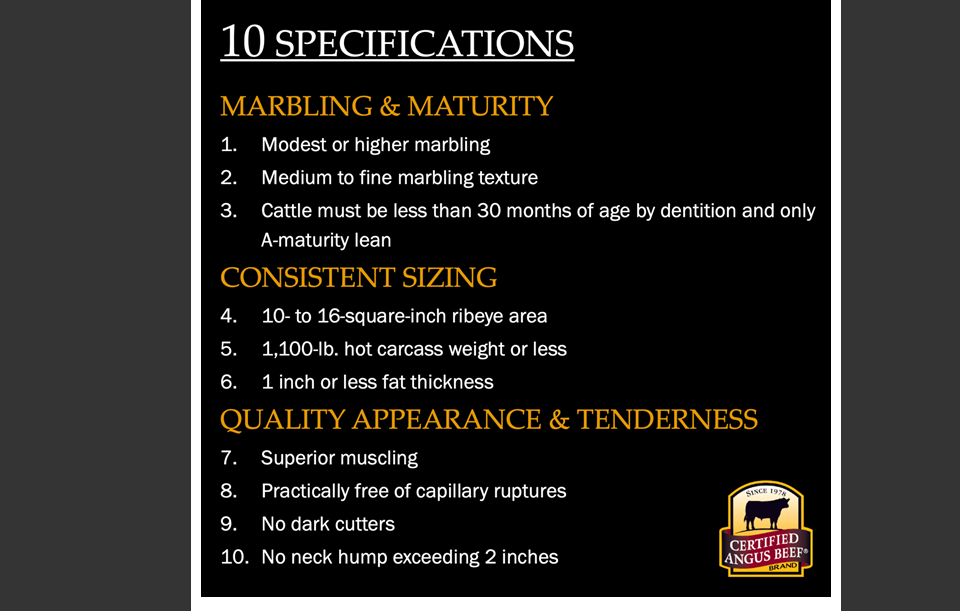
Looks like Fed cattle prices are finally on the top side of $150/cwt. with last week's six-state average $151/cwt. paid for steers. It has been a long upward grind to this point, but the past two weeks have displayed a little more excitement with a small amount of trade in the north as high as $155/cwt.
Daily fed cattle slaughter volumes have proven to be workable for packers in the 100K head range, with two days at that level to start last week. Wednesday and Thursday each touched 99K head followed by Friday's smaller 96K head. The faster weekday pace has allowed packers to reduce Saturday totals. The most recent total of 21K head is the lower end of the range we've seen this fall.
Carcass cutout values moved higher in last week's averages. The Choice cutout was up $5.50/cwt. and Select up $4.60/cwt. The Choice/Select spread hit $33.91/cwt., effectively adding $89.52 per head to Choice carcasses above the cash market average, which is calculated on a generic 70% Choice packing plant average.
The CAB/Choice spread narrowed to $15.39/cwt. as the CAB cutout increased just $0.86/cwt. on the week. The wholesale Prime carcass cutout premium above Choice dropped to $86.44/cwt., down from the record $92.21/cwt. just three weeks ago.
As we analyze these spreads it's obvious that Prime middle meats, the primary source of Prime product sales volume, are commanding premiums into the stratosphere. This pulls the traditional, premium Choice CAB® brand product into focus as it's more widely available and affordable within the premium end of the market.
Turning the calendar to November, it's no surprise that CAB ribeyes are on an upward pricing pattern, gaining 7% in three weeks. There's a likelihood for more upward pressure in the thinly traded spot market moving forward. A large volume of holiday ribeye purchases has already been done with product placed in "nearly frozen" refrigeration. The current ribeye price pattern is much more aligned with historic seasonal norms than the 14% higher wholesale price seen a year ago.
Tenderloins, on the other hand, are trading at record-highs for the current timeframe, spiking 24% in spot market price in the past four weeks. Meanwhile, strip loins are following the seasonal price pattern fit perfectly to the prior three years. Strip loin prices tend to decline sharply from late August through early November. Strips are down 28% since August, most recently at a wholesale bargain of $6.68/lb., the lowest price since January 2021.
CAB REFINES HOT CARCASS WEIGHT SPECIFICATION
Through a consistent premium beef experience, the CAB brand provides economic incentives to cattlemen up and down the supply chain. The brand's commitment to aggregating winning outcomes is reliant on the relevance of the 'brands carcass specifications to each sector of the beef industry, and ultimately the consumer. This commitment to evolve as the overall industry progresses has resulted in the brand's recent adjustment of the hot carcass weight (HCW) maximum to 1,100 lb.
Historically, fed cattle carcass weights have increased, on average, by 5 lb. annually. As well, economic conditions in the production sector suggest that the trend for heavier carcasses is likely in place for the foreseeable future. The brand's HCW adjustment means a potential increase of 3 to 4% of carcasses accepted into the brand. Its additional specifications remain an important parameter in continuing to address optimal final product cut size.
While this weight adjustment is reflective of the industry trend, it's not prescriptive to cattlemen. Cow-calf producers have long been progressive in seeking genetics to improve production efficiency in a few different ways. Upticks in pre- and post-weaning growth traits are reflected in heavier finished cattle and subsequent carcass weight trends, supporting terminal efficiencies. At the same time, cow-calf producers are tasked with balancing maternal efficiency needs at the farm or ranch. No doubt Angus breeders and commercial cattlemen will continue to seek the optimum mix of the two.
The carcass weight limit change was implemented by the USDA and Canadian Beef Grading Agencies on October 31. This update will impact supply through improved product availability in a high-demand market while cattlemen will benefit through more quality-rich cattle deservedly rewarded.
Courtesy of Paul Dykstra CAB
Wed, 02 Nov 2022 11:27:10 CDT
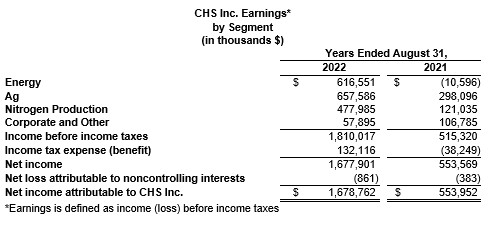
CHS Inc., the nation's leading agribusiness cooperative, today reported net income of $1.7 billion for the fiscal year ended Aug. 31, 2022, compared to $554.0 million for fiscal year 2021.
Key financial drivers for fiscal year 2022 results include:
· Consolidated revenues of $47.8 billion for fiscal year 2022 compared to $38.4 billion for fiscal year 2021, a year-over-year increase of 24%.
· Refining margins in our Energy segment were higher and drove improved earnings due to the tightening global supply and demand landscape.
· The CHS global grain and processing and wholesale agronomy businesses within our Ag segment benefited from strong global demand and increased margins.
· Our equity method investments performed well, with increased CF Nitrogen earnings resulting from strong global demand for urea and urea ammonium nitrate (UAN), coupled with decreased global supply.
"We appreciate the support of our member cooperatives and farmer-owners, which enabled us to deliver a substantial increase in earnings for the fiscal year, while also helping feed people around the world," said Jay Debertin, president and CEO of CHS Inc. "Additionally, our employees demonstrated their dedication to helping our owners and customers succeed in a turbulent year for agriculture. As a result of these collective efforts, CHS intends to return $1 billion in cash patronage and equity redemptions to our member cooperatives and farmer-owners in fiscal year 2023, reflecting the company's financial strength and demonstrating the value of cooperative ownership.
"We are proud of our role in the cooperative system. We will continue to make investments that strengthen rural America and help our farmer-owners and customers meet the growing demand for agricultural products. Our investments in infrastructure, supply chain capabilities, people and innovation are driving operational and efficiency gains throughout our expansive network," Debertin added. "Although economic uncertainty, logistical challenges and inflationary pressures remain, CHS is well-positioned to maximize value for our member cooperatives and farmer-owners."
Fiscal Year 2022 Business Segment Results
Fiscal year 2022 segment results are:
Energy
Pretax earnings of $616.6 million represent a $627.1 million increase versus the prior year and reflect:
· Higher refining margins and increased discounts on heavy Canadian crude oil processed by our refineries contributed to a significant increase in our refined fuels business income; these increases were partially offset by higher renewable energy credit costs and higher natural gas costs, as well as lower margins in our propane business.
Ag
Pretax earnings of $657.6 million represent a $359.5 million increase versus the prior year and reflect:
· Increased margins across all our Ag segment product categories, due to strong global market demand and global supply disruptions
· Continued favorable markets for oilseed processing, which were bolstered by robust meal and oil demand
· Increased revenues from feed and farm supplies, despite less favorable weather during spring planting and application season
Nitrogen Production
Pretax earnings of $478.0 million represent a $357.0 million increase versus the prior year and reflect:
· Increased earnings from our strategic investment in CF Nitrogen, primarily due to market conditions and strong demand for urea and UAN, factors that were partially offset by higher natural gas costs
Corporate and Other
Pretax earnings of $57.9 million represent a $48.9 million decrease versus the prior year and reflect:
· Lower earnings primarily from our Ventura Foods joint venture, which experienced less favorable market conditions for edible oils
Wed, 02 Nov 2022 11:03:39 CDT
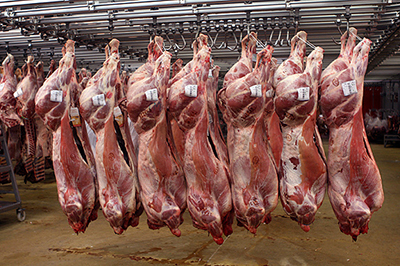
During the pandemic, beef packers had more cattle to source than capacity, giving the packers the upper hand in negotiations with feedlots and increased revenue and profits compared to other parts of the beef pipeline. Senior Farm and Ranch Broadcaster, Ron Hays, is visiting with Iowa State University Livestock Economist, Lee Schulz, about beef packers having second thoughts on plant expansion.
Many federal dollars were moved toward plant expansion and many plans were announced during the pandemic to increase that capacity. Schulz says now that those plans have been announced, there may be some rethinking going on.
"There has been a lot of publicly announced plans for beef packing capacity additions- and I call them additions because they are really two-fold: new plants and expansion of existing plants," Schulz said. "First, we have got to remember that projects of this size, take a lot of time. There is a lot of initial planning that goes on in the follow-through."
Many of these publicly announced plans for additions, Schulz said, pre-date the Biden administration committing a billion dollars of American Rescue Plan funds to this expansion of independent processing capacity.
"According to reports, maybe about 20,000 head per day of possible expansions," Schulz said. "That is quite a bit when we realize we slaughter about 125,000 head or so a day."
While the target for many of these federal dollars is for smaller plants that harvest a couple of animals a day at the most, Schulz said the larger plants are the ones having second thoughts.
"Some of these planned additions have already been paused indefinitely," Schulz said. "Others that are still in the works have changed some timelines. Some probably will not come to fruition, and probably some new projects that we are not even talking about now will materialize."
Schulz said many factors are influencing the pause on expansion for some plants, such as increases in material prices, interest rates, and labor availability.
"There are two job openings available for every unemployed person, and that is a statistic that the Bureau of Labor Statistics uses," Schulz said. "So, when we look at the ability to operate these packing plants, and operational capacity is key there, that is really constrained by this labor market."
Another big factor, Schulz said, is cattle supply.
"Supplies are holding right now, at least when we compare to year over year, but there is a lot of anticipation that we are going to see tighter supplies," Schulz said. "There are forecasts over the next two years we could see a 10 percent decline in cattle numbers. As you look at the availability of cattle and the price of those cattle, I think that factors into decisions about packing capacity additions as well."
Click the LISTEN BAR below to listen to Ron Hays and Lee Schulz talking about hesitancy in beef packing plant expansion.
The Beef Buzz is a regular feature heard on radio stations around the region on the Radio Oklahoma Network and is a regular audio feature found on this website as well. Click on the LISTEN BAR below for today's show and check out our archives for older Beef Buzz shows covering the gamut of the beef cattle industry today.
Listen to Ron Hays and Lee Schulz talk Packing Plant Expansion
Wed, 02 Nov 2022 10:58:15 CDT
Today, the National Cattlemen's Beef Association commended the U.S. Department of Agriculture (USDA) following Secretary Tom Vilsack's announcement of over $223 million in grants and loans to support small to mid-sized processing facilities.
"NCBA has long advocated for expanded processing capacity to provide cattle producers with additional options for turning their cattle into high-quality beef. Today, the cattle industry needs more targeted capacity in high-need areas, and we look forward to these facilities launching and expanding operations," said NCBA Senior Director of Government Affairs Tanner Beymer. "We appreciate USDA working with NCBA to strengthen the marketplace and support America's cattle producers."
Today's announcement is the first round of investments in additional meat processing capacity totaling $73 million across 21 grant projects. NCBA has advocated for funds in the form of grants and low-interest loans to help small and mid-sized processing facilities open their doors and expand existing capabilities, all to increase competition and strengthen the beef supply chain. In total, the federal government has announced a combined investment of $1 billion allocated to the Meat and Poultry Processing Expansion Program, workforce development, and technical assistance.
Wed, 02 Nov 2022 10:58:11 CDT
More Than $223 Million in Grants and Loans Will Increase Competition and Economic Opportunities for Meat and Poultry Processors and Producers around the Country, and Help Lower Costs for Working Families
U.S. Department of Agriculture (USDA) Secretary Tom Vilsack today announced that the Biden-Harris Administration is investing $73 million in 21 grant projects through the first round of the Meat and Poultry Processing Expansion Program (MPPEP). MPPEP delivers on President Biden's call to increase competition across the economy to help lower costs for American families. Today's announcement will expand meat and poultry processing capacity, which in turn increases competition, supports producer income, and strengthens the food supply chain to lower costs for working families and create jobs and economic opportunities in rural areas. In addition, the Administration is investing $75 million for eight projects through the Meat and Poultry Intermediary Lending Program, as well as more than $75 million for four meat and poultry-related projects through the Food Supply Chain Guaranteed Loan program.
These announcements support the Biden-Harris Administration's Action Plan for a Fairer, More Competitive, and More Resilient Meat and Poultry Supply Chain, which dedicates resources to expand independent processing capacity. As President Biden highlighted earlier this year, creating fairer markets and more opportunities for family farmers helps bring down prices at the grocery store.
"Since President Biden laid out a commitment at the start of this year, USDA has worked tirelessly to give farmers and ranchers a fair chance to compete in the marketplace, which in turn helps lower food costs for the American people," said Secretary of Agriculture Tom Vilsack. "By jumpstarting independent processing projects and increasing processing capacity, these investments create more opportunities for farmers and ranchers to get a fair price, while strengthening supply chains, delivering more food produced closer to home for families, expanding economic opportunity, and creating jobs in rural America."
USDA is delivering on the multi-pronged goals of these investments:
• Supporting producer-focused business models: Montana Premium Processing Cooperative (MPPC), a start-up cooperative, created in partnership with the Montana Farmers Union and Farmers Union Industries, will use MPPEP funds to provide independent producers in Montana with an option for a local USDA inspected meat processing facility in an area that is currently without Federally inspected processing.
• Strengthening Local and Regional Food Systems: Vermont Livestock Slaughter & Processing connects hundreds of farmers in Vermont and the Northeast with the individuals, families, schools, and businesses they supply. With their MPPEP investment, they are now prepared to revitalize and modernize their multi-species facility, tripling their throughput.
• Reducing barriers to processing: Cutting Edge Meat Company, a facility in Leakesville, Mississippi, provides pork and beef processing for producers in Mississippi, Alabama, Louisiana, and Florida. With this investment, they will significantly increase their capacity and shorten the six-month backlog for processing currently facing producers.
• Competing at scale: Greater Omaha Packing in Omaha, Nebraska, will open new opportunities for cattle producers by expanding their beef processing capacity by 700 head per day. The project will also support an additional 275 jobs.
• Restoring jobs in rural places: Pure Prairie, recently purchased a shuttered poultry plant in Charles City, Iowa, with the goal of returning hundreds of jobs to the small rural community and increasing poultry processing in the upper Midwest. The project sources directly from growers in Minnesota, Wisconsin, and Iowa, who are also shareholders and part owners in the company.
• Empowering family-owned businesses: New Stockton Poultry in Stockton, California, is a family-owned business that sources and processes specialty chickens to meet demand within a variety of immigrant communities and beyond.
The investments announced today are part of a series of financial assistance tools to support producers and lenders in increasing capacity in the food supply chain.
MPPEP was designed to support capacity expansion projects in concert with other private and public finance tools. Today's announcement is the first round of funding made available through Phase I of MPEPP. Additional announcements are expected in the coming weeks. USDA will also soon begin taking applications for a new phase to deploy an additional $225 million, for a total of up to $375 million, to provide gap financing for independent processing plant projects that fill a demonstrated need for more diversified processing capacity. For more information about MPPEP, view the Meat and Poultry Processing Expansion Program page.
The Meat and Poultry Intermediary Lending Program (MPILP) provides grant funding to nonprofit intermediary lenders who finance – or plan to finance – the start-up, expansion, or operation of slaughter, or other processing of meat and poultry. The objective of the MPILP is to strengthen the financing system for independent meat processors, and to create a more resilient, diverse, and secure U.S. food supply chain. In the first round of MPILP $75 million was awarded to eight lenders in seven states. Applications for second cycle ($125 million) are currently being accepted and are due December 31, 2022.
Through the Food Supply Chain Guaranteed Loan program (FSCGLP), USDA partners with lenders to guarantee loans to help eligible entities expand meat and poultry processing capacity and strengthen the U.S. food supply chain. Lenders provide the loans to eligible cooperatives, corporations, for profits, nonprofits, Tribal communities, public bodies and people in rural and urban areas. Since the FSCGLP was launched in December 2021, more than $250 million in loans have been guaranteed for projects in the middle of the food supply chain. Four of these, announced today and totaling more than $75 million, are for meat and poultry processing businesses.
For a full list of awards under these programs, visit: www.rd.usda.gov/sites/default/files/11-02-2022-Food-Systems-Transformation-Chart-OSEC.pdf (PDF, 211 KB)
Today's announcement is one of many actions that USDA is taking to expand processing capacity and increase competition in meat and poultry processing to make agricultural markets more accessible, fair, competitive, and resilient, and builds upon the Department's efforts to transform the nation's food system. Additional information on all these programs is available at www.usda.gov/meat.
USDA touches the lives of all Americans each day in so many positive ways. Under the Biden-Harris Administration, USDA is transforming America's food system with a greater focus on more resilient local and regional food production, promoting competition and fairer markets for all producers, ensuring access to safe, healthy and nutritious food in all communities, building new markets and streams of income for farmers and producers using climate-smart food and forestry practices, making historic investments in infrastructure and clean energy capabilities in rural America, and committing to equity across the Department by removing systemic barriers and building a workforce more representative of America. To learn more, visit www.usda.gov.
Wed, 02 Nov 2022 09:30:25 CDT
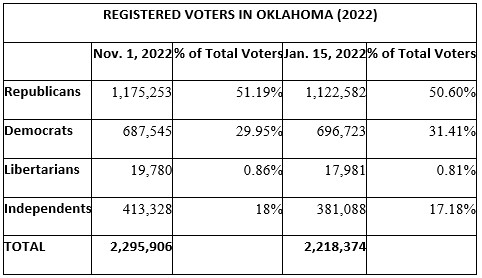
Nearly 2.3 million Oklahomans are registered to vote ahead of the November 8 General Election, with a net increase of more than 77,000 registered voters since January 15 and a net increase of more than 175,000 registered voters since November 1, 2018.
Oklahoma's voter registration statistics show that registered Republicans now make up 51.19% of Oklahoma's registered voters, while Democrats make up 29.95% of registered voters. Independents make up the third largest group of registered voters with 18%, while Libertarians continue to increase voter registration numbers with 0.86%. It is the first time that official voter registration statistics show Democrats at less than 30% of registered voters. As recently as 2014, Democrats were Oklahoma's largest political party.
While voter registration has increased across the board for the two largest counties, Oklahoma County and Tulsa County, both counties have seen a significant growth in Independent voters. Independents currently account for 21.25% of voters in Oklahoma County and 19.46% of voters in Tulsa County, while Republicans and Democrats have actually decreased as a percentage of registered voters in those counties.
"We're excited to see the overall voter registration trend moving upward in Oklahoma. Now, we want to see all registered voters take the next step – exercise their right and get out and vote this November," said Paul Ziriax, Secretary of the State Election Board.
• November 1, 2022 voter registration by county
• January 15, 2022 voter registration by county
• Voter Registration Statistics (1960-Present)
Wed, 02 Nov 2022 09:14:42 CDT

Yesterday, Growth Energy, the Renewable Fuels Association, the American Coalition for Ethanol, and National Farmers Union filed a motion to intervene in the D.C. Circuit Court of Appeals in support of the U.S. Environmental Protection Agency's (EPA) decision to deny 69 petitions from refineries seeking small refinery exemptions (SREs) from the Renewable Fuel Standard (RFS) program for one or more of the compliance years between 2016 and 2021.
"EPA's decision in June to deny 69 SRE petitions helped strengthen U.S. energy security, protect the climate, and deliver relief at the pump during a period of record high gas prices," the biofuel and ag coalition said. "Now, certain refiners want to reverse this process and turn back the clock to an era of gross mismanagement and abuse of the SRE provisions of the RFS program. For far too long, many refiners got away with dodging their obligations to blend lower-carbon biofuel into the fuel supply. EPA's denial of these SRE petitions provides a clean slate to get the RFS back on track as we head into a new era for this important program. Holding refiners accountable will ensure lower prices and cleaner options at the pump for American families."
Click here for more information on EPA's action.
Wed, 02 Nov 2022 09:12:44 CDT

Early voting for the General Election begins today in all 77 counties across the state. Early voting locations will be open Wednesday, November 2 through Friday, November 4 from 8 a.m. to 6 p.m. and on Saturday*, November 5 from 8 a.m. to 2 p.m. Voters will be voting on federal, state, and county officers. Some counties also have local elections on the ballot.
Voters are reminded that early voting locations are different than polling places. All counties have at least one designated early voting location. You must vote in the county where you are registered to vote. A list of early voting locations, dates, and times is available on the State Election Board website, along with the election list. Sample ballots are available in the OK Voter Portal.
Voters should be prepared to show a valid proof of identity when checking in with election workers at their voting location. Voters with questions should contact their County Election Board or the State Election Board for more information.
Wed, 02 Nov 2022 09:08:32 CDT

Lindsay Graber Runft brings energy and industry experience to the brand.
Genetics and management are at the forefront of targeting the Certified Angus Beef ® brand but communicating beef value propositions to cattlemen guides informed business decisions.
To bring the most relevant production and economic information to cattlemen, Certified Angus Beef (CAB) hired fifth-generation rancher Lindsay Graber Runft as director of producer communications.
Runft oversees communications strategy and leads the brand's producer-facing messaging for seedstock breeders, commercial cattlemen, cattle feeders and allied industry organizations as CAB continues working to strengthen its relationship with those who supply the brand.
"Providing consumers with the highest quality beef doesn't just happen by chance. It takes initiative and focus by those raising and feeding cattle with an eye toward continual progress and improvement," says Melissa Brewer, CAB vice president of communications. "With Lindsay's years of experience and production background, we're excited to have her credibility on our team leading the engagement efforts producers in these areas."
A native of south-central Kansas, Runft was raised on a small family farming and ranching operation. She graduated from Kansas State University with a bachelor's degree in agriculture, double-majoring in agricultural communications and animal science. Runft earned a master's degree in agricultural communications from Texas Tech University, with research focuses on media market research and crisis communications.
For more than a decade, Runft has served the livestock industry's communication needs and elevated the voice of beef producers. Prior to joining the brand, she was executive director of the Livestock Publications Council and a public relations consultant for clients, such as Kansas Beef Council. Her experience also includes leading communications efforts for Livestock Marketing Association and managing creative services for Hereford Publications, Inc.
"Certified Angus Beef is known for its high-caliber work, progressive leadership and excellent culture," Runft says. "I am thrilled to be joining the powerhouse communications team at the brand and look forward to continuing to serve the beef industry through strategic communication efforts."
Runft started with the brand on Sept. 12, 2022, and serves as the point contact for all producer-facing communications for CAB.
She can be contacted by emailing LRunft@certifiedangusbeef.com.
Wed, 02 Nov 2022 09:05:54 CDT
Compared to the last report: Hay continues to stay steady while volume lowers. Due to the drought, we are beginning to see more hay coming into Oklahoma and being traded compared to trading our own Oklahoma crop hay.
As we look at the Oklahoma Mesonet Drought Monitor we are at 21 percent in exceptional drought, 70.2 percent in an extreme drought, 99.8 percent in severe drought, we are 100 percent in moderate and abnormally dry conditions.
Central
Alfalfa: Supreme (Trade/Per Ton)
Large Square 102 275.00 275.00 Delivered
Alfalfa: Supreme (Ask/Per Ton)
Large Round 245.00 F.O.B
Alfalfa: Supreme (Ask/Per Ton)
Large Square 225.00 F.O.B
Alfalfa: Premium (Trade/Per Ton)
Large Square 68 250.00 250.00 Delivered
Milo: Good (Ask/Per Ton)
Large Round 150.00 F.O.B
Soybean: Good (Ask/Per Ton)
Large Round 170.00 F.O.B
North Central
Bermuda Grass: Premium/Supreme (Trade/Per Bale)
Large Round 128 90.00 90.00 F.O.B
Bermuda Grass: Premium/Supreme (Trade/Per Bale)
Small Square 88 11.00 11.00 F.O.B
Bermuda Grass: Good/Premium (Trade/Per Bale)
Large Round 140 80.00 80.00 F.O.B
Milo: Good (Trade/Per Ton)
Large Round 500 140.00 140.00 Delivered
To see Hay available click here:
Wed, 02 Nov 2022 09:05:17 CDT
Oklahoma's Natural Resources Conservation Service (NRCS) Acting State Conservationist, Amanda Mathis, has announced the agency is accepting applications for Wetland Reserve Easement, a component of the Agricultural Conservation Easement Program. Those submitted by December 2, 2022 will be considered for FY2023 funding. NRCS will prioritize applications that protect, restore and enhance habitat for wildlife on their lands and reduce damage from flooding and recharge groundwater.
"USDA is committed to restoring and protecting vital sensitive wetlands that provide important wildlife habitat and improve water quality," said Mathis.
Land eligible for easements includes cropland, rangeland, grassland and pastureland owned by private individuals or Native American Tribes. Wetland Reserve Easements provide habitat for fish and wildlife, including endangered species, improve water quality by filtering sediments and chemicals, reduce flooding, recharge groundwater, protect biological diversity and provide opportunities for educational, scientific and limited recreational activities.
Wetland Reserve Easement funding is provided directly to landowners for the purchase of an easement and for restoration. This funding allow landowners to successfully restore, enhance, and protect habitat for wildlife on their land. Eligible landowners may choose to enroll in a permanent or 30-year easement. Eligible lands include farmed or converted wetlands that can be successfully and cost-effectively restored.
To apply for a Wetland Reserve Easement, landowners should contact their local NRCS field office between 8am and 4:30pm. Applications for funding consideration are accepted year round, however, to be considered in the current batching period, applications must be received by December 2, 2022.
Wed, 02 Nov 2022 08:40:51 CDT
Elevated fire weather this afternoon will be limited to the Panhandle and far northwestern counties along the OK/KS border over receptive fuels that are generally more than 30 days separated from wetting rains. Strengthening southwest winds in this area and receptive fuels will support potential for rapid fire growth on fires that become fully established during peak burning conditions late afternoon. While large fire potential is in the mix today in the Panhandle and northwestern counties, initial attack efforts are generally expected to be successful. Elsewhere, dry conditions are forecasted coupled with gusty winds across the western half of Oklahoma. Elevated relative humidity values will aide in holding fine-dead fuel moisture above critical threshold limiting probability of ignition in the carrier fuels (dead/dormant grass loading).
Northwest / Panhandle Counties: Elevated fire weather over very dry fuels will develop this afternoon into the evening hours with emphasis on the Panhandle and northwestern counties along the OK/KS border. Overall, new fire occurrence should provide good opportunity for successful initial attack, although a large fire (+300 acres) cannot be ruled out during peak burning conditions late this afternoon. Respectable overnight moisture recovery will erode through the day with afternoon relative humidity observations 21-32% as temperature warms into the mid- to upper-70°'s under mostly clear skies yielding fine-dead fuel moisture at 6% across most of the area and locally 5%. Southwest to south winds will increase through the morning into the afternoon sustained 20-24 mph with some gusts around 35 mph. During peak burning conditions and on fully established wildfires, rangeland fuels will exhibit head fire rates of spread 138-190 ft/min and flame length 11-14 ft. Some problematic fire behavior should be anticipated in mixed fuels. Winds will remain sustained above 15 mph well into the evening and overnight although relative humidity values will improve with good overnight moisture recovery expected.
Near-Term: Breezy conditions will persist across the west on Thursday although increasing gulf moisture and sky cover will serve to hold fine-dead fuel moisture well above concerning levels limiting fuel receptiveness. Rain chances increase Thursday with some opportunity beginning in the west by the afternoon hours increasing into Thursday evening and overnight. As the system moves east, widespread wetting rains are expected through Friday. The current forecast has backed off the amounts from earlier forecasts, although most of the state will likely see wetting amounts with best opportunity in central and eastern regions as indicated in the 72-hour Quantitative Precipitation Forecast. Dry conditions are expected to return next week although no critical fire weather is expected.
Burn Bans:
NE Area –
EC Area – No New Activity
SE Area –
Large / Significant Fire Activity within the OFS Protection Area: No New Activity
Fire Activity with OFS Response outside of the Protection Area: No New Activity
OFS Prescribed Fire Activity: No New Activity
Fire Department Activity: Light Initial Attack Activity
 The worst HPAI outbreak in U.S. history takes another bite out of turkey supplies
U.S. consumers can expect to pay more for their Thanksgiving turkeys this year as supplies have dwindled following the widespread outbreak of Highly Pathogenic Avian Influenza. Since the outbreak began this spring, more than 7.5 million turkeys have been removed from production in an effort to mitigate the disease. The losses were the latest blow to the national turkey flock which, was already shrinking due to a series of production challenges and industry contraction in recent years.
The combination of tight supplies and strong holiday demand will send retail turkey prices to record highs this year, according to a new research brief from CoBank's Knowledge Exchange. Seasonal cold storage inventories of whole birds are at their lowest level since 2006 and wholesale prices for frozen turkeys are currently running about 30% higher than last year.
"The good news is that we do not anticipate a shortage of turkeys for the holidays this year," said Brian Earnest, lead animal protein economist with CoBank. "But they will definitely be more expensive and probably a bit smaller than what consumers are used to seeing in their grocers' meat case."
Over the last decade, the retail price for whole turkeys has historically hovered between $0.90 - $1.00/lb. ahead of Thanksgiving. In its Oct. 21 National Retail Report, USDA put the price of frozen turkeys at $1.58/lb. That's up 47% compared to the same time last year and would drive the average price of a 20-lb bird $10 higher to $31.50.
Smaller turkeys are also a result of HPAI. Since the outbreaks began, the average slaughter weight has dropped by about 1 pound. And HPAI has hit larger, heavier toms harder than hens. Compared to the three-year average, cumulative tom slaughter is down 9.8% in 2022, while hens are down only 2.3%. In total, year-to-date turkey production in pounds is down 5% versus last year. If this trend holds, 2022 U.S. turkey production will drop 9.6%, the largest annual reduction since 2009.
Declining turkey production amid unrelenting consumer demand for meat and poultry has taken a significant bite of whole bird inventory volumes. As of Sept. 30, frozen whole turkey inventory stocks stood at 239 million lbs. That's an 8% drop from 2021 and 19% below the 2018-2021 average. But the effect on prices seems far more dramatic than the supply shrinkage. All cuts of turkey have surged higher since spring. Fresh, boneless breast meat is trading at $6.50/lb. – an astonishing 350% increase versus last fall.
Earnest said the one wildcard for retail prices of whole turkeys this holiday season is grocer price promotions. Historically, retailers have used frozen turkeys as a "loss leader" around the holidays, selling them at minimal or no profit to lure customers into the store. However, grocers are facing their own inflationary pressures and it remains to be seen how grocers will manage higher wholesale costs, he added.
Read the report, Higher-Priced Turkeys on the Holiday Menu.
Wed, 02 Nov 2022 08:31:31 CDT
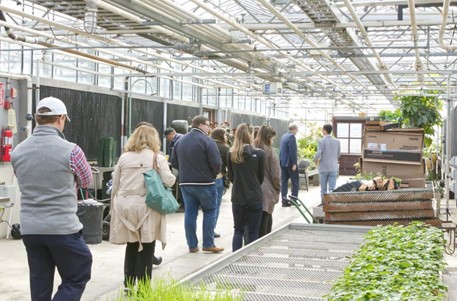
Congressional staff toured agricultural research facilities at the University of Delaware and visited a farm in rural Pennsylvania for an event highlighting how public funding for agricultural research can create a more secure food system.
The Nov. 1 event organized by Farm Journal Foundation, University of Delaware, and Brubaker Farms included a bipartisan group of congressional staff. The event showcased cutting edge agricultural research at the University of Delaware in Newark, Delaware, and included a tour of Brubaker Farms in Mount Joy, Pennsylvania, to see how agricultural innovations are being put into practice by farmers. Farm Journal Foundation Farmer Ambassador Luke Brubaker is a partner at Brubaker Farms, a dairy and poultry operation.
Today, the global food system is under significant pressure from challenges including the conflict in Ukraine, the COVID-19 pandemic, crop and animal disease outbreaks, and extreme weather events caused by climate change. However, agricultural research and development can help make food systems more resilient, driving innovations to increase crop yields, preserve natural resources, and enable farmers to adapt to disease and climate risks.
"Farmers and our food system are contending with multiple challenges that are driving up food prices for consumers and worsening global hunger," said Katie Lee, Vice President of Government Affairs for Farm Journal Foundation. "Research and innovation are absolutely vital for addressing these challenges and ensuring that we have enough safe, affordable food for everyone."
While at the University of Delaware, congressional staff toured the Charles C. Allen Jr. Biotechnology Laboratory to learn about how scientists are addressing disease outbreaks, including highly pathogenic avian influenza. Outbreaks of avian flu in the U.S. this year have affected more than 44 million birds in 43 states, according to the U.S. Department of Agriculture, threatening farming livelihoods and driving up consumer prices for chicken, turkey, and eggs.
The tour also included stops at the new state-of-the-art, open concept laboratories at the university's Worrilow Hall and the Fischer Greenhouse, where congressional staff learned about topics such as indoor hydroponic growing, which involves growing crops in water-based environments without soil. In addition to hastening crops' production time, hydroponic growing requires significantly less space and water than growing outdoors.
"The future is going to require that we know how to feed the world and protect the planet at the same time," said Dr. Calvin Keeler, interim dean of the University of Delaware College of Agriculture and Natural Resources. "Whether it's an issue like water, land management, disease, or sustainable food systems, funding agricultural science research and the teaching and outreach of that knowledge to the agricultural community means the United States can lead the way."
After the university tour, staff visited Brubaker Farms, which has a strong focus on innovation and economic and environmental sustainability. The farm has approved soil conservation plans in place to ensure that soil resources are protected. It also has a methane gas digester to convert cow manure into renewable energy and a large solar energy system, providing power to about 350 homes in the local area.
"Public support for agricultural research has significant benefits for farmers both in the U.S. and abroad," said Luke Brubaker, who remains active in the farm since transferring ownership to his sons Mike and Tony and grandson Josh. "Investments in technology and innovations have been critical for our farm, enabling us to evolve over time and remain efficient, profitable, and environmentally sustainable. Research can also allow smallholder farmers in developing countries to increase their harvests, alleviating global hunger and driving economic growth."
Wed, 02 Nov 2022 08:11:33 CDT
Weekly, Oklahoma State University Extension Beef Cattle Nutrition Specialist Paul Beck offers his expertise on the beef cattle industry. This is a part of the weekly series known as the "Cow-Calf Corner" published electronically by Beck. Today, he talks about grazing cattle on wheat this winter.
We finally got enough rain in parts of Oklahoma for our wheat and other cool-season annuals to start emerging. This is extremely late for our normal wheat grazing programs since for a 'good' wheat pasture year we expect to turn out the first of November. The late start really limits the prospects for being able to graze cattle on wheat this winter.
Overgrazing and starting too early will limit animal performance and reduce total overall production of these pastures. My normal recommendation is to wait until small grains are 4 to 6 inches tall before turning out cattle on pasture. Using a rule of thumb of about 200 pounds of forage dry matter per inch in height, this should provide us with 800 to 1200 pounds of forage dry matter per acre. This should allow adequate forage for steers to gain 2 pounds per day when stocked at 2 acres per steer.
With our late start, can we reach this level of forage growth this winter?
· Wheat forage grows at 3 to 3.5 pounds of forage dry matter per acre for each growing degree-day.
· A growing degree day = the average daily temperature - 40? F
· The average daily temperature for November in Central Oklahoma is 50? F, with 61? F average high and 39? F average low temperatures.
· Wheat would be expected to produce 30 to 35 pounds of forage dry matter per day this month.
· So, we may be able to start grazing winter pastures in early December this year.
· Other cool-season annuals (cereal rye and triticale for example) are more productive at lower temperatures, so forage accumulation should be higher.
· This rule of thumb relies on unlimiting soil nutrients and moisture, so unfertilized pastures will not reach these targets and we need to keep getting timely rains.
We can't rely on much forage production in December and January because the average temperatures are right at or below the 40? F threshold, so, we need to be sure to let as much growth accumulate before we turn cattle out as we can. Forecasts indicate we have 33 to 50% chance of having above average temperatures in Oklahoma for the next 3 months. Things may be better than expected. Holding cattle off pastures this fall and managing grazing to produce adequate leaf area for regrowth following grazing, will improve productivity in the later winter and spring. This will shorten our hay feeding season later in the year.
Below, watch Dr. Paul Beck discussed wheat pasture growth and setting stocking rates from SunUp TV.
 Farmer sentiment weakened again in October as the Purdue University/CME Group Ag Economy Barometer dropped 10 points to a reading of 102. Both of the barometer's sub-indices also declined this month. The Current Conditions Index dipped 8 points to a reading of 101 while the Future Expectations Index dropped 11 points to a reading of 102. The Ag Economy Barometer is calculated each month from 400 U.S. agricultural producers' responses to a telephone survey. This month's survey was conducted between October 10-14.
"Concern over rising interest rates grew once again in October and is adding to the unease amongst producers who are worried about its impact on their farm operations," said James Mintert, the barometer's principal investigator and director of Purdue University's Center for Commercial Agriculture. "Additionally, challenging shipping conditions throughout the Mississippi river valley have hampered exports recently and the corresponding widespread weakening of corn and soybean basis levels could be contributing to heightened unease about financial performance."
Producers' concerns about their farm's financial performance were one of the primary drivers of weakening sentiment in October. The Farm Financial Performance Index fell 13 points this month to 86 and was a distillation of producers' concerns about high input costs combined with weaker commodity prices. Looking ahead to next year, over 40% of producers viewed high input costs as their top concern, followed by 21% who chose rising interest rates, 13% who chose lower output prices, and 13% who chose input availability.
After dipping to a new record low last month, the Farm Capital Investment Index improved 7 points this month to a reading of 38. Producers who viewed this as a bad time for large investments revealed that increasing prices for farm machinery and new construction (40% of respondents) was the primary reason for their negative outlook, followed by rising interest rates (20%) and uncertainty about farm profitability (17%).
Producers' expectations for short and long-term farmland values rose this month. The Short-Term Farmland Value Expectation Index rose 10 points to a reading of 133 while the Long-Term Farmland Value Index rose 5 points to 144. Strength in both indices comes on the heels of reports from farmland auctions around the Corn Belt that land values are setting new record highs again this fall. Even with this month's rise both indices remain weaker than a year earlier. The short-term index this month was 15% lower and the long-term index was 11% lower than in October 2021.
Farm policy discussions are underway as Congress prepares for debate on a new Farm Bill in 2023. As a result, several farm policy related questions were included in this month's barometer survey and posed to crop producers. Crop producers were asked which two policies or programs would be most important to their farm in the upcoming five years. More than one-third (36%) of crop producers chose interest rate policy as the most important policy issue for their farming operation, followed by crop insurance program (27%), environmental policy (16%), conservation policy (11%) and climate policy (10%). When asked how effective the current ARC-County and Price Loss Coverage (PLC) programs are at providing a financial safety net, 72% of respondents rated the two programs as either "somewhat" (61%) or "very effective" (11%). When the same question was posed relative to crop insurance, 84% of respondents rated it as either "somewhat" (56%) or "very effective" (28%).
Read the full Ag Economy Barometer report by clicking here. The site also offers additional resources – such as past reports, charts and survey methodology – and a form to sign up for monthly barometer email updates and webinars.
Each month, the Purdue Center for Commercial Agriculture provides a short video analysis of the barometer results, and can be seen by clicking on the play button in the video box below. For more information, check out the Purdue Commercial AgCast podcast available at https://purdue.ag/agcast, which includes a detailed breakdown of each month's barometer, in addition to a discussion of recent agricultural news that affects farmers.
Tue, 01 Nov 2022 15:05:50 CDT

Listen to today's report with Justin Lewis, by clicking or tapping on the LISTEN bar
Justin Lewis of KIS Futures has all the details on today's agricultural markets for RON listeners, below.
Tue, 01 Nov 2022 15:05:11 CDT
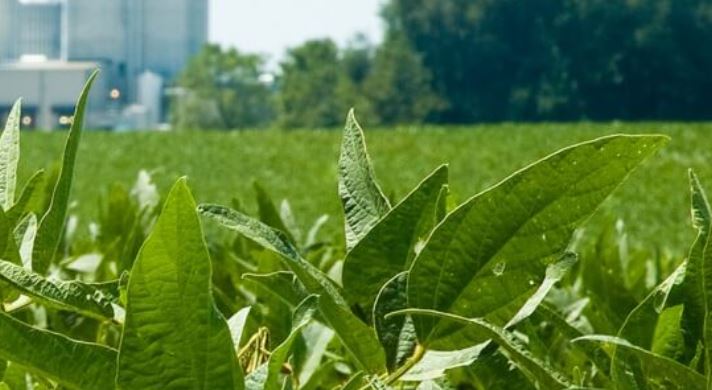
The U.S. Department of Agriculture and the Oklahoma Department of Agriculture are now putting the Daily Cash Grain Report into a PDF format - we are saving that PDF and archiving them for today's specific report. To see today's update, click on the PDF report link at the bottom of this story.
In addition to the PDF of the daily report, you can also listen to the Cash Grain Report by calling 405-621-5533. Push 2 for the grain report.
Tue, 01 Nov 2022 13:08:35 CDT
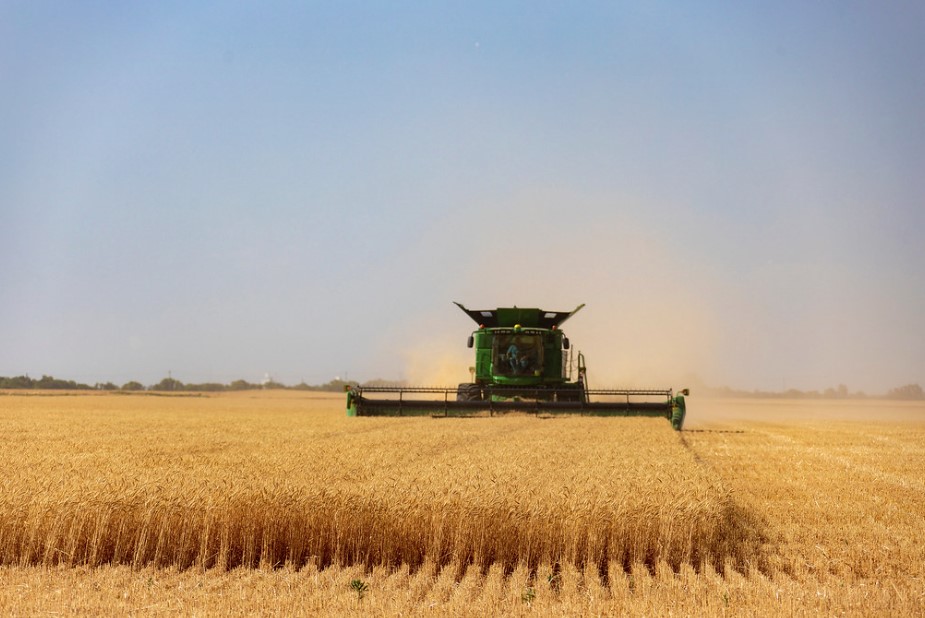
By Gail Ellis
Buy new or repair used? As input costs continue to climb in ranching and farming, producers need a smart equipment strategy.
The dealership purchase price of a new farm implement, such as a combine, can top as high as $500,000, while a slightly used model can still carry a hefty price tag of around $150,000. Older versions with more years and hours under the hood vary widely in value.
When the pandemic hit in 2020, the value of used farming equipment skyrocketed. Farm sales, estate auctions and private treaty transactions became hotspots for buyers searching for a good deal. Gregg Pickens, owner of Pickens Auctions, said he has noticed a significant increase in auction crowds during the past couple years, including bidders in person and online.
"At an estate auction in Oklahoma earlier this spring featuring mid-size farm and ranch equipment, a tractor with 1,100 hours in excellent shape brought more used than it did when the family bought it brand new," Pickens said.
Auction crowds are also growing with buyers beyond the state and region. Pickens said 4-wheel drive tractors between 15 to 20 years old with less technology and fewer diesel exhaust fluid requirements are a hot commodity.
"We hosted a construction and farming auction in March where one tractor went to a buyer in Minnesota, and the other went to Pennsylvania," he said.
From used to new, dealerships like P&K Equipment in Stillwater are low on new inventory that dropped off during the pandemic.
"Two to three years ago, we could place orders and have certain models here relatively quickly," said site manager Seth Kline. "Now you can't even place an order with some product lines, and other models are probably a good six months out."
Some less-common parts are difficult to find in stock in P&K's service department, but overall equipment sale numbers are holding strong.
"Demand is still high. Everything coming in is going right out," Kline said. "We don't have the luxury of having a lot of stock to choose from, but if we don't have it here, we may have it somewhere else."
One advantage to purchasing new equipment versus used is the favorable financing rates and availability of parts for newer models. The reliability of a warranty is also a big factor, and as long as repairs stay within a brand's specs, Kline said warranties are guaranteed with repairs performed by certified technicians.
Roger Sahs, an Oklahoma State University Extension specialist in agricultural economics, said the best way to determine whether to: 1) buy new equipment, 2) opt to purchase used equipment or 3) repair current equipment is to keep good production and financial records. When comparing new to old, consider cost minimization.
"There are producers out there who are over-mechanized and have unproductive debt," Sahs said. "They could get by with less. They're spending too much money on owning a piece of machinery, new or used, as opposed to hiring a custom operator, which may be the least cost option."
Precision agriculture technology streamlines field work, and newer implements with all the bells and whistles can address those needs. On the other hand, equipment can be retrofitted with fewer expenses if producers with smaller operations have the time and skills to make repairs themselves.
"Farmers and ranchers don't realize how much money they have wrapped up in machinery and how much it's costing them on a per acre or per hour basis," Sahs said. "They need to record costs then compare those to custom farm and ranch rates. That will help them decide if it's better to own and operate that machine or get the job done cheaper with a custom operator."
The latest OSU Extension Oklahoma Farm and Ranch Custom Rates fact sheet provides more information on custom harvest costs. The Machinery Ownership versus Custom Harvest fact sheet, co-authored by Sahs, also offers insight on how to determine equipment needs.
While dealerships continue to play catch-up following the pandemic, industry leaders, such as Ryan Dolezal, sales manager of TractorHouse magazine, said don't expect any discounts or price drops anytime soon.
"Prices will remain strong overall due to low inventory, higher commodity prices and stressed supply chains," he said.
OSU Extension uses research-based information to help all Oklahomans solve local issues and concerns, promote leadership and manage resources wisely throughout the state's 77 counties. Most information is available at little to no cost.
Tue, 01 Nov 2022 13:05:23 CDT
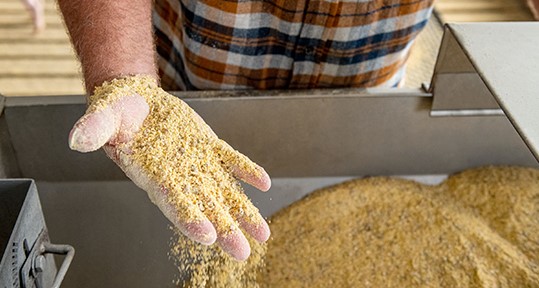
A new report in the journal Transboundary and Emerging Diseases entitled, "Stability of African swine fever virus in feed during environmental storage," details the length of time ASFV remains stable in feed at different storage temperatures. The robust study was conducted by a research team led by Dr. Megan Niederwerder, now Associate Director of the Swine Health Information Center.
"Previous estimates of ASFV stability in feed were based on fluctuating temperature and humidity conditions consistent with global trade," Niederwerder explained. "Novel data generated in the current study defines ASFV stability in feed at constant temperatures. This was an essential next step to guide holding-time recommendations for high-risk feed ingredients within feed mills and swine farms."
In the published study, the stability of ASFV Georgia 2007 was determined in three feed matrices, including complete feed, soybean meal, and ground corncob particles. After ASFV contamination, feed matrices were held at three environmental temperatures (cool storage at 40°F, ambient storage at 68°F, and hot storage at 95°F) for up to 365 days. Feed samples were tested throughout the one-year period for ASFV genome detection on PCR and ASFV infectivity on cell culture and in swine bioassay.
Results demonstrate high stability of ASFV DNA in feed, with detection by PCR in almost all feed matrices throughout the conclusion of each study, including 365 days after ASFV inoculation when stored at 40°F and 68°F. Infectious ASFV was most stable in soybean meal, with the virus maintaining infectivity as determined by swine bioassay for at least 112 days at 40°F, at least 21 days at 68°F, and at least seven days at 95°F.
Additionally, feed additives were tested for their ability to reduce ASFV infectivity in complete feed stored at three environmental temperatures (40°F, 68°F, 95°F). Both medium chain fatty acid and formaldehyde-based feed additives were confirmed to be effective mitigants in tested conditions.
Results help define the risk and mitigation of ASFV introduction through feed, confirms thermal sensitivity of ASFV in feed, and underscores the stabilizing environment of soybean meal. Providing the most comprehensive data on ASFV longevity in plant-based feed to date, this study confirms ASFV DNA can be detected in feed at least one year after contamination. Further, swine bioassays demonstrate that infectious ASFV can be present in soybean meal for several weeks after testing negative on cell culture.
"Minimum holding time recommendations were generated in this research for three environments, providing producers and feed mills key guidance to reduce ASFV risk in feed," Niederwerder concludes. "Feed biosecurity should be considered a fundamental part of all swine biosecurity plans. This foundational study furthers our goals toward ASFV prevention and protection of US swine herd health."
Research was supported by funding from the National Pork Board and the Foundation for Food and Agriculture Research, the State of Kansas National Bio and Agro-defense Facility Fund, Purina Animal Nutrition, Cargill Animal Nutrition, and Kemin Industries.
Credit: Swine Health Information Center
[
 Click here to listen to audio
Farm Director, KC Sheperd, visited with the president and CEO of the U.S. Meat Export Federation, Dan Halstrom, about exports the upcoming USMEF Strategic Planning Conference which will be held in Oklahoma City on November 9-11 at the Omni Hotel.
Wednesday's session, Halstrom said, will begin with Randy Blach, CEO of CattleFax giving an ag economics update on his take, both globally and domestically. Halstrom said Wednesday will also feature the head of FAS (Foreign Agricultural Service) global programs, Mark Slupek.
"We will have global programs, folks speaking from USDA, which his always a hit," Halstrom said. "I will be speaking on the first day as well, kind of giving an overview of what we are seeing globally."
One of the biggest things for networking purposes, Halstrom said, is the welcome reception on Wednesday night. The welcome reception, he added, is an excellent opportunity to interact with all nine sectors of USMEF membership.
The second day will start with a general session focusing on Japan, Halstrom said, and the rest of the day will consist of four committee meetings.
"We have an exporter committee meeting which really focusses on the packers and traders that are doing the actual exporting, we have a feed grades caucus which really focusses in on corn and soybean trends, and then in the afternoon, we have our pork and beef committees which are really the two working committees," Halstrom said.
Halstrom said Friday's closing session will feature agricultural trade policy consultant with AgTrade Strategies LLC, Sharon Bomer Lauritsen, offering analysis of the Indo-Pacific Economic Framework and other Biden administration trade initiatives, and share insights on their potential impact on red meat trade.
"It is an opportunity to hear about the issues and, more importantly, strategies to overcome some of these issues," Halstrom said.
For event details and registration information, click here.
Click the LISTEN BAR below to listen to KC Sheperd talking with Dan Halstrom about the upcoming USMEF Strategic Planning Conference in Oklahoma City.
click to play audio or right-click to download
Tue, 01 Nov 2022 11:41:07 CDT
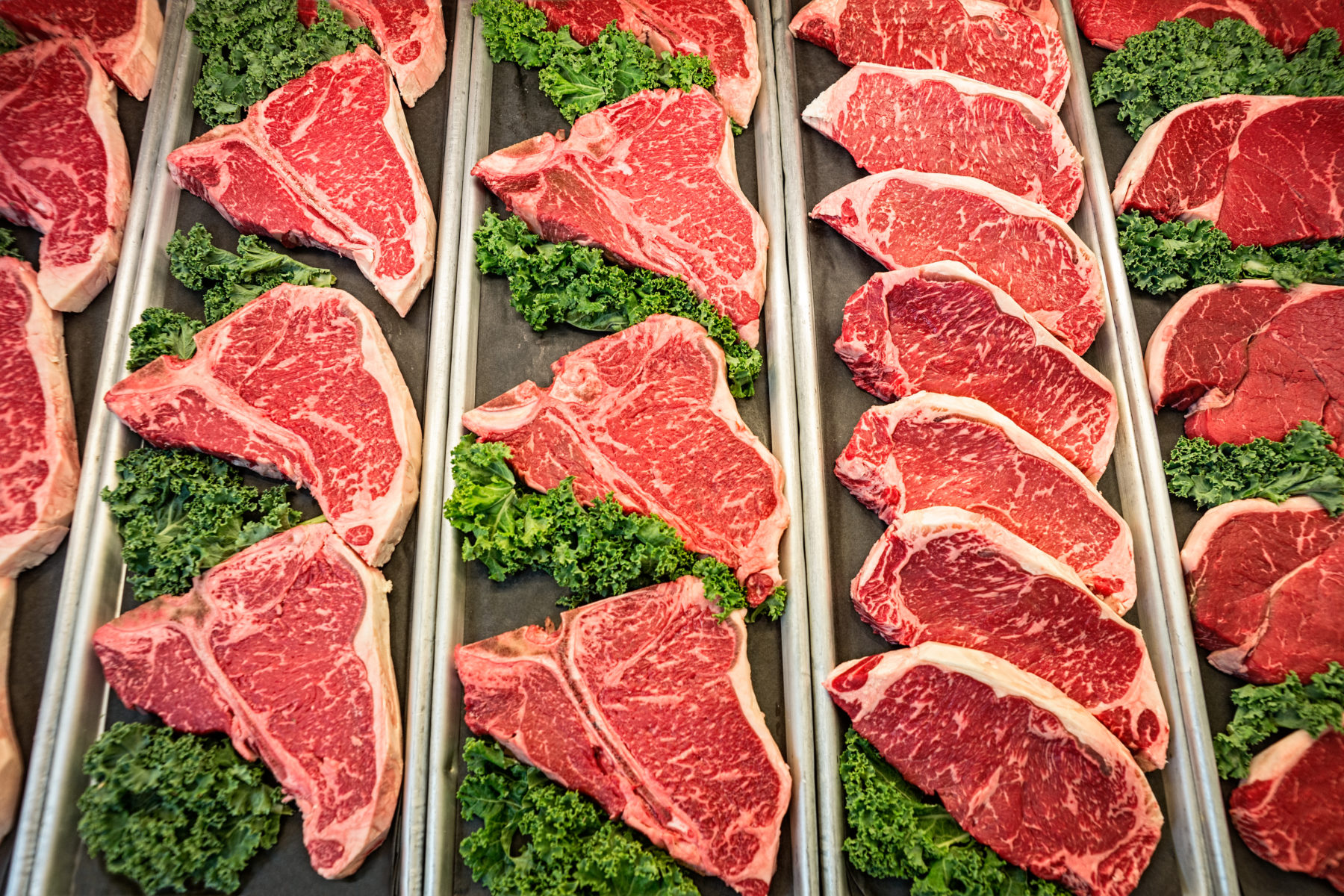
Senior Farm and Ranch Broadcaster, Ron Hays, is visiting again with the Executive Director of Market Research and Intelligence for the National Cattlemen's Beef Association, Mike Simone, about keeping up with today's beef consumer.
Over the past few years, there has been some commotion over plant-based proteins and meat alternatives, but Simone says that has started to dissolve. Meat alternative consumption, Simone said, peaked in the third quarter of 2020 at about 34 percent weekly or more consumption.
In comparison, 69 to 70 percent of consumers surveyed consume beef weekly.
"The other point to make about meat alternative consumption is that they are not eating that exclusively- they are also buying beef and chicken and other proteins as well as part of their overall diet, but some of that buzz is starting to wear off, I think," Simone said.
Buying beef at the store is more expensive during this time, Simone said, so the dollars are up, but total pounds per capita are down for this year.
"We see that continuing into 2023 for a variety of reasons, but consumers are still going to make that beef purchase, but it may not be as frequent or might not be the cut that they want."
Through surveys conducted, Simone said 68 percent of consumers have a positive perception of beef and almost half of the consumers have a positive attitude toward beef production.
"Only about a quarter of people actually know how beef is raised, but if you ask what concerns they have, and first of all, only about half say they actually have a concern," Simone said. "Of that half, about 42 percent say animal welfare- that is their number one response; they are not necessarily thinking greenhouse emissions, or environment or antibiotics or things like that."
One in five consumers are concerned about how beef is properly raised, which is why Simone said NCBA spends ample time on Beef Quality Assurance training and certification.
"We think it is important, and it is why beef is by far the trusted leader in terms of how farm animals are raised," Simone said. "Consumers love their beef; they are still buying it."
Simone said overall consumption levels or purchase levels remain strong and stable.
"We don't see any huge dip at this point. Supply is expected to dip as we go into this first quarter in early 2023, so that is cause for concern, but we think, again, consumers are loyal customers of beef, and they are going to stick with it, and we see there are some stormy waters ahead, but I think we can ride it out."
Click the LISTEN BAR below to listen to Ron Hays and Mike Simone talking about keeping up with today's beef consumer.
The Beef Buzz is a regular feature heard on radio stations around the region on the Radio Oklahoma Network and is a regular audio feature found on this website as well. Click on the LISTEN BAR below for today's show and check out our archives for older Beef Buzz shows covering the gamut of the beef cattle industry today.
To access material on the research Simone refers to, click here.
Tue, 01 Nov 2022 09:37:46 CDT
Thirteen Oklahoma teachers were recently selected to receive a basket of accurate agriculture books as part of Oklahoma Farm Bureau's Bushels for Books program.
The program is a collaboration between the OKFB Foundation for Agriculture and the OKFB Women's Leadership Committee. Pre-K through eighth-grade teachers across the state submitted applications to receive a basket of books for their classrooms, and the winners were selected by the WLC state board.
"As the world becomes more urban, it is important for people to know what it takes to produce the food, fuel and fiber we rely on every day," said Mignon Bolay, OKFB WLC chair. "We hope these books help students learn how their food gets from the farm to the grocery store, and ultimately to their plates."
Each basket included books selected from the American Farm Bureau Foundation for Agriculture's accurate agriculture book database.
"It is vitally important that our young people understand where their food comes from," said David VonTungeln, OKFB Foundation for Agriculture president. "These accurate agriculture books provide a glimpse into the everyday lives of our nation's family farmers and ranchers."
Teachers who received books are:
• Tim Moss, Vici Public Schools in Vici
• Danette Funkhouser, Navajo Public Schools in Altus
• Connie Goodwin, Fort Cobb-Broxton Elementary in Fort Cobb
• Jodi Scott, Oklahoma Christian Academy in Edmond
• Nellie Garone, Ravia School in Ravia
• Sandra Crow, Flower Mound Public Schools in Lawton
• Ronna Dunigan, Shady Point Public Schools in Shady Point
• Whitney Crase, Poteau Public Schools in Poteau
• Susana Jackman, Oklahoma School for the Blind in Muskogee
• Stephanie Heinrich, Deer Creek-Lamont Elementary in Deer Creek
• Donna Slater, Byng Elementary in Ada
• Susan Moffat, Lexington Public Schools in Lexington
• Jennifer Crosthwait, Skyline Elementary in Stillwater
To learn more about OKFB's Bushels for Books program, visit okfb.news/2ZewRrs.
Tue, 01 Nov 2022 09:35:48 CDT
A major new report released in advance of the United Nations Climate Summit next week in Sharm el Sheikh, Egypt, reveals that about 81% of facilities reporting data are covered by Meat Institute members' commitments to reduce greenhouse gas (GHG) emissions.
With 100% of the Meat Institute's large U.S. members (more than 2000 employees) submitting data, the report covers an estimated 90% of meat sold in the United States (by volume) and sets the first ever baselines for measuring progress toward ambitious targets for environmental sustainability, animal care, food safety, worker safety, and food security.
Meat Institute President and CEO Julie Anna Potts commented:
"98% of American households purchase meat, putting our sector undoubtedly at the center of solutions for healthy diets, healthy communities, and a healthy planet for generations to come.
The Meat Institute's first-ever continuous improvement report is a game changer for transparency in the sector - setting transparent baselines that will allow us to measure progress and verify our sector's contributions to global goals."
Further key findings include:
• Supporting NAMI's commitment to measure and fill the "protein gap" for needy families by 2025, 78% of reporting companies donate money or products to food banks and charities, including more than $9 million announced this year to combat hunger by building or expanding food banks' capacity to safely receive, store, package, and distribute fresh meat hungry families need.
• 82% of reporting facilities are covered by a company commitment to minimize packaging waste, and 71% are covered by a company commitment to reduce food waste.
• 96% of reporting facilities that conduct meat processing require suppliers to maintain a written animal welfare program based on NAMI Animal Handling Guidelines.
• 98% of reporting facilities have a multidisciplinary team that periodically reviews food safety programs and takes improvement actions.
To read the full report and for more information about the Meat Institute's continuous improvement framework and targets, click here.
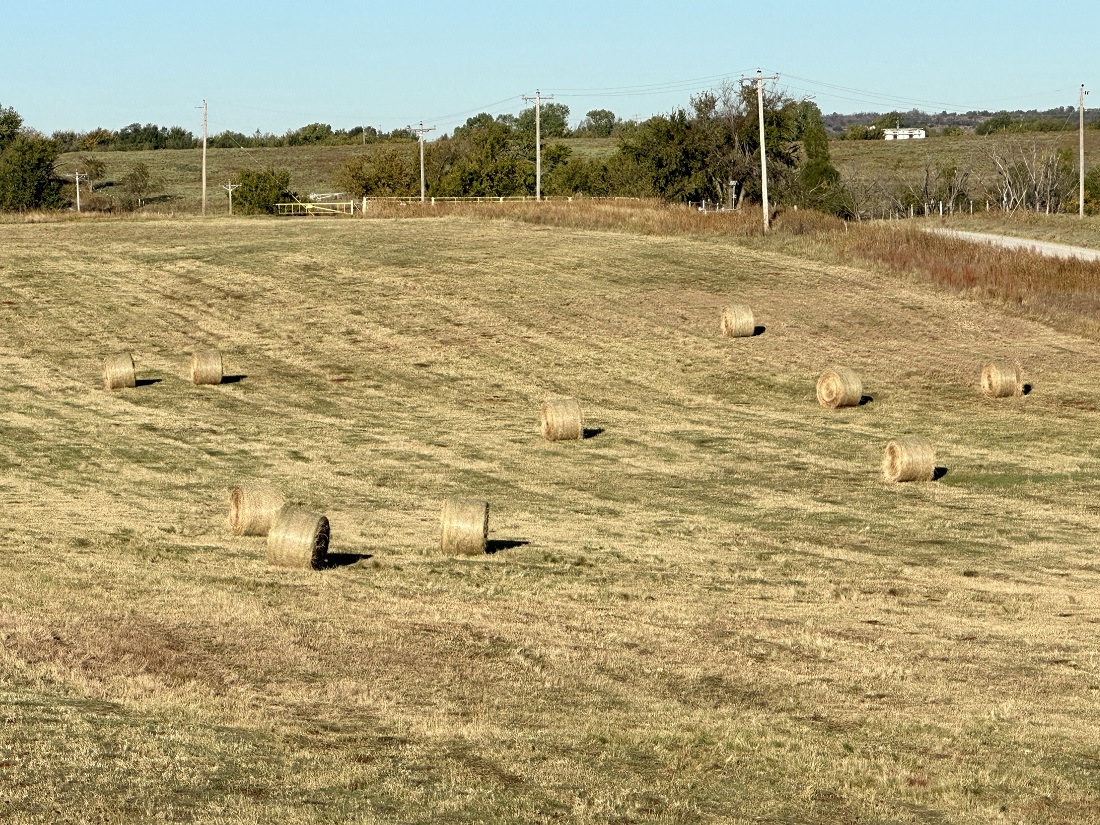 The last Crop Progress report in October each fall gives us a look at the USDA Pasture-Range ratings as we head into the winter season- and 2022 shows us a picture of dire conditions in Oklahoma pasture range ratings that we have not seen since the drought of 2011 and 2012.
The low water mark in that time frame came at the end of October 2011 when the last report of the season showed Oklahoma pasture/range ratings were 2% good and 86% poor to very poor. 2012 showed a 6% good and 70% poor to very poor.
Here in 2022- we were at 2% good a week ago- but the rains of this past week did give us a nudge higher to 4% good this week- even as the poor to very poor ratings slipped another 3 points and stand now at 80% poor to very poor. (this hay field pic of last week shows a few traces of green grass but little time to grow and recover before cold weather- it was seen south of Chickasha along the turnpike)
Nationally- the Oklahoma rating of 80% poor to very poor is the second worse in the US- Nebraska has an 82% poor to very poor rating- while Kansas and Arkansas are right there with ratings of 79% poor to very poor.
A wet late fall and winter will help our pastures and rangelands recover- but there's no assurances of that out on the horizon. Like 2011 and 2012- drought may impact pastures and rangelands for quite some time.
Looking back at the last pasture/range report of the season- here are the last ten years for Oklahoma and the good to excellent ratings provided by USDA:
Year Good to Excellent Rating
2022 4%
2021 39%
2020 24%
2019 56%
2018 61%
2017 46%
2016 46%
2015 40%
2014 42%
2013 42%
2012 6% (70% Poor to very poor)
2011 2% (86% poor to very poor)
2010 32%
Click here for the October 31st Crop Progress report from USDA.
Tue, 01 Nov 2022 09:04:34 CDT
Lynn Langvardt of Chapman, Kan. was named Champion at the 2023 World Livestock Auctioneer Championship (WLAC) qualifying event in Ripley, W.Va. Jackson County Regional Livestock Market, LLC hosted the first of three WLAC qualifying events on Saturday, October 29, 2022. A total of 27 contestants competed for a top ten placing, granting them a spot in the 2023 WLAC semifinals at Arcadia Stockyard in Arcadia, Fla.
"I grew up in the livestock marketing business," Langvardt said. "My family has owned our market for 55 years, and I'm 49, so I grew up in it. I started auctioneering at a young age. My dad put me in when I was nine or ten, and the rest is history."
Langvardt has competed in WLAC qualifying events for around 10 years, with eight of those granting him a spot to compete at the championship event in June. He was High Score Rookie at his first qualifying event in Billings, Mont.
"Any time you have some kind of success in this contest, because it is loaded from top to bottom, it makes you feel really, really good," Langvardt said. "Today was certainly no exception."
A live cattle sale took place, with the market's regular buyers and sellers in the seats. Auctioneer contestants were judged on the clarity and quality of their chant, presentation, ability to catch bids/conduct the sale and how likely the judge would be to hire the auctioneer. Judges for the qualifying event were livestock market owners, managers, dealers and/or allied industry members from across the nation.
Individuals advancing to the semifinals with Langvardt are Reserve Champion Dakota Davis, Waukomis, Okla.; Philip Gilstrap, Pendleton, S.C.; Marcus Kent, Dunnellon, Fla.; Ed Leist, Gaylord, Mich.; Jeremy Miller, Fairland, Okla.; Ben Morgan, Organ Cave, W.Va.; Runner Up Champion Chris Pinard, Swainsboro, Ga.; Jack Riggs, Glenns Ferry, Idaho; Jay Romine, Mt. Washington, Ky.
Other contestants who competed were Rob Bannister, Kent, N.Y.; Tyler Bradfield, Baker, W.Va.; Spencer Cline, Kingston, Ark.; Dylan Crall, Bethesda, Ohio; Andrew Finlay, Fairfield, Iowa; Takoda Kiser, Wytheville, Va.; Justin Moore, Barnesville, Ohio; Ross Parks, New Concord, Ohio; Mason Plumly, Somerton, Ohio; Patrick Prather, Richmond, Ky.; Trevor Ruff, Malta, Ohio; Austin Schaben, Dunlap, Iowa; Marcus Showalter, Bridgewater, Va.; Jeff Showalter, Broadway, Va.; Shawn Silverberg, Fort Collins, Colo.; Marshal Tingle, Nicholasville, Ky.; and Scott Twardowski, Swanville, Minn.
Tue, 01 Nov 2022 09:02:06 CDT

The General Election is fast approaching, and iVoterGuide.com is helping to ensure that voters everywhere are informed before they head to the polls. In order to equip American voters with the information to vote according to their own personal beliefs on November 8, iVoterGuide.com provides accurate, helpful information on 128 candidates on the Oklahoma ballot for the November 8th General Election.
"As we get nearer to election day, the undecided voters will play a key role in the outcome," said iVoterGuide President Debbie Wuthnow. "With anywhere from 8 to 11% undecided voters and mere percentage points separating many candidates, those swing voters need reliable information to make an informed choice, especially in local and non-partisan races. iVoterGuide exists to provide Americans honest, comprehensive facts about candidates through just a couple of clicks."
WHO: iVoterGuide.com
WHAT: General Election voter guide in Oklahoma that gives research (including legislative scorecards, positions on key issues, financial support and candidate questionnaires) and evaluations of candidates' political philosophy (on a liberal to conservative spectrum). Also available is crucial information on polling locations and hours. iVoterGuide is covering all federal, statewide, and state legislature races. The U.S. Senate matchup between Verified Conservative-rated Markwayne Mullin and Liberal-rated Kendra Horn will be competing for attention with the gubernatorial faceoff between Verified Conservative-rated Kevin Stitt and Liberal-rated Joy Hofmeister, a race that is edging closer to becoming competitive. Hofmeister is outspending Stitt four to one in on air ad buys. Voters in Tulsa will be paying particular attention to iVoterGuide's coverage of three Conservative v. Liberal runoff matchups that will determine the direction of the Tulsa City Council.
WHERE: Online at https://ivoterguide.com/all-in-state/ok
WHEN: General election is November 8, 2022.
WHY: In 2022, iVoterGuide.com's expert researchers will give an in-depth analysis — and overall rating — from a Christian and conservative perspective for 12,000+ candidates nationwide. Additionally, iVoterGuide.com offers election dates, registration deadlines, polling locations, and other information needed to help Americans vote wisely and identify candidates on the ballot who share their values. Related tools are also available to inform family, neighbors, and business associates about getting their own personalized ballots. iVoterGuide.com is helping to restore the principles of limited government, free enterprise, and traditional American values.
HOW: Providing the most comprehensive, educational information on thousands of races across the country, iVoterGuide.com has researched over 36,000 candidates in more than 17,000 races and offers personalized voting information and candidate evaluations. Learn more at iVoterGuide.com.
For voters who are unsure of who to vote for, iVoterGuide.com provides accurate, up-to-date information on thousands of candidates. iVoterGuide.com's research and ratings can be extremely valuable in helping voters determine the distinctions between candidates who all run under the same party banner.
iVoterGuide.com is dedicated to equipping Americans to be informed, educated voters and is a one-stop resource for candidate ratings and election information. iVoterGuide.com is known for its accuracy and integrity in researching and evaluating candidates and equipping Christians to vote wisely and be good stewards of their citizenship.
View the media page for iVoterGuide.com here. For more information on iVoterGuide.com, visit ivoterguide.com or follow iVoterGuide.com on Facebook, Twitter or Instagram.
Tue, 01 Nov 2022 08:11:06 CDT
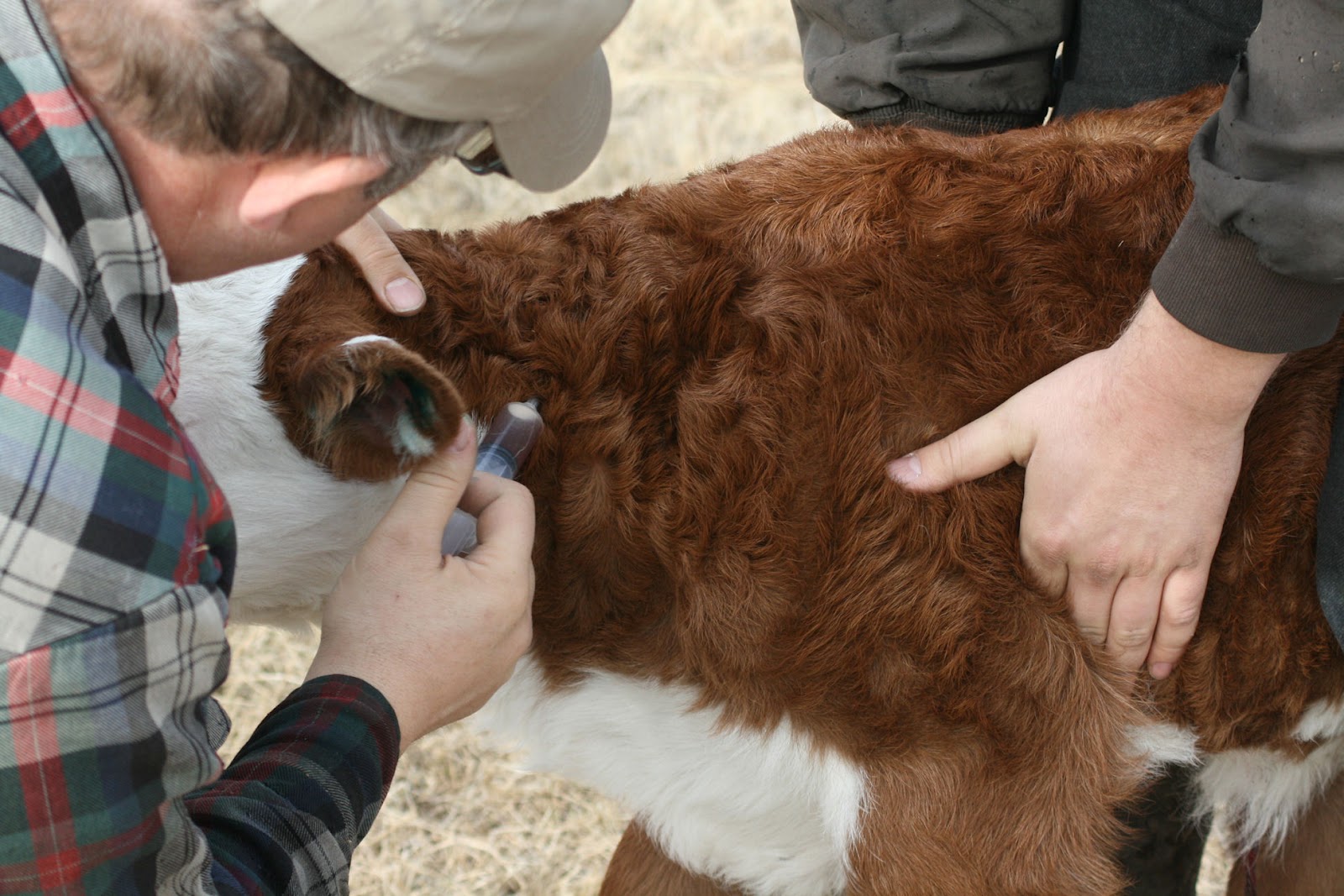
Mark Johnson, Oklahoma State University Extension Beef Cattle Breeding Specialist, offers herd health advice as part of the weekly series known as the "Cow Calf Corner" published electronically by Dr. Peel, Mark Johnson, and Paul Beck. Today, Johnson is talking about branding and vaccinating fall born calves.
Cool nights, warm days and rain showers sure beat the weather we had this summer. At the same time, those temperature swings can be hard on young cattle. It is essential to start priming the immune system of fall born calves against common diseases. For September calving herds we are a month from the start of breeding season. If we haven't already, now is the time for administering boosters to the cowherd and "branding time" for fall calves. Vaccination programs begun at branding time can reduce disease and death losses. Additionally, this allows the calf to return to its familiar environment, including nursing its dam after the procedures have been completed. Returning the calf to its familiar environment minimizes some of the stress of handling, allowing the calf to perform more closely to its genetic potential, hence, increase production.
Here are basic program considerations to discuss with your vet:
· Individually identify (if not already performed): brand, ear tag
· Castrate
· Dehorn
· Growth Implants
· Vaccination for Viral respiratory diseases
· Vaccination for Clostridial: 7- or 8-way (Blackleg)
· Parasite control program
These recommendations all have caveats and are region specific. The choice of brand or type of vaccination will depend upon the geographic location of the herd and the amount and type of risk in the population. Additional procedures may be necessary for your herd. If not already done, sit down with your veterinarian to discuss the vaccines and procedures that will result in the best economical return to your operation.
Below, listen to Dr. Rosslyn Biggs takes and in depth look at handling and administering vaccines from SunUp TV.
Tue, 01 Nov 2022 08:06:29 CDT

U.S. Wheat Associates (USW) has hired Dong-Chan Bae as Country Director in the USW Seoul Office in South Korea. Bae, who begins his role on Nov. 1, comes to USW after 25 years with the Samyang Corporation, a diverse South Korean company that includes a food and consumer goods business unit and flour million operations.
Bae spent two decades as a manager in Samyang's Grain Procurement Division, where he was responsible for the purchasing of wheat from international markets. He also performed management duties related to the company's flour milling ventures, and oversaw administration of Samyang offices in New York, Shanghai and Tokyo.
"We are excited to welcome Mr. Bae to the USW team and feel his understanding of the global wheat market will be an asset for our efforts in an important part of the world," said Mike Spier, USW Vice President of Overseas Operations. "He will play a big part in USW's mission to develop, maintain and expand U.S. wheat exports to the South Korean market."
After being part of many collaborations between USW and South Korean importers and millers, Bae said he looks forward to representing the U.S. wheat industry.
"I have always appreciated the work of U.S. Wheat Associates and I plan to use my abilities to continue the success of hard-working U.S. wheat farmers to provide a stable supply of high-quality wheat to South Korea," he said.
Tue, 01 Nov 2022 07:46:22 CDT
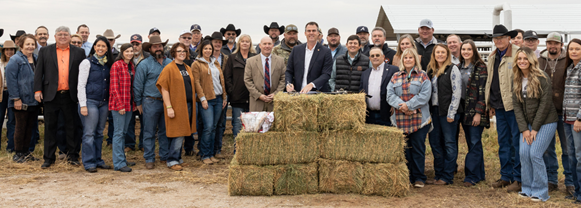
Oklahoma Governor Kevin Stitt is sending Oklahoma Certified Beef, donated by Oklahoma beef producers from across the state, to Texas Governor Greg Abbott in recognition of the University of Texas' recent victory at the Red River Rivalry earlier this month.
"Our Sooners will get the Longhorns next year, but in the meantime I hope my friend Greg Abbott enjoys these Oklahoma certified steaks, the best steaks in the world!" said Governor Stitt. "I'd like to thank the Oklahoma beef producers for donating the steaks, and to all of our hardworking farmers and ranchers across the state who have been navigating unprecedented challenges due to the extreme drought conditions and record high inflation. I will always do everything I can to help support and promote Oklahoma's farmers and ranchers."
"I thank my friend Kevin Stitt for recognizing Texas' victory at the Red River Rivalry, as well as the hardworking farmers and ranchers who made this donation possible," said Governor Abbott. "Texans know full well the dedication and grit it takes to be farmers and ranchers providing healthy food for their fellow Americans, and we are grateful to receive these Oklahoma certified steaks sent to us through Oklahoma beef producers. The Longhorns made Texas proud this year, and we look forward to taking on the Sooners and winning again next year."
Oklahoma Secretary of Agriculture Blayne Arthur added: "Oklahoma farmers and ranchers have faced unprecedented drought this year and have still found a way to continue providing food and fiber to the world. The resources provided by the governor and legislature will help address current challenges and provide long term solutions to navigating drought in Oklahoma."
Governor Stitt has championed drought relief efforts over the last several weeks.
Tue, 01 Nov 2022 03:27:44 CDT
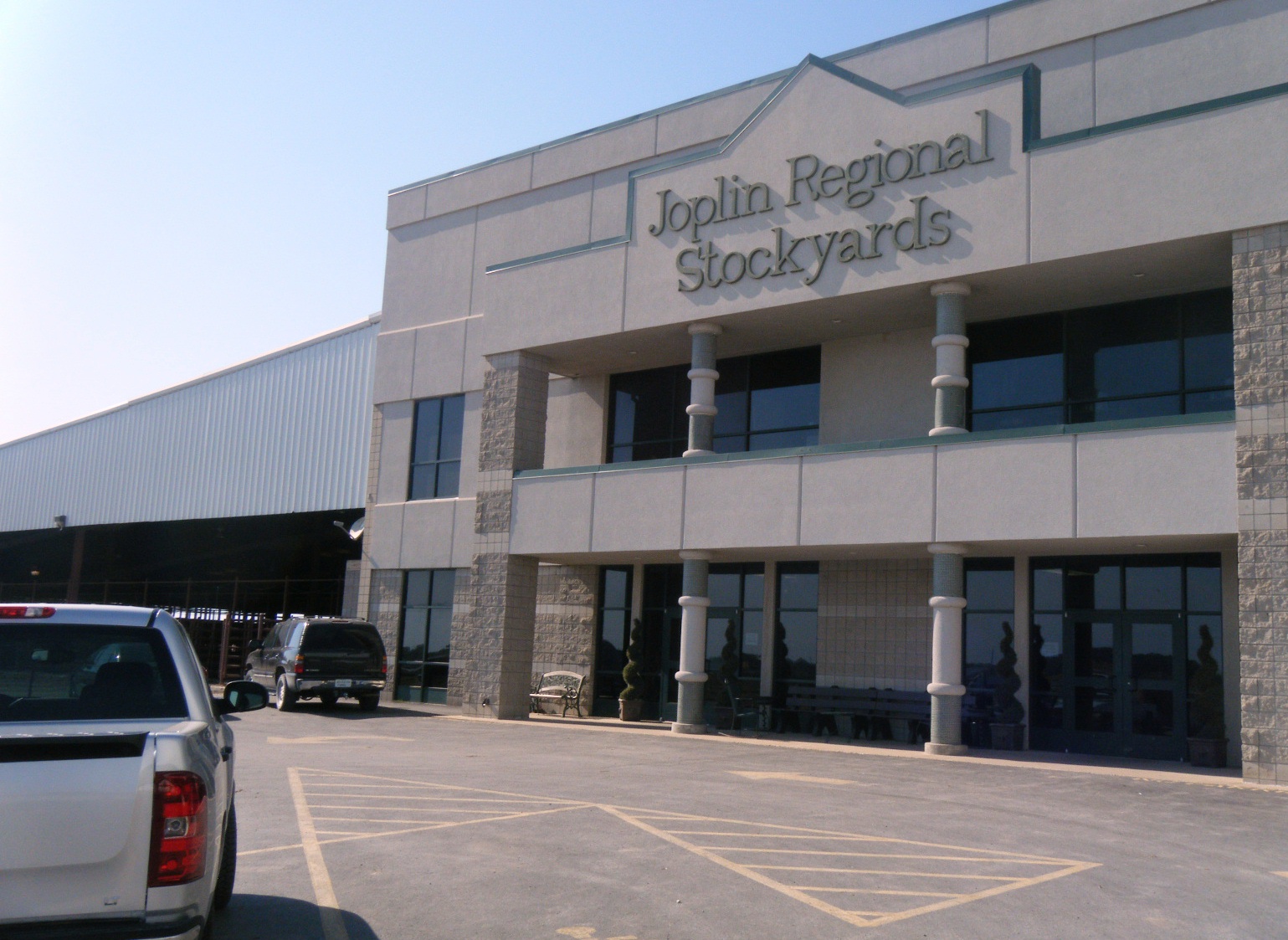
Joplin Regional Stockyards
Mon Oct 31, 2022
AUCTION
This Week 5,692
Last Reported 4,590
Last Year 6,563
**CLOSE**
Compared to last week feeder steers under 575 lbs. traded 5.00-7.00 higher with heavier weights trading from 3.00 lower to 4.00 higher. Feeder heifers traded 2.00-6.00 higher. Supply was moderate with good demand. Supply included: 100% Feeder Cattle (55% Steers, 42% Heifers, 3% Bulls). Feeder cattle supply over 600 lbs was 59%.
FEEDER CATTLE
STEERS - Medium and Large 1 (Per Cwt / Actual Wt)
Head Wt Range Avg Wt Price Range Avg Price
23 311-324 320 220.00-225.00 221.32
8 370 370 222.00 222.00
59 400-442 417 200.00-213.00 206.96
32 417-432 425 215.00-218.00 216.90 Thin Fleshed
61 451-498 482 204.00-213.00 207.46
116 501-548 527 185.00-203.00 195.28
28 532-548 543 213.00-215.00 214.44 Thin Fleshed
50 551-595 573 185.00-194.00 188.07
123 611-646 623 175.00-186.00 180.10
46 651-692 680 179.00-181.50 180.23
18 704-720 710 170.00-177.00 172.76
94 750-758 752 177.00-179.50 178.60
57 805-843 818 177.50-178.50 177.86
194 909-946 919 165.75-171.50 168.18
53 965 965 164.25 164.25
For the complete market report from USDA Market News click on the PDF link below:
Tue, 01 Nov 2022 03:24:54 CDT
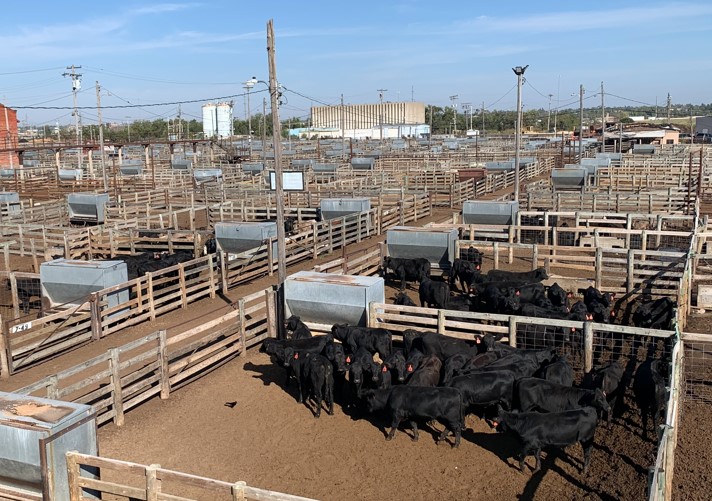
Oklahoma National Stockyards
Mon Oct 31, 2022
AUCTION
This Week 6,500
Last Reported 7,938
Last Year 8,003
*** Close ***
Compared to last week: Feeder steers 1.00-2.00 higher, weights over 800 lbs. not well tested. Feeder heifers mostly steady. Demand moderate to good for feeder cattle. Steer calves 5.00-10.00 higher. Heifer calves steady to 4.00 higher, most advance over 500 lbs. Demand good for calves. Nice rains fell across the state last week and more is expected later in the week. Some winter wheat has emerged and some warm sun will be good for growth this week. Supply included: 100% Feeder Cattle (56% Steers, 39% Heifers, 4% Bulls). Feeder cattle supply over 600 lbs was 36%
FEEDER CATTLE
STEERS - Medium and Large 1 (Per Cwt / Actual Wt)
Head Wt Range Avg Wt Price Range Avg Price
10 298 298 211.00 211.00
12 308-314 310 209.00-225.00 219.60
9 301 301 227.00 227.00 Fancy
37 361-388 373 194.00-220.00 209.69
48 385 385 216.00 216.00 Fancy
17 362-385 367 222.00-223.00 222.25 Thin Fleshed
85 407-447 427 191.00-217.00 210.31
30 400-403 402 216.00-217.00 216.60 Thin Fleshed
211 456-497 483 190.00-208.00 200.98
166 506-548 526 189.00-209.00 195.75
15 500 500 211.00 211.00 Fancy
52 510-524 513 206.00-209.00 206.82 Thin Fleshed
37 550-581 567 185.00-199.00 193.43
9 559 559 177.00 177.00 Unweaned
159 606-642 618 179.00-190.25 183.87
80 619-644 632 170.00-174.00 171.71 Unweaned
221 650-696 671 175.00-186.00 178.72
17 673 673 168.00 168.00 Unweaned
130 703-749 727 170.00-179.00 176.79
123 756-794 763 170.00-179.50 177.64
28 829 829 179.00 179.00
88 852-885 862 167.00-174.00 171.73
For the complete market report from USDA Market News click on the PDF link below:
Archives:
2026-11 | 2026-10 | 2026-09 | 2026-08 | 2026-07 | 2026-06 | 2026-05 | 2026-04 | 2026-03 | 2026-02 | 2026-01 | 2025-12 | 2025-11 | 2025-10 | 2025-09 | 2025-08 | 2025-07 | 2025-06 | 2025-05 | 2025-04 | 2025-03 | 2025-02 | 2025-01 | 2024-12 | 2024-11 | 2024-10 | 2024-09 | 2024-08 | 2024-07 | 2024-06 | 2024-05 | 2024-04 | 2024-03 | 2024-02 | 2024-01 | 2023-12 | 2023-11 | 2023-10 | 2023-09 | 2023-08 | 2023-07 | 2023-06 | 2023-05 | 2023-04 | 2023-03 | 2023-02 | 2023-01 | 2022-12 | 2022-11 | 2022-10 | 2022-09 | 2022-08