Ag News Archives for 2025-04

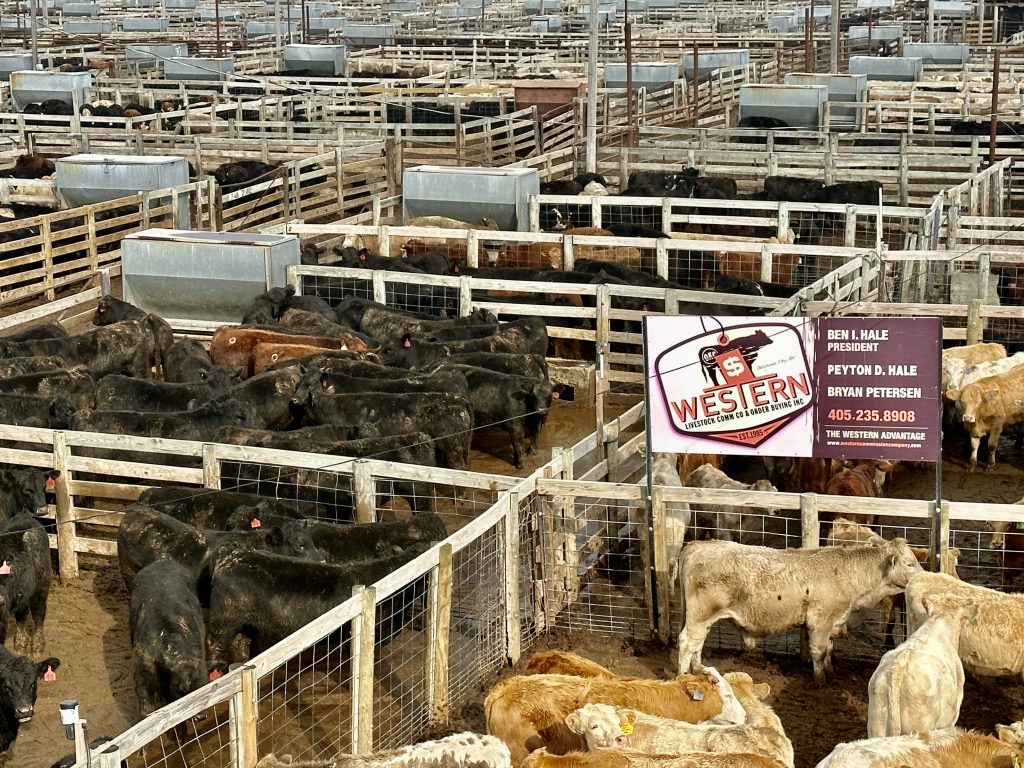
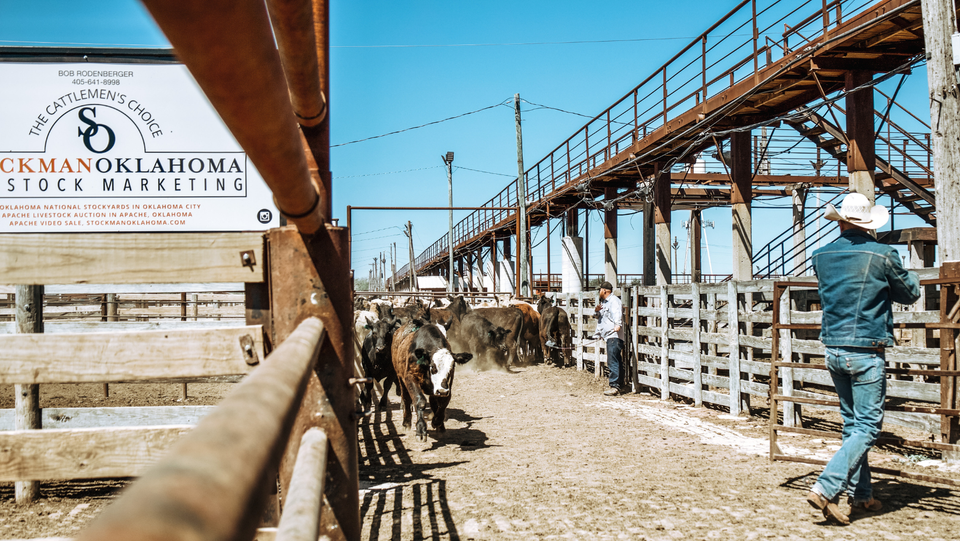
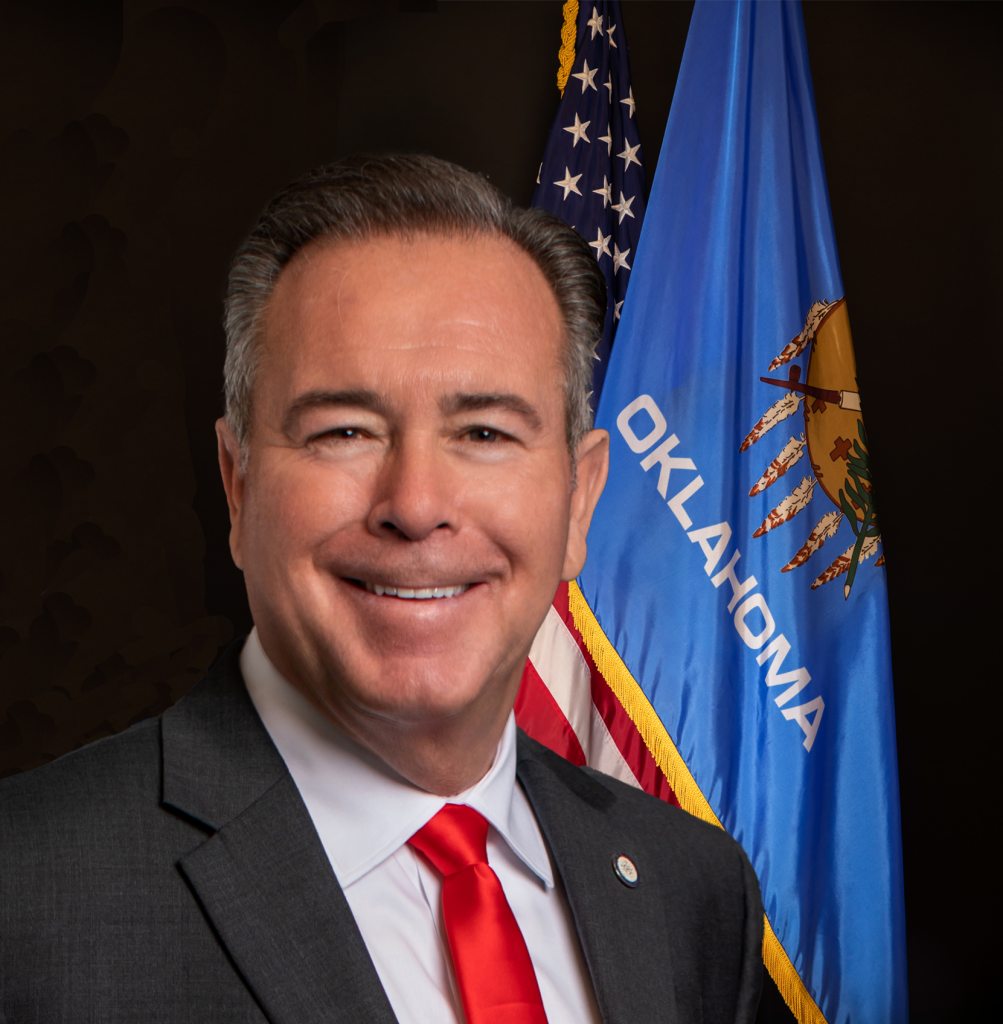
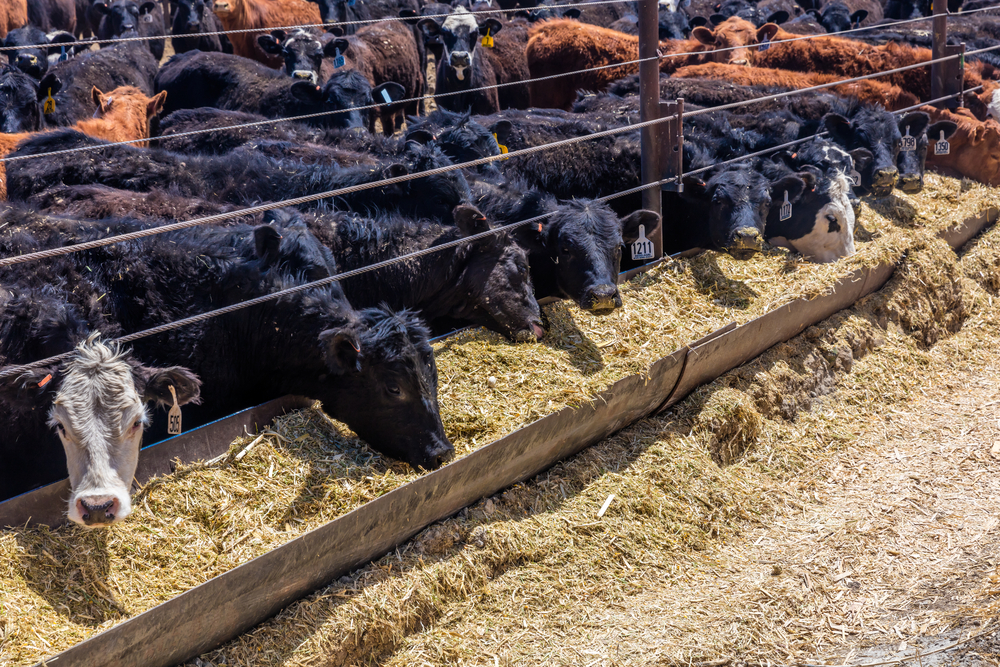
Oklahoma National Stockyards Secures Future with New Ownership

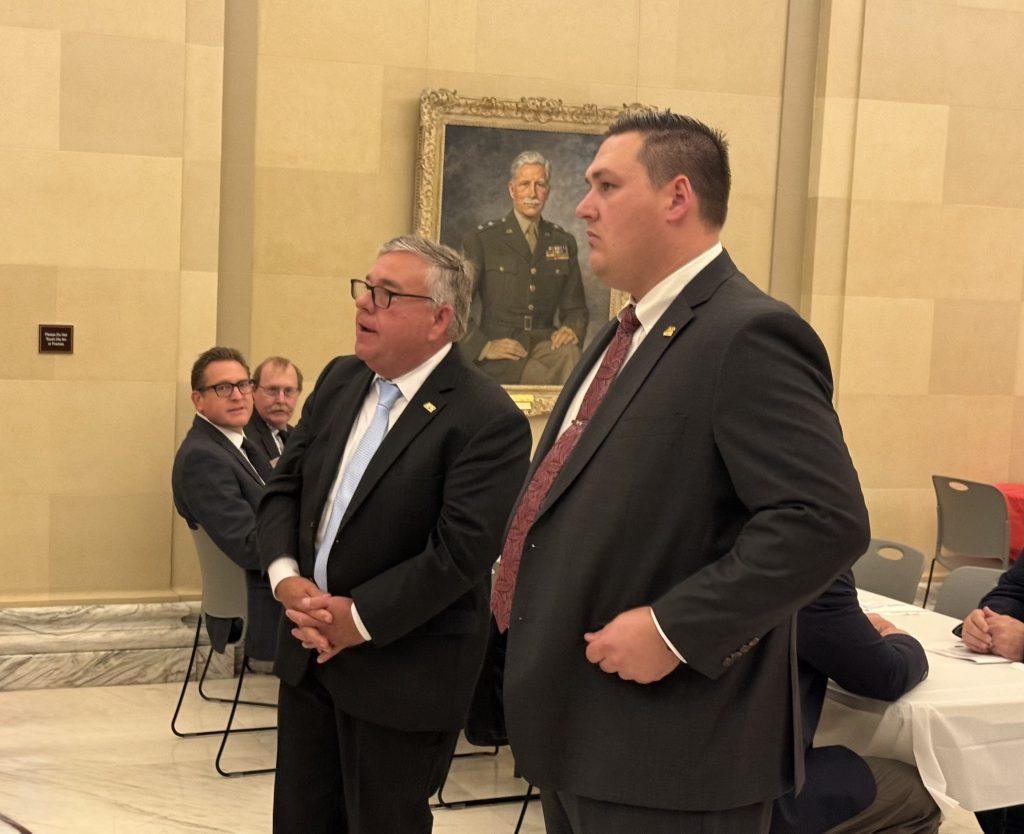
The Oklahoma National Stockyards (ONSY), a cornerstone of the region's and nation's agricultural industry and infrastructure, has been placed under contract for purchase by a group led by an Oklahoma cattleman and
business owner. This strategic acquisition ensures the continued operation of one of the nation's premier livestock markets.

Following productive discussions, the nine commission companies operating at ONSY
have expressed enthusiasm about collaborating with the new ownership. The buyer is
steadfast in their commitment to maintaining ONSY's legacy of excellence, with plans to
serve customers and the agricultural community for decades to come. Additionally, the
buyer plans to actively engage with leading agricultural organizations in Oklahoma,
including the Farm Bureau, Oklahoma Cattlemen's Association, American Farmers and
Ranchers, and the Oklahoma Department of Agriculture, to strengthen partnerships and
support the state's agricultural ecosystem.

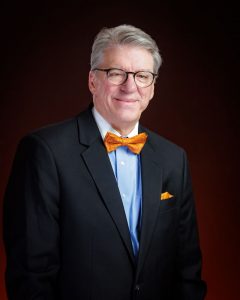
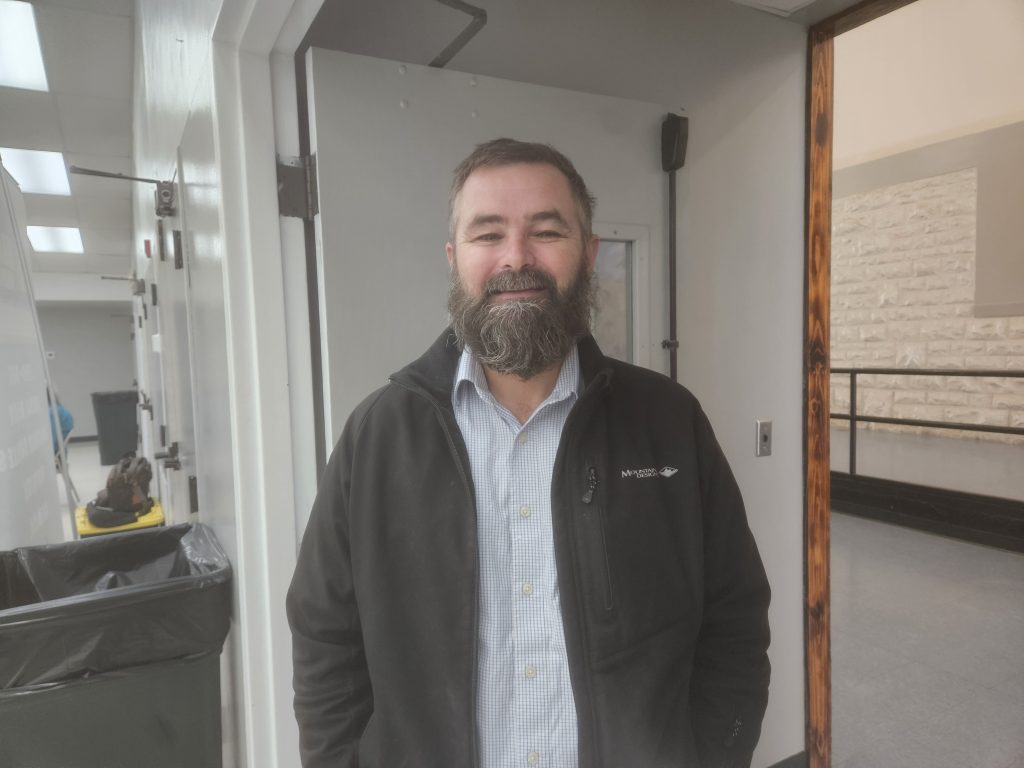
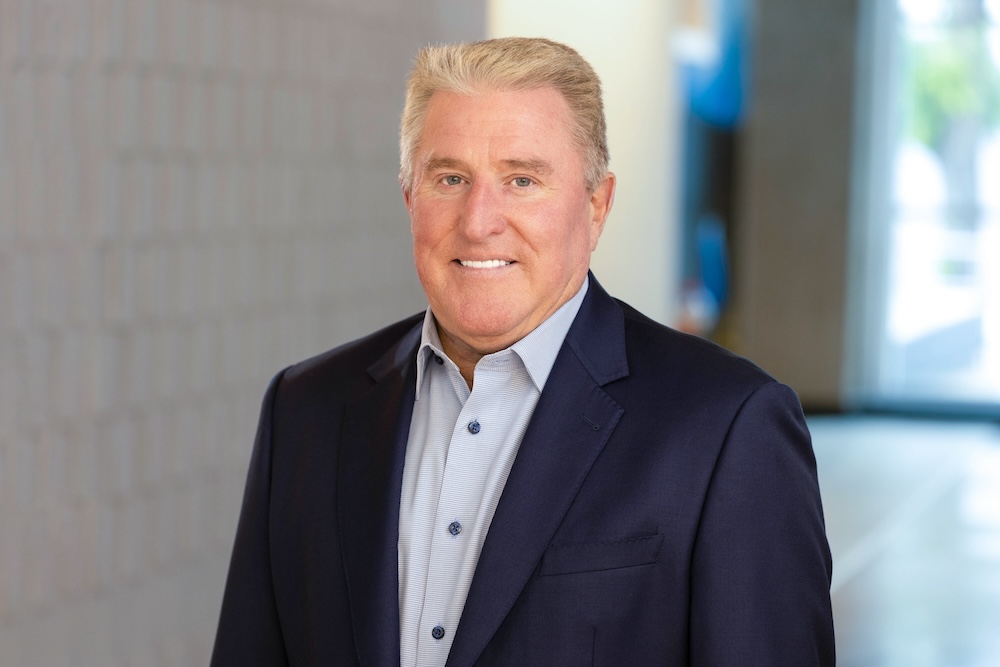
"We are excited about this new chapter for the Oklahoma National Stockyards," said Chris
Franklin
, managing member of the group purchasing ONSY. "Our focus remains on
supporting our customers, preserving the stockyards' vital role in Oklahoma's and the
nation's agricultural economy, and fostering a thriving marketplace for the livestock
industry."

Operations at ONSY will continue seamlessly, with no disruptions to services or
schedules. The new ownership group is dedicated to upholding the stockyards' tradition of
integrity, reliability, and community partnership.

Senator Mullin Chairs Appropriations Subcommittee Hearing, Emphasizes Cost-Saving, Bipartisanship, and Government Accountability

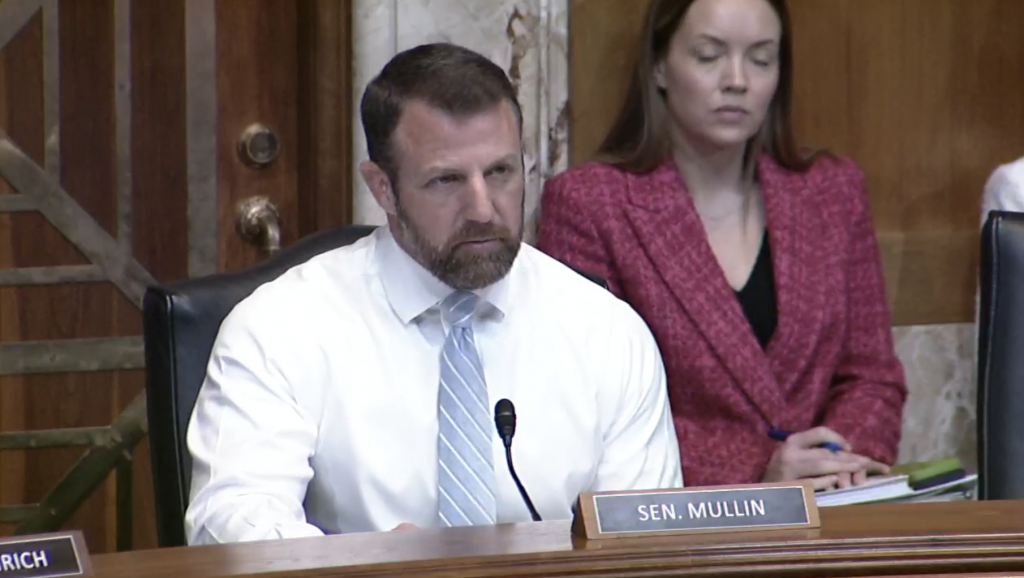
On Tuesday, U.S. Senator Markwayne Mullin (R-OK), Chairman of the Senate Appropriations Legislative Branch Subcommittee, presided over his first hearing, "A Review of the Fiscal Year 2026 Budget Requests for the Congressional Budget Office, the Government Accountability Office, and the Government Publishing Office." 

In his remarks, Senator Mullin set the tone for how he wants to run the Legislative Branch Subcommittee—highlighting accountability to taxpayers and strong bipartisan work. 

"Before we get into the specific details of the budget request, I want to acknowledge that after years of significant spending, the federal government as a whole must show physical restraint, and the majority of the American people want to make sure that their tax dollars are being used efficiently and effectively," said Senator Mullin. "The legislative branch is no exception and must demonstrate that we're a good steward of taxpayers' hard-earned dollars."

The full subcommittee hearing can be found here.

Highlights of Senator Mullin's remarks are below.

On the concern of politicization at the Government Accountability Office:

"There's concern, especially on our side of the aisle, that the CRA response looks political, especially since you made the opinion in about eight days and then the last time the EPA submitted to you, they submitted to you as a rule."

"I just would throw this out, and I throw this out to all the agencies, we do not want you to be political. We don't want you to make a political decision. That's the fastest way to get myself, or my ranking member, upset. I want to run this committee very bipartisan because what we're talking about is bipartisan stuff. There's nothing that comes in front of this committee that should be political at all."

"But if I perceive it to be, you'll hear from me, and I'll make adjustments as needed, and we as a committee will make adjustments if needed. So, when you're making a decision and when you're responding to us, just give us the facts, not your political opinion, and your political bias. We deal with that every single day on both sides of the aisle. As I say it again, I do not want that in this committee at all, and I'll hold the members accountable, and I'll hold myself accountable to do it as the same."

On the U.S. Government Accountability Office's $1 Billion Budget Request:

"So, you're going to be approaching a billion dollars... At the same time, we're trying to shrink the federal government. We're trying to use efficiencies. I mean, one of the things we try to do is be more efficient. What type of technology are you using to try to offset this?"

"Let's just use real world, right? Our payables and receivables office doesn't have near as many people in it as it used to. Our payroll department doesn't have near as many people in it as it used to because of the new technology that's available to us. And I would say most of the research in accounting offices around the country have shrunk considerably. So, what type of technology have you changed to be able to help your efficiencies? Because we're cutting all across government so it's hard for us to justify a $120 million increase, which is roughly 15% for GAO." 

USDA and Homeland Security End Property Border Suit Against South Dakota Ranchers

Today, federal and state leaders joined with South Dakota ranchers, the Maude family, as criminal charges against them were dropped. USCA President Tupper commented on today's press conference:  

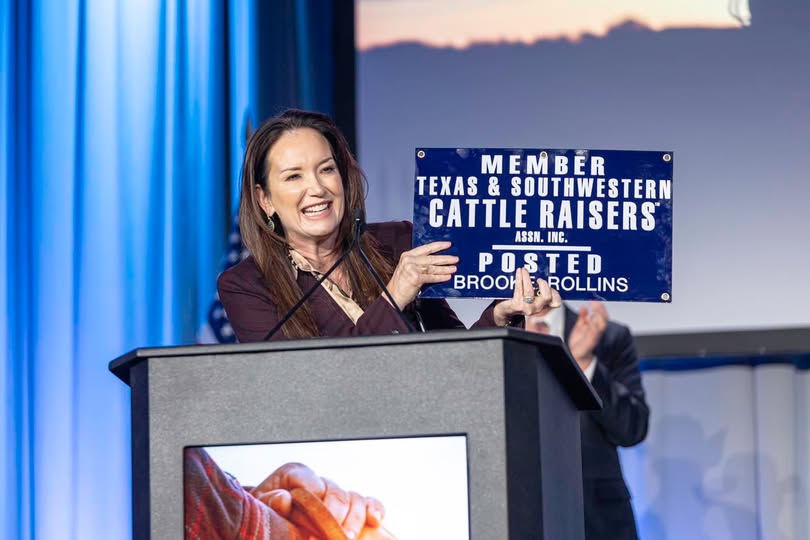
"Today, on the steps of the Department of Agriculture's Whitten Building, Agriculture Secretary Brooke Rollins shared the story of the Maude family. Charles and Heather Maude were charged with theft of federal property several years ago over a border dispute on 25 acres of Forest Service land. What should have been reasonable mediation turned into a legal battle with the federal government targeting this family. Today, Secretary Rollins expressed her disappointment in how it was handled and righted the wrong," said President Justin Tupper. 

Secretary Rollins stressed the importance of the issue and committed the Department to working with farmers and ranchers to find solutions when conflicts like these arise. USCA submitted letters of support for the Maude family to USDA and legislative offices when this issue first arose and will continue to offer assistance to any USCA members facing similar challenges.  

In attendance at today's press conference, in addition to the Maude family, were the following: USDA Secretary Rollins, Secretary of Homeland Security Kristi Noem, South Dakota Governor Larry Rhoden, Senator Mike Rounds (SD), Representative Harriet Hageman (WY), and Representative Dusty Johnson (SD). 

Secretary Rollins Hosts Maude Family in Washington After U.S. Government Dropped Lawfare Case

U.S. Secretary of Agriculture Brooke Rollins today hosted Charles and Heather Maude at the U.S. Department of Agriculture headquarters alongside U.S. Secretary of Homeland Security Kristi Noem and members of Congress to address the senseless politically motivated prosecution waged by the Biden Administration over 25 acres of federal land. This comes after the Trump Administration announced that the U.S. government has dropped criminal charges against the Maude family.

At Secretary Rollins' direction, USDA is launching a new web portal for potential victims of ongoing lawfare originating under the Biden Administration to submit their concerns and experiences. This site is active at www.usda.gov/lawfare.

"President Trump is directing his cabinet to ensure no citizen of this country is unfairly targeted on politically motivated witch hunts. That is what happened to the Maudes and I am working to ensure no farmer, rancher or customer who works with USDA will ever endure baseless political persecution," said Secretary of Agriculture Brooke Rollins. "I am calling on any individuals who are currently enduring lawfare conducted by USDA to visit www.usda.gov/lawfare and submit a form. My team will promptly work to address the situation."

"I'm so grateful to the Maude family for their strength. I'm so disgusted by the Biden administration that they would do this and persecute a family and threat to take their children away from them just because they wanted to be political. South Dakota's motto has always been 'Under God, the people rule.' The power was given in our Constitution to the people, and that we should always respect that and recognize that many of the wrongs that were done under the last administration can be fixed, and are being fixed every single day because of leaders like Secretary Rollins, and because President Trump is in the White House and he's bold and he's fearless and he's taking action," said Secretary of Homeland Security Kristi Noem.

"This situation hits close to home for me — the Maude's ranch is just 70 miles down the road from my own. The Maude family has been put through hell by an overreaching federal government. I am honored to have played a part alongside Sec. Rollins and the Trump Administration to restore sanity, fairness, and justice," said South Dakota Governor Larry Rhoden.

"Hard work and common sense have finally prevailed. We want to thank President Trump and his team for working closely with us and the Maude family to right this wrong. I am happy to see we have finally reached a positive resolution but this massive government overreach from the Biden administration should have never happened in the first place, and we must continue our work to stop this from ever happening again," said Senator Mike Rounds.

"Gone are the days of a government working against the people; under the leadership of President Donald Trump and his administration, like Secretary Rollins and Attorney General Bondi, we now – once again – have a government of, by and FOR the people. The case against the Maudes is a glaring example of the dangers of unelected bureaucrats with far too much power weaponizing the full force of the federal government in an unconstitutional effort to make felons out of farmers. Sadly, this type of behavior was commonplace during the past four years but President Trump knows firsthand the catastrophic implications of lawfare imposed by an overreaching government and the dismissal of this case shows that 'business as usual' is no more," said Representative Harriet Hageman.

The Maudes were alerted by the United States Forest Service that fencing on their property blocked access to the Buffalo Gap National Grasslands and in good faith agreed to a survey of the property lines. After the survey was completed, the Maudes lives were turned upside down by the Biden Administration where a simple civil dispute over 25 acres of federal land turned into a costly, invasive, and unnecessary criminal prosecution.

National Farmers Union to Host Week of Action

From Monday, May 5 to Friday, May 9, National Farmers Union (NFU) will hold a full week-long slate of events, programming, and meetings in Washington and across the country to urge Congress to pass a comprehensive, five-year farm bill and ease the burden on family farmers and ranchers.

Over the course of the week, Farmers Union members will meet with members of Congress to share how volatile markets, rising input costs, shrinking federal support, mounting trade tensions, and the lack of a new farm bill are causing stress and uncertainty across farm country.

Starting Monday, May 5, NFU will bring nearly 100 family farmers and ranchers to Washington to meet directly with their elected officials and share what's happening on their farm. Hundreds more will participate virtually throughout the week, using social media and digital advocacy tools to elevate their voices and urge congressional action – for farmers' sake.

Daily Email for April 30, 2025


Oklahoma's Latest Farm

And Ranch News

Wednesday, April 30, 2025

 
Howdy Neighbors!

Here is Your Daily Oklahoma Farm and Ranch News Update: 


  • OSU's Dr. Brett Carver Highlights Promising Varieties and Focus on Climate Resilience


  • Matt Makens Explains Unusual April Rains as both Science and Luck


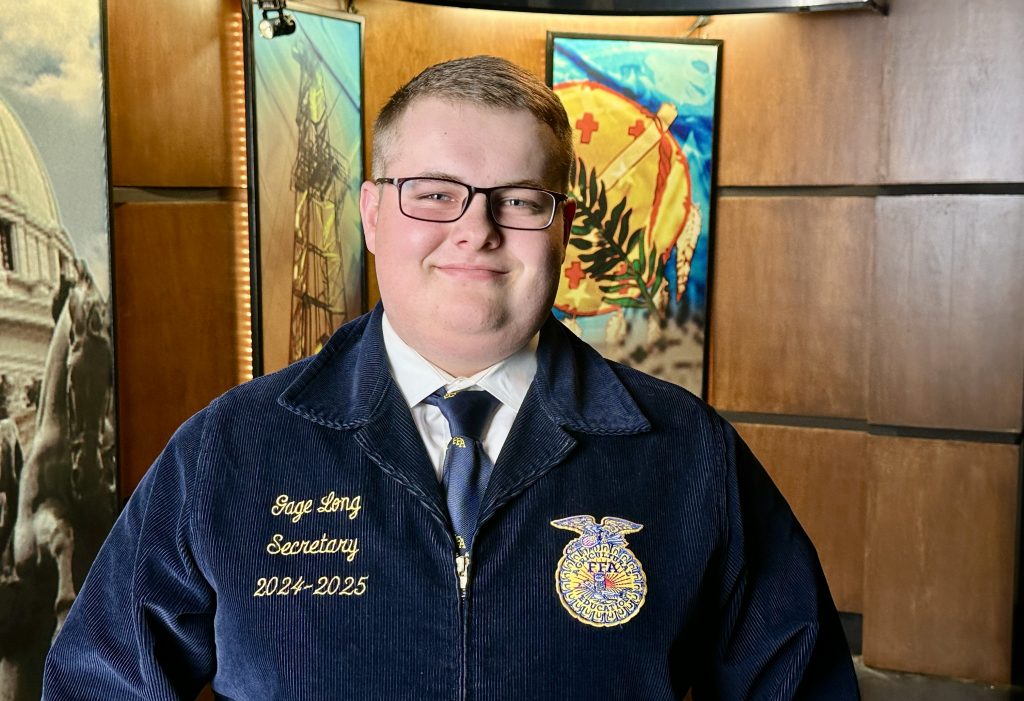
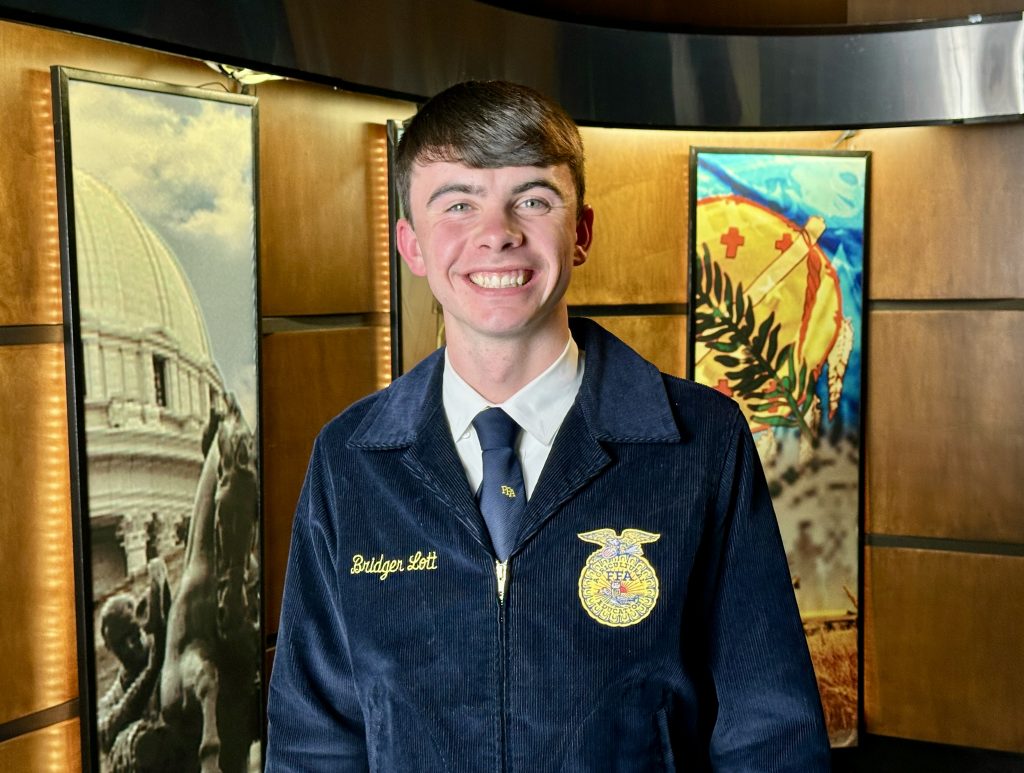
  • Introducing Gage Long of the Adair FFA Chapter, Your 2025 Northeast Area Star in Agricultural Production


  • TSCRA commends Rollins' commitment to a U.S.-based Sterile Fly Facility


  • And Lots More Below

OSU's Dr. Brett Carver Highlights Promising Varieties and Focus on Climate Resilience

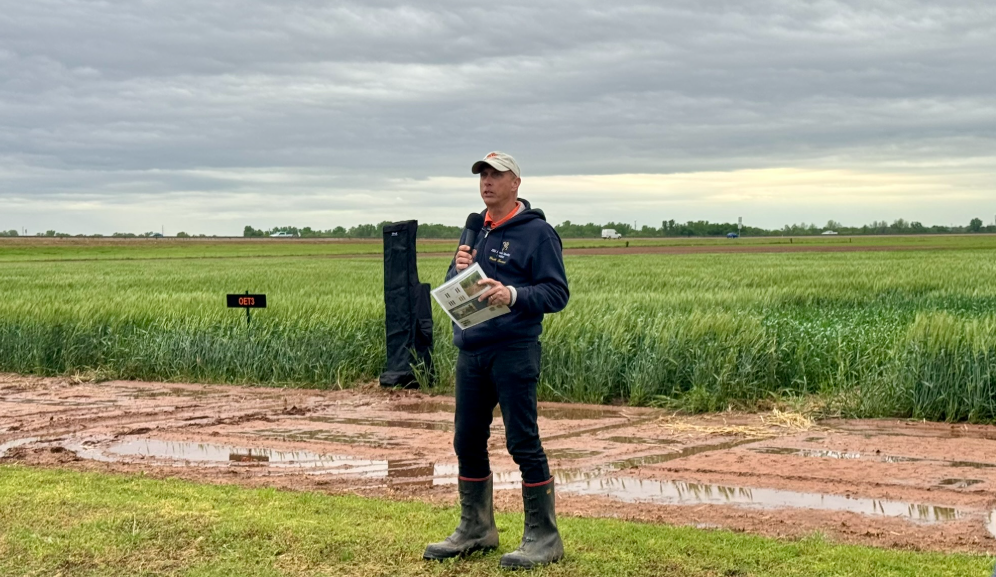
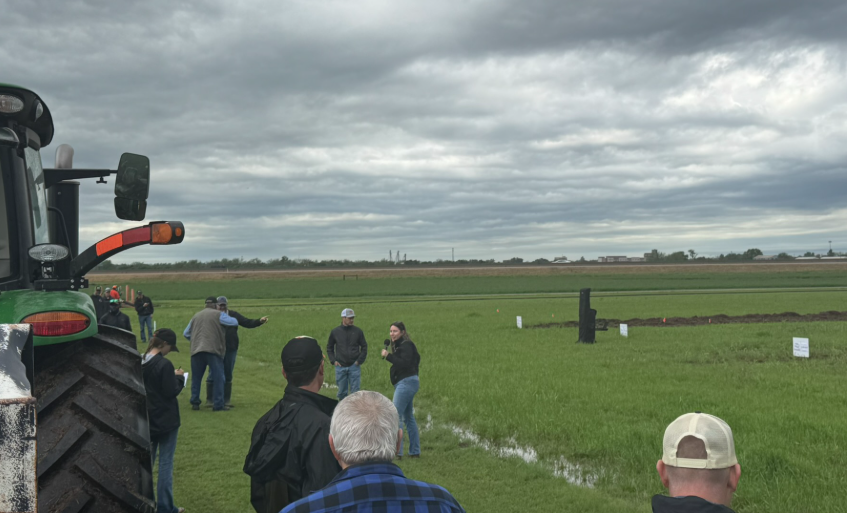
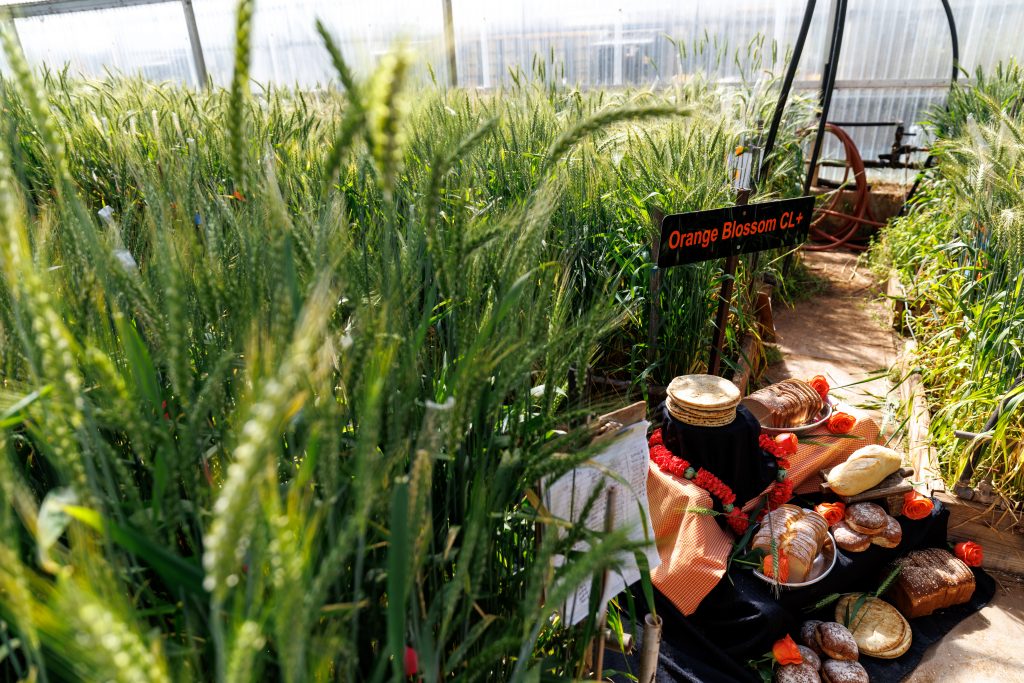
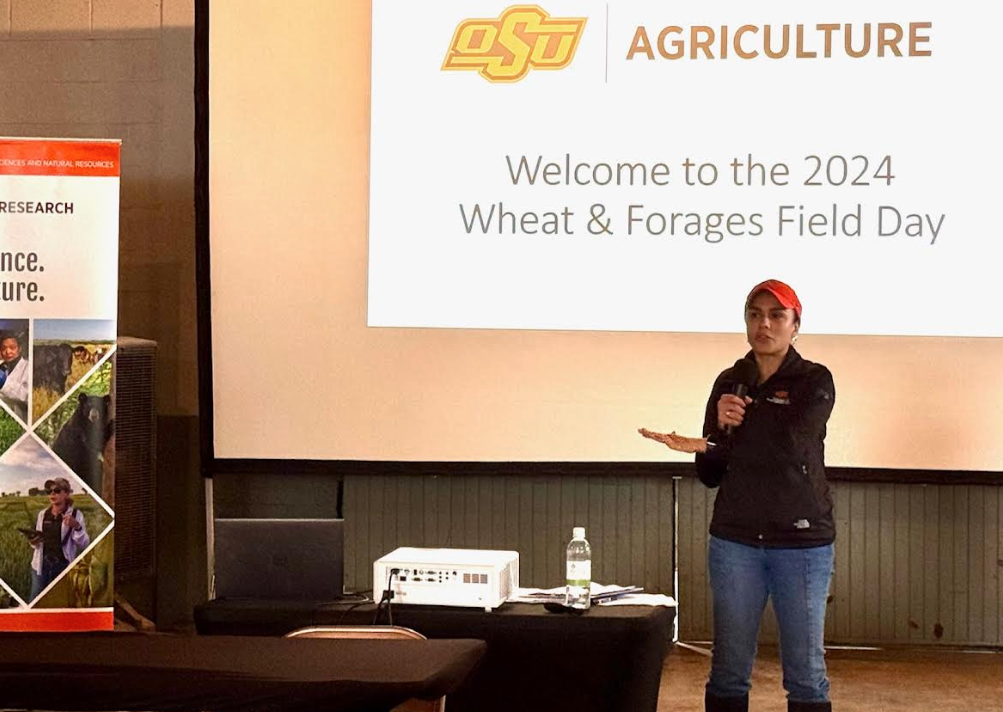
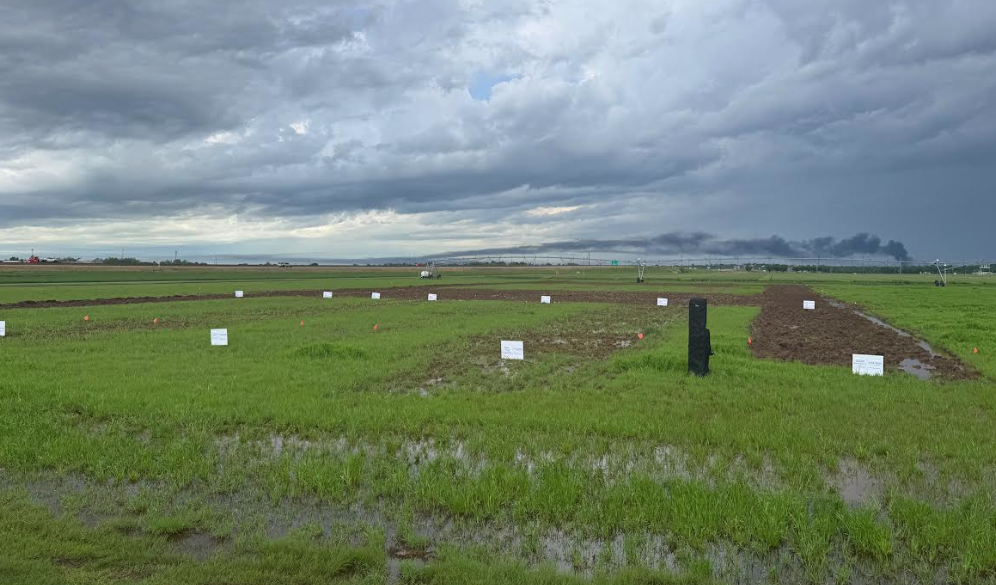
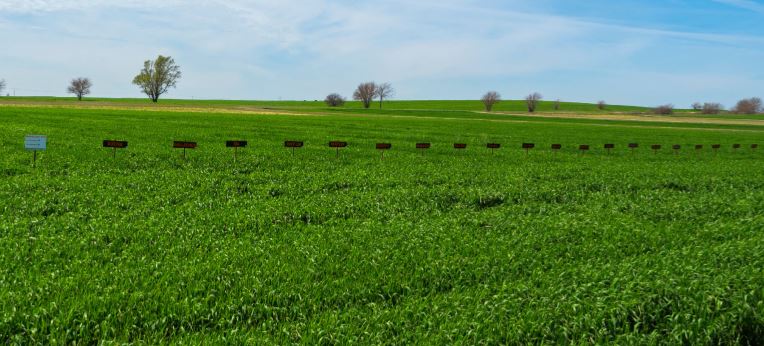
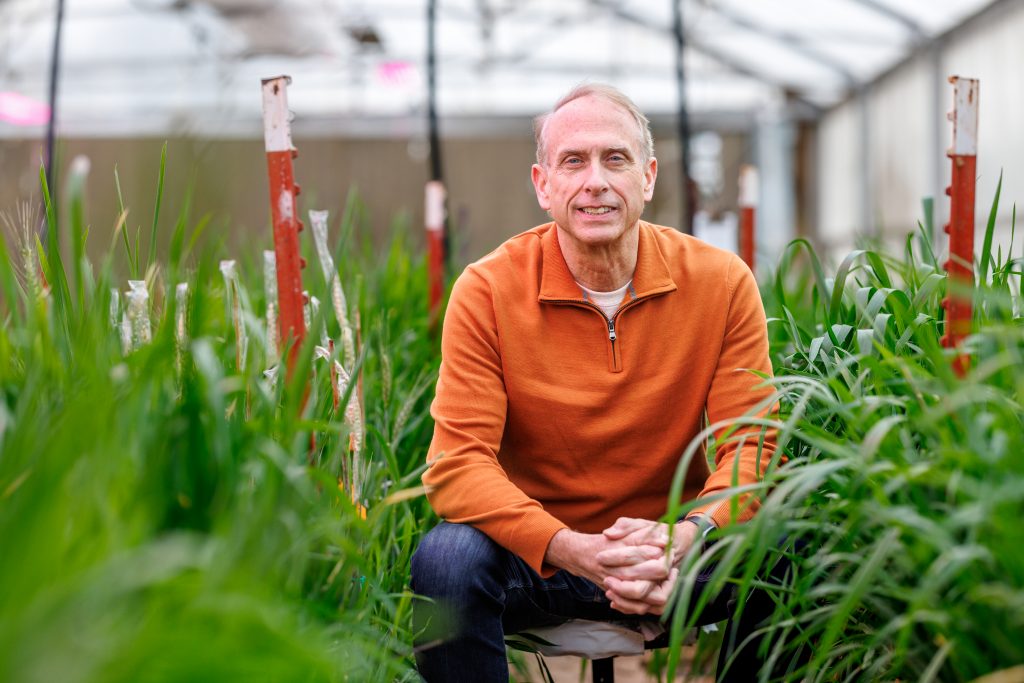
During the Chickasha Wheat forage and field day, OSU Wheat Breeding specialist Dr. Brett Carver provided an in-depth look at the university's extensive wheat breeding nursery. Speaking with our own Maci Carter, Dr. Carver shared insights into promising new varieties, the challenges of breeding for Oklahoma's unpredictable climate, and his dedication to enhancing wheat for consumer health.


Dr. Carver emphasized the significance of the Chickasha site for evaluating advanced breeding lines. "Well, from the wheat breeding standpoint, we saw a very big wheat breeding nursery. I mean, this is one of our bigger sites, and we include a lot of the germplasm that's close to being released, and close to me means one to four years out. So just about 90% of that material is located at Chickasha."


He recalled the valuable disease pressure from the previous year, stating, "Last year we got a super look at that germplasm because we had two diseases, leaf rust and stripe rust, that I could use to make some of the most important selection decisions I've made in a long time. Rarely do we get both of those in the same place." While disease pressure might be lower this year, Dr. Carver acknowledged the benefit for farmers, quipping, "The farmers will love that, but, as a breeder, I need it sometimes."

Listen to Maci's Interview with Brett Carver & Read More Here 

Sponsor Spotlight

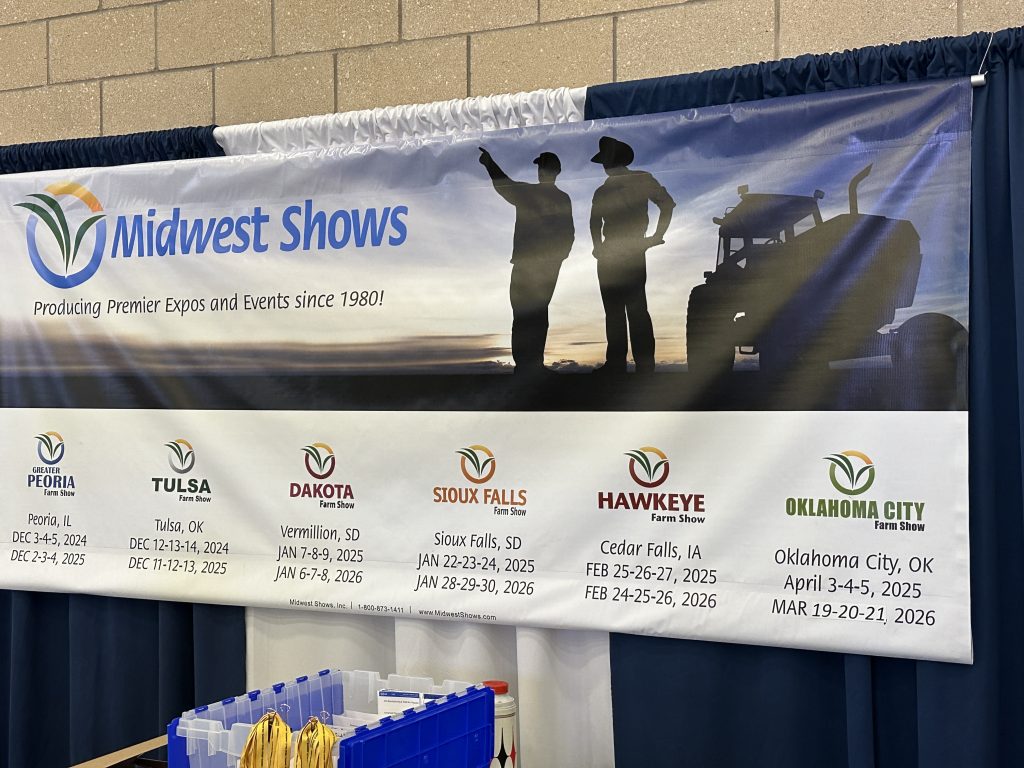
Midwest Farm Shows is proud to produce the two best Farm Shows in the State of Oklahoma annually- the Tulsa Farm Show each December and the Oklahoma City Farm Show each April.


The Tulsa Farm Show is Oklahoma's premier agricultural and ranching event- and returns to the SageNet Center (Expo Square) December, 2025. 


Now is the ideal time to contact the Midwest Farm Show Office at 507-437-7969 and book space at the 2025 Tulsa Farm Show.  To learn more about the Tulsa Farm Show, click here


Matt Makens Explains Unusual April Rains as both Science and Luck

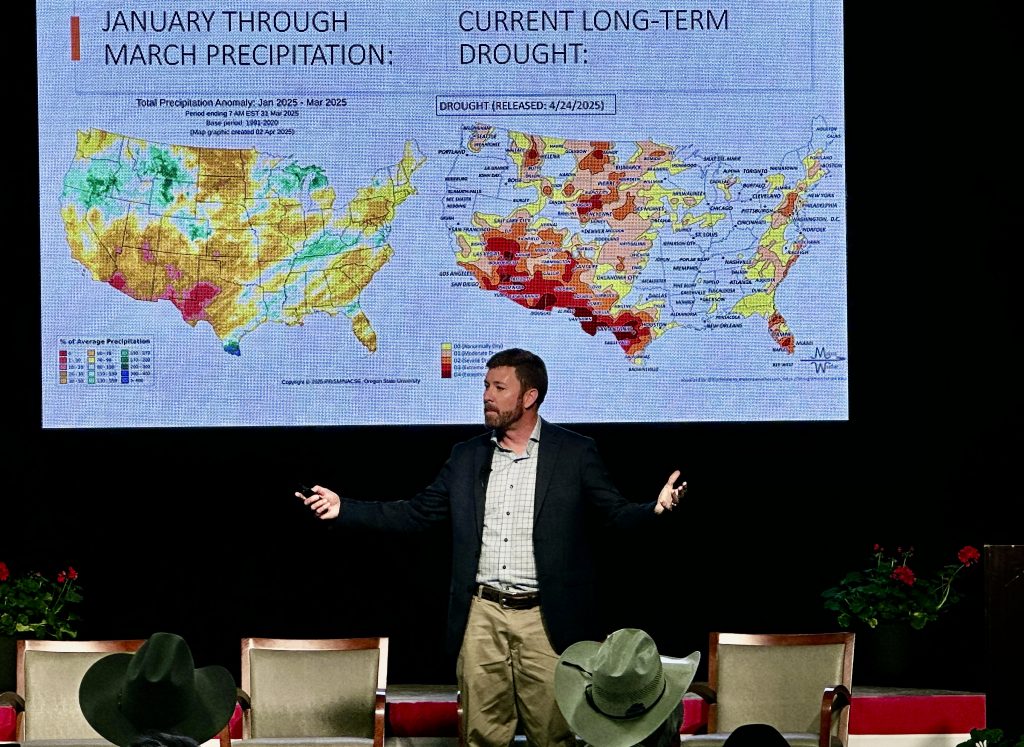
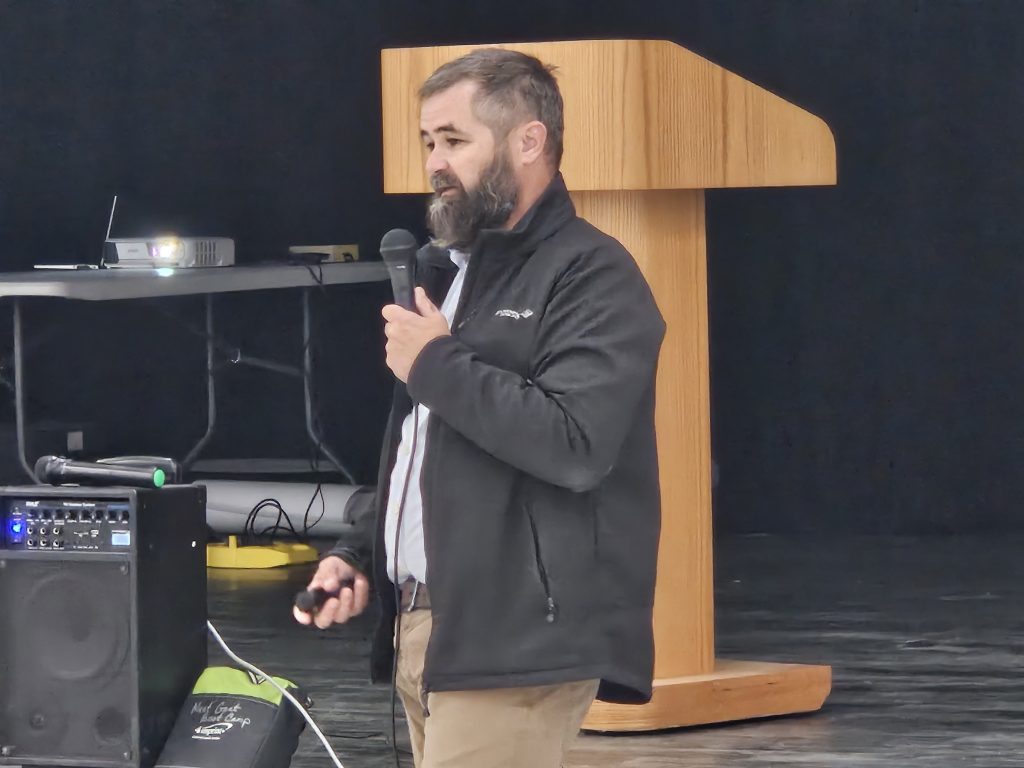
Senior Farm and Ranch Broadcaster Ron Hays is attending the 10th Annual Hemphill County Beef Conference in Canadian, Texas, and had the chance to speak with Atmospheric Scientist Matt Makens who provided a weather outlook for attending producers. Hays found one excerpt of the conversation to be particularly interesting regarding the abnormal amounts of rainfall the Southern Plains have received this month.


Makens has presented thousands of weather forecasts and outlooks to dozens of industries since the 1990's; however, his company, Makens Weather, LLC., specifically focuses on providing actionable long-term seasonal forecasts and short-term weather hazards for the agricultural community. It serves global clients from Australia to Canada and throughout the United States; notably CattleFax and NCBA.


Hays pointed out the limited amount of rainfall received from January until March across the state of Oklahoma and compared it to the record and near record amounts falling during the month of April, and asked what changed?


Makens explained, "We have talked about catching these elements in their transition. As it is flowing from one thing to another, there is a moment when that transition covers you. November was another transition. Now, we are transitioning a seasonal change, and we are caught in this transition again."

Listen to Ron's Conversation with Matt Makens and Read More Here

Introducing Gage Long of the Adair FFA Chapter, Your 2025 Northeast Area Star in Agricultural Production


This week, our coverage of the 2025 Oklahoma FFA Star Award Finalists continues with Agricultural Production competitor Gage Long of the Adair FFA chapter representing the Northeast Area.


"My Star farm presentation is my purebred cow calf operation," Long shared. "I have grown up in this industry. Right now, I have 56 head of registered purebred cows, including Angus, Sim-Angus, and some purebred Simmental females. I'm part of a production sale held in the spring and fall that includes three producers: L Bar R Ranch, Harley Creek Ranch, as well as myself. Through that sale, I am able to market my offspring from my cows, as well as some of my older cows that I'm selling, to purebred and commercial cowmen across the country."


Long feels like the Sim-Angus crosses add value through the black hides of the Angus cattle combined with the muscle, bone structure, and rapid growth of the Simmental breed.


Long shared that joining FFA in the eighth grade wasn't even an option for him. He began horse and livestock judging in the third grade, and began Speech contests once he was officially in FFA. He continues to judge horses and has competed at the National Horse Judging Contest in Indianapolis, Indiana. His goal is to win a state title in Livestock Judging.

Listen to KC's Interview with Gage Long & Read More Here
Sign Up for Our Daily Email- Free Because of Our Sponsors!

Support Our Sponsors!


KIS logo


Advertise With Us!


For our farmers who have either- always have had cotton on their farms- or those who have more recently have added the fiber crop to their operations- we have a daily report heard on several of our Radio Stations- It's Called Cotton Talk!


Click on the Button below to listen to our most recent report

Click here for our Latest Cotton Talk- Hosted by KC Sheperd
 

Sponsor Spotlight


The Oklahoma Cattlemen's Association is the trusted voice of the Oklahoma Cattle Industry. With headquarters in Oklahoma City, the OCA has a regular presence at the State Capitol to protect and defend the interests of cattlemen and cattlewomen.


Their Vision Statement explains the highest priority of the organization- "Leadership that serves, strengthens and advocates for the Oklahoma cattle industry."


To learn more about the OCA and how you can be a part of this forward-looking group of cattle producers, click here for their website. For more information- call 405-235-4391.


The latest news from the Oklahoma State Capitol is available daily on the Radio Oklahoma News Network.


Click on the blue button to hear from our Radio Oklahoma Network Capitol Correspondent Jacquelyn Farris

Click here for the latest report from the State Capitol on RON


TSCRA Commends Rollins' Commitment to U.S.-based Sterile Fly Facility

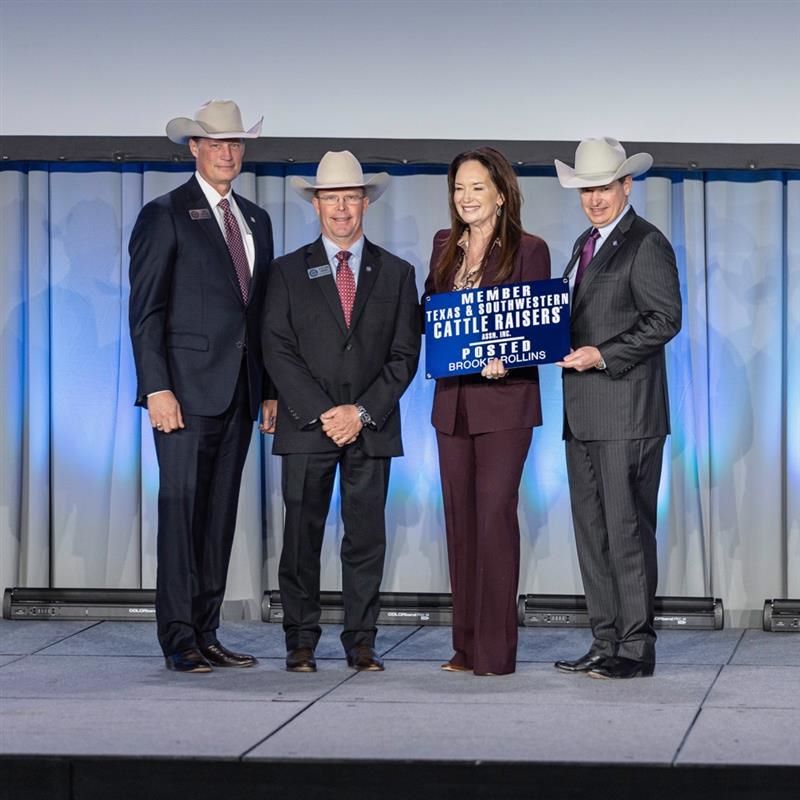
Texas & Southwestern Cattle Raisers Association, the oldest and largest livestock association in the Southwest, today issued the following statement from President Carl Ray Polk Jr. following a closed-door roundtable meeting with U.S. Secretary of Agriculture Brooke Rollins: 


"The introduction of New World screwworm would devastate cattle markets, cripple supply chains and cause billions in economic losses.This is something Texas cattle raisers will be the first to experience. Protecting America's livestock, wildlife, and food supply must be a national priority. Secretary Rollins' commitment to a U.S.-based sterile fly facility announced during today's meeting demonstrates this is a shared priority. We are thrilled to have the support from Secretary Rollins to explore short- and long-term U.S.-based solutions that protect the American beef industry."


AND LATE NEWS- Secretary Rollins confirms on her X Account Mexico has agreed to let our sterile fly planes land.


A HUGE win for our American ranchers!


We invite you to listen to us on great radio stations across the region on the Radio Oklahoma Ag Network weekdays-

if you missed this morning's Farm News - or you are in an area where you can't hear it- click below for this morning's Farm news from Ron Hays and KC Sheperd on RON.
Listen to our Wednesday morning farm and ranch news with KC Sheperd
 
 
Subscribe To the Daily Email


Sponsor Spotlight


Dating back to 1891, Stillwater Milling Company has been supplying ranchers with the highest quality feeds made from the highest quality ingredients. Their full line of A & M Feeds can be delivered direct to your farm, found at their Agri-Center stores in Stillwater, Davis, Claremore and Perry or at more than 125 dealers in Oklahoma, Arkansas, Kansas and Texas. We appreciate Stillwater Milling Company's long time support of the Radio Oklahoma Ag Network and we encourage you to click here to learn more about their products and services.


Practical Applications of Smart E-Tags in Beef Cattle Herds

A professor of precision livestock management at the School of Medical and Applied Sciences at Central Queensland University in Australia, Dr. Mark Trotter, has been researching smart e-tags, which are an emerging technology in the beef cattle industry.


Trotter was a speaker at the recent Oklahoma Beef Cattle Summit in Ada, and Oklahoma Farm Report's Stevie White interviewed him prior to his presentation. Friday's BeefBuzz included discussions about what e-tags are and do. In today's BeefBuzz, Ron Hays is featuring comments from that conversation in which Trotter gets more in-depth about the practical use of the tags in a herd.


He pointed out that it often isn't necessary to tag every animal in a herd. He suggested tagging a handful, then deciding if you like the results before going all in. Applications such as ensuring cattle are in the pastures they should be in, determining grazing habits, or detecting predation would only require tagging five to ten percent of a herd, which would save money for the producer.


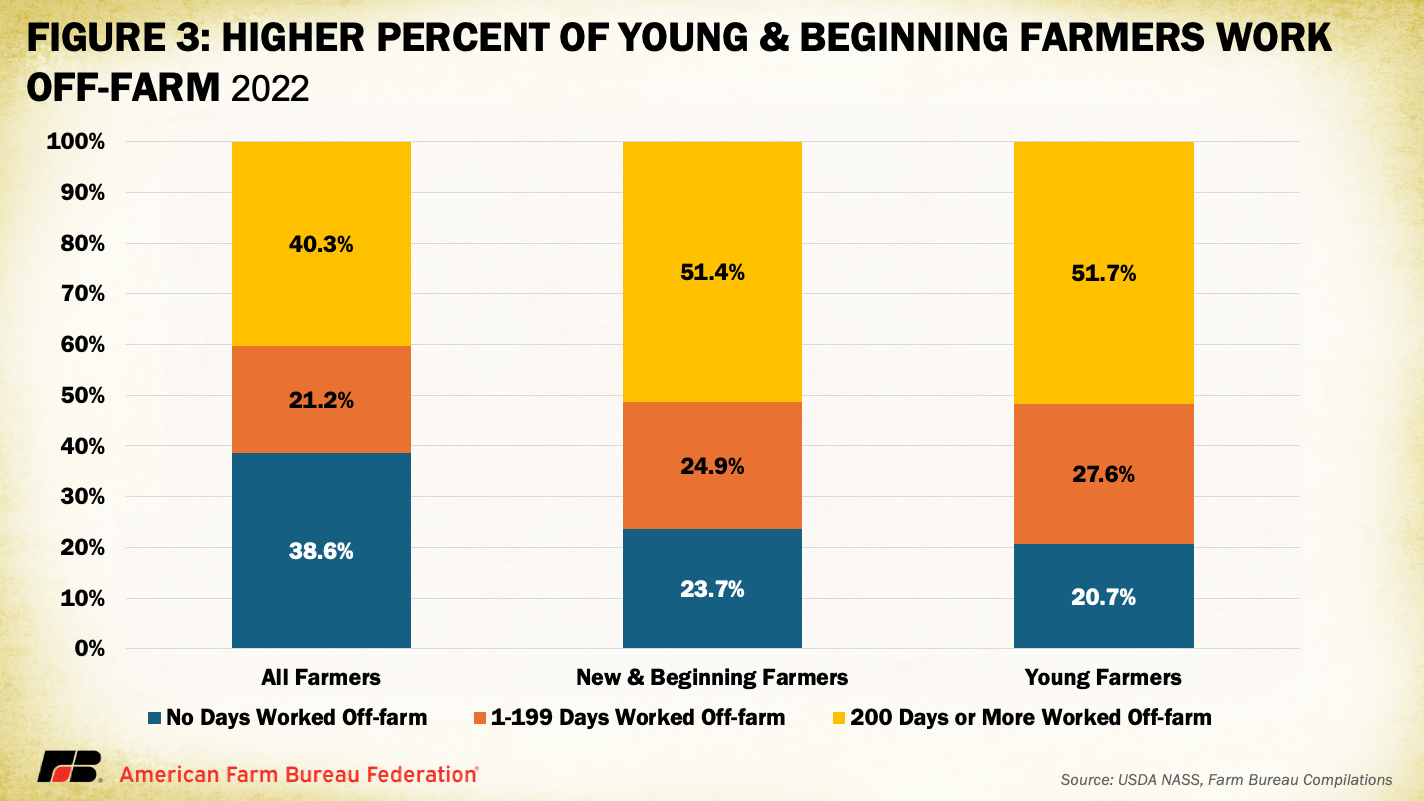
"Those more efficient, lower-cost deployments are something that people should be looking at as well," Trotter advised. "For some smaller producers who might be working off farm, these tags can provide really important information because you aren't around and available."

Listen to Ron's BeefBuzz with Dr. Mark Trotter and Read More Here

AFR's Scott Blubaugh Discusses Legislative Advocacy for Farmers in Oklahoma at AFR Day

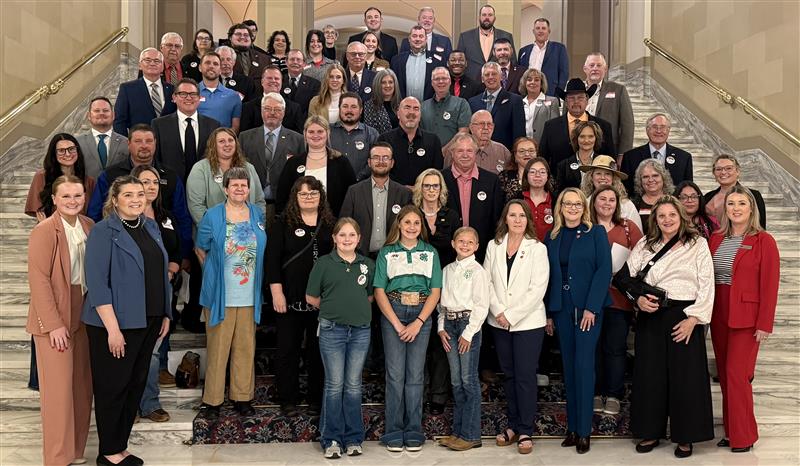
American Farmers and Ranchers (AFR) Day at the Capitol was about six years ago when Scott Blubaugh became president of the organization. AFR members are invited to attend and learn about the ins and outs of the legislative process, as well as advocate for the positions of policyholders and members at the annual convention. Oklahoma Farm Report's KC Sheperd attended the event this year and got to speak with Blubaugh.


"This is a great opportunity for folks to come up here and meet their legislators," he said. "Many of them don't know who their Senator or Representative is, so we get them introduced and let them talk about the things that are important to them and AFR."


He mentioned the added benefit of showing the legislators that AFR is a prominent organization with 60,000 members who pay attention to what is happening in state government. This makes it easier when the organization's leaders and lobbyists advocate for legislation at the State Capitol.


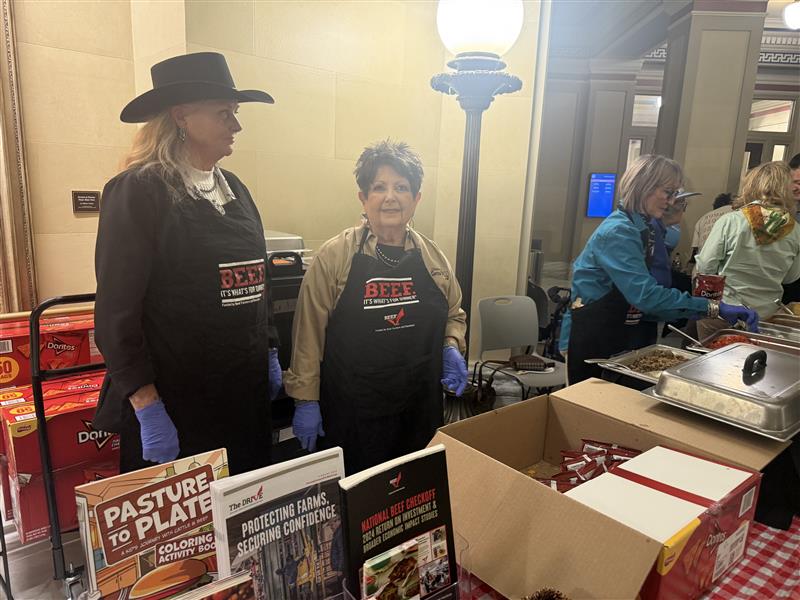
Also improving the relationship between legislators and AFR were the Oklahoma Certified Beef burgers being served during the event! "Our legislatures passed that law a few years ago, during COVID, and we administer that Oklahoma Certified Beef program, so we are always glad to share that to remind them how important Oklahoma beef is and how important our farmers and ranchers are to the state as an industry. It is also the very best you can buy, too!"

Listen to KC's Interview with Scott Blubaugh and Read More Here

Mark Johnson: Sweep Tubs vs. Bud Box

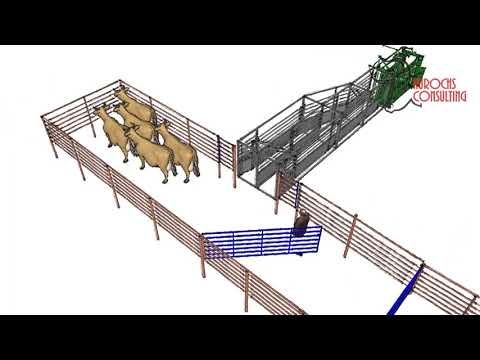
Mark Johnson, Oklahoma State University Extension Beef Cattle Breeding Specialist, offers herd health advice as part of the weekly series known as the "Cow Calf Corner," published electronically by Dr. Derrell Peel, Johnson, and Paul Beck. Today, Johnson compares sweep tubs to bud boxes.


In a cattle working facility, the function of the crowding area, often called a "tub" is to funnel cattle into alleyway on the way to the squeeze chute or loadout. The crowding area must be designed and located so cattle can be easily moved into this area from a common sorting alley that is fed by holding pens. There are two commonly used systems that offer differing advantages which we cover this week.


The circular crowding area of a sweep tub, with totally enclosed sides and crowding gate, is effective because the only escape route visible to the animal is through the alleyway leading to the squeeze chute or loadout. 


The Bud Box is a rectangular pen in which the alleyway leading to the chute is placed at a right angle at the point of entry. The design is simple and with proper handling techniques can be highly effective. 

Read More from Mark Johnson Here
Let's Check The Markets!
OKC West is our Market Links Sponsor- they sell cattle three days a week- Cows on Mondays, Stockers on Tuesday and Feeders on Wednesday- Call 405-262-8800 to learn more.
 
Today's First Look:
Ron on RON Markets as heard on K101  
mornings with cash and futures reviewed- includes where the Cash Cattle market stands, the latest Feeder Cattle Markets Etc.
Hear Today's First Look
 

Wholesale Boxed Beef Prices were mixed - Choice Beef was up $5.49 and Select Beef was down $1.30 on 4/29/2025.


Click on the Button below for the latest report from USDA Market News

Boxed Beef Report
 

OKC West in EL Reno had  had 1,163 head of stockers and calves on Tuesday, April 29, 2025.


Compared to last week: Steer and heifer calves steady to 5.00 higher with 500 to 600lbs steers and heifer 10.00-15.00 higher. Quality average. Demand very good. Heavy rain fell across the trading area. Grass account are active and very aggressive for cattle.


Wednesday 04/30/2025

Expecting 4,000 Yearlings

1,200 Feeder Heifers

2,800 Feeder Steers


Click below for the complete closing report.

OKC West in El Reno Market Report from 04/29/2025
 

On Tuesdays, Ron Hays gets the latest market commentary from Ben Hale of Western Livestock Auctions.


This commentary is posted on our website-click here for this Tuesday's story featuring Hale's comments.


Learn more about Western Livestock Auctions, Click Here.

 
Listen to Ron Hays talk with Ben Hale about the cattle Market
 
Each afternoon we are posting a recap of that day's markets as analyzed by Justin Lewis of KIS futures - click below for the latest update on the Livestock and Grain Futures Trade..
Click Here to Listen to Justin's Commentary From 4/29/2025
 
Okla Cash Grain:  
Daily Oklahoma Cash Grain Prices- as reported by the Oklahoma Dept. of Agriculture- The report available after the close of the Futures Trade for that day.
Read Cash Grains Report from 4/29/2025
 
TCFA Feedlot Recap:  
Finally, here is the Daily Volume and Price Summary from the Texas Cattle Feeders Association.
Read Report

Our Oklahoma Farm Report Team!!!!


Ron Hays, Senior Farm/Ranch Broadcaster and Editor


KC Sheperd, Farm Director and Editor


Dave Lanning, Markets and Production


Stevie White, Farm News and Email Editor


Pam Arterburn, Calendar and Template Manager

Podcasts From Oklahoma Farm Report and More

Two of our regular reports are also podcasts that you can subscribe to- Our daily Farm and Ranch News with KC Sheperd- available here on the Apple Podcast Platform


The second is our daily Beef Buzz with Ron Hays- available here on the Apple Podcast Platform


Periodically- we offer interviews on our Ag Perspectives Podcast series- this podcast is available here.


Ron has also has a series of podcasts from interviews with newsmakers at the Cattlemen's Congress- Click here or you can find them on your favorite Podcast platform- look for them by searching for Cattlemen's Congress Conversations.


We are making plans to jump back into regular installments of what has been called the Road to Rural Prosperity- a new name and fresh content is in the works- for now- click on the blue button below for one of our favorites that is a timeless classic.


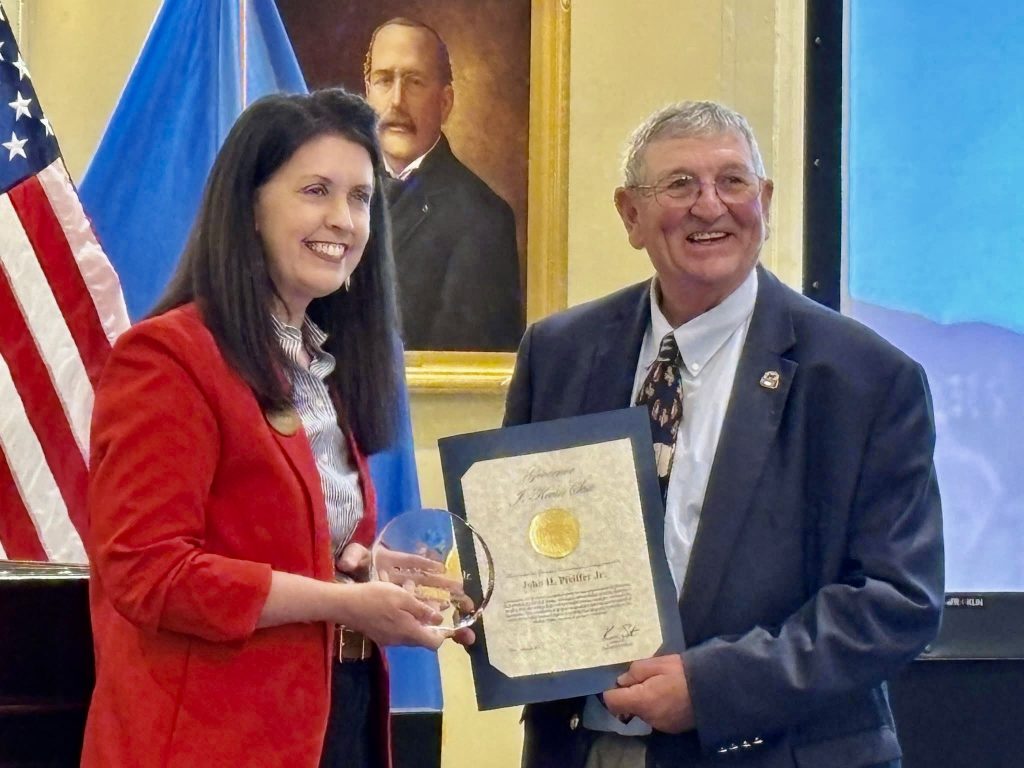
The link below is one of our most recent podcasts- Ron spotlighting the Life and Times of John Pfeiffer, Jr, the latest Oklahoma Ag Hall of Fame Inductee.

Listen to Ron Hays talking with John Pfeiffer, Jr about his lifetime of involvement with the Angus Breed
 
 
Listen to Ron
Beef Buzz
Market Links
 
Blue Green Gazette
Calendar
Auctions
Facebook  Twitter  Youtube  

Our thanks to Midwest Farms Shows, P & K Equipment, Oklahoma Farm Bureau, Great Plains Kubota, Stillwater Milling Company, National Livestock Credit Corporation, Oklahoma Beef Council, Stewart Martin Kubota, Oklahoma Pork Council, Oklahoma Wheat Commission, Oklahoma AgCredit, the Oklahoma Cattlemens Association, and  KIS Futures for their support of our daily Farm News Update.


For your convenience, we have our sponsors' websites linked here- just click on their name to jump to their website- check their sites out and let these folks know you appreciate the support of this daily email, as their sponsorship helps us keep this arriving in your inbox on a regular basis- at NO Charge!


We also appreciate our Market Links Sponsor - OKC West Livestock! 


We invite you to check out our website at the link below too that includes an archive of these daily emails, audio reports and top farm news story links from around the globe.

Head to Our Website OklahomaFarmReport.Com
God Bless!
Reach Out To Us:

Tim West

President/General Manager

Rural Oklahoma Networks


405-317-6361


***************


Mike Henderson

Executive Director of

Hilliary Media Group


405-615-4922


KC Sheperd
Farm Director
Radio Oklahoma Ag Network

405-443-5717

Email KC
Ron Hays
Senior Farm/Ranch Broadcaster
Radio Oklahoma Ag Network

405.473.6144
Email Ron

Growers invited to enter 2025 NSP Yield Contest

The National Sorghum Producers is now accepting entries for the 2025 National Sorghum Yield Contest. State and national winners will be selected from contestants in East and West regions across the Irrigated, Dryland No-Till, and Dryland Tillage divisions, with one overall winner chosen in the Food Grade category.

New this year, growers can choose between two protocol options for verifying yields. A market-based verification option allows growers to verify yields based on grain delivered and ticketed at an approved scale, while the traditional on-farm verification option allows for supervised weigh-backs at harvest. The added flexibility aims to accommodate a wider range of farm operations and support grower participation.

The entry deadline for the 2025 National Sorghum Yield Contest is November 26, 2025. Harvest reports will be made available to enter May 1, 2025, and all completed forms must be received at the NSP office no later than December 3, 2025.

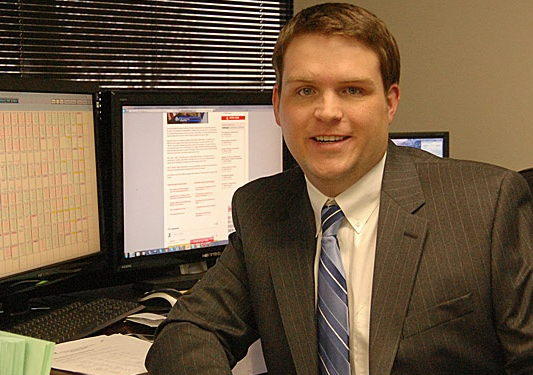
"By adding flexibility to the contest and adapting to growers' needs, we're opening the door for more participation and innovation," said NSP CEO Tim Lust. "This is also a chance to celebrate the hard work happening in sorghum fields across the country and share success stories that lift the entire industry."

The goal of the National Sorghum Yield Contest is to increase grower yields, transfer knowledge between growers to enhance management and identify sorghum producers who excel in each state and throughout the country. In order to enter, contestants must pay or be an existing member of NSP. More than one member of a family may enroll, but each member must have a separate membership. All entries will be reviewed and divisions will be placed based of yield only. National and state winners will be recognized at the 2026 Commodity Classic in San Antonio, Texas.

To find the entry form, 2025 yield contest rules and more information, interested growers can visit SorghumGrowers.com/yieldcontest or contact NSP directly at 806-749-3478 or yieldcontest@sorghumgrowers.com.

OSU Extension offers Tips to make Gardening Easier for those with Mobility Challenges

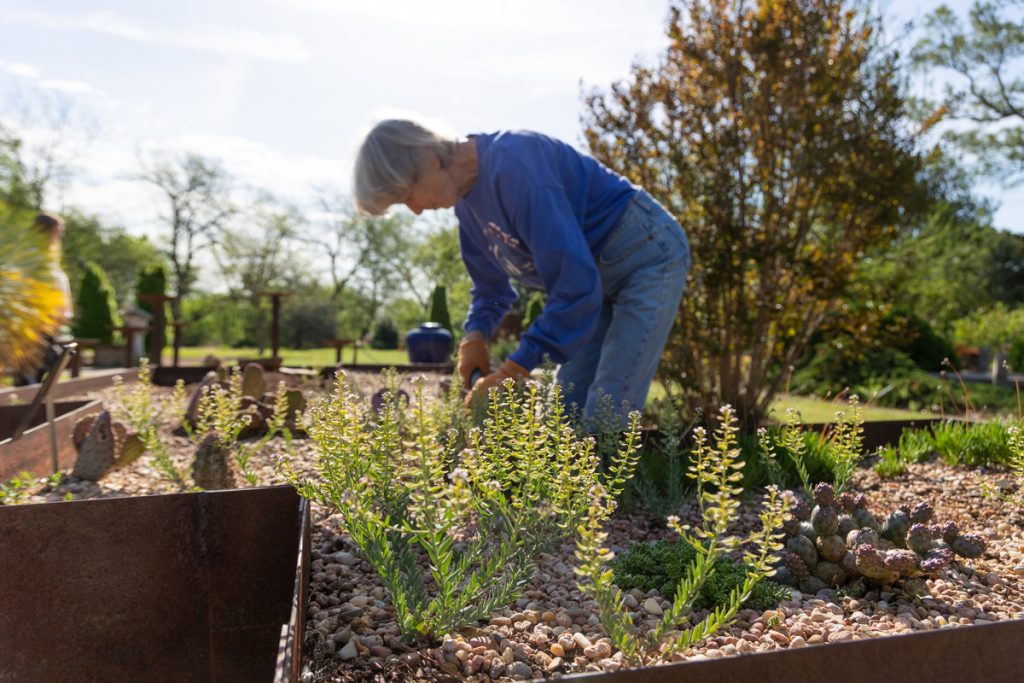
Raised beds and ergonomic tools are two things that help make gardening easier for senior gardening enthusiasts and those with physical limitations. (Photo by Mia Reinert, OSU Agriculture)

Gardening has long been a popular hobby, but with all the bending, reaching and stretching, it can sometimes feel more like an aerobic workout. Some older gardeners or those with mobility issues may feel they should limit their gardening activities or even give up the hobby.

Fortunately, there are gardening methods designed to help, including planting in raised beds or containers and using ergonomic tools. Plant selection also plays an important role.

"Gardening offers many benefits for everyone, including older adults and those with mobility issues," said David Hillock, Oklahoma State University Extension consumer horticulturist. "It's good physical exercise and has a positive impact mental health by reducing stress and boosting mood."

Choosing low-maintenance plants is key for gardeners with mobility issues. Although annuals are pretty, they can be high maintenance. Perennials like blanket flower, daylilies, lavender and echinacea are easy to grow with little upkeep, and they come back every year. Native plants are also good choices because they require less upkeep.

"Once the decision of what to grow has been made, it's time to think about where to grow," Hillock said. "Some options to consider include raised beds, vertical gardening and container gardening."

Raised beds are good for people with mobility issues to continue their love of gardening. Because raised beds are taller than traditional in-ground beds, there's less bending, kneeling and stretching required to accomplish everyday gardening tasks such as weeding, harvesting and watering.

Container gardening can be enjoyable, too, and this method isn't limited to flowers. There are a variety of edibles that grow well in containers, including tomatoes, peppers, peas and squash. Vertical gardening is another option, and beans and cucumbers do well in this style of gardening.

Joyce Taylor is a garden ambassador at The Botanic Garden at OSU and volunteers her time planting and maintaining garden beds.

"The raised beds and container gardens we have here at the garden certainly make those areas easier to maintain," Taylor said. "I like using the tools with larger and softer handles because they're easier to use."

Using the right tool will help with gardening activities. Tools should be lightweight with handles with good grips to keep gardeners' hands from tiring out too quickly. Tools with long handles are good choices to keep bending to a minimum.

Wide, level pathways throughout the garden help create stability for gardeners who use walkers, canes or wheelchairs.

Hillock said gardening enthusiasts with mobility challenges can also consider indoor gardening. Herbs are easy to grow in a windowsill garden. Other plants that do well indoors include succulents and African violets.

"Gardening is a great activity for everyone. Our methods may need to be adjusted, along with our expectations, but remaining positive helps gardeners with mobility issues continue to enjoy the fruits of their labor."

OSU Extension uses research-based information to help all Oklahomans solve local issues and concerns, promote leadership and manage resources wisely throughout the state's 77 counties. Most information is available at little to no cost.

Oklahoma Public Safety Hero Project Tracks Legislation Aimed at Boosting Safety

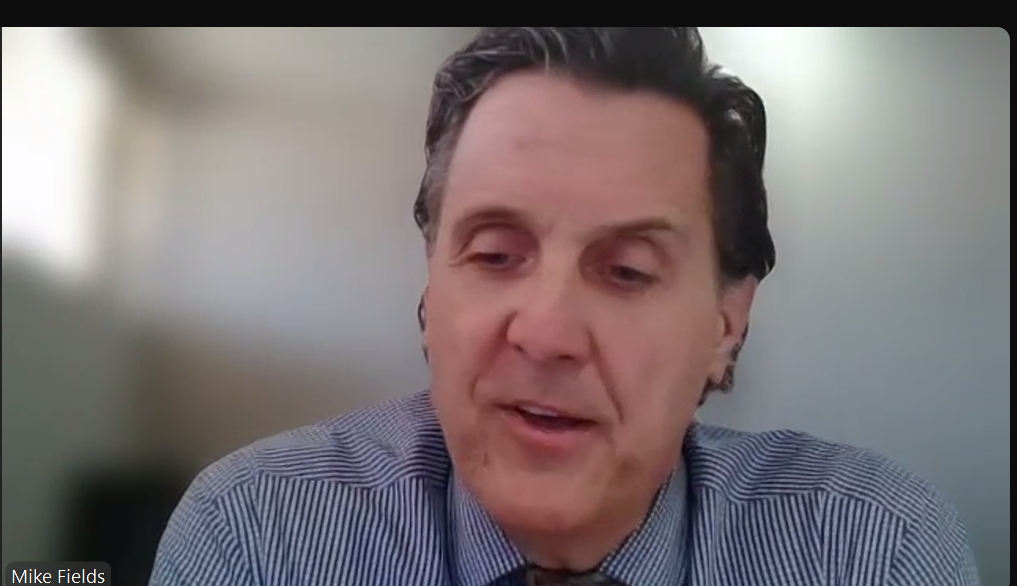
Listen to KC Sheperd talking with Mike Fields about the Oklahoma Public Safety Hero project.

Farm Director KC Sheperd spoke with Mike Fields of the Oklahoma Public Safety Hero project to learn about their initiative and the bills they are monitoring during the current legislative session. Fields explained that the project's goal is to identify and track legislation that could significantly improve public safety in Oklahoma. "We're really excited to have started this project, the Public Safety Heroes project, and the idea behind it was we wanted to identify some of those bills working their way through the legislature this year that would positively impact public safety," Fields stated. At the end of the session, the project plans to create a scorecard for legislators based on their support of these key bills.

Mike Fields

Fields elaborated on the types of legislation they are focusing on, noting a selection of about ten to twelve bills deemed particularly impactful. "The issues of public safety encompass so many different things...what we wanted to do is narrow that down, find about 10 or 12 bills that we really thought would make a difference, and wanted to single those out and track those," he said. Examples of the bills being tracked include those addressing child sex abuse, domestic violence (specifically encouraging victims to come forward), the recruitment of first responders (firefighters, police officers, EMTs), and the use of license plate readers.

The license plate reader bill is of particular interest as a tool that could aid in reducing crime, including in rural areas. Fields explained that while the technology is already in use on Oklahoma roadways for various reasons, the current law has some ambiguities regarding its specific applications. "This bill clears that up, clearly outlines and specifies when and how license plate readers can be used and that it can only be used as a tool for law enforcement purposes," Fields clarified.

He believes this technology can be a "big help" in rural Oklahoma, as the bill allows for their use on state highways for enforcing traffic laws and addressing serious public safety issues. Access to the license plate reader database would require agencies to apply and have specific policies in place, with ODOT overseeing the system. Data collected would only be accessible for official law enforcement purposes and would be deleted every 30 days. Fields emphasized the project's belief that "public safety and individual freedom...are not mutually exclusive," and that this bill balances crime-fighting technology with privacy concerns. He cited instances nationwide where license plate readers have been instrumental in solving serious crimes like kidnapping.

Looking ahead, Fields outlined the project's plans after the legislative session concludes. "Obviously, we'll publish that information," he said, envisioning ways to recognize legislators who championed public safety bills. "Just as a way that we can hold those legislators up to the public, to say, 'Hey, these are the guys and gals that really stood firm this legislative session on the topic of public safety.'"

He stressed the importance of promoting public safety and supporting first responders. For those wanting to learn more about the bills being tracked by the Public Safety Hero project, Fields directed them to their website: okheroproject.org. The website provides a list of tracked bills and information about the grassroots coalition of law enforcement agencies and other public safety-focused groups behind the initiative.

NCBA's Colin Woodall discusses Secretary Rollins' Leadership in the New World Screwworm Battle

Listen to Ron Hays talking with Colin Woodall about Secretary Rollins's critical leadership role in the fight against New World Screwworm encroachment.

At the Hemphill County Beef Conference in Canadian, Texas, Senior Farm and Ranch Broadcaster Ron Hays had the chance to talk with National Cattlemen's Beef Association CEO Colin Woodall, who was speaking at the conference. The two men discussed Secretary Rollins calling out the Mexican government for undermining American interests in the battle against the New World screwworm.

Woodall detailed the screwworm's presence in Mexico and the bureaucratic red tape that previously hindered progress to prevent the insects' continued Northward march.

"Fortunately, Secretary of Agriculture Brooke Rollins has taken a significant leadership role here, and has reached out to the government of Mexico and told them what our expectations are, that they need to cooperate, that they need to coordinate," Woodall detailed. "Not only is this an impact for us as U.S. cattle producers, but it is impacting their cattle producers, too. We cannot afford to have those critters come back North and affect us like they did back in the '60s – the last time we had a big outbreak, and that time, we were able to eradicate them."

The NWS female fly only mates once in its lifetime. With this understanding, the sterile insect technique has been utilized for the eradication of the pest. The US and Panama operate the sterile male fly production facility in Panama through the US Commission for Eradication and Prevention of Screwworm. This facility has historically produced 100 million sterile flies per week. Male flies are irradiated at the facility and then released to mate with wild females.

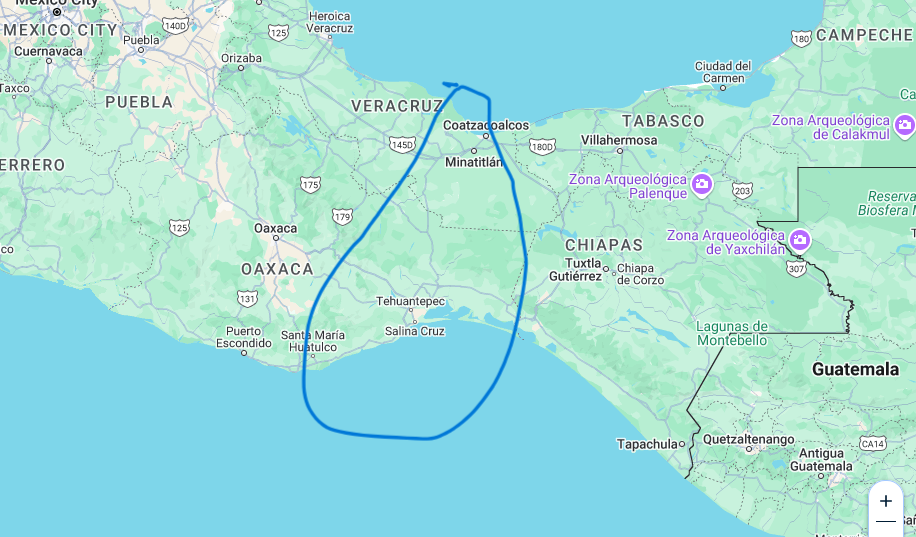
Currently, more than 1,000 cases of NWS infections have been reported in Mexico, but so far, the flies are being kept just outside of the Yucatan Peninsula. Through his conversations with Secretary Rollins and her team at USDA, if the Mexican government cooperates, there are enough male screwworm flies in production – 100 million per week - that the line can be held. The prognosis is good because Secretary Rollins announced on X that the Mexicans are going to allow planes into the region where the sterile flies are needed. 

This eleventh-hour decision was made under the threat from Rollins to once again halt cattle from moving into the U.S. from Mexico at the end of April should they refuse.

"Yes, we do rely on Mexican feeder cattle coming in, and we have a great relationship, but we don't have a relationship good enough to get over infection from New World Screwworms," Woodall stated. "As far as NCBA has gone, we have made it very clear to the Secretary that we are going to support her decisions and her approach here because we have to keep this New World Screwworm from making it back into the United States."

He clarified that the ultimate goal is to push the flies back into Central America and then into South America, where they have been, not just hold the line in Mexico. To do that, 200 million sterile male flies per week would need to be produced, and the singular facility in Panama cannot produce that many.

"NCBA is working with the Secretary to identify facilities in the U.S., specifically in Texas, that can be retrofitted to start producing the sterile males here in the U.S. as well," Woodall shared.

He also told how the flies initially made it past the first barrier, the Darién Gap of the Panama Canal. "We found that the flies that we were manufacturing in this facility didn't have a high libido, and we need them out there mating," he said. "That is one of the problems that allowed them to get past the Isthmus of Panama and come up through Guatemala and ultimately into Mexico."

He said the problem has been fixed in the sterile males currently being produced, and they are now doing their jobs.

The Beef Buzz is a regular feature heard on radio stations around the region on the Radio Oklahoma Ag Network and is a regular audio feature found on this website as well. Click on the LISTEN BAR at the top of the story for today's show and check out our archives for older Beef Buzz shows covering the gamut of the beef cattle industry today.

USDA Offers Farm Loans for Beginning Farmers

April 30, 2025 – The U.S. Department of Agriculture (USDA) Farm Service Agency (FSA) reminds producers that FSA offers farm ownership and farm operating loans to beginning farmers and ranchers. Beginning farmers and ranchers who cannot obtain commercial credit from a bank can apply for FSA direct or guaranteed loans.

"Farming and ranching is a capital-intensive business and FSA is committed to helping producers start and maintain their agricultural operations," said Jaramie Karcher, FSA Deputy State Executive Director in Oklahoma. "FSA loans are designed to make sure that everyone has access to credit. Last year, FSA in Oklahoma obligated more than $184 million in loans to beginning farmers and ranchers."

In order to qualify as a beginning farmer, the individual or entity must meet the eligibility requirements outlined for direct or guaranteed loans. Additionally, individuals and all entity members must have operated a farm for less than 10 years. Applicants must materially or substantially participate in the operation. For farm ownership purposes, the applicant must not own a farm greater than 30% of the average size farm in the county at the time of application.

All direct farm ownership applicants must have participated in the business operations of a farm for at least three years out of the last 10 years prior to the date the application is submitted to FSA.  Substitutions for as much as the full three years of experience may be made depending on education, military experience, participation with a SCORE mentor, and farm management experience as a hired hand. Your local FSA office will be able to provide more details on acceptable substitutions.

If the applicant is an entity, all members must be related by blood or marriage and all entity members must be eligible beginning farmers. At least one of the members must have three years or more experience in the business operations of a farm prior to the date the application is submitted. 

Direct loans are made to applicants by FSA. Guaranteed loans are made by lending institutions who arrange for FSA to guarantee the loan. FSA can guarantee up to 95% of the loss of principal and interest on a loan. The FSA guarantee allows lenders to make agricultural credit available to producers who do not meet the lender's normal underwriting criteria.

The direct and guaranteed loan program offers two types of loans: farm ownership loans and farm operating loans.

Farm ownership loan funds may be used to purchase or enlarge a farm or ranch; purchase easements or rights of way needed in the farm's operation; build or improve buildings such as a dwelling or barn; promote soil and water conservation and development; and pay closing costs.

Farm operating loan funds may be used to purchase livestock, poultry, farm equipment, fertilizer, and other materials necessary to operate a farm. Operating loan funds can also be used for family living expenses; refinancing debts under certain conditions; paying salaries for hired farm laborers; installing or improving water systems for home, livestock or irrigation use; and other similar improvements.

Repayment terms for direct operating loans are scheduled from one to seven years. Financing for direct farm ownership loans cannot exceed 40 years. Interest rates for direct loans are set periodically according to the government's cost of borrowing. Guaranteed loan terms and interest rates are set by the lender.

For more information on FSA's farm loan programs and beginning farmer guidelines, please contact your local FSA office or visit farmers.gov.

Haney Named Angus Regional Manager for South-Central States

The American Angus Association® has hired Trevor Haney of Hope Hull, Alabama, to fill the role of regional manager for the Arkansas, Alabama, Louisiana and Mississippi area. Haney will serve as an Association resource for producers in the region using registered Angus genetics.

"It means a lot to be able to return home to use my skills to serve producers," said Haney, who will graduate in May from Texas Christian University's ranch management program. "Growing up in the area, I am familiar with the environment, the industry and the unique challenges and opportunities available to producers."

Haney also has a degree in agriculture leadership and animal science from Mississippi State University. While at Mississippi State, Haney sought out opportunities to expand his understanding of the cattle industry through internships with Five Rivers Cattle Feeding in Dalhart, Texas, and Mississippi State Extension. The Alabama native grew up outside of Montgomery on a commercial and seedstock operation, showed cattle, participated in junior breed programs and was involved in livestock judging.

"Trevor's knowledge and perspective of the livestock industry will serve him well in this role," said Levi Landers, director of member and field services for the Association. "His diverse background and eagerness to share his thoughts and ideas will be a great asset to members in the region."

Haney's first day will be May 12, at the Association's office in St. Joseph, Missouri. He will take part in annual staff meetings and training for the regional manager team before heading back to the south-central states.

"I am excited to meet with Angus producers in the area and lend fresh perspective," said Haney. "I think there is great opportunity to pursue with the programs the Association offers."

The Association has 13 regional managers who serve across the United States as full-time staff members of the Association. They work with cattle breeders in their designated regions to promote Angus cattle, help commercial cattlemen utilize Angus programs and assist breeders who want to get started in the Angus business.

Regional managers also work with breeders to ensure their advertising needs are being met through the Angus Journal and Angus Beef Bulletin. They can often be found working at Angus sales and shows, representing the Association at livestock conventions and serving as a liaison between the organization, its membership, users of Angus genetics, industry partners and academia. To view the full list of regional managers serving Angus producers, visit angus.org/about/regional-managers.

ANGUS MEANS BUSINESS. The American Angus Association® is the nation's largest beef breed organization, serving more than 21,000 members across the United States, Canada and several other countries. It's home to an extensive breed registry that grows by more than 300,000 animals each year. The Association also provides programs and services to farmers, ranchers and others who rely on Angus to produce quality genetics for the beef industry and quality beef for consumers.

For more information about Angus cattle and the American Angus Association, visit www.angus.org.

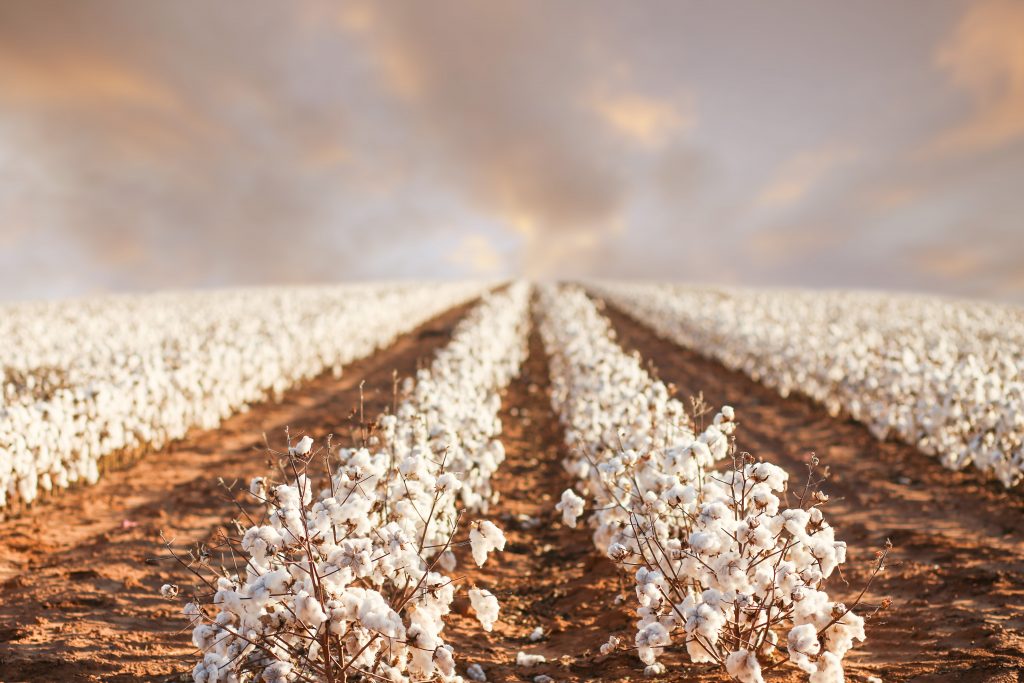
Projections for 2025 Cotton Acreage

Farmers decide what crops to plant based on factors like crop rotations, expected profits, input costs, and other financial trade-offs. Annual predictions of planted acreage for a crop help agribusiness suppliers plan for seed, fertilizers, pesticides, and equipment needs. Prices of crops and how they compare to competing crops, like corn and cotton, influence planting decisions. In many southern states, corn competes with cotton for land, and the cotton-to-corn price ratio is a key factor in predicting how much land will be dedicated to cotton. Additionally, past planting decisions impact future choices due to crop rotation, which helps manage pests, diseases, and soil health while enhancing yield potential.

To estimate how much cotton farmers will plant in 2025, we built a model that looks at past cotton and corn prices, along with historical cotton acreage data. Data was obtained from the U.S. Department of Agriculture (USDA) National Agricultural Statistics Service (NASS) for 1990 to 2024. One of the most important factors in our model is the cotton-to-corn price ratio, which is calculated by dividing the cotton price (in cents per pound) by the corn price (in dollars per bushel).

By analyzing historical patterns, our model estimates how much cotton (total upland and Pima cotton acreage) will be planted next year based on three main factors: (1) last year's cotton acreage; (2) the cotton-to-corn price ratio from the previous year; and (3) the expected cotton price for the upcoming year. 

Simulated Cotton Planted Acreage in 2025

Using recent estimates from the USDA, we applied our model with a cotton-to-corn price ratio of 14.48 (based on a cotton price of 63.0 cents per pound and corn prices of $4.35 per bushel) as currently estimated by the April 2025 WASDE Report for the 2024 crops. A cotton price of 67.60 cents per pound for the 2025 crop is projected based on the February 2025 reported cotton price by USDA NASS.

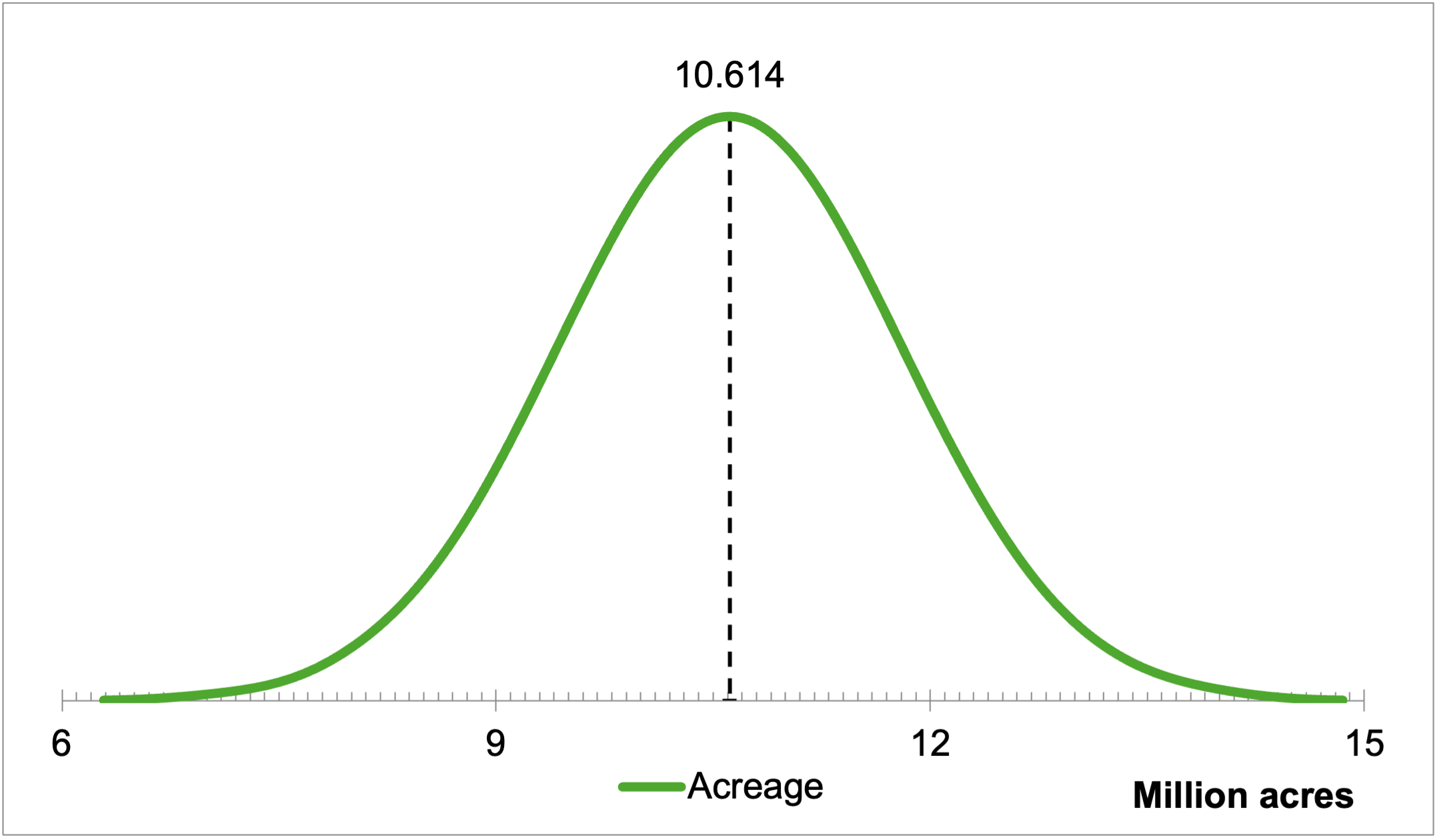
Our model predicts that farmers will plant approximately 10.524 million acres of cotton in 2025 (Figure 1), a 5.88% decrease from 2024 (when 11.182 million acres of upland and Pima cotton were planted in total). This is higher than the 9.87 million acres forecast by the USDA Prospective Plantings report published on March 31, 2025. These projections, while containing a degree of uncertainty, help farmers and agribusinesses prepare for the upcoming season by anticipating cotton plantings and allowing adjustments in strategies accordingly.

Figure 1: Projected Probability of Total Upland Cotton and Pima Cotton Planted Acreage for 2025. Higher Points Indicate More Likely Acreage Outcomes for 2025 Based on Simulation Results. 

The Ordinary Least Squares (OLS) regression results (Table 1) show that the previous year's cotton acreage, the previous year's cotton-to-corn price ratio, and the current year's cotton price significantly impact current-year planting. 

Table 1: Impact of Historical Cotton Acreage and Cotton-to-Corn Price Ratio on Future Cotton Planting Decisions 

Independent variableCoefficientt-ratio
0.404*3.491
256.451*5.812
31.223***1.828
272.2090.117
   
F-test22.092 
0.688 
   34 

*, **, *** indicates significance at the 99%, 95% and 90%, respectively.


Article courtesy of Southern Ag Today: rajuli, Shikshit, and Yangxuan Liu. "Projections for 2025 Cotton Acreage." Southern Ag Today 5(18.3). April 30, 2025. Permalink

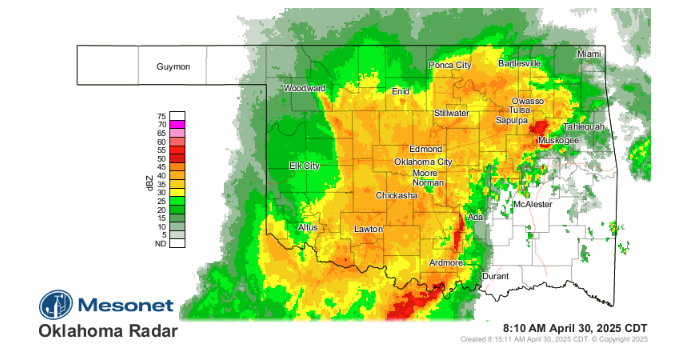
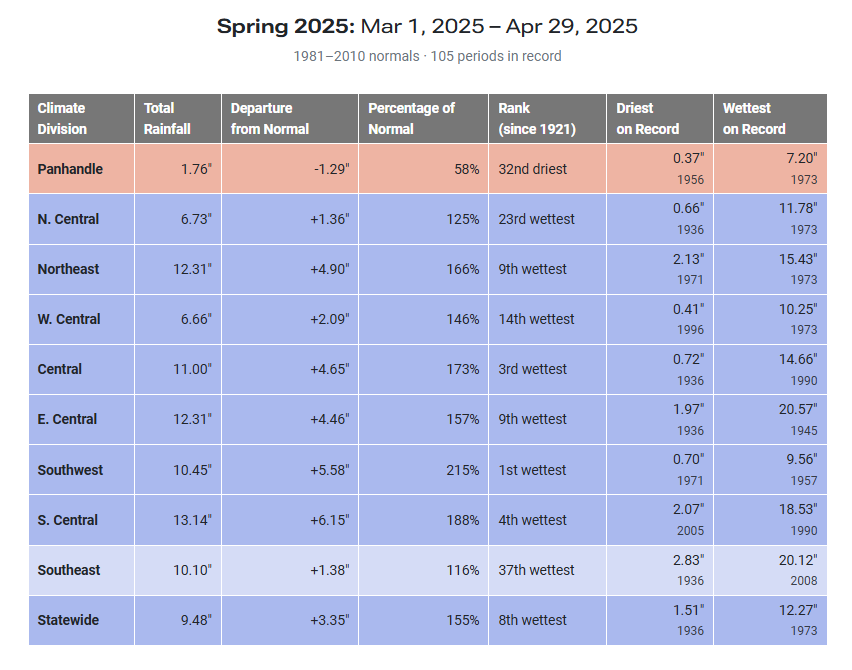
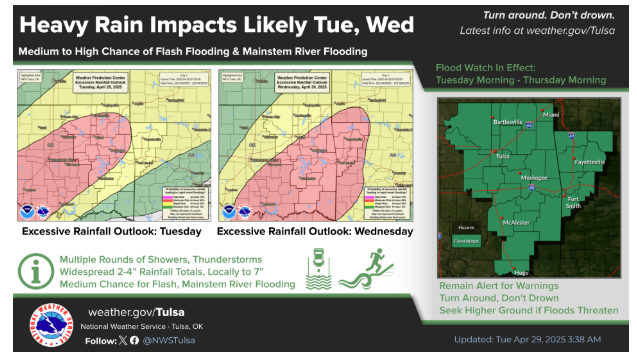
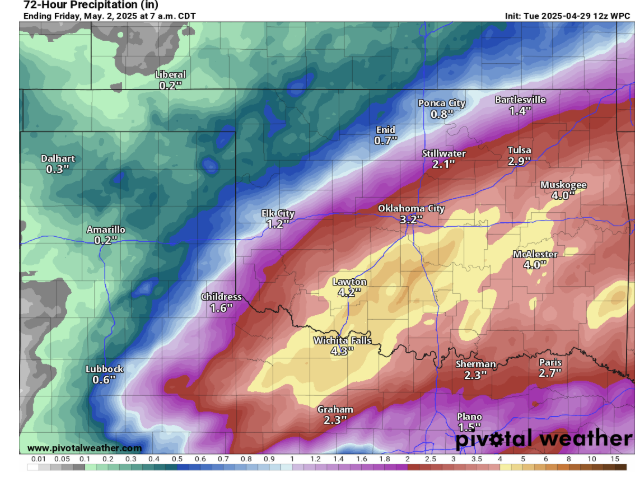
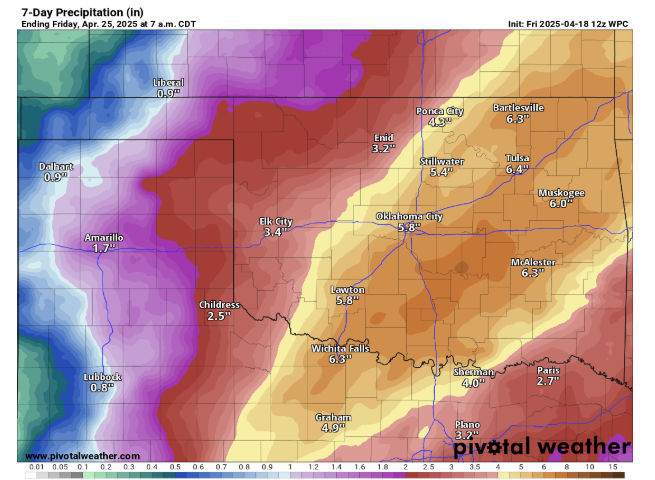
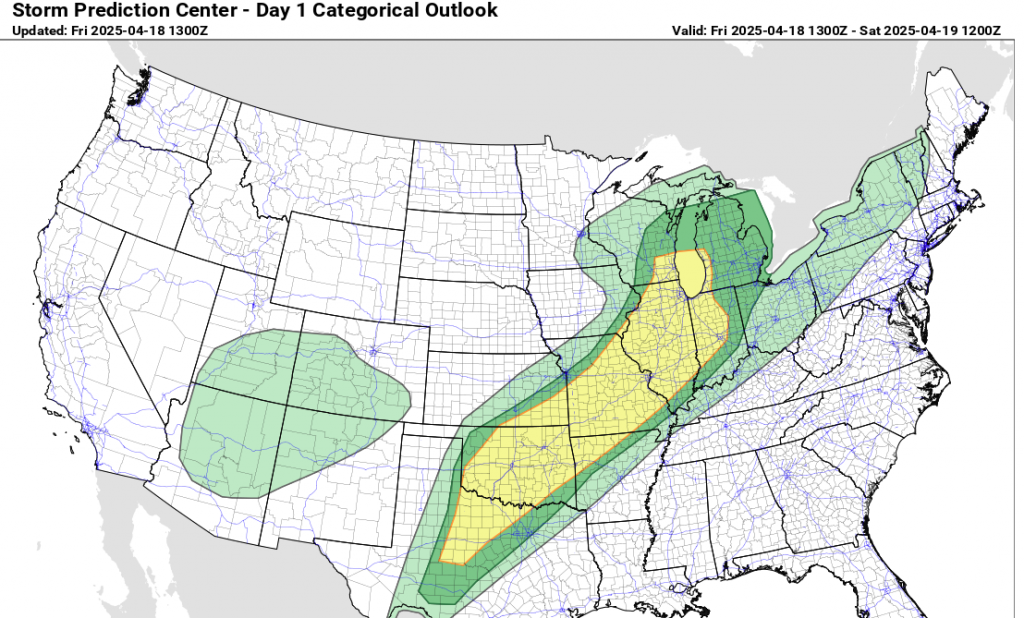
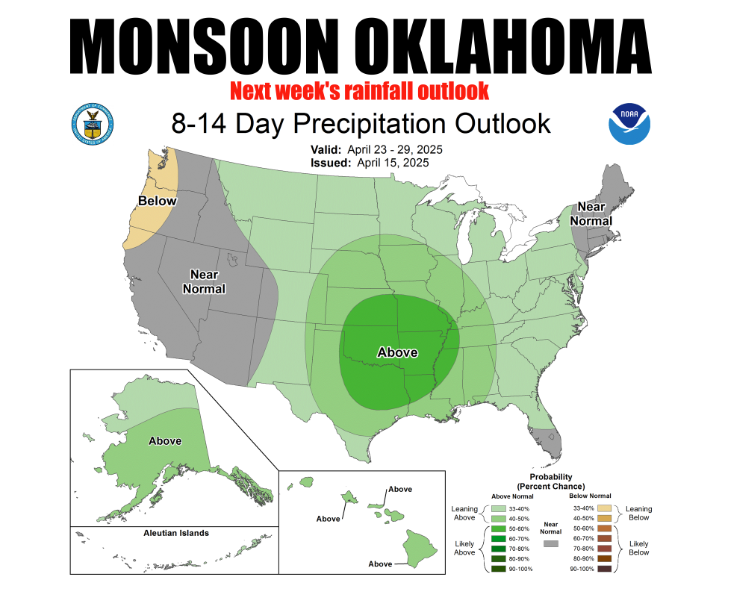
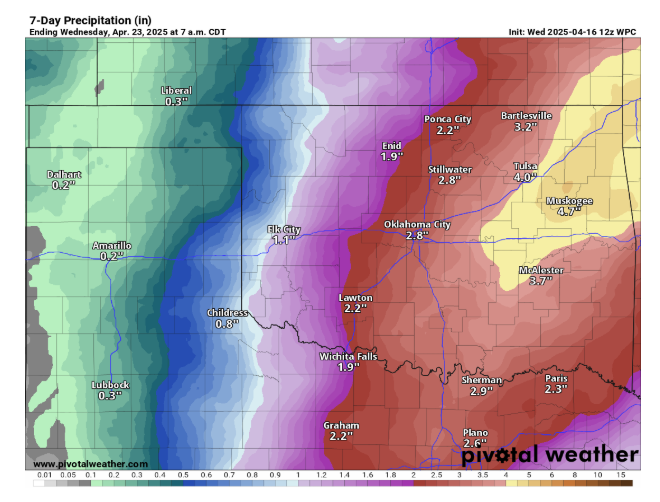
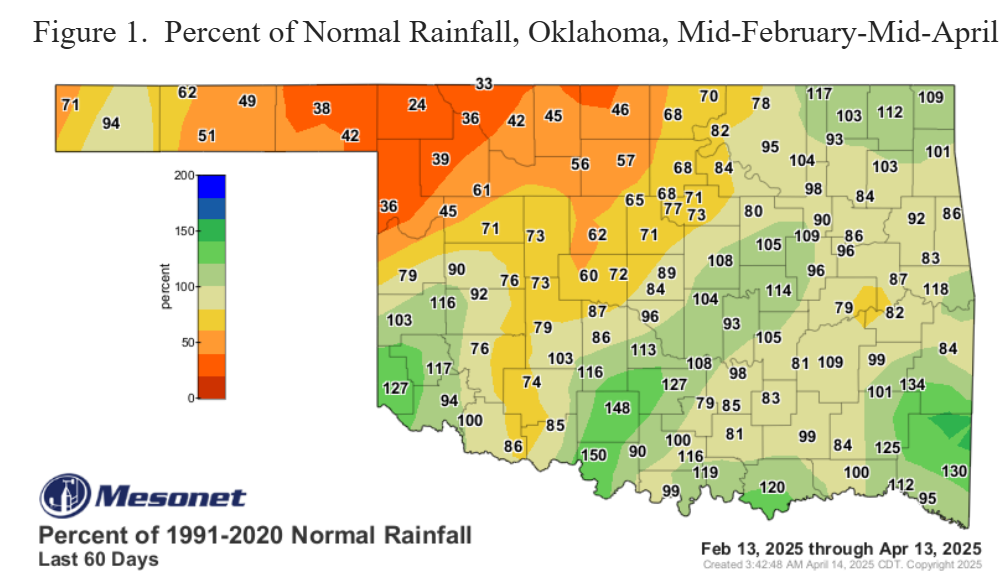
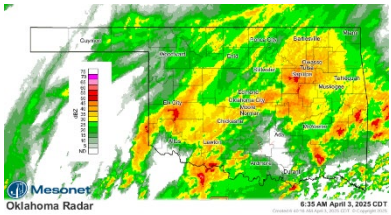
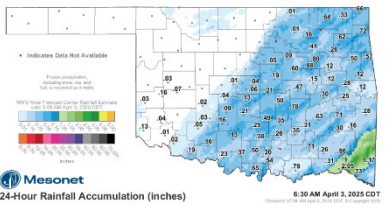
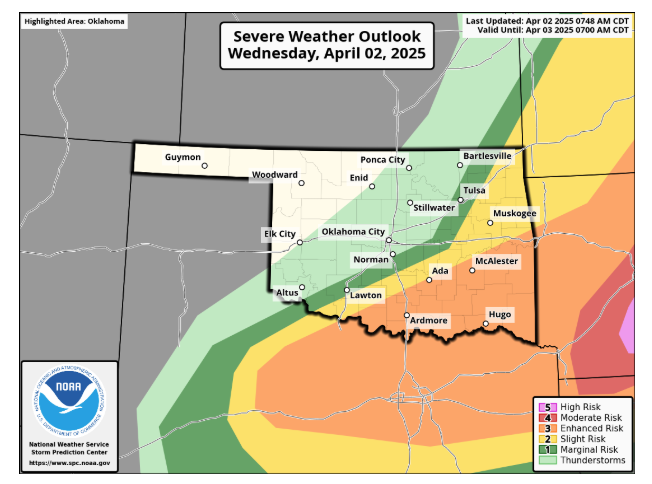
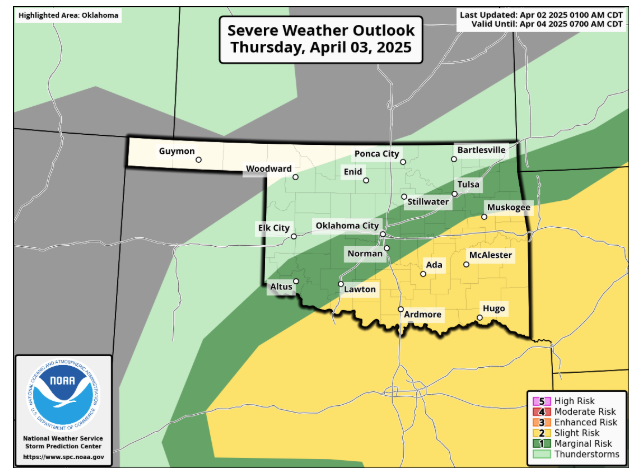
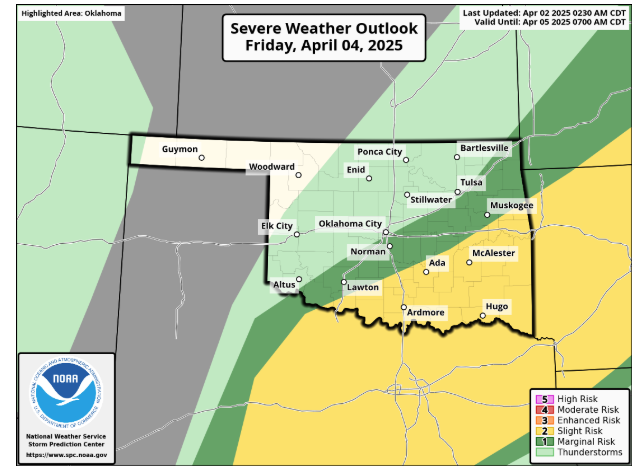
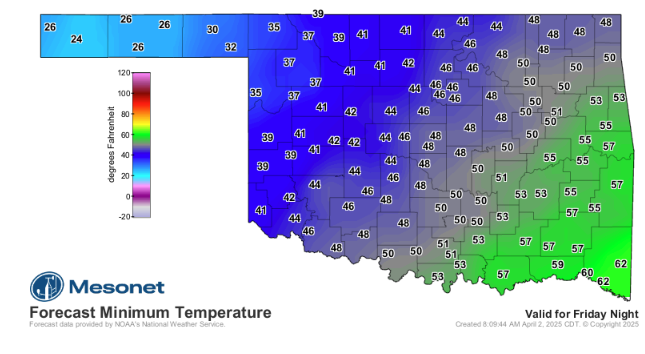
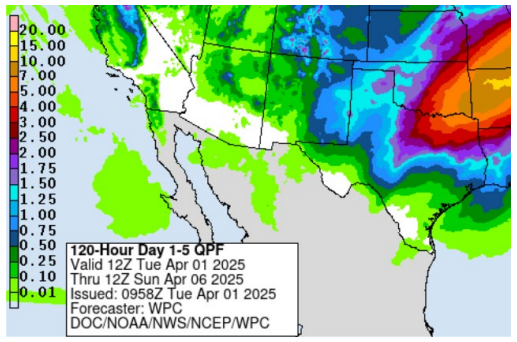
Oklahoma Soaked by "Biblical Rains," Nears April Precipitation Record

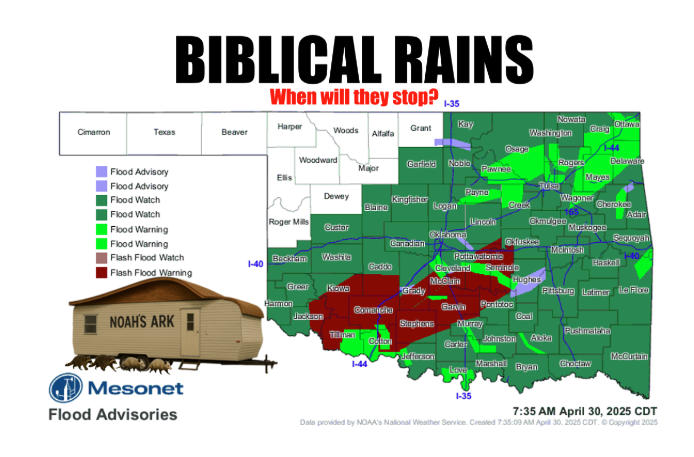
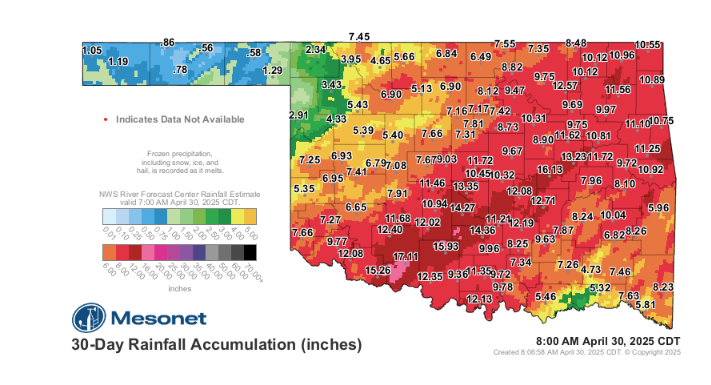
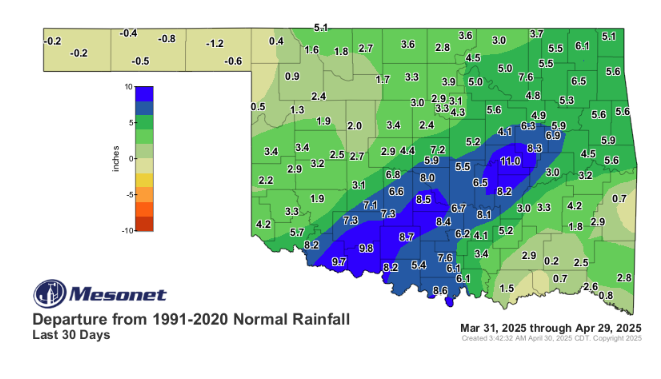
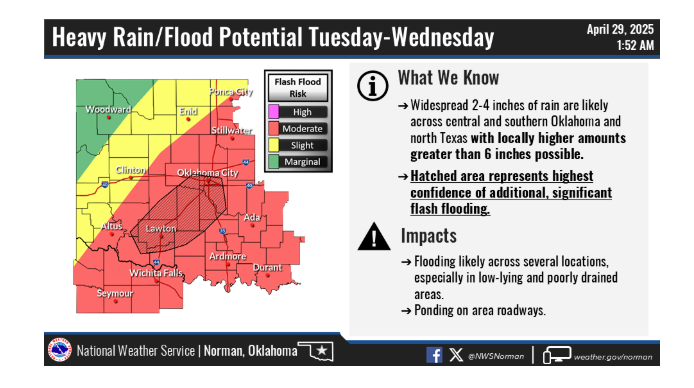
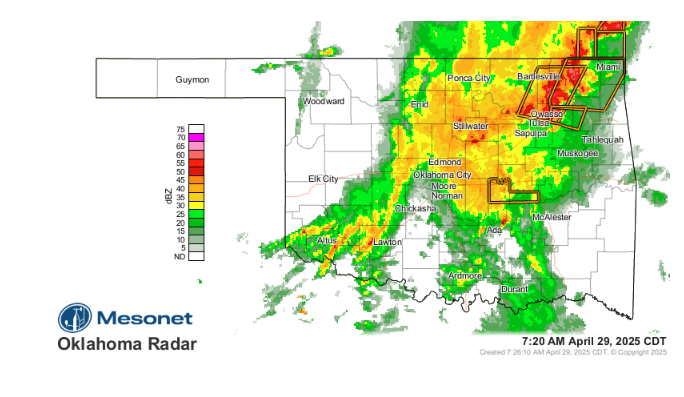
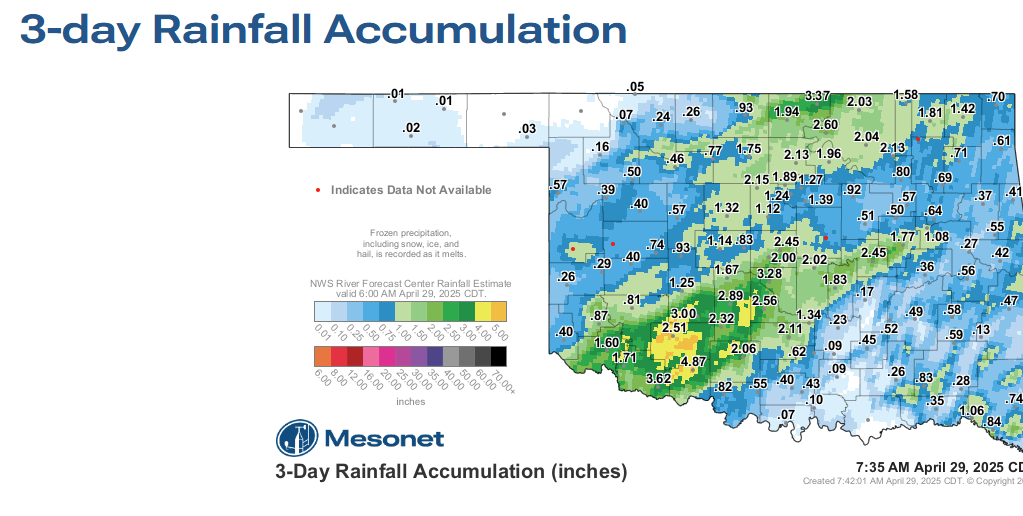
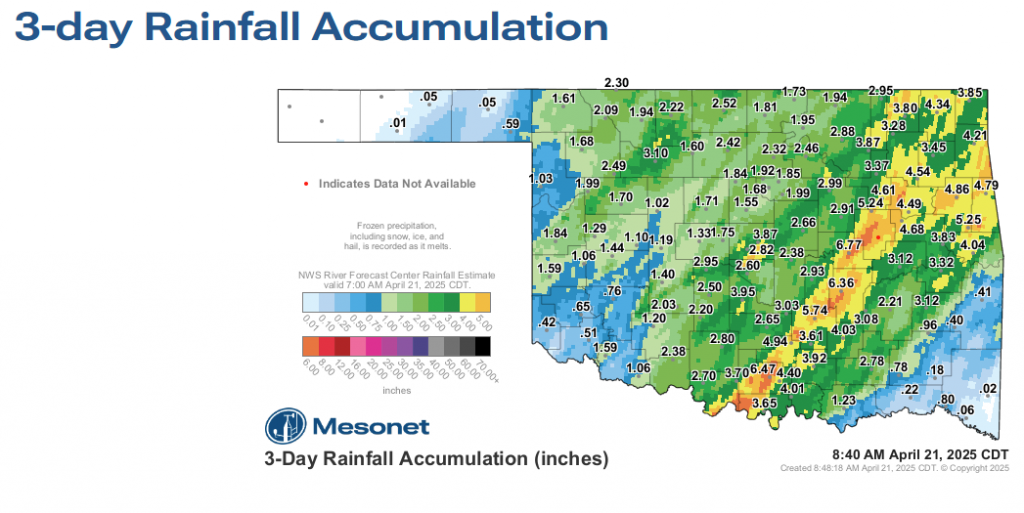
Oklahoma is currently experiencing exceptionally heavy rainfall, described by the State Climatologist as "biblical rains" that have occurred over the past few weeks. The soaking conditions have pushed the state remarkably close to breaking its all-time statewide rainfall record for April, and according to the Climatologist, "we aren't done yet."

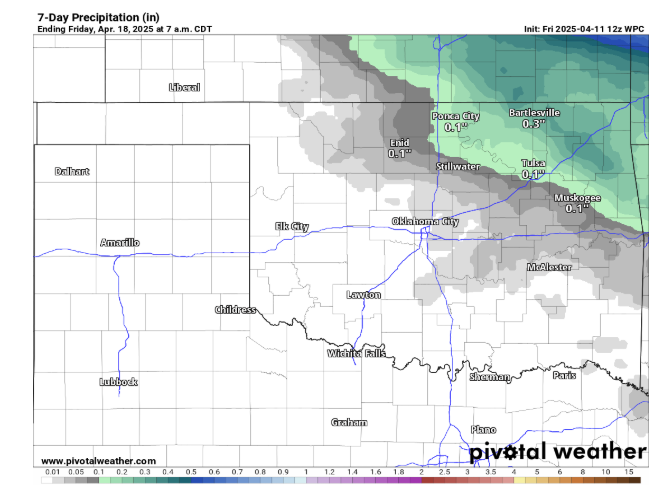
Take a look at this clickable map to see the rainfall totals.

As it stands, Oklahoma has recorded a statewide average of 8.08 inches of rain for April. This impressive total recently pushed the current month into second place, overtaking the 8.04 inches measured in April 1957. The long-standing record, however, remains 8.32 inches set in April 1942. The primary factor preventing a new record, according to the report, is the relative "lack of moisture" in "Far NW OK and the Panhandle." The source emphasizes, "(yes, they are two separate things, down-staters)." With more precipitation possible, the record is still within reach: "A few more deluges today and we might make it."

The near-record rainfall totals are described as "all made crazier" by the fact that significant dry spells occurred during the month. There was a "virtual LACK of rainfall from April 7 through the 17th, and again on the 21st and 27th." This indicates the intense rainfall has been concentrated primarily within a "17-day affair."

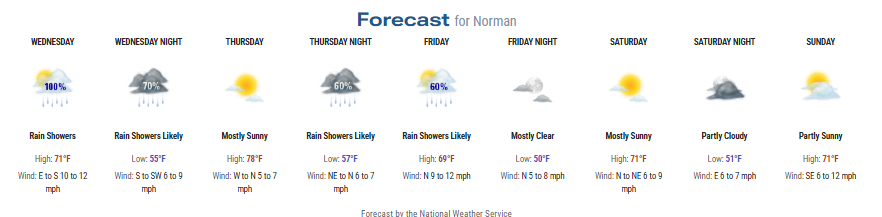
For those wondering when the current downpours might cease, the outlook suggests a potential pause soon. "So when will it stop? Maybe around midnight it appears, or sometime thereafter," the report states. However, the break looks temporary, as "Then it starts back again for May on Friday."

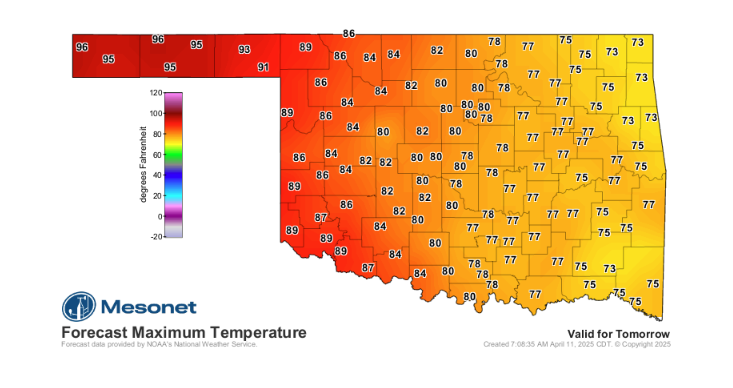
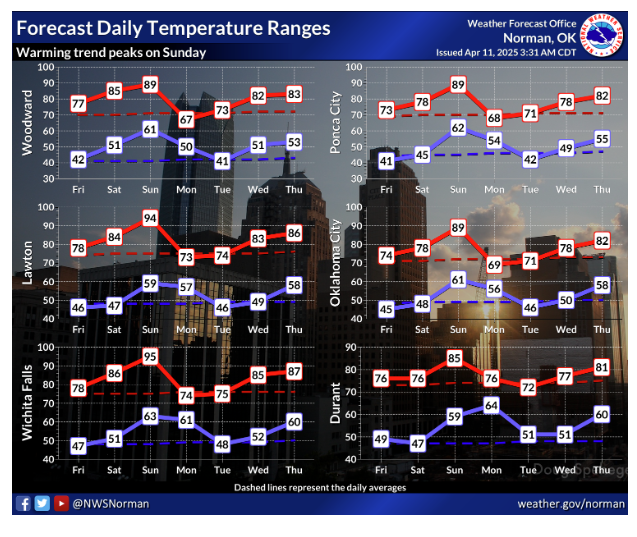
Taking a look at the weather forecast over the next few days, we could see more rain coming in on Thursday and Friday with the Sun coming back into the picture on Saturday.

To read more from State Climatologist Gary McManus on his mesonet ticket, click here:

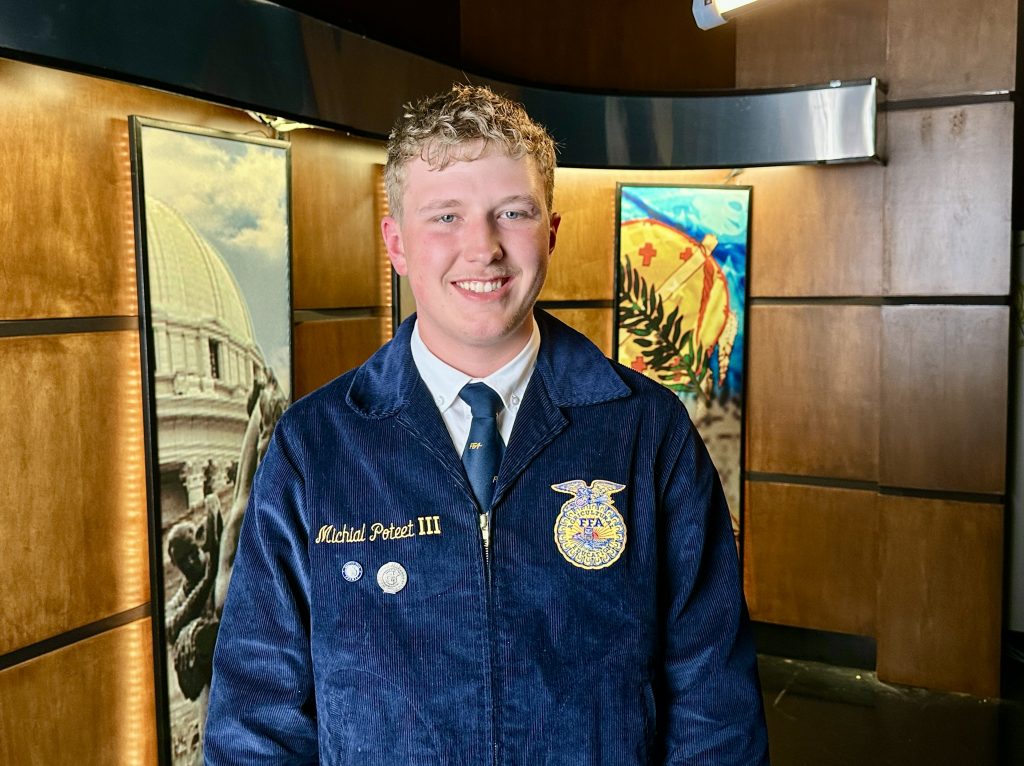
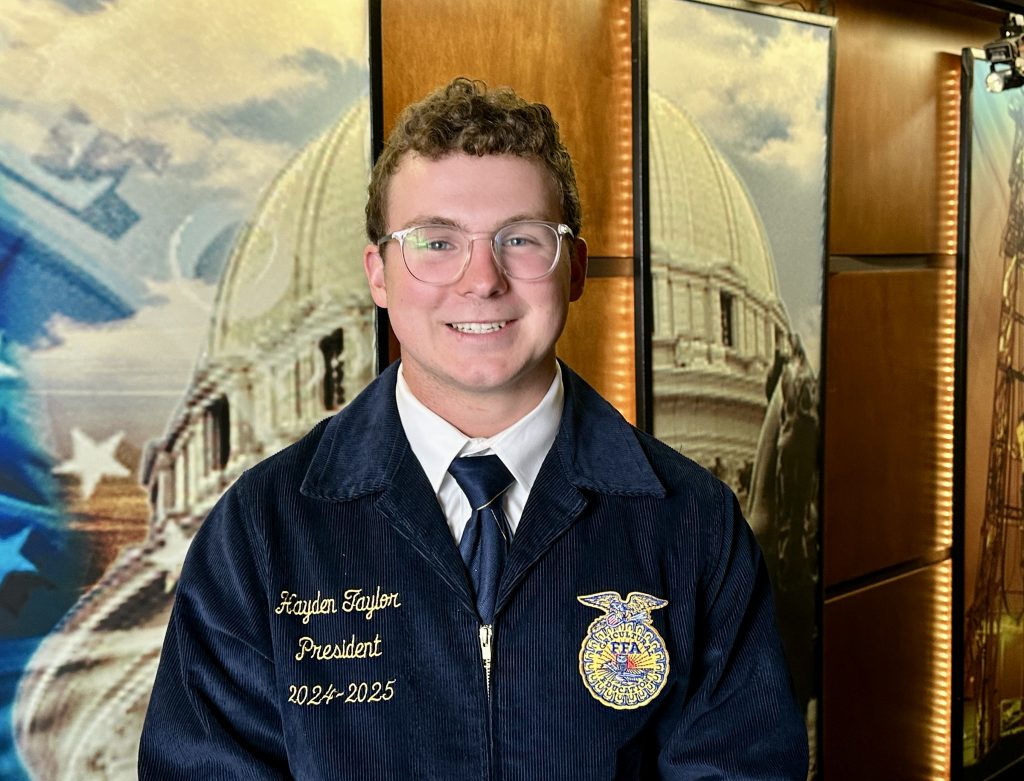
Introducing Michial Poteet of the Ripley FFA Chapter, Your 2025 Central Area Star in Agricultural Production

Listen to KC Sheperd talking with Michial Poteet ahead of the State FFA Convention in Tulsa, Oklahoma.

During the month of April, the Radio Oklahoma Ag Network and Oklahoma Farm Report are spotlighting the 19 Area Stars of Oklahoma FFA, who are among the highest achievers in the organization.

The stars come from the five areas in four categories - Star in Ag Placement, Star in Agriscience, Star in Agribusiness, and Star in Agricultural Production.

This week, we spotlight the five area stars in Agricultural Production in 2025.

One Star Finalist featured in the coming days from each of the categories will be named the State Star Award Winner during the 99th Oklahoma State FFA Convention, which will take place on May 6th and 7th in Tulsa, Oklahoma.

This week, our coverage of the 2025 Oklahoma FFA Star Award Finalists continues with Agricultural Production competitor Michial Poteet of the Ripley FFA chapter representing the Central Area.

For his FFA Star project, Poteet raises show cattle and pigs, as well as hay to feed the cattle. "I started out with show pigs through a family friend," he explained. "I gave a speech about my show pigs, and the friend who advised me on my speeches gave me ten embryos to start my show cattle operation. Through that, I've been able to raise them, and being able to compete with the high-dollar cattle that you raise is really cool."

His FFA career began with showing goats in the eighth grade, before he moved to showing pigs and cattle. He also participated in food science, livestock judging, milk quality judging, and more as he searched for the areas that fit him best.

Poteet hopes to continue his project as he attends the Oklahoma State University Institute of Technology in Okmulgee to study programmable logic controllers (PLC) in pursuit of a career in the oil and gas industry. He hopes for a high enough income to continue to grow and improve on what his FFA Star project started.

Hear KC's full conversation with Michial Poteet by clicking on the Listen Bar above.

Your coverage of the 2025 Oklahoma FFA Convention is sponsored by Hilliary Communications, who deliver the latest cutting-edge communications services supporting tens of thousands of customers across 22 counties throughout Oklahoma, Texas, and Iowa. The company offers internet, voice, and HilliaryTV. Hilliary Communications continuously researches the marketplace for innovations and strives to improve underserved areas, offering services that exceed customer expectations. Click here to learn more about Hilliary Communications.

For more information about the 99th Oklahoma State FFA Convention, click here.

EPA Celebrates 100 Days with 100 Environmental Actions

Today, U.S. Environmental Protection Agency (EPA) Administrator Lee Zeldin released a recap of 100 environmental actions taken by the agency during President Trump's First 100 Days in office, including the record Phase 1 hazardous materials clean up after the catastrophic Los Angeles wildfires, the announcement of major actions to combat PFAS contamination, redevelopment at 21 Superfund sites across 13 states and removal of all, or a portion of 4 sites from the National Priorities List, completion of 25 State Implementation Plans, 16 of which were backlogged from the previous Administration, and so much more.  

"EPA wasted no time following President Trump's directive to pursue clean air, land, and water for all Americans. Since January 20th, EPA has taken significant actions to fulfill its statutory obligations of safeguarding human health and the environment to ensure cleaner, safer, and healthier air, land, and water for every American while we work to Power the Great American Comeback," said EPA Administrator Zeldin.  

While accomplishing EPA's core mission of protecting human health and the environment, the agency is committed to fulfilling President Trump's promise to unleash American energy, lower cost of living for Americans, revitalize the American auto industry, restore the rule of law, and give power back to states to make their own decisions.   

Read on to learn about 100 Environmental Actions taken by EPA in the First 100 Days:  

  1. Issued immediate action items for Mexico to permanently end the Tijuana River sewage crisis.
  2. Responded quickly to a citizen complaint about discharges into New York's Hutchinson River; inspected and ordered corrective action.
  3. Developed a Clean Water Act permit for hotels, condominiums, and apartment complexes to protect water quality in the U.S. Virgin Islands.
  4. Finalized Arkansas 2022 Section 303(d) list assessing statewide water quality.
  5. Approved Kansas Triennial Water Quality Standards Package.
  6. Approved Total Maximum Daily Load (TMDL) plan in South Dakota to protect Big Sioux River quality from E. coli.
  7. Announced plans to finalize outdated clean water standards for 38 miles of the Delaware River.
  8. Approved removal of the Drinking Water Beneficial Use Impairment in Wisconsin's Green Bay and Fox River Area of Concern.
  9. Advanced Navajo Nation's first in the country water permitting ("Treatment as a State") authority.
  10. Completed Phase 1 hazardous materials clean up after the catastrophic Los Angeles wildfires. EPA cleared 13,612 residential properties and 305 commercial properties, and removed 645 electric and hybrid vehicles and 420 energy storage systems in under 30 days.
  11. Supported redevelopment at 21 Superfund sites across 13 states.  
  12. Completed a contaminated site cleanup in Hillsborough, New Hampshire, and Stratford, Connecticut.    
  13. Oversaw U.S. Navy's time-critical removal of 20,000 cubic yards of contaminated soil at the Naval Education Training Center Superfund Site in Newport, Rhode Island.
  14. Cleared all or a portion of 4 sites from the Superfund National Priorities List.
  15. Cut two years from the cleanup timeline at West Lake Landfill, a Superfund site in St. Louis, Missouri.
  16. Completed 55 property cleanups at Region 8 Brownfields. This is 31% of the national goal and 131% of Region 8's Fiscal Year 2025 goal.
  17. Completed laboratory work required for selecting a remedy at Lower Darby Creek Area Superfund Site in Pennsylvania. EPA collected 1500 sediment and water samples.
  18. Responded to a mercury incident in Fremont, Ohio; safely removed and disposed of a 60-pound overpack and 15-pound bucket containing jars of elemental mercury and mercury containing devices.
  19. Provided air monitoring support at the Chicago Magnesium Casting Co. after a large magnesium fire.
  20. Completed Emergency Removal Action at the Marion Ohio Mercury Spill site in Ohio.
  21. Oversaw Navy cleanup operations at Red Hill Fuel Facility in Hawaii, including removal of all sludge and pressure washing at two 12.5 million-gallon tanks. 
  22. Developed a method to detect 40 PFAS compounds in water sources.
  23. Finalized eight Water Quality Standard Actions for Region 6 states.
  24. Completed a second round of PFAS sampling at Region 7 Tribal Drinking Water Systems.
  25. Provided interim PFAS lab certification for Alaska's Department of Environmental Conservation (ADEC).
  26. Signed an agreement to connect Joint Base Lewis-McChord residences to municipal water system if PFAS exceeds standards.
  27. Started Final Remedial Actions for Jackson Ceramix Superfund in Falls Creek Borough, Pennsylvania, with construction to begin in the Spring of 2025.
  28. Provided training to help New Mexico administer the National Pollutant Discharge Elimination System, a permit program established by EPA under the Clean Water Act to regulate water pollution by controlling point sources that discharge pollutants into U.S. waters.
  29. Coordinated PFAS drinking water well sampling around Fort Bragg, North Carolina.
  30. Utilized EPA lab Method 522 to test tribal drinking water systems for PFAS; performed 62 analyses. 
  31. Completed lead testing assistance (3T's Protocol) for Puerto Rico schools and childcare facilities. 
  32. Reviewed 29 public water systems that had lead action level exceedance notifications in Region 4. 
  33. Completed 25 State Implementation Plans allowing environmental requirements to go into effect faster, 16 of which were backlogged from the previous Administration. 
  34. Finalized air quality rulemaking in the Washington D.C. Area ensuring ozone compliance.
  35. Conducted ambient air monitoring technical system audits (TSAs) across Region 9.
  36. Upgraded the RadNet monitoring station in Edison, New Jersey, to detect airborne radioactivity.
  37. Awarded $165,000 to San Diego Air Pollution Control District for air filters and $1.26M for hydrogen sulfide monitoring to address air quality at the border and concerns with sulfur odors from Tijuana River sewage.
  38. Promoted clean air quality compliance for new chip manufacturing projects in Phoenix, Arizona.
  39. 27 Brownfields sites were made Ready for Anticipated Use, boosting property values and economic opportunities in Hartshorne, Oklahoma, Minden, Louisiana, West Memphis, Arkansas, and more.
  40. Completed 107 assessments of Brownfield properties in Region 7, which is 82% of their Fiscal Year 2025 goal. 
  41. Achieved 21 contaminated Brownfield redevelopment successes in Region 9.
  42. Held a Superfund Job Training at Missouri's Ozark Correctional Center. 
  43. Completed review of 81 New Chemicals to ensure they are safe for human health and the environment. 
  44. Conducted a safety review of 14 pesticides to set tolerances to support a safe and reliable food supply. 
  45. Approved 48 pesticides to provide growers with necessary tools while ensuring appropriate restrictions were imposed to protect human health, the environment, and endangered species.
  46. Proposed 35 significant new use rules (SNURs) for chemical oversight to ensure chemicals do not pose an unreasonable risk to human health or the environment. 
  47. Led a Federal Insecticide, Fungicide, and Rodenticide Act (FIFRA) Week-In-Residence Enforcement Training event for newly hired state inspectors to equip new inspectors with the knowledge necessary to uphold consistent inspection standards.
  48. Blocked illegal pesticide imports totaling over 200,000 pounds across multiple regions.
  49. Announced approval of Texas's clean-air plan to address vehicle emissions and improve air quality in the San Antonio area. 
  50. Issued amended PCB risk-based disposal approvals to expedite repairs at public schools. 
  51. Led a Resource Conservation and Recovery Act (RCRA) State Authorization Conference to strengthen the hazardous waste program across all states. 
  52. Sent mobile drinking water lab to flood-impacted Eastern Kentucky.   
  53. Cleared more than 1,700 orphan containers of oil, propane, and other hazardous materials from land and waterways around the French Broad River after Hurricane Helene.  
  54. Tested over 1,500 private wells in North Carolina's Buncombe and Watauga counties.  
  55. Assisted in restoring drinking water service to 150,000 people in North Carolina.
  56. Concluded 297 enforcement cases reducing 15 million pounds of pollution.    
  57. Superfund enforcement secured $296 million worth of cleanups addressing more than 700,000 cubic yards of contamination.   
  58. Completed cleanup at Metals Refining Co. hazardous waste site in Indiana after discovering thirty-two, 55-gallon drums most of which were damaged and some leaking and an additional 200 to 300 miscellaneous containers of hazardous waste
  59. Removed approximately 10,000 tons of soil and debris contaminated with asbestos containing material from an unsecured 10-acre property in Indiana.  
  60. Collaborated to replace lead-contaminated soil at Atlanta's Lindsay Street Park.  
  61. Analyzed children's blood lead data to improve South Dakota lead prevention efforts.
  62. Supported tribal waste management programs with multiple trainings to address dangerous materials like refrigerants, mercury switches, PCBs, and petroleum components.
  63. Conducted 6,000 1-on-1 engagements with communities impacted by fires.    
  64. Held 104 public meetings or community events for fire response updates. 
  65. Provided training, guidance, and support to monitor and cleanup Underground Storage Tanks on Navajo Nation lands. 
  66. Started cleanup of radium-contaminated soil at the Silbert Watch Co. Superfund Site in Elgin, Illinois. 
  67. Developed EPA Method TO-15 to analyze 65 toxic Volatile Organic Compounds in indoor and outdoor air in support of Superfund and Clean Air Act. 
  68. Supported Los Alamos National Lab in transporting hazardous tritium containers for cleanup.  
  69. Conducted lead contamination studies at the Bunker Hill Superfund site.
  70. Completed the review of the Houston area Ozone Exceptional that allows the state to proceed with their Air Program planning and implementation.  
  71. Worked with U.S. Customs to stop illegal pesticide imports at multiple ports. 
  72. Blocked over 56,000 pounds of unregistered pesticide products from entering through Region 4 ports.
  73. Provided technical assistance support to communities at 31 Superfund sites across the country.
  74. Cleanup of the HPI Chemical Products in Missouri, where thousands of containers of pesticide and herbicide containing hazardous substances, pollutants, and contaminants were housed. 
  75. Began a Remedial Investigation of the Historic Potteries site in Trenton, New Jersey
  76. Completed 7 property cleanups in Brownfields in the First 100 Days in Region 7.
  77. Approved updated Comprehensive Conservation & Management plan for the Long Island Sound Partnership, to further restore and protect the Sound. 
  78. Initiated sediment removal projects at the Lower Duwamish Waterway Superfund Site removing approximately 13,700 cubic yards of contaminated sediment.
  79. Oversaw cleanups at tribal and local jurisdictions under CERCLA and Clean Water Act. 
  80. Supported redevelopment at the Mississippi Phosphate Superfund site with a new treatment plant. 
  81. Completed analysis for wood treating contaminants at 181 residential properties around the Union Pacific Railroad Superfund site in Houston, Texas, with seventy four percent found to be safe for use.
  82. Managed post-disaster hazardous materials spills in Ohio and North Carolina.
  83. Inspected and mitigated vapor intrusion impacting Los Angeles from a former Superfund site.
  84. Obtained court settlement for cleanup work at the San Fernando Valley Superfund Site located in North Hollywood-Burbank to restore a critical drinking water supply for the city of Los Angeles.
  85. Responded to hydraulic oil spill into a creek in Whitehouse, Ohio.
  86. Supported voluntary cleanups under consent decrees. 
  87. Began a removal action in Dartmouth, Massachusetts, to excavate and dispose of contaminated soil at three residential properties as part of a larger ongoing cleanup effort. 
  88. Approved eight plans for cleanup and disposal of toxic Polychlorinated Biphenyl (PCB) materials to facilitate reuse and economic development across properties in New England. 
  89.  Finalized Native Green Grow Air Permit for large greenhouse facility in North Dakota, providing the Tribe with food security.
  90. Advanced Native American environmental oversight efforts.
  91. Granted a Water Infrastructure Finance and Innovation Act (WIFIA) loan to Weber Basin Water Conservancy District, for drinking water infrastructure to over 20% of Utah's population while creating local jobs to support the projects.  
  92. Supported grant programs to monitor and clean up abandoned USTs. 
  93. Provided federal funds to conduct Highway 24 lead and arsenic clean up in Colorado.
  94. Helped prevent spread of hazardous materials from warehouse fires including sulfuric acid, nitric acid, hydrochloric acid, sodium hypochlorite, potassium cyanide, sodium cyanide, and lead. 
  95. Collaborated with fire rescue teams in North Carolina to retrieve containers from flooded rivers. 
  96. Provided technical guidance to local water operators, supporting efforts to restore and maintain drinking water systems and other essential services during Hurricane Helene Recovery efforts. 
  97. Completed all residential soil and indoor dust cleanup at the Colorado Smelter Superfund site. 
  98. Completed the 5-Year Review for Puerto Rico's Corozal Superfund Site, paving the way for its deletion from the CERCLA Superfund National Priority List.  
  99. Submitted a demand for information to a start-up company called "Make Sunsets," which is launching balloons filled with sulfur dioxide (SO2) seeking to geoengineer the planet and generate "cooling" credits to sell.

   100. Announced major actions to combat PFAS contamination.

In the First 100 Days of the Trump Administration, Secretary Rollins Puts Farmers First

In the first 100 days of the Trump Administration, U.S. Secretary of Agriculture Brooke Rollins has taken action to support the leadership of President Donald J. Trump and put Farmers First at the United States Department of Agriculture (USDA).

"Farmers come first at the United States Department of Agriculture in the Trump Administration. We have had an action-packed first 100 days of President Donald J. Trump in the White House. At USDA, I have made bold changes to improve the lives of American producers and consumers. I look forward to continuing our work to bring America into a new golden age of prosperity, with American farmers and ranchers leading the way," said Secretary Rollins.

Secretary Rollins also visited 15 states in the first 100 days of the Trump Administration, including Virginia, Kentucky, North Carolina,  Georgia, Arkansas, Texas, Oklahoma, Pennsylvania, North Dakota, Minnesota, Kansas, Missouri, Colorado, Ohio, and Iowa.

On day one, Secretary Rollins took action to support America's farmers and ranchers, and in just her first week on the job, Secretary Rollins traveled to four states to hear directly from producers and to see their operations firsthand. In her first month, Secretary Rollins moved swiftly to advance key priorities focused on efficiency and agricultural prosperity.

In the first 100 days, USDA has put Farmers First. At Secretary Rollins' direction, USDA has

Kellie Curry Raper makes a Case for Earlier Castration: Selling Steers versus Bulls

On today's Cow-Calf Corner, Kellie Curry Raper, Oklahoma State University Extension Livestock Marketing Specialist in the Department of Agricultural Economics makes the case for earlier castrations.

For cow-calf producers, your "current situation" likely includes lots of young calves running around the place with a few more expected in the near future. That also means there are additional management decisions coming your way – one of which is the castration decision. That involves a yes/no decision and – if yes -  then it also involves decisions about method and timing. Today's focus is on the yes/no decision and timing.

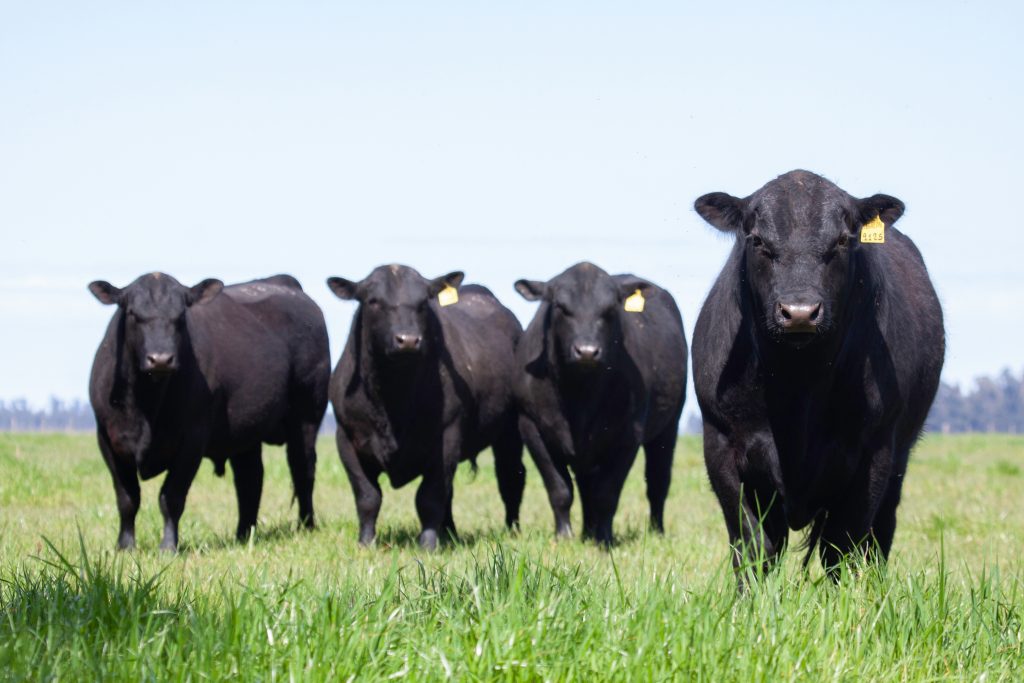
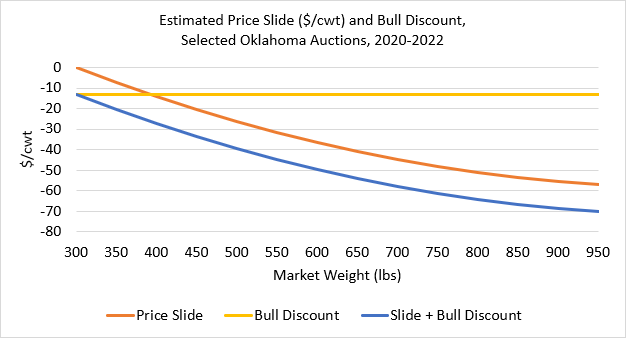
Research over time has consistently indicated price discounts for bulls sold in feeder calf markets. Oklahoma data indicates that bulls are consistently discounted relative to steers when comparing cattle of similar weight, quality, breed, and other physical and management attributes. Past OSU research has measured bull discounts in Oklahoma markets at $6/cwt to $12/cwt at different points in time. Discounts tend to increase when market price levels increase.

Preliminary research with recent Oklahoma data indicates that the bull discount per cwt is stable across weight classes at -$13.22/cwt. At first glance, that may seem counterintuitive, as we might expect the bull discount to be larger for heavier animals based on the implications of later castration on health, performance, management, and carcass quality as those animals move through the beef supply chain. And actually, it is...when you look at it on a per head basis.

The table below reflects average bull discounts per hundredweight and per head based on the latest research using our auction data. These values are relative to steers of the same weight with similar characteristics. Though the estimated discount per hundredweight does not increase by weight class, it does still result in larger per head discounts for heavier bulls. When combined with the price slide for heavier cattle, an unchanging bull discount ($/cwt) still has a proportionately larger impact on overall price per hundredweight for heavier versus lighter animals. That concept is reinforced in the table above using Oklahoma City prices for Medium/Large #1 &#2 cattle from December 2022. The bull discount as a percentage of the steer price at the corresponding weight steadily increases from 6.0% at 375 pounds to 7.9% at 875 pounds.

Average Discount per Head ($)
Weight ClassEstimated Discount per cwt ($)Average Discountper Head ($)Discount Rangeper Head ($)Bull Discount as % of Steer $/cwt – OKC Dec 2022
300-399 lbs.13.2246.2739.66 - 52.75375 lbs.6.0%
400-499 lbs.13.2259.4952.88 - 65.97475 lbs.6.3%
500-599 lbs.13.2272.7166.10 - 79.19575 lbs.6.8%
600-699 lbs.13.2285.9379.32 - 92.41675 lbs.7.4%
700-799 lbs.13.2299.1592.54 - 105.63775 lbs.7.2%
800-899 lbs.13.22112.37105.76 - 118.85875 lbs.7.9%
900-999 lbs.13.22125.58118.98 - 132.07  

Castrating your male calves is not free. It requires resources, including time, labor, equipment and sometimes an extra measure of patience - with the calf or with your labor resource. Also, the availability and cost of those resources varies by producer. But the market does provide incentives for including castration in your bundle of calf management practices and those incentives encourage castration at an earlier age and weight rather than when calves are older.

As Dwight Eisenhower once said, "Farming looks mighty easy when your plow is a pencil, and you're a thousand miles from the corn field." Substitute "ranching" and "cattle chute" and I may have just guessed what you are thinking because these days my boots don't get dirty nearly as often as yours. But the cattle market is encouraging you to consider the incentives for castration, to consider your costs for castration, and to consider adding another layer of dirt to those boots while you castrate your calves and castrate them early.

Secretary Rollins and Secretary Kennedy Visit Texas to Meet with Farmers Who Are Making America Healthy Again and Utilizing Stewardship Practices, Secretary Rollins Provides Update on New World Screwworm

U.S. Secretary of Agriculture Brooke Rollins visited Texas with U.S. Health and Human Services (HHS) Secretary Robert F. Kennedy Jr. to discuss food security and learn how America's farmers are working to Make America Healthy Again. During the visit, Secretary Rollins met at the Texas A&M Beef Center to provide an update on the status of the New World Screwworm. Secretary Rollins and Secretary Kennedy visited cutting-edge laboratories at the Texas A&M Norman E. Borlaug Building, received a briefing on the Grand Nutrition Challenge at the Institute for Advancing Health Through Agriculture. The Secretaries then toured the Automated Precision Phenotyping Greenhouse in addition to touring the fourth-generation Sawyer Farms who are utilizing stewardship practices to ensure healthy production of a robust barley, rye, corn, and wheat crop.

"Making America Healthy Again starts with supporting America's farmers and ranchers. In Texas, I was joined by Secretary Kennedy to do just that. At USDA, I am negotiating with Mexico to stop the spread of invasive species like the New World Screwworm, and Secretary Kennedy and I are working together to ensure that our kids and families are consuming the healthiest food produced in the U.S.A.," said Secretary Rollins.

"It was an honor to join Secretary Rollins in her home state of Texas," said Secretary Kennedy. "Together, HHS and USDA are taking on the chronic disease epidemic by fixing our broken food system and giving families the tools they need to eat well, stay healthy, and Make America Healthy Again."

Over the weekend, Secretary Rollins sent a letter to her counterpart in Mexico demanding Mexico eliminate impediments on aircraft operations and landings that are critically impairing the U.S. response to combat the ongoing spread of the New World Screwworm across Mexico, thereby preventing it from entering the United States. Secretary Rollins also announced a major win for American agriculture yesterday by securing the agreement of the Mexican government to meet the current water needs of farmers and ranchers in Texas as part of the 1944 Water Treaty. The Mexican government committed to transfer water from international reservoirs and increase the U.S. share of the flow in six of Mexico's Rio Grande tributaries through the end of the current five-year water cycle. While negotiations were ongoing with Mexico, Secretary Rollins announced a $280 million grant agreement between the U.S. Department of Agriculture (USDA) and the Texas Department of Agriculture (TDA) to provide critical economic relief to eligible Rio Grande Valley farmers and producers suffering from Mexico's ongoing failure to meet its water delivery obligations under the 1944 Water Treaty. In the first 100 days of the Trump Administration, Secretary Rollins has affirmed the bold leadership of President Donald J. Trump by supporting America First Policies.

At the direction of President Trump, USDA and HHS are ensuring programs work harder to encourage healthy eating and lifestyle habits. As part of the Make America Healthy Again (MAHA) Commission led by Secretary Kennedy, this work will not only research and report the many reasons children face unbelievable rates of diet-related disease like obesity and diabetes but also how government can implement change through things like revised dietary policy, state innovation, and less regulation. The visit to Texas A&M Institute for Advancing Health Through Agriculture (IHA) included amplifying the HHS and USDA commitment to a timely and consumer-facing Dietary Guidelines for Americans (DGA). On March 11, 2025, after the inaugural meeting of the Make America Healthy Again Commission, Secretary Rollins and Secretary Kennedy announced a commitment to a final DGA no later than December 31, 2025. Secretary Rollins has taken major steps to Make America Healthy Again through encouraging states to reform SNAP and nutrition education services. The MAHA movement at USDA has also supported major voluntary changes to make food healthier, including applauding the dairy industry for voluntarily removing artificial colors from the National School Lunch Program.

Earlier today, USDA introduced funding for the Marketing Assistance for Specialty Crops (MASC) program to assist specialty crop growers with rising input costs and aide in the expansion of domestic markets. This would support Texas producers as they grow fruits, vegetables, and tree nuts and other specialty crops to Make America Healthy Again. USDA has also awarded over $521 million to 19,675 farmers in Texas through the Emergency Commodity Assistance Program (ECAP) for the 2024 crop year.

Secretary Rollins visited Texas A&M Beef Center, delivered update on New World Screwworm
Secretary Rollins visited Texas A&M Beef Center, delivered update on New World Screwworm.

Secretary Rollins and Secretary Kennedy visited Texas A&M and toured cutting-edge laboratories at the Norman E. Borlaug Building

Secretary Rollins and Secretary Kennedy visited Texas A&M and toured cutting-edge laboratories at the Norman E. Borlaug Building, received a briefing on the Grand Nutrition Challenge at the Institute for Advancing Health Through Agriculture, and toured the Automated Precision Phenotyping Greenhouse.

Secretary Rollins and Secretary Kennedy toured the fourth-generation Sawyer Farms

Secretary Rollins and Secretary Kennedy toured the fourth-generation Sawyer Farms who are utilizing stewardship practices to ensure healthy production of a robust barley, rye, corn, and wheat crop.

R-CALF USA Applauds Dismissal of Charges Against SD Ranchers Charles and Heather Maude

R-CALF USA, the nation's largest producer-only cattle association, commends the U.S. Department of Agriculture and U.S. Department of Justice for dropping all criminal charges against South Dakota ranchers Charles and Heather Maude.

The Maudes were indicted separately in June 2024 over a disputed 25-acre grazing allotment managed by the U.S. Forest Service. Each faced up to 10 years in prison and $250,000 in fines. On Monday, Federal Judge Camela Theeler signed an order dismissing the indictments against the couple.

"The charges raised grave concerns about property rights, government accountability, and the weaponization of federal authority," said R-CALF USA Property Rights Chair Shad Sullivan.  From the beginning, R-CALF USA stood by the Maude family and condemned the federal government's overreach in pursuing criminal charges over a matter that should have been handled civilly.

"I am ecstatic and grateful to Secretary Rollins for her pursuit of justice in overseeing the dismissal of federal charges against the Maude family who faced a nightmare battle against the United States Forest Service," said Sullivan. "With the help of Rep. Harriet Hageman, R-Wyo., a win came to the American people and American agriculture in the pursuit of liberty!"

"We're pleased the Trump administration saw this for what it was – an unreasonable and unnecessary enforcement action against upstanding ranchers," said R-CALF USA CEO Bill Bullard. "We hope the Maudes are able to recover from this costly and demeaning episode and that their perseverance marks a turning point after which our government becomes more respectful and responsive to the rights of U.S. ranchers everywhere."

Provided by R-CALF, USA.

WHAT THEY ARE SAYING: Leaders Thank EPA for E15 Year-Round Ahead of the Summer Driving Season

Yesterday, U.S. Environmental Protection Agency (EPA) Administrator Lee Zeldin announced that the agency issued an emergency fuel waiver allowing the sale of E15 gasoline nationwide throughout the summer season. This action will grant relief to American consumers filling up their tank across the country by ensuring adequate amounts of fuel are provided to increase additional options of purchasing fuel. Administrator Zeldin's announcement aligns with President Trump's Executive Order Declaring a National Energy Emergency, which directed EPA to consider issuing emergency waivers to allow for year-round E15 sales. 

Here's what people are saying: 

Governor Jim Pillen (R-NE): "The benefit of a nationwide market is massive for Nebraska ethanol – and every family in our country filling up their tank. This emergency waiver is a big boost for Nebraska's producers and will allow consumers to benefit and save from the E15 advantage thanks to lower costs at the pump. The Trump Administration continues to go to bat for America's farmers – and this is yet another example of a strong partnership that's earning results for agriculture." 

Governor Kim Reynolds (R-IA): "Thank you President Trump and EPA Administrator Zeldin for approving the nationwide sale of E15 this summer and for granting the Midwest states' request to put E15 and E10 on equal footing, ensuring adequate gas supply across the country. We are grateful for your unwavering commitment to making America energy dominant!" 

Governor Larry Rhoden (R-SD): "Affordable fuel takes an all-of-the-above approach. The Trump Administration and EPA Administrator Zeldin have made E15 available for nationwide sales in advance of the summer driving months. This is great news for farms – and for all South Dakotans!"  

Senate Majority Leader John Thune (R-SD): "Today's decision by the Trump administration to permit the nationwide, year-round sale of E15 fuel is a positive step for South Dakota farmers and consumers. EPA's critical action in response to my letter earlier this month will help enhance America's energy security and reduce fuel costs." 

Senator Kevin Cramer (R-ND): "Thank you President Trump, Secretary Rollins, and Administrator Zeldin for their work to allow nationwide summer sales of E-15! This increases consumer choice at the pump and provides regulatory relief for fuel producers." 

Senator Jonie Ernst (R-IA): "By making E15 available nationwide this summer, President Trump is prioritizing our farmers, producers, and all of rural America while driving down prices at the pump. I look forward to working alongside him to secure permanent, nationwide access to this cleaner, cheaper choice." 

Senator Deb Fischer (R-NE): "I'm pleased the EPA issued a summertime emergency fuel waiver for E15; however, we need a permanent, nationwide solution. Congress must pass my bill and unleash the power of year-round E15." 

Senator Chuck Grassley (R-IA): "Thanks to President Trump and EPA Administrator Zeldin for keeping their promise to support ethanol E15 will be available nationwide this summertime. E15 provides a BIG domestic market for corn farmers and keeps fuel costs low. Another example of promises made promises kept from this administration." 

Senator Roger Marshall (R-KS): "Huge news. President Trump has kept another promise by making E15 available at gas stations all summer long.  Last month, my Senate Republican colleagues and I met with Secretary Rollins and Administrator Zeldin to discuss this initiative, and it's great to see it happen. This move puts us one step closer to providing unrestricted access to E15 for all Americans, all year long, to strengthen domestic agriculture markets, unleash America's energy dominance, and lower prices at the pump." 

Senator Jerry Moran (R-KS): "GOOD NEWS: The Trump Administration has approved the year-round sale of E15, providing consumers with more options at the pump, new markets for Kansas farmers and bolstering American energy independence." 

Senator Pete Ricketts (R-NE): "E15 saves consumers money at the pump, supports Nebraska agriculture, cleans our environment, and promotes energy independence. Expanding access to E15 use will help President Trump deliver on his promise to unleash American energy." 

Senator Mike Rounds (R-SD): "Year-round E15 sales will be a significant boost to our corn and ethanol industries in South Dakota and provide relief to our consumers at the gas pump nationwide this year." 

Representative Ron Estes (R-KS-04): "Today, the EPA announced a nationwide waiver for the sale of E15 gasoline ahead of the summer months. Allowing the sale of E15 year-round and nationwide is a win for Kansas ethanol producers and drivers across the country. This is a great step forward in restoring American energy dominance, and farmers in Kansas are ready to help provide relief for consumers at the pump." 

Representative Randy Feenstra (R-IA-04): "I thank President Trump and EPA Administrator Zeldin for approving E-15 sales in all fifty states this summer. Whether traveling for work or embarking on a family road trip, Americans will benefit from lower gas prices courtesy of Iowa's farmers and ethanol producers." 

Representative Mike Flood (R-NE-01): "I applaud President Trump and EPA Administrator Zeldin for authorizing E15 across America for the summer driving season. E15 is clean, affordable, and American-made and we want everyone to have access to it." 

Representative Ashley Hinson (R-IA-02): "The Trump Administration will allow the uninterrupted sale of E15 this summer! A huge thank you to President Trump for following through on his commitments to Iowa farmers & biofuels producers and allowing the sale of E-15 this summer nationwide." 

Representative Dusty Johnson (R-SD-AL): "I applaud EPA's quick response to a letter I sent with my colleagues last week urging the sale of E15 through the summer. This decision supports our producers, gives consumers more options at the pump, and bolsters our energy security." 

Representative Tracey Mann (R-KS-01): "Nationwide E15 sales support Kansas farmers & lowers energy costs for American families. Thank you, Administrator Zeldin and President Trump for your commitment to an all of the above energy strategy that keeps America energy dominant." 

Representative Mariannette Miller-Meeks (R-IA-01): "Proud to work with President Trump to deliver summer E15 for Iowa—lower costs, stronger biofuels, and a big win for American energy. Summer waivers are a start, and in Congress, I'll keep fighting to make E15 available year-round." 

Representative Zach Nunn (R-IA-03): "Big win for Iowa! E15 will now be available nationwide this summer. I joined a bipartisan effort to request an emergency waiver to boost U.S. fuel supply, lower costs at the pump, and grow markets for Iowa's homegrown biofuels." 

Iowa Attorney General Brenna Bird: "Huge win for farmers and families across the nation! Now, every American can enjoy access to cleaner, cheaper E15 fuel all year-round. Thank you, President Trump, Administrator Zeldin, & Secretary Rollins for unleashing American energy greatness!" 

Iowa Department of Agriculture and Land Stewardship Secretary Mike Naig: "Today's E15 announcement by the Trump Administration is a win for consumers across the U.S. and farmers here in Iowa. I want to thank President Trump, Administrator Zeldin and Secretary Rollins for making E15 available to drivers during the busy summer travel season. Iowa drivers saved $38.5 million in 2024 by choosing E15 over E10, and now drivers across the country can also take advantage of similar cost-savings at the pump. This decision is a big step toward making our country more energy dominant, independent, and secure."

American Coalition for Ethanol CEO Brian Jennings: "We welcome the Trump administration's decision to issue an emergency waiver for E15 this summer. Once again, this action will help alleviate fuel costs for drivers while reducing tailpipe emissions at a time when both economic and environmental concerns remain top of mind."  

American Farm Bureau Federation President Zippy Duvall: "Farm Bureau appreciates EPA's decision to keep ethanol blended gasoline available nationwide through the summer season. People who choose E15 fuel experience an average cost savings of 10-30 cents per gallon, which is much-needed relief for families suffering with high prices. Biofuels are an important tool in achieving the nation's energy independence, while lowering costs for drivers and maintaining important markets for America's farmers. AFBF has long advocated for year-round E15 sales, and we thank the president and EPA Administrator Lee Zeldin for listening. We now encourage Congress to pass legislation to offer drivers lower cost options by making year-round E15 sales permanent."   

Growth Energy CEO Emily Skor: "We're grateful to President Trump and EPA Administrator Zeldin for moving quickly to lift a needless barrier standing between the American people and lower-cost E15. EPA's decision is a step toward greater American energy dominance. This will put more American fuel in the marketplace, allow Americans to spend less of their hard-earned money at the pump this summer, give fuel retailers the clarity and certainty they need and protect a critical market for American farmers." 

Iowa Farm Bureau Federation President Brent Johnson: "Iowa Farm Bureau members applaud President Trump and EPA Administrator Zeldin for today's action providing for year-round nationwide access to E15 fuel. Iowa leads the nation in biofuels production, and this action will provide consumers with access to a lower-cost fuel option at the gas pump, and the resulting demand for homegrown fuels will support Iowa's farm families and rural communities." 

Iowa Renewable Fuels Association Executive Director Monte Shaw: "IRFA thanks the Trump Administration for allowing states across the country the opportunity to sell E15 this summer. While Iowa consumers and retailers already have E15 certainty, we still want consumers all across the nation to have the ability to save 15 to 20 cents per gallon at the pump. And during a time of tight fuel supplies, it would be ridiculous to tell retailers to bag their E15 pumps. Today is good news for Iowa farmers as well when you consider that 96.5 percent of ethanol produced at Iowa plants is utilized outside of the state." 

Minnesota Bio-Fuels Association Executive Director Brian Werner: "The Minnesota Bio-Fuels Association thanks the EPA for its decision to allow the nationwide sale of E15 this summer. Consumers across the country will now be able to access the same savings at the pump available to Minnesota drivers, who have already saved $3.25 million with E15 in 2025." 

Minnesota Corn Growers Association President Jim Kanten: "The Minnesota Corn Growers Association (MCGA) thanks President Trump and EPA Administrator Lee Zeldin for issuing the waiver, which will provide families with relief at the pump, bolster U.S. energy independence, and support rural economies. E15 is available at more than 510 Minnesota fuel stations, and it typically sells at a discount of 15 cents to 25 cents compared to regular E10 gasoline. This action will ensure drivers nationwide have continued access to the reduced prices, increased consumer choice, and decreased tailpipe emissions offered by E15." 

Nebraska Farm Bureau President Mark McHargue: "We are pleased EPA Administrator Zeldin has again made the decision to grant a waiver for the sale of E15 nationwide this summer." 

POET Biofuels: "Thank you President Trump for bringing access to affordable, American-made fuel. Now let's support American farmers and find a legislative solution for permanent access to year-round E15!" 

Renewable Fuels Association President and CEO Geoff Cooper: "On his first day in office, President Trump declared a national energy emergency and identified year-round E15 as a solution for extending fuel supplies and reducing pump prices. With geopolitical conflict roiling energy markets worldwide, we applaud President Trump and Administrator Zeldin for acting quickly to combat potential fuel shortages and help keep a lid on gas prices this summer. Allowing uninterrupted sales of E15 will help boost gasoline supplies, bolster the farm economy, and protect air quality."

Comanche County Lawmakers Thank Gov for Emergency Declaration

Southwest Oklahoma legislators are thanking Governor Kevin Stitt for his declaration of a state of emergency following historic flooding.

Reps. Daniel Pae, R-Lawton; Rep. Rande Worthen, R-Lawton; Rep. Trey Caldwell, R-Faxon; Rep. Toni Hasenbeck, R-Elgin; Sen. Dusty Deevers, R-Elgin; and Sen. Spencer Kern, R-Duncan; released the following statement Tuesday:

"We are incredibly grateful to Governor Stitt for his swift and decisive action in declaring a state of emergency in the wake of the historic flooding that has devastated our communities. This declaration is a crucial step in unlocking the resources we need to begin recovery and ensure the safety and well-being of our residents. 

We appreciate the relentless work of our first responders to protect lives and minimize damage during this time of crisis. Lives have been upended, homes and businesses damaged, and critical infrastructure compromised, but following this declaration, we can begin to mobilize much-needed assistance and coordinate with state and local agencies to address both immediate needs and long-term rebuilding efforts." 

Multiple storm systems has caused massive flooding in southwest Oklahoma. Lawton has received an estimated 11.48 inches of rain throughout April, and additional rainfall is expected Tuesday and Wednesday.

Additional areas included in the emergency declaration include Cotton and Cleveland counties. The state of emergency declaration, filed with the Secretary of State's office on Tuesday, may be found here.

EPA Releases Strategy to Better Protect Endangered Species from Insecticides Using Commonsense Practices, Provides Flexibilities to States and Growers

Today, U.S. Environmental Protection Agency (EPA) released its final Insecticide Strategy that identifies practical protections for federally endangered and threatened species from the use of insecticides, while providing flexibility for pesticide users and growers. The Strategy identifies mitigations aimed at protecting more than 900 species listed by the U.S. Fish and Wildlife Service (FWS) that EPA considers when it registers a new insecticide or reevaluates an existing one.

"Today's action is another example of how protecting our environment and safeguarding our economy can go hand in hand," said EPA Administrator Lee Zeldin. "We have found commonsense ways to keep endangered species safe that won't place unneeded burden on the growers who rely on these tools for their livelihood, and which are necessary to ensure a safe and plentiful food supply. We are committed to ensuring the agriculture community has the tools they need to protect our country, especially our food supply, from pests and diseases."

"American agriculture demonstrates that production and stewardship go hand in hand," said U.S. Secretary of Agriculture Brooke Rollins. "Thank you to Administrator Zeldin for working towards unleashing regulatory burdens for American farmers & ranchers with the release of this final insecticide strategy today. This strategy provides much needed improvements that will undoubtedly better protect U.S homegrown crops from pests and diseases. We look forward to continued partnership with EPA to ensure our growers continue to have the crop protection tools and flexibility needed to feed, fuel, and clothe our nation and the world."

"EPA's numerous pragmatic improvements to the draft Insecticide Strategy have created a final strategy that can be better implemented by applicators while also protecting threatened and endangered species. We are grateful EPA has crafted this strategy by listening to, among others, constructive feedback from state agriculture departments, as they are the lead agency tasked with implementing and enforcing pesticide regulations in 43 states as well as the territory of Puerto Rico. The National Association of State Departments of Agriculture is eager to continue to work with EPA to ensure state lead agencies have the resources and clarity to meaningfully enforce this strategy," said National Association of State Departments of Agriculture CEO Ted McKinney.

"Farmers are dedicated to responsibly using pesticides, and frequent updates to the pesticide strategies are important to ensure the health and safety of America's families. EPA understands there cannot be an effective conservation strategy as a nation without a meaningful partnership with farmers and ranchers. As we evaluate the final strategy in full, we urge EPA to continue to refine and improve upon the plan to enable farmers to grow healthy food for the nation while caring for, and improving, the natural resources they've been entrusted with," said American Farm Bureau Federation President Zippy Duvall.

"The American Soybean Association appreciates EPA for incorporating common sense improvements into its Insecticide Strategy, especially with little time to do so before its court deadline. These enhancements will help make Endangered Species Act implementation easier for U.S. farmers; however, more work remains to be done, including reforming how EPA assesses risks to species to ensure the process is using the best available science. ASA thanks EPA for its progress to date and looks forward to working with the agency to advance additional improvements in the days ahead," said American Soybean Association President and Kentucky Soybean Farmer Caleb Ragland.

"We are appreciative of the EPA's efforts to identify commonsense ways of protecting endangered species from insecticides," said National Corn Growers Association President and Illinois Farmer Kenneth Hartman Jr. "Our growers support the agency's approach to providing mitigation relief through enhanced conservation processes that give growers more credit for their participation than was initially proposed. We look forward to continued dialogue with the EPA as we move forward on the path to protect species as well as the food, feed and fuel supply."

"We look forward to reviewing EPA's Insecticide Strategy and appreciate the Agency's continued efforts to engage stakeholders on mitigations that support fresh produce growers' ability to produce the healthy and nutritious food Americans require, while being protective of threatened and endangered species. We commit to working collaboratively with EPA to support this evolving effort and ensure that the strategy rewards grower innovations to reduce risk to species," said International Fresh Produce Association Vice President for U.S. Government Relations Rebeckah Adcock.

"The National Cotton Council thanks the administration for listening to America's farmers in updating the EPA Insecticide Strategy. By updating buffer distances, tailoring mitigation to real-world conditions, and recognizing conservation efforts, the new strategy strengthens environmental protections without compromising our nation's safe and secure supply of food, feed and fiber," said National Cotton Council Chairman and Producer from Tunica, MS Patrick Johnson.

"USA Rice applauds EPA Administrator Lee Zeldin's willingness to listen to the concerns of America's rice farmers and his commitment to developing a more practical, balanced Endangered Species Act Insecticide Strategy. We are particularly appreciative that Administrator Zeldin is improving these strategies with the goals of both protecting species, as well as the livelihoods of farmers. The revised strategy reflects the EPA's growing recognition of the real-world impacts of regulations at the field level and its efforts to provide the flexibility farmers need to comply. We are likewise optimistic that in the revised strategy, EPA is modifying buffer distance requirements to reflect the mitigating benefits of the technologies that have been developed and implemented by the agricultural sector to reduce spray drift. USA Rice looks forward to continuing to work closely with Administrator Zeldin and the EPA to ensure future policies remain grounded in practicality and science," said USA Rice Regulatory Affairs and Food Safety Committee Chairman and Arkansas Rice Farmer David Petter.

Earlier this year, Administrator Zeldin announced his Powering the Great American Comeback Initiative to advance the agency's core mission of protecting human health and the environment while energizing the American economy. Specifically, this Strategy advances Pillar Three: "permitting reform, cooperative federalism and cross-agency partnership." The final Strategy is the culmination of continued communication between EPA, its federal partners including the U.S. Department of Agriculture (USDA) and FWS, and other stakeholders.

EPA will continue to work with stakeholders to modify and update these documents as additional information becomes available. In addition, EPA anticipates continued engagement with stakeholders, including our federal and state partners, to ensure effective implementation of the Strategy.

Read the final Insecticide Strategy. The Insecticide Strategy and accompanying support documents, including a Response to Comments document and an updated Ecological Mitigation Support Document describing mitigations and supporting data that inform implementation of both the herbicide and insecticide strategies, will be available on Regulations.gov in docket EPA-HQ-OPP-2024-0299.

Background

The draft Insecticide Strategy was released in July 2024 and was followed by a 60-day public comment period during which more than 26,000 comments were received, with over 230 unique comments. In response to information provided through the public comments, EPA made several changes in the final Strategy, supported by scientific analyses, to provide greater flexibility and options for the agricultural community, while ensuring that endangered species are protected. Some of the science-based modifications include: 

  • Reducing buffer distances across all application methods; 
  • Providing credit for any reduction in the proportion of a treated field for ground applications; 
  • Developing a process to qualify conservation programs that will give growers more credit for being part of a conservation program than initially proposed; 
  • Developing a process to qualify external parties that would assess a grower's farms and determine the existing mitigation points that could be achieved by practices a grower already has in place; 
  • Updating key data sources and identification of invertebrate species that may occur on agricultural fields; and 
  • Adding a Pesticide Use Limitation Area (PULA) group for generalist species that reside in wetlands to reduce mitigations applied outside of wetland habitats. 

Matt Makens Explains Unusual April Rains as both Science and Luck

Listen to Ron Hays talking with Matt Makens about the unusual amount of rainfall this April.

Senior Farm and Ranch Broadcaster Ron Hays is attending the 10th Annual Hemphill County Beef Conference in Canadian, Texas, and had the chance to speak with Atmospheric Scientist Matt Makens who provided a weather outlook for attending producers. Hays found one excerpt of the conversation to be particularly interesting regarding the abnormal amounts of rainfall the Southern Plains have received this month.

Makens has presented thousands of weather forecasts and outlooks to dozens of industries since the 1990's; however, his company, Makens Weather, LLC., specifically focuses on providing actionable long-term seasonal forecasts and short-term weather hazards for the agricultural community. It serves global clients from Australia to Canada and throughout the United States; notably CattleFax and NCBA.

Hays pointed out the limited amount of rainfall received from January until March across the state of Oklahoma and compared it to the record and near record amounts falling during the month of April, and asked what changed?

Makens explained, "We have talked about catching these elements in their transition. As it is flowing from one thing to another, there is a moment when that transition covers you. November was another transition. Now, we are transitioning a seasonal change, and we are caught in this transition again."

He noted that although seasons change every year, this one is more exceptional due to a healthy supply of storm systems coming out of the Rocky Mountains and drawing moisture from the Gulf.

"The connection globally to any one catalyst really drops off in April and May until you get into the summer," he added. "In a large context, it has been the luck of the draw. In other contexts, it is catching the transition out of La Niña for the winter, getting the water from here to Tennessee to Kentucky, and you are on the tail end of it, so there is some science to it. There is also some luck, honestly."

He emphasized the transitional months of the year being the times to watch for such events as this: October/November, March/April, and possibly into May.

"Once you kind of start the idea, and you see Mother Nature is onto something, that is kind of a continued path, whether it be two weeks or four weeks, whatever it may be, where she's like, 'Okay, I'll keep sending you rain for this duration, and then, I'll shut you off,'" Makens stated. "A lot of Oklahoma, a lot of the panhandle of Texas, are in that favored Mother Nature Zone, right now."

Looking ahead, the forecast shows hit and miss chances of rain for the next four weeks, but Makens admitted that he'll be surprised if Mother Nature is still pouring rain on the area in late May and early June."

USDA to Issue $1.3 Billion to Specialty Crop Producers Through Second Marketing Assistance Program Payment

U.S. Secretary of Agriculture Brooke Rollins today announced a second round of payments coming this week for specialty crop producers through the Marketing Assistance for Specialty Crops (MASC) program, providing up to $1.3 billion in additional program assistance. U.S. Department of Agriculture's (USDA) Farm Service Agency (FSA) already delivered just under $900 million in first round payments to eligible producers.

"President Trump is again putting farmers first. After a thorough review of USDA funding for certain programs to ensure they align with the President's policies and uphold our commitment to responsible distribution of American taxpayer dollars, USDA resumed MASC payments. I am happy to announce this second round of support for specialty crop producers today and we are thankful for the work they do to produce the safest, most abundant food supply for our families and the world," said Secretary Rollins.

About MASC

First announced in December 2024, MASC authorized $2 billion in Commodity Credit Corporation funds to assist specialty crop growers with rising input costs and aid in the expansion of domestic markets. In January 2025, in response to stakeholder feedback and program demand, funding for MASC was increased to $2.65 billion. The MASC application period closed on Jan. 10, 2025.

MASC is designed to help specialty crop producers meet higher marketing costs related to:

  • perishability of specialty crops like fruits, vegetables, floriculture, nursery crops and herbs;
  • specialized handling and transport equipment with temperature and humidity control;
  • packaging to prevent damage;
  • moving perishables to market quickly; and
  • higher labor costs.

MASC covers the following commercially marketed specialty crops:

  • fruits (fresh, dried);
  • vegetables (including dry edible beans and peas, mushrooms, and vegetable seed);
  • tree nuts;
  • and other specialty crops

OSU's Dr. Brett Carver Highlights Promising Varieties and Focus on Climate Resilience

During the Chickasha Wheat forage and field day, OSU Wheat Breeding specialist Dr. Brett Carver provided an in-depth look at the university's extensive wheat breeding nursery. Speaking with our own Maci Carter, Dr. Carver shared insights into promising new varieties, the challenges of breeding for Oklahoma's unpredictable climate, and his dedication to enhancing wheat for consumer health.

Dr. Carver emphasized the significance of the Chickasha site for evaluating advanced breeding lines. "Well, from the wheat breeding standpoint, we saw a very big wheat breeding nursery. I mean, this is one of our bigger sites, and we include a lot of the germplasm that's close to being released, and close to me means one to four years out. So just about 90% of that material is located at Chickasha." He recalled the valuable disease pressure from the previous year, stating, "Last year we got a super look at that germplasm because we had two diseases, leaf rust and stripe rust, that I could use to make some of the most important selection decisions I've made in a long time. Rarely do we get both of those in the same place." While disease pressure might be lower this year, Dr. Carver acknowledged the benefit for farmers, quipping, "The farmers will love that, but, as a breeder, I need it sometimes."

When asked about standout varieties this year, Dr. Carver noted it was still early in the season for definitive pronouncements. However, he expressed excitement about the newest release, Orange Blossom. "Of course, I'm really excited about the newer material. Really excited about Orange Blossom. What lies ahead for it and see how producers like it."

A surprising attribute of Orange Blossom came to light recently. "One thing I did hear that I did not know was true about Orange Blossom... Amanda Silva... learned that it and the other two varieties that we call Clearfield, that are out there, Strat and Double Stop, have longer coleoptiles than most varieties than anything else that she evaluated," Dr. Carver explained. He elaborated on the importance of this trait: "What that does is it allows us to plant a little deeper. Every quarter of an inch, half an inch helps. And that's what the coleoptile length on Orange Blossom allows. It allows probably a half-inch, maybe an inch deeper. It's that much different. Didn't know that."

Addressing the challenges of developing high-performing wheat for Oklahoma's variable climate, Dr. Carver stressed the need for multi-year testing across diverse environments. "It takes a lot of different environments because no two years are the same in Oklahoma. And I don't know how to get around that, I have to take what the year gives me." He acknowledged the difficulty in consistently creating specific stress conditions, such as drought, outside of the panhandle region. "Bottom line is I take what the years give me, and I just have to make sure that we sample or we test in enough years to go forward with a very confident decision. It's usually about five years."

Dr. Carver also discussed the unique challenges faced by various wheat-growing regions. "Oh, they have their own struggles for their regions, you know, and I, I don't think it's unusual." He expressed gratitude that Oklahoma avoids certain devastating diseases found elsewhere, emphasizing the ongoing need to develop genetic resistance over time.

Looking to the future, Dr. Carver emphasized the continued importance of breeding for greater planting depth. "I've always wanted to have the genetics to allow producers to plant a little bit deeper. I want to plant deeper because I'm missing out on some opportunities when I go to a site... I never was able to reach moisture... To me, that's giving in, and I don't wanna do that. So that remains a real high priority of mine." He noted the difficulty in accessing all desired germplasm but remains committed to this goal.

Another significant focus for Dr. Carver is enhancing wheat for the benefit of consumer health. "We're gonna take the low-hanging fruit first. And the low-hanging fruit is grain with higher antioxidants... I really think fiber... is the big one. And we need to change the fiber composition. And just change the Total outlook on wheat because of that, so we no longer think of wheat as a source of bad carbohydrates. No, it's a source of carbohydrates and they're gonna be good, good carbohydrates."

Concluding the conversation, Maci Carter congratulated Dr. Carver on being named a Big 12 Faculty Member of the Year. Dr. Carver responded humbly, "I had no idea it was coming. I didn't even know that award existed, but I'm so glad that the institutions have decided to recognize talent across the board in the academic ranks... It's just recognizing people in academics who are really doing some good things. And I'm completely for that." He emphasized the importance of recognizing academic achievements alongside athletic accomplishments.

AFR's Scott Blubaugh Discusses Legislative Advocacy for Farmers in Oklahoma at AFR Day

Listen to KC Sheperd talking with Scott Blubaugh about advocating for farmers at the Capitol.

American Farmers and Ranchers (AFR) Day at the Capitol was about six years ago when Scott Blubaugh became president of the organization. AFR members are invited to attend and learn about the ins and outs of the legislative process, as well as advocate for the positions of policyholders and members at the annual convention. Oklahoma Farm Report's KC Sheperd attended the event this year and got to speak with Blubaugh.

KC Sheperd interviewing Scott Blubaugh

"This is a great opportunity for folks to come up here and meet their legislators," he said. "Many of them don't know who their Senator or Representative is, so we get them introduced and let them talk about the things that are important to them and AFR."

He mentioned the added benefit of showing the legislators that AFR is a prominent organization with 60,000 members who pay attention to what is happening in state government. This makes it easier when the organization's leaders and lobbyists advocate for legislation at the State Capitol.

Also improving the relationship between legislators and AFR were the Oklahoma Certified Beef burgers being served during the event! "Our legislatures passed that law a few years ago, during COVID, and we administer that Oklahoma Certified Beef program, so we are always glad to share that to remind them how important Oklahoma beef is and how important our farmers and ranchers are to the state as an industry. It is also the very best you can buy, too!"

Scott Blubaugh (left) and lobbyist Bray Haven (right)

In 2020, Ty Burns, Oklahoma representative for District 35, introduced a bill that would define Oklahoma Certified Beef as guaranteed to be bred, born, raised, and processed exclusively within the state of Oklahoma. Senator Casey Murdock is recognized for seeing the bill through to law. Representative Burns spoke at AFR Day about the amending legislation to ban lab-grown meat in Oklahoma, and AFR fully supports its passage.

"We are excited about Representative Burns making that amendment today on the floor," Blubaugh shared. "We want to get on here and support him on it."

On Blubaugh's radar in the near future is the state's budget, for which discussions will begin in May. There are still policies to see through regarding conservation efforts to control Eastern Redcedars. He mentioned the recent outbreak of large wildfires and how big a problem the cedars were for firefighters.

"We have to figure out how to get control of them or we are going to continue to have these large fires that burn homes and farmsteads down," he said. "We've seen those things pop up all around the metropolitan area and little control on them, so everything we can do to get rid of the redcedars, we are for it."

Blubaugh and his AFR team are looking forward to a Youth Leadership Camp in July, which annually garners several hundred middle school to high school-age students.

Blubaugh, himself, will travel to Washington, D.C., next week to lobby for a farm bill after two years during which the Federal government has failed to complete one. "I don't know how we are going to get their attention up there in D.C., but somehow, we have to get a farm bill done sooner than later," he said. "We need some certainty that our farmers and ranchers can count on going forward. Not just this one-time, one-year deal; then we'll see what next year brings. That's no way to run farm policies. It's a hard lift. They are so divided in Congress, right now, on every single issue, but we are going to try to break through."

Ben Hale Describes "A Stout, Very Active Market" at this Week's Cattle Sales

Listen to Ron Hays talk with Ben Hale about the latest in the cattle markets.

On Tuesdays, Senior Farm and Ranch Broadcaster Ron Hays visits with Ben Hale of Western Livestock Auctions as he talks about the latest in the markets and more. Established in 1995, Western has grown into a multi-generational family-owned and operated business and stands as a symbol of tradition, excellence, and a deep-rooted passion for the cattle industry. Western Livestock Auctions operates the Western Livestock Commission Firm, which sells cattle on Mondays and Tuesdays. They also operate the livestock auction markets in Woodward, Comanche, Waurika, and Knoxville, Iowa.

Monday being the only day of the week when significant rainfall was not expected meant that numbers at the Oklahoma National Stockyards in Oklahoma City were back up. A little less than 5,000 head of cattle changed hands at the sale, compared to about 5,900 a year ago.

Also bolstering enthusiasm for the sale was the increased quality of the cattle being sold and positive prices on the futures market.

"This market just jumped $5 to $10 on the feeders and the steer calves, $13 on the feeder heifers, and $5 or better on the heifer calves," Hale described. "It is a stout, very active market, like we've never seen."

Twelve hundred head are to run through the Waurika sale today, and slightly fewer are expected at Comanche tomorrow. Hale said that for the most part, they would have to wait and see what the weather does this week and how it affects the sales.

Although the rain makes managing and loading cattle difficult, it is needed to water pastures and fill ponds.

Hale can be contacted at 940-631-2333. Check out more about the marketing options that Western offers by clicking here.

USDA Announces Availability of Low-Interest Physical Loss Loans for Producers Affected by Hail, High Winds, Lightning, Excessive Rain, Flash Flooding, Flooding, and Tornadoes

Physical loss loans through the United States Department of Agriculture's (USDA) Farm Service Agency (FSA) can help producers repair or replace damaged or destroyed physical property essential to the success of the agricultural operation, including livestock losses. Examples of property commonly affected include essential farm buildings, fixtures to real estate, equipment, livestock, perennial crops, fruit and nut bearing trees, and harvested or stored crops and hay.

Impacted Area: Arkansas, Missouri and Oklahoma

Triggering Disaster: Hail, High Winds, Lightning, and Tornadoes that occurred March 14 through March 16, 2025

Application Deadline: December 29, 2025

Primary Counties Eligible: Arkansas- Baxter, Clay, Fulton, Greene, Hot Spring, Independence, Izard, Jackson, Lawrence, Marion, Randolph, Searcy, Sharp, Stone, White, Woodruff.

Contiguous Counties Also Eligible:
Arkansas: Boone, Clark, Cleburne, Craighead, Cross, Dallas, Faulkner, Garland, Grant, Lonoke, Monroe, Montgomery, Newton, Poinsett, Pope, Prairie, St. Francis, Saline, Van Buren
Missouri: Butler, Dunklin, Howell, Oregon, Ozark, Ripley, Taney

Triggering Disaster 2: Excessive Rain, Flash Flooding, Flooding, Hail, High Winds, Lightning, and Tornadoes that occurred March 30, 2025 and continuing

Application Deadline: December 29, 2025

Primary Counties Eligible: Arkansas, Baxter, Boone, Clay, Cleburne, Craighead, Crawford, Cross, Fulton, Greene, Independence Izard, Jefferson, Lawrence, Marion, Newton, Prairie, Pulaski, Randolph, Searcy, Sharp, Stone, White, Yell

Contiguous Counties Also Eligible:
Arkansas: Carroll, Cleveland, Conway, Crittenden, Desha, Faulkner, Franklin, Garland, Grant, Jackson, Johnson, Lincoln, Logan, Lonoke, Madison, Mississippi, Monroe, Montgomery, Perry, Phillips, Poinsett, Pope, St. Francis, Saline, Scott, Sebastian, Van Buren, Washington, Woodruff
Missouri: Butler, Dunklin, Howell, Oregon, Ozark, Ripley, Taney
Oklahoma: Adair, Sequoyah

More Resources

On farmers.gov, the Disaster Assistance Discovery Tool, Disaster Assistance-at-a-Glance fact sheet, and Loan Assistance Tool can help you determine program or loan options. To file a Notice of Loss or to ask questions about available programs, contact your local  USDA Service Center.

NCGA: Disappointed by Trade Commission Decision on Critical Herbicide

Leaders of the National Corn Growers Association expressed disappointment today with a decision by the International Trade Commission affirming that Corteva Agriscience was harmed by imports of a critical herbicide, called 2,4-D. This decision means that duties will be placed on imports of the herbicide at a final rate determined later by the Department of Commerce.

"We are concerned and alarmed by this ruling," said Illinois farmer and National Corn Growers Association President Kenneth Hartman Jr. "Corn growers should not be forced to rely exclusively on one domestic supplier. Today's decision threatens to cause availability shortages for 2,4-D that will hamper the work of our farmers, who are facing a tough environment due to a prolonged period of high input costs and low prices."

The herbicide 2,4-D is a growth regulator that targets broadleaf weeds—which is a particularly problematic weed for corn growers to manage. The herbicide has  minimal impact on grasses, making it useful for corn growers.

Corteva Agriscience filed the petition in 2024 calling for antidumping and countervailing duties on imports of the herbicide from certain foreign suppliers.

The U.S. Department of Commerce will now determine and issue final duty rates.

Soybean Growers Disappointed in ITC Vote on 2;4-D Anti-Dumping and Countervailing Duties

The International Trade Commission has voted in favor of imposing final anti-dumping (AD) and countervailing duties (CVD) on imports of 2;4-D from China and India.

Caleb Ragland, president of the American Soybean Association and a soybean farmer from Kentucky, said, "The announcement of these final duties on imports is disappointing to soybean growers across the country who depend on imports of generic 2;4-D in combination with other herbicides for burn-down purposes to kill weeds before planting, particularly in no-till and minimum-till operations."

Earlier this month, Ragland joined NCGA President Kenny Hartman to testify in front of the ITC regarding the negative impact additional duties would have on soybean and corn farmers.

"For soybean farmers, times are already tough. Production costs are nearing record highs. The prices of soybeans have decreased more than 40% in the past three years. Our herbicide options are becoming increasingly limited. Imports of 2,4-D products do not compete at all with Corteva's 2,4-D choline product that is required by law and by contract to be used with Corteva's Enlist soybeans—and which have a 60% market share that continues to increase every year. New duties on 2,4-D would make things even harder, further disrupting our access to reliable herbicide tools in our toolbox," Ragland noted in his statement before the ITC.

2,4-D is an herbicide active ingredient that contains carbon, hydrogen, chlorine, and oxygen. Products containing 2,4-D derivatives, like the salt and ester forms, are blended with other active ingredients, chemicals and/or water to create end-use crop protection products. Over 1,500 herbicide products contain 2,4-D as an active ingredient.

ASA remains concerned with the rising costs of inputs for U.S. soybean growers. Duties imposed because of this vote could not come at a worse time for farmers, as tariffs and trade uncertainty, coupled with the rising cost of inputs, continue to place financial pressure on U.S. agriculture. The Department of Commerce will determine and issue final duty rates for these imported products.

EPA Announces $49 Million in Technical Assistance to Help Rural, Small, and Tribal Communities Address Wastewater Challenges

The U.S. Environmental Protection Agency (EPA) announced $49 million in funding to technical assistance providers to help communities address wastewater challenges through the Rural, Small and Tribal Clean Water Technical Assistance Grant Program.

This funding will be for projects helping hundreds of communities with wastewater infrastructure and Clean Water Act compliance projects advancing the agency's Powering the Great American Comeback initiative by ensuring that all Americans can rely on clean air, land and water.

"Small and rural communities are the backbone of this great country, and EPA is committed to partnering with them to provide clean and safe water that supports healthy people, agricultural production, economic opportunity, and vibrant ecosystems," said EPA Senior Advisor Jessica Kramer. "With $49 million, more communities will receive assistance for planning, designing and funding essential wastewater infrastructure upgrades."

EPA anticipates awarding federal grants to these recipients after legal and administrative requirements are satisfied:

"NRWA is grateful that EPA has continued making these vital technical assistance awards. Funding for hands-on assistance programs is essential for addressing the significant water and wastewater challenges faced by the small and rural communities across our nation," said Matt Holmes, CEO of the National Rural Water Association. "We are honored by the EPA's confidence in our ability to deliver effective training and technical assistance, assist in navigating complex funding landscapes, and support the implementation of reliable infrastructure solutions where they are needed most."

"We are very excited to work with EPA to further the capacity building efforts of rural and tribal utilities across the nation," said Olga Morales Pate, CEO, Rural Community Assistance Partnership Incorporated. "As a national leader in technical assistance, RCAP is positioned to continue to provide customized assistance to small utilities, particularly those who need it most. We appreciate and support EPA's commitment to improve the quality of life of those who call rural America home."

Background

Many rural, small, and tribal systems face unique financial and operational challenges, including aging infrastructure, workforce shortages, increasing costs, and declining rate bases. The technical assistance providers receiving EPA's grant funding will help address the most pressing water challenges in communities, provide training on water infrastructure and management best practices, and help communities navigate the application process for federal and state water infrastructure financing and strategically invest in reliable infrastructure solutions.

Learn more about EPA's Water Technical Assistance efforts and request assistance for a community.

Discover training and technical assistance resources for small, rural, Tribal wastewater systems.

Daily Email for April 29, 2025


Oklahoma's Latest Farm

And Ranch News

Tuesday, April 29, 2025

 
Howdy Neighbors!

Here is Your Daily Oklahoma Farm and Ranch News Update: 


  • Southern Plains Winter Wheat Conditions Improve in Latest Crop Progress


  • Dr. Meriem Aoun- Low Disease Pressure Seen in Oklahoma Wheat Despite Recent Rains


  • Exploring Smart E-Tags: The Future of Cattle Tracking Technology


  • Dr. Derrell Peel Analyizes Regional Feeder Cattle Prices


  • Introducing Hayden Hatfield of the Stigler FFA Chapter, Your 2025 Southeast Area Star Farmer


  • And Lots More Ag News Below!

Southern Plains Winter Wheat Conditions Improve In Latest Crop Progress Report

U.S. winter wheat condition was rated 49 percent good to excellent as of Sunday, April 20, up from 45 percent last week, according to USDA NASS' latest Crop Progress report of the year released on Monday.


Oklahoma's Winter wheat conditions rated 44 percent good to excellent, 37 percent fair, and 19 percent poor to very poor. Last week's conditions rated 39 percent good to excellent, 44 percent fair, and 17 percent poor to very poor.


Alternately, our neighbors also saw improvements in wheat conditions - Kansas has their wheat crop rated 47% good to excellent versus 41% last week. Meanwhile, Texas wheat conditions rated 31 percent good to excellent, up from 27 percent last week.


Pasture and range conditions rated 41 percent good to excellent, 37 percent fair, and 22 percent poor to very poor. Last week's conditions rated 36 percent good to excellent, 43 percent fair, and 21 percent poor to very poor.


Range and pasture conditions in Texas rated 24 percent good to excellent, 34 percent fair, and 42 percent poor to very poor. Last week's conditions rated 23 percent good to excellent, 38 percent fair, and 39 percent poor to very poor.

Read About the Latest Crop Progress Report Here

Sponsor Spotlight

The vision of the Oklahoma Beef Council is to be a positive difference for Oklahoma's farming and ranching families and the greater beef community, and its mission is to enhance beef demand by strengthening consumer trust and exceeding consumer expectations. 


To learn more, visit www.oklabeef.org. Also, don't forget to like its Facebook page at www.facebook.com/oklabeef for stories on Oklahoma's ranching families and great beef recipes. 


And Check out this video below that helps you learn more about the Beef Checkoff- .


Low Disease Pressure Seen in Oklahoma Wheat Despite Recent Rains, Says OSU Pathologist

Attendees at the Chickasha Wheat forage and field day received an update on the current disease situation in Oklahoma's wheat crop from Dr. Meriem Aoun, OSU small grains pathologist. While recent rainfall has increased the potential for fungal diseases, Dr. Aoun reported generally low levels of disease at this stage.


"So I checked during the plot tour. We are seeing some low levels of leaf spotting diseases, so I saw some symptoms of Septoria tritici blotch, and I think that's normal due to the rain that we got lately," Dr. Aoun explained.


Reflecting on the challenges faced by Oklahoma wheat growers this season, Dr. Aoun highlighted the fluctuating weather patterns that have impacted the crop. "It started dry in the fall to plant that early in the season, and for the growers to get that forage. Then we had all the rain, followed by a dry spring, which reduced the potential for good forage. And now we're getting a lot of rain, so it's changing. The weather is changing, and that's definitely affecting what we see in terms of diseases as well."


Listen to Maci's Conversation with Dr. Aoun and Read More Here

Exploring Smart E-Tags: The Future of Cattle Tracking Technology

A professor of precision livestock management at the School of Medical and Applied Sciences at Central Queensland University in Australia, Mark Trotter, has been researching smart e-tags, which are an emerging technology in the beef cattle industry.


Trotter was a speaker at the recent Oklahoma Beef Cattle Summit in Ada, and Oklahoma Farm Report's Stevie White interviewed him prior to his presentation. Our BeefBuzz with Ron Hays is featuring comments from that conversation.


Trotter's research team in Australia has been exploring options for utilizing the data from the tags and converting it into meaningful information to help cattle producers increase profitability, sustainability, or efficiency.


"There is a whole range of different applications that are going to fall out of this particular technology when it is fully mature," Trotter explained. "Everything from basic stuff, like knowing that your cows are in the paddock that you put them in, and there is a whole other range of more advanced applications."

Listen to Ron's BeefBuzz with Dr. Mark Trotter and Read More Here
Sign Up for Our Daily Email- Free Because of Our Sponsors!

Support Our Sponsors!


KIS logo


Advertise With Us!


For our farmers who have either- always have had cotton on their farms- or those who have more recently have added the fiber crop to their operations- we have a daily report heard on several of our Radio Stations- It's Called Cotton Talk!


Click on the Button below to listen to our most recent report

Click here for our Latest Cotton Talk- Hosted by KC Sheperd


The latest news from the Oklahoma State Capitol is available daily on the Radio Oklahoma News Network.


Click on the blue button to hear from our Radio Oklahoma Network Capitol Correspondent Jacquelyn Farris

Click here for the latest report from the State Capitol on RON


Dr. Derrell Peel Shares Regional Feeder Cattle Prices

Dr. Derrell Peel, Oklahoma State University Extension Livestock Marketing Specialist, offers his economic analysis of the beef cattle industry as part of the weekly series known as the "Cow Calf Corner," published electronically by Dr. Peel, Mark Johnson, and Paul Beck. Today, Dr. Peel shares regional prices of feeder cattle.


Cow-calf production is widespread across the country. According to the Cattle report for January 1, 2025, the five largest beef cow states have 39.1 percent of the total beef cow herd but a total of 18 states have at least 2 percent of the total beef cow inventory. The majority of calves move to the middle of the country as stocker or feeder cattle and are assembled into larger groups, culminating in relatively concentrated feedlots. The top five cattle feeding states have 71.9 percent of total cattle on feed. Most feeder cattle change hands at least once to as many as four or five times, by the time they are finished in the feedlot. Feeder cattle prices are the thread that connects and coordinates production and marketing between sectors that frequently have no contact beyond market transactions.


Feeder cattle prices around the country reflect local supply and demand conditions and the economic process of moving cattle to the middle of the country, where feedlot production is concentrated. The average price of 500-pound, M/L, No. 1 steers in selected states for the first three weeks of April range from a high of $410.01/cwt. in Nebraska to a low of $362.66/cwt. in Mississippi, a spread of 11.5 percent from high to low. It is generally true that the highest feeder cattle prices will be in Nebraska with prices declining in all directions away from Nebraska.

Read More from Dr. Derrell Peel Here
 

We invite you to listen to us on great radio stations across the region on the Radio Oklahoma Ag Network weekdays-

if you missed this morning's Farm News - or you are in an area where you can't hear it- click below for this morning's Farm news from Ron Hays and KC Sheperd on RON.
Listen to our Tuesday morning farm and ranch news with KC Sheperd
 
 
Subscribe To the Daily Email


Sponsor Spotlight


Stewart Martin Kubota is passionately committed to providing our customers with the highest quality products, most innovative solutions, and services delivered with integrity and professionalism. Stewart Martin Kubota has four locations to serve you in Bixby, Broken Arrow, Okmulgee and Muskogee. Stewart Martin offers a full line of tough Kubota tractors, mowers, utility vehicles, construction equipment and farm / hay implements.


Remember, If it's not orange, it's a lemon! Visit us at stewartmartinkubota.com


Introducing Hayden Hatfield of the Stigler FFA Chapter, Your 2025 Southeast Area Star in Agricultural Production

This week, our coverage of the 2025 Oklahoma FFA Star Award Finalists continues with Agricultural Production competitor Hayden Hatfield of the Stigler FFA chapter representing the Southeast Area.


"My project is Coal Valley Game Farm in Stigler, Oklahoma," Hatfield explained. "We breed, produce, market, sell and ship game fowl all over the United States. I have several different breeds."


Hatfield has always wanted to raise livestock of some sort, but didn't have the means to start with larger animals when he first began. The size, hardiness, startup cost, inputs, and market dynamics of game fowl fit his budget better.


Hatfield's FFA career began in his freshman year of high school, and he wasn't fully convinced it was what he needed to be involved in, as his parents hadn't been members. He initially joined for the opportunity to compete in skeet shooting.

Listen to KC's Interview with Hayden Hatfield and Read More Here

Ahead of the Summer Driving Season, EPA Allows for Nationwide Year-Round E15

The U.S. Environmental Protection Agency (EPA) issued an emergency fuel waiver allowing the sale of E15 gasoline — gasoline blended with 15% ethanol — nationwide during the summer driving season. By doing so, EPA will keep E15 on the market, giving consumers more options across the nation. This is consistent with President Trump's Executive Order Declaring a National Energy Emergency, directing the EPA to consider issuing emergency waivers to allow for year-round E15 sales. 


"President Trump's commitment to farmers and the Renewable Fuels Standard has been a cornerstone of his leadership. In my confirmation hearing, I pledged to establish certainty when it came to the sale of E15 year-round. Promises made, promises kept," said EPA Administrator Lee Zeldin. 


"President Trump is committed to lowering energy prices by unleashing American energy production, and it all starts with U.S. farmers. This move to allow the summer sale of E-15 will provide immediate relief to consumers, provide more choices at the pump, and drive demand for corn grown, processed, and used right here in America. Our nation's great corn growers are critical to helping the U.S. achieve energy independence which is essential to national security," said U.S. Secretary of Agriculture Brooke Rollins. "I thank Administrator Zeldin for moving quickly to implement this emergency fuel waiver and his continued commitment to U.S. famers and the U.S. biofuels industry. At USDA we look forward to our continued partnership with EPA and are working diligently to increase our energy dominance in the U.S. and abroad by expanding market access for American biofuels on the world stage." 


Both of the nation's largest general farm organizations have offered thumbs up on the decision- Click here for the comments from Zippy Duvall at AFBF and click here for the comments from Rob Larew of the NFU.

Click Here to Read More About EPA's Decision

Historic Common Ground Summit Unites Industry to Secure America's Agricultural Future

In the face of mounting challenges, 40 leaders from across the livestock industry convened at the Common Ground Summit April 21-23 at Denver's Brown Palace Hotel. Their shared mission: to safeguard rural communities, ensure America's food independence and preserve a way of life central to the nation's agricultural heritage. The effort was organized by the Livestock Marketing Association.


Years of bridge-building culminated in this pivotal event, marking what participants described as a breakthrough for industry-wide collaboration.


Through intensive dialogue, participants reached consensus on six critical areas for action:


  1. Ag-Friendly Tax Policy – Extend and enhance key provisions like transfer tax exemptions, step-up in basis, and accelerated depreciation to support agricultural families.
  2. Risk Management Tools – Improve programs like Livestock Risk Protection to better serve producers.
  3. Access to Labor – Streamline and expand H-2 programs to address labor shortages.
  4. Flexibility for Livestock Haulers – Exempt livestock haulers from restrictive Hours-of-Service rules and the electronic logging device mandate.
  5. Support for Young and Emerging Producers – Expand USDA loan programs, incentivize land transfers to younger producers, and foster interest in agricultural careers.
  6. Innovation and Sustainability – Champion technologies and programs that enhance livestock production efficiency and sustainability.


Read More About the Common Ground Summit Here

Highlights from the First 100 Days at USDA Under Secretary Rollins

In the first 100 days of the Trump Administration, U.S. Secretary of Agriculture Brooke Rollins has affirmed the bold leadership of President Donald J. Trump by supporting America First Policies. At her direction, the United States Department of Agriculture (USDA) has worked to support American farmers and ranchers on the southern border, hold Mexico accountable to the agreements they've made with the United States, and ensure illegal immigrants do not receive federal benefits.   


"President Trump has reversed the status quo on immigration policy. He is fighting to secure the border and hold countries like Mexico accountable for years of mistreatment against the United States. Farmers and ranchers along the southern border have been on the frontlines of Mexico's unfair policies, and at USDA, I have been at the negotiating table tirelessly advocating for American agriculture. I am putting Farmers First—not illegal immigrants," said Secretary Rollins.   


Over the weekend, Secretary Rollins sent a letter to her counterpart in Mexico demanding Mexico eliminate impediments on aircraft operations and landings that are critically impairing the U.S. response to combat the ongoing spread of the New World Screwworm across Mexico, thereby preventing it from entering the United States. In addition, Secretary Rollins continues to negotiate Mexico's compliance with the 1944 Water Treaty for which they have fallen woefully short of their water delivery commitments. As part of that, Secretary Rollins announced a $280 million grant agreement between the U.S. Department of Agriculture (USDA) and the Texas Department of Agriculture (TDA) to provide critical economic relief to eligible Rio Grande Valley farmers and producers suffering from Mexico's ongoing failure to meet its water delivery obligations under the 1944 Water Treaty.


Let's Check The Markets!
OKC West is our Market Links Sponsor- they sell cattle three days a week- Cows on Mondays, Stockers on Tuesday and Feeders on Wednesday- Call 405-262-8800 to learn more.
 

We are changing how we present markets to our on our website- click on the Blue Button to see our Markets Page that is evolving

Check Out Our Markets!
 

Wholesale Boxed Beef Prices were higher - Choice Beef was up $6.29 and Select Beef was up $5.01 on 4/28/2025.


Click on the Button below for the latest report from USDA Market News

Boxed Beef Report
 

Oklahoma National Stockyards had 4,900 head on Monday, April 28, 2025


Compared to last week's lighter receipts: Feeder steers and steer calves 5.00-10.00 higher. Feeder heifers 7.00-13.00 higher. Heifer calves 5.00-10.00 higher. Quality better then last week. Weigh ups were in the buyers favor. Cattle futures are trading in the green once again today. Rain continued to fall last weekend and is forecast for tonight through Wednesday night. 


Click below for the complete closing report.

Oklahoma National Stockyards Market Report from 04/28/2025
 

The Joplin Regional Stockyards had a total run of 9,283 head on Monday April 28, 2025


Compared to last week feeder steers under 775 lbs. sold 5.00-15.00 higher with heavier weights selling 2.00-6.00 higher. Feeder heifers generally sold steady to 15.00 higher with heavy six weights and light seven weights selling 15.00-20.00 higher. Supply was heavy with very good demand. 34 head of steer calves weighing from 310 lbs. - 351 lbs. sold from 500.00/cwt. - 550.00/cwt.. The largest draft of the day was 279 head of heifers weighing 730 lbs. that sold for 298.00/cwt.


Click on the button below for details of the trade as compiled by the USDA Market News Service.

 
Joplin Regional Stockyards Market from Monday 04/28/2025
 
OKC West in El Reno Cow and Bull Market Report from 04/28/2025
 
 
Each afternoon we are posting a recap of that day's markets as analyzed by Justin Lewis of KIS futures - click below for the latest update on the Livestock and Grain Futures Trade..
Click Here to Listen to Justin's Commentary From 4/28/2025
 
Okla Cash Grain:  
Daily Oklahoma Cash Grain Prices- as reported by the Oklahoma Dept. of Agriculture- The report available after the close of the Futures Trade for that day.
Read Cash Grains Report from 4/28/2025
 
TCFA Feedlot Recap:  
Finally, here is the Daily Volume and Price Summary from the Texas Cattle Feeders Association.
Read Report

Our Oklahoma Farm Report Team!!!!


Ron Hays, Senior Farm/Ranch Broadcaster and Editor


KC Sheperd, Farm Director and Editor


Dave Lanning, Markets and Production


Stevie White, Farm News and Email Editor


Pam Arterburn, Calendar and Template Manager

Podcasts From Oklahoma Farm Report and More

Two of our regular reports are also podcasts that you can subscribe to- Our daily Farm and Ranch News with KC Sheperd- available here on the Apple Podcast Platform


The second is our daily Beef Buzz with Ron Hays- available here on the Apple Podcast Platform


Periodically- we offer interviews on our Ag Perspectives Podcast series- this podcast is available here.


Ron has also has a series of podcasts from interviews with newsmakers at the Cattlemen's Congress- Click here or you can find them on your favorite Podcast platform- look for them by searching for Cattlemen's Congress Conversations.


We are making plans to jump back into regular installments of what has been called the Road to Rural Prosperity- a new name and fresh content is in the works- for now- click on the blue button below for one of our favorites that is a timeless classic.


The link below is one of our most recent podcasts- Ron spotlighting the Life and Times of John Pfeiffer, Jr, the latest Oklahoma Ag Hall of Fame Inductee.

Listen to Ron Hays talking with John Pfeiffer, Jr about his lifetime of involvement with the Angus Breed
 
 
Listen to Ron
Beef Buzz
Market Links
 
Blue Green Gazette
Calendar
Auctions
Facebook  Twitter  Youtube  

Our thanks to Midwest Farms Shows, P & K Equipment, Oklahoma Farm Bureau, Great Plains Kubota, Stillwater Milling Company, National Livestock Credit Corporation, Oklahoma Beef Council, Stewart Martin Kubota, Oklahoma Pork Council, Oklahoma Wheat Commission, Oklahoma AgCredit, the Oklahoma Cattlemens Association, and  KIS Futures for their support of our daily Farm News Update.


For your convenience, we have our sponsors' websites linked here- just click on their name to jump to their website- check their sites out and let these folks know you appreciate the support of this daily email, as their sponsorship helps us keep this arriving in your inbox on a regular basis- at NO Charge!


We also appreciate our Market Links Sponsor - OKC West Livestock! 


We invite you to check out our website at the link below too that includes an archive of these daily emails, audio reports and top farm news story links from around the globe.

Head to Our Website OklahomaFarmReport.Com
God Bless!
Reach Out To Us:

Tim West

President/General Manager

Rural Oklahoma Networks


405-317-6361


***************


Mike Henderson

Executive Director of

Hilliary Media Group


405-615-4922


KC Sheperd
Farm Director
Radio Oklahoma Ag Network

405-443-5717

Email KC
Ron Hays
Senior Farm/Ranch Broadcaster
Radio Oklahoma Ag Network

405.473.6144
Email Ron

TSCRA commends Rollins' commitment to U.S.-based sterile fly facility

Texas & Southwestern Cattle Raisers Association, the oldest and largest livestock association in the Southwest, today issued the following statement from President Carl Ray Polk Jr. following a closed-door roundtable meeting with U.S. Secretary of Agriculture Brooke Rollins: 

"The introduction of New World screwworm would devastate cattle markets, cripple supply chains and cause billions in economic losses.This is something Texas cattle raisers will be the first to experience. Protecting America's livestock, wildlife, and food supply must be a national priority. Secretary Rollins' commitment to a U.S.-based sterile fly facility announced during today's meeting demonstrates this is a shared priority. We are thrilled to have the support from Secretary Rollins to explore short- and long-term U.S.-based solutions that protect the American beef industry."

USTR Calls Out Misuse of Geographical Indications as Major Trade Barrier

The Consortium for Common Food Names (CCFN), National Milk Producers Federation (NMPF) and U.S. Dairy Export Council (USDEC) said they appreciated the U.S. Trade Representative's (USTR) decision to spotlight protection of common food names in the agency's 2025 Special 301 Report released today.

The annual report outlines major global intellectual property concerns. It highlighted the European Union's persistent campaign to monopolize common names—such as "parmesan" and "feta"— through protectionist geographical indication (GI) policies. These efforts restrict the use of widely recognized food and beverage terms to only specific European producers and effectively cut U.S. producers out of certain key markets.  

"The European Union's approach to geographical indications is entirely unacceptable. It intentionally crowds out fair competition by restricting market access for U.S. and international producers," said Jaime Castaneda, executive director of CCFN. "Too many trading partners have been coerced into imposing trade barriers for products using common food and beverage names. We appreciate USTR's ongoing recognition of this issue but  urge the U.S. government to stop trading partners to succumbing to European pressures and imposing trade barriers on U.S. products."

"Europe's misuse of geographical indications is nothing more than a trade barrier dressed up as intellectual property protection," said Krysta Harden, president and CEO of USDEC. "It not only unfairly strips American producers of the right to use common, widely understood terms, but significantly handcuffs commercial export opportunities. We welcome USTR's focus on this issue and appreciate the administration's dedication to protecting U.S. market access rights."

"Last year, the United States imported nearly $3 billion more in dairy products from the European Union than we exported to Europe. Europe's abuse of the GI system is a significant reason for that deficit," said Gregg Doud, president and CEO of NMPF. "EU GI schemes create a two-tiered system that benefits European producers and stamps out competition. We appreciate that USTR is addressing this unfair practice and look forward to continuing to work together to level the playing field for U.S. dairy producers."

CCFN submitted comments to the agency in January, which broke down the many markets where U.S. dairy producers' common name rights are being threatened. NMPF and USDEC filed supporting comments noting the urgency for action to address this pressing trade barrier. CCFN Senior Director Shawna Morris built on those comments at a Feb. 19 USTR hearing, where she underlined how the EU misuses geographical indications and why it's imperative for the U.S. government to match the EU's efforts on common names.

In First 100 Days, Secretary Rollins Affirms POTUS' Economic Policy, Empowers Rural America, and Fights to Expand Market Access for U.S. Farmers

In the first 100 days of the Trump Administration, U.S. Secretary of Agriculture Brooke Rollins has rolled out a five point plan to lower the cost of eggs, worked to expand market access for American farmers, and empowered rural communities.

"As President Donald J. Trump ushers in a new golden age of prosperity for our economy, we are fighting to give farmers and ranchers a seat at the table. For far too long, the hardworking Americans who feed, fuel, and clothe the world were left on the sidelines. At USDA, I am reversing the policies of the Biden Administration that actively made life harder for America's farmers and ranchers and instead pushing to expand market access and unleash prosperity for generations to come," said Secretary Rollins.

Secretary Rollins has worked diligently to support American poultry and egg producers, combat avian flu, and lower the cost of eggs for consumers. In February, she announced a five-point plan to combat the avian flu and lower egg prices which has been applauded by agriculture and government leaders across the country. Since the plan was introduced, the wholesale price of eggs has decreased 56 percent.

Secretary Rollins announced she will visit six international markets in her first six months as Secretary to expand markets and boost American agricultural exports. At a time when the agricultural trade deficit is at nearly $50 billion following the previous administration's little to no action in the international marketplace, the USDA is working to diversify global markets, strengthen existing markets, and hold existing trading partners accountable in the quest for reciprocal trade.

Secretary Rollins also announced a major win for American agriculture by securing the agreement of the Mexican government to meet the current water needs of farmers and ranchers in Texas as part of the 1944 Water Treaty. The Mexican government committed to transfer water from international reservoirs and increase the U.S. share of the flow in six of Mexico's Rio Grande tributaries through the end of the current five-year water cycle.

Secretary Rollins, on National Agriculture Day, announced that USDA is issuing up to $10 billion of congressionally appropriated funds directly to agricultural producers through the Emergency Commodity Assistance Program (ECAP) for the 2024 crop year. Administered by USDA's Farm Service Agency (FSA), ECAP funds are being distributed in record speeds and will help agricultural producers mitigate the impacts of increased input costs and falling commodity prices.

Secretary Rollins also previewed her vision for restoring rural prosperity to America, affirming the importance of the President's efforts to rein in out-of-control government spending and federal overreach to return more power to the people.

New OSU Orange Blossom CL+ Wheat Variety brings a Strong Resistance Package to Oklahoma Fields

Oklahoma State University Agriculture is launching the new Orange Blossom CL+ wheat variety this summer, which has high yield potential, strong tolerance to multiple diseases and spring freezes, and good milling quality. (Photo by Mitchell Alcala, OSU Agriculture)

Oklahoma wheat fields are overdue for another groundbreaking wheat comparable to the Doublestop CL Plus variety with strong disease resistance and good protein content.

Oklahoma State University Agriculture will launch a new Clearfield wheat variety this summer with all the strong qualities the wheat industry needs, such as high yield potential, strong tolerance to leaf rust, stripe rust and spring freezes, and good milling quality.

High yield potential means a more profitable crop for producers. The greatest virtue of the Orange Blossom variety is its ability to fight off stripe rust infection in multiple environments, beginning with stem extension. This protects the high yield potential that comes from Clearfield genetics. Stripe rust, which has become a problem in Oklahoma, can cause low yields for farmers, reducing the amount of wheat available in the food industry for bread and other grain products.

OSU has not released a Clearfield variety in several years, with Doublestop CL Plus released in 2013 and Strad CL Plus in 2017. Clearfield Plus varieties have strong resistance to the annual grass control herbicide called Beyond due to two gene mutations within the Clearfield genetic line.

"The time was ripe for an upgrade. Given the popularity of Doublestop CL Plus with Oklahoma and south-central Kansas wheat producers, it made sense that upgrade would come from Doublestop CL Plus genetics," said Brett Carver, wheat genetics chair and regents professor in the OSU Department of Plant and Soil Sciences. "I wanted the new variety name to connect to its direct parent, Doublestop CL Plus, in a musical way and to OSU (with orange as the school color) as the variety developer. The name Orange Blossom CL+ was one way to cover both."

Orange Blossom Special is a famous fast-paced musical piece created by Ervin T. Rouse in the 1930s that is primarily played with a fiddle. The song also uses double stops, a musical technique of simultaneously playing two notes simultaneously on a stringed instrument.

After six years of field trials across the state, OSU Wheat Improvement Team members are confident that this variety, with about 66% Doublestop CL Plus lineage, is well adapted to Oklahoma's various climate conditions and pest pressures.

The following are the variety's characteristics:

  • Strong yield potential in the absence of a fungicide – Orange Blossom CL+ exceeded Doublestop CL Plus in yield by nearly 15%, while its test weight was equal to or slightly better than Doublestop.

"This is an extremely rare trait combination inside or outside the Clearfield genetic pipeline," Carver said. "Surpassing the yield of Doublestop CL Plus alone is not so extraordinary, but to couple this yield advantage with a comparable or slightly higher test weight would be difficult to repeat."

  • Orange Blossom CL+ has a high tolerance to leaf rust, stripe rust, and spring freezes. It offers significant improvement over Doublestop CL Plus, and possibly Strad CL Plus, for protection against leaf rust. In Oklahoma and Washington, where stripe rust infections can be catastrophic, the variety displayed developmentally earlier and stronger resistance than almost 95% of the elite germplasm in the OSU wheat variety development program.

"Growers should be aware of a change in the leaf rust pathogen population observed late in the 2023-24 crop season," Carver warned. "New races exist that could compromise the leaf rust resistance of Orange Blossom CL+ and many other varieties."

  • Orange Blossom CL+ has dual-purpose potential with good forage production and grazing recovery and an extended grazing period similar to the Doublestop CL Plus variety.  Orange Blossom CL+ can be planted deeper than most varieties due to a longer-than-average stem-like structure. Dual-purpose means the wheat can be grazed by cattle during its vegetative state before it grows grain. This reduces feed costs for cattle producers.
  • The new variety has a high wheat protein concentration that is only slightly below Doublestop CL Plus.
  • The milling quality of Orange Blossom CL+ is exceptional, but the baking quality is only average due to an estimated 30% reduction in mixing tolerance compared to Doublestop CL Plus. The protein concentration and water absorption of its flour are above average for hard red winter wheat. This means it will fit well into the grain commodity system where grains are blended to make bread products.
  • Potential weaknesses of the new variety include a variable reaction to barley yellow dwarf, which was moderately susceptible at worst, and a susceptible reaction to wheat soilborne mosaic.

"We have a good combination of yield, protein and test weight, and we have the testing rigor to back it up,' Carver said. "Wheat Improvement Team scientists hesitate to classify the stripe rust resistance in Orange Blossom CL+ as all-season resistance because seedling assays of the Orange Blossom revealed susceptibility. Nevertheless, this stripe rust resistance package – which only OK Corral can come close to – is robust and currently highly reliable and far superior to that of Showdown, High Cotton and Doublestop CL Plus."

Carver leads the Wheat Improvement Team, a multi-disciplinary group of scientists committed to strengthening the Oklahoma wheat industry by developing highly adapted winter wheat cultivars with marketable grain quality.

OSU Agriculture recently launched an Agronomy Discovery Center fundraising initiative to upgrade the existing Agronomy Research Station at OSU, which is home to the Wheat Improvement Team. Plans for the Agronomy Discovery Center include the construction of a new headhouse, 12 research greenhouses and a dynamic and multipurpose Research and Education Center. The new center will also house laboratory spaces for the Wheat Quality Laboratory; Soil, Water and Forage Analytical Laboratory; and the Plant Disease and Insect Diagnostic Laboratory.

"We are doing state-of-the-art research, but we are doing it in antiquated facilities," said Jayson Lusk, vice president and dean of OSU Agriculture. "The Agronomy Discovery Center will provide the infrastructure we need to compete in the modern era, continue to produce new wheat varieties and achieve our mission of feeding and nourishing the world."

A limited quantity of seeds for Orange Blossom CL+ will be commercially available to producers at the OSU Foundation Seed Stocks this summer for fall planting.

OSU Ag Research is Oklahoma's premier research and technology development agency in agriculture, natural resources and the life sciences.

Scott Myers | Organic Grain Against the Odds Podcast

After meeting at an event in DC, Ohio farmer Scott Myers gives Linley a candid look at the realities of organic grain farming. From the challenges of crop rotation and cover crops to the pressures of competing with fraudulent imports amid weak federal support, Scott lays out what it takes to grow with integrity in a system stacked against small producers. As a second-generation farmer who transitioned to organic for soil health and long-term resilience, he reminds us that farming isn't just about yields – it's about building something that lasts.

Our Scott Myers interview has been edited and condensed for clarity:

2025 Alltech Agri-Food Outlook shares Global Feed Production Survey Data

Alltech, a global leader in animal nutrition and biotechnology, has released its 2025 Agri-Food Outlook, a report that includes the results of the company's 14th annual global feed production survey. The publication shows that global feed production rebounded in 2024 after a stagnant 2023, increasing from 1.380 billion metric tons (mt) (+1.2%) to 1.396 billion mt. This growth — which was achieved despite challenges that included highly pathogenic avian influenza (HPAI), climate fluctuations and economic uncertainty — underscores the resilience and adaptability of the international agriculture industry.

The annual survey that serves as the foundation of the Agri-Food Outlook collected data from 142 countries and 28,235 feed mills in 2024. By analyzing compound feed production and prices — collected by Alltech's global sales team and in partnership with feed associations and official data-collecting organizations — the survey provides a comprehensive snapshot of global feed production. These insights serve as a barometer for the overall livestock industry, highlighting key trends across species, regional challenges and opportunities for growth.

Top 10 countries:

The top 10 feed-producing countries in 2024 were China (which produced 315.030 million mt of feed, down 2.03% from 2023), the U.S. (269.620 million mt; +0.68%), Brazil (86.636 million mt; +2.43%), India (55.243 million mt; +4.56%), Mexico (41.401 million mt; +1.38%), Russia (38.481 million mt; +8.53%), Spain (35.972 million mt; +1.46%), Vietnam (25.850 million mt; +3.41%), Türkiye (24.502 million mt; +4.83%) and Japan (24.297 million mt; +0.14%). Together, the top 10 countries produced 65.6% of the world's feed — and 52% of all global feed production was concentrated in just four countries: China, the U.S., Brazil and India.

Notable results and future outlook by species:

  • Poultry feed experienced an increase in production, both for broilers (385.415 million mt; +1.8%) and layers (173.038 million mt; +1.4%).
    • Broiler feed remains the largest species segment, accounting for 27.6% of the total feed tonnage in the world. As a "budget-friendly" protein option, the broiler industry benefits from surges in red meat prices. Affordability drove demand in Asia-Pacific and Latin America, while rising incomes boosted growth in Africa. While HPAI was a persistent issue for poultry production, broiler feed volumes are positioned to continue on a path toward moderate growth this year because of broiler meat's affordability and export opportunities.
    • For layers, the slow 1.4% growth rate reflected the challenges facing the industry, including the disruptions by avian influenza and oversupply in some regions. Disease challenges led to North America experiencing the steepest decline in production due to flock reductions. Layer production was able to maintain a positive global growth rate, however, due to volume gains in Asia-Pacific — where consumers are favoring eggs as a cheaper protein option — and healthy demand in Latin America and Africa. While the threat of HPAI continues to loom in various regions, the development of vaccines and improved biosecurity measures could help mitigate losses and keep the global layer sector on an upward trajectory.
  • Global pig feed production experienced a loss in 2024 of 0.6%, leading to a decreased total of 369.293 million mt. Growth in the European, Latin American and North American pork segments was counterbalanced by downturns in Africa and the Middle East, Asia-Pacific and Oceania. These trends were partly dictated by how well producers in each region continued to recover from outbreaks of African swine fever (ASF), with export demand allowing Europe and Latin America to reclaim lost ground. Survey respondents were divided in their outlook for pig feed production, which recorded the highest amount of pessimism among all feed segments. Proper disease management and stabilized feed costs will be critical for the pig feed sector to achieve growth worldwide.
  • Dairy feed tonnage increased by 3.2%, to 165.500 million mt, due to robust consumer demand, favorable milk prices and a shift toward more intensive farming practices, with Asia-Pacific, Europe, Africa and Latin America all displaying growth. While dairy feed production remained stable in North America, Oceania's reliance on abundant pasture led to a slight dip in its feed tonnage. Despite challenges that ranged from disease pressures to volatile weather conditions, the global dairy sector continues to exhibit strong resilience and growth potential. The modernization and intensification of production and higher milk yields are expected to foster further increases — but lower farmgate prices in China could limit global gains overall.
  • Beef feed tonnage rose from 131.6 million mt in 2023 to 134.1 million mt in 2024, reflecting a global increase of 1.8%. North America, Latin America, Africa, Europe and Oceania all recorded gains thanks to a rise in demand for beef exports due to tight supply elsewhere around the world. Additionally, scarce forages in parts of North America, Latin America and Australia drove cattle producers to rely more heavily on commercial feeds. The decline in beef feed tonnage seen in Asia-Pacific and the Middle East was attributed to oversupply and lower prices.
  • Global feed production for the aquaculture sector declined slightly, by 1.1%, in 2024 to 52.966 million mt, continuing a downward trend for the sector that first emerged in 2023. This statistic, however, conceals considerable regional divergence, including gains in Latin America, Africa and Europe. Unfortunately, the considerable decreases in Asia-Pacific and North America due to disease challenges, extreme weather events, cost pressures and low market prices weighed down the entire sector. Looking ahead, aquaculture is positioned to strengthen slowly, but this recovery will likely remain uneven across regions. Potential rebounds in shrimp and finfish production in Asia-Pacific will depend on stabilized prices and biosecurity improvements. Latin America and Africa could continue their upward trajectories, and momentum around alternative feed ingredients in Europe is expected to pick up steam as regulatory frameworks and consumer demand increasingly emphasize sustainability.  
  • Pet feed tonnage increased by 4.5% to 37.692 million mt in 2024, fueled by continued trends toward premiumization (including functional diets and the "humanization" of pets), expanded pet ownership and continued innovation in the sector's product offerings. While the increase in pet food production appears to have slowed somewhat last year, it still remains one of the fastest-growing sectors in the world. Africa saw the largest percentage jump (of 60%), albeit from a low baseline, and Asia-Pacific's double-digit gains underscore the surge in pet adoption and premium diets in developing regions.
  • Equine feed tonnage increased by 2.3% to 9.630 million mt. This growth was driven by premiumization trends and rising interest in nutrition-focused care among horse owners, as well as growing participation in equestrian activities and the widely improving availability of specialized feeds. Looking forward, however, the sector faces declining populations and high feed costs.

Notable regional results:

  • Asia-Pacific (533.1 million mt): Feed production was down slightly in the region (by 0.8%), but Asia-Pacific remained the largest producer of feed overall. This decrease was largely due to headwinds in China as well as ongoing weather extremes, oversupply and cheap feed alternatives that hampered expansion.
  • North America (290.7 million mt): The second-largest feed producing region saw a modest increase (0.6%) across beef, poultry and pork that was offset by the impacts of HPAI (in layers and turkeys) and stagnant aquaculture production.
  • Latin America (198.4 million mt): This region experienced solid gains driven by robust demand for poultry, pork and beef, as well as favorable export markets. Overall, feed production in Latin America increased by 3.6%.
  • Europe (267.8 million mt): Rebounds in pig, beef and aquaculture feed led to a 2.7% increase in Europe's total feed production, but structural constraints — including sustainability policies and diminishing herds — will temper future expansion.
  • Africa and the Middle East (95.5 million mt): This region had the strongest percentage growth (of 5.4%) around the world in 2024, but it was also starting from a smaller base than other regions. This growth reflects expanding commercial feeds in the poultry, ruminant and pet sectors. Stable growth in poultry and beef in the Middle East, however, has been tempered by water scarcity and import costs.
  • Oceania (11.0 million mt): Gains in beef and aquaculture from low baselines led to an increase of 2.5% in Oceania's overall feed production. Feedlot usage is high in Australia, but New Zealand's herd declines constrain further growth.  

The compound feed production totals and prices reported in the 2025 Alltech Agri-Food Outlook were collected in the first quarter of 2025 with assistance from feed mills and industry and government entities around the world. These figures are estimates and are intended to serve as an informative resource for industry stakeholders.

To access more data and insights from the 2025 Alltech Agri-Food Outlook, including an interactive global map, visit alltech.com/agri-food-outlook.

Introducing Gage Long of the Adair FFA Chapter, Your 2025 Northeast Area Star in Agricultural Production

Listen to KC Sheperd talking with Gage Long ahead of the State FFA Convention in Tulsa, Oklahoma.

During the month of April, the Radio Oklahoma Ag Network and Oklahoma Farm Report are spotlighting the 19 Area Stars of Oklahoma FFA, who are among the highest achievers in the organization.

The stars come from the five areas in four categories - Star in Ag Placement, Star in Agriscience, Star in Agribusiness, and Star in Agricultural Production.

This week, we spotlight the five area stars in Agricultural Production in 2025.

One Star Finalist featured in the coming days from each of the categories will be named the State Star Award Winner during the 99th Oklahoma State FFA Convention, which will take place on May 6th and 7th in Tulsa, Oklahoma.

This week, our coverage of the 2025 Oklahoma FFA Star Award Finalists continues with Agricultural Production competitor Gage Long of the Adair FFA chapter representing the Northeast Area.

"My Star farm presentation is my purebred cow calf operation," Long shared. "I have grown up in this industry. Right now, I have 56 head of registered purebred cows, including Angus, Sim-Angus, and some purebred Simmental females. I'm part of a production sale held in the spring and fall that includes three producers: L Bar R Ranch, Harley Creek Ranch, as well as myself. Through that sale, I am able to market my offspring from my cows, as well as some of my older cows that I'm selling, to purebred and commercial cowmen across the country."

Long feels like the Sim-Angus crosses add value through the black hides of the Angus cattle combined with the muscle, bone structure, and rapid growth of the Simmental breed.

Long shared that joining FFA in the eighth grade wasn't even an option for him. He began horse and livestock judging in the third grade, and began Speech contests once he was officially in FFA. He continues to judge horses and has competed at the National Horse Judging Contest in Indianapolis, Indiana. His goal is to win a state title in Livestock Judging.

He plans to obtain an ag business degree at West Texas A&M University with a minor in ag communications in hopes of moving forward in agricultural sales of some kind.

Hear KC's full conversation with Gage Long by clicking on the Listen Bar above.

Your coverage of the 2025 Oklahoma FFA Convention is sponsored by Hilliary Communications, who deliver the latest cutting-edge communications services supporting tens of thousands of customers across 22 counties throughout Oklahoma, Texas, and Iowa. The company offers internet, voice, and HilliaryTV. Hilliary Communications continuously researches the marketplace for innovations and strives to improve underserved areas, offering services that exceed customer expectations. Click here to learn more about Hilliary Communications.

For more information about the 99th Oklahoma State FFA Convention, click here.

Practical Applications of Smart E-Tags in Beef Cattle Herds

Listen to Ron Hays talking with Mark Trotter about practical applications of smart e-tags.

A professor of precision livestock management at the School of Medical and Applied Sciences at Central Queensland University in Australia, Dr. Mark Trotter, has been researching smart e-tags, which are an emerging technology in the beef cattle industry.

Trotter was a speaker at the recent Oklahoma Beef Cattle Summit in Ada, and Oklahoma Farm Report's Stevie White interviewed him prior to his presentation. Friday's BeefBuzz included discussions about what e-tags are and do. In today's BeefBuzz, Ron Hays is featuring comments from that conversation in which Trotter gets more in-depth about the practical use of the tags in a herd.

He pointed out that it often isn't necessary to tag every animal in a herd. He suggested tagging a handful, then deciding if you like the results before going all in. Applications such as ensuring cattle are in the pastures they should be in, determining grazing habits, or detecting predation would only require tagging five to ten percent of a herd, which would save money for the producer.

"Those more efficient, lower-cost deployments are something that people should be looking at as well," Trotter advised. "For some smaller producers who might be working off farm, these tags can provide really important information because you aren't around and available."

The tags could help such a producer monitor calving heifers, for example. The prices for the tags vary widely, from about $30 each to $150 each, depending on their features and capabilities, and the methods of data delivery.

"What is the key bit of information that you want to get that will increase your production or save you money or time?" Dr. Trotter said. "You've got to sit down and think a little bit about that before you jump in and buy. You might walk into it with one application in mind, but then, you'll find that once you're in there using it, there is a whole range of other values that you are getting out of that device. We see that regularly when people start to buy into the tags."

He cautioned about the tags being heavier than normal tags, so applying them in the best circumstances possible is important, so they don't fall out. He suggested removing an existing ear tag when possible and replacing it with the e-tag in the already established hole.

"You can find some cows if you put that tag into a new hole, you will get an infection, and the weight of that tag just doesn't allow it to heal," Trotter warned. "Even if you put those ear tags in an established hole, we say you should really run those cows back in about three or four weeks later to make sure there are no problems with healing."

He also mentioned some cows that simply don't hold tags, in which case, he suggested removing the tag and trying again later or just tracking a different cow. Environmental factors also play a part, and he advised against tagging cattle with any sort of tag in hot, humid environments due to increased risks of problems.

"At the end of the day, it is all about retention – keeping those ear tags in," he said. "Anybody who has put ear tags into cows anywhere knows that keeping those ear tags in is a bit of a challenge. Particularly, with these heavier tags, it is just part of the deal. You are not going to get as good of a retention rate as you would with a lighter weight ID tag."

The Beef Buzz is a regular feature heard on radio stations around the region on the Radio Oklahoma Ag Network and is a regular audio feature found on this website as well. Click on the LISTEN BAR for today's show and check out our archives for older Beef Buzz shows covering the gamut of the beef cattle industry today.

Trump Administration Announces that the U.S. Government Has Dropped Criminal Charges Against Small Farmer/Rancher Maude Family

Today, the Trump Administration announced bold action to put farmers and ranchers first by dropping criminal charges against Charles and Heather Maude, a South Dakota family who has a small cattle and hog operation. This family has endured a senseless politically motivated prosecution waged by the Biden Administration over 50 acres of federal land. Government resources for prosecution should be focused on true criminals, not a family farm trying to make ends meet.

"The Maudes are not criminals. They have worked their land since the early 1900's and something that should have been a minor civil land dispute that was over and done with quickly turned into an overzealous criminal prosecution on a hardworking family that was close to losing their home, children, and livelihood. Not in this America, not under President Trump," said Secretary Brooke Rollins. "A politically motivated witch hunt was launched against the Maude family over a fence line and planting dispute with a small family farm which has cultivated land near federal grasslands since the early 1900's. Dropping these charges against the Maude family is not only just, it affirms the America First mandate that was sent to Washington when President Trump was overwhelmingly elected and sworn into office just 100 days ago. This case, and the many others that are currently under review, shows that this Administration is fully committed to ending government regulation by prosecution. President Trump will never stop fighting for farmers and ranchers like the Maude family."

"The prior administration's misguided agenda must be reversed in order to make America safe again. This Department of Justice will spend our resources and efforts on prosecuting criminals, getting drugs off the streets, and identifying and dismantling the weaponization," said Attorney General Pamela Bondi.

The Maude family will visit Washington, D.C. on Wednesday, April 30th for an in-person press conference where further updates on this case and actions being taken by the Trump Administration to limit government regulation by prosecution will be shared.

Background: The Maudes were alerted by the United States Forest Service that fencing on their property blocked access to the Buffalo Gap National Grasslands and in good faith agreed to a survey of the property lines. After the survey was completed, the Maudes lives were turned upside down by the Biden Administration where a simple civil dispute over 50 acres of federal land turned into a costly, invasive, and unnecessary criminal prosecution.

Mark Johnson: Sweep Tubs vs. Bud Box

Bud box image borrowed from Pinterest.

Mark Johnson, Oklahoma State University Extension Beef Cattle Breeding Specialist, offers herd health advice as part of the weekly series known as the "Cow Calf Corner," published electronically by Dr. Derrell Peel, Johnson, and Paul Beck. Today, Johnson compares sweep tubs to bud boxes.

In a cattle working facility, the function of the crowding area, often called a "tub" is to funnel cattle into alleyway on the way to the squeeze chute or loadout. The crowding area must be designed and located so cattle can be easily moved into this area from a common sorting alley that is fed by holding pens. There are two commonly used systems that offer differing advantages which we cover this week.

Sweep Tub

The circular crowding area, with totally enclosed sides and crowding gate, is effective because the only escape route visible to the animal is through the alleyway leading to the squeeze chute or loadout. To further encourage cattle to exit crowding area, the solid crowding gate is intermittently moved toward a closed position. This effectively restricts the cattle to a successively smaller area as they move into the alleyway. A roughened concrete floor is desirable to provide an all-weather surface and for ease in cleaning. This design of cattle working facilities is to use circular crowding areas and working chutes. The circular designs take advantage of cattle's tendency to circle and crowd toward the outside of a curved passage. The curved crowding area and working chute encourages cattle to move in a continuous flow toward the squeeze chute. Solid enclosures shield the animals' vision from distractions outside the working area while focusing their attention on moving out of the crowding tub. When a balky animal needs to be prodded, it is only a short walk from the squeeze chute to any location along the curved working alleyway. Consequently, cattle can normally be worked in less time with a curved alleyway than with a straight one. The crowding alley also should be curved with totally enclosed sides. Cattle move more freely because they cannot view the cattlemen or squeeze chute until they approach the palpation cage or rear gate of the squeeze chute. Sloping sides in the working alleyway confine the animal's feet and legs to a narrow path which, in turn, reduces balking. Sloping sides also reduce the capability of an animal to turn around in the crowding alley. Sloping sides are well matched to cow-calf operations because varied sizes of cattle can be worked efficiently in the same system. Recommended width for the bottom of the alleyway is 16 inches with the top at 28 inches. Emergency release panels can be constructed as movable crowding alley side panels that can be opened. An important consideration is that the cattle handler does not need to been inside the sweep tub. The handler works from the outside of the tub and alleyway while processing the cattle.

Bud Box

The same concepts regarding the alleyway leading to the squeeze chute or loadout still apply. The primary difference is the way in which cattle are coaxed into the alleyway. The Bud Box is a rectangular pen in which the alleyway leading to the chute is placed at a right angle at the point of entry. The design is simple and with proper handling techniques can be highly effective. Cattle are brought into the box and the position of the handler along the opposite side of the box stimulates cattle to move by the handler and into the alleyway. The gate that is closed behind the cattle as they moved past the alley forms the box. The Bud Box requires a basic understanding of cattle handling principles and may require additional training for inexperienced producers. The effectiveness of the design and the manner in which cattle flow into the alley is the result of the cattle handling skills and the attitude of the handler. Proper use of the box requires the cattle handler to be inside the box with the cattle.

The Bud Box contrasts the large, circular, sweep systems described above. The absence of large fabricated bends make it easier to construct. The box typically has open sides and does not require crowding gates which reduces the material cost and footprint of the facility. A typical box is 12 feet wide and 20 feet long. It is closed on one end with a gate at the other end. A Bud Box can be constructed and deconstructed from portable panels. Accordingly it offers the advantage of being tried on a temporary basis.

Summary

The decision of incorporating a Sweep Tub or Bud Box into your cattle working system should be based on considering a number of factors determining what is the best fit for your budget and type of operation. There are numerous YouTube videos available on the web showing examples of working cattle through, and the construction of, both sweep tubs and Bud Boxes.

References:

A.J. Tarpoff, et. al., Designing a Bud Box for Cattle Handling, Kansas State University Agricultural Experiment Station and Cooperative Extension Service.

Ken Apple, Raymond L. Huhnke and Sam Harp. Modern Corral Design. Oklahoma State University Cooperative Extension Service.

Brian Freking, OSU Extension area livestock specialist, covers low-stress cattle handling on SunUpTV from January 29, 2022 at https://www.youtube.com/watch?v=0_cCuAE5nvg

NCBA and PLC Help End Targeted Persecution of Maude Family

Today, the National Cattlemen's Beef Association (NCBA) and the Public Lands Council (PLC) commended U.S. Secretary of Agriculture Brooke Rollins for ending the overzealous criminal prosecution of family ranchers Charles and Heather Maude.

Secretary Rollins' announcement today is welcome news both for the Maude family who have endured arduous court appearances, legal fees, and the threat of prison time, as well as for family ranchers across the West who feared heavy-handed legal pressure from the last administration. This announcement is a fitting culmination to the last year of work NCBA and PLC have done in Washington to find a reasonable end to this unnecessary situation. The support of grassroots cattle industry leaders from around the country was also crucial to achieving this victory.

"No family farmer or rancher should have to go through what the Maude family did," said NCBA President Buck Wehrbein, a Nebraska cattleman. "The targeted prosecution of the Maude family was way out of line for the U.S. Forest Service, and this was a clear example of government overreach that had direct, catastrophic impacts for a hardworking fifth-generation ranching family."

Under the Biden Administration, Charles and Heather Maude were indicted on federal charges of "theft of federal property," as the result of a disputed fence line with the U.S. Forest Service (USFS) and a small parcel in the family's pasture that had been managed the same way since the early 1900s. Despite the Maudes engaging in good faith with USFS to address the boundary dispute, USFS diverted from normal protocol. Armed federal agents served the Maudes with federal summons where Charles and Heather were charged separately, requiring them to each retain their own attorney and subjecting each to penalties of up to 10 years in federal prison and fines up to $250,000.

"Charles and Heather Maude are public lands ranchers who for decades held a federal grazing permit and were permittees in good standing," said PLC President and Colorado rancher Tim Canterbury, a federal grazing permittee. "As permittees, we are required to work collaboratively with the government, but when federal agencies view ranchers as the enemy, it threatens the trust that every single rancher has in their federal partners. The public outcry we saw on behalf of the Maudes goes to show that public lands ranchers everywhere are breathing a sigh of relief that the USDA under Secretary Rollins is no longer trying to slap handcuffs on hardworking farmers and ranchers."

NCBA, PLC, and our state affiliates have been involved in supporting the Maudes since they first faced legal charges. Last August, NCBA and PLC leaders brought media attention to their case and urged then-Secretary of Agriculture Tom Vilsack and then-Chief of the Forest Service Randy Moore to work with the Department of Justice to change course. Since that time, NCBA and PLC staff have participated in numerous meetings with Forest Service and USDA leadership to reel in rogue federal agents and a siloed, activist Department of Justice. After the election in November, NCBA and PLC immediately brought the Maude's case to the attention of the Trump Administration, urged the White House to intervene, and have demanded accountability from USFS law enforcement leaders.

"This case was an unfortunate example of the imbalance of power between family ranchers and a formidable federal government. Put simply, the Maude family was expected to bear the burden of an inefficient and unfair Forest Service process, and their story had a chilling effect on ranchers' trust in federal land management agencies they interact with daily," said Executive Director of PLC and NCBA Natural Resources Kaitlynn Glover. "Both the National Cattlemen's Beef Association and the Public Lands Council are pleased that our months-long campaign to find a good solution for Charles, Heather, and their kids has finally become a reality."

Oklahoma Braces for Severe Weather and Flash Flooding

Oklahomans should be prepared for potential severe weather developing later today, Tuesday, April 29, 2025, according to State Climatologist Gary McManus.

Dubbed "The Cold Front Edition" by McManus, the severe weather threat stems from storms expected to form this afternoon along a cold front moving into the region. While severe thunderstorms, possibly bringing large hail, are a concern, the primary hazard may be heavy rainfall leading to flash flooding.  

click on the map to see your rainfall totals locally

Significant rainfall is anticipated not just today but over the next three days, increasing the risk of flash floods across affected areas. McManus emphasizes that flash flooding could pose the most significant danger from this weather system.

For those seeking relative safety, McManus notes that being located north of the advancing cold front will likely limit the potential for both severe storms and flash flooding.

Residents statewide are urged to stay vigilant and "weather aware" throughout the day and the coming days. Crucially, McManus stresses the importance of being "flooded roadway aware," reminding everyone that avoiding driving through floodwaters is a potentially life-saving decision.

Stay tuned to local weather forecasts and alerts for updates on storm development and specific warnings for your area.

To read more from Gary McManus on his mesonet ticker, click here:

Spring 2025 Oklahoma Country is now available

The Spring 2025 issue of Oklahoma Farm Bureau's Oklahoma Country magazine, filled with stories from around Oklahoma agriculture and Farm Bureau, is headed to mailboxes and is also available online for viewing and reading. Be sure to check out the digital copy in addition to the print copy mailed to each and every OKFB member.

OKFB's Spring 2025 magazine features Scotty and Jo Herriman, Nowata County members the 2024 Sand County Leopold Conservation Award winners. Also in the Spring issue is Coal County member and District 8 YF&R Committee member, Jaclyn Darling as she shares her role with National Livestock as she oversees Oklahoma's first beef vending machine.

Additional magazine content includes Blaine County member, Kyle Widney shares his family's legacy of building custom cattle chutes. Also featured is a Q and A session with OKFB's economic and rural development partner Oklahoma's Small Business Development Center; Farm Bureau's contributions to the Oklahoma Youth Expo and the newly added carcass contest; Farm Bureau members travelled to AFBF convention in San Antonio; and OKFB Leadership Conference featuring Congressman Tom Cole.

Check out our featured content below, and OKFB members can read the print edition delivered directly to their mailboxes.

Year-Round E15 Helps Drivers and Farmers

American Farm Bureau Federation President Zippy Duvall commented today on EPA's emergency fuel waiver allowing the sale of E15 gasoline during the summer season.

"Farm Bureau appreciates EPA's decision to keep ethanol blended gasoline available nationwide through the summer season. People who choose E15 fuel experience an average cost savings of 10-30 cents per gallon, which is much-needed relief for families suffering with high prices. "Biofuels are an important tool in achieving the nation's energy independence, while lowering costs for drivers and maintaining important markets for America's farmers.  AFBF has long advocated for year-round E15 sales, and we thank the president and EPA Administrator Lee Zeldin for listening. We now encourage Congress to pass legislation to offer drivers lower cost options by making year-round E15 sales permanent."

NFU's Rob Larew Calls Nationwide E15 a Win for Farmers and Consumers

National Farmers Union (NFU) applauds the Environmental Protection Agency's (EPA) emergency fuel waiver allowing nationwide sale of E15 gasoline during the summer driving season. NFU has long advocated for year-round access to E15 and the expansion of higher ethanol blends, such as E30.

"Nationwide E15 is a win for American farmers and consumers. Expanding access to homegrown E15 and higher blends during the summer travel season strengthens America's biofuels economy, creates new markets for our farmers, and keeps more energy dollars here in our rural communities," said NFU President Rob Larew. "Administrator Zeldin's announcement provides welcome reassurance to family farmers and ranchers facing increased uncertainty in the agricultural economy."

NFU proudly endorsed the bipartisan Nationwide Consumer and Fuel Retailer Choice Act, reintroduced in both the U.S. Senate and House of Representatives. NFU urges Congress to act swiftly to pass this critical legislation, ensuring stronger, more reliable biofuels markets year-round.

The waiver allows E15 to continue being sold this summer. It takes effect May 1, 2025, and runs through May 20, 2025. 

National and Local Winter Wheat Conditions Improve according to Latest Crop Progress Report

US Crop Progress Report:

Winter Wheat headed reached 27 percent, down 1 point from the previous year but up 5 points from the average. Winter wheat conditions rated 49 percent good to excellent, 32 percent fair, and 19 percent poor to very poor. Last week's conditions rated 45 percent good to excellent, 34 percent fair, and 21 percent poor to very poor.

Corn planted reached 24 percent, down 1 percentage point from last year and up 2 points from the five-year average. Corn emerged reached 5 percent, down 1 point from a year ago, but up 1 point from the five-year average. No corn conditions were provided.

Soybeans planted reached 18 percent, up 1 percentage point from a year ago and 6 points from the five-year average. No soybean conditions were provided.

Cotton planted reached 15 percent, up 1 percentage point from a year ago and the five-year average. No cotton conditions were provided.

Sorghum planted reached 21 percent, up 2 points from a year ago and equal to the five-year average. No sorghum conditions were provided.

Oklahoma Crop Progress Report

Winter wheat jointing reached 90 percent, down 5 percentage points from the previous year and with no data regarding the five-year average. Winter wheat headed reached 44 percent, up 1 point from a year ago and 4 points from the five-year average. Conditions were rated 44 percent good to excellent, 37 percent fair, and 19 percent poor to very poor. Last week's conditions rated 39 percent good to excellent, 44 percent fair, and 17 percent poor to very poor.

Corn planted reached 34 percent, down 5 points from a year ago but up 4 points from the five-year average. No corn conditions were provided.

Livestock conditions rated 56 percent good to excellent, 35 percent fair, and 9 percent poor to very poor. Last week's conditions rated 51 percent good to excellent, 35 percent fair, and 10 percent poor to very poor.

Pasture and range conditions rated 41 percent good to excellent, 37 percent fair, and 22 percent poor to very poor. Last week's conditions rated 36 percent good to excellent, 43 percent fair, and 21 percent poor to very poor.

In Kansas:

Winter wheat jointed reached 78 percent, down 4 percentage points from a year ago, but up 12 points from the five year average. Winter wheat headed reached 19 percent, down 10 percentage points from a year ago, but up 9 points form the five-year average. Winter wheat conditions rated 47 percent good to excellent, 36 percent fair, and 17 percent poor to very poor. Last week's conditions rated 41 percent good to excellent, 37 percent fair, and 22 percent poor to very poor.

Corn planted reached 39 percent, up 2 percentage points from last year, and 10 points from the five-year average. Corn emerged reached 11 percent, down 4 points from a year ago, but up 3 points from the five-year average. No corn conditions were provided.

Soybeans planted reached 13 percent, up 2 points from a year ago and 5 points from the five-year average.

Sorghum planted reached 3 percent, up 1 point from a year ago and 2 from the five-year average.

In Texas:

Winter wheat headed reached 72 percent, up 10 percentage points from the previous year and 11 points from the five-year average. Winter wheat conditions rated 31 percent good to excellent, 36 percent fair, and 33 percent poor to very poor. Last week's conditions rated 27 percent good to excellent, 39 percent fair, and 34 percent poor to very poor.

Corn planted reached 74 percent, up 3 points from the previous year and 4 points from the five-year average. Corn emerged reached 67 percent, up 6 points from the previous year and 9 points from the five-year average. Corn conditions rated 38 percent good to excellent, 54 percent fair, and 8 percent poor to very poor. Last week's conditions rated 33 percent good to excellent, 55 percent fair, and 12 percent poor to very poor.

Cotton planted reached 21 percent, up 3 percentage points from last year and 1 point from the five-year average. No cotton condition ratings were provided.

Sorghum planted reached 67 percent, up 3 percentage points from the previous year and 1 from the five-year average. Sorghum emerged reached 50 percent, up 43 points from the previous year and 42 points from the five-year average. No sorghum condition ratings were provided.

Soybeans planted reached 19 percent, with no data from the previous year and equal to the five-year average.

Year-Round E15 Helps Drivers and Farmers

American Farm Bureau Federation President Zippy Duvall commented today on EPA's emergency fuel waiver allowing the sale of E15 gasoline during the summer season.

"Farm Bureau appreciates EPA's decision to keep ethanol blended gasoline available nationwide through the summer season. People who choose E15 fuel experience an average cost savings of 10-30 cents per gallon, which is much-needed relief for families suffering with high prices.

"Biofuels are an important tool in achieving the nation's energy independence, while lowering costs for drivers and maintaining important markets for America's farmers.  AFBF has long advocated for year-round E15 sales, and we thank the president and EPA Administrator Lee Zeldin for listening. We now encourage Congress to pass legislation to offer drivers lower cost options by making year-round E15 sales permanent."

PR-Graphic

Address Confirmation Notices Mailed to Oklahoma Voters

Over the next several weeks, some registered voters in Oklahoma will receive an Address Confirmation Notice from the State Election Board. The notices are required by state law to confirm whether or not the identified voters still reside at their address on file with their county election board.

Voters who receive an Address Confirmation Notice have 60 days to respond. Voters who do not respond and confirm their address within the allotted time period will be designated as "inactive," and are required by law to be removed from the voter rolls after the 2028 General Election. "Inactive" voters can reverse their status and avoid removal by updating their voter registration or by voting in any election on or before the 2028 General Election.

State Election Board Secretary Paul Ziriax (pronounced ZEER-icks) is encouraging voters to help keep Oklahoma's voter rolls up to date by responding as quickly as possible, if they receive an Address Confirmation Notice. "It takes just a couple of minutes to confirm or update your registration. The easiest way to respond is online through the OK Voter Portal. You can also fill out the card and mail it back to us – postage paid," said Ziriax.

Not every voter will receive an Address Confirmation Notice – only those that meet one of several reasons specified by state law. Voters who may receive an Address Confirmation Notice include those that have had a first-class mailing returned as "undeliverable," those with a possible duplicate registration in Oklahoma or another state, or those that have not voted or updated their registration through the 2022 and 2024 General Election cycles.

To learn more about the Address Confirmation Notice process in Oklahoma, visit the State Election Board website. Voters with specific questions regarding their registration should contact their County Election Board.

URL Guide:
Address Confirmation Notice - https://oklahoma.gov/elections/ovp/address-confirmation-notice.html
OK Voter Portal – https://okvoterportal.okelections.us/
State Law - https://www.oscn.net/applications/oscn/DeliverDocument.asp?CiteID=78475
State Election Board Website - https://oklahoma.gov/elections/ovp/address-confirmation-notice.html 
County Election Boards – https://oklahoma.gov/elections/about-us/county-election-boards.html

U.S. Agriculture Secretary Brooke Rollins Announces Major Win for Texas Farmers and Ranchers in Water Negotiations with Mexico

U.S. Secretary of Agriculture Brooke Rollins announces a major win for American agriculture by securing the Mexican government to meet the current water needs of farmers and ranchers in Texas as part of the 1944 Water Treaty. The Mexican government committed to transfer water from international reservoirs and increase the U.S. share of the flow in six of Mexico's Rio Grande tributaries through the end of the current five-year water cycle. In the first 100 days of the Trump Administration, Secretary Rollins has affirmed the bold leadership of President Donald J. Trump by supporting America First Policies.

"Mexico finally meeting the water needs of Texas farmers and ranchers under the 1944 Water Treaty is a major win for American agriculture. After weeks of negotiations with Mexican cabinet officials alongside the Deputy Secretary of State Christopher Landau, we secured an agreement to give Texas producers the water they need to thrive. While this is a significant step forward, we welcome Mexico's continued cooperation to support the future of American agriculture," said Secretary Rollins. "None of this would have been possible without the fervent support of our farmers from President Trump and his work to hold our trading partners accountable."

The agreement between the United States and Mexico solidified a plan for immediate and short-term water relief to meet the needs of Texas farmers and ranchers for this growing season. It includes water releases and continued commitments through the end of this cycle which concludes in October. The United States welcomes further collaboration with Mexico on their treaty agreements with outstanding water debts in mind, specifically additional monthly transfers and regular consultations on future water deliveries.

Under the 1944 Water Treaty, Mexico is obligated to deliver 1.75 million acre-feet over five years to the United States from the Rio Grande River. The United States in turn delivers 1.5 million acre-feet of water to Mexico from the Colorado River. Mexico's persistent shortfalls in deliveries has led to severe water shortages for Rio Grande Valley farmers and ranchers, devastating crops, costing jobs and threatening the local economy.

While negotiations were ongoing with Mexico, Secretary Rollins announced a $280 million grant agreement between the U.S. Department of Agriculture (USDA) and the Texas Department of Agriculture (TDA) to provide critical economic relief to eligible Rio Grande Valley farmers and producers suffering from Mexico's ongoing failure to meet its water delivery obligations under the 1944 Water Treaty.

EPA Will Issue Summer Waivers for Accessing Higher Ethanol Blends

The U.S. Environmental Protection Agency announced today that it will use its existing authority to prevent drivers from losing access to lower-cost and lower-emission E15, a higher ethanol blend often marketed as Unleaded 88.

The National Corn Growers Association (NCGA) praised the decision.

"This waiver will help corn growers and rural communities while saving consumers at the pump during a busy driving season," said Illinois farmer and NCGA President Kenneth Hartman Jr. "We are deeply appreciative of President Trump and the EPA for making year-round access to E15 a priority."

Due to an outdated regulation, E15 cannot be sold at terminals beginning on May 1 and at retail stations starting on June 1. But the Clean Air Act gives EPA authority to temporarily waive these regulatory requirements to address pressing concerns, such as fuel shortages.

In response to concerns from Midwestern governors, EPA also took action to waive provisions that would have hindered the sale of E10 gasoline in Illinois, Iowa, Minnesota, Missouri, Nebraska, South Dakota and Wisconsin.

Higher blends of ethanol have been shown to lower the price of fuels.

President Trump has said he supports permanent year-round access to the biofuel, which would provide greater certainty and eliminate the need for regulatory action.    

NCGA is working with allies, including the petroleum industry, on federal legislation that would provide permanent, year-round access to E15.

Daily Email for April 28, 2025


Oklahoma's Latest Farm

And Ranch News

Monday, April 28, 2025

 
Howdy Neighbors!

Here Are Your Top Stories in Today's Oklahoma Farm and Ranch News: 


  • OSU A&M Board of Regents Remove Interim From Title-Name Dr. Jim Hess 20th OSU President


  • Amanda da Silva-Oklahoma Wheat Crop Shows Promise with Recent Rains


  • Brooke Rollins Turning Up Heat on Mexico Over New World Screwworm- Michael Kelsey Weighs in


  • FFA Stories to Share


  • And Lots More Below!

OSU A&M Board of Regents names Dr. Jim Hess 20th President of Oklahoma State University

The Oklahoma State University A&M Board of Regents voted Friday to appoint Dr. Jim Hess as the 20th president of Oklahoma State University.


The board's decision, which removes the interim title Hess has held since February, appoints Hess to a three-year term and came during its regular meeting at Oklahoma Panhandle State University in Goodwell.


"Dr. Hess has proven himself as the right leader at the right time for Oklahoma State University," Board Chairman Jimmy Harrel said. "His deep understanding of OSU's land-grant mission gives our board complete confidence in his ability to lead the university forward. Every day, Dr. Hess demonstrates his commitment to putting students first in everything he's doing, which aligns perfectly with OSU's mission."


The Speaker of the Oklahoma House, Kyle Hilbert cheered the news- as did Michael Kelsey of the Oklahoma Cattlemen. Click on their names for more.

Read More About OSU President Jim Hess Here

Sponsor Spotlight

Oklahoma Farm Bureau works to improve the lives of all Oklahomans by supporting our state's agriculture community. As Oklahoma's largest general farm organization led by Oklahoma farmers and ranchers, OKFB takes grassroots values and advocates for agriculture at the state Capitol and in Washington, D.C., to ensure our way of life continues for generations to come. Farm Bureau hosts leadership events, supports our state's agricultural youth and connects consumers with agriculture in order to build a brighter future for our state. Become an OKFB member today online at okfarmbureau.org/join. Together, we are rural Oklahoma.


Oklahoma Wheat Crop Faces Challenges but Shows Promise with Recent Rains

Oklahoma's wheat crop has experienced a challenging season, marked by initial drought stress and difficulties in fall planting, according to Dr. Amanda De Silva, Oklahoma State University (OSU) small grains extension specialist. Speaking at the Chickasha Wheat forage and field day with our own Maci Carter, Dr. Silva provided an insightful overview of the current state of the crop and offered guidance for producers.


Reflecting on the early conditions, Dr. De Silva noted, "Our crop was really stressed before we got all this rain. So the crop is a little bit short. When you look at it from outside, it looks nice, but then when you get close, you'll see it's a little bit thinner than we would like it to be."


However, she remained optimistic given the circumstances, stating, "Considering all that, I think it looks good. And with the moisture that we are getting now, I'm more hopeful that we can get a good crop this year. It's gonna be a bumper crop, but I think the rain will really help us."

Click Here to Listen to Maci's Interview with Dr. Amanda Silva & to Read More

OCA's Michael Kelsey Says the Heat Has Been Turned Up on Mexico in Battle against New World Screwworm

This past week, Executive Vice President of the Oklahoma Cattlemen's Association, Michael Kelsey, was one of four commodity group leaders from Oklahoma who had the chance to dialogue with USDA Secretary Brooke Rollins when she was in Oklahoma City.


On Saturday, Oklahoma Farm Report's Ron Hays talked with Kelsey about that meeting and the followup comments from Rollins that included a letter she has sent to her Mexican counterpart.


Last week when Brooke Rollins was in Oklahoma City, Kelsey took the opportunity to ask the Secretary about New World Screwworm. "She was fully engaged, completely aware and knowledgeable and even able to share a lot of the strategies that they are looking- including what we saw today- this strongly yet very appropriately worded letter that indicates we want to cooperate but Mexico you have to do your part regarding control measures for New World Screwworm."


There's lots of moving parts- and we have several stories up on our website to check out.


Our interview with Michael Kelsey is our Monday Beef Buzz- listen to our full inteview with Michael by clicking here.


Check out the story on Secretary Rollins and her letters to Mexico by clicking here


And here are the reactions from NCBA, TSCRA and OCA to the Secretary- available here.


Sign Up for Our Daily Email- Free Because of Our Sponsors!

Support Our Sponsors!


KIS logo


Advertise With Us!


For our farmers who have either- always have had cotton on their farms- or those who have more recently have added the fiber crop to their operations- we have a daily report heard on several of our Radio Stations- It's Called Cotton Talk!


Click on the Button below to listen to our most recent report

Click here for our Latest Cotton Talk- Hosted by KC Sheperd


The latest news from the Oklahoma State Capitol is available daily on the Radio Oklahoma News Network.


Click on the blue button to hear from our Radio Oklahoma Network Capitol Correspondent Jacquelyn Farris

Click here for the latest report from the State Capitol on RON


Career Development Events a Part of OSU Interscholastics

Twenty one state contest Finals in the Career Development Events were held over the weekend on campus at Oklahoma State University in Stillwater and five Chapters won multiple titles. 


Westville FFA won three state championships in Food Science, Poultry Evaluation and Vet Science.


Amber Pocasset also took home two state championships- Ag Sales and Farm Business Management, Edmond won state titles in Floriculture and Environment and Natural Resources, Jenks took top honors in Ag Mechanics and Electricity and Vian won Championships in Soil and Water Management as well as Land.


The top three teams and top three individuals in each of the3 CDEs will be honored on stage at the 2025 State FFA Convention in Tulsa May 6th and 7th. You can see details of all of the placings for the CDEs on Judging Card- click here  for most of the CDEs and click here for the Livestock Judging CDE, which includes 4-H and FFA divisions.


You can also go to the website that the Ferguson College of Ag has in place for many of the rest of the LDEs that were a part of the weekend as well- click here for that.


Our coverage of Oklahoma FFA as we lead up to the 2025 State Convention is powered by Hilliary Communications. Click here to learn more about the Hilliary story.


We invite you to listen to us on great radio stations across the region on the Radio Oklahoma Ag Network weekdays-

if you missed this morning's Farm News - or you are in an area where you can't hear it- click below for this morning's Farm news from Ron Hays and KC Sheperd on RON.
Listen to our latest Farm and Ranch News for Monday with KC Sheperd
 
 
Subscribe To the Daily Email


Sponsor Spotlight


Oklahoma AgCredit supports rural Oklahoma with reliable and consistent credit, today and tomorrow. We offer loans for land, livestock, equipment, operating costs and country homes (NMLSR #809962) to farmers, ranchers and rural businesses across 60 counties. As a cooperative, we are owned by the members we serve. Through our Patronage Program, we have returned more than $74 million to our members since 1997.


For more information on our services or to find a location near you, visit our website here.


Introducing Brady Lott of the Alva FFA Chapter, Your 2025 Northwest Area Star in Agricultural Production

During the month of April, the Radio Oklahoma Ag Network and Oklahoma Farm Report are spotlighting the 19 Area Stars of Oklahoma FFA, who are among the highest achievers in the organization.


This week, our coverage of the 2025 Oklahoma FFA Star Award Finalists continues with Agricultural Production competitor Brady Lott of the Alva FFA chapter representing the Northwest Area.


Lott began his project, a registered Angus cow herd in 2021. The herd currently encompasses 43 head of mama cows and an extensive embryo program. He also raises show cattle.


His father and grandfather also raise registered Angus cattle which is where Lott's inspiration stemmed from. "I wanted to follow in their footsteps, but also have an operation that I could call my own," he said. "I think they set a really good example and I get their advice a lot on things I should do such as breeding management. I have tried to model it after them as much as I could, but add my own unique flair to it in a spot or two."

Listen to KC's Interview with Brady Lott and Read More Here

Oklahoma Conservation Commission and Noble Research Institute Partner for Grazing Essentials Workshop

Oklahoma ranchers have a unique opportunity to enhance their grazing practices through a special partnership between the Oklahoma Conservation Commission and the Noble Research Institute. Farm Director KC Sheperd spoke with Meg Greski of the Oklahoma Conservation Commission about an upcoming "Grazing Essentials" course in Leedy, Oklahoma.


"We've got something pretty special coming up in a partnership with our Noble Research Institute," Greski announced. This workshop is the latest in a series of collaborations aimed at providing valuable educational resources to Oklahoma producers.


Greski detailed what the "Grazing Essentials" course entails. "Noble Grazing Essentials Course is a three-day workshop. It will be held this time around in Leedy on May 13 -15th, and it is comprised of both classroom instruction and some time in the field on a ranch. It is going to be a great introduction to and a complete discussion of regenerative grazing practices."


For those unfamiliar with the term, Greski provided a clear definition. "Regenerative grazing is defined as utilizing all of your grass, every acre, every plant, without overusing anything. So it is a very scientifically informed and very adaptively and closely monitored form of rotational grazing."

Listen to KC's Conversation with Meg and Read More Here

USDA Ensures Illegal Aliens Do Not Receive Federal Benefits

Today, at the direction of U.S. Secretary of Agriculture Brooke L. Rollins, Acting Deputy Under Secretary for Food, Nutrition, and Consumer Services John Walk issued guidance to all State agencies directing them to enhance identity and immigration verification practices when determining eligibility for the Supplemental Nutrition Assistance Program (SNAP). This guidance is one of many steps toward fulfilling President Trump's Executive Order 14218, which directs USDA and other federal agencies to "enhance eligibility verification systems, to the maximum extent possible, to ensure that taxpayer-funded benefits exclude any ineligible alien."


"President Trump has made it clear that American taxpayers will no longer subsidize illegal aliens," said Secretary Rollins. "We are stewards of taxpayer dollars, and it is our duty to ensure states confirm the identity and verify the immigration status of SNAP applicants. USDA's nutrition programs are intended to support the most vulnerable Americans. To allow those who broke our laws by entering the United States illegally to receive these benefits is outrageous."


On February 25, 2025, Secretary Rollins directed USDA-FNS to review the administration of SNAP benefits to make necessary changes to align with Executive Order 14128. As discussed in a recent Government Accountability Office (GAO) report, a staggering $10.5 billion in improper SNAP payments were made in FY 2023 alone—about 12% of total SNAP payments that year. The inadequate verification of an applicant's identity and citizenship by states is specifically highlighted as contributing to the improper payments of SNAP funds.


Read More on this directive by clicking here.

April Rainfall Way More than First Three Months of 2025

It is a crazy amount of rain that we have had across the great majority of Oklahoma- with only the Panhandle falling under the one inch mark at 4 of its Mesonet stations in Beaver and Texas Counties.


The winner for April with a couple of days still to go is Okemah with 13.37 inches of rain over the last thirty days- January to March rainfall for that location was only 4.58 inches. 2024 saw 7.71 nches of rain in April for Okemah- and thatwas most rain in April for that station since 1994 which is as far back as we have records for on the Mesonet.


It doesn't matter what Mesonet station you check- the January to March totals are well under the April rainfall- Lahoma, for example is another location that had just 1.66 inches of rainfall the first quartter of the year- but now 4.88 inches here in April- and 2.14 inches of rain in April of 2024.

The map above is clickable if you want to go to the Mesonet and your part of the state- and you can click here for rainfall by month table that allows you to check every single Mesonet station by month from 1994 until March of 2025.


And Yes- there is still more rain in the forecast between now and Wednesday so the April 2025 totals will grow just a little bit more!

Let's Check The Markets!
OKC West is our Market Links Sponsor- they sell cattle three days a week- Cows on Mondays, Stockers on Tuesday and Feeders on Wednesday- Call 405-262-8800 to learn more.
 

We are changing how we present markets to our on our website- click on the Blue Button to see our Markets Page that is evolving.

Check Out Our Markets!
 

Wholesale Boxed Beef Prices were higher - Choice Beef was up $2.78 and Select Beef was up $3.76 on 4/25/2025.


Click on the Button below for the latest report from USDA Market News

Boxed Beef Report
 

Oklahoma National Stockyards  had 4,634 head on the yards as of 9 PM last night. The sale will start at 8:00 am. We are expecting to start with 4,400 to 4,700.


According to USDA Market News last Monday- Compared to the previous week: Feeders and calves all unevenly steady. Receipts lighter due to rain last weekend. Demand good. Quality average. Rain forecasted for later this week. Cattle futures traded in the red today. 


Click below for the complete closing report.

Oklahoma National Stockyards Market Report from 04/21/2025
 

Here's our regular feature that is a part of the Monday Daily Email- market commentary from Bob Rodenberger, a partner with Stockman Oklahoma Livestock Marketing.


Bob talks Fridays with our own KC Sheperd with his commentary and is posted on our website-click here for this past Friday's story featuring Rodenberger's comments.


Learn more about Stockman Oklahoma by clicking here.

 
Listen to KC Sheperd talk with Bob Rodenberger about the cattle markets from the past week
 
Each afternoon we are posting a recap of that day's markets as analyzed by Justin Lewis of KIS futures - click below for the latest update on the Livestock and Grain Futures Trade..
Click Here to Listen to Justin's Commentary From 4/25/2025
 
Okla Cash Grain:  
Daily Oklahoma Cash Grain Prices- as reported by the Oklahoma Dept. of Agriculture- The report available after the close of the Futures Trade for that day.
Read Cash Grains Report from 4/25/2025
 
 
TCFA Feedlot Recap:  
Finally, here is the Daily Volume and Price Summary from the Texas Cattle Feeders Association.
Read Report

Our Oklahoma Farm Report Team!!!!


Ron Hays, Senior Farm/Ranch Broadcaster and Editor


KC Sheperd, Farm Director and Editor


Dave Lanning, Markets and Production


Stevie White, Farm News and Email Editor


Pam Arterburn, Calendar and Template Manager

Podcasts From Oklahoma Farm Report and More

Two of our regular reports are also podcasts that you can subscribe to- Our daily Farm and Ranch News with KC Sheperd- available here on the Apple Podcast Platform


The second is our daily Beef Buzz with Ron Hays- available here on the Apple Podcast Platform


Periodically- we offer interviews on our Ag Perspectives Podcast series- this podcast is available here.


Ron has also has a series of podcasts from interviews with newsmakers at the Cattlemen's Congress- Click here or you can find them on your favorite Podcast platform- look for them by searching for Cattlemen's Congress Conversations.


We are making plans to jump back into regular installments of what has been called the Road to Rural Prosperity- a new name and fresh content is in the works- for now- click on the blue button below for one of our favorites that is a timeless classic.


The link below is one of our most recent podcasts- Ron spotlighting the Life and Times of John Pfeiffer, Jr, the latest Oklahoma Ag Hall of Fame Inductee.

Listen to Ron Hays talking with John Pfeiffer, Jr about his lifetime of involvement with the Angus Breed
 
 
Listen to Ron
Beef Buzz
Market Links
 
Blue Green Gazette
Calendar
Auctions
Facebook  Twitter  Youtube  

Our thanks to Midwest Farms Shows, P & K Equipment, Oklahoma Farm Bureau, Great Plains Kubota, Stillwater Milling Company, National Livestock Credit Corporation, Oklahoma Beef Council, Stewart Martin Kubota, Oklahoma Pork Council, Oklahoma Wheat Commission, Oklahoma AgCredit, the Oklahoma Cattlemens Association, and  KIS Futures for their support of our daily Farm News Update.


For your convenience, we have our sponsors' websites linked here- just click on their name to jump to their website- check their sites out and let these folks know you appreciate the support of this daily email, as their sponsorship helps us keep this arriving in your inbox on a regular basis- at NO Charge!


We also appreciate our Market Links Sponsor - OKC West Livestock! 


We invite you to check out our website at the link below too that includes an archive of these daily emails, audio reports and top farm news story links from around the globe.

Head to Our Website OklahomaFarmReport.Com
God Bless!
Reach Out To Us:

Tim West

President/General Manager

Rural Oklahoma Networks


405-317-6361


***************


Mike Henderson

Executive Director of

Hilliary Media Group


405-615-4922


KC Sheperd
Farm Director
Radio Oklahoma Ag Network

405-443-5717

Email KC
Ron Hays
Senior Farm/Ranch Broadcaster
Radio Oklahoma Ag Network

405.473.6144
Email Ron

Bill Allowing Property Owners to Reclaim Seized Land Signed into Law

Rep. Tom Gann, R-Inola, today commented on the governor's signing of House Bill 1103, which requires the Oklahoma Transportation Commission to notify a previous property owner if the land they sold to the Commission is going to be offered for sale.

"This was a constituent request bill," Gann said. "This person experienced the taking of his land by the Oklahoma Department of Transportation and then found out it was later sold without any notification to him. This would just give people in similar circumstances the ability to repurchase land that was taken from them by eminent domain."

Sen. Ally Seifried, R-Claremore is the Senate author of the bill.

"This common-sense legislation gives original property owners the right of first refusal if land taken from them is later offered for resale," Seifried said. "By allowing landowners the chance to reclaim their property at a fair price, this bill enhances property rights and promotes transparency. Above all, this is about doing what's right for those displaced by eminent domain and giving them the chance to recover what was taken from them."

Gann explained this measure extends the window of time that previous landowners have to reclaim their land – from 30 to 90 days - and specifies notification requirements by the Commission.

The measure also removes the five-year time period the Commission now has to notify previous owners of the sale of the property.

Rep. Mark Lepak, R-Claremore, is a coauthor of the bill and the author of identical legislation that did not previously advance.

"The five-year requirement, if it were to remain, would act as an incentive for the Commission to hold the property for five years so it could be sold at market value, resulting in increased revenue," he explained. "By removing the time limit, it incentivizes the department to more quickly offer the land back to the previous owner."

Gann said the changes "add transparency to the process by requiring online publication of the land sale. This also clarifies eligibility and ensures fair offers to the original landowner rather than allowing the Department of Transportation to profit off of land they've taken."

The notice is to contain an offer to sell the property back to the previous owner at no greater than the original price, provided the previous owner did not use federal funds to purchase the property. Notices must be sent by registered mail and posted on the Department of Transportation's website.

The act becomes effective Nov. 1.

Secretary Rollins Applauds EPA's Decision to Allow Summer Sale of E-15 Nationwide

 U.S. Secretary of Agriculture Brooke Rollins issued the following statement in support of the Environmental Protection Agency's emergency approval of the summer sale of E-15:

"President Trump is committed to lowering energy prices by unleashing American energy production, and it all starts with U.S. farmers. This move to allow the summer sale of E-15 will provide immediate relief to consumers, provide more choices at the pump, and drive demand for corn grown, processed, and used right here in America. Our nation's great corn growers are critical to helping the U.S. achieve energy independence which is essential to national security." said U.S. Secretary of Agriculture Brooke Rollins. "I thank Administrator Zeldin for moving quickly to implement this emergency fuel waiver and his continued commitment to U.S. famers and the U.S. biofuels industry. At USDA we look forward to our continued partnership with EPA and are working diligently to increase our energy dominance in the U.S. and abroad by expanding market access for American biofuels on the world stage."

Historic Common Ground Summit Unites Industry to Secure America's Agricultural Future

In the face of mounting challenges, 40 leaders from across the livestock industry convened at the Common Ground Summit April 21-23 at Denver's Brown Palace Hotel. Their shared mission: to safeguard rural communities, ensure America's food independence and preserve a way of life central to the nation's agricultural heritage.

A Watershed Moment for American Agriculture

Years of bridge-building culminated in this pivotal event, marking what participants described as a breakthrough for industry-wide collaboration. Attendees achieved unprecedented consensus on comprehensive policy priorities designed to fortify all segments of the livestock industry. These priorities address urgent threats — including regulatory burdens, labor shortages, tax challenges and barriers to entry for the next generation of producers — that jeopardize the sustainability of family operations and rural economies.

Turk Stovall, a rancher and cattle feeder from Billings, Montana, who served as the summit's moderator, highlighted the event's importance.

"The power behind the Common Ground Summit is these are real producers from across our country that represent a lot of different segments of the livestock industry," he said. "This goes beyond any one organization. It's all of us as cattle producers saying, 'These are the things we really need — and we really need them now.'"

Turning Challenges into Solutions

The three-day summit tackled a stark reality: America risks losing its capacity to feed itself independently, a situation with profound implications for both national security and the agricultural sector.

Through intensive dialogue, participants reached consensus on six critical areas for action:

  1. Ag-Friendly Tax Policy – Extend and enhance key provisions like transfer tax exemptions, step-up in basis, and accelerated depreciation to support agricultural families.
  2. Risk Management Tools – Improve programs like Livestock Risk Protection to better serve producers.
  3. Access to Labor – Streamline and expand H-2 programs to address labor shortages.
  4. Flexibility for Livestock Haulers – Exempt livestock haulers from restrictive Hours-of-Service rules and the electronic logging device mandate.
  5. Support for Young and Emerging Producers – Expand USDA loan programs, incentivize land transfers to younger producers, and foster interest in agricultural careers.
  6. Innovation and Sustainability – Champion technologies and programs that enhance livestock production efficiency and sustainability.

Barb Downey, a rancher from Wamego, Kansas, who took part in the inaugural event, agreed.

"I'm pleasantly surprised that we are setting aside differences and moving forward on actionable items that we can work towards together," she said. "You've got some really amazing people in this room, and we've all adopted the attitude that we're going to work on what we can agree on and get that done."

And that "we're all in this together" attitude will be the key to success, Greg Ibach said. The farmer and rancher from Nebraska previously served as USDA's Undersecretary of Agriculture for Marketing and Regulatory Programs and as the Director of the Nebraska Department of Agriculture.

"We seem to have more divergence of opinion on how things should take place, even within the beef industry," he said. "Bringing together members of different organizations that sometimes diverge on policy opinions and trying to find some uniformity, I think, will help us be more effective in Washington, D.C., if we can go back with a unified ask, at least on certain topics."

A Call to Action

Stovall said the group — and the industry as a whole — must strike while the iron is hot and invites others to join the charge.

"As land goes out of production, as producers don't come back to the farms, at what point do we wake up in the morning and we find out we can't feed our country, and it really becomes beyond a livestock industry issue?" Stovall asked. "It becomes a national security issue. And so right now is the most important time for us to be talking about these things."

The Common Ground Summit stands as a testament to the power of collaboration, charting a path forward for America's livestock industry. For more information on this initiative, visit commongroundsummit.net.

About the Common Ground Summit

The Common Ground Summit, convened April 21-23, 2025, in Denver, Colorado. The summit marked a historic step forward in a multi-year effort to strengthen unity within the livestock industry.

Bringing together stakeholders from diverse backgrounds, operations and organizational involvement, the summit demonstrated the livestock industry's collective commitment to preserving America's agricultural land for future generations while strengthening and expanding the livestock producers who rely on it to feed the world. 

Participants engaged in focused discussions on topics that were identified as being most pressing to achieving these shared goals. Through intensive dialogue and collaboration, attendees successfully identified key priorities and actionable solutions to drive progress on these pivotal topics. 

All stakeholders in the livestock industry are called upon to pursue impactful change with a common voice.  

Dr. Derrell Peel Shares Regional Feeder Cattle Prices

Dr. Derrell Peel, Oklahoma State University Extension Livestock Marketing Specialist, offers his economic analysis of the beef cattle industry as part of the weekly series known as the "Cow Calf Corner," published electronically by Dr. Peel, Mark Johnson, and Paul Beck. Today, Dr. Peel shares regional prices of feeder cattle.

Cow-calf production is widespread across the country.  According to the Cattle report for January 1, 2025, the five largest beef cow states have 39.1 percent of the total beef cow herd but a total of 18 states have at least 2 percent of the total beef cow inventory.  The majority of calves move to the middle of the country as stocker or feeder cattle and are assembled into larger groups, culminating in relatively concentrated feedlots. The top five cattle feeding states have 71.9 percent of total cattle on feed.  Most feeder cattle change hands at least once to as many as four or five times by the time they are finished in the feedlot.  Feeder cattle prices are the thread that connects and coordinates production and marketing between sectors that frequently have no contact beyond market transactions.

Feeder cattle prices around the country reflect local supply and demand conditions and the economic process of moving cattle to the middle of the country where feedlot production is concentrated.  Figure 1 shows the average price of 500-pound, M/L, No. 1 steers in selected states for the first three weeks of April.  The map illustrates the typically pattern of prices across the U.S.  The prices range from a high of $410.01/cwt. in Nebraska to a low of $362.66/cwt. in Mississippi, a spread of 11.5 percent from high to low.  It is generally true that the highest feeder cattle prices will be in Nebraska with prices declining in all directions away from Nebraska.

Figure 1. 500 Lb. Steer Prices, M/L, No. 1, April 2025

The pattern for bigger feeder cattle is similar.  Figure 2 shows the average prices of 800-pound steers in April.  Prices range from the Nebraska high of $315.05/cwt, to the Mississippi low of $256.81/cwt.  The spread from high to low is 18.5 percent.  Most of the regional price differences are explained by the transportation costs to cattle feeding areas with the discounts bigger for heavy feeder cattle, which cost more (on a per head basis) to ship. 

Figure 2.  800 Lb. Steer Prices, M/L, No. 1, April 2025

Feeder cattle markets reflect the economic principle of the "law of one price".  This concept states that prices are equivalent when adjusted for differences in time, place and form.  Feeder cattle prices differ according to location, weight and other factors but reflect an underlying equilibrium due to arbitrage that occurs in feeder cattle markets between cow-calf and feedlot.  The stocker industry plays a critical role in this market arbitrage, providing time, place and form functions and production value for growing cattle.

logo

NCFC Urges House to Make Section 199A Permanent as Reconciliation Begins

As the House of Representatives begins drafting the upcoming budget reconciliation package, the National Council of Farmer Cooperatives (NCFC) today called on lawmakers to permanently extend the Section 199A tax deduction for farmer cooperatives and their member-owners.

"Section 199A is not a luxury — it is a lifeline for farmers, ranchers, and the rural communities that depend on them," said Chuck Conner, president and CEO of NCFC. "As Congress sets its priorities in this reconciliation bill, ensuring the certainty and stability of Section 199A must be at the top of the list. Failure to act would mean higher taxes on family farmers at a time when input costs are still rising and markets remain uncertain."

Originally enacted in the 2017 tax reform law, Section 199A recognizes the unique cooperative business model and helps level the playing field for farmers marketing their products through co-ops. Without action, the provision will expire at the end of 2025 — creating unnecessary disruption in the agricultural economy.

"Farmer co-ops are engines of economic opportunity in rural America. Locking in Section 199A permanently would strengthen that engine for the next generation," Conner said. "It's time for Congress to deliver."

About NCFC

Since 1929, the National Council of Farmer Cooperatives has been the voice of America's farmer cooperatives, representing their interests in legislative and regulatory affairs. NCFC's members include regional and national farmer cooperatives, which in turn consist of nearly 1,600 local farmer cooperatives across the country. These cooperatives handle, process, and market almost every type of agricultural commodity; furnish farm supplies; and provide credit and related financial services, including export financing. Earnings from these activities are returned to their farmer members on a patronage basis, helping improve their income from the marketplace. Farmer cooperatives also provide over 200,000 jobs, with a total payroll in excess of $12 billion, and contribute significantly to the economic well-being of rural America.

Ahead of the Summer Driving Season, EPA Allows for Nationwide Year-Round E15

The U.S. Environmental Protection Agency (EPA) today is issuing an emergency fuel waiver allowing the sale of E15 gasoline — gasoline blended with 15% ethanol — nationwide during the summer driving season. By doing so, EPA will keep E15 on the market giving consumers more options across the nation. This is consistent with President Trump's Executive Order Declaring a National Energy Emergency, directing the EPA to consider issuing emergency waivers to allow for year-round E15 sales. 

"President Trump's commitment to farmers and the Renewable Fuels Standard has been a cornerstone to his leadership. In my confirmation hearing, I pledged to establish certainty when it came to the sale of E15 year-round. Promises made, promises kept," said EPA Administrator Lee Zeldin.  

"President Trump is committed to lowering energy prices by unleashing American energy production, and it all starts with U.S. farmers. This move to allow the summer sale of E-15 will provide immediate relief to consumers, provide more choices at the pump, and drive demand for corn grown, processed, and used right here in America. Our nation's great corn growers are critical to helping the U.S. achieve energy independence which is essential to national security," said U.S. Secretary of Agriculture Brooke Rollins. "I thank Administrator Zeldin for moving quickly to implement this emergency fuel waiver and his continued commitment to U.S. famers and the U.S. biofuels industry. At USDA we look forward to our continued partnership with EPA and are working diligently to increase our energy dominance in the U.S. and abroad by expanding market access for American biofuels on the world stage." 

This emergency action will provide families with relief at the pump by increasing fuel supply and ensuring a variety of gasoline fuel blends from which consumers can choose. More options at the pump helps protect consumers by reducing our reliance on imported fossil fuels, and bolstering U.S. energy independence, all while supporting American agriculture and manufacturing.

The Clean Air Act allows the EPA Administrator, in consultation with the U.S. Department of Energy (DOE), to temporarily waive certain fuel requirements to address shortages. As a result of ongoing issues with gasoline supplies, Administrator Zeldin determined that extreme and unusual fuel supply circumstances exist and has granted a temporary waiver to help ensure that an adequate supply of gasoline is available. 

Currently, in about half of the country, E15 cannot be sold from terminals starting on May 1 and at retail stations starting on June 1. EPA is providing relief by extending the 1-psi Reid Vapor Pressure (RVP) waiver for E15 gasoline. In response to requests from the Governors of Illinois, Iowa, Minnesota, Missouri, Nebraska, South Dakota, and Wisconsin, EPA, in this same action, is also taking action to address the States' concerns about E10 fuel standards in those states. Specifically, the agency has also waived provisions that would have otherwise made E10 gasoline sold in those states meet a more stringent standard than conventional gasoline in other parts of the country. EPA's action for these states means E15 and E10 are sold across the region on equal footing, helping ensure adequate gasoline supplies to consumers across the country. The agency expects retail stations in those States to pass cost savings to consumers at the pump because of these waivers. 

EPA's emergency fuel waiver will go into effect on May 1 when terminal operators would otherwise no longer be able to sell E15 in the affected regions of the country and will initially remain in place through May 20, the maximum number of days allowed under the Clean Air Act. EPA will continue to monitor the supply with industry and federal partners. The agency expects to issue new waivers effectively extending the emergency fuel waiver until such time as the extreme and unusual fuel supply circumstances are no longer present. 

Today's actions advance Pillar 2 and Pillar 3 of Administrator Zeldin's Powering the Great American Comeback Initiative: Restore American Energy Dominance, and Permitting Reform, Cooperative Federalism, and Cross-Agency Partnership. This initiative will guide EPA's work over the first 100 days and beyond to achieve the agency's mission of protecting human health and the environment while energizing the greatness of the American economy.  

For more information on this announcement, please visit EPA's Fuel Waivers webpage. 

Corn Grower Groups urging Ford to Stand with Rural America

The Missouri Corn Growers Association (MCGA), alongside more than 20 other state corn organizations and the National Corn Growers Association, is formally calling on Ford Motor Company to reinstate its production of Flex Fuel Vehicles (FFVs) and reengage in advancing renewable fuel technologies that support rural America.

In a joint letter addressed to Ford President and CEO Jim Farley, the coalition representing corn farmers expressed deep concern over the automaker's move away from FFVs, particularly in its iconic F-Series truck lineup. The letter highlights the critical role American-grown ethanol plays in reducing greenhouse gas emissions, strengthening energy independence, and supporting local economies.

"Farm families have historically chosen the F-150 not only for its towing and payload capabilities but also because it was a truck they could fuel with ethanol—a domestic, renewable fuel made from corn, grown and refined in the very communities where Ford trucks are most popular," the letter states.

Ford has historically played a major role in advancing FFV technology. By 2014, nearly half of all light-duty vehicles produced by Ford, GM, and Chrysler were FFVs. However, in recent years, flex-fuel options have quietly disappeared from Ford's production lines. Despite the F-150 remaining the top-selling vehicle in many of the nation's corn-producing states, Ford no longer offers a flex-fuel model. This decision has raised serious concerns among corn growers, who say it removes a key fuel choice for rural drivers and undercuts demand for American-grown ethanol.

"For generations, Ford trucks fueled by ethanol have been a symbol of innovation and partnership with rural America," said MCGA CEO Bradley Schad. "We are urging Ford to return to that legacy and stand with the farmers who have stood with them."

The corn organizations contend electric vehicles aren't a one-size-fits-all solution, especially in rural areas with limited charging infrastructure. The letter notes there is no reason to eliminate a biofuel with proven economic and environmental benefits. The corn grower leaders say they will continue calling on Ford to work with members of Congress and the agriculture community to reinstate smart policies that benefit rural America and consumers. 

"Today's farm families want to continue driving trucks made in America, powered by fuel made in America," the letter concluded.

Read the letter.

Article provided by MissouriCorn News.

Low Disease Pressure Seen in Oklahoma Wheat Despite Recent Rains, Says OSU Pathologist

Dr. Aoun, and Dr. Carver at OSU

Listen to Maci Carter talking with Dr. Meriem Aoun about disease pressure in wheat across the state.

Attendees at the Chickasha Wheat forage and field day received an update on the current disease situation in Oklahoma's wheat crop from Dr. Meriem Aoun, OSU small grains pathologist. While recent rainfall has increased the potential for fungal diseases, Dr. Aoun reported generally low levels of disease at this stage.

"So I checked during the plot tour. We are seeing some low levels of leaf spotting diseases, so I saw some symptoms of Septoria tritici blotch, and I think that's normal due to the rain that we got lately," Dr. Aoun explained.

Reflecting on the challenges faced by Oklahoma wheat growers this season, Dr. Aoun highlighted the fluctuating weather patterns that have impacted the crop. "It started dry in the fall to plant that early in the season, and for the growers to get that forage. Then we had all the rain, followed by a dry spring, which reduced the potential for good forage. And now we're getting a lot of rain, so it's changing. The weather is changing, and that's definitely affecting what we see in terms of diseases as well."

With the recent shift to wetter conditions, producers need to be vigilant; however, Dr. Aoun noted that the crop is in an advanced growth stage. "Now we have the rain, so once we have the moisture, we expect to see more of the fungal diseases. So I think they can scout for their field. But right now, in Chickasha, the crop is headed already. So even if the disease comes, it will be too late to cause a major impact on yield." She also cautioned about fungicide application timing, stating, "As we go beyond that flowering stage, we really have limitations in using fungicide. But also, we should know that if it comes too late, it's not going to affect the yield much as well."

Regarding disease-resistant varieties, Dr. Aoun highlighted several successful options. "We have several of them, so the most recent release is Orange Blossom. That's a variety that has very good protection against stripe rust. And even with that early stripe rust epidemic that happened last year in southwest Oklahoma, it was holding really well."

She further explained the resistance mechanism of Orange Blossom, noting its earlier resistance compared to some other varieties. Dr. Aoun also mentioned the popularity and good disease resistance of Double Stop. "Double stop, which is the number one variety in Oklahoma, is also doing well in terms of leaf rust, stripe rust, and leaf spotting diseases. So we have different options. We have this information that is available on the OSU Extension website, but we also have some handouts given today about the varieties and how they perform, especially for the leaf rust and stripe rust, because they are the main diseases that we have in Oklahoma."

While stripe rust is often a concern, Dr. Aoun indicated that the risk is lower this year in Oklahoma. "We are at low risk for stripe rust. We usually like to see how the stripe rust risk will be. We look at what's happening in Texas. So if it is low in Texas, which is the case this year, then it's most likely to be low also in Oklahoma."

She confirmed the low presence of stripe rust during a recent visit to southern Oklahoma. "I was at Walters on Monday, and I will say only a trace level of stripe rust. So I don't think stripe rust is going to be an issue this year." However, she advised producers to monitor for leaf rust. "We should watch for leaf rust, because we have leaf rust in Texas, and the weather is conducive for leaf rust. Although it may be late in the season, we may see leaf rust this year."

Looking ahead at her research, Dr. Aoun outlined ongoing efforts focused on key wheat diseases. "We do mainly leaf rust and stripe rust research. Over the last two years, we have had stripe rust in our nursery here at Chickasha. This year, we moved our nursery to Lahoma and Stillwater, just because it's closer there. But we may go back also to Chickasha to have another stripe rust nursery as well."

She explained the importance of these nurseries in evaluating varieties and breeding lines. "The last two years, stripe rust pressure was high, but we still can inoculate to increase the disease pressure, and that allows us to rate the varieties and the breeding clients that we have in the breeding program."

Dr. Aoun's research also delves into the genetic basis of disease resistance. "We are also using that data to identify the resistant genes that we have, and then develop markers so that we can track them down in the breeding pipeline and keep using them for future breeding lines."

Dr. Aoun encouraged producers to stay informed and contact her with questions. "This season, I was getting questions about whether they should spray or not, because that depends on the disease pressure. In March and early April, I would say, 'Okay, we have a low disease risk, so there is no need for spraying fungicide at this time.' However, it's always important to keep scouting in the field. Also, they ask questions about these different varieties and their resistance level to these different diseases, because that also will determine whether they need to spray fungicide or not."

Administrator Zeldin Announces Major EPA Actions to Combat PFAS Contamination

U.S. Environmental Protection Agency (EPA) Administrator Lee Zeldin outlined upcoming agency action to address Per- and Polyfluoroalkyl Substances (PFAS). In this suite of actions, Administrator Zeldin announced a long list that included in part the designation of an agency lead for PFAS, the creation of effluent limitations guidelines (ELGs) for certain PFAS to stop these forever chemicals from entering drinking water systems, and initiatives to engage with Congress and industry to establish a clear liability framework that ensures the polluter pays and passive receivers are protected. In line with Administrator Zeldin's Powering the Great American Comeback initiative, EPA's work in this space will advance Pillar 1: Clean Air, Land, and Water for Every American, and Pillar 3: Permitting Reform, Cooperative Federalism, and Cross-Agency Partnership.   

"I have long been concerned about PFAS and the efforts to help states and communities dealing with legacy contamination in their backyards. With today's announcement, we are tackling PFAS from all of EPA's program offices, advancing research and testing, stopping PFAS from getting into drinking water systems, holding polluters accountable, and providing certainty for passive receivers. This is just a start of the work we will do on PFAS to ensure Americans have the cleanest air, land, and water," said EPA Administrator Zeldin.   

These actions are guided by the following principles: strengthening the science, fulfilling statutory obligations and enhancing communication, and building partnerships. With this approach, EPA will provide the foundation and investment necessary for a toolbox that will help states and communities dealing with PFAS contamination. This list is the first, not the last, of all decisions and actions EPA will be taking to address PFAS over the course of the Trump Administration. There will be more to come in the future across EPA's program offices to help communities impacted by PFAS contamination.   

Strengthening the Science  

  • Designate an agency lead for PFAS to better align and manage PFAS efforts across agency programs  
  • Implement a PFAS testing strategy under Toxic Substances Control Act (TSCA) Section 4 to seek scientific information informed by hazard characteristics and exposure pathways   
  • Launch additional efforts on air-related PFAS information collection and measurement techniques related to air emissions   
  • Identify and address available information gaps where not all PFAS can be measured and controlled  
  • Provide more frequent updates to the PFAS Destruction and Disposal Guidance—changing from every three years to annually—as EPA continues to assess the effectiveness of available treatment technologies  
  • Ramp up the development of testing methods to improve detection and strategies to address PFAS 

Fulfilling Statutory Obligations and Enhancing Communication  

  • Develop effluent limitations guidelines (ELGs) for PFAS manufacturers and metal finishers and evaluate other ELGs necessary for reduction of PFAS discharges 
  • Address the most significant compliance challenges and requests from Congress and drinking water systems related to national primary drinking water regulations for certain PFAS  
  • Determine how to better use RCRA authorities to address releases from manufacturing operations of both producers and users of PFAS  
  • Add PFAS to the Toxic Release Inventory (TRI) in line with Congressional direction from the 2020 National Defense Authorization Act  
  • Enforce Clean Water Act and TSCA limitations on PFAS use and release to prevent further contamination   
  • Use Safe Drinking Water Act authority to investigate and address immediate endangerment  
  • Achieve more effective outcomes by prioritizing risk-based review of new and existing PFAS chemicals  
  • Implement section 8(a)7 to smartly collect necessary information, as Congress envisioned and consistent with TSCA, without overburdening small businesses and article importers.  
  • Work with Congress and industry to establish a clear liability framework that operates on polluter pays and protects passive receivers  

Building Partnerships   

  • Advance remediation and cleanup efforts where drinking water supplies are impacted by PFAS contamination  
  • Work with states to assess risks from PFAS contamination and the development of analytical and risk assessment tools  
  • Finish public comment period for biosolids risk assessment and determine path forward based on comments  
  • Provide assistance to states and tribes on enforcement efforts   
  • Review and evaluate any pending state air petitions   
  • Resource and support investigations into violations to hold polluters accountable   

A Record of Leadership 

Administrator Zeldin's leadership on PFAS dates back to his time in Congress, where he was a founding member of the PFAS Congressional Taskforce and a strong supporter of the PFAS Action Act, legislation to provide funding to support local communities cleaning up PFAS-contaminated water systems. He was, and remains, a staunch advocate for protecting Long Islanders and all Americans from contaminated drinking water.  

In the process of developing and taking action on a number of these items, Administrator Zeldin personally heard from Members of Congress on passive receiver issues where local water utilities will foot the bill for contamination and pass those costs onto consumers. This mindset and the need for a polluter pays model has guided a lot of the work to be done at EPA in the future.   

Background  

During President Trump's first term, EPA convened a two-day National Leadership Summit on PFAS in Washington, D.C. that brought together more than 200 federal, state, and local leaders from across the country to discuss steps to address PFAS. Following the Summit, the agency hosted a series of visits during the summer of 2018 in communities directly impacted by PFAS. EPA interacted with more than 1,000 Americans during community engagement events in Exeter, New Hampshire, Horsham, Pennsylvania, Colorado Springs, Colorado, Fayetteville, North Carolina, and Leavenworth, Kansas, as well as through a roundtable in Kalamazoo, Michigan, and events with tribal representatives in Spokane, Washington.   

In 2019, the Trump EPA announced the PFAS Action Plan. This historic Plan responded to extensive public interest and input the agency received and represented the first time EPA built a multi-media, multi-program, national communication and research plan to address an emerging environmental challenge like PFAS. EPA's Action Plan identified both short-term solutions for addressing these chemicals and long-term strategies that will help provide the tools and technologies states, tribes, and local communities need to provide clean and safe drinking water to their residents and to address PFAS at the source—even before it gets into the water.  

Introducing Hayden Hatfield of the Stigler FFA Chapter, Your 2025 Southeast Area Star in Agricultural Production

Listen to KC Sheperd talking with Hayden Hatfield ahead of the State FFA Convention in Tulsa, Oklahoma.

During the month of April, the Radio Oklahoma Ag Network and Oklahoma Farm Report are spotlighting the 19 Area Stars of Oklahoma FFA, who are among the highest achievers in the organization.

The stars come from the five areas in four categories - Star in Ag Placement, Star in Agriscience, Star in Agribusiness, and Star in Agricultural Production.

This week, we spotlight the five area stars in Agricultural Production in 2025.

One Star Finalist featured in the coming days from each of the categories will be named the State Star Award Winner during the 99th Oklahoma State FFA Convention, which will take place on May 6th and 7th in Tulsa, Oklahoma.

This week, our coverage of the 2025 Oklahoma FFA Star Award Finalists continues with Agricultural Production competitor Hayden Hatfield of the Stigler FFA chapter representing the Southeast Area.

"My project is Coal Valley Game Farm in Stigler, Oklahoma," Hatfield explained. "We breed, produce, market, sell and ship game fowl all over the United States. I have several different breeds."

Hatfield has always wanted to raise livestock of some sort, but didn't have the means to start with larger animals when he first began. The size, hardiness, startup cost, inputs, and market dynamics of game fowl fit his budget better.

Hatfield's FFA career began in his freshman year of high school, and he wasn't fully convinced it was what he needed to be involved in, as his parents hadn't been members. He initially joined for the opportunity to compete in skeet shooting.

"As I got into it more, I learned that there is a lot in FFA," he admitted. "I didn't show livestock. I didn't judge livestock. I didn't do anything with livestock, and being in FFA, that is almost like a cardinal sin, but there are so many other contests and stuff that I could be involved in, like mechanics, electricity, and all of that other stuff that was preparing me for the career that I want to go into."

As a sophomore, Hatfield decided to go all in and ran for office, earning the Chaplain position. This year, he was elected President of his chapter.

He is still unsure of what his future holds, but is already working toward an associate's degree at Eastern Oklahoma State College.

Hear KC's full conversation with Hayden Hatfield by clicking on the Listen Bar above.

Your coverage of the 2025 Oklahoma FFA Convention is sponsored by Hilliary Communications, who deliver the latest cutting-edge communications services supporting tens of thousands of customers across 22 counties throughout Oklahoma, Texas, and Iowa. The company offers internet, voice, and HilliaryTV. Hilliary Communications continuously researches the marketplace for innovations and strives to improve underserved areas, offering services that exceed customer expectations. Click here to learn more about Hilliary Communications.

For more information about the 99th Oklahoma State FFA Convention, click here.

Dairy Defined Podcast: NMPF's Jonker, Hain See Bird Flu Lessons One Year Later

Dairy farmers have boosted biosecurity and researchers have learned much about the H5N1 bird flu virus in dairy cattle one year after its introduction, top NMPF experts said in a Dairy Defined podcast. Still, the hope is that the virus may leave the dairy herd completely.

"We're still learning things about the virus and how it's being transmitted from farm to farm, and we still need some answers on that, but hang in there, we're going to get through this," said Dr. Jamie Jonker, NMPF's chief science officer. "I do believe we're going to eliminate the virus from the U.S. dairy cattle population. I think it's just a matter of when, not if." 

Since the H5N1 Avian Influenza virus was first reported in cattle in March 2024, more than 1,000 dairy herds have been infected, Jonker said. Still, successful eradication has taken place in some areas, and the lack of evolution of the viruses within cattle has created hope. Dr. Meggan Hain, NMPF's chief veterinary officer, said biosecurity practices are key to containment and elimination. The National Dairy FARM (Farmers Assuring Responsible Management) Program offers a wealth of materials that can assist, she said.  

Bird flu has "given us a chance to really learn some of the lessons of, where do we have opportunities, where are there things that we'll want to sort of dig into so that we're better prepared in the future if we do get challenges," she said. "I think there's a lot of things we can take away from this that we can really make improvements on." 

To learn more about biosecurity responses in dairy, visit the FARM Program website at nationaldairyfarm.com. 

You can find and subscribe to the Dairy Defined podcast on Apple Podcasts and Spotify under the podcast name "Dairy Defined."

Text and audio provided by the National Milk Producers Federation.

In First 100 Days, Secretary Rollins Blocks Illegal Immigrants from Receiving Federal Benefits, Supports U.S. Ranchers on Border, Holds Mexico Accountable for Undermining American Interests

In the first 100 days of the Trump Administration, U.S. Secretary of Agriculture Brooke Rollins has affirmed the bold leadership of President Donald J. Trump by supporting America First Policies. At her direction, the United States Department of Agriculture (USDA) has worked to support American farmers and ranchers on the southern border, hold Mexico accountable to the agreements they've made with the United States, and ensure illegal immigrants do not receive federal benefits.   

"President Trump has reversed the status quo on immigration policy. He is fighting to secure the border and hold countries like Mexico accountable for years of mistreatment against the United States. Farmers and ranchers along the southern border have been on the frontlines of Mexico's unfair policies, and at USDA, I have been at the negotiating table tirelessly advocating for American agriculture. I am putting Farmers First—not illegal immigrants," said Secretary Rollins.   

At the direction of Secretary Rollins, Acting Deputy Under Secretary for Food, Nutrition, and Consumer Services John Walk issued guidance to all State agencies directing them to ensure that illegal immigrants do not receive federal benefits. The guidance requires enhanced identity and immigration verification practices when determining eligibility for the Supplemental Nutrition Assistance Program (SNAP) and is one of many steps toward fulfilling President Trump's Executive Order 14218, Ending Taxpayer Subsidization of Open Borders."  

Over the weekend, Secretary Rollins sent a letter to her counterpart in Mexico demanding Mexico eliminate impediments on aircraft operations and landings that are critically impairing the U.S. response to combat the ongoing spread of the New World Screwworm across Mexico, thereby preventing it from entering the United States. In addition, Secretary Rollins continues to negotiate Mexico's compliance with the 1944 Water Treaty for which they have fallen woefully short of their water delivery commitments. As part of that, Secretary Rollins announced a $280 million grant agreement between the U.S. Department of Agriculture (USDA) and the Texas Department of Agriculture (TDA) to provide critical economic relief to eligible Rio Grande Valley farmers and producers suffering from Mexico's ongoing failure to meet its water delivery obligations under the 1944 Water Treaty.

China Retaliatory Tariffs Effectively Halt Red Meat Trade

While Trump administration officials suggested last week that a de-escalation of trade tensions between the United States and China could be coming soon, neither side has adjusted recently heightened tariff rates. With China imposing retaliatory duties in response to U.S. "reciprocal" tariffs, China's effective duty rate on U.S. pork and pork variety meat has reached 172%, while U.S. beef and beef variety meat are tariffed at 147%. 

These high duties have effectively halted trade, as explained by Erin Borror, U.S. Meat Export Federation (USMEF) vice president of economic analysis. She notes that while USMEF is always working to expand and diversify export markets, China has unique product needs that other destinations cannot fully replace. Borror estimates that China being absent from the market puts more than $150 per fed steer or heifer at risk. The U.S. pork industry stands to lose about $8 to $10 per head in export value, in large part because China is the leading destination for pork variety meat. 

China's failure to renew registrations for 400 U.S. beef facilities presents an additional barrier for U.S. exports, as the majority of U.S. beef production is currently ineligible for China, regardless of the applicable tariff rate. Registrations for most U.S. pork facilities were renewed in March, but China has not yet renewed nine establishment registrations that expired April 20.

State FFA Judging Contests Held on OSU Campus- Westville FFA Takes Home Three State Titles

Westville FFA Food Science Team- One of Three State Championship Teams for the Chapter

Twenty one state contest Finals in the Career Development Events were held over the weekend on campus at Oklahoma State University in Stillwater and five Chapters won multiple titles. Westville FFA won three state championships in Food Science, Poultry Evaluation and Vet Science.

Amber Pocasset also took home two state championships- Ag Sales and Farm Business Management, Edmond won state titles in Floriculture and Environment and Natural Resources, Jenks took top honors in Ag Mechanics and Electricity and Vian won Championships in Soil and Water Management as well as Land.

The top three teams and top three individuals in each of the3 CDEs will be honored on stage at the 2025 State FFA Convention in Tulsa May 6th and 7th. You can see details of all of the placings for the CDEs on Judging Card- click here for most of the CDEs and click here for the Livestock Judging CDE, which includes 4-H and FFA divisions.

In the Livestock Judging Contest, the FFA state contest was decided by one pont- Ft. Gibson FFA edged out Stillwater FFA 2123 to 2122. Hartshorne FFA placed third in the state. High individual in Livestock Judging was Grace Gist of Ft. Gibson.

Besides Livestock Judging- Here are the top teams and individuals in each event:

Ag Communications
First- Claremore
Second- Jenks
Third- Morrison
High Individual was Addison Duvall of Claremore

Ag Mechanics
First- Jenks
Second- Stillwater
Third- Strother
High Individual was Mylan Defries of Strother

Ag Sales
First- Amber Pocasset
Second- Edmond
Third- Elgin
High Individual was Kallyn Turner of Amber Pocasset

Agronomy
First- Sterling
Second- Byng
Third- Afton
High Individual was Lanie Merritt of Sterling

Electricity
First- Jenks
Second- Coalgate
Third- Strother
High Individual was Cooper Goodman of Jenks

Entomology
First- Strother
Second- Silo
Third- Edmond
High Individual was Vladimir Barksdale of of Strother

Environment & Natural Resources
First- Edmond
Second- Elgin
Third- Byng
High Individual was Grayson Crum of Edmond

Farm Business Management
First- Amber-Pocasset
Second- Morrison
Third= Edmond
High Individual was Sutton Young of Morrison

Floriculture
First- Edmond
Second- Silo
Third- Owasso
High Individual was Denver McBride of Silo

Food Science
First- Westville
Second- El Reno
Third- Cache
High Individual was Boston Butler of Westville

Homesite
First- Stratfford
Second- Vian
Third- Whitesboro
High Individual was Brock Barnum of Stratford

Land
First- Vian
Second- Tishomingo
Third- Morris
High Individual was Caled Wooley of Tishomingo

Meats Evaluation
First- Tuttle
Second- Porter
Third- Dover
High Individual was Edwin Ledezma of Porter

Milk Quality and Products
First- Thomas Fay Custer
Second- Calumet
Third- Okarche
High Individual was Kieran Lunsford of Calumet

Nursery Landscape Management
First- Byng
Second-Silo
Third- Keota
High Individual was Shaylee Davis of Silo

Poultry Evaluation
First- Westville
Second- Coweta
Third- Nowata
High Individual was Haley Robbins of Coweta

Range Management
First- Gans
Second- Roland
Third- Apache
High Individual was Migu Chavez of Roland

Soil and Water Management
First- Vian
Second- Gans
Third- Silo
High Individual was Landon Butler of Sallisaw

Turfgrass Management
First- Silo
Second- Jenks
Third- Catoosa
High Individual was John Poling of Silo

Vet Science
First- Westville
Second- Jenks
Third- Stillwater
High Individual was Paige Guinn of Owasso

Your coverage of the 2025 Oklahoma FFA Convention is sponsored by Hilliary Communications- who deliver the latest cutting-edge communications services supporting tens of thousands of customers across 22 counties throughout Oklahoma, Texas, and Iowa. The company offers internet, voice, and HilliaryTV. Hilliary Communications continuously researches the marketplace for innovations and strives to improve underserved areas, offering services that exceed customer expectations. Click here to learn more about Hilliary Communications.

USDA Announces Availability of Low-Interest Physical Loss Loans for Producers Affected by High Winds, Severe Storms, and Tornadoes

Physical loss loans through the United States Department of Agriculture's (USDA) Farm Service Agency (FSA) can help producers repair or replace damaged or destroyed physical property essential to the success of the agricultural operation, including livestock losses. Examples of property commonly affected include essential farm buildings, fixtures to real estate, equipment, livestock, perennial crops, fruit and nut bearing trees, and harvested or stored crops and hay.

Impacted Area: Texas

Triggering Disaster: High Winds, Severe Storms, and Tornadoes occurring on April 4, 2025

Application Deadline: December 22, 2025

Primary Counties Eligible: Red River

Contiguous Counties Also Eligible: Bowie, Delta, Franklin, Lamar, Morris, and Titus

Oklahoma: Choctaw and McCurtain

More Resources

On farmers.gov, the Disaster Assistance Discovery Tool, Disaster Assistance-at-a-Glance fact sheet, and Loan Assistance Tool can help you determine program or loan options. To file a Notice of Loss or to ask questions about available programs, contact your local USDA Service Center.

Drummond responds to Stitt comments insulting rural Oklahoma

Attorney General Gentner Drummond is responding to recent comments by Gov. Stitt that denigrate Oklahoma farmers and ranchers by suggesting they are unqualified to serve as capable regents for Oklahoma State University. Drummond said he plans to conduct a rigorous review of current OSU Regents to ensure the Governor is properly following the state law that he recently said is a "problem that needs to be fixed."

"Gov. Stitt's comments disparaging Oklahoma farmers and ranchers are a slap in the face to every agriculture producer in the state," Drummond said. "The current requirements for Oklahoma State's Board of Regents are sound and reasonable. There are tens of thousands of Oklahomans who qualify under the law, and OSU is strengthened by the leadership of farmers and ranchers who serve on the Board."

As a fifth-generation rancher, Drummond said the Governor's comments reflect an "elitist" perspective that he finds offensive.

"When the Governor is complaining about having to appoint farmers and ranchers to oversee the university that was born from agriculture, he is saying that our agriculture producers aren't good enough," Drummond said. "It is an elitist perspective that I find offensive. My family has been in farming and ranching for generations, and I know many families across the state who can say the same. There are thousands more I don't know personally, but I do know they would be well-qualified to serve on OSU's Board of Regents."

Drummond said the Governor's remarks have prompted him to begin a thorough review of the current OSU Board members to ensure the Governor is complying with state law.

"I have noticed that the Governor doesn't have a great deal of respect for the rule of law when it is a law with which he disagrees," Drummond said. "If he is saying it is a problem that the law requires him to appoint a majority of farmers and ranchers to the OSU Board of Regents, then I'm concerned he has tried to skirt that requirement. I will conduct a rigorous review to determine whether state law is being properly followed, and to ensure Oklahoma agriculture producers are, in fact, a majority of the Board."

OCA's Michael Kelsey Says the Heat Has Been Turned Up on Mexico in Battle to Halt Northward Movement of New World Screwworm

This past week, Executive Vice President of the Oklahoma Cattlemen's Association, Michael Kelsey, was one of four commodity group leaders from Oklahoma who had the chance to dialogue with USDA Secretary Brooke Rollins when she was in Oklahoma City for an Energy Summit. In addition to those leaders- Rodd Moesel represented Farm Bureau- one of the general farm organizations in the state.

On Saturday, Oklahoma Farm Report's Ron Hays talked with Kelsey about that meeting and the followup comments from Rollins that included a letter she has sent to her Mexican counterpart.

Last week when Brooke Rollins was in Oklahoma City, Kelsey took the opportunity to ask the Secretary about New World Screwworm. "She was fully engaged, completely aware and knowledgeable and even able to share a lot of the strategies that they are looking- including what we saw today- this strongly yet very appropriately worded letter that indicates we want to cooperate but Mexico you have to do your part regarding control measures for New World Screwworm."

Hays and Kelsey talked about the challenges of getting enough sterile flies into the area of Southern Mexico where the screwworm is currently active. Secretary Rollins is demanding Mexico cooperate with the effort to bring supplies of the sterile flies into Mexico and in her letter released on Saturday- she threatened to cut off imports of cattle from Mexico into the US if they fail to fully cooperate- the deadline she mentioned is Wednesday, April 30th.

According to the National Cattlemen's Beef Association's Ethan Lane- the Mexicans need to do better. Unfortunately, Mexican authorities have failed to uphold their end of the agreement by disrupting planes carrying these sterile male files, refusing pilots permission to land, and instituting customs duties on flight components, sterile flies, and sterile insect technique equipment.

"We have received multiple reports that critical flights carrying these sterile flies have been denied permission to land, faced bogus paperwork issues, and been charged high customs fees. As a result, we have lost significant time and investment that has allowed these dangerous pests to spread unchecked into southern Mexico," said NCBA Senior Vice President of Government Affairs Ethan Lane. "In light of those reports, NCBA met with the Mexican Embassy earlier this week to deliver the message that the Mexican government needs to be a partner on eradicating screwworms to protect both animal and human health. It's time for Mexican authorities to act and we appreciate Secretary Rollins standing with American and Mexican cattle producers who want to see this pest stopped dead in its tracks."

Kelsey emphasized the importance of keeping the New World Screwworm as far away from the US border as possible- and mentioned that he had brought up to Secretary Rollins the need to establish a facility that could produce the sterile flies in the United States- saying that she agreed with that.

The Beef Buzz is a regular feature heard on radio stations around the region on the Radio Oklahoma Ag Network and is a regular audio feature found on this website as well. Click on the LISTEN BAR for today's show and check out our archives for older Beef Buzz shows covering the gamut of the beef cattle industry today.

U.S. Agriculture Secretary Brooke Rollins Demands Mexico Cooperate on New World Screwworm- Threatens Cattle Import Stoppage April 30th

Today, U.S. Secretary of Agriculture Brooke Rollins sent a letter to her counterpart in Mexico demanding Mexico eliminate restrictions on USDA aircraft and waive customs duties on eradication equipment that are critically impairing the U.S. response to spread of the New World Screwworm.

Read the letters from Secretary Rollins below

Secretary Rollins wrote, "Every delay in granting full operational authority and eliminating customs barriers undermines our collective ability to carry out this emergency response."

Additionally, Secretary Rollins informed the government of Mexico, "...that if these issues are not resolved by Wednesday, April 30, USDA will restrict the importation of animal commodities, which consist of live cattle, bison, and equine originating from or transiting Mexico to protect the interest of the agriculture industry in the United States."

The USDA continues to take all necessary action to stop the spread of New World Screwworm in southern Mexico to protect America's livestock industry, food supply, and wildlife populations before it reaches the U.S. border. New World Screwworm (NWS) is a deadly parasitic fly that infests warm-blooded animals, causing severe wounds and complications that can lead to death. A NWS infestation in the U.S. will result in significant losses to livestock industries. The U.S. successfully led the eradication of NWS in the U.S. and Mexico, but recent detections in Mexico show that this dangerous pest is back and remains a serious threat. Ongoing vigilance and control efforts are critical to prevent its spread northward and protect animal health and agriculture.

There are two letters- one to the Ambassador of Mexico and the second to Secretary of Ag for Mexico:

Cattle Industry Groups Applaud USDA Secretary Rollins as She Pushes Mexico to Cooperate on New World Screwworm

NCBA, TSCRA and OCA have all commended the efforts of US Secretary of Ag Brooke Rollins in holding Mexico accountable in keeping the New World Screwworm any further north- here are the releases from the three groups:

NCBA

Today, the National Cattlemen's Beef Association (NCBA) announced support for U.S. Secretary of Agriculture Brooke Rollins' actions to protect the American cattle industry from the rising threat of New World screwworm.

"The U.S. spent millions of dollars to eradicate New World screwworm from our borders in the 1960s but unfortunately, we are now facing this dangerous threat again," said NCBA President and Nebraska cattleman Buck Wehrbein. "Screwworm is very destructive and could cost American producers millions of dollars a year if it reaches us. Americans have been investing in prevention efforts in Central America for decades, but we can't stop this without Mexico's participation. NCBA strongly supports Secretary Rollins holding Mexico to their commitments regarding screwworm eradication."

In November 2024, the U.S. Department of Agriculture (USDA) was notified that New World screwworm was detected in Mexico. NCBA has been working closely with USDA's Animal and Plant Health Inspection Service to increase surveillance, inspection, and other measures to counter this pest.

At the same time, NCBA has also been working with USDA to expand the use of the sterile insect technique, which requires the continuous release of sterile male screwworm files that breed with wild screwworms and result in no offspring, eradicating the species.

Unfortunately, Mexican authorities have failed to uphold their end of the agreement by disrupting planes carrying these sterile male files, refusing pilots permission to land, and instituting customs duties on flight components, sterile flies, and sterile insect technique equipment.

"We have received multiple reports that critical flights carrying these sterile flies have been denied permission to land, faced bogus paperwork issues, and been charged high customs fees. As a result, we have lost significant time and investment that has allowed these dangerous pests to spread unchecked into southern Mexico," said NCBA Senior Vice President of Government Affairs Ethan Lane. "In light of those reports, NCBA met with the Mexican Embassy earlier this week to deliver the message that the Mexican government needs to be a partner on eradicating screwworms to protect both animal and human health. It's time for Mexican authorities to act and we appreciate Secretary Rollins standing with American and Mexican cattle producers who want to see this pest stopped dead in its tracks."

Earlier this week, NCBA President Wehrbein also met with senior officials at the Embassy of Mexico in Washington, D.C. to press for further action on screwworm eradication. NCBA will continue this critical work to ensure we are protecting U.S. consumers and the health of the American cattle herd.

TSCRA

Texas & Southwestern Cattle Raisers Association, the largest and oldest livestock association in the Southwest, commends U.S. Secretary of Agriculture Brooke Rollins' efforts to hold Mexico accountable for its failure to manage the growing threat of New World screwworm (NWS). In a letter to Mexican officials, Secretary Rollins called out Mexico for their inaction to prevent further spread of NWS, threating to restrict cattle and bison movement across U.S. ports of entry should appropriate action by the Mexican government not be taken before April 30.

"As our neighbor, Mexico has fallen short in its role as a partner in managing the spread of NWS, placing the burden and risk disproportionately on the U.S.," said Texas & Southwestern Cattle Raisers Association President Carl Ray Polk Jr. "We continually advocate for proactive efforts to manage NWS before it reaches the U.S. border, and welcome the supportive consequences put in place by Secretary Rollins that can spur needed action to protect America's cattle industry, food supply and wildlife populations."

Earlier in April, Texas & Southwestern Cattle Raisers Association had boots on the ground in Panama at the world's only large-scale sterile fly production facility. This facility provides the sole defense against the spread of NWS across North and South America. Flies that came from this facility have inconsistently been denied access in certain parts of Mexico for dispersal flights.

"Mexico has tools at their fingertips, and to not allow aerial drops of sterile flies is irresponsible," said Polk. "Texas will be the first to face the consequences of their inaction, and cattle raisers need strong leadership from USDA like Rollins' demonstrated today to push back against their failures."

Holding Mexico accountable is just one part of the fight against the NWS. Texas & Southwestern Cattle Raisers Association is actively championing the creation of a U.S.-based sterile fly production facility. Texas & Southwestern Cattle Raisers Association continues to collaborate with federal and state leaders to deliver proactive solutions to combat the eminent threat of the NWS.

Oklahoma Cattlemen:

The Oklahoma Cattlemen's Association (OCA) has announced full support for USDA Secretary Rollins recent actions to protect America's livestock from the rising threat of the New World Screwworm (NWS).  Today, Secretary Rollins sent a very sharp yet openly cooperative letter to her counterpart in Mexico insisting that Mexico hold to their commitments regarding NWS control and eradication.

In November of last year, USDA was informed that NWS had been detected in far south Mexico. Since that time, it has made a slow trek north.  USDA has been sending supplies including sterile male flies by plane to Mexico which have been denied landing privileges as well as being assessed customs duties on the flies and insect technique equipment.  Release of sterile male flies into infected areas is the best and most effective measure to stop the spread northward and begin pushing the flies southward back into the Darian Gap.

"OCA remembers well the extreme cost of this pest to our cattle businesses before eradication in the 1960s.  We cannot afford to let the fly move into the United States so Mexico must cooperate with us, which only benefits them as well," commented Dr. Troy Shelby, OCA President.

OCA Executive Vice President Michael Kelsey shared, "OCA met with Secretary Rollins on April 24th and discussed this issue directly.  She was fully up to speed and shared her complete support for an all-out push to keep the Screwworm fly out of the US.  OCA greatly appreciates Secretary Rollins leadership on this important issue!"

Cattlemen Congratulate Dr. Jim Hess Being Named 20th President of Oklahoma State University

Dr. Jim Hess Speaking at 2025 OCA Winter Policy Meeting

On Friday, the Oklahoma State University A&M Board of Regents voted to appoint Dr. Jim Hess as the 20th president of Oklahoma State University.

The board's decision, which removes the interim title Hess has held since February, appoints Hess to a three-year term and came during its regular meeting at Oklahoma Panhandle State University in Goodwell.

Oklahoma Cattlemen's Association Executive Vice President Michael Kelsey responded to an invitation by the Oklahoma Farm Report to offer a response from the organization about the move by the Regents on Friday.

Kelsey tells Oklahoma Farm Report- ""OCA is excited to see the official appointment of Dr. Jim Hess as the president of Oklahoma State University.   Dr. Hess is an outstanding leader.  He is brim full of passion and dedication for OSU along with integrity and genuineness that is unmatched.  OSU's orange just got brighter!"

Earlier in 2025, Dr. Hess spoke to the winter policy meeting of the OCA- this when he was Vice Provost of OSU. He addressed the challenges of the OSU College of Vet Medicine and Farm Director KC Sheperd spoke with Dr. Hess about the next steps to get the Veterinary School off probation and the plans provide a more state of the art facility in the years ahead.

Back in January- Dr. Hess told Oklahoma Farm Report " the initiatives to improve the College of Veterinary Medicine are three-fold. One is the ability to recapitalize the Veterinary Teaching Hospital in Stillwater which is currently operating in a 43-year-old facility in need of significant improvements.

"What we actually need is a new facility to create a training environment that will attract students and faculty members," he said. "A new veterinary teaching hospital is critical for the college, but also critical for food-animal producers so we can place new large animal veterinarians in rural Oklahoma."

"The new facility is projected to cost around $295 million. Opportunities for financing from the Oklahoma State Legislature are being considered.

"With only 33 veterinary schools in the nation, competition for students and faculty members is very aggressive. A new, state-of-the-art facility is a good beginning component to compel both to Stillwater.

"Additionally, OSU is asking for the Lee Denney Scholarship Program to be recurring. The program offers scholarships to students who commit to practicing large, food-animal veterinary medicine in rural Oklahoma."

Click on the listen bar below to go back to that meeting and listen to Sheperd and Dr, Hess discuss OSU's College of Vet Medicine.

EPA Administrator Zeldin Visits Two Brownfield Sites in Oklahoma City, Speaks at Hamm Institute with Secretaries Chris Wright and Brooke Rollins, Meets with Governor Stitt

 On Thursday, April 24, 2025, U.S. Environmental Protection Agency (EPA) Administrator Lee Zeldin was in Oklahoma City, where he visited two Brownfield sites, met with Oklahoma Governor Kevin Stitt, and spoke at the Hamm Institute at Oklahoma State University (OSU) with Secretary of Energy Chris Wright and Secretary of Agriculture Brooke Rollins during the Powering AI: Global Leadership Summit. 

Administrator Zeldin started the morning by touring the Scissortail Park in Oklahoma City, part of EPA's Brownfields Program, with U.S. Congresswoman Stephanie Bice (R-OK-05), EPA Region 6 Administrator Scott Mason, and officials from the Oklahoma Department of Environmental Quality. EPA's Brownfields Program provides grants and technical assistance to communities, states, tribes and others to assess, safely clean up, and sustainably reuse contaminated properties. During the remediation process, the contaminants removed from the site included chlorinated volatile organic compounds and oil. The park's main features include a 3.7-acre lake and boathouse, lake bridge, ornamental woodlands and gardens, a playground promenade and various activity areas. Following the park tour, the group then visited Bricktown Fire Station #6. EPA funded the remediation of the east side of this property related to oilfield waste. 

"There are so many Brownfields projects that are in early stages across this entire country. To spotlight and highlight such a success story like these Brownfields sites can give inspiration to communities across America, as they go into the planning phases of what to create and how best to revitalize a site," said EPA Administrator Zeldin.  

"As a native Oklahoman, I couldn't be prouder of the example Oklahoma City's Brownfields Program sets for the rest of the nation," said Regional Administrator Scott Mason. "With so many sites redeveloped for a variety of uses, the city shows what's possible when governments and businesses work together to improve the environment while building the economy." 

Brownfield 2
Brownfield OKC

Administrator Zeldin then headed to the Hamm Institute to participate in a panel discussion as part of the Powering AI: Global Leadership Summit with Energy Secretary Chris Wright and Agriculture Secretary Brooke Rollins.

AI Summit


"It was an honor to join many of my Cabinet colleagues at the Hamm Institute to discuss artificial intelligence and the importance of the United States being the global leader at the forefront of this rapidly advancing technology. Pillar Four of my Powering the Great American Comeback Initiative is making the United States the AI capital of the world, and it will require reliable and efficient baseload energy sources. At EPA, we will do our part to achieve this under President Trump by ensuring data centers and related facilities that support AI can be powered and operated by unleashing clean, American-made energy," said EPA Administrator Zeldin. 

"President Donald J. Trump is working to get America back on track—and that starts with responsible use of our federal lands for energy and mineral production. We have hit the ground running at USDA. Through bold leadership to prioritize rural prosperity, support biofuels, reform permitting, and streamline regulations, this Administration is putting America First. I am proud to serve alongside a remarkable Cabinet who is determined to ensure America's prosperity for generations to come," said Secretary Rollins. 

"To secure America's future, the United States must win the AI race and thanks to President Trump's leadership, we will succeed," said Secretary Wright. "The Powering AI: Global Leadership Summit brought together forward-thinking leaders from across industry and government who understand a simple truth— America must unleash American energy and innovation to lead in AI development. The Department of Energy is working with our counterparts at USDA and EPA to advance a strategy of energy addition—expanding energy production, modernizing infrastructure, and ensuring the U.S. has the capacity to drive and dominate the next era of global technological advancement." 

Administrator Zeldin concluded his day by meeting with Oklahoma Governor Kevin Stitt to discuss ways to unleash American energy.

Governor Stitt

R-CALF USA Urges EPA to Rein In Overreach on WOTUS Rule

In comments submitted to the U.S. Environmental Protection Agency (EPA), R-CALF USA urged the agency and the U.S. Army Corps of Engineers to adopt a more limited definition of "waters of the United States" (WOTUS) under the Clean Water Act (CWA), consistent with the U.S. Supreme Court's ruling in Sackett v. EPA. The CWA regulates the discharge of pollutants from point sources into navigable waters.

R-CALF USA stated that the current overbroad definition of WOTUS puts ranchers and landowners at risk of prosecution or civil penalties for routine land management practices, arguing that such regulatory overreach threatens private property rights.

The organization called for WOTUS to apply only to "relatively permanent waters" such as oceans, rivers and lakes and endorsed recommendations from the Pacific Legal Foundation. These include stricter limits on what qualifies as "navigable waters" and a requirement for a "continuous surface connection" for federal regulation to apply.

"Ranchers shouldn't be punished for managing their own land," said R-CALF USA CEO Bill Bullard. "The agencies should stop overreaching their authority under the Clean Water Act and respect the limits affirmed by the Supreme Court."

Article provided by R-CALF.

OSU A&M Board of Regents names Dr. Jim Hess 20th President of Oklahoma State University

The Oklahoma State University A&M Board of Regents today voted to appoint Dr. Jim Hess as the 20th president of Oklahoma State University.

The board's decision, which removes the interim title Hess has held since February, appoints Hess to a three-year term and came during its regular meeting at Oklahoma Panhandle State University in Goodwell.

"Dr. Hess has proven himself as the right leader at the right time for Oklahoma State University," Board Chairman Jimmy Harrel said. "His deep understanding of OSU's land-grant mission gives our board complete confidence in his ability to lead the university forward. Every day, Dr. Hess demonstrates his commitment to putting students first in everything he's doing, which aligns perfectly with OSU's mission."

The board's vice chair, Rick Walker, who made the motion for Hess's permanent appointment, said: "While we could have spent an entire year searching for a new president, seeing Jim's work up close over the past months has provided a level of insight and confidence that no interviews with outside candidates would have yielded. His positive impact across the OSU community has been swift. He immediately took action on key issues and legislative priorities, and his engagement with OSU's students, faculty, and staff has restored much-needed connections and stability throughout the institution."

OSU A&M Regent Blayne Arthur added: "After observing Dr. Hess's immediate impact, the Board recognized we had already found OSU's ideal leader. His decades in Oklahoma higher education and unique perspective as both a faculty member and administrator give him an authentic understanding of our university. Dr. Hess is already positioning OSU to enhance its statewide impact through education, research, and agricultural leadership that drives Oklahoma's economy and future."

Dr. Jim Jess

"Dr. Hess understands that OSU's mission is to serve all of Oklahoma and his vision for student success is aligned with the future prosperity of our state," said Oklahoma State Regents for Higher Education Chancellor Sean Burrage. "Jim has become a fixture in higher education in Oklahoma, and his appointment reflects a confidence that, under his leadership, OSU will continue to strengthen the state's workforce and drive our economy forward."

OSU Faculty Council Chair Dr. Lisa Slevitch expressed strong support for the appointment, noting Dr. Hess's unique perspective as a longtime faculty member.

"President Hess has breathed new life into the partnership between administration and faculty," Slevitch said. "His commitment has already strengthened our academic community. Faculty members appreciate having a leader who truly 'gets' us — someone who has walked in our shoes and understands our challenges. Even as interim president, he's taken concrete steps to improve the relationship between administration and faculty. His genuine care for faculty wellbeing is evident in his actions, and he recognizes that student success begins with faculty support."

Dr. Hess has outlined a vision focused on student success, emphasizing that every university decision should enhance education and the overall student experience at OSU. Since taking the interim role, he has initiated several organizational changes to create closer connections between key functions and the students they support and impact.

"I am honored by the board's trust and excited about OSU's future," said Hess following the vote. "We share a commitment to our students, an awareness of our challenges and possibilities, and a bold vision for this institution. We launch this journey with an urgency of purpose and the confidence that we can change lives, transform education, and pave the way for the next generation of Cowboys."

Hess added: "This moment doesn't belong to me, it belongs to our students who work hard to pursue their dreams, to our faculty who ignite our students' minds and conduct life-changing research, to our staff who operate OSU with excellence every day, and to our alumni and friends who share their time and resources so generously with this institution."

Hess earned his bachelor's and master's degrees at Northeastern State University before completing his doctorate at Oklahoma State University. His career in Oklahoma higher education spans four decades, including leadership roles at Rogers State College, OSU-Tulsa, and the OSU Center for Health Sciences.

About OSU:
Oklahoma State University is a modern land-grant university that prepares students for success. OSU has more than 35,000 students across its five-campus system and more than 26,000 on its combined Stillwater and Tulsa campuses, with students from all 50 states and more than 127 nations. Established in 1890, OSU has graduated more than 290,000 students to serve the state of Oklahoma, the nation and the world.

About the OSU/A&M Board of Regents:
The Board of Regents for the Oklahoma Agricultural and Mechanical Colleges was established in 1944 under Section 31a, Article 6 of the Oklahoma Constitution. It comprises nine members: eight appointed by the governor with the senate's advice, and the ninth is the State Board of Agriculture president. The Board serves as the governing body for five institutions. These institutions include Oklahoma State University, Connors State College, Langston University, Northeastern Oklahoma Agricultural and Mechanical College, and Oklahoma Panhandle State University. The Board ensures these educational institutions' continued growth and success through its supervision, management, and oversight.

House Speaker Welcomes Official Appointment of Jim Hess as OSU President

House Speaker Kyle Hilbert, R-Bristow, comments on the appointment of Dr. Jim Hess as the next President of Oklahoma State University:

"I am thrilled to hear of the official appointment of Dr. Jim Hess as the next President of OSU. His experience and dedication to student success and the university make him well-suited for this role. Since stepping in as interim president, he's been a great partner to the Legislature, and his official appointment brings stability to the university as it prepares for continued growth and future success."

"I'm grateful to the OSU Board of Regents for their swift and decisive action today. Having reliable, long-term leadership in place will allow the institution and the general public to buy into a long-term vision of making Oklahoma State University the preeminent land-grant University in the country."

Oklahoma Wheat Crop Faces Challenges but Shows Promise with Recent Rains

Listen to Maci Carter visit with Dr. Silva about the Oklahoma wheat Crop

Oklahoma's wheat crop has experienced a challenging season, marked by initial drought stress and difficulties in fall planting, according to Dr. Amanda Silva, Oklahoma State University (OSU) small grains extension specialist. Speaking at the Chickasha Wheat forage and field day with our own Maci Carter, Dr. Silva provided an insightful overview of the current state of the crop and offered guidance for producers.

Reflecting on the early conditions, Dr. Silva noted, "Our crop was really stressed before we got all this rain. The crop is a little bit short. When you look at it from outside, it looks nice, but then when you get close, you'll see it's a little bit thinner than we would like it to be."

However, she remained optimistic given the circumstances, stating, "Considering all that, I think it looks good. And with the moisture that we are getting now, I'm more hopeful that we can get a good crop this year. It's not going to be a bumper crop, but I think it will really help us."

The recent rainfall has been a significant boost for the crop's potential. "At the point that we were at before, it was downhill from there. So right now, it is the moisture we need to start setting up those grains in the head, and it's going to be crucial for filling the grain," Dr. Silva emphasized.

Beyond the lack of moisture, Dr. Silva highlighted difficulties during the fall planting season. "We had a lot of challenges in the fall. A lot of us planted before the rain, and many into inches of that really crusted soil, and that gave us spotty stands." Others waited to plant until after the significant rainfall event of early November, which led to delayed emergence in many areas, causing the crop to be "just behind in growth." Dr. Silva pointed out the variability across the state, with some producers having to "spot plant" to address establishment issues.

Regarding current management practices, Dr. Silva indicated that options are limited at this stage. "Management-wise, I don't think there is anything else we can do. Most of the wheat in the state is around heading - this is the flowering stage, so there's not much we can do."

While there are concerns about potential disease development, particularly rust, Dr. Silva advised caution regarding fungicide applications, especially in crops with uncertain yield potential. "Right now, all the decisions have been made; all the management practices have been made, so it's just hoping that we get moisture when we need it to fill the grain so that we can finish up the crop."

Comparing this year to the last, Dr. Silva noted the contrasting challenges. "Last year, I think we were dealing with drought at some point. We had a lot of issues with stripe rust and leaf rust that were more clear. This year, as of now, we are not seeing any issues with disease. The biggest issue was just getting the plant established, to get it going in the spring. A lot of things that we are seeing this year are issues with incorporating herbicides. So, a lot of weeds that are difficult to control."

She concluded, "Every year here in Oklahoma is a learning opportunity for us to help our farmers. Looking at this year, I think we already did what we could, so we just hope for more rain."

Dr. Silva also shared findings from ongoing nitrogen application timing research. "What we are seeing is farmers, if they're going for grain-only production, they do not need to apply all that nitrogen in the fall. They can wait to top dress in the spring, and that would help them reduce the rate of nitrogen that is applied. It's a much more efficient way of providing that nitrogen to the crop. So applying in the spring is more efficient than fall nitrogen application."

Looking ahead, Dr. Silva highlighted the focus on management practices for late-planted wheat. "Here in Oklahoma, almost every year, we are pushed to delay planting for some reason, so we have to understand better if we need to change our recommendations, like for fertility, for seeding rate when we delay planting, and even for variety adaptation."

Producers seeking more information or wishing to contact Dr. Silva can find her on Facebook at OSU Small Grains or visit the website at wheat.okstate.edu. Additionally, the OSU wheat team has launched a new group text messaging service for updates and direct communication. Interested individuals can text the provided phone number to enroll and anonymously share observations or ask questions. "It's a great way to communicate with our farmers, and I hope people enroll and get in touch with us," Dr. Silva encouraged.

OSU Extension showcases spring 2025 success stories from across Oklahoma

A 4-H livestock exhibitor shows her pig during the 2025 Oklahoma Youth Expo. Oklahoma State University Extension specialists provided support to 4-H and FFA participants during the multi-day event in March. (Photo by Mitchell Alcala, OSU Agriculture)

This spring, Oklahoma State University Extension has once again proven its power to transform lives through education, hands-on learning and inclusion. From livestock arenas to correctional gardens, Extension educators across Oklahoma have worked to empower youth, equip adults with practical skills and build stronger, more inclusive communities. The following five stories are just a few highlights from the 107 success stories submitted from September to December 2024.  

In Caddo County, ag/4-H educator Celine Walker spent three days at the Oklahoma Youth Expo, one of the largest livestock shows in the country, supporting 4-H youth as they exhibited their animals. Walker was a steady source of encouragement, comfort and mentorship to young participants.  

"One of the kids sent me a handwritten thank you card afterward," Walker said. "It reminded me that even on the toughest days, our presence matters."

The card now hangs on her office wall – a symbol of the difference Extension educators make in the lives of young people. 

Meanwhile, in Ottawa County, local ranchers were introduced to a dystocia simulator, used for practicing calf delivery, at a Cowgirl Confident workshop. One participant soon found herself relying on that training in a high-stress, real-world scenario. After discovering her cow, Willa, struggling to give birth alone in the woods, she drew upon what she learned at the workshop. With no help available, she used her newly acquired knowledge to successfully deliver the calf.  

"I was fully prepared for a dead calf," she recalled. "But he was alive. I did it and you can too!" 

This story was shared by ag/4-H educator Reba Palmer, who continues to highlight impactful agricultural experiences for women. 

In LeFlore County, the All For One Livestock Show welcomed 80 special needs youth and their families for a day of accessible, individualized livestock experiences. From adaptive facilities to caregiver resources, the show created a space where every participant could shine. 

"This event gave my child an opportunity they never thought possible," said one parent. "It was incredible to see their joy and pride."  

Community sponsors provided custom T-shirts, medically approved goodie bags and professional photos to commemorate the day. This story was shared by ag/4-H educator Liana Jones and is another testament to OSU Extension's commitment to accessibility. 

Another inspiring initiative took place in Garfield County, where family and consumer sciences educator Joy Rhodes led an eight-week strength training series for older adults as part of the Stay Strong, Stay Healthy curriculum. Designed to enhance balance, flexibility and mobility, the class had powerful outcomes. One participant, previously reliant on a lift chair, completed 20 sit-to-stands unassisted by the end of the course. 

"This class was a game changer for me," she said. Other participants reported increased independence in daily tasks and a renewed vitality. Rhodes noted that social interaction and community walks have become valuable additions to the program, helping participants form friendships and lead healthier lifestyles. 

Perhaps one of the most transformational stories this spring came from inside a women's correctional facility. Kimberly Cripps, a family and consumer sciences educator and area coordinator for the Community Nutrition Education Program, led a gardening and nutrition course that brought together gardening, composting and healthy eating habits. 

Incarcerated women rebuilt garden plots with hand tools, created compost bins and began harvesting fresh produce – some of which they donated to staff and others in the facility. 

"This class has allowed me to learn how to live healthier and has given me tools I can use when I return home to my family," said Vanessa Simpson, a participant in the program. "Working in the garden every day has changed my mindset, my habits and my hope for the future." 

The program plans to eventually sell produce to fund future classes. 

These five examples represent only a fraction of the work accomplished in OSU Extension as a trusted partner and catalyst for growth across Oklahoma's diverse communities.

By Jacy Gehlsen

Oklahoma Conservation Commission and Noble Research Institute Partner for Grazing Essentials Workshop

Listen to KC Sheperd talking with Meg Greski about the upcoming "Grazing Essentials" course in Leedy.

Oklahoma ranchers have a unique opportunity to enhance their grazing practices through a special partnership between the Oklahoma Conservation Commission and the Noble Research Institute. Farm Director KC Sheperd spoke with Meg Greski of the Oklahoma Conservation Commission about an upcoming "Grazing Essentials" course in Leedy, Oklahoma.

"We've got something pretty special coming up in a partnership with our Noble Research Institute," Greski announced. This workshop is the latest in a series of collaborations aimed at providing valuable educational resources to Oklahoma producers.

Greski detailed what the "Grazing Essentials" course entails. "Noble Grazing Essentials Course is a three-day workshop. It will be held this time around in Leedy on May 13 -15th, and it is comprised of both classroom instruction and some time in the field on a ranch. It is going to be a great introduction to and a complete discussion of regenerative grazing practices."

For those unfamiliar with the term, Greski provided a clear definition. "Regenerative grazing is defined as utilizing all of your grass, every acre, every plant, without overusing anything. So it is a very scientifically informed and very adaptively and closely monitored form of rotational grazing."

The conversation then shifted to the advantages of rotational grazing compared to traditional set stock grazing. "Well, everyone's first question is, 'Why should I do any more work? Why shouldn't I just toss cattle out and leave them where they're at and just set stock?'" Greski acknowledged. She then highlighted the primary benefit: "The biggest benefit is how much higher your stocking rate can be when you are effectively utilizing all of your acreage. The seasonal or yearly utilization rate under continuous grazing can be as low as 15 to 25% of the forage that you grow. If you can even just get that up to between 35 and 50%, you have pretty much already doubled the number of cattle you can support on your acreage without having to increase your overhead at all. So the stocking rate is the biggest benefit."

Greski also explained the positive impact of rotational grazing on soil health. "When cattle are able to bite off a plant and then are removed until that plant finishes its regrowth and recovery cycle, the roots of the plants are able to develop deeper. You'll you'll get more top growth, and more photosynthetic activity is going to take place, and so those plants will do a better job feeding a below-ground community of soil microorganisms. Those microorganisms are responsible for soil structure and aggregate formation, and that fights compaction and allows rainwater to get into the soil, so we have infiltration instead of runoff."

Attendees of the three-day event can expect a balanced learning experience. "Each day is going to feature some classroom instruction and some time in the field on the ranch," Greski explained. The first day will focus on the rationale and key concepts of regenerative grazing. "The first day, we're really just going to talk a lot about why you would bother doing this and what the key concepts are. Producers can identify what their personal barriers are on an operation-to-operation basis, why they have not been able to implement a managed grazing program up to this point, and how they can get around those barriers to do this successfully."

Practical aspects will also be covered, including determining appropriate stocking rates and forage measurement. "Then we are going to talk about calculating the proper stocking rate for your operation and measuring the amount of forage you have standing on your land, and then infrastructure considerations for setting up a rotational grazing system; whether that be fence and water, or even alternative livestock control strategies such as virtual fence."

A highlight of this particular workshop will be a visit to the ranch of Ginger and Jimmy Emmons in Leedy, where participants can witness the innovative technology in action. "That's going to be one of the big highlights of this particular event is that we will be going to Ginger and Jimmy Emmons ranch in Leedy, and we expect that they will have Gallagher virtual fence collars on their cattle at that point, and so participants will be able to see how that new technology works."

For those interested in attending the workshop, which runs from May 13th to 15th, Greski provided several ways to register. "You can go to Noble Research Institute's website. They have an online sign-up there under their course. You can contact the Dewey County Conservation District. They are based in Taloga, Oklahoma, or you can get a hold of me at the Oklahoma Conservation Commission."

Greski emphasized that the course is beneficial for a wide range of producers. "Any rancher, regardless of how big a ranch you have, can benefit from this course. Sometimes, I have heard people say, 'Oh, well, I can't do rotational grazing. I don't have enough land.' 'I'm not big enough,' or 'I'm too big. I have too much land.' But there is a way that it can work out for any producer of any size."

Finally, Greski highlighted a significant cost-saving opportunity due to the partnership. "Noble Research Institute normally charges almost $600 per participant to attend this course. But through the partnership that we have with Noble right now, the Conservation Commission, Noble, and a few other cooperating sponsors, each participant can go for only $150, so that is a huge, huge discount compared to what it would normally cost you to go to this course."

For more information or to get signed up, click here, or contact Meg by calling 580-827-5078 or emailing Meg.Greski@Conservation.ok.gov.

Daily Email for April 25, 2025


Oklahoma's Latest Farm

And Ranch News

Friday, April 25, 2025


Express Ranches Grass Time Sale

Today at the Ranch at 12 Noon

 
Howdy Neighbors!

Here Are Your Top Stories in Today's Oklahoma Farm and Ranch News:


  • Oklahoma Ag Leaders Meet with Secretary Rollins, Discuss Farm Bill and Trade Concerns


  • Rain Delivers Improvements in Oklahoma's Latest Drought Monitor Report


  • Connecting Farms to the Capitol: Pork Council's Outreach Efforts on Display


  • Angus Breeder John Pfeiffer Believes Commodity Cattle are "Fast Disappearing"


  • And Lots More Stories Below

Oklahoma Ag Leaders Meet with Secretary Rollins, Discuss Farm Bill and Trade Concerns

Oklahoma Farm Bureau President Rodd Moesel was a part of a group of Oklahoma Ag Leaders who met with U.S. Agriculture Secretary Brooke Rollins on Monday, providing insight into the state's agricultural landscape and discussing key issues facing farmers and ranchers. The meeting, held in Oklahoma City, allowed agricultural leaders to share their concerns and perspectives directly with the Secretary.


Our own Ron Hays caught up with Moesel after the meeting and Moesel expressed his positive impression of Secretary Rollins, stating, "She is a just a very, very impressive leader. Her grasp of a wide swath of issues and the depth of knowledge she had on them for being new to the job is very impressive." He also noted the productive nature of their 45-minute discussion, saying, "It was very insightful. And I feel much better that she has a real strong grasp of what's going on."


Moesel emphasized the farmers' support for President Trump's long-term vision, while also addressing their immediate concerns. "Many of our members and many farmers, across the globe, are very supportive of President Trump and believe in the long-term potential that some of these moves and tariffs may make, but there's a lot of concern about surviving the short term until getting to that long term." He added that they discussed "how to make it over those hurdles and how we can help crop farmers in particular and talked about trying to get the price levels addressed, possibly in a reconciliation bill, instead of waiting for the Farm Bill."

Listen to Ron and Rodd and Read More About Sec. Rollins's Visit Here

Sponsor Spotlight

The Oklahoma Wheat Commission promotes greater use of wheat in domestic and international markets through research, market development and public education.


Our Commissioners develop policy and programs, direct the funding, represent producer interests and, of course, promote Oklahoma wheat!


Learn more about the Oklahoma Wheat Commission by clicking here for their website.


Rain Brings Improvements in Oklahoma's Latest Drought Monitor Report

According to the latest Oklahoma drought monitor report, Severe drought or worse conditions have decreased to 2.74 percent, down from 13.60 percent last week.


Moderate drought or worse conditions have decreased to 32.02 percent, down from 39.93 percent last week.


Abnormally dry or worse conditions have decreased to 46.00 percent, down from 53.11 percent last week.


Kansas Drought Monitor shows Moderate Drought decreased from 65.96 percent last week, to 63.84 percent. Texas Drought ratings decreased very slightly from 58.37 percent a week ago to 58.05 percent.


Click here for the Kansas Drought Monitor Page and Click here for the Texas Drought Monitor Page.


Click here for the US Drought Monitor details for this week.

Click Here to Read More About the Latest Drought Monitor Report

Connecting Farms to the Capitol: Pork Council's Outreach Efforts on Display

Ag Day at the Oklahoma State Capitol provided an opportunity for various agricultural organizations to connect with legislators and the public, and the Oklahoma Pork Council's booth, led by Cathy Vaughan, appeared to be a standout. Farm Director KC Sheperd visited with Vaughan, who humorously acknowledged their booth's popularity. "We love to hear that!" The make-your-own charcuterie boards proved to be a significant draw. 


Beyond the appealing food, the Oklahoma Pork Council also boasted memorable swag. "Nobody can beat bacon socks, squeezy pigs, or squeezy bacon," Vaughan asserted, highlighting their unique giveaways.


She explained that their presence at Ag Day, alongside other commodity groups like the egg organization, serves a crucial purpose: "I think for all of us in agriculture, it's a great opportunity to make sure that the people of Oklahoma connect to what it is that we do and the value that we bring to the state."

Listen to KC's Conversation with Kathy Vaughn and Read More Here
Sign Up for Our Daily Email- Free Because of Our Sponsors!

Support Our Sponsors!


KIS logo


Advertise With Us!


For our farmers who have either- always have had cotton on their farms- or those who have more recently have added the fiber crop to their operations- we have a daily report heard on several of our Radio Stations- It's Called Cotton Talk!


Click on the Button below to listen to our most recent report

Click here for our Latest Cotton Talk- Hosted by KC Sheperd


The latest news from the Oklahoma State Capitol is available daily on the Radio Oklahoma News Network.


Click on the blue button to hear from our Radio Oklahoma Network Capitol Correspondent Jacquelyn Farris

Click here for the latest report from the State Capitol on RON


Angus Breeder John Pfeiffer Believes Commodity Cattle are "Fast Disappearing"

John H. Pfeiffer Jr., a fourth-generation Oklahoma farmer and rancher, has been awarded the 2025 recipient of Governor Stitt's Outstanding Achievement in Agriculture Award and is the 28th inductee into the Oklahoma Agriculture Hall of Fame. Senior Farm and Ranch Broadcaster Ron Hays caught up with Pfeiffer to hear his story, which was featured in Tuesday's BeefBuzz. Yesterday, they discussed the time Pfeiffer spent serving on the American Angus Association's Board of Directors. Today, the heart of the topic is Pfeiffer's vision for the future of the cattle industry.


Together with his wife, Gaye, Pfeiffer owns and operates Pfeiffer Angus Farms, a purebred Angus cattle operation. Their participation in a 1981 CAB workshop shifted their focus from show-based to performance-based breeding, with Pfeiffer leading advancements in technology like in vitro fertilization and embryo transfer. He is also a former president of the American Angus Association.


Pfeiffer's vision for the future of the cattle industry is to move further from commodity cattle. He explained, "I think the next step is – and we are beginning to see it already – we're not going to have just regular commodity products anymore, we're going to have specialized beef products, like Certified Angus Beef."

He added that this is already being done in the soybean industry and will soon be seen in wheat production. "If you want to play in agriculture, and you want to be profitable, you are going to have to do some of these other things," he said. "I think the days of commodity beef and commodity crops are fast disappearing – if you are going to be profitable."

Listen to Ron's BeefBuzz With John Pfeiffer & Read More Here
 

We invite you to listen to us on great radio stations across the region on the Radio Oklahoma Ag Network weekdays-

if you missed this morning's Farm News - or you are in an area where you can't hear it- click below for this morning's Farm news from Ron Hays and KC Sheperd on RON.
Listen to our latest Farm and Ranch News for Friday with KC Sheperd
 
 
Subscribe To the Daily Email


Sponsor Spotlight


As Oklahoma's largest John Deere dealer, P&K Equipment is proud to serve our communities & the surrounding areas through 18 Oklahoma locations & 2 Arkansas locations. The entire P&K team is ready to keeping your equipment up & running.


So, when it comes time to buy John Deere parts, look no further than GetGreenParts.com. Shop 24/7 from the convenience of wherever you are & have the parts shipped directly to you! This spring and summer- P&K is committed to making it easier than ever to really own your John Deere equipment. And long after the sale- P&K will be here to support you at every step.


Introducing Jansen Shirley of the Alva FFA Chapter, Your 2025 Northwest Area Star in Agribusiness


This week, our coverage of the 2025 Oklahoma FFA Star Award Finalists continues with Agribusiness competitor Jansen Shirley of the Alva FFA chapter representing the Northwest Area.


"My project is a custom haying business, where I custom bale for local farmers in my community," Shirley described. "I decided to start my business because I looked at my community and what it needed, and I found a need for custom haying."


She said that her biggest challenge is time management, so she can accurately tell farmers when she will be there to start baling and when she will finish, so they can begin retrieving their bales. She rents the equipment she uses from her father.


Shirley's FFA career began with showing pigs and livestock judging, but has also included speech contests, vet science, and attending alumni camp and the Lead 360 Conference.

Listen to KC's Conversation with Jansen Shirley & Read More Here

This Week on SUNUP: Dr. John Michael Riley discusses Current Lag in Crop Futures Markets

This week on SUNUP, OSU Agriculture Economist Dr. John Michael Riley discusses the highs and lows of current grain and cotton markets.


According to Riley, most crop markets have been down this week. Wheat prices for the futures markets are down about $0.20 per bushel. Corn and Soybean futures are each down about $0.10 per bushel.


"That can be attributed to a number of different things," Riley explained. "We've gotten some rain across most of the growing region, so whether we are speaking toward wheat, which is in development stage to nearing harvest or the crops that we are currently planting, its good news for soil moisture, and potential for the overall yield per acre, but that tends to be a negative in the marketplace given that it could add some bushels to the overall supplies."


The U.S. dollar's continued downward trend in value when compared to foreign currencies over the past few weeks could be contributing to the poor futures markets, but Dr. Riley said that it has strengthened some in the past twenty-four hours. The strengthening could make U.S. commodities more expensive to potential export purchasers and affect trade overall.

Listen to Dr. John Michael Riley's Full Commentary Here

OSU Researchers Seeking Environmental Solutions through Cover Cropping

Oklahoma State University multi-disciplinary scientists are teaming up to research how cover crops can improve the environmental impacts of cattle foraging.


"We need to find new approaches to beef cattle production systems that are economically beneficial to producers, and ideally, would have an environmental benefit as well," said Andrew Foote, associate professor in the OSU Department of Animal and Food Sciences. "The industry is making great progress with improving methane emissions from beef cattle, but we are lacking in improvement with nitrogen emissions."


Fertilizing crops and cattle foraging on harvested cropland cause methane and nitrogen emissions.


"That's why we came up with this research project to look at using legume cover crops in the summer to fix nitrogen in the soil to minimize the amount of fertilizer producers need to put down for planting wheat in the fall," Foote said. "We want to see if we can better use wheat cropland between harvesting winter wheat in the spring and planting it again in the fall. On the economic side, could you get another grazing period over the summer or more hay using these four-season cover crops? Then there is the environmental benefit of fixing the nitrogen into the soil."

Read More About OSU's Research Here

Express Ranches Grass Time Sale Starts at 12 Noon Today- April 25th

The Annual Grass Time Sale at Express Ranches is happening today, April 25th at high noon at the ranch in Yukon, Oklahoma. Over 750 head will be on offer.


Express offers multiple resources on their website to help your in selecting the right genetics for your cattle operation- check these links out:


Sale Book

Sale Videos

Sort the Angus Bulls

Sort the Angus Females

Sort the Hereford Bulls

Sort the Hereford Females

Supplement Sheet (Updated 4/24/25)

Online Bidding Available at

Live-Ag

LiveAuctions.tv


Sale day phone is 405-350-0044

Let's Check The Markets!
OKC West is our Market Links Sponsor- they sell cattle three days a week- Cows on Mondays, Stockers on Tuesday and Feeders on Wednesday- Call 405-262-8800 to learn more.
 

We are changing how we present markets to our on our website- click on the Blue Button to see our Markets Page that is evolving

Jump to Our Markets Page
 

Wholesale Boxed Beef Prices were higher- Choice Beef was up $1.73 and Select Beef was up $1.83 on 4/24/2025.


Click on the Button below for the latest report from USDA Market News

Boxed Beef Report
 

Weekly Cattle Auction Reports


The buttons below allow you to check out the weekly Cattle Auctions in the region that we post on our website and here in our daily email update:

Oklahoma National Stockyards Market Report from 04/21/2025
 
Tulsa Stockyards for Monday 04/21/2024
 
Joplin Regional Stockyards Market from Monday 04/21/2025
 
OKC West in El Reno Market Report from 04/22 and 04/23/2025
 
Woodward Livestock Market from Thursday 04/24/2025
 
Each afternoon we are posting a recap of that day's markets as analyzed by Justin Lewis of KIS futures - click below for the latest update on the Livestock and Grain Futures Trade..
Click Here to Listen to Justin's Commentary From 4/24/2025
 
Okla Cash Grain:  
Daily Oklahoma Cash Grain Prices- as reported by the Oklahoma Dept. of Agriculture- The report available after the close of the Futures Trade for that day.
Read Cash Grains Report from 4/24/2025
 
 
TCFA Feedlot Recap:  
Finally, here is the Daily Volume and Price Summary from the Texas Cattle Feeders Association.
Read Report

Our Oklahoma Farm Report Team!!!!


Ron Hays, Senior Farm/Ranch Broadcaster and Editor


KC Sheperd, Farm Director and Editor


Dave Lanning, Markets and Production


Stevie White, Farm News and Email Editor


Pam Arterburn, Calendar and Template Manager

Podcasts From Oklahoma Farm Report and More

Two of our regular reports are also podcasts that you can subscribe to- Our daily Farm and Ranch News with KC Sheperd- available here on the Apple Podcast Platform


The second is our daily Beef Buzz with Ron Hays- available here on the Apple Podcast Platform


Periodically- we offer interviews on our Ag Perspectives Podcast series- this podcast is available here.


Ron has also has a series of podcasts from interviews with newsmakers at the Cattlemen's Congress- Click here or you can find them on your favorite Podcast platform- look for them by searching for Cattlemen's Congress Conversations.


We are making plans to jump back into regular installments of what has been called the Road to Rural Prosperity- a new name and fresh content is in the works- for now- click on the blue button below for one of our favorites that is a timeless classic.


The link below is one of our most recent podcasts- Ron spotlighting the Life and Times of John Pfeiffer, Jr, the latest Oklahoma Ag Hall of Fame Inductee.

Listen to Ron Hays Talking with John Pfeiffer, Jr About His Lifetime in the Angus Business
 
 
Listen to Ron
Beef Buzz
Market Links
 
Blue Green Gazette
Calendar
Auctions
Facebook  Twitter  Youtube  

Our thanks to Midwest Farms Shows, P & K Equipment, Oklahoma Farm Bureau, Great Plains Kubota, Stillwater Milling Company, National Livestock Credit Corporation, Oklahoma Beef Council, Stewart Martin Kubota, Oklahoma Pork Council, Oklahoma Wheat Commission, Oklahoma AgCredit, the Oklahoma Cattlemens Association, and  KIS Futures for their support of our daily Farm News Update.


For your convenience, we have our sponsors' websites linked here- just click on their name to jump to their website- check their sites out and let these folks know you appreciate the support of this daily email, as their sponsorship helps us keep this arriving in your inbox on a regular basis- at NO Charge!


We also appreciate our Market Links Sponsor - OKC West Livestock! 


We invite you to check out our website at the link below too that includes an archive of these daily emails, audio reports and top farm news story links from around the globe.

Head to Our Website OklahomaFarmReport.Com
God Bless!
Reach Out To Us:

Tim West

President/General Manager

Rural Oklahoma Networks


405-317-6361


***************


Mike Henderson

Executive Director of

Hilliary Media Group


405-615-4922


KC Sheperd
Farm Director
Radio Oklahoma Ag Network

405-443-5717

Email KC
Ron Hays
Senior Farm/Ranch Broadcaster
Radio Oklahoma Ag Network

405.473.6144
Email Ron

Ranking Member Angie Craig, Ag Democrats Urge Restraint in USDA Mass Layoffs

Today, House Agriculture Committee Ranking Member Angie Craig (MN-02) led fellow Agriculture Committee Democrats on a letter to Secretary of Agriculture Brooke Rollins expressing deep concern regarding the U.S. Department of Agriculture's (USDA) anticipated Reduction in Force (RIF).

The letter comes after months of chaos and discord at USDA have sowed confusion and uncertainty throughout the farm economy and rural America. 

"Farm country is already facing an economic crisis, with net farm income at a historic low. People across the country rely on the services USDA provides to feed their loved ones and help their family farms survive during tough times," write the lawmakers. 

"Not only are these the federal employees directly working with farmers on the ground, but these office closures are coming from programs that serve as a lifeline between the federal government and rural communities. We are extremely concerned that by consolidating offices for critical programs, you will be leaving farm families behind and risk not meeting the needs of rural America," Agriculture Democrats continued.

Read the full letter here.

The Democratic Members of the House Agriculture Committee who joined Ranking Member Craig on the letter are: Representatives Shontel Brown (OH-11), Salud Carbajal (CA-24), Jonathan L. Jackson (IL-01), Chellie Pingree (ME-01), Kristen McDonald Rivet (MI-08), Nikki Budzinski (IL-13), John. W. Mannion (NY-22), Eric Sorensen (IL-17), Alma S. Adams (NC-12), Eugene Vindman (VA-07), Sharice L. Davids (KS-03), Jill Tokuda (HI-02), April McClain Delaney (MD-06), Shri Thanedar (MI-13), Andrea Salinas (OR-06) and Jim Costa (CA-16). 

Farm Bureau Honors 22nd Women's Communications Boot Camp Graduates

Fifteen farm and ranch women leaders graduated from the spring session of Women's Communications Boot Camp hosted by the American Farm Bureau Federation.

The agricultural leaders completed an intensive four-day course that featured hands-on sessions focused on public speaking, working with the media and messaging. Program graduates will use their training to strategically support issues important to farmers and help tell agriculture's story. This includes participating in local media opportunities, sharing information with elected officials and joining social media campaigns that spotlight modern agriculture.

"Women provide essential voices for agriculture," said Isabella Chism, an Indiana row crop farmer and chair of the AFB Women's Leadership Committee. "Boot Camp graduates are investing in their growth and stretching themselves to benefit their communities and Farm Bureau on local, state and national levels."

Boot Camp graduates are Angie Newbold, Arizona; Connor Vincent, Delaware; Laura Goss, Florida; Megan Platt, Indiana; Donzetta Hughes, Kentucky; Haley Eckstrom, Minnesota; Joan Ruskamp, Nebraska; Shelby Ricks, North Carolina; Emily Warnimont, Ohio; Amy McChesney, Pennsylvania; Megan Floyd, South Carolina; Emmy Armstrong, Tennessee; Amanda Norr, Utah; and Candace Monaghan and Stacy Richardson, Virginia.

"Strong agricultural advocacy is more important than ever for agriculture and Farm Bureau is proud to help our members become fantastic ambassadors," said AFBF President Zippy Duvall. "It's a pleasure to recognize the farm and ranch leaders who stepped up to complete this elite training. We congratulate them as they drive forward on their leadership journey."

This is the 22nd Boot Camp hosted by AFBF. The program has 328 graduates and is open to all women involved in Farm Bureau.

"This training provided an incredible opportunity for growth," said attendee Amy McChesney, a Pennsylvania farmer. "The opportunity to advance my skills and receive constructive criticism on how to improve in all the areas presented was extremely helpful."

The American Farm Bureau Women's Leadership Committee, in partnership with AFBF staff, hosts and provides training for Women's Communications Boot Camp biannually. Applications open in June for the 2025 fall session of Boot Camp.

Smithfield Plant Engineer Honored for Leadership in the 2025 Women MAKE Awards

Stephanie McPherson, plant engineer at Smithfield Foods' Cumming, Georgia, facility, was recognized in the Manufacturing Institute's 2025 Women MAKE Awards celebrating the achievements of leaders who are making a lasting impact in manufacturing and have demonstrated exceptional leadership, innovation and dedication in their field.

"Stephanie is a tremendous role model for women in STEM," said Doug Sutton, chief manufacturing officer for Smithfield Foods. "Her expertise in electrical systems, reliability and continuous improvement is an exceptional asset to our business, and her mentorship has helped many early-career women achieve their potential at Smithfield."

McPherson is Smithfield Foods' first female plant manager for maintenance and engineering in the company's nearly 90-year history. She oversees the development and implementation of all maintenance systems at the company's Cumming, Georgia, facility and ensures work is scheduled efficiently to maximize productivity.

She joined Smithfield Foods in 2014 as a corporate industrial engineering manager at its Grayson, Kentucky, facility and transitioned to the role of maintenance and reliability manager by 2019, where she successfully implemented Smithfield's standard reliability process. In June 2022 she joined Smithfield's Junction City, Kansas, facility as a plant engineer and transferred to its Cumming, Georgia, facility in July 2024.

Just four months into her new role in Kansas, McPherson faced a personal tragedy with the unexpected death of a family member, leading her to become the guardian of her two-year-old great-nephew. Balancing her demanding career and new responsibilities as a single mom, she quickly turned her focus to finding harmony between her professional and personal life while continuing to make a positive impact on those around her.

"I feel empowered by the level of accountability I hold myself to and the end results of challenges and goals in both my career and my personal life," said McPherson. "I also feel empowered by saying, "Thank you for your efforts today," to my individual team members, because together we succeed."

McPherson is a certified maintenance and reliability practitioner and a member of several professional organizations, including the Society for Maintenance and Reliability Practitioners, Smithfield's Women's Connect employee business resource group and Women in Manufacturing.

The full list of the Institute's 2025 Women MAKE Awards honorees is available here.

Exploring Smart E-Tags: The Future of Cattle Tracking Technology

Listen to Ron Hays talking with Mark Trotter about smart e-tags for tracking data on cattle.

A professor of precision livestock management at the School of Medical and Applied Sciences at Central Queensland University in Australia, Mark Trotter, has been researching smart e-tags, which are an emerging technology in the beef cattle industry.

Trotter was a speaker at the recent Oklahoma Beef Cattle Summit in Ada, and Oklahoma Farm Report's Stevie White interviewed him prior to his presentation. Our BeefBuzz with Ron Hays is featuring comments from that conversation.

Trotter's research team in Australia has been exploring options for utilizing the data from the tags and converting it into meaningful information to help cattle producers increase profitability, sustainability, or efficiency.

"There is a whole range of different applications that are going to fall out of this particular technology when it is fully mature," Trotter explained. "Everything from basic stuff, like knowing that your cows are in the paddock that you put them in, and there is a whole other range of more advanced applications."

He explained that the data that comes off of the smart tags, beyond the location data, the accelerometer data, functions similarly to Fitbit watches on people. He said, "We can actually start to interpret key behaviors like when a cow is calving, when she might be in an estrous cycle, and a whole range of other interesting behaviors. If a producer wants to know something, we can probably detect that using these sorts of sensors."

Some areas of research include monitoring water system failures, predation detection, and forage quality or availability in pastures. Each of these things can be detected according to the behavior of the cattle being picked up by the smart tag sensor in their ears.

While smart e-tags are being commercially produced, Trotter warned that they are still an immature technology, comparing them to the "brick" phones of twenty years ago and iPhones of today. "We are in an early stage of commercialization, but you can go out and buy that technology now," he said. "The different tags have different capabilities."

Some e-tags provide GPS location data every half hour and others every six hours. The behavior measuring tags can vary widely; some provide more key data regarding rumination, resting, or grazing habits. One important difference is the technology required for the tags to transmit data, as some require a local Wi-Fi base station and others are direct to satellite.

"There are pros and cons to both because the satellite systems are much easier to deploy, tend to be more limited in terms of the data that you can get off of them, just because of the power requirements of this sort of satellite data transfer," Trotter shared. "There is a range of different features that people need to think about before jumping in and buying this sort of technology."

The Beef Buzz is a regular feature heard on radio stations around the region on the Radio Oklahoma Ag Network and is a regular audio feature found on this website as well. Click on the LISTEN BAR for today's show and check out our archives for older Beef Buzz shows covering the gamut of the beef cattle industry today.

Bob Rodenberger Reports Oklahoma Cattle Producer Optimism as Rain Improves Pasture Conditions

Listen to KC Sheperd talk with Bob Rodenberger about the latest in the cattle markets.

Farm Director KC Sheperd is back talking with Bob Rodenberger, a Stockman Oklahoma Livestock Marketing partner, as he gives the latest on the cattle markets.

Producers from all over the state have reported getting 1 to 4 inches of rain over the past week or so, and their ponds are in good shape, and they are excited about their wheat pastures. Rodenberger feels confident that the conditions, today, will keep them at least until June.

As far as the sale numbers are concerned, Rodenberger said that runs were light earlier in the week, but were back to normal by midweek. "I know El Reno had a nice run of 6,500 or better, and Apache had 1,200. The little sales down in Waurika and Comanche both had 1,200 – 1,500, I think. That would be normal for all of us, right now," he said. "In the past, you could add three to five hundred to those runs, but that's going to be what we see for the next couple of years, just lighter runs."

 He was referring to the lower numbers of cattle in the nation and the lack of serious efforts to rebuild. He feels like the arrival of rain this spring will help more producers get on board with rebuilding and mentioned the Apache Livestock Auction Special Cow Sale next Saturday, May 3.

"There will be a lot of sure enough good type Angus and Red Angus replacement cows, if your wanting genetics and quality to go back in your herd," he touted.

He discusses the outstanding prices that calves are bringing saying a calf right off of the cow can bring $1,700 to $1,800, and a seven- or eight-weight calf that is weaned and vaccinated may bring $2,100 to $2,200.

"If you are a cow calf man and carrying your own calves out, making them bigger, and protecting your bottom side, it's the glory days; It's fun again," he added.

He expects lighter runs as the week continues into next week due to muddy conditions.

Introducing Brady Lott of the Alva FFA Chapter, Your 2025 Northwest Area Star in Agricultural Production

Listen to KC Sheperd talking with Brady Lott ahead of the State FFA Convention in Tulsa, Oklahoma.

During the month of April, the Radio Oklahoma Ag Network and Oklahoma Farm Report are spotlighting the 19 Area Stars of Oklahoma FFA, who are among the highest achievers in the organization.

The stars come from the five areas in four categories - Star in Ag Placement, Star in Agriscience, Star in Agribusiness, and Star in Agricultural Production.

This week, we spotlight the five area stars in Agricultural Production in 2025.

One Star Finalist featured in the coming days from each of the categories will be named the State Star Award Winner during the 99th Oklahoma State FFA Convention, which will take place on May 6th and 7th in Tulsa, Oklahoma.

This week, our coverage of the 2025 Oklahoma FFA Star Award Finalists continues with Agricultural Production competitor Brady Lott of the Alva FFA chapter representing the Northwest Area.

Lott began his project, a registered Angus cow herd in 2021. The herd currently encompasses 43 head of mama cows and an extensive embryo program. He also raises show cattle.

His father and grandfather also raise registered Angus cattle which is where Lott's inspiration stemmed from. "I wanted to follow in their footsteps, but also have an operation that I could call my own," he said. "I think they set a really good example and I get their advice a lot on things I should do such as breeding management. I have tried to model it after them as much as I could, but add my own unique flair to it in a spot or two."

His FFA career began with livestock judging in third grade. "I knew at an extremely young age that I wanted to be in FFA," he shared. "Throughout the years, I have my SAE program. I have continued to judge livestock. This year, I am also the chapter president, and I have been on the chapter officer team for the previous two years."

Needless to say, Lott intends to continue his project by keeping his herd size small throughout his college years but wants to expand it after college. He wants to join the livestock judging team at Redlands Community College, after which he intends to obtain a Bachelors in Animal Science and a Doctorates in Ruminant Nutrition from Oklahoma State University to ultimately become a feedlot and ranch nutritionist.

Hear KC's full conversation with Brady Lott by clicking on the Listen Bar above.

Your coverage of the 2025 Oklahoma FFA Convention is sponsored by Hilliary Communications- who deliver the latest cutting-edge communications services supporting tens of thousands of customers across 22 counties throughout Oklahoma, Texas, and Iowa. The company offers internet, voice, and HilliaryTV. Hilliary Communications continuously researches the marketplace for innovations and strives to improve underserved areas, offering services that exceed customer expectations. Click here to learn more about Hilliary Communications.

USDA Ensures Illegal Aliens Do Not Receive Federal Benefits

Today, at the direction of U.S. Secretary of Agriculture Brooke L. Rollins, Acting Deputy Under Secretary for Food, Nutrition, and Consumer Services John Walk issued guidance to all State agencies directing them to enhance identity and immigration verification practices when determining eligibility for the Supplemental Nutrition Assistance Program (SNAP). This guidance is one of many steps toward fulfilling President Trump's Executive Order 14218, which directs USDA and other federal agencies to "enhance eligibility verification systems, to the maximum extent possible, to ensure that taxpayer-funded benefits exclude any ineligible alien."

"President Trump has made it clear that American taxpayers will no longer subsidize illegal aliens," said Secretary Rollins. "We are stewards of taxpayer dollars, and it is our duty to ensure states confirm the identity and verify the immigration status of SNAP applicants. USDA's nutrition programs are intended to support the most vulnerable Americans. To allow those who broke our laws by entering the United States illegally to receive these benefits is outrageous."

On February 25, 2025, Secretary Rollins directed USDA-FNS to review the administration of SNAP benefits to make necessary changes to align with Executive Order 14128. As discussed in a recent Government Accountability Office (GAO) report, a staggering $10.5 billion in improper SNAP payments were made in FY 2023 alone—about 12% of total SNAP payments that year. The inadequate verification of an applicant's identity and citizenship by states is specifically highlighted as contributing to the improper payments of SNAP funds.

Today's guidance requires states to obtain more reliable documents to prove identity, take additional measures to deter fraudulent use of social security numbers, and better use the Department of Homeland Security's Systematic Alien Verification for Entitlements (SAVE) system. Important to note that last week, Secretary Noem advised Governors that SAVE is now available to States for free, making it easier to verify immigration status. The guidance also encourages best practices including adoption of an identification proofing process and requiring more in-person interviews. To learn more, please view the issued guidance (PDF, 134 KB).

Midwest Drought Update: Drought Improves Across Midwest

  Key Points   Drought conditions generally improved across the Midwest over the last month, with only 11% of the region in Moderate to Severe Drought (D1-D2) according to the U.S. Drought Monitor. Much of the remaining drought is in western portions of the region, with a small pocket of D1-D2 in east-central Michigan.Drought conditions improved in the short term, and in many areas, current impacts at the surface are minimal. However, long-term precipitation deficits remain an issue across Iowa, portions of northern Missouri, and the southern third of Minnesota, with deficits of at least 20 inches over the last four years. Some isolated areas have deficits of over 40 inches.

In Iowa, Missouri, and Minnesota, underlying dryness means these areas will rely on regular spring and summer precipitation to avoid worsening drought conditions. If unseasonably warm and dry conditions develop, the long-term precipitation deficits increase the risk for the rapid expansion and intensification of drought.The seasonal outlooks for May–July 2025 show potential for far western portions of Minnesota and Iowa to receive below-normal precipitation, with equal chances for above-, near-, or below-normal precipitation elsewhere.

As a result of this outlook, drought is expected to persist or redevelop through the end of July across Iowa, Minnesota, and Missouri, with potential expansion in far western areas. Potential impacts if drought persists or develops include inadequate moisture for the growing season, elevated risk for wildfire, and hydrological issues, particularly in areas that have longer-term precipitation deficits in Iowa, Missouri, and Minnesota.   For more information about current conditions, impacts, and outlooks for future drought, view the drought status update here.

Secretary Rollins, Secretary Wright, and Administrator Zeldin Visit Oklahoma to Highlight Trump Administration Efforts to Unleash American Energy

U.S. Secretary of Agriculture Brooke Rollins visited the Hamm Institute at Oklahoma State University (OSU) with Secretary of Energy Chris Wright and Environmental Protection Agency Administrator Lee Zeldin for the Powering AI: Global Leadership Summit. The Cabinet members were joined by Representative Stephanie Bice and Representative Frank Lucas.

"President Donald J. Trump is working to get America back on track—and that starts with responsible use of our federal lands for energy and mineral production. We have hit the ground running at USDA. Through bold leadership to prioritize rural prosperity, support biofuels, reform permitting, and streamline regulations, this Administration is putting America First. I am proud to serve alongside a remarkable Cabinet who is determined to ensure America's prosperity for generations to come," said Secretary Rollins.

The Hamm Institute at Oklahoma State University is dedicated to American energy innovation, which is essential for national security and energy stability. Secretary Rollins recently published an opinion piece outlining some of the work USDA is doing to unleash American energy.

Under Secretary Rollins' leadership, USDA is moving forward with speed, coordination, and shared resolve to ensure the United States remains a global energy leader. USDA has worked across agencies to share resources, reduce red tape, diversify energy resources, advance technology-driven stewardship, and prioritize American sovereignty. USDA coordinates with Secretary Wright to fast-track energy development, modernize infrastructure, and support industrial-scale innovation and Administrator Zeldin to ensure farmers have risk-based sound science for crop protection tools and market access for biofuels.

"To secure America's future, the United States must win the AI race and thanks to President Trump's leadership, we will succeed," said Secretary Wright. "The Powering AI: Global Leadership Summit brought together forward-thinking leaders from across industry and government who understand a simple truth— America must unleash American energy and innovation to lead in AI development. The Department of Energy is working with our counterparts at USDA and EPA to advance a strategy of energy addition—expanding energy production, modernizing infrastructure, and ensuring the U.S. has the capacity to drive and dominate the next era of global technological advancement."

"It was an honor to join many of my Cabinet colleagues at the Hamm Institute to discuss artificial intelligence and the importance of the United States being the global leader at the forefront of this rapidly advancing technology. Pillar Four of my Powering the Great American Comeback Initiative is making the United States the AI capital of the world, and it will require reliable and efficient baseload energy sources. At EPA, we will do our part to achieve this under President Trump by ensuring data centers and related facilities that support AI can be powered and operated by unleashing clean, American-made energy," said Administrator Zeldin.

Secretary Rollins, Secretary Wright, and Administrator Zeldin spoke about the importance of America First innovation in energy

During a panel discussion, Secretary Rollins, Secretary Wright, and Administrator Zeldin spoke about the importance of America First innovation in energy and how American energy independence lowers costs for business and consumers.

"AI is advancing faster than our infrastructure. If America wants to lead in AI, it must also lead in energy," said Dr. Ann Bluntzer Pullin, Executive Director of the Hamm Institute for American Energy. "This summit is about alignment, getting the right people in the right room to make sure innovation doesn't outpace our ability to sustain it, which is something the Hamm Institute is uniquely able to do."

"I'm honored to welcome CEOs, stakeholders, and four distinct members of the President's Cabinet to Oklahoma this week to discuss the future of energy production for AI. My time as Chairman of the House Science Committee made clear to me that robust AI capabilities must be backed by heightened energy production. Our guests this week will find that Oklahoma – being a leader in natural gas production – can play a unique role in this regard. I look forward to a productive discussion," said Congressman Lucas.

"It was great to have Secretary Wright, Secretary Rollins, and Administrator Zeldin in Oklahoma City. Through the leadership of these individuals and the Trump Administration, we are restoring America's leadership and dominance in the energy sector. The future is bright for oil and gas, especially right here in states like Oklahoma," said Congresswoman Bice.

R-CALF's Bill Bullard Answers 'Why Are Cattle Supplies So Tight?'

Commentary by Bill Bullard, CEO, R-CALF USA

During the months of December 2024 through February 2025, U.S. Department of Agriculture data show that feeders who sold fed cattle were profitable, after suffering significant losses for the cattle they sold in each of the previous six months leading up to December 2024.

If we focus on those three profitable months, feeders purchased 750-pound steers for the average price of $251 per cwt; After feeding those steers to around 1,250 pounds, their average break-even costs were about $192 per cwt, but they were able to sell them for the average price of about $198 per cwt, which earned them an average monthly profit for the months of December through February of $6.56 per cwt, or about $82 per head.  

Today, the supply of 750-pound feeder steers is very tight, and while they sold for about $251 per cwt a few months ago, they're now commanding a market price of about $283 per cwt, which is about $240 per head more than they recently were. But fed cattle prices are not increasing in proportion to the increased price of feeder cattle, and if this doesn't change, feeders could experience significant losses when purchasing these higher-priced feeder cattle, which means the family-scale farmer-feeders that are dependent on the cattle market for their incomes may shy away from filling their pens for now; or worse, even more of them may go out of business altogether.

Our nation's family-scale farmer-feeders are an important part of our industry's critical marketing infrastructure, and losing more of them will have a long-term negative impact on the competitiveness and viability of our U.S. cattle industry.   

So why is the supply of feeder cattle so tight? 

Well, we know that the beef cow inventory is at a 70-year low and that means we're now, and we have been, producing fewer calves each year, even in the face of a decades-long run of incredible beef demand and with consumers willing to pay higher and higher prices for beef.

Many media reports about the decline in our mother cow herd point to the drought that started in the latter half of 2020 as the reason our herd size has fallen to a historically low level. But we've been sounding the alarm about our declining mother cow herd for decades. And each time we do the beef industry lobby pushes back and says this isn't a problem because we're now producing more larger-framed, higher-quality, and heavier cattle, so we simply don't need as many mother cows as we once did to produce the same amount of beef as we used to.

The effect of the decades-long mantra that the falling mother cow inventory was not a problem was that the nation neglected to initiate reforms to ensure that our nation's cow/calf producers would have a competitive marketplace that would enable them to remain profitable and to expand as the U.S. population grew and as beef consumption grew.

Instead, our nation's cow/calf producers were subjected to prolonged periods of low prices, shrinking marketing outlets, and increased imports, causing hundreds of thousands of them to exit the industry.

When we look at historical data, we see that since the turn of the century our nation's cow/calf producers have been exiting the industry at the average rate of loss of about 9,500 producers per year. But there were periods when that rate of loss slowed below the average, and periods when the rate of loss accelerated well above the average.

For example, the rate of loss of cow/calf producers slowed in the mid-2000s, from about 2004 to 2007. Concurrently, the financial returns experienced by our nation's cow/calf producers were the highest in history within this period, averaging over $97 per bred cow during 2004 and 2005. You'll recall that this was the period when the U.S. border was closed to Canadian live cattle imports for over two years.

The rate of loss of cow/calf producers also slowed in the 2013 to 2017 timeframe, which was a time when cow/calf returns again jumped to a new historical high, with returns averaging nearly $212 per bred cow from 2013 to 2017. You'll recall it was within this period that mandatory country of origin labeling for beef was in effect.

But, the rate of loss greatly accelerated above the average from 2017 to 2022. Concurrently, from 2018 through 2022 the average returns were less than $25 per bred cow.

Thus, the data supports our contention that the reason our U.S. cow inventory is so low today is financial. It's because for decades our cow/calf producers were subjected to prolonged periods of lack of profitability with only isolated windows of respite. And because no lasting reforms were implemented to protect them from excessive, price-depressing imports in the industry's highly concentrated marketplace.

ASA Submits CARB LCFS Comments

ASA this week submitted comments to the California Air Resources Board on its proposed changes to the Low Carbon Fuel Standard.

ASA's comments focused on:

  • Serious Feedstock Cap Concerns and Proposed Solutions: ASA still has significant concerns with the vegetable oil feedstock cap that was included in the initial 15-Day Changes posted in August. The current proposal still restricts the amount of soybean oil that is allowed to generate credits in the program at an inequitable 20% by company, which adds additional limitations to soybean oil market share while not having limitations on imported feedstocks. CARB is essentially putting the feedstocks from foreign countries (e.g.: China) above those of the United States. ASA reiterated its concerns with the feedstock cap concept generally and highlights potential unintended consequences of the proposal, urging CARB to eliminate the cap.
  • Sustainability Guardrails and Traceability Concerns: ASA remains very concerned about the sustainability guardrails and highlights that much of what CARB is requiring in terms of traceability and reporting is not something that can be easily achieved given current biofuel value chain infrastructure. The sustainability guardrails are more onerous than the specified source requirements used for non-U.S. waste feedstock imports. ASA strongly encourages CARB to adopt enforceable traceability and verification standards, including origin disclosures, documentation audits, and physical testing ensuring fraud and adulteration is mitigated from foreign based feedstocks.
  • Modernized, Accurate, Climate Smart Carbon Intensity Modeling and Scoring: ASA once again urged CARB to conduct a comprehensive update of the GTAP-BIO model which currently uses outdated data to assign soybean oil an arbitrarily high CI score. ASA proposes this issue to be solved by proactively addressing via a CARB Indirect Land Use Change (ILUC) modeling work group as soon as possible.
  • Equitable Entities Eligible to Apply for Fuel Pathways: ASA highlights concerns with CARB's proposal giving the Executive Officer the authority to stop accepting new pathways for biomass-based diesel starting in 2031. In essence, an increase in pathways can only serve to improve GHG benefits in California. Singling out a single fuel for prejudicial treatment is baffling given the goals of the LCFS and the authority that establishes it. ASA urges CARB to continue to allow equitable pathways forward with no date of denial.
  • Recommendations to CARB: ASA offers a list of several recommendations to CARB, including:
    • Eliminating the feedstock cap from domestically produced feedstocks.
    • Convening an expert working group to provide recommendations related to indirect land use change and sustainability reporting requirements.
    • Reconsider its proposed sustainability requirements and work with USDA to develop an aligned scheme to quantify climate-smart agricultural practices for the purposes of biofuel feedstocks, equitably allowing soybean growers the opportunity to participate in the California biofuels market through innovative and climate smart agriculture practices.
    • Undertaking a comprehensive update to the GTAP-BIO model for soybean oil used in biofuel production.

Background: Earlier this month, CARB issued a third 15-day notice for public comment after the California Office of Administrative Law remanded the LCFS changes back to CARB for further revisions.

This is the final document related to the LCFS amendment process that began over three years ago. While this document was limited in changes to the final LCFS amendments, it provided ASA an additional opportunity to highlight serious concerns with the amendments approved in November.

Why it matters: ASA and coalition partners have engaged multiple times with CARB board members and staff to address concerns regarding the proposed virgin vegetable oil cap, indirect land use change scores, foreign feedstock importation, and sustainability reporting requirements. Many of those provisions were unfortunately included in the final LCFS package that CARB approved in November.

What's next: Once comments are reviewed, CARB and OAL will target approval and finalize by June 30.

Oklahoma Ag Leaders Meet with Secretary Rollins, Discuss Farm Bill and Trade Concerns

Michael Kelsey, Kylee Deniz, JanLee Rowlett, Blayne Arthur, Secretary Brooke Rollins, Mike Schulte, Dr. Jayson Lusk, Rodd Moesel, Tyler Norvell and TW Shannon

Ron Hays talks with Rodd Moesel after his participation in the meeting with USDA Secretary Brooke Rollins

Oklahoma Farm Bureau President Rodd Moesel was a part of a group of Oklahoma Ag Leaders who met with U.S. Agriculture Secretary Brooke Rollins on Monday, providing insight into the state's agricultural landscape and discussing key issues facing farmers and ranchers. The meeting, held in Oklahoma City, allowed agricultural leaders to share their concerns and perspectives directly with the Secretary. Our own Ron Hays caught up with Moesel after the meeting and Moesel expressed his positive impression of Secretary Rollins, stating, "She is a just a very, very impressive leader. Her grasp of a wide swath of issues and the depth of knowledge she had on them for being new to the job is very impressive." He also noted the productive nature of their 45-minute discussion, saying, "It was very insightful. And I feel much better that that she has a real strong grasp of what's going on."

A significant portion of the conversation focused on the contrasting fortunes of Oklahoma's agricultural sectors. "I talked about in Oklahoma, where it's very unique situation, and that our beef producers are in pretty good shape right now. These are pretty good times for the beef industry, but our crop producers are under increasing stress," Moesel explained. He highlighted the added pressure from tariffs, stating, "Certainly the tariff efforts, create additional pressure on the on the commodity growers."

Moesel emphasized the farmers' support for President Trump's long-term vision, while also addressing their immediate concerns. "Many of our members and many farmers, across the globe, are very supportive of President Trump and believe in the long-term potential that some of these moves and tariffs may make, but there's a lot of concern about surviving the short term until getting to that long term." He added that they discussed "how to make it over those hurdles and how we can help crop farmers in particular and talked about trying to get the price levels addressed, possibly in a reconciliation bill, instead of waiting for the Farm Bill."

The ongoing Farm Bill discussions were also a key topic. Moesel suggested a potential strategy, stating, "I think there's an increasing chance that some of the Farm Bill issues will be dealt with in reconciliation and then an effort later in the year to try to come back and deal with the rest of the Farm Bill issues." He explained the rationale behind this approach, saying, "Because the farm bill will require 60 votes in the Senate, so I think it may be a two-pronged attack Is maybe where we're headed."

Specifically, Moesel pointed to the need to address reference prices. "The reference prices is probably the key effort. If there is an effort to address those and reconciliation, and there's a real need to address those, since it's been a long time since they've been addressed and the world is a different place now," he said.

Regarding Secretary Rollins' message to the agricultural community, Moesel shared, "She was telling how much she was enjoying working with the ag community... how much she enjoys working with farmers and ranchers and what fine people they are and how important they are to the local communities and their states, and our economy, as well as to their own operations."

Moesel also noted Secretary Rollins' close relationship with President Trump, saying, "I've heard from several pretty reputable sources that she was one of the main contenders to be Chief of Staff to President Trump... I think her access to the president is way greater than most Cabinet members. So, I think that's good news for rural America and for agricultural producers."

The Secretary is excited about getting back to Oklahoma in the near future and Moesel believes we will have her in the state several times over the next year or so.

Dalan Animal Health May Have an Answer to Record Honeybee Losses with Innovative Vaccine Technology

Dalan Animal Health, Inc., a pioneer in honeybee health and disease prevention, today addressed the unprecedented honeybee colony losses reported in 2025, in some areas in the nation reaching an alarming 70-80% annual loss rate. As the agriculture industry continues to grapple with the impact of these losses on crop pollination, Dalan is highlighting its breakthrough vaccine technology that offers beekeepers a sustainable solution to combat disease-related colony decline.

The record losses experienced in 2025 have been attributed to a combination of factors including viruses, pesticides, poor nutrition, and limited treatment options. Beekeepers are noticing their margin for error with treatments and nutrition are razor thin.

With honeybees responsible for pollinating approximately one-third of the food consumed in the United States, these losses represent a significant threat to food security and agricultural productivity.

"The devastating colony losses have created unprecedented challenges for beekeepers and farmers alike," said Dr. Annette Kleiser, CEO of Dalan Animal Health. "Our vaccine technology represents a paradigm shift in honeybee health management. By harnessing the natural process of maternal immune priming, we're providing beekeepers with a powerful new tool that helps address disease pressure and colony loss at its source, without chemicals or antibiotics. We are taking stressors off the table and providing some breathing room for bees and beekeepers."

Dalan's groundbreaking vaccine technology, which received conditional license from the USDA in December 2022, works by exposing queen bees to inactive bacteria, allowing them to pass immunity to their offspring. This approach has shown the ability to prime larvae against mortality caused by the bacterial disease American Foulbrood (AFB). Moreover, field trials on the East coast, Southeast, West coast and Canada have correlated a decrease in viral pathogens such as Deformed Wing Virus (DWV) with vaccinated colonies.

"Beekeepers across the country are doing everything they can to stay ahead of the curve, but the losses this year have been unlike anything we've seen before," said Chris Hiatt, Past President of the American Honey Producers Association. "What we need are new, science-based tools that give us a fighting chance. For too long, beekeepers have been stuck reacting to disease. This vaccine flips the script—it's a proactive approach that offers real potential to reduce losses before they start. I'll be experimenting with the vaccine this year with 200 hives through Dalan's Colony Loss Relief Program and am excited to track the results."

"As a company, we recognize the immediate needs to help beekeepers who have already suffered devastating impacts," added Dr. Kleiser. "Our Colony Loss Relief Program provides a bridge to recovery for affected operations, helping to restore pollination capacity for the 2025 growing season while implementing preventative measures for the future."

To further support affected beekeepers, Dalan partnered with major retailers to introduce the Colony Loss Relief Program, offering a support for the purchase of the Dalan's honeybee vaccine, to help protect colonies from disease and allowing beekeepers to invest back into their operations.

If interested in the Colony Loss Relief Program, please email Adam Costello, Dalan's Director of Commercial Operations at acostello@dalananimalhealth.com.

For more information about Dalan Animal Health's vaccine technology and support programs, please visit www.dalan.com.

ABOUT DALAN ANIMAL HEALTH

Dalan Animal Health (www.dalan.com) is dedicated to bringing the world transformative animal health solutions to support a more sustainable future. Dalan plans to develop vaccines for other honeybee diseases and underserved invertebrate species, such as shrimp, to deliver a more sustainable food supply. Dalan's biotech innovation has been recognized through numerous international awards such as TIME's Best Inventions, Fast Company's Next Big Things in Tech, and most recently featured in FORBES. The company is headquartered in Athens, Georgia at the University of Georgia's Innovation Hub.

This Week on SUNUP: Dr. John Michael Riley discusses Current Lag in Crop Futures Markets

Dr. John Michael Riley discusses the highs and lows of current grain markets.

This week on SUNUP, OSU Agriculture Economist Dr. John Michael Riley discusses the highs and lows of current grain and cotton markets.

According to Riley, most crop markets have been down this week. Wheat prices for the futures markets are down about $0.20 per bushel. Corn and Soybean futures are each down about $0.10 per bushel.

"That can be attributed to a number of different things," Riley explained. "We've gotten some rain across most of the growing region, so whether we are speaking toward wheat, which is in development stage to nearing harvest or the crops that we are currently planting, its good news for soil moisture, and potential for the overall yield per acre, but that tends to be a negative in the marketplace given that it could add some bushels to the overall supplies."

The U.S. dollar's continued downward trend in value when compared to foreign currencies over the past few weeks could be contributing to the poor futures markets, but Dr. Riley said that it has strengthened some in the past twenty-four hours. The strengthening could make U.S. commodities more expensive to potential export purchasers and affect trade overall.

"Right now, the market is just trying to make heads and tails of what the trade picture is going to look like for the remainder of 2025," Riley pointed out.

Click the listen bar at the top of the page to hear Dr. Riley's complete crop market commentary, including crop basis conditions and the effect overall broad economy.

This week on SUNUP: 

  • Liberty Galvin, OSU Extension weeds specialist, discusses her findings from a recent demonstration to determine whether drones designed for herbicide and pesticide applications are doing the job they're supposed to do. 
  • Amanda De Oliveira Silva, OSU Extension small grains specialist, has information regarding the OSU Wheat Improvement Team's newest release, Orange Blossom CL+. Dr. Silva also discusses the unique characteristics of this variety, like stripe rust resistance. 
  • In the Mesonet weather report, state climatologist Gary McManus looks at how impactful the recent storms were in terms of drought relief. 
  • John Michael Riley, OSU agricultural economist, explains why most grain commodities are in a downturn. 
  • Mark Johnson, OSU Extension beef cattle breeding specialist, discusses achieving calving ease without risking performance. 
  • SUNUP attends the 2025 Oklahoma Agriculture Day at the Capitol.

Estate Tax Cliff Threatens Family Farms

The cost of inheriting the family farm will increase dramatically at the end of the year if Congress doesn't take steps to extend the elevated estate tax exemption. American Farm Bureau economists analyzed the estate tax cliff in a Market Intel this week.

"Just last year, USDA estimated that if the estate tax exemption reverts to its pre-Tax Cuts and Jobs Act level, nearly twice as many farms in every sales class would have to pay estate taxes," the Market Intel states. "The average net worth of farms subject to the estate tax would be lower under the permanent exemption level—falling from $32.5 million at the higher exemption to just under $20 million, meaning more smaller farms would be impacted. Low sales farms—that have a farmer whose primary job is farming but have an average loss of more than $5,700 a year—would see the sharpest fall in net worth, going from $42.5 million to only $19.5 million."

While these may seem like big numbers, most of the value of a farm is tied up in land and expensive machinery, which are needed to grow food and raise animals. In fact, more than 80% of an average farm's assets are in real estate alone. Actual cash on hand is much lower, making payment of such taxes extremely difficult or even impossible.

AFBF President Zippy Duvall said, "For many people, their farms are not just their businesses, but they are a family tradition passed down from generation to generation. If a family is forced to sell off its farm piece by piece just to pay estate taxes, they run the risk of eventually losing the farm altogether. We urge Congress to make the estate tax exemption permanent, to enable farm families to continue growing the food and fiber America's families rely on."

U.S. farms are closing and consolidating at an alarming rate. The latest Census of Agriculture shows more than 140,000 farms went out of business between 2017 and 2022. Another 20,000 farms have been lost in the past two years, according to USDA.

Read the Market Intel here.

Have Market Intels delivered to your inbox. Subscribe here.

March2025

State Treasurer Todd Russ: March 2025 Investment Report

PORTFOLIO PERFORMANCE, DIVERSIFICATION, AND STRATEGY

March portfolio yielded 3.62%, up from 3.14% last year, with a weighted average maturity of 808 days.

Total assets under management of $17.4 billion, up $1.8 billion in comparison to March 2024.

Total portfolio contained 66% in U.S. Treasurys, 2.8% in U.S. government agencies,

12.1% in mortgage-backed securities, 18% money market mutual funds, 0.2% in certificates of deposit,

0.8% in state and foreign bonds and 0.1% in the IntraFi CD Program, comprising the balance of funds invested.

Investment

TOTAL FUNDS INVESTED

Funds available for investment at market value include the State Treasurer's investments at $12,256,288,869 and State Agency balances in OK Invest at $3,199,625,453, American Rescue Plan investments at $1,114,276,260, and the Oklahoma Capitol Improvement Authority Legacy Fund at $796,009,043 for a total of $17,366,139,625.

MARKET CONDITIONS

Market

In March the 2-year treasury note fell 0.11% to 3.89% and the 10-year treasury note was unchanged at 4.21%. Treasuries were mixed as bond market volatility increased and demand for U.S. government bonds increased. The yield curve, a visual relationship between treasury security yields and maturities steepened as short-term maturity yields fell, and long-term yields increased indicating some direction towards normal.

In March, the S&P 500, Dow Jones, and Nasdaq fell by 5.8%, 4.2%, and 8.1%, respectively. Volatility, as measured by the Chicago Board Options Exchange's Volatility Index, was high, driven by a narrative of uncertainty and fears of recession, stagflation, and tariff policy. This, combined with declining consumer sentiment, weakened investors' confidence in the Fed's ability to manage fiscal policy during unanticipated inflation and trade war.

On March 19th the Federal Open Market Committee (FOMC) voted to maintain the current target federal funds rate at 4.25-4.50% and slow the pace of decline of its securities holdings. In an official statement, the Fed reported that economic activity was expanding at a solid pace, unemployment was stable and low, and that inflation was somewhat elevated. The Committee underlined their monitoring of the economic outlook and preparation to adjust monetary policy if appropriate risks emerge.

ECONOMIC DEVELOPMENTS

In March, unemployment rose to 4.2% from 4.1% in February. According to the Bureau of Labor Statistics, total non-farm payroll employment increased by 228,000 jobs in March, coming in above consensus expectations of 140,000 jobs. Employment increased in health care, social assistance, and transportation and warehousing. Employment in January February was revised downwards by a combined 48,000 jobs.

The consumer price index (CPI) fell 0.1% in March and 2.4% for the year, the smallest 12-month increase since March 2021. The Bureau of Labor Statistics wrote, "the indexes for airline fares, motor vehicle insurance, used cars and trucks, and recreation were among the major indexes that decreased in March". Annual core personal consumption expenditures (PCE), the Fed's preferred measure of inflation was 2.5% in February and revised down to 2.5% in January. The producer price index (PPI) decreased 0.4% in March. Over 70% of the decrease can be traced to prices for final demand goods led by the 11.1% drop in prices for gasoline.

Retail sales adjusted for seasonal variation rose 1.4% in March and were unchanged at 0.2% for February. This month's growth came in above economists' forecast of 1.3%. The increase partly reflects a jump in car and car-part sales, up 8.8% from last year. Building materials and garden supplies rose 3.3% and sporting goods and hobby stores sales increased 2.4% for the month.

In February, the National Association of Realtors reported existing home sales rose 4.2% to a seasonally adjusted annual rate of 4.26 million homes, down 1.2% from last year. Total housing inventory rose to 1.24 million. At the end of February, the average 30-year fixed rate mortgage was 6.76%, down 2.6% from a year ago. The median existing home sales price in February was $398,400, up 3.8% from last year.

The U.S. economy, measured by real GDP, expanded at a 2.4% annualized rate in Q4, in comparison a Q3 increase of 3.1%. The Bureau of Economic Analysis writes, "the increase in real GDP in the fourth quarter primarily reflected increases in consumer spending and government spending that were partly offset by a decrease in investment. Imports, which are a subtraction in the calculation of GDP, decreased".

COLLATERALIZATION

All funds under the control of this office requiring collateralization were secured at rates ranging from 100% to 110%, depending on the type of investment.

Best regards,

signature

OSU Researchers Seeking Environmental Solutions through Cover Cropping

At the end of March, students of Mary Foltz, assistant professor in the OSU School of Civil and Environmental Engineering, placed chambers in Oklahoma State University wheat fields to measure carbon dioxide, methane and nitrous oxide emissions. (Photo by Mitchell Alcala, OSU Agriculture)

Oklahoma State University multi-disciplinary scientists are teaming up to research how cover crops can improve the environmental impacts of cattle foraging.

"We need to find new approaches to beef cattle production systems that are economically beneficial to producers, and ideally, would have an environmental benefit as well," said Andrew Foote, associate professor in the OSU Department of Animal and Food Sciences. "The industry is making great progress with improving methane emissions from beef cattle, but we are lacking in improvement with nitrogen emissions."

Fertilizing crops and cattle foraging on harvested cropland cause methane and nitrogen emissions.

"That's why we came up with this research project to look at using legume cover crops in the summer to fix nitrogen in the soil to minimize the amount of fertilizer producers need to put down for planting wheat in the fall," Foote said. "We want to see if we can better use wheat cropland between harvesting winter wheat in the spring and planting it again in the fall. On the economic side, could you get another grazing period over the summer or more hay using these four-season cover crops? Then there is the environmental benefit of fixing the nitrogen into the soil."

The research team includes Mary Foltz, assistant professor in the OSU School of Civil and Environmental Engineering, and Josh Lofton, associate professor and Extension specialist for cropping systems in the OSU Department of Plant and Soil Sciences.

Lofton recently planted legume cover crops in wheat fields to grow over the summer. Legumes place nitrogen into the soil through a symbiotic relationship with the bacteria in their roots.

Foltz's team is now placing chambers to capture and measure carbon dioxide, methane and nitrous oxide emissions in wheat fields with different combinations of cover cropping, fertilizer and cattle grazing treatments to determine if the cover crops decrease overall greenhouse gas emissions.

"Hopefully, we are going to be able to assess the impact of grazing, cover cropping and fertilizer on these different gas emissions with the biggest focus on nitrous oxide, as it is the most potent of the greenhouse gases," Foltz said. "The ideal scenario is that applying the cover crops will reduce the dependence on synthetic fertilizers and increase soil stability by decreasing soil erosion."

Foote said OSU Extension will offer forage analysis to producers using summer cover crops when they provide forage samples, and the group will eventually host field days to demonstrate the research results.

Amy Hagerman, associate professor in the OSU Department of Agricultural Economics, and Lixia Lambert, assistant professor in ag economics, will develop a spreadsheet-based budgeting tool to help producers figure out the economics of their production system and how the cover crops could work for them. Lofton will manage the cover crop.

OSU Ag Research is Oklahoma's premier research and technology development agency in agriculture, natural resources and the life sciences.

By Alisa Boswell-Gore.

Join the April 2025 American Simmental Association Board and Committee Meetings Online

Quin LaFollette, Troy Marple, Victor Guerra, Chairman; Ryan Thorson, Vice-chair; Scott Trennepohl, Treasurer.

The  American Simmental Association's April board and committee meetings begin tonight with the Simbrah Committee.

We welcome all members to attend and stay engaged in the discussions. Meeting agendas and links to join online are included below.

Click here for the full board schedule/ agenda and all committee agendas.

All times are Mountain Time

Thursday, April 24

3:00 pm- 4:30 pm Simbrah Committee

Friday, April 25

8:00 am Board Meeting begins

Committee Meetings

9:00 am Policy and Procedure

9:00 am Growth & Development

1:00 pm Breed Improvement

1:00 pm Activities & Events

Board Meeting

3:45 pm Board Meeting resumes

Saturday, April 26

8:00 am Board Meeting resumes

Cherokee County man indicted in multi-county horse theft case

Samuel Wayne Bell Jr. of Cherokee County was indicted for second-degree felony theft of livestock following an investigation by Texas & Southwestern Cattle Raisers Association Special Rangers Darrel Bobbitt and Larry Hand.

In August 2024, Special Ranger Bobbitt received a report from a victim about a stolen mare and filly in Rusk County. He initiated an investigation, and was soon joined by Special Ranger Hand, with their efforts spanning Rusk, Cherokee and Comal counties.

Through interviews with multiple witnesses, the Special Rangers discovered Bell sold the stolen horses to a horse trader in Rusk County. The trader then advertised the animals on a social media site and sold them to a horse rescue group. Within hours of the theft, the horses changed hands twice, and would soon be transported by a third-party company more than five hours away to Comal County.

The case was submitted to the Rusk County Criminal District Attorney's Office and presented to a grand jury, which returned an indictment against Bell for theft of livestock, enhanced to a second-degree felony. Bell surrendered to the Rusk County Sheriff's Office March 31, where he was booked and arraigned before being released on bond the same day.

The horses have been returned to their rightful owner.

Texas & Southwestern Cattle Raisers Association thanks the Cherokee County and Rusk County Sheriff's Offices, as well as the Rusk County Criminal District Attorney's Office, for their assistance in the investigation.

House Agriculture Democrats Hold Briefing on Imposing SNAP Food Benefit Costs on States

Yesterday, House Agriculture Committee Democrats hosted a briefing on the dangers of cutting the nation's most effective anti-hunger program, the Supplemental Nutrition Assistance Program (SNAP), by imposing benefit costs on state governments. Since SNAP was created in its current form 50 years ago, the federal government has paid the full cost of benefits and split administrative costs 50-50 with states.

State and county program administrators from Connecticut, New York, Oregon and Ohio participated in the briefing to educate House Democrats about how forcing state and local governments to pay for federal food assistance would result in taking food away from low-income households. 

"If we want to make SNAP more efficient, we should pass a bipartisan farm bill, not cut benefits from families, veterans and seniors," said Ranking Member Angie Craig (MN-02), the top Democrat on the House Agriculture Committee. "This proposal would not generate any cost savings – it would merely pass the buck from the federal government to the states and take food away from innocent people in the process."

Background

  • There is no existing infrastructure for states to pay for SNAP benefits.
  • Even a modest cost-share policy would leave individual state governments on the hook for millions of dollars, straining state budgets, or force states to pick and choose who take food away from.
  • Mandating states begin to pay for benefits would increase inequality among the states and their residents, with wealthier states being more able to serve its residents while leaving states with higher poverty rates and lower incomes at a disadvantage.
  • This policy would force states to cut SNAP benefits, slash other critical programs, or impose massive tax hikes at a time when food prices are already high and other critical food assistance for farm-to-school food programs and food banks are being haphazardly cut by the Administration.

Two OKFB members to serve on governor's wildland fire response working group

Two Oklahoma Farm Bureau members have been appointed to Oklahoma Gov. Kevin Stitt's Wildland Fire Response working group, which will develop a comprehensive set of recommendations to enhance Oklahoma's wildfire mitigation and response efforts.

Comanche County Farm Bureau Member Adam Bohl and OKFB Senior Director of Young Farmers & Ranchers and Noble Farm Bureau member Burton Harmon will both serve on the working group.

Bohl is a fifth-generation farmer and rancher in southwestern Oklahoma's Tillman county near the community of Chattanooga. Bohl has served on the Chattanooga Volunteer Fire Department since 2007 and is the second generation of his family serving on that department and the third generation in his family to serve as a volunteer firefighter.

Harmon has been a member of the Sumner Volunteer Fire Department in Noble County for more than 15 years. Harmon also served as department chief for two years. In his time with OKFB, Burton has led hundreds of fire safety classes for elementary school children around the state, sharing fire safety fundamentals.

"The fires we saw last month were a tragic reminder of how quickly these events escalate and how essential it is that our response is fast, unified and backed by every tool available," Gov. Stitt said. "This working group will ensure Oklahoma is not just reacting, but leading the way with innovative, proactive wildfire strategies."

The governor's office said the key objectives of the working group include enhancing interagency coordination, advancing wildfire mitigation efforts, leveraging grants and federal funding, partnering with the private sector and stakeholders, engaging academic research institutions and collaborating with the Oklahoma legislature.

The working group will be co-led by Oklahoma Sec. of Agriculture Blayne Arthur and Sec. of Public Safety Tricia Everest. Group members will include representatives from Oklahoma fire service agencies and associations, local and county emergency managers, agricultural policy and research professionals from Oklahoma State University, insurance industry representatives and other groups.

Gov. Stitt has directed the working group to convene within 30 days of the group's April 8 formation. The group will submit a set of formal recommendations to the governor and legislature within six months.

Service Oklahoma

Oklahomans Urged to Plan Ahead for REAL ID Before May 7 Enforcement Begins

With federal enforcement of REAL ID requirements starting May 7, 2025, Service Oklahoma is reminding travelers that waiting too long to apply could disrupt upcoming travel plans. Customers receive a temporary paper license at the time of their visit, but paper IDs are not accepted for air travel. Permanent REAL ID-compliant credentials are mailed and typically arrive within 10 to 14 business days.

"We want people to be prepared, not panicked, at the airport," said Diedra O'Neil, Chief Executive of Strategy & Operations at Service Oklahoma. "A paper ID won't get you through security, and applying just days before your trip may not leave enough time for your REAL ID to arrive. If you're flying in May, don't wait. Visit service.ok.gov/REALID for all the information on how to get a REAL ID in Oklahoma."

As of April 21, Service Oklahoma has issued more than 2.1 million REAL IDs, with a statewide compliance rate of 43.8%. To make the process easier, the agency has expanded access, encouraged the use of tools like the REAL ID checklist and continued its work with licensed operators to offer REAL ID services at more than 270 locations statewide.

REAL ID by the Numbers (as of April 21)

  • Total REAL ID credentials issued: 2,173,908
  • Active REAL ID-compliant credentials (all types): 1,527,248
  • Total active credentials (all types): 3,490,056
  • Statewide compliance rate: 43.8%

TSA Will Enforce Starting May 7
The Transportation Security Administration (TSA) has confirmed that beginning May 7, travelers age 18 and older must present a REAL ID or another acceptable form of ID (such as a passport) at airport security. Those without it will face secondary screening, which may include delays, extra steps or denied entry. TSA has advised against relying on secondary screening as a backup for same-day travel.

Starting May 7, services like TSA PreCheck and CLEAR will also require REAL ID–acceptable documentation to enroll.

What to Know Before You Go
May 7 marks the start of federal enforcement, not the last chance to apply. Oklahomans can still apply for a REAL ID after this date, but it's important to know that the temporary paper ID provided at the time of application is not accepted for air travel. A REAL ID or other acceptable ID, like a passport, will be required to fly domestically or enter certain federal facilities beginning May 7, 2025.

Check your current license for a gold star in the upper right corner. If it's not there, visit service.ok.gov/REALID to view the checklist and see what documents you'll need, including proof of identity, two proofs of Oklahoma residency and any required name change or legal presence documents.

Most visits take less than 20 minutes once you're with an examiner. Appointments are not required during regular business hours at Service Oklahoma Licensing and Exam locations. Customers can use the live wait map to check in online and track their place in line.

Evening Hours Available by Appointment
REAL ID after-hour appointments are available from 6 to 8 p.m. on Mondays and Wednesdays through the end of the year at the following locations:

  • Chickasha (1701 Frisco Ave.)
  • Hinton (1802 N Broadway St.)
  • Muskogee (1806 N York St.)
  • OKC Classen (6015 N. Classen Blvd., Building 4)
  • Stillwater (701 East 12th Ave.)
  • Tulsa Eastgate (14002 E 21st St.)

For more information, visit service.ok.gov/REALID. 

Service Oklahoma: Oklahomans Helping Oklahomans   
Service Oklahoma's mission is to ease the stress of navigating government services while providing a best-in-class customer experience. Service Oklahoma provides driver license and motor vehicle services on behalf of the state both online and in-person. Service Oklahoma's partnership with licensed operators (formerly tag agents) provides essential services in all 77 counties at 270+ locations across the state.

Daily Email for April 24, 2025


Oklahoma's Latest Farm

And Ranch News

Thursday, April 24, 2025

 
Howdy Neighbors!

Here Are Your Top Stories in Today's Oklahoma Farm and Ranch News:


  • Spring Shearing and Stepping Back in Time at Hunter's Home This Weekend


  • Longtime Angus Breeder and Angus Leader: John H. Pfeiffer, Jr.


  • Introducing Hunter Brashears of the Sentinel FFA Chapter, Your 2025 Southwest Area Star in Agribusiness


  • And Lots More Below!


Spring Shearing and Stepping Back in Time at Hunter's Home This Weekend

History buffs and animal lovers alike have a unique opportunity this weekend as Hunter's Home in Tahlequah hosts its annual spring shearing event. Sue Treska, the site Director for Hunter's Home, shared details about the upcoming event, explaining, "We have spring on the farm. We will be shearing our sheep, weather permitting. We've got a flock of 21 of them now, and they all need some haircuts, so we're gonna be cutting some hair this weekend."


Treska also provided insight into the significance of Hunter's Home. "Hunter's Home is the last remaining antebellum plantation home in the state. We are also the only full-time living history site in the state, and we do 1850s agriculture," she stated. This immersive experience allows visitors to step back in time, exploring heritage vegetable gardens and encountering heritage breed animals like sheep, ducks, chickens, and turkeys. The house, itself, boasts an impressive collection of about 90% of the original furnishings. Treska noted ongoing developments, including plans for a new visitor center and building repairs, signifying growth for the historic site. 

Listen to KC's Conversation with Sue Treska and Read More Here

Sponsor Spotlight

National Livestock was founded in 1932 in Oklahoma City. National's Marketing Division offers cattle for sale weekly at the Oklahoma National Stockyards in Oklahoma City. The Finance Division lends money to ranchers across several states for cattle production. The Grazing Division works with producers to place cattle for grazing on wheat or grass pastures. 


Dakota Moss with Livestock Risk Services is also a part of the National Livestock Family. 


National also owns and operates other livestock marketing subsidiaries including Southern Oklahoma Livestock Auction in Ada, Oklahoma, OKC West Livestock Market in El Reno, Oklahoma, and the nation's premier livestock video sale, Superior Livestock Auction. National offers customers many services custom made for today's producer. To learn more, click here for the website or call the Oklahoma City office at 1-800-310-0220.

Longtime Angus Breeder and Angus Leader: John H. Pfeiffer, Jr.

John H. Pfeiffer Jr., a fourth-generation Oklahoma farmer and rancher, has been awarded the 2025 recipient of Governor Stitt's Outstanding Achievement in Agriculture Award and is the 28th inductee into the Oklahoma Agriculture Hall of Fame. Senior Farm and Ranch Broadcaster Ron Hays caught up with Pfeiffer to hear his story, which was featured in Tuesday's BeefBuzz. Today, they are discussing the time Pfeiffer spent serving on the American Angus Association's Board of Directors.


The Pfeiffer's Angus herd can be traced back to the first Registered Angus bull that John's great-grandfather bought in 1907, just years after trading $25 and a shotgun for a parcel of Oklahoma land the day after the land run.


Pfeiffer served on the Certified Angus Beef board for five years during his tenure with the American Angus Association. "One year as president, and that was the year that we went over a billion pounds in sales," he recalled. "That was kind of neat to be president and reach the billion pounds in sales. I knew from the year before we were getting close, and I ran the numbers before the June meeting, and thought, 'Darn. We are going to be about ten million short.' So, when we did hit the billion, I was really excited."

Listen to Ron's BeefBuzz with John Pfeiffer and Read More Here

Meet Hunter Brashears of the Sentinel FFA, Your 2025 Southwest Area Star in Agribusiness

This week, our coverage of the 2025 Oklahoma FFA Star Award Finalists continues with Agribusiness competitor Hunter Brashears of the Sentinel FFA chapter representing the Southwest Area.


Breashears's Star SAE project began when he hauled some hay for a gentleman in the community, and then grew to a full-scale hay-hauling business for small square bales. "Over the years, I decided to go into fall and autumn décor, then somewhere in between there, I had the bright idea to start a little hair sheep operation," he shared. "It was great because I didn't really have to do much because I had someone do a lot for me."


Brashears described himself as a fourth-generation hay hauler, but the first to make a real business out of it. He relies on Facebook to market his services, but gets the most exposure out of word of mouth.

Listen to KC's Conversation with Hunter Brashears and Read More Here
Sign Up for Our Daily Email- Free Because of Our Sponsors!

Support Our Sponsors!


KIS logo


Advertise With Us!


For our farmers who have either- always have had cotton on their farms- or those who have more recently have added the fiber crop to their operations- we have a daily report heard on several of our Radio Stations- It's Called Cotton Talk!


Click on the Button below to listen to our most recent report

Click here for our Latest Cotton Talk- Hosted by KC Sheperd


The latest news from the Oklahoma State Capitol is available daily on the Radio Oklahoma News Network.


Click on the blue button to hear from our Radio Oklahoma Network Capitol Correspondent Jacquelyn Farris

Click here for the latest report from the State Capitol on RON


USDA Prime Eclipses Select

According to the latest CAB Insider report- The fed cattle market was sharply higher last week with a $4.29/cwt. upward move. This developed as fundamental supply and demand factors regained traction in the weekly spot trade, shrugging off the downward pressure from the broader economy and equity market bearishness dominating the beef market sentiment for the previous two weeks. 


In 2006, the low point in modern beef quality grade performance, the fed cattle carcass distribution, consisted of 41% USDA Select and 2% USDA Prime carcasses. Concerning fed steers and heifers, those were the two practical ends of the quality grade spectrum. That trend had, more or less, been the unwavering standard for many previous years. Since then, a stepwise transformation has brought the industry to a new frontier where USDA Choice is the common denominator, Select carcasses are scarce, and Premium Choice branded (CAB®) and Prime are the progressive targets. 


In a twist unthinkable just two decades ago, USDA data reveals that the current percentage of Prime carcasses has averaged 11.9%, surpassing Select carcasses that are averaging 11.1%, in each of the last five weeks. The fractional difference between the two numbers is certainly not the point. Since the turn of the 21st century, just 25 short years, the broad view of the beef product offering is one of monumental change in product quality specific to marbling and consumer satisfaction.

Read More from the latest CAB Insider Here
 

We invite you to listen to us on great radio stations across the region on the Radio Oklahoma Ag Network weekdays-

if you missed this morning's Farm News - or you are in an area where you can't hear it- click below for this morning's Farm news from Ron Hays and KC Sheperd on RON.
Listen to our latest Farm and Ranch News for Thursday with KC Sheperd
 
Subscribe To the Daily Email


Sponsor Spotlight


The Oklahoma Pork Council, a farmer-led organization, represents the interests of all Oklahoma pig farmers. From large-scale commercial operators to first-time 4-H and FFA exhibitors, our mission is to positively impact every Oklahoman who raises pigs. At Oklahoma Pork, we focus our efforts within four strategic intentions to serve our farmers: foreign animal disease preparedness, workforce at all levels, image enhancement, and freedom to operate. Learn more by visiting okpork.org.


Oklahoma Pork Council Applauds Speaker Hilbert for Support of Senate Bill 1027

Oklahoma's four-month legislative session continues to fly by with only a few weeks remaining until the Oklahoma Constitution requires adjournment by the last Friday in May each year. The past two and a half weeks have been filled with each chamber carefully considering legislation that has already successfully passed from the other side to potentially go on to Governor Stitt for final approval or veto.


According to the Oklahoma Pork Council in their latest newsletter, "The busyness of the session brought great news for the Oklahoma Pork Council as one of its favorite bills of 2025 successfully passed from its House oversight committee, making it eligible for consideration by the full House of Representatives soon."


Senate Bill 1027 was passed through the Senate in March, with the author of the measure David Bullard of Durant. Senate Bill 1027 gives a broad cross-section of Oklahomans a voice in what qualifies for the ballot by establishing that no more than 10% of the total number of initiative petition signatures come from any one county with more than 400,000 residents. In addition, no more than 4% of signatures shall come from any one county with less than 400,000 residents.


The measure was amended by the House Oversight Committee and awaits further action.

Read More About Oklahoma Pork Council's Support of Senate Bill 1027 Here

Paul Peck discusses Impacts of Nutrition during Finishing on Beef Quality

Weekly, Oklahoma State University Extension Beef Cattle Nutrition Specialist Paul Beck offers his expertise on the beef cattle industry. This is part of the weekly series known as the "Cow Calf Corner," published electronically by Dr. Derrell Peel, Mark Johnson, and Beck. Today, Beck discusses the impacts of nutrition during finishing on beef quality.


The last few weeks, we have discussed factors that impact meat quality from prefinishing segments of beef production. Today, we will discuss the impact of nutrition during finishing in the feedlot on beef quality. Grain-finishing in confinement remains the predominant finishing system in North America due to land-use and management efficiency and consistency of beef supply. Grain finishing in confined feedyards requires less area to finish calves and it takes less time to get calves ready to harvest in feedyards than forage finishing systems common in other areas of the world.


Grain type and processing methods affect where and how starch is digested – altering available energy and impacting marbling. Wheat and barley have the fastest and most complete starch digestion in the rumen, processed corn and milo are somewhat slower in ruminal starch digestion, while whole unprocessed grains have the lowest starch digestion in the rumen. Processing increases grain digestion in the rumen which influences ruminal starch digestion, there are indications that shifting starch digestion in cattle from the rumen to the small intestine can increase marbling but also decreases performance and feed efficiency. For instance, rolled corn increases glucose availability in the small intestine, supporting intramuscular fat development, while steam-flaked corn increases ruminal fermentation and feed efficiency but is thought to reduce marbling.

Read More from Paul Beck Here

Secretary Rollins Joined Senator Hoeven in North Dakota as They Met with Ag Leaders,

U.S. Secretary of Agriculture Brooke L. Rollins joined Senator John Hoeven, who serves as chairman of the Senate Agriculture Appropriations Subcommittee, Congresswoman Julie Fedorchak, Governor Kelly Armstrong, and North Dakota Commissioner of Agriculture Doug Goehring for a visit to North Dakota. During the trip, Secretary Rollins got direct feedback from the state's farmers as work proceeds on the next farm bill, learned firsthand about North Dakota's leadership in precision agriculture technologies, and toured American Crystal Sugar.


"North Dakota is rich in agriculture. Wheat, potato, sugar beet, and cattle farmers in the state are driving innovation and continuing the long legacy of feeding, fueling, and clothing the world. It was great to see the next generation of agricultural leaders and the ingenuity of American agriculture at North Dakota State University. I look forward to continuing to work with leaders like Senator Hoeven, Congresswoman Fedorchak, and Governor Armstrong and hear from farmers in North Dakota as we put Farmers First at USDA," said Secretary Rollins.


"North Dakota is an ag powerhouse today, and we're making sure that, through innovation and good farm policy, our leadership in this vital sector continues to grow, "said Senator Hoeven. "I appreciate Secretary Rollins for accepting my invitation to meet with our state's farmers and ranchers right here in North Dakota and learn more about our region's specific needs and priorities. Farming isn't a monolith. If we want to keep our network of small family farms, we have to ensure the farm safety net actually works when it is needed most and in the wide variety of circumstances our producers face.."

Read More About Secretary Brooke Rollins's Trip to North Dakota Here
Let's Check The Markets!
OKC West is our Market Links Sponsor- they sell cattle three days a week- Cows on Mondays, Stockers on Tuesday and Feeders on Wednesday- Call 405-262-8800 to learn more.
 

We are changing how we present markets to our on our website- click on the Blue Button to see our Markets Page that is evolving

Check Out Our Markets Page!
 

Wholesale Boxed Beef Prices were mixed - Choice Beef was up $0.24 and Select Beef was down $3.13 on 4/23/2025.


Click on the Button below for the latest report from USDA Market News

Boxed Beef Report
 

OkC West in El Reno had 6,5454 head on Wednesday, April 23, 2025


According to USDA Market News- Compared to last week: Feeder Steers 2.00-7.00 higher. Lighter type feeder steers returning to grass 7.00-11.00 higher. Feeder heifers 2.00- 7.00 higher. Steer calves compared to last week's lighter receipts not enough to set a trend but a higher undertone noted. Heifer calves 4.00- 11.00 higher with instances of up to 20.00 higher. Today's receipts included several big drafts of steers from Central Texas with a flick of ear, perfect for summertime feeding. Rain is forecasted for the rest of the week. 


Meanwhile- OKC West Manager Bill Barnhart offers the following comments about this week's action- "Another record week for cattle prices here in El Reno. Good rains fell in the trade area last week with more in the forecast through this weekend. Graze out cattle are coming to town and producers are being rewarded with an incredible market. Cattle have done well this winter on wheat pasture with many steers topping #900 and heifers topping #800. Many thought calves were too high last fall but those that were brave enough to stock their pastures are posting big gains. Though none have traded so far this week fat cattle are shaping up to be higher again. The industry continues to produce lots of beef with less numbers of cattle. This week's carcass weights coming in at #846, #16 more than this week a year ago."


Click below for the complete closing report.

OKC West in El Reno Market Report from 04/23/2025
 
Each afternoon we are posting a recap of that day's markets as analyzed by Justin Lewis of KIS futures - click below for the latest update on the Livestock and Grain Futures Trade..
Click Here to Listen to Justin's Commentary From 4/23/2025
 
Okla Cash Grain:  
Daily Oklahoma Cash Grain Prices- as reported by the Oklahoma Dept. of Agriculture- The report available after the close of the Futures Trade for that day.
Read Cash Grains Report from 4/23/2025

Our Oklahoma Farm Report Team!!!!


Ron Hays, Senior Farm/Ranch Broadcaster and Editor


KC Sheperd, Farm Director and Editor


Dave Lanning, Markets and Production


Stevie White, Farm News and Email Editor


Pam Arterburn, Calendar and Template Manager

Podcasts From Oklahoma Farm Report and More

Two of our regular reports are also podcasts that you can subscribe to- Our daily Farm and Ranch News with KC Sheperd- available here on the Apple Podcast Platform


The second is our daily Beef Buzz with Ron Hays- available here on the Apple Podcast Platform


Periodically- we offer interviews on our Ag Perspectives Podcast series- this podcast is available here.


Ron has also has a series of podcasts from interviews with newsmakers at the Cattlemen's Congress- Click here or you can find them on your favorite Podcast platform- look for them by searching for Cattlemen's Congress Conversations.


We are making plans to jump back into regular installments of what has been called the Road to Rural Prosperity- a new name and fresh content is in the works- for now- click on the blue button below for one of our favorites that is a timeless classic.


The link below is one of our most recent podcasts- Ron spotlighting the Life and Times John Pfeiffer, Jr, the latest Oklahoma Ag Hall of Fame Inductee.

Listen to Ron Hays talking with John Pfeiffer, Jr- the 28th Member of the Oklahoma Ag Hall of Fame.
 
 
Listen to Ron
Beef Buzz
Market Links
 
Blue Green Gazette
Calendar
Auctions
Facebook  Twitter  Youtube  

Our thanks to Midwest Farms Shows, P & K Equipment, Oklahoma Farm Bureau, Great Plains Kubota, Stillwater Milling Company, National Livestock Credit Corporation, Oklahoma Beef Council, Stewart Martin Kubota, Oklahoma Pork Council, Oklahoma Wheat Commission, Oklahoma AgCredit, the Oklahoma Cattlemens Association, and  KIS Futures for their support of our daily Farm News Update.


For your convenience, we have our sponsors' websites linked here- just click on their name to jump to their website- check their sites out and let these folks know you appreciate the support of this daily email, as their sponsorship helps us keep this arriving in your inbox on a regular basis- at NO Charge!


We also appreciate our Market Links Sponsor - OKC West Livestock! 


We invite you to check out our website at the link below too that includes an archive of these daily emails, audio reports and top farm news story links from around the globe.

Head to Our Website OklahomaFarmReport.Com
God Bless!
Reach Out To Us:

Tim West

President/General Manager

Rural Oklahoma Networks


405-317-6361


***************


Mike Henderson

Executive Director of

Hilliary Media Group


405-615-4922


KC Sheperd
Farm Director
Radio Oklahoma Ag Network

405-443-5717

Email KC
Ron Hays
Senior Farm/Ranch Broadcaster
Radio Oklahoma Ag Network

405.473.6144
Email Ron

EPA Celebrates Drinking Water and Wastewater Infrastructure Projects for Excellence and Innovation

Yesterday, April 23, U.S. Environmental Protection Agency (EPA) Senior Advisor Jessica Kramer recognized 38 water infrastructure projects for excellence and innovation. These projects were funded by the Clean Water State Revolving Fund (CWSRF) and Drinking Water State Revolving Fund (DWSRF) programs that have provided a foundation of federal investment in water infrastructure for decades. The SRF programs directly support EPA's Powering the Great American Comeback Initiative, which emphasizes the need for clean air, land, and water for every American and the importance of cooperative federalism.

"Funding for water infrastructure is vital to healthy Americans and economic opportunity. These federal dollars, which are invested by states, bring down costs and make needed water infrastructure upgrades attainable," said EPA Senior Advisor Jessica Kramer. "As a result, more people can rely on safe drinking water and reliable wastewater management. At the same time, these investments help keep water bills affordable while construction creates local jobs. Congratulations to these award winners for the outstanding work."

These exemplary projects were recognized as part of EPA's AQUARIUS and PISCES national recognition programs at the at the 2025 Council of Infrastructure Financing Authorities (CIFA) Summit on Water Infrastructure.

EPA's AQUARIUS program celebrates DWSRF projects that are innovative, sustainable, and protect public health. Sixteen projects carried out by state or local governments and drinking water utilities were recognized by the 2025 AQUARIUS program, including these exceptional projects:

  • Excellence in Innovative Financing: Merrimack Village District, New Hampshire — Wells 2, 3, 7, 8 PFAS and Iron/Manganese Treatment
  • Excellence in System Partnerships: Stanislaus Regional Water Authority, California — Regional Surface Water Supply Project
  • Excellence in Community Engagement: Bloomfield Township, New Jersey — Lead Service Replacement Phases
  • Excellence in Environmental and Public Health Protection: City of Pineville, Missouri — Water Improvement Projects
  • Excellence in Creative Solutions: Ellinger Sewer and Water Supply Corporation, Texas — Water Plant Improvements Project

EPA's George F. Ames Performance and Innovation in the SRF Creating Environmental Success (PISCES) program celebrates innovation demonstrated by CWSRF programs and assistance recipients. Twenty-two projects carried out by state or local governments, public utilities, and private entities were recognized by the 2025 PISCES program, including the following exceptional projects:

  • Excellence in Innovative Financing: Chemung County Sewer District, New York — Chemung County Wastewater Treatment Plant Consolidation
  • Excellence in System Partnerships (2 exceptional projects in this category):
  • Town of Ardmore Water Works and Sewer Board, Alabama — Ardmore Wastewater Treatment Plant Renovations
  • Springdale Water and Sewer Commission, Arkansas — Bethel Heights Wastewater Regionalization with Springdale
  • Excellence in Community Engagement: Prince George's County, Maryland — Urban Stormwater Retrofit Public Private Partnership
  • Excellence in Environmental and Public Health Protection: Marquette County Solid Waste Management Authority, Michigan — Marquette County Landfill Leachate Treatment System
  • Excellence in Creative Solutions: Malcom "Jamie" Jameison, landowner — Berkeley Plantation Living Shoreline, in Virginia

See the full list of recognized projects and learn more about the AQUARIUS and PISCES programs.

Background

The State Revolving Fund programs are EPA-state partnerships that provide communities with a permanent, independent source of low-cost financing for a wide range of water quality and drinking water infrastructure projects. EPA's SRFs have provided more than $244 billion in financial assistance to more than 50,000 water quality infrastructure projects and 21,000 drinking water projects across the country.

2025-26 Agriculture Youth Council Applications Now Available

Applications for the 2025-26 Agriculture Youth Council are now available for Oklahoma high school students entering their senior year in the fall of 2025.

Members will meet once a month during the school year. Activities include visits to agricultural companies and organizations, opportunities to learn about the legislative process, and job shadows with industry professionals.

The Agriculture Youth Council was created in 2019 by Oklahoma Secretary of Agriculture Blayne Arthur to develop future agricultural leaders by teaching professional skills, exposing members to diverse agriculture operations, and offering short-term job experience in agriculture fields.

High school seniors from all Oklahoma counties are eligible to apply. Membership in 4-H/FFA is NOT required.

All applications must be received by 11:59 pm on May 22.

Applications are available at https://ag.ok.gov/agriculture-youth-council/.

For more information about the Agriculture Youth Council or the application process, contact Kirsten Hollansworth at kirsten.hollansworth@ag.ok.gov.

Governors urge EPA to set strong 2026 RFS RVOs

Iowa Gov. Kim Reynolds

The governors of Iowa, Nebraska, South Dakota and Missouri on April 10 sent a letter to U.S. EPA Administrator Lee Zeldin urging the agency to set higher Renewable Fuel Standard renewable volume obligations (RVOs). 

The letter stresses the importance of the renewable fuels industry to farmers and the rural economy, citing data that shows ethanol and biodiesel production was responsible for $80 million in economic activity in 2022. The industries also supported more than 150,000 jobs. 

While the biofuels industry has made significant investments to expand biofuel production capacity and strengthen feedstock supply, previous RFS RVOs have failed to reflect that growth, the governors wrote. As a result, an increasing number of biofuel producers have been forced to slow or cease operations, costing rural communities jobs and weakening key markets for U.S. farmers. 

"To support the long-term stability of the U.S. biofuels sector and rural economy, we urge the EPA to establish a 2026 RVO of no less than 15 billion gallons for conventional ethanol and 5.25 billion gallons for biomass-based diesel—reflecting the growth in domestic production capacity and feedstock supply," the governors wrote. "Setting higher volumes will send a strong, long-term signal to the market giving biofuel producers and American farmers the confidence to invest, grow, and sustain their operations. For our multi-generational farm families, a strong RVO is more than policy—it's a critical foundation for their future." 

The letter is signed by Iowa Gov. Kim Reynolds, Nebraska Go. Jim Pillen, South Dakota Gov. Larry Rhoden, and Missouri Gov. Mike Kehoe. A full copy of the letter is available on Rhoden's website.

CDC Taps Texas A&M School Of Public Health To Assess Avian Flu Among Dairy Farm Workers

The United States has seen 70 human cases and one death from avian flu to date.

In April 2024, a month after avian influenza (HPAI H5N1) was detected in dairy cows in several states, the first known human case was reported in an individual in Texas who had been exposed to dairy cows.

The Centers for Disease Control and Prevention (CDC) believes this was the first case of H5N1 being spread from birds to cattle to a human—and the risk to humans remains low. Since H5N1 was first found in dairy herds, there have been 70 human cases, with four of these cases linked to exposure to sick dairy cows.

To find out more, the CDC has awarded a more than $3 million, one-year grant to a multidisciplinary research team led by experts at the Texas A&M University School of Public Health to assess the presence of avian influenza among dairy farm workers in Texas.

Unique Expertise And Teamwork

"Our School of Public Health is part of the largest land-grant institution in the nation," said David Douphrate, Ph.D. who leads the project. "We are uniquely positioned to address agricultural health and safety issues, especially given our long track record of working within the dairy industry."

Douphrate has more than 20 years of experience conducting research that addresses worker health and safety issues in agriculture, and dairy farms specifically.

"I am privileged to work with an outstanding team of experts in the School of Public Health," he said. "Rebecca Fischer, Ph.D., is an infectious disease epidemiologist; Loni Taylor, Ph.D., is also an infectious disease epidemiologist as well as large animal veterinarian; Anabel Rodriguez, Ph.D., is an occupational epidemiologist; Timothy Erickson, Ph.D., is a brilliant biostatistician, and Jason Moats, Ph.D., has a long track record in emergency preparedness in farming operations."

Douphrate added that others on the team are Robert Hagevoort, Ph.D., professor and extension dairy specialist at New Mexico State University, Matthew Nonnenmann, Ph.D., an industrial hygienist at the University of Nebraska Medical Center and numerous research support personnel.

"Shoe Leather Epidemiology" Tackles The Virus At Its Source

"There is very little information about how many people have been affected by H5N1 and who they are," Moats said. "Our goals are to first identify the scope of exposure and how many people have been exposed and—more importantly—to understand the workplace factors involved so we can reduce transmission."

Douphrate said the team first sought input on how to conduct this research from dairy owners and dairy associations. The key to success, he said, is "protecting our trusted relationships with dairy owners and workers and taking all measures to ensure that confidentiality is maintained."

Douphrate first meets with dairy owners to discuss the project and obtain their approval to collect data on their farms. At the site, researchers meet with dairy workers, explain the project, answer questions and obtain their consent to participate. A bilingual research team member then administers a questionnaire to each worker, and blood samples and nasal and eye swabs are collected from each worker for subsequent lab analysis. The process takes one to three days, depending on the number of workers.

Working with those affected where they live and work is what Fischer called active surveillance, or "shoe leather epidemiology," a critically important capability that many public health organizations cannot offer. Instead, those organizations rely only on data they get from doctors and medical labs on those who have tested positive for a disease.

"To encounter a disease and determine how to stop it, we have to load up all of our stuff and go to the people affected," Fischer said. "We have longstanding relationships with dairy farmers. and they know they can trust us even in the most sensitive situations—for farmers and workers who do not want the publicity associated with avian flu."

Fischer said the blood test reveals if a worker has antibodies to avian flu, which indicate previous exposure to the virus. Swabs, on the other hand, determine if the worker "has avian flu today," in which case the team facilitates the worker on where to receive health care services for treatment.

Relationships Built On Trust

"We are working with people who are largely ignored but who help make day-to-day life possible in this country," Fischer said. "Our research is completely anonymous—we don't collect names or birthdates, for example. We don't take photos or ever talk to anyone about any aspect of what we do. That takes the fear out of being tested and helps ensure that our data are accurate and complete."

The researchers learn how workers may have been exposed to the virus by combining the questionnaire data with the lab analysis. The test results and questionnaire answers tell the team what strain of flu they are dealing with and what to tweak to improve worker health and safety. If H5N1 is identified, the researchers help the farmers prevent its spread and keep the workers and cattle herds safe. Their findings are reported in aggregate so that individual farms cannot be identified.

"A former U.S. president once stated that a nation which cannot provide for itself through agriculture production is a nation at risk due to a reliance on external food sources," Douphrate said. "Our nation's ability to produce healthy foods is dependent on a healthy agricultural workforce. Researchers at the Texas A&M University School of Public Health are uniquely positioned to make a significant contribution to public health by responding to the recent H5N1 challenge."

By Ann Kellett, Texas A&M University School of Public Health

NCGA Calls on Farmers to Contact Congress Over Tax Policy Priorities

As Congress prepares for the next steps in the budget reconciliation legislative process, corn grower leaders are highlighting federal tax priorities for the legislation. The National Corn Growers Association (NCGA) is calling on farmers from across the country to contact their policymakers to voice support for several key tax provisions.

"Congress will soon act on important provisions in the federal tax code that must be extended this year," said Illinois farmer and National Corn Growers Association President Kenneth Hartman Jr. "We are working closely with our agriculture and small business allies in Washington to advance our tax priorities, but these policymakers also need to hear from corn farmers they represent."

As committee legislative markups are on the horizon, NCGA is working to advance the following tax priorities:
 

  • Extending key provisions from the Tax Cuts and Jobs Act of 2017, including the expanded estate and gift tax exemptions, the qualified business income deduction, and renewing the 100% bonus depreciation. NCGA is also working to protect the stepped-up-basis tax provision, which protects family farms that are transferred from generation to generation.
     
  • Supporting tax incentives that boost domestic production and use of biobased products using American feedstocks. NCGA is working with stakeholders to formulate a potential tax credit that would help move renewable chemical and material technologies from research to commercialization.
     
  • Ensuring the sustainable aviation fuel tax credit, referred to as 45Z, will increase domestic demand for corn by helping the biofuels industry make inroads into the aviation sector. Extending the tax credit would help create high-paying jobs and boost farm income across the country.


The budget reconciliation process is a vehicle for expediting legislation on budget issues. If leaders in the Senate and House are in agreement about the budget provisions in the process, the legislation only requires 51 votes in the upper chamber and is veto-proof.
 

Farmers interested in contacting Congress about these priorities are encouraged to visit the Action section of the NCGA website. For more information on these priorities, visit NCGA's tax priorities section of the website.

Senate and House Democrats renew call for vote to reject social study standards

Senate, House Democrats blast Politically Charged, Age Inappropriate Social Studies Standards; Renew Call for Vote to Reject Standards

Members of the Senate and House Democratic Caucuses are stepping up their call for votes on joint resolutions to reject Superintendent Ryan Walters' social studies standards. If the Legislature fails to act in the coming days, those standards will take effect in the 2025-26 school year. Senate Joint Resolution 19 and House Joint Resolution 1030 disapproving the social studies standards were filed in March.

Democratic lawmakers said Walters' standards include concepts that are too advanced for the ages of students and contain material that is politically charged and biased.

Senate Democratic Leader Julia Kirt said the social studies standards would not address the educational needs of Oklahoma students and schools.

"Oklahoma teachers and community leaders devoted a year to thoughtfully updating our social studies standards, only to have their work thrown out and replaced by the superintendent's out-of-state political hacks, who put their politics above the educational needs of our children," said Kirt, D-Oklahoma City. "We have time to fix this, but that window is quickly closing."

House Democratic Leader Cyndi Munson emphasized that Walters continues to neglect his duties to Oklahoma students, teachers and families.

"We rank 49th in the nation for public education and last in the region for teacher pay and per-pupil spending. The superintendent is not focused on improving education outcomes or increasing funding for our public schools," said Munson, D-Oklahoma City. "He is solely focused on boosting his partisan political agenda. The House Democratic Caucus made six requests to Republican leadership to form a committee to investigate the actions and inactions of the Superintendent, and we have now made two calls on them to listen to the concerns of Oklahoma's teachers and parents regarding the social studies standards. It has become clear that the political pressure the superintendent has placed on House leaders has more power than our constituents – it is disappointing, concerning, and dangerous for the future of public education for our children."

Sen. Mary Boren, D-Norman, said the extreme nature of the social studies content would preclude the use of academically accepted and appropriate textbooks.

"The Ryan Walters social studies standards are so radical that normal textbooks can't be used to teach them," Boren said. "This year the Legislature will give schools millions of dollars to spend on social studies textbooks. We don't want to pay for propaganda to teach MAGA conspiracy theories. Teachers and students deserve mainstream social studies standards and textbooks that aren't driven by political agendas."

Assistant House Democratic Leader Melissa Provenzano said parents and teachers deserve to know that the standards were vetted correctly and carefully.

 "The desire to push through and ignore that call from parents and teachers should concern us all," said Provenzano, D-Tulsa. "Further, we hope that OMES will fully vet any curriculum request for purchase that comes based on these standards and exclude vendors who have ties to the members of the executive committee that made changes to them before they came to the board of education for a vote."

Sen. Mark Mann, D-Oklahoma City, shared his concerns about the content of Walters' social studies standards.

"These standards inject religion and conspiracy theories into the education of our students. It's wrong, and it needs to be stopped," Mann said. "Every Oklahoma parent and educator deserves to know where their legislators stand – with Ryan Walters, or Oklahoma families and schools."

To view examples of areas of concern within the social studies standards, click here.

Angus Breeder John Pfeiffer Believes Commodity Cattle are "Fast Disappearing"

Listen to Ron Hays talking with John Pfeiffer about his vision for the future of the cattle industry.

John H. Pfeiffer Jr., a fourth-generation Oklahoma farmer and rancher, has been awarded the 2025 recipient of Governor Stitt's Outstanding Achievement in Agriculture Award and is the 28th inductee into the Oklahoma Agriculture Hall of Fame. Senior Farm and Ranch Broadcaster Ron Hays caught up with Pfeiffer to hear his story, which was featured in Tuesday's BeefBuzz. Yesterday, they discussed the time Pfeiffer spent serving on the American Angus Association's Board of Directors. Today, the heart of the topic is Pfeiffer's vision for the future of the cattle industry.

Together with his wife, Gaye, Pfeiffer owns and operates Pfeiffer Angus Farms, a purebred Angus cattle operation. Their participation in a 1981 CAB workshop shifted their focus from show-based to performance-based breeding, with Pfeiffer leading advancements in technology like in vitro fertilization and embryo transfer. He is also a former president of the American Angus Association.

Pfeiffer's vision for the future of the cattle industry is to move further from commodity cattle. He explained, "I think the next step is – and we are beginning to see it already – we're not going to have just regular commodity products anymore, we're going to have specialized beef products, like Certified Angus Beef."

He added that this is already being done in the soybean industry and will soon be seen in wheat production. "If you want to play in agriculture, and you want to be profitable, you are going to have to do some of these other things," he said. "I think the days of commodity beef and commodity crops are fast disappearing – if you are going to be profitable."

According to Pfeiffer, it is going to come down the which cattle have more disease resistance so that there are fewer instances of shipping fever, pneumonia, and similar illnesses.

"We've all known it for years," he said. "We can tell when we bring in a set of calves, there are a few of them that always get sick, and some that don't ever get sick. If we trace that through, and with gene-editing, we're probably going to be able to move those traits a lot quicker. The problem that comes with the cattle business, especially the registered cattle business, is whether that is still the same kind of registered animal. That is the problem that the board is dealing with."

He detailed how moving genes, for example, from a Red Angus bull to a Black Angus bull raises questions of purity and also consumer acceptance.

"We can do a lot of things scientifically, but I'm not sure society is ready to accept it, yet," Pfeiffer commented.

Switching subjects, Pfeiffer shared a story about how his friend, the late Jarold Callahan, President of Express Ranches at the time of his death, with whom he judged livestock at Oklahoma State University, helped him get on the American Angus Association Board of Directors.

Setting the stage, Pfeiffer explained that he had been working with the Farm Bureau and was set up to become an officer in the Cattlemen's Association or with Farm Bureau, when he received a call from Callahan. After the two had spoken for a while, the conversation went something like this:

Callahan: "We want you to run for the board, John."

Pfeiffer: "Those people really know how to breed cattle. I don't think I'm smart enough to be on the American Angus Association Board."

Callahan: "Well, think about it."

Pfeiffer: "How soon do you need to know?"

Callahan: "You need to let me know in three or four days."

Pfeiffer raised the topic with Gaye, and they discussed the opportunities and time requirements of serving. "One of the things that Gaye and I both believe is that if you are going to be on a board, you have to be totally involved," he said. "You have to commit everything to it, so I told Jarold that I would, but I also told him that I still wasn't sure that I was smart enough to be on the board, and I didn't think I could get elected."

Callahan assured him that he would get elected and would be good for the job. He was correct, and Pfeiffer was elected.

Five years later, Callahan was upset because Pfeiffer, along with the board, had decided to include the Combined Value ($C) Index. "He's taking me to task one day, asking me if I had asked all of these questions and this and that, and it had been going on about fifteen minutes. Finally, he took a break, which doesn't happen very often, and I looked at him and said, 'Do you remember when I told you I'd run for the board?' He says, 'Yep!' I said, 'Do you remember when I told you that I wasn't sure I was smart enough to be on the board?' He says, 'Well, yeah, I remember that.' I said, 'Well, now you know I wasn't smart enough to be on the board!'" Pfeiffer shared with a laugh. "He just gave up and quit railing me!"

The Beef Buzz is a regular feature heard on radio stations around the region on the Radio Oklahoma Ag Network and is a regular audio feature found on this website as well. Click on the LISTEN BAR for today's show and check out our archives for older Beef Buzz shows covering the gamut of the beef cattle industry today.

Precipitation Provides Much Needed Drought Improvements in Oklahoma, according to Latest Drought Monitor Report

To view the latest Oklahoma drought map, CLICK HERE.

According to the latest Oklahoma drought monitor report, exceptional drought remains at zero percent, unchanged from the start of the calendar year.

Extreme drought or worse conditions remain at zero percent, unchanged since the week of October 29, 2024.

Severe drought or worse conditions have decreased to 2.74 percent, down from 13.60 percent last week.

Moderate drought or worse conditions have decreased to 32.02 percent, down from 39.93 percent last week.

Abnormally dry or worse conditions have decreased to 46.00 percent, down from 53.11 percent last week.

According to the 6-to-10-day precipitation outlook map, most of the state of Oklahoma is leaning above a 40-50% chance of precipitation, except for a thin corridor along the Red River in the Southeastern part of the state which is likely above a 50-60% chance of precipitation through May 3.

To view the United States Drought Map, CLICK HERE.

Last week, heavy rain again fell on parts of the Nation's Midsection along a strong quasi-stationary front. A swath of heavy amounts (over 2 inches) extended from central Texas northeastward through eastern Oklahoma, southeastern Kansas, northwestern Arkansas, much of Missouri, and southern Illinois. The largest amounts (4 to locally 8 inches) covered a band from the Middle Red River (south) Valley into central Missouri. Farther north, 2 to 4 inches also soaked much of southeastern Nebraska, eastern Iowa, and central through southwestern Wisconsin. More widely scattered amounts of 2 to 4 inches affected southeastern Texas, northern Louisiana, and the northern half of Alabama. Existing dryness and drought improved in most areas affected by heavy precipitation, in addition to portions of the central Rockies where less robust precipitation compounded frequently above-normal totals during the past several weeks. Meanwhile, subnormal amounts propelled intensifying drought and dryness along parts of the East Coast, scattered portions of the Southeast. East-central and southern Texas, parts of the central and northern Plains, and both the northern and southern tiers of the Rockies and adjacent lower elevations. In many areas that observed worsening conditions, unusually warm weather (temperatures generally 3 to 6 deg. F. above normal) have prevailed for the past 4 weeks, particularly across the southern half of the Great Plains, the Southeast, and the southern and middle Atlantic States.

In the Southern Plains, a few small patches of dryness cropped up in Tennessee and the Lower Mississippi Valley, but widespread, entrenched drought is limited to areas from east-central Texas and central Oklahoma westward, despite heavy precipitation in a narrow band from the Middle Red River Valley into west-central Texas. Significant eastward expansion of dryness and drought was prominent across east-central Texas, with smaller areas of deterioration noted elsewhere. For the past 90 days, precipitation totals have been 4 to 7 inches below normal across a broad area from south-central through east-central Texas (specifically, from Walker, Grimes, and Brazos Counties southwestward through Lavaca County and some adjacent areas).

In the High Plains, moderate to locally heavy precipitation (over 0.5 inch, with isolated amounts topping 2 inches) fell on some of the higher elevations of Colorado and Wyoming. On the other side of the Region, heavy rains, amounting to several inches in some places, doused southeastern Kansas. Elsewhere, amounts exceeded 0.5 inch in several scattered areas mostly in the High Plains and central Kansas, but most other locales recorded a few tenths at best. Dryness and drought broadly improved by one category across a broad section of southeastern Kansas, and more localized improvement was noted in some of the wetter areas of the higher elevations. Conditions were mostly unchanged across the rest of the High Plains, but a few localized areas worsened enough to increase one category on the map. Extreme drought (D3) continued to affect much of southeastern Colorado and portions of adjacent southwestern South Dakota and western Nebraska. Less than half of normal rainfall was reported over the past 90 days in some areas of west-central and north-central South Dakota, northeastern and southeastern Nebraska, and central through southern Kansas.

In the West, moderate to locally heavy rain (generally 1 to 2.5 inches) fell on south-central Montana, but only scattered to isolated moderate amounts approaching an inch were noted elsewhere in the state. In other locations, several tenths of an inch of precipitation fell on and near some of the higher elevations, but most places reported little or none. Despite the moisture observed in part of the state, the eastern and western sections of Montana saw some D0 and D1 expansion, though the more severely affected areas (D2 to D3) were unchanged. Along the southern tier of the region, expansion of the broad-scale severe to extreme drought was noted in parts of New Mexico, southern Utah, and adjacent Arizona. The most intense levels of drought (D3 and D4) now cover a broad area from southeastern California, southern Nevada, and southwestern Utah through much of Arizona, southern and western New Mexico, and the Texas Big Bend into south-central parts of the state.

Looking ahead, during April 23-28, 2025, substantial portions of the contiguous United States are expecting at least moderate precipitation (several tenths), with scattered heavy amounts over 2 inches. This includes a swath from northwestern Wyoming across southern Montana and most of the Dakotas, the Upper Mississippi Valley, through much of the Great Lakes and New England. Heavy amounts could be most widespread in the Red River (south) Valley, central Oklahoma, and from the central Plains into Iowa. In addition, most of the central and southern Great Plains should receive several tenths of an inch to near 2 inches, along with the Lower Mississippi Valley, southern and central Appalachians, and the interior Southeast. Elsewhere, several tenths of an inch are expected in the Middle Mississippi Valley, the lower Great Lakes, and from the South Atlantic States into southern New England. In the West, a few tenths to about 1.5 inches of precipitation are forecast for southern Oregon, northern and eastern California, the northern Great Basin, and the swath of higher elevations from central Utah through western Montana and adjacent Idaho. Meanwhile, little or no precipitation is forecast for most of the Four Corners Region, southern sections of the Great Basin and California, southern Texas, the immediate Gulf Coast, most of Florida, and southeastern Georgia. Temperatures are expected to average below normal in the Southwest and California, but above normal over most other portions of the contiguous United States. Daily high temperatures are expected to average 8 to 10 deg. F. above normal over the Northeast and mid-Atlantic Region, parts of the Lower Mississippi Valley and adjacent areas, and many locations in and around South Dakota.

The Climate Prediction Center's 6-10 day outlook valid April 29 – May 3, 2025 favors wetter than normal conditions southeastern Rockies eastward through the Middle and Lower Mississippi Valley, and most of the Eastern States outside eastern New England and southern Florida. Meanwhile, subnormal precipitation is most likely across the northern Plains, central and western Rockies, the Intermountain West, and California. Wet weather is slightly favored in the remaining dry areas in southeastern Alaska and Hawaii. Warm weather should prevail across the contiguous United States outside the southern High Plains and adjacent Rockies. The greatest odds for warmth extend from California and the Great Basin through the northern Rockies and Intermountain West, plus across the lower Mississippi Valley and the Eastern States. Warmth is also significantly favored across Hawaii. Subnormal temperatures are expected to be limited to Alaska.

To view the 6-10 Day Precipitation Outlook Map, click here.

To view the 6-10 Day Temperature Outlook Map, click here.

To view the Monthly Drought Outlook Map, click here.

A field of crops with blue sky

Description automatically generated with medium confidence

Meristem Launches "Take Cost Out Proof Plots"

More than 70 side-by-side, 80-acre research plots in more than 10 states across the Midwest to demonstrate the superiority of vigorous biologicals delivered through the BIO-CAPSULE compared to typical dry fertilizer and liquid seed treatment.

Meristem Crop Performance® today announced a massive, multi-state, drone-powered research effort comparing "traditional practices" of fertilizer application and fully-treated soybeans with a lower-cost program powered by their patented BIO-CAPSULE™ Technology that keeps beneficial biologicals alive and vigorous. 

"Now more than ever, farmers need an affordable alternative to some of their traditional dry fertilizer and liquid seed treatment, and our BIO-CAPSULE provides the pathway," said Mitch Eviston, Meristem Founder and CEO, in announcing this research effort. "Tariff talk and commodity prices have many farmers looking for ways to make the most of every dollar. These proof plots will dispel any remaining doubt about the BIO-CAPSULE's ability to help farmers take cost out and still get more bushels."

Dubbed the "Take Cost Out Proof Plots," the comprehensive in-field research effort involves more than 70 side-by-side, 80-acre soybean fields in 10 states across the Midwest. Forty acres on one side receives the "farmer traditional" treatment, including fall-applied NPK and a full liquid seed treatment, including Ilevo® for Soybean Sudden Death Syndrome (SDS). The 40 acres beside will get less dry fertilizer, but the residue will be treated with EXCAVATOR® AMS powered by CYCLESTRIKE™. Those plots will get naked seed beans treated at the planter box with HOPPER THROTTLE™ MaxStax™ Soybean, and HARVESTSHIELD™ Complete and HOMESTRETCH® NKB-S applied later in the season.

"My goal is to help farmers understand that the largest fertilizer shed in the U.S. is the one they already have in every field they farm," says Shane Brockhoff, Meristem's VP of Sales, Western U.S. "Soybean farmers can take up to $100 per acre from their traditional dry fertilizer and liquid seed treatment costs and still go for more bushels."

No-till farmer Nick Fries of Summit View Farms in Wisconsin says he's already seen enough to make EXCAVATOR a standard practice.  "EXCAVATOR AMS is a great product, and Meristem has improved it again with that new BIO-CAPSULE to release microbes into the jug," says Fries. "CYCLESTRIKE is a very easy deal: Unscrew the cap, screw the CYCLESTRIKE capsule on, push a button down, and release the microbes into the EXCAVATOR AMS."  WATCH Nick Fries of Summit View here.

Meristem's investment in this field research, says Eviston, is aimed at leaving no doubt: "You can cut your fertilizer cost, cut your seed treatment and still drive for high-yield beans when you manage the residue, protect that seed, get an early, even stand and feed that crop through the season. You can get more bushels for less." He points to studies at the University of Illinois showing how residue breakdown, early planting, and in-season plant nutrition help push soybean yields higher.

"Early planting can help you get more nodes, more pods, and more soybeans per acre," says Connor Sible, PhD, Crop Science Department, at the University of Illinois. "And that's what drives soybean yield in the end. Growers have to remember though, if you have more mouths to feed, you must feed them all season long to gain the full benefit." WATCH Dr. Sible here.

Brockhoff believes it will also give farmers confidence to take back control of their own fields and farm businesses by buying naked soybean seed and using HOPPER THROTTLE MaxStax at the planter box to protect the seed and get healthy plants up quickly. 

"The BIO-CAPSULE is the game-changing part of this story," he says. "Conventional liquid seed treatment is messy, time-consuming, and expensive compared to the efficacy we get with live biology delivered through the BIO-CAPSULE. WATCH coverage research results here. If you treat your beans the conventional way, there's no going back, but this allows farmers to gain control of the moment and make better, more timely choices."

SweetWater Technologies, Wyanet, Ill., has been engaged to provide precise drone applications of EXCAVATOR AMS with CYCLESTRIKE for rapid residue breakdown this spring, and will return later in the season for foliar applications of HARVESTSHIELD Complete and HOMESTRETCH NKB-S. 

About Meristem Crop Performance

Meristem® Crop Performance, Inc. (www.meristemag.com) helps farmers produce more bushels for less cost per bushel. Meristem is the global leader in delivering live, in-field biologicals through the patented BIO-CAPSULE™ Technology platform. Meristem significantly reduces waste and increases productivity in crop input systems through accelerated access to innovation, improved supply chain efficiency, and advanced concentrates. Learn more at www.meristemag.com.

Introducing Jansen Shirley of the Alva FFA Chapter, Your 2025 Northwest Area Star in Agribusiness

Listen to KC Sheperd talking with Hayden Taylor ahead of the State FFA Convention in Tulsa, Oklahoma.

During the month of April, the Radio Oklahoma Ag Network and Oklahoma Farm Report are spotlighting the 19 Area Stars of Oklahoma FFA, who are among the highest achievers in the organization.

The stars come from the five areas in four categories – Star in Ag Placement, Star in Agriscience, Star in Agribusiness, and Star in Agricultural Production.

This week, we spotlight the five area stars in Agribusiness in 2025.

One Star Finalist featured in the coming days from each of the categories will be named the State Star Award Winner during the 99th Oklahoma State FFA Convention, which will take place on May 6th and 7th in Tulsa, Oklahoma.

This week, our coverage of the 2025 Oklahoma FFA Star Award Finalists continues with Agribusiness competitor Jansen Shirley of the Alva FFA chapter representing the Northwest Area.

"My project is a custom haying business, where I custom bale for local farmers in my community," Shirley described. "I decided to start my business because I looked at my community and what it needed, and I found a need for custom haying."

She said that her biggest challenge is time management, so she can accurately tell farmers when she will be there to start baling and when she will finish, so they can begin retrieving their bales. She rents the equipment she uses from her father.

Shirley's FFA career began with showing pigs and livestock judging, but has also included speech contests, vet science, and attending alumni camp and the Lead 360 Conference.

She plans to attend Oklahoma State University to major in Plant and Soil Science with an eye on becoming an Agronomist and running her family's farm one day. She plans to continue baling hay for farmers in her community during the summers of her college years.

Hear KC's full conversation with Jansen Shirley by clicking on the Listen Bar above.

Your coverage of the 2025 Oklahoma FFA Convention is sponsored by Hilliary Communications, who deliver the latest cutting-edge communications services supporting tens of thousands of customers across 22 counties throughout Oklahoma, Texas, and Iowa. The company offers internet, voice, and HilliaryTV. Hilliary Communications continuously researches the marketplace for innovations and strives to improve underserved areas, offering services that exceed customer expectations. Click here to learn more about Hilliary Communications.

For more information about the 99th Oklahoma State FFA Convention, click here.

Connecting Farms to the Capitol: Pork Council's Outreach Efforts on Display

Listen to KC visit with the Oklahoma Pork Council's Cathy Vaughan.

Ag Day at the Oklahoma State Capitol provided an opportunity for various agricultural organizations to connect with legislators and the public, and the Oklahoma Pork Council's booth, led by Cathy Vaughan, appeared to be a standout. Farm Director KC Sheperd visited with Vaughan, who humorously acknowledged their booth's popularity. "We love to hear that!" The make-your-own charcuterie boards proved to be a significant draw.  

Beyond the appealing food, the Oklahoma Pork Council also boasted memorable swag. "Nobody can beat bacon socks, squeezy pigs, or squeezy bacon," Vaughan asserted, highlighting their unique giveaways. She explained that their presence at Ag Day, alongside other commodity groups like the egg organization, serves a crucial purpose: "I think for all of us in agriculture, it's a great opportunity to make sure that the people of Oklahoma connect to what it is that we do and the value that we bring to the state." Vaughan emphasized the significant impact of the pork industry in Oklahoma, noting "more than 2,220 pig farms in 77 counties throughout the state of Oklahoma" and "23,000 jobs." While Oklahoma is often associated with wheat and beef, Vaughan stressed the widespread presence of pork production, spanning from the panhandle to the southeastern part of the state, encompassing both show pigs and commercial production, including the processing plant in Guymon.  

Vaughan also highlighted the Oklahoma Pork Council's year-round outreach efforts. "That is one thing that we really pride ourselves on is, you know, being a part of our communities, being a part of our our, you know, our youth especially this year," she said, mentioning their involvement in youth agriculture events and community support during crises like fires and tornadoes. Looking ahead, Vaughan mentioned upcoming sweepstakes and their annual "Give a Ham Challenge" in the fall. She recalled a successful outreach event at Oklahoma State University where they gave out breakfast sandwiches to students, providing an opportunity to educate them about the pork industry. Vaughan humorously noted the effectiveness of their charcuterie and unique swag in engaging legislators, stating, "Absolutely, nothing like a bacon on a stick to connect to what we do and a pair of pretty cool bacon socks...if you see those on the House floor or the Senate floor, you'll know exactly where they came from."

To learn more, or see current events, go to OK PORK

How Off-Farm Income Keeps Farmers Farming

When most people picture a farmer, they don't envision someone teaching math, driving a school bus or managing a bank branch. Yet for the majority of U.S. farm households, income from these off-farm roles is what keeps the operation running. In 2023, just 23% of farm household income for farm families came from farming itself — meaning a remarkable 77% came from other sources. This Market Intel explores the essential — but often overlooked — role of off-farm income in supporting farm families, buffering against market volatility and sustaining rural livelihoods. We also examine why public policy must recognize and support this dual-reliance model to ensure the long-term viability of U.S. agriculture.

The Role of Off-Farm Income

Off-farm income includes wages or salaries from non-farm jobs, investment returns and pension payments — essentially any income not directly tied to producing food, fiber or fuel. In 2023, 96% of farm households (the principal operator and their spouse) earned money from off-farm sources. At the median — the point where half of households earn more and half earn less — farm-related income was a loss of $900. Over the past five years (2019–2023), median farm income has never exceeded just $296. In sharp contrast, median off-farm income was $79,900. Off-farm income peaked in 2021 at over $82,800 and has since declined only slightly.

This stark gap is partly due to USDA's broad definition of a farm, which includes any operation with more than $1,000 in ag product sales — a threshold that encompasses many very small-scale or lifestyle farms not intended to provide primary income. Still, the difference highlights the vital role off-farm income plays in keeping many farm households financially afloat.

Off-farm income isn't all earned on the clock — though most of it is. Broadly speaking, off-farm income falls into two categories: earned income, which requires work or time, and unearned income, which comes from passive sources or public transfers. The majority — about 72% of off-farm income in recent years — has come from earned sources, including wages and salaries (61%) and nonfarm business income (11%). The remaining 28% has come from "unearned" sources like Social Security, veterans' benefits, pensions, dividends and interest. These passive income streams, while smaller overall, can still play a stabilizing role — especially for older retired or semi-retired farmers no longer relying on wages.

Who's Earning Off-Farm Income

The smaller the farm—measured by gross cash farm income which includes agricultural sales and government payments—the more dependent it tends to be on off-farm employment. Among farms with less than $100,000 in annual gross sales, over 60% of principal operators worked at least one day off the farm. In contrast, that figure drops to 45% or less for farms with over $500,000 in gross sales. This pattern makes intuitive sense: smaller farms often don't generate enough revenue to cover basic household expenses, let alone reinvest in the business. Off-farm jobs become essential to bridge the gap—helping pay for housing, healthcare, education and retirement.

On the flip side, larger farms typically require full-time attention and labor from operators, making off-farm work less feasible. Still, across all farm sizes, a notable share of producers rely on income from beyond the farm gate. This diversification helps stabilize household finances—especially in years when farm income dips into the red.

Just as smaller farms are more reliant on off-farm income, so too are young and beginning farmers. Defined as individuals 35 years or younger, or those with fewer than 10 years of farming experience, respectively, these groups are more likely to hold off-farm jobs. In fact, only about 20% of young farmers and 24% of beginning farmers reported working exclusively on the farm — compared to nearly 40% of all farmers.

This trend reflects the steep financial climb facing new entrants to agriculture. Without inherited land, equipment or equity, it's difficult to rely solely on early farm earnings. Off-farm jobs help cover startup costs and personal expenses and provide access to health insurance and other benefits. Just as importantly, these roles offer opportunities to build credit, acquire valuable skills and develop professional networks that can support long-term success in farming.

Off-farm income trends also differ widely by farm type, reflecting varying labor demands, availability of automation, production schedules and income volatility across commodities. Dairy farm households are the most reliant on income earned from the farm itself — with 81% of their household income in 2023 coming from farming activities. That's a stark contrast to other specializations: for corn farmers, 58% of income came from on-farm sources, while cattle producers reported only 10%, and other field crop operations just 9%.

These differences are largely driven by the structure of the production systems. Dairy operations require year-round, labor-intensive management — multiple milkings a day, every day — leaving little room for off-farm employment. By contrast, row crop operations are highly mechanized and seasonal, concentrated around planting and harvest windows. This allows for greater flexibility to pursue off-farm work during the rest of the year. Cattle operations, especially cow-calf or backgrounding systems, may involve smaller daily time commitments, enabling operators to more easily maintain off-farm jobs. Additionally, because many operations with cattle are diversified or part-time, the average reflects more households that rely heavily on off-farm income.

Off-Farm Work is Strategic and Necessary

While structural and economic factors clearly drive many farm households toward off-farm income, survey data provides deeper insight into why they make that choice. According to USDA's 2018 Agricultural Resource Management Survey, the most common reasons cited for off-farm work — across farms of all sizes — were more reliable income, higher pay than farming, and access to key non-wage benefits like health insurance and retirement plans — sometimes through public sector jobs, including positions with USDA. These motivations speak to both the unpredictability of farm income and the need for household stability.

Unsurprisingly, these reasons were cited less often by households operating larger farms, which are more likely to generate sufficient income from agricultural activities alone. Still, about 40% of principal operators or their spouses who worked off the farm pointed to specific financial pressures, such as low commodity prices or declining farm revenue, as a major influence on their decision. Interestingly, while access to health benefits was a strong incentive for many, principal operators on both large-scale and small farms where farming is the main occupation were less likely to cite it — perhaps reflecting a dynamic where one spouse's off-farm job already provides coverage for the family.

In the end, off-farm work isn't just a financial safety net — it's a deliberate strategy many farm families use to manage risk, reduce stress and secure their long-term future in agriculture.

The Growing Distance Between Home and Work

The reliance on off-farm income also reflects broader demographic and geographic shifts in rural America. As the population has become more urbanized — falling from 57% living in nonmetro areas in 1940 to just 13.7% in 2020—rural residents, including farm families, are increasingly required to commute outside their home counties for off-farm work opportunities. Between 2002 and 2022, the share of commuters leaving their county for employment rose more than 10 percentage points in both nonmetro and farm-dependent counties, with 64% of farm-dependent county residents commuting out—higher than both nonmetro (56%) and metro counties (46%).

For many farm households, this trend reflects the reality that off-farm jobs aren't always found just down the road. As service-sector jobs like healthcare, education and retail have replaced more localized ag or manufacturing roles, farm families often travel greater distances to access the stable income and benefits those jobs offer. This growing rural-urban interdependence is a key part of the off-farm income story — and one that underscores why farm household well-being must be viewed within the context of regional labor markets, not just on-farm productivity. In today's economy, the ability to farm often depends on the ability to commute.

Farming in a Riskier World

So what does all this mean for how we think about supporting U.S. agriculture?

The health of the farm economy is often measured by indicators like net farm income or financial ratios. While extremely valuable, these metrics overlook the broader health of rural communities — where the decline in working-age population, school closures and reduced access to goods and services can undermine the stability farmers need to stay in business. These local institutions not only serve families but often enable the off-farm income that makes farming financially viable.

Technological innovation has undoubtedly made U.S. agriculture more productive and efficient, enhancing food security and lowering costs. These advances have also reduced the amount of hands-on labor required and allowed farms of all sizes to adopt tools that improve yields and streamline operations. At the same time, as production has become more efficient and standardized — and as commodities move quickly through global markets — there's often less opportunity to differentiate what one farm produces from another. This often leaves price as the primary factor driving a buyer's decision to purchase an agricultural product. With tighter margins and fewer ways to stand out, financial risk grows. In this environment, off-farm income serves as a form of diversification — helping farm families spread risk beyond the commodity markets and offering the financial stability needed to continue farming in a system where volatility is the norm.

Without access to reliable off-farm jobs — which increasingly require commuting beyond one's own county — many farm households can struggle to stay afloat. And even large-scale operations rely on vibrant communities for schools, clinics, and essential services that support family life. In the end, supporting agriculture isn't just about what happens on the farm — it's about the broader environment that makes farming possible.

Article and images provided by AFBF MarketIntel, and written by Daniel Munch, Economist.

Oklahoma Pork Council Applauds Speaker Hilbert for Support of Senate Bill 1027

Representative Kyle Hilbert of Bristow serves as the youngest Speaker of the House in Oklahoma history. He is a staunch supporter of agriculture and Oklahoma's livestock industry. This week, he successfully presented Senate Bill 1027 related to initiative petition reform in committee. This bill is a top priority of the Oklahoma Pork Council.

Oklahoma's four-month legislative session continues to fly by with only a few weeks remaining until the Oklahoma Constitution requires adjournment by the last Friday in May each year. The past two and a half weeks have been filled with each chamber carefully considering legislation that has already successfully passed from the other side to potentially go on to Governor Stitt for final approval or veto.

According to the Oklahoma Pork Council in their latest newsletter- "The busyness of the session brought great news for the Oklahoma Pork Council as one of its favorite bills of 2025 successfully passed from its House oversight committee, making it eligible for consideration by the full House of Representatives soon.

"Senate Bill 1027 would make several important reforms to the initiative petition process in Oklahoma. From more transparency in funding sources to requiring signature collectors to be registered Oklahoma voters, the bill would strengthen the need for home-grown support of proposed state questions and help cut down out-of-state activism in the process. Most important to the Oklahoma Pork Council, the bill would require geographic distribution of signatures beyond just Oklahoma City and Tulsa, as has often been done in the past. Each of these changes will help protect a trustworthy initiative petition process when a ballot question comes up similar to California's Proposition 12 in the coming months.

"The Oklahoma Pork Council has been one of the most vocal supporters of the bill this session, with its contract lobbyist James McSpadden working to support S.B 1027 authors Senator Bullard and Speaker Hilbert, however possible. As the leader of the entire House, speakers don't always present their own bills in committee, but Oklahoma Pork Council's membership is very proud of Speaker Hilbert for personally presenting S.B 1027 and diligently working to reform Oklahoma's initiative petition process this year."

Senate Bill 1027 was passed through the Senate in March, with the author of the measure David Bullard of Durant. Senate Bill 1027 gives a broad cross-section of Oklahomans a voice in what qualifies for the ballot by establishing that no more than 10% of the total number of initiative petition signatures come from any one county with more than 400,000 residents. In addition, no more than 4% of signatures shall come from any one county with less than 400,000 residents.

Bullard's bill also proposes greater transparency in the initiative petition process by requiring paid signature gatherers to disclose their financial backers and mandating that only registered Oklahoma voters are eligible to gather signatures. Under this bill, only Oklahoma residents or groups could pay signature gatherers. The bill further proposes simplifying the language of petition summaries, or gists, and requiring that these summaries explicitly state whether a petition will have a fiscal impact. 

The measure was amended by the House Oversight Committee and awaits further action.

Last Day to Register for the Animal Agriculture Alliance Stakeholder's Summit is April 25

Join us in Arlington, Va., April 30 – May 2, for the 2025 Stakeholders Summit: Food for Thought - Dishing on Sustainability. This is your chance to connect with leaders across the food chain, explore hot-button issues in animal agriculture, and take part in conversations shaping the future of sustainability.

In-person attendees will enjoy exclusive networking opportunities—including the Welcome Reception, sponsored by United Soybean Board, and the Chairperson's Reception, sponsored by Cargill.

Ready to take your seat at the table? In-person registration closes after April 25! Secure your spot before it's too late.

Register Today!

Discounted registration rates are available to Alliance members. Not a member yet? Join today to unlock exclusive savings and benefits.

A recording pass is available for those unable to attend the 2025 Summit in person. While it doesn't replace the energy and networking of being there, the recording pass gives you access to session recordings to watch at your convenience after the event.

Purchase a Recording Pass.

Support the next generation of agriculture advocates through our 2025 silent auction, open for online bidding from April 28 through May 2. All proceeds benefit the College Aggies Online scholarship program.

Whether you're attending Summit in person or joining us from afar, you can browse and bid on a variety of exciting items. A few top picks include:

  • Ninja® CREAMi® XL Deluxe 11-in-1 Ice Cream and Frozen Treat Maker
  • YETI Tundra 45 hard cooler
  • Gift certificate to Snake River Farms
  • Raising Cane's gift basket
  • Strassburger Meats package
  • Genuine white sheep pelt

With more than 25 items up for bid, there is something for everyone. View the full auction and mark your calendar for April 28 to begin placing your bids.

Silent Auction.

CAB Insider Market Update: USDA Prime Eclipses Select

The fed cattle market was sharply higher last week with a $4.29/cwt. upward move. This developed as fundamental supply and demand factors regained traction in the weekly spot trade, shrugging off the downward pressure from the broader economy and equity market bearishness dominating the beef market sentiment for the previous two weeks. 

Live Cattle futures prices have traded in a firmly positive direction with increases in seven out of the past eight days, taking the April 2025 contract from $199/cwt to $212/cwt. The strong downward swing that began nearly three weeks ago devalued the April contract by roughly $165/head before surpassing the month's starting price. 

Last week's harvest volume was 12,000 head larger than the week prior with 70,000 head of fed cattle processed on Good Friday. The most prominent factor in harvest throughput remains in packer margin management. Latest carcass weights show steer carcasses at 30 pounds heavier than a year ago as this factor continues to factor heavily in total weekly production tonnage.

Create emails quickly with structures

Carcass values were mixed last week with the national comprehensive boxed beef cutout value pulling slightly lower to average $332/cwt. per USDA. The Urner Barry data shows the CAB cutout higher by $2/cwt. even as the USDA Choice value dipped almost $1/cwt. The summary view this spring, however, is that beef demand is very strong with cutout values performing exceptionally well. 

As recently noted, demand has turned to focus intently on middle meats with ribeye prices surging early this spring as wholesale CAB ribeyes are priced 40% higher than a year ago. Strip loins advanced to an elevated price earlier in March and remain in a sideways price range 14% higher than a year ago. Sirloins are the featured item this season as meat buyers have shifted to offer customers a relatively cheaper price point. The sirloin's popularity has sent wholesale values skyward beginning in early March rather than the normal late-April demand push. 

End meat prices are trending seasonally lower with several items at levels higher than a year ago and another handful at, or below, 2024 spring values.

USDA Prime Eclipses Select

In 2006, the low point in modern beef quality grade performance, the fed cattle carcass distribution, consisted of 41% USDA Select and 2% USDA Prime carcasses. Concerning fed steers and heifers, those were the two practical ends of the quality grade spectrum. That trend had, more or less, been the unwavering standard for many previous years. Since then, a stepwise transformation has brought the industry to a new frontier where USDA Choice is the common denominator, Select carcasses are scarce, and Premium Choice branded (CAB®) and Prime are the progressive targets. 

In a twist unthinkable just two decades ago, USDA data reveals that the current percentage of Prime carcasses has averaged 11.9%, surpassing Select carcasses that are averaging 11.1%, in each of the last five weeks. The fractional difference between the two numbers is certainly not the point. Since the turn of the 21st century, just 25 short years, the broad view of the beef product offering is one of monumental change in product quality specific to marbling and consumer satisfaction.

Thus far in 2025, several factors have contributed to historically strong carcass quality grades, a continuation of a trend years in the making. This includes cheap ration costs, innovations in growth technology and high replacement feeder cattle values, each favoring longer average days on feed and heavier out-weights. However, the bedrock of industry-wide marbling improvement is the long-term selection for improved marbling EPDs by the seedstock sector, in response to commercial market demand. As well, the commercial cow/calf segment has chosen Angus bulls in larger proportions in modern years. A recent CattleFax study found that  82% of operators indicate Angus bulls are a component of their bull batteries.

Carcass-oriented Angus genetics are  also important in the beef x dairy production model that's particularly prominent in Texas feedyards. This is obvious in the Texas qualtiy grade trend featuring a recent spike in the Prime carcass share in Texas packing plants. An aggressive upward Prime trend developed in early February, taking the state's Prime share up to a recent 7.8% of production versus 5.6% a year ago. While northern states pull the average up with 15% Prime in Nebraska, for instance, the stronger trend in the south is still a significant contributor. 

Registration Opens for PLC's 57th Annual Meeting in Arizona

Today, the Public Lands Council (PLC) opened the registration for their 57th Annual Meeting to be held in Flagstaff, Arizona from September 16-18, 2025. 

"Annual meeting is when we come together as an industry to plan our advocacy efforts for the upcoming year, hammer out grassroots policies, and discuss upcoming rulemakings and legislative priorities. As federal lands ranchers, we have the opportunity to modernize antiquated laws including the Endangered Species Act and NEPA, as well as cut government red tape that is getting in the way of meaningful, long-term planning for land health. We bring together as many permittees as possible at this meeting to give their input and share what they are seeing on the ground across the West," said PLC President Tim Canterbury. "Being involved in the conversation is the single best way to protect Western livestock production and our way of life. There is no better time than now to participate in grassroots policymaking."

PLC is the only national group that defends the rights and interests of cattle and sheep producers who utilize federal lands and grazing permits as part of their operations. Every year PLC's Annual Meeting brings these ranchers together in the West to discuss pertinent issues, develop producer-focused policy, and plan advocacy efforts for federal agencies and Congress. 

Registration for this event is $375, with discounted rates available for family members, students, and media. Early bird registration closes August 15, 2025, after which registration is $425. The entire event will be hosted at the DoubleTree Hilton Flagstaff, with PLC room rates available. Join PLC in the Grand Canyon State as we work to preserve the future of public lands grazing!

Register here.

Longtime Angus Breeder and Angus Leader: John H. Pfeiffer, Jr.

Listen to Ron Hays talking with Pfeiffer about Pfeiffer's service on the American Angus Association Board of Directors.

John H. Pfeiffer Jr., a fourth-generation Oklahoma farmer and rancher, has been awarded the 2025 recipient of Governor Stitt's Outstanding Achievement in Agriculture Award and is the 28th inductee into the Oklahoma Agriculture Hall of Fame. Senior Farm and Ranch Broadcaster Ron Hays caught up with Pfeiffer to hear his story, which was featured in Tuesday's BeefBuzz. Today, they are discussing the time Pfeiffer spent serving on the American Angus Association's Board of Directors.

The Pfeiffer's Angus herd can be traced back to the first Registered Angus bull that John's great-grandfather bought in 1907, just years after trading $25 and a shotgun for a parcel of Oklahoma land the day after the land run.

Together with his wife, Gaye, Pfeiffer owns and operates Pfeiffer Angus Farms, a purebred Angus cattle operation. Their participation in a 1981 CAB workshop shifted their focus from show-based to performance-based breeding, with Pfeiffer leading advancements in technology like in vitro fertilization and embryo transfer.

Pfeiffer served on the Certified Angus Beef board for five years during his tenure with the American Angus Association. "One year as president, and that was the year that we went over a billion pounds in sales," he recalled. "That was kind of neat to be president and reach the billion pounds in sales. I knew from the year before we were getting close, and I ran the numbers before the June meeting, and thought, 'Darn. We are going to be about ten million short.' So, when we did hit the billion, I was really excited."

Today, Angus is the gold standard in a lot of ways, including the value-added program and the multitude of technologies embraced within the industry.

Pfeiffer said that the American Angus Association had joined forces with GeneSeek, now known as Neogen Genomics, around the time that he started serving on the board of directors. A year later, it became apparent that Pfeiffer Angus Farms would need to pull genomics on their own herd in order to stay up with the industry. The test cost $75 per head at that time. His wife doubted whether the outcome would be worth the expense.

"It would have been almost eight years later before we really saw any return for it," he admitted. "When we were finally able to sell the one cow that was worth a whole lot of money, we saw the return, because she was three generations deep with genomic data in her pedigree. That's why our numbers didn't change and stayed so good. She is still one of the top cows in the Angus breed today. Those decisions that we made early on were very beneficial and helped to make things a whole lot better."

He highlighted his confidence in genomic data by sharing that nearly all of his commercial cows also have genomic data on them, now. "Consumers want it, and it's important that we take care of the consumers," he emphasized. "If we don't take care of the consumers, then we aren't going to be in business for very long."

He pointed out how much the American Angus Association and Certified Angus Beef are pushing the Beef Quality Assurance Program, and that everyone on this farm is BQA certified and keeps their certification up to date.

"We try to do everything right each and every day," he said. "Besides creating a quality product, we have to make sure that we take care of things; we've got to take care of the environment."

He believes that the best thing about CAB is that chefs and wholesalers are just as excited about the products as the producers are. "We kind of have this idea that we are the only ones who are really putting forth work, but I guarantee you that some of the chefs and restaurant owners that I've seen work harder than I do to make sure that they put out a quality product," he noted. "If you create a quality product and they can't get it cooked and served right, then you haven't accomplished anything. It is all of us together working as a group to make Certified Angus Beef as successful as it has been today."

You can listen to the entire conversation that Hays had with Pfeiffer by clicking here.

The Beef Buzz is a regular feature heard on radio stations around the region on the Radio Oklahoma Ag Network and is a regular audio feature found on this website as well. Click on the LISTEN BAR for today's show and check out our archives for older Beef Buzz shows covering the gamut of the beef cattle industry today.

Daily Email for April 23, 2025


Oklahoma's Latest Farm

And Ranch News

Wednesday, April 23, 2025

 
Howdy Neighbors!

Here Are Your Top Stories in Today's Oklahoma Farm and Ranch News:


  • Ag Day at the Capitol: KC Sheperd Talks with Connie Tabor of Okla Cattlewomen


  • John Pfeiffer Jr: A Legacy of Excellence in Oklahoma Agriculture


  • Legislative Focus: Rep. Ty Burns on Mental Health, Education and Agriculture in Oklahoma


  • Meet Caden Russell of the Coalgate FFA, Your 2025 Southeast Area Star in Agribusiness


  • And Lots More Below!

Ag Day at the Capitol: Oklahoma CattleWomen's Association Plans Fun-Filled Kid's Cattle Camp

As Ag Day at the Capitol was being celebrated in Oklahoma City, Farm Director KC Sheperd caught up with Connie Tabor, president of the Oklahoma CattleWomen's Association, which served Walking Tacos made with beef provided by the Oklahoma Beef Council.


"It's nice for them to grab it and just walk around the Capitol with it, and have a good dose of beef," she said, pointing out that it is Taco Tuesday.


The conversation moved to the inaugural Kid's Cattle Camp that the Oklahoma CattleWomen's Association has planned for the summer, which will have activities for children going into kindergarten through eighth grade during the 2025-2026 school year. It will be held at the Pawnee County Fairgrounds on June 7.


Listen to KC's Interview with Connie Tabor & Read More Here

Sponsor Spotlight

Dating back to 1891, Stillwater Milling Company has been supplying ranchers with the highest quality feeds made from the highest quality ingredients. Their full line of A & M Feeds can be delivered direct to your farm, found at their Agri-Center stores in Stillwater, Davis, Claremore and Perry or at more than 125 dealers in Oklahoma, Arkansas, Kansas and Texas. We appreciate Stillwater Milling Company's long time support of the Radio Oklahoma Ag Network and we encourage you to click here to learn more about their products and services.

John Pfeiffer: A Legacy of Excellence in Oklahoma Agriculture

John H. Pfeiffer Jr., a fourth-generation Oklahoma farmer and rancher, has been awarded the 2025 recipient of Governor Kevin Stitt's Outstanding Achievement in Agriculture Award and is the 28th inductee into the Oklahoma Agriculture Hall of Fame. Senior Farm and Ranch Broadcaster Ron Hays caught up with Pfeiffer to hear his story.


Pfeiffer was surprised when Secretary of Agriculture Blayne Arthur called to give him the news. He double checked the number, then informed Secretary Arthur that she must have mistakenly called the "old John Pfeiffer" rather than the young one! The "young one" is State Representative John Pfeiffer III.


"My son and her talk at least weekly, and often two or three times a day," he explained with a chuckle. "She said, 'No, I want the old one!'" Secretary Arthur then proceeded to tell the older Pfeiffer that he would be honored as the next member of the Oklahoma Ag Hall of Fame.

Listen to Ron's BeefBuzz with John Pfeiffer & Read More Here

Legislative Focus: Rep. Ty Burns on Mental Health, Education and Agriculture in Oklahoma

Farm Director KC Sheperd caught up with Oklahoma State Representative Ty Burns to learn his priorities for the current legislative session. He listed the mental health of Oklahomans, a bill involving the inconvenient length of trains, another to ban the sale of lab-grown meat in the state, and the third to reduce the number of virtual days to return students to more time in-person in the classrooms.


"There is a major mental health issue in Oklahoma," he said. "That is obviously the priority for House leadership, and there are a lot of different committees coming together to look at that. Hopefully, we can get that resolved very soon."


Rep. Burns is closely monitoring the progress of his own bills, especially House Bill 758, which deals with the number of in-person classroom days students and schools must adhere to.


"Covid allowed these virtual days to take effect, and now people are misusing them," he stated. "This is a state issue. We are talking about the billions of dollars that we use to fund schools at the state level – that's our job. The biggest thing is H.B. 758 did not eliminate the four-day school week; you are going to have to adjust your calendar if it does go through because virtual days will be limited to two."


Listen to KC's Interview with Ty Burns and Read More Here
 
 
Sign Up for Our Daily Email- Free Because of Our Sponsors!

Support Our Sponsors!


KIS logo


Advertise With Us!


For our farmers who have either- always have had cotton on their farms- or those who have more recently have added the fiber crop to their operations- we have a daily report heard on several of our Radio Stations- It's Called Cotton Talk!


Click on the Button below to listen to our most recent report

Click here for our Latest Cotton Talk- Hosted by KC Sheperd
 

Sponsor Spotlight


KIS FUTURES specializes in Futures and Options for Institutions, Commercials, Hedgers, and Individual Traders and executes trades for its clients in the following markets: Livestock, Grains, Energy, Metals, Softs, Financials, Currencies, and Stock Index Futures. For more information, please give them a call Toll Free at (800) 256-2555. Click here for their website to learn more.

And- their iPhone App, which provides all electronic futures quotes is available at the App Store- click here for the KIS Futures App for your iPhone.  


The latest news from the Oklahoma State Capitol is available daily on the Radio Oklahoma News Network.


Click on the blue button to hear from our Radio Oklahoma Network Capitol Correspondent Jacquelyn Farris

Click here for the latest report from the State Capitol on RON


USDA Delivers Immediate Relief to Farmers, Ranchers and Rural Communities Impacted by Recent Disasters

Today, U.S. Secretary of Agriculture Brooke Rollins announced $340.6 million in U.S. Department of Agriculture disaster assistance to deliver relief to farmers, ranchers and rural communities impacted by natural disasters that have caused devastation across the country.


"My heart goes out to the families across our great country who have lost loved ones, homes, businesses and livelihoods," Secretary Rollins said. "As one of his first executive actions, President Trump made it a top priority for his administration to deliver fast and fair relief to communities impacted by disasters. USDA is fulfilling the President's promise today and ensuring we are doing everything we can to support state and local efforts to rebuild these communities to be even stronger than before."


Secretary Rollins made the announcement today in North Dakota where USDA is delivering more than $5 million to help rebuild electric infrastructure following damage from severe storms and wildfires.

Read More About the Disaster Assistance Here
 

We invite you to listen to us on great radio stations across the region on the Radio Oklahoma Ag Network weekdays-

if you missed this morning's Farm News - or you are in an area where you can't hear it- click below for this morning's Farm news from Ron Hays and KC Sheperd on RON.
Listen to our Wednesday morning farm and ranch news with KC Sheperd
 
Subscribe To the Daily Email


Sponsor Spotlight


Midwest Farm Shows is proud to produce the two best Farm Shows in the State of Oklahoma annually- the Tulsa Farm Show each December and the Oklahoma City Farm Show each April.


The Tulsa Farm Show is Oklahoma's premier agricultural and ranching event- and returns to the SageNet Center (Expo Square) December, 2025. 


Now is the ideal time to contact the Midwest Farm Show Office at 507-437-7969 and book space at the 2025 Tulsa Farm Show.  To learn more about the Tulsa Farm Show, click here. 


Introducing Caden Russell of the Coalgate FFA Chapter, Your 2025 Southeast Area Star in Agribusiness

During the month of April, the Radio Oklahoma Ag Network and Oklahoma Farm Report are spotlighting the 19 Area Stars of Oklahoma FFA, who are among the highest achievers in the organization.


This week, our coverage of the 2025 Oklahoma FFA Star Award Finalists continues with Agribusiness competitor Cayden Russell of the Coalgate FFA chapter representing the Southeast Area.


Russell didn't join FFA until his Freshman year because he was focused on Football and band during his middle school years. "I had that 4-H background, but all of my buddies were in FFA, so I joined."


He and his parents were longtime friends of the ag teacher when he joined, so he found himself being "voluntold" to participate in various activities, including speech contests, electrical engineering competitions, and more.


Russell shared his Star SAE project. "I own and operate a trucking business out of southeast Oklahoma," Russell said. "We are mostly just hauling hay right now."

Listen to KC's Interview with Caden Russell and Read More Here

Farm Bureau Calls for Clarity in WOTUS

The American Farm Bureau Federation today asked for changes to the "Waters of the United States" rule to bring it in line with the Sackett v. EPA Supreme Court ruling, which called for more clarity in water regulations. AFBF submitted comments in response to the Environmental Protection Agency's request for recommendations.


"Considering drains, ditches, stock ponds, impoundments, irrigation ditches, and low spots in farm fields and pastures as jurisdictional 'waters' opens the door to regulation of ordinary farming activities that move dirt or apply products to the land on those lands," AFBF stated in its comments. "Everyday activities such as plowing, planting, or fence building in or near ephemeral drainages, impoundments, ditches, or low spots could result in enforcement action triggering the (Clean Waters Act's) harsh civil and criminal penalties unless a permit was obtained first. Bear in mind that permitting under CWA requires the investment of significant amounts of time and money. Most farmers and ranchers have neither of those in abundance."

Click to Read More About AFB's Recommendations Here

Mark Johnson: Can We Get Calving Ease Without Sacrificing Performance?

Mark Johnson, Oklahoma State University Extension Beef Cattle Breeding Specialist, offers herd health advice as part of the weekly series known as the "Cow Calf Corner," published electronically by Dr. Derrell Peel, Johnson, and Paul Beck. Today, Johnson discusses increasing calving ease without sacrificing performance.


Sire selection, natural service or AI is critical. Over time, 90% of genetic change is the result of sire selection. Your bull (or bulls) contribute more to the genetic makeup of your herd in a calving season than a cow does in her lifetime. Effective sire selection should be based on genetic values in the form of EPDs. Selection on EPDs is 7 – 9 times more effective than selection based on individual performance data, within herd ratios or performance testing, because all this information (plus more) is taken into consideration in calculating EPDs. Selecting genetically superior sires is the fastest approach to herd improvement and bottom-line profitability when you select genetic superiority that matches your management, production and marketing system.


If you are identifying bulls to breed heifers this spring and calving ease is a priority, current sexing technology can work to your advantage. Research shows that heifer calves are, on average, approximately five pounds lighter than bull calves at birth. The lighter birth weights will equate to less likelihood of dystocia. If sexed heifer semen is your preferred path to calving ease, expect to pay a little more (approximately $20/straw) per unit than typical of conventional semen. As well, timing of AI should also be delayed by six to 12 hours if using sexed semen. 

Read More from Mark Johnson Here

Conservation- the Heart of Every Farm and Ranch

The word "conservation" isn't as catchy as buzzwords and phrases like "sustainability," "regenerative" or "climate smart", but they're all at the root of farmers' and ranchers' core value of being good stewards of the land they rely on to support their operations today and for future generations.


Farmers' number one asset is land. Whether they're growing crops or raising livestock – or both, farmers use practices that maintain or improve the high quality of their land. Conserving land includes protecting soil health, retaining water and attracting pollinators, all of which benefits the farm and the environment.


Healthy soil, essential to growing crops and to providing forage for livestock, was the foundation of conservation efforts by the United States government starting in 1929, prompted by the Dust Bowl. USDA stepped into conservation services on a large scale beginning in 1935 when the Soil Conservation Act created the Soil Conservation Service, what eventually became the modern Natural Resources Conservation Service (NRCS). Now, NRCS promotes stewardship of all resources – water, soil, air and biodiversity. They allocate over $3.7 billion a year in financial assistance for farmers and ranchers and provide additional technical consultation to help install conservation practices on more than 53 million acres nationwide each year – an area the size of Idaho.


The MarketIntel team at the American Farm Bureau have done a deep dive into the benefits and the challenges when it comes to Conservation for our farms and ranches. Click on the Blue Button below to check it out.


Here's the MarketIntel Review of Conservation for today's Farm and Ranch Scene
Let's Check The Markets!
OKC West is our Market Links Sponsor- they sell cattle three days a week- Cows on Mondays, Stockers on Tuesday and Feeders on Wednesday- Call 405-262-8800 to learn more.
 

We are changing how we present markets to you on our website- click on the Blue Button to see our Markets Page that is evolving

Check Out Our Markets Page!
 
Wholesale Boxed Beef Prices were higher- Choice Beef was up 65 cents and Select Beef was up $1.09 on Friday 11/20/2020.

Click on the Button below for the latest report from USDA Market News
Boxed Beef Report
 

OKC West in El Reno did not hold a Calf/Stocker sale on Tuesday - but will combine Stockers with their Yearlings on Wednesday. 


WEDNESDAY 04/23/25

Expecting 5,500

1,000 Calves @ 9:00

1,500 Feeder Heifers @ 11:00

3,000 Feeder Steers @ 12:30


Click below for the complete closing report last week for OKC West .

OKC West in El Reno Market Report from 04/15 and 04/16/2025
 

On Tuesdays, Ron Hays gets the latest market commentary from Ben Hale of Western Livestock Auctions.


This commentary is posted on our website-click here for this Tuesday's story featuring Hale's comments.


Learn more about Western Livestock Auctions, Click Here.

 
Listen to Ron Hays talk with Ben Hale about the cattle Market


Each afternoon we are posting a recap of that day's markets as analyzed by Justin Lewis of KIS futures - click below for the latest update on the Livestock and Grain Futures Trade..
Click Here to Listen to Justin's Commentary From 4/22/2025
 
Okla Cash Grain:  
Daily Oklahoma Cash Grain Prices- as reported by the Oklahoma Dept. of Agriculture- The report available after the close of the Futures Trade for that day.
Read Cash Grains Report from 4/22/2025
 
Our Daily Market Wrapup from the Radio Oklahoma Ag Network - analyzing the Futures Markets for that trading day- as reported by KC Sheperd.
Click to Listen to Our Weekday Wrap with KC
 
Slaughter Cattle Recap: 
The National Daily Slaughter Cattle Summary- as prepared by the USDA Market News
Read Report
 
TCFA Feedlot Recap:  
Finally, here is the Daily Volume and Price Summary from the Texas Cattle Feeders Association.
Read Report

Our Oklahoma Farm Report Team!!!!


Ron Hays, Senior Farm/Ranch Broadcaster and Editor


KC Sheperd, Farm Director and Editor


Dave Lanning, Markets and Production


Stevie White, Farm News and Email Editor


Pam Arterburn, Calendar and Template Manager

Podcasts From Oklahoma Farm Report and More

Two of our regular reports are also podcasts that you can subscribe to- Our daily Farm and Ranch News with KC Sheperd- available here on the Apple Podcast Platform


The second is our daily Beef Buzz with Ron Hays- available here on the Apple Podcast Platform


Periodically- we offer interviews on our Ag Perspectives Podcast series- this podcast is available here.


Ron has also has a series of podcasts from interviews with newsmakers at the Cattlemen's Congress- Click here or you can find them on your favorite Podcast platform- look for them by searching for Cattlemen's Congress Conversations.


We are making plans to jump back into regular installments of what has been called the Road to Rural Prosperity- a new name and fresh content is in the works- for now- click on the blue button below for one of our favorites that is a timeless classic.


The link below is one of our most recent podcasts- Ron spotlighting the Life and Times of Dr. Kim Anderson, who has just retired from OSU.

Listen to Ron Hays talking with Kim Anderson about his 42 years in OSU Extension and the Famous "A Third A Third A Third" Advice he has given.
 
 
Listen to Ron
Beef Buzz
Market Links
 
Blue Green Gazette
Calendar
Auctions
Facebook  Twitter  Youtube  

Our thanks to Midwest Farms Shows, P & K Equipment, Oklahoma Farm Bureau, Great Plains Kubota, Stillwater Milling Company, National Livestock Credit Corporation, Oklahoma Beef Council, Stewart Martin Kubota, Oklahoma Pork Council, Oklahoma Wheat Commission, Oklahoma AgCredit, the Oklahoma Cattlemens Association, and  KIS Futures for their support of our daily Farm News Update.


For your convenience, we have our sponsors' websites linked here- just click on their name to jump to their website- check their sites out and let these folks know you appreciate the support of this daily email, as their sponsorship helps us keep this arriving in your inbox on a regular basis- at NO Charge!


We also appreciate our Market Links Sponsor - OKC West Livestock! 


We invite you to check out our website at the link below too that includes an archive of these daily emails, audio reports and top farm news story links from around the globe.

Head to Our Website OklahomaFarmReport.Com
God Bless!
Reach Out To Us:

Tim West

President/General Manager

Rural Oklahoma Networks


405-317-6361


***************


Mike Henderson

Executive Director of

Hilliary Media Group


405-615-4922


KC Sheperd
Farm Director
Radio Oklahoma Ag Network

405-443-5717

Email KC
Ron Hays
Senior Farm/Ranch Broadcaster
Radio Oklahoma Ag Network

405.473.6144
Email Ron

Spring Shearing and Stepping Back in Time at Hunter's Home This Weekend

Sue Treska and KC visit about this weekend's event at Hunter's Home.

History buffs and animal lovers alike have a unique opportunity this weekend as Hunter's Home in Tahlequah hosts its annual spring shearing event. Sue Treska, the site Director for Hunter's Home, shared details about the upcoming event, explaining, "We have spring on the farm. We will be shearing our sheep, weather permitting. We've got a flock of 21 of them now, and they all need some haircuts, so we're gonna be cutting some hair this weekend."

Treska also provided insight into the significance of Hunter's Home. "Hunter's Home is the last remaining antebellum plantation home in the state. We are also the only full-time living history site in the state, and we do 1850s agriculture," she stated. This immersive experience allows visitors to step back in time, exploring heritage vegetable gardens and encountering heritage breed animals like sheep, ducks, chickens, and turkeys. The house, itself, boasts an impressive collection of about 90% of the original furnishings. Treska noted ongoing developments, including plans for a new visitor center and building repairs, signifying growth for the historic site.  

While the sheep shearing is an annual event, Hunter's Home welcomes visitors year-round, Tuesday through Saturday from 9:00 AM to 4:30 PM. "You can come out at any time you want. We give tours of the house, and then we will talk to you about the agriculture. You're free to tour some on your own, and it's about an hour experience," Treska explained, adding that many visitors extend their stay to two or three hours. The site is a popular destination for school tours, offering a tangible link to historical context. "We love to have the kids out," Treska said. "For a lot of these kids, they've never seen a turkey up close and personal. We have halter-trained one of our lambs so we can let you touch the lamb and feed it. They're just amazed with a lot of it, because it's so different from their lives today." Treska emphasized the importance of engaging young people with history, calling them "our future."

For those interested in attending the spring shearing, scheduling a tour, or learning more about Hunter's Home, Treska advised visiting the Oklahoma Historical Society website and navigating to the "field sites" section. The site listing provides event details, hours, contact information, and directions. Located in Tahlequah, Hunter's Home is within a day trip's distance for residents of Oklahoma City and Tulsa. Treska also offered a "plug for the Cherokee Nation," highlighting the site's connection and the numerous Cherokee museums in the area, making it an ideal location for a full day of historical exploration. Hunter's Home is located at 19479 East Murrell Home Road, Park Hill, OK 74451.

Introducing Hunter Brashears of the Sentinel FFA Chapter, Your 2025 Southwest Area Star in Agribusiness

Listen to KC Sheperd talking with Hunter Brashears ahead of the State FFA Convention in Tulsa, Oklahoma.

During the month of April, the Radio Oklahoma Ag Network and Oklahoma Farm Report are spotlighting the 19 Area Stars of Oklahoma FFA, who are among the highest achievers in the organization.

The stars come from the five areas in four categories – Star in Ag Placement, Star in Agriscience, Star in Agribusiness, and Star in Agricultural Production.

This week, we spotlight the five area stars in Agribusiness in 2025.

One Star Finalist featured in the coming days from each of the categories will be named the State Star Award Winner during the 99th Oklahoma State FFA Convention, which will take place on May 6th and 7th in Tulsa, Oklahoma.

This week, our coverage of the 2025 Oklahoma FFA Star Award Finalists continues with Agribusiness competitor Hunter Brashears of the Sentinel FFA chapter representing the Southwest Area.

Breashears's Star SAE project began when he hauled some hay for a gentleman in the community, and then grew to a full-scale hay-hauling business for small square bales. "Over the years, I decided to go into fall and autumn décor, then somewhere in between there, I had the bright idea to start a little hair sheep operation," he shared. "It was great because I didn't really have to do much because I had someone do a lot for me."

Brashears described himself as a fourth-generation hay hauler, but the first to make a real business out of it. He relies on Facebook to market his services, but gets the most exposure out of word of mouth.

Brashears's father and grandfather are staunch FFA supporters and former members, so he doesn't believe he ever had the choice not to join the association, but has since discovered the plethora of opportunities that it provides to him. He regularly competes in speech contests and attends alumni camp.

He intends to attend OSU's Ferguson College of Agricultural Biochemistry and Molecular Biology to pursue a pre-med route to eventually become a surgeon to repair the back and knee problems he sees all too often in his hay-hauling customers.

Hear KC's full conversation with Hunter Brashears by clicking on the Listen Bar above.

Your coverage of the 2025 Oklahoma FFA Convention is sponsored by Hilliary Communications, who deliver the latest cutting-edge communications services supporting tens of thousands of customers across 22 counties throughout Oklahoma, Texas, and Iowa. The company offers internet, voice, and HilliaryTV. Hilliary Communications continuously researches the marketplace for innovations and strives to improve underserved areas, offering services that exceed customer expectations. Click here to learn more about Hilliary Communications.

For more information about the 99th Oklahoma State FFA Convention, click here.

Secretary Rollins Joined Senator Hoeven in North Dakota, Met with Ag Leaders, Announced Rural Development Disaster Assistance, Sugar Tariff-Rate Quotas

U.S. Secretary of Agriculture Brooke L. Rollins joined Senator John Hoeven, who serves as chairman of the Senate Agriculture Appropriations Subcommittee, Congresswoman Julie Fedorchak, Governor Kelly Armstrong, and North Dakota Commissioner of Agriculture Doug Goehring for a visit to North Dakota. During the trip, Secretary Rollins got direct feedback from the state's farmers as work proceeds on the next farm bill, learned firsthand about North Dakota's leadership in precision agriculture technologies, and toured American Crystal Sugar.

"North Dakota is rich in agriculture. Wheat, potato, sugar beet, and cattle farmers in the state are driving innovation and continuing the long legacy of feeding, fueling, and clothing the world. It was great to see the next generation of agricultural leaders and ingenuity of American agriculture at North Dakota State University. I look forward to continuing to work with leaders like Senator Hoeven, Congresswoman Fedorchak, and Governor Armstrong and hear from farmers in North Dakota as we put Farmers First at USDA," said Secretary Rollins.

"North Dakota is an ag powerhouse today, and we're making sure that, through innovation and good farm policy, our leadership in this vital sector continues to grow, "said Senator Hoeven. "I appreciate Secretary Rollins for accepting my invite to meet with our state's farmers and ranchers right here in North Dakota and learn more about our region's specific needs and priorities. Farming isn't a monolith. If we want to keep our network of small family farms, we have to ensure the farm safety net actually works when it is needed most and in the wide variety of circumstances our producers face. At the same time, we are supporting our innovators through institutions like NDSU and Grand Farm in bringing new technologies to market that will help producers reduce their costs, stay competitive and continue providing the low-cost, high-quality food supply that all of America relies on every single day."

"Today was an incredible opportunity to show Secretary Rollins how North Dakota is leading the way—not just in growing the crops that feed and fuel the world, but also in developing innovative technology to do it better. We're problem-solvers in North Dakota, and I hope she walks away with a clear sense of who we are and what we stand for. Secretary Rollins has a true heart for our farmers and producers, and I'm grateful to President Trump for putting leaders like her in place who understand and appreciate rural America," said Congresswoman Julie Fedorchak.

"North Dakota farmers and ranchers are the best in the world, and we appreciate Secretary Rollins coming to Fargo to hear firsthand about the challenges and opportunities facing our ag producers as they feed and fuel the world," Governor Armstrong said. "We look forward to working with Secretary Rollins and the entire Trump administration to strengthen U.S. food security, expand markets and restore fairness to international trade relationships, and roll back unnecessary regulations that restrict producers and increase costs for consumers."

The Trump Administration is working to put Farmers First by delivering aid to states like North Dakota through the USDA Rural Development (RD) Disaster Assistance Fund (DAF). USDA will provide $340.6 million in immediate relief to farmers, ranchers, and small businesses to rebuild and recover from 84 declared disasters across 31 states and territories. This announcement includes $5 million to help rebuild electric infrastructure after severe storms and wildfires in North Dakota. In addition, Secretary Rollins announced today that through September 30th, 2025, imported products containing more than 65% sugar will face additional tariffs on top of duties already applied. This action emphasizes USDA's commitment to President Trump's America First Trade Policy, to support American grown sugar in the face of rising imports.

Secretary Rollins, Senator Hoeven, Congresswoman Fedorchak, and Governor Armstrong hosted a roundtable at North Dakota State University (NDSU)

During the visit, Secretary Rollins, Senator Hoeven, Congresswoman Fedorchak, and Governor Armstrong hosted a roundtable at North Dakota State University (NDSU) with local farmers, commodity groups, ag researchers, and agri-businesses. As a land-grant, NDSU receives formula funding from USDA to build research and extension capacity.

Secretary Rollins, Senator Hoeven, Congresswoman Fedorchak, and Governor Armstrong attended a lunch with members of NDSU's Student Ag Ambassadors

Secretary Rollins, Senator Hoeven, Congresswoman Fedorchak, and Governor Armstrong attended a lunch with members of NDSU's Student Ag Ambassadors. NDSU runs a meat lab that is federally inspected by USDA's Food Safety and Inspection Service (FSIS).

Secretary Rollins, Senator Hoeven, and Congresswoman Fedorchak later visited Grand Farm to participate in agriculture technology demonstrations

Secretary Rollins, Senator Hoeven, and Congresswoman Fedorchak later visited Grand Farm to participate in agriculture technology demonstrations to showcase the region's leadership in precision ag technologies. The Agricultural Research Service (ARS) has partnered with Grand Farm over the past four years on sensors, precision field management, and data automation to support small-to medium-sized farm operations.

Secretary Rollins, Senator Hoeven, and Congresswoman Fedorchak toured American Crystal Sugar

Secretary Rollins, Senator Hoeven, and Congresswoman Fedorchak toured American Crystal Sugar. To meet America's sugar needs, USDA monitors the amount of sugar to be produced domestically along with sugar supplied from the more than 40 foreign countries given access to import sugar at, or close to, duty free into the U.S. market.

Paul Peck discusses Impacts of Nutrition during Finishing on Beef Quality

Weekly, Oklahoma State University Extension Beef Cattle Nutrition Specialist Paul Beck offers his expertise on the beef cattle industry. This is part of the weekly series known as the "Cow Calf Corner," published electronically by Dr. Derrell Peel, Mark Johnson, and Beck. Today, Beck discusses the impacts of nutrition during finishing on beef quality.

The last few weeks, we have discussed factors that impact meat quality from prefinishing segments of beef production. Today, we will discuss the impact of nutrition during finishing in the feedlot on beef quality. Grain-finishing in confinement remains the predominant finishing system in North America due to land-use and management efficiency and consistency of beef supply. Grain finishing in confined feedyards requires less area to finish calves and it takes less time to get calves ready to harvest in feedyards than forage finishing systems common in other areas of the world.

Grain type and processing methods affect where and how starch is digested - altering available energy and impacting marbling. Wheat and barley have the fastest and most complete starch digestion in the rumen, processed corn and milo are somewhat slower in ruminal starch digestion, while whole unprocessed grains have the lowest starch digestion in the rumen. Processing increases grain digestion in the rumen which influences ruminal starch digestion, there are indications that shifting starch digestion in cattle from the rumen to the small intestine can increase marbling but also decreases performance and feed efficiency. For instance, rolled corn increases glucose availability in the small intestine, supporting intramuscular fat development, while steam-flaked corn increases ruminal fermentation and feed efficiency but is thought to reduce marbling.

Grain milling co-products, such as distillers' grains, have become common in finishing diets. Inclusion rates matter: moderate levels (15–33%) can improve marbling, but excessive inclusion (>40%) may negatively affect tenderness, shelf life, and quality grade due to higher protein and fat content. In contrast, corn gluten feed, a byproduct of the artificial sweetener industry, does not appear to reduce marbling or carcass quality due to its lower fat and protein content.

Ultimately, meat quality is shaped by the series of management decisions starting before conception and continuing through finishing. By understanding how each production phase—from genetics and gestation to diet and feed processing—affects the end product, producers can better align their management strategies with the production of high-quality beef for our consumers.

Reference: Beck, P.A., Beck, M.R., Apple, J.K., 2024. Production systems and nutrition. In: Encyclopedia of Meat Sciences III, vol. 1. https://dx.doi.org/10.1016/B978-0-323-85125-1.00029-6. ISBN: 9780323851251

Incrementally Pricing Corn into a Futures Market Rally

Tariff escalation remains a major source of uncertainty that could substantially move corn futures markets in the coming weeks/months. Managing some futures price risk based on the current rally is worth considering given the uncertainty in corn markets. On Friday April 11, December corn futures broke through a key resistance point at $4.60/bu. For those farmers that have not started pricing the 2025 crop, December corn futures above $4.50/bu represent a good starting point to remove some futures price risk (basis could be secured now or left to be fixed at an alternative date depending on local basis offerings). Pricing into a futures market rally, through incremental sales, is a strategy worth considering, and one that will take some of the emotion out of marketing decisions. For example, starting at a December futures price of $4.50/bu, consider pricing 5% of projected 2025 production. For each additional 10-cent increase in futures price, consider establishing a futures price on an additional 5% of estimated production up to a maximum of 35% of projected 2025 production. Pricing more than 35% of the crop before June can be risky and can result in exchanging price risk for production risk or having limited production to price should a bullish weather market occur in June/July/August. The maximum amount to be priced before June can be a personal preference based on the farmers' risk tolerance, variability in yield for the farm, and access to storage.  This incremental pricing strategy would establish an average futures price of $4.80/bu on 35% of projected production if the December corn futures price rallied to $5.10/bu (Figure 1). However, it would also put some sales (10% of estimated production at an average price of $4.55/bu as of April 22) on the books if the current rally stalled or reversed. Futures prices above $4.50 plus a positive basis, which occurs in most Southern states, will result in cash prices of nearly $5.00. 

Table 1. December Corn Futures Price and Sales into a Hypothetical Rising or Falling Market 

References and Resources:

Barchart.com. December Corn Futures Price. Accesses April 22, 2025. https://www.barchart.com/futures/quotes/ZCZ25/interactive-chart.


Article courtesy of Southern Ag Today: Smith, Aaron. "Incrementally Pricing Corn into a Futures Market Rally." Southern Ag Today 5(17.3). April 23, 2025. Permalink

Hay Trade Steady

Prices remain steady, and demand is slow to steady compared to the last report. The movement on the report is preparation for a dry spring and summer. The first alfalfa cutting is close to being cut and bailed for the beginning of the new hay season. Most of Oklahoma remains highly available on hay supply, there are still a lot of holdo-vers and barns full of hay. Fortunately, Oklahoma did receive much-needed rains across the state, lessening the drought. Looking into the 10-day forecast, we should receive more moisture in Oklahoma, too.
Trends: Alfalfa Large rounds & squares $130-$150 a ton - 2024 Grinding hay - No Trend
Bermuda 5x6 rounds - $70-$90 a bale - 2024
Bermuda 5x6 rounds - $50-$55 a bale - Year Old Hay
Bermuda Large Squares - No Trend
Wheat Hay 5x6 Round and Large Squares - $80-$90 a Ton - 2024 Grass Hay 4x5-4x6 - $45-$55 a bale - 2024
Grass Hay 4x5-4x6 Unfertilized hay - $25-$35 - 2024
Grass Hay 5x6 - No Trend Rough Grass
Hay any size $25 a bale - Year Old Hay
The Oklahoma Mesonet Drought Monitor shows that 0 percent of the state is in exceptional drought, 0 percent is in extreme drought, 13.60 percent is in severe drought, 39.93 percent is moderate, 53.11 percent is abnormally dry conditions, and 46.89 percent has no drought conditions.
* The next report release will be on April 25*

Rep. Stephanie Bice: Restoring the Integrity of Our Election's

Since the founding of our country, the democratic process to elect our governing body has defined our nation. The right to vote is a privilege of citizenship, and it is our duty to ensure that every election is conducted with integrity. Oklahoma has set a gold standard for how we conduct and safeguard our voting and registration system. It is time for other states to follow our lead to prevent any interference from foreign entities and non-citizens.

In the last Administration, at least 4.6 million illegal immigrants were released into the country, with an additional 1.8 million known "gotaways." In many states, illegal aliens are eligible for driver's licenses and other benefits, providing ample opportunities to illegally register to vote in federal elections. Some jurisdictions even allow non-citizens to vote in their local elections. While federal law states that only U.S. citizens can legally vote in federal elections, the National Voter Registration Act (NVRA) preempts states from enforcing citizenship verification requirements for voter registration. This is a critical loophole in our election laws.

There is ample evidence of non-citizens registering to vote. A 2014 study of the 2008 and 2010 elections found that non-citizens voted and likely influenced the outcome of several races. This past year in Virginia, 1,481 non-citizens were found on the state's voter rolls, and in Alabama,they identified 3,251 non-citizens registered to vote. Just this past month, Michigan found 15 individuals who voted in the 2024 election that are not American citizens. One vote, especially on the local level, can determine the outcome of a race and is unacceptable to the standard that we hold ourselves to as a nation.

Recently, my fellow House Republicans and I voted to fix our election system and ensure that only American citizens can vote. I was proud to co-sponsor and vote for the passage of the SAVE Act, HR. 22, to further safeguard our elections and restore confidence in our systems. This legislation ensures that states verify U.S. citizenship when registering individuals to vote in federal elections, provides states with the tools to remove non-citizens from voter rolls, and penalizes officials who register non-citizens. Despite misleading claims by the media, this legislation does not make it harder for U.S. citizens, including married women, to vote. It simply requires a REAL ID, passport, or other government-issued identification that includes proof of birthplace. These are rules that Oklahoma already follows and the bill does not change any of Oklahoma's election procedures.

The biggest misconception is that this bill will prevent married women from voting. If a woman changes her surname after marriage, she already has to update her Social Security card, driver's license, and passport. As a result, her identification will be up to date when registering to vote. The argument against this bill is nothing more than a desperate attempt to mislead the public.

This legislation is a vital step toward restoring trust in our electoral system and ensuring that only eligible American citizens determine the outcome of our elections. Our election system is the foundation of our democracy, and we must do everything in our power to uphold its integrity.I will continue to fight alongside my colleagues to ensure that our elections remain fair and secure. It must be easy to vote and hard to cheat.

It's Just What They Do: Farmers and Ranchers Care for the Land

The word "conservation" isn't as catchy as buzzwords and phrases like "sustainability," "regenerative" or "climate smart", but they're all at the root of farmers' and ranchers' core value of being good stewards of the land they rely on to support their operations today and for future generations.

Healthy Land

Farmers' number one asset is land. Whether they're growing crops or raising livestock – or both, farmers use practices that maintain or improve the high quality of their land. Conserving land includes protecting soil health, retaining water and attracting pollinators, all of which benefits the farm and the environment.

Healthy soil, essential to growing crops and to providing forage for livestock, was the foundation of conservation efforts by the United States government starting in 1929, prompted by the Dust Bowl. USDA stepped into conservation services on a large scale beginning in 1935 when the Soil Conservation Act created the Soil Conservation Service, what eventually became the modern Natural Resources Conservation Service (NRCS). Now, NRCS promotes stewardship of all resources – water, soil, air and biodiversity. They allocate over $3.7 billion a year in financial assistance for farmers and ranchers and provide additional technical consultation to help install conservation practices on more than 53 million acres nationwide each year – an area the size of Idaho.

There are over 100 individual practices eligible for NRCS assistance, tailored to the management needs of the diverse resources and agricultural production across the country. The top practices funded each year range from cover cropping and reduced tillage that promote soil health to sprinkler systems that better manage scarce water use to planting trees and shrubs that provide wind breaks for homes and livestock while also slowing wind erosion. Farms and ranches may also fulfill their NRCS contracts and continue utilizing conservation methods or implement conservation practices without initial support. For example, more than 200 million acres nationwide are operated using reduced or no tillage.

Targeted programs may be developed in some states to meet specific resource needs or USDA priority areas. The Environmental Quality Incentives Program (EQIP) also incentivizes continued agricultural innovation from businesses or farmers and ranchers themselves through Conservation Innovation Grants.

Farm and ranch conservation practices are widespread, and many are norms in farm production. Around 90%of major row crops are grown in some sort of rotation. Rotating crops maintains nutrient balance in soil and discourages weed growth. Managed grazing maintains soil cover to prevent erosion, increases soil organic matter and improves soil structure to help retain water, reducing drought impacts. Nutrient managementfocuses on applying agricultural chemicals like fertilizer, manure or pesticides at the correct volume and effective time to prevent runoff of excess nutrients and maintain soil nutrient balance. These traditional conservation practices all also have important economic benefits, which promotes their widespread adoption.

Healthy Farms

Conservation practices come with economic tradeoffs, but many have benefits. In the short term, some practices reduce the inputs needed for farming. No-till reduces the number of tractor passes over a field, reducing equipment wear, lowering fuel needs and saving farmers' time; however, if used in combination with cover cropping, not tilling would increase the need for herbicides. Nutrient management plans can reduce production costs by limiting chemical inputs, but they need additional investments in soil testing to create and monitor the plan. Crop rotation reduces the need for some chemical inputs by balancing soil nutrients and limiting pests. It can also help farmers spread their risk by diversifying since they are not reliant on market changes of only one crop.

Over time, traditional conservation improves traits like soil organic matter, ground water recharge or increased biodiversity that help the natural environment better sustain crops and forage without constant management. In the long term, all these practices make the environment even better, which is why environmental conservation is often called "regenerative," and retaining and restoring soil are key to a farm's economic health for today and for future generations.

Healthy Communities

Runoff is the equivalent of money running right off your fields. Preventing runoff of soil, water and inputs not only protects farmland, but also benefits the community. As farmers and ranchers raise their families and live on their farms and in their rural communities, it is also in their interest to protect the resources of the area.

Some NRCS programs focus on bringing together farmers and ranchers, local governments and the greater community to target the health of entire areas. Watershed programs improve water quality and availability and reduce flood damage to farms and rural communities. The Mississippi River Basin Healthy Watershed Initiative(MRBI) has implemented conservation on 1.5 million acres, reducing sediment loss by over 2.4 million tons and phosphorous and nitrogen runoff by over 25 million pounds combined. The Regional Conservation Partnership Program leverages collaboration between local entities and the federal government to target resource projects crucial to specific areas. Both individual farm conservation methods and community-wide initiatives have critical benefits to maintaining farmland health and ensuring communities nationwide have clean, sufficient water and land.

Other Benefits

As science progresses, new benefits are linked to agricultural conservation. Most recently, incentives were made to practices that promote carbon sequestration, a naturally occurring process in plants. Many of the conservation practices that improve soil health also improve the ability of plants to hold carbon in the soil simply because the land is better equipped to hold and retain nutrients.

In 2022, the Inflation Reduction Act (IRA) dedicated $18 billion to NRCS conservation programs that "directly improve soil carbon, reduce nitrogen losses, or reduce, capture, avoid, or sequester carbon dioxide, methane, or nitrous oxide emissions, associated with agricultural production." Programs under the new funding were dubbed "climate smart" since reduction and sequestration of these gases were expected to combat agricultural contributions to global emissions and climate change. These practices are largely the same traditional conservation practices farmers have been using for decades – the climate benefits were just being highlighted. In fact, more than half of the practices funded by standard farm bill conservation programs also received IRA funding.

Conclusion

Operating on an outdated farm bill limits farmers' and ranchers' ability to invest in traditional practices since inflation has reduced the value of conservation funding dollars in the 2018 farm bill. Some conservation programs lost all of their funding in the last extension of the farm bill. IRA funds were one way to support the work farmers and ranchers do to protect their land for themselves, their communities and future generations.

Yet, conservation funding has gotten tangled in conservation buzzwords, leaving farmers and ranchers trying to take care of their land in the middle of the knot. More than $1.7 billion from IRA funds has been obligated through fiscal year 2024 for contracts spanning 11.8 million acres; EQIP funding in fiscal year 2024 was almost equally split between farm bill and IRA funding. These programs both aim to help farmers and ranchers serve as good stewards of their resources, and the work they do in each is almost identical.

Overall, conservation is at the heart of farming and ranching. To continue to operate, farmers and ranchers are reliant on land, water and nutrients that are healthy and stable, and it is in their best interest to take steps to protect them. Any other benefits we find along the way – and the names society ties to them – are added bonuses to the work agriculture has been doing for generations.

Article and images provided by AFBF MarketIntel. Written by Samantha Ayoub, Associate Economist.

Ag Groups Respond to USDA'S Immediate Rollout of Disaster Assistance Funds

USDA Secretary Brooke Rollins has announced $340.6 million in disaster assistance to help farmers and rural communities affected by natural disasters.

The American Soybean Association is pleased the funding has become available and applauds the administration for coming through on its promise to help those many farmers and others who have been in need following extraordinary circumstances.

Caleb Ragland, president of the American Soybean Association and soy farmer from Kentucky, said, "We appreciate the administration for seeing these devastating circumstances and coming to the aid of farmers and rural communities. When natural disasters strike, we have very little recourse to protect our livelihoods. This funding will help many people who are trying to rebuild their homes and businesses and hopefully restore some normalcy after enduring hurricanes, floods, fires and the outcomes that come with such disasters."

ASA thanks the administration for its Rural Development Disaster Assistance package and what it means for those affected.

Attorney General Drummond Responds to Treasurer's Baseless Claims

Attorney General Gentner Drummond made the following statement today after State Treasurer Todd Russ attacked his actions to protect Oklahoma's rights.

"The Treasurer's misjudgment in unlawfully executing fund documents required my office to intervene and protect Oklahoma's oil and gas industry from discrimination by financial institutions kowtowing to a radical leftist agenda," Drummond said. "I take seriously my obligation to ensure compliance with Oklahoma laws relating to procurement processes and protecting Oklahoma's interests."

Drummond sent a letter to Russ on Thursday. Read the full letter. 

State Treasurer Todd Russ Calls Out the AG for Trampling Constitutional Boundaries

State Treasurer Todd Russ today emphasized the need for clear constitutional boundaries between state investments and prosecution responsibilities in state government, citing recent patterns by AG Gentner Drummond that suggest an ongoing attitude of bullying crossing constitutional lanes of government.

While the Treasurer's constitutional duty centers on financial oversight — including the oversight of more than $40 billion in public pension assets and investment of over $17 billion in daily state cash flow. AG Drummond's behavior reveal efforts to centralize power in ways that violate the State Treasurer's constitutional authority and bypass long-standing processes of financial stewardship.

AG Drummond again pointed to past actions taken during the defense of the Oklahoma Energy Discrimination Elimination Act (EDEA) in the State Treasurer's office. Although the Treasurer requested AG representation early on, AG Drummond's office declined to defend the law. It was later revealed the AG had close working relationships with the investment company Blackrock, one of the companies involved in ESG investing. Only after the case began facing challenges did the AG highjack the lawsuit, announce he was taking over the legal defense and use the opportunity to publicly bash State Treasurer Todd Russ for using outside council — a pattern that has since been repeated with other officers while directing accountability by the AG's office elsewhere.

"From the beginning, my office followed the process set forth in the Constitution and enforced by the Legislature," said Treasurer Russ. "When a law involves both financial management and legal risk, collaboration is key. Unfortunately, what we've seen instead is a pattern of reassignment, often after the fact, which seems more about political posturing than truly serving the public."

This pattern resurfaced again in the form of Senate Bill 714 — a proposal that sought to transfer certain financial functions of the EDEA from the State Treasurer to the Attorney General. While the bill did not pass, it raised important constitutional questions. As written, it would have turned financial and fiduciary expertise of one constitutional officer into legal judgements, making it harder to ensure proper management and protection of the state's funds.

Good government means protecting those constitutional roles given by our forefathers, not reconfiguring them based on political wins.

"The people didn't elect the office of the Attorney General to carry out all functions of state government," Treasurer Russ added. "They elected a team — each with distinct roles and responsibilities. That diversity of duty protects the financial wellbeing of Oklahoma taxpayers, families and retirees."

Growth Energy to CARB: LCFS Amendments Still Undermine Renewable Fuels

Growth Energy, the nation's largest biofuel trade association, called on California to embrace renewable fuels in comments submitted this week to the California Air Resources Board (CARB).

The comment came in response to CARB's Third 15-Day Changes to the California Low Carbon Fuel Standard (LCFS) Amendments. CARB approved these amendments in November, but the state's Office of Administrative Law (OAL) rejected them for lacking clarity and following incorrect procedures, thereby requiring CARB to revise and resubmit the amendments. Growth Energy's comment responds to those revised amendments.

"Biofuels like ethanol have long been the backbone of the California LCFS and have contributed to the success of the program. Despite OAL's rejection of the proposed amendments for their lack of clarity, CARB's revisions fall short by failing to add any meaningful details to the amendments' sustainability provisions," said Growth Energy CEO Emily Skor. "CARB's proposal still undermines the important role that crop-based renewable fuels must play in decarbonizing the transportation sector in California. Not only do these amendments run counter to the state's own environmental agenda, they undercut California's leadership in spurring renewable energy production across the U.S. and giving consumers access to more affordable fueling options. We urge CARB to embrace renewable fuels, rather than keeping them on the sidelines to the detriment of both American farmers and California consumers."

Read Growth Energy's full comment as submitted here.

Secretary Rollins Statement on Dairy Industry Voluntarily Removing Artificial Colors from National School Lunch Program

Today, U.S. Secretary of Agriculture Brooke Rollins applauded the International Dairy Foods Association (IDFA) announcement on the IDFA Healthy Dairy in Schools Commitment, a voluntary, proactive pledge to eliminate Red 3, Red 40, Green 3, Blue 1, Blue 2, Yellow 5, and Yellow 6 in milk, cheese, and yogurt products sold to K-12 schools for the National School Lunch and Breakfast Programs beginning during the 2026-2027 school year:

"America's dairy farmers and milk processors have always led the way in providing our families and schoolchildren with healthy, nutritious, and delicious milk products. While I look forward to getting whole milk back into our schools, today's announcement shows how the dairy industry is voluntarily driving change and giving consumers what they want, without government mandates," said Secretary Brooke Rollins. "I thank IDFA and the dairy industry for leading the way and look forward to other industries thinking about how together, we can Make America Healthy Again."

USDA Delivers Immediate Relief to Farmers, Ranchers and Rural Communities Impacted by Recent Disasters

Today, U.S. Secretary of Agriculture Brooke Rollins announced $340.6 million in U.S. Department of Agriculture disaster assistance to deliver relief to farmers, ranchers and rural communities impacted by natural disasters that have caused devastation across the country.

In support of President Trump's January executive order, which expedited assistance to communities who were left behind by the Biden Administration, Secretary Rollins is delivering critical aid through the USDA Disaster Assistance Fund to provide immediate relief to communities that have waited far too long to receive the aid they need to recover.

"My heart goes out to the families across our great country who have lost loved ones, homes, businesses and livelihoods," Secretary Rollins said. "As one of his first executive actions, President Trump made it a top priority for his administration to deliver fast and fair relief to communities impacted by disasters. USDA is fulfilling the President's promise today and ensuring we are doing everything we can to support state and local efforts to rebuild these communities to be even stronger than before."

Secretary Rollins made the announcement today in North Dakota where USDA is delivering more than $5 million to help rebuild electric infrastructure following damage from severe storms and wildfires.

USDA will also deliver $25 million in relief to North Carolina communities and $18 million to Tennessee communities impacted by hurricanes since 2022 including hurricanes Fiona, Ian, Idalia, Helene, and more. As part of this funding, USDA will use:

  • $5.8 million to support economic development for enterprises and farm producers.
  • $15.6 million to help rural communities rebuild key infrastructure after disasters.
  • $20 million for safe drinking water, sanitary waste disposal, and electric infrastructure restoration.
  • $2 million for technical assistance to towns seeking aid.

As part of today's announcement, the Trump Administration is making key improvements to the fund, cutting bureaucratic inefficiencies that will enable USDA to put Americans first by:

  • Deploying critical aid as quickly as possible;
  • Ensuring funds are more responsibly and effectively managed than ever before;
  • Responding immediately to a backlog of requests from communities that have sought disaster assistance in recent years; and
  • Waiving limiting eligibility criteria such as income requirements, population limits and more.

The USDA Disaster Assistance Fund will provide relief directly to rural families, farmers and small business owners, helping them recover, restore and rebuild to be stronger than before. The fund will be used to repair homes, businesses, infrastructure and critical services in communities hit hardest by disaster.

Today's announcement shows the Administration's commitment to standing with America's rural communities during their times of need. USDA continues to prioritize swift and effective disaster relief, ensuring that no community is left behind following natural disasters.

For more information on USDA disaster assistance programs, visit the Rural Development Disaster Assistance webpage.

4-H Healthy Living Ambassador Applications

Deadline Extended: We're excited to share that the deadline to apply for the Oklahoma 4-H Healthy Living Ambassador program has been extended to May 15!

Do you know a 4-H'er who is passionate about physical, emotional or social health? Encourage them to apply for this outstanding leadership opportunity!

Healthy Living Ambassadors serve as advocates, mentors and educators on health-related topics across the state. This is a fantastic chance for youth to grow as leaders while making a meaningful impact in their communities.

What do Healthy Living Ambassadors do?

  • Travel to area counties to deliver health-related workshops
  • Plan and implement a statewide Healthy Living Summit for youth
  • Mentor other members in support of the 4-H pledge to health
  • Promote wellness and lead programming at the club, county, district and state levels
  • Represent Oklahoma 4-H at health-related events

Selected ambassadors will begin their term this summer, kicking off with the new 4-H year. Current Ambassadors must reapply to continue their service.

Who can apply?

Applicants must be Oklahoma 4-H members entering grades 9-12 during the 2025-26 school year. Up to 10 members will be selected for the team.

Encourage your youth leaders to apply today and join a team committed to promoting health and well-being across Oklahoma!

Ag Day at the Capitol: Oklahoma CattleWomen's Association Plans Fun-Filled Kid's Cattle Camp

Listen to KC Sheperd talking with Connie Tabor about Ag Day, Kids' Cattle Camp, and more.

As Ag Day at the Capitol was being celebrated in Oklahoma City, Farm Director KC Sheperd caught up with Connie Tabor, president of the Oklahoma CattleWomen's Association, which served Walking Tacos made with beef provided by the Oklahoma Beef Council.

"It's nice for them to grab it and just walk around the Capitol with it, and have a good dose of beef," she said, pointing out that it is Taco Tuesday.

The conversation moved to the inaugural Kid's Cattle Camp that the Oklahoma CattleWomen's Association has planned for the summer, which will have activities for children going into kindergarten through eighth grade during the 2025-2026 school year. It will be held at the Pawnee County Fairgrounds on June 7.

"They are going to learn about cattle," Tabor shared. "They don't have to know anything about them, but even if they do, they are going to get something out of this. It is going to talk more about where your beef comes from and how you get it there. They'll learn how we feed the cattle, take care of them through relay races and things like that. There will be a lot of fun and games with it."

Children will also learn about the inner workings of cattle. They will be divided into age groups to ensure that the curriculum is age-appropriate. The dairy industry will also be discussed and punctuated by homemade ice cream for all who attend.

"We are going to have some animals there," Tabor shared. "There is going to be some equipment for them to look at to see what we use on the farms, so they'll get a little bit of everything involved with taking care of cattle. They'll get to pet one and some will probably get licked by one!"

Parents can register their children to attend at okcattlewomen.org under the events tab. It costs $20 for one child to attend and $10 for each additional sibling, which includes a hamburger lunch and a T-shirt for the kids. Tabor encouraged parents to email okcattlewomen@gmail.com if they have any issues with registration.

Additionally, the Oklahoma CattleWomen's Association is looking forward to Beef Day at the Capitol, the annual Convention slated for July 24-26, and the American National CattleWomen's Region 4 meeting to be held in Texas.

"We are always staying busy, always learning, and always promoting beef," Tabor concluded.

Daily Email for April 22, 2025


Oklahoma's Latest Farm

And Ranch News

Tuesday, April 22, 2025

 
Howdy Neighbors!

Here Are Your Top Stories in Today's Oklahoma Farm and Ranch News:


  • Meet Your Newest Member of the Oklahoma Ag Hall of Fame


  • Oklahoma Winter Wheat Condition Good to Excellent Ratings Decline


  • Dr. Derrell Peel Explains Slow Path to Rebuilding the US Cowherd


  • Introducing Bailey Faires of the Stroud FFA Chapter, Your 2025 Central Area Star in Agribusiness


  • And Lots More Below

We Talk with the Newest Member of the Oklahoma Ag Hall of Fame- John Pfeiffer, Jr

On Monday- Oklahoma Farm Report's Ron Hays sat down at the kitchen table with John Pfeiffer, Jr to talk with the newest member of the Oklahoma Ag Hall of Fame.


John's family is one that stretches back to before statehood- and it includes Angus cattle all the way back to 1907. His great grandfather bought his first Angus bull that year- and his family has had black hided cattle grazing the pastures around Orlando ever since.


John credits being a part of Class One of the Oklahoma Ag Leadership Program as that point where he understood the importance of involving himself in service to the local community and the larger ag community as well. He says that after he graduated from that program- that's when he started serving on local boards- and eventually on the American Angus Association Board of Directors- becoming the Chairman of Certified Angus Beef and after that, the President of the American Angus Association.


We will be featuring our visit with John the next couple of days on our daily Beef Buzz- but wanted to celebrate John's special day at the State Capitol that is today by sharing with you our conversation with him- take a listen- I learned a great deal about our friend and we laughed a lot along the way.

Read More- and Listen to our Perspectives Podcast with John Pfeiffer, Jr.

Sponsor Spotlight

Stewart Martin Kubota is passionately committed to providing our customers with the highest quality products, most innovative solutions, and services delivered with integrity and professionalism. Stewart Martin Kubota has four locations to serve you in Bixby, Broken Arrow, Okmulgee and Muskogee. Stewart Martin offers a full line of tough Kubota tractors, mowers, utility vehicles, construction equipment and farm / hay implements.


Remember, If it's not orange, it's a lemon! Visit us at stewartmartinkubota.com


Oklahoma Winter Wheat Condition Good to Excellent Ratings Decline Five Percentage Points

U.S. winter wheat condition was rated 45 percent good to excellent as of Sunday, April 20, down from 47 percent last week, according to USDA NASS' latest Crop Progress report of the year released on Monday.


Oklahoma's Winter wheat conditions rated 39 percent good to excellent, 44 percent fair, and 17 percent poor to very poor. Last week's conditions rated 44 percent good to excellent, 39 percent fair, and 17 percent poor to very poor.


Alternately, our neighbors also saw a decline in wheat conditions - Kansas has their wheat crop rated 41% good to excellent versus 43% last week. Meanwhile, Texas wheat conditions rated 27 percent good to excellent, up from 23 percent last week.


Pasture and range conditions in Oklahoma rated 36 percent good to excellent, 43 percent fair, and 21 percent poor to very poor. Last week's conditions rated 39 percent good to excellent, 42 percent fair, and 19 percent poor to very poor.


Range and pasture conditions in Texas rated 23 percent good to excellent, 38 percent fair, and 39 percent poor to very poor. Last week's conditions rated 19 percent good to excellent, 30 percent fair, and 51 percent poor to very poor.

Read More Here

Dr. Derrell Peel Explains Slow Path to Rebuilding the US Cowherd

Senior Farm and Ranch Broadcaster Ron Hays talked to OSU Extension Livestock Market Economist Dr. Derrell Peel after the latest USDA Cattle-on-Feed Report was released last week. In Friday's BeefBuzz, Dr. Peel analyzed the numbers. Here, he is discussing rebuilding the nation's cowherd.


Dr. Peel explained that his basic outlook hasn't changed in about two years, a period which he described as the longest in his career that something hasn't come up to change things. "The only thing we've done is we've extended it farther because it is really this heifer retention question. We've been slow to start. We may be starting now, and that may lead to some different things to say at some point, but really it has been the same message for a long time, with the exception, of course, that we are in a much more volatile external environment that the cattle market is working in right now."


Politics, trade debates, and macroeconomic aspects are the contributing factors to the volatility of the environment; however, they haven't changed the overall outlook.


Listen to Ron's BeefBuzz with Dr. Derrel Peel and Read More Here
Sign Up for Our Daily Email- Free Because of Our Sponsors!

Support Our Sponsors!


KIS logo


Advertise With Us!


For our farmers who have either- always have had cotton on their farms- or those who have more recently have added the fiber crop to their operations- we have a daily report heard on several of our Radio Stations- It's Called Cotton Talk!


Click on the Button below to listen to our most recent report

Click here for our Latest Cotton Talk- Hosted by KC Sheperd


The latest news from the Oklahoma State Capitol is available daily on the Radio Oklahoma News Network.


Click on the blue button to hear from our Radio Oklahoma Network Capitol Correspondent Jacquelyn Farris

Click here for the latest report from the State Capitol on RON


EPA and Army to Host Listening Sessions to Gather Input on WOTUS from Key Stakeholder Groups

Next week, the U.S. Environmental Protection Agency (EPA) and U.S. Department of the Army (Army) will host listening sessions to gather input on the definition of Waters of the United States (WOTUS) under the Clean Water Act.  


On March 12, EPA Administrator Lee Zeldin announced the agencies' intent to revise the definition of WOTUS to follow the clear direction of the Supreme Court in Sackett v. EPA while eliminating red tape, cutting compliance costs, and reducing the cost of living. To achieve this vision, the agencies will develop a proposed rule to revise the 2023 definition of WOTUS. 


The listening sessions are intended to help EPA and Army understand real-world perspectives and experiences with WOTUS implementation to inform the agencies' upcoming proposed rule. In addition to the sessions listed below, EPA will hold listening sessions for local governments, Tribes, and the general public.

Find Session and Registration Information Here
 

We invite you to listen to us on great radio stations across the region on the Radio Oklahoma Ag Network weekdays-

if you missed this morning's Farm News - or you are in an area where you can't hear it- click below for this morning's Farm news from Ron Hays and KC Sheperd on RON.
Listen to our Tuesday morning farm and ranch news with KC Sheperd
 
 
Subscribe To the Daily Email


Sponsor Spotlight


The vision of the Oklahoma Beef Council is to be a positive difference for Oklahoma's farming and ranching families and the greater beef community, and its mission is to enhance beef demand by strengthening consumer trust and exceeding consumer expectations. 


To learn more, visit www.oklabeef.org. Also, don't forget to like its Facebook page at www.facebook.com/oklabeef for stories on Oklahoma's ranching families and great beef recipes. 


And Check out this video below that helps you learn more about the Beef Checkoff- 


Introducing Bailey Faires of the Stroud FFA Chapter, Your 2025 Central Area Star in Agribusiness

This week, our coverage of the 2025 Oklahoma FFA Star Award Finalists continues with Agribusiness competitor Bailey Faires of the Stroud FFA chapter representing the Central Area.


"I raise English bulldogs and dachshund puppies," Faires shared. "I started raising dachshunds in 2013, and got my first English bulldog in 2019, and I've just been trucking along ever since."


Faires was following in her mother's footsteps with the puppies, but she also loves breeding, training, and selling horses. "I just wanted something that little me could do in 2013, so I got my first dachshund and I was so happy. My mom helped so much with raising my first litter. Then we bought a trailer load of horses, and I got a free English bulldog puppy. That got me into them. They are a lot of work, but I've had so much fun."

Listen to KC's Conversation with Bailey Faires and read More Here

OKFB Foundation for Agriculture 2025 Watermelon Challenge sign-ups open through May

Second-grade teachers can now enroll their classrooms in a watermelon-growing contest through the Oklahoma Farm Bureau Foundation for Agriculture's fifth-annual Watermelon Challenge.


During the challenge, students will grow their very own watermelon from seeds provided by the foundation for a chance to win prizes. The challenge illustrates the hard work and effort Oklahoma farmers and ranchers undertake when growing and raising food.


Schools participating in the challenge will receive watermelon seed packets, an activity book and resources with lessons for each student in their classroom. After teachers work through the provided lessons, students and their families are encouraged to plant the watermelon seeds at home.


Watermelon seeds can be planted from late-April to mid-May, but the soil temperature must be 70 degrees for the seeds to germinate. To find soil temperatures in your area, visit the Oklahoma Mesonet system.

Read More About AFBF's Watermelon Challenge Here

Gardiners Highlight Service, Strength at Foodservice Leaders Summit

Resilience, relationships and raising quality beef—that's the message the Gardiners brought to center stage at the recent Certified Angus Beef (CAB) Foodservice Leaders Summit.


Mark Gardiner and his son, Cole, of Gardiner Angus Ranch offered a boots-on-the-ground perspective for CAB specialists attending the annual event, designed to deliver resources that help train foodservice teams and serve consumers at a higher level. Kara Lee, director of producer engagement at CAB, served as moderator of the panel session.


"Attendees at the CAB Foodservice Leaders Summit are our front-line sales force in the restaurant industry," Lee said. "In a competitive beef market with high prices, it's crucial we equip them with tools to overcome sales objectives by highlighting Certified Angus Beef's quality merits, marketing support, profit potential and brand story."


The father-son duo shared their story of serving up superior customer service and generations of resiliency.

Read More About the Gardiners' Story Here
Let's Check The Markets!
OKC West is our Market Links Sponsor- they sell cattle three days a week- Cows on Mondays, Stockers on Tuesday and Feeders on Wednesday- Call 405-262-8800 to learn more.
 

We are changing how we present markets to you on our website- click on the Blue Button to see our Markets Page that is evolving

Check Out Our Markets Page!
 

Wholesale Boxed Beef Prices were higher- Choice Beef was up $2.00 and Select Beef was up $3.22 on 4/21/2025.


Click on the Button below for the latest report from USDA Market News

Boxed Beef Report
 

Oklahoma National Stockyards had 1,582 head on Monday, April 21, 2025.


Compared to last week: Feeders and calves all unevenly steady. Receipts lighter due to rain last weekend. Demand good. Quality average. Rain forecasted for later this week. Cattle futures traded in the red today. 


Click below for the complete closing report.

Oklahoma National Stockyards Market Report from 04/21/2025
 

The Joplin Regional Stockyards had a total run of 4,874 head on Monday April 21, 2025.


Compared to last week feeder steers sold from 5.00 lower to 10.00 higher. Feeder heifers sold from 5.00-20.00 higher. Supply was moderate with very good demand. 


Click on the button below for details of the trade as compiled by the USDA Market News Service.

 
Joplin Regional Stockyards Market from Monday 04/21/2025
 
OKC West in El Reno Cow and Bull Market Report from 04/21/2025
 
Okla Cash Grain:  
Daily Oklahoma Cash Grain Prices- as reported by the Oklahoma Dept. of Agriculture- The report available after the close of the Futures Trade for that day.
Read Cash Grains Report from 4/21/2025
 

Our Oklahoma Farm Report Team!!!!


Ron Hays, Senior Farm/Ranch Broadcaster and Editor


KC Sheperd, Farm Director and Editor


Dave Lanning, Markets and Production


Stevie White, Farm News and Email Editor


Pam Arterburn, Calendar and Template Manager

Podcasts From Oklahoma Farm Report and More

Two of our regular reports are also podcasts that you can subscribe to- Our daily Farm and Ranch News with KC Sheperd- available here on the Apple Podcast Platform


The second is our daily Beef Buzz with Ron Hays- available here on the Apple Podcast Platform


Periodically- we offer interviews on our Ag Perspectives Podcast series- this podcast is available here.


Ron has also has a series of podcasts from interviews with newsmakers at the Cattlemen's Congress- Click here or you can find them on your favorite Podcast platform- look for them by searching for Cattlemen's Congress Conversations.


We are making plans to jump back into regular installments of what has been called the Road to Rural Prosperity- a new name and fresh content is in the works- for now- click on the blue button below for one of our favorites that is a timeless classic.


The link below is one of our most recent podcasts- Ron spotlighting the Life and Times of Dr. Kim Anderson, who has just retired from OSU.

Listen to Ron Hays talking with Kim Anderson about his 42 years in OSU Extension and the Famous "A Third A Third A Third" Advice he has given.
 
 
Listen to Ron
Beef Buzz
Market Links
 
Blue Green Gazette
Calendar
Auctions
Facebook  Twitter  Youtube  

Our thanks to Midwest Farms Shows, P & K Equipment, Oklahoma Farm Bureau, Great Plains Kubota, Stillwater Milling Company, National Livestock Credit Corporation, Oklahoma Beef Council, Stewart Martin Kubota, Oklahoma Pork Council, Oklahoma Wheat Commission, Oklahoma AgCredit, the Oklahoma Cattlemens Association, and  KIS Futures for their support of our daily Farm News Update.


For your convenience, we have our sponsors' websites linked here- just click on their name to jump to their website- check their sites out and let these folks know you appreciate the support of this daily email, as their sponsorship helps us keep this arriving in your inbox on a regular basis- at NO Charge!


We also appreciate our Market Links Sponsor - OKC West Livestock! 


We invite you to check out our website at the link below too that includes an archive of these daily emails, audio reports and top farm news story links from around the globe.

Head to Our Website OklahomaFarmReport.Com
God Bless!
Reach Out To Us:

Tim West

President/General Manager

Rural Oklahoma Networks


405-317-6361


***************


Mike Henderson

Executive Director of

Hilliary Media Group


405-615-4922


KC Sheperd
Farm Director
Radio Oklahoma Ag Network

405-443-5717

Email KC
Ron Hays
Senior Farm/Ranch Broadcaster
Radio Oklahoma Ag Network

405.473.6144
Email Ron

John Pfeiffer: A Legacy of Excellence in Oklahoma Agriculture

Listen to Ron Hays talking with recent Oklahoma Agriculture Hall of Fame inductee John Pfeiffer.

John H. Pfeiffer Jr., a fourth-generation Oklahoma farmer and rancher, has been awarded the 2025 recipient of Governor Stitt's Outstanding Achievement in Agriculture Award and is the 28th inductee into the Oklahoma Agriculture Hall of Fame. Senior Farm and Ranch Broadcaster Ron Hays caught up with Pfeiffer to hear his story.

The Outstanding Achievement in Agriculture Award is the highest award given by an Oklahoma Governor to honor distinguished Oklahoma agriculture producers. This prestigious award honors leaders in the agriculture industry who exemplify personal values, performance, and achievement.

Pfeiffer was surprised when Secretary of Agriculture Blayne Arthur called to give him the news. He double checked the number, then informed Secretary Arthur that she must have mistakenly called the "old John Pfeiffer" rather than the young one! The "young one" is State Representative John Pfeiffer III.

"My son and her talk, at least weekly, and often two or three times a day," he explained with a chuckle. "She said, 'No, I want the old one!'"

His next thought was that she would ask him to serve on a committee, and his mind was racing over the plethora of things that needed to be done in the spring on his purebred Angus cattle operation. Once he learned the reason for her call, he was caught off guard.

"I don't know that I deserve it, but I am appreciative and it's something I think a whole lot of," he shared.
His involvement in agriculture began as soon as he was big enough to do a job. He became active in 4-H at 9 years old, showing heifers given to him by his grandfather. He admitted that after that first show season was when he began to see cattle as profitable because once he was finished with his show heifers, his grandfather took them back, bred them, raised and sold a bull out of them, and gave him the check, with no expenses on his part.

"I thought the cattle business was the best thing in the world!" he said. "That was where I started from, and we've been continually working with my dad and granddad, and we've been in this same area since the land run. My great-granddad bought his first registered Angus bull in 1907, and we've been in the Angus business since then."

He pointed out the irony that he is receiving his award on April 22 – the same day as the Oklahoma Land Run of 1889. He admitted that his great-grandfather bought the farm – reputedly for $25 and a shotgun - the day after the land run rather than the day of, but the irony is not lost on him.

Pfeiffer and his wife, Gaye, have long been recognized as pillars of excellence in the cattle industry. Together, they own and operate Pfeiffer Angus Farms, a purebred Angus cattle operation. Their participation in a 1981 CAB workshop shifted their focus from show-based to performance-based breeding, with Pfeiffer leading advancements in technology like in vitro fertilization and embryo transfer.

His grandfather was a proponent of diversity, so the Pfeiffers also raise crops along with their cattle because "they usually aren't both bad at the same time."

Pfeiffer graduated from Oklahoma State University in 1975 and worked as a county extension agent before serving as an educator and principal for 18 years. The Pfeiffers actively support local youth through 4-H and FFA, earning Pfeiffer honorary degrees from the Mulhall-Orlando FFA Chapter and the Oklahoma FFA Association. They welcome hundreds to their farm annually, sharing livestock management practices and educating diverse groups, including chefs, international delegates, STEM educators, and experts.

"Originally, I went to college, and when I came out of college, I thought, 'If I could be a dentist, I'd have lots of money to raise cows,' he admitted. "The problem was that I forgot you had to study when you went to college if you wanted to be a dentist."

After two years, he switched to an agricultural degree and joined the livestock judging team. He admitted that he didn't do a lot after college and realized that serving as a county extension agent wasn't for him. That's when he returned to college to obtain a teaching certificate, saying that his wife put him on the straight and narrow path to success.

He recalled that he and Hays were classmates in Class I of the Oklahoma Ag Leadership Program, and didn't really know what they were getting into. "It probably had more to do with changing how I looked at things and did things than anything that has ever happened in my life," he admitted. "If you go back and look, you'll see all of the activities that I began to do since I got out of the Ag Leadership Program. It wasn't long before I was on the co-op board, the Farm Bureau Board, and various other boards, and still continued to teach school."

After being elected to the board of the American Angus Association, he served as the Chairman of Certified Angus Beef and then the President of the breed Association.

The Beef Buzz is a regular feature heard on radio stations around the region on the Radio Oklahoma Ag Network and is a regular audio feature found on this website as well. Click on the LISTEN BAR for today's show and check out our archives for older Beef Buzz shows covering the gamut of the beef cattle industry today.

Rep. GT Thompson Honored with Farm Bureau Golden Plow Award

The American Farm Bureau Federation and Pennsylvania Farm Bureau today presented House Agriculture Committee Chairman Glenn 'GT' Thompson (R-PA) with AFBF's Golden Plow award. The Golden Plow is the highest honor the organization gives to sitting members of Congress. This is the second Golden Plow award for Chairman Thompson. He was previously honored in 2014.

"From the moment he took office, Chairman Thompson has worked tirelessly on issues impacting farmers, ranchers and rural communities," said AFBF President Zippy Duvall. "His unwavering support for hardworking farm families has earned him the Friend of Farm Bureau award for eight consecutive sessions, so presenting him with the Golden Plow award seems only natural. Chairman Thompson's dedication to rural America is needed now more than ever, and his character is the epitome of what a Golden Plow recipient should be."

The Pennsylvania Farm Bureau nominated Thompson for the award in honor of his work in advancing a new and modernized farm bill, making disaster and economic assistance available to farmers, support of the dairy industry, and his work to solve the agricultural labor crisis.

Pennsylvania Farm Bureau President Chris Hoffman said, "It has been an honor to have Congressman Thompson as the Chair of the U.S. House Agriculture Committee and in turn have Pennsylvania's agriculture represented nationally. Congressman Thompson has dedicated countless days and nights to the betterment of farmers everywhere. His bipartisan leadership has strengthened the support for agriculture across both sides of the aisle. We are proud to have nominated the congressman for his now second Golden Plow award, which shows the significant impact he has had on the agricultural community. The work he has done back home and in D.C. has helped preserve farming and has ensured a future for food security for the consumer."

AFBF's Golden Plow award recognizes members of Congress who exemplify agricultural leadership and support of Farm Bureau policies. Recipients are chosen for having a philosophy or record that demonstrates a commitment to sound agricultural policies supported by Farm Bureau, the private enterprise system, fiscal conservatism and reduced federal regulation of businesses and individuals.

House Moves Nonresident Hunting Lottery Legislation to Governor

Rep. Jim Grego, R-Wilburton, on Monday secured passage of a bill that will create a lottery system for nonresidents seeking a hunting, killing or trapping permit with the Oklahoma Wildlife Conservation Commission.

Senate Bill 448 requires out-of-state hunters to pay a $100 permit fee in addition to the traditional hunting license fee to use refuge or wildlife management areas maintained by the commission.

The measure now moves to the governor for his consideration of signing it into law.

"This just allows the Wildlife Conservation Commission to know who is hunting in the areas they maintain," Grego said. "If they have more hunters than can be managed at one time, this allows the commission to establish a lottery system."

Grego explained this can be done on a case-by-case basis for specific areas maintained by the Wildlife Conservation Commission. It does not affect in-state residents or private land.

Sen. Warren Hamilton, R-McCurtain, is the principal Senate author of the bill.

"The passage of Senate Bill 448 marks a significant step forward in safeguarding Oklahomans' access to our state's wildlife management areas," Hamilton said. This legislation prioritizes the rights of our citizens while continuing to welcome visiting outdoorsmen from other states through the lottery system and permitting process outlined in this bill. I am grateful for the support of my legislative colleagues and look forward to seeing this measure signed into law."

2025 Stockmanship & Stewardship Registration Open

Registration is now open for three Stockmanship & Stewardship events to be held this summer. Stockmanship & Stewardship is a unique educational experience for cattle producers featuring low-stress cattle handling demonstrations, Beef Quality Assurance (BQA) educational sessions, facility design sessions and industry updates.

2025 Stockmanship & Stewardship dates and locations:

  • June 26-28, Watertown, South Dakota
  • Aug. 13-14, Canyon, Texas
  • Sept. 4-6, Springfield, Missouri

During each event, producers can become BQA certified, network with fellow cattlemen and women, participate in hands-on demonstrations led by industry experts including Curt Pate and Dr. Ron Gill, and learn innovative handling techniques. Topics including biosecurity and Secure Beef Supply will be discussed, and the Texas program will be feedyard focused and available in Spanish. NCBA CEO Colin Woodall will be the keynote speaker at all three events. 

"Cattle handling and stockmanship are core components of BQA," said Dr. Ron Gill, Texas AgriLife extension specialist. "Animal handling and care directly connect to improved success and profitability of operations."

Stockmanship & Stewardship is sponsored by the National Cattlemen's Beef Association (NCBA), Neogen, and the Beef Checkoff-funded Beef Quality Assurance program. The goal of these events is to give cattle producers around the country access to valuable resources, which aligns with Neogen's mission to provide innovative solutions to enhance animal care, performance and productivity within the cattle industry. 

"To us, it is a relationship that is worth being a part of," said Dr. Kirk Ramsey, Professional Services Veterinarian with Neogen. "It is an opportunity to promote good cattle handling and be part of making the industry what it needs to be."

For more information about Stockmanship & Stewardship and to register, visit [www.StockmanshipAndStewardship.org]www.StockmanshipAndStewardship.org. Cattle producers attending a Stockmanship & Stewardship event are eligible for reimbursement through the Rancher Resilience Grant. To apply for a grant to cover registration and hotel costs, visit [www.ncba.org/producers/rancher-resilience-grant]www.ncba.org/producers/rancher-resilience-grant.

Ben Hale Sees Stout Market Even With Reduced Numbers at the Oklahoma National Stockyards

Listen to Ron Hays talk with Ben Hale about the latest in the cattle markets.

On Tuesdays, Senior Farm and Ranch Broadcaster Ron Hays visits with Ben Hale of Western Livestock Auctions as he talks about the latest in the markets and more. Established in 1995, Western has grown into a multi-generational family-owned and operated business and stands as a symbol of tradition, excellence, and a deep-rooted passion for the cattle industry. Western Livestock Auctions operates the Western Livestock Commission Firm, which sells cattle on Mondays and Tuesdays. They also operate the livestock auction markets in Woodward, Comanche, Waurika, and Knoxville, Iowa.

The run at the Oklahoma National Stockyards in Oklahoma City was down to 1,600 on Monday compared to about 6,300 a year ago after much-needed rain made it difficult for folks to get cattle out. Despite the reduced numbers, Hale described a very stout market on what was there, described as "average quality."

"From West of Oklahoma City, plumb into Arkansas and South into Texas, it's just mud, mud, mud," he described. "We want to sell some cattle, but we don't mind missing it when it's like this because it's going to prolong it for us."

He's hoping for still more rain so that everyone's ponds will be full before the summer heat begins.

He expects about 1300 to sell in Waurika today, including some good cows. He is expecting some older red Angus fall-calving cows to sell well in Comanche tomorrow, but as far as Woodward's sale, it is a wait-and-see about the rain coming back in the forecast.

Hale can be contacted at 940-631-2333. Check out more about the marketing options that Western offers by clicking here.

Farm Bureau Calls for Clarity in WOTUS

The American Farm Bureau Federation today asked for changes to the "Waters of the United States" rule to bring it in line with the Sackett v. EPA Supreme Court ruling, which called for more clarity in water regulations. AFBF submitted comments in response to the Environmental Protection Agency's request for recommendations.

"Considering drains, ditches, stock ponds, impoundments, irrigation ditches, and low spots in farm fields and pastures as jurisdictional 'waters' opens the door to regulation of ordinary farming activities that move dirt or apply products to the land on those lands," AFBF stated in its comments. "Everyday activities such as plowing, planting, or fence building in or near ephemeral drainages, impoundments, ditches, or low spots could result in enforcement action triggering the (Clean Waters Act's) harsh civil and criminal penalties unless a permit was obtained first. Bear in mind that permitting under CWA requires the investment of significant amounts of time and money.  Most farmers and ranchers have neither of those in abundance."

Farm Bureau's recommendations include:

  • Creating a definition of the 'relatively permanent standard,' which guides agencies in determining whether a body of water falls under federal jurisdiction;
  • Regulating wetlands only when they are indistinguishable from and have a continuous surface connection to WOTUS waterways; and
  • Providing clear exemptions and exclusions so farmers and ranchers can use their land without the risk of severe penalties.

AFBF President Zippy Duvall said, "America's farmers and ranchers are committed to doing the right thing by protecting the resources they've been entrusted with. We need clear regulations to reach those goals, however. The Supreme Court ruled that the previous administration overstepped its authority with WOTUS. We appreciate EPA taking steps to bring WOTUS in line with the Sackett ruling by providing clarity that respects the high court's decision and farmers' efforts to preserve the environment as they grow the food and fiber America's families rely on."

Read Farm Bureau's comments here.

Introducing Caden Russell of the Coalgate FFA Chapter, Your 2025 Southeast Area Star in Agribusiness

Listen to KC Sheperd talking with Caden Russell ahead of the State FFA Convention in Tulsa, Oklahoma.

During the month of April, the Radio Oklahoma Ag Network and Oklahoma Farm Report are spotlighting the 19 Area Stars of Oklahoma FFA, who are among the highest achievers in the organization.

The stars come from the five areas in four categories – Star in Ag Placement, Star in Agriscience, Star in Agribusiness, and Star in Agricultural Production.

This week, we spotlight the five area stars in Agribusiness in 2025.

One Star Finalist featured in the coming days from each of the categories will be named the State Star Award Winner during the 99th Oklahoma State FFA Convention, which will take place on May 6th and 7th in Tulsa, Oklahoma.

This week, our coverage of the 2025 Oklahoma FFA Star Award Finalists continues with Agribusiness competitor Cayden Russell of the Coalgate FFA chapter representing the Southeast Area.

Russell didn't join FFA until his Freshman year because he was focused on Football and band during his middle school years. "I had that 4-H background, but all of my buddies were in FFA, so I joined."

He and his parents were longtime friends of the ag teacher when he joined, so he found himself being "voluntold" to participate in various activities, including speech contests, electrical engineering competitions, and more.

Russell shared his Star SAE project. "I own and operate a trucking business out of southeast Oklahoma," Russell said. "We are mostly just hauling hay right now."

For as long as he can remember, Russell has loved watching and hearing the big rigs moving down the highways and his trucking company has been a lifelong dream. He markets his business on Facebook and depends on word of mouth.

Although he only owns one rig now, he hopes that the business he operates with his father will one day include a fleet of ten or fifteen trucks and expand from hauling hay to equipment and other things.

"What I want personally is to have our own establishment with shops and parking lots and stuff like that so we can have, like, ten or fifteen trucks in the future," Russell shared.

In the meantime, he plans to attend Eastern Oklahoma State College in Wilburton, OK, and join the Meat Judging Team while working toward an Associates Degree in Meat Processing and Food Safety. After that, he wants to transfer to Oklahoma State University to study Agricultural Engineering and learn about land surveying.

Hear KC's full conversation with Caden Russell by clicking on the Listen Bar above.

Your coverage of the 2025 Oklahoma FFA Convention is sponsored by Hilliary Communications, who deliver the latest cutting-edge communications services supporting tens of thousands of customers across 22 counties throughout Oklahoma, Texas, and Iowa. The company offers internet, voice, and HilliaryTV. Hilliary Communications continuously researches the marketplace for innovations and strives to improve underserved areas, offering services that exceed customer expectations. Click here to learn more about Hilliary Communications.

For more information about the 99th Oklahoma State FFA Convention, click here.

EPA Administrator Zeldin Delivers Earth Day Message

On Tuesday, April 22, 2025, U.S. Environmental Protection Agency (EPA) Administrator Lee Zeldin released the following Earth Day message to the American people, reaffirming the Agency's commitment to our core mission of protecting human health and the environment.  

"From the mountains to the plains, the rivers and the oceans, across our nation's vast landscape, we all have a stake in our environment. This Earth Day, EPA is Powering the Great American Comeback, energizing our economy as we carry out our mission of protecting human health and the environment. We remain committed to clean air, land and water for all Americans. We can and we will accomplish this goal. Happy Earth Day," said Administrator Zeldin.  

Today and every day, the men and women of EPA are hard at work in our nation's capital and across our regions delivering on EPA's core mission to their communities. 

View and share the Administrator's message on X, on Facebook, or YouTube. For tools, resources, and history on Earth Day and the EPA, visit www.epa.gov/earthday, and follow the Administrator, EPA and our regional offices on social media to see how EPA is celebrating today.  

SweetWater Technologies Adds Key Staff To Fuel Indiana Drone Application Growth

SweetWater Technologies, a company committed to supporting the success of growers through drone application and high-performance crop input products, has added two emerging professionals in agricultural technology to its growing team: Ryan Liebermann and Alex Hokey, both graduating in May from Purdue University's Agricultural Systems Management program.

These homegrown hires bring not only academic excellence but also deep practical experience through former internships with SweetWater Technologies. Their new full-time roles will drive the company's mission to modernize Midwest agriculture through precision inputs, drone-enabled services, and scalable partnerships.
 

Meet Ryan Liebermann: Building Relationships, Delivering Innovation

Ryan Liebermann

A Terre Haute native, Ryan Liebermann has been named SweetWater Technologies' Indiana Sales Representative. From growing up working on a local farm to gaining two years of experience through the SweetWater Technologies internship program, Ryan is deeply connected to Indiana's ag community.

In his role, he'll cover a majority of the state, helping growers tap into:

  • A full range of wholesale agricultural inputs
  • Drone-applied input services
  • Partnership opportunities for local drone operators

"Ryan's mix of field knowledge and drone application experience make him a perfect fit for this role," said Chad Gripp, CEO of SweetWater Technologies. "His ability to connect with growers, understand their needs, and provide efficient, ROI-driven solutions will be key as we continue to grow our presence and services."

Meet Alex Hokey: Powering the Tech That Keeps Ag Moving

Alex Hokey

Joining Ryan is Alex Hokey, a native of Cambridge City, Indiana. He is a former operations intern for SweetWater Technologies and joins the team as a full-time Indiana Regional Operations Lead. Alex grew up on his family's row crop and beef cattle farm before sharpening his ag tech expertise at Purdue and through three consecutive summer internships at SweetWater Technologies—most recently as an operations manager.

In his new role, Alex will oversee:

  • Batch mixing and logistics during peak spray seasons
  • Drone maintenance and deployment
  • Customer outreach and service expansion


"Alex's operational insight and his drive to innovate in the field make him an essential part of our expansion strategy," Chad Gripp said. "We're excited to see him lead the charge in keeping our technology running smoothly and our customers well supported."

Investing in the Future of Agriculture

SweetWater Technologies continues to invest in the next generation of agricultural professionals—those who understand both the power of relationships and the promise of emerging technologies.

"We are building a team with professionals who not only know the land but also how to unlock its full potential using today's best tools—drones, data, and high-performance inputs," Chad Gripp added.

For more information about SweetWater Technologies and its services, visit https://sweetwatertechnologies.com.

About SweetWater Technologies Powered by Gripp

As a leader in operational excellence, SweetWater Technologies works with farmers and drone applicators to assist them in optimizing efficiency and maximizing ROI through its performance product portfolio and drone application systems and strategies. By empowering agriculture communities through technological solutions, SweetWater Technologies is committed to improving efficiency and return for farmers by deploying sound agriculture practices.

Mark Johnson: Can We Get Calving Ease Without Sacrificing Performance?

Mark Johnson, Oklahoma State University Extension Beef Cattle Breeding Specialist, offers herd health advice as part of the weekly series known as the "Cow Calf Corner," published electronically by Dr. Derrell Peel, Johnson, and Paul Beck. Today, Johnson discusses increasing calving ease without sacrificing performance.

Sire selection, natural service or AI is critical. Over time, 90% of genetic change is the result of sire selection. Your bull (or bulls) contribute more to the genetic makeup of your herd in a calving season than a cow does in her lifetime. Effective sire selection should be based on genetic values in the form of EPDs. Selection on EPDs is 7 – 9 times more effective than selection based on individual performance data, within herd ratios or performance testing because all this information (plus more) is taken into consideration in calculating EPDs. Selecting genetically superior sires is the fastest approach to herd improvement and bottom-line profitability when you select genetic superiority that matches your management, production and marketing system.

If you are identifying bulls to breed heifers this spring and calving ease is a priority, current sexing technology can work to your advantage. Research shows that heifer calves are, on average, approximately five pounds lighter than bull calves at birth. The lighter birth weights will equate to less likelihood of dystocia. If sexed heifer semen is your preferred path to calving ease, expect to pay a little more (approximately $20/straw) per unit than typical of conventional semen. As well, timing of AI should also be delayed by six to 12 hours if using sexed semen. 

Charting the genetic trend of beef breeds indicates purebred cattle breeders have been very successful over the past 30 years of applying selection pressure to maintain calving ease while improving the additive genetic merit for weaning and yearling weight performance. What we commonly refer to as "curve benders" are easier to find than ever, especially when sorting through bull stud offerings of potential AI sires.

So to answer the questions in the title, yes it is possible. With ample calving ease sires available in the current marketplace, you should still be able to identify sires that give you the growth, carcass merit or levels of maternal performance you seek to improve your operation's bottomline.

Mark Johnson, OSU Extension beef cattle breeding specialist, discusses the changes occurring in the cattle industry on SunUpTV from April 19, 2025 at https://www.youtube.com/watch?v=P5OwyCIZ9Cc&list=PLglOSpV-Tcac6-pVMv0BEAk78_7tJCuap&index=1

Superior Livestock's Gulf Coast Classic: April 16-17, 2025

Superior Livestock Auction hosted their Gulf Coast Classic video auction live April 16 & 17 from The Natchitoches Events Center in Natchitoches, LA. Cattle producers sold 46,923 head of calves, yearlings, and bred stock, totaling 423 lots from 21 states for this offering. Strong buyer participation from several bidders throughout the auction resulted in 127 different successful buyers. Cattle were sold on contract to deliver immediately through March 2026. The Gulf Coast Classic video auction was broadcast in HD on SLA-TV YouTube, Dish Network Ch. 997 and streamed on Superior Livestock Auction's Click to Bid website.

Region 3/4/5/6 Feeder Steers started the auction and were met with a very aggressive trend at fully steady on 850 pounds and lighter and over 850 pounds demanding advances of $5 to $7. Feeder Heifers were also well received at fully
steady prices with our last auction. Region 1 & 2 were only lightly tested on a fully steady market with some advances in heavier weights. Region 1 & 2 Weaned Calves were also steady. Beef Dairy Crosses were in strong demand, reaching new highs on deferred deliveries $10 to $20 higher on all weights. Region 5 Weaned Calves and Calves on Cows from Florida were well received at fully steady to $10 higher than recent auctions. Region 3 Weaned Calves and Calves on Cows from Louisiana saw a very strong buyer base with advances of $10 to $15 higher than our last auction. The Bred Stock section saw market highs and reinforced the optimism in the market.

Superior Livestock's next offering is our May 1st Video Auction. Be sure to visit www.superiorlivestock.com to view the online auction catalog. For a buyers' number or more information on becoming a consignor please call the Hudson Oaks office at 800-422-2117.

Top Lots:
REGION 3/4/5/6 FEEDER STEERS & HEIFERS:

Rod Cattle, Polk City, FL. 160 Feeder Steers @ 625#. Angus, Angus cross & Charolais cross. Few carrying up to 3/8 ear. Pred. Yellow & Black with a few Red. $325.00, May 10-30 Del.

Hubert Melder, Hineston, LA. 30 Feeder Steers @ 675#/ 44 Feeder Heifers @ 675# $12.00/CWT Back. Approx. 60-70% Black hided, balance various colors, depending on sort. Up to 1/4 Brahman influence, few up to 3/8. $289.00, Aug 25-Sep 5 Del.

J-D Claypool Ranch, LLC, Ringling, OK. 75 Feeder Steers @ 700#. VAC 60, Superior Verified, AngusLink/Angus Verified, NHTC, Verified Natural Beef, Veg. Fed Approved, Superior Progressive Genetics, Beef CARE Certified, 100% Black Angus. Sired by 44 Farms, Gardiner, Express & 2 Bar Angus genetics. Effective 8/5/24 cattle harvested with a GMS of 100 or greater will be awarded $5.00 per hd. 12/1/24 an award of $10.00 per hd will be awarded for cattle presented to be harvested through USPB & delivered to NBP. $334.00, Apr 28-May 14 Del.

D 4 Cattle Co, Anson, TX. 400 Feeder Steers @ 725#. VAC PRECON, Other, Black Angus cross & Charolais cross with a few Red. Approx. 70% Black, 30% Charolais & Red. $305.00, Oct 15-31 Del.

D 4 Cattle Co, Anson, TX. 70 Feeder Heifers @ 775#. VAC PRECON, Other, Black Angus cross & Charolais cross with a few Red. Approx. 70% Black, 30% Charolais & Red. $265.00, Oct 15-31 Del.

5HL Horwood Cattle Co, Sterling City, TX. 60 Feeder Steers @ 750#. VAC 60, Superior Verified, AngusLink/Angus Verified, NHTC, Verified Natural Beef, Veg. Fed Approved, Owner Certified Natural Plus, Superior Progressive Genetics, Beef CARE Certified, Out of Angus cows by 44 Farms, Gardiner, Connealy, Express & Wilks Angus bulls. 100% Black-hided. Cattle are from original Horwood Ranch. Also qualify for Igenity Terminal Avg. Index Score 6.09. $326.00, May 12-26 Del.

5HL Horwood Cattle Co, Sterling City, TX. 52 Feeder Heifers @ 700#. VAC 60, Superior Verified, AngusLink/Angus Verified, NHTC, Verified Natural Beef, Veg. Fed Approved, Owner Certified Natural Plus, Superior Progressive Genetics, Beef CARE Certified, Out of Angus cows by 44 Farms, Gardiner, Connealy, Express & Wilks Angus bulls. 100% Black hided. Cattle are from original Horwood Ranch. Also qualify for Igenity Terminal Avg. Index Score 6.09. $300.00, May 12-26 Del.

Chimney Rock Cattle Co., Concord, AR. 100 Feeder Steers @ 775#. VAC 60, Owner Certified Natural Plus, Other, Out of commercial Brangus & Baldy cows by GenePlus Brangus & Ultrablack bulls. Pred. Black or Black Motley Face with 4-5 Red, depending on sort. Buyers option on 100% Black. $302.00, May 1-15 Del.

Howard Ranches, Inc., Ringling, OK. 190 Feeder Steers @ 800#. VAC PRECON, BQA Certified, English cross. Pred. Black, balance Charolais cross & Red. $285.00, May 1-15 Del.

Womack Farms, Tulia, TX. 448 Feeder Steers @ 825#. VAC PRECON, BQA Certified, English, English cross & Exotic cross. Approx. 80% Black & BWF, bal. Charolais cross, Red & RWF. $292.00, May 15-30 Del.

Ryan Kirkpatrick, Blackwell, OK. 110 Feeder Steers @ 850#. VAC PRECON, Angus & Angus cross. Pred. Black hided, 2 Red & 3 Charolais cross. $288.00, Apr 21-30 Del.

Withers Farms, Fort Cobb, OK. 240 Feeder Steers @ 875#. Angus & Angus cross. 100% Black-hided. A few could have 1/8 or less ear. $280.00, Apr 26-May 5 Del.

Smith Farms Scottie Smith, Dunnville, KY. 60 Feeder Steers @ 875#. VAC 60, Legacy Verified, NHTC, Verified Natural Beef, Veg. Fed Approved, Owner Certified Natural Plus, Other, BQA Certified, Out of Angus base cows by Werning Farms
Simmental bulls. 100% Black hided. **China & Saudi Arabia approved. $280.00, Apr 21-May 3 Del.

Smith Farms Scottie Smith, Dunnville, KY. 63 Feeder Heifers @ 830#. VAC 60, Legacy Verified, NHTC, Verified Natural Beef, Veg. Fed Approved, Owner Certified Natural Plus, Other, BQA Certified, Out of Angus base cows by Werning Farms
Simmental bulls. 100% Black hided. **China & Saudi Arabia approved. $275.00, Apr 21-May 3 Del.

Diamond T Ranch, Fontanelle, IA. 174 Feeder Steers @ 900#. BQA Certified, Angus & Angus cross. 100% Black-hided. $283.25, Apr 25-26 Del.

D&D Cattle Company, Grenola, KS. 165 Feeder Steers @ 925#. VAC PRECON, English, English cross & some Exotic cross. Approx. 80% Black hided. $281.00, Jul 28-Aug 9 Del.

Jesse Storts, Ardmore, OK. 61 Feeder Steers @ 950#. Ranchers Connecting Ranchers, NHTC, Verified Natural Beef, Veg. Fed Approved, Owner Certified Natural Plus, Superior Progressive Genetics, Out of pred. Angus, a handful of Angus cross
(BWF) & Brangus cows by SimAngus & Express Angus bulls. 100% Black-hided. $277.00, Apr 19-May 5 Del.

Jesse Storts, Ardmore, OK. 55 Feeder Heifers @ 900#. Ranchers Connecting Ranchers, NHTC, Verified Natural Beef, Veg. Fed Approved, Owner Certified Natural Plus, Superior Progressive Genetics, Angus & Angus cross (BWF) with a few showing Brangus cross influence. Sired by Express Ranches Angus bulls. $264.00, Apr 19-30 Del.

Crimson Cattle Co., Enterprise, AL. 52 Feeder Steers @ 1000#/ 0 Feeder Heifers @ 925# $10.00/CWT Back. VAC PRECON, Other, Strs: Angus, Angus cross, Charolais cross & Brahman cross. Hfrs: Angus, Angus cross, Charolais cross, few Red & RWF. Approx. 24 strs, balance hfrs. $227.50, Apr 19-30 Del.

Garrison Farms LLC Michael Garrison, Kingman, KS. 55 Feeder Steers @ 1025#. BQA Certified, English & English cross. Approx. 80% Black or BWF, balance Red. $258.00, Jun 1-15 Del.

Karl Klement Farms LLC, Decatur, TX. 100 Feeder Steers @ 1040#. Angus & Angus cross. Approx. 95% Black-hided w/a few Red. Reputation operation. $257.00, Apr 21-25 Del.

3D Ranch, Inc., Akron, CO. 68 Feeder Heifers @ 800#. VAC 60, Ranchers Connecting Ranchers, NHTC, Verified Natural Beef, Veg. Fed Approved, Owner Certified Natural Plus, Superior Progressive Genetics, BQA Certified, Out of Red Angus (Beckton genetics) cows by pred. reg. Cross Diamond, SRS Red Angus & 2 Pieper Red Angus bulls. 100% Red-hided. Option on 1 Black. Sorting out of approx. 131 hd. $302.00, Apr 25-May 10 Del.

Hodgden Ranch, Woodward, OK. 120 Feeder Steers @ 810#. VAC 60 & VAC PRECON, Out of Angus & Angus cross cows by reg. Angus bulls. A few could have a little (1/16) ear. A few could be cut late. $296.50, Apr 25-May 6 Del.

Hodgden Ranch, Woodward, OK. 136 Feeder Heifers @ 730#. VAC 60 & VAC PRECON, Out of Angus & Angus cross cows by reg. Angus bulls. A few could have a 1/16 ear. $281.50, Apr 25-May 6 Del.

Edwards Ranch, Enid, OK. 124 Feeder Heifers @ 775#. Pred. Angus & Angus base. Approx. 50% Black with some BWF or Black Motley Face & approx. 50% Red Angus cross. $272.00, Jun 15-20 Del.

Schneemann Ranch, Big Lake, TX. 55 Feeder Steers @ 900#. VAC 60, Out of Angus, Angus cross & Exotic cows by Angus bulls. Few with 1/8 or less Brahman influence. Mix colored. $261.00, Apr 24 Del.

Schneemann Ranch, Big Lake, TX. 60 Feeder Heifers @ 825#. VAC 60, Out of Angus, Angus cross & Exotic cross cows by Angus bulls. Few with 1/8 or less Brahman influence. Mix colored. $255.00, Apr 24 Del.

Charles Coblentz, Chouteau, OK. 69 Feeder Heifers @ 725#. VAC 60, Superior Progressive Genetics, Out of Black Angus cows by reg. Black Angus bulls. Discovery, Thunderbird, Epic & Dually bloodlines. 100% Black hided. $281.50, Apr 25-May 10 Del.

Mike Wilson, Walsh, CO. 150 Feeder Heifers @ 685#. Angus, Angus cross, English cross & Charolais cross. $286.50, May 7-21 Del.

Smith Farms, Centerview, MO. 230 Feeder Heifers @ 720#. VAC PRECON, Angus, Angus cross, Red Angus cross & a few Charolais cross. Approx. 97% Black-hided. $286.50, Jul 25-Aug 10 Del.

MidAmerica Beef, Cowgill, MO. 120 Feeder Heifers @ 825#. VAC 60, Angus & Angus cross. 100% Black-hided. All bulls from Nichols Farms. Bulls selected for feed efficiency & maternal traits. Some could have spots in eyes or short ears, depending on sort. $280.00, Apr 20-May 15 Del.

REGION 1 & 2 FEEDER & STEERS & HEIFERS:
Mel & Debbie Hummel, Winnemucca, NV. 62 Feeder Steers @ 770#. VAC 60, Red Angus FCCP, NHTC, Verified Natural Beef, Veg. Fed Approved, Superior Progressive Genetics, BQA Certified, Out of Red Angus cross cows by Lorenzen & Wedel Red Angus bulls. Red Angus bulls purchased last 5 yrs average top 17% GridMaster, 20% YW, 25% ADG, 22% Marbling, 20% CW & 22% REA. 100% Red hided. Red Angus dangle & RFID tags. $290.00, May 9-15 Del.

Mel & Debbie Hummel, Winnemucca, NV. 68 Feeder Heifers @ 725#. VAC 60, Red Angus FCCP, NHTC, Verified Natural Beef, Veg. Fed Approved, Superior Progressive Genetics, BQA Certified, Out of Red Angus cross cows by Lorenzen & Wedel Red Angus bulls. Red Angus bulls purchased last 5 yrs average top 17% GridMaster, 20% YW, 25% ADG, 22% Marbling, 20% CW & 22% REA. 100% Red hided. Red Angus dangle & RFID tags. $281.00, May 9-15 Del.

Starlight Cattle Co., Drewsey, OR. 72 Feeder Steers @ 780#. VAC 60, Out of Angus cross cows by reg. Angus (Hinman & South Mountain Angus) bulls. $291.00, Apr 21-May 2 Del.

Odle Livestock, Brush, CO. 60 Feeder Steers @ 800#. VAC PRECON, Red Angus & Red Angus cross. $280.00, Apr 21-May 1 Del.

Ellison Ranching Co., Elko, NV. 445 Feeder Steers @ 850#. VAC 45, Samson, NHTC, Superior Progressive Genetics, Angus & Angus cross. Sired by KG Ranch & Sitz Angus (sons of KG Justified, High Regard, Sitz Asset, Upward & Riverbend Good Book) bulls & AI'd to 44 Farms. 100% Black & BWF. $279.00, Apr 28-30 Del.

Starlight Cattle Co., Drewsey, OR. 57 Feeder Steers @ 870#. VAC 60, Out of Angus cross cows by reg. Angus (Hinman Angus & South Mountain Angus) bulls. $281.00, Apr 21-May 2 Del.

Michael Yardley Farms LLC, Milford, UT. 112 Feeder Steers @ 895#. VAC 60 & VAC PRECON, Superior Progressive Genetics, Pred. SimAngus (CCR Cowboy Cut, WS All Around, WS All Aboard, SAS Big Casino, Connealy Legendary, Erixon Bitten & SRH Patriot bloodlines). Approx. 90% Black hided, balance Red Angus cross & Charolais
cross. $275.00, Apr 20-May 5 Del.

Michael Yardley Farms LLC, Milford, UT. 58 Feeder Heifers @ 850#. VAC 60 & VAC PRECON, Superior Progressive Genetics, Pred. SimAngus (CCR Cowboy Cut, WS All Around, WS All Aboard, SAS Big Casino, Connealy Legendary, Erixon Bitten & SRH Patriot bloodlines). Approx. 90% Black hided, balance Red Angus cross & Charolais cross. $265.00, Apr 20-May 5 Del.

M4 Livestock Isaac & Dale Mathis, Price, UT. 55 Feeder Steers @ 960#. VAC 60, Out of pred. Angus cows (with some Balancer genetics) by Angus & a few Balancer bulls. Have used reg. bulls for 25 yrs. Only used low PAP bulls for 20 yrs. 100% Black-hided. Well known for selling top-of-the-line replacement hfrs. Bulls selected for high growth & carcass quality. $258.00, Apr 19-26 Del.

BEEF DAIRY CROSSES:
Darlington Ridge Farms LLC, Darlington, WI. 112 Beef Dairy Cross Steers @ 450#. VAC 60, Superior Verified, NHTC, Superior Progressive Genetics, Other, Out of Holstein cows AI'd to ST Genetics (Driller, Weigh More & Black Onyx) Angus bulls. Black Onyx & Driller are in top 10 in feed test. Weigh More is testing now. $410.00, Jul 1-Aug 1 Del.

Darlington Ridge Farms LLC, Darlington, WI. 112 Beef Dairy Cross Heifers @ 450#. VAC 60, Superior Verified, NHTC, Superior Progressive Genetics, Other, Out of Holstein cows AI'd to ST Genetics (Driller, Weigh More & Black Onyx) Angus bulls. Black Onyx & Driller are in top 10 in feed test. Weigh More is testing now. $395.00, Jun 1-Jul 1 Del.

Mibelloon Dairy LLC, St Louis, MI. 112 Beef Dairy Cross Steers @ 450#. VAC 60, Superior Verified, NHTC, Other, Out of Holstein & Holstein Jersey cross cows depending on sort, AI'd to reg. Angus (Driller, Weigh More & Black Onyx) bulls. Black Onyx & Driller are in top 10 feed test. Weigh More is testing now. $387.50, Jun 1-Jul 1 Del.

Mibelloon Dairy LLC, St Louis, MI. 112 Beef Dairy Cross Heifers @ 450#. VAC 60, Superior Verified, NHTC, Other, Out of Holstein & Holstein Jersey cross cows, depending on sort, AI'd to reg. Angus (Driller, Weigh More & Black Onyx) bulls. Black Onyx & Driller are in top 10 feed test. Weigh More is testing now. $352.50, Jul 1-Aug 1 Del.

S-D Feeders, Syracuse, KS. 95 Beef Dairy Cross Steers @ 525#. VAC 60, Superior Verified, NHTC, BQA Certified, Out of Holstein & some Holstein Jersey cows AI'd to reg. Charolais bulls. $347.50, Apr 21-May 5 Del.

S-D Feeders, Syracuse, KS. 92 Beef Dairy Cross Heifers @ 550#. VAC 60, Superior Verified, NHTC, BQA Certified, Out of Holstein & some Holstein Jersey cross cows AI'd to reg. Charolais bulls. $320.00, Apr 21-May 5 Del.

Arch Diamond LLC, Portales, NM. 180 Beef Dairy Cross Heifers @ 535#. VAC 45+, Superior Verified, NHTC, Superior Progressive Genetics, Out of Holstein cows (closed herd) by ABS InFocus bulls. Bulls selected for growth performance, health, feed efficiency, carcass yield & quality. 100% Black w/a few White socks, belly or star. $337.00, Apr 22 Del.

Pine Land Dairy Cattle Co., Waynesboro, GA. 166 Beef Dairy Cross Steers @ 600#. VAC 60, 1/8 to 1/4 Holstein Angus cross. Out of Holstein cross cows by pred. Black Angus, balance Red Angus bulls. 2/3 Red, 1/3 Black. $330.00, Apr 21-25 Del. Pine Land Dairy Cattle Co., Waynesboro, GA. 90 Beef Dairy Cross Heifers @ 550#. VAC 60, 1/8 to 1/4 Holstein Angus cross. Out of Holstein cross cows by pred. Black Angus, balance Red Angus bulls. 2/3 Red, 1/3 Black. $314.00, Apr 21-25 Del.

Robinway Dairy, Kiel, WI. 80 Beef Dairy Cross Steers @ 600#/ 80 Beef Dairy Cross Heifers @ 600# $10.00/CWT Back. Superior Verified, Superior Progressive Genetics, BQA Certified, Out of reg. Holstein cows heavy on ABS genetics by Angus & SimAngus (ABS InFocus) bulls. 100% Black hided, few with White stars, bellies, socks or tails. $285.00, Jan 1-31 Del.

Wildcat Dairy LLC, Fort Morgan, CO. 320 Beef Dairy Cross Steers @ 650#. VAC 60, Superior Progressive Genetics, Out of 100% home-raised Holstein cows by 100% reg. Black Angus (Horizon, Rapid, Lifeline, Classic, Bold River & Deliverance) bulls. Alta Genetics. 100% AI-sired. Bulls used averaged 247 $Beef. $336.00, Aug 15-Sep 15 Del.

Wildcat Dairy LLC, Fort Morgan, CO. 320 Beef Dairy Cross Heifers @ 625#. VAC 60, Superior Progressive Genetics, Out of 100% home raised Holstein cows by 100% reg. Black Angus (Horizon, Rapid, Lifeline, Classic, Bold Ruler & Deliverance) bulls. Alta Genetics. 100% AI sired. Bulls used average 247 $Beef. $317.00, Aug 15-Sep 15 Del.

S-D Feeders, Syracuse, KS. 154 Beef Dairy Cross Heifers @ 650#. VAC 60, Superior Verified, NHTC, Superior Progressive Genetics, BQA Certified, Out of Holstein cows AI'd to reg. Angus (44 Second Act X811, Quaker Hill Royal Flush, Quaker Hill Disciple, Quaker Hill Big Stuff, 2 Bar Mile High & Quaker Hill Chieftain) & SimAngus (Cowboy) bulls bred for muscling. Some w/White under belly, head, socks & tip on tail. $300.00, Oct 1-Nov 1 Del.

Pine Land Dairy Cattle Co., Waynesboro, GA. 71 Beef Dairy Cross Steers @ 700#. VAC 60, 1/8 to 1/4 Holstein. Out of Holstein cross cows by Black Angus & Red Angus bulls. 2/3 Red & 1/3 Black. $304.00, Apr 21-25 Del.

Guthridge Farms Don Guthridge, Kingsley, IA. 62 Beef Dairy Cross Steers @ 800#. Out of Jersey cows by Genex Charolais bulls. $261.00, Apr 21-23 Del.

Guthridge Farms Don Guthridge, Kingsley, IA. 110 Beef Dairy Cross Steers @ 950#. Out of Jersey cows by Genex Black SimAngus bulls. $246.00, Apr 21-23 Del.

REGION 1 & 2 WEANED CALVES & CALVES ON COWS:
Red Path Cattle LLC, Banner, WY. 175 Weaned Str Calves @ 540#. VAC 60, Superior Verified, NHTC, Verified Natural Beef, Veg. Fed Approved, Superior Progressive Genetics, BQA Certified, Beef CARE Certified, Out of Red Angus cows by reg. Red Angus (Blockade, Road Block & Birth Right) bulls. Will be 100% Red hided. $391.00, May 01 Del.

Nielson Ranches, Huntington, UT. 90 Weaned Str Calves @ 600#. Superior Progressive Genetics, Angus & Angus Hereford cross. 100% Black hided. $327.00, Nov 15-Dec 7 Del.

Pine Forest Land & Stock, Winnemucca, NV. 85 Weaned Hfr Calves @ 610#. VAC 60, Red Angus FCCP, NHTC, Verified Natural Beef, Veg. Fed Approved, Superior Progressive Genetics, Beef CARE Certified, Pred. Red & RWF w/some Blk & BWF & 3-4 Char X. Sired by 5L & Frank Wedel Red Angus bulls. Night Calver, 5L Bourne, 5L Blockade, WFL Defender & Yield Grade. Red Angus bulls purch last 5 yrs avg. top 35% GridMaster, 28% YW, 27% Marb., 33% CW, 30% ADG & 33% REA of Red Angus breed. $306.00, May 8-10 Del.

Sampinos Livestock Company LLC, Price, UT. 72 Weaned Str Calves @ 685#. VAC 60, Superior Verified, NHTC, Verified Natural Beef, Veg. Fed Approved, Owner Certified Natural Plus, Other, BQA Certified, Beef CARE Certified, Out of Angus & SimAngus cows by Lechleiter SimAngus bulls. 100% solid Black. Cattle Feeder Preferred - Base Level. $324.00, Apr 24-26 Del.

Myrin Ranch, Inc., Altamont, UT. 77 Weaned Hfr Calves @ 675#. VAC 60, Superior Verified, NHTC, Verified Natural Beef, Veg. Fed Approved, Superior Progressive Genetics, Red Angus Composite. By Leachman Stabilizer & Ludvigson Red Angus bulls. $315.00, Apr 19-22 Del.

DJ Ranch, Brush, CO. 30 Steer Calves @ 435#/ 23 Heifer Calves @ 435# $12.00/CWT Back. VAC 34, Superior Progressive Genetics, Out of Angus & Angus cross (BWF), Red Angus & Red Angus cross cows (pred. Black) by reg. Lee's Cattle Co. Black Angus & 1 Hereford bull. $410.00, Apr 18-26 Del.

REGION 3/4/5/6 WEANED CALVES & CALVES ON COWS:
Waters Cattle Co., Waurika, OK. 80 Weaned Str Calves @ 300#/ 80 Weaned Hfr Calves @ 300# $40.00/CWT Back. VAC 60, Out of Angus & Angus cross cows by Angus & a few Charolais bulls. 80% English, 20% with 1/8 or less ear. Approx. 85% Black-hided, balance Charolais cross with a few Red, depending on sort. $535.00, May 1-15 Del.

Rafter 4 Ranch Partnership, Akron, CO. 120 Weaned Str Calves @ 425#. VAC 60, Angus, Angus cross, Red Angus cross & Charolais cross. $475.00, May 10-15 Del.

Rafter 4 Ranch Partnership, Akron, CO. 120 Weaned Hfr Calves @ 410#. VAC 60, Angus, Angus cross, Red Angus cross & Charolais cross. $417.00, May 10-15 Del.

Rafter 4R Ranch, Groveland, FL. 112 Weaned Str Calves @ 440#. VAC 60, Superior Progressive Genetics, Out of English cross & Brahman cross 1st calf hfrs by Adams Composite bulls. $410.00, May 12-30 Del.

Rafter 4R Ranch, Groveland, FL. 116 Weaned Hfr Calves @ 420#. VAC 60, Superior Progressive Genetics, Out of English cross & Brahman cross 1st calf hfrs by Adams Composite bulls. $375.00, May 12-30 Del. JS Cattle Co., Somerville, TX. 106 Weaned Str Calves @ 460#. VAC PRECON, Angus cross, Charolais cross & English Exotic cross. Carrying approx. 1/4 or less Brahman influence & 4-5 up to 3/8. Approx. 75% Black-hided. $415.00, May 19-26 Del.

Apsley Livestock, Satanta, KS. 100 Weaned Str Calves @ 475#. Angus, Angus cross & Red Angus cross. Pred. Black-hided with 3 hd Red. A few will show a tic of ear. $446.50, May 1-10 Del.

Apsley Livestock, Satanta, KS. 100 Weaned Hfr Calves @ 450#. Angus, Angus cross, Red Angus & English cross. Pred. Black hided, balance Red hided. A few will show a tic of ear. $381.00, May 1-10 Del.

Archbold Expeditions Inc., Lake Placid, FL. 204 Weaned Str Calves @ 485#. VAC 60, Owner Certified Natural, Out of English cross & Brahman cross cows by Brangus, Angus & Charolais bulls. Approx. 1/4 or less Brahman influence. Approx. 65%+ Black-hided. $384.00, Aug 10-30 Del.

Archbold Expeditions Inc., Lake Placid, FL. 106 Weaned Hfr Calves @ 465#. VAC 60, Owner Certified Natural, Out of English cross & Brahman cross cows by Brangus, Angus & Charolais bulls. 1/4 or less Brahman influence. Approx. 65% or more Black-hided. $346.00, Aug 10-30 Del.

Martin & Martin Joint Venture, Edna, TX. 200 Weaned Str Calves @ 490#. VAC PRECON, BQA Certified, English, English Exotic cross & English Exotic Brahman cross. All showing 1/4 or less ear. Approx. 65% Black or BWF, 25% Dun or Yellow & 10% Red-hided. $375.00, Jul 7-Aug 1 Del.

G&D Cattle Co, Richards, TX. 100 Weaned Str Calves @ 500#. VAC PRECON, English cross & Exotic cross. Pred. 1/8 to 1/4 ear, few with 3/8. Approx. 60% Black, 40% Red & Charolais. $372.00, Jul 10-25 Del.

Rafter L Ranch, Kosse, TX. 190 Weaned Str Calves @ 525#. Other, Angus cross, Charolais cross & a few English Exotic cross carrying approx. 1/4 or less Brahman influence. Approx. 65% Black hided. $372.00, Apr 20-30 Del.

D&K Holdings LLC, Broussard, LA. 92 Weaned Str Calves @ 550#/ 0 Weaned Hfr Calves @ 525# $15.00/CWT Back. VAC PRECON, Angus cross, Charolais cross & a few Hereford cross. Few up to 3/8 Brahman influence. Black, Yellow & a few Red, RWF or Brindle, depending on sort. $330.00, Jun 15-30 Del.

T 4 Cattle Co., Tucumcari, NM. 80 Weaned Str Calves @ 600#. VAC 60, Superior Progressive Genetics, Out of reputation home raised Hereford & Hereford Angus cross 1st calf hfrs by reg. Angus & Hereford bulls. Approx. 1/3 Red baldies and 2/3 Hereford. May be a few Black/BWF depending on sort. $342.00, Jun 9-18 Del.

Dennis & Paula Courtright, Colfax, LA. 20 Weaned Str Calves @ 625#/ 55 Weaned Hfr Calves @ 625# $20.00/CWT Back. VAC 60, Out of Simmental cross cows by Red SimAngus & Red Angus bulls. $315.00, Jun 10-30 Del.

Herbert Clubb & Sons, Hamshire, TX. 78 Weaned Str Calves @ 650#. VAC 60, Out of pred. Black Brangus & Red Brangus & some crossbred cows by Black Brangus & Red Brangus bulls. $306.00, May 5-19 Del.

Herbert Clubb & Sons, Hamshire, TX. 163 Weaned Hfr Calves @ 585#. VAC 60, Out of pred. Black Brangus & Red Brangus & some crossbred cows by Black Brangus & Red Brangus bulls. $297.00, Apr 25-May 10 Del.

Pickering Ranches, DeQueen, AR. 73 Weaned Str Calves @ 675#. VAC 60, Superior Progressive Genetics, Out of English, Exotic cross & F1 cross cows by DeBruycker Charolais bulls. $306.00, Nov 1-15 Del.

Hodgden Ranch, Woodward, OK. 70 Weaned Str Calves @ 725#. VAC 60 & VAC PRECON, Superior Progressive Genetics, Angus cross, Red cross & Charolais cross. Out of Angus & Angus cross cows by reg. Angus & Charolais bulls. Few could have 1/16 ear. Approx. 40% Charolais cross, 15% Red cross, balance Black. $306.00, May 5-15 Del.

Price Ranch, Inc., Navasota, TX. 78 Steer Calves @ 625#. VAC 34+, Superior Verified, NHTC, Verified Natural Beef, Veg. Fed Approved, Superior Progressive Genetics, Beef CARE Certified, Out of crossbred & Angus cross cows by Black & Red Angus bulls. $331.00, Jun 16-30 Del.

Price Ranch, Inc., Navasota, TX. 84 Heifer Calves @ 590#. VAC 34+, Superior Verified, NHTC, Verified Natural Beef, Veg. Fed Approved, Superior Progressive Genetics, Beef CARE Certified, Out of crossbred & Angus cross cows by Black & Red Angus bulls. $313.00, Jun 16-30 Del.

St. Michel's Ranch, Key Biscayne, FL. 200 Weaned Hfr Calves @ 525#. VAC 60, Charolais cross & Brahman cross hfrs. Approx. 70% Black hided. $330.00, Apr 23-29 Del.

M-Y Cattle Company, Lufkin, TX. 98 Weaned Hfr Calves @ 500#. VAC PRECON, Other, Angus cross & Charolais cross. 1/8 to 1/4 ear. Approx. 80% Black, 20% Charolais & Red. $343.00, Jun 16-30 Del.

Atterberry Farms, Plato, MO. 84 Weaned Hfr Calves @ 600#. VAC 60 & VAC PRECON, Angus, SimAngus cross, Red Angus cross & some Charolais cross. Approx. 75% Black hided, 25% Red & Charolais cross. $315.00, Apr 23-30 Del.

David McDavid, Fort Worth, TX. 81 Weaned Hfr Calves @ 650#. VAC PRECON, Angus cross, Charolais cross & a few Hereford cross. Carrying 1/4 or less Brahman influence. $290.00, May 26-Jun 2 Del.

Barrilleaux Ranches, Oakwood, TX. 128 Weaned Str Calves @ 785#. Superior Progressive Genetics, Out of F1 Braford cows by RA Brown Ranch Red Angus bulls. Bulls rank in the top 15% for growth & 10% Grid. Red & RWF with some Brindle. $291.00, Apr 21-May 2 Del.

Barrilleaux Ranches, Oakwood, TX. 143 Weaned Hfr Calves @ 700#. Superior Progressive Genetics, Out of F1 Braford cows by RA Brown & Leachman Red Angus bulls. Pred. Red & RWF with some Brindle. Less than 20 hd of Black & Yellow hfrs. Bulls rank in the top 15% for growth & top 10% Grid. $263.00, Apr 21-May 2 Del.

S&S Cattle Co., Inc., Natchitoches, LA. 135 Steer Calves @ 350#/ 0 Heifer Calves @ 350# $30.00/CWT Back. VAC 34+, Superior Progressive Genetics, Out of F1 Braford, F1 Brangus & some Angus Plus cows by 44 Farms & Jorgensen Angus & a few by Hereford bulls. $462.50, Jul 1-15 Del.

Crador Land Management, Lake Charles, LA. 45 Steer Calves @ 400#/ 0 Heifer Calves @ 400# $18.00/CWT Back. VAC 34+, Superior Progressive Genetics, Out of crossbred cows by Branch Ranch Brangus & Charolais bulls. Pred. 1/4 Brahman influence, few up to 3/8. $370.00, Jul 21-Aug 8 Del.

Watkins Citrus & Cattle, Avon Park, FL. 115 Steer Calves @ 425#. VAC 34+, Superior Progressive Genetics, Out of English cross & Brahman cross cows by Blackwater & Town Creek Brangus bulls. Approx. 95% Black. $418.00, May 19-Jun 15 Del.

Bobby & Rhonda Chamberlin, Coushatta, LA. 110 Steer Calves @ 450#/ 0 Heifer Calves @ 450# $20.00/CWT Back. VAC 34+, Superior Progressive Genetics, Out of F1 Brangus & Braford cows by Schiefelbein & Jorgensen Angus bulls. Pred. Angus sired, few Charolais sired. $385.00, Aug 15-31 Del.

Whitehurst Cattle Co., Williston, FL. 102 Steer Calves @ 475#/ 0 Heifer Calves @ 475# $20.00/CWT Back. VAC 34+, Superior Verified, Superior Progressive Genetics, Out of Angus cross 1st calf hfrs by Jorgensen Angus bulls. Pred. Black & BWF. $376.00, May 2-20 Del.

CMA Land, Indiantown, FL. 192 Steer Calves @ 500#. VAC 34+, Legacy Verified, NHTC, Out of pred. Santa Gertrudis Angus cross & a few high-quality Santa Gertrudis crossbred cows by pred. Connealy Angus, balance Wye Angus bulls. 100% Black-hided. 1/8-1/4 or less Brahman influence. Born in 50 days. Legacy Black Angus Verified. $367.00, Jun 9-21 Del.

CMA Land, Indiantown, FL. 105 Heifer Calves @ 460#. VAC 34+, Legacy Verified, NHTC, Out of pred. Santa Gertrudis Angus cross & a few high-quality Santa Gertrudis crossbred cows by pred. Connealy Angus, balance Wye Angus bulls. 100% Black-hided. 1/8-1/4 or less Brahman influence. Born in 50 days. Legacy Black Angus Verified. $350.00, Jun 9-21 Del.

C&L Farms, Inc., Punta Gorda, FL. 92 Steer Calves @ 525#. VAC 34+, Out of English Brahman cross cows by Angus, Brangus & Charolais bulls. $350.00, Jun 15-30 Del.

Norfleet Cattle Co., Newberry, FL. 176 Steer Calves @ 550#. VAC 34+, Owner Certified Natural Plus, Out of pred. Angus cross with some English cross & English Brahman cross cows by outstanding Black Angus & Charolais bulls. Pred. Black & BWF. $350.00, Aug 25-Sep 15 Del.

Hales Land & Cattle, Okeechobee, FL. 775 Steer Calves @ 575#/ 0 Heifer Calves @ 550# $15.00/CWT Back. VAC 34+, Owner Certified Natural Plus, Superior Progressive Genetics, BQA Certified, Out of English cross & Brahman cross cows by outstanding Brangus & NextGen Charolais bulls selected for carcass traits. Approx. 575 strs & 200 hfrs, depending on sort. $337.00, Aug 1-30 Del.

Ronald Winch, Gueydan, LA. 82 Steer Calves @ 600#. VAC 34, Out of F1 Braford & F1 Brangus cows by Red Angus & SimAngus bulls. $322.00, Jun 10-25 Del.

Ronald Winch, Gueydan, LA. 85 Heifer Calves @ 575#. VAC 34, Out of F1 Braford & F1 Brangus cows by Red Angus & SimAngus bulls. $298.00, Jun 10-25 Del.

E&M Cattle, Bunkie, LA. 250 Steer Calves @ 600#/ 0 Heifer Calves @ 575# $15.00/CWT Back. VAC 34+, Out of Brangus cross & Braford cows by Angus & 1 Hereford bull. Approx. 85% Black hided. $311.00, Sep 1-15 Del.

T.L. Roach Ranch, Clarendon, TX. 135 Steer Calves @ 625#. VAC 24, Superior Progressive Genetics, Out of Northern influence, reputation Black Angus cows by Bradley 3 & Nipp Charolais bulls. 100% Charolais cross. $333.00, May 12-27 Del.

T.L. Roach Ranch, Clarendon, TX. 127 Heifer Calves @ 600#. VAC 24, Superior Progressive Genetics, Out of Northern influence, reputation Black Angus cows by Bradley 3 & Nipp Charolais bulls. 100% Charolais cross. $310.00, May 12-27 Del.

Price Ranch, Inc., Navasota, TX. 74 Steer Calves @ 675#. VAC 34+, Superior Verified, NHTC, Verified Natural Beef, Veg. Fed Approved, Superior Progressive Genetics, Beef CARE Certified, Out of crossbred & Angus cross cows by Black & Red Angus bulls. $310.00, Jun 16-30 Del.

Moreland Cattle Co. LLC, Lecompte, LA. 70 Steer Calves @ 700#/ 0 Heifer Calves @ 675# $15.00/CWT Back. Out of Red Angus, Angus cross & Charolais cross cows by Charolais & Angus bulls. $283.00, Apr 20-May 1 Del.

BRED STOCK:
JGR Cattle Co, Lecompte, LA. 40 1st Calf Hfr Pairs @ 1100#. F1 Braford cows with 38 Angus & 2 Hereford sired calves. Running back with Jorgensen Angus bulls. Hfrs will weigh 1,000# & calves will weigh 175#. $4800.00, Apr 21-30 Del.

Tecolote Ranches, Kim, CO. 80 1st Calf Hfr Pairs @ 1100#. Superior Progressive Genetics, Reputation home-raised Angus & Angus cross hfrs by Larson Angus Ranch genetics with calves sired by Larson Angus Ranch low birthweight Angus bulls.
Calves born approx. 2/15/25 to 4/15/25. $3750.00, Apr 28-May 10 Del.

Logan Ensz, Texline, TX. 35 1st Calf Hfr Pairs @ 1125#. Superior Progressive Genetics, Angus & Angus cross hfrs with calves sired by Diamond Peak Angus (sons of GAR Fail Safe) low birthweight bulls. 100% Black-hided. Started calving 3/1/25 to 5/5/25. Guaranteed no bull exposure. Hfrs weigh approx. 1000# & calves 125#. $3900.00, Apr 25-May 5 Del.

Heartland Farms, Inc., Goodland, KS. 25 1st Calf Hfr Pairs @ 1150#. Superior Progressive Genetics, Red Angus hfrs (originated from McEntire Red Angus, Smoky Y Red Angus & Phillips Ranch) with calves sired by Cross Diamond, Smoky Y & Zerr Red Angus bulls. Started calving approx. 3/1/25. $4100.00, Apr 18-May 1 Del.

Anita Lynn, Bolivar, MO. 38 1st Calf Hfr Pairs @ 1200#. Brangus hfrs with calves by Cavender Ranch Ultrablack bulls. All calves born in 60-day window. Exposed back to W4 Hereford bulls since 4/1/25. Hfrs weigh approx. 1,000# & calves 200#. $3700.00, May 1-15 Del.

Lemhi River Ranch, LLC, Tendoy, ID. 45 1st Calf Hfr Pairs @ 1220#. Superior Progressive Genetics, Black Angus & Angus cross 1st calf hfr pairs. 2 yr olds. Hfrs weigh approx. 1070# & calves 150#. Cows have not been exposed to a bull. Black cows with Black calves. $3875.00, May 10-15 Del.
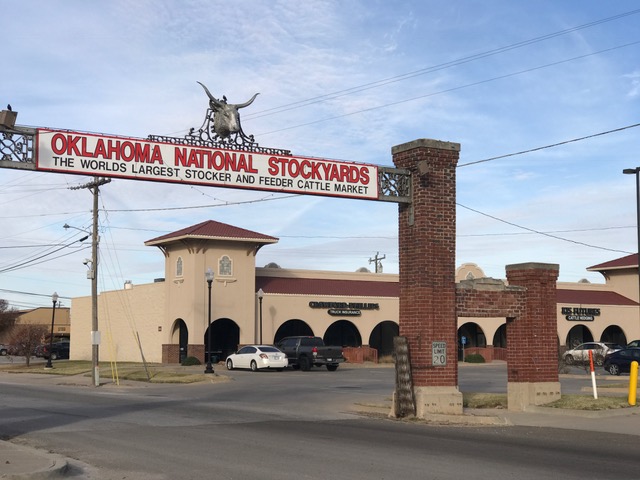
Oklahoma Winter Wheat Condition Good to Excellent Ratings Decline Five Percentage Points

US Crop Progress Report:

Winter Wheat Headed reached 15 percent, down 1 point from the previous year but up 2 points from the average. Winter wheat conditions rated 45 percent good to excellent, 34 percent fair, and 21 percent poor to very poor. Last week's conditions rated 47 percent good to excellent, 34 percent fair, and 19 percent poor to very poor.

Corn planted reached 12 percent, up 1 percentage point from last year and 2 from the five-year average. Corn emerged reached 2 percent, down 1 point from a year ago, but equal to the five-year average. No corn conditions were provided.

Soybeans planted reached 8 percent, up 1 percentage point from a year ago and 3 from the five-year average. No soybean conditions were provided.

Cotton planted reached 11 percent, equal to a year ago and the five-year average. No cotton conditions were provided.

Sorghum planted reached 17 percent, equal to a year ago and the five-year average. No Sorghum conditions were provided.

Oklahoma Crop Progress Report

Winter wheat jointing reached 76 percent, down 6 percentage points from the previous year and 4 points from the five-year average. Winter wheat headed reached 20 percent, down 8 points from a year ago and 2 points from the five-year average. Conditions were rated 39 percent good to excellent, 44 percent fair, and 17 percent poor to very poor. Last week's conditions rated 44 percent good to excellent, 39 percent fair, and 17 percent poor to very poor.

Corn planted reached 24 percent, down 8 points from a year ago and 1 point from the five-year average. No corn conditions were provided.

Livestock conditions rated 51 percent good to excellent, 35 percent fair, and 10 percent poor to very poor. Last week's conditions rated 55 percent good to excellent, 36 percent fair, and 9 percent poor to very poor.

Pasture and range conditions rated 36 percent good to excellent, 43 percent fair, and 21 percent poor to very poor. Last week's conditions rated 39 percent good to excellent, 42 percent fair, and 19 percent poor to very poor.

In Kansas:

Winter wheat headed reached 6 percent, up 3 percentage points from a year ago and up 5 points form the five-year average. Winter wheat conditions rated 41 percent good to excellent, 37 percent fair, and 22 percent poor to very poor. Last week's conditions rated 43 percent good to excellent, 39 percent fair, and 18 percent poor to very poor.

Corn planted reached 27 percent, up 3 percentage points from last year, and 9 points from the five-year average. Corn emerged reached 3 percent, equal to a year ago, but up 1 point from the five-year average. No corn conditions were provided.

Soybeans planted reached 5 percent, equal to a year ago but up 3 from the five-year average.

In Texas:

Winter wheat headed reached 47 percent, down 2 percentage points from the previous year but up 1 point from the five-year average. Winter wheat conditions rated 27 percent good to excellent, 39 percent fair, and 34 percent poor to very poor. Last week's conditions rated 23 percent good to excellent, 40 percent fair, and 37 percent poor to very poor.

Corn planted reached 69 percent, up 2 points from the previous year and 3 points from the five-year average. Corn emerged reached 63 percent, up 9 points from the previous year and the five-year average. Corn conditions rated 33 percent good to excellent, 55 percent fair, and 12 percent poor to very poor.

Cotton planted reached 16 percent, equal to last year and the five-year average. No cotton condition ratings were provided.

Sorghum planted reached 59 percent, equal to the previous year and the five-year average. Sorghum emerged reached 45 percent, up 39 points from the previous year and the five-year average. No sorghum condition ratings were provided.

Range and pasture conditions rated 23 percent good to excellent, 38 percent fair, and 39 percent poor to very poor. Last week's conditions rated 19 percent good to excellent, 30 percent fair, and 51 percent poor to very poor.

Secretary Rollins Joins Egg Farmers on White House Lawn for Easter Egg Roll

U.S. Secretary of Agriculture Brooke L. Rollins joined the 2025 White House Easter Egg Roll on the South Lawn alongside American egg producers.

"The White House Easter Egg Roll is the yearly Super Bowl for eggs! Egg farmers and consumers were hit hard by the negative impacts of the bird flu this past year, but, thankfully under President Trump's leadership, our five-point plan to combat avian flu and lower egg prices is working. Going into Easter weekend, wholesale egg prices are down 56 percent! This historic event is a great opportunity to celebrate this progress alongside America's hard working egg farmers," said Secretary Rollins.

Secretary Rollins was a featured reader at the Reading Nook

Secretary Rollins was a featured reader at the Reading Nook.

Secretary Rollins joined in on the egg roll at the White House

Secretary Rollins joined in on the egg roll at the White House.

Secretary Rollins has worked diligently to support American poultry and egg producers, combat avian flu, and lower the cost of eggs for consumers. In February, she announced a five-point plan to combat the avian flu and lower egg prices which has been applauded by agriculture and government leaders across the country. When the five-point plan was announced, the wholesale price of eggs was $8.53/dozen. As of Easter weekend, the wholesale price of eggs is 56 percent lower at $3.72/dozen.

The White House Easter Egg Roll is a tradition dating back to 1878, and this year, an estimated 30,000 real eggs donated by American egg farmers were used in the festivities.

NSP seeks candidates for the Board of Directors

National Sorghum Producers has opened applications for the 2025 board of directors. NSP is looking for new producer leaders who are passionate about advancing the crop and shaping the future of the sorghum industry.

"We often hear that getting involved is the most important thing we can do to ensure tomorrow for our industry and the next generation," said NSP Chair Amy France. "In today's uncertainty, there are no truer words. We are excited to help drive effective policy and promote, advocate for, and defend the sorghum industry. We encourage and welcome all who have a passion for sorghum, agriculture and the future of our family farms to apply."

Board members are instrumental in advancing policies and building relationships that benefit sorghum farmers and the industry. Candidates should be NSP members passionate about advocacy and fundraising, with a vision to advance the industry. No prior board experience is necessary to apply.

"We're looking for forward-thinking leaders who are passionate about shaping the future of the sorghum industry at this critical time," NSP CEO Tim Lust said. "With ongoing policy challenges and opportunities on the horizon, our farmer-led board plays a vital role in ensuring sorghum producers are strongly represented in Washington, D.C. It's about stepping up with vision, purpose and a commitment to making a real impact."

Applications are due Tuesday, May 20, 2025, at 5 p.m. Central Time. After the application deadline, the NSP Nominating Committee will review all applications before making nominations to the NSP Board of Directors for consideration and election during the August summer board meeting. Selected members will serve a three-year term, beginning October 1, 2025—the start of NSP's fiscal year.

For the application and more information, visit SorghumGrowers.com/leadership/.

USMEF's Reaction to Changes in USTR Port Service Fee Plan

On Thursday, the Office of the U.S. Trade Representative (USTR) published revisions to proposed port service fees designed to revitalize the U.S. shipbuilding industry. The changes came in response to industry feedback, including comments from the U.S. Meat Export Federation (USMEF).

The changes to the proposed fees are outlined in this USTR press release and fact sheet.

From the perspective of U.S. red meat exporters, the most significant changes made from the original proposal include:

  • Fees will not be charged on every port call – only per voyage. This reduces the likelihood that carriers will eliminate port calls, which had been a major concern for U.S. exporters.
  • The revised service fee structure is based much more on vessel capacity rather than flat fees, making it less burdensome for smaller ships used on shorter routes such as to Central America and Colombia.

In the attached audio report, USMEF President and CEO Dan Halstrom offers his reaction to these proposed changes. 

For questions, please contact me or email Joe Schuele.

Legislative Focus: Rep. Ty Burns on Mental Health, Education and Agriculture in Oklahoma

Listen to KC Sheperd talking with Rep. Ty Burns about his legislative priorities during the current session.

Farm Director KC Sheperd caught up with Oklahoma State Representative Ty Burns to learn his priorities for the current legislative session. He listed the mental health of Oklahomans, a bill involving the inconvenient length of trains, another to ban the sale of lab-grown meat in the state, and the third to reduce the number of virtual days to return students to more time in-person in the classrooms.

"There is a major mental health issue in Oklahoma," he said. "That is obviously the priority for House leadership, and there are a lot of different committees coming together to look at that. Hopefully, we can get that resolved very soon."

Rep. Burns is closely monitoring the progress of his own bills, especially House Bill 758, which deals with the number of in-person classroom days students and schools must adhere to.

"Covid allowed these virtual days to take effect, and now people are misusing them," he stated. "This is a state issue. We are talking about the billions of dollars that we use to fund schools at the state level – that's our job. The biggest thing is H.B. 758 did not eliminate the four-day school week; you are going to have to adjust your calendar if it does go through because virtual days will be limited to two."

He emphasized the number of talented teachers in the state and how much better students learn in person with those teachers than on digital devices. Also, how difficult it can be for working parents to manage having their children home on virtual days and helping them with their schoolwork.

Rep. Ty Burns (photo from okhouse.gov)

The bill to ban cultivated meat products, authored by Senator Grant Green, passed in the House and has been sent to the Senate. "One of the things that scares me about this is one of the big four learning and going out and manufacturing lab-grown meat," he described. "Then, they are going to cut it. Right now, we have the problem with foreign beef coming in, and you have some fast food franchises that are using ¼ foreign beef, ¾ American beef, and calling it American beef. Now, they are going to do it with cultivated meat. Labeling isn't good enough because there are always loopholes in labeling. Just get rid of it completely. God did us a favor when He created these animals that feed us the protein."

He emphasized the importance of maintaining the culture of beef production and beef consumption in the state and the economic stability that it provides for the state.

A lot is going on at the State Capitol. Today is Veterans Day, and Sentinel resident Wayne Freeman was honored as the Veteran of the Week. Tomorrow is Ag Day at the Capitol, and next week will include AFR Day at the Capitol and Beef Day at the Capitol. Ag Day at the Capitol will be held in the 2nd Floor Rotunda from 8 am to 5 pm and is an opportunity to bring the story of agriculture to the Oklahoma legislature.

Sentinel Oklahoma's Wayne Freeman with Representative Nick Archer

Rep. Burns first congratulated Mr. Freeman for his recognition, then described the celebratory days at the Capitol, saying, "When you start talking about Ag in Oklahoma when it comes to the Capitol, it is one of the biggest days we start talking about all of the different types of ag coming together from the cotton, soybeans, wheat to ranchers, pork and chicken producers. We have a plethora of ag industry here in the state of Oklahoma. Once you start getting everybody up here, you start seeing all of the different entities that are pushing ag and how big it really is and how big of an economic stability that it becomes in the state."

He gave a shoutout to AFR and its day at the Capitol and touted them for beginning the Oklahoma Certified Beef Association, which will provide a beef meal for the Oklahoma Rural Caucus. "It is a great time to, not just promote beef, but Oklahoma beef, and I look forward to that day," he said.

Sheperd brought up the value of helping urban dwellers who may not fully appreciate the agricultural industry in the state learn more about it, and Burns readily agreed. He admitted that he cringes some when he hears that Oklahoma is tenth in migration due to people hearing how great the state is and wanting to live its it's expansive rural areas, and also industries, such as solar power utilizing acres that would otherwise be agricultural acres.

"It is a big, big concern," he said. "Going back to cultivated meat, that was the whole Green Deal push – 'get rid of the farting cow' – so that is another reason to ban it. This is a whole different cultural attack on what we are in Oklahoma. There are serious different issues that you have that make everybody be aware, and hopefully, the urban areas can see that and appreciate it.

"I know on the Rural Caucus, we have several urban representatives that come in, and even on our agricultural committee, Trish Ranson, she is an urban Stillwater girl. I don't know that she has ever truly eaten any dust, but she gets in there and pulls her sleeves up and really tries to understand the problems that we have in agriculture and in the rural communities, so I think that is awesome and that is another thing this day does."

Dr. Derrell Peel Explains Slow Path to Rebuilding the US Cowherd

Listen to Ron Hays talking with Dr. Derrell Peel about rebuilding the nation's cowherd.

Senior Farm and Ranch Broadcaster Ron Hays talked to OSU Extension Livestock Market Economist Dr. Derrell Peel after the latest USDA Cattle-on-Feed Report was released last week. In Friday's BeefBuzz, Dr. Peel analyzed the numbers. Today, he is discussing rebuilding the nation's cowherd.

Dr. Peel explained that his basic outlook hasn't changed in about two years, a period which he described as the longest in his career that something hasn't come up to change things. "The only thing we've done is we've extended it farther because it is really this heifer retention question. We've been slow to start. We may be starting now, and that may lead to some different things to say at some point, but really it has been the same message for a long time, with the exception, of course, that we are in a much more volatile external environment that the cattle market is working in right now."

Politics, trade debates, and macroeconomic aspects are the contributing factors to the volatility of the environment; however, they haven't changed the overall outlook.

The U.S. cowherd experienced such constriction initially because prices of cattle have been too high to pass up, especially considering the recent prevalence of drought conditions. Producers sold their heifers, reduced the stress on their land, paid off their bills, and some are now looking to begin rebuilding their herds; however, progress will be slow.

"Even if we do start, I don't know that we are going to see a really aggressive, rapid push here," Dr. Peel said. "I think it will be a little more moderated kind of pace of herd rebuilding that will take several years to fully develop."

He explained further that producers and their lenders are being understandably prudent and very cautious about rebuilding, considering the astronomical prices of cattle right now. "Some producers are in better shape to be the ones to go out and make this expansion happen; other producers maybe still need a little time to get themselves in better shape financially, so prudently, might be the ones who hold back a little bit," he said.

According to the Monthly Retail Price Report, beef prices continue to increase at record levels. When comparing beef prices to those of other proteins, beef is much higher, further exemplifying the value consumers are placing on beef when they don't move to less expensive alternatives like pork or chicken.

While Dr. Peel doesn't think consumers will turn away from beef entirely, he expects two things to happen over the next few months: if heifer retention begins, beef production will fall, and consumers will make some adjustments to the mix of protein products they are consuming in favor of a less expensive product.

"I don't think we'll see a mass abandonment of beef under, virtually, any circumstance," Dr. Peel stated. "We will probably see more impacts as we go further and squeeze supplies and push these prices even higher."

The Beef Buzz is a regular feature heard on radio stations around the region on the Radio Oklahoma Ag Network and is a regular audio feature found on this website as well. Click on the LISTEN BAR for today's show and check out our archives for older Beef Buzz shows covering the gamut of the beef cattle industry today.

Dairy Market Report: Milk Sales Increase, Dairy Prices Slip Amid Economic Shifts

Rising milk production, together with the current climate of general economic uncertainty, is pressuring milk prices, although margins remain relatively high.

February fluid milk sales were 1.3% higher than a year earlier when adjusted for leap year, while revised January numbers from USDA show the national milk cow herd was 66,000 head larger than in January 2024. Preliminary February numbers showed an annual gain of 62,000 head and a leap year-adjusted 1% increase U.S. milk production.

The four monthly NDPSR dairy product survey prices, and consequently the Class III and Class IV prices, were all lower in March from a month earlier. The Consumer Price Index (CPI) for all items set a new record in March, as it usually does, but it was just 2.4% higher than a year earlier, indicating a relative cooling of overall retail price inflation by that common yardstick. The March CPIs for most of the key dairy products reported stayed measurably below the high levels they attained in recent years. The U.S. average all-milk price dropped by $0.50/cwt from January to $23.60/cwt in February, and the Dairy Margin Coverage margin dropped by $0.73/cwt, to $13.12/cwt.

View Full Report.

Daily Email for April 21, 2025


Oklahoma's Latest Farm

And Ranch News

Monday, April 21, 2025

 
Howdy Neighbors!

Here Are Your Top Stories in Today's Oklahoma Farm and Ranch News:


  • Dr. Burke Healey Warns of New World Screwworm's Continued Northward Progress


  • Introducing Hayden Taylor of the Ketchum FFA, Your 2025 Northeast Area Star in Agribusiness


  • Farm Athletes: Cultivating the Next Generation of Leaders Both on the Field and the Farm


  • Easter Weekend Rainfall Totals


  • And Lots More Below!

Dr. Burke Healey Warns of New World Screwworm's Continued Northward Progress

Senior Farm and Ranch Broadcaster Ron Hays features comments with Dr. Burke Healey, USDA's APHIS Executive Director for VS' Strategy and Policy division, about the New World Screwworm (NWS) situation in Southern Mexico. The parasitic fly is known for infesting open wounds on livestock, especially cattle, and poses a significant threat to other mammals, including humans, and occasionally, birds.


For context, the NWS had been eradicated from the continental United States (US) since the 1970s with partnerships between the US and Mexico pushing the pest to Mexico's southern border by 1986; however, due to the pest's ability to be unknowingly transported, there have been isolated incidents of NWS in the US such as the 2016 identification in the Florida Keys in Key deer, pets, and swine.


Last November, reports confirmed that the pest had resurfaced in the southern Mexican state of Chiapas, and the U.S.-Mexico border was closed to animals moving North out of Mexico. In March, the border was reopened with stringent protocols to prevent potentially affected cattle from being moved.

Listen to Ron's BeefBuzz with Dr. Burke Healey and Read More Here

Sponsor Spotlight

Oklahoma AgCredit supports rural Oklahoma with reliable and consistent credit, today and tomorrow. We offer loans for land, livestock, equipment, operating costs and country homes (NMLSR #809962) to farmers, ranchers and rural businesses across 60 counties. As a cooperative, we are owned by the members we serve. Through our Patronage Program, we have returned more than $74 million to our members since 1997.


For more information on our services or to find a location near you, visit our website here.

Introducing Hayden Taylor of the Ketchum FFA, Your 2025 Northeast Area Star in Agribusiness

During the month of April, the Radio Oklahoma Ag Network and Oklahoma Farm Report are spotlighting the 19 Area Stars of Oklahoma FFA, who are among the highest achievers in the organization.


This week, our coverage of the 2025 Oklahoma FFA Star Award Finalists continues with Agribusiness competitor Hayden Taylor of the Ketchum FFA chapter representing the Northeast Area.


"My SAE started in the midst of COVID-19," Taylor explained. "I sell high-quality cuts of beef. That is something that I noticed not a lot of people did, and I noticed that during COVID-19, there wasn't... well, we all noticed the shortage of toilet paper. There was also a lack of beef in the supermarkets."


He needed a project that would profit, but allow him the freedom to play sports, and seeing the need, he began this project in the eighth grade. He buys weaned steers, raises them for about 150 days, and feeds them out to processing. He then sells both retail and wholesale cuts of beef and prides himself on producing high-quality cuts with no synthetic additives before or after processing.

Listen to KC's Conversation with Hayden Taylor and Read More Here

Farm Athletes: Cultivating the Next Generation of Leaders Both on the Field and the Farm

A unique initiative is taking root across the United States, aiming to support and connect a special group of young individuals: college athletes with a background in agriculture. Farm Athletes, launched in August 2024 by Zach Bosle, the CEO of Tractor Tuesday and a sixth-generation farmer from Hastings, Nebraska, is designed to recognize and assist these student-athletes. 


Troy Stickels from Farm Athletes recently shed light on the organization's origins and mission with Farm Director KC Sheperd. "Farm athletes really got started last August," Stickels explained. The idea sprung from a desire to give back to the community through Bosle's farm auction site, Tractor Tuesday. According to Stickels, Bosle "takes things and blows them up a lot bigger than I would ever dream of," leading to the creation of Farm Athletes.


Initially, the focus was on Name, Image, and Likeness (NIL) deals. "Essentially, what we started out doing was search the country for Division One, Division Two, NCAA athletes who grew up on farms or ranches and were playing college sports, and we wanted to give them a little bit of money through an NIL deal and have them promote Tractor Tuesday," Stickels elaborated.

Listen to KC's Interview with Troy Stickels and Read More Here
Sign Up for Our Daily Email- Free Because of Our Sponsors!

Support Our Sponsors!


KIS logo


Advertise With Us!


For our farmers who have either- always have had cotton on their farms- or those who have more recently have added the fiber crop to their operations- we have a daily report heard on several of our Radio Stations- It's Called Cotton Talk!


Click on the Button below to listen to our most recent report

Click here for our Latest Cotton Talk- Hosted by KC Sheperd


The latest news from the Oklahoma State Capitol is available daily on the Radio Oklahoma News Network.


Click on the blue button to hear from our Radio Oklahoma Network Capitol Correspondent Jacquelyn Farris

Click here for the latest report from the State Capitol on RON


Noble Research Institute Partners with Kansas State to Preserve Tallgrass Prairie Through Rancher Education

In this partnership, led by Kansas State University, Noble will develop educational programming and a grazing support tool with regional knowledge and expertise from the Kansas Grazing Lands Coalition. Hy-Plains Feedyard will provide research and dedicated educational facilities in the Kansas Flint Hills region. Funding for this project was made possible through a $998,195 grant from the USDA Natural Resources Conservation Service.


In an additional partnership with the Kansas Grazing Lands Coalition, scholarships funded by this grant will allow series attendees to participate in the KGLC's annual range academies.


The Noble Grazing: Flint Hills Series will provide ranchers with a tailored, hands-on educational experience that combines grazing management, business strategies and region-specific tools for lasting success.


The series, priced at $585, consists of three targeted courses, with the inaugural participant group beginning this May.

Learn More About these Targeted Courses Here
 

We invite you to listen to us on great radio stations across the region on the Radio Oklahoma Ag Network weekdays-

if you missed this morning's Farm News - or you are in an area where you can't hear it- click below for this morning's Farm news from Ron Hays and KC Sheperd on RON.
Listen to our Monday morning farm and ranch news with KC Sheperd
 
 
Subscribe To the Daily Email


Sponsor Spotlight


Oklahoma Farm Bureau works to improve the lives of all Oklahomans by supporting our state's agriculture community. As Oklahoma's largest general farm organization led by Oklahoma farmers and ranchers, OKFB takes grassroots values and advocates for agriculture at the state Capitol and in Washington, D.C., to ensure our way of life continues for generations to come. Farm Bureau hosts leadership events, supports our state's agricultural youth and connects consumers with agriculture in order to build a brighter future for our state. Become an OKFB member today online at okfarmbureau.org/join. Together, we are rural Oklahoma.


Easter Weekend Rainfall Totals Show Big Totals in Eastern Oklahoma

If you saw the Mesonet Ticker from Gary McManus last Friday- you may have been drawn to the map of rinafall totals that one model was showing huge amounts of rain in central and western Oklahoma- we got a down payment on that rainfall over the Easter weekend but remember that the map that McManus was showing included rain out to this coming Friday- and there are more significant rainfall chances coming mid week- so stay tuned for that.


As for this map above- it's clickable (so explore which Mesonet station got what amount)and it shows a lot of the wheat belt in Oklahoma getting one to two inches- very valuable for moving the 2025 wheat crop forward and providing some moisture for preparation to plant spring planted crops as well.


Eastern Oklahoma totals have resulted in flooding with at least three locations receiving 6 inches or more- Okemah, Holdenville and Newport the stations with those totals.


Sunshine today for most of Oklahoma- then storms and more rain will start building back in the days to follow.


Secretary Rollins Appoints Multiple Oklahomans to Key USDA Roles

US Secretary of Ag Brooke Rollins and her team at USDA are tapping multiple Oklahomans(and those with ties to the state via OSU) to be a part of the USDA team. That includes Dr. Jaye Hamby, who was recently named director of USDA's National Institute of Food and Agriculture and earned master's and doctoral degrees at Oklahoma State University in agricultural education with a specialization in agricultural economics and was an active 4-H'er and a national FFA officer.  


Dr. Jaye L. Hamby was appointed as the USDA NIFA Director on March 20, 2025.  


Others who have recently joined the Rollins team at USDA include:


Riley Pagett – Chief of Staff for Trade and Foreign Agricultural Affairs. Most recently, Riley served as the Deputy Chief of Staff for U.S. Rep. Tracey Mann. Previously, Riley served as Chief of Staff for USDA's Office of Partnerships and Public Engagement. He holds a Juris Doctorate from American University Washington College of Law and a Bachelor of Science in Agricultural Communications from Oklahoma State University. Pagett is a former President of the Oklahoma FFA as as well as a Past President of the National FFA.


Alison Slagell – Senior Policy Advisor to the Secretary for Marketing and Regulatory Programs, Farm Production and Conservation, and Immigration. Most recently Alison served as Deputy Chief of Staff for U.S. Rep. Frank Lucas of Oklahoma. Alison was born and raised in Hydro, Oklahoma, on her family's fifth generation farm and is a proud graduate of Oklahoma State University.


Check out more Oklahomans that are a part of the Rollins USDA Team

U.S. Wheat Organizations Express Gratitude to the Government for Adjustments to Proposed Remedies

U.S. Wheat Associates (USW) and the National Association of Wheat Growers (NAWG) extend thanks to the Office of the U.S. Trade Representative (USTR) for targeting the proposed Section 301 actions regarding Chinese maritime practices in ways that protect U.S. farm commodity export competitiveness.


We appreciate USTR's understanding of the impact the original proposals could have had on wheat growers and the grain trade. The uncertainty about the proposals was already causing problems for overseas customers, who were hesitant to make purchases with additional port fees looming.


"This move means a lot to farmers and customers around the world," said USW Chairman Clark Hamilton, a wheat farmer from Ririe, Idaho. "We want to thank them for their efforts to balance the need for action against these Chinese maritime practices with the potential for harm to our export competitiveness."


The U.S. wheat industry and its customers depend on ocean-going vessels, especially dry bulk carriers, and exports are vital to this sector. About half of the U.S. wheat crop is exported each year. The reconsideration of the proposal, which would have significantly increased export costs for U.S. wheat, is a welcome relief for our industry.

Read More from USW and NAWG Here

USDA Reiterates Importance of Those Who Can Work, Should Work While Receiving SNAP

Today, the U.S. Department of Agriculture issued a memorandum to all state agencies administering the Supplemental Nutrition Assistance Program (SNAP), making it clear that states must ensure SNAP benefits are provided with the expectation that those who can work, do.


"Since my confirmation, I have reiterated the states are our partners, and this includes ensuring our nutrition programs are tied to putting Americans back to work," said Secretary Rollins. "It is important to remind states that Congress conditioned the receipt of benefits by able-bodied adults without dependents on satisfying work requirements. Many states have abused the system by requesting work requirement waivers. Today marks the start of a new era for SNAP—prioritizing work, career and technical education, and volunteering rather than idleness, excess spending, and misapplication of the law."


In June 2023, the Fiscal Responsibility Act of 2023 amended the Food and Nutrition Act of 2008 (the Act) to include in the Supplemental Nutrition Assistance Program's (SNAP) purpose statement that it "assist low-income adults in obtaining employment and increasing their earnings." This pivotal legislation reaffirmed efforts to reduce dependency on public assistance programs and increase self-sufficiency.

Read More About USDA's Stance on this Issue Here
Let's Check The Markets!
OKC West is our Market Links Sponsor- they sell cattle three days a week- Cows on Mondays, Stockers on Tuesday and Feeders on Wednesday- Call 405-262-8800 to learn more.
 

We are changing how we present markets to you on our website- click on the Blue Button to see our Markets Page that is evolving

Check Out Our MARKETS Page
 
Wholesale Boxed Beef Prices were higher- Choice Beef was up 65 cents and Select Beef was up $1.09 on Friday 11/20/2020.

Click on the Button below for the latest report from USDA Market News
Boxed Beef Report
 

Oklahoma National Stockyards had 1,332 head on the yards as of 9 PM last night. The sale will start at 10:00 am. We are expecting to start with 1,500 to 1,800.


Last Monday on April 14th- "Compared to the previous week's lighter receipts: Feeder steers over 800lbs 4.00-10.00 higher under 800lbs 20.00-25.00 higher. Feeder heifers 10.00- 20.00 higher. Steer calves 4.00-10.00 higher. Heifer calves 20.00-30.00 higher. Quality was much improved from last week. Demand good. Cattle futures have recovered nicely late last week and today. Rain is forecasted for this weekend."


Click below for the complete closing report.

Oklahoma National Stockyards Market Report from 04/07/2025
 

Here's our regular feature that is a part of the Monday Daily Email- market commentary from Bob Rodenberger, a partner with Stockman Oklahoma Livestock Marketing.


Bob talks Fridays with our own KC Sheperd with his commentary and is posted on our website-click here for this past Friday's story featuring Rodenberger's comments.


Learn more about Stockman Oklahoma by clicking here.

 
Listen to KC Sheperd talk with Bob Rodenberger about the cattle markets from the past week
 
Each afternoon we are posting a recap of that day's markets as analyzed by Justin Lewis of KIS futures - click below for the latest update on the Livestock and Grain Futures Trade..
Click Here to Listen to Justin's Commentary From 4/17/2025
 
Okla Cash Grain:  
Daily Oklahoma Cash Grain Prices- as reported by the Oklahoma Dept. of Agriculture- The report available after the close of the Futures Trade for that day.
Read Cash Grains Report from 4/17/2025

Our Oklahoma Farm Report Team!!!!


Ron Hays, Senior Farm/Ranch Broadcaster and Editor


KC Sheperd, Farm Director and Editor


Dave Lanning, Markets and Production


Stevie White, Farm News and Email Editor


Pam Arterburn, Calendar and Template Manager

Podcasts From Oklahoma Farm Report and More

Two of our regular reports are also podcasts that you can subscribe to- Our daily Farm and Ranch News with KC Sheperd- available here on the Apple Podcast Platform


The second is our daily Beef Buzz with Ron Hays- available here on the Apple Podcast Platform


Periodically- we offer interviews on our Ag Perspectives Podcast series- this podcast is available here.


Ron has also has a series of podcasts from interviews with newsmakers at the Cattlemen's Congress- Click here or you can find them on your favorite Podcast platform- look for them by searching for Cattlemen's Congress Conversations.


We are making plans to jump back into regular installments of what has been called the Road to Rural Prosperity- a new name and fresh content is in the works- for now- click on the blue button below for one of our favorites that is a timeless classic.


The link below is one of our most recent podcasts- Ron spotlighting the upcoming Hemphill County Beef Conference with Andy Holloway

Listen to Ron Hays talking with Andy Holloway about the Hemphill County Beef Conference April 29-30
 
 
Listen to Ron
Beef Buzz
Market Links
 
Blue Green Gazette
Calendar
Auctions
Facebook  Twitter  Youtube  

Our thanks to Midwest Farms Shows, P & K Equipment, Oklahoma Farm Bureau, Great Plains Kubota, Stillwater Milling Company, National Livestock Credit Corporation, Oklahoma Beef Council, Stewart Martin Kubota, Oklahoma Pork Council, Oklahoma Wheat Commission, Oklahoma AgCredit, the Oklahoma Cattlemens Association, and  KIS Futures for their support of our daily Farm News Update.


For your convenience, we have our sponsors' websites linked here- just click on their name to jump to their website- check their sites out and let these folks know you appreciate the support of this daily email, as their sponsorship helps us keep this arriving in your inbox on a regular basis- at NO Charge!


We also appreciate our Market Links Sponsor - OKC West Livestock! 


We invite you to check out our website at the link below too that includes an archive of these daily emails, audio reports and top farm news story links from around the globe.

Head to Our Website OklahomaFarmReport.Com
God Bless!
Reach Out To Us:

Tim West

President/General Manager

Rural Oklahoma Networks


405-317-6361


***************


Mike Henderson

Executive Director of

Hilliary Media Group


405-615-4922


KC Sheperd
Farm Director
Radio Oklahoma Ag Network

405-443-5717

Email KC
Ron Hays
Senior Farm/Ranch Broadcaster
Radio Oklahoma Ag Network

405.473.6144
Email Ron

Dr. Derrell Peel: Fewer Cattle - and Heifers - on Feed

Dr. Derrell Peel, Oklahoma State University Extension Livestock Marketing Specialist, offers his economic analysis of the beef cattle industry as part of the weekly series known as the "Cow Calf Corner," published electronically by Dr. Peel, Mark Johnson, and Paul Beck. Today, Dr. Peel discusses the latest Cattle-On-Feed Report.

The latest USDA Cattle on Feed report pegs feedlot inventories on April 1 at 11.638 million head, down 1.6 percent year over year.  The twelve-month moving average of feedlot inventories is 11.586 million head, the lowest average level since November 2023.  March feedlot marketings were 1.725 million head, up 1.1 percent year over year.  Marketing in the first quarter of the year are down 2.2 percent compared to one year ago.  Placements in March were up 5.1 percent from one year ago but are down 4.0 percent year over year in the first three months of 2025.

In the current cattle cycle, feedlot inventories peaked in 2022.  The April 1 feedlot inventory was down 4.6 percent compared to April 1, 2022.  The top six cattle feeding states in April 2022 (Texas, Nebraska, Kansas, Colorado, Iowa, and California) accounted for 85.6 percent of the total feedlot inventory.  Those same top six states currently account for 84.1 percent of the total feedlot inventory. Since April 2022, feedlot inventory in Texas has decreased by 9.5 percent; Nebraska, down 2.3 percent; Kansas, down 6.8 percent; Colorado, down 9.1 percent; and California, down 11.5 percent.  Among the top six states, only Iowa currently has a larger feedlot inventory, up 4.6 percent since April 2022. 

The April report also contained the quarterly inventory of steers and heifers on feed.  Heifers on feed was 4.38 million head, down 3.9 percent from a year ago and down 4.3 percent from January.  Heifers on feed are currently at 4.38 million head, 37.6 percent of the total on-feed inventory, the lowest quarterly total since July of 2021 and the lowest percentage since April 2020. The heifer percentage has averaged over 39 percent for the past 16 quarters. This may be the first solid evidence that some heifer retention is beginning.  It is not definitive nor very strong yet – the current heifer on-feed percentage is still fractionally above the long-term average percentage (the red line in Figure 1).  During herd expansion, the heifer percentage is expected to drop below 35 percent for several quarters.  The next quarterly update in July may confirm the declining heifer on-feed percentage and heifer retention if the percentage drops below 37 percent.

Derrell Peel, OSU Extension livestock marketing specialist, discusses how tariffs are creating uncertainty but the fundamentals of the cattle markets remain the same. on SunUpTV from April 22, 2025, at https://www.youtube.com/watch?v=P8F6jGRso68.

EPA and Army to Host Listening Sessions to Gather Input on WOTUS from Key Stakeholder Groups

Next week, the U.S. Environmental Protection Agency (EPA) and U.S. Department of the Army (Army) will host listening sessions to gather input on the definition of Waters of the United States (WOTUS) under the Clean Water Act.  

On March 12, EPA Administrator Lee Zeldin announced the agencies' intent to revise the definition of WOTUS to follow the clear direction of the Supreme Court in Sackett v. EPA while eliminating red tape, cutting compliance costs, and reducing the cost of living. To achieve this vision, the agencies will develop a proposed rule to revise the 2023 definition of WOTUS. 

The listening sessions are intended to help EPA and Army understand real-world perspectives and experiences with WOTUS implementation to inform the agencies' upcoming proposed rule. In addition to the sessions listed below, EPA will hold listening sessions for local governments, Tribes, and the general public.   

Registration information for these listening sessions can be found here: 

Who: 

  • Peggy Browne, U.S. EPA Principal Deputy Assistant Administrator for Water 
  • Stacey Jensen, U.S. EPA Division Director, Office of Wetlands, Oceans, and Watersheds 
  • Milton Boyd, Acting Director of Policy and Legislation; Office of the Assistant Secretary of the Army (Civil Works) 

What: Listening session to gather input from states, tribes, agriculture and industry, and environmental and conservation groups on the definition of WOTUS.  

When: 

  • States: Tuesday, April 29, from 9:30 a.m. – 12 p.m. ET  
  • Industry and Agricultural Stakeholders: Thursday, May 1, from 9:30 a.m. - 12 p.m. ET 
  • Environmental and Conservation Stakeholders: Thursday, May 1, from 1 p.m. - 3:30 p.m. ET 

Where: These listening sessions are being offered virtually and in person at EPA Headquarters (1201 Constitution Ave NW, Washington, DC)  

Please see additional information about Waters of the United States. 

Supporting Youth--Rural Mental Wellness Toolkit

TIPS FOR TAKING CARE OF YOUR MENTAL HEALTH
www.studentmentalhealthtoolkit.com
Did you know that everyone has mental health? In fact, your mental health can shift depending on how you take care of yourself and what you do throughout a day because this has a huge impact on your mental wellbeing. The following tips will help you pay attention to your mind and help you feel like you can be active in taking care of all of you.
Take A Break from Electronics

  1. Maybe take a break from electronics: no television, no radio, no internet. Instead, try
    participating in some activities you enjoy, such as reading a book, baking with a parent
    or older sibling, getting outside, working on a project, or creating art. Sometimes
    listening to the news or reading about our world online can be very worrisome and
    taking this break will likely make you worry less. Remember though, worrying about
    life is a normal response. But, worrying too much is not good for you. You can also talk
    to someone you trust about your feelings if you feel that your worry is out of control.
    Stay Physically Active
  2. Staying physically active doesn't only help your body, it also can help your mind.
    You can stay physically active by getting outside and going for a hike or bike ride, or by
    following safe workouts online, dancing, playing sports or even just going for a walk
    around your neighbourhood. Being physically healthy and eating healthy go hand in
    hand. What you eat can impact your mental health in a big way. Try to stay away from
    sugar, caffeine and instead make healthy snack choices like fruit and nuts. The health
    of your body and mind are so important and connected and there's a lot you can do to
    impact the health of your body and your brain
    Deal with Your Stress
  3. Try to be aware of what stresses you out in your life. You can try to avoid what
    stresses you out the most, or if you can't, you can learn to deal with the stress. Stress is
    a part of life and affects people in different ways. Rather than react quickly to stress
    (like yelling or storming out of a room), it's good to figure out ways to respond and
    learn various strategies to help you cope with the stress around you."
  4. Quality Sleep is Important
  5. Sleep. Sleep is essential to positive mental health - not only the amount of sleep you
    get, but the quality of your sleep is incredibly important. Try to go to bed at a regular
    time each day and practice good sleep habits for deeper, more restful sleep. Good
    sleep is important for both your mind and body. A regular sleep schedule is an
    important part of keeping routine, so practice good sleep strategies like having a
    regular bedtime, having a solid bedtime routine, like washing your face, brushing your
    hair, journaling, etc. We also recommend removing any electronics or distractions in
    the room you sleep in.
    Be Mindful
  6. Take a moment to notice each of your senses every day – what you see, hear, smell,
    feel, taste. Try to 'be' in the moment and breathe– this is called mindfulness. Try not to
    worry about the future and remind yourself to stay in the present. This is good for your
    mental health. Practicing mindfulness meditation is a wonderful way to make you feel
    less anxious and feel better in general. You can find a lot of examples on YouTube.
    Express Your Feelings
  7. Growing up can be difficult and as your world expands you may experience feelings
    such as frustration, anger, and sadness; it is so important to reach out to a friend or
    family member to talk with if your feelings become overwhelming. Although growing
    up can be really hard some days, there is no reason you have to suffer. Please
    remember that you are not alone!
    Have Alone Time
  8. If you're surrounded by people all the time, it is totally ok and healthy to find some
    alone time. You may need time to simply calm yourself from your many daily activities.
    There is no reason to feel guilty about taking time to be alone, as we all need time to
    relax by ourselves. Take this time to close your eyes, read a book, or listen to music or
    podcasts.

    Be Understanding
  9. If you live with someone who worries way too much or is really bummed out all the
    time, it's important not to criticize someone who is very worried or sad. Remember
    how you feel when you're worried or sad about something. Usually, you would want
    someone to listen to you and understand what you're saying. Your family member or
    friend likely needs that, so tell a parent or someone you trust about your concerns.
    It Will Get Better
  10. If you're having a hard day, remember, it will come to an end. You may need to
    remind yourself occasionally that time will continue to move and you'll get through
    what you need to get through, especially these days when it's so easy to get caught up
    in the negative things. As the saying goes, this too shall pass, even though it may not
    always feel like it. Keep your head up, and know this is a temporary reality that you can
    work through with your loved ones.

click here to learn more:

Weekend Rains Bring Drought Relief and Devastating Flooding to Oklahoma

Oklahoma experienced a weekend of significant rainfall that has provided much-needed relief to drought-stricken areas, according to State Climatologist Gary McManus. However, this welcome moisture came with a harsh reality familiar to Oklahomans: severe weather, including deadly flooding and several tornadoes.

"The rain over the weekend has certainly helped with the drought, obviously," McManus stated, acknowledging the positive impact on dry conditions. "We needed rain, desperately in some areas, and we did have some wonderful totals here and there over the weekend." Despite the drought relief, the intense nature of the storms led to tragic consequences. "But it was way too much in too short of time in lots of places, as was feared before the storms," McManus added, highlighting the dangers of Oklahoma's volatile weather. "Being Oklahoma, those storms brought lots of not-nice-stuff with them, the worst of which was the loss of lives due to the flooding and the half-dozen or so tornadoes." Eastern Oklahoma totals have resulted in flooding with at least three locations receiving 6 inches or more- Okemah, Holdenville and Newport the stations with those totals.

The threat of severe weather is not over for the week, as McManus cautioned residents to remain aware of potential storms in the coming days. "The severe weather isn't over (is it ever?) this week, as we will have several chances for storms coming over the next several days," he noted. While current forecasts don't indicate widespread outbreaks, McManus emphasized the unpredictable nature of Oklahoma weather. "It doesn't look like outbreak situations, but it is Oklahoma after all, and these things can get worse as the forecasts evolve." He specifically pointed to the risk of flash flooding with Tuesday's storms, particularly in western Oklahoma.

To read more from Gary McManus on his daily mesonet ticker, click here:

Introducing Bailey Faires of the Stroud FFA Chapter, Your 2025 Central Area Star in Agribusiness

Listen to KC Sheperd talking with Bailey Faires ahead of the State FFA Convention in Tulsa, Oklahoma.

During the month of April, the Radio Oklahoma Ag Network and Oklahoma Farm Report are spotlighting the 19 Area Stars of Oklahoma FFA, who are among the highest achievers in the organization.

The stars come from the five areas in four categories – Star in Ag Placement, Star in Agriscience, Star in Agribusiness, and Star in Agricultural Production.

This week, we spotlight the five area stars in Agribusiness in 2025.

One Star Finalist featured in the coming days from each of the categories will be named the State Star Award Winner during the 99th Oklahoma State FFA Convention, which will take place on May 6th and 7th in Tulsa, Oklahoma.

This week, our coverage of the 2025 Oklahoma FFA Star Award Finalists continues with Agribusiness competitor Bailey Faires of the Stroud FFA chapter representing the Central Area.

"I raise English bulldogs and dachshund puppies," Faires shared. "I started raising dachshunds in 2013, and got my first English bulldog in 2019, and I've just been trucking along ever since."

Faires was following in her mother's footsteps with the puppies, but she also loves breeding, training, and selling horses. "I just wanted something that little me could do in 2013, so I got my first dachshund and I was so happy. My mom helped so much with raising my first litter. Then we bought a trailer load of horses and I got a free English bulldog puppy. That got me into them. They are a lot of work, but I've had so much fun."

When asked how she manages to let go of the puppies after spending so much time with them, she replied reasonably, "You just have to clean up enough puppy poop."

Faires went to grade school in a small rural community whose school only went to eighth grade before she started at Stroud which she referred to as a "big school where I did not know anyone." After joining FFA, she began to feel at home. In addition to the puppy business, she judges livestock and competes in agriscience and speech.

She plans to attend Northwestern Oklahoma State University to work on her pre-veterinary medicine credits before transferring to OSU to obtain her veterinary degree. She hopes to continue to raise her own puppies while focusing her veterinary practice on Equine and Canine reproduction.

Hear KC's full conversation with Bailey Faires by clicking on the Listen Bar above.

Your coverage of the 2025 Oklahoma FFA Convention is sponsored by Hilliary Communications, who deliver the latest cutting-edge communications services supporting tens of thousands of customers across 22 counties throughout Oklahoma, Texas, and Iowa. The company offers internet, voice, and HilliaryTV. Hilliary Communications continuously researches the marketplace for innovations and strives to improve underserved areas, offering services that exceed customer expectations. Click here to learn more about Hilliary Communications.

For more information about the 99th Oklahoma State FFA Convention, click here.

Arkansas Student Receives ASA, BASF Soy Scholarship

Connor Henry of Stuttgart, Arkansas, is the recipient of the 2025-2026 Soy Scholarship award, sponsored by the American Soybean Association and BASF.

The ASA/BASF Soy Scholarship is a $7,000 award presented to an exceptional high school senior who excels in both academic and leadership roles and who plans to pursue a degree in an agriculture-related field of study at an accredited college or university. The scholarship is open to children and grandchildren of ASA members.

"ASA is proud to partner with BASF as a sponsor to help provide tools and resources aimed at empowering the next generation of agricultural leaders," said ASA President Caleb Ragland, who grows soy in Magnolia, KY. "Investing in future industry leaders like Connor helps pave the future of agriculture with success and growth."

Connor plans to attend the University of Arkansas in the fall and will pursue a degree in biological engineering. His impressive agricultural involvement includes leadership roles in 4-H and FFA. Connor serves as the Arkansas 4-H state president and is also working on obtaining a State FFA degree. He is fascinated with how drones and artificial intelligence can be integrated into agriculture and aspires to help lead others in the creation and adoption of technology to help strengthen and develop efficiencies to support farmers.

Connor recently obtained Eagle Scout status through Boy Scouts of America. The award, which represents leadership, service, and personal growth at the highest level possible, is awarded to only 5% of the scouts, exemplifying yet another impressive accomplishment by this year's scholarship recipient.

"BASF is deeply committed to investing in students who will shape the agriculture industry for future generations," said Scott Kay, Vice President, BASF Agricultural Solutions U.S. "We are grateful to partner with the American Soybean Association to provide the 2025-2026 Soy Scholarship to support students like Connor who have a passion for doing 'The Biggest Job on Earth.'"

NMPF Farmer Focus: Sustainability Drives Success at Schlangen Dairy

Leaving a farm better than you found it is a guiding principle for Steve Schlangen.

"The sustainability side of things, I think, is something dairy farmers have been a big part of for as long as I can remember," said Schlangen, who milks 60 dairy cows with a robotic milker near Albany, MN.

For Steve and his wife Cheryl, being good stewards of the land has always been a part of their story as they carve a path for future generations of dairy farmers one project at a time.

Steve's dairy journey started in 1986, when he rented a barn and bought a small Holstein herd on the farm they own today. After marrying Cheryl, they purchased what's now Schlangen Dairy. Steve and Cheryl are Associated Milk Producers Incorporated (AMPI) member-owners; in 2020, they were among the first AMPI member-farms to voluntarily complete a FARM Environmental Stewardship evaluation.

"If you see opportunities out there to improve, to help your operation, to give you a brighter future, you definitely want to explore it," he said. Through the FARM ES evaluation, Steve was able to set a baseline for the farm's estimates of greenhouse gas emissions and energy intensity.

The FARM ES Program is a farm-level environmental assessment and customer assurance program that's one of five program areas in the National Dairy Farmers Assuring Responsible Management (FARM) Program. The core FARM ES evaluation provides a comprehensive estimate of greenhouse gas emissions on dairy farms, powered by the Ruminant Farm Systems (RuFaS) model. The program gives farmer tools and resources to measure and improve their footprints.

"I think something we think about every day is how to continuously improve," said Steve. "We try to make the environment, our land and everything we do better than what it was last year, or the year before, or even when we started."

By having a baseline, the farm is able to track, measure and ultimately improve its emission estimates. FARM ES helps Schlangen Dairy evaluate environmental practices and how those practices change the farm's overall footprint.

As a FARM ES Task Force member, he hopes to share his knowledge with FARM's program participants.

"One of my reasons for joining was looking to help others understand the benefit and continue to move forward, to continue to improve on things in whatever way we possibly can," he said.

Schlangen Dairy participates in a number of state, regional and national programs that highlight the importance of sustainable practices in agriculture.

As the only farmer on the start-up committee of what would become the Headwater Agriculture Sustainability Partnership, he said he felt it was important for farmers to have a seat at the table. Steve was one of three farmers who originally volunteered for the HASP ROI project, a program promoting farmer-led conservation projects.

The farm participates in the Natural Resources Conservation Service Conservation Stewardship Program to improve its nutrient and pest management practices.

The Schlangens installed a stacking slab where manure is stored until nutrients can be applied to land at the optimum rate, time and place. The farm uses a vegetative buffer strip to improve water quality and provide hay for feed. They also use low-disturbance manure injection practices to incorporate nutrients into the soil, minimizing runoff risks and conserving water quality.

"All of these practices build on one another, creating sustainable and efficient water, feed and manure management systems," he said.

For Steve, improving the environmental factors on farms can also improve a dairyman's bottom line. "They absolutely go hand-in-hand," he said. Monitoring their practices and incorporating new research and technologies has increased crop yields while using fewer resources, contributing to economic gains.

"The manure management is not only good for the soil, but it reduces the cost and the effect of outside fertilizer," he said.

And all of it increases the sustainability of Schlangen Dairy, encouraging future generations to continue to produce the dairy products that consumers know and love today.

"It's not just about the money, it's about getting the most out of what you put into your operation every day."

Congressman Lucas Commemorates 30th Anniversary of Oklahoma City Bombing

 
Congressman Frank D. Lucas (OK-03) released the following statement after attending the 30th Anniversary Remembrance Ceremony in Oklahoma City.
"Each year we remember the 168 lives lost in a senseless act of terror. For many of us, the wounds of that day still carry a heavy burden. However, we must never forget how the inhumanity of one brought out the collective humanity of countless others as Oklahomans came together to overcome unthinkable tragedy. I am constantly filled with hope every time I'm reminded of the overwhelming sense of community that we witnessed 30 years ago. May this memory help shape a better future for us all."   Lucas recently joined the rest of the Oklahoma delegation in planting a survivor tree at the United States Capitol.    

Secretary Rollins Appoints Multiple Oklahomans to Key USDA Roles

former Oklahoma State 4-H President Ricki Schroeder, recently appointed Chief of Staff at the US Department of Agriculture for Research, Education & Economics(Pic courtesy of Rodd Moesel)

US Secretary of Ag Brooke Rollins and her team at USDA are tapping multiple Oklahomans(and those with ties to the state via OSU) to be a part of the USDA team. That includes Dr. Jaye Hamby, who was recently named director of USDA's National Institute of Food and Agriculture and earned master's and doctoral degrees at Oklahoma State University in agricultural education with a specialization in agricultural economics and was an active 4-H'er and a national FFA officer.  
Dr. Jaye L. Hamby was appointed as the USDA NIFA Director on March 20, 2025.  

Others who have recently joined the Rollins team at USDA include:

T.W. Shannon – Senior Advisor to the Secretary for Rural Prosperity. T.W. served as the Speaker of the Oklahoma House of Representatives from 2013 to 2014. He has worked extensively in banking and economic development, serving as CEO of Chickasaw Community Bank. Shannon is a Harvard Kennedy School Fellow and a Rodel Fellow. He earned his bachelor's degree from Cameron University and a Juris Doctor from Oklahoma City University.

Riley Pagett – Chief of Staff for Trade and Foreign Agricultural Affairs. Most recently, Riley served as the Deputy Chief of Staff for U.S. Rep. Tracey Mann. Previously, Riley served as Chief of Staff for USDA's Office of Partnerships and Public Engagement. He holds a Juris Doctorate from American University Washington College of Law and a Bachelor of Science in Agricultural Communications from Oklahoma State University. Pagett is a former President of the Oklahoma FFA as as well as a Past President of the National FFA.

 Ricki Schroeder – Chief of Staff for Research, Education, and Economics. Ricki previously served in the office of Congressman Frank Lucas as well as on the Professional Staff for the U.S. House of Representatives Committee on Agriculture and is a graduate of Oklahoma State University. Schroeder is a former 4-H State President.

Alison Slagell – Senior Policy Advisor to the Secretary for Marketing and Regulatory Programs, Farm Production and Conservation, and Immigration. Most recently Alison served as Deputy Chief of Staff for U.S. Rep. Frank Lucas of Oklahoma. Alison was born and raised in Hydro, Oklahoma, on her family's fifth generation farm and is a proud graduate of Oklahoma State University.


Administrator Zeldin and Sen. Cruz

EPA Administrator Zeldin Meets with Business Leaders in Dallas, Tours Oil Rig with Senator Cruz in Midland

This week, U.S. Environmental Protection Agency (EPA) Administrator Lee Zeldin traveled to Texas to attend a roundtable hosted by the Texas Association of Business with industry leaders and visit the Permian Basin with U.S. Senator Ted Cruz (R-TX).  

"When I was going through my confirmation process, I made a commitment to Senator Cruz that I would travel down to Midland, tour an oil rig, and reaffirm my support to achieve energy dominance," said EPA Administrator Zeldin. "The oil and gas industry and its hard-working employees help power our nation and we must do more to produce right here in America to compete on the world stage. The Trump EPA does not believe in regulating this industry out of existence. Instead, we want to partner with leaders to keep producing American energy using the cleanest and safest practices on the planet." 

"The Biden administration waged war against oil and gas jobs, especially in Texas," said Senator Cruz. "President Trump and the new Republican Congress are committed to returning America to a position of energy dominance, and I fully expect and will work to ensure that Texas leads the way. I'm proud to continue championing the oil and gas industry here in the Lone Star State."

"I had the unique privilege of visiting the Permian Basin twice this week, and today with Administrator Zeldin. I'm even more impressed with the enormous opportunities in the basin—for jobs, for unprecedented and innovative oil and gas production, and for communities to grow and thrive," said Region 6 Administrator Scott Mason. "It's clear that Midland and other cities want to have both a strong economy and clean air, water, and land, and that's why we need common-sense regulations." 

The roundtable discussion focused on how the private sector and EPA can work together across sectors to Power the Great American Comeback. With Senator Cruz, they toured Permian Deep Rock Oil Company's Midland oil project. Following the tour, Administrator Zeldin attended a roundtable with independent oil producers focused on the actions EPA can take to help revitalize the oil and gas industry in Texas. They concluded the day by holding a press conference with local media. 

Earlier this year, Administrator Zeldin was appointed to President Trump's National Energy Dominance Council. This visit underscores EPA's commitment to unleashing American energy while being good stewards of our environment. It also aligns with the second and third pillar of Administrator Zeldin's Powering the Great American Comeback initiative: Restoring American Energy Dominance; and Permitting Reform, Cooperative Federalism, and Cross-Agency Partnership.

Lankford Recognizes 30th Anniversary of Oklahoma City Bombing

Senator James Lankford (R-OK) today released a statement ahead of tomorrow's 30th anniversary of the tragic bombing of the Alfred P. Murrah Building in Oklahoma City on April 19, 1995:

"On this 30th anniversary of the Oklahoma City bombing, Cindy and I remember the 168 lives lost, including 19 children, and honor survivors and the courageous community who turned tragedy into stories of resilience and hope," said Lankford. "The heroic actions of first responders, volunteers, and the whole Oklahoma family embodied 'The Oklahoma Standard.' The Survivor Tree, a symbol of strength, serves as a powerful reminder that even in the face of unspeakable loss, we can heal and rebuild. Together, we honor the legacy of those who lost their lives and the unwavering spirit of Oklahoma."

Background:

Lankford recently spoke on the Senate floor ahead of the 30thAnniversary of the Oklahoma City Bombing, you can watch his remarks HERE.

Last week, Lankford and Congresswoman Bice hosted a ceremony to plant a Commemorative Survivor Tree on U.S. Capitol grounds. This sapling, a descendant of the original Survivor Tree, honors the victims, survivors, and heroes of the Oklahoma City bombing on its anniversary.

Lankford and Senator Mullin (R-OK) introduced a resolution to commemorate the anniversary, which passed the Senate unanimously.

Lankford will speak at the First United Methodist Church of Oklahoma City tomorrow to observe the anniversary with local leaders and community members.

USTR's Final Actions on 301 Shipbuilding an Improvement, NCGA Says

The Office of the United States Trade Representative on Thursday released final actions related to Section 301 fees on Chinese-made vessels arriving at American ports, making significant changes from the initial proposed actions. The development comes after the National Corn Growers Association (NCGA) called for USTR to consider the impacts that the fees would have on farmers and provided suggestions for improvement.

While direct impacts on agriculture are still being determined, the final proposal is a step in the right direction to mitigate impacts on shipments of commodities, which directly impact corn growers, say agricultural leaders.

"Our concern all along has been that any fees placed on Chinese vessels could be passed on to American farmers who rely on those ships to export corn," said NCGA President Kenneth Hartman Jr. "While we are still working to understand how this new version will impact the corn industry, we believe this final action is more workable than the initial proposal."

NCGA estimated that the original proposal could have cost corn growers as much as $0.64 per bushel, which translates to 14% higher costs from current price levels. The added cost had the potential to reduce U.S. corn exports and impede market access.

Instead, the released action specifies that fees will be assessed on Chinese vessel operators and Chinese-built ships per voyage, not per port call, as was originally proposed. Additionally, fees cannot be imposed more than five times per year. And short voyages, vessels arriving empty, and vessels carrying less than 50,000 tons will be exempt from the fees.

The action will occur in two phases to allow businesses to adjust, and for the first 180 days, applicable fees will be set at zero.

The restrictions are an outgrowth of the Trump administration's efforts to address a report showing China has given its shipbuilding and maritime industry an unfair advantage through financial support, barriers for foreign firms, intellectual property theft, procurement policies and forced technology transfers.

To address the issue, the Office of the United States Trade Representative issued a proposal in March to place fees and other restrictions on Chinese vessels.

Japanese Importers Get Firsthand Look at U.S. Beef Production

Jay Theiler

A team of buyers from major Japanese beef importers recently came to the United States to learn about U.S. beef production practices. The team visited U.S. Meat Export Federation (USMEF) headquarters in Denver before getting an in-depth view of the full beef supply chain at work in Idaho and Kansas.

Jay Theiler (pronounced TYLER), executive vice president of corporate affairs for Agri Beef and USMEF's current chair-elect, hosted the team for a tour of the True West Beef processing facility in Jerome, Idaho, as well as a nearby feedlot. In the attached audio report, Theiler offers details from his meeting with the buyer team and the importance of the Japanese market to the U.S. beef industry.

The team also visited a cow-calf operation in Idaho and met with representatives from the Idaho Beef Council, Idaho Department of Agriculture, Idaho Farm Bureau Federation, Washington State Beef Commission and Oregon Beef Council. They also toured the National Beef processing facility in Dodge City, Kan., and learned about the Kansas ranching and cattle feeding sectors. 

Funding support for the team's activities was provided by the Beef Checkoff Program, the Idaho Beef Council, Washington State Beef Commission and USDA's Regional Agricultural Promotion Program.

For questions or to schedule an interview, please contact me or email John Herath.

Jay Theiler welcomes Japan buyer team to True West plant
Japan buyer team group photo at True West plant
Japanese buyers examine feed mix at Idaho feedlot

U.S. Grains Council Reacts To USTR Action On Maritime Shipping

Yesterday, the Office of the U.S. Trade Representative (USTR) issued its notice of action and proposed action in the Section 301 investigation of China's targeting of the maritime, logistics and shipbuilding sectors. The notice included targeted coverage that will allow most U.S. grain and co-product exports to continue without added costs on Chinese built, but not Chinese operated, bulk vessels.

"This decision, resulting from a year-long investigation and a bipartisan hearing, was made with the best interests of U.S. grain producers in mind and the Council thanks the USTR for moving to protect U.S. exporters and their trading partners abroad," said Ryan LeGrand, USGC president and CEO.

"The Council has been in close contact with the USTR offering the perspective of the grain industry and stressing the importance of exports. I'm thankful the USTR requested feedback from key constituencies to formulate a better policy for everyone who will be impacted by the decision."

These actions are intended to increase production of U.S.-built ships to stimulate domestic manufacturing while protecting U.S. importers and exporters from future risk by ensuring a strong, independent logistical network.

The Council will continue to work with the USTR on behalf of its members to advocate for the financial health of the U.S. agricultural industry through fair and dependable international trade relationships.

Daily Email for April 18, 2025


Oklahoma's Latest Farm

And Ranch News

Friday, April 18, 2025


7th Annual Southwest Ranchers

Bull and Female Sale is Saturday 4/19

 
Howdy Neighbors!

Here Are Your Top Stories in Today's Oklahoma Farm and Ranch News: 


  • Oklahoma Drought Conditions Remain Unchanged As Significant Rainfall is Ahead


  • Dr. Derrell Peel Sees Placements Higher in Latest Cattle on Feed Report


  • Introducing Bridger Lott of the Hydro-Eakly FFA Chapter, Your 2025 Southwest Area Star in Ag Placement


  • Congressman Josh Brecheen Reintroduces The DRIVE Act


  • Easter Thoughts And Lots More Below!

Oklahoma Drought Conditions Remain Unchanged As Significant Rainfall is Ahead

According to the latest Oklahoma drought monitor report, Severe drought or worse conditions remain at 13.60 percent from last week..


Moderate drought or worse conditions remain at 39.93 percent from last week.


Abnormally dry or worse conditions remain at 53.11 percent from last week.


Kansas Drought Monitor shows Moderate Drought increased from 55.03 percent last week, to 65.96 percent. Texas Drought ratings were unchanged from 58.37 percent a week ago.


Click here for the Kansas Drought Monitor Page and Click here for the Texas Drought Monitor Page.


Click here for the US Drought Monitor details for this week.

Read More About the Latest Drought Monitor Report Here

Sponsor Spotlight

As Oklahoma's largest John Deere dealer, P&K Equipment is proud to serve our communities & the surrounding areas through 18 Oklahoma locations & 2 Arkansas locations. The entire P&K team is ready to keeping your equipment up & running. So, when it comes time to buy John Deere parts, look no further than GetGreenParts.com. Shop 24/7 from the convenience of wherever you are & have the parts shipped directly to you! This spring and summer- P&K is committed to making it easier than ever to really own your John Deere equipment. And long after the sale- P&K will be here to support you at every step.

Dr. Derrell Peel Sees Placements Higher in Latest Cattle on Feed Report

Senior Farm and Ranch Broadcaster Ron Hays talked to OSU Extension Livestock Market Economist Dr. Derrell Peel after the latest USDA Cattle-on-Feed Report was released on Thursday afternoon, and Dr. Peel analyzed the latest numbers.


According to the April Cattle on Feed Report, March placements were up 105% from last year, and March marketings were up 101% from last year. The total on feed number as of April 1 was 2% down from a year ago, similar to last month.


"The placement number was a little bigger than expected, but it wasn't outside of the range of expectations, so not a huge surprise, but maybe a little bit bigger," Dr. Peel detailed. "Markets were pretty close to expected. The on-feed number didn't really drop further on a year-over-year basis, but we're maintaining a little bit smaller inventory than we've had over the last year or more."


Listen to Ron's BeefBuzz with Dr. Derrell Peel and Read More Here

Introducing Bridger Lott of the Hydro-Eakly FFA Chapter, Your 2025 Southwest Area Star in Ag Placement

During the month of April, the Radio Oklahoma Ag Network and Oklahoma Farm Report are spotlighting the 19 Area Stars of Oklahoma FFA, who are among the highest achievers in the organization.


This week, our coverage of the 2025 Oklahoma FFA Star Award Finalists continues with Ag Placement competitor Bridger Lott of the Hydro-Eakly FFA chapter representing the Southwest Area.


Lott's project began with a literal disaster. His family home in Madill was destroyed by a tornado a few years ago, and his family moved to the Hydro-Eakly area. That is where he met Tom Entz, with DTE Land and Cattle Co., who subsequently gave him a job.


Explaining a typical day of work on his project, Lott said, "Every morning, we fuel up tractors, then we do whatever has to be done for the day. From driving big, four-wheel drive tractors to swathing, raking, baling hay, hauling hay. We put up a lot of hay during the summer."

Listen to KC's Conversation with Bridger Lott and Read More Here
 
 
Sign Up for Our Daily Email- Free Because of Our Sponsors!
 

Support Our Sponsors!


KIS logo


Advertise With Us!


For our farmers who have either- always have had cotton on their farms- or those who have more recently have added the fiber crop to their operations- we have a daily report heard on several of our Radio Stations- It's Called Cotton Talk!


Click on the Button below to listen to our most recent report

Click here for our Latest Cotton Talk- Hosted by KC Sheperd


The latest news from the Oklahoma State Capitol is available daily on the Radio Oklahoma News Network.


Click on the blue button to hear from our Radio Oklahoma Network Capitol Correspondent Jacquelyn Farris

Click here for the latest report from the State Capitol on RON


Congressman Josh Brecheen Reintroduces The DRIVE Act

Congressman Josh Brecheen reintroduced the Deregulating Restrictions on Interstate Vehicles and Eighteen-Wheelers (DRIVE) Act. This legislation would prohibit the Federal Motor Carrier Safety Administration (FMCSA) from mandating speed limiters on vehicles with a Gross Vehicle Weight Rating (GVWR) above 26,000 pounds. The speed limiter rule, originally proposed by the Obama Administration and revived under President Biden, would harm both the agricultural and trucking industries by impacting commercial transport. This rule would impact semi-trucks, grain haulers, large bulk feed trucks, large flatbed trucks, dump trucks, furniture trucks, and other vehicles with a GVWR exceeding 26,000 pounds if they cross state lines.


"Under the Biden Administration, we saw blatant federal overreach that would have required speed limiters set as low as 60 mph for heavy-duty vehicles. I have spent years hauling heavy equipment and materials in a semi. I know from experience that road safety is best maintained by keeping with the flow of traffic as determined by state law, not by a one-size-fits-all mandate from Washington bureaucrats. The DRIVE Act ensures future administrations cannot revive this dangerous rule," said Congressman Josh Brecheen.


"OOIDA and our 150,000 members in small business trucking across America thank Representative Brecheen for his leadership in working to keep our roadways safe for truckers and for all road users by fighting to prevent a speed limiter mandate," said OOIDA President Todd Spencer.


Read the full bill text here.

See Who Josh Brecheen's Cosponsors and Group Supporters Are Here
 

We invite you to listen to us on great radio stations across the region on the Radio Oklahoma Ag Network weekdays-

if you missed this morning's Farm News - or you are in an area where you can't hear it- click below for this morning's Farm news from Ron Hays and KC Sheperd on RON.
Listen to our Friday morning farm and ranch news with KC Sheperd
 
 
Subscribe To the Daily Email


Sponsor Spotlight


The Oklahoma Wheat Commission promotes greater use of wheat in domestic and international markets through research, market development and public education.


Our Commissioners develop policy and programs, direct the funding, represent producer interests and, of course, promote Oklahoma wheat!


Learn more about the Oklahoma Wheat Commission by clicking here for their website.


High Tariffs Could Halt U.S. Beef Exports to China

After numerous rounds of reciprocal tariff hikes, the tariffs between the U.S. and China have escalated to 145% and 125%, respectively. This raises a critical question: Can U.S. agricultural exports to China withstand such steep retaliatory tariffs? To delve deeper into this issue, let's examine the impact of prohibitively high tariffs on U.S. beef exports, a significant component of U.S. agricultural trade with China.


As noted in a previous article, China has emerged as a major player in global beef trade. Although once a minor importer, China is now the largest beef-importing country in the world. In 2010, Chinese beef imports were only $84 million, but by 2022, they increased by 21,000% to nearly $18 billion (See SAT: https://southernagtoday.org/2022/12/01/china-emerges-as-a-leading-destination-for-u-s-beef-exports/).


This remarkable rise can be attributed to several factors, including economic growth, urbanization, and changing preferences for quality protein sources. The increase in imports was further accelerated by the outbreak of African Swine Fever in 2018, which decimated pork supplies and led to a significant shift towards beef. Due to rising demand and imports, coupled with lifting the import restriction on U.S. beef in 2017, China is now the third-largest foreign market for U.S. beef behind South Korea and Japan (USDA, 2025).


Click Here To Read More About Chinese Beef Imports

USW Trade Team Season Will Include Bringing Farmers and Customers Together

A busy U.S. Wheat Associates (USW) trade team season begins with the arrival of Japanese flour milling executives on April 26. It ends in mid-September, when the Taiwan Agricultural Trade Goodwill Mission makes its biennial visit to Washington, D.C. to focus on trade and trade relationships.


Throughout the summer, buyers and milling staff from South America, Ecuador, South Korea, the Philippines, Chile and Southeast Asia will come to the U.S. to learn about the wheat supply chain and meet farmers who provide high-quality U.S. wheat.


In all, nine different teams will visit at least a dozen states this year. Included is a team of South American flour millers that will take what is best described as a wide-angle snapshot of the U.S. wheat industry by visiting farms and facilities in Ohio, Kansas, and Washington State.

Read More About the USW Trade Team Season Here

7th Annual Southwest Ranchers' Bull & Female Sale slated for April 19

The 7th Annual Southwest Ranchers' Bull & Female Sale is slated for tomorrow, Saturday, April 19, 2025, at 12:30 p.m. at the Wheeler Farms Sale Facility in Chickasha, Oklahoma.


109 lots will be offered, including 70 Registered Angus Bulls, 26 Registered Hereford Bulls, and 13 Registered Angus Open Yearling Heifers.


The Sale Catalog & Videos are available at www.mcsauction.com or click here for a Sale Book and more Information.

Easter- ALL ABOUT HOPE!

Easter weekend is a time of hope- and after a year of Election drama, tariffs and market turmoil- we can all use a healthy serving of that. Longtime readers of our daily email know that I take a few moments at a couple of the major holidays that our society celebrates and point to a key driving force in my life- my Faith. And this weekend is the Super Bowl of God's Hope for believers in the One who is the center of this holiday.


This morning- I have decided to go back to a story I shared a few Easters ago- this is a story written by good old Max Lucado about the Hope that was found on the Sunday morning that followed a really tough Friday.


""The women who buried Jesus on Friday returned to visit him early Sunday morning. They brought spices and perfumes to anoint the body. What they found is the substance of Easter hope: no stone in front of the grave, no body within the grave. They found an angel, clothed in white, seated on the stone.  "He is not here; for He is risen, as He said. Come, see the place where the Lord lay" (Mt. 28:6 NKJV).


Lucado went on to say "With Christ you can face the struggles of Friday. Set your mind on the joy that awaits you.


"With Christ you can endure the silence of Saturday. Be patient. Christ will come.


"With Christ you can celebrate on Sunday. The same power that defeated His death will give you life. Have you asked for it? Have you asked God to help you?"


My prayer for each of you is to know the reason for this Easter Holiday weekend- if these words raise questions about this love story in your mind- drop me an email and I would love to visit with you about the best gift the world has ever been offered!


NOW- my real gift to you this morning is this story from our very own KC Sheperd- Enjoy her take on Easter that she shared a couple of years ago- I know I did!!!


From KC-


Happy Good Friday Everyone! Easter is one of my favorite holidays. It was a time when everyone would get dressed up for Church, and then we would head to my Grandma Leona's to hunt eggs in Lake Valley America (By Gotebo). My Grandma is now with Jesus, but we still love celebrating Easter. We are hiding eggs on Saturday and Sunday and then we will head to Church where I will hear the most fantastic choir and Orchestra at Crossings Church.


Easter is super special to me because it's my 'birthday' in Christ. I remember it like it was yesterday sitting in the pew with my dad at the First Baptist Church in Hobart, Oklahoma. The Church was presenting an Easter Play that day and by the end, I was so moved that I took my dad's hand, and we walked to the front of the church where I gave my life to Christ. So every year at this time I solemnly remember what he gave up, and what I can now celebrate. With all the Uncertainty that we have in the world right now, one of the few things I take comfort in is knowing the Good Lord still knows the outcome, and he is Good. All the time.


I hope your Easter is full of Blessings, Food, and Family and that you don't have to hide too many eggs!


Let's Check The Markets!
OKC West is our Market Links Sponsor- they sell cattle three days a week- Cows on Mondays, Stockers on Tuesday and Feeders on Wednesday- Call 405-262-8800 to learn more.
 

We are changing how we present markets to you on our website- click on the Blue Button to see our Markets Page that is evolving

Check Out Our Markets Webpage
 

Wholesale Boxed Beef Prices were mixed - Choice Beef was down $0.63 and Select Beef was up $2.00 on 4/17/2025.


Click on the Button below for the latest report from USDA Market News

Boxed Beef Report
 

Weekly Cattle Auction Reports


The buttons below allow you to check out the weekly Cattle Auctions in the region that we post on our website and here in our daily email update:

Oklahoma National Stockyards Market Report from 04/14/2025
 
Tulsa Stockyards for Monday 04/14/2025
 
Joplin Regional Stockyards Market from Monday 04/14/2025
 
OKC West in El Reno Market Report from 04/15 and 04/16/2025
 
Woodward Livestock Market from Thursday 04/17/2025
 
Each afternoon we are posting a recap of that day's markets as analyzed by Justin Lewis of KIS futures - click below for the latest update on the Livestock and Grain Futures Trade..
Click Here to Listen to Justin's Commentary From 4/17/025
 
Okla Cash Grain:  
Daily Oklahoma Cash Grain Prices- as reported by the Oklahoma Dept. of Agriculture- The report available after the close of the Futures Trade for that day.
Read Cash Grains Report from 4/17/2025
 

Our Oklahoma Farm Report Team!!!!


Ron Hays, Senior Farm/Ranch Broadcaster and Editor


KC Sheperd, Farm Director and Editor


Dave Lanning, Markets and Production


Stevie White, Farm News and Email Editor


Pam Arterburn, Calendar and Template Manager

Podcasts From Oklahoma Farm Report and More

Two of our regular reports are also podcasts that you can subscribe to- Our daily Farm and Ranch News with KC Sheperd- available here on the Apple Podcast Platform


The second is our daily Beef Buzz with Ron Hays- available here on the Apple Podcast Platform


Periodically- we offer interviews on our Ag Perspectives Podcast series- this podcast is available here.


Ron has also has a series of podcasts from interviews with newsmakers at the Cattlemen's Congress- Click here or you can find them on your favorite Podcast platform- look for them by searching for Cattlemen's Congress Conversations.


We are making plans to jump back into regular installments of what has been called the Road to Rural Prosperity- a new name and fresh content is in the works- for now- click on the blue button below for one of our favorites that is a timeless classic.


The link below is one of our most recent podcasts- Ron spotlighting the upcoming Hemphill County Beef Conference with Andy Holloway

Listen to Ron Hays talking with Andy Holloway about the Hemphill County Beef Conference April 29-30
 
 
Listen to Ron
Beef Buzz
Market Links
 
Blue Green Gazette
Calendar
Auctions
Facebook  Twitter  Youtube  

Our thanks to Midwest Farms Shows, P & K Equipment, Oklahoma Farm Bureau, Great Plains Kubota, Stillwater Milling Company, National Livestock Credit Corporation, Oklahoma Beef Council, Stewart Martin Kubota, Oklahoma Pork Council, Oklahoma Wheat Commission, Oklahoma AgCredit, the Oklahoma Cattlemens Association, and  KIS Futures for their support of our daily Farm News Update.


For your convenience, we have our sponsors' websites linked here- just click on their name to jump to their website- check their sites out and let these folks know you appreciate the support of this daily email, as their sponsorship helps us keep this arriving in your inbox on a regular basis- at NO Charge!


We also appreciate our Market Links Sponsor - OKC West Livestock! 


We invite you to check out our website at the link below too that includes an archive of these daily emails, audio reports and top farm news story links from around the globe.

Head to Our Website OklahomaFarmReport.Com
God Bless!
Reach Out To Us:

Tim West

President/General Manager

Rural Oklahoma Networks


405-317-6361


***************


Mike Henderson

Executive Director of

Hilliary Media Group


405-615-4922


KC Sheperd
Farm Director
Radio Oklahoma Ag Network

405-443-5717

Email KC
Ron Hays
Senior Farm/Ranch Broadcaster
Radio Oklahoma Ag Network

405.473.6144
Email Ron

Bob Rodenberger Looks Forward to Special Cow Sale on May 3 in Apache

Listen to KC Sheperd talk with Bob Rodenberger about the latest in the cattle markets.

Farm Director KC Sheperd is back talking with Bob Rodenberger, a Stockman Oklahoma Livestock Marketing partner, as he gives the latest on the cattle markets.

According to Rodenberger, cattle markets are "tremendous." He said, "We are in a seller's market. The cow calf man is in the driver's seat, and he can heal up a lot of wounds."

He expressed sympathy for buyers as they are charged with making things work after paying so much for cattle.

He is concerned about the effects that tariffs will have on cattle markets, but expressed support for the way they are being used for negotiation leverage. "I think we are just trying to level the playing field, and it's going to hurt for a little while, but hopefully, in the long run, it will balance everything out."

He's looking forward to the rain expected this weekend and next week to fill ponds and water pastures and wheat fields. "We are in agriculture, we need a rain all of the time," he said. "Everybody I've talked to is in pretty good shape on pond water, but we've got to have a rain. If you are in sandy ground, you are suffering quite a bit right now with all of this wind, but we are in a lot better shape than I thought we were after talking to a lot of people."

He doesn't expect a huge turnout at the upcoming sale in Oklahoma City on Monday, due to both rain and the Easter holiday, but he's looking forward to the Special Cow Sale in Apache on Saturday, May 3rd. He expects 500 nice cows, with 400 of them having calves on their sides. The sale will begin at 11 a.m.

"You can buy online," he said, then warned. "If you are going to buy online, don't wait until Friday or Saturday morning. Go ahead and call in and update your financials so they can register you as a buyer online."

Severe Weather Risk for Oklahoma This Weekend: Focus on Hail and Flash Flooding

Oklahoma State Climatologist Gary McManus indicates a potential for severe weather this weekend, noting a familiar "tornadoey" feeling in the air.

However, while the tornado threat exists, it is not the primary concern today. McManus highlights the Storm Prediction Center's (SPC) assessment, which points to a "messy convective mode" and a cold front potentially limiting the development of widespread severe hail and wind.

Despite this complexity, the threat of large hail is significant. Looking ahead to next week, the Weather Prediction Center's forecast suggests substantial rainfall, with some areas potentially receiving 7-8 inches, which could lead to localized flooding.

The newest 10 day rain outlook continues to show a bunch of rain on the way with the newest data showing us getting even wetter than what the data showed yesterday.

A lot of rain will fall this weekend and storm chances will continue for much of next week and next weekend.

To Read more from McManus on his ticker, click here:

Introducing Hayden Taylor of the Ketchum FFA Chapter, Your 2025 Northeast Area Star in Agribusiness

Listen to KC Sheperd talking with Hayden Taylor ahead of the State FFA Convention in Tulsa, Oklahoma.

During the month of April, the Radio Oklahoma Ag Network and Oklahoma Farm Report are spotlighting the 19 Area Stars of Oklahoma FFA, who are among the highest achievers in the organization.

The stars come from the five areas in four categories – Star in Ag Placement, Star in Agriscience, Star in Agribusiness, and Star in Agricultural Production.

This week, we spotlight the five area stars in Agribusiness in 2025.

One Star Finalist featured in the coming days from each of the categories will be named the State Star Award Winner during the 99th Oklahoma State FFA Convention, which will take place on May 6th and 7th in Tulsa, Oklahoma.

This week, our coverage of the 2025 Oklahoma FFA Star Award Finalists continues with Agribusiness competitor Hayden Taylor of the Ketchum FFA chapter representing the Northeast Area.

"My SAE started in the midst of COVID-19," Taylor explained. "I sell high-quality cuts of beef. That is something that I noticed not a lot of people did, and I noticed that during COVID-19, there wasn't... well, we all noticed the shortage of toilet paper. There was also a lack of beef in the supermarkets."

He needed a project that would profit, but allow him the freedom to play sports, and seeing the need, he began this project in the eighth grade. He buys weaned steers, raises them for about 150 days, and feeds them out to processing. He then sells both retail and wholesale cuts of beef and prides himself on producing high-quality cuts with no synthetic additives before or after processing.

Taylor comes from a long line of FFA members, which bolstered him into his own FFA tenure. "I'm so glad that they pushed me into it," he admitted. "That way, I can do all of the things I do, such as ag sales and livestock judging – whatever it may be – that has really helped me grow as a person. To see that is what really got me involved."

He plans to continue his project while attending Oklahoma State University IT to major in powerplant technology, and later hopes to have his own storefront to market his product from.

Hear KC's full conversation with Hayden Taylor by clicking on the Listen Bar above.

Your coverage of the 2025 Oklahoma FFA Convention is sponsored by Hilliary Communications, who deliver the latest cutting-edge communications services supporting tens of thousands of customers across 22 counties throughout Oklahoma, Texas, and Iowa. The company offers internet, voice, and HilliaryTV. Hilliary Communications continuously researches the marketplace for innovations and strives to improve underserved areas, offering services that exceed customer expectations. Click here to learn more about Hilliary Communications.

For more information about the 99th Oklahoma State FFA Convention, click here.

Noble Research Institute Partners with Kansas State University and Hy-Plains Feedyard to Preserve Tallgrass Prairie Through Region-Specific Rancher Education

In this partnership, led by Kansas State University, Noble will develop educational programming and a grazing support tool with regional knowledge and expertise from the Kansas Grazing Lands Coalition. Hy-Plains Feedyard will provide research and dedicated educational facilities in the Kansas Flint Hills region. Funding for this project was made possible through a $998,195 grant from the USDA Natural Resources Conservation Service.

In an additional partnership with the Kansas Grazing Lands Coalition, scholarships funded by this grant will allow series attendees to participate in the KGLC's annual range academies.

The Noble Grazing: Flint Hills Series will provide ranchers with a tailored, hands-on educational experience that combines grazing management, business strategies and region-specific tools for lasting success.

The series, priced at $585, consists of three targeted courses, with the inaugural participant group beginning this May, including:

  • Noble Grazing Essentials (May 20-22, 2025, Council Grove, KS)
  • Using real-life and region-specific examples, including maps of the participant's farm or ranch, this course gives Flint Hills ranchers a framework to view and utilize their soil and forages framed by soil health principles and ecosystem function. Practices they choose based on those principles and their operations will help them prevent overgrazing by understanding how to calculate stocking rates through the grazing season to ensure they make the most of their pastures while protecting them for the future.
  • Business of Grazing (July 22-24, 2025, Council Grove, KS)
  • This course gives participants a method to align day-to-day grazing decisions with their ranch's overall goals. It provides analytic tools for investing to make smart upgrades to fences and water systems with a return on investment. They will also begin creating adaptive grazing plans that respond to changing weather and market trends.
  • Grazing Plan Workshop (September 9, 2025, Council Grove, KS)
  • Participants join an interactive workshop that combines the technical and business components, giving them hands-on support as they explore technology and create value-added grazing plans.

The program aims to address critical challenges in the Flint Hills tallgrass prairie, which represents the largest remaining contiguous expanse of tallgrass prairie in the United States.  

"The Flint Hills region is one of the most important resources the livestock industry has for long-term forage-based beef production," said Josh Gaskamp, associate director of outreach and partnerships for Noble Research Institute. "The Noble Grazing: Flint Hills Series provides formal instruction and hands-on guidance related to the overall conservation and regeneration of grazing resources, which impact the profitability of ranches, ecosystem function and community dynamics." 

The three-part series is limited to 35 participants per year, with cohorts expected to attend all three sessions. The program is specifically designed for the region's new and beginning land managers and Native American tribal communities.

For more information about Noble Research Institute and its educational programs, visit www.noble.org/find-a-course/.

About Noble Research Institute

Noble Research Institute is the nation's largest nonprofit dedicated to farm and ranch management and has been a leading, trusted resource in agriculture since 1945. The organization serves agricultural producers with education, research and consultation on regenerating soil health to improve their land, livestock and livelihood. Demonstrating its ongoing commitment to restoring U.S. grazing lands, Noble actively manages 13,500 acres of working ranchlands to provide real-world insights and applications for farmers and ranchers.  

For more information about Noble Research Institute, visit www.noble.org.

USDA Reiterates Importance of Those Who Can Work, Should Work While Receiving SNAP

Today, the U.S. Department of Agriculture issued a memorandum to all state agencies administering the Supplemental Nutrition Assistance Program (SNAP) making it clear states must ensure SNAP benefits are provided with an expectation that those who can work, do.

"Since my confirmation, I have reiterated the states are our partners, and this includes ensuring our nutrition programs are tied to putting Americans back to work," said Secretary Rollins. "It is important to remind states that Congress conditioned the receipt of benefits by able-bodied adults without dependents on satisfying work requirements. Many states have abused the system by requesting work requirement waivers. Today marks the start of a new era for SNAP—prioritizing work, career and technical education, and volunteering rather than idleness, excess spending, and misapplication of the law."

In June 2023, the Fiscal Responsibility Act of 2023 amended the Food and Nutrition Act of 2008 (the Act) to include in the Supplemental Nutrition Assistance Program's (SNAP) purpose statement that it "assist low-income adults in obtaining employment and increasing their earnings." This pivotal legislation reaffirmed efforts to reduce dependency on public assistance programs and increase self-sufficiency.

Today's memorandum reiterates these fundamental objectives and their interaction with the Secretary of Agriculture's authority to grant State SNAP agencies requests to waive the time limit on receiving SNAP benefits by Able Bodied Adults Without Dependents (ABAWDs) who do not meet statutory work requirements. Section 6(o)(4) of the Act explicitly allows the Secretary sole discretion to grant an ABAWD waiver request when the Secretary determines that the area has an unemployment rate of over 10% or does not have sufficient jobs to provide employment for ABAWDs. Congress conditioned the receipt of benefits by ABAWDs on satisfying work requirements when it passed the Personal Responsibility, Work, and Opportunity Reconciliation Act of 1996 (PRWORA, Pub. L. No. 104-193). The text and structure of the statute reveals a clear purpose to reduce dependence on public assistance programs and to support self-sufficiency. Congress also allowed the Secretary discretion to approve waivers of the ABAWD work requirement in specific circumstances outlined in Section 6(o)(4).

As we partner to lift Americans out of dependency and into hopeful futures, FNS affirms its commitment to consult with State agencies during the waiver review process and provide technical assistance to ensure ABAWD waivers are only utilized when consistent with the Act and protect the integrity of SNAP to the greatest extent.

Additionally, FNS will review the effectiveness of current regulatory authorities to effectuate statutory requirements and the Secretary's discretion, all under the overarching principles articulated by Secretary Rollins.

U.S. Wheat Organizations Express Gratitude to the Government for Adjustments to Proposed Remedies

U.S. Wheat Associates (USW) and the National Association of Wheat Growers (NAWG) extend thanks to the Office of the U.S. Trade Representative (USTR) for targeting the proposed Section 301 actions regarding Chinese maritime practices in ways that protect U.S. farm commodity export competitiveness.

We appreciate USTR's understanding of the impact the original proposals could have had on wheat growers and the grain trade. The uncertainty about the proposals was already causing problems for overseas customers, who were hesitant to make purchases with additional port fees looming.

"This move means a lot to farmers and customers around the world," said USW Chairman Clark Hamilton, a wheat farmer from Ririe, Idaho. "We want to thank them for their efforts to balance the need for action against these Chinese maritime practices with the potential for harm to our export competitiveness."

The U.S. wheat industry and its customers depend on ocean-going vessels, especially dry bulk carriers, and exports are vital to this sector. About half of the U.S. wheat crop is exported each year. The reconsideration of the proposal, which would have significantly increased export costs for U.S. wheat, is a welcome relief for our industry.

"Ocean shipping is critical for U.S. wheat growers to move their crops to market, and this step helps maintain our global competitiveness," said NAWG President Pat Clements.

Each part of the U.S. wheat industry is committed to working collaboratively with the administration to find remedies to address China's maritime dominance while also revitalizing the U.S. shipbuilding industry.

Again, USW and NAWG thank the USTR for considering concerns and feedback from the agricultural community and look forward to continued collaboration to ensure the U.S. wheat industry remains competitive and economically viable.

About U.S. Wheat Associates
U.S. Wheat Associates' (USW) mission is to "develop, maintain, and expand international markets to enhance wheat's profitability for U.S. wheat producers and its value for their customers." USW activities in more than 100 countries are made possible through producer checkoff dollars managed by 17 state wheat commissions and cost-share funding provided by USDA's Foreign Agricultural Service. USW maintains 15 offices strategically located around the world to help wheat buyers, millers, bakers, wheat food processors and government officials understand the quality, value and reliability of all six U.S. wheat classes. For more information, visit www.uswheat.org.

About the National Association of Wheat Growers
NAWG is the primary policy representative in Washington D.C. for wheat growers, working to ensure a better future for America's growers, the industry, and the general public. NAWG works with a team of 20 state wheat grower organizations to benefit the wheat industry at the national level. NAWG's staff members are in constant contact with state association representatives, NAWG grower leaders, Members of Congress, Congressional staff members, Administration officials, and the public
OKFB Foundation for Agriculture 2025 Watermelon Challenge sign-ups open through May 5

Second-grade teachers can now enroll their classrooms in a watermelon-growing contest through the Oklahoma Farm Bureau Foundation for Agriculture's fifth-annual Watermelon Challenge.

During the challenge, students will grow their very own watermelon from seeds provided by the foundation for a chance to win prizes. The challenge illustrates the hard work and effort Oklahoma farmers and ranchers undertake when growing and raising food.

Schools participating in the challenge will receive watermelon seed packets, an activity book and resources with lessons for each student in their classroom. After teachers work through the provided lessons, students and their families are encouraged to plant the watermelon seeds at home.

Watermelon seeds can be planted from late-April to mid-May, but the soil temperature must be 70 degrees for the seeds to germinate. To find soil temperatures in your area, visit the Oklahoma Mesonet system.

Oklahoma's state vegetable requires a long growing season of 80 days. After students harvest the melon, they will need to submit a photo of themselves holding it to complete the challenge.

Teachers can sign up their second-grade classroom before May 5 through the online form available at okfb.news/MelonSignup25.The packets will be sent upon receiving registration information.

The OKFB Foundation for Agriculture will recognize three winners from among students who successfully grow watermelons each with a $100 prize. Photo submissions of students' fully grown watermelon should be emailed to Holly Carroll in August to be considered for prizes.

Register Today

Dr . Derrell Peel Sees Placements Higher in Latest Cattle on Feed Report

Listen to Ron Hays talking with Dr. Derrell Peel about the latest Cattle-On-Feed Report.

Senior Farm and Ranch Broadcaster Ron Hays talked to OSU Extension Livestock Market Economist Dr. Derrell Peel after the latest USDA Cattle-on-Feed Report was released on Thursday afternoon, and Dr. Peel analyzed the latest numbers.

According to the April Cattle on Feed Report, March placements were up 105% of last year, and March marketings were up 101% of last year. The total on feed number as of April 1 was 2% down from a year ago, similar to last month.

"The placement number was a little bigger than expected, but it wasn't outside of the range of expectations, so not a huge surprise, but maybe a little bit bigger," Dr. Peel detailed. "Markets were pretty close to expected. The on-feed number didn't really drop further on a year-over-year basis, but we're maintaining a little bit smaller inventory than we've had over the last year or more."

He expects the inventory to constrict even more as time goes on, simply due to fewer cattle in the countryside. He referred to the "tricks" feedyards have employed to maintain capacity for as long as possible, but even they have limits.

Placements were down sharply in the last report, causing a ripple in the markets. "As we watch the auction volumes through the month of March, they were bigger," Dr. Peel said. "Some of it was kind of weather-timing, we had some weather impacts in February that reduced placements. Some of those showed up later in March, WEr so I wasn't overly surprised that it came in a little bigger than the average trade guess, but again, it wasn't outside the range of expectations.

Because the April publication includes the quarterly report, it provides more in-depth information about females. "That was the most interesting number I wanted to see," Dr. Peel said, referring to the heifer on feed number. "This heifer on feed number comes in at 37.6 percent of the total feedlot inventory in several quarters," Dr. Peel said. "For at least two years, if not longer, this is the lowest heifer percentage on feed. It brings that percentage down to about the long-term average level or maybe just a little bit above it."

The number still isn't low enough yet to suggest herd rebuilding has begun on a large scale, but Dr. Peel believes it is indicative of a step in that direction.

"If we confirm this in the next quarter for sure, then we can safely say that we might be doing some heifer retention that will eventually lead to herd rebuilding," he added. "You have to start somewhere, and this could be that start."

Longer-term forage conditions will dictate whether or not the trend will continue and spread. A statewide significant rain event is in the forecast for Oklahoma, and Dr. Peel said that the timing is prime. "We are at a time now where the next six or eight weeks is really going to set the stage for forage conditions for much of the growing season."

The Beef Buzz is a regular feature heard on radio stations around the region on the Radio Oklahoma Ag Network and is a regular audio feature found on this website as well. Click on the LISTEN BAR for today's show and check out our archives for older Beef Buzz shows covering the gamut of the beef cattle industry today.
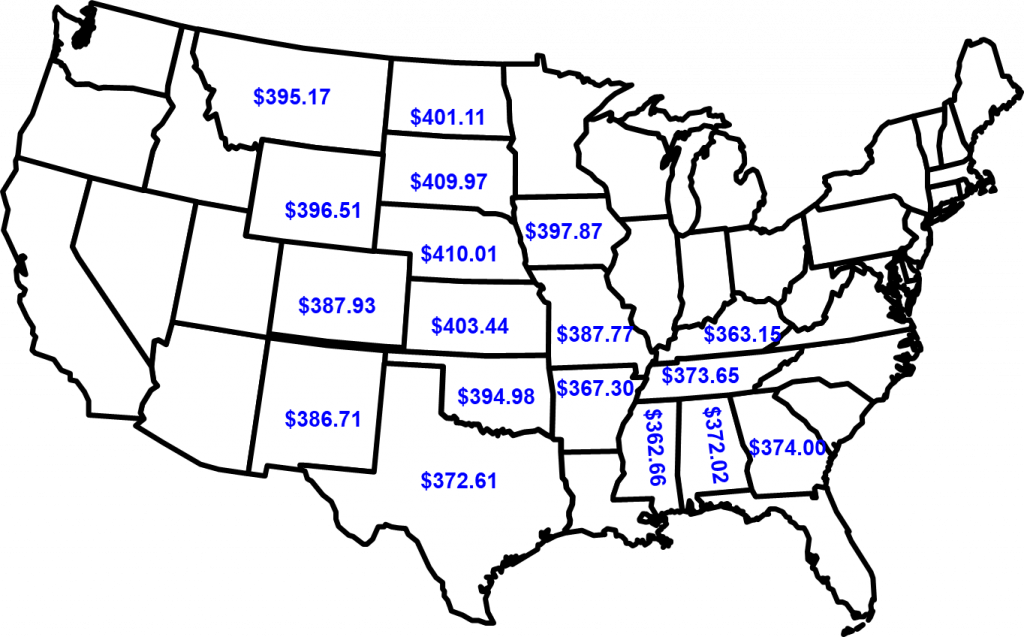
Lawmakers to MAHA: Rely on the Science & Protect America's Food System

Republican lawmakers are calling on the Trump administration to use "sound science and risk-based analysis" as the Make America Healthy Again Commission completes its review and recommendations to address health issues across the country.

Earlier this week, Sens. Pete Ricketts (R-NE) and Deb Fischer (R-NE), along with Congressmen Randy Feenstra (R-IA-04) and Mark Alford (R-MO-04), led a bicameral group of nearly 80 lawmakers on a letter to USDA Secretary Brooke Rollins, Health and Human Services Secretary Robert F. Kennedy, and EPA Administrator Lee Zeldin. In the letter, lawmakers express appreciation for the commission's work to improve Americans' health but implored the group to use sound science, specifically on pesticide tools and food-grade ingredients.

The lawmakers expressed concerns that environmentalists will seize this opportunity to influence the MAHA Commission through false claims that are not backed by science and prove harmful to agriculture and consumers.

"For decades activist groups have tried to ban safe, well-regulated agricultural inputs by any means necessary," the lawmakers write. "Without these products, yields and quality are negatively impacted by otherwise avoidable insects, fungus, weeds, and other pest pressures. This drives up food prices for American consumers and forces reliance of food imports."

The letter points out that regular testing by FDA and USDA finds that more than 99% of all pesticide residues meet extremely conservative limits established by EPA according to the best available science.

Lawmakers also expressed concerns regarding misrepresentation of the science on food categories, like plant-based oils.

"These inputs are subject to a robust, risk-based regulatory system which focuses on protecting human health," the letter states. "Unfounded accusations harm the U.S. farmers who grow our food, upend food and feed supply chains, and significantly increase grocery food prices – all without public health benefit."

What ASA is doing: ASA led coalition efforts last week to support the letter to the MAHA Commission. Along with soy states, ASA urged soy growers to reach out to their lawmakers to sign. ASA continues communicating with the administration and underscoring the importance of decisions based in sound science, specifically regarding pesticide products and seed oils.

What ASA is saying: ASA and other ag leaders expressed support for lawmakers' efforts to ensure MAHA looks to the data and science for decisions on pesticide tools and food grade ingredients. In a news release from Rep. Alford's office, ASA President Caleb Ragland (KY) was quoted: "ASA applauds the efforts of Representatives Alford and Feenstra and Senators Ricketts and Fischer to conduct needed oversight on the work of the Make America Healthy Again Commission. Farmers agree it is important that we consider ways to improve Americans' health, but it is also essential that this work be grounded in sound science. We have seen activist groups trying to blatantly influence the work of the commission without basing their claims in the mountains of credible science that exist on seed oils, pesticide use, and other topics critical to agriculture and feeding our country. We thank these congressional leaders for working to ensure safeguards are in place to prevent activist groups from using the MAHA Commission to carry out their long-standing goals based on conjecture and in turn disrupting American agriculture and our food supplies."

USDA Designates 2 Oklahoma Counties as Contiguous Natural Disaster Areas Due to Heat and Winds

This Secretarial natural disaster designation allows the United States Department of Agriculture (USDA) Farm Service Agency (FSA) to extend much-needed emergency credit to producers recovering from natural disasters through emergency loans. Emergency loans can be used to meet various recovery needs including the replacement of essential items such as equipment or livestock, reorganization of a farming operation, or to refinance certain debts. FSA will review the loans based on the extent of losses, security available, and repayment ability.

Impacted Area: Oklahoma and Texas

Triggering Disaster: Heat and Winds

Application Deadline: December 11, 2025

Primary Counties Eligible: Austin, Borden, Briscoe, Concho, Dawson, Dickens, Ector, Fisher, Floyd, Gaines, Garza, Glasscock, Hemphill, Hockley, Howard, Jones, Kent, Lamb, Lynn, Martin, Midland, Mitchell, Nolan, Reagan, Scurry, Taylor, Terry, Upton, Washington, Wheeler, Yoakum

Contiguous Counties Also Eligible:
New Mexico: Lea
Oklahoma: Beckham, Ellis, Roger Mills
Texas: Andrews, Armstrong, Bailey, Brazos, Burleson, Callahan, Castro, Cochran, Coke, Coleman, Collingsworth, Colorado, Cottle, Crane, Crockett, Crosby, Donley, Fayette, Fort Bend, Gray, Grimes, Hale, Hall, Haskell, Irion, King, Lee, Lipscomb, Lubbock, McCulloch, Menard, Motley, Parmer, Roberts, Runnels, Schleicher, Shackelford, Sterling, Stonewall, Swisher, Tom Green, Waller, Ward, Wharton, Winker

More Resources

On farmers.gov, the Disaster Assistance Discovery Tool, Disaster Assistance-at-a-Glance fact sheet, and Loan Assistance Tool can help you determine program or loan options.

Gardiners Highlight Service, Strength at Foodservice Leaders Summit

Whether you're a rancher or selling the Certified Angus Beef ® brand, your success is rooted in the same concepts: Superior customer service and a valuable product.

Resilience, relationships and raising quality beef—that's the message the Gardiners brought to center stage at the recent Certified Angus Beef (CAB) Foodservice Leaders Summit.

Mark Gardiner and his son, Cole, of Gardiner Angus Ranch offered a boots-on-the-ground perspective for CAB specialists attending the annual event, designed to deliver resources that help train foodservice teams and serve consumers at a higher level. Kara Lee, director of producer engagement at CAB, served as moderator of the panel session.

"Attendees at the CAB Foodservice Leaders Summit are our front-line sales force in the restaurant industry," Lee said. "In a competitive beef market with high prices, it's crucial we equip them with tools to overcome sales objectives by highlighting Certified Angus Beef's quality merits, marketing support, profit potential and brand story."

The father-son duo shared their story of serving up superior customer service and generations of resiliency.

Built on customer service

Nearly 150 years ago and with help from the Homestead Act, the Gardiners planted their operation's roots in Ashland, Kan. when Henry Gardiner settled on 160 acres. Today, with the fourth and fifth generations at the helm, the property has grown to be one of the most successful Angus seedstock ranches.

Like many family farmers and ranchers, the Gardiners' success relies on their customers' success. Whether it's a commercial cow-calf operation, feedyard or even restaurant, care and commitment stem from a dedication to the future. As consumer demand for the Certified Angus Beef ® brand increases, it also fuels the long-term sustainability of family businesses.

"Every animal is connected to a human, and so we have to make sure those humans succeed. It's no different in your business," Mark said. "My main job today, and all of our jobs, is to make sure that our customers have an experience where they can raise their families, make a living and pass it on."

Cole emphasized the key to customer service is listening first.

"Understand what your customer wants before trying to meet their need," Cole said. "Somebody you can talk to, explain what's going to add value to their cattle and what's going to help them be successful are really the kind of people we love to work with."

But it's not just business relationships that define their story—it's how those relationships have been sustained through hardship.

From the ashes

In early 2017, the Starbuck Fire scorched nearly one million acres of western Kansas. Once the ash settled, reality set in, leaving questions about the cost and complexity of rebuilding. Mark, moved by the outpouring of support, watched strangers eager to step up in their family's time of need.

"Starting the next morning, our customers and people from all over the United States started bringing us resources and they kept coming and coming," Mark said.

Cole shared similar gratitude, reflecting how the industry's giving spirit during devastation reminded him of the true gift in life.

"It made me thankful to be in the industry we're in with everybody who cares so much," he said. "It's difficult to say that a massive tragedy is a blessing, but in reality, it really was."

Despite differences of both those on stage and in the crowd (or those in the pasture and those in chef coats), all continuously work toward producing the best-tasting, best-quality beef.

"We're partners in this business. We're partners in this world together," Mark said. "Whether you're a rancher, in foodservice or a packer—you've got to be there, you've got to show up and you've got to be present."

They closed with great optimism.

"We're living in the greatest time in history and this is exciting. It's right here, it's right now, and we get the opportunity to do this," Mark said.

This same optimism can be found in event attendees' enthusiasm and appreciation for the Gardiners' perspective.

"CAB's rich grass-roots history with Angus breeders is one we're proud of, and our brand partners are, too," Lee said.

As a subsidiary of the American Angus Association®, CAB is poised to build bridges from pasture to plate and create brand ambassadors who tell its story to consumers. It's this connection, first-hand experiences with Angus ranchers, that attendees return home with a renewed passion and energy to put towards their sales approach.

Written by Briley Richard, freelance writer for Certified Angus Beef

Farm Athletes: Cultivating the Next Generation of Leaders Both on the Field and the Farm

Listen to KC Sheperd visit with Troy Stickels of Farm Athletes

A unique initiative is taking root across the United States, aiming to support and connect a special group of young individuals: college athletes with a background in agriculture. Farm Athletes, launched in August 2024 by Zach Bosle, the CEO of Tractor Tuesday and a sixth-generation farmer from Hastings, Nebraska, is designed to recognize and assist these student-athletes.  

Troy Stickels from Farm Athletes recently shed light on the organization's origins and mission with Farm Director KC Sheperd. "Farm athletes really got started last August," Stickels explained. The idea sprung from a desire to give back to the community through Bosle's farm auction site, Tractor Tuesday. According to Stickels, Bosle "takes things and blows them up a lot bigger than I would ever dream of," leading to the creation of Farm Athletes.

Initially, the focus was on Name, Image, and Likeness (NIL) deals. "Essentially, what we started out doing was search the country for Division One, Division Two, NCAA athletes who grew up on farms or ranches and were playing college sports, and we wanted to give them a little bit of money through an NIL deal and have them promote Tractor Tuesday," Stickels elaborated. This approach proved successful in boosting Tractor Tuesday's brand, with over 8,000 registered users now on the platform.

However, with the evolving landscape of college sports, Farm Athletes has shifted its focus. "With the changing landscape of college sports, we've shifted now to doing scholarships versus NIL deals," Stickels stated, expressing excitement about the opportunity to "help kids in the same way we were, just provided some money to them to help them go to college and play sports."

The initiative aims to achieve several key goals. "A couple of the underlying goals here are we want kids to go to college and hopefully go in the ag industry," Stickels emphasized. While not a requirement, the hope is to encourage the next generation to return to their family farms, recognizing that "farms are getting bigger and not smaller, and that can potentially be an issue."

Beyond financial support, Farm Athletes seeks to foster a sense of community. "We also want to grow a community of kids that have the same thing in common," Stickels noted. He highlighted the early success of this aspect, sharing that the initial group of athletes, despite never meeting, are following each other on social media and congratulating each other, bonded by their shared experiences in agriculture and sports.

For those interested in learning more or applying for a scholarship, Stickels recommends visiting the Farm Athletes website. "Just read through everything. There's so much stuff on there." The website provides information about the program and allows potential applicants to fill out a scholarship application, although the next round of announcements is anticipated in August.

Furthermore, Farm Athletes actively promotes its athletes. "I'm a sports junkie, and so I love being able to go in and see how they're doing in their games and posting articles about the success that they're having," Stickels shared. This not only supports the athletes but also raises awareness about the organization's mission.

Looking ahead, the ambitions for Farm Athletes are significant. "Honestly, we like go big or go home," Stickels asserted. "So we want this to be a nationwide known brand of an opportunity to help people. We want it to be a huge community of kids that want to be a part of this." Recognizing the increasing challenges in both farming and affording higher education, Stickels believes that "kids need help, and we need to support them."

Daily Email for April 17, 2025


Oklahoma's Latest Farm

And Ranch News

Thursday, April 17, 2025


Superior Livestock's Gulf Coast Classic Underway Today-Starting at 8 AM Central

 
Howdy Neighbors!

Here Are Your Top Stories in Today's Oklahoma Farm and Ranch News:


  • WestBred Wheat Tour Reveals Varied Conditions and Variety Importance Across Oklahoma and Texas


  • Randy Blach Says Hats Off to Cattle Producers for Giving Consumers What They Want


  • Introducing Dade DeLozier of the Adair FFA Chapter, Your 2025 Northeast Area Star in Ag Placement


  • Final Countdown to Apply for OALP Class XXII


  • And Lots More Below!


WestBred Wheat Tour Reveals Varied Conditions and Variety Importance Across Oklahoma and Texas

Farm Director KC Sheperd recently spoke with Lance Embree, the sales account manager for WestBred in Oklahoma and Texas, following a comprehensive crop tour of the region. The tour, which included Mark Lubbers, WestBred's technical product manager, covered most of southern Oklahoma and the majority of Texas north of I-10, providing a snapshot of the current winter wheat conditions.


"Really, very typical type of year where, depending on where you are, there are a lot of differences," Embree noted, emphasizing the variability across the large geographical area. He broke down the observations geographically, starting with the central I-35 corridor in Oklahoma and Texas. "We were actually starting to get dry but caught a rain at the right time – may have been just a little bit late, but better late than never."


However, conditions worsened moving westward. "As we moved west, particularly into West Texas, south of Abilene and down through San Angelo, it was really, really drought-stressed," Embree explained. He described the situation as dire, stating that "a lot of that wheat is beyond recovery, even with the rain, at this point. So a lot of guys had turned cattle out just to try to pick up some forage to get what they can."


Listen to KC's Conversation with Lance Embree and Read More Here

Sponsor Spotlight

The Oklahoma Pork Council, a farmer-led organization, represents the interests of all Oklahoma pig farmers. From large-scale commercial operators to first-time 4-H and FFA exhibitors, our mission is to positively impact every Oklahoman who raises pigs.


At Oklahoma Pork, we focus our efforts within four strategic intentions to serve our farmers: foreign animal disease preparedness, workforce at all levels, image enhancement, and freedom to operate. Learn more by visiting okpork.org.

Randy Blach Says Hats Off to Cattle Producers for Giving Consumers What They Want

Farm Broadcaster Carey Martin from the Texas Farm Bureau Radio Network had the chance to visit with the CEO of CattleFax, Randy Blach, at the 2025 Texas and Southwestern Cattle Raisers Convention. Senior Farm and Ranch Broadcaster Ron Hays is featuring comments from their conversation as they talk about carcass weights and more. Yesterday, they discussed beef market fundamentals and tight numbers in the U.S. beef cow herd.


According to Blach, economics indicate that carcass weights will continue to trend upwards until they begin to moderate some time next year in anticipation of seeing increased supplies of cattle to harvest.


In accordance with seasonal trends, Blach expects fat cattle prices to trend higher over the next few months despite industry uncertainty regarding tariffs and trade wars.

Listen to Ron's BeefBuzz with Randy Blach & Read More Here

Introducing Dade DeLozier of the Adair FFA Chapter, Your 2025 Northeast Area Star in Ag Placement

During the month of April, the Radio Oklahoma Ag Network and Oklahoma Farm Report are spotlighting the 19 Area Stars of Oklahoma FFA, who are among the highest achievers in the organization.


This week, our coverage of the 2025 Oklahoma FFA Star Award Finalists continues with Ag Placement competitor Dade DeLozier of the Adair FFA chapter representing the Northeast Area.


DeLozier's project began in the summer of 2020 when he started working for his grandfather on his 1,425-acre cow calf operation located west of Adair. "I learned to start working and feeding cattle and baling hay for him through the summer, and I also have a second placement SAE working for Coffeyville Stockyards in Coffeyville, Kansas. The job was offered to me in the summer of 2023. I started sorting cattle and loading trucks for them through the summer, and through the school year, I unloaded and loaded semis and sorted cattle on weekends for their special cow sale. I also sort sheep, goats, and pigs for them, too."


DeLozier's father is the ag teacher, and he has wanted to be in FFA for as long as he can remember. "When I got into the eighth grade ag, I thought that was the best thing ever," he said. "I didn't want to do athletics."

Click Here to Listen to KC's Interview with Dade DeLozier and Read More
Sign Up for Our Daily Email- Free Because of Our Sponsors!

Support Our Sponsors!


KIS logo


Advertise With Us!


For our farmers who have either- always have had cotton on their farms- or those who have more recently have added the fiber crop to their operations- we have a daily report heard on several of our Radio Stations- It's Called Cotton Talk!


Click on the Button below to listen to our most recent report

Click here for our Latest Cotton Talk- Hosted by KC Sheperd


The latest news from the Oklahoma State Capitol is available daily on the Radio Oklahoma News Network.


Click on the blue button to hear from our Radio Oklahoma Network's Jacquelyn Farris

Click here for the latest report from the State Capitol on RON


Final Countdown to Apply for Class XXII of OALP- Deadline is May First

Applications are open until May 1 for Oklahoma Agricultural Leadership Program Class XXII.


A maximum of 30 professionals from across the state in production agriculture, agribusiness or other ag sectors are selected to participate in the 20-month program featuring the following components: 10 three-day seminars and study tours within Oklahoma, one three-day seminar in northern Oklahoma and Kansas, a seven-day seminar in Pennsylvania and Washington, D.C., and a two-week international experience.


For more than 40 years, OALP has enhanced knowledge and leadership skills for Oklahomans involved in agriculture. Applicants must be at least 25 years old and are chosen for the program based on their potential to serve as an agricultural leader in the state. 


"Experiential learning is a key part of our program," said Edmond Bonjour, OALP director since 2010. "Participants enjoy increasing their knowledge about agriculture in the state, nationally and internationally, and incorporate what they learn into their operations or businesses."


The application, available on the OALP website, and all other supporting materials are due by May 1. Interviews will be held in June, and the first seminar series begins in August. Class XXII will graduate in April 2027.

Read More About Applying for OALP Here
 

We invite you to listen to us on great radio stations across the region on the Radio Oklahoma Ag Network weekdays-

if you missed this morning's Farm News - or you are in an area where you can't hear it- click below for this morning's Farm news from Ron Hays and KC Sheperd on RON.
Listen to our Thursday morning farm and ranch news with KC Sheperd
 
 
Subscribe To the Daily Email


Sponsor Spotlight


National Livestock was founded in 1932 in Oklahoma City. National's Marketing Division offers cattle for sale weekly at the Oklahoma National Stockyards in Oklahoma City. The Finance Division lends money to ranchers across several states for cattle production. The Grazing Division works with producers to place cattle for grazing on wheat or grass pastures. 


Dakota Moss with Livestock Risk Services is also a part of the National Livestock Family. 


National also owns and operates other livestock marketing subsidiaries including Southern Oklahoma Livestock Auction in Ada, Oklahoma, OKC West Livestock Market in El Reno, Oklahoma, and the nation's premier livestock video sale, Superior Livestock Auction. National offers customers many services custom made for today's producer. To learn more, click here for the website or call the Oklahoma City office at 1-800-310-0220.


Oklahoma Braces for Weekend Severe Weather and Immediate Fire Danger

Oklahoma is facing a volatile weather pattern, with State Climatologist Gary McManus urging residents to remain vigilant for severe weather this upcoming weekend. While the immediate forecast includes significant fire danger today, the focus shifts to tomorrow and Saturday for widespread risks.


According to McManus, the primary threats this weekend will be strong winds, large hail, and the potential for flash flooding. "Keep an eye out for severe weather this weekend," he cautioned. "Watch out for Friday and Saturday. The tornado threat is low, but not zero; however, wind, hail, and flash flooding will definitely be threats." This statement underscores the importance of preparedness, even with a lower tornado risk.  


Regarding today's significant fire risk, McManus said, "There's already a fire weather watch out across much of western Oklahoma, and don't be surprised if we see a Red Flag Warning replace some of that area." This highlights the dry and windy conditions expected today, which can easily fuel wildfires.


Adding to today's concerning forecast, McManus pointed out the potential for hazardous travel conditions. "Speaking of elsewhere, you'll want to be there tomorrow when we see 45-60 mph winds and blowing dust behind the dryline, with temperatures up in the upper 80s and 90s." These strong winds and blowing dust can significantly reduce visibility, making driving dangerous across affected regions.

Click Here To Read More from Gary McManus

Secretary Rollins Visits Lubbock to View the USDA Cotton Classification Complex

U.S. Secretary of Agriculture Brooke Rollins wrapped up a visit to Lubbock, Texas, where she joined House Budget Chairman Jodey Arrington (TX-19) for a tour and roundtable discussion at the USDA Cotton Classification Complex on the Texas Tech University campus. During the roundtable, she was joined by sorghum, beef, peanut, dairy, and corn producers as well as agricultural leaders from across Texas.


"We have our fabrics, clothes, and medical supplies because of the land and labor from cotton farmers in Lubbock and surrounding counties. With President Trump in the White House, we are putting farmers first at USDA. We are reversing the harmful policies of the Biden Administration that have put an unnecessary strain on farmers in Texas to ensure they thrive in America's new Golden Age!" said Secretary Rollins.


During the roundtable, Secretary Rollins heard directly from cotton industry leaders and Texas Tech University officials. The USDA cotton classification facility on the Texas Tech University campus is the first of its kind and is helping to pave the way for research, processing, and grading for cotton. The flagship facility was completely funded by the cotton industry and is maintained by "user-fees" because growers find third-party unbiased grading services provided by USDA essential to the fair and equitable marketing of their crop.

Read More About Secretary Rollins Back in Texas Again

Celebrating 90 Years of Conservation in Oklahoma

Celebrating 90 Years of Conservation in Oklahoma | April 28, 1:00-3:00 pm | Canadian County Expo Center, El Reno, OK


This event will commemorate the 90th anniversary of the Soil Conservation Service. Help us celebrate the men and women of the Soil Conservation Service and the Natural Resources Conservation Service who have worked to protect and enhance the state's soil, water, and natural resources since the Dust Bowl. Displays will showcase historic artifacts from SCS and Oklahoma's conservation history. NRCS, OACD and OCHS are cosponsoring this event.


RSVP for this event: Email Larry Caldwell at larry.caldwell@usda.gov


"The mission of our organization is 'to collect, preserve, and share Oklahoma's rich conservation history.' These events will help promote our mission and hopefully educate folks about the Dust Bowl and about the importance of conservation work in Oklahoma over the past 90 years," says Ben Pollard, President, OCHS.


We encourage all current and former SCD and NRCS employees, Conservation District Directors and Staff, and the public to attend these free events!

Build Your Own Ranch Truck First-Aid Kit

Making a kit tailored to your ranching lifestyle is simple, and it can help you be prepared for whatever comes your way.


Emergencies on the ranch don't always happen close to where help is available. Having a well-stocked first-aid kit in your truck or UTV can make all the difference in managing injuries quickly and effectively.


The foundation of any first-aid kit should align with guidelines from the American Red Cross or the Occupational Safety and Health Administration. Many pre-made kits available online or in stores come stocked with essentials such as:


  • Bandages of various sizes
  • Sterile gauze pads and medical tape
  • Antiseptic wipes and antibiotic ointment
  • Scissors and tweezers
  • Medical gloves, such as nitrile powder-free gloves
  • CPR (resuscitation) mask
  • Instant cold packs
  • Hand sanitizer


These kits are a great starting point and often come in compact, organized cases. However, they may need a few upgrades to handle the unique challenges of ranch work.

Read More About Ranch-Specific Options and More Here
Let's Check The Markets!
OKC West is our Market Links Sponsor- they sell cattle three days a week- Cows on Mondays, Stockers on Tuesday and Feeders on Wednesday- Call 405-262-8800 to learn more.
 

We are changing how we present markets to our on our website- click on the Blue Button to see our Markets Page that is evolving

Check Out Our Markets Page!
 

Wholesale Boxed Beef Prices were higher- Choice Beef was down $1.90 and Select Beef was down $0.85 on 4/16/2025.


Click on the Button below for the latest report from USDA Market News

Boxed Beef Report
 

OKC West in El Reno had 5,970 head on Tuesday and Wednesday of this week.


Compared to last week: Feeder steers and heifers 7.00-12.00 higher with instances of up to 20.00 higher. Steer and heifer calves sold fully 20.00 higher from last week's lighter test. Demand very good.


Meanwhile- Bill Barnhart with OKC West added these comments on the market's Facebook Page- "The market is back on the rise this week at the auction. Futures have made a complete about face in the last week or so with Live Cattle jumping up around 10.00 and Feeders up 14.00 shaking off the tariff worries from early April. This week's feeder cattle auction saw prices 5.00-15.00 higher with many big cattle coming off graze out wheat. Though not many fats traded last week cattle feeders will look to price cattle higher and recover what was lost the last two weeks. The runs should pick up some moving through April as wheat pasture plays out. Rain is in the forecast."


Click below for the complete closing report.

OKC West in El Reno Market Report from 04/15 and 04/16/2025
 
 
Each afternoon we are posting a recap of that day's markets as analyzed by Justin Lewis of KIS futures - click below for the latest update on the Livestock and Grain Futures Trade..
Click Here to Listen to Justin's Commentary From 4/16/2025
 
Okla Cash Grain:  
Daily Oklahoma Cash Grain Prices- as reported by the Oklahoma Dept. of Agriculture- The report available after the close of the Futures Trade for that day.
Read Cash Grains Report from 4/16/2025
 
Our Daily Market Wrapup from the Radio Oklahoma Ag Network - analyzing the Futures Markets for that trading day- as reported by KC Sheperd.
Click to Listen to Our Weekday Wrap with KC
 

Our Oklahoma Farm Report Team!!!!


Ron Hays, Senior Farm/Ranch Broadcaster and Editor


KC Sheperd, Farm Director and Editor


Dave Lanning, Markets and Production


Stevie White, Farm News and Email Editor


Pam Arterburn, Calendar and Template Manager

Podcasts From Oklahoma Farm Report and More

Two of our regular reports are also podcasts that you can subscribe to- Our daily Farm and Ranch News with KC Sheperd- available here on the Apple Podcast Platform


The second is our daily Beef Buzz with Ron Hays- available here on the Apple Podcast Platform


Periodically- we offer interviews on our Ag Perspectives Podcast series- this podcast is available here.


Ron has also has a series of podcasts from interviews with newsmakers at the Cattlemen's Congress- Click here or you can find them on your favorite Podcast platform- look for them by searching for Cattlemen's Congress Conversations.


We are making plans to jump back into regular installments of what has been called the Road to Rural Prosperity- a new name and fresh content is in the works- for now- click on the blue button below for one of our favorites that is a timeless classic.


The link below is one of our most recent podcasts- Ron spotlighting the upcoming Hemphill County Beef Conference with Andy Holloway

Listen to Ron Hays talking with Andy Holloway about the upcoming Hemphill County Beef Conference April 29-30
 
 
Listen to Ron
Beef Buzz
 
Blue Green Gazette
Calendar
Auctions
Market Links
Facebook  Twitter  Youtube  

Our thanks to Midwest Farms Shows, P & K Equipment, Oklahoma Farm Bureau, Great Plains Kubota, Stillwater Milling Company, National Livestock Credit Corporation, Oklahoma Beef Council, Stewart Martin Kubota, Oklahoma Pork Council, Oklahoma Wheat Commission, Oklahoma AgCredit, the Oklahoma Cattlemens Association, and  KIS Futures for their support of our daily Farm News Update.


For your convenience, we have our sponsors' websites linked here- just click on their name to jump to their website- check their sites out and let these folks know you appreciate the support of this daily email, as their sponsorship helps us keep this arriving in your inbox on a regular basis- at NO Charge!


We also appreciate our Market Links Sponsor - OKC West Livestock! 


We invite you to check out our website at the link below too that includes an archive of these daily emails, audio reports and top farm news story links from around the globe.

Head to Our Website OklahomaFarmReport.Com
God Bless!
Reach Out To Us:

Tim West

President/General Manager

Rural Oklahoma Networks


405-317-6361


***************


Mike Henderson

Executive Director of

Hilliary Media Group


405-615-4922


KC Sheperd
Farm Director
Radio Oklahoma Ag Network

405-443-5717

Email KC
Ron Hays
Senior Farm/Ranch Broadcaster
Radio Oklahoma Ag Network

405.473.6144
Email Ron

OSU Oklahoma Water Resource Center: 2025 USGS 104g RFPs

The 2025 USGS 104g RFP is expected to be announced in the next several weeks. As this funding opportunity has a short turnaround time (often less than a month), we wanted to let you know.

The U.S. Geological Survey in cooperation with the National Institutes for Water Resources supports an annual call for proposals to focus on water problems and issues that are of a regional or interstate nature or relate to a specific program priority identified by the Secretary of the Interior and the Institutes.

The goals of the National Competitive Grants program are to promote collaboration between the USGS and university scientists in research on significant national and regional water resources issues; promote the dissemination and results of the research funded under this program; and to assist in the training of scientists in water resources.

Any investigator at an accredited institution of higher learning in the United States is eligible to apply for a grant through a Water Research Institute or Center established under the provisions of the Water Resources Research Act of 1984.

Proposals are accepted under the 104g General program, which supports a wide range of research topics, the 104g PFAS program, which funds research that specifically focuses on PFAS and the AIS program which funds research that specifically focus on aquatic invasive species in the upper Mississippi River basin.

Proposals involving collaboration between the USGS and university scientists are encouraged but not required. Proposals may be for projects of 1 to 3 years in duration with discreet 12-month budget periods. Investigators must match one non-federal dollar to each federal dollar requested.

2024 USGS 104g information can be found on our website here. Note...it is expected that priorities may change a bit particularly for the 104(g) General. Once the 2025 RFP is available, we will send official instruction, and you will be required to work with our Sponsored Programs Office prior to the anticipated deadline of mid-May.

If you have any questions about the 104g RFPs or application process please contact us at water.okstate.edu or 405-744-7093.

TSET Board of Investors Fires the Attorney General for Interfering with Investments

Legal counsel representing the Tobacco Settlement Endowment Trust (TSET) Fund Board of Investors filed a petition with the Oklahoma Supreme Court today seeking a declaratory judgment after a formal vote of the Board authorized legal action against improper interference by Attorney General Gentner Drummond.

At a special meeting held earlier last week, the TSET Board of Investors voted to accept special legal counsel, appointed by Governor Kevin Stitt under the authority of 74 O.S. § 6 and the Oklahoma Constitution, Article VI, §§ 2 and 8. The Board also voted to authorize this counsel to take all necessary and appropriate legal action to protect the Board's statutory and constitutional authority to manage TSET investments.

As a direct result of this vote, legal counsel today filed a petition with the Oklahoma Supreme Court, responding to the Attorney General's obstruction of Board-approved investments with Neuberger Berman and Comvest Partners. These investments were initially authorized by the Board last November. Due to delays caused by the AG's interference, the Board estimates the state has already lost a 13% return differential on $200 million— representing a significant cost to taxpayers and public health funding.

"The people of Oklahoma voted to protect these funds from political interference," said State Treasurer Todd Russ and Chairman of the TSET Board of Investors. "The Attorney General's attempt to override a legal investment process — is a direct threat to the constitutional independence of the investment board."

The Attorney General's intervention relied on AG Opinion 2006-11, which he has selectively invoked to insert his personal views into a process that was already approved and executed. Notably, an Assistant Attorney General assigned to the Board had previously approved all legal documents related to the investments — including contracts and side letters — before the AG reversed course without citing any legal deficiency.

"This is a textbook conflict of interest," Treasurer Russ said. "The Attorney General inserted himself into the process after the fact, with no legal reasoning, only personal opinion. That's not how constitutional governance works, and it's certainly not how Oklahomans expect their settlement funds to be managed."

The Supreme Court filing seeks a declaratory judgment confirming the TSET Board of Investors' independent authority to manage its investments without unwarranted interference. The Board includes the State Treasurer, State Auditor and Inspector, and the Director of the Office of Management and Enterprise Services.

The Tobacco Settlement Endowment Trust Fund was established by a vote of the people to ensure long-term, stable funding for health programs across Oklahoma. The Board of Investors is responsible for safeguarding the fund's growth and sustainability through responsible investment management.

Register Now: Understanding Global Dairy Trade in the Trump Era Webinar

DATE & TIME
Tuesday, May 6, 2025
1-2 p.m. ET

DESCRIPTION
Join NMPF for a members-only webinar examining the latest developments in U.S. trade policy under the Trump administration and how global markets are responding. President and CEO Gregg Doud, alongside experts from NMPF's trade policy and economics teams, will lead an in-depth discussion focused on what these developments mean for dairy farmers and the broader agricultural economy, helping members understand the challenges and opportunities ahead in the evolving trade landscape.

SPEAKERS
Gregg Doud is NMPF's President and Chief Executive Officer. Before arriving at NMPF he served as the Chief Agricultural Negotiator in the Office of the United States Trade Representative from 2018 until 2021; before that, he served as the president of the Commodity Markets Council, representing commodities exchanges before Congress and federal agencies. He also has served as a staff member for the United States Senate Committee on Agriculture, Nutrition and Forestry.

Shawna Morris serves as Executive Vice President of Trade Policy and Global Affairs at NMPF. In this role she leads the organization's efforts to advance beneficial dairy trade policies through work with the U.S. and foreign governments as well as with domestic and international allied organizations to maximize U.S. dairy export opportunities, promote a more balanced playing global field for the U.S. dairy sector, and address policy-related barriers to the sale of their dairy products around the world.

Jaime Castaneda is NMPF's Executive Vice President for Policy & Strategy. In this role he oversees the organization's domestic policy initiatives as well as international trade. He also provides government relations and advocacy support for the U.S. Dairy Export Council, leading the U.S. dairy industry in international trade negotiations. In his more than 35-year career in agriculture, he has held policy positions with USDA and the National Center for Food and Agricultural Policy.

Tony Rice serves as the Trade Policy Director at NMPF, where he leads efforts to develop, implement and communicate strategies that support U.S. dairy exports. His work focuses on advancing policies that enhance export opportunities, eliminating those that hinder trade and tackling international barriers to U.S. dairy sales. He collaborates closely with the U.S. Dairy Export Council in these efforts. In addition, Tony oversees supply chain policy for both organizations.

William Loux serves as the Senior Vice President of Global Economic Affairs for NMPF and the U.S. Dairy Export Council. In this role, he leads the two organizations' joint economics team, which provides forward-looking analysis and insight into U.S. and international dairy markets. Will and his team are frequent speakers at various U.S. and global dairy conferences and engage closely with stakeholders from around the world to forecast market dynamics and their effects on the U.S. dairy industry.

REGISTRATION
This session is specifically intended for cooperative staff, dairy farmers and associate members affiliated with NMPF. NMPF reserves the right to deny participation in this webinar to non-members.

Oklahoma Drought Conditions Remain Unchanged As Significant Rainfall is Forecasted

To view the latest Oklahoma drought map, CLICK HERE.

According to the latest Oklahoma drought monitor report, exceptional drought remains at zero percent, unchanged from the start of the calendar year.

Extreme drought or worse conditions remain at zero percent, unchanged since the week of October 29, 2024.

Severe drought or worse conditions remain at 13.60 percent from last week.

Moderate drought or worse conditions remain at 39.93 percent from last week.

Abnormally dry or worse conditions remain at 53.11 percent from last week.

According to the 6-to-10-day precipitation outlook map, the entire state of Oklahoma is likely above a 50-60% chance of precipitation, except for the tip of the panhandle which is leaning above a 40-50% chance of precipitation through April 26.

To view the United States Drought Map, CLICK HERE.

During the week of April 8-14, temperatures across the Contiguous U.S. were split into above-normal readings in the western U.S., below-normal readings east of the Mississippi River, and near-normal temperatures in the Mississippi River Valley. Temperatures across the western Great Plains, the Rocky Mountains, and the Intermountain West ranged from 3-12 degrees warmer than normal. In the Upper Ohio River Valley and Appalachian Mountains, temperatures from 6-12 degrees cooler-than-normal were widespread. Dry weather occurred over much of the Great Plains and western U.S., except for parts of North Dakota, Montana, northern Idaho and western Washington. Some moderate precipitation amounts, locally exceeding an inch or two, occurred in parts of the eastern U.S., especially in the Mid-Atlantic, though precipitation was mostly light east of the Mississippi River otherwise.

Changes to the U.S. Drought Monitor depiction were somewhat limited this week compared to the last few. Increases in drought coverage occurred in parts of southern Texas, New Mexico, much of Colorado, and parts of Kansas, Nebraska and northern South Dakota. Dry weather and high fire danger continued in south Florida this week, leading to further degradation and the development of localized extreme drought. The higher precipitation amounts in the Mid-Atlantic and Northeast led to some localized improvements in ongoing drought and abnormal dryness. Heavier precipitation over the last month has quickly improved conditions in this region, with lessened precipitation deficits and increasing groundwater in many areas.

In the Southern Plains, mostly dry weather occurred this week, aside from eastern Tennessee and scattered light rain amounts in northern Mississippi and central and western Tennessee. Temperatures ranged from 3-9 degrees below normal in areas east of the Mississippi River and in southern Louisiana and southeast Texas, to 3 to locally 9 degrees or more above normal in western parts of Oklahoma and Texas. Given recent very wet weather in the eastern half of the region, no changes occurred in drought or abnormal dryness in the eastern part of the region other than a slight reduction in abnormal dryness in eastern Tennessee after recent rains. In southern Texas, severe drought expanded in a small area between San Antonio and Houston where streamflow and soil moisture decreased and short-term precipitation deficits grew. Exceptional drought grew in coverage from near Eagle Pass to northwest of Del Rio in southern Texas, where short- and long-term precipitation deficits worsened, soil moisture and groundwater levels worsened, and reservoir levels were at or near record-low levels. Stage 3 restrictions were in effect for the San Antonio Water System, and Stage 4 restrictions were present for farmers and pumpers operating in the Edwards Aquifer.

In the High Plains, ongoing drought or abnormal dryness mostly stayed the same or worsened after dry weather occurred across the region (excluding North Dakota) and warmer-than-normal temperatures overspread the Great Plains and central Rocky Mountains. Temperatures from 3-12 degrees above normal occurred across the region, with the warmest readings occurring in the western Great Plains and in the Colorado Front Range area. Widespread degradation in drought conditions, due to low snowpack and short- and long-term precipitation deficits, occurred in the central and southern Rocky Mountains in Colorado. Moderate drought expanded in western and east-central Kansas this week, where streamflow and soil moisture dropped amid growing precipitation deficits. Similar conditions existed from south-central into eastern Nebraska, where moderate drought became re-established. Localized degradations to drought conditions occurred in north-central South Dakota amid growing precipitation deficits, though conditions across most of the Dakotas remained unchanged this week. Moderate drought coverage decreased slightly southwest of the Bighorn Mountains in Wyoming, where precipitation deficits lessened and soil moisture conditions improved.

In the West, a mix of near-, below- and above-normal temperatures occurred in northern Idaho and in Washington. Otherwise, temperatures across the West were warmer than normal this week, with widespread readings of 6-12 degrees above normal in parts of central and eastern California, Nevada, Utah, Arizona and New Mexico. Mostly dry weather, with a few exceptions in Montana, northern Idaho, western Washington and northwest Oregon, occurred across the West this week. In northern New Mexico, soil moisture levels dropped and short-term precipitation deficits grew, leading to an expansion of severe drought (concurrent with expansions of drought coverage in Colorado). Extreme and exceptional drought grew in coverage in far southwest New Mexico and southeast Arizona, where very dry surface conditions and high evaporative demand continued amid severe precipitation deficits.

Looking ahead, between Wednesday, April 16 and the evening of Monday, April 21, the National Weather Service Weather Prediction Center is forecasting widespread heavy rainfall in parts of the central U.S., especially along east and south of the Interstate 44, 35 and 70 corridors in Oklahoma, Kansas, Missouri, Arkansas, Illinois and Indiana. Precipitation amounts may reach or exceed 3 inches from eastern Oklahoma northeast through St. Louis into eastern Illinois. The forecast calls for precipitation amounts from 0.25-1 inches in parts of the Rocky Mountains, with locally higher amounts possible, especially from far northern New Mexico north to southern Montana. Precipitation amounts from 0.5-1.25 inches, with localized higher amounts, are forecast from southeast Minnesota east through Wisconsin and Michigan. Farther east, weather along the Atlantic Coast is forecast to be mostly dry.

For the period from April 22-26, the National Weather Service Climate Prediction Center forecast favors above-normal precipitation in much of the central and southern U.S., especially in Oklahoma, Texas, Arkansas and Louisiana. Warmer-than-normal temperatures are also favored across most of the contiguous U.S., especially in the Southeast. Drier-than-normal weather is slightly favored in northwest California and coastal areas of Oregon and Washington.

In Hawaii, warmer- and wetter-than-normal weather is strongly favored from April 22-26. In Alaska, above-normal precipitation is favored for April 22-26 in most areas outside of the North Slope. Colder-than-normal temperatures are favored in the central and eastern thirds of Alaska, while warmer-than-normal temperatures are likelier in southwest Alaska and the Aleutian Islands.

To view the 6-10 Day Precipitation Outlook Map, click here.

To view the 6-10 Day Temperature Outlook Map, click here.

To view the Monthly Drought Outlook Map, click here.

Dr. Burke Healey Warns of New World Screwworm's Continued Northward Progress

Listen to Ron Hays talking with Dr. Burke Healey about the northward trek of the New World Screwworm.

Senior Farm and Ranch Broadcaster Ron Hays features comments with Dr. Burke Healey, USDA's APHIS Executive Director for VS' Strategy and Policy division, about the New World Screwworm (NWS) situation in Southern Mexico. The parasitic fly is known for infesting open wounds on livestock, especially cattle, and poses a significant threat to other mammals, including humans, and occasionally, birds.

For context, the NWS had been eradicated from the continental United States (US) since the 1970s with partnerships between the US and Mexico pushing the pest to Mexico's southern border by 1986; however, due to the pest's ability to be unknowingly transported, there have been isolated incidents of NWS in the US such as the 2016 identification in the Florida Keys in Key deer, pets, and swine.

Last November, reports confirmed that the pest had resurfaced in the southern Mexican state of Chiapas, and the U.S.-Mexico border was closed to animals moving North out of Mexico. In March, the border was reopened with stringent protocols to prevent potentially affected cattle from being moved.

As the NWS continues a very slow northward trek, efforts are being made to fund and add more fly breeding facilities, which produce sterile male flies to release into existing screwworm populations in order to breed them into extinction – the most effective way of dealing with them thus far.

Dr. Healey isn't impressed with the progress so far. He explained that since screwworms invaded Southern Mexico last fall, cases there have been increasing by 20% to 27% per week and are now up to more than 700 cases.

"We have transferred all of the sterile flies from Panama to Mexico to try to mitigate that and hold them in Mexico," he explained. "Right now, we are at the Isthmus of Tehuantepec and are trying to maintain that as a barrier in collaboration with the Mexican authorities down there." (Editor's note- see the map below which shows the narrow neck of land in Mexico between the Pacific Ocean to the south and the Gulf of Mexico to the north)

Currently, the only fly breeding facility in operation is in Panama and is at its limit. "As we pushed the flies South, we closed the plants in the U.S., Mexico, and Nicaragua, and left the plant in Panama to hold the barrier, but today it is the only facility we have."

The facility has been beefed up to produce 100 million flies per week, which should be effective for holding the barrier at the Isthmus of Tehuantepec, but if the flies make it through that barrier, the land mass grows exponentially, and more sterile flies will be needed. The next barrier to focus on will be the U.S.-Mexico border.

"We are exploring options to see how we can expand that production, either in the U.S. as one potential option and in Mexico as a second option," Dr. Healey said.

Transporting the flies into the Florida Keys during the 2017 outbreak was manageable, but moving them up to 1700 miles to reach Texas or further north into Mexico exceeds the capacity to release flies that still have some virility and stability to do their jobs.

According to Dr. Healey, the chances of the flies making it through the barrier at the Isthmus of Tehuantepec, through Northern Mexico, and into the U.S. are considerable.

"That is what concerns us," he said. "The challenge is that the flies move the quickest on animals. That is how they moved from Panama into Mexico as quickly as they did was through illegal cattle movements. The same thing could happen to us."

Although Mexico operates various checkpoints, flies have already broken through some and have reached the secondary boundary established for them. Cattle are constantly moving from Southern Mexico into Northern Mexico, and the U.S. imports Mexican cattle regularly. There is a rigorous process at the border involving three checks: an initial inspection by a Mexican-accredited veterinarian, a secondary inspection by a Mexican Federal government official, and a final inspection by a USDA official.

"We are confident about the animals we are bringing in on an import, but nonetheless, if the flies are on the native cattle at the border, then they don't know the boundary. They'll move into the U.S. just as well as they will into Mexico," Dr. Healey concluded.

The Beef Buzz is a regular feature heard on radio stations around the region on the Radio Oklahoma Ag Network and is a regular audio feature found on this website as well. Click on the LISTEN BAR at the top of the story for today's show, and check out our archives for older Beef Buzz shows covering the gamut of the beef cattle industry today.

Introducing Bridger Lott of the Hydro-Eakly FFA Chapter, Your 2025 Southwest Area Star in Ag Placement

Listen to KC Sheperd talking with Bridger Lott ahead of the State FFA Convention in Tulsa, Oklahoma.

During the month of April, the Radio Oklahoma Ag Network and Oklahoma Farm Report are spotlighting the 19 Area Stars of Oklahoma FFA, who are among the highest achievers in the organization.

The stars come from the five areas in four categories – Star in Ag Placement, Star in Agriscience, Star in Agribusiness, and Star in Agricultural Production.

This week, we spotlight the five area stars in Ag Placement in 2025.

One Star Finalist featured in the coming days from each of the categories will be named the State Star Award Winner during the 99th Oklahoma State FFA Convention, which will take place on May 6th and 7th in Tulsa, Oklahoma.

This week, our coverage of the 2025 Oklahoma FFA Star Award Finalists continues with Ag Placement competitor Bridger Lott of the Hydro-Eakly FFA chapter representing the Southwest Area.

Lott's project began with a literal disaster. His family home in Madill was destroyed by a tornado two years ago, and his family moved to the Hydro-Eakly area. That is where he met Tom Entz, with DTE Land and Cattle Co., who subsequently gave him a job.

Explaining a typical day of work on his project, Lott said, "Every morning, we fuel up tractors, then we do whatever has to be done for the day. From driving big, four-wheel drive tractors to swathing, raking, baling hay, hauling hay. We put up a lot of hay during the summer."

His FFA journey began early, showing and judging livestock with the Madill 4-H and FFA chapters. "My favorite thing to do is show hogs," he said. "I love everything about it. We have sows at the house, and we've been fortunate to raise a couple of good ones that we have had some luck in competing with."

Lott has a passion for livestock judging, and the Hydro-Eakly FFA team already had a good reputation in competitions. This was a major reason that his family relocated to that region after the tornado. It is also the reason that Lott is bound for Redland's Community College on a full-ride scholarship after graduation. When he finishes there, he plans to transfer his credits to Oklahoma State University to pursue a degree in agribusiness.

Hear KC's full conversation with Bridger Lott by clicking on the Listen Bar above.

Your coverage of the 2025 Oklahoma FFA Convention is sponsored by Hilliary Communications, who deliver the latest cutting-edge communications services supporting tens of thousands of customers across 22 counties throughout Oklahoma, Texas, and Iowa. The company offers internet, voice, and HilliaryTV. Hilliary Communications continuously researches the marketplace for innovations and strives to improve underserved areas, offering services that exceed customer expectations. Click here to learn more about Hilliary Communications.

For more information about the 99th Oklahoma State FFA Convention, click here.

OKFB members take on Washington, D.C., for the organization's annual D.C. Summit

More than 60 OKFB members and guests traveled to Washington,
D.C., to advocate for Oklahoma agriculture during OKFB's annual Washington D.C. Summit
April 7-11.

Members kicked off the trip at the International Spy Museum with a reception in the "Bond in Motion" exhibit featuring vehicles from several Bond movies as they visited with Oklahoma's congressional staff and guests.

Tuesday morning kicked off industry briefings with T.W. Shannon, director of rural prosperity at the United States Department of Agriculture, who discussed the changes in the USDA since Brooke Rollins became secretary of agriculture.

Members also heard from Emma Alexander, field representative for Sen. Markwayne Mullin; Victoria Tran, principal deputy assistant administrator for the U.S. Environmental Protection Agency's office of international and tribal affairs; Sam Kieffer, vice president of public policy for American Farm Bureau, who shared updates of the ongoing trade and tariff discussions; and Samantha Ayoub, associate economist with AFBF, who shared updates on the expiring 2017 Tax Cuts and Jobs Act.

South Carolina Farm Bureau Executive Director Gary Spires shared with members how South Carolina Farm Bureau created a land trust for farmers and ranchers to allow their land to be protected from urban development.

Members also took a deep dive into ongoing trade and tariff news with Dave Salmonson, senior director of government affairs with AFBF.

OKFB members headed to Capitol Hill on Wednesday afternoon to visit with Oklahoma's congressional delegation including Rep. Stephanie Bice, Rep. Josh Brecheen, Rep. Frank Lucas, Rep. Kevin Hern and Sen. James Lankford.

Topics that Oklahoma's congressional delegation discussed with members included the importance of trade, with a focus on agricultural trade, even as President Trump put a 90-day hold on tariffs his administration had levied on goods from many countries around the globe. The group also discussed the budget continuing resolution to extend the 2017 Tax Cuts and Jobs Act for five years to protect farmers and ranchers from increased taxes on inputs.

Thursday morning featured a group breakfast at Founding Farmers in Washington D.C., a farm-to-table restaurant, and the trip concluded with a rooftop tour of the AFBF office where AFBF President Zippy Duvall addressed OKFB members and thanked them for taking the time to bring their agricultural stories to Washington, D.C.

OKFB's Washington, D.C., Summit serves as the organization's annual fly-in held each spring to provide OKFB members with the opportunity to share their agricultural perspectives with Oklahoma's congressional delegation while learning more about agricultural issues working through congress and regulatory agencies.

Congressman Josh Brecheen Reintroduces The DRIVE Act To Protect Ranchers, Farmers, and Truckers from Government Overreach

Congressman Josh Brecheen reintroduced the Deregulating Restrictions on Interstate Vehicles and Eighteen-Wheelers (DRIVE) Act. This legislation would prohibit the Federal Motor Carrier Safety Administration (FMCSA) from mandating speed limiters on vehicles with a Gross Vehicle Weight Rating (GVWR) above 26,000 pounds. The speed limiter rule, originally proposed by the Obama Administration and revived under President Biden, would harm both the agricultural and trucking industries by impacting commercial transport. This rule would impact semi-trucks, grain haulers, large bulk feed trucks, large flatbed trucks, dump trucks, furniture trucks, and other vehicles with a GVWR exceeding 26,000 pounds if they cross state lines.

"Under the Biden Administration, we saw blatant federal overreach that would have required speed limiters set as low as 60 mph for heavy-duty vehicles. I have spent years hauling heavy equipment and materials in a semi. I know from experience that road safety is best maintained by keeping with the flow of traffic as determined by state law, not by a one-size-fits-all mandate from Washington bureaucrats. The DRIVE Act ensures future administrations cannot revive this dangerous rule," said Congressman Josh Brecheen.

"OOIDA and our 150,000 members in small business trucking across America thank Representative Brecheen for his leadership in working to keep our roadways safe for truckers and for all road users by fighting to prevent a speed limiter mandate," said OOIDA President Todd Spencer.

Read the full bill text here.

Cosponsors: Representatives Mike Bost (R-IL), Pete Stauber (R-MN), Andy Ogles (R-TN), Harriet Hagerman (R-WY), Eric Burlison (R-MO), Randy Feenstra (R-IA), Zachary Nunn (R-IA), Derrick Van Orden (R-WI), Dusty Johnson (R-SD), Clay Higgins (R-LA), Ryan Zinke (R-MT), Rich McCormick (R-GA), Paul Gosar (R-AZ), Byron Donalds (R-FL), Brian Babin (R-TX), Michael Cloud (R-TX), David Valadao (R-CA), Pete Sessions (R-TX), and Nathaniel Moran (R-TX).

Group Support: Owner-Operator Independent Drivers Association, American Farm Bureau Federation, Associated Equipment Distributors, Mid-West Truckers Association, National Association of Small Trucking Companies, National Cattlemen's Beef Association, North American Punjabi Trucking Association, Owner-Operator Independent Drivers Association, Towing and Recovery Association of America, Inc and United States Cattlemen's Association.

High Tariffs Could Halt U.S. Beef Exports to China

After numerous rounds of reciprocal tariff hikes, the tariffs between the U.S. and China have escalated to 145% and 125%, respectively. This raises a critical question: Can U.S. agricultural exports to China withstand such steep retaliatory tariffs? To delve deeper into this issue, let's examine the impact of prohibitively high tariffs on U.S. beef exports, a significant component of U.S. agricultural trade with China.

As noted in a previous article, China has emerged as a major player in global beef trade. Although once a minor importer, China is now the largest beef importing country in the world. In 2010, Chinese beef imports were only $84 million, but by 2022, they increased by 21,000% to nearly $18 billion (See SAT: https://southernagtoday.org/2022/12/01/china-emerges-as-a-leading-destination-for-u-s-beef-exports/). This remarkable rise can be attributed to several factors, including economic growth, urbanization, and changing preferences for quality protein sources. The increase in imports was further accelerated by the outbreak of African Swine Fever in 2018, which decimated pork supplies and led to a significant shift towards beef. Due to rising demand and imports, coupled with lifting the import restriction on U.S. beef in 2017, China is now the third largest foreign market for U.S. beef behind South Korea and Japan (USDA, 2025).

Since 2017, the U.S. has significantly increased its beef exports to China. In 2018, U.S. beef exports were valued at around $64 million, but by 2024, increased to approximately $1.5 billion (See Figure 1). As the figure shows, Brazil is the leading exporter of beef to China, reaching approximately $6.2 billion in 2024 (45% of total Chinese imports). Other noted suppliers include 

Argentina, Australia, New Zealand, and Uruguay. 

The figure underscores the competitive landscape of imported beef in China, with the U.S. emerging as a key player alongside Argentina, Australia, Brazil, New Zealand, and Uruguay. We can assess the impact of tariffs on these countries using price elasticity estimates from previous research (Hossen and Muhammad, 2025). The price elasticity refers to how the quantity imported responds to changes in import prices (own or competitor's). Based on estimates from previous research, U.S. beef exports to China could decline by more than 77% in the short run, amounting to more than $1.0 billion in lost export sales. In the long run, U.S. beef exports to China will likely fall to zero if the high tariff persists. Interestingly, competing beef exports from Brazil and other countries could also decline (although by much smaller values) due to complementarities in importing. However, our estimates suggest that Uruguay could possibly benefit, but the benefit would be a fraction of U.S. losses. The U.S. has managed to capture a substantial share of the Chinese beef market (11% in 2024). Challenges posed by recent tariffs and trade barriers could cause the U.S. to lose it all.

Figure 1. Chinese Beef Imports: 2010 – 2024

Source: Trade Data Monitor® (2025)

For more information:

Hossen, M.D. and Muhammad, A. (2025). "Assessing the Impacts of Maritime Freight Rates on Global Beef Trade" Agribusiness. https://doi.org/10.1002/agr.22030

USDA (2025). Global Agricultural Trade System. Foreign Agricultural Service. https://apps.fas.usda.gov/gats/default.aspx


Article Courtesy of Southern Ag Today: Muhammad, Andrew, and Md Deluiar Hossen. "High Tariffs Could Halt U.S. Beef Exports to China." Southern Ag Today 5(16.4). April 17, 2025. Permalink

Secretary Rollins Visits Lubbock, Texas to View the USDA Cotton Classification Complex

U.S. Secretary of Agriculture Brooke Rollins wrapped up a visit to Lubbock, Texas, where she joined House Budget Chairman Jodey Arrington (TX-19) for a tour and roundtable discussion at the USDA Cotton Classification Complex on the Texas Tech University campus. During the roundtable, she was joined by sorghum, beef, peanut, dairy, and corn producers as well as agricultural leaders from across Texas.

"We have our fabrics, clothes, and medical supplies because of the land and labor from cotton farmers in Lubbock and surrounding counties. With President Trump in the White House, we are putting farmers first at USDA. We are reversing the harmful policies of the Biden Administration that have put an unnecessary strain on farmers in Texas to ensure they thrive in America's new Golden Age!" said Secretary Rollins.

"I am excited to welcome my dear friend and Secretary of Agriculture Brooke Rollins to West Texas to meet with our farmers and ranchers, listen to their challenges and concerns, and highlight President Trump's commitment to a vibrant rural America and the most competitive, productive, and sustainable agriculture industry in the world. Rural America is blessed to have a proud Texan and principled conservative leading our nation's Department of Agriculture, and I know Brooke will never stop fighting for our farmers and agriculture communities throughout the country. Go WTX and MAGA!" said Representative Arrington.

Secretary Rollins Visits Lubbock, Texas, to Speak with Ag Community at USDA Cotton Classification Complex

Texas leads the nation in cotton acreage, with 55 percent of American cotton planted in the state. USDA's Agricultural Marketing Services (AMS) classes 100 percent of U.S. cotton, and the Lubbock AMS facility grades about 20 percent of the entire U.S. cotton crop. The facility has been able to reduce costs by nearly 19 percent per sample, which ensures Americans have access to high-quality, low-cost materials.

During the roundtable, Secretary Rollins heard directly from cotton industry leaders and Texas Tech University officials. The USDA cotton classification facility on the Texas Tech University campus is the first of its kind and is helping to pave the way for research, processing, and grading for cotton. The flagship facility was completely funded by the cotton industry and is maintained by "user-fees" because growers find third-party unbiased grading services provided by USDA essential to the fair and equitable marketing of their crop.

Once cotton is tested, classification data is issued to the owners or owner's agent to be utilized in the marketing of U.S. cotton worldwide. This data is also the basis for manufacturers to source and utilize cotton for specific end products based on the quality measurements. In a typical growing season, USDA Grading services facilitate the domestic and international marketing of raw cotton valued at over $7 billion with billions more residual value created throughout the supply chain.

American Royal Spring Livestock Show Sees Major Growth in Second Year

In just its second year, the American Royal Spring Livestock Show is already seeing remarkable momentum. The 2025 event saw significant growth in participation and prize money, drawing exhibitors from across the country and reinforcing the American Royal's commitment to advancing youth involvement in agriculture and livestock exhibition.

With nearly 1,500 entries—a 25% increase from its inaugural year—the show welcomed 1,190 animals from 27 states across the goat, sheep, cattle and swine divisions. A total of $33,000 in payouts was awarded, including $3,000 in new added money for top exhibitors.

"The energy and enthusiasm from our exhibitors this year made it incredibly rewarding to be part of," said Matt Durian, livestock manager at the American Royal. "Our mission is founded in offering high-quality opportunities for youth in livestock, and it's clear this early season show met that intent."

The 2025 Grand Champions

Swine

  • Gilt: Landen Thomas, Cameron, Mo.
  • Market Swine: Brenna Dryer, Carlock, Ill.
  • Prospect Swine: Tristyn Nelson, Coweta, Okla.
  • Swine Showman: Olivia Vorpagel, Adams, Minn.

Cattle

  • Heifer: Cal Pryor, Woodbine, Iowa
  • Steer: Ace James, Van Alstyne, Texas
  • Prospect Steer: Kenzie Campbell, Corydon, Iowa
  • Steer Momma: Clayton Pribyl, Milligan, Neb.
  • Cattle Showman: Raegan Gilbert, Lula, Ga.

Sheep

  • Ewe: Lakelyn Newcomb, Elk City, Okla.
  • Lamb: Holden Wise, Brownwood, Texas
  • Prospect Lamb: Lakelyn Newcomb, Elk City, Okla.
  • Sheep Showman: Exhibitor from Tribune, Kan.

Goats

  • Doe: Kinley Hofschulte, Miami, Okla.
  • Goat: Layne Allen, Elk City, Okla.
  • Prospect Goat: Harper Hess, Bushnell, Ill.
  • Goat Showman: Kobi Scroggins, Moore, Okla.

The Spring Livestock Judging Clinic also returned with record attendance, drawing 81 participants from 17 states—up from 49 in 2024. Led by Mattie Haynes, head judging coach of Northeastern Oklahoma A&M, the clinic offered hands-on experience in evaluating livestock and presenting oral reasons.

Meanwhile, the popular TransOva Egg Hunt welcomed 90 participants from 13 states. Four youth participants were awarded $250 TransOva Service Certificates, while one adult received a $500 certificate and a voucher to the Beer Garden.

Founded in 1899, the American Royal continues to build on its legacy of excellence in livestock exhibition. Hosting two national livestock shows each year, the organization remains dedicated to providing exceptional opportunities for youth and industry leaders alike.

Learn more at americanroyal.com.

Daily Email for April 16, 2025


Oklahoma's Latest Farm

And Ranch News

Wednesday, April 16, 2025

 
Howdy Neighbors!

Here Are Your Top Stories in Today's Oklahoma Farm and Ranch News:


  • Cattle Market Dynamics: Randy Blach's Perspective on Industry Trends


  • Introducing Davin Budy of the Cherokee FFA Chapter, Your 2025 Northwest Area Star in Ag Placement


  • Drummond Lauds Termination of Controversial Hydroelectric Plan on Kiamichi River


  • And Lots More Below!


Cattle Market Dynamics: Randy Blach's Perspective on Industry Trends

Farm Broadcaster Carey Martin from the Texas Farm Bureau Radio Network had the chance to visit with the CEO of CattleFax, Randy Blach, at the 2025 Texas and Southwestern Cattle Raisers Convention. Senior Farm and Ranch Broadcaster Ron Hays is featuring comments from their conversation as they discussed beef market fundamentals and tight numbers in the U.S. beef cow herd.


"We are still in a historically small cattle herd situation," Blach said. "It looks like we will see very slow rebuilding take place in 2025. I would expect that the nation's beef cow herd might be a couple hundred thousand bigger by the time we get to 2026, but probably not more than that."


Widespread drought is one of the major reasons that rebuilding will be so gradual. "Mother Nature still rules the roost in our industry, and we all have to remember that," he said. "A lot of areas don't have enough tank water for cattle, so they can't run as many cattle. Other areas certainly don't have enough feed, so when those things are all finally solved, we'll see the cow herd respond."


He expects profitability for cow calf producers to remain good throughout the next couple of years but anticipates a softening of prices by 2027 and decline from there for the predictable future – around 2030.

Listen to Ron's BeefBuzz with Randy Blach & Read More Here

Sponsor Spotlight

Midwest Farm Shows is proud to produce the two best Farm Shows in the State of Oklahoma annually- the Tulsa Farm Show each December and the Oklahoma City Farm Show each April.


The Tulsa Farm Show is Oklahoma's premier agricultural and ranching event- and returns to the SageNet Center (Expo Square) December, 2025. 


Now is the ideal time to contact the Midwest Farm Show Office at 507-437-7969 and book space at the 2025 Tulsa Farm Show.  To learn more about the Tulsa Farm Show, click here. 

Introducing Davin Budy of the Cherokee FFA Chapter, Your 2025 Northwest Area Star in Ag Placement

During the month of April, the Radio Oklahoma Ag Network and Oklahoma Farm Report are spotlighting the 19 Area Stars of Oklahoma FFA, who are among the highest achievers in the organization.


This week, our coverage of the 2025 Oklahoma FFA Star Award Finalists continues with Ag Placement competitor Davin Budy of the Cherokee FFA chapter representing the Northwest Area.


Having been raised on a family farming operation, Budy's multifaceted project involves beef, grain, and forage production. "As a little kid, I took on the jobs like refilling the ear tagger when we were processing cattle or all of those hours that I spent on the tractor when I could barely reach the clutch, so I started way before I joined FFA," he explained. "It is just something that I was going to do because I was born into that family, which I'm very proud of."


He eagerly joined FFA in eighth grade, following in the footsteps of his older siblings. He shared, "Since I can remember, I have always lived to be in FFA. I had watched all of them go through it, and I couldn't wait until it was my turn."


He has taken full advantage of the opportunities available in the organization, having participated in most aspects of it.

Listen to KC's Interview with Davin Budy & Read More Here

Drummond Lauds Termination of Controversial Hydroelectric Plan on Kiamichi River

Attorney General Gentner Drummond praised the Federal Energy Regulatory Commission (FERC) today for dismissing a proposed hydroelectric power plant on the Kiamichi River in Pushmataha County.


The Commission halted the plan last month after finding the Southeast Oklahoma Power Corporation's (SEOPC) Proposed Study Plan (PSP) insufficient to proceed with planning. SEOPC submitted an updated PSP on March 17, which the FERC deemed insufficient to proceed.


"This is a victory for Oklahomans who treasure the Kiamichi River and southeast Oklahoma," Drummond said. "The power plant threatened harm to property owners, wildlife and the river itself."


Drummond said he believes the project was inconsistent with numerous mechanisms in the state's Water Settlement Agreement with the Choctaw Nation and the Chickasaw Nation that is intended to preserve the flow of the Kiamichi River and protect the region.

Visit our Website to Read More about the Terminated Plans
 
 
Sign Up for Our Daily Email- Free Because of Our Sponsors!

Support Our Sponsors!


KIS logo


Advertise With Us!


For our farmers who have either- always have had cotton on their farms- or those who have more recently have added the fiber crop to their operations- we have a daily report heard on several of our Radio Stations- It's Called Cotton Talk!


Click on the Button below to listen to our most recent report

Click here for our Latest Cotton Talk- Hosted by KC Sheperd
 

Sponsor Spotlight


The Oklahoma Cattlemen's Association is the trusted voice of the Oklahoma Cattle Industry. With headquarters in Oklahoma City, the OCA has a regular presence at the State Capitol to protect and defend the interests of cattlemen and cattlewomen.


Their Vision Statement explains the highest priority of the organization- "Leadership that serves, strengthens and advocates for the Oklahoma cattle industry."


To learn more about the OCA and how you can be a part of this forward-looking group of cattle producers, click here for their website. For more information- call 405-235-4391.


The latest news from the Oklahoma State Capitol is available daily on the Radio Oklahoma News Network.


Click on the blue button to hear from our Radio Oklahoma Network's Jacquelyn Farris

Click here for the latest report from the State Capitol on RON


Dr. Rosslyn Biggs: Practical Considerations for Bovine Castration

Castration is a routine but critical management practice in cattle operations, used to reduce aggression, prevent unnecessary breeding, improve safety, and enhance meat quality. Approaches to castration should be made with operational objectives and animal welfare in mind. Producers should consult with their herd veterinarian for a castration protocol that includes consideration for animal age, facilities available, castration method, and pain control.


The age at which a bull calf is castrated plays a key role in how they respond to the procedure. Calves castrated at younger ages—ideally under three months—generally experience less stress, recover quicker, and have fewer complications. The tissue is smaller and less vascular, making the process easier and healing faster. Unless a bull calf is being kept for potential breeding purposes, delaying castration is unnecessary. If castration must be done on older animals, it is critical to use appropriate pain control and consider surgical methods carefully.


Good restraint for bovine castration is essential to ensure animal welfare, human and animal safety, and accurate technique. Proper restraint minimizes movement, reduces injury risk, and allows for a more efficient procedure. Well-designed working facilities with secure head catch and squeeze are good choices in most instances but should be adjusted to the size of the calf. For smaller calves, restraint can be done in a calf cradle or on the ground with proper equipment. Tilt tables, halters, and chemical restraint may also be useful depending on the situation. Beef Quality Assurance guidelines should always be followed.

Read More from Dr. Rosslyn Biggs Here
 

We invite you to listen to us on great radio stations across the region on the Radio Oklahoma Ag Network weekdays-

if you missed this morning's Farm News - or you are in an area where you can't hear it- click below for this morning's Farm news from Ron Hays and KC Sheperd on RON.
Listen to our Wednesday morning farm and ranch news with KC Sheperd
 
 
Subscribe To the Daily Email


Sponsor Spotlight


Dating back to 1891, Stillwater Milling Company has been supplying ranchers with the highest quality feeds made from the highest quality ingredients. Their full line of A & M Feeds can be delivered direct to your farm, found at their Agri-Center stores in Stillwater, Davis, Claremore and Perry or at more than 125 dealers in Oklahoma, Arkansas, Kansas and Texas. We appreciate Stillwater Milling Company's long time support of the Radio Oklahoma Ag Network and we encourage you to click here to learn more about their products and services.


EPA and Corps of Engineers to Revise "Waters of the United States" Definition Following Supreme Court Decision

The Environmental Protection Agency (EPA) and the Army Corps of Engineers are collaborating to revise the definition of "Waters of the United States" (WOTUS), a move prompted by the Supreme Court's recent Sackett decision and long-standing concerns from landowners.  


EPA Administrator Lee Zeldin has confirmed the agencies' commitment to fulfilling President Trump's promise to review the WOTUS definition. This effort gains further urgency after the Sackett ruling, which has significantly impacted the scope of federal jurisdiction over wetlands and other water bodies. 


Washington Representative Dan Newhouse emphasized the critical need for this revision, particularly for farmers and ranchers. "That's the way I'm looking at it, that we can finally put into place rules that will have some staying power, which will give certainty to landowners across the country," Newhouse stated, highlighting the desire for stable regulations.

Read More on the Trump Administration's Plans on WOTUS

Finalists Announced for K-State College of Agriculture Dean

The search committee for the dean of the College of Agriculture and director of K-State Research and Extension position announced four finalists who will interview for the position.


The campus community is invited to attend a Manhattan campus open forum and a town hall in Garden City with each finalist. The finalists are listed below:


  • Jane Schuh, Professor and associate dean, director for research and graduate studies in the College of Agriculture at Kansas State University
  • Manpreet Singh, Professor and head of the food science and technology department at the University of Georgia
  • Christopher Gunter, Professor and chair of the horticultural sciences department at the University of Florida Institute of Food and Agricultural Sciences
  • Darrell Donahue, Professor and special assistant to the provost and president at West Virginia University
Click Here to See the Dates and Locations of the Forums and Town Halls for Each Finalist

Mark Johnson on Challenging Traditional Paradigms

Mark Johnson, Oklahoma State University Extension Beef Cattle Breeding Specialist, offers herd health advice as part of the weekly series known as the "Cow Calf Corner," published electronically by Dr. Derrell Peel, Johnson, and Paul Beck. Today, Johnson talks about challenging traditional paradigms.


During the past half century, the cattle business has seen times when maximizing pounds produced at weaning, or as yearlings, or through finishing equated to profitability. As input costs increased, profit margins in all sectors of our business have become more closely related to efficiency or the cost of each pound gained. Interestingly enough, with current record-high prices, input costs still have significant potential to pull down or wipe out our profit margin.


Curiosity about the beef industry is essential to staying "ahead of the curve" with regard to breeding, managing, and marketing cattle. All pounds are not created equal – not from the cost of production side nor in the marketplace.

Read More from Mark Johnson Here
Let's Check The Markets!
OKC West is our Market Links Sponsor- they sell cattle three days a week- Cows on Mondays, Stockers on Tuesday and Feeders on Wednesday- Call 405-262-8800 to learn more.
 
Today's First Look:
Ron on RON Markets as heard on K101  
mornings with cash and futures reviewed- includes where the Cash Cattle market stands, the latest Feeder Cattle Markets Etc.
Hear Today's First Look
 

Wholesale Boxed Beef Prices were lower - Choice Beef was down $0.20 and Select Beef was down $0.61 on 4/15/2025.


Click on the Button below for the latest report from USDA Market News

Boxed Beef Report
 

OKC West in El Reno had 1,500 head of Calves and Stockers on Tuesday, April 15 2025.


Compared to last week: Steer and heifer calves sold fully 20.00 higher from last week's lighter test. Demand very good.


For today's Yearling Run-

EXPECTING 4,300

1,500 Feeder Heifers

2,800 Feeder Steers


Click below for the complete closing report.

OKC West in El Reno Calf and Stocker Market Report from 04/15/2025

On Tuesdays, Ron Hays gets the latest market commentary from Ben Hale of Western Livestock Auctions.


This commentary is posted on our website-click here for this Tuesday's story featuring Hale's comments.


Learn more about Western Livestock Auctions, Click Here.

 
Listen to Ron Hays talk with Ben Hale about the cattle Market
Each afternoon we are posting a recap of that day's markets as analyzed by Justin Lewis of KIS futures - click below for the latest update on the Livestock and Grain Futures Trade..
Click Here to Listen to Justin's Commentary From 4/15/2025
 
Okla Cash Grain:  
Daily Oklahoma Cash Grain Prices- as reported by the Oklahoma Dept. of Agriculture- The report available after the close of the Futures Trade for that day.
Read Cash Grains Report from 4/15/2025
 
Our Daily Market Wrapup from the Radio Oklahoma Ag Network - analyzing the Futures Markets for that trading day- as reported by KC Sheperd.
Click to Listen to Our Weekday Wrap with KC

Our Oklahoma Farm Report Team!!!!


Ron Hays, Senior Farm/Ranch Broadcaster and Editor


KC Sheperd, Farm Director and Editor


Dave Lanning, Markets and Production


Stevie White, Farm News and Email Editor


Pam Arterburn, Calendar and Template Manager

Podcasts From Oklahoma Farm Report and More

Two of our regular reports are also podcasts that you can subscribe to- Our daily Farm and Ranch News with KC Sheperd- available here on the Apple Podcast Platform


The second is our daily Beef Buzz with Ron Hays- available here on the Apple Podcast Platform


Periodically- we offer interviews on our Ag Perspectives Podcast series- this podcast is available here.


Ron has also has a series of podcasts from interviews with newsmakers at the Cattlemen's Congress- Click here or you can find them on your favorite Podcast platform- look for them by searching for Cattlemen's Congress Conversations.


We are making plans to jump back into regular installments of what has been called the Road to Rural Prosperity- a new name and fresh content is in the works- for now- click on the blue button below for one of our favorites that is a timeless classic.


The link below is one of our most recent podcasts- Ron spotlighting the upcoming Hemphill County Beef Conference with Andy Holloway

Listen to Ron Hays talking with Andy Holloway about the Hemphill County Beef Conference April 29-30
 
 
Listen to Ron
Beef Buzz
 
Blue Green Gazette
Calendar
Auctions
Market Links
Facebook  Twitter  Youtube  

Our thanks to Midwest Farms Shows, P & K Equipment, Oklahoma Farm Bureau, Great Plains Kubota, Stillwater Milling Company, National Livestock Credit Corporation, Oklahoma Beef Council, Stewart Martin Kubota, Oklahoma Pork Council, Oklahoma Wheat Commission, Oklahoma AgCredit, the Oklahoma Cattlemens Association, and  KIS Futures for their support of our daily Farm News Update.


For your convenience, we have our sponsors' websites linked here- just click on their name to jump to their website- check their sites out and let these folks know you appreciate the support of this daily email, as their sponsorship helps us keep this arriving in your inbox on a regular basis- at NO Charge!


We also appreciate our Market Links Sponsor - OKC West Livestock! 


We invite you to check out our website at the link below too that includes an archive of these daily emails, audio reports and top farm news story links from around the globe.

Head to Our Website OklahomaFarmReport.Com
God Bless!
Reach Out To Us:

Tim West

President/General Manager

Rural Oklahoma Networks


405-317-6361


***************


Mike Henderson

Executive Director of

Hilliary Media Group


405-615-4922


KC Sheperd
Farm Director
Radio Oklahoma Ag Network

405-443-5717

Email KC
Ron Hays
Senior Farm/Ranch Broadcaster
Radio Oklahoma Ag Network

405.473.6144
Email Ron

Alltech Continues Partnership of Mentorship Program for Women in Food and Agriculture

Alltech is proud to continue to partner with Expana's Women in Food & Agriculture (WFA) Mentorship Program.  Applications are now open for new mentors of any gender and for female mentees from across the global food and agriculture sector. Since its launch in 2021, WFA has successfully matched more than 1,500 professionals, creating meaningful relationships that foster career growth and leadership development in the food and agriculture sectors. The free-to-join program is dedicated to supporting women across the global food and agriculture sector by providing invaluable mentorship opportunities and has proven to be a beacon of support for women seeking guidance, advice and networking opportunities in their careers.

The initiative not only empowers women at various career stages but also addresses the critical shortage of mentors across the industry, a known barrier to career progression. This growing initiative encourages individuals with a range of experience and backgrounds to apply to be a mentor, helping to address this sector-wide challenge.

Elisabeth Mork-Eidem, Global Chair of WFA, commented: "Each year, we see the extraordinary impact that mentorship can have, not just on individual careers but across organizations. This programme is a key part of our WFA mission to ensure women in agrifood are empowered, supported, and heard."

Patrick Charlton, Vice President of Europe at Alltech and a former mentor in the program, added: "Mentorship is not a one-way street- it's a collaborative journey that benefits both mentor and mentee. Everyone who takes part finds it incredibly rewarding. There are talented women out there looking to grow their careers; they simply need guidance and support. You can be part of that change."

Alltech believes that inclusion cultivates creativity, drives innovation and is essential to the company's purpose of Working Together for a Planet of PlentyTM. In 2019, Alltech selected Gender Equality as one of the nine United Nations Sustainable Development Goals to which the company committed to advancing.

Applications are now open for the 2025 WFA Mentorship Program, supported by Alltech, to individuals seeking mentorship as well as industry professionals interested in offering their mentorship services. The program welcomes applications from across the global food and agriculture sector, and applicants will be personally matched based on their preferences and professional objectives. For more information and to apply to be a mentor or mentee, visit https://wfa-initiative.com/.

Bill Requiring Legislative Approval of All Administrative Rules Advances

A measure requiring all administrative rules to receive proactive approval from the Oklahoma Legislature before taking effect has moved one step closer to becoming law.

State agencies are often tasked with drafting administrative rules to implement state statutes. These rules must go through a public comment period and, once finalized, carry the full force of law.

Currently, under Oklahoma's administrative rules process, all submitted rules must be reviewed by the Legislature. However, if lawmakers take no action, the rules are then sent to the governor. Should the governor also decline to act, the rules automatically go into effect without any formal approval.

Senate Bill 995, carried in the House by Rep. Gerrid Kendrix, R-Altus, would change that process by requiring all rules to be approved through a joint resolution of the Legislature before taking effect. Any rules not explicitly approved would be considered disapproved.

"Too often, administrative rules written by unelected agency bureaucrats go into effect without any input from the people's elected representatives," said Kendrix, who chairs the House Administrative Rules Committee. "This undermines the role of the Legislature and, by extension, the voices of our constituents. Senate Bill 995 ensures that lawmakers have the final say on new rules before they take effect. This bill provides the transparency and accountability Oklahomans deserve, and I believe the time is right to get it done."

SB995 is authored in the Senate by Sen. Micheal Bergstrom, R-Adair, who chairs the Senate Administrative Rules Committee. The two lawmakers held an interim study in October to explore potential reforms to the rulemaking process.

The bill passed committee 11-0 on Wednesday and now moves to the House floor for consideration. However, SB995 was amended in committee and would need to be approved by the Senate again before moving to the governor's desk. An emergency clause attached to the measure would make it effective immediately upon being signed into law.

Oklahoma Braces for Weekend Severe Weather and Immediate Fire Danger

Oklahoma is facing a volatile weather pattern, with State Climatologist Gary McManus urging residents to remain vigilant for severe weather this upcoming weekend. While the immediate forecast includes potential for strong storms tonight and significant fire danger for Thursday, the focus shifts to Friday and Saturday for widespread risks.

According to McManus, the primary threats this weekend will be strong winds, large hail, and the potential for flash flooding. "Keep an eye out for severe weather this weekend," he cautioned. "Watch out for Friday and Saturday. The tornado threat is low, but not zero; however, wind, hail, and flash flooding will definitely be threats." This statement underscores the importance of preparedness, even with a lower tornado risk.  

Before the weekend's severe weather potential, Oklahomans will need to contend with immediate weather concerns. "Before we get there, we have slight chances for some storms tonight across NW OK, possibly strong at times," McManus noted. Following this, Thursday presents a significant fire risk. "There's already a fire weather watch out for tomorrow across much of western Oklahoma, and don't be surprised if we see a Red Flag Warning replace some of that area." This highlights the dry and windy conditions expected, which can easily fuel wildfires.

Adding to Thursday's concerning forecast, McManus pointed out the potential for hazardous travel conditions. "Speaking of elsewhere, you'll want to be there tomorrow when we see 45-60 mph winds and blowing dust behind the dryline, with temperatures up in the upper 80s and 90s." These strong winds and blowing dust can significantly reduce visibility, making driving dangerous across affected regions.

While urging caution for the impending weather, McManus said Oklahomans should closely monitor weather updates and take necessary precautions for potential strong storms tonight, extreme fire danger and blowing dust on Thursday, and a risk of severe weather, including strong winds, hail, and flash flooding, throughout the upcoming weekend.

To read more from Gary McManus on his daily ticker, click here.

Six arrested in illegal marijuana shipping scheme bust

Attorney General Gentner Drummond's Organized Crime Task Force assisted the Oklahoma City Police Department earlier this month in the arrest of six individuals for allegedly concealing black-market marijuana inside of furniture boxes and shipping it out of state. More than a ton of marijuana was seized during the operation. 

Sheng Qu, Hou Run Liu, Jie Yu, Tingting Liang and Deping Sun face felony counts for their alleged role in obtaining the drugs from illegal grow operations and using several unwitting commercial freight companies to ship the marijuana from a warehouse at 301 N. Rhode Island Ave. in Oklahoma City. All are charged with conspiracy to distribute a controlled dangerous substance and two counts of aggravated trafficking of a controlled dangerous substance. 

In addition, Qu faces a felony count of using a firearm in the commission of a felony, and Jian Yong Chen faces a felony count of possession of a controlled dangerous substance with the intent to distribute.

In all, authorities seized 2,840 lbs. of processed marijuana along with a stolen M4-style rifle.  

"I appreciate the collaborative work of my Organized Crime Task Force to support the Oklahoma City Police Department in tracking down this illicit operation and putting a stop to its massive drug trafficking scheme," Drummond said. "We will continue to shut down illegal marijuana operations and arrest those who are involved with them until all criminals dealing in black market marijuana are in prison or driven from Oklahoma." 

Oklahoma City Police Chief Ron Bacy also praised the collaboration.

"One of the great things about Oklahoma City is that we work well, collaboratively, with most, if not all, of the law enforcement agencies in our area to minimize crime and hold criminals accountable," he said.

As part of the scheme, Qu, Liu, Yu, Liang and Sun are accused of receiving packages of illegal marijuana, hiding it inside of furniture boxes, building wooden crates and placing the marijuana-stuffed boxes into the crates. The suspects then allegedly arranged for freight trucking companies to deliver the crates outside of Oklahoma. 

Every person arrested or indicted is presumed innocent unless and until convicted in a court of law. 

Read the court filing.  

In-person exclusive: Partnering to safeguard animal agriculture

In-person attendees at the Animal Agriculture Alliance's 2025 Stakeholders Summit will get exclusive access to the session "Threat Convergence: Bridging Response Gaps in Cybersecurity, Biosecurity, and Animal Activism."  

The session will feature a panel of security experts who will discuss why 2025 marks a crucial turning point in addressing these issues – and the opportunity to create a unified defense against these threats by collaborating across sectors. Panelists will also highlight the importance of empowering rural law enforcement agencies that play a vital role in protecting agricultural communities.  

Panelists include: 

  • Andrew Rose, Advisor, Bioeconomy Information Sharing and Analysis Center (BIO-ISAC) 
  • Dan Frazen, Agriculture Emergency Coordinator, Colorado Department of Agriculture
  • Kraig Kiehl, DBA, Director, Emergency Preparedness Office, Pennsylvania Department of Agriculture
  • Karen Meidenbauer, DVM, Assistant Program Manager, Homeland CBRNE Defense, Johns Hopkins Applied Physics Laboratory 

​​​​​​This in-person only session is a can't-miss event!

USW Trade Team Season Will Include Bringing Farmers and Customers Together

A busy U.S. Wheat Associates (USW) trade team season begins with the arrival of Japanese flour milling executives on April 26. It ends in mid-September, when the Taiwan Agricultural Trade Goodwill Mission makes its biennial visit to Washington, D.C. to focus on trade and trade relationships.

Throughout the summer, buyers and milling staff from South America, Ecuador, South Korea, the Philippines, Chile and Southeast Asia will come to the U.S. to learn about the wheat supply chain and meet farmers who provide high-quality U.S. wheat.

In all, nine different teams will visit at least a dozen states this year. Included is a team of South American flour millers that will take what is best described as a wide-angle snapshot of the U.S. wheat industry by visiting farms and facilities in Ohio, Kansas, and Washington State.

Helping Farmers Help Their Customers

USW's trade team effort serves many purposes. The most important purpose is bringing together the people who produce wheat and the people who purchase wheat.

"The goal when organizing trade teams each year is to provide a special opportunity for face-to-face meetings and interactions between farmers and wheat buyers from around the world who want to see how the U.S. supply chain works," said USW Director of Programs Catherine Miller, who, along with USW's West Coast Office, works with USW's overseas offices and state wheat commissions to identify opportunities and put together informative itineraries for each team. "Giving trade teams a full picture is the plan, starting with farmers who produce high-quality wheat. Along with production, a key part of the effort is giving teams a look at how USW and our partners are constantly improving production practices. We also show them how wheat moves from field to export facility. Our state wheat associations and our partners in the U.S. wheat industry play an important role in helping make the trade team season a success."

All Six Classes of U.S. Wheat

USW invests funding from USDA Foreign Agricultural Service export market development programs to bring several trade teams of overseas customers and stakeholders to the U.S.

Visiting wheat-producing states connects customers with farmers as well as state wheat commissions and industry partners that co-sponsor local visits. The goal is the same for USW and partners: to promote the reliability, quality, and value of all six U.S. wheat classes to customers around the world.

A Full Schedule

Senior executive members of the Japan Flour Millers Association will visit Washington, D.C., Idaho, and Oregon. That trade team visit will include meetings at USW headquarters in Arlington, Va., and at USDA.

In Idaho, the team will visit the farm of USW Chairman Clark Hamilton.

"Having customers come a very long way to meet us and to see our production practices and our farms is very important," Hamilton, who has hosted teams in the past, including one made up of South American millers in 2022. "It really means a lot to see the interest they have in our operations and are in our crops. But there is also a personal aspect. We get to know each other and that is extremely rewarding. For sure, it's business, and there is a lot of business to discuss. But we also form relationships that we all value."

In Oregon, the Japanese team will meet with staff at USW's West Coast Office in Portland, as well as the Oregon Wheat Commission. It will also meet with exporters and the Wheat Marketing Center.

Welcoming the Taiwanese

USW is one of several U.S. agriculture cooperators helping host the team making up the Taiwan Agricultural Trade Goodwill Mission. The Mission is organized by the Taiwan Ministry of Foreign Affairs (MOFA), which states its goal as "strengthening agricultural relationships between Taiwan and the United States, and focusing on building relationships between Taiwanese industry members and U.S. suppliers."

During Taiwan's last agricultural trade goodwill mission to the U.S., in September 2022, officials signed letters of intent with USW and other U.S. agricultural industry associations to purchase wheat, soybean and corn.

USW will help organize a reception for the Taiwan Agricultural Trade Goodwill Mission in Washington, D.C.

Dates and Places

Below is the schedule for USW's trade teams in 2025 (the schedule is subject to change, and additional teams may be added to the schedule):

April 26-May 3: Japan Flour Milling Executives – Washington, D.C., Idaho, Oregon

June 9-14: South American Milling Association Team – Ohio, Kansas, Washington

July 6-13: Ecuadorian Trade Mission – Idaho, Oklahoma, North Dakota

July 6-13: Japanese Mid-Level Management Team – Washington, Montana, Oregon

July 21-30: Korean Wheat Crop Survey Team – Washington, Montana, Oregon

July 30 – Aug. 2: Philippines Trade Team – Nebraska, North Dakota, Oregon

August: Chilean Technical Mission – Oregon, Montana, Nebraska

Aug. 3-13: South Asia Regional Trade Team – Montana, Washington, Idaho, Oregon

Sept. 13-27: Taiwan Agricultural Trade Goodwill Mission – Washington, D.C., South Dakota, Idaho, Montana

OMES logo

March GRF collections 4.9% above monthly estimate

General Revenue Fund collections in March totaled $661.1 million, which is $30.9 million, or 4.9%, above the monthly estimate. This is $21.5 million, or 3.4%, above collections in March 2024. Total GRF collections for the first nine months of fiscal year 2025 are $6 billion, which is $82.8 million, or 1.4%, above the estimate, and $21.2 million, or 0.4%, below prior year collections for the same period.

"March GRF collections exceeded both the monthly estimate and collections from the same time last year, due in part to higher-than-expected collections in income tax and gross production gas tax categories that offset shortfalls in sales tax and GPT-oil," said State Chief Operating Officer and OMES Director Rick Rose. "With three months remaining in the fiscal year, collections remain on track with the updated projections certified by the Board of Equalization in February."

March 2025 revenue tables and the February BOE packet are available on the OMES website.

March 2025 General Revenue Fund bar chart showing the monthly estimate to actual collections
March 2025 General Revenue Fund bar chart showing actual collections to prior year collections

As the state government's main operating fund, the GRF is the key indicator of the state government's fiscal status and the predominant funding source for the annual appropriated state budget. GRF collections are revenues that remain for the appropriated state budget after rebates, refunds, other mandatory apportionments, and after sales and use taxes are remitted back to municipalities. In contrast, gross collections, reported by the state treasurer, are all revenues remitted to the Oklahoma Tax Commission.

Randy Blach Says Hats Off to Cattle Producers for Giving Consumers What They Want

Listen to Ron Hays talking with Randy Blach about many facets of the beef industry.

Farm Broadcaster Carey Martin from the Texas Farm Bureau Radio Network had the chance to visit with the CEO of CattleFax, Randy Blach, at the 2025 Texas and Southwestern Cattle Raisers Convention. Senior Farm and Ranch Broadcaster Ron Hays is featuring comments from their conversation as they talk about carcass weights and more. Yesterday, they discussed beef market fundamentals and tight numbers in the U.S. beef cow herd.

According to Blach, economics indicate that carcass weights will continue to trend upwards until they begin to moderate some time next year in anticipation of seeing increased supplies of cattle to harvest.

In accordance with seasonal trends, Blach expects fat cattle prices to trend higher over the next few months despite industry uncertainty regarding tariffs and trade wars.

"I would say it is going to be a volatile, volatile time period in here, and even though the seasons really point to higher highs, keep in mind that the market is already priced in the bulk of the upside," he said. "The futures have already priced in where we thought the market would go to out here in June, so I don't think we'll spend much time above the $2.10 to $2.15 area on fed cattle as we go forward here."

The cash market for yearlings has ranged from $2.85 to $2.90, and Blach feels that $2.90 to $3.00 will be the upper end of the range.

"Those are some pretty lofty break-evens," he said. "It would be pretty hard to make those cattle work coming out of the feedyards."

He emphasized the outstanding strength of the calf markets that correlates with the constriction of available calves.

As far as beef demand is concerned, it is at a 37-year high, and the product being put forth for consumers is the best it has ever been. "It has been unbelievable the way that consumers have responded to the quality and consistency of the supply that U.S. producers are putting in front of them, day in and day out. That is a win-win for everybody. It is fantastic that we have these kinds of demand signals that can be translated back through our industry."

He noted that the robust price discovery signals being received are present in the form of grid and formula marketing, which the vast majority of cattle are on today. This has resulted in a large shift from fifty percent Choice and Prime to eighty-five percent.

"That is why demand has increased the way it has," he said. "It is really a pretty simple correlation when you look at it. Consumers vote with their pocketbooks, and the U.S. beef industry has gained a nine percent market share of spending. That is a staggering number. Hats off to the industry for giving global consumers what they want, and they have been paid for that."

The Beef Buzz is a regular feature heard on radio stations around the region on the Radio Oklahoma Ag Network and is a regular audio feature found on this website as well. Click on the LISTEN BAR at the top of the story for today's show, and check out our archives for older Beef Buzz shows covering the gamut of the beef cattle industry today.

ODAFF: Fire Weather Watch in Effect Tomorrow

Statewide Discussion: A Fire Weather Watch is in effect for tomorrow, spanning much of western Oklahoma. Within this Watch Area, the highest concern will reside in the Oklahoma Panhandle and northwestern counties, where composite fuel moisture continues to support potential for large fire activity (<300 Acres) while significant fire potential (>5,000 Acres) remains low.

There is potential for problematic fire occurrence today, as well as some high-based storms may develop in northwestern Oklahoma with some lightning potential and minimal chances of wetting rain outside of individual storm cells. As is often the case, fire danger will increase ahead of a more powerful storm system that will likely provide wetting rains to most areas, further propelling green-up and reducing wildfire concerns. Nonetheless, fire danger relaxes substantially this weekend.

  • Today: A noticeable warming trend initiates today, although higher dewpoint temperatures over the bulk of the state will hold afternoon relative humidity values well above the critical threshold, limiting fine-dead fuel moisture from becoming overly receptive. The highest fire danger concern today will develop in the Panhandle and far northwestern counties. There are low thunderstorm chances this evening from the eastern Panhandle across northwestern Oklahoma that offer little opportunity for wetting rainfall. Lightning ignitions in this area are possible. Any fires occurring in the vicinity of a developing thunderstorm will be subjected to erratic winds, potential for rapidly changing spread direction, and problematic fire behavior. Overnight moisture recovery will be variable across the area, and windpseeds remain elevated through the overnight, supporting an uptick in large fire potential resulting from new wildfire occurrence today.
    • Special Note to Firefighters: Thunderstorms that pass in the vicinity of an active fire have the potential to produce strong, gusty outflow winds that often result in erratic fire behavior. Firefighters should monitor fire environment conditions for the build-up of cumulus clouds, changes in wind speed and direction, and changes in fire behavior. Thunderstorms will produce outflow winds that generally intensify as a storm matures and will change the direction
      of fire movement as they pass. A storm passing directly over a fire may very likely prompt an increase in flame length and rate of spread in all directions.
      • Communicate changes in fire weather and behavior.
      • Ensure that Escape Routes and Safety Zones are
      • Clearly identified.
      • Reinforce the anchor point and established control lines ahead of the storm arrival to diminish the potential of a blow-up.

Northwest Oklahoma / Oklahoma Panhandle: Temperature will warm into the 84°-91° range under mostly clear skies with afternoon relative humidity values 14% (Cimarron County) to 31% further east in northwestern Oklahoma, yielding fine-dead fuel moisture at 3-6%. Southwest winds sustained 16-21 mph with some gusts approaching 30 mph will support potential for moderate to rapid rates of fire spread. Rangeland fuels where grazing or other manipulation has not occurred will support head fire rates of spread 130-200 ft/min and flame lengths 11-14 ft. ROS nearer to 230 may be observed during peak burning conditions and where fuels and topography are aligned with wind direction. Some low thunderstorm chances develop in the afternoon and evening in the eastern Panhandle and across northwestern Oklahoma. Lightning ignitions are possible, and any established fire in the vicinity of a storm cell will potentially exhibit erratic fire behavior.

Western Oklahoma: Temperature in the 80°s this afternoon under mostly-clear skies with relative humidity values 24-38% will hold fine0dead fuel moisture to 6-7% across the area. South-southwest winds sustained 16-21 mph with some gusts around 30 mph will support potential for moderate rates of fire spread over transitional fuels. Rangeland fuels with a fuel bed depth of 2 ft. or greater have the potential to exhibit head fire rates of spread 109-164 ft/min and flame lengths 10-13 ft during max burning conditions today. Still, the potential for some problematic fire behavior, including torching and spotting remains. Good overnight moisture recovery is expected to support a very good probability of successful initial attack efforts.

North-Central/Northeastern Oklahoma: Low thunderstorm chances develop this evening in the northern reaches of the area, bringing some lightning ignition potential into the mix following warm and dry conditions today. This afternoon, temperature 78°-82° under mostly-clear skies with afternoon relative humidity values 31-40% will hold 1-Hr fuel moisture to 6-7%. South-southwest sustained 14-21 mph with some higher gusts will be strongest in north-central Oklahoma. Tall-grass fuels where dormant vegetation dominates will exhibit head fire rates of spread 95-135 ft/min on average, with 10-13 ft flame lengths. Areas where live herbaceous fuels are greater than 50% of the fuel loading will see ROS nearer to 90 ft/min. Given a shortened burning period today, the opportunity for a successful initial attack effort is very good.

South-Central/Southeastern Oklahoma: Green-up conditions have mitigated much of the concern for the area, and new wildfires are not expected to present an undue challenge, supporting successful initial attack. Today, temperature in the upper-70°s to low 80°s under mostly clear skies with afternoon relative humidity values generally >35% will hold fine-dead fuel moisture at 7% or greater. Live-fuel moisture in grass-dominated fuels has significantly hampered fire behavior potential, while timber fuel types continue to support active fire behavior. South winds sustained 8-15 mph with some higher gusts will support low fire spread potential in timber fuels generally less than 35 ft/min and grass fuels less than 90 ft/min.

Outlook: We have reintroduced low potential for significant fire occurrence tomorrow (Thursday) back into the suite of products where the strongest alignment in the fire environment (fuels, weather and topography) will develop. The dryline is forecast to push into Western Oklahoma tomorrow (along and west of a line from Alfalfa to Harmon Counties. With green-up lagging in northwestern Oklahoma and the Oklahoma Panhandle, fire weather will support increased new wildfire occurrence potential and elevated large fire potential. Significant fire occurrence probabilities remain low, but merits mention.

Rain chances build Friday and continue through the Easter weekend with optimism for statewide rainfall. Wetting amounts are expected for most of the state ,although we will be paying close attention to the Panhandle and far northwestern counties where lagging moisture has stalled green-up, holding available fuels on the landscape. The 5-Day Quantitative Precipitation Forecast (right) provides perspective on the rainfall expectation through the weekend.

County Burn Bans: Click HERE for current burn ban information

Introducing Dade DeLozier of the Adair FFA Chapter, Your 2025 Northeast Area Star in Ag Placement

Listen to KC Sheperd talking with Dade LeLozier ahead of the State FFA Convention in Tulsa, Oklahoma.

During the month of April, the Radio Oklahoma Ag Network and Oklahoma Farm Report are spotlighting the 19 Area Stars of Oklahoma FFA, who are among the highest achievers in the organization.

The stars come from the five areas in four categories – Star in Ag Placement, Star in Agriscience, Star in Agribusiness, and Star in Agricultural Production.

This week, we spotlight the five area stars in Ag Placement in 2025.

One Star Finalist featured in the coming days from each of the categories will be named the State Star Award Winner during the 99th Oklahoma State FFA Convention, which will take place on May 6th and 7th in Tulsa, Oklahoma.

This week, our coverage of the 2025 Oklahoma FFA Star Award Finalists continues with Ag Placement competitor Dade DeLozier of the Adair FFA chapter representing the Northeast Area.

DeLozier's project began in the summer of 2020 when he started working for his grandfather on his 1,425-acre cow calf operation located west of Adair. "I learned to start working and feeding cattle and baling hay for him through the summer, and I also have a second placement SAE working for Coffeyville Stockyards in Coffeyville, Kansas. The job was offered to me in the summer of 2023. I started sorting cattle and loading trucks for them through the summer, and through the school year, I unloaded and loaded semis and sorted cattle on weekends for their special cow sale. I also sort sheep, goats, and pigs for them too."

DeLozier's father is the ag teacher, and he has wanted to be in FFA for as long as he can remember. "When I got into the eighth grade ag, I thought that was the best thing ever," he said. "I didn't want to do athletics."

During his FFA career, he has given speeches, performed Opening Ceremonies, and competed in cattle grading, livestock judging, and horse judging.

DeLozier intends to attend Blinn College in South Texas on a scholarship he earned Judging Livestock to get a degree in Ag Business or Ag Economics so he can further his project and himself in the livestock industry.

Hear KC's full conversation with Dade DeLozier by clicking on the Listen Bar above.

Your coverage of the 2025 Oklahoma FFA Convention is sponsored by Hilliary Communications, who deliver the latest cutting-edge communications services supporting tens of thousands of customers across 22 counties throughout Oklahoma, Texas, and Iowa. The company offers internet, voice, and HilliaryTV. Hilliary Communications continuously researches the marketplace for innovations and strives to improve underserved areas, offering services that exceed customer expectations. Click here to learn more about Hilliary Communications.

For more information about the 99th Oklahoma State FFA Convention, click here.

TSCRA praises Secretary Duffy and the Trump Administration for Ending High-Speed Rail Grant

In response to the U.S. Department of Transportation and Secretary Sean Duffy, Texas & Southwestern Cattle Raisers Association President Carl Ray Polk Jr. issued the following statement:

"As landowners and natural resource stewards, Texas & Southwestern Cattle Raisers Association expresses its appreciation to Secretary Duffy and the Department of Transportation for their decision to withdraw federal funding for the proposed high-speed rail project.

Our association has consistently opposed this project, and will continue to, due to the inevitable use of eminent domain, which would threaten private property rights. In a state already leading the nation in daily agricultural land loss, we simply cannot afford to remove more land from production—especially at a time when food security is an increasing concern

Rep. Stephanie Bice: Remembering April 19th, 1995

Nearly thirty years ago, our city, state, and nation were changed forever by an unimaginable domestic terrorist attack. Our community lost 168 lives that fateful day, but they are not forgotten. It is important we continue to honor and remember those who did not make it out of the Alfred P. Murrah Federal Building, those who still have the physical and emotional scars, as well as the brave first responders.

By the end of the day on April 19th, Oklahoma had changed. However, in the midst of the rubble, a tree remained. This tree is now known as the Survivor Tree. It was planted around 1920 and has become a symbol of resilience and hope. Instead of succumbing to the attack, the tree grew and strengthened, just like our community did. In the aftermath of the attack, the state and city came together, creating what we now refer to as the Oklahoma Standard. Its foundational principles focus on three core values: service, honor, and kindness. The Oklahoma Standard helped unite and strengthen the bonds in our great state.

Last week, on the United States Capitol grounds, I had the distinct honor of being able to plant a sapling from the Oklahoma City Survivor Tree. Formally called honor trees, this process is invoked to plant a commemorative tree to recognize a state, a living individual, a group, an organization, or a significant event or anniversary. Attending the ceremony, were Senators Lankford and Mullin, Members of the Oklahoma delegation, representatives from the Oklahoma City National Memorial and Museum, and individuals who were directly impacted by the bombing. The new sapling, which is now planted near the Summerhouse on the west lawn of the Capitol, bears a plaque near the tree that states "To honor the 168 lives lost, rescuers, & others impacted by the April 19, 1995, attack on the Alfred P. Murrah Federal Building in Oklahoma City, OK."

The American elm is a majestic and hardy tree that stands as a symbol of resilience, stability, and strength. This tree's robust stature, fast growth, and historical significance will remind us of the enduring spirit of the people who rebuilt their city and their lasting impact on future generations for many years to come. In my mind, the tree is the perfect way to bring a piece of Oklahoma to the Capitol, to commemorate the horrific events, honor those who lost their lives, and show that Oklahoma and America are resilient in times of tragedy. The world needs a little bit more of the Oklahoma standard. I look forward to watching this tree grow and seeing Oklahomans and Americans visit it on the Capitol Grounds.

Celebrating 90 Years of Conservation in Oklahoma

Celebrating 90 Years of Conservation in Oklahoma | April 28, 1:00-3:00 pm | Canadian County Expo Center, El Reno, OK

This event will commemorate the 90th anniversary of the Soil Conservation Service. Help us celebrate the men and women of the Soil Conservation Service and the Natural Resources Conservation Service who have worked to protect and enhance the state's soil, water, and natural resources since the Dust Bowl. Displays will showcase historic artifacts from SCS and Oklahoma's conservation history. NRCS, OACD and OCHS are cosponsoring this event.

RSVP for this event: Email Larry Caldwell at larry.caldwell@usda.gov

"The mission of our organization is 'to collect, preserve, and share Oklahoma's rich conservation history.' These events will help promote our mission and hopefully educate folks about the Dust Bowl and about the importance of conservation work in Oklahoma over the past 90 years," says Ben Pollard, President, OCHS.

We encourage all current and former SCD and NRCS employees, Conservation District Directors and Staff, and the public to attend these free events!

Build Your Own Ranch Truck First-Aid Kit

Making a kit tailored to your ranching lifestyle is simple, and it can help you be prepared for whatever comes your way.

Emergencies on the ranch don't always happen close to where help is available. Having a well-stocked first-aid kit in your truck or UTV can make all the difference in managing injuries quickly and effectively.

Start with the Basics

The foundation of any first-aid kit should align with guidelines from the American Red Cross or the Occupational Safety and Health Administration. Many pre-made kits available online or in stores come stocked with essentials such as:

  • Bandages of various sizes
  • Sterile gauze pads and medical tape
  • Antiseptic wipes and antibiotic ointment
  • Scissors and tweezers
  • Medical gloves, such as nitrile powder-free gloves
  • CPR (resuscitation) mask
  • Instant cold packs
  • Hand sanitizer

These kits are a great starting point and often come in compact, organized cases. However, they may need a few upgrades to handle the unique challenges of ranch work.

Add Ranch-Specific Items

Ranchers face risks that go beyond the typical scrape or cut. Here are two must-have additions to your kit:

  1. Burn treatments: Accidents involving welding, hot machinery or UTVs are common on the ranch. Burn gels and dressings, such as Water-Jel, not only soothe burns but can also be used to treat insect bites and fire-ant bites/stings.
  2. Eyewash solution: A sterile eyewash solution is invaluable for flushing debris from your eyes after working in dusty or windy conditions. It can also double as a wound irrigation tool for cleaning cuts before bandaging them.

Consider a Trauma Kit

For those managing large properties or working in remote areas, a trauma kit can be a critical addition. Response times for EMS may be delayed, so being prepared to handle serious injuries is essential. A good trauma kit should include:

  • CAT tourniquets: One-handed, self-applied tourniquets for stopping bleeding, (named CAT for combat applied tourniquet).
  • Large trauma bandages
  • Additional supplies to manage life-threatening injuries until help arrives

Storage and Maintenance

Where you store your first-aid kit is just as important as what's in it. The best spot is somewhere easily accessible, like under the back seat or under the dashboard. Out of sight often means out of mind, so make sure it's in a location where you'll see and remember it.

Regular maintenance is key. Inspect your kit often, especially to check items like sterile water that could freeze in winter.

Be Ready When It Counts

Emergencies can strike when you least expect them. Having a comprehensive first-aid kit in your ranch truck means you're prepared to handle injuries until help arrives. Take the time to assemble a kit that fits your needs, remember to check it regularly, and be sure everyone on the ranch knows where to find the kit in their truck or UTV.

Written by Maddy Bezner, Senior Content Writer for Noble Research Institute.

WestBred Wheat Tour Reveals Varied Conditions and Variety Importance Across Oklahoma and Texas

Listen to KC's visit with WestBred Account Manager Lance Embree about Westbred Varieties

Farm Director KC Sheperd recently spoke with Lance Embree, the sales account manager for WestBred in Oklahoma and Texas, following a comprehensive crop tour of the region. The tour, which included Mark Lubbers, WestBred's technical product manager, covered most of southern Oklahoma and the majority of Texas north of I-10, providing a snapshot of the current winter wheat conditions.

"Really, very typical type year where, depending on where you are, there's a lot of differences," Embree noted, emphasizing the variability across the large geographical area. He broke down the observations geographically, starting with the central I-35 corridor in Oklahoma and Texas. "We were actually starting to get dry but caught a rain at the right time - may have been just a little bit late, but better late than never."

However, conditions worsened moving westward. "As we moved west, particularly into West Texas, south of Abilene and down through San Angelo, it was really, really drought-stressed," Embree explained. He described the situation as dire, stating that "a lot of that wheat is beyond recovery, even with the rain, at this point. So a lot of guys had turned cattle out just to try to pick up some forage to get what they can."

North of Abilene, the situation improved somewhat, but droughty conditions persisted until reaching the Amarillo area. "Then, around Amarillo and Amarillo north, we're in pretty good shape," Embree reported. He added some positive news: "So most all those areas have gotten some rain since I've been there, which is definitely going to help. But like I said, there were some areas that were just too far gone, even for the rain to help."

Interestingly, dry conditions limit disease pressure. "One thing by being so dry, hardly seen any disease," Embree stated. He mentioned a small amount of stripe rust in the Bardwell and McGregor, Texas areas, but it was "only on some of the most susceptible lines." A few viruses were observed in West Texas, but overall, "from a disease perspective, everything seems pretty light at this time." Looking at the central corridor, Emrbee offered an optimistic outlook: "Down through that central corridor of Texas in Oklahoma, we're still setting in what I would consider a really good opportunity for a good-yielding crop."

The diverse conditions highlighted the critical role of selecting the right wheat variety. "Varieties really do come into play, don't they?" Sheperd asked. Embree affirmed this, saying, "They certainly do. I mean, if you look across that big geography, I mean, even a few miles can make a big difference in variety selection."

Embree detailed specific considerations for different regions. In Oklahoma, low pH tolerance is crucial, along with varieties suitable for early forage and herbicide tolerance. He highlighted WB4401 and WB4422 as strong, non-herbicide tolerant options. Moving south into Texas, standability and disease resistance become more important due to different climate patterns. West Texas focuses more on fall forage, grazing, and on-list varieties, with a new Hessian fly-resistant on-list line, WB4440, being a key development. For the northern areas, on-list varieties like WB4511 and the upcoming WB4650 are popular. Embree also emphasized WestBred's advancements in herbicide-tolerant varieties, including the new Clearfield line WB4445, known for its low pH tolerance, fall grazing potential, excellent yield, and exceptional drought tolerance, and the upcoming CoAxium line WB4459 AX.

Looking ahead, Embree advised producers to focus on what they can control. "Right now, a lot of things are out of their hands. We're highly dependent upon the environment to finish this out, but if we think about those things they can control, let's not lose this crop at the end due to insects." He recommended monitoring for aphids and winter grain mites, as well as keeping an eye on disease. For Oklahoma, with wheat reaching flag leaf emergence, Embree suggested considering a foliar fungicide application, even in the absence of significant disease, for potential crop health benefits. "If I'm looking at a really good wheat crop, you know that 50-60 bushel range on up, I'm going to highly consider applying foliar fungicide here at full flag leaf emergence."

Embree underscored the importance of producers consulting with WestBred representatives to choose the optimal varieties for their specific needs. "One, there is just an enormous amount of varieties to choose from," he explained. He emphasized that varieties are often released for targeted areas based on their agronomic traits, such as low pH tolerance or drought resistance. With the variability in soil and weather across Oklahoma and Texas, personalized advice is crucial. "The good thing for those guys is they have a lot of resources out there, from people in the wheat industry to reach out to talk to your university people, crop consultants, people at your retail locations that are highly involved in the agronomic issues in those areas, and what they might be looking for." He also highlighted the extensive testing and trials conducted to ensure a reliable variety of recommendations.

Producers interested in learning more about WestBred varieties can visit their website at Westbred.com. On the website, producers can select their region (Southern for Oklahoma and Texas) to find contact information for Lance Embree and Mark Lubbers, as well as research-specific varieties. "By all means, I'm certainly willing to talk with guys and provide them with any information I can," Embree concluded.

For more info on Westbred, click here.

Forage Finishing Nutrition and Management's Impact on Beef Quality with Paul Beck

Weekly, Oklahoma State University Extension Beef Cattle Nutrition Specialist Paul Beck offers his expertise on the beef cattle industry. This is part of the weekly series known as the "Cow Calf Corner," published electronically by Dr. Derrell Peel, Mark Johnson, and Beck. Today, Beck talks about pre-finishing nutrition's impact on beef quality.

Forage-based finishing systems are gaining attention among cattle producers and consumers. Forage finishing plays to the natural grazing behaviors of cattle and appeals to many consumers. There are many excellent reasons to consider finish calves on forage, however, this system presents two major challenges: land requirement and variable calf performance. A summary of research trials between 1978 and 2013 revealed that cattle finished on forage gain less per day, are typically slaughtered at a lighter weight, have a lower dressing percentage, and have less subcutaneous fat and marbling. The leaner carcass results in beef that is generally rated as less tender, juicy, and flavorful by sensory panels. Despite this, health-conscious consumers may prefer forage-finished beef for its leanness and potential for heart-healthy fat content. Others may still prefer grain-finished beef, especially when sourced locally.

Calf growth rates in forage-finishing systems vary widely. Gains can range from over 2.0 lbs/day in spring and summer to under 0.5 lbs/day during less favorable conditions. It can take over a year for a weaned calf to be market-ready, especially if daily gains are low. Low-quality pastures like toxic tall fescue or bermudagrass limit performance, resulting in long finishing times and leaner carcasses unless supplemental nutrients from higher quality forages or concentrate feeds are provided. Research shows that forages like alfalfa and chicory supported higher average daily gains and better carcass fat deposition compared to grass pastures like bermudagrass or summer annuals such as pearl millet.

Hybrid systems have been studied as an alternative to high-concentrate total mixed rations fed in confinement. These systems utilize the roughage supplied by pasture along with additional energy from supplemental concentrates. They may not meet the requirements to meet 'grass-fed beef' claims by the USDA, but they do provide free-choice access to pasture.

Comparisons were conducted where calves from the same ranch were finished at either a commercial feedlot in the High Plains or in the Southeast on bermudagrass pastures. In the first trial, calves from spring or fall calving herds were either sent to a Texas Panhandle feedyard for finishing as yearlings following a stocker program at the home operation or supplemented with 1% of bodyweight per head per day with a grain/grain byproduct supplement consisting of corn and soybean hulls until slaughter. Steers finished conventionally in confinement gained 4.4 lbs/day while steers fed concentrate supplement on pasture gained 2.5 lbs/day. Although the finishing period on pasture was 30 days longer, steers finished in the conventional feedlot were 128 pounds heavier at slaughter, and dressing percentage was higher 62.5% vs 60.6% for Conventional vs pasture finishing. Conventionally finished cattle were 86% Choice while pasture-finished calves were 22% Choice quality grade. In the next trial, 60 calves were either finished in a conventional Texas Panhandle feedyard or were kept on pasture with a grain/grain byproduct concentrate supplement fed at 1.5% of body weight daily. Steers finished on pasture with supplement gained 3.6 lbs per day (vs 4 lbs/day for conventional) and were fed 40 days longer than conventional steers but were still 40 pounds lighter at slaughter. Hot carcass weights, backfat thickness, and dressing percent were slightly lower for pasture-finished calves. Cattle finished on pasture were 100% Choice, while the Conventional steers were 93% Choice.

Ultimately, while forage-finishing systems can align with niche markets and consumer values, they require careful forage management, extended timeframes, and realistic expectations around carcass quality and palatability.

References:

Beck, P.A., Beck, M.R., and Apple, J.K., 2024. Production systems and nutrition. In: Encyclopedia of Meat Sciences III, vol. 1. https://dx.doi.org/10.1016/B978-0-323-85125-1.00029-6. ISBN: 9780323851251

Beck, P., and Lalman, D.. 2021. Finishing Beef Cattle on Farm. Oklahoma State University Cooperative Extension Service. Stillwater OK. AFS-3303

Oklahoma Soybean Board Workshop

Oklahoma Ag-In-The-Classroom: Education Workshops for Oklahoma Teachers Provided by the Oklahoma Soybean Board

Teachers will leave with tools and techniques, generous supplies, and equipment to teach all the new things they learn.

Award-winning instructors and past AITC TOY's Debra Wood and Amber Bales will be presenting the June 17th, 2025, Workshops.

Chick-A-Doodle-Do Workshop "Everything about the Chicken and the Egg. When teachers leave this workshop, they will be able to hatch chicks in their classrooms!"

All Things Soybean - OK's State Legume - Learn about Oklahoma's news state symbol - The Soybean. From facts to foods and everything in between. Learn to incorporate soybeans across the elementary curriculum!

Remembering Black Sunday: 90 Years of Conservation in the Panhandle

The Oklahoma Conservation Historical Society (OCHS) invites you to join us for two special events in April marking the 90th anniversary of two pivotal moments in American conservation history: the catastrophic Black Sunday dust storm of April 14, 1935, and the subsequent creation of the Soil Conservation Service on April 27, 1935.

To commemorate the Dust Bowl era and the dramatic impact it had on soil conservation in Oklahoma, OCHS is sponsoring the following events:

Remembering Black Sunday: 90 Years of Conservation in the Panhandle | April 22, 7:00-8:30 pm | Victory Memorial Methodist Church Family Enrichment Center, Guymon, Ok

This event will be held in the heart of the Oklahoma Panhandle — a region most severely impacted by the Dust Bowl. We will bring together community members, conservation experts, and government officials to reflect on our shared history and discuss the ongoing importance of sustainable land management practices. OACD, Cimarron County Conservation District, Texas County Conservation District, Beaver County Conservation District, and OCHS are cosponsoring this event.

RSVP for this event: Email tom.lucas717@gmail.com or call (405) 570-7786

EPA Demands Answers from Unregulated Geoengineering Start-Up Launching Sulfur Dioxide into the Air

The U.S. Environmental Protection Agency's (EPA) Office of Air and Radiation (OAR) submitted a demand for information to a start-up company calling themselves "Make Sunsets," which is launching balloons filled with sulfur dioxide (SO2) seeking to geoengineer the planet and generate "cooling" credits to sell. This issue was initially identified in 2023 during the last Administration, but no action was taken to find out more about this questionable start-up and activity. 

"The idea that individuals, supported by venture capitalists, are putting criteria air pollutants into the air to sell 'cooling' credits shows how climate extremism has overtaken common sense," said EPA Administrator Zeldin. "Based on Make Sunsets' responses to our information request, we will look into all our authorities to ensure that we continue maintaining clean air for all Americans." 

Make Sunsets is already banned in Mexico. Their website states they want to scale this activity significantly and have already conducted over 124 deployments. It is unclear where the balloons are launched and where the SO2 is from. Furthermore, it is not known if the company has been in contact with any state, local or federal air agencies. Thus, EPA is submitting a demand for information to get answers and plans to take additional actions as necessary. 

Under Section 114 of the Clean Air Act (CAA), EPA is authorized to require facilities to provide information about their operations.  

The agency is requesting a response within 30 days. 

Sulfur dioxide has been regulated by EPA since 1971 as part of the National Ambient Air Quality Standard (NAAQS) program. Sulfur dioxide can harm human health and the environment. Short-term exposures to SO2 can harm the human respiratory system and make breathing difficult. People with pulmonary diseases, particularly children, are sensitive to the effects of SO2. Additionally, SO2 can react in the atmosphere leading to acid rain or form particles that harm health and impair visibility. 

Rollins Applauds Arkansas Governor for Submitting SNAP Waiver to Make America Healthy Again

U.S. Department of Agriculture (USDA) Secretary Brooke L. Rollins joined Arkansas Governor Sarah Huckabee Sanders today as the Governor submitted a waiver to USDA to ban soda and candy from and include hot rotisserie chicken in Arkansas's Supplemental Nutrition Assistance Program (SNAP).

"Governor Sanders is confronting childhood disease head on, and it starts with what families consume. Today's waiver announcement is a welcome one, and I look forward to moving through the approval process swiftly. I encourage more states across the nation to follow the bold lead of states like Arkansas as we Make America Healthy Again," said Secretary Rollins.

"President Trump and his administration have put a laser focus on solving America's chronic disease epidemic and reforming our food stamp program is a great place to start," said Governor Sanders. "Banning soda and candy from food stamps will remove some of the least-healthy, most-processed foods from the program and encourage low-income Arkansans to eat better. Arkansas leads the nation in common-sense, conservative reforms and this move is a strong first step toward broader changes to our food stamp program."

"Helping Arkansans improve their health is a top priority for our agency across all programs, and encouraging people to use their SNAP benefits for healthier foods is an important step that we believe will be truly beneficial to the people we serve. This reform will put more nutritious options on the tables of more than 100,000 households across Arkansas who receive SNAP benefits every month. We are eager to implement these changes and appreciate Gov. Sanders's leadership and USDA Secretary Rollins's support as we work to better the health of our entire state," said Arkansas Department of Human Services Secretary Kristi Putnam.

At the direction of President Trump, USDA is ensuring programs work harder to encourage healthy eating and lifestyle habits. Secretary Rollins and Health and Human Services (HHS) Secretary Robert F. Kennedy Jr. wrote an opinion piece in USA Today outlining their plan to Make America Healthy Again, including through SNAP waivers like the one introduced in Arkansas.

Farmers & Ranchers Seek To Defend Packers & Stockyards Act Rules In Federal Court

For decades, Big Ag corporations have leveraged illegal practices to control livestock markets, squeeze producers and gouge consumers; industry lawsuit seeks to greenlight abuse.

Today, Food & Water Watch filed a motion to intervene in a federal lawsuit on behalf of Ranchers Cattlemen Action Legal Fund United Stockgrowers of America, Western Organization of Resource Councils, Latino Farmers and Ranchers International, and the Alabama Contract Poultry Growers Association to defend new commonsense protections safeguarding farmers and ranchers from meatpacker discrimination, retaliation, and deception under the Packers & Stockyards Act. The lawsuit, filed by the National Chicken Council, Meat Institute, and other industry groups, seeks to strike down these protections to greenlight continued abuse.

"Over 100 years ago, Congress realized that U.S. producers had no recourse when subjected to marketing abuses by highly concentrated meatpackers," said Bill Bullard of Ranchers Cattlemen Action Legal Fund United Stockgrowers of America. "Though conditions for producers have worsened since Congress passed the Packers and Stockyards Act of 1921 and hundreds of thousands of livestock producers have been forced to cease operations, this rule is a meaningful step taken by USDA to remedy this untenable situation. We view it as critical to the livelihoods of our nation's remaining livestock producers."

Intervenors seek to defend the U.S. Department of Agriculture's Packers & Stockyards Act Inclusive Competition and Market Integrity Rule issued in 2024, which protects livestock and poultry producers by spelling out certain types of discriminatory, retaliatory, and deceptive practices that violate the law. The Rule provides much needed clarity on what the law prohibits and reflects precisely how the Packers & Stockyards Act was designed to protect America's family farmers and ranchers. 

"America owes our independent ranchers and farmers a fair playing field. That's exactly what Congress intended to safeguard when it enacted the Packers and Stockyards Act over a hundred years ago," said Food & Water Watch Staff Attorney Tyler Lobdell. "The world's biggest meat and poultry companies have spent decades taking advantage of farmers and ranchers, all to enrich their coffers and consolidate control over our food system. Now, they are asking the court to greenlight continued mistreatment. We're not going to let that happen without a fight."

"What's at stake here is the rights of ranchers to speak up against bad actors in the market. This rule would protect ranchers from retaliation and discrimination from packers when they fight for fair treatment, even if they simply make a public comment in support of a rule like this one, or sign onto a legal defense like in this very case," said Dena Hoff, a farmer from Glendive, Montana, and WORC board member. "We have a responsibility to our neighbors, independent ranchers who are subject to deception, retaliation, and discrimination from the 'Big 4' packers who up until now have acted as if they are above the law. We are excited to join this case and defend these important rules."

For decades, a handful of corporations have leveraged illegal practices to control livestock markets, squeeze producers and gouge consumers. Today, just four corporations control 81% of the beef market and 65% of the pork market; while virtually all (99.5%) of broiler poultry production value occurs under contracts. While prices skyrocket, farmers and ranchers receive only 15.9 cents of every food dollar spent.

In February 2025, the Court granted a Department of Justice request to stay court proceedings, while the Trump Administration decides whether to defend the Rule. The intervenors are represented by Food & Water Watch and Hilder & Associates. The case is National Chicken Council et al. v. Rollins et al., No. 4:24-cv-03786 (S.D. Tex.).

Daily Email for April 15, 2025


Oklahoma's Latest Farm

And Ranch News

Tuesday, April 15, 2025

 
Howdy Neighbors!

Here Are Your Top Stories in Today's Oklahoma Farm and Ranch News: 


  • Pasture and Range Conditions Improve in Oklahoma and Texas


  • OSU's Mark Johnson on Strategies for Rebuilding the U.S. Beef Cow Herd


  • Introducing Kyriana Beard of the Stillwater FFA Chapter, Your 2025 Central Area Star in Ag Placement


  • Dr. Derrell Peel says it's a Critical Time of Year


  • And Lots More Below!


Pasture and Range Conditions Improve in Oklahoma and Texas

U.S. winter wheat condition was rated 47 percent good to excellent as of Sunday, April 13, down from 48 percent last week, according to USDA NASS' latest Crop Progress report of the year released on Monday.


Oklahoma's Winter wheat conditions rated 44 percent good to excellent, 39 percent fair, and 17 percent poor to very poor. Last week's conditions rated 42 percent good to excellent, 40 percent fair, and 18 percent poor to very poor.


Alternately, our neighbors saw a decline in wheat conditions - Kansas has their wheat crop rated 43% good to excellent versus 51% last week. Meanwhile, Texas wheat conditions rated 23 percent good to excellent, down from 26 percent last week.


Pasture and range conditions in Oklahoma rated 39 percent good to excellent, 42 percent fair, and 19 percent poor to very poor. Last week's conditions rated 34 percent good to excellent, 44 percent fair, and 22 percent poor to very poor.


Range and pasture conditions in Texas rated 19 percent good to excellent, 30 percent fair, and 51 percent poor to very poor. Last week's conditions rated 16 percent good to excellent, 26 percent fair, and 58 percent poor to very poor.

Read More About the Latest Crop Progress Report Here

Sponsor Spotlight

The vision of the Oklahoma Beef Council is to be a positive difference for Oklahoma's farming and ranching families and the greater beef community, and its mission is to enhance beef demand by strengthening consumer trust and exceeding consumer expectations. 


To learn more, visit www.oklabeef.org. Also, don't forget to like its Facebook page at www.facebook.com/oklabeef for stories on Oklahoma's ranching families and great beef recipes. 


And Check out this video below that helps you learn more about the Beef Checkoff- .

OSU's Mark Johnson on Strategies for Rebuilding the U.S. Beef Cow Herd in 2025

On today's BeefBuzz, Senior Farm and Ranch Broadcaster Ron Hays is talking with Mark Johnson, Oklahoma State University Extension Beef Cattle Breeding Specialist, about strategies for rebuilding the U.S. beef cow herd.


Johnson first established that the correct set of cows will breed quickly, produce calves early in the following calving season, and raise good calves that fit the production environment. The right set will do the same year after year.


He noted that the signs that the industry needs producers to rebuild their herds are present. "We are at a historical site in our cattle cycle – low inventory, extremely good prices, and it has helped a lot of us pay down bills," he said. "We are at a point where our cow inventory is going to age out if we don't begin to keep more replacement heifers back. We anticipate that is going to happen, and typically, when that happens is when we see the market highs for the cycle."

Listen to Ron's BeefBuzz with Mark Johnson and Read More Here

Introducing Kyriana Beard of the Stillwater FFA Chapter, Your 2025 Central Area Star in Ag Placement

During the month of April, the Radio Oklahoma Ag Network and Oklahoma Farm Report are spotlighting the 19 Area Stars of Oklahoma FFA, who are among the highest achievers in the organization.


This week, our coverage of the 2025 Oklahoma FFA Star Award Finalists continues with Ag Placement competitor Kyriana Beard of the Stillwater FFA chapter representing the Central Area.


"I have had a wide variety of livestock and equine placements, and they've all been highly interconnected," Beard explained. "I've gone from one to the next because of the previous one."


Beginning in eighth grade, Beard took an unpaid volunteer position to learn about swine management at Dowdy Livestock, which raises a niche breed of hogs from Portugal. At the time, she was also working at Noble Road Equestrian Center for her performance horse trainer. This led to her Total Equine Services Placement, during which she began riding five to eight horses per day. Her final ag placement is at Rocking E Boarding and Veterinary Services, where her boarding and equine husbandry tasks have continued.

Listen to KC's Interview with Kyriana Beard and Read More Here
Sign Up for Our Daily Email- Free Because of Our Sponsors!

Support Our Sponsors!


KIS logo


Advertise With Us!


For our farmers who have either- always have had cotton on their farms- or those who have more recently have added the fiber crop to their operations- we have a daily report heard on several of our Radio Stations- It's Called Cotton Talk!


Click on the Button below to listen to our most recent report

Click here for our Latest Cotton Talk- Hosted by KC Sheperd


The latest news from the Oklahoma State Capitol is available daily on the Radio Oklahoma News Network.


Click on the blue button to hear from our Radio Oklahoma Network's Jacquelyn Farris

Click here for the latest report from the State Capitol on RON


Sponsor Spotlight


Stewart Martin Kubota is passionately committed to providing our customers with the highest quality products, most innovative solutions, and services delivered with integrity and professionalism. Stewart Martin Kubota has four locations to serve you in Bixby, Broken Arrow, Okmulgee and Muskogee. Stewart Martin offers a full line of tough Kubota tractors, mowers, utility vehicles, construction equipment and farm / hay implements.


Remember, If it's not orange, it's a lemon! Visit us at stewartmartinkubota.com


Dr. Derrell Peel says it's a Critical Time of Year

Dr. Derrell Peel, Oklahoma State University Extension Livestock Marketing Specialist, offers his economic analysis of the beef cattle industry as part of the weekly series known as the "Cow Calf Corner," published electronically by Dr. Peel, Mark Johnson, and Paul Beck. Today, Dr. Peel discusses how critical this time of the year is for herd restocking decisions.


Pastures are greening up quickly in Oklahoma. April and May are critical months that set the stage for forage conditions for the bulk of the grazing season. At the current time there are no major drought concerns in the state. However, the northwest one-third of the state has received less than 50 percent of normal rainfall in the last 60 days. According to the Drought Monitor, there are no areas of D3 and D4, but 40 percent of the state is in D1 and D2. This about matches the U.S., which has just under 40 percent D1 and worse but less than nine percent D3 and D4. However, it is the time of year when marginally dry conditions can deteriorate rapidly with warming temperatures and spring winds. On the other hand, good moisture through May can ensure enough pasture and hay production to make a drought later in the year more manageable.

Read More from Dr. Derrell Peel Here
 

We invite you to listen to us on great radio stations across the region on the Radio Oklahoma Ag Network weekdays-

if you missed this morning's Farm News - or you are in an area where you can't hear it- click below for this morning's Farm news from Ron Hays and KC Sheperd on RON.
Click to Listen to Our Morning Ag News from RON
 
 
Subscribe To the Daily Email


Patience and Planning: Early Considerations for Oklahoma Cotton Planting with OSU's Jenny Dudak

The recent welcome rainfall across Oklahoma has spirits high among agricultural producers, including those anticipating the cotton planting season. Farm Director KC Sheperd caught up with Jenny Dudak, OSU cotton extension specialist, who recently shed light on the crucial early planting considerations for this important crop.


The conversation began with a shared appreciation for the much-needed moisture around the state: " It was well needed, and we were just thanking God for it."


Dudak emphasized that the recent rain often sparks excitement, although the planting season isn't yet in full swing. "We're not quite there yet as far as planting, but with this rain that we got, I'm assuming folks are going to start getting a little excited about plant season coming up," she noted. She then outlined key factors to monitor as planting approaches. "You want to make sure that you're monitoring those air temperatures. You want to look for highs in the mid-80s and then lows above 60 because that's pretty optimal for plant growth and development."

Listen to KC talking with Jenny Dudak and Read More Here

USDA Cancels Biden Era Climate Slush Fund, Reprioritizes Existing Funding to Farmers

U.S. Secretary of Agriculture Brooke Rollins announced the cancellation of the Partnerships for Climate-Smart Commodities (PCSC). Following a thorough line-by-line review of each of these Biden-era partnerships, it became clear that the majority of these projects had sky-high administration fees, which in many instances provided less than half of the federal funding directly to farmers. Select projects may continue if it is demonstrated that a significant amount of the federal funds awarded will go to farmers. We continue to support farmers and encourage partners to ensure their projects are farmer-focused or re-apply to continue work that is aligned with the priorities of this Administration. With this action, USDA is cutting bureaucratic red tape, streamlining reporting, lowering the paperwork burden on producers and putting farmers first.


Additionally, we have reformed and overhauled the Biden-era Partnerships for Climate Smart Commodities initiative into the Advancing Markets for Producers (AMP) initiative, and the USDA has identified changes to align the initiative with current Trump Administration priorities. USDA will review existing grant agreements based on three Farmer First policy priorities:


  • A minimum of 65% of federal funds must go to producers;
  • Grant recipients must have enrolled at least one producer as of 12/31/2024; and
  • Grant recipients must have made a payment to at least one producer as of 12/31/2024.
Read More About USDA's Efforts to Help Farmers Here

More than 11,000 Marijuana Plants seized in Ponca City busted by Attorney General's Organized Crime Task Force

The bust of a Ponca City marijuana grow facility last week by the Attorney General's Organized Crime Task Force (OCTF) and several partner agencies has resulted in five arrests and the confiscation of more than 11,000 illegal marijuana plants.


The April 9 sweep at 3880 W. South Avenue in Ponca City yielded 11,269 plants and 477 lbs. of processed marijuana. The raid was a collaborative effort of the OCTF, Kay County Sheriff's Office, Ponca City Police Department, 8th District Attorney Drug and Major Crime Task Force, Oklahoma National Guard, FBI and U.S. Immigration and Customs Enforcement.


Investigators allege the grow operation bore no indicators of being lawful. It did not have an active Oklahoma Medical Marijuana Authority license, an active registration with the Oklahoma Bureau of Narcotics and Dangerous Drugs, or any legally tagged marijuana plants.


Read about the latest Marijuana Bust- this one in Ponca City
Let's Check The Markets!
OKC West is our Market Links Sponsor- they sell cattle three days a week- Cows on Mondays, Stockers on Tuesday and Feeders on Wednesday- Call 405-262-8800 to learn more.
 
Today's First Look:
Ron on RON Markets as heard on K101  
mornings with cash and futures reviewed- includes where the Cash Cattle market stands, the latest Feeder Cattle Markets Etc.
Hear Today's First Look
 

Wholesale Boxed Beef Prices were higher - Choice Beef was up $1.41 and Select Beef was up $1.89 on 4/14/2025.


Click on the Button below for the latest report from USDA Market News

Boxed Beef Report
 

Oklahoma National Stockyards had 3,693 head on Monday, April 14, 2025.


Compared to last week's lighter receipts: Feeder steers over 800lbs 4.00-10.00 higher under 800lbs 20.00-25.00 higher. Feeder heifers 10.00- 20.00 higher. Steer calves 4.00-10.00 higher. Heifer calves 20.00-30.00 higher. Quality was much improved from last week. Demand good. Cattle futures have recovered nicely late last week and today. Rain is forecasted for this weekend.


Click below for the complete closing report.

Oklahoma National Stockyards Market Report from 04/14/2025
 

The Joplin Regional Stockyards had a total run of 8,398 head on Monday April 14, 2025


Compared to last week feeder steers under 675 lbs. sold 15.00-30.00 higher with heavier weights selling 5.00-10.00 higher. Feeder heifers under 625 lbs. sold 15.00-30.00 higher with heavier weights selling 5.00-15.00 higher. Supply was heavy with very good demand. 18 head of steers weighing 500 lbs. sold for 418.00/cwt.


Click on the button below for details of the trade as compiled by the USDA Market News Service.

Joplin Regional Stockyards Market from Monday 04/14/2025
 
OKC West in El Reno Cow and Bull Market Report from 04/14/2025
 
Each afternoon we are posting a recap of that day's markets as analyzed by Justin Lewis of KIS futures - click below for the latest update on the Livestock and Grain Futures Trade..
Click Here to Listen to Justin's Commentary From 4/14/2025
 
Okla Cash Grain:  
Daily Oklahoma Cash Grain Prices- as reported by the Oklahoma Dept. of Agriculture- The report available after the close of the Futures Trade for that day.
Read Cash Grains Report from 4/14/2025
 
Our Daily Market Wrapup from the Radio Oklahoma Ag Network - analyzing the Futures Markets for that trading day- as reported by KC Sheperd.
Click to Listen to Our Weekday Wrap with KC
 
Slaughter Cattle Recap: 
The National Daily Slaughter Cattle Summary- as prepared by the USDA Market News
Read Report
 
TCFA Feedlot Recap:  
Finally, here is the Daily Volume and Price Summary from the Texas Cattle Feeders Association.
Read Report

Our Oklahoma Farm Report Team!!!!


Ron Hays, Senior Farm/Ranch Broadcaster and Editor


KC Sheperd, Farm Director and Editor


Dave Lanning, Markets and Production


Stevie White, Farm News and Email Editor


Pam Arterburn, Calendar and Template Manager

Podcasts From Oklahoma Farm Report and More

Two of our regular reports are also podcasts that you can subscribe to- Our daily Farm and Ranch News with KC Sheperd- available here on the Apple Podcast Platform


The second is our daily Beef Buzz with Ron Hays- available here on the Apple Podcast Platform


Periodically- we offer interviews on our Ag Perspectives Podcast series- this podcast is available here.


Ron has also has a series of podcasts from interviews with newsmakers at the Cattlemen's Congress- Click here or you can find them on your favorite Podcast platform- look for them by searching for Cattlemen's Congress Conversations.


We are making plans to jump back into regular installments of what has been called the Road to Rural Prosperity- a new name and fresh content is in the works- for now- click on the blue button below for one of our favorites that is a timeless classic.


The link below is one of our most recent podcasts- Ron spotlighting the upcoming Hemphill County Beef Conference with Andy Holloway

Listen to Ron Hays talking with Andy Holloway about the Hemphill County Beef Conference April 29-30
 
 
Listen to Ron
Beef Buzz
 
Blue Green Gazette
Calendar
Auctions
Market Links
Facebook  Twitter  Youtube  

Our thanks to Midwest Farms Shows, P & K Equipment, Oklahoma Farm Bureau, Great Plains Kubota, Stillwater Milling Company, National Livestock Credit Corporation, Oklahoma Beef Council, Stewart Martin Kubota, Oklahoma Pork Council, Oklahoma Wheat Commission, Oklahoma AgCredit, the Oklahoma Cattlemens Association, and  KIS Futures for their support of our daily Farm News Update.


For your convenience, we have our sponsors' websites linked here- just click on their name to jump to their website- check their sites out and let these folks know you appreciate the support of this daily email, as their sponsorship helps us keep this arriving in your inbox on a regular basis- at NO Charge!


We also appreciate our Market Links Sponsor - OKC West Livestock! 


We invite you to check out our website at the link below too that includes an archive of these daily emails, audio reports and top farm news story links from around the globe.

Head to Our Website OklahomaFarmReport.Com
God Bless!
Reach Out To Us:

Tim West

President/General Manager

Rural Oklahoma Networks


405-317-6361


***************


Mike Henderson

Executive Director of

Hilliary Media Group


405-615-4922


KC Sheperd
Farm Director
Radio Oklahoma Ag Network

405-443-5717

Email KC

Ron Hays

Senior Farm/Ranch Broadcaster

Radio Oklahoma Ag Network

OklahomaFarmReport.Com


405.473.6144

Email Ron

Dr. Rosslyn Biggs: Practical Considerations for Bovine Castration

Castration is a routine but critical management practice in cattle operations, used to reduce aggression, prevent unnecessary breeding, improve safety, and enhance meat quality. Approaches to castration should be made with operational objectives and animal welfare in mind. Producers should consult with their herd veterinarian for a castration protocol that includes consideration for animal age, facilities available, castration method, and pain control.

The age at which a bull calf is castrated plays a key role in how they respond to the procedure. Calves castrated at younger ages—ideally under three months—generally experience less stress, recover quicker, and have fewer complications. The tissue is smaller and less vascular, making the process easier and healing faster. Unless a bull calf is being kept for potential breeding purposes, delaying castration is unnecessary. If castration must be done on older animals, it is critical to use appropriate pain control and consider surgical methods carefully.

Good restraint for bovine castration is essential to ensure animal welfare, human and animal safety, and accurate technique. Proper restraint minimizes movement, reduces injury risk, and allows for a more efficient procedure. Well-designed working facilities with secure head catch and squeeze are good choices in most instances but should be adjusted to the size of the calf. For smaller calves, restraint can be done in a calf cradle or on the ground with proper equipment. Tilt tables, halters, and chemical restraint may also be useful depending on the situation. Beef Quality Assurance guidelines should always be followed.

The primary methods used to castrate are surgical removal or elastrator band. The decision on technique should be made in coordination with the herd veterinarian and consider animal well-being and the recovery environment. If banding is chosen, animals should be vaccinated for tetanus prior to the procedure.

All methods of castration are painful. Local anesthetic utilized at the time of castration can decrease the initial pain and help provide additional pain control for up to 5 hours after the procedure. Sedatives may also be combined with local anesthetics for broader pain control during castration. Non-steroidal anti-inflammatory drugs (NSAIDS) may also be added to the plan to provide immediate pain control along with longer activity. Certain NSAIDS with a single dose can provide up to 48 hours of pain control. NSAID formulations include oral, injectable, and topical applications. For those that band calves, there are now bands impregnated with the local anesthetic, lidocaine and provide pain control for more than two weeks after banding.

Pain medications are best when used in a multi-modal fashion where drugs have different mechanisms of action to address the source of pain. Research in providing pain control has been shown to promote weight-gain and feed intake following castrations and in calves older than seven days decrease the instance of respiratory disease. Pain medications require veterinary prescription and should be used as directed by a veterinarian. For cattle producers and veterinarians, castration is more than just a routine procedure. By focusing on proper timing, safe restraint, choosing the right method, and using pain control, cattlemen set calves up for better recovery, improved performance, and enhanced welfare.

TSCRA shares year of progress with members in first-ever annual report

Texas & Southwestern Cattle Raisers Association released its 2024 Annual Report, showcasing the association's work on behalf of its members. The first-ever annual report was unveiled this past weekend during the 2025 Cattle Raisers Convention & Expo in Fort Worth, the association's largest annual gathering of cattle raisers, landowners and wildlife enthusiasts. 

"The work of Texas & Southwestern Cattle Raisers Association speaks for itself, but it's certainly impressive to see what the association achieves on behalf of its members throughout the year," said Texas & Southwestern Cattle Raisers Association President Carl Ray Polk Jr. "I'm proud of our accomplishments that are making a real difference for landowners, cattle raisers, and the future of this industry." 

Key highlights from the report include: 

·       -2,500 new members joined Texas & Southwestern Cattle Raisers Association in 2024, contributing to a total of 28,000 active members. 

·       - $7 million in stolen property recovered through investigations led by Texas & Southwestern Cattle Raisers Association Special Rangers. 

·       - Launch of the TSCRA Leadership Development Foundation Working Grant Program, supporting the next generation of beef industry entrepreneurs. 

·       - $2.9 million raised for wildfire relief efforts through the TSCRA Disaster Relief Fund, distributed to ranchers and 50 volunteer fire departments impacted by 2024 wildfires. 

·       - 99.92% success rate for 139 endorsed candidates through the Cattle Raisers PAC. 

A digital version of the report is available to the public online at: tscra.org/tscra-annual-report/. 

Cattle Market Dynamics: Randy Blach's Perspective on Industry Trends

Listen to Ron Hays talking with Randy Blach about beef market fundamentals and trends.

Farm Broadcaster Carey Martin from the Texas Farm Bureau Radio Network had the chance to visit with the CEO of CattleFax, Randy Blach, at the 2025 Texas and Southwestern Cattle Raisers Convention. Senior Farm and Ranch Broadcaster Ron Hays is featuring comments from their conversation as they discussed beef market fundamentals and tight numbers in the U.S. beef cow herd.

"We are still in a historically small cattle herd situation," Blach said. "It looks like we will see very slow rebuilding take place in 2025. I would expect that the nation's beef cow herd might be a couple hundred thousand bigger by the time we get to 2026, but probably not more than that."

Widespread drought is one of the major reasons that rebuilding will be so gradual. "Mother Nature still rules the roost in our industry, and we all have to remember that," he said. "A lot of areas don't have enough tank water for cattle, so they can't run as many cattle. Other areas certainly don't have enough feed, so when those things are all finally solved, we'll see the cow herd respond."

He expects profitability for cow calf producers to remain good throughout the next couple of years but anticipates a softening of prices by 2027 and decline from there for the predictable future – around 2030.

As far as feedyards go, things have been pretty good for the past few years, but as feeder cattle supplies constrict, they may be in the red in the near future.

"In most of the yards, there is so much competition for the available supply that most of the cattle that have been bought over the last three or four months have been $100 to $150 loser the day they are bought," Blach detailed. "That is what we call buying them on the come. Most of the time, those things don't work out very well."

He added that the event is historically common at the topping phase of the cattle cycle when supplies are the tightest.

Packers, too, are going to see things tighten up. "There's only so many cattle that we can harvest when we go through this kind of a downsizing," Blach explained.

Although the industry's harvest capacity has increased over the past three years or so, there aren't as many cattle available to harvest. "It's kind of the way the old cattle cycle works," he said. "When you need more capacity, you don't tend to have it, and when we don't need it, we have too much. That is the phase of it we are going through for the packers right now."

He emphasized the tightening margins for packers throughout this year and next and expects some packing plants to close down.

The Beef Buzz is a regular feature heard on radio stations around the region on the Radio Oklahoma Ag Network and is a regular audio feature found on this website as well. Click on the LISTEN BAR at the top of the story for today's show, and check out our archives for older Beef Buzz shows covering the gamut of the beef cattle industry today.

Finalists Announced for K-State College of Agriculture Dean

The search committee for the dean of the College of Agriculture and director of K-State Research and Extension position announces four finalists who will interview for the position.

The campus community is invited to attend a Manhattan campus open forum and a town hall in Garden City with each finalist.

Finalists' names, interview dates

The following finalists will interview during the noted date range:

Jane Schuh: April 16-17

Professor and associate dean, director for research and graduate studies in the College of Agriculture at Kansas State University

  • Manhattan campus open forum: 9:30-10:30 a.m. Thursday, April 17. A reception will follow from 10:30-11 a.m.
  • Garden City town hall: 5:30-6:30 p.m. Thursday, April 17. A reception will follow from 6:30-7 p.m.

Manpreet Singh: April 21-22

Professor and head of the food science and technology department at the University of Georgia

  • Manhattan campus open forum: 9:30-10:30 a.m. Tuesday, April 22. A reception will follow from 10:30-11 a.m.
  • Garden City town hall: 5:30-6:30 p.m. Tuesday, April 22. A reception will follow from 6:30-7 p.m.

Christopher Gunter: April 23-24

Professor and chair of the horticultural sciences department at the University of Florida Institute of Food and Agricultural Sciences

  • Manhattan campus open forum: 9:30-10:30 a.m. Thursday, April 24. A reception will follow from 10:30-11 a.m.
  • Garden City town hall: 5:30-6:30 p.m. Thursday, April 24. A reception will follow from 6:30-7 p.m.

Darrell Donahue: April 29-30

Professor and special assistant to the provost and president at West Virginia University

  • Manhattan campus open forum: 9:30-10:30 a.m. Wednesday, April 30. A reception will follow from 10:30-11 a.m.
  • Garden City town hall: 5:30-6:30 p.m. Wednesday, April 30. A reception will follow from 6:30-7 p.m.

Campus open forum, Garden City town hall locations

All Manhattan campus open forums and Q&A sessions — "College of Agriculture and K-State Research and Extension in 2030: Aligning its Future with the Next-Gen K-State Strategic Plan" — will take place in Regnier Forum in Regnier Hall.

For those unable to attend in person, the open forums will be streamed live and archived on the provost's search website, accessible to only those with a K-State eID/password.

All Garden City town halls will be held in the Endowment Room of the Beth Tedrow Student Center at Garden City Community College, 801 N. Campus Drive. Please note that this is an updated location.

The town halls in Garden City will also be available via Zoom. Contact Craig Bourne at cbourne@k-state.edu to request an invite link.

Candidate information, feedback surveys

Faculty, staff and current students may access candidate itineraries and applications materials on the Provost's search website. Please be prepared to enter your K-State eID and password to access the information. There will also be online candidate feedback surveys on the search website. Each feedback survey will close at 5 p.m. two business days following each candidate's open forum, and the open forum presentation will be removed from the website at that time.

For those external to the university who attend the Garden City Town Halls, a separate candidate feedback survey will be made available.

Oral or written feedback on the candidates may also be directed to members of the search committee by Sunday, May 4.

Ben Hale Notes Lower Numbers and Higher Prices at Recent Cattle Markets

Listen to Ron Hays talk with Ben Hale about the latest in the cattle markets.

On Tuesdays, Senior Farm and Ranch Broadcaster Ron Hays visits with Ben Hale of Western Livestock Auctions as he talks about the latest in the markets and more. Established in 1995, Western has grown into a multi-generational family-owned and operated business and stands as a symbol of tradition, excellence, and a deep-rooted passion for the cattle industry. Western Livestock Auctions operates the Western Livestock Commission Firm, which sells cattle on Mondays and Tuesdays. They also operate the livestock auction markets in Woodward, Comanche, Knoxville, Iowa, and recently, Waurika, Oklahoma.

The Oklahoma City sale experienced lighter runs once again this week – 3,600 as compared to 6,400 a year ago. "The market is good, and we rebounded again this week," Hale said. "We lost quite a bit last week which could have been because the board was down pretty heavy and the tariff deal started. Part of it could have been because the cattle weren't as good last week. This week, it sure bounced back with a vengeance."

He detailed tight six-weight calves bringing prices in the low $3.60s and five-weights high up in the $3s.

He noted that the heavy rains last week reduced the numbers during the week when prices were also lower, and as prices have risen $5 to $15, cattle numbers have increased a bit this week as well.

Hale expects 1,300 to 1,400 to sell at his new Waurika auction today. On Wednesday, Woodward is expecting lots of yearlings. Comanche will attract some good lots of cows this week as well.

He touted a special cow sale in Waurika on April 26 that is to feature six to eight hundred cows, pairs, and bred cows.

Hale can be contacted at 940-631-2333. Check out more about the marketing options that Western offers by clicking here.

Drummond Lauds Termination of Controversial Hydroelectric Plan on Kiamichi River

Attorney General Gentner Drummond praised the Federal Energy Regulatory Commission (FERC) today for dismissing a proposed hydroelectric power plant on the Kiamichi River in Pushmataha County.

The Commission halted the plan last month after finding the Southeast Oklahoma Power Corporation's (SEOPC) Proposed Study Plan (PSP) was insufficient to proceed with planning. SEOPC submitted an updated PSP on March 17, which the FERC deemed insufficient to proceed.

"This is a victory for Oklahomans who treasure the Kiamichi River and southeast Oklahoma," Drummond said. "The power plant threatened harm to property owners, wildlife and the river itself."

Drummond said he believes the project was inconsistent with numerous mechanisms in the state's Water Settlement Agreement with the Choctaw Nation and the Chickasaw Nation that is intended to preserve the flow of the Kiamichi River and protect the region.

In its April 14 filing, the FERC said SEOPC did not include explanations in its updated plan of why several requested studies were not adopted as required by the Commission's regulations. 

The Chickasaw Nation and Choctaw Nation asked SEOPC to superimpose predicted sound contours on aerial photographs or maps of the projected area, yet the corporation responded that it is not proposing to study predicted sound levels as part of its environmental study.

"In preparing the PSP, SEOPC has not demonstrated the diligence needed under the Integrated Licensing Process (ILP) for the Pushmataha Project," wrote Nicholas Jayjack, FERC director of the Division of Hydropower Licensing in the filing. "Due to SEOPC demonstrating a continued inability to adhere to the Commission's ILP regulations and ongoing delays, the Notice of Intent and pre-application document for the Pushmataha Project are dismissed."

Drummond has been a staunch opponent of efforts by SEOPC to establish a transmission line extending through Pushmataha and McCurtain counties to provide power for Texas. In an August 2024 letter to FERC, Drummond had urged rejection of the application, noting that SEOPC provided only limited information to the commission and had not requested the proper state licenses or permits for the project.

Read the FERC letter.

Angus joins Global Initiative to Improve Livestock Efficiency

Joining a new global effort to help beef cattle producers breed more efficient livestock, the Angus Foundation – alongside Angus Genetics Inc. (AGI®) and other research partners in North America, Oceania, and Europe – announced the receipt of a $4.85 million research grant.

Over the next five years, Kelli Retallick-Riley, president of AGI, expects to better understand the genetic differences in energy efficiency between animals emitting different levels of methane, allowing for new genomic tools to enhance the already robust toolkit available to the beef industry. The grant is one piece of a larger $27.4 million global initiative, backed by the Bezos Earth Fund and Global Methane Hub, to reduce energy waste in livestock by targeting methane emissions and the natural variation that exists in herds.

"The research and efforts made possible by this grant will support today's beef farmers and ranchers as well as future generations, because we know reducing energy waste to make cattle more efficient is a long-term goal that affects the livelihoods of people who raise cattle," Retallick-Riley said.The energy she talks about is maintenance energy, and when less energy is required by a cow for maintenance, that means more energy for growth and production.

Looking to the anticipated results of the project, she envisions the tool could help breeders identify genetically more efficient cattle by identifying those producing less methane.

"We're excited to participate in this global initiative, and we're thankful to the Angus Foundation for helping to facilitate this global partnership," Retallick-Riley says.

John Dickinson, chair of AGI's board from Auburn, California, said he is interested in how this work will look at cattle efficiency from a different perspective than the industry typically has.

"The common practice has been to measure gains or performance against resources like costs and inputs," he said. "This research will look at the energy loss side of the equation, which not only gives a different perspective but dives deeper into the complex trait of efficiency."

Dickinson said the analysis feels even more relevant to the needs of the industry when he considers future market and resource challenges.

"Our current cow numbers sit at 60–70-year lows, but as we go forward the need will become greater," he said. "At the end of this current cycle, I struggle to think we'll have the same number of available acres with the current cost and competition for land and forage resources. I think there will be a limit to what we can build back to, and consequently, we will ask even more out of the Angus cow for production."

Why focus on methane to help do this? A 2023 study, published in the Journal of Dairy Science, shows a portion of animals naturally emit up to 30% less methane than others, so there is opportunity to apply genetic selection pressure to make change.

"We recognize exploring topics, like those addressed by this research can often be polarizing within our industry," Retallick-Riley said. But what convinced leadership to take the bold step, she says, was that this initiative isn't one controlled by forces outside of the beef industry. Instead, the grant provides the finances for Angus and the cattle industry to conduct methane research for the world.

"Being able to leverage funds outside of member's pockets was a good fit for this type of research to better understand the genetic differences for traits," she said. And, at the same time, it positions Angus breeders to be on the leading edge of research, instead of on the sidelines.

Rob Adams, chair of the Angus Foundation's board from Union Springs, Ala. knows some cattlemen might be skeptical, but he looks at it a different way.

"If some cattle are as much as 30% more efficient in their methane production, as is suggested, then these cattle are probably also just simply more efficient in general," he said. "That likely also means they are a lower input cost kind of cattle. If we can quantify that and make it possible to genetically select for these cattle, then that will be a win-win for all of us."

In total, the effort will evaluate the genotypes of more than 10,000 animals, collect phenotypes for methane emissions data, and integrate findings into genetic selection tools for breeding programs to deliver long-term, low-cost benefits. This project also builds upon the other methane research AGI and the Association has already supported.  

"Anytime we can equip Angus breeders with science-based tools that can help them drive meaningful genetic progress in their herds – at no cost to them – that's a huge success," Retallick-Riley says.

While AGI will lead collection efforts in North America, the full group's research will be coordinated by Steve Miller at the University of New England's Animal Genetics and Breeding Unit (AGBU) in Armidale, Australia. Miller currently serves as AGBU's executive director. The list of participating teams includes those from:

  • AGI in the U.S.,
  • University of New England in Australia,
  • Beef and Lamb New Zealand Genetics and Ag Research in New Zealand,
  • Scottish Rural University College in the U.K., and
  • Teagsac and the Irish Cattle Breeding Federation in Ireland.

Retallick-Riley said she is pleased that the Angus breed will be in a leadership position with this work because of the responsibility she feels it has, especially to the U.S. beef industry.

"Angus breeders are the primary drivers of genetic change across the globe," Retallick-Riley said. "As a breed, this research keeps us part of a global conversation."

Dickinson said, "There are many global conversations out there regarding the true impact of methane production in cattle. I think it is important that we are at the table and involved in those conversations. The results of this research project will not only give our membership a tool that better describes the energy waste side of the equation for efficiency, but it also may lead to more opportunities for the international exchange of genetics."

"At the end of the day, we want to have the most comprehensive set of genetic predictors available to breeders."  


ADVANCING ANGUS GENETICS. 
Angus Genetics, Inc. (AGI®) has been providing services to the beef industry and various beef breed organizations since 2007, assisting in the genetic evaluation of economically important traits. As a subsidiary of the American Angus Association®, AGI looks to lead genetic change for the beef industry. AGI develops genomic-enhanced expected progeny differences (GE-EPDs) for the Angus breed that are updated on a weekly basis. AGI also conducts research and develops new science and technology to benefit the entire beef business.

2025 National Feeder and Stocker Receipts and Heifer Percentage

Tighter cow numbers over the past few years have led to smaller calf crops and fewer cattle to sell. According to data from the USDA-AMS National Feeder and Stocker Cattle Summary, the number of feeder and stocker cattle sold during the first 14 weeks of 2025 totaled 3.72 million head which was 9.5 percent below the number sold during the same period in 2024. Receipts so far in 2025 are down 9 percent year to date when compared to the 4-year average from 2020-2023. 


2018 was the peak in sales for the current cattle cycle as shown in the chart above. The 2024 total was 11 percent below 2018 and 4 percent below 2023. It is still early in 2025, but the current trend, and general lower cattle supply, suggest that 2025 sales will be lower again. This dataset includes auction, direct, and video/internet sales reported to USDA. It is not a comprehensive dataset as it does not capture all feeder and stocker cattle transactions, and the report notes that "receipts vary depending on the number of auctions reported." However, given the similar methodology over time, comparisons are useful in comparing market dynamics to previous years.  

The report also gives information about the mix of steers and heifers. It is interesting to compare 2024-2025 to 2014-2015 in the context of heard expansion. As shown in the chart below, the percentage of heifers has been higher in 2024 and 2025 than it was in 2014 and 2015. When herd expansion begins, we'd expect the share of heifers in the feeder cattle mix to decline as producers begin to retain more heifers. This is another indicator that producers have not yet started retaining heifers in the same way that they were in 2014-2015 when that herd expansion period began. 


Article courtesy of Southern Ag Today: Maples, Josh. "2025 National Feeder and Stocker Receipts and Heifer Percentage." Southern Ag Today 5(16.2). April 15, 2025. Permalink

Brooke Rollins Addressed 2025 Cattle Raisers Convention & Expo Attendees during Annual Membership Meeting

U.S. Secretary of Agriculture Brooke Rollins addressed thousands of cattle raisers, landowners, and industry leaders today during the Texas & Southwestern Cattle Raisers Association's Annual Membership Meeting held during the 2025 Cattle Raisers Convention & Expo. 

"We were honored to welcome Secretary Rollins to the Cattle Raisers Convention & Expo," said Texas & Southwestern Cattle Raisers Association President Carl Ray Polk Jr. "Federal policy impacts Texas cattle raisers every day and hearing first-hand from the woman leading this discussion is an honor for our membership." 

Secretary Rollins, a native Texan from Glen Rose, is a friend of Texas & Southwestern Cattle Raisers Association and has a long history of championing rural priorities. She highlighted policy changes happening in D.C. impacting cattle raisers and landowners including foreign trade, tariffs and frivolous USDA spending. Additionally, Rollins expressed the need for a sterile fly facility in the U.S. to combat the northward migration of the New World screwworm in Mexico.

"It's really great to be here. This is my background and passion," Rollins said. "I have loved traveling the country, we have been to almost 10 states now, but to be here with the cattle raisers feels like coming home."

Texas & Southwestern Cattle Raisers Association represents more than 28,000 cattle raisers and is the largest and oldest livestock association in the Southwest. The association has a reputation for protecting private property rights and works with federal agencies, including the USDA, on policy matters that impact cattle raisers. 

NFIB Releases Report Detailing Benefits of 20% Small Business Tax Deduction, Consequences of Potential Small Business Tax Hike in Oklahoma

The National Federation of Independent Business (NFIB), the nation's leading small business advocacy organization, released a new report outlining the benefits the 20% Small Business Tax Deduction will bring to Oklahoma if made permanent. The report also spotlights that the 382,000+ small businesses in Oklahoma could face significantly higher taxes if Congress does not make the 20% Small Business Tax Deduction permanent this year. The report outlines the severe consequences for small businesses in Oklahoma and the broader U.S. economy that would result from the provision's expiration, highlighting potential economic slowdown and increased financial strain on local businesses.

The report also highlights a stark contrast in tax rates between small businesses and their larger corporate competitors if the deduction is not made permanent. In Oklahoma, the C-Corp tax rate would remain at 25% while the small business rate would surge to 44.35%.

However, making the deduction permanent would lead to significant economic benefits, leaving the small business tax rate on a level playing field with its competitors. Additionally, Oklahoma is projected to gain 15,000 new jobs annually over the next 10 years if the deduction remains in place, including an annual GDP increase of $707 million for the first decade and $1.46 billion per year beyond 2035.

View the report for Oklahoma here.

"Small businesses invest a great deal in communities throughout Oklahoma," said NFIB Oklahoma State Director Jerrod Shouse. "Congress must support small businesses by making the 20% Small Business Deduction permanent. If the tax deduction expires this year, the tax hike will hurt small business community's ability to offer more opportunities and innovation."

The 20% Small Business Tax Deduction, a key provision of the Tax Cuts and Jobs Act of 2017, has empowered millions of small business owners to expand, hire employees, and increase wages. If Congress does not act to make it permanent this year, nine out of 10 small businesses will face a significantly higher tax burden, threatening jobs and economic stability nationwide.

For more information about NFIB's advocacy efforts and to access Oklahoma report visit: https://www.nfib.com/wp-content/uploads/2025/04/NFIB-20-Small-Business-Deduction-Impact-OK.pdf

EPA and Corps of Engineers to Revise "Waters of the United States" Definition Following Supreme Court Decision

Listen to Washington Representative Dan Newhouse discussing the critical need for a WOTUS revision.

The Environmental Protection Agency (EPA) and the Army Corps of Engineers are collaborating to revise the definition of "Waters of the United States" (WOTUS), a move prompted by the Supreme Court's recent Sackett decision and long-standing concerns from landowners.  

EPA Administrator Lee Zeldin has confirmed the agencies' commitment to fulfilling President Trump's promise to review the WOTUS definition. This effort gains further urgency after the Sackett ruling, which has significantly impacted the scope of federal jurisdiction over wetlands and other water bodies.  

Washington Representative Dan Newhouse emphasized the critical need for this revision, particularly for farmers and ranchers. "That's the way I'm looking at it, that we can finally put into place rules that will have some staying power, which will give certainty to landowners across the country," Newhouse stated, highlighting the desire for stable regulations.

The WOTUS definition has been a source of ongoing contention, with shifting interpretations based on presidential administrations and congressional control. "This yo-yos back and forth depending on who's in the White House or who's controlling Congress. People need more certainty than that so that they can make long-term decisions on how to utilize their property," Newhouse explained, underscoring the instability that has plagued landowners.  

According to Newhouse, the WOTUS revision is a prominent topic among policymakers in Washington D.C. "So, I'm looking at this in a very positive way. We will finally get there. In fact, in just a few minutes, I'm going to be meeting with representatives from the EPA, and this will be one of the topics we'll discuss," he revealed, indicating the immediacy and importance of the issue.

Newhouse expressed optimism about the current EPA's approach. "I'm glad that the current EPA leaders are opening this up so that we can achieve the certainty that property owners have so long been working for," he said.

He further stressed that the EPA must address this matter definitively, solidifying the point that landowners have waited too long for a stable and predictable definition.

The revision of the WOTUS definition aims to provide clarity and stability for landowners, particularly those in the agricultural sector, who have faced uncertainty due to fluctuating regulatory interpretations. The collaboration between the EPA and the Corps of Engineers, coupled with the impetus from the Supreme Court's Sackett decision, signals a potential turning point in this long-standing regulatory debate.

Register now for Wheat & Forages Field Day on April 25

 Oklahoma State University Agriculture will host its annual Wheat & Forages Field Day in April for producers to learn about wheat varieties, wheat hay forage yield and quality studies, herbicide trials, nitrogen fertility and wheat breeding.

OSU Agriculture Field Days are educational events presented by OSU Ag Research and OSU Extension to share research-based information and resources with Oklahomans. Field days showcase current agricultural research and relevant best practices through presentations, tours, hands-on workshops and discussions. Research at OSU locations across the state is often designed for specific applications based on region.

Who: Wheat producers in south-central Oklahoma

What: Wheat & Forages Field Day

When: 8:30 a.m. to 1 p.m. on April 25

Where: South Central Research Station, 1105 E. Iowa Ave., Chickasha

Schedule:

  • Wheat Disease Update and Control Methods – Meriem Aoun, assistant professor and small grains pathologist 
  • Lowdown on 2,400 Plots of Wheat – Brett Carver, professor, wheat breeding and genetics chair
  • Wheat Seeding Rate Impact on Forage Production –Marty New, area livestock Extension specialist; Michael Pettijohn, senior station superintendent
  • Seed Production of CoAX Wheat and Other Experimental Varieties – Jeff Wright, OFSS coordinator of production operations
  • Evaluating Occasional Tillage for Control of Herbicide Resistant Italian Ryegrass –Daniel Adamson, assistant professor, soil and water management, conservation specialist; Liberty Galvin, assistant professor and Extension specialist, weed science
  • Nitrogen Management in Sod-seeded Small Grains for Winter Grazing – Steve Phillips, associate professor, soil and food crop nutrition & Nutrients for Life Foundation Professor
  • Optimizing Seeding Rate and N Management for Wheat Varieties – Amanda Silva, assistant professor and Extension specialist, small grains; Brian Arnall, professor and Extension specialist, precision nutrient management

Check-in begins at 8 a.m. Registration is required. Register by April 22. For more information or to register, visit the Field Days website. ODAFF and CCA continuing education credits will be available.

OSU Agriculture is dedicated to improving the quality of life of Oklahomans through science-based information and education. It is comprised of the Ferguson College of Agriculture and two state agencies: OSU Ag Research and OSU Extension.

EarthOptics logo

EarthOptics Publishes 2025 Predictive Ag Report, Helping Farmers Quantify Yield Risks and Optimize Planning

Farmers across the Midwest have a powerful, updated tool to help with crop planning this season. The third annual Predictive Ag Report, published today by EarthOptics, a leader in soil analysis and crop planning technologies.

Free to download at EarthOptics.com, the 2025 Predictive Ag Report compiles thousands of data points from physical, chemical, and biological soil analyses to forecast key disease threats, nutrient deficiencies, and biofertility challenges expected in the upcoming corn, soybean and cotton growing season.

"Think of the Predictive Ag Report as a modern-day farmer's almanac, but backed by hard data," said Cam Norgate, co-founder and chief product officer at EarthOptics. "By using our proprietary database of in-season trials and analytics, we help farmers better understand the yield impact of disease pressure and nutrient interactions. Now they can take early action when deciding what seed varieties and traits to plant, how to protect that seed and its yield potential, and what to feed that plant in the soil for the greatest return on investment."

New for 2025

  • Expanded Yield Comparison Charts show how specific pathogens and nutrient levels are correlated with yield loss across thousands of acres.
  • Core Fertility Metrics include data on potassium and boron, highlighting a 50-plus bushel per acre yield difference in cornfields with boron deficiency.
  • Nutrient Insights highlight how underperforming soybean nitrogen fixation and potassium deficiency can cause significant soybean yield drag.
  • Biofertility And Phosphorus Solubilization: Many farmers have fields with phosphorus locked up and unavailable for their crops to use. New data reveals how microbes are breaking it free.
  • Pathogen Focus: Detailed analysis of fusarium, tar spot, rootworm, northern corn leaf blight (NCLB), and emerging threats like brown stem rot in soybeans.

Key Findings from This Year's Report

One of the most surprising findings is the continued prevalence and impact of fusarium (Fusarium verticillioides), a soil borne disease many growers thought was under control. "Our trials show fields with high fusarium risk are losing up to 50 bushels per acre," said Norgate. "This is especially true in eastern Iowa and southern Nebraska, where heavy corn-on-corn rotations are typical."

According to the report, corn rootworm pressure is expected to be heaviest in eastern Iowa, northeastern Illinois, southeastern Michigan, and Minnesota, affecting 52% of the sampled fields. Pressure is higher in southwest Minnesota and lower through Indiana than last year.

Northern corn leaf blight (Exserohilum turcicum) has been found in 61% of the fields sampled and can devastate corn yields by up to 20 bushels per acre. The report notes the highest risk levels will be in central and west central Minnesota, along with southwest Michigan. With aggressive management, agronomists say farmers may be able to boost yields by 15 to 32 bushels per acre.

Soybean cyst nematode pressure risk for 2025 appears similar to last year, with elevated pressure in central Illinois and Kansas.

Case Studies Add Perspective

The 2025 report includes case studies from farmers and agronomists who've seen significant results through targeted management:

  • Tom Stanton – Leigh, Nebraska on reducing disease pressure with proactive in-furrow crop protection.
  • Jake Lamplot – Pender, Nebraska on managing white mold in soybeans.

"We not only report on risks," said Norgate. "We show farmers what targeted management looks like in the field and how those practices can translate to bushels gained for the farmer."

Download the Report:

The 2025 Predictive Ag Report is available at no cost at EarthOptics.com. Farmers, agronomists and ag retailers can access regional risk profiles, nutrient and pathogen maps, and additional information to start planning smarter for the upcoming growing season.

Missouri Corn Scholarship Winners Announced

The Missouri Corn Foundation is proud to announce the 2025 Missouri Corn Scholarship recipients. Each student will be awarded a $1,000 scholarship to contribute to their college education.

Missouri high school seniors and college students entering their senior year pursuing a degree in an agriculture field were eligible. Candidates were scored by the Missouri Corn Scholarship Committee and evaluated on essays, applications, letters of reference, current grades, and activities.

Congratulations to the following 2025 Missouri Corn Scholarship recipients:

  • Clare Staley, Rea – attending the University of Missouri
  • Hallie Harkrader, Appleton City – attending the University of Missouri
  • Isabell Rice, Salisbury – attending College of the Ozarks
  • McKenna Claborn, Silex – attending Texas Tech University
  • Megan Rice, Greenridge – attending the University of Missouri
  • Noah Groose, Dadeville – attending the University of Missouri
  • Owen Wyatt, Salisbury – attending the University of Missouri

"This program allows Missouri Corn to recognize these outstanding young people in our rural communities," notes Missouri Corn Scholarship Chairman Greg Bertz of Mayview. "It also lets us help offset the cost of continuing their education, because it is very much an investment. We are so proud of the students that applied and look forward to seeing them succeed in the agriculture industry." In addition to Bertz, the committee is comprised of Missouri Corn Merchandising Council board members Dylan Rosier of Mound City, Brian Willott of Mexico, Brandon Thiel of Marshall, and Will Hunter of Sikeston. The slate was approved by the Missouri Corn Foundation board of directors. This is the twenty-ninth year Missouri Corn Scholarships have been awarded to students studying agriculture. Applications for the 2026 Missouri Corn Scholarship Program will be available online on or before Dec. 15, 2025.

Introducing Davin Budy of the Cherokee FFA Chapter, Your 2025 Northwest Area Star in Ag Placement

Listen to KC Sheperd talking with Davin Budy ahead of the State FFA Convention in Tulsa, Oklahoma.

During the month of April, the Radio Oklahoma Ag Network and Oklahoma Farm Report are spotlighting the 19 Area Stars of Oklahoma FFA, who are among the highest achievers in the organization.

The stars come from the five areas in four categories – Star in Ag Placement, Star in Agriscience, Star in Agribusiness, and Star in Agricultural Production.

This week, we spotlight the five area stars in Ag Placement in 2025.

One Star Finalist featured in the coming days from each of the categories will be named the State Star Award Winner during the 99th Oklahoma State FFA Convention, which will take place on May 6th and 7th in Tulsa, Oklahoma.

This week, our coverage of the 2025 Oklahoma FFA Star Award Finalists continues with Ag Placement competitor Davin Budy of the Cherokee FFA chapter representing the Northwest Area.

Having been raised on a family farming operation, Budy's multifaceted project involves beef, grain, and forage production. "As a little kid, I took on the jobs like refilling the ear tagger when we were processing cattle or all of those hours that I spent on the tractor when I could barely reach the clutch, so I started way before I joined FFA," he explained. "It is just something that I was going to do because I was born into that family, which I'm very proud of."

He eagerly joined FFA in eighth grade, following in the footsteps of his older siblings. He shared, "Since I can remember, I have always lived to be in FFA. I had watched all of them go through it, and I couldn't wait until it was my turn."

He has taken full advantage of the opportunities available in the organization, having participated in most aspects of it.

Budy plans to attend OSU to work towards entering the political space to be a voice for agricultural producers. "Having this agricultural background, I know what they go through because I have lived it, so with the experience I have gained through my childhood, I want to support them in a much different way than by just being one of them," he said.

Hear KC's full conversation with Davin Budy by clicking on the Listen Bar above.

Your coverage of the 2025 Oklahoma FFA Convention is sponsored by Hilliary Communications, who deliver the latest cutting-edge communications services supporting tens of thousands of customers across 22 counties throughout Oklahoma, Texas, and Iowa. The company offers internet, voice, and HilliaryTV. Hilliary Communications continuously researches the marketplace for innovations and strives to improve underserved areas, offering services that exceed customer expectations. Click here to learn more about Hilliary Communications.

For more information about the 99th Oklahoma State FFA Convention, click here.

McFaddin Ranch honored with 2025 Texas Enviromental Stewardship Award

 McFaddin Ranch was presented with the Texas Enviromental Stewardship Award at the 2025 Cattle Raisers Convention & Expo held in Fort Worth April 11-13. The award recognized exceptional stewardship and innovation of the South Texas cattle ranch.  

McFaddin Ranch is a living testament to the resilience and innovation of Texas ranching. Founded in 1877, James Alfred McFaddin purchased 32,500 acres between the Guadalupe and San Antonio Rivers, establishing a ranching legacy that has persisted for nearly 150 years.

"McFaddin Ranch is a powerful example of how Texas ranching heritage can evolve while staying true to its roots," said Texas & Southwestern Cattle Raisers Association Second Vice President Dan Gattis, who presented the award. "Their dedication to responsible land management and long-term sustainability is something we're proud to recognize."

To achieve sustainable cattle production in their challenging Gulf Coast environment, McFaddin Ranch developed the Victoria Braford, a three-quarter Hereford, one-quarter Brahman cross, to enhance heat tolerance and hardiness. Toward the same goal, under Bob McCan's leadership, they also implement a rotational grazing system to preserve and restore the native coastal prairie.

"Their ranching practices make their dedication to integrating research-proven strategies to enhance sustainability clear," Gattis said. "By considering economics, the environment and social climate, their complimentary practices will allow this family legacy to continue strong into the sixth generation."  

This 2025 Texas Enviromental Stewardship Award is presented as a joint effort between Texas & Southwestern Cattle Raisers Association and Texas Grazing Land Coalition. As the 2025 winner, McFaddin Ranch will compete among other outstanding ranchers for the 2025 Environmental Stewardship Award Program. 

EP. 53 - Tax Policy Updates Corn Farmers Need to Know About in 2025

We need our reps in D.C. to protect the helpful policies and throw out the bad ones.

It's tax day, but some of the important policies that are helping your farm maintain profitability are in jeopardy if the Tax Cuts and Jobs Act of 2017 is allowed to expire this year.

Provisions like the Qualified Business Income Deduction, 100% Bonus Depreciation, and the increased Estate Tax Exemption are critically important to producers across the country.

So in this episode, we're talking with two of NCGA's foremost experts about how these policies benefit farmers... and what we can do to preserve them.

Andy Jobman is a farmer from Gothenburg, Nebraska, and chairs NCGA's Risk Management Action Team, which has been researching the effects of the Tax Cuts and Jobs Act at the farm gate and building up our case to preserve it.

And Wayne Stoskopf is NCGA's Director of Public Policy, serving as the D.C. staff liaison for all matters involving tax policy.

Together, they'll explain why farmers can't afford to lose these tax protections, what it means for rural communities, and why it's critical for growers to contact their legislators about this issue.

Article, image and audio provided by NCGA.

Bexar County Texas A&M AgriLife Extension Agent Receives Top Beef Award

Scenes from 2 day TSCRA Convention and Cattle Raisers Expo in Forth Worth, TX 2025.

Texas & Southwestern Cattle Raisers Association today awarded Sam Womble, a Bexar County Texas A&M AgriLife Extension Agent, as the 2025 Outstanding County Extension Agent – Beef at the Cattle Raisers Convention & Expo held in Fort Worth April 11-13.

The award was created to recognize Texas' most dedicated and effective local educators in cattle production who work alongside landowners to advance stewardship of land and livestock across Texas and is presented every year at the association's annual membership meeting

"Sam Womble is an outstanding example of the value Texas A&M AgriLife Extension Agents can provide to beef producers through innovative programming," said TSCRA First Vice President Stephen Diebel. "His commitment to engaging producers through research-driven content tailored to improve their operations has significantly contributed to the economic viability and long-term success of beef production in Bexar County."

Is his 28 years of experience as a county extension agent, Womble has worked to develop high-impact, data-driven programming tailored to beef producer needs— exploring topics such as pasture management, reproduction, finances and policy awareness.

Through 68 impactful educational events held throughout his career, he has equipped cattle producers with the knowledge necessary for success in his county and beyond. Womble's inclusion of research-driven programming has also offered producers real-world insights into land management, stocking rate and economic decision making. All the while, he is dedicated to innovative outreach, leveraging the Ag News and Views blog to keep producers informed.

"We are proud to recognize what the hard work of Sam Womble has done for our industry," Diebel said.

Mark Johnson on Challenging Traditional Paradigms

Mark Johnson, Oklahoma State University Extension Beef Cattle Breeding Specialist, offers herd health advice as part of the weekly series known as the "Cow Calf Corner," published electronically by Dr. Derrell Peel, Johnson, and Paul Beck. Today, Johnson talks about challenging traditional paradigms.

During the past half century, the cattle business has seen times when maximizing pounds produced at weaning, or as yearlings, or through finishing equated to profitability. As input costs increased, profit margins in all sectors of our business have become more closely related to efficiency or the cost of each pound gained. Interestingly enough, with current record-high prices, input costs still have significant potential to pull down or wipe out our profit margin.

Curiosity about the beef industry is essential to staying "ahead of the curve" with regard to breeding, managing, and marketing cattle. All pounds are not created equal – not from the cost of production side nor in the marketplace.  Did you know?

  • Beef consumer preferences have changed. Buyers today want (and are willing to pay for) high quality, consistently great-tasting beef as well as transparency into how we care for the cattle and the land. 
  • As a result of improved genetic potential and management, we now see approximately the same percentage of beef carcasses reaching USDA Quality Grade Prime as USDA Select.
  • Historically, the Choice/Select spread was the primary factor impacting beef carcass value. Today, with more beef carcasses reaching the Prime grade, the Prime/Choice price spread has a greater impact on the value of a beef carcass.
  • In the marketplace, documentation of genetic potential of weaned calves, yearlings, and potential replacement heifers is resulting in premiums paid by the next owner.

The best managers have the curiosity to be lifelong learners and stay ahead of the curve. Challenging traditional paradigms, considering a better way is essential to permit our beef operation to profit, sustain, and survive.

garden contest

Apply today for Oklahoma Farm-To-School School Garden Contest

Oklahoma Farm to School and the Farm Bureau Women's Leadership Team are excited to announce the 2025 Oklahoma School Garden Contest.

Contest Categories

  • Best Education-Based Garden
  • Best Community Collaboration Garden
  • Best Start-up Garden 
  • Best Harvest Garden
  • Best Pollinator Garden

Eligibility and Guidelines:

  • Applicants may be any public and private K-12 school, early childhood education facility, and alternative
    learning environment.
  • Each applicant can only apply for TWO categories. Please fill out a form for EACH application. After each submission, click a link to submit another response.
  • Schools that won a category in the previous year are not eligible to apply for the same category the following year. However, they may apply for any category they did not win.
  • Schools that have won two years in a row are ineligible to apply the following year. They must wait one year before applying again.

Online Applications are due June 15, 2025

NFU Supports Congressional Oversight and Review of Tariffs

National Farmers Union (NFU) today sent a letter to the U.S. House and Senate, urging lawmakers to support the Trade Review Act of 2025. This bipartisan legislation would reassert Congressional authority to review and approve any new tariffs imposed by the administration.  

"We need congressional oversight of tariffs and trade policy to ensure measures are thoughtful and positively impact the agriculture economy. Family farmers and ranchers are facing historic levels of uncertainty, and the recent flurry of tariff announcements, followed by abrupt reversals, has only deepened that volatility," said NFU President Rob Larew. "These actions force our long-standing trading partners to retaliate with tariffs on U.S. agricultural goods and look elsewhere for more affordable products. Once we lose these markets, they're nearly impossible to win back." 

The Trade Review Act of 2025, introduced by Sens. Chuck Grassley (R-IA) and Maria Cantwell (D-WA) and Reps. Don Bacon (R-NE-02) and Josh Gottheimer (D-NJ-05), would restore Congressional oversight as outlined in Article 1, Section 8 of the U.S. Constitution. 

"We appreciate these congressional leaders' bipartisan, pragmatic approach on behalf of American agriculture. We urge all lawmakers to stand with family farmers and ranchers by supporting the Trade Review Act of 2025," added Larew. 

Pasture and Range Conditions Improve in Oklahoma and Texas

US Crop Progress Report:

Winter Wheat Headed reached 10 percent, up 2 points from the previous year and the average. Winter wheat conditions rated 47 percent good to excellent, 34 percent fair, and 19 percent poor to very poor. Last week's conditions rated 48 percent good to excellent, 31 percent fair, and 21 percent poor to very poor.

Corn planted reached 6 percent, up 2 percentage points from last year and 1 from the five-year average. No corn conditions were provided.

Soybeans planted reached 3 percent, up 1 percentage point from a year ago and from the five-year average.

Cotton planted reached 8 percent, up 3 percentage points from a year ago but equal to the five-year average. No cotton conditions were provided.

Sorghum planted reached 14 percent, down 1 percentage point from a year ago and the five-year average.

Oklahoma Crop Progress Report

Winter wheat jointing reached 65 percent, down 7 percentage points from the previous year and 3 points from the five-year average. Winter wheat headed reached 7 percent, down 6 points from a year ago, but equal to the five-year average. Conditions were rated 44 percent good to excellent, 39 percent fair, and 17 percent poor to very poor. Last week's conditions rated 42 percent good to excellent, 40 percent fair, and 18 percent poor to very poor.

Corn planted reached 13 percent, down 6 points from a year ago and 2 from the five-year average. No corn conditions were provided.

Livestock conditions rated 55 percent good to excellent, 36 percent fair, and 9 percent poor to very poor. Last week's conditions rated 48 percent good to excellent, 40 percent fair, and 12 percent poor to very poor.

Pasture and range conditions rated 39 percent good to excellent, 42 percent fair, and 19 percent poor to very poor. Last week's conditions rated 34 percent good to excellent, 44 percent fair, and 22 percent poor to very poor.

In Kansas:

Winter wheat jointed reached 46 percent, down 3 percentage points from last year but up 12 points from the five-year average. Winter wheat conditions rated 43 percent good to excellent, 39 percent fair, and 18 percent poor to very poor. Last week's conditions rated 51 percent good to excellent, 32 percent fair, and 17 percent poor to very poor.

Corn planted reached 11 percent, down 1 percentage point from last year, but up 1 percentage point from the five-year average. No corn conditions were provided.

In Texas:

Winter wheat headed reached 30 percent, down 8 percentage points from the previous year and 3 points from the five-year average. Winter wheat conditions rated 23 percent good to excellent, 40 percent fair, and 37 percent poor to very poor. Last week's conditions rated 26 percent good to excellent, 34 percent fair, and 40 percent poor to very poor.

Corn planted reached 63 percent, up 1 point from the previous year and from the five-year average. Corn emerged reached 50 percent, up 2 points from the previous year and the five-year average. No corn condition ratings were provided.

Sorghum planted reached 57 percent, up 7 points from the previous year, and 4 points from the five-year average. Sorghum headed reached 40 percent, up 35 points from the previous year and the five-year average. No sorghum condition ratings were provided.

Cotton planted reached 8 percent, down 4 percentage points from last year and 5 from the five-year average. No cotton condition ratings were provided.

Range and pasture conditions rated 19 percent good to excellent, 30 percent fair, and 51 percent poor to very poor. Last week's conditions rated 16 percent good to excellent, 26 percent fair, and 58 percent poor to very poor.

strawberry stock

Oklahoma Agritourism: Strawberry Season is Here!

Oklahoma's u-pick strawberry farms are opening soon! 🌞 Grab your friends and family, bring your baskets, and make sweet memories picking the freshest berries right from the farm. Perfect for family fun, homemade treats, and that fresh from the farm flavor! 🍓 🍓🍓

Below is a list of all u-pick strawberry farms in the state. Be sure to check each farm's socials or websites for appointments or opening dates.

Buffalo Creek Berry Farm | Mustang, OK

Growing Paynes | Mustang, OK

Whitewater Hollow Farms | Jay, OK

USDA Cancels Biden Era Climate Slush Fund, Reprioritizes Existing Funding to Farmers

U.S. Secretary of Agriculture Brooke Rollins today announced the cancellation of the Partnerships for Climate-Smart Commodities (PCSC). Following a thorough line by line review of each of these Biden era partnerships, it became clear that the majority of these projects had sky-high administration fees which in many instances provided less than half of the federal funding directly to farmers. Select projects may continue if it is demonstrated that a significant amount of the federal funds awarded will go to farmers. We continue to support farmers and encourage partners to ensure their projects are farmer focused or re-apply to continue work that is aligned with the priorities of this Administration. With this action, USDA is cutting bureaucratic red tape, streamlining reporting, lowering the paperwork burden on producers and putting farmers first.

Additionally, we have reformed and overhauled the Biden-era Partnerships for Climate Smart Commodities initiative into the Advancing Markets for Producers (AMP) initiative, and the USDA has identified changes to align the initiative with current Trump Administration priorities. USDA will review existing grant agreements based on three Farmer First policy priorities:

  • A minimum of 65% of federal funds must go to producers;
  • Grant recipients must have enrolled at least one producer as of 12/31/2024; and
  • Grant recipients must have made a payment to at least one producer as of 12/31/2024.

"The Partnerships for Climate-Smart Commodities initiative was largely built to advance the green new scam at the benefit of NGOs, not American farmers," said Secretary Rollins. "The concerns of farmers took a backseat during the Biden Administration. During my short time as Secretary, I have heard directly from our farmers that many of the USDA partnerships are overburdened by red tape, have ambiguous goals, and require complex reporting that push farmers onto the sidelines. We are correcting these mistakes and redirecting our efforts to set our farmers up for an unprecedented era of prosperity."

USDA will contact current partners individually to provide information about their future participation. USDA will honor all eligible expenses incurred prior to April 13, 2025. This reform effort will utilize existing funding, with no new funding made available for these partnerships.

Strong 2024 E85 Sales Show California Is Primed for E15

Growth Energy, the nation's largest biofuel trade association, celebrated new annual data from the California Air Resources Board that showed strong, sustained statewide demand for E85 in 2024. With 114.7 million gallons of E85 sold in 2024, California has now logged two straight years above 110 million gallons — a mark that had never been achieved prior to 2023. 

"Clearly, the state's record E85 sales in 2023 weren't a one-time exception, but the new normal," said Growth Energy CEO Emily Skor. "When California drivers get the opportunity to save money at the pump and cut carbon emissions at the same time, they seize it." 

"This success with E85 further proves it is time for California to embrace E15," Skor continued. "As Governor Newsom himself stated last fall, E15 is another biofuel blend with 'massive potential' for simultaneously 'lowering gas prices' and 'keeping our air clean.' Californians deserve access to clean, affordable E15 — which their fellow Americans in every other state already enjoy."  

Growth Energy Vice President of Market Development Jake Comer added: "Across the country, demand for E15 has been skyrocketing at a record pace, and we're hopeful California will soon join the ranks." Growth Energy has worked closely with California retailers to help them offer E85, and the huge volumes show there is no lack of demand for biofuels. We hope 2025 will be the year California allows retailers and customers to access another proven winning blend — E15." 

Background 

E15 is a fuel blend made of gasoline and 15% bioethanol. The U.S. Environmental Protection Agency (EPA) has approved its use in all cars, trucks, and sport utility vehicles (SUVs) made in model year 2001 and newer — that is, more than 96% of all vehicles on the road today. E15 can be found at over 3,700 gas stations in 33 states and is legal for sale in every state except California.  

Last summer, drivers saved 10 to 30 cents per gallon by filling up with E15 option compared to regular, or E10. In some areas, E15 saved drivers as much as a dollar per gallon at the pump. Nationwide access to E15 would save consumers $20.6 billion in annual fuel costs, put an additional $36.3 billion in income into the pockets of American families, and generate $66.3 billion for the U.S. GDP.

Don't Miss Out On NCBA's Next Webinar: Hidden Hazards: Protecting Consumer Experience

Hidden Hazards: Protecting Consumer Experience
Thursday, April 17th, 6:00 - 7:00 CDT

Join us for an insightful webinar where industry experts delve into the critical aspects of beef safety and production. Dr. Trey Patterson, CEO of Padlock Ranch, will share his extensive experience in and effective production practices. Patrick Linnell from CattleFax will offer an overview of market trends and the economic impact of maintaining high standards in beef production. Dr. Pat Mies from Tyson will discuss the latest advancements in detecting and preventing foreign object contamination in beef processing, while Dr. Trent Schwartz from West Texas A&M will provide insights into research and innovations that enhance beef safety and quality. Don't miss this opportunity to enhance your knowledge of beef safety and production practices from leading experts in the field.

Animal Agriculture Leaders Gather for Industry Preservation

Last week, the National Institute for Animal Agriculture (NIAA) hosted the 2025 Annual Conference – Securing Our Future: Don't Just Talk...Act! in Kansas City, Missouri. More than 110 attendees focused on the future of animal agriculture and how to maintain trust throughout the value chain. Additionally, industry leaders were honored and new directors were elected to the NIAA board. 

Animal agriculture benefits from those who consistently go above and beyond for the industry. NIAA recognizes those outstanding professionals each year at Annual Conference. The Chairman's and President's Awards recognize animal agriculture leaders who have been especially supportive, inspiring, and trusted by leaders within NIAA and have contributed significantly to its success. Animal Agriculture Advocates use their voice and platforms to push animal agriculture forward. The Meritorious Service Award is presented to animal agriculture leaders who have invested their career to advancing our sector and is the longest standing award – first presented in 1965. The 2024 honorees were:

  • Chairman's Award:
    - Dr. Eric Moore, Director of Technical Services – Norbrook, Inc.
  • President's Award
    - Dr. Kaitlyn Briggs, Dairy Welfare Lead – fairlife, LLC
  • Advocate for Animal Agriculture Award
    - U.S. Agriculture Partnership Fund
  • Meritorious Service Award
    - Polly Ruhland, Senior Managing Director – FTI Consulting.

NIAA confirmed the following new board members during the annual membership meeting:

  • Pierce Bennett, Michigan Farm Bureau
  • Dr. Nathan Voris, Zoetis
  • Dr. Mark Roozen, Kentucky Department of Agriculture
  • Dr. Steve Strubberg, Missouri Department of Agriculture.

Jared Wareham – Horizon Venture Management, Kelly Loganbill - Bader Rutter, and Paul Koffman – Merck Animal Health were reconfirmed for their second term to the NIAA board of directors. 

NIAA's Annual Conference program began on Monday, April 7 with capstone presentations from Cohort 3 of the Advanced Training for Animal Agriculture Leaders. The presentation topics included Data Collection for a Healthier World, Responsible Use of Technology, Globalization in Animal Agriculture, and The Future of Animal Agriculture. Following the capstone presentations, NIAA Councils and Working Groups met with members to discuss the coming year and hosted speakers. Council meeting speakers included:

  • Animal Disease Issues & Emergency Management 
    − Dr. Kate Dion, Iowa State University
    Identifying biosecurity hazards through disease outbreak investigations
    − Dr. Julia Herman, National Cattlemen's Beef Association
    Enhanced biosecurity planning resources for foot-and-mouth disease preparedness for cattle veterinarians & producers
    − Dr. Megan Niederwerder, Swine Health Information Center
    SHIC Update on Japanese Encephalitis Virus Prevention and Preparedness for the US Swine Industry
    − Dr. Jason Lombard, Colorado State University 
    WALK, RUN , CRAWL- H5N1, what we have learned in dairy cattle this past year
    − Dr. Jennifer Siembieda, USDA – APHIS
    Overview of HPAI in Dairy Cattle
  • Animal Identification & Information Systems 

− Garrett Girk, Kansas Department of Agriculture
A State's Perspective on EID
− Callahan Grund, U.S. CattleTrace 
The Progression of ID and Technology: How we can accomplish an Animal Disease Traceability System for the US Beef Cattle Industry.

Andy Curliss, National Pork Producers Council opened the agenda on Tuesday, April 8 with a fascinating review of the ballot initiatives across the U.S. and the efforts from activist groups campaigning against animal agriculture.

Danette Amstein from Midan Marketing shared the latest consumer insights from the protein sector, including the different types of consumers and their unique buying habits.

Julie Broadway from the American Horse Council led a License to Operatepanel that included experiences and expertise from

  • Rick Stott, Superior Farms
  • Dr. Jim Heird, Texas A&M University
  • Matt Durian, The American Royal
  • J.J. Jones, NIAA

NIAA Board Chair, Chelsea Good moderated the Ag Legislation panel featuring association executives. Topics included upcoming association policy priorities, trade, tariffs, and the farm bill. The speakers featured, were:

  • Michael Schumpp, The Meat Institute
  • Julie Broadway, American Horse Council
  • Andy Curlis, National Pork Producers Council
  • Zach Helder, Kansas City Agricultural Business Council
  • Justina Graff, U.S. House of Agriculture Committee.

Dr. Kaitlyn Briggs, fairlife, moderated a conversation with board members from the U.S. Ag Partnership Fund:

  • Collin Peterson, Former Chairman of the US House Agriculture Committee
  • Randy Russell, President of the Russell Group and former USDA Chief of Staff
  • Lisa Van Doren, National Council of Farmer Cooperatives Vice President and Chief of Staff.

Joel Leftwich from Kansas Farm Bureau and the U.S. Agriculture Partnership Fund closed the day's program with a closing challenge to the audience on how to move forward and get ahead of activist initiatives. 

Two additional sessions were held on April 9. The American Sheep Industry Association hosted What's Next After Scrapie Eradication? to discuss the next steps once Scrapie is declared eradicated in the U.S. NIAA hosted a meeting for awardees and stakeholders of the USDA National Animal Disease Preparedness & Response Program (NADPRP). After discussing the survey results from their project, NIAA hosted a panel featuring Dr. Tiffany Lee, Clemens Food Group, Dr. Julia Herman, NCBA, and Dr. Cheryl Eia, Iowa State University reviewing their experiences with program successes and opportunities.

Learn more about the award honorees, board members, the Advanced Training for Animal Agriculture Leaders, and upcoming NIAA events at  www.animalagriculture.org/. 

Dr. Derrell Peel says it's a Critical Time of Year

Dr. Derrell Peel, Oklahoma State University Extension Livestock Marketing Specialist, offers his economic analysis of the beef cattle industry as part of the weekly series known as the "Cow Calf Corner," published electronically by Dr. Peel, Mark Johnson, and Paul Beck. Today, Dr. Peel discusses how critical this time of the year is for herd restocking decisions.

Pastures are greening up quickly in Oklahoma. April and May are critical months that set the stage for forage conditions for the bulk of the grazing season. At the current time there are no major drought concerns in the state. However, the northwest one-third of the state has received less than 50 percent of normal rainfall in the last 60 days (Figure 1). According to the Drought Monitor, there are no areas of D3 and D4, but 40 percent of the state is in D1 and D2. This about matches the U.S., which has just under 40 percent D1 and worse but less than nine percent D3 and D4. However, it is the time of year when marginally dry conditions can deteriorate rapidly with warming temperatures and spring winds. On the other hand, good moisture through May can ensure enough pasture and hay production to make a drought later in the year more manageable.

Conditions in much of the beef cattle region in the middle of the country are expected to remain threatening. La Niña conditions have faded to ENSO-neutral conditions that are expected to persist through the summer at least. However, La Niña tendencies will linger on through the middle of the year. The latest seasonal drought outlook suggests that drought conditions will persist and expand in the Plains, from north to south. However, the near-term outlook calls for above average chances of precipitation in Oklahoma.

Precipitation this time of year often arrives in the form of severe storms that typically include wind damage, hail and tornados. My recent travels in central Oklahoma confirm that many ponds are low and the localized heavy rain events that accompany severe weather are the best chance to recharge pond water levels. Water quantity and quality may be the first limiting factor if dry conditions persist.

Depending on their location in the state, many cattle producers are continuing to act with caution, stocking conservatively and tempering production plans given the potential forage limitations ahead. Certainly, the continuing drought threat is one factor that is preventing more aggressive restocking, heifer retention and herd rebuilding. Oklahoma did show some increase in beef cow numbers in 2024, but additional growth is likely to be limited as long as forage conditions are uncertain.

OSU Department of Horticulture and Landscape Architecture launches New Ornamental Plant App

The Plant-It OK app will offer a user-friendly database for ornamental plants like this flowering quince. (Photo by Todd Johnson, OSU Agriculture)

The OSU Department of Horticulture and Landscape Architecture will soon release Plant-It OK, a new horticulture app designed to help Oklahomans make informed decisions about landscapes and plants.

The app is undergoing final pilot testing and will be available for download in April.

The platform will provide a comprehensive and easy-to-use database of Oklahoma-centric ornamental plants in collaboration with the OSU App Center. It was designed by Justin Quetone Moss, head of the department of horticulture and landscape architecture, Brenda Sanders, OSU Extension assistant, Mike Schnelle, Charles and Linda Shackelford endowed professor of floriculture and David Hillock, senior Extension specialist of consumer horticulture.

The database includes more than 275 plants, ranging from native species to those well-adapted to the state's ecosystems. The app is intended for homeowners, landscapers and gardening enthusiasts. It offers tools to create personalized plant lists, search for plants based on specific criteria and access detailed plant information.

"The idea with the app is to have all that information in one spot, right in your hands to pull up what you want to find. Instead of going through five or six physical copies of fact sheets, you have one app to rule them all," Moss said.

Plant-It OK is built on the research and resources of OSU Extension fact sheets. In addition to plant recommendations, the app allows users to identify plants for their projects, like front garden beds or shade gardens.

"As you're looking for plants, you can just put those in a list so that when you go to a garden center, you can see if they have them," Sanders said.

The app will provide links to full fact sheets from the OSU Extension website for users who need more in-depth information. In future updates, the team plans to integrate AI-powered plant identification, allowing users to identify plants from photos.

"We're not there yet," Moss acknowledged. "We're not computer programmers, we're horticulturists. Maybe in the future, we could add something like that. This is version one."

The app is being developed with support from a U.S. Department of Agriculture specialty crop block grant that is administered by the Oklahoma Department of Agriculture, Food and Forestry. In collaboration with the OSU App Center, an on-campus resource for designing and developing web and mobile applications, the team worked closely with app designers and developers to ensure the app's functionality and user-friendly interface.

"We hope it helps the consumer and the homeowner in Oklahoma who just want to have a beautiful landscape and want some help with choosing good plants for their home. At the other end, we hope it helps our industry, too," Moss said.

The app will be downloadable for iOS and Android devices through the app store and from the OSU Extension website.

OSU Agriculture is dedicated to improving the quality of life of Oklahomans through science-based information and education. It is comprised of the Ferguson College of Agriculture and two state agencies: OSU Ag Research and OSU Extension.

Africa Trade Seminar Matches U.S. Exporters with Buyers from 12 Countries

Dan Halstrom speaks at Africa Trade Seminar

The U.S. Meat Export Federation (USMEF) hosted a two-day trade seminar in Accra, Ghana, bringing together some 30 U.S. red meat exporters with 76 buyers from 12 African nations. Importers and exporters held direct meetings, heard presentations from USMEF and USDA leaders as well as representatives of the U.S. cattle industry and successful African meat businesses. They also toured retail stores and cold storage facilities.

According to USMEF President and CEO Dan Halstrom, Africa was targeted because of its critical role in the U.S. industry's efforts to expand and diversify global markets.

Africa has an emerging and rapidly growing middle class that is ready to spend more money on better experiences, according to USMEF Africa Representative Matt Copeland. That provides an opportunity for the U.S. red meat industry to grow exports beyond variety meats to many parts of Africa.

Robert Preska of trading company Lamex Foods agrees. He says meetings with several African buyers were productive, and he's now working to get pork and beef muscle cut samples into the market to show the importers the quality that is available.

For questions about the Africa Trade Seminar or to schedule an interview, please contact me or email Joe Schuele.

Matt Copeland speaks at Africa Trade Seminar
Robert Preska, Lamex Foods
Group photo of Africa Trade Seminar

Americans Want a Hand Up Not a Handout

Last week, the House Committee on Agriculture held a full committee hearing, "The Power of Work: Expanding Opportunity Through SNAP."  The hearing made clear that Congress must reassert the connection between receiving the Supplemental Nutrition Assistance Program (SNAP) benefit and securing employment and long-term independence—a policy principle enshrined in current federal law that's continuously perverted by the federal bureaucracy and states in implementation.

Most Work-Capable SNAP Recipients Are Not Working

Despite repeated claims from Democrats that most SNAP recipients work, the data tells a different story. 

According to USDA's own numbers, only 28% of nondisabled, childless adults aged 18–54—a group known as ABAWDs—are employed while receiving benefits. That means nearly three-quarters of this population is not working, even though jobs are widely available. 

Dr. Rachidi backed this up in her testimony, citing data showing that fewer than 30% of nondisabled childless adults worked while on SNAP in 2019—a rate that has held steady for two decades. She was clear: "In truth, only a minority of work-capable adults report working while receiving SNAP." 

So, when opponents argue that work requirements are unnecessary because "people already work," they are ignoring the most accurate data. Worse, they are defending a status quo that keeps Americans trapped in government dependence rather than helping them climb the economic ladder. 

The Moderate SNAP Work Requirement is an Important Tool to Get Americans Off the Sidelines 

Democratic politicians and special interests call work requirements "cruel," but that rhetoric doesn't stand up to scrutiny. The work requirement for ABAWDs is modest: work, train, or volunteer for just 20 hours per week. And there are broad work exemptions for people who are disabled, pregnant, elderly, veterans, homeless, or caring for dependents. 

States are required to screen childless, able-bodied adults who may be subject to the work requirement. During this process, these vulnerable individuals can get connected to life-changing supports and services, such as SNAP Employment and Training (E&T) programs, which are available in every State.  

David Tidwell, President and CEO of HOPE Ministries in Baton Rouge, echoed that sentiment through the story of "Gary," a formerly incarcerated participant who completed CDL training through HOPE's SNAP E&T program. "Today, he is successfully employed as a professional truck driver, earning a living wage and creating a fresh start for himself," Tidwell shared. 

SNAP Work Requirements are Not Currently Enforced in Wide Swaths of the Country

As Chairman Thompson noted, 40% of ABAWDs currently live in an area that has been waived entirely from the ABAWD work requirement by the State. Under the current USDA interpretation of the law, these areas can be places with sub-5% unemployment rates.

Dr. Rachidi testified these waivers are often poorly targeted and easily manipulated: "25 percent of counties that received a waiver from 1997 to 2023 had unemployment rates below 5 percent." 

"Louisiana, over a two-year period, moved away from the waiver. Since the waiver has gone away, we have seen an increase in ABAWD participation in our programs," Mr. Tidwell testified. 

When states and Washington elites propose erasing work requirements, they are further distancing SNAP households from the tools and supports to move forward. 

Work Requirements Support Employment and Well-Being

While some critics claim SNAP work requirements don't increase employment, the research tells a different story. Dr. Rachidi explained that some studies show positive effects on employment. We lack high-quality data due to the inconsistent application of the work requirement across states, due to waivers, yet another reason to standardize and enforce the waiver process through statutory change to provide clear direction. 

Beyond the numbers, work requirements reinforce the idea that SNAP should be a bridge to a brighter future, not a way of life. As Sam Schaeffer, CEO of the Center for Employment Opportunities (CEO), testified, "SNAP benefits offer a lifeline, while E&T services become a bridge to lasting independence." 

These are the outcomes Congress should be encouraging: employment, independence, and restored dignity. As Chairman Thompson said, "There is dignity in work, and it provides more than just a paycheck."

SNAP Should Reward Work, Not Punish It

Work requirements are only one solution. Dr. Rachidi also emphasized the need to address benefit cliffs—the sudden loss of support when someone increases their income slightly. 

Schaeffer explained that current SNAP rules too often punish progress, noting, "There are thousands of people in workforce programs who are at risk of losing SNAP and SNAP E&T due to their temporary income from SNAP E&T itself—a Catch-22 Congress must resolve." 

The Farm, Food, and National Security Act provides just that, including provisions to exclude income from SNAP E&T programs from eligibility for SNAP and remove outdated bans on SNAP participation for individuals with prior felony drug convictions. These overdue fixes will ensure SNAP recipients do not have to choose between climbing the ladder of opportunity and losing their SNAP benefits.

Tidwell also emphasized that SNAP E&T federal funding often determines whether people can reach that first rung on the economic ladder. "Without access to E&T funding," Tidwell said, "individuals would remain trapped in poverty, unable to gain the skills and credentials needed to secure high-wage employment." 

Bottom Line: The Status Quo Isn't Working

The safety net has become a spider web. Too many Americans are stuck, not because they want to be, but because the system doesn't expect or help them to do more. With 7.6 million jobs open across the country, we should not accept policies that encourage able-bodied adults to sit out of the workforce indefinitely.

This hearing reminded us that Congress intended for SNAP to be a SUPPLEMENTAL source of food nutrition for Americans in need. It was meant to encourage upward mobility through work. Reinforcing work requirements and increasing access to SNAP E&T programs will restore that purpose and restore hope to millions of Americans still waiting for a way up. 

Daily Email for April 14, 2025


Oklahoma's Latest Farm

And Ranch News

Monday, April 14, 2025

 
Howdy Neighbors!

Here Are Your Top Stories in Today's Oklahoma Farm and Ranch News: 


  • In the Trump Cabinet: Brooke Rollins is a True Champion for Ag – RFK Junior is a Wildcard


  • Introducing Avery McGill of the Byng FFA Chapter, Your 2025 Southeast Area Star in Ag Placement


  • USDA Secretary Brook Rollins Talks Tariffs, Screwworms and More at TSCRA Convention


  • Plus More Stories Below!


In the Trump Cabinet: Brooke Rollins is a True Champion for Ag – RFK Junior is a Wildcard

Senior Farm and Ranch Broadcaster Ron Hays had an in-depth conversation with NCBA's Vice President of Governmental Affairs Ethan Lane and has been featuring highlights from it over the past couple of days of BeefBuzz. In Part One, they discussed the necessity of Trump's tariff policies and why NCBA supports them. In Part Two, they discussed the challenges of getting a renewed tax bill. Today, they are discussing Trump's Cabinet and potential impacts on agriculture.


Lane shared that Kennedy has touted beef on social media as an important part of a healthy diet, so he is encouraged by the signs, considering that the HHS agency is responsible for completing the dietary guidelines process.


"The recommendations coming out of the Biden era were not good for beef," Lane explained. "They were preloaded with an anti-beef bias. The recommendations reflected that in that sort of arbitrary reduction in red meat intake, balanced out by beans, peas, and lentils."


He described it as a "weird sort of equation" asking people to eliminate beef and substitute it with beans, peas, and lentils; however, the caloric content of those things is so high that other things in the diet have to be altered in order to balance out the equation.

Listen to Ron's BeefBuzz with Ethan Lane and Read More Here

Sponsor Spotlight

Oklahoma Farm Bureau works to improve the lives of all Oklahomans by supporting our state's agriculture community. As Oklahoma's largest general farm organization led by Oklahoma farmers and ranchers, OKFB takes grassroots values and advocates for agriculture at the state Capitol and in Washington, D.C., to ensure our way of life continues for generations to come.


Farm Bureau hosts leadership events, supports our state's agricultural youth and connects consumers with agriculture in order to build a brighter future for our state. Become an OKFB member today online at okfarmbureau.org/join. Together, we are rural Oklahoma.

Introducing Avery McGill of the Byng FFA Chapter, Your 2025 Southeast Area Star in Ag Placement

During the month of April, the Radio Oklahoma Ag Network and Oklahoma Farm Report are spotlighting the 19 Area Stars of Oklahoma FFA, who are among the highest achievers in the organization.


This week, our coverage of the 2025 Oklahoma FFA Star Award Finalists continues with Ag Placement competitor Avery McGill of the Byng FFA chapter representing the Southeast Area.


"My project is unique for an FFA SAE," McGill said. "I use prescribed burns to help mitigate wildfires while also benefiting wildlife. That is a fun balance to try and find because it is something difficult to deal with."


She was inspired by her dad's service as a volunteer fireman. "I grew up in the firehouse," she said. "He had always done prescribed burns and different things like that, and as I got older, I decided that I wanted to help him. Then, the Ray fire happened, and he got deployed. Then, we really got started on our property burning, then we started helping neighbors, and it transformed into a business that eventually led to this really unique and cool SAE."

Listen to KC's Conversation with Avery McGill and Read More Here

Brooke Rollins Talks Tariffs, Screwworms, Ag Labor and More at TSCRA Annual Convention

USDA Secretary Brooke Rollins enjoyed her time in what she described as her home town- as she addressed thousands of cattlemen and ladies at the 2025 Texas and Southwestern Cattle Raisers Convention on Saturday. Ahead of her address to the TSCRA- she met briefly with reporters and she hit several topics important to the agricultural community.


She told reporters the economic battle being waged by President Trump is a "massive work to realign the American economy as we work to move our products from America to the world economy" and the President is using tariffs to get trading partners around the globe's attention- and Secretary Rollins says the Administration is identifying non tariff trade barriers that will be negotiated in the days ahead as well- she mentioned "Argentina not accepting our live cattle since 2002 on unsubstantiated claims" and also the EU with some barriers against our row crops.


Rollins, in response to a question about the tariffs and how they have roiled the agricultural markets said "The period of uncertainty that we are in was one that was expected as the markets adjust- we have a lot of confidence that the adjustment will be quick as the negotiations are ongoing."

Read More and Listen to the media Q&A with Brooke Rollins at TSCRA in Ft Worth
Sign Up for Our Daily Email- Free Because of Our Sponsors!

Support Our Sponsors!


KIS logo


Advertise With Us!


For our farmers who have either- always have had cotton on their farms- or those who have more recently have added the fiber crop to their operations- we have a daily report heard on several of our Radio Stations- It's Called Cotton Talk!


Click on the Button below to listen to our most recent report

Click here for our Latest Cotton Talk- Hosted by KC Sheperd


The latest news from the Oklahoma State Capitol is available daily on the Radio Oklahoma News Network.


Click on the blue button to hear from our Radio Oklahoma Network"s Jacquelyn Farris

Click here for the latest report from the State Capitol on RON


Statement of NCFC CEO Chuck Conner on President Trump's Remarks on Ag Workers

"I would like to commend President Trump for his remarks at the cabinet meeting today that recognize the critical importance of foreign-born farm workers to American agriculture. As details of this proposal become clearer, NCFC looks forward to working with the Administration to ensure that the plan works for all types of farmers and ranchers."


About NCFC

Since 1929, the National Council of Farmer Cooperatives has been the voice of America's farmer cooperatives, representing their interests in legislative and regulatory affairs. NCFC's members include regional and national farmer cooperatives, which in turn consist of nearly 1,600 local farmer cooperatives across the country. These cooperatives handle, process, and market almost every type of agricultural commodity; furnish farm supplies; and provide credit and related financial services, including export financing. Earnings from these activities are returned to their farmer members on a patronage basis, helping improve their income from the marketplace. Farmer cooperatives also provide over 200,000 jobs, with a total payroll in excess of $12 billion, and contribute significantly to the economic well-being of rural America.


We invite you to listen to us on great radio stations across the region on the Radio Oklahoma Ag Network weekdays-

if you missed this morning's Farm News - or you are in an area where you can't hear it- click below for this morning's Farm news from Ron Hays and KC Sheperd on RON.
Click to Listen to Our Morning Ag News from RON
 
 
Subscribe To the Daily Email


Sponsor Spotlight


Oklahoma AgCredit supports rural Oklahoma with reliable and consistent credit, today and tomorrow. We offer loans for land, livestock, equipment, operating costs and country homes (NMLSR #809962) to farmers, ranchers and rural businesses across 60 counties. As a cooperative, we are owned by the members we serve. Through our Patronage Program, we have returned more than $74 million to our members since 1997.


For more information on our services or to find a location near you, visit our website here.


Altus Oklahoma's Mark Nichols & Dr. Miles Karner inducted into Oklahoma Cotton Hall of Fame

Jess "Mark" Nichols was inducted into the Oklahoma Cotton Hall of Fame this past weekend.


A fourth-generation farmer from Altus, Oklahoma, Mark has dedicated his life to advancing the cotton industry—from his family farm to the global stage. His leadership has helped shape state, national, and international policy, including serving as Chairman of the Cotton Board, the Cotton Foundation, and the Oklahoma Water Resources Board.


Dr. Miles Karner, a longtime Altus resident and former OSU Extension entomologist, has been posthumously inducted into the Oklahoma Cotton Hall of Fame.


Dr. Karner's work shaped the future of Oklahoma agriculture- from playing a pivotal role in establishing Boll Weevil Eradication in the state to leading research in cotton pest management and transgenic technology. His commitment to science, education, and helping people lives on through an endowed scholarship in his name.

.

Click here for more info and some pictures from the Oklahoma Cotton Council.

Historic Shift in Trade Policy Risks Long-Term Loss of Trust

Consumer and business sentiment regarding the U.S. economic outlook continues to deteriorate after dropping sharply over the past few months. Rapidly worsening expectations about everything – from inflation and personal income to business and labor market conditions – are elevating concerns among business owners, investors and consumers alike.


So far, the hard data on key economic indicators like unemployment, job creation, weekly payrolls and consumer expenditures suggest the U.S. economy remains fairly strong. Even the recent stock market pullback is a symptom of flagging confidence about the future rather than a reflection of current business performance. The question on the minds of investors, businesses and corporate boards is whether the declining expectations will soon translate into slower spending and tightening profit margins.


According to a new quarterly report from CoBank's Knowledge Exchange, the answer to that question will likely come into view by the end of June, if not sooner. Historic data suggests that declines in consumer spending begin to become apparent three to five months after a sharp decline in economic sentiment. Consumer spending accounts for about 70% of all U.S. economic activity.


Click Here To Read More From CoBank's Quarterly Report

Celebrate Angus with Angus Day of Giving

Over 150 years ago, the Great Plains of the United States were scattered with cattle of Longhorn decent. The Kansas prairie was a place where cowboys and cattlemen called home. A Scottish cattlemen would soon homestead alongside them with a vision to make a lasting impression on the beef industry. Destined for George Grant's farm, May 17, 1873, was the day his four Angus bulls arrived in America, marking the beginning of Angus genetics in the United States.


In celebration of this timestamp in the breed's history and its monumental impact on U.S. cattlemen, we invite you to take part in Angus Day of Giving on May 17th.


Each year we celebrate this special day to support the Legacy Sustaining Campaign.  This giving campaign encourages American Angus Association members to commit to a monthly gift of $12.50 in a collective effort to build long-term, sustaining support for the breed.


Read More About the Angus Day of Giving Here

STAX and PLC: Should Cotton Producers Have to Choose?

The farm safety net includes a number of risk management tools that help producers navigate the risks they face, ranging from the Federal Crop Insurance Program to Title 1 of the farm bill. With crop insurance, farmers purchase the coverage which typically protects against price and yield risk within the growing season. By contrast, Title 1 of the farm bill authorizes programs – Agriculture Risk Coverage (ARC) and Price Loss Coverage (PLC) in particular – that are designed to complement crop insurance, protecting against risks not otherwise covered. 


Because some of the programs have features in common, Congress has chosen to limit the choices available to producers. For example, the Supplemental Coverage Option (SCO) is an area-wide crop insurance policy that protects against county-wide losses in prices and yields (depending on the underlying policy) within the deductible portion of a producer's crop insurance policy (i.e., the portion not covered by the underlying individual policy). In addition, in the 2014 Farm Bill, Congress created ARC, an FSA-administered program that protects against shallow losses in county-wide revenue. Because of the similarities between SCO and ARC, Congress stipulated that a producer was not eligible to purchase SCO on a crop enrolled in ARC. By contrast, a producer that enrolls the base acres on their farm in PLC – which covers deeper declines in marketing-year average prices – is permitted to purchase SCO at their discretion.

Read More of the Article by Bart Fischer for Southern Ag Today Here

FMD in Central Europe- Hungary Farmers Struggling with Thousands of Cattle Being Culled

Hungary has suggested a "biological attack" as a possible source of the country's first foot-and-mouth disease outbreak in more than half a century, which has triggered border closures and the mass slaughter of cattle in the northwest, reported Reuters. 


Hungary reported a first case of foot-and-mouth disease in over 50 years on a cattle farm in the northwest near the border with Austria and Slovakia last month, the World Organisation for Animal Health said, citing Hungarian authorities.


Animal health authorities had made checks at nearly 1,000 farms across Hungary by Thursday, with only four in the affected northwestern region returning positive results.


"At this stage, we can say that it cannot be ruled out that the virus was not of natural origin, we may be dealing with an artificially engineered virus," Prime Minister Viktor Orban's chief of staff, Gergely Gulyas told a media briefing.


Responding to a question, Gulyas said he could not rule out that the virus outbreak was the result of a biological attack, without giving information on who might be responsible.


He also said that suspicion was based on verbal information received from a foreign laboratory and that their findings have not yet been fully proven and documented.

Read the latest on the FMD Outbreak in Europe on The Cattle Site website
Let's Check The Markets!
OKC West is our Market Links Sponsor- they sell cattle three days a week- Cows on Mondays, Stockers on Tuesday and Feeders on Wednesday- Call 405-262-8800 to learn more.
 
Today's First Look:
Ron on RON Markets as heard on K101  
mornings with cash and futures reviewed- includes where the Cash Cattle market stands, the latest Feeder Cattle Markets Etc.
Hear Today's First Look
 

Wholesale Boxed Beef Prices were lower - Choice Beef was down $0.07 and Select Beef was down $1.00 on 1/11/2025.


Click on the Button below for the latest report from USDA Market News

Boxed Beef Report
 

Oklahoma National Stockyards had 3,272 head on the yards as of 9 PM Sunday night. The sale will start at 8:00 am this morning. We are expecting to start with 3,400 to 3,800.


This past Monday- April 7th- According to USDA Market News- Compared to the previous week: Feeder steers 5.00-10.00 lower. Steer calves over 500lbs 15.00 lower and under 500lbs unevenly steady. Feeder heifers 12.00-15.00 lower. Heifer calves 20.00-25.00 lower. Demand moderate. Quality average. All classes of cattle lightly tested today due to heavy rain and colder temperatures over the weekend. Cattle futures were sharply lower late last week and are lower again today.


Click below for the complete closing report.

Oklahoma National Stockyards Market Report from 04/07/2025


Each afternoon we are posting a recap of that day's markets as analyzed by Justin Lewis of KIS futures - click below for the latest update on the Livestock and Grain Futures Trade..
Click Here to Listen to Justin's Commentary From 4/11/2025
 
Okla Cash Grain:  
Daily Oklahoma Cash Grain Prices- as reported by the Oklahoma Dept. of Agriculture- The report available after the close of the Futures Trade for that day.
Read Cash Grains Report from 4/11/2025
 
Our Daily Market Wrapup from the Radio Oklahoma Ag Network - analyzing the Futures Markets for that trading day- as reported by KC Sheperd.
Click to Listen to Our Weekday Wrap with KC
 
Slaughter Cattle Recap: 
The National Daily Slaughter Cattle Summary- as prepared by the USDA Market News
Read Report
 
TCFA Feedlot Recap:  
Finally, here is the Daily Volume and Price Summary from the Texas Cattle Feeders Association.
Read Report

Our Oklahoma Farm Report Team!!!!


Ron Hays, Senior Farm/Ranch Broadcaster and Editor


KC Sheperd, Farm Director and Editor


Dave Lanning, Markets and Production


Stevie White, Farm News and Email Editor


Pam Arterburn, Calendar and Template Manager

Podcasts From Oklahoma Farm Report and More

Two of our regular reports are also podcasts that you can subscribe to- Our daily Farm and Ranch News with KC Sheperd- available here on the Apple Podcast Platform


The second is our daily Beef Buzz with Ron Hays- available here on the Apple Podcast Platform


Periodically- we offer interviews on our Ag Perspectives Podcast series- this podcast is available here.


Ron has also has a series of podcasts from interviews with newsmakers at the Cattlemen's Congress- Click here or you can find them on your favorite Podcast platform- look for them by searching for Cattlemen's Congress Conversations.


We are making plans to jump back into regular installments of what has been called the Road to Rural Prosperity- a new name and fresh content is in the works- for now- click on the blue button below for one of our favorites that is a timeless classic.


The link below is one of our most recent podcasts- Ron spotlighting the upcoming Hemphill County Beef Conference with Andy Holloway

Listen to Ron Hays talking with Andy Holloway about the Hemphill County Beef Conference coming April 29-30th
 
 
Listen to Ron
Beef Buzz
Market Links
 
Blue Green Gazette
Auctions
Calendar
Facebook  Twitter  Youtube  

Our thanks to Midwest Farms Shows, P & K Equipment, Oklahoma Farm Bureau, Great Plains Kubota, Stillwater Milling Company, National Livestock Credit Corporation, Oklahoma Beef Council, Stewart Martin Kubota, Oklahoma Pork Council, Oklahoma Wheat Commission, Oklahoma AgCredit, the Oklahoma Cattlemens Association, and  KIS Futures for their support of our daily Farm News Update.


For your convenience, we have our sponsors' websites linked here- just click on their name to jump to their website- check their sites out and let these folks know you appreciate the support of this daily email, as their sponsorship helps us keep this arriving in your inbox on a regular basis- at NO Charge!


We also appreciate our Market Links Sponsor - OKC West Livestock! 


We invite you to check out our website at the link below too that includes an archive of these daily emails, audio reports and top farm news story links from around the globe.

Head to Our Website OklahomaFarmReport.Com
God Bless!
Reach Out To Us:

Tim West

President/General Manager

Rural Oklahoma Networks


405-317-6361


***************


Mike Henderson

Executive Director of

Hilliary Media Group


405-615-4922


KC Sheperd
Farm Director
Radio Oklahoma Ag Network

405-443-5717

Email KC
Ron Hays
Senior Farm/Ranch Broadcaster
Radio Oklahoma Ag Network

405.473.6144
Email Ron

More than 11,000 marijuana plants seized in Ponca City busted by Attorney General's Organized Crime Task Force

The bust of a Ponca City marijuana grow facility last week by the Attorney General's Organized Crime Task Force (OCTF) and several partner agencies has resulted in five arrests and the confiscation of more than 11,000 illegal marijuana plants.

The April 9 sweep at 3880 W. South Avenue in Ponca City yielded 11,269 plants and 477 lbs. of processed marijuana. The raid was a collaborative effort of the OCTF, Kay County Sheriff's Office, Ponca City Police Department, 8th District Attorney Drug and Major Crime Task Force, Oklahoma National Guard, FBI and U.S. Immigration and Customs Enforcement.

Investigators allege the grow operation bore no indicators of being lawful. It did not have an active Oklahoma Medical Marijuana Authority license, an active registration with the Oklahoma Bureau of Narcotics and Dangerous Drugs, or any legally tagged marijuana plants.

"Our investigators found absolutely nothing to suggest this facility made even a token effort to appear legitimate, meaning the marijuana seized was likely headed for the black market," said Attorney General Gentner Drummond. "I applaud the Organized Crime Task Force and the federal, state and local law enforcement entities that came together for this operation. The message must be clear to drug traffickers: Get out of Oklahoma."

Arrested at the scene were Gangtie Li, 60; Xiu Yu Li, 59; Qunying Sun, 59; Xtao Zhou Wang, 37; and Yu Jiao Zou, 62. All five are charged with aggravated manufacturing of marijuana and trafficking of a controlled and dangerous substance (marijuana).

In Sun's possession was clothing that investigators say appears to be consistent with uniforms of the People's Liberation Army, the primary military branch of the People's Republic of China.

Every person arrested or indicted is presumed innocent unless and until convicted in a court of law.

USDA Announces New Presidential Appointments

U.S. Secretary of Agriculture Brooke Rollins today announced the latest slate of presidential appointments, bringing new leadership to key roles within the Department. These appointees have been selected to implement President Trump's America First agenda at the U.S. Department of Agriculture (USDA), ensuring the needs of America's farmers, ranchers, and producers remain a top priority.

"Agriculture is the backbone of America, and strong leadership at the People's Department is key to America's continued success. I'm proud to welcome this team of experienced, dedicated professionals to USDA," said Secretary Rollins. "Together, we'll work to promote rural prosperity and ensure those who feed and fuel the world can do so without regulatory burdens standing in the way."

Bailey Archey Appointed as Policy Advisor in the Marketing and Regulatory Programs

Bailey Archey serves as a Policy Advisor in the Marketing and Regulatory Programs mission area, focusing on Animal and Plant Health Inspection Service (APHIS) issues. Bailey graduated from Mississippi State University with a Bachelor of Science in Animal and Dairy Sciences and Doctor of Veterinary Medicine. She previously served as a Legislative Assistant to U.S. Senator Cindy Hyde-Smith, focusing on agriculture.

Kelsey Barnes Appointed as Senior Advisor to the Secretary 

Kelsey Barnes serves as Senior Advisor to the Secretary for Rural Development, Biofuels, and Research, Education, and Economics. Most recently, she served as the Director of Government Affairs at Farm Journal Foundation. She previously served as Chief of Staff to the Rural Business Cooperative Service at USDA. As a soldier in the Army National Guard, she worked on Operation Atlantic Resolve in Bulgaria, Germany, and Romania.

Bill Beam Appointed as Administrator for the Farm Service Agency

Bill Beam serves as the Administrator for the Farm Service Agency (FSA) within Farm Production and Conservation. Bill formerly served as Deputy Administrator of Farm Programs for FSA in the first Trump Administration. He owns and operates Beam Farms Inc. with his family. Bill has served on various boards and committees including the Pennsylvania Soybean Board, United Soybean Board, United States Soybean Export Council, Rural Investment to Protect Our Environment, and Tel Hai Board.

Aubrey Bettencourt Appointed as Chief of the Natural Resource Conservation Service

Aubrey Bettencourt serves as Chief of the Natural Resource Conservation Service (NRCS). Aubrey most recently served as the Global Director of Government Relations and External Affairs for Netafim, an Orbia Company. Her previous roles include serving as President and CEO of the Almond Alliance and Deputy Assistant Secretary for the U.S. Department of the Interior in the first Trump Administration. Aubrey holds a degree in History from Westmont College.

Jordan Bonfitto Appointed as Chief of Staff for Marketing and Regulatory Programs

Jordan Bonfitto serves as Chief of Staff for Marketing and Regulatory Programs. Most recently, Jordan served as Director of Government Affairs at the National Thoroughbred Racing Association and holds a bachelor's degree from the University of Florida.

Seth W. Christensen Appointed as Director of Communications

Seth W. Christensen, J.D., serves as Communications Director of USDA. Most recently, Seth served as Assistant Agency Director and the Chief of Media, Communications, and Preparedness at the Texas Division of Emergency Management (TDEM). He previously served as Homeland Security and Public Safety Advisor to Texas Governor Greg Abbott and Chief of Staff at the Texas Juvenile Justice Department. Seth earned his Doctor of Jurisprudence from South Texas College of Law and his bachelor's degree in political science from Texas A&M University. He has been a licensed attorney with the State Bar of Texas since 2013.

Trey Forsyth Appointed as Chief of Staff for Food Safety

Trey Forsyth serves as Chief of Staff for Food Safety, and he previously served as a Professional Staff Member for the Senate Committee on Agriculture, Nutrition and Forestry for Chairman John Boozman. Trey also served in the Trump Administration as policy advisor to Gregg Doud, the Chief Agriculture Negotiator at the Office of the U.S. Trade Representative. Trey graduated from Iowa State University with a degree in Agricultural Business.

Dr. Jaye L. Hamby Appointed as Director of National Institute of Food and Agriculture

Dr. Jaye L. Hamby serves as the Director of USDA's National Institute of Food and Agriculture (NIFA). Prior to joining USDA NIFA, Dr. Hamby led and directed proprietary research efforts. He graduated from the University of Tennessee's College of Agriculture with a Bachelor of Science degree in Agricultural Education and earned master's and doctoral degrees in Agricultural Education with a specialization in Agricultural Economics from Oklahoma State University.

Natalie Ihrman Appointed as Press Secretary

Natalie Ihrman serves as Press Secretary. Prior to this role, she worked on Capitol Hill for U.S. Senators James Lankford and Marsha Blackburn. She also served as Deputy Executive Director of Women for Trump in 2020.

Dr. Alveda King Appointed as Senior Advisor on Faith and Community Outreach

Alveda C. King, PhD, serves as Senior Advisor on Faith and Community Outreach. She is a guardian of The King Family Legacy, Chair of the AFPI Center for the American Dream, founder of Alveda King Ministries, and co-founder of She Leads Georgia and Speak for Life. She was elected twice to the Georgia State House, and she graduated from Aidan University.

Courtney Knupp Appointed as Senior Advisor to the Deputy Secretary

Courtney Knupp serves as Senior Advisor to the Deputy Secretary and Senior Policy Advisor to the Secretary for Trade and Food Safety. Most recently, Courtney served as the Vice President of International Market Development at the National Pork Board. Previously, Courtney served as Chief of Staff to the Assistant Secretary of Administration and held numerous leadership roles across the Department in the first Trump Administration. A native of a diversified family farm in Iowa, Courtney holds a degree in Agricultural Business and International Agriculture from Iowa State University.

Maggie Linden Appointed as Senior Advisor for Marketing and Regulatory Programs

Maggie Linden serves as Senior Advisor for Marketing and Regulatory Programs. She previously worked in government relations for clients in the food and agriculture industry. Maggie holds a Bachelor of Arts in Government and a Master of Public Policy from the University of Virginia.

David Matthews Appointed as Director of State Operations for Rural Development

David Matthews serves as the Director of State Operations for Rural Development. He previously served in roles at the Food and Nutrition Service, the Farm Service Agency, and as a representative of the White House. David was previously appointed by President Trump to the Board for International Food and Agricultural Development (BIFAD), a board dedicated to advising USAID on agricultural and food security programs in developing countries.

James Miller Appointed as Administrator for Food and Nutrition Service

James Miller serves as the Administrator for Food and Nutrition Service (FNS). As Administrator, Miller leverages his extensive senior leadership experience in financial and operational management across the healthcare, nonprofit, and government sectors. Administrator Miller has an MBA in Healthcare Management and a bachelor's degree in accounting.

Brian Mizoguchi Appointed as Deputy General Counsel

Brian Mizoguchi serves as Deputy General Counsel. He previously served in the Office of General Counsel at USDA as an Associate and Assistant General Counsel and in the U.S. Department of Justice, Civil Division, twice, in between stints in law firms. He holds a Bachelor of Arts in Economics from the University of California, Los Angeles, and J.D. from the George Washington University Law School.

Riley Pagett Appointed as Chief of Staff for Trade and Foreign Agricultural Affairs

Riley Pagett serves as Chief of Staff for Trade and Foreign Agricultural Affairs. Most recently, Riley served as the Deputy Chief of Staff for U.S. Representative Tracey Mann. Previously, Riley served as Chief of Staff for USDA's Office of Partnerships and Public Engagement. He holds a Juris Doctorate from American University Washington College of Law and a Bachelor of Science in Agricultural Communications from Oklahoma State University.

Ricki Schroder Appointed as Chief of Staff for Research, Education, and Economics

Ricki Schroeder serves as Chief of Staff for Research, Education, and Economics. Ricki previously served as Professional Staff for the U.S. House of Representatives Committee on Agriculture and is a graduate of Oklahoma State University.

Alison Slagell Appointed as Senior Policy Advisor to the Secretary

Alison Slagell serves as Senior Policy Advisor to the Secretary for Marketing and Regulatory Programs, Farm Production and Conservation, and Immigration. Most recently Alison served as Deputy Chief of Staff for Congressman Frank Lucas of Oklahoma. Alison was born and raised in Hydro, Oklahoma, on her family's fifth generation farm and is a proud graduate of Oklahoma State University.

Tucker Stewart Appointed as Deputy Assistant Secretary for Congressional Relations

Tucker Stewart serves as Deputy Assistant Secretary for Congressional Relations. Most recently, he was General Counsel and the Senior Agricultural Policy Advisor for his home-state Senator, Roger Marshall, M.D. He obtained degrees in Agriculture at Butler Community College and Animal Science at Kansas State University. He also graduated with honors from Washburn University School of Law.

Pat Swanson Appointed as Administrator for the Risk Management Agency

Pat Swanson serves as the Administrator for the Risk Management Agency (RMA) within Farm Production and Conservation. Most recently, Pat has served as a director for the American Soybean Association (ASA) and completed her term on the Federal Crop Insurance Corporation Board. Along with her husband, Pat has experience running a crop insurance agency, and Pat and her family run a seventh-generation farm.

T.W. Shannon Appointed as Senior Advisor to the Secretary for Rural Prosperity

T.W. Shannon serves as Senior Advisor to the Secretary for Rural Prosperity. T.W. served as the Speaker of the Oklahoma House of Representatives from 2013 to 2014. He has worked extensively in banking and economic development, serving as CEO of Chickasaw Community Bank. Shannon is a Harvard Kennedy School Fellow and a Rodel Fellow. He earned his bachelor's degree from Cameron University and a Juris Doctor from Oklahoma City University.

Carlee Tousman Appointed as Director of Special Projects

Carlee Tousman serves as the Director of Special Projects. With a background in strategic event planning and government communications, Carlee has built her career at the intersection of public service and mission-driven organizations, gaining experience in stakeholder engagement, executive support, and cross-sector collaboration. Prior to joining USDA, she served as Director of Events at Teneo and as Deputy Communications Director for the U.S. Senate Judiciary Committee. Carlee holds a B.A. in Political Science from James Madison University.

Alec Varsamis Appointed as Deputy Director of Communications

Alec Varsamis serves as Deputy Director of Communications. Alec served in the first Trump Administration as Press Secretary at the U.S. Department of Agriculture. He recently advised clients on crisis and issues management and public affairs for multinational companies in the retail, food, and agriculture industries.

Audra Weeks Appointed as Director of External and Intergovernmental Affairs

Audra Weeks serves as the Director of External and Intergovernmental Affairs. She previously served in the first Trump Administration as Deputy Press Secretary, and she most recently specialized in crisis and issues management for food and agricultural clients in the private sector. She holds a Bachelor of Science in Agricultural Education and Communication from the University of Florida, a Master of Science in Agricultural Economics from Purdue University, and a Master of Business Administration from Indiana University.

Patience and Planning: Early Considerations for Oklahoma Cotton Planting with OSU's Jenny Dudak

Listen to KC Sheperd visiting with OSU's Jenny Dudak about Early Cotton Planting considerations.

The recent welcome rainfall across Oklahoma has spirits high among agricultural producers, including those anticipating the cotton planting season. Farm Director KC Sheperd caught up with Jenny Dudak, OSU cotton extension specialist, who recently shed light on the crucial early planting considerations for this important crop.

The conversation began with a shared appreciation for the much-needed moisture around the state: " It was well needed, and we were just thanking God for it."

Dudak emphasized that the recent rain often sparks excitement, although the planting season isn't yet in full swing. "We're not quite there yet as far as planting, but with this rain that we got, I'm assuming folks are going to start getting a little excited about plant season coming up," she noted. She then outlined key factors to monitor as planting approaches. "You want to make sure that you're monitoring those air temperatures. You want to look for highs in the mid-80s and then lows above 60 because that's pretty optimal for plant growth and development."

Dudak discussed heat unit accumulation to refine planting timing further. "If you're going to take into consideration your DD 60s accumulation, you need about 50 to 60 heat units for that plant to emerge out of the ground. After that, you want to look for between six to ten heat units per day for that favorable cotton growth." She also pointed to a valuable resource for producers: "If you do want to track your heat units or DD 60s, there is a Mesonet website that you can go to and look up the heat units. It's a great resource to use."

A critical reason for ensuring rapid early growth is pest management. "You want to make sure that your plant is growing and developing rapidly to thwart thrip pressure. Thrips are something that we normally deal with every season, or every season that I've seen cotton in Oklahoma, and they will stunt the growth and maturity of that plant if populations get high enough. So for a plant that's growing rapidly - getting to that four or five true leaf stage more quickly - it will help take away that thrip pressure."

Beyond air temperature and heat units, soil temperature is paramount. "Also, something to take into consideration is soil temperature. You want to make sure that you're planting in at least 65 degrees Fahrenheit in that germination zone. That's as simple as just taking a thermometer and sticking it right in the ground, right into the germination zone, and then making sure that your soil temps are at least 65 degrees."

For those considering pushing the planting window, Dudak offered a specific recommendation: "If you want to push the envelope a little bit and plant early, I do encourage you to give your supplier a call. They can give you your cool germ percentage. And that's also something to take into consideration with the seed that you have."

The discussion then turned to the potential benefits and drawbacks of early planting. "Well, it's kind of risky, it could go both ways. If you plant early and push that crop, then if we get an early freeze in the fall, you might get lucky and be one of those guys that doesn't have to deal with the freeze because you got your cotton out early. But you could run into issues if you plant too early in the spring if we get a cold snap or something like that, hurting your stand or just the overall growth of the cotton plant. So it is a risk. Sometimes, it pays off, but if we get an early freeze in the fall, you could risk losing some of your stands due to a freeze in the spring."

The risk of adverse weather extends beyond just cold temperatures. Producers could also risk losing cottonseed if torrential rains do decide to fall across the state after they have planted. "They might end up replanting. That's something also to take into consideration. Just watch your forecast. I know that you can't really bet on the forecast 14 days out because we live in Oklahoma, but that is something that you also want to be looking at: weather trends, temperature trends, and things like that. You know, at least seven days out after you plan on planting."

Looking ahead, Dudak highlighted an upcoming educational opportunity for cotton producers. "On April 17, we have a cotton meeting in Altus at Western Oklahoma State College. It starts at 11 a.m., and there are two CEU credits offered and topics that are going to be covered. We'll have our extension plant pathologist. She's going to cover cotton diseases and nematodes. We're also going to have our extension entomologist, and she's going to cover cotton insect management. I'm going to be there discussing cotton varieties and some more of these early season considerations in depth. Maxwell Smith, who is our cotton IPM agent in Altus, will be talking about cotton weed management. So we have a good lineup of folks, and there should be a lot of good information."

OSU's Mark Johnson on Strategies for Rebuilding the U.S. Beef Cow Herd in 2025

Listen to Ron Hays talking with Mark Johnson about strategies for rebuilding the cow herd.

On today's BeefBuzz, Senior Farm and Ranch Broadcaster Ron Hays is talking with Mark Johnson, Oklahoma State University Extension Beef Cattle Breeding Specialist, about strategies for rebuilding the U.S. beef cow herd.

Johnson first established that the correct set of cows will breed quickly, produce calves early in the following calving season, and raise good calves that fit the production environment. The right set will do the same year after year.

He noted that the signs that the industry needs producers to rebuild their herds are present. "We are at a historical site in our cattle cycle - low inventory, extremely good prices, and it has helped a lot of us pay down bills," he said. "We are at a point where our cow inventory is going to age out if we don't begin to keep more replacement heifers back. We anticipate that is going to happen, and typically, when that happens is when we see the market highs for the cycle."

Hays pointed out that the last time the industry had to rebuild, there was a "quantum leap" in the quality of cows. Johnson expects more of the same. He said, "We have more tools available to us now in order to know the genetic potential of these heifers that every time we go through a drought or stressful events in this business that causes us to liquidate cows, we can build back better when we eliminate the lower end of the cow herd."

As a matter of fact, for the past year, Johnson has referred to it as a "historically unprecedented opportunity."

He explained that when producers are deciding how many or which yearling heifers to hold back for replacements at this time of year, the ones that have reached at least two-thirds of their mature weight by 14 or 15 months of age are on target to breed quickly and calve early. However, Johnson admitted that the condition of wheat pastures over the winter may not have grown heifers to their full potential this year, so in that case, the heifers born earlier in the calving season tend to be out of more fertile, productive cows and may have a genetic advantage built in from their mothers.

"If we are in the situation to feel like our heifers are a little behind, maybe we hold back a few more than what we really need and hold them to the standards that the ones that breed up the quickest are the ones that we are going to retain. Those other heifers that breed slower or don't get bred, we can still market as feeders as yearlings a little bit later in the spring or summer," Johnson explained. "In this market, they will still have optimum value as yearlings."

When considering EPDs and other tools available to producers making decisions about which heifers to keep, Johnson believes that there is still value in looking at the heifers and evaluating their structural integrity.

"The heifers that have a wider, deeper build and a structural base that we know will contribute to longevity," he began. "Just knowing that EPDs are the genetic values on the sires of those heifers, we are at a point in time where that has value. If we've kept track of the EPDs on bulls we've used over the generations, we have a means to select for maternal traits – a lot of those are available in most registries now. We can also do genomic scorecards and DNA samples. There are some tools in 2025 if we want to send off a DNA sample; we can get a scorecard back that gives us a feel for genetic merit in terms of maternal fertility growth, potential carcass traits, and things of that nature."

Alternately, when deciding whether or not to cull an older cow, Johnson mentioned his own eleven- and twelve-year-old cows that are still producing and said that some producers cull when the cow reaches ten years old, and it is an option that he can advocate for.

The Beef Buzz is a regular feature heard on radio stations around the region on the Radio Oklahoma Ag Network and is a regular audio feature found on this website as well. Click on the LISTEN BAR at the top of the story for today's show, and check out our archives for older Beef Buzz shows covering the gamut of the beef cattle industry today.

Growth Energy, CFAA Respond to Oil Industry in Case Pushing EPA to Reallocate Lost Biofuel Gallons

Growth Energy and Clean Fuels Alliance America (CFAA) filed a reply brief today in a case challenging the U.S. Environmental Protection Agency (EPA) for its failure to account for small refinery exemptions (SREs) granted after renewable volume obligations (RVOs) have been issued under the Renewable Fuel Standard (RFS).  

"Biofuel producers and their farm partners were never meant to bear the burden of billions of gallons of demand potentially lost to past-year SREs that haven't been properly accounted for," said Growth Energy CEO Emily Skor. "All this case is asking EPA to do is honor the spirit of the RFS by ensuring that RVO volumes are met each year, and give rural America an economic boost by allocating lost biofuel blending obligations to oil refiners, where they belong." 

Read the full brief here. 

Background 

The case in question pertains to the 2020 RVOs, originally published by EPA on February 6, 2020. The RVO was challenged in the D.C. Circuit by several parties soon thereafter. Growth intervened in support of parts of the rule on behalf of EPA and, separately, petitioned the court to challenge EPA's failure to account for past SREs. After the cases were consolidated (Case No. 20-1046), and after initial briefing in late 2020, the court granted motions to stay the consolidated cases pending the Supreme Court's decision on SRE eligibility in HollyFrontier v. EPA. The case proceeded until December 2021, when EPA issued a new proposed rule for the 2020 RVO as well as 2021-2022 RVOs and sought remand without vacatur of the original 2020 RVO. The court deferred decision on remand and continued to stay the case. EPA's final 2020-2022 RVOs also failed to account for past SREs. The court continued to stay the original 2020 RVO case until after the D.C. Circuit's opinion on new cases challenging the new 2020-2022 RVOs. The D.C. Circuit upheld the new 2020-2022 RVOs on May 14, 2024 (Case No. 22-1210), after which time the court lifted the stay on the original 2020 RVO challenge and set a briefing schedule.  

After today's reply brief, the court's next step will be to set a schedule for oral argument in the coming weeks or months. 

Introducing Kyriana Beard of the Stillwater FFA Chapter, Your 2025 Central Area Star in Ag Placement

Listen to KC Sheperd talking with Kyriana Beard ahead of the State FFA Convention in Tulsa, Oklahoma.

During the month of April, the Radio Oklahoma Ag Network and Oklahoma Farm Report are spotlighting the 19 Area Stars of Oklahoma FFA, who are among the highest achievers in the organization.

The stars come from the five areas in four categories – Star in Ag Placement, Star in Agriscience, Star in Agribusiness, and Star in Agricultural Production.

This week, we spotlight the five area stars in Ag Placement in 2025.

One Star Finalist featured in the coming days from each of the categories will be named the State Star Award Winner during the 99th Oklahoma State FFA Convention, which will take place on May 6th and 7th in Tulsa, Oklahoma.

This week, our coverage of the 2025 Oklahoma FFA Star Award Finalists continues with Ag Placement competitor Kyriana Beard of the Stillwater FFA chapter representing the Central Area.

"I have had a wide variety of livestock and equine placements, and they've all been highly interconnected," Beard explained. "I've gone from one to the next because of the previous one."

Beginning in eighth grade, Beard took an unpaid volunteer position to learn about swine management at Dowdy Livestock, which raises a niche breed of hogs from Portugal. At the time, she was also working at Noble Road Equestrian Center for her performance horse trainer. This led to her Total Equine Services Placement, during which she began riding five to eight horses per day. Her final ag placement is at Rocking E Boarding and Veterinary Services, where her boarding and equine husbandry tasks have continued.

"We have two barns with thirty total horses," she explained. "I work for two equine veterinarians and complete equine rehabilitation tasks for them."

She witnessed the opportunities and skills gained by her cousin and uncle through FFA, and since eighth grade has poured herself into the organization. "I have always had a passion for equine, not as much swine, but I did get the opportunity to get into it in the eighth grade, and I really found it super interesting because I'm now hoping to be a mixed animal veterinarian," she shared. "I want to serve a rural area with different types of farmers, and I also want to have equine specialties as well. Being able to see that side of the industry was very unique, but my passion for all of this has truly been centered around my love for animals."

Beard has been accepted to Oklahoma State University to pursue an Animal Science Pre-Veterinarian degree, after which she will apply to vet school.

Hear KC's full conversation with Kyriana Beard by clicking on the Listen Bar above.

Your coverage of the 2025 Oklahoma FFA Convention is sponsored by Hilliary Communications, who deliver the latest cutting-edge communications services supporting tens of thousands of customers across 22 counties throughout Oklahoma, Texas, and Iowa. The company offers internet, voice, and HilliaryTV. Hilliary Communications continuously researches the marketplace for innovations and strives to improve underserved areas, offering services that exceed customer expectations. Click here to learn more about Hilliary Communications.

For more information about the 99th Oklahoma State FFA Convention, click here.

Texas & Southwestern Cattle Raisers Association names new leadership

Texas & Southwestern Cattle Raisers Association nominating committee met to elect leadership at the 2025 Cattle Raisers Convention & Expo. Six Texas & Southwestern Cattle Raisers Association members were newly elected to serve on the TSCRA board of directors:

  • Jake Cowan, Benjamin
  • James A. Dangelmayr, Muenster
  • Robert "Robbie" Graff, Hondo
  • Parke Greeson Jr., Goliad
  • William Whitby Jones III, Hebronville
  • John Malazzo, Caldwell

The association also added three members to its executive committee. These individuals include: 

  • Missy Bonds, Saginaw
  • James Clement III, Kingsville
  • Lloyd French IV, Houston

To learn more about Texas & Southwestern Cattle Raisers Association and its leadership, visit tscra.org.   

Brooke Rollins Talks Tariffs, Screwworms, Ag Labor and More with Reporters at TSCRA Annual Convention

US Secretary of Ag Brooke Rollins at the 2025 TSCRA Convention in Ft. Worth, Texas

USDA Secretary Brooke Rollins enjoyed her time in what she described as her home town- as she addressed thousands of cattlemen and ladies at the 2025 Texas and Southwestern Cattle Raisers Convention on Saturday. Ahead of her address to the TSCRA- she met briefly with reporters and she hit several topics important to the agricultural community.

She told reporters the economic battle being waged by President Trump is "massive work to realign the American economy as we work to move our products from America to the world economy" and the President is using tariffs to get trading partners around the globe's attention- and Secretary Rollins says the Administration is identifying non tariff trade barriers that will be negotiated in the days ahead- she mentioned "Argentina not accepting our live cattle since 2002 on unsubstantiated claims" and also the EU with some barriers against our row crops.

Rollins, in response to a question about the tariffs and how they have roiled the agricultural markets said "The period of uncertainty that we are in was one that was expected as the markets adjust- we have a lot of confidence that the adjustment will be quick as the negotiations are ongoing."

She referred back to 2019 when then USDA Secretary Sonny Perdue and President Trump came up with $25 Billion dollars to help farmers deal with income losses because of the tariff battle with China in the President's first term. Secretary Rollins says she is hopeful that such help will prove to not be needed- but if it is- she is confident that the President will have the farmers backs.

Click on the LISTEN BAR below to hear additional answers that Rollins supplies on things like battling the New World Screwworm, Ag Labor and getting $10 billion in Emergency Economic Aid out to farmers and moving on to $20 Billion that was authorized by Congress last December- she is hopeful that will be heading out the door soon as well.

USDA's Brooke Rollins talks with reporters at TSCRA Convention in Ft Worth on 4/12/2025

Altus Oklahoma's Mark Nichols & Dr. Miles Karner inducted into Oklahoma Cotton Hall of Fame

🌟 Honoring a Lifetime of Leadership 🌟
Please join us in congratulating Jess "Mark" Nichols on his well-deserved induction into the Oklahoma Cotton Hall of Fame!

A fourth-generation farmer from Altus, Oklahoma, Mark has dedicated his life to advancing the cotton industry—from his family farm to the global stage. His leadership has helped shape state, national, and international policy, including serving as Chairman of the Cotton Board, the Cotton Foundation, and the Oklahoma Water Resources Board.

Mark's work has guided critical decisions in research, sustainability, marketing, and pest control, including playing a key role in Oklahoma's Boll Weevil Eradication Program. Through decades of service, advocacy, and innovation, he's helped ensure the future of cotton remains strong—for Oklahoma and beyond.

At his core, Mark is a family man and a farmer, working the land alongside his children and continuing a proud legacy that stretches across generations.

👏 Honoring a Legacy of Dedication 👏

Dr. Miles Karner, a longtime Altus resident and former OSU Extension entomologist, has been posthumously inducted into the Oklahoma Cotton Hall of Fame.

Dr. Karner's work shaped the future of Oklahoma agriculture — from playing a pivotal role in establishing Boll Weevil Eradication in the state to leading research in cotton pest management and transgenic technology. His commitment to science, education, and helping people lives on through an endowed scholarship in his name.

We're proud to celebrate the impact of a man who spent his life helping improve the cotton industry in Oklahoma. 🐛🌾👨‍🔬

(photos courtesy of OK Cotton Council FB page)

TSCRA Leadership Development Foundation announces Gilly Riojas Memorial Internship Program

Texas & Southwestern Cattle Raisers Association (TSCRA) Leadership Development Foundation, a 501(c)(3) organization committed to future generations of land and livestock stewards and leaders, announced today the TSCRA Gilly Riojas Memorial Internship Program. 

The announcement came during the TSCRA Leadership Development Foundation Memorial Dinner in Honor of Gilly Riojas, who passed tragically in December 2024. Riojas served as the inaugural chairman of the TSCRA Leadership Development Committee, spearheading efforts to establish youth and young producer opportunities within the beef industry. 

"More than ever, the next generation needs role models of integrity, humility and character – qualities that Gilly embodied every day," said TSCRA President Carl Ray Polk Jr. "He led by example, leaving a legacy that continues to inspire. We are committed to preserving his impact for generations to come through the Gilly Riojas Memorial Internship opportunities." 

The internship will be offered three times per year in spring, summer and fall in both Fort Worth and Austin. 

Learn more about the TSCRA Leadership Development Foundation online at tscra.org/leadership-development-foundation/ . 

EPA Meets with Water Systems During Water Week

Earlier this week, as part of annual Water Week, when water professionals gather to discuss priority issues impacting the industry, U.S. Environmental Protection Agency (EPA) Senior Advisor for Water Jessica Kramer joined a roundtable to discuss the Water Infrastructure Financing and Innovation Act (WIFIA). The WIFIA program provides borrowers with flexible, affordable financing options to support water updates in communities. It funds planning, design, and construction of water infrastructure projects and can finance a combination of projects in a single loan.

Water Infrastructure Finance and Innovation Act (WIFIA) roundtable
Roundtable participants discuss WIFIA funding for critical water infrastructure in communities. From left to right: Tony Parrott, Louisville & Jefferson County Metropolitan Sewer District; Karen Jassoy, Padre Dam Municipal Water Department; Andrew Sawyers, EPA; Jessica Kramer, EPA; Todd Swingle, Toho Water Authority; Laurie Horridge, Narragansett Bay Commission; Joshua Schimmel, Springfield Water and Sewer Commission; Susan Pekarek, Johnson County Wastewater; and Paul Matthews, Tualatin Valley Water District.

"Water is essential to Powering the Great American Comeback. Through this low-cost loan program, EPA is accelerating investments in water infrastructure that support healthy Americans while creating jobs and reducing the cost of living," said Kramer. "It is inspiring to hear from practitioners around the country about the incredible work they are doing to benefit the American public. I want to congratulate each of these water executives for delivering multiple benefits to their communities, and I look forward to more progress in the coming years."

By streamlining the funding process, water systems can accelerate infrastructure projects to benefit communities. The WIFIA program offers interest rate resets, sculpted repayments, and fast disbursements, benefits not traditionally offered with other financing sources. For example, borrowers may defer repayment for up to five years after construction is complete and then customize their repayment schedule through the 35-year loan term. This flexibility provides borrowers with immediate funding to implement projects, while helping to keep rates more affordable.

At this week's roundtable, EPA included seven existing WIFIA borrowers.

The Narragansett Bay Commission in Narragansett, Rhode Island, and the Toho Water Authority in Kissimmee, Florida, have used multiple WIFIA loans for relatively large-scale projects in their communities. With WIFIA loans, the Narragansett Bay Commission is upgrading its wastewater infrastructure to address combined sewer overflows, protect water quality, and increase system reliability. The Toho Water Authority received WIFIA loans to rehabilitate and replace sewer mains and manholes, as well as incorporate new potable and non-potable water supply sources to offset groundwater demand.

Other roundtable participants included East County Advanced Water Purification Joint Powers Authority in California, which is using a WIFIA loan to help fund a water reuse project that will meet up to 30% of East San Diego County's drinking water demand. The Tualatin Valley Water District and the City of Hillsboro in Oregon are working together to increase drinking water capacity and enhance water system reliability in case of an earthquake. The Metropolitan Sewer District in Jefferson County, Kentucky, is upgrading its water quality treatment center to process wastewater and generate Class A biosolids for productive reuse. In Johnson County, Kansas, they are using a WIFIA loan to rebuild aging infrastructure to meet future water quality requirements. And in Springfield, Massachusetts, a WIFIA loan is helping to accelerate dozens of water infrastructure projects and ensure reliable drinking water and wastewater to customers.

Background

Established by the Water Infrastructure Finance and Innovation Act of 2014, the WIFIA program is a federal loan program administered by EPA. The WIFIA program aims to accelerate investment in the nation's water infrastructure by providing long-term, low-cost supplemental credit assistance for regionally and nationally significant projects. The WIFIA program has an active pipeline of pending applications for projects that will result in billions of dollars in water infrastructure investment and thousands of jobs. EPA accepts requests for WIFIA financing on an ongoing basis. Learn more about submitting a letter of interest for a WIFIA loan.

Curt Blades

Canadian Sales of Agricultural Tractors and Combines Grow as U.S. Sales Decline in March 2025

According to recent data from the Association of Equipment Manufacturers (AEM), Canadian sales of agricultural tractors and combines grew in March compared to the year before, while U.S. sales of Ag tractors and combines declined during the same time period.

"We are thrilled to see this growth in Canadian equipment sales; however, the drop in agricultural tractor and combines the US reflect the complex challenges facing the market," said AEM Senior Vice President Curt Blades. "There is uncertainty due to tariffs and the overall Ag economy. The resilience and adaptability we've seen from agricultural equipment manufacturers keeps us optimistic about the long-term future of this market. AEM looks forward to continuing to advocate for policies that elevate the agricultural equipment industry and foster growth and innovation."

U.S. sales of agricultural tractors dipped 13.6% in March 2025, while U.S. sales of combines fell 37.7% compared to 2024.  Canadian sales of agricultural tractors grew 18.6% in March compared to the year before, while Canadian combine sales jumped 69%. 

The Ag Tractor and Combine reports can be found on the AEM Market Share Statistics page. The U.S. report can be downloaded from this page, while the Canadian report is available for download here. 

Klobuchar, Colleagues Press U.S. Trade Representative on Impacts of Tariff Taxes on Farmers

U.S. Senator Amy Klobuchar (D-MN) and 18 of her colleagues are asking U.S. Trade Representative (USTR) Ambassador Jamieson Greer for information on how the Administration's tariff taxes will impact farmers across the nation.

"We write with great concern about the impact of the Administration's reckless tariff agenda on our nation's farmers," wrote the Senators. "Farmers not only have billions of dollars in commodities from last year waiting to be sold, but also have started spring planting and rely on stable markets for their planning."

"As farm organizations and economists have been warning for months, key trading partners will continue to retaliate against U.S. agricultural products as a result of President Trump's tariffs," the Senators continued. "The direct economic impact and uncertainty on America's farmers stands to change the future of agricultural trade relationships for generations."

Along with Klobuchar, the letter was signed by Senators Patty Murray (D-WA), Ron Wyden (D-WA), Dick Durbin (D-IL), Mark Warner (D-VA), Jeff Merkley (D-OR), Kirsten Gillibrand (D-NY), Chris Coons (D-DE), Tammy Baldwin (D-WI), Martin Heinrich (D-NM), Gary Peters (D-MI), Chris Van Hollen (D-MD), Tina Smith (D-MN), Ben Ray Luján (D-NM), Raphael Warnock (D-GA), Peter Welch (D-VT), Adam Schiff (D-CA), Elissa Slotkin (D-MI), and Angela Alsobrooks (D-MD).

The full letter is available here and below. 

Dear Ambassador Greer, 

We write with great concern about the impact of the Administration's reckless tariff agenda on our nation's farmers. Farmers not only have billions of dollars in commodities from last year waiting to be sold, but also have started spring planting and rely on stable markets for their planning. These farmers have made planting decisions and purchased key inputs such as seeds and fertilizer, selected crop insurance coverage, and even began marketing their expected production. Long before the President's across-the-board tariff announcement, millions of acres of fall-planted crops like winter wheat were already in the ground and farmers already have enough uncertainty without tariffs adding more volatility. 

We continue to hear from farmers and businesses across the agricultural supply chain who are bearing the brunt of the negative impacts of the global tariffs announced by President Trump on April 2, 2025, and earlier tariffs on Canada and Mexico. These actions and the resulting retaliation have injected further uncertainty into the farm economy and continue to rattle commodity markets. Heading into this year, farmers were already facing tightened margins resulting from declining commodity prices and heightened input costs. Many farmers are in a much worse position than they were heading into the 2018-2019 trade war and so are less equipped to withstand the impacts of continued volatility. 

As farm organizations and economists have been warning for months, key trading partners will continue to retaliate against U.S. agricultural products as a result of President Trump's tariffs. For example, on April 3rd, China announced a 34 percent retaliatory tariff on all products from the U.S. A major export destination for U.S.-grown soybeans, futures prices dropped 34 cents on Friday, with an estimated loss in value of unsold 2024 soybeans of nearly $300 million. That Friday drop would also cost farmers nearly $1.4 billion on the 2025 crop. Cotton, another crop that is heavily reliant on exports followed a similar steep decline. Since then, volatility in the markets has continued as the Administration has continued to change the tariffs day-by-day and sometimes hour-by-hour. While the tariffs are currently 10 percent across-the-board for nearly all countries except China, this continued uncertainty is the last thing farmers need as they begin planting season.

Farmers are also continuing to experience the long-term implications of the 2018-2019 trade war when structural trade flows shifted to favor farmers in Brazil and Argentina. A prolonged trade war now with key trading partners will just further exacerbate those trade shifts. This market share that farmers are losing is the result of more than $15 billion in investments by both taxpayers and the farmers themselves through trade promotion programs over the last 50 years. 

The direct economic impact and uncertainty on America's farmers stands to change the future of agricultural trade relationships for generations. As such, we request responses to the following questions:  

  • Did USTR perform any analysis on the impact of the across-the-board tariff policy on farmers prior to implementation? If so, please share that analysis with us.
    • What do you expect to be the short- and long-term impacts of tariffs on farmers? 
  • There have been conflicting reports as to whether tariffs are being used as leverage in trade negotiations or as a long-term structural shift in trade policy.
    • Can you provide clarity on the goals of the administration's trade policy?
    • If tariffs are being used as leverage in trade negotiations, what are your top agriculture priorities and markets?  What countries are you prioritizing in negotiations, and what is the basis for determining those countries?
  • President Trump indicated that U.S. farmers need to get ready to supply the domestic market instead of the international markets.
    • Has USTR or have other agencies done analysis to show how production and consumption of crops would need to shift, or what domestic processing would be necessary to accomplish this goal?  For example, there is very limited domestic cotton spinning, weaving or apparel manufacturing. 
    • Significant parts of the agricultural trade imbalance are related to imports of specialty crops, many of which are either grown in tropical regions or imported during the off-season.  U.S. farmers will not be able to produce these commodities in the same volume or season.  Will consumers need to shift from fresh produce in the off season or be forced to pay a higher price due to the tariffs on these products? 
  • Prior to the announcement of the across-the-board tariffs and per-country rates, the USDA announced plans for trade missions to several countries including some with tariffs as high as 46%.
    • Did USTR consult with USDA on the trade missions or setting tariffs based on targets for opening markets?   

We have serious concerns about the haphazard approach taken by the Administration to tariffs that cause unnecessary uncertainty and harm for U.S. farmers and their markets.  We look forward to a prompt response. 

Daily Email for April 11, 2025


Oklahoma's Latest Farm

And Ranch News

Friday, April 11, 2025

 
Howdy Neighbors!

Here Are Your Top Stories in Today's Oklahoma Farm and Ranch News: 


  • The Latest Drought Monitor Report Shows Some Improvements in Oklahoma


  • WASDE Report: Old Crop Corn Exports Surge, Wheat Shipments a Concern


  • NCBA's Ethan Lane Predicts Choppy Waters Ahead of Passing a Big Beautiful Tax Bill


  • John H. Pfeiffer Jr. Named 2025 Agriculture Hall of Fame Inductee


  • Introducing Callen Veit of the Morrison FFA Chapter, Your 2025 Northwest Area Star in Agriscience


  • Plus More Stories Below!
 

The Latest Drought Monitor Report Shows Some Improvements in Oklahoma

According to the latest Oklahoma drought monitor report, Severe drought or worse conditions decreased to 13.60 percent, down from 14.10 percent last week.


Moderate drought or worse conditions decreased to 39.93 percent, down from 47.52 percent last week.


Abnormally dry or worse conditions decreased to 53.11 percent, down from 75.46 percent last week.


Kansas Drought Monitor shows Moderate Drought decreased from 59.27 percent last week, to 55.03 percent. Texas Drought ratings decreased from 67.65 percent a week ago to 58.37 percent.


Click here for the Kansas Drought Monitor Page and Click here for the Texas Drought Monitor Page.


Click here for the US Drought Monitor details for this week.

Read More About the Latest Drought Monitor Report Here

Sponsor Spotlight

The Oklahoma Wheat Commission promotes greater use of wheat in domestic and international markets through research, market development and public education.


Our Commissioners develop policy and programs, direct the funding, represent producer interests and, of course, promote Oklahoma wheat!


Learn more about the Oklahoma Wheat Commission by clicking here for their website


WASDE Report: Old Crop Corn Exports Surge, Wheat Shipments a Concern

The United States Department of Agriculture (USDA) has released its latest World Agricultural Supply and Demand Estimates report, and Farm Director KC Sheperd discussed the report's findings with Rich Nelson from Allendale, uncovering some notable shifts and potential future trends. 


"You know, we certainly did," Nelson stated when asked about surprises in the April report. He pointed out that for an April report, significant movement wasn't largely anticipated. However, the USDA presented a "maybe more aggressive than we expected to see old crop corn stocks," lowering them from 1.540 billion bushels last month to 1.465 billion bushels in the current report.


Despite ongoing trade discussions and concerns, Nelson highlighted a significant development in the corn sector. "USDA was very aggressive in raising old crop corn exports in this report, so strong numbers as far as that goes." In contrast, the report left South American corn production in Argentina and Brazil unchanged, which Nelson noted is "where most of the trade currently is at, right now as well. So no surprises on that end." Similarly, the outlook for China's corn remained consistent.


Turning to soybeans, the old crop saw a minor adjustment in stocks, decreasing from 380 million bushels to 375 million bushels. Regarding exports, Nelson commented, "USDA left their export numbers unchanged for old crop. That's relatively reasonable."

Listen to KC's Interview with Rich Nelson and Read More Here

NCBA's Ethan Lane Predicts Choppy Waters Ahead of Passing a Big Beautiful Tax Bill

Senior Farm and Ranch Broadcaster Ron Hays is back, talking with NCBA's Vice President of Governmental Affairs, Ethan Lane. Yesterday, they discussed why NCBA supports Trump's tariff policies. Today, they are talking about the challenge of getting a tax cut deal done in 2025.


"One big, beautiful bill continues to capture the imaginations of policy makers throughout Washington," Lane quipped. "Unfortunately, that dream runs into the reality of what has been and continues to be a bitterly divided Congress."


Lane says there could have easily been delays on getting the budget framework bill until after Easter- but later in the day on Thursday with President Trump pushing for passage and Senate Majority Leader Thune promising budget hawks in the House that more budget cuts of at least $1.5 trillion in the final product later- the House approved their Budget framework- paving the way for Trump's Big Beautiful Bill. The final vote was 216 to 214.

Listen to Ron's BeefBuzz with Ethan Lane on the Big Beautiful Bill and Read More Here
 
Sign Up for Our Daily Email- Free Because of Our Sponsors!

Support Our Sponsors!


KIS logo


Advertise With Us!


For our farmers who have either- always have had cotton on their farms- or those who have more recently have added the fiber crop to their operations- we have a daily report heard on several of our Radio Stations- It's Called Cotton Talk!


Click on the Button below to listen to our most recent report

Click here for our Latest Cotton Talk- Hosted by KC Sheperd


The latest news from the Oklahoma State Capitol is available daily on the Radio Oklahoma News Network.


Click on the blue button to hear from our Radio Oklahoma Network's Jacquelyn Farris

Click here for the latest report from the State Capitol on RON


John H. Pfeiffer Jr. Named 2025 Agriculture Hall of Fame Inductee

John H. Pfeiffer Jr., a fourth-generation Oklahoma farmer and rancher, has been named the 2025 recipient of Governor Stitt's Outstanding Achievement in Agriculture Award and is the 28th inductee into the Oklahoma Agriculture Hall of Fame.


"Mr. John Pfeiffer truly represents the values and principles that Oklahoma farmers and ranchers hold dear," said Sec. of Agriculture Blayne Arthur. "He has dedicated his life to his family, taking care of the land and his livestock and serving his community and industry. Oklahoma agriculture flourishes because of hard work and leadership from people like Mr. Pfeiffer, and it is an honor to recognize him for his achievements."


Known for his exceptional leadership as both president of the American Angus Association and chairman of Certified Angus Beef (CAB), Pfeiffer has worked to advance the beef industry through innovation and education, shaping the future of the Angus breed across the nation.


Pfeiffer will be inducted into the Oklahoma Ag Hall of Fame later this month during Ag Day at the State Capitol.

Click Here to Read More About John H. Pfeiffer, Jr.'s Agricultural Merits
 

We invite you to listen to us on great radio stations across the region on the Radio Oklahoma Ag Network weekdays-

if you missed this morning's Farm News - or you are in an area where you can't hear it- click below for this morning's Farm news from Ron Hays and KC Sheperd on RON.
Listen to our Friday morning farm and ranch news with KC Sheperd
 
 
Subscribe To the Daily Email


Sponsor Spotlight


As Oklahoma's largest John Deere dealer, P&K Equipment is proud to serve our communities & the surrounding areas through 18 Oklahoma locations & 2 Arkansas locations. The entire P&K team is ready to keeping your equipment up & running. So, when it comes time to buy John Deere parts, look no further than GetGreenParts.com. Shop 24/7 from the convenience of wherever you are & have the parts shipped directly to you! This spring and summer- P&K is committed to making it easier than ever to really own your John Deere equipment. And long after the sale- P&K will be here to support you at every step.


Introducing Callen Veit of the Morrison FFA Chapter, Your 2025 Northwest Area Star in Agriscience

During the month of April, the Radio Oklahoma Ag Network and Oklahoma Farm Report are spotlighting the 19 Area Stars of Oklahoma FFA, who are among the highest achievers in the organization.


This week, our coverage of the 2025 Oklahoma FFA Star Award Finalists continues with Agriscience competitor Callen Veit of the Morrison FFA chapter representing the Northwest Area.


Veit started his project in eighth grade and has continued it for five years of research at the Oklahoma State University Animal and Food Science. His five research projects focus on improving beef quality and reducing beef waste through the use of natural antioxidants.


Veit shared that his fourth study was his favorite. He said, "I developed a software application that could predict the running shelf life of beef cuts. That was by far my hardest, most time-consuming project, so I do have a little soft spot for it in my heart because it was something that has never been done before and can be implemented in real-world scenarios, so I'm really proud of that project."


Listen to KC's Conversation with Callen Veit and Read More Here

This Week on SUNUP: Dr. John Michael Riley discusses Corn and Wheat Market Resilience Amidst Turmoil

This week on SUNUP, OSU Agriculture Economist Dr. John Michael Riley discusses the highs and lows of current grain and cotton markets.


"A lot of news is flowing into our grain and oilseed markets this week," he began. "We'll start with a little bit of the older news in regard to the prospective plantings report that was released on March 31."


Corn acres were the big news, with a reported 95 million acres planned for corn production. Eighty-four million acres are planned for soybeans, and wheat at forty-five million acres.


"The big surprise there was corn acres," Riley explained. "They were higher than what corn market analysts were expecting and higher than even February's USDA Outlook Conference expectations. We've been speaking to, in these reports as we're entering the spring planting season, how corn was trying to buy acres, and what we saw with that prospective plantings report is that is what is potentially going to be happening."

Listen to John Michael Riley and his SUNUP analysis and Read More Here

Oklahoma House Members Cole and Bice Offer Comments on Passage of Budget Resolution

On Thursday, the Chairman of the House Appropriations Committee, Congressman Tom Cole released the following statement after voting in favor of the budget resolution:


"Last November, the American people overwhelmingly voted for a secure border, American energy dominance, investment in the defense of America, a more efficient federal government, and an extension of the Trump Tax Cuts. Through the passage of this budget resolution, we will now be able to begin the drafting stage in order to deliver on these promises," said Congressman Cole. "The American people are counting on us – and, today, we got one step closer to getting the job done!"


Oklahoma Congresswoman Stephanie Bice also issued a statement on Thursday after the House passed the Buget Blueprint Bill 216 to 214:


"My fellow House Republicans and I are working to extend the 2017 Tax Cuts and Jobs Act so that every Oklahoman family will not see a nearly $1,000 tax increase. Americans are counting on us to deliver results, and we need to get this done."


New Survey Underscores Popularity of Crop Insurance in Farm Community

Ninety-one percent of farmers purchased crop insurance to protect their operations in 2024, with 90 percent saying they've purchased insurance for each of the past five years. That's according to a new national survey of farmers released today by National Crop Insurance Services (NCIS).

Respondents also rated three key components of farm policy – crop insurance, direct government payments, and conservation assistance – on a 10-point scale of importance to their business. Crop insurance was cited as the most important, earning a top score from 58 percent of farmers, compared to 42 percent for government payments and 29 percent for conservation.


"Farmers clearly place a high value on crop insurance, and we're seeing that first-hand in the marketplace," explained NCIS President Tom Zacharias. "Nearly 544 million acres were insured last year, up dramatically from just 379 million acres five years ago."


Zacharias said this popularity matters to everyday Americans.

"Crop insurance helps protect the country's farmers, which benefits everyone," he explained, "and because farmers and insurers share in funding the program, it reduces risk for U.S. taxpayers."

Read More About Farmer Survey on Value of Crop Insurance Products
Let's Check The Markets!
OKC West is our Market Links Sponsor- they sell cattle three days a week- Cows on Mondays, Stockers on Tuesday and Feeders on Wednesday- Call 405-262-8800 to learn more.
 
Today's First Look:
Ron on RON Markets as heard on K101  
mornings with cash and futures reviewed- includes where the Cash Cattle market stands, the latest Feeder Cattle Markets Etc.
Hear Today's First Look
 

Wholesale Boxed Beef Prices were lower - Choice Beef was down $3.57 and Select Beef was down $5.65 on 4/10/2025.


Click on the Button below for the latest report from USDA Market News

Boxed Beef Report
 

Weekly Cattle Auction Reports


The buttons below allow you to check out the weekly Cattle Auctions in the region that we post on our website and here in our daily email update:

Oklahoma National Stockyards Market Report from 04/07/2025
 
Tulsa Livestock Market for Monday 4/07/2025
 
Joplin Regional Stockyards Market from Monday 04/07/2025
 
OKC West in El Reno Market Report from 04/09/2025
 
Woodward Livestock Market from Thursday 04/10/2025
 
Each afternoon we are posting a recap of that day's markets as analyzed by Justin Lewis of KIS futures - click below for the latest update on the Livestock and Grain Futures Trade..
Click Here to Listen to Justin's Commentary From 4/10/2025
 
Okla Cash Grain:  
Daily Oklahoma Cash Grain Prices- as reported by the Oklahoma Dept. of Agriculture- The report available after the close of the Futures Trade for that day.
Read Cash Grains Report from 4/10/2025
 
Our Daily Market Wrapup from the Radio Oklahoma Ag Network - analyzing the Futures Markets for that trading day- as reported by KC Sheperd.
Click to Listen to Our Weekday Wrap with KC
 
Slaughter Cattle Recap: 
The National Daily Slaughter Cattle Summary- as prepared by the USDA Market News
Read Report
 
TCFA Feedlot Recap:  
Finally, here is the Daily Volume and Price Summary from the Texas Cattle Feeders Association.
Read Report

Our Oklahoma Farm Report Team!!!!


Ron Hays, Senior Farm/Ranch Broadcaster and Editor


KC Sheperd, Farm Director and Editor


Dave Lanning, Markets and Production


Stevie White, Farm News and Email Editor


Pam Arterburn, Calendar and Template Manager

Podcasts From Oklahoma Farm Report and More

Two of our regular reports are also podcasts that you can subscribe to- Our daily Farm and Ranch News with KC Sheperd- available here on the Apple Podcast Platform


The second is our daily Beef Buzz with Ron Hays- available here on the Apple Podcast Platform


Periodically- we offer interviews on our Ag Perspectives Podcast series- this podcast is available here.


Ron has also has a series of podcasts from interviews with newsmakers at the Cattlemen's Congress- Click here or you can find them on your favorite Podcast platform- look for them by searching for Cattlemen's Congress Conversations.


We are making plans to jump back into regular installments of what has been called the Road to Rural Prosperity- a new name and fresh content is in the works- for now- click on the blue button below for one of our favorites that is a timeless classic.


The link below is one of our most recent podcasts- Ron spotlighting the Life and Times of Dr. Kim Anderson, who has just retired from OSU.

Listen to Ron Hays talking with Kim Anderson about his 42 years in OSU Extension and the Famous "A Third A Third A Third" Advice he has given.
 
 
Listen to Ron
Beef Buzz
 
Blue Green Gazette
Calendar
Auctions
Market Links
Facebook  Twitter  Youtube  

Our thanks to Midwest Farms Shows, P & K Equipment, Oklahoma Farm Bureau, Great Plains Kubota, Stillwater Milling Company, National Livestock Credit Corporation, Oklahoma Beef Council, Stewart Martin Kubota, Oklahoma Pork Council, Oklahoma Wheat Commission, Oklahoma AgCredit, the Oklahoma Cattlemens Association, and  KIS Futures for their support of our daily Farm News Update.


For your convenience, we have our sponsors' websites linked here- just click on their name to jump to their website- check their sites out and let these folks know you appreciate the support of this daily email, as their sponsorship helps us keep this arriving in your inbox on a regular basis- at NO Charge!


We also appreciate our Market Links Sponsor - OKC West Livestock! 


We invite you to check out our website at the link below too that includes an archive of these daily emails, audio reports and top farm news story links from around the globe.

Head to Our Website OklahomaFarmReport.Com
God Bless!
Reach Out To Us:

Tim West

President/General Manager

Rural Oklahoma Networks


405-317-6361


***************


Mike Henderson

Executive Director of

Hilliary Media Group


405-615-4922


KC Sheperd
Farm Director
Radio Oklahoma Ag Network

405-443-5717

Email KC
Ron Hays
Senior Farm/Ranch Broadcaster
Radio Oklahoma Ag Network

405.473.6144
Email Ron

In the Trump Cabinet: Brooke Rollins is a True Champion for Ag - RFK Junior is a Wildcard

Listen to Ron Hays talking with Ethan Lane about individuals in Trump's Cabinet.

Senior Farm and Ranch Broadcaster Ron Hays had an in-depth conversation with NCBA's Vice President of Governmental Affairs Ethan Lane and has been featuring highlights from it over the past couple of days of BeefBuzz. On Wednesday, they discussed the necessity of Trump's tariff policies and why NCBA supports them. On Thursday, they discussed the challenges of getting a renewed tax bill. Today, they are discussing Trump's Cabinet and potential impacts on agriculture.

Lane shared that Kennedy has touted beef on social media as an important part of a healthy diet, so he is encouraged by the signs, considering that the HHS agency is responsible for completing the dietary guidelines process.

"The recommendations coming out of the Biden era were not good for beef," Lane explained. "They were preloaded with an anti-beef bias. The recommendations reflected that in that sort of arbitrary reduction in red meat intake, balanced out by beans, peas, and lentils."

He described it as a "weird sort of equation" asking people to eliminate beef and substitute it with beans, peas, and lentils; however, the caloric content of those things is so high that other things in the diet have to be altered in order to balance out the equation.

"We're hopeful that they recognize how stupid that is," he said. "We are hopeful that they walk away from some of those recommendations, and his first term had to deal with dietary guidelines, and he navigated that process, well, so we are hopeful that is what we will see again, but as I think everyone recognizes at this point, Secretary Kennedy is the wildcard here."

Lane pointed out that Kennedy's views are different from those of traditional Republicans and emphasized the importance of utilizing engagement and education so that he and the rest of the White House understand the concerns of cattlemen. He noted that President Trump is in line with NCBA's views and that Ag Secretary Rollins is also on their side.

"Brooke Rollins gets it," he said. "She is a true champion for agriculture, and she understands that her role in this is to make sure she is protecting farmers and ranchers. We think she is going to do just that."

Commenting on the closeness of Secretary Rollins and President Trump, Lane said, "It is a real benefit to U.S. agriculture to have a secretary who genuinely is part of the president's inner circle and really has that connection with the president. He trusts her. She trusts him, and that relationship, I think, will pay huge dividends for U.S. agriculture as far as making sure we stay at the center of the conversation and aren't an afterthought as we have been in previous administrations."

When the conversation turned to EPA Administrator Lee Zeldin's intent to revise WOTUS, Lane brightened even more, saying, "The idea that we could be really, truly at the finish line of this conversation is just the best news in the world. We are delighted that EPA is taking on those last few open gates with the WOTUS rule."

He gave credit to the Supreme Court for doing the heavy lifting with the Sackett decision. He added, "With the resulting rule from the Biden administration that conformed their final rule to the scope that the Supreme Court laid out, that got ninety percent of what we were concerned about with that WOTUS rule put in a good place."

He pointed out that with something so complex, there are still a few open gates that need to be resolved, and Lane, along with many others, is hopeful that WOTUS issues will soon be a thing of the past once the EPA clarifies those issues.

Hays asked how Lane feels about Senate Majority Leader Thune and House Speaker Johnson's working relationship, considering the tight margins in both branches. Lane answered, "I'm blessed to be able to say that I know both men. I knew both men before they were in their current roles. We could not have two leaders who were more genuinely thoughtful about this stuff. They are not guys that lean on platitudes. They are workers, and they are rational leaders and lawmakers. I think they are working out their relationship.

"There is always something, regardless of parties, that has to be dealt with between the House and the Senate for things to work properly. I think that relationship is coming along nicely. We are watching this reconciliation package moving through a very narrow margin environment, and it is cool to see a fresh leadership team take that stuff on. I think they are working well together, and I just can't imagine two better people to be in those roles. They are both good guys that intend to do well, and that is about all we can ask for right now."

The Beef Buzz is a regular feature heard on radio stations around the region on the Radio Oklahoma Ag Network and is a regular audio feature found on this website as well. Click on the LISTEN BAR at the top of the story for today's show, and check out our archives for older Beef Buzz shows covering the gamut of the beef cattle industry today.

EPA Administrator Zeldin Releases Video Message About the EPA Mission

U.S. Environmental Protection Agency (EPA) Administrator Lee Zeldin shared a message to America earlier this week, highlighting EPA's mission, its statutory obligations, and the work the agency does to protect human health and the environment for Americans across the nation.

Administrator Zeldin affirmed his commitment to protecting our environment and growing our economy under his Powering the Great American Comeback initiative. The EPA will continue to ensure clean air, land, and water for every American, while simultaneously driving economic growth by unleashing energy dominance, pursuing permitting reform, making the U.S. the AI Capital of the world, and bringing back American auto jobs.

Watch Administrator Zeldin's message to America below:

Bob Rodenberger Observes Lighter Runs in Cattle Markets: Prices Remain Strong

Listen to KC Sheperd talk with Bob Rodenberger about the latest in the cattle markets.

Farm Director KC Sheperd is back talking with Bob Rodenberger, a Stockman Oklahoma Livestock Marketing partner, as he gives the latest on the cattle markets.

"Normal is crazy," Rodenberger began, then described lighter runs in Oklahoma City due in a large part to muddy conditions and in a small part to the instability of the cattle markets. His advice to producers is that if they are out of wheat and/or water, they should sell cattle. Throughout all of these challenges, cash prices at the sale barns remain stronger than ever.

"These light cattle are just as high as they ever were," he said. "We've seen a little taken off of the bigger feeder cattle, but not what they have taken off the board per se, and I think the board's gyrating back and forth basically threw off the stock market."

Rodenberger doesn't expect it to change until Washington, D.C., provides more stability. In the meantime, he advises producers to utilize LRP as much as possible. He noted that salvage values on killer cattle, bulls included, are outstanding.

This prompted him to encourage producers to cull heavily in favor of betting the genetics of their herd. He said, "You can take a cow calf pair that is ten years old and sell her. She'll split for $3,000 and go buy you a good, bred young heifer and put her in place of what you culled off."

He believes that beef prices have reached their upper limit but admitted that he has thought that for three years and beef continues to move.

Runs at Apache last week were similar to a year ago at 1,700, but anticipates a reduction in numbers at all sales as time goes on due to the overall reduction in cattle in the United States.

Rodenberger also invited everyone to a Special Cow Sale at the Apache Livestock Auction on May 3, 11 a.m.

Oklahoma Braces for Early Warmup, Potential Triple-Digit Temperatures

Oklahoma is gearing up for a significant temperature spike, with the possibility of seeing triple-digit heat unusually early in the season. According to State Climatologist Gary McManus, a "big warmup" is on the horizon for the state.

This potential jump into triple digits this weekend would be notably ahead of schedule. As McManus pointed out, "We didn't see a hundred last year until May 20 when Altus hit 100, and even that was right on course for Altus' normal date for their first 100 of May 19. So a bit of a rarity for an April 13 eruption."

While the possibility of hitting 100 degrees on Saturday exists, McManus suggests it might not quite reach that mark. He noted, "It's possible, but maybe not quite getting there."

However, the heat won't be sticking around indefinitely. McManus indicated a temporary reprieve, stating, "And then a cooldown before we're back in the frying pan eventually."

In some welcome news, the forecast also includes much-needed precipitation. "At least some rain is showing up finally," McManus added, offering a glimmer of hope amidst the anticipated warmth.

Key Takeaways:

  • Oklahoma is expecting a significant warmup.
  • There is a possibility of triple-digit temperatures as early as this weekend, which would be unusual for mid-April.
  • Last year, the first 100-degree day in Altus occurred on May 20th, aligning with the normal date.
  • A cooldown is expected after the initial heat surge.
  • The forecast includes some much-needed rain for the state.

To read more from Gary McManus on his daily Mesonet ticker, click here:

Introducing Avery McGill of the Byng FFA Chapter, Your 2025 Southeast Area Star in Ag Placement

Listen to KC Sheperd talking with Avery McGill ahead of the State FFA Convention in Tulsa, Oklahoma.

During the month of April, the Radio Oklahoma Ag Network and Oklahoma Farm Report are spotlighting the 19 Area Stars of Oklahoma FFA, who are among the highest achievers in the organization.

The stars come from the five areas in four categories – Star in Ag Placement, Star in Agriscience, Star in Agribusiness, and Star in Agricultural Production.

Today and next week, we spotlight the five area stars in Ag Placement in 2025.

One Star Finalist featured in the coming days from each of the categories will be named the State Star Award Winner during the 99th Oklahoma State FFA Convention, which will take place on May 6th and 7th in Tulsa, Oklahoma.

This week, our coverage of the 2025 Oklahoma FFA Star Award Finalists continues with Ag Placement competitor Avery McGill of the Byng FFA chapter representing the Southeast Area.

"My project is unique for an FFA SAE," McGill said. "I use prescribed burns to help mitigate wildfires while also benefiting wildlife. That is a fun balance to try and find because it is something difficult to deal with."

She was inspired by her dad's service as a volunteer fireman. "I grew up in the firehouse," she said. "He had always done prescribed burns and different things like that, and as I got older, I decided that I wanted to help him. Then, the Ray fire happened, and he got deployed. Then, we really got started on our property burning, then we started helping neighbors, and it transformed into a business that eventually led to this really unique and cool SAE."

Lacking an ag background, McGill joined FFA to try something new. With her ag teacher's encouragement, she started giving speeches, joined the meat judging team, and discovered her niche with beneficial burning strategies. Currently, she is on the forestry team and more.

"I try to be as involved as I can because I didn't grow up with an ag background. I want to try and show people that they don't have to show animals – even though I did. It is more than just animals, it is agriculture's place for everyone."

McGill plans to major in nursing at East Central University with a goal to help bring better healthcare to rural areas.

Hear KC's full conversation with Avery McGill by clicking on the Listen Bar above.

Your coverage of the 2025 Oklahoma FFA Convention is sponsored by Hilliary Communications, who deliver the latest cutting-edge communications services supporting tens of thousands of customers across 22 counties throughout Oklahoma, Texas, and Iowa. The company offers internet, voice, and HilliaryTV. Hilliary Communications continuously researches the marketplace for innovations and strives to improve underserved areas, offering services that exceed customer expectations. Click here to learn more about Hilliary Communications.

For more information about the 99th Oklahoma State FFA Convention, click here.

Statement of NCFC CEO Chuck Conner on President Trump's Remarks on Ag Workers

"I would like to commend President Trump for his remarks at the cabinet meeting today that recognize the critical importance of foreign-born farm workers to American agriculture. As details of this proposal become clearer, NCFC looks forward to working with the Administration to ensure that the plan works for all types of farmers and ranchers."

About NCFC

Since 1929, the National Council of Farmer Cooperatives has been the voice of America's farmer cooperatives, representing their interests in legislative and regulatory affairs. NCFC's members include regional and national farmer cooperatives, which in turn consist of nearly 1,600 local farmer cooperatives across the country. These cooperatives handle, process, and market almost every type of agricultural commodity; furnish farm supplies; and provide credit and related financial services, including export financing. Earnings from these activities are returned to their farmer members on a patronage basis, helping improve their income from the marketplace. Farmer cooperatives also provide over 200,000 jobs, with a total payroll in excess of $12 billion, and contribute significantly to the economic well-being of rural America.

This Week on SUNUP: Dr. John Michael Riley discusses Corn and Wheat Market Resilience Amidst Turmoil

Dr. John Michael Riley discusses the highs and lows of current grain markets.

This week on SUNUP, OSU Agriculture Economist Dr. John Michael Riley discusses the highs and lows of current grain and cotton markets.

"A lot of news is flowing into our grain and oilseed markets this week," he began. "We'll start with a little bit of the older news in regard to the prospective plantings report that was released on March 31."

Corn acres were the big news, with a reported 95 million acres planned for corn production. Eighty-four million acres are planned for soybeans, and wheat at forty-five million acres.

"The big surprise there was corn acres," Riley explained. "They were higher than what corn market analysts were expecting and higher than even February's USDA Outlook Conference expectations. We've been speaking to, in these reports as we're entering the spring planting season, how corn was trying to buy acres, and what we saw with that prospective plantings report is that is what is potentially going to be happening."

Turning to more recent news, like trade policies and tariffs, soybean are being impacted the most by them. On average, fifty percent of the U.S. soybean production is typically exported to foreign markets, mainly China.

Ironically, corn and wheat are weathering the storm better than soybeans because a relatively smaller percentage our U.S. produced corn is exported, and wheat exports are less dependent on Asian markets.

"Corn and wheat are also protected through the USMCA trade agreement with Canada and Mexico, so that has been a little bit more of a relief on those two markets," Riley explained. "Overall, there is just a lot of turmoil in the markets, very much a rollercoaster."

As all row crop commodity markets have been up and down over the past couple of weeks, Riley reminds producers to understand that market analysists, traders, buyers, and sellers don't always have all of the answers, and navigating the potential impacts and forecasts can be challenging.

"While we do want certainty, and we do want these times to be more calm, these are times when we want to make sure that as farm managers and producers, we are doing everything we can to control the things that we can control," Riley explained. "In closing, I think it is really good that we are experiencing some wet weather and getting some soil moisture as we are leading into the tail end of our winter wheat crop."

This Week on SUNUP:

  • Brett Carver, OSU wheat genetics chair, sits down with SUNUP host Lyndall Stout at Persimmon Hill Farm and Bakery for an in-depth conversation about the research underway to increase fiber in wheat. 
  • Paul Beck, OSU Extension beef cattle specialist, says cattle will become less interested in hay and more interested in grazing freshly grownweeds after a rain, but producers should continue with feeding hay and their supplementation programs. 
  • In the Mesonet Weather Report, state climatologist Gary McManus discusses the recent rains and predicts warmer, wetter weather is on the way. 
  • John Michael Riley, OSU agricultural economist, says tariffs will impact the soybean market more than the other grain commodities, though there is still a lot of uncertainty. 
  • Finally, Mark Johnson, OSU Extension beef cattle breeding specialist, discusses the management of horn flies this spring and summer. 

Growth Energy Welcomes Introduction of 45Z Extension

Growth Energy, the nation's largest biofuel trade association, welcomed news that Sen. Roger Marshall (R-Kan.) and Sen. Amy Klobuchar (D-Minn.) introduced a bill today that would extend the 45Z clean fuel production tax credit for seven years beyond its current expiration, set for the end of 2027. 

"Farmers and businesses need to know this tax credit is here to stay before they can invest in dozens of new energy projects across rural America. With this bill they'll have the certainty they need to accelerate innovation, create thousands of new jobs, and secure new markets for farmers and biofuel producers," said Growth Energy CEO Emily Skor. "We applaud Sen. Marshall and Sen. Klobuchar for their leadership and thank all our rural champions for working to put American renewable fuel producers and farmers in the best possible position to succeed in next generation fuel markets." 

Growth Energy's own research found that, if implemented properly, the 45Z tax credit would add $21.2 billion to the U.S. economy, generate nearly $13.4 billion in household income, support more than 192,000 jobs across all sectors of the economy, and provide farmers with a 10 percent premium price on corn grown using regenerative agriculture practices and used as feedstock at an ethanol plant. 

Klobuchar, Grassley, Rounds, Slotkin Press USDA on Avian Flu Response

U.S. Senator Amy Klobuchar (D-MN), Ranking Member of the Senate Committee on Agriculture, Nutrition, and Forestry, and Senators Chuck Grassley (R-IA), Mike Rounds (R-SD), and Elissa Slotkin (D-MI) are pressing U.S. Secretary of Agriculture Brooke Rollins to broaden the United States Department of Agriculture's (USDA) strategy for managing avian flu to include measures for turkeys and dairy herds.

"We are writing with regard to the U.S. Department of Agriculture's February 26, 2025 avian flu strategic plan," wrote the Senators. "Since the beginning of the outbreak, the virus has impacted more than 160 million birds, including more than 18.6 million turkeys, and nearly 1,000 dairy herds across the country."

"While the plan did include shared priorities to continue combating this disease – including the expansion of relief to farmers dealing with outbreaks among their livestock and investment in research – we encourage the plan to include turkeys and dairy cows," the Senators continued. "Since avian flu has impacted a wide array of animals we believe any biosecurity and vaccine measures, including discussions with foreign trading partners, offered by the Department should be available to all livestock producers dealing with avian flu, including turkey and dairy producers."

The full letter is available here and below. 

Dear Secretary Rollins, 

We are writing with regard to the U.S. Department of Agriculture's February 26, 2025 avian flu strategic plan. Since the beginning of the outbreak, the virus has impacted more than 160 million birds, including more than 18.6 million turkeys, and nearly 1,000 dairy herds across the country. We appreciated your commitment to make addressing avian flu a top priority during your confirmation process and believe this strategic plan is an important first step in this effort. We also appreciate your efforts to address turkeys and dairy cows in response to the outbreak. We encourage you to ensure that the implementation of the February 26, 2025 strategy addresses turkeys, dairy cows, and wildlife.  

While the plan did include shared priorities to continue combating this disease – including the expansion of relief to farmers dealing with outbreaks among their livestock and investment in research – we encourage the plan to include turkeys and dairy cows. Since avian flu has impacted a wide array of animals we believe any biosecurity and vaccine measures, including discussions with foreign trading partners, offered by the Department should be available to all livestock producers dealing with avian flu, including turkey and dairy producers. 

We request an update on the Department's plan for ensuring turkey producers, dairy and other impacted livestock and wildlife species are covered under the plan. In addition, we request the Department develop a strategy and timeline for working with foreign trading partners to ensure potential vaccination of avian flu in poultry and cattle does not disrupt trade and that the Department provide information to Congress about the expected timeline for conditional approval of an avian flu vaccine for dairy cattle. 

Thank you for your attention to this matter. We look forward to your response

REAL ID Compliance Reaches 42.5% in Oklahoma as Federal Deadline Nears

With less than a month remaining until the May 7, 2025 federal REAL ID deadline, Service Oklahoma has issued more than 2.1 million REAL ID-compliant credentials statewide.

A REAL ID is not required to drive or for in-state identification but may be needed to board domestic flights or enter certain federal buildings starting May 7. Many Oklahomans are taking action ahead of the deadline to ensure they're prepared. To check if you already have a REAL ID, look for a gold star in the upper right corner of your license or ID card.

Service Oklahoma reminds Oklahomans that appointments are not required to get a REAL ID in the state. Customers can walk in during standard business hours at any Service Oklahoma location. Citizens can also visit one of the 240+ licensed operators (formerly known as tag agents) across the state to apply for their REAL ID.

REAL ID by the Numbers (as of March 31)

  • Total REAL ID credentials issued: 2,101,324
  • Active REAL ID-compliant credentials (all types): 1,485,479
  • Total active credentials (all types): 3,498,408
  • Statewide compliance rate: 42.5%

What to Know Before You Go
While not all Oklahomans may need or choose to get a REAL ID, Service Oklahoma encourages citizens to keep the following in mind before their in-person visit.

  • Be prepared. Use the REAL ID Checklist to confirm your documents. Most visits take less than 20 minutes once you're with an examiner, and you'll ensure a smoother experience by bringing the correct paperwork.
  • Appointments are not required during regular business hours. Use the live wait map feature at service.ok.gov/locations to check in online at any Service Oklahoma Licensing and Exam location. Track your place in line and arrive when it's your time to be seen.
  • Plan ahead for travel. Permanent REAL IDs are typically received within 10 to 14 business days. Temporary paper IDs cannot be used for air travel.

Evening Hours Now Available
For added flexibility, REAL ID appointments are now available from 6 to 8 p.m. on Mondays and Wednesdays at select locations through the end of the year. These evening hours are available by appointment only and designed to support those with limited daytime availability.

Participating evening locations:

  • Chickasha (1701 Frisco Ave.)
  • Hinton (1802 N Broadway St.)
  • Muskogee (1806 N York St.)
  • OKC Classen (6015 N. Classen Blvd., Building 4)
  • Stillwater (701 East 12th Ave.)
  • Tulsa Eastgate (14002 E 21st St.)

For more information on how to get a REAL ID in Oklahoma, visit service.ok.gov/REALID. 

Service Oklahoma: Oklahomans Helping Oklahomans   
Service Oklahoma's mission is to ease the stress of navigating government services while providing a best-in-class customer experience. Service Oklahoma provides driver license and motor vehicle services on behalf of the state both online and in-person. Service Oklahoma's partnership with licensed operators (formerly tag agents) provides essential services in all 77 counties at 270+ locations across the state.

WASDE Report: Old Crop Corn Exports Surge, Wheat Shipments a Concern

Listen to KC Sheperd talking with Rich Nelson about the latest WASDE Report.

The United States Department of Agriculture (USDA) has released its latest World Agricultural Supply and Demand Estimates report, offering insights into the current and future state of key agricultural commodities. Farm Director KC Sheperd discussed the report's findings with Rich Nelson from Allendale, uncovering some notable shifts and potential future trends.  

"You know, we certainly did," Nelson stated when asked about surprises in the April report. He pointed out that for an April report, significant movement wasn't largely anticipated. However, the USDA presented a "maybe more aggressive than we expected to see old crop corn stocks," lowering them from 1.540 billion bushels last month to 1.465 billion bushels in the current report.

Despite ongoing trade discussions and concerns, Nelson highlighted a significant development in the corn sector. "USDA was very aggressive in raising old crop corn exports in this report, so strong numbers as far as that goes." In contrast, the report left South American corn production in Argentina and Brazil unchanged, which Nelson noted is "where most of the trade currently is at, right now as well. So no surprises on that end." Similarly, the outlook for China's corn remained consistent.

Turning to soybeans, the old crop saw a minor adjustment in stocks, decreasing from 380 million bushels to 375 million bushels. Regarding exports, Nelson commented, "USDA left their export numbers unchanged for old crop. That's relatively reasonable. Keep in mind, it won't be till we get into June that we can have a better concern regarding the new crop export sales pace." Similar to corn, South American soybean production and China's import view remained unchanged in this report.

The wheat sector presented some "moderate surprises," according to Nelson. "USDA raised old crop wheat stocks from eight 819 million bushels last month, now 846." This increase was accompanied by a reduction in export sales. "And their concern right now is, though we've got some very good sales in mind, about shipments, because maybe some of these shipments won't be pushed out, or may be pushed into the new crop year." Overall, Nelson summarized the report as a supportive report for corn, and the soybean side had lower stocks. He said, "There is no change on old crop exports. And as far as wheat goes, USDA did address some concerns regarding shipments of this oil product here."

Looking ahead, Nelson addressed the impact of weather concerns, particularly droughts in Ukraine and Russia. "That's all going to start on next month's report, next month for the May numbers, that's when USD gives full balance sheets for the new crop picture here for the US as well as all their numbers for that, for the old world side as well." He also noted confirmed lower old crop exports from Ukraine and Russia but a lack of significant demand for US supplies.

The 90-day pause on tariffs, excluding China, was also discussed. Nelson explained the trade's perspective: "There's some hopes that we'll get some deals lined up for these next big names here. So Japan, South Korea, and Taiwan. Those should be easy discussions. European Union, the past few days has added some new tariff discussions for corn and delayed some discussion for soybean tariffs for right now, though. They're also on a pause for this new round of tariff discussions." He concluded that "in the market's mind, the last straw is really China," with no movement on this issue reported yet.

In the cotton market, Nelson noted a slight increase in old crop ending stocks, moving from 4.9 million bales to 5.0 million bales. He anticipates significant interest in the new crop numbers to be released in the May report, especially following a "good drop in new crop acres."

Regarding the upcoming May report, which will focus on the 2025-2026 season, Nelson stated, "This is going to be where we're going to be trimming some stocks and maybe getting some concern put back in these markets, especially with this concern about this moisture here in the southern US, southern plains, which is getting a lot of interest right now as well." He also highlighted the removal of previously forecasted rains for Oklahoma and Texas, raising concerns about a potentially dry spring.

The livestock sector saw minor changes for beef, with USDA adding a slight 15 million pounds to their production forecast, resulting in an overall unchanged outlook with a minor 1.1% decline year-over-year. The focus, however, was on pork. "On this report, USDA cut a very good 350 million pounds out of their prior production view. So they went from a 2.3% increase in pork production, and now they're saying a 1.0% increase. So we certainly have trimmed up the concern on the pork side in these past few weeks here."

In conclusion, Nelson anticipates the next WASDE report to be "full of lots of news." He noted that for the current report, "USDA is probably not going to address a lot of these export sales concerns" for grains and will likely take a "wait and see approach" on new crop numbers until June or July.

For those seeking more in-depth analysis, Rich Nelson can be reached at 1-800-262-7538 or through the Allendale website at Allendalehub.com.

You can also view the full reports here:

-- Crop Production: https://www.nass.usda.gov/...

-- World Agricultural Supply and Demand Estimates (WASDE): http://www.usda.gov/...

WHEAT

USDA estimates increased U.S. wheat ending stocks for the 2024-2025 season at 846 million bushels from 819 mb in March. USDA cut total use by 17 million bushels, down from 1.989 mb last month.

Imports were increased from 140 mb to 150 mb in April, while USDA trimmed exports by 15 mb.

Average wheat farm gate price was estimated at $5.50 per bushel, unchanged from March.

Globally, 2024-25 wheat ending stocks were estimated at 260.7 million metric tons, increased from 260.08 mmt in the March estimate.

In South America, USDA estimates Argentina's ending stocks at 4.44 mmt, a slight decrease from 4.5 mmt in March. Brazil's ending stocks are estimated at 1.48 mmt. Australian ending stocks were estimated at 3.72 mmt, up from 3.22 mmt last month.

Ukrainian ending stocks are estimated at 1.49 mmt, a decrease from 1.69 mmt in March. Russian ending stocks were bumped up from 10.34 mmt to 11.34 mmt.

USDA estimated Russian exports at 44.0 mmt, a drop from 45.0 mmt in March. Ukraine's exports were pegged at 16.0 mmt, down from 15.5 mmt in March.

On the imports side of the balance sheet, USDA estimated China at 3.5 mmt, down from 6.5 mmt in March.

CORN

The big changes in domestic corn came in demand as production numbers and old-crop carryover held pat.

Corn production for the 2024-25 crop was held at 14.867 billion bushels. USDA held the national yield at 179.3 bushels per acre. Harvested acres were 82.9 million.

For demand, projected total Feed and Residual use is 5.75 bb, down 25 million bushels. Ethanol use is forecast at 5.5 bb, the same as last month. Total domestic use is forecast at 12.64 bb, down 25 mb.

Corn exports are pegged at 2.55 bb, up 100 mb from March.

Ending stocks for the 2024-25 crop were 1.465 bb, down 75 mb from March.

The farmgate price for 2024-25 was $4.35 a bushel, the same as last month.

Globally, USDA also held pat on production for both Brazil and Argentina. Brazil's production was held at 126 million metric tons (mmt) and exports held at 44 mmt. Argentina's production was maintained at 50 mmt and exports at 36 mmt. Trade analysts had expected slightly lower production in Argentina.

Globally, 2024-25 corn beginning stocks came in at 314.33 million metric tons, up 0.38 mmt. Global ending stocks were pegged at 287.65 mmt, down 1.29 mmt. USDA raised global exports 2.32 mmt to 188.68 mmt.

SOYBEANS

USDA lowered ending stocks for the old-crop 2024-25 by 5 million bushels to 375 mb, within the range of pre-report expectations. USDA got there by making numerous small changes.

Soybean production was unchanged, but imports climbed by 5 mb to 25 mb. That raised overall supply to 4.734 bb. Crush use is 10 mb higher. USDA shifted 3 mb from seed use and instead plugged it into the residual category. The result was 10 mb more total usage, at 4.359 bb, and a 5-mb reduction to ending stocks. The national average farm gate price was unchanged at $9.95 per bushel.

Globally, USDA boosted ending stocks by 1.06 million metric tons to 122.47 mmt. Brazil and Argentina production was left unchanged at 169 mmt and 49 mmt, respectively.

For the 2023-24 marketing year, USDA raised Brazilian production by 1.5 mmt to 154.5 mmt, reflecting a review of usage data.

In the report summary, USDA notes some tariff impacts for soybean oil, noting that soybean exports for oil are forecast higher on export sales data, but domestic use of bean oil for biofuel is forecast lower due to the pace of use. "However, stronger use is forecast for the last part of the marketing year due to tariffs impacting imports of other biofuel feedstocks, like used cooking oil," the report stated.

U.S. ENDING STOCKS (Million Bushels) 2024-25
AprAvgHighLowMar2023-24
Corn1,4651,5061,6051,4051,5401,763
Soybeans375381413320380342
Wheat846822854795819696
WORLD ENDING STOCKS (million metric tons) 2024-25
AprAvgHighLowMar2023-24
Corn287.7288.0290.0285.0288.9314.0
Soybeans122.5122.0124.0121.0121.4112.6
Wheat260.7260.8262.0259.8260.1269.5
WORLD PRODUCTION (million metric tons) 2024-25
AprAvgHighLowMar2023-24
CORN
Argentina50.049.351.048.050.051.0
Brazil126.0126.1129.7124.0126.0119.0
SOYBEANS
Argentina49.048.749.547.549.048.2
Brazil169.0168.9170.0167.5169.0153.0

(c) Copyright 2025 DTN, LLC. All rights reserved.

Daily Email for April 10, 2025


Oklahoma's Latest Farm

And Ranch News

Thursday, April 10, 2025

 
Howdy Neighbors!

Here Are Your Top Stories in Today's Oklahoma Farm and Ranch News: 


  • Insights from the U.S. Meat Export Federation Conference in Africa


  • NCBA Supports Trump's Tariff Strategy Amid Market Concerns


  • Introducing Preslee Watley-Kindt of the Stillwater FFA Chapter, Your 2025 Central Area Star in Agriscience


  • New Listenership Research Validates POWER of Farm Radio


  • Plus More Stories Below!


Insights from the U.S. Meat Export Federation Conference in Africa

Ron Hays talks with Heather Buckmaster of the Oklahoma Beef Council about the U.S. Meat Export Federation Conference she is participating in this week in West Africa.


She referenced a previous conversation with Hays in which she detailed the demographics of Sub-Saharan Africa. Its 1.2 billion consumer base is expected to grow exponentially in the coming years. In comparison, the U.S. population is 340 million.


"The event this week has been amazing," she said. "There have been fifty companies here from twelve countries learning about U.S. beef and making connections with each other. We have traders, retailers, and food service here. They are looking towards solutions which U.S. beef can be a part of and also be a part of the market."


Listen to Ron's Conversation with Heather Buckmaster & Read More Here

Sponsor Spotlight

National Livestock was founded in 1932 in Oklahoma City. National's Marketing Division offers cattle for sale weekly at the Oklahoma National Stockyards in Oklahoma City. The Finance Division lends money to ranchers across several states for cattle production. The Grazing Division works with producers to place cattle for grazing on wheat or grass pastures. 


Dakota Moss with Livestock Risk Services is also a part of the National Livestock Family. 


National also owns and operates other livestock marketing subsidiaries including Southern Oklahoma Livestock Auction in Ada, Oklahoma, OKC West Livestock Market in El Reno, Oklahoma, and the nation's premier livestock video sale, Superior Livestock Auction. National offers customers many services custom made for today's producer. To learn more, click here for the website or call the Oklahoma City office at 1-800-310-0220.

NCBA Supports Trump's Tariff Strategy Amid Market Concerns

President Trump announced his tariff plans this month, and the markets have responded negatively. Many ag groups are concerned, but NCBA and its Vice President of Governmental Affairs, Ethan Lane, are not. They are on board with what Trump is trying to accomplish. Oklahoma Farm Report's Senior Farm and Ranch Broadcaster, Ron Hays, spoke with Lane to learn how tariffs may affect the beef industry.


"I think it is too early to really tell what the impact could be," Lane cautiously stated. "The president is employing a strategy, here, using a tool that he believes in very much. It is something that he was completely clear about on the campaign trail and something he has been consistent about since the early eighties, quite frankly."


President Trump's strategy is to toss tariff numbers at countries that trade with the U.S. while letting them know that he is open to negotiations. Trump is a known negotiator and enjoys the process.


Editor's Note- After our Beef Buzz was released- Wednesday happened- President Trump pauses most tariffs for ninety days- EXCEPT for China- and the markets rallied HUGE- Trump saying we need time to cut deals with many countries who have signaled they want a deal with us.

Listen to Ron's BeefBuzz with Ethan Lane and Read More Here

Introducing Preslee Watley-Kindt of the Stillwater FFA Chapter, Your 2025 Central Area Star in Agriscience

During the month of April, the Radio Oklahoma Ag Network and Oklahoma Farm Report are spotlighting the 19 Area Stars of Oklahoma FFA, who are among the highest achievers in the organization.


This week, our coverage of the 2025 Oklahoma FFA Star Award Finalists continues with Agriscience competitor Preslee Watley-Kindt of the Stillwater FFA chapter representing the Central Area.


"My project has ranged from trying to grow and meet demand for poultry meat in the United States and across the world," Watley-Kindt described. "I have found ways to increase growth rates in these chickens to provide more food for consumers. Then, I wanted to move into the safety aspects of it so be sure that when they are consuming this meat, they are not getting sick from harmful bacteria."

Listen to KC's Conversation with Preslee Watley-Kindt & Read More Here
Sign Up for Our Daily Email- Free Because of Our Sponsors!

Support Our Sponsors!


KIS logo


Advertise With Us!


For our farmers who have either- always have had cotton on their farms- or those who have more recently have added the fiber crop to their operations- we have a daily report heard on several of our Radio Stations- It's Called Cotton Talk!


Click on the Button below to listen to our most recent report

Click here for our Latest Cotton Talk- Hosted by KC Sheperd


The latest news from the Oklahoma State Capitol is available daily on the Radio Oklahoma News Network.


Click on the blue button to hear from our Radio Oklahoma Network's

Jacquelyn Farris

Click here for the latest report from the State Capitol on RON


New Listenership Research Validates Power of Farm Radio

Farm radio is local, it's mobile and it's trusted. Even with the abundance of multiple media and information sources that U.S. farmers have at their fingertips today, new market research shows the trust in the farm broadcaster still leads listeners to rank ag radio as their #1 choice for daily ag news and information.


The new national farm radio listenership study of 1,001 farmers and ranchers conducted by Kynetec Research also validates the importance of ag radio as a primary source for learning about ag products and services – and driving action.


In the survey, 42% of farmer respondents selected farm radio as their first choice for reliable ag news and information, far out-pacing other media sources. In addition, the majority said that hearing a farm broadcaster mention a product or company has a positive impact on their perception of that product or company.


"Growers value radio as a trusted source of quick, accurate updates on ag markets, prices and local weather," says Debbie Boyle, Kynetec vice president, North America Agriculture. "They trust farm broadcasters so strongly that after hearing a broadcaster mention a product, they are likely to engage in follow-up actions and purchases."

Read More About the Listenership Research Here
 

We invite you to listen to us on great radio stations across the region on the Radio Oklahoma Ag Network weekdays-

if you missed this morning's Farm News - or you are in an area where you can't hear it- click below for this morning's Farm news from Ron Hays and KC Sheperd on RON.
Click to Listen to Our Morning Ag News from RON
 
 
Subscribe To the Daily Email


Sponsor Spotlight


The Oklahoma Pork Council, a farmer-led organization, represents the interests of all Oklahoma pig farmers. From large-scale commercial operators to first-time 4-H and FFA exhibitors, our mission is to positively impact every Oklahoman who raises pigs.


At Oklahoma Pork, we focus our efforts within four strategic intentions to serve our farmers: foreign animal disease preparedness, workforce at all levels, image enhancement, and freedom to operate. Learn more by visiting okpork.org.


Big Beautiful Bill on Hold After House GOP Can't Whip the Votes

According to Politico- House Republican leaders canceled a vote on the Senate's budget resolution Wednesday night, as Speaker Mike Johnson came to terms with what had been clear for many hours: Too many Republicans would vote in opposition and the measure was bound to fail.


House GOP leaders continued to meet with holdouts late Wednesday and are considering tweaks to get fiscal hawks on board with the budget framework essential to passing President Donald Trump's legislative agenda.


"I just got off the phone with President Trump. And he wants us to get it done. But we're going to rework things," Rep. Marjorie Taylor Greene (R-Ga.) told reporters as she left the meeting with House leaders that prompted the decision to call off the vote.


"I'm very optimistic about the outcome of this 'one big, beautiful bill,' and this is just one of the steps in getting there," the speaker said.


Editor's Note- Watch for our Beef Buzz Conversation in tomorrow's email with Ethan Lane on the Big Beautiful Bill efforts.

Click Here To Read the Politico Account on the Hold on Voting by the House

Mullin, Capito, Fischer, Introduce Resolutions to Repeal California's Extreme EV Mandate

U.S. Senators Markwayne Mullin (R-OK), Shelley Moore Capito (R-WV), and Deb Fischer (R-NE) introduced joint resolutions of disapproval under the Congressional Review Act (CRA) to repeal California's EV waivers that prohibit the sale of new gas-powered light-duty vehicles by 2035, and set unrealistic and stringent requirements for heavy-duty trucks and heavy-duty diesel engines.


Senator Mullin's CRA, the 'Omnibus' Low NOx Regulation, overturns a Biden EPA-approved waiver that allowed California to enforce overly burdensome Nitrogen Oxide (NOx) emission limits regulations for heavy-duty highway and off-road vehicles and engines. The regulation includes longer emission control system warranties, new cold start emission requirements, and extended durability requirements over a vehicle's operational life. This waiver applies to model year 2024 and later on-road heavy-duty Otto-cycle and heavy-duty diesel engines used to operate Class 3-8 medium- and heavy-duty vehicles, including drayage trucks, buses (except transit buses), refuse trucks, and other commercial work vehicles. 


"This waiver imposes significant compliance costs estimated at upwards of $20,000 per truck making it more difficult for small fleets and independent operators to invest in new equipment. Moreover, this creates a competitive disadvantage for manufacturers and fleets by forcing stricter standards to apply unequally across the country. We cannot allow California's costly and extreme Green New Deal agenda to bankrupt families and eliminate consumer choice for hundreds of millions of American families. Thankfully, after four years of ineffective one-size-fits-all crippling bureaucracy, the Trump administration is bringing back common sense," said Senator Mullin. "I'm grateful to my colleagues for partnering with me on this effort."

Read More About the Resolutions Here

Pre-Finishing Nutrition's Impact on Beef Quality from Paul Beck

Weekly, Oklahoma State University Extension Beef Cattle Nutrition Specialist Paul Beck offers his expertise on the beef cattle industry. This is part of the weekly series known as the "Cow Calf Corner," published electronically by Dr. Derrell Peel, Mark Johnson, and Beck. Today, Beck talks about pre-finishing nutrition's impact on beef quality.


Last week we looked at how the management of beef cows pre-calving can affect the beef tenderness, marbling, and fat composition of their offspring. This week, I will look at how nutritional management of calves pre-finishing impacts beef quality.


Post-weaning management significantly influences beef quality, particularly through compensatory gain. Compensatory gains is the accelerated growth following a period of nutrient restriction. This growth response varies, with the greatest gains occurring when feed restriction is moderate and short. Studies show that restricted growth during the stocker phase can impact carcass quality long term, reducing marbling, hot carcass weight, and USDA quality grades when cattle are finished on a high-energy diet. However, some compensatory gain during unrestricted finishing can offset earlier growth restrictions, although this is usually transient and does not enhance carcass quality.

Read More from Paul Beck Here

For Those of You Heading to a Little Event in Stillwater...

Let's Check The Markets!
OKC West is our Market Links Sponsor- they sell cattle three days a week- Cows on Mondays, Stockers on Tuesday and Feeders on Wednesday- Call 405-262-8800 to learn more.
 
Today's First Look:
Ron on RON Markets as heard on K101  
mornings with cash and futures reviewed- includes where the Cash Cattle market stands, the latest Feeder Cattle Markets Etc.
Hear Today's First Look
 

Wholesale Boxed Beef Prices were higher- Choice Beef was down $0.24 and Select Beef was up $1.45 on 4/9/2025.


Click on the Button below for the latest report from USDA Market News

Boxed Beef Report
 

OKC West in El Reno had 3,473 head on Wednesday, April 9, 2025


According to USDA Market News- "Compared to last week: Feeder steers traded 10.00-15.00 lower. Feeder heifers sold 15.00-20.00 lower. Steer and heifer calves sold sharply lower on a light test. Demand light to moderate."


Meanwhile, Jason Cooper with OKC West offered this recap of the market that happened on Wednesday- "With the blessed rain in the area and the sharply lower futures at the end of last week shortened up our receipts this week. We ended up selling all stockers and feeders on Wednesday with a good demand for both. Although lower its was better than most expected.


"Nicer weather and a good correction late in the day Wednesday should add to larger numbers next week here at OKCWest."


Click below for the complete closing report.

OKC West in El Reno Market Report from 04/08 and 04/09/2025
 
Each afternoon we are posting a recap of that day's markets as analyzed by Justin Lewis of KIS futures - click below for the latest update on the Livestock and Grain Futures Trade..
Click Here to Listen to Justin's Commentary From 4/9/2025
 
Okla Cash Grain:  
Daily Oklahoma Cash Grain Prices- as reported by the Oklahoma Dept. of Agriculture- The report available after the close of the Futures Trade for that day.
Read Cash Grains Report from 4/9/2025
 
Our Daily Market Wrapup from the Radio Oklahoma Ag Network - analyzing the Futures Markets for that trading day- as reported by KC Sheperd.
Click to Listen to Our Weekday Wrap with KC
 
Slaughter Cattle Recap: 
The National Daily Slaughter Cattle Summary- as prepared by the USDA Market News
Read Report
 
TCFA Feedlot Recap:  
Finally, here is the Daily Volume and Price Summary from the Texas Cattle Feeders Association.
Read Report

Our Oklahoma Farm Report Team!!!!


Ron Hays, Senior Farm/Ranch Broadcaster and Editor


KC Sheperd, Farm Director and Editor


Dave Lanning, Markets and Production


Stevie White, Farm News and Email Editor


Pam Arterburn, Calendar and Template Manager

Podcasts From Oklahoma Farm Report and More

Two of our regular reports are also podcasts that you can subscribe to- Our daily Farm and Ranch News with KC Sheperd- available here on the Apple Podcast Platform


The second is our daily Beef Buzz with Ron Hays- available here on the Apple Podcast Platform


Periodically- we offer interviews on our Ag Perspectives Podcast series- this podcast is available here.


Ron has also has a series of podcasts from interviews with newsmakers at the Cattlemen's Congress- Click here or you can find them on your favorite Podcast platform- look for them by searching for Cattlemen's Congress Conversations.


We are making plans to jump back into regular installments of what has been called the Road to Rural Prosperity- a new name and fresh content is in the works- for now- click on the blue button below for one of our favorites that is a timeless classic.


The link below is one of our most recent podcasts- Ron spotlighting the Life and Times of Dr. Kim Anderson, who has just retired from OSU.

Listen to Ron Hays talking with Kim Anderson about his 42 years in OSU Extension and the Famous "A Third A Third A Third" Advice he has given.
 
 
Listen to Ron
Beef Buzz
 
Blue Green Gazette
Calendar
Auctions
Market Links
Facebook  Twitter  Youtube  

Our thanks to Midwest Farms Shows, P & K Equipment, Oklahoma Farm Bureau, Great Plains Kubota, Stillwater Milling Company, National Livestock Credit Corporation, Oklahoma Beef Council, Stewart Martin Kubota, Oklahoma Pork Council, Oklahoma Wheat Commission, Oklahoma AgCredit, the Oklahoma Cattlemens Association, and  KIS Futures for their support of our daily Farm News Update.


For your convenience, we have our sponsors' websites linked here- just click on their name to jump to their website- check their sites out and let these folks know you appreciate the support of this daily email, as their sponsorship helps us keep this arriving in your inbox on a regular basis- at NO Charge!


We also appreciate our Market Links Sponsor - OKC West Livestock! 


We invite you to check out our website at the link below too that includes an archive of these daily emails, audio reports and top farm news story links from around the globe.

Head to Our Website OklahomaFarmReport.Com
God Bless!
Reach Out To Us:

Tim West

President/General Manager

Rural Oklahoma Networks


405-317-6361


***************


Mike Henderson

Executive Director of

Hilliary Media Group


405-615-4922


KC Sheperd
Farm Director
Radio Oklahoma Ag Network

405-443-5717

Email KC
Ron Hays
Senior Farm/Ranch Broadcaster
Radio Oklahoma Ag Network

405.473.6144
Email Ron

John H. Pfeiffer Jr. Named 2025 Agriculture Hall of Fame Inductee

 John H. Pfeiffer Jr., a fourth-generation Oklahoma farmer and rancher, has been named the 2025 recipient of Governor Stitt's Outstanding Achievement in Agriculture Award and is the 28th inductee into the Oklahoma Agriculture Hall of Fame.

"Mr. John Pfeiffer truly represents the values and principles that Oklahoma farmers and ranchers hold dear," said Sec. of Agriculture Blayne Arthur. "He has dedicated his life to his family, taking care of the land and his livestock and serving his community and industry. Oklahoma agriculture flourishes because of hard work and leadership from people like Mr. Pfeiffer, and it is an honor to recognize him for his achievements."

Known for his exceptional leadership as both president of the American Angus Association and chairman of Certified Angus Beef (CAB), Pfeiffer has worked to advance the beef industry through innovation and education, shaping the future of the Angus breed across the nation.

Through his advocacy and leadership, Pfeiffer has helped ensure Oklahoma ranchers are at the forefront of the global beef industry, maintaining the state's strong agricultural legacy. His efforts to expand opportunities for the beef industry have played a crucial role in building consumer trust and increasing market reach.

Pfeiffer and his wife, Gaye, have long been recognized as pillars of excellence in the cattle industry. Together, they own and operate Pfeiffer Angus Farms, a purebred Angus cattle operation. Their participation in a 1981 CAB workshop shifted their focus from show-based to performance-based breeding, with Pfeiffer leading advancements in technology like in vitro fertilization and embryo transfer.

Pfeiffer graduated from Oklahoma State University in 1975 and worked as a county extension agent before serving as an educator and principal for 18 years. The Pfeiffers actively support local youth through 4-H and FFA, earning Pfeiffer honorary degrees from the Mulhall-Orlando FFA Chapter and Oklahoma FFA Association. They annually welcome hundreds to their farm, sharing livestock management practices and educating diverse groups, including chefs, international delegates and STEM educators and experts.

Pfeiffer adds this honor to a long list of accomplishments that include including being named Master Breeder in 2017 by Oklahoma State University, earning CAB's Ambassador Award in 2021 and being recognized as Oklahoma Farm Bureau District 3 Farm and Ranch Family of the Year in 2023.

Pfeiffer will be formally honored at Ag Day at the Capitol on April 22, 2025.

Congresswoman Bice Celebrates the Passage of the Next Step in the Reconciliation

Today, Congresswoman Bice voted to continue the process of reconciliation, proposals which seek to provide tax cuts to families and businesses, address our national debt, and support the Administration as they seek to secure the border and safeguard our nation. Today's vote occurred after the Senate amended and supported the House resolution which passed in February. The passage of this resolution allows lawmakers to begin drafting the final reconciliation bill.  

Congresswoman Bice released the following statement on the passage:   

"My fellow House Republicans and I are working to extend the 2017 Tax Cuts and Jobs Act so that every Oklahoman family will not see a nearly $1,000 tax increase. Americans are counting on us to deliver results, and we need to get this done."

Soybeans

The Quarterly: Historic Shift in Trade Policy Risks Long-Term Loss of Trust

Consumer and business sentiment regarding the U.S. economic outlook continues to deteriorate after dropping sharply over the past few months. Rapidly worsening expectations about everything – from inflation and personal income to business and labor market conditions – are elevating concerns among business owners, investors and consumers alike.

So far, the hard data on key economic indicators like unemployment, job creation, weekly payrolls and consumer expenditures suggest the U.S. economy remains fairly strong. Even the recent stock market pullback is a symptom of flagging confidence about the future rather than a reflection of current business performance. The question on the minds of investors, businesses and corporate boards is whether the declining expectations will soon translate into slower spending and tightening profit margins.

According to a new quarterly report from CoBank's Knowledge Exchange, the answer to that question will likely come into view by the end of June, if not sooner. Historic data suggests that declines in consumer spending begin to become apparent three to five months after a sharp decline in economic sentiment. Consumer spending accounts for about 70% of all U.S. economic activity.

"Not including the brief pandemic-related recession, which was overwhelmed by massive government stimulus, the previous three U.S. recessions in 1990, 2000 and 2007 were all forewarned by weakening sentiment that led to a steep decline in consumer spending," said Rob Fox, director of CoBank's Knowledge Exchange. "The next set of hard data from reports on retail sales and consumer spending should begin to provide some guidance as to which way the economy is heading."

Despite a 90-day partial reprieve, the new tariff regime remains likely to increase inflation and cut economic growth, Fox added. "While the severity of the near-term effects is up for debate, the longer-term impact of capricious U.S. trade policy is the likely loss of trust abroad in U.S. policymaking, something that will be very hard to regain."

Until recently, most observers viewed the administration's tariff campaign as a short-term negotiating tactic. It now appears a primary objective is to bring more manufacturing capabilities back within U.S. borders, which will take time. But unpredictable tariff policy could stand in the way of achieving that goal, as businesses are unlikely to invest millions or billions of dollars based on expectations of a policy that's subject to change at any moment.

U.S. Government Affairs

With the whole country watching the impact of President Trump's sweeping tariffs, Congress has yet to act on this economic gambit. Currently equity and commodity markets are weakening, and the patience of the American people is being tested. Many individuals and businesses are hoping to see the tax law extended, several industries need meaningful immigration reform, and agriculture still demands a Farm Bill. The American public will ultimately demand a functioning Congress.

Grains, Farm Supply & Biofuels

Uncertainty over trade and biofuel policy pulled corn, soybean and wheat prices down last quarter, despite the tailwind of a weakening U.S. dollar. Trade concerns weighed most heavily on wheat prices as world buyers have multiple exporters at their disposal. U.S. grain stocks on March 1 revealed a strong usage pace for corn and soybeans, but wheat usage continued to fall. Farmers intend to plant the largest corn acreage in the U.S. since 2013 as corn offers the greatest margin opportunity.

Crop production expenses are expected to continue trending downward, but they remain elevated in relation to lower commodity prices. While fertilizer prices have fallen, last year's wet fall will require heavier spring applications and rising corn acreage signals more demand for nitrogen. Ag retailers and farm supply cooperatives head into the spring agronomy season facing labor challenges and obstacles sourcing crop chemicals from China. Growth in biologicals remains a bright spot for cooperatives.

Renewable diesel and biodiesel production has scaled back to find stability in the absence of the blender's tax credit, pushing prices above petroleum. Domestic production was down 41% year-over-year for January and February as margin pressure exceeded projections. Establishment of the renewable volume obligations under the Renewable Fuel Standard and decisions on the Clean Fuel Production Credit will largely determine the trajectory of biofuels demand and production.

Animal Protein & Dairy

Record high prices across the beef cattle sector remain amid continuing herd liquidation and delayed rebuilding. Despite volatility in the U.S. cattle herd, the beef sector has been able to maintain production to meet strong consumer demand. Through the third week of March, U.S. beef production was up slightly compared to 2024. Weekly dressed cattle weights have pushed 3% to 6% higher than a year ago, hitting a record 882 lbs. per head in late January. Packer margins remain squeezed as feeder cattle prices are continuing their upward trajectory.

The U.S. pork sector is positioned for moderate growth this year, which should support hog prices and keep pork an affordable protein alternative to beef. Growing export opportunities and strengthening domestic interest in pork are moving U.S. hog prices higher. Lean hog and cutout prices were up to start 2025 and early signs of an upward turn in the production cycle are emerging. Pork producer margins have been positive for 11 consecutive months through February 2025.

Strong broiler prices and low inventory levels are fueling optimism in the poultry sector. Production metrics have yielded a moderately favorable outlook for 2025. Chick placements are up 2.5% year-to-date. Breast meat prices have been on the rise. But with beef prices chasing record highs, food service outlets have ample incentive to center feature activity on white meat chicken. That bodes well for broiler integrators and consumers as the chicken segment tends to attract shoppers seeking value.

The potential for prolonged trade disputes with Mexico, Canada and China threatens the outlook for U.S. dairy demand. Combined, the three countries account for one-half of all U.S. dairy exports. Market uncertainty has sent futures contracts tumbling. From early January to early April, April-to-June Class III milk futures fell by $2.57 per cwt. Class IV dropped even further, losing $2.73 over 100 days. Despite the headwinds, dairy continues to have some bright spots, most notably lower feed costs.

Cotton, Rice & Sugar

U.S. cotton farmers are struggling with the lowest cotton prices in five years. Slowing consumer demand, ample world supplies and trade policy concerns have driven prices lower. Total U.S. cotton export commitments at the end of the first quarter were down 4.6% year-over-year. Purchases from China – the world's top cotton buyer – were down 82.6%. China harvested its biggest cotton crop in 11 years. Brazil, the world's top cotton exporter, is also set to harvest a record crop.

The flood of Indian rice onto the world market following the country's lift on export restrictions has pulled U.S. long-grain prices to four-year lows. U.S. rough rice stocks on March 1 were down 3.6% year-over-year due to strong export demand from Mexico. But the durability of last quarter's swift export pace is under scrutiny. Uncertainty over trade policy is showing signs of curbing demand for U.S. rice abroad.

Despite tightness in world sugar supplies, the large U.S. sugarbeet harvest last fall has capped price rallies. Sugar imports from Mexico are expected to be the lowest since 2007/2008 as Mexico struggles with drought and lower cane sugar production. U.S. sugarbeet farmers are expected to expand planted acreage this spring with USDA forecasting acreage to climb to 1.132 million, the highest in three years.

Food & Beverage

Food and beverage manufacturers are revising their sales and earnings expectations downward as consumer sentiment has soured. Prices remain a top concern for consumers, who continue to pull back on grocery spending. More than 80% of U.S. consumers anticipate tariffs will raise prices, with groceries expected to see the highest increases. Recognizing that more price increases could lead to volume attrition, food and beverage manufacturers are aiming to improve efficiencies and demonstrate value. Growth in private label grocery sales, which reached record levels in 2024, is expected to continue.

Power & Digital Infrastructure

Surging power demand and a faster replacement cycle for aging infrastructure is causing electricity prices to outpace inflation for consumers. Even greater cost escalation could lie ahead, as critical elements of the electricity supply chain face new import tariffs and accelerating trade headwinds. Spending on delivering electricity has been increasing at the fastest clip in decades, with a growth rate of 50% over the past five years. The U.S. power grid needs substantial investment, but with much of the supply chain imported, the price tag is rising.

The Trump administration is expected to loosen requirements for the $42.5 billion Broadband Equity, Access and Deployment program. Changes will likely include a more technology-agnostic approach to how the money is allocated, which will benefit wireless technologies. Under the previous administration, the BEAD program took a fiber-first approach to "future proof" networks built in rural America. Reduced emphasis on fiber means fixed wireless access and low earth orbiting satellites could play a larger role in rural America's broadband access and accelerate connectivity.

Read The Quarterly. Each CoBank Quarterly provides updates and an outlook for the Macro Economy and U.S. Agricultural Markets; Grains, Biofuels and Farm Supply; Animal Protein; Dairy; Cotton and Rice; Specialty Crops; Food & Beverage industries and Rural Infrastructure.

About CoBank

CoBank is a cooperative bank serving vital industries across rural America. The bank provides loans, leases, export financing and other financial services to agribusinesses and rural power, water and communications providers in all 50 states. The bank also provides wholesale loans and other financial services to affiliated Farm Credit associations serving more than 78,000 farmers, ranchers and other rural borrowers in 23 states around the country.

CoBank is a member of the Farm Credit System, a nationwide network of banks and retail lending associations chartered to support the borrowing needs of U.S. agriculture, rural infrastructure and rural communities. Headquartered outside Denver, Colorado, CoBank serves customers from regional banking centers across the U.S. and also maintains an international representative office in Singapore.

Celebrate Angus with Angus Day of Giving

Angus enthusiasts are encouraged to mark their calendars for the 5th Annual Angus Day of Giving to celebrate the breed's impact and further the Angus Foundation's mission.

Over 150 years ago, the Great Plains of the United States were scattered with cattle of Longhorn decent. The Kansas prairie was a place where cowboys and cattlemen called home. A Scottish cattlemen would soon homestead alongside them with a vision to make a lasting impression on the beef industry. Destined for George Grant's farm, May 17, 1873, was the day his four Angus bulls arrived in America, marking the beginning of Angus genetics in the United States.

In celebration of this timestamp in the breeds history and its monumental impact on U.S. cattlemen, we invite you to take part in Angus Day of Giving on May 17th.

Each year we celebrate this special day to support the Legacy Sustaining Campaign.  This giving campaign encourages American Angus Association members to commit to a monthly gift of $12.50 in a collective effort to build long-term, sustaining support for the breed.

"Our goal is to connect with all American Angus Association® members through the Legacy Sustaining Campaign. With each and every monthly contribution, from thousands of members will combine to help sustain the Angus legacy of advancing education, youth and research," said Jaclyn Boester, executive director of the Angus Foundation. "Whether you own two cows or 200, it is an affordable way to contribute to the future of the Angus breed."

To leave a legacy means to pass something on. When George Grant imported those first Angus bulls, he left a legacy and impact felt by all in the American cattle industry and beyond. Who is your George Grant? Is there someone in your life who has left a special impact on you? Who encouraged, mentored or influenced your success? Honor their memory and efforts through the Legacy Sustaining Campaign.

All dollars raised from Angus Day of Giving and the Legacy Sustaining Campaign help support the Angus Fund. The Angus Fund is a collection that provides unrestricted dollars and helps to fund educational programs like Angus University and Beef Leaders Institute; promote youth leadership through the Raising the Bar and LEAD Conferences; and research initiatives like the Imagine Conference and Phenotyping Research White Paper.

Make a gift on May 17th to celebrate Angus Day of Giving and ensure the Angus legacy lives on through future generations. Donations can be made at www.angus.org/foundation/make-a-gift/a-legacy-sustaining. Donors can also mail a check with "Angus Day of Giving," in the memo line to be added to the Angus Fund.

URBN Joins the U.S. Cotton Trust Protocol to Advance Responsible Sourcing Goals

The U.S. Cotton Trust Protocol is pleased to announce that URBN is the latest global brand to join the program. URBN, with a portfolio of global consumer brands, including Urban Outfitters, Anthropologie, Free People, FP Movement, and Nuuly, is reinforcing its commitment to responsible sourcing and cotton production through its membership.

Joining the Trust Protocol underscores URBN's dedication to environmental and social responsibility, including its goal of sourcing 100% of its cotton from responsible sources by 2027 and ensuring that 60% of all direct-sourced raw materials come from responsible sources by the same year.
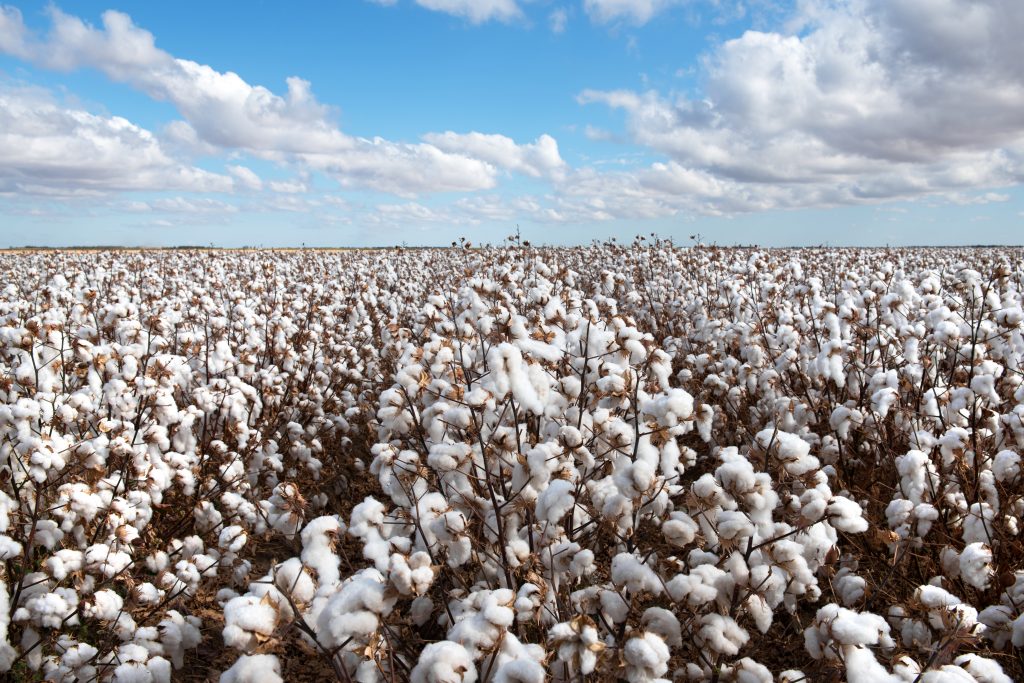
"At URBN, we are committed towards ensuring the cotton we use is grown in an environmentally and socially responsible manner," said Barbara Rozsas, Chief Sourcing and GTC Officer at URBN. "We recognize joining the U.S. Cotton Trust Protocol is a positive step in the traceability of our cotton supply chain and visibility to its environmental impact."

The Trust Protocol is a voluntary sustainability program with the mission to create a sustainable standard for U.S. Cotton that is data-powered, traceable, and generates positive impact through the global cotton value system. It brings quantifiable and verifiable goals and measurement to responsible cotton production and drives continuous improvement in key sustainability metrics such as land use, soil carbon, and water management.

"We are pleased to welcome URBN to the U.S. Cotton Trust Protocol," said Daren Abney, Executive Director of the U.S. Cotton Trust Protocol. "Their commitment to sustainable sourcing aligns strongly with our mission to promote responsible cotton production practices and continuous improvement. We look forward to working with URBN to achieve their sourcing and tracing goals."

URBN's membership in the Trust Protocol builds upon its existing sustainability initiatives, including investing in circularity, utilizing better materials, reducing waste, and increasing cleaner energy. Through its collaboration with the Trust Protocol, URBN gains access to farm-level data and traceability across the supply chain, ensuring the cotton used in its products meets the highest sustainability standards.

AFR Day at the Capital coming up April 29th

✨Join Us for AFR Day at the Capitol✨

AFR Cooperative is looking forward to the 2025 AFR Day at the Capitol scheduled for April 29. During the event, AFR members will hear from numerous speakers and meet directly with legislators about AFR's policy priorities and other topics of importance.

If you are an AFR member interested in attending, contact Ashley White at ashley.white@afrmic.com or 405-218-5591

USCA Commends Senators on Reintroducing Special Investigator Bill

U.S. Senator Ron Wyden (D-Ore.), Senator Chuck Grassley (R-Iowa) and Senator Mike Rounds (R-S.D.), along with five other cosponsors have reintroduced the Meat and Poultry Special Investigator Act of 2025. The bill was introduced in 2022 and 2023, moving out of committee in 2022 and voted on the Senate floor.

The legislation would create the "Office of the Special Investigator for Competition Matters" within the Packers & Stockyards Division at USDA and addresses anticompetitive markets and vertical consolidation in the meatpacking industry. The Office of the Special Investigator would hold legal powers to address violations of the Packers and Stockyards Act taken by large meatpackers. The office would also serve as a liaison to the Department of Justice, the Federal Trade Commission, and the Department of Homeland Security.

"Producers have gone too long without fair options when it comes to processors and meatpackers. The industry is much more consolidated than is equitable, with the four largest beef packers controlling 85 percent of the space. USCA is grateful to Senators Wyden, Grassley, Rounds, Hyde-Smith, and Hoeven and their counterparts for championing this bipartisan bill that is vital to the longevity of small, independent processors," U.S. Cattlemen's Association
President Justin Tupper said.

The House released their version of the bill, introduced by Rep. Josh Gottheimer (D-N.J.), on March 20.

R-CALF, USA: Will Beef Tariffs Hurt Consumers?

Commentary by Bill Bullard, CEO, R-CALF USA

Free trade dogma suggests that more imports benefit consumers by affording them more choices and lower prices. Let's see if this holds true in the U.S. beef market.

We'll go back nine years to 2016. This way our analysis begins well before the widespread drought that began in 2020, and which accelerated the ongoing decline of our U.S. cow herd.

Since 2016, the beef equivalent of cattle and beef imported into the U.S. increased by 44 percent (from 3.76 billion pounds to 5.42 billion pounds). These imports increased year over year from 2016 through 2020, then they declined some in 2021 and 2022; but they quickly jumped to a historical high in 2023, only to jump to a new all-time record high in 2024.

We can say that imports increased dramatically during that 9-year period. So, if the free trade dogma is correct, then consumers should have realized more choices and lower prices. Let's look at prices first.

Since 2016, all-fresh beef prices have increased 40 percent. That's right, in 2016 the all-fresh beef price was $5.74 per pound and after imports increased 44 percent during the nine-year period, the all-fresh retail price of beef increased to an all-time record high of $8.01 per pound in 2024.

If the free trade dogma was correct, there would be an inverse relationship between imports and beef prices. In other words, when imports increased, beef prices would be expected to decrease.

But they didn't, instead there's been a long-term positive relationship between imports and beef prices – as imports increased, so too did beef prices increase. 

So, let's look at a new question to get to the issue of consumer choices: If tariffs lower the quantity of imports in the U.S. market, will consumers then have to pay more for beef? 

Here's what we know: not including the additional beef imported in the form of live cattle, in 2024 the total quantity of those record imports was about $0.67 per pound cheaper than the per pound value of our total quantity of exports.

This means that on average, the global importers landed 3.5 billion pounds of beef into the U.S. market at a total price savings to them of $0.67 per pound, or about $2.3 billion.

Did the global importers pass this total price savings to consumers by allowing them to choose between the cheaper imported beef and the higher valued domestic beef? Or did the global importers merely comingle their cheaper imported beef with domestic beef and charge consumers the domestic beef price for both domestic and imported beef because consumers couldn't tell the difference?

We believe that's what's been happening. Because Congress has not passed mandatory country of origin labeling (MCOOL) for beef, consumers cannot distinguish the cheaper foreign beef from domestic beef and the global importers can charge the same price for both since consumers have no way of differentiating between the two.  

When and if Congress passes MCOOL for beef, consumers will have a choice of buying domestic beef or foreign beef, but until that happens, the price savings from buying cheaper foreign beef can be captured by the global importers.

Now you know why the global importers are lobbying Congress so hard to not pass MCOOL – they don't want their free lunch taken away.

But here's what should be a grave concern for everyone – consumers and producers alike. Within that nine-year period during which total imports increased 44 percent and beef prices increased 40 percent, the latest U.S. census shows the United States lost another 107,000 beef cattle producers.

The reason we're losing our nation's family-scale cattle ranches at such an alarming rate is that imported beef and cattle are displacing both our producers and our cattle within the domestic beef supply chain, causing America to become increasingly dependent on foreign supplies for one of its most important protein sources – beef.

So how do we reverse this disastrous situation so consumers can have access to an abundant supply of affordable beef and the choice to purchase cheaper foreign beef or domestic beef.

Well, tariffs can help reduce the profit taking by the global importers by limiting the quantity of imported beef and reducing the price disparity between imported beef and domestic beef, and when MCOOL is finally passed, consumers can then choose to strengthen our domestic beef supply chain by choosing to buy beef produced by domestic ranchers.

These two reforms will increase transparency and competition in the domestic beef market and that, more than anything else, will ensure that beef is priced fairly for consumers and that America's national security needs are met by becoming near self-sufficient in the production of beef.

This is not a new dogma. Our plan replaces global power with competition, which will benefit everyone except the global importers.

STAX and PLC: Should Cotton Producers Have to Choose?

The farm safety net includes a number of risk management tools that help producers navigate the risks they face, ranging from the Federal Crop Insurance Program to Title 1 of the farm bill. With crop insurance, farmers purchase the coverage which typically protects against price and yield risk within the growing season. By contrast, Title 1 of the farm bill authorizes programs – Agriculture Risk Coverage (ARC) and Price Loss Coverage (PLC) in particular – that are designed to complement crop insurance, protecting against risks not otherwise covered. 

Because some of the programs have features in common, Congress has chosen to limit the choices available to producers. For example, the Supplemental Coverage Option (SCO) is an area-wide crop insurance policy that protects against county-wide losses in prices and yields (depending on the underlying policy) within the deductible portion of a producer's crop insurance policy (i.e., the portion not covered by the underlying individual policy). In addition, in the 2014 Farm Bill, Congress created ARC, an FSA-administered program that protects against shallow losses in county-wide revenue. Because of the similarities between SCO and ARC, Congress stipulated that a producer was not eligible to purchase SCO on a crop enrolled in ARC. By contrast, a producer that enrolls the base acres on their farm in PLC – which covers deeper declines in marketing-year average prices – is permitted to purchase SCO at their discretion.

What does this have to do with cotton?  In the 2014 Farm Bill, upland cotton was removed as a covered commodity and cotton producers were left with no access to ARC and PLC.  Instead, they were left with an area-wide crop insurance policy – very similar to SCO – that was known as the Stacked Income Protection Plan (STAX). Several years later, when seed cotton was added to the farm bill in the Bipartisan Budget Act of 2018, cotton producers once again had access to ARC and PLC (albeit on seed cotton rather than cotton lint). An effort was made to eliminate STAX as a result, but policymakers recognized that not all producers have seed cotton base acres, so a political compromise was reached: STAX would remain available, but cotton producers would have to choose between STAX and ARC/PLC. According to the Bipartisan Budget Act of 2018, "[b]eginning with the 2019 crop year, a farm shall not be eligible for [STAX] for upland cotton for a crop year for which the farm is enrolled in coverage for seed cotton under [PLC] or [ARC]." Notice, the restriction did not simply prohibit a producer from having access two area-wide tools (i.e., STAX and ARC), it also prohibited producers from having access to STAX and PLC, despite the two options having little in common.

There is no prohibition on SCO and PLC, for good reason, as they cover different risks. We question the wisdom in deviating from that logic with respect to STAX and PLC. While we will explore the differences between STAX and PLC in detail in a future article, suffice it to say we would encourage policymakers to take another look at this requirement as they go about the process of reauthorizing the 2018 Farm Bill, especially in light of the current state of the farm economy.


Article courtesy of Southern Ag today: Fischer, Bart L., and Hunter Biram. "STAX and PLC: Should Cotton Producers Have to Choose?" Southern Ag Today 5(15.4). April 10, 2025. Permalink

Tom Cole's Statement on Passage of Budget Resolution

Today, Congressman Tom Cole released the following statement after voting in favor of the budget resolution:

"Last November, the American people overwhelmingly voted for a secure border, American energy dominance, investment in the defense of America, a more efficient federal government, and an extension of the Trump Tax Cuts. Through the passage of this budget resolution, we will now be able to begin the drafting stage in order to deliver on these promises," said Congressman Cole. "The American people are counting on us – and, today, we got one step closer to getting the job done!"

NCGA Statement on Tariff Pause

President Donald Trump announced on Wednesday that he was placing a 90-day pause on all reciprocal tariffs, with the exception of China. In response to this development, Illinois farmer and NCGA President Kenneth Hartman Jr. released the following statement:
 

"We appreciate the administration's decision to place a 90-day pause on the reciprocal tariffs it had put in place earlier this week. We ask President Trump and his administration to use this delay to negotiate market access opportunities for American-made products, including corn.


"Planting is about to begin in much of the country. The longer that uncertainly exists the more concerned we become that our growers could harvest billions of bushels of corn for which they will not have reliable markets. Our farmers want certainty that our customers at home and abroad will buy our products in the months and years ahead."

NCBA's Ethan Lane Predicts Choppy Waters Ahead of Passing a Big Beautiful Tax Bill

Listen to Ron Hays talking with Ethan Lane about the challenge of getting a tax cut deal done in 2025.

Senior Farm and Ranch Broadcaster Ron Hays is back, talking with NCBA's Vice President of Governmental Affairs, Ethan Lane. Yesterday, they discussed why NCBA supports Trump's tariff policies. Today, they are talking about the challenge of getting a tax cut deal done in 2025.

"One big, beautiful bill continues to capture the imaginations of policy makers throughout Washington," Lane quipped. "Unfortunately, that dream runs into the reality of what has been and continues to be a bitterly divided Congress."

He described a four-seat cushion for Speaker Mike Johnson in the House Republican Conference as the "sweetest deal he has seen in some time, now." Even still, a few holdouts are preventing the bill from progressing.

"We are going to see this week whether he can navigate those choppy waters and get enough of his conference onboard to advance this," Lane said. "The reason for using a reconciliation bill to do this is that it is a simple majority vote. It lowers the threshold; it makes it easier to get to 'yes' on this, not just in the House, but on the Senate eventually as well."

He emphasized the tight margins between the parties in both the House and Senate, which empowers the holdouts. He explained, "Like we have seen in the last few weeks, where we have had some stop and starts with votes. We've seen some votes cancelled, kind of a continuation from that last Congress. But we are going to be watching to see how that plays out, and I think we need to be prepared for the fact that we could have some false start weeks. We could see this week fall apart, and they could come back and try 'er again after the Easter recess. We'll just have to watch and see."

He pointed out that the discussions in Congress would be regarding a five-year reauthorization of the 2017 Tax Cuts and Jobs Act, not a permanent policy.

"There are a lot of folks, ourselves included, that would love to make these permanent," he shared. "But at the end of the day, this is a math equation. It is factoring in the cost of those provisions over the course of ten years and what it does to the federal budget not to have that revenue coming in."

Other factors in the equation are whether or not the tax cuts will allow for economic growth in various tranches of American society, whether it be farmers' and ranchers' ability to deduct the cost of heavy equipment and preserve the value of the operations to pass them on to the next generations without tax penalties.

"Those are all things that have an inherent economic benefit, not just to agriculture, but to the entire economy in the form of that money being spent in the economy rather than being sent to Washington," Lane detailed. "That is the math problem that is being solved right now. That is the argument. If you look at the cuts on their own, if you look at the extension of those provisions, it's about a four trillion-dollar price tag."

The question boils down to whether or not an extension would be a continuation of baseline spending or new spending. Lane answered for NCBA by saying, "Our argument, and others', is that it is a continuation of baseline spending because we have been operating under that since 2018. The Senate parliamentarian agrees, and that is the format they are using moving into this."

According to Lane, a resolution cannot happen soon enough. He said, "The earlier, the better to provide that all-important consistency and reliability to the supply chain. It is the unknown that causes the biggest problems in the economy. The quicker they can get this dealt with, the quicker they can get it off of the agenda, and folks can go back to paying attention to their businesses rather than the taxes they are going to pay on that business, the better off the economy will be."

The Beef Buzz is a regular feature heard on radio stations around the region on the Radio Oklahoma Ag Network and is a regular audio feature found on this website as well. Click on the LISTEN BAR at the top of the story for today's show, and check out our archives for older Beef Buzz shows covering the gamut of the beef cattle industry today.

The Latest Drought Monitor Report Shows Some Improvements in Oklahoma

To view the latest Oklahoma drought map, CLICK HERE.

According to the latest Oklahoma drought monitor report, exceptional drought remains at zero percent, unchanged from the start of the calendar year.

Extreme drought or worse conditions remain at zero percent, unchanged since the week of October 29, 2024.

Severe drought or worse conditions decreased to 13..60 percent, down from 14.10 percent last week.

Moderate drought or worse conditions decreased to 39.93 percent, down from 47.52 percent last week.

Abnormally dry or worse conditions have decreased to 53.11 percent, down from 75.46 percent last week.

According to the 6-to-10-day precipitation outlook map, the entire state of Oklahoma is leaning above a 33-40% chance of precipitation through April 19.

To view the United States Drought Map, CLICK HERE.

This U.S. Drought Monitor (USDM) week saw widespread improvement in drought-related conditions across areas of the South, Southeast, and Midwest, where a series of strong storms delivered heavy rainfall, damaging winds, and severe flooding. The multi-day storm event saturated soils leading to inundation of rivers, and severe flooding in low-lying areas from Arkansas to Ohio. Storm totals from the multi-day event ranged from 4 to 18+ inches, with the highest accumulations observed across central Arkansas, southeastern Missouri, and western portions of both Tennessee and Kentucky. In addition to heavy rainfall, the storm system sparked dozens of tornadoes as well as strong gusty winds in other areas, causing widespread power outages. Elsewhere, improving conditions over the past 30 to 60 days, led to reduction in areas of drought in the Northeast, from New York to Maine, as well as in areas further south including New Jersey and Virginia. In the Midwest, this week's rainfall event pushed rainfall totals well above normal levels for the past 30-day period, leading to improvements across the Midwest in Missouri, Illinois, Indiana, and Michigan. In the Upper Midwest and portions of the Plains, drought-related conditions improved on the map across areas of Minnesota, Wisconsin, and South Dakota, where precipitation has been above normal for the past 30-90-day period and soil moisture monitoring products are showing normal to above-normal levels. In the West, above-normal springtime temperatures are causing a rapid melting of high-elevation snowpacks across the entire region. Looking at the current snowpack conditions out West, deep seasonal snowpack deficits remain across the ranges of southwestern Colorado, New Mexico, northern Arizona, and southwestern Utah. Elsewhere in the region, areas of the Great Basin and Intermountain West saw improvements on the map including parts of northeastern Nevada, Wyoming, and northwestern Colorado. In terms of reservoir storage in the West, California's reservoirs continue to be at or above historical averages for the date (April 8), with the state's two largest reservoirs, Lake Shasta and Lake Oroville, at 116% and 120% of average, respectively. In the Southwest, the U.S. Bureau of Reclamation is reporting (April 6) Lake Powell at 33% full, Lake Mead at 34% full, and the total Colorado system at 41% full (compared to 42% full at the same time last year).

In the Southern Plains, widespread improvements were made in response to very heavy rainfall accumulations observed across parts of the region, with the highest totals (ranging from 5 to 15+ inches) observed in northeastern Texas, eastern Oklahoma, Arkansas, western Tennessee, and southern Mississippi. The multi-day storm event led to catastrophic flooding in parts of the region as well as tornadic activity, widespread power outages, and loss of life. However, the deluge of rains also led to significant improvements in drought-related conditions, with multiple category improvements made on the map. For the week, average temperatures were above normal in eastern areas, with anomalies ranging from 3 to 12 degrees F. Conversely, the western extent of the region, including much of Texas, Oklahoma, and Arkansas, experienced temperatures ranging from 3 to 12 degrees F below normal. Looking at Texas reservoir conditions, statewide reservoirs are reported to be 75.7% full, with many reservoirs in the eastern part of the state in good condition (over 90% full), while numerous reservoirs in the western portion of the state continue to experience below-normal levels, according to Water Data for Texas (April 9). In terms of streamflow activity (April 9), the U.S. Geological Survey is reporting well above normals streamflows (>90th percentile) across northeastern Texas, southeastern Oklahoma, Arkansas, Mississippi, and western Tennessee, while areas of central and southern Texas are experiencing below normal levels (1st to 24th percentile range).

In the High Plains, improvements were made in the region, namely in northern Kansas, northern Nebraska, and South Dakota, where shorter-term precipitation (past 30-60 days) is normal to above normal. Additionally, these areas were showing improvements in other drought indicators including soil moisture, streamflow activity, and satellite-based vegetation health. In western North Dakota, areas of Extreme (D3), Severe (D2), and Moderate (D1) drought expanded on the map in response to a combination of factors, including numerous recent impact reports from the agricultural sector, below-normal precipitation (past 30 days), and low streamflow and soil moisture levels. For the week, generally dry conditions prevailed across western portions of the region, while eastern portions received modest accumulations of <1.5 inches (liquid). In terms of temperatures, below-normal average temperatures (ranging from 2 to 10+ degrees F) were logged across the entire region.

In the West, generally dry conditions prevailed over much of the region, including areas of California, the Great Basin, the Intermountain West, and the Desert Southwest (southern Arizona and southwestern New Mexico). However, some mountain locations in the Pacific Northwest and the Rocky Mountains received light-to-moderate precipitation accumulations. On the map, areas of Extreme (D3) drought were introduced in southeastern Arizona, where precipitation deficits existed at both short- and longer-term time scales. Similarly, ongoing below-normal snowpack conditions (snow water equivalent at NRCS SNOTEL stations ranging from 6 to 55% of median) in the Nacimiento, San Juan, and Sangre de Cristo ranges of New Mexico, led to the introduction of areas of Extreme (D3) drought. Elsewhere, some improvements were made on the map in drought-affected areas of northeastern Nevada, northeastern Utah, northwestern Colorado, and Wyoming. Looking at the regional snowpack, the NRCS SNOTEL network is reporting (April 8) the following region-level (2-digit HUC) SWE levels: Pacific Northwest 102%, Missouri 97%, Upper Colorado 89%, Great Basin 104%, Lower Colorado 69%, and Rio Grande 46%.

Looking ahead, the NWS Weather Prediction Center (WPC) 7-Day Quantitative Precipitation Forecast (QPF) calls for relatively dry conditions across the conterminous U.S., except for light-to-moderate accumulations across areas of the Pacific Northwest, northern Plains, Lower Midwest, Mid-Atlantic, and the Northeast. The Climate Prediction Center (CPC) 6-10-day Outlook calls for a moderate-to-high probability of above-normal temperatures across the Western U.S., Plains, and areas of the South, while below-normal temperatures are expected across eastern portions of the Midwest and portions of the Northeast. Elsewhere, near-normal temperatures are favored. In terms of precipitation, there is a low-to-moderate probability of above-normal precipitation across New Mexico, Texas, and Oklahoma as well as areas of the Upper Midwest. Elsewhere, below-normal precipitation is expected across most of the West, Southeast, and Mid-Atlantic.

To view the 6-10 Day Precipitation Outlook Map, click here.

To view the 6-10 Day Temperature Outlook Map, click here.

To view the Monthly Drought Outlook Map, click here.

Introducing Callen Veit of the Morrison FFA Chapter, Your 2025 Northwest Area Star in Agriscience

Listen to KC Sheperd talking with Callen Veit ahead of the State FFA Convention in Tulsa, Oklahoma.

During the month of April, the Radio Oklahoma Ag Network and Oklahoma Farm Report are spotlighting the 19 Area Stars of Oklahoma FFA, who are among the highest achievers in the organization.

The stars come from the five areas in four categories - Star in Ag Placement, Star in Agriscience, Star in Agribusiness, and Star in Agricultural Production.

This week, we spotlight the four area stars in Agriscience in 2025.

One Star Finalist featured in the coming days from each of the categories will be named the State Star Award Winner during the 99th Oklahoma State FFA Convention, which will take place on May 6th and 7th in Tulsa, Oklahoma.

This week, our coverage of the 2025 Oklahoma FFA Star Award Finalists continues with Agriscience competitor Callen Veit of the Morrison FFA chapter representing the Northwest Area.

Veit started his project in eighth grade and has continued it for five years of research at the Oklahoma State University Animal and Food Science. His five research projects focus on improving beef quality and reducing beef waste through the use of natural antioxidants.

Veit shared that his fourth study was his favorite. He said, "I developed a software application that could predict the running shelf life of beef cuts. That was by far my hardest, most time-consuming project, so I do have a little soft spot for it in my heart because it was something that has never been done before and can be implemented in real-world scenarios, so I'm really proud of that project."

His stepping stone into FFA in the eighth grade was the agriscience fair, and his involvement increased each year. He found a passion for public speaking and also competes in farm business management, the Animal Science Quiz Bowl and is a chapter officer.

"My biggest FFA highlight was my freshman year," he shared. "I was at National Convention and I was the youngest one there – it was mainly a bunch of seniors and juniors. There was about fifteen or twenty of us – it was a big group. I remember being the baby of the group, and they were all like taking care of me, but it was an awesome experience. Beyond that, the Washington Leadership Conference this last year was also one of my best experiences in FFA."

He plans to major in Ag Business at Oklahoma State University with an eye toward law school, but he hopes to continue his research during his college career. "I have spent so much time on it and invested so much and have really fallen in love with this topic," he said. "Even if I'm not conducting research, I know it will continue at Oklahoma State, and I am excited to see where it goes."

Hear KC's full conversation with Callen Veit by clicking on the Listen Bar above.

Your coverage of the 2025 Oklahoma FFA Convention is sponsored by Hilliary Communications, who deliver the latest cutting-edge communications services supporting tens of thousands of customers across 22 counties throughout Oklahoma, Texas, and Iowa. The company offers internet, voice, and HilliaryTV. Hilliary Communications continuously researches the marketplace for innovations and strives to improve underserved areas, offering services that exceed customer expectations. Click here to learn more about Hilliary Communications.

For more information about the 99th Oklahoma State FFA Convention, click here.

New Survey Underscores Crop Insurance Popularity Among Farmers

Respondents Rate Crop Insurance as Top Farm Policy Component

Ninety-one percent of farmers purchased crop insurance to protect their operations in 2024, with 90 percent saying they've purchased insurance for each of the past five years. That's according to a new national survey of farmers released today by National Crop Insurance Services (NCIS).

Respondents also rated three key components of farm policy – crop insurance, direct government payments, and conservation assistance – on a 10-point scale of importance to their business. Crop insurance was cited as the most important, earning a top score from 58 percent of farmers, compared to 42 percent for government payments and 29 percent for conservation.

"Farmers clearly place a high value on crop insurance, and we're seeing that first-hand in the marketplace," explained NCIS President Tom Zacharias. "Nearly 544 million acres were insured last year, up dramatically from just 379 million acres five years ago."

Zacharias said this popularity matters to everyday Americans.

"Crop insurance helps protect the country's farmers, which benefits everyone," he explained, "and because farmers and insurers share in funding the program, it reduces risk for U.S. taxpayers."

Farmers and ranchers spent more than $6 billion from their own pockets in 2024 to purchase 2.4 million policies, which provided $159 billion in protection against weather and market losses, according to NCIS.

Other key findings of the survey included:

  • High Satisfaction: 83 percent of farmers said they were satisfied with the overall crop insurance experience, compared to just 5 percent who were dissatisfied.
  • Reliable: 85 percent were satisfied with how their last crop insurance claim was handled, with only 7 percent expressing any degree of dissatisfaction.
  • Trustworthy: More farmers turn to crop insurance agents for information about government-delivered farm programs than the USDA and peers.
  • Pro-Conservation: 87 percent said that crop insurance does not hinder their on-farm conservation efforts.
  • Affordable: Only 7 percent of farmers would be able to purchase the same level of insurance protection without the government paying part of the premium.

The survey, which is the first time NCIS has surveyed farmers, was conducted from January 11 to February 9 and included 401 farmers and ranchers from across the country who produced a variety of agricultural products. Full results can be viewed online.

NCIS is the only organization that represents all companies authorized to offer crop insurance in the United States. It supports the industry in both the state and federally regulated lines of business and provides research and actuarial and analytical support to insurers. More information about crop insurance can be found at cropinsuranceinamerica.org.

Oklahoma 4-H Empowers Youth at first Rising Leaders Conference

Oklahoma 4-H members assemble paper helicopters during the 2025 Rising Leaders Conference at Oklahoma State University in Stillwater, Oklahoma, on April 5. (Photo by Mitchell Alcala, OSU Agriculture)

More than 100 Oklahoma 4-H'ers in third through seventh grades gathered in Stillwater April 5 for the inaugural Rising Leaders Conference, hosted by Oklahoma 4-H Youth Development.

"The conference was developed to provide younger 4-H members an opportunity to learn more about leadership and project areas earlier in their 4-H careers, as well as start developing connections with other 4-H'ers from across the state," said Sara Randolph, 4-H southeast district program specialist.

Oklahoma 4-H state officers led the event's opening session before Oklahoma Secretary of Agriculture Blayne Arthur highlighted 2025 as the Year of Youth in Agriculture, emphasizing the role of Oklahoma 4-H in drawing youth to agriculture and developing life skills.

Young attendees completed four rotations of fun and educational workshops, with 12 unique workshops taught by volunteers, county educators and older Oklahoma 4-H members. An afternoon session was also available for parents and adult family members in attendance.

"They showed up ready to learn and ready to have fun," Randolph said. "These young people are the future of Oklahoma 4-H, and it is really exciting to see their enthusiasm for the program at such a young age."

Workshops at the conference provided young 4-H members with hands-on experiences in a variety of project areas, such as Activating Civic Engagement, Dog Training 101, Our Living Oklahoma, Exploring 4-H Visual Arts in Miniature and STEM in 4-H Shooting Sports.

For Steve Beck, state 4-H program leader, a highlight of the event was seeing so many excited and smiling youth engaged and interacting with workshop presenters.

"I had several leaders and parents come up to me to thank us for putting this together," he said. "Their kids were already telling them about everything they learned."

For more information about 4-H, contact an OSU Extension county office.

OSU Extension uses research-based information to help all Oklahomans solve local issues and concerns, promote leadership and manage resources wisely throughout the state's 77 counties. Most information is available at little to no cost.

Lankford, Colleagues Push for Greater Health Care Access for Oklahomans, the Nation

Senator James Lankford (R-OK) and his colleagues today introduced the Physician Led and Rural Access to Quality Care Act that would amend a ban put in place by the Affordable Care Act (ACA), once again empowering physician-owned hospitals (POHs) to expand and deliver high-quality care to Medicare and Medicaid patients, particularly in rural communities. 

"Oklahomans and rural communities across the country need more quality health care options," said Lankford. "This bill lifts the outdated restrictions that have blocked physician-owned hospitals from growing or opening where they're needed most. Local physicians should be empowered to deliver high-quality, patient-focused care in rural Oklahoma."

"When physicians lead hospitals, patients win," said Dr. Adam Bruggeman, MD, FAAOS, chair of the Advocacy Council at the American Association of Orthopedic Surgeons. "Physician-led hospitals are a powerful solution to the consolidation plaguing our healthcare system. By lifting outdated restrictions on physician ownership, we can drive down costs, improve quality, and expand access to care, especially in underserved rural areas. It's past time to empower physicians to build healthcare institutions that prioritize patients over profits."

"The daily headlines are impossible to ignore," said Physician-Led Healthcare for America (PHA) President-elect Carlos Cardenas, MD. "Healthcare costs are skyrocketing, rural hospitals are shuttering at alarming rates, and quality and patient satisfaction continue to decline. The status quo is failing us. It's time to revitalize our healthcare system with a proven solution: physician-led hospitals." 

"Across the country, patients in rural communities are struggling to access essential medical care as more rural hospitals are forced to close due to the immense financial strain associated with declining reimbursements and rising medical costs," said Bruce A. Scott, MD, President of the American Medical Association. "By allowing physicians to invest in and revitalize these hospitals, this legislation has the power to preserve and expand access to critical health care services in the communities that need them most. Physician-led hospitals are known to deliver high-quality, cost-effective care. This is a commonsense solution to a worsening problem. The AMA strongly supports this legislation and urges Congress to pass it as a vital step toward improving health care access for rural patients."

Lankford is joined in introducing the bill by Senators Roger Marshall (R-KS), Bill Cassidy (R-LA), Thom Tillis (R-NC), John Cornyn (R-TX), Markwayne Mullin (R-OK), John Boozman (R-AR), John Barrasso (R-WY), and Ted Budd (R-NC). 

Background

POHs represent less than five percent of the 5,700 hospitals nationwide. However, POHs have a successful track record of providing individualized and innovative quality care, and they meet a growing demand for health care services, especially in rural areas. Seventy-three percent of POHs with a Centers for Medicare & Medicaid Services (CMS) overall hospital quality star rating earned three or more stars in the program; 26 percent of them have earned five stars.

In 2023, Sen. Lankford and Dr. Brian J. Miller published an opinion piece in the Wall Street Journal about the importance of including physician-owned hospitals in the litany of quality nonprofit and community-based health care options available to Oklahomans and people around the nation.

Senator Lankford, a member of the Senate Finance Committee, has also introduced similar legislation, the Patient Access to Higher Quality Health Care Act,many times over the past several years.  

Klobuchar, Grassley, Rounds, Slotkin Press USDA on Avian Flu Response

U.S. Senator Amy Klobuchar (D-MN), Ranking Member of the Senate Committee on Agriculture, Nutrition, and Forestry, and Senators Chuck Grassley (R-IA), Mike Rounds (R-SD), and Elissa Slotkin (D-MI) are pressing U.S. Secretary of Agriculture Brooke Rollins to broaden the United States Department of Agriculture's (USDA) strategy for managing avian flu to include measures for turkeys and dairy herds.

"We are writing with regard to the U.S. Department of Agriculture's February 26, 2025 avian flu strategic plan," wrote the Senators. "Since the beginning of the outbreak, the virus has impacted more than 160 million birds, including more than 18.6 million turkeys, and nearly 1,000 dairy herds across the country."

"While the plan did include shared priorities to continue combating this disease – including the expansion of relief to farmers dealing with outbreaks among their livestock and investment in research – we encourage the plan to include turkeys and dairy cows," the Senators continued. "Since avian flu has impacted a wide array of animals we believe any biosecurity and vaccine measures, including discussions with foreign trading partners, offered by the Department should be available to all livestock producers dealing with avian flu, including turkey and dairy producers."

The full letter is available here and below. 

Dear Secretary Rollins, 

We are writing with regard to the U.S. Department of Agriculture's February 26, 2025 avian flu strategic plan. Since the beginning of the outbreak, the virus has impacted more than 160 million birds, including more than 18.6 million turkeys, and nearly 1,000 dairy herds across the country. We appreciated your commitment to make addressing avian flu a top priority during your confirmation process and believe this strategic plan is an important first step in this effort. We also appreciate your efforts to address turkeys and dairy cows in response to the outbreak. We encourage you to ensure that the implementation of the February 26, 2025 strategy addresses turkeys, dairy cows, and wildlife.  

While the plan did include shared priorities to continue combating this disease – including the expansion of relief to farmers dealing with outbreaks among their livestock and investment in research – we encourage the plan to include turkeys and dairy cows. Since avian flu has impacted a wide array of animals we believe any biosecurity and vaccine measures, including discussions with foreign trading partners, offered by the Department should be available to all livestock producers dealing with avian flu, including turkey and dairy producers. 

We request an update on the Department's plan for ensuring turkey producers, dairy and other impacted livestock and wildlife species are covered under the plan. In addition, we request the Department develop a strategy and timeline for working with foreign trading partners to ensure potential vaccination of avian flu in poultry and cattle does not disrupt trade and that the Department provide information to Congress about the expected timeline for conditional approval of an avian flu vaccine for dairy cattle. 

Thank you for your attention to this matter. We look forward to your response. 

National Corn Growers Association Joins as Frontline Sponsor of Groundbreaking, Farmer-Centric Ag Drone Adoption Study

The National Corn Growers Association (NCGA) has joined a landmark, farmer-focused research initiative as a frontline sponsor, reinforcing its commitment to helping growers evaluate and shape the technologies transforming agriculture—including the use of drones for input application, scouting, and precision management.

Launched by Stratovation Group in partnership with sponsors, SweetWater Technologies, Agri Spray Drones and NCGA, and strategic partners, the Agricultural Retailers Association (ARA), The Fertilizer Institute (TFI), and D.C. Legislative and Regulatory Services, Inc. (DCLRS), the study will dig into how farmers perceive, adopt, and apply drone technologies—and what barriers stand in the way.

With NCGA now at the table, the voice of corn farmers will be front and center in this timely exploration of drone use in modern agriculture.

"Corn farmers are at the forefront of determining the value of new technologies, and drones are a great example of that," said Russell Williams, chair of NCGA's Production and Sustainability Action Team. "NCGA is proud to sponsor the survey, which will inform future use, marketing, and policy directions that will benefit agriculture."

The sponsor and strategic partners represent a powerful cross-section of the broad ag tech ecosystem—uniting technology providers, service innovators, and farmer advocates to ensure the research is as practical as it is forward-looking.

Farmer Priorities Driving Innovation

By supporting the study, NCGA ensures the perspectives of corn producers—who manage some of the most advanced and scale-driven operations in the U.S.—are meaningfully represented in the national conversation around drone technology and its role in agricultural innovation.

"When major national organizations like NCGA step up, it signals that drone innovation is poised to make major inroads as a strategic tool of modern farming in the U.S.," said Cam Camfield, CEO of Stratovation Group. "We're also excited about the level of engagement this might produce with affiliated, state-based corn organizations. SweetWater Technologies, Agri Spray Drones and NCGA offer unique perspectives, yet there is a common goal: making sure farmers' voices drive the next wave of drone integration."

The research effort will capture in-depth feedback from row crop and specialty crop growers across the country. Sponsors receive exclusive access to the full data set, which can be used to guide policy discussions, product development, and customer engagement strategies.

Stratovation Group is continuing to engage additional sponsors who want to align with the research and gain early access to the results ahead of public distribution of top-level results later this year.

For sponsorship opportunities, contact Cam Camfield at Cam@StratovationGroup.com.

About the National Corn Growers Association
Founded in 1957, NCGA represents the interests of dues-paying corn farmers in 48 different states. NCGA works on behalf of the broader corn sector to increase opportunities, sustainability, and profitability for U.S. corn production. Learn more at www.ncga.com.

About Stratovation Group
Stratovation Group is a full-service research, marketing, and communications firm that helps ag innovators and industry leaders solve complex challenges with clarity, strategy, and insight. Learn more at www.stratovationgroup.com.

Celebrate Earth Day 2025 with Advocacy!

Earth Day

Not only is beef delicious and nutritious, but the beef industry continues to implement numerous proven sustainability practices throughout each and every step of the "pasture-to-plate" process that contributes to the way beef is responsibly raised today. Though the path to sustainability is never complete. It is a continuous journey being carried out by farmers and ranchers responsible for raising and supplying beef to the U.S. and across the world.

This month sustainability will be on the minds of consumers as we celebrate Earth Day. We need your help sharing the beef sustainability story so that consumers continue to feel good knowing farmers and ranchers are committed to continued improvement and innovation and to producing high-quality, sustainable beef for generations to come.

Take Action this Month!

To the beef community, sustainability comprises much more than environmental considerations. Today, a sustainable food supply balances efficient production with environmental, social and economic impacts. This month we invite you to share about all aspects of beef sustainability as we approach Earth Day. Read more below to get ideas on how to share about the three pillars and more this month!

Share how beef fits into a healthy, sustainable diet and how we raise more beef with fewer cattle

Lankford, Colleagues Push for Greater Health Care Access for Oklahomans, the Nation

Senator James Lankford (R-OK) and his colleagues today introduced the Physician Led and Rural Access to Quality Care Act that would amend a ban put in place by the Affordable Care Act (ACA), once again empowering physician-owned hospitals (POHs) to expand and deliver high-quality care to Medicare and Medicaid patients, particularly in rural communities. 

"Oklahomans and rural communities across the country need more quality health care options," said Lankford. "This bill lifts the outdated restrictions that have blocked physician-owned hospitals from growing or opening where they're needed most. Local physicians should be empowered to deliver high-quality, patient-focused care in rural Oklahoma."

"When physicians lead hospitals, patients win," said Dr. Adam Bruggeman, MD, FAAOS, chair of the Advocacy Council at the American Association of Orthopedic Surgeons. "Physician-led hospitals are a powerful solution to the consolidation plaguing our healthcare system. By lifting outdated restrictions on physician ownership, we can drive down costs, improve quality, and expand access to care, especially in underserved rural areas. It's past time to empower physicians to build healthcare institutions that prioritize patients over profits."

"The daily headlines are impossible to ignore," said Physician-Led Healthcare for America (PHA) President-elect Carlos Cardenas, MD. "Healthcare costs are skyrocketing, rural hospitals are shuttering at alarming rates, and quality and patient satisfaction continue to decline. The status quo is failing us. It's time to revitalize our healthcare system with a proven solution: physician-led hospitals." 

"Across the country, patients in rural communities are struggling to access essential medical care as more rural hospitals are forced to close due to the immense financial strain associated with declining reimbursements and rising medical costs," said Bruce A. Scott, MD, President of the American Medical Association. "By allowing physicians to invest in and revitalize these hospitals, this legislation has the power to preserve and expand access to critical health care services in the communities that need them most. Physician-led hospitals are known to deliver high-quality, cost-effective care. This is a commonsense solution to a worsening problem. The AMA strongly supports this legislation and urges Congress to pass it as a vital step toward improving health care access for rural patients."

Lankford is joined in introducing the bill by Senators Roger Marshall (R-KS), Bill Cassidy (R-LA), Thom Tillis (R-NC), John Cornyn (R-TX), Markwayne Mullin (R-OK), John Boozman (R-AR), John Barrasso (R-WY), and Ted Budd (R-NC). 

Trump Tariff Pause a Positive & Appreciated by Soy Growers,Along with Drop to 10% Individualized Tariff for Most Countries:Farmers Need Negotiations with China Next

Soybean farmers across the U.S. were pleased to hear most countries will get a 90-day reprieve from the new individualized tariffs announced April 2—an opportunity for negotiations with our trading partners that could lead to consensus and potentially avoid permanent tariffs, along with improving market access for U.S. agriculture. With the pause came a rate drop to 10% for each of the countries itemized during that announcement—except for China.

The continued escalation of tariffs with China is concerning to soybean farmers, as China serves as a critical export market for U.S. soy. In another round of tariff tit-for-tat with the administration, China has responded to the most recent U.S. tariffs levied on China with a matching 50% tariff on all imports from the United States. These duties again apply to soybeans—in addition to the recent 34% tariff hike and previous 10% already in place from March. After including the "normal" VAT and standard duty rate for soy, the effective rate for soybeans shipped to China is 114.73%

Caleb Ragland, American Soybean Association president and Kentucky soybean farmer, said that's a tough pill to swallow considering China remains U.S. soy's greatest export market: "We run the risk of immediate impacts this growing season, along with the impacts a prolonged trade war with China will inflict on our industry once again. The short-term disruptions are painful, but the long-term repercussions to our reputation, our reliability as a supplier, and the stability of those trading relationships are hard to even put into words. We're still reeling from TW1—Trade War One—and are certainly not thrilled about an extended TW2.

We appreciate this pause—this opportunity for discussions that can bring resolution, but we ask the administration and China both to press pause with one another, as well, and pursue a Phase 2 trade agreement that will address U.S. trade concerns in a constructive way while preserving the markets we rely on," Ragland said.

Farm Bureau Appreciates Pause in Reciprocal Tariffs

American Farm Bureau Federation President Zippy Duvall commented today on President Trump's decision to temporarily pause and reduce reciprocal tariffs.

"Farm Bureau appreciates President Trump's decision to pause the reciprocal tariffs on dozens of America's trading partners for 90 days. We have been engaging directly with the White House, U.S. Trade Representative and U.S. Department of Agriculture to emphasize the toll tariffs will take on America's farmers and ranchers, who are already strapped because of high supply costs and shrinking paychecks. Creating more market challenges puts at risk more than 20% of U.S. farm income. We're encouraged that those concerns are being heard. "

While the pause brings some temporary certainty, questions remain about the long-term competitiveness for farmers in the global marketplace. We encourage the administration to swiftly resolve trade disputes and to pursue strategies that will ensure America's farmers can continue to stock the pantries of families here at home, and abroad."

EPA Administrator Lee Zeldin Releases Video Message About the EPA Mission

U.S. Environmental Protection Agency (EPA) Administrator Lee Zeldin today shared a message to America, highlighting EPA's core mission and the work the agency does on behalf of the American people. It also demonstrates his commitment to driving growth through his Powering the Great American Comeback initiative.

"Many Americans don't know much about the EPA, and we are seeking to change that," said EPA Administrator Zeldin."

Our mission is to protect human health and the environment, and under my leadership, we will also ensure our policies grow the economy. We are recommitting to commonsense policies that protect our environment and work for all, while remaining dedicated to the rule of law, advancing cooperative federalism, and being good stewards of your hard-earned tax dollars," continued EPA Administrator Zeldin.

Many statutory obligations drive EPA's work, including the Clean Air Act, Clean Water Act, Safe Drinking Water Act, Toxic Substances Control Act, Comprehensive Environmental Response, Compensation, and Liability Act (CERCLA) for superfund sites, and more.Read Administrator Zeldin's Message to America below:"

A lot of Americans don't fully know what the EPA is, or what it does. Some would say, 'the EPA protects the environment.' That's true, but there's a whole lot more to know beyond that. EPA's mission is to protect human health and the environment."

There are many laws on the books that give EPA core statutory obligations to fulfill under the Clean Air Act, Clean Water Act, Safe Drinking Water Act, Toxic Substances Control Act, CERCLA for superfund sites, and much more."Under my leadership, EPA will no longer view the goals of protecting our environment and growing our economy as binary choices. We must and we will choose both."

That's why I announced our Powering the Great American Comeback initiative. Under the Trump Administration, we will continue tirelessly in our work to ensure clean air, land, and water for every American, while simultaneously driving economic growth by unleashing energy dominance, pursuing permitting reform, making the U.S. the AI Capital of the world, and bringing back American auto jobs."

EPA's headquarters in our nation's capital is just a stone's throw from the White House. Here, our teams in the Office of Water, Air and Radiation, Chemical Safety and Pollution Prevention, Land and Emergency Management, and elsewhere work to implement our mission, while Powering the Great American Comeback."

The work we do here filters out to our ten regional offices around the country where our teams on the ground carry out our mission right in your backyard."

The regions are our neighbors, our farmers, our local engineers and scientists. They make certain that EPA's statutory obligations are being fulfilled and that your voice can be heard while honoring the agency's core mission."

Our teams carry out superfund efforts where EPA identifies highly contaminated sites to clean up and return to productive use."

When disaster strikes, EPA responds immediately, coordinating with state, local, and federal counterparts to remove hazardous materials and restore access to safe drinking water. Recently, the unprecedented scale of the Los Angeles fires suggested a recovery timeline stretching into the summer or beyond. Under President Trump's leadership, EPA embraced his executive order to complete our hazardous materials clean up in 30 days. What typically would have taken months was accomplished in 28 days, thanks to the incredible efforts of thousands of dedicated professionals."

State and local governments best understand how to meet the needs of their communities, so we work hand in glove to ensure states have the resources they need to maintain public water utilities and infrastructure, test air quality, and more. When our local partners need assistance, EPA answers the call to detect and address contamination, review and approve pesticides and fertilizers, and so much more."

Under President Trump's leadership, we are recommitting to commonsense policies that preserve our environment and work for all Americans to unleash American energy, revitalize domestic manufacturing, cut costs for families, and pursue permitting reform. EPA will strive to accomplish all this while fulfilling our commitment to the rule of law, advancing cooperative federalism, and being good stewards of your hard-earned tax dollars."

Here at EPA, we are committed to serving you, the American public, to make you proud, and to protect America's beautiful environment."

Mullin, Capito, Fischer, Introduce Resolutions to Repeal California's Extreme EV Mandate

U.S. Senators Markwayne Mullin (R-OK), Shelley Moore Capito (R-WV), and Deb Fischer (R-NE) introduced joint resolutions of disapproval under the Congressional Review Act (CRA) to repeal California's EV waivers that prohibit the sale of new gas-powered light-duty vehicles by 2035, and set unrealistic and stringent requirements for heavy-duty trucks and heavy-duty diesel engines.

Senator Mullin's CRA, the 'Omnibus' Low NOx Regulation, overturns a Biden EPA-approved waiver that allowed California to enforce overly burdensome Nitrogen Oxide (NOx) emission limits regulations for heavy-duty highway and off-road vehicles and engines. The regulation includes longer emission control system warranties, new cold start emission requirements, and extended durability requirements over a vehicle's operational life. This waiver applies to model year 2024 and later on-road heavy-duty Otto-cycle and heavy-duty diesel engines used to operate Class 3-8 medium- and heavy-duty vehicles, including drayage trucks, buses (except transit buses), refuse trucks, and other commercial work vehicles. 

"This waiver imposes significant compliance costs estimated at upwards of $20,000 per truck making it more difficult for small fleets and independent operators to invest in new equipment. Moreover, this creates a competitive disadvantage for manufacturers and fleets by forcing stricter standards to apply unequally across the country. We cannot allow California's costly and extreme Green New Deal agenda to bankrupt families and eliminate consumer choice for hundreds of millions of American families. Thankfully, after four years of ineffective one-size-fits-all crippling bureaucracy, the Trump administration is bringing back common sense," said Senator Mullin. "I'm grateful to my colleagues for partnering with me on this effort."

"By sending these rules to Congress, Administrator Zeldin and the Trump administration followed the law and addressed the Biden administration's attempt to circumvent Congress in this process. California's extreme EV mandate imposes unrealistic and stringent requirements, fails to meet the Clean Air Act's requirements for a waiver, forces the hand of American consumers, and makes our country more reliant on China for critical minerals. The American people have made it clear that they want consumer choice – not an EV mandate," said Senator Capito. "I will continue to address all options available to strike down these rules and eliminate the consequential impact they would make across our country."

"As we saw under the Biden administration, what happens in California doesn't stay in California. Their emissions regulation will cripple the truck manufacturing industry nationwide, overloading companies and truckers with expensive, heavy-handed requirements. This inevitably leads to increased prices for families across the nation. My resolution will overturn the Biden administration's waiver allowing the ACT regulation to take effect without congressional review," said Senator Fischer.

The 'Omnibus' Low NOx Regulation is supported by the following groups: American Trucking Association, American Petroleum Institute, National Automobile Dealers Association.

Full text of the resolution can be found here.

Background:

  • In December 2024, EPA granted California's "Omnibus" low-NOx regulation waiver for heavy-duty highway and off-road vehicles and engines.
  • In February 2025, EPA Administrator Zeldin sent over to Congress three of the Biden Administration's rules granting waivers that allowed California to preempt federal car and truck standards approved by EPA and DOT's National Highway Traffic Safety Administration. Zeldin's decision to send over the rules are part of EPA's "Powering the Great American Comeback" initiative to protect human health and the environment while restoring our economy.

Craig, Boyle, Pallone, Casar, Schneider, Correa Lead Fight Against Draconian Republican Cuts to SNAP and Medicaid

 As Republicans push a far-right budget that hands $7 trillion in giveaways to billionaires and big corporations, leading Democrats introduced legislation to block the extreme and unprecedented cuts to the Supplemental Nutrition Assistance Program (SNAP) and Medicaid in the Republican budget. 

The Hands Off Medicaid and SNAP Act is led in the House by Representatives Angie Craig (MN-02), Ranking Member of the Agriculture Committee; Brendan F. Boyle (PA-02), Ranking Member of the House Budget Committee; Frank Pallone, Jr. (NJ-06), Ranking Member of the Energy and Commerce Committee; Greg Casar (TX-35), Chair of the Congressional Progressive Caucus; Brad Schneider (IL-10), Chair of the New Democrat Coalition; and Lou Correa (CA-46), Co-Chair of the Blue Dog Coalition.

"The reckless Republican budget scheme will slash nutritional assistance for working families and make the largest cut to Medicaid in history, all so they can give massive tax breaks to billionaire donors like Elon Musk," said Democratic Leader Hakeem Jeffries (NY-08). "These dangerous cuts are unconscionable and unacceptable, particularly at a time when Donald Trump has hit families with the largest tax increase since 1968. If House Republicans had any intention of making good on their promise to lower costs for everyday Americans, they would bring this bill to the House Floor for immediate consideration."

"Republicans have sworn up and down that their billionaire tax giveaway won't cut SNAP benefits," said Agriculture Committee Ranking Member Craig. "This bill keeps that promise by protecting SNAP in reconciliation. If Republicans want to help farmers and families struggling with rising prices caused by President Trump's trade war, they will support this bill."

"House Republicans have written a budget that strips health care and food assistance from working families—all while handing massive giveaways to billionaires," said Budget Committee Ranking Member Boyle. "These are the deepest cuts to Medicaid and food assistance in American history. This bill defends middle-class families against this cruelty — and if Republicans truly stand with everyday Americans, they'll support this bill." 

"Republicans have repeatedly claimed they're not going to take away people's health care by cutting Medicaid. If that's true, Republican leaders should immediately put this bill on the House floor to ensure Medicaid will not be cut to give tax breaks to the rich," said Energy and Commerce Committee Ranking Member Pallone.

"House Democrats oppose taking food and health care from working people to pay for tax cuts for billionaires," said Congressional Progressive Caucus Chair Casar. "Now the question becomes: will just three House Republicans reverse course on their plan, or will millions of Americans lose food and health care?"

"Democrats are united with people across the country: Hands Off Medicaid and SNAP! President Trump has slammed hardworking families and set fire to the economy with the largest tax increase in American history," said New Democrat Coalition Chair Schneider. "Meanwhile, House Republicans are submissively bowing to the President and refusing to stop the ongoing economic crisis. In fact, they are plotting to make things even worse. Their proposed budget will rip away health care for hardworking Americans and going after programs like SNAP that enable more than 40 million Americans to put dinner on the table. I'm proud to stand with my Democratic colleagues across the caucus and country as we stand up to these harmful and disastrous Republican policies." 

"Thousands of hard-working Orange County taxpayers rely on Medicaid and SNAP to keep food on the table and their families healthy. And the GOP's shameful budget plan includes hundreds of billions in cuts to these vital programs that our kids, seniors, and veterans depend on. It's unacceptable, unconscionable, and un-American," said Blue Dog Coalition Co-Chair for Policy and Legislative Strategy Correa. "We're introducing this legislation to block these harmful cuts and ensure that tens of millions of our constituents continue to receive the health care and food assistance they need and deserve."

While Republican leaders laughably claim they won't cut Medicaid benefits, the nonpartisan Congressional Budget Office—at the request of Ranking Members Boyle and Pallone—confirmed that the Republican budget would result in the largest Medicaid cuts in U.S. history (see fact sheet here). The Republican proposal demands slashing at least $880 billion from programs under the House Energy and Commerce Committee, which is impossible without devastating cuts to Medicaid, a critical program that provides essential health care to nearly one in three Americans.

The Republican budget also demands at least $230 billion in cuts to programs under the House Agriculture Committee, threatening the largest-ever cut to the Supplemental Nutrition Assistance Program (SNAP), which helps over 42 million Americans afford groceries. These cuts to food and health assistance come as grocery and health care costs remain high—and as Donald Trump advances a new wave of tariffs that would amount to the largest middle-class tax increase in 50 years, costing households an estimated $3,800 annually.

Meanwhile, the proposed cuts would be used to help pay for tax breaks for the wealthiest Americans. According to the nonpartisan Yale Budget Lab, nearly 70 percent of the benefits of the major policies in the Republican budget would go to the top 5 percent of earners. While the top 1 percent gets an annual tax cut of $314,266, working and middle-class families would be left to bear the burden of higher costs and reduced access to health care and food assistance.

The Hands Off Medicaid and SNAP Act would protect families by prohibiting Republicans from weaponizing the reconciliation process to cut benefits or remove individuals from Medicaid and SNAP. This would help ensure that tens of millions of Americans continue to have access to essential health care and food assistance (district-level data is available here).

The text of the Hands Off Medicaid and SNAP Act is available here.

Register for NCBA's Next Webinar - Hidden Hazards: Protecting Consumer Experience

Hidden Hazards: Protecting Consumer Experience
Thursday, April 17th, 6:00 - 7:00 CDT

Join us for an insightful webinar where industry experts delve into the critical aspects of beef safety and production. Dr. Trey Patterson, CEO of Padlock Ranch, will share his extensive experience in and effective production practices. Patrick Linnell from CattleFax will offer an overview of market trends and the economic impact of maintaining high standards in beef production. Dr. Pat Mies from Tyson will discuss the latest advancements in detecting and preventing foreign object contamination in beef processing, while Dr. Trent Schwartz from West Texas A&M will provide insights into research and innovations that enhance beef safety and quality. Don't miss this opportunity to enhance your knowledge of beef safety and production practices from leading experts in the field

Chairman Johnson Opening Statement: "American Innovation and the Future of Digital Assets: On-Chain Tools for an Off-Chain World"

Subcommittee on Commodity Markets, Digital Assets, and Rural Development Chairman Dusty Johnson (SD-At Large) delivered the following opening statement at today's subcommittee hearing "American Innovation and the Future of Digital Assets: On-Chain Tools for an Off-Chain World."

Remarks as prepared:

Good afternoon. Welcome to our first meeting of the Subcommittee on Commodity Markets, Digital Assets, and Rural Development for the 119th Congress. 

I want to congratulate Don Davis from North Carolina as our new Ranking Member. I know I'll enjoy working with you as I enjoyed working with your predecessor, Yadira Caraveo. 

Mr. Davis isn't the only one in a new role—almost half our subcommittee is new compared to last Congress. I think I can speak for the Ranking Member and say that we are thrilled to have you on this Committee. 

A portion of our work is digital assets, which we will focus on today. In the coming months, we will focus on the Committee's rural development and rural energy priorities, oversight of the Commodity Futures Trading Commission, and legislation to reauthorize the CFTC. 

Last Congress, this Committee did extraordinary work with our colleagues on the Financial Services Committee to craft and pass a bipartisan, comprehensive digital asset market structure bill – the Financial Innovation and Technology for the 21st Century Act. FIT21 passed the House with great bipartisan support by a 279-136 vote. 

We are picking up right where we left off last Congress. Earlier today, Chairman Steil's Digital Asset Subcommittee of the Financial Services Committee held their first hearing on market structure. This was not a coincidence—we'll be working side by side on legislation again this Congress. 

We are united and committed to advancing comprehensive, bipartisan market structure legislation to the President's desk. Our legislation will bring legal certainty to issuers and users of digital assets, clear customer protections to buyers of digital assets, and new innovations to all Americans. 

Today, we are going to hear from entrepreneurs who are using blockchains and digital assets to solve real-world problems. 

This conversation isn't really about crypto, but it's about a few cattle guys trying to figure out how to make it easier and more profitable for ranchers to market their cattle. 

It's about a gifted engineer trying to make a less expensive, more robust, and more precise GPS network for precision agriculture and other location-based systems. 

It's about a law professor who is building automated systems to help developers comply with legal disclosure requirements in a way that consumers can actually understand. 

It's about new ways to solve old problems, and these new ways use public blockchains. 

Our work on market structure legislation is ultimately about how to ensure that ranchers, engineers, college professors, and others can use digital tools to bring their ideas to life and unleash their American Dream. 

We have a terrific panel of witnesses to help us understand the work to develop new projects and the legal landmines which can disturb that effort and slow innovation. 

I am looking forward to today's hearing, our work over the next few months, and ultimately, putting a bill on President Trump's desk. 

With that, I will recognize my friend, the new Ranking Member of the Committee, Don Davis. 

Robust Quality Supply and Demand

Last week's 591,000 head federally inspected cattle harvest was 18,000 head smaller than the week prior and 23,000 head smaller than a year ago. With that said, the production volume trend is positive, with a two-week average of 600,000 head per week compared to the prior two weeks, averaging just 571,000 head.

Broad economic turbulence on the heels of tariff announcements set equities in a tailspin beginning last Wednesday. Concerns for domestic beef demand and global implications to beef trade spilled over into Live Cattle futures with a four-day slide devaluing these contracts multiple dollars. Tuesday's April '25 Live Cattle contract was valued $10/cwt. cheaper than last week's spot fed cattle average price.

Create emails quickly with structures

Wholesale boxed beef values were sharply higher last week with the Choice cutout leading the way, posting an increase of $10.24/cwt. in Urner Barry's weekly average. The Certified Angus Beef ® (CAB®) brand cutout increased by $3.57/cwt., cutting the brand's premium over Choice to $14.84/cwt. Select carcasses, at just 12.6% of the fed cattle mix, increased by $4.77/cwt., widening the Choice-Select spread to a massive $24.70/cwt. in Urner Barry's average weekly comparison. Early this week the USDA reported the Choice-Select spread at $15/cwt in the weighted average pricing.

Recent trends have tracked middle meats and grinds driving most cutout gains. Buyers are preparing for spring holiday and grilling demand as ribeye prices have posted sharply higher since early March. Short loin, strip loin and sirloin values are increasing with similar seasonal demand, with sirloins the most inflated versus a year ago.

Chuck and round items are certainly not seeing price weakness but compared to the middle meats are in a more subdued pattern. This applies to most items except for the leaner round knuckles, eye of rounds and insides, each of which are seeing strong pricing. Thin meats and briskets are trading at values within expectation for this season and compared to recent annual patterns.

Robust Quality Supply and Demand

A wild week in economic news and equity markets rapidly transitioning to lower values has logically created a degree of uncertainty surrounding beef. However, a look at fed cattle beef production and recent price activity show promise.

The 2025 fed cattle harvest has run very close to a year ago with the full production weeks averaging 473,000 head, a 1,600 head increase over the same period last year. This may surprise some due to the fact that the cull cow and bull harvest has been dramatically lower again this year, down 14.7%, pulling total federally inspected harvest counts lower by 2.4%.

Fed steer and heifer carcass weights have averaged 32 lb. heavier than a year ago and 43 lb. heavier than 2023. Just comparing this year to last, the carcass weight increase is equivalent to adding 16,470 fed cattle to the weekly harvest, a 3.5% increase.

That fed cattle tonnage advance stands in contrast to the more readily understood theme of tighter fed cattle supplies. While we know that feedlot inventories and placement patterns indicate smaller head counts near term, the net carcass tonnage is shockingly large.

Combined Choice and Prime quality grade percentages recently touched a record-high 86.5% of fed cattle carcasses. USDA Prime has been the driver with the year-to-date number at 11% of fed cattle compared to 10% a year ago. Heavier carcass weights and the one percentage point increase in the Prime carcass share have netted a 10.8% increase in total Prime carcass tonnage. Even so, the Prime cutout premium over Choice has run 65% wider than a year ago in the last 14 weeks.

In contrast, CAB carcass tonnage has totaled 1% smaller than a year ago in the latest 10-week period. The brand's cutout premium over Choice has averaged 16% greater on roughly the same weekly production volume for the period verus a year ago.

These supply and price metrics paint a picture of robust demand for premium-quality beef in an economic setting that has been quite inflationary over a handful of years. Consumer dollars are undoubtedly stretched and concerns over domestic and international demand are rightfully befalling cattle futures prices. Yet this snapshot suggests that recent demand patterns cast a vote in favor of the beef sector continuing a path of quality in relatively large volume rather than relying on scarcity alone as a profit driver.

The key to sustainable agriculture is innovation and collaboration

It's going to take each and every one of us along the supply chain to work together to reach sustainability goals. New ideas, perspectives, and partnerships are necessary to propel us forward. At the Animal Agriculture Alliance's 2025 Stakeholders Summit, animal health experts will discuss how "a dash of innovation" can make all the difference in making progress toward shared goals.

In the 2025 Summit session "A Dash of Innovation: How Animal Health Drives Sustainability Solutions," featured speakers include:

  • Tim Kurt, DVM, SVP of Environmental Research Strategy and Group Lead, Dairy Management Inc.
  • Ron Phillips, SVP of Policy, Animal Health Institute
  • Brenda Fessenden, Precision Animal Health Technical Services Lead, Zoetis
  • Susanna Elliott, Chief Marketing and Communications Officer, Alltech

Don't miss out on the important conversations happening at the 2025 Summit – register today!

Discounted registration rates are available to Alliance members. Not a member yet? Join today to unlock exclusive savings and benefits.

Final call for silent auction donations 📢

The 2025 Summit is just around the corner – as well as our annual silent auction to support the next generation of agriculture advocates through the College Aggies Online scholarship program. Donations for the silent auction are being accepted through April 18. Complete our request form to let us know what you'd like to contribute!

👀 SNEAK PEEK: We've received a number of generous donations that will be up for auction very soon, including a Ninja® CREAMi® XL Deluxe (donated by Dairy MAX) and a YETI® Tundra® 45 Hard Cooler (donated by Nutrien)! Get a sneak peek at some of the other auction items that will be available here.

#DYK: Even if you're unable to attend the 2025 Summit in-person, you can still donate to the silent auction and will have a chance to bid online!

Insights from the U.S. Meat Export Federation Conference in Africa

Heather Buckmaster in a modern supermarket in Ghana, West Africa

Ron Hays talks with Heather Buckmaster of the Oklahoma Beef Council about the U.S. Meat Export Federation Conference she is participating in this week in West Africa.

She referenced a previous conversation with Hays in which she detailed the demographics of Sub-Saharan Africa. Its 1.2 billion consumer base is expected to grow exponentially in the coming years. In comparison, the U.S. population is 340 million.

"The event this week has been amazing," she said. "There have been fifty companies here from twelve countries learning about U.S. beef and making connections with each other. We have traders, retailers, and food service here. They are looking towards solutions which U.S. beef can be a part of and also be a part of the market."

Buckmaster was happy for the opportunity to walk the group through the U.S. beef production chain, detailing the process of getting beef from the pasture to the plate. She shared, "I visited with them about animal care and beef safety, and highlighted the U.S. beef quality grade is what makes U.S. beef special, and our sustainability."

She highlighted that doing business in Africa is about building relationships with a strong focus on families and communities, which is very relatable to communities in the United States.

Buckmaster has visited Africa many times over the years, and she said that she is most surprised by the rapid modernization happening there. She described a presentation by an e-commerce company that is integrating telephone ads and digital marketing into the grocery and retail space.

She detailed the diverse demands of the county by detailing a conversation with one man whose most requested items were beef feet and voice boxes and another with customers who desire U.S. Prime Beef. Buckmaster learned that voice boxes are the gullet in the throat of a bovine- US consumers use them for pet treats- but they used as a human food item in other parts of the world.

"I've seen a lot of excitement for the opportunity and connections being made between companies, traders, and retail food service," Buckmaster said. "I have a lot of respect for the traders because they are taking on the risk of shipping, but this is an emerging market, and there are challenges, but I think USMEF does a really great job of helping provide solutions for these companies and helping to overcome many of the challenges that they have."

Buckmaster with one of the participants in the USMEF Conference in Ghana

According to Buckmaster, USMEF's strong point is bringing companies together and helping them find solutions. "USMEF does an outstanding job," she said. "They are growing the number of countries that they are penetrating in, and they do a wonderful job of building the relationships from country to country."

She said that the way for U.S. beef producers to look at Africa is that rather than getting a bigger piece of the pie, it is about making the pie bigger in the long term.

Daily Email for April 9, 2025


Oklahoma's Latest Farm

And Ranch News

Wednesday, April 9, 2025

 
Howdy Neighbors!

Here is Your Daily Oklahoma Farm and Ranch News Update: 


  • Understanding Risk Management in Today's Cattle Markets


  • Coalition of Groups Urge Governor Stitt- Hands Off OFS


  • Introducing Alex Mackey of the Oologah-Talala FFA Chapter, Your 2025 Northeast Area Star in Agscience


  • Resolution to Support Rural Health Care Advances to Senate


  • USDA-NASS to Conduct April Agricultural Labor Survey


  • Mark Johnson on Horn Fly Management


  • Oklahoma Well Owner Network to Host 'Get Well-Informed' Free Water Testing Day


Understanding Risk Management in Today's Cattle Markets

Senior Farm and Ranch Broadcaster Ron Hays caught up with the Vice President of Operations at Farm Data Services and Oklahoma cattle producer Clay Burtrum to discuss the critical importance of risk management programs in today's cattle markets.


"Every time we think these cattle prices can't go any higher, they go higher," Burtrum states. "It is a good time to be thinking about risk management strategies whether you are a cow calf producer or that guy that is buying smaller weight calves to run on grass for this next fall."


Burtrum noted that most cow calf operators are almost finished with calving season at this point. He said that they don't have to know the total number of steers and heifers they will have before they get risk protection. He used the example of a producer with 100 cows and suggested that he insure forty steers and forty heifers so that he doesn't miss out on the currently high prices; then, he can capture the rest on a different plan after he knows what else he has.

Listen to Ron's BeefBuzz with Clay Burtrum and Read More Here

Sponsor Spotlight

Dating back to 1891, Stillwater Milling Company has been supplying ranchers with the highest quality feeds made from the highest quality ingredients. Their full line of A & M Feeds can be delivered direct to your farm, found at their Agri-Center stores in Stillwater, Davis, Claremore and Perry or at more than 125 dealers in Oklahoma, Arkansas, Kansas and Texas. We appreciate Stillwater Milling Company's long time support of the Radio Oklahoma Ag Network and we encourage you to click here to learn more about their products and services.

State Ag Groups Tell Governor- Hands Off OFS

A coalition of groups sent a letter earlier this week to Governor Kevin Stitt urging he back away from any thought of dismantling the Oklahoma Forestry Service.


The letter states "On behalf of the undersigned organizations with a collective interest in public and property safety in the State of Oklahoma, we write to express our deep concern over recent comments questioning the continued existence of Oklahoma Forestry Services (OFS). We strongly urge you to reconsider any effort to eliminate or diminish this agency's response capability, which has served as a critical partner and force multiplier for fire departments across Oklahoma.


"OFS has stood shoulder-to-shoulder with local firefighters during large-scale, complex wildfire incidents for decades, bringing with them specialized equipment, operational expertise, and a depth of experience that cannot be replicated at the local level. Their rapid deployment and coordination during the recent March 14-16th fires helped prevent significant loss of property and ensure the health of our residents."


Among the groups signing the letter by having their logo attached- Oklahoma Wheat Growers, Oklahoma Cotton Council, Oklahoma Livestock Marketing Association, OkPork, Oklahoma Ag Educators, AFR and the Oklahoma Cattlemen's Association.. Read the letter by following the link in the blue box below.

See the Letter to Governor Stitt and Read More Here

Introducing Alex Mackey of the Oologah-Talala FFA Chapter, Your 2025 Northeast Area Star in Agscience

During the month of April, the Radio Oklahoma Ag Network and Oklahoma Farm Report are spotlighting the 19 Area Stars of Oklahoma FFA, who are among the highest achievers in the organization.


This week, our coverage of the 2025 Oklahoma FFA Star Award Finalists continues with Agriscience competitor Alex Mackey of the Oologah-Talala FFA chapter representing the Northeast Area.


Mackey began his project in the eighth grade by testing the decibel levels of everyday tools; then, he expanded to the multiple tools being used during shop class and the decibel levels in different areas of the shop. He has also checked the changes in different sizes of shops by visiting shops in nearby schools. He has also measured the levels emitted by tractors and skid steers.


"This project was inspired just to test my abilities with an agriscience project," Mackey admitted. "Seeing that tools are affecting different people's hearing, I decided to see if they were affecting the ag teacher's hearing."

Visit our Website to Hear KC's Conversation with Alex Mackey and to Read More
 
 
Sign Up for Our Daily Email- Free Because of Our Sponsors!

Support Our Sponsors!


KIS logo


Advertise With Us!


For our farmers who have either- always have had cotton on their farms- or those who have more recently have added the fiber crop to their operations- we have a daily report heard on several of our Radio Stations- It's Called Cotton Talk!


Click on the Button below to listen to our most recent report

Click here for our Latest Cotton Talk- Hosted by KC Sheperd
 

Sponsor Spotlight


The Oklahoma Cattlemen's Association is the trusted voice of the Oklahoma Cattle Industry. With headquarters in Oklahoma City, the OCA has a regular presence at the State Capitol to protect and defend the interests of cattlemen and cattlewomen.


Their Vision Statement explains the highest priority of the organization- "Leadership that serves, strengthens and advocates for the Oklahoma cattle industry."


To learn more about the OCA and how you can be a part of this forward-looking group of cattle producers, click here for their website. For more information- call 405-235-4391.


The latest news from the Oklahoma State Capitol is available daily on the Radio Oklahoma News Network.


Click on the blue button to hear from our Radio Oklahoma Network News Director Jacquelyn Farris

Click here for the latest report from the State Capitol on RON


Resolution to Support Rural Health Care Advances to Senate

A resolution authored by Rep. Chris Sneed, R–Fort Gibson, aimed at removing barriers to health care access in rural Oklahoma is now under consideration in the Senate after passing the House.


House Concurrent Resolution 1007 (HCR1007) requests an exemption from the federal Stark Law, which prevents physicians from referring patients to medical facilities in which they have a financial interest. While the law was designed to prevent conflicts of interest, it can have unintended consequences in rural areas with limited providers.


"We've lost many physicians who would love to practice in rural Oklahoma, but federal restrictions are standing in the way," Sneed said. "This resolution is a huge incentive to bring doctors back to our small towns and drive more health care access where it's desperately needed."


If approved, the resolution would allow Oklahoma to seek relief from the Stark Law and related federal rules that make it harder for rural physicians to operate clinics, labs or other needed services in their communities.


Sneed added, "Oklahoma is leading the way nationally on this issue. We're taking bold steps to make health care more accessible for every Oklahoman—no matter their ZIP code."


HCR1007 now moves to the Senate for adoption.


We invite you to listen to us on great radio stations across the region on the Radio Oklahoma Ag Network weekdays-

if you missed this morning's Farm News - or you are in an area where you can't hear it- click below for this morning's Farm news from Ron Hays and KC Sheperd on RON.
Listen to our Wednesday morning farm and ranch news with KC Sheperd
 
 
Subscribe To the Daily Email


Sponsor Spotlight


Midwest Farm Shows is proud to produce the two best Farm Shows in the State of Oklahoma annually- the Tulsa Farm Show each December and the Oklahoma City Farm Show each April.


Thanks for joining us at the just concluded Oklahoma City Farm Show!


The Tulsa Farm Show is Oklahoma's premier agricultural and ranching event- and returns to the SageNet Center (Expo Square) December, 2025. 


Now is the ideal time to contact the Midwest Farm Show Office at 507-437-7969 and book space at the 2024 Tulsa Farm Show.  To learn more about the Tulsa Farm Show, click here. 


USDA-NASS to Conduct April Agricultural Labor Survey

USDA's National Agricultural Statistics Service (NASS) will conduct its biannual Agricultural Labor Survey in April 2025. More than 1,500 Oklahoma & Texas farmers and ranchers will be asked to participate in the survey online at agcounts.usda.gov or by mail. The survey is an opportunity for producers to provide accurate information about hired farm labor, including total number of hired farm workers, total hours worked, and total wages paid for the weeks of January 12-18, 2025 and April 6-12, 2025.


"We ask about two separate time periods each time we collect these data in order to publish biannual data and capture seasonal variation," said Wilbert Hundl, Southern Plains Region Director. "This method reduces the number of times we survey farms, while ensuring useful data are available."


USDA and the U.S. Department of Labor use the survey data to estimate the demand for, and availability of, seasonal agricultural workers, establish minimum wage rates for agricultural workers, and administer farm labor recruitment and placement service programs.

Read More Here

Mark Johnson on Horn Fly Management

Mark Johnson, Oklahoma State University Extension Beef Cattle Breeding Specialist, offers herd health advice as part of the weekly series known as the "Cow Calf Corner," published electronically by Dr. Derrell Peel, Johnson, and Paul Beck. Today, Johnson talks about horn fly management.


One of the realities of beef production in Oklahoma is dealing with significant fly populations. The Oklahoma beef cattle industry loses millions of dollars each year due to external parasites. Blood loss, irritation and annoyance lead to reduced levels of performance due to flies. Horn flies are considered the most important external parasite of cattle causing an estimated $1.8 billion impact on the cattle industry as a whole annually. Although this fly is small and feeds from the back down the side and onto the belly of cattle it is the sheer numbers of these flies on a per animal basis that cause stress to cattle. Considering that an individual Horn fly will feed on an animal 25 times per day, large numbers of flies will certainly cause significant stress. In a cow – calf system the horn flies on the cow or heifer impact weaning weights in calves due to the impact of that stress causes decreased milk production but when combined with direct fly numbers on the calf then the impact can be greater. 


Recent rains, humidity and warmer temperatures mean that Oklahoma now serves as an ideal breeding ground for these annoying -pests that rob profit potential. Horn flies are holometabolus, meaning they have complete life cycle (egg, larvae, pupae, adult). The females need a blood meal to reproduce. Horn flies are a greater problem in pastured cattle because the females need an intact fresh manure pad to complete the life cycle. The life cycle can be completed as quickly as two weeks.

Read More from Mark Johnson Here

Oklahoma Well Owner Network to host 'Get Well-Informed' Free Water Testing Day

The Oklahoma Well Owner Network program offered through Oklahoma State University Extension and OSU's Oklahoma Water Resources Center will host a "Get Well-Informed" free well water testing event for residents in 11 counties across southeast Oklahoma this spring.


The locations listed below will receive samples from 8 a.m. to 10 a.m. on Friday, May 2. Analysis results will be provided directly to well owners via email (or mail if email is not an option).


  • Atoka County Extension
  • Coal County Extension
  • Hughes County Extension
  • Latimer County Extension
  • LeFlore County Extension
  • McCurtain County Extension
  • McIntosh County Extension
  • Okfuskee County Extension
  • Pittsburg County Extension
  • Pushmataha County Extension
  • Seminole County Extension
  • Talihina Conservation District


Well owners interested in the free well water analysis are encouraged to contact their local county Extension office for instructions on collecting a sample, or they can visit the Oklahoma Well Owner Network website.

Read More About the Free Water Testing Day Here

Jared Stone named 2025 Ferguson College of Agriculture Outstanding Senior

Jared Stone of Chandler, Oklahoma, was recently named the Oklahoma State University Ferguson College of Agriculture 2025 Louis and Betty Gardner Outstanding Senior.

Stone will receive bachelor's degrees in animal science and agribusiness with a minor in microbiology this spring. He is the son of Caleb and Amanda Stone.


The Louis and Betty Gardner Outstanding Senior Award is the highest honor given to a senior in the Ferguson College. This award is supported by an endowment established by Brent and Kent Gardner, both previous recipients of the award, in honor of their parents, Louis and Betty.


Stone received a Remington bronze sculpture along with a scholarship for his achievements. 


Read More About Jared Stone Here
Let's Check The Markets!
OKC West is our Market Links Sponsor- they sell cattle three days a week- Cows on Mondays, Stockers on Tuesday and Feeders on Wednesday- Call 405-262-8800 to learn more.
 
Today's First Look:
Ron on RON Markets as heard on K101  
mornings with cash and futures reviewed- includes where the Cash Cattle market stands, the latest Feeder Cattle Markets Etc.
Hear Today's First Look
 

Wholesale Boxed Beef Prices were mixed - Choice Beef was down $1.40 and Select Beef was up $2.76 on 4/08/2025.


Click on the Button below for the latest report from USDA Market News

Boxed Beef Report
 

OKC West in El Reno had NO Sale on Tuesday April 8th.


We will sale all cattle on WEDNESDAY 04/09/25.

Expecting 2,500

Calves will sell first

Then Feeder Heifers

Then Feeder Steers


On Tuesdays, Ron Hays gets the latest market commentary from Ben Hale of Western Livestock Auctions.


This commentary is posted on our website-click here for this Tuesday's story featuring Hale's comments.


Learn more about Western Livestock Auctions, Click Here.

 
Listen to Ron Hays talk with Ben Hale about the cattle Market
 
 
Each afternoon we are posting a recap of that day's markets as analyzed by Justin Lewis of KIS futures - click below for the latest update on the Livestock and Grain Futures Trade..
Click Here to Listen to Justin's Commentary From 4/8/2025
 
Okla Cash Grain:  
Daily Oklahoma Cash Grain Prices- as reported by the Oklahoma Dept. of Agriculture- The report available after the close of the Futures Trade for that day.
Read Cash Grains Report from 4/8/2025
 
Our Daily Market Wrapup from the Radio Oklahoma Ag Network - analyzing the Futures Markets for that trading day- as reported by KC Sheperd.
Click to Listen to Our Weekday Wrap with KC
 
Slaughter Cattle Recap: 
The National Daily Slaughter Cattle Summary- as prepared by the USDA Market News
Read Report
 
TCFA Feedlot Recap:  
Finally, here is the Daily Volume and Price Summary from the Texas Cattle Feeders Association.
Read Report

Our Oklahoma Farm Report Team!!!!


Ron Hays, Senior Farm/Ranch Broadcaster and Editor


KC Sheperd, Farm Director and Editor


Dave Lanning, Markets and Production


Stevie White, Farm News and Email Editor


Pam Arterburn, Calendar and Template Manager

Podcasts From Oklahoma Farm Report and More

Two of our regular reports are also podcasts that you can subscribe to- Our daily Farm and Ranch News with KC Sheperd- available here on the Apple Podcast Platform


The second is our daily Beef Buzz with Ron Hays- available here on the Apple Podcast Platform


Periodically- we offer interviews on our Ag Perspectives Podcast series- this podcast is available here.


Ron has also has a series of podcasts from interviews with newsmakers at the Cattlemen's Congress- Click here or you can find them on your favorite Podcast platform- look for them by searching for Cattlemen's Congress Conversations.


We are making plans to jump back into regular installments of what has been called the Road to Rural Prosperity- a new name and fresh content is in the works- for now- click on the blue button below for one of our favorites that is a timeless classic.


The link below is one of our most recent podcasts- Ron spotlighting the Life and Times of Dr. Kim Anderson, who has just retired from OSU.

Listen to Ron Hays talking with Kim Anderson about his 42 years in OSU Extension and the Famous "A Third A Third A Third" Advice he has given.
 
 
Listen to Ron
Beef Buzz
 
Blue Green Gazette
Calendar
Auctions
Market Links
Facebook  Twitter  Youtube  

Our thanks to Midwest Farms Shows, P & K Equipment, Oklahoma Farm Bureau, Great Plains Kubota, Stillwater Milling Company, National Livestock Credit Corporation, Oklahoma Beef Council, Stewart Martin Kubota, Oklahoma Pork Council, Oklahoma Wheat Commission, Oklahoma AgCredit, the Oklahoma Cattlemens Association, and  KIS Futures for their support of our daily Farm News Update.


For your convenience, we have our sponsors' websites linked here- just click on their name to jump to their website- check their sites out and let these folks know you appreciate the support of this daily email, as their sponsorship helps us keep this arriving in your inbox on a regular basis- at NO Charge!


We also appreciate our Market Links Sponsor - OKC West Livestock! 


We invite you to check out our website at the link below too that includes an archive of these daily emails, audio reports and top farm news story links from around the globe.

Head to Our Website OklahomaFarmReport.Com
God Bless!
Reach Out To Us:
Tim West
President/General Manager
Rural Oklahoma Networks

405-317-6361

***************

Mike Henderson
Director of Sales

405-615-4922

KC Sheperd
Farm Director
Radio Oklahoma Ag Network

405-443-5717

Email KC
Ron Hays
Senior Farm/Ranch Broadcaster
Radio Oklahoma Ag Network

405.473.6144
Email Ron

House Speaker Comments on Governor Executive Order

Oklahoma House Speaker Kyle Hilbert today commended Governor Kevin Stitt for issuing an executive order inquiring about contract employees across state agencies—a move Hilbert recently called for during his weekly press conference.

The Governor's action aligns closely with legislation recently passed by the House aimed at increasing transparency and accountability in the use of contract labor within state government. The House passed House Bill 1607, authored by Rep. Emily Gise, R-Oklahoma City, in a unanimous 96-0 vote.

"I want to thank Governor Stitt for taking decisive action to rein in unnecessary contract hiring," said Speaker Hilbert, R-Bristow. "This is exactly the type of fiscal responsibility Oklahomans expect. By closely evaluating contract hires, we can take a hard look at how our agencies are spending taxpayer dollars and ensure that every dollar is accounted for and spent according to legislative intent."

Speaker Hilbert has cited an example he heard directly from the head of the Oklahoma Department of Mental Health and Substance Abuse where the agency is paying contract nurses $200/hour when they could pay an internally-hired nurse $65/hour. This is just one example of many that have come to light as agencies have been told by the executive branch they cannot hire additional FTEs or ask for additional appropriations from the Legislature. Despite that directive, agencies have more than $1 billion in appropriations asks in front of the Legislature currently. 

"This executive order complements our legislative efforts to shine a light on how the state utilizes contracted workers," Hilbert continued. "We're not saying contract work doesn't have its place—but we are saying it deserves the same level of scrutiny as any other line item in the budget. We must continue to balance the need for core government services and those employees best suited to provide those services with private sector solutions that can provide better or more efficient services. Transparency allows for open dialogue between agencies and the Legislature on how to best spend taxpayer dollars and ensure Oklahomans are getting the critical services they need."

The House has already asked LOFT to evaluate every state agency and the contract labor they have on the books to determine what is needed spending on core services vs. what is superfluous and could potentially be cut or brought in-house for cheaper.

House Bill 1607 requires state agencies to report the number and salaries of contract employees to the Office of Management and Enterprise Services (OMES) using existing payroll software like Workday. The goal is to provide increased visibility into the scope and cost of contract labor across state government.

Following its passage in the House, HB1607 is now in the Senate for further consideration. If signed into law, it would take effect on November 1.

From Scraps to Soil: OSU Student Farm transforms Campus Waste into Compost

Compost must reach a temperature of 140 degrees or higher to break down properly. (Photo by Todd Johnson, OSU Agriculture)

 The Oklahoma State University Student Farm is transforming the way campus food waste is handled by turning it into compost to grow fresh produce for the community.

The initiative, which collects food scraps from the student union and campus dining halls, reflects a growing commitment to sustainability, service and hands-on education.

The OSU Student Farm is a mission-driven effort to plant seeds of service and provide healthier food options to low-income individuals and families. With a focus on rebuilding the land and feeding the community sustainably, the farm currently grows vegetables like broccoli, spinach, lettuce and onions while using buried irrigation systems to conserve water.

"We repurpose food waste in a way that helps grow more food, especially for people in need," said Sam Buie, a horticulture science student and student farm field technician.

Students and staff collect 50-gallon bins of food scraps from OSU dining service locations each week and transport them to the farm. There, the food waste is combined with dry matter like hay or dried grass to begin the composting process.

"The process involves breaking down carbon and nitrogen," said Parker Lastovica, an Extension assistant farm manager. "Fresh produce waste provides nitrogen, but you need carbon to support the decomposition process. Dry grass, for example, loses its nitrogen once it dries, leaving only carbon behind. That's our carbon source."

The project follows composting best practices but faces a few hurdles. Without the right equipment to regulate compost temperature – ideally, 140 degrees or higher – the waste doesn't always break down properly.

"So far, we haven't been able to use the compost because it hasn't reached the right temperature," said Lynda Carrier, OSU Student Farm manager. "It has to hit at least 140 degrees and stay there long enough to kill off harmful bacteria and pathogens."

Another ongoing challenge is contamination. Although the bins are labeled for compost, non-compostable items occasionally end up in the mix.

"We constantly find plastic and other things that shouldn't be in compost," Carrier said. "There are also certain foods, like citrus, that shouldn't be included, but they sometimes end up in the mix anyway."

The process also requires time and labor — two things in short supply on a working farm.

"We're busy growing vegetables and managing the farm, so running back and forth to campus to pick up waste can be time-consuming," Buie said.

Still, the team is optimistic. Thanks to grant funding, the farm has purchased a dump trailer and woodchipper to improve compost handling. Plans are in place to invest in additional tools like compost tumblers and temperature probes.

"If environmental science students want to get involved, we'd love for them to take the lead on this project," Buie said. "We just need more hands to keep things running smoothly."

The OSU student farm continues to grow in production and purpose, reimagining waste as a resource and sowing the seeds of a more sustainable future.

"We know this is a work in progress," Buie said. "But it has to start somewhere."

OSU Agriculture is dedicated to improving the quality of life of Oklahomans through science-based information and education. It is comprised of the Ferguson College of Agriculture and two state agencies: OSU Ag Research and OSU Extension.

LG Seeds: Plant Less and Grow More?

Beware of the bell curve when deciding planting populations.

Regardless of soil type, Teply says even emergence is a good indicator of how much you'll harvest.

It's not necessarily how much you plant but what you harvest that matters. Logic says that as you increase populations, you increase yield. But that's only true to a certain point.

"You will hit a certain threshold whereby increasing plant populations, you decrease yield potential because you've outpopulated your inputs," says Matt Teply, LG Seeds agronomist. "It's quality over quantity."

Determining the planting population that's "just right" for your field can be difficult. So, how does a corn grower find out?

"It's largely based on your yield goal and geography, which comes with a lot of factors to consider," says Teply. "Precipitation levels, soil types and hybrids all come into play. Getting your planting population right can help you reach your yield goal."

How geography impacts populations

The first step in determining the proper planting population is having yield goals grounded in field history that complement your geography. With variable soil types and precipitation amounts, a yield goal for a corn grower can be drastically different across state lines or just down the road.

For example, a yield goal on good ground in Illinois that typically receives 30 inches of rain may be in the 260 to 280 bushels per acre range; to hit that, a grower may need a planting population of 36,000 to 38,000. On the other hand, the yield goal for a dryland field in the High Plains that sees an average of 14 inches of rainfall per year may be 80 to 100 bushels per acre, implying a planting population of 14,000 to 16,000 plants per acre.

Teply is accustomed to varying planting populations by geography as he serves the western half of the United States, but their goals have one similarity.

"In the West, everything is based off water — how much we have, what our crops need, our soil's water-holding capacity — all of these variables impact yield goals," says Teply. "If you overpopulate, then you won't have enough moisture to reach your yield goal. That's a common theme in the West where drought is a near annual challenge."

Soil lays the groundwork

Soil type, slope, residue and its ability to retain water must be considered when determining your planting populations. Not only can this vary by geography, but also from field to field.

Soils like silt loam or clay hold more water and tend to stay cooler compared to the sandy soils many of Teply's growers have.

"In sandier soil types, you expect more crop stress and have less water-holding capacity, so you're looking at lower plant populations," says Teply. "On the other end, too much water in soils that have high water-holding capacities can cause issues if populations are not dense enough."

The flip side of getting planting populations right is making sure what you plant emerges evenly. Teply encourages growers to check that soil temperatures are at least 50 F and consistent through the upper 3 to 4 inches of soil profile. They should also make sure they're planting deep enough to ensure the corn seed germinates and emerges at the same time.

"Planting shallow hurts corn's development because you've limited root structure potential. If you're going to hedge, hedge deep," Teply says. "The LG Seeds lineup is full of products with strong emergence and early vigor scores that can help growers reach their yield goals."

Match hybrids to your yield goals

Because geography and environments can change the way hybrids perform, your local agronomist is the best source for determining planting populations, followed by your seed guide, Teply says.  

"Local agronomists know your geography, and because they've seen the product, they know what they have done and how they have performed," says Teply. "They can help you get the best corn seeding rate for your fields, conditions and goals."

Agronomists like Teply also understand hybrids' ability to flex by kernel depth, length or girth, and which of them may benefit from either increasing or backing off populations to realize yield goals.  

Reach out to your local LG Seeds agronomist to optimize your seed plans for your yield goals or other crop management concerns.

New Logo June 2014

New Listenership Research Validates Power of Farm Radio

 Farm radio is local, it's mobile and it's trusted. Even with the abundance of multiple media and information sources that U.S. farmers have at their fingertips today, new market research shows the trust in the farm broadcaster still leads listeners to rank ag radio as their #1 choice for daily ag news and information.

The new national farm radio listenership study of 1,001 farmers and ranchers conducted by Kynetec Research also validates the importance of ag radio as a primary source for learning about ag products and services – and driving action.

In the survey, 42% of farmer respondents selected farm radio as their first choice for reliable ag news and information, far out-pacing other media sources. In addition, the majority said that hearing a farm broadcaster mention a product or company has a positive impact on their perception of that product or company.

"Growers value radio as a trusted source of quick, accurate updates on ag markets, prices and local weather," says Debbie Boyle, Kynetec vice president, North America Agriculture. "They trust farm broadcasters so strongly that after hearing a broadcaster mention a product, they are likely to engage in follow-up actions and purchases."

The results from the Kynetec study, commissioned by the National Association of Farm Broadcasting (NAFB), show a strong link between radio listenership and brand awareness. When asked about how they become aware of new products and services, farm broadcasting ranked among the leading sources – along with farm shows/field days, local retailers, and printed publications.

The survey also confirmed the mobility of ag radio: 89% of listeners listen while driving a vehicle and 73% indicated they tune in while operating farm equipment.

"The research demonstrates the importance of including farm radio in ag media strategies when the objective is to reach farmers in the moment," says Gardner Hatch, NAFB executive director. "The reach and trust of the farm broadcaster is duplicated by no other medium in agriculture."

Power in the media mix

More than half of farmer listeners surveyed indicated they learn about new ag products or inputs from broadcast or streamed farm radio. Further, when asked about what follow-up methods they use after hearing about a product they are interested in on the radio, 65% reported turning to their local retailer and 63% said they turn to online resources to learn more.

"When awareness of a new ag product generated from an ag radio ad leads the farmer or rancher to inquire at the retailer, this most likely leads to intent to purchase, or ultimate purchase," Hatch says. "This is powerful validation of the importance of farm radio in the media mix and its impact in the buyer's journey – from brand awareness to inquiry to ultimate purchase consideration."

Digital impact

Previous and current NAFB market research, in addition to other independent studies, are also showing the growing influence of audio media among younger audiences. For example, 26% of farm radio listeners in the Kynetec study reported tuning in to their local ag broadcasters on digital sources, including streaming, podcasts, and web videos. Overall, 18 – 35-year-olds listen to podcasts 85% more thanall adults in the United States, at a time when audio-contentlistening is on the rise among all adults, according to a 2024 study by Nielsen & Edison.

This points to the growing influence and opportunities for farm broadcasters not only "on the air," but also as they continue to work across and create content in multiple channels to reach farmers.

About the research

The 2025 NAFB Listenership Research was conducted by Kynetec, a global leader in agricultural market research. In the NAFB study, Kynetec surveyed 1,001 farmers and ranchers throughout the U.S. via phone and online surveys in January and February of this year. For more information about the research, visit nafb.com/farmradioconnects.

About NAFB

Founded in 1944, NAFB is a non-profit professional organization whose mission is to lead, promote, and support growth in agricultural and rural broadcasting for the benefit of its members, audiences, and industry. NAFB membership comprises farm broadcasters, ag media sales professionals, allied industry and students studying agriculture communications. For more information, visit nafb.com.

NCBA Supports Trump's Tariff Strategy Amid Market Concerns

Listen to Ron Hays talking with Ethan Lane about why NCBA supports President Trump's tariffs.

President Trump announced his tariff plans this month, and the markets have responded negatively. Many ag groups are concerned, but NCBA and its Vice President of Governmental Affairs, Ethan Lane, are not. They are on board with what Trump is trying to accomplish. Oklahoma Farm Report's Senior Farm and Ranch Broadcaster, Ron Hays, spoke with Lane to learn how tariffs may affect the beef industry.

"I think it is too early to really tell what the impact could be," Lane cautiously stated. "The president is employing a strategy, here, using a tool that he believes in very much. It is something that he was completely clear about on the campaign trail and something he has been consistent about since the early eighties, quite frankly."

President Trump's strategy is to toss tariff numbers at countries that trade with the U.S. while letting them know that he is open to negotiations. Trump is a known negotiator and enjoys the process.

"We are going to be watching how those negotiations play out," Lane said, and expressed pleasure at having been invited to the Rose Garden to be present for the announcement and discussions last week. "I was pleased to hear him talk during that announcement about the imbalance with beef specifically in Australia - the fact that they have enjoyed unrestricted access to our market for a very long time while throwing up a variety of non-tariff barriers to that reciprocal access, really gives us hope that perhaps he can use this tool to change some of those dynamics."

Lane and his team at NCBA have been very clear with the president that they are not okay with upending existing positive trade relationships like the Japanese and South Korean markets.

"It is a tightrope, for sure, but he has some clear goals that he is trying to achieve. I think for right now, the strong support of the U.S. cattle industry is hoping he can make some progress here," Lane added.

He reminded cattle producers that trade discussions are not about the beef industry. Although the beef industry can be a casualty of the discussions, the main focus is on other commodities.

"Trade is very infrequently just about one commodity," Lane explained. "It is typically a much more complex landscape. Commodities come in each direction that very often don't resemble each other. You may be talking intellectual property in one direction and a manufactured good in the other direction. Ag products one direction for inputs another way. There is always some sort of odd math that has to be done there to figure out what fair looks like when you aren't trading apples for apples."

Lane emphasized an open dialogue between NCBA and USTR, and the Trump administration. "They are aware that this is something they are asking farmers and ranchers around the country to buckle down for; that they know this isn't going to be all sunshine and roses as we go through this process, but that the end result of that should be a better trading landscape for us," Lane detailed.

Lane admitted that while the president did things in his first term that made the cattle industry nervous, he did the things he said he would do, which has developed a high degree of credibility for him with cattle producers.

"We have a history now, knowing that when he says he's going to get us access or that he's going to get us a better deal than we had before, he has delivered that," Lane stated. "So, we are giving him our support and operating under the assumption that he is going to be able to do that again, being the negotiator that he is."

The Beef Buzz is a regular feature heard on radio stations around the region on the Radio Oklahoma Ag Network and is a regular audio feature found on this website as well. Click on the LISTEN BAR at the top of the story for today's show, and check out our archives for older Beef Buzz shows covering the gamut of the beef cattle industry today.

Senator Mullin Welcomes Norman Chamber of Commerce to Washington, Holds Q&A

On Tuesday, U.S. Senator Markwayne Mullin (R-OK), a member of the Senate Appropriations Committee, spoke with the Norman Chamber of Commerce about DOGE cuts, returning power to the states, and the important roles he and Rep. Tom Cole (OK-04) have on their respective Committees, advocating for Oklahomans. The Chamber's meeting with Senator Mullin was part of their annual Washington Fly-in event.

Highlights of the Senator's remarks are below.

On getting the bureaucracy out of Washington, D.C., and returning power to the states:

"The President wants to get it closer to the communities and let you guys make decisions on what's best for your community. You know, it's very difficult for people up here in Washington, DC to know what's going on in Norman. They don't. It's kind of like the Department of Ag... the Department of Ag covers two city blocks and most of those people have never been kicked by a horse, much less have crap on their boots, and they're trying to tell us how to run our places. They're too far removed."

"We're trying to push it closer to the states and allow the states to handle that, that's the whole point of what we're doing, and what DOGE is about."

On the Senate and House Appropriations Committees:

"Tom and I will work closely together with it... I felt like we could be more helpful being on Approps... With Tom there, we have real opportunities to get this stuff funded... If we're going to be in this spot, I want to be as effective as possible. And I felt like that was a positive move for us. So, all these infrastructure projects, I'm well aware of them, and we'll continue to try carrying them, to fight for them, with you guys."

On DOGE cuts rumors:

"Now talking about DOGE, here's what I tell all the different chambers that's coming up here...  don't chase a rumor... I've got a great relationship with the President. I've also got an outstanding relationship with Pete Hegseth, who I consider a friend. I consider the President a friend. In fact, just about any nominee that's out there, I promise you, or a Secretary out there, I have their cell phone, and all of them I have great relationships with... I can find out the answer. So, before you go and chase a rumor, just have someone call me and let's ask about it. Let's find out."

"With transportation, I can tell you, Sean Duffy, they're shrinking the size of the Department of Transportation too, just like they're doing this stuff with Department of Ed, and it's not that the money is going to go away. It's that we feel like if we can get it closer to the state with transportation working with ODOT, rather than having some person in Washington, D.C. decide where the grants are going to go based on how the state voted."

"So, with all this, it's about pushing it closer to the state. The President says over and over again, he wants the dollar to go further."

More than 60 young agriculturalists visit capitol for OKFB YF&R and Collegiate legislative event

More than 60 Oklahoma Farm Bureau Young Farmers and Ranchers and Collegiate Farm Bureau members took to the Oklahoma Capitol Tuesday, April 1, to advocate for agriculture and learn about the lawmaking process during the group's YF&R and Collegiate Farm Bureau Day at the Capitol.

Members kicked off the event by attending an evening of fellowship at Top Golf in Oklahoma City, where they heard from guest speaker, HJ Reed, as he discussed the fundamentals of the legislative process to prepare for the following day's event. Attendees then participated in an evening of playing golf and card games with fellow members.

The legislative day began with a briefing from OKFB's public policy staff at the OKFB home office, where they shared information about OKFB priority legislation working its way through the process.

Members attended the Capitol and visited with their lawmakers and elected officials to discuss OKFB's priority issues, along with other issues the grassroots Farm Bureau members are facing within their communities.

OKFB members closed out the event with a luncheon at the Oklahoma Historical Society, where they heard from OKFB policy staff about current initiatives and had a chance to tour the museum.

Introducing Preslee Watley-Kindt of the Stillwater FFA Chapter, Your 2025 Central Area Star in Agriscience

Listen to KC Sheperd talk with Preslee Watley-Kent ahead of the State FFA Convention in Tulsa, Oklahoma.

During the month of April, the Radio Oklahoma Ag Network and Oklahoma Farm Report are spotlighting the 19 Area Stars of Oklahoma FFA, who are among the highest achievers in the organization.

The stars come from the five areas in four categories - Star in Ag Placement, Star in Agriscience, Star in Agribusiness, and Star in Agricultural Production.

This week, we spotlight the four area stars in Agriscience in 2025.

One Star Finalist featured in the coming days from each of the categories will be named the State Star Award Winner during the 99th Oklahoma State FFA Convention, which will take place on May 6th and 7th in Tulsa, Oklahoma.

This week, our coverage of the 2025 Oklahoma FFA Star Award Finalists continues with Agriscience competitor Preslee Watley-Kindt of the Stillwater FFA chapter representing the Central Area.

"My project has ranged from trying to grow and meet demand for poultry meat in the United States and across the world," Watley-Kindt described. "I have found ways to increase growth rates in these chickens to provide more food for consumers. Then, I wanted to move into the safety aspects of it so be sure that when they are consuming this meat, they are not getting sick from harmful bacteria."

Watley-Kindt's inspiration stems from her first eighth-grade ag class when she became intrigued by an agriscience fair project involving chickens being conducted in the ag barn. "Once I started, I became so invested," Watley-Kindt shared. "It became my passion, so I had to just continue."

Through the challenge of keeping meat birds alive, Watley-Kindt stumbled upon a lighting source that helps the chickens stay calmer to reduce death loss related to stress. Her flock lives in a locked barn to protect them from both disease and predation.

She admitted that she only joined FFA when the club president at the time told her that the club would travel to Florida and deep sea fish. "I'm still waiting for that," she said. "I joined, and I realized that this is something that you can take with you for the rest of your life."

She said that her involvement deepened when she realized that the friendships she made in FFA were like none she had ever had before. "I wanted to grow with these people and grow within the agricultural industry," she shared.

While Watley-Kindt has enjoyed her project thus far, she looks forward to branching out to see what larger impact she can make on the agricultural industry. She plans to seek an Agribusiness degree from Oklahoma State University and then pursue law school to get involved in the politics of agriculture.

"I think it is important to be the voice for everyday people," she said.

Hear KC's full conversation with Preslee Watley-Kindt by clicking on the Listen Bar above.

Your coverage of the 2025 Oklahoma FFA Convention is sponsored by Hilliary Communications, who deliver the latest cutting-edge communications services supporting tens of thousands of customers across 22 counties throughout Oklahoma, Texas, and Iowa. The company offers internet, voice, and HilliaryTV. Hilliary Communications continuously researches the marketplace for innovations and strives to improve underserved areas, offering services that exceed customer expectations. Click here to learn more about Hilliary Communications.

For more information about the 99th Oklahoma State FFA Convention, click here.

NPPC Praises Sens. Ernst, Grassley, Marshall's Efforts to Avert Pork Industry Crisis

National Pork Producers Council (NPPC) President Duane Stateler, a pork producer from McComb, Ohio, released the following statement after U.S. Senators Joni Ernst (R-IA), Chuck Grassley (R-IA), and Roger Marshall (R-KS) introduced the Food Security and Farm Protection Act, which averts a disastrous patchwork of contradictory state-by-state farm regulations that would hit hardest small and medium-sized pork producers. 

"We thank Senators Ernst, Grassley, and Marshall for standing up for the American pork producer, especially during these times of uncertainty. U.S. pork producers have just suffered the worst 18 months of financial losses in history, and many farm families are contemplating whether they can pass along their farm to the next generation. We urge the Senate to take up this legislation immediately to provide us much-needed relief."

Bipartisan support for providing relief from a patchwork of state laws continues to grow with support from President Donald Trump, former President Joe Biden, and their respective Agriculture Secretaries Brooke Rollins and Tom Vilsack.

Without certainty from the Food Security and Farm Protection Act, there will be:

  • Widespread, damaging consequences for farmers and consumers alike.
  • Significant fees forced on producers to pay for outside regulators to audit their farms due to the whims of consumers outside their state's borders.
  • Risk of putting farm families out of business by significantly increasing the cost of raising pigs.
  • Increased prices at the grocery store, as much as 41% for certain pork products.

Cotton Incorporated Executive Cotton Update

U.S. Macroeconomic Indicators & the Cotton Supply Chain

April 2025

Macroeconomic Overview: Although an announcement regarding changes to tariff rates was known, the reciprocal tariff increases that were introduced by the U.S. administration on April 2nd generated a reaction that spanned financial markets.  After details were released, stock markets around the world suffered significant losses and several indicators are suggesting a greater risk of recession.

The Executive Order issued on April 2nd outlined two rounds of tariff increases.  The first was a baseline ten percentage point addition that went into effect on April 5th.  A second round of increases, featuring "reciprocal" tariffs, is set to be implemented April 9th.

For both rounds, all rate increases are framed in terms of percentage point change and are added on top of existing rates (i.e., for the April 5th increases, the addition is not 0.10 times the existing rate, but instead implies 10 percentage points being added to the existing rate).  As an example, the general duty rate for a cotton-dominant t-shirt from a location with a ten-percentage point additional duty will rise from 16.5% to 26.5%.

For the second "reciprocal" round of tariff increases, actual partner-country tariff rates are not a part of the formula that was revealed during the administration's presentation and later explained on a U.S. Trade Representative website.  Instead, the formula for deriving the range of bilateral rate increases was based on data involving the trade imbalance between the U.S. and other locations.

More specifically, the "reciprocal" rates that are going into effect were derived as the size of the bilateral U.S. trade deficit (value of imports minus the value of exports) divided by the total volume of trade between the U.S. and a given partner country or region (all trade data used were from the flow of goods in 2024).  The resulting ratio was then "discounted" by dividing it by half.

In the example of China, the U.S. imported $29.5 billion more than it exported last year.  The total value of U.S. imports from China in 2024 was $44.0 billion.  The corresponding ratio is 67%, which divided by two gives the (rounded) "reciprocal" tariff rate of 34 percentage points that will be applied against Chinese imports starting April 9th.

In the case of China, which was subjected to earlier rounds rate increases, the "reciprocal" rates will be added on top of previous additions.  The situation is evolving rapidly, but the only currently known case of exemption from the "reciprocal" round tariffs is for goods that qualify for free trade status under the USMCA (U.S.-Mexico-Canada Agreement).

Employment: The U.S. economy was estimated to have added +228,000 jobs in March.  This was +110,000 more jobs than were added in February and nearly 50% higher than the average over the past twelve months. Revisions to previous months were negative, with the figure for January easing from +125,000 to +111,00 and February's number easing from +151,000 to +117,000.

The unemployment rate rose slightly, from 4.1% to 4.2%, equaling the highest rates experienced since late 2021.  While the unemployment rate has moved higher, values below five percent are low by historical standards.

Average hourly earnings increased +3.9% year-over-year in March. Wage growth has been hovering around four percent since late 2023.  The latest value is the lowest since July 2024.

Consumer Confidence & Spending: The Conference Board's Consumer Confidence Index declined -7.2 points in March to 92.9. This represented the fourth consecutive month of decline.  The decrease last month was the largest in three and a half years (slightly bigger than the -7.0 point drop in February).  The current value is below the range between 95 and 115 that had contained values since early 2021.

Overall consumer spending was flat month-over-month in February (+0.1%), following a decline in January (-0.6%). Year-over-year, overall spending was +2.7% higher. Spending on garments was down -0.3% month-over-month but up +2.3% year-over-year.

Consumer Prices & Import Data: The CPI for garments increased +0.8% both month-over-month and year-over-year in February. Retail apparel prices worked way higher after COVID, peaking in September last year.  More recent values have been generally stable at slightly lower levels.

Average import prices have been stable since late 2023, settling in at a level around +7% percent higher than the average from 2019 (average prices per square meter equivalent or SME).  Import volumes have been surging in recent months.  Between October and January, the average year-over-year rate of growth was nearly 20%.  In the latest data (for February), the rate of growth was significantly lower (+1.2% year-over-year), but that was due in large part to the abnormally high value posted in February last year (February imports in 2024 were up 21% year-over-year, months around then had comparatively small change).  The recent surge may be due to inventory rebalancing and positioning ahead of tariffs.  The impact of tariffs will be registered in future releases.

View the full report and charts

Major Players in US Trade and Grain Market Volatility

Searching for "Trump" and "grain market volatility" on Google will yield numerous results. While much of a grain marketer's attention is paid to weather, production forecasts, seasonal trends, and supply and demand fundamentals, the "on-again, off-again" nature of tariffs under the current administration has added to an already volatile price environment. Instead of analyzing how tariff announcements have affected grain price volatility, this article takes an alternative approach, highlighting the major US grain-buying countries to better prepare producers for market impacts as tariffs are implemented.

The danger that tariffs pose to US agricultural commodity prices is typically linked to retaliatory tariffs or those enacted in response to US tariffs. On April 2nd, the Trump Administration announced "reciprocal tariffs" affecting nearly 90 nations. New tariffs have been added to the existing tariffs on Canada, Mexico, China, and the European Union. Tariffed countries now account for more than 77% of US corn exports, 76% of soybean exports, and 57% of wheat exports (averaged from 2020 to 2024, as shown in Figures 1, 2, and 3). While approximately 15% of US corn, 40% of US soybean, and 45% of US wheat production is exported, China accounts for 17% of corn, 53% of soybean, and 8% of wheat exports. China already announced retaliatory tariffs, which, in combination with the new Trump administration tariffs, coincided with a decline of over $0.50/bu in November 2025 soybean futures over the two days following the announcement. 

As retaliatory tariffs take effect, US agricultural commodities become more expensive, reducing exports and increasing ending stocks, which subsequently lowers prices. While nations may not completely halt their purchases of US crops, they are likely to redirect demand toward competing suppliers, such as Brazil, Argentina, and the Black Sea region, if net prices (commodity price + tariffs) are lower.

Regardless of political perspective, tariffs disrupt free trade and undermine comparative advantages and efficiency. For instance, the US has a comparative advantage over most countries in corn and soybean production. When retaliatory tariffs are imposed, the demand for efficiently produced US goods, such as corn and soybeans, decreases, pushing prices down. Conversely, retaliatory tariffs restrict access to efficiently produced goods from other countries, such as fertilizers, resulting in higher prices. Traditional market indicators, such as supply and demand and exchange rates, continue to influence prices. Meanwhile, tariff-induced volatility has likely been exacerbated by artificial intelligence, which can extract insights from written and spoken media while simultaneously executing trades. Although it is nearly impossible for producers to react at the same speed, the announcement of US tariffs or foreign retaliatory tariffs may signal a need for price risk management, as the effects of new tariffs are likely bearish in the short term. 

Figure 1: Average US Corn Exports by Destination (2020-2024)

Data Source: US Census Bureau Trade Data

Figure 2: Average US Soybean Exports by Destination (2020-2024)  

Data Source: US Census Bureau Trade Data

Figure 3: Average US Wheat Exports by Destination (2020-2024)

Data Source: US Census Bureau Trade Data

Article Courtesy of Southern Ag Today Gardner, Grant. "Major Players in US Trade and Grain Market Volatility." Southern Ag Today 5(15.3). April 9, 2025. Permalink

Advancing Peanut Genomics and Biotechnology: AAGB 2025 Conference

As the second edition following the AAGB conference in 2008, AAGB-2025 served as a vital platform for bringing together a global community of scientists, researchers, and industry experts to explore cutting-edge developments in groundnut (peanut) genomics and biotechnology and the innovations aimed at enhancing crop resilience, productivity, and nutritional quality.

The conference saw participation from over 250 delegates—120 attending in person and 130 joining virtually—from more than 18 countries, including India, China, Israel, Japan, Australia, the USA, Mali, Malawi, Kenya, Uganda, Tanzania, Niger, Nigeria, Senegal, Burkina Faso, Argentina, Brazil, and Vietnam.

Participants of AAGB 2025

During the inaugural session, Dr Himanshu Pathak, Director General of ICRISAT, gave an overview on ICRISAT's contributions to groundnut improvement and emphasized on strong collaborations to advance research in this area.

"For dryland crops like groundnut, strong partnerships and collaborative efforts are essential to drive meaningful impact at the field level. It is encouraging to witness the active engagement of both national and international partners, including the Peanut Research Foundation, in advancing this critical area of research," said Dr Pathak.

AAGB-2025 featured a comprehensive scientific program, including three plenary talks and a high-level panel discussion focused on outlining a roadmap for groundnut improvement over the next decade. Dr Manish K. Pandey, Principal Scientist at ICRISAT and Chair of AAGB-2025, extended a warm welcome to all delegates, speakers, and students at the opening of the conference.

The event hosted ten thematic scientific sessions, bringing together leading experts from around the world: Dr Sandip Bera, Director of the Indian Institute of Groundnut Research, India; Dr Sanjeev Gupta, Assistant Director General – Oilseeds & Pulses at the Indian Council of Agricultural Research, New Delhi; Dr Ravi K. Mathur, Director of the Indian Institute of Oilseed Research, Hyderabad; Mr Ryan Lepicier, President and CEO of the National Peanut Board, USA; Dr Charles Chen, Professor and Dean at Auburn University, USA; Dr Haile Desmae, Principal Scientist at CIMMYT, Senegal; and Dr Boshou Liao, Head of the Oil Crops Research Institute at the Chinese Academy of Agricultural Sciences, Wuhan, China.

Joining virtually, Dr Steve Brown, President, The Peanut Research Foundation, USA and Co-Chair of AAGB-2025 stated "The Peanut Research Foundation is pleased to partner in organizing this conference which serves as the regular platform for sharing recent updates on groundnut genomics and biotechnology leading to develop climate proof varieties."

In addition to high-level scientific discussions, the three-day conference also featured a dedicated poster session showcasing 26 posters. The conference provided a valuable platform for young researchers and students to present their work and interact with global experts.

As part of nurturing the next generation of scientists in groundnut genomics and biotechnology, Dr Stanford Blade, Deputy Director General – Research and Innovation, ICRISAT, presented awards for five outstanding posters and five exceptional presentations by young researchers during the conference.

Another key highlight of the event was the involvement from industry stakeholders, with exhibitions by organizations such as MARS, DCM Shriram Ltd., Bombay Super Hybrid Seeds, Spinco Biotech Pvt. Ltd., DSS Takara, the South Africa Groundnut Association (SAGA), and Premas Life Sciences, underscoring the strong industry-science partnership in advancing groundnut research.

Dr Boshou Liao, Head of Crop Improvement at the Oil Crops Research Institute, Chinese Academy of Agricultural Sciences (CAAS), Wuhan, China, expressed his appreciation to the organizing committee for facilitating virtual participation. He noted that this inclusive approach enabled the CAAS team to engage meaningfully in the conference, contribute their perspectives, and stay informed about the latest advancements in global groundnut research.

The conference sessions covered a wide array of critical topics, including genebank genomics and pan-genomics, trait mapping and gene discovery, genomics-assisted breeding, food safety, nutrition and quality, functional genomics, genome editing, and other emerging technologies. Discussions also focused on strategies for effectively translating genetic innovations into practical applications in groundnut cropping systems.

Pre-Finishing Nutrition's Impact on Beef Quality from Paul Beck

Weekly, Oklahoma State University Extension Beef Cattle Nutrition Specialist Paul Beck offers his expertise on the beef cattle industry. This is part of the weekly series known as the "Cow Calf Corner," published electronically by Dr. Derrell Peel, Mark Johnson, and Beck. Today, Beck talks about pre-finishing nutrition's impact on beef quality.

Last week we looked at how the management of beef cows pre-calving can affect the beef tenderness, marbling, and fat composition of their offspring. This week I will look at how nutritional management of calves pre-finishing impacts beef quality.

Post-weaning management significantly influences beef quality, particularly through compensatory gain. Compensatory gains is the accelerated growth following a period of nutrient restriction. This growth response varies, with the greatest gains occurring when feed restriction is moderate and short. Studies show that restricted growth during the stocker phase can impact carcass quality long-term, reducing marbling, hot carcass weight, and USDA quality grades when cattle are finished on a high-energy diet. However, some compensatory gain during unrestricted finishing can offset earlier growth restrictions, although this is usually transient and does not enhance carcass quality.

Creep feeding, or supplementing pre-weaned calves with additional feed, has been suggested to improve carcass traits by promoting early muscle and fat development. However, studies on its long-term impact have shown mixed results. Some suggest that it might increase fatness and carcass weight at weaning but does not consistently enhance marbling or USDA quality grade. Research by Gadberry and others also highlighted that pre-weaning supplements and starch content in the growing diet during preconditioning do not have a lasting effect on marbling or other measures of carcass quality following standard finishing.

The stocker phase itself, where calves are grown post-weaning, plays a crucial role in determining beef quality. Factors such as forage type, supplementation, rate of gain, and the use of growth-promoting implants influence finishing performance and carcass traits. Intensive yearling finishing systems tend to be more profitable in terms of weight gain but may result in lower carcass quality compared to calf-fed systems. Additionally, while pre-finishing implants can improve growth rates, they may reduce marbling at slaughter after finishing especially in cattle with high marbling potential.

In conclusion, management during the post-weaning period, particularly stocker-phase nutrition and growth rate, has a lasting effect on beef quality, with trade-offs between growth performance and marbling, tenderness, and overall carcass grade.

Reference: Beck, P.A., Beck, M.R., Apple, J.K., 2024. Production systems and nutrition. In: Encyclopedia of Meat Sciences III, vol. 1. https://dx.doi.org/10.1016/B978-0-323-85125-1.00029-6. ISBN: 9780323851251

Ag Groups and More Urge Governor- Back Off Any Effort to Diminish Oklahoma Forestry Service

A coalition of groups sent a letter earlier this week to Governor Kevin Stitt urging he back away from any thought of dismantling the Oklahoma Forestry Service.

The letter states "On behalf of the undersigned organizations with a collective interest in public and property safety in the State of Oklahoma, we write to express our deep concern over recent comments questioning the continued existence of Oklahoma Forestry Services (OFS). We strongly urge you to reconsider any effort to eliminate or diminish this agency's response capability, which has served as a critical partner and force multiplier for fire departments across Oklahoma.

"OFS has stood shoulder-to-shoulder with local firefighters during large-scale, complex wildfire incidents for decades, bringing with them specialized equipment, operational expertise, and a depth of experience that cannot be replicated at the local level. Their rapid deployment and coordination during the recent March 14-16th fires helped prevent significant loss of property and ensure the health of our residents."

Among the groups signing the letter by having their logo attached- Oklahoma Wheat Growers, Oklahoma Cotton Council, Oklahoma Livestock Marketing Association, OkPork, Oklahoma Ag Educators, AFR and the Oklahoma Cattlemen's Association.

Read the letter below:

Administrator Zeldin Releases Statement on POTUS' New Energy Related EO Signed Today

U.S. Environmental Protection Agency (EPA) Administrator Lee Zeldin released a statement today on the heels of President Trump's latest Executive Order, "Reinvigorating America's Beautiful Clean Coal Industry," affirming that the agency is committed to help unleash American energy to Power the Great American Comeback. EPA has already taken steps to do so by reconsidering several actions by the Biden Administration that targeted industries like coal and drove energy prices up for Americans already experiencing record inflation. EPA will continue to pursue and implement commonsense policies that foster economic growth while protecting human health and the environment.

"President Trump is delivering on the mandate Americans gave him last November by empowering different forms of domestic energy to drive down costs, increase domestic energy supply, and improve our grid security as we pioneer the path to become the Artificial Intelligence capital of the world," said EPA Administrator Zeldin.

"The Obama and Biden administrations deliberately tried to regulate coal out of existence. Under my leadership, economic growth and environmental stewardship are not mutually exclusive choices. We are committed to supporting all forms of energy, including clean beautiful coal, and have already taken steps to bolster America's energy dominance and make energy affordable again while ensuring we have the cleanest air, land and water on the planet," continued EPA Administrator Zeldin.

The previous administration attempted to pick winners and losers in the energy sector by applying heavy-handed regulations to coal and other forms of energy deemed unfavorable by the Left, driving up prices and increasing our reliance on foreign adversaries for fuel.

President Trump's executive orders will lower the cost of living and promote national security while providing an abundance of energy for emerging technology including AI data centers and to meet increased needs from the resurgence of American manufacturing.

In addition to its reliability, the coal industry creates hundreds of thousands of jobs and trillions of dollars in resources capable of substantially contributing to American energy independence while providing support to our allies.

As part of EPA's support of these executive orders, the agency will soon announce the availability of $5.8 million in State and Tribal Assistance Grants (STAG) funds to provide grants to assist states in the development and implementation of EPA approved state Coal Combustion Residual (CCR) programs.

Administrator Zeldin has already announced several actions to bolster American coal production:  

  • EPA is reconsidering the Biden-Harris Administration's regulations on power plants, commonly known as "Clean Power Plan 2.0." The first Clean Power Plan was struck down by the Supreme Court in 2022. Many have voiced concerns that the last administration's replacement for that rule is just another attempt to achieve the unlawful fuel-shifting goals of the Clean Power Plan. In reconsidering the Biden-Harris rule that ran afoul of Supreme Court case law, EPA is seeking to ensure that the agency follows the rule of law while providing all Americans with access to reliable and affordable energy. 
  • EPA announced the agency will reconsider the Mercury and Air Toxics Standards (MATS) from the Biden-Harris Administration that drew a lawsuit from 23 states. The Trump Administration is considering a 2-year compliance exemption via Section 112(i)(4) of the Clean Air Act for affected power plants while EPA goes through the rulemaking process. The current MATS rule has caused significant regulatory uncertainty, especially for coal plants in Florida, Illinois, Kentucky, Mississippi, Missouri, Montana, North Carolina, North Dakota, Pennsylvania, Texas, West Virginia, and Wyoming. Cost estimates for this rule total over $790 million over the next decade starting in 2028, with at least $92 million per year for the power sector. These costs are large, especially given the success the industry has already achieved in reducing emissions of mercury and other hazardous air pollutants. 
  • EPA is revising costly wastewater regulations for coal burning power plants issued in 2024. The effluent limitations guidelines and standards (ELGs) for the Steam Electric Power Generating industry apply to power plants that generate electricity through the creation of steam. The 2024 regulations established stringent discharge standards for four wastewaters generated at these facilities: flue gas desulfurization wastewater, bottom ash transport water, combustion residual leachate, and legacy wastewater.
        
  • EPA is revisiting the Biden PM2.5 National Ambient Air Quality Standards (NAAQS), which has raised serious concerns from states across the country and served as a major obstacle to permitting. EPA is also announcing that it will soon release guidance to increase flexibility on NAAQS implementation, reforms to New Source Review, and direction on permitting obligations. This suite of actions advances cooperative federalism and begins to undo red tape holding back American exceptionalism. 
  • EPA is reconsidering its implementation of the Clean Air Act's Regional Haze Program. The way EPA has historically implemented this program has imposed significant costs on power plants and other sectors, calling into question the supply of affordable energy for American families. EPA intends to review its regulations implementing the Regional Haze Program to ensure that it fulfills Congressional intent, is based on current scientific information, and reflects recent improvements in air quality. 
  • EPA expeditiously granted the Salt River Project's Coronado Generating Station's application for a deadline extension within a week of submission in consultation with the U.S. Department of Energy's Office of Electricity. Coronado faced a May 2025 deadline to meet requirements under the Resource Conservation and Recovery Act regulations for the management of coal ash.  Meeting the original compliance deadline would cause the plant to close and result in grid reliability issues, particularly in summer months.  EPA's action ensures that the facility will operate without risking power outages while EPA continues to work with the facility on design, permitting, and construction of alternative disposal capacity to protect human health and the environment.
  • EPA announced it would take swift action to advance cooperative federalism and encourage states to pursue oversight and permitting of coal ash within their borders. In this announcement, EPA indicated it will propose a determination for Wyoming and North Dakota State Permit Program Approval for Coal Combustion Residuals (CCR) in the coal ash permit program before May 11.
  • EPA is reviewing the Legacy-Coal Combustion Residuals Management Units Rule. A key part of that review is evaluating whether to grant short- and long-term relief such as extending compliance deadlines. The agency aims to complete rule changes within a year.
  • EPA rescinded its Guidance on the Preparation of Clean Air Act Section (CAA) 179B Demonstrations for Nonattainment Areas Affected by International Transport of Emissions, which made it unnecessarily difficult for states to demonstrate that foreign air pollution is harming Americans within their borders. Following the rescission of the guidance, EPA intends to work with state and local air agencies to develop the evidence necessary to grant regulatory relief under CAA Section 179B. (179B) 

EPA will continue to do its part to implement President Trump's executive orders and Power the Great American Comeback. The agency will advance its core mission of protecting human health and the environment while unleashing American energy and lowering costs for Americans. 

Grassley, Klobuchar Lead Bipartisan Lawmakers in Urging Trump Administration to Restore RFS Integrity, Promote Stable Growth

Sens. Chuck Grassley (R-Iowa) and Amy Klobuchar (D-Minn.) are leading a bipartisan group of 16 senators in urging the Environmental Protection Agency (EPA) to restore integrity, stability and growth to the Renewable Fuel Standard (RFS) and the U.S. biofuel sector by raising Renewable Volume Obligation (RVO) levels for biomass-based diesel and advanced biofuels. The Biden-era EPA set RVOs at levels that fail to align with market conditions and production outlook, which has contributed to biodiesel plant closures in the Midwest. Grassley is a lifelong family farmer and a member of the Senate Agriculture Committee. Klobuchar serves as the Agriculture Committee's Ranking Member.

In a letter to EPA Administrator Lee Zeldin, the senators pressed EPA to implement multi-year RVO standards to provide certainty and growth for the biofuels industry. 

"The biofuels market continues to expand to new frontiers including marine shipping, aviation and rail. These markets are driven in part by demand for low carbon fuels that biofuels can uniquely provide ... biofuels provide a buffer to market fluctuations in the liquid fuel market, consistently costing consumers less than traditional liquid fuels," the senators wrote. 

The RFS is the federal government's best tool to support biofuels, and the senators cautioned about the risks to rural America if RVO standards are set too low. 

"Over the last three years, multiple biodiesel plants have shuttered or idled due to RVOs being set significantly below what industry requested and production capacity. Biofuels are a large economic driver for rural America as farmers' crops are used for feedstocks and many production facilities are located in small communities," the senators continued. 

"By taking the above actions, the EPA can quickly restore integrity, stability and growth to the RFS and the U.S. biofuel sector while ensuring that the program continues to reduce greenhouse gas emissions, diversify our fuels, drive down gas prices, strengthen our national security and drive rural economic opportunity," the senators concluded. 

The letter was also signed by Sens. Joni Ernst (R-Iowa), Tammy Baldwin (D-Wis.), Tammy Duckworth (D-Ill.), Richard Durbin (D-Ill.), Deb Fischer (R-Neb.), Roger Marshall (R-Kan.), Jerry Moran (R-Kan.), Gary Peters (R-Mich.), Pete Ricketts (R-Neb.), Jeanne Shaheen (D-N.H.), Elissa Slotkin (D-Mich.), Tina Smith (D-Minn.), Mike Rounds (R-S.D.) and Josh Hawley (R-Mo.).

"At a time of low farm commodity prices and unsettled trade conditions, President Trump has called on farmers to sell more products at home. The two best ways to make that a reality are to approve nationwide, year-round E15 and to set market-moving Renewable Fuel Standard blending levels. IRFA members applaud Senator Grassley and his colleagues for keeping robust RFS implementation at the forefront of the Trump EPA agenda," Iowa Renewable Fuels Association Executive Director Monte Shaw said of the bipartisan letter. 

Background:

Since he helped establish the RFS in the Energy Policy Act of 2005, Grassley has worked to ensure the executive branch implements the law as intended. Grassley also supported the Energy Independence Security Act of 2007, which included requirements for cellulosic ethanol and set a mandatory RFS requiring fuel producers to use at least 36 billion gallons of biofuel in 2022. Grassley pushed ensuing administrations to keep to this number. This latest letter targeting 2026 RVOs and beyond comes on the heels of a Grassley-backed bicameral push to raise 2024-25 RVOs. 

Text of the letter to Administrator Zeldin follows: 

The Honorable Lee Zeldin Administrator  

U.S. Environmental Protection Agency  

1200 Pennsylvania Avenue NW Washington, D.C. 20460 

Dear Administrator Zeldin, 

We appreciate your commitment to American energy production. Biofuels play a critical role in domestic energy security, keeping consumer costs low, creating markets for America's farmers, and supporting rural America. The Renewable Fuels Standard (RFS) is the best tool the federal government has to support biofuels. Therefore, we encourage the Environmental Protection Agency (EPA) consider the following as it determines Renewable Volume Obligation (RVO) levels for 2026 and beyond. 

As the Trump administration pursues policies to increase liquid fuel production and as biofuel production capacity consistently increases, RVO levels should also increase to reflect these changes. The biofuels market continues to expand to new frontiers including marine shipping, aviation, and rail. These markets are driven in part by demand for low carbon fuels that biofuels can uniquely provide. We ask that the EPA raise RFS volumes for biomass-based diesel and advanced biofuels to levels that are consistent with production and availability, while ensuring an equivalent increase in total volumes to preserve demand across all categories of biofuels. 

Additionally, as you consider policies that reduce consumer costs, biofuels provide a buffer to market fluctuations in the liquid fuel market, consistently costing consumers less than traditional liquid fuels. We ask the EPA to provide multi-year RVO standards to provide certainty and growth for the biofuels industry. Long term industry stability helps drive continued investments in biofuels which in turn helps keep consumer costs low. 

We have seen the cost to rural communities when RVO levels are set too low. Over the last three years, multiple biodiesel plants have shuttered or idled due to RVOs being set significantly below what industry requested and production capacity. Biofuels are a large economic driver for rural America as farmers' crops are used for feedstocks and many production facilities are located in small communities. That is at risk if RVO standards are set too low. 

Additionally, should EPA grant any small refinery exemptions, the gallons that would have been obligated to those refiners should be added back into the total number of required gallons, as intended by the structure of the RFS, so that the full volume of the RVOs is accounted for and the overall RVOs are not effectively reduced after the rule is finalized. 

Thank you for your swift consideration of this request to continue to pursue policies that expand American energy production. 

Staples Farm in Harrah, OK, Awarded Top Environmental and Animal Welfare Certification

Staples Farm in Harrah, OK

The pigs at Staples Farm are now Certified Animal Welfare Approved by A Greener World (AGW).

This certification and food label lets consumers know these animals are raised outdoors on pasture or range in accordance with the highest animal welfare standards in the U.S. and Canada, using sustainable agriculture methods on an independent farm. It is acknowledged by Consumer Reports as the only "excellent" food label for animal welfare and verification.

Like other Certified Animal Welfare Approved by AGW farmers across the country, The Staples Family recognizes the growing consumer interest in how animals are raised on farms. Managing animals outdoors on pasture or range has known benefits for animals, consumers and the environment.

The Berkshire pigs at Staples Farm are free to root and forage as pigs naturally do. This high-welfare management is a fundamental component of AGW certification and is known to have environmental, nutritional, and culinary benefits. The farm uses rotational grazing practices and sustainable farming techniques, including planting different forages together to create a more diverse and resilient grazing system for the pigs. This offers benefits such as improved nutrition, weed control and soil health.

Leo Staples of Staples Farm says all of the hard work is worthwhile because, ultimately, "We believe in hard work, raising our animals with respect for their contributions to our life, and creating a better environment for future generations. Our AGW certification backs up our high-welfare management practices and provides the highest level of assurance for our customers."

AGW Executive Director Emily Moose says,

"We're proud to certify farms like Staples Farm that have demonstrated their commitment to transparency and verified, high-welfare, farming practices. These stewards are quite literally building a greener world while producing delicious food, and we're honored to help consumers find them—and in doing so choose products that match their values."

Certified Animal Welfare Approved by AGW Berkshire pork from Staples Farm is available directly from the farm (Tuesday, Thursday, Saturday 2-6 pm) and at Conscious Community Co-op in Edmond, OK. Check AGW's directory for details. For more information, visit staplesfarmok.com, follow the farm on Facebook. You can also contact Staples Farm at info@staplesfarmok.com, or give Leo Staples a call (405) 206-4805.

ABOUT A GREENER WORLD

A Greener World (AGW) identifies, audits, certifies and promotes practical, sustainable farming systems by supporting farmers and ranchers and informing consumers. AGW's growing family of trusted certifications includes Certified Animal Welfare Approved by AGW, Certified Grassfed by AGW, Certified Regenerative by AGW and Certified Non-GMO by AGW. Each program is designed to have positive and measurable impacts on the environment, society and animals, and to encourage truly sustainable farming practices. AGW's standards and procedures are robust, transparent and achievable.

A nonprofit funded by donations, AGW offers a range of resources to help people make informed food choices, including an Online Directory of certified farms and products and Food Labels Exposed—a definitive guide to food label claims (available in print and online). For more information visit agreenerworld.org

USDA to Host Data Users' Meeting on Statistical Programs

The U.S. Department of Agriculture's (USDA) National Agricultural Statistics Service (NASS) will hold its biannual Data Users' Meeting on April 29, 2025, starting at 12 p.m. ET. This virtual meeting is free and open to the public. Advanced registration is required to attend this event.

The Data Users' Meeting is held to share updates to USDA data and statistical products with the public and to solicit input on agency programs important to agriculture. The event is organized by NASS in cooperation with USDA's World Agricultural Outlook Board, Farm Service Agency, Economic Research Service, Agricultural Marketing Service, Foreign Agricultural Service and the U.S. Census Bureau.

"The Data Users' Meeting is an invaluable resource for our data users, data producers, and all stakeholders involved in U.S. Agriculture," said Lance Honig, Chair of the Agricultural Statistics Board. "This event fosters an open dialogue and invites feedback that is essential for driving progress and ensuring that NASS can continue to provide timely, accurate and useful statistics in service to U.S. Agriculture."

This spring, the Data Users' Meeting agenda includes agency updates and an open question forum for attendees. A detailed agenda and registration information are on the NASS website. The link to attend the meeting will be emailed to participants after registration. For more information, contact Marisa Reuber at Marisa.Reuber@usda.gov or 202-923-9416.

New Economist Begins Work at NCGA

The National Corn Growers Association announced today that Gretchen Kuck was hired to serve as an economist for the organization. She started her new position this week.

Kuck will work in NCGA's Washington office and report to Chief Economist Krista Swanson.

"We are thrilled to welcome Gretchen to the team," said Swanson. "She is widely known in the field as a knowledgeable and outstanding professional, and she will no doubt help us take the NCGA economic portfolio to new heights."

Kuck comes to NCGA after having served as an agricultural economist at the U.S. Department of Agriculture and as a contractor for the Office of Agricultural Policy at the U.S. Department of State.

She will provide economic analysis to NCGA staff with a particular focus on supporting the organization's advocacy work in Washington, D.C.

"I am eager to get to work in this new role," said Kuck. "I am looking forward to working with Krista and the rest of the team as we work to move the needle for the nation's corn growers."

Kuck holds an M.S. in applied economics from University of Illinois Urbana-Champaign and a B.S. in agricultural economics from Texas A&M University.

Jared Stone named 2025 Ferguson College of Agriculture Outstanding Senior

Cynda Clary and Jayson Lusk present Jared Stone with the 2025 Louis and Betty Gardner Outstanding Senior Award. (Photo courtesy of Genesee Photo Systems)

Jared Stone of Chandler, Oklahoma, was recently named the Oklahoma State University Ferguson College of Agriculture 2025 Louis and Betty Gardner Outstanding Senior.

Stone will receive bachelor's degrees in animal science and agribusiness with a minor in microbiology this spring. He is the son of Caleb and Amanda Stone.

The Louis and Betty Gardner Outstanding Senior Award is the highest honor given to a senior in the Ferguson College. This award is supported by an endowment established by Brent and Kent Gardner, both previous recipients of the award, in honor of their parents, Louis and Betty. Stone received a Remington bronze sculpture along with a scholarship for his achievements. 

Stone was also named the Orange Gown recipient and will represent the Ferguson College of Agriculture as the college's gonfalon carrier at the commencement ceremony on Saturday, May 10.

"Jared has shown a commitment to the success of his peers through servant leadership and mentorship," said Cynda Clary, associate dean of academic programs. "Through his academics and involvement, Jared's dedication to serving others is a testament to the kind of student he is — focused, compassionate and always ready to help others."
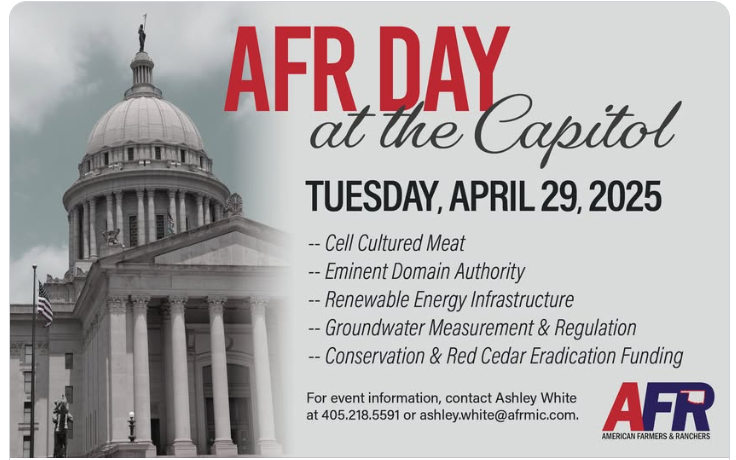
Stone was active in Cowboy Motorsports, Collegiate 4-H and the Ferguson College Career Liaisons. He also served as a student senator for the OSU Student Government Association and the Ferguson College Student Council. In October 2024, Stone represented the Ferguson College as a student host at the grand opening of the new Agricultural Hall.

Reflecting on his college experiences, Stone said his most meaningful role has been serving as a career liaison.

"Seeing students achieve their career goals because of the help the career liaisons offer has been impactful to me," Stone said. "I have been honored to serve in this capacity and will forever be thankful to the Ferguson College of Agriculture for enabling me to have an impact on so many students."

Following graduation, Stone plans to attend veterinary school.

"Throughout my time at OSU, I've developed both professionally and personally because of the involvement and opportunities that I have been provided with," he said. "I've been able to take away skills and knowledge that I can apply to my future and feel prepared for the journey ahead because of my time in the Ferguson College."

The Ferguson College of Agriculture believes in the value of hands-on education and the importance of having a well-rounded student experience. The college's award-winning faculty members are dedicated to developing students and are passionate about adding value to the total educational experience. With 16 majors, a variety of study options and more than 60 student organizations, the college is committed to expanding minds and inspiring purpose. Learn more at agriculture.okstate.edu

Written by Sophia Fahleson

Feeding Minds Press Delivers "I LOVE Blueberries": Sequel to Award-Winning "I LOVE Strawberries"

The newest title from Feeding Minds Press, "I LOVE Blueberries," is bursting with farm fresh facts, bringing the joy of farming to readers of all ages.

"I LOVE Blueberries," written by Shannon Anderson and illustrated by Jaclyn Sinquett, is the long-awaited sequel to the award-winning "I LOVE Strawberries." The story follows Jolie and her new friend Margot as they work together with their classmates and their community to set up a hydroponics growing station in their classroom to grow their own blueberries.

Through Jolie's comical scrapbook-style journal entries and Margot's creative sketchbook, readers will learn about the joys and challenges of growing blueberries with hydroponics, as well as nutritional facts about this healthy snack. This story is a perfect introduction to how food is grown to spark curiosity in future farmers, gardeners and consumers.

"We are delighted to bring the next chapter in Jolie's story," Julia Recko, managing director of the American Farm Bureau Foundation for Agriculture, said. "'I LOVE Blueberries' is not only a charming story, but also a valuable educational resource to bring along to a blueberry farm, garden store or classroom."

"I LOVE Blueberries" is the 11th title from Feeding Minds Press and the sequel to "I LOVE Strawberries," winner of seven awards, including the Good Housekeeping 2022 Best Kids' Book Award.

Other recent titles include "The Soil in Jackie's Garden" and "Potatoes for Pirate Pearl." All books are available for purchase directly from Feeding Minds Press.

About Feeding Minds Press:

Feeding Minds Press is a project of the American Farm Bureau Foundation for Agriculture. The mission of the Foundation is to build awareness and understanding of agriculture through education. The goal of Feeding Minds Press is to publish accurate and engaging books about agriculture that connect readers to where their food comes from and to who grows it.

Understanding Risk Management in Today's Cattle Markets

Listen to Ron Hays talking to Clay Burtrum about the importance of risk protection strategies.

Senior Farm and Ranch Broadcaster Ron Hays caught up with the Vice President of Operations at Farm Data Services and Oklahoma cattle producer Clay Burtrum to discuss the critical importance of risk management programs in today's cattle markets.

"Every time we think these cattle prices can't go any higher, they go higher," Burtrum states. "It is a good time to be thinking about risk management strategies whether you are a cow calf producer or that guy that is buying smaller weight calves to run on grass for this next fall."

Burtrum noted that most cow calf operators are almost finished with calving season at this point. He said that they don't have to know the total number of steers and heifers they will have before they get risk protection. He used the example of a producer with 100 cows and suggested that he insure forty steers and forty heifers so that he doesn't miss out on the currently high prices; then, he can capture the rest on a different plan after he knows what else he has.

"Let's capture that market right now and those opportunities," he said. "Just for an example, you can insure your calf crop – I'm going to average steers and heifers – for about $1,750 for about $50. That is less than a tank of diesel in today's market, and you are insuring your calf crop for this next fall. Keep in mind that you don't have to sell those cattle. You can retain ownership until next spring if you decide to run those on wheat pasture, or you can sell sixty days early if we get into a drought. It all settles against what the index is. It doesn't matter what your cattle bring."

He emphasized that there are no reasons not to use an LRP as the premium isn't due until the month after the contract expires, and it also keeps producers bankable because the bank can rest assured that the producer will have a return on investment.

For producers wanting to know how to take out an LRP on their cattle, Burtrum advised working with a reputable agent who understands the program and the industry. Put an application on file, and then the agent will walk them through the different scenarios related to their position in the cattle industry – cow calf, stocker, or other.

"You can even insure those bred cattle. If you are a fall producer that just pregged those fall cows, we can insure those unborn cattle as well," he said. "Then,  we walk you through the different scenarios of what weight class, and when are you going to market those cattle."

He pointed out that Farm Data Services sends out daily customized email quotes tailored to the individual operation. "We not only work you through buying the product, but when it comes time for a claim, we will work you through the claim process as well," he offered.

For more information, visit FarmDataServices.com.

The Beef Buzz is a regular feature heard on radio stations around the region on the Radio Oklahoma Ag Network and is a regular audio feature found on this website as well. Click on the LISTEN BAR at the top of the story for today's show, and check out our archives for older Beef Buzz shows covering the gamut of the beef cattle industry today.

Growth Energy Commends Senate Letter Urging EPA to Set Strong Biofuel Blending Volumes, Account for SREs

Growth Energy, the nation's largest biofuel trade association, applauded a bipartisan group of 16 senators for a letter they sent this week urging the U.S. Environmental Protection Agency (EPA) to set strong, multi-year renewable volume obligations (RVOs) and to reallocate any gallons lost through the granting of small refinery exemptions (SREs). 

Senators Chuck Grassley (R-Iowa) and Amy Klobuchar (D-Minn.) led the letter, which eventually garnered another 14 signatures from biofuels supporters from across the Midwest. 

"When the Senate's biofuel champions talk, EPA should take care to listen," said Growth Energy CEO Emily Skor. "This letter hits all the right notes when it comes to offering guidelines that EPA should follow in order to set the strongest possible RVOs that deliver the greatest amount of economic benefits to the rural economy. We commend Senators Grassley and Klobuchar for their leadership in drafting this letter, and we urge EPA to take its advice by setting higher biofuel blending volumes, issuing RVOs for more than just one year, and making sure that any gallons lost to SREs are added back into the total number of required biofuel gallons." 

Read the full letter here. 

Western Livestock Auctions Expands: Ben Hale Discusses New Sale Barn in Waurika, OK

Listen to Ron Hays talk with Ben Hale about the latest in the cattle markets.

On Tuesdays, Senior Farm and Ranch Broadcaster Ron Hays visits with Ben Hale of Western Livestock Auctions as he talks about the latest in the markets and more. Established in 1995, Western has grown into a multi-generational family-owned and operated business and stands as a symbol of tradition, excellence, and a deep-rooted passion for the cattle industry. Western Livestock Auctions operates the Western Livestock Commission Firm, which sells cattle on Mondays and Tuesdays. They also operate the livestock auction markets in Woodward, Comanche, Knoxville, Iowa, and now Waurika, Oklahoma.

Monday's sale only saw 1600 head compared to 6,700 head a year ago after heavy rains last weekend left soggy conditions, and unlike the past several weeks, prices pulled back considerably - $5 to $15 lower.

Hale admitted that the lowered numbers likely had an impact on the prices, but so did the drop on the futures market, mainly due to tariff concerns.

"We are getting a little bit of bounce back today, so hopefully, we can recoil to go again," Hale said. "I still don't think we are in trouble, yet, by any stretch. I think the market is sure going to be good, and a good general rain down into Texas, Southern Oklahoma, and out West is going to slow down some cattle moving, which is a good thing – to spread them out and get them bigger. We don't want them all pinching up in the grow yards and feedyards because there is nothing to eat outside."

Spreading placements out helps the market work how it should, which in turn rewards the industry.

Western Livestock Auctions added the sale barn in Waurika, Oklahoma, to their lineup on Friday and are having their first sale today, which are also experiencing lighter runs after receiving 3 to 5 inches of rain. Hale is planning a special cow sale at the facility in late April.

Tomorrow, the Comanche auction is expecting a good run of yearlings, and Woodward is also expected to have good numbers this week.  

Hale believes that the new location at Waurika will complement the existing sale at Comanche, providing buyers and sellers in the area another opportunity to do business.

"Before, we only had one day that we could really do it," Hale explained. "It just opens it up for some customers – if the weather is bad or they need to do something else, we can get it done on another day of the week."

Waurika's sale will be held on each Tuesday, and Comanche's sale is held on Wednesdays. The two facilities are only eighteen miles apart.

"We look forward to taking over where George and Joe did," Hale shared. "I think they spent 38 years down there and there wasn't a better option in the country than George and Joe Williams. They are just honest people who run an honest business, and we were tickled that they agreed to sell it to us. We just want to carry on what they started many, many years ago."

Hale can be contacted at 940-631-2333. Check out more about the marketing options that Western offers by clicking here.

Daily Email for April 8, 2025


Oklahoma's Latest Farm

And Ranch News

Tuesday, April 8, 2025

 
Howdy Neighbors!

Here is Your Daily Oklahoma Farm and Ranch News Update: 


  • Oklahoma's Winter Wheat Conditions Leap to 42 Percent Good to Excellent Rating


  • Oklahoma Beef Council's Trade Mission: Exploring West Africa's Market


  • Introducing Laela Begley of the Elgin FFA Chapter, Your 2025 Southwest Area Star in Agriscience


  • Derrell S. Peel Says All Bets are Off regarding the Beef Cattle Industry


  • Lucas Honors Congressman Wes Watkins on House Floor


  • Spring Abounds with a Bouquet of Agritourism Opportunities in Oklahoma


  • Gather Paperwork and Take Video Before Disaster Strikes


  • Prospective Plantings Report Shows Big Shift to Corn


  • Governor Says He Was Justified in Firing OFS Director- AFR Says Bad Idea to Disband Agency
 

Oklahoma's Winter Wheat Conditions Leap to 42 Percent Good to Excellent Rating

U.S. winter wheat condition was rated 48 percent good to excellent as of Sunday, April 6, down from 56 percent at the same time last year, according to USDA NASS' first weekly national Crop Progress report of the year released on Monday. Aside from Texas, the Southern Plains (Oklahoma and Kansas) have improved winter wheat crop conditions since last week.


Oklahoma's Winter wheat conditions rated 42 percent good to excellent, 40 percent fair and 18 percent poor to very poor. Last week's conditions rated 33 percent good to excellent, 40 percent fair, and 27 percent poor to very poor.


Our neighbors to the north also saw an improvement in wheat conditions- Kansas has their wheat crop rated 51% good to excellent versus 49% last week. Meanwhile, Texas wheat conditions are unchanged from last week's 26% good to excellent rating.


Pasture and range conditions in Oklahoma rated 34 percent good to excellent, 44 percent fair and 22 percent poor to very poor. Last week's conditions rated 30 percent good to excellent, 35 percent fair, and 26 percent poor to very poor.


Range and pasture conditions in Texas rated 16 percent good to excellent, 26 percent fair, and 58 percent poor to very poor. Last week's conditions rated 11 percent good to excellent, 24 percent fair, and 65 percent poor to very poor.

Read More about the Latest Crop Progress Report Here

Sponsor Spotlight

Stewart Martin Kubota is passionately committed to providing our customers with the highest quality products, most innovative solutions, and services delivered with integrity and professionalism. Stewart Martin Kubota has four locations to serve you in Bixby, Broken Arrow, Okmulgee and Muskogee. Stewart Martin offers a full line of tough Kubota tractors, mowers, utility vehicles, construction equipment and farm / hay implements.


Remember, If it's not orange, it's a lemon! Visit us at stewartmartinkubota.com

Oklahoma Beef Council's Trade Mission: Exploring West Africa's Market

Ron Hays talks with Heather Buckmaster of the Oklahoma Beef Council about her current trade mission to West Africa.


"It is a wonderful opportunity for us to educate future buyers for U.S. beef, and I think a lot of producers want to ask, 'Why Africa?'" Buckmaster said.


She said the answer is easy, and it's in the numbers. There are 1.2 billion consumers in Sub-Sahara Africa, and they have the youngest median age of any group of consumers in the world. This is valuable when considering that many established markets are seeing declining populations.


Predictions indicate that by 2030, 1 in 4 people on the planet will be on the continent of Africa, where incomes are also growing.


"Most importantly, it is an opportunity for us to maximize the value of that carcass," Buckmaster pointed out. "Due to cultural differences, let's be honest, one of the things that makes the U.S. beef industry important is that it is so large."

Listen to Ron's BeefBuzz with Heather Buckmaster and Read More Here

Introducing Laela Begley of the Elgin FFA Chapter, Your 2025 Southwest Area Star in Agriscience

During the month of April, the Radio Oklahoma Ag Network and Oklahoma Farm Report are spotlighting the 19 Area Stars of Oklahoma FFA, who are among the highest achievers in the organization.


The stars come from the five areas in four categories- Star in Ag Placement, Star in Agriscience, Star in Agribusiness, and Star in Agricultural Production.


This week, we spotlight the four area stars in Agriscience in 2025.


One Star Finalist featured in the coming days from each of the categories will be named the State Star Award Winner during the 99th Oklahoma State FFA Convention, which will take place on May 6th and 7th in Tulsa, Oklahoma.


This week, our coverage of the 2025 Oklahoma FFA Star Award Finalists continues with Agriscience competitor Laela Begley of the Elgin FFA chapter representing the Southwest Area.

Listen to KC's Conversation with Laela Begley and Read More About Her Agriscience Project Here
 
 
Sign Up for Our Daily Email- Free Because of Our Sponsors!

Support Our Sponsors!


KIS logo


Advertise With Us!


For our farmers who have either- always have had cotton on their farms- or those who have more recently have added the fiber crop to their operations- we have a daily report heard on several of our Radio Stations- It's Called Cotton Talk!


Click on the Button below to listen to our most recent report

Click here for our Latest Cotton Talk- Hosted by KC Sheperd


The latest news from the Oklahoma State Capitol is available daily on the Radio Oklahoma News Network.


Click on the blue button to hear from our Radio Oklahoma Network News Director Jacquelyn Farris

Click here for the latest report from the State Capitol on RON


Derrell S. Peel Says All Bets are Off regarding the Beef Cattle Industry

Dr. Derrell Peel, Oklahoma State University Extension Livestock Marketing Specialist, offers his economic analysis of the beef cattle industry as part of the weekly series known as the "Cow Calf Corner," published electronically by Dr. Peel, Mark Johnson, and Paul Beck. Today, Dr. Peel analyzes the possible future trajectory of the beef cattle industry.


Cattle market fundamentals have not changed. The industry faces ever-tightening feeder cattle supplies that will eventually lead to decreased feedlot inventories and declining beef production. The question of heifer retention and herd rebuilding remain very uncertain as both weather and external factors dim producer expectations. Cattle prices peaked recently at record levels and will likely pull back, at least for some period of time. The remainder of the year is now very uncertain.

Read More from Dr. Derrell Peel Here
 

We invite you to listen to us on great radio stations across the region on the Radio Oklahoma Ag Network weekdays-

if you missed this morning's Farm News - or you are in an area where you can't hear it- click below for this morning's Farm news from Ron Hays and KC Sheperd on RON.
Listen to our Tuesday morning farm and ranch news with KC Sheperd
 
 
Subscribe To the Daily Email


Sponsor Spotlight


The vision of the Oklahoma Beef Council is to be a positive difference for Oklahoma's farming and ranching families and the greater beef community, and its mission is to enhance beef demand by strengthening consumer trust and exceeding consumer expectations. 


To learn more, visit www.oklabeef.org. Also, don't forget to like its Facebook page at www.facebook.com/oklabeef for stories on Oklahoma's ranching families and great beef recipes. 


And Check out this video below that helps you learn more about the Beef Checkoff- .


Lucas Honors Congressman Wes Watkins on House Floor

Congressman Frank D. Lucas (OK-03) spoke on the House floor today to honor the life and legacy of the late Oklahoma Congressman, Wes Watkins.


You can watch his full remarks by clicking here or on the video above.


SELECTED QUOTES:

"While Wes Watkins' legacy in Congress cannot be overstated, to Oklahomans, his kindness, generosity, and love for his community might be what we remember most... 

"Oklahomans will remember Wes Watkins as a dedicated public servant who fought hard to bring abundant opportunities and true prosperity to his neighbors... 


"He never forgot his original mission of serving Oklahoma and the work of his lifetime will continue to benefit the state for centuries to come." 

Spring Abounds with a Bouquet of Agritourism Opportunities in Oklahoma

As the cold of winter moves past and spring temperatures take its place, Oklahomans are seeking more time outdoors to soak up the warmth of the sun, feel a fresh breeze on their skin, and take in the scents and sounds of spring. That is where Whitney Wilkinson and her team in the agritourism department of the Oklahoma Department of Agriculture, Food, and Forestry come in. Visiting with our own Stevie White, Wilkinson laid out many of the spring opportunities blooming in agritourism across the state.


"We have a lot of really cool things happening this time of year," Wilkinson shared. "One of our biggest things going on right now is You Pick Tulip farms. We have seen an explosion of tulip farms across the state in the last couple of years."


A few years ago, there was only one, and now there are 11 located on farms in every sector across the state from Enid to Ardmore, Altus to Tulsa. You Pick Tulip Farms are great places to take friends, family members of all ages, and a special someone. Tulip farms also present great opportunities for photos.


According to Wilkinson, Texas used to be the prime destination for Oklahoma tulip pickers, but as more and more Oklahoma producers have realized that they could offer similar experiences closer to home, they have jumped on the opportunity.

Listen to Stevie's Interview with Whitney Wilkinson and Read More Here

Gather Paperwork and Take Video Before Disaster Strikes

Organizing financial documents and safely storing them before a fire or tornado can prevent additional stress and confusion following the disaster.


Oklahomans affected by wildfires know firsthand how it feels to watch their home, apartment or property burn and then ask, "What do I do now?"


"Don't make any major decisions during the first couple of days," said Andrine Shufran, entomology and plant pathology specialist for Oklahoma State University Extension. "You don't realize how hard it becomes to make simple decisions, much less important ones."


Shufran and her husband lost their home in the wildfires that swept through the west side of Stillwater on March 14. As they gathered with neighbors on the street that afternoon, fire and smoke approached from all sides as fire officials drove by to notify the neighborhood it had 30 minutes to evacuate.

Read More About Disaster Preparedness Here

Prospective Plantings Report Shows Big Shift to Corn

Despite the immense uncertainty in agriculture due to the escalating trade war, farmers do not have the luxury of delaying planting decisions – or planting itself. Now that spring has arrived, they will soon head to the fields to put this year's crop in the ground.


The 2025 Prospective Plantings report surveyed nearly 74,000 farmers between February 27 and March 18 on what they intend to plant this year. As expected, due to market conditions and a large dip in acreage last year, farmers are intending to plant significantly more corn, moving away from cotton, wheat and soybeans.


The main take away from the Prospective Plantings report is that we're planting corn – a lot of it. Farmers intend to plant 95.3 million acres of corn in 2025, a 5.2% increase of 4.7 million acres compared to corn planted last year. This figure came in above most, but not all, trade estimates and 1.3 million acres above USDA's projection at February's Agriculture Outlook Forum. If realized, planted corn acres would be the third highest since 1944 and the highest since 2013.


Corn is taking acres from many crops, with the largest swings in total acres away from cotton and soybeans. If realized, at 30.8%, corn would be at its highest-ever percentage of principal planted crops since at least 1993, when the total principal crops planted metric was first available from USDA's National Agricultural Statistics Service.

Read More of AFBF's MarketIntel Report Here

Governor Defends His Dismissal of State Oklahoma Forestry Service Chief- AFR Says No Way to Idea of Disbanding the Agency

According to a story from News9 in Oklahoma City on Monday- Governor Stitt believes he has justification for the removal of Mark Goeller from his position as Director of the Oklahoma Forestry Service.


"Oklahoma Gov. Kevin Stitt released a statement on Monday saying that the Oklahoma Forestry Services director only used half of the available resources to help firefighters during a wildfire outbreak on March 14.


"He said the Secretary of Oklahoma Department of Agriculture, Food, and Forestry and the Director of Oklahoma Emergency Management investigated the wildfire response and that "they were met with reluctance to give answers."


"When they received the answers they needed, they found that the director only deployed half of his available resources to help local firefighters around the state.


"While our local firefighters were stretched thin, leadership at Forestry Services failed to act with the urgency the moment demanded."


"Stitt says he has tasked Agriculture Secretary Blayne Arthur and Public Safety Secretary Tricia Everest to create a report on how the response had failed and where future improvements can be made."


Meanwhile- the President of the American Farmers & Ranchers, Scott Blubaugh, issued this statement in a Monday evening release responding to comments from Governor Stitt that maybe we should eliminate the OFS altogether:


 "Any effort to diminish or disband the Oklahoma Forestry Service is a misguided, terrible idea. The OFS not only plays a significant role in the state's expansive timber industry, but also trains, supplies and coordinates rural fire departments across the state. An OFS reduction would inhibit our rural fire departments' ability to respond when it matters most. The pocketbooks, property, and possibly lives of Oklahomans are at stake. We should be talking about more funding, not less."


Let's Check The Markets!
OKC West is our Market Links Sponsor- they sell cattle three days a week- Cows on Mondays, Stockers on Tuesday and Feeders on Wednesday- Call 405-262-8800 to learn more.
 
Today's First Look:
Ron on RON Markets as heard on K101  
mornings with cash and futures reviewed- includes where the Cash Cattle market stands, the latest Feeder Cattle Markets Etc.
Hear Today's First Look
 

Wholesale Boxed Beef Prices were higher - Choice Beef was up $1.05 and Select Beef was up $2.12 on 4/7/2025.


Click on the Button below for the latest report from USDA Market News

Boxed Beef Report
 

Oklahoma National Stockyards had 1,589 head on Monday, April 7, 2025


Compared to last week: Feeder steers 5.00-10.00 lower. Steer calves over 500lbs 15.00 lower and under 500lbs unevenly steady. Feeder heifers 12.00-15.00 lower. Heifer calves 20.00-25.00 lower. Demand moderate. Quality average. All classes of cattle lightly tested today due to heavy rain and colder temperatures over the weekend. Cattle futures were sharply lower late last week and are lower again today


Click below for the complete closing report.

Oklahoma National Stockyards Market Report from 04/07/2025
 

The Joplin Regional Stockyards had a total run of 3,257 head on Monday April 7, 2025


Compared to last week feeder steers under 530 lbs. sold 10.00-25.00 lower, with weights from 530 lbs. to 725 lbs. selling 10.00-15.00 lower. Steers over 725 lbs. sold 2.00-4.00 lower. Feeder heifers under 525 lbs. sold 15.00-30.00 lower with heavier weight selling 5.00-15.00 lower. Supply was light with moderate demand. Overall quality of the offering was considerably lower than last week


Click on the button below for details of the trade as compiled by the USDA Market News Service.

 
Joplin Regional Stockyards Market from Monday 04/07/2025
 
OKC West in El Reno Cow and Bull Market Report from 04/07/2025
 
 
Each afternoon we are posting a recap of that day's markets as analyzed by Justin Lewis of KIS futures - click below for the latest update on the Livestock and Grain Futures Trade..
Click Here to Listen to Justin's Commentary From 4/7/2025
 
Okla Cash Grain:  
Daily Oklahoma Cash Grain Prices- as reported by the Oklahoma Dept. of Agriculture- The report available after the close of the Futures Trade for that day.
Read Cash Grains Report from 4/7/2025
 
Our Daily Market Wrapup from the Radio Oklahoma Ag Network - analyzing the Futures Markets for that trading day- as reported by KC Sheperd.
Click to Listen to Our Weekday Wrap with KC
 
Slaughter Cattle Recap: 
The National Daily Slaughter Cattle Summary- as prepared by the USDA Market News
Read Report
 
TCFA Feedlot Recap:  
Finally, here is the Daily Volume and Price Summary from the Texas Cattle Feeders Association.
Read Report

Our Oklahoma Farm Report Team!!!!


Ron Hays, Senior Farm/Ranch Broadcaster and Editor


KC Sheperd, Farm Director and Editor


Dave Lanning, Markets and Production


Stevie White, Farm News and Email Editor


Pam Arterburn, Calendar and Template Manager

Podcasts From Oklahoma Farm Report and More

Two of our regular reports are also podcasts that you can subscribe to- Our daily Farm and Ranch News with KC Sheperd- available here on the Apple Podcast Platform


The second is our daily Beef Buzz with Ron Hays- available here on the Apple Podcast Platform


Periodically- we offer interviews on our Ag Perspectives Podcast series- this podcast is available here.


Ron has also has a series of podcasts from interviews with newsmakers at the Cattlemen's Congress- Click here or you can find them on your favorite Podcast platform- look for them by searching for Cattlemen's Congress Conversations.


We are making plans to jump back into regular installments of what has been called the Road to Rural Prosperity- a new name and fresh content is in the works- for now- click on the blue button below for one of our favorites that is a timeless classic.


The link below is one of our most recent podcasts- Ron spotlighting the 10th Annual Hemphill County Beef Conference.

Listen to Ron Hays talking with Andy Holloway about the 10th Annual Hemphill County Beef Conference
 
 
Listen to Ron
Beef Buzz
 
Blue Green Gazette
Calendar
Auctions
Market Links
Facebook  Twitter  Youtube  

Our thanks to Midwest Farms Shows, P & K Equipment, Oklahoma Farm Bureau, Great Plains Kubota, Stillwater Milling Company, National Livestock Credit Corporation, Oklahoma Beef Council, Stewart Martin Kubota, Oklahoma Pork Council, Oklahoma Wheat Commission, Oklahoma AgCredit, the Oklahoma Cattlemens Association, and  KIS Futures for their support of our daily Farm News Update.


For your convenience, we have our sponsors' websites linked here- just click on their name to jump to their website- check their sites out and let these folks know you appreciate the support of this daily email, as their sponsorship helps us keep this arriving in your inbox on a regular basis- at NO Charge!


We also appreciate our Market Links Sponsor - OKC West Livestock! 


We invite you to check out our website at the link below too that includes an archive of these daily emails, audio reports and top farm news story links from around the globe.

Head to Our Website OklahomaFarmReport.Com
God Bless!
Reach Out To Us:
Tim West
President/General Manager
Rural Oklahoma Networks

405-317-6361

***************

Mike Henderson
Director of Sales

405-615-4922

KC Sheperd
Farm Director
Radio Oklahoma Ag Network

405-443-5717

Email KC
Ron Hays
Senior Farm/Ranch Broadcaster
Radio Oklahoma Ag Network

405.473.6144
Email Ron

Resolution to Support Rural Health Care Advances to Senate

A resolution authored by Rep. Chris Sneed, R–Fort Gibson, aimed at removing barriers to health care access in rural Oklahoma is now under consideration in the Senate after passing the House.

House Concurrent Resolution 1007 (HCR1007) requests an exemption from the federal Stark Law, which prevents physicians from referring patients to medical facilities in which they have a financial interest. While the law was designed to prevent conflicts of interest, it can have unintended consequences in rural areas with limited providers.

"We've lost many physicians who would love to practice in rural Oklahoma, but federal restrictions are standing in the way," Sneed said. "This resolution is a huge incentive to bring doctors back to our small towns and drive more health care access where it's desperately needed."

If approved, the resolution would allow Oklahoma to seek relief from the Stark Law and related federal rules that make it harder for rural physicians to operate clinics, labs or other needed services in their communities.

Sneed added, "Oklahoma is leading the way nationally on this issue. We're taking bold steps to make health care more accessible for every Oklahoman—no matter their ZIP code."

HCR1007 now moves to the Senate for adoption.

USDA-NASS to Conduct April Agricultural Labor Survey

USDA's National Agricultural Statistics Service (NASS) will conduct its biannual Agricultural Labor Survey in April 2025. More than 1,500 Oklahoma & Texas farmers and ranchers will be asked to participate in the survey online at agcounts.usda.gov or by mail. The survey is an opportunity for producers to provide accurate information about hired farm labor, including total number of hired farm workers, total hours worked, and total wages paid for the weeks of January 12-18, 2025 and April 6-12, 2025.

"We ask about two separate time periods each time we collect these data in order to publish biannual data and capture seasonal variation," said Wilbert Hundl, Southern Plains Region Director. "This method reduces the number of times we survey farms, while ensuring useful data are available."

USDA and the U.S. Department of Labor use the survey data to estimate the demand for, and availability of, seasonal agricultural workers, establish minimum wage rates for agricultural workers, and administer farm labor recruitment and placement service programs.

Survey recipients who do not respond by April 16 may be contacted by NASS to arrange an interview or sent a reminder email. NASS will publish the data May 21 in the Farm Labor report available at nass.usda.gov/publications.

"When hiring workers and estimating expenses, timely and accurate agricultural labor data are vital," said Hundl. "By participating in the Agricultural Labor survey, farmers and ranchers help ensure accurate information for farm programs."

For more information about the Farm Labor Survey program, visit nass.usda.gov/go/labor, or call the Southern Plains Field Office at (512) 501-3200.

Dickens County man Indicted for Livestock Theft

Justin Buck of Dickens County was indicted for second-degree felony theft of livestock following an investigation by Texas & Southwestern Cattle Raisers Association Special Rangers Chris Ward and Michael Looney, in collaboration with the Dickens County Sheriff's Office.

Buck is accused of stealing more than 150 head of cattle from the ranch where he was employed. The Dickens County Grand Jury returned the indictment and the district attorney issued a warrant for his arrest.

Texas & Southwestern Cattle Raisers Association would like to thank the Dickens County Sheriff's Office as well as the district attorney for their efforts throughout the investigation, resulting in a successful indictment and prosecution.

National Sorghum Foundation opens 2025–2026 Scholarship Applications

The National Sorghum Foundation is now accepting applications for its 2025–2026 academic scholarships for college students studying agriculture.

"The future of agriculture depends on strong, passionate leaders," said Foundation Chair Jeff Dahlberg, Ph.D. "These scholarships are one way we can invest in the next generation and support students who are committed to advancing sorghum and agricultural innovation."

Bruce Maunder Memorial Scholarship

This scholarship honors Bruce Maunder, a lifelong advocate and researcher in the sorghum industry. Maunder dedicated 37 years of his life to sorghum and crop improvement and inspired a new generation along the way. Applicants must be sophomores through seniors and enrolled in agriculture-based degree programs.

Darrell Rosenow Memorial Scholarship

Darrell Rosenow revolutionized hybrid sorghum in the United States, spending more than 40 years as a sorghum plant breeder. Students must be sophomores through seniors enrolled in agriculture-based science programs related to agronomy, plant pathology, entomology, and/or plant breeding with an emphasis on sorghum.

Bill Kubecka Memorial Scholarship

A leader in the sorghum industry for more than two decades, Bill Kubecka created a legacy of dedication and service to the industry he loved. In addition to the tuition award, this scholarship includes travel expenses for the selected student to attend the National Sorghum Producers' annual legislative fly-in. Undergraduate sophomores through seniors, graduate students, and law school students are eligible to apply. Applicants must be enrolled in a curriculum related to agricultural economics, agricultural policy, or agricultural law.

Each scholarship is valued at $1,500, and the application window is open now through June 1, 2025.

More information about each scholarship's criteria and application forms is available at https://sorghumgrowers.com/foundation-scholarships/.

Oklahoma Well Owner Network to host 'Get Well-Informed' Free Water Testing Day

Well water screenings help well owners better understand and safeguard their drinking water quality. (Photo by Shutterstock)

The Oklahoma Well Owner Network program offered through Oklahoma State University Extension and OSU's Oklahoma Water Resources Center will host a "Get Well-Informed" free well water testing event for residents in 11 counties across southeast Oklahoma this spring.

The locations listed below will receive samples from 8 a.m. to 10 a.m. on Friday, May 2. Analysis results will be provided directly to well owners via email (or mail if email is not an option).

  • Atoka County Extension
  • Coal County Extension
  • Hughes County Extension
  • Latimer County Extension
  • LeFlore County Extension
  • McCurtain County Extension
  • McIntosh County Extension
  • Okfuskee County Extension
  • Pittsburg County Extension
  • Pushmataha County Extension
  • Seminole County Extension
  • Talihina Conservation District

Well owners interested in the free well water analysis are encouraged to contact their local county Extension office for instructions on collecting a sample, or they can visit the Oklahoma Well Owner Network website.

The well water screening aims to help well owners better understand and safeguard their drinking water quality.

"In 2018, we surveyed citizens across Oklahoma on what their biggest water resource concerns were," said Kevin Wagner, Oklahoma Water Resources Center director. "Consistently across the state, Oklahomans' key concern was drinking water quality."

"This program helps citizens get their well water screened for key contaminants and then provides them with information on how to address any concerns identified," said Jeff Sadler, OSU biosystems and agricultural engineering assistant professor and OSU Extension water resources specialist.

Water samples will be screened for nitrates, total dissolved solids, pH and E.coli.

The well water program is facilitated by the Oklahoma Water Resources Center and the OSU Department of Biosystems and Agricultural Engineering in conjunction with OSU Extension county offices, the Southeast Oklahoma Library System and other participating partners. Funding is provided by the U.S. Department of Agriculture National Institute of Food and Agriculture.

To learn more about the "Get-Well Informed" testing event, contact Sadler at 405-744-8429 or jeff.sadler@okstate.edu.

Oklahoma's State Revenues Show Strong Monthly Growth, Reflecting Resilient Economy

Oklahoma State Treasurer Todd Russ announced the state's tax revenue for March topped $1.31 billion, marking an 11.4% increase over the previous month. The report reflects widespread month-over-month growth across all major tax sources, a sign of resilience as the state's economy adjusts to shifting national conditions.

"All tax sources for the state are up, leading to another month of growth in revenue while signaling resilience amid economic fluctuations," said Treasurer Russ. "Oklahoma's economy continues to navigate these shifts while the Fed maintains a tightened position."

Monthly Highlights:

  • Income Tax collections surged by nearly 25%, totaling $509.5 million.
  • Gross Production Tax rose to $99.5 million, up 2.5%.
  • Sales and Use Taxes grew by 2.4%, adding $12.2 million.
  • Motor Vehicle Tax collections spiked by 27.1%, contributing $16.4 million more than the prior month.

What This Means for Oklahomans:

For households across the state, the uptick in monthly revenue indicates a healthy employment environment and increased earnings, especially with the state's unemployment rate holding steady at 3.3%, below the national average of 4.1%. Manufacturing exports also rose 5.2%, further boosting confidence in Oklahoma's business sector.

"Oklahomans can take heart knowing our state remains on stable footing," said Treasurer Russ. "Despite national uncertainty, our economy is showing strength in key areas—growth in jobs, steady exports, and strong income tax revenue are all encouraging signs for families and communities across the state."

Looking Ahead:

The Oklahoma Business Conditions Index declined slightly to 53.6, but still remains in expansion territory. As state agencies begin their budgetary planning for the upcoming year, the consistent revenue inflows—particularly from income and use taxes—provide a foundation for continued investment in public services and infrastructure.

For more information and to view the full report, visit treasurer.ok.gov.

Ranking Member Angie Craig Opening Statement at SNAP Hearing

Today, House Agriculture Committee Ranking Member Angie Craig (MN-02) delivered the following opening statement at a full committee hearing titled "The Power of Work: Expanding Opportunity through SNAP." Watch the full hearing here.

Thank you, Chairman Thompson.

This hearing is coming at an important moment for the American people. This Committee has been asked to pass – and all my Republican colleagues have voted for – a House bill that would seek to cut up to $230 billion in funding from our jurisdiction to help pay for tax breaks for the President's billionaire buddies like Elon Musk. So, I'm glad we're here to talk about the Supplemental Nutrition Assistance Program – the likely target for those cuts.

But before we do that – let's review the past 78 days. The Trump administration and Elon Musk have steamrolled this Congress – firing critical staff and slashing funding and programs that many of you voted for and support. They've started a global trade war that has put farmers in the crosshairs of retaliatory tariffs and are actively decimating retirement accounts across our nation while raising the cost of living for all Americans. They have willfully ignored USDA contracts with the farm community. Hundreds of millions of dollars' worth of food has been taken away from food banks and school cafeterias. All from programs this body put in place.

I really do like most of you – especially you Mr. Chairman. I ran for office because I want to work across the aisle. And I'd like to do that as ranking member. But not one of you would sit silent if a Democratic administration was steamrolling the United States Congress. Not one of you.

Instead of using this Committee to pass a five-year, bipartisan farm bill that provides certainty and stability for farmers and the food supply chain, you voted for a bill that instructs this Committee to cut a critical farm bill program by at least $230 billion to help pay for tax cuts for billionaires and large corporations.

If making families hungrier so the rich can get richer weren't bad enough, cutting SNAP also cuts farm income for America's family farmers. This cut would slash farm revenue by approximately $30 billion. On top of the markets they're losing because of the dumbest trade war in history.

But we're here to talk about work, so let's talk about it. Where were Republicans when we wanted to make universal Pre-K and affordable child care the law of the land, so parents could go to work knowing their kids are taken care of? Where were Republicans when we wanted to raise the minimum wage in our country so folks don't have to worry about whether they can pay the rent or feed their kids? Where were Republicans when Elon Musk fired the people making sure our food is safe to eat, our veterans receive health care and our kids get the support they need at school? Where were Republicans when the president started a global trade war that increases costs for working families and threatens to put farmers out of business?

Where are the so-called "pro-worker" Republicans that I heard so much about during the last election cycle? Silent.

You know who can't afford us to sit silently? Farmers. Farmers wake up and bust their butts to feed, clothe and fuel our country every day. And the thanks they get are canceled USDA contracts and a SNAP cut that costs them $30 billion and jeopardizes a five-year farm bill.

So today, let's talk about work. Let's talk about the millions of hardworking Americans that depend on SNAP – despite sometimes having multiple jobs because they aren't paid enough. Let's talk about the over 200,000 people that could be out of a job if these cuts to SNAP succeed because this program is a job creator.

Because when you spend a dollar on food, you aren't just paying for the food in your cart: You're paying the wages of the clerk who checked you out at the grocery store, the trucker who delivered the food to the store and the manufacturer who made the food's packaging. Every $1 invested in SNAP generates about $1.50 in economic activity, and cutting SNAP cuts jobs throughout the entire supply chain. You cannot support workers while decimating SNAP.

And let's be crystal clear about what we are talking about here: $2 per meal. Just over $6 bucks a day. That's the average SNAP benefit for an American in need. Cutting this program will increase food costs by $2,100 for a typical SNAP household of four. And that is before you add in the $4,000 per year that Trump's tariffs will cost the average American.

This Committee has a choice before us: Do we want to make American families hungrier and farmers poorer so that a handful of billionaires can get richer? Or do we want to pass a bipartisan, five-year farm bill?

Finally, I want to thank our witnesses for being here today, although I must admit that choosing a witness from AEI – a think tank that has called for abolishing crop insurance – to testify here today is an interesting choice.

I yield back.

Chairman Thompson Opening Statement: "The Power of Work: Expanding Opportunity Through SNAP"

Today, House Committee on Agriculture Chairman Glenn "GT" Thompson (PA-15) delivered the following opening statement at today's full committee hearing, "The Power of Work: Expanding Opportunity Through SNAP."

Remarks as prepared:
 

Good morning, and welcome to today's hearing on the relationship between the Supplemental Nutrition Assistance Program, SNAP, and employment.  

Thank you to our witnesses for sharing their time, expertise, and passion. 

The focus of today's hearing is to examine ways to get more SNAP participants on the ladder of opportunity and on their way to achieving the American dream. 

I strongly believe the best way to do this is through employment. 

We must preserve benefits for those truly in need but also ensure that SNAP guides participants to independence and self-sufficiency. If we can get folks that first job, they will be on the ladder of opportunity and will continue to climb the rungs and increase their earnings.

There is dignity in work, and it provides more than just a paycheck. America thrives when every family has the opportunity to work, earn, and succeed independently from the government.

Unemployment remains at a record low, there are 7.6 million jobs open across the country, and companies are announcing major investments in the United States. Put simply, we need more able-bodied Americans engaged in work. It's a win-win for the country and for American families. 

However, we know that three-quarters of nondisabled adults aged 18-54 without dependents, or ABAWDs, who are receiving SNAP, are NOT working. These are folks who are capable of work and not taking care of anyone under the age of 18 or an aging parent or relative. This percentage is largely unchanged from 2019 despite a 67% increase in spending on the SNAP program. 

Clearly, there is a need to strengthen the connection between receiving SNAP and securing employment. We can examine the relationship between SNAP and employment by taking a closer look at two key components of the program: work requirements and SNAP employment, and career and technical education programs.  

Work requirements are an important tool for encouraging work among low-income households. Congress has reaffirmed this on a bipartisan basis throughout the passage of several bipartisan Farm Bills, and most recently, the Fiscal Responsibility Act. 

However, in some states, broad waivers allow SNAP participants to remain on the sidelines of the economy indefinitely. 

Today, 40 percent of all ABAWDs on SNAP live under a state waiver from the work requirement. These are millions of Americans being robbed of the opportunity to climb another rung on the economic ladder. 

Congress must ensure work requirement waivers are only used when economic circumstances truly justify them, not in states with 4.3% unemployment rates. 

The second tool in the toolbox are SNAP employment and career and technical education programs, otherwise known as SNAP E&T. 

SNAP E&T is a powerful, targeted program to help SNAP participants acquire career and technical education and long-term employment.

Not only do SNAP participants graduate from these programs with certifications in high-demand jobs like healthcare and trucking, but they also receive supportive services like transportation, childcare, and mental health supports. 

I look forward to hearing testimony today about the power of SNAP E&T programs to change lives. 

I am also proud of the provisions we included in the Farm, Food, and National Security Act last year to increase access to SNAP E&T. We removed a draconian, outdated ban on former drug felons from receiving SNAP, bringing that ladder of opportunity closer in reach, and allowing them to participate in SNAP E&T. 

We also included a provision to exclude any wages earned from SNAP E&T or other career and technical education programs from counting towards income for SNAP eligibility. Families should not be forced to choose between keeping their benefits and taking a job or pursuing the training that could lead to long-term financial independence. 

I have long been an advocate of the SNAP program and the helping hand it provides for our neighbors in need. But I hope we can all agree on our responsibility as Members of this Committee that we take every action possible to enable more people to move into long-term employment while meeting their nutritional needs. 

The safety net has become a spider's web, and too many of our most vulnerable Americans are trapped. 

I refuse to believe they are all destined to live lives of government dependency. Let's come together, not to talk about all the obstacles that may be in their way, but to instill hope that together, we can move more folks forward. 

With that, I welcome the esteemed Ranking Member from Minnesota for any opening remarks she would like to make.

$100K for Top Entrepreneur: Farm Bureau Ag Innovation Challenge

The American Farm Bureau Federation, in partnership with Farm Credit, is seeking entrepreneurs to apply online by June 9 for the 2026 Farm Bureau Ag Innovation Challenge. Now in its 12th year, this national business competition showcases U.S. startup companies developing innovative solutions to challenges faced by America's farmers, ranchers and rural communities.

The overall winner of the competition will receive $100,000 in startup funds, the runner-up will be awarded $25,000 and two additional business owners who advance to the final four round will receive $10,000.

"This competition supports incredible entrepreneurs who are making sure agriculture is ready to meet the challenges of tomorrow," said AFBF President Zippy Duvall. "If you have a vision for how your business can drive agriculture forward, apply today."

Farm Bureau is offering a total of $145,000 in startup funds throughout the course of the competition. After the application period closes, 10 semi-finalist teams will be selected and announced on Aug. 4. Next, the 10 semi-finalist teams will pitch virtually to compete for a spot in the final four round of the contest.

The final four teams will be awarded $10,000 each and participate in a live pitch competition in front of Farm Bureau members, investors and industry representatives at the AFBF Convention in January 2026 in Anaheim, California, to win:

  • Farm Bureau Ag Innovation Challenge Winner, $90,000 (total of $100,000)
  • Farm Bureau Ag Innovation Challenge Runner-up, $15,000 (total of $25,000)

Farm Bureau is proud to recognize these innovative businesses, in partnership with sponsors Farm Credit, Bayer Crop Science, John Deere, Farm Bureau Bank, Farm Bureau Financial Services and T-Mobile.

Recent winners of the Ag Innovation Challenge include Gripp, which offers farmers an operator-centric way to keep records of assets in combination with communication tools to keep everyone connected (2025 Ag Innovation Challenge Winner) and Barn Owl Precision Agriculture, a company that manufactures a fully autonomous robot that supports farmers as they plant crops, control weeds and collect soil samples (2024 Ag Innovation Challenge Winner). Other examples of successful Ag Innovation Challenge participants, as well as detailed eligibility guidelines and the competition timeline, can be found at fb.org/challenge.

Entrepreneurs must be members of a county or parish Farm Bureau within their state of residence to qualify as top 10 semi-finalists. Applicants who are not Farm Bureau members can visit https://www.fb.org/about/get-involved to learn about becoming a member.

Applications must be received by 11:59 p.m. Eastern Daylight Time on June 9.

McCane thanks Senate for recognition of Russell Perry as Oklahoma Secretary of Commerce

McCane thanks Senate for recognition of Russell Perry as Oklahoma Secretary of Commerce

Rep. Michelle McCane, D-Tulsa, released the following statement after the Oklahoma Senate passed SR 13 to recognize Russell M. Perry as the Oklahoma Secretary of Commerce in 1999 and his lifetime work on the social and economic development of Oklahoma.

"I want to thank the Senate for recognizing my Great Uncle Russell Perry for his service as the acting Oklahoma Secretary of Commerce in the 90s and officially confirming him as the actual Secretary of Commerce for that time period," McCane said. "It takes strong leadership to recognize an error of the past and correct it. My family and I are grateful his legacy will now be remembered for what it was."

Russell M. Perry served as the Oklahoma Secretary of Commerce in 1999 and was the first African American to hold that position in Oklahoma. Perry founded prolific publications in Oklahoma such as the Black Chronicle and Perry Publishing and Broadcasting Company.

How To Digitize Your Small Ag Business Class Coming up April 15th

FREE Skill Building Class coming up next Tuesday, April 15 at the Oklahoma County OSU Extension Center in Oklahoma City! This class is hosted by Langston University and focuses on How to Digitize your Small Agriculture Business 🌱

This workshop is hosted by Shannon Giscombe, Agribusiness Researcher and Extension Associate at Langston University Sherman Lewis School of Agriculture and Applied Sciences. This workshop is tailored to help new and small agriculture business owners to create or improve online presence in the new digital age. We will work towards learning how to build a website using google sites. This workshop is in partnership with the Oklahoma Local Agriculture Collaborative (OLAC).

This workshop series aims to help small farmers enhance their online presence through website building, social media marketing, and e-commerce tools. Register now to attend!

Register Here:

Introducing Alex Mackey of the Oologah-Talala FFA Chapter, Your 2025 Northeast Area Star in Agscience

Listen to KC Sheperd talking with Alex Mackey ahead of the State FFA Convention in Tulsa, Oklahoma.

During the month of April, the Radio Oklahoma Ag Network and Oklahoma Farm Report are spotlighting the 19 Area Stars of Oklahoma FFA, who are among the highest achievers in the organization.

The stars come from the five areas in four categories- Star in Ag Placement, Star in Agriscience, Star in Agribusiness, and Star in Agricultural Production.

This week, we spotlight the four area stars in Agriscience in 2025.

One Star Finalist featured in the coming days from each of the categories will be named the State Star Award Winner during the 99th Oklahoma State FFA Convention, which will take place on May 6th and 7th in Tulsa, Oklahoma.

This week, our coverage of the 2025 Oklahoma FFA Star Award Finalists continues with Agriscience competitor Alex Mackey of the Oologah-Talala FFA chapter representing the Northeast Area.

Mackey began his project in the eighth grade by testing the decibel levels of everyday tools; then, he expanded to the multiple tools being used during shop class and the decibel levels in different areas of the shop. He has also checked the changes in different sizes of shops by visiting shops in nearby schools. He has also measured the levels emitted by tractors and skid steers.

"This project was inspired just to test my abilities with an agriscience project," Mackey admitted. "Seeing that tools are affecting different people's hearing, I decided to see if they were affecting the ag teacher's hearing."

OSHA regulations dictate that 85 decibels for eight hours per day can negatively affect a person's hearing, but Mackey's research concluded that during a 35-minute class period, the sound levels measured 85 decibels or higher.

Hear KC's full conversation with Alex Mackey by clicking on the Listen Bar above.

Your coverage of the 2025 Oklahoma FFA Convention is sponsored by Hilliary Communications, who deliver the latest cutting-edge communications services, supporting tens of thousands of customers across 22 counties throughout Oklahoma, Texas, and Iowa. The company offers internet, voice, and HilliaryTV. Hilliary Communications continuously researches the marketplace for innovations and strives to improve underserved areas, offering services that exceed customer expectations. Click here to learn more about Hilliary Communications.

For more information about the 99th Oklahoma State FFA Convention, click here.

Ag Perspectives Podcast- Ron Hays With Ethan Lane of the National Cattlemen's Beef Association

Ron Hays talks with NCBA's Ethan Lane

It's a variety of topics that Ron Hays and Ethan Lane discuss that impact the US Beef Cattle industry- starting with a look at where we are on the Trump Tariffs, the "Big Beautiful Bill" that will include an extension of the Trump Tax Cuts from his first term, dealing with HHS Secretary Kennedy, the value of having Brooke Rollins as USDA Secretary, putting WOTUS to bed once and for all (Maybe) and how the Speaker and the Senate Majority Leaders are getting along thus far here in 2025- and how all of this impacts beef cattle producers.

SweetWater Technologies and Agri Spray Drones Lead Sponsors Of Landmark, Farmer-Centric Study on Ag Drone Use, Adoption

As drone technology continues to transform agriculture, SweetWater Technologies and Agri Spray Drones are stepping up as lead sponsors of a new, farmer-focused research initiative designed to deliver ground-level insights into how—and why—drones are being used on today's farms.

They join a group of powerhouse strategic partners for the research—the Agricultural Retailers Association (ARA), The Fertilizer Institute (TFI), and D.C. Legislative and Regulatory Services, Inc. (DCLRS). The research, to be conducted by Stratovation Group, will explore farmers' perceptions, trusted influencers, and barriers and opportunities to drone use and adoption.

At the center of this landmark effort are the two industry sponsors who are already shaping the future of drone technology by offering boots-on-the-ground knowledge and drone services to farmers.

"I believe the foundation for any good ag business is to become the trusted service provider and trusted advisor to the farmer. The best way to do that is finding out what's important to farmers," said Chad Gripp of SweetWater Technologies. "We talk to farmers constantly, but this research will show us what farmers think about drone efficiency. That will set us up to communicate with them about operational excellence through drone technology and innovative products, guaranteeing them that every ounce of product they have purchased is precisely applied to their fields."

"At Agri Spray Drones, we've always believed that technology is only as powerful as the trust and understanding that comes with it," said Taylor Moreland, Founder and CEO of Agri Spray Drones. "This research is an opportunity to dig deeper into how farmers are adopting drone technology and uncover the insights that will help us develop solutions that truly meet their needs. We're proud to be part of an effort that puts farmers' voices at the forefront of innovation."

This sector-leading commitment from SweetWater Technologies and Agri Spray Drones speaks volumes about where agricultural innovation is headed, according to Cam Camfield, CEO and Founder of Stratovation Group.

"Both of these companies understand that adoption isn't just about technology—it's about building trust and taking the time to listen to farmers' needs and opinions," he said. "We're not just gathering data—we're gathering insights at the field level to assemble an informed, actionable roadmap that will move the agricultural drone sector forward."

Collaborative Effort with Deep Industry Roots

While SweetWater Technologies and Agri Spray Drones are powering this effort through sponsorship, the study also benefits from insight and reach provided by the strategic partner organizations. Their strategic roles in ag retail, input sustainability, and public policy will help frame the research with a 360-degree industry perspective.

The survey, which targets both row crop and specialty crop farmers across the U.S., will reveal what's driving or delaying drone adoption for tasks such as input application, crop scouting, seeding, and more. Results will be used to inform future product development, refine go-to-market strategies, and advocate for smarter regulatory support.

Stratovation Group is currently finalizing its exclusive roster of sponsors for the study. Sponsor companies and organizations will receive exclusive access to the full data set and early insights prior to the public release of limited top-line results. For sponsorship inquiries, contact Cam Camfield at Cam@StratovationGroup.com.

For more information about the research sponsors, visit:

·      SweetWater Technologies https://sweetwatertechnologies.com

·      Agri Spray Drones https://agrispraydrones.com

About Stratovation Group
Stratovation Group is a full-service research, marketing consulting, and strategic communications firm dedicated to helping agriculture innovators understand and solve complex challenges. www.stratovationgroup.com

Soybean Industry Releases Timely Seed Oil StudySimple Summary? A Ban Would Not Bode Well for Soy or Consumers

The results of a soy industry project to examine the impacts of a potential seed oil ban in the U.S. food supply are in—and the answers are not good. The seed oil study was funded by the United Soybean Board and conducted by the World Agricultural Economic and Environmental Services.

WAEES maintains agricultural economic models that allow it to examine potential industry changes, and what it found forecasting a ban was this: The seed oil industry, which primarily includes soybean, canola, corn, cottonseed, grapeseed, rice bran, safflower and sunflower, would see a sizable drop in consumption for domestic products while imported palm oil would likely flourish. Meantime, consumers would have a hard time making apples-to-apples substitutions given price surges, product availability, allergen issues, and usage constraints (just like you cannot use an orange in apple pie, not all fats and oils are created equal).

ASA President and Kentucky soybean farmer Caleb Ragland said of the study, "This work simply confirms what we already knew. A ban on seed oils, including soy, is going to have costly impacts for farmers and costly impacts for consumers—and I don't just mean in the wallet. There is the potential here that we lose consumer choice based on conjecture, and that should not be something we condone in the United States or anywhere, for that matter."

WAEES routinely projects supply and demand of agricultural products, farm income, consumer expenditures and other variables for 10 years out. Against that baseline, two scenarios for a seed oil ban were considered:

1. Flat U.S. fat and oil consumption: This scenario removed seed oils from human consumption but assumed consumption of fats and oils per capita would remain roughly unchanged—ignoring the fact that many fats and oils are not directly substitutable. For instance, tallow and palm oil cannot be used in salad dressing, as they are solid at room temperature. Certain nut oils also bring allergy concerns. Assuming people would find a way to consume fats and oils without worrying about their form, this scenario found:

  • A 58-pound per-capita loss of seed oil would be filled primarily by increased palm oil consumption (53 pounds), which would have to be imported. Global palm area would likely increase by 3.3 million acres.
  • The Consumer Price Index (CPI) for fats and oils would, in turn, increase by 28.7%; consumer expenditures on vegetable oils and fats would increase by $7.7 billion per year on average—a 43% increase.

2. Substitution constraints: Again, fats and oils are not fully substitutable in practice. This scenario assumed consumers would only be willing to spend 8% more on fats and oils and would reduce consumption to fit within that budget constraint.

  • In this case, the 58-pound loss of seed oils is only partially offset. Per-capita consumption of fats and oils would fall by 21 pounds, or 29%. The study did not look at any resulting health consequences of the dramatic drop.
  • The Consumer Price Index (CPI) for fats and oils would increase by 35.1% amid the lack of available alternatives.

In both scenarios, the effects of reduced consumer vegetable oils and fats consumption would cause additional consumer and farm-level losses.

  • Soybean prices would fall by an average of over 3% per year and farmer returns by about 7%. But, overall crop cash receipts would drop by $3 billion per year, and farm income would fall by about $2 billion dollars. Soybean area would decrease by a yearly average of 2.8 million acres.
  • Meat supplies to consumers would also fall by over 12 pounds per year, as higher meal prices from lower oilseed processing margins would increase feed costs for animals, whose diets depend heavily on soy meal.

Dr. Scott Gerlt, ASA chief economist, explained why a switch to non-seed oils is not readily feasible:

"Simply put, there is not enough production. Fats are largely a byproduct of meat production and represent only a small share of the value of the processing. Capacity to produce tallow is also limited, even if the value of the fats increased significantly. For lard, over 80% is already used in food and 30% of white grease currently goes to food."

Similarly, olive oil production is limited and costly, and peanut oil is not widely traded and comes with allergen issues for many persons.

The Food and Drug Administration has recognized the potential health benefits of soybean oil through a scientific review process that supports replacing saturated fats with unsaturated fats found in soybean oil to reduce the risk of coronary heart disease.

Ragland said, "FDA's qualified health claim for soybean oil found 'supportive scientific evidence' to suggest soybean oil and certain foods made from it may lower "bad" LDL cholesterol and reduce the risk of coronary heart disease. Why would we rock that boat without any scientific reason if soy oil has, time and again, been found safe and even to have potential health benefits—including by European nations like Germany and Austria that also suggest using seed oil, and specifically soybean oil, over other forms of fat can have health benefits and be a part of a healthy diet? That does not make logical sense and does not seem worth taking away consumer choice and killing nearly half (43%) of our domestic soy oil market."

ASA continues to support regulatory decisions grounded in science and risk-based assessments and that enable farmers to continue their operations while supporting consumer choice. The study points to the many concerns of the greater soy industry as to the immediate and ongoing impacts an arbitrary ban on seed oils could have for soybean farmers and the U.S. food supply and economy.

AEM Invites Nominations for its 2025 Hall of Fame

The Association of Equipment Manufacturers (AEM) is now accepting nominations for its 2025 Hall of Fame, which honors the trailblazers, inventors, and leaders whose work has left a legacy on the off-road equipment industry. Nominations are open until Friday, June 6 and can be submitted here.

"We owe so much to these trailblazers, inventors, and innovators who developed the machinery that builds, feeds, and powers our global society," stated AEM President and CEO Megan Tanel. "The AEM Hall of Fame honors the significant contributions these leaders have made to pave the way for the lasting success of our industry." Nominees for the AEM Hall of Fame are judged on four key guiding principles:

1. Innovation

2. Industry Contributions

3. Leadership

4. Corporate Citizenship/Social Responsibility

Last year's inductees were Roy Applequist, Founder and Former President and CEO of Great Plains Manufacturing, Inc, and Al McQuinn, Founder and Former CEO and Chairman of Ag-Chem Equipment.

Applequist founded Great Plains Manufacturing, Inc. (GPM), a company renowned for its innovative, high-quality agricultural equipment. What started out as a small operation in Salina, Kansas, has grown into a multi-million-dollar company with facilities in eight Kansas communities, over 2,300 employees, and global product distribution.

McQuinn's career in agriculture began with selling fertilizer, which sparked his interest in improving agricultural equipment. From a garage in Jackson, Minnesota, he developed a sparger agitator, a device that recirculates liquid product to keep the solubles suspended in their solution until they are applied. This led to his creation of Ag-Chem Equipment Co., Inc. in 1963. Under his leadership,

Ag-Chem grew into a NASDAQ-listed company with over $300 million in annual revenues and 1,700 employees.

The AEM Hall of Fame has been recognizing luminaries in the agriculture and construction equipment manufacturing industry since 1993, and includes such names as Benjamin Holt (Caterpillar), Joseph Cyril Bamford (JCB), Jerome Increase Case (CNH Industrial), John Deere (Deere & Co.), Gus Ramirez (HUSCO International) and Mary Andringa (Vermeer). The induction of Applequist and McQuinn brings the total number of inductees to 71.

The AEM Hall of Fame is accepting nominations for 2025 until June 6. To submit a nomination for consideration, click here to fill out the form.

About AEM

The Association of Equipment Manufacturers (AEM) is North America's premier trade organization representing off-road equipment manufacturers and their value chain partners. With a rich history spanning over 125+ years, AEM serves more than 1,100 members companies across 200+ product lines in multiple sectors including construction, agriculture, mining, utility, and forestry. AEM supports an industry that contributes approximately $316 billion annually to the U.S. economy while sustaining 2.3 million jobs. Through advocacy, market intelligence, and industry collaboration, AEM works to advance the interests of equipment manufacturers and their partners in the global marketplace.

Mark Johnson on Horn Fly Management

Mark Johnson, Oklahoma State University Extension Beef Cattle Breeding Specialist, offers herd health advice as part of the weekly series known as the "Cow Calf Corner," published electronically by Dr. Derrell Peel, Johnson, and Paul Beck. Today, Johnson talks about horn fly management.

One of the realities of beef production in Oklahoma is dealing with significant fly populations.  The Oklahoma beef cattle industry loses millions of dollars each year due to external parasites.  Blood loss, irritation and annoyance lead to reduced levels of performance due to flies. Horn flies are considered the most important external parasite of cattle causing an estimated $1.8 billion impact on the cattle industry as a whole annually. Although this fly is small and feeds from the back down the side and onto the belly of cattle it is the sheer numbers of these flies on a per animal basis that cause stress to cattle. Considering that an individual Horn fly will feed on an animal 25 times per day, large numbers of flies will certainly cause significant stress. In a cow – calf system the horn flies on the cow or heifer impact weaning weights in calves due to the impact of that stress causes decreased milk production but when combined with direct fly numbers on the calf then the impact can be greater. 

Recent rains, humidity and warmer temperatures mean that Oklahoma now serves as an ideal breeding ground for these annoying -pests that rob profit potential. Horn flies are holometabolus, meaning they have complete life cycle (egg, larvae, pupae, adult). The females need a blood meal to reproduce. Horn flies are a greater problem in pastured cattle because the females need an intact fresh manure pad to complete the life cycle. The life cycle can be completed as quickly as two weeks.

Management To Control Horn Flies

For Horn flies, there are many different options to control this pest. Several measures can be taken immediately to control Horn flies this year.

  • Begin feeding an Insect Growth Regulator (IGR) now. Typically used as an additive to a mineral supplement, an IGR passes through the digestive system and into the manure where horn flies lay eggs.
  • Pull a drag harrow through pastures to break up manure piles. In areas where cows concentrate or at spots where hay has been fed through the winter, burning (if possible), harrowing or disking can help break up the spots where flies will lay eggs.
  • As you observe larger populations of flies on cattle over the next few weeks (over 200 flies per animal), start using additional control strategies. Since Horn flies spend their life on the cattle, insecticides can be highly effective. This fly behavior can also lead to issues with resistance. Resistance to insecticides can develop because Horn flies reproduce multiple generations over the summer months. Use a rotation of insecticides to avoid resistance from year to year.
  • Insecticides can be effectives as an insecticide ear tag, administered as a pour on or spray on. Self-application devices such as oilers can be effective if you make it a force use system or put multiple oilers out to ensure the whole herd is treated properly. A typical force use system is setting it up where cattle have to go under the oiler to get to water or a feed area.

AFR Opposes Closure of Oklahoma Forestry Service

American Farmers & Ranchers Cooperative President Scott Blubaugh:

 "Any effort to diminish or disband the Oklahoma Forestry Service is a misguided, terrible idea. The OFS not only plays a significant role in the state's expansive timber industry, but also trains, supplies and coordinates rural fire departments across the state. An OFS reduction would inhibit our rural fire departments' ability to respond when it matters most. The pocketbooks, property, and possibly lives of Oklahomans are at stake. We should be talking about more funding, not less."

About American Farmers & Ranchers/Oklahoma Farmers Union: AFR is a membership services organization established in 1905 as Oklahoma Farmers Union. AFR provides educational, legislative and cooperative programs across the state and serves as a watchdog for Oklahoma's family farmers and ranchers and rural communities. The organization is actively supportive of the state's agricultural industry and rural population with membership consisting of farmers actively involved in production agriculture and non-farmers adding their voice in support of AFR principles. 


Dollens Opposes SB 1027 Following Committee Passage

State Representative Mickey Dollens, D-Oklahoma City, released the following statements after Senate Bill 1027 passed out of the House Elections and Ethics Committee on Monday with a party line vote of 6, 1. 

The legislation, which proposes sweeping changes to Oklahoma's citizen-led ballot initiative process, has drawn criticism from voters, legal experts, and democracy advocates across the state.

"Oklahoma's Constitution begins with a powerful truth: 'All political power is inherent in the people.' SB 1027 turns that principle on its head," said Rep. Dollens. "This bill prioritizes politicians over people, and if it becomes law, it will make citizen-led initiatives nearly impossible to get on the ballot for a statewide vote. SB 1027 proposes numerous changes to the petition process, including strict geographic limits on signature gathering, a ban on out-of-state contributions, and new overreaching powers for the Secretary of State to approve or reject petition language based on subjective criteria."

Dollens points to the following provisions:

Signature caps by county: SB 1027 limits the number of valid signatures from any one county. "This violates the principle of one person, one vote," said Rep. Dollens. "It disproportionately disenfranchises voters in Oklahoma's most populated counties and excludes valid voter signatures from being counted."

Empowering the Secretary of State: The bill grants the Secretary of State broad and unilateral authority to reject the "gist" of a petition based on vague terms such as "euphemisms" or "partiality." The Secretary can also delay when signature gathering begins and determine which signatures may be invalidated or removed.

Constitutional concerns: SB 1027 includes provisions that were previously struck down in federal court. In Yes on Term Limits v. Savage (2008), the Tenth Circuit ruled that Oklahoma's ban on non-resident circulators violated the First and Fourteenth Amendments. The bill also attempts to ban out-of-state contributions, which conflicts with the U.S. Supreme Court's decision in Citizens United v. FEC.

Rep. Dollens says that Oklahoma already has the shortest signature-gathering window in the nation—just 90 days—making the process more burdensome than in any other state.

"In committee, I recommended an amendment to extend the window to 180 days to provide citizens with a fair opportunity to meet the high signature threshold in less populated areas of the state," said Dollens. "Unfortunately, that amendment was not accepted today. I plan to keep pushing for expanding the signature gathering window when the bill is heard on the House floor."

Rep. Dollens emphasized that while the bill is being framed as an effort to improve transparency and accountability, he believes its actual effect is to restrict access to the democratic process.

"This bill is not about reform—it's about control over the people's right to petition their government," said Dollens. "It's a direct response to successful ballot initiatives passed by citizens of Oklahoma when the legislature failed to act. Rather than listening to voters, SB 1027 seeks to silence them."

Dollens urged the public to stay engaged as the bill advances.

"I'm calling on all Oklahomans—regardless of party—to contact their representatives and demand a NO vote on SB 1027. This legislation threatens the people's right to shape public policy when elected leaders fail to act. We must defend our constitutional right to petition the government."

EPA Will Expeditiously Review New Science on Fluoride in Drinking Water

Today, at an event in Salt Lake City, Utah, with U.S. Health and Human Services (HHS) Secretary Robert F. Kennedy Jr., U.S. Environmental Protection Agency (EPA) Administrator Lee Zeldin announced the agency's decision to expeditiously review new scientific information on potential health risks of fluoride in drinking water.  

This renewed scientific evaluation is an essential step that will inform agency decisions on the standard for fluoride under the Safe Drinking Water Act. This action aligns closely with EPA's core mission of protecting human health and the environment, while working cooperatively with our federal, state, and local partners to ensure all Americans can rely on clean and safe water.  

"Without prejudging any outcomes, when this evaluation is completed, we will have an updated foundational scientific evaluation that will inform the agency's future steps to meet statutory obligations under the Safe Drinking Water Act," said Administrator Lee Zeldin.  

"Secretary Kennedy has long been at the forefront of this issue. His advocacy was instrumental in our decision to review fluoride exposure risks and we are committed to working alongside him, utilizing sound science as we advance our mission of protecting human health and the environment," said Administrator Lee Zeldin.

The National Toxicology Program released a report in August 2024 concluding with "moderate confidence" that fluoride exposure above 1.5 milligrams per liter is associated with lower IQ in children. The report also concluded that more research is needed to better understand if there are health risks associated with exposure to lower fluoride concentrations. 

EPA is committing to conduct a thorough review of these findings and additional peer-reviewed studies to prepare an updated health effects assessment for fluoride that will inform any potential revisions to EPA's fluoride drinking water standard.  

EPA's review is being done in coordination with Secretary Kennedy and HHS. The agency's actions advance the goals of the Trump Administration's Make America Healthy Again Commission, which EPA is an integral member of. 

Background

Fluoride is an element that may be found naturally in sources of drinking water, such as ground water. Fluoride has been added to drinking water by drinking water systems to improve dental health. Under the Safe Drinking Water Act, EPA sets standards that limit the amount of potentially harmful substances in drinking water provided by public water systems. The current standard is 4.0 milligrams of fluoride per liter and was last evaluated by the Agency in July 2024, prior to the latest scientific review by the National Toxicology Program that concluded with "moderate confidence" that levels above 1.5 milligrams per liter result in negative outcomes for children.   

Oklahoma's Winter Wheat Conditions Leap to 42 Percent Good to Excellent Rating

US Crop Progress Report:

Winter Wheat Headed reached 6 percent, up 1 point from the previous year and the average. Winter wheat conditions rated 48 percent good to excellent, 31 percent fair, and 21 percent poor to very poor.

Corn planted reached 3 percent, up 1 percentage point from last year and the five-year average. No corn conditions were provided.

Cotton planted reached 5 percent, up 1 percentage point from a year ago but down 1 point from the five-year average. No cotton conditions were provided.

Sorghum planted reached 13 percent, equal to a year ago, but down 1 percentage point from the five-year average.

Oklahoma Crop Progress Report

Winter wheat jointing reached 47 percent, down 7 percentage points from the previous year and 2 points from the five-year average. Conditions were rated 42 percent good to excellent, 40 percent fair, and 18 percent poor to very poor. Last week's conditions rated 33 percent good to excellent, 40 percent fair, and 27 percent poor to very poor.

Pasture and range conditions rated 34 percent good to excellent, 44 percent fair, and 22 percent poor to very poor. Last week's conditions rated 30 percent good to excellent, 35 percent fair, and 26 percent poor to very poor.

Livestock conditions rated 48 percent good to excellent, 40 percent fair, and 12 percent poor to very poor. Last week's conditions rated 48 percent good to excellent, 37 percent fair, and 15 percent poor to very poor.

In Kansas:

Winter wheat jointed reached 27 percent, down 1 percentage point from last year and up 8 points from the five-year average. Winter wheat conditions rated 51 percent good to excellent, 32 percent fair, and 17 percent poor to very poor. Last week's conditions rated 49 percent good to excellent, 34 percent fair, and 17 percent poor to very poor.

Corn planted reached 4 percent, equal to last year, and up 1 percentage point from the five-year average. No corn conditions were provided.

In Texas:

Winter wheat headed reached 23 percent, down 3 percentage points from the previous year and 4 points from the five-year average. Winter wheat conditions rated 26 percent good to excellent, 34 percent fair, and 40 percent poor to very poor. Last week's conditions rated 26 percent good to excellent, 41 percent fair, and 33 percent poor to very poor.

Corn planted reached 59 percent, equal to the previous year and up 1 percentage point from the five-year average. Corn emerged reached 37 percent, up 3 points from the previous year and the five-year average. No corn condition ratings were provided.

Sorghum planted reached 49 percent, up 3 points from the previous year, and up 1 point from the five-year average. Sorghum emerged reached 36 percent. No sorghum condition ratings were provided.

Cotton planted reached 6 percent, down 2 percentage points from last year and 4 from the five-year average No cotton condition ratings were provided.

Range and pasture conditions rated 16 percent good to excellent, 26 percent fair, and 58 percent poor to very poor. Last week's conditions rated 11 percent good to excellent, 24 percent fair, and 65 percent poor to very poor.

Daily Email for April 7, 2025


Oklahoma's Latest Farm

And Ranch News

Monday, April 7, 2025

 
Howdy Neighbors!

Here is Your Daily Oklahoma Farm and Ranch News Update: 


  • Mike Schulte on Food Aid Programs and Agricultural Research Importance


  • February Pork and Beef Exports Below Year-Ago


  • NCBA's Ethan Lane Supportive of President Trump's Efforts to Broaden Market Access


  • ASA Urges Administration to Quickly Negotiate with Countries Facing Higher Tariffs


  • Oklahoma's Youth Beef Advocacy Competition Inspires Future Advocates


  • April Showers Deliver Relief From Winter Dryness


  • Students, Faculty and Alumni honored at 2025 Ferguson College of Agriculture Banquet


  • USDA Secretary Rollins Heading to Vietnam- one of the Countries Asking to Do a Deal to Avoid Trump Tariffs
 

Mike Schulte on Food Aid Programs and Agricultural Research Importance

Oklahoma Wheat Commission's Mike Schulte met with Oklahoma Farm Report's Senior Farm and Ranch Broadcaster Ron Hays to discuss many of the topics covered in meetings during Schulte's recent trip to Washington, D.C.


Schulte shared, "We have been having several discussions on the Food for Peace program, which has previously been housed under the U.S.A.I.D. (United States Agency for International Development), but those programs were set up in 1954 under President Eisenhower to find a way excess commodities in the United States to find other places to feed people in their time of need. We certainly think the work that goes on with U.S.A.I.D. and our International Food Aid programs with the USDA are important. Our goal is to help those people in their time of need, no matter what. I think there is a lot of debate about what the best way to do that is."


Schulte's goal is for agriculture to be involved in those debates, citing a loss of sight of the possibility of developing domestic markets while helping people in their time of need.


"As we have progressed with some of these programs over the last twenty years, we have seen less commodities being utilized by U.S. with the transfer of more cash donations to these countries in their time of need," Schulte said. "Some of that has been brought up because there has been thought that we don't want to create market distortion in these countries; if they have producers growing in this region, then we impact the price."

Listen to Ron's Conversation with Mike Schulte and Read More Here

Sponsor Spotlight

Oklahoma AgCredit supports rural Oklahoma with reliable and consistent credit, today and tomorrow. We offer loans for land, livestock, equipment, operating costs and country homes (NMLSR #809962) to farmers, ranchers and rural businesses across 60 counties. As a cooperative, we are owned by the members we serve. Through our Patronage Program, we have returned more than $74 million to our members since 1997.


For more information on our services or to find a location near you, visit our website here.

February Pork and Beef Exports Below Year-Ago

February exports of U.S. pork were moderately lower than a year ago, despite continued success in Mexico and Central America, according to data released by USDA and compiled by the U.S. Meat Export Federation (USMEF). February beef exports were also below last year after trending higher in January, while lamb muscle cut exports posted a year-over-year increase for the fifth consecutive month.


February pork exports totaled 241,179 metric tons (mt), down 4% from the large year-ago volume, while value fell 2% to $671.5 million. For the first two months of 2025, pork exports were 3% below last year's record pace at 485,144 mt, with value down 2% to $1.34 billion.


"I can't say enough about the tremendous demand for U.S. pork in Mexico and Central America, where the U.S. industry continues to move a wider range of center-of-the-plate cuts to a variety of end users," said USMEF President and CEO Dan Halstrom. "Unfortunately, the strong performance there has been offset by a slow start to the year in Japan and South Korea. And although February shipments to China were slightly above last year, exports may have been larger if not for the uncertainty over plant eligibility, which wasn't resolved until mid-March."


In February and March of this year, many U.S. pork, beef and poultry plants and cold storage facilities were due for a five-year eligibility renewal by China's General Administration of Customs (GACC). Pork and poultry plants were renewed on the March 16 expiration date, but GACC still has not renewed the eligibility of any U.S. beef establishments, and the majority of U.S. beef production is now ineligible for China. 

Listen to Dan Halstrom's Audio Report and Read More Here

NCBA's Ethan Lane Supportive of President Trump's Efforts to Broaden Market Access

President Trump announced his tariff plans this month, and the markets have responded negatively. Many ag groups are concerned, but NCBA and its Vice President of Governmental Affairs, Ethan Lane, are not. They are on board with what Trump is trying to accomplish. Oklahoma Farm Report's Senior Farm and Ranch Broadcaster Ron Hays spoke with Lane to get the latest update about the tariff discussions.


"We were really pleased that the White House invited us to the ceremony in the Rose Garden," Lane said. "It was important for us to be there to make sure we are showing the president and his team that we are, as an industry, supportive of the president using this tool as a means to rectify some of the longstanding imbalances in those trade relationships for U.S. beef producers around the world."


He emphasized the superior quality of U.S. beef, which causes resentment in some countries that don't want to see U.S. beef on the store shelves next to their own. Many of these countries enjoy market access to sell in the U.S. but restrict U.S. beef from being marketed in their own countries, creating a one-sided trade relationship.


Australia is the best example of a one-sided trade relationship. In twenty years of free trade with them, they have shipped more than $28 billion worth of beef into U.S. markets while continually creating multiple non-tariff barriers to prevent U.S. beef from being sold in their country. Leaders in the country often create disparaging propaganda around U.S. beef, but the fact is that U.S. beef is better than their own.

Listen to Ron's BeefBuzz with Ethan Lane and Read More Here
 
 
Sign Up for Our Daily Email- Free Because of Our Sponsors!

Support Our Sponsors!


KIS logo


Advertise With Us!


For our farmers who have either- always have had cotton on their farms- or those who have more recently have added the fiber crop to their operations- we have a daily report heard on several of our Radio Stations- It's Called Cotton Talk!


Click on the Button below to listen to our most recent report

Click here for our Latest Cotton Talk- Hosted by KC Sheperd


The latest news from the Oklahoma State Capitol is available daily on the Radio Oklahoma News Network.


Click on the blue button to hear from our Radio Oklahoma Network News Director Jacquelyn Farris

Click here for the latest report from the State Capitol on RON


ASA Urges Administration to Quickly Negotiate with Countries Facing Higher Tariffs

While it was not unexpected, the resulting cloud of concern following the administration's tariff announcement is not without fallout—in the form of continued market uncertainty, the threat of lost business to existing soy markets due to potential tariff retaliation, price increases on inputs and more. The announcement of 10% baseline tariffs on all countries and additional, individualized tariff rates on approximately 60 countries impacts all of U.S. soy's Top 10 export markets. This includes #1 export market China. The new duties on China will stack atop the 20% tariffs already imposed, bringing the tariff rate on Chinese goods entering the U.S. to 54%.


Despite the gloom of increasing tariffs across the globe and what that may mean for their businesses, soybean farmers are hopeful the administration has a plan to quickly negotiate with impacted countries.


ASA President Caleb Ragland, who farms soy and other crops in Kentucky, said "We are hoping that from obstacles can come opportunity and that the administration will swiftly work with the affected countries to create new market access opportunities for U.S. soy and other U.S. products in these markets so these higher tariffs can be removed. That includes pursuing a Phase 2 Trade Agreement with China."


There is a sense of urgency for trade negotiations, as concerns about retaliatory action from key export markets are top of mind for U.S. soybean farmers. Farmers reliant on export markets have several asks of the administration.

Read More About ASA's Requests Here
 

We invite you to listen to us on great radio stations across the region on the Radio Oklahoma Ag Network weekdays-

if you missed this morning's Farm News - or you are in an area where you can't hear it- click below for this morning's Farm news from Ron Hays and KC Sheperd on RON.
Listen to our Monday morning farm and ranch news with KC Sheperd
 
 
Subscribe To the Daily Email


Sponsor Spotlight


Oklahoma Farm Bureau works to improve the lives of all Oklahomans by supporting our state's agriculture community. As Oklahoma's largest general farm organization led by Oklahoma farmers and ranchers, OKFB takes grassroots values and advocates for agriculture at the state Capitol and in Washington, D.C., to ensure our way of life continues for generations to come. Farm Bureau hosts leadership events, supports our state's agricultural youth and connects consumers with agriculture in order to build a brighter future for our state. Become an OKFB member today online at okfarmbureau.org/join. Together, we are rural Oklahoma.


Oklahoma's Youth Beef Advocacy Competition Inspires Future Advocates

The Oklahoma CattleWomen's Association hosted a Beef Advocacy Competition for youth today at the Oklahoma Farm Bureau Headquarters in Oklahoma City. It was open to youth, grades 5th – 12th, with the goal to create and implement youth advocates who will further their knowledge of beef education and consumer interaction.


Organizer Tammi Didlot was on hand to talk with Oklahoma Farm Report's KC Sheperd about the success of the event.


"We've had this competition for at least 25 years," Didlot shared. "The Beef Advocacy contest started about ten years ago as the Beef Ambassador. We switched it to Beef Advocate because we really want people to advocate for agriculture, beef, and the rural communities in America and the way of life."


In the Junior Division, 6th grader Jamie Parsons of Valliant Schools earned top honors. Second place was awarded to Raylynn Parson, an 8th grader also from Valliant Schools, and Harper Perkins, a 6th grader at Newcastle Public Schools, claimed third place.


Allison Schneeberger, a senior from Ponca City, won first place in the Senior Division. Mulhall Senior Bridger Arrington claimed second-place honors, and Samantha Graves, a Senior from Ramona, rounded off the awards by placing third.

Click Here To Listen to KC Talking with Tammi Didlot and to Read More About the Competition

April Showers Deliver Relief from Winter Dryness

We talked to more than one farmer who was smiling as they walked through the 2025 Oklahoma City Farm Show this past weekend as they mentioned the rain received in the last few days. While the northwestern Oklahoma counties came up short- Beaver, for example, only getting .28 inches of rain from this multi day event- not enough to put much on a dent in the severe drought- much of the Oklahoma wheat belt getting from one to two inches will carry the 2025 wheat crop forward.


Broken Bow and Talihina both topped seven inches of rain and they are areas that were already wet- and places further east of us are dealing with flooding which appears to be historic.


The map above is linked to the Mesonet map online so you can explore rainfall amounts across all 77 counties.


On this Monday morning- we have clear skies and temps right around the freezing mark and then warming temperatures and really a nice calm week of weather conditions ahead of us.

Students, Faculty and Alumni honored at 2025 Ferguson College of Agriculture Scholarships and Awards Banquet

On April 3, 2025, the Oklahoma State University Ferguson College of Agriculture presented scholarships to more than 150 continuing students at the annual Scholarships and Awards Banquet.


The scholarships presented are part of the more than $1.8 million students receive from the Ferguson College and its academic departments for the 2025-26 academic year.


In addition to the scholarship recipients, 20 seniors were

named Ferguson College Seniors of Distinction. Several faculty members were also recognized for their achievements in teaching, advising and student mentoring, and two Ferguson College alumni were recognized for success in their respective careers.


"The banquet is an opportunity to recognize students, faculty, alumni and friends of the college," said Cynda Clary, associate dean of academic programs. "Their dedication, leadership and excellence continue to inspire our college community, and we are proud to honor them."

Read More About the Honorees at the Banquet Here

USDA Secretary Rollins Heading to Vietnam- One of the Countries Asking to Negotiate a Deal to Avoid Trump Tariffs

Agriculture Secretary Brooke Rollins said she is headed to Vietnam, after President Donald Trump said the Southeast Asian nation is looking to cut a deal to avoid sharp tariffs on their exports to the US.


According to Politico- Vietnam's top leader, To Lam, spoke by phone with Trump last week after the tariff announcement and sent a letter this weekend asking for a 45-day delay to provide time to negotiate a deal, according to published reports.


About a week ago- USDA announced that U.S. Secretary of Agriculture Brooke Rollins will visit six international markets in her first six months as Secretary to expand markets and boost American agricultural exports. At a time when the agricultural trade deficit is at nearly $50 billion following the previous administration's little to no action in the international marketplace, the United States Department of Agriculture (USDA) is working to diversify global markets, strengthen existing markets, and hold existing trading partners accountable for their end of the deal.


Among the countries mentioned in that release was Vietnam.

Let's Check The Markets!
OKC West is our Market Links Sponsor- they sell cattle three days a week- Cows on Mondays, Stockers on Tuesday and Feeders on Wednesday- Call 405-262-8800 to learn more.
 
Today's First Look:
Ron on RON Markets as heard on K101  
mornings with cash and futures reviewed- includes where the Cash Cattle market stands, the latest Feeder Cattle Markets Etc.
Hear Today's First Look
 

Wholesale Boxed Beef Prices were mixed - Choice Beef was up $0.08 and Select Beef was down $0.66 on 4/04/2025.


Click on the Button below for the latest report from USDA Market News

Boxed Beef Report
 

Oklahoma National Stockyards have 1,504 head on the yards. The sale will start at 9:00 am. We are expecting to start with 1,500 to 1,800. (Heavy rains have limited today's run)


Compared to last week: Feeder steers and steer calves steady to 5.00 lower. Feeder heifers and heifer calves steady to 5.00 higher except 500 -700lbs 1.00-5.00 lower. Demand moderate to good. Quality average. Rain is forecasted for later in the week. CME feeder cattle are trading lower


Click below for the complete closing report.

Oklahoma National Stockyards Market Report from March 31, 2025
 

Here's our regular feature that is a part of the Monday Daily Email- market commentary from Bob Rodenberger, a partner with Stockman Oklahoma Livestock Marketing.


Bob talks Fridays with our own KC Sheperd with his commentary and is posted on our website-click here for this past Friday's story featuring Rodenberger's comments.


Learn more about Stockman Oklahoma by clicking here.

 
Listen to KC Sheperd talk with Bob Rodenberger about the cattle markets from the past week


Each afternoon we are posting a recap of that day's markets as analyzed by Justin Lewis of KIS futures - click below for the latest update on the Livestock and Grain Futures Trade..
Click Here to Listen to Justin's Commentary From 4/4/2025
 
Okla Cash Grain:  
Daily Oklahoma Cash Grain Prices- as reported by the Oklahoma Dept. of Agriculture- The report available after the close of the Futures Trade for that day.
Read Cash Grains Report from 4/4/2025
 
Our Daily Market Wrapup from the Radio Oklahoma Ag Network - analyzing the Futures Markets for that trading day- as reported by KC Sheperd.
Click to Listen to Our Weekday Wrap with KC
 
Slaughter Cattle Recap: 
The National Daily Slaughter Cattle Summary- as prepared by the USDA Market News
Read Report
 
TCFA Feedlot Recap:  
Finally, here is the Daily Volume and Price Summary from the Texas Cattle Feeders Association.
Read Report

Our Oklahoma Farm Report Team!!!!


Ron Hays, Senior Farm/Ranch Broadcaster and Editor


KC Sheperd, Farm Director and Editor


Dave Lanning, Markets and Production


Stevie White, Farm News and Email Editor


Pam Arterburn, Calendar and Template Manager

Podcasts From Oklahoma Farm Report and More

Two of our regular reports are also podcasts that you can subscribe to- Our daily Farm and Ranch News with KC Sheperd- available here on the Apple Podcast Platform


The second is our daily Beef Buzz with Ron Hays- available here on the Apple Podcast Platform


Periodically- we offer interviews on our Ag Perspectives Podcast series- this podcast is available here.


Ron has also has a series of podcasts from interviews with newsmakers at the Cattlemen's Congress- Click here or you can find them on your favorite Podcast platform- look for them by searching for Cattlemen's Congress Conversations.


We are making plans to jump back into regular installments of what has been called the Road to Rural Prosperity- a new name and fresh content is in the works- for now- click on the blue button below for one of our favorites that is a timeless classic.


The link below is one of our most recent podcasts- Ron spotlighting the Life and Times of Dr. Kim Anderson, who has just retired from OSU.

Listen to Ron Hays talking with Kim Anderson about his 42 years in OSU Extension and the Famous "A Third A Third A Third" Advice he has given.
 
 
Listen to Ron
Beef Buzz
 
Blue Green Gazette
Calendar
Auctions
Market Links
Facebook  Twitter  Youtube  

Our thanks to Midwest Farms Shows, P & K Equipment, Oklahoma Farm Bureau, Great Plains Kubota, Stillwater Milling Company, National Livestock Credit Corporation, Oklahoma Beef Council, Stewart Martin Kubota, Oklahoma Pork Council, Oklahoma Wheat Commission, Oklahoma AgCredit, the Oklahoma Cattlemens Association, and  KIS Futures for their support of our daily Farm News Update.


For your convenience, we have our sponsors' websites linked here- just click on their name to jump to their website- check their sites out and let these folks know you appreciate the support of this daily email, as their sponsorship helps us keep this arriving in your inbox on a regular basis- at NO Charge!


We also appreciate our Market Links Sponsor - OKC West Livestock! 


We invite you to check out our website at the link below too that includes an archive of these daily emails, audio reports and top farm news story links from around the globe.

Head to Our Website OklahomaFarmReport.Com
God Bless!
Reach Out To Us:
Tim West
President/General Manager
Rural Oklahoma Networks

405-317-6361

***************

Mike Henderson
Director of Sales

405-615-4922

KC Sheperd
Farm Director
Radio Oklahoma Ag Network

405-443-5717

Email KC
Ron Hays
Senior Farm/Ranch Broadcaster
Radio Oklahoma Ag Network

405.473.6144
Email Ron
Rollins_IA_3047992.jpg

Agriculture Secretary Rollins Visits with NPPC Board Members

NPPC board member Trish Cook (far right) and NPPC President-elect Rob Brenneman (fifth from left) raise pork industry priorities with (left to right): Rep. Zach Nunn, Agriculture Secretary Brooke Rollins, Iowa Governor Kim Reynolds, and Rep. Mariannette Miller-Meeks.

What happened: U.S. Agriculture Secretary Brooke Rollins participated in a tour of Iowa agriculture operations and met with NPPC President-elect Rob Brenneman and newly installed board member Trish Cook, both Iowa pork producers.

Rollins was joined by Iowa Gov. Kim Reynolds and the state's Agriculture Secretary, Mike Naig, as well as congressional Republican Reps. Mariannette Miller-Meeks and Zach Nunn, and Sen. Joni Ernst (R-IA).

The group's hog farm visit in Waukee was to the Manning Family Farm. In addition to meeting with NPPC leadership, the legislators met with the farm's owners, Iowa Pork Producers Association President Aaron Juergens and Past President Matt Gent, discussing among other topics California Proposition 12, farm labor, plant processing line speeds, and trade.

On the latter, Rollins told reporters USDA will help farmers affected by President Trump's tariffs on foreign imports, employing tactics similar to USDA's Market Facilitation Program used in 2018 after China put duties on U.S. products in response to Trump's tariffs on Chinese steel and aluminum. U.S. reciprocal tariffs are set to take effect April 5.

Why it matters: Rollins oversees USDA's various agricultural programs, including ones related to conservation, farm programs, food safety, foreign animal disease preparation and prevention, marketing and regulatory issues, natural resources, rural development, and trade. She also will help shape the next five-year Farm Bill.

Humphrey Calls on Governor to Restore Forestry Director

Rep. Justin Humphrey, R-Lane, the vice chair of the House Public Safety Committee, today called on Gov. Kevin Stitt to return Mark Goeller, the former state forester and director of Oklahoma Forestry Services, to his job. The governor fired Goeller after wildfires devastated much of the state beginning March 14. The fires left four dead, 200 injured and more than 400 homes and other structures damaged or completely destroyed.

"I listened in total shock as the governor publicly insulted the men and women of the Oklahoma forestry division and spoke about firing the director," Humphrey said. "Director Goeller is known nationwide for his knowledge on fires and is one of the most responsible directors in Oklahoma government.

"Many share my belief that this series of fires were certainly a catastrophic tragedy, but to attribute such extraordinary environmental conditions to the director or the brave firefighters is highly irrational.

"Other than the governor, every other indication and report is that Director Goeller anticipated the pending fire conditions and moved manpower and equipment to address the threat of hazard across the state. I understand property was lost, including that belonging to the governor, but the loss would have been that much greater if not for the prudent actions of the forestry director."

Humphrey said the governor has stated he wants to imitate President Donald Trump in getting money out of bureaucracy and returning it to the local level, but he said even President Trump would support firefighters and not dismiss the director of this division or threaten to terminate other firefighters who recently risked their lives protecting their fellow Oklahomans. He said the governor should know the Department of Agriculture, Food and Forestry is one of the few agencies that has little waste and is directly in Oklahoma communities every day. 

"I think it would be very foolish to shut down such a vital department," he said.

Humphrey also called into question the governor's budget figures. He said the governor stated the Forestry Division's budget was $75 million, and he would like to give $50 million of that to local fire departments instead.

However, the entire Department of Agriculture received just less than $73.5 million for the current fiscal year (FY25). Only $24.4 million of that figure was appropriated for the forestry division, with $11.7 million of that being awarded as rural firefighter grants.

In addition, the Department of Agriculture has requested a budget of only $42 million for Fiscal Year 2026, a 40% cut. However, the department's FY25 budget included some one-time funding, which was not included in their FY26 request.

Humphrey said the forestry division also utilizes almost $9.3 million from a revolving fund that is earned by providing brush control, controlled burns and fire management matters for federal recreational areas. About 55% of the division's budget is appropriated and 45% is from services they provide.

Humphrey said he's witnessed firsthand the work of the forestry division in fighting fires in his House district in southeast Oklahoma. Because of this, he's worked to increase the budget for the division to get higher pay and better equipment for its employees.

"I'm asking the governor to please not create more government by initiating another worthless task force comprised of a group of uninformed political cohorts," Humphrey said. "He acted hastily and he was wrong. He should apologize to Mark Goeller and then to Oklahoma. He should correct his mistake by returning Mr. Goeller to his job as forestry director. The measure of a real man is being able to admit you're wrong and make it right."

Lucas Honors Congressman Wes Watkins on House Floor

Congressman Frank D. Lucas (OK-03) spoke on the House floor today to honor the life and legacy of the late Oklahoma Congressman, Wes Watkins.

You can watch his full remarks by clicking here or on the video above.

SELECTED QUOTES:

"While Wes Watkins' legacy in Congress cannot be overstated, to Oklahomans, his kindness, generosity, and love for his community might be what we remember most... 

"Oklahomans will remember Wes Watkins as a dedicated public servant who fought hard to bring abundant opportunities and true prosperity to his neighbors... 

"He never forgot his original mission of serving Oklahoma and the work of his lifetime will continue to benefit the state for centuries to come." 

Klobuchar, Marshall Introduce Bipartisan Legislation to Increase Access to Dairy Products and Support Dairy Farmers

U.S. Senators Amy Klobuchar (D-MN) and Senator Roger Marshall (R-KS) introduced the Dairy Nutrition Incentive Program Act, bipartisan legislation to increase access to dairy products for SNAP participants and support dairy farmers across the country. The Dairy Nutrition Incentive Program Act would allow SNAP participants to purchase more milk, cheese, and yogurt with their benefits, expanding access to affordable and nutritious options. Companion legislation is led in the House by Representatives Jim Costa (D-CA) and Nick Langworthy (R-NY).

"Making sure more Americans have better access to food like yogurt and cheese while supporting our dairy farmers is a win-win," said Klobuchar. "Our bipartisan legislation will support healthy diets, make sure families are able to bring home more of the foods they love, and help dairy farmers feed Americans." 

"As a doctor who practiced medicine for more than 25 years, I cannot stress enough the importance of drinking whole milk, which serves as an excellent source of critical nutrients and contributes to a healthier cardiovascular system," said Marshall. "The Dairy Nutrition Incentive Program Act of 2025 is a no-brainer and would provide common-sense updates to increase incentives for dairy purchases in SNAP – ensuring all American families can benefit from this superfood."

The legislation is co-sponsored by Senators Tina Smith (D-MN), Mike Crapo (R-ID), and Kirsten Gillibrand (D-NY).

The latest federal Dietary Guidelines for Americans report showed that more than 90% of Americans do not consume enough dairy products to meet daily nutrition requirements. The Dairy Nutrition Incentive Program Act would increase access to dairy products by expanding the existing Healthy Fluid Milk Incentives program to include products like cheese and yogurt. Under this plan, SNAP participants would receive a coupon for additional cheese or yogurt when they purchase these items with their groceries. 

This legislation is endorsed by the International Dairy Foods Association, National Milk Producers Federation, FMI – The Food Industry Association, National Grocers Association, Auburn University's Hunger Solutions Institute, Associated Milk Producers Inc., Dairy Institute of California, Northeast Dairy Foods & Suppliers Associations, Dairy Products Institute of Texas, and Wisconsin Cheese Makers Association.

"A SNAP dairy incentive program is a reliable investment in improving our nation's health and reducing hunger and chronic food insecurity among low-income Americans," said Michael Dykes, D.V.M., president and CEO of the International Dairy Foods Association. "Dairy products like milk, cheese, and yogurt are nutritional powerhouses that promote healthy immune function, hydration, bone health, and lower risk for type 2 diabetes and cardiovascular disease. IDFA applauds U.S. Sens. Klobuchar and Marshall, and U.S. Reps. Costa and Langworthy for their leadership on the Dairy Nutrition Incentive Program Act of 2025, which would help our nation's most vulnerable people afford wholesome, nutrient-dense dairy products for their families."

"Dairy foods provide critical nutrients for healthy lives, but nearly 90 percent of Americans don't meet dairy intake recommendations," said Gregg Doud, president and CEO of the National Milk Producers Federation. "We commend Representatives Jim Costa, D-CA, and Nick Langworthy, R-NY, and Senators Amy Klobuchar, D-MN, and Roger Marshall, R-KS, for their bipartisan Dairy Nutrition Incentive Program Act, which would expand SNAP participant access to healthful dairy products at the grocery store. We look forward to working with the bill's sponsors and ensuring all Americans have access to healthy dairy products."

"FMI – The Food Industry Association supports the Dairy Nutrition Incentive Program Act as a way to expand access to nutrient-rich dairy products within SNAP," said Jennifer Hatcher, chief public policy officer and senior vice president, membership of FMI – The Food Industry Association. "By building on existing milk-purchase incentives, this bill empowers retailers to help low-income households incorporate a variety of dairy options – milk, cheese, and yogurt – into a healthy eating pattern alongside fruits and vegetables."

"SNAP incentive programs for nutritious foods—like dairy, fruits, and vegetables—help families access healthier options while also strengthening independent grocers' ability to promote better nutrition," said Stephanie Johnson, group vice president for government affairs at the National Grocers Association. "NGA strongly supports the Dairy Nutrition Incentive Program, which expands SNAP incentives to include more milk varieties, yogurt, and cheese. This not only provides SNAP participants with greater access to nutritious dairy products but also simplifies the process for independent grocers to offer these benefits in their communities."

"SNAP incentives serve a critical role in promoting healthy choices among SNAP participants," said Alicia Powers, PhD, managing director of Hunger Solutions Institute, Auburn University. "The current Healthy Fluid Milk Incentive program has taken off in the past year, reaching more than 600 retail outlets and supporting an average 27,000 SNAP households each month. Hunger Solutions Institute is well positioned to expand the program to additional nutrient-dense dairy products that SNAP participants prefer to purchase for their families."

"The Dairy Nutrition Incentives Program Act will help increase access to nutritious dairy products among SNAP participants and reinforce the essential role dairy plays in a healthy diet," said Associated Milk Producers Inc. (AMPI) President and CEO Sheryl Meshke. "We are grateful to Senators Klobuchar and Marshall for championing this important legislation."

Making Every Drop Count: Midwest Dairy Releases 2024 Annual Report

The Annual Report highlights how Midwest Dairy grew trust, increased sales, invested in research, and developed leaders in 2024.

"Collaboration is key to maximizing our investment," said Charles Krause, Midwest Dairy Board Chair. "The report includes results of programs and activations that show how our checkoff contributions were invested to drive the industry forward."

Here's the scoop:

·       13.5 million incremental pounds of milk sold in 2024

·       134 Undeniably Dairy grants totaling over $348,000 were awarded

·       Influencer work resulted in 19,030,021 impressions, 3,950,570 reached, and 172,570 engagements

·       Partnered with 3 of the top Midwest pizza companies, Marcos Pizza, Pizza Ranch, and Godfather's

Below is a look at top activations from 2024.

Building Trust

With 92.9% of Americans using social networks at least monthly, according to GWI, TikTok and Instagram are key tools to share the dairy story. Online influencer partnerships were expanded in 2024 to reach Gen Z and adult consumers and promote dairy products and experiences.

Influencers were engaged for campaigns including "Cheesy Season" holidays, dairy's vital role in the first 1,000 days of life, animal care, and sustainability.

What they're saying: Newlywed influencers shared a *heated* cheese pull competition. Medical experts posted a video to highlight how dairy supports healthy bones, teeth, and overall growth in young children, which was reshared by parent influencers. Other influencers shared dairy recipes and day-in-the-life recaps that had a measurable, positive impact on perceptions of dairy animals being treated humanely and view of dairy farmers as environmentally friendly.

By the numbers: These campaigns resulted in over 18.21 million impressions.

Increasing Sales

American's love pizza. So much so that it ranks among the top five most-ordered menu items and a quarter of consumers eat pizza more than twice a week.

Why it matters: What's pizza without cheese? Pizza restaurants use more cheese than any other type of food establishment and present an opportunity for incremental sales.

Partnerships with Marco's Pizza, Pizza Ranch, and Godfathers brought fresh flavors, extra-cheesy promotions, and a look at the people behind the fan-favorite pizza topping.

The bottom line: Pizza partnerships drove an additional 3,465,440 pounds of milk sold.

Advancing Research

Advancing dairy research is a key strategy of dairy checkoff. Midwest Dairy partnered with The Hatchery in Chicago and No More Empty Pots in Omaha to support entrepreneurs who value dairy products in their ingredients through pitch competitions.

Businesses such as Crafian Artisanal Toffee, Dundee Popcorn, and Coffee Alley developed products using 30% dairy ingredients with no alternative dairy products.

The impact: Consumers are seeking new ways to enjoy dairy, and the resulting products get dairy in front of consumers in fresh and exciting ways.

Developing Leaders

A new grant-writing support program was launched to help farmers find opportunities and secure funds for on-farm projects. Midwest Dairy partnered with Lasso, a platform that works as a grant-writer handyman for farmers.

Zoom in: Compass Rose Creamery is one grant recipient that used the Lasso program. Jill Nelson and her family farm were looking to expand and diversify by adding value through dairy processing. The financial risk was high, but grant funding made the next step possible. The Creamery was awarded the Dairy Business Builder and AGRI Value-Add grants that enabled their entry into cheesemaking.

What's next: Midwest Dairy and Lasso will continue to connect dairy farmers to more valuable funding opportunities.

"2024 was a transformative year for Midwest Dairy," said Corey Scott, Midwest Dairy CEO. "We are proud of the strides we've made in supporting our dairy farmers and look forward to continuing this momentum."

Find the full 2024 Annual Report at www.midwestdairy.com/farmers/annual-report. 

Rep. Jason Lowe Announces Departure from Legislature

Rep. Jason Lowe, D-Oklahoma City, announced his resignation from the Oklahoma Legislature on April 7th. 

"It's been the honor of a lifetime to serve the great residents of House District 97," Lowe said. "I'm thankful to have been elected to serve you and to serve alongside my esteemed colleagues of the legislature. I want to thank my colleagues for all of their support and insight they've given me over the years."

Lowe was the first African American attorney from District 97 to be appointed to the House Judiciary Committee. He served in the Oklahoma House Democratic Caucus and as a Chairman of the Oklahoma Legislative Black Caucus. During his time in the legislature, he has worked to host the three annual Black History Day celebrations at the Oklahoma Capitol.

House Democratic Leader Cyndi Munson, D-Oklahoma City, extended her gratitude for Lowe's service to House District 97.

"I am grateful to have gotten to serve alongside Rep. Lowe during his time in the House of Representatives," Leader Munson said. "He has worked hard to be a voice for his constituents in Oklahoma City and I trust he will continue to serve Oklahomans well in his new capacity as County Commissioner. As a longtime advocate and vocal voice on criminal justice reform, I know he will take that same passion to Oklahoma County. He will be missed at the Capitol, but I know his service to Oklahomans will be long-lasting."

Lowe's resignation will be effective Monday, April 7, 2025, at 4 p.m.

Derrell S. Peel Says All Bets are Off regarding the Beef Cattle Industry

Dr. Derrell Peel, Oklahoma State University Extension Livestock Marketing Specialist, offers his economic analysis of the beef cattle industry as part of the weekly series known as the "Cow Calf Corner," published electronically by Dr. Peel, Mark Johnson, and Paul Beck. Today, Dr. Peel analyzes the possible future trajectory of the beef cattle industry.

Cattle market fundamentals have not changed.  The industry faces ever-tightening feeder cattle supplies that will eventually lead to decreased feedlot inventories and declining beef production.  The question of heifer retention and herd rebuilding remain very uncertain as both weather and external factors dim producer expectations.  Cattle prices peaked recently at record levels and will likely pull back, at least for some period of time. The remainder of the year is now very uncertain.

U.S. and global economies are being hit with a maelstrom of tariffs and political actions that will impact markets in innumerable ways, many of which will not be immediately apparent but will continue to grow in the coming weeks.  Supply chains in the U.S. are immensely complex and virtually every market will be negatively impacted directly or indirectly by tariffs and disruptions in flows of goods.  Trade disruptions are sucking value out of markets and the economy.  International trade, fundamentally no different than any trade in the economy, increases total value as a result of the basic economic principles of specialization and comparative advantage. Gains from trade are the fundamental engine of economic growth.  Massive trade disruption on the current scale will lead to increased product and input costs and sharply higher transactions costs in the short run.  In the long run, permanently altered trade flows will lead to resource misallocation and lower total economic potential in the U.S. and globally.

Because of the current domestic supply situation, the cattle industry is very resilient compared to many other markets.  However, the weight of macroeconomic chaos may overwhelm cattle and beef markets and may completely alter the industry trajectory in the coming years.  The record-high cattle prices we have already experienced should go even higher...but they may not.  

Administrator Zeldin Moves Forward with Ensuring U.S. States Are Not Punished for Foreign Air

While in Utah, U.S. Environmental Protection Agency (EPA) Administrator Lee Zeldin announced today that the agency is rescinding Guidance on the Preparation of Clean Air Act Section (CAA) 179B Demonstrations for Nonattainment Areas Affected by International Transport of Emissions. 

This guidance made it unnecessarily difficult for states to demonstrate that foreign air pollution is harming Americans within their borders. Following the rescission of the guidance, EPA intends to work with state and local air agencies to develop the evidence necessary to grant regulatory relief under CAA Section 179b. 

"Americans should not be harmed by other countries that do not have the same environmental standards we have in the United States," said Administrator Zeldin. "Today's announcement is a step in the right direction. Not only are we eliminating cumbersome red tape that placed excessive burden on states to prove emissions were from an international source, but we are also helping states across our nation prosper while ensuring they continue to provide clean air for their residents." 

States should not be penalized for air pollution beyond their control, including pollution crossing international borders into the United States. The CAA provides regulatory relief when an area would have attained a National Ambient Air Quality Standard but for international transport of emissions. 

This announcement follows Administrator Zeldin's trip to Arizona two weeks ago, where elected officials and business leaders shared this problem as one of their highest priorities. This action acknowledges the significant challenges identified by Arizona and other states. To avoid confusion, the agency has also removed it from its website.  

Additionally, on March 5, 2025, EPA agreed to reconsider its determination that the Northern Wasatch Front, Utah, area failed to attain the 2015 Ozone National Ambient Air Quality Standards in a timely manner and the resulting reclassification of the area from Moderate to Serious nonattainment. This will include a review of Utah's demonstration of impacts from international air emissions. EPA will carefully reconsider its earlier decision and assess the impact of international emissions before completing its reconsideration. 

Under Administrator Zeldin's leadership and his Powering the Great American Comeback initiative, EPA is committed to cooperative federalism and looks forward to continuing to work with states to ensure they meet their statutory obligations.  

Gather Paperwork and Take Video Before Disaster Strikes

A firefighter works to extinguish a raging wildfire on the west side of Stillwater in early March 2025. (Photo by Mitchell Alcala, OSU Agriculture)

Organizing financial documents and safely storing them before a fire or tornado can prevent additional stress and confusion following the disaster.

Oklahomans affected by wildfires know firsthand how it feels to watch their home, apartment or property burn and then ask, "What do I do now?"

"Don't make any major decisions during the first couple of days," said Andrine Shufran, entomology and plant pathology specialist for Oklahoma State University Extension. "You don't realize how hard it becomes to make simple decisions, much less important ones."

Shufran and her husband lost their home in the wildfires that swept through the west side of Stillwater on March 14. As they gathered with neighbors on the street that afternoon, fire and smoke approached from all sides as fire officials drove by to notify the neighborhood it had 30 minutes to evacuate.

"We didn't take anything but my purse, prescriptions and the animals," Shufran said. "When we came back the next morning, there was nothing left."

Their home burned to the ground, and the fire-proof gun safe where they stored important papers and documents buckled under intense heat that raged for hours. When the safe was finally opened days later, its contents had turned to dust.

After ensuring everyone's safety, Mengya Wang, OSU Extension personal finance specialist, said a disaster victim's first call should be to their insurance agent to start a claim as soon as possible. Ask what the policy covers, confirm the deductible and get an estimate on how long the claim process will take.

"Everybody's situation is different, but be proactive and ask the questions," Wang said. "Request a copy of your policy to review and read it in detail. All insurance companies are obligated to provide a free copy within 30 days."

A homeowner with a mortgage can also notify their bank of the loss, but knowing the deductible, reimbursement limit and time frame, and other details of a homeowner's policy is the priority.

Once immediate needs like food, shelter and essentials are secured, disaster victims begin the painstaking process of recovering property, but Wang said beware of scammers.

"A lot of contractors and others posing as restoration specialists may offer cleanup services or promise to fast-track your insurance claim, but it's better to check with other people, your insurance company and professionals in the area," she said. "Fake charities will ask you to donate."

Wang advises verifying a contractor's professional license before signing any contract. Don't rush the agreement, ask questions and protect personal information.

"If anyone asks for your social security number, bank details or other sensitive information to speed up collecting insurance claims or government financial assistance, verify it first," Wang said. "Most official agencies like the government won't ask for personal info by phone or text; just know those are scammers."

Before Oklahoma's unpredictable tornadoes, floods and wildfires, Wang said the following emergency preparations expedite the recovery process:

Financial documents in the go-bag

In a go-bag of food, water, emergency cash, clothes and medications, include a copy of the home insurance policy, bank passwords and account numbers, wills, deeds, social security cards, power of attorney documentation and other critical records. Another option is to secure these items in a safe deposit box at the bank.

"We had a go-bag with minor things like water and snacks, but we should've kept our important papers in a safe deposit box away from the house," Shufran said. "The fireproof stuff in your house is not fireproof in Oklahoma. Afterward, you are not in any way, shape or form – mentally, emotionally or physically – prepared to spend days on the phone trying to recover everything."

Emergency savings

Work with a financial advisor to establish 3-6 months of emergency savings while tracking income and expenses. A financial advisor can also help with organizing assets for estate planning.

Review insurance policies

Read the policy and ensure adequate coverage – know what is covered under your insurance policy. Answer these questions:

  • How is depreciation calculated in actual cash value?
  • Does my policy include Guaranteed or extended replacement costs?
  • What specific expenses are covered under additional living expenses?
  • Is there a dollar limit or time limit on additional living expense coverage?

Acquire renter's insurance

Insurance not only covers a rental house or apartment but also personal property that was destroyed.

Photos and video

Take inventory of the home with photos and video to make the claims process easier.

"Walk around your house or apartment slowly videoing everything – the closets, the bathroom, the basement, things in the attic you forgot were even there. Eventually, the insurance company wants to itemize everything," Shufran said. "You will forget half the things you own, but if you have insurance, there are a lot of things you can replace if you remember they are there."

Disasters don't discriminate

Young or old, everyone should establish an emergency fund they can easily access after a disaster.

"You never know what's going to happen, and you don't want to have to borrow money from friends or use a high-cost lender that leads to a circle of debt you can't get out of," Wang said.

One month after the wildfire, Shufran said her family is getting back on their feet and plans to rebuild. Friends and the Stillwater community showed up when she needed them most, and OSU entomology students arrived the next day to spend part of their spring break helping Shufran recover what was left of her home.

"We were more overwhelmed during those first couple of weeks by the generosity of everybody we knew and the kindness of strangers than we were by what happened," Shufran said. "I wouldn't want to go through anything as absolutely devastating as what we've been through in any other community other than Stillwater."

OSU Extension uses research-based information to help all Oklahomans solve local issues and concerns, promote leadership and manage resources wisely throughout the state's 77 counties. Most information is available at little to no cost.

Rare Multiday Severe Weather Outbreak and Widespread flooding in Central US brings Preliminary Estimate of $80 to $90 billion in Total Damage and Economic Loss

A rare atmospheric river that funneled extreme rainfall into the central United States, combined with a multiday severe weather and tornado outbreak over the same region due to a series of slow-moving storms, caused an estimated $80 billion to $90 billion in total damage and economic loss, according to a preliminary estimate from experts at AccuWeather.

This is a preliminary estimate, which considers what has already occurred as well as additional flooding impacts expected over the next week. The full effects of flash flooding, tornadoes, hail and damaging wind gusts are continuing to be felt. Some areas have not yet reported information about damage, injuries or other impacts. Water is still rising in some communities as rivers receive water that has runoff from creeks and streams in recent days. Major river flooding will continue in some areas for days to come, unfortunately resulting in additional risk to lives and property. 

"A rare atmospheric river continually resupplying a firehose of deep tropical moisture into the central U.S., combined with a series of storms traversing the same area in rapid succession, created a "perfect storm" for catastrophic flooding and devastating tornadoes," AccuWeather Chief Meteorologist Jonathan Porter said. "We're heartbroken by the loss of life and destruction from this once-in-a-generation storm. Houses and businesses were destroyed by tornadoes. Homes and vehicles were swept away by fast-moving floodwaters. Bridges and roadways were washed out or destroyed in some areas. Travel, commerce and business operations were significantly disrupted. It will take years for some of the hardest-hit communities to recover. AccuWeather experts warned of the risk for major flooding earlier and with better descriptions of the impacts than other known sources, and we are confident that those warnings saved many lives and helped people to best prepare for an incredibly dangerous setup." 

AccuWeather's preliminary estimate of total damage and economic loss of $80 billion to $90 billion accounts for damage to homes and businesses, disruptions to commerce and supply chain logistics, impacts to shipping operations at major hubs, financial losses from extended power outages, major travel delays, as well as damage to infrastructure.  

AccuWeather expert meteorologists say the atmospheric river, thunderstorms moving over the same areas and rounds of downpours unleashed 8-16 inches of rainfall and even higher localized amounts around 20 inches in communities over a widespread area across Arkansas, Missouri, Mississippi, Tennessee, Kentucky, Illinois and Indiana from April 2 to April 6, triggering extreme flash flooding. Homes, apartment complexes and businesses across the region have been damaged or destroyed by flooding. 

Water damage is particularly costly to repair and is often not covered by homeowner's insurance policies. Many people are often underinsured for flood damage. An estimated 4 percent of homeowners in the U.S. have flood insurance through the National Flood Insurance Program (NFIP), although the uptake in the NFIP program tends to be higher in communities along waterways, such as rivers, where some of the flooding has occurred in this event.  

Roads and railroad tracks across the region have been damaged, even washed away in some spots, by the force of fast-moving and rising floodwaters. The damage, until repaired, can have long-lasting impacts on commerce routes and shipping logistics in the region. 

There have been nearly 90 reports of tornadoes since the start of April. At least three tornadoes have been preliminary rated as EF3 or stronger, with winds of 136 mph or higher, in Arkansas, Missouri and Tennessee. The number of tornado reports will likely increase throughout the week as additional damage surveys are completed.  

AccuWeather expert meteorologists say hailstones as large as 3 inches or more in diameter and wind gusts up to 100 mph also caused damage during the rare, multiday severe weather outbreak.   

AccuWeather incorporates independent methods to evaluate all direct and indirect impacts of the storm, includes both insured and uninsured losses and is based on a variety of sources, statistics and unique techniques AccuWeather uses to estimate the damage. It includes damages to property, job and wage losses, crops, infrastructure, interruption of the supply chain, auxiliary business losses and flight delays. The estimate also accounts for the costs of evacuations, relocations, emergency management and the extraordinary government expenses for cleanup operations and the long-term effects on business logistics, transportation and tourism as well as the long-term and short-term health effects and the medical and other expenses of unreported deaths and injuries.   

AccuWeather is the trusted source for total damage and economic loss estimates for weather disasters in the United States. Our recognized experts incorporate independent methods to evaluate all direct and indirect impacts of extreme weather events. In 2017, AccuWeather first issued a widely quoted preliminary estimate for total damage and economic loss during catastrophic flooding from Hurricane Harvey along the Gulf Coast, which helped people in the impacted area, and across the country to better understand the magnitude of the disaster.      

This is the third preliminary estimate for total damage and economic loss that AccuWeather experts have issued so far this year, outpacing the frequency of major, costly weather disasters since AccuWeather began issuing estimates in 2017.  

In late January, AccuWeather experts issued a preliminary estimate of total damage and economic loss of $14 billion to $17 billion for a historic winter storm that brought snow, freezing temperatures and major disruptions to the Gulf Coast and southeastern U.S. AccuWeather experts estimate that historic and deadly wildfires that swept through communities across Los Angeles County, California, in early January caused $250 billion to $275 billion in damages. 

"AccuWeather experts estimate that extreme weather and natural disasters in the United States so far this year have caused a staggering $344 billion to $382 billion in total damage and economic loss," Porter said. "Hurricanes, tornadoes, wildfires, flooding and other extreme weather events caused more than $500 billion in total damage and economic loss across the U.S. last year, according to AccuWeather estimates. There is no doubt that the frequency and severity of extreme weather in America is escalating. More people, businesses and communities are feeling the direct impacts, which are being fueled by a warming climate."

Porter said it is critical that severe weather preparedness remains a top priority.  

"The impacts of extreme weather are taking a major financial toll on families, businesses, local governments and first responders. AccuWeather estimates that weather disasters have already caused $344 billion to $382 billion in total damage and economic loss so far this year, and we are still months away from the peak of hurricane and wildfire seasons. Resources and finances are being strained," Porter explained. "Disaster fatigue is a growing issue in America. It is crucial that everyone stays connected and is prepared for the likelihood of additional extreme weather events throughout the year. AccuWeather's superior accuracy is proven to save lives, prevent injuries and protect property. AccuWeather's track record of weather forecasting and warnings has saved more than 12,000 lives, prevented injury to over 100,000 people and saved companies tens of billions of dollars through better planning and decision making." 

Porter encourages people to review their insurance policies and flood insurance options.  

"Extreme weather is worsening the insurance crisis in America. It is becoming more expensive and sometimes more difficult for families and businesses to secure insurance coverage, especially in high-risk areas," Porter explained. "Many Americans have little or no insurance coverage for flooding. It's important that everyone know the risks where they live and the options they have for flood insurance, especially before the start of hurricane season." 

Oklahoma Beef Council's Trade Mission: Exploring West Africa's Market

Listen to Ron Hays talking with Heather Buckmaster about a trade mission to West Africa.

Ron Hays talks with Heather Buckmaster of the Oklahoma Beef Council about her current trade mission to West Africa.

"It is a wonderful opportunity for us to educate future buyers for U.S. beef, and I think a lot of producers want to ask, 'Why Africa?'" Buckmaster said.

She said the answer is easy, and it's in the numbers. There are 1.2 billion consumers in Sub-Sahara Africa, and they have the youngest median age of any group of consumers in the world. This is valuable when considering that many established markets are seeing declining populations. Predictions indicate that by 2030, 1 in 4 people on the planet will be on the continent of Africa, where incomes are also growing.

"Most importantly, it is an opportunity for us to maximize the value of that carcass," Buckmaster pointed out. "Due to cultural differences, let's be honest, one of the things that makes the U.S. beef industry important is that it is so large."

Sub-Saharan Africa is a region where the value of beef carcasses can be maximized because the residents enjoy U.S. beef variety meats and due to a large tourism industry, they also have a large demand for some of the higher value cuts.

The trade mission itself will include representatives of roughly fifty different companies that include both buyers and sellers. There will be two days of meetings, including trade insights from the various countries being represented. Buckmaster, along with her Oklahoma Beef Council leadership team, intends to explain the scope and complexities of U.S. Beef Production.

"I have the honor of talking about U.S. beef production from pasture to plate, so we will talk about the different segments of beef production – how we raise beef and the care in which we raise it with," Buckmaster explained. "One of the things I've learned from this the last couple of times I have participated is that I just assume everybody knows what makes U.S. beef so good. I assume they know the grain feeding, but they don't. So, it is really just an introduction: this is why our beef is so good. This is why we can guarantee eating experiences, and by the way, we can also deliver container loads of beef variety meats. So, we can really be that one-stop shop for them when it comes to purchasing beef."

The group will also have the opportunity to tour markets, from modern grocery stores and wet markets and cold storage facilities.

Buckmaster agreed that developing trade relationships is a long-game effort as it takes time to develop them.

"I always think it is funny when someone tries U.S. beef for the very first time," she said. "It always blows their mind, but we do have that opportunity. I have seen everything from frozen beef sinews being sold to U.S. beef tomahawk steaks being served at lunch, so there is definitely a diverse audience of consumers there. So, thankfully, in the United States, we can supply all of it."

Learn more about the Beef Checkoff in Oklahoma by checking our Cattlemen's Corner, available here. At the national level, check out DrivingDemandforDemand.Com.

The Beef Buzz is a regular feature heard on radio stations around the region on the Radio Oklahoma Ag Network and is a regular audio feature found on this website as well. Click on the LISTEN BAR at the top of the story for today's show, and check out our archives for older Beef Buzz shows covering the gamut of the beef cattle industry today.

Introducing Laela Begley of the Elgin FFA Chapter, Your 2025 Southwest Area Star in Agriscience

Listen to KC Sheperd talking with Laela Begley ahead of the State FFA Convention in Tulsa, Oklahoma.

During the month of April, the Radio Oklahoma Ag Network and Oklahoma Farm Report are spotlighting the 19 Area Stars of Oklahoma FFA, who are among the highest achievers in the organization.

The stars come from the five areas in four categories- Star in Ag Placement, Star in Agriscience, Star in Agribusiness, and Star in Agricultural Production.

This week, we spotlight the four area stars in Agriscience in 2025.

One Star Finalist featured in the coming days from each of the categories will be named the State Star Award Winner during the 99th Oklahoma State FFA Convention, which will take place on May 6th and 7th in Tulsa, Oklahoma.

This week, our coverage of the 2025 Oklahoma FFA Star Award Finalists continues with Agriscience competitor Laela Begley of the Elgin FFA chapter representing the Southwest Area.

Within her Agriscience venture, Begley encompassed four different research projects. "My first project began with answering the question 'How does adding supplemental oyster shell affect the egg production of Barred Rock laying hens?'" Begley detailed. "My second project in animal systems was determining the energy output of five different feed supplements. My two in the plant systems area, I was answering the question of how does adding five different fertilizers affect production in yield growth of Madame Marmande tomatoes, and then, my final one was how temperature change affects certified rye seed."

Begley said that she has always been excited about science and everything it involves. She learned that she loved the research aspect of her FFA speeches. She loved the agriscience project because it allowed her to combine her passion for research, agriculture, and science.

Hear KC's full conversation with Laela Begley by clicking on the Listen Bar above.

Your coverage of the 2025 Oklahoma FFA Convention is sponsored by Hilliary Communications- who deliver the latest cutting-edge communications services supporting tens of thousands of customers across 22 counties throughout Oklahoma, Texas, and Iowa. The company offers internet, voice, and HilliaryTV. Hilliary Communications continuously researches the marketplace for innovations and strives to improve underserved areas, offering services that exceed customer expectations. Click here to learn more about Hilliary Communications.

For more information about the 99th Oklahoma State FFA Con9vention, click here.

Spring Abounds with a Bouquet of Agritourism Opportunities in Oklahoma

Listen to Stevie White talking with Whitney Wilkinson about agritourism opportunities across the state.

As the cold of winter moves past, and spring temperatures take its place, Oklahomans are seeking more time outdoors to soak up the warmth of the sun, feel a fresh breeze on their skin, and take in the scents and sounds of spring. That is where Whitney Wilkinson and her team in the agritourism department of the Oklahoma Department of Agriculture, Food, and Forestry come in. Visiting with our own Stevie White, Wilkinson laid out many of the spring opportunities blooming in agritourism across the state.

Whitney Wilkinson

"We have a lot of really cool things happening this time of year," Wilkinson shared. "One of our biggest things going on right now is You Pick Tulip farms. We have seen an explosion of tulip farms across the state in the last couple of years."

A few years ago, there was only one, and now there are 11 located on farms in every sector across the state from Enid to Ardmore, Altus to Tulsa. You Pick Tulip Farms are great places to take friends, family members of all ages, and a special someone. Tulip farms also present great opportunities for photos.

According to Wilkinson, Texas used to be the prime destination for Oklahoma tulip pickers, but as more and more Oklahoma producers have realized that they could offer similar experiences closer to home, they have jumped on the opportunity.

"It is just such a beautiful, peaceful, and very serene activity to be doing," Wilkinson added. "I think [people are drawn to] the bright colors, and the happiness that is involved with it. It is just a great way to get out and celebrate spring."

In addition to tulip and other You Pick Flower opportunities, the state of Oklahoma is home to roughly nine wine trails comprised of a total of 45 wineries and vineyards across the state. The ODAFF Department of Agritourism offers passports for each of the nine wine trails that participants may use to collect stickers from each of the wineries they visit.

"Once you finish a wine trail with somewhere between three to five wineries, you can turn that into our agritourism program and get a super cool t-shirt which is really fun," Wilkinson said. "A lot of the wineries offer different events such as singing or maybe they will have a live artist. Some of them sell physical art and others will have food trucks and different things like that."

There are also roughly sixty breweries in Oklahoma making and selling beer in their own tap rooms. They also hold events similar to the wineries, so it comes down to the preferences of the visitors. Many of them work with local farmers to source the products that they make beer from.

Later in the year, agritourism enthusiasts can partake in berry picking at various venues across the state – a personal favorite activity of Wilkinson's. "Strawberry farms should be opening, typically in May, but given our weather, you just need to check in on their websites or Facebook pages to see what they are up to. Later in June and July, we will have blueberry and blackberry picking, so keep your eye out for all of those summer activities.

"There is just something so special about grabbing a bucket – the farms are usually quiet and all you can hear there is the birds and the breeze and maybe other families enjoying themselves. It is just such a real and fun experience to have."

More information about agritourism activities in the state can be found at oklahomaagritourism.com, as well as the Oklahoma Agritourism Facebook page and #okagritourism Instagram page.

Three agritourism coordinators, Wilkinson, Micaela Halverson, and Maddie Franklin, cover the state where there are already more than 400 different agritourism venues.

Agricultural producers wanting to take advantage of ODAFF's marketing services can reach out to either of the three whose contact information can also be found on the website.

"We can do a farm visit, and it is a free program for producers to join," Wilkinson shared. "We are able to share all of our resources, both promotional and educational, to help those producers bring the public to their farms."

Agritourism can be an advantageous source of added income without adding an additional farm to the existing operation. Producers can integrate activities for their current off-seasons or generate income from something new they have been wanting to try.

"It is a way to interact with the public and share the story of agriculture across the state," Wilkinson prompted. "It is something I am very passionate about - just being able to share that information with the public."

Dairy Defined: Snacks the Way We Like Them

The Wall Street Journal article last week was ostensibly about Ozempic, and how weight-loss drugs are curbing consumer appetites. But it's the stats about snacking that stood out. 

According to data compiled by the Journal using Nielsen and BNP Paribas Exane estimates, U.S. snack food consumption is under pressure. Volume sales in 2024 for pretzels and crackers were flat; chocolates were down 5 percent; ready to eat popcorn, were down more than 7 percent. "Craveability," a food-industry buzzword of the past few years, isn't craved the way it used to be. Consumers – some of them using medications that limit appetites – just aren't into gobbling up little pieces of sweet and salty things like they used to.  

But some snack categories are still up. Way up. #1 on the Journal's list? Greek yogurt, with volumes up 12.9 percent in 2024. Runner-up? Cottage cheese, increasing 11.8 percent. Nutrition shakes and meat snacks also rose.  

The common thread? Protein. And the clear preference? Dairy.  

Turns out that when appetites are curbed, but nutrient needs remain, a nutrient-dense, appetite-satisfying product meets the need. In 2025, highly processed is out; high protein is in. And dairy is meeting that demand.  

Yet another reason to celebrate. So go ahead, indulge. Open that refrigerator, grab a yogurt or a cottage cheese. There are plenty of snack-sized options to choose from. It's a healthy choice, and a worthwhile indulgence. And when you do that, you're not just helping a dairy farmer. You're a trend-setter, too.   

Article provided by NMPF Dairy Defined.

Prospective Plantings Report Shows Big Shift to Corn

Despite the immense uncertainty in agriculture due to the escalating trade war, farmers do not have the luxury of delaying planting decisions – or planting itself. Now that spring has arrived, they will soon head to the fields to put this year's crop in the ground.

The 2025 Prospective Plantings report surveyed nearly 74,000 farmers between February 27 and March 18 on what they intend to plant this year. As expected, due to market conditions and a large dip in acreage last year, farmers are intending to plant significantly more corn, moving away from cotton, wheat and soybeans.

Corn. Corn. Corn.

The main take away from the Prospective Plantings report is that we're planting corn – a lot of it. Farmers intend to plant 95.3 million acres of corn in 2025, a 5.2% increase of 4.7 million acres compared to corn planted last year. This figure came in above most, but not all, trade estimates and 1.3 million acres above USDA's projection at February's Agriculture Outlook Forum. If realized, planted corn acres would be the third highest since 1944 and the highest since 2013.

Corn is taking acres from many crops, with the largest swings in total acres away from cotton and soybeans. If realized, at 30.8%, corn would be at its highest-ever percentage of principal planted crops since at least 1993, when the total principal crops planted metric was first available from USDA's National Agricultural Statistics Service.

Swings in Planted Acreage

On an acreage basis, soybeans (4.7 million acres) and cotton (1.3 million acres) had the largest acre declines from 2024 planted acres. On a percentage basis, cotton is projected to have the biggest decrease at -11.8% to only 9.9 million acres, the lowest planted acres in over a decade. Cotton has been facing very poor profitability for several years now and is among the crops with the highest percentage of production exported, making it very vulnerable to retaliatory tariffs. All forms of wheat also have projected decreases in acres including other spring wheat (-5.7%, -605,000 acres), durum (-2.4%, -50,000 acres), and winter wheat (-0.2%, -75,000 acres).

Besides corn, sunflowers have the largest projected increase in acres, recovering to 1.1 million acres with an additional 351,700 acres (48.8%) compared to last year, when sunflower production was historically low. In addition to corn at 5.2%, peanuts (8.3%, 149,000 acres) and chickpeas (11.8%, 59,000 acres) have the next largest increases in intended acreage.

Total Principal Crops Planted Acres

USDA's definition of principal crops includes 22 crops ranging from corn to potatoes to proso millet. In 2025, USDA is again projecting a drop in intended planted acres for total principal crops, falling to 309.9 million acres, down 1.3 million acres (-0.4%) from 2024's final planted acres. It is also the smallest March intended planted acres for principal crops since the metric was introduced in 2017, and the first time that we have seen back-to-back years of reductions in March intended planted acres – with a decline of nearly 10 million (-3%) from the acres planted in 2023.

As we look into the third year of potentially negative crop returns for several crops, is it possible that farmers are starting to reduce acres due to economic conditions? Are they shifting toward unaccounted for crops? Are they putting the land into conservation programs? Is it land now being used for non-farming purposes, like residential or solar development? I raised some of the same questions last year from the prospective planting report, but they are potentially even more relevant today.

Quick Note on Grain Stocks

Also published was one of our four Quarterly Grain Stock reports. Unsurprisingly, the report confirmed that corn stocks are down slightly (-2.4%) from this time last year, soybeans are slightly up (3.5%) and wheat is up significantly at 13.6%.

Takeaways

The March 31 NASS reports, including Quarterly Grain Stocks, Rice Stocks and the Prospective Plantingreports, brought no surprises. As expected, corn acres are up due to the relative strength of corn compared to other commodity prices. As we continue in a period of increased uncertainty for farmers due to potential policy changes in trade and biofuels, the table is set as we move into planting season.

Also, as a reminder to farmers, the ARC/PLC deadline for 2025 is April 15. If you have not yet made your way to the Farm Service Agency office to confirm your decisions for 2025, it would also be a good time to apply for the Emergency Commodity Assistance Program, which has an application open through August 15.

Chairman Thompson Applauds Forest Service Reforms

House Agriculture Committee Chairman Glenn 'GT' Thompson (PA-15) issued the following statement after U.S. Secretary of Agriculture Brooke Rollins announced sweeping reforms to protect National Forests and bolster domestic timber production:

"National forests are in crisis, and I applaud Secretary Rollins for taking decisive action to cut red tape, reduce wildfire risk, and expand domestic timber production. By streamlining permitting and empowering forest managers, this initiative will create jobs, support rural economies, and ensure our forests are properly managed for future generations. These outstanding initiatives led by Secretary Rollins along with strong markets will provide both economic health and forest health."

NFU Reacts to Newly-Announced Tariffs

On Wednesday, President Rob Larew reacted to the recently-announced broad tariffs that affect U.S. exports and imports, including many agricultural products. President Larew gave the following statement:

"One thing is certain: American family farmers and ranchers will bear the brunt of this global trade war. The economic strain and uncertainty that farmers face have reached a breaking point. Without meaningful support and a commitment to fair trade policies, we will lose even more family farms, weaken rural economies, and ultimately drive up costs and limit choices for consumers at the grocery store." On Thursday, President Larew joined RFD-TV to discuss the implications of the escalating trade war on family farmers and ranchers as well as on the U.S. farm economy and agriculture

Humphrey Calls on Governor to Restore Forestry Director

Rep. Justin Humphrey, R-Lane, the vice chair of the House Public Safety Committee, today called on Gov. Kevin Stitt to return Mark Goeller, the former state forester and director of Oklahoma Forestry Services, to his job. The governor fired Goeller after wildfires devastated much of the state beginning March 14. The fires left four dead, 200 injured and more than 400 homes and other structures damaged or completely destroyed.

"I listened in total shock as the governor publicly insulted the men and women of the Oklahoma forestry division and spoke about firing the director," Humphrey said. "Director Goeller is known nationwide for his knowledge on fires and is one of the most responsible directors in Oklahoma government.

"Many share my belief that this series of fires were certainly a catastrophic tragedy, but to attribute such extraordinary environmental conditions to the director or the brave firefighters is highly irrational.

"Other than the governor, every other indication and report is that Director Goeller anticipated the pending fire conditions and moved manpower and equipment to address the threat of hazard across the state. I understand property was lost, including that belonging to the governor, but the loss would have been that much greater if not for the prudent actions of the forestry director."

Humphrey said the governor has stated he wants to imitate President Donald Trump in getting money out of bureaucracy and returning it to the local level, but he said even President Trump would support firefighters and not dismiss the director of this division or threaten to terminate other firefighters who recently risked their lives protecting their fellow Oklahomans. He said the governor should know the Department of Agriculture, Food and Forestry is one of the few agencies that has little waste and is directly in Oklahoma communities every day. 

"I think it would be very foolish to shut down such a vital department," he said.

Humphrey also called into question the governor's budget figures. He said the governor stated the Forestry Division's budget was $75 million, and he would like to give $50 million of that to local fire departments instead.

However, the entire Department of Agriculture received just less than $73.5 million for the current fiscal year (FY25). Only $24.4 million of that figure was appropriated for the forestry division, with $11.7 million of that being awarded as rural firefighter grants.

In addition, the Department of Agriculture has requested a budget of only $42 million for Fiscal Year 2026, a 40% cut. However, the department's FY25 budget included some one-time funding, which was not included in their FY26 request.

Humphrey said the forestry division also utilizes almost $9.3 million from a revolving fund that is earned by providing brush control, controlled burns and fire management matters for federal recreational areas. About 55% of the division's budget is appropriated and 45% is from services they provide.

Humphrey said he's witnessed firsthand the work of the forestry division in fighting fires in his House district in southeast Oklahoma. Because of this, he's worked to increase the budget for the division to get higher pay and better equipment for its employees.

"I'm asking the governor to please not create more government by initiating another worthless task force comprised of a group of uninformed political cohorts," Humphrey said. "He acted hastily and he was wrong. He should apologize to Mark Goeller and then to Oklahoma. He should correct his mistake by returning Mr. Goeller to his job as forestry director. The measure of a real man is being able to admit you're wrong and make it right."

hhs-usda-maha-release-040425.jpg

HHS and USDA Hold First Public MAHA Event, Outline Vision for Healthier America

U.S. Health and Human Services (HHS) Secretary Robert F. Kennedy Jr. and U.S. Department of Agriculture Secretary (USDA) Brooke L. Rollins Thursday collaborated on their first Make America Healthy Again (MAHA) event during a visit to Ferdinand T. Day Elementary School in Alexandria, VA where they participated in a healthy snack time with students and met facility staff. The event was an opportunity to learn more about the impact that federally funded nutrition programs have on children and signaled their strong partnership to work together to effectuate their vision for a healthier America.

"Secretary Kennedy and I have a unique once in a generation opportunity to better align our vision on nutrition related programs to ensure we are working together to advance President Trump's vision to make our kids, our families, and our communities healthy again," said Secretary Rollins. "Our farmers, ranchers, and producers dedicate their lives to growing the safest most abundant food supply in the world and we need to make sure our kids and families are consuming the healthiest food we produce. There is a chronic health problem in our country, and American agriculture is at the core of the solution."

HHS and USDA Secretaries at MAHA event

"Secretary Rollins and I are committed to working together to fulfill President Trump's mandate to Make America Healthy Again," Secretary Kennedy said. "Thanks to leaders like Virginia Governor Youngkin, the MAHA agenda is gaining momentum. I urge every governor to champion legislation that bans ultra-processed foods and dyes in public schools, and submit a waiver to the USDA to remove soda from SNAP. Secretary Rollins and I look forward to celebrating these achievements with Governors at the White House this summer."

USDA and HHS Secretaries at MAHA event

At the direction of President Trump, USDA and HHS are ensuring programs work harder to encourage healthy eating and lifestyle habits. As part of the MAHA Commission led by Secretary Kennedy, this work will not only research and report the many reasons children face unbelievable rates of diet-related disease like obesity and diabetes, but how government can implement change through things like revised dietary policy, state innovation, and less regulation.

USDA and HHS Secretaries at MAHA event

This is the first of many collaborations between leaders at HHS and USDA to change the course of public health in the U.S.

State Tax Revenue Report - March 2025

Oklahoma State Treasurer Todd Russ: March 2025 State Tax Revenue Report

March Revenue
12-Month End

-  Increase in revenue of 11.4% over last month.
-  Revenue total of $16.84B for the last 12 months a decrease of $12.1M, or 0.1%, over the last year.
-  Year over year monthly comparisons show an overall decrease of $28M or 2.1%.
-  All tax sources increased over the last month. 
   -  Gross Production Tax of $99.5M, up 2.5%,
   -  Total Income Tax of $509.5M up 24.9%,
   -  Total Sales and Use Tax of $12.2M up 2.4%,
   -  Motor Vehicle Tax of $16.4M up 27.1% and
   -  Other Tax Sources of $2.1M up 1.9%.

Metrics

The state's Business Conditions Index for March declined to a solid 53.6 from 56.1 in February. Components of the overall March index were: new orders at 55.5; production or sales at 53.6; delivery lead time at 54.6; inventories at 43.7; and employment at 60.5. According to ITA data, the Oklahoma economy began the year with $525.0 million in manufacturing exports, compared to $499.0 million for the same period in 2024, for a 5.2% gain.

About

Formally known as the Gross Receipts Report, this report is a timely, broad view of the state's economy and releases in conjunction with the General Revenue Fund report. Providing information to state agencies for budgetary planning purposes, the General Revenue Fund acts as the state's main operating account and receives a portion of the state's gross receipts as well as state, city and county funds.

3 By Graph

12-Month Period End Comparison

Gross receipts total $16.84 billion, down $12.1 million or 0.1 percent.

Sources
  • Combined individual income tax and corporate income tax $6.3 billion, up $291.41 million or 4.8 percent.
    • Individual tax of $5.4 billion, up $318 million or 6.2 percent.
    • Corporate tax of $908.9 million, down $26.6 million or 2.8 percent.
  • Combined sales tax and use tax–including city and county remittances–of $6.9 billion, down $213.5 million or 3.0 percent.
    • Sales tax of $5.7 billion, down $274.8 million or 4.6 percent.
    • Use tax, received on out-of-state and Internet purchases, of $1.2 billion, up $61.3 million or 5.3 percent.
  • Oil and gas gross production tax of $1.01 million, down $105.7 million or 9.4 percent.
  • Motor vehicle tax of $904.3 million, up $24.3 million or 2.8 percent.
  • Other sources, including 70 different revenues, of $1.63 billion, down $8.6 million or 0.5 percent.

Monthly Comparison

Monthly

Gross receipts total $1.31 billion, down $28 million or 2.1 percent for March 2025 vs. 2024.

  • Income tax of $509.5 million, up $27 million or 5.6 percent.
    • Individual tax of $456.3 million, up $29.6 million or 6.9 percent.
    • Corporate tax of $53.2 million, down $2.6 million or 4.6 percent.
  • Sales and use tax of $514.6 million, down $55.2 million or 9.7 percent.
    • Sales tax of $423.8 million, down $54 million or 11.3 percent.
    • Use tax of $90.9 million, down $1.1 million or 1.2 percent.

Month-Over-Month Comparison

Gross receipts total $1.31 billion, up $134.7 million or 11.4 percent from last month.

  • Increase in income tax of $101.6 million or 24.9 percent.
  • Increase in sales and use tax of $12.2 million or 2.4 percent.
  • Increase in gross production taxes of $2.4 million or 2.5 percent.
  • Increase in motor vehicle taxes of $16.4 million or 27.1 percent.
  • Increase in other sources of $2.1 million or 1.9 percent.

View full PDF report below.

Free Pesticide Disposal Events set for Duncan, El Reno and Vinita

Oklahoma State University's Pesticide Safety Education Program will partner with the Oklahoma Department of Agriculture, Food and Forestry to host three unwanted pesticide disposal days in Duncan, El Reno and Vinita. (Photo by Mitchell Alcala, OSU Agriculture)

Oklahoma State University's Pesticide Safety Education Program will partner with the Oklahoma Department of Agriculture, Food and Forestry to host three unwanted pesticide disposal days in the Oklahoma communities of Duncan, El Reno and Vinita.

What: Unwanted pesticides are unusable as originally intended for various reasons including pesticides that are left over or no longer registered in Oklahoma, those that no longer have labels or chemicals that are no longer identifiable. Farmers, ranchers, commercial and non-commercial applicators, pesticide dealers and homeowners may bring up to 2,000 pounds of pesticides to the drop-off sites for proper disposal at no charge. A fee is required if pesticide amounts exceed 2,000 pounds. Pesticide dealers are asked to pre-register due to the potential of large quantities expected from multiple dealers or locations.

When and where:

8 a.m. to 1 p.m., May 5, Stephens County Fairgrounds, 2002 S. 13th St., Duncan
8 a.m. to 1 p.m., May 7, Canadian County OSU Extension Center, 218 N. Country Club Rd., El Reno
8 a.m. to 1 p.m., May 8, Craig County Fairgrounds, 915 E. Apperson Rd., Vinita
Why: Since 2006, more than 1.46 million pounds of pesticides have been properly disposed of during the Unwanted Pesticide Disposal Days, preventing the chemicals from running into rivers, streams, landfills, storm drains and illegal roadside dumps. People cleaning out garages, barns and storage buildings can use this opportunity to dispose of old pesticides and chemicals safely.

Participants must transport their pesticides to one of the collection sites. Pick-up services are not available. Read these safe transportation tips before bringing chemicals to the drop-off site.

For more information, visit the OSU Pesticide Safety Education Program website or contact Charles Luper, OSU Extension associate, at 405-744-5808.

OSU Extension uses research-based information to help all Oklahomans solve local issues and concerns, promote leadership and manage resources wisely throughout the state's 77 counties. Most information is available at little to no cost.

Klobuchar Leads Bipartisan Legislation with Senators Cantwell and Grassley to Stop the Tariff Chaos

U.S. Senator Amy Klobuchar (D-MN) joined Senators Maria Cantwell (D-WA) and Chuck Grassley (R-IA) to introduce the Trade Review Act of 2025, bipartisan legislation that would restore congressional oversight over President Trump's tariff taxes. The bill aims to bring stability and accountability to U.S. trade policy by reestablishing limits on the president's ability to unilaterally impose tariffs without the approval of Congress.

In addition to Klobuchar, Cantwell, and Grassley, the legislation was cosponsored by Senators Jerry Moran (R-KS), Lisa Murkowski (R-AK), Mark Warner (D-VA), Mitch McConnell (R-KY), Michael Bennet (D-CO), Thom Tillis (R-NC), and Peter Welch (D-VT).;

This legislation follows Senate passage of Klobuchar's bipartisan resolution with Senators Tim Kaine (D-VA) and Mark Warner (D-VA) to end President Trump's tariff taxes on Canadian goods. It comes amid sharp economic fallout from the President's new across-the-board tariff taxes on all imports, which triggered a nearly 5% drop in the stock market yesterday—the steepest decline since the pandemic crash in March 2020—and additional losses today. Altogether, Trump's tariff taxes will raise consumer costs by nearly $4,000 per household—representing the largest tax increase since 1968.

"President Trump's tariff tax is raising costs for Americans and creating economic uncertainty. The erratic way these tariffs have been announced, un-announced, and re-announced has made it difficult for families and businesses to plan for the future. That is why I'm introducing bipartisan legislation to restore sanity and stability to our trade policy by ensuring they are subject to additional review and approval." 

The Trade Review Act of 2025 reaffirms Congress' authority over tariffs, as granted in Article I, Section 8 of the Constitution by placing the following limits on presidential tariff actions:

  • The president must notify Congress within 48 hours of imposing or increasing a tariff on imported goods.
    • The congressional notification must include the reasoning behind the tariff, and an analysis of the potential economic impact on American businesses and consumers.
  • Any new tariff will expire after 60 days unless Congress passes a joint resolution of approval.
  • Congress may terminate any imposed tariffs at any time through a joint resolution of disapproval.

R-CALF USA Reaffirms Support of Ranchers Facing Criminal Charges Over Grazing Allotment

R-CALF USA has called on Agriculture Secretary Brooke Rollins to immediately dismiss criminal charges against South Dakota ranchers Charles and Heather Maude.

The Maudes, ranchers from Caputa, South Dakota, were indicted in June 2024 on charges of theft of government property. They are accused of unlawfully modifying a U.S. Forest Service (USFS) grazing allotment consisting of 25 acres. Their family has responsibly managed this allotment for more than a century without violation. Indicted separately, each faces up to 10 years in prison and fines of up to $250,000 if convicted. Their trial is set for April 29.

Following the indictments, R-CALF USA initially urged the Biden administration's Agriculture Department, USFS and Justice Department on Aug. 12, 2024, to drop all charges and pursue a common-sense resolution. With no government response, a new administration in office and a trial date approaching, R-CALF USA is renewing its call for the immediate dismissal of the charges.

In a letter sent on April 1, the organization argues that the disputed boundary issue stems from an imperfect survey conducted over a century ago, not intentional theft. It states that the Maudes had cooperated with USFS's efforts to resolve the matter but, instead of communication, they faced individual indictments and unexpected visits from armed agents. The letter also criticizes the USFS's handling of the case, citing a lack of transparency, disregard for historical survey imperfections and heavy-handed enforcement.

The letter concluded by calling on the USDA, the USFS and the DOJ to engage in direct, transparent communication with the Maudes to reach a fair and common-sense resolution.

"The Maude family are long-standing community members dedicated to land stewardship and food production," said R-CALF USA Property Rights Committee Chair Shad Sullivan. "It is imperative that federal agencies act with fairness and avoid government overreach. We call on the USDA, USFS and DOJ to drop all charges immediately and work toward a reasonable solution."

Article provided by R-CALF, USA.

February Pork and Beef Exports Below Year-Ago

February exports of U.S. pork were moderately lower than a year ago, despite continued success in Mexico and Central America, according to data released by USDA and compiled by the U.S. Meat Export Federation (USMEF). February beef exports were also below last year after trending higher in January, while lamb muscle cut exports posted a year-over-year increase for the fifth consecutive month.

February pork exports totaled 241,179 metric tons (mt), down 4% from the large year-ago volume, while value fell 2% to $671.5 million. For the first two months of 2025, pork exports were 3% below last year's record pace at 485,144 mt, with value down 2% to $1.34 billion.

"I can't say enough about the tremendous demand for U.S. pork in Mexico and Central America, where the U.S. industry continues to move a wider range of center-of-the-plate cuts to a variety of end users," said USMEF President and CEO Dan Halstrom. "Unfortunately, the strong performance there has been offset by a slow start to the year in Japan and South Korea. And although February shipments to China were slightly above last year, exports may have been larger if not for the uncertainty over plant eligibility, which wasn't resolved until mid-March."

In February and March of this year, many U.S. pork, beef and poultry plants and cold storage facilities were due for a five-year eligibility renewal by China's General Administration of Customs (GACC). Pork and poultry plants were renewed on the March 16 expiration date, but GACC still has not renewed the eligibility of any U.S. beef establishments, and the majority of U.S. beef production is now ineligible for China. 

Beef exports totaled 98,198 mt in February, down 5.5% from a year ago, while value declined 4% to just over $800 million. January-February shipments were 1% below last year's pace at 201,038 mt, but value increased 1% to $1.6 billion.

"It was encouraging to see beef exports to Korea trend higher despite considerable economic and political headwinds, and Canada's demand for U.S. beef has been very robust to start the year," Halstrom said. "But exports to China lost momentum in February, likely due in part to the slowdown after Chinese New Year and the questions about plant eligibility. Unfortunately, China has still failed to address the issue of beef plant renewals. This impasse definitely hit our March beef shipments even harder, and the severe impact will continue until China lives up to its commitments under the Phase One Economic and Trade Agreement."

China also announced additional retaliatory duties of 34%, to take effect April 10. This will create further obstacles for U.S. pork and beef exports to China. Halstrom noted that new U.S. tariffs have also created uncertainty for buyers of U.S. red meat in other destinations where retaliation could impact market access and prices. 

"USMEF is hopeful that instead of retaliating, other trading partners will choose to lower trade barriers for U.S. exports," he said. "This would certainly ease the concerns of importers and reduce volatility in the global markets."

Robust pork demand in Central America and Mexico offset by slowdown in Japan, Korea

Although February pork exports to leading market Mexico saw a slight year-over-year decline in volume (93,178 mt, down 1%), value still climbed 7% to $202.6 million – the eighth consecutive month in which shipments to Mexico have topped $200 million. Through February, pork exports to Mexico were slightly ahead of last year's record pace in volume (197,680 mt, up 1%) and 7% higher in value ($424.6 million).

Demand for U.S. pork in Central America continues to soar, with February exports up 16% from a year ago to 14,164 mt, while value climbed 18% to $43.3 million. February shipments to Guatemala were the second largest on record at 3,974 mt. These results pushed January-February exports 19% ahead of the record pace of 2024 at 28,674, with value up 24% to $89.9 million, led by robust growth in Honduras, Guatemala and Costa Rica.

February pork exports to China/Hong Kong were 5% higher than a year ago at 38,492 mt, while value was up 8% to $93.1 million. Through February, pork exports to China/Hong Kong were also 5% above last year at 76,088 mt, valued at $185.5 million (up 9%). About two-thirds of the export volume to this region is pork variety meat, although those shipments fell 5% through February to just under 50,000 mt. As noted above, eligibility for export to China was recently renewed for a large number of U.S. pork plants, removing a potential obstacle. However, an additional 10% retaliatory duty on U.S. pork entering China has been in place since March 10. This increased China's effective tariff rate on U.S. pork to 47%, while most competitors' products are tariffed at 12%. Effective April 10, China's total tariff rate on U.S. pork and pork variety meat is set to increase to 81%.

Other January-February results for U.S. pork exports include:

  • Pork exports to the Philippines reached 4,626 mt in February, up 35% from a year ago, while valued climbed 62% to $11 million. For January through February, exports climbed 20% to 7,771 mt, valued at $17.9 million (up 48%). More than half of this year's export volume to the Philippines consists of pork variety meat, with those shipments steady with last year at 4,108 mt. The Philippines was last year's third largest destination for U.S. pork variety meat exports after China/Hong Kong and Mexico.
  • Cuba's demand for U.S. pork continued to show promise in February, more than tripling from a year ago to 1,353 mt (up 210% and the second highest on record), while value climbed 259% to just under $4 million. Through February, pork exports to Cuba were up 129% in volume (2,278 mt) and 169% in value ($7.3 million).
  • February pork exports to New Zealand totaled 864 mt, up 19% from a year ago, while value was up 54% to $3.7 million. Through February, shipments to New Zealand climbed 43% to 1,927 mt, valued at $7.6 million (up 59%). With demand from Australia trending moderately lower than last year's strong levels, pork exports to Oceania were down 1% to 18,634 mt, while value was 2% below last year's record pace at $66.4 million.
  • Pork exports to South Korea were robust during the first half of 2024 but lost momentum later in the year. This trend continued into 2025, with exports through February falling 18% from a year ago to 34,332 mt, with value down 20% to $109.3 million.
  • Similar to Korea, pork exports to Japan are off to a slow start in 2025. Shipments through February were 19% below last year's pace in both volume (45,680 mt) and value ($185.7 million).
  • Pork export value per head slaughtered equated to $66.07 in February, up 6% year-over-year. The January-February average was $61.93 per head, up 1%. Exports accounted for 30.5% of total February pork production and 26.3% of muscle cuts, each up about one percentage point from a year ago. The January-February ratios were fairly steady with last year at 28.7% of total production and 25% for muscle cuts.

Beef exports higher to Korea and Canada; Uncertainty looms for China

February beef exports to leading value market South Korea were slightly above last year at 18,540 mt, while value climbed 4% to $179.8 million. Through February, shipments to Korea edged 1% higher than a year ago at 37,341 mt, while value increased 6% to $362.2 million. Korea's BSE-related ban on U.S. beef from cattle more than 30 months of age has recently drawn heightened attention from U.S. trade officials.

Removal of this restriction, as well as restrictions on processed beef products, could offer growth opportunities in Korea, especially in a period of tight beef supplies and elevated prices.

Canada's demand for U.S. beef remained strong in February, with shipments increasing 22% from a year ago to 8,403 mt, while value climbed 21% at $71.1 million. Through February, shipments to Canada were 21% above last year's pace at 16,860 mt, valued at $137 million.

Beef exports to Egypt, which are mostly beef livers, trended significantly higher than a year ago in February, climbing 15% to 3,390 mt, valued at $6.4 million (up 39%). January-February shipments to Egypt increased 13% to 7,420 mt, while value jumped 36% to $13.7 million. The Middle East's largest destination for U.S. beef muscle cuts is the United Arab Emirates (UAE), and shipments to the UAE stalled late last year due to halal certification issues. Although January-February exports to the UAE were below last year's volume, demand rebounded significantly compared to the low totals posted in the fourth quarter of 2024. February shipments to the UAE reached 317 mt, the highest since September. January-February exports to the UAE were 13% higher in value ($10.5 million) despite a 30% decline in volume (625 mt). For the entire Middle East region, January-February exports were slightly above last year's pace in both volume (9,453 mt, up 3%) and value (just under $40 million, up 2%).

Other January-February results for U.S. beef exports include:

  • Led primarily by growth in the Philippines, February beef exports to the ASEAN climbed 24% from a year ago to 2,230 mt, valued at $16.6 million (up 4%). Through February, exports to the region were 15% higher in volume (4,091 mt) and 10% higher in value ($32.3 million). While shipments to Indonesia were also above last year's low volume, market access continues to be problematic. USMEF is working with U.S. trade officials to improve the reliability of the Indonesian market, which is an important destination for short plate and beef variety meat but also holds untapped potential for other muscle cuts. Restoring access to Indonesia is a top priority, especially given heightened trade obstacles in China, which takes a similar mix of products.
  • Beef exports to Central America have dipped slightly in volume in 2025, falling 2% from last year's record pace at 3,860 mt. But value has grown impressively, climbing 20% to $32.8 million, led by surging demand in Costa Rica and larger shipments to Guatemala and Panama. February exports to Panama reached the highest monthly value on record at $3.6 million.
  • Although down from a year ago, January-February beef exports to Mexico remained relatively strong at 37,269 mt (down 7%), valued at $221.8 million (down 5%). Mexico is the largest volume destination for U.S. beef variety meat, and those shipments have trended higher in 2025. Through February, beef variety meat exports to Mexico were up 4% in volume (21,016 mt) and were 5% higher in value ($56.5 million). This included strong increases in exports of beef lips ($15.4 million, up 12%) and hearts ($8.3 million, up 18%). 
  • January-February exports to Japan were down 8% in volume (38,163 mt) and 6% in value ($283.3 million). Beef muscle cut exports to Japan fared better, gaining 2% in value ($228.7 million) despite a 5% decline in volume (32,405 mt). But variety meat exports – mainly tongues and skirts – were sharply lower at 5,758 mt (down 21%), valued at $54.6 million (down 29%). The U.S. is still the leading supplier of tongues to Japan with 42% market share, followed by Australia and Canada. The U.S. holds 75% market share for chilled tongues. 
  • Taiwan's demand for U.S. beef surged in the second half of last year but has slowed in 2025. Through February, shipments to Taiwan were down 14% from a year ago to 7,126 mt, valued at $87.1 million (down 6%). But on a positive note, Taiwan's imports of U.S. chilled beef increased 13% through February, reaching 3,842 mt, and capturing 73% market share.
  • Beef exports to China/Hong Kong trended lower in February, falling 15% from a year ago to 15,415 mt, valued at $135.5 million (down 19%). Because of a strong January performance, exports through February were still 5% above last year at 34,173 mt, though value fell slightly to $298.5 million. Even more concerning is the fate of U.S. exports to China moving forward, due to the aforementioned delay in China's renewal of beef plant registrations. China also imposed an additional 10% retaliatory duty on U.S. beef on March 10, raising the effective tariff rate to 22%. Effective April 10, China's total duty rate is set to increase to 56%. U.S. beef's primary competitor in China – grain-fed beef from Australia – enjoys duty-free access under a bilateral trade agreement. New Zealand beef is also duty-free, while most other suppliers are tariffed at 12%.
  • Beef export value per head of fed slaughter equated to $432.90 in February, up 5% year-over-year. The January-February average was $399.34 per head, up 3.5%. Exports accounted for a record 14.2% of total February beef production and 11.9% for muscle cuts, each slightly higher than a year ago. The January-February ratios were 13.4% of total production and 10.9% for muscle cuts, compared to 13.3% and 11.1%, respectively, during the same period last year.

Mexico's demand for U.S. lamb cuts continues to expand

February exports of U.S. lamb muscle cuts totaled 214 mt, up 42% from a year ago, valued at $1.12 million (up 13%). Growth was led by Mexico, where shipments climbed 133% to 126 mt, valued at just over $400,000 (up 135%). For the second consecutive month, export volume to Mexico was the highest since November 2022. January-February exports to all destinations increased 17% in volume (469 mt) and 6% in value ($2.6 million). With a wider range of lamb cuts – including shoulder and flap meat – gaining popularity in Mexico's foodservice sector, January-February exports to Mexico climbed 55% to 246 mt, valued at $856,000. Shipments to the Caribbean also trended higher, led by growth in Trinidad and Tobago and the Leeward-Windward Islands.

Complete January-February export results for U.S. pork, beef and lamb are available from USMEF's statistics web page. 

For questions, please contact Joe Schuele or call 303-547-0030.

NOTES:

  • Export statistics refer to both muscle cuts and variety meat, unless otherwise noted.
  • One metric ton (mt) = 2,204.622 pounds.
  • U.S. pork and beef currently face retaliatory duties in China. In February 2020, China announced a duty exclusion process that allows importers to apply for relief from duties imposed in response to U.S. Section 301 duties. When an application is successful, the rate for U.S. beef can decline to the MFN rate of 12% and the rate for U.S. pork can decline to 37% (the MFN rate plus the 25% Section 232 retaliatory duty, which remains in place). But China imposed an additional 10% retaliatory duty on U.S. pork and beef on March 10, 2025, and is set to impose an additional 34% duty on April 10, 2025. Once implemented, the effective tariff rate on U.S. pork will increase to 81% and U.S. beef will be tariffed at 56%.

Students, Faculty and Alumni honored at 2025 Ferguson College of Agriculture Scholarships and Awards Banquet

Ferguson Students attend the 2025 Ferguson Scholarship banquet at Oklahoma State University in Stillwater on Thursday, April 3, 2025. (Photo by Olivia Rooker/OSU Agriculture)

On April 3, 2025, the Oklahoma State University Ferguson College of Agriculture presented scholarships to more than 150 continuing students at the annual Scholarships and Awards Banquet.

The scholarships presented are part of the more than $1.8 million students receive from the Ferguson College and its academic departments for the 2025-26 academic year.

In addition to the scholarship recipients, 20 seniors were named Ferguson College Seniors of Distinction. Several faculty members were also recognized for their achievements in teaching, advising and student mentoring, and two Ferguson College alumni were recognized for success in their respective careers.

"The banquet is an opportunity to recognize students, faculty, alumni and friends of the college," said Cynda Clary, associate dean of academic programs. "Their dedication, leadership and excellence continue to inspire our college community, and we are proud to honor them."

Jared Stone was named the 2025 Louis and Betty Gardner Outstanding Senior. Stone is an agribusiness and animal science major with a minor in microbiology from Chandler, Oklahoma.

Of the 20 Seniors of Distinction, four were also honored with the Dean's Award of Excellence (indicated by an *). 

  • Gunnar Aune – biosystems engineering, LaCrosse, Washington
  • Katelin Bean – agricultural systems technology, Manteca, California
  • Audrey Bishop – plant and soil sciences, Van Alstyne, Texas*
  • Karstyn Cantrell – agricultural communications, Collinsville, Oklahoma
  • Katie Dillon – agribusiness, Louisburg, Kansas*
  • Cade Halbrook – plant and soil sciences, Morrilton, Arkansas
  • Rebekah Harmon – horticulture, Waukomis, Oklahoma
  • Cade Harris – animal science, Brock, Texas
  • Sara Howard – agricultural communications and agribusiness, Headrick, Oklahoma*
  • James Lee – biosystems engineering, Oklahoma City, Oklahoma
  • Emma Long – agricultural education, Jasper, Georgia
  • Macie McPeak – agribusiness and plant and soil sciences, Ripon, California
  • Blake Robbins – food science, Pauls Valley, Oklahoma
  • Paige Roberts – agribusiness, Garner, Iowa
  • Mason Smith – agribusiness, Elk City, Oklahoma
  • Hailey Spray – food science, Riverton, Wyoming*
  • Jared Stone – animal science and agribusiness, Chandler, Oklahoma
  • Elizabeth Struble – environmental science and plant and soil sciences, Owasso, Oklahoma
  • Carson Westberg – animal science, Bend, Oregon
  • Laura Wuebker – agricultural communications and agribusiness, Versailles, Ohio

Four Ferguson College faculty members were recognized for their commitment to teaching, advising and mentoring of undergraduate and graduate students. The recipients are:

  • Julie LaBar, Early Career Excellence in Teaching Award – Environmental Science Undergraduate Program
  • John Michael Riley, Excellence in Undergraduate Advising and Mentoring Award – Department of Agricultural Economics
  • Omkar Joshi, Excellence in Graduate Advising and Mentoring Award – Department of Natural Resource Ecology and Management
  • Robert Terry, Jr., Dick and Malinda Berry Fischer Award for Teaching Excellence – Department of Agricultural Education, Communications and Leadership

The Ferguson College Alumni Society Board recognized two alumni for their outstanding professional achievement and success with the Alumni Early Career Achievement Award. The recipients of this award are:

  • Robby Branscum, animal science and agricultural education B.S., 2013, agricultural education Ph.D, 2024, agricultural education instructor for Stillwater Public Schools
  • Halston Johnson, agricultural communications B.S., May 2013, and International Agriculture M.Ag, Dec. 2013, leader of marketing and operations for Panhandle Drones

The Ferguson College of Agriculture believes in the value of hands-on education and the importance of having a well-rounded student experience. The college's award-winning faculty members are dedicated to developing students and are passionate about adding value to the total educational experience. With 16 majors, a variety of study options and more than 60 student organizations, the college is committed to expanding minds and inspiring purpose. Learn more at agriculture.okstate.edu

Oklahoma's Youth Beef Advocacy Competition Inspires Future Advocates

Listen to KC Sheperd talking with Tammi Didlot about the Beef Advocacy Competition held at the Oklahoma Farm Bureau Headquarters.

The Oklahoma CattleWomen's Association hosted a Beef Advocacy Competition for youth today at the Oklahoma Farm Bureau Headquarters in Oklahoma City. It was open to youth, grades 5th – 12th, with the goal to create and implement youth advocates who will further their knowledge of beef education and consumer interaction.

Organizer Tammi Didlot was on hand to talk with Oklahoma Farm Report's KC Sheperd about the success of the event.

"We've had this competition for at least 25 years," Didlot shared. "The Beef Advocacy contest started about ten years ago as the Beef Ambassador. We switched it to Beef Advocate because we really want people to advocate for agriculture, beef, and the rural communities in America and the way of life."

The top winner for the Senior Division (9th – 12th graders) is awarded $500 cash. Second place in both divisions gets $300, and third place earns $200. The top winner of the Junior Division (5th – 8th grade) will earn $300, second place will get $200, and third place will receive $100.

"It is a great way to add a little money to their college funds," Dilot added.

In the Media division, a panel of judges will observe the students as they participate in mock interviews about what it means to be a beef advocate. The contestants are judged for knowledge, articulation, poise and the ability to explain beef production and present the beef community in a positive manner, but prepared speeches are not encouraged.

For the Peer division, a staged conversation between the contestant and his or her peer that must include beef production and/or nutrition is also judged by a panel of judges watching for each contestant's ability to relay to their peers appropriate and accurate information regarding the beef community and/or beef nutrition.

"FFA and 4-H do a great job with prepared speech competitions, so we wanted to fill a niche, so we really wanted to be life skills that they can use talking to friends that may not be members of the rural area, don't understand agriculture, or are not real comfortable with where their food comes from, and beef in general," Didlot explained.

She emphasized that the students don't have to work for weeks preparing a speech but can simply do a little bit of research to brush up on their own knowledge to present the beef industry well.

"That's really what we want people to know," Didlot said. "We want people to know that we take very good care of their animals."

In the Junior Division, 6th grader Jamie Parsons of Valliant Schools earned top honors. Second place was awarded to Raylynn Parson, an 8th grader also from Valliant Schools, and Harper Perkins, a 6th grader at Newcastle Public Schools, claimed third place.

Allison Schneeberger, a senior from Ponca City, won first place in the Senior Division. Mulhall Senior Bridger Arrington claimed second-place honors, and Samantha Graves, a Senior at Ramona, rounded off the awards by placing third.

The competition will take place again in 2026, and Didlot advised interested students to start thinking about registering for the event next March. She said to watch the Oklahoma CattleWomen's website and Facebook page for registration information to be posted.

The Oklahoma CattleWomen's Association's quarterly board meeting is scheduled for May, and its Annual Convention will take place in July. This information and more can be found on the Oklahoma CattleWomen's Association Event page.

Daily Email for April 4, 2025


Oklahoma's Latest Farm

And Ranch News

Friday, April 4, 2025


Happening Today & Saturday the 2025 OKC Farm Show

 
Howdy Neighbors!

Here is Your Daily Oklahoma Farm and Ranch News Update: 


  • Oklahoma Drought Conditions Nearly Unchanged in Latest Drought Monitor Report


  • Oklahoma City Farm Show Continues Today & Saturday: Insights from John Riles


  • Mike Simone Gives Insights on Consumer Beef Demand Amid Economic Pressures


  • State Lawmaker John Pfeiffer Announces Campaign for Oklahoma Labor Commissioner


  • USDA Invests $100 Million to Combat Highly Pathogenic Avian Influenza


  • Oklahoma Conservation Leaders Advocate for Conservation Policies in Washington, D.C.


  • OKFB 2025 Ag Tour to visit to Western Oklahoma in Early May


  • Denim Ball This Weekend at the 1st National Center


  • Cantrell Grissom Cattle Co. Production Sale Set for Tomorrow 4/5/2025

Oklahoma Drought Conditions Nearly Unchanged in Latest Drought Monitor Report

According to the latest Oklahoma drought monitor report, exceptional drought remains at zero percent, unchanged from the start of the calendar year.


Extreme drought or worse conditions remain at zero percent, unchanged since the week of October 29, 2024.


Severe drought or worse conditions remain at 14.10 percent, unchanged from last week.


Moderate drought or worse conditions remain at 47.52 percent, unchanged from last week.


Abnormally dry or worse conditions have decreased to 75.46 percent, down from 76.95 percent last week.


As for our neighbors, southern Texas received record-breaking rainfall (12+ inches), leading to widespread improvements in drought-related conditions, while generally dry conditions prevailed across areas of western Texas, Arkansas, and southern Mississippi.


In Kansas, short-term dry conditions (past 30-60 days) led to the expansion of isolated areas of drought in the southwestern and northeastern parts of the state. Generally dry conditions prevailed with some small accumulations (0.5 to 1 inch liquid) observed in southeastern Kansas.


Kansas Drought Monitor shows Moderate Drought increased from 56.84 percent last week, to 59.27 percent. Texas Drought ratings decreased from 69.66 percent a week ago to 67.65 percent.


Click here for the Kansas Drought Monitor Page and Click here for the Texas Drought Monitor Page.


Click here for the US Drought Monitor details for this week.

Read More About the Latest Drought Monitor Report Here

Sponsor Spotlight

As Oklahoma's largest John Deere dealer, P&K Equipment is proud to serve our communities & the surrounding areas through 18 Oklahoma locations & 2 Arkansas locations. The entire P&K team is ready to keeping your equipment up & running. So, when it comes time to buy John Deere parts, look no further than GetGreenParts.com.


Shop 24/7 from the convenience of wherever you are & have the parts shipped directly to you! This spring and summer- P&K is committed to making it easier than ever to really own your John Deere equipment. And long after the sale- P&K will be here to support you at every step.

Oklahoma City Farm Show Continues Today and Saturday: Insights from John Riles

At the 2025 Oklahoma City Farm Show, Senior Farm and Ranch Broadcaster Ron Hays visited with John Riles of Midwest Farm Shows.


The Oklahoma City Farm Show is the final event of the company's 2024 – 2025 show season, and despite, or perhaps because of, rainy weather, the show had a good turnout on Thursday afternoon and will continue today and tomorrow at OKC Fairgrounds in the Bennett Event Center.


Riles believes that farm shows of old were based on gathering information when information wasn't so easy to get, so brochures were the popular items more so than the latest technology on equipment; however, some things haven't changed.


"Obviously, you can get a lot more things online, now, but you still have that person-to-person selling and talking about what you need and what is in stock and when can you take delivery," Riles pointed out. "Those are important things to talk about when you are making that buying decision. A lot of people will sell you something, then tell you after the fact that it might not show up for four, eight, or twelve weeks. It is good to talk to somebody directly and make sure that you are both on the same page of what the transaction is all about."


There are lots of opportunities to do just exactly that at the 2025 Oklahoma City Farm Show- and if you make it to the show- stop by and say howdy to us- we are in booth 6032- as we sit in our booth- we are looking straight at the big machines brought in by Warren Cat.


Listen to Ron's Conversation with John Riles and Read More Here

Mike Simone Gives Insights on Consumer Beef Demand Amid Economic Pressures

Senior Farm and Ranch Broadcaster Ron Hays is visiting with the Executive Director of Market Research and Intelligence for the National Cattlemen's Beef Association, Mike Simone, about keeping up with today's beef consumer.


Despite economic pressures like inflation and higher beef prices, Simone says that consumer demand for beef is at an all-time high with record sales – $40 billion worth of beef. He detailed how beef accounts for more than half of the fresh meat in consumer diets. The 6 billion pounds of beef in volume this past year didn't quite break records, but it is a remarkable amount of beef sold, all things considered.


"Consumers have stuck with us, but a year ago at this time, we didn't quite think that would be the case with tighter supplies, contraction of the cattle herd, and fewer cattle going to harvest," Simone explained. "The market responded. There are heavier cattle now. They are staying on feed longer. Greater weights and increases in imports helped offset the losses in total number of head going to harvest."


Despite the market challenges, consumers continue to love beef and purchase it even with the elevated prices. Beef continues to be the number one choice; chicken did better in volume of sales, but Simone attributed that to the lower price value due to the current economic climate.

Listen to Ron's BeefBuzz with Mike Simone and Read More Here
Sign Up for Our Daily Email- Free Because of Our Sponsors!

Support Our Sponsors!


KIS logo


Advertise With Us!


For our farmers who have either- always have had cotton on their farms- or those who have more recently have added the fiber crop to their operations- we have a daily report heard on several of our Radio Stations- It's Called Cotton Talk!


Click on the Button below to listen to our most recent report

Click here for our Latest Cotton Talk- Hosted by KC Sheperd


The latest news from the Oklahoma State Capitol is available daily on the Radio Oklahoma News Network.


Click on the blue button to hear from our Radio Oklahoma Network News Director Jacquelyn Farris

Click here for the latest report from the State Capitol on RON


Marine Veteran and State Lawmaker John Pfeiffer Announces Run for State Labor Commissioner

State Representative and U.S. Marine Corps veteran John Pfeiffer today officially announced his campaign for Oklahoma Labor Commissioner, vowing to bring conservative leadership, workforce development, and a pro-business mindset to the department.


Pfeiffer, a fifth-generation Oklahoman, lifelong rancher, and proven conservative, has represented District 38 in the Oklahoma House of Representatives since 2014. Now, he's setting his sights on statewide office to protect jobs, cut job-killing red tape, and push back against federal overreach hurting Oklahoma's economy.


"I've fought for Oklahoma values in the State House, and now I'm ready to fight for our workers and businesses as Labor Commissioner," Pfeiffer said. "We need less bureaucracy, more opportunity, and someone who won't back down from liberal labor policies that threaten our economy and way of life."


During his time in the legislature, Pfeiffer has built a reputation as a strong voice for small businesses, farmers, and working families. He has consistently fought for lower taxes, less regulation, and stronger support for local industry and agriculture. As Labor Commissioner, he pledges to continue that mission by modernizing the state's workforce systems, eliminating unnecessary government interference, and defending the rights of both employers and workers.

Read More About John Pfeiffer Here
 

We invite you to listen to us on great radio stations across the region on the Radio Oklahoma Ag Network weekdays-

if you missed this morning's Farm News - or you are in an area where you can't hear it- click below for this morning's Farm news from Ron Hays and KC Sheperd on RON.
Listen to our Friday morning farm and ranch news with KC Sheperd
 
 
Subscribe To the Daily Email


Sponsor Spotlight


The Oklahoma Wheat Commission promotes greater use of wheat in domestic and international markets through research, market development and public education.


Our Commissioners develop policy and programs, direct the funding, represent producer interests and, of course, promote Oklahoma wheat!


Learn more about the Oklahoma Wheat Commission by clicking here for their website.


USDA Invests $100 Million to Combat Highly Pathogenic Avian Influenza

USDA has announced plans for a funding opportunity to explore prevention, therapeutics, research and potential vaccine candidates to fight highly pathogenic avian influenza (HPAI). USDA will invest up to $100 million in these projects.


Funding is available, through a competitive process, to for-profit organizations, including manufacturers of vaccines, biologics, and therapeutics, states, universities, livestock producer organizations and other eligible entities. USDA will prioritize proposals that address one or more of the following:  


  • Development of novel therapeutics and improved diagnostics to address HPAI in poultry.
  • Research to further understand risk pathways of avian influenza for producers and to inform improved biosecurity and response strategies.
  • Development of novel vaccines to protect poultry from HPAI while promoting biosecurity.  


The notice of funding opportunity, including application instructions and additional information, is available on the Animal and Plant Health Inspection Service website. Applicants can also find information on the ezFedGrants website or Grants.gov by searching USDA-APHIS-10025-VSSP0000-25-0015. Deadline to apply is May 19.


Oklahoma Conservation Leaders Advocate for Conservation Policies in Washington, D.C.

March 24th through March 27th 2025, representatives from the Oklahoma Conservation Commission (OCC) and the Oklahoma Association of Conservation Districts (OACD) traveled to Washington, D.C., to participate in the National Association of Conservation Districts (NACD) annual spring fly-in. This event provides NACD members the opportunity to build relationships with congressional representatives, highlight the importance of locally led conservation, and advocate for strong federal conservation policies.


The Oklahoma delegation met with all seven of the state's congressional representatives and their staff to address key issues, including the Farm Bill, federal funding freezes impacting grant-related work, tariffs, and workforce reductions at the Natural Resources Conservation Service (NRCS).


Oklahoma has long been recognized for its strong partnership between NRCS, the state commission, and local conservation districts. Workforce reductions at Oklahoma NRCS offices impact the timeliness and efficiency of conservation technical assistance provided to farmers and ranchers. With nearly 92% of NRCS offices co-located alongside conservation districts, delivering essential services to producers is a collaborative effort that depends on sufficient staffing and resources.

Read More About Their Efforts Here

OKFB 2025 Ag Tour to visit Western Oklahoma May 6-8

Oklahoma Farm Bureau's 2025 Ag Tour will visit agricultural enterprises and local businesses across western Oklahoma on May 6-8.


The annual tour will provide OKFB members with a look into western Oklahoma agriculture, industry and attractions over the course of three days' worth of tours and visits in the Elk City area. The tour will depart from and return to the OKFB home office in Oklahoma City.


Highlights of the 2025 Ag Tour will include stops at Entz Auction, Cudd Energy Services, the Taylor Ranch, the National Route 66 Museum, Keith's Butcher Shop, a shooting range, a feed lot, and more. A full itinerary will be provided to tour registrants.


The cost of the tour is $450 for a single registration and $600 for a couple, and includes bus transportation, two nights of hotel stays, meals, and any applicable site entry fees.


The tour is limited to 50 Farm Bureau members, and registration is on a first come, first-served basis. Registration is available online at OKFB's website using the form below, and spots will only be reserved once the full tour payment is received. Payment checks must be mailed to the OKFB home office to save a tour spot, and invoices for payment will be provided to members when registering.


For questions about the tour, contact Marcia Irvin by phone at (405) 523-2300 or online using the contact form.

Denim Ball this Weekend at The 1st National Center

 It's almost here!


Get ready to celebrate cotton in style at the annual Denim Ball THIS WEEKEND in OKC! Join us for an unforgettable weekend of delicious food, great company, and fun!


Every dollar raised during this special event goes directly to the Committee for the Advancement of Cotton (CAC), helping to promote, protect, and advance the interests of Oklahoma cotton producers. Your attendance makes a difference and helps support the hardworking families who keep Oklahoma cotton thriving.


If you haven't registered, there is still time!


Visit OkieCotton.com, put on your best denim and we'll see you there!

Cantrell- Grissom Bull and Female Production Sale Set for Saturday 4/5/2025

The 2025 C-G Cattle Company Bull & Female Production Sale

is set for tomorrow, Saturday, April 5, 2025 at 12:30 P.M.


The sale will be happening in the new Cantrell-Grissom Cattle Co. Sale Facility located at 35351 E111 Road, Earlsboro, Oklahoma 74864


Over 225 head will sell- including

65 Spring Angus Bulls

20 Fall Angus Bulls

12 Two-Year-Old Charolais Bulls

20 Spring Calving Registered Angus Cows

10 Spring Calving Registered Angus Heifers

10 Fall Calving Registered Angus Cows

5 Fall Calving Registered Angus Heifers

60 Open Commercial Heifers


Come and participate in the sale onsite or bid and watch at LiveAuction.TV


Matt Sims is the Sale Manager- click here for the catalog


Call Matt for more information at 405-641-6081


Learn more about the Cantrell- Grissom Cattle Company by going to their website- available here.

Let's Check The Markets!
OKC West is our Market Links Sponsor- they sell cattle three days a week- Cows on Mondays, Stockers on Tuesday and Feeders on Wednesday- Call 405-262-8800 to learn more.
 
Today's First Look:
Ron on RON Markets as heard on K101  
mornings with cash and futures reviewed- includes where the Cash Cattle market stands, the latest Feeder Cattle Markets Etc.
Hear Today's First Look
 

Wholesale Boxed Beef Prices were lower - Choice Beef was down $1.53 and Select Beef was down $0.99 on 4/03/2025.


Click on the Button below for the latest report from USDA Market News.

Boxed Beef Report
 

Oklahoma National Stockyards had 7,500 head on Monday, January 13, 2025.


Compared to last week: Feeder steers and steer calves 6.00-12.00 higher. Feeder heifers 4.00-8.00 higher. Feeder cattle instances up to 15.00 higher. Heifer calves 10.00-13.00 higher. Steer and heifer calves instances up to 20.00 higher. Demand good. Most of Oklahoma received snow last week. The weather is forecasted to warm up but another cold front comes through on Saturday. Supply included: 100% Feeder C


Click below for the complete closing report.

Oklahoma National Stockyards Market Report from 03/31/2025
 
Tulsa Stockyards for Monday 3/31/2025
 
Joplin Regional Stockyards Market from Monday 03/31/2025
 
OKC West in El Reno Market Report from 04/01 and 04/02/2025
 
Woodward Livestock Market from Thursday 04/03/2025
 
Each afternoon we are posting a recap of that day's markets as analyzed by Justin Lewis of KIS futures - click below for the latest update on the Livestock and Grain Futures Trade..
Click Here to Listen to Justin's Commentary From 4/3/2025
 
Okla Cash Grain:  
Daily Oklahoma Cash Grain Prices- as reported by the Oklahoma Dept. of Agriculture- The report available after the close of the Futures Trade for that day.
Read Cash Grains Report from 4/3/2025
 
Our Daily Market Wrapup from the Radio Oklahoma Ag Network - analyzing the Futures Markets for that trading day- as reported by KC Sheperd.
Click to Listen to Our Weekday Wrap with KC
 
Slaughter Cattle Recap: 
The National Daily Slaughter Cattle Summary- as prepared by the USDA Market News
Read Report
 
TCFA Feedlot Recap:  
Finally, here is the Daily Volume and Price Summary from the Texas Cattle Feeders Association.
Read Report

Our Oklahoma Farm Report Team!!!!


Ron Hays, Senior Farm/Ranch Broadcaster and Editor


KC Sheperd, Farm Director and Editor


Dave Lanning, Markets and Production


Stevie White, Farm News and Email Editor


Pam Arterburn, Calendar and Template Manager

Podcasts From Oklahoma Farm Report and More

Two of our regular reports are also podcasts that you can subscribe to- Our daily Farm and Ranch News with KC Sheperd- available here on the Apple Podcast Platform


The second is our daily Beef Buzz with Ron Hays- available here on the Apple Podcast Platform


Periodically- we offer interviews on our Ag Perspectives Podcast series- this podcast is available here.


Ron has also has a series of podcasts from interviews with newsmakers at the Cattlemen's Congress- Click here or you can find them on your favorite Podcast platform- look for them by searching for Cattlemen's Congress Conversations.


We are making plans to jump back into regular installments of what has been called the Road to Rural Prosperity- a new name and fresh content is in the works- for now- click on the blue button below for one of our favorites that is a timeless classic.


The link below is one of our most recent podcasts- Ron spotlighting the Life and Times of Dr. Kim Anderson, who has just retired from OSU.

Listen to Ron Hays talking with Kim Anderson about his 42 years in OSU Extension and the Famous "A Third A Third A Third" Advice he has given.
 
 
Listen to Ron
Beef Buzz
 
Blue Green Gazette
Calendar
Auctions
Market Links
Facebook  Twitter  Youtube  

Our thanks to Midwest Farms Shows, P & K Equipment, Oklahoma Farm Bureau, Great Plains Kubota, Stillwater Milling Company, National Livestock Credit Corporation, Oklahoma Beef Council, Stewart Martin Kubota, Oklahoma Pork Council, Oklahoma Wheat Commission, Oklahoma AgCredit, the Oklahoma Cattlemens Association, and  KIS Futures for their support of our daily Farm News Update.


For your convenience, we have our sponsors' websites linked here- just click on their name to jump to their website- check their sites out and let these folks know you appreciate the support of this daily email, as their sponsorship helps us keep this arriving in your inbox on a regular basis- at NO Charge!


We also appreciate our Market Links Sponsor - OKC West Livestock! 


We invite you to check out our website at the link below too that includes an archive of these daily emails, audio reports and top farm news story links from around the globe.

Head to Our Website OklahomaFarmReport.Com
God Bless!
Reach Out To Us:
Tim West
President/General Manager
Rural Oklahoma Networks

405-317-6361

***************

Mike Henderson
Director of Sales

405-615-4922

KC Sheperd
Farm Director
Radio Oklahoma Ag Network

405-443-5717

Email KC
Ron Hays
Senior Farm/Ranch Broadcaster
Radio Oklahoma Ag Network

405.473.6144
Email Ron

NCGA Calls for Resolution to Trade Conflict

President Trump announced this week that the United States will impose reciprocal tariffs on its trading partners. In response to this announcement, Illinois farmer and National Corn Growers Association President Kenneth Hartman Jr. released the following statement:

"Approximately 15% of the U.S. corn crop is exported every year, and international markets are critical to our bottom line. So, we are aware of the potential effects that these new tariffs could have on corn growers who are already faced with a troubling economic landscape. We encourage productive negotiations and have supplied the administration with ideas for removing barriers to U.S. corn, ethanol and other corn products as a path to help rectify trade imbalances and help corn growers be more competitive.

"Brazil, for example, could eliminate the 18% tariffs it puts on imports of ethanol, which is a particularly egregious practice and one that we are pleased to see the president address. The country should move to quickly come to the negotiating table so that it can rectify this situation."

Drummond urges U.S. Senate to Confirm Caine as Chairman of Joint Chiefs of Staff

Attorney General Gentner Drummond is leading an eight-state coalition of attorneys general urging the U.S. Senate to confirm Lt. Gen. Dan "Razin'" Caine as chairman of the joint chiefs of staff. President Trump selected him for the post last month.

Drummond cited Caine's combination of national security expertise, private sector experience and distinguished military career as ideal qualifications to lead the joint chiefs of staff.

"In addition to his critical role in defending Washington, D.C., during the September 11, 2001, attacks, he served as the deputy commanding general for Operation Inherent Resolve from 2018 to 2019, playing a pivotal role in the defeat of the ISIS caliphate," Drummond wrote in the April 3 letter to Senate Majority Leader John Thune and Minority Leader Chuck Schumer.

Drummond, a U.S. Air Force combat veteran and former fighter pilot, noted that Caine's 2,800 hours as a command pilot in the F-16 with more than 150 combat hours underscore his proficiency in high-stakes environments.

He added that Caine's leadership is built on a foundation of apolitical decision making.

"The Chairman's role requires a commitment to the national interest, transcending partisan politics," Drummond said in the letter. "Lt. Gen. Caine's history of working closely with both military and civilian leaders further exemplifies his fitness for the position."

Also signing the letter urging swift confirmation of Caine were the attorneys general of Arkansas, Mississippi, Montana, South Carolina, Texas, Utah and West Virginia.

Read the letter.

NCBA's Ethan Lane Supportive of President Trump's Efforts to Broaden Market Access

Listen to Ron Hays talking with Ethan Lane about President Trump's use of tariffs to broaden market access.

President Trump announced his tariff plans this month, and the markets have responded negatively. Many ag groups are concerned, but NCBA and its Vice President of Governmental Affairs, Ethan Lane, are not. They are on board with what Trump is trying to accomplish. Oklahoma Farm Report's Senior Farm and Ranch Broadcaster Ron Hays spoke with Lane to get the latest update about the tariff discussions.

"We were really pleased that the White House invited us to the ceremony in the Rose Garden," Lane said. "It was important for us to be there to make sure we are showing the president and his team that we are, as an industry, supportive of the president using this tool as a means to rectify some of the longstanding imbalances in those trade relationships for U.S. beef producers around the world."

He emphasized the superior quality of U.S. beef, which causes resentment in some countries that don't want to see U.S. beef on the store shelves next to their own. Many of these countries enjoy market access to sell in the U.S. but restrict U.S. beef from being marketed in their own countries creating a one-sided trade relationship.

Australia is the best example of a one-sided trade relationship. In twenty years of free trade with them, they have shipped more than $28 billion worth of beef into U.S. markets while continually creating multiple non-tariff barriers to prevent U.S. beef from being sold in their country. Leaders in the country often create disparaging propaganda around U.S. beef, but the fact is that U.S. beef is better than their own.

"The fact that the president is willing to take that on and is willing to use this tool to prompt some negotiations and rectify some of those non-tariff barriers in particular, we believe is something that could be incredibly beneficial to cattle producers," Lane stated.

Lane emphasized that NCBA is also working to inform President Trump and his team about the challenges that cattle producers are facing and ensuring that they have accurate statistics and data to use in their decision-making processes and negotiations.

The goal is to ensure the negotiations work out positively for cattle producers and don't damage the good trade relationships that U.S. beef already has. "We have many [good relationships], so we want to make sure we are managing that dynamic, and the best way to do that is to lean into this, support the president, and give him the information he needs to make this effort successful."

The Beef Buzz is a regular feature heard on radio stations around the region on the Radio Oklahoma Ag Network and is a regular audio feature found on this website as well. Click on the LISTEN BAR at the top of the story for today's show, and check out our archives for older Beef Buzz shows covering the gamut of the beef cattle industry today.

State Climatologists Gary McManus Says Weekend Snow Chances will have Minimal Impacts

A couple of days ago, amid severe thunderstorms and tornado warnings across Oklahoma, State Climatologist Gary McManus warned of a freeze over the weekend. Some meteorologists also warned of the possibility of snow on Sunday morning, but McManus advised Oklahomans not to lose sleep over it.

He said, "Don't worry too much about the snow. Even if it DOES happen, and I'm not saying it's gonna, there shouldn't be too many impacts, other than the oddity of having snow in April in some parts of the state."

Weather models seem to be coalescing on a SW to NE I-44 corridor type of snow, which puts Oklahoma City and Tulsa in the hunt. For both, it would be an oddity, indeed. Tulsa has only seen measurable snow (0.1 or more) four times since 1900. The last time was exactly 0.1 inches on April 7, 2018, with a high total of 1.7 inches on April 12, 1957.  Oklahoma City has only seen it seven times in April since 1931. The last time for OKC was 0.2 inches on both April 13 and 14, 2020, with a high of 3.3 inches on April 8, 1938.

McManus emphasized, "Don't worry about the snow because the rain and storms will be what get ya."

As he wrote the Mesonet Ticker, which he emails out almost daily, rain, storms, and flooding (in some areas) were widespread across the state; however, he cautioned that Southeast Oklahoma would see big time storms later today (Friday).

Cold-sensitive plants will need to be protected by Saturday night, especially in the Northwest half of the state, which will see the greatest threat of snow and freezing temperatures.

Secretary Rollins Announces Sweeping Reforms to Protect National Forests and Boost Domestic Timber Production

 U.S. Secretary of Agriculture Brooke Rollins issued a Secretarial Memo to establish an "Emergency Situation Determination" on 112,646,000 acres of National Forestry System (NFS) land. This Memo comes on the heels of President Donald J. Trump's Executive Order to expand American timber production by 25%, and it will empower the U.S. Forest Service to expedite work on the ground and carry out authorized emergency actions to reduce wildfire risk and save American lives and communities. 

"Healthy forests require work, and right now, we're facing a national forest emergency. We have an abundance of timber at high risk of wildfires in our National Forests," said Secretary Rollins. "I am proud to follow the bold leadership of President Trump by empowering forest managers to reduce constraints and minimize the risks of fire, insects, and disease so that we can strengthen American timber industry and further enrich our forests with the resources they need to thrive." 

The Memo issued by Secretary Rollins is part of a larger effort to ensure American resources are properly managed for generations to come. This work will support rural economies, reduce wildfire risk, and build capacity through workforce alignment and expanded partnerships.

This Memo will also spur immediate action from the U.S. Forest Service directing field leadership to increase timber outputs, simplify permitting, remove National Environmental Policy Act (NEPA) processes, reduce implementation and contracting burdens, and to work directly with states, local government, and forest product producers to ensure that the Forest Service delivers a reliable and consistent supply of timber. 

This action builds on Secretary Rollins' announcement last month to unleash American energy by directing the USDA Forest Service to take action to remove burdensome Biden-era regulations that have stifled energy and mineral development on Forest Service land. As part of these decisive actions, the agency also canceled two mineral leasing withdrawals on Forest Service land that will help boost production of critical minerals.

Rainfall Brings Hope for Cattle Grazing in Bob Rodenberger's Trade Territory

Listen to KC Sheperd talk with Bob Rodenberger about the latest in the cattle markets.

Farm Director KC Sheperd is back talking with Bob Rodenberger, a Stockman Oklahoma Livestock Marketing partner, as he gives the latest on the cattle markets.

Producers in the Apache area received a half inch to an inch of much needed rain this week, and it appears the rest of the state got variable amount, too.

"It is well-needed on the wheat we have left," Rodenberger said. "It was needing a drink of water to carry these cattle on into the end of April, first of May, which its already here, but it will be a benefit for them to be able to graze those cattle a little longer."

Cattle futures tumbled yesterday with tariff discussions, but according to Rodenberger, cash trade stayed strong. "We had a couple of sets of real nice home-raised cattle there on Thursday, and they wouldn't have brought any more Monday," Rodenberger said. "Monday's market, they might have called it a little softer in places, but in general, on the better cattle that they have been comparing the market to, it is still a seller's market. It has not affected us like it did the board."

According to Rodenberger, with rain currently seeping into the ground, once peace is made with tariffs, all will be bright in the cattle markets.

Runs have been lighter this week, possibly due to muddy pastures and possibly due to contraction in the cattle herd as Rodenberger has yet to notice herd rebuilding on any significant scale.

Salvage values for cull cows are so good that people aren't thinking very long about whether or not to haul the cow to market.

Brown Leads Letter with Craig to USDA Expressing Concern on Emergency Food Assistance Cuts

House Committee on Agriculture Vice Ranking Member Shontel Brown (OH-11) was joined by Ranking Member Angie Craig (MN-02) on a letter to Secretary of Agriculture Brooke Rollins expressing deep concern regarding the Trump administration's decision to stop $500 million in Commodity Credit Corporation funding for food banks allocated through The Emergency Food Assistance Program (TEFAP).

The letter, signed by 102 House Democrats, comes as families, food banks, and farmers face significant food shortages and economic uncertainty. The cut was felt immediately, including in Ohio, Minnesota and nationwide. 

Brown's letter states, "For many families, emergency food assistance programs provide a critical safety net. With more than 47 million Americans experiencing food insecurity, including 1 in 5 children, access to sufficient and nutritious food remains a top priority. In 2023 alone, food banks and pantries assisted approximately 50 million Americans, relying heavily on federally purchased commodities to supplement their resources." 

The letter continues, "Beyond the direct impact on individuals and families, these potential funding cuts also raise concerns for U.S. farmers and food producers who contribute to the TEFAP supply chain. Disruptions in purchasing commitments could have adverse effects on the agricultural sector, exacerbating challenges posed by supply chain instability, tariffs, and economic pressures."

Brown, Craig, and Democratic signatories are seeking information from USDA on if TEFAP funding has been permanently rescinded, if previously approved purchases have been cancelled, and if USDA has any plans to offset these reductions or address potential shortfalls in federal assistance. The letter asks for a response from USDA by April 18, 2025. 

The Emergency Food Assistance Program is a USDA program that supports farmers and helps supplement the diets of people with low income by providing 100 percent American-grown foods to food banks.

Applications for OKFB WLC Nurse's Scholarship are now open until July 10

Applications for the Oklahoma Farm Bureau Women's Leadership Committee's Nurses Scholarship is open now until July 10.

The annual scholarship program awards three $500 scholarships to students studying in a nursing program at an accredited college, university, vo-tech or trade school. Applicants must be Oklahoma Farm Bureau members or a member of a Farm Bureau family.

The WLC understands the important role nurses and health care professionals play in ensuring a high quality life for all residents across our state, and especially rural residents. With the cost of education increasing yearly, the committee is proud to award three students with scholarship funds to help pursue their dreams in nursing.

Applicants can apply for the scholarship by completing the online form available below. The application includes contact information and several open-ended questions, and a proof of enrollment and transcript must also be submitted in either PDF or jpeg format. Applications must be submitted online by July 10.

For questions about the Nurse's Scholarship program, contact Marcia Irvin at (405) 523-2300. To apply, click here:

ASA Urges Administration to Quickly Negotiate with Countries Facing Higher Tariffs—Including China Phase 2

While it was not unexpected, the resulting cloud of concern following the administration's tariff announcement is not without fallout—in the form of continued market uncertainty, the threat of lost business to existing soy markets due to potential tariff retaliation, price increases on inputs and more. The announcement of 10% baseline tariffs on all countries and additional, individualized tariff rates on approximately 60 countries impacts all of U.S. soy's Top 10 export markets. This includes #1 export market China. The new duties on China will stack atop the 20% tariffs already imposed, bringing the tariff rate on Chinese goods entering the U.S. to 54%.

Despite the gloom of increasing tariffs across the globe and what that may mean for their businesses, soybean farmers are hopeful the administration has a plan to quickly negotiate with impacted countries.

ASA President Caleb Ragland, who farms soy and other crops in Kentucky, said "We are hoping that from obstacles can come opportunity and that the administration will swiftly work with the affected countries to create new market access opportunities for U.S. soy and other U.S. products in these markets so these higher tariffs can be removed. That includes pursuing a Phase 2 Trade Agreement with China."

There is a sense of urgency for trade negotiations, as concerns about retaliatory action from key export markets are top of mind for U.S. soybean farmers. Farmers reliant on export markets have several asks of the administration, including:

  1. Quickly Updating the U.S.-Mexico-Canada Agreement – USMCA has been a success for soybean farmers, and soy growers strongly support continuation of the agreement. USMCA is scheduled for review next year, and ASA looks forward to working with the administration during the review process. USMCA has been critical to continuing strong growth over 40 years in agricultural and food trade in North America. We urge the administration to fold current trade issues the U.S. may have with either Canada or Mexico into negotiations for an update to the agreement before the mandated review next year. U.S. farmers and ranchers, our supply chains, and rural communities depend on trade with Canada and Mexico and do not want to suffer from loss of inputs from or exports to these important trading partners due to tariff retaliation.
  2. Quickly Negotiating a "Phase Two" Trade Agreement with China – China is the number one trading partner for U.S. soybeans. President Trump and his team negotiated a strong "Phase One" trade agreement with China during his first term. Unfortunately, the agreement hit implementation snags and fell short of meeting its strong commitments. China has numerous issues that must be addressed in a Phase Two agreement, along with enforceable purchase commitments of U.S. agricultural goods. Agriculture needs a strong Phase Two agreement that addresses U.S. trade concerns and avoids a prolonged trade war. Soy farmers still suffer from negative impacts of lost market share, reputational damage, and expanded production in competitor countries stemming from China's trade retaliation in 2018-2019 before the Phase One agreement was reached.
  3. Utilizing the Reciprocal Tariffs Announcement to Level the Playing Field and Create New Market Access – ASA supports the administration's goal of achieving greater fairness in U.S. trading relationships. Its reciprocal tariff strategy holds great promise for achieving new market access for U.S. agricultural goods, but ASA strongly encourages the administration to avoid punitive tariffs without negotiations to address tariff and non-tariff barriers. Tit-for-tat trade wars are not beneficial, and U.S. agriculture cannot afford them. Soy farmers urge the administration to quickly pursue agreements with priority countries so as to open market opportunities for U.S. agriculture and minimize the potential for retaliation.

ASA stands ready to work with the administration in an effort to secure and ensure soy has viable market opportunities and appreciates the administration working with agriculture to swiftly restore and bolster market access so that tariffs can be removed on key trade partners.

ASA leaders and staff have been inundated with media requests from national and international media, in addition to agriculture and policy media, regarding tariffs and the impact on U.S. soybean farmers. Here is a list of just some of that widespread coverage:

  • "It's hitting us on all fronts," said ASA President Caleb Ragland (KY) in a Wall Street Journal article regarding a potential trade war and additional tariffs on U.S. trade partners. "You're talking about the potential of a flat-out crisis in rural America and the farm economy."
  • ASA Chairman Josh Gackle (ND) spoke with the New York Times about tariffs and the impact on U.S. soy growers.
  • ASA Director Dave Walton (IA) talked to German media outlet SRF about long-term disadvantages for soy growers after the last trade war. Use Google Translate to read here.
  • "We can't be the sacrificial lamb that carries most of the pain for the good of everyone else," Ragland told DW News regarding a potential trade war with China.
  • "I do not support the use of tariffs as a negotiating tactic. It threatens our global markets and increases the costs of fertilizer, seeds and other things we need," ASA Director Tanner Johnson (WI) told Swedish media outlet VG. Use Google translate to read here.
  • "Farmers would much, much rather have an open and fair and free market that we can sell our products to," Gackle told MarketPlace regarding tariffs and the potential for federal relief. Gackle expressed the same point in an article by The Deep Dive.
  • On The Breakfast Show, ASA Director Daryl Cates (IL) expressed his worries for the ag industry regarding tariffs and a tough ag economy.

"We know foreign soybean producers in Brazil and other countries are expecting abundant crops this year and are primed to meet any demand stemming from a renewed U.S.-China trade war," Ragland was quoted in an article from Investigate Midwest

Marine Veteran and Conservative Legislator John Pfeiffer Announces Campaign for Oklahoma Labor Commissioner

State Representative and U.S. Marine Corps veteran John Pfeiffer today officially announced his campaign for Oklahoma Labor Commissioner, vowing to bring conservative leadership, workforce development, and a pro-business mindset to the department.

Pfeiffer, a fifth-generation Oklahoman, lifelong rancher, and proven conservative, has represented District 38 in the Oklahoma House of Representatives since 2014. Now, he's setting his sights on statewide office to protect jobs, cut job-killing red tape, and push back against federal overreach hurting Oklahoma's economy.

"I've fought for Oklahoma values in the State House, and now I'm ready to fight for our workers and businesses as Labor Commissioner," Pfeiffer said. "We need less bureaucracy, more opportunity, and someone who won't back down from liberal labor policies that threaten our economy and way of life."

During his time in the legislature, Pfeiffer has built a reputation as a strong voice for small businesses, farmers, and working families. He has consistently fought for lower taxes, less regulation, and stronger support for local industry and agriculture. As Labor Commissioner, he pledges to continue that mission by modernizing the state's workforce systems, eliminating unnecessary government interference, and defending the rights of both employers and workers.

Pfeiffer's campaign platform includes strengthening workforce training, supporting small business growth, defending worker freedom, and cracking down on fraud and abuse. He also emphasizes his commitment to protecting Second Amendment rights in the workplace and ensuring Oklahoma – not Washington – sets the rules for its own workforce.

A decorated Marine who served in the United States Marine Corps, Pfeiffer lives in rural Logan County with his wife, Sierra, where they raise their family and operate a working ranch. He brings real-world experience, conservative principles, and a fighter's spirit to this race.

"I'm a Marine, a rancher, and a conservative fighter. I understand the challenges our businesses face because I live them every day," Pfeiffer added. "As Labor Commissioner, I'll always put Oklahoma first."

To learn more, get involved, or donate to the campaign, visit www.votejohnpfeiffer.com.

Experience The Future of Animal Agriculture and Learn How to Protect It at NIAA's Annual Conference

The National Institute for Animal Agriculture (NIAA) will host the 2025 Annual Conference – Securing Our Future: Don't Just Talk...Act! at the Kauffman Foundation Conference Center in Kansas City, Missouri next week, April 7 – 9, 2025. NIAA has planned three days of programming that focus on the future of animal agriculture and maintaining trust throughout the value chain. 

Annual Conference will begin at 9:30 a.m. on Monday, April 7 with capstone presentations from Cohort 3 of the Advanced Training for Animal Agriculture Leaders. For the past 16 months, Cohort 3 group have been preparing their capstone presentations to present to animal agriculture stakeholders. The capstone groups are designed to explore pressing issues in animal agriculture and think futuristically and critically about the topic. The presentation topics include:

  • Data Collection for a Healthier World
  • Responsible Use of Technology
  • Globalization in Animal Agriculture
  • The Future of Animal Agriculture


The Capstone presentations are open to the public, but registration is requested. 

NIAA Council and Working Group meetings will begin at 1 p.m. Meetings will include:

  • Animal Disease Issues & Emergency Management 
    − Identifying biosecurity hazards through disease outbreak investigations, Kate Dion DVM, Iowa State University - College of Veterinary Medicine
    − Enhanced biosecurity planning resources for foot-and-mouth disease preparedness for cattle veterinarians & producers, Julia Herman DVM, MS, DACVPM, National Cattlemen's Beef Association
    − SHIC Update on Japanese Encephalitis Virus Prevention and Preparedness for the US Swine Industry, Megan Niederwerder, DVM, PhD, Swine Health Information Center
    − WALK, RUN , CRAWL- H5N1, what we have learned in dairy cattle this past year, Jason Lombard DVM, Colorado State University 
    − Overview of HPAI in Dairy Cattle, Jennifer Siembieda DVM, MPVM, PhD, USDA – APHIS 
  • Antibiotics 
  • Animal Identification & Information Systems 
    − A State's Perspective on EID, Garrett Girk, Kansas Department of Agriculture
    − The Progression of ID and Technology: How we can accomplish an Animal Disease Traceability System for the US Beef Cattle Industry, Callahan Grund, U.S. CattleTrace 
  • Sustainability
  • Equine Working Group 
  • Animal Agriculture Innovation & Investment Working Group


NIAA's Annual Meeting will begin at 4:30 p.m. and will conclude with a welcome reception at 6:00 p.m. 

On Tuesday, April 8, the opening keynote, Andy Curliss from National Prok Producers Council will set the tone for the day with his presentation: The War on Food. Other sessions will include Consumer Insights, a License to Operatepanel and workshop, an Ag Legislation panel featuring association executives, and a discussion with the board from the U.S. Ag Partnership Fund. Additional speakers will include:

  • Rick Stott, Superior Farms
  • Dr. Jim Heird, Texas A&M University
  • Matt Durian, The American Royal
  • J.J. Jones, NIAA
  • Danette Amstein, Midan Marketing
  • Kip Tom, Chairman and former US Ambassador to the Food and Agriculture Organization of the United Nations
  • Collin Peterson, Former Chairman of the US House Agriculture Committee
  • Randy Russell, President of the Russell Group and former USDA Chief of Staff
  • Lisa Van Doren, National Council of Farmer Cooperatives Vice President and Chief of Staff
  • Michael Schumpp, The Meat Institute
  • Julie Broadway, American Horse Council
  • Zach Helder, Kansas City Agricultural Business Council
  • Joel Leftwich, U.S. Agriculture Partnership Fund
  • Justina Graff, U.S. House of Agriculture Committee


The day's program will conclude with an evening of awards celebrating current participants of the Advanced Training for Animal Agriculture Leaders and entertainment from Mark Mayfield - "A Funny Thing Happened on the Way to the Barn..."  

There are two additional sessions happening on April 9. The American Sheep Industry Association is hosting What's Next After Scrapie Eradication? with a virtual, listening only session available. NIAA is hosting Convening & Coalescing National Animal Disease Preparedness and Responses which is intended for participants and stakeholders of the USDA National Animal Disease Preparedness & Response Program (NADPRP) and will host a panel featuring Dr. Tiffany Lee, Clemens Food Group, Dr. Julia Herman, NCBA, and Dr. Cheryl Eia, Iowa State University, and will conclude with a roundtable discussion. There are separate registration options for attending these sessions individually.

Join leaders at NIAA's Annual Conference to secure the future of animal agriculture. For more information about the 2025 Annual Conference, please visit www.AnimalAgriculture.org. For assistance or a media pass, please contact Morgan Young, Director of Communications and Outreach for NIAA at morgan.young@animalagriculture.org

Service Oklahoma Launches REAL ID Mondays and Wednesdays for After-Hours Appointments

With the May 7, 2025, federal REAL ID deadline approaching, Service Oklahoma is expanding access to ensure more Oklahomans have the time they need to secure their REAL ID. Beginning Monday, April 7, select Service Oklahoma locations will offer REAL ID Mondays and Wednesdays – by appointment only – from 6 p.m. to 8 p.m. through the end of the year. 

These evening REAL ID appointments add hundreds of new scheduling opportunities each week, providing greater flexibility for those who are unable to visit during traditional business hours. By extending service into the evening, Service Oklahoma is expanding access, helping balance appointment volume throughout the week and making it easier for Oklahomans to get their REAL ID. While locations are concentrated in metro and surrounding areas to address the highest demand, the added capacity is expected to benefit tens of thousands of people across the state. 

"We know life doesn't always fit into a 9-to-5 schedule," said Diedra O'Neil, Chief Strategy & Operating Officer at Service Oklahoma. "These extended hours are about making essential services more accessible and supporting Oklahomans in a way that works for them. Whether it's a parent juggling after-school pickups, someone who can't get away during the workweek or anyone whose weekends are already full, we're focused on helping Oklahomans get their REAL ID at a time that fits their schedule."

REAL ID Mondays, Wednesdays and Additional Availability in May
To meet expected demand around the May 7, 2025 REAL ID deadline, Service Oklahoma is offering extended hours at six key locations through a series of evening and weekend events:

  • REAL ID Mondays and Wednesdays: Evening REAL ID appointments available from 6 to 8 p.m. every Monday and Wednesday through the end of the year.
  • REAL ID Saturdays (May only): Saturday REAL ID appointments available from 12 to 5 p.m. at participating locations throughout the month of May.
  • Deadline Week Evenings (May 5–9): Extended evening REAL ID appointments offered every weeknight from 6 to 8 p.m. during the deadline week.

Participating locations:

  • Chickasha (1701 Frisco Ave.)
  • Hinton (1802 N Broadway St.)
  • Muskogee (1806 N York St.)
  • OKC Classen (6015 N. Classen Blvd., Building 4)
  • Stillwater (701 East 12th Ave.)
  • Tulsa Eastgate (14002 E 21st St.)

REAL ID appointments can be scheduled at service.ok.gov/REALID. Oklahomans who cannot make their scheduled appointment are asked to cancel in advance so the time slot can be made available to others.

Seasonal Saturdays Continue Through October
In addition to expanded access through May, Seasonal Saturdays remain available through October at the following locations, from 8 a.m. to 1 p.m.: 

  • OKC Classen (6015 N Classen Blvd, Building 4)
  • OKC I-240 (728 E Interstate 240 Service Rd.)
  • Tulsa Eastgate (14002 East 21st Street)
  • Broken Arrow (1635 S Main St.) 

Tips to Prepare for a REAL ID Appointment
Service Oklahoma has streamlined the REAL ID process to make it as efficient and accessible as possible. With the right preparation, most visits take less than 20 minutes once with an examiner. Oklahomans are encouraged to plan ahead and apply early to avoid potential travel disruptions as the federal May 7, 2025, REAL ID deadline approaches. 

To ensure a smooth visit: 

  • Use the personalized REAL ID Checklist to confirm you have the required documents to apply.
  • Check live wait times to find a nearby location with the shortest current wait.
  • No appointment? No problem. Use the same-day waitlist to get in line at any time without a scheduled appointment.
  • Plan ahead for air travel. A temporary paper ID is issued upon approval, but it cannot be used for air travel. The permanent REAL ID is typically received within 10–14 business days

REAL ID Deadline: May 7, 2025
A REAL ID-compliant driver license or identification card — or another federally accepted form of identification, such as a passport — may be required to fly domestically and access federal buildings and military bases beginning May 7, 2025. While a REAL ID is not required for driving or for identification within the state of Oklahoma, it may be necessary for those who plan to travel. 

To date, over 2.1 million REAL IDs have been issued in Oklahoma. While not every Oklahoman will need or choose to obtain one, Service Oklahoma is committed to ensuring those who plan to fly without a passport have every opportunity to get a REAL ID ahead of their travel plans.

For more information on how to get a REAL ID in Oklahoma, visit service.ok.gov/REALID. 

Service Oklahoma: Oklahomans Helping Oklahomans   
Service Oklahoma's mission is to ease the stress of navigating government services while providing a best-in-class customer experience. Service Oklahoma provides driver license and motor vehicle services on behalf of the state both online and in-person. Service Oklahoma's partnership with licensed operators (formerly tag agents) provides essential services in all 77 counties at 270+ locations across the state.

Growth Energy Applauds Senate Push for Consumer Access to E15

Growth Energy, the nation's largest biofuel trade association, applauded a bipartisan letter from 17 U.S. senators urging President Trump to move quickly on a summer waiver allowing uninterrupted sales of lower-cost E15, a fuel blend made with 15% ethanol that can be used in 96% of cars on the road today. Led by Senate Majority Leader John Thune (R-S.D.) and Minority Whip Dick Durbin (D-Ill.), the authors noted that preserving access to E15—as outlined in President Trump's executive order declaring a national energy emergency—will put more American fuel in the marketplace, lower prices at the pump, and protect U.S. farmers.

"Year-round access to E15 can provide American families with immediate relief at the pump, while helping to restore the rural economy," said Growth Energy CEO Emily Skor. "It has saved drivers 10 to 30 cents per gallon over the past few summers, and swift action on a summer waiver will ensure that those savings don't vanish from the marketplace on June 1. We applaud our champions in the Senate for their ongoing efforts to unleash the full power of American biofuels and provide more certain and reliable markets for U.S. farmers."

In Wake of Fresh Tariffs, ASA Urges Administration to Quickly Negotiate with Countries Facing Higher Tariffs—Including China Phase 2

While it was not unexpected, the resulting cloud of concern following the administration's tariff announcement is not without fallout—in the form of continued market uncertainty, the threat of lost business to existing soy markets due to potential tariff retaliation, price increases on inputs and more. The announcement of 10% baseline tariffs on all countries and additional, individualized tariff rates on approximately 60 countries impacts all of U.S. soy's Top 10 export markets. This includes #1 export market China. The new duties on China will stack atop the 20% tariffs already imposed, bringing the tariff rate on Chinese goods entering the U.S. to 54%.

Despite the gloom of increasing tariffs across the globe and what that may mean for their businesses, soybean farmers are hopeful the administration has a plan to quickly negotiate with impacted countries.

ASA President Caleb Ragland, who farms soy and other crops in Kentucky, said "We are hoping that from obstacles can come opportunity and that the administration will swiftly work with the affected countries to create new market access opportunities for U.S. soy and other U.S. products in these markets so these higher tariffs can be removed. That includes pursuing a Phase 2 Trade Agreement with China."

There is a sense of urgency for trade negotiations, as concerns about retaliatory action from key export markets are top of mind for U.S. soybean farmers. Farmers reliant on export markets have several asks of the administration, including:

  1. Quickly Updating the U.S.-Mexico-Canada Agreement – USMCA has been a success for soybean farmers, and soy growers strongly support continuation of the agreement. USMCA is scheduled for review next year, and ASA looks forward to working with the administration during the review process. USMCA has been critical to continuing strong growth over 40 years in agricultural and food trade in North America. We urge the administration to fold current trade issues the U.S. may have with either Canada or Mexico into negotiations for an update to the agreement before the mandated review next year. U.S. farmers and ranchers, our supply chains, and rural communities depend on trade with Canada and Mexico and do not want to suffer from loss of inputs from or exports to these important trading partners due to tariff retaliation.
  2. Quickly Negotiating a "Phase Two" Trade Agreement with China – China is the number one trading partner for U.S. soybeans. President Trump and his team negotiated a strong "Phase One" trade agreement with China during his first term. Unfortunately, the agreement hit implementation snags and fell short of meeting its strong commitments. China has numerous issues that must be addressed in a Phase Two agreement, along with enforceable purchase commitments of U.S. agricultural goods. Agriculture needs a strong Phase Two agreement that addresses U.S. trade concerns and avoids a prolonged trade war. Soy farmers still suffer from negative impacts of lost market share, reputational damage, and expanded production in competitor countries stemming from China's trade retaliation in 2018-2019 before the Phase One agreement was reached.
  3. Utilizing the Reciprocal Tariffs Announcement to Level the Playing Field and Create New Market Access – ASA supports the administration's goal of achieving greater fairness in U.S. trading relationships. Its reciprocal tariff strategy holds great promise for achieving new market access for U.S. agricultural goods, but ASA strongly encourages the administration to avoid punitive tariffs without negotiations to address tariff and non-tariff barriers. Tit-for-tat trade wars are not beneficial, and U.S. agriculture cannot afford them. Soy farmers urge the administration to quickly pursue agreements with priority countries so as to open market opportunities for U.S. agriculture and minimize the potential for retaliation.

ASA stands ready to work with the administration in an effort to secure and ensure soy has viable market opportunities and appreciates the administration working with agriculture to swiftly restore and bolster market access so that tariffs can be removed on key trade partners.

House Democratic Leader Cyndi Munson responds to Governor proposing to get rid of Oklahoma Forestry Services

House Democratic Leader Cyndi Munson, D-Oklahoma City, released the following statement after the Governor proposed getting rid of Oklahoma Forestry Services to save the state money during his press briefing.

"It is appalling to suggest cutting Oklahoma Forestry Services, especially after wildfires have devastated much of our state," Leader Munson said. "It is disrespectful to the hard work that was done to control the fires. This further proves the Governor does not care about the needs of Oklahomans, he only cares about cutting income taxes to impress the Trump Administration. He refuses to listen to Oklahomans and instead focuses solely on the president. In order to make any adjustments to agencies, he must work with the legislature–he does not get the final say, we do. I pray to God he is not using a tragedy to justify cutting an essential service in order to justify his income tax plan. It is gross, offensive, and does nothing to serve Oklahomans."

Insights from the Oklahoma City Farm Show: A Conversation with John Riles

Listen to Ron Hays talking with John Riles of Midwest Farm Shows.

At the 2025 Oklahoma City Farm Show, Senior Farm and Ranch Broadcaster Ron Hays visited with John Riles of Midwest Farm Shows.

The Oklahoma City Farm Show is the final event of the organization's 2024 – 2025 show season, and despite, or perhaps because of, rainy weather, the show has a great turnout on this Thursday afternoon.

Midwest Farm Shows's season begins around Thanksgiving with the Peoria Farm Show in Central Illinois. The Tulsa Farm Show takes place in early December, followed by the Dakota Farm Show in South Dakota and the Sioux Falls Farm Show both in January.  The Hawkeye Farm Show in Cedar Falls, Iowa, comes next in February. The season finishes with the Oklahoma City Farm Show going on now until Saturday, April 5, at State Fair Park.

Midwest Farm Shows was begun in 1979 by Riles's father along with some business partners. "It's been forty plus years, doing these shows," Riles said. "Our oldest running show is the show in Peoria. That started in 1980."

He noted that farm shows of old were based on gathering information when information wasn't so easy to get, so brochures were the popular items more so than the latest technology on equipment; however, some things haven't changed.

"Obviously, you can get a lot more things online, now, but you still have that person-to-person selling and talking about what you need and what is in stock and when can you take delivery," Riles pointed out. "Those are important things to talk about when you are making that buying decision. A lot of people will sell you something, then tell you after the fact that it might not show up for four, eight, or twelve weeks. It is good to talk to somebody directly and make sure that you are both on the same page of what the transaction is all about."

Many of the items offered at the trade show are big-ticket items, making face-to-face transactions even more important. "There are a lot of deals to be had here as well," Riley noted. "A lot of people time their visit to come on the last day of the show or come on the first day to scout what is going on, then come back on the last day to maybe get a little bit better price on that day, but they also run the risk of finding products sold out."

He emphasized that it is a great event to enjoy camaraderie with fellow ag producers and the representatives of the companies that supply them.

The structure of the Bennet Event Center has allowed the Oklahoma City Farm Show to centralize into one building and provide both vendors and shoppers with an easier, more comfortable experience. Vendors responded with 94 new companies purchasing booths at this year's event, but there is still room for more.

"We are looking to fill this thing from wall to wall and to get that done sometime in the next couple of years," Riley commented.

In addition to the tradeshow, the Oklahoma City Farm Show also hosts various seminars offering information with a little entertainment and limitless networking and information gathering opportunities.

About what the future may look like for farms shows, Riles said, "As people lose some of these retail opportunities to engage, then coming to these events is a guaranteed place where you are going to see people, you are going to see products, and really plan your buying decisions so that is really the focus of our events."

In 2026, the event is planned to be moved to March, nearer to the dates of the Oklahoma Youth Expo. Riles commented, "We are excited to be moving forward into March. We think that is better timing for our farmers in the area to give them a little better availability to get to the show. We've been running the show in April, and with Easter moving around so much, it has really forced us to move our dates. That's not what you want when you are working with customers. You want to be steadier, so to move forward a couple of weeks and be adjacent to OYE provides the opportunity to keep us on some more solid dates."

He hopes that the proximity of both events will be mutually beneficial. He stated, "Really, the investments into the fairgrounds here are what allow us to do that. They have a new arena that they will be opening soon, and obviously, this is a new expo building. They are both side by side. They have a lot of parking, so they really have what you need here to have a lot of quality events going on."

More information about the Oklahoma City Farm Show can be found here.

Seed Oils_Soy Foods Month_resize

Fighting Misinformation, Protecting Your Bottom Line: Soy Checkoff Champions Seed Oils During Soy Foods Month

As conversations around seed oils grow, U.S. soybean farmers can feel confident that their investment in the edible oils market is backed by strong, peer-reviewed science. Research continues to reaffirm the health benefits of seed oils, particularly soybean oil, emphasizing its value in the food industry and strengthening consumer trust in U.S. Soy.

This Soy Foods Month, the United Soybean Board is highlighting the essential role of soybean oil in American diets. This product continues to benefit consumer health and drive profitability for U.S. farmers.

"The Soy Checkoff invests to protect U.S. soybean farmers' stake in the edible oils market and uphold the reputation of the healthfulness of soybean oil," said Sara Stelter, United Soybean Board farmer-leader, Soy Nutrition Institute Global board member, and Wisconsin farmer. "Together with our partners, we're working to reclaim the narrative around seed oils and make sure consumers have a correct understanding of decades of research supporting seed oils."

Despite misinformation about seed oils, the Soy Checkoff is leading efforts to set the record straight. Through a strategic collaboration with Soy Nutrition Institute Global, the corn and canola commodity groups, and leading nutrition researchers, the checkoff is making sure the latest science-based findings are widely available.

In celebration of Soy Foods Month, it's important to discuss the critical role soybean oil plays in the food supply. 45% of the soy oil market is used in cooking oils, baking, frying, salad dressings and margarine. Its versatility and affordability make it a top choice for both consumers and food manufacturers. 

Recent peer-reviewed studies coordinated by SNI Global published in the British Journal of Nutrition[1] and Nutrition Today confirm that seed oils high in unsaturated fatty acids — such as soybean oil — offer significant health benefits. Linoleic acid, the primary omega-6 polyunsaturated fatty acid in soybean oil, has been shown to lower cholesterol levels and reduce the risk of chronic diseases, including cardiovascular disease and type 2 diabetes. 

In addition, soybean oil has a qualified health claim backed by the U.S. Food and Drug Administration that eating about 1½ tablespoons daily of soybean oil, which contains unsaturated fat, may reduce the risk of coronary heart disease.[2]

"Emerging research highlights the significant health benefits of seed oils, particularly those rich in the essential omega-6 fatty acid linoleic acid, such as soybean oil," said Dr. Mark Messina, MS, director of nutrition science and research for Soy Nutrition Institute Global. "These oils not only contribute to lowering cholesterol levels but also play a crucial role in reducing the risk of chronic diseases when included in a balanced diet. The evidence underscores their value as an important component of heart-healthy eating patterns."

In amplifying seed oil benefits and findings from these checkoff-funded manuscripts, USB secured top tier media coverage in NY Post, CBS News, EatingWell, Men's Health and Good Housekeeping. SNI Global has also engaged 300+ health professionals who've cited the manuscript data in their blogs, newsletters, and speaking engagements. In addition, several fact sheets created, including Expert Q&A on seeds oils, Health risks of avoiding seed oils and 5 fascinating facts about seed oils, are all shareable resources.  

This Soy Foods Month, please share these resources to raise awareness about soybean oil's role in a healthy diet. For more information visit sniglobal.org/seedoils. 

About United Soybean Board: United Soybean Board's 77 volunteer farmer-leaders work on behalf of all U.S. soybean farmers to achieve maximum value for their Soy Checkoff investments. These volunteers create value by investing in research, education, and promotion with the vision to deliver sustainable soy solutions to every life, every day across the three priority areas of Infrastructure & Connectivity, Health & Nutrition, and Innovation & Technology. As stipulated in the federal Soybean Promotion, Research and Consumer Information Act, the USDA Agricultural Marketing Service has oversight responsibilities for USB and the Soy Checkoff. For more information on the United Soybean Board, visit unitedsoybean.org.

[1] Petersen KS, Maki KC, Calder PC, et al. Perspective on the health effects of unsaturated fatty acids and commonly Consumed plant oils high in unsaturated fat. British Journal of Nutrition. Published online 2024:1-12. doi:10.1017/S0007114524002459

[2] Food and Drug Administration. "Soybean Oil and Reduced Risk of Coronary Heart Disease." https://www.fda.gov/media/106649/download. July 31, 2017

A road with flags and a treeAI-generated content may be incorrect.

Details Shaping up for American Society of Agricultural Consultants (ASAC) 2025 Annual Conference

Rusty Rumley, JD, LL.M, National Ag Law Center; James Mintert, Ph.D., Emeritus Professor of Agricultural Economics at Purdue University; and Donald Lamb, director of the Indiana State Department of Agriculture, are among the speakers confirmed to make presentations at the 2025 Annual Conference of the American Society of Agricultural Consultants (ASAC) in Indianapolis, Ind., November 2-4.

Rumley, back by popular request, will cover Hot Topics in Ag Law and Policy, and Dr.  Mintert, will address the U.S Economy Outlook: What Farmers are Telling Us. The Monday evening banquet keynote is Donald Lamb, director of the Indiana State Department of Agriculture, who will speak on the Position of Indiana Agriculture. Additionally, he will give an opening overview of the state's agriculture to attendees on Sunday afternoon, prior to the Monday morning ag tours.

"Our speaker roster is coming together nicely," reports Abigail Byerly, Snowy Mountain Development Corp, Lewiston, Mont., chair of the annual conference. "Indianapolis is an excellent location for our members and guests; it provides opportunities for a great many ag industry leaders to meet with our group.

"We are putting more emphasis on the Sunday program this year. We will still have the opening reception on November 2, but it will be preceded by an ethics refresher course for all members. There will also be an overview of Indiana agriculture, which will set the stage for understanding the state's role in agricultural research and production," Byerly says.

"For Monday, we are switching things around a bit by providing two tours in the morning before starting sessions in the afternoon. Attendees will visit corporate headquarters for Beck's Hybrids seed company and tour corporate facilities at Corteva Agriscience. These two programs should be of great interest to our members and guests as they will be exposed to background information on challenges the two companies face in today's agriculture and their forward thinking in developing new products and strains."

The committee also expects to announce presentations on current veterinary medicine challenges, including the bird influenza crisis; the continuing and evolving role of technology in ag; international trade; and other topics. Those speakers and time slots are currently being finalized and will be announced in May. At that time, the conference registration link on the website will be active: https://www.agconsultants.org/2025_annual_conference.php

The hotel information and reservation link for the conference can be found on that page also, and the room reservation link is live. The venue is the Embassy Suites by Hilton Indianapolis North, 3912 Vincennes Road, Indianapolis, Indiana 46268.

Conference details, including sponsorship opportunities, will be added on the conference website page as they become available.

About the American Society of Agricultural Consultants (ASAC)
The American Society of Agriculture Consultants (ASAC) is a non-profit organization whose members represent a diverse range of disciplines in the agriculture industry. ASAC's membership is comprised primarily of experienced consultants boasting a wide array of expertise. Their business models range from sole proprietorships to leadership roles in larger, multi-consultant organizations, which cover a wide geographical area. To learn more about how ASAC can help you grow your agricultural consulting business, go to www.agconsultants.org.

R-CALF's Bill Bullard Urges Livestock Producers to Embrace Tariffs

Commentary by Bill Bullard, CEO, R-CALF USA

R-CALF USA is aggressively pursuing tariffs for cattle, sheep, beef and lamb. And it seems we're the only national livestock association that is doing so.

You'll recall we've made requests to our U.S. Trade Representative and to our Secretary of Commerce seeking tariffs for cattle, sheep, beef and lamb. For sheep, we seek tariffs under Section 201 of the Trade Act of 1974 and for sheep, lamb, cattle and beef, we are seeking tariffs protection under Section 232 of the Trade Expansion Act of 1962.

In our initial request for sheep, we asserted the sheer volume of lamb and mutton imports have caused serious injury to our domestic sheep industry, which lost 70 percent of the U.S. market to imports up through 2023, only to see it lose even more in 2024, when the importer's share jumped to 73 percent.

We believe tariffs are essential if we are to achieve the self-sufficiency needed to meet our national security goals. And we're not there now for either the sheep industry, which has now lost 73 percent of the domestic market to imports, or the cattle industry, which has now lost about 22 percent of its domestic market to imports.

But some groups continue to oppose tariffs. Let's look at why. 

The argument against tariffs is that we primarily import low quality beef – what we call lean grinding beef – to mix with our higher quality domestic trim, and we then export higher quality beef around the world. Their argument is that tariffs will somehow disrupt what they call a net win for the domestic industry.

But when we look at the actual trade data, we find that over the past five years, the difference in value between our beef exports and our beef imports that would be subject to tariffs is only about $0.76 per pound, with imports being $0.76 per pound cheaper.

That's certainly not a big quality difference, and that's because the mix of products we import and export has changed over the years. 

If we look at 2024 import data, we find that our No. 1 and No. 2 beef imports were boneless frozen beef and boneless fresh and chilled beef, respectively. These are what are considered the lower quality products, and they make up about 83 percent of imports. 

But, if we look at 2024 export data, we find that our No. 1 and No. 2 beef exports are the same type of products, boneless frozen beef and boneless fresh and chilled beef, respectively. And these make up 67 percent of our exports. No wonder the difference in value is so small. 

But also consider this. In 2024, we also imported 3.4 million pounds of tongues and 134 million pounds of beef offal. I don't think producers would have expected that we import well over a hundred million pounds of product that we've all been told we don't consume much of here in the United States.

Clearly, these cheaper value imports should tilt the value difference more, but when we import and export many of the same type of products, we get what we have – a value difference of only $0.76 per pound.

The second argument against tariffs, particularly for live cattle imports, is that we need imported live cattle to make up the seasonal supply shortages to allow our packing plants and feedlots to operate at optimal levels. The same argument is made for beef imports – we need those imports to make up domestic beef supply shortages. 

Well hold on here. Let's look at the canary in the coal mine, our domestic sheep industry, to see how this worked out for them. 

When domestic lamb consumption began increasing around 2011, there was a supply shortage of lamb in the U.S. and lamb prices paid to sheep producers started to increase substantially, to about $2 per pound. But instead of allowing these higher domestic lamb prices to incentivize sheep producers to breed more sheep and increase domestic production, the U.S. opened the floodgates to imports to fill the gap.

We all know what happened. Imports increased, displacing the opportunity for our domestic industry to ramp up production. And over the years, as domestic consumption kept increasing, so too did imports increase and so too did domestic lamb production continue to fall. And that's why we have so few sheep producers, so few ewes, so little domestic production, and why we now rely more on imports to satisfy America's appetite for lamb.

Tariffs can prevent this from happening to our cattle industry, but cattle producers will need to get on board in a hurry and start asking our decision makers to support tariffs. We don't have much time.

Article provided by R-CALF, U.S.A.

Daily Email for April 3, 2025


Oklahoma's Latest Farm

And Ranch News

Thursday, April 3, 2025


Superior Livestock Video Sale Starts

at 8 AM Today- 47,058 on Offer

 
Howdy Neighbors!

Here is Your Daily Oklahoma Farm and Ranch News Update: 


  • OKC Farm Show Opens TODAY for Three Day Run


  • Oklahoma Weather Rollercoaster: Tornadoes, Freezes, and Snow on the Horizon


  • Michael Kelsey on the Screwworm Threat and Tariff Negotiations


  • Brett Carver named Big 12 Faculty Member of the Year


  • Diving into Ag Tech: Oklahoma State's EPOS Camp Promises a Cutting-Edge Experience


  • Paul Beck: Enhancing Meat Quality Through Management Decisions Pre-Calving


  • John Deere Announces Collaboration with Dovetail Workwear to Empower Women in Agriculture


  • Fake Meat and the Free Market


  • Ag Groups Weigh in Wednesday Evening on Latest Trump Tariffs
 

Oklahoma City Farm Show Kicks Off Three Day Run TODAY

The 21st Annual Oklahoma City Farm Show, featuring the latest in agricultural machinery, equipment, technology, and services, is set for April 3-5, 2025, at the OKC Fairgrounds. This year's event will showcase more than 1,000 products and services from hundreds of exhibitors, filling both the indoor Bennett Event Center and the outdoor exhibition area directly in front of it. Admission to the show is free, and ample free parking is available at the OKC Fairgrounds complex.


Show hours are 9 am to 5 pm Thursday and Friday- and 9 am to 4 pm on Saturday.


This year, the 279,000 square foot building is full with 94 new companies added this year. In addition to over 150,000 square feet of agricultural and ranching exhibits, the show will offer a variety of activities and amenities. Complimentary coffee and rolls will be served each morning until 10:00 AM, thanks to Purple Wave Auctions.


Midwest Farm Shows- which operates the Oklahoma City Farm Show as well as the Tulsa Farm Show- is one of our original sponsors of our daily farm and ranch email that we publish daily. We invite you to check out more of our sponsors of the daily email and the radio network that are exhibiting at the 2025 show- here are their booth numbers:


Radio Oklahoma Ag Network 6032

Oklahoma Ag Credit 2087

National Livestock 4083

Great Plains Kubota 6083 (and also outside- 915)

P&K Equipment 6057

Oklahoma Farm Bureau 4035

Stillwater Milling 4055 and 4048

Western Livestock Commission, Comanche and Woodward Livestock Markets 5100

Stockman Oklahoma Commission and Apache Livestock Markets 5058

Oklahoma Cattlemen's Association 5102

Read More about the 2025 Oklahoma City Farm Show Here

Sponsor Spotlight

The Oklahoma Pork Council, a farmer-led organization, represents the interests of all Oklahoma pig farmers. From large-scale commercial operators to first-time 4-H and FFA exhibitors, our mission is to positively impact every Oklahoman who raises pigs.


At Oklahoma Pork, we focus our efforts within four strategic intentions to serve our farmers: foreign animal disease preparedness, workforce at all levels, image enhancement, and freedom to operate. Learn more by visiting okpork.org.

Oklahoma Weather Rollercoaster: Tornadoes, Freezes, and Snow on the Horizon

Oklahoma's weather is taking a dramatic turn, shifting from severe storms to a late-season winter resurgence. State Climatologist Gary McManus warns of continued turbulent conditions, including tornadoes, freezes, and even snow.


"The Winter streak is back," McManus declared, highlighting the abrupt change in weather patterns. He detailed the immediate threat: "We've had at least two damaging tornadoes overnight up in NE OK, and it would be nice if we could call it a day. Unfortunately, the unpleasantness continues, and will continue for the next couple of days."


The severe weather isn't confined to a single region. "And southeastern OK needs to stay weather aware for through Friday," McManus emphasized, indicating a prolonged period of potential danger.


Following the storm threat, a sharp temperature drop is expected. "After that, the NW half or so of the state needs to be FREEZE aware (You shouldn't have planted those flowers!) this weekend. Monday also has a risk," McManus cautioned, advising residents to protect sensitive plants.

Read More from Gary McManus and View the Mesonet Maps Here

Michael Kelsey on the Screwworm Threat and Tariff Negotiations

Oklahoma Farm Report's Ron Hays talked with Executive Vice President Michael Kelsey of the Oklahoma Cattlemen's Association who recently returned from Washington, D.C. where he discussed many topics with legislators, one of which was the New World Screwworm's northward progress. Hear more about his work on Capitol Hill in yesterday's BeefBuzz.


"What we learned while we were there is the fly continues a very slow trek north," Kelsey cautioned. "It is further north today than it was yesterday. We've got to stop it!"


In order to do that, Kelsey and his team requested funding from the federal government for more fly breeding facilities. Mexico lost one of its facilities, which leaves only one in Panama. The fly-breeding facilities produce sterile male flies to be released into existing screwworm populations so that they may be bred into extinction. It has proven to be the single best option for eradicating the pests. The fly larvae infest living tissue in warm-blooded animals and cause infections.


The requested funding would be used to help Mexico reopen its fly breeding facility and perhaps to build a new facility in South Texas. Click here to read and listen to a previous conversation between Hays and Kelsey regarding the New World Screwworm.

Listen to Ron's BeefBuzz with Michael Kelsey and Read More Here
 
 
Sign Up for Our Daily Email- Free Because of Our Sponsors!

Support Our Sponsors!


KIS logo


Advertise With Us!


For our farmers who have either- always have had cotton on their farms- or those who have more recently have added the fiber crop to their operations- we have a daily report heard on several of our Radio Stations- It's Called Cotton Talk!


Click on the Button below to listen to our most recent report

Click here for our Latest Cotton Talk- Hosted by KC Sheperd


The latest news from the Oklahoma State Capitol is available daily on the Radio Oklahoma News Network.


Click on the blue button to hear from our Radio Oklahoma Network News Director Jacquelyn Farris

Click here for the latest report from the State Capitol on RON


Brett Carver named Big 12 Faculty Member of the Year

Brett Carver, regents professor and wheat genetics chair in the Oklahoma State University Department of Plant and Soil Sciences, was named a Big 12 Faculty of the Year Award winner in 2024

.

Carver was among the first-ever group of 16 faculty honored by the Big 12 Conference for excellence in campus innovation and research. He was nominated by OSU, Big 12 faculty athletic representatives, provosts and other university leaders.


A recent recipient of OSU's Eminent Faculty Award, Carver is a pioneer in wheat genetic research and hybridization. He leads the OSU Wheat Improvement Team in developing wheat varieties known worldwide for reliable disease and pest resistance, drought tolerance, exceptional yield and health benefits for consumers.


"Dr. Carver's dedication, innovative research and award-winning teaching in wheat breeding have significantly advanced our agricultural capabilities," said Jayson Lusk, vice president and dean of OSU Agriculture. "His work strengthens Oklahoma's wheat industry and sets a benchmark for excellence in agricultural science worldwide. We are incredibly proud of his achievements and the recognition he has received as a Big 12 Faculty Member of the Year."

Read More About Brett Carver Here
 

We invite you to listen to us on great radio stations across the region on the Radio Oklahoma Ag Network weekdays-

if you missed this morning's Farm News - or you are in an area where you can't hear it- click below for this morning's Farm news from Ron Hays and KC Sheperd on RON.
Listen to our Thursday morning farm and ranch news with KC Sheperd
 
 
Subscribe To the Daily Email


Sponsor Spotlight


National Livestock was founded in 1932 in Oklahoma City. National's Marketing Division offers cattle for sale weekly at the Oklahoma National Stockyards in Oklahoma City. The Finance Division lends money to ranchers across several states for cattle production. The Grazing Division works with producers to place cattle for grazing on wheat or grass pastures. 


Dakota Moss with Livestock Risk Services is also a part of the National Livestock Family. 


National also owns and operates other livestock marketing subsidiaries including Southern Oklahoma Livestock Auction in Ada, Oklahoma, OKC West Livestock Market in El Reno, Oklahoma, and the nation's premier livestock video sale, Superior Livestock Auction. National offers customers many services custom made for today's producer. To learn more, click here for the website or call the Oklahoma City office at 1-800-310-0220.


Diving into Ag Tech: Oklahoma State's EPOS Camp Promises a Cutting-Edge Experience

A unique opportunity is on the horizon for young agricultural enthusiasts: the EPOS (Episode Ag Experience) technology in agriculture camp at Oklahoma State University. Farm Director KC Sheperd visited with Matt Oakes, the driving force behind this initiative, about how this camp is bringing a fresh perspective to agricultural education.


"This is an EPOS Ag Experience," Oakes explained, detailing the camp's origins. "We're a nonprofit. We've been doing sports camps over the last five years, we're getting ready to do our sixth one at OSU."


Drawing from his background in both sports and agriculture, Oakes recognized a need. "I wanted to put an agriculture camp on to give these ag kids the same experience that we were giving our sports kids."


This year marks the inaugural overnight camp at OSU. "It's not sponsored by Oklahoma State, but a lot of the teachers on campus are going to present some of the labs for us, so it's pretty exciting. I'm excited about the lab structure and the information technology that these kids are going to get that involves agriculture today," Oakes stated.

Listen to KC's Conversation with Matt Oakes and Read More Here

Paul Beck: Enhancing Meat Quality Through Management Decisions Pre-Calving

Weekly, Oklahoma State University Extension Beef Cattle Nutrition Specialist Paul Beck offers his expertise on the beef cattle industry. This is part of the weekly series known as the "Cow Calf Corner," published electronically by Dr. Derrell Peel, Mark Johnson, and Beck. Today, Beck talks about enhancing meat quality before a calf is born.


Meat quality is influenced by various factors that affect the consumer's eating experience, including tenderness, marbling, and fat composition. While many factors contribute to the final product, beef producers play a key role in shaping meat quality through their management and nutritional decisions, even before an animal is born.


Production systems vary widely based on climate and economics, but management choices made before birth can significantly impact meat quality. Key decisions include breed selection and maternal nutrition.


Breed type affects meat quality. Bos taurus breeds, such as Angus and Hereford, tend to have higher marbling scores than Bos indicus breeds. Crossbreeding beef and dairy genetics can optimize efficiency and carcass quality, with research ongoing to determine the best breed combinations for superior meat characteristics.

Read More from Paul Beck Here

John Deere Announces Collaboration with Dovetail Workwear to Empower Women in Agriculture

Built by, for, and with women, Dovetail Workwear, is teaming up with John Deere to develop a collection of apparel and gear specifically designed to address the needs of women in the agricultural industry. This collaboration is inspired by their shared commitment to celebrating women's immense value and contributions in agriculture. Together, the two brands are focused on developing products that support and empower female farmers, crafts and tradeswomen, and small-scale homesteaders.


The John Deere x Dovetail Workwear collection was developed through close collaboration with female farmers, ensuring their voices and needs are represented at every stage, from product design to wear testing. Design prioritizes fit, performance, and durability on the farm, with features like high-stretch, midweight fabric and a split hem for a smooth fit over boots.


Throughout history, women have grown, sourced, and harvested food alongside their male counterparts. In times of war, they even replaced their jobs in the field. While women haven't always been recognized for their pivotal role in agriculture, their influence and impact has continued to grow steadily.

Read More about the John Deere x Dovetail Workwear Collaboration Here

Fake Meat and the Free Market

Op-Ed By Gene Copenhaver, NCBA President-Elect:


NCBA's membership is made up of tens of thousands of cattle producers from every corner of the country. No two families raise cattle exactly the same way, and our association runs on the wide range of different ideas, backgrounds, and perspectives that our producers bring the table. But there are two things that unite each and every NCBA member and set our course in Washington, D.C. — our grassroots policy process and our conservative values.


One of the building blocks of conservatism is belief in the free market. Our members believe in strong private property rights, individual freedom, and fair market competition on a level playing field. We don't want the federal government to tell us what we can buy, eat, or do with our business, and we don't want those burdensome, bureaucratic restrictions put on our neighbors either. This is reflected all over the policy book that directs NCBA's work in Washington — everywhere from our policies on trade, to environmental management, to how we handle competitors in the fake meat business.


Plant-based and lab-grown protein products enjoyed a moment in the sun several years ago, but it didn't take long for the free market to kick in and push these companies down a very steep decline. From Beyond Meat to SCiFi Foods, we have seen stock prices fall, employees laid off, plans for new facilities cancelled, and in some cases companies have gone out of business altogether. We know — and recent history has proven — that when given a choice, American families will choose real, wholesome beef. Our customers trust farmers and ranchers. They trust the nutrition, taste, and quality of the beef we produce. They trust the safe and responsible way you raise cattle and care for the land. And they don't want to turn their back on a delicious, proven winner in favor of untried, untested, ultra-processed goop that a Silicon Valley company cooked up in the vat of a bioreactor.

Read More from Gene Copenhaver Here

Ag Groups Weigh In Wednesday Evening on Latest Trump Tariffs

President Trump announced on Wednesday a new 10% across-the-board tariff in addition to reciprocal duties that will apply to specific trade partners, including China, the European Union, India, Japan and South Korea. This is in addition to the tariffs currently in place on Mexico and Canada.


Ag groups seem to fall into three categories as they react to this latest round of tariffs imposed by the White House. Those categories include:


Alarmed and worried

Wait and See

Giddy with delight


Five groups that reacted last night to the latest tariffs are linked below- I will let you sort their reaction as you read them and see if you agree with me about the categories:


American Farm Bureau National Farmers Union


National Cattlemen's Beef Association


American Seed Trade Association


R-Calf USA


Let's Check The Markets!
OKC West is our Market Links Sponsor- they sell cattle three days a week- Cows on Mondays, Stockers on Tuesday and Feeders on Wednesday- Call 405-262-8800 to learn more.
 
Today's First Look:
Ron on RON Markets as heard on K101  
mornings with cash and futures reviewed- includes where the Cash Cattle market stands, the latest Feeder Cattle Markets Etc.
Hear Today's First Look
 

Wholesale Boxed Beef Prices were lower - Choice Beef was down $2.32 and Select Beef was down $3.24 on 4/02/2025.


Click on the Button below for the latest report from USDA Market News

Boxed Beef Report
 

OKC West in El Reno  had 6,298 head on Tuesday and Wednesday of this week.


According to USDA Market News- Compared to last week: Feeder steers sold 4.00-8.00 higher. Feeder heifers sold mostly steady except under 700 lbs 2.00-4.00 higher. Demand good. Steer and heifer calves traded 5.00-10.00 higher. Demand remains good. Rain is in the forecast for later in the week and weekend.


Meanwhile- OKC West Manager Bill Barnhart writes about his amazement regarding the strength of the OKC West Market and others: "The market continues to amaze, steady to 10.00 higher this week. Numbers are getting short and buyers must be aggressive to gather many. Cattle feeders are making money thanks to record fat cattle prices and have been willing to push feeders to incredible levels. Stockers have likewise followed suit, with rain in the forecast producers are busy stocking their wheat and grass. With cattle slaughter down 5% YTD boxed beef is also making new highs, up 30.00 since late February. Can there be any more positive news for this market and how long can it last?"


Click below for the complete closing report.

OKC West in El Reno Market Report from 04/01 and 04/02/2025
 
 
Each afternoon we are posting a recap of that day's markets as analyzed by Justin Lewis of KIS futures - click below for the latest update on the Livestock and Grain Futures Trade..
Click Here to Listen to Justin's Commentary From 4/2/2025
 
Okla Cash Grain:  
Daily Oklahoma Cash Grain Prices- as reported by the Oklahoma Dept. of Agriculture- The report available after the close of the Futures Trade for that day.
Read Cash Grains Report from 4/2/2025
 
Our Daily Market Wrapup from the Radio Oklahoma Ag Network - analyzing the Futures Markets for that trading day- as reported by KC Sheperd.
Click to Listen to Our Weekday Wrap with KC
 
Slaughter Cattle Recap: 
The National Daily Slaughter Cattle Summary- as prepared by the USDA Market News
Read Report
 
TCFA Feedlot Recap:  
Finally, here is the Daily Volume and Price Summary from the Texas Cattle Feeders Association.
Read Report

Our Oklahoma Farm Report Team!!!!


Ron Hays, Senior Farm/Ranch Broadcaster and Editor


KC Sheperd, Farm Director and Editor


Dave Lanning, Markets and Production


Stevie White, Farm News and Email Editor


Pam Arterburn, Calendar and Template Manager

Podcasts From Oklahoma Farm Report and More

Two of our regular reports are also podcasts that you can subscribe to- Our daily Farm and Ranch News with KC Sheperd- available here on the Apple Podcast Platform


The second is our daily Beef Buzz with Ron Hays- available here on the Apple Podcast Platform


Periodically- we offer interviews on our Ag Perspectives Podcast series- this podcast is available here.


Ron has also has a series of podcasts from interviews with newsmakers at the Cattlemen's Congress- Click here or you can find them on your favorite Podcast platform- look for them by searching for Cattlemen's Congress Conversations.


We are making plans to jump back into regular installments of what has been called the Road to Rural Prosperity- a new name and fresh content is in the works- for now- click on the blue button below for one of our favorites that is a timeless classic.


The link below is one of our most recent podcasts- Ron spotlighting the Life and Times of Dr. Kim Anderson, who has just retired from OSU.

Listen to Ron Hays talking with Kim Anderson about his 42 years in OSU Extension and the Famous "A Third A Third A Third" Advice he has given.
 
 
Listen to Ron
Beef Buzz
 
Blue Green Gazette
Calendar
Auctions
Market Links
Facebook  Twitter  Youtube  

Our thanks to Midwest Farms Shows, P & K Equipment, Oklahoma Farm Bureau, Great Plains Kubota, Stillwater Milling Company, National Livestock Credit Corporation, Oklahoma Beef Council, Stewart Martin Kubota, Oklahoma Pork Council, Oklahoma Wheat Commission, Oklahoma AgCredit, the Oklahoma Cattlemens Association, and  KIS Futures for their support of our daily Farm News Update.


For your convenience, we have our sponsors' websites linked here- just click on their name to jump to their website- check their sites out and let these folks know you appreciate the support of this daily email, as their sponsorship helps us keep this arriving in your inbox on a regular basis- at NO Charge!


We also appreciate our Market Links Sponsor - OKC West Livestock! 


We invite you to check out our website at the link below too that includes an archive of these daily emails, audio reports and top farm news story links from around the globe.

Head to Our Website OklahomaFarmReport.Com
God Bless!
Reach Out To Us:
Tim West
President/General Manager
Rural Oklahoma Networks

405-317-6361

***************

Mike Henderson
Director of Sales

405-615-4922

KC Sheperd
Farm Director
Radio Oklahoma Ag Network

405-443-5717

Email KC
Ron Hays
Senior Farm/Ranch Broadcaster
Radio Oklahoma Ag Network

405.473.6144
Email Ron

Denim Ball this Weekend at The National

👖✨ It's almost here!

Get ready to celebrate cotton in style at the annual Denim Ball THIS WEEKEND in OKC! Join us for an unforgettable weekend of delicious food, great company, and fun!

Every dollar raised during this special event goes directly to the Committee for the Advancement of Cotton (CAC), helping to promote, protect, and advance the interests of Oklahoma cotton producers. Your attendance makes a difference and helps support the hardworking families who keep Oklahoma cotton thriving.

If you haven't registered, there is still time! Visit OkieCotton.com, put on your best denim and we'll see you there!

Mike Schulte on Food Aid Programs and Agricultural Research Importance

Listen to Ron Hays Talking with Mike Schulte about food aid programs and the importance of wheat research programs to producers.

Oklahoma Wheat Commission's Mike Schulte met with Oklahoma Farm Report's Senior Farm and Ranch Broadcaster Ron Hays to discuss many of the topics covered in meetings during Schulte's recent trip to Washington, D.C.

Schulte shared, "We have been having several discussions on the Food for Peace program, which has previously been housed under the U.S.A.I.D. (United States Agency for International Development), but those programs were set up in 1954 under President Eisenhower to find a way excess commodities in the United States to find other places to feed people in their time of need. We certainly think the work that goes on with U.S.A.I.D. and our International Food Aid programs with the USDA are important. Our goal is to help those people in their time of need, no matter what. I think there is a lot of debate about what the best way to do that is."

Schulte's goal is for agriculture to be involved in those debates, citing a loss of sight of the possibility of developing domestic markets while helping people in their time of need.

"As we have progressed with some of these programs over the last twenty years, we have seen less commodities being utilized by U.S. with the transfer of more cash donations to these countries in their time of need," Schulte said. "Some of that has been brought up because there has been thought that we don't want to create market distortion in these countries; if they have producers growing in this region, then we impact the price."

Regarding wheat, several countries receiving aid lack the topography or climate to grow the crops themselves. Schulte's hope is that by providing the commodities to the countries during their time of need, it opens a door for the country to become a buying customer once it is back on its feet. He described a House Resolution from Representative Tracey Mann and one in the Senate from Senator Jerry Moran, both of which were intent upon moving the Food for Peace program from U.S.A.I.D. to USDA.

"Specifically, we want a consistent program that works with American farmers and our domestic stakeholders that allows us to focus on research and technologies that help people in areas where climate and topography is a challenge, and allow us to still have market development opportunities to be at the forefront of innovation to help these countries and be a leader in feeding the world" Schulte detailed. "I think that the overall mission is that we want to help people build their economies up, but in our economy, here in the United States, at the forefront of things for research, innovation, and science as well."

While in D.C., several state wheat commission leaders worked to inform and educate Senate and Congressional leaders about the value of their public research programs at various land grant institutions across the nation, as well as that of the USDA-ARS facilities in the country.

"We have a lot of work that goes on hand-in-hand through cooperations between USDA-ARS and our public land grant wheat research programs, and we just wanted to discuss the value of what those programs provide on return on investments to producers," Schulte stated.

Then he continued, "Oftentimes, we don't think producers realize the value of these variety releases and what all goes into it but just working on specific new strains of leaf rust or stripe rust - the hessian fly is a big issue in no-till situations in Oklahoma. We have several wheat varieties that come out of the OSU Public Research program that have hessian fly resistance and producers have certainly utilized those to their benefit in Central and Southern parts of the state of Oklahoma. None of that would have been possible without the researchers who are working on that in the ARS facilities that allow us to be able to deploy those traits into our wheat varieties that come out of the OSU Public Research Program."

Wheat, Barley, and Sorghum Return on Investment (ROI) studies show a $419 ROI for every dollar spent for research, whether it be with the Russian wheat aphid, Greenbugs, bud trait oat aphids, leaf rust, or stripe rust. He detailed the amount of research that goes into the programs on the peanut side of things, most of which is taking place at the USDA-ARS facility in Oklahoma.

"We want to be working with those other commodity groups where that research is taking place specifically on the challenges that we are facing with continued drought and less water – specifically in Southwest and Central Oklahoma – and being able to breed drought-tolerant traits both into our wheat crops and our peanut crops where this research is taking place," Schulte said.

He knows that producers have noticed the value of the research in their fields when crops possessing stripe rust and leaf rust resistant traits have allowed them additional time to apply fungicides in a timely manner, and when those crops produce 8 to 10 bushels per acre more than other varieties during years when those fungi were very prevalent.

 He emphasized the importance of the OSU Public Research Program to Oklahoma producers and the chain of support that funds it, which begins with the wheat farmers supporting the Oklahoma Wheat Commission so that it may support the research program.

He noted the current challenges to wheat producers regarding low grain prices, drought, and policy concerns. "When you look at the support that we get through the commission and the value of that in what we have been able to provide producers with the varieties that we grow today, and we did not have twenty years ago with just specifics on drought-tolerant traits. It allows us to harvest something, when 25 years ago, given the weather conditions, we would not have had anything," he said. "I think producers certainly do see the value of that research that is taking place."

According to the March 2025 "Oklahoma Variety Report" from the USDA National Agricultural Statistics Service. For the seventh year in a row, the top five leading wheat varieties planted in the state were developed by OSU, with another three listed in the top eight this year. 12 of the top 25 varieties listed by the USDA report were developed by OSU. Over 49% of the wheat acres planted for the 2025 season are OSU-developed.

"There is certainly value in those programs and we want producers to realize that we are continually striving to work on things that are going to allow them to have better advancements on their farms, whether it be drought tolerance, nitrogen efficiency, and now there is specifically a lot of work going into short-season wheat so if producers do have to make that management decision to plant at the end of November or early December, they are going to have a wheat variety that they can put out there, and will hopefully harvest on time in June with the yield capability that they would have had with those other varieties," Schulte pointed out.

He challenged producers to attend the wheat variety testing plot tours to see the variety options and how they perform. See the schedule of OSU wheat tours here.

Treasurer Russ and Supt. Berry

Oklahoma State Treasurer Todd Russ Brings Financial Literacy Tour to Granite Schools

The Oklahoma State Treasurer's Office is excited to announce its latest stop on the Financial Literacy Tour, where Treasurer Russ visited Granite High School to present to sophomores, juniors, and seniors about planning for their future education.

Working closely with Granite Schools Superintendent Mrs. Missy Berry, the Treasurer's Office provided valuable insights into financial planning for higher education and explained the benefits of the OK529 program, Oklahoma's 529 College Savings Plan. The program, administered by the State Treasurer's Office, is designed to help Oklahoma families save for college tuition and other eligible educational expenses.

"As we look to the future of Oklahoma, it's essential that we equip students with the tools they need to plan for their education and financial well-being," said Treasurer Russ. "The OK529 program is an excellent way for families to begin saving for their children's education while taking advantage of significant tax benefits and financial growth opportunities."

The session included an interactive presentation on budgeting, saving for college, and how the OK529 program works. Students were encouraged to start thinking about their education goals and how smart financial planning can help make those goals a reality.

"Mrs. Berry and the staff at Granite High School have been wonderful partners in helping bring this important conversation to the students," added Treasurer Russ. "We are thrilled to continue this initiative across Oklahoma and help more students get on the path to being financially literate with educational success."

The Financial Literacy Tour is part of the Treasurer's ongoing efforts to engage with communities and schools throughout Oklahoma, fostering an understanding of financial planning and responsible saving for both education and the future.

For more information about the OK529 program or to schedule a Financial Literacy Tour for your school or community organization, please visit oklahoma.gov/treasurer/tours-and-visits.html or contact 405-522-6285.

Patience Is a Virtue With Wet Springs

Don't panic if your spring forecast is wet, cautions LG Seeds agronomist. 

Much of the eastern Corn Belt has elevated odds of a wet spring, according to the National Oceanic and Atmospheric Administration.

With the National Oceanic and Atmospheric Administration (NOAA) predicting elevated odds of a wet spring in the eastern Corn Belt, even the most seasoned growers are antsy to get planting.

"With many growers facing thin margins, they certainly don't want to be faced with a difficult replant decision," says Landon Taylor, LG Seeds agronomist. "And if it's a wet spring, we may only get one shot."

Seeing the latest NOAA reports, Taylor is encouraging his corn and soybean growers to be patient and avoid heading into the field too early, helping them evade the pitfalls of a wet spring.

How does this impact planting?

Planting dates typically vary among Taylor's geographies — Illinois, Indiana, Kentucky and Tennessee — and each state is predicted to have above-average precipitation.

"We can't get out there when the fields are muddy," says Taylor. "Without that good seed-soil contact, you'll likely see uneven emergence, lateral roots and nodal root issues later on."

Studies have shown a yield advantage for corn and soybeans with earlier planting dates. However, Taylor stresses how optimal planting times depend on the season, so growers should use ground temperatures as their guide, not the dates on the calendar.

"We always get our crop into the ground," encourages Taylor. "If it is raining heavy or you've got a lot of anxiety before planting, stay patient and stay busy."

Double-check your equipment

One way to pass the time before planting is ensuring your planter is working appropriately. Taylor says to check anything that shakes, moves or spins — from closing wheels to opening discs and even your row cleaners.

"If it's wobbling a little, if the spacing is off, all of that matters to the seed going into the ground," says Taylor. "Every time it's even a fraction of an inch off or we have a skip or a double, that can take away yield potential."

Soil-borne soybean diseases like pythium, seen here, are more likely to appear in wet springs.

Checking equipment also helps stop you from creating further soil compaction issues. "Especially this spring, check behind the planter as often as possible and adjust the planter as you move from field to field," says Taylor.

Prepare for increased pest pressure

A wet spring also makes a prime environment for disease development. Growers should watch out for diseases like pythium, which only needs a few hours of standing water to develop. Taylor says to anticipate other soil-borne and early-season pests and consider a nematicide or premium seed treatment if planting in cool, wet soil is your sole option.

Increased weed pressure also follows a wet spring, so residuals will be key. "If you have an opportunity to spray, there's rain coming or you haven't been in the field in a while, go ahead and put a residual down," says Taylor.

"The more water you have, the less likely that residual will last in the soil," he continues. "Layer your residuals to keep the weeds out."

Regardless of what pest pressures may arise, frequent scouting for in-season threats is necessary. "The best thing you can do for your crop is to cast a shadow over your field," says Taylor.

Be patient

Taylor's final advice for growers regarding this wet spring? Have faith.

"I like to see the crop sit in the ground for 48 hours before it rains," Taylor says. "If you know a heavy rain event is coming, you shouldn't be planting all the way up until rain clouds cover the sky. Have faith that it's going to dry up, be patient and wait. You've got time."

Reach out to your local LG Seeds agronomist to optimize your seed plans for any upcoming pest pressure, weather conditions or other crop management concerns.

Mike Simone Gives Insights on Consumer Beef Demand Amid Economic Pressures

Listen to Ron Hays talking with Mike Simone about keeping up with today's beef consumer.

Senior Farm and Ranch Broadcaster, Ron Hays, is visiting with the Executive Director of Market Research and Intelligence for the National Cattlemen's Beef Association, Mike Simone, about keeping up with today's beef consumer.

Despite economic pressures like inflation and higher beef prices, Simone says that consumer demand for beef is at an all-time high with record sales - $40 billion worth of beef. He detailed how beef accounts for more than half of the fresh meat in consumer diets. The 6 billion pounds of beef in volume didn't quite break records, but it is a remarkable amount of beef sold, all things considered.

"Consumers have stuck with us, but a year ago at this time, we didn't quite think that would be the case with tighter supplies, contraction of the cattle herd, and fewer cattle going to harvest," Simone explained. "The market responded. There are heavier cattle now. They are staying on feed longer. Greater weights and increases in imports helped offset the losses in total number of head going to harvest."

Despite the market challenges, consumers continue to love beef and purchase it even with the elevated prices. Beef continues to be the number one choice; chicken did better in volume of sales, but Simone attributed that to the lower price value due to the current economic climate.

"We continue to focus on the value, versatility, and convenience factor for beef at Beefitswhatsfordinner.com in terms of recipe development and what you can do with leftovers and trying to compete with chicken in that regard as well," Simone stated.

Beef tends to rank at the top of the list in consumer rankings fifty to sixty percent of the time. According to Simone, that is a major influence as consumers buy with their taste buds over prices.

"The quality of the beef is just that much better than it was twenty or thirty years ago," Simone pointed out. "Consumers know and appreciate that, and they continue to open their wallets and buy our products."

On the beefitswhatsfordinner.com website, useful recipes for alternate cuts of beef on a budget-friendly basis became very popular during the COVID pandemic.

Part of Simone's work with the Beef Checkoff is to track consumer willingness to pay for a pound of steak and a pound of ground beef compared to the current retail price at the grocery store. "During COVID – 2020-2021, even somewhat into 2022, those two metrics were pretty close to one another," he detailed. "Now, we are seeing the gap start to widen, whereas the price is much more than what they are willing to pay by about $1.25. That is cause for concern. Also, looking out into 2025, supplies are going to be tighter, and prices are going to get higher. Imports – there will be a slight increase, but not what we saw this last year, so there is going to be additional pressure on the consumer to stick with us. So far, they have, and demand has been robust, but will that hold? I don't know. That is a big question mark for me."

The Beef Buzz is a regular feature heard on radio stations around the region on the Radio Oklahoma Ag Network and is a regular audio feature found on this website as well. Click on the LISTEN BAR for today's show, and check out our archives for older Beef Buzz shows covering the gamut of the beef cattle industry today.

Wetting Rainfall Provides Relief from High Fire Danger Conditions

Statewide Discussion: Leading off this morning with the optimism of statewide wetting rainfall as a wet pattern will dominate the forecast through the weekend. Wetting rains will push green-up progression into some of the areas that have not received beneficial amounts since November. Improving soil moisture combined with increasing soil temperature will drive live-herbaceous fuel moisture up as improving the live-to-dead ratio on the landscape ultimately lowering overall fuels availability. Timber fuels will hang on a bit longer, given drying conditions following the weekend, although increasing leaf cover will provide the shading and sheltering effect to hamper fire danger potential in the near future. Obviously, elevated fire weather will not be present today outside of limited potential in the far western reaches of the Oklahoma Panhandle.

Today: Rain and some storms over the state will persist through the day adding to the rainfall amounts of the last twenty-four hours. While areas of western and northern Oklahoma have not received wetting rains yet, the system is expected to push increasing probabilities through the day and especially overnight. New wildfire occurrence today should exhibit minimal resistance to control offer excellent probability of successful initial attack. OFS resources that have been strategically prepositioned and moved throughout the state will begin demobilizing back to the home dispatch units to begin rehab and repair of equipment in preparation for the next round of wildfire activity. Thank you to the Fire Departments and communities that have hosted these resources regularly and continuously through the last month.

Fire Behavior:

  • Oklahoma Panhandle/Northwestern/Western Oklahoma: Rain in some areas combined with much higher surface air moisture will limit fuel receptiveness this morning. Outside of a brief period of possible elevated fire weather in the western Panhandle, limited fire occurrence is expected with greatly reduced new wildfire potential. In the western Panhandle where with temperature around 60°, increasing cloud cover and relative humidity values maybe tapping 22%; 1-hr fuel moisture may touch 5%. South winds 20-25 mph with some gusts approaching 35 mph will support a narrow window of active burning conditions where rangeland fuels exhibit head fire rates of spread +/-140 ft/min and flame lengths +/-9 ft prior to burning conditions rapidly declining.
  • Central/Eastern Regions of Oklahoma: Ongoing rainfall that is expected to continue off and on through the weekend will hamper fire danger offering very good probability of successful initial attack.

Outlook: Following a wet weekend offering very good opportunity for much needed rainfall, warmer drier conditions return although improving live-to-dead fuel ratios are expected to result in reduced fire behavior potential. The drier than normal expectation extends through the next two weeks based upon current predictive serves products.

County Burn Bans: Click HERE for current burn ban information.

R-CALF Thankful for Cattle, Beef and Lamb Tariffs

Today, R-CALF USA, the nation's largest nonprofit trade association representing independent cattle and sheep producers, applauded President Trump's universal 10 percent tariff on all imported goods stating that the tariffs are needed to reverse the ongoing and rapid contraction of both the U.S. cattle industry and sheep industry.

"Our nation's cattle and sheep sectors are losing farms and ranches at an alarming rate, with census data showing our beef cattle operations disappeared at the rate of over 21,000 farms and ranches per year during the five-year period between the two latest censuses. Tariffs will help put an end to the globalists' practice of using cheaper imports to reduce demand for domestic cattle and sheep, which causes domestic farms and ranches to fail," said R-CALF USA CEO Bill Bullard.

R-CALF USA has been aggressively supporting livestock tariffs as legitimate economic tools to rebuild domestic livestock industries so America can remain near self-sufficient in the production of beef and lamb, two important protein sources for American diets.

The ranch group is also asking for tariff-rate quota systems to complement tariffs. Tariff-rate quotas are limits set on the volume of imported beef or lamb that can enter the U.S. market.

"Both our cattle and sheep industries need 'space' from the downward price pressure of cheaper imports to incentivize domestic herd expansions, investments in feedlots and packing facilities, and to attract new entrants into the industry," Bullard said.

In recent letters to the Trump administration, R-CALF USA also asked for a tariff-rate quota system that would limit current beef imports by 1.5 billion pounds and substantially limit lamb imports to allow the domestic sheep industry to reclaim at least 50 percent of the domestic lamb market.

The ranch group also asked for a 25 percent tariff on imports of live cattle from Canada and Mexico.

"We're thankful for today's announcement and will continue working with the administration to achieve both volume limits on imports as well as higher tariffs on livestock imports," Bullard concluded.

Article provided by R-CALF, U.S.A.

SweetWater Technologies and Agri Spray Drones Lead Sponsors Of Landmark, Farmer-Centric Study on Ag Drone Use, Adoption

As drone technology continues to transform agriculture, SweetWater Technologies and Agri Spray Drones are stepping up as lead sponsors of a new, farmer-focused research initiative designed to deliver ground-level insights into how—and why—drones are being used on today's farms.

They join a group of powerhouse strategic partners for the research—the Agricultural Retailers Association (ARA), The Fertilizer Institute (TFI), and D.C. Legislative and Regulatory Services, Inc. (DCLRS). The research, to be conducted by Stratovation Group, will explore farmers' perceptions, trusted influencers, and barriers and opportunities to drone use and adoption.

At the center of this landmark effort are the two industry sponsors who are already shaping the future of drone technology by offering boots-on-the-ground knowledge and drone services to farmers.

"I believe the foundation for any good ag business is to become the trusted service provider and trusted advisor to the farmer. The best way to do that is finding out what's important to farmers," said Chad Gripp of SweetWater Technologies. "We talk to farmers constantly, but this research will show us what farmers think about drone efficiency. That will set us up to communicate with them about operational excellence through drone technology and innovative products, guaranteeing them that every ounce of product they have purchased is precisely applied to their fields."

"At Agri Spray Drones, we've always believed that technology is only as powerful as the trust and understanding that comes with it," said Taylor Moreland, Founder and CEO of Agri Spray Drones. "This research is an opportunity to dig deeper into how farmers are adopting drone technology and uncover the insights that will help us develop solutions that truly meet their needs. We're proud to be part of an effort that puts farmers' voices at the forefront of innovation."

This sector-leading commitment from SweetWater Technologies and Agri Spray Drones speaks volumes about where agricultural innovation is headed, according to Cam Camfield, CEO and Founder of Stratovation Group.

"Both of these companies understand that adoption isn't just about technology—it's about building trust and taking the time to listen to farmers' needs and opinions," he said. "We're not just gathering data—we're gathering insights at the field level to assemble an informed, actionable roadmap that will move the agricultural drone sector forward."

Collaborative Effort with Deep Industry Roots

While SweetWater Technologies and Agri Spray Drones are powering this effort through sponsorship, the study also benefits from insight and reach provided by the strategic partner organizations. Their strategic roles in ag retail, input sustainability, and public policy will help frame the research with a 360-degree industry perspective.

The survey, which targets both row crop and specialty crop farmers across the U.S., will reveal what's driving or delaying drone adoption for tasks such as input application, crop scouting, seeding, and more. Results will be used to inform future product development, refine go-to-market strategies, and advocate for smarter regulatory support.

Stratovation Group is currently finalizing its exclusive roster of sponsors for the study. Sponsor companies and organizations will receive exclusive access to the full data set and early insights prior to the public release of limited top-line results. For sponsorship inquiries, contact Cam Camfield at Cam@StratovationGroup.com.

For more information about the research sponsors, visit:

About Stratovation Group
Stratovation Group is a full-service research, marketing consulting, and strategic communications firm dedicated to helping agriculture innovators understand and solve complex challenges. www.stratovationgroup.com

Additional Tariffs will Take Toll on America's Farmers

American Farm Bureau Federation President Zippy Duvall commented today on President Trump's announcement that the United States will impose reciprocal tariffs on trading partners.

"Trade is critical to the success of farmers and ranchers across the country. We share the administration's goal of leveling the playing field with our international partners, but increased tariffs threaten the economic sustainability of farmers who have lost money on most major crops for the past three years.

"More than 20% of farm income comes from exports, and farmers rely on imports for crucial supplies like fertilizer and specialized tools. Tariffs will drive up the cost of critical supplies, and retaliatory tariffs will make American-grown products more expensive globally. The combination not only threatens farmers' competitiveness in the short-term, but it may cause long-term damage by leading to losses in market share.

"We encourage the administration to work toward a swift resolution to trade disagreements to avoid tariffs that put farmers and ranchers in the crosshairs of retaliation, and to pursue strategies that expand market opportunities for the men and women who grow the food every family in America relies on."

Farmers and Ranchers Will Bear the Brunt of a Global Trade War

National Farmers Union (NFU) President Rob Larew released the following statement today after the White House reciprocal tariff announcement.

"One thing is certain: American family farmers and ranchers will bear the brunt of this global trade war. The economic strain and uncertainty that farmers face have reached a breaking point. Without meaningful support and a commitment to fair trade policies, we will lose even more family farms, weaken rural economies, and ultimately drive up costs and limit choices for consumers at the grocery store.

"Farmers Union has always fought for fair trading relationships with other countries. We rely on stable markets and fair competition to thrive, but the administration's actions today create instability at the expense of our family farmers.

"Policymakers must recognize that the consequences of these decisions extend far beyond the farm—our entire food system and the communities it sustains are at stake.

"Farmers Union members came together at our national convention to share their collective concerns and urge the administration and Congress to de-escalate trade tensions. Our trade policy must support the needs of family farmers and ranchers, not put them at further risk."

President Trump announced on Wednesday a new 10% across-the-board tariff in addition to reciprocal duties that will apply to specific trade partners, including China, the European Union, India, Japan and South Korea. This is in addition to the tariffs currently in place on Mexico and Canada.

In anticipation of the announcement, NFU and 17 other agricultural organizations sent a letter to the administration on Tuesday urging a trade approach that strengthens American agriculture rather than destabilizing it.

Klobuchar Statement on New Tariffs

U.S. Senator Amy Klobuchar (D-MN) released the following statement on President Trump's announcement of additional across-the-board tariffs on all imports, which are in effect a national sales tax on American consumers, farmers, and businesses.

"The President's new national sales tax on Americans is reckless, harmful, and could have irreversible consequences. This is the biggest tax increase in a generation, and will increase costs by more than $5,000 a year for the average family. The economic chaos and uncertainty the President is creating is endangering our economy.

"I support targeted tariffs to take on our adversaries, such as those used by the previous Trump, Biden, and Obama administration to counter China's steel dumping. But the President's across-the-board tariffs will only raise costs, hurt businesses, and eliminate jobs."

Earlier tonight, the Senate passed Klobuchar's bipartisan bill with Senators Tim Kaine (D-VA) and Mark Warner (D-VA) to undo President Trump's across-the-board tariffs on Canadian goods. The administration is imposing a 10 percent tariff on energy from Canada and a 25 percent tariff on other goods. Along with Klobuchar, Kaine, and Warner, the legislation is cosponsored by Senators Chris Van Hollen (D-MD), Angus King (I-ME), Sheldon Whitehouse (D-RI), Chris Coons (D-DE), and Rand Paul (R-KY).

Specifically, the senators' legislation would work by terminating the President's February 1 declaration that President Trump used to launch his trade war with Canada, and thus eliminate the tariffs on Canadian imports as a result. The declaration invoked the International Economic Emergency Powers Act (IEEPA), an unprecedented use of that law in its nearly 50-year history to justify across-the-board tariffs on a longstanding U.S. ally. 

Senator Klobuchar spoke about this bill on the Senate floor. A video can be found HERE.

rotunda

Join us for Water Appreciation Day at the Capitol May 13, 2025

Water Appreciation Day will be held on May 13 in the 2nd floor rotunda of the Oklahoma State Capitol. This yearly event, hosted by the Oklahoma Water Resources Board, brings together local, state, and federal agencies and many other organizations to celebrate Oklahoma's water resources and share information on the management and protection of the State's most valuable natural resource. Please stop by to visit us or join us as an exhibitor by reserving your space with Grace Jessup at grace.jessup@owrb.ok.gov. Exhibits will be open from 9:00 a.m. to 3:00 p.m.

Targeted Use of Tariffs and Robust Negotiations Essential to Successful Results

Leaders from the National Milk Producers Federation (NMPF) and the U.S. Dairy Export Council (USDEC) released the following statements today in response to President Donald Trump's tariff announcements.

"Tariffs can be a useful tool for negotiating fairer terms of trade. To that end, we are glad to see the administration focusing on long-time barriers to trade that the European Union and India have imposed on our exports. The administration has rightly noted both countries' penchants for restricting sales of American products," said Gregg Doud, President and CEO of the National Milk Producers Federation. "In fact, 20% reciprocal tariffs are a bargain for the EU considering the highly restrictive tariff and nontariff barriers the EU imposes on our dairy exporters. If Europe retaliates against the United States, we encourage the Administration to respond strongly by raising tariffs on European cheeses and butter. We also appreciate the President's recognition of the sizable barriers facing U.S. dairy exports into the Canadian market.

Through productive negotiations, this administration can help achieve a level playing field for U.S. dairy producers by tackling the numerous tariff and nontariff trade barriers that bog down our exports. As the administration moves forward with negotiations on these tariffs, we encourage prioritizing getting back to fully open trade with U.S. FTA partners, targeting actors who have long put up entrenched barriers to American exports, and swiftly negotiating constructive outcomes with those we know are working for a long-term fruitful relationship with American farmers."

"President Trump's commitment to addressing certain unfair and harmful trade policies that American dairy farmers and manufacturers have long faced in the global marketplace can yield positive results if the tariffs announced today are used as leverage to remedy the various trade barriers facing our exporters," said Krysta Harden, President and CEO of the U.S. Dairy Export Council. "A firm hand and decisive approach to driving changes is most needed with the European Union and India to correct their distortive trade policies and mistreatment of American agriculture including both imbalanced tariff barriers and nontariff choke-points such as the misuse of Geographical Indications to block sales of our cheeses. 

The strong majority of our trading partner relationships are positive ones; this includes many of the countries that will see higher tariffs imposed on them. We encourage the administration to work swiftly with these constructive partners to negotiate new trading terms that expand opportunities for U.S. exports and secure the elimination of both tariff and non-tariff barriers." 

Oklahoma Drought Conditions Nearly Unchanged in Latest Drought Monitor Report

To view the latest Oklahoma drought map, CLICK HERE.

According to the latest Oklahoma drought monitor report, exceptional drought remains at zero percent, unchanged from the start of the calendar year.

Extreme drought or worse conditions remain at zero percent, unchanged since the week of October 29, 2024.

Severe drought or worse conditions remain at 14.10 percent, unchanged from last week.

Moderate drought or worse conditions remain at 47.52 percent, unchanged from last week.

Abnormally dry or worse conditions have decreased to 75.46 percent, down from 76.95 percent last week.

According to the 6-to-10-day precipitation outlook map, Oklahoma is likely below a 50-60% chance of precipitation through April 12.

To view the United States Drought Map, CLICK HERE.

This U.S. Drought Monitor (USDM) week saw improvement in drought-related conditions across areas of the Intermountain West, High Plains, South, Upper Midwest, and Southeast. Meanwhile, conditions degraded on the map in the Southwest, Lower Midwest, and the Mid-Atlantic. Out West, a series of Pacific storms delivered significant rainfall to the lower elevation coastal areas and heavy mountain snow in the Klamath Mountains, Cascades, and Sierra Nevada ranges, as well as to the higher elevations of the Great Basin and the central and northern Rocky Mountains. In the coast ranges of Northern California, 7-day rainfall totals exceeded 10+ inches in some areas, according to preliminary data from the National Weather Service (NWS) California-Nevada River Forecast Center. The series of storms provided a late-season boost to mountain snowpack levels including in California, where the statewide snowpack (April 1) was 96% of normal, according to the California Department of Water Resources. In the Southwest, drought expanded and intensified across areas of southeastern and northeastern Arizona, northeastern New Mexico, and southwestern Colorado, where snowpack levels are below normal in the San Juan and Sangre de Cristo ranges. In the South, southern Texas received record-breaking rainfall (12+ inches) leading to widespread improvements in drought-related conditions. In the Upper Midwest, an ice storm impacted northeastern Wisconsin and northern Michigan, leading to widespread power outages. Precipitation from the storm event led to improvements on the map in those areas. In parts of the Northeast, some improvements occurred in response to a combination of factors, including normal to above-normal precipitation (past 30-60 days), increased streamflows, and some recovery in groundwater levels. In the Southeast, short-term dryness expanded areas of drought from North Carolina to Georgia, while Florida saw some minor improvement in drought conditions in response to recent rainfall events.

In terms of reservoir storage in areas of the West, California's reservoirs continue to be at or above historical averages for the date (April 1), with the state's two largest reservoirs, Lake Shasta and Lake Oroville, at 113% and 121% of average, respectively. In the Southwest, as of March 31, Lake Powell is 32% full (55% of typical storage level), Lake Mead is 34% full (54% of average), and the total Lower Colorado system is 41% full (compared to 42% full at the same time last year), according to the U.S. Bureau of Reclamation. In Arizona, the Salt River Project is reporting the Salt River system reservoirs 72% full, the Verde River system 53% full, and the total reservoir system 70% full (compared to 89% full one year ago). In New Mexico, the state's largest reservoir along the Rio Grande is currently 14% full (30% of average). In the Pacific Northwest, Washington's Franklin D. Roosevelt Lake is 81% full (148% of average for the date), Idaho's American Falls Reservoir on the Snake River is 96% full (108% of average), and Hungry Horse Reservoir in northwestern Montana is 72% full (108% of average).

In the Southern Plains, generally dry conditions prevailed across areas of the region including Oklahoma, western Texas, Arkansas, and southern Mississippi. Conversely, the Gulf Coast regions of Texas and Louisiana received very heavy rainfall in some areas (5 to 15 inches based on radar estimates), with the highest accumulations observed along the southern Gulf Coast region of Texas and the South Texas Plains. The deluge of rainfall led to life-threatening flooding and loss of lives. The rains also led to significant improvements in drought-related conditions, with multiple category improvements made on the map. In contrast, short-term dry conditions continued in Arkansas, although heavy rains are expected to impact the state over the next week. For the week, average temperatures were well above normal, with anomalies ranging from 4 to 10+ degrees F. Looking at reservoir conditions in Texas, statewide reservoirs are reported to be 75.3% full, with many reservoirs in the eastern part of the state in good condition, while numerous reservoirs in the western portion of the state continue to experience below-normal levels, according to Water for Texas (April 2)..

In the High Plains, on this week's map, only minor changes were made in the region, namely in western Nebraska and areas of Kansas. In the Sand Hills of Nebraska, precipitation during the past 7-day period (1 to 2 inches) led to 1-category improvements in areas of Severe (D2) and Extreme (D3) drought. In Kansas, short-term dry conditions (past 30-60 days) led to the expansion of isolated areas of drought in the southwestern and northeastern parts of the state. Generally dry conditions prevailed across much of the region for the week, with some small accumulations (0.5 to 1 inch liquid) observed in southern and eastern South Dakota, northern Nebraska, and southeastern Kansas. In terms of temperatures, near-normal average temperatures were logged across the region.

In the West, a series of Pacific storms delivered heavy rain to the lower elevations and snow to the higher elevations of the Pacific Northwest and Northern California. In the Lake Tahoe area, 7-day snowfall totals ranged from 1 to 2+ feet, while areas of the Klamath Mountains of northwestern California received totals up to 3 feet. Other mountain regions, including the Cascades of Oregon, the Wasatch and Uintas of Utah, and the northern Rockies, received accumulations ranging from 6 to 24 inches. Looking at the regional snowpack, the NRCS SNOTEL network is reporting (April 1) the following region-level (2-digit HUC) SWE levels: Pacific Northwest 104%, Missouri 98%, Upper Colorado 89%, Great Basin 103%, Lower Colorado 49%, and Rio Grande 49%. In the Desert Southwest, areas of Extreme Drought (D3) expanded in northeastern and southeastern Arizona in response to very low streamflows and below-normal precipitation since the beginning of the Water Year (Oct 1). In areas of southwestern and south-central Colorado, degradations were made on the map where snowpack conditions at numerous NRCS SNOTEL stations are reporting well below-normal SWE levels. Likewise, poor snowpack conditions have been observed in the mountain ranges of southern Utah, northern Arizona, and northern New Mexico.

Looking ahead, The NWS Weather Prediction Center (WPC) 7-Day Quantitative Precipitation Forecast (QPF) calls for moderate-to-heavy precipitation accumulations ranging from 3 to 10+ inches (liquid) across areas of the South, Lower Midwest, and the Pacific Northwest (Washington), with the heaviest accumulations expected in the Middle Mississippi Valley and Ohio River Valley regions. Light-to-moderate accumulations are expected in areas of the Southeast, Mid-Atlantic, Upper Midwest, and central and southern Plains. In the central and southern Rocky Mountains, mountain snowfall is expected. The Climate Prediction Center (CPC) 6-10-day Outlook calls for a moderate-to-high probability of above-normal temperatures across the Western U.S. and Plains, while below-normal temperatures are expected across the Midwest and Eastern Tier. In terms of precipitation, there is a moderate-to-high probability of below-normal precipitation across most of the West, Plains, South, and the Midwest. Elsewhere, above-normal precipitation is expected across the Eastern Seaboard and in the Pacific Northwest (Washington).

To view the 6-10 Day Precipitation Outlook Map, click here.

To view the 6-10 Day Temperature Outlook Map, click here.

To view the Monthly Drought Outlook Map, click here.

OKFB 2025 Ag Tour to visit to western Oklahoma May 6-8

Oklahoma Farm Bureau's 2025 Ag Tour will visit agricultural enterprises and local businesses across western Oklahoma May 6-8.

The annual tour will provide OKFB members with a look into western Oklahoma agriculture, industry and attractions over the course of three days' worth of tours and visits in the Elk City area. The tour will depart from and return to the OKFB home office in Oklahoma City.

Highlights of the 2025 Ag Tour will include stops at Entz Auction, Cudd Energy Services, the Taylor Ranch, the National Route 66 Museum, Keith's Butcher Shop, a shooting range, a feed lot and more. A full itinerary will be provided to tour registrants.

The cost of the tour is $450 for a single registration and $600 for a couple, and includes bus transportation, two nights of hotel stays, meals and any applicable site entry fees.

The tour is limited to 50 Farm Bureau members, and registration is on a first-come, first-served basis. Registration is available online at OKFB's website using the form below, and spots will only be reserved once the full tour payment is received. Payment checks must be mailed to the OKFB home office to save a tour spot, and invoices for payment will be provided to members when registering.

For questions about the tour, contact Marcia Irvin by phone at (405) 523-2300 or online using our contact form.

USDA Invests $100 Million to Combat Highly Pathogenic Avian Influenza

USDA has announced plans for a funding opportunity to explore prevention, therapeutics, research and potential vaccine candidates to fight highly pathogenic avian influenza (HPAI). USDA will invest up to $100 million in these projects.

Funding is available, through a competitive process, to for-profit organizations, including manufacturers of vaccines, biologics, and therapeutics, states, universities, livestock producer organizations and other eligible entities. USDA will prioritize proposals that address one or more of the following:   

  • Development of novel therapeutics and improved diagnostics to address HPAI in poultry.
  • Research to further understand risk pathways of avian influenza for producers and to inform improved biosecurity and response strategies.
  • Development of novel vaccines to protect poultry from HPAI while promoting biosecurity.  

The notice of funding opportunity, including application instructions and additional information, is available on the Animal and Plant Health Inspection Service website. Applicants can also find information on the ezFedGrants website or Grants.gov by searching USDA-APHIS-10025-VSSP0000-25-0015. Deadline to apply is May 19.

Seed Trade Group Worries About Latest Tariffs

American Seed Trade Association President & CEO Andy LaVigne issued the following statement on the news of additional tariffs imposed between the United States and its trading partners:

"Today's tariff announcements are highly concerning to the U.S. seed sector. International trade plays an integral and necessary part of delivering innovative seeds to U.S. farmers. The continued escalation of tariffs with our trading partners is expected to significantly increase costs associated with seed production – costs that U.S. farmers and consumers will unfortunately shoulder. Like many of our partners across the agricultural sector, our seed sector relies on a stable and predictable economic landscape," said Andy LaVigne, President & CEO of the American Seed Trade Association.

"The ability to move seed internationally is a fundamental component of the years-long research and development (R&D) pipelines that allow U.S. farmers to have access to the best seeds and agricultural innovations in the world. Plant breeders rely on trade to expedite crop improvement, test-drive new crop varieties in specific environments, and conduct critical functions to increase volumes of seed in a clean and efficient way – all before those seeds can be sold to farmers. Many aspects of this seed research, development, and production cannot be relocated."

"We continue to encourage the Trump Administration to quickly come to a resolution with our trading partners that benefits both our national security and our food security. The news of additional tariffs, as well as expected retaliatory actions, introduces significant uncertainty that will negatively impact those who help grow the food, feed, fiber, and fuel for millions of American families," 
continued LaVigne.

Oklahoma City Farm Show Kicks Off Three Day Run Today

Great Plains Kubota- where you register for Show Bucks Each Morning of the Oklahoma City Farm Show

The 21st Annual Oklahoma City Farm Show, featuring the latest in agricultural machinery, equipment, technology, and services, is set for April 3-5, 2025, at the OKC Fairgrounds. This year's event will showcase more than 1,000 products and services from hundreds of exhibitors, filling both the indoor Bennett Event Center and the outdoor exhibition area directly in front of it. Admission to the show is free, and ample free parking is available at the OKC Fairgrounds complex.

Show hours are 9 am to 5 pm Thursday and Friday- and 9 am to 4 pm on Saturday.

This year, the 279,000 square foot building is full with 94 new companies added this year. In addition to over 150,000 square feet of agricultural and ranching exhibits, the show will offer a variety of activities and amenities. Complimentary coffee and rolls will be served each morning until 10:00 AM, thanks to Purple Wave Auctions.

Early attendees can also enter the daily $1,000 Showbucks prize drawing, sponsored by Great Plains Kubota. The drawing, which takes place at 1:00 PM each day, allows winners to use the Showbucks as cash for purchases from exhibitors. Sign up for the drawing at the Great Plains Kubota booth.

Midwest Farm Shows- which operates the Oklahoma City Farm Show as well as the Tulsa Farm Show- is one of our original sponsors of our daily farm and ranch email that we publish daily. We invite you to check out more of our sponsors of the daily email and the radio network that are exhibiting at the 2025 show- here are their booth numbers:

Radio Oklahoma Ag Network 6032

Oklahoma Ag Credit 2087

National Livestock 4083

Great Plains Kubota 6083 (and also outside- 915)

P&K Equipment 6057

Oklahoma Farm Bureau 4035

Stillwater Milling 4055 and 4048

Western Livestock Commission, Comanche and Woodward Livestock Markets 5100

Stockman Oklahoma Commission and Apache Livestock Markets 5058

Oklahoma Cattlemen's Association 5102

Midwest Shows- the company that operates Oklahoma City Farm Show and the Tulsa Farm Show is one of our original sponsors of the Daily Farm and Ranch News Email we publish

Educational opportunities are also a highlight of the event. The OSU Extension seminars will take place Thursday and Friday in the Seminar Conference Room (NE area of the Bennett Event Center).

Topics include:

  • Thursday, April 3
    • 11:00 a.m. "Beekeeping: Managing Strong, Healthy, and Productive Hives" by Zach Royko
    • 1:30 p.m. "Raising Safe and Healthy Poultry
  • Friday, April 4
    • 11:00 a.m. "Water Testing for Home and Livestock Water Sources" by Dr. Jeff Sadler
    • 1:30 p.m. "Pasture Management for Resilient Grazing Systems" by Mike Trammel Coffee and cookies will be provided for seminar attendees.

The Show hours are 9 a.m.-5 p.m. on Thursday and Friday, and 9 a.m. – 4 p.m. on Saturday. The OKC Fairgrounds complex is located off NW 10th Street in Oklahoma City, between I-44 and May Avenue. For more information on the Bennett Event Center and the OKC Fairgrounds, visit OKStateFair.com. For more information on the Oklahoma City Farm Show, including the most current event schedules, visit OklahomaCityFarmShow.com.

National Farmers Union Warns Farmers Will Pay the Price in a Global Trade War

National Farmers Union (NFU) President Rob Larew released the following statement today after the White House reciprocal tariff announcement. 

"One thing is certain: American family farmers and ranchers will bear the brunt of this global trade war. The economic strain and uncertainty that farmers face have reached a breaking point. Without meaningful support and a commitment to fair trade policies, we will lose even more family farms, weaken rural economies, and ultimately drive up costs and limit choices for consumers at the grocery store.

"Farmers Union has always fought for fair trading relationships with other countries. We rely on stable markets and fair competition to thrive, but the administration's actions today create instability at the expense of our family farmers.

"Policymakers must recognize that the consequences of these decisions extend far beyond the farm—our entire food system and the communities it sustains are at stake.

"Farmers Union members came together at our national convention to share their collective concerns and urge the administration and Congress to de-escalate trade tensions. Our trade policy must support the needs of family farmers and ranchers, not put them at further risk."

President Trump announced on Wednesday a new 10% across-the-board tariff in addition to reciprocal duties that will apply to specific trade partners, including China, the European Union, India, Japan and South Korea. This is in addition to the tariffs currently in place on Mexico and Canada.

In anticipation of the announcement, NFU and 17 other agricultural organizations sent a letter to the administration on Tuesday urging a trade approach that strengthens American agriculture rather than destabilizing it.

R-Calf USA All in on Trump Tariffs

On Wednesday evening, R-CALF USA applauded President Trump's universal 10 percent tariff on all imported goods stating that the tariffs are needed to reverse the ongoing and rapid contraction of both the U.S. cattle industry and sheep industry.

"Our nation's cattle and sheep sectors are losing farms and ranches at an alarming rate, with census data showing our beef cattle operations disappeared at the rate of over 21,000 farms and ranches per year during the five-year period between the two latest censuses. Tariffs will help put an end to the globalists' practice of using cheaper imports to reduce demand for domestic cattle and sheep, which causes domestic farms and ranches to fail," said R-CALF USA CEO Bill Bullard.

R-CALF USA has been aggressively supporting livestock tariffs as legitimate economic tools to rebuild domestic livestock industries so America can remain near self-sufficient in the production of beef and lamb, two important protein sources for American diets.

The ranch group is also asking for tariff-rate quota systems to complement tariffs. Tariff-rate quotas are limits set on the volume of imported beef or lamb that can enter the U.S. market.

"Both our cattle and sheep industries need 'space' from the downward price pressure of cheaper imports to incentivize domestic herd expansions, investments in feedlots and packing facilities, and to attract new entrants into the industry," Bullard said.

In recent letters to the Trump administration, R-CALF USA also asked for a tariff-rate quota system that would limit current beef imports by 1.5 billion pounds and substantially limit lamb imports to allow the domestic sheep industry to reclaim at least 50 percent of the domestic lamb market.

The ranch group also asked for a 25 percent tariff on imports of live cattle from Canada and Mexico.

"We're thankful for today's announcement and will continue working with the administration to achieve both volume limits on imports as well as higher tariffs on livestock imports," Bullard concluded.

American Farm Bureau- Tariffs Will Take a Toll on Farmers

 American Farm Bureau Federation President Zippy Duvall commented on Wednesday on President Trump's announcement that the United States will impose reciprocal tariffs on trading partners.

"Trade is critical to the success of farmers and ranchers across the country. We share the administration's goal of leveling the playing field with our international partners, but increased tariffs threaten the economic sustainability of farmers who have lost money on most major crops for the past three years.

"More than 20% of farm income comes from exports, and farmers rely on imports for crucial supplies like fertilizer and specialized tools. Tariffs will drive up the cost of critical supplies, and retaliatory tariffs will make American-grown products more expensive globally. The combination not only threatens farmers' competitiveness in the short-term, but it may cause long-term damage by leading to losses in market share.

"We encourage the administration to work toward a swift resolution to trade disagreements to avoid tariffs that put farmers and ranchers in the crosshairs of retaliation, and to pursue strategies that expand market opportunities for the men and women who grow the food every family in America relies on." 

NCBA Statement on White House Reciprocal Tariff Announcement

Today, National Cattlemen's Beef Association (NCBA) Senior Vice President of Government Affairs Ethan Lane issued a statement after attending President Donald J. Trump's reciprocal tariff announcement at the White House:

"For too long, America's family farmers and ranchers have been mistreated by certain trading partners around the world. President Trump is taking action to address numerous trade barriers that prevent consumers overseas from enjoying high-quality, wholesome American beef. NCBA will continue engaging with the White House to ensure fair treatment for America's cattle producers around the world and optimize opportunities for exports abroad."

Background

Numerous countries impose tariff and non-tariff trade barriers on American beef that inhibit opportunities to export our high-quality product. For example,

  • Australia has sold roughly $29 billion of beef to American consumers. Meanwhile, we have not been able to sell $1 of fresh U.S. beef in Australia due to non-scientific barriers.
  • Vietnam places a 30% tariff on U.S. beef while Australian beef faces no such tariff.
  • Thailand places a 50% tariff on U.S. beef.
  • Brazil and Paraguay have a history of dangerous foot-and-mouth disease, but despite overwhelming evidence of their animal health risk, the Biden administration continued to allow U.S. market access to Brazil and Paraguay.
  • The European Union places numerous non-scientific "Green Deal" restrictions on American beef, limiting market opportunities.

American cattle producers raise the highest-quality and safest beef in the world and NCBA continues to push for more opportunities for U.S. producers to sell their beef abroad, increasing profitability.

Oklahoma Conservation Leaders Advocate for Strong Federal Conservation Policies in Washington,D.C.

March 24th through March 27th 2025, representatives from the Oklahoma Conservation Commission (OCC) and the Oklahoma Association of Conservation Districts (OACD) traveled to Washington, D.C., to participate in the National Association of Conservation Districts (NACD) annual spring fly-in. This event provides NACD members the opportunity to build relationships with congressional representatives, highlight the importance of locally led conservation, and advocate for strong federal conservation policies.

The Oklahoma delegation met with all seven of the state's congressional representatives and their staff to address key issues, including the Farm Bill, federal funding freezes impacting grant-related work, tariffs, and workforce reductions at the Natural Resources Conservation Service (NRCS).

Oklahoma has long been recognized for its strong partnership between NRCS, the state commission, and local conservation districts. Workforce reductions at Oklahoma NRCS offices impact the timeliness and efficiency of conservation technical assistance provided to farmers and ranchers. With nearly 92% of NRCS offices co-located alongside conservation districts, delivering essential services to producers is a collaborative effort that depends on sufficient staffing and resources.

As Congress approaches the Easter recess, the OCC and OACD delegation used this visit as an opportunity to urge elected officials to pass the Farm Bill in a timely manner, reinitiate the flow of previously obligated grant funds to Oklahoma, and highlight the success of Oklahoma programs.

Trey Lam, Executive Director of the Oklahoma Conservation Commission, expressed his appreciation for longtime conservation advocate, Congressman Frank Lucas (OK-03). "Frank has tirelessly championed the needs of Oklahoma's farmers and ranchers, making conservation a priority in every Farm Bill since 1996. He truly understands the importance of voluntary, incentive-based conservation and working collaboratively with government agencies. Additionally, his steadfast support for the Small Watershed Flood Control Program has been instrumental in maintaining Oklahoma's 2,107 watershed dams, which provide an average of $102 million in annual benefits to Oklahomans by reducing flood risks, protecting infrastructure, and ensuring water quality."

For more information about Oklahoma's conservation efforts and policy priorities, please contact Justine Anderson at Justine.anderson@okconservation.ok.gov/405-522-5954.

    USDA Freezes Funding, Promises Further Action If Maine Continues Violating Federal Law

    Today, U.S. Secretary of Agriculture Brooke Rollins fulfilled the promise of Title IX in pausing federal funds for certain Maine educational programs. Secretary Rollins sent a letter to Maine Governor Janet Mills announcing the pause and an ongoing review of federal funding that the state of Maine receives from the United States Department of Agriculture (USDA). This comes after Maine's continual refusal to provide equal opportunity to women and girls in educational programs, in direct violation of Title IX.

    "In order to continue to receive taxpayer dollars from USDA, the state of Maine must demonstrate compliance with Title IX which protects female student athletes from having to compete with or against or having to appear unclothed before males," Secretary Rollins wrote in the letter.

    "In addition, USDA has launched a full review of grants awarded by the Biden Administration to the Maine Department of Education. Many of these grants appear to be wasteful, redundant, or otherwise against the priorities of the Trump Administration. USDA will not stand for the Biden Administration's bloated bureaucracy and will instead focus on a Department that is farmer-first and without a leftist social agenda," Secretary Rollins continued.

    The effort by USDA supports President Donald J. Trump's leadership in ensuring that taxpayer dollars are not spent on programs that violate federal law. USDA supports the recent actions of the U.S. Department of Education and the U.S. Department of Health and Human Services in enforcing Title IX. USDA will pause and, where appropriate, terminate certain nonessential funding in Maine if these Title IX violations are not resolved to the satisfaction of the Federal Government. This pause does not impact federal feeding programs or direct assistance to citizens; if a child was fed today, they will be fed tomorrow.

    Related:

    Ranking Member Angie Craig Statement on Trump's World Trade War

    Today, House Agriculture Committee Ranking Member Angie Craig (MN-02) released the following statement on President Trump's decision to risk a world trade war by levying new import taxes on a broad swath of goods. 

    "By declaring a worldwide trade war, the Administration is hurting American farmers, workers and consumers. Increasing input costs, shutting farmers out of export markets and causing middle-class families to pay more at the grocery store is not a winning strategy. Starting trade wars puts family farmers in the crosshairs for retaliation. In 2018, the Trump administration's trade wars cost our farmers $30 billion in lost exports. The tariffs announced today are broader than in 2018 and come as farmers struggle with widespread uncertainty. The losses from this trade war will force farms to close." 

    Background:

    Fake Meat and the Free Market

    Op-Ed By Gene Copenhaver, NCBA President-Elect

    NCBA's membership is made up of tens of thousands of cattle producers from every corner of the country. No two families raise cattle exactly the same way, and our association runs on the wide range of different ideas, backgrounds, and perspectives that our producers bring the table. But there are two things that unite each and every NCBA member and set our course in Washington, D.C. — our grassroots policy process and our conservative values.
     
    One of the building blocks of conservatism is belief in the free market. Our members believe in strong private property rights, individual freedom, and fair market competition on a level playing field. We don't want the federal government to tell us what we can buy, eat, or do with our business, and we don't want those burdensome, bureaucratic restrictions put on our neighbors either.  This is reflected all over the policy book that directs NCBA's work in Washington — everywhere from our policies on trade, to environmental management, to how we handle competitors in the fake meat business.
     
    Plant-based and lab-grown protein products enjoyed a moment in the sun several years ago, but it didn't take long for the free market to kick in and push these companies down a very steep decline. From Beyond Meat to SCiFi Foods, we have seen stock prices fall, employees laid off, plans for new facilities cancelled, and in some cases companies have gone out of business altogether. We know — and recent history has proven — that when given a choice, American families will choose real, wholesome beef. Our customers trust farmers and ranchers. They trust the nutrition, taste, and quality of the beef we produce. They trust the safe and responsible way you raise cattle and care for the land. And they don't want to turn their back on a delicious, proven winner in favor of untried, untested, ultra-processed goop that a Silicon Valley company cooked up in the vat of a bioreactor.
     
    We are not afraid of competing with these plant-based and lab-grown imitators, because we are 100% confident in our product. But that competition has to be fair, and the federal government can't go putting their finger on the scale to tilt the free market in favor of dying fake meat companies. That's why NCBA has been working on regulations and legislation that require very clear labeling on these products. In one quick look, every American at the grocery store should be able to tell exactly which products come from a real cattle producer, and which products are manufactured in a lab. No consumer should ever be tricked into eating something they don't want to eat, and that's why labeling requirements are so important.
     
    With all the attention on this issue in statehouses across the country this year, I get a lot of questions about whether NCBA supports a ban on imitation products. Telling Americans what they can and cannot buy at the grocery store does not align with NCBA's policy book, or our conservative values. And setting a precedent that the federal government can remove a product from the shelves completely is not wise for the cattle industry, when we have no idea who might be sitting in the White House or in Congress ten years from now.
     
    We're ready to compete with these products. We are definitely encouraged by the dried-up investments and other market signals that Americans are giving, saying "we don't have any interest in these fake products." Just as we have on other industry issues, we respect that our state affiliates may take different positions, and we support the idea that local leaders know what's best for their state. But above all, we're going to stay the course, keep following our grassroots policy, keep working to close loopholes, and work with the Trump Administration to make sure that no fake products get to trade on beef's good name in the marketplace.
     
    Gene Copenhaver is a cattle producer from Virginia and the President-Elect of the National Cattlemen's Beef Association. Support our efforts to protect the cattle industry by becoming a member of NCBA. Join today at www.ncba.org or by calling 1-866-BEEF-USA (1-866-233-3872).

    Oklahoma Weather Rollercoaster: Tornadoes, Freezes, and Snow on the Horizon

    Oklahoma's weather is taking a dramatic turn, shifting from severe storms to a late-season winter resurgence. State Climatologist Gary McManus warns of continued turbulent conditions, including tornadoes, freezes, and even snow.

    "The Winter streak is back," McManus declared, highlighting the abrupt change in weather patterns. He detailed the immediate threat: "We've had at least two damaging tornadoes overnight up in NE OK, and it would be nice if we could call it a day. Unfortunately, the unpleasantness continues, and will continue for the next couple of days."

    The severe weather isn't confined to a single region. "And southeastern OK needs to stay weather aware for through Friday," McManus emphasized, indicating a prolonged period of potential danger.

    Following the storm threat, a sharp temperature drop is expected. "After that, the NW half or so of the state needs to be FREEZE aware (You shouldn't have planted those flowers!) this weekend. Monday also has a risk," McManus cautioned, advising residents to protect sensitive plants.

    Adding to the unusual weather mix, a snowstorm is forecasted for the Panhandle and far northwestern Oklahoma. "I, for one (actually, I count three because I'M writing this thing), am not ready to go back to winter, but back to winter we will go, regardless, as the Panhandle and far NW OK deal with a snowstorm of some sort," McManus stated, expressing his own reluctance to embrace the returning winter conditions.

    Despite the hazardous conditions, there is a silver lining. "I guess the best part of the coming few days is we will see some more rainfall, or in SE OK, a LOT more rainfall," McManus noted, acknowledging the much-needed moisture.

    However, he also expressed a desire for more benign weather. "It'd be nice to get 'just rain,' without the freeze, tornadoes, hail, snow, etc.," McManus said, highlighting the state's volatile climate.

    To read more from Gary Mcmanus on his daily ticker, click here;

    USDA Announces Agricultural Trade Promotion Programs for 2025

    The U.S. Department of Agriculture (USDA) is launching agricultural trade promotion programs for 2025 and accepting applications for four export market development programs. USDA's Foreign Agricultural Service has opened funding opportunities for the Market Access Program (MAP), Foreign Market Development Program (FMD), Technical Assistance for Specialty Crops Program (TASC), and Emerging Markets Program (EMP) that will help U.S. agricultural producers promote and sell their goods internationally. This action follows U.S. Secretary of Agriculture Brooke Rollins' Friday announcement detailing six international trade trips in the next six months to promote U.S. agricultural exports. The Secretary will visit Vietnam, Japan, India, Peru, Brazil, and the United Kingdom.

    "Our job at USDA is to open new markets for our farmers, ranchers, and producers. The previous administration left agriculture with a $50 billion trade deficit. President Trump and I will not sit idly by - we are actively working to open new markets and remove existing barriers," said Secretary Rollins. "We are putting farmers first. These programs are a crucial step in sustaining long lasting economic growth in rural America."

    Background:

    The application deadline for the four programs is June 6, 2025.

    The Market Access Program (MAP), at $200 million annually, allocates funds to ag industry organizations across the United States to promote U.S. fruits, vegetables, nuts, processed products, and bulk and intermediate commodities to global consumers. The average MAP participant provides more than $2.50 in contributions for every $1 in federal funding it receives through the program. More information about the program and the FY 2026 funding opportunity.

    The Foreign Market Development (FMD) program awards $34.5 million annually to benefit U.S. farmers, processors, and exporters by addressing long–term foreign market import constraints and by identifying new markets or new uses for U.S. agricultural commodities. FMD recipients, which contribute on average more than $2.50 for every $1 in federal funding they receive through the program, will conduct activities that help maintain or increase demand for U.S. agricultural commodities overseas. More information about the program and the FY 2026 funding opportunity.

    The Technical Assistance for Specialty Crops program (TASC) makes available $9 million annually to fund projects that address sanitary, phytosanitary, and technical barriers that prohibit or threaten the export of U.S. specialty crops. More information about the program and the FY 2026 funding opportunity.

    The Emerging Markets Program (EMP) uses $8 million annually to support assessment and technical assistance activities intended to develop, maintain, or expand opportunities for U.S. agricultural exports in emerging markets. More information about the program and the FY 2026 funding opportunity.

    Through MAP, FMD, TASC, and EMP, FAS establishes public-private partnerships with non-profit U.S. agricultural trade associations, farmer cooperatives, non-profit state-regional trade groups, state agencies, and small businesses to open markets and conduct overseas marketing and promotional activities on behalf of U.S. agricultural producers and processors.

    These programs are funded by mandatory statutory funding per the direction of Congress. USDA takes seriously the disbursement of taxpayer dollars and will closely follow the program to ensure good return on investment.

    Daily Email for April 2, 2025


    Oklahoma's Latest Farm

    And Ranch News

    Wednesday, April 2, 2025


    Coming this Thursday-Saturday the 2025 OKC Farm Show

     
    Howdy Neighbors!

    Here is Your Daily Oklahoma Farm and Ranch News Update: 


    • Join Us at the Oklahoma City Farm Show: April 3-5, 2025


    • Producer Sentiment Slips due to Rising Policy Uncertainty


    • Oklahoma Cattlemen Address Black Vultures and Estate Tax Concerns in Washington D.C.


    • USDA Offers Disaster Assistance to Agricultural Producers in Oklahoma Impacted by Wildfire


    • Federal Court Strikes Down Biden Era Lesser Prairie Chicken Rule


    • Mark Johnson on Spring Pasture Management


    • NMPF Celebrates Senate Support for Whole Milk for Healthy Kids Act 
     

    Join Us at the Oklahoma City Farm Show: April 3-5, 2025

    The 21st Annual Oklahoma City Farm Show, featuring the latest in agricultural machinery, equipment, technology, and services, is set for April 3-5, 2025, at the OKC Fairgrounds. This year's event will showcase more than 1,000 products and services from hundreds of exhibitors, filling both the indoor Bennett Event Center and the outdoor exhibition area directly in front of it. Admission to the show is free, and ample free parking is available at the OKC Fairgrounds complex.


    Senior Farm and Ranch Broadcaster Ron Hays caught up with show manager Penny Swank to talk about the event. "We like the Bennett Event Center," Swank said. "The building is set up perfect for us because there are huge doors to get big tractors in. There is a lot of big farm equipment out there now, and we can get it all inside here."


    This year, the 279,000 square foot building is full with 94 new companies added this year. In addition to over 150,000 square feet of agricultural and ranching exhibits, the show will offer a variety of activities and amenities. Complimentary coffee and rolls will be served each morning until 10:00 AM, thanks to Purple Wave Auctions.


    Early attendees can also enter the daily $1,000 Showbucks prize drawing, sponsored by Great Plains Kubota. The drawing, which takes place at 1:00 PM each day, allows winners to use the Showbucks as cash for purchases from exhibitors. Sign up for the drawing at the Great Plains Kubota booth.

    Listen to Ron's Conversation with Penny Swank and Read More Here

    Sponsor Spotlight

    Midwest Farm Shows is proud to produce the two best Farm Shows in the State of Oklahoma annually- the Tulsa Farm Show each December and the Oklahoma City Farm Show each April. 


    HAPPENING THIS WEEK- Oklahoma City's premier spring agricultural and ranching event that returns to the OKC Fairgrounds April 3-4-5, 2025.


    To learn more about the Oklahoma City Farm Show, click here. 


    Come see us at the Farm Show- starting Thursday!

    Producer Sentiment Slips due to Rising Policy Uncertainty

    Weaker expectations for the future led to a decline in farmer sentiment in March as the Purdue University-CME Group Ag Economy Barometer index fell 12 points to a reading of 140, down from 152 a month earlier.


    Farmers' view of the future was decidedly less optimistic in March than in February, as the Index of Future Expectations dipped to 144, which was 15 points lower than in February. A weaker Current Conditions Index, which dropped 5 points in March to 132, also contributed to the weakening in farmer sentiment.


    Falloffs in key crop prices since mid-February, combined with concerns about the future of agricultural trade and farm policy, were important factors behind the sentiment shift. Even with the decline in expectations for the future, farmers were still more optimistic about the future than the current situation, as the Future Expectations Index remained 12 points higher than the Current Conditions Index. The March barometer survey took place from March 10-14, 2025.


    A breakdown on the Purdue/CME Group Ag Economy Barometer March results can be viewed at https://purdue.ag/barometervideo. 

    Read More About the Purdue University - CME Group Ag Economy Barometer

    Oklahoma Cattlemen Address Black Vultures and Estate Tax Concerns in Washington D.C.

    Senior Farm and Ranch Broadcaster Ron Hays caught up with the Oklahoma Cattlemen's Association's Executive Vice President, Michael Kelsey, who just returned from a trip to Washington, D.C., along with several members of the OCA Leadership team. (Pictured above is the OCA delegation in the office of Oklahoma Congressman Kevin Hern)


    Kelsey described it as a "great trip," saying that OCA President Troy Shelby led the delegation and the group covered a lot of issues, including big topics like the farm bill and tariffs, and more specific things, like Black Vultures.


    U.S. Representative John Rose (TN-06) introduced H.R.1437, which removes take limits on black vultures to protect their livestock; however, it does require reporting how many vultures are taken each year to state Fish and Wildlife Officials or the respected delegated agency.


    "We are very much supportive of that for a couple of reasons," Kelsey explained. "We don't think these birds are migrating like they used to. They have a buffet right here! Plus, the number of them is atrocious. A rancher being able to defend his cattle, take these birds appropriately, and then report them. That just makes good common sense."

    Listen to Ron's BeefBuzz with Michael Kelsey and Read More Here
     
     
    Sign Up for Our Daily Email- Free Because of Our Sponsors!

    Support Our Sponsors!


    KIS logo


    Advertise With Us!


    For our farmers who have either- always have had cotton on their farms- or those who have more recently have added the fiber crop to their operations- we have a daily report heard on several of our Radio Stations- It's Called Cotton Talk!


    Click on the Button below to listen to our most recent report

    Click here for our Latest Cotton Talk- Hosted by KC Sheperd
     

    Sponsor Spotlight


    KIS FUTURES specializes in Futures and Options for Institutions, Commercials, Hedgers, and Individual Traders and executes trades for its clients in the following markets: Livestock, Grains, Energy, Metals, Softs, Financials, Currencies, and Stock Index Futures. For more information, please give them a call Toll Free at (800) 256-2555. Click here for their website to learn more.

    And- their iPhone App, which provides all electronic futures quotes is available at the App Store- click here for the KIS Futures App for your iPhone.  


    The latest news from the Oklahoma State Capitol is available daily on the Radio Oklahoma News Network.

    Click on the blue button to hear from our Radio Oklahoma Network News Director Jacquelyn Farris

    Click here for the latest report from the State Capitol on RON


    USDA Offers Disaster Assistance to Agricultural Producers in Oklahoma Impacted by Wildfire

    Agricultural operations in Oklahoma have been significantly impacted by recent wildfires. The U.S. Department of Agriculture (USDA) has technical and financial assistance available to help farmers and livestock producers recover from these adverse weather events. Impacted producers should contact their local USDA Service Center to report losses and learn more about program options available to assist in their recovery from crop, land, infrastructure, and livestock losses and damages.  


    Producers who experience livestock deaths in excess of normal mortality or sell injured livestock at a reduced price may be eligible for the Livestock Indemnity Program (LIP). To participate in LIP, producers will have to provide acceptable documentation of death losses or evidence of reduced sales resulting from an eligible adverse weather event and must submit a notice of loss to the USDA Farm Service Agency (FSA) no later than March 2, 2026, for 2025 calendar year losses. Livestock producers who experience losses related to wildfire should check with their local FSA office for LIP eligibility criteria.


    Meanwhile, the Emergency Assistance for Livestock, Honeybees, and Farm-Raised Fish Program (ELAP) provides eligible producers with compensation for feed and grazing losses. For ELAP, producers are required to complete a notice of loss and application for payment to their local FSA office no later than March 2, 2026, for 2025 calendar year losses. 

    Click Here to Read More About Aid for Wildfire Victims
     

    We invite you to listen to us on great radio stations across the region on the Radio Oklahoma Ag Network weekdays-

    if you missed this morning's Farm News - or you are in an area where you can't hear it- click below for this morning's Farm news from Ron Hays and KC Sheperd on RON.
    Listen to our Wednesday morning farm and ranch news with KC Sheperd
     
     
    Subscribe To the Daily Email


    Sponsor Spotlight


    Dating back to 1891, Stillwater Milling Company has been supplying ranchers with the highest quality feeds made from the highest quality ingredients. Their full line of A & M Feeds can be delivered direct to your farm, found at their Agri-Center stores in Stillwater, Davis, Claremore and Perry or at more than 125 dealers in Oklahoma, Arkansas, Kansas and Texas. We appreciate Stillwater Milling Company's long time support of the Radio Oklahoma Ag Network and we encourage you to click here to learn more about their products and services.


    Federal Court Strikes Down Biden Era Lesser Prairie Chicken Rule

    A federal judge has struck down a Biden administration rule that would have split the lesser prairie chicken into two distinct populations for the first time. The decision is a major victory for ranchers and others who had challenged the rule.


    The Biden administration finalized a rule on Nov. 25, 2022, extending Endangered Species Act protections to what was the threatened northern distinct population of the lesser prairie chicken.


    In its order, the U.S. District Court for the District of Western Texas said this week that the U.S. Fish and Wildlife Service did not follow the law in promulgating the rule.


    "By acknowledging that the Endangered Species Act requires the government to balance conservation efforts with their economic impact, the court restored the ability of these ranching families to earn a living," said Charles Yates, an attorney at Pacific Legal Foundation. "Unburdened by the shackles of Chevron deference, the court made clear that the United States Fish and Wildlife Service failed to follow the law when it issued the rule, and accordingly overturned it."


    The Biden-era rule split the lesser prairie chicken into two distinct populations for the first time. The southern population of lesser prairie chickens is now considered endangered in the southern area, which includes parts of western Texas and eastern New Mexico. The bird is listed as "threatened" in a larger northern territory that includes eastern Colorado, western Kansas, western Oklahoma and a few counties in the Texas Panhandle.


    The Kansas plaintiffs asked the court to set aside the final rule regarding the northern population and send the rule back to U.S. Fish and Wildlife.


    The Court agreed.


    Click Here To Read More on the Strike Down of the Biden Lesser Prairie Chicken Rule

    Mark Johnson on Spring Pasture Management

    Mark Johnson, Oklahoma State University Extension Beef Cattle Breeding Specialist, offers herd health advice as part of the weekly series known as the "Cow Calf Corner," published electronically by Dr. Derrell Peel, Johnson, and Paul Beck. Today, Johnson talks about spring pasture management.


    Much of Oklahoma finished the summer and fall of 2024 with drought-stressed pastures. As we approach the season when soil temperature and photoperiod are priming warm-season grasses to grow, it is important to assess damage to drought-stressed pastures and manage them accordingly. Following drought, stand damage is readily apparent even on well-managed pastures.

    Read More from Mark Johnson Here

    NMPF Celebrates Senate Support for Whole Milk for Healthy Kids Act

    The National Milk Producers Federation celebrated strong bipartisan Senate support for the Whole Milk for Healthy Kids Act as senators begin considering this critical legislation.  

    In a Senate Committee on Agriculture, Nutrition and Forestry hearing held Tuesday to review the measure, committee members and panelists highlighted the role this bill could have in increasing student milk consumption and nutrition access while also potentially decreasing waste.  


    "NMPF commends Sens. Roger Marshall, R-KS, and Peter Welch, D-VT, for advocating for our nation's students to have more access to nutrient-rich dairy by allowing schools to offer whole milk with school meals," NMPF President & CEO Gregg Doud said. "We know that Americans are under-consuming dairy products, and as we heard today, students have said they want the milk they are familiar with and that they find satisfying. For many students, that's whole milk." 

    NMPF also thanks Chairman John Boozman, R-AR, and Ranking Member Amy Klobuchar, D-MN, for voicing their support for the bill. 


    "We are grateful to Chairman Boozman and Ranking Member Klobuchar for convening today's hearing, and we look forward to working with them and the bill's bipartisan sponsors to move it forward," Doud said. 


    The House of Representatives is considering similar legislation led by House Agriculture Committee Chairman GT Thompson, R-PA, and Rep. Kim Schrier, D-WA. The bill was approved by the House Education & the Workforce Committee with bipartisan support Feb. 12, and it now awaits floor action. Similar legislation passed the House by an overwhelming bipartisan margin in 2023 but was not taken up in the Senate. 

    Let's Check The Markets!
    OKC West is our Market Links Sponsor- they sell cattle three days a week- Cows on Mondays, Stockers on Tuesday and Feeders on Wednesday- Call 405-262-8800 to learn more.
     
    Today's First Look:
    Ron on RON Markets as heard on K101  
    mornings with cash and futures reviewed- includes where the Cash Cattle market stands, the latest Feeder Cattle Markets Etc.
    Hear Today's First Look
     

    Wholesale Boxed Beef Prices were higher - Choice Beef was up $6.96 and Select Beef was up $2.06 on 4/1/2025.


    Click on the Button below for the latest report from USDA Market News

    Boxed Beef Report
     

    OKC West in El Reno had 2,000 head of stockers and calves on Tuesday, April 1, 2025.


    According to USDA Market News- Compared to last week: Steer and heifer calves traded 5.00-100 higher. Demand remains good. Rain is in the forecast for later in the week and weekend.


    As for the Wednesday yearling sale-

    Expecting 4,500

    1,800 Feeder Heifers @ 9:00 am

    2,700 Feeder Steers @ 11:00 am


    Click below for the Tuesday report.

    OKC West in El Reno Calf Market Report from 4/01/2025
     

    On Tuesdays, Ron Hays gets the latest market commentary from Ben Hale of Western Livestock Auctions.


    This commentary is posted on our website-click here for this Tuesday's story featuring Hale's comments.


    Learn more about Western Livestock Auctions, Click Here.

     
    Listen to Ron Hays talk with Ben Hale about the cattle Market


    Okla Cash Grain:  
    Daily Oklahoma Cash Grain Prices- as reported by the Oklahoma Dept. of Agriculture- The report available after the close of the Futures Trade for that day.
    Read Cash Grains Report from 4/1/2025
     
    Our Daily Market Wrapup from the Radio Oklahoma Ag Network - analyzing the Futures Markets for that trading day- as reported by KC Sheperd.
    Click to Listen to Our Weekday Wrap with KC
     
    Slaughter Cattle Recap: 
    The National Daily Slaughter Cattle Summary- as prepared by the USDA Market News
    Read Report
     
    TCFA Feedlot Recap:  
    Finally, here is the Daily Volume and Price Summary from the Texas Cattle Feeders Association.
    Read Report

    Our Oklahoma Farm Report Team!!!!


    Ron Hays, Senior Farm/Ranch Broadcaster and Editor


    KC Sheperd, Farm Director and Editor


    Dave Lanning, Markets and Production


    Stevie White, Farm News and Email Editor


    Pam Arterburn, Calendar and Template Manager

    Podcasts From Oklahoma Farm Report and More

    Two of our regular reports are also podcasts that you can subscribe to- Our daily Farm and Ranch News with KC Sheperd- available here on the Apple Podcast Platform


    The second is our daily Beef Buzz with Ron Hays- available here on the Apple Podcast Platform


    Periodically- we offer interviews on our Ag Perspectives Podcast series- this podcast is available here.


    Ron has also has a series of podcasts from interviews with newsmakers at the Cattlemen's Congress- Click here or you can find them on your favorite Podcast platform- look for them by searching for Cattlemen's Congress Conversations.


    We are making plans to jump back into regular installments of what has been called the Road to Rural Prosperity- a new name and fresh content is in the works- for now- click on the blue button below for one of our favorites that is a timeless classic.


    The link below is one of our most recent podcasts- Ron spotlighting the Life and Times of Dr. Kim Anderson, who has just retired from OSU.

    Listen to Ron Hays talking with Kim Anderson about his 42 years in OSU Extension and the Famous "A Third A Third A Third" Advice he has given.
     
     
    Listen to Ron
    Beef Buzz
     
    Blue Green Gazette
    Calendar
    Auctions
    Market Links
    Facebook  Twitter  Youtube  

    Our thanks to Midwest Farms Shows, P & K Equipment, Oklahoma Farm Bureau, Great Plains Kubota, Stillwater Milling Company, National Livestock Credit Corporation, Oklahoma Beef Council, Stewart Martin Kubota, Oklahoma Pork Council, Oklahoma Wheat Commission, Oklahoma AgCredit, the Oklahoma Cattlemens Association, and  KIS Futures for their support of our daily Farm News Update.


    For your convenience, we have our sponsors' websites linked here- just click on their name to jump to their website- check their sites out and let these folks know you appreciate the support of this daily email, as their sponsorship helps us keep this arriving in your inbox on a regular basis- at NO Charge!


    We also appreciate our Market Links Sponsor - OKC West Livestock! 


    We invite you to check out our website at the link below too that includes an archive of these daily emails, audio reports and top farm news story links from around the globe.

    Head to Our Website OklahomaFarmReport.Com
    God Bless!
    Reach Out To Us:
    Tim West
    President/General Manager
    Rural Oklahoma Networks

    405-317-6361

    ***************

    Mike Henderson
    Director of Sales

    405-615-4922

    KC Sheperd
    Farm Director
    Radio Oklahoma Ag Network

    405-443-5717

    Email KC
    Ron Hays
    Senior Farm/Ranch Broadcaster
    Radio Oklahoma Ag Network

    405.473.6144
    Email Ron

    John Deere Announces Collaboration with Dovetail Workwear to Empower Women in Agriculture

    Built by, for, and with women, Dovetail Workwear, is teaming up with John Deere to develop a collection of apparel and gear specifically designed to address the needs of women in the agricultural industry. This collaboration is inspired by their shared commitment to celebrating women's immense value and contributions in agriculture. Together, the two brands are focused on developing products that support and empower female farmers, crafts and tradeswomen, and small-scale homesteaders.

    The John Deere x Dovetail Workwear collection was developed through close collaboration with female farmers, ensuring their voices and needs are represented at every stage, from product design to wear testing. Design prioritizes fit, performance, and durability on the farm, with features like high-stretch, midweight fabric and a split hem for a smooth fit over boots.

    Throughout history, women have grown, sourced, and harvested food alongside their male counterparts. In times of war, they even replaced their jobs in the field. While women haven't always been recognized for their pivotal role in agriculture, their influence and impact has continued to grow steadily.

    Today, women represent a significant force in agriculture:

    • 36% of all U.S. farmers are women.
    • 56% of all farms have women as producers and decision-makers.

    Dovetail Workwear's collaboration with Deere celebrates and recognizes these invaluable contributions, shining a spotlight on the women who keep our farms running and our tables full.

    "We are thrilled to partner with John Deere to honor and support the extraordinary women in agriculture," said Sara DeLuca, Dovetail Co-founder and Director of Product Development. "By developing a collection that is specifically tailored to meet their needs, we aim to empower women in the field, provide them with the tools they need to succeed, and inspire future generations of female farmers."

    "Deere's collaboration with Dovetail Workwear is born from real conversations with women doing real work," said Lauren Willis, Global Director Brand Licensing at John Deere. "Through this workwear line we hope to help women in agriculture feel great as they dress for the busy and unique lives they lead."

    The John Deere x Dovetail Workwear capsule collection is available beginning April 2, 2025, at DovetailWorkwear.com and in Canada at DovetailWorkwear.ca.

    Brett Carver named Big 12 Faculty Member of the Year

    Brett Carver poses for photos in the agronomy farm greenhouses where they grow OX Wheat varieties (NOT ALL WHEAT IN PHOTOS IS OX) at Oklahoma State University in Stillwater on Friday, Feb. 14, 2025. (Photo by Mitchell Alcala/OSU Agriculture)

     Brett Carver, regents professor and wheat genetics chair in the Oklahoma State University Department of Plant and Soil Sciences, was named a Big 12 Faculty of the Year Award winner in 2024.

    Carver was among the first-ever group of 16 faculty honored by the Big 12 Conference for excellence in campus innovation and research. He was nominated by OSU, Big 12 faculty athletic representatives, provosts and other university leaders.

    A recent recipient of OSU's Eminent Faculty Award, Carver is a pioneer in wheat genetic research and hybridization. He leads the OSU Wheat Improvement Team in developing wheat varieties known worldwide for reliable disease and pest resistance, drought tolerance, exceptional yield and health benefits for consumers.

    "Dr. Carver's dedication, innovative research and award-winning teaching in wheat breeding have significantly advanced our agricultural capabilities," said Jayson Lusk, vice president and dean of OSU Agriculture. "His work strengthens Oklahoma's wheat industry and sets a benchmark for excellence in agricultural science worldwide. We are incredibly proud of his achievements and the recognition he has received as a Big 12 Faculty Member of the Year."

    Carver's research to develop high-performing wheat for producers emphasizes the OSU Wheat Improvement Team's value in the wheat industry. He joined the OSU faculty in 1985 to focus on teaching and research in genetics and wheat germplasm development. He was named the Wheat Improvement Team's director in 1998, and under Carver's leadership, OSU wheat varieties have ranked in the top seven varieties planted in Oklahoma for the past 10 years.

    His international work includes collaborating with colleagues in Eastern Europe to develop wheat varieties adaptive to climate shifts and resistant to pests and disease. Carver has also worked on wheat advocacy projects with the Wheat Foods Council and served on trade team delegations for the U.S. Wheat Associates organization and the Oklahoma Wheat Commission. He is also a fellow in the Crop Science Society of America and the American Society of Agronomy. In addition to involvement in several patents, trademarks and grants in the wheat industry, Carver makes time to mentor graduate students seeking professions in crop science.

    "I feel deeply honored to receive this inaugural award on behalf of OSU and the Big 12 Conference and privileged to serve Oklahoma agriculture throughout my career," Carver said. "I take pride in giving our undergraduate and graduate students a front-row seat in the real-world classroom of a land-grant university where they can experience plant breeding innovation firsthand."

    OSU Agriculture is dedicated to improving the quality of life of Oklahomans through science-based information and education. It is comprised of the Ferguson College of Agriculture and two state agencies: OSU Ag Research and OSU Extension.

    AF36: The Proven Solution for Aflatoxin Control in Agriculture

    Crops most susceptible to aflatoxin include cotton, corn, figs, and tree nuts such as almonds and pistachios.

    With the growing season underway, the Arizona Cotton Research and Protection Council (ACRPC) is urging farmers to take action against aflatoxin contamination by applying AF36, a biological solution that reduces risks in crops, feed, and food production. Backed by over 25 years of research and field success, AF36 is an integral tool for improving soil health, food safety, and economic sustainability for farmers and dairy producers.

    To further extend the reach of this vital information, ACRPC is launching a nationwide campaign highlighting AF36's success and urgency during the critical pre-harvest period.

    Mark Killian, Director of ACRPC, is a longtime leader in both agricultural policy and farming, having served as Director of the Arizona Department of Agriculture. Killian emphasized the significance of AF36 in protecting Arizona's food supply and economy: "Having grown up in a multi-generational Arizona farming family and dedicated my career to agricultural policy, I understand the challenges our producers face. Aflatoxin contamination is a serious issue that affects not just individual farms but the entire supply chain. My family has farmed in Arizona for generations, and I've seen firsthand how devastating aflatoxin contamination can be for growers, dairy producers, and consumers alike."

    Killian emphasized, "The Arizona Cotton Research and Protection Council has been at the forefront of addressing this challenge, and AF36 is a game-changer. Backed by decades of rigorous research and real-world results, AF36 is not just a solution—it's a necessity for farmers looking to protect their crops, their herds, and their livelihoods. I strongly encourage producers to adopt this proven technology to strengthen food safety and ensure long-term sustainability in our industry."

    Aflatoxin contamination is a persistent issue for growers and dairy producers, as it can severely impact feed quality, milk safety, and overall food supply integrity.

    "Once we saw aflatoxin levels rising in milk, we knew we had to act," said Niles Jennett, a dairy consultant with Progressive Dairy Solutions. "We started incorporating AF36 into our strategies, and the results were clear—aflatoxin contamination started to decrease. This is not just about feed safety for cattle but also about improving food quality in nuts, corn, and other crops."

    Dairy producers routinely test for aflatoxin to meet regulatory standards, as contaminated milk must be discarded, leading to major financial losses. AF36 plays a direct role in reducing these risks at the source by improving soil microbial balance and lowering pathogen exposure in feed.

    Aflatoxin is a major concern for corn silage production, especially in hot, dry regions where contamination levels often exceed regulatory limits. Recent USDA research confirms that field-applied biocontrol strains, including AF36, effectively displace aflatoxin-producing fungi from soil to harvest and beyond, significantly reducing contamination risk in dairy feed. The study found that treated fields maintained aflatoxin levels below 10 ppb, reinforcing AF36's value in long-term, area-wide aflatoxin management.

    Pistachio growers in Arizona—the nation's second-largest producer—are particularly vulnerable during peak fungal growth periods between June and August. AF36 functions by introducing a non-toxic strain of Aspergillus flavus that naturally outcompetes harmful aflatoxin-producing fungi, reducing contamination levels in soil and crops.

    For pistachio growers, AF36 is essential for contamination prevention. Jim Cook, a pistachio grower in Cochise County, AZ, has relied on AF36 for over 16 years. "AF36 is the only product we use," said Cook. "We've worked closely with Dr. Peter Cotty and the Arizona Cotton Council for years, and we trust what they're doing. The results speak for themselves—every load we export meets the strictest safety standards."

    Cook also noted the industry-wide commitment to AF36 within his operations. "No nuts are brought to our processing facility unless AF36 was used by the growers," he emphasized. "I've never tried any of the competitor's products because I've never had a reason to—AF36 works."

    As a fungus coated on a sterilized sorghum seed, AF36 serves as both a carrier and nutrient source for growth.

    AF36 Prevail is a biopesticide that outcompetes aflatoxin-producing strains of Aspergillus flavus, significantly reducing contamination in crops such as corn, cotton, figs, pistachios, and almonds.

    ●        How It Works: The non-toxic spores from AF36 displace harmful fungi in the soil by competing for nutrients and resources, lowering aflatoxin contamination at the source.

    ●        Spore Yield: Long-term lab tests confirm that AF36 Prevail produces an average of 6 billion spores per gram—140% more than the minimum standard of 2.5 billion spores per gram.

    ●        Soil Persistence & Multi-Season Impact: USDA research indicates that AF36 spores accumulate in treated soil over multiple seasons, increasing their ability to displace harmful fungi in subsequent years.

    ●        Timing & Application: To ensure maximum effectiveness, AF36 should be applied before fungal populations peak, ideally before mid-June, to establish beneficial fungal dominance before aflatoxin producers spread.

    ACRPC's advertising campaign, launched in March 2025, focuses on:

    ●        Educating farmers and dairy producers on how AF36 improves soil health and reduces aflatoxin contamination.

    ●        Highlighting scientific research and industry testimonials that showcase AF36's effectiveness.

    ●        Encouraging adoption across key agricultural sectors, including cotton, corn, and nut production.

    Research has shown that Aspergillus flavus fungal populations peak between June and August—a critical period for nut development and maturation. Applying AF36 before this peak period ensures maximum efficacy, as beneficial spores establish dominance before harmful fungi can take hold.

    "Our best approach to reducing pathogen exposure is to lower their competitive edge," added Jennett. "AF36 is one of the best examples we have of quality microbes competing against harmful pathogens. If we continue investing in this research, we could see even broader applications in sustainable agriculture and food safety."

    In many instances, field populations of aflatoxin-producing fungi have been reduced up to 95% following multiple years of treatment with AF36 Prevail. This directly leads to reduced aflatoxin levels in the crop and soil. Ongoing research is examining how enhancing beneficial fungi populations in the soil can further reduce the presence of harmful mycotoxins. 

    "AF36 is a field-proven strategy for reducing aflatoxin," said Killian. "It's not only a tool for today but a platform for the future. Developed by growers, for growers—it delivers results you can count on."

    Michael Kelsey on the Screwworm Threat and Tariff Negotiations

    Listen to Ron Hays talking with Michael Kelsey about the New World Screwworm threat and tariffs.

    Oklahoma Farm Report's Ron Hays talked with Executive Vice President Michael Kelsey of the Oklahoma Cattlemen's Association who recently returned from Washington, D.C. where he discussed many topics with legislators, one of which was the New World Screwworm's northward progress. Hear more about his work on Capitol Hill in yesterday's BeefBuzz.
    "What we learned while we were there is the fly continues a very slow trek north," Kelsey cautioned. "It is further north today than it was yesterday. We've got to stop it!"

    In order to do that, Kelsey and his team requested funding from the federal government for more fly breeding facilities. Mexico lost one of its facilities, which leaves only one in Panama. The fly-breeding facilities produce sterile male flies to be released into existing screwworm populations so that they may be bred into extinction. It has proven to be the single best option for eradicating the pests. The fly larvae infest living tissue in warm-blooded animals and cause infections.

    The requested funding would be used to help Mexico reopen its fly breeding facility and perhaps to build a new facility in South Texas. Click here to read and listen to a previous conversation between Hays and Kelsey regarding the New World Screwworm.

    Kelsey reported that the delegation was very receptive to the request for funding. "Mr. [Kevin] Hern, who is our Tulsa Congressman who sits on Ways and Means, is headed to Panama in a couple of weeks for the canal issue. He asked for talking points so he can support the effort while he is there. That is just an example of him being supportive and understanding of the importance of this pest. We certainly don't want to see it cross the Rio Grande into Texas nor the Red River into Oklahoma. We need to push back."

    The US stopped the flow of cattle from Mexico when the presence of the New World Screwworm was announced in southern Mexico last fall, and only in recent days has the border with new enhanced biosecurity been reopened.  While the border is open to move cattle into the U.S. from Mexico, the movement is slow. Only four of the five ports are open, and each of them is self-funded. "They are based on fees," Kelsey explained. "When cattle come across, they pay a fee; that funds the inspectors at those borders. This is not an appropriated expense."

    He said that the hiring freeze impacted personnel at the border and that Mexico's cattle herd isn't as robust as it would normally be due to severe droughts in the country.

    "We are going to see fewer numbers of cattle come across, but that should be up and running pretty quick," Kelsey said.

    The topic of tariffs was brought up in the meetings, and Kelsey is not a fan. He pointed out that nearly every economist believes that tariffs are bad for consumers and for trade, among other things.  However, he noted that President Trump has a unique perspective regarding tariffs as revenue, but while in D.C., Kelsey learned about another unique concept.

    He explained, "He's using tariffs to bring people to the negotiating table, and so far, it has worked."

    He said that the reasons for President Trump's on-again and off-again tariff declarations were because the affected country was ready to come to the table and talk.

    "It causes havoc in the markets to do that because it is a roller coaster. The market just does not like that type of volatility, but long-term, it could be very, very positive," Kelsey commented. "We have to give President Trump an opportunity to work the system – he's a negotiator. We've already seen a couple of those deals come through for the positive for America, so it is a good perspective that we were able to learn from that. Hopefully, he will be successful. We want to support him in that sense so that we can keep beef trade going."

    As Kelsey stated, trade is important to elevate the value of the whole carcass, so OCA intends to work with President Trump to provide good, free, and fair trade. He said, "That seems to be what he wants to do with these tariffs, so we are going to be patient and work through that and be supportive."

    The Beef Buzz is a regular feature heard on radio stations around the region on the Radio Oklahoma Ag Network and is a regular audio feature found on this website as well. Click on the LISTEN BAR for today's show, and check out our archives for older Beef Buzz shows covering the gamut of the beef cattle industry today.

    Lucas Introduces Bill to Keep Air Traffic Controller Academy Open

    This week, as part of Oklahoma Aero Week, Congressman Frank D. Lucas (OK-03) introduced the AERO Act. The Aviation Education Remaining Operational (AERO) Act will keep the Federal Aviation Administration Air Traffic Controller Academy open in the case of a government shutdown.

    H.R. 2563 ensures the continuity of air traffic controller training activities of the Federal Aviation Administration in the event of a lapse in appropriation. The bill is supported by Airlines for America.

    "It remains abundantly clear that keeping our skies safe is a paramount priority of the Trump administration," said Congressman Lucas. "That is why I am working alongside government leaders and stakeholders to ensure the Air Traffic Controller Academy in Oklahoma City is able to operate at its full capacity. The Academy serves a fundamental role in the overall safety of the aviation industry. We must protect it at all costs."

    "Air traffic controllers are an important part of our National Airspace System—essential infrastructure that keep our country moving with record passenger volumes and an increased reliance on air cargo. The ATC Academy in Oklahoma does tremendous work preparing air traffic controller trainees and should not be subject to the political fits and starts of government shutdowns, especially at a time when our country is 3000 controllers short. We thank Rep. Lucas for acting on this issue and for his leadership as we work to address the air traffic controller shortage."

    -Airlines for America

    Background:

    The FAA Academy is located at the Mike Monroney Aeronautical Center in Oklahoma City. The Academy offers 1,400 classes annually with over 16,000 students trained. The Academy hosts over 335 full-time Federal employees and almost 500 contractor staff.

    Government shutdowns prevent the FAA Academy from operating, resulting in a freeze on air traffic controller training at a time when the national airspace system needs more controllers.

    Secretary Duffy has supercharged air traffic controller hiring by streamlining the process of enrolling students in the FAA Academy. Rep. Lucas is building on that progress by introducing a bill that would ensure the FAA Academy stays open even in the event of a government shutdown.

    Diving into Ag Tech: Oklahoma State's EPOS Camp Promises a Cutting-Edge Experience

    Listen to KC Sheperd and Matt Oakes visit about the upcoming EPOS Camp at OSU.

    A unique opportunity is on the horizon for young agricultural enthusiasts: the EPOS (Episode Ag Experience) technology in agriculture camp at Oklahoma State University. Farm Director KC Sheperd visited with Matt Oakes, the driving force behind this initiative, about how this camp is bringing a fresh perspective to agricultural education.

    "This is an EPOS Ag Experience," Oakes explained, detailing the camp's origins. "We're a nonprofit. We've been doing sports camps over the last five years, we're getting ready to do our sixth one at OSU."

    Drawing from his background in both sports and agriculture, Oakes recognized a need. "I wanted to put an agriculture camp on to give these ag kids the same experience that we were giving our sports kids."

    Matt Oakes

    This year marks the inaugural overnight camp at OSU. "It's not sponsored by Oklahoma State, but a lot of the teachers on campus are going to present some of the labs for us, so it's pretty exciting. I'm excited about the lab structure and the information technology that these kids are going to get that involves agriculture today," Oakes stated.

    So, what can attendees expect? "They can expect, we're going to do a lab structure, basically eight lab rotations," Oakes outlined. The curriculum is comprehensive, covering a broad spectrum of agricultural disciplines. "We're going to have three to four Animal Science rotations. We're going to have an Ag Education rotation, a Vet Med, Plant Soil Science, Ag Engineering department and Biosystems is going to get involved and Biochem and Molecular Biology." Oakes added, "I know a lot of these professors are excited about getting these young kids on campus and showing them what OSU is all about."

    Beyond the academic rigor, the camp incorporates elements of faith and community. "We're combining faith and agriculture. With this, we have church services on both nights because we're a faith-based nonprofit," Oakes explained. Adding to the experience, "The Oklahoma Department of Ag is going to provide Aggie Olympics one evening for a couple hours to get these kids together and have some fun a little add a little competition in with it. Thursday morning, before everybody leaves, the Department of Ag is going to put on a quasi career development fair."

    The camp is tailored for a specific age group. "It's set for incoming ninth graders to incoming 12th graders," Oakes clarified. However, he also noted, "I have told ag teachers that if they have a mature-minded kid that's going into eighth grade, we would, by all means, take them as well." The focus is on providing a "higher level education course with technology as these college instructors are rolling this out."

    Interested participants can easily register. "They can go to Eventbrite and type in Stillwater and EPOS Ag on the search bar, and it will pull up. They can also go to our website, eposoutreach.org, and also find out a lot more information about our nonprofit. There's a drop-down on EPOS Outreach that will take you to the Ag Camp. They can go to Facebook and find our EPOS Agriculture Experience, and there are links on my personal Facebook page, too," Oakes detailed.

    Oakes also emphasized the camp's affordability. "Our sports camps are $99. This one's $200, and we always figure that it costs about at least $300 to send a kid through camp. We have to raise a lot of money on the backside for this to happen, so we're always looking for sponsorships and people that want to get behind this deal and support what we're doing."

    With its blend of cutting-edge agricultural technology, faith-based values, and career development, the EPOS Camp at Oklahoma State University promises to be a transformative experience for young participants.

    For more information or to sign up, click here.

    To learn more about EPOS, click here.

    Spring 2025 Ag in the Classroom Oklahoma Pork Council Grant Winners Announced

    Jacey Duncan-Oklahoma Union Schools

    Soda & Soybeans! Grow It Now, Drive It Later!

    Soybeans in Soda? No way! Soybeans play a role in some soft drinks, including Coca-Cola products! Grow It Now, Drive It Later! Henry Ford, the founder of Ford Motor Company, made a profound impact on agriculture and soybean production after the Great Depression. Was he Full of Beans because he wanted to drive soybeans? Throughout the project, "Soda & Soybeans: Grow It Now, Drive It Later," students will identify the variety of soybeans uses in food, fiber, and fuel industries, discover potential careers in agriculture with a focus on the growing field of biofuel development, and create a Solar Soda Car! This unique project will explore the versatility of soybeans in a student favorite - pop!, while commemorating the efforts of Henry Ford and his impact on agriculture and soybean production. Today, more than 32,000 soybeans are used to make some of the 300 pounds of plastic that go into every Ford vehicle.

    $500

    Kim Hollars-Little Axe Schools

    From Farm to Table: The Journey of Pork

    This project aims to educate 540 students about the agricultural journey of pork, highlighting its significance in our food system and promoting agricultural literacy. The lesson plan revolves around understanding the role of pigs in agriculture, from breeding to processing, and ultimately to consumption. Agricultural Literacy Goals: The project is designed to promote agricultural literacy by providing a holistic view of pork production, its processes, and its significance within the agricultural framework. By utilizing hands-on activities, students will develop a deeper appreciation for where their food comes from, the efforts involved in its production, and the agricultural practices that support sustainability. Understanding Ag in the Classroom: This lesson exemplifies the importance of integrating agricultural education within the classroom setting. It encourages students to explore and understand their food sources, fostering a connection with agriculture that is critical in today's society. By teaching students about the journey of pork, we underscore the broader implications of agriculture on health, economy, and sustainability. Through careful planning and thoughtfulness in execution, this project aims to instill a lasting understanding of the role of pigs in agriculture and the essential practices that contribute to a sustainable food system. By engaging students in active learning experiences, we will cultivate a generation that values and appreciates agriculture's impact on their lives.

    $500

    Amber Bales-Stillwater Schools

    Fri-Yay...It's Ag Friday!

    Fri-Yay...It's Ag Friday is a special time for Will Rogers 4th graders. I teach Ag Literacy to all 4th graders in two sections. It is my sincere belief that all students need to know where their food, fiber, and fuel comes from. With this grant, I will be able to supplement my Ag Friday lessons and be able to provide new opportunities for hands-on and engaging activities. The four lessons I want to highlight are: 1. Whole Grains Month: Lesson How Wheat Grows. Teaching students about the state of Oklahoma Commodities, including wheat. Baking bread and muffins. 2. Harvest of the Month-Greens: Lesson Oklahoma Roots and Leafy Greens. Planting greens and utilizing Oklahoma My Plate and poster to describe the nutritional value of greens. Baking kale chips. 3. Harvest of the Month-Sweet Potatoes: Utilizing the Oklahoma My Plate and poster to teach students about sweet potatoes. Baking sweet potato bread and sweet potato chips. 4. Tear Sheet-Corn: How Popcorn Is Made and Soybeans: Full of Beans. Teaching students about Oklahoma Commodities and the importance of each in making pig feed. Supplementing: Lesson : All About Christmas Trees (Forestry): I need additional book and cups for STEM activity. Lesson: A Tough Nut to Crack (Pecans): I need a heavy nutcracker and crackers with picks for a more hands-on experience for students. Lesson: Pigs, Pork and Swine: I need additional copies of The Pig War by Emma Bland Smith. This is a great agricultural tie into Social Studies when studying the West Region.

    $500

    Jeanie Spears-Gore Elementary School

    OH, The Plants We Can Grow!

    This project's purpose is to show our students that they can grow their own food. They will learn what plants must have to grow, how to plant seeds and take care of the plants, then be able to harvest the food that comes from the plants that they planted. Using the lesson Get Growing, the younger students will be able to understand the four things plants need to be able to grow. After completing this lesson, they (in partners) will be able to go out into our garden and be able to plant their plant in the soil and water it and then be able to watch it as it grows. Some will also plant seeds in our milk containers in the classroom and watch them grow and water also. The ones in the classroom will be missing one of the four things needed to grow. All students will watch all plants grow. Using the lesson, The Art of Growing Things, the older students will learn about where seeds came from long ago and where they can get them today. After completing this lesson some students will take their seeds out in the garden and be able to plant their seeds into our garden and be able to track the growth of their plants. Some will plant in the room with grow lights in the classroom before going out and planting in the garden. All students will be viewing all the plants, whether in their classroom or in the garden to monitor how plants are growing or not growing, whose plants are growing bigger or faster. They will also, when time, be able to harvest their produce from their crops. That might be later in the summer. They will learn at school that they will be able to go to the store and buy seeds or plants and be able to take them home and plant them and be able to grow it themselves.

    $500

    Maria Kindel-Mid-Del Schools

    Incubator Demonstration of Cycle of Life

    Incubating chicken eggs in an Ag in the Classroom setting is a powerful demonstration of the life cycle, allowing students to directly observe the development of a chick from a fertilized egg to hatching. This will provide hands-on learning experience about the stages of life and the needs of a growing organism within the egg. The incubator and brooder will be set-up in the school library (my classroom). Students in grades Pre-K to 5th will be able to observe the developmental stages from fertilized egg, various developmental checks from candling, and experience the excitement of hatching day. We will care for them in the brooder for a week prior to rehoming to a farm after the experiment is complete. State science standards require students have an understanding of life cycles, and scientific inquiry of observing, note taking, predicting, and application of knowledge -this will provide concrete understanding of both. Similarly, the responsibility and care of animals is a wonderful way for students to increase their skillset of empathy, and responsible care of living creatures. I will pair this activity with reading materials, videos, and worksheets that will help them learn grade level appropriate life-cycle content as well.

    $500

    Rebecca Gordon-Norman Public Schools

    Pig Tales: Exploring Agriculture through Literacy, Science, and Nutrition

    Pig Tales: Exploring Agriculture Through Literacy, Science, and Nutrition integrates Oklahoma Ag in the Classroom lessons focused on pork production, farm to table learning, and nutrition into early childhood literacy, science, and hands-on STEM activities. Students will explore how pigs are raised, their contributions to agriculture, and the importance of healthy food choice in an engaging, age-appropriate way. A pig and pork kit would also be created to teach about the pork industry. The farm to table celebration would provide students with a taste of a pork product while also teaching them how to make a healthy snack. A top ten agriculture commodities in Oklahoma kit would also be created to show students the importance of the agriculture industry in Oklahoma. Oklahoma Ag in the Classroom lessons would be included in the kit. The farm in the glove kit would help students have a visual representation of the plant life cycle. Overall, the Pig Tales Grant focuses on teaching students about pigs and the pork industry while also highlighting the importance of various agriculture commodities in Oklahoma. Pre-K through second grade students will complete the unit with the knowledge of how agriculture in Oklahoma supports the individual health of Oklahomans while also supporting economic growth.

    $500  

    Jacey

    Jacey Duncan Named Ag in the Classroom Teacher of the Year

    Mrs. Duncan teaches at Oklahoma Union Public Schools and is a great advocate for Oklahoma Ag in the Classroom. She incorporates agriculture into her science classroom and has received many grants to bring learning to a new level!! She also shares her knowledge with other teachers throughout the state and nation by teaching workshops at our state and national AITC conferences.

    "One of Jacey's most remarkable qualities is her commitment to fostering curiosity and critical thinking in her students. She does not just teach the basics of horticulture; she encourages her students to ask questions, explore different view points, and understand the global impact of agriculture. Whether she is guiding students in planting their first garden or speaking at the National Ag in the Classroom Conference, Jacey's dedication to enriching her students' understanding of the agricultural world is evident in all that she does," shared Mrs. Duncan's principal, Levi Robbins.

    Jacey will be recognized at Ag Day at the State Capitol on April 22nd and also receive an all-expense paid trip to the 2025 National Ag in the Classroom Conference in Minneapolis, MN sponsored by the Oklahoma Soybean Board and the Oklahoma Farm Bureau Women's Leadership Committee. Congratulations!!! 🎉
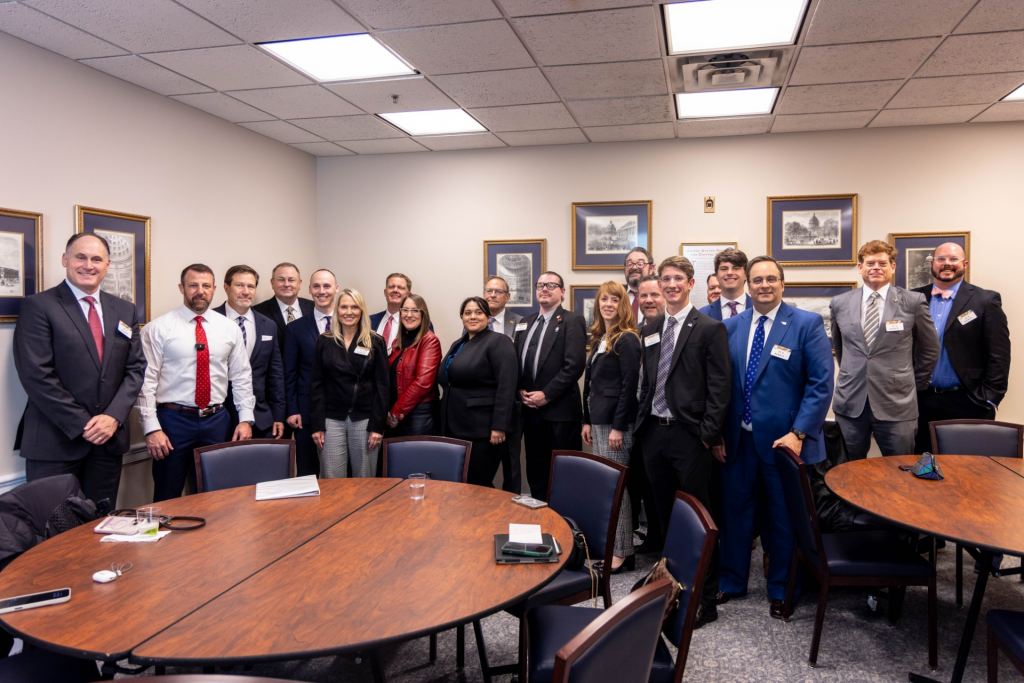
    Bipartisan Group of Lawmakers Reintroduce Bill to Protect Common Names

    The National Milk Producers Federation (NMPF), U.S. Dairy Export Council (USDEC), and Consortium for Common Food Names (CCFN) praised yesterday's reintroduction of the Safeguarding American Food and Export Trade Yields Act (SAFTEY Act).

    Led by Senators John Thune, R-SD, Tammy Baldwin, D-WI, Roger Marshall, R-KS, and Tina Smith, D-MN, in the Senate and Representatives Dusty Johnson, R-SD, Jim Costa, D-CA, Michelle Fischbach, R-MN, and Jimmy Panetta, D-CA, in the House, the bipartisan legislation would direct USDA to partner with the U.S. Trade Representative (USTR) to prioritize the protection of common names like "parmesan" and "bologna" in international trade negotiations.

    "For years, many foreign countries have succumbed to the EU pressures to exploit geographical indication rules to confiscate common food and beverage names that American and foreign producers in the new world have used for generations," said Jaime Castaneda, Executive Director of CCFN. "This lack of action has cost U.S. producers too much for too long. The Safeguarding American Food and Export Trade Yields Act is a critical step toward ensuring that American producers can count on their government to establish a policy of fairness in the global market. We thank Senators Thune, Baldwin, Marshall and Smith and Representatives Johnson, Costa, Fischbach and Panetta for their steadfast support."

    Since 2009, the EU has used trade negotiations and geographical indication (GI) rules to confiscate common names for their own producers—essentially monopolizing certain products in specific markets. For American farmers and manufacturers, this has led to lost commercial opportunities overseas and expensive fights domestically. The EU has escalated this campaign in recent years, coercing third-party countries to adopt the EU's GI rules as part of trade negotiations.

    "When the EU restricts our ability to market and sell our cheeses using 'parmesan,' 'feta,' and 'asiago,' it costs U.S. dairy producers markets and consumers that our members have built up over years," said Krysta Harden, President and CEO of USDEC. "It is past time that the U.S. government take a more proactive approach to tackling this challenge. A new emphasis on common name protections—headlined by the SAFETY Act—will ensure that our producers can compete on a more level playing field around the world. Thank you to Senators Thune, Baldwin, Marshall and Smith and Representatives Johnson, Costa, Fischbach and Panetta for leading this important effort."

    By amending the Agricultural Trade Act of 1978, the legislation defines "common names" and directs USDA to join forces with USTR to proactively defend these terms in export markets. Originally introduced in May 2023, the bill represents the first farm bill effort on common names.

    "Losing the right to use common names has direct, on-the-ground consequences for U.S. dairy farmers," said Gregg Doud, President and CEO of NMPF. "We appreciate Senators Thune, Baldwin, Marshall and Smith and Representatives Johnson, Costa, Fischbach and Panetta taking up this fight. U.S. producers deserve fair competition. The SAFETY Act is an important milestone to making that a reality." 

    A logo with stars and stripes

AI-generated content may be incorrect.

    Next-generation Entrepreneur Dan Funk Launches Republic Regional Seed Network

    Funk Agriculture LLC, owned by Dan Funk, announces the formation of the Republic Regional Seed Network. Funk, son of legendary seedsman Don Funk, acquired Midwest Seed Genetics and NC+ from his family in 2023. Further investments and acquisitions now form Republic. 

    Republic comprises NC+ in the West, Midwest Seed Genetics in the Central and Upper Corn Belt, and Crow's in the East, and offers entrepreneurial growers and seed professionals the freedom to operate across an independent seed network, focused on elite, high-value products.  

    "My family has been in the seed business for 90 years," says Funk. "I'm honored to now be the fourth generation committed to the mission of serving the independent American farmer."

    Brad Schwartz, Republic's Head of Sales & Business Development shares, "The seed industry is at an inflection point. The main question is, are companies agile enough to meet the needs of next-generation farmers with tightening industry cost structures? It's no longer who can just offer the right seed to the right acre, but also who can deliver the right model to the right acre."

    "To deliver a better value proposition to customers, we're methodically addressing the legacy inefficiencies of the seed business," says Krista Mathisen, Republic's Head of Finance & Operations. She continues, "Our operating system of decentralizing brands to fit the regions and cultures they serve, while centralizing operations to scale with greater efficiency and expertise will serve as a strong foundation for growth over the coming decades."

    "We enjoy strong partnerships with all major genetics and trait providers and have shaped our portfolios to address the biggest needs of our brands' regions," adds Steve Sick, Republic's Head of Product. "Frankly, we'll put our lineups against any in the industry. And with our production partner, we maintain one of the highest standards of seed quality across the industry, always a hallmark of a Funk-owned business."

    Dan Funk concludes, "We know farmers and seed professionals are not satisfied with the current status quo. We also know this is a time of great transition: for generations on the farm, for a generation of trusted advisers, and for succession at the seed company level. I learned from my father the most important component of a seed business are the people who represent it. With Republic, we will be a home for those who want a consistent, long-lasting opportunity with independent seed brands. We're operating in terms of generations. That takes resources, runway and long-term vision. While we focus on executing and delivering value today, we are committed to relentlessly creating even more value in the future."

    Visit www.republicseed.com.

    About Republic Regional Seed Network:

    Republic Regional Seed Network represents the next-generation model of independently-owned and operated seed sales. It offers elite, high-quality corn, soybean and sorghum products across customized brand platforms for specific regions and segments. Through its Midwest, NC+ and Crow's brands, the company is committed to providing future generations of customers the best possible seed products delivered at great value. www.republicseed.com

    Paul Beck: Enhancing Meat Quality Through Management Decisions Pre-Calving

    Weekly, Oklahoma State University Extension Beef Cattle Nutrition Specialist Paul Beck offers his expertise on the beef cattle industry. This is part of the weekly series known as the "Cow Calf Corner," published electronically by Dr. Derrell Peel, Mark Johnson, and Beck. Today, Beck talks about enhancing meat quality before a calf is born.

    Meat quality is influenced by various factors that affect the consumer's eating experience, including tenderness, marbling, and fat composition. While many factors contribute to the final product, beef producers play a key role in shaping meat quality through their management and nutritional decisions, even before an animal is born.

    Production systems vary widely based on climate and economics, but management choices made before birth can significantly impact meat quality. Key decisions include breed selection and maternal nutrition.

    Breed type affects meat quality. Bos taurus breeds, such as Angus and Hereford, tend to have higher marbling scores than Bos indicus breeds. Crossbreeding beef and dairy genetics can optimize efficiency and carcass quality, with research ongoing to determine the best breed combinations for superior meat characteristics.

    A dam's uterine capacity and diet during pregnancy directly impact the offspring's muscle development, fat composition, and overall meat quality. Intrauterine growth restriction can limit muscle fiber development and reduce marbling. Proper maternal nutrition helps mitigate these effects. Studies show that protein supplementation during gestation improves marbling and meat tenderness, while both undernutrition and overnutrition of the beef cow during gestation can negatively impact carcass traits of their calves.

    Feeding antioxidant-rich diets to pregnant cattle can enhance the offspring's meat quality by improving shelf life and flavor stability. Research suggests that plant-based antioxidants, such as rosemary and thyme, can reduce fat oxidation, preserving meat tenderness and taste.

    Beef producers have a significant influence on meat quality through breeding choices and nutrition management. Understanding these factors and implementing best practices from conception through finishing can lead to higher-quality beef, improving both consumer satisfaction and market value.

    Reference: Beck, P.A., Beck, M.R., Apple, J.K., 2024. Production systems and nutrition. In: Encyclopedia of Meat Sciences III, vol. 1. https://dx.doi.org/10.1016/B978-0-323-85125-1.00029-6. ISBN: 9780323851251

    Federal Court in Texas Says FSWS Ignored the Law- Texas Judge Strikes Down the Biden-Era Lesser Prairie Chicken Rule

    A federal judge has struck down a Biden administration rule that would have split the lesser prairie chicken into two distinct populations for the first time. The decision is a major victory for ranchers and others who had challenged the rule.

    The Biden administration finalized a rule on Nov. 25, 2022, extending Endangered Species Act protections to what was the threatened northern distinct population of the lesser prairie chicken.

    In its order, the U.S. District Court for the District of Western Texas said this week that the U.S. Fish and Wildlife Service did not follow the law in promulgating the rule.

    "As observed earlier, the 4(d) rule decision-making universe is not established by the constraints placed on the listing decision," U.S. District Judge David Counts said in a court document.

    "While, as here, data supplying the listing decision supports the secretary's choice of necessary prohibitions, that data does not check the advisability box. Such a determination requires consideration of costs. Because fish and wildlife failed to account for costs, to include cost of compliance, it failed to consider the 'all relevant factors' and ignored 'important aspects of the problem' before it."

    In March 2023, the Permian Basin Petroleum Association, state cattle organizations and the state of Texas filed separate lawsuits in a Texas court challenging the U.S. Fish and Wildlife Service's endangered species list designation of the lesser prairie chicken.

    Several Kansas ranchers, farmers and counties filed a similar lawsuit in federal court in Kansas, and a court moved it to the same Texas court.

    "By acknowledging that the Endangered Species Act requires the government to balance conservation efforts with their economic impact, the court restored the ability of these ranching families to earn a living," said Charles Yates, an attorney at Pacific Legal Foundation. "Unburdened by the shackles of Chevron deference, the court made clear that the United States Fish and Wildlife Service failed to follow the law when it issued the rule, and accordingly overturned it."

    The Biden-era rule split the lesser prairie chicken into two distinct populations for the first time. The southern population of lesser prairie chickens is now considered endangered in the southern area, which includes parts of western Texas and eastern New Mexico. The bird is listed as "threatened" in a larger northern territory that includes eastern Colorado, western Kansas, western Oklahoma and a few counties in the Texas Panhandle.

    The Kansas plaintiffs asked the court to set aside the final rule regarding the northern population and send the rule back to U.S. Fish and Wildlife.

    Pacific Legal Foundation filed the Kansas lawsuit on behalf of Lone Butte Farm LLC, Schilling Land LLC, JDC Farms Inc. and the Kansas Natural Resource Coalition. The coalition represents 30 county boards of commissioners in the state.

    The Edwards and Schilling families have operated their farms and ranches in western Kansas for generations.

    The administration's change on the lesser prairie chicken meant livestock producers in parts of five states were required to create grazing plans mainly to protect themselves from conducting activities deemed as harmful to the species.

    The Kansas lawsuit outlined how the change in listing of the lesser prairie chicken has affected farms, ranches and counties.

    Ragland to ITC: 2,4-D an Essential Tool for Soybean Farmers

    Not all herbicides are created equal – and not all effective herbicides remain on the market. Thus is the problem faced by hundreds of thousands of soybean and other farmers across the country. Farmers need access to multiple products from multiple sources, including 2,4-D.

    In testimony to the U.S. International Trade Commission, which conducts investigations on matters involving international trade and industry competitiveness, Caleb Ragland, American Soybean Association president and Kentucky soybean farmer, explained the predicament of he and fellow farmers trying to effectively grow their crops.

    "Weeds take vital resources like nutrients, water, and growing space from our crops. If not controlled, they can destroy about 80% of a soybean harvest. That's why herbicides are essential to maximizing crop health and yields.

    Until last year, dicamba was a key herbicide in soybean farming. For perspective, in 2021 it was used on more than 50 million acres of soybeans in the U.S. But in 2024, a federal district court vacated dicamba's registrations with the Environmental Protection Agency. That unavailability has left a massive gap in the herbicide supply for farmers, which means we need reliable access to herbicides like 2,4-D now more than ever," Ragland explained.

    Ragland's testimony came during a final hearing hosted by the ITC regarding antidumping and countervailing duties brought against imports of 2,4-D acids from China and India. ASA and the National Corn Growers Association appeared in person to offer testimony opposing the AD/CVD petition and urging the ITC to make a negative determination in the final ruling of the case.

    Given dicamba's unavailability and 2,4-D's reliable weed control compared to the few alternatives left on the market, demand for 2,4-D herbicides has been growing and is expected to grow even more in the years ahead. That makes access to multiple sources of the herbicide important.

    Ragland noted during his testimony that the domestic company at the heart of the investigation "makes good products that help many farmers" and enumerated the positive characteristics of the company's seed trait genetics, herbicide products, and proprietary 2,4-D choline formulation. However, he questioned the company's need for trade protection, especially to the detriment of American farmers.

    "For soybean farmers, times are already tough. Production costs are nearing record highs. The prices of soybeans have decreased more than 40% in the past three years. Our herbicide options are becoming increasingly limited. Imports of 2,4-D products do not compete at all with Corteva's 2,4-D choline product that is required by law and by contract to be used with Corteva's Enlist soybeans—and which have a 60% market share that continues to increase every year. New duties on 2,4-D would make things even harder, further disrupting our access to reliable herbicide tools in our toolbox."

    ASA remains concerned with the rising costs of inputs for U.S. soybean growers. Duties imposed as part of this case could not come at a worse time for farmers, as trade uncertainty and tariffs continue to place financial pressure on U.S. agriculture.

    The ITC has the final authority to dismiss this case in its entirety and will make its decision regarding these duties later this month.

    USDA Offers Disaster Assistance to Agricultural Producers in Oklahoma Impacted by Wildfire

    Agricultural operations in Oklahoma have been significantly impacted by recent wildfires. The U.S. Department of Agriculture (USDA) has technical and financial assistance available to help farmers and livestock producers recover from these adverse weather events. Impacted producers should contact their local USDA Service Center to report losses and learn more about program options available to assist in their recovery from crop, land, infrastructure, and livestock losses and damages.  

    USDA Disaster Assistance   

    Producers who experience livestock deaths in excess of normal mortality or sell injured livestock at a reduced price may be eligible for the Livestock Indemnity Program (LIP). To participate in LIP, producers will have to provide acceptable documentation of death losses or evidence of reduced sales resulting from an eligible adverse weather event and must submit a notice of loss to the USDA Farm Service Agency (FSA) no later than March 2, 2026, for 2025 calendar year losses.  Livestock producers who experience losses related to wildfire should check with their local FSA office for LIP eligibility criteria.  

    Meanwhile, the Emergency Assistance for Livestock, Honeybees, and Farm-Raised Fish Program (ELAP) provides eligible producers with compensation for feed and grazing losses. For ELAP, producers are required to complete a notice of loss and application for payment to their local FSA office no later than March 2, 2026, for 2025 calendar year losses.    

    Additionally, eligible orchardists and nursery tree growers may be eligible for cost-share assistance through the Tree Assistance Program (TAP) to replant or rehabilitate eligible trees, bushes or vines. TAP complements the Noninsured Crop Disaster Assistance Program (NAP) or crop insurance coverage, which covers the crop but not the plants or trees in all cases. For TAP, a program application must be filed within 90 days of the disaster event or the date when the loss of the trees, bushes or vines is apparent.  

    "Once producers are safely able to determine and report their losses or damages, our local Farm Service Agency staff can help producers with program applications related to wildfire recovery," said Jaramie Karcher, Deputy State Executive Director for FSA in Oklahoma.  "As you evaluate losses on your operation, take time to gather important documents you will need to apply for assistance including farm records, herd inventory, receipts and pictures of damages or losses. FSA staff will do their best to work with the loss documentation records you have available."

    FSA also offers a variety of direct and guaranteed farm loans, including operating and emergency farm loans, to producers unable to secure commercial financing. Producers in counties with a primary or contiguous disaster designation may be eligible for low interest emergency loans to help them recover from production and physical losses. Loans can help producers replace essential property, purchase inputs like livestock, equipment, feed and seed, cover family living expenses or refinance farm-related debts and other needs.

    Additionally, FSA offers several loan servicing options available for borrowers who are unable to make scheduled payments on their farm loan programs debt to the agency because of reasons beyond their control.    

    The Farm Storage Facility Loan Program (FSFL) provides low-interest financing so producers can build, repair, replace or upgrade facilities to store commodities. Loan terms vary from three to 12 years. Producers who incurred damage to or loss of their equipment or infrastructure funded by the FSFL program should contact their insurance agent and their local USDA Service Center. Producers in need of on-farm storage should also contact USDA.  

    Risk Management  

    Producers with NAP coverage should report crop damage to their local FSA office and must file a Notice of Loss (CCC-576) within 15 days of the loss becoming apparent, except for hand-harvested crops, which should be reported within 72 hours.  

    Producers with risk protection through Federal Crop Insurance should report crop damage to their crop insurance agent within 72 hours of discovering damage and be sure to follow up in writing within 15 days.

    "Crop insurance and other USDA risk management options are offered to help producers manage risk because we never know what nature has in store for the future," said Jim Bellmon, Director of USDA's Risk Management Agency (RMA) Regional Office that covers Oklahoma. "Times of disaster can be a trying time for producers, and they should stay in close contact with their crop insurance agent. Producers can be assured that the Approved Insurance Providers, loss adjusters and agents are experienced and well-trained in handling these types of events."   

    Conservation  

    Outside of the , emergency and non-emergency haying and grazing of(CRP) acres may be authorized to provide relief to livestock producers in areas affected by a severe drought or similar natural disasters. Producers interested in haying or grazing of CRP acres should contact their county FSA office to determine eligibility.

    FSA's Emergency Conservation Program (ECP) can assist landowners with financial and technical assistance to remove debris from farmland such as woody material, sand, rock and materials from collapsed hoop houses/high tunnels on cropland or pastureland. Through the program, FSA can provide assistance toward the restoration or replacement of fences including livestock cross fences, boundary fences, cattle gates or wildlife exclusion fences on agricultural land.

    Additionally, the Emergency Forest Restoration Program (EFRP) can assist eligible owners of nonindustrial private forestland to also restore the land by removing debris, repairing forestland roads, and replacing fence. For both programs, farmers and ranchers should check with their  local FSA office  to find out about sign-up periods, which are set by the FSA County Committee.

    USDA's Natural Resources Conservation Service (NRCS) is always available to provide technical assistance during the recovery process by assisting producers to plan and implement conservation practices on farms, ranches and working forests impacted by natural disasters. The Environmental Quality Incentives Program (EQIP) can help producers plan and implement conservation practices on land impacted by natural disasters.   

    "At USDA, we serve as a partner to help landowners with their resiliency and recovery efforts," said Jeanne Jasper, NRCS State Conservationist in Oklahoma. "Our staff will work one-on-one with landowners to make assessments of the damages and develop methods that focus on effective recovery of the land."

    Assistance for Communities   

    Additional NRCS programs include the Emergency Watershed Protection (EWP) program, which assists local government sponsors with the cost of addressing watershed impairments or hazards such as debris removal and streambank stabilization.     

    Eligible sponsors include cities, counties, towns or any federally recognized Native American tribe or tribal organization. Sponsors must submit a formal request (by mail or email) to the NRCS state conservationist for assistance within 60 days of the natural disaster occurrence or 60 days from the date when access to the sites become available. For more information, sponsors should contact their local NRCS office.     

    In addition to EWP, Conservation Technical Assistance is another valuable service that NRCS can provide following a wildfire. NRCS technical assistance can help fire victims with planning cost-effective post fire restoration practices.

    More Information 

    Additional USDA disaster assistance information can be found on farmers.gov, including USDA resources specifically for producers impacted by wildfire. Those resources include the Disaster Assistance Discovery Tool, Disaster-at-a-Glance fact sheet, Loan Assistance Tool, and Natural Disasters and Crop Insurance fact sheet. Additionally, FarmRaise offers an FSA educational hub with LIP and ELAP decision tools as well as farm loan resource videos. For FSA and NRCS programs, producers should contact their local USDA Service Center. For assistance with a crop insurance claim, producers and landowners should contact their crop insurance agent.

    NMPF Celebrates Senate Support for Whole Milk for Healthy Kids Act

    The National Milk Producers Federation celebrated strong bipartisan Senate support for the Whole Milk for Healthy Kids Act as senators begin considering this critical legislation.   

    In a Senate Committee on Agriculture, Nutrition and Forestry hearing held Tuesday to review the measure, committee members and panelists highlighted the role this bill could have in increasing student milk consumption and nutrition access while also potentially decreasing waste.  

    "NMPF commends Sens. Roger Marshall, R-KS, and Peter Welch, D-VT, for advocating for our nation's students to have more access to nutrient-rich dairy by allowing schools to offer whole milk with school meals," NMPF President & CEO Gregg Doud said. "We know that Americans are under-consuming dairy products, and as we heard today, students have said they want the milk they are familiar with and that they find satisfying. For many students, that's whole milk." 

    NMPF also thanks Chairman John Boozman, R-AR, and Ranking Member Amy Klobuchar, D-MN, for voicing their support for the bill. 

    "We are grateful to Chairman Boozman and Ranking Member Klobuchar for convening today's hearing, and we look forward to working with them and the bill's bipartisan sponsors to move it forward," Doud said. 

    The House of Representatives is considering similar legislation led by House Agriculture Committee Chairman GT Thompson, R-PA, and Rep. Kim Schrier, D-WA. The bill was approved by the House Education & the Workforce Committee with bipartisan support Feb. 12, and it now awaits floor action. Similar legislation passed the House by an overwhelming bipartisan margin in 2023 but was not taken up in the Senate. 

    NCGA President: US Should Not Impose duties on Key Herbicide

    Corn growers and other farmers would suffer if the U.S. government granted a petition to place anti-dumping and countervailing duties on imports of an herbicide called 2,4-D, the president of the National Corn Growers Association told commissioners at the International Trade Commission today. 

    "First, 2,4-D is a growth regulator that targets broadleaf weeds—which is a type of weed that causes significant harm to corn and 2,4-D has a minimal effect on grasses," Illinois farmer and NCGA President Kenneth Hartman Jr. testified.  "This makes 2,4-D useful for corn, which is a grass, because it will kill the weeds but not the corn plants."

    The testimony comes as ITC weighs whether the petitioner, Corteva Agriscience, was harmed by imports of the herbicide, a finding that would allow for the petition to advance. 

    Growers have said they cannot solely rely on Corteva Agriscience, the only domestic supplier of 2,4-D, to meet nearly all the market's needs.

    Farmers have also argued that 2,4-D has many benefits, including preserving soil health, which helps farmers achieve successful yields. 

    "The use of 2,4-D is more environmentally friendly and climate-smart than the alternative, which is tilling," Hartman told commissioners. "No-till farming uses herbicides to kill weeds while minimizing soil disturbances. This is important because keeping soil intact reduces soil erosion." 

    Hartman further noted that the duties come as farmers navigating tough economic times.

    "Corn prices are down 40% since 2022 and costs of farming, including inputs like herbicides, are at all-time highs," Hartman said. "New herbicide tools are slow to come to the market, so placing new duties on 2,4-D would set American farmers back even further."

    ITC will issue either a negative or affirmative determination of material injury in six weeks. If an affirmative determination is issued, the U.S. Department of Commerce would then determine and issue final duty rates.

    Read the Testimony

    Join Us at the Oklahoma City Farm Show: April 3-5, 2025

    Listen to Ron Hays talking with Penny Swank about the 2025 Oklahoma City Farm Show.

    The 21st Annual Oklahoma City Farm Show, featuring the latest in agricultural machinery, equipment, technology, and services, is set for April 3-5, 2025, at the OKC Fairgrounds. This year's event will showcase more than 1,000 products and services from hundreds of exhibitors, filling both the indoor Bennett Event Center and the outdoor exhibition area directly in front of it. Admission to the show is free, and ample free parking is available at the OKC Fairgrounds complex.

    Senior Farm and Ranch Broadcaster Ron Hays caught up with show manager Penny Swank to talk about the event. "We like the Bennett Event Center," Swank said. "The building is set up perfect for us because there are huge doors to get big tractors in. There is a lot of big farm equipment out there now, and we can get it all inside here."

    This year, the 279,000 square foot building is full with 94 new companies added this year. In addition to over 150,000 square feet of agricultural and ranching exhibits, the show will offer a variety of activities and amenities. Complimentary coffee and rolls will be served each morning until 10:00 AM, thanks to Purple Wave Auctions.

    Early attendees can also enter the daily $1,000 Showbucks prize drawing, sponsored by Great Plains Kubota. The drawing, which takes place at 1:00 PM each day, allows winners to use the Showbucks as cash for purchases from exhibitors. Sign up for the drawing at the Great Plains Kubota booth.

    Educational opportunities are also a highlight of the event. The OSU Extension seminars will take place Thursday and Friday in the Seminar Conference Room (NE area of the Bennett Event Center).

    Topics include:

    • Thursday, April 3
      • 11:00 a.m. "Beekeeping: Managing Strong, Healthy, and Productive Hives" by Zach Royko
      • 1:30 p.m. "Raising Safe and Healthy Poultry
    • Friday, April 4
      • 11:00 a.m. "Water Testing for Home and Livestock Water Sources" by Dr. Jeff Sadler
      • 1:30 p.m. "Pasture Management for Resilient Grazing Systems" by Mike Trammel Coffee and cookies will be provided for seminar attendees.

    "They have put together a great seminar lineup," Swank added. "The trade show has a good variety of anything from seed companies, the tractors, sprayers – I mean, anything farm-related!"

    The Show hours are 9 a.m.-5 p.m. on Thursday and Friday, and 9 a.m. – 4 p.m. on Saturday. The OKC Fairgrounds complex is located off NW 10th Street in Oklahoma City, between I-44 and May Avenue. For more information on the Bennett Event Center and the OKC Fairgrounds, visit OKStateFair.com. For more information on the Oklahoma City Farm Show, including the most current event schedules, visit OklahomaCityFarmShow.com.

    Daily Email for April 1, 2025


    Oklahoma's Latest Farm

    And Ranch News

    Tuesday, April 1, 2025


    Coming this Thursday-Saturday the 2025 OKC Farm Show


    Here is Your Daily Oklahoma Farm and Ranch News Update: 


    • USDA Reports: Record Corn Acres, Tight Wheat Supply, and Planting Concerns


    • Wheat and Cotton Acres Reduced; Corn Sorghum Acres Increased in the latest USDA Prospective Plantings


    • Experience Expert Insights at the Hemphill County Texas A&M AgriLife Beef Conference


    • Dr. Derrell Peel Discusses Feeder Cattle Markets Across Four Marches


    • Oklahoma Pasture/Range Good to Excellent Ratings Jump 10 Percentage Points This Week


    • Oklahoma Braces for Potential Severe Weather and Fire Danger


    • OSU Cooperative Extension Hosting Kingfisher and Ada Beef Cattle Events


    • Oklahoma Attorney General Drummond Questions Firing of Director for Oklahoma Forestry Services

    Correction from Monday Email-

    The story that featured our conversation with Michael Kelsey on the 2025 state legislative session did not have a link back to our webstory where you could find the audio to listen to Ron and Michael- we apologize for that oversight- click here to jump to that story and the chance to hear that conversation.

    USDA Reports: Record Corn Acres, Tight Wheat Supply, and Planting Concerns

    Today, the USDA released the Prospective Plantings and Quarterly Grain Stocks Reports. Farm Director KC Sheperd spoke with Rich Nelson from Allendale, who provided insights into the reports' implications, highlighting both surprises and ongoing concerns.


    "We had our update as far as what's left over for these crops as of March 1st," Nelson began, discussing the grain stocks report. "Quite a surprise for these reports. Normally, these are hard to guess, and the trade is quite wrong on a few of these numbers. In this case, 8.2 billion bushels of corn are leftover on the trade estimate, 1.9 billion bushels of soybeans are leftover on the trade estimate, and certainly, for our discussion as far as wheat, there are 1.2 billion bushels left over on the trade estimate, for the most part. So very surprising, the trade got these numbers correct for old crop stocks mid-year."


    Turning to acres, Nelson highlighted a significant corn acreage projection. "USDA gave us a 95.3 million acre estimate for corn. This is the largest of all time," he stated. "But the market has not really taken this as a big bearish surprise. A lot of the trade had moved up its prior views in recent days. So for corn, they're really calling today's report quite neutral."


    Soybean acreage was closer to trade expectations. "For soybeans, as far as acres, they came in relatively close to the average trade guess, 83.5, so a more or less than neutral acres and neutral stock number. So neutral for soybeans," Nelson explained.

    Listen to KC's Interview with Rich Nelson and Read More Here

    Sponsor Spotlight

    The vision of the Oklahoma Beef Council is to be a positive difference for Oklahoma's farming and ranching families and the greater beef community, and its mission is to enhance beef demand by strengthening consumer trust and exceeding consumer expectations. 


    To learn more, visit www.oklabeef.org. Also, don't forget to like its Facebook page at www.facebook.com/oklabeef for stories on Oklahoma's ranching families and great beef recipes. 


    And Check out this video below that helps you learn more about the Beef Checkoff- .

    Wheat and Cotton Acres Reduced; Corn Sorghum Acres Increased in the latest USDA Prospective Plantings Report

    The Prospective Plantings Report was released today, and Associate Farm Editor Stevie White had the chance to talk with USDA State Statistician Troy Marshall about the results and how that data compares to the January reports.


    Surveys were conducted on March 1st to get the updated data for today's report, and Oklahoma winter wheat was reduced by 100,000 acres compared to the January seedings report to 4.15 million acres planted, down 5% from last year. Texas's numbers were unchanged from last year at 5.5 million acres, but down 300,000 acres from the January projections. Kansas estimates about 7.3 million acres of wheat planted, down 4 % from last year and also down 100,000 acres from the january report.


    "For wheat, I think a lot of that is driven around a lot of the weather and planting conditions that we saw as we go through," Marshall said. "We are still seeing reports of drought with the drought monitor over the last couple of weeks. We did see some rain come through, but it was kind of spotty this last weekend, but we have some pretty good chances for next week, so hopefully everyone who has wheat in will get something going there."


    Along with the rain, if it arrives, Oklahoma producers will be looking to put corn in the ground soon as Texas has already started.

    Listen to Stevie's Interview with Troy Marshall and Read More Here

    Experience Expert Insights at the Hemphill County Texas A&M AgriLife Beef Conference

    Senior Farm and Ranch Broadcaster Ron Hays is continuing his conversation with Andy Holloway about the 10th Annual Texas A&M AgriLife Hemphill County Beef Conference, which will be held on April 29-30 at the Jones Pavilion in Canadian, Texas. Click here to hear and read the first part of their discussion.


    After last year's event attracted more than 800 cattlemen and women from 26 states, Holloway, the Texas AgriLife Extension Agent who began the event in 2015, expects another great turnout at the 2025 event.


    "Happy Days Are Here Again" is the theme of the event, mirroring the time when President Franklin D. Roosevelt used it as his campaign slogan after the Great Depression and then again after World War II because it truly was happier days for the nation.


    "That is exactly the analogy that we want to set forth in this conference, because we have has a lot of tough years in the beef cattle business, but now, we have record beef cattle prices, historic profits from the cow calf segment, and even the feedyards are making big bucks on cattle that are being killed," Holloway said.

    Click Here to Listen to Ron's BeefBuzz with Andy Holloway and to Read More
     
     
    Sign Up for Our Daily Email- Free Because of Our Sponsors!

    Support Our Sponsors!


    KIS logo


    Advertise With Us!


    For our farmers who have either- always have had cotton on their farms- or those who have more recently have added the fiber crop to their operations- we have a daily report heard on several of our Radio Stations- It's Called Cotton Talk!


    Click on the Button below to listen to our most recent report

    Click here for our Latest Cotton Talk- Hosted by KC Sheperd


    The latest news from the Oklahoma State Capitol is available daily on the Radio Oklahoma News Network.
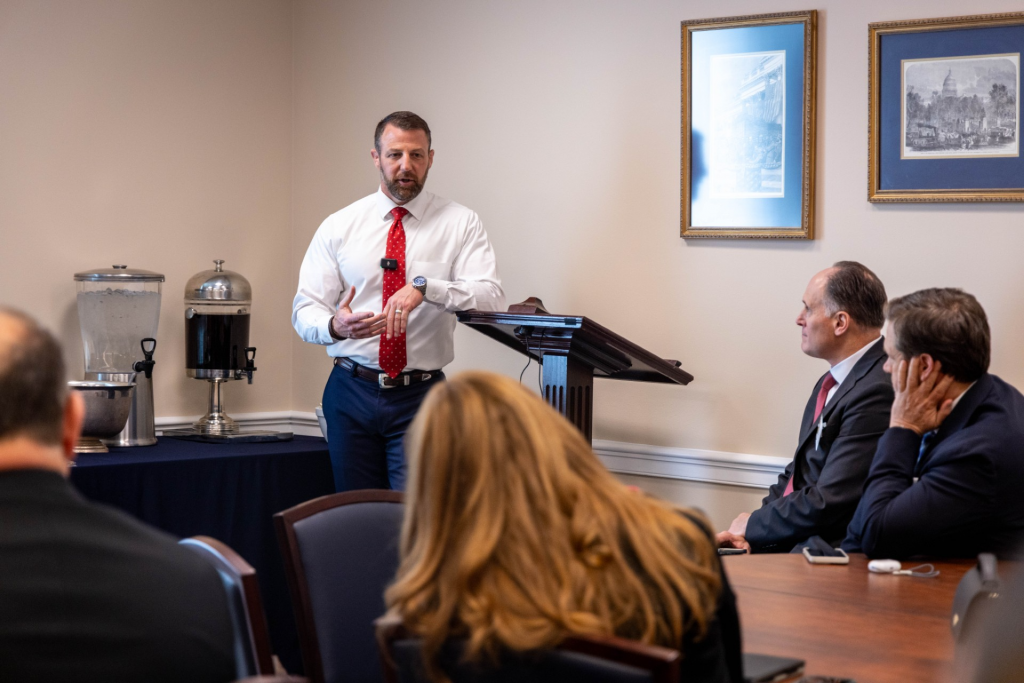

    Click on the blue button to hear from our Radio Oklahoma Network News Director Jacquelyn Farris

    Click here for the latest report from the State Capitol on RON


    Dr. Derrell Peel Discusses Feeder Cattle Markets Across Four Marches

    Dr. Derrell Peel, Oklahoma State University Extension Livestock Marketing Specialist, offers his economic analysis of the beef cattle industry as part of the weekly series known as the "Cow Calf Corner," published electronically by Dr. Peel, Mark Johnson, and Paul Beck. Today, Dr. Peel compares four years of March feeder cattle market conditions.


    As March wraps up, it is interesting to look back at feeder cattle markets over the past four years. Not only have feeder cattle prices risen dramatically, but the relationship between light and heavy weight feeder cattle has changed significantly. The change in relative prices across weight groups reflects market signals about how resources should be used for cattle production.


    In total, prices for calves increased by 94.6 percent from 2022 to 2025 while prices for 775-pound steers increased by 85.2 percent. Prices for the feeder steers increased faster initially in 2023 before the calf prices increased sharply in 2024 and 2025.  In 2023, the March feeder prices were 75.3 percent of the calf price level but by 2025, the feeder price was 71.3 percent of calf price.  

    Read More from Dr. Derrell Peel and View His Tables Here
     

    We invite you to listen to us on great radio stations across the region on the Radio Oklahoma Ag Network weekdays-

    if you missed this morning's Farm News - or you are in an area where you can't hear it- click below for this morning's Farm news from Ron Hays and KC Sheperd on RON.
    Listen to our Tuesday morning farm and ranch news with KC Sheperd
     
     
    Subscribe To the Daily Email


    Sponsor Spotlight


    Stewart Martin Kubota is passionately committed to providing our customers with the highest quality products, most innovative solutions, and services delivered with integrity and professionalism. Stewart Martin Kubota has four locations to serve you in Bixby, Broken Arrow, Okmulgee and Muskogee. Stewart Martin offers a full line of tough Kubota tractors, mowers, utility vehicles, construction equipment and farm / hay implements.


    Remember, If it's not orange, it's a lemon! Visit us at stewartmartinkubota.com


    Oklahoma Pasture/Range Conditions Good to Excellent Ratings Jump 10 Percentage Points This Week

    According to the latest Oklahoma Crop Progress and Condition Report, winter wheat jointing reached 35 percent, down 9 percentage points from the previous year and 2 points from the five-year average. Conditions were rated 33 percent good to excellent, 40 percent fair, and 27 percent poor to very poor. Last week's conditions rated 37 percent good to excellent, 34 percent fair, and 29 percent poor to very poor.


    In Kansas this week, the 2025 wheat crop stands at 49% good to excellent, unchanged from last week.


    In Texas, Winter wheat headed reached 22 percent, up 2 percentage points from the previous year but down 2 points from the five-year average. Winter wheat conditions rated 26 percent good to excellent, down 2 points from last week.


    Oklahoma Pasture and range conditions rated 30 percent good to excellent, 35 percent fair, and 26 percent poor to very poor this week. Last week's conditions rated 20 percent good to excellent, 36 percent fair, and 44 percent poor to very poor.


    The Texas, Pasture and Range conditions for this week are at 11% good to excellent, up 2 points from last week.

    Read More About the Latest Crop Progress Report Here

    Oklahoma Braces for Potential Severe Weather and Fire Danger

    Oklahoma residents are urged to stay vigilant today as the state faces the possibility of another round of severe weather this week, just days after a significant hailstorm. State Climatologist Gary McManus warns of potential tornadoes, large hail, and a high fire danger.


    Meanwhile- a Red Flag Warning is in effect from mid morning til dark today in the Texas and Oklahoma Panhandles- plus there is a Red Flag Warning in the western tier of counties in the main body of Oklahoma from 1 to 8 PM today.


    "Fresh off our the hail from Saturday night/Sunday morning, we have another POTENTIAL round of significant severe weather on the line for today," McManus states, emphasizing the immediacy of the threat. He highlights the potential for large hail, noting, "Tornadoes? Sure, but the hail could be what gets ya, putting knots on your noggin faster'n you can rub 'em."


    However, the formation of these storms is not guaranteed. "Now obviously storms actually have to form in the first place, and there is an indication a somewhat strong cap, or lid on the atmosphere, will be in place," McManus explains. This "cap," a layer of warm air, could inhibit the development of thunderstorms. "This layer of warm air thousands of feet above the surface would act as a dead-stop for that air rising explosively upwards and forming thunderstorms."  

    Read More from Gary McManus from his latest Mesonet Ticker and See His Weather Maps Here

    OSU Cooperative Extension Hosting Cow Calf Boot Camp in Kingfisher and the Oklahoma Beef Cattle Summit in Ada

    This year's Cow Calf Boot camp will be hosted at the Kingfisher County Fairgrounds in Kingfisher, Oklahoma April 8th-10th. Registration is $150 and includes educational instruction, 5 meals, and an OSU Beef Cattle Manual. If you are interested, do not delay! Registration is being handled through the Garfield County Extension Office. To register, contact Dana Zook at dana.zook@okstate.edu or call the Garfield County OSU Extension office for registration and fee information about this year's camp 580-237-7677.  


    The Oklahoma Beef Cattle Summit is to be held at the Pontotoc County Agri-Plex in Ada, Oklahoma, on Thursday, April 17. The doors open at 8 a.m., and the agenda includes an impressive array of informative and educational seminars.


    Register and RSVP for lunch before April 9 by calling or emailing Erin Hubbard at (580) 332-2153 or erin.hubbard@okstate.edu. See the full agenda below or visit the website.

    Read More about the Oklahoma Beef Cattle Summit Here
    Read More About the Cow Calf Boot Camp Here

    Oklahoma Attorney General Drummond Questions Firing of Director for Oklahoma Forestry Services

    Attorney General Gentner Drummond made the following remarks today in the wake of Gov. Stitt's forced ouster of Oklahoma Forestry Services Director Mark Goeller.


    "It should be inconceivable to think that the courage, skill and herculean work of firefighters across the state would be rewarded with the sudden and inexplicable ouster of Director Goeller," Drummond said. "Honestly, the Governor's action is baffling. While the wildfires that swept through our state this month exacted a heavy toll, the death and devastation would have been far, far worse without the strong coordinated effort of firefighters and Oklahoma Forestry Services.


    "Director Goeller is a seasoned professional who is highly regarded in his field. He – and all those who battled the fires – have earned the gratitude and respect of Oklahomans. It is outrageous that the Governor's response to their bravery would be to push out the director mere weeks after that deadly firestorm."

    Let's Check The Markets!
    OKC West is our Market Links Sponsor- they sell cattle three days a week- Cows on Mondays, Stockers on Tuesday and Feeders on Wednesday- Call 405-262-8800 to learn more.
     
    Today's First Look:
    Ron on RON Markets as heard on K101  
    mornings with cash and futures reviewed- includes where the Cash Cattle market stands, the latest Feeder Cattle Markets Etc.
    Hear Today's First Look
     

    Wholesale Boxed Beef Prices were higher- Choice Beef was up $2.44 and Select Beef was up $1.33 on 3/31/2025.


    Click on the Button below for the latest report from USDA Market News

    Boxed Beef Report
     

    Oklahoma National Stockyards had 4,795 head on Monday, March 31, 2025.


    Compared to last week: Feeder steers and steer calves steady to 5.00 lower. Feeder heifers and heifer calves steady to 5.00 higher except 500 -700lbs 1.00-5.00 lower. Demand moderate to good. Quality average. Rain is forecasted for later in the week. CME feeder cattle are trading lower. S


    Click below for the complete closing report.

    Oklahoma National Stockyards Market Report from 03/31/2025
     

    The Joplin Regional Stockyards had a total run of 10,062 head on Monday March 31, 2025.


    Compared to last week feeder steers under 800 lbs. sold steady to 10.00 lower. Eight weight steers sold steady with nine weights selling up to 8.00 higher. Feeder heifers sold from 8.00 lower to 4.00 higher with the most gain on heavier weights. Supply was heavy with moderate demand. Over all quality was not as good as last week with many unweaned, unvaccinated calves in the offering


    Click on the button below for details of the trade as compiled by the USDA Market News Service.

     
    Joplin Regional Stockyards Market from Monday 03/31/2025
     
    OKC West in El Reno Cow and Bull Market Report from 03/31/2025- Cows $2 to $4 Higher
     
     
    Each afternoon we are posting a recap of that day's markets as analyzed by Justin Lewis of KIS futures - click below for the latest update on the Livestock and Grain Futures Trade..
    Click Here to Listen to Justin's Commentary From 3/31/2025
     
    Okla Cash Grain:  
    Daily Oklahoma Cash Grain Prices- as reported by the Oklahoma Dept. of Agriculture- The report available after the close of the Futures Trade for that day.
    Read Cash Grains Report from 3/31/2025
     
    Our Daily Market Wrapup from the Radio Oklahoma Ag Network - analyzing the Futures Markets for that trading day- as reported by KC Sheperd.
    Click to Listen to Our Weekday Wrap with KC
     
    Slaughter Cattle Recap: 
    The National Daily Slaughter Cattle Summary- as prepared by the USDA Market News
    Read Report
     
    TCFA Feedlot Recap:  
    Finally, here is the Daily Volume and Price Summary from the Texas Cattle Feeders Association.
    Read Report

    Our Oklahoma Farm Report Team!!!!


    Ron Hays, Senior Farm/Ranch Broadcaster and Editor


    KC Sheperd, Farm Director and Editor


    Dave Lanning, Markets and Production


    Stevie White, Farm News and Email Editor


    Pam Arterburn, Calendar and Template Manager

    Podcasts From Oklahoma Farm Report and More

    Two of our regular reports are also podcasts that you can subscribe to- Our daily Farm and Ranch News with KC Sheperd- available here on the Apple Podcast Platform


    The second is our daily Beef Buzz with Ron Hays- available here on the Apple Podcast Platform


    Periodically- we offer interviews on our Ag Perspectives Podcast series- this podcast is available here.


    Ron has also has a series of podcasts from interviews with newsmakers at the Cattlemen's Congress- Click here or you can find them on your favorite Podcast platform- look for them by searching for Cattlemen's Congress Conversations.


    We are making plans to jump back into regular installments of what has been called the Road to Rural Prosperity- a new name and fresh content is in the works- for now- click on the blue button below for one of our favorites that is a timeless classic.


    The link below is one of our most recent podcasts- Ron spotlighting the Life and Times of Dr. Kim Anderson, who has just retired from OSU.

    Listen to Ron Hays talking with Kim Anderson about his 42 years in OSU Extension and the Famous "A Third A Third A Third" Advice he has given.
     
     
    Listen to Ron
    Beef Buzz
     
    Blue Green Gazette
    Calendar
    Auctions
    Market Links
    Facebook  Twitter  Youtube  

    Our thanks to Midwest Farms Shows, P & K Equipment, Oklahoma Farm Bureau, Great Plains Kubota, Stillwater Milling Company, National Livestock Credit Corporation, Oklahoma Beef Council, Stewart Martin Kubota, Oklahoma Pork Council, Oklahoma Wheat Commission, Oklahoma AgCredit, the Oklahoma Cattlemens Association, and  KIS Futures for their support of our daily Farm News Update.


    For your convenience, we have our sponsors' websites linked here- just click on their name to jump to their website- check their sites out and let these folks know you appreciate the support of this daily email, as their sponsorship helps us keep this arriving in your inbox on a regular basis- at NO Charge!


    We also appreciate our Market Links Sponsor - OKC West Livestock! 


    We invite you to check out our website at the link below too that includes an archive of these daily emails, audio reports and top farm news story links from around the globe.

    Head to Our Website OklahomaFarmReport.Com
    God Bless!
    Reach Out To Us:
    Tim West
    President/General Manager
    Rural Oklahoma Networks

    405-317-6361

    ***************

    Mike Henderson
    Director of Sales

    405-615-4922

    KC Sheperd
    Farm Director
    Radio Oklahoma Ag Network

    405-443-5717

    Email KC
    Ron Hays
    Senior Farm/Ranch Broadcaster
    Radio Oklahoma Ag Network

    405.473.6144
    Email Ron

    Oklahoma Cattlemen Address Black Vultures and Estate Tax Concerns in Washington D.C.

    Listen to Ron Hays talking with Michael Kelsey about OCA's time in Washington, D.C.

    Senior Farm and Ranch Broadcaster Ron Hays caught up with the Oklahoma Cattlemen's Association's Executive Vice President, Michael Kelsey, who just returned from a trip to Washington, D.C., along with several members of the OCA Leadership team.

    Kelsey described it as a "great trip," saying that OCA President Troy Shelby led the delegation and the group covered a lot of issues, including big topics like the farm bill and tariffs, and more specific things, like Black Vultures.

    U.S. Representative John Rose (TN-06) introduced H.R.1437, which removes take limits on black vultures to protect their livestock; however, it does require reporting how many vultures are taken each year to state Fish and Wildlife Officials or the respected delegated agency.

    "We are very much supportive of that for a couple of reasons," Kelsey explained. "We don't think these birds are migrating like they used to. They have a buffet right here! Plus, the number of them is atrocious. A rancher being able to defend his cattle, take these birds appropriately, and then report them. That just makes good common sense."

    The bill continues to gain traction in both the House and the Senate, and Kelsey is hopeful that it will pass during this legislative session.

    Congress has also been working through the renewal of the Tax Cuts and Jobs Act, which President Trump passed through Congress during his first term.  "Key for us is the estate tax," Kelsey noted. "The generational transfer of assets and how the estate tax can impact that. If we don't do anything before the end of this year, then that exemption level halves and drops way down. If we just think about the value of our assets – just the cattle alone right now, let alone the land and then equipment. It doesn't take a very big operation in the state of Oklahoma to jump over a pretty low cap that is still pretty high."

    Kelsey was disappointed to learn that the farm bill wouldn't be completed any time soon. "We have such strong leadership in Oklahoma regarding the farm bill. Frank Lucas is known as Mr. Farm Bill on the House side, and we are blessed with that because he is so good for us in agriculture. The Appropriations Chair, Mr. [Tom] Cole, is very strongly supportive and takes all of his leads from Frank Lucas, which is phenomenal. Those two gentlemen are colleagues and do a great job." Lucas and Cole are the senior members of the Oklahoma Congressional delegation and are both strong supporters of agriculture and the cattle industry.

    Even with great leadership in place, the slow process of moving the bill through the myriad of other things going on is challenging. "Within the next six months, I just don't see a farm bill getting done," Kelsey stated. "Maybe I'm wrong. Maybe things could happen and fall in place and go forward. Secretary Rollins is doing a fantastic job. She is getting some of her deputies and undersecretaries lined up."

    He emphasized that Oklahoma isn't the only state waiting for State FSA and NRCS leaders.

    The Beef Buzz is a regular feature heard on radio stations around the region on the Radio Oklahoma Ag Network and is a regular audio feature found on this website as well. Click on the LISTEN BAR for today's show, and check out our archives for older Beef Buzz shows covering the gamut of the beef cattle industry today.

    Ben Hale Reports Softening Markets in Some Classes but Rain is on the Way

    Listen to Ron Hays talk with Ben Hale about the latest in the cattle markets.

    On Tuesdays, Senior Farm and Ranch Broadcaster Ron Hays visits with Ben Hale of Western Livestock Auctions as he talks about the latest in the markets and more. Established in 1995, Western has grown into a multi-generational family-owned and operated business and stands as a symbol of tradition, excellence, and a deep-rooted passion for the cattle industry. Western Livestock Auctions operates the Western Livestock Commission Firm, which sells cattle on Mondays and Tuesdays. They also operate the livestock auction markets in Woodward, Comanche, and Knoxville, Iowa.

    Monday's sale in Oklahoma City ran 4,800 head compared to 3,150. "It usually gets a little slower going into April," Hale said. "We are all praying that we get the rain this weekend and no bad weather."

    If the rain comes as it should, numbers will lighten up as the wheat perks back up and pastures green up. "This weekend could be a game changer for us," Hale added.

    The markets were called a little lower is some places, but as high as prices have been elevated over the past several weeks, they could go quite a bit lower without a negative effect as other markets are still steady to higher – specifically five-weight steers.

    "We had a lot of new crop calves yesterday, which was kind of surprising, and they were sure a little softer than what the weaned yearlings were, but man, they sold high for just a soft, soggy calf," Hale noted. "They aren't going to do what those five-weight yearlings that have been dry wintered are, for sure."

    He expects good runs at Apache and Woodward this week, depending on the weather outcome. "I hope we see some rain, and it wouldn't even hurt my feelings if the runs are lighter because it's too muddy to get out next week. It would be fine with me!" Hale stated.

    Hale can be contacted at 940-631-2333. Check out more about the marketing options that Western offers by clicking here.

    FSA masthead

    Federal Emergency Management Agency Designates 8 Oklahoma Counties as Primary Natural Disaster Areas Due to Severe Storms, Straight-line Winds, Tornadoes, and Flooding

    This Presidential disaster declaration allows the United States Department of Agriculture (USDA) Farm Service Agency (FSA) to extend much-needed emergency credit to producers recovering from natural disasters through emergency loans. Emergency loans can be used to meet various recovery needs including the replacement of essential items such as equipment or livestock, reorganization of a farming operation, or to refinance certain debts. FSA will review the loans based on the extent of losses, security available, and repayment ability.

    Impacted Area: Arkansas, Oklahoma, and Texas

    Triggering Disaster: Straight-line Winds, Severe Storms, Tornadoes, and Flooding

    Application Deadline: November 18, 2025

    Primary Counties Eligible: Adair, Garvin, Jefferson, Lincoln, Okfuskee, Oklahoma, Stephens, and Washita

    Contiguous Counties Also Eligible:
    Arkansas: Benton, Crawford, and Washington
    Oklahoma: Beckham, Caddo, Canadian, Carter, Cherokee, Cleveland, Comanche, Cotton, Creek, Custer, Delaware, Grady, Hughes, Kingfisher, Kiowa, Logan, Love. McClain, McIntosh, Murray, Okmulgee, Payne, Pontotoc, Pottawatomie, Seminole, and Sequoyah
    Texas: Clay and Montague

    More Resources

    On farmers.gov, the Disaster Assistance Discovery Tool, Disaster Assistance-at-a-Glance fact sheet, and Loan Assistance Tool can help you determine program or loan options. To file a Notice of Loss or to ask questions about available programs, contact your local  USDA Service Center.

    FEMA offers different assistance programs for individual citizens, public groups including government agencies and private nonprofit organizations.  To find the FEMA help you need following a disaster event, visit fema.gov/assistance.

    Producer Sentiment Slips due to Rising Policy Uncertainty

    A breakdown on the Purdue/CME Group Ag Economy Barometer March results can be viewed at https://purdue.ag/barometervideo. Find the audio podcast discussion for insight on this month's sentiment at https://purdue.ag/agcast.

    Weaker expectations for the future led to a decline in farmer sentiment in March as the Purdue University-CME Group Ag Economy Barometer index fell 12 points to a reading of 140, down from 152 a month earlier. Farmers' view of the future was decidedly less optimistic in March than in February, as the Index of Future Expectations dipped to 144, which was 15 points lower than in February. A weaker Current Conditions Index, which dropped 5 points in March to 132, also contributed to the weakening in farmer sentiment. Falloffs in key crop prices since mid-February, combined with concerns about the future of agricultural trade and farm policy, were important factors behind the sentiment shift. Even with the decline in expectations for the future, farmers were still more optimistic about the future than the current situation, as the Future Expectations Index remained 12 points higher than the Current Conditions Index. The March barometer survey took place from March 10-14, 2025.

    Figure 1. Purdue/CME Group Ag Economy Barometer, October 2015-March 2025.
    Figure 1. Purdue/CME Group Ag Economy Barometer, October 2015-March 2025.
    Figure 2. Indices of Current Conditions and Future Expectations, October 2015-March 2025.
    Figure 2. Indices of Current Conditions and Future Expectations, October 2015-March 2025.

    Coinciding with the weakness in farmer sentiment, the Farm Capital Investment Index declined 5 points in March to 54. Despite this month's dip, March's investment index was still the second-highest reading recorded since June 2021. The Farm Financial Performance Index also fell in March, dropping 8 points to 102. At a measurement of just above 100, the performance index suggests producers, on average, still expect their farm's financial performance to slightly exceed the level from a year ago. The financial performance outlook was likely buttressed by expectations for strong financial performance among livestock operations, which helped offset weaker expectations for many crop farms.

    Figure 3. Farm Capital Investment Index, October 2015-March 2025.
    Figure 3. Farm Capital Investment Index, October 2015-March 2025.
    Figure 4. Farm Financial Performance Index, January 2021-March 2025.
    Figure 4. Farm Financial Performance Index, January 2021-March 2025.

    The Short-Term Farmland Value Expectations Index, at a reading of 118 in March, was unchanged from a month earlier and just 6 points lower than a year ago. Except for late summer and early fall 2024, when pessimism reigned, the farmland index has fluctuated between 110 and 126 since early 2023, indicating that farmers remain cautiously optimistic that farmland values will hold steady or increase modestly in the year ahead.

    Figure 5. Short-Term Farmland Value Expectations Index, January 2019 - March 2025.
    Figure 5. Short-Term Farmland Value Expectations Index, January 2019 – March 2025.

    U.S. farmers are concerned about the future of U.S. agricultural exports and trade policy. Since 2019, barometer surveys have included a question that asks producers about their expectations for U.S. agricultural exports over the next five years. Historically, exports have been an important source of demand for U.S. agricultural production, and strong exports have often been associated with strong farm incomes. In 2019 and 2020, producers were optimistic that exports would grow over the upcoming five years, but that optimism began to erode in 2021 and has continued to fall since that time. In March, producers' expectations for U.S. exports in the next five years reached an all-time low in barometer surveys, with the percentage of producers who expect to see exports fall (30%) nearly matching the percentage of producers who expect to see exports rise.

    Since late 2022, barometer surveys have periodically included a question that asks respondents which policies or programs will be most important to their farm in the next five years. Prior to the November 2024 election, farmers in our surveys reported that they were more concerned about interest rate policy than trade policy. Since the November election, concern about trade policy has skyrocketed, with 43% of respondents, on average, citing it as the most important policy or program affecting their farm. That compares to an average of 13% of farmers since the election who pointed to interest rate policy as most important.

    Figure 6. Agricultural Export Expectations Over Next 5 Years, January 2019 - March 2025.
    Figure 6. Agricultural Export Expectations Over Next 5 Years, January 2019 – March 2025.
    Figure 7. Most Important Policies or Programs in the Next 5 Years, November 2022 - March 2025.
    Figure 7. Most Important Policies or Programs in the Next 5 Years, November 2022 – March 2025.

    Coinciding with concerns about trade policy and the impact on U.S. agricultural exports is the potential impact on farm income. The March survey included a question that asked farmers about their expectations regarding the likelihood that a program similar to 2019's Market Facilitation Program (MFP) would be available to compensate for lower output prices attributable to a trade war. Nearly two-thirds (65%) of respondents said they think a follow-up to 2019's MFP program would be either "likely" (52%) or "very likely" (13%). In a related policy question, 74% of farmers in March said that passage of a new farm bill this year was either "very important" (49%) or "important" (25%) to them.

    Figure 8. Likelihood of a Market Facilitation Program If A Trade War Leads to Lower Prices for U.S. Agricultural Products, March 2025.
    Figure 8. Likelihood of a Market Facilitation Program If A Trade War Leads to Lower Prices for U.S. Agricultural Products, March 2025.

    Wrapping Up

    Weaker expectations for the future were key in pushing farmer sentiment lower in March. Weakening current conditions, which were largely attributable to lower crop prices, also contributed to the sentiment decline. The decline in farmer sentiment coincided with a softer outlook on making large investments in their farm operations, while producers' outlook on farmland values in the year ahead was unchanged from a month earlier. Producers' outlook for the future of U.S. agricultural exports reached an all-time low in March, and farmers reported that they think trade policy will be the most important policy affecting their farms in the next five years. Finally, a large majority of U.S. farmers expect a program similar to 2019's MFP compensation program to be implemented in the event that a trade war leads to lower prices for agricultural products.

    Article and graphs provided by Michael Langemeier and James Mintert, Purdue Center for Commercial Agriculture.

    Trump EPA Announces $18 Million in Savings from Federal Leases

    U.S. Environmental Protection Agency (EPA) Administrator Lee Zeldin announced the agency will consolidate its downtown Washington, D.C., footprint saving $18 million annually in lease costs. Administrator Zeldin's decision comes after an end to COVID-era remote work rules and completion of a comprehensive space analysis of the Federal Triangle campus initiated by EPA's Office of Mission Support.

    "President Trump was elected with a mandate from the American people to rein in wasteful federal spending. Part of that is looking at our real estate footprint right here in Washington, D.C.," said Administrator Lee Zeldin. "I promised to be accountable for every penny EPA spends. With this consolidation, we will save taxpayers $18 million in annual lease costs while ensuring the agency has enough space for staff to fully return to in-person work and make long-needed improvements and repairs to EPA buildings that languished empty for the past four years."

    This consolidation will reduce the agency's leased space footprint by approximately 323,000 square feet and lower annual lease costs by $18 million as part of the Trump Administration's commitment to be exceptional stewards of tax dollars.

    EPA will redirect some of these savings to make overdue infrastructure improvements to other buildings in the Federal Triangle campus to enhance the work environment for a workforce that has returned to the office. EPA aims to release the leased space to the General Services Administration by the end of the fiscal year.

    Dynamic Weather Pattern Creates Bi-Modal Threat Today: Critical Fire Weather & Severe Storm Potential

    Statewide Discussion: A dynamic weather pattern today will thrust both critical fire weather and severe storm potential into Oklahoma as a bi-modal threat – fire-effective west of the dryline ahead of a frontal boundary while rain and storms are possible east of the dryline. A Red Flag Warning is in effect today until 8:00 PM for the western tier of Oklahoma counties and until 10:00 PM for the Oklahoma Panhandle Counties. The footprint of realized rainfall following today's storms will be key to discerning the extent of fire danger on Wednesday as much drier air spreads across the state in the postfrontal environment. By Wednesday evening, rain/storm chances begin to expand and by Friday evening widespread rain chances with some promise for statewide wetting amounts that will spur green-up in most areas.

    **A Fuels & Fire Behavior Advisory has been issued for most of the northern half of Oklahoma -Available HERE

    Today: Low to moderate significant fire potential overlays the current warned area, identifying where the fire environment (fuels/weather/topography) will support the possibility of a fire burning 5,000 acres or greater. Within this warned area, initial attack activity is expected to increase, and wildfires will present suppression difficulty including rapid to extreme rates of fire spread, high resistance to control and problematic fire behavior including torching and spotting. The most fire-effective weather will set up along and west of the dryline that is expected to stall around the 100th Meridian and this area is also where fuels will support concerning fire behavior potential. One beneficial hindrance to this will be some cloud cover and blowing dust that will limit fuel heating. East of the dryline, higher relative humidity values and heavier sky cover will serve to limit fine-dead fuel receptiveness although any wildfire that becomes established will be subjected to strong winds support rapid rates of fire spread and erratic fire behavior.

    Fire Behavior:

    • Warned Area: The dryline is expected to push from west to east into the area across the Oklahoma Panhandle and into the western tier of counties presenting powerful fire environment alignment with critical fire weather and fuels that will support potential for extreme rates of fire spread and high resistance to control. Of note, there will be a limiting factor with sky cover (clouds and blowing dust) that will limit insolation, lowering fuel heating and the resulting fine-dead fuel moisture. Respectable overnight moisture recovery will quickly wane the dryline ushers in temperatures 77°-90° under partly-cloudy skies with afternoon relative humidity values 14-18%, yielding fine-dead fuel moisture at 3%. Southwest winds will increase to 23-35 mph, gusting 40-50 mph during peak heating. Rangeland fuels will have the potential to exhibit extreme rates of spread on any established wildfire. Head fire rates of spread of 280-370 ft/min (3.0-4.2 mph) with flame lengths 15-20 ft should be expected. This will be coupled with problematic fire behavior in brush fuel types including torching and crowning with spotting distances +/- 0.25 miles. The dryline will regress westward after sunset and conditions will gradually improve although winds will also shift to a more westerly direction as a frontal boundary edges into the area. While some storm chances develop late, the Warned area is likely to remain dry.
    • Western Oklahoma: Areas east of the dryline will present challenges as well on any new wildfire that becomes established given current fuel condition and strength of the wind field, noting that the development of fire danger concern is conditional today. Any going fire in the vicinity of a storm developing along the dryline will likely exhibit erratic fire behavior with shifting spread direction and surging rates of spread. Temperature in the upper-70°s to mid-80°s under mostly-cloudy skies with min relative humidity values 28-40% will yield fine-dead fuel moisture at 6% (east edge of the dryline) to 8% (nearer to central Oklahoma). Southwest winds will ratchet up to 23-30 mph, gusting to around 45 mph. Rangeland fuels where grazing or other manipulation has been absent will support head fire rates of spread 210-300 ft/min (+/- 2.9 mph) and flame lengths 12-17 ft. Shorter grass stands will exhibit ROS 115-140 ft/min and flame lengths 8-9 ft. Brush fuel will support problematic fire behavior, including single/group tree torching and some short-range spotting. Wildfire concern moderates as the dryline regresses west with rain/storm chances introduced late afternoon and overnight.
    • North-Central/Northeastern Oklahoma: Recent rainfall, in areas, combined with higher dew point temperature today will serve to hold relative humidity levels at much higher observations than in days past limiting fine-dead fuel moisture from nearing critical threshold. New wildfire activity today, while possibly challenging, has good probability of successful initial attack. Temperature in the 70°s under cloudy skies with relative humidity values +/-50% will hold fine-dead fuel moisture around 8-9% limiting receptiveness. Southwest winds will increase to 17-28 mph with higher gusts. Wildfires today will likely exhibit erratic fire behavior given improved fuel moisture. Grass-dominated fuels will exhibit head fire rates of spread 90-135 ft/min and average flame lengths +/- 9 ft on fully established wildfires. Rain/storm chances begin to ratchet up late afternoon and evening.
    • South-Central/Southeastern Oklahoma: Limited fire danger today with improved fuel moisture and much higher relative humidity values today limiting potential for new fire starts. Fires that do occur today will provide very good opportunity for successful initial attack. Increasing rain/storm chances will likely halt fire danger concern by late afternoon.

    Outlook: Wednesday will bring much drier air into Oklahoma in the wake of a stalling cold front with single-digit relative humidity observations west and teens central. The areal coverage of rainfall from overnight will be key to determining the extent of fire danger tomorrow. Fortunately, winds will be comparatively lighter, offering good opportunity for initial attack success noting that large fire potential will remain in the drier west. Thursday heading into the weekend brings an increasing promise of statewide wetting rainfall. The amounts forecasted coupled with increasing soil temperature will spur herbaceous green-up and declining fuel availability to support significant wildfire potential. Nonetheless, a pause in concerning fire danger is expected, and it cannot come anytime soon enough.

    County Burn Bans: Click HERE for current burn ban information.

    Vive Expands AZteroid™ FC 390 Canadian Label to More Crops

    Vive Crop Protection is excited to announce a label expansion for AZteroid™ FC 390 in Canada, bringing its proven disease control to a wider range of crops including sugarbeets, radishes, and a group of high-value root vegetables.

    The increased label versatility of AZteroid FC 390 ensures that more Canadian growers can take advantage of this hassle-free solution to improve disease control, application efficiency, and crop quality and yield across multiple acres.

    Expanded Registration Highlights:

    • Potato: AZteroid FC 390 is now labeled for control (previously suppression) of Rhizoctonia solani (black scurf and stem/stolon canker), leading to stronger disease management and improved crop health.
    • Sugarbeet: Newly approved for in-furrow and banded applications, AZteroid FC 390 provides highly effective control of Rhizoctonia soilborne disease to help improve emergence, root health, and overall yield potential.
    • Radish: In-furrow and banded applications for Rhizoctonia control, ensuring healthier development and stronger stand establishment.
    • High-Value Root Crops: AZteroid FC 390 is now labeled for carrot, daikon, horseradish, turnip, parsnip, rutabaga, and garden beet, providing reliable in-furrow and banded disease control for a broad range of high-value root crops.

    "This expanded label is a major step forward for Canadian agriculture," said Darren Anderson, CEO of Vive Crop Protection. "We're providing growers with a proven, efficient Rhizoctonia control solution. This expansion highlights Vive's commitment to maximizing the performance of every active ingredient on every acre, everywhere."

    With AZteroid FC 390's expanded registration, now more Canadian growers can take advantage of this industry-leading nano-enabled solution. AZteroid FC 390 delivers enhanced disease protection across multiple crops and seamless compatibility with liquid fertilizers and other crop inputs for ultimately higher yields.

    AZteroid FC 390 is available in Canada exclusively through UAP.

    "It's great to see that more Canadian growers can now access Vive's unique nano technology," said Willy Gubbels, General Manager of UAP Canada. Canadian potato growers have long experienced the benefits of AZteroid FC 390, and we're proud to continue to partner with Vive to bring it to growers of additional crops."

    To learn more about this product, please visit vivecrop.ca/AZteroid.  

    American Farmland Trust Returns as Partner for America The Bountiful

    Season Two Airing Nationwide on Public Television as it Continues to Shine a Light on the Importance of Farm Viability to the Public Consciousness

    American Farmland Trust is proud to renew its sponsorship of the national public television series America The Bountiful, premiering its second season on April 1, 2025.

    American Farmland Trust is the only national organization that takes a holistic approach to agriculture, focusing on the land itself, the agricultural practices used on that land, and the farmers and ranchers who do the work. AFT launched the conservation agriculture movement and continues to raise public awareness through our No Farms No Food® message. Since the organization's founding in 1980, AFT has helped permanently protect nearly 8 million acres of agricultural lands, advanced environmentally sound farming practices on millions of additional acres and supported thousands of farm families. 

    America The Bountiful is a food, history, and travel series exploring the regional food traditions of America's heartland, hosted by TV personality, cookbook author, and radio podcast host Capri Cafaro. In the second season, the series takes viewers on a journey into America's heartland to learn about culture and find inspiration in the chronicles of farmers, artisans, restauranteurs, and home cooks through the bounty that they grow, produce, and eat. Season One reached 95% of U.S. households and over 15 million impressions. America The Bountiful helps shine a spotlight on the vibrant, culturally diverse, untold food stories and traditions hidden across America. America The Bountiful is presented nationally by WTTW Chicago and distributed by American Public Television (APT). The series is also available to streeam on PBS Passport.

    "AFT is focused on saving the land that sustains us all and our Season Two partnership with America the Bountiful will help us reach an important national public television audience of engaged and committed conservationists, farmers, and food lovers across the country," said AFT President and CEO John Piotti. "We're excited to amplify the great stories from America the Bountiful with our supporters to continue providing education about the importance farmland protection, sound agriculture practices, and resilient food systems. It's an exciting partnership that allows us to share our vision of keeping America bountiful."

    This sponsorship will continue that work to engage a broader audience about the importance of farmland protection and to gain support for much-needed state and local policies to facilitate conservation on our nation's most productive, versatile, and resilient soils.


    "I cannot think of a more fitting partner for our program than American Farmland Trust," says Capri S. Cafaro, the creator, executive producer and host of America The Bountiful. "It is our objective to capture stories that celebrate American farmers, acknowledge the importance of agriculture, and help educate audiences about where their food comes from. We are honored that American Farmland Trust has continued its support as we embark on Season 2 of America The Bountiful. AFT is an organization holds shared values."

    Keeping America bountiful isn't easy. Today, our nation's most productive and resilient land is at risk of being fragmented or lost to development, and farmers face increasing pressure from thinner margins and a chnging climate. To help educate and engage the audience as part of the sponsorship, American Farmland Trust will share research and resources with the fans of the show through social media and special events. Supporters can learn more about farmland stewardship and join AFT's Keep America Bountiful® campaign to help support programs that keep farmers farming, make productive use of our agricultural resources and ensure a bounty for future generations of Americans. 

    Join AFT's Keep America Bountiful® campaign: https://farmland.org/keep-america-bountiful/

    Learn about the series America The Bountiful - https://americathebountifulshow.com/

    2025 Stockmanship & Stewardship Tour Announced

    Why attend a regional Stockmanship and Stewardship event? Watch to find out!

    Registration Opens April 21!

    Attend a Stockmanship & Stewardship event this year to experience premier cattle industry education. As technology changes and improves, these regional events will help you learn more about the latest stockmanship and biosecurity practices to help your farm or ranch stay safe and keep cattle healthy. Experts Ron Gill, Curt Pate and Dean Fish travel the country to provide live demonstrations on chute-side handling, horsemanship and cattle hauling.

    The 2025 locations are:
    Watertown, South Dakota, June 26-28
    Canyon, Texas, Aug. 13-14
    Springfield, Missouri, Sept. 4-6

    "I have had experience with most of the topics covered, it was great to hear the speakers talk and give a good overview of industry practices."

    Click here to learn more!

    Center for Beef Advocacy Webinar: Build Better Connections on April 3

    The Center for Beef Advocacy (CBA), funded by the Beef Checkoff, invites you to the next installment of the Building Better Webinar Series on April 3 from noon–1:00 p.m. MST.

    Join us for "Advocacy in the Age of Data: Building Better Consumer Connections", featuring David Friedlander, Sr. Director of Market Research. This exclusive webinar will explore how consumer engagement data can help beef advocates build stronger, more impactful connections.

    As an MBA graduate and beef advocate, this Beef Checkoff-funded webinar is designed just for you. Register today!

    Mark Johnson on Spring Pasture Management

    Mark Johnson, Oklahoma State University Extension Beef Cattle Breeding Specialist, offers herd health advice as part of the weekly series known as the "Cow Calf Corner," published electronically by Dr. Derrell Peel, Johnson, and Paul Beck. Today, Johnson talks about spring pasture management.

    Much of Oklahoma finished the summer and fall of 2024 with drought-stressed pastures. As we approach the season when soil temperature and photoperiod are priming warm-season grasses to grow, it is important to assess damage to drought-stressed pastures and manage them accordingly.  Following drought, stand damage is readily apparent even on well-managed pastures.

     Keep the following in mind this spring to aid in recovery of drought-stressed, warm season grass pastures:

         -  Damaged stands of grass CAN recover with weed control, proper fertility and deferred grazing.

    -            - The best post-drought management approach is to reduce competition and focus on moisture conservation and use. Aggressive weed control measures reduce competition for moisture and soil nutrients allowing desirable plants the best opportunity for successful growth and re-establishment. Herbicides are best applied early!

    •    Fertilization will be most important for improved grasses (such as bermudagrass or Old World bluestem) in tandem with weed control.

    -           - Permit the desirable grasses to stay ahead of grazing pressure. Manage as if it is a new stand of grass to give time for root systems to grow and re-establish.

    •   -  It may be necessary to sacrifice specific grazing paddocks or pastures in order to let the majority of pastures recover by delaying grazing pressure.
    •    - Make a plan now for warm season grass pastures and hay meadows with the health of desirable plant species in mind.
    •    - Considering the potential for a continued lack of moisture make sure fertility, weed control and grazing pressure permit your desired plant species to capitalize on the moisture when it comes.

     Reference: Pasture Recovery Following Drought. Oklahoma Cooperative Extension Fact Sheet PSS-2592


    Ron salutes our daily email sponsors!

    Upcoming Events

    November

    S M T W T F S
    1 2 3 4 5 6 7
    8 9 10 11 12 13 14
    15 16 17 18 19 20 21
    22 23 24 25 26 27 28
    29 30          

    Visitor Polls

    Do you like the new website?
    Add a Comment
    (Fields are Optional)

    Your email address is never published.