Ag News Archives for 2023-07

Pro Tem Treat Responds to Gov. Stitt's Press Conference

Senate Pro Tem Greg Treat, R-Oklahoma City, today released the following statement after the House of Representatives successfully overrode the final veto of the tribal compact bills and Governor Kevin Stitt's media availability announcing his lawsuit against the House Speaker and the Senate Pro Tem. 

"First, I applaud our House counterparts for coming in today and delivering on an override of the final veto of the two compact bills that have been the subject of unnecessary ridicule and strong-armed tactics from the executive branch," Pro Tem Treat said. "We couldn't have done it without the leadership in the House working with the Senate to do what's in the best interest of our state. 

"Plain and simple, the governor's continued rhetoric and vitriol surrounding not only these compacts, but also our Native American Tribal partners as a whole, seeks to divide the state. It is clear at this point the governor has no end game, goal or aspirations of working with the legislature or tribes. He continues to ignore the courts, legislature and common sense.

"I want clarity on issues in the post McGirt world. The governor's misguided actions have led to chaos and confusion, bringing us further from any kind of meaningful resolution.  

"These compacts in particular weren't new, they weren't unique in any way, they simply kept the exact same language as before to give him an opportunity to try and do the right thing by working with the tribes to renegotiate the compacts, while ensuring the state didn't lose millions in revenue. He has once again failed Oklahoma. Today, history is repeating itself with the announcement of this lawsuit. I'm confident his intentions will meet the same fate as we have unfortunately witnessed, and paid for, in the past.  "By overriding these vetoes, the legislature gave the governor another avenue and opportunity to negotiate in good faith, as we have done repeatedly. He has never accepted or appreciated our efforts and has turned his back all four million Oklahomans, the legislative process and Oklahoma's tribal partners, costing the state millions in legal fees. This zero-sum game he is playing is a losing strategy and I hope Oklahomans and my fellow lawmakers are paying careful attention." 

Crop Conditions in Oklahoma Fall in This Week's Crop Progress Report- Cotton Down 15 Percent

U.S. corn and soybean conditions both fell last week, according to USDA NASS' weekly Crop Progress report released Monday.

U.S. CROP PROGRESS:

Corn silking for the U.S. reached 84 percent, up 7 percentage points from the previous year and up 2 points from the five-year average. Corn dough reached 29 percent, up 5 points from the previous year and even with the average. Corn conditions rated 55 percent good to excellent, 30 percent fair and 15 percent poor to very poor. Last week's conditions rated 57 percent good to excellent, 30 percent fair and 13 percent poor to very poor. 

Soybeans blooming reached 83 percent, up 6 percentage points from the previous year and up 5 from the average. Soybeans setting pods reached 50 percent, up 9 percentage points from the previous year and up 3 from the average. Soybean conditions rated 52 percent good to excellent, 33 percent fair and 15 percent poor to very poor. Last week's conditions rated 54 percent good to excellent, 32 percent fair and 14 percent poor to very poor.

Cotton squaring reached 86 percent, down 2 percentage points from the previous year and down 1 point from the average. Cotton setting bolls reached 47 percent, down 10 points from the previous year and down 3 from the average. Cotton conditions rated 41 percent good to excellent, 28 percent fair and 31 percent poor to very poor. Last week's conditions rated 46 percent good to excellent, 30 percent fair, and 24 percent poor to very poor.

OKLAHOMA:

Corn silking reached 83 percent, up 1 point from the previous year and up 5 points from normal. Corn dough reached 42 percent, up 20 points from the previous year and up 16 points from normal. Corn conditions rated 77 percent good to excellent, 16 percent fair and 7 percent poor to very poor. Last week's conditions rated 80 percent good to excellent, 16 percent fair and 4 percent poor to very poor. 

Sorghum headed reached 26 percent, down 15 points from the previous year and down 10 points from normal. Sorghum coloring reached 8 percent, down 2 points from the previous year and down 3 points from normal. Sorghum conditions rated 70 percent good to excellent, 23 percent fair and 7 percent poor to very poor. Last week's conditions rated 77 percent good to excellent, 14 percent fair and 9 percent poor to very poor. 

Soybeans emerged reached 95 percent, up 4 points from the previous week. Soybeans blooming reached 55 percent, up 13 points from the previous year and up 15 points from normal. Soybeans setting pods reached 7 percent, down 3 points from the previous year. Soybean conditions rated 64 percent good to excellent, 31 percent fair and 5 percent poor to very poor. Last week's conditions rated 77 percent good to excellent, 19 percent fair and 4 percent poor to very poor. 

Peanuts pegging reached 57 percent, down 2 points from the previous year but unchanged from normal. Peanut conditions rated 98 percent good to excellent, and 2 percent fair. Last week's conditions rated the same.

Cotton squaring reached 84 percent, up 1 point from the previous year and up 5 points from normal. Cotton setting bolls reached 55 percent, up 26 points from the previous year and up 25 points from normal. Cotton conditions rated 57 percent good to excellent, 20 percent fair, and 23 percent poor to very poor. Last week's conditions rated 72 percent good to excellent, 23 percent fair, and 5 percent poor to very poor. 

Hay: The second cutting of alfalfa hay reached 95 percent, up 9 points from the previous week. The third cutting of alfalfa hay reached 53 percent, down 5 points from the previous year and down 6 points from normal. The second cutting of other hay reached 40 percent, down 9 points from the previous year and down 3 points from normal.

Livestock conditions rated 65 percent good to excellent, 24 percent fair and 11 percent poor to very poor. Last week's conditions rated 73 percent good to excellent, 21 percent fair and 6 percent poor to very poor. 

Pasture and range conditions rated 58 percent good to excellent, 27 percent fair and 15 percent poor to very poor. Last week's conditions rated 66 percent good to excellent, 26 percent fair and 8 percent poor to very poor. 

KANSAS:

Winter wheat harvested was 95 percent, behind 100 percent last year, and near 99 percent for the five-year average.

Corn silking was 82 percent, ahead of 72 percent last year, and equal to the average. Dough was 39 percent, ahead of 28 percent last year, and equal to average. Corn conditions rated 50 percent good to excellent, 32 percent fair and 18 percent poor to very poor. Last week's conditions rated 58 percent good to excellent, 32 percent fair and 10 percent poor to very poor. 

Soybeans blooming was 76 percent, ahead of 63 percent last year and 67 percent average. Setting pods was 38 percent, ahead of 23 percent last year, and near 34 percent average. Soybean conditions rated 49 percent good to excellent, 31 percent fair and 20 percent poor to very poor. Last week's conditions rated 58 percent good to excellent, 31 percent fair and 11 percent poor to very poor. 

Sorghum headed was 27 percent, ahead of 20 percent last year, but near 30 percent average. Coloring was 7 percent, ahead of 1 percent last year and 2 percent average. Sorghum conditions rated 54 percent good to excellent, 33 percent fair and 13 percent poor to very poor. Last week's conditions rated 52 percent good to excellent, 38 percent fair and 10 percent poor to very poor. 

Cotton squaring was 90 percent, behind 98 percent last year, but near 86 percent average. Setting bolls was 53 percent, behind 58 percent last year, but well ahead of 31 percent average. Cotton conditions rated 61 percent good to excellent, 34 percent fair and 5 percent poor to very poor. Last week's conditions rated 64 percent good to excellent, 29 percent fair and 7 percent poor to very poor. 

Pasture and range conditions rated 32 percent good to excellent, 38 percent fair and 30 percent poor to very poor. Last week's conditions rated 30 percent good to excellent, 41 percent fair and 29 percent poor to very poor. 

TEXAS:

Corn silked reached 89 percent, even with the previous year but down 2 points from the average. Corn dough reached 73 percent, up 4 points from the previous year and up 2 from the average. Corn conditions rated 61 percent good to excellent, 29 percent fair and 10 percent poor to very poor. Last week's conditions rated 70 percent good to excellent, 25 percent fair and 5 percent poor to very poor. 

Cotton squaring reached 80 percent, down 4 percentage points from the previous year and the average. Cotton setting bolls reached 35 percent, down 15 points from the previous year and down 6 from the average. Cotton conditions rated 17 percent good to excellent, 33 percent fair and 50 percent poor to very poor. Last week's conditions rated 24 percent good to excellent, 36 percent fair and 40 percent poor to very poor. 

Sorghum headed reached 85 percent, down 1 percentage point from the previous year and up 2 points from the average. Sorghum coloring reached 67 percent, up 1 point from the previous year and down 1 point from the average. Sorghum conditions rated 55 percent good to excellent, 29 percent fair and 16 percent poor to very poor. Last week's conditions rated 64 percent good to excellent, 22 percent fair and 14 percent poor to very poor. 

Peanuts pegging reached 60 percent, up 5 points from the previous year and the average. Peanut conditions rated 43 percent good to excellent, 48 percent fair and 9 percent poor to very poor. Last week's conditions rated 45 percent good to excellent, 50 percent fair and 5 percent poor to very poor. 

Range and pasture conditions rated 16 percent good to excellent, 26 percent fair and 58 percent poor to very poor. Range and pasture conditions rated  23 percent good to excellent, 29 percent fair and 48 percent poor to very poor. 

Draft Guidance Not Enough to Prevent Misleading Labeling, NMPF Tells FDA

While the Food and Drug Administration's (FDA) draft guidance on plant-based beverages acknowledges the public health concern regarding nutritional confusion, it falls woefully short of ending the decades-old problem of misleading plant-based labeling using dairy terminology, the National Milk Producers Federation (NMPF) said in comments submitted to the agency this week.

As the leading voice of American dairy producers, NMPF emphasized the importance of transparent product labeling to ensure consumer understanding and informed purchasing decisions, and urged FDA to take prompt enforcement action against misbranded non-dairy beverages that resemble milk.

"For far too long, plant-based beverage manufacturers have blurred well-defined standards of identity to inappropriately and unfairly capitalize on dairy's nutritional benefits while FDA has ignored its enforcement obligations," said Jim Mulhern, NMPF president and CEO. "FDA's draft guidance is an encouraging first step toward promoting labeling transparency in the marketplace, but it's not enough. Our comments outline a solution to the misleading labeling practices existing in the marketplace today, and provide clear, truthful labeling options for marketers of plant-based beverages."

In its comments, NMPF commended FDA for its acknowledgement of consumer confusion over the nutritional content of dairy imitators. "For decades, NMPF has been frustrated with FDA's unwillingness to enforce its own standards of identity for milk and milk products which continues today. We are encouraged by the agency's acceptance of the reality of consumer confusion regarding nutritional content," NMPF wrote. Still, NMPF cautioned FDA to adhere to the law by going through the proper legal process, as outlined in NMPF's Citizen Petition and comments. Because of the voluntary nature of the proposed guidance and FDA's undependable labeling enforcement history, NMPF continues its work in Congress to pass the bipartisan, bicameral DAIRY PRIDE Act, which would direct FDA to enforce its own rules and clarify that dairy terms are for true dairy products.

2023 Cattle Raisers Roundup concludes

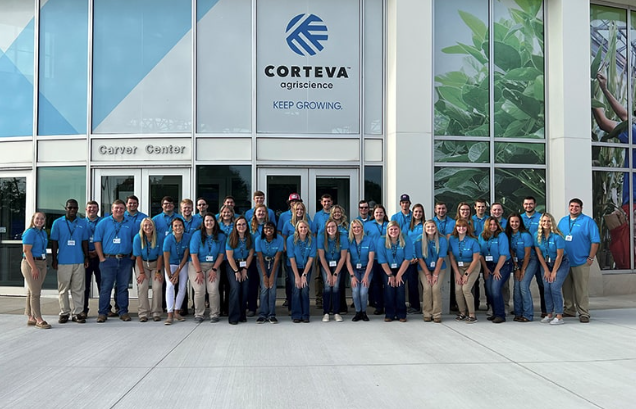
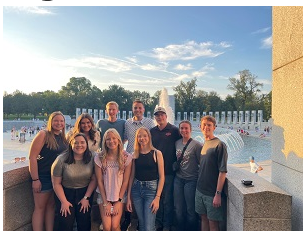
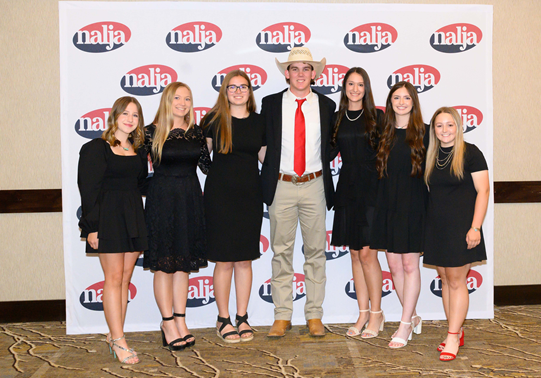
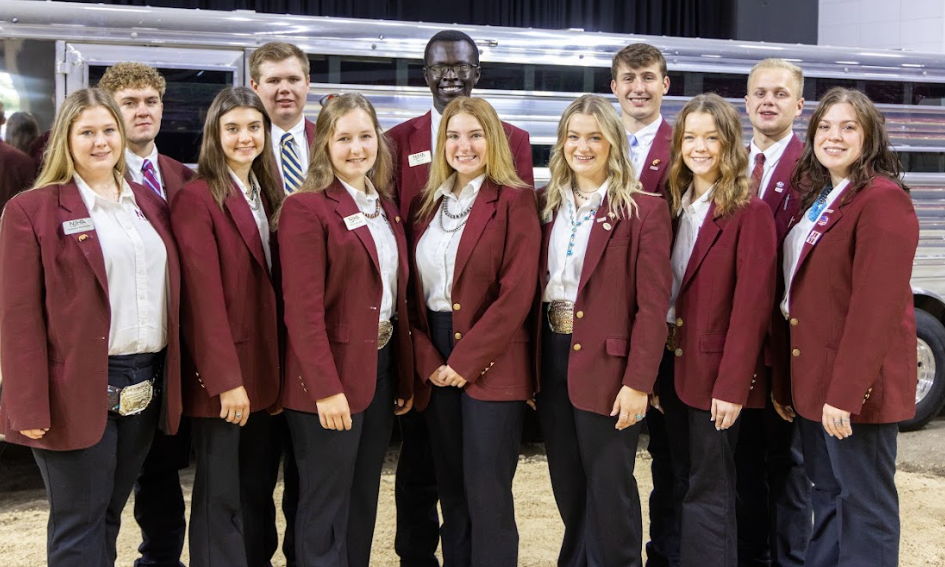
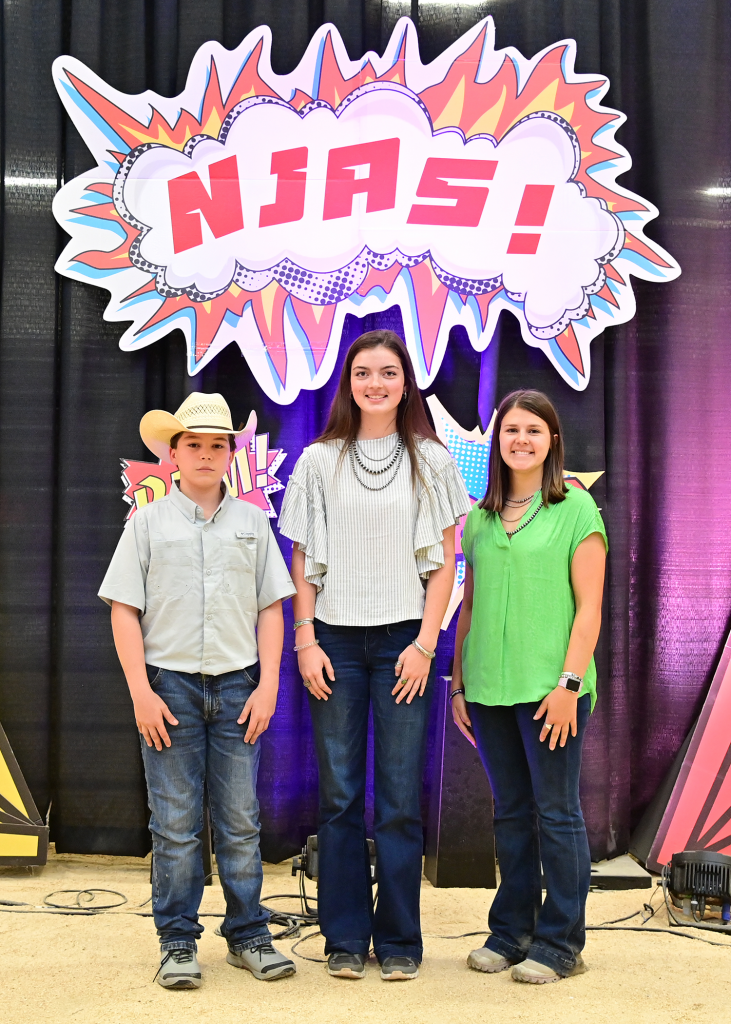
Award recipients were recognized during the Texas & Southwestern Cattle Raisers Association Cattle Raisers Roundup: (from left) Tyler Schuster, Weston Brooks, Ruth Nieto, Owen Sanders, Savay Sexton, Ava Harborth and Kaylin Jacobs.

Cattle Raisers Roundup, hosted by Texas & Southwestern Cattle Raisers Association, wrapped up Friday, July 28, with six students receiving more than $4,500 in awards from program donors. Award winners were selected from 26 sophomore to senior level high school students who attended Cattle Raisers Roundup, a five-day camp where select emerging agricultural leaders explored the beef industry from pasture to plate.

The 2023 Texas & Southwestern Cattle Raisers Association Cattle Raisers Roundup award recipients include:

  • Savay Sexton, Gonzales – $1,500
  • Ava Harborth, Marion – $1,000
  • Owen Sanders, Cedar Park – $500
  • Kaylin Jacobs, Brenham – $500
  • Ruth Nieto, Raymondville – $500
  • Weston Brooks, Nome – $500

The Texas & Southwestern Cattle Raisers Association Cattle Raisers Roundup program awarded thoughtful students who displayed excellence during end-of-camp presentations on topics such as international trade, sustainability or public policy and its subsequent effect on the beef industry. The awards were sponsored by Ag Texas, Corteva and Texas Farm Credit.

"It is an honor to work with generous donors to recognize and encourage students who will one day be industry leaders," said Tyler Schuster, the association's manager of leadership development responsible for organizing Texas & Southwestern Cattle Raisers Association's Cattle Raisers Roundup. "We're proud to provide a platform to invest in the next generation, and this year's awardees will undoubtedly shape the future of the beef industry. Thank you to our donors Ag Texas, Corteva and Texas Farm Credit as well as all the event sponsors for their generosity to the future of the beef industry."

Texas & Southwestern Cattle Raisers Association Cattle Raisers Roundup was sponsored by Ag Texas, Beef Loving Texans, Big Bend Trailers, CLA, Capital Farm Credit, Corteva, Endovac, Hunter Crow, Harlow Cattle, John Deere, Dudley Bros, King Ranch Institute for Ranch Management, Prosperity Bank, Red Bird Ranch, Shelby Trailer Services LLC, Texas Farm Credit and The Meat Board.

View the release online here.

2023 Oklahoma Fumigation Workshop Coming up in Stillwater

The 2023 Oklahoma Fumigation Workshop will be held on August 17 from 8:30 a.m. to 2:30 p.m. at the OSU Greenhouse Learning Center in Stillwater.  If you need CEUs for Fumigation, Category 7C, several will be offered during this workshop.  To keep your 7C certification active, you need 10 CEUs by Dec. 31, 2025 if you were certified for this entire cycle (2021-2025).  You need at least 1 CEU by Dec. 31 of this year, 2023, for the possibility of re-certifying using CEU credits, otherwise you will have to re-test at the end of the cycle.  Registration is only available online using a credit card and the deadline is August 4.  You can register online by visiting this link https://secure.touchnet.com/C20271_ustores/web/store_cat.jsp?STOREID=15&CATID=402.  Please contact Edmond Bonjour at 405-744-8134 or edmond.bonjour@okstate.edu for more information or to receive a brochure.

Garfield County's Madison Nickels inducted into 4-H Hall of Fame

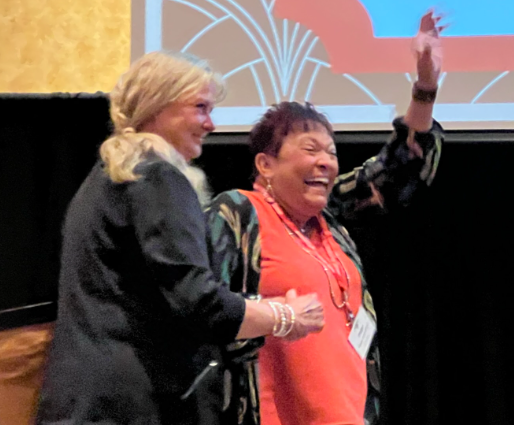
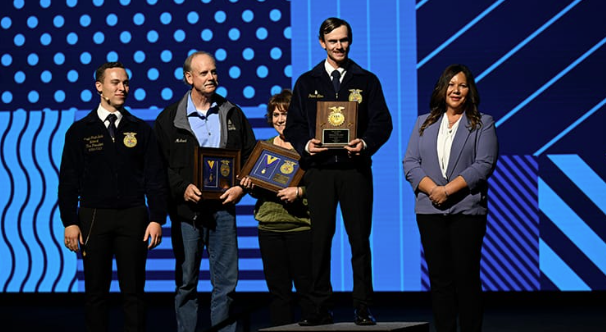
Garfield County 4-H'er Madison Nickels, third from left, was inducted into the Oklahoma 4-H Hall of Fame during the Masonic Charity Foundation of Oklahoma Honor Night Assembly during the 102nd State 4-H Roundup at Oklahoma State University. She is pictured with her family, from left, Jamie Nickels, Jessica Nickels, Bailey Nickels, Penny Bridal and Steve Bridal. (Photo by Mitchell Alcala, OSU Agriculture)

Garfield County 4-H'er Madison Nickels believes the most important job as a leader is to inspire others. Through her 4-H project work and leadership roles in fabrics and fashions, breads, community service, and foods and nutrition, she has done just that.

The hard work and dedication Nickels devoted to her nine-year 4-H career culminated in a lifetime achievement recently when she was recognized as one of two Oklahoma 4-H Hall of Fame inductees. The honor is Oklahoma's most prestigious 4-H award and was announced at the Masonic Charity Foundation of Oklahoma Honor Night Assembly during the 102nd State 4-H Roundup at Oklahoma State University. Nickels received a $5,000 scholarship sponsored by Farm Credit Associations of Oklahoma.

In addition, Nickels was awarded the $1,200 Rule of Law Graduating Senior Scholarship sponsored by the Rule of Law Endowment; the $3,000 NoBro Farms LLC Endowment; and the $2,000 Harold and Edith Shaw Memorial Ambassador Scholarship sponsored by the Shaw Family Endowment. She was also named a member of the Blue Award Group.

"4-H has helped me figure out my career plan," Madison Nickels said. "It helped me recognize my passion for helping others, so I've decided to become a speech pathologist and help kids with their confidence."

Supporting others has been a consistent theme throughout her 4-H career. Using the sewing skills that she learned from her mother and grandmother and further developed in 4-H, Nickels started a service project to help Operation Gratitude, an organization that sends cooling ties to military members to help them deal with the heat. As much as she enjoys sewing for herself, she loves sharing her talents through gifts for others.

"I loved the idea of supporting our troops, so I made a few cool ties. I quickly learned there could be a greater outcome if I enlisted the help of my fellow 4-H members from around the state," she said. "We've made and sent 650 cool ties for Operation Gratitude, and I've started making paracord bracelets for troops as well."

Sewing isn't her only talent. Nickels enjoys cooking and baking, which runs in the family. Her great-grandmother owned a restaurant, and Nickels learned by watching her cook. She became the assistant – then head – noodle maker of the family. Her love of cooking inspired her to start a cooking club, and one of her favorite cooking projects is baking muffins for teachers to welcome them back to school each fall.

Nickels said her work in 4-H has helped her develop entrepreneurial skills to start her own business called Just Craftin' Around. She sells items such as tissue holders and purses at craft shows and online. Never passing up an opportunity to promote 4-H, she wears a 4-H T-shirt each time she sets up a booth.

Nickels has taught 99 educational workshops, completed more than 700 hours of community service and held numerous officer positions at the local, county, district and state levels. She has served as a State 4-H Ambassador and a Healthy Living Ambassador as well as a delegate to National 4-H Congress, 4-H Day at the Capitol, Youth Legislative Experience, New Mexico Senior Leadership Conference, Health Rocks National Conference, Healthy Living Summit and State 4-H Roundup.

She has fun memories as a 4-H Cloverbud and became a co-leader of the Garfield County Cloverbuds later in her 4-H career. She currently serves as the Garfield County Cooking Club leader.

"One of my favorite activities was teaching them how to make a no-sew fleece scarf," she said. "I enjoyed seeing how excited they were to show their parents what they made. They had the same pride I had when I completed my first item with my Nan."

Jessica Nickels, Garfield County OSU Extension 4-H educator and Madison Nickels' mother, said it has been exciting to watch her daughter grow over the years.

"Madison has compassion, resiliency, determination and leadership skills that are some of the qualities that make her Hall of Fame material. She's very determined in everything she does," Jessica Nickels said. "She is a great leader in our county, especially to younger 4-H members, and always is encouraging them to try new things."

Cathleen Taylor, state leadership and civic engagement specialist with the state 4-H office and 4-H leadership team advisor, said civic engagement is a big part of 4-H programming, and Nickels truly understands this concept.

"She strives to live out the 4-H motto by giving back to others in ways such as her Operation Gratitude project," Taylor said. "She's working to help our service members and make the best better. Through her 4-H work, she has learned life skills, and I have no doubt that she will give back to 4-H."

Throughout her years as a 4-H'er, Nickels said she has become more grateful for the experiences she's had in the youth development organization. The life skills she has acquired, like public speaking, time management, leadership and organization, will serve her well in life.

"I'm proud of what I've accomplished, what I taught others, and most importantly, how I served others during my 4-H career," Madison Nickels said.

Nickels is the daughter of Jamie and Jessica Nickels and a graduate of Enid High School. She will attend OSU this fall.

OSU Extension uses research-based information to help all Oklahomans solve local issues and concerns, promote leadership and manage resources wisely throughout the state's 77 counties. Most information is available at little to no cost.

July Cattle Update: Inventory Still Falling, Drought Conditions Improve

photo credit: AFBF Photo, Dylan Davidson

Cattle prices have come a long way in the first half of 2023. In fact, the weighted average market price for a steer this July is 27% higher than it was in July 2022. Drought and high input costs have driven many producers to market animals that would have been held back to grow their herds, and the resulting tighter cattle supplies are pushing retail beef prices to new highs. This Market Intel dives into the current supply and demand situation and provides an outlook on the second half of the year.

Supply - July 1 Cattle Inventory

The semiannual cattle inventory report is a record of all cattle and calves, number of operations, and size group estimates categorized by class, state and the country as a whole. The report is released in January and July. The July inventory uses information from the responses of 10,000 surveyed cattle operations. The more robust January survey is based on the responses of 50,000 operations.

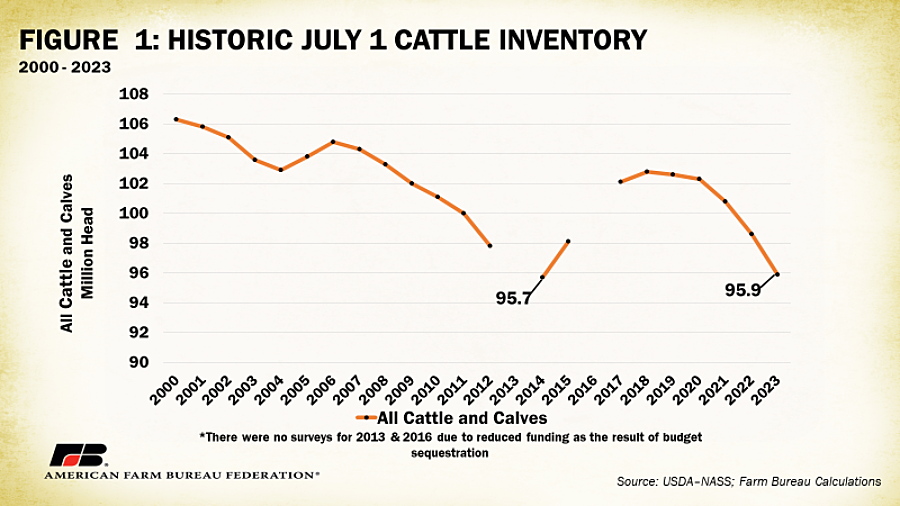
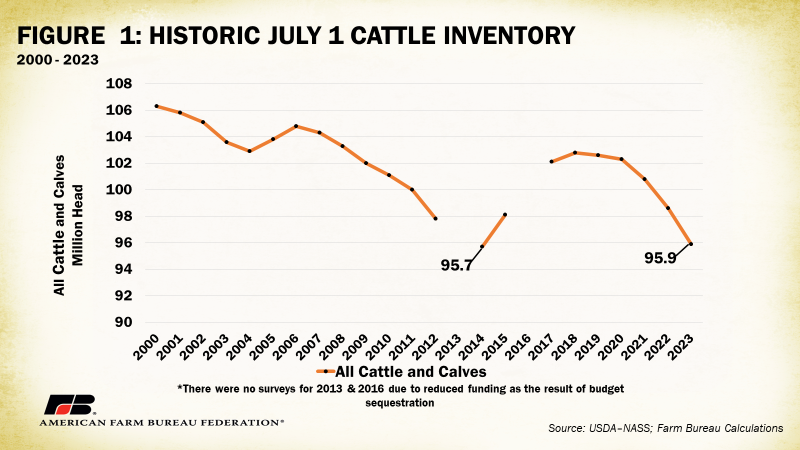
In the July report, USDA estimated all cattle and calves in the United States on July 1, 2023, were 95.9 million head, down 3% compared to last year's report. This is a bigger decrease than average analyst expectations of -2.3% or 96.3 million head. This is only 200,000 greater than the 2014 inventory of 95.7 million (Figure 1). U.S. beef cattle were estimated at 29.4 million head, marking a 52-year low for beef cattle supplies. When inventory levels were this low in 2014, average 5-market area (Texas/Oklahoma/New Mexico; Kansas; Nebraska; Iowa/Minnesota) fed steer prices rose about 30% from July 2013 to July 2014. The July 2023 5-market average is currently $184.21/cwt, which is about 27% greater than 2022. This seems high but if we adjust for 28.88% inflation over the last decade, to be equivalent to the average price received in July 2014, the average cash price for fed steers would need to reach $203.51 per hundredweight

The calf crop is estimated at 33.8 million head, also down 2% from July 2022. USDA estimates 24.8 million calves were born during the first half of the year, with 9 million expected to be born during the second half of the year (fall calves).

Cattle On Feed

Also released on July 21, USDA's monthly Cattle on Feed report estimates all cattle and calves on feed to be 11.2 million head on July 1, 2023, down 2% from July 2022. 11.2 million is slightly greater than the average analyst estimation, which was 2.4% fewer cattle on feed than last year or about 73,000 head below USDA estimates.

Placements of cattle into feedlots were a surprise at 1.68 million head. This was 3% above last year and well above the average analyst guess of 1.6 million or 2% below July 2022. While this is a bearish number in the short run, it is important to remember that increased placements mean farmers are not holding those cattle back to be used for replacement purposes, which will tighten supplies later.

Drought and Heifers on Feed

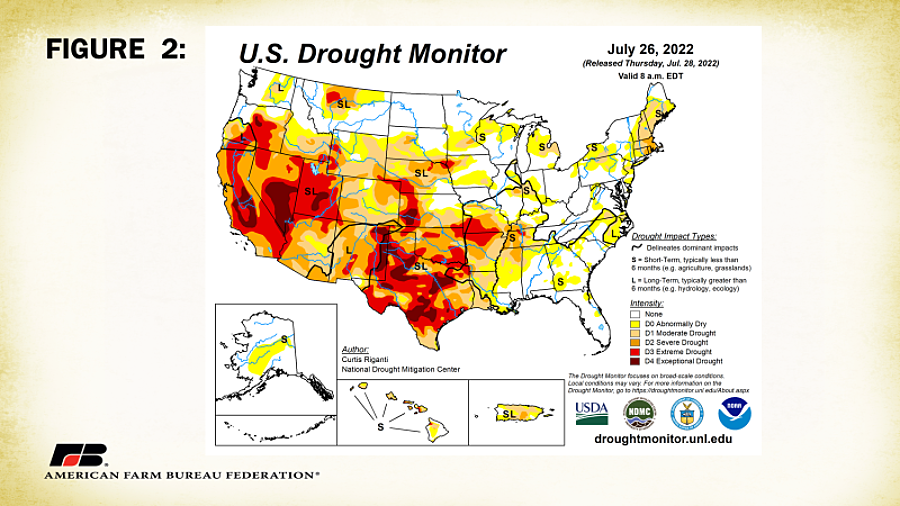
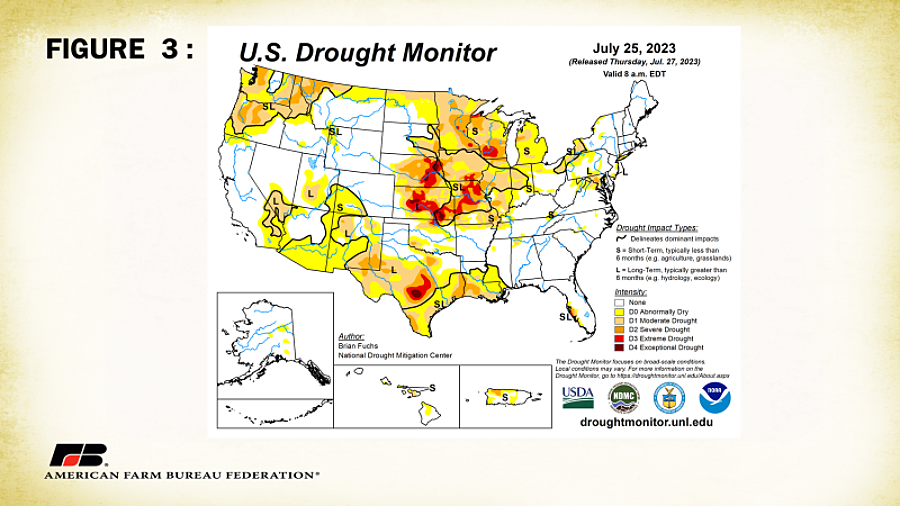
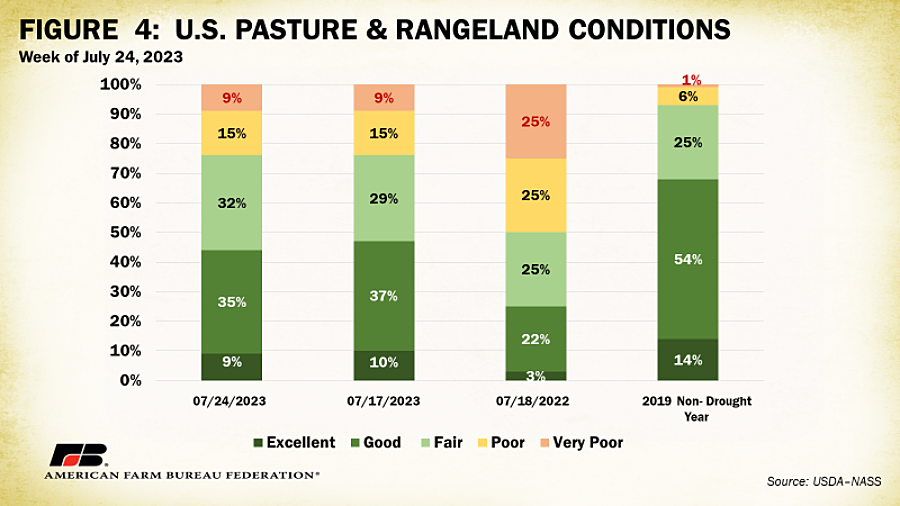
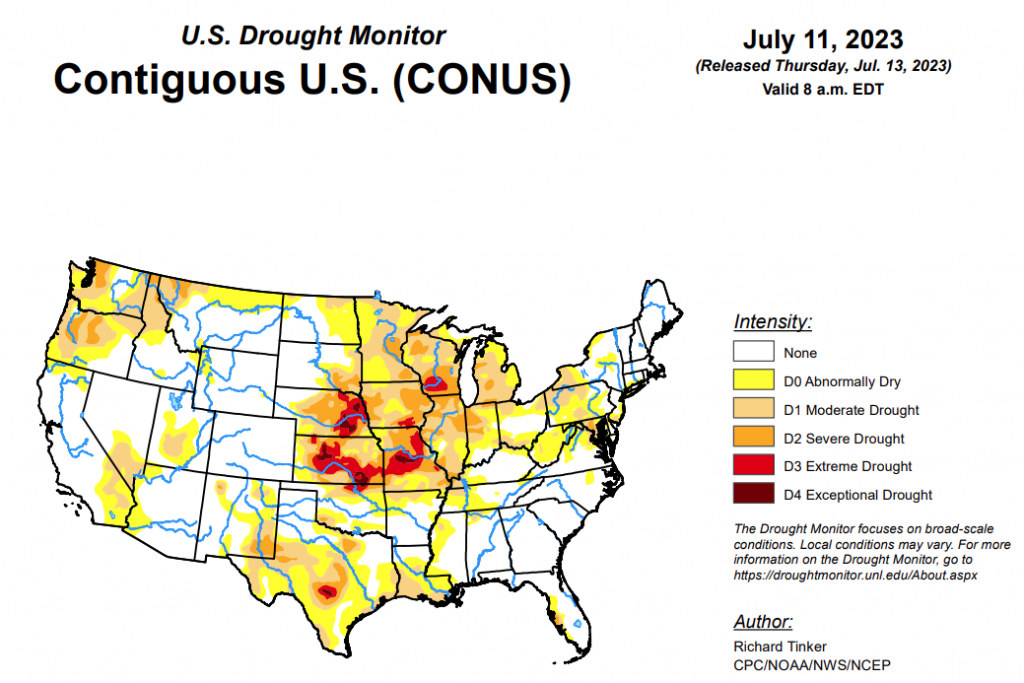
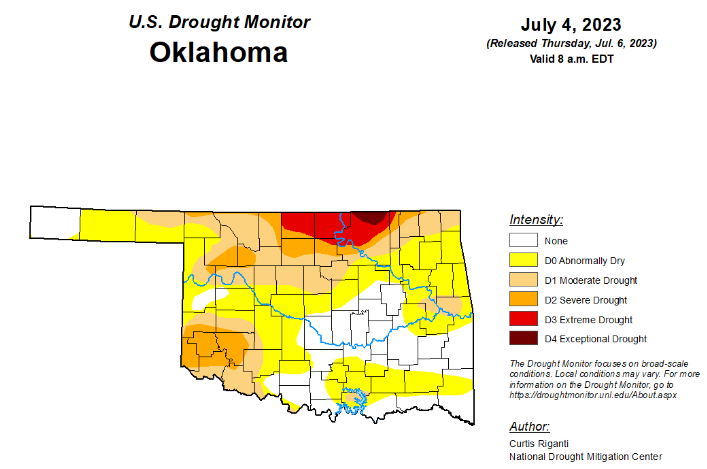
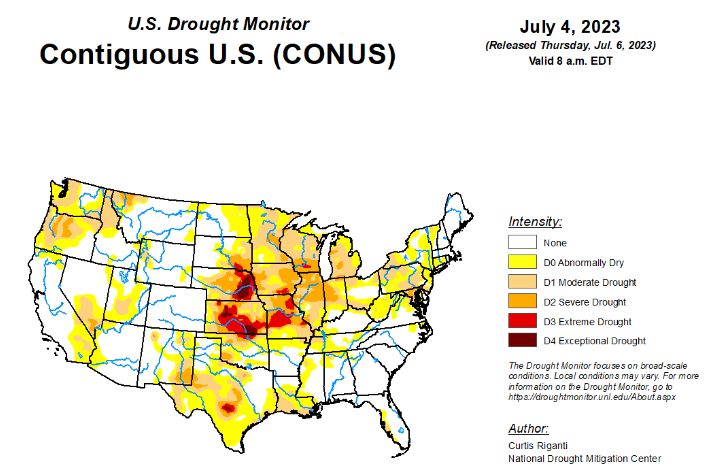
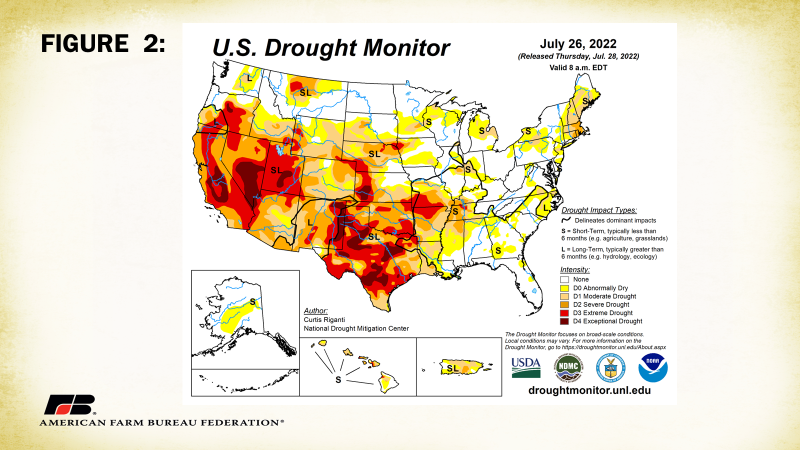
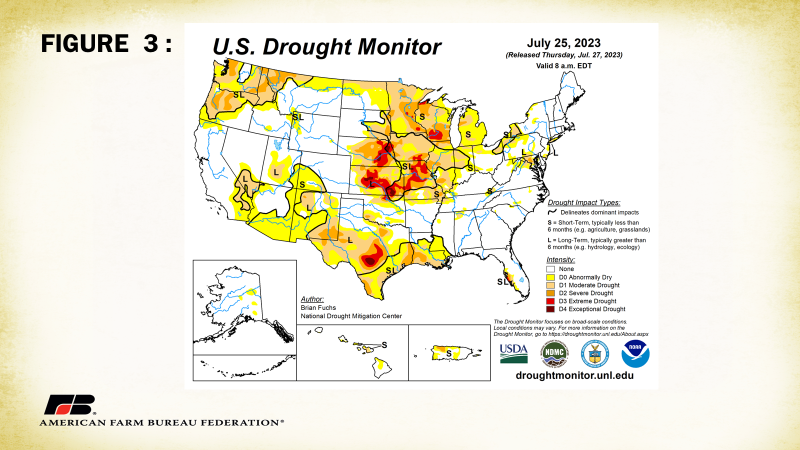
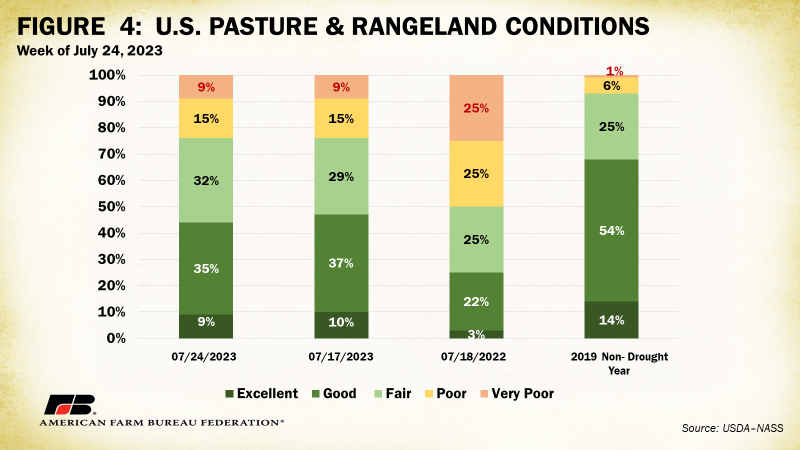
Last year there was a high proportion of cows and heifers being placed on feed due to ongoing drought conditions and elevated input costs (Figure 2). Cows and heifers that would normally be held back for breeding and placed on grass were placed on feed to market instead. While the U.S. has received rainfall to improve drought conditions in many of the affected areas, drought conditions remain, especially in the central Midwest (Figure 3). In its latest crop progress report, USDA estimates 44% of all pasture acres are in good to excellent condition. This indicates significant improvement over 2022 when just 22% of U.S. pastures were rated good to excellent (Figure 4).

These condition improvements combined with better calf prices are incentive for farmers to begin holding back cattle for breeding purposes rather than placing them on feed. According to USDA's July Livestock, Dairy, and Poultry Outlook, slaughter cow numbers have dropped about 12% since July 2022. Examining this further, USDA left the number of heifers and heifer calves on feed unchanged from June in the July Cattle on Feed report. The fact that overall cattle and calves on feed is declining while the number of heifers and heifer calves on feed remains constant is evidence that some contraction is continuing in the industry and will continue at least through 2024. This is bullish news in the long run. Farmers will have to begin withholding heifers for replacements rather than placing them on feed for the overall cattle inventory to begin expanding again. When this happens, we can expect to see heifers on feed decline compared to overall cattle on feed.

Cattle Cycle

The declining cattle supply is a great example of how understanding the cattle cycle can be important when making marketing decisions. The cattle cycle is a term used to describe expansion and contraction in the cattle industry in response to perceived profitability over a period of time (typically around 10 years). The U.S. cattle industry has been in the contraction phase of the cattle cycle for about five years and these low inventory numbers and high prices typically occur before expansion in the industry begins. When expansion begins, cattle supplies will grow. A growing cattle supply will eventually mean a drop in prices.

Demand - Livestock Slaughter

Switching gears to demand, USDA's monthly livestock slaughter report, released on July 20, contains information on meat production in commercial and federally inspected plants throughout the United States. The July report estimates red meat production was 4.55 billion pounds, down 5% from 4.73 billion pounds in June 2022. January to June 2023 red meat production was 27.3 billion pounds, down 2% from 2022.

Beef production was 2.33 billion pounds, down 5% from June 2022. This came from 23,500 head of cattle, also down 5% from last year. Dressed weights were down 1 pound from 2022, at 1,338 pounds. Accumulated beef production was down 4%. Declines in beef can be attributed to the smaller cattle inventory, more specifically beef cattle. Following the report, live cattle futures contracts rose to contract highs for all months with cash offerings being reported as high as $188/cwt.

Despite tighter cattle supplies and higher beef prices, domestic demand for beef has been strong. Per capita beef production is forecast at 58 pounds per person, down about 1.5% from 58.9 pounds in 2022. Overall U.S. demand for beef remains impressive considering the average price of all uncooked ground beef is at a record level of $4.86 per pound. Click here for more information on retail beef prices from USDA's Economic Research Service.

Global Supply and Export Demand

USDA's Foreign Agricultural Service's most recent quarterly livestock poultry trade report, released on July 12, contains data for global trade, production, consumption and stocks and addresses global issues for livestock and meats. The report estimates global beef production for July 2023 is 59.6 million metric tons (mmt), up 1% from the April report. Drought conditions in other parts of the world, including Argentina and New Zealand, have caused herd liquidation, much like the U.S.. This will increase production in the short run in these countries, resulting in a slight increase in global production before declining cattle supplies cause production to slow.

U.S. beef export sales are currently running about 14% below year-ago levels. The biggest drop in sales is to Japan, falling 27.3 mmt, followed by South Korea with a decline of 24.3 million metric tons. Mexico and Canada have helped pick up some of that drop in sales. Beef export sales to Mexico are up about 16% or 5.3 million metric tons more than this time last year, while export sales to Canada are up about 11% or 2.6 mmt ahead of 2022 levels. There is still hope for improvements in U.S. beef exports. Export sales for muscle cuts for the week ending July 20 were huge at 21,400 metric tons. Periods of strong export sales like this are a sign of good global demand for U.S. beef, even though total export sales are still behind year-ago levels.

Summary and Conclusions

USDA released several reports in the last week that tell a story. Cattle inventory is continuing to decline. Beef cow (female beef cattle) slaughter numbers have begun to fall but heifers placed on feed are remaining steady while the overall number of cattle on feed is falling. Improving pasture conditions and better prices for calves are likely responsible for this change. Elevated placements of heifers on feed indicates that the contraction phase of the cattle cycle may continue through 2024. Demand has remained strong both globally and domestically. Tightening cattle supplies combined with continued demand are bullish signs for cattle and beef prices through the remainder of the year.

Coming Off Record Export Numbers Last Year, Demand for U.S. Beef Remains Solid

Listen to Ron Hays talk with Dan Halstrom about global demand for U.S. beef.

Senior Farm and Ranch Broadcaster, Ron Hays, is talking with the president and CEO of the United States Meat Export Federation, Dan Halstrom, about global demand for U.S. beef.

While the cutout is higher and supplies are shorter, Halstrom said the global demand for U.S. beef remains strong.

"For the most part, price has not been an issue so far, so I think that is a testament to a lot of the work that has been done over the years, and a confidence in U.S. beef," Halstrom said.

Those year-over-year numbers are under, Halstrom said, but it is important to keep in mind that a year ago was an all-time high.

"We still are on track where we could be second or third largest year ever on exports, so overall, demand still continues to be, I would say, solid," Halstrom said.

Looking at major customers such as Japan, Korea, and China, Halstrom said the year started off with pretty high inventories, which slowed things down, but there was an uptick in volume in April and May versus the first quarter.

"Keep in mind, we just had an agreement a few weeks ago for the Longshoremen contract for the West Coast dock workers, and this was absolutely huge in my opinion because there was a certain level of uncertainty working without a contract last year," Halstrom said.

Now that the agreement is in place and the uncertainty has been removed, Halstrom said exporting countries can import without any worries about disruption in that regard.

"The obvious advantage of the West Coast is, logistically, it is the shortest transit time for chilled product over to a lot of these Asian ports," Halstrom said.

Currently, Halstrom said the international retail sector is continuing to be strong as people are still eating a higher percentage of their meals at home.

"However, with that being said, there is a rebound going on in food service," Halstrom said. "I would say you are looking at a place like Japan and Korea- they are still lagging, but we are seeing progress being made. Keep in mind, it was only a year ago that the last emergency declarations were lifted on Covid in both Japan and Korea, and it was November and December before China lifted them- a full year to year and a half after the U.S. lifted theirs."

It is not surprising that food service is still lagging in these countries, Halstrom said, but they will rebound at some point.


"I would say later this year or maybe more likely into early next year, we could see some real significant tailwinds on demand in Asia," Halstrom said.

The Beef Buzz is a regular feature heard on radio stations around the region on the Radio Oklahoma Ag Network and is a regular audio feature found on this website as well. Click on the LISTEN BAR for today's show and check out our archives for older Beef Buzz shows covering the gamut of the beef cattle industry today.

Kenneth Corn Provides Info on Grants for Rural Oklahoma Healthcare and More

Listen to KC Sheperd talk with Kenneth Corn about USDA grants for rural development.

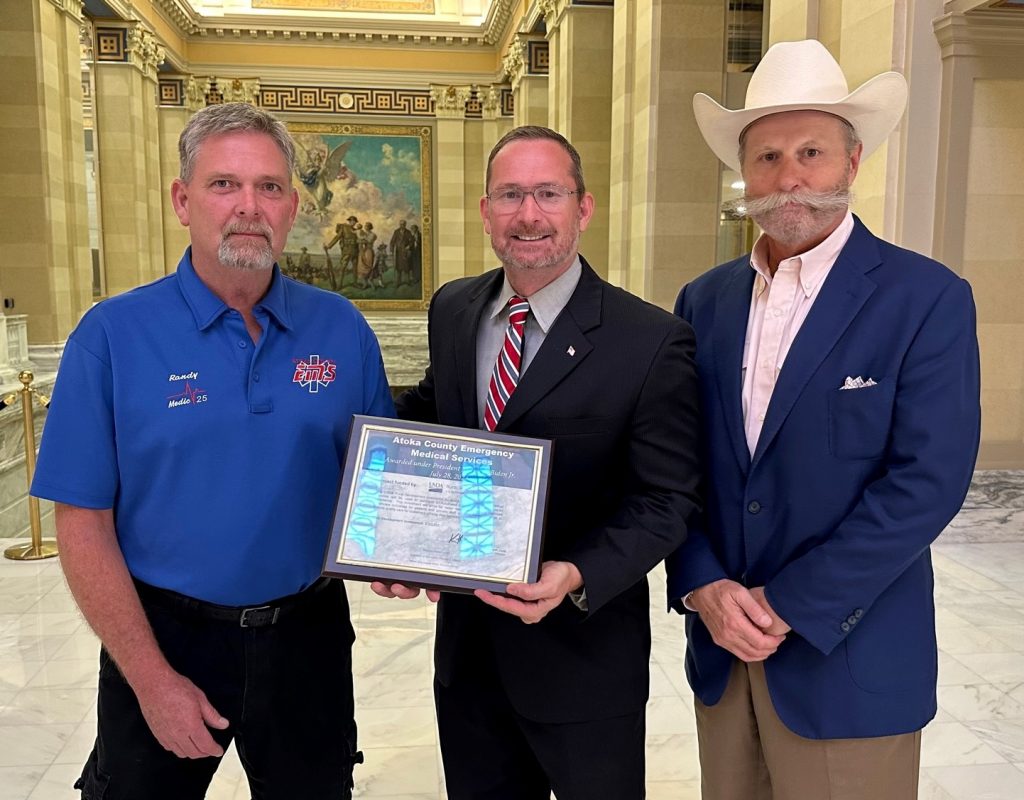
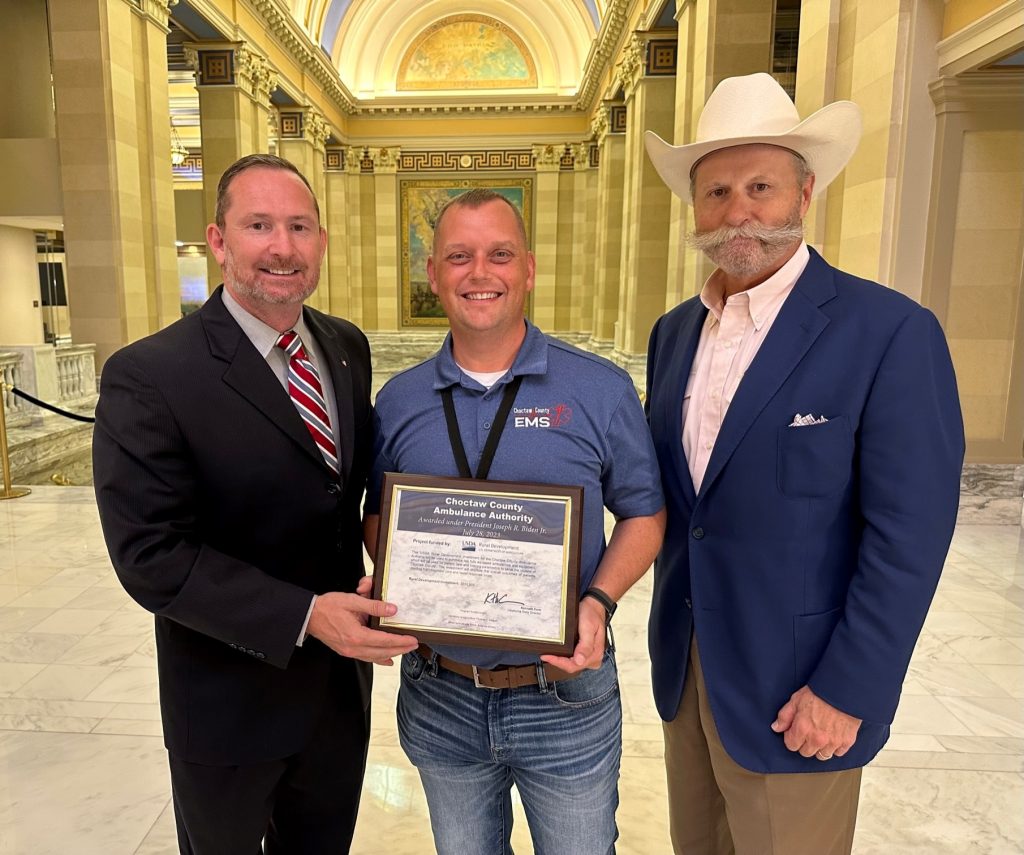
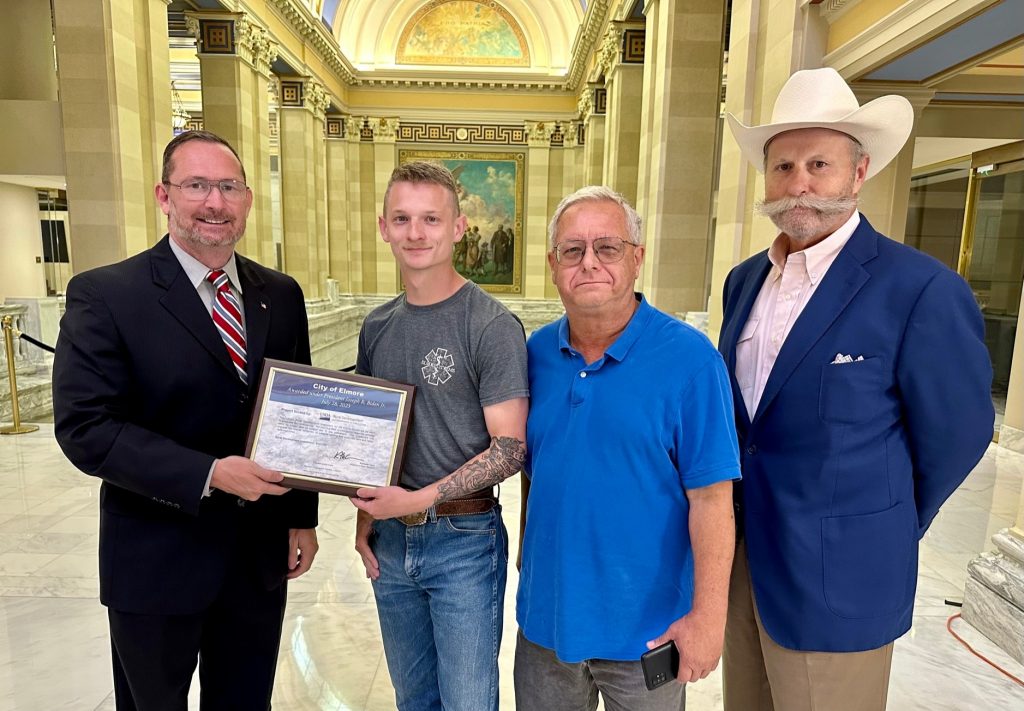
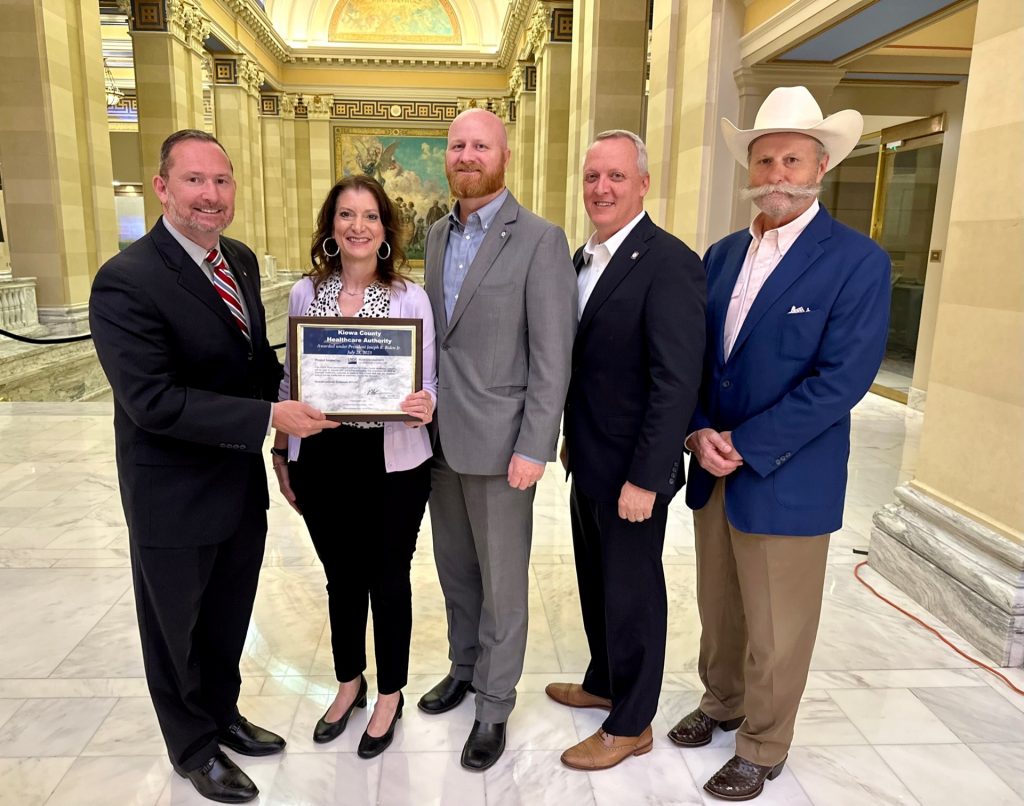
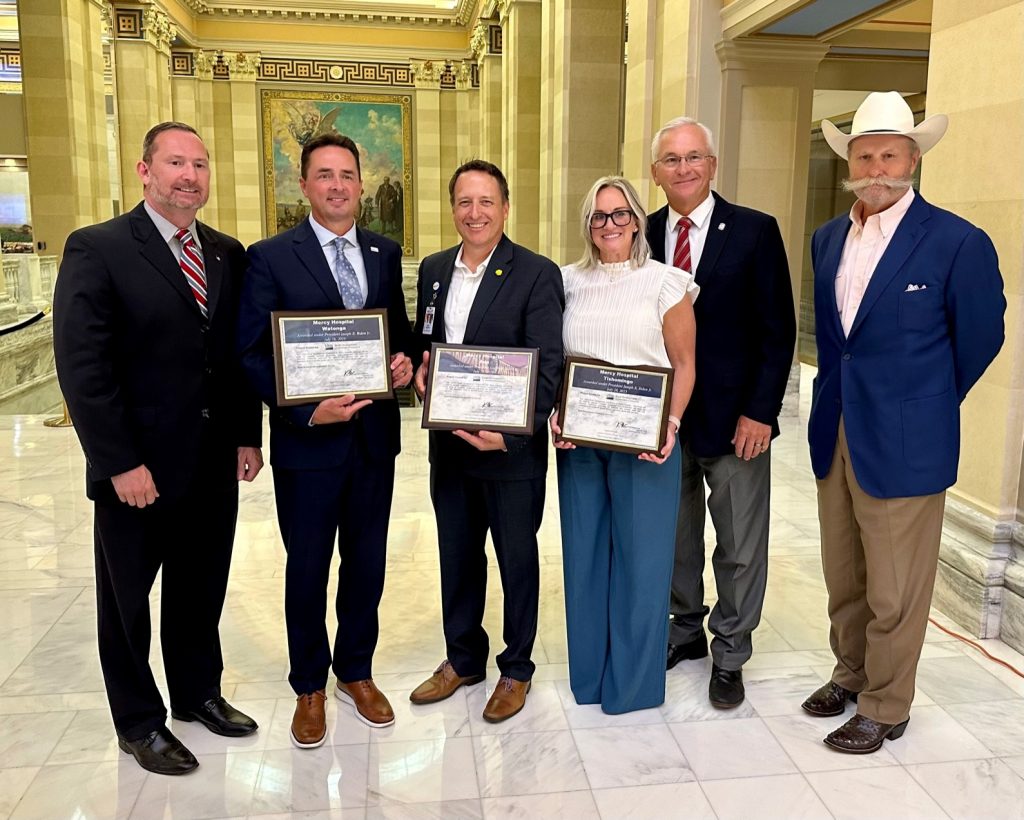
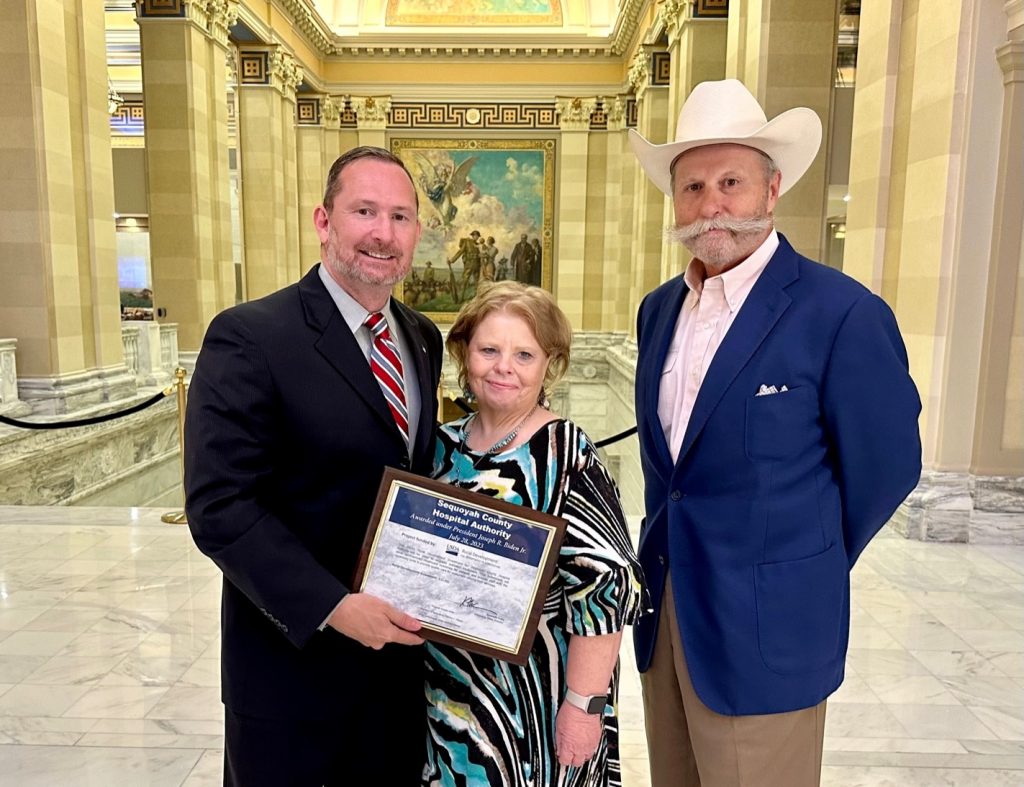
Farm Director, KC Sheperd, caught up with the Oklahoma State Director of USDA Rural Development, Kenneth Corn, and talked about grants totaling more than $4.6 million to assist 12 communities in expanding access to healthcare as part of President Biden's Investing in America agenda.


"One of the things the president has talked to us about is making sure people have access to healthcare no matter where they live and no matter where their zip code is," Corn said.

These investments will help regional partnerships, public bodies, nonprofits, and Tribes solve regional rural healthcare challenges. These solutions will build a stronger, more sustainable rural healthcare system for the nation's small towns and communities.

This is the second round of grants that will total $4.6 million, Corn said, out of about $11.2 million that Oklahoma received. Corn said these funds are to help improve rural healthcare systems, including hospitals, ambulances, clinics, and more.

The following Oklahoma communities and healthcare organizations received grant dollars:

  • Choctaw County Ambulance Authority
  • City of Elmore
  • Kiowa County Hospital Authority
  • McAlester Regional Healthcare Authority
  • Atoka County EMS
  • Grady Memorial Hospital Authority
  • Hughes County EMS
  • Johnston County EMS
  • Kiowa County Hospital Authority
  • Mercy Hospital – Ada
  • Mercy Hospital – Tishomingo
  • Mercy Hospital – Watonga
  • City of Sallisaw Hospital Authority

The complete list of awardees can be found at https://www.rd.usda.gov/sites/default/files/usda-rd-nr-emergency-rural-health-care-grants-awards-07252023.pdf.

"This doesn't really do anything to solve what is the chronic crisis on funding to keep the doors open, but what this grant does is allow them to do some things that they probably couldn't afford to do," Corn said. "In one hospital, they are upgrading their MRI. In the other hospitals, they are doing vital technology that is needed to improve quality of care."

Some hospitals that took advantage of this grant early on, Corn said, bought new servers that would allow them to see patients in the parking lot and test them before they came into the hospital and potentially exposed other patients.

"Hospitals had to apply for this grant or any type of medical system," Corn said. "We had several EMS and fire departments that got money through this grant, which we ended up buying ambulances for or defibrillators."

Corn said this portion is the last of the funding that is part of the American Rescue Plan Act.

"He (President Biden) set aside some money specifically for rural healthcare, and we have exhausted those funds that were in there," Corn said.

Corn said he is hopeful that in the future, Congress will consider dropping the "emergency" portion of the Emergency Rural Health Care Grants program and create a rural health care grant.

Corn also talked about other grants available for Oklahomans.

"Right now, we have what is called the Rural Energy for America Program," Corn said. "It is a very good grant program for small businesses located in a rural area, or an ag producer who can show that 50 percent of their income comes from the farm. That money actually can be used to do energy efficiencies to their businesses."

The Rural Energy for America Program funds will be distributed in rounds, Corn said, and the current round will close on September 30. The next round will be open on October 1.

"This is everyone's money, so whether Joe Biden is president or somebody else, it is your money," Corn said.

Atoka County

Choctaw County

City of Elmore
Kiowa County

Mercy Hospitals- Ada, Tishomingo, Watonga
Sequoyah County

Biden-Harris Administration Announces New Round of Investments in Wildfire Protection through Community Wildfire Defense Grants

Agriculture Secretary Tom Vilsack today announced the Department of Agriculture's Forest Service is again accepting applications for the Community Wildfire Defense Grant program. Now in its second year, this competitive program funded by President Biden's historic Bipartisan Infrastructure Law is designed to assist at-risk communities, including Tribal communities, non-profit organizations, state forestry agencies and Alaska Native Corporations with planning for and mitigating wildfire risks. Applications will be accepted for 90 days.

The announcement comes after $197 million was awarded to 99 project proposals across 22 states and seven Tribes during the first year of funding. The projects directly support the Forest Service's 10-year strategy to treat up to 20 million acres of national forests and grasslands and 30 million acres of other federal, state, Tribal and private lands to reduce wildfire risk to communities, infrastructure and natural resources.

"We are proud to be partnering with Tribes, local communities, and a wide range of partners in working towards our mutually shared goals of addressing the wildfire crisis, mitigating climate change and safeguarding the communities we serve" said Secretary Vilsack. "President Biden's Investing in America agenda continues to provide the tools and resources that people need to reduce both the financial and emotional burden of living with wildfire."

Secretary Vilsack made the announcement in Portland, Oregon alongside partners who are beneficiaries of USDA investments to tackle the growing wildfire crisis, support climate resilience and invest in rural communities. This announcement is part of the Biden-Harris Administration's Investing in America agenda to grow the American economy from the middle out and bottom up by rebuilding our nation's infrastructure, creating good-paying jobs, and building a clean energy economy to tackle the climate crisis and make our communities more resilient.

Individual grants will fund up to $250,000 to create and update community wildfire protection plans and up to $10 million for associated wildfire resilience projects. Local and Tribal governments are encouraged to conduct planning exercises to assist their communities with wildfire preparedness, response and adaptation efforts. Projects must be completed within five years of the award obligation. The number of projects selected will be determined by available funding, which is up to $250 million.

The Forest Service is working with community-based organizations in historically underserved populations and Tribes at high risk of wildfire to provide equitable access to this funding opportunity. These organizations will build awareness of the funding opportunity and assist in the application process. Building capacity through targeted training will allow these communities to conduct this work independently in the future.

"Effective mitigation of community wildfire risk is dependent on coordinated efforts across a variety of landowners and landscapes," said Forest Service Chief Randy Moore. "This critical, collaborative effort to provide additional assistance to Tribes and underserved communities will build capacity for wildfire planning and protection to increase effective wildfire risk reduction, especially in the most vulnerable areas."

The Community Wildfire Defense Grant program is based on legislation initially introduced by Vice President Harris in the U.S. Senate. The Bipartisan Infrastructure Law includes language to ensure the program prioritizes communities that have a high or very high wildfire hazard potential, are low income or have been impacted by a severe disaster.

The program also helps communities in the wildland-urban interface meet the three goals of the National Cohesive Wildland Fire Management Strategy to maintain resilient landscapes, create fire-adapted communities and improve wildfire response.

"The nation is becoming increasingly aware of wildfire mitigation at state and local levels, but this awareness comes as a result of rampant devastation, particularly to our underserved communities," said Kacey KC, Nevada state forester and president of the National Association of State Foresters. "Because wildfire mitigation is extensive, complex and ever evolving, these grants are critical in ensuring success. As State Foresters, we're deeply appreciative of this assistance to our mission."

The Bipartisan Infrastructure Law also provides an historic $8.25 billion investment for wildfire management through a suite of programs aimed at reducing wildfire risks, detecting wildfires, instituting firefighter workforce reforms and landmark pay increases for federal wildland firefighters.

In Portland, Secretary Vilsack also highlighted recent investments in the region and across the nation that complement the 10-year Wildfire Crisis Strategy and historic investments to tackle the growing wildfire crisis, including:

More information and applications are available at the Community Wildfire Defense Grants webpage.

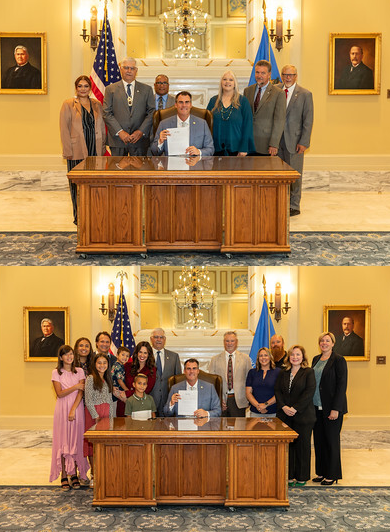
House Democrats Override SB26X, Governor Stitt's Veto of Tribal ‎Compacts

Today, House Democrats voted to extend current compacts with Oklahoma tribes by voting to override Governor Kevin Stitt's veto of SB26X, which allows for the extension of Tribal Compacts Tobacco Product Sales Tax until December 31, 2024.

The Oklahoma House of Representatives voted 72-16 to override the veto.

The Senate voted 34-7 on July 24 to override Gov. Stitt's vetoes against the renewal of tobacco and vehicle ‎registration compacts with tribal governments.‎

"The 38 federally recognized tribes in Oklahoma are sovereign nations and are important partners in developing and growing our state's economy. The tribes send millions of dollars of revenue to the state and the compacts have worked very well over the years. Simply put, if it's not broken, don't fix it, especially if it will involve long, expensive legal battles in court that may result in less revenue for the state of Oklahoma," House Democratic Leader Cyndi Munson said.

 Leader Munson said extending the compact sharing sales tax on tobacco products allows the state to continue receiving revenues it relies on for the state budget.

"Continuing these compacts allows for continued revenue sources for the state to help address and maintain roads, bridges, schools, and other infrastructure," Leader Munson said. "Without the continuation of such compacts, there would be a negative effect on the state budget due to loss of revenue."

SB26X was filed in the First Special Session of the 59th Legislature, making it eligible to be considered for a veto override after the May 26 sine die of the regular session.

Veto overrides require a two-thirds approval from each chamber and must begin in the bill's chamber of origin.

Jonwyn Ayres named Outstanding Leadership Award recipient

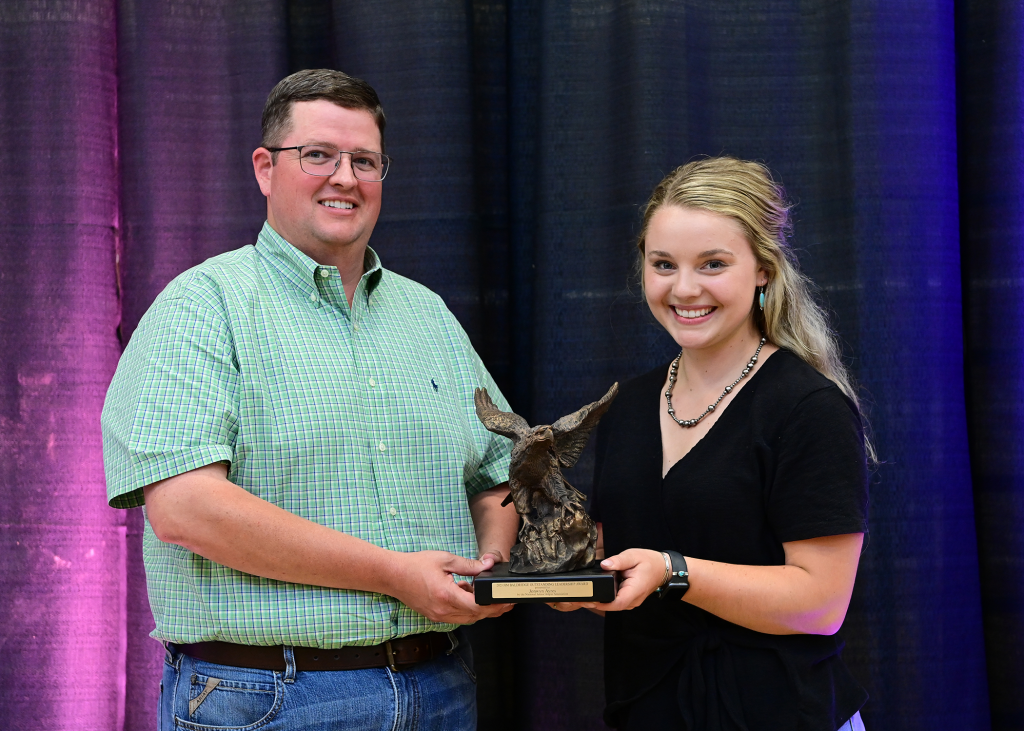
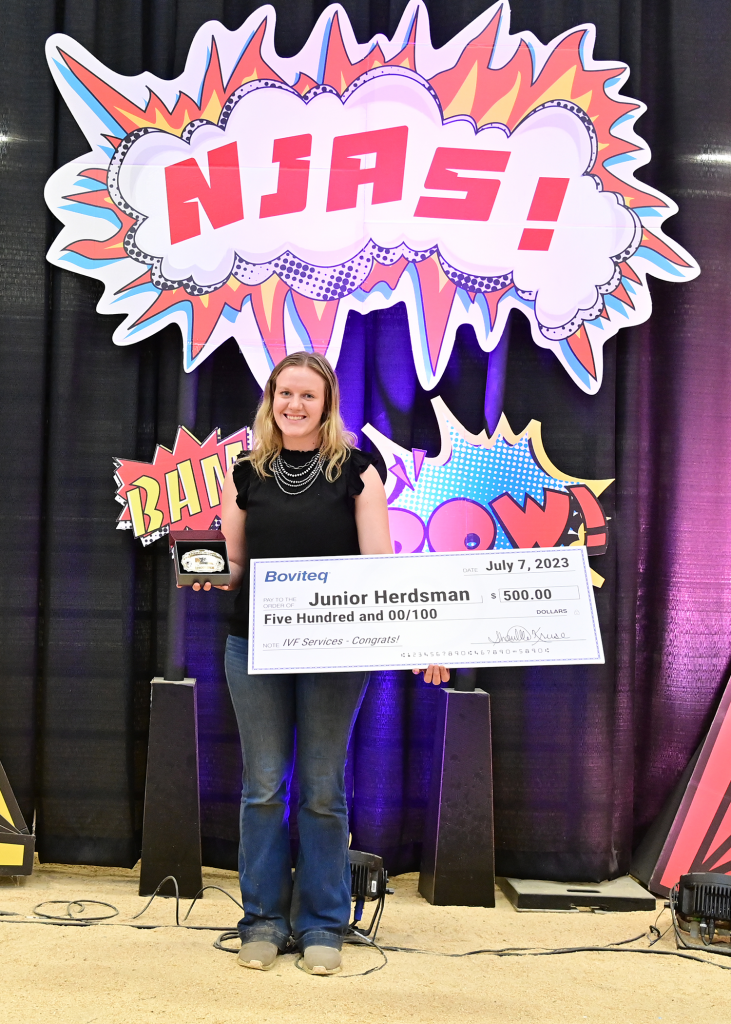
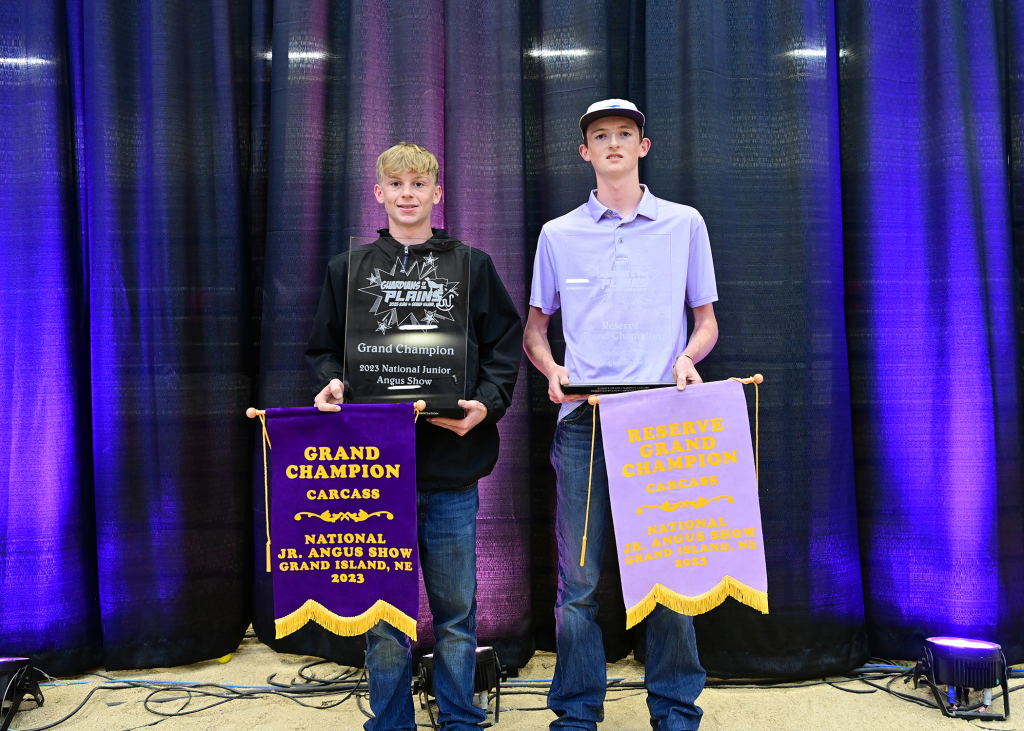
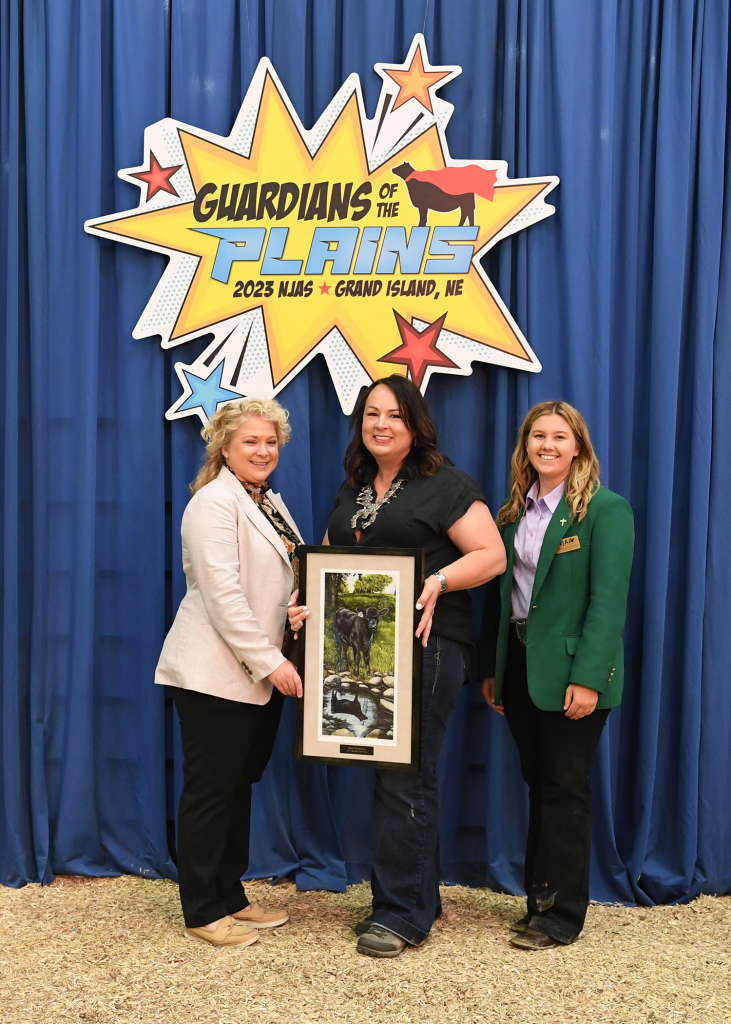
Jonwyn Ayres receives the Jim Baldridge Outstanding Leadership Award at the 2023 National Junior Angus Show on July 7 in Grand Island, Neb.

Oregon junior awarded the Jim Baldridge Outstanding Leadership Award at the 2023 National Junior Angus Show

Developing leaders is fundamental to the National Junior Angus Association (NJAA), and this year's Jim Baldridge Outstanding Leadership Award recipient exemplifies what it means to be a leader, both inside and outside of the NJAA. During the National Junior Angus Show (NJAS), Jonwyn Ayres was announced as the 2023 award recipient on July 7 in Grand Island, Nebraska.

"Receiving this award is an absolute honor," Ayres said. "I have worked hard to have an influence on juniors and make an impact within Angus."

The award recognizes an NJAA member who embodies high character and serves as a leader within the junior association. Ayres of Powers, Oregon was presented with a trophy and awarded a $5,000 scholarship.

"Jonwyn is very deserving of this award," said Lindsey Morgan-Ricksger, Oregon Junior Angus Association advisor. "For the past year, she has been president of the Oregon Junior Angus Association, and she is very good at making sure not only she is present and involved, but also everyone else."

First instituted in the 1990s, The Outstanding Leadership Award was created to acknowledge an honorable youth leader within the NJAA. In 2013, Bill and Betty Werner of Werner Angus, Cordova, Illinois, donated $50,000 to establish an endowment fund and provide a scholarship for the Outstanding Leadership Award recipient in honor of their close friend, Jim Baldridge – a lifetime member and supporter of the American Angus Association.

Jim Baldridge's grandson, Jake Tiedeman said, "Grandpa was a charismatic leader with an infectious personality and was enthusiastic about the Angus breed. Jonwyn Ayres' diverse leadership carries on the spirit of both my grandfather and Bill Werner, and I am so proud of her and all the past winners."

The award continues to recognize youth leaders in the NJAA. Whether it is being a positive influence, helping fellow junior Angus members or holding leadership roles, Ayres encompasses what it truly means to be a good leader.

"I have always strived to be the best version of myself," Ayres said. "When we stay within our comfort zones, we don't give ourselves the opportunity to improve and grow."
Through the NJAA, Ayres said she loves competing at the NJAS, especially in the speaking contests. Ricksger said she is a strong competitor and she enjoys using her expertise to be a mentor and provide support to younger members.

"She encourages youth to get involved in contests outside of showing at the NJAS," Ricksger said. "Jonwyn loves helping younger kids prepare and getting them excited about competing."

In addition to her mentorship and service as president of the Oregon Junior Angus Association, Ayres was a Miss American Angus finalist, served as the Western States Angus Queen and was the Oregon Angus Queen. In July, Ayres was also elected to serve on the NJAA board of directors through which her leadership within the Angus breed will continue.

"I am excited to continue being a mentor to Angus juniors while taking on this new leadership role as a junior board member," Ayres said. "This is the space where I feel my purpose."

Outside of the NJAA, Ayres sits on two other boards: the Black Hawk College board as a student trustee and the Oregon FFA Joint Board. Additionally, she currently studies agricultural economics at Black Hawk College in Galva, Illinois and is on the college's livestock judging team.

Looking into the future, Ayres said she hopes to attend law school to practice agriculture and natural resource law.

"I would love to have an influence in not only policy making, but also environmental cases in agriculture, specifically animal agriculture," Ayres said. "Aside from being in the field of agricultural law, having an Angus cattle herd at home is a dream."

In addition to her future career goals, Ayres said she sees herself continuing to be a leader and mentor for youth within the NJAA and other youth-serving organizations that teach about agriculture.

"I want to continue to support the youth organizations that have shaped my life and that I believe are shaping a better world," Ayres said.

To learn more about the Jim Baldridge Outstanding Leadership Award or other NJAA programs, visit www.angus.org/NJAA. Additional coverage of the NJAS is also available on the NJAA social media channels, online at www.njas.info, and in the September issue of the Angus Journal.


– Written by Katelyn Engel, Angus Communications

Chevrolet "Flex-Fuel E85" Emblem :: Universal

Growth Energy Welcomes Senate Bill to Boost Flex Fuel Vehicles

Image

Growth Energy, the nation's largest biofuels trade association, applauded the introduction of new legislation today that would maximize the benefits of low-carbon biofuels under federal tailpipe standards. Authored by Senators Amy Klobuchar (D-Minn.) and Pete Ricketts (R-Neb.), the Flex Fuel Fairness Act would allow automakers to earn credit toward Environmental Protection Agency (EPA) tailpipe standards by manufacturing Flex Fuel Vehicles (FFVs), which are designed to operate on cleaner ethanol blends, ranging from E10 (10% ethanol) to E85 (51-83% ethanol).  

"U.S. automakers need flexibility to pursue innovative strategies for decarbonizing light-duty vehicles," said Growth Energy CEO Emily Skor. "This bill would level the playing field, so both electricity and low-carbon biofuels can drive progress toward a net-zero future. We applaud Senators Klobuchar and Ricketts for working to make sure that EPA regulations protect access to cleaner, more affordable transportation options."  

The Flex Fuel Fairness Act would give automakers an additional pathway to reduce emissions. FFV makers would be assigned credit towards federal standards based on the emissions profile of E85 fuel, which reduces lifecycle greenhouse gasses by about 31 percent, according to the Greenhouse Gases, Regulated Emissions, and Energy Use in Technologies (GREET) model developed by the U.S. Department of Energy's Argonne National Laboratory.  

"Higher blends of biofuels offer immediate climate benefits while also reducing emissions of particulate matter, carbon monoxide, and other smog-forming pollutants linked to cancer and other negative health outcomes," added Skor. "This legislation would put more FFVs on the road and position them to play an even greater role in decarbonizing transportation for decades to come." 

Image

New Map Charts the Distribution of Southern Root-knot Nematode

Field crop mapping of SRK shows soybean farmers in Delta and Southeast counties should be on alert for infestations.

Southern root-knot (SRK) nematode is a major problem for Southern soybean farmers. In fact, researchers ranked it as the No. 2 threat to the southern soybean crop in 2022, costing farmers more than 13 million bushels that year.1 

In an effort to increase awareness about the pest, researchers have, for the first time, mapped the distribution of SRK in field crops (any field that might someday rotate to soybeans) by county across the continental United States.  

The first step to active management is knowing what you have, The SCN Coalition emphasizes, which has expanded its educational outreach to other parasitic nematodes soybean farmers face. This mapping is a starting place for farmers and their crop advisors.  

Generating awareness about SRK
"We're always trying to raise awareness about SRK. This is a visual way to do so," explains Travis Faske, plant pathologist at the University of Arkansas System Division of Agriculture and a major player with the mapping and the related report. "The map gives the farmer or the agronomist a better idea whether SRK is a threat in their area, aiding early detection."   

SRK survives in areas where the average temperature during the coldest month of the year tops 37 degrees Fahrenheit. Faske says changes in cropping systems (like limited rotation or rotation with corn, a susceptible crop), healthier soybean plants, planting of earlier-maturing, more susceptible soybean varieties, and shortened winter rest periods due to earlier planting have fueled its spread in recent decades. Consequently, farmer awareness is more important than ever.  

The map can help farmers determine whether they should be on guard against SRK. "By the time you have plants dying, I don't have many options for you other than resistance," Faske explains. "Knowing what nematode threat you have early is critical. From there, you can come up with a plan."  

Image
Travis Faske, plant pathologist at the University of Arkansas System Division of Agriculture, says fields infested with SRK show visible symptoms above ground.  

A plan of defense
For the past six years, Faske has conducted field trials to determine what soybean varieties are susceptible or have a level of resistance to SRK. Results from the 2023 crop trials will be published later this year. "There are a few soybean varieties available that offer resistance to SRK," he says. "Seed-applied nematicides are also popular.

"A farmer focused solely on SRK management should bypass a cover crop, since most are hosts for SRK, with some less suitable hosts than others," he says. "If you can, plant peanuts, which are not a host, two years in a row if the field has a high SRK infestation. Next plant an SRK-resistant cotton variety and then return to soybeans." 

Faske also recommends growing a later-maturing Group 5 maturity soybean variety rather than a Group 4 for farmers with heavy SRK pressure.  

While peanuts are one of the few non-host crops for SRK, Faske acknowledges they aren't an option for everyone. "Arkansas' silt loam soil doesn't drain well, which is problematic for peanuts," he says. "Peanuts are also a much slower crop to harvest. And of course, proximity to a market also comes into play." 

Additionally, weed control is extremely important when managing SRK. Faske points out, "Just about any weed can sustain a small population of SRK.  

"Farmers can manage for SRK," he adds. "They just have to adjust their production system to be able to accommodate it." Check out The SCN Coalition's Arkansas video series for more SRK management tips. 

Moving Along on the Appropriations Process

Since Republicans took back the majority in the House, one of our commitments was to finish the appropriations process in a timely manner, rein in Democrats' excessive spending and accomplish real policy changes for the American people. As we approach the critical government funding deadline of September 30, the House Appropriations Committee has worked to ensure full-year funding is completed. Unlike Democrats when they were in control, House Republicans are trying to avoid passing these critical government funding bills at the last minute and to instead uphold our Constitutional obligation to fully fund the government on time.

The process by which Congress is supposed to appropriate funding each year involves hearings, discussions and markups in the 12 subcommittees of the House and Senate Appropriations Committees. Each of those subcommittees writes an annual funding bill, which together cover operations for the entire federal government. By neglecting to pass each of the 12 annual funding bills, lawmakers irresponsibly forgo the opportunity to make changes to spending and deliver any authorized funding, creating a lot of uncertainty and inconvenience to our federal agencies, military and the American taxpayer.

Failure to enact all 12 of these laws by September 30 risks a government shutdown, something both sides of the aisle agree should not happen, or a continuing resolution (CR), which would keep current funding levels and programs in place until January 1, 2024. At that point, if all 12 bills have still failed to be enacted, a new law will automatically enact a CR to fund the government until the end of the fiscal year, September 30, 2024, which contains a one percent across-the-board cut to all programs and agencies. While this reduction may initially seem like a good outcome, an across-the-board cut would lock in unfavorable funding levels and policies from a Democratic majority and be an abdication of House Republicans' ability to adjust spending to reflect the country's priorities. Instead, we can, and we should, enact real policy changes and spend our dollars more wisely through full year appropriations.

Unfortunately, Democrats, who were previously in control of the House, Senate and White House, used this process to swiftly enact their expensive and disastrous policies. The Democrat-led, partisan spending resulted in our nation racking up multi-trillion deficits in both 2021 and 2022. Every American has felt the impact of the worst inflationary crisis in 40 years, the federal debt continues to spiral out of control and middle-class Americans are paying the price of this irresponsible spending spree. Instead of keeping these funding levels and policies locked in place by a CR, House Republicans must work diligently to pass our bills and negotiate a fair end deal with the Senate and president.

This summer, the House Appropriations Committee has already passed 10 of the 12 appropriations bills out of the full committee to go to the House floor for passage. And last week, the House approved the fiscal year 2024 Military Construction, Veterans Affairs and Related Agencies Appropriations Act. While also eliminating wasteful spending, not only would this legislation ensure that those who fought for our freedom receive the healthcare they deserve, it also includes robust investments in military construction to ensure our country can remain ready and continue its missions. The legislation also provides appropriate funding for military housing and other initiatives for military families who have also made exponential sacrifices for our country in their own right. This bill reaffirms House Republicans' commitment to those who served our country and our common defense, and I was proud to support it.

While negotiations continue to take place on several of these funding bills, I am pleased House Republicans are moving forward with responsible priorities that will reflect the needs of each corner of the nation. Unlike Democrats, we understand we have a job to do, and we cannot just proceed with out-of-touch policies and the out-of-control spending that led to record-high inflation and a weak economy. With just a few more funding bills left to mark up and with bills beginning to pass the full House, we are making progress toward fulfilling our commitment.

A Dearth of Beef Replacement Heifers

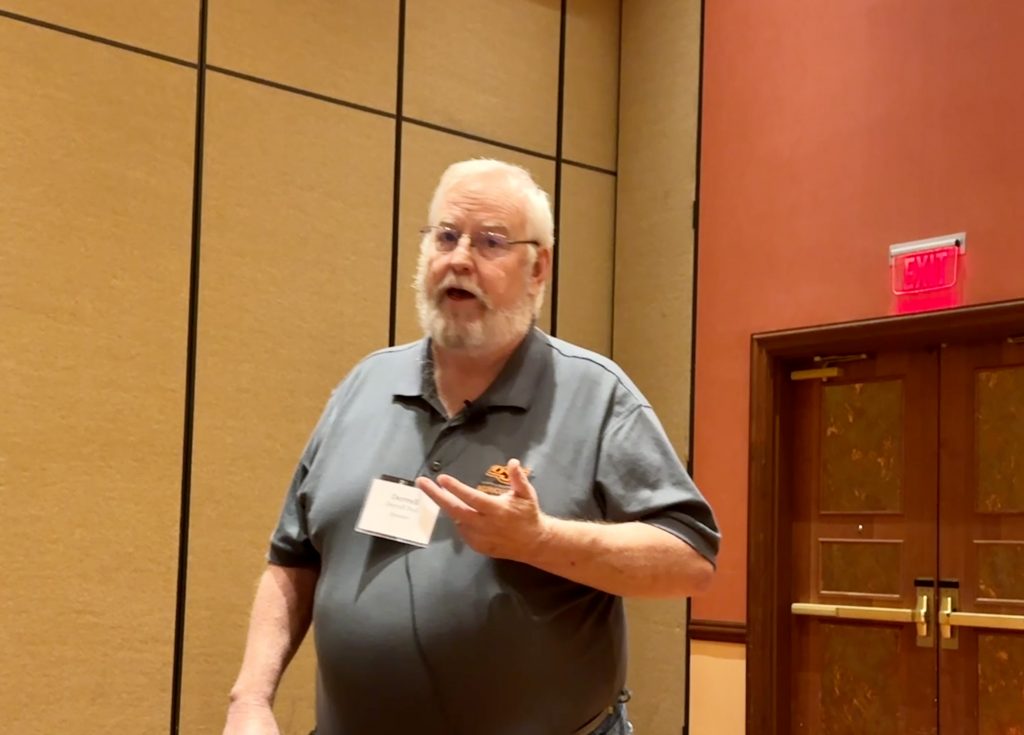
Dr. Derrell Peel, Oklahoma State University Extension Livestock Marketing Specialist, offers his economic analysis of the beef cattle industry as part of the weekly series known as the "Cow Calf Corner," published electronically by Dr. Peel and Mark Johnson. Today, Dr. Peel talks about the scarcity of beef replacement heifers.

The average price of 500-pound steers in Oklahoma auctions in July was $283.68/cwt., up 48 percent over the price of $191.48/cwt. one year ago.  This represents an increase in value of $461/head from $957/head to $1418/head over the same time last year. Higher calf prices are the market result of continually smaller cow herds and declining feeder cattle supplies.

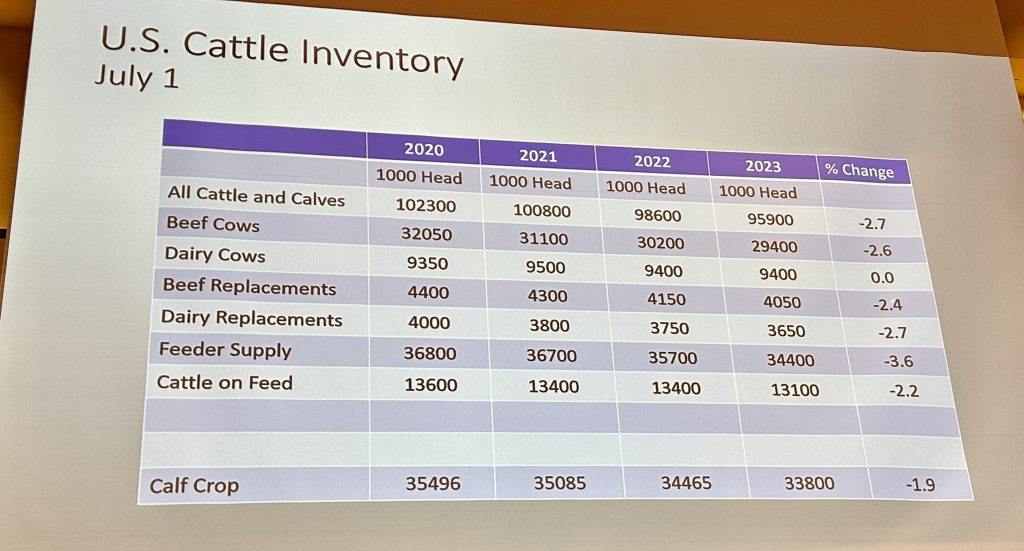
The July Cattle report showed that cattle inventories are continuing to decrease in 2023.  The total inventory of cattle and calves was 95.9 million head, down 6.7 percent from the recent cyclical peak in 2018, and just fractionally above the 2014 low.  The July 1 beef cow herd was 29.4 million head, down 9.3 percent from the 2018 peak, and is 1.2 percent lower than the 2014 low.  The 2023 July beef cow herd is the lowest in the entire data series for this report dating back to 1973.  Estimated supplies of feeder cattle from this report are 34.4 million head, down 3.6 percent year over year.  The 2023 calf crop is projected at 33.8 million head, down 1.9 percent year over year and down 2.5 million head from the 2018 peak. Feeder supplies will continue to shrink into 2024 at least.

Rapidly rising calf prices in 2023 have not yet provoked any heifer retention and herd rebuilding.  The beef replacement heifer inventory was 4.05 million head, down 2.4 percent from last year and is the lowest ever in the July Cattle report.  Not only are replacement heifer inventories low, but the supply of other heifers that could be used for breeding is also low.  It is typical for some heifers not included in reported replacement heifer inventories to get bred and enter the cow herd.  These heifers come out of the 'other heifer' category in inventory reports. The other heifer inventory includes heifers already in feedlots as well as heifers that are part of the estimated feeder supply.  The July Cattle report showed an inventory of other heifers at 7.3 million head, down 5.2 percent year over year.  The July 2023 inventory of other heifers is 600 thousand head more than the lowest recent other heifer inventory in July of 6.7 million head in 2015.  However, the July Cattle on Feed report pegged the number of heifers in feedlots at 4.47 million head, unchanged from last year and 1.14 million head more than the recent 2015 low in heifers on feed.  This means that the residual supply of other heifers not already in feedlots (other heifers minus heifers on feed) is estimated at 2.8 million head, the lowest in available data back to 1996.

Although the current price of 500-pound steers is just 8 percent below the record Oklahoma price of $308.69/cwt in December 2014, higher prices are ahead. The previous record high calf prices occurred after heifer retention was well underway and feeder cattle supplies were squeezed to their tightest levels.  This process may begin in late 2023 but the tightest feeder supplies will not occur until 2024 at the earliest or possibly into 2025.  With the pipeline of beef replacement heifers and residual other heifers extremely low, heifer retention will likely begin mostly with heifer calves.  The inventory of calves under 500 pounds on July 1 was 26.3 million head, down 2.6 percent year over year.  Assuming that producer interest in heifer retention kicks in, the process is likely to be slow simply because of the limited supply of heifers for the foreseeable future.  With apologies to Shakespeare..."My kingdom for a heifer".

Producers Can Help Reduce Trimming at the Packer by Taking Certain Precautions

Click here to listen to Reagan Calk talk with Dr. Kirby Childs about challenges at the packer.

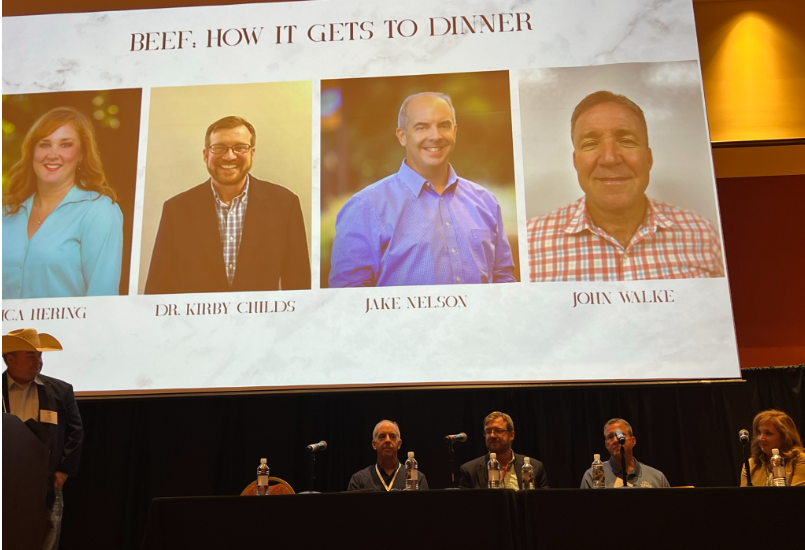
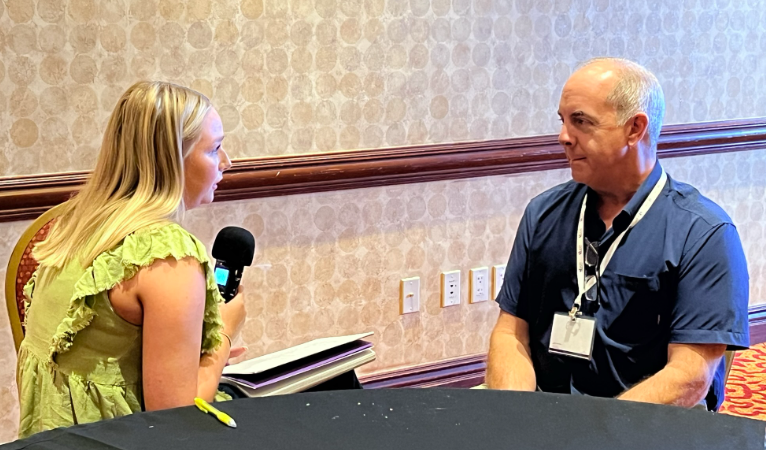
At the 2023 Annual Oklahoma Cattlemen's Association's Convention and Trade Show, Associate Farm Editor, Reagan Calk had the chance to visit with the Vice President of Quality Assurance at Greater Omaha Packing, Dr. Kirby Childs.

"We are U.S. inspected, and 2450 head that we will process daily needs to be inspected by the United States Department of Ag Food Safety and Inspection Service," Childs said.

While it is critical to meet USDA inspection criteria, Childs said it is also incredibly important to meet consumer expectations.

"We want to guarantee that no pathogenic bacteria or foreign objects would be available to get into that product," Childs said.

As the value of the animal is driven by the quality of the carcass, Childs talked about how producers can help expand on that quality.

"The amount of red meat that we can get to that scale is paramount in how much profitability that animal is worth for the producer, feedlot guy, and the packer," Childs said. "The less we have to trim off, the more that is available to be sold as a safe and wholesome product."

There are many different circumstances that would cause trimming, Childs said, including contamination from muddy carcasses, foreign objects, bruising, and more.

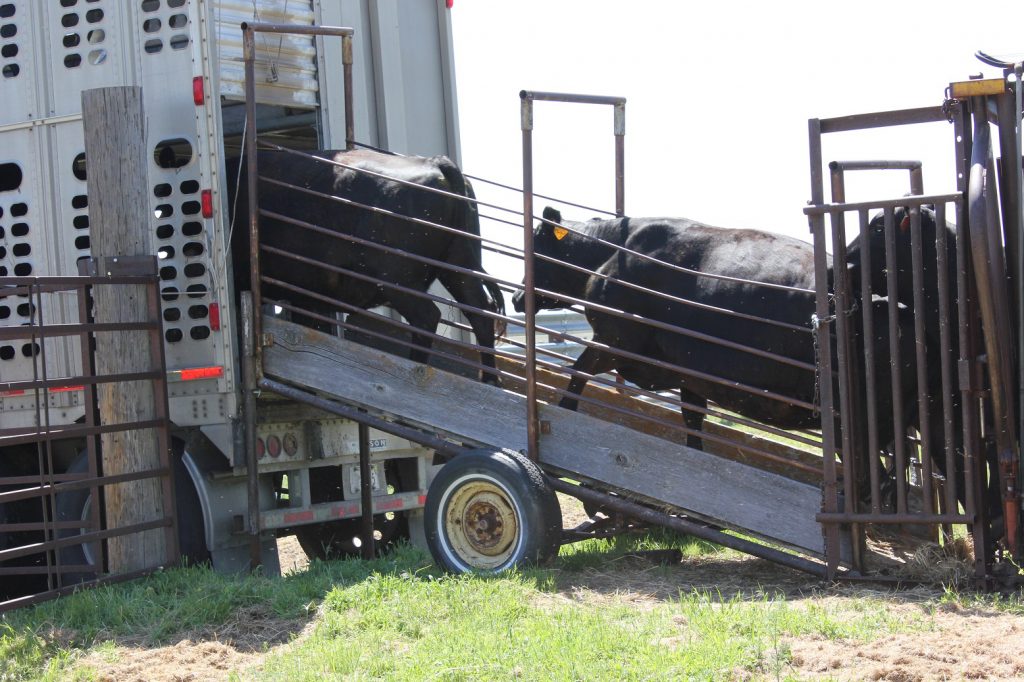
"I think reducing stress is a very key factor, whether that animal is loading into a transport truck to going to the feedlot to going to the packing house," Childs said. "Making sure that you have calm drivers or drivers that can maintain that transportation responsibly- not a lot of stopping and starting. I know some of that can happen, but the less, the better."

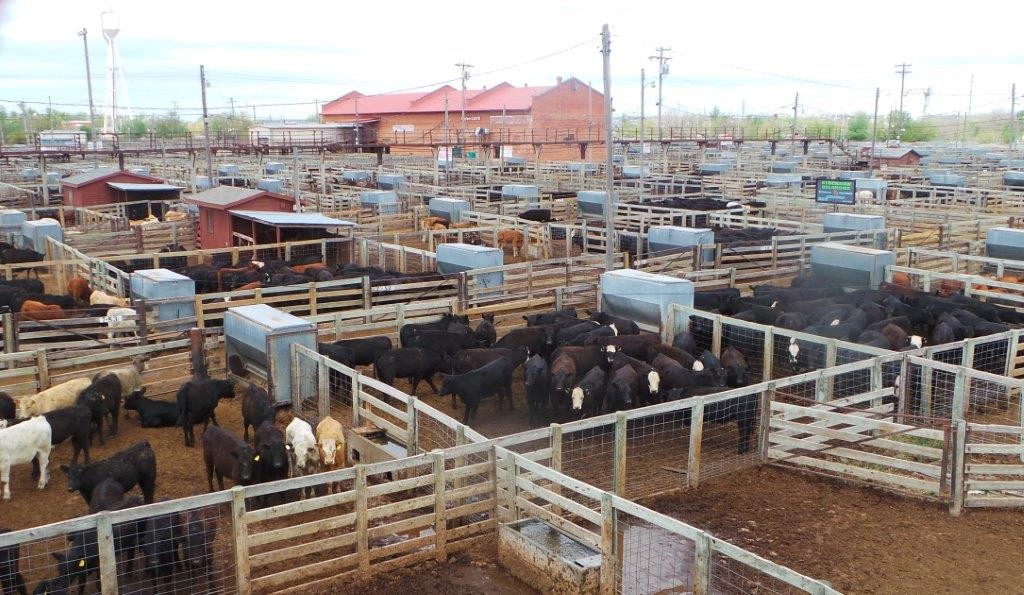
Childs said another way to maximize carcass quality to avoid damage to that beef is to make sure chutes, alleyways, and fences are kept in good condition.

"If we see the bruise on the harvest floor, that has to come off," Childs said.

Proper shot placement is also important, Childs said, as giving a shot improperly could result in more trimming.

"We provide product to the world, and we are very proud to work with producers and feedlot operators to provide the safest and most wholesome product to the world that tastes good and keeps people coming back," Childs said.

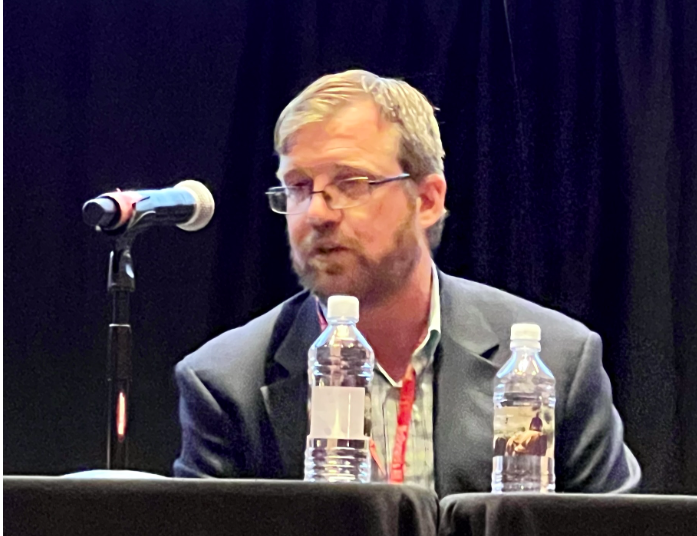
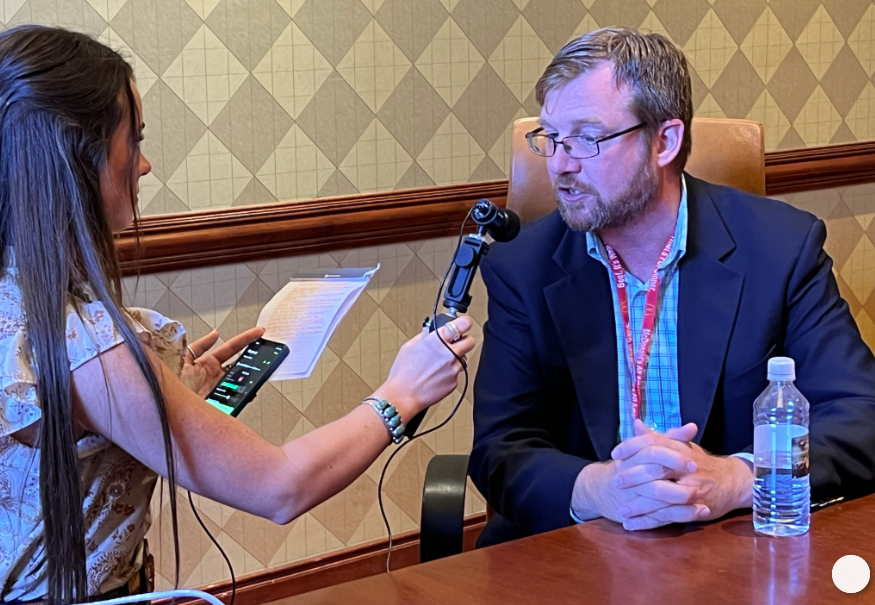
Support Bison Herd Health and Truth in Buffalo Labeling

Summer congressional recess is starting, and things are heating up for bison-focused legislation.

"We have two leading issues for the bison industry, both important to the integrity of our national mammal. First, continued funding for vital Malignant Catarrhal Vaccine (MCF) research and vaccine development, which was excluded from the recently introduced ag appropriations bill. Second, passage of the Truth in Buffalo Labeling Act- distinguishing North American Bison from Water Buffalo," said Lydia Whitman, Program Manager for the National Bison Association.

The bison industry is grateful for the tireless work of the USDA Agriculture Research Service on the Malignant Catarrhal Fever (MCF) vaccination. Over 15 years of work on the vaccine has resulted in significant progress, with the proof-of-concept study currently underway. Due to the relatively small bison population of approximately 400,000, there is little incentive for commercial production of the vaccine for use in private, public, and tribal herds. As such, the National Bison Association is requesting $2 million in funding in the next Farm Bill to support the development, production, promotion, and distribution of the MCF vaccine. This funding amount was suggested by the leadership of USDA ARS who are working on finalizing this vaccine in the near term.

The NBA is also lobbying Congress to fix the ongoing regulatory issue of imported water buffalo being deceptively substituted for American bison and being marketed, in some instances, as "Wild Buffalo". Due to a regulatory loophole, water buffalo can be labeled simply as "buffalo" under current FDA policy, not "water buffalo", which is clearly deceiving the consumer into thinking that they're purchasing bison, or American buffalo, thereby threatening the food safety of bison meat.  

"Owning a bison farm, I am aware of what it takes to raise bison and the many benefits that come with the production of bison products for West Virginia," Representative Carol Miller (R-WV-1) said. "When a product is labeled as 'buffalo,' consumers usually think that product contains bison. "This bill makes absolutely certain that only bison products are labeled as buffalo and that any water buffalo products have their own specific label," she said. "This will help consumers make better choices and bolster the American bison industry."

The Truth in Buffalo Labeling Act of 2023 (H.3866), recently introduced in the House by Representatives Carol Miller (R-WV-1) and Yadira Caraveo (D-CO-8); and A bill to provide clarification regarding the common or usual name for bison and compliance with section 403 of the Federal Food, Drug, and Cosmetic Act, and for other purposes (S.258) introduced in the Senate by Senators John Hoeven (R-ND), and Michael Bennet (D-CO), and co-sponsored by Kevin Cramer (R-ND), Jon Tester (D-MT), Mike Braun (R-IN), Tina Smith (D-MN), Jacky Rosen (D-NV), John Thune (R-SD), Jerry Moran (R-KS), and Roger Marshall (R-KS) will provide this much-needed clarification of terms for bison. Both proposals are supported by the National Bison Association and National Sustainable Agriculture Coalition.

"The diverse membership of the National Bison Association has helped create and shape this legislation, and now is the moment that we need support from members and other bison stakeholders to ensure this legislation becomes enacted," stated National Bison Association Executive Director Jim Matheson. "We encourage NBA members to contact their representatives and push for hearings in the House and Senate on this bill, or better yet, inclusion in the next U.S. Farm Bill."

The National Bison Association is a 28-year-old, member-based, nonprofit trade association made up of bison farmers, ranchers, marketers, conservationists, public herd managers, enthusiasts, and more. The NBA is based in Westminster, Colorado. Learn more at www.bisoncentral.com, and @nationalbison.

NFU Releases August Congressional Recess Priorities

During the month of August, Congress typically recesses, and elected officials return home to their districts and states to meet with constituents, sometimes referred to as the "district work period." This is an important time to advocate for Farmers Union's policy priorities and make your voice heard about the importance of family farm agriculture. Join with other Farmers Union members in your state to attend town hall meetings or to schedule meetings with your elected officials. 

Our top issues during this district work period are: 

1.Pass a Strong Farm Bill 

  • Ensure Fairness for Farmers by addressing the monopoly crisis in agriculture 
  • Strengthen farm programs, disaster assistance, and risk management 
  • Address USDA staffing shortfalls 
  • Enact the Dairy Revitalization Plan 
  • Help farmers tackle climate change 

2. Support an American-Grown, Renewable Energy Future 

3. Preserve Local Control and Landowner Rights  A full version of these priorities is linked here as a webpage and pdf.

NFU Joins Rep. Casar to announce Fairness for Small-Scale Farmers & Ranchers Act
This week, NFU had the opportunity to join Rep. Greg Casar of Texas to introduce his Fairness for Small-Scale Farmers & Ranchers Act. Of the announcement, NFU President Rob Larew said "National Farmers Union is happy to support the Fairness for Small-Scale Farmers & Ranchers Act. Through our Fairness for Farmers campaign, NFU has been fighting for a more competitive and fairer farm economy and a farm bill that promotes competition. We're going to work with Rep. Casar to push this bill forward."    NFU Senior Government Relations Representative Layla Soberanis spoke at a Capitol Hill news conference with the bill's cosponsors and other organizations.  

Lankford Letter to Oklahomans

Dear Oklahoma friends and neighbors:

It's almost August—that means back-to-school time is almost here! Even if you don't have young kids in school, everyone can help the families around you through the many nonprofits assisting with school supplies, backpacks, school clean-up projects and more. Back to school is a great time of year (especially for parents). 

Glad to connect with Edie Roodman, Executive Director at Jewish Federation of Oklahoma City, Congresswoman Stephanie Bice, and Oklahoma City Chabad Community Center for Jewish Life and Learning Rabbi Ovadia Goldman in the US Capitol in front of our own Will Rogers statue after we heard a great address by Israeli President Isaac Herzog in front of a joint meeting of Congress

In the end of the summer heat, don't forget to keep checking on elderly or vulnerable neighbors to make sure they have what they need in the dog days of summer. If you find yourself in need, feel free to dial 2-1-1 to find out about local options for help in the heat.

Thank you for always doing what Oklahomans do: take care of one another.

August is the one month of the year that the Senate does not meet, which allows me to spend more time around Oklahoma listening. I am looking forward to connecting with many Oklahomans in the coming weeks as I drive around the state (with my air conditioner on). 

Supporting Oklahoma Military Installations in the Defense Bill

Thankfully, yesterday, the Senate passed the Fiscal Year 2024 National Defense Authorization Act, known as the defense bill or the NDAA. This bill sets our defense policy for every military mission and training for the next fiscal year. 

Many of my amendments were included in this year's NDAA, which were designed to make sure our warfighters, their families, and Oklahoma's military and National Guard installations have what they need. We provided another pay raise to our military as they face Biden's inflation. I worked to hold military contractors accountable for dilapidated or dangerous military housing in Oklahoma. I fought for and won the additional funding and authority needed to rebuild L. Mendel Rivers Elementary School on Altus Air Force Base, which is in desperate need of repairs to provide a safe learning environment for children on the base. 

Some of my specific amendments updated the anti-competitive procurement processes in DOD contracting, created a process for military spouses to have and build a career working remotely with federal agencies as they move around the country with their spouse, and I increased access to critical minerals from friendly nations instead of China. I even won an overtime pay increase for our Border Patrol since they work every day for our national security as well. 

The final bill includes many other aspects that directly support Oklahoma defense, including:

  • 5.2-percent pay raise for our service members and Department of Defense civilian workforce along with payroll increases for Air National Guard and Air Force Reserve military technician civilians
  • Counter-drone technology research and development in our state, which is spearheaded by OSU
  • KC-46 at Altus Air Force Base
  • Undergraduate Pilot Training Center at Vance Air Force Base
  • New power grid and backup power for Fort Sill
  • Vehicle maintenance shop in Ardmore to serve our Army National Guard
  • B-21, T-7, KC-46, E-7, and E-6 aircraft coming to Oklahoma
  • Army ammunition for McAlester, general purpose bombs, long-range precision fires, air and missile defense

Nationally the NDAA also includes:

  • Pay for pilots to get their necessary inactive duty training to stay current in their pilot rating or designations
  • Funding for religious freedom training to ensure we protect our service members' religious freedom
  • Requirement that the DOD increases their work to counter fentanyl trafficking
  • Limitations on the ways the communist Chinese government can interact with US military contracts that do business with Chinese or Russian institutions

CLICK HERE to read more on why I supported this year's defense bill.

UPDATE: Passport Backlog

If you've tried to get a passport in the last year, you most likely had to wait much longer than you expected to get it in your hands. Calls to my office for assistance getting passports have increased five-fold this year over last year because of the poor performance of the State Department's National Passport Information Center. 

This year's defense bill contained provisions from my bill, the Passport Act, to solve the tremendous backlog at the passport office.

My bill will improve transparency and customer service by requiring the State Department to provide detailed status updates for passport applications and add a customer service chat feature connecting applicants with the National Passport Information Center. These days, you can track a package delivery online from almost any provider—but you can't track the progress of your passport. That is about to finally change. 

I worked with Senator Ricketts from Nebraska to have my bill included in the State Department reauthorization bill, which hitched a ride on the defense bill we just passed. It will take some time for the State Department to implement my bill to get the passport delays caught up, but hopefully this will now be the last time this kind of backlog happens. Enjoy your vacation trip overseas. But please be sure to get your passport before you book your flight.

CLICK HERE to read my column to Oklahoma newspapers about the passport problems and how I'm working to solve them.

CLICK HERE to watch my interview with KOCO about the passport backlog.

Joined Cowgirl in Chief, OSU President Kayse Shrum, and numerous state, local, and tribal leaders at OSU-Tulsa for a ribbon cutting for OSU's Oklahoma Aerospace Institute for Research and Education (OAIRE) to establish the LaunchPad Research & Technology Center in Tulsa. This is a big deal for expanding OSU's existing impact on aerospace in our state and nation!

UPDATE: Lowering Rx Drug Prices

This week, the Senate Finance Committee, on which I serve, took a big step forward in addressing the high cost of prescription drugs in voting to pass a bill out of the Committee with several sections I've worked on for years to bring down the cost of prescription drugs.

Earlier this month, I spoke on the Senate floor about the abusive practices of drug-price middlemen known as pharmacy benefit managers or PBMs for short. PBM's make their money by squeezing rural and independently owned pharmacies in Oklahoma and the patients buying the prescription drugs at the counter. I have fought them for years, and I am not letting this go. 

PBMs are driving up the cost of prescription drugs and limiting cost transparency for pharmacists. The worst of their abuses come in the form of what are called direct and indirect remuneration (DIR) fees and the manipulation of a drug's placement on a "tier" of coverage that creates a higher price for lower cost generic drugs. Their gaming between name-brands and generics keeps prices high for patients, while making PBMs more money.

I'm not against price competition. Protected free markets are a good solution to drug pricing issues. Competition will work if we allow the markets to actually work. But if PBMs are in the middle controlling the way pricing happens, it can't work. 

Some believe the federal government should control the price of prescription drugs, but the federal government does not—and should not—set the prices for everything. If you'd like to see how well the federal government runs and fixes things, look no further than the passport agency, which is currently roughly four months behind on something that should take weeks. 

CLICK HERE to watch my speech on the Senate floor about the areas we need to address to bring down the costs of prescription drugs.

CLICK HERE to read more about my bills to address the cost of Rx drug and prescription drug supply chain issues. 

CLICK HERE to read more about my bill to make the drug pricing process and requirements of pharmacies more transparent and efficient.

CLICK HERE to watch my Q&A in a recent Senate Finance Committee hearing to address the rising costs of prescription drugs.

Helping Border Law Enforcement

During the overwhelming surge of illegal crossings from Mexico, Border Patrol agents have sacrificed their family and personal time day after day to protect our nation without overtime pay. The nation is grateful for their incredible sacrifice, but it's past time to compensate them for their hard work. 

After multiple trips to the southern border as part of my work as the Republican lead on the border subcommittee of the Homeland Security and Governmental Affairs Committee, I'm glad to let you know that my Border Patrol Enhancement Act, which would ensure Border Patrol can hire, train, and pay the highest quality law enforcement officers and agents, passed out of the Committee last week with strong support and was included in the defense bill that passed the Senate this week. 

This bill finally gives Border Patrol the support they deserve. The Biden Administration has tied the hands of our Border Patrol and worked them long hours without extra pay, which has directly affected morale, recruiting, and retention.

CLICK HERE to read more about the bill to be sure we can retain and hire the best law enforcement personnel for our national security at the southern border.

I also introduced the Border Enforcement, Security, and Trade (BEST) Facilitation Act of 2023, which would further support border law enforcement by providing additional personnel to scan cargo for illegal drugs and guns or human smuggling. 

Border law enforcement told me directly that addressing this issue would help them better enforce the law at our ports of entry.

Successfully inspecting cargo at our ports of entry helps stop dangerous drugs like fentanyl from coming into the US. Border law enforcement need support to analyze cargo images in real time, so they can focus on the person-to-person contact that enables them to catch criminals. Adding these positions to our border law enforcement makes sure cargo can be thoroughly inspected for illegal drugs, guns, and human smuggling at our border. This is a nonpartisan, straight-forward solution to support our hard-working border law enforcement.

CLICK HERE to read more about my bill.

I have many other bills and ideas to secure our border that are working through the Senate right now. Every American should support securing our borders and legal immigration. Stopping illegal immigration should not be a controversial issue. 

Standing with Israel

Last week, I was joined by Senator Jacky Rosen of Nevada and a small group of Senate and House Abraham Accords Caucus members to greet Israeli President Isaac Herzog after his address to a Joint Meeting of Congress. We celebrated the 75th anniversary of the founding of the State of Israel and the success of the ongoing Abraham Accords.

CLICK HERE to read more about our meeting with Israeli President Herzog after his address to Congress.

The US and Israel have several international agreements for cooperation in science, agriculture, and cybersecurity. We should build on our successful relationship and collaboration with Israel with the rest of the Abraham Accords countries.

In fact, I introduced a big milestone bill for Middle East peace, the Regional Integration and Normalization Act, to bolster efforts to normalize relations between Israel and her neighbors in the Arab and Islamic world.

CLICK HERE to read more about my bill to improve Middle East peace and cooperation.

Keeping You in the Loop

  • Moving Oklahoma's Disaster Aid Application to the Finish Line – I led the Oklahoma delegation in a letter of support to President Biden to formally request disaster relief funding after the June 17 storm throughout the state. Last week we were informed that the relief was extended to Beaver, Cimarron, Comanche, Cotton, Craig, Creek, Delaware, Harper, Jefferson, Love, Major, Mayes, McCurtain, Payne, Pushmataha, Rogers, Stephens, Tulsa, and Woodward counties. This will bring much-needed relief to Oklahoma.
  • Standing Against Bidenomics – As inflation and prices, for just about everything, remain at a 21st Century high, I continue to stand up to President Biden's unworkable Green New Deal progressive energy requirements that are hurting Oklahoma energy and driving up costs. I'm working to access the critical minerals we need for technology from the US and friendly nations and allies, instead of depending on China.
  • Congratulations OU Softball on a Threepeat! – The OU Women's Softball team continues to show the state and nation what leadership on and off the field looks like. Our state is proud of your continued success on the field and the role models you are off the field. Last week, the US Senate finally officially congratulated each member of the team on the third-consecutive national NCAA Women's College World Series title. We also recognized the exemplary standard that has been set by Coach Patty Gasso and staff. CLICK HERE to read more about how we honored this great team, their staff, and coaches in the US Senate. "Eyes up" Sooners.
  • Supporting Kidney Transplant Recipients – Last week in the Finance Committee we held a hearing on how to improve the process of organ transplants in our nation. The hearing focused on kidney transplant recipients in a long line for a kidney and on how we can increase the number of organ transplants and get accurate information to the people waiting for the transplant. CLICK HERE to learn more about this important hearing.
  • Simplifying the Competitive Federal Grants Process – Strategic, competitive federal grants can open opportunities for cities, states, and tribes, local fire departments and others to improve safety, infrastructure, interstate highways and waterways, broadband internet, and beyond. But, the huge federal bureaucratic maze has made federal grants difficult to navigate. I introduced a bill to clearly designate an existing employee at each agency to serve on an interagency grant council, be the public contact for grants, and help implement the standards of my GREAT Act, which is now law. We can and should make this process better for Oklahomans. CLICK HERE to read more about my bill to simplify the federal grant process.
  • Updating Federal Retirement Services – I sent a letter to the Director of the Office of Personnel Management Kiran Ahuja on the need to modernize the decades-old retirees' system that is causing backlogs and delays in processing retirement applications. I asked several questions of the Director on why responses to retirees can involve wait times of more than a year, which can cause real financial pain for our federal retirees. CLICK HERE to read my letter.
  • Ensuring NATO Countries Meet Defense Spending Obligations – I recently joined a group of 33 Senators in a letter to President Biden to call on NATO countries to meet their defense spending commitments. Since 2006, NATO member nations have committed to a minimum of two percent of their Gross Domestic Product. Many NATO nations have increased their defense spending in the past year, but despite Russia's invasion of Ukraine, some member states still have not met their treaty obligations. CLICK HERE to read more on my push to be sure all of Europe pulls its weight for NATO defense.
  • Keeping Hazardous Chemicals Away from Terrorists – It may not be at the top of everyone's radar, but the federal government needs to ensure we secure hazardous chemicals from terrorists. I introduced a bill to extend the Chemical Facility Anti-Terrorism Standards (CFATS) program, which was created after the September 11, 2001, terrorist attacks to ensure facilities holding high-risk chemicals have security measures in place to reduce the risk of chemicals being stolen or weaponized by terrorists. The types of chemicals protected by the CFATS program are the same chemicals used in the OKC domestic terrorist bombing in 1995. We have to make sure these dangerous chemicals don't fall into the wrong hands or get exploited by terrorists. CLICK HERE to read more about this important bill to prevent terrorists from accessing these chemicals.

In God We Trust,
Image
James Lankford
United States Senator for Oklahoma

American Ranchers Support Group's Efforts To Strengthen Cattle Industry in the Farm Bill


Valentine, Neb./Fort Pierre, S.D. – Two recent calf sale fundraisers hosted by auction markets in the Midwest raised a generous amount of proceeds for the organization. R-CALF USA member Brett Galbraith from Wood, South Dakota, donated a heifer calf that was auctioned off at Valentine Livestock Auction, in Valentine, Nebraska. In addition, longtime R-CALF USA members Dean and Delia Johnson, of Fairburn, South Dakota, donated a yearling steer that was auctioned off at Ft. Pierre Livestock Auction, in Ft. Pierre, South Dakota.

The two auctions raised more than $42,000 to help R-CALF USA fight for inclusions in the 2023 Farm Bill such as: mandatory country of origin labeling (MCOOL) for beef, to reform the beef checkoff program, to force packers to compete in the cash market, to end meatpacker ownership of cattle and to end unpriced formula contracts that are used by meatpackers to control livestock.

"Greg Arendt, at Valentine Livestock Auction, and Dennis and Bryan Hanson, at Ft. Pierre Livestock Auction, and their crews, have been perennial supporters of R-CALF USA and crucial in supporting the fight for the independent cattle industry," said R-CALF USA President Brett Kenzy.

Ft. Pierre Livestock Auction in Ft. Pierre, S.D.

"A supportive business community and an active crowd of cattle producers made their support clear with their generosity," said R-CALF USA Field Director Karina Jones. "We would like to thank all the businesses and individuals who supported these fundraisers and most of all the producers that generously bring forth their cattle to be auctioned off for these events."

"Calf sale fundraisers are a vital part of the success of our organization as R-CALF USA does not accept any beef checkoff funds," she continued. "We are funded solely by our members who believe in the policy goals that we are working towards."

Jones added that calf sale fundraisers are also a membership building tool that

Dean and Delia Johnson of Fairburn, S.D.

R-CALF USA relies on to maintain a strong and growing membership base. R-CALF USA is now scheduling its 2023-24 Calf Sale Fundraisers.

Auction markets that would like to host a fundraiser or producers who would like to donate an animal should contact Karina Jones at 308-760-3466 or karinajones@r-calfusa.com.

Congress Heads Home- House Ag Appropriations Deal Left Hanging in Limbo

While the US Senate was able to finish the National Defense Appropriations Bill before leaving for the August Congressional recess- the House was unable to get the Appropriations for agriculture complete before they left town at the end of this past week for six weeks for their version of an August recess.

House Conservatives wanted more cuts in HR 4368- the Fiscal Year 2024 Ag Appropriations Bill- titled the Agriculture, Food and Drug Administration Related Agencies Appropriation Act of 2024- and that along with 189 amendments that were filed by lawmakers and being considered by the House Rules Committee that is chaired by Oklahoma Congressman Tom Cole prevented the Appropriations Committee from finishing their work before leaving town. Here's the link from the Rules Committee that offers a quick review of all 189 amendments.

Among the 189 amendments was one spotlighted by multiple ag groups as being concerning- amendment 113 offered by Victoria Spartz of Indiana. We reported on it in our conversation from San Diego with NCBA's Ethan Lane.

"At the beginning of this Congress, we watched the speaker fight where they were negotiating the rules, and some of the rules they negotiated were around how the amendment processes would work," Lane said. "Open amendment process leads to the kind of appropriations process we are seeing now. They have got to pass an appropriations bill to find the government every year, but if you have that in a really open format, sometimes it draws some pretty wild stuff out of the woodwork in the form of last-minute, half-baked amendments, and certainly, we have seen a few of those this week, including this amendment from Victoria Spartz, this congresswoman from Indiana."

Lane said Spartz is seeking to stop the use of federal funding in Beef Checkoff programs, and any checkoff programs in general.

"We don't use any federal funds to implement the Checkoff programs, so it is sort of an odd amendment, but unfortunately not necessarily out of character for what we see during these kind of wild open amendment processes," Lane said.

Other Ag groups agree with NCBA when it comes to having concerns- click here for our earlier story on comments from several ag trade groups on the Spartz Amendment.

The explanation of the amendment proved to be odd as well- you can listen to the long rambling monologue from Congresswoman Spartz that admitted that no taxpayer funds are used in the administration of checkoff program oversight- click on the audio listen bar below to hear her testimony before Tom Cole's Committee on Wednesday.

Congresswoman Victoria Spartz testifies on her amendment to the House Ag Appropriations bill before the House Rules Committee

The Rules Committee reviewed the lengthy list of amendments but did not rule on what amendments would be allowed to be considered in the Appropriations Committee consideration of the bill.

According to Politico- the debate over the Ag Appropriations measure is happening at the highest levels- "The Freedom Caucus' proposals for additional agriculture cuts have particularly infuriated a swath of rank-and-file Republicans, especially those in rural districts who have strong ties to GOP leadership. McCarthy himself represents an agriculture-heavy district in California. "(McCarthy is House Speaker Kevin McCarthy)

Politico goes on to report "Rep. Randy Feenstra (R-Iowa) said he was "mortified" about some of the cuts to key agriculture programs that Freedom Caucus members were working to secure on Thursday. He added that further cuts to USDA would impact food safety and U.S. agriculture exports that farmers in his state rely on."

The failure of the Appropriations Committee to move the Ag Appropriations measure before the August recess underscores the problems faced by the House Ag Committee's leadership knowing how many dollars they will have available to them as they work to mark up a 2023 Farm Bill, which will not happen now until mid September at the earliest as Chairman GT Thompson stares at the September 30th deadline when the current farm law expires.

That makes the prospect of an extension of the 2018 Farm Law more and more likely once Congress returns after Labor Day. Congressman Frank Lucas told Ron Hays and the Oklahoma Farm Report earlier in July that the question is "how much money will we have when push comes to shove to write policy." Lucas adds "If we were to see the budget bean counters demand real cuts- then you absolutely will have an extension Ron because the safety net can't become weaker- it has to become stronger. But- I'm an eternal optimist- I'm the guy who took two and half years to do a farm bill and we got her done. We'll get her done this time but just not sure what day yet."

Twin brothers recognized as AAMP youth ambassador finalists

Left to right, Josh and Logan Hering, student workers at the Robert M. Kerr Food and Agricultural Products Center, were recognized by the American Association of Meat Processors as finalists in the Youth Ambassador Competition. (Photo by Kirsten Hollansworth)

By Kirsten Hollansworth

For brothers Josh and Logan Hering, student workers at Oklahoma State University's Robert M. Kerr Food and Agricultural Products Center, involvement in the meat industry represents generations of family tradition. Fortunately, the American Association of Meat Processors provides opportunities for a rising generation of leaders in the meat and poultry industry.

Joshua and Logan Hering are involved in their family's plant, Ralph's Packing Company, and have been selected as two of four finalists to participate in the Youth Ambassador Competition at the annual AAMP Convention, August 1-3 in Omaha, Nebraska.

Josh Hering, a meat and food science freshman, said the youth programs teach younger adults about the meat industry.

"It was a great deal to be a part of this program and I had lots of fun," he said. "I hope we can keep this program going and get more people involved in this industry and association."

Together, the brothers own and operate J&L Farms, managing their own herd of Red Angus cattle and various breeds of pigs.

Logan Hering, an agribusiness freshman, said working at FAPC is an opportunity to develop skills as a meat cutter.

"I have learned a lot over the past month of working at FAPC and plan on furthering my skills as a meat cutter as the year progresses," he said. "The AAMP Youth Ambassador Program is a new initiative to get the youth more involved in what we do, which is to help small meat processing companies."

Joel Jackson, meat pilot plant manager, said Josh and Logan Hering's involvement in the family business at Ralph's Packing Company made it an easy decision to recruit them to work at FAPC.

"Since starting work at FAPC earlier this summer, they have demonstrated an outstanding work ethic and are quickly becoming an integral part of the Cowboy Meats team," Jackson said. "I congratulate them on their achievements and acknowledgment from the American Association of Meat Processors and look forward to working alongside Josh and Logan to see their continued success at OSU." 

Roy Escoubas, FAPC director, said the student workers at FAPC are an invaluable resource to the day-to-day operations at the facility.

"Josh and Logan are motivated and dependable workers," Escoubas said. "I am very pleased to have these young men working at FAPC because they inspire others to achieve excellence."

The upcoming AAMP contest involves an application, an interview with a panel of judges and judged events at the 2023 American Convention of Meat Processors and Suppliers' Exhibition. This event features activities for youth to become a part of the meat and poultry industry and engage with their peers.

The winner of the Youth Ambassador Competition will participate in AAMP events and receive a customized frock, belt buckle and $500 scholarship award.

FAPC, a part of OSU's Division of Agricultural Sciences and Natural Resources, helps to discover, develop and deliver technical and business information that will stimulate and support the growth of value-added food and agricultural products and processing in Oklahoma.

Like the Sizzling Temperatures, Gas Prices Climb Higher

This Week
The national average for a gallon of gas awoke from a months-long slumber, surging 15 cents since last week to $3.73. The primary cause appears to be the oil price, which has marched nearly $4 higher in the past few days to hover near $80 per barrel.  As oil accounts for almost 50 percent of the cost of a gallon of gas, higher oil prices usually mean higher pump prices.  

In Oklahoma, the gas average is $3.42 today, up 17 cents in the laws week and 46 cents lower than one year ago.

According to new data from the Energy Information Administration (EIA), gas demand rose slightly from 8.86 to 8.94 million b/d last week. Meanwhile, total domestic gasoline stocks dipped from 218.4 to 217.6 million bbl. With supplies tight, if demand should spike, pump prices will follow suit.

CURRENT AND PAST GAS PRICE AVERAGES

Regular Unleaded Gasoline (*indicates record high)

 07/28/23Week AgoYear Ago
National$3.73$3.58$4.27
Oklahoma$3.42$3.25$3.88
Oklahoma City$3.40$3.26$3.95
Tulsa$3.48$3.29$3.74
Lawton$3.15$2.99$3.56
Crude Oil$79.77 per barrel (07/28/23)$77.07 per
barrel (07/21/23)
$98.62 per
barrel (07/29/22)

At the close of Friday's formal trading session, WTI crude oil settled at $79.77, up 3.5% on the week. Due to extended repair timelines at refineries, lower refinery oil usage rates will influence how much oil prices rise. Additionally, the EIA reported that total domestic commercial crude inventories decreased by 600,000 bbl to 456.8 million bbl.

The Weekend

"Gas demand, meaning people fueling up, remains tepid. It's lower now than at this time last year and in 2021, said Rylie Mansuetti, spokesperson for AAA Oklahoma. "But while the heat may be keeping some folks home, it also suppresses refinery production, according to experts.  Constrained supplies and a higher cost of oil are tipping the balance toward rising pump prices for now."

AAA has a variety of resources to help motorists save on fuel:

Next Weekend Gas Watch: Friday, August 4, 2023

Brent Boydston Elected U.S. Grains Council Chairman During Annual Summer Meeting

The delegates of the U.S. Grains Council (USGC) elected Brent Boydston, corn, cereal grains, digital agriculture and carbon lead at Bayer Crop Science, as chairman of its Board of Directors at its 63rd Annual Board of Delegates Meeting held in Calgary, Canada.

"Planting corn, sorghum and barley has several things in common with developing beneficial relationships with overseas end users – both take time and preparation, and both are long games," Boydston said during his opening remarks on Friday. "Crops must be tended throughout the growing season and our work with our trading partners is also constant. We cannot put seeds in the ground and open offices around the world and just hope for the best."

Boydston grew up in a family farming operation near Centerville, Kansas, that raised cattle, corn and soybeans. He assumed his current position with Bayer Crop Science in 2016 and has been on the Council's Board of Directors ever since.

Previously, Boydston served as vice president of public policy at the Colorado Farm Bureau and spent more than seven years working on Capitol Hill.

In addition to Boydston, Verity Ulibarri of the United Sorghum Checkoff Program was nominated as vice chairwoman and Mark Wilson of the Illinois Corn Marketing Board was elected secretary-treasurer. Jim Reed of the Illinois Corn Marketing Board and Jim O'Connor of the Minnesota Corn Research and Promotion Council were also elected as at-large directors.

The USGC Board of Directors now includes:

  • Brent Boydston, Bayer Crop Science: Chairman
  • Verity Ulibarri, United Sorghum Checkoff Program: Vice Chairwoman
  • Mark Wilson, Illinois Corn Marketing Board: Secretary-Treasurer
  • Joshua Miller, Indiana Corn Marketing Council: Past Chairman
  • Gail Lierer, Ohio Corn Marketing Program: At-Large Director
  • Curt Mether, Iowa Corn Growers Association: At-Large Director
  • Jim Reed, Illinois Corn Marketing Board: At-Large Director
  • Jim O'Connor, Minnesota Corn Research and Promotion Council: At-Large Director
  • Greg Hibner, J.D. Heiskell: Agribusiness Sector Director
  • Craig Willis, Eco-Energy: Agribusiness Ethanol and Co-Products Sector Director
  • Jay Fischer, Missouri Corn Merchandising Council: Corn Sector Director
  • Jim Massey, United Sorghum Checkoff Program: Sorghum Sector Director
  • Jean Henning, North Dakota Corn Utilization Council: State Checkoff Sector Director
  • Nathan Boll, North Dakota Barley Council: Barley Sector Director
  • Ryan LeGrand, U.S. Grains Council: President and CEO

Boydston shared his goals for the year and unveiled his theme for the year, Growing the Future, during his incoming remarks.

"It takes deep effort and consistency to maintain markets for U.S. corn, sorghum, barley and co-products. But that effort and hard work now also paves the way for the generations that will come after us," Boydston said. "That trading stability will grow our global markets for our future, so that is why I'm so proud to be able to help lead this organization and help make a difference for this generation and generations to come, and to keep the flame burning brightly into a future for all of us long after I'm gone.

More from the meeting is available on social media using the hashtag #Grains23 or through the website www.grains.org/event/calgary/.

Lucas Votes to Repeal Endangered Listing of the Lesser Prairie Chicken

Congressman Frank Lucas (OK-03) released the following statement today after voting on a resolution which would repeal the lesser prairie chicken's status as a threatened species, returning autonomy to local farmers, ranchers, and wildlife agencies in Oklahoma. 

"Oklahomans are proud conservationists and great stewards of our land. We recognize that sustainable, healthy land serves as the lifeblood of our rural communities. However, listing the Lesser Prairie Chicken as a threatened species creates unnecessary burdens on our ability to not only provide for ourselves, but the entire world," said Rep. Frank Lucas. "S.J. Res. 9 ensures these onerous and needless regulations do not infringe on our daily lives."

BACKGROUND:

On November 25, 2022, the Fish and Wildlife Service published a final rule that added the lesser prairie-chicken to the federal endangered species list and created two distinct population segments (DPS) with different levels of protections. The species would be listed as threatened in the Northern DPS, which covers areas in

Oklahoma. S.J. Res 9 would repeal the Service's 2022 listing

and return the lesser prairie chicken to being managed by state wildlife

agencies within its range. A summary of the S.J. Res. 9 can be viewed here.

Furthermore, the population of Lesser Prairie Chickens has increased from approximately 20,000 birds in 2013 to nearly 35,000 in 2020. Rep. Lucas spoke in support of the resolution on the House Floor today. You can watch his full remarks by clicking here or on the image below.

NCBA Welcomes House Passage of Two ESA Resolutions

Today, the National Cattlemen's Beef Association (NCBA) welcomed the passage of two congressional resolutions that nullify the Biden administration's Endangered Species Act (ESA) listings of the lesser prairie chicken and northern long-eared bat. The U.S. Fish and Wildlife Service's listing of these two species undermines on-the-ground, voluntary conservation work and hugely overextends the footprint of the federal government on cattle operations.
 
"The Biden administration's listing of the lesser prairie chicken and northern long-eared bat create numerous challenges for cattle producers and fail to consider all of their critical conservation work," said NCBA President Todd Wilkinson, a South Dakota cattle producer. "We appreciate Congress taking bipartisan, bicameral action to nullify these two listings and I thank the House for passing these two joint resolutions."
 
S.J. Res. 9 would nullify the lesser prairie chicken listing. This listing is extremely concerning because it grants non-government third-parties the ability to review cattle producers' grazing management plans. The lesser prairie chicken also only survives due to producers' conservation investments, and this rule fails to consider how livestock production supports the birds' habitat.
 
S.J. Res. 24 would nullify the northern long-eared bat listing. The northern long-eared bat is declining due to White Nose Syndrome, a naturally occurring disease that is not caused by human activity. This listing disrupts cattle producers' ability to effectively manage their land.
 
Both resolutions have already passed the Senate and now go to the President for signature.

Jake Nelson of Ralph's Packing Co. Voices Concerns with Foreign Materials in Beef

Listen to Maci Carter talk with Jake Nelson of Ralph's Packing Co.

Maci Carter, Radio Oklahoma Ag Network Intern, had the opportunity to talk with Jake Nelson, Food Safety Coordinator at Ralph's Packing Co. after he presented at the 2023 Annual Oklahoma Cattlemen's Convention and Trade Show. Nelson and Carter discussed issues with foreign materials in the packing industry as well as injection site lesions and how that impacts the food supply chain.

Nelson said he has been working at Ralph's full-time since January of 2021. According to Nelson, the largest issue in the meat packing industry is foreign materials being found in the beef,

"The issue that seems to be creeping back up to us right now is the presence of lead shot, birdshot, buckshot, and things that come out of the shotgun out of a firearm," Nelson said.

Nelson said that while this issue isn't new, it is becoming a more prevalent topic of conversation in the packing industry.

"When I talk to colleagues across the industry, unfortunately, they're starting to see an uptick in frequency as well," Nelson said. "Whether it's the beef production sector, whether it's the hunting community, whether it's kids out having fun, we don't know, you know, things happen, and we see it, but we really need to stop because this is our food supply."

Finding foreign materials in meat is a serious issue that calls for drastic action. While it's near impossible to track where this uptick in foreign materials is coming from, Nelson urges everyone to do their part in stopping this issue.

"First and foremost, it immediately is recognized as an adulterated product," Nelson said. "We have to go and segregate that, differentiate it from that which is suitable for food, make a determination, and file a report with the USDA. USDA then contacts the supplier, and there's a traceability exercise that goes on. It's a loss in revenue because the product can't be sold."

The foreign material issue has large implications for meat packers when the issue occurs in the plant, Nelson said, and a serious problem that causes hold-ups for Nelson and others.

"The next one would be injection site lesions," Nelson said. "I understand that animal health is vitally important to the survival of the industry, and animal health and injections are a great, useful tool. The beef quality assurance program, though, needs to continue to be delivered to producers to understand the proper way to administer injections. The proper method, proper timing, proper location, that message we just had; we can't relax on that message."

Another issue causing hassle in the packing plants is injection site lesions. Nelson said understands the importance of animal health, however, he says proper execution is vital.

"Don't shy away from sensitive subjects and then do the right thing," Nelson said. "When a method or procedure has been identified as a best practice or method, then let's latch on to that and make adjustments in our own operation"

The best thing producers and others can do to combat this issue, according to Nelson, is to keep talking about it and make sure to follow best practices. As Nelson said during his presentation, "just do the right thing."

Showing Pigs at the Fair? Practice Good Biosecurity

Fair season is upon us and practicing good biosecurity is a critical step to keep your pigs healthy before, during and after a pig show. Minimizing the risk of spreading diseases, both for existing U.S. diseases and potential foreign animal diseases, should be a top priority for everyone. 

Here are some biosecurity tips: 

✅ Contact your veterinarian if your pig is showing signs of illness before the show

✅ Clean and disinfect your show equipment and trailer before and after the show

✅ Wash your hands frequently with warm soapy water after contact with pigs or equipment

✅ No eating or drinking in animal areas, and do not sleep in animal areas

✅ Do not share equipment with other exhibitors

✅ Monitor your pigs for any signs of illness during the show 

✅ Do not wear the same clothing or footwear back to your farm that you wore to the fair

✅ Isolate your fair animals from the rest of the herd for at least 2 weeks

Learn more about practicing biosecurity at pig shows. 

Mexico: An Important Trade Destination for U.S. Corn

Mexico is an important trade partner and leading export destination for U.S. corn. As Mexico's domestic use of corn more than doubled over the past decade, the U.S. has helped meet the country's growing demand. Mexico issued a decree in February 2023 calling for the immediate ban on genetically modified (GM) corn in the masa or tortilla flour food sector. The Office of the U.S. Trade Representative (USTR) is in consultations with its Mexican counterparts over the issue. Continued and strengthened trade with Mexico is important to U.S. corn.

In this article, I'll present a look at Mexico's corn import needs and changes in trade flow patterns. First up, three takeaways from the analysis, followed by more detail.

Three Takeaways

  1. Mexico has made notable reductions in white corn imports from the United States in this marketing year. Through May, U.S. white corn exports to Mexico were 84.5% lower than the same period a year ago. And the U.S. total exports of white corn to Mexico in the first nine months of this marketing year are nearly equal to the average per month exported in recent years.
  2. Primarily driven by the change in white corn imports, overall U.S. corn exports to Mexico through May are 4.9% lower in this marketing year as compared to last year. This is especially notable given that white corn last year was only 3.6% of total corn exports to Mexico. This year through May, white corn is 0.6% of total corn exports to Mexico. Of the total reduction in export tons year-over-year, white corn is accounting for 60% of the drop.
  3. The U.S. share of Mexico's total corn imports is 85% through May of the 2022/23 marketing year, compared to 97% last year – both at the end of the year and as of May. This represents a 12% loss in market share. While Mexico has reduced imports from the U.S., particularly in the September 2022 through February 2022 time frame, another reason for the shift in market share is due to the increase in Mexico's total corn imports. If Mexico continues the pace of corn imports in the final three months of 2022/23, which is typical, the nation is on pace to import 19.3 MT of corn, compared to 17.4 MT in 2022/23, or 11% more than last year.

Mexico Corn Production & Use

Mexico's domestic use of corn began a rising trend in 2012/13 and increased 63% over the next ten years. While Mexico's corn production has also increased during the same period, production growth at 24% has not been as rapid as the increase in domestic use. Mexico has increased corn exports over the past decade to supply the difference between the moderate growth in production and more rapid growth in domestic use.

For both 2022/23 and 2023/24, Mexico is expected to produce 60% of the corn it will use domestically. This leaves 39% of domestic use to be filled by imports while the remaining 1% is filled by use of carry-over stocks.

U.S. Corn to Mexico

Mexico is the leading export destination for U.S. corn, receiving anywhere from 21% to 32% of U.S. corn exported annually in recent years. Mexico remains the top destination for U.S. corn, but total corn exports are 4.9% behind the pace of last year. Through May of the 2022/23 marketing year, corn exports to Mexico are at 12.3 million tons (MT), compared to 12.9 MT at this point last year. It is worth noting that the year-to-year comparison has caught up in recent months. For example, at the end of the first half of the 2022/23 marketing year U.S. corn exports were 13% lower than the first half of the 2021/22 marketing year.

Because the immediate ban is specific to corn for the tortilla sector, it's not surprising that most of the impact on overall corn exports is driven by changes in white corn. Over the last five years, white corn has accounted for between 3.6% and 7% of the U.S. total annual corn exports to Mexico. Yellow dent corn normally is 92% to 95% of the total corn exports to Mexico, with the remaining 1% to 2% in other corn classifications such as popcorn and seed.

White corn exports to Mexico dipped significantly in October 2021 before rebounding for almost a year. Aside from that point, the shift begins in September 2022 when white corn transactions between Mexico and the U.S. dropped. From January 2017 through August 2022, exports of white corn from the U.S. to Mexico averaged 68.8 tons per month. Between September 2022 and May 2023, total white corn exports to Mexico have averaged 7.8 tons per month. To put that into perspective, the total white corn exports in the first nine months of the 2022/23 marketing year total 69.8 tons, or an 85.5% decline from 448.9 tons at the same point in the 2021/22 marketing year.

To reiterate this point: the U.S. has exported a total of 69.8 tons of white corn to Mexico through May of the 2022/23 marketing year; in recent years the U.S. averaged 68.8 tons of white corn exports to Mexico each month!

Monthly exports of yellow dent corn in that time have been like patterns of the past five years while exports of corn in the popcorn, seed, and other classifications are down 14.8%.

Mexico's Corn Sources

Mexico has consistently used corn from the U.S. to fill its import needs. Last year, Mexico sourced 97% of its corn imports from the U.S., and in the five years prior 95% per year, on average. Brazil has been the source for around 5% of Mexico's corn imports, on average, while several other nations round out the total. Brazil and other nations are also growing GM corn. Brazil reports GM seed was used on 95% of corn planted in the 2022/23 crop year, virtually the same as in the U.S.

Through May of the 2022/23 marketing year, the U.S. accounts for 85% of Mexico's imports. For comparison, the U.S. accounted for 97% of Mexico's imports at the same time in the 2021/22 marketing year.

However, another factor is that Mexico is importing more corn. Mexico is on track to import 11% more corn than last year. In recent years Mexico has imported about one-quarter of total corn imports in the final quarter of the marketing year. If that is assumed for 2022/23, Mexico would be on track to import 19.3 MT of corn this year given the 14.5 MT as of May. This is 2.1 MT higher than the USDA projection in the July WASDE at 17.2 MT for 2022/23 and 1.9 MT higher than last year.

Trade Agreement Background

The U.S.-Mexico-Canada Agreement (USMCA), a trade agreement between the three North American nations, was entered into force on July 1, 2020. Six months later Mexico issued a decree to ban all GM corn by January 2024. A version of that was expedited when a second decree was issued in February 2023 calling for the immediate ban on GM corn in the masa or tortilla flour food sector. In June 2023, the USTR requested consultations under USMCA dispute settlement procedures in response to Mexico's actions to ban biotech corn for human consumption.

Summary

Given the importance of the Mexican market for U.S. corn growers, NCGA supports efforts to improve market access. NCGA is in close coordination with USTR and applauds the steps taken in the dispute settlement consultation process under USMCA. NCGA believes that policies affecting the corn industry should be grounded in science and is committed to working with allied partners in supporting the efficacy, sustainability, and cost-savings that biotechnology provides.

USDA Accepts Nearly 2.7 Million Acres in Grassland CRP Signup, Successfully Closing the Gap and Bringing CRP Near to Acreage Cap

The U.S. Department of Agriculture (USDA) is accepting offers for nearly 2.7 million acresfrom agricultural producers and private landowners through this year's Conservation Reserve Program (CRP) Grassland signup. This program allows producers and landowners to continue grazing and haying practices while protecting grasslands and further CRP conservation efforts. Grassland CRP is part of the Biden-Harris administration's broader effort to address climate change and conserve natural resources. This year's signup results include 1,707 acres in Oklahoma.   

"This year's Grassland CRP signup demonstrates the continued success and value of investments in voluntary, producer-led, working lands conservation programs," said John Litz, State Executive Director for USDA's Farm Service Agency (FSA) in Oklahoma. "Grassland CRP clearly demonstrates that conservation priorities and agricultural productivity not only have the capacity to coexist but also complement and enhance one another.  Through all our working land conservation programs, farmers and ranchers play a critical role in helping secure the future of both our food production and our natural resources."   

Additionally, USDA has accepted more than 1 million acres through the General CRP signup nationwide, and more than 465,800 acres have been submitted through the Continuous CRP signup so far this year.   

Grassland CRP leverages working lands practices to improve biodiversity and conserve environmentally sensitive land. To target conservation in key geographies, USDA prioritizes land within two National Priority Zones:  the Greater Yellowstone Ecosystem, and the Dust Bowl area. FSA accepted more than 911,000 acres in these two zones. Land enrolled in these zones will contribute to broader USDA conservation efforts through Working Lands for Wildlife by conserving working grasslands and other lands that underpin iconic big game migrations.

Grasslands enrolled in CRP help sequester carbon in vegetation and soil, while enhancing resilience to drought and wildfire. Meanwhile, producers can still conduct common grazing practices, such as haying, mowing or harvesting seed from the enrolled land, which supports agricultural production.    

Broadening Reach of Program   As part of the Agency's Justice40 efforts, producers and landowners who are historically underserved, including beginning farmers, limited-resource producers, and military veterans, received 20 additional ranking points to enhance their offers. From more than 6,400 underserved producers, USDA accepted offers of more than 1.8 million acres, about 74% of those who submitted applications.

Additionally, USDA is working to broaden the scope and reach of Grassland CRP by leveraging the Conservation Reserve Enhancement Program (CREP) to engage underserved communities. CREP is a partnership program that enables states, Tribal governments, and non-profit entities to partner with FSA to implement CRP practices and address high priority conservation and environmental objectives. Interested entities are encouraged to contact FSA.

More Information    

Producers can still make an offer to participate in CRP through the Continuous CRP signup, which is ongoing, by contacting FSA at their local USDA Service Center.  USDA touches the lives of all Americans each day in so many positive ways. Under the Biden-Harris administration, USDA is transforming America's food system with a greater focus on more resilient local and regional food production, fairer markets for all producers, ensuring access to safe, healthy and nutritious food in all communities, building new markets and streams of income for farmers and producers using climate smart food and forestry practices, making historic investments in infrastructure and clean energy capabilities in rural America, and committing to equity across the Department by removing systemic barriers and building a workforce more representative of America. To learn more, visit usda.gov.

USDA is an equal opportunity provider, employer and lender.

Beaver County Fair-Cimarron Territory Celebration Schedule Jam-Packed with Activities and Events

Listen to Reagan Calk talk with Mary Chris Barth about the Beaver County Fair and Cimarron Territory Celebration.

Associate Farm Editor, Reagan Calk, had the chance to visit with Mary Chris Barth about the Beaver County Fair and Cimarron Territory Celebration coming up on August 22 through 26 at the Beaver County Fairgrounds in Beaver, Oklahoma.

The five-day event will begin on Tuesday at 5 p.m., Barth said, with a farmers' market and a Chuckwagon meal. Both will be in air-conditioned facilities, she added, and there will be an authentic chuckwagon present.

"Meat will be from locally sourced producers within Cimarron territory," Barth said.

On Wednesday, the festivities will begin with the Cow Chip Parade Marshall and Queen reception at First Security Bank's Pioneer room from 2 to 4 p.m., Barth said, then those individuals will be honored later in the day at the Old-Fashioned Church Service at the Presbyterian Church in Beaver.

"That is the oldest church in the panhandle, and it has operated continuously since construction," Barth said.

Wednesday is also entry day for the fair, Barth said, so from 3 to 7 p.m., both 4-H and open class exhibits will be accepted in the pavilion building. Individuals can pre-enter through the extension office website, but walk-in exhibits are also welcome.

"On Thursday from 4 to 7, the buildings will be open, and our judging will be finished, and at 5 o'clock, we will begin with live music, and a free hamburger feed," Barth said. "You will enter your young children in a sanctioned tractor pull, and the winners of this peddle tractor pull will get to peddle at the Oklahoma State Fair."

After 5:30 p.m. on Thursday, Barth said events will shift to the arena, beginning with mutton busting, then the KPRA-sanctioned rodeo will begin at 7:30 p.m.

"NEXTera Energy donated the seed money for us to put on this rodeo, which has allowed us to add 7,000 dollars cash money to the competitors," Barth said. "We will also have a mini-bull riding before the actual bull riding to kind of finish out the evening. It is ten dollars for admission, and 13 and under are free, so a very affordable family evening."

On Friday from noon to 7 p.m., Barth said the exhibit building and the commercial vendor building will be open. There will be a number of different food vendors on site all day, Barth added.

"Bouncy houses are in conjunction with the museum's barbeque cookoff, will be available for the children that day," Barth said. "In the evening, the Beaver 4-H club is hosting a corn hole tournament, and at 6:30, we begin with an antique tractor pull there at the rodeo arena."

Barth said the day will close off with a free concert performance by the Solis Brothers at 7:30 p.m. Visitors can bring their own ice chest, Barth added, and enjoy the music.

"On Saturday, which is the capstone day, it is also 137 years to the date since they began to organize Cimmaron Territory because we had no law and order and we had no government," Barth said. "Within 24 years of that is when we had our first fair. So, we are kind of proud to have all of these activities on Saturday."

Saturday kicks off at 7:30 a.m. with the Beaver County Stock Show for Beaver County exhibitors only. The stock show is for all species, Barth said, including swine, beef, sheep, and goats.

"Then, at 8 o'clock, you can enter the Cow Chip Classic Jackpot, and this is our first jackpot stock show, and we are very fortunate to have Farm Credit of Western Oklahoma to have put in 5,000 dollars cash money which has enabled our local merchants to be able to award some really neat individual prizes to the competitors," Barth said.

At 10 a.m. on Saturday, Barth said there will be a children's parade, and then the actual fair parade will take place at 10:30. Those who desire to enter the parade, Barth said, can contact the Beaver Chamber of Commerce.

After the parade, Barth said festivities will return to the fairgrounds, starting with a sanctioned barbeque cook-off hosted by the Jones-Plummer Museum. To sample the cook-off throughout the day, Barth said adults pay $20 and children $10.

"At 1 p.m. the youth begin throwing coke cans rather than cow chips in the rodeo arena, and then at 2 p.m., we have the World Championship Cow Chip Throw, and we begin with dignitaries and then follow through," Barth said. "I think that will be a fun time had by all, and we will look forward to filling that grandstand again."

There will also be an acrobatic circus on Friday and Saturday, Barth said, and they will be performing three times each day. The acrobatic circus is not on the latest flyer, she added, as the act just came into the equation.

Barth also gave a little background on the Cow Chip Throw contest.

"The Cow Chip Throw has been held for 52 years, and it was originated by the Beaver Chamber of Commerce and was traditionally held in the spring with a date tied to the signing of the document that structured Cimarron Territory, which was then approved by Congress but died on the President's desk as they were desiring to open the rest of Oklahoma for settlement," Barth said. "At that time, there were 25,000 people in the panhandle, and they celebrated that date in the spring."

During Covid, Barth said they decided to combine the Beaver County Fair and The Cimarron Territory Celebration. Because of the successful combination, Barth added, they have decided to keep the pairing.

US Wheat Associates Weekly Harvest Update for July 28, 2023

Much of the U.S. has been under high heat advisories and high humidity this week, which is expected to continue through next week. The U.S. HRW harvest is progressing quickly as it moves to the north and northwest. Harvest of the SRW crop is all but complete with final quality results still to come; the crop is grading a U.S. No. 1 SRW. Hot, dry weather is expected to push development and harvest of the SW, HRS and northern durum crops.

Dairy MAX Celebrates National Dairy Month with Passion for Pints Blood Drives

In celebration of National Dairy Month Dairy MAX hosted a series of blood drives across the region to emphasize the importance of blood donation and the role of dairy in maintaining overall health.

National Dairy Month is a time to recognize the significant contributions of the dairy industry and its products to our daily lives. In line with this, Dairy MAX takes a unique approach to celebrate by partnering with blood centers across the region to host Passion for Pints blood drives. These blood drives not only highlight the vital role of blood donation in saving lives, but also underscore the connection between dairy consumption and maintaining a healthy lifestyle.

In more than 400 drives across Texas, New Mexico, Oklahoma, and Colorado, 13,465 units were donated which has the potential of impacting over 40,000 lives. By merging the act of blood donation with the celebration of dairy, Dairy MAX aims to raise awareness about both the importance of donating blood and the nutritional benefits of dairy products. Blood donors received giveaway items including a commemorative t-shirt, a squeeze cow, a recipe book featuring dairy foods, and dairy products for post-blood donation recovery (at select locations).

"We are thrilled to partner with local blood centers for the Passion for Pints blood drives and create an engaging experience that fosters community spirit and highlights the intersection of health and dairy," said John Cass, Dairy MAX director of industry image and relations. "This initiative is not only about the generosity of blood donors but also recognizes the significant role dairy plays in supporting overall health and well-being."

Passion for Pints is a prime example of Dairy MAX's commitment to community health and the belief in creating a positive impact through the power of collective action. "The Passion for Pints blood drives provide a unique opportunity to unite the community in support of a greater cause," said Cass.

"The partnership between Dairy Max and Coffee Memorial Blood Center is of immense value as it showcases the commitment of dairy farmers to invest in the well-being of the communities they reside in," said Misti Newsom, donor recruitment and events manager at Coffee Memorial Blood Center in Amarillo, Texas. "The remarkable success of the Passion for Pints blood drive, along with the tremendous number of life-saving donations received, further highlights the significance of this partnership."

The Passion for Pints blood drives were held during the month of June at various locations throughout the region, providing accessible opportunities for individuals to donate blood and participate in the National Dairy Month celebration.

Dairy MAX invited community members and individuals passionate about blood donation to join them in these special blood drives, which were broadcast on several news stations throughout the region including NBC Local 4 in Amarillo and ABC Local 7 in El Paso. To learn more about dairy farming and farm family stories, check out the Dairy Up Close docu-series or take a virtual reality dairy farm tour with Dairy Tour 360.

Bob Rodenberger Says the Weather and Cattle Markets are Both HOT This Week

Listen to KC Sheperd talk with Bob Rodenberger about the latest in the Livestock Markets.

KC Sheperd, Farm Director, is back talking with Bob Rodenberger, a partner with Stockman Oklahoma Livestock Marketing, as he gives the latest on the cattle markets.  

The temperatures were not the only thing that was hot this week, Rodenberger said, as the cattle markets have continued strong.

"The killing cow market is good, the stocker market is good- we have seen a little bit of softness in the calves weighing under 350 lbs. because it is hard for people to handle them with this kind of heat, but the rest of the market has been tremendous," Rodenberger aid.

Depending on location, Rodenberger said some producers are starting to think about rebuilding their herd, but they are still being cautious.

"Nobody is just jumping out there and overstocking," Rodenberger said. "They are being a little more critical in their stocking rates right now, which is good."

From here on out, Rodenberger said he does not think runs will be as big as normal due to how many cows have been sold since last spring.

"Especially in Oklahoma, if we get rain and get another wheat crop in, the demand will be tremendous for that," Rodenberger said. "That will keep the calf market good."

Oklahoma CattleWomen Distributes Annual Scholarships

The Oklahoma CattleWomen, Inc. (OCW) distributed its 2023 scholarships at the Oklahoma Cattle Convention, July 21 and 22 in Norman, Okla. The second annual scholarship was awarded to Riley Luginbill of Orlando, Okla. This $1,000 scholarship is awarded to a full-time college student who is an active and productive member of the Oklahoma Collegiate CattleWomen (OCCW).  

This scholarship was created in honor of Oklahoma CattleWomen member and friend, Nancy Buckminster and her dedication to the beef community and to OCW, who passed away in late 2021. This scholarship was first awarded in 2022 to honor the memory of longtime OCW member.  

Luginbill is studying agricultural education at Oklahoma State University (OSU), where she will once again serve on the officer team for OCCW. This organization is for young women at Oklahoma State University who share an interest in supporting and promoting the beef industry.  

The J.B. and Betty Smith Scholarship is awarded annually to a high school senior. The Smith family established this scholarship in memory of J.B. and Betty Smith who were Pawhuska-area ranchers. Betty served as an active OCW member and past president from 1957-1958. This year's award recipient is Morley Griffith of Shawnee, Okla. Griffith will attend Oklahoma State University to agricultural education this fall. Griffith receives a $1,000 scholarship.  

Finally, the Oklahoma CattleWomen Scholarship is given to a full-time college student who is seeking a degree in an agriculture or an agricultural-related field of study. This scholarship was awarded to Bailee Schiefelbein of Kimball, Minn. This is a $1,500 scholarship. Schiefelbein is currently attending OSU double majoring in animal science and agricultural communications.  

Recipient's families were invited to celebrate with honorees during the OCW Awards Luncheon as part of the Oklahoma Cattlemen and Oklahoma CattleWomen Convention. The luncheon was sponsored by Oklahoma Farm Bureau and is an annual event. OCW Scholarships are due in May each year. More information on these scholarships can be found at www.okcattlewomen.org.  

Zoetis introduces Valcor™(doramectin and levamisole injection), the first and only combination endectocide for cattle, in the United States

For cattle producers and veterinarians concerned about the efficacy of their parasite control programs, Zoetis introduces Valcor™ (doramectin and levamisole injection), the first and only combination endectocide in the United States designed for use against internal and external parasites in cattle.

"Valcor offers the unique combination of doramectin and levamisole," said Mark Alley, DVM, MBA, Diplomate, American College of Animal Welfare, and managing veterinarian with Zoetis beef technical services. "In a research study with more than 1,500 head of heifers, Valcor reduced fecal egg count numbers by 99.9% compared to ivermectin at 85%, and the heifers treated with Valcor gained 9.3 pounds more than the ivermectin-treated heifers over 56 days. That additional weight gain adds up to more dollars per head."1

Valcor is a prescription injectable product. Valcor has the strength of two active ingredients to treat and control adult stage and L4 stage of Haemonchus placei, Cooperia spp., and Ostertagia ostertagi (including inhibited L4), as well as the adult stage of Nematodirus helvetianus. It is also indicated for the treatment and control of lungworms, eyeworms, grubs, mange mites and sucking lice.

Valcor combines doramectin from the macrocyclic lactone class of dewormers with levamisole from the imidazothiazole class. "The two active ingredients in one product offers convenience to veterinarians and producers who may have had the need to use two products concurrently in the past," said Dr. Alley. "Valcor™ provides two active ingredients in a single product and can help save labor and improve efficiency at the chute."

Valcor will be available to veterinarians and cattle producers on August 1, 2023. For more information about this latest innovation from Zoetis, visit ValcorTough.com.  

IMPORTANT SAFETY INFORMATION

Do not treat cattle with Valcor within 15 days of slaughter. Not for use in female dairy cattle 20 months of age or older, including dry dairy cows; not for use in beef calves less than 2 months of age, dairy calves, and veal calves. Safety has not been evaluated in breeding bulls. Use with caution in cattle treated with cholinesterase inhibitors. This product is likely to cause injection site swelling; tissue damage (including granulomas and necrosis) may occur. These reactions have resolved without treatment. See full Prescribing Information at ValcorTough.com/pi.

About Zoetis

As the world's leading animal health company, Zoetis is driven by a singular purpose: to nurture our world and humankind by advancing care for animals. After innovating ways to predict, prevent, detect, and treat animal illness for more than 70 years, Zoetis continues to stand by those raising and caring for animals worldwide — from veterinarians and pet owners to livestock farmers and ranchers. The company's leading portfolio and pipeline of medicines, vaccines, diagnostics and technologies make a difference in over 100 countries. A Fortune 500 company, Zoetis generated revenue of $8.1 billion in 2022 with approximately 13,800 employees. For more, visit zoetis.com.

ASA, NCBA, NPPC and NMPF Reject Anti-Checkoff Spartz Amendment

ASA, National Cattlemen's Beef Association, National Pork Producers Council and National Milk Producers Federation announced their joint opposition Monday to the Spartz amendment to the House Agriculture Appropriations bill attacking commodity checkoff programs. The legislation, introduced by Rep. Victoria Spartz (R-IN), aims to prohibit the U.S. Department of Agriculture from using any tax dollars to administer commodity checkoff programs. However, no taxpayer dollars are used in administering checkoff programs, which are funded entirely by the producers who pay into them.

The four commodity groups were also joined by 21 others Monday in sending a letter to the House Committee on Rules, arguing that the checkoff amendment is not germane to the appropriations bill and should not be allowed to come up for a vote.

Yesterday, Rep. Spartz took the floor during a procedural hearing on the House Agriculture Appropriations bill (H.R. 4368) to defend her amendment, where she repeatedly claimed commodity checkoff boards lacked transparency. However, each national checkoff program follows rigorous auditing and financial documentation required by USDA and the U.S. Government Accountability Office. View the United Soybean Board's annual and financial reports here and a database of checkoff-funded research here. In a media release shared by the organizations and featured in Politico, ASA President Daryl Cates (IL) shared his surprise at Rep. Spartz's amendment, especially as U.S. soybean farmers remain unequivocally supportive of the Soy Checkoff. "Just 708 of our nation's 500,000-plus soybean farmers requested to vote on whether to continue the soybean checkoff during the most recent request for referendum back in 2019. That's just over 1/10th of 1% of soybean farmers. That means hundreds of thousands of farmers continue to support the Soy Checkoff," said Cates. "They understand the significant role the checkoff plays in developing and protecting markets for their crops, conducting research and promotion to sustain their livelihoods and the environment, and keeping U.S. soy available domestically and competitive globally."

Rate of Cow Herd Expansion Will Be Something to Watch as Prices Increase

Click here to listen to Ron Hays talk with Randy Blach about cow herd expansion.

At the Cattle Industry Summer Business Meeting, Senior Farm and Ranch Broadcaster, Ron Hays, caught up with the CEO of CattleFax, Randy Blach. Blach talks with Hays about rebuilding the U.S. cow herd.

Our coverage from the 2023 Cattle Industry Summer Business Meeting in San Diego is being powered by Farm Data Services of Stillwater.

Looking at the latest Cattle Inventory Report released by USDA, Blach said the July beef cow numbers are the smallest on record going back to around 1970.

"Beef cow slaughter is down about 700,000 head in 2023, but that is still a liquidation pace," Blach said. "When you think about where we have gone and how much we have downsized, we have got to see beef cow slaughter drop further than that to actually get us back into expansion."

As an industry, Black said cow liquidation and heifer retention have not begun in large fashion yet, but it is coming. Blach added that he could see producers retaining females from this current calf crop.

"With calf prices this much above the cost of production, we will start retaining," Blach said.

The rate of expansion will be interesting, Blach said, with interest rates where they are today.

"That by itself is going to be a limiting factor," Blach said. "Again, just the cost. The access, the capital to be able to expand- that will be an issue, and some of these areas, we haven't fully got over the hump with the drought."

While many places are doing better than this time last year moisture-wise, Blach said many are still suffering. With high input costs matched with high cattle prices, Blach said risk management will become increasingly important.

"As we go forward, we have got to make sure we are managing enough risk in here that if we catch one of these Black Swan events, it doesn't take us out," Blach said.

The Beef Buzz is a regular feature heard on radio stations around the region on the Radio Oklahoma Ag Network and is a regular audio feature found on this website as well. Click on the LISTEN BAR for today's show and check out our archives for older Beef Buzz shows covering the gamut of the beef cattle industry today.

USDA Releases Version 3.0 of Market News Mobile App; Offers Easier Access to Organic, Retail, and International Reports

The U.S. Department of Agriculture (USDA) today released Version 3.0 of its free USDA Market News Mobile Application (app) with new functionality that includes new tabs so that users can easily access price data for organic commodities, find consumer retail marketing reports and review international market reports.

The app, which was first launched in February 2022 and expanded in June 2022, provides agricultural producers and others in the supply chain with instant access to current market information. In addition, newly released reports will be identified within the app and will be visible as the first items in searches, commodity and report lists will be grouped and identified more clearly, and user subscription and favorite lists will be paired together to allow them to be managed more easily.

"The USDA Market News Mobile App allows producers and others in the ag supply chain to access market data effectively, efficiently and on demand when and where they need the information. USDA is focused on building new, fairer, and more resilient markets for our farmers, ranchers, and producers and this updated version of the app expands USDA's tools and resources to ensure producers benefit from the vast amount of market information available," said USDA Under Secretary for Marketing and Regulatory Programs Jenny Lester Moffitt.

The app allows users to search for current and historical reports by location, state, or commodity. Users can also add reports to their favorites for easier access, share reports via text or email, subscribe to reports, and share the aggregated data behind reports via email for additional analysis. The app provides real-time notifications when a new report is published without any delays.

Since its launch in February 2022, the USDA Market News app has been downloaded by over 14,500 users with over 320,000 unique report views to date at an average view rate of 1,400 unique views per weekday.

Both iOS and Android versions of the app are available to download through the Apple and Google Play stores. Search for "USDA Market News Mobile Application" to download the app and begin exploring its potential.

Council's Summer Meeting Continues Thursday With Focus On Grain And Ethanol Outlooks And Shipping Logistics Updates

The U.S. Grains Council's (USGC's) 63rd Annual Board of Delegates Meeting in Calgary, Canada, continued today with discussions around shipping and grain reports, as well as closing remarks from Council President and CEO Ryan LeGrand.

The first general session of the day began with USGC Vice President Brent Boydston acknowledging the close trading relationship between the U.S. and Canada.

"As a member of the United States - Mexico – Canada agreement, Canada is our third-ranked partner for grains in all forms for the 2021-2022 marketing year," said Boydston.

"It's our top trading partner for ethanol, our second-highest market for barley and our fourth-highest market for both corn and distiller's dried grains with solubles, so we are very pleased to be here and learn more about the opportunities Canada offers."

Attendees got an outlook on Canadian feed grains by USGC Canadian Consultant Tom Dowler, followed by updates on the current state of ocean freight by Jay O'Neil of HJ O'Neil Commodity Consulting.

Elizabeth Hucker, assistant vice president of sales and marketing at Canadian Pacific Kansas City, wrapped up the morning's programming with information on the logistical and environmental benefits of the company's rail network that runs from Canada to Mexico.

The afternoon's general session began with analysis of upcoming soy crush capacities from Peter Meyer, crops and advanced feedstocks economist at S&P Global Insights.

Council Secretary-Treasurer Verity Ulibarri, who lead the session, introduced a panel covering the Council's global strategy for ethanol market growth featuring LeGrand, Council Vice President Cary Sifferath and Council Director of Global Ethanol Export Development Mackenzie Boubin.

LeGrand took to the podium afterwards to share the state of the Council's operations in his closing address.

"Despite facing a number of challenges in markets like Mexico and Colombia, there is a lot to be excited about for U.S. grains in all forms," LeGrand said. "You can rest assured our staff is working day in and day out to make this another profitable year for U.S. agriculture exports."

The meeting concludes tomorrow with attendees participating in the Board of Delegates meeting where they will elect USGC officers and Advisory Team (A-Team) and sector leaders will offer their recommendations and reports regarding the future direction of the Council.

More from the meeting is available on social media using the hashtag #Grains23 or through the website www.grains.org/event/calgary/.

Congressman Josh Brecheen Stands Up for Oklahoma Farmers and Ranchers; Fights Back Against Biden Wildlife Overreach

Congressman Josh Brecheen joined House Republicans in passing two resolutions to disapprove of President Biden's wildlife overreach.

S. J. Res. 9 utilizes the Congressional Review Act to nullify the U.S. Fish and Wildlife Service's rule that adds the lesser prairie-chicken to the federal endangered species list. By listing the lesser prairie chicken as endangered, the U.S. Fish and Wildlife Service will restrict the economic, infrastructure, and land management activities of private individuals and would particularly affect agriculture and grazing activities, including in Oklahoma.

S. J. Res. 24, sponsored by fellow Oklahoman Sen. Markwayne Mullin, utilizes the Congressional Review Act to nullify the U.S. Fish and Wildlife Service's rule that lists the Northern Long-Eared Bat as endangered. Changing the bat's listing from threatened to endangered would tighten regulations on private actors, who could be required to receive a permit for actions that may result in the harming or capturing of the bat. Under the bat's current designation as threatened, local and private actors have greater flexibility in their interactions with the species. "Article I, Section 8 of the Constitution and the Tenth Amendment make clear that it is the role of states and individuals–not the federal government–to engage in the conservation of wildlife. This is yet another example of Biden bureaucrats overregulating American citizens, including Oklahoma's farmers and ranchers, and usurping Congress' authority," said Congressman Josh Brecheen

Mullin Votes YES on FY2024 NDAA, Secures $170 Million for Oklahoma's Military Installations

U.S. Senator Markwayne Mullin (R-OK), a member of the Senate Armed Services Committee, released the following statement after voting YES on the bipartisan Fiscal Year 2024 National Defense Authorization Act (NDAA). The Fiscal Year 2024 NDAA authorizes a topline of $876.8 billion for military and national security programs at the Department of Defense (DOD) and the Department of Energy. Within the legislation, Senator Mullin secured $170 million worth of projects for Oklahoma's military installations.

"America is home to the greatest military in the world, and it's Congress' great responsibility to keep it that way," said Sen. Mullin. "Our constitutional duty to provide for the common defense starts with support for our servicemen and women. This legislation takes care of America's warfighters and their families, invests in Oklahoma's world class installations, and strengthens U.S. defense capabilities to counter threats from adversaries like Communist China."

"Oklahoma plays a critical role in our nation's military readiness," Sen. Mullin continued. "Our five world-class installations have been instrumental in training America's warfighters. It's my great responsibility to ensure our five installations have the resources they need to maintain Oklahoma's proud military legacy, and I'm glad that we were able to land significant victories for our state and our country in this year's NDAA."

"I want to thank Ranking Member Senator Roger Wicker as well as my colleagues on the Armed Services Committee for their efforts, and for working with us to ensure Oklahoma's needs are met," Sen. Mullin concluded. "Defense authorizations and associated funding are a responsibility I do not take lightly, and I am proud of the progress made with this year's bill. May God continue to bless our troops and our great nation."

Mullin championed the following victories included in the FY2024 NDAA:

  • $78 million for Tinker Air Force Base's 3-Bay KC-46 Depot Maintenance Hangar
  • $76.65 million for Fort Sill's Microgrid and Backup Power project
  • $5 million for OSU's Counter-UAS Center of Excellence
  • $8.4 million for Vance Air Force Base's Consolidated Undergraduate Pilot Training Center planning and design
  • The bill contains a prohibition on divesting of T-1A training aircraft until the U.S. Air Force can certify that simulators are equally or more effective than the current program, which keeps Vance AFB's flying training mission alive
  • $1.194 million for McAlester Army Ammunition Plant's new Water Treatment Plant planning and design
  • The bill meets the President's Budget Request for munitions procurement across all service branches, including $150.8 million for 155MM ammunition, some of which is made at McAlester Army Ammunition Plant
  • $5 million plus up for OU's Additive manufacturing of aerospace parts research partnership
  • $400K for The Army National Guard Ardmore Readiness Center's vehicle maintenance shop
  • 5.2 percent pay raise for service members to offset inflation

Mullin amendments include:

  • To require the DOD to ensure all promotions, assignments, and other personnel actions of the Armed Forces are based primarily on qualifications, performance, and merit
  • To Prohibit the DOD from requiring members of the Armed Forces or civilian employees of the DOD to list their gender or pronouns in official correspondence, including email signatures
  • To recommend an increase of $20 million for the accelerated development, testing, and procurement of autonomous attritable aircraft to support agile combat deployment
  • To direct the Secretaries of each of the military departments to submit a report to HASC and SASC explaining in detail how the individual departments conduct their initial review and whether or not they require a neutral third-party and why

Read a full summary of the FY2024 NDAA here. Full text of the bill can be found here. 

Lankford Votes to Support a Pay Raise for Oklahoma Service Members, Bolster National Defense & Deter Adversaries

Senator James Lankford (R-OK) today voted to support final passage of the Senate's annual National Defense Authorization Act, which supports Oklahoma's military installations and bolsters our national defense initiatives. The bill passed the Senate in a vote of 86 to 11. The Senate bill is separate from the House version passed last week and will now be negotiated by House and Senate Members in a Conference Committee to rectify any differences in each bill.

"National defense is an essential responsibility of the federal government. Today the Senate passed the 63rd annual defense bill, which makes it clear to our adversaries that the United States of America will remain strong," said Lankford. "This bill prioritizes military readiness in Oklahoma and around the nation, recognizes the need to stop our reliance on communist China for critical minerals, provides military spouses career opportunities, and even increases overtime pay for our border law enforcement. We honor our commitment to our warfighters and their families and ensure they have what they need for their missions.

"The bill I supported today provides an important pay raise for our military and Guard members. I helped secure provisions in the bill for improvements to our procurement processes, necessary changes for contracting, and increased attention to base housing repair and upkeep. I even secured provisions to help address the tremendous backlog of passports at the Department of State. I look forward to finalizing the vital defense bill with our colleagues in the House by early this fall."

Some of the wins for Oklahoma's military installations include:

Tinker Air Force Base

  • Provides $78 million for the third installation of the KC-46 3 Bay Depot Maintenance Hangar at Tinker Air Force Base
  • Secures a three-year extension of direct hire for domestic defense industrial base facilities, Major Range and Test Facilities, and the Office of the Director of Operational Test and Evaluation
  • Requires the Air Force to maintain 16 E-3 AWACS until the Air Force can bring more E-7 Wedgetails online to replace them, in order to ensure our Air Force maintains readiness.
  • Ensures full funding for the KC-46 and the B-21 missions at Tinker Air Force Base and ensures the Air Force's Sustainment Center at Tinker remains operational

McAlester Army Ammunition Plant

  • $1.19 million for planning and design of new water treatment plant
  • Full funding for 155-millimeter ammunition, and general purpose bombs

Vance Air Force Base

  • $8.4 million for the undergraduate pilot training center
  • Improvements to the quality and oversight of military enlisted barracks, including the replacement of substandard barracks and requiring that enlisted housing meet the same basic standards as all other military housing
  • Fully funds the T-7, which will replace the T-38 Talon training aircraft 

Fort Sill

  • $76.6 million for the Microgrid and backup power
  • Fully funds long-range precision fires and air and missile defense

Altus Air Force Base

  • Fully funds the KC-46 program
  • Modifies and improves the calculation of basic allowance for housing (BAH) rates with respect to junior enlisted members, which will directly benefit Altus Air Force Base

Oklahoma National Guard

  • $400,000 for a vehicle maintenance shop in Ardmore
  • Payroll increases for Air National Guard and Air Force Reserve military technician (dual status) civilians
  • Directs DOD to pay reserve component pilots sufficient compensation to cover all inactive-duty training periods per month necessary for the pilots to obtain or maintain an aeronautical rating or designation.

Additional wins for Oklahoma and the entire nation include:

  • Provides a pay raise for our Armed Forces and civilian contractors
  • At Lankford's direction, requires the Secretary of Defense to report the implementation of training pertaining to religious freedom
  • Adopts provisions from Lankford's ADAPT Act to support defense contractors and small businesses while maintaining the integrity of security clearances
  • Includes Lankford's Quad Critical Minerals Partnership Act to authorize investments in mining and manufacturing of critical minerals with Quadrilateral Security Dialogue nations to diversify outside of China and strengthen national security
  • Authorizes increased funding for counter-unmanned aircraft systems technology research and development, providing $5 million for Army RDT&E to assist Oklahoma State University's work in counter-UAS technology research and development
  • Includes Lankford's Passport Act to address the eight-month delay of the passport backlog impacting 3 million Americans
  • Adopts Lankford's Border Patrol Enhancement Act to provide a pay raise to Border Patrol Agents
  • Adopts Lankford's Military Spouse Employment Act to give clear authority to hire military spouses to fully remote positions to maintain careers while loved ones serve
  • Advances Lankford's Intergovernmental Critical Mineral Task Force Act to coordinate federal, state, and private-sector efforts to increase domestic production of critical minerals
  • Includes Lankford's Combating Cartels on Social Media Act to combat illicit recruitment activity by transnational criminal organizations on social media and other online platforms to fight back against cartels using online platforms to recruit Americans for smuggling operations along the southwest border.
  • The Intel Authorization Act, which increases oversight and accountability of our intelligence community and ensures Americans' First Amendment rights are protected.
  • Includes Lankford's MARITIME Act to strengthen maritime security coordination between the United States, Israel, and Abraham Accords partners to counter Iran's illicit activity at sea.  
  • Requires the Comptroller General to review the TRICARE Pharmacy Benefits Program, including the recently awarded nationwide pharmacy contract and its effect on TRICARE beneficiaries' ability to obtain the medications they need in a timely manner.

Kim Anderson Talks Wheat Market Impact of Latest Russia-Ukraine Developments- Plus Your SUNUP Lineup

OSU's Lyndall Stout talks Russia-Ukraine Conflict and How that's Impacting Wheat Prices

In their weekly grain market conversation, OSU's Grain Market Economist Dr. Kim Anderson tells SUNUP's Lyndall Stout that the latest escalation by Russia against Ukraine's major grain export port, Odessa, has caused a lot of volatility in the global wheat market.

Almost thirty percent of total wheat exports globally historically come from Russia and Ukraine- and it's over forty five percent of the wheat market for bread making coming from the two countries.

Dr. Anderson says that the war premium on the wheat prices here in the southern plains is roughly a dollar to as much as a dollar fifty. Currently average Oklahoma cash wheat prices have been living around the $7.80 level- and when it appears that wheat from Ukraine won't make it into the global market-we have seen those prices as high as $8.50.

Anderson believes if there was no war and wheat from Russia and Ukraine had full market access- wheat prices this season in Oklahoma would likely be around $6.50 to $7.00 per bushel- Anderson sayss that's his best guess.

Listen to Dr. Anderson and Lyndall Stout talk wheat by clicking on the audio bar above.

Dr. Anderson is one of several segments make up the regular SUNUP program from Oklahoma Ag Communications

In Addition- This week on SUNUP:

  • Kelly Seuhs, OSU Extension alfalfa specialist, says producers should be on the lookout for blister beetles in their fields.
  • Wes Lee, OSU Extension Mesonet agricultural coordinator, details how quickly the rain shut off in the state. State climatologist Gary McManus compares how green it is now to this time last year. 
  • Janice Hermann, OSU Extension adult and older adult nutrition specialist, covers the symptoms of heat exhaustion. 
  • Derrell Peel, OSU Extension livestock marketing specialist, says nearly all cattle inventory numbers are down, which is not surprising. 
  • Kim Anderson, OSU Extension grain marketing specialist, discusses how Russia's war with Ukraine is impacting crop markets. 
  • Mark Johnson, OSU Extension beef cattle breeding specialist, explains how vital water is to cattle production. 
  • Finally, SUNUP catches a glimpse of the 102nd State 4-H Roundup!

Watch SUNUP:

Saturday at 7:30 a.m. & Sunday at 6 a.m. on OETA (PBS)
YouTube.com/SUNUPtv

OKFB hosts third-annual communications conference for FFA members

Oklahoma Farm Bureau hosted nearly 120 Oklahoma FFA Members at the organization's 2023 FFA Communications Conference Tuesday, July 25, at the Hilton Garden Inn in Edmond.

The one-day conference connected FFA members with communications skills and concepts that will help them share their events, activities and stories throughout the coming school year.

Students participated in hands-on breakout sessions featuring communications concepts in the areas of writing, photography, graphic design and social media, which were each taught by professionals in the agricultural communications industry.

FFA members also learned the importance of sharing the FFA story from Oklahoma FFA Advisor Scott Nemecek. The event's final session focused on strategies students can use to tell a consistent message and story throughout the upcoming year.

FFA members heard from Oklahoma broadcast journalist Storme Jones of News9 who shared tips on storytelling and helped students understand how to better work with the news media. OKFB President Rodd Moesel greeted the students and provided an overview of OKFB's annual youth events.

Door prizes were awarded by a drawing from a pool of attendees who created a draft social media post, press release, photo or graphic design sample, putting to use the skills they learned throughout the day. Prizes included a smartphone camera stabilizer, wireless microphone kit, a video ring light kit and compact tripod. Door prizes were awarded to Sabrina Schultz of Welch FFA, Makenzie Canary of Guthrie FFA, Zoe Linhares of Broken Arrow FFA, and Brooklyn Matlock of Cyril FFA.

The 2023 conference was OKFB's third-annual communications-focused event for Oklahoma FFA members, which is held each summer for FFA chapter officers throughout the state.

Representatives Josh Brecheen, Eric Burlison Introduce "America Works" Welfare Reform Package

Representatives Josh Brecheen and Eric Burlison (R-MO) introduced two bills aimed at reining in Supplemental Nutrition Assistance Program (SNAP) spending—commonly referred to as food stamps—and getting Americans back to work.

"Under President Biden, food stamp spending has increased by more than 27% in just two years—the largest increase in the program's history. This increase in spending was not done by an act of Congress, but instead by unelected bureaucrats willfully usurping Congress' power of the purse. In addition to this Administration thumbing its nose at the Constitution, President Biden has encouraged many Americans to become too dependent on government, leading to an explosion of able-bodied individuals taking advantage of programs intended for those who really need it. As a society, we must be encouraging more people to work and lessening the dependency culture," said Congressman Josh Brecheen.

"Temporary government assistance programs are supposed to be just that, temporary. Yet, millions of able-bodied Americans are receiving billions in government assistance at the expense of taxpayers and our national debt. It's time to end the cycle of dependency. The America Works package makes common-sense changes to welfare for able-bodied working-age Americans and rolls back the largest food stamp expansion in 45 years. It's time to get America back to work," said Congressman Eric Burlison.

"Everything about the Biden administration's spending habits have been unprecedented, so it's no surprise that USDA blew past decades-old standards, peer-review processes, and expert advice to unilaterally increase benefits. This reckless action did nothing but increase dependency and further erode trust in Washington. Rep. Brecheen's Thrifty Food Plan Accountability Act restores some fiscal sanity to the Thrifty Food Plan and helps this important program get back on track to serve the truly needy," said Tarren Bragdon, President and CEO at the Foundation for Government Accountability.

Rep. Brecheen introduced the Thrifty Food Plan Accountability Act, which would eliminate President Biden's unlawful Thrifty Food Plan increase that has led benefits to soar by 27%—the largest permanent increase since the program's inception. The bill would also require any re-evaluations to be cost-neutral.

Rep. Burlison introduced the Ending Cycle of Dependency Act, which caps assistance for able-bodied enrollees at 5 years, eliminates geographic waivers states regularly use to skirt work requirements, expands work requirements to parents on food stamps with children over the age of 6, and raises the current age limit exception for food stamp benefit eligibility to 65.

Drummond secures stay against EPA's clean air overreach

Attorney General Gentner Drummond made the following remarks after the U.S. 10th Circuit Court of Appeals today granted Oklahoma's request to stay the Environmental Protection Agency's (EPA) disapproval of Oklahoma's Good Neighbor plan on ozone emissions.

Drummond filed a lawsuit against the EPA in March after that agency rejected the state implementation plan that Oklahoma submitted to comply with a Clean Air Act rule on ozone emissions. In rejecting Oklahoma's commonsense plan to comply with federal regulations, the EPA is seeking to force a more burdensome approach that will prove costly to businesses and consumers alike.

"I am thankful the Court granted a stay, which temporarily protects Oklahoma businesses and consumers from the EPA's overreach," said Drummond. "Despite what the Biden Administration evidently thinks, D.C. bureaucrats do not know what is best for the people of Oklahoma. I am hopeful that we will prevail in this litigation when it is decided on the merits. Until then, I will continue fighting against federal overreach to protect our Tenth Amendment rights."

The stay also applies to Utah, which is also challenging the EPA's disapproval.

The 10th Circuit order can be read HERE. Oklahoma's original petition can be read HERE.

Beef Improvement Federation honors McClaren, 44 Farms

Texas ranch honored as Outstanding Seedstock Producer of the Year in Calgary, CA.

When Bob McClaren took over his grandfather's cattle operation, he had one goal: to make sure commercial cattlemen could experience more success. Unexpectedly, this would also lead him and 44 Farms down a path to rapid expansion of their seedstock operation and the launch of Prime Pursuits as a venture to supply customers at Walmart and those in food service with the high-quality, Angus beef their appetites increasingly demand. The upward spiral now continues as the Beef Improvement Federation recognized 44 Farms as the 2023 Outstanding Seedstock Producer of the Year during its annual symposium in July 2023.

The Texas & Southwestern Cattle Raisers Association supported 44 Farm's nomination.

"44 Farms is not only driven to be successful in their own operations, but also to empower ranchers with the right genetics, data and tools to feed America," the nomination stated.

"McClaren and 44 Farms is keen on using data to maintain herd health, track what their customers are purchasing, and observe their regional footprint," it continued. "Through the Genetic and Economic Management (GEM) and Prime Intelligence (PI), 44 Farms correlates cattle purchases made with their future breeding decisions, to deliver those needs and wants of their customers. Bob focuses on the growth and success of the beef industry reaching far outside Cameron, Texas."

McClaren and his team talk about the value of data in his operation and for the industry. As they work with other producers, they try to share data on an individual basis.
"Often as we get more information and improve the traceability of all this, we want to know even more," McClaren said. "Our mission is to help producers achieve and sustain success through tailored solutions that meet their specific goals."

The 44 Farms business model does not shy away from relationships or hands-on work. McClaren's network spans out to over 1,200 producers working with 44 Farms and its marketing programs, the almost 600 Walmart stores across the southeastern United States that carry their product and over 650 food service operations.

"Bob's vision, dedication and leadership led to the development of Prime Pursuits, with which Walmart is proud to partner," said Doug McMillon, President and CEO of Walmart Inc. "Prime Pursuits supports ranchers, too, by creating jobs and maintaining steady demand and stability in the marketplace. They have focused on crafting their genetic selection to produce bulls that sire the type of product that consumers want and have done so cost effectively."

McClaren said he enjoys the relationships he builds through his work and seeing others succeed.

"That's what really makes the business so exciting and so fun to be involved in," he said. "It's to see Walmart being successful, seeing our food service customers being successful, and then most importantly the Walmart customer enjoying Angus beef."

The Outstanding Seedstock Producer of the Year award was selected based on several criteria. They included operational goals, record systems and implementation; their breeding programs, selection objectives, marketing, carcass merit, forage resources and stewardship; innovations and improvements; and how nominees have contributed to their community and the larger beef industry.

McClaren said he considers it a great compliment when people are interested in the stories behind 44 Farms.

"Our genetics program is the foundation of our business," McClaren said. "It's the story of our business and the history."

Looking to the future, McClaren's next goal is to have each package of McClaren Farms beef include the story of the ranch which produced that beef.

"There are always ways to get better," he said. "It's also our hope to help producers improve their programs in order that they can thrive."

The 2023 Beef Improvement Federation's annual symposium, where 44 Farms was recognized, was held in Calgary, Canada. For more than 50 years, the Beef Improvement Federation has brought together academia, industry and producers with a mission to advance and coordinate all segments of the beef industry.

– Written by Sarah Kocher, Angus Communications

From left, Joe Epperly, 2023 president of the Beef Improvement Federation; Tracy Woods, 44 Farms chief genetics officer; Bob McClaren, 44 Farms owner; and Jarrod Payne, 44 Farms director of cattle operations pose after accepting the 2023 Outstanding Seedstock Producer of the Year award.
Photo by Beef Improvement FederationFrom left, Joe Epperly, 2023 president of the Beef Improvement Federation; Tracy Woods, 44 Farms chief genetics officer; Bob McClaren, 44 Farms owner; and Jarrod Payne, 44 Farms director of cattle operations pose after accepting the 2023 Outstanding Seedstock Producer of the Year award.
Photo by Beef Improvement Federation
Cowboys drive cattle at 44 Farms in Cameron, Texas.
Photo by Tadd Myers
Callers take bids at the fall bull sale in 2022 for 44 Farms in Cameron, Texas.
Photo by Tadd Myers

NCBA Member Testifies in Support of Black Vulture Relief Act

Today, National Cattlemen's Beef Association member and Missouri cattle producer Charlie Besher testified before the House Natural Resources Water, Wildlife and Fisheries Subcommittee in support of the Black Vulture Relief Act. Besher, the chairman of NCBA's Property Rights and Environmental Management Committee, shared how predatory black vultures take a toll on cattle producers' livestock and livelihoods.

"Black vultures play a role in the ecosystem, and cattle producers have no desire to eradicate the species, but to continue managing them under such a restrictive system is ludicrous. The species is abundant across the continent, and no longer a conservation concern. These birds are extremely vicious predators and their attacks on cattle are devastating, both emotionally and financially," said Besher. "As a cow-calf producer who has invested for years in voluntary conservation in Missouri, I'm proud to testify in support of the commonsense Black Vulture Relief Act. On behalf of NCBA and the thousands of producers who are losing cattle each year to black vultures, I urge Congress to pass this legislation to give farmers and ranchers more tools to protect their livestock."
 
After 50 years of federal protections, black vultures now number 190 million strong and are an abundant species across the country. Even though a growing number of producers lose calves each year to black vulture depredation, the current framework for lethal take is overly restrictive and burdensome.

Introduced by Rep. John Rose (R-TN) and Rep. Darren Soto (D-FL), the Black Vulture Relief Act is bipartisan legislation that would allow cattle producers to take vultures without a permit, when there is an immediate need to protect their livestock from injury or death. Currently, the U.S. Fish and Wildlife Service issues black vulture depredation permits to states and states issue sub-permits to producers, but these permits only allow for take of three individual animals per year. Given that black vultures can attack multiple times a month in flocks as large as 50, the current permits are completely insufficient to address the problem. Black vulture numbers are also on the rise, and they attack cattle in a particularly vicious way, usually targeting calves hours or even minutes after birth.

The Black Vulture Relief Act is also supported by numerous NCBA state affiliates.

View the testimony here.

Cattle Industry Leaders Focus on Clear Labeling and Consumer Protection for Cell-Based Proteins

Listen to Ron Hays talk with Todd Wilkinson about issues regarding cell-based proteins.

At the Cattle Industry Summer Business Meeting, Senior Farm and Ranch Broadcaster, Ron Hays, caught up with the President of the National Cattlemen's Beef Association, Todd Wilkinson, and talked about labeling and inspection of cell-based products.

Our coverage from the 2023 Cattle Industry Summer Business Meeting in San Diego is being powered by Farm Data Services of Stillwater.

"It is great to see the grassroots come together and understand that they need to give us policy and direction," Wilkinson.

The good news, Wilkinson said, is that the urgency to act on the issues regarding cell-based products is great.

"Nobody wants the public misled into eating something that comes out of a bio refractor, I call it goop, and you know if down the road that stuff ends up in the meat counter and it is labeled as ground beef, we have lost the argument," Wilkinson said. "We have got to fight the fight now, and we have to get both regulatory labeling clear, and we have got to get the consumer protection part clear."

Wilkinson said the FDA will require inspectors at bio refractors for these cell-based products, similar to how USDA inspectors are required at packing plants.

"I am not sure how that looks," Wilkinson said. "I guess you stand by a big vat and watch them pour the goop into the big vat."

For these cell-based products, Wilkinson said it will be important for consumers to know what ingredients are being used, just like any other product at the grocery store.

"That label is what is going to be the hard part and what you call this stuff," Wilkinson said. "Don't call it beef. It's not beef."

Read the full press release from NCBA below:

Cattle Producers Direct NCBA Action on Cell-Cultured Products

On July 26, 2023, the members of the National Cattlemen's Beef Association (NCBA) passed a directive at the NCBA Summer Business Meeting to continue the association's advocacy efforts on transparent labeling and inspection of cell-cultured protein products.

"Cattle producers are not afraid of a little competition, and I know that consumers will continue choosing real high-quality beef over cell-cultured imitations," said NCBA President Todd Wilkinson, a South Dakota cattle producer. "Our priority is ensuring that consumers accurately know the difference between real beef and cell-cultured products through transparent and accurate labeling. We have already been successful at engaging the U.S. Department of Agriculture to conduct robust inspections and oversight to protect food safety."

This directive was brought forward by the Tennessee Cattlemen's Association, California Cattlemen's Association, and Florida Cattlemen's Association and passed at the Summer Business Meeting. All policies passed at this meeting will be forwarded to NCBA's general membership for a full vote in the fall. This grassroots policy process ensures that NCBA's policy positions reflect the views of cattle producers.

Background

Earlier this year, the U.S. Department of Agriculture Food Safety Inspection Service (USDA-FSIS) issued two grants of inspection to companies producing cell-cultured chicken imitation products. These grants of inspection permit companies producing cell-cultured products to sell their products in interstate commerce. While no cell-cultured imitations of beef have received a grant of inspection, we are aware of several companies attempting to create these products.

NCBA previously advocated for USDA oversight of cell-cultured meat and was pleased to see FSIS inspecting these products as opposed to the Food and Drug Administration (FDA). USDA inspections occur more frequently and hold these companies to a higher food safety standard. Moving forward, NCBA will be urging Congress to set labeling requirements, so cell-cultured products are clearly distinguishable from real beef and to prevent confusion or misrepresentation about these products.

Mullin to EPW: "Waste solutions should not require the heavy hand of government to be successful in the market"

Today, U.S. Senator Markwayne Mullin (R-OK) delivered the opening statement and questioned witnesses during a Senate Environment and Public Works (EPW) Committee hearing on refillable and reusable products and infrastructure as innovative solutions to reduce waste.

In his remarks, Mullin, the Ranking Member of the Chemical Safety, Waste Management, Environmental Justice, and Regulatory Oversight Subcommittee, brought attention to the importance of America's supply chains remaining competitive in the global market. Mullin argued that driving competition through innovation will allow private industry to tackle waste issues in a way that provides realistic and affordable solutions to both consumers and businesses.

Click here for a video of Mullin's opening remarks.  

Click here to watch Mullin's witness Q&A.

Opening remarks as prepared:

Thank you, Chairman Merkley. I would like to start by thanking our witnesses for attending this hearing. We appreciate you taking the time to be with us today.

As I said in our first subcommittee hearing, I believe free-market innovation is the best way to promote sustainability in all forms of waste management, whether that is reusable packing or recycling.

However, as we discuss potential solutions, we must ensure America's supply chains remain productive and competitive in the global market.

As we have seen in America and in other countries, a one-size-fits-all mandate is not the right solution. Especially for smaller businesses, who are less likely to be able to absorb added costs.

Businesses should not be forced to spend time and capital on unnecessary and onerous regulations that do not serve their customers or their business model.

Regulatory overreach has the potential to hamper free-market solutions, including for reusable and refillable packaging. These solutions should not require the heavy hand of government to be successful in the market.

Our nation's economy thrives when private industry has the right to choose how to tackle these hard-to-address issues in a way that provides realistic, affordable, and attractive solutions to both consumers and businesses. Otherwise, these ideas simply won't survive.

Again, I want to thank our witnesses for being here today and I look forward to hearing their testimony.

Persistently High Retail Prices, Soft Demand Cloud Outlook for U.S. Pork Producers

U.S. pork producers are facing an increasingly challenging economic environment that is likely to persist through the remainder of 2023. The combination of elevated operating costs and depressed hog values are evaporating producer returns and limiting overall industry growth. While hog prices have risen this summer, they have not kept pace with skyrocketing costs for feed, labor, construction and other expenses, according to a new report from CoBank's Knowledge Exchange.

Soft domestic demand for pork and a murky outlook for U.S. pork exports are compounding the market challenges. Persistently high retail pork prices and a decline in food-at-home spending in the U.S. are limiting domestic consumption growth. Globally, demand for U.S. pork has come under pressure as China's hog supplies have rebounded from the outbreak of African swine fever (ASF). The totality of adverse market conditions, which include higher borrowing costs, will limit U.S. herd expansion and tighten hog supplies.

"Ultimately, these challenges all fall on the shoulders of pork producers," said Brian Earnest, lead animal protein economist for CoBank. "In addition to pressuring hog and pork supplies, the current market conditions are derailing hog producers' expansion plans. And even if the cost structure warranted additional production, demand is a part of the puzzle that needs addressing."

Per capita U.S. pork consumption has remained essentially flat since 1990 and averaged 50 pounds annually over the last decade. In the meantime, chicken consumption nearly doubled from 57 pounds in 1987 to 102 pounds. in 2022. Roughly two-thirds of domestic pork winds up in processed items like bacon, sausage or hams, which have performed relatively well in recent years. However, key meat case items like pork loins are struggling to gain the same attraction that boneless skinless breast meat or ground beef enjoy.

Outside of bacon, pizza toppings and breakfast-type items, pork is usually consumed at home. And pork thrived during the pandemic-era lockdowns of 2020-2021, when food options were either take-out or at home cooking. But as food service has fully reopened in 2022-2023, moving retail case pork items has become more challenging.

Exports have long played a key role in the U.S. pork industry. Approximately 25% of U.S. pork goes to export markets, the most of any of the U.S. processed animal proteins. When ASF decimated China's domestic hog herd in 2018, annual U.S. pork exports to China tripled in 2019, and then doubled the following year. Since then, China's need for U.S. pork imports have rapidly declined as its domestic herd rebounded.

Fortunately, Mexico has been a bright spot for U.S. pork. Exports to Mexico eclipsed 2.3 billion pounds in 2022, a record high for any single destination that accounted for about 37% of all U.S. pork exports. And today's export volume to Mexico represents a 45% jump from 2016 levels. Nonetheless, uncertainty surrounding China, the world's largest pork importer, and concerns about deteriorating global economic conditions cloud the outlook for U.S. exports.

"Some of the challenges facing pork producers will linger for the foreseeable future," said Earnest. "But longer term, if retail pork prices begin to return to a normal level it should help domestic demand recover. Also, the popularity of backyard barbecuing has encouraged consumption of some cuts of pork that have historically struggled, which has been helpful in an otherwise difficult situation."Watch a video synopsis and read the report, Pork Producer Optimism Dampened by Triple Threats.

Ag Appropriations Bill Process Sees Anti-Checkoff Amendment Surface

Click here to read more and listen to Ron Hays talk with Ethan Lane about using the appropriations process to shape policy.

Senior Farm and Ranch Broadcaster, Ron Hays, is back talking with the vice president of governmental affairs at the National Cattlemen's Beef Association, Ethan Lane, about using the appropriations process to shape policy.

Our coverage from the 2023 Cattle Industry Summer Business Meeting in San Diego is being powered by Farm Data Services of Stillwater.

"At the beginning of this Congress, we watched the speaker fight where they were negotiating the rules, and some of the rules they negotiated were around how the amendment processes would work," Lane said. "Open amendment process leads to the kind of appropriations process we are seeing now. They have got to pass an appropriations bill to find the government every year, but if you have that in a really open format, sometimes it draws some pretty wild stuff out of the woodwork in the form of last-minute, half-baked amendments, and certainly, we have seen a few of those this week, including this amendment from Victoria Spartz, this congresswoman from Indiana."

Lane said Spartz is seeking to stop the use of federal funding in Beef Checkoff programs, and any checkoff programs in general.

"We don't use any federal funds to implement the Checkoff programs, so it is sort of an odd amendment, but unfortunately not necessarily out of character for what we see during these kind of wild open amendment processes," Lane said.

Lane says that all the amendments to the Appropriations Bill must be reviewed by the House Rules Committee- chaired by Oklahoma Congressman Tom Cole. It's uncertain if that Committee will allow a vote on this amendment or not.

If the Rules Committee allows the bill to be considered, Lane said he would be surprised if the amendment from Spartz was popular on the floor, but he also said you never know.

In regards to the Ag Appropriations bill- "It is an important piece of legislation every year, and there are good things that are in it, and there are riders in there that are helpful to the cattle industry and are helpful to agriculture," Lane said. "We are reauthorizing Livestock Mandatory Reporting. That has been riding along these appropriations bills for some years now since the five-year authorization lapse back a few years ago."

Lane admits it would be nice to get a five-year reauthorization for LMR- but there seems to be little chance of that happening before the bill expires at the end of September- thus, the need for another extension in the body of the Ag Appropriations bill.

The Beef Buzz is a regular feature heard on radio stations around the region on the Radio Oklahoma Ag Network and is a regular audio feature found on this website as well. Click on the LISTEN BAR at the top of the story for today's show and check out our archives for older Beef Buzz shows covering the gamut of the beef cattle industry today.

Drummond joins brief asking U.S. Supreme Court to limit power of federal regulators

Attorney General Gentner Drummond has joined a coalition of 27 states asking the U.S. Supreme Court to limit the power of federal regulators. 

The case, Loper Bright Enterprises v. Gina Raimondo, Secretary of Commerce, will be a test of the legal doctrine known as Chevron deference. Long despised by conservatives for its empowerment of federal regulatory agencies, Chevron deference is the legal precedent that requires courts to defer to agency interpretations of ambiguous federal statutes. In fact, Chevron deference applies even if the court thinks that the agency's approach is not the most faithful way to read the statute. This effectively allows agencies to expand their authority whenever statutes are the slightest bit unclear.

At issue in Loper  is a regulation by the National Marine Fisheries Service that requires herring fishing boats to have an additional person on board to serve as a monitor, tracking compliance with federal regulation. The catch: The fishing companies must pay the monitor's salary, which would cost around $700 per day.

Facing down this impossible situation, the fisheries took the government to court. Applying Chevron deference, the lower courts deferred to the federal agency's burdensome interpretation, even though it was not expressly authorized by the statute. The fisheries then asked the Supreme Court to take the case —either to "overrule Chevron, or at least clarify that statutory silence concerning controversial powers expressly but narrowly granted elsewhere in the statute does not constitute an ambiguity requiring deference to the agency."

Drummond said he hopes the high court will deliver a significant blow to the wide-ranging power of federal regulators. 

"Rogue government agencies abuse their power on a regular basis to burden businesses with unreasonable, often-outrageous demands," Drummond said. "The Biden Administration seems to have no limit on the amount of costly regulation it is willing to wield against American job creators.  I am thankful the Supreme Court has agreed to hear this important case, and I am hopeful their eventual ruling will provide much needed clarity and common sense."

The brief explains how Chevron deference has been abused and manipulated to allow federal agencies to run amok. By stacking the deck in the agencies' favor, the States lose "not only our authority to regulate in ways that matter most, but also our right to have the people we send to Congress make those calls if the federal government tries to take on these issues instead," according to the brief. 

The West Virginia-led brief was also joined by Alabama, Alaska, Arkansas, Florida, Georgia, Idaho, Indiana, Iowa, Kansas, Kentucky, Louisiana, Mississippi, Missouri, Montana, Nebraska, New Hampshire, North Dakota, Ohio, South Carolina, South Dakota, Tennessee, Texas, Utah, Virginia and Wyoming.

Read a copy of the brief HERE.

Record-Setting Activity Ebbs as Real Estate Market Slows Down

The agriculture real estate market entered a period of de-escalation beginning in the fourth quarter of 2022. The market experienced a reduction in both sales volume and value growth since that time, as interest rates increased, and inflation pressures became more apparent.  

That trend has continued into the first half of 2023 with fewer properties being offered for sale and market values that, while still strong, are dramatically off the pace seen in the first half of 2022. 

Results from the Federal Reserve District Surveys reflect this trend between the third and fourth quarter of 2022 and now continuing into the first half of 2023. Value growth is still positive across the Midwest, but increases are now in the single digits instead of the double digits seen in 2021 and 2022. 

Farm operators remain the largest group of buyers through Farmers National Company, accounting for nearly 80 percent of all land sale transactions.  

"These operators have enjoyed a period of high liquidity over the past five years but are now moving into a period of increasing debt service and borrowing. This will most likely result in less available cash reserve to deploy for capital expenditures and land purchases," said Paul Schadegg, senior vice president of real estate operations for Farmers National Company. "While investors have not always been the successful buyer of properties offered for sale, they certainly are part of the equation, helping set a floor on land values and creating a competitive market. If farm operators step back from aggressive bidding for land, investors will most likely step in to take advantage of purchasing options." 

There continues to be a strong appetite for agriculture properties from individuals considering farm expansion and investment opportunities due to positive attributes of the ag economy. That overall bullish outlook for the ag economy will continue to drive the demand for high quality cropland, Schadegg noted. 

Commodity markets will remain the primary driver in land sale activity and value moving forward.  

"But with that being said, profitability is what will determine what the land market will bear. So, we must consider rising interest rates, inflation and supply chain into the overall picture," Schadegg said. "Landowners continue to look for opportunity in the agriculture land market, deciding if this is the best time to sell at historic values or retain ownership of what continues to be a very valuable asset." 

The sales volume at Farmers National Company through the first half of 2023 continues to exceed the five-year average but is slightly off the "exceptional" pace set in 2021 and 2022. Motivated buyers continued to drive bidding at late spring sales, resulting in stable and strong values across all classes of land, Schadegg said. 

"Looking ahead to the second half of 2023, we anticipate strong competition for high quality land offered for sale. The overall U.S. agriculture economy is healthy with Midwestern banks reporting increased operational lending but strong loan performance and projections for a profitable 2023 growing season. Our pipeline for scheduled fall sales is beginning to fill at a typical pace with buyers and sellers of farmland requesting information on upcoming sales," Schadegg said. 

"We remain confident that the strong demand for quality agriculture land will continue through the year. That opinion, coupled with the stable ag economy and a supply/demand scenario favoring the land owner, will maintain the current and long-term value of farmland across the U.S," he added. 

Click here to access our online newsroom where you'll find both color and black and white land value graphs, as well as a company fact sheet, this release and the regional report. 

TSCRA director testifies before Congress on the financial burdens from an unsecure border

Texas & Southwestern Cattle Raisers Association director JR Ramirez today testified before the House Subcommittee on Border Security and Enforcement and the Subcommittee on Counterterrorism, Law Enforcement and Intelligence at a hearing titled "The Real Cost of an Open Border: How Americans are Paying the Price." Ramirez, a fifth-generation rancher in Zapata County, provided a snapshot into the financial challenges facing ranchers along the Southern border and highlighted his own personal experiences.

"Damaged fences and gates, high speed chases, break-ins, stolen vehicles and trespassing are daily occurrences," Ramirez testified. "Ranchers like me on the front lines are bearing financial burdens that are threatening our ability to operate profitable businesses."

Ramirez reported more than 30 documented cases of breached fences or gates by a vehicle in the last 12 months with repairs ranging in cost from $1,000 to $10,000 each. This financial burden is amplified when cattle escape into other pastures or neighboring ranches leading to delays in breeding, heightened risk for disease outbreaks and difficulty implementing grazing management plans.

"We consistently deal with droughts, inclement weather, increased input costs and ever-fluctuating cattle prices," Ramirez said. "Those factors alone make ranching a costly endeavor and challenging livelihood, but when you add in the cost resulting from the current state of our border, it is almost impossible to make a profit."

Ramirez called on Congress to do better for ranchers, families and citizens paying the price for an unsecure border.

Read the full testimony here. Watch the hearing here.

USGC Members Arrive In Calgary For 63rd Annual Board Of Delegates Meeting

U.S. Grains Council (USGC) members are touching down north of the border for the first time since 2017 for its 63rd Annual Board of Delegates Meeting in Calgary, Canada, held July 26-28.

USGC Chairman Josh Miller opened the meeting by greeting Council members, guests and staff and sharing a preview of the conference:

"My theme for this past year, Live the Mission, recognized the tireless work of our members and staff in pursuit of greater economic possibilities for U.S. farmers," Miller said. "This meeting is an opportunity for everyone involved with the Council to come together and refocus our goals and strategies for the upcoming year and learn from our fantastic lineup of speakers about the latest agricultural developments, challenges and opportunities around the world."

After a welcome address from Tourism Calgary, attendees were treated to a recorded message from U.S. Department of Agriculture's Trade and Foreign Agricultural Affairs Under Secretary Alexis Taylor. Taylor discussed the strong gains made in U.S. agriculture's top 10 markets and headwinds facing the industry from drought and geopolitical tensions.

"Market access wins don't happen overnight, but can take months, years or sometimes even decades and it's with partners like the USGC who are critical to securing these successes," Taylor said. "I look forward to further strengthening USDA's relationship with all of the markets touched on today and to continue the partnership with the USGC in advancing U.S. grain, feed and ethanol exports to the international marketplace."

First generation cattleman and motivational speaker Matt Niswander followed to share his experiences working in rural healthcare and the importance of being a leader in your community.

The general session concluded with a roundtable discussion of bioethanol experts including Hagan Rose, director of sales and international marketing at Eco-Energy; Ian Thomson, president at Advanced Biofuels Canada; and Dan Pfeffer, managing director at PAA Advisory.

In the afternoon, attendees spent time in one or more of seven Advisory Team (A-Team) meetings. Each A-Team has a specific focus: Asia, ethanol, innovation and sustainability, Middle East/Africa/South Asia, trade policy, value-added and Western Hemisphere. These meetings allowed members to offer input and set priorities to determine the Council's course of action over the coming year.

On Thursday, programming will feature an outlook on Canadian feed grain production from USGC consultant Tom Dowler; updates on global shipping logistics from Jay O'Neil of HJ O'Neil Commodity Consulting and Elizabeth Hucker of CP Rail; a presentation on upcoming soy crush capacity from Pete Meyer of S&P Global; and a panel on the Council's bioethanol promotion strategy with USGC President and CEO Ryan LeGrand, USGC Vice President Cary Sifferath and USGC Director of Global Ethanol Export Development Mackenzie Boubin.

The meeting will conclude on Friday with the Council's Board of Delegates meeting, appointment of new A-Team leaders and election of members to the 2023/2024 Board of Directors.

More from the meeting is available on social media using the hashtag #Grains23 or through the website www.grains.org/event/calgary/.

Exceptional Drought Remains at Zero as Remaining Oklahoma Drought Categories Improve

To view the Oklahoma Drought Map, click here.

According to the latest Oklahoma drought monitor, exceptional drought is now at zero, unchanged from last week.

Extreme drought or worse has improved from last week's 3.23 percent down to this week's 2.58 percent.

Severe drought or worse has improved from last week's 7.31 percent to this week's 6.64 percent.

Moderate drought or worse has improved significantly from last week's 20.32 percent to this week's 17.76 percent.

Abnormally dry or worse conditions have improved from last week's 50.07 percent to this week's 47.61 percent.

According to the  6-10-day precipitation outlook map, most of the state is leaning above a 33-40 percent chance of precipitation through August 5. The small southeast corner is standing at a near-normal percent chance of precipitation through that date, and the northwest corner of the panhandle is at a 40 to 50 percent chance.

To view the United States Drought Map, click here.

According to the latest U.S. drought monitor, areas of the High Plains, Central Plains, Midwest and South had the most active precipitation patterns over the last week. Record-setting rains were recorded over western Kentucky and the area had significant flooding. The monsoon season in the Southwest has remained quiet with record-setting heat dominating the region into the southern Plains. Temperatures were cooler than normal over most of the central Plains, Midwest and Mid-Atlantic with departures of 2-4 degrees below normal widespread. Temperatures in the West, Southwest, South and Southeast were warner than normal, with some departures in Arizona 8-10 degrees above normal for the week and most other areas at least 2-4 degrees above normal.

In the Southern Plains, Temperatures were cooler than normal throughout Oklahoma and most of Arkansas, but warmer than normal elsewhere with departures in west Texas 6-8 degrees above normal. Areas of northern Oklahoma and Arkansas recorded above-normal precipitation, but most other areas were dry with little to no rain this week. A new area of severe drought was added over east Texas into southern Louisiana. Moderate drought was expanded over east Texas and abnormally dry and moderate drought conditions expanded over south Texas with a new area of severe drought introduced. Severe and extreme drought expanded over central and eastern portions of Texas as well. Southern Mississippi had abnormally dry conditions expand this week related to short-term dryness.

In the High Plains, it was a mostly dry week across the region with the most significant rains falling over eastern Wyoming, western Nebraska, eastern Colorado and western Kansas, with some pockets of above-normal precipitation over southern South Dakota and eastern Nebraska as well. Temperatures were cooler than normal over much of the region with departures of 1-3 degrees below normal. Abnormally dry and moderate drought conditions were expanded in northern North Dakota and all of western Kansas saw a full categorical improvement this week. Improvements to severe and extreme drought were made over southeast South Dakota and into northern Nebraska. Severe drought was expanded in eastern South Dakota along the border with Minnesota.

In the West, the ongoing heatwave was impacting much of the Southwest into southern California over the last several weeks. Temperatures in the region were well above normal for most areas and some departures in the Southwest were 8-10 degrees above normal this week. Areas of northern Utah and Nevada as well as portions of western Wyoming had above-normal rainfall this week. Moderate and severe drought were expanded in Idaho as well as the north and western portions of Montana. Abnormally dry conditions expanded over southern and southwest Colorado with moderate drought introduced this week in south central Colorado. A vast expansion of abnormally dry conditions was made in Arizona into western New Mexico, with moderate and severe drought expanding over southern New Mexico. Moderate drought also expanded over northern and northwest New Mexico.

Looking ahead, over the next 5-7 days, much of the West and the southern Plains into the South look to be quite dry. Some monsoonal moisture is anticipated over the Four Corners with light precipitation anticipated over the High Plains and Midwest. The wettest conditions are anticipated over the Great Lakes and into the Northeast as well as the Florida peninsula. Temperatures are anticipated to be above normal over the central and southern Plains and into the South. Cooler-than-normal temperatures are anticipated over the coastal areas of the West.

The 6–10 day outlooks show that there are above-normal chances of warmer-than-normal temperatures over the lower Mississippi Valley and most of the southern Plains into the Southeast as well as in the Pacific Northwest. There are also above-normal chances of cooler-than-normal temperatures over New England. The greatest likelihood of above-normal precipitation is over the Rocky Mountains and New England while the greatest likelihood of below-normal precipitation is in the Southeast.

New Videos Tell Stories of Corn Growers as Congress Debates Farm Bill

The National Corn Growers Association (NCGA) released a video series featuring corn growers across the nation sharing their personal stories about how the farm bill affects their operations. The videos were unveiled at Corn Congress, which was held recently in Washington, D.C.

The series features four farmers: Elizabeth Hinkle of Ashland, Pa.; Aaron Martinka of Holland, Texas; Brent Rogers of Hoxie, Kan.; and Eric Tipton of Jeffersonville, Ohio. These NCGA members shared the importance of crop insurance, trade, farm safety net programs and USDA conservation programming.

NCGA's Vice President of Public Policy Brooke S. Appleton noted the goal of the project was to help directly communicate with policymakers and their staff about the importance of the farm bill to corn growers and their families.  

"Nearly half of the members of the House of Representatives were not around during the debate on the 2018 farm bill," Appleton said. "We have known for some time that new member education would be key to our comprehensive advocacy efforts on the farm bill. This video series is a great way to bring the story of corn growers to Capitol Hill—especially those who are new to Washington."  

The farm bill is typically reauthorized every five years and is the core piece of legislation governing many of the U.S. Department of Agriculture programs critical to farmers. The current bill is set to expire on September 30, 2023. With the deadline quickly approaching, NCGA encourages advocates to contact their congressional representatives.

"The farm bill is our Super Bowl," said NCGA's Director of PAC and Political Strategy Anne Thompson. "It is critical corn growers share perspective with their elected officials and send a unified message to Capitol Hill as the bill is being developed. Every voice is important."

To view NCGA's farm bill video series, click here and to participate in NCGA's call-to-action on the reauthorization of the farm bill, click here.  

Some Travelers Are Renting EVs for 'Test Drives' While on Vacation

More and more drivers are interested in electric vehicles, and some are 'taking one for a spin' while on vacation, thanks to them being readily available as rental cars. AAA's rental car partner Hertz has been investing heavily in electric vehicles for its fleet with purchases from Tesla, Polestar, and GM.  The company now has tens of thousands of EVs for rent at more than 1,600 locations in 44 states.  Hertz hopes to provide nearly two million EV rentals by the end of this year-about five times the number of EV rentals it did in 2022.

Inspired in part by record breaking gas prices, consumers purchased more than 760,000 EVs in 2022, a 65% increase from 2021. Drivers regularly say that cost, range anxiety and availability of charging stations are some of their biggest concerns they have about giving up their traditional internal combustion vehicle for an EV.  

 A recent survey by Verra Mobility found:

  • 78% of Americans would consider renting an EV as a way to get more familiar with the car before making a purchase.

A AAA survey released in 2020 found that driving an EV was the best way to alleviate concerns about them.  Of the EV owners surveyed:

  • 77% said they were less or no longer concerned about range after buying an EV. 
  • 96% said they would buy or lease another electric vehicle the next time they were in the market for a new car. 

OriginalJpeg_hertz-ev-offer.jpgMany of those who are on the fence, or considering purchasing an electric vehicle, have been renting EVs to 'kick the tires.' It may be 'test driving' one for the weekend in town, or planning ahead and requesting an EV for a trip. 

"Trying before buying has been around for generations, this is a bit of a new twist on it" says Rylie Mansuetti, spokesperson for AAA Oklahoma. "Renting an EV for the first time while on vacation, if you're up for it, could be a great way to experience this new technology and get a real world feel for what it's like to own one."

Things for First Time EV Drivers to Consider:

Understand the Driving Range-The rental car agent should explain to you how far you can expect to go on a charge and how that changes depending on how many passengers you have and how much luggage and gear you are taking with you. It's very important for drivers to pay close attention to the charge they have and to know how far they have to go to find a place to re-charge the vehicle.

As many areas have seen some extreme heat here recently, a reminder that running the AC at full blast decreases an EVs range. 

Finding and Booking a Charging Spot-Charging up an EV is very different than filling up a traditional vehicle.  Researching charging locations and how to pay to charge a vehicle are important things to do before you rent. Some states and regions have many more charging opportunities than others.  According to the U.S. Department of Energy, there are 142,342 charging ports at nearly 55,000 charging stations across the country. California leads the way on EV charging with nearly 15,000 charging stations and more than 40,000 outlets. In comparison, Oklahoma has approximately 315 charging stations and more than 1,050 outlets.  Hertz has also installed more than 2,700 chargers at it's locations to be able to charge the electric vehicles in its fleet. Some areas are much better equipped to handle EVs than others. Along with showing gas stations and current gas prices, the AAA app can also help you find charging stations near you and along your route.

Road Trips Take More Planning-If you're renting the EV for a road trip at your destination, that requires a bit more planning. Charging stations are usually along the busiest routes, there are fewer charging options in areas off the beaten path. If your plans take you to remote locations, it's important to make sure there are ample and available charging stations nearby. Making sure you're covered for charging may change your route and your stops along the way. 

Understand the technology on board the car. EVS are very different from internal combustion engines. The gauges will look very different and the on-board electronics may seem very unfamiliar to anyone who is new to EVs.  Most EVs also come with advanced driver assistance systems (ADAS) like lane departure warnings, blind spot warnings, automatic emergency braking and adaptive cruise control.
Acceleration and braking are also different with an electric engine. Knowing what the car can, and cannot do, is very important before hitting the road. A AAA Mid-Atlantic employee who recently rented an EV from Hertz while on a trip to California was happy to receive several emails from the rental company before she even traveled.  She says the emails, focused on the Tesla's special features, charging procedures, and braking technology, prepared her and her husband for driving and charging an EV for the first time on their family getaway.   

"AAA travel advisors are happy to help you secure your EV car rental, airline, hotel and attraction reservations, and offer trip guidance for your destination," adds Mansuetti.

Don't forget your AAA card while you're traveling. Whether you're driving something that uses gas or electricity, the membership offers peace of mind if you do have a breakdown along the road.  Mobile charging for EVs for AAA members is now available in select cities across the USA.

Looking to learn more about EVs?  At AAA's The Extra Mile, you can learn about Electric Vehicles: Facts and Myths.  AAA's annual car guide is out for 2023, and of the top ten vehicles across numerous categories, nine of them are electric. 

State Treasurer Russ: Are You Missing Money?

Have you ever moved or changed occupations? For most people, I'm sure the answer is yes. Such circumstances can deliver very exciting opportunities in your life, including buying a new house or landing your dream job. For some of you, both of these events may have happened at the same time.

During the transition presented by your life-changing opportunity, however, some important details may have gotten overlooked. Did you notify the HR department at your previous job about your new address or employer? What about the utility providers or financial institutions you have used? If not, you may come to realize years down the road that you never received your last paycheck, collected your electric security deposit, closed out a rarely used bank account, or even transferred your employer-sponsored retirement account to your new company.

If any of these scenarios describe you and you are a current or former resident of Oklahoma, do not fret. There's a chance your lost funds can be found at the state's unclaimed property office.

Originally established within the Oklahoma Tax Commission, the duties of administering Oklahoma's unclaimed property program were transferred to the State Treasurer's Office beginning in 1999. Since that time, the Unclaimed Property Division at the Treasurer's Office has accumulated over $1 billion in abandoned assets and more than 800,000 unique properties. The functional purpose of the Division is to act as the custodian of these properties and return any missing money to its rightful owner or heir.

The easiest way to find out if you have any unclaimed funds reported to the state is by going to the Unclaimed Property Division's website at OKTreasure.com and doing a database search with your name. You can then initiate a claim for any properties you think may belong to you. During the claims process, appropriate verification would need to be provided to ultimately get the claim approved and the funds returned to you.

If you don't see your name listed on the website, the property you are looking for may not have been received yet by the State of Oklahoma. According to administrative rules and statutes, companies that report unclaimed properties, or holders, generally have one to seven years to submit the funds to the Unclaimed Property Division. The time limit depends on the type of property being reported. If the Division doesn't have your missing money, try contacting the holder directly.

For those who have lived in more than one state and are curious about any potential lost assets outside of Oklahoma, there is no need to track down the unclaimed property programs of other states. In partnership with the National Association of Unclaimed Property Administrators, of which Oklahoma is a member, a national property search website has been established at MissingMoney.com, where you can make multiple claims in multiple states. This resource is very helpful for military families that often relocate every few years.

Even if you have lived in the same home your entire life, sometimes items get misplaced through no fault of your own. You may not have noticed that your monthly royalty check once got lost in the mail. Therefore, my message to all Oklahomans is to visit OKTreasure.com and find out today what money you may be missing.

USGC Members Arrive In Calgary For 63rd Annual Board Of Delegates Meeting

U.S. Grains Council (USGC) members are touching down north of the border for the first time since 2017 for its 63rd Annual Board of Delegates Meeting in Calgary, Canada, held July 26-28.

USGC Chairman Josh Miller opened the meeting by greeting Council members, guests and staff and sharing a preview of the conference:

"My theme for this past year, Live the Mission, recognized the tireless work of our members and staff in pursuit of greater economic possibilities for U.S. farmers," Miller said. "This meeting is an opportunity for everyone involved with the Council to come together and refocus our goals and strategies for the upcoming year and learn from our fantastic lineup of speakers about the latest agricultural developments, challenges and opportunities around the world."

After a welcome address from Tourism Calgary, attendees were treated to a recorded message from U.S. Department of Agriculture's Trade and Foreign Agricultural Affairs Under Secretary Alexis Taylor. Taylor discussed the strong gains made in U.S. agriculture's top 10 markets and headwinds facing the industry from drought and geopolitical tensions.

"Market access wins don't happen overnight, but can take months, years or sometimes even decades and it's with partners like the USGC who are critical to securing these successes," Taylor said. "I look forward to further strengthening USDA's relationship with all of the markets touched on today and to continue the partnership with the USGC in advancing U.S. grain, feed and ethanol exports to the international marketplace."

First generation cattleman and motivational speaker Matt Niswander followed to share his experiences working in rural healthcare and the importance of being a leader in your community.

The general session concluded with a roundtable discussion of bioethanol experts including Hagan Rose, director of sales and international marketing at Eco-Energy; Ian Thomson, president at Advanced Biofuels Canada; and Dan Pfeffer, managing director at PAA Advisory.

In the afternoon, attendees spent time in one or more of seven Advisory Team (A-Team) meetings. Each A-Team has a specific focus: Asia, ethanol, innovation and sustainability, Middle East/Africa/South Asia, trade policy, value-added and Western Hemisphere. These meetings allowed members to offer input and set priorities to determine the Council's course of action over the coming year.

On Thursday, programming will feature an outlook on Canadian feed grain production from USGC consultant Tom Dowler; updates on global shipping logistics from Jay O'Neil of HJ O'Neil Commodity Consulting and Elizabeth Hucker of CP Rail; a presentation on upcoming soy crush capacity from Pete Meyer of S&P Global; and a panel on the Council's bioethanol promotion strategy with USGC President and CEO Ryan LeGrand, USGC Vice President Cary Sifferath and USGC Director of Global Ethanol Export Development Mackenzie Boubin.

The meeting will conclude on Friday with the Council's Board of Delegates meeting, appointment of new A-Team leaders and election of members to the 2023/2024 Board of Directors.

More from the meeting is available on social media using the hashtag #Grains23 or through the website www.grains.org/event/calgary/.

NCBA President Hits Back at Animal Rights Activists and Policymakers Attacking the Beef Checkoff

At the NCBA Board of Directors Meeting in San Diego on Wednesday, National Cattlemen's Beef Association (NCBA) President Todd Wilkinson, a South Dakota cattle producer, responded to attacks on the Beef Checkoff and NCBA from animal rights activists and their allies in Congress:

"As a cattle producer, I know what it means to work hard for every dollar, and I am proud to invest my money in the Beef Checkoff. It's extremely disappointing to see members of Congress, who have historically been allies to agriculture, turn on the cattle industry and attack our producer-led checkoff.

"I am especially disappointed in Rep. Victoria Spartz who claimed in a recent interview that she paid into the wheat checkoff, which does not exist at the federal level. I'd encourage people to understand the truth about how Checkoff programs operate by visiting their websites, or better yet, by getting involved in the Checkoff programs themselves rather than spreading misinformation that furthers the goals of anti-agriculture activists.

"The Beef Checkoff was created by cattle producers, voted on by producers, and is directed by producers. It's a program that delivers a $11.91 return on investment and strengthens demand for our high-quality beef. The Checkoff is also extremely transparent and if anyone wants to know where Beef Checkoff dollars go, all you have to do is visit the Cattlemen's Beef Board website.

"Groups like Farm Action also have no business claiming to represent America's farmers and ranchers. Their leaders, including Angela Huffman and Joe Maxwell, are career animal rights activists who have spent years attacking animal agriculture. In fact, the Animal Agriculture Alliance just added Farm Action, and other groups like the Organization for Competitive Markets to their Animal Rights Extremism list. Members of Congress should listen to the folks who are raising cattle and keeping our nation fed, not animal rights extremists hiding behind an organization that falsely claims to represent the interests of farmers and ranchers.

NCBA Champions Introduction of Preserving Family Farms Act

The National Cattlemen's Beef Association (NCBA) announced support for the Preserving Family Farms Act of 2023 that was introduced by U.S. Representatives Jimmy Panetta (CA) and Mike Kelly (PA). This bipartisan legislation would expand IRS Code Section 2032A to allow cattle producers to take advantage of the Special Use Valuation and protect family-owned businesses from the devastating impact of the federal estate tax, commonly referred to as the Death Tax.
 
"America's cattle producers deserve certainty in the tax code, especially when it comes to succession planning. NCBA is committed to fighting for common sense tax solutions, including the expansion of IRS Code Section 2032A Special Use Valuation, to allow more producers to secure greater relief from the estate tax and preserve family-owned cattle operations for generations to come," said NCBA President Todd Wilkinson. "We applaud Representatives Panetta and Kelly for their leadership and dedication to protecting future generations of agricultural producers through the introduction of the Preserving Family Farms Act of 2023."
 
Background

In the Tax Reform Act of 1976, Congress recognized the disproportionate burden of the Death Tax on agricultural producers and created Section 2032A as a way to help farmers keep their farms. However, the benefits of Special Use Valuations have been stymied over the years as the cap on deductions has failed to keep pace with the rising value of farmland.
 
While the current 2032A reduction is 55 percent higher than the value established two decades ago, USDA estimates that cropland values have increased by 223 percent. Agricultural land values – including on-farm buildings – have also risen dramatically, increasing by 241 percent during this same period. Due to the rapid inflation of farmland values, the 2032A deduction is no longer aligned with the needs of modern agriculture – nor does it accomplish Congress' intended goal of providing meaningful protection to those producers who are most vulnerable to the estate tax.

CAB Insider: CAB Supplies Hold Up Despite Smaller Slaughter

The fed cattle market was strong again last week with northern feedlots receiving $188/cwt. on live sales, about $2/cwt. higher on the week. Texas and Kansas feedlots also enjoyed a $2/cwt. increase as their average improved about $2/cwt. on the week to $180/cwt.

Federally inspected slaughter was lower by 5,000 head last week, totaling 628,000 head. The smaller head count doesn't help packer margins much since their overhead costs stay the same on smaller throughput. Estimates will vary, but packer margins are slightly negative as cattle prices have held up and boxed beef cutout prices were firmly lower again last week.
As far as the cutout values are concerned, the July price and demand slump is upon us. We can readily see that with slaughter volume relatively small and prices still lower. The beef industry typically categorizes the July beef market as a period of lower demand as families embark on summer travel and trade steak consumption for hamburgers. With intense heat in many parts of the country this month, consumers are opting for lighter meals, sans grilling out.

With that said, the seasonal tendency is for cutout values to bottom any time now. This week cutout values have firmed and shown variable increases daily. Prices have come down on some middle meats which has been the primary adjustment to total carcass value. Beef prices will stabilize near term and packers will need to see their margins turn positive before they're incentivized to increase the slaughter pace. This isn't expected to be an immediate turnaround since fed cattle values are firm and feedyards are intent on holding the position.
$26.45/cwt.
CAB Supplies Hold Up Despite Smaller Slaughter
In the second quarter, national average carcass quality grades held up especially well considering that carcass weights were 15 to 20 lb. lighter than a year ago in the first quarter. Weights aligned more closely with a year ago, beginning in May, before bottoming at 853 lb. in the late June confirmed data.

The Prime grade category shone brighter in Q2 with a one-half percentage point improvement over 2022, averaging 9.4% of fed cattle carcasses. However, with fed cattle slaughter averaging 4.3% smaller, carcass supplies remained tight. This held the Prime cutout just under $30/cwt. in the second quarter. The Q2 Prime premium was $2/cwt. cheaper this year but the Prime cutout was simultaneously 12% higher than in 2022. Higher overall beef prices likely held the Prime premium lower as buyers pushed back at the top end of the price range.
The Choice grade held quite close to last year in the second quarter at 72.5% of the total. Once again, lower total supplies in the Choice category—coupled with little demand for Select product—drove the Choice/Select spread to $30/cwt. Despite the smaller slaughter totals, CAB carcasses were up by more than 2,000 head per week from April through June. This was assisted by the share of brand eligible, Angus-type cattle increasing 1-2 percentage points year over year, averaging 73% of fed cattle evaluated.With fed cattle carcass weights now set to steadily increase into at least October, carcass quality grades typically decline beginning in early August. Lighter placements and continued smaller slaughter totals will keep product supplies in check. Labor Day demand is just weeks away and with that uptick, the quality-based price spreads are likely to perform quite well.

Southern Plains Perspective: When it comes to weather, "the Summer of Surprises" keeps on surprising

There is a new blog post out at the Southern Plains Perspective. Read below! The Southern Plains Perspective is authored by Clay Pope- who farms with his wife Sarah and is a contractor for the USDA Southern Plains Climate Hub in the area of outreach.

Record rain, record heat, sudden changes and more wild weather on the way.

The general narrative of climate change is that when it comes to the weather, there is no normal anymore.  Well, if that is the case, 2023 is playing right to script.  This definitely has been the summer of weather surprises.

The hottest June on record has been followed by an early July that has included what's being reported as the 10 of the hottest days in history. Heat waves are simultaneously suffocating the US, much of Europe and parts of Asia and the waters off of Florida hit an unprecedented 90oF.  Take all this and throw in what looks more and more like a powerful El Niño coming our way later in the year and it becomes clear that 2023 seems to be on the path to becoming the warmest year since ever (at least since record-keeping began in the 1800s).

A little closer to home we have been getting some rather unusual (and generally welcome) rain—in fact, according to the Oklahoma Mesonet this is the most moisture Oklahoma has gotten in July over the last 100 years—

This obviously is not typical for this time of year.    It is welcome, but definitely out of the ordinary.

Our friends in the upper Midwest have also been getting rain-something desperately needed in the corn belt.   Before this latest bit of moisture however, the situation was getting dire.   One news source reported that the region went into the summer with an unusually low amount of soil moisture.  One extension educator with the University of Nebraska stated that they had never seen a year when the farmers in their state had started planting corn with such a low amount of subsoil moisture.  They were quoted as saying that "Even in the 2012 drought we had a bit of a head start with some subsoil moisture. This year is at a whole other level because we didn't have that."

Doug Kluck, a climatologist with the National Oceanic and Atmospheric Administration (NOAA) said that May and June, a time when the region normally gets around 60% of their precipitation, was incredibly dry.

"When you miss precipitation during those two months, you know there's going to be trouble," NOAA's Kluck said. "We didn't have that moisture to bank for later in the summer when things typically get even drier." 

Luckily the trend changed—at least for now.  One producer was quoted as saying "The turnaround is magical but we need more rain, that's for sure. We are by far not out of the woods. Another dry week and we're right back where we were."

Meanwhile in Texas the National Weather Service has issued a series of Extreme Heat Warnings across the state as temperatures again skyrocket. "Beginning Monday (July 17), dangerous heat will build in the Gulf Coast and Southeast U.S. again, with widespread heat index readings over 110 degrees through Friday, before refocusing in the Southwest and western U.S. next weekend and beyond," the warning from the forecasters said.  The weather service goes on to say that heat levels could break records across the Southwest.

All this adds up to just more examples of the rollercoaster ride we are on when it comes to weather.   In risk of sounding like a broken record, I again want to implore agriculture producers to consider what they can do to harden their operations to extreme weather.   Please take advantage of the record assistance available through programs like EQIP and CSP.  You can find more information about these programs and other assistance at your local USDA Service Center.   

The crazy weather is just going to get crazier.

U.S. Department of Agriculture Announces Key Staff Appointments and Promotions

The U.S. Department of Agriculture (USDA) today announced the names of individuals who hold senior staff positions in Washington, D.C.

Samuel Marquez, Deputy Chief of Staff, Rural Housing Service

Most recently, Marquez served as Deputy Chief of Staff and Special Assistant to the Assistant Secretary at the Department of Commerce's Economic Development Administration. Previously, he worked at the National Association of Latino Elected and Appointed Officials Educational Fund (NALEO) as Program Manager of Constituency Services. Before that, Marquez held roles at the Los Angeles County Economic Development Corporation and the Los Angeles Area Chamber of Commerce. He has a Bachelor of Science in Business Administration from the University of California, Riverside.

Valerie McMakin, Chief of Staff, Office of Congressional Relations

Since 2021, McMakin has been a Legislative Advisor in USDA's Office of Congressional Relations. In this role, she has coordinated Farm Bill efforts and helped execute USDA priorities, including those related to climate change, advancing equity, creating new markets, and building resilient supply chains. Prior to her appointment, she served as a Legislative Assistant for Senator Jon Tester, providing both legislative and policy support. She holds a bachelor's degree in political science and ethics from Emory University.

Hunter Henderson, Deputy White House Liaison, White House Liaison Office

Recently, Hunter Henderson served as Special Assistant for the Farm Service Agency (FSA). In this role, he advised senior staff on confidential and sensitive political issues and served as a direct liaison between the FSA Deputy Administrator and appointed FSA State Executive Directors. Prior to this, he served as the Organizing Director for the Arizona Democratic Party and as Arizona Deputy Coalitions Director for the Biden-Harris Presidential Campaign. Henderson served in the United States Marine Corps and is the son of the Akimel O'odham people, The Salt River People of Arizona.

Lesley Cunningham, Special Advisor, Office of the Secretary

Cunningham has been with the Office of the Secretary since 2021 and in this new role will function as the Director of Operations for both the Office of the Secretary and Office of the Deputy Secretary. In previous roles at USDA, she has supported and represented principals, managed correspondence, human resource matters and frequently served as a navigator and liaison between agencies, organizations, and the public. Prior to her appointment, Cunningham worked as an Advance Associate for the Warnock for Georgia Campaign, Field Organizer for the Democratic Party of Georgia, and Manager for the Fulton County Georgia Elections Precinct. Cunningham is also a former teacher and Collections Manager for GE Capital. She holds an associate degree in business administration, a bachelor's degree in management, and a master's degree in human resource management.

Oklahoma Beef Hosts Wine and Beef Dinner to Benefit Foster Children and Families

The Oklahoma Beef Council will host the second annual Steak & Grape wine pairing event on Friday, September 15 at Will Rogers Theater in Oklahoma City. The beneficiary of this year's event is Pepper's Ranch, Oklahoma's premiere foster care community.

Located on 240 serene acres near Guthrie, Oklahoma, Pepper's Ranch is home to tenured foster families providing love and care for youth within the foster care system. Peppers Ranch seeks to break the cycle of child abuse and neglect through a neighborhood of loving homes, counseling, and growth-oriented activities. Their safe and nurturing community inspires and equips each child to break the cycle, reach their full potential, and become productive citizens of society.

"We are truly honored to have the generosity and support of the Oklahoma Beef Council. Being named a beneficiary of the Oklahoma Beef Council's event is a great honor for us as we all come together united to support Oklahoma's foster youth, break down the barriers before them and support them as they become independent, successful, thriving adults.  We are looking forward to a "roaring" good time at this themed event and coming together to make an impact for all foster families and youth at Peppers Ranch," said Ashley Hahn, Executive Director at Peppers Ranch.

Steak & Grape will feature a four-course meal developed by Chef Kurt Fleischfresser featuring beef expertly paired with Premium Brand wines. The night will also feature an opportunity to further support Pepper's Ranch through a live auction with offerings of incredible trips, original artwork, and BEEF! Individuals can purchase tickets and sponsorships online at bit.ly/Steak_Grape.

"We hope everyone will join us again for Steak & Grape," said Heather Buckmaster, OBC executive director. "Our first event last year was so much fun, and it was so inspiring to see the work Pepper's Ranch does for foster kids. We are excited about the wonderful beef and wine pairings we'll be enjoying on September 15."

Nearly $14,000 raised for Angus Foundation

Annual silent auction raises funds to support Angus Foundation's mission.

Education, youth and research — the principles of the Angus Foundation — will be furthered thanks to another successful silent auction, held in conjunction with the 2023 National Junior Angus Show (NJAS) in Grand Island, Nebraska.

The auction raised nearly $14,000 in unrestricted funds to aid the Foundation's mission. Funds raised will support numerous scholarships, conferences and research projects.

"This year's silent auction featured a number of unique items," said Jaclyn Boester, Angus Foundation executive director. "From both donors and buyers, the support given helps to secure a prosperous future for the Angus legacy."

For the second time, the auction was available online via the auction platform Angus Live. Open from July 3-8, the auction featured 110 sale lots, ranging from gift baskets of state-themed products and vintage Angus ads to a jewelry armoire and signed and numbered Frank C. Murphy prints.

The three top-selling items were:


1. Jewelry Armoire for $1,201
Donor: Wisconsin Junior Angus Association
Buyer: Tara McKay - Ericson, Neb.

  1. National Western Exhibitor Pin Set for $846
    Donor: Dean and Gloria Hurlbut - Saint Joseph, Mo.
    Buyer: Jake and Kami Scott - Gordon, Neb.
  1. International Live Stock Exposition Exhibitor Pin Set for $566
    Donor: Dean and Gloria Hurlbut - Saint Joseph, Mo.
    Buyers: Jorgensen Farms - Exeter, Neb.

A complete list of auction donors and buyers follows.

2023 Angus Foundation Silent Auction Donors:
Alabama Junior Angus Association
Anne Lampe - Scott City, Kan.
Austrino Family - Dade City, Fla.
Bill "Fats" Rush - St. Joseph, Mo.
Brenda Weigart - Savannah, Mo.
C.J. Brown - Lindenwood, Ill.
California Junior Angus Association
Callicrate Banders - St. Francis, Kan.
Certified Angus Beef
Chris Wojciechowski - Middlebrook, Va.
Circle E Farms - Pilot Point, Texas
Conrad Creations/Elizabeth Conrad - Waterloo, Ind.
Creative Signs by R&H - Bosworth, Mo.
Dal Porto Livestock - Anselmo, Neb.
Dean and Gloria Hurlbut - St. Joseph, Mo.
Georgia Angus Association
Gina Weigart - St. Joseph, Mo.
Ginette Gottswiller - Clarksdale, Mo.
Hazy Hollow Farm - Head Waters, Va.
Indiana Junior Angus Association
Jennez - Wanette, Okla.
Jennifer Harman - St. Joseph, Mo.
Julie French - Beaverton, Mich.
Kansas Angus Association
Kentucky Junior Angus Association
Louisiana Junior Angus Association
Mark Wyble - St. Joseph, Mo.
Marshall and Ann Simpson/JALE Angus - Richmond, Mo.
Maryland Junior Angus Association
Michigan Junior Angus Association
Missouri Junior Angus Association
Moo U Farm Store/Pete and Jeannene Xanthus - Valley Center, Iowa
National Junior Angus Board of Directors
Nebraska Junior Angus Association
NJAS 2022 & Kansas Junior Angus Association
North Dakota Junior Angus Association
Oklahoma Junior Angus Association
Oregon Junior Angus Association
Patti Hopkins Griffith - Auxvasse, Mo.
Pennsylvania Junior Angus Association
Rachel Witt - Falls City, Neb.
Rock Bottom Acres/The Bramhalls - Lovettsville, Va.
Shelly DuBois and Joe Hite - Valley Center, Iowa
Steve and Kris Sticken - Bolckow, Mo.
Texas Junior Angus Association
Wickard Livestock - Greenfield, Ind.
Wisconsin Junior Angus Association

2023 Angus Foundation Silent Auction Buyers:

Allen and Teri Hays - Wilder, Idaho
American Angus Hall of Fame - Smithville, Mo.
Amy Harris - Staunton, Va.
Anna Brown - Zebulon, N.C.
Barry and Pamela Osborn - Saint Joseph, Mo.
Bill Taylor - Kingfisher, Okla.
Bobby Bagley - Staunton, Va.
Brian and Julie Shaw - Fairfield, Neb.
Buddy and Kelley Rowlett - Richmond, Kan.
Caddye Claborn - Cisco, Texas
Candace Muir - Waynesfield, Ohio
Carla Dawson - South Morocco, Ind.
Cary and Michele Oliver - Buncombe, Ill.
Charles Ammons - Conway, S.C.
Chris and Susan Pelton - Paradise, Kan.
Circle M Farms LLC - Rockwall, Texas
Craig and Jessica Moffitt - Colfax, Iowa
Daniel Jacobs - Brazoria, Texas
David and Kris Brock - Coatesville, Ind.
Doug and Cathy Rohrbaugh - Seven Valleys, Pa.
Doug Flesher - Blacklick, Ohio
Eddie and Shelia Cook - Orlando, Okla.
Everett Shaw - Bowie, Texas
Gail Neumeister - Unadilla, Neb.
Gary Cogle - Harpers Ferry, W.Va.
Gordon and Anne Patton Schubert - Taylorsville, Ky.
Harry Fisher - Aledo, Ill.
Houk's Angus - Blakesburg, Iowa
Jake and Kami Scott - Gordon, Neb.
Jeff and Pam Eagleburger - Buffalo, Mo.
Jen Martinez - Wanette, Okla.
Jeremy and Jenny Haag - Charlo, Mont.
Jeremy Schulte - Kearney, Neb.
Jim and Debbie Davis - Foss, Okla.
John and Ashley Navinsky - Winchester, Kan.
Jorgensen Farms - Exeter, Neb.
Josh and Deanna Hofing - Coatesville, Ind.
Kadie Smith - Talala, Okla.
Kalli Nunn - Buffalo, Ky.
Kent Jaecke - Stillwater, Okla.
Kristy Whipp - Burlington, W.Va.
Kyndall Fridley - Staunton, Va.
Lauren Patterson - Tazewell, Va.
Lynn Ewald - Waldorf, Minn.
Mandy Raithel - Falls City, Neb.
Mark and Brenna Wulfkuhle - Lawrence, Kan.
Mark and Gerry McCully - Saint Joseph, Mo.
Mark and Loretta Davis - Shelbyville, Tenn.
Mike Wasilko - Fishersville, Va.
Peter and Jeannene Xanthus - Celeste, Texas
Quanah Gardiner - Ferndale, Wash.
Rachel Witt - Falls City, Neb.
Radale and Breann Tiner - Bells, Texas
Rose Joseph - Connellsville, Pa.
Scott and Jennifer Harman - Saint Joseph, Mo.
Steve Weaver - Peoria, Ill.
Steven Smith - Kirbyville, Texas
Sylvia Riordan - Stephenville, Texas
Tara McKay - Ericson, Neb.
Taylor Gazda - Stillwater, Okla.
Thomas Medsker - King City, Mo.
Tim Fitzgerald - Sullivan, Ind.
Todd and Carol Martin - Dalhart, Texas
Woodbury Farms - Quenemo, Kan.
Zach Ross - Saint Paul, Neb.

To learn more about the Angus Foundation, visit www.angus.org/foundation.

View results of the 2023 NJAS, including shows, contests, awards and scholarships at www.njas.info. Additional coverage is also available on the NJAA social media channels and in the September issue of the Angus Journal.

— Written by Peyton Schmitt, Angus Communications

Artwork stands on display for the Angus Foundation's 2023 silent auction in Grand Island, Neb.
Several states prepared packages with goods from their local communities as donations to the Angus Foundation's 2023 silent auction in Grand Island, Neb.
These silent auction items celebrated 2023 as the 150th anniversary of George Grant transporting four Angus bulls from Scotland to Kansas – the first Angus bulls in the United States. Proceeds from the auction support the Angus Foundation's threefold mission of education, youth and research.

Oklahoma Conservation Commission's Blane Stacy Talks Soil Health Management

Listen to KC Sheperd talk with Blane Stacy about soil health.

During the Oklahoma Cattlemen's Association's Annual Convention and Trade Show, Farm Director KC Sheperd had the chance to visit with Oklahoma Conservation Commission Soil Health Educator, Blane Stacy about soil health practices before and after moisture.

As the state has received some good rains throughout the month of July, Stacy first talked about how to best keep that moisture in the soil. Practicing good soil health management before it rains, Stacy said, is the key.

"Everybody that had a good grazing management plan, it seems like they are reaping the benefits," Stacy said. "They are getting a massive amount of growth out of their forage. The cattle market is going crazy right now, so those who really took care of their grass are reaping the rewards."

Now that grass is growing well in parts of the state, Stacy said he recommends implementing a grazing system if you haven't already.

"We mimic how the buffalo grazed across the prairie," Stacy said. "Buffalo, they graze in a small area for a short time and then move away, and that grass would get a recovery period, so we are just trying to mimic that in a smaller area."

Stacy said the folks at the OCC would be happy to visit with producers who are interested in implementing a grazing management system on their property.

"We recommend everybody visit their local conservation district office," Stacy said. "We believe the locally-led conservation is the bread and butter of our division, so they will get you lined out with the information that you need to get started, and they may even have some cost-share programs available to get started."

As hotter temperatures are on the horizon, Stacy said allowing more grass and forage to grow will help to keep the temperature of the soil cool.

"It is basically like mother nature's air conditioner," Stacy said. "When you start overgrazing, that bare soil heats up more quickly and retains heat for a longer period of time, and if you are like me, I don't want to go lay out on concrete in the middle of July, and our cows don't either."

NACD Holds Grazing Lands Session with BLM and Stakeholders

Last week, the National Association of Conservation Districts (NACD) held a stakeholder session focused on regenerative grazing on public lands and conservation leasing as part of NACD's summer meeting held in Bismarck, North Dakota, and invited the U.S. Bureau of Land Management (BLM) to participate. This was a key opportunity for conservation districts and other local leaders and voices to engage in open dialogue with the BLM about conservation efforts on private and public lands across the country.

In April, the BLM released a proposed rule to bolster conservation on public lands within the agency's multiple use framework. BLM received hundreds of thousands of public comments, including from NACD. At NACD's stakeholder session, BLM Senior Policy Advisor, Errol Rice, outlined the bureau's motivation behind the rule, provided clarifications, and answered questions about conservation in the multiple use framework and opportunities for locally-led conservation to help support the health, diversity, and productivity of public lands.

Rice emphasized the BLM's commitment to continuing to work with local communities and stakeholders to identify concerns, and addressed questions related to conservation leasing, implementation, and interactions with additional land uses, stating, "This is an opportunity to develop a rule that addresses the growing issues on the landscape consistent with the multiple use framework under the Federal Land Policy and Management Act." 

Libby Wawro, NACD's Natural Resource Policy Specialist, facilitated the discussion. "NACD thanks the BLM and stakeholders for joining us in Bismarck for a very productive discussion that demonstrated the BLM's willingness to hear concerns and continue engaging in the ongoing conversation around the development of conservation efforts on public lands," said Wawro. "We look forward to continued collaboration to ensure that any forthcoming policy changes are made in coordination with local communities and conservation districts to effectively implement conservation and support sustainable production and use on our public lands," Wawro added.  

Conservation districts and other workshop participants gained valuable insights into the BLM's proposed rule and how it will interact with important uses, such as grazing. NACD appreciates the BLM's commitment to collaborating with all stakeholders and looks forward to continuing to work together.

2023 Farm Bill Priorities Discussed at Cattle Industry Summer Business Meeting

Click here to listen to Ron Hays talk with Ethan Lane about NCBA priorities in the 2023 Farm Bill.

Senior Farm and Ranch Broadcaster, Ron Hays, caught up with the vice president of governmental affairs at the National Cattlemen's Beef Association, Ethan Lane, talking about top discussions for the Cattle Industry Summer Business Meeting that took place on July 24-26 in San Diego.

Our coverage from the 2023 Cattle Industry Summer Business Meeting in San Diego is being powered by Farm Data Services of Stillwater.

Lane said he feels it is highly likely that there will be an extension for the 2023 Farm Bill.

"Given that appropriations is still very much front-burner, you know, 160 amendments are being debated this week on the ag appropriations bill," Lane said.

There is plenty of work to be done by September 30 regarding the appropriations bill, Lane said, to avoid a government shutdown.

"It sounds like there is a move afoot to give a little bit of breathing room there, so they are not trying to have this Farm Bill conversation at the same time," Lane said.

As the Farm Bill has many moving parts, Lane said those working on the bill continue to remind the public that a Farm Bill is often not completed on time.

"This year is not going to be any different in that regard, so I would expect to see some movement toward buying a little extra bandwidth and maybe loosening the belt a notch or two to make sure they get these programs right," Lane said. "Chairman Thompson has been really good about continuously reminding folks that this is going to be a bipartisan and bicameral piece of legislation. That is no small feat in this congress."

Priorities for the cattle industry in the 2023 Farm Bill, Lane said, begin with funding for the vaccine bank to ensure the resources are available to protect against an outbreak.

"We want to make sure those voluntary conservation programs that our producers use so heavily to ensure that we continue to be the highest quality beef in the world here in the U.S. with the lowest environmental footprint- we need to make sure that money stays in place," Lane said.

The bottom line, Lane said, is ensuring the 2023 Farm Bill will be healthy and robust, including all of the resources needed for all the work USDA does without adding anything extra that isn't necessary.

"That is part of it, too is, ensuring this doesn't turn into a Christmas tree that everyone gets to hang their priorities on before it gets across the finish line," Lane said.

Lane also talked about California's Proposition 12 and the issues that the ruling may create for animal agriculture later on.

"It speaks to the playing field that could come back in the form of another proposition down the road," Lane said.

The Beef Buzz is a regular feature heard on radio stations around the region on the Radio Oklahoma Ag Network and is a regular audio feature found on this website as well. Click on the LISTEN BAR at the top of the story for today's show and check out our archives for older Beef Buzz shows covering the gamut of the beef cattle industry today.

Animal agriculture organizations Partner to Communicate science and combat Misinformation

Today, the Animal Agriculture Alliance (Alliance) and National Institute for Animal Agriculture (NIAA) announced a working partnership between the two organizations to maximize areas of expertise to ensure sound scientific information about animal agriculture is being communicated effectively to key audiences.

As part of the working relationship, NIAA, a non-profit organization dedicated to providing programs to work towards providing solutions for disease, while promoting a safe and wholesome food supply, will serve as a resource on scientific research and technical expertise. The Alliance, a non-profit working to safeguard the future of animal agriculture and its value to society by bridging the communication gap between the farm and food communities, will work to communicate this information to key audiences.

"The Alliance frequently fields questions from food brands, registered dietitians, media, and thought leaders on issues such as animal welfare, responsible antibiotic use, and environmental stewardship. This partnership with the NIAA will give us greater access to technical experts in these fields to ensure we're communicating accurate, science-backed, and expert-supported information to these audiences," said Hannah Thompson-Weeman, Alliance president and CEO. "The animal agriculture community has an incredible history of progress – thanks in large part to advancements in science – and we're honored to continue spreading that message with the support of NIAA."

"The NIAA has often served the animal agriculture community behind the scenes by convening experts and allies to explore, discuss, learn, and develop knowledge that fosters interdisciplinary cooperation and advances progress within the fields of animal welfare, animal health, and antibiotic use, among others," said J.J. Jones, NIAA executive director. "Working alongside our communications partners at the Alliance, we're positioned to better support the animal agriculture community in communicating science while combatting misinformation."

The partnership will entail coordinating media responses on technical issues with third-party expertise, collaborating on the development and review of talking points, infographics, and other resources on topics such as animal welfare, antibiotic use and sustainability, and hosting regular joint issue updates with key stakeholders from each organization.

To learn more about the Alliance or NIAA, visit their respective websites at www.animalagalliance.org and www.animalagriculture.org.

Tell ASA Your Conservation Story!

Share the story of how conservation is part of your farm operation, and you could be recognized with a Conservation Legacy Award. The awards recognize farm management practices of U.S. soybean farmers that are both environmentally friendly and profitable.

Are you using a reduced tillage practice on your farm? Do you grow cover crops? Have you taken steps to improve energy efficiency or water quality? These are just a few conservation practices used on some farms that help produce sustainable U.S. soybeans. Different regions of the country have their own unique challenges and ways to approach conservation and sustainability. We want to hear your farm's conservation story!

All U.S. soybean farmers are eligible to enter and potentially be presented a Conservation Legacy Award. Entries are judged on soil management, water management, input management, conservation, environmental management, and sustainability.

The selection process for these awards is divided into four regions: Midwest, Upper Midwest, Northeast and South. A farmer from each of these regions will be recognized at the 2024 Commodity Classic in Houston, TX, and one of those four will be named the National Conservation Legacy Award recipient.

Award Winners Receive:

• An expense-paid trip for two to Commodity Classic Feb. 28–March 2, 2024, in Houston, TX.

• Recognition at the ASA Awards Celebration at Commodity Classic.

• A feature story and news segment on their farm in Farm Journal magazine and on the AgDay television show.

• Video produced on their unique farming and conservation practices.

The Conservation Legacy Awards are sponsored by the American Soybean Association, BASF, Bayer, Nutrien, the United Soybean Board/Soybean Checkoff, and Valent U.S.A.

More information on past winners and how to submit an application is available in the "About" section under "Awards" on the ASA website. All applications must be submitted by Aug. 31, 2023.

Beltway Beef Podcast: An Update with NCBA's President

Each week, Beltway Beef brings you the latest policy news affecting the U.S. cattle and beef industry. Hear from subject-matter experts, producers, and industry leaders on the topics that impact the business viability of farms and ranches across the country.

On this episode, NCBA President Todd Wilkinson joins to provide an update on the hot topics being discussed at NCBA's Summer Business Meeting. Wilkinson, a South Dakota cattle producer, also shares his thoughts on emerging cell-cultured meat technology, overregulation coming from Washington, D.C., animal disease traceability, and the importance of being involved in NCBA.

Vitamin A Concerns in the Southern Great Plains

On today's Cow-Calf Corner, David Lalman, Oklahoma State University Extension Beef Cattle Specialist, talks about vitamin A requirements for beef cattle.

Vitamin A is considered by many nutritionists and veterinarians to be the most important supplemental vitamin required in beef cattle production. Over the last 12 months, numerous veterinarians throughout Oklahoma, Texas, Kansas, and Colorado have expressed concern about stillborn births and a potential link to inadequate vitamin A. 

Plant materials contain the provitamin carotene that is converted to active vitamin A by the animal. Green, leafy forage, green hay, dehydrated alfalfa meal, and yellow corn are examples of rich sources of carotene. Lush, immature forage is especially high in carotene concentration. However, carotene is destroyed rapidly as the plant matures with exposure to sunlight, air, and high temperatures. Vitamin A activity also declines over time in stored harvested forage. Cattle do have the capability to store vitamin A in the liver, although this supply can only last two to four months when a dietary deficiency exists. Therefore, this year in particular, cow/calf operations in the Southern Great Plains region should be diligent in making sure cows receive adequate supplemental vitamin A this winter and spring.

Where other nutrient requirements are expressed as a percent of the diet or as parts per million (ppm), vitamin requirements are generally expressed in international units (IU).  Table 1 shows Vitamin A requirements for different classes of beef cattle.

Most commercial feed and mineral products have historically included 100% or more of the Vitamin A requirement.  Recently harvested, high quality hay may contain 50 to well beyond 100% of the Vitamin A needed.  However, some studies show a decline in carotene by 50% or more after seven months of storage. Cattle grazing late-summer, fall and winter pasture or consuming low-quality hay, especially older hay, should receive 100% of their requirement through supplementation. Obviously, cattle grazing wheat pasture and spring/early summer abundant immature, growing forage should not require Vitamin A supplementation.

One good rule of thumb is to "keep it fresh". As mentioned previously, this applies to stored forage. Two-year-old hay will have little vitamin A potential. However, this rule also applies to free-choice mineral and concentrate feed products. Vitamin A activity can decay over time in these products, and decay will be exacerbated by exposure to heat, light, moisture, and inorganic minerals.

Besides standard mineral packages and commercial concentrate feed products, vitamin A can be supplied by injectable products and liquid drench forms.  These techniques are a good way to get the cow herd caught up on vitamin A stores rapidly.

Baby calves have very little vitamin A stored in the liver at birth. Therefore, consumption of colostrum soon after birth is critical to boost availability of vitamin A during the neonatal period. For this reason, producers should make sure cows receive adequate vitamin A well in advance of the calving season. 

Vitamin A status in your cow herd is not difficult to determine. While liver tissue samples are the most sensitive, blood vitamin A activity has been determined to be an effective indicator in cattle. Many feed and veterinary diagnostic laboratories offer this service.  The laboratory we have been working with charges $25 per blood serum sample. Be sure to visit with your veterinarian and nutrition consultant to determine an effective supplementation or "herd status" survey strategy.

Oklahoma Rancher Jimmy Taylor Leads Checkoff Meetings at 2023 Summer Business Meetings in San Diego

Ron Hays talks with Rancher Jimmy Taylor at the 2023 Summer Business Meetings of the CBB in San Diego this week.

Cheyenne, Oklahoma Rancher Jimmy Taylor assumed the chairmanship of the Cattlemen's Beef Board in February of this year- and is chairing the CBB meetings in San Diego at the summer business meetings.

Between meetings- Senior Farm Broadcaster Ron Hays caught up with Jimmy Taylor to talk about his efforts to lead the checkoff process here in 2023. (click on the audio link above to hear their conversation)

Jimmy Taylor and his wife Tracy run a commercial Angus herd near Cheyenne, Oklahoma consisting of approximately 600 females on 12,000 acres. Their ranching efforts have earned them the 2011 Certified Angus Beef Commitment to Excellence Award and the 2013 Oklahoma Angus Association Commercial Breeder of the Year. The use of artificial insemination, proper nutrition, genomics and other new technologies play a large role in obtaining the operation's goal: to create a good eating experience for the consumer. 

Taylor says he is honored to lead the group of cattle producers from around the country who volunteer their time to be a part of the Cattlemen's Beef Board as they make decisions about how to invest checkoff dollars collected from each sale of a beef animal across the US. According to the law that established the Beef Checkoff in 1985- those dollars are to be used for promotion, education and research.

The summer business meetings are very important for CBB members- as they will be reviewing current projects authorized last year at the start of the 2023 Fiscal year- and then they are getting a first look at the proposals from checkoff contractors that could be funded in fiscal year 2024, which starts October first.

Taylor says that in recent years, it has been tough in selecting the best way to invest the beef checkoff- as they have annually have had more projects needing funding then the dollars that are available to fund them.

The process here in 2023 is no different as they point to the FT2024 budget- Taylor saying they have a twelve million dollar shortfall.

CBB members are getting to vet the proposals this week- and will offer input ahead of the Beef Operating Committee meeting in September when final decisions for the new fiscal year will be made.

Learn more about the beef checkoff by going to the website- Driving Demand for Beef.Com.

Our coverage from the 2023 Summer Business Meetings of the Cattle Industry is being powered by Farm Data Services of Stillwater- click here to learn more.

County Farm Bureaus Support Members Through Personal Development and Mental Health Opportunities

By Sydney Garrett

Through its annual County Activities of Excellence Awards, the American Farm Bureau Federation celebrates county Farm Bureaus for their unique, volunteer-driven programming. Gallia, Clinton and Pike County Farm Bureaus were among 24 county Farm Bureaus recognized for their programs and activities in 2021 and 2022. The programs featured here focused on member services.

Meat your Local Butcher – Gallia County Farm Bureau, Ohio

Gallia County Farm Bureau wanted to provide their members with an opportunity to connect with local butchers and meat science professionals to learn more about meat products and distribution. "Meat Your Local Butcher" accomplished that goal with 30 county members in attendance learning more about the processing sector of the livestock industry.

Each attendee went home with meat cuts breakdown sheets from the lamb, beef and pork associations and a better understanding of the butchers in their area.

A Therapy Benefit for Farmers – Clinton County Farm Bureau, Ohio

Seeking an outlet for their members who struggle with mental health challenges, Clinton County Farm Bureau partnered with BetterHelp, the world's largest telehealth organization, to provide an easily accessible resource for farmers. BetterHelp can be accessed by smartphone in the comfort and privacy of the user's home, barn, tractor or elsewhere, at any time.

By September, 23 Clinton County Farm Bureau members had used BetterHelp as a resource. The board felt that even if it only helped one person, the program was worth it.

Farm State of Mind – Pike County Farm Bureau, Ohio

In an effort to draw attention to the topic of mental health, Pike County Farm Bureau partnered with local Extension educators, mental health agencies, and Nationwide insurance agencies to host a Farm State of Mind Members Only event, free to members. The Nationwide Agency had a table set up showing the history of Nationwide and Farm Bureau.

The 75 members in attendance were served a sit-down steak dinner served by the board trustees, supplied literature with mental health hotline numbers, shown a short video about farmers who have struggled with mental health, and listened to two local farmers share their personal experiences and struggles. Many people have shared how impactful the event has been to their mental health.

photo credit: Pike County Farm Bureau

Applications are now open for the 2024 County Activities of Excellence. Up to 24 counties will display their winning activities at the 2024 American Farm Bureau Convention in Salt Lake City in January. County award winners receive up to four free registrations to the Annual Convention (cost of travel and housing not included) and a $2,250 stipend to apply toward the cost of travel and exhibition.

Sydney Garrett is the communications assistant for the American Farm Bureau Federation.

AFBF's Harvest for All Program Takes Top Honors

The American Farm Bureau Federation earned a Power of Associations Summit Award from the American Society of Association Executives for its successful Harvest for All initiative.

Harvest for All helps address hunger in rural America by harnessing the collaborative power of grassroots farmer and rancher members, county Farm Bureaus, state Farm Bureaus and AFBF. Members involved in the organization's Young Farmers & Ranchers program take the lead in planning, coordinating and executing the initiative, often with involvement from local community leaders and supporters. 

In 2022, Harvest for All participants donated 25.3 million pounds of food and $1 million to local food banks, in addition to contributing 13,827 volunteer hours. Historical totals for the program, launched 22 years ago, are impressive – 408.5 million pounds of food, $11 million and 229,207 volunteer hours.

"Congratulations to Farm Bureau for exemplifying the impact associations have on the industries and professions they represent, and on society at large," said ASAE president and CEO Michelle Mason, FASAE, CAE. "It's always so incredibly satisfying to see associations going above and beyond their everyday mission to change the world. We're very proud to spotlight this award-winning initiative."

AFBF is one of six recipients of ASAE's top-tier Summit Award, and the only association recognized with a focus on agriculture.

"The spirit of Farm Bureau has always been one of working together and giving back," said AFBF President Zippy Duvall. "We're proud of our collective boots-on-the-ground efforts across Farm Bureau and the leadership of our Young Farmers & Ranchers Committee to work to end hunger in our rural communities."

About American Farm Bureau

The American Farm Bureau Federation is the Voice of Agriculture. We are farm and ranch families working together to build a sustainable future of safe and abundant food, fiber and renewable fuel for our nation and the world. Learn more at http://facebook.com/FarmBureau or follow @FarmBureau on Twitter or @farmbureau on Instagram.

About The Power of Associations Awards

ASAE's Power of Associations Awards recognize the associations' economic and societal contributions locally, nationally and globally. ASAE will celebrate The Power of Associations Award winners during its annual Summit Awards Dinner on Sept. 28, at the National Building Museum in Washington, D.C.

FFA Student Leaders to Advocate for Agriculture on Capitol Hill

FFA State Officers from across the country to take part in legislative day on July 26

This week FFA members from across the country will learn how to advocate for agriculture at the federal level during the National FFA State Officer Summit. State officer teams will share with their elected officials the importance of extending the youth organization grants in the Farm Bill and invite them to join the Congressional FFA Caucus.

The National FFA State Officer Summit occurs July 24-28, 2023, in Washington, D.C., at the Omni-Shoreham Hotel. The five-day training will focus on serving as an advocate for agriculture and FFA, as well as developing clear and consistent messages related to agriculture and FFA. State Officers will put their training into practice on Wednesday, July 26, when they do legislative visits from 9 a.m. - 1 p.m. on Capitol Hill.

INVITATION TO JOIN THE CONGRESSIONAL FFA CAUCUSWhen meeting with their state legislators, FFA student leaders will share about the Congressional FFA Caucus and invite them to become a member. The caucus was founded and is co-chaired by Representatives Tracey Mann (R-KS) and Jimmy Panetta (D-CA) in the House of Representatives and Senator Debbie Stabenow (D-MI) and Senator John Boozman (R-AR). It has representation from both sides of the aisle from the House and Senate and advocates for strong career and technical education legislation, maintaining a youth perspective in agriculture and nutrition policy, and strengthening relationships between Congress and agricultural education teachers and FFA members. Elected officials interested in joining can reach out to a Caucus co-chair's office for further information. 

ADVOCATE FOR THE REAUTHORIZATION OF THE YOUTH LEADERSHIP GRANT IN FARM BILL

FFA Members will also ask for the extension of a grant in 7 U.S.C. 7630(d)(2) that supports youth organizations including National FFA, the National 4-H Council, Boy Scouts of America, and Girls Scouts of America as part of the next reauthorization of the U.S. Farm Bill. The students will ask that the $3 million grant program be transitioned from discretionary funding to mandatory funding. The U.S. Department of Agriculture reports that the industry of agriculture contributes an estimated $1.26 trillion to America's gross domestic product, and funding will provide consistent support for organizations working to prepare the next generation of global leaders in agriculture.

 The National FFA Organization is a school-based national youth leadership development organization of more than 850,823 student members as part of 8,995 local FFA chapters in all 50 states, Puerto Rico and the U.S. Virgin Islands.

Pro Tem Treat Comments on Attorney General Drummond Intervention into Ongoing Tribal Litigation Over Gaming Compact Dispute

Senate President Pro Tem Greg Treat, R-Oklahoma City, today released the following statement after Oklahoma Attorney General Gentner Drummond filed an entry of appearance in the litigation between the state and tribal nations over gaming compacts that have been ongoing since 2020.

"I appreciate Attorney General Drummond's dedication to the rule of law and his willingness to intervene in this case," Pro Tem Treat said. "His involvement is our best and most expeditious path forward. The governor has wasted untold amounts of taxpayer money on these lawsuits that have been an abject failure. Continuing them does nothing but alienate our tribal partners and undermine the very goals that the governor says he's trying to achieve. The McGirt and Hooper cases are deeply troubling but our actions to mitigate their potential negative impact need to be lawful, strategic, effective, and respectful of the tribal leaders that are also fellow Oklahomans. Heretofore, his actions fail on all four metrics. I am hopeful that with the attorney general warranted intervention and recent legislative action that Oklahoma can start to move down a more effective pathway.   

"The Oklahoma Supreme Court has already ruled twice in favor of lawsuits filed by the legislature, determining the governor acted illegally. He then doubled down and has been trying to get a federal court to invalidate state sovereignty and the rule of law to get his way. It cannot continue, which is why the attorney general's entry of appearance is a welcome development."

The news of the attorney general's involvement comes a week after the pro tem responded to a different letter encouraging his involvement. 

The letter outlines past issues surrounding Governor Stitt's conflicts with the tribes, including the lawsuits he previously lost that were brought by the legislature when he tried to usurp his power by going around the legislature to negotiate gaming compacts. 

"Nobody – not even the Governor – is above the law," Pro Tem Treat wrote regarding the legislative intervention and subsequent lawsuits. 

The letter continues by providing examples of where the governor chose to hire out of state attorneys from coastal cities, seeking federal intrusion on state matters. 

"In short, the Governor has used the Federal Lawsuit to argue that Oklahoma law can be ignored because he believes federal law endows him with the singular authority to unilaterally bind the state to illegal gaming compacts— an argument that is in clear violation of the separation of powers and deeply at odds with the very notion of federalism," the letter states. "He clearly is in no position to represent the state's interest in this matter.

"As a proud supporter and advocate of federalism, I can no longer stand by and watch Oklahoma taxpayer dollars be spent on high-dollar east coast law firms in pursuit of Governor Stitt's personal agenda at the expense of the state's interests."

To read Pro Tem Treat's letter to Attorney General Drummond in its entirety, click here. 

Farmers and Ranchers Reject Rep. Victoria Spartz's Anti-Checkoff Amendment

Ag Organizations Representing Indiana's Top Commodities Unite Against Spartz Amendment

Today, the producer-led organizations representing several of Indiana's top commodities announced their joint opposition to an amendment introduced by Rep. Victoria Spartz (R-IN) that attacks commodity checkoff programs. The amendment was introduced to the Agriculture, Rural Development, Food and Drug Administration, and Related Agencies Appropriations Act of 2024, the legislation that funds the U.S. Department of Agriculture (USDA).

National Cattlemen's Beef Association (NCBA): "Rep. Spartz's amendment targets programs like the Beef Checkoff and is a direct attack on America's farmers and ranchers," said NCBA Policy Division Vice Chair Tim Schwab, an Indiana cattle producer. "The Beef Checkoff conducts critical nutrition and food safety research, strengthens consumer demand for beef, and helps farms and ranches stay in business. I hope Rep. Spartz withdraws her amendment and sides with Indiana agriculture over animal rights activists."

American Soybean Association (ASA): "We were surprised to learn of Congresswoman Spartz's amendment. Just 708 of our nation's 500,000-plus soybean farmers requested to vote on whether to continue the soybean checkoff during the most recent request for referendum back in 2019. That's just over 1/10th of one percent of soybean farmers. That means hundreds of thousands of farmers continue to support the Soy Checkoff. They understand the significant role the checkoff plays in developing and protecting markets for their crops, conducting research and promotion to sustain their livelihoods and the environment, and keeping U.S. soy available domestically and competitive globally," says Daryl Cates, ASA president and Illinois soy farmer. "I am pleased to have served on the United Soybean Board, which administers the Soy Checkoff (with rigorous USDA oversight), and have seen firsthand both how the checkoff functions and its ongoing benefits for farmers and others. I hope Rep. Spartz will reconsider her amendment and support the checkoff, which is backed by the overwhelming majority of soybean farmers in Indiana and around the nation."

National Pork Producers Council (NPPC): "Pork producers overwhelmingly support their checkoff and understand the immense value it brings to pig farmers across the country," said NPPC CEO Bryan Humphreys. "The checkoff provides critical research and market promotion that are critical to producers' success and livelihood."

National Milk Producers Federation (NMPF): "The Dairy Research and Promotion Program, founded and governed by dairy farmers, continues to yield meaningful benefits to producers like me today. Independent analysis has found that the checkoff has increased demand for dairy here at home and abroad," said NMPF Board Member and Indiana dairy producer Brian Rexing. "Today, the dairy checkoff is supporting dairy farmers as we seek to further our environmental stewardship gains while providing nutrition to global customers. I urge members of Congress to reject any misguided amendments that would prevent farmers from continuing to lead these important self-help initiatives."

Indiana Beef Cattle Association (IBCA): "As a 4th generation cattle producer, I see the critical role that checkoffs play in driving demand and better prices for all commodity producers," said IBCA Executive Vice President Brian Shuter. "It's concerning when a representative takes a personal position and chooses not to represent their constituents and attacks a program that a large percentage of our Indiana producers support.

Together, the National Cattlemen's Beef Association, American Soybean Association, National Pork Producers Council, and National Milk Producers Federation represent farmers that account for $5.45 billion of Indiana's agricultural products. Additionally, soybeans, beef, pork, and milk account for three of Indiana's top five agricultural commodities.

Background

The Spartz amendment would prohibit USDA from using any tax dollars to administer commodity Checkoff programs. This legislation is completely frivolous and wastes congressional time because no taxpayer dollars are being used to administer Checkoff programs. Instead, these programs are funded entirely by those who pay into them, not American taxpayers.  USDA oversees 22 commodity Checkoff programs that boost demand for products like beef, eggs, lamb, cotton, blueberries, honey, mangos, peanuts, mushrooms, watermelons, dairy, cotton, popcorn, and even Christmas trees. Farmers and ranchers invest in these programs and that funding supports agricultural research and promotional efforts.

Growth Energy Sides with EPA, Calls Out Oil Industry in RFS Case Brief

Growth Energy, the nation's largest biofuels trade association, recently filed an amicus brief in the U.S. Court of Appeals for the District of Columbia Circuit in The San Antonio Refinery, LLC, et al. v. U.S. Environmental Protection Agency (EPA). The case pertains to a group of refineries seeking to avoid complying with the Renewable Fuel Standard (RFS), which requires oil refiners to blend a specific amount of biofuels into their fuel each year.  

The petitioning refineries allege that the EPA's "Alternative RIN Retirement Schedule for Small Refineries"—an adjustment made to allow refineries to meet their RFS obligations over an extended period of time—did not go far enough and should have allowed the refineries not to comply with the RFS at all. 

Growth Energy's amicus brief reiterates the fact that the oil industry continues to look for ways to avoid complying with the RFS. Across a range of cases, the industry has argued that EPA should not be allowed to enforce the RFS because the industry simply doesn't want to comply, even with relaxed obligations.  

"This case is no different than so many others brought by the oil industry," said Growth Energy CEO Emily Skor. "Every time EPA denies an exemption, its decision is backed by reams of data that show the supposed economic hardship that refiners face for complying with the RFS is a fiction. They almost always recover whatever it costs them to blend biofuels into their fuel mix."  

"Rather than fault EPA for failing to minimize the supposed hardship to the oil industry from the RFS – especially here, when EPA gave them even more time to comply – the oil industry should stop playing the victim and get on board with the most successful climate policy enacted to date," Skor added.  Read the full brief here

OSU Agriculture's communications and marketing team wins state, national industry awards

Left to right, Alisa Boswell-Gore, Mandy Gross, Craig Woods, Kristin Knight, Hunter Gibson, Jami Mattox and Alyssa Hardaway accept communications and marketing awards at the 2023 Oklahoma College Public Relations Association Conference in July.  (Photo by OSU Agriculture)

By Gail Ellis

The Office of Communications and Marketing for Oklahoma State University Agriculture wrapped up an outstanding awards season with more than 27 honors and accolades from state and national professional organizations.

"The team really knocked it out of the park this past year with their expertise, creativity and commitment to educating Oklahomans," said Lyndall Stout, director of the office of communications and marketing. "When you love what you do – it shows."

Association for Communications Excellence

ACE is an international association of communicators, educators and information technologists who focus on communicating research-based information in agriculture, natural resources and human and life sciences.

  • Alisa Boswell-Gore, Hayley Eberle, Lyndall Stout, Melissa Mourer, Kurtis Hair and Seth Fish – GOLD Award Winner AND Outstanding Professional Skill Award Winner*, Marketing (Marketing Communications Campaign with Budget Under $1,000): 2022 OSU Agriculture Field Days Campaign
  • Kristin Knight, Hunter Gibson and Dr. Cynda Clary – GOLD Award Winner AND Outstanding Professional Skill Award Winner*, Social Media (Campaign (Organic)): Ferguson College of Agriculture Back to School Campaign
  • Kurtis Hair, Lyndall Stout and Seth Fish – GOLD Award Winner, Writing (Script Writing for Audio or Visual Media): Testing for Nitrates in Forage Sorghum
  • Daniel Farris, Elizabeth Brock, Casey Hentges and Bailey Lockhart– GOLD Award Winner, Electronic Media, Video and Audio (Informational, News, or Educational Video Production): Updating Stillwater Library Urban Trees
  • Craig Woods, Mandy Gross and Parizaad Mohammadi – Silver Award Winner, Electronic Media, Video and Audio (Promotional, Recruitment, and Fundraising Products): Fun Facts About New Frontier's Crane
  • Mandy Gross, Craig Woods and Todd Johnson – Silver Award Winner, Marketing (Marketing Communications Campaign with a Budget under $1,000): OSU Agriculture Honors Videos
  • Mandy Gross, Craig Woods, Kristin Knight, Lyndall Stout, Kurtis Hair, Jane Carpenter, Christy Henley, Hunter Gibson, Alyssa Hardaway, Seth Fish, Elizabeth Brock and Todd Johnson – Silver Award Winner, Marketing (Marketing Communications Campaign with Budget of $1,000 or Above): New Frontiers Sweet Success Celebration
  • Mandy Gross – Silver, Publishing (Newsletters): Under Construction – New Frontiers Update
  • Kristin Knight and Hunter Gibson – Silver Award Winner, Graphic Design (Posters): Study Abroad with the Ferguson College of Agriculture Poster
  • Kristin Knight, Kaitlyn Weldon, Hunter Gibson, Elizabeth Perdue, Chesley Comstock, Sophie Maino and Dr. Cynda Clary – Silver Award Winner, Social Media (Campaign (Organic)): 2022 National FFA Campaign
  • Craig Woods, Mandy Gross and Todd Johnson – Bronze Award Winner, Electronic Media, Video and Audio (Profile Videos): 2022 Distinguished Alumni: Patsiann Nix Smith

National Agricultural Alumni Development Association

NAADA provides education, support and recognition for professionals and volunteers dedicated to expanding resources for advancing agriculture and related disciplines through land-grant and other colleges of agricultural sciences and partner programs.

  • Kristin Knight, Taylor Harbuck and Gretchen Skaja – First Place, Multimedia Division - Short Form Video Category: "Prepare for the Fair"
  • Mandy Gross and Christy Henley – First Place, Events Division: "New Frontiers Tailgate and Beam Signing"
  • Mandy Gross and Christy Henley – Second Place, Multimedia Division - Electronic Newsletter Category: "New Frontiers Construction Annual Report"
  • Krista Carroll, Macy Shoulders and Shelly Legg (OSU Department of Agricultural Education, Communications and Leadership) – Second Place, Print Media Division - Magazine Produced by Students Category: "Cowboy Journal – Volume 25, Number 1"

Oklahoma College Public Relations Association

OCPRA is a statewide organization serving higher education communications and marketing professionals. OCPRAprovides superb networking opportunities for new and seasoned PR professionals from public and private institutions. These awards honor the creative imagination of members and member institutions in their marketing and public relations efforts.

  • Mandy Gross, Lyndall Stout ­– Grand Award, Bright Idea - Alumni/Fundraising: I Signed The Beam stickers
  • Mandy Gross – Grand Award, Campaign - Alumni/Fundraising: New Frontiers Sweet Success Celebration
  • Alisa Boswell-Gore, Hayley Eberle, Kacie Gregor, Hunter Gibson, Kurtis Hair – Grand Award, Events/Promotion: OSU Agriculture Field Days Campaign
  • Hunter Gibson, Jami Mattox, Alisa Boswell-Gore, Aleah Faith Miller – Grand Award, Social Media Campaign: #TurfgrassU
  • Mandy Gross, Kristin Knight, Alyssa Hardaway, Caley Mayo – Excellence Award, Bright Idea - General: Top Your Ice Cream With Pete
  • Aleah Faith Miller – Excellence Award, Larger Brochure: Oklahoma 4-H Wellness Journal for Youth
  • Daniel Farris, Casey Hentges, Bailey Lockhart – Excellence Award, Video Feature: Phytoremediation
  • Kristin Knight, Kaitlyn Weldon, Hunter Gibson, Elizabeth Perdue – Excellence Award, Social Media Campaign: Ferguson College of Agriculture National FFA Campaign
  • Gail Ellis, Todd Johnson – Excellence Award, News Writing (250+ words): Prussic acid toxicity explained as recent drought ramps up risk
  • Gail Ellis – Excellence Award, Best Headline: To Graze or Grain? Producers gear up for wheat planting season
  • Krista Carroll, Macy Shoulders, Shelly Legg (OSU Department of Agricultural Education, Communications and Leadership)  – Excellence Award, Magazine (Print or Digital): Cowboy Journal, Volume 25 Number 1
  • Kacie Gregor – Achievement Award, Campaign - General: OSU Ferguson Family Dairy Center Graphics
  • Kristin Knight, Caley Mayo, Taylor Harbuck, Herb Lengel – Achievement Award, Best Use of Social Media: Ferguson College of Agriculture Summer Sendoff

Oklahoma Gardening Subscriber Milestone

Oklahoma Gardening, a weekly television show produced by OSU Agriculture, reached 100,000 subscribers on its YouTube channel in 2022.

"We are honored to translate scientific and research-based information to the public in the form of mass media stories, events, digital content, videos/TV shows, graphic designs and clever marketing pieces," said Stout. "And we couldn't do any of it without the knowledge and input of OSU Agriculture faculty and staff on campus and statewide."

OSU Agriculture is dedicated to improving the quality of life of Oklahomans through science-based information and education. It is comprised of the Ferguson College of Agriculture and two state agencies: OSU Ag Research and OSU Extension.

Top 10 Ways to Make Cow Herds More Profitable

Noble Research Institute livestock consultant Robert Wells offers best management practices that can help ranchers survive market- and weather-related disruptions and allow for more profit year-in and year-out.

The ranching business has always been subject to the variability and extremes of external factors, such as market volatility and weather extremes. Neither of these seem to be letting up any time soon. 

So for ranchers to economically survive market downturns as well as capitalize on good times, it helps to get back to the basics, fine-tune their operations and plan for the long-term. An extremely viable strategy is to start working more with nature and less against it through implementation of regenerative ranching principles. 

The following is a Top 10 list of management practices and concepts to consider that can help keep you from paying to be in the ranching business and losing money for the next few years. Remember, the difference between someone who is a hobbyist or professional is if they pay to do it or they are paid for what they do. 

1. DON'T BUY AVERAGE OR INFERIOR BULLS.

Spending as little as $750 to $1,000 more on the purchase price of a better bull with known genetics could net you an additional approximately $1,500 more per bull, annually. If breeding for a terminal market, this is accomplished by purchasing a bull that will excel in growth traits that allow the rancher to sell the maximum total pounds of weaned calves off the ranch while still having a moderately sized cow in the herd. If you are breeding for replacement females, then consider using genetics from a sire (live bull or artificial insemination) that will create a female that will fit the environment and management that you expect her to work in. Consider traits such as milking ability, mature weight, mature height, carcass and growth characteristics that are the optimal combination to be successful within the context of your operation.

Read More:

general scene from auction house

2. JOIN A CATTLE MARKETING ALLIANCE AND CONSIDER WHERE TO MARKET.

Using a marketing alliance can help increase the probability of receiving top or even premium pricing for your cattle, since you can leverage the strength of numbers an alliance can provide. Market your cattle in a venue that will maximize your return on the investment of raising and selling a quality calf. If you are the only producer at the sale on a given day who is offering cattle that have been preconditioned and vaccinated, do not expect to receive a premium price, because the order buyers will just blend your cattle into the load with other general cattle he bought on the same day. Alliances can help you coordinate the best times and locations to optimize your profits when you sell. They also can help you to determine desirable genetic traits to select for, especially with herd bulls.

grazing regenerative agriculture

3. KEEP COW SIZE MODERATE.

Larger cows require more forage to sustain themselves on a daily basis. This can affect pasture stocking rates. A 1,400-pound cow is 200 pounds or 17% larger than a 1,200-pound cow, and she is going to be taking in 11% more forage. That's why stocking rate must be considered if you change your average cow size from 1,200 to 1,400 pounds. If you cannot increase the forage production accordingly, you will have to decrease the stocking rate by 11% fewer cows to still have enough forage for the number of cows in the pasture. The heavier cow should wean a heavier calf, but this increase will not be enough to offset the reduced cow numbers nor the associated costs of the heavier cows. Moderation in size can help the bottom line. Know the average weight of your cows when they are in a body condition score of 5. Purchase replacements that will be moderate in frame and weight or buy bulls that will help to achieve more moderate frame scores in female offspring. The expected progeny difference (EPD) traits of mature size and weight are examples of selection tools that can help your decision-making.

4. TREAT YOUR COWS AS AN EMPLOYEE.

Your cows should be expected to work daily for you. A successfully productive cow will efficiently deliver a calf to the weaning pen each year, with little cost and few problems along the way. In order to do this, you must select the right female, then develop her so she will be successful in the environment where you expect her to work.

Read More:

culled cow

5. CULL COWS.

When reducing herd numbers, first cull what I call the three O's: old, open and ornery cows. Then, consider additional culls as the situation warrants. Older cows have a difficult time maintaining weight while usually weaning an even smaller calf. Carrying an open cow through the winter is analogous to hiring an employee, paying them monthly but then not expecting them to show up to work for the next year. Ornery cows damage equipment, injure people and reduce efficiency when they are difficult to work in the pen or if they take part of the herd to the trees when you come into the pasture.

Read More:

6. DEVELOP A SHORT AND DEFINED BREEDING SEASON.

Increasing the number of earlier-calving cows within your defined calving season will increase the average weaning weight at marketing time. Consider this: if a calf is born 30 days earlier in the calving season and gains 2 pounds per day while on the cow, the calf will weigh 60 pounds more than its later peers at the same weaning date in the fall. That is roughly a 10% to 12% increase in weaning weight achieved simply by making sure more calves are born in the first third of the calving season. Also, make sure that timing of the breeding season is in synchronization with the best forage availability and quality on the ranch. Time the breeding season and subsequent calving season so that when cows are in peak lactation with their highest nutritional demand for the year (two to three months post calving), your pastures have the highest forage quality and quantity available.

cow droppings

7. CONTROL FEED EXPENSES.

As stated above in No. 6, it is best to schedule the calving season to match the average cow's highest nutritional demand, about 2-3 months post calving, to availability of the best quality and quantity of pasture. For most ranches, this means calving in early spring if its pastures are dominated by warm-season grasses. Unless there are adequate cool-season forages available to support the cow's peak nutritional requirements during peak lactation, cows should not be calving in the winter months.

Manure scoring is a great way to monitor if a cow is getting enough nutrition in almost real time. A cow grazing pastures that supply enough nutrition to meet her requirements will have a manure score of 3 (range 1-5; 1 excessive nutrition, 5 inadequate nutrition). Manure scores give the producer an estimate of the digestibility of the pasture forage the cow has been eating for the past 36 to 72 hours. This method allows you to identify nutritional deficiencies before they manifest into lower body condition scores. If you must feed hay, provide high-enough quality hay that additional feed supplementation is not necessary. It takes a free-choice diet (28.4 pounds dry matter/day) of either pasture or hay that is at least 9.9% crude protein and 57.6% total digestible nutrients to meet a 1,200-pound cow's highest nutritional requirements during peak lactation (two to three months post calving).

Read More:

Baldy, Hereford, Angus and Beefmaster calves

8. UTILIZE HETEROSIS.

Heterosis, or hybrid vigor, is an often-overlooked tool to increase the commercial cattleman's overall efficiency. Heterosis is an easy tool to implement for most cattlemen and can increase weaning weights, cow fertility and longevity, improve growth performance, and produce a more desirable feeder calf.

Read More:

9. IF FEEDING HAY, DON'T WASTE IT.

Hay feeding is probably the most expensive form of delivering forage to the cow. If you are locked into this system by the forage type available on your operation, make sure you don't waste hay by using antiquated-style hay rings. A modified cone hay feeder can reduce hay loss by 8% to 15% compared to older, typical-style feeders. Feeding hay may be necessary during weather emergencies, when cattle are penned for working or other management activities (weaning, estrus synchronization, etc.). Otherwise, the need for hay throughout the winter is a sign the ranch is stocked more heavily than the land resources can sustain naturally, especially in native pasture systems.

Read More:

keeping ear tag records

10. KEEP RECORDS.

The old saying is true: you can't manage what you don't measure. The more records you keep – from how much feed/mineral and hay is fed to weaning weights and percent weaned calves – the more powerful your management decisions can become. Develop key performance indicators to benchmark how your operation compares to itself over time and to others of similar size and in the same area annually. Keeping pasture and grazing management records is also a vital activity for the intentional rancher, as these records will inform future management decisions and explain past performance of the pasture and the livestock that grazed it. The number of acres that you manage is your finite resource, thus management should focus on appropriately reducing costs and optimally increasing revenue to increase profit per acre.

Keep in mind the above-referenced management practices will help most producers survive market- and weather-related disruptions and will allow for more profit year-in and year-out. Pastures that have been managed regeneratively will have more soil organic carbon and thus have a higher degree of water-holding content. This in itself will help producers manage through many weather extremes. Additionally, regeneratively minded ranchers who implement the above practices will more than likely be those who are better pasture managers and will have healthier soils, as well.

Story Credit: Robert Wells, Noble Research Institute

Executive Director of the Oklahoma Soybean Board Rick Reimer on Keeping Soybeans in the Conversation

Listen to Maci Carter talk with Rick Reimer about the soybean industry.

Radio Oklahoma Ag Network Intern, Maci Carter, had the opportunity to visit with Rick Reimer, Executive Director of the Oklahoma Soybean Board last week at the 2023 Annual Oklahoma Cattlemen's Association Convention and Trade Show. Together, they discussed what is next for the Soybean Board, where the industry stands, and how they are looking to continue growing the industry.

"The Soybeans Spectacular, we will bring elementary, even middle school and some high school teachers to Stillwater, put them up for the night, and they will have all day with the curriculum that we teach them how to use the curriculum, and then give them about $200 worth of supplies to take back to their classroom," Reimer said.

This Soybean Spectacular program, Reimer said, is designed to educate teachers with an agricultural curriculum that they can implement in their own classrooms.

"Those are new uses of everything from biodiesel, soy ink, soy paint, so plastics, and a new uses for the soybean meal," Reimer said. "It's almost endless. We call it the miracle crop of many uses."

Riemer said half of the money collected at the Oklahoma Soybean Board is sent to the national organization, allowing them to participate in and support projects beyond Oklahoma. This allows for new partnerships and uses for soybeans.

"As long as we can get a rain sometime in August, when the soybeans bloom, and blooms turned to pods and pods have the seeds, then we'll have a good crop," Reimer said. "So, farmers are the ultimate optimist."

While Oklahoma is smaller in terms of the soybean industry, Reimer shared Oklahoma soybean production will be between half a million and a million acres this year. He said he is still optimistic the crop will be good this year, especially compared to last year with the drought.

"We have decided that the best way for us to reach customers and our producers is through digital social media and our website," Reimer said. "So we have spent additional funding and beefing up our website, putting more information on there, and then using Facebook and Instagram to drive traffic to our website. And we feel like that's the way we're going to reach people in the future."

Changing times are called a change in tactic, according to Reimer, with old media ways not having the same impact they once did, the soybean board is trying to evolve its outreach to keep soybeans in the conversation.

"We have quite a few trade shows coming up, the Soybean Spectacular, and then we'll have some additional educational outreach meetings in the fall," Reimer said.

Longhorned ticks discovered in Boone County for first time, MU researchers find

Researchers at the University of Missouri College of Veterinary Medicine have recently discovered invasive longhorned ticks in Boone County, Missouri, for the first time. The discovery of the longhorned tick, which has already caused the loss of millions of dollars in agricultural revenue to livestock producers worldwide, indicates a potential looming problem for cattle health in mid-Missouri. This tick species can also potentially transmit a variety of pathogens to humans.

"These longhorned ticks have the potential to transmit theileriosis, a disease that kills red blood cells in cattle," said Rosalie Ierardi, a clinical instructor at the MU Veterinary Medical Diagnostic Laboratory (VMDL) and doctoral student at the MU College of Veterinary Medicine, who last year discovered these same longhorned ticks in northern Missouri. "Symptoms of this infection in cattle could include weight loss, tiredness, weakness, jaundice and pregnancy loss, which all have economic consequences for cattle ranchers looking to sell their calves."

The discovery in Boone County was made in late April by lerardi, who is mentored by Ram Raghavan, an associate professor in the MU College of Veterinary Medicine and an associate professor in the MU College of Health Sciences. The recent discovery is part of Ierardi's doctoral dissertation studies.

Originally established in eastern Russia and Australasia, the region that comprises Australia, New Zealand and neighboring islands in the Pacific Ocean, the invasive longhorned tick was first noted outside quarantine in the United States in 2017 in New Jersey. Since then, they have spread throughout the Mid-Atlantic, New England and Midwestern regions, being officially detected in at least 19 states and counting.

"These discoveries help raise awareness for both veterinarians and Missouri livestock producers so that they can monitor the health of animals and make better informed decisions," Raghavan said. "A combination of factors, including increasingly warming temperatures for ticks to thrive in and an increase in people engaging in outdoor activities in rural or suburban areas where ticks are more prevalent, have increased the rates of ticks transmitting pathogens to wildlife, people and their pets."

While most ticks reproduce traditionally, female longhorned ticks can lay thousands of eggs asexually, or without the help of a male, which makes it easier for this species to quickly establish in new areas.

With an extensive background in public health, Raghavan has been tracking the spread of various species of ticks in the U.S. for 16 years. In a 2019 study, he predicted the potential geographic distribution of the longhorned tick, and so far, his predictions have turned into reality.

"The University of Missouri is a land-grant institution, and we remain committed to assisting Missouri veterinarians and Missouri cattle ranchers as they continue to monitor the health of their animals," Raghavan said. "Unfortunately, it appears that these longhorned ticks are here to stay, and the more vigilant we can become in monitoring the situation as it worsens going forward, the better prepared we will be. We need to monitor these ticks long-term throughout the central Midwest, where critical information about the biology of ticks in general is lacking."

Ierardi and Raghavan encourage Missouri livestock producers who notice weakness, tiredness, jaundice or pregnancy loss in their cattle to contact their local veterinarian or the MU VMDL for assistance with tracking down the causes for such signs.

Road Rage On The Rise; Drivers Encouraged To 'Stay Cool' Behind The Wheel

Whether it's gesturing, shouting, threatening―or worse―anger behind the wheel is becoming far too common on America's roadways. Aggressive behaviors, ranging from speeding to acts of violence, pose a threat not only to other drivers but to passengers and pedestrians as well.

"Road rage is the term we use to describe extreme anger and aggression behind the wheel," says Rylie Mansuetti, public affairs manager, AAA Oklahoma. "Not only are these displays of hostility unsafe for those on and near the roadway, but a growing number of these incidents are turning deadly."

Aggressive driving versus road rage

According to the National Highway Traffic Safety Administration (NHTSA), the term "aggressive driving" first began to emerge in the 1990s to describe a category of unsafe driving behaviors, such as weaving through traffic, running traffic lights, tailgating and driving at excessive speeds.

Road rage occurs when aggressive driving behaviors become extreme or violent. Examples range from angry gesturing and cursing to confronting, sideswiping and brandishing of weapons and other violent actions or threats.

While aggressive driving behaviors are traffic violations, road rage behaviors other than gesturing and shouting are criminal offenses.

Earlier this year, Everytown for Gun Safety Support Fund released its latest analysis of road rage shootings in the U.S., finding that such incidents have continued to increase every year since 2018.

In 2022, 554 people were shot during road rage incidents nationwide, resulting in 413 injuries and 141 deaths―twice the numbers from 2018. The incidence of road rage shootings last year equates to one person being wounded or killed in a road rage incident every 16 hours.

The same data revealed there were 3.8 people shot per 1 million residents during road rage incidents last year in Oklahoma, putting it third among five states with the highest rate of people shot in road range incidents. These states―New Mexico, Arizona, Oklahoma, Tennessee and Wisconsin―make up 8% of the U.S. population, but 20% of road rage shooting victims. In 2023 to date, one victim has been killed and another three injured during road rage shootings.

Reasons for road rage

According to the American Psychological Association (APA), some people are more prone to road rage than others. These high-anger drivers are more impulsive, engage in hostile thinking and are more likely to seek revenge over a purported wrong. While these drivers may behave appropriately on a quiet country road, the APA points to research indicating traffic congestion and other environmental factors can more easily set off road rage behaviors.

Data from the AAA Foundation for Traffic Safety shows that nearly 80 percent of drivers expressed significant anger, aggression or road rage behind the wheel at least once within the previous 30 days. In a related study, the Foundation found potentially aggressive actions―such as tailgating, erratic lane changing or illegal passing―are a factor in up to 56% of fatal crashes.

While there are undoubtedly numerous reasons behind the growing problem of over-aggression behind the wheel, research from AAA and NHTSA point to a number of likely contributing factors:

Traffic congestion. No matter the cause, on-the-road delays and rising traffic congestion are frustrating for all. But some motorists have extremely low tolerance for delays, leading to tailgating, erratic lane changes and other aggressive behaviors.

Running late. A seemingly endless stream of errands and obligations weigh more heavily on some drivers than others, contributing to a pattern of aggression behind the wheel.

Anonymity. Some drivers feel insulated and detached from the outside world when in their vehicle, giving them a feeling of anonymity. For some, this causes an erosion of inhibitions to antisocial behavior, while the vehicle itself gives them a sense of power.

Changes in acceptable behavior. Just as other "norms" have changed over time―music, fashion, politics―human behaviors behind the wheel continue to evolve. It can become more acceptable to have less regard for law enforcement and fellow citizens as drivers "look out for number one."

"Drivers should consider whether any of these scenarios apply to their own actions behind the wheel and take measures to resolve them. Learning techniques for stress-relief, better time management and anger control could help keep you and others safe," Mansuetti says. "Think twice before making a rude gesture or laying on the horn and you'll dodge a potential road rage incident."

Avoiding road rage

While it isn't possible to control another driver's behavior, there are steps you can take to avoid becoming a victim of road rage. AAA has these tips for avoiding aggression on the roadways:

  • Practice polite driving habits. Follow the rules of the road and be courteous to others. If you inadvertently make an error that affects another driver, give a wave and smile. That simple act will often defuse a potential aggressor.
     
  • Slow down and let the aggressor pass. When you pull to the side or change lanes and let an aggressive driver pass, they will typically be glad they're on their way and not try to engage further.
     
  • Keep your cool. Remember, you're not the police. Even if a driver is doing a poor job, it is not your job to correct them. Give other drivers the benefit of the doubt and don't take their errors as a personal attack. If you encounter an aggressive driver, do not make eye contact, display anger or engage in any way.
     
  • Lay off the horn. Save the horn for an emergency situation or tap it lightly if you need to alert a driver to a changed traffic signal. Do not use it to "call out" the driving behaviors of others.
     
  • Don't drive under distress. Avoid driving if you're angry, upset or fatigued. Never drive impaired.
     
  • Be realistic about your travel time. Consider the amount of traffic you'll likely encounter and give yourself plenty of time to reach your destination without speeding or driving aggressively.
     
  • Call 911 if you're threatened. Aggressive drivers can be reported to local police, but if an aggressive driver threatens or attacks you, call 911 immediately. Do not make eye contact or engage in any way. Drive to the nearest police station, fire station, convenience store or other public location with witnesses. Never drive home with an aggressor following you.

"Remember, driving isn't a competition, so there's no need to 'one up' another driver. Your only win should be staying safe," says Mansuetti. "Keep your focus on your own driving and avoid actions that could make you a target of aggression from others."

Biden-Harris Administration Helps Expand Access to Rural Health Care Through Investing in America Agenda

U.S. Department of Agriculture (USDA) Deputy Secretary Xochitl Torres Small today announced that USDA is expanding access to health care for more than 5 million people living in 39 states and Puerto Rico as part of President Biden's Investing in America agenda.

"During one of the most critical times in our nation's history, the Biden-Harris Administration responded to deliver immediate economic relief and ensure rural people have access to quality health care," Deputy Secretary Torres Small said. "USDA's Emergency Rural Health Care Grants are helping strengthen rural America's health care infrastructure to build for the future."

USDA is awarding $129 million in Emergency Rural Health Care Grants to improve health care facilities in rural towns across the nation. These grants will help 172 rural health care organizations expand critical services.

Today's investments will help regional partnerships, public bodies, nonprofits and Tribes solve regional rural health care challenges. These solutions will build a stronger, more sustainable rural health care system for the nation's small towns and communities.

For example, in the Midwest, Southern Illinois Hospital Services is partnering with local health care organizations to build an in-patient psychiatric unit to address a regional need to expand access to mental health care services for people living in Southern Illinois.

The investments will help people in the West benefit from state-of-the art medical equipment that will enhance their access to quality health care.

  • Gunnison County in Colorado is purchasing medical equipment for a new facility that will serve more than 5,000 people.
  • In California, Tule River Indian Health Center Inc. is purchasing a generator, freezers and refrigerators that will protect medical equipment during emergencies to continue providing health care services for people living on the Tule River Reservation.

The investments will improve health outcomes for people in rural communities by improving access to healthy foods in the Northeast.

  • In Delaware, Milton Community Food Pantry Inc. is purchasing a storage and distribution facility to provide fresh foods to families, senior citizens, veterans and people with disabilities.
  • In Massachusetts, Community Action Pioneer Valley Inc. is purchasing equipment for its food pantry to provide free food and nutritious meals to senior citizens and people with disabilities.

In the South, people in rural areas will benefit from new, state-of-the-art medical facilities. For instance, Pancare of Florida Inc. is building a primary care clinic as part of its regional health care center. The clinic will help people living in rural and underserved communities in Northwest Florida access quality health care services.

Torres Small announced the awards today at the University of Virginia. USDA is providing a grant to the university's Virginia Consortium to Advance Healthcare in Appalachia, a not-for-profit group that will use the funds to expand access to health care and telemedicine in Wise County. The funding will also help the group expand regional networks for resource sharing, training, education and communications. This group will also develop a blueprint for addressing pandemic emergency chronic illnesses and enhancing the long-term sustainability of rural health care.

The investments USDA is announcing will also expand health care services in Alabama, Arizona, Arkansas, California, Colorado, Delaware, Florida, Georgia, Illinois, Indiana, Iowa, Kansas, Louisiana, Maine, Maryland, Massachusetts, Michigan, Minnesota, Mississippi, Missouri, Montana, Nebraska, New Jersey, New York, North Carolina, North Dakota, Ohio, Oklahoma, Oregon, Pennsylvania, Rhode Island, South Carolina, South Dakota, Tennessee, Texas, Virginia, Washington, Wisconsin, Wyoming and Puerto Rico.

This funding is made possible by President Biden's historic legislative package, the American Rescue Plan Act. The Act and this program are examples of the government's ability to respond quickly to ensure every person and family has access to high-quality health care.

Background: Emergency Rural Health Care Grants

Congress passed the American Rescue Plan Act in March 2021 to deliver immediate economic relief to people impacted by the pandemic. Within months after the Act's passage, USDA responded quickly by making this funding available to ensure the long-term availability of rural health care services.

In August 2021, USDA made the Emergency Rural Health Care Grants available through the American Rescue Plan Act to help rural health care facilities, tribes and communities expand access to health care services and nutrition assistance.

The assistance is helping provide immediate relief to support rural hospitals, health care clinics and local communities. USDA is administering the funds through Rural Development's Community Facilities Program.

Under the Biden-Harris Administration, Rural Development provides loans and grants to help expand economic opportunities, create jobs and improve the quality of life for millions of Americans in rural areas. This assistance supports infrastructure improvements; business development; housing; community facilities such as schools, public safety and health care; and high-speed internet access in rural, tribal and high-poverty areas. For more information, visit www.rd.usda.gov. If you'd like to subscribe to USDA Rural Development updates, visit the GovDelivery subscriber page.

USDA touches the lives of all Americans each day in so many positive ways. Under the Biden-Harris Administration, USDA is transforming America's food system with a greater focus on more resilient local and regional food production, fairer markets for all producers, ensuring access to safe, healthy and nutritious food in all communities, building new markets and streams of income for farmers and producers using climate-smart food and forestry practices, making historic investments in infrastructure and clean energy capabilities in rural America, and committing to equity across the Department by removing systemic barriers and building a workforce more representative of America. To learn more, visit www.usda.gov.

Red Dirt Agronomy Crew Provides Summer Crop Update

Click here to listen to the crop update from the Red Dirt Agronomy Crew, featuring Ron Hays.

Senior Farm and Ranch Broadcaster, Ron Hays, was featured in the Red Dirt Agronomy Podcast episode titled "Howdy Neighbors!" The Red Dirt Agronomy Podcast group is currently made up of Brian Arnall, Josh Lofton, Randy Taylor, and Dave Deken. The first part of the latest podcast episode talks about a summer crop update, including issues with chinch bugs, getting ready for wheat planting, and more.

Summer crops are progressing well, Lofton said, as corn is beginning to mature. As much of the corn in the state progresses, Lofton said, on average, it will be about four or five weeks until harvest begins.

"Most of the early planted milo has got heads out, you know, in different maturities," Lofton said.

Overall, Lofton said summer crops are looking great, but one concern he is hearing from producers is about cotton.

"Some areas are not getting enough heat to push that cotton crop along enough," Lofton said.

Looking at the high plains, Arnall said that the western cotton crop was a little late getting in the ground. The cotton crop does well in the mid to low 90s, Arnall said, temperature-wise.

A big issue at the moment, Lofton said, is chinch bugs and false chinch bugs. These pests are not only an issue for sorghum, Lofton said, but also corn.

"The problem is this year that some of our sorghum got in so late," Lofton said.

The sorghum crop may be seeing some standability issues and some late-season stress, Lofton said, but because of the moisture and fast growth rate of the sorghum crop, chinch bugs have not been too much of an issue compared to the part of the crop that was planted earlier.

"I was at a place yesterday, and you are talking about three to four-leaf sorghum- they are completely wiping out fields of that," Lofton said.

To listen to the full podcast episode conversation that the Red Dirt Agronomy Podcast crew had with Ron- Click here.

Importance of Water with OSU's Mark Johnson

Mark Johnson, Oklahoma State University Extension Beef Cattle Breeding Specialist, offers herd health advice as part of the weekly series known as the "Cow Calf Corner" published electronically by Dr. Peel, Mark Johnson, and Paul Beck. Today, Johnson talks about water requirements for beef cattle.

Water is the most important nutrient. An adequate supply of clean, fresh water is a critical component of maintaining healthy, productive cattle. At this time of year in Oklahoma, managing your cattle's water supply is more important than ever. Water accounts for at least 50 percent of your cattle's live weight. Water is required to transport nutrients through the blood, maintain cellular structure, regulate temperature, and much more. In order for livestock to maximize feed intake and production, they need daily access to palatable water of acceptable quality and quantity. Water is also critical for cattle dealing with stress. Insufficient water intake lowers cattle performance more dangerously than any other nutrient deficiency. Dehydration in cattle severely weakens the ability of the respiratory organs to resist and expel disease-causing organisms. As well, hearing and sight of cattle can be adversely affected by dehydration.

Knowledge of water requirements of cattle is necessary when designing water supply systems where the water supply may be limited or the delivery system restricts access in times of heavy use. Although quite a bit of data is available on the water intake of growing and finishing cattle, little information is available in published literature for mature beef cows. OSU Cooperative Extension Fact Sheet ANSI-3299 is an excellent resource for information about water needs of beef cows. 

Factors that influence the daily water intake requirements of cows include the following:

  • During warm months, the daily ambient temperature and humidity have dramatic effect on heat stress and water intake. The Cattle Comfort Index, available through the Oklahoma Mesonet can be used to monitor heat stress or cold stress in beef cattle. The Cattle Comfort Index is calculated using ambient temperature, humidity, wind speed, precipitation and sunlight. At temperatures above 40 degrees Fahrenheit increase water consumption linearly.
  • Milk produced by beef cows is about 88% water. Accordingly, lactation has a direct impact on the water requirements and water intake will increase for each pound of milk produced.  
  • Dry matter content of feeds consumed. Water requirements can be met, to some extent, by the moisture content of feeds consumed. For example, cattle grazing young vegetative forage at 20 – 35% dry matter will meet a higher proportion of water needs than cattle grazing seeded or mature forage which is 75 – 90% dry matter.
  • Water intake is highly related to rumen volume and feed dry matter intake. Higher daily feed consumption is associated with greater rumen volume. Accordingly, greater mature weight is associated with higher rumen volume and dry matter feed intake. Therefore, for the purpose of the following water requirement estimates, the influence of cow size and rumen volume on water intake is addressed through the influence of feed dry matter intake. The estimates below assume that dry cows consume 2.2% of their body weight and lactating cows consume 2.7% of their body weight in dry matter when consuming an average to moderate quality forage.

These estimates are intended to represent total daily water consumption. Free water intake could be lower when cows are consuming feeds of high moisture content.

Key Points

  • For each 10 degree increase in temperature above 40 degrees, cattle need about one gallon more water per day.
  • For each additional gallon of milk produced, cows will need an additional gallon of water per day.
  • High moisture feeds contribute to water intake. The dryer the feed consumed, the more drinking water required.                           

Reference: OSU Cooperative Extension Fact Sheet ANSI-3299. Estimating Water Requirements for Mature Beef Cows

Treasurer Russ Announces Credit Rating Agency's Upgraded Outlook for Oklahoma

The upgraded outlook from stable to positive applies to the appropriation-backed outstanding debt of the Oklahoma Development Finance Authority (ODFA) and the Oklahoma Capitol Improvement Authority (OCIA), including ODFA's $3.88 million master real property lease revenue bonds from series 2023A. These particular bonds are issued by the Legislature on behalf of the Oklahoma State System for Higher Education, with sale proceeds being used to finance capital enhancement and construction at state colleges and universities.

According to S&P, "The outlook reflects our expectation that Oklahoma will continue its practice of tight expenditure management, and its accumulation of large reserve balances should provide the state with a substantial financial buffer to navigate potential near-term cyclical pressures."

Treasurer Russ welcomed the news from S&P as an endorsement of the state's fiscally conservative practices.

"The recognition of Oklahoma's improved financial condition is well-earned and can be attributed to state leaders' commitment to keeping debt levels low, decreasing pension system liabilities and providing reserves for the Rainy Day Fund," said Russ. "A better credit status should translate into reduced costs for public infrastructure projects."

The report from S&P comes on the heels of the credit rating agency's invitation by the Treasurer to visit Oklahoma in the spring, where the Governor, state officials and business leaders showcased the state's extensive presence in the aerospace and defense industries through tours at Will Rogers World Airport, Boeing and Tinker Air Force Base. In its justification for the state's updated outlook, S&P pointed out that "Oklahoma has made significant efforts to diversify its economy, which, over the long-term, could bolster its employment and overall economic metrics during downturns."

Carrying on with its positive outlook on the state, S&P suggested a future raise in Oklahoma's credit rating "should the state continue to attract development that grows its economy, while also demonstrating a firm commitment to structurally balanced financial performance and sustaining reserves and liquidity."

S&P Global Ratings has issued a revised outlook for the State of Oklahoma, elevating its status from stable to positive, and affirmed the state's 'AA' long-term issuer credit rating, State Treasurer Todd Russ announced today.

The upgraded outlook from stable to positive applies to the appropriation-backed outstanding debt of the Oklahoma Development Finance Authority (ODFA) and the Oklahoma Capitol Improvement Authority (OCIA), including ODFA's $3.88 million master real property lease revenue bonds from series 2023A. These particular bonds are issued by the Legislature on behalf of the Oklahoma State System for Higher Education, with sale proceeds being used to finance capital enhancement and construction at state colleges and universities.

According to S&P, "The outlook reflects our expectation that Oklahoma will continue its practice of tight expenditure management, and its accumulation of large reserve balances should provide the state with a substantial financial buffer to navigate potential near-term cyclical pressures."

Treasurer Russ welcomed the news from S&P as an endorsement of the state's fiscally conservative practices.

"The recognition of Oklahoma's improved financial condition is well-earned and can be attributed to state leaders' commitment to keeping debt levels low, decreasing pension system liabilities and providing reserves for the Rainy Day Fund," said Russ. "A better credit status should translate into reduced costs for public infrastructure projects."

The report from S&P comes on the heels of the credit rating agency's invitation by the Treasurer to visit Oklahoma in the spring, where the Governor, state officials and business leaders showcased the state's extensive presence in the aerospace and defense industries through tours at Will Rogers World Airport, Boeing and Tinker Air Force Base. In its justification for the state's updated outlook, S&P pointed out that "Oklahoma has made significant efforts to diversify its economy, which, over the long-term, could bolster its employment and overall economic metrics during downturns."

Carrying on with its positive outlook on the state, S&P suggested a future raise in Oklahoma's credit rating "should the state continue to attract development that grows its economy, while also demonstrating a firm commitment to structurally balanced financial performance and sustaining reserves and liquidity."

House Republicans are Defending Farmers and Ranchers from Biden's SEC

By: U.S. Rep. Bill Huizenga, R-MI-4

Chairman, House Financial Services Oversight and Investigations Subcommittee

This article was first published in NCBA's National Cattlemen.

Why should the American farmer or rancher care about the U.S. Securities and Exchange Commission (SEC)? In March of 2022, the SEC introduced a far-reaching proposal that will not only impact these industries, but much of main street. Under President Biden's administration, the SEC has launched a series of experimental regulations that will upend the agency's mission and the livelihoods of millions of workers, small business owners, farmers, and ranchers.

The SEC's climate disclosure rule would force publicly traded companies to disclose certain expansive climate-related information, ranging from greenhouse gas emissions data to anticipated climate risks. While Gensler claims that this rule is only aimed at large publicly traded companies, the proposal also includes a requirement to disclose "scope 3" or supply chain emissions. For the hundreds of thousands of cattle producers whose beef is processed by a publicly traded meatpacker or sold in a publicly traded restaurant or retailer, this rule would have a huge impact.

In April, I had the opportunity to question Chair Gensler during a Congressional hearing and urge him to reconsider his assault on our business environment. My colleagues and I pressed the chair for failing to respond to Congress' requests to better understand the economic analysis of the rule. Rather than turning over the documents we requested, Chair Gensler had the audacity to send us copies of his publicly available congressional testimony, a public calendar, press releases, and even a copy of a letter that I sent to him months earlier. That's hardly responsive to our oversight requests. Chair Gensler even admitted that the SEC "is not a climate regulator," so why is the agency pushing these climate disclosure rules?

The answer is simple: Gensler—a former Goldman Sachs partner—believes that everyday Americans are not capable of choosing how to invest their own money and that the government needs to act on their behalf.

I've met with farmers and ranchers from across Michigan and the country, and I know your business acumen certainly makes you smart enough to pick your own investments. These conversations have helped mold my perspective as I continue to hold the agency accountable. Agriculture is an incredibly challenging business. The SEC has no legal standing in this space, which is why I'm fighting to make sure that small business owners like you can make a living without meddlesome bureaucrats. 

Americans across the country are waking up to the Biden administration's attacks on their financial wellbeing. House Republicans will continue defending our great farmers and ranchers from the President Biden and Gary Gensler agenda, because we know that feeding our country is too important to leave to D.C. bureaucrats. 

Rep. Bill Huizenga represents Michigan's 4th Congressional District and is Chairman of the Oversight and Investigations Subcommittee for the House Committee on Financial Services. Learn more at Huizenga.house.gov.

NCBA's Todd Wilkinson Emphasizes the Importance of Properly Labeling Lab-Grown Meat to Avoid Consumer Confusion

Ron Hays Beef Buzzes with Todd Wilkinson of South Dakota about cell based protein and WOTUS

Senior Farm and Ranch Broadcaster, Ron Hays, is talking with the president of the National Cattlemen's Beef Association, Todd Wilkinson, about the Cattle Industry Summer Business Meeting taking place on July 24-26 in San Diego.

Our coverage from the 2023 Cattle Industry Summer Business Meeting in San Diego is being powered by Farm Data Services of Stillwater.

One of the issues that will be discussed at the meeting this week, Wilkinson said, is ensuring that cell-based meat is properly labeled for consumers.

"USDA recently approved sales in public of a chicken product produced in a bioreactor, and it is in some restaurants," Wilkinson said.

Looking into the next five to ten years in the beef industry, Wilkinson said his biggest concern is the mislabeling of cell-based meat. This cell-based meat is a different beast than vegan products, Wilkinson said, as the public has shown they do not show a huge interest in those vegan products over true meat products.

"If we don't have a handle on this, and we don't get it labeled properly, (we are) very concerned that the beef industry is going to have the problems that the milk industry had 25 years ago," Wilkinson said. "If that consumer, when he or she walks up to that meat counter and sees a package of hamburger, and it doesn't differentiate between lab-grown stuff and the natural product, we are losing the war."

Another hot topic is the new Waters of the U.S. ruling by the Supreme Court.

"You expect that the Biden Administration through the EPA would pull back to propose EPA rule, but no," Wilkinson said. "Rather than pull back, they are going to try and tweak their proposed rule.

As the Supreme Court said "no" to significant nexus, which is the basis of the Biden Administration's WOTUS rule, Wilkinson said he does not see how their rule can be tweaked.

"I think what we are going to see is the Biden Administration not willing to admit defeat, and now we are having to go back into court again in Texas and in North Dakota and seek an injunction, and we are spending all kinds of money again to fight back against the EPA who has already lost," Wilkinson said.

Wilkinson said he believes the WOTUS fight will be ongoing for years.

"It is wonderful to get a 9-0 court decision that clearly demonstrates to the logical-minded people that the EPA has been way off base for a long time," Wilkinson said.

The Beef Buzz is a regular feature heard on radio stations around the region on the Radio Oklahoma Ag Network and is a regular audio feature found on this website as well. Click on the LISTEN BAR at the top of the story for today's show and check out our archives for older Beef Buzz shows covering the gamut of the beef cattle industry today.

Apply Now for the 2023 Oklahoma Farm to School Garden of the Year Contest

Applications are now available for the second annual Oklahoma Farm to School Garden of the Year Contest. The Oklahoma Department of Agriculture, Food and Forestry and the Oklahoma Farm Bureau Women's Leadership Team invite all public or private PK-12 schools, early childhood education facilities, and alternative learning environments to participate.

To apply, visit www.okfarmtoschool.com. The deadline to enter is Friday, Sept. 8th, by 11:50 p.m.

"School gardens are living laboratories that create teaching opportunities for nutrition, agriculture, and experiential education across all disciplines," said ODAFF Farm to School Coordinator Alex Cox. "Gardening helps children discover where food comes from and helps develop healthy eating habits. Research also shows when a student plants a seed, they are more likely to taste and try the food when it is ready to harvest."

Gardens can be an indoor herb garden in a windowsill of a classroom, outdoor raised beds, in-ground farms, or even a greenhouse.

There will be five categories for awards: Best Overall School Garden, Best Education-Based School Garden, Best Harvest Partnership School Garden, Best Community Collaboration School Garden, and Best Start-Up School Garden Proposal.

Winners will be chosen at the end of September, and be announced at the beginning of October.

To learn more about the categories of the contest, how your garden qualifies, or to apply for the contest, visit www.okfarmtoschool.com. For additional questions, contact Alex Cox at Alex.cox@ag.ok.gov. 

Oklahoma Crop Progress Report Shows Good to Excellent Percentages Improved or Unchanged in All Commodities

 After improving the past few weeks, the national corn condition rating held steady last week, and soybean conditions fell slightly, according to USDA NASS' weekly Crop Progress report released Monday. A heatwave forecast for much of the country this week will likely put even more pressure on crop conditions.

U.S CROP PROGRESS:

Corn silking for the U.S. reached 68 percent, up 10 percentage points from the previous year and up 3 points from the five-year average. Corn dough reached 16 percent, up 4 points from the previous year and up 2 points from the average. Corn conditions rated 57 percent good to excellent, 30 percent fair and 13 percent poor to very poor. Last week's conditions rated the same.

Soybeans blooming reached 70 percent, up 8 percentage points from the previous year and up 4 points from the average. Soybeans setting pods reached 35 percent, up 11 percentage points from the previous year and up 4 points from the average. Soybean conditions rated 54 percent good to excellent, 32 percent fair and 14 percent poor to very poor. Last week's conditions rated 61 percent good to excellent, 29 percent fair and 10 percent poor to very poor.

Cotton squaring reached 78 percent, down 1 percentage point from the previous year and the average. Cotton setting bolls reached 37 percent, down 9 points from the previous year and down 2 from the average. Cotton conditions rated 46 percent good to excellent, 30 percent fair, and 24 percent poor to very poor. Last week's conditions rated 45 percent good to excellent, 27 percent fair and 28 percent poor to very poor. 

OKLAHOMA:

Corn silking reached 67 percent, up 6 points from the previous year and up 4 points from normal. Corn dough reached 29 percent, up 26 points from the previous year. Corn conditions rated 80 percent good to excellent, 16 percent fair and 4 percent poor to very poor. Last week's conditions rated 76 percent good to excellent, 18 percent fair and 6 percent poor to very poor. 

Sorghum headed reached 16 percent, down 14 points from the previous year and down 13 points from normal. Sorghum coloring reached 6 percent, up 2 points from the previous year but down 1 point from normal. Sorghum conditions rated 77 percent good to excellent, 14 percent fair and 9 percent poor to very poor. Last week's conditions rated 72 percent good to excellent, 21 percent fair and 7 percent poor to very poor. 

Soybeans emerged reached 91 percent, down 3 points from the previous year but unchanged from normal. Soybeans blooming reached 45 percent, up 11 points from the previous year and up 15 points from normal. Soybeans setting pods reached 5 percent, up 4 points from the previous year. Soybean conditions rated 77 percent good to excellent, 19 percent fair and 4 percent poor to very poor. Last week's conditions rated 71 percent good to excellent, 24 percent fair and 5 percent poor to very poor.

Peanuts pegging reached 52 percent, up 3 points from the previous year and up 4 points from normal. Peanut conditions rated 98 percent good to excellent and 2 percent fair. Last week's conditions rated the same.

Cotton squaring reached 79 percent, up 13 points from the previous year and from normal. Cotton setting bolls reached 25 percent, up 16 points from the previous year and up 6 points from normal. Cotton conditions rated 72 percent good to excellent, 23 percent fair, and 5 percent poor to very poor. Last week's conditions rated 68 percent good to excellent, 31 percent fair and 1 percent poor to very poor.

Hay: The second cutting of alfalfa hay reached 86 percent, down 8 points from the previous year and down 7 points from normal. The third cutting of alfalfa hay reached 39 percent, down 4 points from the previous year and down 9 points from normal. The first cutting of other hay reached 95 percent. The second cutting of other hay reached 31 percent, down 10 points from the previous year and down 5 points from normal.

Livestock conditions rated 73 percent good to excellent, 21 percent fair and 6 percent poor to very poor. Last week's conditions rated 73 percent good to excellent, 24 percent fair and 4 percent poor to very poor.

Pasture and range conditions rated 66 percent good to excellent, 26 percent fair and 8 percent poor to very poor. Last week's conditions rated the same.

KANSAS:

Winter wheat harvested reached 87 percent, behind last year and behind the 98 percent average.

Corn silking was 68 percent, ahead of 59 percent last year and near the 69 percent average. Dough was 24 percent, ahead of 18 percent last year and equal to average. Corn conditions rated 58 percent good to excellent, 32 percent fair and 10 percent poor to very poor. Last week's conditions rated 54 percent good to excellent, 32 percent fair and 14 percent poor to very poor. 

Soybeans blooming reached 59 percent, ahead of last year's 48 percent and the 55 percent average. Soybeans setting pods reached 24 percent, ahead of last year's 10 percent and the average of 20 percent. Soybean conditions rated 58 percent good to excellent, 31 percent fair and 11 percent poor to very poor. Last week's conditions rated 58 percent good to excellent, 31 percent fair and 11 percent poor to very poor.

Sorghum headed reached 20 percent, ahead of last year's 11 percent and the 17 percent average. Sorghum conditions rated 52 percent good to excellent, 38 percent fair and 10 percent poor to very poor. Last week's conditions rated 50 percent good to excellent, 40 percent fair, and 10 percent poor to very poor. 

Cotton squaring reached 88 percent, down from last year and the 80 percent average. Cotton setting bolls reached 36 percent, near last year's 38 percent and ahead of the 18 percent average. Cotton conditions rated 64 percent good to excellent, 29 percent fair and 7 percent poor to very poor. Last week's conditions rated 53 percent good to excellent, 33 percent fair and 14 percent poor to very poor. 

Pasture and range conditions rated 30 percent good to excellent, 41 percent fair and 29 percent poor to very poor. Last week's conditions rated 34 percent good to excellent, 38 percent fair and 28 percent poor to very poor.

TEXAS:

Corn silked reached 85 percent, even with last year and one percentage point below the five-year average. Dough reached 68 percent, up one point from the previous year and up 3 from the average. Dented reached 55 percent, up 3 points from the previous year and up 9 from the average. Corn conditions rated 70 percent good to excellent, 25 percent fair and 5 percent poor to very poor. Last week's conditions rated 61 percent good to excellent, 26 percent fair and 13 percent poor to very poor. 

Cotton squaring reached 70 percent, down 4 points from the previous year and the average. Cotton setting bolls reached 30 percent, down 12 points from the previous year and down 1 point from the average. Cotton conditions rated 24 percent good to excellent, 36 percent fair and 40 percent poor to very poor. Last week's conditions rated 26 percent good to excellent, 29 percent fair and 45 percent poor to very poor.

Peanuts pegging reached 45 percent, up 7 percent from the previous year and up 4 points from the average. Peanut conditions rated 45 percent good to excellent, 50 percent fair and 5 percent poor to very poor. Last week's conditions rated 44 percent good to excellent, 51 percent fair and 5 percent poor to very poor. 

Sorghum headed reached 80 percent, down 3 points from the previous year and even with the average. Sorghum coloring reached 62 percent, even with the previous year and down 1 from the average. Sorghum mature reached 37 percent, down 6 percent from the previous year and down 2 points from the average. Sorghum conditions rated 64 percent good to excellent, 22 percent fair and 14 percent poor to very poor. Last week's conditions rated 63 percent good to excellent, 27 percent fair and 10 percent poor to very poor. 

Soybeans blooming reached 72 percent, down 7 percentage points from the previous year and down 2 points from the average. Soybeans setting pods reached 43 percent, even with the previous year and down 2 from the average. Soybean conditions rated 61 percent good to excellent, 24 percent fair and 15 percent poor to very poor. Last week's conditions rated 53 percent good to excellent, 30 percent fair and 17 percent poor to very poor.

Range and pasture conditions rated 23 percent good to excellent, 29 percent fair and 48 percent poor to very poor. Last week's conditions rated 24 percent good to excellent, 27 percent fair and 49 percent poor to very poor. 

It's Grilling Season! VIDALIA® Onion Partners with Certified Angus Beef to Inspire and Elevate Outdoor Grilling

The content series will focus on the unique, sweet flavor of Vidalia onions and tap into the desire to discover new recipes that take the outdoor grilling experience to the next level. The Certified Angus Beef chef team is creating three videos with stunning open-fire visuals that incorporate Vidalia onions into the best beef recipes. The first recipe, now live on Instagram, is a modern take on steak + eggs: a hash made from Certified Angus Beef ® ground beef with sweet Vidalia onions and savory herby eggs.

"We're thrilled to partner with Certified Angus Beef this summer to create these videos showing delicious ways to use Vidalia onions while they're in season," says Cliff Riner, chairman of the VOC. "We have two premium brands that are wanting to bring the best to consumers seeking out quality and inspiration, which is what made this partnership a natural fit. We always aim to showcase different ways to cook with Vidalia's when they're available, so we're excited to launch the new series."

"This is an exciting summer grilling partnership!" says Tracey Erickson, senior executive vice president of marketing at Certified Angus Beef. "Here at Certified Angus Beef, we're all about finding ways to inspire and elevate every meal and every moment with the best beef. Showcasing mouthwatering recipes with Vidalia onions is a great way to inspire the best at-home chefs and enjoy every bite this grilling season."

Vidalia onions are available between mid-April through early September. Known for their sweet flavor and versatility, Vidalia onions complement almost any dish – from mains, soups, salads and even desserts. Grown in 20 South Georgia counties, the unique combination of weather, water and soil is what gives Vidalia's their sweet taste. Consumers can find Vidalia onions across the United States and in most of Canada.

To view the social media content series, follow Certified Angus Beef on Instagram, Facebook and TikTok. For more information on Vidalia onions, visit vidaliaonion.org and follow the Vidalia Onion Committee on Instagram, Facebook and TikTok.

About the Vidalia® Onion Committee
Because Vidalia® onions are sweetly unique, farmers united to seek legal protection for their crop and its name. Federal Marketing Order No. 955 was established in 1989, to stipulate where the crop can be grown and help with research and promotion of Vidalia onions. The Vidalia Onion Committee administers FMO No. 955 and authorizes production research, marketing research and development and marketing promotion programs. This federal program along with Georgia state laws that protect the Vidalia trademark have provided a legal framework for the industry. So, you can try to grow a sweet onion elsewhere, but you cannot call it a "Vidalia," unless it is from Georgia! For more information, visit VidaliaOnion.org.

What is the Certified Angus Beef ® brand?
The original Angus beef brand. Based in Wooster, Ohio and owned by family farmers and ranchers, we're more than just Angus beef. Only the very best makes our cut. We set strict standards to certify every bite is tender, juicy, and full of flavor, whether you're cooking at home or dining at the best steakhouse. It's why we're the world's most trusted beef brand and have been since 1978. For more information, visit CertifiedAngusBeef.com, follow the brand on Facebook, Twitter, Instagram, Pinterest and LinkedIn, or join the brand's Steakholder Rewards™ loyalty program. 

Congressman Josh Brecheen Announces August In-Person Town Halls

Congressman Josh Brecheen announced the following in-person town halls for the month of August. Constituents are invited to attend and share their thoughts and ask questions on policy issues impacting Washington, D.C. and Oklahoma.

Congressman Brecheen has so far held 44 in-person town halls throughout Oklahoma's 2nd Congressional District with more to be announced soon. 

Schedule (all times Central):

Monday, August 14:

8:00am - 9:00am

Talihina Town Hall

Talihina Chamber of Commerce

201 First Street

Talihina, OK 74571

10:00am - 11:00am

Heavener Town Hall

Heavener City Hall

103 East Avenue B

Heavener, OK 74937

12:00pm - 1:00pm

Panama Town Hall

Panama City Hall

404 N. Kentucky Ave.

Panama, OK 74951

2:00pm - 3:00pm

Pocola Town Hall

Pocola City Hall

204 S. Pocola Blvd.

Pocola, OK 74902

5:00pm - 6:00pm

Stigler Town Hall

Twin Lakes Inn

Meeting Room

1810 E. Main

Stigler, OK 74462

Tuesday, August 15:

8:00am - 9:00am

Commerce Town Hall

Commerce City Hall

618 Commerce Ave.

Commerce, OK 74339

10:00am - 11:00am

Fairland Town Hall

Fairland Senior Citizens Center

541 N. Main St.

Fairland, OK 74343

2:00pm - 3:00pm

Salina Town Hall

Salina Town Hall

321 W. Ferry St.

Salina, OK 74365

4:00pm - 5:00pm

Adair Town Hall

Adair Community Center

533 E. Main St.

Adair, OK 74330

Wednesday, August 16:

2:30pm - 3:30pm

Vian Town Hall

Vian Municipal Complex

811 N. Thornton St.

Vian, OK 74962

4:30pm - 5:30pm

Roland Town Hall

Waylon Jones Complex

106 Ranger Blvd.

Roland, OK 74954

6:30pm - 7:30pm

Stilwell Town Hall

Adair County Historical Museum & Train Depot

83065 Highway 59

Stilwell, OK 74960

Friday, August 18:

8:00am - 9:00am

Beggs Town Hall

First Baptist Church

Fellowship Hall

110 W. 5th St.

Beggs, OK 74421

10:00am - 11:00am

Warner Town Hall

Warner Public Library

207 8th St.

Warner, OK 74469

3:00pm - 4:00pm

Antlers Town Hall

Tipps Sacred Grounds Coffeehouse

206 SW B St.

Antlers, OK 74523

5:00pm - 6:00pm

Caddo Town Hall

The Rock Building

211 Buffalo St.

Caddo, OK 74729

Oklahoma CattleWomen Gives out Scholarships and Elects New Leadership at 2023 OCA Convention and Trade Show

Click here to listen to KC Sheperd talk with OCW past president, Cheyenne Sparks.

At the Oklahoma Cattlemen's Association's Annual Convention and Trade Show, Farm Director, KC Sheperd caught up with the immediate past Oklahoma CattleWomen president, Cheyenne Sparks, and talked about this year's OCW leadership, awards luncheon, and the 2024 CattleCon.

As Sparks was the OCW president for the past two years, she said she is excited to now serve as the immediate past president of OCW.

"You have got Connie Tabor coming in as president, I can't wait to see what she does, we have got Amarie Bartel, president-elect, and of course, we have got some new girls on the officer team," Sparks said. "We have got Holly Baker coming in as a VP, as well as Debbie Mullins, coming in as VP."

At the OCW awards luncheon this past Saturday, Sparks said several deserving individuals were presented with awards.

"Our Honorary CattleWomen of the Year, that goes to somebody that goes above and beyond for CattleWomen, even though they are not a member, and Chancey Hanson got that this year because she has been loving on us for years and years," Sparks. "With all of her efforts with the OCA, she deserved this award, and I am so overjoyed that she could be there and accept it. I am very thankful for everything she has done for us."

The CattleWoman of the Year award, Sparks said, was presented to Peggy Castleberry.

"We love her," Sparks said. "She was our VP of education, and that woman put in the effort. She led the charge of education for OCW. She made sure that we had our ag books week that we did, she coordinated with Ag in the Classroom, and she was there for everything."

Sparks also talked about the scholarships OCW presents each year.

"We give out thousands and thousands of dollars every single year," Sparks said.

This year's J.B. and Betty Smith Scholarship was awarded to Morley Griffith. The Nancy Buckminster Scholarship was awarded to Riley Luginbill. The Oklahoma CattleWomen Scholarship was awarded to Bailee Schiefelbein.

As Sparks steps away from her president's role with OCW, she said she is excited to begin a new chapter as a CattleCon influencer for the upcoming Cattle Industry Convention on January 31 through February 2 in Orlando, Florida.

As a CattleCon influencer, Sparks said she has the chance to talk about all things relating to the convention, including behind-the-scenes info and more.

"I am here to be everybody's lifeline," Sparks said. "Registration opens August 15th on the NCBA website, and if you use my name, Cheyenne. You put that discount code in, and you are going to get 50 dollars off of your registration."

Sparks said her code can be used from August 15th until the start of the CattleCon event online and on-site at the convention.

"You can also check out the ANCW website, because we have some fun things coming up while we are there," Sparks said. "I am still the PR chairman with them for a little while, and in January, I am excited to be installed as their Region IV director."

To find Cheyenne Sparks on Twitter, click here.

Red Dirt Agronomy Podcast Features Radio Oklahoma Ag Network's Ron Hays

Listen to Ron Hays talk with the Red Dirt Agronomy Podcast crew about how the podcast came to be and its mission.

Senior Farm and Ranch Broadcaster, Ron Hays, was featured in the Red Dirt Agronomy Podcast episode titled "Howdy Neighbors!" After the conclusion of the podcast episode, Hays chatted with the group about how the podcast came to life.

The  Red Dirt Agronomy Podcast group is made up of Brian Arnall, Josh Lofton, Jason Warren, and Dave Deken. In each episode, Dave talks with the group about their crop research, ideas that may help ag producers get the most out of their land, and what it's like to live in rural America.

The podcast features a variety of speakers and topics, from farmers' mental health to the latest OSU research.

The podcast is a great tool for busy growers around the state to stay up to date and listen to discussion points and more, as it allows them to listen in while they are in their tractors or just driving down the road.

The group refers to the podcast as "a bunch of ag industry folks standing around the back of a pickup talking." Over almost two years, the group has put together around 30 podcast episodes.

The podcast episodes can be found at reddirtagronomy.com and more podcast outlets, including Apple iTunes, Google Podcasts, Spotify and Amazon Music.

To check out the latest episode featuring Ron Hays, click here.

NCGA Elects Four Members to Serve on Corn Board

Delegates attending the National Corn Growers Association's (NCGA) Corn Congress, which was held July 20 in Washington D.C., elected four farmers to serve on the organization's Corn Board.  Taking office on Oct. 1, the start of NCGA's 2024 fiscal year, are new board members Troy Schneider of Colorado, Kelly Nieuwenhuis of Iowa and Bill Leigh of Illinois. Current board member Jed Bower of Ohio was re-elected. All four candidates were elected to three-year terms.

"This year's Corn Board candidates brought impressive records of service to their fellow farmers," said NCGA Nominating Committee Chairman Chris Edgington. "Their willingness to share their time and talent serves as a testament to the importance of the work we do. I look forward to watching how the insights, ideas, experiences, and perspectives each brings helps guide NCGA's work to build a bright future for corn farmers across the country."

The NCGA Corn Board represents the organization on all matters while directing both policy and supervising day-to-day operations. Board members represent the federation of state organizations, supervise the affairs and activities of NCGA in partnership with the chief executive officer and implement NCGA policy established by the Corn Congress. Members also act as spokesmen for the NCGA and enhance the organization's public standing on all organizational and policy issues.

New Frontiers donors support Oklahoma 4-H with named spaces in new building

This artist's rendering shows what the interior of the Oklahoma 4-H Youth Development Office Suite could look like once the New Frontiers Agricultural Hall is completed. Interior décor and furnishings have not been decided or approved. (Rendering Provided)

Oklahoma State University is known for America's Brightest Orange, but there is another color prominent on the OSU campus. Green represents Oklahoma 4-H, which is delivered by OSU Extension to provide experiences where young people learn by doing.

The OSU Stillwater campus will be covered with green during the 102nd State 4-H Roundup, July 26-28. While on campus, 4-H members will see the soon-to-be new home for Oklahoma 4-H Youth Development and the Oklahoma 4-H Foundation.

The New Frontiers Agricultural Hall, which is expected to be completed in the summer of 2024, will include a dedicated 4-H office suite. Since the campaign launch to build a state-of-the-art teaching, research and Extension facility for OSU Agriculture, donors have supported New Frontiers and named spaces in the 4-H office suite.

"Listening to the various stories from our alumni expressing how 4-H impacted their lives is inspiring," said Steve Beck, state 4-H program leader. "It is an honor to have so many of these alumni give back to Oklahoma 4-H through their generous contributions to the New Frontiers Agricultural Hall. We are very excited about the new home for Oklahoma 4-H and know the facility will serve many future generations of Oklahoma youth."

Jered and Lindsey Davidson, Jim Rutledge, Greg and Dixie Thomas, and American Farmers and Ranchers Insurance saw the need to invest in New Frontiers and support Oklahoma 4-H.

Jered Davidson said New Frontiers represented a unique opportunity to support both the college that he and Lindsey are alumni of and provide a permanent physical space on campus for an organization that gave them so many opportunities.

Naming a staff office in the 4-H suite was a natural fit given their membership, history and shared connections to the Oklahoma 4-H program, which led them to Oklahoma State.

"There is not an aspect of our lives that the 4-H program has not impacted," he said. "In fact, if it wasn't for the 4-H State Club Congress, Lindsey and I would have never met. The 4-H program helped us explore the world around us, prepared us for leadership roles in the organization and our community, and provided life skills to succeed in our professions and raise our son Duke."

Even though Rutledge did not grow up in Oklahoma or get his original degrees from OSU, he has made Oklahoma his home. His love for OSU and the 4-H program is evident in his desire to give back.

Rutledge has spent most of his life as either a member or a professional in 4-H, and like the Davidsons, it seemed only natural to support the 4-H suite in New Frontiers and name the state 4-H program leader office.

"I believe that leadership makes a difference in any organization and especially one that is essentially volunteer-driven," he said. "After spending 15 years as a program leader in two states and being the executive director for the Oklahoma 4-H Foundation, I thought being a donor for the 4-H suite would be another way to help lead the way. 4-H has given me my livelihood, and I have been blessed with the means to help."

Greg Thomas said contributing financially to New Frontiers was a way to help future students and make agriculture better, not just in Oklahoma but throughout the world. 

"I felt that naming a room in the 4-H office would be a way to honor my wife, Dixie Shaw Thomas, and her sister, Gwen Shaw, for their successes as Alfalfa County 4-H Club members," he said. "4-H was a very positive influence on both Dixie and Gwen, and they have continued to provide leadership to Oklahoma 4-H as adult leaders and volunteers with their time, effort and influence."

Dixie Thomas said their family's love for 4-H started early.

"Our parents saw the value of 4-H and how its impact could potentially change a person's future," she said. "With its many opportunities, 4-H certainly influenced my life from skills learned to scholarships and trips won, and best of all, from the friendships and memories made."

As part of the American Farmers and Ranchers Insurance gift to New Frontiers, the organization named the workroom in the 4-H suite.

In addition, the Oklahoma 4-H Foundation directors and staff set out to raise funds for naming opportunities in the 4-H suite. Jerry and Julie Kiefer, Oklahoma Farm Bureau, John and Janice Grundmann along with son Josh, Burns & Stowers, P.C., and American Farmers and Ranchers Insurance helped the Oklahoma 4-H Foundation achieve their New Frontiers commitment.

The 4-H Foundation campaign resulted in naming opportunities for the 4-H Foundation director's office and two staff offices.

Although the New Frontiers campaign reached its $50 million goal in record time, additional naming opportunities are available in various areas of the building, including the 4-H office suite itself.

Visit New Frontiers to learn more about getting involved in the campaign or for construction updates and donor stories.

The New Frontiers campaign was launched in January 2020 to build a new state-of-the-art facility for OSU Agriculture. The New Frontiers Agricultural Hall, expected to open in fall 2024, further advances teaching, research and Extension efforts that are critical to the state's economy, citizens' safety and quality of life. By advancing OSU Agriculture and its programs, New Frontiers is fostering innovation to help feed the world.

Matt Makens Projects Short-Lived El Niño to Bring Colder Than Average Temps Toward End of Winter

Listen to Ron Hays talk with Matt Makens about the transition from La Niña to El Niño.

At the 2023 Oklahoma Cattlemen's Association's Annual Convention and Trade Show, Senior Farm and Ranch Broadcaster, Ron Hays, caught up with Atmospheric Scientist Matt Makens with Makens Weather. Makens talked to Hays about the transition from La Niña to El Niño.

Makens was the closing keynote speaker at the convention and is also in the program for Tuesday at the NCBA Cattle Industry Summer Business Meeting. (Our coverage from the 2023 Cattle Industry Summer Business Meeting in San Diego is being powered by Farm Data Services of Stillwater)

So far, Makens said the transition from La Niña to El Niño has been on schedule.

"There is going to be a transition, but it is not immediate, and everybody is going to have a different impact, and we have simply seen that this year," Makens said. "Eastern Oklahoma started out so wet, and we have seen the pattern kind of just totally flip on the state. Now, the west is actually starting to get some water, too, so that is all part of this transition."

Before we lock into El Niño, Makens said there will be "hit and miss" streaks of moisture spread across the region.

"The oceans are already kind of there, but for us locally, we won't really notice, feel or see that El Niño until fall, winter, and spring," Makens said.

Looking into 2024 in the Southern Plains, Makens said El Niño is predicted to come early.

"The strength of El Niño is very critical because a weak El Niño versus a strong El Niño changes the complexity around the plains," Makens said. "You get water, or you don't, and that's all El Niño, but as we go into early 2024, we are looking at a moderate to strong El Niño. What that does for the winter months is increase our frequency of snow and increases our total of snow, so good moisture outlook there."

With El Niño, Makens said temperatures usually start out milder, then colder snaps come as the season moves along. This means the early winter will be mild, Makens said, but late winter will be colder than average.

Makens advises anyone who will be calving in the spring to watch out for those cold snaps because they will be bringing snow. On the farming side of things, Makens said the outlook should be much better for wheat growers, but they do need to be aware of those colder-than-average temperatures.

Next summer, Makens said warmer temperatures can be expected in the Southern Plains, much like this summer, as a short-lived El Niño will be on its way out the door.

"Model projections and history will show that it is likely to be a shorter duration," Makens said.

Since 2000, Makens said La Niña has been far more frequent and longer lasting, versus El Niño, which has been relatively short-lived but powerful.

"History would show that La Niña is likely to come back again," Makens said.

If El Niño fades away quickly, Makens said next summer may yield some drier conditions.

"The long-term picture is these things happen, like I said, on a 20 to 30-year cycle, and we are nearing the end of this current cycle," Makens said. "Once it changes, the next 20 to 30 years would be a wetter phase for us. So, perhaps we are looking at one more La Niña before we see El Niño's become more frequent."

Derrell Peel says No Herd Rebuilding in Sight

Dr. Derrell Peel, Oklahoma State University Extension Livestock Marketing Specialist, offers his economic analysis of the beef cattle industry as part of the weekly series known as the "Cow Calf Corner" published electronically by Dr. Peel and Mark Johnson. Today, Dr. Peel talks about rebuilding the cow herd.

The July Cattle report showed that the U.S. beef cow herd continued to decline through the first half of the year.  The July 1 beef cow inventory was 29.4 million head, down 2.6 percent year over year.  This is the fifth year of smaller beef cow inventories since the 2018 cyclical peak, with the beef cow herd down 3.0 million head, a five-year decrease of 9.3 percent.  The smaller beef cow herd is part of a general decrease in all cattle numbers in the U.S.

The total inventory of all cattle and calves in this report was 95.9 million head, down 2.7 percent year over year.  The total inventory of heifers was down 3.8 percent from last year with decreases of 2.4 and 2.7 percent for beef and dairy replacement heifers, along with a 5.2 percent decline in the inventory of other heifers.  The inventory of steers over 500 pounds was down 3.5 percent year over year and the inventory of calves under 500 pounds was down 2.6 percent from one year ago.  The bull inventory was down 5.0 percent year over year.  Total cattle in feedlots on July 1 was 13.1 million head, down 2.2 percent year over year.  The calculated supply of feeder cattle (other heifers + steers + calves – cattle on feed) based on this report is 34.4 million head, 3.6 percent smaller than last year.  The report pegged the 2023 calf crop at 33.8 million head, down 1.9 percent year over year. The dairy cow inventory, at 9.4 million head, was unchanged from last year and was the only inventory category in the report not showing a year-over-year decrease.

Not only did the report show continued cattle liquidation thus far in 2023, but there are also no clear indications that numbers will stabilize and grow anytime soon.  The current inventory of beef replacement heifers is 4.05 million head, lower than the previous cyclical low of 4.2 million head in 2011 and 2012 and is the lowest in 50 years of available July 1 inventory data.  There is certainly no indication of heifer retention in this replacement heifer inventory.  Moreover, the inventory of heifers in feedlots from the July Cattle on Feed report was unchanged from last year, which indicates that relatively large numbers of heifers continue to be fed for slaughter rather than retained for breeding.  Heifers currently represent 39.9 percent of total feedlot inventories, the highest proportion of heifers in feedlots since 2001.

The sharp increase in feeder cattle prices this year represents a growing market incentive for the beef cattle industry to transition from liquidation to herd expansion, but it does not appear that the industry is responding yet.  Feeder cattle prices will continue to increase to jump-start heifer retention, which will lead to even higher prices as feeder supplies are further squeezed with fewer heifers in the feeder cattle supply.

Vive Selected for Canada's Global Hypergrowth Project

Vive Crop Protection Inc. has been selected for the inaugural cohort of the Government of Canada's Global Hypergrowth Project. One of eight companies to be named, Vive is proud to be recognized as a high-growth trajectory agricultural leader in Canada.

Canada's Global Hypergrowth Project (GHP) is an innovative initiative that will support growing organizations to become Canada's next anchor firms. The leadership expertise and wide-ranging support provided by GHP helps high-potential Canadian firms grow and scale.

"We are thrilled to be selected for the first cohort of Canada's Global Hypergrowth Project," says Vive Crop Protection CEO Darren Anderson. "The strong show of advocacy and support from the Government of Canada demonstrates the leading position Vive has in AgTech, both in Canada and globally. There are many exciting things to come from Vive and we are looking forward to working with the GHP to anchor our position as a global powerhouse in agriculture."

As a GHP firm, Vive will be supported by Innovation, Science, and Economic Development Canada in areas such as funding, international expansion, talent acquisition, navigation of federal regulations, access to procurement projects, mentorship, and expertise.

"Canada wins when cutting-edge companies keep operations, profits, and jobs here at home. And when they scale up around the world, they signal that Canada is open for business," said Minister Ng. "With the Global Hypergrowth Project, we're doubling down on Canada's most promising firms, to help them scale up, from here."

Another Hot Week With Low Rainfall Chances

Hopefully everyone enjoyed the cooler days we had throughout the weekend because its going to Heat Up!

State Climatologist Gary McManus says we have seen hot temps this summer, But this one is going to stick around a bit, "Now we get into a true heat wave, one that will last a good (bad) 7-10 days, and possibly beyond that. And while these temps don't appear to be thermonuclear, we do see the Panhandle possibly breaking some record highs today, originally set back in 1936."

While the drought monitor did look much better last week, it doesn't look like we will see any rainfall soon as McManus says that is not on the radar for this week. To see more from Gary McManus on his daily ticker, click here:

FFA Alumni Nationwide to Participate in Annual New Century Farmer Conference

An elite group of 43 FFA Alumni, between the ages of 18-24, from 21 states across the country were selected to attend the New Century Farmer Conference, taking place July 23-27 in Des Moines, Iowa. The conference is designed for two- and four-year college students interested in pursuing a career in production agriculture.

The New Century Farmer program offers former FFA members a look inside the business operations of farming. Conference participants represent various agriculture career interests and supervised agricultural experiences. The majority of attendees are interested in ownership and entrepreneurship, as well as agribusiness and animal careers.

"The New Century Farmer program provides a pathway for FFA Alumni to advance their leadership, personal and career skills," said Allie Ellis, National FFA Alumni and Supporters associate director. "The conference is a dedicated time for attendees to explore diverse farm operations with industry experts and learn what it takes to launch and maintain a successful career in agriculture."

According to the U.S. Department of Agriculture, in 2021, agriculture and related industries made up over 10% of U.S. employment, and the New Century Farmer Conference is positioned to amplify the trends and needs to grow the industry further. Careers in agriculture continue to show immense value by way of supporting livelihoods across the globe.

Those attending the conference this year include:

Arizona   
Jack Owen  
Kaitlyn Lunt     
Connecticut  
Joseph LaFlamme  
Matthew Syrotiak  
Savanah Battles  
Idaho
Katherine Doumit
Indiana
Brady McNealy
Jack Hoene
Nick Stoner
Iowa   
Hailey Harbison  
Maryland
Sierra Criste
Michigan  
Amara Jackson  
Minnesota
Noah Erickson
Rachel Madsen
Missouri
Connor Candler
Joel Robertson
Logan Elliott
Montana
Grace Aisenbrey
Sierra Owens
New Jersey
Ryan Wright
North Carolina
Anna Brown
John McCrimmon
Rebekah Russell
Trace Guyer
Ohio
Ashley Bergman
Oklahoma
Braeden Coon
Kevin Bornemann

South Carolina
Kinlyn Hinson
South Dakota
Carson Weber
Tennessee
Kathleen Greuling
Rose Greuling
Texas
Kasee Vanessa Parker
Utah
David Sanders
Virginia
Jackson Lohr
Wisconsin
Aubrey Schlimgen
Curtis Weltzien
Grace Link
Libby Hasheider
Matthew Fischer
Nate Seitz
Ryan Erickson
Taylor Baerwolf
 

New Century Farmer is sponsored by Case IH, Corteva Agriscience, Farm Credit, John Deere and Nutrien Ag Solutions.

The National FFA Organization is a school-based national youth leadership development organization of more than 850,000 student members as part of 8,995 local FFA chapters in all 50 states, Puerto Rico and the U.S. Virgin Islands.

OSU Researchers Awarded Four Million Dollars to Help Advance Animal Agriculture in Multiple Projects

The U.S. Department of Agriculture National Institute of Food and Agriculture has awarded a combined $4 million in grant funds to support the following Oklahoma State University Ag Research projects in animal and veterinary sciences.

Creating efficient forage users

Dr. David Lalman, OSU professor and Extension specialist for beef cattle and Harrington Endowed Chair, and his team are focused on finding cows that are efficient at using forage, which reduces the cost and carbon footprint of beef production.

Ron Hays talks with Dr. David Lalman of OSU about the cow of today versus the cow of tomorrow- and the research on Beef Cows at OSU

The researchers will determine the most effective stage of production for identifying animals that are efficient forage users by looking at how much hay (forage) the animals consume, how much weight they gain or lose, and how much methane and carbon dioxide they produce.

"Beef cattle are unique in that they have the ability to convert sunlight, water and carbon dioxide into a high-quality human protein source through forages," Lalman said. "Our goal is to find animals that are highly efficient at converting forage to beef."

Researchers will test cows at the replacement heifer period (after weaning), during pregnancy when the cows are 4 years old and after they calve as 5-year-olds (while nursing their third calf). Researchers plan to use data to develop a prediction model that can rank cows from most to least efficient without having to perform a feed intake test.

Initial data suggested that the most efficient one-third of animals within each group consume about 22% less forage and produce about 11% less methane than the inefficient one-third of animals in that same group. That is a difference of about $121 per year per cow in production costs, which amounts to $3.75 billion per year in industrywide savings in the U.S. in feed costs at the cow/calf level.

"This work could lead to a practical method to identify cows that have the ability to efficiently produce weaned calves with minimal supplemental feed inputs that require less grazing land and have a smaller carbon footprint," Lalman said. 

Probiotics as an animal growth tool

Dr. Peter Muriana, research professor and Extension specialist for food microbiology, and his team are studying using probiotics in swine feed as a substitute for growth promotants.

"This research addresses the enhancement of animal growth using probiotic bacteria as an alternative to the overuse of growth promotants, including antibiotics, which would increase the safety of derived meat products," Muriana said.

Using low levels of antibiotics in animal feed increases animal growth by suppressing the animal's normal microorganisms. This enhances the animal's nutrient use and suppresses gastrointestinal inflammation from a bacterial infection that would result in higher animal maintenance costs. However, using antibiotics in feed can also enrich antibiotic-resistant bacteria in an animal's intestines. This includes foodborne pathogens, which could contaminate harvested meat products and cause illness to humans if consumed in undercooked meats or through cross-contamination.

"If pathogenic bacteria in these animals are resistant to the same antibiotics given for human illness and humans consume contaminated meat products, then treatment of those humans with the same antibiotics might be ineffective, prolonging illness and even allowing illness to get worse," Muriana said. "Numerous pathogens harbor multiple drug resistance genes, so even giving animals antibiotics that are different than those given to humans may still have the same result."

Muriana said his team will screen for bacteria that are useful in helping swine digest complex components in animal feed. They will then place bacteria back into the animal's diet at levels higher than would normally occur on their own and boost them by providing prebiotic growth supplements for those bacteria.

This could provide more efficient use of nutrients in animal feed and result in weight gain to achieve the same results as traditional growth promotants.

"This could provide animal producers with a safe and effective alternative in swine," Muriana said. "If successful, it could serve as a model that could be replicated with other food production animals, such as beef."

Studying genome differences

Dr. Darren Hagen, assistant professor in animal and food sciences, and his team will work to better understand differences in the structure and interactions of animal genomes to benefit future research.

A genome is the complete set of genes or genetic material present in a cell or organism. Hagen's goal is to identify what genetics directly cause differences in economically important traits, such as how much milk a cow produces, weight, height and other measurable traits.

"One to 3% of the genome is genes that will be made into protein, while the other 97 to 99% we're generally clueless about," Hagen said. "We're trying to understand the three-dimensional structure of the genome and how different regions of the genome interact with each other because of the shape of that structure."

Hagen said if a chromosome moves in a particular way, then two points on the same chromosome could be far apart from one another but still interact with each other. These points could regulate how a gene is expressed.

Animals inherit different genetic patterns from their mother and father, and because those patterns are different, genes are expressed differently from maternal versus paternal chromosomes, Hagen said, highlighting that the following are factors with genetics:

  • Which parent gave the DNA could impact the three-dimensional shape of the genome.
  • The three-dimensional shape of the genome will impact how its genes are expressed.
  • How those genes are expressed will impact how the animal looks and behaves.

"So, the chromosomes from your mother may fold and interact differently than the chromosomes you got from your father," he said. "We are also trying to figure out how those unique patterns might dictate the three-dimensional shape for each of the parents' chromosomes. We can figure out which parent is which and what the differences in their genomes are. The father's genome folds this way, and the mother's folds that way."

To determine which genome belongs to which parent, researchers are creating bison/cow hybrids at the molecular level. Hagen said the genomes of males and females of the same species are more than 99% similar, so it is difficult to determine what traits came from which parent.

"When we make these hybrids, they're genetically different enough that we can start to see the individual genetics of each parent and how it has contributed to that animal's genome," he said.

When scientists sequence something, they cut it up into millions of pieces and throw it in a big pile, Hagen said.

"When I grab a piece out of the pile, and there is no difference between that piece and the last piece, that doesn't tell me any information," he said. "If it's DNA from cows and bison, then each time I grab something, there's a higher chance there is going to be a difference in the information."

Prenatal stress on pig microbiomes

Dr. Janeen Salak-Johnson, associate professor of animal and food sciences, and her research team will identify how microorganisms in the gut of stressed mother pigs impact unborn piglets.

The stress of a mother pig during pregnancy can affect the physiological and behavioral traits of her offspring before and after birth. This could contribute to long-term health and welfare problems later in life. Gut microorganisms influence physiological and health traits, such as brain development and the immune system, which can affect the behavior and well-being of an individual. Despite this, the measures of gut health are often absent from welfare assessments.

"Limited data exists on the effects of prenatal stress on the maternal gut microorganisms responsible for influencing the health and welfare of infant pigs," Salak-Johnson said. "Investigating the effects of maternal stress on the gut-brain-immune axis provides a novel approach to measuring animal welfare in both the short and long term. Data obtained from this study can be used to assess and improve poor animal welfare."

Salak-Johnson's research has the following goals:

  • Identify the role of gut microbes and immune responses in stressed mothers on the health and well-being of their offspring.
  • Characterize the effects of multiple stressors on the gut microbes on brain development and immune responses in offspring born to stressed sows.
  • Decipher the molecular gut microorganism signatures, gut-immune responses, and behavioral characteristics imprinted on the offspring in later generations.

"Our long-term goals are to describe the cross-talk between the resident microbiomes (gut, vagina and putative placenta) and hormones of stressed versus non-stressed pregnant pigs to define the microbiome, immune and behavioral imprinting of the offspring," Salak Johnson said. "We want to develop new intervention strategies to improve health and wellbeing across generations while promoting positive animal welfare and safeguarding animal agriculture."

Antibiotic alternatives for livestock diseases

In 2017, the U.S. Food and Drug Administration implemented plans to phase out the use of antibiotics in livestock industries because the drugs can be passed along to people, causing a rise in pathogens resistant to antibiotics. This has left these industries with the need to find an alternative way of reducing animal diseases, such as necrotic enteritis, which causes severe intestinal lesions, growth retardation and billions of dollars of loss to the poultry industry annually.

Through screening thousands of small, molecular compounds, Dr. Glenn Zhang, OSU Regents Professor and Boulware Endowed Chair of animal and food sciences, discovered several classes of epigenetic compounds that contribute to enhancing host defense and resistance to necrotic enteritis.

"These discoveries provided a timely opportunity to investigate the potential of these compounds as novel antibiotic alternatives," Zhang said. "The long-term goal of our research is to develop immune-boosting compounds as next-generation antibiotic alternatives for livestock use." 

Zhang said this latest research grant is aimed at further screening for the best combinations of epigenetic compounds to enhance disease resistance while also revealing the mechanism that causes this action. Epigenetic compounds refers tothose compounds that alter gene activities and visible genetic traits (phenotypes) without changing the genetic code.

"We expect to identify several combinations of epigenetic compounds that will be highly effective in disease alleviation," he said. 

Outcomes of the research will lead to the development of small molecule epigenetic compounds as the first-of-its-kind class of antibiotic alternatives for disease control and prevention in poultry and possibly other livestock species.

Finding a cure for a costly pig disease

Porcine epidemic diarrhea virus (PEDV) is a lethal coronavirus for newborn pigs and is a large threat to the U.S. pork industry. It resulted in a $1.8 billion loss to the industry from 2013 to 2014. PEDV continues to circulate in the U.S. with an average of 10-15% of pigs testing positive each year.

 "An effective vaccine is not available to pork producers," said Dr. Xufang Deng, OSU assistant professor of physiological sciences in the College of Veterinary Medicine. "Current commercially available PEDV vaccines provide limited protection due to the inability of these vaccines to stimulate high-level protective antibodies in the milk (called lactogenic immunity) provided to piglets by sows."

The goal of Deng's research project is to develop oral PEDV live vaccine candidates that are safe and can provoke robust lactogenic immunity in sows, which is the sow's ability to produce proteins acting as antibodies in the milk they produce.

"Our earlier research discovered a handful of protein molecules encoded by the genetic materials of PEDV that are crucial for the virus counteracting the pig's immune system," Deng said.

These molecules, called immune antagonists, are key factors for the virus and could be genetically inactivated to develop vaccines that could bring out strong immune responses.

Deng's research team will use reverse genetic engineering technology to identify key immune antagonists that contribute to PEDV. They will generate PEDV mutants that have genetic mutations with minimal pathogenic qualities but produce strong antibody responses in newborn pigs. They will then evaluate candidates for creating a vaccine from the PEDV mutants in growing pigs.

"We anticipate these PEDV mutants will be safe oral vaccine candidates that can provide robust protection," Deng said. "The successful implementation of this study will not only aid pork producers in PEDV control and prevention but also provide veterinary researchers and vaccine manufacturers with a generalized approach for developing vaccines against other pig intestinal coronaviruses."

Curing respiratory disease in cattle

Bovine herpesvirus 1 (BoHV-1) is a major cattle pathogen that causes bovine respiratory disease, which results in economic losses exceeding $5 billion across the world each year. Additionally, BoHV-1 causes abortion in infected cows, causing major losses in breeding and the dairy industry.

The primary difficulty in controlling BoHV-1 infection is its lifecycle, said Dr. Jeff Ostler, assistant professor of veterinary pathobiology. The virus establishes a lifelong dormant infection in sensory neurons, making the virus nearly impossible to cure.

"This dormancy is marked by periodic reactivation, leading to acute disease symptoms, including respiratory disease and reproductive failure," Ostler said, adding that the virus is contagious, and stress can cause the virus to reactivate, particularly during transport. As a result, infected cows are more likely to spread BoHV-1 at the time they are in contact with other cows.

"There are two commercial vaccines, but they have not eliminated the virus, and in some cases, they have increased abortion rates in cows," Ostler said. "Our goal is to reduce the spread of BoHV-1 by blocking reactivation, much like how many human herpesviruses are controlled."

Since stress is a major driver of reactivation, Ostler said his research team has identified several key proteins that increase the BoHV-1 infection and reactivation.

Key among these is the glucocorticoid receptor (GR), a protein expressed in most cells that drives the cellular stress response in reaction to specific hormones called corticosteroids.

"We are dissecting the mechanisms that BoHV-1 uses to hijack GR into driving its own gene expression toward productive infection," Ostler said. "From there, we are trying to block reactivation of the infection to decrease BoHV-1 spread."

The project will identify how GR controls BoHV-1 gene expression and what virus proteins are expressed early during reactivation.

"We must know these key steps to develop therapeutics targeting reactivation," Ostler said. "If we can effectively reduce BoHV-1 reactivation in infected cows, we can drastically reduce virus spread, which will lead to improved health outcomes in cattle, reduce economic losses and increase industry stability."

This material is based upon work supported by the AFRI Competitive Grant for a combined $4 million from the USDA National Institute of Food and Agriculture. Any opinions, findings, conclusions or recommendations expressed in this publication are those of the author(s) and do not necessarily reflect the view of the U.S. Department of Agriculture.

Derrell Peel Sees TIGHT Cattle Numbers When We Rebuild the Cow Herd Translating into Market Tops of 4-3-2

OSU Cattle Market Analyst Dr. Derrell Peel at the 2023 OCA Convention

Ron Hays Beef Buzzes with Dr. Derrell Peel on the USDA Reports from Friday and what they tell us about cattle prices ahead

Senior Farm and Ranch Broadcaster, Ron Hays, is talking with Oklahoma State University Extension Livestock Marketing Specialist Dr. Derrell Peel, about the latest USDA Cattle on Feed Report and the July 1 Cattle Inventory Report released on July 21, 2023.

"The reports are telling us, basically, we are getting smaller on numbers, and numbers are getting tighter pretty much across the board," Peel said.

The Cattle on Feed report shows numbers below a year ago, Peel said, but it has been a slow process to pull those feedlot inventories down."

"In particular, the number of heifers in the feedlot is exactly the same as a year ago, so steers are down, and they have been coming down for several quarters, but we continue to feed a lot of heifers," Peel said.

Peel said those heifer numbers are going to change at some point, and he would not have been surprised to see those numbers drop in this recent inventory report- but they did not.

"We will be looking come January, of course, we will get Cattle on Feed reports between now and then, but by January with the inventory report, we will be looking for indications that we are even starting this process (heifer retention)," Peel said.

From Dr. Peel's presentation- Cattle Inventory report released 7/21/23

Peel talked about the reports in his presentation to the Oklahoma Cattlemen's Association on Saturday morning and then summed up where he thinks the markets may be peaking in 2024 or even 2025. He referenced the Oklahoma Farm Report's Ron Hays by saying "you may want to write these down Ron" as he offered what he said he has been thinking about for awhile when it comes to possible market topping prices in this current cycle.

Looking at the markets, Peel said he thinks a 500-pound steer in Oklahoma could go for four dollars per pound, and an 800-pound steer could go for three dollars per pound. Fed cattle, he added, are already coming close to two dollars per pound.

"We could go substantially over two dollars, but four, three, two is kind of the way I am looking at it right now," Peel said.

Timing is still in question, Peel said, as he is not completely sure when the markets will reach those numbers, but he is confident in his prediction.

"It is going to be 2024 or 2025 potentially before we see this thing peak out," Peel said.

Peel recommends cattle producers have something to sell when these prices do increase.

"There is a tradeoff between taking advantage of the value now versus investing in future value," Peel said. "There is not one right answer."

The Beef Buzz is a regular feature heard on radio stations around the region on the Radio Oklahoma Ag Network and is a regular audio feature found on this website as well. Click on the LISTEN BAR at the top of the story for today's show and check out our archives for older Beef Buzz shows covering the gamut of the beef cattle industry today.

Blayne Arthur Provides Commentary After ODAFF Public Board Meeting at OCA Convention and Trade Show

Listen to KC Sheperd talk with Blayne Arthur at the OCA Convention and Trade Show.

The Oklahoma Department of Ag, Food, and Forestry had a board meeting on Friday at the 2023 Oklahoma Cattlemen's Association's Annual Convention and Trade Show, open to all convention attendees. Following the meeting, Farm Director, KC Sheperd, caught up with Oklahoma Secretary of Agriculture Blayne Arthur and talked about the meeting and more.

"This is the first time we have our board meeting at OCA," Arthur said. "Very appreciative of Michael Kelsey and his staff for inviting us."

The board meeting was open for convention attendees to attend, Arthur said, so it was a good opportunity for beef producers to learn more about what the Department of Ag does and why it is important.

"...the biggest crowd we have ever had at a board of ag meeting," Arthur said.

In Arthur's travels around the state, she said morale has improved since last summer as many producers are appreciative of recent moisture.

"We also acknowledge there are parts of the state that are still in D3 and D4 drought, there is no question about that, but I think certainly from a beef producer side, cattle prices are up, we have gotten some moisture, the grass is coming on, certainly a tough year for our wheat producers, but I think you hear a lot of optimism out in the countryside and that moisture makes all the difference," Arthur said.

Arthur also talked about wildfire danger in Oklahoma.

"We see a lot of wildfires," Arthur said. "We are actually typically ranked in the top ten for the number of acres under wildfires, and folks don't think about that. They might think about California or another state."

Last week, Arthur said, the State Forester and Director of Oklahoma Forestry Services, Mark Goeller, was invited by Congressman Frank Lucas to Washington, D.C., to provide testimony about how Oklahoma has been able to utilize technology from the National Weather Center in Norman to predict wildfire.

"Mark mentioned that we have gone now from a 90-minute prep time to a six-minute prep time, and really being able to direct people," Arthur said.

In Arthur's new role as the Vice President of the National Association of State Departments of Agriculture, she said she will be focusing on the needs of Oklahoman producers in the 2023 Farm Bill, looking into trade opportunities across the world, animal health, and more.

"More on the Oklahoma side is just highlighting the diversity of agriculture to the broad general audience because I think a lot of folks don't understand the importance of age and how that directly correlates to our consumers," Arthur said.

Ag Voices of the Future: Students Sharpen Ag Policy Knowledge on the Hill

A select group of nine college students from across the country completed the Ag Voices of the Future program July 10-13 while in Washington, D.C. Sponsored by the American Soybean Association and Valent U.S.A., the program gives students an inside look at how agricultural policies are made in the nation's capital. The class was held in conjunction with ASA's summer board meeting and other soy events.

An application process for the Ag Voices of the Future program was initiated this past winter in partnership with the collegiate organization Agriculture Future of America. Students had the opportunity to apply for the AFA Leaders Conference and Ag Voices of the Future program through the same application. The following students were selected for this year's Ag Voices of the Future class:

• Lakin Booker, University of Tennessee – Knoxville

• Colby Brandt, Iowa State University

• Owen Brown, Oklahoma State University

• Julia DeSalvo, Southern Arkansas University

• Reagan Koester, Purdue University

• Cody Loganbill, Oklahoma State University

• Eliza Patchin, Iowa State University

• Caleb Simpson, University of Missouri – Columbia

• Makenna Stundebeck, University of Missouri – Columbia

"We are proud of our partnership with ASA to provide students with a hands-on educational experience focused on ag policy," said Matt Plitt, Valent U.S.A.'s president and CEO. "Valent is committed to advancing all aspects of ag education, and this program provides our next generation of leaders with the opportunity, access, and education that will enable them to develop skills and knowledge to shape the future of ag."

The students received education on effective advocacy and the significant legislative, trade and regulatory issues that impact farmers. The program also gave students the chance to visit with others who work in Washington, D.C., to learn more about careers related to agriculture policy.

"It's important that young people have an understanding of the significant policy issues that directly impact the productivity and economic wellbeing of our farms and the soybean industry," said ASA President Daryl Cates, a farmer from Columbia, Ill. "ASA appreciates Valent's support of this valuable program that helps to cultivate future voices for agriculture in D.C."

The three-day program was packed with activities and valuable networking opportunities, including the chance to hear from ASA and Valent's industry and government affairs representatives and a House staff member about their current position and past career experience. The group attended an ASA policy issues briefing, Capitol Hill visits with farmer-leaders, a visit to USDA, presentation from EPA, and session on soy's role in addressing global food security issues. The students completed a writing workshop with a top speech writing firm and enjoyed an evening tour of the National Mall and memorials. ASA will issue an announcement this winter on how to apply for the summer 2024 Ag Voices of the Future program. For more information, click here.

Biden-Harris Administration Announces Investments in Urban Agriculture, Food and Market Access through President Biden's Investing in America Agenda

Today, the Biden-Harris Administration announced a series of investments that will increase market access and revenue streams for producers while strengthening the food system and giving consumers better access to locally grown foods and healthier choices. Agriculture Secretary Tom Vilsack and Deputy Secretary Xochitl Torres Small made the announcement in Philadelphia, Pennsylvania, as officials from the Biden-Harris Administration travel across the country to demonstrate how President Biden's Investing in America agenda is delivering results and creating transformative new economic opportunities for families and businesses.

The U.S. Department of Agriculture (USDA) announced 17 new Urban Service Centers and ten new urban county committees, as well as approximately $10.7 million in investments for the Patrick Leahy Farm to School Program and an expansion of the Healthy Food Financing Initiative, including approximately $30 million in funding availability for the new Local and Regional Healthy Food Financing Partnerships Initiative.

"Through President Biden's Investing in America agenda, we are growing local economies and building resilient communities, whether rural or urban, in every corner across the country," said Secretary Vilsack. "The Biden-Harris Administration is committed to supporting urban communities through increased market opportunities for small and mid-sized producers, strengthening the food system nationally and locally, and investing in urban agricultural operations. These steps will allow families and farmers alike to benefit from healthier food produced closer to home."

Together, these announcements highlight the Biden-Harris Administration's Investing in America agenda and Bidenomics strategy to grow local economies from the middle out and bottom up and create more resilient and healthier communities across the country. In addition, the HFFI Partnerships Program and Farm to School Program investments support the Biden–Harris Administration's National Strategy on Hunger, Nutrition, and Health.

"Families should have access to healthy, locally grown food no matter where they live, and farmers should be able to access profitable markets and revenue streams regardless of their zip code," said Deputy Secretary Torres Small. "Today's announcement demonstrates USDA and the Biden-Harris Administration's continued commitment to investing in farmers of every size, in every corner of the nation so they can thrive and continue to produce the healthy food that families rely on."

Background on Urban Agriculture

USDA works with agricultural producers through a network of more than 2,300 Service Centers nationwide. To better serve urban farmers, USDA is establishing 17 new Urban Service Centers. The Urban Service Centers will be staffed by Farm Service Agency (FSA) and Natural Resources Conservation Service (NRCS) employees and will offer farm loan, conservation, disaster assistance and risk management programs.

Meanwhile, USDA is also establishing 10 new urban county committees, which help with local administration of FSA programs.

Additionally, to help strengthen the Urban Service Centers and urban county committees, USDA is investing $40 million, made possible by President Biden's American Rescue Plan, into partnerships with community-based organizations. They include:

  • Partnerships with 17 local organizations that will conduct outreach, education and technical assistance to establish a customer base for new Urban Service Centers. These local partners will raise awareness of USDA programs and resources available and help urban producers enroll, which will support increased supply chain resiliency in local food systems by improving the sustainability and long-term viability of urban farms. For example, in Philadelphia, USDA is partnering with PASA Sustainable Agriculture to host regular community outreach and engagement events for urban growers, offer customized trainings and workshops, and provide direct technical assistance and individualized support for enrolling in USDA programs.
  • Collaboration with Virginia State University's Small Farm Outreach Program and Cornell University's Small Farm Center to provide local partner organizations and Urban Service Centers across the country with guidance and trainings on the assistance needed most by urban producers, by collecting and analyzing data to assess program barriers and effectiveness, and by providing recommendations to increase future participation.
  • Collaboration between To Improve Mississippi Economics, Inc. (TIME, Inc), who provides outreach, training, and technical assistance to small, limited resource and underserved producers and organizations providing healthy food in impoverished communities, to fund partnerships with community-based organizations in the next 10 cities where urban county committees are being created in 2024.

These investments complement other efforts made by USDA to support urban agriculture, such as:


Learn more about Urban Service Centers, urban county committees, and programs for urban producers at farmers.gov/urban.

Background on Farm to School Grants

USDA's Food and Nutrition Service (FNS) awarded $10.7 million to 103 projects across the country under the Patrick Leahy Farm to School Grant Program. These investments will help 1.2 million children from nearly 3,000 schools in 40 States and the territory of Guam eat more tasty, nutritious foods, while supporting farmers and producers in their local and regional communities. These investments also reflect USDA's commitment to reaching historically underserved and marginalized communities.

Farm to school opens opportunities for children to learn about nutrition and agriculture through hands-on experiences, such as planting, watering, and harvesting fruits, vegetables, and herbs. The program can also provide a pathway for more children to achieve nutrition security, which is the consistent and equitable access to healthy, safe, and affordable food essential to optimal health and well-being. Since the grant program's inception in 2013, USDA has awarded $75 million through Farm to School Grants across all 50 states, the District of Columbia, the U.S. Virgin Islands, Guam, and Puerto Rico, which have reached over 25 million students in more than 59,000 schools.

Visit USDA's Patrick Leahy Farm to School Grant Program for more information.

In addition to today's grantmaking, USDA is partnering with the National Farm to School Network to support its cohort-based Racial Equity Learning Lab, which launches in Fall 2023. The Lab's first cohort will include a diverse group of advocates within the farm to school community who are committed to deepening their understanding of how racial equity can be integrated into farm to school operations.

Background on Local and Regional Healthy Food Financing Partnerships Program (HFFI Partnerships Program)

In August 2023, the Reinvestment Fund in partnership with USDA will invite applications for $30 million in grant funding through the new HFFI Partnerships Program. This program will award grants to regional, state or local public-private partnerships to establish and grow local, regional or state food financing programs. Until now, HFFI has only offered grants and technical assistance to food retailers and other enterprises. This new program expands on and complements that work by engaging partners to improve access to fresh, healthy and affordable food as well as providing technical assistance in underserved areas.

HFFI works to improve access to healthy foods in underserved areas, create and preserve quality jobs and revitalize low-income communities. To administer HFFI, USDA is partnering with Reinvestment Fund, a national Community Development Financial Institution (CDFI) that serves as the National Fund Manager for HFFI. For more information, including program updates and key dates, visit www.investinginfood.com.

Additionally, later this year, USDA will further expand the Healthy Food Financing Initiative by offering grants, loans, and technical assistance to food retailers and food enterprises in underserved areas. More information on these new opportunities will be shared in the coming months. This full expansion of the HFFI program was made possible by President Biden's American Rescue Plan Act.

USDA touches the lives of all Americans each day in so many positive ways. In the Biden-Harris Administration, USDA is transforming America's food system with a greater focus on more resilient local and regional food production, ensuring access to healthy and nutritious food in all communities, building new markets and streams of income for farmers and producers using climate-smart food and forestry practices, making historic investments in infrastructure and clean-energy capabilities in rural America, and committing to equity across the Department by removing systemic barriers and building a workforce more representative of America. To learn more, visit www.usda.gov.

Oklahoma Mesonet's Wes Lee Sees Probability for Strong to Moderate El Niño

Listen to KC Sheperd talk with Wes Lee about an outlook for Oklahoma's weather.

At the 2023 Oklahoma Cattlemen's Association's Annual Convention and Trade Show, Farm Director, KC Sheperd talked with Wes Lee from the Oklahoma Mesonet about an outlook for Oklahoma weather.

While Oklahoma had some cooler temperatures this week, Lee said the week of July 24 may yield more triple-digit temperatures.

"I believe the D4 drought has been totally erased out of the state as of last week," Lee said. "We still have some areas that are relatively dry, but last night (Thursday, July 20) should have made some impacts on some of those drier parts of the state."

Lee said the panhandle received some good rains, along with northeast Oklahoma, which has really been suffering from dry conditions.

"We have been relatively wet the last two or three months here in Oklahoma, but we can't really attribute that to El Niño that has taken over that weather pattern this year," Lee said. "But we are looking forward to, if it continues to strengthen and persist, hopefully, we will have a wetter than normal fall, winter, and spring next year that we have not had for the last three years."

It was rare to have three winters in a row of La Niña, Lee said, so he is looking forward to an El Niño year, which tends to yield better weather conditions for crops such as winter wheat.  

Lee explained that there are three weather patterns, which include the neutral weather pattern, El Niño, and La Niña.

"It all has to do with water temperatures along the equator in the Pacific," Lee said. "So, anytime we are within one degree of normal, we call that a neutral pattern. Once that water temperature is one degree or more warmer, that is when we expect to have the El Niño pattern with it."

Lee said at this point in time, they are expecting a moderate to strong El Niño, but there are no guarantees yet.

"So, we do expect, hopefully, wetter than normal conditions, and as far as temperatures- yes, one of the patterns is cooler than normal and one of the patterns is warmer than normal," Lee said. "So, more moisture could be more snow, but in Oklahoma, snow is not that predominant anyways."

At the moment, Lee said soil moisture is in great shape as it can be for the summertime months, so if we can continue to receive normal rainfall from now until fall planting time, farmers will hopefully have some good crops this fall.

 "Better germination rates, better stands, of wheat, canola, those cool season crops, and finishing out our hay and summer crops on a positive note is what we are looking forward to," Lee said.

Sneak Peak at AHA Bald Faced Bottom Line July Edition

Post-Pasture Learning

We would all love to identify that one bull that does it all — easy birth weight, his cattle all grow, and they all grade well and feed well," says Lee Mayo, general manager of HRC Feed Yards, Scott City, Kan. "The only way to get the information needed to identify that bull is by testing the genetics. That's what these programs are about." Mayo refers to the American Hereford Association (AHA) Hereford Feedout Program1 and the National Junior Hereford Association Fed Steer Shootout....

CLICK HERE to read more.

Adding Red, Going Green

From coastal prairies with scattered oak knots to rocky, high deserts dotted with sagebrush, Hereford genetics work for sustainably minded cattlemen and women. Consider just two 2022 Environmental Stewardship Award Program (ESAP) regional winners: Parks Ranch, Goliad County, Texas, and Fulstone Ranches, Smith Valley, Nev. Both commercial cattle operations use Hereford genetics to add fertility, hardiness, predictability, docility and good ol' fashioned hybrid vigor.

CLICK HERE to read more.

Genetic Melting Pot

Like the engine powering your pickup, the American Hereford Association (AHA) National Reference Sire Program (NRSP) is essential for driving forward and easily taken for granted. Since its inception in 1999 the NRSP — industry-unique in size and scope — has enabled the Hereford breed to identify the genetic merit of young sires faster and more accurately.

CLICK HERE to read more.

CLICK HERE for more special sale info.

Properly Utilizing Genomics When Selecting Bulls for Your Commercial Herd with Troy Rowan

Listen to Troy Rowan talk about selecting for bulls.

Senior Farm and Ranch Broadcaster, Ron Hays, is featuring comments from the 2023 Beef Improvement Association annual meeting with a Beef Specialist at the University of Tennessee's Genomics Center for the Advancement of Agriculture, Troy Rowan. Rowan's research uses genomic and computational approaches to deliver tangible solutions to U.S. beef cattle producers while answering biological questions.

"There is one place where every commercial herd needs to be using genomic testing, and that is in sire selection," Rowan said. "Sire selection is one of the most important decisions that a commercial herd makes year in and year out. It is a risky decision."

Purchasing a bull means making an investment on future genetic potential of an animal, Rowan said, so it is important to make the best decision.

"In a one-bull herd, the last three bull purchases make up close to 90 percent of the genetics of that current calf crop," Rowan said. "So, a good decision has a multi-generational impact, and it leaves a big footprint."

Not making the best bull purchasing decision, Rowan said, can create problems for multiple generations.

"When we look and try to partition how much of the genetic gain occurred from the bull contributions versus female contributions in the commercial cow-calf industry, overwhelmingly, these bulls pull over their weight," Rowan said. "Any tool we can use to make this decision more straightforward, more accurate, and optimal in the long run, we need to use it."

The Beef Buzz is a regular feature heard on radio stations around the region on the Radio Oklahoma Ag Network and is a regular audio feature found on this website as well. Click on the LISTEN BAR for today's show and check out our archives for older Beef Buzz shows covering the gamut of the beef cattle industry today.

Bob Rodenberger Sees Producers Starting to Buy Replacement Cows After Recent Moisture

Listen to KC Sheperd talk with Bob Rodenberger about the latest in the cattle markets.

KC Sheperd, Farm Director, is back talking with Bob Rodenberger, a partner with Stockman Oklahoma Livestock Marketing, as he gives the latest on the cattle markets. 

"The numbers are a little lighter overall the state completely," Rodenberger said. "Oklahoma City and El Reno have pretty much seen normal numbers to what they have seen a year ago."

Whether people are selling stockers, feeder cattle, or cull cows, Rodenberger said the market is outstanding.

"If you are a seller, today is a great place to be," Rodenberger said.

Rodenberger said he is starting to hear from people who are looking for replacement cows now that some ponds are full and the grass is starting to get back into good shape.

"They are getting their minds back to wanting to replace some of the cull cows they sold last year," Rodenberger said.

In the next few weeks, Rodenberger said he expects to see some lighter runs.

"Everybody that was looking to try and sell anything early has the ability now to keep them until their normal term," Rodenberger said.

Soybean Checkoff Activity on the Hill

Soy growers were alarmed yesterday by an unexpected anti-checkoff amendment introduced by Rep. Victoria Spartz (R-IN). The Spartz amendment to the House Agriculture, Rural Development, Food & Drug Administration Appropriations Bill, includes language intended to eliminate funding for the U.S. Department of Agriculture to administer national agriculture promotion programs, or "checkoffs." This legislation is in direct contrast to the ASA-endorsed resolution introduced by Congressman Barry Moore (R-AL) June 14 in support of commodity checkoffs; currently, the resolution has two dozen bipartisan co-sponsors. Read the news release from Rep. Moore's office here.

While asking farmer-members to urge Congress to reject the Spartz amendment, ASA continues seeking support for Rep. Moore's resolution (H.Res.588), which expresses the sense of the House of Representatives that research and promotion boards support efforts to develop new markets and strengthen existing markets for specific commodities while conducting important research and promotional activities via pooled resources and stakeholder investments. Soybean checkoff programs allow soybean farmers to invest in programs that enhance markets and the overall value of soybeans. For every dollar farmers invest in the soy checkoff, they receive a $12.34 return on investment through the results of the United Soybean Board's promotion, research and education. ASA and its farmer leaders continue to work with congressional leaders to garner support for this legislation and commodity checkoff programs if they are challenged or attacked in the 2023 Farm Bill process.

Soy growers are unequivocally supportive of the soy checkoff. The Soybean Promotion, Research, and Consumer Information Act requires the Secretary of Agriculture to conduct a request for referendum every five years after the initial referendum to determine if there is sufficient interest among soybean producers to vote on whether to continue the order. The last request for referendum was held in May 2019: Only 708 farmers requested a referendum, representing less than percent (officially 0.13%) of all eligible soybean farmers. This fell far short of the 10% needed to prompt a referendum, showing resounding support for the soy checkoff.

Stewardship of checkoff funds collected from farmers is a top priority for USB's 77-member farmer board (appointed by the U.S. Secretary of Agriculture), staff and affiliated entities. The soy checkoff's compliance officers work closely with USDA-AMS and independent auditors to ensure that all checkoff-funded activities follow all applicable laws and regulations, including those that restrict funding of anti-competitive, disparaging or advocacy activities.

USDA Invests $7.4 Million in 25 Urban Agriculture and Innovative Production Efforts

The U.S. Department of Agriculture (USDA) is investing $7.4 million in 25 selected grants that support urban agriculture and innovative production. Selected grant recipients, including community gardens and nonprofit farms, will increase food production and access in economically distressed communities, provide job training and education, and allow partners to develop business plans and zoning proposals. These grants build on $40 million in projects funded since 2020 and are part of USDA's broad support for urban agriculture through its Office of Urban Agriculture and Innovative Production (OUAIP). Funding limits only allowed USDA to select the top scoring 10% of the applications reviewed. This year, USDA received more than 300 applications, which is twice last year's applications.

"This competitive grant program has already had tremendous impacts for communities across the country, and we look forward to partnering with producers and local organizations to support agriculture in the urban landscape while also helps local communities to provide fresh, healthy food," said Robert Bonnie, USDA's Under Secretary for Farm Production and Conservation. "The growing popularity of this grant program shows the importance of our broad support for urban agriculture, local and regional food systems and underserved communities."

Urban Agriculture and Innovative Production Grants 

The Urban Agriculture and Innovative Production (UAIP) competitive grants program supports a wide range of activities through two types of grants, planning projects and implementation projects. Today's announcement include 25 selected planning and implementation projects. 

Planning projects initiate or expand efforts of urban and suburban farmers, gardeners, citizens, government officials, schools and other stakeholders to target areas of food access, education, business and start-up costs for new farmers, urban forestry, and policies related to zoning and other urban production needs. Planning projects are expected to provide an early-stage investment in new and start up projects with surveys, assessments, design and planning, business plan creation, feasibility studies, municipal policy and zoning best practices. 

Examples of planning projects include: 

  • Austin Youth and Community Farm Inc. in Texas, which will increase food equity in Travis County by using regenerative farming and natural resource conservation practices to double food production on two urban farms.
  • Living Well Kent in Washington, which will transform the food production system to improve food security and advance equity among historically marginalized BIPOC, immigrant and refugee producers and consumers. 

Implementation projects accelerate urban, indoor and other agricultural practices that serve multiple farmers and improve local food access. They may support infrastructure needs, emerging technologies, education and urban farming policy implementation. Implementation projects are expected to expand the work on existing urban agriculture projects with on-the-job training, mentoring, business development assistance, school training in agricultural careers, and by expanding current operations of community gardens and nonprofit farms. 

Examples of implementation projects include: 

  • Athens Land Trust of Georgia, which will provide locally grown food to the Athens community and offer workshops, paid employment for youth, and business opportunities for beginning and historically underserved farmers.
  • Osage Nation in Oklahoma, which will install supplemental lighting for vegetable production facilities and systems along with installing a solar field and serve as a guide for Native nations looking to implement similar systems. 

In total, 25 projects were selected in 16 states and territories. For a complete list of selected grant recipients and project summaries, visit Urban Agriculture and Innovative Production Grants | USDA. 

More Information 

OUAIP, established through the 2018 Farm Bill, works in partnership with numerous USDA agencies that support urban agriculture and innovative production. OUAIP coordinates across USDA to help agencies identify, priorities and resolve internal barriers to service with urban, small-scale and innovative customers. UAIP grants are part of a broad USDA investment in urban agriculture. 

Other efforts include: 

Additionally, OUAIP helps employees at all levels of the USDA to understand that USDA supports agriculture regardless of the size of the operations, where it is located, or how the products are produced.

USDA touches the lives of all Americans each day in so many positive ways. Under the Biden-Harris administration, USDA is transforming America's food system with a greater focus on more resilient local and regional food production, fairer markets for all producers, ensuring access to safe, healthy, and nutritious food in all communities, building new markets and streams of income for farmers and producers using climate smart food and forestry practices, making historic investments in infrastructure and clean energy capabilities throughout America, and committing to equity across the Department by removing systemic barriers and building a workforce more representative of America. To learn more, visit usda.gov.  

USDA is an equal opportunity provider, employer and lender.

What's hot and what's not – Mislabeled jalapeno seeds reach gardeners nationwide

By Gail Ellis

Many gardeners were surprised this summer when their jalapeno plants began producing an unidentified yellow pepper.

From Michigan to Oklahoma, Facebook gardening groups flooded with hundreds of posts about the unidentified peppers that vary in flavor and heat level. It's become known nationwide as Peppergate or Jalapenogate.

Workers at the Oklahoma State University Student Farm discovered they had planted some of the mystery seeds after their jalapeno plants began producing what resembles a type of banana pepper. Now, farm manager Lynda Carrier said some of them look more like chili peppers.

"I contacted the seed company, and they responded with an explanation that the packets are filled on semi-automatic equipment, and on very rare occasions, the wrong seed is dropped into the packet," Carrier said.

The company provided a complimentary seeds request form to submit for replacement packets and apologized for the inconvenience. The OSU Student Farm grows and supplies vegetables to Stillwater's food bank, Our Daily Bread, and Carrier said the peppers have been a hit with clients despite the mistaken identity.

Transparency at Sedan Floral

Wholesale plant suppliers are also fielding questions about the unknown seeds.

"I got a couple of calls about it in early June, and then it just blew up," said Ali Cude, office manager of Sedan Floral in Sedan, Kansas. "We immediately went through our seed inventory, looked at what we ordered, what we sowed and what we have on hand."

Sedan Floral is a third-generation family business for Cude's husband, who graduated from OSU and returned to work at the wholesale greenhouse in 2007. It is the 74th largest greenhouse in the U.S., selling to garden centers within 500 miles. Deliveries are made to Oklahoma, Kansas, Colorado, Arkansas, Missouri, Texas and Nebraska.

"Jalapenos are such a big item for us, and banana peppers just aren't," Cude said. "We didn't have enough seed to mix that up in the seed machine. It wasn't mathematically possible."

A call to Sedan Floral's seed vendor indicated the seeds were sourced from a producer in California and that the problem was widespread. Cude sent an email to all of Sedan Floral's customers that provided the vendor's explanation, which was that some jalapeno seed packets had been mislabeled. Beyond acknowledgment of the mix-up, vendors have said little about how it could have happened.

"There are about four companies that sell seed to greenhouses our size, and two different brokers got jalapeno seed from the same source," she said. "But different seed companies that repackage their own seed packets also fell victim to this."

Seeds produced by a breeder are marketed by a broker to greenhouses like Sedan Floral. Mass distribution makes it difficult to identify the problem's origin.

"All pepper seeds look the same, and when you're buying them in packages of 25,000 seeds, you go off the label and don't know if there's something different in it," Cude said.

Tracking the supply chain

In Wichita Falls, Texas, Smith's Gardentown Farm got lucky. None of their jalapeno plants were affected, but that didn't stop general manager Michael Fiore from doing his own research. Like Cude, he asked his seed supplier a few questions that sent him further up the supply chain.

"They traced it back to a huge, nationwide distributor," Fiore said. "They provide seeds to multiple large brokers, and they import seeds from all over."

His sources indicated the mislabeled jalapeno seeds came from a farm overseas.

"It's highly probable they originated in China and were repackaged and distributed in California," he said. "There are ways to get around trade embargoes by giving the seeds to a different company to receive them, and they label them as their own."

Fiore's research revealed about five companies control most of the small seeds in the world. Like a lot of monopolized industries, small businesses are often in the dark about product origin. Seeds are purchased through a broker working under a larger broker or distributor who is often owned by a larger company. Tracing back seed lineage becomes impossible, he said.

"Aside from harvesting and growing your own seeds, I've lost confidence in seed production. I can't look at a seed packet on any U.S. shelf now and confidently tell you this didn't come from overseas. These things switch hands, get relabeled, redistributed and cut up so many times."

Fiore said this summer's Jalapenogate has also uncovered another, more serious concern: food safety. Mislabeled pepper seeds have reached almost every corner of the U.S. in a matter of months, demonstrating how fast a product can move across the country.

"Seeing how easily the seeds were distributed across all 50 states is a little scary from a security standpoint," he said.

Smith's Gardentown Farm regularly sources products overseas, such as geranium seeds from El Salvador, that have their country of origin disclosed on the packaging, but seeds without a listed source may not be inspected, Fiore said.

"We're dependent on large corporations and foreign entities," he said. "This unravels a deeper issue of these major companies that control the entire world of seeds."

The mystery of the season

Despite the jalapeno disappointment in gardens this year, Fiore said the potential for a jalapeno seed shortage if or when mislabeled seeds are disposed of is much lower compared to other produce that takes longer to grow, such as avocadoes.

"The good news with seed production is that it can ramp up quickly," he said. "If you have one viable, true-to-type jalapeno, you can get 50-60 seeds out of it. You've got a huge multiplier effect when it comes to re-establishing the supply chain because it's a fast turnaround time of a couple of months from seed to harvest. It takes decades to get avocado trees up to size to where they're producing."

Cude is still shocked at how the strange pepper plants continue to make headlines. She prioritizes transparency with her customers, and although few seed vendors have offered clear explanations, greenhouses are moving on to the fall growing season that includes mums, cabbage and kale.

"People have said they're really good peppers," she said. "In the grand scheme of the world, it is what it is, and a lot of people are taking it lighthearted."

OSU Extension uses research-based information to help all Oklahomans solve local issues and concerns, promote leadership and manage resources wisely throughout the state's 77 counties. Most information is available at little to no cost.

Farm Director KC Sheperd had the chance to visit with Ali Cude about a recent jalapeño seed switch-up. CLICK HERE to listen!

What's Happening At OCA Convention On Friday?

8:00 a.m. Registration Desk Opens

Sponsored by: Association Insurance Services

Trade Show Office Opens Noble

Nominating Committee PDR

Trade Show Opens Trade Show Floor

8:30 a.m. Silent Auction Donation Deadline

9:00 a.m. Media Room Opens North Park

9:00-10:30 a.m. OCA/OCW/OJCA Joint Opening Session- Balancing Production, Survival, Sustainability and Joy by Donnell Brown, R.A. Brown Ranch University A & B

Sponsored by: Corteva Insurance

10:30 a.m. Silent Auction Opens

Sponsored by: Lippard Auctioneers

10:30-11:00 a.m. OJCA Leadership Session 1 Sooner B

11:00 a.m.-12:00 p.m. OCW Board of Directors Meeting Boomer

11:00 a.m.-12:00 p.m. Cattlemen's Education Series Session 1- Pathway to a Successful Future by Dr. Morgan Pfeiffer, Oklahoma State University Oklahoma B-D

Sponsored by: Livestock Risk Services

12:00 p.m.-1:00 p.m. OCA Past President's Council Luncheon PDR

Sponsored by: US Premium Beef

12:00 p.m.-1:00 p.m Trade Show Visitation with Lunch Trade Show Floor Sponsored by: TCFA

* This is a ticketed meal. Food trucks are located outside of the Northeast doors. Meal tickets can be purchased at the registration desk.

12:00 p.m.-1:30 p.m. OCW Awards Luncheon University C

Sponsored by: Oklahoma Farm Bureau

1:00 p.m.-2:00 p.m. OJCA Leadership Session 2 Sooner B

1:30 p.m.-2:30 p.m. Cattlemen's Education Series 2- Oklahoma Department of Agriculture, Food and Forestry State Board Oklahoma B-D

Sponsored by: AgDefense Risk Management

1:30 p.m.-4:00 p.m. OCW General Business Meeting Boomer

2:30 p.m.-3:00 p.m. Learning Lounge Session 1: Multimin by Dr. Kevin Cane Located on the Tradeshow Floor

3:00 p.m.-5:00 p.m. OJCA Leadership Session 3 Sooner B

3:00 p.m.-4:00 p.m. Cattlemen's Education Series Session 3- Soil Health for Improved Pasture and Range Health by Steve Swaffer Oklahoma B-D

Sponsored by: National Livestock Credit Corporation

3:30 p.m.-4:30 p.m. OCW Past President's Reception Hotel President's Suite

Sponsored by Tani Didlot and Bonita Laske

4:00 p.m.-4:30 p.m. Learning Lounge Session 2: IMI Global by Melinda Birkeland Located on the Tradeshow Floor

4:30 p.m.-6:00 p.m. Joint Committee Meeting University A & B

Sponsored by: BancFirst

6:00 p.m.-7:30 p.m. Trade Show Kickoff Reception Trade Show Floor

Sponsored by: ENVU, Xcel Feedyard, Advanced Body Scan, Ag Risk Management, Farmers Business Network, Enid Brewing Company, Oklahoma Wheat Commission, Ever Ag

7:00 p.m.- 8:00 p.m. TCU Ranch Management Alumni Reception University A

7:30 p.m. Trade Show Closes

8:00 p.m.-9:00 p.m. CKP Insurance Pre-Concert Mix and Mingle University B & C

Sponsored by: CKP Insurance9:00 p.m.-12:00 a.m. Central Life Sciences Presents Paul Bogart Live University B & C Sponsored by: Central Life Sciences

Kim Anderson Says Non-Extension of Ukraine Exports is Impacting Markets Significantly

Listen to Kim Anderson talk about the latest in the grain markets.

This Week on SUNUP is Oklahoma State University Extension grain market economist Kim Anderson. During this week's edition, Anderson talks about what factors are impacting the market the most at the moment.

"What the market has been talking about all week is the non-extension of the exports out of Ukraine," Anderson said. "I think that is an important story, and I think the market has already got that factored in there."

Anderson said he believes Russia is determined to stop wheat exports and other exports out of Ukraine for a while.

"Another factor out of there is Russia has got a tremendous amount of wheat it needs to sell in exports," Anderson said. "They are looking at a 3.1-to-3.2-billion-bushel crop. Their average is around 2.9."

Slowly, Anderson said, Ukraine is gaining territory that they have lost.

"They are being slow and deliberate, and it is going to last a while," Anderson said.

This week on SUNUP:

  • Barry Whitworth, OSU Extension southeast area food and animal health quality specialist, says cattle producers should be on the lookout for pink eye in their herds.
  • Wes Lee, OSU Extension Mesonet agricultural coordinator, explains how hot it truly got the past week. State climatologist Gary McManus updates the latest drought monitor map, and things are looking great in the panhandle.
  • Mark Johnson, OSU Extension beef cattle breeding specialist, discusses the recent Cattleman's Congress event.
  • SUNUP Host Lyndall Stout sits down with Tom Coon to reflect on his years of service as vice president and dean of OSU Agriculture.
  • Finally, an OSU College of Veterinary Medicine event that aims to address the shortage of DVMs by giving Oklahoma 4-H members hands-on experience on what it takes to be a veterinarian.

Watch SUNUP:

Saturday at 7:30 a.m. & Sunday at 6 a.m. on OETA (PBS)
YouTube.com/SUNUPtv

Mool named 2023 Junior Angus Herdsman

Ashlyn Mool poses with her earnings as the 2023 Junior Herdsman of the Year, during the National Junior Angus Show's awards program.

Illinois showman awarded 2023 Junior Herdsman of the Year.

Many awards come down to one judge's opinion on one day. However, the 2023 Junior Herdsman of the Year, Ashlyn Mool from Illinois, was selected by a large group of her peers as recognition for years of excellent work.

"Out of every show, every award, this is probably the most meaningful because this is when you're retiring and is voted on by your juniors, and that means a lot to me," Mool said.

The award was created to honor an outstanding member of the National Junior Angus Association (NJAA) in their last year of eligibility. The individual must display a strong work ethic, dedication to his or her animals, and have skills in preparing their cattle for exhibition to a high standard. In addition to the Junior Herdsman of the Year belt buckle, Mool received $500 towards Boviteq IVF services and $500 towards Purina product credit.

"We always joke that if there's ever an opportunity to show a calf, she's going to show a calf," said Garrett Lampe, a mentor of Mool's. "She absolutely loves the competition and the show ring part of it, but she's taken a lot of ownership in the daily management and even inside their cow herd with cow-herd duties."

Mool said her sister paved the way for her during her early years of association involvement. She has since carved a path of her own by serving in leadership roles at the state level and earning recognition as the Illinois 2023 Herdsman of the Year.

Mool said one of the most challenging aspects of her junior career has been balancing time commitments, but she continues to prioritize her learning and encourages other herdsmen to do the same.

"You have to be able to learn and adjust because every animal is different," she said. "Even now as a retiring junior I'm still asking a lot of questions."

A Junior Herdsman of the Year award recipient also shows qualities of working well with others.

"She's just a pretty incredible young lady," Lampe said. "You can tell a lot of young people look up to her."

One of her favorite parts of working with younger juniors is teaching them how to improve their showmanship skills.

"Six or seven years ago, I was not the best showman myself and then Gretchen and Garrett Lampe really helped me bloom into a showman, so I want to pass that along and help other kids," she said.

Although Mool will age out of the NJAA, she plans to continue being involved with the breed as she and her family expand their herd. She will also continue her studies of agribusiness at Iowa State University in the fall of 2023.

To learn more about the NJAA or to view NJAS results, visit www.njaa.info. Additional coverage is also available on the NJAA social media channels and in the September issue of the Angus Journal.

— Written by Sarah Kocher, Angus Communications

2021 EPA Emissions Inventory Demonstrates Agriculture's Continuing Advancements in Sustainability

The Inventory of U.S. Greenhouse Gas Emissions and Sinkshas been published annually by the Environmental Protection Agency since 1990. It provides an annual estimate of all man-made greenhouse gas emissions sources in the U.S. as well as estimates of the amount of carbon trapped in forest and vegetation soil. This report is submitted to the United Nations as part of the United Nations Framework Convention on Climate Change reporting guidelines on annual inventories, which is part of a global standardized process for reporting greenhouse gas emissions. Previous Market Intel articles have reviewed the emissions for 2017 (Agriculture and Greenhouse Gas Emissions), 2018 (Agriculture's Greenhouse Gas Emissions and Sinks), 2019 (Previewing 2019 Agricultural Emissions) and 2020 (2020 EPA Emissions Inventory Demonstrates Agriculture's Advancements in Sustainability), as well as trends in carbon sequestration (Reviewing U.S. Carbon Sequestration).

Once again, U.S. agriculture represents just 10% of total U.S. emissions when compared to other economic sectors. Overall U.S. greenhouse gas emissions increased from 2020 to 2021 by 5.2%, though agricultural emissions dropped 0.2%. The likely cause of this year-over-year increase is the return of economic activity after a portion of initial COVID-19 lockdowns were lifted. With the slow return of food service, entertainment and travel came the emissions associated with those activities. Agricultural production remained vital throughout the COVID-19 disruptions and lockdowns as the world still required food.

The report emphasizes how voluntary, market- and incentive-based conservation practices help farmers and ranchers access finances for the research and technology needed to continue to take care of their natural resources.

Today's article provides an overview of 2021 emissions as detailed in EPA's Inventory of U.S. Greenhouse Gas Emissions and Sinks: 1990-2021 report, which was published on April 13. It is important to note, each year EPA updates the methodologies used for their estimations and retroactively applies this updated methodology to all years since 1990. This means that data in this iteration of the report is not necessarily comparable to the values reported last year.

2021 Emissions and Sinks

In 2021, EPA reports that the total U.S. emissions from all man-made sources was 6.3 billion metric tons in CO2 equivalents, which is an increase of 314 million metric tons compared to 2020 when U.S. emissions totaled 6 billion metric tons in CO2 equivalents. Land use, land-use changes and forestry (LULUC) trapped 754 million metric tons of carbon in the soils, representing 11.8% of total U.S. emissions. 2021 net emissions, which combine total U.S. greenhouse gas emissions with the sequestered greenhouse gas emissions, totaled 5.6 billion metric tons, up 6.4% from 2020. Again, this increase is likely linked to the rebound of economic activity after initial COVID-19 economic disruptions.

The largest emissions source was the transportation sector, representing 28% of total emissions and totaling 1.8 billion metric tons. Transportation emissions increased 11%, or 179 million metric tons, from the prior year, largely a result of the return of travel after many pandemic restrictions were lifted. Following transportation, electricity generation represented 25% of total emissions at 1.6 billion metric tons. Emissions from the electric power industry were up 6.9% from 2020 after a 10.2% reduction compared to 2019. Similar to the transportation sector, an increase in economic activity after initial COVID-19 lockdowns contributed to increased demand for electrical generation for things like manufacturing and heating and cooling of re-opened facilities. The industrial sector, which includes the production of iron and steel, as well as other input materials like cement, represented over 23% of all emissions at 1.5 billion metric tons. Emissions from the industrial sector increased 1.5% compared to 2020. The commercial and residential sectors and U.S. territories represented 12.7% of all U.S. emissions, increasing 1.5% compared to 2020, again linked to the return of increased economic activity. U.S. territory emissions, including emissions from American Samoa, Guam, Puerto Rico, the U.S. Virgin Islands and Northern Mariana Islands, make up only 0.4% of total emissions.

Agricultural Emissions in 2021

By EPA's own methodology, emissions from agriculture totaled 636 million metric tons in CO2 equivalents, or 10.02% of all U.S. emissions, during 2021. This represents a decrease of 0.2%, or 1.43 million metric tons, from 2020. This follows a 2.7%, or 18-million-metric-ton, drop between 2019 and 2020 and a 2.2%, or 15-million-metric-ton, drop between 2018 and 2019. EPA further categorizes agricultural emissions by crop cultivation, livestock and fuel combustion. In 2021, crop cultivation emissions totaled 319 million metric tons, up 1%, or 2.89 million metric tons, from 2020 and just over 5% of total emissions. At 4.4% of total emissions, livestock emissions were 278 million metric tons, down 1%, or 2 million metric tons, from 2020. Fuel combustion utilized by the agricultural sector contributed 38 million metric tons in 2021, down 2.2 million metric tons, or 6%, from 2020, a mere 0.6% of total emissions.

For livestock categories specifically, enteric emissions from beef cattle sit at 2.19% of total U.S. emissions, or 139 million metric tons of the 6.34 billion metric ton total. This is a 1%, or 1.31-million-metric-ton, decline from 2020. Dairy cattle contributed only an additional 0.77% to total emissions or 49 million metric tons – a marginal 290,000-metric-ton increase from 2020. Swine, sheep and horses were a mere 0.05%, 0.02% and 0.02% of the total, respectively.

EPA also estimates agricultural emissions using a second methodology consistent with those of the Intergovernmental Panel on Climate Change. By this measure, U.S. agricultural emissions for 2021 totaled 598 million metric tons, up 0.1%, or 830,000 metric tons, from 2020, representing 9.4% of all U.S. greenhouse gas emissions. This methodology breaks down agriculture into additional categories not considered in the base methodology. In this data set, the largest source of U.S. agricultural emissions was agricultural soil management, e.g., fertilizer applications or tillage practices, at 294 million metric tons, a 3.5-million-metric-ton, or 1%, increase. Agricultural soil management represents approximately 50% of all agricultural emissions, but only 4.6% of total U.S. emissions.

Following agricultural soil management, livestock-related emissions from enteric fermentation and manure management contributed 195 million metric tons and 83 million metric tons, respectively, to total U.S. emissions. These two emission sources represented 46% of agricultural emissions, but only 4.4% of total U.S. emissions. Other agricultural emissions sources include methane from rice cultivation at 17 million metric tons, CO2 from urea fertilization at 5.2 million metric tons, CO2 from liming at 3 million metric tons, and CO2 from field burning at 0.6 million metric tons. Combined, these remaining categories represented less than 5% of agricultural emissions and 0.4% of U.S. emissions.

Agricultural Productivity and Emission Trends

A comparison of 2021 emissions to 1990 emissions shows U.S. agricultural emissions have increased by 7%. However, that's not the full story. Productivity is increasing, as it must to help feed a growing global population, while emissions are on the decline relative to this productivity and population increase. Innovation and advancements in technology have allowed farmers and ranchers to increase their productivity while using the same amount of inputs. Compared to 1948, farmers and ranchers are producing 2.78 times more in output per unit of input they use, according to USDA-Economic Research Service's estimations of farm output, input and total factor productivity (Agricultural Productivity in the U.S.). Even more impressive, productivity is rising while cropland is declining – by 30 million acres over the last three decades. This means that farmers and ranchers continue to produce more using fewer resources and the additional decrease in agricultural emissions shows that voluntary, market-based incentives are helping farmers and ranchers accomplish this milestone.

For agriculture, production of food is important not just for farmers and ranchers, but also for the millions of families in the U.S. and around the world that U.S. agriculture feeds. Agriculture has been remarkable at sustainable intensification through productivity gains, in addition to adding practices that further shrink its environmental footprint. These improvements have been in crop yields and animal nutrition and breeding. Such productivity growth and the agricultural research that drives it are critical to the sustainability of agriculture's contribution the world's food, clothing and energy needs.

For instance, consider two examples: milk production and red meat production, which includes cattle, swine and sheep raised for meat. Since 1990, U.S. dairy farmers have increased milk output by 53%, going from 148 billion pounds to 226 billion pounds as global demand for products like cheese, butter and dairy powders rises with a growing world economy. During this same timeframe, enteric fermentation from dairy cattle per billion pounds of milk produced has dropped 26%, from 293 million metric tons to 217 million metric tons per billion pounds of milk produced. Similarly, global demand for red meat products continues to rise and farmers have met the challenge in a more efficient manner. In 1990, U.S. farmers produced 39 billion pounds of red meat; this grew 44% to 55 billion pounds in 2021. In the same timeframe, enteric fermentation from beef cattle dropped 28%, from 3.5 million metric tons to 2.5 million metric tons per billion pounds produced. This shows how livestock producers have embraced technological innovation and production practices that increase output while reducing associated emissions.

Not only have producers focused on improvements to production and sustainability, but they have also focused on feeding more families, in the U.S. and globally. Since 1990, U.S. agricultural emissions have increased by 7%, but the U.S. population has increased 33% in that same period of time, adding over 83 million people in three decades. This means U.S. agriculture has been called upon to feed more people than ever before. With the advancements in innovation and technology, agricultural emissions per capita have declined 20% since 1990. Adjusting for productivity gains within the sector, the 7% increase in agricultural emissions drops to an 18% decline since 1990 (latest available productivity data is 2019).

Summary and Policy Conclusions

During 2021, U.S. greenhouse gas emissions from all man-made sources totaled 6.3 billion metric tons in CO2 equivalents, an increase of 5.2% from 2020, largely due to the return of commerce after a COVID-19-induced slowdown in 2020. When taking into consideration carbon trapped in the soils through forestry, grasslands, wetlands and cropland, U.S. greenhouse gas emissions were reduced by almost 12% to a net emissions level of 5.6 billion metric tons. Emissions related to agriculture totaled 635 million metric tons during 2021, down a slight 0.2% from the previous year.

Based on Intergovernmental Panel on Climate Change methodology, U.S. agricultural emissions totaled 598 million metric tons in 2021, a 6% increase compared to 2020. As a percentage of total U.S. emissions, U.S. agriculture continues to be just 10% of all greenhouse gas emissions, with livestock-related emissions about 3%.

When factoring in productivity and population gains, however, both per unit and per capita agricultural emissions are declining. That means U.S. agriculture is producing more food, fiber and renewable fuel for more people while using fewer resources and emitting fewer greenhouse gases. Additionally, the adoption of conservation practices through voluntary, market-based incentives have helped farmers and ranchers trap 754 million metric tons of carbon in the soil.

With conversations on a new farm bill in full throttle, it is vital that additional investments to assist farmers in further improving efficiency are prioritized. Demand for working lands programs like the Environmental Quality Incentives Program and Conservation Stewardship Program, which have allowed private land to continue in production and have helped to provide cost-share assistance to implement conservation practices, has consistently outpaced the amount of funding authorized by the farm bill. Ensuring that the United States leads in agricultural research that allows farmers and ranchers to be part of cutting-edge plant and animal technologies that increase productivity, capture more carbon in the soil and reduce livestock-related emissions even more, among many other environmental benefits, is also vital.

The latest report shows that when agriculture is recognized as a partner in reducing greenhouse gas emissions, farmers and ranchers have more opportunities to utilize voluntary, market-based incentives that work to reduce agriculture's environmental footprint while helping farmers and ranchers economically produce the food, fiber and renewable fuel U.S. families, and the world, rely on.

Tripp Lewis of Wynnewood Wins Big During JNHE Owned Female Show

Tripp Lewis, Wynnewood, Okla., won the grand champion owned horned female title, and Ella Weldon garnered grand champion owned polled female honors on July 13, at the 2023 VitaFerm.

Junior National Hereford Expo (JNHE), "Mad Dash to the Hereford Bash," in Madison, Wis. Brothers Blake Bloomberg, Secor, Ill., and Jake Bloomberg, Berwick, Ill., judged the owned female show. The duo sorted 220 horned females and 551 polled females to find their champions.


Lewis' grand champion owned horned and division I champion female was BK VC Kissy Missy 2042K ET, an Aug. 17, 2022, daughter of DCF 642Z Dilly 002H. The reserve grand champion owned horned female and champion division IV female was exhibited by Kennedy, Haxton and Hayden Hoffman, Thedford, Neb., with H JPV Miss Pixie 22 ET, an April 8, 2022, daughter of SR Dominate 308F ET.

Weldon's grand champion owned polled female, Bar C Classy Calista 244, is a March 14, 2022, daughter of T/R BPF AmericanClassic 561CET. She won division VIII. The reserve grand champion owned polled female title and champion division V honors went to Lane Cady, New Windsor, Md., with Dunk FTZS Princess 226K, a May 12, 2022, daughter of H Deberard 7454 ET.


"That's what the Hereford breed is. It's a family," Blake said. "This event is unbelievable, and when you watch these cattle come in, they're incredible."


T/R Cattle Company, Glencoe, Okla., sponsored the owned horned female show. Hoffman Ranch, Thedford, Neb., was the sponsor of the owned polled female show.

Rep. Angie Craig, Staunch Advocate of Corn Growers, Honored with NCGA's President's Award

Rep. Angie Craig (D-Minn.) was honored with the National Corn Growers Association's 2023 President's Award today during the organization's annual Corn Congress summer meeting in Washington, D.C.
 

Craig was recognized by Tom Haag, NCGA's president and a Minn. corn grower, who had high praise for the congresswoman.

"Whether it is ensuring that consumers have access to higher levels of ethanol or it's working to advance corn grower priorities in the farm bill, Rep. Craig has been a tireless advocate for growers and is one of our biggest congressional allies," Haag said. "She makes me proud to say I am from Minn., and it's an absolute honor to present her with the President's Award."
 

As she accepted the award, Craig reflected on her work on behalf of corn growers.
 

"Minnesota's Second District is home to so many of the corn growers who get food on our tables and fuel in our vehicles – it is my honor to represent them in Congress and on the House Agriculture Committee," said Rep. Craig. "I'm proud of the bipartisan track record of results we've built over the years and am committed to working with members of both parties to do what's best for Minnesota's corn industry. Thank you, President Haag, and to the National Corn Growers Association for this award."
 

Craig has championed many issues important to corn growers. Earlier this year she joined a bipartisan group of House members in re-introducing a bill that would allow for year-round access to E15.
 

The President's Award is given annually to a leader who has worked to advance issues important to corn growers and agriculture.

Update For Wheat Buyers On Extended Columbia Snake River System Closure In Early 2024

An extended closure of the Columbia Snake River System (CSRS) is scheduled from January 14 to March 29, 2024, to replace major components at the John Day and McNary dams (see above) on the Columbia River, and at the Lower Monumental, Little Goose, and Lower Granite dams on the Snake River.

Similar extended closures occurred in 2010 and 2016. This maintenance to be performed represents a forward-thinking investment by the U.S. Army Corps of Engineers to assure this critical waterway remains operational for decades to come. The additional improvements will help the U.S. wheat export supply system remain the most reliable in the world.

A Partner in USW

U.S. Wheat Associate (USW) recognizes that the river system upgrade raises questions for customers sourcing U.S. wheat off Pacific Northwest (PNW) ports. Experience during the last two closures shows the PNW supply system will use every logistical option to keep wheat flowing to export elevators. USW stands ready to partner with buyers to help manage any impact related to the extended closure.

The Supply Chain Will Be Ready

About 75% of annual PNW soft white (SW) and club wheat exports are barged on the CSRS and Willamette Rivers. Knowing the CSRS will be closed during the upgrade, exporters, grain originators, barge operators, railroads, and trucking lines will work to minimize interruptions and costs. Some options include:

  • Pre-positioning the maximum number of barges to load wheat before the extended closing.
  • Moving more rail cars and locomotives into the region to manage increased demand from rail-loading interior elevators.
  • Pre-positioning more SW and club in Columbia River District export elevators before the closure.
  • Loading SW in barges from elevators below the John Day dam during the closure.
  • Coordinating truck delivery from the Willamette Valley, south of Portland.

Consult with USW and PNW exporters as soon as possible to help smooth any logistical challenges.

Preparation Will Also Benefit Buyers

USW believes there will be sufficient volume of all U.S. wheat classes normally available from the PNW. Buyers can also help lower the risk of interruption and minimize potential costs by taking a longer view of their supply chain needs. USW advises its customers to consider:

  • Consulting with PNW exporters as early as possible to help give exporters more time to respond to your needs and to manage logistical challenges.
  • Scheduling a meeting soon with a local USW representative to identify buying strategies that fit those specific needs and capabilities.
  • Analyzing inventory needs and logistical capabilities.
  • Increasing SW wheat and/or flour storage capacity.
  • Increasing SW purchase cadence before the closure.

Working Together

As an objective voice for U.S. wheat producers, USW values the trust customers have in our products and service. Our focus remains fixed on helping buyers, millers, and food processors learn how to grow their enterprises using our wheat. Working together, we believe we can help ease any concerns related to the 2024 extended closure and strengthen our partnership. USW looks forward to assisting you now, as always.

For more information, contact your country or regional USW office, and visit the Pacific Northwest Waterways Association online.

Luke Lind of Five Rivers: Cow-Calf Profitability Positive for All Cattle Producers

Listen to Ron Hays talk with Luke Lind of Five Rivers Cattle Feeders, LLC.

Senior Farm and Ranch Broadcaster, Ron Hays, is talking with the SVP and Chief Risk Officer at Five Rivers Cattle Feeding, LLC, Luke Lind. Lind talks to Hays about increasing the quality of that end product on the tables of consumers.

"Five Rivers Cattle feeding is comprised of about 13 different feed yards," Lind said. "We market somewhere between a million and a million and quarter head of cattle each year."

The number one challenge on that road to success, Lind said, is ensuring that each cow has a live calf.

"I really am a believer that the cow-calf guy has to be profitable first," Lind said.

Secondly, that calf has to be healthy and gain well to create a valued product, Lind said, so the cow-calf producer must make sure the calves they sell are healthy so they can grow.

Lind talked about how new technologies have helped to increase the quality of the carcass in the end and how along with those new technologies, there are other conversations that are not going away, such as the carbon footprint.

"The only way you get more efficient in your carbon footprint is you have got to have those production tools," Lind said. "When you don't have those production tools, for the long-term viability of the industry, we are going to have to depend on technology."

Lind also mentioned high-octane cattle.

"You have to manage them a little differently from the standpoint that, when those cattle go to the feed yard, they need to be at a lighter weight," Lind said. "Those real high-octane cattle, when they go out on grass, they weight 1000 to 1100 pounds, and coming to the feedlot, they are very difficult to create value with because we just don't have enough time to get them fat enough, fueled enough, and get them right."

With those high-octane cattle, Lind said a cattle feeder must think about shortening the days and changing some systems rather than leaving them out on grass the whole summer.

The Beef Buzz is a regular feature heard on radio stations around the region on the Radio Oklahoma Ag Network and is a regular audio feature found on this website as well. Click on the LISTEN BAR for today's show and check out our archives for older Beef Buzz shows covering the gamut of the beef cattle industry today.

President Joseph R. Biden, Jr. Approves Major Disaster Declaration for Oklahoma

FEMA announced that federal disaster assistance has been made available to the state of Oklahoma to supplement recovery efforts in the areas affected by severe storms, straight-line winds and tornadoes from June 14-18, 2023.

Public assistance federal funding is available to the state and eligible local governments and certain private nonprofit organizations on a cost-sharing basis for emergency work and the repair or replacement of facilities damaged by the severe storms, straight-line winds and tornadoes in Beaver, Cimarron, Comanche, Cotton, Craig, Creek, Delaware, Harper, Jefferson, Love, Major, Mayes, McCurtain, Payne, Pushmataha, Rogers, Stephens, Tulsa and Woodward counties.

Federal funding is also available on a cost-sharing basis for hazard mitigation measures statewide.

Adam D. Burpee has been named Federal Coordinating Officer for federal recovery operations in the affected areas. Additional designations may be made at a later date if warranted by the results of damage assessments.

Minix Stockman Contest winners exhibit well-rounded skills

Judge, meat scientist, nutritionist – cattlemen wear many hats, and the winners of the Minix Stockman Contest at the National Junior Angus Show (NJAS) reflect some of the diverse skills needed to succeed. The award factors juniors' performances in the judging contest, quiz bowl, written exam and skill-a-thon. The top contestant from each of the three age divisions with the highest combined scores were recognized at the 2023 NJAS, held July 1-8.

"The Stockman Contest is a unique avenue for junior members to not only test their knowledge, but also see how well-rounded they are," said Caitlyn Brandt, director of events and junior activities. "They really have to understand all aspects of the industry, and that's why this award is such an honor."

Taking home the honor of senior stockman was Ellie Kidwell of Ohio. She placed fifth in livestock judging, placed sixth in the skill-a-thon contest, and scored 40 points on the quiz bowl exam for the senior division. She said her advisor, Lindsey Hall, encouraged her to start competing in the contests.

"Of the three, quiz bowl is definitely my favorite," said Kidwell, who has been attending the NJAS since 2017.

She also had advice for younger junior members, thinking about entering contests.

"I wasn't very good when I started, but the more you do them, the better you'll be," Kidwell said. "You're always going to learn something."

The intermediate stockman was Audrey Curtin of Illinois. She placed first in Intermediate B livestock judging, placed sixth in the skill-a-thon contest, and scored 34 points on the quiz bowl exam for the intermediate division. (For livestock judging contests, Intermediate and Junior divisions are split into A and B groups based on age.)

This year's top junior stockman was Lane Toledo of California. He placed first in Junior B livestock judging, placed first in the skill-a-thon contest, and scored 43 points on the quiz bowl exam for the junior division.

Toledo has grown up in the Angus junior program with 2023 being his fifth time at the NJAS.
"I started showing when I was 6," he said. "I just loved it from day one, like it was the right thing for me. It's better than any other sport I've ever played or any other activity. It's just kind of relaxing and fun to compete with everyone."

Beginning in 2022, the contest has been named the Minix Stockman Contest in honor of the late Ed and Wilma Minix of Black Witch Farm, Athens, Ga. The Minix couple was passionate about supporting youth involved with livestock and helping them become leaders in the agricultural industry.

Each winner received a belt buckle, as well as cash awards: $750 for the senior division winner, $500 for the intermediate division winner, and $250 for the junior division winner.

Results of the 2023 NJAS, including shows, contests, awards and scholarships can be found at www.njas.info. Additional coverage is also available on the NJAA social media channels and in the September issue of the Angus Journal.

— Written by Sarah Kocher, Angus Communications

Frankly Speaking: Foreign Ownership of Farmland A Detriment to National Security

Everyone in Oklahoma is keenly aware that food security is national security. A nation that cannot feed itself cannot hope to defend itself. 

Because of this, it is essential we protect our farmland, especially from foreign adversaries. For far too long we've seen entities - Chinese in particular - coming over and buying our agricultural land. That's why I've led on several fronts to address this troubling issue. 

I've joined my colleagues on the House Committee on Agriculture to crack down on foreign acquisition of farmland. We have sent multiple letters to the United States Department of Agriculture (USDA) to not only disclose their findings of foreign investments, but to also conduct greater oversight of foreign investments in U.S. agricultural land.

I've also spent years fighting to give the Secretary of Agriculture a long-overdue seat at the table when it comes to national security. The Committee on Foreign Investment in the U.S. (CFIUS) is the federal committee responsible for reviewing the national security implications of foreign investments. Notably absent from this committee is the Secretary of Agriculture. As foreign adversaries continue to buy American farmland, the Secretary of Agriculture's expertise is sorely needed on this committee. And as a senior member on the House Financial Services Committee, which has oversight over CFIUS, I've used my position to point out this monumental absence.

To confront this, I've introduced the Agricultural Security Risk Review Act over the last several Congresses, which would add the Secretary of Agriculture as a member of the CFIUS board. In doing so, the board would finally be equipped with the expertise needed to identify potential threats to food security. 

Lastly, I recently joined Rep. Mike Gallagher (WI-08), Chairman of the Select Committee on the CCP, in introducing the bipartisan Protecting U.S. Farmland and Sensitive Sites From Foreign Adversaries Act. This critical piece of legislation gives CFIUS greater jurisdiction over land purchases and imposes special guards against foreign adversary purchases of American land near sensitive sites. It also includes my longstanding priority to add the Secretary of Agriculture on the CFIUS board. 

As more and more people are waking up to the alarming trend of foreign investments on agricultural land, I will continue to fight to protect our sovereignty and national security. 

Exceptional Drought Finally at Zero as This Week's Drought Monitor Shows Improvements All-Around

Another week of improvements in the Oklahoma drought monitor!

To view the Oklahoma Drought Map, click here.

According to the latest Oklahoma drought monitor, exceptional drought is now at zero, down from last week's .42 percent.

Extreme drought or worse has improved from last week's 4.2 percent down to this week's 3.23 percent.

Severe drought or worse has improved from last week's 9.12 percent to this week's 7.31 percent.

Moderate drought or worse has improved slightly as well, moving from last week's 23.63 percent to this week's 20.32 percent.

Abnormally dry or worse conditions have improved from last week's 56.96 percent to this week's 50.96 percent.

According to the 6-10-day precipitation outlook map, the entire state is leaning below a 33 to 40 percent chance of precipitation through July 29.

To view the United States Drought Map, click here.

According to the latest U.S. drought monitor, Last week featured a highly variable precipitation pattern across the contiguous states. Over 3 inches of rain fell on broad areas across the central Appalachians, central and southern Virginia, parts of the northern and central Carolinas, much of New England and the adjacent Northeast, parts of Florida, the central Gulf Coast Region, the lower and middle Mississippi Valley, the Upper Midwest, the southern Great Lakes Region, and the central Great Plains. Between 5 and 7 inches soaked some areas in the southern tier of Arkansas, areas near the central Alabama/Mississippi border, the Florida Panhandle, and southwestern Virginia. In contrast, very little precipitation fell from the Rockies westward to the Pacific Coast,, the Dakotas, Oklahoma and western Kansas, most of Texas, central and western Louisiana, part of the Illinois Valley, the Tennessee Valley, the interior Southeast, parts of the upper Ohio Valley, most of the coastal and piedmont areas in the Carolinas, upstate New York, and the central mid-Atlantic Region. In the south-central and southwestern parts of the Lower 48, intense heat accompanied dry weather, with the week averaging 5 to 9 deg. F above normal from Texas westward through the desert Southwest and part of the southern half of the Rockies. Temperatures reached 129 deg. F near Baker, CA on July 16. Elsewhere, the Northeast, Florida, the lower Mississippi Valley, and the West Coast States were also warmer than normal.

In the Southern Plains, a broad range of conditions can be found across the region, and even regarding the week's rainfall totals, some got too much while others languished in heat and drought. Most of Texas was dry this past week, and conditions deteriorated south of the Panhandle. D3 and D4 conditions (extreme to exceptional drought) expanded in the middle of the state, and severe drought (D2) pushed northward toward the central Red River Valley. Agriculture is increasingly impacted by the drought here, with 45 percent of the Texas cotton crop in poor or very poor condition. Almost half of rangelands were in poor or very poor condition, increasingly stressing livestock. In addition, 27 percent of Texas oats are in poor or very poor condition.

Elsewhere, the only other area remaining in D2 to D3 are north-central and southwestern Oklahoma, and agricultural impacts have been far milder outside the Lone Star State. Heavy rains over the past two weeks have left a large swath across the Panhandles, central Oklahoma, the north half of the Lower Mississippi Valley, and much of Tennessee free of any abnormal dryness.

In the High Plains, drought remained widespread across Kansas, Nebraska outside the Panhandle, and southeastern South Dakota, with some swaths of improvement incurred in eastern parts of Nebraska and Kansas. Meanwhile, dryness and drought expanded slightly across northern North Dakota, and with the Southwest Monsoon off to a slow start, abnormal dryness has developed over a large part of the southwest quarter of Colorado. Other parts of the central Rockies and most of the Dakotas are unchanged from this past week. In South Dakota, 31 percent of Spring Wheat and 19 percent of oats are in poor or very poor condition, along with 15 percent of Spring Wheat in North Dakota.

Looking ahead, according to the Weather Prediction Center (WPC), over the next 5 days (July 20 – 24, 2023) moderate to heavy precipitation is expected across parts of the central and southern High Plains from central New Mexico northward into southeast Wyoming, and eastward across western Kansas, the Oklahoma Panhandle, and adjacent locales. Totals near or over 2 inches are forecast for parts of northeastern Colorado, western Kansas, and the Oklahoma Panhandle. Light to locally moderate amounts are expected in higher elevations of the southern Rockies and some adjacent locations, with at least a few tenths of an inch possible over the central Rockies and part of the Great Basin. Little or no precipitation is expected elsewhere from the Plains States westward to the Pacific Coast, except in parts of extreme southeastern Texas. Most of the Lone Star State is forecast to receive little if any precipitation. Farther east, moderate to heavy rains are expected near the central Gulf Coast, southeaste4rn Georgia and the eastern Carolinas, eastern Tennessee, and parts of the northern Appalachians. Anywhere from 1.5 to locally 3.5 inches of precipitation may fall from extreme southeastern Louisiana across southern Alabama and the adjacent Florida Panhandle, The Coastal Plains in Georgia and South Carolina, northeastern North Carolina, and a few areas scattered across northern Pennsylvania, central and northeastern New York, and western New England. Light to moderate totals are expected over most of the middle and lower Mississippi Valley, the mid-Atlantic Region, the Great Lakes Region, and the Ohio Valley, and portions of Peninsular Florida. Temperatures are expected to remain considerably above normal from the Rockies to the Pacific Coast, over much of the northern and southern Plains, across Peninsular Florida, and in New England. Temperatures should average closer to normal elsewhere, with slightly cooler than normal conditions expected over and near the greater Ohio Valley and the adjacent interior Southeast.

During the ensuing 5 days (July 25 - 29), the Climate Prediction Center (CPC) favors above normal temperatures for almost all of the contiguous states and Alaska, except in the Pacific Northwest. Odds for significantly above-normal temperatures exceed 70 percent in a large area encompassing the eastern Great Basin, central and southern Rockies, and most of the Plains from central North Dakota southward into central Texas. Meanwhile, there are slightly enhanced odds for wetter-than-normal weather over the southeastern Great Lakes Region, the interior Northeast and New England, the western Great Lakes Region and upper Mississippi Valley, and western Washington. Odds slightly favor drier-than-normal weather in the northern Intermountain West, the Great Basin, much of Oregon and adjacent California, the southern High Plains, most of the central and southern Great Plains, the middle and lower Mississippi Valley, the lower Ohio Valley, the Tennessee Valley, the Southeast, and the South Atlantic Coastal Plain from northern Florida into North Carolina.

To view the 6-10 Day Precipitation Outlook Map, click here.

To view the 6-10 Day Temperature Outlook Map, click here.

To view the Monthly Drought Outlook Map, click here.

New NALJA Board Elected at the 2023 National Junior Limousin Show & Congress

On Saturday, July 8, 2023, applicants interviewed for open positions on the North American Limousin Junior Association (NALJA) board. They spoke about their desire to be on the board, their biggest influences in life, and their future goals.

The new officers and board members for the 2023-2024 year were named during the awards ceremony held on July 12, 2023, in Rapid City, S.D.

Elected to lead NALJA as president is Landry Kleman from Nazareth, Texas. Landry is the son of Brad and Ashley Kleman. "I am honored to have been elected to serve as the 2023-2024 NALJA president. I look forward to the next year working with the board to help serve our juniors and make the association the best it can be," stated Kleman. Landry will be pursuing a degree in Agriculture Management and Production and Livestock Management and Production, Precision Agriculture at Southeast Community College this fall. He hopes to manage a feed yard or ranch in the future.

Nikki Keeton, Wolfforth, Texas, will be serving as NALJA vice president. Nikki is the daughter of Lyle and Shana Keeton. Ms. Keeton is a senior at Texas Tech University and will be obtaining her degree in Animal Science. Upon being elected as vice president, Nikki states, "this past year serving NALJA members as a director has been an incredibly humbling and exciting experience. I am thrilled to continue promoting this great association and the Limousin breed as vice president."
 
Serving as the 2023-2024 secretary is Eliza Truel, daughter of Hal and Bridget Vogt, Skiatook, Okla. Truel stated, "This past year on the board has taught me so much and given me so many opportunities. I am excited to have another year to continue to learn and grow from these people and opportunities." Eliza will continue at Oklahoma State University in the fall. She is studying Animal Science Biotechnology.

"Serving on the NALJA board has brought me many opportunities I never thought would be possible. I have gained so many friendships along the way and I'm excited to serve along with like-minded people to promote the Limousin breed," states Ryleigh Morris, Ash Grove, Mo., upon being elected to serve as treasurer for the 2023-2024 year. Ryleigh is the daughter of Dustin Morris. Ryleigh will be an Agriculture Business major at Fort Scott Community College and be participating on the livestock judging team. 

Serving her third year on the NALJA Board of Directors is Mikayla Askey, daughter of Robert and Angela Askey, from Queen Creek, Ariz. Mikayla stated, "I am blessed to be serving as a director for my third year on the NALJA board and have been selected for a second term. I look forward to further developing network opportunities with breeders and industry professionals that benefit the youth. My goal is to continue to promote the Limousin breed throughout Arizona as well as the U.S. While serving on the board, I have been able to meet some amazing people that I can now call close friends and family." Mikayla will continue at the University of Arizona in the fall as an Agriculture Technology Management and Education major.
 
From Boscobel, Wisc., Lily Mitchell, daughter of Bart and Amy Mitchell, will be serving her second year on the NALJA Board of Directors. Lily will be attending the University of Wisconsin-Platteville majoring in Agriculture Business and minoring in Animal Science. "I love being on the board because I am able to meet so many new people and be a part of a great breed," states Mitchell.

The new junior member that was elected to her first term on the Board of Directors was Jacey Smith, daughter of Kevin and Jacque Smith, Decatur, Ark. While attending Northeastern Oklahoma A&M College, Jacey will be studying Animal Science and Large Animal Reproduction and will be participating on the livestock judging team. Jacey states, "I am so excited to begin my journey on the junior board and look forward to getting to know all the wonderful juniors within this breed."

Shelby Hubbard, Riley Smith, Wiley Fanta, and Samantha Moore all completed their service on the NALJA board. While serving, they strived to always put the juniors first and looked for ways to improve the association. Thank you for your service, your dedication, and the humor you added to NALJA trips during your time as a board member. We wish you all nothing but the best on your future endeavors, you will all be missed!

"Taylor and I, along with the junior board, are so excited about serving the Limousin juniors this year! We are looking forward to setting and achieving new goals. If you ever have any questions about NALJA, don't hesitate to reach out to a board member, Taylor, or myself," stated Mallory Blunier, NALF Director of Media & Activities. 
 
"We look forward to continuing to work with the juniors within the association a making NALJA the best it can be," states Taylor Dorsey, NALF Media & Activities Assistant.

For more information about North American Limousin Junior Association, the North American Limousin Foundation, or to locate a Limousin or Lim-Flex breeder near you, visit www.NALF.org or call 303-220-1693.

Bergstrom comments on Announcement of Craig County theme park

Sen. Micheal Bergstrom, R-Adair, said he was excited about the thousands of new jobs and multi-billion-dollar investment that will come with Mansion Entertainment Group's announcement of a new theme park, the American Heartland Theme Park and Resort, that will be built on Route 66 in Vinita, just west of Grand Lake.

"There's no better place to represent the heart of America than northeast Oklahoma, since we are the heart of America" Bergstrom said. "This $2 billion investment in our state will create more than 4,000 jobs and introduce a new category of entertainment to the region, and its long-term economic impact will be transformative."

American Heartland Theme Park and Resort is expected to open in 2026 and will be comparable in size to the Magic Kingdom or Disneyland. Spanning 125 acres of the 1,000-acre resort property, the park will offer rides, shows, dining and other attractions. 4.9 million guests are anticipated annually.

"Tourism is already one of Oklahoma's top industries and this project will elevate our state and this region to another level. Since tourism is a doorway to economic development, American Heartland Theme Park and Resort will draw new businesses not only to the area nearby but also throughout the region and state," Bergstrom said.

A 300-room hotel and indoor water park, 750 RV spaces and 300 cabins are also set to be constructed to accommodate visitors to the park and area tourists.

Ceremonial bill signings held for Pederson's legislation

Sen. Roland Pederson participated in a ceremonial bill signing at the state Capitol Tuesday. The Burlington Republican joined Gov. Kevin Stitt and guests in the Blue Room for photos of the ceremonial signing of Senate Bills 682 and 706.

"I appreciate the governor holding this ceremony celebrating these new laws that will benefit many people here in Senate District 19 and throughout the state," Pederson said.  "We were joined by board members and guests from the Foster Care and Adoptive Association of Oklahoma, representatives from the Micronesian community, the House principal authors of the bills, and other distinguished and honorable guests."

SB 682 and SB 706 were actually approved during the regular legislative session and have since taken effect.  Ceremonial signings give lawmakers and proponents of legislation the opportunity to celebrate their accomplishments.

"One of the measures will help the Micronesian population obtain commercial driver licenses and permits, a crucial step in helping this community obtain jobs, and filling vacant positions at local businesses. The second measure relates to scheduling parental rights hearings, which will in turn move the cases through the process more efficiently and help children in out-of-home placements establish permanency," Pederson said. "Again, I appreciate all those who joined us to recognize these pieces of legislation."

National Conservation Foundation Announces 2023 NCF-Envirothon Competition

The National Conservation Foundation (NCF) is pleased to announce that the 34th annual NCF-Envirothon Competition will start on Sunday, July 23, 2023. Hosted in partnership with Envirothon New Brunswick and Science East Science Center, this year's competition will be held July 23-29 at Mount Allison University in Tantramar, New Brunswick, Canada. The 2023 NCF-Envirothon Competition brings together 51 teams of high school students from across the United States, Canada, China, and Singapore to compete for more than $40,000 in prizes and awards in the five areas of study: aquatic ecology, forestry, soils and land use, wildlife, and the event's current environmental issue. 

"We're excited to be in New Brunswick for this year's competition," NCF Chair Brent Van Dyke said. "These students are the conservation leaders of tomorrow. The Envirothon competition gives them the opportunity to learn about conservation, equipping them with knowledge and skills to face the natural resource challenges of the future."

The 2023 Envirothon will spotlight the ecology and natural resources of New Brunswick, Canada, with a special focus on this year's current issue of "Adapting to a Changing Climate." Students will learn about the factors contributing to a changing climate, its impact on natural resources and human society, and actions that can be taken to mitigate those impacts. Students will also learn about the unique natural resource challenges facing local communities and how these communities are adapting to maintain their ways of life.

"New Brunswick's commitment to hosting the NCF-Envirothon competition reflects the importance of fostering climate action and bridging the gap between youth and promising careers in environmental and natural resources, paving the way for a sustainable future" said New Brunswick host committee Chair, Becky Geneau. "Empowering students with the opportunity to learn from experts in their respective fields is crucial in fostering their growth as critical thinkers. By equipping them with the knowledge and skills to tackle the pressing challenges of today, we enable them to become agents of change, offering innovative and collaborative solutions that shape a brighter future for all" remarked Geneau.

The event kicks off on Sunday, July 23 with an opening ceremony that includes a keynote address from Adam Schoalts, a professional adventurer, best-selling author, and Westaway Explorer-in-Residence at the Royal Canadian Geographical Society. The rest of the weeklong academic competition will immerse student teams in intensive training, including testing in the five areas of study and development of an oral presentation based on the current issue. The week will conclude with a closing ceremony to distribute awards and scholarships.

In addition to the event, Science East Science Center will also be hosting the GenAction Expo on Wednesday, July 26 at the Diamond Jubilee Cruise Terminal in uptown Saint John. A free event for the public, the GenAction Expo will highlight natural resources, environmental, and climate action knowledge from exhibitors across New Brunswick, Canada, and beyond. NCF-Envirothon participants and the public will be able to interact with exhibitors as they showcase their research and environmental projects, field equipment, provide hands-on activities, demonstrations, and more.

Complete event details can be found on the NCF-Envirothon website.

The NCF-Envirothon is a program of the National Conservation Foundation (NCF). Sponsors and organizing partners of the 2023 event include the Science East Science Center, Envirothon New Brunswick, New Brunswick Government, New Brunswick Environmental Trust Fund, the GenAction Initiative, Smithfield Foods, Inc., Mount Allison University, Natural Resources Canada, J.D. Irving Limited, Tantramar, the National Association of Conservation Districts (NACD),  City of Moncton, Valley Graphics, USDA Natural resources Conservation Service, Coach Atlantic, Dillon Consulting, Port Saint John, University of Delaware College of Agriculture and Natural Resources, Ohio Envirothon, ClimAtlantic, Ducks Unlimited, Forest New Brunswick A.L.P.A Equipment, Canadian Woodlands Forum, Saint John Energy, Huntsman Marine Science Centre, Fundy Engineering, New Brunswick Invasive Species Council, University of New Brunswick Physics, Quartermain Earth Science Centre, Royal Astronomical Society of Canada – New Brunswick, Let's Talk Science, Peak Rentals, Remsoft, and Mining Matters.

Four New Leaders Elected to Serve the National Junior Hereford Association

National Junior Hereford Association (NJHA) members elected four new leaders to serve on the NJHA board of directors at the 2023 VitaFerm® Junior National HerefordmExpo (JNHE). The four newly elected NJHA directors were recognized during an emotional maroon jacket ceremony, July 13, as four NJHA board members retired after fulfilling their
terms.

Sam Birdsall, Torrington, Wyo.; Lauren Gatz, Fairview, Kan.; Salem Sifford, Goldvein, Va.; and Harlee Watson, Flemingsburg, Ky., stepped into their roles as newly elected NJHA directors. Two delegates from each state junior Hereford association voted for the young people they felt would best lead the organization. The NJHA board consists of 12 directors, who serve a three-year term to govern the organization of more than 4,000 members.

The 2023-24 officer team includes chairman Tar Tut, Faribault, Minn.; vice chairman Wesley Denton, Blue Rapids, Kan.; communications chair Lauren Jones, Darlington, Wis.; membership chair Logan McFatridge, Otterbein, Ind.; fundraising chair Haley Mouser, Tenstrike, Minn.; and leadership chair Hannah Pearson, Oconto, Neb. Also serving as directors
are Kaylee McInvale, Cumby, Texas; and Isaac Rhode, Stewartsville, Mo., and the newly elected four board members.

After giving their retiring addresses, four board members passed on their maroon jackets to the newly elected directors. The retiring board members include: previous chairman JW Cox, Flemingsburg, Ky.; retiring vice chairman Ralston Ripp, Kearney, Neb.; prior communications chair Libby Rushton, Waverly, Tenn.; and previous membership chair Lauren McMillan, Tiskilwa, Ill.

Sam Birdsall, Torrington, Wyo., is the 18-year-old son of Dennis and Heather Birdsall. Currently a freshman at Kansas State University, he is majoring in agricultural economics with plans to pursue a career in agricultural financing. As a director, Birdsall will do everything he can to show all the juniors just one example of someone who strives to achieve their dreams and goals. A high-achieving junior member, Birdsall has been involved in the Wyoming Junior
Hereford Association for four years and served as the president since 2021. Birdsall plans to use his innovation, drive for improvement and efficiency to achieve goals and be an asset to the future of the breed and the cattle industry.

Wes Denton is the 21-year-old son of John and Angie Denton. Wes will be a senior this
fall at Kansas State University (K-State), majoring in animal sciences and industry with an
option in production. At K-State, Wes is involved in the Alpha Gamma Rho Fraternity, Block
and Bridle Club, Collegiate Cattlemen's Club and the K-State Purebred Beef Unit. Through
Alpha Gamma Rho, he helped found the Alpha Gamma Royal Preview Show and served as
chairman for two years. After college, he hopes to work as a cattle buyer, while continuing to
grow his herd of Hereford cattle. He is a 14-year member of the Kansas Junior Hereford
Association and served on the board for the past five years. Since Wes' first JNHE 14 years ago,
he has admired the NJHA board of directors and looked to them as influential leaders and role
models. Wes said, "For as long I can remember, I have had the goal to someday become a NJHA
director and strive to be like the leaders who helped shape my experience in the NJHA." He
hopes that as a NJHA director he can have that same impact on other juniors.


Lauren Gatz, Fairview, Kan., is the 20-year-old daughter of Taylor and Jennifer Gatz,
and a 13-year member of the Kansas Junior Hereford Association. Currently a junior at Kansas
State University, Gatz is majoring in agricultural communications and journalism and hopes to
secure a position as a marketing specialist for a livestock breed association. As a director, Gatz is
committed to promoting the growth of youth, fostering a sense of community and upholding the
legacy of excellence within the NJHA. Gatz has had an active history in the Hereford breed,
serving as the Kansas Hereford Princess and Queen and the National Hereford Queen, as well as
participating in contests held at the JNHE. She is a two-time winner of the future professionals
contest. Gatz will utilize her skillset, servant leadership and willingness to help others to improve
and serve the NJHA.


Lauren Jones is the 20-year-old daughter of B.J. and Kim Jones. Lauren will be a junior
at Oklahoma State University (OSU) this fall double majoring in animal science and agricultural
communications. At OSU, Lauren is a member of Block and Bridle and the Sigma Alpha
Professional Agricultural Sorority, where she serves as the first vice president. Her future career
goals include continuing to serve the agricultural industry in the future. Lauren has been an
active member of the Wisconsin Junior Hereford Association for 13 years, where she has filled
numerous leadership roles during that time. Lauren's goal on the junior board is to share her
excitement for the Hereford breed by inspiring others to work together and advocate for
agriculture and the beef industry. She is committed to helping younger members recognize their
gifts and share those talents with their Hereford family, as well as nurturing their growth into
leaders. She strives to serve NJHA members with as much knowledge, integrity and enthusiasm
as she can and make the world a better, more inclusive place.

Logan McFatridge is the 20-year-old son of Robert and Kristie McFatridge. Logan will
be a junior this fall at Purdue University studying agribusiness. His future goals include finding a
career in agricultural sales and marketing, as well as taking over his family's herd of purebred
Hereford cattle. While at Purdue, Logan is involved with the FarmHouse Fraternity and Block
and Bridle Club. This summer, Logan is interning at Bayer Crop Science where he is a
technology development field assistant, helping with research at the Lafayette Bayer Research
Farm. Logan has been an active member of the Indiana Junior Hereford Association, JNHE
attendee and NJHA contest participant since 2010. He has held a leadership position in his state organization for four years, and has been honored at the JNHE with first-place finishes in the
Hereford bowl and sales competitions, as well as placing top three in judging. Logan plans to use
his leadership skills from other organizations to help him on his maroon coat journey and to
inspire younger members to strive to wear the maroon jacket. Logan plans to be a part of the
Hereford and cattle industry for a long time and hopes to give back and support the organization
in any way possible.


Kaylee McInvale is the 21-year-old daughter of Hoyt and Crystal McInvale. Kaylee will
be completing her final semester at Tarleton State University this fall majoring in animal science
and minoring in agricultural economics. Kaylee's future goal is to pursue a master's degree with
an emphasis in animal nutrition or reproductive health. She is very active on Tarleton's campus
as part of the Block and Bridle club. Kaylee will be serving as the senior residential leader and is
also very active in Sigma Alpha, where she serves as the scholarship chair and committee head.
Kaylee has been raising and showing cattle all her life and has been a part of several breed
associations. She currently serves as the youth activities intern for the American Shorthorn
Association. She is active in her state association where she has been a part of the Texas Junior
Horned and Polled Associations for the last 10 years and served as the 2020-2021 National
Hereford Queen. She had been inspired by previous leaders in the maroon coat, and hopes in her
time on the NJHA board, she can inspire those around her to follow their dreams both on and off
the NJHA board.


Haley Mouser is the 19-year-old daughter of Gib and Michelle Mouser. In May she
completed her freshman year at Butler Community College in El Dorado, Kan., as an
agribusiness major and livestock judging team member. She is excited to return this fall to
continue judging and finish her associate's degree. Her goal is to eventually achieve a doctoral
degree focusing on ruminant nutrition and genetics, while continuing to use her passion for
public speaking. Prior to attending Butler, Haley was an active member of 4-H, FFA, the
Minnesota Junior Hereford Association and NJHA. Some highlights from her NJHA
involvement include being selected as the 2021 Fed Steer Shootout Senior of the Year, placing
first in the 2021 JNHE future professionals contest, attending the inaugural Building on
Leadership Development (BOLD) conference and serving on the Minnesota leadership team.
Haley's goal since attending her first JNHE, was to one day wear a maroon jacket, and she was
honored to receive one last year. Her focus continues to be on serving juniors and paying forward
all that was given to her during her time as a junior in the NJHA.


Hannah Pearson is the 22-year-old daughter of Wade and Michelle Pearson. Hannah
will be graduating from Texas Tech University (TTU) with a bachelor's of science in agricultural
communications with a minor in animal science in August. While at TTU, Hannah is active on
the meat and livestock judging teams, Agricultural Communicators of Tomorrow and Tech
Cattlewomen. She has been an active member of the Nebraska Junior Hereford Association for
the last 16 years and served on the Nebraska Junior Hereford board in numerous positions and as
the 2019 Nebraska State Hereford Queen. Hannah's excitement for the beef industry has grown
through the national and Nebraska Junior Hereford Associations. She loves to share this
enthusiasm with all junior members.


Isaac Rhode is the 20-year-old son of Jeff and Susan Rhode. Isaac will be a junior in the
fall at the University of Missouri (Mizzou) majoring in agriculture with an emphasis in animal science, ag business and ag leadership. At Mizzou, Isaac is involved in the Alpha Gamma Rho
Fraternity, Block and Bridle Club, Collegiate Farm Bureau and National-Agri Marketing
Association. He has also been involved in leadership roles in the Missouri Junior Cattlemen's
Association, Missouri Junior Angus Association, and he has been recognized for his involvement
in FFA on the state and national level. Isaac served as a director for the Missouri Junior Hereford
Association, including terms as president and secretary. This summer, he is serving as an intern
for Show-Me Ethanol where he is gaining valuable experience in the agriculture byproducts
sector. His career plans are to work in a sales or service role with livestock producers and to
continue raising Hereford cattle with his family. Isaac has exhibited at 12 JNHEs. That
involvement inspired his passion for the Hereford breed and the NJHA. His goal as an NJHA
director is to make an impact on other people's lives to help them achieve their goals and dreams.
His motto for life is to, "Adapt to change in any situation."


Salem Sifford, Goldvein, Va., is the 19-year-old daughter of Stephen and Rosemary
Sifford. She is a five-year member of the Virginia Junior Hereford Association and previous
seven-year member of the North Carolina Junior Hereford Association. A sophomore at Virginia
Tech, she is a dairy science major with a dual emphasis on agricultural economics and career
goals of working in the agricultural credit and finance sector, while maintaining her family's
operations. Sifford hopes to serve as another voice for all states and all juniors. Her goal is to
bring joy to each junior and their family involved in the Association. Sifford has been the
Virginia outstanding state junior member, NJHA Hereford Highlight and BOLD Leadership
Conference attendee. She plans to use her enthusiasm for Hereford cattle, interest in helping
others and leadership qualities to support the team.


Tar Tut is the 21-year-old son of Pock and Nyamark Tut. Tar is a recent graduate of
Texas A&M University, where he majored in agricultural communications and journalism, with
an emphasis in sales and marketing. Prior to attending Texas A&M, he was at Butler Community
College where he graduated with an associates degree in animal science and was part of the
highly competitive livestock judging team, that was named the 2020-2021 Team of the Year. At
Texas A&M, he was a member of the 2022 reserve national champion livestock judging team
and named one of ten to the collegiate coaches All-American Team, Saddle & Sirloin Club and is
an assistant coach for the Coryell County 4-H Livestock Judging Team. As a six-year member of
the Minnesota Junior Hereford Association, he strives to be someone the youth of his state can
look up to, encouraging them to be leaders for the next generation. Tar is humbled to serve an
association as great as the NJHA, and makes it his goal to be a leader of integrity, so that the
values and traditions of the Hereford breed can be instilled into the hard working juniors of the
future. Tar encourages Hereford juniors and exhibitors to have proud days, not perfect days.

Harlee Watson, Flemingsburg, Ky., is the 18-year-old daughter of Matt and Melinda
Watson and an 11-year member of the Kentucky Junior Hereford Association (KJHA). She will
be a senior at Fleming County High School and plans to attend Butler Community College to
continue her education after high school, with long term goals of attending funeral director
school and owning her own funeral home. Watson wants to make a difference, and be a mentor,
friend or someone for NJHA members to look up to. She hopes to make a positive impact on the
NJHA and the Hereford breed. She has served on the KJHA board of directors and the Kentucky
Junior Cattlemen's Association.


Lankford, Mullin Congratulate OU Softball on Three-Time National Championship

Senator James Lankford (R-OK) today along with Senator Markwayne Mullin (R-OK) announced a resolution to congratulate OU's softball team on its third consecutive NCAA Division I national championship in the 2023 Women's College World Series passed the Senate. This is the school's seventh national title overall.

"The University of Oklahoma's Women's Softball team continues to show the state and nation what leadership on and off the field looks like," said Lankford. "Our state is proud of your continued success on the field and the role models you are off the field. Today, the US Senate officially congratulates each member of the team on the third consecutive national NCAA Women's College World Series title. We also recognize the exemplary standard that has been set by Coach Patty Gasso and staff. We can't wait to see how you continue your champion mindset on and off the field. Eyes up!"

"Congratulations to the University of Oklahoma's women's softball team on their well-deserved College World Series win! It's truly awe-inspiring and a testament to the unwavering dedication and hard work exhibited by every member of the team, coaches, and staff," said Mullin. "Moreover, I was deeply moved by the video of players Grace Lyons, Jayda Coleman, and Alyssa Brito expressing the importance of joy from the Lord and the significance of faith in the love of the game. This team's faith, hard-work, and talent truly exemplify the Oklahoma Standard. The entire state is incredibly proud of you!"

Read the entire resolution here.

Angus Foundation holds annual Golf Tournament

These players were Flight A winners in the annual Angus Foundation Golf Tournament at Indianhead Golf Club in Grand Island, Neb. Pictured from left are Cole Greiman of Rock Valley, Iowa; Kurt Meyer of Onarga, Ill.; Scott Grass of Prairie City, Iowa; and Jay Steenhoek of Maxwell, Iowa.

The 22nd annual Angus Foundation Golf Tournament raised over $17,500 in Grand Island, Nebraska for education, youth and research.

When 118 golfers and 75 sponsors band together for the 22nd annual Angus Foundation Golf Tournament, good things happen. The event was held at the Indianhead Golf Club in Grand Island, Nebraska, on Tuesday, July 4 in conjunction with the 2023 National Junior Angus Show (NJAS) and honored the memory of William "Bill" Davis of Belgrade, Montana. Davis, who passed away in May 2022, was a passionate Angus breeder and avid golfer.

"Year after year, this event serves our Angus family as a source of fun, fellowship and competition," said Jaclyn Boester, Angus Foundation executive director. "Honoring longtime Angus breeder, Bill Davis, made the event extra special as we gathered to remember a dear friend and support the Foundation's mission."

The tournament welcomed 30 teams and raised over $17,500 to help continue the Foundation's pillars of education, youth and research.

The tournament winners include:

Flight A: Scott Grass of Prairie City, Iowa; Cole Greiman of Rock Valley, Iowa; Kurt Meyer of Onarga, Illinois.; and Jay Steenhoek of Maxwell, Iowa.

Flight B: Grady Fails of Collinsville, Texas; Sherrie Fails of Collinsville, Texas; Justin Kuhn of Manchester, Tennessee; and Brad Peterson of Whitesboro, Texas.

Flight C: Whitney Andras of Edmond, Oklahoma; John Choate of Hubbard, Texas; Tim Coleman of Modesto, California; and Pedro Guillen of Modesto, California.

Closest to the Pin: Jay Steenhoek of Maxwell, Iowa

Longest Putt (Women): Rena Sliger of Hamilton, Texas

Longest Putt (Men): Doug Grimm of Staunton, Virginia

Longest Drive (Women): Kacie Crouse of York, Nebraska

Longest Drive (Men): Brant Shores of Goodwin, South Dakota

Best Dressed: Joe Burns of Oxford, Iowa; Chris Styles of Brentford, South Dakota; Adam Curran of Chariton, Iowa; and Tate Carey of Bagley, Iowa

Each year, the tournament is supported by numerous sponsors dedicated to the mission of the Angus Foundation. This year's event sponsor was the Friends of Bill Davis group. DewEze sponsored a Beefcake cake feeder for the lucky golfer whose drive landed closest to the pin. NEOGEN continued their sponsorship of the luncheon and event hole flags. Brinkley Angus Ranch of Milan, Missouri, sponsored the club house, and Heritage Farm of Shelbyville, Kentucky, and Turner Meadow Ranch of Wills Point, Texas, sponsored the beverage carts. Other sponsors included: Certified Angus Beef of Wooster, Ohio, sponsoring the CAB steak lunch; Kent Jaecke of Stillwater, Oklahoma, sponsoring the player gifts; and Slate Group of Lubbock, Texas, sponsoring print materials.

Friends of Bill Davis:

Mark and Cindy Ahearn – Wills Point, Texas
Steve and April Brooks – Bowman, N.D.
Dan and Lori Ellis – Henderson, Nev.
Express Ranches – Yukon, Okla.
Bob Funk – Yukon, Okla.
Jarold and Jennifer Callahan – Edmond, Okla.
Dave and Yvonne Hinman – Malta, Mont.
Jeff and Gretchen Mafi – Coyle, Okla.
Jonathan and Jackie Perry – Fayetteville, Tenn.
Sitz Ranch – Dillon, Mont.
Doug and Sharon Stevenson – Laurel, Mont.
Darrel and Sarah Stevenson – White Sulphur Springs, Mont.

        Tee Box sponsors:

Basin Angus Ranch – Laurel, Mont.
Gilbert Cattle Company – Oldfield, Mo.
Groveland Farm
Chuck & Ruth Grove – Forest, Va.
Peterson Livestock – Whitesboro, Texas
Premier Land Company – Shepherd, Mont.
Prostate Health Podcast
Garrett D. Pohlman, M.D. – Kearney, Neb.
Rollin' Rock Angus – Belgrade, Mont.
Styles Angus – Brentford, S.D.
VZR Angus – Sioux Center, Iowa

        Hole sponsors:

24 Karat Syndicate – Hagerstown, Ind.
April Valley Farms – Leavenworth, Kan.
Bar S Ranch – Paradise, Kan.
Beaver Creek Angus – Thomasville, Pa.
Dal Porto Livestock
David, Jeanne & Dawson Dal Porto – Anselmo, Neb.
Dyar Angus – Crossville, Ala.
Greiman Family Angus – Garner, Iowa
The Haag Family – Plymouth, Ind.
Roger J. Hill – Camanche, Iowa
In memory of Lyle Haring
Henning Farms – Janesville, Wis.
Hinman Angus – Malta, Mont.
Horstman Cattle Company – West Lafayette, Ind.
JDH Auction Enterprises, Inc. – Marshfield, Mo.
Lazy JB Angus – Montrose, Colo.
North Dakota Junior Angus Association
Oakley Farms – Livingston, Tenn.
Olson Land & Cattle – Hereford, Texas
John & Gaye Pfeiffer – Mulhall, Okla.
Schroeder Angus – Clarence, Iowa
Lanas & David Smith
Lookout Ridge Farm – Boulder, Colo.
Spade Land & Livestock – Burlington, W. Va.
In memory of David Redfern
Wisconsin Junior Angus Association

        Flag sponsors:

2K Cattle/Retallick Family – Glen Haven, Wis.
Harry H. Bachman Auctioneer – Annville, Pa.
Beartooth Angus – Billings, Mont.
C Bar L Cattle Company – Russell, Kan.
C Spear Angus – Huntley, Mont.
Corbin Cowles – Auctioneer – Rockfield, Ky.
The Col Clint Show – Fair Grove, Mo.
Dameron Angus – Lexington, Ill.
Double Diamond Angus
Scott Anderson – Chrisman, Ill.
Full-Day Enterprise – Woodbine, Md.
Green Mountain Angus Ranch – Ryegate, Mont.
Heath Cattle Company – Cooksville, Md.
Michigan Angus Association
Moffitt Angus – Colfax, Iowa
Rafter E Angus – Ronan, Mont.
Daniel Rohrbaugh – Seven Valleys, Pa.
Doug & Cathy Rohrbaugh – Seven Valleys, Pa.
Spade Land & Livestock – Burlington, W. Va.
In memory of David Redfern
Tuckwiller Brothers Farm – Lewisburg, W. Va.
Emily Velisek – Bernard, Iowa
Vermilion Ranch – Billings, Mont.
Winding River Angus – Billings, Mont.

For additional photos of tournament winners, contact the Communications Department at prcomm@angus.org. View full results of the 2023 NJAS, including shows, contests, awards and scholarships at www.njas.info. Additional coverage is also available on the NJAA social media channels and in the September issue of the Angus Journal.

– Written by Briley Richard, Angus Communications

These players were Flight B winners in the annual Angus Foundation Golf Tournament at Indianhead Golf Club in Grand Island, Neb. Pictured from left are Brad Peterson of Whitesboro, Texas; Justin Kuhn of Manchester, Tenn.; Grady Fails of Collinsville, Texas; and Sherrie Fails of Collinsville, Texas.
These players were Flight C winners in the annual Angus Foundation Golf Tournament at Indianhead Golf Club in Grand Island, Neb. Pictured from left are Tim Coleman of Modesto, Calif.; Whitney Andras of Edmond, Okla.; John Choate of Hubbard, Texas; and Pedro Guillen of Modesto, Calif.

US Cotton Growers can Now Apply for the Climate Smart Cotton Program

U.S. cotton growers can apply now through September 1, 2023 for the Climate Smart Cotton Program, a five-year initiative led by the U.S. Cotton Trust Protocol. The program aims to measure and improve the carbon footprint of the U.S. cotton industry while building on the four pillars of Climate Smart Agriculture (CSA) practices. Participating growers will receive technical and financial support as well as other benefits that can enhance their operations, profitability and environmental stewardship.

Applications will be approved on a first-come first-served basis. To be eligible growers must first complete enrollment in the Trust Protocol by September 1, 2023 and upload their 2023 bales by March 1, 2024. Growers are encouraged to get started today to secure a spot in the program and maximize benefits.

The program's goals are to: 

  • Provide technical and financial assistance to U.S. cotton farmers
  • Advance adoption of CSA practices on 1.2M U.S. cotton acres 
  • Produce 4.2M bales of Climate Smart Cotton™ over five years
  • Enroll 1,650 U.S. cotton farmers, including 330 farmers from historically underserved communities
  • Reduce CO2e emissions by 1.14M metric tons     

"The U.S. cotton industry has long focused on continuous improvement and the launch of the Trust Protocol in 2020 provided the opportunity to prove and measure our sustainability outcomes," said Dr. Gary Adams, President of the U.S. Cotton Trust Protocol. "The Climate Smart Cotton Program takes our industry to the next step utilizing the Trust Protocol's foundational reputation and our program partners' expertise so that growers can learn, grow and explore new opportunities for reducing climate impacts, as well as resources to aid with implementation."  ​

The Climate Smart Cotton Program brings together leaders and partners from supply chain outreach, academia and sustainability. Program partners include Cotton Council International, Cotton Incorporated, the Soil Health Institute, Texas A&M AgriLife Research, Agricenter International, Alabama A&M University and North Carolina A&T State University.

Growers can apply for the Climate Smart Cotton Program and enroll in the Trust Protocol at www.TrustUSCotton.org. For a step-by-step video on how to enroll, growers can click here. For assistance email info@trustuscotton.org. 

AFR Northwest Area Meeting July 22, 2023

The Northwest Area AFR/OFU meeting will be held this Saturday, July 22, at the Alfalfa County Fairgrounds in Cherokee. Congressman Frank Lucas will address attendees and lunch will be served. For more information or to RSVP, contact Mary Acre at 580-886-2584.

Grassland CRP Accepted Acres in 2023 Signup

The U.S. Department of Agriculture (USDA) is accepting offers for nearly 2.7 million acres from agricultural producers and private landowners through this year's Grassland Conservation Reserve Program (CRP) signup, which received a record setting sign-up of 4.6 million acres in offers. This working lands program allows producers and landowners to continue grazing and haying practices while protecting grasslands and further the CRP's impacts. Grassland CRP is part of the Biden-Harris administration's broader effort to address climate change and conserve natural resources. 

"This year's Grassland CRP signup demonstrates the continued popularity, success and value of investments in voluntary, producer-led, working lands conservation programs," said Zach Ducheneaux, administrator of USDA's Farm Service Agency (FSA). "Grassland CRP clearly demonstrates that conservation priorities and agricultural productivity not only have the capacity to coexist but also complement and enhance one another. Through all our working land conservation programs, farmers and ranchers play a critical role in helping secure the future of both our food production and our natural resources."    

USDA had to accept fewer acres and a lower percentage of offers than in 2022 because the program has reached its acreage cap, Ducheneaux added. "With a low number of acres expiring in 2024 and 2025, getting any closer to the statutory cap of 27 million acres would hinder USDA's ability to conduct meaningful future signups or to implement existing and new Conservation Reserve Enhancement Partnership (CREP) agreements in 2024." 

Grassland CRP leverages working lands practices to improve biodiversity and conserve environmentally sensitive land. To target conservation in key geographies, USDA prioritizes land within two National Priority Zones: the Greater Yellowstone Ecosystem and the Dust Bowl area. Building upon the nearly 2.4 million acres already in the Priority Zones, this year's more than 900,000 acres continues to robustly demonstrate that producers in these areas recognize the keen conservation value of Grassland CRP. Land enrolled in these zones will contribute to broader USDA conservation efforts through Working Lands for Wildlife by conserving working grasslands and other lands that underpin iconic big game migrations.  

Grasslands enrolled in CRP help sequester carbon in vegetation and soil, while enhancing resilience to drought and wildfire. Meanwhile, producers can still conduct common grazing practices, such as haying, mowing or harvesting seed from the enrolled land, which supports agricultural production.     

Top states for this year's Grassland CRP signup include:  

  • Colorado, at 430,899 acres;   
  • Nebraska, at 417,865 acres; and   
  • South Dakota, at 325,443 acres.    

In addition to the Grassland signup, FSA also has accepted more than 1 million acres through the General signup, and more than 465,800 acres have been submitted through the Continuous CRP signup so far this year, on pace to be similar to last year's nearly 900,000-acre enrollment.  

Broadening Reach of Program  As part of USDA's Justice40 efforts, producers and landowners who are underserved, including beginning farmers, limited-resource producers and military veterans, received 20 additional ranking points to enhance their offers. USDA accepted 1.8 million acres from underserved producers, about 74% of the total acres submitted by the 6,400 underserved producers who submitted offers.     

Additionally, USDA is working to broaden the scope and reach of Grassland CRP by leveraging CREP to engage underserved communities. CREP is a partnership program that enables states, Tribal governments, and non-profit entities to partner with FSA to implement CRP practices and address high priority conservation and environmental objectives. Interested entities are encouraged to contact FSA.    

More Information     

Producers can still make an offer to participate in CRP through the Continuous CRP signup, which is ongoing, by contacting FSA at their local USDA Service Center.   

USDA touches the lives of all Americans each day in so many positive ways. Under the Biden-Harris administration, USDA is transforming America's food system with a greater focus on more resilient local and regional food production, fairer markets for all producers, ensuring access to safe, healthy and nutritious food in all communities, building new markets and streams of income for farmers and producers using climate smart food and forestry practices, making historic investments in infrastructure and clean energy capabilities in rural America, and committing to equity across the Department by removing systemic barriers and building a workforce more representative of America. To learn more, visit usda.gov.    

USDA is an equal opportunity provider, employer and lender.

Cole Statement on FY24 Transportation, Housing and Urban Development Appropriations Bill Passage by Full Committee

Congressman Tom Cole (OK-04), Chairman of the Appropriations Subcommittee on Transportation, Housing and Urban Development (THUD), released the following statement after the fiscal year 2024 THUD bill was advanced out of the Appropriations Committee yesterday.

"The bill advanced out of committee yesterday prioritizes critical transportation and housing needs while also spending responsibly," said Cole. "Totaling $65.208 billion, 25 percent below the current year, the priorities put forth in this legislation would benefit every congressional district across the nation, deliver on needed transportation safety updates to ensure roads and railways are safe to freight haulers and the public, aims to offset plummeting housing receipts and the inflationary burden on the American people and scales back the Biden Administration's regulatory overreach.

"Oklahoma has an important relationship with the Federal Aviation Administration, as the Mike Monroney Aeronautical Center, the FAA's only air traffic control academy, is in Oklahoma. And I know that the aviation industry is also important to many states' economies. This bill prioritizes resources to the FAA to modernize the air traffic control system and train 1,800 new controllers and update and modernize facilities and equipment and fulfill Community Project Funding for airport improvement projects across the country. These measures will undoubtedly bring long-term certainty to the many facets of our nation's aviation system.

"Furthermore, this bill would provide more than $60 billion in updates for highways and bridges, meets the president's request for safety programs and enacts housing assistance programs would allow Americans to move up and out of rental assistance instead of staying locked in a program for a lifetime. This bill delivers funding for long-needed updates to real infrastructure and I applaud its passage out of the Appropriations Committee. I look forward to working with my colleagues in the coming weeks to ensure full funding for our government is realized to avoid a continuing resolution or disastrous shutdown."

Cole delivered extensive remarks during the Appropriations Committee's markup of the bill. Video available here and transcript here.

USDA Data Reveals Shifts in Food Purchasing Behavior

A lot happens between when a crop is harvested or a cow is milked and when a consumer sits down for breakfast. Generational trends influence how and where people enjoy eating and the convenience of accessing and transporting food shifts how farmers and ranchers market their goods and build relationships with processing facilities and retail outlets. Market-moving events, like COVID-19 or rising inflation, disrupt these trends and have often exposed new or unexpected avenues for consumption. This article reviews the latest food expenditure data with an eye on consumption trends important to maintaining food business competitiveness in the modern marketplace.

USDA-Economic Research Service's (ERS) Food Expenditure Series tracks the value of the U.S. food system by reporting on total food and beverage spending. This spending data is categorized as food consumed at home or food consumed away from home, such as at restaurants or hotels. For both the food at home and food away from home categories, spending is broken down further by the type of retail or food service outlet from which food and beverages were purchased.

Between 1997 and 2022 total nominal spending on food at home increased from $376 billion across the nation to $1.047 trillion, a 178% increase and an average annual increase of 4%. During the same timeframe, food away from home increased from $336 billion to $1.343 trillion, an almost 300% increase and an average annual increase of 6%. Between 1997 and 2022, the consumer price index for food increased 95%, meaning inflation explains much of the increase in food spending across both categories, though there are other factors. Total food away from home spending has surpassed food at home spending since 2007, except for a flip in 2008 during the onset of the Great Recession.

Since 2015, food away from home spending has exceeded food at home spending by over $100 billion, except during 2020 when COVID-19 lockdowns prevented many consumers from consuming food in public settings. Between 2019 and 2020 food at home spending increased 8% while food away from home spending dropped 13%, the largest drop in the data series. The reopening of many food service outlets in 2021 and 2022 rebounded food away from home spending 25% and 15%, respectively. Before 2010, food away from home spending increased 5% annually compared to 4% for food at home. After 2010, food away from home spending increased 7% annually compared to 4% for food at home. Removing the 2020 COVID-19-linked outlier pushes average annual food away from home spending increases to 9%.

These trends are not surprising to many of us as restaurants and quick service options have played an increasing role in U.S. consumption culture. As convenience and time savings drive purchasing behavior, many of us prefer to grab a bite at a restaurant or through takeout options than to cook for ourselves. While the cost of many restaurant meals exceeds that of home-cooked recipes, the growth in low-cost, quick service options has lowered the cost barrier for consumers, further contributing to growth in spending away from home. While COVID-19 lockdowns revived at home consumption and cooking a bit, away from home spending in 2022 surpassed home spending by nearly $300 billion, the highest recorded margin.

Food at Home

For food consumed at home, grocery stores have consistently captured the largest market share, though this share has decreased significantly. In 1997, grocery stores accounted for 72% of food at home expenditures. This dropped to 65% five years later in 2002 and to under 60% in 2007. In 2022, grocery stores took up 54.2% of at home food spending. The only time grocery stores' market share has increased since 1997 is between 2019 and 2020, a likely result of people returning to grocery outlets amid lockdowns. Much of the decline in grocery store market share for at home spending has been the growth of warehouse clubs and supercenters and home delivery. Including popular bulk shopping centers like Costco and Sam's Club, this category increased its market share from 8% in 1997 to 25.5% in 2012. Consumers have been attracted by the cost savings of buying in bulk, especially those supporting larger families, contributing to the growth of the warehouse segment. Bulk shopping centers' over-a-quarter-of-the-market capture was then reduced by the entry of popular home delivery options between 2012 and 2017. In 2012, home delivery spending made up only 2.7% of at home food spending; by 2017 that share had risen to 6.1%. In 2022 warehouses and supercenters claimed 22.4% of food at home expenditures and mail order and home delivery claimed 8.8%. Interestingly, the value of food at home purchased directly from farmers, manufacturers and wholesalers and through home production has hovered between 0.8% and 1.4% with little visible trend.

These trends are further revealed in dollar value increases. Between 1997 and 2022 food expenditures at grocery stores increased from $270 billion to $567 billion, a 109% increase. During the same period, spending at warehouse clubs and supercenters grew from $30 billion to $234 billion, a 679% increase. Similarly, spending on food delivery increased 684% from $11 billion in 1997 to $91 billion in 2022. In a consumer environment where convenience is king, it is likely delivery food expenditures will only increase, though a recessionary period could drive a return to money-saving options. Other innovative at home food options could alter these trends.

Food Away from Home

For food consumed away from home, limited-service restaurants and full-service restaurants have fought for the top market share spot in terms of spending. Limited-service restaurants include outlets where customers typically order and pay in advance at a counter and guest-server interaction ends when the food is provided. This includes most fast-food restaurant favorites like McDonald's, Taco Bell, and Subway, as well as fast-casual dining like Panera or Chipotle. Full-service restaurants include your traditional sit-down experience where waitstaff provide service from taking your order to receiving payment, as well as catering services. Both outlet types had an average market share of 34% of food spent away from home between 1997 and 2022. The largest difference in these two categories occurred between 2019 and 2020 when limited-service restaurants claimed 38% of food away from home spending and full-service 29%, again linked to the COVID-19 lockdowns. Limited-service restaurants were able to take advantage of their structure, which reduces touch points between customers and employees. Drive-through options, app ordering and pickup availability are a few structural advantages many limited-service restaurants already had in place before restrictions went into effect. These dynamics buffered losses compared to full-service restaurants.

Food purchased and consumed at retail outlets or through vending machines has had the largest increase in market share. Making up only 4% of away from home expenditures in 1997, this category hit its peak in 2020 at 14% and made up 11% of away from home spending in 2022. Many retail outlets historically specializing in just merchandise sales have attempted to diversify income streams by offering in-store food consumption or take-away options. Technological innovations have also improved and diversified the range of products and storage of products in vending machines, which are increasingly used to sell food. Both of these factors have contributed to the growth in this category.

In dollar terms, between 1997 and 2022 food expenditures have increased from $120 billion to $462 billion at full-service restaurants (a 283% increase). Limited-service restaurant spending has increased from $112 billion to $468 billion (a 317% increase). During the same period, spending at retail stores and vending has increased from $11 billion to $154 billion, a 1,114% increase. Much consideration will be given to whether or not the experience of a full-service restaurant is able to offset the cost benefits and convenience of competing options, factors heavily linked to the cash access of consumers.

Regional Considerations

Food spending behavior also varies by state and region. Per capita food at home spending was highest in Maine ($3,860), New Hampshire ($3,248), Iowa ($3,103) and Colorado ($3,064) and lowest in Arkansas ($1,920), South Dakota ($1,997) and Mississippi ($2,007). Much of the at home spending distribution by state appears to be to a combination of average food prices in a state and a cultural preference for eating at home. Maine and New Hampshire, for instance, have high rural populations and high food prices, likely contributing to a higher percentage of people eating at home at a higher cost. Iowa is a bit of an outlier in its third-place spot for at home expenditures given its neighbors like South Dakota are much further down the list. This may be explained by a cultural preference to eating at home very frequently. Likewise, New York and Hawaii have high comparative food costs but show up in the bottom 10 states for food at home spending, likely linked to a cultural preference for eating away from home in more urbanized and tourist-heavy economies.

These hypotheses are further supported by distribution of away from home spending. Washington, D.C., ranks the highest in annual per capita spending on food consumed away from home ($4,774), followed by Hawaii ($3,860), Nevada ($3,637) and Colorado ($3,586). The lowest away from home spending states were Mississippi ($2,030), West Virginia ($2,080) and Arkansas ($2,109). Again, the regional price of food plays a role as well as commerce characteristics. Nevada's heavily trafficked Las Vegas attractions likely account for comparatively high away from home spending. Florida, with a heavy tourism, away-from-home eating influence was in the top five as well. Each state's and region's characteristics contribute to how food is marketed and transported and requires producers to adjust business strategies accordingly.

Conclusions

How and where shoppers purchase food impacts the way in which food is transported, stored, packaged, prepared and ultimately consumed. Shifts in these conditions linked to local and global economic conditions, as well as preference changes, introduce uncertainty for those attempting to establish marketing strategies. Recent spending trends reveal a continued desire for convenience in eating experiences, favoring options that save time and money. Future higher cash access for consumers may shift food consumption toward immersive full-service away-from-home experiences. This would contrast with the COVID-19 contact-sensitive environment that demanded fewer contact points between the public. A future with lower cash access and negative economic indicators would lead to a continued trend demanding low-cost and low time-intensive options. In any case, farmers and ranchers must remain aware of consumer preferences in the way they purchase food in order to optimize market access and revenue-generating potential.

United Soybean Board Farmer-Leaders Set FY24 Budget

United Soybean Board's farmer-leaders come together for July board meeting to explore exciting possibilities for FY24. Team Soy is all about moving soy forward.

The soy checkoff continues a strategic path toward increasing value for U.S. Soy across supply and demand investments.

The 77 farmer-leaders serving on the United Soybean Board approved $191.5M for the 2024 fiscal year budget. The budget supports research, promotion and education investment portfolios selected through USB's Portfolio Development Process. These investments drive demand for U.S. Soy and return value to all U.S. soybean farmers. The total budget figure also includes execution, oversight and program support.

"I hope U.S. soybean farmers are proud of their checkoff as we pool together our resources to improve our reliability and sustainability in delivering our crop to the global marketplace," said Meagan Kaiser, USB Chair and farmer from Missouri. "But to make these significant gains and drive return on investment back to our farmers, we need to measure our success and learnings through resilience, differentiation and reputation of U.S. Soy. As we look ahead to 2024, we know that soy delivers solutions, and in many cases, it serves as a drop-in replacement to improve our carbon footprint across thousands of products. The future is bright for U.S. Soy."

The board's approval during the organization's summer meeting July 17-21, hosted by the New York Corn and Soybean Growers Association in Niagara Falls, New York, puts in motion a strategic portfolio that focuses on growing preference and increasing the resiliency of U.S. Soy. Priority areas include Infrastructure & Connectivity, Health & Nutrition, and Innovation & Technology across supply and demand. In addition, the Communication & Education Committee aims to enhance the U.S. Soy and checkoff reputation across key audiences, and USB's export promotion investments focus on differentiating U.S. soybeans around the globe.

FY24 investments spanning each of the three priority areas, in addition to communication and education and export promotion, include: 

Infrastructure & Connectivity

  • Supply: Engage in direct road, rail and river markets outreach to more organizations to continue the momentum for funding research for U.S. infrastructure improvements. 
  • Demand: Identify and address infrastructure and logistical constraints limiting market entry and expansion of existing and new soy-based technologies. Efforts will explore innovative soy-based materials recycling and new processing technologies for soybean oil and meal.  

Health & Nutrition

  • Supply: Collaborate with leading agronomists and extension and research scientists to deliver real-time updates from fields across soy-growing regions to better inform farmers about emerging pests and diseases, providing recommendations for management and control. 
  • Demand: Conduct research illustrating soy's support across the lifespan: healthy growth, living and aging. In animal diets, continue research in anti-nutritional factors and increase soybean meal inclusion rates across the poultry, pig, dairy and aquaculture sectors.  

Innovation & Technology

  • Supply: Develop new biochemicals and biologicals for pest management, including research on natural products as potential herbicides, fungicides and nematicides. Field trials using genomics will also accelerate the development of new soybean varieties.
  • Demand: Initiate innovative new uses across multiple sectors as a drop-in replacement to petroleum and petrochemicals. One example includes biobased firefighting foam made from soybean meal/flour.

Communication & Education Committee

  • Bring the U.S. Soy brand to life by integrating stories of soy-based products into events and programming, fostering an emotional connection with consumers. This effort aligns with our Reputation Acceleration Strategy, which focuses on building positive influence, reputation and demand for soy. We are also committed to informing farmer stakeholders about our checkoff investments, ensuring a favorable future for U.S. Soy.

Export Promotion 

  • Growing exports in more than 80 countries through the U.S. Soybean Export Council's strategy to differentiate U.S. Soy in the global marketplace. Partnerships with the U.S. Meat Export Federation and the USA Poultry and Egg Export Council promote exports of soy-fed meat. Investment in the American Soybean Association's World Initiative for Soy in Human Health creates long-term demand for U.S. soybeans in developing and emerging markets and improves food security.

"For every dollar we invest in the checkoff, we're getting $12.34 back in returns," said Steve Reinhard, USB Vice Chair, Chair of the Value Alignment Committee and farmer from Ohio. "Whether it's our analysis and design investments to dredge the Mississippi River, cover crop cost-share program through Farmers for Soil Health or increasing soybean meal inclusion in poultry and pig diets, these have been some huge wins for the American farmer. In the year ahead, demand growth for soybean oil in biofuels, adhesives and nonfood uses will continue to grow, opening up doors for checkoff investments."About United Soybean Board: United Soybean Board's 77 volunteer farmer-leaders work on behalf of all U.S. soybean farmers to achieve maximum value for their soy checkoff investments. These volunteers create value by investing in research, education and promotion with the vision to deliver sustainable soy solutions to every life, every day, across the three priority areas of Infrastructure & Connectivity, Health & Nutrition, and Innovation & Technology. As stipulated in the federal Soybean Promotion, Research and Consumer Information Act, the USDA Agricultural Marketing Service has oversight responsibilities for USB and the soy checkoff. For more information on the United Soybean Board, visit unitedsoybean.org.

The truth about chiggers

Chiggers are non-burrowing mites and do not transmit disease. (Photo by Shutterstock)

By Gail Ellis

Chiggers are a nuisance during the summer months. The little red mites feed on leaves and humans, irritating the skin with itchy, inflamed bites.

Justin Talley, head of the Oklahoma State University Department of Entomology and Plant Pathology, said any area of high vegetation can support chigger populations because of the humidity that is maintained within vegetative cover. Chiggers can be found in meadows but are usually most prominent in grassy or scrubby vegetation, shaded areas, leaf litter, rotten logs and stumps.

"If you walk through low vegetation, check your ankles, but chiggers could also feed around your waistline," Talley said. "Chigger feeding sites are anywhere where there may be some kind of tight clothing—waistlines, ankles and sock lines."

Common misconceptions about chiggers are that they burrow into the skin and can be suffocated to prevent biting.

"Chiggers are non-burrowing mites. They feed on you, leave and then the bite is what causes irritation," he said. "Avoid substances that you think can suffocate the chiggers because they are simply not there by the time the bite begins to itch."

Another myth about the mite is that it can transmit disease. Talley said chiggers are at low risk for transmitting pathogens. Severe irritation is caused by compounds in adult chigger saliva that produce a reaction.

No lotions or soaps have been proven scientifically to attract chiggers, but Talley said those that are effective in deterring them include DEET, picaridin or IR3535 when applied to the skin.

"Use products that have at least 20% or higher of these compounds to effectively repel chiggers for extended periods of time," he said.

To relieve chigger bites, use common antihistamines or creams that counteract the skin's inflammatory response.

Talley debunks chigger myths on "SUNUP," Oklahoma State University's production agriculture television show.

OSU Extension uses research-based information to help all Oklahomans solve local issues and concerns, promote leadership and manage resources wisely throughout the state's 77 counties. Most information is available at little to no cost.

Animal rights groups bring in $800,000,000+

Today, the Animal Agriculture Alliance released two reports detailing the interconnectedness of the animal rights movement, as well as tactics targeting animal agriculture. The Animal Rights Extremist Web exemplifies how animal rights groups are strategically connected in many ways, including personnel and financial support. The Radical Vegan Activism in 2022 report highlights efforts to attack animal agriculture and the true intentions of these organizations with quotes from leadership.

"No matter the animal rights extremist group or the tactics used, they all share the same goal of eliminating animal agriculture and taking meat, dairy, poultry, eggs, and seafood off of our grocery store shelves and family tables," said Abby Kornegay, manager, issues and engagement, Animal Agriculture Alliance. "These reports succinctly detail those true intentions, the strategic efforts of the animal rights movement to further their agenda, and key tactics for the animal agriculture community to be aware of."

Nearly one-third of animal rights extremist attacks documented in 2022 targeted farmers and food workers, putting them and animals in danger. Documented direct actions to animal agriculture include:

  • 95 vandalism incidents
  • 70 stolen animals
  • 60 criminal trespasses
  • 10 arson cases
  • 9 harassment and intimidation incidents

"Extremists are getting ever bolder in their efforts against animal agriculture, and direct actions at the farm, processing facility, and retail store continue to rise," said Kornegay. "Farmers, processors, and the entire food supply chain are encouraged to implement security measures that protect against potential threats."

In addition to demanding change through direct actions, animal rights groups are also attempting to force change through fundraising efforts which help fund their various efforts and campaigns. The major animal rights extremist groups included on the Animal Rights Extremist Web are major fundraisers and bring in more than $800 million in income annually. Organizations like People for the Ethical Treatment of Animals (PETA) saw a dramatic increase in revenue between their previous fiscal year and current. In PETA's 2021 tax filing, total revenue equaled $68 million and according to its website, 2022 revenue equals $82 million, a nearly $14 million increase.

Several updates were made to the Animal Rights Extremist Web including several new groups for the farm and food community to be aware of, including The Accountability Board and the Organization for Competitive Markets. The Accountability Board, which fronts itself as a non-radical group and invests in over 100 of the largest publicly traded companies to force environmental and animal welfare change, is led by former Humane Society of the United States (HSUS) employees Josh Balk and Matthew Prescott. The Organization for Competitive Markets, which seeks to "enforce" rules within the agriculture community, was added to the web due to Marty Irby's involvement as a board member. Irby is also a former employee of HSUS with close ties to its former president and CEO Wayne Pacelle. Sentient Media, Animal Partisan, and Farm Action were also added to the web.

For more information about the Alliance's work to monitor animal rights extremism, or to view the reports, visit animalagalliance.org/initiatives/monitoring-activism. To learn more about proactive security measures to protect against potential threats, visit animalagalliance.org/initiatives/farm-security/.

USDA Announces Availability of Low-Interest Physical Loss Loans for Producers Affected by Natural Disasters

Physical loss loans through the United States Department of Agriculture's (USDA) Farm Service Agency (FSA) can help producers repair or replace damaged or destroyed physical property essential to the success of the agricultural operation, including livestock losses. Examples of property commonly affected include essential farm buildings, fixtures to real estate, equipment, livestock, perennial crops, fruit and nut bearing trees, and harvested or stored crops and hay. 

Impacted Area: Texas
Triggering Disaster: Severe Storms, high winds, and tornadoes 
Incident Period: June 15, 2023 through June 16, 2023 
Application Deadline: March 5, 2023 
Primary Counties Eligible: Texas- Ochiltree
Contiguous Counties Also Eligible:
Oklahoma: Beaver, Texas
Texas: Hansford, Lipscomb, Roberts 

More Resources
On farmers.gov, the Disaster Assistance Discovery Tool, Disaster Assistance-at-a-Glance fact sheet, and Loan Assistance Tool can help you determine program or loan options. To file a Notice of Loss or to ask questions about available programs, contact your local USDA Service Center.

USDA is an equal opportunity provider, employer and lender.
Join OKFB for 2023 August Area Meetings

Oklahoma Farm Bureau members are invited to attend one of the 11 August Area Meetings held across the state, signifying the beginning of the grassroots organization's policy process.

Members will be able to consider some of the leading issues facing agriculture and rural Oklahoma as they prepare to develop an organizational policy for 2023. Members also will receive various organizational updates

Due to Excessive Heat 13 Oklahoma Counties are Contiguous Disaster Designations

This Secretarial natural disaster designation allows the United States Department of Agriculture (USDA) Farm Service Agency (FSA) to extend much-needed emergency credit to producers recovering from natural disasters through emergency loans. Emergency loans can be used to meet various recovery needs including the replacement of essential items such as equipment or livestock, reorganization of a farming operation, or to refinance certain debts. FSA will review the loans based on the extent of losses, security available, and repayment ability. 

Impacted Area: New Mexico, Oklahoma, Texas 

Triggering Disaster: Excessive Heat 

Incident Period: May 1, 2023 through September 30, 2022 

Application Deadline: September 13, 2023

Primary Counties Eligible: Texas- Anderson, Aransas, Armstrong, Austin, Baylor, Bee, Bexar, Brazos, Briscoe, Burleson, Calhoun. Carson, Castro, Chambers, Childress, Clay, Cochran, Coke, Collin, Colorado, Concho, Cooke, Dawson, Deaf Smith, Denton, DeWitt, Duval, Ector, Ellis, Fannin, Floyd, Foard, Gaines, 
Glasscock, Gray, Grayson, Grimes, Hansford, Hardeman, Hardin, Harris, Haskell, Hemphill, Hill Houston, Howard, Hutchinson, Jack, Jackson, Karnes, Kleberg, Lamar, Lamb, Leon, Liberty, Live Oak, Lynn, McMullen, Madison, Martin, Medina, Menard, Midland, Mitchell, Montgomery, Navarro, Nueces, Oldham, Potter, Randall, Roberts, Robertson, San Patricio, Schleicher, Scurry, Sterling, Stonewall, Sutton, Terry, Throckmorton, Tom Green, Val Verde, Victoria, Walker, Waller, Washington, Webb, Wharton, Wheeler, Wilbarger, Yoakum, Young

Contiguous Counties Also Eligible:
New Mexico: Curry, Lea, Quay, Roosevelt 
Oklahoma: Beckham, Bryan, Choctaw, Cotton, Ellis, Harmon, Jackson, Jefferson, Love, Marshall, Roger Mills, Texas, Tillman
Texas: Andrews, Angelina, Archer, Atascosa, Bailey, Bandera, Borden, Bosque, Brazoria, Brooks, Cherokee, Coleman, Collingsworth, Comal, Cottle, Crane, Crockett, Crosby, Dallas, Delta, Dickens, Dimmit, Donley, Edwards, Falls, Fayette, Fisher, Fort Bend, Freestone, Frio, Galveston, Garza, Goliad, Gonzales, Guadalupe, Hale, Hall, Hartley, Henderson, Hockley, Hunt, Irion, Jasper, Jefferson, Jim Hogg, Jim Wells, Johnson, Jones, Kaufman, Kendall, Kenedy, Kent, Kimble, King, Kinney, Knox, La Salle, Lavaca, Lee, Limestone, Lipscomb, Lubbock, McCulloch, McLennan, Mason, Matagorda, Maverick, Milam, Montague, Moore, Motley, Nolan, Ochiltree, Orange, Palo Pinto, Parker, Parmer, Polk, Reagan, Red River, Refugio, Rockwall, Runnels, San Jacinto, Shackelford, Sherman, Stephens, Swisher, Tarrant, Terrell, Trinity, Tyler, Upton, Uvalde, Ward, Wichita, Wilson, Winkler, Wise, Zapata, Zavala

More Resources
On farmers.gov, the Disaster Assistance Discovery Tool, Disaster Assistance-at-a-Glance fact sheet, and Loan Assistance Tool can help you determine program or loan options. To file a Notice of Loss or to ask questions about available programs, contact your local USDA Service Center.

USDA is an equal opportunity provider, employer and lender.
Farm Medicine scientist receives award for scholarly Excellence

Florence Becot, Ph.D., associate research scientist with the National Farm Medicine Center, Marshfield Clinic Research Institute, is part of a team that received the Excellence in Scholarship award from the Agriculture, Food and Human Values Society for their integrated research and Extension work.

Dr. Becot and colleagues Shoshanah Inwood, Ph.D., The Ohio State University, and Andrea Rissing, Ph.D., Arizona State University, received the award June 3 during the society's annual conference at Boston University.

Becot, Inwood and Rissing conduct research on the social and economic challenges faced by farm households, and seek to understand how access to quality affordable child care, health care and health insurance impacts both the quality-of-life of farm households and farm business development and resilience. The society acknowledged their research as making a vital contribution to farm viability, rural economies and quality of life.

To bring awareness to the social and economic challenges experienced by farm families, as well as their consequences, Becot and Inwood are helping to organize a one-day online conference, Sept. 13, supported by the Farm Foundation. Co-organizers include the National Farm Medicine Center, The Ohio State University, USDA Economic Research Service and Colorado State University. Selected papers from the conference will be published in a special issue of the journal Agriculture and Human Values.

Minix Stockman Contest winners exhibit well-rounded skills

From left, Lane Toledo of California, Audrey Curtin of Illinois, and Ellie Kidwell of Ohio, and were named winners of the Stockman Contest for their respective age divisions at the 2023 National Junior Angus Show.

Stockman award recognizes three juniors' outstanding performances across three contests.

Judge, meat scientist, nutritionist – cattlemen wear many hats, and the winners of the Minix Stockman Contest at the National Junior Angus Show (NJAS) reflect some of the diverse skills needed to succeed. The award factors juniors' performances in the judging contest, quiz bowl, written exam and skill-a-thon. The top contestant from each of the three age divisions with the highest combined scores were recognized at the 2023 NJAS, held July 1-8.

"The Stockman Contest is a unique avenue for junior members to not only test their knowledge, but also see how well-rounded they are," said Caitlyn Brandt, director of events and junior activities. "They really have to understand all aspects of the industry, and that's why this award is such an honor."

Taking home the honor of senior stockman was Ellie Kidwell of Ohio. She placed fifth in livestock judging, placed sixth in the skill-a-thon contest, and scored 40 points on the quiz bowl exam for the senior division. She said her advisor, Lindsey Hall, encouraged her to start competing in the contests.

"Of the three, quiz bowl is definitely my favorite," said Kidwell, who has been attending the NJAS since 2017.

She also had advice for younger junior members, thinking about entering contests.

"I wasn't very good when I started, but the more you do them, the better you'll be," Kidwell said. "You're always going to learn something."

The intermediate stockman was Audrey Curtin of Illinois. She placed first in Intermediate B livestock judging, placed sixth in the skill-a-thon contest, and scored 34 points on the quiz bowl exam for the intermediate division. (For livestock judging contests, Intermediate and Junior divisions are split into A and B groups based on age.)

This year's top junior stockman was Lane Toledo of California. He placed first in Junior B livestock judging, placed first in the skill-a-thon contest, and scored 43 points on the quiz bowl exam for the junior division.

Toledo has grown up in the Angus junior program with 2023 being his fifth time at the NJAS.
"I started showing when I was 6," he said. "I just loved it from day one, like it was the right thing for me. It's better than any other sport I've ever played or any other activity. It's just kind of relaxing and fun to compete with everyone."

Beginning in 2022, the contest has been named the Minix Stockman Contest in honor of the late Ed and Wilma Minix of Black Witch Farm, Athens, Ga. The Minix couple was passionate about supporting youth involved with livestock and helping them become leaders in the agricultural industry.

Each winner received a belt buckle, as well as cash awards: $750 for the senior division winner, $500 for the intermediate division winner, and $250 for the junior division winner.

Results of the 2023 NJAS, including shows, contests, awards and scholarships can be found at www.njas.info. Additional coverage is also available on the NJAA social media channels and in the September issue of the Angus Journal.

— Written by Sarah Kocher, Angus Communications

About the National Junior Angus Association
The NJAA promotes the involvement of young people in raising Angus cattle while also providing leadership and self-development opportunities for more than 4,500 active members nationwide.

OSU to Host Workshop Series for Producers Interested in Selling Direct To Consumer Beef

Listen to KC Sheperd talk with Courtney Bir about the upcoming workshop series.

Farm Director, KC Sheperd, caught up with Oklahoma State University Extension Farm Management Specialist Courtney Bir and talked about OSU's upcoming Direct-to-Consumer Meat Sales workshop series.

Oklahoma State University's Robert M. Kerr Food and Agricultural Products Center is set to host two upcoming workshops designed to teach participants about direct-to-consumer meat sales. The first of the two workshops will take place on Aug. 9 at FAPC. The second workshop is slated for Sept. 12 at the Canadian County OSU Extension Office, 218 N Country Club Rd., in El Reno, Oklahoma.

"During Covid, when there wasn't a lot of meat on the shelves, there was a lot of interest in getting food locally and getting food direct from farmers and ranchers," Bir said. "With that came an increased demand for direct-to-consumer beef, and we really needed to help ranchers understand both the opportunities and the pitfalls with selling meat direct to consumer."

The workshop series will help producers decide what they should price their beef at to be profitable and help them to develop a plan based on input costs.

"There are a lot of price-sensitive consumers out there that want that low-cost beef, and that is really hard to provide in a direct-to-consumer environment," Bir said. "Understanding what kind of inspection you need, understanding your cost structure, and understanding what works for your ranch is really an important step."

At the workshop, participants will have the opportunity to go through a carcass and see where each different cut of meat comes from.

"When you are selling direct to consumer, we take for granted that we know a lot of information about how beef works," Bir said.

Consumers may not understand how slaughter works, Bir said, and why they are not getting 1200 pounds of meat from a 1200-pound animal.

"Being able to explain to consumers shrink and loss and those sorts of things, and have them prepared for the amount of meat that they will be receiving if they are doing a half, a whole or a quarter, or helping them understand that if you really want a brisket, you don't want a back quarter," Bir said.

Having the ability to educate consumers about the product they are purchasing, Bir said, helps to create a good customer experience and provides a high chance that customers will return.

The workshop is open to anyone, Bir said, but it is mainly aimed at those who are looking to sell direct-to-consumer beef or already do.

"The FAPC workshop, I know, is already filling up, and because it is an interactive workshop, we do cap the number of participants, so signing up early is really important for these two workshops," Bir said.

Bir said there will be additional workshops offered next year, and they are also working on an online course for people who don't have the time to travel and attend the workshops in person.

For more information and registration for the Aug. 9 workshop at FAPC, contact Karen Smith, workshop coordinator, at karenl.smith@okstate.edu or call 405-744-6277. To learn more about the Sept. 12 workshop at the Canadian County OSU Extension Office, contact JJ Jones, OSU Extension area agricultural economics specialist, at jj.jones@okstate.edu or call 580-332-7011.

Cotton Producers Needed to Take Natural Resource Survey

Cotton Incorporated is conducting a Natural Resource Survey with all U.S. cotton
producers. This survey will guide Cotton Incorporated's future research priorities and help document U.S.
cotton production improvements. The online survey should take 25 to 35 minutes to complete, and
participants who complete the survey before July 31st will be mailed a free 30oz YETI Rambler cup featuring
the Seal of Cotton trademark.


Dr. Jesse Daystar, Vice President and Chief Sustainability Officer at Cotton Incorporated said, "It's all
about telling our story and shaping the future of cotton research. This feedback will help guide Cotton
Incorporated research directives over the coming years. The environmental data will be used in aggregate to
show off the progress cotton growers have made at becoming more efficient and sustainable over the years."
Only aggregated data from this survey will be used, and no individual grower data will be shared. A similar
version of this survey was previously administered in 2008 and 2014. Having a representative dataset of U.S.
cotton production is critical to help tell U.S. cotton's sustainability story and document continuous
improvement in the industry.


To take the survey, cotton producers should visit www.cottoninc.com/AgSurvey or scan the QR code below:

Contact: Stacey Gorman, Director of Communications, 901-233-9356, sgorman@cottonboard.org

3 Steps To Using Cool-Season Cover Crops On Your Ranch

For ranchers and landowners who want to increase diversity in their grasslands while improving soil health, cool-season cover crops are a great tool in the regenerative toolbox, says Steve Swaffar, ag consultant at Noble Research Institute.

Cover-cropping improves diversity above and below the ground, creating benefits that range from well-functioning soil microbe communities to more diverse pastures and even more wildlife species. These improvements lead to land with greater community dynamics. 

Community dynamics is defined as the changes over time to the community structure and composition on the ranch, and, as such, this ecological process can sometimes be challenging to grasp. Swaffar likens community dynamics to the circle of life, saying the interconnectedness of all living creatures within a landscape is one of the essential pieces of regenerative agriculture. 

"When we plant cover crops, we're working to restore that circle of life and the dynamics of the insect community, the plant community, the soil community, the microbial community and the aquatic community," Swaffar says. "When all these communities work together, you get improved ranch health through restored ecosystem processes."

While the 30,000-foot view of cover crops' potential impacts within a landscape may seem vast, the first step to successfully using cool-season cover crops in your operation is straightforward.

cow on winter pasture

1. SET GOALS FOR YOUR COVER CROP

"Understanding your goals for the cover crop is probably the first consideration," Swaffar says. "Is it going to be used to build organic matter? Is it going to be used just to keep the soil covered? Is it going to be used for supplemental grazing? Are you trying to get greater nutrient cycling by planting specific species?"

While all cover crops provide ecological advantages to a landscape, ranchers should focus on their specific goals to ensure they pick suitable plant species to complement their operation. 

"As they become more comfortable with setting goals for the soil, they can be more comfortable choosing the species that will help them achieve those goals," Swaffar says.

Swaffar offers the following goals he often sees ranchers set for their cover crops:

  • Build organic matter: Building organic matter increases the soil's ability to hold water. Swaffar says organic matter acts like a sponge, and the greater the percentage of organic matter in your topsoil, the more moisture it can retain. 
  • Supplement grazing: Cover crops can be used to supplement your grazing livestock. Ranchers often graze cover crops such as wheat, rye, barley or other winter grasses when their other forages are unavailable. As a bonus, certain grazeable cover crops, especially legumes, can help tamp down commercial fertilizer bills by fixing or capturing nitrogen (N2) from the air, converting it to usable ammonia (NH3) and releasing it into the soil as the legume biomass decomposes.
  • Cover the soil: Keeping the soil covered is essential to soil health. Covering soil controls erosion and moderates soil temperature with vegetative cover. When soil gets above 100 degrees Fahrenheit, the microbes begin to die, hindering soil health.
  • Cycle nutrients: The transfer of nutrients between living organisms and non-living materials is known as the nutrient cycle. Added carbon, such as that from dead and decaying organic matter, serves as an energy source for the microbial community, which helps provide usable nutrients for plants. The added organic matter from cover crops improves the nutrient cycling system, resulting in a healthier soil microbe community and thriving plants.
no-till drill to plant a cool season mix

2. PLAN FOR PLANTING

The second step to use cool-season cover crops successfully, according to Swaffar, is for ranchers to understand the planting conditions and match the cover crop species to those conditions. 

"They need to get a very good handle on their soil conditions," he says. "Are they low in organic matter? Do they need cover? Do they have enough residue height in their pasture at the end of the grazing season?"

Once ranchers consider their specific planting conditions, they can choose a species and seed population that best suits their environment, soil and goals. Then, they need to match their plan to a planting window. 

There are two main planting windows for cool-season cover crops — one period for crops that overwinter, planted in the early fall; and another period In late winter to early spring after the last hard freeze for spring growth.  

  • Overwinter: Cool-season cover crops planted from early to late September (in the Great Plains region) are typically based around winter grasses. Additional species may include radishes, turnips or other Brassica species. Cover-crop mixes can include from as few as two to as many as 20 different species. Producer goals are what help determine which species are desirable.  These mixes typically need about four to six weeks to get established before they can be conservatively grazed, then rested and provided adequate recovery time  to be available  for livestock again in the spring. A typical example of an overwinter crop common in Oklahoma used for multiple purposes is winter wheat, according to Swaffar. Ranchers can use wheat as cover and to provide continual living roots, for supplemental grazing forage, or as harvested grain, depending on their goals.  Other small grains like cereal rye can be used in similar ways. 
  • After the last hard freeze: Cool-season cover crops also can be planted after the last hard freeze in late winter or early spring to get early spring growth — typically seeding in early March or late February in the Great Plains. Cover crops grown during this window don't necessarily have to be winter grasses. Spring small-grain species, legumes and broadleaf plants which won't get frozen out all can thrive. Vetch, crimson clover, spring barley, spring oats, turnips and radishes are often planted during this time. Ranchers planning to graze these cool-season cover crops need to give the plants four to six weeks to get established before grazing.
  • "Cover crops are in a fairly fragile state, even in six weeks. So, we have to manage them so that we give them adequate rest and recovery if we want to continue to use those as forages beyond that first graze," Swaffar says.
pasture of cover crop

3. MONITOR AND MEASURE YOUR SUCCESS

Making the initial investment in a cool-season cover crop may not seem like the most frugal way to farm. But, as Swaffar says, ranching regeneratively begins to generate returns on investment in a myriad of ways. 

Perhaps, a farmer planted a cool-season cover crop ahead of a field crop. While he or she may have spent additional money on that cover-crop seed, they likely spent less on herbicide to control weeds in their field crops because the cover crop suppressed weed growth. This doesn't include the tangible yet often unpriced benefits, such as adding carbon to the nutrient cycle, building organic matter in the topsoil and increasing diversity. All benefits build over time and may only become apparent after two or three years.

No matter which goals ranchers set for cool-season cover crops – whether they want to boost their soil health or add additional grazing opportunities for their livestock – Swaffar advises they stay the course to reap the rewards. Keeping good records is essential to document the cover crop's impact on both their land management goals and their bottom line. 

"Maybe short-term I just need some extra forage, but maybe the long-term goal is to use these cover crops to rest some other parts of my ranch to get more forage produced over there," he says. "In the long term, I actually have to buy less hay, but you won't really know that if you don't monitor these things.

"Soil health is one way you monitor it. Financial health is another way that you monitor it. As you go through this transition, make sure you see, understand and document the changes. Your success will be better, because knowledge is power."

Story credit: Katie Miller, Noble Research Institute

NACD Holds 2023 Summer Conservation Forum and Tours in North Dakota

This week, the National Association of Conservation Districts (NACD) held the 2023 Summer Conservation Forum and Tours in Bismarck, North Dakota. Hosted in partnership with the North Dakota Association of Soil Conservation Districts, this summer's meeting gathered conservation leaders from across the country to discuss emerging natural resource concerns and innovative solutions. The meeting included a panel on grassland conservation and grazing management, as well as remarks from North Dakota Lieutenant Governor Tammy Miller, North Dakota Deputy Agriculture Commissioner Tom Bodine, Natural Resources Conservation Service Chief Terry Cosby, Farm Service Agency Administrator Zach Ducheneaux.

During the luncheon on Monday, attendees also heard remarks from U.S. Senator for North Dakota John Hoeven. Senator Hoeven spoke about the importance of voluntary, locally-led conservation, partnerships, and an approach that is not one size fits all. "Don't make farmers and ranchers fit the program," said Hoeven, "make the program fit the farmers and ranchers."

NACD President Kim LaFleur addressed the association's Board of Directors on Sunday, emphasizing the importance of developing next generation leaders at all levels and engaging with new audiences and partners. "We need to make room for new chairs at the table to continue to grow voluntary, locally-led conservation in communities across the nation with partners both long-standing and new," she said.

The meeting also provided the opportunity to see conservation in action in North Dakota with tours to the Black Leg Ranch, the Area 4 SCD Cooperative Research Farm, and the Burleigh County Soil Conservation District's Menoken Farm.

Throughout the meeting, attendees were able to hear from conservation leaders who shared their experiences addressing changing natural resource challenges in their regions. Keynote speakers, panelists, and board members addressed the importance of partnerships to delivering successful conservation now and in the future.

Livestock Risk Protection Policies Provide Producers with Peace of Mind With Price Protection

Listen to Ron Hays talk with Clay Burtrum about Livestock Risk Protection and more.

Senior Farm and Ranch Broadcaster, Ron Hays, is visiting with the Vice President of Operations at Farm Data Services, Inc. and Oklahoma cattle producer Clay Burtrum, about Livestock Risk Protection.

While LRP has been around for many years, USDA has continuously made LRP more affordable and applicable. Farm Data offers Livestock Risk Protection policies out of Stillwater.

"The Livestock Risk Protection is one of the most important tools we have right now if you are a cattle producer," Burtrum said. "Whether you are a cow-calf producer, a stocker producer, or a feedlot producer, LRP is the tool that you can use to protect your bottom line on those cattle."

Prices come out each day, Burtrum said, so around 4 p.m. in the afternoon, individuals can call a licensed crop insurance agent that sells LRP to get quotes on prices.

"You can insure unborn cattle if you have a preg check, you can insure feeder steers, feeder calves, feeder heifers, and you can ensure cattle that are going onto the feedlot that are going to be 1400 pounds as well," Burtrum said.

Through LRP, Burtrum said producers are insuring price protection, not mortality. Another perk of LRP, Burtrum said, is producers do not have to sell their cattle if their contract expires.

"If in October or any shorter period of time, if your contract just expires, and if that time you decide you are going to run your cattle on wheat or something like that, then you can buy another contract further out in time," Burtrum said.

Butrum also talked about other insurance products available at Farm Data Services, including drought protection.

"If you talk to the weatherman, we are not out of the drought yet," Burtrum said.

The Beef Buzz is a regular feature heard on radio stations around the region on the Radio Oklahoma Ag Network and is a regular audio feature found on this website as well. Click on the LISTEN BAR for today's show and check out our archives for older Beef Buzz shows covering the gamut of the beef cattle industry today.

OKFB to host live webinar series to shed light on mental wellbeing in agriculture

Oklahoma Farm Bureau is proud to launch the Cultivating Healthy Minds program webinar series to bring awareness to mental health in Oklahoma's agriculture community.

The program includes three live webinars, each featuring a speaker with expertise in promoting positive mental wellbeing in Oklahomans and the agriculture industry.

The webinars will be held at noon on the Friday following the first full week of the months of August, September and October. Each webinar will be hosted on the Zoom webinar platform, and registration is free and open to the public. Webinar participants will be able to anonymously pose questions to the guest speakers.

"It is so important for the Farm Bureau family to come together in times of need, especially in regard to mental health," said Alisen Anderson, OKFB Young Farmers and Ranchers chair. "I want all our Farm Bureau family know it is important to ask for help when it comes to mental health, and we are stronger when we overcome challenges together."

The first webinar focusing on how to have difficult conversations around mental health will kick off Friday, August 11, with speaker Adrienne DeSutter. DeSutter is an Illinois corn and soybean farmer and counselor who partners with agriculture businesses and organizations to promote healthy minds and prevent farmer suicide.

The second webinar will feature Dr. Christopher Graham on Friday, September 8, discussing stress management. Graham is a licensed clinical social worker with over 20 years of experience in the mental health field. He has his own practice and also works for the Oklahoma Department of Mental Health and Substance Abuse.

The final webinar will focus on resilience in agriculture featuring Dr. Shannon Ferrell, a professor of Agricultural Economics at Oklahoma State University. The third webinar will cover how agriculturalists can progress through their own mental wellbeing journey to build a more vibrant and supportive agriculture community.

"In the agriculture industry, there is often a stigma around mental wellbeing," said Mignon Bolay, the OKFB Women's Leadership committee chair. "We are looking forward to breaking down the barrier and helping our friends and neighbors throughout this series."

The program will culminate at the OKFB annual meeting in Oklahoma City in November, with a keynote speaker discussing the impacts of mental health on the agriculture community and how Farm Bureau members can be mental health advocates for themselves and fellow farmers and ranchers.

Details and links to register for the three webinars can be found on the OKFB website at okfb.news/CHM23.

In addition to the webinar series, OKFB will be sharing Farm Bureau member testimonials and mental health resources to bring awareness to the need to discuss mental wellbeing in the agriculture community.

Cultivating Healthy Minds is a collaborative, member-led program hosted by the Oklahoma Farm Bureau Women's Leadership committee and the Oklahoma Farm Bureau Young Farmers and Ranchers committee.

National FFA Organization Names 2023 American Star Finalists

The National FFA Organization has announced the 16 finalists for its 2023 top achievement awards: American Star Farmer, American Star in Agribusiness, American Star in Agricultural Placement and American Star in Agriscience.

The American Star Awards represent the best of the best among thousands of American FFA Degree recipients. The award recognizes FFA members who have developed outstanding agricultural skills and competencies by completing a supervised agricultural experience (SAE) program. A required activity in FFA, an SAE allows members to learn by doing. Members can own and operate an agricultural business, intern at an agricultural business, or conduct an agriculture-based scientific experiment and report the results.

Other requirements to achieve the award include demonstrating top management skills; completing key agricultural education, scholastic and leadership requirements; and earning an American FFA Degree, the organization's highest level of student accomplishment.

A panel of judges will interview the finalists and select one winner from each award category for the 96th National FFA Convention & Expo in Indianapolis this fall. The four winners will be announced during the convention.

Cargill, Case IH, Elanco Animal Health and Syngenta sponsor the American FFA Degree recognition program.

The finalists include:

American Star Farmer
Tanner Mickey from the Taylorville FFA Chapter in Illinois
Daniel Jossund from the Ada-Borup-West FFA Chapter in Minnesota
Luke Jennings from Felicity-Franklin FFA Chapter in Ohio
Callie Welty from the Grandview FFA Chapter in Texas

American Star in Agribusiness
Paxton Boldry from the McCracken County FFA Chapter in Kentucky
Lainey Hutchison from the Crockett County FFA Chapter in Tennessee
Weston Whiteside from the Sam Rayburn-Ivanhoe FFA Chapter in Texas
Joseph Pulver from the Randolph-Cambria-Friesland FFA Chapter in Wisconsin

American Star in Agricultural Placement
Lance Moritz from the Streator FFA Chapter in Illinois
Riley Berger from the Ridgewood FFA Chapter in Ohio
Whitney Glazier from the Omega FFA Chapter in Oklahoma
Jaxson Collier from the Snyder FFA Chapter in Texas

American Star in Agriscience
Jasmyn Hoeger from the Beckman Catholic FFA Chapter in Iowa
George Frees from the Cass Career Center FFA Chapter in Missouri
Audrey Pinter from the Felicity-Franklin FFA Chapter in Ohio
Hadley Stiefvater from the McCook Central FFA Chapter in South Dakota

Visit FFA.org/Stars for more information about the American Star Awards.

The National FFA Organization is a school-based national youth leadership development organization of more than 850,000 student members as part of 8,995 local FFA chapters in all 50 states, Puerto Rico and the U.S. Virgin Islands.

USDA Launches Historic Partnership with Bipartisan State Attorneys General to Help Reduce Anticompetitive Barriers Across Food, Agriculture Supply Chains

U.S. Department of Agriculture (USDA) today launched a partnership between USDA and bipartisan attorneys general in 31 states and the District of Columbia to enhance competition and protect consumers in food and agricultural markets, including in grocery, meat and poultry processing, and other markets.

Through a framework established in consultation with the state attorneys general, this new partnership will assist state attorneys general in tackling anticompetitive market structures in agriculture and related industries that are raising prices and limiting choices for consumers and producers. Agriculture Secretary Tom Vilsack announced the partnership at the White House Competition Council meeting, which marked the second anniversary of President Biden's Executive Order on Promoting Competition.

"The Biden-Harris Administration is committed to addressing corporate consolidation and its negative effects on the U.S. economy, such as unfair competition and increased prices," said Agriculture Secretary Tom Vilsack. "By placing necessary resources where they are needed most and helping states identify and address anticompetitive and anti-consumer behavior, in partnership with federal authorities, through these cooperative agreements we can ensure a more robust and competitive agricultural sector. I'm pleased to see that a bipartisan group of states have committed to joining USDA in better protecting the fair and competitive markets that are a critical cornerstone of the American economy."

Building on the "whole of government" approach outlined in President Biden's Executive Order on Promoting Competition in the American Economy USDA issued a challenge to the state attorneys general to partner with USDA on competition in food and agriculture. This came after more than a dozen state attorneys general wrote to Secretary Vilsack requesting additional support for agricultural competition matters.

Background on Agricultural Competition Partnership

Under this new Agricultural Competition Partnership, USDA is investing in opportunities to combine state and federal authorities, expertise, and market insights. The agency is also leveraging funds to support complex cases and to jointly support research and academic work for use in future cases.

Focus areas of the Agricultural Competition Partnership include:

  • Anticompetitive market structures and practices, as well as price gouging and other anti-consumer practices, in food, retail, meat and poultry processing, and other agriculture industries.
  • Lack of choices for consumers and producers.
  • Conflicts of interest, misuse of intellectual property, and anticompetitive barriers across the food and agriculture supply chains, such as in seed markets.

Specifically, this initiative will enhance the capacity of state attorneys general to conduct on-the-ground assessments of competition and consumer issues, enhance coordination between federal and state agriculture and competition authorities, create new and more independent research programs, and ultimately result in fairer and competitive markets and more resilient supply chains.

At the request of the states, USDA is partnering with the Center for State Enforcement of Antitrust and Consumer Protection Laws, a neutral, nonpartisan organization that provides similar support to the states. The State Center is establishing the necessary mechanisms for the attorneys general to cooperate with USDA. These mechanisms include an oversight committee to establish the project governance and transparency standards for the partnership, and a project selection advisory committee that will review project requests and recommend approval. Both committees will be composed of participating state attorney general offices. Additionally, USDA has engaged the American Antitrust Institute to be a resource for the states on this project.

All States are eligible to join by sending a letter of intent to participate to USDA. States can join or depart at any time. Only participating partners can qualify for funds or serve on the committees. A list of the states participating in the cooperative agreement is available on the AMS Fair and Competitive Markets webpage.

Additional USDA Efforts to Promote Competition and the Farmer Seed Liaison Initiative

At the White House Competition Council meeting, Secretary Vilsack also discussed USDA's recent investments to increase independent meat and poultry processing capacity, expand market opportunities for farmers, and support a growing workforce in rural areas. He further highlighted USDA's plans to issue and finalize a suite of rulemakings under the Packers and Stockyards Act to protect farmers and ranchers from abuse. Promoting competition to lower costs is a central component of Bidenomics.

Today USDA also announced the formal establishment of the Farmer Seed Liaison initiative, which aims to enhance transparency and reduce confusion for growers and plant breeders operating in a complex seed system. The Farmer Seed Liaison initiative launched in March following publication of the report, More and Better Choices for Farmers: Promoting Fair Competition and Innovation in Seeds and Other Agricultural Inputs. USDA continues to implement the report's recommendations to help make our nation's seed system more competitive and resilient. The Farmer Seed Liaison has now been formalized in the form of a coordinated team of USDA staff and academic cooperators who will work together to develop strategies for connecting farmers, plant breeders, seed producers, and other impacted stakeholders with other federal agencies.

As part of the Farmer Seed Liaison efforts, USDA announced the launch of a new web resource to simplify access to the U.S. Patent and Trademark Office (USPTO) pending docket of plant patents and plant breeding-related utility patents. Available on the Farmer Seed Liaison webpage this resource provides automated searches of the database for common crop types, which gives farmers needed transparency about how they are affected by the patent system. Together with the web resources, the Seed Liaison team will help to give farmers a voice in the patent process, similar to AMS's work on transportation. In addition, the Farmer Seed Liaison team underscores AMS's commitment to the enforcement of the Federal Seed Act and related seeds competition concerns. AMS maintains a Federal Seed Act website for farmers and producers to learn more about the Federal Seed Act and to report complaints related to the seed market, such as variety labeling violations. For assistance connecting with the Federal working group on unfair or anticompetitive practices in seeds or for general inquiries or concerns in those areas, farmers and producers may contact the Farmer Seed Liaison team.

Sign-up to receive Seed Sower, the Farmer Seed Liaison newsletter with information about ongoing activities of the Farmer Seed Liaison initiative.

AFR to Host Leadership Summit for Oklahoma Youth July 23-29

American Farmers & Ranchers (AFR) Cooperative will host more 270 Oklahoma students next week as they learn to be effective leaders in their homes, schools and communities. Held at the Heartland Conference Center in Midwest City, the 2023 AFR Leadership Summit will be divided into two sessions: Teen Session for students entering grades 7-9 and Senior Session for students entering grades 10-12.

The AFR Leadership Summit focuses on leadership development and team-building exercises. The theme of this year's Summit is "Mission: I'm Possible."

In addition to this year's leadership development activities, Summit attendees will participate in a camp-wide service project. For this year's Summit project, students will prepare 500 care boxes for active military personnel serving overseas.

About American Farmers & Ranchers Cooperative: AFR Cooperative is a membership services organization established in 1905 as Oklahoma Farmers Union. AFR provides educational, legislative and cooperative programs across the state and serves as a watchdog for Oklahoma's family farmers and ranchers and rural communities. The organization is actively supportive of the state's agricultural industry and rural population with membership consisting of farmers actively involved in production agriculture and non-farmers adding their voice in support of AFR principles.

Congressman Frank Lucas Dives into 2023 Farm Bill Update and Process

Listen to Ron Hays talk with Congressman Lucas about the 2023 Farm Bill.

Senior Farm and Ranch Broadcaster, Ron Hays, had the chance to catch up with Congressman Frank Lucas and talk about the 2023 Farm Bill. Lucas is the former Chairman of the House Agriculture Committee and now serves as the current senior member of the House Agriculture Committee.

"We are moving from the hearing phase over to the drafting phase of the process," Lucas said. "Chairman Thompson still believes it is possible to have a markup in September."

Lucas suggests to his fellow farmers and ranchers to remember there was an extension on the 2008 Farm Bill and the 2014 Farm Bill. The 2018 bill did not have any extensions, he added, but it was still not completed until after September 30.

There are 28 legislative days between now and the 30th of September, Lucas said, so he is guessing there will be an extension. The final bill, he added, will most likely be completed around February or March of 2024.

This next Farm Bill will be an extension of the 2018 Farm Bill with improvements and refinements, Lucas said, just as the 2018 Farm Bill was an extension of the 2014 Farm Bill.

Things are more difficult this time around, Lucas said, because there are five more Republicans than Democrats out of 435 individuals.

As the nutrition title is a large part of the bill, Lucas said the cost of those programs increases in times impacted by factors such as Covid and inflation.

"As we have come out of Covid, and we hopefully stabilize the economy and we will see growth, and we will see more opportunities for people in the consumption of those food stamp type programs go down," Lucas said. "That is where I am looking when I talk about being able to reallocate resources that already exist."

The Biden Administration has provided some one-time money for the bill, Lucas said, and much of that is directed toward conservation. The Biden Administration's idea of conservation, he added, is different than one might think.

Regarding research, Lucas said he is most concerned with making sure the appropriate dollars are making it to the land grant universities and to the agricultural research stations within USDA.

"They have been underfunded for decades now, and when you have to prioritize, typically first making sure crop insurance is there, and price protection is there, and that the basic conservation programs that keep soil, the water, and the air clean and in place are there, sometimes things like research gets left at the end of the table," Lucas said.

Lucas also talked to Ron about the conversation over foreigners buying U.S. farmland.

"I have been screaming up here for a number of years that food safety was just as important a national defense issue as military access or satellites or a variety of other things," Lucas said. "Now, with certain Chinese companies buying farmland close to military bases, now it finally got the attention of my colleagues, so there is a major piece of legislation moving that would address U.S. farmland and sensitive sites, is the phrase they used."

Lucas said that this bill has the strength to become law.

Essentials of Regenerative Ranching by Noble Research Institute August 8-9th

Are you spending too much and making too little?

The health of your soil and livestock are the keys to the profitability of your business. But with all the conflicting information out there and with so much on the line, it can be hard to know where to start. Maybe you know the feeling...

  • Are you concerned about your ranch's future but don't know how to break the high input cycle?
  • Are you wondering what you can do to be a better steward of your land?
  • Are you unsure you'll be able to meet your financial goals? 

Our program will give you the tools you need to monitor and improve the health of your land, livestock and livelihood.

Register HERE:

The Heat is ON with Triple Digit Temps this Week Across the State

Dangerous Temps are expected across the State this week with excessive heat warnings. According to State Climatologist Gary McManus, heat index values are up to 114 degrees. With temperatures this hot, there's a possibility of heat illnesses, so be careful and make sure you have plenty of water on hand.

The Dangerous high temps will be sticking around for the next couple of days as we are approaching the hottest part of the year for most of Oklahoma and throughout the U.S. "The hottest day of the year occurs from mid-July through
mid-August. That's what we see for much of Oklahoma as well. You can get a better look from this image with dots on the stations representing the "normal" hottest day of the year.

McManus says come Friday, we may see a little relief from this heat as we see highs only in the upper 80s.

Enjoy it while it lasts because McManus says next week, racks up more triple-digit numbers, " The heating is still gaining a bit of momentum well past the solstice because the days (and the heat) are still much longer than the nights (and the cooling), so the heat continues to accumulate. And NORMALLY by this time of the year, our soil moisture is flagging due to that heat and therefore more of those suns rays are going towards heating the Earth's surface and less is being used to evaporate soil moisture (which is a cooling process)."

McManus said the good news is right now our soil moisture looks much better than it has in the past, "The heat peaks on July 23 at 95.4F and stays elevated at that peak to around Aug. 7, then starts to decrease pretty rapidly. Again, climatological speaking. Looking at the actual weather this year, we don't have much of a soil moisture problem right now for most of the state."

To read more from State Climatologist Gary McManus, visit his weekly ticker here:


Register Now for the 2023 Angus Convention

Registration is now open for the 2023 Angus Convention held in Orlando, Florida.

With the theme of "Experience Angus Convention", this year's convention promises unparalleled educational opportunities, industry insight and a solutions-based trade show. Registration is now open for the highly anticipated 2023 Angus Convention, the premier event for cattle producers and industry professionals.

This year's Angus Convention will take place from Nov. 3 to 6 at Rosen Shingle Creek Hotel in Orlando, Florida. For the first time, Angus Convention will be held in the Southeast.

"While the average consumer may think of beaches and amusement parks when they think of Florida, we know the state is rich cow country," said Mark McCully, chief executive officer of the American Angus Association.

Attendees can look forward to a lineup of engaging sessions, renowned speakers and interactive workshops. Not to mention the large variety of tours this year makes it a family-focused event.

Sign up for the National Angus Tour to learn more about Florida's cattle industry or attend Beef Blitz to get a closer look at how beef makes its way to consumers. Other tours being offered include Gatorland, Kennedy Space Center, Wild Florida and more. "Being in Florida, we knew that members might want to bring their families for a few days to experience the sights," said Caitlyn Brandt, director of events and junior activities.

The first gathering of all attendees will be at the Grand Opening of the trade show on Friday evening. One of the highlights of the general sessions will be a session focused on genomics. "Genomics has transformed how we think about breeding cattle today. But it's not just the Angus world that has seen change," said McCully.

Throughout this year's Angus Convention, educational sessions will introduce topics for attendees to learn more about production practices, new technologies and marketing. Angus University sessions on Sunday morning are designed to pique the interest of any size cattlemen from across the country.

With production topics like Artificial Insemination (AI) best practices, fly control and parasite resistance, association members are encouraged to invite their commercial cattleman customers. "The convention isn't just for Angus breeders," said Brandt. "All users of Angus genetics will find something of interest."

Early bird registration for Angus Convention 2023 is now open, with discounted rates available for those who register before July 31. Attendees can visit the official convention website at www.angusconvention.com to secure their spots and access additional information about the event, including the schedule, tours, accommodations, and exhibitor details.

-Written by Julie Isbell, Angus Communications

Dutch Farmers' Advocate Eva Vlaardingerbroek To Headline R-CALF USA Convention

Dutch farmers' advocate and internationally renowned political commentator, Eva Vlaardingerbroek of Amsterdam, Netherlands, will give a keynote address "The Global War on Farming: Control the Food, Control the People" at R-CALF USA's 24th Annual National Convention and Trade Show in Rapid City, South Dakota, on Friday, Aug. 18.

Vlaardingerbroek is known worldwide as one of the key voices advocating for farmers and fighting globalism. According to her blog, "Resist Much, Obey Little," she cites her mission as fighting the eradication of freedom and fundamental rights.

Along with many others, she helped incite change in her home country after years of farmer demonstrations against environmentalist policy directly attacking Dutch farming operations. These actions were heard around the world, as thousands of Dutch farmers drove tractors to the nation's capital in protest, resulting in election victory for the farmers and their supporters.

Gaining an international following, Vlaardingerbroek has brought attention to the fight against globalism far past the borders of her country and throughout America, Europe, and in other strong agricultural producing countries. After scrolling through both social media and network media, it is evident she understands that these radical environmental policies in the Netherlands are just the start of a globalized effort to control the food supply and those who produce it in the name of saving the planet.

According to R-CALF USA, efforts to control food production and food producers are embodied in the global policies and stated motives of the United Nations Agenda 2030 and the Global Roundtable for Sustainable Beef (GRSB). R-CALF USA has long supported the Dutch farmers' protests and has encouraged U.S. cattle producers to denounce the GRSB's efforts to shepherd cattle producers onto its environmental, social and governance (ESG) path, which the group says will rob cattle producers of their independence, freedom, and liberty.

"We are grateful that Eva has accepted our invitation to speak directly to the U.S. cattle producers attending our convention about the need to maintain a strong, united front against the global effort to force cattle producers and other livestock producers out of business," said R-CALF USA CEO Bill Bullard. Learn more about the R-CALF USA convention.

Dusky Terry Named President of ITC Great Plains

Dusky Terry has been named president of ITC Great Plains, where he will provide leadership and strategic direction as the business unit head for the electric transmission operating company serving parts of Kansas and Oklahoma. Mr. Terry joined ITC in 2019 as vice president, ITC Holdings Corp. and president of ITC Midwest – positions he will maintain while also leading ITC Great Plains.

 "ITC Great Plains has earned a reputation for operational excellence, strong local relationships, and enhanced electric transmission reliability," said Mr. Terry. "Modernizing the power grid is key to meeting consumer demands for low-cost, reliable energy from diverse generation sources. The company remains a committed partner in driving energy solutions across Kansas and Oklahoma."  

Mr. Terry has spent the past four years leading ITC Midwest, which owns, operates and maintains more than 6,600 miles of high-voltage electric transmission infrastructure serving much of Iowa and parts of Minnesota, Illinois and Missouri, with a project in development in Wisconsin. Under Mr. Terry's leadership, ITC Midwest has successfully completed several major transmission projects over the past few years to significantly improve system reliability and enhance grid resilience.  

"Dusky has extensive electric utility industry experience, strong public policy and legislative background, and solid knowledge of ITC operations," said ITC Holdings Corp. Senior Vice President and Chief Business Officer Krista Tanner. "His experience and success as president for ITC Midwest will be a tremendous asset to ITC Great Plains as we continue to plan, build and operate significant projects to improve electric transmission infrastructure across our footprint."

A lifelong Iowan, Mr. Terry grew up on a farm in southwest Iowa and spent the first half of his career in the public policy arena before joining Central Iowa Power Cooperative (CIPCO), an electric generation and transmission cooperative, in 2008. He was promoted to vice president in 2013 and led a team responsible for business development, wholesale ratemaking and marketing/energy efficiency programs. His responsibilities expanded to include load forecasting and long-term resource planning where he played a key role in the deployment of CIPCO's utility-scale solar projects. Prior to CIPCO, Mr. Terry served in Iowa Governor Tom Vilsack's office as an adviser and policy director working to advance the Governor's policy agenda.  

Mr. Terry currently serves as chair of the Iowa Utility Association Board of Directors. An active community volunteer, he previously served as president of the Earlham Lions Club and two terms as the mayor of Earlham, Iowa. He also held leadership positions on the Better Business Bureau of Iowa Board, Madison County Development Board, and Greater Madison Community Foundation Board. Mr. Terry earned a Bachelor of Arts in public administration from the University of Northern Iowa.  

About ITC Great Plains   

ITC Great Plains LLC is a subsidiary of ITC Holdings Corp., the largest independent electricity transmission company in the U.S. ITC Great Plains operates approximately 470 circuit miles of transmission lines in Kansas and Oklahoma. The company maintains regional offices in Dodge City, Topeka and Wichita, Kansas, and Oklahoma City, Oklahoma. For further information visit www.itc-holdings.com. ITC Holdings Corp. is a subsidiary of Fortis Inc., a leader in the North American regulated electric and gas utility industry. For further information visit www.fortisinc.com. 

Don't Give Thieves the Keys: Vehicle Theft is on the Rise; Oklahoma Ranks #9 for Vehicle Theft Rate

Most Americans work hard to afford their vehicles, which is all the more reason to protect them from ending up in the hands of thieves.

July is National Vehicle Theft Prevention Month. AAA and its safety partners are taking the opportunity to warn about the rise in vehicle theft, noting that the surge in auto thefts is costly for all vehicle owners.

Vehicle thefts nationwide surpassed the 1 million mark in 2022 for the first time in nearly 15 years, according to data from the National Crime Information Center. Last year, vehicle theft rose 7% over the year before, to 1,001,967, the highest since 2008 when 1.05 million vehicle thefts were reported.

It's estimated that approximately one motor vehicle is stolen every 32 seconds, with passenger vehicles making up about 74% of all stolen vehicles.

A costly crime for all
Vehicle theft is among the nation's most costly property crimes and affects more than just the theft victims.

"Vehicle theft has become a multi-billion-dollar industry in the U.S., costing vehicle owners more than $8 billion in 2022 alone," says Rylie Mansuetti, public affairs manager, AAA Oklahoma. "Regardless of whether or not it's your vehicle that's stolen, we all pay."

The National Insurance Crime Bureau (NICB) reports that about one-fourth of a typical comprehensive auto insurance premium goes to pay for auto theft claims. Since insurance is all about spreading the risk, the increase in vehicle theft nationwide is impacting premiums for everyone.

According to the NICB, Oklahoma ranks ninth in the nation for vehicle theft rates, with 14,325 vehicles stolen in 2021. This amounts to roughly 359 vehicle thefts per 100,000 Oklahoma residents.

Protecting vehicles from theft
Auto liability insurance is required in all 50 states, but AAA says coverage against theft―comprehensive coverage―is optional regardless of where you live. If you're unsure whether you have comprehensive coverage, don't wait until theft occurs to determine if you're covered, warns Dan Scroggins, CIC, Vice President, Personal Lines, AAA Club Alliance. He advises to speak with your insurance agent now. "A thorough policy review with your local agent will ensure that you're properly covered," he adds.

AAA has the following tips to prevent theft:
• Never leave your vehicle running with the key in it.

• Never leave your keys in your parked vehicle. The convenient keyless feature is not only convenient for the car owner, it is convenient for the thief who can steal your car with the touch of a button.

• Lock your car every time and everywhere you park it. Even without the keys inside, thieves are more likely to steal a car left unlocked.

• Park your vehicle in a garage or a well-lit area. When not at home, always try to park in an area where suspicious activity would be noticeable.

• Keep valuables stowed out of sight. Packages, shopping bags, electronics, weapons, money and other valuables visible from the outside invite thieves to break into your vehicle and even steal the vehicle itself.

• Park with your front wheels turned sharply to the left or right. Apply your emergency brake. This can make it more difficult for thieves to tow your car.

• To reduce the risk of carjacking, keep your car doors locked and windows rolled up when in your vehicle, beginning immediately upon entry. Never roll down your window for a suspicious or unknown person. Check your surroundings when walking to your vehicle. If a suspicious person is near your parked car, don't approach it. Keep walking and contact security or the police.

To combat thieves, vehicle owners may want to take a four-layered approach to auto theft prevention. In addition to the common sense tips above that form the first layer of defense, the other three layers include a warning device, immobilizing device and tracking device.
There are numerous antitheft systems and devices designed to either make your vehicle less desirable to thieves or easier to trace and recover in case of theft.

Here are how the additional three layers of theft protection work to protect your vehicle from thieves:

• Warning devices. Audible devices, such as a horn alarm, deter theft by bringing attention when there is an unauthorized attempt to enter or steal a vehicle. Visible devices create a visual threat/warning/deterrence, such as the use of steering-wheel locks, as well as theft-deterrent decals, flashing lights, and VIN window etching.

• Immobilizing devices. These devices keep thieves from bypassing a vehicle's ignition system and hot-wiring the vehicle. Some incorporate computer chips in ignition keys or disable the flow of electricity or fuel to the engine.

• Tracking and recovery systems. These devices use electronic transmission technology to help reveal the location of a stolen vehicle to law enforcement. In some cases, these devices can even help police catch the thief in the act.

While most vehicles today have factory-installed security systems, your car could still be vulnerable to theft. Despite the cost, having more than one theft deterrent is often well worth the upfront investment. Taking a multi-layered approach to deterring thieves could prevent your vehicle from becoming the next target.

What to do if you are a victim
If you are a victim of vehicle theft, AAA suggests taking the following steps:

  1. Contact police immediately to file a stolen-vehicle report. You will need to provide a copy of the police report and/or a case number to your insurance company. You will likely be asked to provide the following additional information:
    • License plate number;
    • Make, model, and color of your vehicle; and
    • Vehicle Identification Number (VIN) and any identifying characteristics.
  2. Contact your insurance company to file a claim within 24 hours of your vehicle being stolen. In addition to the police report, your insurance agent may ask for additional information. Keep in mind that valuables left in your stolen car are not covered under comprehensive auto insurance. However, they may be covered under your homeowner's or renter's policy.
  3. If you find your vehicle before authorities do, contact the police and your insurance company immediately.

Challenging Times for Growth Promoting Implant Use

Cattle graizing on Wheat pasture.

Weekly, Oklahoma State University Extension Beef Cattle Nutrition Specialist Paul Beck offers his expertise on the beef cattle industry. This is a part of the weekly series known as the "Cow-Calf Corner." Today, he talks about utilizing implants in cattle.

The U. S. Beef industry has used anabolic implants since the mid 50's when Synovex-S was approved for use in growing cattle. The artificial equivalent to testosterone, trenbolone acetate (TBA), combined with estrogen like compounds has been in use since the late 80's. The U. S. Food and Drug Administration (FDA) approved implants in use today as efficacious and safe for beef cattle production. There has never been a substantiated adverse event for humans since approval in 1956. All implants are approved for no withdrawal before slaughter, emphasizing their safety.

Label changes, effective July 1, 2023, make reimplanting within a production phase off-label use of implants unless the label specifically states it is approved for reimplanting.

What are the stages of production?

There are currently 3:

  1. "Beef calves 2 months of age and older" – defined by FDA as "Beef calves considered ruminating and nursing their dams from 2 months of age to weaning."

The FDA states: "While there are cattle ear implants approved for use in this production phase, no implants are approved for use in a reimplantation program in this production phase of cattle."

  1. "Growing Beef Steers and Heifers on Pasture (stocker, feeder, and slaughter)" – FDA defines as "Weaned growing beef steers and heifers ... intended only for slaughter (i.e., not for reproductive purposes) maintained on pasture and receiving the majority of their diet from grazing."

The FDA also states: "While there are cattle ear implants approved for use in this production phase, no implants are currently approved for use in a reimplantation program in this production phase of cattle. Cattle in this production phase may only receive one implant during this production phase regardless of whether they are considered part of the subclasses "stocker", "feeder", or "slaughter"."

  1. "Growing Beef Steers and Heifers Fed in Confinement for Slaughter"– further defined as "Weaned growing and finishing beef steers and heifers (beef and dairy breeds) intended only for slaughter (i.e., not for reproductive purposes) and confined in group pens and fed a progressively high-energy diet ad libitum as their sole ration until slaughter... Includes growing beef steers and heifers in a grow yard."

Here are some resources available for further information:https://www.fda.gov/animal-veterinary/resources-you/fda-letter-industry-provides-additional-information-and-clarification-use-beef-cattle-ear-implants#1

Rundown of This Week's OCA Convention and Trade Show with Michael Kelsey

Listen to Ron Hays talk with Michael Kelsey about the upcoming OCA Convention and Trade Show.

Senior Farm and Ranch Broadcaster, Ron Hays, is talking with the executive vice president of the Oklahoma Cattlemen's Association, Michael Kelsey, about the upcoming Annual OCA Convention and Trade Show.

The OCA's 71st Annual Convention and Trade Show will be held on July 21st and 22nd in Norman, Oklahoma at the Embassy Suites Convention Center. The theme of this year's convention, Kelsey said, is "Past Preserved Present Prepared," so the educational sessions featuring a variety of speakers will follow the same concept.

Donnell Brown of the R.A. Brown Ranch in Throckmorton, Texas will be the keynote speaker of the event, Kelsey said, talking about balancing production, survival, sustainability, and joy.

"We have got six educational sessions that are going to be powerful in addition to the learning lounges," Kelsey said. "The trade show will be set up and we have got a lot of different awards that we will be presenting both on our banquet Saturday night as well as the juniors will be presenting some awards. Lots of scholarships."

Also at the event, Kelsey said the Oklahoma Department of Agriculture, Food and Forestry will be having an open board meeting after lunch on Friday.

"It will be an official board meeting of the Department of Agriculture, the board, of course they will conduct their business, and it is just something for our membership and convention attendees to see," Kelsey said.

In between speakers and sessions, Kelsey said the agenda has accounted for the amount of time attendees will be visiting and networking in the hallways.

"There is no telling how many dollars of commerce is conducted in the hallways of conventions like this where cattle producers get together, and they start talking about their needs, their businesses, and discover that they have an opportunity to conduct business with somebody there, whether it be feedstuffs, obviously cattle, might be services, and all types of things," Kelsey said. "Those networking opportunities afford that."

The closing speaker, Matt Makens of Makens Weather, will talk about the impact El Niño will bring through 2023 and 2024.

"Matt is really easy to follow," Kelsey said. "What he says makes sense. He gives incredibly good foundations and data to support what he says."

To see the full agenda for this year's OCA Convention and Trade Show, click here.

The Beef Buzz is a regular feature heard on radio stations around the region on the Radio Oklahoma Ag Network and is a regular audio feature found on this website as well. Click on the LISTEN BAR for today's show and check out our archives for older Beef Buzz shows covering the gamut of the beef cattle industry today.

Lankford Helps Make Competitive Federal Grant Process More Direct, Straightforward for Oklahomans

Senators James Lankford (R-OK), Gary Peters (D-MI), and John Cornyn (R-TX) introduced the Streamlining Federal Grants Act to help streamline the administration of grant programs across the federal government.

"Strategic, competitive federal grants can open opportunities for cities, states, and tribes, as well as local fire departments and others to improve infrastructure, interstate highways and waterways, broadband internet, and more," said Lankford. "But, the huge federal bureaucratic maze continues to make the grant process difficult to navigate. We can do better and we are. Our bill clearly designates an existing employee at each agency to serve on an interagency grants council, serve as the public contact for grants, and help implement the standards of my GREAT Act. Each agency has its own grants process, but the public-facing side of grants should be as simple and straightforward as possible."

"Complicated and outdated processes to apply for federal grants often result in underserved communities missing out on opportunities to receive critical funding," said Peters. "This bipartisan legislation will help modernize this process and make sure every community in Michigan and across the nation has an equal opportunity to receive federal funding."

"Applicants from local governments and organizations shouldn't have to navigate layers of red tape in order to apply for a federal grant," said Cornyn. "This legislation would streamline the federal grant application process for Texas communities to ensure they can access the assistance they need."

Governments and organizations in small and rural communities often struggle when applying for federal grants because they lack the necessary resources to navigate a complicated application process. Our bill would simplify and streamline this application process to increase access to federal grants for all communities. The legislation builds on a 2019 law led by Lankford and Peters that required federal grant programs to streamline data standards for applications and reporting.

The bill directs the Office of Management and Budget (OMB) to provide guidance to federal agencies on how they can simplify and streamline their grant application processes, including by making notice of funding opportunities easier to understand, updating software and systems that are used to apply for and manage federal grants, and implementing common data standards for grant reporting. The bill also requires agencies to appoint a senior official to develop and implement these plan to improve their grant application and reporting processes. By improving and updating the process to apply for federal grants, our legislation would reduce the burden on organizations applying for grants, and ensure the fair and efficient distribution of federal grants to communities with the greatest need. 

Lankford recently questioned Jeff Arkin, the director of strategic issues at the Government Accountability Office (GAO), about the complicated and burdensome federal grants process and the wasteful spending that goes on in our federal grant programs when we are at $31 trillion in national debt and climbing.

Angus Juniors Participate in Carcass Contest

Brazos Worrell was awarded champion carcass steer and Owen Austrino was awarded reserve carcass steer at the 2023 National Junior Angus Show in Grand Island, Neb. Pictured from left are Owen Austrino, Dade City, Fla., and Pecos Worrell, accepting on behalf of Brazos Worrell, Harper, Texas.

The 2023 National Junior Angus Show carcass steer contest teaches youth feeding to finish.

The demand for carcass merit drives the beef industry. In recent years, the push for quality has increased. National Junior Angus Association (NJAA) members rose to the challenge of providing both during this year's National Junior Angus Show (NJAS) carcass contest.

The carcass contest allows for a shift in perspective at the NJAS. Instead of leading the animal into the show ring, they lead steers onto a truck to be harvested. In the days following, the steers are evaluated, graded and their carcass data is reported.

"My experience with this contest has been very good," said 14-year-old Corbin Russell of Paxico, Kansas. "I've learned to feed and manage cattle better, and I've had the opportunity to meet very nice people that run this event."

Twenty-seven entries from eight states competed in the 2023 carcass contest in Grand Island, Nebraska. The top-ranking steers were announced at the NJAS awards ceremony on July 7.

"This contest gives youth exhibitors a look at the final product and outcome of their toils and their breeding in many cases," said Paul Dykstra, director of supply management and analysis for the Certified Angus Beef® (CAB) brand. "They understand more about the drivers of quality, final premiums and discounts. They also see how the production side results in a carcass cutout value that differs based on the quality and attributes of one's cattle."

Owen Austrino of Dade City, Florida exhibited the grand champion carcass steer. His steer graded prime with a yield grade of 2.6 and hit the 10 specifications to qualify for the CAB brand. The steer had a 12.8 square inch (sq. in.) ribeye area and a hot carcass weight of 791 pounds (lb.). Austrino received a $40.00 per hundred weight (cwt.) grid premium, $1.00 per cwt. higher than the 2022 champion.

Brazos Worrell of Harper, Texas took home honors for reserve champion carcass steer. His steer graded choice with a yield grade of 3.3. The steer had a 12.3 sq. in. ribeye area and an 869 lb. hot carcass weight. Worrell's steer qualified for the CAB brand, and he was awarded a $25.00 cwt. grid premium.

The champion bred and owned carcass steer was exhibited by Alexis Vandeberghe of Cleveland, North Dakota. Her steer graded choice with a yield grade of 3.6. The steer had a 10.4 sq. in. ribeye area, a 768 lb. hot carcass weight, and earned the CAB brand designation. Vandeberghe received a $23.00 cwt. grid premium.

Kye Lehenbauer of Palmyra, Missouri presented the reserve champion bred and owned carcass steer. His steer graded select with a yield grade of 3.4. The steer exhibited a 10.7 sq. in. ribeye area with a 791 lb. hot carcass weight.

NJAA members also competed in the contest through state groups of carcasses. Three steers grouped together by at least two exhibitors constituted a state group.

As a state group, the Kansas 3 team won averaging a $179.65 carcass premium per head. Team members included Corbin Russell and Kirwin Russell of Paxino, Kansas.

The reserve state group was also from Kansas. The Kansas 4 team averaged $163.10 carcass premium per head. Team members included Carsen Rinkes and Conner Rinkes of Holton, Kansas.

The top steer exhibitors were awarded contest premiums beyond their carcass premiums. Contestants also received carcass data in return to make improvements in their selection decisions, creating teachable moments for the membership and fostering the future of the beef industry.

Cash awards presented to exhibitors placing 1st-50th were made possible by the Briarwood Angus Farms/Curtis and Ann Long NJAS Carcass Contest Endowment Fund. Dr. Curtis Long and his late wife, Ann Long, placed significance on the value of pertinent carcass information. Their endowment fund will permanently support the NJAS Carcass Contest.

Exhibitors who presented carcasses that met CAB standards received an additional 25 percent in premiums. It was the Longs' hope that due to this permanent endowment; Angus youth would develop a better understanding of the economic benefits derived from producing outstanding beef carcasses.

Results of the 2023 NJAS, including shows, contests, awards and scholarships can be found at www.njas.info. Additional coverage is also available on the NJAA social media channels.

— Written by Julie Isbell, Angus Communications

About the National Junior Angus Association
The NJAA promotes the involvement of young people in raising Angus cattle while also providing leadership and self-development opportunities for more than 5,000 active members nationwide.

Oklahoma Reaches 97 Percent Wheat Harvest Completion, Behind Last Year's 100 Percent

 U.S. corn and soybean conditions improved again last week, according to USDA NASS' weekly Crop Progress report released Monday. Both crops also continued to mature at a slightly ahead-of-average pace.

U.S. CROP PROGRESS:

Corn silking for the U.S. reached 47 percent, up 13 percentage points from the previous year and up 4 points from the average. Corn dough reached 7 percent, up 2 points from the previous year and up 1 point from the average. Corn conditions rated 58 percent good to excellent, 30 percent fair, and 13 percent poor to very poor. Last week's conditions rated 55 percent good to excellent, 31 percent fair and 14 percent poor to very poor.

Soybeans blooming reached 56 percent, up 10 percentage points from the previous year and up 5 points from the average. Soybeans setting pods reached 20 percent, up 7 points from the previous year and up 3 points from the average. Soybean conditions rated 61 percent good to excellent, 29 percent fair and 10 percent poor to very poor. Last week's conditions rated 51 percent good to excellent, 34 percent fair and 15 percent poor to very poor.

Winter wheat harvested reached 56 percent, down 13 percent from the previous year and the average.

Cotton squaring reached 64 percent, down 8 percentage points from the previous year and down 5 points from the average. Cotton setting bolls reached 25 percent, down 5 percentage points from the previous year and down 1 from the average. Cotton conditions rated 45 percent good to excellent, 27 percent fair and 28 percent poor to very poor. Last week's conditions rated 48 percent good to excellent, 27 percent fair, and 25 percent poor to very poor.

OKLAHOMA:

Winter wheat harvested reached 97 percent, down 3 percentage points from the previous year and the average.

Corn silking reached 55 percent, up 13 points from the previous year and up 8 points from normal. Corn dough reached 15 percent, up 15 points from the previous year. Corn conditions rated 76 percent good to excellent, 18 percent fair and 6 percent poor to very poor. Last week's conditions rated 79 percent good to excellent, 12 percent fair and 9 percent poor to very poor.

Sorghum headed reached 11 percent, down 8 points from the previous year and down 9 points from normal. Sorghum conditions rated 72 percent good to excellent, 21 percent fair and 7 percent poor to very poor. Last week's conditions rated 64 percent good to excellent, 34 percent fair and 2 percent poor to very poor. 

Soybeans planted reached 95 percent. Soybeans emerged reached 86 percent, down 2 points from the previous year but up 2 points from normal. Soybeans blooming reached 15 percent, up 3 points from the previous year but down 1 point from normal. Soybean conditions rated 71 percent good to excellent, 24 percent fair and 5 percent poor to very poor. Last week's conditions rated 72 percent good to excellent, 17 percent fair and 11 percent poor to very poor. 

Peanuts pegging reached 20 percent, down 22 points from the previous year and down 23 points from normal. Peanut conditions rated 98 percent good to excellent and 2 percent fair. Last week's conditions rated 97 percent good to excellent and 3 percent fair. 

Cotton squaring reached 32 percent, down 21 points from the previous year and down 20 points from normal. Cotton conditions rated 68 percent good to excellent, 31 percent fair and 1 percent poor to very poor. Last week's conditions rated 51 percent good to excellent, 42 percent fair and 7 percent poor to very poor. 

Hay: The second cutting of alfalfa hay reached 83 percent, down 6 points from the previous year and down 3 points from normal. The third cutting of alfalfa hay reached 24 percent, up 6 points from the previous year but down 6 points from normal. The first cutting of other hay reached 92 percent. The second cutting of other hay reached 24 percent, down 10 points from the previous year and down 3 points from normal.

Livestock conditions rated 73 percent good to excellent, 24 percent fair and 4 percent poor to very poor.

Pasture and range conditions rated 66 percent good to excellent, 26 percent fair and 8 percent poor to very poor. Last week's conditions rated 71 percent good to excellent, 23 percent fair and 6 percent poor to very poor.

KANSAS:

Winter wheat mature was 97 percent, near 100 percent for both last year and the five-year average. Harvested was 71 percent, well behind 98 percent last year and 94 percent average.

Corn silking was 55 percent, ahead of 45 percent last year, and near 52 percent average. Dough was 13 percent, ahead of 8 percent last year, and equal to average. Corn conditions rated 54 percent good to excellent, 32 percent fair and 14 percent poor to very poor. Last week's conditions rated 55 percent good to excellent, 32 percent fair and 13 percent poor to very poor.

Soybeans blooming was 46 percent, ahead of 34 percent last year, and near 42 percent average. Setting pods was 16 percent, ahead of 3 percent last year and 9 percent average. Soybean conditions rated 58 percent good to excellent, 31 percent fair and 11 percent poor to very poor.

Sorghum planted was 96 percent, near 100 percent last year and 99 percent average. Headed was 12 percent, near 8 percent last year and 10 percent average. Coloring was 4 percent. Sorghum conditions rated 50 percent good to excellent, 40 percent fair and 10 percent poor to very poor. Last week's conditions rated 48 percent good to excellent, 42 percent fair and 10 poor to very poor. 

Cotton squaring was 72 percent, behind 81 percent last year, but near 68 percent average. Setting bolls was 12 percent, behind 20 percent last year, but near 10 percent average. Cotton conditions rated 53 percent good to excellent, 33 percent fair and 14 percent poor to very poor. Last week's conditions rated 50 percent good to excellent, 33 percent fair and 17 percent poor to very poor. 

Pasture and range conditions rated 34 percent good to excellent, 38 percent fair and 28 percent poor to very poor. Last week's conditions rated the same.

TEXAS:

Corn silking reached 78 percent, up 2 percentage points from the previous year and down 2 from the average. Corn dough reached 60 percent, down 1 point from the previous year and up 1 from the average. Corn dented reached 35 percent, down 4 points from the previous year and up 6 from the average. Corn conditions rated 61 percent good to excellent, 26 percent fair and 13 percent poor to very poor. Last week's conditions rated 64 percent good to excellent, 26 percent fair and 10 percent poor to very poor.

Cotton squaring reached 56 percent, down 9 percentage points from the previous year and down 6 from the average. Cotton setting bolls reached 22 percent, down 2 points from the previous year and up 2 from the average. Cotton conditions rated 26 percent good to excellent, 29 percent fair and 45 percent poor to very poor. Last week's conditions rated 33 percent good to excellent, 27 percent fair and 40 percent poor to very poor. 

Peanuts pegging reached 23 percent, down 3 points from the previous year and down 5 from the average. Peanut conditions rated 44 percent good to excellent, 51 percent fair and 5 percent poor to very poor. Last week's conditions rated 48 percent good to excellent, 42 percent fair and 10 percent poor to very poor. 

Sorghum headed reached 75 percent, down 1 percentage point from the previous year and up 1 point from the average. Sorghum coloring reached 55 percent, down 1 percentage point from the previous year and the average. Sorghum mature reached 29 percent, up 2 percent from the previous year and up 5 from the average. Sorghum conditions rated 63 percent good to excellent, 27 percent fair and 10 percent poor to very poor. Last week's conditions rated 55 percent good to excellent, 35 percent fair and 10 percent poor to very poor.

Soybeans emerged reached 100 percent, even with the previous year and the average. Soybeans blooming reached 70 percent, down 5 percent from the previous year and even with the average. Soybeans setting pods reached 27 percent down 1 percentage point from the previous year and down 2 from the average. Soybean conditions rated 53 percent good to excellent, 30 percent fair and 17 percent poor to very poor.

Winter wheat harvested reached 97 percent, down 3 points from the previous year and down 1 point from the average. Winter wheat conditions rated 39 percent good to excellent, 29 percent fair and 32 percent poor to very poor. Last week's conditions rated the same.

Range and pasture conditions rated 24 percent good to excellent, 27 percent fair and 49 percent poor to very poor. Last week's conditions rated 27 percent good to excellent, 29 percent fair and 44 percent poor to very poor.

Angus juniors serve Grand Island schools

Members of the California Junior Angus Association pose with J. Gordon Clark, far left, of the National Junior Angus Association board of directors and Grand Island Public Schools representative Jennifer Worthington, who is holding the donation check.

Junior members serve local schools with supplies, donations at the 2023 National Junior Angus Show.

A little generosity goes a long way, especially when hundreds of people give a little. That truth came to life with the 2023 "Service to Schools" Angus Impact project, which resulted in the gathering of over 700 items and packages of supplies, in addition to a monetary donation, being collected for public schools in Grand Island, Nebraska.

More specifically, most of the backpacks, headphones, crayons, pencils, erasers and other school supplies given by exhibitors at the National Junior Angus Show on July 1-8 have been directed to Howard Elementary School, a Title I school in the district.

"We would like to thank the participants of the National Junior Angus Show for their school supply donations to Howard Elementary," said school principal Jessica Schroeder. "Your donations help students have supplies to start the school year. The beginning of the year is an exciting time and having new supplies to use aids in that excitement."

Angus junior member, Cailee Flood, said why she was drawn to contribute to the 2023 project.

"I feel like for a lot of kids, school is hard enough to begin with, whether you aren't able to afford the supplies or whatever the reasoning may be," the California junior member said. "I feel like it's really important that we're able to support them like that and be able to provide them with supplies that they need so maybe they can have an easier time getting their education."

Flood along with other California Junior Angus Association members organized a fundraiser totaling $600 through a 5K race their state hosted at the national show. Participants could elect to donate $5 on top of the regular race fee to benefit Howard Elementary students, and 65 of the 95 participants chose to donate the $5 amount or more.

Because of their generosity, Angus juniors and their families made an even larger impact than they set out to make. Jennifer Worthington, chief of community and stakeholder engagement with Grand Island Public Schools, said the additional dollars will allow the district to fill in some gaps other schools in their district might have during the academic year.

Angus Impact is the official community service program of the National Junior Angus Association.

– Written by Sarah Kocher, Angus Communications

About the National Junior Angus Association
The NJAA promotes the involvement of young people in raising Angus cattle while also providing leadership and self-development opportunities for more than 5,000 active members nationwide.

Precision Planting Launches Clarity™, an Advanced Blockage and Flow Monitoring System

Precision Planting Clarity system for air seeders, drills, and dry fertilizer applicators
Advanced flow and blockade metrics

Precision Planting, most known for premier planter upgrades, today launched a new product for the air seeder and fertilizer market. The Clarity™ system, a combination of advanced flow and blockage monitoring, gives greater detail into seeding and dry fertilizer application than ever before.

"Traditional blockage monitoring systems only tell the grower that product is flowing but gives no indication on the amount of product to each run," said Will Frank, Research and Development, Precision Planting. "Clarity provides high-definition detail at a row-by-row level, to show variation and reduction in flow on a Precision Planting 20|20 monitor."

Clarity improves the performance of air seeders, box drills, strip-till bars and dry fertilizer applicators in real-time. The Clarity system displays vivid mapping, product magnitude, uniformity and deviation that can be seen on the Precision Planting Gen 3 20|20 monitor in the cab.

"The attention to detail sets our product apart from others," Frank said. "The 20|20 can catch full and partial blockages from clumps of fertilizer, rocks or other debris in the system right away, so the farmer can stop and fix the issue as it begins to happen, rather than finding it after the crop emerges."

The Clarity system uses DICKEY-john® sensors that farmers potentially already have on their equipment, paired with a module to relay data to the Precision Planting Gen 3 20|20 monitor. Visualizing product flow and distribution in the cab offers peace of mind that the equipment is always running at peak performance.   

Precision Planting Believes in Better™. Better planting, better seeding, better monitoring, and better spraying. Learn more about the variety of equipment upgrades available at precisionplanting.com/clarity.

ASA Appreciates EPA SRE Decision

The Environmental Protection Agency has denied 26 Small Refinery Exemption petitions for the Renewable Fuel Standard spanning compliance years 2016-2018 and 2021-2023, demonstrating the agency's continued commitment to ending the backlog of pending SREs.

ASA applauds EPA for its continued transparent and fair assessment of SREs through more stringent hardship and economic impact requirements and appreciates efforts to uphold the integrity of the RFS. Historically, significant SRE approvals without clear and consistent metrics for evaluation created vast market uncertainty and undermined the intent of the RFS, creating a challenging environment for continued growth in the biomass-based diesel industry.

EPA has worked in recent years to develop new parameters for petition approvals that have proven effective at strengthening the RFS. ASA is pleased with this progress and hopes EPA will continue to work with the biofuels industry to implement the RFS as intended.

With the finalization of these 26 SRE petition denials, EPA has cut down SRE backlogs significantly, with only two outstanding petitions remaining from compliance year 2018.

Cow and Heifer Slaughter Still Strong but Declining

Dr. Derrell Peel, Oklahoma State University Extension Livestock Marketing Specialist, offers his economic analysis of the beef cattle industry as part of the weekly series known as the "Cow Calf Corner" published electronically by Dr. Peel and Mark Johnson. Today, Dr. Peel talks about cow and heifer slaughter.

Heifer slaughter remained strong in the first half of 2023 but does show signs of declining going forward.  For the first half of the year, total heifer slaughter was down 0.5 percent year over year with a decrease of over four percent in the month of June.  The July Cattle report will be released by USDA on July 21 and the industry is looking to see if there are any indications that herd liquidation has ended, and herd rebuilding might begin.  The report is expected to show that herd liquidation continued in the first six months of the year but may slow in the remainder of the year.  There is no data currently to support the idea that heifer retention is underway but it may have started with recent improvements in range and pasture conditions.  The beef replacement heifer number in the upcoming report will be of keen interest and is likely to show a still smaller number compared to last year but could show a slight increase year over year if heifer retention has begun.

The cattle inventory report will show that the beef cow herd continued to decline in the first half of the year.  While beef cow slaughter is down thus far...down 12.0 percent year over year in the first six months of the year...the current pace suggests a herd culling rate over 12 percent for the year.  Beef herd expansion requires a herd culling rate below ten percent and likely below nine percent for a year or more.  Beef cow slaughter is likely to decrease more significantly in the second half of the year but is unlikely to drop enough to come close to stabilizing the beef cow herd this year. Total cow plus heifer slaughter through June averaged 51.8 percent of total cattle slaughter.  This percentage indicates continuing herd liquidation.  Total female slaughter will drop below 45 percent of total slaughter during active herd expansion.  This is unlikely to happen before 2024 at least.

The July Cattle report is expected to show that herd liquidation continued in the first half of the year.  The report is unlikely to show definitive signs of strong heifer retention but could indicate the beginning of retention if the beef heifer inventory is down just slightly or possibly even up slightly.   The monthly Cattle on Feed report released the same day will also include a quarterly breakdown of steers and heifers in feedlots.  The number of heifers on feed decreased modestly compared to last year in the January and April data but a sharper decline in the number of heifers in feedlots in this July report would be the first significant data indication of heifer retention.  In short, the upcoming reports are unlikely to show that herd liquidation has stopped but might provide indications that the situation will begin to stabilize in the remainder of the year.

Think Regeneration Seminar in Bixby To Help Producers Develop Additional Skills and Mindset for Their Operations

Listen to Reagan Calk talk with Ryan Slabaugh about Think Regeneration.

Associate Farm Editor, Reagan Calk, had the chance to visit with the Founder and Director of Think Regeneration, Ryan Slabaugh. Slabaugh talks about the upcoming Transition to Organic Partnership Program Leadership Seminar, Think Regeneration, in Bixby, Oklahoma, on August 3-4 at the Euchee Butterfly Farm.

"We have got an invitation out to local growers and farmers and ranchers who want to participate in our program," Slabaugh said.

Ryan Slabaugh

The series starts in Bixby, Oklahoma, and will also be traveling to Kansas, North Dakota, South Dakota, Nebraska, and Colorado.

"The real goal is to help farmers and ranchers manage change on their farm and build communities around the changes they have to make," Slabaugh said.

Farmers are being asked to do so much these days, Slabaugh said, and most of that involves managing change in their operations. Producers are having to evolve with changing times, Slabaugh said, including changes in the marketplace and the tactics and systems they manage with their soil, crops, and livestock.

"It is an exciting time but challenging as well," Slabaugh said.

Slabaugh said the seminar will help to provide producers with new skills, tools, discussions, and real-world problem-solving exercises. Anyone who is a producer is welcome to sign up for the event, Slabaugh said, but there are only 15 spots open for this particular seminar.

Registration is first come, first serve, Slabaugh said, and it is free. The seminar also includes a free dinner and two free lunches.

"This is really about helping you guys out there get work done," Slabaugh said.

Producers can expect to leave the seminar understanding their strengths, how to achieve their goals and better-developed problem-solving skills.

"The second day is a half-day where we do small group collaboration on a problem that the growers in the Tulsa region will be facing," Slabaugh said.

Part of what the group will be tackling, Slabaugh said, involves the discussion of the need for bigger farmers' markets for local food growers in Oklahoma. The group will have the chance to come up with recommendations for growers, policymakers, and whoever may need to be addressed with the solutions.

For questions and more info, Slabaugh said he can be contacted at info@think/regen.com.

US Wheat Associates Harvest Report for July 14, 2023

Despite delays due to rain and humidity, HRW harvest is now progressing in 9 states with data from 141 samples included in this week's report. The SRW harvest is steadily progressing and is more than 80% complete. The PNW continues to trend hot and dry as harvest begins on SW winter wheat. Cooler temperatures across HRS and northern durum growing regions stabilized the crops, but rain is needed.

Cattle Industry Summer Meeting Education Session to Focus on Resilience

U.S. cattle producers are gathering in San Diego, July 24-26, for the industry's Summer Business Meeting to discuss critical issues, develop initiatives, and establish direction for various projects aimed at improving the beef cattle industry. One of the highlights of the event is the education session "Optimizing Resources and Leveraging Technology to Build Resilience" on Wednesday, July 26, which will provide leaders with a glimpse into building resilience.
 
This session, sponsored by Envu, will feature Dr. James Oltjen, Cooperative Extension Animal Management Systems Specialist at the University of California, Davis, with a look at the most recent research on water use in U.S. beef production. NCBA's Senior Director of Sustainability Samantha Werth will moderate a panel discussion focused on the tools and technologies available to help producers optimize water resources and grazing management. Panelists include Mike Williams, Diamond W Cattle; Steve Wooten, Beatty Canyon Ranch; Justin Hossfeld, Envu; and Gary Tiller, Vence.
 
"Water and grazing management play a critical role in ensuring the success of operations," said Todd Wilkinson, NCBA president and South Dakota rancher. "I hope this unique session provides insights for cattlemen and women on how to tackle challenges and prepare their businesses for the future."
 
The cattle industry Summer Business Meeting includes leaders representing the National Cattlemen's Beef Association, Cattlemen's Beef Promotion and Research Board, American National CattleWomen and National Cattlemen's Foundation. For more information, visit www.ncba.org.

Our coverage from the 2023 Cattle Industry Summer Business Meeting in San Diego is being powered by Farm Data Services of Stillwater.

Dr. Troy Shelby talks Cattle Care During Hot Summer Months

Listen to Dr. Shelby talk about cattle care in the summer heat.

Senior Farm and Ranch Broadcaster, Ron Hays, is featuring comments from Farm Director KC Shepherd's interview with Veterinarian Dr. Troy Shelby about the impacts of heat on cattle.

Shelby performs veterinary services for the Oklahoma National Stockyards each week and at the Southern Oklahoma Livestock Market out of Ada. Shelby is a southcentral Oklahoma Cattle producer and the current Oklahoma Cattlemen's Association president-elect.

As heat is hard on cattle, Shelby said shade and water should be of top priority. Working animals in the heat of the day, Shelby added, can also increase stress.

In southcentral Oklahoma, where Shelby ranches, he said the drought hit them hard, but recent rains have made a big difference.

"Here about a month ago, we started catching some pretty good runoff and some big rains, and it has gotten a lot better," Shelby said. "We have got adequate levels of water, but sometimes the quality is not too good when you get this hot weather, you get some stagnant water, some algae growth, and those types of things."

Algae blooms, Shelby added, can lead to toxicity issues in cattle.

"One thing you have always got to be cognizant of in the summer is anaplasmosis," Shelby said. "You need to be sure that you have some kind of a program to prevent anaplasmosis."

Having a program to prevent parasites, Shelby said, is also important, as external parasites such as flies can cause a great deal of stress for cattle.

Along with these recent rains, foot rot can also be an issue, Shelby said, because wet conditions can soften up the feet and create a route for infection.

The Beef Buzz is a regular feature heard on radio stations around the region on the Radio Oklahoma Ag Network and is a regular audio feature found on this website as well. Click on the LISTEN BAR for today's show and check out our archives for older Beef Buzz shows covering the gamut of the beef cattle industry today.

Showcasing Consistent, Quality and Wholesome U.S. Pork

Pork producers attended the Latin America Product Showcase to promote U.S. Pork. Pictured from left to right Alayne Johnson, Indiana; Al Wulfekuhle, Iowa and David Reinecke, Pennsylvania.

NPB's international market development team with 3 pork producers traveled to Cartagena, Colombia this week to promote U.S. Pork at the U.S. Meat Export Federation's (USMEF) Latin America Product Showcase.

The team engaged with Central and South American importers, fostering valuable connections and promoting the industry's commitment to producing consistent, quality and safe pork.

Don't Flunk Food Safety This School Year

A healthy meal is more than selecting nutritious foods; it also includes safe food handling from the moment it's being prepared and up until lunchtime. Would you pass or fail the safe lunch packing test? The U.S. Department of Agriculture (USDA) has four tips for parents and caregivers to get an easy A in food safety this school year.

"While there have been huge strides in food safety, at least 48 million people in the U.S. are still affected by foodborne illness every year," said USDA Under Secretary for Food Safety Dr. Emilio Esteban. "Our children's health and safety depend on the safe food handling practices we teach and practice at home."

Clean

A recent USDA observational study on food preparation showed that only 44% of participants attempted to wash their hands before meal preparation, a failing grade no matter how you look at it. Even fewer participants (3%) washed their hands properly by rubbing hands for at least 20 seconds. Proper handwashing practices can help prevent cross-contamination when preparing school lunches.

Follow these steps to earn an A+ in handwashing:

  1. Wet your hands with clean, running water (warm or cold), turn off the tap and apply soap.
  2. Lather your hands by rubbing them together with the soap.
  3. Scrub your hands for at least 20 seconds.
  4. Rinse your hands well under clean, running water.
  5. Dry your hands using a clean towel.

Separate

The kitchen can become a playground for bacteria when food is mishandled during preparation. To avoid cross-contamination, separate raw foods from those that are ready to eat during preparation. Don't use the same cutting board for raw foods and ready-to-eat foods like fruits and vegetables. Having multiple cutting boards can help, but if you are only using one, make sure that you wash it in hot soapy water, sanitize, rinse, and air or pat dry with a clean paper towel between uses.

Cook

Cooking enough meat and poultry to use later in school lunches is a great time saver. But never rely on the color or texture of your meat and poultry to know if it is safe to consume. The only safe way to tell if it has been cooked to a safe minimum internal temperature is by using a food thermometer. Let the thermometer do all the hard work to help you pass the "Is it done yet?" test.

Chill

You'll pass the final food safety exam by never leaving food out of refrigeration for over two hours. Leaving food out too long at room temperature can cause bacteria to grow to dangerous levels that can cause illness. Bacteria grow most rapidly in the range of temperatures between 40 F and 140 F, doubling in number in as little as 20 minutes. This range of temperatures is often called the "Danger Zone." If you will be cooking more than you will pack, make sure you store your leftovers safely in sealed containers or airtight packaging. To do this, cut food into smaller pieces or divide large amounts of food into shallow containers to allow food to cool rapidly. Leftovers can be kept in the refrigerator for 3 to 4 days or can remain safe indefinitely when frozen.

Packing a Food Safe Lunch

When packing the school lunch, ditch the brown paper bag. Always pack school lunches in insulated lunch boxes or insulated containers to keep perishable foods safe until lunchtime.

  • For cold foods, include at least two cold sources in the insulated lunch box to keep perishable foods under 40 F. These can be frozen gel packs, frozen juice boxes or frozen bottled water. By lunchtime, juice boxes or bottled water should be thawed and ready to drink.
  • For hot foods, use an insulated container to keep food like soup, chili, and stew hot. Fill the container with boiling water, let stand for a few minutes, empty, and then pour in the piping hot food. Keep the insulated container closed until lunchtime to keep the food hot — 140 F or above.

Other Food Safe Options

Non-perishable foods are also a great option when it comes to food safety. Items that do not require refrigeration will be safe past lunchtime and are the perfect addition to school lunch boxes.

  • pre-packaged, shelf-stable meals;
  • whole or dried fruits like apples and bananas;
  • whole vegetables like baby carrots and cherry tomatoes;
  • hard cheeses like cheddar, gouda and parmesan;
  • grains like bread and crackers;
  • jerky like beef, chicken or other meats.

Read more about USDA's four steps to food safety and get your food safe lunch questions answered by calling the USDA Meat and Poultry Hotline at 1-888-MPHotline (1-888-674-6854), email MPHotline@usda.gov or chat live at ask.usda.gov from 10 a.m. to 6 p.m. Eastern Time, Monday through Friday.

Access FSIS news releases and other information at www.fsis.usda.gov/newsroom. Follow FSIS on Twitter at twitter.com/usdafoodsafety

or in Spanish at: twitter.com/usdafoodsafe_es.

USDA touches the lives of all Americans each day in so many positive ways. In the Biden-Harris Administration, USDA is transforming America's food system with a greater focus on more resilient local and regional food production, fairer markets for all producers, ensuring access to safe, healthy, and nutritious food in all communities, building new markets and streams of income for farmers and producers using climate smart food and forestry practices, making historic investments in infrastructure and clean energy capabilities in rural America, and committing to equity across the Department by removing systemic barriers and building a workforce more representative of America. To learn more, visit www.usda.gov.

Large Bipartisan Majorities Favor Prohibiting Sale of Property and Oil Reserves to Affiliates of Foreign Adversaries

Large bipartisan majorities favor proposals that would prohibit the sale of US real estate and oil reserves to entities linked to foreign adversaries, including China and Russia. Three-quarters (73%) support a prohibition on the sale of property, including farmland; while 72% support a prohibition on selling oil from US oil reserves, according to an in-depth study by the Program for Public Consultation at the University of Maryland's School of Public Policy.

Concerns among Members of Congress over the US' economic relations with its adversaries, particularly China, have been on the rise. This has been caused in part by increasing purchases of US agricultural land by Chinese companies; as well as the sale of US oil reserves to Chinese energy companies. Members of Congress and state legislatures have introduced legislation to address this issue. Rep. Gallagher, the Chairman of the House select committee on China, recently put forward a bipartisan bill which would give federal officials greater authority to block companies affiliated with foreign adversaries from acquiring certain US lands, particularly those near sensitive sites (e.g. military bases.)

The public consultation survey of 2,625 registered voters ensured that respondents understood the issues by first providing a short briefing on the proposals and having them evaluate arguments for and against. The content was reviewed by expert proponents and opponents of the proposals to ensure that the briefing was accurate and balanced and that the arguments presented were the strongest ones being made.

Currently, the federal government reviews sales of major businesses, technologies and land near military sites to foreign entities, and blocks them if they are deemed a national security risk. One proposal would expand this authority to cover sales of all land and real estate, and require the sale be blocked if the purchaser is determined to be linked to a foreign adversary, whether or not it directly poses a national security risk (H.R. 212). This is favored by 73% (Republicans 84%, Democrats 64%, independents 69%).

The other proposal focused specifically on blocking sales of farmland to foreign entities if the sale is determined to be a national security risk (S. 138). Support for this proposal is even higher at 80% (Republicans 84%, Democrats 78%, independents 77%).

The second part of the survey was on a proposal to prohibit the sale of oil from the US' Strategic Petroleum Reserve to any company affiliated with a foreign adversary, most of which are owned or controlled by their national government (H.R.293, H.R. 21, S. 283). A bipartisan majority of nearly three-quarters (72%) were in favor of prohibiting such sales (Republicans 82%, Democrats 65%, independents 66%)

"Historically, Americans tend to support limiting economic relations with adversaries," commented Steven Kull, director of PPC.

The sample was large enough to enable analysis of attitudes in very Republican and very Democratic districts based on Cook PVI ratings. In all cases, very large majorities favored the ban on land and real estate purchases (very red 79% to very blue 62%) and the ban on oil reserve purchases (very red 75% to very blue 60%).

The survey was fielded online May 19-30, 2023 with a probability-based national sample of 2,625 registered voters provided by Nielsen Scarborough from its larger sample, which is recruited by telephone and mail from a random sample of households. There is a margin of error of +/- 1.9%.

CONTACT: JP Thomas, 617.899.8570, 362226@email4pr.com 

Image

Growth Energy Statement on EPA's Latest Denial of Small Refinery Exemptions

Growth Energy CEO Emily Skor issued the following statement on the Environmental Protection Agency's (EPA) latest denial of small refinery exemption (SREs) under the Renewable Fuel Standard (RFS):
 
"We appreciate the EPA standing by its commitment to protect the integrity of the RFS. Nearly two decades of data prove that the supposed 'cost' to refiners is an accounting fiction, and EPA's decision reflects those facts. We look forward to working with EPA to ensure the RFS continues to promote lower-cost, lower-carbon fuel options at the pump."

American Agri-Women (AAW) Opens Registration for Leading, Empowering, and Aspiring Toward Progress (LEAP) Conference

Heather Hampton+Knodle President of American Agri-Women (AAW) wants you! women in agriculture, to LEAP with other leaders in Reno, Nev. on August 25th.

Agri-Women from all walks of life are encouraged to LEAP with American Agri-Women at a one-day leadership event in Reno, Nev. on August 25th.

Leading, Empowering, and Aspiring Toward Progress (LEAP) is a unique networking and personal development opportunity for women farmers, ranchers, and agribusiness.

AAW President Heather Hampton+Knodle said, "We want to give women in agriculture a chance to refresh and support themselves as individuals and in teams to make a difference for agriculture, for our communities, families and more."

She said, "LEAP will help us be even better at speaking out for agriculture and working with others to add power to our efforts."

The one-day event features an empowering opening message to help them tap into proven techniques to guard against negativity and to develop resilient and healthy outlook. Attendees will gain life-skills for working in a team of family members, co-workers or volunteer boards by using nonprofit governance models to illustrate better board behaviors and organizational structures. Women at LEAP will learn how to develop trust in relationships and in representing agriculture in conversations with others.

Hampton+Knodle said possibly the most valuable outcome will be connecting with other women in agriculture. "We designed the event to maximize opportunities for women to connect over topics that matter to them. It is so fulfilling to learn that we are not alone in our challenges and hopes."

The American Agri-Women LEAP features an optional networking event the early evening of August 24th at the Peppermill Resort, Spa and Casino in Reno. On Friday, August 25th, LEAP registration opens at 8 a.m. with the kickoff at 8:30 a.m.

Register now at www.americanagriwomen.org. 

About American Agri-Women

American Agri-Women (AAW) is the national coalition of farm, ranch, and agribusiness women's organizations and state and commodity affiliate organizations. AAW's Vision for the 2023 Farm Bill can be found at www.americanagriwomen.org. AAW promotes the welfare of our national security through safe and reliable food, fiber and energy supply. Since 1974, AAW members have worked together to educate consumers, advocate for agriculture, and offer networking and professional development opportunities. Go to the AAW website for more information and to join www.americanagriwomen.org. Find AAW on social media at: Facebook.com/AgriWomen/, Twitter.com/Women4Ag/ (@Women4Ag) and Instagram.com/americanagriwomen/ (@americanagriwomen). #standupspeakout4ag

Higher Cost of Oil Nudges Gas Prices Higher

This Week
Despite a notable cratering in gas demand in the days since the July 4th holiday, pump prices crept higher over the past week by three cents to reach $3.55. The main culprit is a higher price for oil, which moved from the upper $60s per barrel recently to the mid-$70s. The national average for a gallon of gas drifted four cents higher since last week to $3.57, which is $1.04 less than a year ago.

In Oklahoma, the gas average is $3.21 today, up two cents in the last week and $1.14 lower than one year ago.

According to new data from the Energy Information Administration (EIA), gas demand decreased significantly from 9.6 to 8.76 million b/d last week. Meanwhile, total domestic gasoline stocks stayed flat at 219.5 million bbl. Although lower gas demand typically pushes pump prices lower, rising oil prices have lifted them. If oil prices continue to rise, pump prices will likely follow suit.

CURRENT AND PAST GAS PRICE AVERAGES

Regular Unleaded Gasoline (*indicates record high)

 07/14/23Week AgoYear Ago
National$3.57$3.53$4.61
Oklahoma$3.21$3.19$4.35
Oklahoma City$3.19$3.20$4.42
Tulsa$3.20$3.11$4.16
Lawton$2.98$3.01$4.07
Le Flore /
Sequoyah
$3.17$3.17$4.42
Crude Oil$75.26 per barrel (07/14/23)$73.67 per
barrel (07/07/23)
$97.59 per
barrel (07/15/22)

At the close of Friday's formal trading session, WTI increased by $1.59 to settle at $75.26. Oil prices have increased this week due to rising market optimism that fewer interest rate hikes may be on the horizon. This follows the release of the U.S. Consumer Price Index (CPI) report, which saw a smaller-than-expected increase in June. Before the release of the CPI report, the market had been concerned that more interest rate increases could tip the economy into a recession. If a recession occurs, oil demand and prices will likely decline. Additionally, the EIA reported that total domestic commercial crude inventories increased by 5.9 million bbl to 458.1 million bbl.

The Weekend

"Gas demand has fallen nearly 10 percent since the holiday, as folks have returned to their day-to-day driving routines," said Rylie Mansuetti, AAA Oklahoma spokesperson. "Typically, this would lower gas prices, but such a move is being countered for now by the increasing cost for oil, the main ingredient in gasoline."

AAA has a variety of resources to help motorists save on fuel:

Next Weekend Gas Watch: Friday, July 21, 2023

Dairy Defined Podcast: Dairy Better Benefits Children through Science-Based Federal Food Policies

The Whole Milk for Healthy Kids Act may have its best chance yet of passing Congress this year. But the potential return of whole and 2% percent options to school lunch menus is only one piece of the evolution of dairy's role in federal nutrition policies, as two NMPF experts say in a Dairy Defined podcast released today.

"We're in a pretty exciting spot right now for dairy and nutrition," said Miquela Hanselman, NMPF's manager for regulatory affairs. "National Milk is working with other dairy organizations to kind of make sure that we have all of our bases covered."

Hanselman is NMPF's point person on the upcoming, twice-a-decade revision to the dietary guidelines used in federal nutrition programs, due in 2025. She's joined in the podcast by Senior Director for Government Relations Claudia Larson, who is advocating for whole milk legislation in Congress. Evolving science – and attitudes – toward the benefits of whole milk in children's diets is building momentum for expanded milk options in federal programs.

"The Whole Milk for Healthy Kids Act expands the varieties of healthy milk options schools can choose to serve in meal programs, and we see this as a commons-sense approach for addressing nutrition insecurity among our nation's youth," she said. "Children and adolescents do not meet their daily dairy intake recommendations, and this is a nutrition problem for our kids because dairy plays an unparalleled role in delivering the vital nutrients they need to grow and thrive."

NMPF has a call to action urging lawmakers to support the Whole Milk for Healthy Kids Act here. The full podcast is here. You can also find the podcast on Apple Podcasts, Spotify and Google Podcasts.

R-CALF USA President Briefs White House on Cattle Industry

R-CALF USA President Brett Kenzy represented the thousands of farmer/rancher members of his organization at a food and agriculture stakeholders roundtable at the White House to discuss competition priorities in the reauthorization of the Farm Bill.

The event was co-hosted by the White House National Economic Council, White House Office of Public Engagement, and the U.S. Department of Agriculture. NEC, OPE, and USDA officials provided a briefing on the administration's competition agenda followed by briefings from Kenzy and other invited participants.

Kenzy, a cattle feeder and cow/calf producer from Gregory, South Dakota, told the officials that he was participating in the event because he's tired of seeing cattlemen leave the industry. He explained that the U.S. cow herd had shrunk to a 60-year low, and the industry has lost over 40% of its cow/calf producers and over 70% of its independent feedlots.

He also briefed officials on the difference between the cattle producers he represents that sell live cattle and the beef producers represented by other organizations that purchase those live cattle and sell beef. Kenzy said there is an inherent business conflict between those that sell cattle and those that purchase cattle to produce beef.

As a result of this difference between cattle producers and beef producers, Kenzy said their representative organizations have differing perspectives.

He said while cattle producers strongly support mandatory country of origin labeling (MCOOL) for beef, the beef industry opposes it because they earn immense profits from importing beef and repackaging it as a product of the USA.

Kenzy said that cattle producers need the protections Congress offered in the Packers and Stockyards Act because the marketplace is out of balance, with the beef industry possessing market power that has made markets brittle, unreliable, and unattractive to new entrants. He urged officials to put an end to the unpriced formula contracts that contribute to the ongoing disparity in market power between cattle producers and beef producers.

In providing a perspective to the harm arising from the four largest beef packers now controlling 85% of the fed cattle, Kenzy quoted Sen. John Sherman's statement made in the late 1800s: "If we will not endure a king as a political power, we should not endure a king over the production, transportation and sale of any of the necessities of life."

Kenzy also pointed out why cattle producers support the reforms to the beef checkoff program in the Opportunities for Fairness in Farming (OFF) Act and the beef industries oppose it. He said that some checkoffs have evolved into complicated lobbying slush funds that benefit huge processors and meatpackers.

Kenzy closed by saying his organization strives to restore integrity and transparency to the industry and a competitive marketplace for producers. He explained that these elements are essential to provide a separation of power in the market that will reward producers on merit, which in turn will encourage new producers to enter the industry so that America and the world can be well fed.

Kenzy provided the officials with copies of R-CALF USA's 2023 Farm Bill Platform.

The Environmental Benefits of Precision Agriculture Quantified - an article from AEM

By Association of Equipment Manufacturers (AEM) staff

Agriculture and environmental sustainability have been closely linked for many years. It's just that there has been little data to quantify the benefits.

That, however, is no longer the case.

"After doing some research, we realized there was a truckload of good information about the economic benefits of precision agriculture, but very little information about the environmental benefits," said Curt Blades, AEM senior vice president of ag services. "So AEM partnered awhile back with several other organizations (the American Soybean Association, CropLife America, and National Corn Growers Association) to take a look at this."

AEM's study, "The Environmental Benefits of Precision Agriculture," examines the impact of various technologies on the production of row crops, broad acre crops, roots and tubers, as well as forage. The data overwhelmingly shows that precision agriculture can have a positive environmental impact in all of these areas.

WHAT IS PRECISION AGRICULTURE?

Precision agriculture leverages technologies to enhance sustainability through more efficient use of land, water, fuel, fertilizer and pesticides. Essentially, farmers who use precision agriculture technologies use less to grow more, reducing both cost and environmental impact.

The five primary areas of technology are:

  • Auto guidance, also known as auto steer, uses GPS to automatically steer machinery and avoid overlap during tilling, planting, spraying and harvesting. This more efficient operation reduces the time, labor, fuel and materials used.
  • Machine section control turns planter, sprayer and fertilizer sections on/off in crop rows that have been previously treated. This helps to optimize material application, reducing cost and environmental impact.
  • Variable rate technology uses sensors or preprogrammed maps to determine the application rates for fertilizer, seed and crop protection products. This equipment may also utilize supporting technologies such as GPS, yield monitors, and crop and soil sensors.
  • Machine and fleet analytics encompass the real-time monitoring of equipment, including location tracking, route suggestions and idling. This technology helps to increase asset utilization and decrease the amount of fuel used.
  • Precision irrigation provides the ability to apply different amounts of water to different areas. By applying just the right amount of water as needed, water consumption is reduced without negatively impacting crop performance.

"There is also a lot of enabling technology that goes along with the five key areas listed above," Blades pointed out. "Things like remote sensing, GPS tracking, climate stations, integration with field prescriptions and on-the-go sensing all enable impact technologies like auto guidance and machine section control to take hold."

WHAT DOES THE DATA SAY?

In consultation with several environmental groups, AEM identified five areas with the most potential to impact the environment. The study shows that farmers consistently using various precision agriculture technologies achieved the following:

  • 4% increase in crop production
  • 7% increase in fertilizer placement efficiency
  • 9% reduction in herbicide and pesticide use
  • 6% reduction in fossil fuel use
  • 4% reduction in water use

How do all of those improvements add up from an environmental standpoint?

  • 2 million acres of cropland avoided due to more efficient use of existing land
  • 30 million fewer pounds of herbicide
  • 100 million fewer gallons of fossil fuel
  • Enough water saved to fill 750,000 Olympic-size swimming pools

While the AEM study shows significant gains in each area, the potential for additional improvement is even more impressive.

"The 4% productivity gain discussed in our study is based on today's adoption levels," Blades pointed out. "We have estimated that there is an additional 6% productivity gain to be achieved with full adoption of precision agriculture." 

With respect to fertilizer use, an additional efficiency gain of 14% is possible through broader adoption. "More efficient fertilizer use comes down to the four R principles: the right time at the right rate with the right source in the right place," Blades explained. "Precision agriculture is absolutely necessary for all four of those principles to take place."

With respect to herbicide and pesticide use, the 9% gain already realized could be followed by another 15% gain through full adoption. That means another 48 million pounds of product could be avoided.

"These are amazing statistics to share," Blades said. "The crop protection industry has a lot of arrows on its back. We want to reduce the amount of product that's on the ground. If farmers can employ technologies like auto guidance, variable rate technology and section control, it's pretty amazing what is possible in terms of usage reduction."

The potential for additional gains in water savings is perhaps the most impressive. Full adoption of technologies like variable rate precision irrigation and soil moisture sensors could result in another 21% reduction in water usage.

With fossil fuel usage, a number of things come into play. "Engine technology has come a long way," Blades said. "But the big drivers in agriculture are auto guidance and machine telematics." By leverage those two technologies, the industry could achieve another 16% reduction through full adoption.

Along with a reduction in fossil fuel usage is a discussion about CO2 emissions. Precision agriculture technologies are making an impact here as well.

"In all the data we have seen thus far, current adoption equates to roughly 10.1 million metric tons avoided," Blades said. "Another 17.3 million metric tons could be avoided through broader adoption of precision agriculture. This takes into consideration the more efficient use of land, herbicide reduction, fertilizer efficiency, water usage, and fossil fuels from machinery. All of these things come together to tell a really great story."

The story could get even greater with more widespread adoption of precision agriculture technologies. 

WHAT WILL IT TAKE TO INCREASE ADOPTION?

According to Blades, four key components will help accelerate adoption:

  • Government policies that reward innovation
  • Increased farm income to help facilitate investments
  • Improved infrastructure (i.e., wireless networks over cropland)
  • Improved consumer communication to build trust in the science

"Technology isn't something we should be afraid of," Blades said. "Technology is something we should fully embrace to meet the challenges that are in front of us."

It should also be noted that embracing precision agriculture can also create additional economic opportunity for farmers. Nick Tindall, AEM senior director of regulatory affairs and ag policy, said significant outreach to organizations like the EPA, USDA and NRCS has been made as a result of this study.

"Now we can show the world that American commodities are grown sustainably, and precision agriculture is a big part of that," Tindall said. "The great thing about these technologies is that no matter what kind of farmer you are, precision agriculture technologies have substantial value."

Austin Gellings, AEM agricultural services manager, has presented the study's findings to various stakeholder groups around the country. One such group was a gathering of state directors of agriculture.

"Everyone was very receptive of the data we're bringing out," Gellings stated. "There's almost a thirst for these kinds of numbers as justification for a modern way of producing food. We're not saying every farmer across the U.S. will implement all of these technologies. But if we can edge closer to 95%, we'll make a big difference."

Gellings also presented the study's findings to a gathering of farmers.

"They really appreciated this information, too," Gellings said. "For those already using precision agriculture, these numbers validate what they are doing. Also, if they have a neighbor who is on the fence or skeptical about some of these technologies, they can point to these numbers as proof. Not only can you make a difference in the world, but you'll also benefit from reducing herbicide application, for instance. That's dollars and cents, and a farmer's eyes light up every time."

About the Association of Equipment Manufacturers (AEM)

AEM is the North America-based international trade group representing off-road equipment manufacturers and suppliers with more than 1,000 companies and more than 200 product lines in the agriculture and construction-related industry sectors worldwide. The equipment manufacturing industry in the United States supports 2.8 million jobs and contributes roughly $288 billion to the economy every year.

Cotton & Coffee is Tuesday, July 18th at 7:30am Central

We hope you'll all be able to join us for our next Cotton & Coffee episode scheduled for Tuesday, July 18th at 7:30am central time. We all know that the U.S. is the world's most reliable producer of high-quality cotton.  Join us to hear from Cotton Incorporated's Vikki Martin about the organization's approach to this critical topic and why it is important for your farming operation.   We can't wait to see you on Zoom! 

CLICK HERE to join Zoom Meeting.

Meeting ID: 891 1828 7228

Passcode: Cotton1

Click HERE to add this episode of Cotton & Coffee to your calendar.

We want to give you a few suggestions for Zoom to make sure you have the best meeting experience:

  1. Cotton & Coffee will go live at 7:15 am central time if you'd like to join early to ensure your Zoom settings are correct. 
  2. When you click the link, you'll be asked for your name and email so we know who is on the call.  
  3. You will be muted when you join the call.  Feel free to unmute to say hello, but please return to mute during the presentation.
  4. We would love to see your face, but video is not required.
  5. For the best experience during the presentation, hover your mouse over the top right corner of your screen and select "Speaker View". 

We invite you to ask questions or make comments at the end of the presentation.  You can use the chat feature, or unmute your microphone at that time.   To access the chat feature, simply click the word bubble in the middle of your control bar at the bottom of the screen.  You can type in any questions you have throughout the presentation and they will be answered during the Q&A at the end.  

If you have any questions, please feel free to reach out to Emily Wyonzek, Monty Bain, Grant Saum, Christi Short, Shelley Heinrich or Stacey Gorman.  

Six new National Junior Angus Association board of directors announced

Newly elected directors and officers for the National Junior Angus board pose during the awards ceremony at the 2023 National Junior Angus Show on July 7 in Grand Island, Neb. Pictured from front row from left are Jack Dameron, Towanda, Ill., chairman; Lauren Gilbert, Oldfield, Mo., vice chairman; Avery Mather, State Center, Iowa, secretary; Jayce Dickerson, Paradise, Kan., education director; Colter Pohlman, Hereford, Texas, Foundation director; and Lani LeBeouf, Deridder, La., events director. Directors by row from left are Suter Clark, Gretna, Va.; Alli Perry, Fayetteville, Tenn.; Jonwyn Ayres, Powers, Ore.; Mary Wood, Willow Spring, N.C.; Sawyer Styles, Brentford, S.D.; and Kyli Kraft, Fort Collins, Colo.

Junior delegates elect six new board members at the 2023 National Junior Angus Show.

Growing future industry leaders is an important part of the legacy of the National Junior Angus Association (NJAA). Each year, six junior members are elected to serve on the National Junior Angus Board (NJAB), where they further develop their leadership skills and represent Angus youth. The new directors were announced during the awards ceremony at the 2023 National Junior Angus Show on July 7 in Grand Island, Nebraska.

For many members, running for the board symbolizes a culmination of years of involvement and a chance to pursue a dream set at an early age.

"Upon meeting a great role model of mine and previous NJAA director, Daniel McFarland, I was given the confidence to go outside my comfort zone and try new opportunities; inspiring me from a young age, to take on new challenges and one day serve on the NJAA board," said Jack Dameron, chairman.

The newly elected board members will serve two years on the NJAB — the first year as directors and the second as officers. They are Jonwyn Ayres, Powers, Oregon; Suter Clark, Gretna, Virginia; Kyli Kraft, Fort Collins, Colorado; Alli Perry, Fayetteville, Tennessee; Sawyer Styles, Brentford, South Dakota; and Mary Wood, Willow Spring, North Carolina.

During their term, board members travel the country assisting with shows and conferences, supporting juniors at state and national events and furthering the mission of the NJAA.

New NJAB officers were also selected after a thorough interview process.

The team will be led by chairman, Jack Dameron of Towanda, Illinois and vice chairman, Lauren Gilbert of Oldfield, Missouri. The officer team also includes Foundation director, Colter Pohlman, Hereford, Texas; secretary, Avery Mather, State Center, Iowa; events director, Lani LeBeouf, Deridder, Louisiana; and education director, Jayce Dickerson, Paradise, Kansas.

Meet the new directors

Jonwyn Ayres joins the board from Powers, Oregon. Her passion for The Business Breed began through involvement in her family's Angus herd. She currently studies agricultural economics while competing on the collegiate livestock judging team at Black Hawk College in Moline, Illinois. In the next two years, Ayres said she will strive to maximize on the leadership development opportunities that the NJAA provides.

"These are truly my people, and I am excited to be of service to what I believe to be the best group of youth within our country and within the cattle industry," Ayres said. "I am honored to be an encourager and empowerer for youth within Angus."

Suter Clark found his calling in the Angus industry at an early age. He grew up in Gretna, Virginia where his family raises both Angus show cattle and commercial cattle. Clark attends Oklahoma State University, pursuing a degree in animal science with a minor in construction management. During his time on the board, Clark said he hopes to encourage Angus juniors to get involved in conferences and participate in as many contests as they can.

"The enthusiasm of the juniors has inspired me to give back and I feel like it is my time to do so," Clark said. "I am looking forward to the next two years, during which, I would specifically like to see the junior board get a little more involved in the production-oriented juniors."

Kyli Kraft is a fifth-generation farmer and rancher from Fort Collins, Colorado. She currently studies agricultural business at West Texas University. Kraft is deeply rooted in the Angus breed after growing up on a commercial Angus operation. Despite her Angus upbringing, her participation in the NJAA didn't start until she was in high school, but this did not stop her from getting involved.

She is excited to use her experiences to be a mentor to other members of the NJAA – especially those who get involved later, like her.

"If it wasn't for those board members that took the time to talk to me, I probably wouldn't have taken the time to get involved in the Angus industry," Kraft said. "Now that I am here, I realize that this is truly a family, and I am excited to continue my involvement in that for the next two years."

Alli Perry comes from Fayetteville, Tennessee with a passion for genetics and embryology. She currently studies animal science at Oklahoma State University and after graduation, plans to pursue a master's degree in genetics. Perry is proud to wear the green coat as it has been her long-time goal to become a junior board member and a mentor to NJAA members.

"The impact that past green coats and fellow junior members have made on me is what inspired me to want to become a green coat," Perry said. "I look forward to making an impact on as many juniors as possible, just as past junior board members have done for me."

Sawyer Styles of Brentford, South Dakota is a fourth-generation Angus breeder pursuing a degree in animal science with minors in agricultural business and agribusiness marketing at South Dakota State University. She is excited to take on this leadership opportunity and serve the NJAA. Styles hopes to share her unceasing love for the Angus breed with juniors and encourage them to seek involvement within the NJAA.

"When I was the 2021 delegate, I was listening to the candidate speeches when it really hit me like a ton of bricks that being a junior board member is something I want," Styles said. "I told myself that I needed to go for it so I can share my Angus passion with other members and help them grow their passion for the breed."

Mary Wood was born into the Angus family as a sixth-generation Angus breeder on her family's farm in Willow Spring, North Carolina. Over the years, her dedication to The Business Breed has contributed to her involvement in the NJAA and her role as the 2022 Miss American Angus. For Wood, being on the junior board is a dream. She hopes to be a positive role model, a supporter to Angus juniors and an advocate for the breed.

"The support and encouragement that I have constantly received from the current board members and other juniors impacted me, and I want to be that person for other juniors," Wood said. "I am excited to help the juniors within the Association reach their fullest potential."

To learn more about the NJAB, visit www.angus.org/NJAA/home/board.

– Written by Katelyn Engel, Angus Communications

2023 Honorary Angus Foundation inductees announced

Milford and Peggy Jenkins of Stillwater, Okla., were inducted into the Honorary Angus Foundation July 7 at the 2023 National Junior Angus Show in Grand Island, Neb. Pictured from left are Jaclyn Boester, Angus Foundation executive director; Milford and Peggy Jenkins, Honorary Angus Foundation inductees; and Marcie Harward, NJAA Foundation director.
Dr. Barry and Roxanne Pollard of Waukomis, Okla., were inducted into the Honorary Angus Foundation July 7 at the 2023 National Junior Angus Show in Grand Island, Neb. Pictured from left are Jaclyn Boester, Angus Foundation executive director; Dr. Barry Pollard and Roxanne Pollard, Honorary Angus Foundation inductees; and Marcie Harward, NJAA Foundation director.
Whether it is the glaring passion of the Jenkinses or the subtle smile of the Pollards, there is an indisputable dedication to supporting the future of Angus in this year's inductees of the Honorary Angus Foundation. Milford and Peggy Jenkins of Stillwater, Oklahoma, and Dr. Barry and Roxanne Pollard of Waukomis, Oklahoma, were recognized as the 2023 inductees for their outstanding support of the National Junior Angus Association (NJAA). The NJAA provides numerous youth development opportunities for the next generation thanks to generous Angus donors.

The award was announced July 7, at the National Junior Angus Show in Grand Island, Nebraska.

"My wife Peggy and I have been very blessed to be part of the Angus Foundation, and we are extremely humbled and immeasurably honored by this recognition," Milford Jenkins said.

The Jenkins were selected for their many years of leadership in the Angus Foundation and their sustained support of the NJAA.

"Milford and Peggy Jenkins have made an unmeasurable impact on the Angus Foundation, through their dedication and service to the Angus family," said Jaclyn Boester, Angus Foundation executive director. "Their passion for the Angus breed and success of the Foundation's mission is second to none."

Milford served as the Angus Foundation president for nearly 15 years. During this time, his most notable accomplishment was the development of the Cameron 'Cam' Cooper Endowment, which created opportunities for youth to learn about Angus production through the Talon internship program. He also spent countless hours raising funds to support other Foundation programs, related to its three pillars of education, youth and research. 

"During my time as the Angus Foundation president, the most rewarding feeling came from seeing the smiles on the Angus youths' faces at the scholarship presentations every year at the National Junior Angus Show," Milford said. "It was so powerful."

In addition to the time and expertise Milford contributed to the Angus Foundation, he and Peggy have continued to generously support the Foundation through consistent monetary gifts to sustain the future of the Angus breed.

Boester said the Angus Foundation would not be what it is today without the Jenkins an Pollard families' enthusiasm.

The Pollard family has a long history of passion for supporting Angus youth.

"Supporting the future of the Angus breed, starting with youth is so important," Dr. Pollard said. "Programs like the National Junior Angus Association are key and fundamental in creating positive leaders and upstanding citizens."

The Pollards' commitment to helping youth is displayed in their consistent donations to the Angus Foundation.

The Pollards were early contributors to the Legacy Built campaign and the first to participate in the Fund the Future campaign. As owners of John Deere dealerships across the Midwest, the Pollards annually donate equipment for the National Junior Angus Show (NJAS) to assist volunteers with running the show.

In addition to the generous donations put forth by the Pollards, Dr. Pollard served on the Angus Foundation board for five years and was chairman of the board in 2021.

Dr. Pollard recently retired from his career as an accomplished neurosurgeon. For 40 years
he operated his own medical practice in Enid, Oklahoma, where Roxanne worked alongside him as a nurse. Outside the operating room, they have a successful Angus operation with over 30 elite donor cows and 400 performance females.

Dr. Pollard also currently serves as vice president of the Association board of directors.

"My wife and I are very satisfied and pleased to have received this honor," Dr. Pollard said.

Their contributions and dedication to the Angus family have advanced research and educational opportunities.

"We are proud to recognize Dr. Barry and Roxanne Pollard because they exemplify unyielding support for the Angus Foundation, Angus youth and the Angus breed," said Caitlyn Brandt, Association director of events and junior activities.

In 1985, the NJAA initiated the Honorary Angus Foundation to recognize and show appreciation to those who have displayed extraordinary interest and support for young members of the Association.

View previous inductees and access application forms for the Honorary Angus Foundation at http://www.angus.org/Foundation/GetInvolved/Events/HonoraryAngusFoundation.

2023 National Junior Angus Show (NJAS) results

Over 750 Angus juniors and their families traveled to Grand Island, Neb., to compete in the 2023 National Junior Angus Show (NJAS) July 1-8 at Five Points Bank Arena.

National Junior Angus Association (NJAA) members transformed into "Guardians of the Plains" as they exhibited 1,096 entries during the weeklong event that included more than a dozen educational contests in addition to the cattle show.

            Jirl Buck, Madill, Okla., judged owned heifers; Ethan Moore, Madill, Okla., assisted in judging 619 owned heifers; Jarold Callahan, Edmond, Okla., judged the 220 bred-and-owned heifers, 61 bulls and 37 cow-calf pairs; Ryan Callahan, Edmond, Okla., assisted in judging bred-and-owned heifers; Brigham Stewart, Washington, Kan., judged the 68 steers; and Joe Myers, Harrodsburg, Ky., judged the 91 phenotype and genotype heifers.

            Ty Collum, Perkins, Okla., led the grand champion owned female. Conley DT Georgina 1076 is a September 2021 daughter of Colburn Primo 5153 and first won early senior champion.

            Kathryn Coleman, Modesto, Calif., led the reserve grand champion owned female. BCII SC FTZS Sandy 3122 is a March 2022 daughter of KR Cadillac Ranch and first won junior champion – division 4.

            Sara Sullivan, Dunlap, Iowa, won third overall champion owned female with UDE Queen Ruth 2003. She is the January 2022 daughter of KR Casino 6243 and first claimed junior champion – division 7.

            Houston Ferree, Sullivan, Ind., led the fourth overall champion owned female. Seldom Rest Pin Up Gal 1221 is the October 2021 daughter of Colburn Primo 5153 and first claimed reserve early senior champion.

            Carlee Clark, Muldrow, Okla., captured fifth overall champion owned female with CCC Forever Lady 191. She is the January 2022 daughter of Silveiras Haras Primal 8525 and first claimed reserve junior champion – division 7.

            Amelia Miller, Gridley, Ill., received the Robert and Marillyn Schultz Angus Scholarship and captured grand champion bred-and-owned female honors with PVF Proven Queen 2228. The February 2022 daughter of STAG Good Times 201 ET first won early junior champion.

            Paige Lemenager, Hudson, Ill., led the reserve grand champion bred-and-owned female, Lemenager Proven Queen K24. The June 2022 daughter of PVF Marvel 9185 was first named early summer champion.

            Ty Collum won third overall champion bred-and-owned champion female with C-4 Lead Lady 2K. She is the February 2022 daughter of Conley Lead The Way 0738 and first claimed reserve early junior champion.

            Bowen Bridges, Edmond, Okla., led the fourth overall champion bred-and-owned female. BRDG Sandy 179 is the November 2021 daughter of BRDG Mahogany Prime 904B and first claimed senior champion.

            Korey Moser, Larchwood, Iowa, captured fifth overall champion bred-and-owned champion female with K&J HenningProvenQueen 2015. She is the March 2022 daughter of SCC SCH 24 Karat 838 and first claimed late junior champion.

            Kayden Nowatzke, Michigan City, Ind., won grand champion bred-and-owned bull honors with BNWZ Executive Decision 2219. The February 2022 son of PVF Insight 0129 first won junior champion.

            Austin Nowatzke, Michigan City, Ind., led the reserve grand champion bred-and-owned bull. BNWZ Paisley 2143 is a January 2022 son of PVF Insight 0129 and was first named reserve junior champion.

            Delaney Jones, Harrod, Ohio, showed the grand champion owned cow-calf pair.

SCC Heart N Sole 153 is a May 2021 daughter of Silveiras Style 9303, and first topped the two-year-old division. An April 2023 bull calf sired by SCC SCH 24 Karat 838 was at side.

            Houston Ferree led the reserve grand champion owned cow-calf pair. Conley FRKG Queen Meg 1085 is an April 2021 daughter of BRDG Mahogany Prime 904B. A March 2023 daughter of PVF Blacklist 7077 is at side. The pair first won reserve champion two-year-old pair.

            Allison Davis, Shelbyville, Tenn., received the Joel Harrison Memorial Angus Scholarhip and claimed grand champion bred-and-owned cow-calf pair with AED Rita 037H, a December 2020 daughter of PVF Blacklist 7077. An October 2022 bull calf sired by Stevenson Turning Point was at side. The duo first won champion two-year-old pair.


  Jayce Dickerson, Paradise, Kan., captured reserve grand champion bred-and-owned cow-calf pair with Bar S Pride 123. The June 2021 daughter of Silveiras Forbes 8088 had a March 2023 son of Malsons Insight 96H at side. They first won reserve champion two-year-old pair.

            Blair Heath, Cooksville, Md., earned grand champion steer honors with Burns Fireball 2252. He is the April 2022 son of SCC SCH 24 Karat 838.

            Samuel Jordan, Savannah, Mo., claimed bred-and owned grand champion steer and reserve grand champion steer with FairOaks Fitz 206. He is an April 2022 son of Colburn Primo 5153.

            Callie Jensen, Plainfield, Iowa., earned reserve grand champion bred-and-owned steer with Jensen Rocky 253 of FAF. He is a March 2022 son of STAG Good Times 201 ET.

            Gage Long, Vinita, Okla., showed the grand champion owned and bred-and-owned female in phenotype and genotype portion of show. Long Lucy 204 is the March 2022 daughter of BJ Surpass and first won owned and bred-and-owned division 3 champion.

            Alexandra Duckworth, Greeneville, Tenn., led the reserve grand champion owned and bred-and-owned female in the phenotype and genotype portion of the show. G V F Ruby 2095 is the February 2022 daughter of G V F MAGA 7009. She first claimed owned and bred-and-owned reserve division 3 champion.

Tips, tricks save cattle producers time and energy

I have always enjoyed reading tips and tricks in various publications, and I have picked up many useful time- and labor-saving ideas. However, it is not as common to find tips specifically for cattle producers. A few of my favorites are listed below.

FOUR-WHEELER CATTLE GUARD

Most people do not like to open and shut gates. This has led to countless escaped animals, arguments and reprimands. Cattle guards are common along pasture roads that are frequently traveled, but they can be expensive. There are places where it would be handy to cross a fence but a full-size cattle guard is not justifiable. For cattle producers who use a four-wheeler, a smaller version of a cattle guard is a good idea. These only need to support the weight of your four-wheeler, so they can be can be constructed for much less than a full-size version. Elevating the tire path helps prevent cows from jumping across it.

The four-wheeler cattle guard photo is of Noble Research Institute cooperator Jan Lee's design, but there are many others online. Search for four-wheeler cattle guards.

4wheeler guard

ELECTRIC CATTLE GUARD

If you already have an electric fence nearby, another option is an electric cattle guard. These are inexpensive and easy to build. Devlon Ford wrote a great article describing how to build one: Electric cattle guard saves time.

AUTOMATIC GATE OPENER

Another option is an automatic gate opener. While not cheap, it could pay for itself in time savings when used in high traffic areas. They are very effective when used in conjunction with a cattle guard at main entry points on the ranch. When used alone, they don't work as well in areas where cattle might crowd the gate or near feeding areas. There are many different versions available, and some have an optional electronic lock that can be added. More expensive versions have a camera that alerts your phone with a picture of who is at the gate and the ability to open and close the gate from your phone or at a scheduled time.

automatic gate opener

SYRINGE-HOLSTER COOLER

This is an improvement on the "I drilled some holes in a cooler" design. To my knowledge, it was invented by Robert Wells, Ph.D., and works well to keep repeated syringes readily accessible and prevent uncapped needles from puncturing the contents of your cooler. Used properly, it keeps vaccines cool between uses and protects them from sunlight. It also keeps co-workers safe because syringes always go back in their holster instead of lying on a table or tailgate.

syringe cooler

WIRE TIES

Baling wire is likely one of the most-used remedies for cattle producers. It can be used to fix just about anything. Wire ties are similar but faster. They are precut with a loop at each end that allows for quick twisting when used with the proper tool. These ties are used mostly to wire rebar together but can be used the same as baling wire. They are inexpensive, available in lengths from 5 to 24 inches, and even come galvanized if desired.

wire ties

ORANGE CONSTRUCTION FENCE

This makes a great temporary fence. It is lightweight, highly visible, and easy to install and remove. Attach it to existing fences, trailers or t-posts with baling wire, wire ties or tarp straps to keep tension on it. Calm cattle will respect it as long as they are not crowded into it. I have seen it used successfully to move cattle across county roads, but you should follow local laws regarding this use.

Orange plastic Construction Mesh Safety Fence

Story credit: Deke Alkire, Ph.D., Noble Research Institute

U.S. Pork Exports Continue to Surge

Another outstanding month in Mexico and robust demand for variety meats in May helped exports soar 14% above last year's pace, reaching 1.22 million metric tons (mt) in volume and $3.35 billion in value year to date.

May Export Highlights:

🌟 U.S. pork exports to Mexico had an outstanding month, surging by 21% from last year to reach 96,811 mt and a value of $198.9 million. The demand for pork variety meat in Mexico has also strengthened, contributing to a remarkable 46% increase in variety meat shipments.

🌟 May pork exports to South Korea rose by an impressive 25%, totaling 21,182 mt, with a value of $73.4 million. 

🌟 Pork variety meat exports reached a record value of $127 million in May, demonstrating a 24% increase from last year. The volume of variety meat exports also grew by 27%, making it the ninth-largest on record. 

🌟 Australia saw a doubling of May exports compared to the previous year, while Taiwan witnessed the largest pork exports in 12 years. Central America and the ASEAN region also showcased notable increases in both volume and value.


Read more about May exports.

Congressman Josh Brecheen Votes for Most Conservative NDAA in Recent History

Today, Congressman Josh Brecheen voted for the most conservative National Defense Authorization Act (NDAA) in recent history after conservatives passed several amendments that fight back against the social engineering the Biden Administration is injecting into our military that has led to record low military recruitment.

Congressman Brecheen spoke during a House Freedom Caucus press conference earlier this morning, which you can watch here.

"We need our troops to be lethal and truly prepared for war, instead of being pawns in Joe Biden's culture wars, where he has used our men and women in uniform to advance a woke and hyper-sexualized ideology. Today, House Republicans are ending Joe Biden's drag queen story hour reading experiment with our troops," said Congressman Josh Brecheen.

"This legislation is the most conservative NDAA in recent history.  We are saying goodbye to the Defense Department's taxpayer-subsidized abortions where your taxpayer dollars were paying to transport people to obtain abortions. We are putting a stop to spending your taxpayer dollars on gender transition surgeries. We are eliminating the Defense Department's DEI office, that prioritized race over military readiness. And we're prohibiting DoD from purchasing and having pornographic and radical gender ideology books in their libraries," continued Brecheen.

"It is sad that these amendments were needed but the reality is that President Biden has politicized our military to a level we have never seen before in the history of this country. House Republicans are standing up for our men and women in uniform and getting politics out of our military," Brecheen concluded.

Cole Applauds Passage of FY2024 NDAA in House

Congressman Tom Cole (OK-04), member of the House Appropriations Subcommittee on Defense, released the following statement after the U.S. House of Representatives passed H.R. 2670, the National Defense Authorization Act (NDAA) for fiscal year 2024. The legislation authorizes funding for the United States' common defense, military personnel and retirees, including provisions that support the missions at Tinker Air Force Base in Midwest City and Fort Sill in Lawton, which are both located in the Fourth District of Oklahoma. Cole supported the legislation.

"The NDAA is critical for our nation's military to meet its mission and the bill passed out of the House today is strong and significant in ensuring our warfighters are manned, equipped and trained for the multitude of threats we face," said Cole. "This bill puts a halt to President Joe Biden's attempt to return our military to that of the disastrous Obama-era by authorizing $863.3 billion in defense, a 28 percent increase from the fiscal year 2023 NDAA.

"While an increase from President Biden's original request is achieved, this bill also would save taxpayers $40 billion without compromising our national security. This bill goes above and beyond by rejecting ideological indoctrination initiatives, requiring the Pentagon to remain focused on readiness and preparedness. It would also deliver the largest pay raise for our service members in 20 years, provide for measures to counter aggression from the Chinese Communist Party and other threats, increase oversight of military aid and invest in military families. "The duty of Congress to provide for our common defense is not only constitutionally obligated, but an imperative function of this body and that is echoed in this legislation. I look forward to continuing this process with the Senate so Congress can pass a bipartisan, bicameral final product that reflects our commitment to our men and women in uniform and keeping Americans safe."

Lucas Releases Statement After Voting in Support of NDAA

Congressman Frank Lucas (OK-03) released the following statement after the U.S. House of Representatives passed the FY24 National Defense Authorization Act (NDAA). Lucas voted in favor of the legislation. 

"Today, the House continued its 63-year tradition of passing a bipartisan agreement to fulfill one of Congress's most important duties: supporting America's service men and women and strengthening our national security. 

"The National Defense Authorization Act bolsters military preparedness and provides needed assistance to military families, all while reining in wasteful spending. The NDAA delivers on our commitment to counter China's malign influence and increase service member pay. 

"Our military serves as the foundation of American freedom. I applaud House Armed Services Committee Chairman Mike Rogers for his tireless efforts in passing this critical legislation."

A summary of the bill can be viewed here.

Bob Rodenberger says Good Moisture is Helping the Cattle Markets

Listen to KC Sheperd talk with Bob Rodenberger about the current cattle markets.

KC Sheperd, Farm Director, is back talking with Bob Rodenberger, a partner with Stockman Oklahoma Livestock Marketing, as he gives the latest on the cattle markets.  

"We're just kind of normal runs as far as volume," Rodenberger said. "A little bit lighter than what we had a year ago, which we've expected. A lot of people got rain, and a lot of people's ponds have filled up."

While rains have been a little scattered, Rodenberger said most people have had great moisture. He added this has been great for cattle producers as it's filling their ponds and growing their grass and pastures.

"The other side of it is we're seeing a little bit of demand for some people buying some replacement cows," Rodenberger said.

With plenty of moisture, Rodenberger said the demand for replacement cows has gone up. Rodenberger added that he's seen that people are trying to restock to utilize the resources that have come with the rain.

"The demand is great for the feeder cattle," Rodenberger said. "The demand is still good for the calf market. The only thing we saw that was a little bit of pressure on was the little light calves just weighing 300."

Rodenberger said that the market is exceptional in every aspect currently. Demand is good for cattle, and prices are good as well.

The summer heat has certainly been tough on cattle and people this July, so Rodenberger said it's important to try and move or work cattle in the cool times of the day while we battle this.

To get in touch with Rodenberger and his team with questions about your cattle or the market in general, call 1-800-926-9696.

USCA Attends White House Roundtable on Competition

On Thursday, the U.S. Cattlemen's Association (USCA) participated in a meeting hosted by the White House and the United States Department of Agriculture (USDA) to discuss legislative competition priorities.

USCA Executive Vice President Lia Biondo, who attended the convening, issued the following statement: 

"Today's discussion marks continued progress on the Biden-Harris Action Plan for a fairer, more competitive producer marketplace. Since its release in 2022, the Action Plan has guided administrative and legislative action to build a more resilient meat and poultry supply chain.
 
"USCA is pleased with the Biden Administration's support of critical cattle market reform legislation, as outlined in the Action Plan. A study compiled by Texas A&M's Agricultural and Food Policy Center forecasted that without enactment of legislation like the Cattle Price Discovery and Transparency Act, negotiated trade in Texas-Oklahoma-New Mexico is expected to fall to zero percent by 2026. Zero percent negotiated trade is a wholly, vertically consolidated industry. 
 
"USCA looks forward to working with the Biden Administration and Congress to build a better business climate for independent producers, as outlined in the Action Plan and discussed at today's listening session."  

Some Ranchers Closer to Herd Rebuilding as Drought Eases- But Likely Not in Missouri or Kansas

Listen to Ron Hays talk with Dr. Peel about drought in cattle-producing states.

As drought continues to play a big role in factors impacting the beef cattle sector in many states, Senior Farm and Ranch Broadcaster, Ron Hays, is back talking with Oklahoma State University Extension Livestock Marketing Specialist, Dr. Derrell Peel, about drought conditions in the top beef cattle states.

While Texas and Oklahoma's drought conditions are now seeing improvements year-over-year, Missouri and Kansas are facing conditions that are worse than a year ago.

Oklahoma is now at 23 percent moderate drought or worse, down from a year ago at 62 percent. In Texas, moderate drought or worse is at 31 percent, down from last year's 93 percent.

This year, Missouri is facing 81 percent moderate drought or worse, versus last year's percentage of 40 percent. Kansas is currently facing 82 percent moderate drought or worse, versus last year's percent of 47 percent.

Peel said while drought is better in Texas and Oklahoma, those conditions in other major beef cow states might hinder the rebuilding of the cow herd.

"We have still got drought in Kansas, parts of Missouri, and parts of Nebraska," Peel said. "You know, the question from the broader market is if we have reduced that overall drought picture nationally to a point where drought is not really driving the overall cattle numbers as much, certainly for producers that are caught in that."

It looks to me like we are at a point now where the overall, for example, cow culling numbers might not reflect the impact of the drought nationally so much as it has in the past," Peel said. "Now, I say that. We haven't really seen that yet."

Beef cow slaughter, Peel said, is down this year about 12 percent on a year-over-year basis, which is a sharp drop from last year.

"In terms of stopping liquidation and stabilizing this cow herd, it really needs to drop more than that," Peel said. "I think we have to watch the data here for the next few months to see when we sort of reach that point and transition into that situation from a national market standpoint."

The number three beef cow state in America, Missouri, is currently the worst spot in the country when it comes to pasture and range ratings. The latest pasture and range ratings for Missouri put the state in 71 percent poor to very poor conditions and only four percent in good condition, according to USDA.

"We have seen so many dynamics this year," Peel said. "The prices are higher, the markets are beginning to send those signals that we probably are smaller than we need to be, that we need to rebuild some, and so there is that."

Depending on the location, Peel said some producers are going to start thinking about proactively planning to move forward with rebuilding.

"We have got a lot of strong markets ahead of us, not only for this year but for the next couple of years as we go forward," Peel said. "So, I think producers are maybe in a position now to really start doing a little more planning and being a little more proactive on how they want to approach this market going forward."

The Beef Buzz is a regular feature heard on radio stations around the region on the Radio Oklahoma Ag Network and is a regular audio feature found on this website as well. Click on the LISTEN BAR for today's show and check out our archives for older Beef Buzz shows covering the gamut of the beef cattle industry today.

Henderson named 2023 Advisor of the Year

Wisconsin advisor honored for excellent leadership and support of Angus junior leaders.

Behind every successful junior member is a hardworking and passionate youth advisor. Becky Henderson has been that mentor for youth of the Wisconsin Junior Angus Association (WJAA) for over 10 years. Her commitment to serving Angus juniors recently earned her the Advisor of the Year honor at the 2023 National Junior Angus Show (NJAS) in Grand Island, Nebraska on July 7.

"It is so rewarding to see all the young people that went through the WJAA program grow up to become wonderful and responsible adults who are proud supporters of the WJAA and the Angus breed," Henderson said.

As a state advisor, she uses this firsthand experience to create a positive and enlightening environment to encourage members to get involved in all facets of the NJAA.

"She is fun, reliable and most importantly, always wants what is best for the juniors," said Mia Bayer, fellow WJAA advisor.

Behind the scenes, Henderson works diligently as a liaison between the state and national associations. She handles the necessary paperwork to ensure juniors actively participate in contests offered at the NJAS.

She has also planned and chaperoned mini-LEAD weekends which were created to emulate the NJAA's Leaders Engaged in Angus Development (LEAD) conferences, for her state's youth, allowing WJAA members to go on educational tours and focus on team building and leadership development.

Currently, she is preparing for the 2024 NJAS, which will be hosted by Wisconsin at the Alliant Energy Center in Madison. A lot of work goes into planning the NJAS from organizing the show to contests and clinics. Also, being a host state means that the juniors in the state association can increase involvement by helping with show event preparation and execution.

"The WJAA provides opportunities for their juniors without hesitation, and that is a testament to the leadership they have with Becky Henderson," said Caitlyn Brandt, American Angus Association® director of events and junior activities. "Becky plays a significant role in the success of the NJAA and the WJAA and these programs are lucky to have her."

The Advisor of the Year award was started in 1980 to recognize the incredible work of state advisors for their respective junior Angus associations and their contributions to supporting Angus youth.

All NJAA state advisors are eligible for the award. Nominations are due in March of each year. For more information on how to nominate an advisor, visit http://legacy.angus.org/njaa/Awards/advisorNJAA.aspx.

-Written by Katelyn Engel, Angus Communications  

Kelli Payne Shares the Story of AIM and Growing Paynes

Listen to KC Sheperd's full conversation with Kelli Payne.

Farm Director, KC Sheperd, had the opportunity to visit with Kelli Payne, of Growing Paynes in Mustang, Oklahoma, and co-founder of the AIM (Agriculture Immersion and Mentorship) Program. Payne and Sheperd talked about the AIM Program, her journey with Growing Paynes, agritourism, and more.

"AIM stands for Agricultural Immersion and Mentorship," Payne said. "We wanted to introduce students to agriculture in a different way, give them some opportunities, not a full-fledged internship where you're working for just one company all summer long, or just a shadow opportunity, but we wanted to take them around the state, and let them meet some people that have really done some great things in agriculture."

Payne said AIM started as one of her many dreams that came to fruition when she saw there was a great need to fill. Now, she gives students an opportunity to get involved with agriculture in new ways.

"That coincided with trimming of all the strawberry plants in the greenhouses," Payne said. "By the time they got done, tomato harvest was coming on, and pumpkin planting happened in between. So, they certainly had their work cut out for them."

Payne said the interns came at a convenient time, being that she was gone for most of June. Payne credits her sister for helping with the program and said the students got to participate in a diverse set of experiences on her own farm.

Payne also talked about how Growing Paynes began.

"Growing Paynes started as another kind of a dream," Payne said. "We had looked at different ways to diversify the operation, and that's something I still believe is really, really important."

Founded 10 years ago, Payne said the goal of Growing Paynes was to diversify her farm, and now it is certified Oklahoma Agritourism.

"That drought last year was when we realized, you know, we did the right thing 10 years ago," Payne said. "That's when we first started it. Let's give ourselves a different opportunity in case the cattle markets aren't any good or a drought occurs, and you've lost a crop. Now you have something else to fall back on."

The work is more labor intensive than your regular agricultural markets, according to Payne, but worth it. Not only does it provide benefits to your own operation, but opens doors to be an advocate for agriculture with urban individuals as well.

"We've got great customers that we've had for years that drive for more," Payne said. "We have customers from Oklahoma City, and we have customers from Edmond, and it's been really neat to watch these families that started coming when we first opened."

Payne said she is fortunate to have people support her agritourism farm more than she ever expected. As Growing Paynes grows, she's so happy to see families return over the years as loyal customers.

Payne said there is a hidden market and gem in agritourism. Having Growing Paynes has allowed her to encourage others to branch out into different types of agriculture, realize the market that is out there, and be a resource to anyone hoping to get their own start.

"My sister and I've always joked about being experimental gardeners and accidental agriculturists," Payne said.

From pumpkins this year to horseradish, blueberries, and everything in between, Growing Paynes has done it all. While the crops in Payne's backyard are a different sight than the cattle that inhabited that space at one time, she does not mind because of the experience and chance to be a resource for knowledge.

"Extension plays a big role in this, too," Payne said. "Always feel free to reach out to your extension agent and go to some of these other outfits and see what they're doing. There's something out there that's going to work for you where you can put a few extra dollars in your pocket."

For those looking to start a new venture, Payne said she is an advocate for utilizing one's resources, including extension, ODAFF, or even her and her family.

To learn more about Kelli Payne's story, visit Growing Paynes, or the AIM Program on Facebook.

Voters Asked to Confirm Registration Address

Voters who have received an Address Confirmation Notice in the mail from the State Election Board are asked to respond as soon as possible to avoid having their registration become "inactive." Notices were sent to some voters as part of the voter list maintenance process required by both state and federal law.

According to State Election Board Secretary Paul Ziriax (pronounced ZEER-icks), Address Confirmation Notices are just one part of the voter list maintenance process. "The State Election Board relies on multiple sources to keep its voter rolls accurate, but the address confirmation process allows us to contact and receive updated information directly from the voter. Confirming your address helps ensure you are ready to vote when the next election comes around," Ziriax said.

There are two ways to respond – online using the OK Voter Portal or by completing the Address Confirmation Notice return card and returning it by mail. Voters who don't respond within 60 days will be designated as "inactive," and are required by law to be removed from the voter rolls after the 2026 General Election. However, "inactive" voters can reverse their status and avoid removal by updating their voter registration or by voting in an election on or before the 2026 General Election.

State law requires Address Confirmation Notices be sent to some voters, such as those who have had a first-class mailing returned as "undeliverable," those with a possible duplicate registration in Oklahoma or another state, or those that have not updated their registration or voted since the second previous general election.

Voters who did not receive a notice, but need to update their registration can do so using the OK Voter Portal or by completing a new Voter Registration Application and submitting it to their County Election Board. A directory of county election boards is available on the State Election Board website.

To learn more about the voter list maintenance process in Oklahoma, see 26 O.S. § 4-120.2 or visit the State Election Board website. Voters with specific questions regarding their registration should contact their County Election Board.

Cattle Producers Praise Congressional Resolution Supporting Beef Checkoff

Today, cattle industry leaders praised the introduction of a bipartisan congressional resolution recognizing the importance of commodity checkoff programs, including the Beef Checkoff.

"As a cattle producer who invests in the Beef Checkoff, I know how important this program is to the continued success of America's cattlemen and cattlewomen. The Beef Checkoff was created by cattle producers, is run by cattle producers, and provides immense benefit to cattle producers," said National Cattlemen's Beef Association (NCBA) President Todd Wilkinson, a South Dakota cattle producer. "I am proud of Representative Barry Moore (R-AL) for leading this resolution and standing with cattle producers to recognize the importance of checkoff programs. I hope more members of Congress listen to farmers and ranchers and reject animal rights activist-led proposals like the OFF Act that undermine producer control of checkoffs."

Every time cattle are sold in the U.S., $1 from the sale goes to support the Beef Checkoff. These investments are collected by the Cattlemen's Beef Board (CBB), a producer-led organization overseen by the U.S. Department of Agriculture (USDA). Each year, industry organizations, research institutions, and land grant universities develop proposals focused on strengthening beef demand through research, consumer education, marketing, and promotion efforts. The cattlemen and cattlewomen that volunteer their time to serve on the Beef Board, as appointed by the Secretary of Agriculture, determine which proposals to fund. The organizations that receive funding become contractors to the Beef Checkoff and undergo regular audits to ensure the judicious use of producer dollars and compliance to the program.

"The Beef Checkoff might be most well-known for the Beef. It's What's for Dinner. campaign, but the Checkoff's benefits go far beyond advertising. Checkoff-funded programs have led to the development of new cuts of beef and strengthened consumer trust in the cattle industry's animal welfare and sustainability," said NCBA Policy Division Chairman Gene Copenhaver, a Virginia cattle producer. "The Checkoff has made sure that beef is at the center of Americans' dinner plates for generations while providing a strong return on investment to cattle producers. I am proud to pay into the Checkoff and know that this collective effort does way more for my operation and this industry than I could do own my own."

View the resolution here.

Wheat harvest review – Cool, wet spring surprises producers with better-than-expected yields

Murray Farms near Omega in Kingfisher County cut wheat that averaged about 35 bushels per acre as harvest continued into July. (Photo by Mitchell Alcala, OSU Agriculture)

By Gail Ellis

After months of drought throughout much of Oklahoma, it finally rained, delaying the conclusion of a rare year in wheat production. The last fields of the 2023 harvest are expected to be cut this week.

Initial predictions for this year's yields were grim, and although some wheat fields were failed by insurance adjusters or baled for forage, producers were pleasantly surprised at the quality of the wheat they cut.

Southwest: Tillman County

"We ended up cutting exceptional yields," said Landon Hunt, a producer in Grandfield. "Farmers in this area were astonished at where all the wheat came from."

A hot and dry April had many producers in the area preparing to call insurance adjusters, but by the end of that month, the weather turned cool and wet, providing ideal conditions for wheat stalk heads to fill with grain.

"Our average wheat yield in this area has been anywhere from 45 to 70 bushels per acre, with really good test weights of 63 to 64 pounds," Hunt said. "It's been a phenomenal harvest, and the elevators are full."

He said strong grain prices throughout 2023 motivated producers to manage their wheat closer this year.

"That extra fertilizer and effort on the part of farmers in this area went a long way in getting this crop across the finish line, and Mother Nature saved us in the nick of time," he said.

Derek Jacobs, who farms near Frederick, also credits the wet spring weather for saving his crop.

"Yields were all over the board, but it was better than we thought," he said. "We insured a few fields out, and we had some that made anywhere from 15 bushels to 50 bushels to the acre. The average was low 30s, but the test weight was just unbelievable at 62 to 64 pounds. I guess that goes back to the cooler and wetter May."

Central: Kingfisher County

Matt Murray, whose production is located near Omega, said his average harvest yields were better than what he had expected at 35 bushels per acre. He usually finishes harvest by the end of June, but this year's strange spring conditions meant Murray and his neighbors were still combining wheat well into July. A late harvest due to rain also led to problems controlling grass and weeds in his fields.

"We'll never turn down a rain, but we went from drought to too wet," he said. "Timely rains helped us out toward the end, I guess, but even the old timers say they've never seen anything like this."

Northwest: Cimmaron County

Scott Arthaud in Boise City failed all his dryland wheat in early April when the crop showed no prospect of producing anything. Other producers in his county who waited to call an insurance adjuster got lucky when it began to rain weeks later. The wheat showed excellent filling, and other local producers baled the wheat for forage.

"Everything feels like it's about two weeks late out here just because of the cooler temperatures, but the moisture has been great," he said. "The rain we received in May and June was perfect for my irrigated wheat, which wasn't as thin."

The wet and cool spring improved his irrigated wheat that he plans to finish cutting this week, and he expects average yields. Although not all his fields measure the sub-moisture levels he'd like to see just yet, he said his part of the panhandle has turned a corner with drought.

"It's been a tough two years, but the weather pattern has changed enough that we're in excellent shape," Arthaud said. "This is about as good as it gets here in Cimarron County. All the grass is green, and the irrigated yields will be good."

Northeast: Nowata/Craig County

Wyatt Turney and his family, who reside near South Coffeyville, farm in both Oklahoma and across the state line into Labette County, Kansas. His area did not experience the extreme drought like other parts of the state and fared better, with average yields of 55 bushels per acre for hard red winter wheat and 63 bushels per acre for soft red winter wheat.

"We started June 9, and we were done by June 22," Turney said. "We had timely rains but didn't get a single drop of rain in the month of April. Our average test weight was right at 60 pounds, and moisture was 12.5% in almost every field."

In May, the Oklahoma Wheat Commission reported that an estimated 2 million acres of wheat would be harvested across the state, totaling 40.7 million bushels. The 2023 crop is expected to be lower than the 47.6 million bushels of wheat Oklahoma harvested in 2014.

Watch Kim Anderson, Oklahoma State University Extension grain marketing specialist, analyze the latest crop market prices on SUNUP, OSU Extension's production agriculture television show.

Also on SUNUP, watch Mike Schulte, executive director of the Oklahoma Wheat Commission, discuss the 2023 harvest and producers like the Williams family in Noble County navigate harvest in a rainy pattern.

OSU Extension uses research-based information to help all Oklahomans solve local issues and concerns, promote leadership and manage resources wisely throughout the state's 77 counties. Most information is available at little to no cost.

Blayklee Stelzer of Oologah Wins Junior Showmanship at Junior National Hereford Expo

Junior Division Showmanship Winners- Including Junior Champion , Blayklee Stelzer of Oologah

Dylan Kottkamp, Clayton, Ind., was named champion senior showman at the 2023
VitaFerm® Junior National Hereford Expo (JNHE), "Mad Dash to the Hereford Bash," on July 11, in
Madison, Wis. Presley Ramey, Caldwell, Idaho, received the reserve champion title. Sullivan Supply and
Stock Show University, Dunlap, Iowa, sponsored the showmanship contest.

In the younger divisions- several Oklahomans placed in the three categories- Intermediate, Junior and Peewee. In the Intermediate category, Madilyn Norvell, Tuttle, Okla placed seventh. In the junior division, Blayklee Stelzer, Oologah, Okla., received the champion showman title. Claire Collins, Frederick, Oklahoma claimed fifth place in that Junior Division. And in the Peewee Division- four Oklahomans claimed places- Third place – Saylor Norvell, Tuttle, Okla.
Fourth place – Ella Weldon, Piedmont, Okla., Eighth place – Taos Heck, Ada, Okla. and Ninth place – Kendall Devine, Chickasha, Okla


After sorting through the 131 senior showman, the top 10 individuals were selected to compete in
the showmanship finals, which included a fitting contest.


The top ten senior showmen included: third place, Lauren Frederick, Hutchinson, Kan.; fourth
place, Bryden Barber, Channing, Texas; fifth place, Andrew Meier, Clinton, Tenn.; sixth place, Tar Tut,
Faribault, Minn.; seventh place, Chesney Effling, Highmore, S.D.; eighth place, Lauren Jones, Darlington,
Wis.; ninth place, Salem Sifford, Goldvine, Va.; and 10th place, Foster Wingler, Christiana, Tenn.


Beau Ann Graves, Chillicothe, Mo., was named champion showman in the intermediate division,
followed by reserve champion intermediate showman, Lydia Shaw, Caldwell, Idaho.


In the junior division, Blayklee Stelzer, Oologah, Okla., received the champion showman title.
Chyloh Billman, Rigby, Idaho, took home reserve champion junior honors.


Harper Starnes, Fort Payne, Ala., was selected as champion peewee showman. Blakely Storey,
Stockton, Ill., was named the reserve champion peewee showman.


Father and daughter duo Frank and Carlie Jackson, Mitchell, S.D., judged the senior and
intermediate showmanship contests. They were joined by Kyle Lemmon, Manchester, Md., for the senior
showmanship finals. Lemmon was recently named the 2023 Hereford Herdsman of the Year. Father and
son duo, Gil and Corbin Cowles, Rockfield, Ky., evaluated the junior and peewee showmanship contests.


Additional Results:


Intermediate
Third place – Kade Boatman, Rockford, Ill.
Fourth place – Jordan Mitchem, Vale, N.C.
Fifth place – Jill Emerson, Prairie Grove, Ark.
Sixth place – Jase Beltz, Canton, Kan.
Seventh place – Madilyn Norvell, Tuttle, Okla.
Eighth place – Grady Creamer, Waxahachie, Texas
Ninth place – William Meinhardt, Onaga, Kan.
10th place – Mason Roeder, Seguin, Texas

Junior
Third place – Landon Deatsman, Leesburg, Ind.
Fourth place – Cruz Colyer, Bruneau, Idaho
Fifth place – Claire Collins, Frederick, Okla.
Sixth place – Vivian Lou Thompson, Troy, Ala.
Seventh place – Ella Bane, Towanda, Ill.
Eighth place – Paisley Miller, Bellville, Texas
Ninth place – Elayna Aue, Auburndale, Wis.
10th place – Bryce Brancel, Endeavor, Wis.

Peewee
Third place – Saylor Norvell, Tuttle, Okla.
Fourth place – Ella Weldon, Piedmont, Okla.
Fifth place – Madelyn Grace Thompson, Amity, Mo.
Sixth place – Andrew Ray, Brooksville, Ky.
Seventh place – Laynee Greenwood, Alma, Kan.
Eighth place – Taos Heck, Ada, Okla.
Ninth place – Kendall Devine, Chickasha, Okla

Kim Anderson Provides Insight on Latest WASDE and USDA Crop Production Report

Listen to Kim Anderson talk about the latest in the crop markets.

This Week on SUNUP is Oklahoma State University Extension grain market economist Kim Anderson. During this week's edition, Anderson talks about the latest WASDE (World Agricultural Supply and Demand Estimates) and Crop Production report released by USDA.

While Anderson did not have a pre-release estimate for world production, he said that number came in at 29.3 billion bushels. Last year, he said it was at 29.4 billion bushels.

"Less wheat worldwide than projected last year, "Anderson said.

Anderson said the U.S. estimate for wheat was well above trade expectations.

"We had above expectations for wheat production but still relatively low production and ending stocks," Anderson said.

Hard red winter wheat ending stocks were at 277 million, Anderson said, and ending stocks were at 270 last year.

Forward contracting for the 2024 crop, Anderson said, is around seven dollars.

"If you look at those numbers, I think we are probably in the area where we should be, but we will have to wait and see what happens," Anderson said.

Regarding the USDA's crop production report estimating Oklahoma's wheat production at 70.2 million bushels, Anderson said his estimate in March was around 74 million bushels.

"70.2 million for Oklahoma for this year compared to 68.6 last year is still well below that 95-million-bushel average," Anderson said.

This week on SUNUP:

  • Brian Arnall, OSU Extension precision nutrient management specialist, discusses the signs of nutrient deficient corn.
  • Wes Lee, OSU Extension Mesonet agricultural coordinator, says the soil moisture picture is looking great, but are changing fast now that hot weather has arrived.
  • Josh Lofton, OSU Extension cropping systems specialist, gives an update on how summer crops are looking in the state.
  • We take a look at how far along wheat harvest is in the state.
  • Kim Anderson, OSU Extension grain marketing specialist, breaks down the latest WASDE report.
  • Mark Johnson, OSU Extension beef cattle breeding specialist, discusses creep grazing.
  • Darren Scott, OSU food scientist, explains why it's important to always wash your fresh fruits and vegetables.
  • SUNUP previews the upcoming 2023 Women in Ag Conference.
  • Finally, Marley Beem, OSU Extension aquaculture specialist, discusses the influx of water in drought-stricken ponds.

Watch SUNUP:

Saturday at 7:30 a.m. & Sunday at 6 a.m. on OETA (PBS)
YouTube.com/SUNUPtv

Upland Update: Turkey Researchers Report Poor Nesting Success in June

A captured wild turkey poult receives a suture-style VHF transmitter as part of research efforts in the southeastern Oklahoma study area in June. (Courtesy National Wild Turkey Federation)

Provided by the Oklahoma Cooperative Fish and Wildlife Research Unit, Oklahoma State University  

Wild turkey genetics, nesting success, and brood survival are among the research topics in a 4.5-year, $2 million study launched in 2022 by the Oklahoma Department of Wildlife Conservation, the Oklahoma Cooperative Fish and Wildlife Research Unit, other state and federal entities, and private landowners working together to address wild turkey population dynamics. Following is a summary of recent study activities.  

SOUTHEASTERN OKLAHOMA POPULATION STUDY AREA: Researchers continued monitoring radio-marked hens for nesting activity. Two mortalities occurred during June, with one attributed to predation and one to an unknown cause. Since the start of the year, 17 mortalities have been confirmed. 

Researchers are tracking and monitoring 13 hens, none of which is currently nesting. The status of five radio-marked hens is undetermined at present. Two nests were found during June, both of which were depredated later.  

Researchers observed one successful hatch involving nine poults in June. Five of those poults were captured and tagged, but all were subsequently depredated. 

The National Wild Turkey Federation was able to attend and video the last poult capture. Additionally, the vegetation sampling at nest locations is complete and researchers are in the process of retrieving camera traps. 

SOUTHWESTERN OKLAHOMA POPULATION STUDY AREA: Researchers continued monitoring radio-marked hens and recorded eight nest initiations during June, three of which were first attempts, four were second attempts, and one being a third attempt. But seven nests were lost during June, with three losses attributed to predation and four to unknown causes. The failed nests were incubated from two to 23 days, with a per-nest average of 9.9 days. All egg remains were swabbed for environmental DNA to determine predator species.  

One nest successfully hatched in late May, and another in June. Poult captures were completed for both successful nests. For the May nest, six of seven poults were captured and tagged. The single poult hatched in the June nest was successfully tagged. Unfortunately, the hen with the single poult was depredated the next day.  

Of the six tagged poults from the May nest, we resighted all of them two weeks after capture; five the third week; three the fourth week; and two the last week. During the last week, the hen was flocked with two other hens with a total of 12 poults. We were unable to recover any of the poult transmitters, and we do not know if the transmitters fell off the tagged poults or if the poults perished. 

Three hens were lost in June — two occurring on the nest, and all attributed to predation. All perished hens' transmitters were retrieved and swabbed for eDNA to determine predator species. 

At the end of June, researchers were tracking and monitoring 13 hens in the southwest, four of which were actively incubating. The status of three additional radio-marked hens was undetermined. 

GENETICS STUDY: Researchers are processing and extracting DNA from wild turkey tissue samples. Once extracted, all samples from both 2022 and 2023 will be taken to a genomics facility in College Station, Texas, for low coverage whole genome sequencing. 

(Financial support for this publication was provided by the Oklahoma Department of Wildlife Conservation through the Wildlife Restoration Program, F21AF02702 [W-216-R-1] and Oklahoma State University.) 

U.S. Economic Slowdown Likely Ahead as Monetary Policy Actions Begin to Take Effect

The U.S. economy continues to defy gravity and remains strong despite lingering inflationary pressures, higher borrowing costs and a barrage of other headwinds. Consumers continue to spend aggressively on services, businesses are still investing and the labor market remains incredibly strong. Secure jobs are the most important element in consumer spending and well-employed Americans have powered the economic recovery for three years.

However, looming risks to the economy are increasing in number and size. According to a new quarterly report from CoBank's Knowledge Exchange, the full impact of monetary policy actions—raising interest rates, quantitative easing and contracting the money supply—have yet to be felt. Those policy actions, combined with depleted consumer savings, tighter commercial bank lending standards and the persistently inverted yield curve are likely to result in a mild recession by the fourth quarter of 2023.

"There is still a lot of wind at the back of this economy and we don't believe a severe contraction is coming," said Dan Kowalski, vice president of CoBank's Knowledge Exchange. "But we do believe it is important to not misinterpret delayed impacts for minimal impacts. Monetary effects can be slow in developing, and history tells us that the economy can seem just fine right before a recession hits."

The labor market remains relatively tight, but the situation has improved significantly as female and non-native workers have stormed back into the work force. The labor force participation rate for women between the ages of 25-54 now stands at an all-time high, up more than 4 percentage points from the low in April 2020.

Foreign-born employment has increased at roughly double the pace of native-born employment since April 2020. The successes in these two groups have been critical so far in the economic recovery. But looking forward, it raises the question of how many more workers are available to be coaxed in off the sidelines. Ultimately, the U.S. labor force challenges are far from over.

Grains, Farm Supply & Biofuels

With the corn and soybean growing season in full swing, drought across the Central U.S. is driving heightened seasonal market volatility. Markets are balancing the quickly deteriorating crop conditions against the potential for El Nino to bring wetter conditions later in the growing season. Wheat harvest is advancing northward in the U.S. and is revealing high variability in crop quality. USDA expects the U.S. hard red winter wheat crop to be the smallest since 1957 on substantially higher abandonments and lower yields.

Ag retailers faced a more challenging environment in the second quarter as fertilizer prices continued to fall. Prices were weighed down by reduced demand, as farmers took advantage of pre-payment programs last fall to purchase fertilizer in advance. Despite an overall slowdown in inflation, ag retailers continued to face rising costs, especially for property insurance. Grain and farm supply cooperatives paid about 50% more for property and casualty insurance coverage during the January and April 2023 renewal seasons.

The ethanol complex delivered strong second quarter results with steady production and above-average profitability. Operating margins averaged 45 cents per gallon, nearly double the long-term average. While the finalized blending requirements under the Renewable Fuel Standard (RFS) were somewhat disappointing for ethanol, they were incrementally positive for biomass-based diesel. The new rules call for 2.82 billion gallons of biodiesel and renewable diesel in 2023 and 3.35 billion gallons in 2025.

Animal Protein & Dairy

As the summer grilling season kicked off, beef demand remained incredibly resilient despite elevated prices for consumers. Retail beef prices averaged $7.50 per pound in May, a record high for the period, and an increase of 2% year-over-year. Robust demand combined with tighter cattle supplies spurred market momentum for cattle. Fed cattle values reached record levels, above $180 per cwt. and feeder cattle shot above $240 per cwt. While consumers have yet to balk at higher beef prices, things could quickly change when seasonal support wanes.

Excess hog supply and weak pork demand put hog prices in jeopardy this spring. After a steady start to the year, the CME lean hog index tumbled about $10 per cwt., to $72 from mid-March to late April. However, more favorable market conditions across the animal protein segment drove lean hog values up 30% through May and June. While still down about $15 year-over-year, the pork cutout landed in the upper $90s, gaining about $20 per cwt. through the quarter.

Domestic chicken consumption was up about 4% year-over-year through June 1, which has helped chip away at elevated cold storage holdings. Wholesale broiler meat prices have largely rebounded to pre-pandemic levels, following significant declines in late 2022 and early 2023. Feed costs have come down about 10% from last year but remain well above their historic averages. For broiler integrators, increased feed costs coupled with higher operational expenses have crimped profitability.

U.S. milk producers continue to struggle in the current price environment. The national all-in mailbox milk price has dropped below the $20 per cwt. mark after averaging $25.34 per cwt. in 2022. While several factors are to blame for this year's milk price decline, the sharp drop in American/cheddar-style cheese prices is the most significant. Prices for the category have dropped by one-third since the beginning of the year. Milk and feed futures suggest producer profitability should improve considerably by October when Class III milk prices are anticipated to increase by about $3 per cwt.

Cotton, Rice & Specialty Crops

U.S. cotton production is rebounding from last year's crop that was devastated by extreme drought across the southwest. Recent rainfall in top-producing Texas is expected to reduce abandonment following three years of severe drought. The U.S. cotton crop is now estimated at 16.5 million bales, up 14% from last year. Price inflation for clothing and apparel in the U.S. continues to ease with the moderation of cotton prices, which may work to draw in new consumer demand.

U.S. rice production is expected to recover from last year's small crop, although concerns over dryness and worsening conditions in the mid-South have led to increased volatility of rough rice prices. With improved water availability this year, California medium grain rice production is also expected to rebound with planted acreage at 465,000 acres. That's a substantial increase from last year's planted acreage of 220,000 acres that were restricted by historic drought conditions.

Sugar prices remain historically high as markets ration tight global supplies. USDA currently calls for a rebound in world sugar production for 2023-2024, but concerns are growing that El Nino will result in smaller harvests in 2023-2024. In the U.S., there is no relief in sight for high prices as wet weather delayed planting across northern states this spring, which resulted in a smaller U.S. sugarbeet crop.

The tight farm labor market continues to be especially challenging for U.S. specialty crop producers. The Federal Reserve Bank of San Francisco reported that weekly median wages for farm workers swelled to a record high $915 in April, a 24% increase from the year earlier. In June, the House Agriculture Committee created a bipartisan working group, tasked with evaluating the H-2A program and finding solutions for the labor supply challenges facing farmers.

Food & Beverage

While food manufacturers generally indicate they are back to business as usual in the post-pandemic era, many consumers continue to harbor a crisis-management mentality when it comes to food costs. Rising food prices are challenging both at-home and away-from-home food spending. The Consumer Price Index for all food in May was 6.7% higher than May 2022, while food away-from-home prices were up 8.3%. To offset higher prices, consumers are continuing behaviors initially seen during the pandemic, namely eating more meals at home. Foot traffic in restaurants remains well below pre-pandemic levels.

Power, Water & Communications

Falling fuel and energy prices have brought some much-needed relief to rural consumers, who were uniquely disadvantaged by rising energy bills in recent years. Gasoline, diesel, heating oil, natural gas and electricity all cost less than they did a year ago. Rural discretionary incomes fell by a staggering 50% from 2020 to 2022 compared to 13% for urban residents. Transportation and home energy expenses were responsible for two-thirds of the inflationary divide between rural and urban households.

Microsoft, Google and Meta are investing billions of dollars in artificial intelligence applications, which have exploded onto the scene in recent months. Applications like ChatGPT will dramatically increase the need for data processing capacity, fiber network connectivity and other communications infrastructure. Telecommunications operators in rural and smaller cities are well positioned to meet this growing need, as data storage and computation needs to occur in near proximity to where AI applications are run.

Read The Quarterly. Each CoBank Quarterly provides updates and an outlook for the Macro Economy and U.S. Agricultural Markets; Grains, Biofuels and Farm Supply; Animal Protein; Dairy; Cotton and Rice; Specialty Crops; Food & Beverage industries and Rural Infrastructure.

FAPC announces Direct-To-Consumer Meat Sales workshop series

Join OSU's Food and Agricultural Products Center for an upcoming workshop to learn about direct-to-consumer meat sales. (Photo by Shutterstock)

Oklahoma State University's Robert M. Kerr Food and Agricultural Products Center is set to host two upcoming workshops designed to teach participants about direct-to-consumer meat sales.

Rodney Holcomb, associate professor and agribusiness economist, said there are many food safety and sales regulations that need to be understood before a rancher can begin selling directly to a consumer or retailer.

"This workshop will educate livestock producers on need-to-know issues impacting their ability to directly market whole, half and quarter carcasses directly to consumers," Holcomb said. "At FAPC, participants have the unique opportunity to learn about these issues in an inspected meat processing facility."

The first of the two workshops will take place on Aug. 9 at FAPC. The second workshop is slated for Sept. 12 at the Canadian County OSU Extension Office, 218 N Country Club Rd., in El Reno.

Participants will observe a beef carcass being processed into different cuts of meat and learn how to explain yield and value of cuts to consumers.

Joel Jackson, meat pilot plant manager, said there is a growing demand for locally sourced food and consumers are no longer depending solely on large scale food production.

"Producing and selling food to others is a big responsibility," Jackson said. "This workshop can help those interested in understanding the requirements of selling meat by the cut directly to the consumer."

For more information and registration for the Aug. 9 workshop at FAPC, contact Karen Smith, workshop coordinator, at karenl.smith@okstate.edu or call 405-744-6277. To learn more about the Sept. 12 workshop at the Canadian County OSU Extension Office, contact JJ Jones, OSU Extension area agricultural economics specialist, at jj.jones@okstate.edu or call 580-332-7011.

FAPC, a part of OSU's Division of Agricultural Sciences and Natural Resources, helps to discover, develop and deliver technical and business information that will stimulate and support the growth of value-added food and agricultural products and processing in Oklahoma.

Derrell Peel Sees Record High Retail Levels, but No Signs of Weaker Beef Demand

z

Listen to Ron Hays talk with Derrell Peel about Beef Demand.

Senior Farm and Ranch Broadcaster, Ron Hays, is talking with Oklahoma State University Extension Livestock Marketing Specialist, Dr. Derrell Peel, about beef demand and more.

Beef demand looks resilient, Peel said, as he has been closely watching for signs of weakness or trading down over many months.

"If you look at the highest valued middle meats, the things like tenderloin, they have been pretty flat this year, not declining, but not going up," Peel said. "We don't expect them to go up in the summer. Seasonally, this is not the strongest time of the year for them."

Looking at some of the other middle meats that are favorable for the grilling season, Peel said those have shown improvements lately. While beef demand may be flat seasonally following July 4th, Peel said, as a whole, he does not see any signs that beef demand has weakened significantly.

"We are at relatively high levels," Peel said. "In fact, we are nearly at record levels from a retail price standpoint."

Internationally, Peel said the trade situation is responding as one would expect given the transition in the market conditions. Beef exports are off, Peel said, as they began to weaken in the last few months of 2022.

"They have been down now on a monthly basis for seven months in a row on a year-over-year comparison," Peel said.

Beef production is falling, Peel said, and prices are relatively high, which adds to headwinds for beef exports.

Peel also talked about hay production in Oklahoma.

"We have had so much rain here recently in Oklahoma that maybe there are some questions of quality issues, but I think we are clearly making a lot more hay and pasture and getting ourselves in better shape," Peel said. "That will really be the key, I think, to this transition to heifer retention in particular."

As we move toward the end of the year, Peel said, it is more likely that we will see confirmed signs that we are beginning to retain some heifers and rebuild from the drought.

"We have been dealing with high feed cost, the high cost of gain particularly at the feedlot level, and that filters back into feeder cattle markets," Peel said. "It does look like we have a decent potential to see some relief in that."

Most recently, Peel said the corn market is beginning to react to variable weather conditions in the Midwest and there is potential for some impacts there.

"There will be a lot of dynamics in that market, it won't be clear for a while, but I think all in all, the prospects are that we see at least some relief if from a feed standpoint, from a cattle and livestock perspective on these feed prices," Peel said.

The Beef Buzz is a regular feature heard on radio stations around the region on the Radio Oklahoma Ag Network and is a regular audio feature found on this website as well. Click on the LISTEN BAR for today's show and check out our archives for older Beef Buzz shows covering the gamut of the beef cattle industry today.

Significant Improvements Seen in This Week's Oklahoma Drought Monitor After Recent Moisture

To view the Oklahoma Drought Map, click here.

According to the latest Oklahoma drought monitor, exceptional drought has moved from 0.52 to 0.42 percent since last week.

Extreme drought or worse has improved slightly, moving from last week's 4.79 percent to this week's 4.20 percent.

Severe drought or worse has improved greatly, moving from 14.26 percent last week to 9.12 percent this week.

Moderate drought or worse has improved as well, moving from last week's 35.88 percent to this week's 23.63 percent.

Abnormally dry or worse conditions saw significant improvements, moving from last week's 73.77 percent to this week's 56.96 percent.

According to the 6-10-day precipitation outlook map, the majority of the state, aside from the southern strip of the border, is at a near-normal chance of precipitation through July 22. As for the southern border, that portion of the state is leaning below a 33-40 percent chance of precipitation through that July 22 date.

To view the United States Drought Map, click here.

According to the latest U.S. drought monitor, heavy to excessive rainfall significantly improved or removed drought from parts of the Northeast and south-central Great Plains. The heaviest amounts fell in a broken pattern from lower New York through Vermont, and in a swath from central Oklahoma through the fringes of the Texas and Oklahoma Panhandles. Many of these areas recorded over 6 inches of rain, with totals approaching 9 inches in a few isolated spots. Lesser but still heavy amounts exceeding 3 inches fell on portions of the central Plains, Texas Gulf Coast, lower Mississippi Valley, interior Southeast, Carolina Coastline, and upper Great Lakes Region, allowing drought to ease in some of these areas. In contrast, other parts of Texas, the middle and upper Mississippi Valley, the lower Great Lakes, and the central and northern Dakotas received only several tenths of an inch of precipitation at best, resulting in several areas of deepening drought. Hot weather from the desert Southwest through the southern Plains and across Florida exacerbated drought conditions there. West of the Rockies, seasonably dry conditions prevailed.

In the Southern Plains, highly variable condition were noted across this region. Heavy to excessive rainfall triggered some flooding in an area from the Texas and Oklahoma Panhandles southeastward through northeastern Texas, with several locations in central Oklahoma reporting 7 to locally near 10 inches of rainfall. Existing dryness in this area was eliminated or at least greatly improved. Meanwhile, most of interior and western Texas saw little if any rainfall, prompting expansion and intensification of dryness and drought there. In addition, much of northern Arkansas and adjacent Oklahoma reported only light rainfall at best, allowing expansion and intensification of D0 to D2 conditions across this area Other parts of the South were covered by a broken pattern of moderate to heavy rainfall, with a few locales reporting over 3 inches of rain. Scattered areas of improvement were noted through these regions.

In the High Plains, heavy rainfall soaked much of south-central and southwestern Kansas, with 4 to locally 8 inches observed in many areas. Significant drought reduction resulted, although some degree of longer-term dryness remained in most locations. Eastern Nebraska, southeastern South Dakota, eastern Colorado, and a few other parts of Kansas received moderate to locally heavy rains, prompting substantial if less-widespread improvement in those areas. In addition, parts of Wyoming continued to benefit from the exceptionally wet and (in higher elevations) snowy winter, so D0 and D1 areas were again whittled down slightly. In contrast, moderate drought (D1) expanded in both the northwestern and northeastern sections of North Dakota, where persistently below-normal precipitation has been observed for the past few months. Although more improvement than deterioration occurred last week, exceptional drought (D4) remained over parts of southeastern Kansas, portions of west-central and north-central Kansas, and a few patches in eastern Nebraska.

In the West, scattered light to moderate precipitation fell on parts of the southern half of Montana, eastern New Mexico, and isolated sites in the northern Intermountain West. Highly isolated amounts of no more than 0.2 inch were observed elsewhere, with most locations reporting no measurable precipitation. Growing moisture deficits led to areas of drought expansion and intensification across Washington and Oregon, a portion of northernmost Idaho, and parts of northern Montana. Farther south, despite the dry week, the exceptionally wet and snowy winter continued to benefit much of Utah, the Great Basin, and the desert Southwest. D2 was removed from southern Nevada, and areas of D0 and D1 were reduced in size. In the West Region, there is no longer any D2 to the south and east of central Oregon.

Looking ahead, according to the Weather Prediction Center (WPC), over the next 5 days (July 13 - 17) heavy precipitation is expected across Missouri and adjacent areas, where some of the most acute rainfall deficits have been observed recently. Amounts of 1.5 to locally over 3.0 inches are expected. Similarly heavy rains are anticipated in the eastern Lower Mississippi Valley, the central Appalachians, the southeastern Great Lakes Region, much of New England and the adjacent Northeast, parts of the mid-Atlantic Region, and southern Florida. Additional flooding is possible in portions of New England. Light to locally moderate rain is anticipated in most other locations east of the Mississippi River and across the central and south-central Great Plains. In contrast, most of Texas should see little if any precipitation, and seasonable dryness is expected west of the Rockies. Hot weather is anticipated along the southern tier of the country from the desert Southwest eastward through much of Florida, especially later in the period.

During the ensuing 5 days (July 18 - 22), the Climate Prediction Center (CPC) favors above normal temperatures across most of the contiguous 48 states, with odds leaning toward near or slightly below normal temperatures only in most of Washington, and in a swath from the northern Plain eastward across the upper Midwest and northern Appalachians through the lower Northeast. Dry weather is favored to continue across Texas and in most of the Intermountain West and Northwest. Increasing monsoonal activity is expected in southern Arizona and adjacent areas, where odds slightly favor above-normal precipitation. A slight tilt of the odds toward wetter than normal weather also covers the central and northern Plains, the Northeast and adjacent mid-Atlantic Region, and southern Florida.

To view the 6-10 Day Precipitation Outlook Map, click here.

To view the 6-10 Day Temperature Outlook Map, click here.

To view the Monthly Drought Outlook Map, click here.

USDA Requests Public Comment on the Federal Strategy to Advance Greenhouse Gas Measurement and Monitoring for the Agriculture and Forest Sectors

The U.S. Department of Agriculture (USDA) published a Federal Register Notice requesting public input on the draft Federal Strategy to Advance Greenhouse Gas Measurement and Monitoring for the Agriculture and Forestry Sectors on behalf of the Biden-Harris Administration's Greenhouse Gas Monitoring & Measurement Interagency Working Group. The Federal Strategy was prepared by USDA, the U.S. Environmental Protection Agency, Department of Interior, National Aeronautics and Space Administration, and others.

The draft Federal Strategy outlines a framework for enhancing greenhouse gas measurement, monitoring, reporting, and verification (MMRV) within the agriculture and forestry sectors, with a specific focus on the Administration's Climate-Smart Agriculture and Forestry initiative. It also aligns with ongoing work across the federal government to quantify carbon sequestration and carbon dioxide, methane, and nitrous oxide emissions outcomes associated with activities funded through the Inflation Reduction Act (IRA). On July 12, USDA announced a $300 million investment to advance priorities set by the strategy.

The Notice seeks information on four topics: general comments or questions about the draft Federal Strategy; animal agriculture; croplands; and data & data sharing. Comments are invited from a variety of stakeholders, including users and providers of agriculture and forestry MMRV data, methods, and analyses; state and local agencies; the private sector; researchers; and non-governmental organizations. Responses to the RFI will inform planning and implementation of an agriculture and forestry MMRV framework and agency activities.

The Notice will be available for public input until August 11, 2023, and is available through the Federal Register at https://www.regulations.gov/docket/USDA-2023-0009.This strategy is a companion document to the draft Federal Strategy to Advance an Integrated U.S. Greenhouse Gas Monitoring & Information System, which was released for public comment in February 2023

Ranking Member David Scott Hails $300 Million in New Investments to Improve Measurement, Monitoring, Reporting and Verification of Greenhouse Gas Emissions

House Agriculture Committee Ranking Member David Scott released the below statement after Agriculture Secretary Tom Vilsack today announced the U.S. Department of Agriculture (USDA) will invest $300 million to improve measurement, monitoring, reporting and verification of greenhouse gas emissions and carbon sequestration in climate-smart agriculture and forestry. The new investments are made possible by the Inflation Reduction Act. "America's farmers and foresters are our nation's most staunch stewards of our precious lands.

"The $300 million in funding, which House Agriculture Democrats secured when negotiating the Inflation Reduction Act, will ensure our farmers and foresters have the data and verification tools necessary to ensure an evidence-based approach to carbon sequestration and greenhouse gas emissions monitoring.

"I'm thankful to see Congressional Democrats deliver once again for America's agriculture community and look forward to working with our partners in farming and forestry as they continue to pursue the sustainable stewardship of our nation's farmland and forests."

Beltway Beef Podcast: Congressional Committee Meets at Schiefelbein Farms

Each week, Beltway Beef brings you the latest policy news affecting the U.S. cattle and beef industry. Hear from subject-matter experts, producers, and industry leaders on the topics that impact the business viability of farms and ranches across the country.

This week, the powerful House Ways and Means Committee held a field hearing in Kimball, Minnesota at Schiefelbein Farms, an angus seedstock operation owned by NCBA Past President Don Schiefelbein and his family. On this episode, Schiefelbein joins to discuss his testimony at the hearing and explain what the cattle industry needs in the next Farm Bill. Schiefelbein also shares some stories from his foreign travels that underscore the importance of trade and the strong global demand for high-quality American beef.

Brazil's Uptick in Corn Exports Not Necessarily Indicative of Trend, Ag Economist Says

While Brazil is positioned to surpass the U.S. in corn exports this year, the data don't indicate the trend leading to this development will necessarily continue, as the South American country faces many challenges when it comes to agriculture and trade, a national ag economist said today.

"U.S. exports have been hindered by droughts that have affected key areas of the Corn Belt," NCGA Lead Economist Krista Swanson said. "But the U.S. has several relative advantages in the global corn market that can be harnessed to support our $90 billion corn industry."

The U.S. is bolstered by far superior infrastructure and sustainable farming practices, Swanson noted. For example, she said Brazil is 86.6% of the size of the entire United States but has just 25% of the roadway miles found in this country, of which only 12.4% are paved. Nearly 70% of roadway miles are paved in the U.S.

The comments were made during a joint press conference hosted by the National Corn Growers Association and the U.S. Grains Council and come as reports show that Brazil is on pace to surpass the U.S. in corn exports this year. Swanson was joined at the press conference by U.S. Grains Council Vice President Cary Sifferath, who addressed potential new markets that could be cultivated for U.S. corn growers.

In addition to listing the strengths U.S. corn growers bring to the table, Swanson also highlighted some of Brazil's limitations.

"While there is additional pasture area available for cropland expansion in the country, efforts are also underway to rein in deforestation of valuable rainforest that is critical to global sustainability," Swanson said. "In the U.S., by contrast, farmers have used innovation to sustainably increase production of corn over time with a finite land area."

NCGA has called on Congress to double funding in the farm bill for important trade programs, such as the Market Access Program and the Foreign Market Development Program. 

MAP is designed to encourage development, maintenance and expansion of commercial markets for U.S. agricultural exports. FMD is a joint government and agri-industry effort to develop markets by acquainting potential foreign customers with U.S. farm products.

The final data on trade exports from both countries for the 2022-2023 market year will be released in September. 

Read the white paper on this issue here.

Congressman Josh Brecheen's Bill to Empower Border Patrol Agents to Defend the Homeland Advances Out of Homeland Security Committee

Congressman Josh Brecheen's bill, H.R. 4467, The "DHS Border Services Contracts Review Act," advanced out of the House Committee on Homeland Security today clearing the way for the bill to eventually be sent to the House Floor for consideration by the full House of Representatives.

The bill would ensure the federal government is spending taxpayer dollars in a responsible manner when executing government contracts at the Southern border.

"This is an important first step to empowering our border patrol agents to focus their time on defending the homeland, while also ensuring that taxpayer dollars are used efficiently. I am happy to see that my colleagues on the House Committee on Homeland Security agree," said Congressman Josh Brecheen.

Congressman Brecheen spoke during the Committee markup, which you can watch here.

The DHS Border Services Contracts Review Act requires the Under Secretary of Management at DHS to create a report that assesses the role of contractors at the Southern border. 
 
Within this report, it will require the Under Secretary for Management to create a strategy to improve the procurement and delivery of services of contracts that assist DHS with services needed along the Southern border.
 
More Information on the DHS Border Services Contracts Review Act:
 
From medical services to food and waste services, different DHS contractors working amid the historic influx at the Southwest border can often overlap, leading to mismanagement of both taxpayer funds and personnel.
 
This legislation demands accountability by directing DHS to find its weaknesses, increase cost effectiveness, and enable DHS employees to conduct their primary mission responsibilities efficiently. 
 
It also conducts oversight by mandating that DHS provides Congress with a strategy to improve their procurement process for contractors.

CAB Insider: Carcass Weights Find Bottom Late

The fed cattle market traded slightly higher last week with the 5-area fed steer average at $182.06/cwt. Nebraska feedlots sold steers as high as $186/cwt. live and $290/cwt. on a dressed basis. The Texas, Oklahoma, New Mexico market averaged $1.78/cwt. on just over 3,000 head sold in the negotiated cash market.

The total federally inspected cattle harvest was especially small last week with packing firms closed for Independence Day. Some of the large packing plants were also closed on Monday, July 3, resulting in just 62,000 head of fed cattle harvested compared to 100,000 head on Wednesday and Thursday.

So far this year only 7 weeks have featured a fed cattle slaughter larger than last year. On average, the weekly steer and heifer slaughter has been 15,000 head smaller in 2023, roughly a 3% change.

In the past three years the July fed cattle slaughter total has averaged 2.6% or 13,300 head-per-week larger than the rest of the year. However, Cattle on Feed estimates remain restricted and packers have been disciplined in keeping slaughter head counts low. Packer margins are estimated to remain positive at this time. But cutout values continue to slip while fed prices are steady to slightly higher. Given this scenario, the smaller slaughter trend should likely continue.

Boxed beef sales tend to dip at the beginning of July with the holiday-shortened business week and a transition from spring holiday-riddled markets to full-fledged summer seasonal weather. Cutout values are in the range of 20% higher than a year ago on lower available supplies. Sales for delivery in the 0-21 day time-frame are generally in line with a year ago considering the smaller slaughter totals. Yet sales for delivery beyond 21 days are noticeably lower in the latest reports. This could be a sign of price fatigue at retail or expectations on buyers' behalf that prices should continue to seasonally decline in July.

Quality is in demand as is made clear in the cutout price spreads. Urner Barry's $27.80/cwt. Choice/Select spread based on the simple average is a bit lower than USDA's weighted average value of $31.32/cwt. last week. This is a record-wide spread for the first week in July but values near this level have been tested in 3 of the last 4 years. The CAB cutout premium to Choice at $17.70/cwt. is healthy but in line with the seasonal expectation after coming off of the early June high of $26.45/cwt.
Carcass Weights Find Bottom Late

In a continuation of tracking seasonal transitions we turn attention to carcass weights. Confirmed USDA weight reports lag two weeks behind, but formula-priced steer and heifer carcass weights are current through last week. That represents a large portion of the total head count.

Fed cattle carcass weights traditionally find their annual lightest point in the spring of the year. In the past decade the annual low was realized in May or early June. Yet the latest data indicates that this year's low was potentially realized two weeks ago, the last week in June, at 848 lb. for combined steers and heifers. This isn't finalized but last week's formula cattle weights were 7 lb. higher – the beginning of a seasonal turnaround when weights will build to their annual heaviest in the fall.
The "so what" in this data is the fact that even though the fed cattle slaughter counts are small, we saw lighter cattle harvested well past the early June expectation. Supplies of market-ready cattle are very current and both the market average price and quality price premiums show potential to outperform typical July expectations.

Looking ahead there may be implications for further light carcass weights depending on the basis relationship between cash and futures. However, cattle supplies read as quite tight in the fourth quarter, resulting in the likelihood that weights and finish on harvested cattle could be lower than recent years' trend lines.

Now is the time for cattlemen to evaluate the potential for exceptionally strong premiums in high quality CAB traditional and Prime carcasses down the road. Feedlot management protocols favoring protection of bred-in marbling potential make financial sense a majority of the time but may become more glaringly true in the fourth quarter this year. When high quality carcasses are in short supply the price spreads tend to explode. Be ready.

Indigo Ag Announces Program with Consolidated Grain and Barge Co.

Indigo Ag, the innovative leader and trusted partner in sustainable agriculture, announced a program with Consolidated Grain and Barge Co., a subsidiary of CGB Enterprises, Inc. and a leader in the grain and transportation industries, designed to quantify the environmental benefits of sustainably grown crops sourced by CGB.

Through its Market+ Source sustainable crop program, Indigo Ag will use its proprietary measurement, reporting, and verification (MRV) capabilities to help CGB quantify the emissions factor for the grain they purchase from farmers using more sustainable farming practices. These grains would be purchased at a premium and ultimately sold to CGB customers looking to decarbonize their value chains, including food and beverage companies, ingredient companies and regenerative and sustainable fuel producers.

Indigo's proprietary MRV capabilities use the highest scientific standards to quantify environmental benefits for companies participating in the Market+ Source program.

"As corporations look to achieve their Scope 3 emissions targets, the ability to quantify the environmental impact of sustainable practices with a high degree of certainty is critically important," said Ron Hovsepian, president and CEO of Indigo Ag. "We are excited to work with companies like CGB who are demonstrating leadership in the industry by committing to help farmers make more money through the adoption of sustainable practices while reducing emissions in the ag value chain."

"At CGB we are driven to connect value-added solutions to our upstream farmer producers, while simultaneously meeting the evolving needs and quality characteristics of our downstream consumer," said Eric Slater, President and CEO of CGB Enterprises, Inc. "Through our work with Indigo, we are excited to expand upon and connect value-added production practices at the farm level that would promote sustainability within the grain, feed, and food supply chains."

More information on the Market+ Source program can be found on Indigo's website.

About Indigo Ag

Uniquely combining science, technology and agriculture, Indigo Ag offers a comprehensive suite of sustainability solutions that benefit farmers, agribusinesses and corporations alike. Our integrated business platform enables participants to adopt and profit from sustainability opportunities. Working with Indigo, farmers can now maximize their profit from new and existing sustainability practices on each field, every year of their rotation, while simultaneously improving soil quality. 

Founded in 2013, Indigo Ag is unlocking the power of agriculture to create a better place to live. Operating across 14 countries, the company is delivering on its mission of harnessing nature to help farmers sustainably feed the planet.

About CGB Enterprises Inc

CGB Enterprises Inc. is headquartered in Covington, LA, and through its wholly-owned subsidiary, Consolidated Grain and Barge Co., operates a vast network of grain facilities across the Midwest.  In addition to grain facilities, CGB Enterprises, Inc. has dedicated operations in logistics and transportation (CTLC), agri-finance (AGRIfinancial Services), soybean processing, producer risk management, and other related businesses. For more information on CGB Enterprises, Inc. and its family of businesses, please visit www.cgb.com.

U.S. Ending Stocks Estimates Bearish for Corn, Soybeans and Wheat in Latest WASDE

USDA on Wednesday, July 12, lowered the corn yield estimate to 177.5 bushels per acre (bpa) after bumping up its acreage estimate, but the July World Agricultural Supply and Demand Estimates (WASDE) still forecasts a record corn crop at 15.32 billion bushels (bb).

USDA lowered the soybean ending stocks forecast for the new-crop (2023-24) season to 300 million bushels (mb), above the range of pre-report expectations. The report accounted for the June 30 acreage estimate of 83.5 million planted acres but left yield unchanged at 52 bpa. USDA lowered export forecasts by 125 mb along with a small 10 mb reduction to crush.

Listen to KC Sheperd talk with Rich Nelson about the latest WASDE report.

Farm Director KC Sheperd caught up with Allendale's Rich Nelson and talked about the latest WASDE report. The wheat side of things, Nelson said, was a bit of a surprise.

"As far as our new crop discussion, the trade only expected about an 18 million bushel increase for this production side, but it looks like the actual, though, 75 million bushels- higher than expected," Nelson said.

As wheat harvest wraps up in some places, Nelson said some of those numbers were reflected in the report.

"There actually was an increase for the hard red side and lower numbers for the soft red side," Nelson said.

Nelson said the trade was a bit surprised by the hard red winter wheat numbers overall.

"As far as this goes, this was a little bit of a disappointment," Nelson said.

You can also access the full reports here:

-- Crop Production: https://www.nass.usda.gov/...

-- World Agricultural Supply and Demand Estimates (WASDE): http://www.usda.gov/...

WHEAT

USDA increased its estimate of all wheat production to 1.739 bb, up from 1.665 bb in its June report.

USDA estimates ending stocks for 2023-2024 wheat at mb, up from 562 mb in June. Ending stocks for old-crop wheat decreased to 580 mb from June's estimate of 598 mb.

Wheat farm-gate prices dropped 20 cents to $7.50 per bushel.

Winter wheat production is forecast at 1.21 bb, up 6% from the June 1 forecast and up 9% from 2022. As of July 1, the United States yield is forecast at 46.9 bpa, up 2.0 bushels from last month but down 0.1 bushel from last year's average yield of 47.0 bpa.

Area expected to be harvested for grain or seed totals 25.7 million acres, unchanged from the acreage report released on June 30, 2023, but up 10% from last year.

Hard red winter production, at 577 mb, is up 10% from last month. Soft red winter, at 422 mb, is up 5% from the June forecast. White winter, at 207 mb, is down 1% from last month. Of the white winter production, 11.4 mb are hard white and 196 mb are soft white.

Durum wheat production is forecast at 54.0 mb, down 16% from 2022. Based on July 1 conditions, yields are expected to average 37.9 bushels per harvested acre, down 2.6 bushels from 2022.

Area expected to be harvested for grain or seed totals 1.43 million acres, unchanged from the acreage report released on June 30, 2023, but down 10% from 2022.

Other spring wheat production for grain is forecast at 479 mb, down 1% from last year. Based on July 1 conditions, yields are expected to average 45.2 bushels per harvested acre, down 1.0 bushel from 2022. Area harvested for grain or seed is expected to total 10.6 million acres, unchanged from the acreage report released on June 30, 2023, but 1% above 2022. Of the total production, 441 mb are hard red spring wheat, down 1% from 2022.

On wheat world ending stocks, USDA estimated a decrease to 266.53 mmt in July from 270.7 mmt in June.

USDA estimates wheat ending stocks in China at 137.13 mmt, a decrease from 139.68 in June. USDA estimates European Union ending stocks at 14.66 mmt and 14.0 mmt in India.

USDA estimates wheat production in China at 140.0 mmt, unchanged from June. USDA estimates European Union Production at 138.00 mmt and production in India at 113.5 mmt, both unchanged from June.

CORN

As expected, USDA lowered its yield estimates 4 bpa -- though still higher than the pre-report average -- to 177.5 bpa. That follows the June planting report in which USDA raised corn planting 2 million acres to 94.1 million acres.

Even with the lower yield, USDA increased its production forecast to a record 15.32 bb, up 55 mb from June. If realized, that would top the 2016 record for corn production.

New crop ending stocks were pegged at 2.262 bb, up 5 mb from June's forecast.

On the demand side, USDA largely held pat. USDA projects the 2023-24 Food, Seed and Industrial use at 6.735 bb. Ethanol use is forecast at 5.3 bb. Total domestic use is forecast at 12.385 bb. Exports for the new crop are pegged at 2.1 bb.

The farmgate price for the 2023-24 crop is projected at $4.80 a bushel, the same as last month.

USDA offset its increase in production by lowering old-crop carryover by 50 mb. Old-crop ending stocks from were lowered from 1.452 bb down to 1.402 bb.

USDA raised old-crop Feed and Residual use to 5.425 bb, up 150 mb from June. That offset lower export numbers for the old crop, which were dropped 75 mb to 1.65 bb.

Globally, beginning stocks for the 2023-24 new crop were lowered slightly to 296.3 million metric tons (mmt). Production globally was increased 2.3 mmt to 1,224.47 mmt. Global exports were bumped up to 198.26 mmt. Global ending stocks for the new crop are forecast at 314.12 mmt, up slightly.

Ukraine's production was increased.5 mmt to 25 mmt and Ukraine's exports were pegged at 19.5 mmt.

Looking at global 2022-23 crop, Brazil's production was bumped up 1 mmt to 133 mmt and exports were also raised 1 mmt to 56 mmt. Argentina's production was lowered 1 mmt to 34 mmt because of drought concerns, and Argentina's exports lowered to 22 mmt as well.

SOYBEANS

USDA lowered soybean ending stocks forecasts for the new-crop (2023-24) season to 300 mb, above the range of pre-report expectations. Using USDA's 83.5 million planted acre estimate and an 83.5 mb yield estimate, total production was forecast at 4.3 mb. That led to a total supply estimate that was 185 mb lower than last month at 4.575 bb.

On the demand side, USDA lowered the crush forecast by 10 mb while slashing exports by 125 mb. The result is total use of 4.276 bb, and 300 mb of ending stocks. The national average farm gate price climbed 30 cents from last month to $12.40 per bushel.

USDA increased old-crop ending stocks by 25 mb to 255 mb, within the range of pre-report expectations. USDA cut export forecast by 20 mb and seed use by 5 mb. The national average farm gate price is pegged at $14.20 per bushel, unchanged from last month.

Globally, USDA raised 2022-23 (old-crop) stocks by 1.5 mmt to 102.9 mmt. Production estimates for Brazil and Argentina were left unchanged at 156 mmt and 25 mmt, respectively.

For the 2023-24 season, USDA cut ending stocks to 120.98 mmt globally, down from its 123.34 mmt estimate last month, largely due to smaller U.S. supplies.

LIVESTOCK

Wednesday's WASDE report painted a mostly supportive outlook for the cattle and beef markets through 2023. Beef production for 2023 was increased by 75 million pounds as fed- and non-fed cattle slaughter is more aggressive than originally anticipated. For 2024, beef production declined by 25 million pounds as more fed cattle marketings are expected to hit the market in late 2023 than in the first two quarters of 2024.

Quarterly steer prices saw significant price increases from last month as the third quarter is now expected to average $178 (up $5.00 from last month) and the fourth quarter is estimated to average $183 (up $9.00 from last month. In 2024, first quarter steers prices are expected to average $186 (up $4.00 from last month), and the second quarter is expected to average $184. Beef imports for 2023 were increased by 20 million pounds, and exports fell by 10 million pounds. Meanwhile, in 2024, both beef imports and exports remained unchanged from a month ago.

Wednesday's WASDE report shared a mixed outlook for the hog and pork markets. Pork production for 2023 fell by 5 million pounds from last month as slaughter in the second and third quarters of 2023 has been reduced. Pork production in 2024 saw a slight decrease as Prop 12 implications are expected to affect the marketplace.

The USDA WASDE report stated that, "Pork production is reduced as producers indicated intentions to reduce farrowings in the second half of 2023, and lower farrowings are expected to continue in the first half of 2024. However, a more rapid rate of growth in pigs per litter is expected to partly offset the lower farrowings. Nonetheless, smaller-than-previously-expected pig crops in late-2023 and early 2024 will result in a lower pork production forecast."

Quarterly price projections for 2023 and 2024 were increased as supplies remain thin. For the third quarter of 2023, barrow and gilt prices are expected to average $63 (up $3.00 from last month, and fourth quarter prices are expected to average $57 (up $2.00 from last month). In 2024, barrows and gilts are expected to average $63.00 in the first quarter (up $3.00 from last month) and the second quarter is expected to average $68.00.

For 2023, pork imports were increased by 5 million pounds, and pork exports were increased by 110 million pounds as demand continues to remain strong from China and Mexico especially. For 2024, pork imports are unchanged from last month, but exports for 2024 were increased by 160 million pounds.

Graphs courtesy of DTN, (c) Copyright 2023 DTN, LLC. All rights reserved.

Farm, Forestry, Environmental and Hunger Advocates Unite Behind 2023 Farm Bill

Twenty groups representing agricultural, environmental, forestry, wildlife, nutrition and hunger advocates have launched the "Farm Bill for America's Families: Sustaining Our Future" campaign to urge passage of the 2023 farm bill this year.

Farm Bill for America's Families brings together stakeholders who support the farm bill and recognize its profound impact on the well-being of all Americans. The campaign seeks to engage consumers, leaders and lawmakers alike on the importance of the farm bill and highlights five core objectives: food security, job creation, conservation, risk management and addressing hunger.

The founding members of this campaign, advocating for an effective farm bill in 2023, include:

  • American Farm Bureau Federation
  • American Seed Trade Association
  • American Soybean Association
  • American Sugar Alliance
  • Association of Public and Land-Grant Universities
  • Ducks Unlimited
  • Environmental Defense Fund 
  • Farm Credit Council
  • Feeding America
  • National Alliance of Forest Owners
  • National Association of State Departments of Agriculture
  • National Association of Wheat Growers 
  • National Corn Growers Association
  • National Cotton Council
  • National Council of Farmer Cooperatives
  • National Farmers Union 
  • National Pork Producers Council 
  • The Nature Conservancy
  • U.S. Peanut Federation 
  • USA Rice

Farm Bill for America's Families believes that together, we can ensure our food system remains thriving and sustainable for all Americans, for generations to come. Other organizations that share the campaign's mission are invited to join today at FarmBillforAmericasFamilies.com/join.

For more information, visit https://farmbillforamericasfamilies.com/.

Natalie Kovarik and Brandi Buzzard to serve as mentors in 2023 College Aggies Online program

Cattle ranchers and social media influencers Natalie Kovarik and Brandi Buzzard are two of the mentors set to advise participants in the Animal Agriculture Alliance's 2023 College Aggies Online (CAO) scholarship program, which begins on September 11. Registration is now open for undergraduate, graduate, and professional students studying in the U.S., as well as collegiate clubs and classes. Last year, nearly $20,000 in scholarships and prizes were awarded to participants. Sign up for this year's competition here: https://animalagalliance.org/initiatives/college-aggies-online/.

CAO connects college students from across the country who are passionate about sharing positive, factual information about agriculture. Participants receive nine interactive and educational weeks of content to help them become confident and effective communicators for agriculture with guidance from farmers and industry mentors. During their scheduled week of the program, Kovarik and Buzzard will share valuable insights and helpful tips when it comes to engaging about agriculture.

Brandi Buzzard

"College Aggies Online equips college students with the tools needed to effectively bridge the gap between farm and table," said Emily Ellis, manager, communications and content, Animal Agriculture Alliance. "In only nine weeks in 2022, more than 8.5 million people were reached through the program with the students' social media content and on-campus events. This is thanks, in part, to the opportunities for students to network with and learn from mentors like Kovarik and Buzzard, two fan-favorites who are returning this year."

Kovarik is a proud rancher's daughter, wife, mother, and rancher herself. She works alongside her husband, Luke, and her three sons, where they own and operate Kovarik Cattle Co, a cow calf business with a growing registered herd. Growing up, Natalie was raised on her family's registered Hereford operation in southwest Montana. She began sharing her ranching story online four years ago to foster a community that trusts and believes in agriculture as much as she does. Today, she is the co-host of the popular podcast Discover Ag as well as the co-founder of Elevate Ag, an online course and community providing farmers and ranchers with the tools needed to successfully advocate for agriculture online.

Natalie Kovarik

Buzzard is editor of the Red Angus Magazine and blogger and speaker under the title Buzzard's Beat. She and her husband operate a small ranch in southeast Kansas where she spends a majority of her time rodeoing, ranching, and engaging with her rural community. Buzzard started the blog, "Buzzard's Beat," in 2009 and focuses on opening the door to American agriculture, how our food is raised, and the people who raise it. She is an active speaker and has been featured on many platforms including CBS News, Fox News, MSNBC News, and many more.

In addition to sharing tips for communicating about agriculture, Kovarik and Buzzard will also provide feedback on submitted social media posts and challenges and help in selecting weekly scholarship winners. The top participants at the conclusion of the program will be invited to attend the Alliance's 2024 Stakeholders Summit, set for May 8-9 in Kansas City, Missouri, for national recognition. Students interested in networking with industry professionals and learning from successful agriculture influencers while strengthening their communication skills are invited to sign up today at https://animalagalliance.org/initiatives/college-aggies-online/. 

U. S. Wheat Associates Seats New Officers

The U.S. Wheat Associates (USW) board of directors seated officers for 2023/24 at their annual meeting  July 12, 2023, in Minneapolis, Minn. USW is the export market development organization for the U.S. wheat industry.

Michael Peters, Okarche, Okla., accepted the USW Chairman's gavel from 2022/23 Chair Rhonda Larson, East Grand Forks, Minn. Clark Hamilton, Ririe, Idaho, now serves as Vice Chair, and Jim Pellman, McClusky, N.D., starts his term as Secretary-Treasurer. This slate of officers was elected in February 2023.

U.S. Wheat Associates' (USW) is to "develop, maintain, and expand international markets to enhance wheat's profitability for U.S. wheat producers and its value for their customers." USW activities in more than 100 countries are made possible through producer checkoff dollars managed by 17 state wheat commissions and cost-share funding provided by USDA's Foreign Agricultural Service. USW maintains 15 offices strategically located around the world to help wheat buyers, millers, bakers, wheat food processors and government officials understand the quality, value and reliability of all six U.S. wheat classes. For more information, visit www.uswheat.org.

U.S. Wheat Associates Officers for 2023/24 (Left to Right): Clark Hamilton, Ririe, Idaho, Vice Chairman; Jim Pellman, McClusky, N.D., Secretary-Treasurer; Rhonda Larson, East Grand Forks, Minn., Past Chairperson; and Michael Peters, Okarche, Okla., Chairman. For more information, visit www.uswheat.org.

USDA Sees 2023 Oklahoma Wheat Crop at 70.2 Million Bushels- 30% Above June Guess

The National Ag Statistics Service of USDA has found a lot more wheat in their July Crop production report that almost anyone was expecting in the state of Oklahoma as they jumped the forecast from June to July by over thirty percent. The Kansas crop seems to line up with weather and harvest conditions a lot more as they dropped the production estimate by 17% from a year ago(raising it 8% from June to July).

For the Oklahoma number of 70.2 million bushels- the unknown will be how many acres and how many bushels have been lost since the USDA report was calculated. The July report released on July 12th is as of July 1st information. Since July first- many Oklahoma wheat fields have been soaked with multiple rain storms- making the ground too muddy for combines even as weeds have taken over whole fields in the moist hot conditions. USDA predicts 450,000 more acres will be harvested as of July 1 data versus the June report.

The July estimate is much bigger that the early May Oklahoma Feed and Grain Association predictions- when the crop was estimate by District by District assessments at 65 million bushels- and members of the OGFA guessed just 2 million acres harvested and a dismal 40 million bushel crop. Those numbers were predicted when the crop had received very little rain and the prospects were limited on rain being able to save many fields in the state.

But rains came- and the 2023 harvest has been much later than a year ago- all because of the rains in June as well as July- and that will make the August Crop Production report much more important in calling the size of the 2023 crop. By then- it will be known how many acres in Oklahoma won't be harvested because of mud and weed pressure. With Kansas more than 30% behind their harvest progress of a year ago in this week's Crop Progress Report- the August report will also give us a much more accurate picture for the nation's largest wheat producing state as well.

According to the July first report from USDA- in Oklahoma, winter wheat production is forecast at 70.2 million bushels, up 30.6 percent from the June 1 forecast and up 2.3 percent from 2022. As of July 1, Oklahoma's yield is forecast at 27 bushels per acre, up 2 bushels from last month, but down 1 bushel from last year's average yield of 28 bushels per acre. Area expected to be harvested for grain or seed totals 2.6 million acres, up 21 percent from the June 1 forecast and up 6 percent from last year.

 KANSAS:

In Kansas, winter wheat production is forecast at 208 million bushels, up 8.67 percent from the June 1 forecast and down 17.4 percent from 2022. As of July 1, the Kansas yield is forecast at 32 bushels per acre, up 3 bushels from last month, but down 5 bushels from last year's average yield of 37 bushels per acre. Area expected to be harvested for grain or seed totals 6.5 million acres, down 1.5 percent from the June 1 forecast and last year.

TEXAS:

In Texas, winter wheat production is forecast at 64 million bushels, up 6.7 percent from the June 1 forecast and up 64.1 percent from 2022. As of July 1, the Texas yield is forecast at 32 bushels per acre, up 2 bushels from last month and last year's average yield of 30 bushels per acre. Area expected to be harvested for grain or seed totals 2 million acres, unchanged from the June 1 forecast and up 53.8 percent from last year.

Nationally in the July USDA Crop Production Report- U.S. winter wheat production is forecast at 1.21 billion bushels, up 6 percent from the June 1 forecast and 9 percent from 2022. As of July 1, the United States yield is forecast at 46.9 bushels per acre, up 2.0 bushels from last month but down 0.1 bushel from last year's average yield of 47.0 bushels per acre. Area expected to be harvested for grain or seed totals 25.7 million acres, unchanged from the Acreage report released on June 30, 2023, but up 10 percent from last year.

View the July 1 Crop Production report below:

Image

A Different Kind of Demand: Taking a Practical Look at Diverse Crop Systems

In the 1950s, Iowa was the top oat producing state in the U.S., harvesting more than 6 million acres for livestock feed. Now, as livestock operations have concentrated and farms have consolidated, the need for oats as feed has decreased and the law of supply and demand has seen oat production decrease by nearly 99% to only 73,000 acres harvested in Iowa in 2020.

Justin Fruechte, ag product expert at Millborn Seeds, suggests farms still experience the demand for crop diversity.

"Even if livestock are not creating the same demand for crop diversity, the demand still exists. Think about the demands from our soil for diverse nutrient profiles and increased organic matter, the demand from cash crops for nitrogen fixation, the environment's demand for reduced erosion, or even the way farmers' cash flows are demanding decreased chemical and fertilizer use. The demand is there, it's just showing up differently."

Weatherproofing farms
In late June of 2023, during the peak of a dry stretch, the U.S. saw the worst crop conditions for that time of year since 1988.

"The extreme weather makes you think: What if we focused on creating crop systems that allow our soil to hold water better? What if we had resilient, drought-friendly feed options? What if we shifted our focus to creating crop systems that can handle extreme weather changes?" Fruechte shared.

Reviving the soil with a multicrop approach has more benefits than soil health — it's an insurance policy against weather unknowns. Better yet, research has shown that diverse farms increase their profits by spending less on fertilizer, fuel, and herbicides in the year after they plant small grains. Profitable systems are worth repeating.

Knowing your land's roots
The history of crop rotations dates to ancient times because those working the land knew that rotating crops helped control pests and diseases and improved the fertility of their soil. In ancient Rome, they used a two-field system, where they planted half of their land with a cereal crop and the other half was left fallow (and then planted with a legume crop the next year). In the Middle Ages in Europe, the three-field system was introduced, where they planted one-third of their acres to a cereal crop, one-third was left fallow, and the other one-third was planted to a legume crop. In the 18th and 19th centuries, the four-field system was introduced, where the fourth field was used for root crops like potatoes or beets, which allowed for continuous cropping.

Jared Knock, a farmer in east central South Dakota, knows the history of the crop rotations on his land.

"When we bought one of our fields, it had been in a 20+ year corn and soybean rotation. There were low-lying, high saline areas in the headlands that had become essentially useless for growing corn and soybeans. I had to think differently about what we could do to make this land productive."

Knock worked with Fruechte to develop a plan that fit this land into his farming operation.

"I couldn't compromise on the profitability of the land, but Justin and I knew we needed to stop disturbing the soil. We developed a seed mix similar to The Stockman, and transitioned the headlands to be a perennial forage source for the cattle. Now, I have a year-round cover, but I still get the feed I need." 
Image
A side-by-side comparison of the headlands in Knock's field, taken one year apart following harvest.
Adding a personal touch
"I even coordinated the blooms on the alfalfa to match our local school colors. So now, when our daughters ride their bikes down our driveway, they're surrounded by purple and yellow — go pirates!"

Changing the mindset renews the soil
Fruechte, as a farmer himself, shares the need for diverse crop systems to be practical and profitable.

"We need to rethink our culture of monoculture, while still maintaining simplicity and profitability. No single system will work for every farm, but a simple solution to renew your land exists."

Fruechte suggests adding a legume for nitrogen fixation, adding a brassica to break up soil compaction, or planting a cereal crop to reduce erosion.

"Start small; you don't have to change your whole farm overnight. Renew your thinking, revive your land, and repeat your success."

As land use linchpins, Millborn Seeds is here to help ensure the continued productivity of your land for generations to come.

USDA Designates 71 Oklahoma Counties as Primary Natural Disaster Areas

This Secretarial natural disaster designation allows the United States Department of Agriculture (USDA) Farm Service Agency (FSA) to extend much-needed emergency credit to producers recovering from natural disasters through emergency loans. Emergency loans can be used to meet various recovery needs including the replacement of essential items such as equipment or livestock, reorganization of a farming operation, or to refinance certain debts. FSA will review the loans based on the extent of losses, security available, and repayment ability. 

According to the U.S. Drought Monitor, these counties suffered from a drought intensity value during the growing season of 1) D2 Drought-Severe for 8 or more consecutive weeks or 2) D3 Drought-Extreme or D4 Drought-Exceptional. 

Impacted Area: Oklahoma 

Triggering Disaster: Drought, Fast Track 

Application Deadline: November 17, 2023

Primary Counties Eligible: Alfalfa, Atoka, Beaver, Beckham, Blaine, Caddo, Canadian, Carter, Cherokee, Cimarron, Cleveland, Coal, Comanche, Cotton, Craig, Creek, Custer, Delaware, Dewey, Ellis, Garfield, Garvin, Grady, Grant, Greer, Harmon, Harper, Haskell, Hughes, Jackson, Jefferson, Johnston, Kay, Kingfisher, Kiowa, Latimer, Lincoln, Logan, Love, McClain, McIntosh, Major, Marshall, Mayes, Murray, Muskogee, Noble, Nowata, Okfuskee, Oklahoma, Okmulgee, Osage, Ottawa, Pawnee, Payne, Pittsburg, Pontotoc, Pottawatomie, Pushmataha, Roger Mills, Rogers, Seminole, Stephens, Texas, Tillman, Tulsa, Wagoner, Washington, Washita, Woods, Woodward

Contiguous Counties Also Eligible:
Arkansas: Benton 
Colorado: Baca
Kansas: Barber, Chautauqua, Cherokee, Cowley, Harper, Labette, Meade, Montgomery, Morton, Seward, Stevens, Sumner 
Missouri: McDonald, Newton 
Oklahoma: Adair, Bryan, Choctaw, LeFlore, McCurtain, Sequoyah 
Texas: Childress, Clay, Collingsworth, Cooke, Dallam, Grayson, Hansford, Hardeman, Hemphill, Lipscomb, Montgue, Ochiltree, Sherman, Wheeler, Wichita, Wilbarger

More Resources
On farmers.gov, the Disaster Assistance Discovery Tool, Disaster Assistance-at-a-Glance fact sheet, and Loan Assistance Tool can help you determine program or loan options. To file a Notice of Loss or to ask questions about available programs, contact your local USDA Service Center.

USDA is an equal opportunity provider, employer and lender.
OKFB to host live webinar series to shed light on mental wellbeing in agriculture

Oklahoma Farm Bureau is proud to launch the Cultivating Healthy Minds program webinar series to bring awareness to mental health in Oklahoma's agriculture community.

The program includes three live webinars, each featuring a speaker with expertise in promoting positive mental wellbeing in Oklahomans and the agriculture industry.

The webinars will be held at noon on the Friday following the first full week of the months of August, September and October. Each webinar will be hosted on the Zoom webinar platform, and registration is free and open to the public. Webinar participants will be able to anonymously pose questions to the guest speakers.

"It is so important for the Farm Bureau family to come together in times of need, especially in regard to mental health," said Alisen Anderson, OKFB Young Farmers and Ranchers chair. "I want all our Farm Bureau family know it is important to ask for help when it comes to mental health, and we are stronger when we overcome challenges together."

The first webinar focusing on how to have difficult conversations around mental health will kick off Friday, Aug. 11, with speaker Adrienne DeSutter. DeSutter is an Illinois corn and soybean farmer and counselor who partners with agriculture businesses and organizations to promote healthy minds and prevent farmer suicide.

The second webinar will feature Dr. Christopher Graham on Friday, Sept. 8, discussing stress management. Graham is a licensed clinical social worker with over 20 years of experience in the mental health field. He has his own practice and works for the Oklahoma Department of Mental Health and Substance Abuse.

The final webinar will focus on resilience in agriculture featuring Dr. Shannon Ferrell, a professor of agricultural economics at Oklahoma State University, on Friday, Oct. 13. The third webinar will cover how agriculturalists can progress through their own mental wellbeing journey to build a more vibrant and supportive agriculture community.

"In the agriculture industry, there is often a stigma around mental wellbeing," said Mignon Bolay, OKFB Women's Leadership Committee chair. "We are looking forward to breaking down the barrier and helping our friends and neighbors throughout this series."

The program will culminate at the OKFB annual meeting in Oklahoma City in November, with a keynote speaker discussing the impacts of mental health on the agriculture community and how Farm Bureau members can be mental health advocates for themselves and fellow farmers and ranchers.

Details and links to register for the three webinars can be found on the OKFB website at okfb.news/CHM23.

In addition to the webinar series, OKFB will be sharing Farm Bureau member testimonials and mental health resources to bring awareness to the need to discuss mental wellbeing in the agriculture community.

Cultivating Healthy Minds is a collaborative, member-led program hosted by the Oklahoma Farm Bureau Women's Leadership Committee and the Oklahoma Farm Bureau Young Farmers and Ranchers.

Derrell Peel Believes Cow Herd Rebuilding May be On the Horizon for Parts of Oklahoma After Recent Moisture

Listen to Ron Hays talk with Derrell Peel about the beef cattle markets.

Senior Farm and Ranch Broadcaster, Ron Hays, is back speaking with Oklahoma State University Extension Livestock Marketing Specialist, Dr. Derrell Peel, about the first half of the year from a beef cattle market perspective.

"The first half of year really picked up the transition from sort of what we had last year that we knew was coming," Peel said. "By that, I mean beef production set a new record last year. We have now transitioned this year, virtually every week of the year, I think, except one with lower year-over-year beef production. We knew that was coming."

Obviously, cattle markets have continued to move higher, Peel said, which started in the last part of 2022, but those have moved substantially quicker in 2023.

"We are still in this process of trying to figure out where the bottom is from a cattle cycle standpoint in terms of cattle numbers, stopping the liquidation, stabilizing these numbers, and think about transitioning into some level of expansion at some point," Peel said.

There are some key data ahead, Peel said, in the cattle inventory report coming out at the end of July.

"This upcoming cattle inventory report will be interesting in terms of where the beef cow herd is, but maybe more importantly where the beef replacement heifer number is," Peel said. "Have we had enough improvement in the drought conditions that we are already showing signs of retaining heifers, or maybe not quite yet. We are not sure at this point."

On one hand, Peel said producers are thinking about expansion, but at the same time, with input cost shocks, they are being cautious.

"Obviously, the drought conditions, per say, affect the ability to retain even if we want to," Peel said. "The other part is, from the standpoint of the data we have, heifer slaughter has continued pretty strong through the first half of the year. It looks like now it is beginning to come down, but it really hasn't dropped very much yet."

There is a time lag between when heifers are not being placed in the feedlots, Peel said, and when the heifer slaughter number is seen decreasing.

"We haven't seen that yet, but we might be in the middle of that transition into less heifers in the feedlot which would imply heifer retention, but again we don't really have the data to show that at this point in time," Peel said.

Looking at the cattle markets, Peel said all cattle classes have been higher compared to a year ago.

The Beef Buzz is a regular feature heard on radio stations around the region on the Radio Oklahoma Ag Network and is a regular audio feature found on this website as well. Click on the LISTEN BAR for today's show and check out our archives for older Beef Buzz shows covering the gamut of the beef cattle industry today.

A Different Kind of Demand: Taking a Practical Look at Diverse Crop Systems

In the 1950s, Iowa was the top oat producing state in the U.S., harvesting more than 6 million acres for livestock feed. Now, as livestock operations have concentrated and farms have consolidated, the need for oats as feed has decreased and the law of supply and demand has seen oat production decrease by nearly 99% to only 73,000 acres harvested in Iowa in 2020.

Justin Fruechte, ag product expert at Millborn Seeds, suggests farms still experience the demand for crop diversity.

"Even if livestock are not creating the same demand for crop diversity, the demand still exists. Think about the demands from our soil for diverse nutrient profiles and increased organic matter, the demand from cash crops for nitrogen fixation, the environment's demand for reduced erosion, or even the way farmers' cash flows are demanding decreased chemical and fertilizer use. The demand is there, it's just showing up differently."

Weatherproofing farms
In late June of 2023, during the peak of a dry stretch, the U.S. saw the worst crop conditions for that time of year since 1988.

"The extreme weather makes you think: What if we focused on creating crop systems that allow our soil to hold water better? What if we had resilient, drought-friendly feed options? What if we shifted our focus to creating crop systems that can handle extreme weather changes?" Fruechte shared.

Reviving the soil with a multicrop approach has more benefits than soil health — it's an insurance policy against weather unknowns. Better yet, research has shown that diverse farms increase their profits by spending less on fertilizer, fuel, and herbicides in the year after they plant small grains. Profitable systems are worth repeating.

Knowing your land's roots
The history of crop rotations dates to ancient times because those working the land knew that rotating crops helped control pests and diseases and improved the fertility of their soil. In ancient Rome, they used a two-field system, where they planted half of their land with a cereal crop and the other half was left fallow (and then planted with a legume crop the next year). In the Middle Ages in Europe, the three-field system was introduced, where they planted one-third of their acres to a cereal crop, one-third was left fallow, and the other one-third was planted to a legume crop. In the 18th and 19th centuries, the four-field system was introduced, where the fourth field was used for root crops like potatoes or beets, which allowed for continuous cropping.

Jared Knock, a farmer in east central South Dakota, knows the history of the crop rotations on his land.

"When we bought one of our fields, it had been in a 20+ year corn and soybean rotation. There were low-lying, high saline areas in the headlands that had become essentially useless for growing corn and soybeans. I had to think differently about what we could do to make this land productive."

Knock worked with Fruechte to develop a plan that fit this land into his farming operation.

"I couldn't compromise on the profitability of the land, but Justin and I knew we needed to stop disturbing the soil. We developed a seed mix similar to The Stockman, and transitioned the headlands to be a perennial forage source for the cattle. Now, I have a year-round cover, but I still get the feed I need." 

Figure 1: A side-by-side comparison of the headlands in Knock's field, taken one year apart following harvest. 

Adding a personal touch
"I even coordinated the blooms on the alfalfa to match our local school colors. So now, when our daughters ride their bikes down our driveway, they're surrounded by purple and yellow — go pirates!"

Changing the mindset renews the soil
Fruechte, as a farmer himself, shares the need for diverse crop systems to be practical and profitable.

"We need to rethink our culture of monoculture, while still maintaining simplicity and profitability. No single system will work for every farm, but a simple solution to renew your land exists."

Fruechte suggests adding a legume for nitrogen fixation, adding a brassica to break up soil compaction, or planting a cereal crop to reduce erosion.

"Start small; you don't have to change your whole farm overnight. Renew your thinking, revive your land, and repeat your success."

As land use linchpins, Millborn Seeds is here to help ensure the continued productivity of your land for generations to come.

Cargill RegenConnect® and John Deere announce collaboration to enable new revenue streams for farmers adopting sustainable practices

Collaboration will streamline program enrollment and field data management through John Deere Operations Center™

Cargill and John Deere are announcing a collaborative effort to streamline the digital and in-field experience for farmers using John Deere technology and electing to participate in the Cargill RegenConnect® program.

Cargill RegenConnect provides farmers a financial incentive for positive environmental outcomes through the adoption of regenerative agriculture practices, while helping to improve soil health and decarbonize the agriculture supply chain. John Deere's precision ag technology and digital platform, Operations Center, helps farmers to implement and document the practices they choose to adopt as part of Cargill RegenConnect.

John Deere and Cargill will work together to help farmers adopt and use precision technology and synchronize the flow of information when they opt-in to share data between systems. Farmers will be able to use existing planting, harvest and tillage documentation data stored in the Operations Center, easily fill in missing information, and enroll in the 2023 Cargill RegenConnect program. This will help farmers save time, assure greater accuracy of data and offer the most up to date, consistent, and comprehensive view of their operation.

"John Deere and Cargill have a shared vision for advancing sustainability through digital capabilities that support farmers. Farmers will have another tool in their toolbox to make the best decisions about sustainability and profitability for their farm," said Alexey Rostapshov, Head of Sustainability Solutions for John Deere. "The connection to Operations Center provides Cargill RegenConnect participants the opportunity to learn about the program, manage and implement practice changes, and sync data across systems. This will save farmers time and empower them to make the best agronomic and economic decisions for their farm."

The streamlined Operations Center functionality will be rolled out and enhanced over several program years. The Cargill RegenConnect program is available to all Operations Center users in 24 US States. Farmers will be able to work directly with their John Deere dealer to learn about equipment and technology available to implement practices eligible under the Cargill RegenConnect program, and to ensure the as-applied documentation data is complete.

"Organizing and providing data to seamlessly participate in environmental markets through programs like Cargill RegenConnect not only helps farmers get organized on the front end to better manage their on-farm data, but also prepares them to participate in future market opportunities" said Chantelle Donahue, North American Agriculture Supply Chain Vice President, from Cargill.

Cargill RegenConnect is in its third year. This program pays farmers for improving soil health based on the regenerative agriculture practices they have adopted including cover crops, no till or reduced till. Eligible acres must have a primary crop of corn, soy, wheat, or cotton.

Enrollment in the 2023 Cargill RegenConnect program is open thru September 15. To enroll visit www.cargillregenconnect.com. For more information, contact your local John Deere dealer or visit http://sustainability-programs.deere.com/  

About Cargill
Cargill helps the world's food system work for you. We connect farmers with markets, customers with ingredients and families with daily essentials–from the foods they eat to the floors they walk on. Our communities as we work to nourish the world in a safe, responsible, sustainable way.

From feed that reduces methane emissions to waste-based renewable fuels, the possibilities are boundless. But our values remain the same. We put people first. We reach higher. We do the right thing. It's how we've met the needs of the people we call neighbors and the planet we call home for 157 years—and how we'll do so for generations to come. For more information, visit Cargill.com and our News Center.  About John Deere
Deere & Company (www.JohnDeere.com) is a global leader in the delivery of agricultural, turf, construction, and forestry equipment. We help our customers push the boundaries of what's possible in ways that are more productive and sustainable to help life leap forward. Our technology-enabled products including John Deere Autonomous 8R Tractor, See & Spray™, and E-Power Backhoe are just some of the ways we help meet the world's increasing need for food, shelter, and infrastructure. Deere & Company also provides financial services through John Deere Financial.
For more information on Deere & Company, visit us at www.deere.com/en/news/.

USDA Designates 14 Oklahoma Counties Primary and Contiguous Natural Disaster Areas

This Secretarial natural disaster designation allows the United States Department of Agriculture (USDA) Farm Service Agency (FSA) to extend much-needed emergency credit to producers recovering from natural disasters through emergency loans. Emergency loans can be used to meet various recovery needs including the replacement of essential items such as equipment or livestock, reorganization of a farming operation, or to refinance certain debts. FSA will review the loans based on the extent of losses, security available, and repayment ability. 

According to the U.S. Drought Monitor, these counties suffered from a drought intensity value during the growing season of 1) D2 Drought-Severe for 8 or more consecutive weeks or 2) D3 Drought-Extreme or D4 Drought-Exceptional. 

Impacted Area: Colorado, Kansas, Nebraska, New Mexico, Oklahoma, Texas, Wyoming 

Triggering Disaster: Drought Fast Track – Colorado 

Incident Period: November 1, 2022

Application Deadline: November 17, 2023

Primary Counties Eligible: 
Colorado: Adams, Arapahoe, Baca, Bent, Cheyenne, Crowley, Elbert, El Paso, Fremont, Kiowa, Kit Carson, Las Animas, Lincoln, Logan, Morgan, Otero, Phillips, Prowers, Pueblo, Sedgwick, Washington, Weld, Yuma 

Contiguous Counties Also Eligible:
Colorado: Boulder, Broomfield, Chaffee, Costilla, Custer, Denver, Douglas, Huerfano, Jefferson, Larimer, Park, Saguache, Teller
Kansas: Cheyenne, Greeley, Hamilton, Morton, Sherman, Stanton, Wallace 
Nebraska: Chase, Cheyenne, Deuel, Dundy, Kimball, Perkins 
New Mexico: Colfax, Union
Oklahoma: Cimarron
Wyoming: Laramie

Triggering Disaster 2: Drought Fast Track—Kansas

Incident Period: November 11, 2022

Application Deadline: November 17, 2023

Primary Counties Eligible: Kansas-Allen, Anderson, Barber, Barton, Bourbon, Butler, Chautauqua, Cherokee, Cheyenne, Clark, Coffey, Comanche, Cowley, Crawford, Decatur, Edwards, Elk, Ellis, Ellsworth, Finney, Ford, Franklin, Gove, Graham, Grant, Gray, Greeley, Greenwood, Hamilton, Harper, Harvey, Haskell, Hodgeman, Kearny, Kingman, Kiowa, Labette, Lane, Lincoln, Logan, Lyon, McPherson, Marion, Meade, Montgomery, Morton, Neosho, Ness, Norton, Osage, Osborne, Pawnee, Phillips, Pratt, Rawlins, Reno, Rice, Rooks, Rush, Russell, Scott, Sedgwick, Seward, Sheridan, Sherman, Smith, Stafford, Stanton, Stevens, Sumner, Thomas, Trego, Wallace, Wichita, Wilson, Woodson

Contiguous Counties Also Eligible:
Colorado: Baca, Cheyenne, Kiowa, Kit Carson, Prowers, Yuma
Kansas: Chase, Dickinson, Douglas, Jewell, Johnson, Linn, Miami, Mitchell, Morris, Ottawa, Saline, Shawnee, Wabaunsee
Missouri: Barton, Jasper, Newton, Vernon
Nebraska: Dundy, Franklin, Furnas, Harlan, Hitchcock, Red Willow, Webster
Oklahoma: Alfalfa, Beaver, Cimarron, Craig, Grant, Harper, Kay, Nowata, Osage, Ottawa

Triggering Disaster 4: Drought Fast Track –Texas

Incident Period: November 1, 2022

Application Deadline: November 17, 2023

Primary Counties Eligible: Texas: Andrews, Atascosa, Austin, Bailey, Bandera, Bell, Bexar, Blanco, Borden, Bosque, Briscoe, Brooks, Brown, Burnet, Caldwell, Callahan, Carson, Castro, Childress, Clay, Cochran, Coke, Coleman, Collingsworth, Colorado, Comal, Comanche, Concho, Cooke, Coryell, Cottle, Crosby, Dallam, Dawson, Deaf Smith, Dickens, Dimmit, Duval, Eastland, Edwards, Erath, Falls, Fayette, Fisher, Floyd, Foard, Frio, Gaines, Garza, Gillespie, Glasscock, Gonzales, Gray, Grayson, Guadalupe, Hale, Hall, Hamilton, Hansford, Hardeman, Hartley, Haskell, Hays, Hemphill, Hidalgo, Hill, Howard, Hutchinson, Jim Hogg, Jim Wells, Jones, Kendall, Kenedy, Kent, Kerr, Kimble, King, Kinney, Kleberg, Knox, Lamb, Lampasas, Lavaca, Limestone, Lipscomb, Llano, Lubbock, Lynn, McCulloch, McLennan, Martin, Mason, Maverick, Medina, Menard, Midland, Milam, Mills, Mitchell, Montague, Moore, Motley, Nolan, Ochiltree, Oldham, Palo Pinto, Parker, Parmer, Potter, Randall, Real, Roberts, Robertson, Runnels, San Saba, Scurry, Shackelford, Sherman, Starr, Stephens, Sterling, Stonewall, Swisher, Taylor, Terry, Tom Green, Travis, Uvalde, Val Verde, Washington, Webb, Wheeler, Wichita, Wilbarger, Williamson, Wilson, Yoakum, Zapata, Zavala

Contiguous Counties Also Eligible:
Texas: Archer, Armstrong, Bastrop, Baylor, Brazos, Burleson, Cameron, Collin, Crockett, Denton, DeWitt, Donley, Ector, Ellis, Fannin, Fort Bend, Freestone, Grimes, Hockley, Hood, Irion, Jack, Jackson, Johnson, Karnes, La Salle, Lee, Leon, Live Oak, McMullen, Madison, Navarro, Nueces, Reagan, San Patricio, 
Schleicher, Somerville, Sutton, Tarrant, Terrell, Throckmorton, Upton, Victoria, Waller, Wharton, Willacy, Winkler, Wise, Young
New Mexico: Curry, Lea, Quay, Roosevelt, Union
Oklahoma: Beaver, Beckham, Bryan, Cimarron, Cotton, Ellis, Harmon, Jackson, Jefferson, Love, Marshall, Roger Mills, Texas, Tillman

More Resources
On farmers.gov, the Disaster Assistance Discovery Tool, Disaster Assistance-at-a-Glance fact sheet, and Loan Assistance Tool can help you determine program or loan options. To file a Notice of Loss or to ask questions about available programs, contact your local USDA Service Center.

USDA is an equal opportunity provider, employer and lender.
Agriculture Immersion and Mentorship Program to Promote Development of Young Agriculturalists

Listen to KC Sheperd talk with Alison Anderson about the AIM program.

Farm Director, KC Sheperd, caught up with Alisen Anderson and talked about the Agricultural Immersion and Mentorship program. Anderson is co-founder of AIM, a member of the Ottawa County Farm Bureau, and serves on the AFBF Young Farmers and Ranchers Committee.

The AIM program was created to meet a need that Anderson and Kelli Payne saw for students majoring in agriculture who are looking for their niche in Oklahoma ag.

"I think we are calling it the labor of love," Anderson said. "We saw a need in Oklahoma agriculture between that 10 to 21, maybe 22 range where students can come to us and be a part of our cohort or summits and realize there are so much more things in agriculture through sows, plows, and cows."

Students are given the opportunity to network with individuals in the agriculture community and gain experiences, Anderson said, that will help to open their eyes to the broad diversity of Oklahoma agriculture.

Anderson said there is a small application process including questions, a resume, and a cover letter, then students are implemented into either the fall or spring cohort. There will be a summer cohort for 2024, Anderson added, that is still in the works.

"We want to be able to give students the opportunity to make sure they are exposed to all of Oklahoma agriculture," Anderson said.

There will be anywhere between 20 and 30 students in each spring and fall cohort, Anderson said, and the summer numbers will be reduced slightly depending on funding and available facilities.

AIM team visiting with people from various departments at ODAFF.

The idea for this program came about, Anderson said, when speaking to her students at NEO. Many students, she added, feel they do not know what career they want to pursue within the agriculture industry, even after they have chosen their college major.

"We really started to figure out that all these kids need is a hand," Anderson said. "They just need somebody that will take them to all these places. They have gotten to meet over 30 people that would be able to offer them jobs when they graduate with their bachelor's degree that they would not have gotten to meet if it wasn't for this program."

AIM team visiting with Brady Sidwell and touring Sidwell Distribution in Enid, OK.

Not only does the program help students network within the agricultural community in Oklahoma, Anderson said, but it also exposes them to the abundance of career options in the state.

"It is an opportunity for them to realize that they can make a difference in Oklahoma agriculture, and they can make an impact, and they can be a part of feeding the world in 2050 within Oklahoma ag," Anderson said.

Individuals working in production and corporate agriculture, Anderson said, must prioritize making time for students because they are the future of agriculture in the state.

"We find those kids that are the diamonds, and we get to keep them in Oklahoma agriculture to solve problems, to think critically, and to be problem solvers throughout the state and the nation," Anderson said.

Application information for the next cohort will be posted on the AIM Facebook Page. To find out more information, visit their Facebook page for all the latest news and events.

June Farm Tractor Sales Mark First Year-Over-Year Gain for 2023 in U.S.

Total farm tractor unit sales in the U.S. turned positive for the first time in 2023, led by continued strength in large tractors and combines according to the latest data from the Association of Equipment Manufacturers (AEM).

Gains in the U.S. market were led by 100+hp 2WD units, up 25.4 percent, closely followed by 4WD units up 21.9 percent. However, a change from the previous month is a small gain in the sub-40hp 2WD segment, up 0.2 percent, that took overall sales positive since they represent more than 66 percent of total unit sales volume for the month. U.S. self-propelled combines also marked another large gain of 9.8 percent. At the mid-year mark, year-to-date unit sales of farm tractors are down 9.7 percent despite a gain of 45.5 percent in the 4WD segment over that same period, and combines are up 51.5 percent.

In Canada, combine harvesters were one of only two segments to report positive results, up 27.5 percent for the month, joined by 100+hp 2WD tractors up 15.7 percent. Total unit sales in tractors finished the month down 15.4 percent due to losses in all other segments, including 4WD units which had been a point of strength all year, but are down 18.5 percent this month. With half of the year done, total farm tractor unit sales year-to-date in Canada are down 14.4 percent, while combines are up 81.8 percent.

"Year-over-year sales comparisons this month are now starting to compare to 2022 sales that were closer to the 5-year average, and less informed by the aftereffects of the pandemic," said Curt Blades, senior vice president, industry sectors and product leadership at the Association of Equipment Manufacturers. "At the same time, the continued strength in larger tractors and combines still owes some to the strength of commodities markets, and the appeal of more efficient technologies available on modern equipment."

The full reports can be found in the Market Data section of the AEM website under Ag Tractor and Combine Reports.

U.S.:  https://www.aem.org/market-data/statistics/us-ag-tractor-and-combine-reports/

Are Worms Winning?

On today's cow-calf corner, Rosslyn Biggs, DVM, OSU State Extension Beef Veterinarian  and John Gilliam, DVM, OSU College of Veterinary Medicine provide information on parasite control.

It is impossible to know if resistant gastrointestinal parasites are present on an operation unless testing is performed. Although limitations exist, the Fecal Egg Count Reduction Test (FECRT) to assess the efficacy of parasite control programs is the only practical method of determining the presence of resistance in cattle nematodes at the farm level.  

Recent research by Drs. John Gilliam, Jared Taylor, and Ruth Scimeca of the OSU College of Veterinary Medicine has provided evidence that apparent resistance exists in Oklahoma cow-calf herds. In this small study, thirteen of 16 participating herds had evidence of apparent anthelmintic resistance. Herds were included from around the state and represented a variety of grazing types and anthelmintic products (dewormers). While the primary purpose of this study was to estimate the prevalence of anthelmintic resistance in Oklahoma beef cow-calf herds, a secondary objective was to evaluate the use of composite, or pooled, fecal samples for the detection of anthelmintic resistance at the herd level. 

Pooling fecal samples simply means combining samples from a specified number of animals into a single test sample. Pooling, or composite sampling, potentially presents a more efficient way to test samples both from an economic standpoint for the producer and time inputs of both the operation and lab when compared to individual animal testing.   

The composite sampling portion of the OSU study included 14 groups of cattle and reported a high level of agreement and correlation between FECR percentage based on individual samples with FECR percentage based on composite samples. The classification of a population as susceptible or resistant was consistent for all 14 groups of cattle for both sampling methods.  

From the OSU study it appears as though FECR testing using composite samples may present a way to reduce cost and possibly increase adoption of FECR testing for assessing dewormer effectiveness in beef operations.  Only one study prior to the OSU survey had reported the results of the use of composite samples for FECR testing in cattle and that study reported positive results as well.  That said, composite sampling is a new technique and further research is needed to ensure its validity.  One important note is that individual animal samples are still submitted to the lab, and the lab, such as the Oklahoma Animal Disease Diagnostic Laboratory creates the composite samples.  

Biden-Harris Administration Announces New Investments to Improve Measurement, Monitoring, Reporting and Verification of Greenhouse Gas Emissions through President Biden's Investing in America Agenda

Agriculture Secretary Tom Vilsack today announced the U.S. Department of Agriculture (USDA) will invest $300 million through President Biden's Investing in America agenda to improve measurement, monitoring, reporting and verification of greenhouse gas emissions and carbon sequestration in climate-smart agriculture and forestry. The new investments, made possible by the Inflation Reduction Act, will advance priorities set by the broader Federal Strategy to Advance Greenhouse Gas Measurement and Monitoring for the Agriculture and Forest Sectors, which was also released today as draft for public input and outlines a strategic framework and priority actions for improving accuracy and reducing uncertainty in greenhouse gas estimates.

The Inflation Reduction Act provided nearly $20 billion in overall investments to advance climate-smart agriculture and forestry practices. Today's announcement and the broader federal strategy will support the effective implementation of these climate and conservation investments and help further President Biden's bold goal of achieving a 50-52 percent reduction in greenhouse gas emissions by 2030, compared to 2005 levels.

"Since day one, the Biden-Harris Administration has taken bold steps in climate-smart agriculture by making programs as strong and effective as possible," Vilsack said. "To do this, we have to improve the scientific backbone of our programs. This new investment by USDA in improving data and measurement of greenhouse gas emissions – made possible by through President Biden's Investing in America agenda – is unmatched in its scope and potential to increase accuracy, reduce uncertainty and enhance overall confidence in these estimates. We're data driven, and we seek continuous improvement in our climate-smart agriculture and forestry efforts."

"One of the big remaining technological challenges for tackling the climate crisis is ensuring that natural solutions in agriculture and forestry are working well," said John Podesta, Senior Advisor to the President for Clean Energy Innovation and Implementation. "Today's USDA announcement of $300 million from the Inflation Reduction Act to measure and verify emissions from those sectors is a big step in the right direction."

"Farmers and ranchers are on the frontlines of the climate crisis and are more committed than ever to delivering solutions that protect and enhance our lands and waters," said NCA Ali Zaidi. "President Biden has understood from day one of his Administration how our changing climate is impacting our rural communities. This new funding and strategy will turbocharge development of the data, science, and technology innovation to address the crisis at hand and unlock the full economic opportunity for our country by improving national greenhouse gas estimates in the agriculture and forestry sectors and making these climate solutions more investment-ready for the private sector."

President Biden's Inflation Reduction Act– the single largest investment in climate and clean energy solutions in American history – tasked the U.S. Department of Agriculture (USDA) with quantifying and tracking carbon sequestration and greenhouse gas emissions and gathering field-based data to evaluate the effectiveness of climate-smart mitigation practices in reducing these emissions.

To carry out these tasks, USDA has identified seven key focus areas that reflect the framework outlined by the federal strategy and are based on substantial input from stakeholders:

  • Establish and advance a Soil Carbon Monitoring and Research Network with a perennial biomass component;
  • Establish and advance a Greenhouse Gas Research Network;
  • Expand data management, infrastructure and capacity;
  • Improve models and tools for assessing greenhouse gas outcomes at operational, state, regional, and national scales;
  • Improve NRCS conservation practice standards and implementation data to reflect greenhouse gas mitigation opportunities;
  • Improve temporal and spatial coverage of national conservation activity data; and
  • Strengthen the Greenhouse Gas Inventory and Assessment Program of USDA.

See fact sheet for additional details.

USDA is continuing to engage stakeholders and technical experts to help inform this effort. Those interested in learning more about the effort are encouraged to register for a webinar that USDA is holding at 1 p.m. Eastern Daylight Time on July 21, 2023.

Additionally, USDA is currently seeking comment on the draft Federal Strategy published today, on behalf of the Biden-Harris Administration. The report and Request for Information are available here: www.regulations.gov/docket/USDA-2023-0009. The strategy was prepared by USDA, the U.S. Environmental Protection Agency, Department of the Interior, National Aeronautics and Space Administration and others on behalf of the Greenhouse Gas Monitoring and Measurement Interagency Working Group. The draft Federal Strategy presents a federal plan to enhance measurement, monitoring, reporting and verification in agriculture and forestry through five areas. These include improved greenhouse gas and soil carbon monitoring, alignment and enhancement of related research, utilization of advanced models and tools for better estimations, and prompt and accurate collection of conservation data including through better use of remote sensing data.

More Information

The Inflation Reduction Act is part of the Biden-Harris Administration's Investing in America agenda and Bidenomics strategy to grow the American economy from the middle out and bottom up, by rebuilding our nation's infrastructure, driving over $500 billion in private sector manufacturing investments to date, creating good-paying jobs, and building a clean energy economy to tackle the climate crisis and make our communities more resilient. The Inflation Reduction Act provided $19.5 billion for USDA's Natural Resources Conservation Service conservation programs, including this $300 million investment for measurement, monitoring, reporting and verification efforts.

This announcement builds on USDA's ongoing efforts to support climate-smart agriculture, including through innovative projects being funded by USDA's Partnerships for Climate-Smart Commodities opportunity. USDA is investing more than $3.1 billion in 141 projects through the Partnerships for Climate-Smart Commodities effort, all with a plan to measure, monitor, report and verify greenhouse gas benefits. This Inflation Reduction Act investment will connect to other ongoing efforts, including an $8 million investment by NRCS in outreach for soil carbon sampling and a $10 million investment by USDA's Farm Service Agency in climate outcomes of the Conservation Reserve Program.

USDA touches the lives of all Americans each day in so many positive ways. In the Biden- Harris administration under Secretary Vilsack, USDA is committed to transforming America's food system with a greater focus on more resilient local and regional food production, fairer markets for all producers, ensuring access to healthy and nutritious food in all communities, building new markets and streams of income for farmers and producers using climate-smart food and forestry practices, making historic investments in infrastructure and clean energy capabilities in rural America, and committing to equity across the Department by removing systemic barriers and building a workforce more representative of America.

FACA Applauds USDA for Taking Steps to Improve GHG Accounting

The Food and Agriculture Climate Alliance (FACA) is encouraged by reports that several FACA priorities are included in USDA's plan to improve greenhouse gas emissions accounting and reporting, including the launch of a national soil carbon monitoring network and further updates to conservation practice standards.

We applaud USDA for taking steps to update and improve the quality of data surrounding the emissions reduction potential of climate-smart practices. FACA supports science-based evaluation mechanisms for GHG quantification that account for the diversity and breadth of agricultural and forestry production systems. This work is critical to enhancing trust and confidence in the measurement of emissions outcomes that will allow new markets to flourish. Continued stakeholder input is necessary to ensure strong protections for producer privacy, and standards for data governance.

FACA members are united in support of climate policies that are voluntary, market-based and scientifically sound. Read FACA policy recommendations and see the full list of member organizations at agclimatealliance.com.

High Plains Resource Conservation Ranch Conversation coming Up July 19

High Plains Resource Conservation & Development Council is hosting a Ranch Conversation at their Annual Meeting July 19, 2023    12 noon – 4 p.m. 1230 N. 190 RD, Harper Co. Fairgrounds Buffalo, Oklahoma

Emcee is David Bergmeier, Editor, High Plains Journal

Guest speakers are:

Brandi Jones with NRCS, EQIP-IRA

Tanner Swank, NRCS, Great Plains Grassland Biome Initiative

Trey Lam, Executive Director, Oklahoma Conservation Commission, Terry Peach N. Canadian Watershed Program

Abby Rakestraw, USDA, Risk Management Agency

Dr. Corey Moffet, USDA, Agricultural Research Service

Shelley Bookout & Corie Wells, USDA Rural Development

Kenny Knowles-Landowner Comments

LUNCH PROVIDED – RSVP

580-922-1248 OR tom.lucas717@gmail.com By 5 p.m. on July 17, 2023

Producers & Community leaders welcome from Kansas, Oklahoma, Texas, Colorado, and New Mexico

Sponsored by USDA-NRCS with support from Woodward County Commissioners                                              

How To Switch To Regenerative Management Without Big Upfront Costs, Tough Trade-offs

When Noble Research Institute leaders talk to ranchers about making a shift to regenerative management, they inevitably field the two big questions: "So ... what's the cost? What's the trade-off?"

Noble Senior Ag Consultant Mike Porter says ranchers often expect to hear that new management practices automatically come with a prohibitive price tag. 

"The fact is, if somebody is doing regenerative management appropriately, they should have fewer costs," Porter says. "The whole point is to work with the resources you have."

He's leery of anyone who says a rancher needs to make big, upfront infrastructure investment or pay a high price for a new tool or trick in order to consider themselves 'regenerative.' 

cattle at water trough

TRADE PRODUCTIVITY FOR PROFITABILITY 

Traditional thinking holds that more production is better: run the largest herd possible, weigh up the most pounds on sale day, grow the biggest bushel load to put in the bin, measure the success of a day by how many tasks were checked off the list. 

Unfortunately, this productivity mindset does not always pay off with true profitability. Instead, a necessary, immediate investment may be the time and attention to keep very detailed records on exactly where money flows in and out of the ranch business.

"If you start looking – and I mean really looking hard – at exactly what it costs to feed that bale of hay or grow that bushel of grain or send that calf to market, you'll likely become regenerative on your own," Porter says. "It might become apparent that a lot of those expenses are not actually making money in return."

He points to Noble's Red River Ranch as an example. The 3,000-acre property was traditionally a pecan farm and monoculture bermudagrass grazing and haying operation. The land produced, on average, a little more than 900 tons of hay each year to feed its year-round cow herd, part-time stocker herd, and bulls. The operation also exported hay to other Noble ranch properties. When the manager eliminated the haying enterprise to shift to a year-round grazing-based system, he immediately eliminated tens of thousands of dollars of fertilizer, herbicide and haying expenses. 

The growth previously cut and baled for hay was instead utilized as year-round forage for a more diverse herd. The ranch maintained the same number of mature cows and decreased stocker numbers but added a year-round yearling heifer herd, plus a sheep and goat herd. These new income streams better utilized their available resources. The manager also tracked a noticeable decrease in veterinary bills, hypothesizing that increased forage diversity provided a better-balanced diet and increased the animals' natural immune response. 

They lost the hay enterprise but also realized it had acted as a mining operation, exporting much-needed nutrients and fertility from the soil at a rate that was difficult to replace with chemical inputs. In all, the Red River Ranch's stocking rate in animal units remained at about 94% of its traditional usage, while eliminating the costly iron and input costs associated with the haying operation. In this situation, these were profitable trade-offs in financial and ecological measurements. 

"This might not be the case on every ranch," Porter says. "A hay enterprise might make sense in a different context, and it may even involve a little herbicide or fertilizer use. But you've got to really evaluate those decisions and make sure they're in line with soil health principles and ecosystem processes and true profitability."

goat grazing

LOOK FOR SMALL, SUSTAINABLE SOLUTIONS – NOT A SILVER BULLET

Someone seeking new solutions in regenerative ranching might assume upfront infrastructure costs in fencing and water are inevitable. Again, Porter cautions against that kind of silver-bullet solution thinking. 

If you're moving to a more adaptive grazing approach, you might need to make some investments in electric, temporary fencing, but Porter suggests taking a conservative approach. 

"Start small, and start somewhere that's easy to monitor," he says. Try a new grazing system with a small group of animals near the home place where you can keep close track of the changes in your plant community, the soil, the livestock performance. 

"Until you do it for a while, you might not know for sure where your water needs to be located or what the flow rate should be or where fences need to be located, so I think it's a big mistake to invest in a bunch of infrastructure upfront."

Use what you have until you're confident any investment you make will return profitability. Perhaps you don't have the water infrastructure you need to graze a particular pasture the way you'd like to, but your neighbor does have water near that land. Does it make sense to reduce your own herd and lease that land to the neighbor for a few years while you save the money for the water investment? 

Maybe you have heavy woody encroachment in an area, but you don't have the capital to increase stock density enough to trample it down naturally, or you're in a drought, and fire isn't an option. You don't want to spend the money or sacrifice ecological function to wage a chemical war. 

"Maybe that woody vegetation is supporting some deer, some turkey, quail, and that land is well-suited as a hunting or recreational lease instead," Porter says. 

The point, he says, is rather than asking how another costly input could solve a problem, Porter asks himself, 'How can I work with that I have? How would nature solve this problem?' 

cattle grazing in orchard

INVEST IN NEW THINKING FIRST

"I think it's fair to say that the biggest upfront cost is mentally and emotionally re-thinking the way we've done things," Porter says. "Too often, we feed hay four, five months of the year because we have the equipment to do it. We spray weeds because we don't like to look at them. We fertilize because we like that manicured-looking monoculture. Agriculture is full of our own prejudices and biases about how things should be, or how they should look to ourselves and our neighbors."

Change inevitably comes with an emotional price to pay for bucking social stigmas. Overcoming our preconceived notions of what we think we should do, or how our land should look might be easier as we gather educational resources and develop a network of peers aimed at similar goals. It's hard to go against the norm, Porter admits, but acknowledging and accepting that challenge is the start of overcoming it. "It's like wearing out-of-style clothes, knowing everybody else is looking at you and thinking you're strange or wrong," he says. "But maybe you're the trendsetter, and you've got the style that's going to be in vogue in five years. So stick with it when you believe it is the right thing to do."

Story Credit: Laura Nelson, Noble Research Institute

Fall gardens are planted in the heat of summer

Enjoy the taste of garden-fresh produce in the cooler months by planting fall gardens in the heat of the summer. (Photo by OSU Agriculture)

For many gardeners, the summer months are the busiest of the growing season. There's nothing quite like the taste of fresh-picked fruits and vegetables. Fortunately, harvesting garden-fresh produce can continue well into the fall.

While still enjoying the bounty of the summer garden, gardeners should decide what they want to plant and harvest in the fall garden before feeling the first chill in the air, said David Hillock, Oklahoma State University Extension consumer horticulturist.

"People who garden develop an appreciation and a desire for fresh, nutritious fruits and vegetables," Hillock said. "Some of the best quality garden vegetables in Oklahoma are grown and harvested in the fall when warm, sunny days are followed by cool, humid nights."

Like spring and summer gardening, characteristics of soil for a fall garden play a large role in gardening success. Improving soil with organic material prior to and during the gardening season is important.

Hillock said soil should absorb water readily and not form a crust when it dries out. Soil should also drain sufficiently so it doesn't become waterlogged and cause root rot.

When planting, gardeners have a couple of choices on how to get started, including direct-planting seeds or using transplants. Some crops are grown more easily when seeds are started early and then transplanted into the garden.

Growing transplants under partial shade from the summer sun, along with insect protection, is typically easier to accomplish than seeding directly into the garden, said Casey Hentges, host of OSU Agriculture's television program "Oklahoma Gardening."

"Gardeners who want to grow their own transplants will have a larger selection of seeds to purchase as opposed to the availability of transplants at the nursery," Hentges said. "Seeds left over from the spring garden can be used in the fall garden as long as they were stored in a cool, dry location or in a refrigerator or freezer."

When choosing fall plants, gardeners need to remember some spring-planted selections typically continue production into the fall, including tomato, okra, spinach, pepper, sweet potato and cowpea. Good choices for fall gardening include broccoli, pole and lima beans, cauliflower, cilantro, Chinese cabbage, cucumber, eggplant, leaf lettuce, pumpkin, summer and winter squash, tomatillo and sweet corn.

Hentges cautions gardeners to be aware of the time it takes from planting seeds or seedlings until they mature.

"Some plants, such as radishes, mature in as little as 20 days, but other vegetables like broccoli and pumpkin can take 100 days or more before harvest," she said. "Gardeners need to make sure they have enough time between planting and harvest before winter sets in."

Obtaining a stand of plants can be tricky due to the climatic conditions during July and August. High temperatures and high light intensity rapidly dries out the soil and can cause issues in developing a uniform stand of plants.

Hillock said gardeners may need to apply special treatments such as mulch or shade over rows, along with supplemental watering, to reduce soil temperature and aid in seed germination.

"In order to germinate, viable seeds must have the proper temperature, adequate moisture and sufficient oxygen," he said. "Consider drip irrigation to make the watering process easier and more efficient."

Conditions that are favorable for seed germination also favor the growth of grass and broadleaf weed plants. These take up valuable nutrients in the soil and use available moisture, so gardeners need to mulch the soil or cultivate when the grass and weeds are very small in an effort to get rid of them.

Additionally, insect pests may inhabit the garden and damage plants within a week. Hillock suggests frequent checks and immediate protective measures be used. Hillock said in order for the control to be effective, determine what type of pests are causing damage. OSU Extension offers information on pest control in fact sheet EPP-7313.

"It's so satisfying growing some of the foods you serve at home. Planting a fall garden will enable families to enjoy those fresh flavors even longer," Hillock said.

Check out OSU Extension's gardening webpage for more gardening information.

AFBF Applauds Confirmation of Xochitl Torres Small as Deputy Secretary of Agriculture

American Farm Bureau Federation President Zippy Duvall commented today on the confirmation of Xochitl Torres Small as Deputy Secretary of Agriculture.

"AFBF congratulates Xochitl Torres Small on her confirmation, and we look forward to working closely with her on the big issues ahead for agriculture. Her previous leadership experience at USDA and her time on the House Agriculture Committee give her important perspective and solid experience to hit the ground running in addressing the challenges and seizing the opportunities ahead for America's farmers and ranchers."

Statement from Agriculture Secretary Tom Vilsack on the Confirmation of Xochitl Torres Small as Deputy Secretary of the U.S. Department of Agriculture

Today, Agriculture Secretary Tom Vilsack made the following statement on the confirmation of Xochitl Torres Small as Deputy Secretary of the U.S. Department of Agriculture (USDA).

"Xochitl Torres Small has dedicated her career to serving the agriculture industry and the American people, and I have witnessed her lead with energy, authenticity and personal investment that I know will leave an impact on USDA for years to come. As the granddaughter of migrant farm workers, Xochitl experienced firsthand the challenges that many producers and rural communities face day in and day out. The hard work and determination she witnessed informs her commitment to public service and her respect for those we serve. Under her leadership, our Rural Development team has made record progress working to drive down energy costs, improve access to high-speed internet, expand processing capacity to help America's livestock producers attain fairer prices for their work, and provide affordable housing options for rural residents.

"At this critical time when USDA and the Biden-Harris Administration are laser-focused on mobilizing historic investments to rebuild our economy and secure healthier, more vibrant communities for future generations, I am grateful to have Xochitl's partnership at the helm of the People's Department. She has time and again met the moment with a collaborative approach and a can-do spirit, and I applaud Congress for confirming her as USDA's next Deputy Secretary."     

Since October 2021, Torres Small has served as Under Secretary for Rural Development at USDA. Effective July 14, Rural Development Chief Operating Officer Roger Glendenning will serve as Acting Under Secretary.

Prior to joining USDA, Torres Small was a United States Representative for the fifth largest district in the country. As a Member of Congress, she served as a member of the House Agriculture Committee, the House Armed Services Committee and as chairwoman of the Oversight, Management, and Accountability Subcommittee of the House Homeland Security Committee. Xochitl was the first woman and first person of color to represent New Mexico's second congressional district.

Drummond joins coalition opposing Biden Administration's attack on gas-powered vehicles

Attorney General Gentner Drummond and attorneys general of 24 other states are challenging the Biden Administration's most radical regulations yet on tailpipe emissions. The Biden plan would forcibly phase out gas-powered vehicles and restructure the automobile industry around electric vehicles (EVs) at a breakneck pace. The proposal aims to boost certain EV sales from 8.4 percent of total vehicle sales today to 67 percent by 2032.

Drummond joined the Kentucky and West Virginia-led coalition in a letter opposing the Environmental Protection Agency (EPA) plan, arguing the move would damage our economy, undermine the reliability of our electrical grids, tax the families and businesses who depend on them, and threaten our national security.

"This draconian proposal would have particularly disastrous consequences for Oklahoma's economy," Drummond said. "I am proud to join my colleagues across the nation in fighting back against the continuous and flagrant federal overreach of the Biden Administration. I will always fight to do what is best for all Oklahomans."

The coalition argues that the aggressive shift to EVs is counterproductive and misguided. America's power grids not only lack the capacity to accommodate the proposed rule's new demands but are also not nearly secure enough to handle them safely. The EPA's plan also hinders U.S. energy independence, thereby making the country less secure.

The attorneys general highlight how the Biden Administration's fast-and-furious approach to electrification will have devastating consequences for the automotive supply chain. America would be weaker and more dependent on foreign adversaries like China, which supplies many of the minerals necessary for electric vehicles.

The average EV sold for $61,448 at the end of 2022. Now is not the time for the federal government to complicate the manufacturing process for cars and raise the average price significantly. Consumers are already experiencing record inflation, historic gasoline prices, and high utility bills. Since President Biden took office, food prices are up over 18 percent, and energy prices are up over 37 percent. Home prices have also surged more than 27 percent in fewer than three years. Many consumers will be unable to afford EVs even if they want them.

Drummond has filed litigation against several of the Biden Administration's radical policies, along with joining other coalitions in opposing a controversial Office of Management and Budget rule change, California truck ban and unlawful open-border policies.

To read the letter sent by the attorneys general, click HERE. Kentucky Attorney General Daniel Cameron and West Virginia Attorney General Patrick Morrisey are joined by: Alabama, Alaska, Arkansas, Florida, Idaho, Indiana, Iowa, Kansas, Louisiana, Mississippi, Missouri, Montana, Nebraska, North Dakota, Ohio, South Carolina, South Dakota, Tennessee, Texas, Utah, Virginia and Wyoming.

NCFC Statement on Confirmation of Xochitl Torres Small as Deputy Secretary of Agriculture

"On behalf of America's farmer co-ops and their members, I congratulate Xochitl Torres Small on her confirmation as Deputy Secretary of Agriculture today. As NCFC noted when she was nominated, her grounding in the broad range of issues she handled as under secretary for rural development—along with her experience earlier in her career serving on the House Agriculture Committee—prepares her well for this new position. We look forward to continuing the productive working relationship we have developed with Deputy Secretary Torres Small as she assumes this new role."

About NCFC

Since 1929, NCFC has been the voice of America's farmer cooperatives. Our members are regional and national farmer cooperatives, which are in turn consist of nearly 2,000 local farmer cooperatives across the country. NCFC members also include 17 state and regional councils of cooperatives. Farmer cooperatives allow individual farmers the ability to own and lead organizations that are essential for continued competitiveness in both the domestic and international markets.

You Look Like a Leader! Apply for the 40th Anniversary ASA Corteva Young Leader Program

If you are passionate about farming and ready to hone your leadership skills and connect with industry leaders committed to creating a better future for farmers, the ASA Corteva Agriscience Young Leader Program is for you!

Program owners American Soybean Association and Corteva Agriscience are seeking farmers to apply for the 40th Class of ASA Corteva Young Leaders!

Phase I of the 2023-24 Young Leader program will take place Nov. 27-30 at Corteva's Global Business Center in Johnston, Iowa. The program continues Feb. 27-March 1, 2024, in Houston in conjunction with the annual Commodity Classic Convention and Trade Show.

"For 40 years the Young Leader program has helped identify and train soybean farmers to be leaders in the industry," said Illinois soybean grower and ASA President Daryl Cates. "The program has had a tremendous impact on soybean advocacy, and you'll find graduates of the program in various positions throughout the industry. Three members of the current ASA Executive Committee are graduates of the program."

Soybean growers, both individuals and couples, are encouraged to apply for the program, which focuses on leadership and communication, agriculture trends and information, and the development of a strong and connected network. Not "young?" You can still apply: Actual age isn't important! Interested partners, even if not employed full time on the farm, are encouraged to attend and will be active participants in all aspects of the program.

"Each time I talk to Young Leaders, I consistently hear across the board how the program is unlike any they've ever participated in," Cates said. "Participants learn skills that help them in both their operation and organizational work. Equally important, Young Leaders make connections with industry leaders and other farmers who are driven, tech savvy, and want to make a better future. We are grateful to Corteva for continually supporting this program for 40 years. It's impressive and it's important."

ASA and Corteva Agriscience will work with the 26 state affiliates and the Grain Farmers of Ontario to identify the top producers to represent their states as part of this program.

"America's farmers provide the strongest voice not only for agriculture, but also for rural America. Over the past four decades, we have seen Young Leader farmer-alumni successfully make their voices heard as governments, society and other stakeholders shape policies and programs that support agriculture and rural communities," said Matt Rekeweg, U.S. Industry Affairs Leader, Corteva Agriscience. "We are proud to continue our support of the ASA Corteva Agriscience Young Leader Program, which continues developing the next generation of grower leaders and advocates for agriculture."

Applications are being accepted online now. Interested applicants should click here for additional information and to apply.

Torres Small Confirmation Big Plus for Ag

The American Soybean Association and soy growers expect the confirmation of Xochitl Torres Small as Deputy Secretary of the U.S. Department of Agriculture to be a positive for agriculture.

ASA Chief Executive Officer Stephen Censky, who served in the position from 2017-2020, said, "Torres Small's comprehensive background in D.C. will bring great value and insight to the position—from her time as a district court clerk, attorney working in water and natural resources law, on through her service in the U.S. House of Representatives, where she was a member of the House Agriculture Committee, and most recently with USDA Rural Development."

In a letter signed by ASA and other organizations in support of Torres Small's nomination in March, the groups said, "Under Secretary [of Rural Development] Torres Small has demonstrated a deep commitment to addressing challenges in the agricultural supply chain, fostering economic opportunities and security through rural infrastructure investments, and fighting for the needs of rural Americans. Her dedication to public service and skilled administration of USDA's Rural Development mission area make her uniquely qualified for the role of Deputy Secretary of Agriculture." ASA was pleased to work with Deputy Secretary Jewell Bronaugh during her time with the department and looks forward to continuing positive relations with USDA and Torres Small.

State Election Board Launches Online Voter Registration

The Oklahoma State Election Board has launched its new Online Voter Registration System, State Election Board Secretary Paul Ziriax (pronounced ZEER'-iks) announced.

The new online system allows individuals to complete and submit a Voter Registration Application electronically following a match of data from the applicant's Oklahoma Driver License or State Identification Card.

"Oklahoma's new Online Voter Registration System allows citizens to securely complete and submit a Voter Registration Application electronically from a desktop or mobile device. Best of all, the system has undergone rigorous testing to ensure it is safe and secure," Ziriax said.

To register to vote online, state law requires that eligible applicants must:

  • Be a citizen of the United States, a resident of the State of Oklahoma, and 18 years or older by Election Day;
  • Have a valid Oklahoma Driver License or State Identification Card issued by Service Oklahoma (Oklahoma's driver license agency); and
  • Have a digital signature on file with Service Oklahoma.

Those without an Oklahoma Driver License/State Identification Card or a digital signature on file cannot submit a voter registration application online, but may fill out an application using the OK Voter Portal "voter registration wizard" and submit the application by mail or in person to the applicant's County Election Board.

All Voter Registration Applications – including those submitted online – are reviewed and manually processed by the County Election Board Secretary prior to approval. Once a Voter Registration Application has been processed and approved, the voter will receive a Voter ID card by mail confirming the registration. If an application is unable to be approved, the County Election Board will notify the applicant by mail.

"The implementation of Online Voter Registration was the product of a team effort," Ziriax said. "The State Election Board is grateful to our partners at OMES and Service Oklahoma for helping us make online voter registration a reality in Oklahoma."

Individuals with questions about registering to vote should contact their County Election Board or the State Election Board at (405) 521-2391 or info@elections.ok.gov.

More information about registering to vote in Oklahoma is available on the State Election Board website.

URL Guide:
Online Voter Registration System: https://okvoterportal.okelections.us/Home/RegWizard
Register Online: https://okvoterportal.okelections.us/Home/RegWizard
OK Voter Portal "voter registration wizard": https://okvoterportal.okelections.us/Home/RegWizard
County Election Board: https://oklahoma.gov/elections/about-us/county-election-boards.html

Media Resources: 
Audio Quote from Secretary Ziriax: https://oklahoma.gov/content/dam/ok/en/elections/audio-clips/paul-ziriax-20230711.mp3    

State agriculture departments congratulate Torres Small on confirmation to Deputy Secretary of Agriculture

Following the confirmation of Under Secretary Xochitl Torres Small as Deputy Secretary of Agriculture, National Association of State Departments of Agriculture CEO Ted McKinney released the following statement:
 
"Under Secretary Xochitl Torres Small has a proven record of championing solutions for the agricultural supply chain and fostering economic growth for communities across the nation. With her experience leading the industry as Under Secretary of Agriculture for Rural Development and her perspective on state and local issues as former U.S. representative for New Mexico's 2nd Congressional District, NASDA is elated at today's Senate confirmation and looks forward to her leadership.
 
NASDA congratulates Deputy Secretary Torres Small and thanks the U.S. Senate for its approval of an excellent leader for U.S. agriculture."

NMPF Applauds Xochitl Torres Small's Confirmation as Deputy Agriculture Secretary

From NMPF President and CEO Jim Mulhern:

"On behalf of America's dairy farmers and their cooperatives, we congratulate Xochitl Torres Small on her Senate confirmation as Deputy Secretary of Agriculture. Her rich family heritage in agriculture, as well as her career in public service in Congress and at USDA, will bring valuable perspective to the position, and we know she will bring great insight and energy to her new role. We look forward to continuing our work together to tackle the many pressing issues that affect agriculture and our rural communities."

NCBA Congratulates Xochitl Torres Small on Confirmation as USDA Deputy Secretary

Today, NCBA Vice President of Government Affairs Ethan Lane released a statement congratulating Xochitl Torres Small on her confirmation as Deputy Secretary of the U.S. Department of Agriculture (USDA):
 
"NCBA congratulates Xochitl Torres Small on her bipartisan confirmation as USDA Deputy Secretary. In her previous role as Under Secretary for Rural Development, she was an advocate for rural communities, and we know she will continue supporting our nation's beef farmers and ranchers in her new role. We thank the Senate for confirming such a qualified nominee and we look forward to working with her in the future."

Ranking Member David Scott Applauds Confirmation of Xochitl Torres Small as Deputy Secretary of Agriculture

House Agriculture Committee Ranking Member David Scott today released the below statement following the confirmation of Under Secretary Xochitl Torres Small as U.S. Deputy Secretary of Agriculture by the U.S. Senate.

"I want to congratulate Under Secretary Xochitl Torres Small on her confirmation as United States Deputy Secretary of Agriculture. When we worked together as members of the House Agriculture Committee, I was always impressed by her passion for the issues and unwavering advocacy for the farmers, ranchers, and foresters in New Mexico and across the country. This is a well-deserved achievement that reflects her fierce dedication to and hard work on behalf of America's agriculture sector. I am confident that she will continue working with that same passion and commitment in her new role, and I look forward to continuing our work together as the House Agriculture Committee crafts a farm bill that ensures America's farmers, ranchers, and foresters have the support they need to succeed."

AAA Oklahoma Reminds Motorists: Turn Around, Don't Drown

 AAA warns motorists to prepare for treacherous driving conditions after recent storms resulted in flash floods and stranded vehicles.

Turn Around, Don't Drown

Even a few inches of swift-moving floodwater flowing over a roadway can sweep away a vehicle. With many creeks, culverts and rivers across Oklahoma recently at or above flood stage, drivers are at risk.

"Every year, people drive into water over flowing roads, and many quickly discover it was the wrong decision," said AAA Oklahoma's Mansuetti. "Driving into water without knowing how deep or swift it flows can be catastrophic and deadly. Bottom line: turn around, don't drown."

According to the National Highway Traffic Safety Administration, more than 1 million traffic accidents occur on wet pavement each year, resulting in more than 350,000 injuries and almost 4,500 fatalities. In order to avoid dangerous situations, AAA Oklahoma encourages drivers to brush up on their wet-weather driving techniques.

"Drivers can easily lose control of their vehicles during rainy conditions," says AAA Oklahoma Public Affairs Manager, Rylie Mansuetti. "Roadways are the most dangerous during the first 10 minutes of a heavy downpour as existing oil and debris first rise to the road's surface, then wash away. Knowing how to handle poor traction reduces the potential for hydroplaning, skidding or sliding off the road."

Safety Starts Before You Drive

Before bad weather hits, prepare your car.

  • Replace windshield wipers that leave streaks or do not clear the glass in a single swipe. Rubber inserts last 6-12 months, depending on heat, dirt, sunlight, acid rain and ozone. Streaking and chattering are common clues that rubber needs replacement.
     
  • Make sure all headlights, taillights, brake lights and turn signals are properly functioning so other drivers will see you during downpours. Turn on your headlights whenever you need to use windshield wipers in the rain.
     
  • Check tire tread depth. Insert a quarter upside down into a tire groove. If you can see George Washington's head at any point, start shopping for replacement tires.
     
  • Check tire pressure (including the spare) at least once a month when the tires are cold. Always follow the inflation pressure recommendations in your owner's manual, or those on the tire information label located in the glove box or on the driver's doorjamb. Do not use the tire sidewall's inflation pressure. Uneven or excessive tire tread wear may indicate the need for suspension repair or wheel alignment. Both will extend tire life.

Avoid Cruise Control
Using cruise control in wet conditions increases the chances of losing vehicle control. To prevent loss of traction, the driver may need to reduce the car's speed by easing off the accelerator. This cannot happen when cruise control is on.

The key to driving safely in rainy weather is to concentrate on every aspect of driving. Avoiding distractions is essential.

Slow Down and Leave Room

Slowing down during wet-weather driving can reduce hydroplaning. Drivers should slow down and avoid hard braking or sharp turning, and drive in the tracks of the vehicle ahead. With as little as 1/12 inch of water on the road, tires have to displace a gallon of water per second. This is to keep the rubber from meeting the road.

If there is a lot of water on the roadway, drivers should reduce their speed accordingly. At speeds as low as 35 mph, newly installed tires can still lose contact with the roadway.

Drivers should allow ample stopping distance between cars by increasing the following distance of the vehicle in front of them. In addition, they should slow down early at intersections, turns and other traffic.

Responding to a Skid

Even careful drivers can experience hydroplaning or skidding. If a driver feels the car skid, it is critical to not panic and follow these basic steps:

Continue to look and steer in the direction you want the car to move.

Avoid slamming on the brakes, as this will further upset the vehicle's balance and make it harder to control.

OKFB selects 12 Oklahoma businesses for rural, ag business accelerators program

Oklahoma Farm Bureau has selected 12 rural Oklahoma businesses for the organization's new Oklahoma Grassroots Rural and Ag Business Accelerators program.

The accelerators program is a collaborative rural development initiative from Oklahoma Farm Bureau along with national and state-level partners that develops Oklahoma-based innovators creating ideas, technologies and products creating economic opportunities in rural Oklahoma.

The 12 startups, all based in Oklahoma communities with populations of 50,000 or less, were selected from a robust pool of applicants in early June and recently completed a multi-day business bootcamp at the OKFB home office in Oklahoma City as well as their local CareerTech offices, where they learned business basics and best practices from national and statewide partners.

Each company was assigned to one of two program track cohorts based on their business innovation.

Cultivate Oklahoma

The Cultivate Oklahoma pipeline, powered by OKFB's national partner AgLaunch  – working with Ag Ventures Alliance, a farmer cooperative that invests in ag tech startups – focuses on innovations and technologies that have an on-farm or production agriculture application to diversify opportunities for farmers with a farmer-focused and farmer-led development program. The Cultivate Oklahoma track prepares businesses to apply for the AgLaunch365 national accelerator program, which offers assistance with on-farm innovation testing and more.

The six members chosen for the 2023 Cultivate Oklahoma cohort include Michael Mouser, Mousey Consulting LLC, Stigler; Barbara Bonner-Stephens, Hog Shield, Coalgate; Bill Seitter, Black Coyote Manufacturing LLC, Watonga; Conrad Young, Ouachita Getaways LLC, Hochatown; Jorge Celis, American Prime Sustainable Solutions, Noble; and Tammy James, Solar Interchangeable Panels Inc., Broken Bow.

Activate Oklahoma

The Activate Oklahoma pipeline connects innovative rural Oklahoma businesses with numerous resources and assistance with curriculum provided by Oklahoma Small Business Development Centers. The Activate Oklahoma track is designed for any rural-based business with an innovation or product that will bring economic opportunities to Oklahoma's rural communities.

The six members of the 2023 Activate Oklahoma cohort are Joe Buchanan, Fast Foam Suppression, Altus; Wilma Schilling and Christopher Middleton, ElectromagnetiX LLC, Shawnee; Troy Ormonde, TrailerButler.com LLC, Ponca City; Jeffrey Cole, Okie Malt, Guthrie; and Nathan Kuykendall, Eyedeal Innovations, Claremore.

With the bootcamps complete, these individuals and their companies will move on to the next phase of their respective track. The Cultivate Oklahoma cohort will begin their applications to the AgLaunch365 national accelerator while the Activate Oklahoma cohort will complete Oklahoma i2E's E3 program and prepare to attend a trade show or industry gathering with their products.

The Oklahoma Grassroots Rural and Ag Business Accelerators program partners include Oklahoma Farm Bureau, AgLaunch, Oklahoma CareerTech, Oklahoma SBDC, Oklahoma i2E, Oklahoma State University's Food and Agricultural Products Center, Noble Research Institute, the Oklahoma Center for the Advancement of Science and Technology and Cortado Ventures.

For more information on the accelerators program, visit okfb.news/Accelerator.

Comark Equity Alliance Names Keller CEO

Comark Equity Alliance, LLC (CEA), one of the largest federally licensed grain companies in the United States, is proud to announce Scott Keller as its new President and Chief Executive Officer, effective July 24.

Keller began his career in 2009 with ADM's Kansas City office as a Grain Merchandiser for Oklahoma, Texas, and southwest Kansas. During that time, he was instrumental in starting a co-products shed in Optima, OK. In 2013 he was moved to Regional Manager in Enid, OK, overseeing merchandising efforts in four states, three flour mills, a grain terminal, and the supervision of around 60 employees.

Scott earned a Bachelor of Science degree in marketing and management from Kansas State University. He also completed the ADM Commercial Trainee program. He and his wife Lindsay have three children.

CEA Board Chairman Travis Neal expressed the Board's support of Keller's hire. "We are at a critical moment, and we need renewed leadership to successfully implement our strategy and take advantage of the market opportunities ahead. Scott has outstanding management and merchandising skills with a proven track record of execution. He is a strong communicator who is customer-focused with deep leadership capabilities."

Keller expressed his excitement and honor to lead CEA, saying "XXXXXXXX"

About CEA

CEA is singularly focused on making its member-owners' experience one that is unmatched in the industry by providing unparalleled grain merchandising, logistics, accounting, and risk management services.

We are comprised of twenty-five grain cooperatives with 151 locations that stretch from Southern Nebraska, through Kansas and Oklahoma, and into the Texas panhandle. These locations include three grain terminals, two shuttle loaders, and a 158-million-bushel storage capacity. To learn more, visit ceagrain.com.

Lankford Calls for Updating Significantly Outdated Federal Retirement Services

Senator James Lankford (R-OK) today sent a letter to the Director of the Office of Personnel Management Kiran Ahuja on the need to modernize the decades-old retirees' system that is causing backlogs and delays in processing retirement applications. Lankford asked several questions of the Director on why responses to retirees can involve wait times of more than a year, which often causes retirees financial harm.

Lankford wrote in the letter, "While OPM fails to make significant progress on identifying and correcting the underlying causes of the retirement services backlog, the backlog is unacceptable. The inventory of claims spiraled out of control and reached its zenith in March 2022 with 36,349 open cases. Even as the inventory has begun to decline, the claims processing time has continued to increase; in March of 2023, over two-thirds of the claims took more than 60 days to process.

"In Oklahoma, my staff has found it difficult to obtain timely inquiry responses from OPM. These wait times have extended beyond a year for a few cases. Unfortunately, this does not appear to be uncommon. The frequency and volume of requests to me and my colleagues illustrate that OPM is failing to deliver on a basic promise it has made to our civil servants. I cannot help but imagine that for every one person who calls a Congressional office, there are countless others who suffer in silence."

Lankford is the Ranking Member of the Senate Homeland Security and Governmental Affairs Subcommittee on Government Operations and Border Management which is charged with oversight of the management and efficiency of government agencies and operations, including the federal workforce and federal employees.

Read the full letter here or below.

Dear Director Ahuja:

The Office of Personnel Management (OPM) administers the federal retirement services program. For decades, this program has failed to quickly serve federal retirees, and as a result, backlogs and delays in processing retirement applications is a longstanding problem. In 2019, the US Government Accountability Office (GAO) found that while the agency had "developed a strategic vision for modernizing the current paper-based application," OPM's modernization plan "lacks cost estimates and timelines, which means there are no measurable results with which to evaluate resource needs or interim progress." To address these shortcomings, GAO made six recommendations for executive action, five of which remain open over four years later.

While OPM fails to make significant progress on identifying and correcting the underlying causes of the retirement services backlog, the backlog is unacceptable. The inventory of claims spiraled out of control and reached its zenith in March 2022 with 36,349 open cases. Even as the inventory has begun to decline, the claims processing time has continued to increase; in March of 2023, over two-thirds of the claims took more than 60 days to process. Of that group, it took OPM an average of 142 days to process claims. Congressional offices across the country are receiving high volumes of calls from concerned, and at times, desperate retirees. This backlog directly harms retired civil servants and their beneficiaries.

In Oklahoma, my staff has found it difficult to obtain timely inquiry responses from OPM. These wait times have extended beyond a year for a few cases. Unfortunately, this does not appear to be uncommon. The frequency and volume of requests to me and my colleagues illustrate that OPM is failing to deliver on a basic promise it has made to our civil servants. I cannot help but imagine that for every one person who calls a Congressional office, there are countless others who suffer in silence. The delays in both response and in processing of retirement applications result in genuine difficulty for constituents and, too often, financial harm.

Please respond to the following questions and requests no later than July 20, 2023:

  1. What progress has OPM made to adopt management practices to enhance the use of performance information on processing timeliness to inform how OPM manages operations, identifies problem areas, and allocates resources?
  2. What progress has OPM made to develop and implement policies and procedures for assessing strategies intended to improve processing times, including collecting and improving data needed to support those strategies?
  3. What progress has OPM made to examine its process for assessing its assistance to agencies on retirement applications?
  4. What progress has OPM made to work with agencies to determine if there are cost-effective ways to make the retirement application error report that it sends to agencies more user friendly?
  5. What progress has OPM made in developing, documenting, and implementing a Retirement Services IT modernization plan for initial project phases that is consistent with key aspects of IT project management, such as determining objectives, costs, and time frames for each initial phase?
  6. What are the objectives, estimated costs, and estimated time frames for OPM's retirement services IT modernization? Please provide any documentation used to establish these objectives, estimated costs, and estimated time frames.
  7. What resources has OPM devoted to accomplish retirement services IT modernization?
  8. Has OPM submitted a project proposal for retirement services IT modernization to the Technology Modernization Fund? If so, please provide the project proposal? If not, please explain why not.

Rep. Cole's Column: Commitments Kept

One-party Democratic rule in Washington notably led to several unprecedented crises in our country and around the globe. However, despite the challenges of working with a Democrat Senate and president, House Republicans have kept our commitments to the American people these past six months upon taking back the House majority.

One of House Republicans' top priorities for the new Congress was ending Democrats' out-of-control spending that led to the inflationary crisis in our country. To combat rising inflation, we swiftly passed the REIN IN Inflation Act, which would require the executive branch to report the inflationary impact of executive actions before they are enacted, keeping the White House from exacerbating the current economic crisis without congressional action.

The negotiation of the Fiscal Responsibility Act was especially significant as a compromise to raise the debt ceiling in exchange for a reduction in spending, while also avoiding a catastrophic default on our nation's debt. This bill demonstrates Congress's ability to work in a bipartisan manner to cut year-over-year spending for the first time in recent history, rescind billions in unspent COVID-19 relief money and reform work requirements for SNAP and welfare benefits, all while maintaining our commitment to national defense and supporting our veterans.

House Republicans also passed key legislation to increase domestic energy production to lower energy prices, strengthen our energy independence and reduce our reliance on foreign nations. The Lower Energy Costs Act supports energy infrastructure and reduces the dependence on foreign adversaries for our energy sources by reforming the permitting process and increasing production of critical minerals here at home. Both the Strategic Production Response Act and the Protecting America's Strategic Petroleum Reserve from China Act would limit the amount of oil extracted from our emergency reserve and sold to foreign adversaries such as China, thus increasing our reliance on the resources we already have and protecting our reserve in case of national emergencies.

In addition to fostering a stronger economy, House Republicans are also committed to restoring law and order, from our southern border to our communities. In response to the surge of migrants, dangerous drugs and human trafficking at the southern border, the Secure the Border Act brings order to our immigration system by resuming border wall construction, directing more resources to border patrol agents, reforming asylum abuses, penalizing visa overstays and preventing catch and release practices. The HALT Fentanyl Act reclassifies fentanyl-related substances, which have flooded our country as a result of a porous border, as Schedule One drugs with stricter penalties to discourage drug trafficking and reduce the tragic number of deaths.

To increase safety in some communities across the country, the House passed legislation to support law enforcement and a resolution to oppose efforts to defund the police. The legislation passed included the Federal Law Enforcement Officer Service Weapon Purchase Act, which would allow officers in good standing to purchase their retired service weapons, and the POLICE Act of 2023, which would make deportation a penalty for people who assault any law enforcement officer.

Restoring accountability and transparency to the federal government were also goals of House Republicans upon assuming the majority. House passage of the REINS Act would further oversight of the executive branch by requiring agencies to get congressional approval for all regulations with significant economic impact. This legislation aims to return the lawmaking power back to Congress by dialing back the abuse of regulatory power by an unaccountable bureaucracy.

The House Foreign Affairs Committee is also currently investigating President Biden's disastrous withdrawal from Afghanistan, which appeared to result in part from poor planning, lack of coordination with allies and other partners and the refusal to listen to his military advisors. Thirteen U.S. service members and scores of innocent local men, women and children died during the brief, frantic withdrawal. And House Republicans have also established the Select Committee on the Strategic Competition between the United States and the Chinese Communist Party to develop the American approach to the range of economic, strategic and military challenges presented by the CCP and to defend the American people and economy from their malign tactics. 

Finally, the Parents Bill of Rights Act, which also passed the House, would increase transparency between parents and local elected officials by giving them a direct role in the education of their children and the content of their curriculum. Parents have the right to know what is being taught to their children and know of curricula that promotes ideologies that undermine the values parents aim to instill in their children at home.

In just six months, this House Republican majority has accomplished much. While we are off to a great start keeping commitments made to the American people to restore the economy, reestablish accountability and transparency and make our communities a safe place for all, there is still much more to do.

Cattle Producers Need To Engage in the Carbon Footprint Conversation

Listen to Ron Hays talk with Dr. Frank Mitloehner about upcycling.

At the recent Cattlemen's Conference, Senior Farm and Ranch Broadcaster, Ron Hays, talked with Dr. Frank Mitloehner of the University of California, Davis, about the concept of upcycling.

About 70 percent of all agricultural land in the United States is marginal land, Mitloehner said, which is land where crops cannot be grown.

"What grows there is forages containing cellulose," Mitloehner said. "Cellulose is the world's most important biomass."

The only animals we eat that can digest cellulose, Mitloehner said, are ruminants because of their unique digestive nature and the fact that they have microbes that help digest that cellulose.

"The unintended consequences of these microbes is that they produce methane gas and that methane gas must come out, and it does come out through the mouth," Mitloehner said.

This entire system, Mitloehner said, is nothing short of a miracle. As photosynthesis creates cellulose, Mitloehner said, the animals consume that cellulose and convert it into foods we can enjoy.

"It is nothing short of a miracle because we are upcycling something nobody else can eat into a product that is highly desirable," Mitloehner said.

Dr. Mitloehner has led the battle in recent years over telling the cattle industry story when it comes to methane recycling and the entire concept of a low carbon footprint, especially for the cattle industry in the U.S.

"The future is that farmers have to pull their head out of the sand," Mitloehner said.

The days of refusing to listen are over, Mitloehner said, as the discussion is not going away. Companies and consumers are going to continue to ask questions about the carbon footprint of a product, he added.

"If you are the one who says, 'I don't know,' please know there are other producers who know what theirs is, and these companies can buy it anywhere they want in the world, and they will," Mitloehner said.

The Beef Buzz is a regular feature heard on radio stations around the region on the Radio Oklahoma Ag Network and is a regular audio feature found on this website as well. Click on the LISTEN BAR for today's show and check out our archives for older Beef Buzz shows covering the gamut of the beef cattle industry today.

Benefits of Creep Grazing with Dr. Mark Johnson

Mark Johnson, Oklahoma State University Extension Beef Cattle Breeding Specialist, offers herd health advice as part of the weekly series known as the "Cow Calf Corner" published electronically by Dr. Peel, Mark Johnson, and Paul Beck. Today, Johnson talks about the benefits of creep grazing.

This week we re-visit the potential benefits of creep grazing.  While creep feeding, based on grains, has been studied in the animal science field for many years and quite a lot of data is available, typically when the question of whether creep feeding is cost-effective practice comes up. The simple answer for commercial cow/calf operations is "not in most circumstances". This is particularly true for spring calving operations. Calf weaning weights can be increased anywhere from about 20 to 80 pounds. However, in most cases, the value of added weight gain will not cover the added expenses of creep feeding. Even so, not all operations make this decision based on the economics. For example, seedstock producers may have entirely different objectives when it comes to creep feeding. Chief among those include marketing and expression of genetic potential for growth. 

Creep grazing, on the other hand, has potential to be a more cost effective solution.  Creep grazing programs can produce additional calf gains using forage rather than the traditional grain-based creep diets. There are many ways to adapt this system to each individual situation, but the bottom line is that it must be profitable.

Most forages can be used for successful creep grazing as long as they are high in nutrient quality and readily available. Time of year will affect which forage is used for creep grazing. During the warm season months, most producers will use legumes, pearl millet, or sorghum-sudan grass. During the cool season months, annual grasses like rye, oats, wheat or ryegrass will be used. Two different methods have been used to allow calves access to creep forage while keeping cows out. One method is to build a typical creep gate with entrance slots 18 inches wide and place the creep gate in the fence line or at the gate separating the creep grazing area from the main pasture. Another method is to use one strand of electric wire to allow calves to graze while keeping cows out. Placing this single strand of wire 36 to 42 inches above the ground will allow calves to pass under while keeping the cows out.

Similar to grain creep feeds, the added weight gain from creep grazing depends on pasture quality. Regardless of forage quality, if forage quantity is a problem, creep grazing should have a positive effect on calf performance. Daily gains tend to be less than the full fed energy creep systems. Daily gains are usually increased by 10 to 20 percent with creep grazing. However, improvements in daily gains of 0 to 50 percent have been reported. This underscores the effects that pasture quality and quantity exert on gains of creep-grazed calves.

Creep grazing has a few other indirect benefits. One is that calves do not get as fat as when they are fed a grain-based creep feed and may not receive price discounts often applied to calves fed an unlimited high energy creep feed. Replacement heifers may get too fat if fed a grain-based creep feed and have reduced milk production. This problem is less likely to occur when using forage as a creep feed. 

Most experiments that track cow weight change and calf milk intake show that calves consume all the milk available whether they are fed creep fed or not. Creep feeding simply does not change or improve cow weights or body condition.  Calves prefer milk first, palatable creep feed second, then forage.

Reference: Creep Feeding Beef Calves.  University of Georgia Extension Bulletin 1315. 

Transition to Organic Partnership Program Leadership Seminar to take place August 3 and 4 in Bixby, Oklahoma.

The seminar will focus on tools to help producers strengthen their leadership skills and develop the 'voice' of their operations.

– Are you an organic agriculture producer or interested in organic certification?  Would you like to develop your management skills while improving your marketing voice and strengthening your ability to work with the media?  If so, then the Transition to Organic Partnership Program (TOPP) Leadership Seminar is for you.

On August 3 and 4 Think Regeneration, a national, non-profit collation of farmer, ranchers, researchers and others is hosting a day and a half workshop program at the Euchee Butterfly Farm in Bixby Oklahoma dedicated to helping organic producers and those interested in organic agriculture production develop the skills necessary to enhance their marketing and networking skills.

This elite workforce development program, free through a generous cooperative agreement with USDA, creates an experience for personal and professional growth, and will be focused on developing skills for organizational leadership, effective communication, problem solving, non-linear thinking and strong relationships. Participants will walk away with skills to help them overcome real-world obstacles involved with organic growing, certification, marketing and sales.  Attendance is limited on a first come-first served basis.

The program for the seminar includes:

• 1.5-days of programming and small-group work

• A defined set of action items to take back to your business/organization

• Gallup Strengths coaching by trained professionals

• Media training by former journalists

• Active problem-solving sessions

• Local speakers/keynotes

• A networking happy hour and dinner (free for participants)

• Two catered lunches

The program will kick off at 9 am August 3 at the Euchee Butterfly Farm located at 140424 E. 171 Street in Bixby, Oklahoma and wrap up at noon on August 4.  Hotel/lodging scholarships are available on limited basis.  Those interested in registering for the seminar can visit https://www.eventcreate.com/e/topp23.  For more information on the event please contact Clay Pope at (405) 699-2087 or claygpope@gmail.com. For more information on Think Regeneration contact Ryan Slabaugh at ryan@think-regen.com or go to https://thinkregeneration.com/.

Southern Plains Perspective- The Economic Impacts of Climate Change

There is a new blog post out at the Southern Plains Perspective! Read below:

The Southern Plains Perspective is authored by Clay Pope, who farms with his wife Sarah and is a contractor for the USDA Southern Plains Climate Hub in the area of outreach.

Just sittin' around repeating myself—we need to take extreme weather adaptation seriously because climate change is real and it's having economic impacts!!!

"Insurers pull back as US climate catastrophes intensify."  That was the headline of a story I just saw this morning.   It went on to talk about how the insurance industry is currently scaling back their presence in more vulnerable states due to the financial risks caused by the more extreme weather events that climate change is exacerbating.

Here are a few examples–

Major Insurance companies have announced they will no longer write new property insurance policies in Florida, citing "catastrophe costs ... at historically high levels."  Others have stopped issuing policies along the Sunshine State's hurricane-vulnerable coastline.

California's largest homeowners' insurer announced in May that it was establishing a moratorium on new policies there due to "rapidly growing catastrophe exposure," especially from devastating wildfires.

And if you think this is just in states like California and Florida, you should know that all over the country, there are insurers who are less willing to take risks from everything ranging from floods along major rivers to areas vulnerable to tornadoes.

Hear that Kansas, Oklahoma and Texas?   Tornadoes.

Luckily, Federal Crop Insurance works a little different than property and homeowner's insurance.  That said, we need to recognize that the risks generated by extreme weather events are real and that they have real world costs. One witness at a recent U.S. Senate hearing even said "Just as the U.S. economy was overexposed to mortgage risk in 2008, the economy today is overexposed to climate risk."

That wasn't a quote from a university scientist or an environmental activist.  It was from the president of an insurance company consulting firm.

We know extreme weather impacts agriculture production.  You only need to read a recent report from Texas Agri-life Extension about the effect the recent record heat has had on everything from cotton to cattle to understand how the wild weather is impacting farmers and ranchers.   Throw in what looks more and more likely to be a powerful El Nino on the horizon (and with it potentially record global temperatures) and it becomes clear that we need to take the chance for more extreme weather seriously.  We need to get ahead of this instead of reacting to the fall-out of a weather related disaster.

As I have mentioned many times recently, USDA has resources available to help farmers and ranchers prepare better for the droughts, floods, and other impacts of climate change through new funding in programs like the Environmental Quality Incentive Program (EQIP) and the Conservation Stewardship Program (CSP).  USDA is also making major investments in electric grid resiliency and clean energy (I wrote about some of this in an earlier blog post) and working on new research on crops and livestock to help develop strategies to better prepare for extreme weather.

I know it seems that I keep harping on the need to better prepare for the effects of climate change.  From all indications it seems that the challenges are just going to keep coming.   We need to get ready for them.

Record-Setting Activity Ebbs as Real Estate Market Slows Down

The agriculture real estate market entered a period of de-escalation beginning in the fourth quarter of 2022. The market experienced a reduction in both sales volume and value growth since that time, as interest rates increased, and inflation pressures became more apparent.  

That trend has continued into the first half of 2023 with fewer properties being offered for sale and market values that, while still strong, are dramatically off the pace seen in the first half of 2022. 

Results from the Federal Reserve District Surveys reflect this trend between the third and fourth quarter of 2022 and now continuing into the first half of 2023. Value growth is still positive across the Midwest, but increases are now in the single digits instead of the double digits seen in 2021 and 2022. 

Farm operators remain the largest group of buyers through Farmers National Company, accounting for nearly 80 percent of all land sale transactions.  

"These operators have enjoyed a period of high liquidity over the past five years but are now moving into a period of increasing debt service and borrowing. This will most likely result in less available cash reserve to deploy for capital expenditures and land purchases," said Paul Schadegg, senior vice president of real estate operations for Farmers National Company. "While investors have not always been the successful buyer of properties offered for sale, they certainly are part of the equation, helping set a floor on land values and creating a competitive market. If farm operators step back from aggressive bidding for land, investors will most likely step in to take advantage of purchasing options." 

There continues to be a strong appetite for agriculture properties from individuals considering farm expansion and investment opportunities due to positive attributes of the ag economy. That overall bullish outlook for the ag economy will continue to drive the demand for high quality cropland, Schadegg noted. 

Commodity markets will remain the primary driver in land sale activity and value moving forward.  

"But with that being said, profitability is what will determine what the land market will bear. So, we must consider rising interest rates, inflation and supply chain into the overall picture," Schadegg said. "Landowners continue to look for opportunity in the agriculture land market, deciding if this is the best time to sell at historic values or retain ownership of what continues to be a very valuable asset." 

The sales volume at Farmers National Company through the first half of 2023 continues to exceed the five-year average but is slightly off the "exceptional" pace set in 2021 and 2022. Motivated buyers continued to drive bidding at late spring sales, resulting in stable and strong values across all classes of land, Schadegg said. 

"Looking ahead to the second half of 2023, we anticipate strong competition for high quality land offered for sale. The overall U.S. agriculture economy is healthy with Midwestern banks reporting increased operational lending but strong loan performance and projections for a profitable 2023 growing season. Our pipeline for scheduled fall sales is beginning to fill at a typical pace with buyers and sellers of farmland requesting information on upcoming sales," Schadegg said. 

"We remain confident that the strong demand for quality agriculture land will continue through the year. That opinion, coupled with the stable ag economy and a supply/demand scenario favoring the land owner, will maintain the current and long-term value of farmland across the U.S," he added. 

REGIONAL LAND VALUE REPORT 

East Region: Indiana, Ohio, Michigan, Kentucky, Illinois 

Jay VanGordon, Area Sales Manager for Farmers National Company's Eastern Region, shared that "farmland sale values remained strong for high quality land through the first half of 2023."  

"The volume of land for sale decreased year-over-year but activity for fall 2023 post-harvest sales is increasing," VanGordon said. 

Southern Region: Texas and Oklahoma 

Market values remain strong in Texas and Oklahoma with strong demand for quality irrigated farms. 

"Dry cropland and pasture values leveled in the recent months, but with recent rainfall the interest for these land types has increased," said Tyler Ambrose, Farmers National Company Assistant Area Vice President for the Southern Region. 

South Central Region: Kansas and Western Missouri 

Buyer interest remains high, offering opportunities for landowners interested in marketing properties, noted Steve Morgan, Farmers National Company Area Sales Manager for the South-Central Region. 

"Across Kansas and western Missouri, we are beginning to see values level off and a number of properties being offered to the market slowing," Morgan said. 

Western Region: Western Nebraska and Northeastern Colorado 

High quality irrigated and dry land farms have leveled off at the market highs seen over the past two years, shared Farmers National Company Area Sales Manager Cole Nickerson. 

"Lower quality land values have depressed slightly over the past six months," Nickerson added. 

West Central Region: Eastern Nebraska 

Areas in eastern Nebraska have seen a slight softening of the market on lower or marginal quality ground in the past few months.  

"Still, there appears to be good competition between buyers that have 1031 exchange money available for farmland purchases," said Chanda Scheuring, Farmers National Company Area Sales Manager. 

Central Region: Iowa 

In Iowa, Farmers National Company continues to see very strong sale values for high quality Iowa cropland. 

"However, we are not seeing the steady gains we experienced over the past two years. The one-year trend line for cropland value is certainly reflecting a plateau," said Farmers National Company Area Sales Manager Tom Schutter. 

Northern Regions: Dakotas and Western Minnesota 

Drastic increases in farmland values have been in seen in the Dakotas and western Minnesota the past few years. But higher interest rates and the increased cost of crop inputs are putting pressure on land values in this area.  "Land values have leveled off and perhaps softened slightly from their highs in the fall of 2022. However, demand for farmland remains high with both farmers and investors with the lack of inventory on the market helping to offset the increase in interest rates and production costs," said Troy Swee, Farmers National Company Area Sales Manager for the Dakotas.

Oklahoma Wheat Conditions Hold Steady Since Last Week as Harvest Comes to a Close

Another week of widespread rains and cooler weather boosted the national corn condition rating for the second week in a row, and soybean condition also improved slightly following several weeks of declines. In Oklahoma, wheat harvest is wrapping up, with some still left to be harvested in the panhandle.

U.S. CROP PROGRESS:

Corn silking reached 22 percent, up 8 percentage points from the previous year and down 1 point from the average. Corn dough reached 3 percent, up 1 point from the previous year and the average. Corn conditions rated 55 percent good to excellent, 31 percent fair and 14 percent poor to very poor. Last week's conditions rated 51 percent good to excellent, 34 percent fair and 15 percent poor to very poor. 

Soybeans blooming reached 39 percent, up 9 percentage points from the previous year and up 4 points from the average. Soybeans setting pods reached 10 percent, up 4 percentage points from the previous year and up 3 from the average. Soybean conditions rated 51 percent good to excellent, 34 percent fair and 15 percent poor to very poor.

Winter wheat harvested reached 46 percent, down 16 percentage points from the previous year and down 13 points from the average. Winter wheat conditions rated 40 percent good to excellent, 32 percent fair and 28 percent poor to very poor. Last week's conditions 40 percent good to excellent, 31 percent fair, and 29 percent poor to very poor.

Cotton squaring reached 55 percent, even with the previous year and the average. Cotton setting bolls reached 17 percent, down 4 percentage points from the previous year and down one from the average. Cotton conditions rated 48 percent good to excellent, 27 percent fair, and 25 percent poor to very poor. Last week's conditions rated 48 percent good to excellent, 31 percent fair, and 21 percent poor to very poor.

OKLAHOMA:

Winter wheat harvested reached 95 percent, down 5 points from the previous year and down 3 points from normal. Winter wheat conditions rated 45 percent good to excellent, 33 percent fair and 22 percent poor to very poor. Last week's conditions rated  45 percent good to excellent, 33 percent fair, and 22 percent poor to very poor.

Corn silking reached 47 percent, up 10 points from the previous year and up 12 points from normal. Corn conditions rated 79 percent good to excellent, 12 percent fair and 9 percent poor to very poor. Last week's conditions rated 76 percent good to excellent, 19 percent fair and 5 percent poor to very poor. 

Sorghum planted reached 95 percent, down 3 points from the previous year but unchanged from normal. Sorghum headed reached 7 percent, down 2 points from the previous year and down 4 points from normal. Sorghum conditions rated 64 percent good to excellent, 34 percent fair and 2 percent poor to very poor. Last week's conditions rated 67 percent good to excellent, 29 percent fair, and 4 percent poor to very poor.

Soybeans planted reached 87 percent, down 6 points from the previous year and down 2 points from normal. Soybeans emerged reached 81 percent, up 6 points from the previous year and up 9 points from normal. Soybeans blooming reached 6 percent, up 2 points from the previous year but down 1 point from normal. Soybean conditions rated 72 percent good to excellent, 17 percent fair and 11 percent poor to very poor. Last week's conditions rated 62 percent good to excellent, 20 percent fair, and 18 percent poor to very poor.

Peanuts pegging reached 5 percent, down 24 points from the previous year and down 27 points from normal. Peanut conditions rated 97 percent good to excellent, and 3 percent fair. Last week's conditions rated  89 percent good to excellent and 11 percent fair. 

Cotton squaring reached 30 percent, down 7 points from the previous year and down 6 points from normal. Cotton conditions rated 51 percent good to excellent, 42 percent fair and 7 percent poor to very poor. Last week's conditions rated  56 percent good to excellent, 38 percent fair, and 6 percent poor to very poor. 

Hay: Second and third cuttings were delayed in some areas due to recent rains. The second cutting of alfalfa hay reached 68 percent, down 12 points from the previous year and down 9 points from normal. The third cutting of alfalfa hay reached 5 percent, down 1 point from the previous year. The first cutting of other hay reached 86 percent, down 8 points from the previous year and down 5 points from normal. The second cutting of other hay reached 11 percent, down 12 points from the previous year and down 7 points from normal.

Pasture and range conditions rated 71 percent good to excellent, 23 percent fair and 6 percent poor to very poor. Last week's conditions rated 67 percent good to excellent, 22 percent fair and 11 percent poor to very poor.

KANSAS:

Winter wheat mature was 92 percent, behind 100 percent last year and 98 percent for the five-year average. Harvested was 59 percent, well behind 93 percent last year and 84 percent average.

Corn silking was 36 percent, near 32 percent last year and 35 percent average. Dough was 4 percent, near 2 percent last year, and equal to average. Corn condition rated 55 percent good to excellent, 32 percent fair and 13 percent poor to very poor. Last week's conditions rated 61 percent good to excellent, 38 percent fair and 14 percent poor to very poor. 

Sorghum planted was 93 percent, near 97 percent last year, and behind 98 percent average. Headed was 8 percent, near 5 percent last year and 6 percent average. Coloring was 2 percent. Sorghum conditions rated 48 percent good to excellent, 42 percent fair and 10 poor to very poor. Last week's conditions rated 49 percent good to excellent, 43 percent fair, and 8 percent poor to very poor.

Cotton squaring was 57 percent, behind 64 percent last year, but ahead of 52 percent average. Setting bolls was 5 percent, near 4 percent last year and 2 percent average. Cotton conditions rated 50 percent good to excellent, 33 percent fair and 17 percent poor to very poor. Last week's conditions rated 53 percent good to excellent, 37 percent fair, and 10 percent poor to very poor. 

Sunflowers planted was 88 percent, behind 93 percent both last year and average.

Pasture and range conditions rated 34 percent good to excellent, 38 percent fair and 28 percent poor to very poor. Last week's conditions rated 29 percent good to excellent, 40 percent fair, and 31 percent poor to very poor.

TEXAS:

Corn silking reached 75 percent, up 2 points from the previous year and up one point from the average. Corn dough reached 57 percent, up 5 points from the previous year and up 3 from the average. Corn conditions rated 64 percent good to excellent, 26 percent fair and 10 percent poor to very poor. Last week's conditions rated 67 percent good to excellent, 25 percent fair and 8 percent poor to very poor.

Winter wheat harvested reached 93 percent, down 4 percentage points from the previous year and down one from the average. Winter wheat conditions rated 39 percent good to excellent, 29 percent fair and 32 percent poor to very poor. Last week's conditions rated 39 percent good to excellent, 29 percent fair, and 32 percent poor to very poor.

Cotton squaring reached 46 percent, up 2 percentage points from the previous year and even with the average. Cotton setting bolls reached 18 percent, down one point from the previous year and up 2 points from the average. Cotton conditions rated 33 percent good to excellent, 27 percent fair and 40 percent poor to very poor. Last week's conditions rated 34 percent good to excellent, 25 percent fair and 8 percent poor to very poor. 

Sorghum planted reached 100 percent, even with the previous year and the average. Sorghum headed reached 70 percent, up 2 percentage points from the previous year and the average. Sorghum coloring reached 50 percent, up one point from the previous year and even with the average. Sorghum conditions rated 55 percent good to excellent, 35 percent fair and 10 percent poor to very poor. Last week's conditions rated 54 percent good to excellent, 36 percent fair and 10 percent poor to very poor.

Peanuts pegging reached 13 percent, up one percentage point from the previous year and down one from the average. Peanut conditions rated 48 percent good to excellent, 42 percent fair and 10 percent poor to very poor. Last week's conditions rated 52 percent good to excellent, 44 percent fair and 4 percent poor to very poor.

Pasture and range conditions rated 27 percent good to excellent, 29 percent fair and 44 percent poor to very poor. Last week's conditions rated 26 percent good to excellent, 23 percent fair, and 51 percent poor to very poor.

NCGA Urges Advocates and Allies to Ask Congress to Advance Farm Bill

The National Corn Growers Association (NCGA) launched a campaign today that encourages advocates and allies to contact their congressional delegation about the importance of passing a bipartisan, comprehensive farm bill in 2023 that will support and protect the corn industry.

NCGA president, Tom Haag, noted the importance of this opportunity and the need for corn growers to send a strong, unified message to Capitol Hill.

"Farm bills only come around every five years. Sandwiched between legal jargon and formalities is language that directly affects the operations and livelihoods of corn growers," said Haag. "This bill funds programs that help us stay in business in the tough years; support our continued stewardship and conservation of the land; explore new foreign markets; and advance innovative research. The stakes are high. We need a comprehensive, bipartisan bill that will protect and bolster corn, America's crop."

NCGA has been working diligently since the implementation of the last farm bill to thoughtfully develop recommendations for the 2023 farm bill by surveying membership, processing input from Action Teams and grower leaders, and analyzing the political environment. You can find more information about NCGA's farm bill priorities here.

Take action and contact your elected officials here.

Federal Emergency Management Agency Designates Muscogee Creek Tribal Lands in Oklahoma as Primary Natural Disaster Areas Due to Qualifying Winter Storms

Non-Tribal Contiguous Lands and Counties Also Eligible; Designation Applies to 18 Counties

This Presidential disaster declaration allows the United States Department of Agriculture (USDA) Farm Service Agency (FSA) to extend much-needed emergency credit to producers recovering from natural disasters through emergency loans. Emergency loans can be used to meet various recovery needs including the replacement of essential items such as equipment or livestock, reorganization of a farming operation, or to refinance certain debts. FSA will review the loans based on the extent of losses, security available, and repayment ability.

Impacted Area: Muscogee Creek Nation

Triggering Disaster: Severe Winter Storm

Incident Period:        Dec. 21, 2023 – Dec. 25. 2023

Application Deadline: Nov. 3, 2023

Primary Eligible Tribal Lands: Muscogee Creek Nation Tribal Lands within Creek, Hughes McIntosh Muskogee Okfuskee Okmulgee Tulsa, and Wagoner Counties.

Contiguous non-Tribal Lands and Counties Also Eligible:  Non-Tribal Lands in Creek, Hughes McIntosh, Muskogee, Okfuskee, Okmulgee, Tulsa and Wagoner Counties as well as the contiguous counties of Lincoln, Mayes, Osage, Pawnee, Payne, Pittsburg, Pontotoc, Pottawatomie, Rogers, and Seminole.

More Resources

On farmers.gov, the Disaster Assistance Discovery Tool, Disaster Assistance-at-a-Glance fact sheet, and Loan Assistance Tool can help you determine program or loan options. To file a Notice of Loss or to ask questions about available programs, contact your local  USDA Service Center.

FEMA offers different assistance programs for individual citizens, public groups including government agencies and private nonprofit organizations.  To find the FEMA help you need following a disaster event, visit fema.gov/assistance.

USDA is an equal opportunity provider, employer and lender.
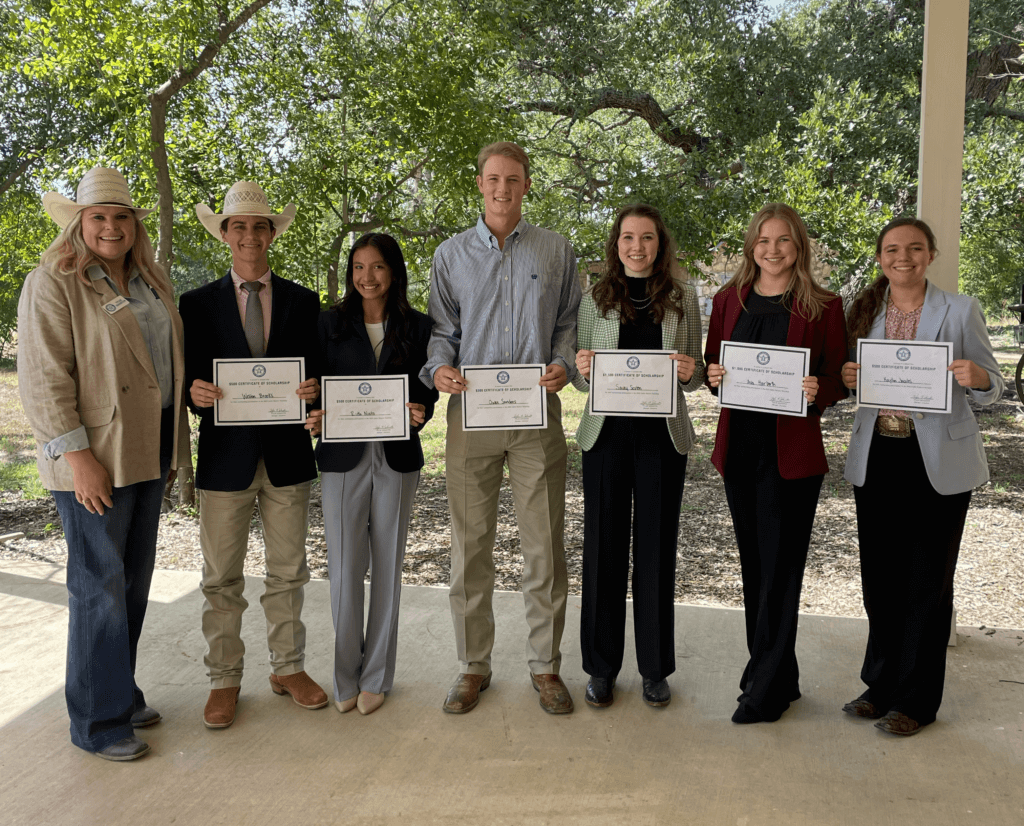
Beef and Cattle Trade Responds to Cattle Market Conditions

Dr. Derrell Peel, Oklahoma State University Extension Livestock Marketing Specialist, offers his economic analysis of the beef cattle industry as part of the weekly series known as the "Cow Calf Corner" published electronically by Dr. Peel and Mark Johnson. Today, Dr. Peel talks about the latest cattle market trends and conditions.

Cattle and beef markets are undergoing a sharp transition in 2023 with ever-tighter cattle numbers, declining beef production and sharply higher cattle and beef prices. These market conditions are expected to impact international trade of U.S. cattle and beef. Reduced beef supplies and higher prices are projected to lead to reduced beef exports and increased beef imports. The strength of the U.S. dollar and the impacts of exchange rates may further exaggerate or mute these underlying market forces. The relatively strong dollar in recent months has tended to dampen beef exports and support increased imports. Unique market factors in specific countries will also impact trade flows in particular markets. The most recent trade data confirms that the expected impacts are indeed developing. 

Beef exports in the latest data for May are down 19.9 percent year over year. Total beef exports for the year to date are down 11.4 percent compared to the record pace in 2022. Beef exports began to weaken in late 2022 and have been down year over year each month for the past seven months. Beef exports to Japan were down 36.4 percent year over year in May and are down 13.9 percent for the January to May period compared to last year. Exports to South Korea were down 14.0 percent in May contributing to an 11.3 percent decrease year over year thus far in 2023. For the year to date, South Korea is the largest market for beef exports, ahead of Japan so far this year. China/Hong Kong remains the number three beef export market but is down 9.3 percent for the January to May period following an 11.1 percent year over year decrease in May. 

Mexico remains the number four beef export market and is the only major market that is higher, up 10.3 percent year over year for the year to date but was down 5.4 percent in May compared to one year ago. Beef exports to the number five market in Canada were up 22.7 percent in May, holding the year-to-date total to a 3.3 percent decrease compared to last year. Taiwan is the number six beef export market and was up 7.8 percent year over year in May but remains down 16.1 percent for the first five months of the year compared to one year ago. 

Total beef imports were up 5.7 percent year over year in May. For the year thus far, beef imports are down a scant 0.6 percent compared to the first five months of last year. Beef imports appear to be reverting to more traditional import patterns with May imports of beef from Australia up 39.1 percent and imports from New Zealand up 23.2 percent for the month. For the January to May period, beef imports from Australia are up 23.9 percent with New Zealand up 9.0 percent year over year. Australia is currently the fifth largest beef import source behind fourth place New Zealand. Canada remains the leading beef import source with May imports down 6.9 percent and a year-to-date total up 2.3 percent. Mexico is the number two beef import source with May imports down 4.1 percent and cumulative imports for the year down 11.9 percent. Brazil is the third largest source of beef imports with May imports down 9.2 percent and total imports down 11.5 percent thus far in 2023. Beef imports will continue to be supported by higher domestic beef prices and the reduction in U.S. processing beef supplies due to reduced cow slaughter. 

Cattle imports from Mexico are rebounding sharply from the 15 year low in 2022. Total cattle imports from Mexico for the year thus far were up 49.0 percent in May and are up 37.4 percent for the January to May period. Increased cattle imports from Mexico offsets a 16.5 percent year to date decrease in cattle imports from Canada leading to an 11.1 percent increase in total cattle imports thus far in 2023. Very dynamic U.S. market conditions will continue to impact beef and cattle trade flows for the foreseeable future.  

Pecan growers invited to free crop thinning demo

Pecan growers expecting high yields this fall can benefit from the management practice of crop thinning. (Photo by OSU Agriculture)

By Gail Ellis

The Oklahoma Pecan Management Program will host two pecan crop thinning demonstrations to help growers improve the quality of this year's harvest and next season's return crop.

Demonstrations will be held July 27, 4-5:30 p.m. in Madill, and August 8, 4-5:30 p.m. in Perkins.

"The high yields we're expecting this fall can benefit from pecan thinning," said Becky Carroll, OSU Extension fruit and pecan specialist. "Many growers are hesitant to thin their crops, but demonstrating the process may give them more confidence to effectively manage their orchards."

Growers will learn the benefits, proper timing and equipment needed for pecan crop load management. Attendees will have the opportunity to participate in pecan crop load assessment and the thinning process in the orchard. Each demonstration will be followed by a question-and-answer session.

The event is free, and participants are encouraged to bring a lawn chair. For more information, contact Carroll at becky.carroll@okstate.edu or 405-744-6139.

OSU Extension uses research-based information to help all Oklahomans solve local issues and concerns, promote leadership and manage resources wisely throughout the state's 77 counties. Most information is available at little to no cost.

Performance Livestock Analytics Secures Investment from Builders VC, Separates from Zoetis to Fuel Growth

Performance Livestock Analytics provides easy-to-use software for cattle producers across the United States, Canada and other countries.

Performance Livestock Analytics (PLA), a leader in data analytics solutions for livestock producers, is excited to announce its separation from Zoetis. The newly independent PLA business is led by its original founders, Dane Kuper and Dustin Balsley, and with financial investment from Builders VC.

The strategic decision for PLA to separate from Zoetis is a result of PLA's growth and increasing market demand for its cutting-edge digital solutions. The separation will provide PLA with increased agility and autonomy to respond to market dynamics and customer needs.

Builders VC's investment will fuel PLA's expansion plans, including further product development, expanding market reach and scaling operations to support growing customer demand.

"This represents an exciting milestone in our journey. We are grateful to Zoetis for their support in growing Performance Livestock Analytics and enabling us to reach this pivotal moment," says Dane Kuper, CEO of Performance Livestock Analytics. "With the backing of Builders VC, we are well-positioned to accelerate our growth and continue empowering livestock producers with the tools they need to make informed decisions, improve their operations and drive profitability."

PLA is an established leader in the livestock technology space, combining cloud-based platforms with automated on-farm data collection to provide powerful analytics livestock producers need to make the best decisions.

The company's core product, Performance Beef, makes it easy to change rations, create accurate invoices and closeout reports, track individual animal health, and analyze trends in performance. Cattle Krush complements Performance Beef, using real-time market data to give producers instant breakeven, market analytics and profit alerts to help in buying and selling cattle.

"We are thrilled to once again collaborate with the Performance Livestock Analytics team as they embark on this exciting new chapter," said Mark Blackwell, General Partner at Builders VC. "As an early backer of the team in the initial iteration of the business, we have witnessed their remarkable growth and unwavering dedication to revolutionizing the livestock industry. We are delighted to continue supporting their mission as they chart their independent path, leveraging data analytics to empower livestock producers and drive sustainable practices. Together, we are poised to make an even greater impact on the industry."

The PLA team will continue to work closely with Zoetis as a strategic partner to ensure a seamless transition for existing customers.

Oklahoma Counties Designated as Natural Disaster Areas per the Federal Emergency Management Agency

This Presidential disaster declaration allows the United States Department of Agriculture (USDA) Farm Service Agency (FSA) to extend much-needed emergency credit to producers recovering from natural disasters through emergency loans. Emergency loans can be used to meet various recovery needs including the replacement of essential items such as equipment or livestock, reorganization of a farming operation, or to refinance certain debts. FSA will review the loans based on the extent of losses, security available, and repayment ability. 

Impacted Area: Texas and Oklahoma 

Triggering Disaster: Severe Winter Storm 

Application Deadline: December 8, 2023

Primary Counties Eligible:
Texas: Anderson, Falls, Gillespie, Hopkins, Kerr, Kimble, Limestone, Red River

Contiguous Counties Also Eligible:
Texas: Bandera, Bell, Blanco, Bowie, Cherokee, Delta, Edwards, Franklin, Freestone, Henderson, Hill, Houston, Hunt, Kendall, Lamar, Leon, Llano, McLennan, Mason, Menard, Milam, Morris, Navarro, Rains, Real, Robertson, Schleicher, Sutton, Titus, Wood 

Oklahoma: Choctaw and McCurtain

Triggering Disaster 2: Severe Storms, Straight-line Winds, and Tornadoes 

Application Deadline: December 26, 2023

Primary Counties Eligible: McClain and Pottawatomie

Contiguous Counties Also Eligible:
Oklahoma: Canadian, Cleveland, Garvin, Grady, Lincoln, Okfuskee, Oklahoma, Pontotoc, Seminole 

Triggering Disaster 3: Severe Storms, Straight-line Winds, and Tornadoes 

Application Deadline: January 8, 2024

Primary Counties Eligible: Cleveland

Contiguous Counties Also Eligible:
Oklahoma: Canadian, McClain, Oklahoma, Pottawatomie

Triggering Disaster 2: Severe Storms, Straight-line Winds, and Tornadoes occurring April 19-20, 2023 

Application Deadline: December 26, 2023

Primary Counties Eligible: McClain and Pottawatomie

Contiguous Counties Also Eligible:
Oklahoma: Canadian, Cleveland, Garvin, Grady, Lincoln, Okfuskee, Oklahoma, Pontotoc, Seminole

More Resources
On farmers.gov, the Disaster Assistance Discovery Tool, Disaster Assistance-at-a-Glance fact sheet, and Loan Assistance Tool can help you determine program or loan options. To file a Notice of Loss or to ask questions about available programs, contact your local USDA Service Center.

FEMA offers different assistance programs for individual citizens, public groups including government agencies and private nonprofit organizations. To find the FEMA help you need following a disaster event, visit fema.gov/assistance.

USDA is an equal opportunity provider, employer and lender.
MCEP Allows Cotton Belt Leaders to Tour Idaho Agriculture

Farmers from eight states in the southern half of the nation toured agricultural production and processing operations in Idaho on June 25-30 as part of the National Cotton Council's Multi-Commodity Education Program (MCEP).

Launched in 2006, the program is coordinated by NCC's Member Services, and commodity association leadership. It is supported by The Cotton Foundation with a grant from John Deere.

The MCEP is designed to provide its participants with: 1) a better understanding of production issues/concerns faced by their peers in another geographic region, 2) observation of that region's agronomic practices, technology utilization, cropping patterns, marketing plans and operational structure; and 3) tours of the region's research facilities and its agricultural processing operations and related businesses relevant to the area economy.

The 2023 tour's participants included: Daniel Baxley, Dillon, S.C.; Marvin Beyer, Taft, Texas; Philip Edwards, Smithfield, Va.; Richard Gaona, Roby, Texas; Jon Jones, Floydada, Texas; Jeff Hill, Gates, Tenn.; Charlie Meyer, Stratford, Calif.; Brent Murphree, Mason, Tenn.; Reid Nichols, Altus, Okla.; Nathan Reed, Marianna, Ark.; Jadee Rohner, Tempe, Ariz.; Martin Stoerner, Lockney, Texas; Jon Whatley, Odem, Texas; Brad Williams, Burlison, Tenn.; and Greg Wuertz, Casa Grande, Arizona. The group was accompanied by John Gibson, Vice-President of the NCC's Member Services in Memphis.

The tour, which was hosted and arranged by the Idaho Barley Commission (IBC), Idaho Grain Producers Association (IGPA) and Idaho Wheat Commission (IWC), began on June 26 in Twin Falls with an overview of Idaho agriculture from staffers with IBC and IGPA. During a visit to the Riverence Trout Farm, Blue Lakes Facility, the group heard presentations on aquaculture research and commercial trout production. They also toured the Milner Dam for a presentation on Idaho water issues and visited the Oak Valley Dairy Farm. The group ended the day with a tour of the McCain Foods French Fry Plant and a personal tour of the surrounding area.

On the 27th, the group traveled to Caribou County where they visited Gibbs Farms to tour seed potatoes before visiting Bayer for a phosphate mine tour. They also toured Bar H Bar Ranch to see public and private land grazing and toured Thunder Mountain Elk Ranch.

The next day, the group was welcomed at the Idaho Farm Bureau offices and then traveled to American Falls where they toured the Driscoll Farms fresh pack potato and hay compaction facilities. Also scheduled that day was a visit to a John Deere dealership, a look at the American Falls dam, sugarbeet production at Clinger Farms, and a tour of dryland grain production at Kress Farms.

On the 29th, the group toured Anheuser Busch in Idaho Falls and then traveled to Hamer where they observed no-till barley and mustard fields at Place Farms, visited the Cubeit Hay Company, the Intermountain Bison Ranch and then concluded the tour at Hamilton Farms in Ririe.

Investing in Future Generations: United Sorghum Checkoff Program Unveils Curriculum for Grades Kindergarten through 12th

The United Sorghum Checkoff Program launched its first Farm-to-School Curriculum, an agricultural education initiative that aims to integrate the science and production of sorghum, in addition to its nutritional value, into classrooms across the United States.

"We are thrilled to provide teachers with comprehensive materials that incorporate various aspects of sorghum into subjects from STEM to Language Arts," Sorghum Checkoff Director of Food Innovations & Institutional Markets, Lanier Dabruzzi MS, RD, LD said. "This initiative underscores our commitment to agriculture education and our goal to inspire the next generation to recognize and utilize the potential of sorghum in their lives and the world around them."

The curriculum provides educators with an array of engaging resources that introduce students to the importance of sorghum as a sustainable, versatile and flavorful grain that can be enjoyed in a variety of ways. The program also aims to ignite the passion for agriculture in the next generation, cultivating an understanding and appreciation for sorghum. 

"The focus on Farm-to-School is an exciting addition to our educational outreach," Sorghum Checkoff Executive Director, Norma Ritz Johnson said. "It serves as a remarkable resource for teachers, providing lesson plans and activities that conform to National Science and Common Core State Standards. We believe this curriculum will not only spark students' interest in sorghum, but also inspire them to explore careers in agriculture. By introducing children to sorghum and its multitude of benefits early in their developmental years, we hope to cultivate a long-lasting appreciation for this crop. This early exposure aims to foster a new generation of consumers who are well-informed about the source of their food and cultivate a love for sorghum-based foods."

The Sorghum Farm-to-School curriculum engages students of all grade levels, from Kindergarten to 12th grade, through experiential learning. Tailored modules for elementary, middle, and high school students offer rich, multisensory experiences. Students not only grow and taste sorghum, but they also explore various subjects by writing about and applying their knowledge of this versatile grain. These learning experiences cover a wide spectrum of educational content, from understanding sorghum's crucial role in global food security and world nutrition, to exploring its potential as a renewable energy source. The program is further enriched with an interactive video, promoting an engaging and comprehensive learning environment.

Find tailored curriculum content and activities for Kindergarten to 12th grade students by exploring SorghumCheckoff.com/educators.

Managing Weeds Organically on a Wholesale Radish Farm in Texas

Shakera and Juan Raygoza went from a small vegetable CSA to running a wholesale radish farm in the suburbs of Edinburg, Texas. The use of a basket weeder has proven essential to the success of their newer operation, because it offers efficient weed control on a larger scale. In these videos the Raygozas talk about both their overall approach to weed management, the importance of the basket weeder to their growth, and their use of hand tools in the market garden they continue to maintain.
Terra Preta main.png
Manage Weeds on Your Farm: Terra Preta Farm
Terra Preta basket weeder.png
Basket Weeders at Terra Preta Farm

Legislation to preempt state factory farm regulation is a "race to the bottom"

Last week, Representative Ashley Hinson (R-IA) introduced House companion legislation to Senator Roger Marshall's (R-KS) Ending Agricultural Trade Suppression (EATS) Act. The bill would preempt state regulation of the factory farm and agribusiness industry, including for animal welfare, consumer protection labeling, and food safety.

The bill was introduced in the wake of the Supreme Court ruling in National Pork Producers Council v. Ross, which upheld a California law that bans the in-state sale of pork, eggs, and veal from animals "confined in a cruel manner." The decision was widely celebrated as a victory against the worst factory farm abuses, and a win for state authority to expand protective measures, affirming that states can regulate goods within their borders.

Food & Water Watch Senior Food Policy Analyst Rebecca Wolf issued the following statement:

"The EATS Act encourages an archaic race to the bottom in which consumers, animals and our environment lose out to enormous profit-grubbing corporations — it must be dead on arrival.

"The EATS Act is the latest effort by corporate Republicans to curry favor with their Big Ag donors by shielding factory farms from regulation. Rather than legislate for the future, electeds and their corporate cronies are throwing a tantrum over issues that are done and dusted. State authority to regulate animal welfare, food labeling, and agricultural practices is necessary to facilitate a humane, safe and sustainable food supply — the Supreme Court ruling to uphold Prop 12 only underlined this reality."

2023 Junior Wheat Show to Be Held in Stillwater on July 18

Listen to Ron Hays talk with Mike Schulte about the 2023 Junior Wheat Show.

Senior Farm and Ranch Broadcaster, Ron Hays, is talking with the Oklahoma Wheat Commission Executive Director, Mike Schulte, about the upcoming 2023 Junior Wheat Show.

"We have had a little bit of a shorter timeline, probably for students to get their samples clean, ready and submitted, but the visual portion of the Junior Wheat Show competition will take place on Tuesday, July 18 at the Payne County Fairgrounds," Schulte said. "That is the location we have had it at the last 20 years for the visual portion."

If exhibitors are not able to be there in person, Schulte said they can submit samples through the mail to the Payne County Fairgrounds at 4518 Expo Cir E in Stillwater, OK 74075. Those samples must arrive through the mail before Friday, July 14, Schulte added.

The judging will take place on July 18, Schulte said, and if contestants are there in person, sample taking will begin before 8 a.m.

"After 8:30 a.m., after everybody is checked in, then we will start the judging right then at that point in time," Schulte said.

After the visual part of the contest, Schulte said, the milling and baking portion will take place at a later date.

"That portion will follow in the next few weeks, and we will award those prizes for the scholarships and our top 25 winners sometime at the end of October or beginning of November," Schulte said. "That date has not been set for the banquet, but it is a wonderful opportunity for students to get involved."

Although there may not be a large increase in involvement this year because of difficulties with the wheat crop, Schulte said there have been large increases in participation over the past two years.

"It is a great opportunity for students to become involved in learning professions about agronomy or weed science or ag economics or ag marketing, or even serial chemistry," Schulte said. "We feel like this is a wonderful way to show opportunities that exist in the College of Agriculture at Oklahoma State University when they are thinking about future careers."

Entry forms can be found at okwheat.org or by clicking here.

Schulte also talked about upcoming opportunities for the Oklahoma Wheat Commission to showcase wheat in Oklahoma at the end of July.

"We do have a trade delegation coming at the end of the month from Chile," Schulte said. "We are going to be doing some tours in southwest Oklahoma, really where the bright spot was for wheat production this year, and so we are kind of excited that we are going to be able to go down in that region."

US Wheat Associates Harvest Update for July 7, 2023

The HRW harvest has nearly wrapped up in Texas and Oklahoma, while weather events continue to slow progress in Kansas. Harvest continues to progress in the SRW growing region with little to no change in data. Rain is needed in the HRS and northern durum growing regions for optimal crop development. In the Pacific Northwest, warmer weather is accelerating crop maturation.

AAA Oklahoma: Gas Prices Wobble, But They Don't Fall Down

This Week
Pump prices barely budged over the past week, despite the expected demand surge due to the July 4 holiday. AAA predicted that more than 43 million people would hit the road to celebrate the nation's birthday. Despite the record number, the national average for a gallon of gas drifted two cents lower since last week to $3.53, which is $1.22 less than a year ago. In Oklahoma, the gas average is $3.19 today, down three cents in the last week and $1.29 lower than one year ago.

According to new data from the Energy Information Administration (EIA), gas demand increased slightly from 9.31 to 9.6 million b/d last week. Meanwhile, total domestic gasoline stocks decreased by 2.5 million bbl to 219.5 million bbl. Rising gas demand amid decreasing supply will likely push pump prices higher. 

CURRENT AND PAST GAS PRICE AVERAGES

Regular Unleaded Gasoline (*indicates record high)

 07/07/23Week AgoYear Ago
National$3.53$3.55$4.75
Oklahoma$3.19$3.22$4.48
Oklahoma City$3.20$3.23$4.52
Tulsa$3.11$3.21$4.29
Lawton$3.01$3.01$4.20
Le Flore /
Sequoyah
$3.17$3.15$4.51
Crude Oil$73.67 per barrel (07/07/23)$70.64 per
barrel (06/30/23)
$104.79 per
barrel (07/08/22)

At the close of Friday's formal trading session, WTI crude oil settled at $73.67, up 4.3% on the week. Oil prices have increased this week due to market concerns that supply may be tight through the remainder of 2023. However, price increases are capped due to ongoing market fears that a recession will occur. If a recession occurs, oil demand and prices will likely decline.

The Weekend

"Gas prices may rise over the next few days based on slightly higher demand," said Rylie Mansuetti, AAA Oklahoma spokesperson. "But it could be more of a blip than a trend, and demand may retreat once the holiday is further in the rearview mirror."

AAA has a variety of resources to help motorists save on fuel:

Next Weekend Gas Watch: Friday, July 14, 2023

Dairy Defined: Need for Lab-Based Beverage Action as Clear as a Milk Label

It's the difference between

"Water, animal-free whey protein (from fermentation), sunflower oil, sugar, less than 1% of: vitamin A, vitamin B12 (cyanocobalamin), vitamin D2, riboflavin, citrus fiber, salt, dipotassium phosphate, acacia, gellan gum, mixed tocopherols (antioxidant), calcium potassium phosphate citrate, natural flavor," ...  and this:

We've warned FDA of the problems resulting from this fabrication, and we hope our warning doesn't fall on deaf ears. After more than four decades of plant-based imposters using dairy terms that violate the agency's Standard of Identity for milk, lab-based fermenters of single dairy proteins are trying to mislead consumers in the exact same way – by creating a false impression that their slurries of highly processed ingredients are equivalent to dairy. 

They're not. And consumers shouldn't be led to believe otherwise. 

In a letter to FDA asking the agency to take action against the brand Bored Cow, which is marketing its beverage as "animal-free dairy milk" because it uses a single fermented whey protein (real milk has dozens of protein variants and literally hundreds of different fatty acids), the National Milk Producers Federation notes that "it is baseless, preposterous and absurd" to call such a product milk. 

"In the interest of public health, the misleading labeling charade must end before it gets out of hand," NMPF writes. "FDA must act, and must do so now."

Will it? While FDA's proposed guidance on the naming of plant-based beverages finally admits a problem, the lab-based conundrum shows how its purported solution – allowing imitators to use the term "milk" if they disclose nutritional differences – falls short. It's not just about the limited nutrition knowledge we have. It's about the substance itself, and the complex interaction among naturally-occurring ingredients that any honest marketer, scientist or regulator knows we don't fully understand. That humility, and the need to protect against consumer confusion that's been acknowledged by the last three FDA commissioners, is more than enough reason to take action now. Because without it, the imposters will proliferate, the headaches will grow, and the marketplace will only become less transparent, in yet another abandonment of FDA's mission to protect consumers. FDA must enforce its Standard of Identity rules on lab-based dairy labeling now. The need is as basic as the ingredient listing on a bottle of milk. FDA can't let that clear principle be dragged through the mud – or whatever substances these fake "milks" are made of. 

Lower-end Beef is Becoming Less Popular as Consumers Crave High-Quality

Listen to Ron Hays talk with Nick Hardcastle about consumers' demand for high-quality beef.

Senior Farm and Ranch Broadcaster, Ron Hays, is talking with the Cargill Beef Sustainability Lead, Nick Hardcastle, about consumers' desire for a high-quality beef product.

"It has pretty much shown over the past few years, we have increased grade year-over-year through Covid, and demand has flourished, in all honesty," Hardcastle said.

Consumers have a taste for high-quality beef, Hardcastle said, which has created a standard for the future. Hardcastle also talked about his involvement in branded beef programs.

"I know we have at least ten sorts within our facility that specifically have some sort of quality value to them," Hardcastle said. "Most of those sorts start breaking down in the Choice category. The reason being is that retailers, food service, like to have opportunity there to buy something that fits their specific program."

A specific sorted program creates value, Hardcastle said, because it is seen as a guarantee of quality on the menu at restaurants or in the meat case.

"Sterling Silver is Cargill's upper two-thirds Choice product," Hardcastle said. "We actually promote that with a tenderness verification on it, so we only sell that beef if it meets a certain threshold for being a tender product."

The difference between Sterling Silver and CAB, Hardcastle said, is that Sterling Silver is not just Angus cattle.

"Select is still always going to have a home because it is going to pop up at a high enough percentage, but the number of people who are actually looking for it to put in their meat case on a daily basis is fewer and far between," Hardcastle said.

When harvest drops, Hardcastle said it will be a good test to see what the Select market looks like as well as the No-Roll category.

The Beef Buzz is a regular feature heard on radio stations around the region on the Radio Oklahoma Ag Network and is a regular audio feature found on this website as well. Click on the LISTEN BAR for today's show and check out our archives for older Beef Buzz shows covering the gamut of the beef cattle industry today.

OSU researchers using sound technology to study bass populations

Oklahoma State University graduate student Joe Dittmer conducted research measuring shad populations with hydroacoustic technology at Beaver Lake, located near Rogers, Arkansas. (Photo by Shutterstock)

By Alisa Boswell-Gore

Oklahoma State University Ag Research experts are studying the population size of shad fish in Arkansas reservoirs to help maintain bass fishing for anglers.

OSU graduate student Joe Dittmer and Dan Shoup, professor in the OSU Department of Natural Resource Ecology and Management, are using hydroacoustics technology to sample shad populations, which are small schooling fish that travel in packs and serve as a primary food source for temperate bass.

Hydroacoustics is the study of sound waves in water. These sound waves can provide researchers valuable information. In this case, they are determining the size of shad populations to evaluate the bass' food supply.

Fishing has a large economic impact in the U.S. According to the American Sportfishing Association, U.S. anglers have an economic output of $148 billion annually with Oklahoma contributing $2.5 billion and Arkansas generating $1.2 billion. Lusk said that in 2017, there were an estimated 267,352 licensed resident anglers in Arkansas with a top three preference for black bass. These anglers have invested nearly $3 billion in their fishing and boating equipment. Oklahoma anglers also travel into Arkansas to bass fish. 

"Historically, managing the predator-to-prey ratio in large reservoirs has been very reactive," said Sean Lusk, a biologist with the Arkansas Game and Fish Commission. "By the time biologists identify there are too many predators and not enough prey, it is difficult to implement any action that can quickly restore the proper ratio. Hydroacoustics gives us the ability to better predict an imbalance and adjust management strategies to protect the prey population."

Through his research, Dittmer shoots sound into the water then measures how long it takes and at what volume the sound returns. This shows researchers how far away an object is and how big or small it is – a large fish will likely give off a stronger, louder sound than a small fish.

"To some extent, we can even characterize what produced the echo," Shoup said. "We can take that time delay and measure the distance the object is from the hydroacoustics technology."

Arkansas Game and Fish officials stock temperate bass in their reservoirs, Dittmer said, because the fish do not reproduce on their own in most freshwater reservoirs. Measuring the bass' food source indicates how many bass a reservoir can support.

"Accurately sampling shad with traditional methods would take a lot of time, and you don't necessarily get a true representation of what's actually there," Dittmer said.

With hydroacoustics, researchers can cover the entire lake uniformly and at a faster pace. It also gives a precise estimate of population size.

"Arkansas Game and Fish needed someone who could help deal with design issues and develop a protocol to measure shad populations the same way every time," Shoup said.

Dittmer also uses imaging sonar, which is a sonogram-type technology, to see the shad.

"The imaging sonar gave me a good method of tracking how the fish react to the boat, and I can more confidently measure what species of fish my samples are," he said. "Our research centers around whether we can get better data during the day but also trying to tackle the problems that come with daytime data."

Their research found that sampling shad during the day rather than at night gives a more accurate population estimate. The OSU researchers hope to soon develop a standard sampling method and set a hydroacoustic protocol that can be implemented on lakes across Arkansas.

"It will be an essential tool in making informed management decisions," Lusk said.

OSU Ag Research is Oklahoma's premier research and technology development agency in agriculture, natural resources and the life sciences.

In a Rut – Breeding Season Behaviors in Deer

The term "rut" is often used to describe a boring, monotonous routine or a trench worn in the ground by a wheel. However, if you hang around much in white-tailed deer hunting circles, chances are that it means something completely different. Many people use the term rut only in reference to the peak of the breeding season, but it really applies to a much more extended period of time. The rut refers to all behaviors and activities associated with the breeding season.

There are several behaviors associated with the rut. Rutting behavior typically begins around the time that velvet is shed from the antlers (coinciding with decreasing day length and increasing testosterone levels) and ends when antlers are shed (coinciding with declining testosterone levels). The first sign of rutting behavior is often sparring among bucks. Sparring may take place between bucks of equal stature or between a dominant and subordinate buck. Initially, these are usually short-lived, low intensity, pushing and shoving matches. These sparring matches may help establish the dominance hierarchy among males. As the peak of the breeding season approaches, sparring matches may give way to full-blown antler fights. These generally take place between bucks of similar hierarchal status.

Deer rubs
These trees show wear from rubbing. Rubs are made as part of deer rutting behavior.

Two other behaviors associated with the rut are "rubbing" and "making scrapes." Both serve as scent signposts for olfactory and, perhaps, visual communication. A lot of rubbing behavior takes place shortly after velvet is dried and/or shed, but continues throughout the rutting period. A rub is initially made by a buck rubbing his antlers and forehead (for scent deposition) on a shrub or small tree. Once created, a rub may be used by several bucks or does. Generally, bucks begin "making scrapes" several weeks after the first rubs appear. This activity increases as the breeding season peaks and then declines throughout the remainder of the rutting period. A scrape is made by a buck pawing a spot of ground, usually to bare soil, and rub-urinating in that soil. A scrape is often associated with a low, overhanging branch which is often broken by the buck biting and/or pulling on the branch. Scent from the forehead, preorbital gland or mouth is often deposited on the broken branch. Much rubbing and scraping behavior is nocturnal.

In our service area in Oklahoma and Texas, the peak of the rut is generally in mid-late November. A common belief is that cooler weather is responsible for the increased rutting activity at this time; however, photoperiod is the primary contributor. During this two to three week period, most does come into estrous for the first time of the season. Does are receptive for around 24 hours. If they are not bred during this time frame, they generally recycle in three to four weeks. A doe will recycle several times; however, failure to conceive during the first or second estrous period may indicate an improper buck to doe ratio. As the peak of the rut approaches, there is an increase in bucks chasing does (usually before she is receptive) and bucks tending does (usually during a doe's receptive period). These activities are often witnessed by hunters and are often what hunters are speaking about when they talk about the rut. Most antler fights occur during this period as well; however, most male encounters are settled without physical altercation. Frequency of antler fights declines after the peak of the rut.

Story credit: Ken Gee, Noble Research Institute

Texas 4-H Roundup Awards More Than $2 Million in Scholarships

From June 5-8, Texas A&M University in Bryan-College Station was the site of the largest gathering of 4-H members and supporters in the country. 

More than 1,580 high school-level 4-H members attended the Texas 4-H Roundup, touted as the pinnacle annual event for the Texas 4-H program. About 2,000 parents, volunteers, donors and other supporters also attended.    

Roundup, hosted by Texas 4-H Youth Development, the largest youth education and development component of Texas A&M AgriLife Extension Service, has been held almost every year since 1946. 

This year, 242 scholarships were awarded to 4-H members throughout the state. As the largest 4-H scholarship program in the nation, members were awarded just over $2.7 million in scholarships at the event. 

About the Texas 4-H Roundup 

Texas 4-H Roundup is an annual invitational and qualifying event for 4-H senior members who placed in a district-level contest or signed up to compete in one of its invitational events. 

Texas A&M AgriLife faculty and staff from the College of Agriculture and Life Sciences are involved in planning, developing and implementing the annual event. 

Roundup is typically held on the Texas A&M campus and at other locations in the Bryan-College Station area and includes diverse competitions and educational workshops compatible with the wide variety of 4-H projects. 

"Roundup brings together youth from 4-H clubs throughout Texas to share in a week of fun, educational activities and camaraderie, plus it allows them the opportunity to participate in about 50 diverse competitions," said Jana Barrett, AgriLife Extension specialist, 4-H and youth development, Bryan-College Station. 

Barrett said contests held at the state level are both qualifying — requiring competing and advancing from a county and district level to state — and invitational, which are open contests for any high school 4-H member. 

"No matter the contest type, all have significance and many provide the opportunity to advance to compete at a national level, representing Texas," she said. 

This year's competitions related to agriculture and livestock, horses, STEM topics, health and wellness, food and nutrition, photography, consumer sciences, public speaking, wildlife, outdoor sports and more.   

"We held 50 contests over three days, in addition to presenting a college and career fair, interactive trade show, workshops and various educational opportunities," Barrett said. 

She said some of the most popular contests were Livestock Judging, Food Challenge, Wool Judging, Consumer Decision Making and various public speaking competitions.  

Barrett said it took the efforts of more than 550 AgriLife Extension county agents, volunteers and Texas A&M faculty to present this year's event. 

"Roundup was well attended this year, and was an exciting time for everyone," said Callie Cline, Texas 4-H marketing and communications specialist based in College Station. "Evening assemblies brought all participants together to celebrate award winners, scholars and the Texas 4-H Council. We saw growth across the board in all contests, and we are grateful for the efforts all youth, parents, volunteers and AgriLife Extension personnel put toward making this event a reality."  

This article first appeared on Texas AgriLife Today and is republished with permission. 

Wheat Harvest All But Done as Final Acres May Not be Harvested Due to July Rains

Picture from Daniel Crossley on Okarche from Central Oklahoma 2023 Wheat Harvest

Ron talks with Mike Schulte about the 2023 HRW Harvest in Oklahoma

The 2023 hard red winter wheat harvest has been one for the record books in the southern great plains- and not particularly in a good way. Oklahoma Farm Report's Ron Hays talked this past Friday with Oklahoma Wheat Commission Executive Director Mike Schulte about the OWC's final harvest report of the season released last Thursday- and how the rains that started in May and have continued into early July have made it difficult to harvest the smaller wheat crop expected because of dry conditions in the majority of the growing season.

Schulte says "we did start getting rain the third and fourth week of May when the crop was ready (to harvest) and in all instances producers across the state have been so thankful for it have not been complaining about it- it did allow us to harvest some things that we never even thought would make a crop at all so in those instances, it did help us in central Oklahoma but there was just so much loss to begin with.

"Once we got into the fields, farmers have had to struggle just getting it out- it seems like we were able to get on the combines and cut a half a day and then overnight- we would get a half inch to an inch to halt things- and that has been happening from Memorial Day all way to the Fourth of July and now even into week after the Fourth."

Schulte says we are still right around ninety percent complete- but he simple does not know if in locations where the rains have continued to fall- where the fields are muddy and have rapidly growing weeds- those locations may not be able to complete the harvest of those fields- and that could add up to thousands of acres that are abandoned. Schulte adds that those acres being abandoned won't be reflected in the next Crop Production Report from USDA due out this coming Wednesday.

Schulte is pleased with the quality given all the challenges we have faced this harvest season. He believes that the first fifty to sixty person of the crop that was harvested was mostly brought in with the 60 pound test weight or better- and while the numbers have likely declined with the later wheat harvested because of the rainy conditions- he thinks we may end up with a 59 pound test weight average this year "and that's pretty remarkable because of the challenges that we have had."

The Wheat Commission Exec is not certain what the total production numbers may end up looking like- he believes that USDA was pretty close with their June estimate of 54 million bushels with a 25 bushel per acre yield- but that with the acres that could end up being abandoned because of the rains of late June into July- that may prove to be a little too optimistic for the final 2023 stats.

Sen. Montgomery announces resignation, accepts new role with Lawton Chamber

Sen. John Michael Montgomery, R-Lawton, released the following statement Friday after announcing that he will be resigning from the Oklahoma Senate, effective Aug. 1, 2023, to accept the role of president and CEO of the Lawton Fort Sill Chamber of Commerce.

"It has been an honor and truly humbling to have been able to represent at the state Capitol the community that I have grown up in and call home for the last nine years. I am deeply grateful for the trust my constituents have placed in me, for the outpouring of support I have had, and cherish my colleagues I have worked with these many years. I consider it a great blessing to be able to continue to work for my home in a new role as president and CEO of the Lawton Fort Sill Chamber of Commerce and believe that my resignation from the Oklahoma State Senate, effective August 1, 2023, will be a long term investment in our community."

NPB Update | Impacts of Macroeconomics on Agriculture

The Intersection of Agriculture and Economic Development: A Macroeconomic Outlook  

In a recent webinar, Nate Kauffman, senior vice president and Omaha branch executive at the Federal Reserve Bank of Kansas City, discussed the relationship between agriculture and broader economic development. 

The relationship between interest rates, inflation, commodity prices, farm income, export activity and land values has shaped the economic landscape for agricultural producers. Understanding these macroeconomic trends can help you navigate the challenges and opportunities in your business. 

Click here to watch the webinar.  


Q2 USDA Hogs and Pigs Report Analysis

The Quarterly USDA Hogs and Pigs report was released last week and Dr. Steve Meyer, lead economist, Partners for Production Agriculture, and Dr. Tyler Cozzens, agricultural economist, Livestock Marketing Information Center, discussed the report and what it means for producers. 

Key Takeaways: 

➡️ All hogs and pigs were 72.4 million head, slightly up from last year but down 1% from the March 1 inventory

➡️ Breeding inventory was 6.15 million head, slightly down from last year but up 1% from March 1 inventory

➡️ Market hog inventory was 66.2 million head, slightly up from last year but down 1% from March 1 inventory

➡️ 3 key issues driving pork markets: Proposition 12, declining pork demand and rising production costs

Learn more about the Hogs and Pigs Report. 


🐷 Pig Out on the Big Pig Breakfast Sandwich

Introducing the ultimate breakfast indulgence: the Big Pig sandwich! Head to your nearest EG America Banner convenience store this summer and treat yourself to a pork-lover's dream. Packed with over 6 ounces of pure pork goodness, including 1 sausage patty, 2 slices of ham and 4 slices of bacon!

This mouthwatering sandwich was created out of NPB's partnership with EG America, the 4th largest convenience store operator in the U.S. with 1,702 stores in 30 states. The Big Pig first hit menus in 2020, with 300,000 sandwiches sold in 4 months. The pandemic and supply chain issues hindered full-time availability, so we're thrilled to announce its return as a limited-time offer (LTO) with the goal of making it a permanent menu item.

But there's more to this partnership than just a tasty sandwich. The Pork Checkoff funds invested in this promotion circulate back into local convenience stores. 

Indulge in the delicious sandwich and help turn this limited-time offer into a menu staple! Head to your nearest EG America Banner Store today and experience the porky perfection of the Big Pig sandwich.

Look for a location near you! Snap a pic of your sandwich and tag @NationalPorkBoard on Instagram. #realpork


​​​​


In the News

Elevate your pork-eating experience by mastering proper cooking temperatures. Now is the perfect time to brush up on these essential guidelines, guaranteeing juicier, more flavorful, and tender results. 

Jim Murray, NPB, channel market development manager, shares expert tips on enhancing your culinary adventures with pork, emphasizing the use of a meat thermometer for precision and ensuring optimal food safety throughout the handling and cooking process.

Read more about cooking pork at home.


Your Thoughts Matter

Enjoying our content? We'd love to hear your thoughts to improve.
Email us to share your feedback

If our content resonates with you, feel free to share this email with others who might be interested. Forward this email to a friend!
​​​​


Related News 

Building U.S. Domestic Pork Volume and Value * | National Hog Farmer

Feed Biosecurity Measures to Mitigate Possible Viral Exposure*| Popular Pig Podcast

Looking at the Loin Differently* | Farm Journal's PORK

Pork Producers Keep Making Leaps, Bounds in Sustainability, Efficiency* | National Hog Farmer

Upcoming Webinar: Meat & Poultry Labeling - An Introduction to USDA's Label Approval Requirements, July 12, 2023

* External links to content developed by third parties do not necessarily represent the views of the National Pork Board.  

USDA Reminds Agricultural Producers of July 14 Deadline to Apply for Pandemic and Natural Disaster Revenue Loss Programs

The U.S. Department of Agriculture (USDA) Farm Service Agency (FSA) reminds producers of the July 14 deadline to apply for both the Emergency Relief Program (ERP) Phase Two and the Pandemic Assistance Revenue Program (PARP). These revenue-based programs help offset revenue losses from 2020 and 2021 natural disasters or the COVID-19 pandemic. 

ERP and PARP offer a holistic approach to disaster assistance and provide economic support for producers who bear the financial brunt of circumstances beyond their control. 

"With a focus on revenue-based assistance, our goal is to provide all producers of eligible crops and livestock, including new and underserved producers, with the financial support they need to recover from the compounded, adverse economic impacts of market and weather instabilities," said Steve Kouplen, State Executive Director for FSA in Oklahoma . "Applying this holistic approach to assistance acknowledges the myriad of crises that producers have faced in recent years, from the ongoing effects of the coronavirus pandemic to the more frequent and intense natural disaster events that have devastated farms, ranches and communities across rural America." 

Eligibility   
To be eligible for ERP Phase Two, producers must have suffered a decrease in allowable gross revenue in 2020 or 2021 due to necessary expenses related to losses of eligible crops from a qualifying natural disaster event. Assistance will be primarily to producers of crops that were not covered by Federal Crop Insurance or NAP, since crops covered by Federal Crop Insurance and NAP were included in the assistance under ERP Phase One.    

To be eligible for PARP, an agricultural producer must have been in the business of farming during at least part of the 2020 calendar year and had a 15% or greater decrease in allowable gross revenue for the 2020 calendar year, as compared to a baseline year.   

FSA offers an online ERP tool and PARP tool that can help producers determine what is considered allowable gross revenue for each respective program. Through cooperative agreements with FSA, nine organizations are also providing free ERP Phase Two application assistance to producers across the United States and territories. 

ERP Phase Two Policy Updates 
USDA recently updated ERP Phase Two to provide a method for valuing losses and accessing program benefits to eligible producers of certain crops, including grapes grown and used by the same producer for wine production or forage that is grown, stored and fed to livestock, that do not generate revenue directly from the sale of the crop.

The value of the eligible crop intended for on-farm use will be based on the producer's actual production of the crop and a price for the crop as determined by FSA's Deputy Administrator for Farm Programs based on the best available data for each crop such as published crop price data or the average price obtained by other producers in the area. Acceptable, published sources including but are not limited to Federal Crop Insurance Corporation established prices, FSA established National Crop Table prices and National Agricultural Statistic Service prices.

Revenue and pricing guidelines for expected revenue for wine grapes and on-farm forage is available online for producer reference and convenience when applying for ERP Phase Two.

Requirement to Purchase Crop Insurance or NAP Coverage
All producers who receive ERP Phase 2 payments must purchase crop insurance, or NAP coverage where crop insurance is not available, in the next two available crop years as determined by the Secretary. Purchased coverage must be at 60/100 level of coverage or higher for insured crops, or at the catastrophic coverage level or higher for NAP crops.

Crops that are not eligible for crop insurance or NAP are still eligible for ERP Phase Two, but producers must obtain Whole Farm Revenue Protection or Micro Farm Program policy to meet linkage requirements.

Maximize FSA Office Visits
Producers should contact their local FSA office to make an appointment to apply for ERP Phase Two and PARP assistance. Producers should also keep in mind that July 15 is a major deadline to complete acreage reports for most crops. FSA encourages producers to complete the ERP Phase Two application, PARP application and acreage reporting during the same office visit.   

More Information  
For more information, view the ERP Phase Two Fact Sheet, PARP Fact Sheet, the ERP Phase Two-PARP Comparison Fact Sheet, ERP Phase Two application video tutorial, PARP application video tutorial, mythbuster blog or contact your local USDA Service Center.     

USDA touches the lives of all Americans each day in so many positive ways. Under the Biden-Harris administration, USDA is transforming America's food system with a greater focus on more resilient local and regional food production, fairer markets for all producers, ensuring access to safe, healthy and nutritious food in all communities, building new markets and streams of income for farmers and producers using climate smart food and forestry practices, making historic investments in infrastructure and clean energy capabilities in rural America, and committing to equity across the Department by removing systemic barriers and building a workforce more representative of America. To learn more, visit www.usda.gov.

USDA is an equal opportunity provider, employer and lender.
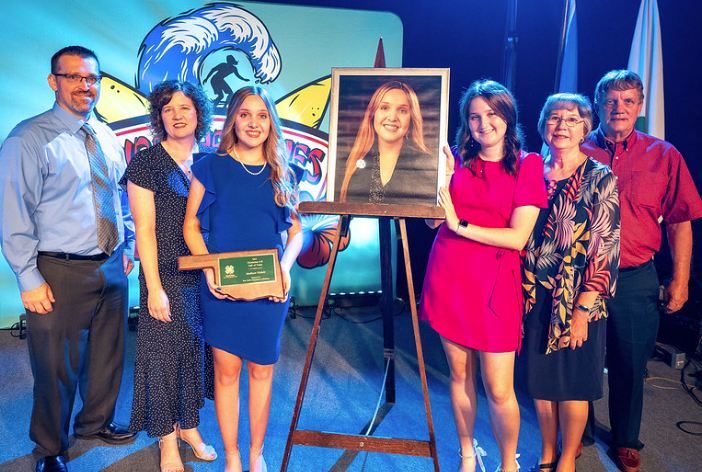
May Pork Exports Highest in Two Years; Beef Exports Below Record-Large, Year-Ago Totals

Led by another outstanding month in Mexico and robust demand for variety meat, exports of U.S. pork continued to gain momentum in May, according to data released by USDA and compiled by the U.S. Meat Export Federation (USMEF). While well below the record-large volume and value posted in May 2022, beef exports improved from April and were the second largest (behind March) of 2023. 

May pork exports reached 261,361 metric tons (mt), up 16% from a year ago, the ninth largest on record and the largest since May 2021. Export value climbed 12% to $731.1 million, also the highest since May 2021 and the seventh highest on record. Pork variety meat exports were particularly outstanding in May, setting a value record of $127 million. 

Through the first five months of the year, pork and pork variety meat exports were 14% above last year's pace at 1.22 million mt, valued at $3.35 billion (up 13%). 

"While pork shipments to Mexico are on a remarkable pace, it takes a wide range of markets to achieve double-digit growth," explained Dan Halstrom, USMEF president and CEO. "Demand is strong throughout the Western Hemisphere and the U.S. industry continues to make gains in Asian markets where supplies of European pork are much tighter than a year ago." 

Beef exports totaled 116,159 mt, down 14% from the May 2022 record but up 4% from the previous month. Export value was $874.7 million, down 19% year-over-year but 2% above April. For January through May, beef exports were down 10% to 554,069 mt, valued at $4.09 billion (down 21%). 

"U.S. beef exports face considerable headwinds in 2023, on both the supply and demand side, especially when compared to last year's massive totals," Halstrom said. "To address tighter beef supplies, USMEF has heightened efforts to showcase underutilized cuts, even in our well-established markets. It's also encouraging to see beef variety meat exports maintain a strong pace, as this is essential for maximizing carcass value."

Record value for pork variety meat highlights May export growth

Pork exports to leading market Mexico remained on a record-shattering pace in May, soaring 21% from a year ago to 96,811 mt and climbing 16% in value to $198.9 million. This pushed January-May export volume to 447,081 mt, up 13% from a year ago, while value increased 24% to $890.1 million. While most pork shipments to Mexico are muscle cuts – either for further processing or as featured items in Mexico's retail and foodservice sectors – Mexico's demand for pork variety meat has also strengthened this year. Through May, variety meat shipments increased 46% to 64,232 mt, valued at $111.4 million (up 40%). 

May pork exports to South Korea totaled 21,182 mt, up 25% from a year ago. Export value increased 21% to $73.4 million, the highest in more than five years and the fourth highest on record. Through May, exports to Korea climbed 15% year-over-year to 87,577 mt, valued at $283.5 million (up 6%). U.S. pork, which enters Korea at zero duty under the Korea-U.S. Free Trade Agreement, has achieved this growth despite an influx of Canadian, Mexican and Brazilian pork, which have benefited from Korea's recent implementation of duty-free import quotas. Korea's January-May imports of pork from the EU were down 23%, and this decline was not fully offset by strong growth from the U.S., Canada, Mexico and Brazil. 

As noted above, exports of pork variety meat reached a record $127 million in May, up 24% from a year ago. Export volume was 51,826 mt, up 27% and the ninth largest on record. January-May variety exports are on a record pace, soaring 35% above last year's pace to 246,856 mt, with value up 24% to $585.6 million. China remains the leading destination for U.S. pork variety meat, but 2023 export growth has also been driven by Mexico, the ASEAN, Canada, South America and the Caribbean.   

Other January-May export results for U.S. pork include: 

  • Demand for U.S. pork has rebounded strongly in Australia, where May exports more than doubled from a year ago to 9,520 mt (up 103%), while export value increased 91% to $32.7 million. Through May, exports to Australia increased 69% year-over-year in volume (25,666 mt) and 62% in value ($89.3 million). Due to import restrictions, all fresh pork shipments to Australia must go directly into further processing. But Australia also accepts value-added processed U.S. pork products, which are popular in the retail and foodservice sectors.   
  • May pork exports to Taiwan were the largest in 12 years at 3,289 mt, up more than sixfold from the low volume posted a year ago. Export value was $11.2 million, up from just $1.8 million in May 2022. Through the first five months of the year, exports to Taiwan increased more than 400% from a year ago in both volume (6,513 mt) and value ($21.2 million). Faced with tightening domestic supplies, due in part to incidents of porcine epidemic diarrhea virus, and a slowdown in imports due to higher EU prices, Taiwan recently implemented a small (about 9 cents per pound) subsidy to incentivize pork imports. 
  • Led by strong growth in Honduras, Guatemala and Nicaragua, May pork exports to Central America increased 16% from a year ago to 10,514 mt, while value climbed 21% to $29.9 million. Through May, exports to the region were up 2% in volume (51,520 mt) and 8% in value ($145.7 million). 
  • Robust growth in the Philippines and a huge spike in demand from Malaysia pushed January-May pork exports to the ASEAN region to 27,202 mt, up 52% from a year ago, while value climbed 33% to $65.1 million. In both countries, domestic pork production has been hampered significantly by outbreaks of African swine fever. The EU has been the dominant supplier to these countries in the past but smaller EU production and higher prices are limiting exports this year. 
  • Pork exports to Japan continued to trend below last year in May, falling 4% to just under 31,000 mt, while export value was down 7% to $123.4 million. Through May, shipments to Japan were 2% below last year's pace at 154,849 mt, valued at $617.7 million (down 7%). Japan is the primary overseas destination for U.S. chilled pork, but exports faced an uncertain shipping environment until a tentative West Coast port labor contract was reached in mid-June. The U.S. industry's primary competitor in Japan's chilled pork market is Canada, where West Coast longshoremen are currently on strike. 
  • Pork export value equated to $69.08 per head slaughtered in May, up 6% from a year ago. The January-May average was $63.39 per head, up 10%. Exports accounted for 32% of total May pork production, up substantially from a year ago (28.6%). For muscle cuts only, exports accounted for 27.6% of production, up from 25.2%. The January-May ratios were 29.6% of total production and 25.4% for muscle cuts, up from 26.3% and 23.4%, respectively.

May beef exports lower overall, but strengthen in North America and Taiwan

For many major markets, May exports of U.S. beef trended below last year's record-setting totals. But Mexico was a strong exception, with shipments climbing 9% to 17,254 mt, valued at $94.2 million (up 14%). Through the first five months of the year, exports to Mexico were 13% above last year's pace at 82,166 mt, with value up 17% to $459.6 million. Mexico is the largest volume destination for U.S. beef variety meat, with exports through May increasing 16% to 42,613 mt. Export value climbed 20% to $120.4 million. 

While below last year's large volume, May exports of beef variety meat were the largest in 12 months at 26,961 mt, with value the highest since November at $99.5 million. In addition to Mexico (see above), variety meat exports trended higher to South Korea, South Africa, Hong Kong and Central America. While still below last year, exports to Japan were the largest of 2023 at 4,287 mt. For January through May, beef variety meat exports were 5% below last year at 117,611 mt, while value fell 15% to $448.2 million.

For the first time in 2023, May beef exports to Taiwan exceeded last year's volume, climbing 9% to 6,142 mt – the largest since April 2022 and the ninth highest on record. Export value was $59.6 million, down 7% from a year ago but the largest since August. For January through May, exports to Taiwan were down 16% from a year ago to 26,534 mt, valued at $259.8 million (down 31%). 

Other January-May export results for U.S. beef include: 

  • May beef exports to Canada totaled 11,319 mt, up 17% from a year ago and the largest since December 2021. Export value increased 23% to $95.6 million, the highest in nearly eight years. January-May exports to Canada were down 2% to 41,799 mt, valued at $327.3 million (down 6%). 
  • Exports to leading market Korea totaled 23,657 mt in May, down 12% from a year ago, while export value fell 27% to $194.3 million. Through May, exports to Korea were 11% below last year's record pace at 112,365 mt, valued at $901.4 million (down 30%). 
  • January-May beef exports to China/Hong Kong totaled 98,671 mt, down 11% from a year ago, while value declined 16% to $852.2 million. But exports to Hong Kong have strengthened in 2023, bolstered by the gradual, post-COVID rebound in tourism and business travel. Through May, exports to Hong Kong increased 30% to just under 16,000 mt, valued at $162.3 million (up 11%). 
  • May beef exports to Japan fell significantly from a year ago, reflecting persistent economic headwinds, the weak yen and Japan's high tariffs on beef imports. May exports were 19,291 mt, down 33% and the lowest since early 2016. Export value was down 40% to $137.1 million. Through May, exports to Japan were down 15% year-over-year to 108,359 mt, valued at $757.6 million (down 27%). 
  • Beef exports to South Africa continued to shine in May, increasing 77% to 1,481 mt, valued at $1.6 million (up 21%). For January through May, exports were 142% above last year at 8,680 mt, with value up 120% to $9.4 million. Exports to South Africa are almost entirely beef variety meat. 
  • While beef exports to Central America are trending below last year, demand has strengthened substantially in Honduras. Through May, shipments to Honduras increased 9% year-over-year to 1,256 mt, while value climbed 21% to just under $6 million. 
  • Beef export value equated to $399.71 per head of fed slaughter in May, down 21% from a year ago. The January-May average was $391.66, down 19%. Exports accounted for 14.7% of total May beef production and 12.1% for muscle cuts only, down from the exceptionally high ratios (17.2% and 14.6%, respectively) posted in May 2022. The January-May ratios were 14.4% of total production and 12.2% for muscle cuts, each down about one percentage point from the same period last year.    

Lamb exports trend lower in May

May exports of U.S. lamb muscle cuts totaled 141 mt, down 32% from a year ago and the lowest volume of 2023. Export value was $772,409, down 17%. May exports declined to most major destinations, but increased to the Bahamas. 

For January through May, exports remained 9% above last year's pace at 958 mt, valued at $5.5 million (up 5%).

Complete January-May export results for U.S. pork, beef and lamb are available from USMEF's statistics web page.

For questions, please contact Joe Schuele or call 303-547-0030.

NOTES:

  • Export statistics refer to both muscle cuts and variety meat, unless otherwise noted.
  • One metric ton (mt) = 2,204.622 pounds.
  • As noted the past several months, USMEF has raised concerns in recent years with USDA about export data collected by the Department of Commerce for lamb variety meat to Mexico. Reported volumes have declined dramatically since July, suggesting that the data reported in prior months and years were disproportionately high. USMEF is therefore focusing year-over-year comparisons on lamb muscle cuts only.
  • U.S. pork and beef currently face retaliatory duties in China. In February 2020, China announced a duty exclusion process that allows importers to apply for relief from duties imposed in response to U.S. Section 301 duties. When an application is successful, the rate for U.S. beef can decline to the MFN rate of 12% and the rate for U.S. pork can decline to 37% (the MFN rate plus the 25% Section 232 retaliatory duty, which remains in place).

Cattle Raisers congratulates 44 Farms for national seedstock award

Texas & Southwestern Cattle Raisers Association nominee named Beef Improvement Federation Seedstock Producer of the Year.

44 Farms, an Angus seedstock operation in Cameron, received the Beef Improvement Federation (BIF) Seedstock Producer of the Year Award on July 5 in Calgary, Alberta, Canada. The ranch was nominated by Texas & Southwestern Cattle Raisers Association for the 2023 BIF Research Symposium annual awards program.

The BIF Seedstock Producer of the Year Award, developed in 1972, recognizes outstanding seedstock producers pursuing excellence and continuous improvement in cattle breeding. Applicants are selected based on their commitment to genetic advancement, data-driven breeding programs and their impact on the industry. The award solicits applications globally to further the BIF mission of improving the industry through greater acceptance of beef cattle performance evaluation.

"Congratulations to 44 Farms on their well-deserved recognition as the recipient of the BIF Seedstock Producer of the Year Award," Arthur Uhl, TSCRA president said. "TSCRA takes great pride in having nominated a ranch dedicated to doing things the right way, providing Angus genetics and innovation to producers across the country. 44 Farms is not only driven to be successful in their own operations, but to empower ranchers with the right genetics, data and tools to feed America. We applaud their outstanding work and congratulate them on this remarkable achievement."

Bob McClaren serves as the current president and chief executive officer of 44 Farms, which includes Angus Strong Genetics, a program providing herd sires with balanced genetic profiles, performance, and carcass results. These popular genetics fuel the renowned Prime Pursuits program where 44 Farms collaborates with over 1,100 ranchers from 26 states, supplying cattle to deliver beef to approximately 565 Walmart stores across the Southeast. The company also has a successful retail arm, supplying choice and prime beef direct to consumers and in top restaurants across the country.

Growth Energy to IRS: Ethanol Ready for SAF Spotlight

In a letter submitted today, Growth Energy, the nation's largest biofuels trade association, urged the U.S. Internal Revenue Service (IRS) to include the U.S. ethanol industry in its effort to reach the Biden administration's goals for the expanded use of sustainable aviation fuel (SAF). Specifically, the administration's SAF Grand Challenge pledges to reach 3 billion gallons of SAF production per year by 2030 and 35 billion gallons per year by 2050.  
 
"To meet these goals, it will be necessary to harness the U.S. ethanol industry, which at 17.4 billion gallons per year accounts for over 80% of biofuels production capacity in the U.S.," said Growth Energy in the letter. "Ethanol is one of the few readily available feedstocks for SAF production that can be utilized in the aviation sector if the proper economic conditions are in place and if lifecycle analysis of greenhouse gas emissions associated with ethanol-to-jet (ETJ) SAF is conducted properly." 
 
Under the Inflation Reduction Act (IRA), IRS is responsible for the implementation of the bill's SAF tax credits included in sections 40B and 45Z. How large these incentives are, and who is eligible to receive them, will be determined by what lifecycle analysis (LCA) model IRS chooses to use in its assessments of potential SAF sources and feedstocks. In its letter, Growth Energy called on IRS to rely on the best available science to accurately account for the emissions profile of biofuels, in particular by using the Greenhouse Gases, Regulated Emissions, and Energy Use in Technologies (GREET) model developed by the Department of Energy's Argonne National Laboratory. 
 
"When implementing the Section 40B and 45Z SAF tax credits, IRS must ensure LCA methodologies used for calculation of credits reflect the best available science so as to incentivize increased production of low carbon-intensity SAF in order to further Congress' core objective of accelerating the reduction of GHG emissions from the U.S transportation system," the letter said. "Implementing the statute in this matter is critical to the decarbonization and continued economic competitiveness of the U.S. aviation sector." 
 
The letter also highlighted the increasing efficiency of the U.S. biofuels sector and outlined the reasons why other LCA models aren't as accurate as GREET. Read the full letter here.

US Hunts Provides Value for Both Landowners and Hunters

Listen to Reagan's conversation with Greg Willis talking about U.S. Hunts.

Associate Farm Editor, Reagan Calk, had the chance to visit with the owner of U.S. Hunts, Greg Willis. Previously named Okie Hunts, U.S. Hunts has been a service for landowners and hunters since 1999.

As landowners have many different responsibilities on their plates, from ranching to farming, U.S. Hunts takes the weight off their shoulders when it comes to hunting lease management.

"We manage the entire process for landowners so they can continue to ranch and farm, or even a lot of them today are working second jobs," Willis said. "We make it easy."

Willis said U.S. Hunts handles all legal paperwork, including hunting liability lease wavers and more.

"We insure the property, and we screen the hunters," Willis said. "We are hunters ourselves, so we know the types of questions to ask."

Land is listed on the U.S. Hunts website, Willis said, and hunters can go look at the lease options free of charge. All forms are electronic, Willis added, as the automated process makes things easier for everyone involved.

While it is free for the general public to view the lease properties on the website, Willis said there is an option to pay for the 89-dollar membership option which allows them early access to view and purchase properties before they are listed on the website. The membership, he added, expires after a property is purchased so the hunter will not continue to receive notifications all year and to give other landowners a chance.

"There is another option for 135 dollars for guys who are looking for three, four or five properties, and if they pay that, then theirs doesn't expire when they purchase a property," Willis said. "It lasts a full year."

Willis meets with landowners who are interested in being listed on the site to talk about their needs and the process.

"A lot of times if it is a big property, or something that I can actually do, I will go out and take my drone and fly my drone over the property and get some real pretty photographs and shake their hand and talk to them a little bit about maybe certain little things that they have that they want included in their agreement," Willis said.

Another benefit of U.S. Hunts for landowners, Willis said, is transparency. Landowners have the option to select who they allow on their property and deny others.

Landowners have control of every part of the process, Willis said, including bag limits and having the option to require hunters to estimate the size of an animal before taking it by using the "trophy checkbox."

Willis said landowners also have the option to require hunters to send a text message before entering the property. Hunters are required to have their U.S. Hunts license on them at all times, he added.

Hunters are screened through a conversation process, Willis said, as it gives a better feel for if they are a good fit to hunt the land listed on U.S. Hunts. After hunters are approved, and they select where they would like to hunt, Willis said the landowners have the option to meet the hunters beforehand to make sure it is a good fit.

To check out the U.S. Hunts website, CLICK HERE.

To check out the U.S. Hunts Facebook, CLICK HERE.

To check out the U.S. Hunts Instagram, CLICK HERE.

Robust Animal Vaccine Bank is a Top Priority for NCBA Looking into 2023 Farm Bill

Listen to Allison Rivera talk about the importance of a good vaccine bank in the U.S.

In today's "best of" Beef Buzz edition, Senior Farm and Ranch Broadcaster Ron Hays is featuring comments from the Executive Director of Government Affairs at the National Cattlemen's Beef Association, Allison Rivera. While in Washington, D.C., Farm Director KC Sheperd had the chance to visit with Rivera about the vaccine bank and more.

As summer moves along and we wait for Congress to write a completed 2023 Farm Bill, we look back at spring comments with Allison on NCBA Farm Bill requests and more.

"In the last farm bill, we created this three-legged stool, if you will, and one of the legs of the stool in the animal health space was the creation of the vaccine bank," Rivera said. "I lovingly call it the FMD (Food and Mouth Disease) vaccine bank because that is what is currently in it. We did create this bank so that down the road, if for our pork friends, there is an ASF (African Swine Fever) vaccine and they want it in there, then we can find some dollars and pop it in there."

Rivera said funding requested for this next vaccine bank will be based on a study from Dr. James Roth out of Iowa State University.

"He basically breaks down the number of strains of FMD out there and basically mentions what we might need and what would be beneficial to protect our industry from the outbreak of foreign animal disease like FMD," Rivera said. "This go around, we are, again, asking for more of those dollars so that we can make sure we have enough antigen, and our bank is robust."

As outbreaks of FMD have occurred off the coast of Australia and Indonesia, Rivera said, FMD is around the globe, so it is important to be prepared in the U.S.

Rivera also talked about the USDA recently awarding funding through the 2018 Farm Bill's National Animal Disease Preparedness and Response Program (NADPRP). This funding will help to enhance the nation's ability to respond to and control animal disease outbreaks rapidly.

"NADPRP is one of the legs of the three-legged stool, and things like NADPRP have allowed for states to apply for grants to be better prepared in the case of a foreign animal disease outbreak," Rivera said.

Rivera also provided an update on the hours of service for transport issues.

"Our electronic logging device delay that we get through the appropriations process is in place until September 30 of 2023," Rivera said. "We have already made those requests through our appropriator friends to make sure we have that delay passed September 30. But again, that is a year-to-year exemption that we have for livestock haulers."

Regarding hours of service, Rivera said NCBA continues to push for more flexibility.

"We would love to be able to completely exempt livestock haulers from hours of service, but as you stated, this is an ongoing effort," Rivera said. "We continue to remind our friends at FMCSA (Federal Motor Carrier Safety Administration) that throughout Covid, when livestock haulers were fully exempt from hours of service, we did it safely and we maintained that high level of safety that they insist that is needed if we are going to find flexibility under hours of service."

The Beef Buzz is a regular feature heard on radio stations around the region on the Radio Oklahoma Ag Network and is a regular audio feature found on this website as well. Click on the LISTEN BAR for today's show and check out our archives for older Beef Buzz shows covering the gamut of the beef cattle industry today.

Beef. It's What's For Dinner. Partners With Popular Chef for Live Cook Along

BEEF. IT'S WHAT'S FOR DINNER. PARTNERS WITH POPULAR CHEF FOR LIVE COOK ALONG

Cookbook author and social media influencer, Shereen Pavlides, will host a live cook along from the National Cattlemen's Beef Association Culinary Center, funded by the Beef Checkoff, on Tuesday, July 11 at 4:00 pm mountain time. Pavlides will showcase beef on her popular Cooking with Shereen Instagram page. She is known for her cooking style and social media teaching method which have earned her a following of more than six million across her Instagram, TikTok and Facebook pages.

Shereen's followers, as well as fans of the Beef. It's What's For Dinner. social media accounts, will be invited to visit BeefItsWhatsForDinner.com prior to the cook along where they will find a grocery list and all of the details for the event. During the event Shereen will teach her social media audience how to make one of her favorite summer recipes – Jamaican Jerk Skirt Steak with Coconut Rice.

The National Cattlemen's Beef Association (NCBA), a contractor to the Beef Checkoff, and manager of the iconic Beef. It's What's For Dinner. brand is excited to partner with such a well-known influencer. "Partnering with an influencer like Shereen allows us to tap into a new audience," said Clark Price, Federation Division Chair for NCBA. "Not only will we be able to re-introduce the brand to thousands of consumers, this is an opportunity to showcase beef's versatility and encourage and inspire consumers to prepare new beef recipes from the comfort of their very own kitchen." To join the cook along make sure to follow Beef. It's What's For Dinner. on Facebook and Instagram and Cooking With Shereen. And visit BeefItsWhatsForDinner.com for event details and the grocery list.

Summer Grilling Sizzles On

Summer is not only a great time to enjoy delicious, nutritious beef but also an opportunity to help others learn more about the community of people who help bring beef from pasture to plate. This month we invite you to continue sharing grilling inspiration and to highlight what the summer months look like on the farm/ranch!

Read below for more ideas on how to get started this month. Let us know what you are highlighting this month by sharing your posts in the MBA Facebook group and tagging Beef. It's What's For Dinner. in your social media posts.

  • Showcase how your family celebrates with beef this summer by sharing what you are cooking up on the grill
  • Highlight cattle care in the summer months and how you ensure your herd is cool and hydrated

Share your favorite grilling tips, your go-to grilling cuts, or your favorite marinades and rubs

Price Variability Suggests Farmers Should Stagger their Wheat into the Market

Listen to Kim Anderson talk about the latest in the wheat markets.

This Week on SUNUP is Oklahoma State University Extension grain market economist Kim Anderson. During this week's edition, Anderson talks about a wheat market update.

The first month of the 2023-24 wheat marketing year has been completed, Anderson said, and there are some lessons to be learned from wheat price patterns from January through May and for the month of June.

Going back to January, Anderson said wheat prices were between $7.50 and $8.00. Those prices moved up to around $8.40.

"We saw quite a bit of volatility in the first six months," Anderson said. "The average price was $7.85. A single day price move up or down was plus or minus 45 cents, and the average daily price move was 12 cents."

Anderson said a price above eight dollars would be considered a relatively good price. The big moves in prices up and down, Anderson said, can indicate how farmers should sell their wheat. Anderson suggests writing down a plan and sticking to it when it comes to selling dates.

"It tells you that with this price variability, we need to stagger that wheat into the market," Anderson said.

This week on SUNUP:

  1. Rosslyn Biggs, OSU Extension beef cattle specialist, has new information regarding newly placed livestock checkpoints at the Oklahoma/Texas border.
  2. Kim Anderson, OSU Extension grain marketing specialist, discusses the 2023 marketing year for wheat.
  3. Mark Johnson, OSU Extension beef cattle breeding specialist has information on how to manage heat stress in cattle, then discusses the benefits of early weaning during hot temperatures.
  4. Dave Lalman, OSU Extension beef cattle specialist, explains how the Oklahoma Gold Program can be useful for fall-born replacement heifers.
  5. Shannon Ferrell, OSU agricultural law specialist, says it's important for producers to focus on their mental health, given all the challenges many faced this past year.
  6. Laura Goodman, OSU Extension rangeland specialist, explains the dangers of curly dock.
  7. Finally, SUNUP takes a look back at a workshop about managing mass loss in livestock.

Watch SUNUP:

Saturday at 7:30 a.m. & Sunday at 6 a.m. on OETA (PBS)
YouTube.com/SUNUPtv

Public Notice by the Oklahoma Pork Council and the National Pork Board

The election of pork producer delegate candidates for the 2024 National Pork Producers (Pork Act) Delegate Body will take place at 2:00 p.m., Friday, August 04, 2023, in conjunction with the Oklahoma Pork Congress and Annual Meeting at the Sheraton Oklahoma City Downtown, 1 N Broadway Ave, Oklahoma City, OK 73102. All Oklahoma pork producers are invited to attend.

Any producer, age 18 or older, who is a resident of Oklahoma and has paid all assessments due may be considered as a delegate candidate and/or participate in the election. All eligible producers are encouraged to bring with them a sales receipt proving that hogs were sold in their name and the checkoff deducted. Nominations will be accepted from the floor.

For more information, contact the Oklahoma Pork Council.

  • Address: 901 N Lincoln Blvd Suite 380, Oklahoma City, OK 73104
  • Telephone 405-232-3781
  • Email: communications@okpork.org

PLC Leads Coalition Comments on BLM Public Lands Rule

Last night, the Public Lands Council (PLC) submitted grazing coalition comments raising concerns with the Bureau of Land Management's (BLM) proposed rule titled "Conservation and Landscape Health." Together with PLC affiliate members the National Cattlemen's Beef Association and the American Sheep Industry Association (ASI), as well as partners from the American Farm Bureau Federation, the comments garnered signatures from 55 state organizations and several additional national partners.
 
"Public lands ranchers lead conservation across the West. Our cattle and sheep are the tools we use to feed this country and protect these landscapes. We are committed to protecting these lands and the legacies we have built on them, especially when it means working to oppose government efforts that will cause more harm than good," said PLC President Mark Roeber, a Colorado rancher. "If the BLM is serious about lasting conservation, they should have talked to us first, not forge ahead blindly with a universally controversial rule that will cause billions of dollars in harm to western states and our national economy."
 
Under the Federal Land Policy and Management Act of 1976, the BLM has a mandate to ensure the multiple use of our nation's public lands including recreation, energy, mining, timber, and grazing. This proposed rule upends multiple use by placing the "conservation" use above other uses of public lands, giving power to third parties to remove grazing and other productive uses of the land in the name of an undefined "conservation" effort. Activities like grazing provide numerous benefits to the ecosystem and removing grazing would harm long-term landscape health across hundreds of millions of acres.
 
"The BLM's proposed rule is especially concerning to cattle producers who hold federal grazing permits and utilize public lands across the West, but this rule is a threat to the national industry," said NCBA President Todd Wilkinson, a South Dakota cattle producer. "Public lands grazing provides valuable conservation and food security benefits, and this proposal opens the door to removing grazing entirely. We strongly urge the BLM to heed our calls to follow the law, withdraw their proposed rule, and work with cattle producers who have conserved these lands for generations."
 
"This proposed rule would serve to undo the tremendous work that has been done for generations by embracing the multiple use mandate and a working partnership between stakeholders and the BLM," said ASI President Brad Boner of Wyoming. "The proposed rule – written behind closed doors – would fundamentally change the BLM's multiple use mandate without congressional, state, county or stakeholder input." 
 
In addition to formal comments submitted by PLC and the grazing coalition, over 700 individual livestock producers signed a grassroots letter to the BLM opposing this proposed rule.
 
"Livestock producers have overwhelmingly told the BLM that they are committed to conservation and that this rule is a step in the wrong direction in achieving those goals. We are extremely grateful for the hundreds of cattle producers who spoke with a unified voice," said PLC Executive Director Kaitlynn Glover. "We hope the BLM takes notice of these calls to rethink their process and their methods."
 
View the comments on the proposed rule here.
 
View the grassroots letter to the BLM here.

Surprising USDA Reports Top-Off A Volatile Week

The June USDA reports on Acreage and Stocks, released on June 30, 2023, made a significant splash on grain markets after an already volatile week. With no new fundamentals to trade, wheat prices found little insulation from movements in corn and soybean markets. From June 21 to June 30, Chicago Board of Trade corn futures were down $1.14 on the week and CBOT Soft Red Winter wheat (SRW) futures were down $1.06. Minneapolis Grain Exchange (MGEX) Hard Red Spring (HRS) and Kansas City Board of Trade (KBOT) Hard Red Winter (HRW) futures dropped 63 cents and 75 cents, respectively.

Before Friday's USDA reports, dryness in the U.S. Midwest, particularly in the Corn Belt, wreaked havoc on wheat and corn markets as corn conditions hovered at their lowest rating since 1988. Meanwhile, instability in wheat markets persists with on-going news from the conflict in the Black Sea.

June Acreage Report

The Acreage Report estimated the total U.S. wheat planted area at 49.6 million acres (ma) or 20.1 million hectares (mh), up 9% from 2022 but 300,000 acres less than the March estimates. The 2023/24 planted area still represents the largest planted area since 2016/17. Little changed from the March estimates with the winter wheat area projected at 37.0 ma (14.9 mh), up 11% from last year. The most significant increase occurred in the SRW wheat area as it registered a 17% increase from the year prior.

As discussed in previous articles, high prices in the fall of 2022 incentivized farmers to plant additional acres, and the USDA reports confirms that shift. New to the June report, the HRS area was forecast at 10.5 ma (4.2 mh), which is up 5% from the March estimates and 5% from 2022. Meanwhile, durum is predicted at 1.48 ma (0.6 mh), down 200,000 acres from the March estimates and 9% below 2022/23.

More Corn Than Expected

Corn and soybeans were arguably the largest surprise and the most significant contributor to Friday's volatility. USDA forecast corn area at 94.1 ma (38.1 mh), which would be the third highest area on record, and is up from 88.6 ma (35.9 mh). The USDA NASS map at the top of this page shows an estimate of how many acres of corn are planted in each state and the percentage change from 2022. Soybean area was down 5% on the year and below trade estimates, coming in at 83.5 ma (33.8 mh).

The impact of the USDA Acreage report released June 30 was bullish for soybeans, bearish for corn, and varied for wheat. That day, July 2023 CBOT SRW futures closed down 97 cents on the week at $6.36/bu. KCBT HRW futures were down 58 cents, at $8.01/bu. MGEX HRS futures were down 63 cents at $8.02/bu. CBOT corn futures were down 76 cents at $5.55/bu. CBOT soybean futures were up 63 cents, at $15.57/bu.

Quarterly Grains Stocks Report

The June Grain Stocks Report, published on June 30, USDA estimates that old crop wheat stocks are down 17% from 2022 at 15.8 MMT. On-farm stocks are 3.4 MMT, up 34% from 2022 but 22% below the five-year average. The larger on-farm stocks indicate that farmers hold a larger share of the wheat crop than years prior. Meanwhile, off-farm wheat stocks are down 25% at 12.4 MMT.

Key Takeaways

The week's volatility and the impact of the reports demonstrate persistent risks in the current wheat market and the ever-present influence of the weather. As the crop year progresses, it is crucial to keep a watchful eye on corn and soybean markets, as fundamentals in these markets can have consequences on the wheat market. Likewise, as the harvest pace ramps up and more information about the new crop becomes available, markets will begin to price in the availability of the supply, anticipated demand, and quality of the year's crop.

Stay current on the 2023 wheat harvest via the U.S. Wheat Associates Harvest Reports and market moving factors in the weekly Price Report.

New Report: A Future Without Glyphosate

Today, Aimpoint Research, a global strategic intelligence firm, released a new report, "A Future Without Glyphosate" exploring the complexities of glyphosate's impact on our agricultural system, farmers' livelihoods, the economy, and the environment if the most widely used herbicide in the U.S. was no longer available. Ultimately, the report concludes that U.S. farmers and the agricultural system would eventually adapt, but the near-term consequences to the economy, environment, and farmers would be costly and far-reaching.


"Ongoing public debate about glyphosate has led some to question what the impacts would be if it were no longer available and Aimpoint Research is uniquely suited to develop that future scenario," said Colonel (retired) Mark Purdy, Aimpoint Research Chief Operations Officer. "We leveraged multiple research methods, including open-source research, economic modeling, subject-matter expert interviews and military-style wargaming techniques to understand the impact of glyphosate on our agricultural system."


"While markets would adapt to a world without glyphosate, it would be a substantial economic cost to farmers and cause the rapid release of greenhouse gasses, reversing decades of conservation and sustainability gains," said Gregg Doud, Aimpoint Research Chief Economist.


"This report confirms what many farmers know, glyphosate is currently a core tool in our modern agricultural system, helping keep costs down and promoting increased conservation practices."


If glyphosate were no longer available:


• U.S. agriculture would see increased tillage and decreased cover crops, potentially leading to the release of up to 34 million tons of CO2. That's the equivalent of 6.8 million cars or nearly 36.5 million acres of forests.

• Farmers would see a 2-2.5x increase in input costs due to limited supply and higher prices of alternative products. The increase would disproportionately impact smaller farms.


• Increasing tillage would raise production costs by over $1.9 billion.


• Increased production costs would add inflationary pressure on food prices over the longterm for consumers.


• U.S. agriculture - and U.S. corn in particular - would become less competitive globally.


• More alternatives would eventually be available over time but would take several years
and significant investment – investment that would likely be slowed by regulatory
uncertainty and a vacuum in crop protection innovation.


To read the full report, visit: https://report.aimpointresearch.com/

Meating the workforce demand – FAPC launches Meat Mastery Program

FAPC and Osage Nation joined forces to prepare the next generation of the meat processing workforce through a five-week Meat Mastery Program. (Photo by Kirsten Hollansworth)

By Kirsten Hollansworth

Oklahoma State University's Robert M. Kerr Food and Agricultural Products Center recently hosted the first Meat Mastery Program. Organized in collaboration with Osage Nation, this hands-on program was designed to educate participants on various aspects of multi-species meat harvesting and value-added meat product processing.

Ravi Jadeja, associate professor and principal project investigator, said there is a growing demand for trained meat industry professionals to ensure a safe and quality meat supply in the nation.

"Several factors contribute to the increased workforce demand in food and agricultural products processing," Jadeja said. "Food production challenges include decentralization, demand for local meats, food safety and food security. To combat the critical shortage of meat industry workforce, FAPC developed a hands-on training to train the meat industry workforce."

Before the development of the training, FAPC investigated several teaching avenues, such as classroom-style workshops and videos. But direct industry engagement is critical for the meat industry workforce.

"The project's goal is to leverage OSU's existing relations with two-year colleges and meat industry partners to prepare the next generation of the meat industry workforce," Jadeja said. "For the next three years, a cohort of 60 students will receive hands-on meat processing training in federally inspected meat processing facilities located in OSU and the Osage Nation."

The project was funded through a USDA-NIFA workforce training grant.

"FAPC focused on a solution-oriented approach to successfully develop and execute a summer training program," Jadeja said. "Developing a hands-on training program comes with challenges, such as the purchasing of livestock and supplies. It's also critical to not interfere with the day-to-day operations of commercial meat processing facilities involved in training participants."

The meat processing plant at FAPC is fully equipped for training capabilities and is student-operated throughout the entire process. The Meat Mastery Program participants worked closely with current student workers and assisted with daily operations such as harvest, fabrication, packaging and labeling.

Roy Escoubas, FAPC director, said the collaborative efforts led to a successful program.  

"FAPC is pleased to be a part of such an important training that delivers technical information to the promising next generation of meat processors," Escoubas said. "The future of the industry is dependent on elevated and value-added educational opportunities."

Joel Jackson, meat pilot plant manager, said the diverse group of participants from across the state

were introduced to a variety of experienced professionals who shared about their personal background and affiliation within the industry.

The program guests included Oklahoma Secretary of Agriculture, Blayne Arthur, of the Oklahoma Department of Agriculture, Food and Forestry; Scott Yates, director of food safety, ODAFF; Erica Hering, president, Ralph's Packing Co.; and Stephen Spurgeon, regional manager, Walton's Inc.

Faculty members from OSU's Department of Animal and Food Sciences served as co-project investigators including Gretchen Mafi, Morgan Pfeiffer, Ranjith Ramanathan and Patricia Rayas-Duarte. Additional collaborators included Pawnee Nation College, Murray State College, Connors State College and the Oklahoma Texas Meat Processors Association.

"We had an excellent group that was eager to participate, and we are looking forward to next year's Meat Mastery Program," Jackson said. "I look forward to seeing these young people go out and begin their career in the meat industry."

Participants received grant-funded housing at the OSU-Stillwater campus and a grant-sourced $2,000 stipend at the end of the program. The execution of the summer training program prepared participants for a successful career in the meat industry as they received formal training and certificates in Hazard Analysis and Critical Control Points, Good Manufacturing Practices and Sanitation.

FAPC, a part of OSU's Division of Agricultural Sciences and Natural Resources, helps to discover, develop and deliver technical and business information that will stimulate and support the growth of value-added food and agricultural products and processing in Oklahoma.

Congressman Josh Brecheen Introduces Bill to Empower Border Patrol Agents to Defend the Homeland

Today, Congressman Josh Brecheen introduced the DHS Border Services Contracts Review Act to ensure the federal government is spending taxpayer dollars in a responsible manner when executing government contracts at the Southern border.

"In just 2.5 years, the Biden Administration has allowed more than 5.5 million aliens to enter our country illegally—more than the entire population of Oklahoma—while blatantly ignoring current immigration laws," said Congressman Josh Brecheen. "Contractors play a critical support role in managing the crisis along the Mexican border. They allow border patrol agents to focus on their primary mission: Defending the homeland. However, the current approval processes inside DHS for these contracts is wasteful, inefficient, and damaging to our national security. I am proud to introduce this legislation so we can allow our border patrol agents to do their jobs and help solve this humanitarian crisis, while also ensuring that taxpayer dollars are used efficiently."

The DHS Border Services Contracts Review Act requires the Under Secretary of Management at DHS to create a report that assesses the role of contractors at the Southern border.

Within this report, it will require the Under Secretary for Management to create a strategy to improve the procurement and delivery of services of contracts that assist DHS with services needed along the Southern border.

More Information on the DHS Border Services Contracts Review Act:

From medical services to food and waste services, different DHS contractors working amid the historic influx at the Southwest border can often overlap, leading to mismanagement of both taxpayer funds and personnel.

  1. This legislation demands accountability by directing DHS to find its weaknesses, increase cost effectiveness, and enable DHS employees to conduct their primary mission responsibilities efficiently.
  1. It also conducts oversight by mandating that DHS provides Congress with a strategy to improve their procurement process for contractors.

Congressman Josh Brecheen serves on the House Committee on Homeland Security.

Blake Bloomberg Sees Cattle Breeds As More Concentrated Due to Genetic Improvements

Listen to Ron's full conversation with Blake Bloomberg.

Senior Farm and Ranch Broadcaster, Ron Hays, is talking with Dr. Blake Bloomberg about his selection process at livestock shows he judges and about the evolution of genetics in the cattle industry.

Bloomberg is one of the premier livestock judging coaches in America. He coached at Oklahoma State University and Texas A&M University before returning to Iowa to coach at Black Hawk Junior College. Bloomberg will be judging at the National Hereford Junior Show this coming week.

"As my brother and I were judging the Hereford Junior National together this summer together, what we told each other was we wanted to find the heifer that would make us want to buy her and get in the Hereford breed," Bloomberg said. "I think you are looking for those unique animals that have transcendent pieces, regardless of the breed."

Bloomberg also talked about changes in genetic trends over the years. He said he does not foresee any big changes being made soon, as now it has come down to the little things.

"We haven't had near the drastic change that we experienced, when we went from small cattle to the big ones, then we moderated them," Bloomberg said. "Now, I think it is more tweaking."

As there are some differences between the show ring and commercial cattle production, Bloomberg said, there is great value to the show side of things.

"I think each person has different goals," Bloomberg said.

Each person in the cattle industry has their niche, Bloomberg said, and those goals can be blended.

"I don't think anyone wants to go out and feed a herd of cattle that don't look quite as good," Bloomberg said.

With new technology, Bloomberg said, a trait can be changed in a single generation.

"In the show ring, I think we have made cattle quite a bit more similar," Bloomberg said. "Across breeds, Limousins now don't necessarily look like the Limousins 30 years ago. The Simmentals sure don't look like the Simmentals 30 years ago."

Because of crossbreeding and upbreeding, there is more of a concentrated population, Bloomberg said.

"As long as youth projects and youth want to be involved in the project, it is endless how far we will go," Bloomberg said. "We have to keep developing a product for the young people that want to be involved in it, and it gives us another avenue from a selling standpoint."

The Beef Buzz is a regular feature heard on radio stations around the region on the Radio Oklahoma Ag Network and is a regular audio feature found on this website as well. Click on the LISTEN BAR for today's show and check out our archives for older Beef Buzz shows covering the gamut of the beef cattle industry today.

Animal Nutritionists Collaborate with Soy Checkoff to Uncover Value Opportunities for U.S. Soybean Meal

Nutritionists working with the United Soybean Board educate the value chain about the end-use value of soybean meal, prioritizing overall nutrient composition, animal nutrition and health benefits.

Collaboration between animal nutritionists and the soy checkoff could bring additional value opportunities for U.S. soybeans, ultimately benefiting both animal agriculture and American farmers. This impact spans the poultry, pig, dairy and aquaculture sectors.

The checkoff convenes industry leaders as part of its Animal Nutrition Working Group (ANWG) to advise research investments with the highest value for farmers and the industry. USB's new strategic plan consists of three priorities for soybean meal. These are overall nutrient composition, improved measurement of anti-nutritional factors and the resulting benefits to animal production, performance and health.

"Animal nutritionists formulate feed based on digestible amino acids and net energy content as well as best cost," said R. Dean Boyd, Ph.D., adjunct professor of nutrition at Iowa State and North Carolina State universities and a member of the ANWG. "On the other hand, farmers can make more income by maximizing yield. Over time, this has led to seed varieties that are high yielding but slowly declined in crude protein concentration. This is a global problem that USB is actively working on to correct and highlight for other partners in the value chain."

Soybean meal continues to be the standard for all other protein feedstuffs. This team of nutritionists examines how soybean meals are properly used beyond just protein content.

"Our hope is to improve awareness and understanding of U.S. soybean meal's benefits to overall animal health and encourage a shift toward total value-based ingredient decisions on the production and processing side of the supply chain," said Mamduh Sifri, Ph.D., Sifri Solutions LLC, retired director of poultry nutrition at ADM and a member of the ANWG.

Research funded by the checkoff demonstrates that enhanced nutrient content can improve animal health, feed efficiency and the valuation of soybean meals. Examples of this research include:

  • A partnership between USB and the Foundation for Food & Agriculture Research on The Soybean Nutrition Enhancement Project brings together state-of-the-art technologies and expertise in breeding, genomics, biotechnology, statistical and computer learning, phenomics, physiology, agronomy, food and nutritional sciences and engineering. The goal is to improve soybean protein and amino acid composition, increasing economic return to soybean farmers and the U.S. soybean industry.
  • Research confirms an economic return with a direct, positive relationship between soybean meal and improved performance and efficiency of pigs, broilers and laying hens. The research also concluded that soybean meal provides additional complementary nutritional factors, demonstrating antiviral and anti-inflammatory effects that reduce the negative impact of swine health challenges.
  • Research that created a framework for estimating the economic value of soybean meal considers the complete nutritional package of crude protein, amino acids and energy concentrations. It found that increasing soybean meal crude protein by 1% increases soybean meal value by $10.27 for swine and $12.62 for poultry per metric ton of complete feed. Read more about the findings in the Feedstuffs June edition.

"Animal agriculture's strong and growing demand for U.S. soybean meal ensures reliability as our most vital customer and partner for U.S. soybean farmers. In the U.S., animals consumed $16.6 billion in soybean meal value MY 21/22," said Keenan McRoberts, Ph.D., vice president of strategic alignment for USB. "As global demand for nutritious, sustainable animal protein continues to rise, the checkoff will continue to prioritize research that ensures we deliver a comprehensive and valuable product to the animal agriculture industry. We will work with nutritionists and other animal scientists from pertinent disciplines to communicate and activate market incentives for U.S. Soy around product value, which extends to health benefits, sustainability benefits and other factors beyond cost and crude protein."About United Soybean Board: United Soybean Board's 77 volunteer farmer-leaders work on behalf of all U.S. soybean farmers to achieve maximum value for their soy checkoff investments. These volunteers create value by investing in research, education and promotion with the vision to deliver sustainable soy solutions to every life, every day across the three priority areas of Infrastructure & Connectivity, Health & Nutrition, and Innovation & Technology. As stipulated in the federal Soybean Promotion, Research and Consumer Information Act, the USDA Agricultural Marketing Service has oversight responsibilities for USB and the soy checkoff. For more information on the United Soybean Board, visit unitedsoybean.org.

Majority of Drought Categories Remain Unchanged Since Last Week

To view the Oklahoma Drought Map, click here.

According to the latest Oklahoma drought monitor, exceptional drought remains unchanged from the past two weeks at .52 percent.

Extreme drought or worse is also unchanged from the past two weeks at 4.79 percent.

Severe drought or worse is unchanged from last week at 14.26 percent.

Moderate drought or worse has improved slightly, moving from last week's 36.08 percent to 35.88 percent this week.

Abnormally dry or worse conditions have improved since last week, moving from 76.94 percent to this week's 73.77 percent.

According to the 6-10-day precipitation outlook map, a pretty good-sized strip of the southern border, into southwestern Oklahoma and the western side of the panhandle stands at a near normal precipitation through July 15. The rest of the state, which consists of central Oklahoma and further north is leaning above a 33 to 40 percent chance of precipitation though that July 15 date.

To view the United States Drought Map, click here.

According to the latest U.S drought monitor, heavy rains fell this week across parts of the Midwest, Ohio River Valley and Northeast, which led to widespread improvements from southeast Nebraska to central Illinois, southern Indiana, and central and eastern Kentucky. To the south and west, in southern Missouri, the Texas-Louisiana border and other parts of central Texas, drier weather led to worsening precipitation deficits, and significant problems with hay production in parts of southern Missouri. Dry weather in the Upper Midwest led to further degrading conditions in parts of Michigan, Wisconsin and Minnesota. A re-evaluation of conditions in parts of the western Great Plains led to some improvements to long-term dryness and long-term moderate drought in the Texas and Oklahoma Panhandle region, and in western Nebraska and eastern Wyoming, respectively. A mix of degradations and improvements occurred in the Pacific Northwest. No changes were made to the USDM depictions this week outside of the Lower 48.

In the Southern Plains, much warmer-than-normal temperatures covered the South as it is enveloped in the continuing heat wave, especially eastern Texas and Louisiana where temperatures ranged from 4 to 8 degrees above normal compared to the rest of the region where temperatures were near normal to 4 degrees above normal. There was expansion of abnormal dryness and moderate drought along the western Gulf Coast where temperatures soared and little to no precipitation fell, providing no relief to the low streamflows and dry soil conditions. Tennessee did see the removal of moderate drought conditions along the Tennessee-Kentucky border after heavy rainfall. Conditions were status quo for the rest of the region despite seeing warmer-than-normal temperatures and slightly below-normal precipitation this last week.

In the High Plains, this week saw widespread improvements across the Great Plains. Much of the Great Plains portion of the region, with the exception of eastern Kansas, northern North Dakota and western Colorado, saw widespread precipitation, some of it heavy. Much of southeast and northwest Nebraska, northeast South Dakota and along the Wyoming-South Dakota border saw rainfall of at least 2 inches over the last week. In western Nebraska, eastern Wyoming and the Dakotas, this led to widespread improvements to the drought depiction in areas where the heaviest rains fell. Nebraska saw the most improvements in the High Plains with continued improvement in the Panhandle, the Sandhills up to the South Dakota border and the southeast near Nebraska City. Meanwhile, conditions continued to worsen in a majority of Kansas, particularly in the east and southeast where mostly dry weather continued. Given continued decreases in soil moisture and groundwater, and growing short- and long-term precipitation deficits, degradations were made from Manhattan to Fort Scott.

In the West, with the exception of western portions of Washington and Oregon, much of the West region experienced near- or cooler-than-normal temperatures this week. Heavy rains fell in parts of southeast Montana, northwest Wyoming and adjacent portions of central Idaho and southwest Montana. These rains helped to alleviate long-term precipitation deficits and increase streamflows in these areas, leading to a reduction in coverage of ongoing drought and abnormal dryness. Continued above-normal precipitation in parts of central and south-central Oregon has helped to alleviate long-term precipitation deficits and increase soil moisture, leading to localized shrinking of drought coverage. In southeastern and western portions of Washington, and in western Oregon, recent dry weather, low streamflows and increasing evaporative demand led to an expansion of drought and abnormal dryness in parts of these areas.

Looking ahead, the National Weather Service Weather Prediction Center forecast (valid July 5–7, 2023) calls for the latest heat wave in the Pacific Northwest to reach its peak intensity on Wednesday, July 5, with temperatures topping the lower 100s in the hottest locations. Excessive heat warnings and heat advisories coincide with many areas designated as abnormally dry or moderate drought. The heat is expected to taper off moving into the weekend. Farther south, hot, dry and windy conditions support an Excessive Heat Warning in southern Arizona and a Critical Fire Risk designation in northern Arizona, which overlaps areas of moderate drought. Showers and thunderstorms are expected to bring periods of heavy to excessive rainfall to drought-affected areas of the Central Plains and Midwest. Scattered thunderstorms are expected to linger across the southern tier of states. As a reminder, weather within this timeframe is after the data cutoff for this week and will be reflected on next week's map. Heading into the weekend, the extended forecast (valid July 7–11, 2023) calls for hazardous heat across portions of California, the Southwest, the Southern Rockies, the South and the Southeast. This expected multi-day heat wave could worsen existing drought conditions in these regions. Showers and thunderstorms are forecast for portions of the Central Plains, Midwest and South. Whether these rains will be beneficial and help ease drought concerns in these areas remains to be seen. While thunderstorms can produce large amounts of precipitation in a very short time, most of the rain runs off into drainage channels and streams. On the other hand, rain falling as light to moderate showers soaks into the ground, helps to recharge groundwater, sustains vegetation, and begins to chip away at moisture deficits that have built up during drought.

Next week, the Climate Prediction Center's 6- to 10-day outlook (valid July 12–18, 2023) calls for an increased probability that the observed temperature, averaged over this 7-day period, will be above normal across the Southern Plains, much of the West, the Southeast and the Northeast. South Texas and South Florida have an 80–90% chance that the average temperature will be above normal during this period. In general, the odds of a warmer-than-normal average temperature decrease moving northward. The odds that the observed temperature, averaged over the same 7-day period, will be cooler than normal are highest in the Midwest (33–50%). Below-normal precipitation probabilities are increased across parts of the Southern Plains, Nevada and the Four Corners Region. Utah has a 50–60% chance that the total precipitation over the 7-day period will be below normal. Meanwhile, the Midwest has the highest probability (40-50%) that observed precipitation totals will be above normal. Other areas with an increased probability of above-normal precipitation include parts of the Pacific Northwest, northern Plains, Midwest and Northeast.

To view the 6-10 Day Precipitation Outlook Map, click here.

To view the 6-10 Day Temperature Outlook Map, click here.

To view the Monthly Drought Outlook Map, click here.

Don't Pick Winners and Losers When Establishing Emissions Standards, NCGA Tells EPA

The National Corn Growers Association submitted comments today to the U.S. Environmental Protection Agency calling on the agency to focus on opening pathways for all low carbon fuels and technologies as it finalizes its proposed multi-pollutant emission standards for model year 2027 through 2032 for light and medium duty vehicles.

"For automakers to use new technologies and enhanced engines to meet stringent standards, they need updated fuel that enables new vehicles and fuels to work as a system to enhance greenhouse gas and other tailpipe emissions reductions," said NCGA President Tom Haag. "Higher ethanol blends used with advanced engines optimized for higher octane would provide a much-needed pathway for low-carbon, low-emission fuels."
 

The EPA's proposed multi-pollutant emissions standards has caused deep concerns for corn growers. The rule, as proposed, picks winners and losers in the energy sector and places ethanol on the losing side. NCGA launched a call-to-action on June 20 asking advocates to contact the EPA on its proposal and defend ethanol as a readily available, sustainable, clean fuel option for emissions reduction. Since that time, 2,109 people responded to NCGA's campaign by submitting comments with EPA. Missouri Corn Growers Association submitted a letter to EPA with an additional 168 signatures.
 

In its comments, NCGA highlights the environmental benefits of ethanol.
 

"Clean octane from today's ethanol is 50 percent lower in GHG emissions than gasoline and replaces the most harmful hydrocarbon aromatics to improve air quality and prevent adverse health impacts," Haag noted in the comments. "EPA failed to use the proposal to broaden the solutions that reduce transportation emissions by beginning a transition to low carbon, high-octane fuels to advance climate, air quality and environmental justice goals with these and future standards. Furthermore, alternative fuel vehicles such as flex-fuel vehicles, which have the potential to reach zero emissions, should be equitably incentivized through these vehicle standards."
 

NCGA also reminded the EPA that a blueprint for future high-octane low-carbon fuels exists in the Next Generation Fuels Act and the agency has the statutory authority to make these changes without waiting for Congress to act.
 

Read NCGA's full comments here.

Missouri Corn Growers Urge Level Playing On EPA Multi-Pollutant Emissions Proposal

The Missouri Corn Growers Association (MCGA) today weighed in on the Environmental Protection Agency's (EPA) latest emissions standards proposal, stating the rule would not work for rural Americans and calling for a level playing field when lowering vehicle emissions.

Targeting model years 2027-2032, the rule would tighten emissions from vehicle tailpipes, decreasing the ability of automobile manufacturers to produce internal combustion engines and increasing the requirement to produce battery electric vehicles (BEVs). If finalized as proposed, EPA expects its tailpipe emissions standards could result in BEVs accounting for 67% of new light-duty vehicle sales and 46% of new medium-duty vehicle sales by 2032.

"As producers of feedstocks for low-carbon biofuels, MCGA strongly opposes the proposed emissions standards within this rulemaking," notes the organization's CEO Bradley Schad. "We estimate this rule may cost the U.S. corn industry nearly one-billion bushels annually in lost demand. This would deal a potentially devastating blow to corn farmers across the country. But the rule's negative impact will ripple beyond the corn industry. The rule is discriminatory to all farmers and rural America whose economies and way of life depend on agriculture, as well as cars and trucks powered by internal combustion engines."

In the organization's comments to EPA Administrator Michael Regan, Schad also questions the agency's claims that the standards are "technology neutral."

"The proposed standards effectively box automakers into a BEV-only corner, forcing them to produce BEVs at an increasingly rapid rate. The rule gives no consideration or opportunity for other liquid fuel technologies to meet emissions goals. The proposed emissions standards would effectively ban gasoline and diesel-powered vehicles by incentivizing, if not dictating, auto manufacturers build BEVs."

In addition, MCGA notes the monumental challenges associated with implementing this proposed rule. "The rule gives a wholly unrealistic and false impression the U.S. has a robust and reliable public EV charging infrastructure ready to accommodate the vast number of BEVs. MCGA members driving Missouri's rural roads know this is not the case."

"Focusing on new fuel technologies that work within existing vehicle powertrains and fueling infrastructure available right now is the smart way forward," Schad says. "To that end, MCGA urges EPA to focus its energy on modernizing the nation's liquid fuel standards, not cherry-picking winners and losers in the vehicle technology and powertrain sector."

MCGA joins other industry and auto partners in pushing EPA to adopt a market-oriented, technology-neutral approach. The full letter is available here.

Finally- Wheat Harvest 90% Complete According to the Oklahoma Wheat Commission

Wheat Harvest 2023- Courtesy of Peters Farms, Okarche

Oklahoma Wheat Harvest Moves into Final Stages for Most Regions

Oklahoma Harvest Report

By: The Oklahoma Wheat Commission

Thursday,  July 6, 2023

The Oklahoma Wheat Harvest is wrapping up in most locations across the state with the exception of some locations in North Central Oklahoma, East of Enid on the 412 Hwy corridor, and areas along the

I-35 corridor around Tonkawa/Ponca City/Blackwell and Braman.  Harvest is also just getting a good start on the irrigated wheat in the Panhandle regions. Not much dryland wheat will be harvested in the Panhandle, and in many areas producers will be harvesting for seed wheat with very little going to the elevators.  It is thought some elevator locations will take in 25% of what is generally taken within a normal year. Other locations where irrigation is not utilized, might be fortunate to take in 5% of what they would in a normal year.   Harvest is considered completed in most all other regions with a few minor exceptions of producers needing to get some fields out. The rain has continued to hinder producers in several of those locations and it will remain to be seen if producers will try to finish cutting if the rains continue through this weekend in Central and Northern Oklahoma.  (Test weight and quality has held up for the most part with not much sprout damage being reported; however producers have been fighting with mud and terrible weed issues.  Some are utilizing harvest aides, but if the rain continues it is thought several acres will be abandoned because the quality with yields will make the remainder of the crop not salvageable.)

This will be the final harvest report published by the Oklahoma Wheat Commission for the 2023 season. A regional publication provided by Plains Grains Inc. will follow harvest as it progresses into the Dakotas and Montana and will be published on a weekly basis at the end of each week.

Below you can see the remaining reports from locations across the state.

The Oklahoma Wheat Commission is calling harvest 90% complete. 

Central Oklahoma

Hinton - Yields in the area are being reported from the low 20's to mid 40's.  Test weights are averaging 59 to 61 lbs. per bushel.  Protein was ranging from 12.5% to 13.5%.  This region is 99% harvested.

El Reno - Yields in the area are being reported from the mid 20's to mid 40's depending on location and management practices.  Some management intensive producers mentioned yields in the 50's.  Test weights range from 58 lbs. to 60 lbs. per bushel. Protein is ranging from 12% to 14%.   Producers are struggling a great deal with grass and weeds in this region. This region is 95% harvested.

Okarche - Yields are being reported in the low 20's to high 30's for the most part.  Some management intensive producers are reporting higher yields in the low 40's.  Test weights are ranging from 56 lbs. to 61 lbs. per bushel. Average test weight for the region is coming in at 59 lbs. per bushel.   Protein is ranging from 12.5% to 13.5%.  This region is 99% harvested.

Reeding/Piedmont - Test weights on what is being harvested are at 59 lbs. per bushel.  Yields are being reported from the mid 20's to mid 30's. Protein was averaging 13% on early cuttings. This region is 98% harvested.

Hennessey - Test weights are ranging from 57 to 58 lbs. per bushel.  Yields are favorable with the region looking at a 30 bushel per acre average.   Producers are facing challenges with weeds and mud in this region and have had some challenges getting the crop out. This region is 85% harvested.

Northern Oklahoma

Loyal/Hitchcock/Okeene/Fairview - Test weights  are ranging from 58 to 60 lbs. per bushel.  Yields are ranging from the low 20's to mid 30's for the most part.  A few management intensive producers mentioned higher yields in the mid to higher 40's. Overall yield average for the region should be in the high 20's. Protein is ranging from 13% to 14%. Producers are having to deal with terrible weed pressure now in several fields. This region is 90% harvested.

Ringwood/Meno/Drummond - Test weights are ranging from 58 to 60 lbs. per bushel. Yields for this region are ranging from the mid 20's to mid 40's.  The yield average for this region should be in the high 20's. Protein is ranging from 12% to 14%.   Producers have been dealing with untimely rains in this region and if this continues over the next week, what remains might be abandoned. This region is 85% harvested.

Burlington - Test weights in this region are mainly at 60 lbs. per bushel and above. With rains over the past few days, some have been lowered to 59 lbs. per bushel.   Yields on wheat in this region are being reported from 25 bushels per acre to 35 bushels per acre with a few higher yields being reported in the low to mid 40's, but those instances are rare.  Proteins are coming in at a 13% average for the region.  A large amount of wheat in this region has been abandoned and was cut down for hay. This region is 99% harvested.

Shattuck - Test weights at this location have been reported at 58 lbs. to 62 lbs. per bushel depending on location and management practices. Dryland wheat in this area is reportedly making in the low 20's. Some irrigated wheat in this region is being reported to be making 60 bushels per acre.  Protein is ranging from 12.5% to 14%. This region is 80% harvested.

Kremlin/Wakita/Renfrow - Yields for this region are being reported at a 30 to 35 bushel average, but a lot of wheat in the region has been abandoned due to severe drought.  Test weights for most of the wheat in this region was at 60 lbs. per bushel, but some has been lowered now to the untimely rains . Proteins are ranging from 12% to 14%. This region is 95% harvested.

Pond Creek/Hunter/Medford - Yields are ranging from the low 20's to low 40's depending on location and management practices.  Test weights are reported at 60 lbs. per bushel for a majority of the wheat harvested, but due to untimely rains some wheat is now in the 58 lb. to 59 lb. range.  Proteins ranging from 12% to 14%. This region is 90% harvested.

Tonkawa/Ponca City/Blackwell/Braman - Test weights for this region have been ranging from 58 lbs. to 60 lbs. per bushel. Producers report the wheat to be making 30 to 35 bushels per acre for the most part as an average in this region.   Proteins are ranging from 13% to 14%. Producers are starting to face challenges with heavy weed pressure in this area.  Heavy rains have hindered harvest in this region this week. If this continues, it looks like what remains to be harvested might be fully abandoned.  This region is 70% harvested.

Oklahoma Panhandle

Perryton TX/Balko- Harvest started for the most part late last week in this region. It is predicted the irrigated wheat in the region is doing a little better than expected, however locations in this region plan on taking in 25% of what they would in a normal year.   Some dryland wheat is being harvested in the Balko region with yields ranging from 10 to 25 bushels per acres.  Yields on the irrigated wheat are ranging from 60 to 80 bushels per acre, and in some locations doing better depending on where rain was received.  In the locations with better moisture, some yields are reported making 100 to 125 bushels per acre.  Test weights have ranged all over the board from 58 lbs. to 61 lbs. per bushel.  Proteins are ranging from 11 to 13%

Texhoma- Some of the irrigated wheat in this region is making 60 to 80 bushels per acre.  Some fields being reported to be making 100 to 117 bushels per acres on the irrigated wheat.   Test weights ranging from 58 lbs. to 61 lbs. per bushel.  Proteins are ranging from 11% to 13%.  

Hooker  - Some dryland wheat has been harvested in this region.  Test weights were ranging from 60 to 63 lbs. per bushel on dryland wheat.  Yields were ranging from 10 to 20 bushels per acre. Irrigated wheat harvest has yields ranging all over the board but most is making between 60 to 80 bushels per acre.   Test weights on irrigated wheat ranging from 57 lbs. to 59 lbs. per bushel. Proteins are ranging from 11% to 14%. 

Boise City – Harvest has begun in this region, test weights have been running from 57 to 58 lbs. per bushel for the most part.  Yields have been ranging from 10 bushels to 15 bushels per acre for the most part on what is being reported. Protein is running from 11% to 13%.  Most of the wheat harvested in this region will be stored on the farm for seed wheat purposes.

Northeast Oklahoma

Afton - 60% of the wheat reported at this location is Soft Red Winter Wheat, and the other 40% is Hard Red Winter.  Harvest on both classes has been extremely high quality with favorable yields.  Test weights on all wheat have been 60 lbs. and above with the majority of the wheat coming in at 62 lbs. to 63 lbs. per bushel.  Yields on the Hard Red Winter Wheat are being reported at 40 to 50 bushels per acre.  Yields on the Soft Red Winter Wheat are being reported at 80 to 100 bushels per acre.  No proteins have been reported.  Harvest in this region is 99% complete.

Miami - 95% of the wheat reported at this location is Soft Red Winter Wheat, the other 5% is Hard Red Winter Wheat.   Harvest on both classes has been extremely high quality with favorable yields. Test weights on all wheat has been 60 lbs. and above with the majority of the wheat coming in at 62 lbs. to 63 lbs. per bushel.   Yields on the Hard Red Winter wheat are being reported at 40 to 50 bushels per acre.  Yields on the Soft Red Winter Wheat are being reported from 80 to 100 bushels per acre.  No proteins have been reported.   Harvest in this region is 99% complete.

Learn more about the Oklahoma Wheat Commission by clicking here for their website.https://www.okwheat.org/

Cattle producers are battling flies and ticks this summer

The increased humidity in Oklahoma means fly and tick numbers are up this year. Cattle producers should take precautions to prevent illness and disease in their livestock. (Photo by OSU Agriculture)

By Alisa Boswell-Gore

Increased rains in Oklahoma this past spring has brought some not-so-welcome friends.

Fly and tick populations have increased, which means cattle producers are fighting an uphill battle this summer with these blood-sucking pests. The cattle industry suffers $1.3 billion in losses annually from horn flies alone. They are considered the number one external parasite for cattle across the country.

Justin Talley, Oklahoma State University professor and Extension specialist for livestock entomology, said horn flies and lone star ticks have ramped up this summer and are likely to get worse in July and August.

"Flies on a cow each take anywhere from 1.5 to 2 milligrams of blood, but multiply that by 300 to 1,000 flies, and that becomes severe irritation," Talley said, adding that it's important producers choose the correct control method.

"It's not one-size-fits-all. Whatever works within a production system – whether it's ear tags, pour-ons or sprays – producers need to understand the longevity of these methods," he said.

Talley said ear tags will provide three months of adequate control, while sprays only provide one to two weeks and pour-ons provide two to three weeks' worth of control.

"What our research shows is that the combination of an ear tag with a feeding supplementation of insect growth regulator (IGR) is what keeps fly populations down for the longest amount of time," he said. "These are commercial products that cattle producers can buy, but they need to feed that consistently and early on."

Ear tags kill adult flies while the IGR suppresses overall fly populations. Talley said it is best for producers to start the IGR feeding regimen in March, but that doesn't mean they can't start it now.

"It will be more of an uphill battle than if you started it in March, but you can still see a further reduction with this feed supplement versus just doing an ear tag," he said.

Ticks are the more challenging parasite to combat.

"Sometimes, they go unseen unless you're processing those animals through a cattle chute," Talley said. "We will usually feel a tick before we see it by conducting a tick scratch, which any producer can do."

This entails running your hands around the brisket, between the legs and underneath the tail of the cow.

"That's where you'll usually find ticks, especially the American dog tick, which transmits the pathogen that causes anaplasmosis, a common cattle disease," he said.

Talley said producers are likely seeing several ear ticks, but those do not contribute to anaplasmosis. He added that some cattle producers make the mistake of relating anaplasmosis to only flies, but the disease is transmitted and amplified by ticks.

During the summer, producers will see an overlap of lone star ticks, American dog ticks and Gulf Coast ticks on their livestock. However, the main concern, for now, is the lone star tick, which causes different issues than the American dog tick.

"You see these on cattle, but as producers are interacting with their cattle, they need to make sure they are protecting themselves because the lone star tick also causes red meat allergy," he said.

When a lone star tick bites a human, a compound in the tick's saliva can cause people to develop an allergy to all red meat, known as Alpha-gal Syndrome.

In July and August, producers will begin to see more seed ticks, which are the immature ticks fresh out of the egg stage.

"Any time you have areas with a lot of wildlife, especially white-tailed deer, you tend to see higher tick populations in a pasture," Talley said. "It's already a pretty bad tick and fly year, but if we keep getting a decent amount of moisture and humidity, it's going to get worse."

OSU Extension uses research-based information to help all Oklahomans solve local issues and concerns, promote leadership and manage resources wisely throughout the state's 77 counties. Most information is available at little to no cost

Public Lands Grazing Vital to the Rural West

Chances are, when you think of the West, images of cattle and horses and the ranchers that manage them are top of mind. For centuries, grazing livestock have been at the heart of rural economies across what is now the Western United States. Through these many generations, ranchers have contributed far more than their job titles indicate. They are county commissioners, teachers, bankers, truck drivers, energy workers, hunters, sportsmen and more – contributing directly to the stability and longevity of the communities in which they live. This article reviews the latest available economic metrics evaluating both direct and indirect benefits of livestock grazing on federally owned lands.

Background

The federal government owns roughly 640 million acres of the 2.27 billion acres of land in the United States – just over 28% of total land. The percentage of federally owned land in each state varies widely, from 0.3% in Connecticut and Iowa to nearly 80% in Nevada. Federal ownership of land is heavily concentrated in the West with 61.3% of Alaska federally owned, along with 46.5% of the 11 next westernmost states. In comparison, the federal government owns 4.2% of land in the remaining 38 states. Five major federal agencies administer 620 million acres of federally owned land, led by the Bureau of Land Management (BLM) at 248.3 million acres, Forest Service (FS) at 193 million acres, Fish and Wildlife Service (FWS) at over 90 million acres, the National Park Service (NPS) at 80 million acres, and Department of Defense (DOD) at just over 11 million acres. Residents of heavily federally owned states that utilize lands for commerce have to abide by these federal agencies' regulations – a challenge much of the rest of the country does not encounter.

Agencies administer permits that allow ranchers to graze livestock on specified public lands for a fee. Grazing fees through BLM, in 2023, for example, cannot fall below $1.35 per animal unit month (AUM) and any fee increase or decrease cannot exceed 25% of the previous year's levels. An AUM is the amount of forage needed to sustain one cow and her calf or one horse, or five sheep or goats for a month. Actively permitted AUMs in 2022 ranged from a low of 254 in South Dakota to 2.1 million in Nevada, with a total of 10.8 million across the country. Active permits ranged from four in Oklahoma to 3,813 in Montana, with a national total of 17,911. Any U.S. citizen or validly licensed business can apply for a BLM grazing permit if they buy or control private property, known as a base property, that has been legally recognized as having preference for use of public lands grazing or acquire property that can serve as a base property and then apply to BLM to transfer a grazing preference from an existing property to the acquired property. There are different types of permits, the most common being the term permit, which may be issued for up to 10 years. Term permits describe the season of use, number of AUMs authorized and the kind and class of livestock that can be grazed on a specified area of federal lands. Temporary permits may be issued for a period not to exceed one year and are sparingly used. Livestock use permits are issued for a primary use other than grazing livestock for a year or less and are commonly used in research circumstances.

The Congressional Research Service reported that of the 248 million acres administered by the BLM, 154 million acres (62%) are available for grazing, though only 139 million acres (56%) are in use. Of the 193 million acres managed by the FS, more than 95 million acres are available for grazing (49%) and 77 million (40%) are actively grazed. There is also some grazing on NPS land, though this number is comparatively small. Of the approximately 640 million acres of federally owned land, about 35% is actively permitted for grazing purposes (Figure 1).

Direct Effects

In this analysis, "direct effects" refers to the portion of monetary value of livestock sales linked to forage produced and utilized on public lands. Typically, ranching of cattle, sheep and goats uses a combination of private and public grazing lands, as well as grazed forage and purchased forage and/or grain. This means that while a finished steer that ultimately ends up at market somewhere in the Midwest may have started on public lands forage, many other sources of forage contributed to its final market weight. In a recent study by the U.S. Forest Service, researchers focused on quantifying economic contributions of federal grazing at the state and national level by adjusting sales values reported by the census of agriculture by active AUM numbers. This methodology allows us to estimate the value of end livestock sales directly attributable to public lands forage. Figure 2 displays the combined value of cattle, sheep and goat sales linked to public lands grazing. In total, over $1 billion in livestock sales value is attributable to public lands forage. States like New Mexico, Wyoming, Idaho and Montana all come in at over $100 million each. The small values calculated for some Eastern states is linked to small cattle grazing allotments under the FS. NPS grazing was not estimated.

Figures 3 and 4 break down these direct estimations further. Figure 3 displays the value of cattle sales attributed to public lands forage. Close to 90% of the estimated total livestock value, or $893 million, is linked to cattle production. Idaho ($122 million), New Mexico ($119 million) and Wyoming ($100 million) are the top public lands cattle states. Figure 4 displays the value of sheep and goat sales attributed to public lands forage, with nearly $110 million in total value. Colorado leads at $38 million, followed by Utah ($21 million) and Wyoming ($14 million). These direct sales values contribute to the income basis for thousands of rural families in these states. Economic modeling specific to Idaho, Oregon and Nevada showed the loss of 5,389 active grazing permits resulted in an average 60% decline in cattle sales, 50% decline in labor income, a 65% decline in personal income (from $33,940 to $11,812), per operation, and billions in downstream economic losses. Additionally, the tax revenue received on these sales supports public safety, education and infrastructure in locations that are often already underserved and don't otherwise receive tax revenue from federally-owned land.

Indirect Effects

There is a wide array of indirect economic effects associated with public lands grazing. Notably, ruminants like cattle, sheep and goats utilize forage on otherwise marginal lands to convert low-quality forage into high-quality nutrients humans can consume. Ranchers who can pair private land forage and purchased feed with public lands forage lower their input costs, helping make margins workable, especially during periods of high feed costs. Though the direct sales value of livestock weight gained on public lands is a little over $1 billion, the value of cattle and calves produced in the 13 westernmost states sits at over $16 billion. In 2021 alone, states with large swaths of public land like Colorado (35% federally owned), California (45% federally owned) and Idaho (62% federally owned) yielded $4.2 billion, $3.1 billion and $1.6 billion in total cattle and calf sales, respectively. Many of the cow-calf pairs and yearlings raised in these states spent some time grazing on public lands, meaning those lands contributed to the lifecycle and final marketable value of these animals. Removing the option of public lands would further pressure private lands to produce additional forage and feed, increasing input costs for producers and food costs for consumers. Not to mention, many communities reliant on grazing systems are often isolated in remote locations making them difficult to access. In many cases, federal land often crisscrosses and even divides private property into what geographically looks like abstract checkerboards of federal and private land. A decrease in the ability to feed livestock on rangeland that exists near or adjacent to a rancher's own property often shifts demand to offsite feed resources that can be expensive and difficult to receive, potentially undermining the viability of the ranch operation.

Grazing also provides indirect economic benefits by helping preserve regional ecosystems. Properly managed rangelands can increase soil organic matter, improving soil structure and contributing to increased water storage capacity and filtration, which is important for reducing the severity of drought conditions. Grazing ruminants feed off perennial forage, promoting complex roots structures that minimize soil erosion and increase carbon sequestration. They also help maintain distinctive plant communities necessary to support certain threatened and endangered species. General wildlife habitat, open space and recreation opportunities are just a few of the many other benefits retained when land is used for grazing. These benefits are often not present in alternative land uses and are difficult to replace with human-made services. These benefits are often not present in alterative land uses or are difficult to replace with human-made services. In a University of Wyoming study, researchers estimated the value of some ecosystem services generated by cattle grazing on both private and public lands. Researchers identified four different types of ecosystem services: 1) provisioning, such as production of food and water; 2) regulating, such as control of climate and disease; 3) supporting, such as nutrient cycles and crop pollination; and 4) cultural, such as spiritual and recreation benefits. Though many of these services are difficult to put a monetary value on because they are not sold or traded, estimates were generated for forage production, general services (intended to capture conservation and climate-related benefits) and wildlife values (focused on wildlife preservation and recreation).

Nationally, it was estimated that federal rangelands contribute $3.7 billion in ecosystem services which translated to $20.15 per public acre grazed. For comparison, after adjusting for the approximately $26 million ranchers pay in grazing fees each year, taxpayers support appropriations for rangeland management programs at about 30 cents per acre. Excluding all other benefits of public lands grazing, consumers have a net return of $19.85 per 30 cents spent to support federal lands grazing. Figure 5 displays these state estimations. Utah and Oregon had the highest ecosystem service values at $610 million and $575 million, respectively.

An often-overlooked benefit of public lands grazing is the land stewardship benefits offered by ranchers, their families and their employees. The federal government employs thousands of conservation scientists, foresters, rangeland management specialists, forest and conservation technicians and others tasked with helping manage and conserve land appropriately. Most ranchers do a portion of these tasks free of charge to taxpayers as part of their everyday role as rangeland operators. Median government salaries reported by the Bureau of Labor Statistics for these positions range from a low of $39,180 for entry-level technicians to well over $64,010 for more specialized positions. A hypothetical removal of public lands grazing would shift the burden of ground-level management of millions of acres currently shared by private ranchers and their employees to government agencies.

To grasp the extent of this cost, the replacement value of public lands permittee operators, their spouses and two hypothetical workers was calculated. At the $64,010 rate for operators and their spouses and $39,180 for each of the workers, each ranching operation would, conservatively, cost the government $206,380 to replace. Between 2002 and 2016, the number of operators with grazing permits was averaged to 15,755 operators. This means, in total, the labor replacement value of these ranching operators would be at least $3.25 billion annually. Figure 6 displays these calculations by state, with the highest replacement costs in Montana ($692 million) and Wyoming ($528 million), both very sparsely populated states where rural residents take on the brunt of rangeland management responsibilities. The families who live in rural communities are often drawn by the inherent role they play in stewarding the land, a passion that saves taxpayers billions in rangeland management duties.

Conclusion

Cattle, sheep and goat producers across the Western U.S. have partnered with federal agencies for generations to manage hundreds of millions of acres of land. As a result, consumers across the country have benefited from a more resilient and economical domestic food supply, countless ecosystem and climate-related gains of ruminant grazing and open lands preservation, and the effective and careful management of public lands. With each dollar produced by an agricultural community multiplying through downstream channels into many billions in economic value, public lands grazing is a vital part of the Western economy, and its loss could threaten the livelihoods and traditions of thousands of rural communities.

Latest Meat Demand Monitor Shows Meat Demand Slipping in Month of June

Listen to Ron Hays talk with Glynn Tonsor about the latest Meat Demand Monitor.

Senior Farm and Ranch Broadcaster, Ron Hays, is visiting with Kansas State University Extension Livestock Market Economist Dr. Glynn Tonsor, about the latest information from the meat demand monitor he oversees at Kansas State. The monitor works with both the beef and pork checkoffs in tracking retail and food service meat demand on a monthly basis.

Tonsor said the latest data shows some issues regarding meat demand looking back at the month of June.

"The punchline in June is the domestic retail channel, demand slipped compared to May for six of the eight products that we track, and that includes both beef and pork products we track," Tonsor said.

In June, Tonsor said beef and pork retail was down compared to May and compared to the previous year. Demand for all eight evaluated meals in the food service category was down from May, Tonsor said, specifically the dinner meal.

"All four in the beef and pork space we track are down versus June of 2022," Tonsor said. "So, a simple and unfortunate summary is this metric shows June domestic meat demand fell compared to May and is lower than June of 2022."

Tonsor also talked about consumers making different purchasing decisions because of high prices. Those who are less likely to eat at a restaurant, he said, also are more likely to make more cost-efficient decisions at the grocery store.

"We track what is called the protein values," Tonsor said. "And it is which of the four presented 12 items are most important to you in your protein decision and which four are the least."

Price is the third most important value of the 12, Tonsor said, and taste and freshness are the most important. Price has gained more importance over the last year, Tonsor added.

"The trend over time is the top four: taste, freshness, safety, and price are very consistent," Tonsor said. "What has changed a little bit over a year ago is price overtook safety in relative rank, but that is not a big change. It went from four to three. Safety went from three to four, so small reordering."

The meat demand monitor also tracks consumers' expectations on how prices will move in the coming months. Most consumers in the June survey expected prices to go a little higher.

To check out the latest Meat Demand Monitor released on June 30, 2023, click here.

The Beef Buzz is a regular feature heard on radio stations around the region on the Radio Oklahoma Ag Network and is a regular audio feature found on this website as well. Click on the LISTEN BAR for today's show and check out our archives for older Beef Buzz shows covering the gamut of the beef cattle industry today.

Oklahoma Ranching Family Featured in First Episode of New Docuseries

The first episode of a new docuseries entitled "Cattle Calling" shares the story of Kinzie Burtrum Borgerding and the Burtrum family of Burtrum Cattle, LLC in Stillwater, Oklahoma, as they work to ensure their ranch and their family thrives despite a complex and changing landscape. The recently released episode, which highlights the people who raise cattle and sheds light on their way of life, is available to view at www.CattleCalling.org.

"As a rancher, our connection to the land, our heritage and our family run deep so we were honored to be a part of this effort to share the story of ranching and raising beef in Oklahoma," said Clay Burtrum.

The new docuseries, produced by the National Cattlemen's Beef Association, a contractor to the Beef Checkoff, invites consumers to step into the world of modern-day cattle ranchers as they navigate the trials and tribulations to continue the lineage of the American beef producer. The film provides consumers with an in-depth look at the cattle farming and ranching industry and encourages them to follow along to see how this Oklahoma family adapts to care for the land and the cattle and ensure their operation can continue.

"My dad has been a source of inspiration for me since I was a little girl, so the opportunity to be a part of this with him was very meaningful," said Kinzie Burtrum Borgerding.

"Cattle Calling" continues the Beef Checkoff's ongoing emphasis on connecting with consumers and sharing the stories of beef producers. The video project aims to connect consumers with the cattlemen and women who are working to ensure they are adopting tools and technologies that help beef farmers and ranchers become more sustainable over time.

For more information about the Beef Checkoff in Oklahoma, visit www.oklabeef.org.

The Corn Economy: Corn Balance Sheet Reset | EP. 3 Maize Market Minute

Fourth of July fireworks weren't the only eruptions in the nation over the past week – the corn market experienced an upheaval in reaction to unexpectedly high corn acres, weather pattern shifts, and stabilizing crop conditions. In the week from June 26 to July 3, the December 2023 corn futures contract dropped nearly a dollar landing at $4.93. Here is a look at the factors that led to this position and what we may expect ahead.

Analysis of Corn Acres, Weather, & Crop Conditions

In their quarterly crop acreage report, USDA raised the 2023 corn planted area estimate to 94.1 million acres, a 2.1 million acre increase from the earlier estimate, and a 6% increase from 2022. The only two years in which corn-planted acres have exceeded the updated 2023 estimate are 2012 with 97.3 million acres and 2013 with 95.4 million acres. In 2016, the U.S. achieved a record corn production of 15.15 billion bushels with 94.0 million planted acres.

Ultimately this level of corn acres emphasizes the desire of farmers to plant corn. U.S. corn farmers can and will produce corn when given the opportunity. This highlights the need for policy that supports corn use in sustainable biofuels and other technologies that can lower carbon emissions, demand that corn farmers can meet while also supplying feed and exports.

In recent weeks, concern for reduced corn production grew as dry weather and drought conditions expanded throughout major corn-producing states. While much of the focus is on the change to estimated corn planted acres, I was also interested in the estimate for corn harvested acres, as an early indication of farmer expectation for weather-induced losses.

USDA estimates corn harvested acres at 86.3 million acres, up 2.2 million from the earlier 84.1-million-acre estimate, and 9% higher than 2022. This indicates farmers did not expect weather-induced losses that would cause a higher-than-normal share of corn acres unable to be harvested for grain when survey results were collected in the first two weeks of June.

Plugging in an additional 2.2 million harvested acres means the corn balance sheet can face a 4.7 bushel-per-acre decline in yield from the initial 181.5 bushel-per-acre yield projection and maintain the same 15.3-billion-bushel production level. This would translate to a 176.8 bushel per acre national yield. Essentially, the higher acreage has reset the supply side of the corn balance sheet.

The Ag Economist' Monthly Monitor, a new survey of more than forty agriculture economists, was collected in similar timing to the farmer survey for the acreage report. At the time, economists surveyed expected a small drop in corn yield to 178.68 bushels per acre, on average. Although lower than the current yield estimate, when accumulated over more harvested acres this would increase production by 1% to 15.4 billion bushels.

Although weather patterns have shifted and many drought-stricken areas of the Corn Belt have received precipitation over the past week, crop conditions are stable from a week ago. As of July 2, 51% of the nation's corn crop is estimated to be in good or excellent condition, a 1% improvement from 50% good or excellent a week ago. While rain generally should help improve corn conditions, severe weather with damaging winds and hail have accompanied rains in some areas and other areas have not necessary rains. And the latest U.S. seasonal drought outlook for July through September shows drought remaining in much of the Corn Belt so this is not necessarily the end of weather worries for the year.

More Fireworks Ahead?

While the shift to more frequent rains in some areas is a welcome change, many of the nation's corn plants had already entered the stage for ear size determination during drought stress. Some corn may not have reached full ear size potential, lowering the top-end of production possibility. But a transition to more favorable weather now will still be beneficial for developing kernels. When corn ears develop to the point for potential kernel counts, a better assessment of that impact can be made. I expect to see a small downward adjustment in yield in the July USDA crop report. If there are greater yield impacts that become apparent later this month, further adjustments would be reflected in future USDA reports.

Although planted acres were raised in this report, it is possible there will be softening in final planted acres. USDA notes farmers responding to the survey indicated 2.5 million acres of the estimated corn acres remained to be planted at the time of response in the first two weeks of June. The final USDA planting progress report as of 6/4/23 estimated corn at 96% planted. Last year, the farmers surveyed had 4.0 million acres left to plant at the time of the June acreage response and final planting acres were reduced 1.3 million from the June estimate, indicating farmers went on to plant about two-thirds of the anticipated acreage. Every year is different, but this provides some indication that a reduction in final planted corn acres is possible.

As we look ahead to more summer weather, the pollination period, and clarity on yield – the fireworks in the corn market may not be over yet.

Biofuel, Farm, Fuel Marketer Groups Urge Fairness in Tailpipe Emissions Standards

America's farmers, fuel marketers and retailers, and renewable fuel producers today called on the U.S. Environmental Protection Agency to adopt a market-oriented, technology-neutral approach to transportation decarbonization in its upcoming final tailpipe emissions standards for 2027-2032 light- and medium-duty vehicles.    

In a letter to EPA Administrator Michael Regan, seven national associations representing the full spectrum of the renewable fuel supply chain, said the proposed rule favors electric vehicles while failing to consider the decarbonization potential of existing biofuels that can improve the emissions profile of the vast majority of cars on the road today. The organizations recommend that EPA account for all emissions relating to different fuel and engine technologies and equitably incentivize emissions reductions from all of those technologies.

"EPA should use the best available science to accurately account for the full lifecycle carbon intensity associated with particular fuels and technologies, but its proposed approach ignores the significant upstream emissions from electricity generation associated with electric vehicles," the groups said. "Incentives for alternative fuel technologies should be tied to those technologies' full lifecycle environmental attributes rather than a single cherry-picked step in the lifecycle (i.e., tailpipe emissions)."

The associations support the agency's goal of reducing over-the-road transportation emissions but are concerned that the agency's proposed standards "artificially tilts the scale towards electric vehicles" while ignoring other available fuel and vehicle options that can help decarbonize the transportation sector more rapidly and at a lower cost. The groups also noted that "the proposed rule exceeds the scope of the Agency's statutory authority, which does not include authority to set greenhouse gas emission standards that effectively mandate EVs." 

If finalized as proposed, EPA expects its tailpipe emissions standards could result in EVs accounting for 67% of new light-duty vehicle sales and 46% of new medium-duty vehicle sales by 2032. "The speed at which the Agency appears to anticipate the market and consumers will transition to electric vehicles is divorced from our members' assessment of reality," according to the letter. "The Proposed Rule does not appreciate the market obstacles associated with such a massive transition in consumer behavior. It also abandons proven decarbonization technologies, such as higher-octane liquid fuels, that can deliver material emissions reductions using existing infrastructure, existing vehicles, and working with consumers' existing behavioral proclivities."

The organizations submitting the letter include the National Association of Convenience Stores; NATSO, Representing America's Travel Plazas and Truckstops; National Corn Growers Association; National Farmers Union; Renewable Fuels Association; SIGMA: America's Leading Fuel Marketers; and Growth Energy.

The full letter is available here.

Courtney Bir Talks Beekeeping, Hive Management and More

Listen to Maci Carter talk with Courtney Bir about bees.
Courtney Bir

Radio Oklahoma Ag Network Intern Maci Carter had the chance to visit with Courtney Bir, an OSU Extension Farm Management Specialist. Bir and Carter discussed upcoming bee workshops, her own bee farm, how to handle unwanted swarms and hives, and her take on "Save the bees".

"We have two main workshops," Bir said. "The first one is July 26, from nine to three in Oklahoma County, and then September 7, we have a workshop in Tulsa County."

Bir was excited to share that OSU Extension has a few beekeeping workshops coming up in the near future. She shared that registration will be $20, and you can register through OSU Extension.

"The Oklahoma City one is more geared towards beginners," Bir said. "The Tulsa one will go into a little bit more advanced topics."

Some information Bir said attendees could expect is how to get started, common pitfalls, the economics of beekeeping, regulations, labeling laws, opportunities for beekeepers to participate in government programs, and more.

"I am an urban beekeeper, meaning I live in Stillwater city limits, and I have two beehives in my backyard," Bir said. "I really got started because I felt that the materials out there to learn about beekeeping, some of it was contradictory, so as the person that's working on the economics of beekeeping, I wanted to have a better understanding myself."

Bir said that honeybees and urban beekeepers, like herself, are protected under the Oklahoma Apiary Act, however, HOAs can prohibit them. She said she has enjoyed being able to gift the honey, having natural pollinators, and all the other benefits that come with having honeybees.

"I've actually had multiple issues that have come up over the past three years that I've been doing this, so it just allows me to talk to beekeepers, and talk about the challenges that I've had, and kind of commiserate with them a little bit," Bir said.

Having her own honeybees played a big role in allowing her to help others, according to Bir. While it wasn't easy, going through her own struggles made it easier to understand and relate to other beekeepers when they called her for help. She explained it as an extension of her work.

"Doing all the homework, participating in these clubs, going to some workshops, taking some courses, finding a mentor- those are all great things to do before you even begin thinking about getting bees," Bir said.

If Bir made anything clear, it was that bees are not an easy thing to manage. Even she had struggles, so preparing, finding support, and educating yourself prior to taking on bees is vital to the success of your own hives.

"So, there are two big differences when it comes to getting calls for bees," Bir said. "Calling a beekeeper and taking a photo -that's really important. We need to know what we're dealing with."

Bir said in the case that a swarm settles in your home, the best thing to do is to call the professionals and get as much photo evidence as possible. She recommended calling your local extension agent, herself, and even turning to Facebook groups. Bir said beekeepers love swarms.

"If there's a hive in your house, so if a hive ends up in, like, the soffit of your house or in a tree in your yard, and that's a little bit more difficult to deal with," Bir said. "I would not recommend just killing bees, especially if they're in the side of your house, because what happens is, sure, you kill the bees, but all that honey and comb and baby bees are left in the side of your house and that goes bad."

Hives are a different story, according to Bir. While they're not as easy to get rid of and finding people who will get rid of them is harder too, as Bir said, there are bigger downfalls in just trying to kill the bees yourself.

"So the bees that we're talking about, honey bees, they're actually an invasive species," Bir said. "They're classified as livestock."

Due to the fact that they produce things like honey, wax, and pollination services, the USDA classifies honey bees as livestock.

"I would say making sure that you read the labels on any kind of pesticide that you're using and try and use best practices on that," Bir said, "Planting any kind of pollinator-friendly plant, especially for native pollinators, is great, and leaving patches of your yard as wildflowers and other types of plants other than just cut green grass is fantastic for pollinators."

Bir said that anything that pollinates is a good insect to have around. Her recommendation is to ensure that your garden practices are bee friendly and maybe even implement some pollinator plants into your property is an amazing step towards doing your role in saving the bees!

United Sorghum Checkoff Program Celebrates 15 years of Innovation

Sorghum industry leaders are marking a milestone in the industry as July 1, 2023 marked the 15th anniversary of the United Sorghum Checkoff Program, the leading producer-funded organization championing the sorghum industry in the United States. Since its founding, the Sorghum Checkoff has dedicated its efforts to advancing sorghum profitability through innovative research, promotion and education.

"We've made significant strides in the past 15 years, and we're deeply committed to continuing to advance the crop for U.S. sorghum producers and end-users across the world," Sorghum Checkoff CEO Tim Lust said. "Our 13-member board of sorghum producers located across the U.S. has invested over $46 million into research aimed at optimizing sorghum as a robust, profitable crop for several value-added end-use markets. These strategic projects and collaborations in research, education and market development have been pivotal to the sorghum industry's success and are anticipated to stimulate further growth."

Over the past decade-and-a-half, the Sorghum Checkoff has made significant strides, including funneling resources into cutting-edge research to advance production techniques. Key agronomic milestones include the introduction of the first-ever over-the-top weed and grass control in sorghum, the development of sugarcane aphid-tolerant hybrids and the potential to fast-track breeding methods due to the discovery of doubled haploid in sorghum.

The Sorghum Checkoff has also played a key role in expanding international markets, specifically in countries like China, and it has significantly boosted public awareness about the nutritional and environmental benefits, establishing sorghum as a versatile crop. 

A recent return on investment study revealed the significant positive impact of expenditures towards promoting sorghum exports on the total export of sorghum. Between 2008 and 2021, an approximate investment of $44.5 million yielded an impressive return of $376.7 million, reflecting a robust return on investment ratio of 7 to 1. This study also highlighted the Sorghum Checkoff's investments in crop improvement activities, resulting in a noteworthy increase in sorghum production from 133.3 million to 166.8 million bushels during the same period.

"Sorghum is a crucial crop for the U.S., and it holds immense potential for growth and expansion," Sorghum Checkoff Executive Director Norma Ritz Johnson said. "Our work in the last 15 years has laid a strong foundation and promising future for the sorghum industry, and we are eager to continue that success as we amplify our mission to support and promote The Resource Conserving Crop™." 

With a clear focus on the future, the Sorghum Checkoff continues to place strong emphasis on expanding the demand for sorghum within premium markets. This objective will be pursued through the establishment of robust strategic partnerships, the implementation of compelling marketing campaigns and the provision of targeted technical assistance programs. These efforts aim to not only increase demand but to also have a tangible impact on acreage yields and allow for significant growth and progress in the sorghum industry.

Grounded in breakthrough nutritional research, the Sorghum Checkoff plans to promote the potential of sorghum as a healthy, versatile food source for consumers. Simultaneously, the growing pet food market presents a prime opportunity for introducing more sorghum-based products.

On the production side, the Sorghum Checkoff is dedicated to fostering innovative practices and technologies aimed at increasing sorghum yields. This commitment to enhancing productivity will play a crucial role in meeting the rising demand for sorghum. Moreover, the Sorghum Checkoff is actively promoting the utilization of sorghum in various industries, including aquaculture and dairy. By exploring and embracing new applications, the Sorghum Checkoff aims to unlock additional market opportunities and drive further growth within the sorghum industry.

For further insights into the accomplishments of the Sorghum Checkoff over the past 15 years, as well as its efforts to enhance the sorghum industry, please visit the following link: SorghumCheckoff.com/celebrating-15-years-of-innovation/

Dairy Gains Strength Through its Advocates

Dairy farmers don't advance better policy unless dairy farmers get involved. And don't take my word for it: Listen to NMPF's Young Cooperators, who met with members of Congress last month at their annual Capitol Hill fly-in. 

"Forging connections with our elected officials is so important for dairy farmers," wrote Isabel Mullin, an Agri-Mark farmer near Kittery, ME, in feedback after the event. "The communication informs them about the real-life impact of policy proposals and it informs us about potential changes coming for our farms."

"As the general public becomes further and further removed from agriculture, it is even more important to share our experiences and build relationships with our elected officials," said Katelyn Packard, who dairies outside Manchester, MI. "They represent our community and make decisions that affect us each day."

Isabel and Katelyn are right. As dairy farmers grow fewer in number and demands on congressional attention rise, a personal voice is critical to breaking through the noise and misinformation that dominates federal policymaking. Important decisions for the future of dairy are coming over the next few months, ranging from a new farm bill and Federal Milk Marketing Order discussions to efforts to get whole milk back in schools and bring greater transparency to the labeling of plant-based beverages that use dairy terms. 

All these challenges will make grass-roots engagement from dairy farmers and their affiliated organizations, as well the broader dairy industry and allies among the public, that much more important. That's why our preparations for an FMMO order hearing are being led by our member cooperatives, who with us are coordinating farmer testimony during the upcoming weekslong USDA hearing. That's why we've created a Dairy Voice Network of farmers trained to deal with media interviews and speak out for the industry. It's why we help our cooperatives prepare farmers for congressional hearings on the farm bill and other topics. 

Dairy farmers need a seat at the table; we work both to get them there and help them be effective in that position. 

Also critical to our efforts are our Calls to Action – a way for dairy farmers and their friends to get involved that's as simple as sending an e-mail. Our Advocacy page, found at www.nmpf.org/take-action offers updates on critical initiatives affecting farmers and provides tools for dairy advocates to make themselves heard via letters to relevant lawmakers and policy officials. 

Currently, the page offers opportunities to help on the FDA's draft guidance on plant-based beverages; the SAVE Act, a critical piece of legislation defending U.S. cheesemakers from European Union attempts to restrict what names are used for cheeses; and the Whole Milk for Healthy Kids Act, which would put whole and 2% milk back on school lunch menus. Calls to support dairy farmers in the farm bill and through Federal Milk Marketing Order modernization will be coming soon. We'd urge everyone who cares about dairy's future to visit the page and sign up for our Advocacy Alerts, where advocates are notified of important policy developments and asked to act upon them. As an organization, the National Milk Producers Federation has always worked with a strength that's greater than its numbers – and that strength comes from the unity of our community. With important initiatives imminent, now is a great time to reinforce this strength. We're hoping you can help. 

Interstate Movement of Animals and Livestock Checkpoints

On today's Cow-Calf Corner, Dr. Rosslyn Biggs, OSU College of Veterinary Medicine Extension Beef Cattle Veterinarian talks about interstate movement of animals and livestock checkpoints.

Interstate movement requirements of animals, especially livestock, vary according to the state of destination. These requirements have existed for years to facilitate trade and prevent the spread of disease. Requirements are enforced by states in different manners including checkpoints at state borders.

Owners should always confirm requirements and coordinate with their veterinarian well in advance of shipment as inspection, testing, vaccination, and identification of the animals may be required. In most cases a certificate of veterinary inspection (CVI), commonly called a health certificate, must be issued by a veterinarian that is licensed and USDA accredited documenting the animals meets entry requirements.

CVIs must be accurately completed and issued by a veterinarian within the appropriate time frame according to the state of destination entry requirements. Entry requirements do change especially if a disease outbreak occurs so animal owners and veterinarians must check entry requirements prior to each individual shipment. In general, any animal that is affected, exposed, or quarantined for an infectious, contagious, or communicable disease may not be issued a CVI for movement.

The Texas Animal Health Commission (TAHC) has recently reestablished livestock checkpoints along state lines including the Oklahoma-Texas border. All livestock conveyances must stop whether they are loaded or empty. Entry requirements and associated documents are being reviewed at these checkpoints.

Entry requirements may vary according to the purpose of movement and some exceptions may exist. For instance, for Texas livestock coming into Oklahoma to a veterinary clinic for services or care, a CVI or permit is not required to go back to Texas. It is recommended that the animal owner have documentation of the veterinary visit if requested at the checkpoint upon return to Texas.

Currently for Oklahoma livestock going to a Texas veterinary clinic for services or care, a CVI is not required, but producers must call TAHC for a permit to be provided at the inspection checkpoint.

A good resource to review entry requirements can be found at www.interstatelivestock.com It is recommended that producers and their veterinarians also contact the state of destination in the event entry requirements have changed and websites have not been updated, such as during a disease outbreak.

Applications Open for AFT's Brighter Future Fund

American Farmland Trust has opened applications for the 2023 cohort of the Brighter Future Fund program. The program helps farmers nationwide improve farm viability, access, transfer, or permanently protect farmland or adopt regenerative agricultural practices. The last day to submit applications is July 15th.   

AFT's Brighter Future Fund provides grants up to $10,000 per project. A project may involve one or more individual farmer(s) or farm families, and projects will be awarded on a one-per-farm basis.   

"Farmers and ranchers work hard to provide for their communities, their families, and their land.  But they sometimes need our help – The Brighter Future Fund can provide that help," said Nathan L'Etoile, AFT's Managing Director of Farm Viability. "The Brighter Future Fund invests in the viability of America's farms and ranches, helping to make them resilient and viable."  

The Brighter Future Fund was launched in 2020 to help farmers launch, grow, and sustain farms despite forces impacting the food and agricultural system, including the COVID-19 pandemic, changing markets, severe weather, and climate change. Tillamook County Creamery Association (TCCA), one of America's favorite farmer-owned co-ops, helped launch the fund in 2020 and has underwritten the program ever since.   Continued support of the 2023 grant round is made possible by Tractor Supply, which donated $850,000 to the program in celebration of the company's 85th anniversary. The donation will provide 85 grants of $10,000 each.   

The impacts of Brighter Future grants ripple beyond individual awardees. Microgrants help drive new solutions for resolving key challenges facing our society, by:   

  • Scaling up the adoption of regenerative farming practices and increasing the resilience of farms to climate change;   
  • Strengthening local food systems to be more resilient to disruptions caused by global events as well as providing equitable access to healthy food;   
  • Creating greater equity in opportunities for historically underserved farmers;   
  • Ensuring the availability of sufficient clean water and habitat for threatened wildlife; 
  • Improving long-term farm viability and community vitality. 

"For 85 years, Tractor Supply has been there for our nation's farmers, providing the supplies they need to care for and sustain their farms," said Marti Skold-Jordan, manager of the Tractor Supply Company Foundation. "Supporting the Brighter Future Fund has been a natural extension of our longstanding mission to sustain "Life Out Here." We are incredibly proud to support these hardworking farmers as they work the land, innovate their practices and serve their local communities." 

"As a farmer-owned cooperative, TCCA really wanted to focus our impact where it makes a tangible difference – on the farm," said Jocelyn Bridson, TCCA Director of Environment and Community Impact. "Over the last three years, we have proudly sponsored American Farmland Trust's programs to protect farmland and support farmers across the U.S. Our underwriting of the Brighter Future Fund ensures that all donations will go straight to farmers in need to make critical advances to their businesses, such as improving irrigation or accessing new markets. We're looking forward to seeing the next crop of BFF grantees!" 

Additional supporters of the 2023 fund include: Domino's Pizza, Giant Food, iHeart Radio, and members of American Farmland Trust.     

Applications will be reviewed and awarded in the order the applications are received based on eligibility.  To apply, farmers should submit a completed electronic Brighter Future Fund Application to AFT at https://farmland.org/brighter-future/.    

Class XXI of the Oklahoma Ag Leadership Program Named- The Class to Begin Seminars in August

Members of Class XX of the Oklahoma Ag Leadership Program on the International Travel experience in Haifa, Israel in February of 2023

One of the original Ag Leadership Programs in the US has identified a new set of leaders to train over the next eighteen months. The Oklahoma Ag Leadership Program, established as the result of a grant from the Kellogg Foundation in 1981, has graduated twenty classes since it's inception.

The program can claim graduates who have served or are serving in State and National Farm and Ranch Leadership roles- multiple State Secretaries of Agriculture- as well as members of the Oklahoma State Legislature. The most recent class, Class XX had the dubious honor of being the longest active class because of having their learning extended because of COVID. They ended what turned out to be a three year experience this spring- graduating after a Capstone travel experience to Israel earlier in 2023(the group pictured above).

The Oklahoma Agricultural Leadership Program assists potential leaders to develop a deeper understanding of themselves and of people. This includes personal and group study and interaction, improving skills in communications, and developing a commitment to future leadership roles in Oklahoma agriculture.

The Advisory Council for the Ag Leadership Program recommended Oklahoma State University that Class XXI be formed and established- and Executive Director Dr. Edmond Bonjour has just announced that "After several weeks of reviewing applications and conducting interviews, we have selected the new class.  I am excited to begin working with this group of leaders in August!"

The 27 members of OALP Class XXI are:

Emily Ague – Minco

Joseph Beck – Edmond

Rashele Blakely-Lundy – Bristow

Casey Citty – Haworth

Jessica Dilbeck – Stillwater

Jack Drummond – Barnsdall

Jessica Dunlap – Tuttle

Bo Elam – Newkirk

Jason Frantz – Balko

Annie Jo Gilbert – Piedmont

Mandy Gross – Stillwater

Taylor Harting – Altus

Jennifer Hernandez – Alex

Jeff Jaronek – Corn

JJ Jones – Roff

McKinzie Koons – Columbus, KS

Jolyn Long – Fort Supply

Nicholas Marlow – Kingfisher

Laici Neumann – Ringwood

Dixon Palmer – Anadarko

Callie Prochaska – Glencoe

Trev Schoenhals – Enid

Dillon Travis – Maramec

Ashley Tucker Randolph – Enid

Carson Vinyard – Altus

Vanessa Wiebe – Yukon

Katie Wilkinson – Ada

Class XXI will be engaged in a total of thirteen seminars from August 2023 through the spring of 2025- including a seminar that will take them to Washington, DC as well as a International Travel Experience to a destination still to be determined in the early days of 2025. They will be exposed to the wide variety of enterprises that make up Oklahoma Agriculture- and will interact with some of the sharpest minds in Oklahoma and US Agriculture.

The Program is a joint public/private venture between Oklahoma State University's DASNR and the agricultural community in Oklahoma. Funding over the years have come from Ag groups, the Noble Foundation, the Oklahoma State Legislature and Grads of the program.

Learn More about the Oklahoma Ag Leadership Program by clicking here to jump to their online website.

Historical Review of the U.S. Beef Cattle Industry – Part 2 – The Modern Industry

Mark Johnson, Oklahoma State University Extension Beef Cattle Breeding Specialist, offers herd health advice as part of the weekly series known as the "Cow Calf Corner" published electronically by Dr. Peel, Mark Johnson, and Paul Beck. Today, Johnson talks about part two of a historical review of the beef cattle industry.

During the first half of the 20th century a selection trend developed and then intensified toward earlier maturing, smaller framed cattle. In the 1950s, surplus feed grains and consumer demand for grain finished beef led to the advent of the commercial feedlot. "Snorter Dwarfism" was reported in 1951, which is believed to have been the result of intense selection for extremely small frame cattle.

By the 1960s the U.S. was primarily populated by Angus, Hereford and Shorthorn cattle of the small framed, "comprest" variety. Crossbreeding was considered sacrilegious by many cattle breeders. The modern feedlot industry was expanding in response to cheap feed and consumer demand for grain finished beef. The industry was searching for cattle that could be pushed to heavier finished weights without becoming over fat. The carcass yield grading system was adopted in 1965. Charolais cattle had been imported from Mexico in 1936, but the feedlot performance of the Charolais crossbred steer in the 1960s created an awareness of the lean growth potential offered by the Continental European breeds. Simmental cattle were reintroduced, the Limousin breed was imported and a "breeds revolutions" started that would see dozens of breeds imported to the U.S. over the next 15 years. By the end of the 1960s cattle breeders, in all breeds, were selecting for larger framed, leaner, later maturing type. In the 1970s crossbreeding became widespread practice in the commercial cow-calf industry. Intense selection for larger type would continue into the late 1980s.

Genetic Improvement

The establishment of the Beef Improvement Federation in 1968 led to standardized performance measures, defined contemporary groups, more extensive record keeping and eventually, the prediction of genetic values. By the 1970s all breed associations started to establish data bases and artificial insemination became more widely utilized in the purebred sector. The first National Sire Summary was published by the American Simmental Association. By the end of the 1980s all major beef breeds were publishing annual sire summaries. Genetic prediction consisted primarily of four basic EPDs: Birth Weight, Weaning Weight, Yearling Weight and Maternal Milk.

By the end of the 20th century the "breeds revolution" had long been over. Many breeds had lost their identity and/or popularity. The "on-foot" type of all beef breeds was becoming more homogenous. The type of cattle selected for were moderate framed with excellent growth as a result of the selection trend for more muscle and body volume. Successful breeds and purebred seedstock operations capturing the most market share were not only selling cattle but also information about the cattle. Cattle with more documented and better information had more value. The value of purebred cattle was driven by the three criteria: Performance, Pedigree and Visual appraisal of "on foot" type.Over the past 20 years, we have went from publishing hard copies of Sire Summaries once or twice annually to the current capability of generating updated EPDs on a weekly basis. Genetic prediction now consist of approximately 20 trait specific EPDs as well as several selection indices (or $Values).

Reviewing genetic trend information of virtually each breed indicates breeders have been highly successful in putting more sharp angles into the sigmoidal growth curve. Specifically, keeping birth weights down while improving weaning and yearling weights. As well, high heritability carcass traits (Marbling and Ribeye size) have shown a dramatic increase. Improved beef carcass quality attributes, specifically marbling, have been focused on to promote satisfaction in the beef eating experience. The quality of beef has significantly improved over the past two decades.

What is there to learn from this historical review? The beef industry has changed, is changing and will continue to change. Identifying emerging trends, understanding consumer demand, using technology to improve efficiency and keeping your cattle genetically relevant all will be important to the future financial success of your operation.

Latest Market Report shows Hay Trade is Slow

Hay trade is slow, with limited demand. We still have not been able to find our footing regarding pricing. Oklahoma is still trying to catch up with getting hay cut or out of the field. Due to the rainfall, they keep having to put off time in
the field along with wheat harvest.

We still have producers trying to restock their inventory from last year's drought. We continue to receive rainfall across the state, but it has mainly been in western Oklahoma. While we need rain in western Oklahoma, the northcentral and eastern part of Oklahoma is beginning to need widespread showers as drought beings move in over those areas.

The Oklahoma Mesonet Drought Monitor shows we are at 0.52 percent in exceptional drought, 4.79 percent in an extreme drought, 16.59 percent in severe drought, 41.91 percent in moderate, 73.21 percent in abnormally dry conditions, 26.79 percent that has no drought conditions.

Sorghum Legislative, Regulatory and Issues

Agencies Ready "Surgical" WOTUS Rule Re-Work

EPA and the Army Corps of Engineers want to employ what might be called precision regulation as they revise the "waters of the U.S.'' rule whose legality has come into question because of the Supreme Court's recent Sackett decision in May. The "Amendments to the 2023 Rule" offers a a glimpse of how the agencies plan to re-work the controversial rule that was last re-issued in January of this year. Revisions are due out by September 1. Read more here.
 

Farm Bill Outlook As Congress Recesses for Independence Day

Congress is out this week and Members are touring their districts ahead of the July 4th Holiday to provide constituents with updates and solicit feedback for their return later this month. Chairs of both agriculture committees still want a bill this year, and while options are still being discussed, one path forward that could be considered is a short-term extension. Time will tell. House Ag Chair G.T. Thompson (R-PA) recently commented that he and his staff are looking at farm bill "efficiencies" that could garner more funding for Title 1 and other priority needs. Senate Ag Chair Debbie Stabenow (D-MI) said she is committed to protecting the investments directed by the Inflation Reduction Act for their intended purposes, but signaled she is open to conversations on how that funding may be used.

During a recent event Chair Stabenow said: "From my perspective, we're talking about how we could move that in some form into a long-term baseline so farmers can benefit from that and keep all of the opportunities in terms of addressing the climate which our farmers want to do, they're anxious to do." Meanwhile, Majority Leader Mitch McConnell (R-KY) and Senate Ag Ranking Member John Boozman (R-AR) held a farm bill roundtable this week in Kentucky, signaling McConnell's increased interest in passing the legislation. As the most powerful Republican in the Senate, McConnell's focus on the farm bill suggests that the GOP is prioritizing this package, which is expected to cost around $1.5 trillion. With the debt ceiling already raised, Congress has two more substantial bills to pass — the farm bill and annual appropriations."

NCGA Urges Farmers to Voice Their Concerns to EPA Regarding Agency's Multi-Pollutant Emissions Standards Proposal

The National Corn Growers Association (NCGA) is urging farmers to submit comments to the Environmental Protection Agency regarding a new proposal on multi-pollutant emissions standards.

The call-to-action was launched after EPA first announced the proposal in April. The comment period deadline closes on July 5.The new standards would effectively force automakers to produce electric vehicles at an increasingly rapid rate to comply with the stringent proposed rule.

NCGA leaders believe with this one-size-fits-all approach, EPA ignores other low-carbon solutions, like ethanol. If left unchanged, this rulemaking has the potential to remove hundreds of millions of bushels of domestic corn demand from the market each year.

NCGA encourages all members and advocates to let EPA know that ethanol is a low-carbon solution to emissions reduction that is readily available.

Take Action.

Dr. Sara Place Sees Cattle Feeders As An Integral Part of the Climate Solution

Click here to listen to Ron Hays talk with Dr. Sara Place about how cattle feeders can mitigate methane emissions.

Today's beef buzz is featuring a "best of" edition, as Senior Farm and Ranch Broadcaster, Ron Hays, is visiting with Colorado State University Feedlot Systems Specialist, Dr. Sara Place, about how cattle feeders can be part of the climate solution.

Most recently, Sara has been the Chief Sustainability Officer at Elanco Animal Health, and prior to Elanco, she was the senior director for sustainable beef production research at the National Cattlemen's Beef Association and an assistant professor in sustainable beef cattle systems at Oklahoma State University.

"I am at Colorado State University, part of a group called AgNext, and we are 100 percent focused on sustainable solutions in animal ag and solutions that are scalable, practical and keep in mind the producer economics first and foremost," Place said.

In order to achieve climate neutrality, like many ag groups are aiming to within the next few decades, Place said many things have to line up.

"One, you have got to make sure you have a good baseline and you know where you are at," Place said. "So, that is some of the work we do is make sure we refine models or ways we predict emissions to make sure they are accurately reflecting what is happening on the ground in the cow industry, that we capture the efficiency gains that have happened over time."

The second most important part of achieving climate neutrality is interventions, or things that could be changed.

"The big thing there for the cattle industry is the single biggest source of emissions if we are going to hit this climate neutrality goal is the methane that cattle naturally produce- what they burp up," Place said. "That is a big part of the research we do at AgNext is thinking about how do we measure those methane emissions and what are the things we can practically do and are scalable to influence and potentially mitigate those methane emissions."

There are opportunities to reduce methane, Place said, because it has a short life cycle.

"Basically, our climate bang-for-buck is higher for methane because of that short life-cycle," Place said. "It responds more to what we do. So that is part of that opportunity on the cattle side of things is we know we manage these landscapes, these grazing lands, an incredible wildlife habitat that stores carbon, and the other opportunity is if we can cut methane emissions."

Place talked about how cattle can be fed and finished out on a grain-based diet to cut methane emissions significantly. While methane emissions from cattle are natural, Place added, those emissions are also a loss of feed calories.

"As we feed higher grain diets, more energy-dense diets, we lower methane emissions and we actually increase the efficiency of feed conversion," Place said.

Part of the reason the U.S. cattle industry is so efficient, Place said is because America produces more food with fewer animals, and we have the ability to have those animals finish faster.

"That grain finished part of our industry is a big reason why we are able to do that, among other things," Place said.

Within ten years, Place said she believes the United States will see products on the market labeled exclusively for or include "methane reduction" as part of their claims, and producers could see incentives to produce cattle with reduced methane production.

To learn more about AgNext and how cattle feeders can take part in the climate solution in ways such as mitigating emissions, click here.

The Beef Buzz is a regular feature heard on radio stations around the region on the Radio Oklahoma Ag Network and is a regular audio feature found on this website as well. Click on the LISTEN BAR for today's show and check out our archives for older Beef Buzz shows covering the gamut of the beef cattle industry today.

The Most Popular July 4th Food In Every State

Which Food do Oklahomans love best on the 4th of July? Looks like its Baked Beans for the win! According to an article from time2play.

Favorite fares on the fourth 

Our research found Americans are crazy for cold salads in the summertime. Seventeen states can't get enough potato salad, coleslaw, or macaroni salad on Independence Day. Another classic best-served cold, deviled eggs, is the darling of five states, including Colorado and Maryland. Baked bean buffs are in good company, as well. The magical fruit is the most loved July 4th bite in eight states, including Illinois,  New Jersey, and Washington.     

Down south, it comes as no surprise that smoked brisket is the choice among those in Texas and Kansas, while Louisianans are up early smoking those irresistible ribs. Residents of Iowa, Nebraska, North Dakota, and Minnesota must have a sweet tooth, because the most popular July 4th treat in those states is red, white, and blue fruit pizza. 

Methodology

To learn what the most popular July 4th food in each state is, we analyzed Google search volume trends for more than 100 different types of July 4th foods in the weeks leading up to July 4, 2021. 

U.S. Corn Crop Conditions Finally Improving, Oklahoma Winter Wheat Harvest at 80 Percent

U.S. Crop Progress:

After falling for three weeks in a row, corn condition improved last week, but just by 1 percentage point, according to USDA NASS' weekly Crop Progress report released Monday. Soybean condition, on the other hand, logged its fourth weekly decline during the week ended July 2.

More widespread rain and cooler weather are in the forecast for the coming week, which should be beneficial for crops in many areas of the country.

Winter wheat harvested for the U.S. reached 37 percent, down 15 percentage points from the previous year and down 9 points from the average. Winter wheat conditions rated 40 percent good to excellent, 31 percent fair, and 29 percent poor to very poor. Last week's conditions rated 40 percent good to excellent, 32 percent fair, and 28 percent poor to very poor.

Corn silking in the U.S. reached 8 percent, up one percentage point from the previous year and down one from the average. Corn conditions rated 51 percent good to excellent, 34 percent fair and 15 percent poor to very poor. Last week's conditions rated 50 percent good to excellent, 35 percent fair, and 15 percent poor to very poor. 

**Last week, the dry weather conditions in Illinois and Missouri were noted as the corn crops did not yield great conditions in the past crop progress report. Illinois is now sitting at 24 percent good to excellent, down from last week's 26 percent good to excellent. Missouri's crop is now at 37 percent good to excellent, improved from last week's 31 percent good to excellent rating.

Soybeans blooming reached 24 percent, up 9 percentage points from the previous year and up 4 points from the average. Soybeans setting pods reached 4 percent, up one percentage point from the previous year and up 2 points from the average.

OKLAHOMA:

In Oklahoma, cotton conditions dropped 20 percent good to excellent since last week, and soybeans have dropped 10 percent good to excellent. Corn conditions have improved, while winter wheat conditions have remained unchanged. After recent rains, pasture and range conditions have improved by nearly 15 percentage points in the good to excellent category.

Winter wheat harvested reached 80 percent, down 17 points from the previous year and down 12 points from normal. Winter wheat conditions rated 45 percent good to excellent, 33 percent fair, and 22 percent poor to very poor. Last week's conditions rated the same.

Corn emerged reached 96 percent. Corn silking reached 35 percent, up 7 points from the previous year and up 9 points from normal. Corn conditions rated 76 percent good to excellent, 19 percent fair and 5 percent poor to very poor. Last week's conditions rated 70 percent good to excellent, 28 percent fair and 2 percent poor to very poor. 

Sorghum planted reached 91 percent, unchanged from the previous year but up 2 points from normal. Sorghum conditions rated 67 percent good to excellent, 29 percent fair, and 4 percent poor to very poor. Last week's conditions rated 61 percent good to excellent, 38 percent fair, and 1 percent poor to very poor.

Soybeans planted reached 80 percent, down 3 points from the previous year but up 1 point from normal. Soybeans emerged reached 68 percent, up 1 point from the previous year and up 6 points from normal. Soybean conditions rated 62 percent good to excellent, 20 percent fair, and 18 percent poor to very poor. Last week's conditions rated 72 percent good to excellent, 22 percent fair and 6 percent poor to very poor. 

Cotton planted reached 97 percent, up 1 point from the previous year and unchanged from normal. Cotton squaring reached 23 percent, unchanged from the previous year and up 1 point from normal. Cotton conditions rated 56 percent good to excellent, 38 percent fair, and 6 percent poor to very poor. Last week's conditions rated 76 percent good to excellent, 21 percent fair and 3 percent poor to very poor.

Hay: The first cutting of alfalfa hay reached 95 percent. The second cutting of alfalfa hay reached 47 percent, down 18 points from the previous year and from normal. The first cutting of other hay reached 80 percent, down 4 points from the previous year and from normal. The second cutting of other hay reached 5 percent, down 4 points from the previous year and down 6 points from normal.

Peanut conditions rated 89 percent good to excellent and 11 percent fair. Last week's conditions rated 98 percent good to excellent and 2 percent fair.

Livestock conditions rated 69 percent good to excellent, 26 percent fair and 5 percent poor to very poor. Last week's conditions rated 63 percent good to excellent, 29 percent fair and 8 percent poor to very poor. 

Pasture and range conditions rated 67 percent good to excellent, 22 percent fair and 11 percent poor to very poor. Last week's conditions rated 53 percent good to excellent, 30 percent fair, and 17 percent poor to very poor. 

KANSAS:

Winter wheat harvested reached 46 percent, down 34 percentage points from the previous year and down 17 points from the average. Winter wheat conditions rated 16 percent good to excellent, 33 percent fair, and 51 percent poor to very poor. Last week's conditions rated 16 percent good to excellent, 31 percent fair, and 53 percent poor to very poor.

Corn silking reached 19 percent, up 2 percentage points from the previous year and even with the average. Corn conditions rated 61 percent good to excellent, 38 percent fair and 14 percent poor to very poor. Last week's conditions rated 55 percent good to excellent, 35 percent fair and 10 percent poor to very poor. 

Soybeans blooming reached 16 percent, up 12 percentage points from the previous year and up 2 points from the average. Soybean conditions rated 53 percent good to excellent, 36 percent fair, and 11 percent poor to very poor. Last week's conditions rated 56 percent good to excellent, 34 percent fair, and 10 percent poor to very poor. 

Cotton squaring reached 41 percent, down 7 percentage points from the previous year and up 4 points from the average. Cotton conditions rated 53 percent good to excellent, 37 percent fair, and 10 percent poor to very poor. Last week's conditions rated 51 percent good to excellent, 37 percent fair and 12 percent poor to very poor. 

Sorghum planted reached 87 percent, down 7 percentage points from the previous year and down 4 points from the average. Sorghum headed reached 5 percent, up 2 percentage points from the previous year and the average. Sorghum conditions rated 49 percent good to excellent, 43 percent fair, and 8 percent poor to very poor. Last week's conditions rated 52 percent good to excellent, 39 percent fair, and 9 percent poor to very poor.

Pasture and range conditions rated 29 percent good to excellent, 40 percent fair, and 31 percent poor to very poor. Last week's conditions rated 31 percent good to excellent, 40 percent fair, and 29 percent poor to very poor. 

TEXAS:

Winter wheat harvested reached 86 percent, down 6 percentage points from the previous year and down one point from the average. Winter wheat conditions rated 39 percent good to excellent, 29 percent fair, and 32 percent poor to very poor. Last week's conditions rated the same.

Corn silked reached 73 percent, up 2 percentage points from the previous year and up 6 from the average. Corn dough reached 45 percent, down 3 percentage points from the previous year and down one from the average. Corn conditions rated 67 percent good to excellent, 25 percent fair and 8 percent poor to very poor. Last week's conditions rated 63 percent good to excellent, 29 percent fair, and 8 percent poor to very poor. 

Cotton planted reached 96 percent, down 4 points from the previous year and the average. Cotton conditions rated 34 percent good to excellent, 25 percent fair and 8 percent poor to very poor. Last week's conditions rated 32 percent good to excellent, 38 percent fair and 30 percent poor to very poor. 

Sorghum headed reached 64 percent, even with the previous year and the average. Sorghum coloring reached 40 percent, down 3 points from the previous year and down 5 points from the average.  Sorghum conditions rated 54 percent good to excellent, 36 percent fair and 10 percent poor to very poor. Last week's conditions rated  57 percent good to excellent, 35 percent fair and 8 percent poor to very poor.

Peanuts planted reached 96 percent, down 2 percentage points from the previous year and down one from the average. Peanuts pegging reached 10 percent, up one point from the previous year and up 3 points from the average. Peanut conditions rated 52 percent good to excellent, 44 percent fair and 4 percent poor to very poor. Last week's conditions rated 54 percent good to excellent, 39 percent fair and 7 percent poor to very poor.

Soybeans planted reached 96 percent, down one point from the previous year and down 2 points from the average. Soybeans emerged reached 90 percent, down 4 points from the previous year and down 3 points from the average. Soybeans blooming reached 41 percent, down 17 points from the previous year and down 9 points from the average. Soybean conditions rated 51 percent good to excellent, 32 percent fair, and 17 percent poor to very poor.

Pasture and range conditions rated 26 percent good to excellent, 23 percent fair, and 51 percent poor to very poor. Last week's conditions rated 1 percent good to excellent, 26 percent fair and 43 percent poor to very poor.

July 4th Cookout Costs Down Slightly from Record-High in 2022

It's that time of year again! Families and friends will be gathering to celebrate Independence Day! As Americans prepare for a day filled with fireworks, food, and fun they will be reminded of the effects of persistent food price inflation.

According to data from the American Farm Bureau's annual Fourth of July marketbasket survey, conducted by volunteer shoppers from across the country, consumers can expect this year's Fourth of July cookout to cost $67.73, which is down 3%, or $1.95, from last year's all-time high of $69.68. Although the cost of a 10-person cookout, which includes cheeseburgers, chicken breasts, pork chops, potato chips, pork and beans, fresh strawberries, homemade potato salad, fresh-squeezed lemonade, chocolate chip cookies, and ice cream, has decreased since last year, the cost remains 14% higher than in 2021. Half of the surveyed foods decreased in average price compared to a year ago, while five increased, and one remained unchanged. Compared to 2021, prices for eight of the twelve food products increased over two years. Although food prices remain inflated, the total cost breakdown is less than $7 per person, at $6.77.

The Main Dish

Combined, the chicken breasts, pork chops, and hamburger meat account for over 50% of the cost of the summer cookout, showing how much the meat case influences the overall cost of the cookout.

Chicken and pork survey prices are lower compared to last year. In the case of chicken, survey results showed two pounds of chicken breasts at $8.14, down 9% from last year but up 21% from 2021. The recent drop in poultry product prices is attributable to a decrease in avian influenza cases and the resulting recovery in layer and broiler flock populations. Generally, the more broilers available to the supply chain the lower the price for consumers at the grocery store. Next, three pounds of pork chops will cost $14.37, down 6% from last year's survey; however, the price remains 24% higher than in 2021. The slight decrease likely stems from recent increases in hog slaughter; however, the price remains inflated due to higher feed and transportation costs. Finally, the survey had ground beef up 4% from last year, likely due to the higher feed costs and decreased herd sizes resulting from drought conditions. Many farmers liquidated cattle herds in the face of abysmal forage conditions which initially decreased beef prices. Once consumers worked through the lower-priced excess supply the resulting beef replacement herd was 6% smaller than in 2022. Until the breeding herd recovers, beef prices will remain elevated.

Pass the Sides

When considering further processed food items it is essential to remember the smaller role direct agricultural market conditions have in the final retail price. Additional rounds of value add through further processing, the use of additional ingredients and role of promotional efforts by retailers lowers the impact of farm economics on what consumers pay at the register. With this in mind, hamburger buns showed the highest price increase in the cookout market basket. Survey results showed a bag of hamburger buns cost $2.36, up 17% from last year. The increased survey price may have been influenced by depressed drought-linked wheat yields, increased consumption, and higher manufacturing costs. Discounts by certain retailers may also have played a role. Many consumers are likely familiar with reduced priced chips, salsa, hamburger and hot dog buns being placed by entry doors of their favorite retail outlet during summer cookout season.

The cost of homemade potato salad is derived from the prices of potatoes and eggs. The cost of potatoes is up 26% in 2023 compared to 2022, thanks to weather-related production decreases and growing U.S. potato exports to key partners like Mexico. Unlike potatoes, the surveyed price of eggs is down 24% compared to 2022 but up 35% in 2023 compared to 2021, as flocks recover during an easing of the avian influenza, noted above. Egg prices remain high compared to historical eggs prices.

The cost of fresh-squeezed lemonade is down 16% from last year. Though the cost of sugar is rising, the cost of lemonade is decreasing with the price of lemons, which were down 23% in 2023 compared to 2022 and down 5% compared to 2021. The cost of sugar is up 21% in 2023 compared to 2022 and up 32% compared to 2021.

All-milk prices have reached their lowest levels since October of 2021. Healthy supplies of cheese atop ever-increasing processing capacity combined with weaker demand are expected to drive the cost of dairy products down for the foreseeable future. Even with this backdrop, survey results showed American cheese remained the same price as last year at $3.53 and that a half-gallon of ice cream is up 3%. Usually located at the back of the store, retailers may be banking on reduced price sensitivities by consumers during the cookout season and maintained higher comparative prices as the farm received price declined.

The cookout staple of pork and beans is down 3% in 2023 relative to 2022 but up 28% relative to 2021. Finally, the particular brand of chocolate chip cookies that our volunteers are asked to price is down 11% this year compared to 2022, due perhaps to a company promotion.

Let's Get Regional

The survey results revealed regional differences in retail food prices, with a $9.96 spread from highest to lowest. The most expensive regional cookout is in the West at $74.09, followed by the South at $66.43, the Midwest at $66.14, and the Northeast was the most affordable at $64.73.

Other Considerations

From a global viewpoint, despite food inflation and supply chain problems, food is more affordable in the U.S. than in many other countries. The average U.S. consumer spends roughly 7% of their disposable income on food, while consumers in some countries pay over 50%. For instance, residents of Bangladesh and Nigeria can expect to spend 53% and 59% of their income annually on food, respectively. Canadians pay a closer 10% and in China, residents pay about 20% of their income on food annually.

Part of the reason food prices in the United States remain comparatively low is the presence of effective risk management and safety net programs that help stabilize agriculture markets and revenues farmers receive in an inherently uncertain and volatile industry. Many of these programs are defined and authorized by the farm bill, the latest of which is set to expire Sept. 30, 2023. The farm bill provides an important consistent opportunity for policymakers to address agricultural and food issues comprehensively. It has grown over the decades to serve food and agriculture, but its roots are in farm commodity program support. These traditional support commodities include corn, cotton, wheat, soybeans, rice, dairy, peanuts, and sugar. The farm bill has expanded and broadened to include nutrition assistance, conservation, research, specialty crops and bioenergy programs. Because of this, the farm bill brings together some of the most unlikely partners to advocate for a legislative package composed of provisions that would likely not survive the legislative bureaucracy as stand-alone measures.

On the farm side, those utilizing farm bill programs value risk management tools that offer certainty and predictability. Tools like crop insurance products, marketing loans and commodity programs help producers manage through tough times. Voluntary, market-based incentives in conservation programs help provide producers with the tools and assistance needed to implement soil and water improvements. Rural communities have access to tools like broadband grants and new business loans authorized by the farm bill to help enhance economic development and attract growth.

On the nutrition assistance side, many families are able to put dinner on the table thanks to farm bill programs like the Supplemental Nutrition Assistance Program (SNAP).

Just as agriculture changes and adapts to meet the needs of the time, the farm bill must do the same to serve the needs of its constituents. Every five years or so, Congress prioritizes the passage of a new farm bill to meet the challenges of an ever-changing world and ensure that critical programs continue to work for farmers and ranchers, families on a budget, and rural communities working to stay competitive.

This year, the same factors that have led to inflated prices for food and for all the things that farmers have to buy to produce that food have raised new challenges for the farm bill.

Conclusion

Survey results show that 2023 yielded the second most expensive 4th of July cookout in the survey's history, behind 2022. Although survey prices have begun to come down, food price inflation remains a real issue and serves as a constraint on the budget of all U.S. consumers. Despite challenges with inflation and the rising cost of food, farmers and ranchers are working hard each day to provide America with a safe and affordable food supply. Food security plays a significant role in national security. Having an abundant and reliable food supply is essential for any free nation. Through the 2023 farm bill, like its predecessors, Congress will undoubtedly provide critical support to farmers and the American people through risk management, conservation, agricultural research, nutrition assistance, and much more. So, this Fourth of July, as you fire up the grill for your annual cookout, think of the hard work of farmers and ranchers in providing our food and the national security and well-being that go with it.

Survey Finds Ribs and Corn Top Two Searched Foods to Grill in Oklahoma This Summer

Listen to KC Sheperd talk with Caroline Jones about the findings of the This Old House Survey.

Farm Director, KC Sheperd, had the chance to visit with Caroline Jones, the DPR Associate for This Old House. This Old House recently conducted a survey on the most popular and top-searched foods to grill in each state for the 4th of July holiday and over the summer.

This Old House publishes data-heavy content relating to the real estate and housing market, home improvement, and more. This summer, Jones said, This Old House took a different spin and created a fun and lighthearted survey for the July 4th holiday.  

"We used Google search trends data to figure out what was the most popular search term for each state and each region of the United States," Jones said. "We found that in Oklahoma, the top searched food to grill is ribs, actually."

With many different ways to grill ribs, Jones said it might make sense that ribs are the top searched food to grill. In Oklahoma and Kansas, Jones said corn was the number two top searched term.

"We actually found it pretty interesting that only Texas and New York were the two states that were searching how to grill hot dogs the most, which I don't know if this means they don't know how to grill hot dogs or they were just trying to spice up the recipe a little bit," Jones said.

The top two searches in the U.S., Jones said, were salmon and ribs.

"We also found a lot of healthier trends showing up like veggies, asparagus, and corn are very popular in the Midwest," Jones said. "Northeasterners are grilling a lot of seafood like lobster, salmon, and tuna. So, we are kind of steering away from the typical hotdogs, burgers, and steaks for the 4th of July and experimenting with some more recipes."

USDA Reminds Oklahoma Producers to File Crop Acreage Reports

Agricultural producers in Oklahoma who have not yet completed their crop acreage reports after planting should make an appointment with their U.S. Department of Agriculture (USDA) Farm Service Agency (FSA) service center before the applicable deadline. 

"Many USDA programs require producers to file an accurate crop acreage report by the applicable deadline," said Steve Kouplen, State Executive Director in Oklahoma. "Once planting is complete, call your local FSA office to make an appointment to report your acreage. Our FSA staff can assist producers in completing acreage reports, including providing maps." 

An acreage report documents a crop grown on a farm or ranch and its intended uses. Filing an accurate and timely acreage report for all crops and land uses, including failed acreage and prevented planted acreage, can prevent the loss of benefits. 

How to File a Report

The following acreage reporting dates are applicable in Oklahoma:

July 17, 2023 perennial grass, alfalfa, soybeans, corn and other spring-planted feed 
grains, CRP, all other crops 
July 31, 2023 hemp

To file a crop acreage report, producers need to provide: 

  • Crop and crop type or variety;
  • Intended use of the crop;
  • Number of acres of the crop;
  • Map with approximate boundaries for the crop;
  • Planting date(s);
  • Planting pattern, when applicable;
  • Producer shares;
  • Irrigation practice(s);
  • Acreage prevented from planting, when applicable;
  • Other information as required. 

Acreage Reporting Exceptions 

The following exceptions apply to acreage reporting dates: 

  • If the crop has not been planted by the acreage reporting date, then the acreage must be reported no later than 15 calendar days after planting is completed. 
  • If a producer acquires additional acreage after the acreage reporting date, then the acreage must be reported no later than 30 calendar days after purchase or acquiring the lease. Appropriate documentation must be provided to the county office. 
  • Noninsured Crop Disaster Assistance Program (NAP) policy holders should note that the acreage reporting date for NAP-covered crops is the earlier of the dates listed above or 15 calendar days before grazing or harvesting of the crop begins. 

Producers should also report crop acreage they intended to plant, but due to natural disaster, were unable to because of a natural disaster. 

Prevented planting acreage must be reported on form CCC-576, Notice of Loss, no later than 15 calendar days after the final planting date as established by FSA and USDA's Risk Management Agency. 

FSA offers continuous certification for perennial forage. This means after perennial forage is reported once and the producer elects continuous certification, the certification remains in effect until a change is made. Check with FSA at the local USDA Service Center for more information on continuous certification. 

Farmers.gov Portal 

Producers can access their FSA farm records, maps and common land units through the farmers.gov portal. Through a new mapping feature, producers can import and view other shapefiles, such as precision agriculture planting boundaries. This allows producers to view, save, print and label their own maps for acreage reporting purposes. To access mapping features and other helpful on-line tools, producers need level 2 eAuth access linked to their Business Partner customer record. Visit farmers.gov/account to learn how to create a farmers.gov account. 

In addition to mapping tools, a farmers.gov account offers a variety of self-service opportunities for FSA and Natural Resources Conservation Service (NRCS) customers, including managing FSA farm loans and NRCS conservation contracts. 

Video tutorials, including how to use mapping tools, are available on the farmers.gov YouTube channel. Learn more about a farmers.gov account. 

More Information

Producers can make an appointment to report acres by contacting their local USDA Service Center. USDA touches the lives of all Americans each day in so many positive ways. In the Biden-Harris administration, USDA is transforming America's food system with a greater focus on more resilient local and
regional food production, fairer markets for all producers, ensuring access to healthy and nutritious food in all communities, building new markets and streams of income for farmers and producers using climate smart food and forestry practices, making historic investments in infrastructure and clean energy capabilities in rural America and committing to equity across the department by removing systemic barriers and building a workforce more representative of America. To learn more, visit usda.gov.     

USDA is an equal opportunity provider, employer and lender.
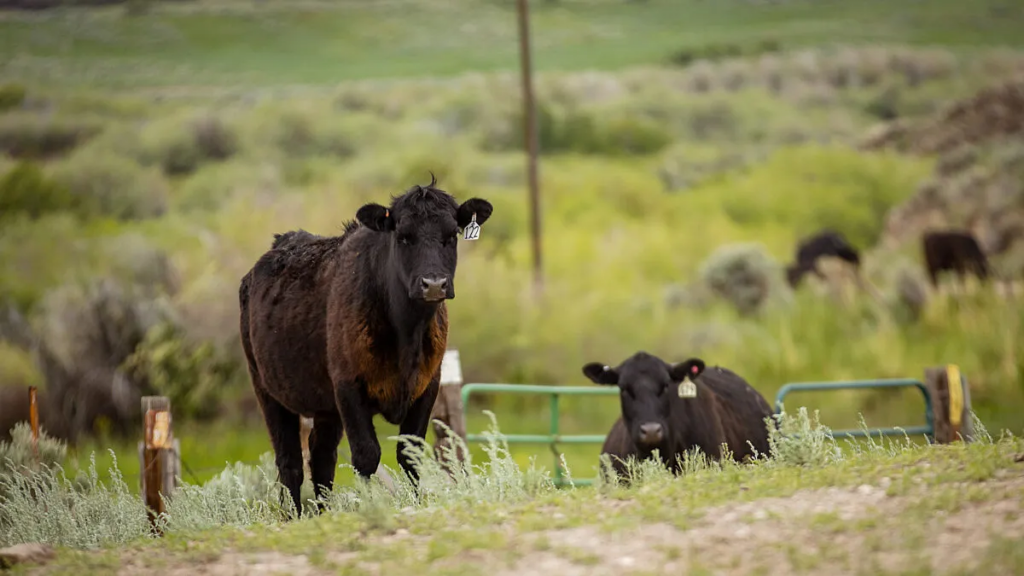
Aligning EPD Indexes with Cattle Operation Objectives is Highly Critical

Listen to Ron Hays talk with Bob Weaber about selection indexes.

Senior Farm and Ranch Broadcaster, Ron Hays, is talking with Bob Weaber, beef extension specialist at Kansas State University, about how EPD values can help cattle producers make breeding decisions.

As a tool, Weaber said selection indexes provide a useful way for commercial and seed stock producers to make aggregate selection decisions.

"The goal of an index is to provide economic information that weighs individual EPDs appropriately, given their contribution to profitability," Weaber said. "So, it provides a more concise way for produces to make selection progress across all range of traits that are associated with farm-level profit."

The recommendation Weaber said he usually gives producers is to pick the index that aligns best with their production objective.

"If you sell calves at weaning time, use a weaning endpoint index," Weaber said. "If you sell calves on the rail and don't keep any replacement heifers, you can use one of the terminal type indexes. Making sure you get the right index is as important as anything because it provides the right weightings for the traits."

Those who have put these indexes together, Weaber said, have spent a lot of time making sure the parameters are correct along with the response to selection.

"A lot of times there is a tendency for folks to do that 'look under the hood' thing, which is okay, and I am a proponent of transparency, but the selection index weights also account for how much variation there is genetically in those traits to provide some emphasis," Weaber said. "Sometimes the pure economic weights don't make a lot of sense."

The amount of selection progress made over the years, Weaber said, is a great indicator of how well these indexes work. Looking into the future of the cattle industry, Weaber also talked about the role these indexes will continue to play.

"As we look forward, maybe another 20 to 30 years, it will be interesting to see the other traits we have built out that particularly describe cost," Weaber said. "As an industry, we are pretty good at describing revenue streams into our business but not a very good job of accounting for the cost."

Weaber said he looks forward to seeing improvements in some of the drivers of profitability on the cow-calf level, such as response to vaccination, dry matter intake, and more.

"Producers need to make a good self-assessment of what their herd does really well and what they need to improve on," Weaber said. "The other thing is a good understanding of what limitations are in your production environment."

The Beef Buzz is a regular feature heard on radio stations around the region on the Radio Oklahoma Ag Network and is a regular audio feature found on this website as well. Click on the LISTEN BAR for today's show and check out our archives for older Beef Buzz shows covering the gamut of the beef cattle industry today.

ARA Applauds Reliable Rail Service Act Introduction

Agricultural Retailers Association (ARA) President & CEO Daren Coppock released the following statement applauding the introduction of Senator Tammy Baldwin's Reliable Rail Service Act:

"ARA appreciates Senator Baldwin and Roger Marshall for leading legislative efforts to address the continuous rail service problems faced by our industry, which has caused supply chain disruptions and negatively impacted other shippers within the agricultural industry.

"Congress needs to tackle head on the significant cost increases and service disruptions that harm the businesses of our ag retailer members and their farmer customers who rely on freight rail transportation to deliver the critical crop input products to feed and fuel our nation.

"This proposal will provide some needed clarity to the common carrier obligation, improve the Surface Transportation Board's (STB) oversight authority, and help ensure railroads provide reliable service at reasonable rates for shippers, which will ultimately benefit consumers."

For Senator Baldwin's press release, click here.

View a one-pager about the legislation to learn more. 

To view ARA's priorities as they relate to transportation and supply chain, click here

2023 Cattle Markets: The Year so far and the Second Half Ahead

Dr. Derrell Peel, Oklahoma State University Extension Livestock Marketing Specialist, offers his economic analysis of the beef cattle industry as part of the weekly series known as the "Cow Calf Corner" published electronically by Dr. Peel and Mark Johnson. Today, Dr. Peel talks about the 2023 cattle markets.

The first half of 2023 has certainly seen significant changes in cattle and beef markets.  Prices are higher across the board as tighter cattle numbers and declining beef supplies push markets towards or beyond record levels.  Remaining drought areas in the central and southern plains continue to shrink with continuing impacts on the regions but less impact nationally on cattle markets.

Beef production in the first 24 weeks of the year is down 4.9 percent from the 2022 record pace.  In the last four weeks of data, beef production is down 5.3 percent year over year.  Yearling (steer + heifer) slaughter is down 3.0 percent year over year so far in 2023, with steer slaughter down 4.7 percent for the year to date and heifer slaughter down 0.4 percent so far this year. However, heifer slaughter is down 4.9 percent year over year in the last four weeks and combines with a 5.9 percent decrease in steers slaughter to reduce total yearling slaughter 5.5 percent in the most recent four weeks of data.  Total cow slaughter is down 4.4 percent for the year to date with a 12.1 percent year over year decrease in beef cow slaughter partially offset by a 5.5 percent year to date increase in dairy cow slaughter.  Bull slaughter is down 8.4 percent thus far in 2023.

Oklahoma auction prices for steer calves under 600 pounds have averaged 41.9 percent higher year over year in June.  Feeder steers over 600 pounds have averaged 39.7 percent higher compared to the same four weeks one year ago.  The five-market fed cattle price has averaged 30.3 percent higher year over year in the past four weeks.  The June cattle on feed report showed that feedlot inventories have been lower for nine consecutive months. The June 1 feedlot inventory was 11.55 million head, down 2.9 percent year over year.  The decline in feedlot inventory has been relatively slow with May feedlot placements higher than expected based on lingering drought impacts and strong feeder demand as feedlots attempt to maintain inventories.  However, feeder supplies and feedlot numbers will continue to decline as the reality of smaller cattle supplies builds.  Increased heifer retention is likely to squeeze feeder supplies more sharply in the second half of the year.

Boxed beef prices in the last four weeks have averaged 24.1 percent higher year over year.  Boxed beef prices moved sharply higher after Memorial Day by mid-June with strong buying for the Independence Day holiday.  The follow up to July 4 (a four-day weekend for many) will provide good indications for beef demand for the remainder of summer.  It is typical for beef demand to experience a slow-down during the summer doldrums, but overall beef demand remains robust. The biggest question for the second half of the year is the extent to which herd rebuilding begins with increased heifer retention and continued reductions in cow slaughter.  Producer expectations and remaining drought conditions will impact the timing of herd rebuilding efforts.  The upcoming July Cattle on Feed report (with quarterly steer and heifer feedlot inventories) and the July Cattle report are expected to provide important clues as to how cattle market conditions may change in the second half of the year.        

The 4th Of July Forecast is Hot but Cold front is on The Way Wednesday

When you are outside Popping Firecrackers this 4th of July, pack the sunscreen and the fans because its going to be hot! However, according to state climatologist Gary McManus, cooler temps are headed this way with a possibility of some rain, "Storms are going to be possible throughout the week, but especially on Wednesday as we see a rather substantial July cold front. That will cool us down from another hot couple of days to come."

McManus said This storm system will be substantial at times across Northern Oklahoma, as will the possible rain totals, which is more good news for the state, especially during those triple-digit days.

McManus says the rains we have seen across June in Western Oklahoma have reduced the drought from 50% of the state at the end of May to 36% of the state at the end of June, according to the US Drought Monitor, and the amount of drought considered at least severe dropped from 43% to 14% over that same period, "New drought areas in south-central and east central Oklahoma had emerged by the end of the month, however. The July drought outlook from the Climate Prediction Center considered additional development unlikely and more improvements possible across north central and eastern Oklahoma by the end of the month. CPC's July temperature and precipitation outlooks showed increased odds of warmer- and wetter-than- normal conditions across the entire state."


So be safe, and Have a Happy Independence Day! To read more from McManus in his mesonet ticker, click here:

USDA Announces Corrections to Emergency Relief Program Policy to More Accurately Reflect 2020 and 2021 Natural Disaster Impacts on Crops Intended for On-Farm Use

The U.S. Department of Agriculture (USDA) is updating the Emergency Relief Program (ERP) Phase Two to provide a method for valuing losses and accessing program benefits to eligible producers of certain crops, including grapes grown and used by the same producer for wine production or forage that is grown, stored and fed to livestock, that do not generate revenue directly from the sale of the crop. These updates ensure that ERP benefits are more reflective of these producers' actual crop losses resulting from 2020 and 2021 natural disaster events. USDA's Farm Service Agency (FSA) will begin accepting ERP Phase Two applications from eligible wine grape and forage producers once this technical correction to ERP is
published in the Federal Register and becomes effective, which it anticipates will be on Friday, June 16, 2023. The deadline to submit applications for ERP Phase Two is July 14.

"When designing and implementing new programs for a sector as diverse and complex as agriculture, it's almost inevitable that we encounter situations that we had not previously considered. The updates to the Emergency Relief Program that we are announcing today address the unique needs of producers of crops that are used on-farm and may not generate sales revenue," said Zach Ducheneaux, Farm Service Agency Administrator. "I am grateful for our frequent conversations with producers, along with commodity and stakeholder groups, that helped us address existing gaps in this crucial disaster assistance program. FSA will continue to be nimble from a policy standpoint to try to provide assistance to all who need the help."

Background

In January 2023, FSA announced ERP Phase Two, designed to wrap-up and fill remaining gaps in previous natural disaster assistance for 2020 and 2021.

To be eligible for ERP Phase Two, producers must have suffered a decrease in allowable gross revenue in 2020 or 2021 due to necessary expenses related to losses of eligible crops from a qualifying natural disaster event. Assistance is primarily for producers of crops that were not covered by Federal Crop Insurance or the Noninsured Crop Disaster Assistance Program since crops covered by Federal Crop Insurance and NAP were included in the assistance under ERP Phase One administered in 2022.

Determining Crop Value

Producers of certain crops now have a method for including crop value in their allowable gross revenue for the purpose of determining ERP Phase 2 benefits.

The value of the eligible crop intended for on-farm use will be based on the producer's actual production of the crop and a price for the crop as determined by FSA's Deputy Administrator for Farm Programs based on the best available data for each crop such as published crop price data or the average price obtained by other producers in the area. Acceptable, published sources including but are not limited to Federal Crop Insurance Corporation established prices, FSA established National Crop Table prices and National Agricultural Statistic Service prices.

Revenue and pricing guidelines for expected revenue for wine grapes and on-farm forage is available online for producer reference and convenience when applying for ERP Phase Two.

Wine grape and forage producers who have already submitted their ERP Phase Two applications to FSA have the option of revising the application and updating their allowable gross revenue to include crop value if applicable.

Producers of crops grown for on-farm use other than wine grapes and forage may request consideration to use a crop's value in their allowable gross revenue. Submit requests to RA.FSA.DCWA2.ppb@wdc.usda.gov. FSA's Deputy Administrator for Farm Programs will review submitted requests.

Additional Technical Corrections – Conservation Programs

In addition to emergency relief policy updates, FSA has also established policy corrections for the Emergency Conservation Program (ECP) and the Emergency Forest Restoration Program (EFRP). The policy correction clarifies that federal payments received for the same practice will be considered duplicative assistance for producers who receive ECP and EFRP program payments. The revised program provisions are related to program updates FSA announced in January that give more farmers, ranchers, and tribes the opportunity to apply for and access programs that support recovery following natural disasters (see January 10, 2023 news release for more information).

ECP and EFRP provide financial and technical assistance to restore conservation practices like fencing, damaged farmland or forests following natural disasters.

More Information 

FSA offers an online ERP tool to help producers determine what is considered allowable gross revenue..  

Producers should contact their local FSA office to make an appointment to apply for ERP Phase Two. Producers should also keep in mind that July 15 is a major deadline to complete acreage reports for most crops. FSA encourages producers to complete the ERP Phase Two application and acreage report during the same office visit.  Applications for the Pandemic Assistance Revenue Program, a revenue-based program for losses resulting from the pandemic, can also be completed.

For more information, view the ERP Phase Two Fact Sheet, PARP Fact Sheet, the ERP Phase Two-PARP Comparison Fact Sheet, ERP Phase Two application video tutorial, PARP application video tutorial, mythbuster blog or contact your local USDA Service Center.    
   
USDA touches the lives of all Americans each day in so many positive ways. In the Biden-Harris administration, USDA is transforming America's food system with a greater focus on more resilient local and regional food production, fairer markets for all producers, ensuring access to healthy and nutritious food in all
communities, building new markets and streams of income for farmers and producers using climate smart food and forestry practices, making historic investments in infrastructure and clean energy capabilities in rural America, and committing to equity across the Department by removing systemic barriers and building a workforce more representative of America. To learn more, visit usda.gov.

USDA is an equal opportunity provider, employer and lender.

Graduate Students Can Grow Network, Build Future by Acting Now

The National Corn Growers Association (NCGA) encourages qualified graduate students to apply for the Research Ambassador program. If you are interested in building a personal network of future agricultural leaders as you begin your career, you will want to apply today.

To ensure all interested applicants have a chance at this incredible opportunity, NCGA has extended the deadline for applications to its NCGA Research Ambassador Program to July 15.

Graduate students who are citizens or permanent residents of the United States and are involved in research broadly related to corn production are eligible to apply. Selected students receive a $2,500 award, up to $750 to offset travel and registration costs for scientific conferences, and fully-funded travel to participate in NCGA events throughout the year.

For more information, visit NCGA Research Ambassador Program.

Interested applicants may contact Robyn Allscheid at allscheid@ncga.com

Fire Up the Grill for a Pork Filled 4th of July

Let the grill heat up, the laughter fill the air, and the pork unite us all in celebration! Enjoy some tasty pork with friends and family for your 4th of July celebrations.

Thank you to all the hardworking pork producers out there, just like you! Your dedication and passion for delivering a delicious product bring us together to celebrate our freedom. 

Try these pork recipes at your 4th of July BBQ!

Tangy Grilled Back Ribs

Grilled Pork Chops with Basil-Garlic Rub

What's the Farmer's Share of a Fourth of July cookout?

This weekend people across the country will head to grocery stores and supermarkets to stock up for their Fourth of July festivities. Did you know that on average, less than 15 cents of every one of those dollars spent on food makes it back to farmers and ranchers? For some summer cookout staples, it's even less. That bag of potato chips? Less than 5% makes it back to potato growers, and just 3% goes to wheat growers for the hamburger buns for our burgers.  What can be done? Plenty! National Farmers Union is leading the way with our Fairness for Farmers campaign. Corporate consolidation and monopolies let massive companies set their own prices, paying farmers less and charging consumers more. We're fighting for fairer markets and a 2023 Farm Bill that brings more competition to our markets and increases the Farmer's Share of the food dollar. 

Here's the full breakdown of the Fourth of July Farmer's Share products: 

  • 8ct Hamburger Buns: Retail price, $3.49. Farmer's Share, $0.10 
  • 2lbs Ground Beef: Retail price, $11.07. Farmer's Share, $3.42 
  • 1lb Tomatoes: Retail price, $2.00. Farmer's Share, $0.42 
  • 1lb Lettuce: Retail price, $2.79. Farmer's Share, $0.76 
  • Party Size Potato Chips: Retail price, $5.99. Farmer's Share, $0.29 
  • 2l Soda: Retail price, $1.19. Farmer's Share, $0.09 

If you'd like to share the Fourth of July Farmer's Share on social media, you can find posts linked on our Facebook, Instagram, and Twitter pages.

July is Bison Month!

The National Bison Association announced the kickoff to July Bison Month today, encouraging consumers to add this uniquely American, delicious, humanely raised, supremely healthy protein to their regular diets. 

The American Bison, whose population once exceeded 30 million animals, was decimated to near extinction in the late 19th century through a combination of hunting, slaughter, and western-introduced disease. However, the bison has made a tremendous comeback and now numbers over 400,000 head across the continent. This is thanks to a unique collaboration among American farmers and ranchers, Native American tribes, and conservation groups all working to restore the species back to its historic range across North America. It is this collaboration that also successfully made the American bison named the first-ever National Mammal of the United States in 2016.  

By making bison a part of your diet, you are eating a delicious, natural, nutrient-dense protein that is healthy for you and good for the environment. By choosing bison, you are helping to restore herds to North American grasslands while supporting regenerative agriculture. Our campaign, Eat Bison to Restore Bison, is educating consumers about their important role in restoring the species, who, by supporting bison ranchers, are in turn supporting grassland regeneration, carbon sequestration, soil regeneration, increased biodiversity, and more bison on the landscape. 

July Bison Month, while not a federally designated observance, is celebrated each July by the bison community and is a time in which bison farmers and ranchers promote the delicious taste of bison burgers, steaks, ribs, and roasts as a summer grilling treat. Bison is the leanest protein commercially available to consumers today boasting 26% more iron than beef and 87% lower in fat. Bison has 766% more B12 vitamins than chicken, and 32% less fat, based on nutrient data from the U.S. Department of Agriculture.

Bison is easier to find than ever with all major grocery chains carrying at least ground bison, packaged steaks, with fresh cuts available at natural and specialty food stores, local butchers, etc. offering the same cuts yielded from a beef animal. Bison is showing up on more restaurant menus, and not just bison burgers as chefs discover the versatility of this uniquely American protein.  And that's not to mention bison's growing prevalence online, at farmer's markets, farm stores, CSA programs, and beyond.  

Find a local bison producer near you with our easy-to-use BuySome Bison app, or our online buyer's guide, both available at www.bisoncentral.com/buying-bison-meat/, and find bison-specific recipes, nutritional data, cuts, and instructional cooking videos at www.bisoncentral.com/how-to-cook-bison/.  

The National Bison Association is a 28-year-old, member-based, nonprofit trade association made up of bison farmers, ranchers, marketers, conservationists, public herd managers, enthusiasts and more. We are based in Westminster, Colorado. Learn more at www.bisoncentral.com, and @nationalbison.  

OKFB hosts second-annual Capitol Camp

More than 70 4-H and FFA students gathered at the Oklahoma state Capitol June 27-28 for Oklahoma Farm Bureau's second-annual Capitol Camp.

Formerly known as the Youth Legislative Experience, Capitol Camp is an immersive two-day experience for high school juniors and seniors to learn about Oklahoma's legislative process and how bills become law through a mock legislature held on the floor of the Oklahoma House of Representatives.

"I decided to do this to broaden my horizons about the entire legislative process – just to be able to sit in their seats and to actually do what they do on a daily basis," said Davin Budy of Cherokee FFA. "I can definitely see myself being a legislator."

Throughout the event, students in attendance had the opportunity to present and lobby a piece of legislation they wrote about an issue important to them. Bills were first heard in committees, and those that advanced were heard on the House floor.

Capitol Camp delegates elected a governor, speaker of the House and floor leader to run floor sessions in the House chamber both days.

"I have been involved in agriculture policy a lot because it is something that I find extremely important because nothing happens without it," said Capitol Camp House Speaker Courtney Blagg of Nowata FFA. "This has been one of the best legislative experiences I have been to."

The group enjoyed dinner Tuesday night in the Phillips Pavilion at the Oklahoma Governor's Mansion where they heard from Oklahoma House Speaker Pro Tempore Kyle Hilbert. Students heard from a number of other guests during the two days, including Lt. Gov. Matt Pinnell, OKFB President Rodd Moesel, Oklahoma Institute of Child Advocacy CEO Joe Dorman and several members of the Oklahoma House of Representatives.

Oklahoma Congressional Delegation United in Call for Federal Disaster Relief After June 17 Storm

Pecan Tree Downed by Storm- picture courtesy of Mike Spradling

Senators James Lankford (R-OK) and Markwayne Mullin (R-OK) along with Representatives Tom Cole (R-OK), Frank Lucas (R-OK), Kevin Hern (R-OK), Stephanie Bice (R-OK), and Josh Brecheen (R-OK) sent a letter of support to President Biden to formally request disaster relief funding after the June 17 storm throughout the state. The delegation has remained engaged on the status of the storm clean up and the necessary assistance needed for the last two weeks. The letter of support from the delegation was sent in conjunction with the request filed by Oklahoma Emergency Management.

The delegation wrote, "We write in support of the formal request from the State of Oklahoma, through the office of Governor Kevin Stitt, that was submitted on July 1, 2023, for major disaster declaration, including categories A-G of Public Assistance, for Beaver, Cimarron, Comanche, Cotton, Craig, Creek Delaware, Harper, Jefferson, Love, Major, McCurtain, Payne Pushmataha, Rogers, Stephens, Tulsa, and Woodward Counties to recover from last month's severe weather, which included sustained wind in excess of 80 miles per hour. An Executive Order declaring a State of Emergency in these counties (E.O. 2023-18) was issued on June 20, 2023.

"State and local officials have informed us that this incident is of such severity and magnitude that effective response and recovery is beyond the combined capability of the state and local governments, and that federal assistance is necessary to save lives, protect property, and to ensure the safety of these communities. As such, we respectfully urge you to approve the Governor's request for the counties listed above, along with any subsequently added counties."

Read the full letter here or below.

Dear Mr. President:

We write in support of the formal request from the State of Oklahoma, through the office of Governor Kevin Stitt, that was submitted on July 1, 2023, for major disaster declaration, including categories A-G of Public Assistance, for Beaver, Cimarron, Comanche, Cotton, Craig, Creek Delaware, Harper, Jefferson, Love, Major, McCurtain, Payne Pushmataha, Rogers, Stephens, Tulsa, and Woodward Counties to recover from last month's severe weather, which included sustained wind in excess of 80 miles per hour. An Executive Order declaring a State of Emergency in these counties (E.O. 2023-18) was issued on June 20, 2023.

During the late afternoon of June 17 through the overnight hours of June 18, a major storm system moved from northwest to far northeast Oklahoma. The line of storms produced at least three separate tornados and consistently maintained wind gusts from 80 to over 100 miles per hour. These gusts caused tremendous damage, particularly in the central and southern portions of Tulsa County. Statewide, the storms caused over 350,000 people to lose electricity, with many not expected to have their power restored for at least a week. Immediately after the storm passed, Oklahomans stepped up to help their families and neighbors as they begin the process of cleaning up the debris and repairing damage to homes, churches, and business.

State and local officials have informed us that this incident is of such severity and magnitude that effective response and recovery is beyond the combined capability of the state and local governments, and that federal assistance is necessary to save lives, protect property, and to ensure the safety of these communities. As such, we respectfully urge you to approve the Governor's request for the counties listed above, along with any subsequently added counties.

We stand ready to provide any assistance needed to ensure the prompt evaluation of this request. Please do not hesitate to reach out to our offices with any questions on this matter.
Plains Grains Updates Harvest Progress in their End of June Report

Harvest pic courtesy of Brady Sidwell with Sidwell Seed in Goltry

Here is the weekly Hard Red Winter Harvest Summary from Plains Grains. As of June 29th, harvest in Texas is 74% complete, Oklahoma 68% complete, and Kansas 35% complete.
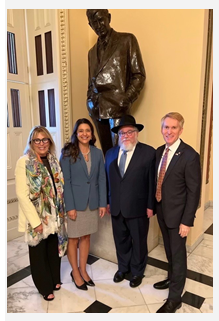
As of this latest report- there is still no quality testing data available for the 2023 HRW crop.
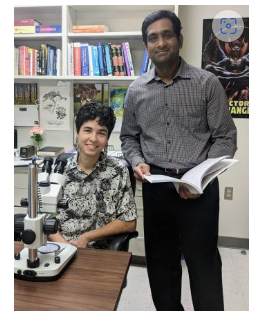
According to Plains Grains- Results will be reported once a sample has completed all the grade and test factors that being looked at. Seventy samples have arrived and are undergoing testing. There is no reportable data this week.

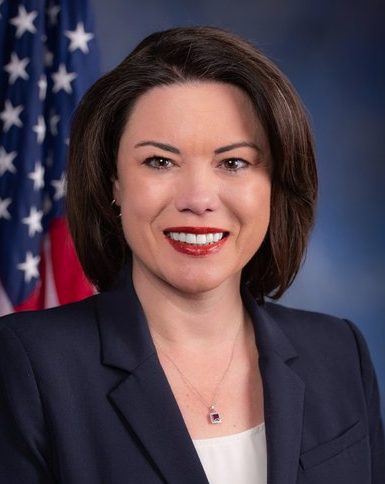

Ron salutes our daily email sponsors!

Upcoming Events

November

S M T W T F S
1 2 3 4 5 6 7
8 9 10 11 12 13 14
15 16 17 18 19 20 21
22 23 24 25 26 27 28
29 30          

Visitor Polls

Do you like the new website?
Add a Comment
(Fields are Optional)

Your email address is never published.