Today, U.S. Secretary of Agriculture Brooke L. Rollins announced the Strengthening Processing for U.S. Ranchers (SPUR) Program that will provide temporary support for eligible beef processing establishments. Under SPUR, the U.S. Department of Agriculture will provide up to $500 million in payments to eligible entities to support stronger and more stable market opportunities for American ranchers.
"America's ranchers deserve a strong, competitive marketplace that rewards their hard work and preserves opportunity for generations to come," said Secretary Brooke L. Rollins. "Today, historically tight cattle supplies, the Biden administration's anti-cattle focus, consolidation in and foreign ownership of meat packing and the reemergence of New World Screwworm have created extraordinary market conditions that are placing significant pressure on our independent and regional beef processors. Through the Strengthening Processing for U.S. Ranchers (SPUR) Program, USDA is taking targeted action to preserve the independent processing capacity that ranchers rely on, strengthen competition across the American beef supply chain, and support rural communities across the country. This is another important step in our Plan to Fortify the American Beef Industry by strengthening domestically owned processing capacity and ensuring America's cattle producers continue to have strong market opportunities and meet America's historically high beef demand. As we Make America Healthy Again, we are working to ensure American families have continued access to nutritious, high-quality American beef while promoting greater competition, a more resilient food supply chain, and long-term affordability at the grocery store."
"Small and mid-size beef processors are essential to maintain the diversity of America's food system," said Under Secretary for Food Safety Mindy Brashears. "Supporting this processing capacity helps preserve market options for our United States ranchers, strengthens regional supply chains and ensures American families continue to have access to safe, high-quality beef produced here at home."
"Competitive supply chains help ensure American ranchers have reliable markets for their cattle," said Under Secretary for Farm Production and Conservation Richard Fordyce. "Through the SPUR Program, USDA is bolstering market opportunities for ranchers and supporting a resilient beef industry."
These payments are authorized under the Commodity Credit Corporation Charter Act and are administered by the Farm Service Agency (FSA). Payments are intended to provide financial support to eligible beef processors who have faced increased costs of acquiring cattle for processing due to the abnormally low number of cattle being raised in the U.S at this time and other conditions currently impacting the cattle market. Additional information, including applications, will be provided to eligible entities using contact information that is currently on file with the USDA Food Safety and Inspection Service.
Entities eligible to receive funding under SPUR must be beef processing establishments under Federal inspection, as well as beef processing establishments inspected under the Talmadge-Aiken Cooperative Inspection Program and the Cooperative Interstate Shipment Program (CIS). Further, eligible entities must be U.S. owned and cannot be nationally dominant in beef processing (or owned by an entity that is). For purposes of SPUR, nationally dominant will be defined as an entity holding a market share greater than or equal to the entity holding the fourth-largest share of the beef processing market.
For decades, the beef processing industry in the U.S. has been heavily concentrated and today just four companies control nearly 85% of the beef processing market, including two foreign owned companies. Ensuring domestic processors can continue operating during this period where the U.S. cattle herd is at a 75-year low is critical to national security and will ensure a strong supply chain once the herd is rebuilt.
This new program also directly supports the USDA Plan to Fortify the American Beef Industry and the USDA Small Processors Action Plan (PDF, 2.3 MB) by ensuring American ranchers have access to regional processing capacity they rely on to support branded and value-added beef programs, such as the Product of USA label that USDA started promoting earlier this year.
Maintaining this regional processing capacity is also a key part of the Make America Healthy Again movement by ensuring access to high-quality protein in alignment with the new Dietary Guidelines for Americans.

The Oklahoma State Treasurer's Office released its May 2026 Investment Report, highlighting continued portfolio stability as markets responded to shifting inflation expectations, stronger economic data and changing interest rate projections.
"The portfolio continues to reflect a disciplined investment approach designed to protect state funds while generating competitive returns," said State Treasurer Todd Russ. "Maintaining a balanced strategy allows us to navigate changing market conditions while supporting Oklahoma's financial strength."
The state's investment portfolio totaled $17.6 billion in May, with the portfolio earning a 3.71% yield, an increase from 3.67% one year earlier. The portfolio's weighted average maturity was 771 days, reflecting a focus on stability and long-term preservation of capital.
The portfolio remained primarily invested in U.S. Treasurys, which made up 68.5% of holdings, followed by money market mutual funds at 18.4% and mortgage-backed securities at 11.0%. The remaining investments included state and foreign bonds, U.S. government agencies and certificates of deposit.
Financial markets continued to show resilience in May. Equity markets extended gains, with the Dow Jones Industrial Average increasing 2.78%, the S&P 500 rising 5.15%, and the Nasdaq Composite advancing 8.36% during the month. The gains were supported by strong corporate earnings, technology sector performance and better-than-expected economic data.
Economic indicators showed continued strength alongside persistent inflation pressures. Payroll employment increased by 172,000 in May, while unemployment remained steady at 4.3%. Consumer activity also remained strong, with retail sales increasing for the fourth consecutive month.
Inflation remained a key focus for investors, as the Consumer Price Index rose year over year in May. Producer prices also posted their largest annual increase since 2022, reinforcing the Federal Reserve's continued focus on balancing inflation control with economic growth.
The Oklahoma State Treasurer's Investment Division manages funds on behalf of state agencies and programs, emphasizing safety, liquidity and competitive returns for Oklahoma taxpayers.
The complete May 2026 Investment Report is available at treasurer.ok.gov, including portfolio performance details, asset allocation, market updates, and economic indicators.

From NMPF President & CEO Gregg Doud:
"The Securing Agriculture's Workforce Act represents the most significant reform to the ag workforce we've seen in decades. It is particularly critical for dairy farmers, who have been effectively shut out of the nation's primary legal agricultural guestworker program.
"First and foremost, this bill finally grants dairy access to H-2A by removing the seasonal requirements of the program and allowing contracts up to 350 days of the year. The bill goes further, streamlining the application process, reducing administrative burdens, and addressing cost concerns that have deterred employers from using H-2A even when eligible.
"Perhaps the most important provision of the bill for dairy beyond providing access, is the targeted mechanism to provide the current dairy workforce a means to transition to a workable visa program. This will ensure that we don't face a major workforce disruption as dairy farms transition to H-2A – and that's critical, because workforce stability underpins animal care, milk quality, and overall farm viability.
"I applaud Chairman Thompson and the other original co-sponsors for introducing this bill. Chairman Thompson, thank you for leading the way, as you so often have to the most important issues facing agriculture. NMPF will rally its advocates across dairy and all of agriculture to support this bill, and it stands ready to help build momentum in the House, secure a Senate companion bill, and ultimately get this legislation to the president's desk."
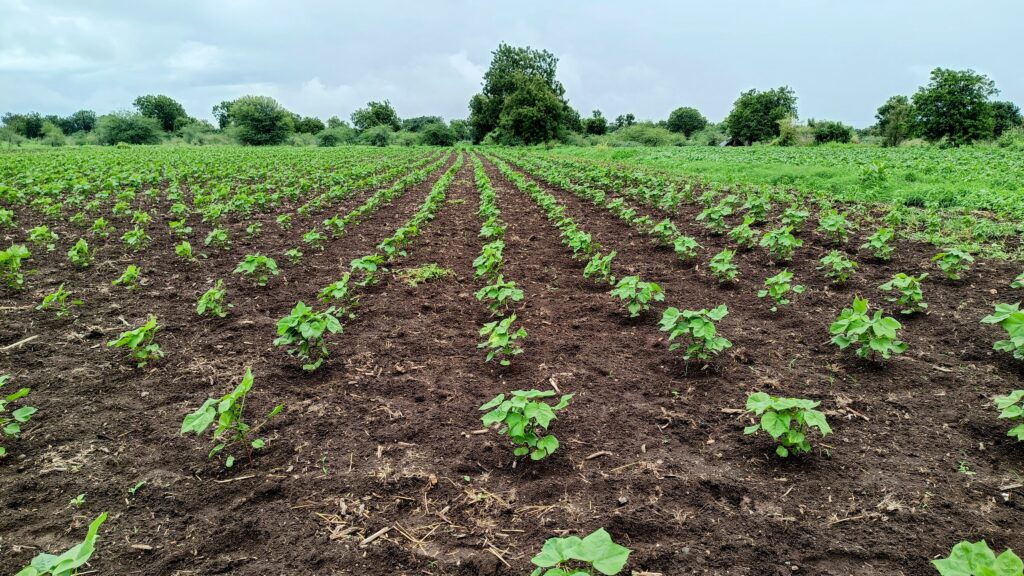
The USDA National Agricultural Statistics Service (NASS) has released its annual June acreage report, detailing significant adjustments in planting and harvesting intentions across the Southern Plains. Striking a balance between fluctuating market demands and regional weather patterns, producers in Oklahoma, Kansas, and Texas are adjusting their acreage strategies across key commodities.
Oklahoma corn plantings declined to 500,000 acres, down 7.4% from last year's 540,000 acres. Corn harvested acres for grain are forecast to 455,000 acres, down 8.1% from the 495,000 acres for grain harvested in 2025.
In contrast, sorghum and soybeans both marked major expansions. Sorghum planted acres rose to 490,000 acres, an 11.4% increase. Sorghum harvested acres for grain are forecast to 430,000 acres, a 6.2% increase from the 405,000 acres for grain harvested.
The most aggressive upward trend is in soybeans, which experienced a 37% surge over the previous year's totals. Soybean plantings climbed to 500,000 acres, up 37.0%, while soybean harvest acres are forecast to 480,000 acres, up 37% from the 350,000 acres in 2025.
Cotton acreage also realized substantial gains across the state, with planted acreage increasing to 450,000 acres, up 15.4% from 390,000 acres in 2025.
Conversely, winter wheat and forage numbers experienced pullbacks. Winter wheat planted acres declined slightly to 4.1 million acres, down 1.2% from 2025. Winter wheat harvested acres are forecast at 2.1 million acres, down 25% from the 2.8 million acres in 2025. All Hay harvested acres are forecast at 3.23 million acres, down 3.2% from 2025. Peanut acreage held perfectly flat, with plantings and harvest expectations locking in at 19,000 and 18,000 acres, respectively.
Up in Kansas, producers modified their footprints with distinct increases in corn and soybeans, paired with sharp drops in sorghum, wheat, and forage intentions.
Corn planted acreage increased to 7.05 million acres, up 2.9% from 2025. Corn harvested for grain acreage is forecast to increase to 6.6 million acres, up 1.5% from the 6.5 million acres harvested for grain in 2025.
Soybeans mirrored this upward trend, gaining momentum. Soybeans planted acres rose to 4.80 million acres, up 17.1%, and soybean harvested acres is forecast to 4.6 million acres, up 13.6% from the 4.05 million acres in 2025. Cotton saw similar double-digit expansion, climbing to 120,000 planted acres, a 17.6% increase over 2025.
However, Kansas sorghum took a substantial hit. Sorghum planted acreage declined to 2.70 million acres, down 10.0% from 2025, while sorghum harvested for grain acreage is expected to decline by 10.8% to 2.5 million acres.
Wheat and forage production also contracted notably. Winter wheat planted acres fell to 6.90 million acres, down 5.5% from 2025. Winter wheat harvested acres is forecasted at 5.95 million acres, down 12.5% from the 6.8 million acres in 2025. Additionally, All Hay harvested acres are forecast at 2.29 million acres, down 4.6% from 2025.
Texas data highlighted stable winter wheat seeding intentions but forecasted tighter harvest results, alongside a subtle shift into cotton and soybeans at the expense of corn and sorghum.
Winter wheat planted acres remained unchanged at 5.50 million acres. However, winter wheat harvested for grain acres are forecast at 1.6 million acres, down 30% from the 2.3 million acres harvested for grain in 2025.
The state's primary feed grains also pulled back slightly. Corn planted acres dipped to 2.45 million acres, down 2.0% from 2025. Corn harvested for grain acreage is forecast to 2.08 million acres, down 2.8% from the 2.14 million acres harvested for grain in 2025.
Sorghum felt a slightly heavier reduction. Sorghum planted acres dropped to 2.00 million acres, down 7.0% from 2025. Sorghum acres harvested for grain are forecast to 1.7 million acres, down 10.6% from the previous 1.9 million acres harvested for grain in 2025.
On the positive side, oilseed and fiber acreage pushed ahead across Texas. Soybeans planted acreage rose to 125,000 acres, up 13.6% from 2025, and soybean acres harvested for grain are forecast to 100,000 acres, up 11% from 2025. All Cotton acres planted increased slightly to 5.425 million acres, up 1.9% from the 5.321 million acres in 2025. Total forage projections have been scaled back slightly, with All Hay harvested acres forecast at 5.0 million acres, down 2.0% from 2025.
Reports can be found here:
The U.S. Department of Agriculture's Farm Service Agency (FSA) announced an acreage reporting modernization pilot program that is a foundational part of the administration's One Farmer, One File effort. FSA is focused on creating a more efficient, consistent, and customer-focused acreage reporting experience for producers and FSA employees. After spring planting is complete, agricultural producers should make an appointment with their FSA county office to complete crop acreage reports before the applicable deadline. July 15 is a major deadline for most crops, but acreage reporting deadlines may vary by county and by crop.
"Acreage reporting is a major task that producers complete each year, and we owe it to the producers we serve to make it as painless and seamless as possible," said FSA Administrator Bill Beam. "Our goal is to move away from paper maps to an electronic interface that simplifies the process for producers and saves time for county office staff, which increases operational efficiencies across the board. I encourage producers who have acreage located in these pilot counties to be patient with their local FSA office as they learn the system and solicit meaningful feedback from producers based on their experience with the simplified reporting process."
Pilot Program
The following counties are participating in the acreage reporting pilot program. Producers with acreage in these counties will use the streamlined acreage reporting process for spring planted crops ahead of the major July 15, 2026, reporting deadline:
Producers with acreage located outside of the pilot program counties will complete their crop acreage reports as usual.
How to File a Report
To file a crop acreage report, producers need to provide:
Acreage Reporting Details
The following exceptions apply to acreage reporting dates:
If the crop has not been planted by the acreage reporting deadline, then the acreage must be reported no later than 15 calendar days after planting is completed.
If a producer acquires additional acreage after the acreage reporting deadline, then the acreage must be reported no later than 30 calendar days after purchase or acquiring the lease. Appropriate documentation must be provided to the county office.
Noninsured Crop Disaster Assistance Program (NAP) policy holders should note that the acreage reporting date for NAP-covered crops is the acreage reporting date or 15 calendar days before grazing or crop harvesting begins, whichever is earlier. Producers can contact their FSA county office for acreage reporting deadlines that are specific to their county.
Producers with perennial forage crops should check with their local FSA office to see if their crops are eligible for continuous certification, which rolls the certified acreage forward each year until a change is made.
Prevented Planted Acreage
Producers should also report the crop acreage they intended to plant but were unable to because of a natural disaster, including drought. Prevented planted acreage must be reported on form CCC-576, Notice of Loss, no later than 15 calendar days after the final planting date as established by FSA and USDA's Risk Management Agency.
Farmers.gov Portal
Producers can continue to access their FSA farm records, maps, and common land units through the farmers.gov customer portal. The portal allows producers to export field boundaries as shapefiles and import and view other shapefiles, such as precision agriculture boundaries within farm records mapping. Producers can view, print and label their maps for acreage reporting purposes. A Login.gov account that is linked to a USDA customer record is required to use the portal.
Producers can visit farmers.gov/account to create an account. Producers who have the authority to act on behalf of another customer as a grantee via an FSA-211 Power of Attorney form, Business Partner Signature Authority or as a member of a business can access information for the business in the farmers.gov portal.
Geospatial Acreage Reporting
Acreage reports using precision agriculture planting boundaries can be filed electronically with an approved insurance provider or an authorized third-party provider, who will then share the file with FSA staff. Producers should notify their local FSA office if they submitted an electronic geospatial acreage report containing precision planting boundaries that they want to use as part of their FSA acreage report.

The National Council of Farmer Cooperatives (NCFC) today applauded the introduction of the Securing Agriculture's Workforce Act (SAWA) by House Agriculture Committee Chair G.T. Thompson (R-Pa.) and Representative Don Davis (D-N.C.), calling the legislation a critical step toward resolving the labor crisis threatening America's farmers and ranchers.
SAWA would expand the H-2A agricultural guestworker program to cover year-round labor needs—closing a longstanding gap that has left farmers with permanent workforces unable to access the program—and would clarify that farmer co-ops are eligible to participate in the program on behalf of their members' operations.
"I want to thank Chairman Thompson and Congressman Davis for their leadership in introducing this legislation," said Duane Simpson, president and CEO of NCFC. "For too long, farmers with year-round labor needs have been locked out of the H-2A program through no fault of their own, and farmer co-ops have faced legal uncertainty about whether they can use the program to serve their members. SAWA fixes both of those problems."
The bill would also help farmers control costs by codifying how wages are calculated and streamlining and modernizing the program.
"America's ability to feed itself is a matter of national security, and that security depends on a legal, reliable agricultural workforce," Simpson continued. "We urge Congress to move swiftly to pass SAWA and give America's farmers and their cooperatives the tools they need to get the job done."
About NCFC
Since 1929, NCFC has been the voice of America's farmer cooperatives. Our members are regional and national farmer cooperatives, which in turn consist of more than 1,600 local farmer cooperatives across the country. NCFC members also includes state and regional councils of cooperatives. Farmer cooperatives allow individual farmers the ability to own and lead organizations that are essential for continued competitiveness in both the domestic and international markets.
America's farmer-owned cooperatives provide a comprehensive array of services for their members. These diverse organizations handle, process and market virtually every type of agricultural commodity. They also provide farmers with access to infrastructure necessary to manufacture, distribute and sell a variety of farm inputs. Additionally, they provide credit and related financial services, including export financing.
Learn more at www.ncfc.org.
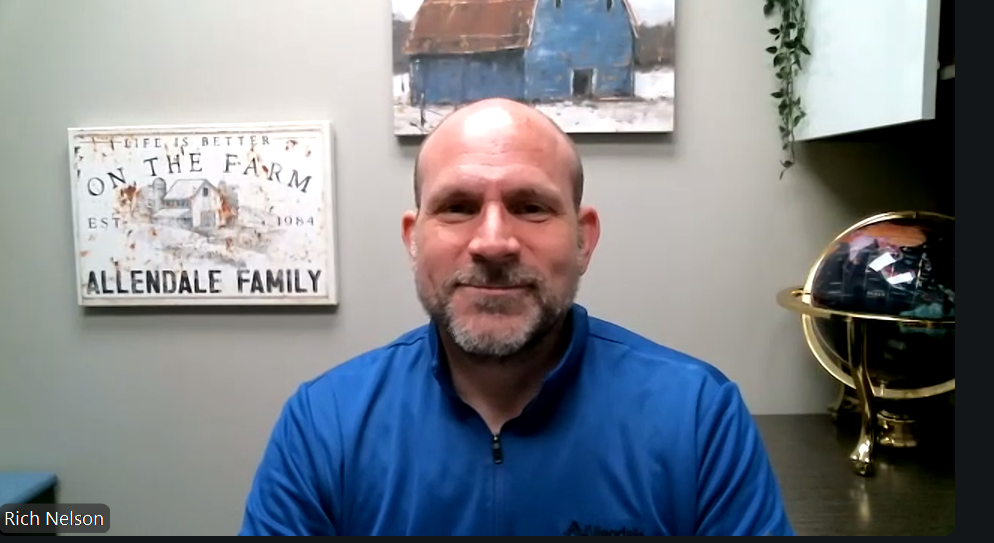
Following the highly anticipated release of today's USDA acreage report, significant revisions are sparking discussion across the agriculture industry. Farm Director KC Sheperd sat down with Allendale's Rich Nelson to break down the surprise shifts in corn, soybean, and wheat acreage and what these numbers mean moving forward.
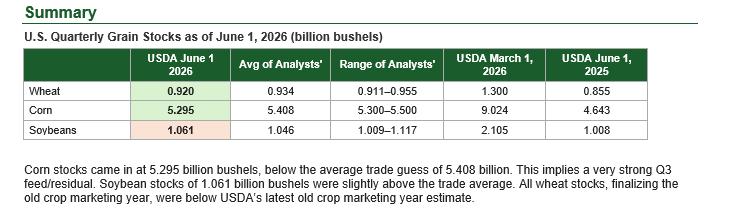
The dynamic data landscape started with a clear trend in old crop leftover supplies. The grain stocks report exposed an aggressive consumption rate for corn, drawing down ending stocks faster than market analysts projected.
"Corn stocks as of June 1, 5.3 billion bushels, that was over 100 million smaller than the trade estimate," Nelson said. "So, we now have three quarters in a row of very strong feed residual, so a little positive news there."
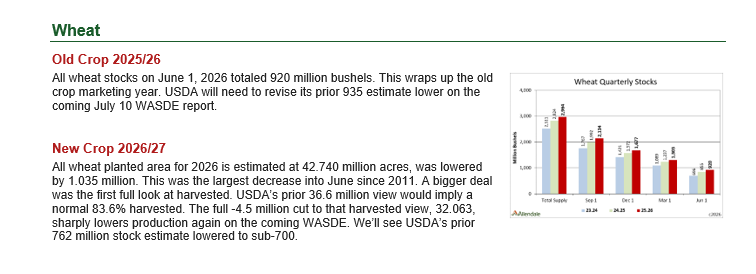
Conversely, soy and wheat numbers highlighted opposite directions for old crop lines:
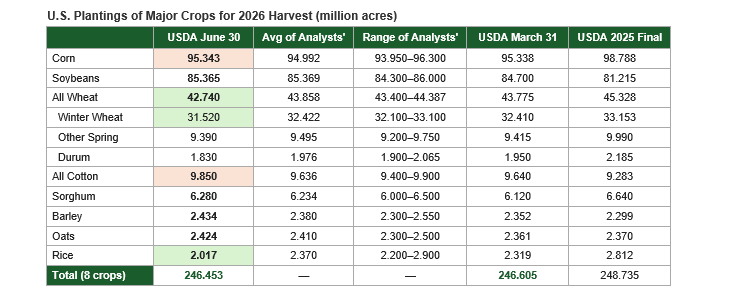
While regional concerns about winter wheat abandonment led some producers to hypothesize that unplanted acreage would shift toward heavy alternative row-crop varieties, aggregate acreage actually contracted.
"On this report, well, USDA lightly lowered a crop total acreage," Nelson explained. "So 246.5 million, just minimally lower than the March estimate... this is about 2 million lower than last year's."
This unexpected stabilization disproved speculations about an influx of late-season minor crops.
                  2026 KEY ACREAGE SUMMARY
+------------------+--------------------+--------------------+
| Crop             | Reported Acreage   | Change vs. March   |
+------------------+--------------------+--------------------+
| Corn             | 95.3 Million       | No Change          |
| Soybeans         | 85.4 Million       | +700,000 Acres     |
| Sorghum          | 6.3 Million        | +150,000 Acres     |
+------------------+--------------------+--------------------+
Due to regional weather conditions across the Plains, rumors circulated that drought-tolerant sorghum would see a large expansion in acreage. However, the data revealed a much more subdued shift.
"Not a big increase," Nelson emphasized. "The sorghum side of things, they saw a net increase of about 150,000 acres, so bringing it to 6.3 million. So, that was one big question for us, so not really a big sorghum increase."
Nelson also brought attention to the long-term trend, noting that "this is still a net decline. We're at 6.3 now; last year was 6.6... so still a net drop on that side." Minor crops like barley and oats similarly showed only minimal gains, failing to support a major regional acreage resurgence.
Looking past the baseline acreage data, the conversation shifted toward weather and its immediate impact on structural yield potential. Mid-July temperatures and moisture levels remain the premier focus for the primary producing states.
"For the Midwest states, they're doing about 83% of corn and soybean production," Nelson stated. "They are dealing with this high temperature story for July. They're actually okay for now. As long as rains remain above normal for July, which is the current short-term forecast, we can argue yields lightly above trend for corn and soybeans."
However, if these moisture patterns do not persist, current yield assumptions will require swift re-evaluation. "If that forecast changes, then we immediately remove the above-trend story, and therefore we can have higher prices," Nelson added, while cautioning that it "doesn't really mean we're going to get a lot of fix though for the Plains... we certainly have in some areas still a drought in place."
On the global stage, atmospheric changes are poised to impact international exporters. The presence of a severe El Niño pattern signals direct production risks for key regions across both hemispheres.
"El Niño typically means dryness for India, Southeast Asia... as well as Australia," Nelson explained. "So that means India and Australia for lower wheat potential. And this means Southeast Asia for that Indonesia and Malaysia palm oil production."
Conversely, South American growing regions could face a completely different operational challenge from the same system. "El Niño typically brings above-normal moisture to Argentina," Nelson remarked. "And the thing we're watching for is, typically it means more rain than needed and actually a yield detriment. So our main focus is perhaps in the second half of the year, we might have some support for these U.S. prices based on concerns with production."
Domestically, shifting dynamics in the Southern regions showcased how competitive market prices and local weather conditions altered final planting selections.
"Cotton acreage actually rose about 200,000 from that prior March estimate," Nelson observed. "So cotton still sees a net increase of over a half million on this discussion. So higher cotton, despite the fact we had concerns about drought."
This growth directly impacted competing regional options. "The rice side of things, which had an even worse drought story, we saw those acres drop by 300,000," Nelson noted. This created an interesting dynamic of "lower rice by about 300,000, a net increase into cotton of about 200,000."
Looking ahead to the upcoming July WASDE report, these updated acreage positions will directly reframe domestic balance sheet expectations. Nelson target-focused where the immediate revisions will hit first.
"Typically, we're going to see mainly changes to the old crop story," Nelson noted. "On the corn side, we will have higher feed residual posted for old crop... and we also will see lower old crop ending stocks due to the fact that exports are still wildly beating USDA's hopes."
While the old crop adjustments will tighten the corn ledger, the soybean balance sheet faces a completely different supply outlook. "When you throw these extra acres on the new crop side for soybeans, this balance sheet is going to look a little heavy," Nelson warned. "You can now argue numbers to 400 [million], or maybe just a little above, so that new crop soybeans balance sheet will look a little tough."
Ultimately, the market will continue to trade its own assumptions ahead of official adjustments. "The market is trading its own yield numbers right now, as it always does," Nelson concluded. "The market is trading above-trend yields, even though USDA won't show that for corn and soybeans."
For those looking for more insight or additional data, contact Allendale at 1-800-2MARKET or visit their website at allendalehub.com.
Today, Bayer Crop Science filed a petition with the U.S. International Trade Commission (ITC) seeking tariffs on glyphosate products imported from China. Bayer argues that these imports have made it more difficult for U.S.-based crop protection manufacturers to compete. In response, National Association of Wheat Growers (NAWG) CEO Sam Kieffer issued the following statement: "Wheat farmers cannot predict the future. But we know that U.S. tariffs on Russian and Moroccan phosphates cost wheat farmers $1 billion in additional and unnecessary fertilizer expenses over the last five years. "Tariffs on imported glyphosate will be felt by American farmers. Wheat growers are already facing stubbornly high input costs, weak commodity prices, and continued market uncertainty. This announcement comes at a difficult time in a tough farm economy. "Farmers need reliable access to affordable crop protection products and a competitive marketplace—not new trade barriers that could drive up costs. NAWG opposes tariffs and urges the ITC to fully consider the impacts on American farmers, rural economies and the U.S. food system."
The American Soybean Association strongly opposes action taken by Monsanto Company and its subsidiary, Ruveon LLC, to file a petition with the U.S. Department of Commerce seeking antidumping and countervailing duties on glyphosate imports from the People's Republic of China – the world's largest producer and exporter of glyphosate. Bayer – the parent company of Monsanto – is the only domestic manufacturer and supplier of glyphosate. Glyphosate remains a critical crop protection tool that soybean farmers rely on to produce an efficient and reliable crop. At a time when producers continue to face tight margins and significant economic uncertainty exacerbated by rising costs, it is imperative that farmers have access to an affordable, reliable, and competitive supply of inputs they depend on to remain competitive in the global soybean marketplace. Soybean growers are dependent on a variety of input products to support crop production, and actions to impose import taxes on those products limits market competition, threatens cost spikes, and ultimately hurts U.S. farmers. ASA has consistently opposed actions taken by input suppliers to restrict imports through countervailing duty and antidumping actions. ASA strongly opposed the countervailing duty petition filed by Mosaic and Simplot to restrict phosphate fertilizer imports. A recent Texas A&M study found that these duties cost growers $6.9 billion from 2021 to 2025. ASA asked the Trump Administration to terminate the duties on imported phosphate fertilizer; ASA cheered President Trump's recent Executive Order that suspended these duties for eight months and ASA is seeking to fully terminate the duties. Similarly, ASA strongly opposed action taken by Corteva to have countervailing and anti-dumping duties imposed on imports of 2,4-D, another important herbicide used widely by farmers. Last year, ASA argued against duties on 2,4-D at the U.S. Court of International Trade. ASA is reviewing the petitions and evaluating the potential implications for soybean farmers. As this process moves forward, ASA will advocate for policies that protect farmers' access to essential crop protection tools while maintaining a stable and affordable supply of agricultural inputs. Soybean farmers rely on science-based regulatory decisions, competitive markets, and a resilient supply chain to remain productive and globally competitive. ASA will continue to engage with policymakers and stakeholders to ensure the interests of America's soybean farmers remain at the forefront throughout this process.
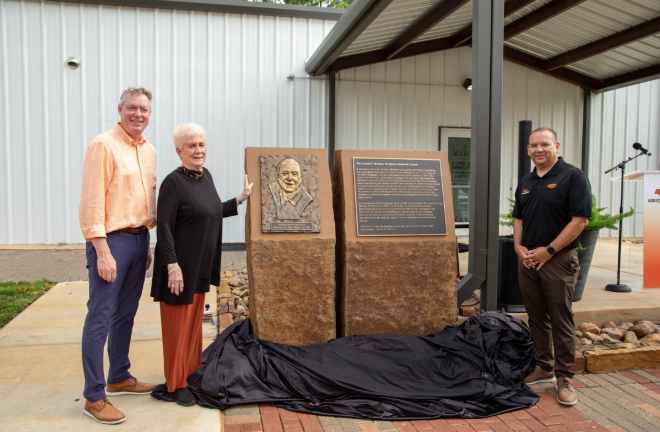
Supporters of Oklahoma State University Agriculture gathered June 27 to celebrate the grand opening of the Lionel K. Bentley Turfgrass Center.
"The Turfgrass Center represents a major step forward for OSU's turfgrass research, teaching and Extension programs," said Jayson Lusk, vice president and dean of OSU Agriculture. "It provides a centralized space where faculty, students and industry partners can come together to collaborate, learn and advance the science of turfgrass management."
The Turfgrass Center, located on a 100-acre facility, north of The Botanic Garden at OSU, is named in honor of the late Lionel Bentley of Washington, Oklahoma. The new center will specialize in ornamental and recreational turfgrass research, creating adaptive turfgrasses and developing eco-friendly pest management solutions.
Bentley graduated from OSU in 1970 with a bachelor's degree in agronomy with a focus on turf management. In 1984, he retired from the City of Norman as director of the Parks and Recreation Department to pursue Bentley Turf Farms, a full-service turf establishment and erosion-control company.
Bentley was known as a turfgrass sod pioneer in Oklahoma, offering customers U-3 bermudagrass, Tifway bermudagrass and his own Gracemont bermudagrass. He developed his turf-type tall fescue sod and was among the first in the state to offer Meyer Zoysia and El Toro Zoysia.
Bentley's wife, Lou, made the gift in memory of her husband. Her gift directly supports The Code Calls, OSU's $2 billion comprehensive fundraising campaign. The center embodies one of the campaign's core pillars – powering progress – and will drive turfgrass innovation and solve real-world problems in the industry.
Lou Bentley said it was rewarding to observe her husband's passion for turfgrass, including his ongoing research and experimentation, as well as his continued association with the OSU turfgrass program.
"I wanted to honor Lionel with something of a permanent nature – an honor that would stand up to the incredible person he was, and that his name and life would be honored, but not forgotten, and that exemplified his love for his life's work," she said. "Lionel K. Bentley Turfgrass Center – A dream come true."
The Turfgrass Center's modern facilities will support faculty and students and serve as a welcoming environment for workshops, field days and industry collaboration. It will directly support the research and discovery that ensure Oklahoma remains at the forefront of turfgrass innovation.
The OSU Landscape Services design team worked closely with project stakeholders to create the donor recognition display and landscape spaces. Sustainability and long-term maintenance were important considerations throughout the design process, said Nick Ouellette, OSU Landscape design manager.
The donor recognition monuments were fabricated from locally sourced stone, and the decorative rock mulch used throughout the installation aligns with OSU's landscape standards.
This project also provided a valuable learning opportunity, as an OSU landscape architecture student intern played a significant role in developing design concepts and renderings, Ouellette said.
"The Lionel K. Bentley Turfgrass Center is an excellent example of collaboration between donors, researchers, students, university leadership and campus operations," Ouellette said. "Beyond recognizing a transformational gift, the project highlights OSU's commitment to hands-on learning, innovative research and creating spaces that inspire future generations of students and industry professionals."
The facility marks a significant milestone for the OSU Department of Horticulture and Landscape Architecture as it continues to expand opportunities in turfgrass education and research, said Justin Quetone Moss, head of the department.
"It is especially meaningful that this center is named in honor of Lionel K. Bentley, a leader whose career embodied the values we strive to instill in our students," Moss said. "We are honored to recognize his legacy through this facility."
The turfgrass industry contributes more than $40 billion per year to the U.S. economy and $1 billion per year to the Oklahoma economy. OSU turfgrass scientists have contributed 11 turfgrass varieties used on golf greens and fairways, residential yards, sports fields and in commercial production.
OSU's latest turfgrass variety, Endarra 81, is the most drought-resistant grass to date. It also has longer-lasting color and strong resistance to leaf spot. After more than a decade of progress, Endarra 81 is currently grown at sod farms in five states and is expected to become more widely available to homeowners in 2027.
Additionally, two OSU faculty members recently received federal funding for new turfgrass-related research projects, bringing more than $1 million in research funding to the program.
Used at some of the most recognized sporting events, OSU turfgrass varieties have appeared at the Olympics, the Kentucky Derby, the PGA Championship, the World Cup, the Super Bowl and professional baseball and football stadiums.
OSU Agriculture is dedicated to improvingthe quality of life of Oklahomans through science-based information and education. It is comprised of the Ferguson College of Agriculture and two state agencies: OSU Ag Research and OSU Extension.
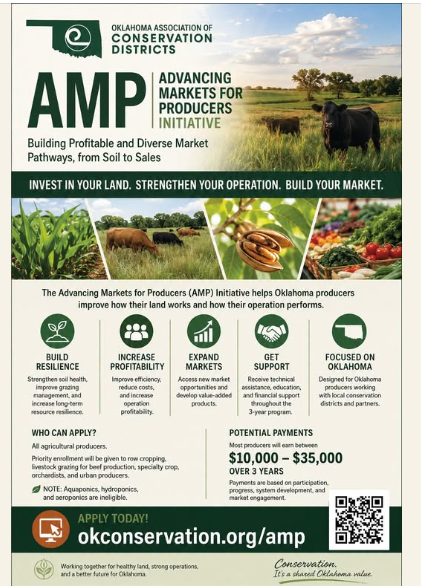
 Applications Are Now Open for the Advancing Markets for Producers (AMP) Initiative!
What if conservation and profitability didn't have to compete?
The Oklahoma Association of Conservation Districts is excited to launch the Advancing Markets for Producers (AMP) Initiative, a new opportunity for Oklahoma producers ready to strengthen their operations, improve their land, and build new market opportunities for regeneratively raised products.
AMP is more than a cost-share program. It's an investment in producers and the systems that support long-term success. Through conservation planning, technical assistance, market development, and financial support, participants will develop pathways that improve both operational performance and natural resource stewardship.
Whether you're a row-crop producer, rancher, specialty-crop grower, orchardist, or urban producer, AMP is designed for those ready to take their operation to the next level.
 Invest in your land.
 Strengthen your operation.
 Build your market.
AMP is an opportunity to demonstrate that healthy soils, resilient operations, and profitable markets can work together to support the future of Oklahoma agriculture.
Applications close July 31, 2026.
Apply today: https://www.okconservation.org/amp
Halter, the ag-tech company transforming cattle ranching, has launched Beef Pro, a product designed to move American beef producers beyond just virtual fencing and into active on-ranch performance management.
Halter's existing beef product lets ranchers virtually fence and shift herds from a smartphone, without the labor of physical fencing. Beef Pro adds a data, planning and decision-making layer, helping ranchers get more from their land.
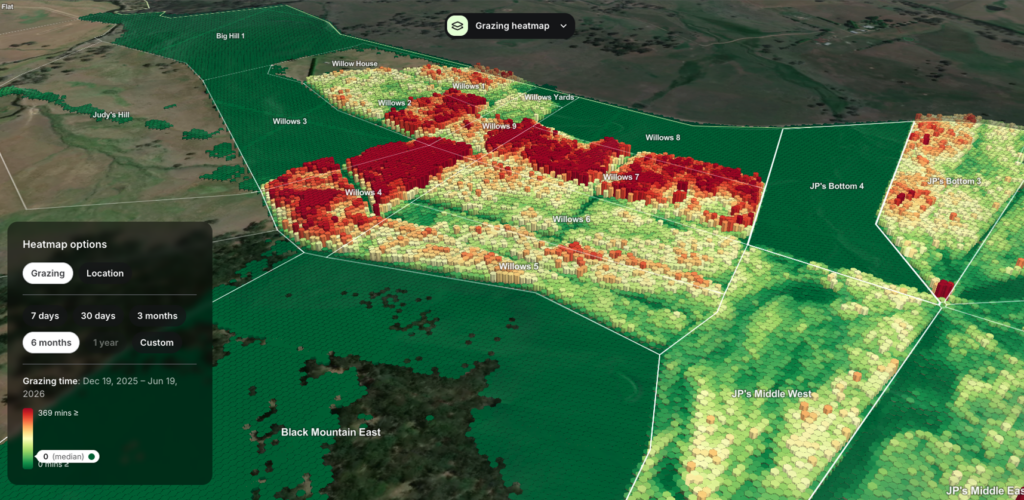
Beef ranchers can now access a wealth of data on feed demand and grazing; satellite forage signals, grazing intensity heat maps, behavior monitoring, and automated grazing records, providing a singular platform to replace what ranchers currently manage in their heads, on whiteboards or spreadsheets.
The innovation follows less than two months on from the introduction of Halter's satellite-enabled smart collars, unlocking large tracts of American ranchland previously unable to utilize virtual fencing due to poor connectivity. Already more than 600 ranches have signed up for the service.
"Beef Pro adds the measurement and planning layer on top of the execution layer that is virtual fencing," said Toby Hurley, Director of Product at Halter. "Ranchers can quantify what their herds need versus what their land can support, have this data drive planning, and build a record of how each grazing performed. That feedback loop compounds into better decision-making, building on the pasture utilization uplift that virtual fencing alone achieves."
A strong case for pasture utilization, as input costs rise
Meaningful production and high-quality pasture is often lost to under-grazing and over-grazing. Wasted forage becomes the main prize; every percentage point of utilization captured back is worth real money, compounding every year.
With traditional grazing, a typical US cow-calf operation runs at 20-25% pasture utilization1 - some forage is intentionally left as residual, but the rest is waste. Hurley says that while Halter's existing product unlocks some improvements through rotational grazing, "with Beef Pro, it's realistic to think about ranches utilizing 30-40% on rangelands - gains that would be unattainable without this tool."
"Every 1% of utilization lift is worth about $5000 on a 500-head, 2500-acre operation2. That's from one mechanism alone - less forage wasted - so everything else - from time savings, animal oversight, compliance records and replaced tools - stacks on top. We consider this way of managing land and animals a major leap for beef ranchers," Hurley says.
Building on American momentum
Since launching in the U.S. in 2024, Halter now operates in more than half of America's states, with approximately 1000 American ranches using the system, more than quarter of a million collars sold in the U.S. and over one million sold globally. Beef Pro complements Halter's direct-to-satellite service launched in April in partnership with T-Mobile, powered by Starlink, which made Halter the world's only virtual fencing provider to offer a satellite service. Halter has already sold nearly 400,000 of the satellite collars globally - more than half in the U.S.
Koy Holland from Holland Ranch, has collared a third of his 1750-cattle herd in Dillon, Montana. He says: "Being a good steward of rangeland comes first. Beef Pro provides data from our herd and works alongside what we see every day on the ranch. This helps us make informed decisions to improve our range management so we can adapt to drought and other challenges."
Beef Pro is now available to new and existing Halter customers across the U.S. More information at halterhq.com
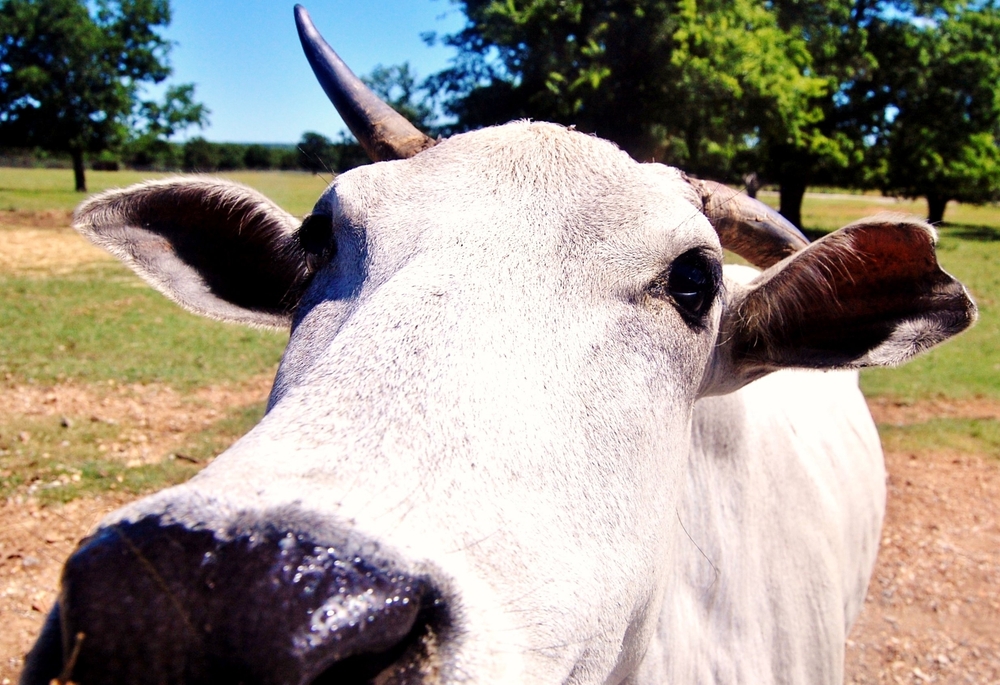
A major Oklahoma roadside attraction has been ordered to immediately cease all animal-related operations following a federal emergency order. The U.S. Department of Agriculture has issued a strict 21-day license suspension to the Arbuckle Wilderness Park in Davis, citing a comprehensive failure to maintain federal minimum standards under the Animal Welfare Act.
The regulatory action, issued in an official letter from the USDA, effectively grounds the drive-thru safari park's commercial business. During the three-week emergency suspension window, the facility, its management, and all employees are legally prohibited from buying, selling, transporting, or exhibiting any animals regulated under federal law.
The administrative action follows a series of compliance failures detailed by federal inspectors. According to the USDA enforcement letter, the park failed, at least once, to conduct mandatory daily health observations of its exotic livestock, leaving animal health and well-being unassessed.
Federal authorities outlined several critical infrastructure and care deficiencies at the Murray County attraction, including:
The emergency suspension serves as a temporary halt to operations while legal proceedings move forward. Under USDA administrative rules, the ownership of Arbuckle Wilderness Park has been granted the right to appeal the federal decision, provided the request is filed within the 21-day suspension window.

In today's Beef Buzz, senior farm and ranch broadcaster Ron Hays speaks with Donnie Robertson, vice president of Express Ranches, about the remarkable legacy of one of the nation's top seedstock operations after the Funk family announced plans to disperse the ranch's beef cattle operation.
When discussing elite seedstock programs in the U.S., Express Ranches has long stood alongside some of the industry's most respected names. The ranch built a reputation for producing high-quality genetics that influenced commercial and purebred cattle operations across the country. Since acquiring Angus cattle in 1996, the ranch grew exponentially to become the largest registered seedstock operation in the United States.
Robertson said the roots of Express Ranches stretch back more than three decades. "Yeah, Ron, it goes back well over 30 years. Bob Funk Sr. started the ranch, started acquiring cattle back in the late '80s—somewhere around '88 to '89."
The ranch first entered the Limousin business and held its first Limousin sale in 1993. "I came on board in the spring of '94, and yeah, the rest is kind of history," Robertson said those early years laid the foundation for what would become one of the most recognizable brands in the beef business.
Express Ranches soon expanded into Angus cattle, a move Robertson said came from a practical breeding goal. "We got into the Angus business primarily because we were going to use Angus cows on Limousin bulls to produce a half-blood, which we did, and those cattle ended up being very good cattle."
Those cattle helped push forward the Lim-Flex concept, combining performance and maternal traits from both breeds. As demand for Angus genetics grew, Express Ranches recognized a major opportunity. "We found a real need for Angus genetics here and obviously developed a really good bull market."
Located in Yukon, the ranch benefited from access to major transportation routes, helping build a wide customer base. "We're in a unique area here in Yukon where we're so close to so many different interstates, and we're able to sell a lot of bulls into Texas, Oklahoma, Kansas, New Mexico—a lot of different states."
Over time, the EXAR prefix became one of the most respected names in the Angus breed. Robertson said the Funk family intentionally built a program that excelled in multiple areas of the cattle business. "One thing that was important to the Funk family was to fight it on a lot of different fronts—whether it be show genetics or performance-type cattle that produced really good bulls."
That strategy allowed Express Ranches to serve both competitive show programs and commercial cattle producers. "I think history will tell you there's been a lot of good herds throughout the history of the Angus breed, but I think Express—the EXAR brand—is very historic from the standpoint of just the longevity that we've been able to establish here."
He said the brand's influence extends beyond the Angus breed. "I think that most people that are not only in the Angus business, but probably the livestock industry, look up to that brand."
Despite Express Ranches becoming widely known for Angus genetics, Robertson said Limousin cattle remain central to the ranch's story. "One should never forget where they came from. If it hadn't been for Limousin cattle, I probably wouldn't be here."
He recalled the success the ranch experienced during the 1990s. "We hit the ground running. We were very competitive showing those cattle and had very competitive and record-breaking sales on the Limousin side."
Robertson said the breed was especially strong during that era. "In that time period—from the early '90s toward the late '90s—the Limousin breed was very popular, especially in this part of the country and in the Southeast. It was a breed that was on the rise."
The dispersal of most Express Ranches females is scheduled for October, marking the close of an extraordinary chapter in the cattle business. Even as the operation changes, the legacy of Express Ranches—and the EXAR brand—will continue to influence the beef industry for years to come. Our conversation will continue with Robertson in our next Beef Buzz about that dispersal decision and the process.
The Beef Buzz is a regular feature heard on radio stations around the region on the Radio Oklahoma Ag Network and is a regular audio feature found on this website as well. Click on the LISTEN BAR above for today's show and check out our archives for older Beef Buzz shows covering the gamut of the beef cattle industry today.
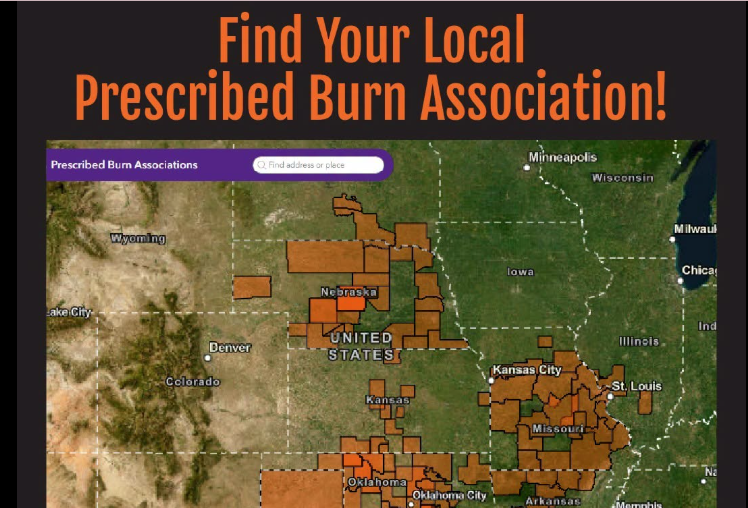
You can find a PBA near you on this map from the @Great Plains Fire Science Exchange!
Around 70 prescribed burn associations (PBAs) are active throughout Texas, Oklahoma, Kansas and Nebraska with 182 total across the US.
Neighbors help neighbors to conduct prescribed burns. PBA members are mainly landowners but also include non-profit, state agency and federal agency personnel. The associations often provide equipment such as safety gear, suppression vehicles and equipment, drip torches, and other tools.
Prescribed burns, also known as controlled burns, are a vital management tool used by land managers, foresters, and agricultural producers to safely apply fire to a predetermined area under specific environmental conditions. While the idea of intentionally starting a fire may seem counterintuitive, suppressing all fires can create greater hazards over time. Managed fire plays an essential role in keeping landscapes healthy, resilient, and safe.
If you don't see your local PBA on the map, please submit your information! Click "Add or Update a PBA"
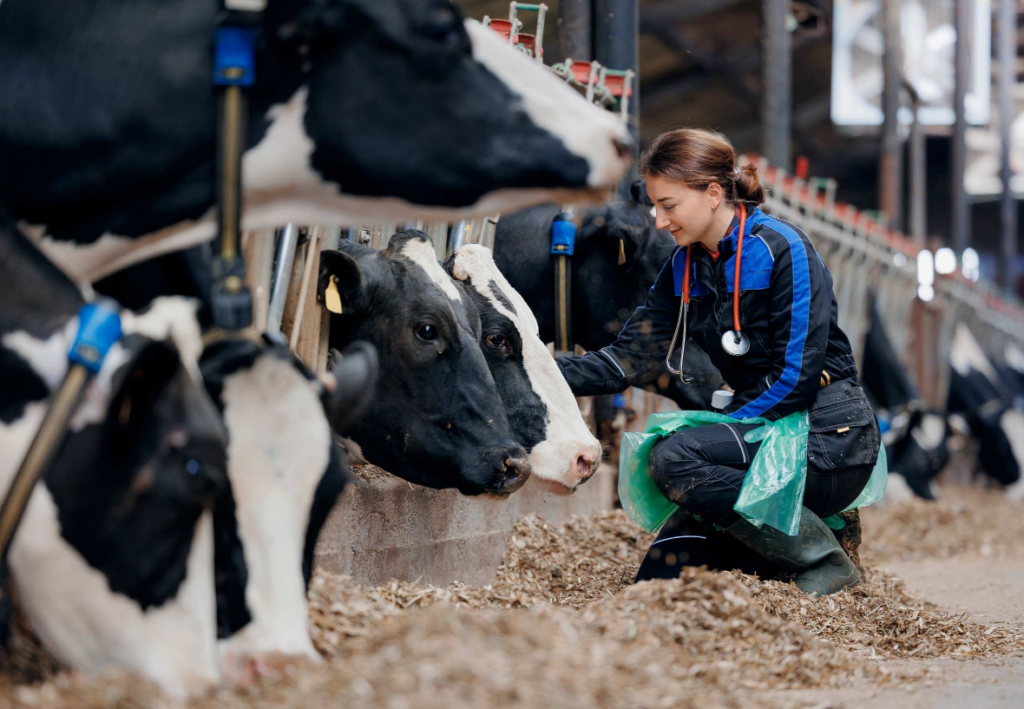
For Joel Eigenbrood, dairy farming wasn't a part of his original life plan. Balance sheets and budgets shaped his path into becoming a dairy advocate, using his voice to enact change in an industry he believes in.
"The coolest thing about dairy is there are multiple ways to enter the industry," said Eigenbrood. "Any career field that you want to join, there's a spot for it in dairy."
Eigenbrood, chief financial officer for Mibelloon Dairy in Mount Pleasant, MI and current chairman of Foremost Farms Inc., talks about his changing relationship with the industry and the importance of advocacy for dairy in the newest edition of NMPF's Farmer Focus series.
To view this and other Farmer Focus stories, check out NMPF's Sharing Our Story page.
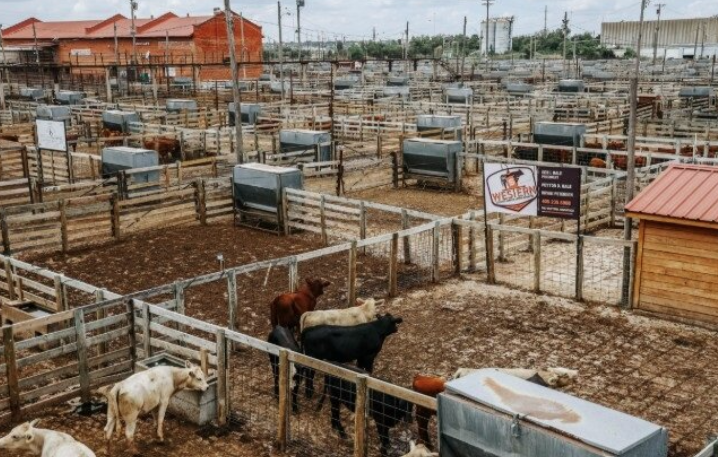
On Tuesdays, Senior Farm and Ranch Broadcaster Ron Hays visits with Ben Hale of Western Livestock Auctions as he talks about the latest in the markets and more. Established in 1995, Western has grown into a multi-generational family-owned and operated business and stands as a symbol of tradition, excellence, and a deep-rooted passion for the cattle industry. Western Livestock Auctions operates the Western Livestock Commission Firm, which sells cattle on Mondays and Tuesdays. They also operate the livestock auction markets in Woodward, Comanche, Waurika, and Knoxville, Iowa.
Hale said this week's trade at Oklahoma National Stockyards remained active despite slightly smaller receipts. He said yearling cattle sold on mostly steady to stronger money, with some weight classes performing even better than expected. "I kind of thought the yearlings were a little better, really," Hale said. He specifically pointed to the six-weight-to-high-six-weight cattle approaching seven weights as a standout class. "The six to high six weight tight seven weight yearling deal was a lot better yesterday." Even with the strong market, Hale admitted feeder cattle remain expensive to buy. "We were trying to buy some feeder cattle, and it was sure expensive to do."
The calf market has been one of the biggest surprises in recent weeks, showing another sharp jump in prices. "The calf deal is kind of the surpriser... that deal was 5 to 20 higher last week and about that again this week," he said. Demand for grazing cattle remains extremely aggressive. "They are very active on them grazing cattle." He added that heavier calves, carried more substance this week. "Those bigger from six to 680 weight, they were lots stouter too yesterday," he said.
Improved pasture conditions from recent rainfall appear to be helping fuel buyer demand. At the same time, tight inventories continue to support higher prices because fewer cattle are moving through the system. "Still not a lot of them moving around," Hale explained. That limited supply is forcing buyers to become more aggressive when cattle become available. "Some guys wanting to get some inventory," he said. Hale also pointed to favorable futures and workable margins as reasons buyers are willing to stay active. "The futures are out there in front, they tie some of it off, and like the margins they got, so going ahead and doing it."
Despite strong market fundamentals, Hale acknowledged the cattle market remains unusually volatile. "We're just in a market we've just never ever seen, as far as I can remember," he said. He reflected on the repeated swings over the past year. "It just complete run up, and then we've had sell off, come back, sell off, come back." Those sharp movements have created uncertainty, but confidence keeps returning as supplies remain historically tight. "There's a little bit of uncertainty, but then they kind of get confidence back in it," Hale said.
One of the biggest long-term questions in the cattle industry is whether herd rebuilding has begun through heifer retention. Hale said there are signs that some producers are beginning to rebuild, though not in a major way. "We've talked about it a little bit," he said. He noted that Western Livestock has purchased breeding heifers for several customers this year. "We've bought several heifers over the last year for different guys." Most of those purchases have been moderate-sized groups rather than large-scale herd expansion. "No big deals... 50 to 60 head deals," Hale said. Even so, he noted how unusual that activity is. "We really hadn't bought any heifers for people to breed since about 2015." That makes this year stand out. "This year we've bought several heifers... to go back to country," he said.
Looking ahead, Hale said Western Livestock remains busy across its auction locations. He expected around 2,000 head at the Waurika Livestock Auction sale. "Gonna have 2,000 today at Waurika," he said, adding, "Gonna have a nice run of calves and yearlings." There will be no sale this week at Comanche Livestock Auction, but activity continues at Woodward Livestock Auction, where cow sales and several loads of yearlings are scheduled. "We got several loads of yearlings for Thursday at Woodward," Hale said.
Hale can be contacted at 940-631-2333. Check out more about the marketing options that Western offers by clicking here.
At the time of this video, there are 25 cases of New World Screwworm in the United States, 24 cases are in central and southwest Texas and 1 case was detected in a dog in southeast New Mexico. The cases involve cattle, goats, sheep, and a dog.
So far, there have been no detections in U.S. wildlife, nor are there any fly trap detections. It's been 23 days since the first detection, which occurred on June 3.
The New World screwworm does not impact the safety of meat. It's a pest that affects live animals before they enter the food supply.
Just across the border into Mexico, and within about 100 miles of the U.S. border, Mexico has detected 63 new cases since June 3, the date when the first case was detected in the U.S.
This is a real threat to U.S. livestock, pets, and wildlife, and can be to humans. How far into the United States the New World Screwworm will penetrate is unknown.
Fortunately, the U.S. has delt with this pernicious pest before – back in the 50s and 60s, and learned how to combat it. It's the production and dispersal of sterile male flies that it known to depopulate the pest. The U.S. Department of Agriculture is producing and strategically dispersing sterile male flies in an attempt to arrest the northward and lateral spread of the New World screwworm in the U.S. It's been reported that the U.S. needs to substantially increase the production of sterile flies and the USDA is gearing up to accomplish this, but it will take time.
What ranchers and other citizens should do now is keep a close eye on their livestock, pets, and themselves for any open wounds that the fly may infest. As the temperature continues to warm up, the fly will become more active, and while it could be carried by the winds, its known to remain in close proximity to its potential hosts – that means livestock and all other warm-blooded animals.
Another very important mitigation measure initiated by the USDA is the closure of the U.S. border to livestock imports. This serves two very important purposes. First, it prevents the screwworm larvae from being carried into the U.S. in wounds on domestic livestock where they can then drop to the ground and pupate, producing adult screwworm flies on U.S. soil. It also prevents female New World screwworm flies from accompanying or following domestic livestock into the United States.
The second purpose is critical, particularly given the migration of the pest from Central America, into southern Mexico, then northward through Mexico until breaching the U.S. border. Keeping the U.S. border closed until the pest is completely eradicated in the U.S. and in all of Mexico will eliminate the economic incentive to bring cattle northward from southern Mexico in anticipation of selling them in the United States.
Mexico has now had a total of 30,231 cases through June 24, and most of those cases are in southern Mexico, where the New World Screwworm remains endemic. The U.S. should continue doing all it can to convince Mexico to cease any northward movement of cattle, and keeping the U.S. border closed will help facilitate that effort.
Though that might sound simple enough, there's a serious complication. Illegal cattle trafficking by cartels and other criminals has been cited as a factor in the screwworm's breach of the containment zone in Panama, and its reintroduction into Mexico. Reports indicate that about 800,000 cattle are entering Mexico illegally each year.
It's one thing for nations to cooperate with each other to combat a common pest as the United States and Mexico are doing to fight the screwworm. But the illicit activity of organized crime can effectively undermine that cooperative effort.
It is Mexico that must put an end to any illegal cattle trafficking into and within its borders, and the United States must closely monitor Mexico's progress to ensure that Mexico is effectively enforcing its laws to prevent illicit cattle trafficking from endangering U.S. livestock.
The New World screwworm is shining a light on the dangers of becoming increasingly reliant on foreign countries for our food supply. America's dependency on Mexico for a percentage of its needed cattle supplies has contributed to the long-term liquidation of the U.S. cattle herd. Now, in times like this when the domestic supply is already inadequate to meet domestic demand, the inaccessibility of Mexican cattle supplies exacerbates the supply/demand imbalance, sending markets spiraling.
Let's learn from our mistakes and develop a plan to end our reliance on foreign countries for our food by rebuilding our U.S. cattle herd so America can become self-reliant in the production of a critically important protein source - beef.

American Farm Bureau Federation President Zippy Duvall commented on President Trump's executive order to lift countervailing duties on phosphate fertilizers from Morocco through early next year. "Farmers applaud President Trump's executive order to suspend tariffs on phosphate fertilizers from Morocco. Skyrocketing fertilizer costs have contributed to rising expenses for farmers who were already struggling after years of inflation, depressed commodity markets and high interest rates. In fact, 7 out of 10 farmers said, in a Farm Bureau survey this spring, that they would not be able to afford enough fertilizer for this year. "The decision to suspend tariffs on critical supplies, along with the recent request for emergency economic aid for farmers, are common-sense steps that will bring relief to farmers at a time when they need it most. We shared the impact of high fertilizer prices and availability with the president and we appreciate him listening to those concerns. We'll continue to work with the administration to find more ways to improve market conditions and lower expenses for the men and women who work to ensure pantries are stocked for America's families."
National Sorghum Producers applauded President Donald Trump's proclamation temporarily suspending certain duties on phosphate fertilizer imports from Morocco, saying the action will help improve fertilizer availability and provide timely relief to farmers facing tight margins and high input costs. "Fertilizer is one of the largest expenses sorghum producers face each year," said NSP Chair Amy France, a farmer from Scott City, Kan. "This action is an important step toward improving access to competitively priced fertilizer as farmers plan for the 2027 crop. We appreciate President Trump and his administration recognizing the challenges facing America's farmers and taking meaningful action to help ease input cost pressures." NSP supports policies that strengthen fertilizer market competition, improve supply chain resiliency and ensure U.S. farmers have access to the crop nutrients they need at reasonable prices.
President Trump signed an executive order today instituting a temporary suspension of countervailing duties applied to imported phosphate. In response to this development, Ohio farmer and National Corn Growers Association President Jed Bower released the following statement: "This is such welcome news for corn farmers. Fertilizer represents one of the biggest expenses for farms every year, only made worse in recent years by actions of companies looking to further consolidate their control of the market. Input prices generally have been incredibly high and are a major contributing factor to the profitability picture, or lack thereof, for corn farmers right now. "Thank you, President Trump, for recognizing the economic outlook facing American farmers right now and taking steps to alleviate some of that pressure. This is an important step as the sunset review and the anti-trust investigations are taking place."
President Donald Trump has signed an executive order temporarily suspending duties on phosphate fertilizer imports from Morocco, helping ensure American farmers have timely access to critical fertilizer supplies for the upcoming growing season. "This is welcome relief for America's wheat farmers," said NAWG President and Idaho farmer Jamie Kress. "Family farms like mine have been operating on razor-thin margins for several years, and fertilizer remains one of our most significant production expenses. While farmers cannot control global markets or supply chain disruptions, actions like this help reduce input costs and provide greater certainty during periods of volatility. Suspending these duties will help keep American farmers economically viable and competitive in the global marketplace." In March 2026, NAWG urged the U.S. International Trade Commission (ITC) to revoke countervailing duty (CVD) orders on phosphate fertilizer imports from Morocco and Russia, citing the significant economic burden the duties placed on U.S. wheat producers. NAWG encouraged the Commission to consider the effects of higher fertilizer costs on American agriculture and the competitiveness of U.S. farmers. Read NAWG's full letter here and CVD analysis here.
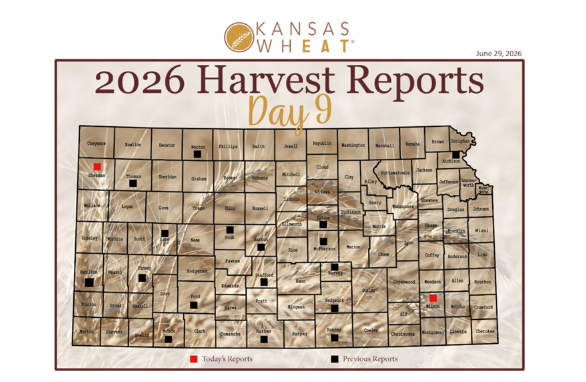
This is day 9 of the Kansas Wheat Harvest Reports, brought to you by the Kansas Wheat Commission, Kansas Association of Wheat Growers, Kansas Grain and Feed Association, and the Kansas Cooperative Council.
After several days of scorching temperatures and dry conditions, farmers have been able to return to the fields. Harvest is making steady progress, with the possibility of harvest wrapping up soon, as long as the weather cooperates.
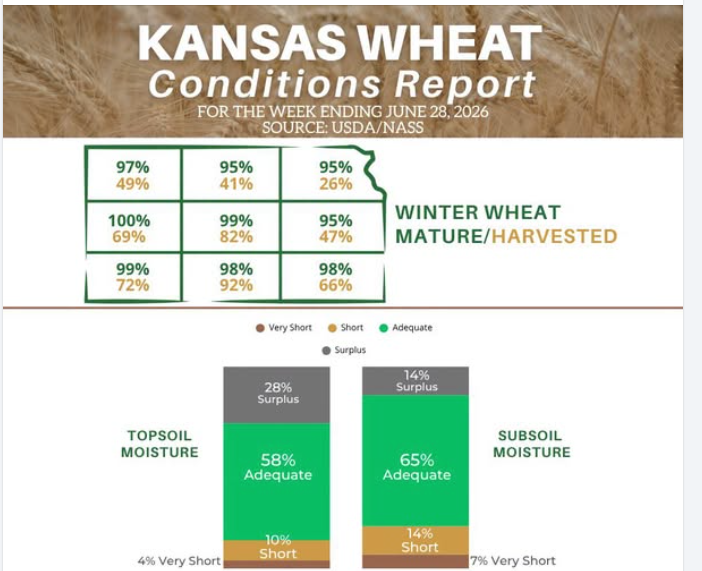
According to the USDA's National Agricultural Statistics Service crop progress report ending June 28, 2026, the Kansas wheat harvest is 72 percent complete, well ahead of last year's 48 percent and the five-year average of 52 percent complete. Winter wheat conditions stayed the same as last week's report.
Brian Linin, a farmer in Sherman County, reported that he had just started due to the weather and said he is about 10 percent done. Linin noted having a below-average year due to drought conditions during the spring.
"We have success with KS Western Star (Kansas Wheat Alliance), Langin (PlainsGold) and KS Dallas (Kansas Wheat Alliance)," said Linin. "This just gives you an idea of how resilient wheat is, when it can make a crop in this kind of year."
Nicole Small, a farmer in Wilson County, reports she and her husband have been done with harvest for about three weeks now.
"Half of our wheat had hail damage, which is unusual for our area," said Small. "I'm pretty certain we're the only ones done in our area; with the amount of rain we've received, it's just enough to keep you out of the field."
Small stated their 2026 wheat crop has faced significant challenges, resulting in a below-average harvest compared to last year.
"Along with the drought, we also had the surrounding rivers get out and flood," said Small. "The majority of our wheat was in the river bottom. Flooding happened early on, causing the wheat to not mature and not fill."
Jeanne Falk Jones, K-State Northwest Area Agronomist in Colby, Kansas, commented on the possibility of seeing some secondary infections (mold) on heads or test weights decreasing due to extended periods of wet weather. Producers are encouraged to reach out to the K-State Department of Agronomy at agronomy@k-state.edu with any agronomic questions that they may have during harvest.
The 2026 Harvest Report is brought to you by the Kansas Wheat Commission, Kansas Association of Wheat Growers, Kansas Grain and Feed Association, and the Kansas Cooperative Council. To follow along with harvest updates on X, use #wheatharvest26. Tag us at @kansaswheat on Facebook, Instagram and X to share your harvest story and photos.

OWRB staff is traveling across Oklahoma to meet with local residents and water users. Whether you need help with water permit applications, permit amendments, changes of ownership, water use reporting, or have other questions, our staff will be available to provide guidance and assistance right in your community.
Our next stop will be in Shattuck on July 7-8. We will be on site all day (both days) at the Red Barn, 822 5th Street, Shattuck, OK. Come ready to work!
Interested in having the OWRB spend a day or two in your area? Contact us at waterpermitting@owrb.ok.gov. We look forward to connecting with communities across Oklahoma!
As the state's designated water management agency, the OWRB appropriates surface water and groundwater through water use permitting. Permits are required for most uses of water in Oklahoma, except domestic use.
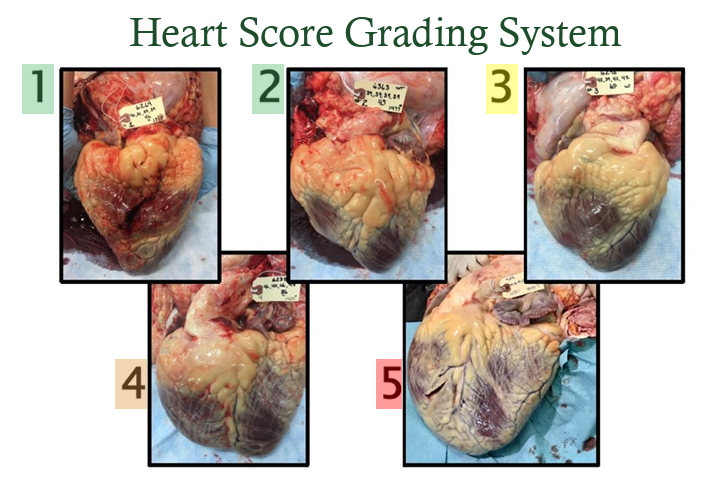
Over time, Bovine congestive heart failure (BCHF), sometimes referred to as "late-day" or "late stage" morbidity has emerged as a condition of significance to the cattle industry. BCHF is a significant cause of death in feedlot cattle at low to moderate elevations (2600 – 5200 feet). Mortality from BCHF has reached 7.5% in severely affected pens of cattle, with annual losses exceeding $250,000 for a single operation. In the cattle finishing sector it can be the single most costly health-related problem, even surpassing losses from bovine respiratory disease. Symptoms of BCHF can often look similar to those of high-altitude (or "brisket disease"). While recovery from high altitude disease is possible by moving cattle to lower elevations, BCHF is an untreatable, fatal condition involving pulmonary hypertension that culminates in right ventricular heart failure. BCHF is occurring in well managed operations, feeding high genetic merit cattle at low elevation feedlots in the Midwest and higher elevations of the Western Great Plains of North America. Accordingly, reducing the incidence of BCHF is a high priority for the cattle industry.
Heart Scores and BCHF
Heart Scores (which can be collected at the harvest endpoint of fed cattle) are used as an indicator of heart remodeling and cardiovascular health in cattle. As shown below, a score of 1 indicates a healthy bovine heart. Higher heart scores indicate more severe heart remodeling, which is associated with a greater risk of BCHF.
The Genetic Component of BCHF
While there are many non-genetic factors that can contribute to BCHF, it is encouraging that several on-going research projects preliminary data indicates the potential to address BCHF through genetic improvement and selection. A summary of the information presented at 2026 Beef Improvement Federation meetings:
Bottomline
The potential exist to develop selection tools (EPDs) to select for healthier hearts. While the incidence of BCHF occurs primarily in feedlots. The selection tools developed can be implemented at the seedstock and cow-calf levels to make cumulative, permanent genetic improvement.
References:
https://www.ars.usda.gov/plains-area/clay-center-ne/marc/bchf/bchf-main
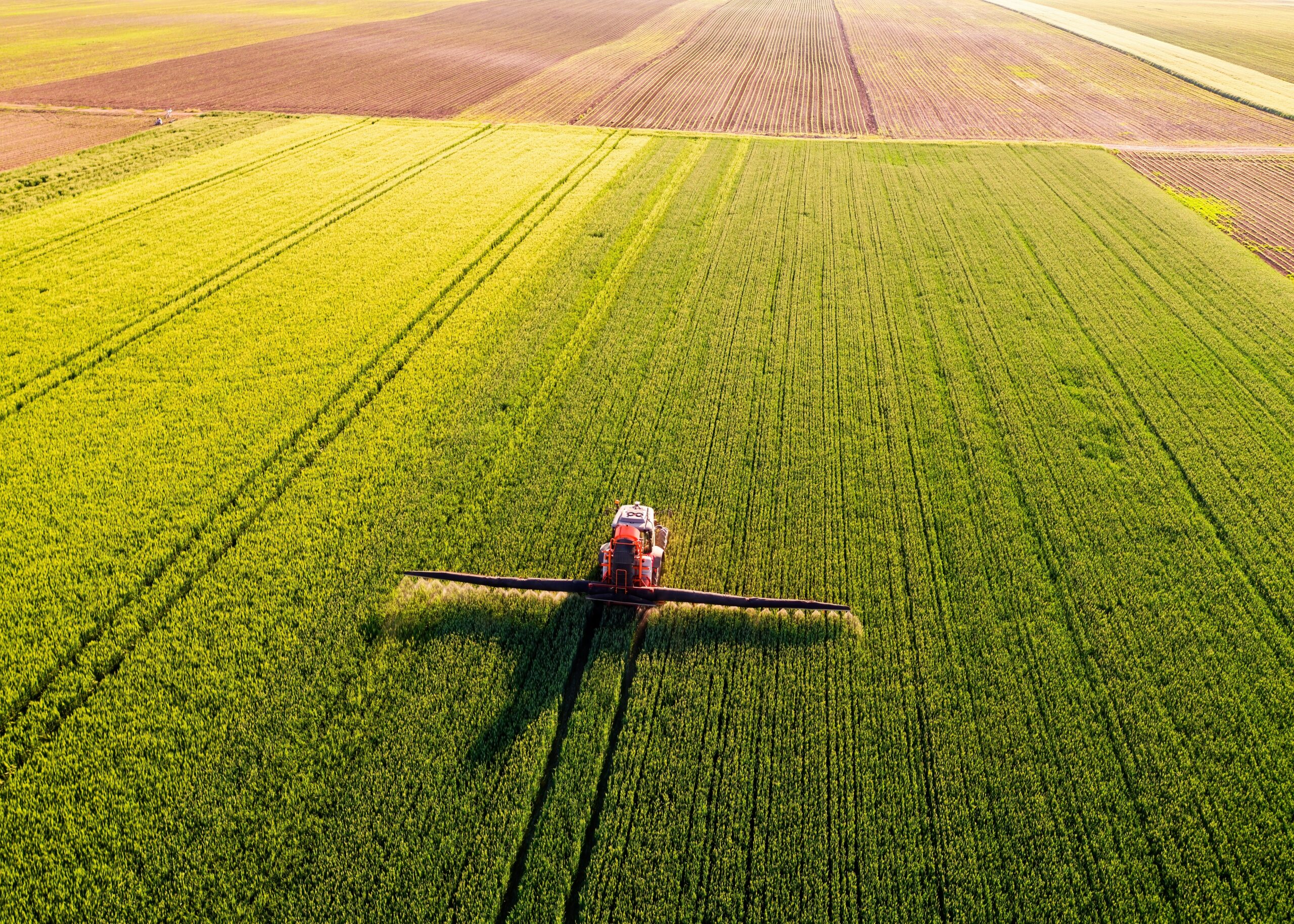
President Donald J. Trump signed a proclamation temporarily suspending countervailing duties (CVDs) on certain phosphate fertilizer imports, providing immediate relief to American farmers while advancing the Administration's broader strategy to strengthen America's fertilizer supply chain.
The temporary suspension will increase phosphate fertilizer availability, improve competition, and help lower one of agriculture's largest production expenses while supporting a stable and reliable fertilizer supply ahead of future planting seasons.
Current USDA analysis indicates American farmers could save approximately $1.82 billion annually through lower phosphate fertilizer costs as additional supplies enter the U.S. market. The action is expected to reduce phosphate fertilizer prices by approximately 22 percent, benefiting more than 100,000 farms across 97 million planted acres nationwide.
"As we have worked to implement America First fertilizer actions—from waiving the Jones Act to implementing more flexible Hours of Service waivers—we have focused on finding short-term solutions while delivering long-term stability for our nation's farmers," said U.S. Secretary of Agriculture Brooke L. Rollins. "Today's announcement will bring immediate relief to producers who rely on these critical inputs with an estimated 22 percent reduction in phosphate fertilizer prices, and $1.82 billion in annual savings for producers. President Trump will always put farmers first, and he will continue to fight for those that feed, fuel, and clothe our nation."
Today's announcement builds on a series of actions taken by the Trump Administration to strengthen fertilizer affordability, improve supply chain resilience, and expand domestic production. The Administration has designated phosphate and potash as critical minerals, signed a USDA-Department of Justice Memorandum of Understanding to address anti-competitive practices affecting agricultural inputs, worked with federal partners to accelerate major domestic fertilizer manufacturing projects, and recently established a dedicated USDA Agricultural Economist position focused on fertilizer markets and agricultural inputs.
In addition to providing immediate relief through increased fertilizer availability, USDA continues to support long-term domestic fertilizer production by advancing major manufacturing projects across the country that will strengthen supply chains, create rural jobs, and reduce America's reliance on foreign fertilizer sources.
"President Trump's action today will provide immediate relief as well as a stable source of supply for American producers as they enter fall application season," said Deputy Secretary Stephen Alexander Vaden. "The Department will continue to support initiatives to secure American farmers' access to fertilizer, including by increasing domestic production capacity."
Fertilizer remains one of the largest input costs facing American agriculture. Under the Biden Administration, fertilizer prices reached historic highs, placing significant financial pressure on producers. President Trump's action provides immediate relief while complementing the Administration's long-term efforts to rebuild domestic fertilizer manufacturing, strengthen America's food and national security, and ensure American farmers have access to affordable, reliable fertilizer for years to come
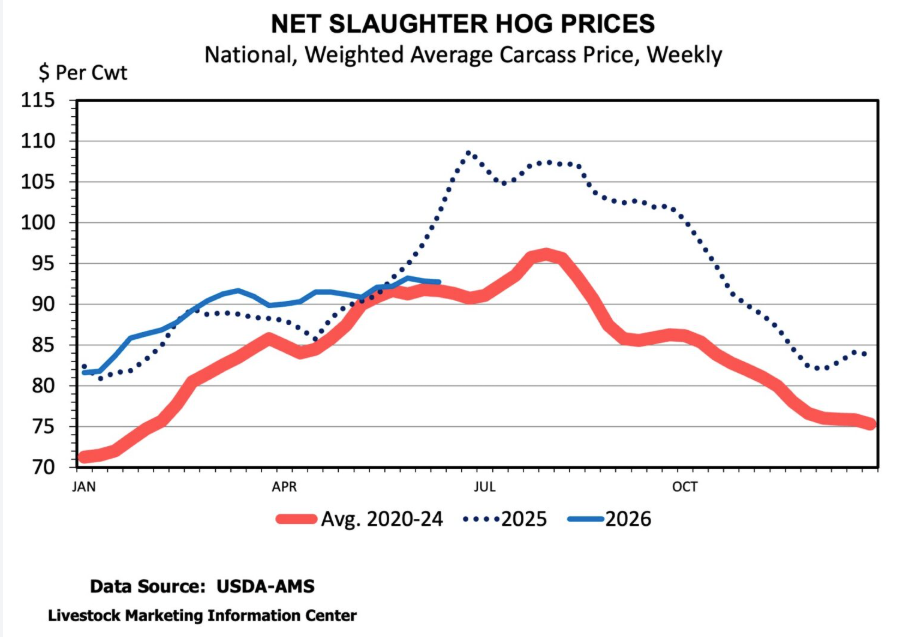
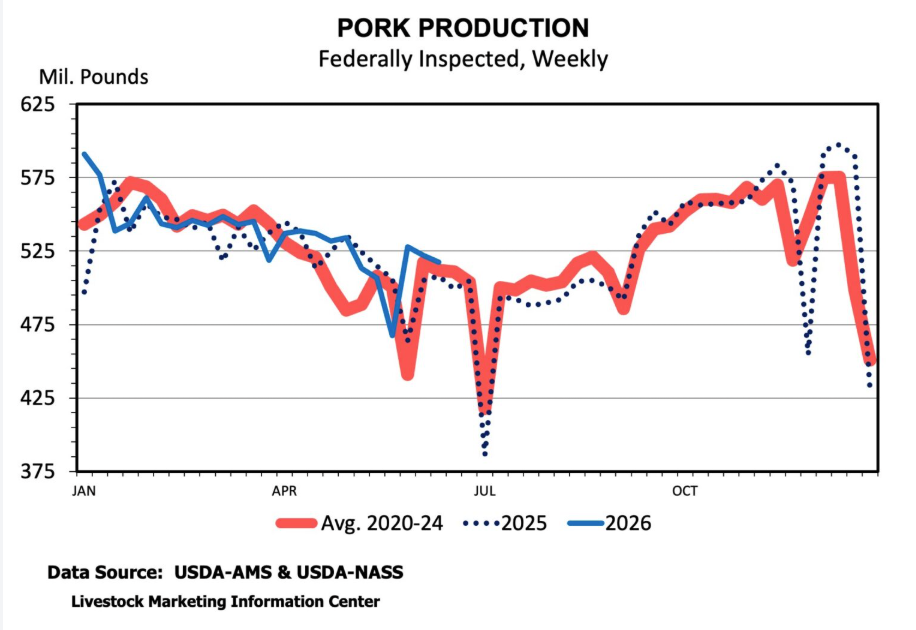
The hog market has several interesting contradictions. Amid the factors of profitable production, live and cutout values well below last year, and little growth in production, USDA released its June 1 Hogs and Pigs report last week, and it continued to show a smaller breeding herd.
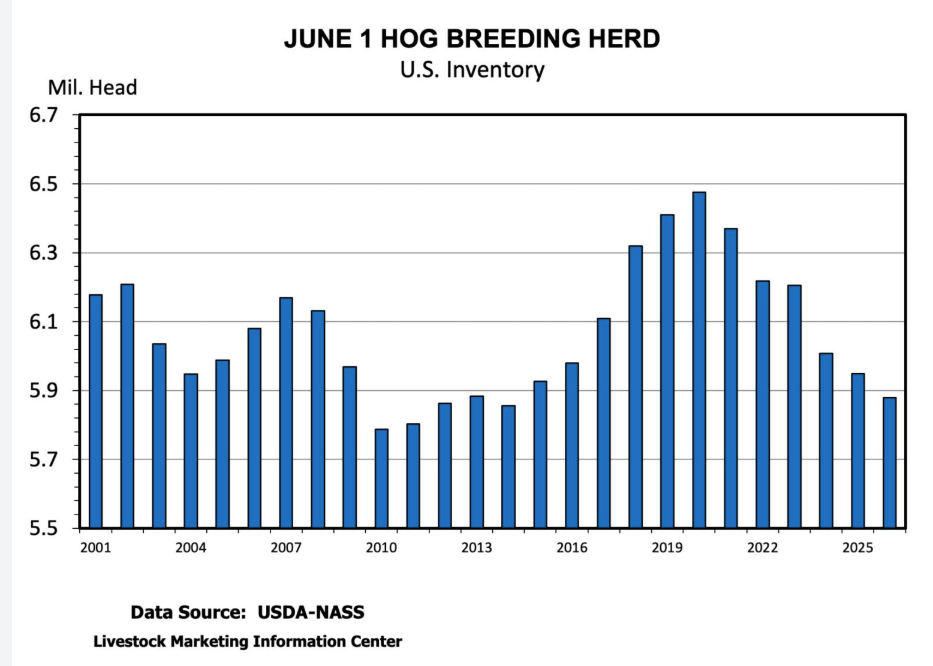
The breeding herd was estimated at 5.88 million head, down 1.2 percent from last year. That is the smallest herd since 2014 and the 6th consecutive year of decline in the June 1 breeding herd. The number of market hogs was even with last year. The number of pigs per litter over the December 2025-May 2026 time period hit a record high of 11.88. Market hog production has been boosted by pigs per litter, which has offset the decline in the number of sows farrowing.
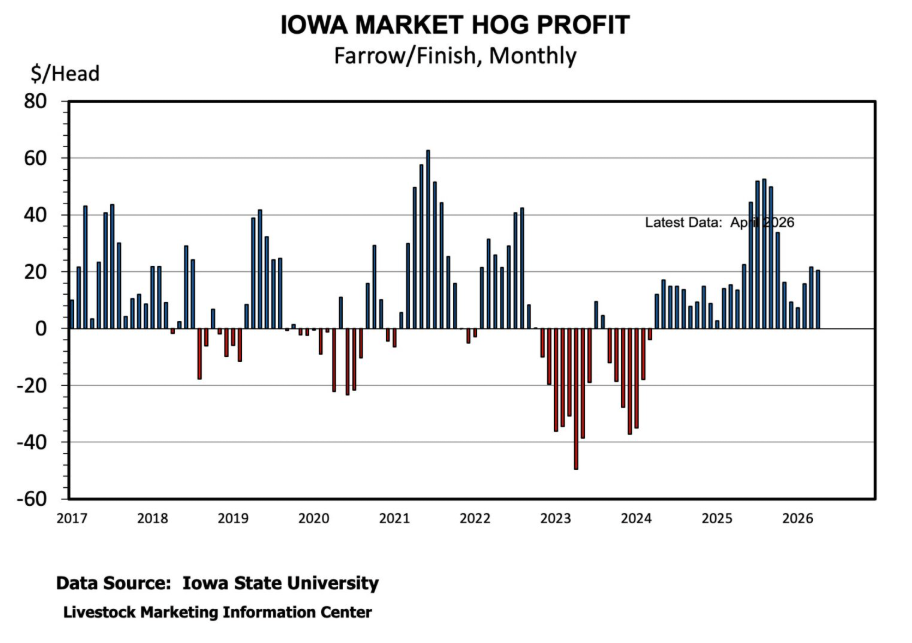
The lack of growth in the sow herd is interesting given the Iowa State University estimate of farrow-to-finish hog profits. The April 2026 data was the 24th consecutive month of estimated profits. Normally, profits jump-start expansion, but that has not occurred due to several headwinds. Expansion often requires new barns, and rising construction costs have likely offset estimated future profits. Animal health and sow mortality have likely constrained expansion. Falling feed costs have been a major driver of profits. High prices boosted profits dramatically in the middle of 2025, but prices have seen little increase in 2026.
Hog prices, as reported by the national weighted average carcass price, peaked last July at $108.79 per cwt. Prices entering July this year were $92 per cwt. The pork cutout value is about 20 percent lower than last year and below the 5-year average. Wholesale prices for hams, bellies, loins, and trimmings are all lower than last year. Only spareribs are higher than last year. The futures market is not indicating higher prices for the rest of the year. Neither pork nor hog prices indicate much potential for herd growth in the coming months.
Happy 250th 4th of July to all of you from us livestock economists at SAT! We hope you find something great to put on the grill or smoker and celebrate, looking forward to the next 250.
Link to Article courtesy of: Anderson, David. "Little Growth in Pork Production Ahead." Southern Ag Today 6(27.2). June 30, 2026. Permalink
David Anderson
Professor and Extension Economist, Livestock and Food Products Marketing, Dairy, Policy
The U.S. Department of Agriculture (USDA) is improving and modernizing 32 key conservation practices, part of a broad effort by the Natural Resources Conservation Service (NRCS) to put farmers first by strengthening conservation solutions. To gather feedback to update the practice standards, NRCS held more than 150 roundtables, bringing together more than 2,000 agricultural producers in every state and territory. Additionally, NRCS is currently accepting input now through July 6, 2026, on the Federal Register.
"We want to make sure our conservation practices meet the needs of farmers, supporting their efforts to solve natural resource challenges and grow more productively and profitably," said NRCS Chief Colton L. Buckley. "We listened to farmers and fine-tuned our practices to better integrate their real-world needs, including considerations for precision and regenerative agriculture. Ultimately, we want to keep working lands in working hands."
NRCS's conservation practices offer guidelines for planning, installing, operating and maintaining conservation practices used by farmers, ranchers, and private forest landowners nationwide.
A few examples of updated practices:
Submitting Comments
NRCS is encouraging agricultural producers, landowners, organizations, Tribes and others that use its conservation practices to comment on these 32 revised conservation practice standards by July 6, 2026. NRCS will use public comments to further enhance its conservation practice standards.
The proposed revisions to the 32 conservation practice standards are available on the Federal Register portal under docket number NRCS-2026-0034. Follow online instructions for submitting comments virtually or via mail/hand delivery.
For more than 90 years, NRCS has helped farmers, ranchers and forestland owners make investments in their operations and local communities to improve the quality of our air, water, soil, and wildlife habitat. NRCS uses the latest science and technology to help keep working lands working, boost agricultural economies, and increase the competitiveness of American agriculture. NRCS provides one-on-one, personalized advice and financial assistance and works with producers to help them reach their goals through voluntary, incentive-based conservation programs. For more information, visit nrcs.usda.gov.

The Agriculture Coalition for USMCA released a letter, signed by 2,376 farmers from across the country, that was sent to President Trump today urging renewal of the United States-Mexico-Canada Agreement with targeted improvements.
"The USMCA is foundational to American food and agriculture's success, providing expanded cross-border rail traffic, long-term policy certainty, and greater supply chain predictability for American producers – and this agreement delivers for American consumers, too," the letter said.
The letter noted that exports to Mexico have increased by $10.7 billion and exports to Canada by $7.6 billion since the agreement was enacted in 2020. In fact, over a third of U.S. agriculture exports are destined for Mexico and Canada, creating important and reliable markets for ag products.
"North American trade has propped up more than half a million U.S. jobs in food and agriculture, and the agreement has generated more than $60 billion in U.S. agricultural exports to Canada and Mexico," the letter noted. "American families have access to more affordable food options, which has helped our country weather unpredictable natural disasters and tragedy.
USMCA was signed by the United States, Mexico and Canada in 2018 during President Trump's first term and was implemented in 2020 to replace the North American Free Trade Agreement.
Under the agreement, leaders of all three nations must begin a formal review by July 1, 2026, to determine whether to renew the agreement. If renewed, USMCA would remain in effect for an additional 16 years, with another review scheduled in 2032. If the countries fail to reach an agreement and move to terminate, USMCA will expire in 2036. The review could also enter a period of annual consultations with no clear path forward, creating significant uncertainty for the farm economy.
With key deadlines quickly approaching, agricultural groups are advocating to uphold and strengthen the agreement.
Farmers across the nation have also been talking about the benefit of the agreement and encouraging the administration to begin the renewal process.
According to the latest crop progress report released on June 29th, 2026, Oklahoma's winter wheat harvest is at 98% complete this week, compared to 95% last week.
Kansas winter wheat crop is ranked 14% good to excellent, 31% fair, and 55% poor to very poor. Winter wheat harvested is at 72% compared to 58% last week.
Texas winter wheat crop is ranked 12% good to excellent, 23% fair, and 65% poor to very poor. Texas winter wheat harvested is at 82% this week, compared to 77% last week.
Nationally, winter wheat conditions rank 26% good to excellent, 27% fair, and 47% poor to very poor. Winter wheat harvested is at 48% compared to 40% a week ago.
Oklahoma: 33% poor to very poor, compared to 31% last week. 36% Fair compared to 36% last week, and 31% good to excellent compared to 33% last week.
Kansas: 17% poor to very poor compared to 19% last week. 27% fair compared to 30% last week, and 56% good to excellent compared to 51% last week.
Texas: 26% poor to very poor, compared to 25% last week. 30% fair compared to 35% last week, and 44% good to excellent compared to 40% last week.
Nationally: 35% poor to very poor, compared to 37% last week. 31% fair compared to 30% last week, and 34% good to excellent compared to 33% last week.
Oklahoma corn silking is at 31%. Corn conditions rank as follows: 21% poor to very poor, 19% fair, and 60% good to excellent.
Kansas corn silking is at 24%. Corn conditions rank as follows: 9% poor to very poor, 25% fair, and 66% good to excellent.
Texas corn silking is at 73%. Corn conditions rank as follows: 14% poor to very poor, 45% fair, and 41% good to excellent.
Nationally, corn silking is at 9%. Corn conditions rank as follows: 8% poor to very poor, 25% fair, and 67% good to excellent.
Oklahoma soybeans emerged are at 74%. Oklahoma soybean conditions rank as follows: 23% poor to very poor, 41% fair, and 36% good to excellent.
Kansas soybeans emerged are at 85%. Kansas soybean conditions rank as follows: 8% poor to very poor, 24% fair, and 68% good to excellent.
Texas soybeans emerged are at 87%. Texas soybean conditions rank as follows: 8% poor to very poor, 41% fair, and 57% good to excellent.
Nationally, soybeans emerged are at 96%
Oklahoma cotton planted is at 94% this week, up 20% from a week ago. Oklahoma cotton conditions rank as follows: 6% poor to very poor, 60% fair, and 34% good to excellent.
Kansas cotton planted is at 99% this week, up 1% from a week ago. Kansas cotton conditions rank as follows: 21% poor to very poor, 53% fair, and 26% good to excellent.
Texas cotton planted is at 95% this week, up 5% from a week ago. Texas cotton conditions rank as follows: 25% poor to very poor, 36% fair, and 39% good to excellent
Nationally, cotton planted sits at 97%. Nationally, cotton conditions rank 16% poor to very poor, 36% fair, and 48% good to excellent.
Oklahoma sorghum planted is at 88%, up 15% from a year ago.
Kansas sorghum planted is at 86%, down 3% from a year ago.
Texas sorghum planted is at 99%, down 1% from a year ago.
Nationally sorghum planted is at 91%, even with a year ago.
American Farm Bureau Federation (AFBF) leaders, alongside a diverse group of producers from across the country, gathered to strongly endorse the newly introduced Securing Agriculture's Workforce Act of 2026. The legislation aims to address severe, ongoing labor shortages in the agricultural sector by modernizing and stabilizing the federal H-2A visa program.
AFBF President Zippy Duvall opened the discussion by framing the situation as a critical workforce crisis. He highlighted that despite continuous job postings within the industry, domestic interest remains virtually nonexistent.
"In 2025, 415,000 job positions were posted... and there were only 182 applications," Duvall said. "People in America don't want to do this work anymore... Farmers, in that situation, have to turn to the H-2A visa program to try to fill these jobs."
Duvall expressed gratitude to House Agriculture Committee Chairman G.T. Thompson for listening to producers and introducing the reform bill. Key provisions of the act include allowing temporary workers to remain on a job for up to 350 days—granting year-round industries like dairy access to the program for the first time—permitting staggered worker entry, limiting federal fees, and improving wage methodologies to prevent unpredictable fluctuations.
Producers representing various regions and agricultural sectors shared testimony on how labor scarcity impacts their daily operations, animal welfare, and long-term viability.
John Boelts, Arizona (Fresh Vegetables, Melons, Wheat, Cotton, Forage) Operating in Yuma County along the border, Boelts explained that his 3,000-acre operation requires intense hand labor, as every crop is hand-harvested. He noted that local labor pools dried up decades ago, forcing a total reliance on the H-2A program. Delays in the program carry a heavy financial toll.
"This last spring, when we started our cantaloupe harvest, the first four days of harvest we had not received our H-2A workers," Boelts shared, noting that a strong initial market evaporated by the time labor arrived. "We saw about 15,000 cartons of cantaloupes go to waste because we just simply didn't have the hands to harvest them... We ended the season at a loss on that crop."
Linda Pryor, North Carolina (Apples, Corn, Hay, Beef Cattle) Pryor, a third-generation apple grower in western North Carolina, oversees the production of over 6 million pounds of apples annually. Because every apple must be hand-picked, the H-2A program is vital. She expressed strong support for the bill's focus on streamlining communication and reducing administrative delays.
"It makes me anxious as a farmer. Every August, I am not relaxed until those employees actually arrive," Pryor said. She emphasized that delays also hurt the workers themselves, who often travel long distances for appointments only to be left stranded in hotels if processing stalls. "Anything that we can do to make communication between the agencies that are involved easier and better... will be a welcome change."
Phillip Hunter, Alabama (Evergreen and Ornamental Nursery Trees), Hunter, who co-operates a nursery and chairs the AFBF Labor Issue Advisory Committee, noted that over 100,000 trees on his farm must be touched by hand multiple times a year for pruning and staking. After struggling to retain domestic workers, his operation built state-of-the-art housing to transition to the H-2A program. Hunter stressed that guest workers actually secure local employment.
"We realized we needed these workers to keep our domestic workers employed," Hunter said. "They complement each other. Our domestic workers enjoy seeing our H-2A workers every year... 95% of them come back."
Ryan Akin, New York (Dairy, Forage, Grain, Greenhouse Vegetables) Akin manages a highly diversified operation that utilizes robotic milkers for its dairy herd. However, he emphasized that technology cannot completely replace human care.
"Someone has to feed the cows, someone has to give them medicine when they're sick... someone has to clean their stalls," Akin said. While the farm uses H-2A labor for its hand-planted cabbage crops, the dairy side currently lacks legal access to the program. "When we don't have the labor on a dairy farm... the animals are going to suffer. We need people to take care of the animals that produce the food for all of us."
Johnny White, California (Wine Grapes, Farm Labor Contractor) White, a sixth-generation farmer in the Napa Valley, operates a farm labor contracting business servicing many local vineyards. He explained that roughly 80% of wine grapes are hand-harvested, and intensive canopy management requires significant hand labor through the spring and summer. He views the bill as an essential tool for smaller producers.
"The H-2A program in its current form is very burdensome and difficult to navigate," White stated. "This new legislation would really streamline H-2A and how we can use it and who can utilize it... It's really going to help, and I just really want to end it by saying how excited other farmers and ranchers that I talk to are."
John Walt Boatright, AFBF Director of Government Affairs, concluded the briefing by addressing the legislative path forward. He noted that the Securing Agriculture's Workforce Act builds upon positive aspects of previous legislative attempts, such as capping year-over-year cost increases, which has generated an unprecedented level of industry alignment.
"We're seeing more than we've seen in recent memory: broad support amongst the ag industry for this piece of legislation," Boatright said. He confirmed that while the bill currently remains under the jurisdiction of the House Judiciary Committee, a massive coalition ranging from the U.S. Chamber of Commerce to regional agricultural bodies is actively lobbying to advance the measure through Congress.
Following the grower testimonies, the briefing shifted to questions from the media addressing the direct economic damage of the labor crisis and the political realities facing the bill on Capitol Hill.
Direct Financial and Crop Losses When asked if growers have been forced to limit crops or leave them unharvested due to a lack of workers, John Boelts emphasized that the bureaucratic delays in the H-2A program carry immediate, devastating financial consequences.
"We missed out on four or five days of the best market that we had in our roughly two-month season," Boelts stated regarding his recent cantaloupe harvest. He noted that the initial market price of $30 per box plummeted to break-even levels of $15 by the time his H-2A workers finally arrived. "We saw about 15,000 cartons of cantaloupes go to waste because we just simply didn't have the hands to harvest them... We ended the season at a loss on that crop."
Bipartisan Momentum and Committee Hurdles The discussion also focused on how this legislation differs from past failed efforts, such as the Farm Workforce Modernization Act, and how it is drawing an unusually broad coalition of support. John Walt Boatright noted that the bill successfully incorporates critical cost-stabilization components from past debates, which has united a massive network of agricultural and business associations.
"We're seeing more than we've seen in recent memory: broad support amongst the ag industry for this piece of legislation," Boatright said.
However, political challenges remain. When questioned about committee jurisdiction and where key leaders like House Judiciary Committee Chairman Jim Jordan stand, Boatright acknowledged that the bill must still navigate the complex legislative process.
"The jurisdiction still lies with the Judiciary Committee," Boatright explained, adding that the coalition is actively hitting the pavement in Washington to advance the measure. "We're looking forward to having more conversations with the Judiciary Committee leadership to talk through how we move this bill."
Oklahoma State University annually conducts wheat variety trials across the state to show how different varieties respond to local growing conditions. Information from each unique site provides farmers with detailed information to make sound planting decisions for their operations.
The 2026 trial results are in progress, and the latest wheat harvest results are available online.
"Each year, we test between 20 and 55 cultivars at around 20 field experiments to deliver timely information to producers on available wheat cultivars that might be well-adapted to Oklahoma," said Jayson Lusk, vice president and dean of OSU Agriculture. "This program, funded by the Oklahoma Wheat Commission and the Oklahoma Wheat Research Foundation, allows producers to choose the best wheat variety for the highest impact on profit."
The trials include multiple production systems, such as standard, intensive, grain-only and dual-purpose management.
Throughout the trials, researchers collect data on traits including yield, protein concentration, disease resistance, plant height, maturity and other agronomic characteristics that become evident throughout the growing season, said Amanda Silva, OSU Extension small grains specialist.
This comprehensive approach allows producers to select varieties based on a wider variety of factors.
This year's producers navigated a challenging season with a prolonged drought, warm winter and early spring, Silva said. Challenges like these provide opportunities to observe differences in resilience among varieties.
"Years like this help us separate varieties that are broadly adapted and resilient from those that perform well only under favorable conditions," she said. "No single year tells the whole story. Multi-year data help growers identify varieties that can consistently perform well across a wide range of environments rather than those that excel only in a specific season."
A new tool developed this year is the Wheat Phenotyping Cart, a field-based platform equipped with multiple sensors to rapidly collect detailed measurements from wheat plots. The cart was developed through a collaboration between the OSU Wheat Improvement Team, the OSU Crop Physiology and Small Grains Extension program led by Silva and Ning Wang and her team in the OSU Department of Biosystems and Agricultural Engineering.
This collaboration represents an important step toward building an interdisciplinary phenotyping program at OSU, bringing together expertise in plant science, engineering and data analytics to expand the university's capacity for high-throughput crop phenotyping, Silva said.
"The cart combines several advanced sensing technologies, including cameras, crop reflectance sensors, canopy temperature sensors and GPS," she said. "The goal is to generate objective, high-throughput measurements that complement traditional field observations and accelerate variety evaluation and improvement efforts.
The OSU wheat variety performance tests continue to be valuable decision-making tools for wheat producers in Oklahoma and surrounding states, providing independent, unbiased information on variety performance across a wide range of environments and management systems.
More than 70% of all wheat acres in Oklahoma are planted with varieties developed at OSU, including 43 varieties commercialized by the OSU Wheat Improvement Team since 2000.
As wheat is the No. 1 crop in Oklahoma and accounts for 20% of human calorie intake, wheat research helps OSU Agriculture serve key constituents and lead in areas of comparative advantage in the wheat industry.
To continue to impact the wheat industry, OSU Agriculture is creating the Agronomy Discovery Center as part of the Agronomy Research Station to modernize the facilities. Plans include creating a new headhouse, research greenhouse and a multipurpose classroom and lab building.
OSU Agriculture is dedicated to improvingthe quality of life of Oklahomans through science-based information and education. It is comprised of the Ferguson College of Agriculture and two state agencies: OSU Ag Research and OSU Extension.

Twenty-three Angus producers gathered in St. Joseph, Missouri, to begin a five-day journey across the Midwest, gaining an understanding of the cattle industry from start to finish through the Beef Leaders Institute (BLI). The trip, hosted by the American Angus Association® in collaboration with Certified Angus Beef and the Angus Foundation, gives producers a behind-the-scenes look at each sector of the beef industry.
"When you're just on the ranch everyday breeding cattle and taking care of cattle, you aren't necessarily thinking about what comes next, and that's a very key point for the end consumer," said Nolan Poss, 2026 BLI attendee. "To have a better understanding of everything that goes into that finished product broadens your perspective."
Poss works alongside his family at Poss Angus in Scotia, Nebraska. They market around 300 bulls through an annual production sale, providing bulls for commercial producers in the sandhills of Nebraska and across the country. Poss applied to BLI for the opportunity to network, make new friends and gain a deeper understanding of how the Association and Certified Angus Beef operate.
Participants began at the Association's headquarters, touring the office and discussing commercial programs, genetics, and marketing services. The following days included tours at Tyson Fresh Meats beef packing plant in Sioux City, Iowa; Weborg Feeding Co. LLC in Pender, Nebraska; Buckhead Meat and Seafood in Northwood, Ohio; STgenetics in Tiffin, Ohio; and a Meijer retail store in Wooster, Ohio.
Derek Crouse, a BLI attendee from Virginia, grew up on a commercial dairy and beef farm. He applied to the program to learn more about the Angus breed, as he has been raising registered Angus cows since 2022.
"Coming from a dairy background to this, cattle have been my life. They've raised me just as much as I've raised them, helping me grow and become better every day, just like I try to do for them," said Crouse. "By not having a willingness to learn, you get complacent. Even if you've been somewhere before, there's always something you can take away in the end."
The class traveled to Certified Angus Beef headquarters in Wooster, Ohio, to spend time in the meat lab learning about beef fabrication and the ten science-based specifications of the Certified Angus Beef® brand.
"We're in record times right now, but I think it's important to remember what we have gone through to get to this point by seeing an overview of the Certified Angus Beef brand and how it's helped build more value for the Angus cow," Poss said. "It's important that we don't get complacent, and we don't forget about the hard work that it took to get here. We always need to be striving to make progress and better what we're doing."
To conclude the trip, participants cut and grilled their own Certified Angus Beef steak. Conversation flowed between newfound friends as they reflected on a full week. The group was diverse in operation type, size, and location, with participants from 14 states, two Canadian provinces, and Mexico. As the week ended, participants boarded their flights home with greater knowledge, new connections, and a renewed commitment to improving their herds and the Angus breed, all with the end consumer in mind.
Beef Leaders Institute Class of 2026:
Applications for the 2027 Beef Leaders Institute will open in late fall to American Angus Association members between the ages of 25 and 45.

Drake Yon of Ridge Spring, South Carolina represented the Angus breed at the National Cattlemen's Beef Association's (NCBA) 2026 Young Cattlemen's Conference (YCC), May 28 through June 4. Annually, the Angus Foundation selects and sponsors a young Angus breeder to attend the conference.
Yon and 70 other passionate individuals were selected to be part of the 2026 YCC class. During the conference, attendees from across the nation began in Denver, starting at the NCBA office and concluded the trip in Washington, D.C., with a stop at Capitol Hill. Stops along the way highlighted all aspects of the beef industry from start to finish. Location visits included Five Rivers Cattle Feeding, Empirical Foods, Tyson Foods beef plants and Certified Angus Beef.
"Getting to experience the event with 70 other people that are just as passionate about the beef business as I am, and that experience the same challenges I do, was the most gratifying part," Yon said.
YCC is an opportunity for cattlemen of all different agricultural backgrounds and interests to come together to share experiences and dive deeper into aspects of the industry.
The opportunity to attend is especially meaningful for Yon and his family. His mother, Lydia Yon, was the first-ever YCC scholarship recipient when the program launched in 2003. Today, her son's selection represents not only personal achievement, but also a powerful continuation of that legacy, highlighting how the program's impact can span generations.
Yon is well versed in both involvement and history within the Angus breed. Yon, his wife and children reside in Ridge Spring, South Carolina, home to Yon Family Farm. What started as a leap of faith from his parents has quickly transformed into a successful operation.
Yon shares that one of his greatest joys is working alongside his parents, wife and siblings as they manage their Angus cattle operation. Additionally, Yon Family Farm serves as a Certified Angus Beef® Ranch to Table™ program and owns a retail store to market local beef and pecan products from their orchard.
"At almost every stop, I got to see the impact Angus has on the beef industry as a whole, not just for us Angus breeders," Yon shared. "The Certified Angus Beef tour made me proud of our breed and the people that we have working inside it."
Yon continued, "I'm so thankful to the Angus Foundation for the opportunity and the Association as a whole for entrusting me to represent the breed," he expressed. "Don't let the cows at home keep you from doing something that's going to be impactful for the rest of your life."
The Angus Foundation annually selects a young cattleman to represent the breed at the conference through a competitive application process, with a strong emphasis on leadership experience and active involvement in the American Angus Association® and the broader beef industry. The chosen representative's trip is fully funded by the Angus Fund, which provides vital, unrestricted support for the Foundation's mission to advance Angus education, youth development and research.
"Drake Yon brings a genuine commitment to the Angus breed, and we're thrilled to see him step into this year's YCC experience," said Jaclyn Boester, Angus Foundation executive director. "Opportunities like this help shape the next generation of industry leaders, and we're grateful for the donors whose support makes it possible for young cattlemen, like Drake, to grow, connect and lead with purpose."
Applications to represent the Angus breed at the 2027 YCC will open December 1, 2026, and will be due January 1, 2027, of the upcoming year. To learn more about this opportunity and the work of the Angus Foundation, visit www.AngusFoundation.org.
The June Cattle on Feed report showed a feedlot inventory 2.1 percent larger year over year. This was the second consecutive month of larger feedlot totals (May was up 1.8 percent year over year) after 17 months of year over year decreases in cattle on feed inventories. However, a bigger feedlot total does not mean that cattle numbers are increasing. Feedlot inventories increased year over year in May and June because feedlot marketings have decreased more than feedlot placements. In the past twelve months, feedlot placements have decreased 6.1 percent while feedlot marketings have decreased 7.8 percent. Figure 1 shows that average feedlot placements and marketings have decreased sharply in recent months.
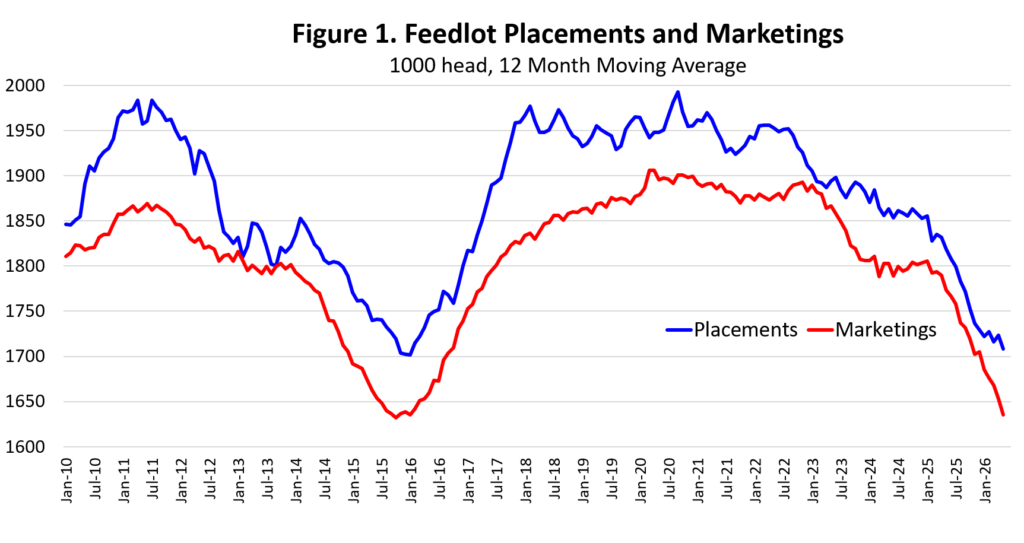
Decreased feedlot flows (placements and marketings follow from ever tighter feeder cattle supplies. The 2025 calf crop was the eighth consecutive smaller calf crop and was the smallest in 84 years. The resulting slowdown in feedlot production, while maintaining feedlot inventories, is accomplished by an increase in average feedlot days on feed and heavier final weights for fed cattle. The Kansas Focus on Feedlots data shows average of 188 days on feedfor the last year, with recent months up to 198 days. Final fed steer weights in Kansas feedlots have increased 105 pounds in the past eighteen months, currently averaging 1523 pounds.
Lower feedlot production means declining cattle slaughter and beef production. Fed cattle (steer + heifer) slaughter in the first half of 2026 is down 8.7 percent year over year. Decreased fed cattle slaughter is partially offset by increased carcass weights. Steer carcass weights are currently at 968 pounds. Steer carcass weights have averaged 35 pounds heavier thus far in 2026. Heifer carcass weights are currently 884 pounds and are averaging 26.6 pounds more than one year ago. Cow slaughter is down 5.3 percent this year leading to total cattle slaughter down 8.1 percent for the year to date.
Total beef production is down 5.5 percent year over year through the first half of 2026. Average fed beef production is currently at the lowest level since 2017, and average nonfed (cull cow and bull) beef production is now at the lowest level since 2006. Average monthly commercial beef production is at the lowest level since late 2016. Total beef production is projected to be down 4.5 – 5.0 percent in 2026 compared to last year and is expected to decrease again in 2027 to the lowest beef production since 2015 (Figure 2).
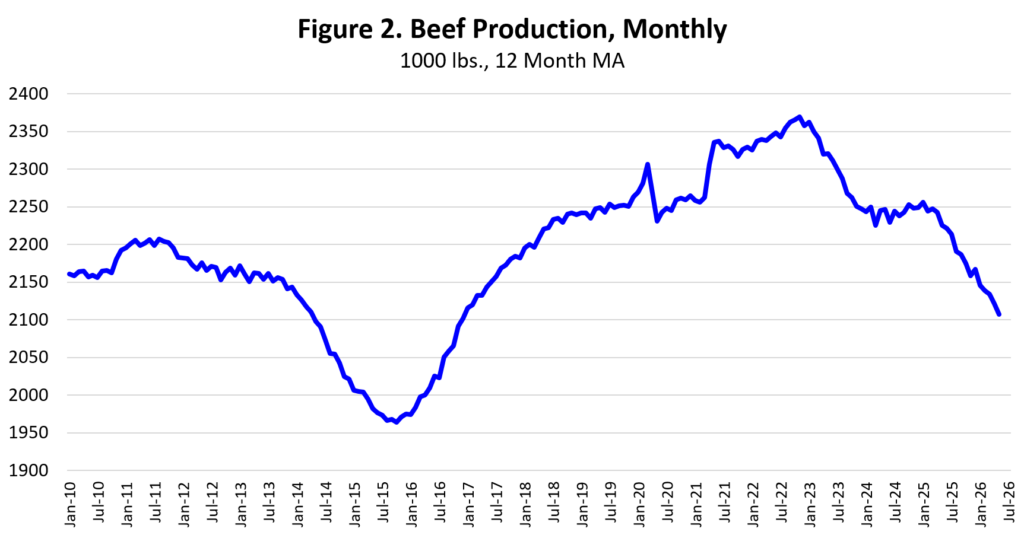
Derrell Peel discusses how recent rainfall across much of the United States is improving pasture conditions and setting the stage for cattle herd rebuilding as producers look toward the fall and beyond on SunUpTV from June 27, 2026. https://www.youtube.com/watch?v=CAq0j1NC8Ks
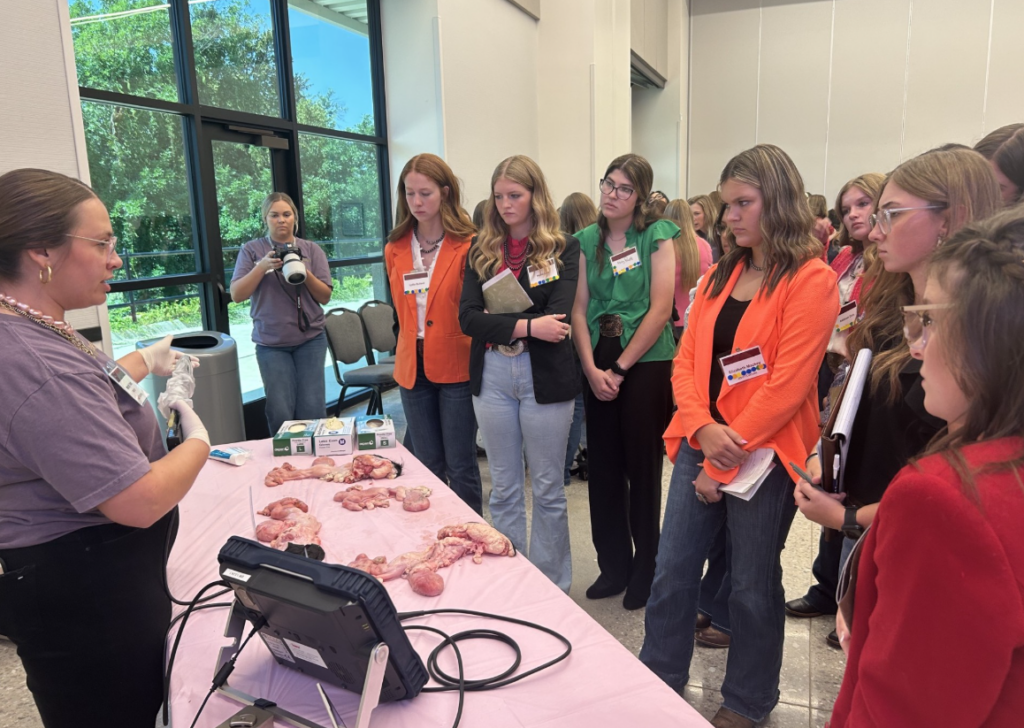
The AgHerculture Conference is returning this August, offering Oklahoma high school and college women a unique opportunity to explore careers, build connections, and strengthen their place in the future of agriculture. During a conversation with Bryce Boyer, Director of Communications for the Oklahoma Department of Agriculture, Food and Forestry, Boyer told associate farm reporter Carli Davenport the event is designed to help young women discover where they fit in Oklahoma's agricultural industry.
Boyer explained that the conference is split into two separate events, each tailored to a specific age group and stage of life. "We host a two-day event for Oklahoma high school and college girls from across the state," Boyer said.
The collegiate event will take place on August 21 at the Phillips Pavilion, where college-aged women from across Oklahoma will gather for an evening focused on professional development and relationship building.
Boyer said the evening is centered around creating meaningful connections. "They'll be able to hear from some inspiring leaders in the industry and kind of see what career paths might be available, learn about some new avenues in the industry, and network with some other girls who are about the same age," Boyer said.
He noted the event offers more than just networking—it also creates space for mentorship. "It's a really good way to maybe meet a new mentor or strengthen a relationship with an existing mentor," Boyer said.
The second event, designed for high school students, will be held on August 22 in Guthrie. This full-day conference is aimed at helping young women explore the many career paths available in agriculture.
Boyer said the high school session includes hands-on learning opportunities, interactive stations, and exposure to professions many students may not have considered. "We set up some inspirational speakers. They get to meet mentors, they get to network, and we build in time for them to socialize with each other," Boyer said.
The conference also includes career-focused educational booths covering a wide range of agricultural sectors. "We'll have agritourism and agribusiness come in and talk about what it's like to run their own business focused around agriculture, or we'll have a veterinarian come in and explain some of the things they do day in and day out," Boyer said.
Participants will also hear from industry organizations like the Oklahoma Pork Council, learning more about specific sectors within Oklahoma agriculture.
Boyer emphasized that exposing students to a variety of opportunities is one of the conference's biggest goals. "Not every kid growing up in agriculture knows about every avenue or career path," Boyer said.
This year's collegiate keynote speaker is Tyler Schuster, an agricultural entrepreneur from Texas and founder of Brands and Blazers.
Boyer said Schuster's message will focus on leadership, confidence, and learning to claim a seat at the table. "She's going to talk about what it takes to build your own company, build your own brand," Boyer said.
He said one of Schuster's most important messages centers on helping young women recognize their value. "There might be times where it feels like you don't have a voice or a seat at the table," Boyer said. "What her story really shows is how you do have a voice at the table, how you can find that voice, and how you can make yourself a prominent feature in agriculture."
Boyer also highlighted Oklahoma's strong legacy of women in agriculture. "Oklahoma is leading the way when it comes to females in agriculture," he said. "We are a top 10 state in female-managed farms."
That history, he said, makes it even more important to support the next generation. "We want to make sure the next generation is just as encouraged as the current generations are when it comes to finding their spot at the table."
Boyer said separating the two age groups allows the conference to better serve each audience.
For college students, the focus is heavily on professional networking and mentorship. "They're probably going to be entering the workforce about the same time, so they're going to cross paths a little more regularly," Boyer said. That creates opportunities to strengthen relationships now that may benefit them later in their careers.
For high school students, the emphasis shifts toward exploration and planning for the future. "The high school one is much more focused on what they can go do in college, or maybe helping them figure out what that next step would be," Boyer said.
New this year, the high school event will feature a college fair during lunch, allowing students to connect directly with schools and agricultural programs. "These girls can go talk to OSU, NEO, or some of the different colleges we have coming in to see what a good education path might be for them," Boyer said.
Registration is now open for both Ag Her Culture events.
Boyer encouraged interested students to sign up soon through the Oklahoma Department of Agriculture website, under the Programs and Events section, available here.
"We do want to note this is just for the students," Boyer said. "To make sure the networking and mentorship goes smoothly, this will just be for the students."
In today's Beef Buzz, senior farm and ranch broadcaster Ron Hays features comments from two leading beef cattle economists, Dr. Derrell Peel and Dr. David Anderson, about the economic unknowns surrounding the spread of New World Screwworm and what it could mean for the U.S. cattle industry. Dr. Peel and Dr. Anderson discussed a wide range of key industry issues during the Clear-Eyed webinar produced by Meatingplace. The full conversation is available here.
When asked about the broader economic impact of New World Screwworm on the beef business, Peel said the overall market impact may be limited. "We've said all along that at the market level, at the broader market level, New World Screwworm is not expected to have a lot of impacts," Peel said. "I don't see any disruption in the flow of cattle to processing or in the supply of cattle available, or the supply of beef... so I don't see that it's really going to have a lot of impacts at that level."
Anderson agreed the immediate market disruption may be small, but he warned the indirect effects are already significant—especially due to policy decisions and added costs for producers. "Our policy response to screwworms in Mexico has caused some disruption because closing the border and that's a big deal at 26,000 head a week," Anderson said. "Near term, short term, I don't think there's any effect, but this is going to increase ranchers' costs."
Those costs, he explained, go beyond medicine and treatment. "We've got to be out there every day—the labor, the medicine, just the plain hard work of managing that leads to higher costs," Anderson said. "And if nothing else changes, we're going to produce fewer cattle, because our costs go up."
Anderson also pointed to another challenge: the physical labor required to monitor and inspect cattle, especially for aging ranchers. "I had the chance to visit with a group of ranchers in Northeast Texas," Anderson said. "One of the guys there... said, 'If we really get those here, I'm afraid I'm too old to do this work anymore.'"
He said that concern resonated across the room. "They're worried about whether they have the human capacity to do that work, because it's not easy," Anderson said. "I think that's another little risk out there, depending on how this spreads."
Another major question for the industry is whether the U.S. should continue keeping Mexican cattle out of the country. Peel said that decision is largely political. "In terms of what we're going to do, of course, that's mostly a political decision," Peel said. "I hope it's a decision that's informed by epidemiologists and veterinarians."
Peel noted the recent U.S. detection of New World Screwworm changes the conversation with Mexico. "Certainly from a Mexican perspective, they're going to say, 'You said it was closed because we had it and you didn't—now you have it,'" Peel said. "It certainly renews that conversation."
Anderson was even more direct, arguing the original border closure itself was politically driven. "Closing the border was a political decision too," Anderson said. "I don't think it was based on anything else."
Still, Peel believes there is pressure on both sides of the border to reopen trade. "There's some interest on both sides of the border, and in some political realms, to go ahead and open the border," Peel said. "But what decisions will get made, I have no idea at this point."
According to Anderson, the economic consequences of keeping the border closed are already showing up. "I think we're already seeing the economic effects of us closing the border," Anderson said. "Those cattle stayed there, they've been fed there, they've been processed there."
That shift, he said, means the U.S. may be losing valuable economic opportunity. "What we've done is we gave away a bunch of our value-added agriculture to somebody else, and now we're importing the finished product," Anderson said. "It's really hard to escape economics."
Anderson believes the numbers are beginning to confirm that reality. "You can kind of buck that system for a while," he said, "but I think we're actually seeing this happen."
The Beef Buzz is a regular feature heard on radio stations around the region on the Radio Oklahoma Ag Network and is a regular audio feature found on this website as well. Click on the LISTEN BAR above for today's show and check out our archives for older Beef Buzz shows covering the gamut of the beef cattle industry today.
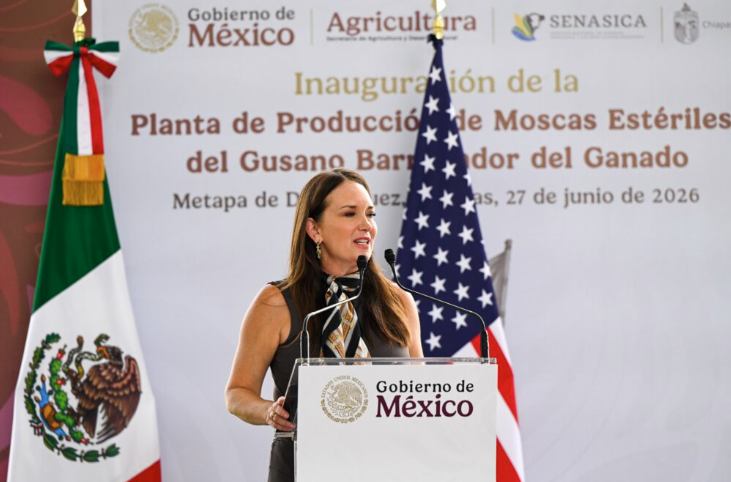
Texas & Southwestern Cattle Raisers Association president Stephen Diebel released the following statement after the United States Department of Agriculture today announced the opening of the Metapa sterile fly production facility to combat the spread of New World screwworm:
"The goal has always been to increase production of sterile flies, and the Metapa facility expands our capacity to better respond and ultimately eradicate New World screwworm. This facility was a commitment made by Secretary Rollins and USDA last May and the opening of this facility makes true on this promise. We appreciate Secretary Rollins and the rest of the Trump Administration for their steadfast support of Texas ranchers.
Every sterile fly produced helps the U.S. get closer to eradicating NWS and establishing a biological and geographical barrier to protect Texas ranchers and landowners."
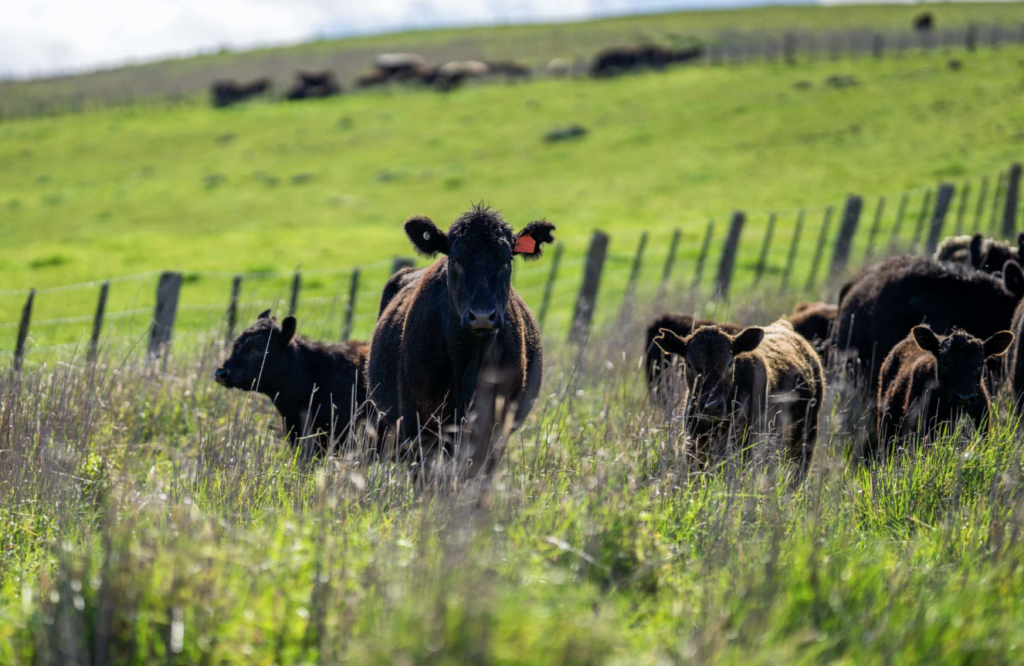
Kenny Burdine and Jonathan Shepherd write in Southern Ag Today: Strong cattle prices are giving cow-calf producers a rare window to strengthen their financial position. While every operation will respond differently, producers should aim to look back on this period and feel confident about the decisions they make.
In an article last summer, investments in genetics, facilities, and grazing systems were discussed, as well as paying down debt and improving liquidity. Here, we dive deeper into improving liquidity by focusing specifically on one often-overlooked opportunity: building working capital.
The financial formula for working capital is current assets minus current liabilities. In simple terms, it refers to the amount of readily available assets beyond what is needed for short-term obligations. Current assets include cash and marketable commodities (livestock, grain, etc.) that can be converted to cash quickly. A farm business should always have at least enough current assets to cover current liabilities, and depending on the type of business as much as 2-3 times the current liabilities may be recommended. When the opportunity presents itself, there are substantial benefits to growing working capital beyond just meeting typical current liability needs. A few of these benefits are discussed briefly below.
Self-finance short-term expenses
With stronger working capital, producers can pay cash for expenses instead of relying on operating loans. This reduces interest costs, a valuable advantage in today's higher-rate environment. The current environment also offers more attractive returns on working capital kept in liquid investments such as money markets and high-yield savings accounts.
Stronger finances improve borrowing power
Building increased working capital can also have financial benefits by improving the financial position of the operation. As working capital increases, the farm's current ratio (current assets divided by current liabilities) improves. Holding all else constant, this makes the farm more attractive to lenders. An improved financial position can lead to increased borrowing opportunities and more attractive borrowing terms.
A cushion for tough times
Working capital also acts as a built-in risk management tool. By stockpiling some cash reserves during good times, the operation will be in a better position to weather the downtimes. When markets turn or costs rise, a financial cushion allows producers to ride out the downturn without taking on more debt. Just as importantly, it buys time to make thoughtful decisions instead of rushed ones. Time to process and evaluate options can be very important when dealing with financial stress.
Be ready when opportunities appear
Working capital can also improve an operation's ability to be opportunistic, which can be a key to growth over time. There will be times when ground comes up for sale that has always been wanted, a set of heifers is a good buy, or a piece of equipment is priced below what it is worth. The operations best positioned to take advantage of these opportunities are often those with strong liquidity, as they either have the cash to make the purchase or can quickly secure attractive financing.
Fuel future growth
Working capital also serves as a baseline for long-run investment. A growing cow-calf operation typically sees lower income levels because they are selling fewer females or expanding through the purchase of cows or heifers. Working capital can be a source of funds to offset the reduction in heifer sales or the purchase of additional breeding stock. The same can be said of land acquisition and other investments in facilities and infrastructure. Having a pool of funds to draw from and / or leverage makes long-term investments much easier to approach.
The current cattle market offers opportunities, and how an individual operation chooses to capitalize on them will depend on that operation's goals. Some may choose to retire, while others may choose to expand. Some may make long-term investments, while others pay down debt. The purpose of this article was simply to focus on the benefits of increased working capital as a financial strategy. By building working capital today, the operation can be more prepared for the uncertainty of tomorrow.
Burdine, Kenny, and Jonathan Shepherd. "The Current Cattle Market Offers Opportunity to Build Working Capital." Southern Ag Today
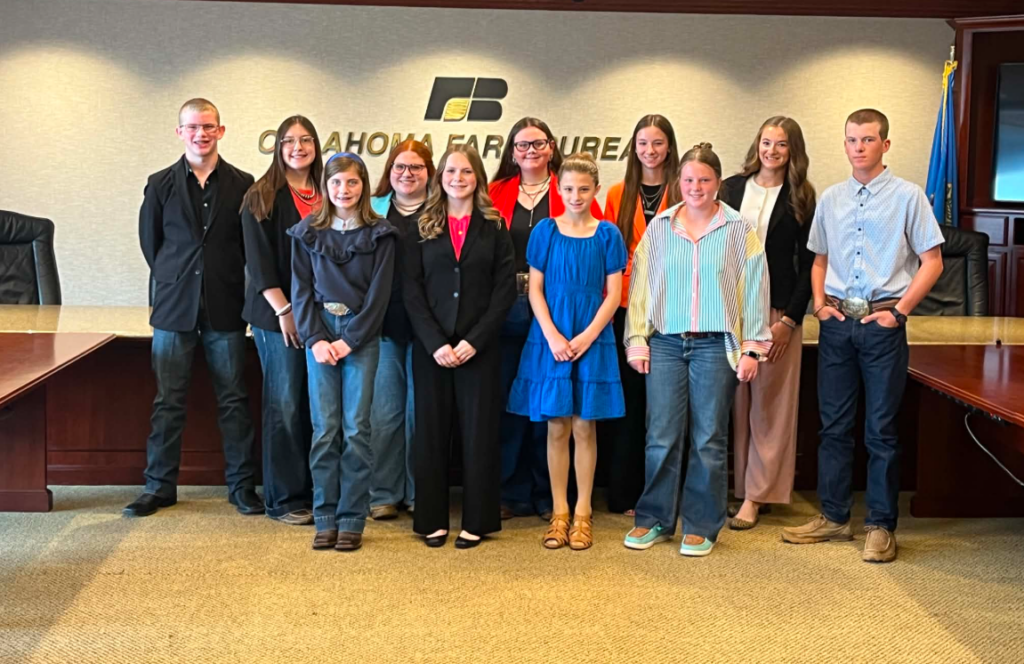
The Beef Ambassadors Contest is helping prepare Oklahoma students to become confident voices for the cattle industry, equipping them with the skills needed to communicate effectively about beef production and agriculture in real-world settings. Hosted by the Oklahoma CattleWomen's Association, the annual competition challenges students to think on their feet and advocate for the livestock industry through simulated media interviews and peer-to-peer conversations.
Amarie Bartel, president of the Oklahoma CattleWomen's Association, said in a conversation with associate farm reporter Carli Davenport that the contest is designed to immerse students in realistic advocacy scenarios that test both their communication skills and industry knowledge.
"We were honored to have students from all across the state join us today to compete in their beef advocacy skills," Bartel said. "In this event, we do media interviews and peer-to-peer mock conversations, and our goal is to put the students in real-world situations that challenge their skills to advocate on behalf of the livestock industry."
Bartel said what makes the competition especially valuable is that students are not given time to prepare responses in advance, forcing them to rely on their knowledge and ability to communicate clearly under pressure.
"They have no preparation in advance, and they're thrown into simulated real-world experiences," Bartel explained. "After the contest is over, our gracious judges give those students feedback, so that we can prepare them and equip them to continue to have these important conversations."
She emphasized that agricultural literacy remains one of the biggest challenges facing the beef industry, even in a state like Oklahoma where agriculture plays a major role in the economy. "I think sometimes we forget that just because we live in Oklahoma does not mean that everybody knows about the livestock industry," Bartel said.
Referencing comments often made by Michael Kelsey of the Oklahoma Cattlemen's Association, Bartel said many Americans are now far removed from agriculture. "I've heard Michael Kelsey say that we have to stop assuming that just because somebody's rural means that they understand the beef industry," she said. "In fact, most families are several generations removed from the farm."
That disconnect, she said, makes advocacy more important than ever, especially among young people who can help bridge the gap between producers and consumers.
"When we look at these students, whether they're in school settings or otherwise, they need to be equipped to tell their story," Bartel said. "Media conversations can be challenging. Oftentimes we're asked quick questions, where we give quick answers. We want to make sure that the students have all of the tools in their toolkit to navigate those conversations with confidence and accuracy."
The contest featured both junior and senior divisions, with students from fifth through twelfth grade competing.
Junior division winners:
1st place: Diesel Wilson
2nd place: Jamie Parsons
3rd place: Harper Perkins
In the senior division:
1st place: Kinley jo Tolle
2nd place: Koy Morgan
3rd place: Raylynn Parsons
When asked what she believes is the biggest challenge facing agriculture today, Bartel pointed again to a lack of agricultural literacy nationwide. "I truly believe that agricultural literacy is a great issue across our country," she said. "And I believe that's a great opportunity for us as producers to get outside of our own networks to share with folks who may not be as familiar."
Bartel said one of the biggest obstacles is stepping outside the comfort of conversations with people who already understand and support agriculture. "All too often, we can find ourselves in an echo chamber," she said. "It's really easy to share the message with folks that agree with you, but sometimes it can be challenging to have those tough conversations with folks who just don't know what they don't know."
For Bartel, effective advocacy comes down to tone as much as information. She said producers must remain calm, confident, and focused on sharing positive messages about modern agriculture and beef production.
"As we are having conversations about what we buy in the grocery store, or how excellent producers are at stewardship, it's really important that we approach with a calm, confident attitude, so that we can promote the positive message of the livestock industry," Bartel said.
Through events like the Beef Ambassadors Contest, Oklahoma CattleWomen are helping ensure the next generation of advocates is ready to tell agriculture's story—one conversation at a time.
RON's Dave Lanning has a pre-opening look at today's agricultural Markets.
Click the audio tab below for today's report.
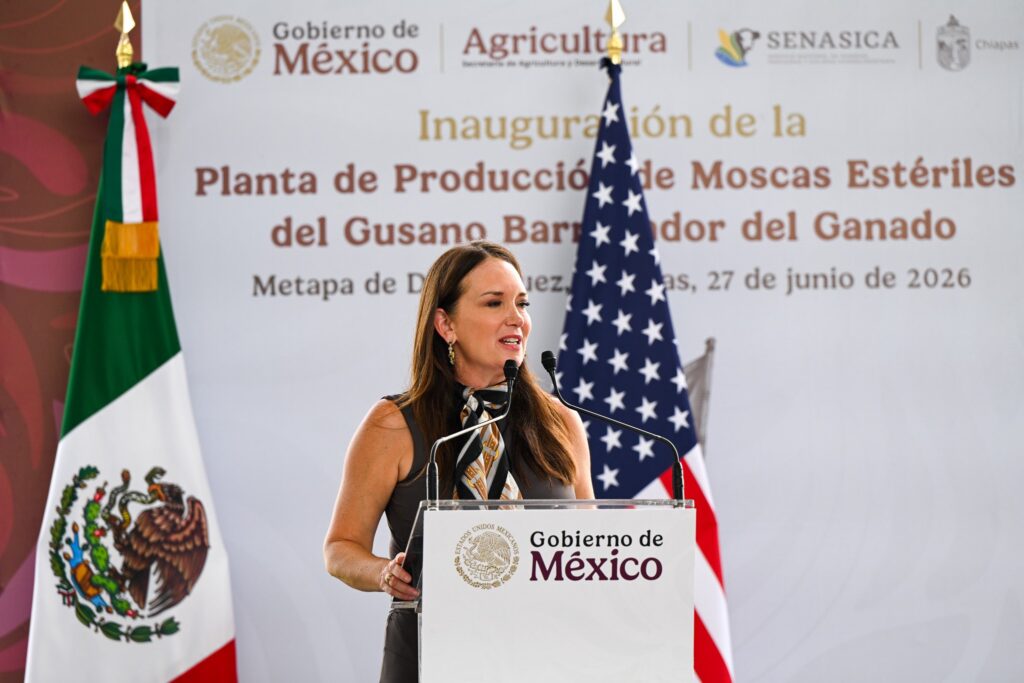
Even as USDA announced another New World Screwworm infestation in south Texas on Saturday in Jim Hogg County, U.S. Secretary of Agriculture Brooke Rollins was in Metapa, Mexico, to officially open the new sterile fly facility. that USDA started building in coordination with the Mexican government eleven months ago.
The United States Department of Agriculture invested $21 million to renovate and convert an existing fruit fly facility in Metapa, Mexico. Once complete, the facility is expected to produce an additional 60–100 million sterile NWS flies per week. Mexico expects first eradiation mid-July to produce 30 million flies.
Secretary Rollins announced her travel and the ceremony on X:
"On June 18th of last year, our Trump USDA launched a bold 5-point action plan to defeat New World screwworm and protect our great American ranchers.
"Once considered fully eradicated from the United States (since 1966), the NWS breached the Darien Gap in 2021, through Central America in 2022, and made its way northward and into Mexico through 2023 and 2024. All models showed it reaching the US by Summer 2025.
"We were able to hold it off for a full year by closing the ports and surging USDA staff into Mexico, which allowed us to prepare, build, contain and partner. As part of that 5-point plan, eleven months ago, USDA began building a Massive 22,000 square ft facility in Metapa, Mx to significantly add to our total sterile fly capabilities.
"Today represents a major milestone in that fight with the OFFICIAL OPENING of that facility. Within 8 weeks, we should have 30 million flies, in 12 weeks - 50 million flies, and by this Fall an additional 100 million flies to deploy. I was honored to join President @Claudiashein and @USAmbMex at the opening earlier today, alongside other key members of her administration.
"We toured the beautiful new facility (who knew a sterile fly facility could mean so much), met the incredible USDA team on the ground that made it happen in record time, and discussed the importance of integrating the new NOVO fly into production as soon as possible. Of course that will double our 100 million weekly sterile flies within months. All really good news."
Texas & Southwestern Cattle Raisers Association president Stephen Diebel released the following statement after the United States Department of Agriculture announced the opening of the Metapa sterile fly production facility to combat the spread of New World screwworm:
"The goal has always been to increase production of sterile flies, and the Metapa facility expands our capacity to better respond and ultimately eradicate New World screwworm. This facility was a commitment made by Secretary Rollins and USDA last May and the opening of this facility makes true on this promise. We appreciate Secretary Rollins and the rest of the Trump Administration for their steadfast support of Texas ranchers.
Every sterile fly produced helps the U.S. get closer to eradicating NWS and establishing a biological and geographical barrier to protect Texas ranchers and landowners."
Since June third, there have been 26 cases of New World Screwworm reported in the US, with 21 of those cases still considered to be active. The most recent case is a calf found in Jim Hogg County. That is the furthest south in Texas of any case to date.
Learn more about the USDA efforts to battle New World Screwworm at their official website- Screwworm.Gov.
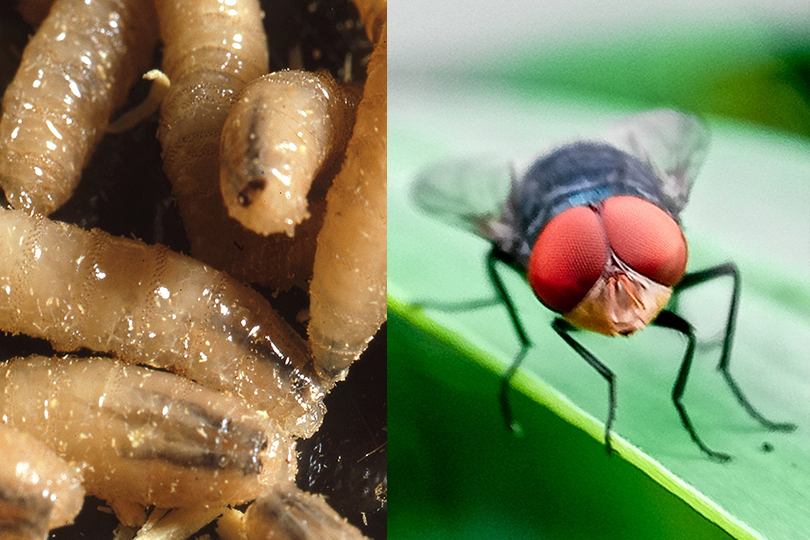
Texas & Southwestern Cattle Raisers Association president Stephen Diebel released the following statement after the United States Department of Agriculture today announced the opening of the Metapa sterile fly production facility to combat the spread of New World screwworm:
"The goal has always been to increase production of sterile flies, and the Metapa facility expands our capacity to better respond and ultimately eradicate New World screwworm. This facility was a commitment made by Secretary Rollins and USDA last May and the opening of this facility makes true on this promise. We appreciate Secretary Rollins and the rest of the Trump Administration for their steadfast support of Texas ranchers.
Every sterile fly produced helps the U.S. get closer to eradicating NWS and establishing a biological and geographical barrier to protect Texas ranchers and landowners."
Background:
The United States Department of Agriculture invested $21 million to renovate and convert an existing fruit fly facility in Metapa, Mexico. Once complete, the facility is expected to produce an additional 60–100 million sterile NWS flies per week. Mexico expects first eradiation mid-July to produce 30 million flies.
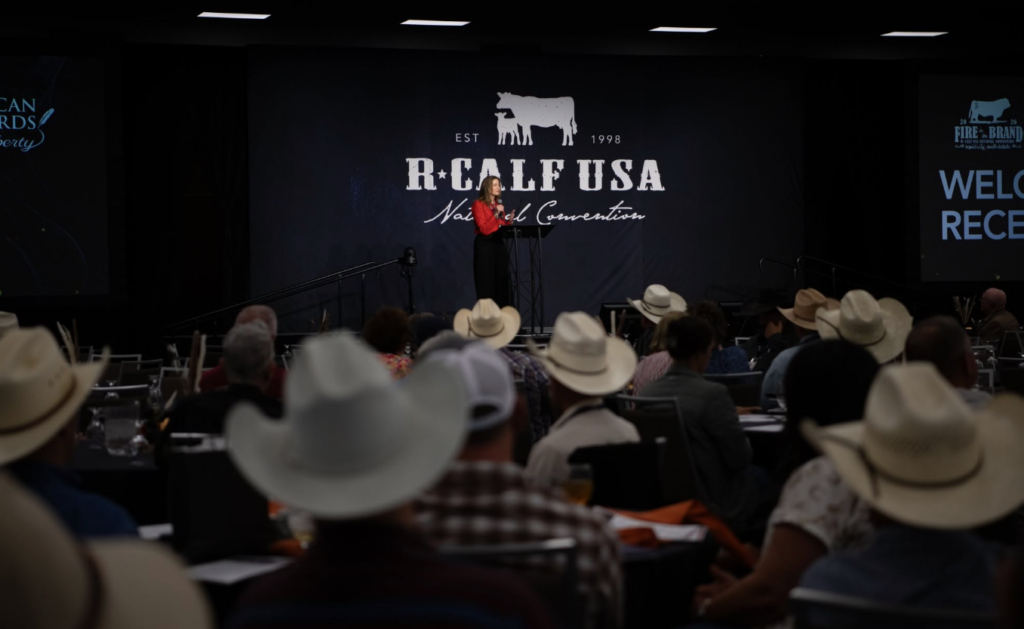
Hundreds of cattle and sheep producers from more than 23 states gathered in Rapid City last week for the 2026 R-CALF USA National Convention and Trade Show. Held under the theme "Fire in the Brand," the event also drew more than 2,000 additional viewers through its online livestream.
The three-day event brought independent cattle and sheep producers together to actively participate in the issues shaping their industry and organization. From committee meetings and policy debates to educational presentations and networking activities, attendees and speakers addressed industry challenges, strengthened relationships, developed organizational policy and helped shape the future direction of the U.S. cattle and sheep industries.
"R-CALF USA is a true America First cattle organization, and we encourage our members to participate in every aspect of the organization and engage in discussion, even on the contentious issues," said R-CALF USA President Dave Hyde. "Every issue discussed this week connected directly to challenges producers are facing at home and priorities R-CALF USA is advancing before Congress, federal agencies and the administration. This convention gives producers the opportunity to come together, learn together and help shape the future of their industry."
Throughout the convention, speakers addressed issues that align with R-CALF USA's top policy priorities, including mandatory country-of-origin labeling, cattle market competition, beef checkoff reform, electronic identification mandates, trade policy, property rights, animal health and livestock predation.
Featured speakers included Bill Bullard; economist T. Jake Smith; Hayden Ballard; Dr. Max Thornsberry, Dr. Lora Bledsoe of the U.S. Department of Homeland Security; Good Rancher CEO Ben Spell; Brett Kenzy; Nicole Sarrine of the U.S. Department of Justice; AJ Richards; Dave Duquette; trade expert Charles Benoit; American Association of Meat Processors Executive Director Chris Young; Shad Sullivan; Dr. Julie Trask, Dr. Jim Stangle, Kenny Fox; and Jim Mundorf.
Attendees received updates on R-CALF USA's ongoing legal efforts, including litigation challenging electronic identification mandates and the organization's antitrust lawsuit against the nation's four largest meatpackers. The convention also featured a special presentation and audience discussion with Lonesome Lands.
Producers participated in R-CALF USA's policy development process, considering and advancing policy proposals. Approved resolutions will be included on upcoming ballots distributed to the organization's membership, ensuring producers play a direct role in shaping R-CALF USA's advocacy priorities and policy positions.
"It's always great to reconnect with members from across the country and hear firsthand about the challenges and opportunities affecting the cattle industry," said R-CALF USA Vice President Eric Gropper. "We don't just talk about the problems. We talk about solutions and what we can do to fix them. As a true membership organization, we rely on our members to show up, get involved and help guide the ship. It's time for cattle producers to have a stronger hand in steering the future of this industry and keeping producers and cattle on the land."
The strong level of engagement was reflected in the organization's live and silent auctions, which raised more than $80,000, the highest total in convention history.
"People didn't come to Rapid City just to attend presentations; they came ready to participate," said R-CALF USA Communications Director Jaiden Moreland. "There was a real sense throughout the week that producers are invested in the future of this industry and this organization. That commitment was reflected in the record-setting auction, which demonstrated producers' confidence in R-CALF USA's mission and future direction."
Additional convention highlights included a trade show featuring more than 40 vendors, a prayer breakfast led by Dr. Max Thornsberry, social activities, raffles and live music from JJ Kent and the Aces & 8's.
Award recipients recognized during the convention included George Chambers – Johnny Smith Legacy Award; Weinreis Brothers – Legacy Award; Tri-State Livestock News – Legacy Business Award; Eric Gropper – Top Hand Award; Charles Benoit – Sentinel Award; Wishon Cattle Company – Oak Legacy Award; Keely Covello/America UNWON – Journalist of the Year Award; Bill Kluck – Ride for the Brand Award; Scott Stubbs – Outrider Award; and Brent Espil – Top Membership Recruiter Award.
Lead Rider Award recipients included Platte Livestock Market, Platte, S.D.; Buffalo Livestock Marketing, Buffalo, Wyo.; Crawford Livestock Market, Crawford, Neb.; La Junta Livestock Commission, La Junta, Colo.; Atkinson Livestock Market, Atkinson, Neb.; Huron Continental Marketing, Huron, S.D.; and Fort Pierre Livestock Auction, Fort Pierre, S.D.
R-CALF USA will host its 2027 National Convention and Trade Show June 22-24, 2027, at The Lodge at Deadwood in Deadwood, South Dakota.
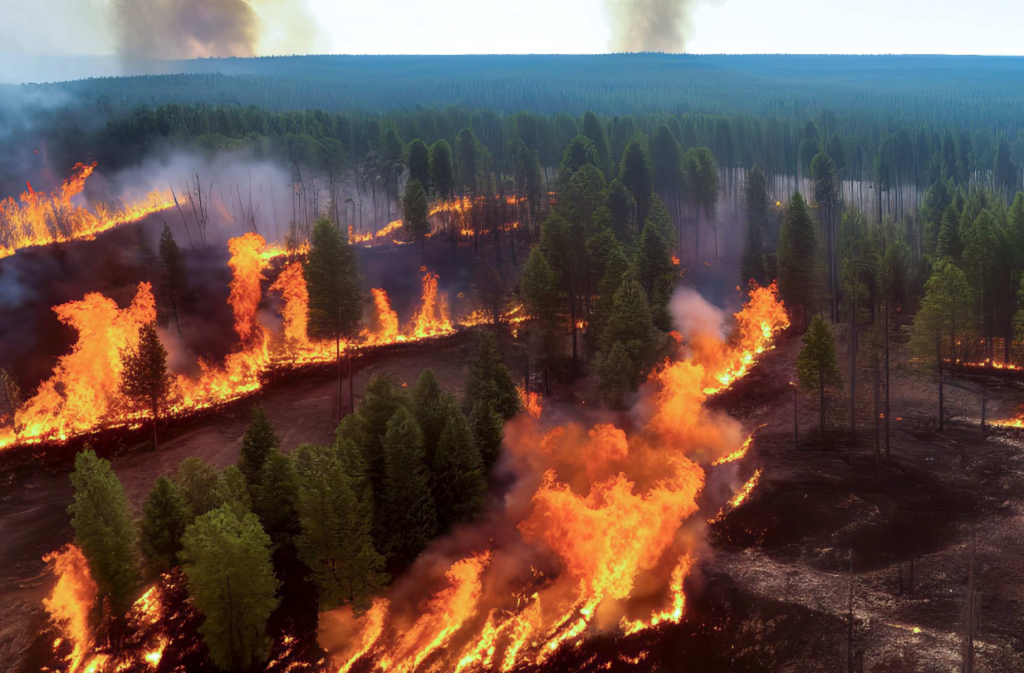
Today, U.S. Environmental Protection Agency (EPA) released three enhanced user-friendly tools to help state, local, and Tribal air agencies expedite, develop, and prepare demonstrations of exceptional events. One of the tools, an update to the AirNow Fire and Smoke Map, is being issued in conjunction with the U.S. Forest Service. Exceptional events are unusual or naturally occurring events outside an air agency's control, such as wildfires, that affect air quality. Under Section 319(b) of the Clean Air Act (CAA) and EPA's Exceptional Events Rule (EER), air quality monitoring data from these events may be excluded in certain regulatory determinations regarding the National Ambient Air Quality Standards (NAAQS).
EPA developed these tools to reduce burdens on state, local, and Tribal agencies, to streamline the identification of monitoring data affected by an exceptional event, and to increase transparency for the public. By doing so, EPA's partner air agencies can effectively implement the EER, while freeing up valuable time and resources to focus on providing clean air based on emission sources within their control.
"We have heard loud and clear from our state, local, and Tribal partners about the difficulties surrounding exceptional events demonstrations and frustrations with being penalized for emissions that are out of their control," said EPA Assistant Administrator for Air and Radiation Aaron Szabo. "These three tools will greatly reduce burdens faced daily by our air partners as EPA continues to work on our revision to the Exceptional Events Rule."
"Together with EPA, the Department of Agriculture is creating ways to cut through the burden of understanding wildfire-driven air quality impacts," said Department of Agriculture Under Secretary of Agriculture for Natural Resources and Environment Michael Boren. "Under President Trump's leadership, states, Tribes, and local agencies can spend less time sorting wildfire smoke data and more time supporting the prescribed fire work that protects communities. The U.S. Forest Service is leading the way with these updates to the Fire and Smoke Map."
In response to requests from local, state, and Tribal air agencies, EPA has:
Updated the Expedited Modeling of Burn Events Results (EMBER) Tool to expand support for ozone demonstrations resulting from exceptional events. The tool now provides information on ozone impacts and levels from domestic, Canadian, and Mexican fires at U.S. ozone monitoring locations from 2021-2025.
Created a new tool called the HYSPLIT Trajectory Tool for Exceptional Events to provide users with quick access to trajectories, smoke plumes, and fire locations. This tool will reduce computational burdens and ensure uniformed assessments across the board. The tool uses National Oceanic and Atmospheric Administration's Hazardous Mapping System smoke polygons to identify when transported smoke may have influenced conditions at the monitoring site.
Further, EPA and the U.S. Forest Service have jointly:
Launched a new historic version of the AirNow Fire and Smoke Map to provide past map conditions by date and time, giving additional context for fine particulate matter (PM2.5) measurements. The map combines PM2.5 air quality measurements from permanent and temporary monitors and sensors with wildland fire locations and satellite smoke plume observations. Air agencies will be able to access and use downloadable map images as supporting evidence.
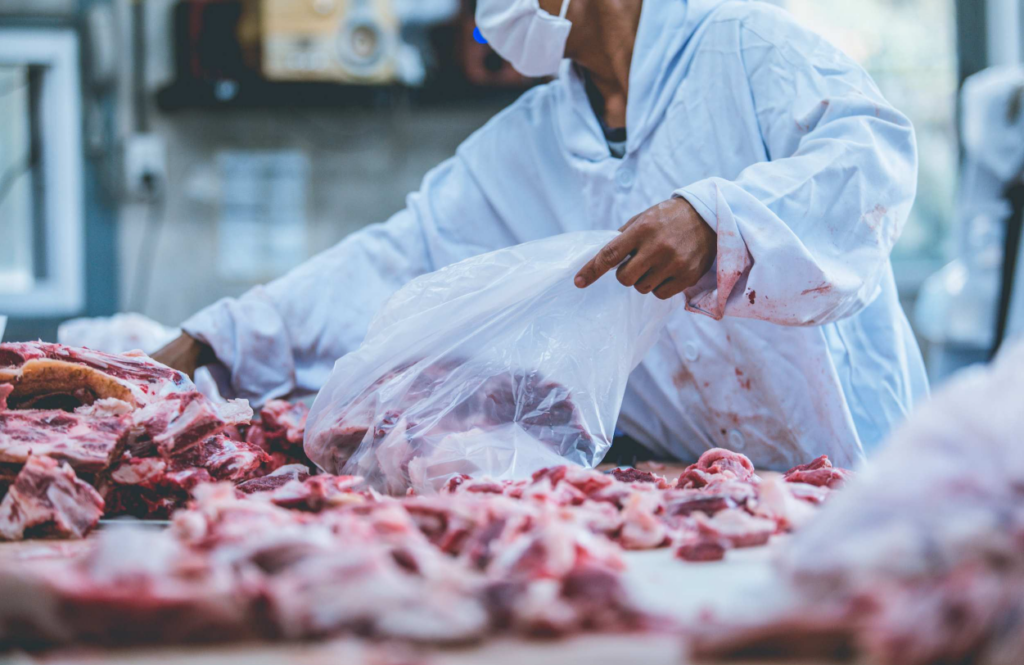
Today, U.S. Sen. Bill Cassidy, R-La., introduced the Home Market Restoration Act of 2026, legislation that would establish tariff-rate quotas for import-sensitive agricultural products, including lamb, live cattle and beef, as well as shrimp, crawfish, catfish, rice, honey and goat meat.
The United States established very low tariffs on livestock and meat imports in the 1930s and has not adjusted them for inflation since that time. In addition, numerous countries now have tariff-free access to the United States through various free trade agreements, including Australia, Canada and Mexico, which are major beef, lamb or cattle exporters.
For countries not exempted by free trade agreements, the current tariff rate for imported beef has been very low at 4.4 cents per kg, and for imported sheep meat, 0.7 cents per kg. The new legislation would set new tariff rates that would be applicable even to countries that have been exempted under previous free trade agreements.
For lamb and goat meat, the new tariff rate would be $2.76 per kg, the equivalent of $1.25 per pound. In addition, a tariff-rate quota is established for sheep and goat meat to be phased in over 10 years. In year 10, the total quantity of foreign sheep and goat meat allowed into the U.S. under the $1.25-per-pound in-quota rate would be 159 million pounds. For comparison, the U.S. imported approximately 330 million pounds of sheep meat in 2025. If during any year the total quantity of sheep and goat meat entering the U.S. exceeds the applicable quota limit, all additional imports would be subject to a tariff rate of $11.02 per kg, the equivalent of $5 per pound.
The new legislation also increases the tariff rate for beef to $1.68 per kg, the equivalent of 76 cents per pound. This tariff will likewise apply even to countries that have been exempted from all tariffs pursuant to previous free trade agreements. A new tariff-rate quota schedule is set for beef originating from around the world, with differing levels set for certain countries. The total annual quantity of worldwide beef imports eligible for the 76-cent in-quota rate is capped at 471,224,000 kg, the equivalent of about 1 billion pounds. For comparison, the U.S. imported about 2.9 billion pounds of beef on average from 2020 - 2024. While not all imported beef is subject to the U.S. tariff-rate quota system, any imported beef that is subject to the quota that exceeds this quota would be subject to an over-quota tariff rate of $6.55 per kg, the equivalent of $2.97 per pound.
A tariff-rate quota is also established for live cattle imports, with a cap set at 1.5 million head. Within that quota, imported cattle would be subject to a 25% tariff rate, while over-quota imports would be subject to a 50% tariff rate. For comparison, the U.S. imported more than 2 million live cattle in 2024.
In addition, the legislation requires the rates established in the legislation to be adjusted annually for inflation by the President of the United States.
R-CALF USA CEO Bill Bullard said R-CALF USA applauds Senator Cassidy for introducing what Bullard called a historic and urgently needed reform of our nation's antiquated tariff-rate schedules and import quotas.
"Current tariffs on lamb and beef and quotas on beef were set decades ago and have proven ineffectual at protecting our cattle and sheep industries from excessive price-depressing imports that have all but destroyed America's commercial sheep industry and are causing the rapid deterioration of our domestic beef supply chain.
"Today, more than 70% of lamb and 22% of beef consumed in America is sourced from foreign countries. America should not tolerate its growing dependency on foreign countries for our food. This is a threat to national security, and Senator Cassidy's bill will help America's cattle and sheep producers rebuild our domestic supply chains for lamb and beef," he concluded.

On the heels of President Donald J. Trump signing an Executive Order advancing regenerative agriculture, U.S. Department of Agriculture (USDA) Secretary Brooke L. Rollins simultaneously announced a final Regenerative Feedstock Rule, a landmark action that will help farmers voluntarily capture new value from regenerative agricultural practices through biofuel markets.
The announcement builds upon President Trump's historic record of support for American agriculture and domestic biofuels. From delivering nationwide year-round E15, establishing the highest Renewable Volume Obligations in American history, and extending the 45Z Clean Fuel Production Credit through the Working Families Tax Cuts Act, the Trump Administration has consistently expanded markets for America's farmers while strengthening U.S. energy independence. Today's Executive Order and USDA's Regenerative Feedstock Rule provide the next critical step by ensuring producers have a practical pathway to benefit from those expanding markets.
"Today's USDA's Regenerative Feedstock Rule put farmers, not Washington bureaucrats, in the driver's seat. Instead of mandates, we're creating market opportunities. Farmers who choose to implement regenerative practices will have new opportunities to earn premium prices, lower their input costs, improve soil health, and strengthen the long-term profitability of their operations," said Secretary Rollins. This is exactly what President Trump's America First agenda looks like: empowering farmers and ranchers, supporting rural communities, driving lower input costs, improving farmer profitability, advancing regenerative agriculture, and helping Make America Healthy Again."
Together, President Trump's Executive Order and USDA's Regenerative Feedstock Rule represent the most significant market-driven effort ever undertaken to reward America's farmers for voluntarily implementing regenerative practices while producing the crops that fuel America's growing bioeconomy.
The Regenerative Feedstock Rule establishes a framework to connect regenerative agriculture practices to new markets within the biofuel supply chain for corn, soybeans, sorghum, and spring canola. These standards include:
USDA is also releasing an updated USDA Feedstock Carbon Intensity Calculator (USDA FD-CIC) to help producers quantify regenerative practices such as cover crops, and improved nutrient management, and conservation tillage—including no-till and reduced tillage. Producers can use the resulting reports when marketing eligible feedstocks to participating biofuel producers.
The new framework creates significant opportunities for America's leading biofuel feedstock producers. American farmers currently produce approximately 6 billion bushels of corn used annually for ethanol production, with 68 percent of corn farmers already implementing at least one regenerative practice. Likewise, producers grow approximately 1.8 billion bushels of soybeans for biofuel production, while 70 percent of soybean farmers already utilize at least one regenerative practice. As participation grows, USDA expects the rule to expand premium market opportunities for producers across the country.
The Regenerative Feedstock Rule supports President Trump's broader agenda to strengthen rural America by expanding domestic markets, promoting American energy dominance, reducing regulatory burdens, encouraging regenerative agriculture, and ensuring America's farmers remain the most productive and competitive in the world.
These actions build on USDA's Regenerative Pilot Program that provided $700 million to help American farmers adopt practices that improve soil health, enhance water quality, and boost long-term productivity, all while strengthening America's food and fiber supply. Under this pilot USDA has already completed over 67,000 whole farm conservation plans, covering more than 49 million acres and over 1,500 conservation contracts worth more than $200 million.
Additional information about the Regenerative Feedstock Rule and the USDA Feedstock Carbon Intensity Calculator will be available at USDA.gov once posted to the Federal Register.
The Trump Administration recently released a series of actions designed to strengthen support for regenerative agriculture practices, including an Executive Order signed by the president and the announcement of a new regenerative biofuel feedstock rule by USDA. In response to these developments, Ohio farmer and National Corn Growers Association President Jed Bower released the following statement: "We appreciate the administration's recognition of the value biofuels provide for our country's energy supply and security. For decades, corn farmers have provided a renewable, domestically produced energy source for our nation's drivers and we are ready to provide even more for many years to come. "We also appreciate the administration's recognition that farmers have always cared for their land. This is true of every farmer I know. As noted by USDA, it's also true we have embraced for years many practices that are considered regenerative, with nearly 70% already implementing at least one practice. "Thanks to wide-scale adoption of precision agriculture tools by corn farmers, we are more efficient and effective with our resources than ever before. We welcome further investment in this space that will continue our ability to efficiently produce food, fuel and fiber for our world. We additionally welcome expeditious EPA reviews of new pesticide products that will continue supporting our efforts. "Corn growers have been and continue to be open to ongoing dialogue and engagement on this important topic, and we look forward to closely reviewing the Regenerative Feedstock Rule."
Today, ASA applauded Agriculture Secretary Brooke Rollins for publishing the Regenerative Feedstock Rule, which provides a framework for farmers to enhance the value of biofuel feedstock crops like soybeans by employing voluntary conservation practices. The final Regenerative Feedstock Rule will supplement forthcoming final tax guidance for the 45Z Clean Fuel Production Credit and increase the credit value for biofuels produced from feedstocks grown using covered conservation practices. "ASA applauds Secretary Rollins and USDA for finalizing the Regenerative Feedstock Rule, which will unlock a new premium soybean market by empowering farmers to produce value-added biofuel feedstocks using on-farm conservation practices," said Scott Metzger, ASA President and farmer from Williamsport, OH. "Domestic markets, bolstered by biomass-based diesel industry expansion, improve basis and expand a reliable, local customer base for our soybeans. Soybean farmers fought hard to improve 45Z to support domestic market growth for U.S. soy, and for the first time ever, the USDA Regenerative Feedstock Rule will ensure that the 45Z biofuel tax credit will not only benefit biofuel producers, but the farmers who produce homegrown regenerative biofuel feedstocks." ASA has strongly supported the work of USDA to develop the Feedstock Carbon Intensity Calculator as part of the final rule so that farmers may realize the value-added potential of their crop. ASA appreciates USDA for honoring the commitment to solicit farmer feedback on the new tool, which included individual farmer beta testing and demonstrations at our annual trade show. Regenerative agriculture practices covered by the rule include cover crops and conservation tillage. According to USDA, 70% of U.S. soybean farmers already employ at least one of these regenerative practices.
Last year, the Working Families Tax Cuts Act made two critical improvements to the 45Z Clean Fuel Production Credit that were championed by ASA:
The domestic biomass-based diesel industry is poised for significant growth this year, with expanded capacity to process an additional 140 million bushels of soybeans expected by the 2026 harvest. Investments in the biofuel value chain are largely the result of actions taken by the Trump Administration and Congress, including the statutory improvements to 45Z, strong renewable volume obligations released by EPA earlier this year, and today's publication of the USDA Regenerative Feedstock Rule. While the final Regenerative Feedstock Rule will expand economic opportunities for farmers located near biofuel production, current traceability standards will prevent farmers in other regions from accessing the benefits. ASA encourages USDA to address this regional disparity as work continues to enhance and expand the rule in the future. ASA will continue working with the administration to complete the final tax guidance for the 45Z Clean Fuel Production Credit and increase the credit value for biofuels produced from feedstocks.
Today, Clean Fuels Alliance America thanked Agriculture Secretary Brooke Rollins for finalizing the Production of Regenerative Agricultural Biofuel Feedstocks rule and for providing an updated version of the USDA Feedstock Carbon Intensity Calculator (USDA FD-CIC). The rule provides U.S. farmers practical guidelines to implement regenerative agriculture practices and calculate additional value from providing feedstock to domestic biodiesel, renewable diesel, and SAF producers. "Clean Fuels and its members thank Secretary Rollins for finalizing rules that will help farmers get more value from the expanding domestic market for biomass-based diesel," said Kurt Kovarik, Clean Fuels' Vice President of Federal Affairs. "We appreciate USDA's responsiveness to industry input and simplification of the calculator. We look forward to future updates that will provide farmers additional feedstock and regenerative agricultural management options." In comments to the interim rule published in January, Clean Fuels recommended that the Feedstock Carbon Intensity Calculator include all feedstock pathways approved under the Renewable Fuel Standard. Clean Fuels specifically requested that the calculator include intermediate oilseeds – e.g., winter canola and pennycress – and conservation crop rotation as a regenerative agriculture practice. Clean Fuels will continue to contribute to research that will quantify the emissions reduction benefits of conservation crop rotation. The U.S. Treasury has stated that it intends to enable biofuel producers to utilize the Carbon Intensity Calculator in calculating 45Z Clean Fuel Production Credit values for 2025 and 2026. The Department of Energy and Argonne National Labs must first incorporate the calculator as a module in the 45ZCF-GREET model and Treasury must then issue guidance allowing taxpayers to claim enhanced 45Z credits.

Today, U.S Environmental Protection Agency (EPA) is announcing more than $25 million in grant funding to improve drinking water infrastructure in small and rural communities. These grants will help Make America Healthy Again by providing communities across the nation with needed resources to make critical drinking water infrastructure upgrades, combat exposure to Per- and Polyfluoroalkyl Substances (PFAS), remove sources of lead, and address specific local drinking water challenges.
"Reliable access to clean, safe drinking water is essential for American communities to thrive and a top priority for the Trump EPA," said EPA Assistant Administrator for Water Jess Kramer. "Clean Air, Land, and Water for Every American is Pillar 1 of Administrator Zeldin's 'Powering the Great American Comeback' Initiative. Small and rural water systems often face disproportionate challenges when it comes to drinking water, and these grants will help them access needed resources to make important water infrastructure investments that will protect Americans from the dangers of PFAS and other harmful contaminants."
Approximately $25 million is available through the Small, Rural, and Tribal (SmaRT) Drinking Water Assistance Program. This grant program was established under the Water Infrastructure Improvements for the Nation (WIIN) Act to help water systems provide clean, safe drinking water. The funding is available to states and territories, who are responsible for administering the grant funds and ensuring that the funds efficiently and effectively reach communities that need assistance with local water infrastructure upgrades or Safe Drinking Water Act compliance.
FY 2026 Small, Rural, and Tribal (SmaRT) Drinking Water Assistance Grant Allotments for States and Territories
| State/Territories | FY 26 Allocation |
| Alabama | $367,000 |
| Alaska | $683,000 |
| American Samoa | $138,000 |
| Arizona | $449,000 |
| Arkansas | $333,000 |
| California | $1,594,000 |
| Colorado | $432,000 |
| Connecticut | $307,000 |
| Delaware | $171,000 |
| District of Columbia | $151,000 |
| Florida | $987,000 |
| Georgia | $647,000 |
| Guam | $159,000 |
| Hawaii | $174,000 |
| Idaho | $321,000 |
| Illinois | $698,000 |
| Indiana | $436,000 |
| Iowa | $344,000 |
| Kansas | $344,000 |
| Kentucky | $342,000 |
| Louisiana | $553,000 |
| Maine | $222,000 |
| Maryland | $348,000 |
| Massachusetts | $324,000 |
| Michigan | $644,000 |
| Minnesota | $378,000 |
| Mississippi | $448,000 |
| Missouri | $494,000 |
| Montana | $297,000 |
| Nebraska | $274,000 |
| Nevada | $288,000 |
| New Hampshire | $236,000 |
| New Jersey | $370,000 |
| New Mexico | $314,000 |
| New York | $1,039,000 |
| North Carolina | $741,000 |
| North Dakota | $205,000 |
| Northern Mariana Islands | $141,000 |
| Ohio | $639,000 |
| Oklahoma | $517,000 |
| Oregon | $415,000 |
| Pennsylvania | $732,000 |
| Puerto Rico | $524,000 |
| Rhode Island | $166,000 |
| South Carolina | $364,000 |
| South Dakota | $221,000 |
| Tennessee | $392,000 |
| Texas | $2,055,000 |
| Utah | $280,000 |
| US Virgin Islands | $176,000 |
| Vermont | $199,000 |
| Virginia | $451,000 |
| Washington | $562,000 |
| West Virginia | $290,000 |
| Wisconsin | $469,000 |
| Wyoming | $235,000 |
More information on this grant program and this year's allotments can be found on the SmaRT website. Tribal allotments for this program will be released separately.
Background
The Water Infrastructure Improvements for the Nation (WIIN) Act establishes the SmaRT grant program – formerly known as Small, Underserved, and Disadvantaged Communities (SUDC) – to award funding to states, territories, and tribes to assist public water systems in meeting Safe Drinking Water Act (SDWA) requirements.
Recently, Representative Frank D. Lucas (OK-03), Chairman of the House Financial Services Task Force on Monetary Policy, Treasury Market Resilience, and Economic Prosperity, hosted a field hearing in Oklahoma City discussing the importance of the federated structure of the Federal Reserve system with the Reserve Banks providing geographic and industrial expertise.
"It was a great day in Oklahoma City hosting several respected witnesses and hearing their perspective on the importance of our Federal Reserve structure," said Representative Lucas. "The private-public partnership Reserve Banks have with our central bank serves as a check against the federal government dominating our monetary system. Our nation has many differing viewpoints, and our central bank is at its best when it reflects a comprehensive perspective of economic conditions. I thank the witnesses and my fellow colleagues for their time in my home state, and I look forward to continuing this discussion during this critical time."
The witnesses included:
· Mr. Thomas Hoenig – Distinguished Senior Fellow, Mercatus Center at George Mason University
· Ms. Ester George – Former President and CEO, Federal Reserve Bank of Kansas City
· Mr. Gary Kelly – Deputy Chair, Board of Directors, Federal Reserve Bank of Dallas
· Mr. Benjamin Keen – Associate Professor of Economics, University of Oklahoma
Click here to watch Rep. Lucas's opening remarks.
Click here to watch the Federal Reserve's impact on agriculture economy in the heartland.
Click here to watch the Beige Book's impact on bringing regional perspectives to the Federal Reserve.
Attorney General Gentner Drummond made the following remarks today after Chickasaw Nation Gov. Chris Anoatubby took the oath of office.
"Gov. Chris Anoatubby's principled leadership, dynamic vision and steadfast commitment to the Chickasaw people make him the right leader to carry the Nation forward," Drummond said. "I look forward to working with Gov. Anoatubby to build a bright future for Oklahoma."
Drummond also praised the enduring legacy Gov. Bill Anoatubby leaves behind following the former governor's farewell address at the Oath of Office Ceremony.
President Donald Trump hosted a gathering of agricultural leaders at the White House to launch a sweeping federal push targeting regenerative agriculture and crop protection alternatives. The event, aligned with the administration's Make America Healthy Again (MAHA) initiative, introduced a series of executive directives and regulatory changes to modernize American farming and address human health and environmental concerns.
A central piece of the announcement came from Agriculture Secretary Brooke Rollins, who released the final Regenerative Feedstock Rule. The new rule directly links specific sustainable farming practices to the highly anticipated 45Z Clean Fuel Production Credit and low-carbon fuel standards. Under the framework, farmers who utilize voluntary conservation measures can significantly boost the credit value of biofuel feedstocks, such as soybeans. To facilitate this, the USDA issued an updated Feedstock Carbon Intensity Calculator, providing farmers with a standardized tool to quantify the carbon sequestration benefits of cover crops, reduced tillage, and precise nutrient management.
Secretary Rollins emphasized that the market-driven approach avoids Washington mandates, opening new premium avenues for producers while lowering input costs and improving long-term soil health and farm profitability. The American Soybean Association welcomed the announcement, noting that domestic biomass-based diesel capacity is projected to expand significantly to process an additional 140 million bushels of soybeans ahead of the upcoming harvests.
To accelerate these changes, the President's executive order instructs the USDA to maximize funding for its existing $700 million regenerative agriculture pilot program and build public-private partnerships to aid adoption. Simultaneously, the order sets up a "grand prize challenge" through the EPA and the Department of Health and Human Services (HHS). This initiative tasks researchers with identifying cost-effective alternatives to conventional chemical crop protection, studying cumulative chemical exposure, and re-evaluating pre-harvest desiccation practices.
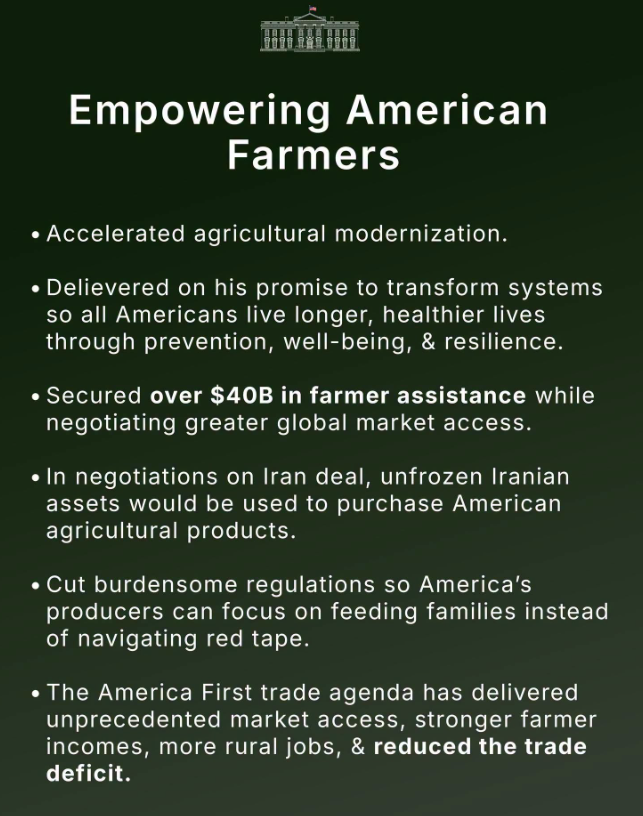
Speaking to a crowd of approximately 100 agricultural advocates and policy leaders in the Rose Garden, Trump reaffirmed that federal policy will heavily back precision agriculture, federal investments in soil health, and farm modernization.
The sweeping policy rollout occurred on the exact same day the U.S. Supreme Court delivered a landmark 7-2 decision in Monsanto Co. v. Durnell. Writing for the majority, Justice Brett Kavanaugh ruled that the Federal Insecticide, Fungicide, and Rodenticide Act (FIFRA) expressly preempts state-law failure-to-warn tort claims. The decision successfully blocks state-level lawsuits seeking to enforce cancer warnings on glyphosate-based products, like Roundup, that go beyond the EPA's approved labels. The high court clarified that the EPA's formal label registration process holds binding federal authority, a massive legal victory for the crop protection industry.
The ruling created a notable political backdrop at the White House event. HHS Secretary Robert F. Kennedy Jr., a prominent MAHA figure who previously won multimillion-dollar verdicts against glyphosate in private legal practice, was in attendance. The Trump administration backed Bayer in the Supreme Court case, reflecting a shift toward a more collaborative approach to balancing MAHA health objectives with industrial stability. Reassuring farm organizations, the executive order explicitly notes that federal agencies should not pursue regulatory actions that exceed existing statutory requirements.
The White House event concluded a high-stakes week for the agricultural sector, which included the Senate Agriculture Committee releasing its latest farm bill draft and a formal administration request for $11.1 billion in emergency agricultural disaster assistance for row-crop and specialty-crop producers suffering recent losses.
Addressing energy policy, Trump reiterated his calls for Congress to permanently legalize the year-round sale of E15 blend ethanol, crediting Senators Roger Marshall of Kansas and Joni Ernst of Iowa for their relentless advocacy on the issue.
On trade, Trump highlighted past agricultural trade trends, citing China's prior commitments to purchase $17 billion in agricultural commodities, primarily soybeans. He also suggested that ongoing diplomatic negotiations in Switzerland, led by Vice President JD Vance, could eventually position Iran as a destination for American wheat, corn, and soybeans due to domestic food shortages there.
Finally, the President highlighted tax relief measures codified in the One Big Beautiful Bill Act. The legislation permanently raised the federal estate and gift tax exemption to $15 million per individual and $30 million for married couples. The adjustment aims to protect multi-generational family farms from being forced into liquidation to satisfy federal transfer taxes, thereby offering long-term estate-planning security for land-rich, cash-poor agricultural operations.
This article has parts contributed by DTN analysts Chris Clayton and Jake Zajkowski .
Today, Clean Fuels Alliance America filed a motion to intervene in consolidated litigation against the 2026-27 Renewable Fuel Standard rule, Center for Biological Diversity (CBD) v. EPA. Clean Fuels plans to aggressively defend EPA's biomass-based diesel volumes, which are driving a critical market opportunity for American farmers and sending signals for additional growth in biodiesel and renewable diesel production and feedstock supplies.
"EPA's 2026 and 2027 RFS volumes are driving growth in a critical domestic market for U.S. farmers," stated Kurt Kovarik, Vice President of Federal Affairs for Clean Fuels. "Farmers and rural economies across the country need growing market opportunities to match their productivity and the increasing costs of inputs such as fuel. EPA understands that additional investment, job creation, and industry expansion are all possible if the administration stands behind the latest RFS rule.
"More than that, domestic biodiesel and renewable diesel can meet 10% of U.S. demand for on-road diesel fuel. That added supply is absolutely necessary to keep the economy moving and keep fuel and consumer prices affordable. If refiners and other litigants are successful in destabilizing the RFS program, American farmers, rural communities, and U.S. consumers will pay the price."
Since early reports of the final 2026-2027 RFS volumes in March, the biodiesel, renewable diesel, and SAF industry has responded vigorously to the market signal:
In March and April, farmers received more than $11 per bushel for soybeans for the first time since mid-2024, according to USDA National Agricultural Statistics Service.
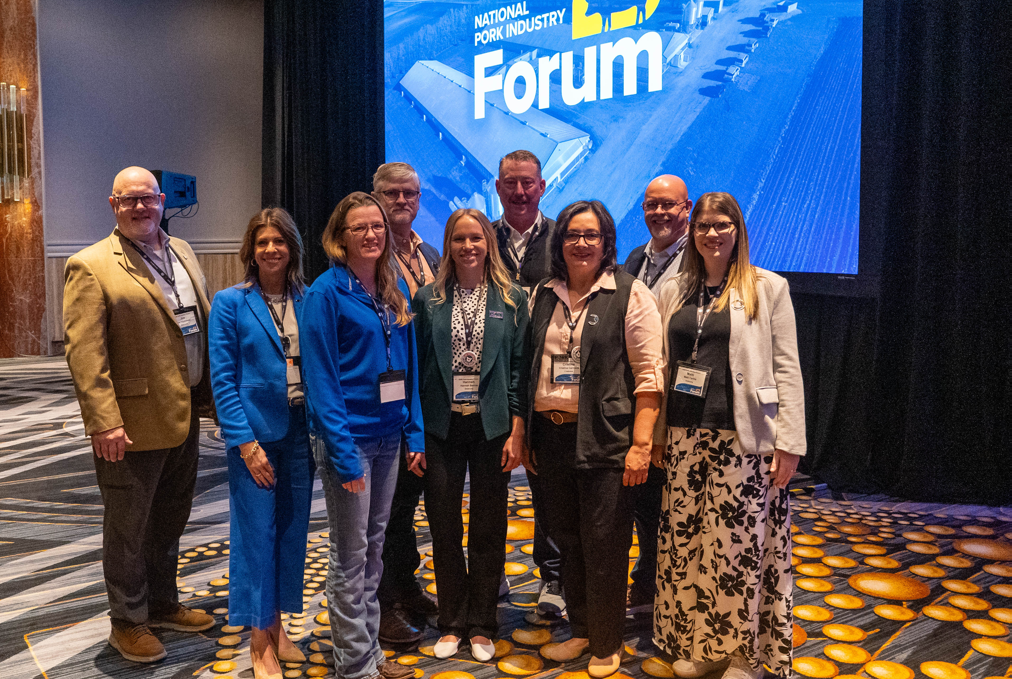
The Oklahoma Pork Council and the National Pork Board have announced the upcoming election for pork producer delegate candidates to serve on the 2027 National Pork Producers (Pork Act) Delegate Body.
The election of pork producer delegate candidates for the 2027 National Pork Producers (Pork Act) Delegate Body will take place at 3:00 p.m., Friday, August 14, 2026 in conjunction with a with the Oklahoma Pork Congress and Annual
Meeting which will be held at Sheraton Downtown OKC at 1 N Broadway in Oklahoma City, OK. All Oklahoma pork producers are invited to attend.
Any producer, age 18 or older, who is a resident of Oklahoma and has paid all assessments due may be considered as a delegate candidate and/or participate in the election. All eligible producers are encouraged to bring with them a sales receipt proving that hogs were sold in their name and the checkoff deducted.
For more information, contact Oklahoma Pork Council, 901 N Lincoln Blvd Suite 380, Oklahoma City, OK. Telephone: 405-232-3781.
As required by our organization's bylaws, the National Pork Board (NPB) and the Oklahoma Pork Council make the following election announcement in advance of the Oklahoma Pork Congress:
The election of pork producer delegate candidates for the 2027 National Pork Producers (Pork Act) Delegate Body will take place at 3:00 p.m., Friday, August 14, 2026, in conjunction with a with the Oklahoma Pork Congress and Annual Meeting which will be held at Sheraton Downtown OKC at 1 N Broadway in Oklahoma City, OK. All Oklahoma pork producers are invited to attend.
Any pork producer, age 18 or older, who is a resident of Oklahoma and has paid all assessments due may be considered as a delegate candidate and/or participate in the election. All eligible producers are encouraged to bring with them a sales receipt proving that hogs were sold in their name and the checkoff deducted.
For more information, contact the Oklahoma Pork Council, 901 N Lincoln Blvd Suite 380, Oklahoma City, OK. Telephone: 405-232-3781.
Grain prices are under continued pressure as favorable weather and heavy global supplies limit upward momentum, leaving agricultural producers struggling to find a footing in the current market. Oklahoma State University Extension crop marketing specialist Dr. Todd Hubbs notes that while the seasonal shift has introduced new variables, excellent growing conditions across key production areas are keeping a firm lid on any sustained price rallies.
"We're seeing the same things we sort of saw last week," said Oklahoma State University Extension crop marketing specialist Dr. Todd Hubbs. "We're having trouble gaining purchase. I think favorable weather in the corn belt, and wheat-wise, better than expected Northern Hemisphere crops are contributing to this."
Despite a major heat event developing in the European Union late in their growing season, domestic prices have largely ignored the news. Hubbs noted that supplies currently look sufficient, preventing a significant market response. "Despite one of the smallest HRW crops in decades, we just can't get a purchase," he added.
Recent rainfall across parts of the United States briefly eased drought headlines and sparked a minor market jump, prompting questions about whether traders overreacted or if the market is simply resting on a heavy supply cushion.
"We've got quite a bit of carry-in in a lot of our crops," Hubbs explained, pointing toward the upcoming USDA acreage and stocks reports. "I think everybody is sort of looking at a wait-and-see mode for what kind of acreage do we actually see for corn and soybeans, and what's the final acreage on winter wheat."
While demand has remained strong for corn exports and soybean crushing, the export demand for wheat has begun to tail off as domestic prices remain elevated compared to global competitors. Meanwhile, weather conditions in the Eastern Corn Belt have actually benefited from recent temperature increases.
"The Eastern Corn Belt got quite a bit of rain," Hubbs said. "I think they probably need some heat units, so this little bit of heat that's coming in might be beneficial out there. It also doesn't help that the dollar strengthened significantly recently. I think we're just in one of those scenarios where we need another event maybe to happen, hopefully one that can run prices higher and not keep it moving down."
As the market navigates the thick of summer, attention remains fixed on the USDA's feed and residual use estimates. Some market observers wonder if these high numbers represent a volatility time bomb or if a downward revision is on the horizon.
"The feed and residual numbers are a derived number," Hubbs said. "We don't actually track every kernel of corn that goes into feed, and then the residual part is just lost through the supply chain. The USDA's number is massive, but through the first two quarters, it has been going along at that pace."
While there is little upside to the estimate, the potential for downside risk remains a point of skepticism for analysts, even as the pace holds steady.
"We need to do it again here in the third quarter," Hubbs noted. "I don't consider it a time bomb, but if stocks do come in heavier than expected, it could be trouble in the corn market that could spill over into other things. I think we'll be close to the pace USDA's on."
Geopolitical tensions continue to simmer, impacting global commodity flows. When examining the global map, the primary source of market anxiety remains concentrated in the Middle East, even as energy markets show signs of stabilization.
"I think all that tension in the Middle East is still the main one," Hubbs said, pointing to ongoing conflicts involving Iran, Israel, and Lebanon. "We've seen oil prices run down almost to where they were before this whole thing started. It's taken gasoline and diesel a little bit longer to get down there, but that's welcome relief."
The ongoing conflict between Russia and Ukraine represents the secondary geopolitical focal point, though its direct impact on daily market commentary has shifted.
"It's sort of hit the back burner, people don't talk about it as much anymore," Hubbs observed. "But they seem to be attacking each other's infrastructure more and more. Thus far, it's sort of maybe hitting Ukraine a little bit more, but they've been attacking Russia's energy infrastructure a lot more, which changes the nature of how prices are in that region."
Despite the infrastructure attacks, Russia's winter wheat crop in the southern exporting regions remains strong this year. Coupled with a weak currency, Black Sea wheat prices continue to sit significantly below domestic levels.
"When you combine that with what looks like a decent crop in the EU, and what looked like better than expected crops maybe in North Africa, it's pressure," Hubbs said. "It's pressure that we're having a tough time getting over right now."
With multiple market pressures hanging over the agricultural sector, producers are focused on identifying a realistic, profitable target to lock in new crop sales. Oklahoma prices previously approached the $6.00 mark before the recent downturn, creating a challenging environment for marketing.
"At one point, cash wheat here in North Central Oklahoma hit $6.90 after the May production report," Hubbs said. "It's going to be really hard to get back to that level. So when you're thinking about marketing, it's always important to have a plan and an idea of what is profitable for me."
Looking ahead, the market will also have to contend with the renewal of USMCA trade discussions, which are scheduled to resume in July, adding another layer of uncertainty.
"If we can get above $6.00, you're probably going to see some sales," Hubbs advised. "Everybody keep that in mind because right now it seems difficult just getting any purchase and get moving higher. You're going to have to actively monitor the markets to see if we can get a rally to get to the place where you want to be."
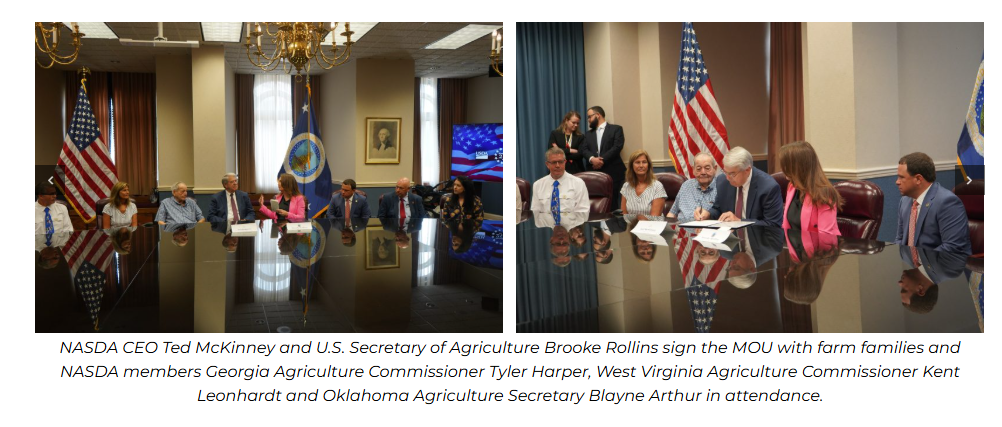
Today, the National Association of State Departments of Agriculture and the U.S. Department of Agriculture signed a memorandum of understanding establishing the American Farm Legacy 250 Program. This national initiative will recognize farm families who have shaped American agriculture and contributed to the nation's history while laying the foundation for future generations of farmers.
Building upon existing state Century Farm, Heritage Farm and Legacy Farm programs, NASDA and USDA will collaborate to create a framework commending farms and ranches with a history of family stewardship while celebrating newer farmers.
"America's farmers and ranchers work tirelessly to feed, clothe and fuel their communities and the world," NASDA CEO Ted McKinney said. "This partnership between USDA and NASDA recognizes families who have stewarded their land across generations while inspiring the next generation of agricultural leaders. State departments of agriculture are uniquely positioned to help tell these stories and ensure this legacy endures."
"Before there was a United States of America, there were American farm families working this land, answering the call to defend liberty and laying the foundation for the strongest, most abundant nation the world has ever known," U.S. Secretary of Agriculture Brooke Rollins said. "As we approach America's 250th birthday, it is only fitting that we honor the families whose grit, sacrifice and stewardship have fed our nation, strengthened our communities and preserved our agricultural heritage across generations. President Trump has made restoring pride in America's history a national priority, and the American Farm Legacy 250 Program ensures our farmers and ranchers receive the recognition they have earned as true builders of this great country."
The new program will recognize farms with 250 years of continuous operation, with the first of these farms receiving acknowledgement today at the Great American State Fair. The program will also provide opportunities to recognize other qualifying multigenerational farms through participating state programs.
Under the agreement, USDA will lead the development of the American Farm Legacy 250 Program and NASDA will serve as the primary liaison between USDA and state departments of agriculture, facilitating state participation and supporting the integration of the national effort into existing state programs. The organizations will work jointly to develop recognition materials, coordinate outreach and public engagement efforts and highlight participating farms and ranches across the country.
The memorandum of understanding remains in effect through Dec. 31, 2026.
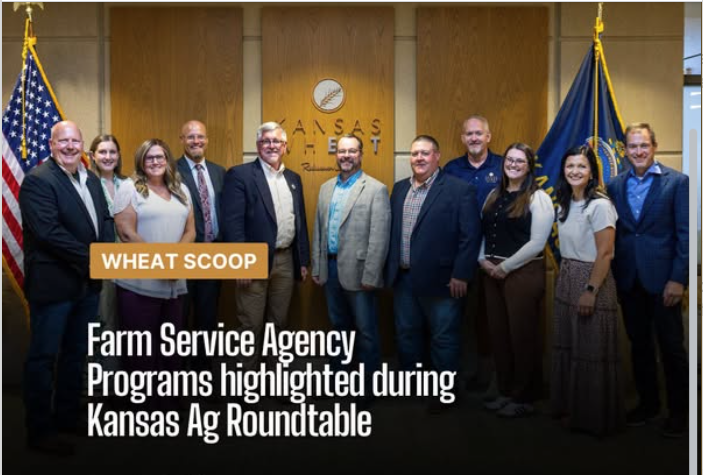
Kansas Wheat welcomed Richard Fordyce, USDA Under Secretary for Farm Production and Conservation, to the Kansas Wheat Innovation Center on June 17, for a roundtable discussion with agricultural stakeholders on USDA program delivery, technology modernization and the future of Farm Service Agency (FSA) programs.
The discussion brought together representatives from Kansas Wheat, commodity organizations, producers and USDA leadership to discuss challenges facing farm country, including drought, crop insurance, staffing at local USDA service centers and efforts to streamline interactions between producers and federal agencies.
A key focus of the discussion was USDA's "One Farmer One File" initiative, an effort to better integrate the FSA, Natural Resources Conservation Service (NRCS) and Risk Management Agency (RMA) under a single mission area. The initiative seeks to simplify interactions between producers and USDA by consolidating forms and creating a more seamless experience for farmers working across multiple agencies.
Fordyce outlined USDA's ongoing information technology modernization efforts, including a partnership to replace dozens of aging systems with a unified platform capable of improving efficiency, strengthening data security and reducing administrative burdens on both producers and staff.
Among the projects discussed was an acreage reporting tool that will use geospatial mapping technology to simplify acreage reporting and improve accuracy. Future enhancements could allow producers to integrate precision agriculture data directly into USDA reporting systems, reducing time spent on paperwork and improving data quality.
The roundtable also included discussion of provisions in the Working Families Tax Cut Act, including the addition of approximately 30 million base acres nationwide. USDA is currently working through the implementation process and communicating with eligible landowners regarding enrollment opportunities.
Kansas wheat farmers emphasized the importance of a strong farm safety net, particularly as producers face continued weather challenges and market uncertainty. Crop insurance was a major topic of discussion, with participants highlighting the value of risk management tools and exploring opportunities to improve policy flexibility for wheat producers.
KAWG President Chris Tanner addressed two issues of which Kansas wheat growers have developed resolutions: wheat as a harvestable cover crop and the separation of Enterprise Units between fallow and continuous. Continuous wheat yields significantly lower than fallow; when these two practices are combined, "You have no safety net whatsoever," said Tanner. "I'm hoping to see this one because that would be a huge asset in wheat farm operations."
"Wheat fits into these environments well and checks all the boxes of a harvestable cover crop. Representative Sharice Davids actually got this put into the Farm Bill, which will be a huge deal for wheat growing areas," said Tanner. "I am excited to see if that makes it through the House."
Fordyce noted that USDA remains committed to supporting local service centers and ensuring county offices have the resources needed to effectively serve producers. He added that new technology systems are intended to reduce administrative workloads, allowing staff to spend more time assisting farmers and ranchers.
"Thank you, Under Secretary, for all your work on behalf of farmers. You yourself as a farmer understand just how important USDA and the programs that it provides are to us, and that they need to be efficiently run, rolled out and executed," said Derek Sawyer, Chairman of the Kansas Wheat Commission. "We also want to thank all the county office staff that work tirelessly to make sure we are all taken care of."
The discussion also highlighted research and outreach efforts supporting wheat production in Kansas, including the Musil Center for Sustainable Wheat Production. The center brings together research, extension and industry partners to address production challenges and strengthen the long-term viability of wheat farming.
"Farmers have invested heavily in infrastructure for research, and this building is the perfect example," said Sawyer. "Work with USDA on public private partnerships is essential and the need to solve problems through public research is very important."
Throughout the meeting, participants emphasized the importance of continued communication between USDA leadership and producers to ensure programs are responsive to the needs of farmers.
TThirty high school seniors from across the state completed the 12th annual Helping Youth Prepare for Excellence (HYPE) FFA Academy June 23-25 in Jefferson City. Sponsored by the Missouri Corn Merchandising Council (MCMC), the three-day leadership academy equips high school seniors with the communication and advocacy skills needed to engage in conversations about agriculture and the issues facing Missouri farmers.
Thirty high school seniors from across the state completed the 12th annual Helping Youth Prepare for Excellence (HYPE) FFA Academy June 23-25 in Jefferson City. Sponsored by the Missouri Corn Merchandising Council (MCMC), the three-day leadership academy equips high school seniors with the communication and advocacy skills needed to engage in conversations about agriculture and the issues facing Missouri farmers.
"When it comes to decisions impacting agriculture, every voice matters," said MCMC Chairman Patrick Seyer of Oran. "Many of these FFA members and their peers will be future leaders in our industry. HYPE helps prepare them to confidently share their experiences and engage in meaningful conversations, whether that's online, in their future careers, or with elected officials."
Students learned how to effectively share their experiences in farming, overcome obstacles, and develop their communication and personal skills. Learning sessions included advocacy training, communication basics, and social media outreach. Students heard from farmers, industry representatives, social media influencers, and congressional staff about how to communicate effectively on key issues. The group also toured the Missouri Soybean Center for Innovation to learn more about the advancements and research being done on behalf of farmers.
The academy concluded with mock legislative hearings at the Missouri State Capitol, where students presented on key agricultural issues before Missouri state Sens. Mike Bernskoetter and Jamie Burger and state Reps. Elizabeth Fuchs, Willard Haley, Will Jobe, Doyle Justus, Peggy McGaugh, Jim Schulte, and Emily Weber. Participants also had the chance to meet with Missouri Director of Agriculture Chris Chinn.
"The HYPE Academy provides students an opportunity to add tools to their toolbox and effectively communicate their beliefs and experiences on issues that are important not only to them but all of Missouri agriculture," noted Missouri FFA State Advisor Keith Dietzschold. "With so many people removed from agriculture, Missouri Corn and Missouri FFA felt this was one avenue we could partner together to help young individuals find their voice and understand the importance of telling the agriculture story to the public."
The Missouri Corn Merchandising Council is an organization of corn growers dedicated to developing and expanding corn markets, educating growers and customers, and exploring new research opportunities. Learn more at www.mocorn.org. The National FFA Organization makes a positive difference in the lives of students by developing their potential for premier leadership, personal growth, and career success through agricultural education.
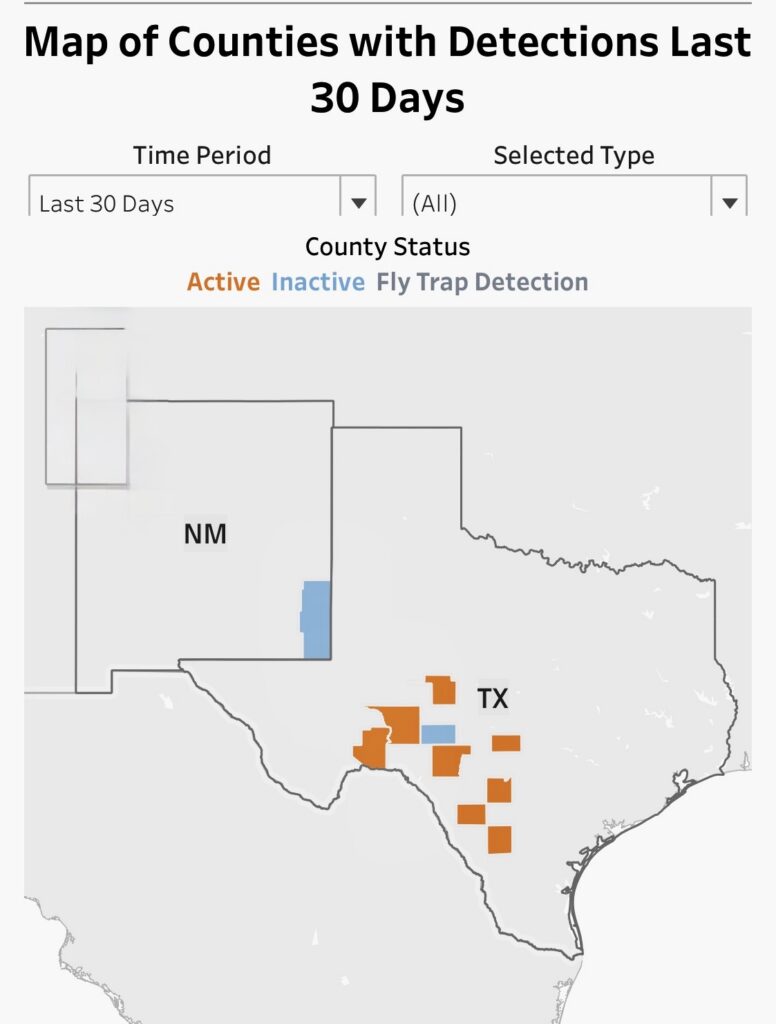
More cases of he New World Screwworm have been added to the Screwworm.Gov website- the latest cases are all sheep in south Texas just north of the US-Mexican border. Four of the cases reported were found in Crockett County (County seat is Ozona) while one case reported was in Edwards County (County seat is Rocksprings).
There are now 22 active cases and three inactive cases of New World Screwworm that have been found in the US since June third. All have been in Texas with the exception of the dog that was reported in New Mexico.
New World screwworm is a parasitic fly that causes severe, potentially fatal infestations by feeding on the living tissue of warmblooded animals. Quick detection, treatment, and reporting are vital to safeguarding livestock, wildlife, and pets.
USDA and TAHC are conducting a coordinated response that includes:
.
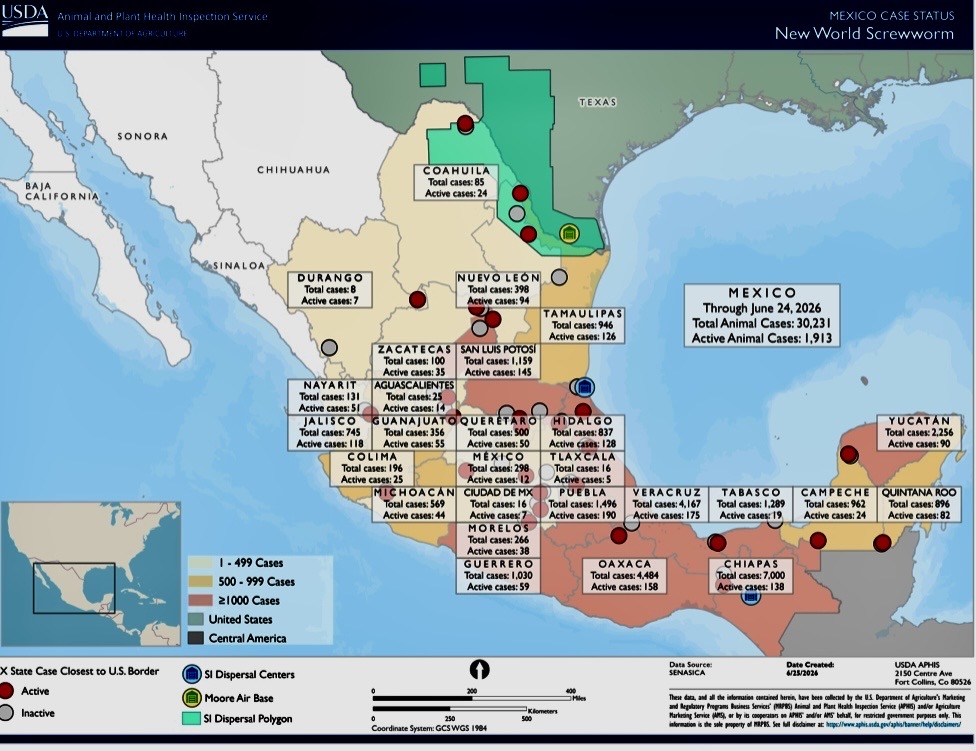
According to the latest statistics provided by Mexico- there are currently 244 active cases of New World Screwworm in the three Mexican states adjacent to the US- Mexican border- Coahuila, Nuevo Leon and Tamulipas. The green on the map above shows where sterile flies are being dispersed on both sides of the US-Mexican border.
Guidance for Animal Owners and Veterinarians
The MOST important thing animal owners can do is to know what to look for and how to report suspected cases of NWS. USDA urges everyone in the area to check animals for:
Anyone who suspects a screwworm infestation should immediately contact their veterinarian, state animal health official, or USDA. Early reporting is essential to ensure animals receive prompt treatment, so they fully recover.
Though rare in people, anyone who notices a suspicious lesion should seek immediate medical care.
Food Safety
The U.S. food supply remains safe. NWS does not infest meat, fruits, vegetables, or other food products. Any affected animal would be identified during USDA Food Safety and Inspection Service inspection, and no contaminated product would enter commerce.
Additional updates and resources are available at Screwworm.gov
The concept of sustainability is more than just a passing trend—it has become a foundational element of how we live, eat, and shop. For Traci Walton, co-founder of Plenty Mercantile in Oklahoma City, creating a sustainable business wasn't just a corporate goal; it was a path discovered through family, passion, and a distinct vision for retail. Farm Director KC Sheperd recently sat down with Walton to discuss the origins of the business, how they vet their unique products, and how the mercantile has grown into a hub for intentional living.
The journey of Plenty Mercantile began back in 2012 after Walton's oldest daughter, Brittney, graduated from Oklahoma State University. Brittney earned a degree in entrepreneurship and the university's very first certificate in sustainability.
Following an internship in Boston, where she analyzed companies for their sustainability and bottom-line practices, Brittney returned home to Oklahoma with a clear realization: the retail sector was lagging behind in environmental and social responsibility.
At the same time, Walton had just finished homeschooling her three youngest children and was ready for a new challenge. Encouraged by a friend to start a store that reflected the warmth and ethos of their own home, the mother-daughter duo set to work. Fourteen years later, that spark has evolved into a thriving multi-location business backed by a supportive Oklahoma City community.

The choice to call the business a "mercantile" was deliberate. The founders wanted to carry a vast array of products across a wide range of price points to ensure the store remained accessible to everyone. The goal is for any customer to walk through the door and find something that fits their budget while maintaining a sustainable thread.
The curated inventory spans several categories:
Since opening in 2012, Walton has noticed a significant shift in the market. Back then, sustainable goods were rare and difficult to source. Today, the quality and variety of eco-conscious products have risen dramatically to meet growing consumer demand.

When it comes to selecting vendors, Plenty Mercantile relies on a strict vetting process that begins with a gut feeling and a strong relationship. Because many agricultural producers and makers are looking to add value to their operations through agritourism and retail, understanding how their products are made is essential.
For Walton, sustainability is synonymous with value, quality, and longevity. Products must be made with intention from resources that do not degrade the planet. Furthermore, ethical manufacturing is non-negotiable; it ensures that the hands that made the products were treated fairly.
The vetting process extends all the way to packaging. If an exceptional product arrives wrapped in excessive plastic or styrofoam, they will choose not to carry it. The team works closely with makers to establish shipping and delivery methods that minimize waste and work effectively for both parties.
One of the store's standout categories is its clean, natural skincare line. As someone who recently turned 60, Walton emphasizes the importance of preventative skin health with clean ingredients. Working alongside her 34-year-old daughter, the two research and select products that cater to different generational needs, prioritizing simple ingredient lists, proven longevity, and transparent company backgrounds.
In addition to skincare, the store's "Made in Oklahoma" section is its best-selling category. Celebrating what many call the "new frontier" of Oklahoma City, this section features everything from traditional coffee mugs adorned with local icons to custom plates, cutting boards, and dish towels featuring regional university colors.
Among the carefully curated skincare offerings at the mercantile, Sacred Meadow Sheep Tallow has emerged as a standout favorite for customers seeking pure, time-tested hydration. As part of Walton and her daughter's deep dive into simple, ingredient-conscious skincare, this traditional balm aligns perfectly with the store's philosophy of intentional living. Tallow closely mimics the natural lipid profile of human skin, making it an incredibly effective, nutrient-rich moisturizer that delivers vitamins A, D, E, and K without synthetic additives or fillers. Sourced with the same strict standards for animal welfare and environmental stewardship that the mercantile demands of all its vendors, this product highlights a return to ancestral beauty practices that are both deeply restorative for the skin and gentle on the planet.
The global pandemic altered how consumers view their purchases. People became deeply curious about where their food and everyday goods came from. Plenty Mercantile emerged from that period with an even stronger commitment to localized supply chain lines.
By prioritizing makers and suppliers who are closest to home, the business reduces the environmental and financial impacts of freight and travel while actively reinvesting in the regional economy.
Summertime at Plenty Mercantile brings a shift toward community events. The flagship location in the historic Automobile Alley is housed in a 4,000-square-foot former Chevrolet dealership from the era when 28 dealerships lined the street. The building features a large front showroom, a warehouse venue space where cars were once serviced, and an expansive rooftop.
While the rooftop slows down for private events during the hot summer afternoons, the mercantile utilizes its air-conditioned warehouse space to host local makers every Saturday morning, offering them free space to showcase their crafts. Visitors can participate in hot yoga on the rooftop before coming downstairs to browse local vendors.
For those looking to explore the mercantile's curated selection, the business offers several touchpoints:
As a certified B-Corp, Plenty Mercantile operates on solar energy and functions as an urban pollinator pocket and official waystation for the Monarch butterfly. The third-party certification underscores the store's commitment to walking the walk when it comes to true environmental accountability.


In today's Beef Buzz, senior farm and ranch broadcaster Ron Hays speaks with Ethan Lane, who says while the Senate Agriculture Committee's newly released farm bill framework includes several positive provisions for cattle producers, major livestock issues—including a fix for California's Proposition 12—remain unresolved.
Lane said the initial draft from Senate Agriculture Committee Chairman John Boozman was largely free of controversy and contained some wins for agriculture. "Relatively non-controversial draft text was released. A lot of provisions in there that are beneficial to folks throughout agriculture, certainly to the cattle industry."
One provision NCBA was pleased to see included was the DIRECT Act, which aims to expand marketing opportunities for small, state-inspected meat processors. "We were glad to see inclusion of the Direct Act, a piece of legislation we've been working on for years now, trying to increase marketing opportunities for small state-inspected packing facilities to be able to market their product across state lines through e-commerce."
Despite those positives, Lane emphasized that the draft avoids several of the most contentious issues facing animal agriculture, particularly the battle over California's Proposition 12 and efforts to advance the Save Our Bacon Act. "What this bill didn't do was take on any of the big pivotal issues that we know are front and center right now, particularly in animal agriculture."
Lane said NCBA remains concerned about mounting pressure from animal-welfare activist groups. "We've seen $30 million in animal rights advertising pretending to be farmers in ag states with pivotal elections right now, trying to bully Republican members of Congress away from saving producers from California dictating how they raise their animals."
He added that the current political pressure is unlike anything the livestock industry has seen in years. "This is the most elevated animal rights activity we've seen in a very, very long time."
Lane noted Chairman Boozman has acknowledged those unresolved issues and indicated they could be addressed later during markup. "They very much know that those are going to be part of a potential markup down the line."
Lane said recent developments have unified livestock groups even further. He pointed specifically to Kansas Republican Senator Roger Marshall withdrawing support from the Save Our Bacon Act after pressure from activists. "That has riled up animal agriculture more than anything else."
Lane did not hide his frustration over that move. "Watching a once champion of the livestock industry turn his back on cattle producers and hog producers across the country—and in Kansas—in favor of animal rights activists is quite frankly really disappointing."
Still, he said the controversy has strengthened resolve across animal agriculture. "We're really, I think, marching as a unit right now and focused on making sure that we don't let these animal rights activists hijack American livestock interests."
Even if the Senate advances its version of the farm bill, Lane said substantial work remains before anything reaches the President's desk.
He noted the Senate proposal differs significantly from the House version led by Glenn Thompson. "This bill is substantially different than the House version that GT Thompson worked so hard on over a number of years."
That means a conference committee would still need to reconcile both versions. "There would still need to be a conference committee and quite a long, elaborate process to combine those two bills."
Lane said Congress is running short on time. "That calendar is not our friend right now."
With the August recess approaching, election season ramping up, and government funding deadlines looming, Lane believes legislative bandwidth is shrinking fast. "As the days tick by, doing something as big and voluminous as a farm bill looks less and less possible in this environment."
Lane noted that many cattle industry priorities were addressed in the One Big Beautiful Bill last summer, reducing the urgency of some portions of this farm bill debate. "The vast, vast, vast majority of what the cattle industry needed from a farm bill process is done."
Because of that, NCBA's focus has shifted. "We're probably more concerned about bad ideas at this point, and anti-livestock industry provisions making it into this bill."
As for the likelihood of a final farm bill reaching the President this year, Lane was blunt about the odds. "I think that is awfully remote at this point."
Still, he credited leadership in both chambers for continuing the effort. "They have worked tirelessly on this, but this is a tough environment, and as we're seeing with a lot of other pieces of legislation, not much is moving at the moment."
The Beef Buzz is a regular feature heard on radio stations around the region on the Radio Oklahoma Ag Network and is a regular audio feature found on this website as well. Click on the LISTEN BAR above for today's show and check out our archives for older Beef Buzz shows covering the gamut of the beef cattle industry today.
RON's Dave Lanning has a pre-opening look at today's agricultural Markets.
Click the audio tab below for today's report.

The U.S. Supreme Court issued a major decision on Thursday, ruling 7-2 in favor of Monsanto and its parent company, Bayer. The landmark opinion significantly alters the landscape of agricultural litigation by blocking thousands of pending and future lawsuits that claim the weedkiller Roundup causes cancer.
The decision in Monsanto v. Durnell centers on a legal concept known as federal preemption. The high court ruled that the Federal Insecticide, Fungicide, and Rodenticide Act (FIFRA) explicitly prevents states from establishing labeling requirements that are "in addition to or different from" federal standards.
Because the U.S. Environmental Protection Agency (EPA) reviews the safety of glyphosate—the active ingredient in Roundup—and has consistently determined that it is unlikely to be carcinogenic to humans, the federal agency does not require a cancer warning on the product label. The Supreme Court ruled that state-level "failure-to-warn" lawsuits effectively try to force a warning label that contradicts the EPA's federal standard, meaning such claims are legally barred.
Justice Brett Kavanaugh delivered the majority opinion, which drew broad support from justices across the ideological spectrum.
"Because Durnell's state tort claim would impose a pesticide labeling requirement 'in addition to or different from' the label required by EPA, FIFRA expressly preempts Durnell's claim," Kavanaugh wrote.
The case originated with John Durnell, a St. Louis, Missouri resident who used Roundup for decades to maintain public parks. After developing non-Hodgkin lymphoma, Durnell sued Monsanto, arguing the company failed to warn consumers about potential cancer risks. A Missouri state jury subsequently awarded Durnell a $1.25 million verdict, which Bayer appealed all the way to the nation's highest court. The decision effectively reverses that lower court victory.
Justice Ketanji Brown Jackson authored the dissenting opinion, which was joined by Justice Neil Gorsuch. Jackson argued that the majority misunderstood the relationship between state and federal oversight, stating that federal law limits but does not entirely eliminate a state's authority to regulate pesticide labels. She noted that the ruling ultimately leaves individuals who have suffered significant harm without a viable legal remedy.
The legal victory provides massive financial and structural relief for Germany-based Bayer, which acquired Monsanto in 2018. Over the last decade, the company has faced roughly 180,000 lawsuits linking Roundup to cancer, leading to more than $11 billion in paid settlements and individual jury verdicts. An estimated 61,000 cases remain active in courts nationwide.
Bayer CEO Bill Anderson praised the ruling, noting that it restores critical regulatory certainty for innovators and agricultural producers who rely on uniform federal standards. The company stated the ruling should lead directly to the dismissal of the vast majority of current warning-based claims and prevent similar lawsuits in the future.
Conversely, environmental and public health advocacy organizations expressed deep concern over the outcome. Legal experts from the non-profit group Earthjustice warned that treating EPA label approval as an absolute legal shield for manufacturers creates a dangerous precedent, reducing corporate accountability even when independent scientific findings suggest potential health risks.

Gary Millershaski, a wheat farmer from Lakin, Kansas, took the gavel as chairman of the U.S. Wheat Associates (USW) Board of Directors at the organization's summer meeting in Fargo, North Dakota.
In addition to the installation of officers for 2026/27, the three-day summer meeting included updates from USW state wheat commission members and USW staff during budget, long range planning, transportation and wheat quality committees and working groups. The full USW Board of Directors meeting on June 25 featured updates on world supply and demand, food assistance programs and industry partners, as well as reports from USW leadership staff.
Millershaski, who replaces North Dakota wheat farmer Jim Pellman as USW Chairman, will serve a one-year term.
"Gary has been an active board member and a valuable voice on the officer team – he is a strong representative for U.S. wheat farmers," said USW President and CEO Mike Spier. "He has visited many global markets and established relationships with wheat buyers around the world. This kind of engagement serves the mission of USW to build export demand for wheat. We look forward to his continued contributions to our work that benefits wheat farmers in his home state of Kansas and states across the country."
Millershaski, along with his wife Jana and their sons Jeremy and Kyler, grow hard red winter (HRW) wheat, hard white (HW) wheat and dryland corn and milo, and manage a cow/calf operation. Millershaski became a Kansas Wheat Commissioner in 2016 and served as its chairman. He also served as a director of the Kansas Association of Wheat Growers (KAWG) from 2007 to 2017 after he received a KAWG scholarship while a member of the Class VIII Kansas Agricultural and Rural Leadership (KARL) program.
More recently, Millershaski participated in the industry-focused Bayer Leadership Program to build collaboration and prepare for global agricultural challenges.
"In my role as Vice Chairman, I've learned a lot from working alongside Jim Pellman, our U.S. Wheat staff around the world and the state partners that support our efforts," MIllershaski said. "My goal as Chairman is to meet more of our customers and continue to raise awareness of the high-quality wheat we grow."
The full slate of officers for the coming year was elected at the January winter board meeting in Washington, D.C. In addition to Millershaski, Mike Carstensen of Almira, Washington, moved up in the officer rotation to Vice Chairman and Jim Pellman of McClusky, North Dakota, moved to the Past Chairman position. Mark Jossund, who farms in Hendrum, Minnesota, was newly elected as Secretary-Treasurer. The officers all started their official terms on June 25 following installation.
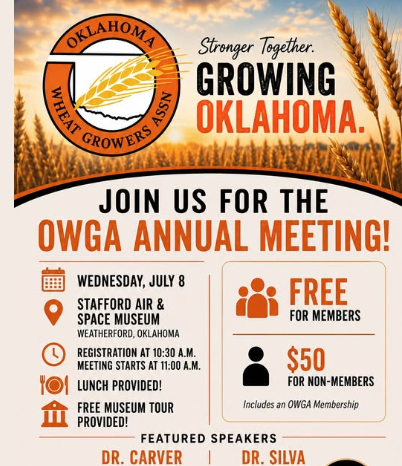
 Register today for the Oklahoma Wheat Growers Association Annual Meeting!
Join us Wednesday, July 8 at the Stafford Air & Space Museum in Weatherford.
Hear updates from Dr. Carver, Dr. Silva, Mike Schulte, and receive NAWG updates.
 OWGA Members – FREE
Non-Members – $50 (includes a one-year OWGA membership!)
 Registration: 10:30 AM
 Meeting: 11:00 AM
 Lunch & museum tour provided
Register at Oklahomaag.com. Bring a neighbor and we'll see you in Weatherford!
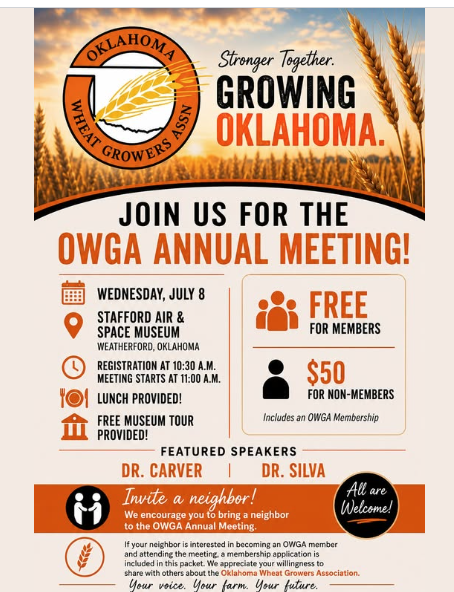
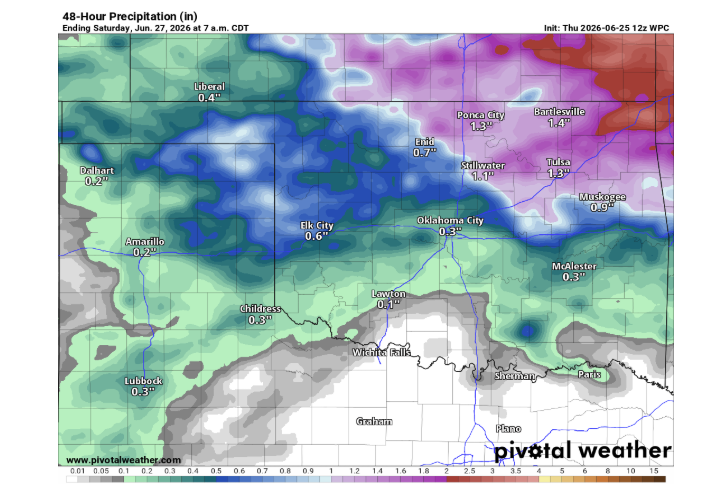
The threat of a rapidly intensifying King Kong El Niño is developing in the Pacific, carrying the potential to drastically alter weather patterns across the southern plains. However, Oklahoma must first navigate a forecasted period of below-normal precipitation through the core summer months. State Climatologist Gary McManus detailed the severe atmospheric shifts impacting the region, analyzing everything from recent localized destructive storms to the long-term seasonal outlook.
The state recently experienced a wild stretch of weather, including a powerful derecho that packed a 102-mile-per-hour wind gust recorded at an Oklahoma Mesonet site. Additionally, localized rainfall totals have been staggering, with radar indicating over a foot of rain in parts of Osage County within a single six-hour window. While these events help alleviate long-term moisture deficits, they present a stark contrast to the upcoming seasonal outlook.
The climate conversation has quickly shifted toward the intensity of the current oceanic warming trends.
"Right now, the atmospheric oceanic coupling shows a weak El Niño," Gary McManus explained. "And it is expected to get to the strong to very strong category. Very strong is not the common term that people like to use. Some say super strong, some will start to name it something like Godzilla, but we've already used Godzilla back in 2015. So maybe, maybe this would be the King Kong El Niño."
According to McManus, historical data dating back to the 1950s suggests this developing system could rank among the most powerful on record. While it is currently active, its true structural strength and subsequent impacts are projected to amplify later in the year.
"As we look forward through the summer into the fall, that's when it's expected to strengthen and start having those impacts in our part of the globe," McManus noted.
Despite the looming presence of a historic King Kong El Niño, Oklahomans should not expect immediate summer rainfall. The Climate Prediction Center's long-range forecasts for July through September indicate increased odds of below-normal precipitation for the southern plains, encompassing the southern half to two-thirds of Oklahoma.
"That certainly flies in the face of anybody thinking that El Niño's going to have an impact this summer for Oklahoma," McManus cautioned. "A normal Oklahoma summer, what we would expect, would be the rain start to taper off as we get here to the end of June, and really start to shut off a little bit more as we get into July and even more so in August, and that heat to ramp up."
The beneficial impacts of El Niño typically delay until late autumn and winter for this region. Historically, a strong system brings cooler and wetter conditions on average from mid-fall through early spring—specifically from October or November through March or April.
A stronger climate signal does not automatically guarantee extreme weather, but it heavily tilts the odds. McManus pointed out that a strong system increases the likelihood of typical impacts, potentially raising the probability of a wetter-than-normal cool season from 66% to 75%.
To understand the potential impact of a massive El Niño, agricultural producers often look to the historic 2015-2016 cycle. That particular system triggered the wettest year on record for Oklahoma.
"It actually formed early in the spring of 2015, which is sort of unusual, just like this year," McManus recalled. "But it was very strong back then, and it helped sort of give us a little impetus for that wettest May on record in the state of Oklahoma back in 2015. In fact, it was the wettest month ever in the history of the state of Oklahoma."
That same cycle produced the state's second-wettest November and wettest December. While these setups bring substantial moisture that benefits long-term soil reserves, they also carry severe risks of flooding and property damage.
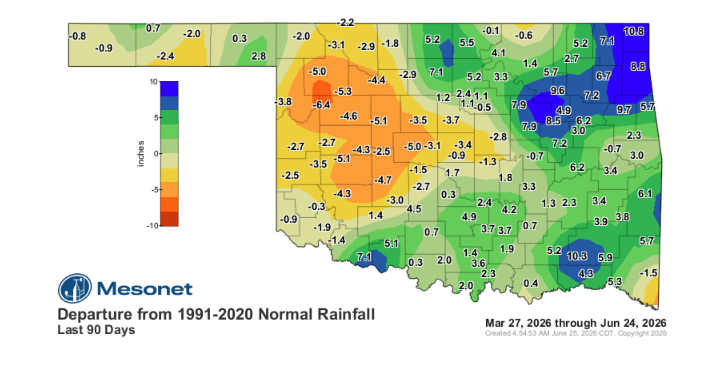
The prospective moisture cannot arrive soon enough for western portions of the state. The latest U.S. Drought Monitor indicates that more than half of Oklahoma remains in at least moderate drought, with roughly 40% in severe, extreme, or exceptional drought.
Long-term moisture deficits across the Panhandle, west-central, and central Oklahoma persist. Many areas report rainfall deficits of 6 to 8 inches over the past 90 to 180 days. This lack of moisture was compounded by periods of record-breaking warmth over the past year, accelerating evaporation and crop stress.
"That did a lot of damage, so it's going to take a lot of rainfall to get out of that drought in that part of the state," McManus emphasized. "We just continue to miss out on those widespread heavy rains in that part of the state."
As the state enters the hottest months of the year, the primary concern is whether western Oklahoma will experience worsening conditions before the seasonal benefits of El Niño finally arrive.
"Western Oklahoma and up there in the Panhandle, they need rainfall as the eastern half has seen already," McManus concluded. "Because if you have that sort of drought going into a hot summer, then we might be in trouble out there."
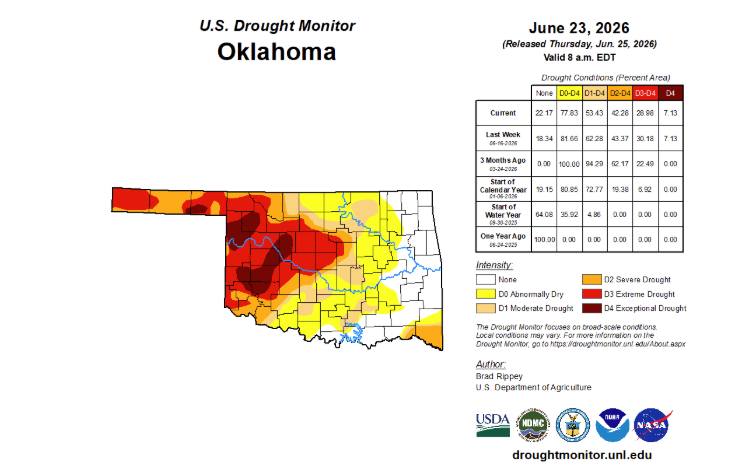

The American Soybean Association released a statement following today's decision from the U.S. Supreme Court in Durnell v. Monsanto, a case addressing whether state failure-to-warn claims can override federal pesticide labeling decisions under the Federal Insecticide, Fungicide, and Rodenticide Act (FIFRA). The Court ruled that FIFRA and federal labeling requirements preempt state failure-to-warn claims. "Farmers depend on clear, consistent labeling and a uniform regulatory framework to use pesticides safely and responsibly. The Supreme Court's decision provides much-needed clarity on the role of federal, science-based regulation and reaffirms the value of sound science in the regulatory process. For decades, the U.S. Environmental Protection Agency, along with regulatory authorities around the world, has repeatedly concluded that glyphosate does not pose a cancer risk when used as directed. State-level requirements have led to a burdensome regulatory patchwork that conflicts with EPA-approved labels and creates confusion, undermining confidence in the regulatory process and limiting access to essential crop protection tools." Earlier this year, ASA joined 11 other agricultural organizations in an amicus curiae brief to the Supreme Court, to defend farmer access to critical crop protection tools against continued threats of regulatory overreach and activist litigation.
Today, the U.S. Supreme Court ruled in favor of Monsanto in Monsanto Co. v. Durnell, holding that the Federal Insecticide, Fungicide, and Rodenticide Act (FIFRA) preempts state-law failure-to-warn claims based on pesticide labeling when the U.S. Environmental Protection Agency (EPA) has not required the warning at issue. The decision provides important clarity regarding the relationship between federal pesticide regulation and state tort law, reaffirming EPA's authority to establish labeling requirements based on scientific review and risk assessment. The ruling helps ensure a consistent national framework for pesticide labeling and regulation. "This decision is a win for farmers and the broader agricultural community," said Sam Kieffer, NAWG CEO NAWG. "Farmers depend on clear, predictable, science-based regulations and continued access to effective crop protection tools. Today's decision reaffirms that EPA's label, based on a rigorous process of scientific review, is the law. NAWG continues to support a regulatory system grounded in sound science, transparency, and consistency."
Today, the United States Supreme Court ruled 7-2 in Monsanto v. Durnell that the Federal Insecticide, Fungicide and Rodenticide Act preempts state labeling requirements that are in addition to or different from federal labeling requirements. This decision puts to rest many years of uncertainty on the future of pesticide labeling and availability for farmers. "This is great news for all farmers in the country," said Jed Bower, Ohio farmer and National Corn Growers Association (NCGA) president. "Today's decision reaffirms that FIFRA is the law of the land and states cannot add undue and unproven requirements not backed by science." The EPA has repeatedly confirmed that glyphosate does not cause cancer, as has every major regulatory body around the world. However, a long series of court cases alleging a failure to warn users of the risks of cancer, despite EPA's repeated conclusion that it does not, have put at odds FIFRA labeling requirements and the ability of states to add additional labels that conflict with federal findings and labels. Without today's decision, pesticide manufacturers could have been forced to manage state-based labels that contradict federal findings for all products in all 50 states, which would likely have led to increased costs, reduced product availability for farmers and diminished innovation. NCGA highlighted these concerns in an amicus brief submitted to the Supreme Court earlier this year.
The Agricultural Retailers Association (ARA) today praised the U.S. Supreme Court's ruling in Monsanto v. Durnell, which upheld the preemptive authority of the Federal Insecticide, Fungicide, and Rodenticide Act (FIFRA) over state tort claims alleging failure to warn.
"This decision protects the entire agricultural supply chain. When ag retailers and applicators comply fully with an EPA-approved label, they should not be punished for following the law. The Court's ruling ensures that pesticide safety decisions remain grounded in science, exactly as Congress intended when it passed FIFRA," said Daren Coppock, ARA President & CEO.
ARA has long advocated for national uniformity in pesticide regulation, arguing that allowing state courts to impose additional warning requirements beyond those approved by EPA would create an unworkable patchwork of liability that undermines compliance, raises costs, and restricts farmer access to essential crop protection tools. SCOTUS's ruling preserves the integrity of that framework.
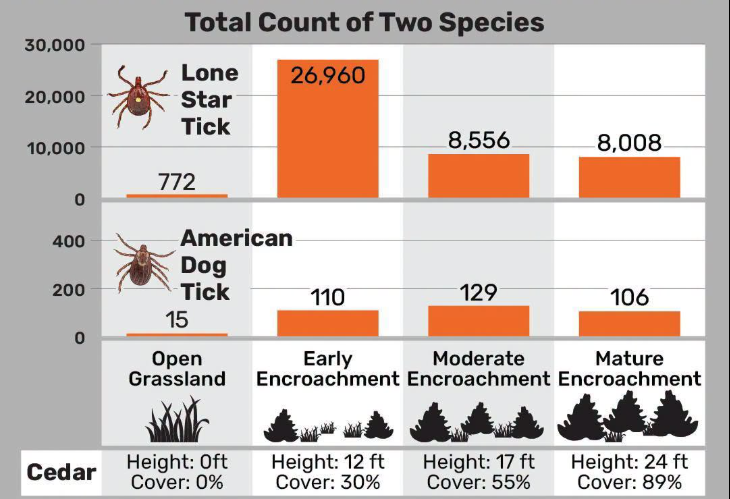
New research from the U.S. Great Plains reveals a direct link between eastern redcedar encroachment and a dramatic spike in disease-carrying tick populations, with the most severe population explosions occurring during the earliest stages of woody plant invasion.
The study, published by Propst et al. (2025), tracked tick abundance across varying levels of cedar density. Researchers found that as open grasslands give way to cedar trees, the environmental change creates a highly favorable habitat for both the Lone Star tick and the American dog tick.
Tick Abundance Is Higher in Cedar-Encroached Areas
Lone star tick was by far the most abundant species across sampling sites.
Two tick species were more abundant in cedar-encroached areas than in grasslands. The greatest increases were in the earliest stage of encroachment.
Cedar Height & Cover
- Open Grassland: Height 0ft, Cover 0%
- Early Encroachment: Height 12ft, Cover 30%
- Moderate Encroachment: Height 17ft, Cover 55%
- Mature Encroachment: Height 24ft, Cover 89%
The rapid spike in the early stages of encroachment suggests that even a small amount of cedar cover alters the microclimate enough to favor tick survival. Cedar trees provide shade, retain moisture, and offer leaf litter that protects ticks from the drying effects of direct sunlight and wind typical of open prairies.
As the cedar canopy thickens toward maturity (reaching up to 24 feet in height and 89% ground cover), tick numbers remain elevated compared to open pastures, though they level off below the initial early-stage peak.
This data provides land managers and livestock producers with another critical reason to manage brush and control invasive redcedars early. Preventing the initial wave of woody encroachment is not only vital for preserving forage production and grazing land but also a key factor in limiting the spread of tick-borne diseases affecting both livestock and humans.
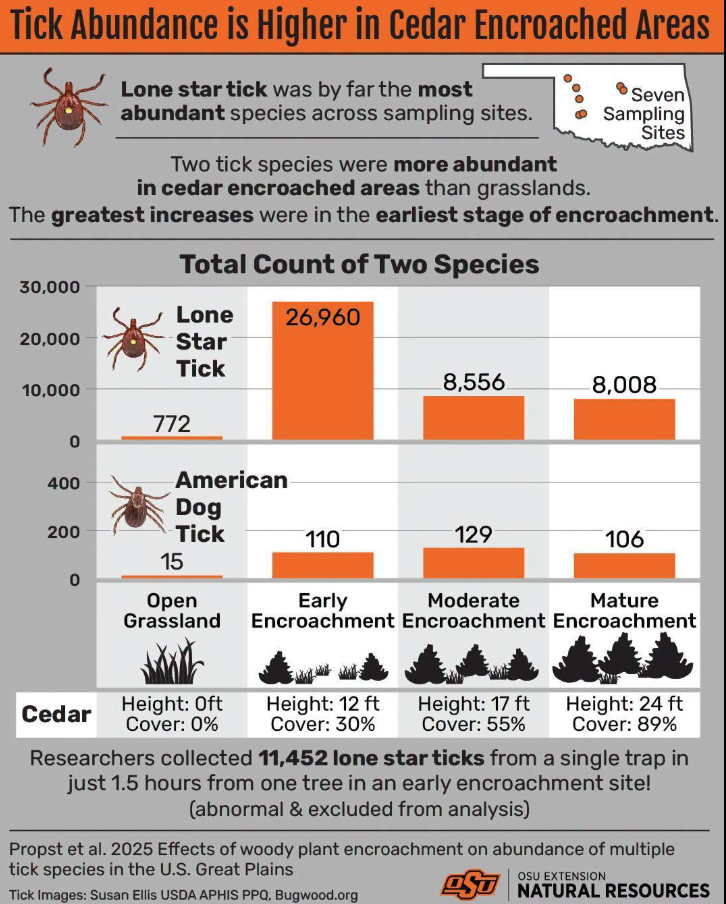
Researchers collected 11,452 lone star ticks from a single trap in just 1.5 hours from one tree in an early encroachment site. (abnormal & excluded from analysis)
Propst et al. 2025 Effects of woody plant encroachment on abundance of multiple tick species in the U.S. Great Plains https://journals.plos.org/plosone/article?id=10.1371/journal.pone.0332832
Tick Images: Tick Images: Susan Ellis USDA APHIS PPQ, Bugwood.org used and edited under CC BY-NC 3.0 https://creativecommons.org/licenses/by-nc/3.0/deed.en

Jake Zajkowski from DTN Writes: The White House on Wednesday asked Congress to pass a supplemental funding package that includes a request for $11.1 billion for farmers and calls for Congress to pass year-round E15.
The White House Office of Management and Budget (OMB) sent a request for $87.6 billion in supplemental funding to House Speaker Mike Johnson, R-La. The lion's share of that request -- $67.1 billion -- was for the War Department.
In the letter, though, President Donald Trump and his staff requested $10 billion in "temporary economic assistance for row and specialty crops planted in crop year 2026." An additional $1.1 billion was requested specifically for farmers in Florida "to rebound from devastating losses that were the result of crippling storms this past winter."
The aid request comes after senators had indicated they were looking at providing as much as $17 billion in economic aid to farmers.
Senate Agriculture Committee Chairman John Boozman, R-Ark., didn't include such aid in his farm bill package released Tuesday, but he applauded Trump for the request.
"I have been calling for emergency assistance to help producers manage this uncertainty, and this proposal is an important step to providing support," Boozman said. "I look forward to working with my colleagues to ensure we deliver the resources required to keep our farmers farming."
Scott Metzger, an Ohio farmer and president of the American Soybean Association, also stated that ASA appreciates that Trump is addressing "the economic headwinds" farmers are facing.
"It is no secret that farm country is struggling, and this temporary economic support will go a long way to provide farmers with economic stability as we look forward to the harvest season," Metzger said.
The $10 billion in economic aid for row-crop farmers comes after USDA earlier this year created the $11 billion Farmer Bridge Assistance (FBA) program for commodity growers and also announced $1.6 billion in aid for specialty crop farmers.
E15 DETAILS
Trump's request included calling on Congress to pass year-round E15. In pressing for some policy changes, the White House stated that passing year-round E15 is "an urgent and needed policy change that would expand consumer choice, support domestic fuel production, and provide additional flexibility in fuel markets."
The House passed a stand-alone E15 bill on a bipartisan 218-203 vote in mid-May, but the Senate has yet to take any action. E15 language was not included in the Senate version of the farm bill introduced this week.
Biofuel groups such as the Renewable Fuels Association and Growth Energy, looking for any sign of traction in the Senate, immediately raised the White House request and called on the Senate to take action.
CBD PLAN
The White House also called on Congress to update the definition of hemp-derived cannabinoid (CBD) products "to allow Americans to benefit from access to appropriate full-spectrum CBD products" while maintaining restrictions on products that pose serious health risks. USDA's Agricultural Marketing Service oversees the hemp program, but Congress last year passed a provision that would severely restrict the sale of CBD products.
FARMER EVENT AT WHITE HOUSE
Trump also will host farmers and ranchers from around the country at a White House dinner on Thursday night as the Trump administration looks to keep agriculture's support ahead of the midterm elections.
The event will highlight the president's focus on agricultural trade and will help kick off the Great American State Fair at the National Mall that begins on Thursday.
In a statement to DTN, the White House said farmers and ranchers from at least 16 states will attend the dinner. Agriculture Secretary Brooke Rollins, Health & Human Services Secretary Robert F. Kennedy Jr., Treasury Secretary Scott Bessent, and Interior Secretary Doug Burgum are all expected to attend. Lawmakers expected to attend are Boozman, along with Sens. John Hoeven, R-N.D., Roger Marshall, R-Kan., and Joni Ernst, R-Iowa, as well as Rep. Austin Scott, R-Ga.
The White House will tout Trump's "America First Trade Agenda," which the White House stated "has created unprecedented global markets access for America's farmers. The background material listed 10 countries that have reduced or eliminated tariffs on U.S. agricultural products: Ecuador, Taiwan, Bangladesh, Japan, United Kingdom, India, Switzerland, Liechtenstein, Argentina and Vietnam.
The White House background material stated, "Since Liberation Day, President Trump has increased market access to over 2 billion consumers, with U.S. food and agricultural exports rising by double digits in 2025."
That is an inaccurate statement, at least according to USDA's own agricultural export and import data. Agricultural exports fell by $5 billion in 2025 to $171.5 billion overall. For the first four months of 2026, agricultural exports have rallied, increasing by 5% compared to the first four months of 2026.
The trade deficit fell in the first four months of 2026, primarily because the value of agricultural imports has fallen by 11%. The agricultural trade deficit through April stood at $7.5 billion.
The White House will also highlight tax cut changes that benefited farmers in last year's One Big Beautiful Bill Act, as well as the FBA payments to farmers.
"There is no greater champion for American farmers, growers, and ranchers than President Trump, who has negotiated new, fair trade deals, lowered input costs, bolstered the farm safety net, eliminated the death tax, ended taxes on rural property loan interest, and created rural opportunity zones," said Olivia Wales, a White House spokeswoman. "For 250 years, hardworking farmers have fueled our nation, and President Trump continues to take action to help America's farmers thrive again."
At the same time, USDA's farm income forecasts don't project a major rally in 2026. Net farm income is projected to drop slightly -- 0.7% -- for 2026, according to USDA. Cash receipts to farmers will drop, mainly due to lower income in livestock receipts, but much of that overall income decline will be offset by higher government payments, USDA stated in May's income forecast.
For more on the farm bill, see "Farm Groups Signal Key Farm Bill Fights: A $17 Billion Economic Aid Package Likely Outside of Farm Bill" here: .

Today, House Agriculture Subcommittee on Forestry and Horticulture Ranking Member Andrea Salinas (OR-06) delivered the following opening statement at a subcommittee hearing titled "Reviewing Partnerships to Enhance Management of the National Forest System." Watch the hearing here.
[As prepared for delivery.]
Thank you, Chairman Newhouse, for convening us today, and thank you to our witnesses for making the trip to discuss this timely topic.
I would especially like to thank Ms. Whitney, who comes to us from the Pacific Northwest, and who will shed some light, from the conservation perspective, on the importance of partnerships for effective forest management. I know her testimony and feedback today, along with the important perspectives of our other witnesses, will give this Subcommittee the information we need as we consider ways to leverage partnerships to improve forest management across our nation.
This hearing is happening against the backdrop of what experts warn will be one of the worst wildfire seasons in recent memory. From increased temperatures to a historically low snowpack and extreme drought conditions, we're facing a perfect storm this year for an especially devastating wildfire season.
My home state of Oregon is nearly 50 percent forested and has 30 million acres of some of the world's most productive forests. Our forests are at risk, but I am hopeful today's hearing will prepare this Subcommittee to protect our forests, communities, and infrastructure.
Despite the threat wildfires pose to Oregon and much of the West, this Administration is taking steps that make us all less safe. Specifically, the reorganization of the Forest Service and the Administration's consolidation of wildfire response under the Department of Interior are causing chaos in our communities and are creating more questions than answers about the future of forest management. These changes come at a dangerous time – right as wildfire season is taking hold with 2.7 million acres already burned nationwide, exceeding the 10-year average for both fires and acres burned to date.
On top of the Administration's changes to the Forest Service, their work–or lack thereof–to reduce hazardous fuels in our forests is particularly alarming. From 2024 to 2025, the Forest Service treated roughly 25 percent fewer acres for hazardous fuels. And in Oregon, treatments were down 47 percent in that period. Treating hazardous fuels must be the absolute top priority of the agency: a forest that is vulnerable to wildfire cannot deliver the same ecosystem benefits as a treated forest. I'm talking about benefits like recreation opportunities, timber production, clean water, wildlife habitat, and carbon sequestration. The steep decline in hazardous fuels work since 2025, coupled with our changing climate, will only lead us to one outcome: catastrophic wildfires that decimate communities.
To make things worse, the Trump Administration's fiscal year 2027 budget included an approximate 43 percent cut to the Forest Service budget, and that's if we do not include the loss of funding as part of the proposal to move wildfire operations to the Department of the Interior. This budget proposal eliminates State, Private, and Tribal forestry; eliminates Forest and Rangeland Research; and cuts important programs like the Collaborative Forest Landscape Restoration Program that meaningfully improve the health and resilience of our forests.
At the same time the Trump Administration is calling for States and partners to take on more of the burden in managing our forests, they are cutting all support for this work. The collapse in hazardous fuels acres is just one obvious symptom of this misguided approach. This is not the time for removing opportunities for collaboration, active forest management, and progress. What we need is a path to move forward, to work together, and to invest in active forest management.
We know what effective forest management looks like. We need prescribed fires, hazardous fuels reduction, targeted thinning and timber harvests, and other practices that reduce wildfire risks to communities and restore balance to our forests after decades of overly aggressive fire suppression. We can prevent and combat wildfires without irreparably damaging the habitat and ecosystems we rely on to survive, or harming the private and industrial forests intended for harvest.
Partnerships are imperative to the success of active forest management. Tribes, states, local governments, universities, and private landowners all bring unique tools and expertise. Programs like Good Neighbor Authority, Service First agreements, and shared stewardship show what's possible when we work together. Partnerships are the backbone of the National Forest System, and they are necessary to complete work on the ground that keeps our forests productive, healthy, and safe for the public to enjoy. They are even more important right now, considering the catastrophic changes the Trump Administration is making.
This Subcommittee has a responsibility to ensure the Forest Service can be effective, and we must work alongside one another to expand collaborative forest management, reinforce partnerships between all who care for our forests, and keep our focus squarely on protecting people, communities, drinking water sources, and ecosystems. I am eager to hear from our witnesses and to work together to chart a path forward that will help us ensure our nation's forests are managed in a way that keeps them productive, resilient, and healthy.
Thank you, and I yield back.
Oklahoma Junior Wheat Show 2026 is giving 4-H and FFA students across the state a chance to showcase their wheat production skills, compete for scholarships, and gain valuable experience in grain quality evaluation. In a recent conversation with senior farm and ranch broadcaster Ron Hays, Mike Schulte of the Oklahoma Wheat Commission highlighted key dates, contest details, and why students should participate regardless of this year's weather challenges.
Schulte said the annual competition continues to be an important educational opportunity for young producers involved in wheat farming. "This competition that's going on, it's gone on for several years," Schulte said. "It also takes place the same time that the big three field days take place in Stillwater. So, if we have students going to Stillwater for those judging competitions, it's an opportune time for them to go ahead, if they are involved in wheat production, to be able to bring those wheat samples."
The visual judging portion of the contest will be held Wednesday, July 15, in Stillwater, Oklahoma, at the Payne County Fairgrounds Expo Center. Sample check-in begins between 7:45 and 8:00 a.m., with judging starting promptly at 8:30 a.m.
One of the biggest draws of the Junior Wheat Show is the scholarship money available to top participants. "We do give $16,000 in scholarships to our top 4-H and FFA winners in the top five categories," Schulte said.
After visual judging, the competition goes beyond appearance alone. The top wheat samples undergo more advanced testing to evaluate milling and baking quality. "They take the top 25 visual samples in each division on 4-H and FFA," Schulte explained. "Those are milled and baked out, and then there are specific parameters that we look at for milling and baking qualities that are set by the American Association of Cereal Chemists."
That portion of the evaluation is conducted at the Food and Agricultural Products Center by milling and baking specialist Renee Albers. Winners will be recognized later in the year at the Junior Wheat Show banquet, scheduled for December 3rd at the Embassy Suites in Oklahoma City.
Students do not need to pre-register, but they do need to arrive with a properly prepared sample. "Yes, so a 10-pound sample of wheat," Schulte said. "We always encourage students to take those samples to the local elevator."
For highly competitive entries, Schulte noted some participants go to impressive lengths to improve sample quality. "Some people actually take tweezers to them, you know, to pick out maybe some of the smaller kernels and things like that," he said.
Schulte acknowledged last year's contest saw a slight dip in participation due to weather-related quality issues during harvest. "The competition has really grown," he said. "We've had much more participation over the last five or six years."
However, difficult harvest conditions impacted many wheat producers. "We did see a little bit of a decline last year because we had a wetter harvest in central and north central Oklahoma," Schulte said.
At the same time, drought created different challenges in other regions. "Maybe the quality might not have been so great in southern Oklahoma and in other characteristics when you're looking at the kernel, just because of the significant drought that we had," he said.
That variability is exactly why Schulte encourages students not to count themselves out. "Everybody's really pretty much going through the same thing," he said. "There's an opportunity there for an individual, because there's a lot of things that have gone around with weather in the state."
Students growing certain wheat varieties may also qualify for bonus prize money. Schulte said varieties from Oklahoma Genetics Inc. (OGI) and WestBred are eligible for additional premiums. "The top five placings, if they are an OGI variety, they do get premium awards given to them based on their placings," Schulte said.
Prize money increases with placement. "You might get $100 if you submit an OGI variety in fifth place," he explained. "If you get up to first place, that number increases to $500 if it was an OGI variety."
WestBred also supports the contest with Grand Champion bonuses. "They give the Grand Champion, if not WestBred, $250," Schulte said. "If it is a WestBred variety and receives Grand Champion, then they also give $500 on top of that."
Schulte said these sponsorships help young producers continue learning about wheat production and agriculture. "It's great to have those sponsorships from those parts of the industry... to help these students further on down the road."
Contest forms and complete rules are available through the Oklahoma Wheat Commission website.
Schulte said students must bring:
"All of that again is at ok wheat.org," Schulte said.
Students may also ship entries if needed, but timing matters. "If you are going to ship samples, they must arrive to the Payne County Fairgrounds before Friday, July 10," Schulte said. Late shipments risk missing judging entirely. "If they come in after, you're probably going to lose the chance of missing that opportunity to have them judged."
For additional questions, students and families can contact the Oklahoma Wheat Commission directly.

House Agriculture Subcommittee on Forestry and Horticulture Chairman Dan Newhouse (WA-04) delivered the following opening statement at today's hearing, "Reviewing Partnerships to Enhance Management of the National Forest System."
Remarks as prepared:
Good morning everyone. Welcome to this Forestry and Horticulture Subcommittee hearing titled "Reviewing Partnerships to Enhance Management of the National Forest System."
This morning, we will hear from a panel of stakeholders on various issues before the National Forest System and will be reviewing how partners work with and support the Forest Service. These partnerships help to support active forest management, expand recreational opportunities, and create and maintain forest products and jobs - including those of essential community personnel like law enforcement.
Our national forests have been undermanaged for decades and because of that we are seeing a corresponding decline in forest health and resiliency. Millions of acres need better management to improve forest health, address invasive species, and ramp up much-needed fuels reduction activities to decrease the threat of catastrophic wildfire.
Over the past decade, we have seen some of the worst wildfires on record resulting in millions of acres of burned forests, destroyed homes and property, and in some cases, lost lives. Since wildfires are happening beyond the hottest and driest months of the year, we are now no longer seeing a fire season, but rather a fire year. I am seeing the impact of these nearly every day in my district.
Most of these disasters are preventable, and we need to be doing more to support important management work in our forests. The Forest Service is trying to do just that by identifying more than 100 million acres of national forest land for treatment in the coming years.
This will be no easy task given the acreage and scale. The agency has long relied on partners to help carry out this important work through partnership agreements such as good neighbor authority, stewardship contracts, memoranda of understanding, and other existing authorities and programs.
This Committee has long supported these partnerships. The 2026 Farm Bill, which passed on the House floor just last month, continues this effort and provides additional improvements. It also reauthorizes the Landscape-Scale, Collaborative Forest Landscape, and the Joint Chiefs Landscape Restoration Partnership programs. Additionally, it includes authorizations for hazardous fuel reduction, cross-boundary wildfire mitigation, insect infestations and diseases, and expands several existing categorical exclusions to help encourage more active management.
Support for new markets for forest products is also included through the Wood Innovation Grants program and a new biochar application demonstration project. We also prioritize forest products infrastructure by authorizing the Timber Production Expansion Program.
These are just a few of the provisions in the forestry title, and I am glad to see the Senate has started their work. Our nation's farmers, ranchers, and foresters need a new and modernized farm bill and we must deliver.
With that, I am looking forward to hearing from our witnesses today about how they work with the agency and support the critical management of the national forest system - and recommendations for improvement. Thank you to all of you for appearing today.
Before we start, I want to take a moment now to acknowledge that this is our first Subcommittee hearing since the tragic passing of Doug LaMalfa. Doug is sorely missed and was a true champion for our national forests and rural communities.
I'd also like to recognize welcome Congressman Valadao as a new Member of this Committee and Subcommittee.
With that, I yield to Ranking Member Salinas for any opening remarks she would like to provide.
In today's Beef Buzz, senior farm and ranch broadcaster Ron Hays speaks with Tyler Cozzins, director of the Livestock Market Information Center, who discusses what the latest cattle on feed report reveals about feedlot inventories, dressed weights, and beef demand heading into the summer grilling season.
Cozzins said one of the key numbers he watches in the monthly cattle on feed report is the number of cattle on feed for more than 150 days, because it gives the industry insight into how quickly cattle are moving through feedyards and into harvest channels.
"One of those statistics that we look at and that we calculate to keep an eye on is the number of cattle on feed over 150 days," Cousins said. "This gives us an idea of the overall pace of cattle moving through the feedlots and eventually into slaughter facilities."
That number is significantly higher than a year ago. "Cattle on feed over 150 days was 3.5 million head as of June 1, which was an increase of more than 340,000 head, or 11 percent from last year," he said.
According to Cozzins, that increase wasn't surprising, as the industry has seen a steady trend toward cattle remaining on feed longer over the past two years. "This was not unexpected, as the trend of cattle staying on feed for a longer period of time has been occurring for the better part of two years now," he explained.
Longer feeding periods are also showing up on the rail as heavier carcass weights. Cozzins noted that since the start of the year through mid-June, weekly steer dressed weights ranged from 973 to 989 pounds, averaging 982 pounds.
That compares to an average of 948 pounds during the same period last year. "So, on average, year-over-year comparison for steer dressed weights is an increase of about 34 pounds, or 4 percent," Cozzins said.
He says this reflects continued improvements in feedlot efficiency and the industry's ability to meet strong beef demand. "The trend of higher dressed weights has been occurring for more than two years now and highlights the efficiency gains in the cattle feeding sector to meet consumer demand for domestic beef."
Shifting from feedlots to wholesale beef, Cozzins said market watchers are now focused on whether boxed beef values will see a seasonal rally heading into Independence Day. "Last year we saw peaks occur around July 4 and Labor Day," Cozzins said. "This year, we're watching the trend of the box beef cutout value to see if we're going to see another one of those peak values around July 4."
So far, values have been moving modestly higher, though not with the same strength seen in 2025. "So far, box beef cutout value has been trending slightly higher," he said. "We haven't quite seen as much of an upward movement, at least as we did last year."
Cozzins said the boxed beef cutout was sitting just under $400 per hundredweight last week. "The box beef cutout value last week was at 396 dollars per hundredweight."
Not all beef cuts are moving the same. Cozzins noted rib, loin, and brisket values have been somewhat muted, while chuck and round have remained mostly steady. One area showing notable strength is flank cuts and especially ground beef. "One of those stronger ones has actually been the ground beef side of things," Cozzins said.
That strength is reflected at the retail counter. "We're actually seeing ground beef prices at the retail level just topping 7 dollars per pound, which is record levels there."
That consumer demand will be a major factor to watch as summer progresses. "Looking at consumer demand moving forward, it will be one of those things that we will be tracking quite closely," Cozzins said. "If this boxed beef cutout value can hold some strength here through the summer months and trend a little bit higher before it moves lower during the third quarter and into the fourth quarter."
The Beef Buzz is a regular feature heard on radio stations around the region on the Radio Oklahoma Ag Network and is a regular audio feature found on this website as well. Click on the LISTEN BAR above for today's show and check out our archives for older Beef Buzz shows covering the gamut of the beef cattle industry today.

Pollinator Power Week is in full swing across Oklahoma! From butterfly walks and biodiversity celebrations to gardening workshops and pollinator parties, there are plenty of opportunities to connect with nature, learn something new and support the species that keep our ecosystems thriving. 


 June 25 –
 Green Country Pollinator Party at Tulsa Garden Center at Woodward Park — Celebrate pollinators with an evening of fun, learning and community.

June 25 – Pollinators with Jasmine Cates from the Hung Pollinator Laboratory and Oklahoma Cimarron Sierra Club at OKC Beautiful — Learn about the fascinating world of pollinators and the vital role they play in our landscapes.
June 26–27 – Sustainable Urban Landscape Conference at Metro Tech Springlake Campus in OKC with OKC Beautiful, Oklahoma Conservation Commission, and Oklahoma County OSU Extension Service — Two days of expert presentations and practical ideas for creating resilient, sustainable landscapes.

June 27 –  Celebrating the Cross Timbers with Priscilla Crawford with the Oklahoma Biological Survey and Oklahoma State Parks at Lake Murray Nature Center in Ardmore — Explore one of Oklahoma's unique ecosystems and the biodiversity it supports.

June 27 – Butterfly Walk at Oxley Nature Center in Tulsa — Take a guided walk to observe butterflies and other pollinators in their natural habitat.
June 27 –  Home Brews for the Garden at CommonWealth Urban Farms in OKC — Discover garden-friendly brews and natural approaches to healthy plants.
June 27 –  Teaching Garden 20th Anniversary Celebration at Tulsa Garden Center at Woodward Park — Celebrate two decades of gardening, education and community.

June 28 –  Let's Celebrate Oklahoma's Biodiversity! at Lake Thunderbird State Park in Norman with Oklahoma Biological Survey and Oklahoma State Parks — A full day dedicated to the plants, animals and ecosystems that make Oklahoma special.
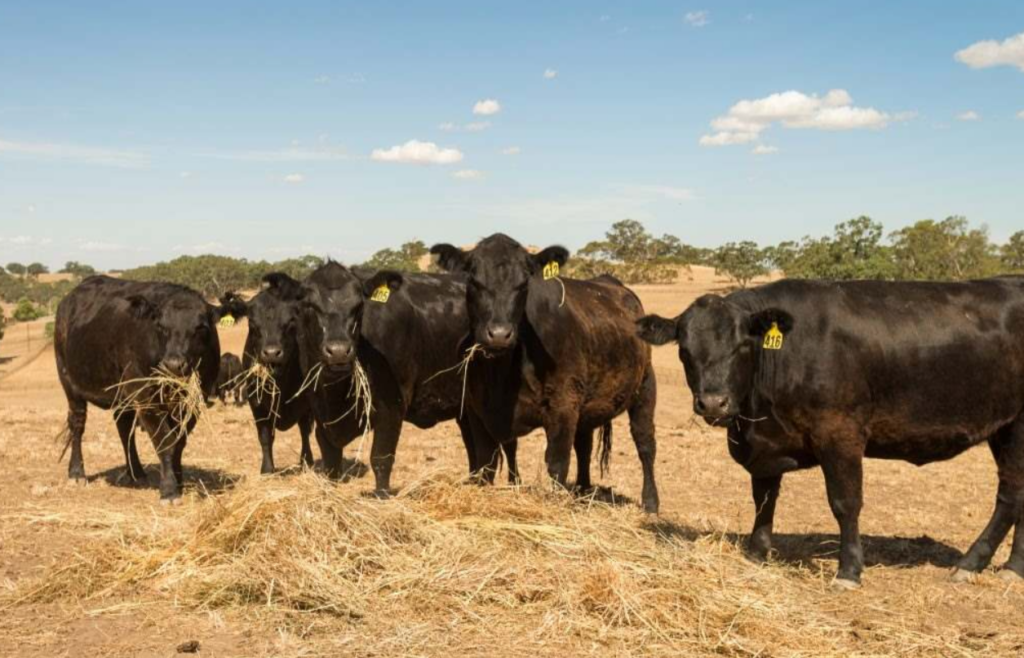
As we move through July and August, forage quality across Oklahoma's tallgrass and midgrass prairie rangelands and bermudagrass pastures decline. Assuming adequate forage availability, forage quality becomes the primary factor limiting cattle performance.
Grazing studies have documented substantial declines in both crude protein concentration and digestibility as summer progresses. Native range crude protein commonly falls from approximately 15% in the spring to 7% by late summer and continues declining into fall. Consider that a 650 lb. steer gaining 2 lbs. per day requires a diet with about 11% protein.
When forage quality declines, cattle performance becomes limited by protein, energy, or both. In many late-summer grazing situations, protein is the first limiting nutrient. Rumen microbes require adequate protein to efficiently digest forage fiber. When protein becomes deficient, forage digestion slows, forage intake declines, and animal performance suffers. Therefore, in Oklahoma grazing systems when dietary protein drops below 11%, protein intake is the primary factor limiting the animals' rate of gain.
Fertilized bermudagrass follows a similar pattern, although the protein concentration is higher initially, and remains higher throughout the grazing season. The point in time that protein becomes the limiting dietary factor is certainly influenced by stocking rate and grazing management. While both forage species can be expected to fall below growing cattle's protein requirement, that point in time may occur as much as 60 days later in bermudagrass grazing systems.
Numerous Oklahoma studies have demonstrated that relatively small amounts of protein supplement can substantially improve performance of growing cattle grazing native pasture during late summer. Across several trials, stocker cattle receiving approximately one pound per day of a high-protein (30 to 38%) supplement gained an average of 0.37 lb more per day than unsupplemented cattle. These responses occurred because forage protein concentration was the first limiting nutrient and filling the gap between protein supply and the animal's requirement increased forage intake and digestibility.
Research has consistently shown additional improvements in rate of gain by including an ionophore; a feed additive such as Rumensin® (monensin) or Bovatec® (lasalocid). Ionophores alter rumen fermentation in ways that improve feed efficiency and increase the amount of useful energy cattle obtain from forage. Research conducted in Oklahoma and summarized in recent meta-analyses indicates ionophores typically increase gains by an additional 0.13 to 0.28 lb per day. Combined with protein supplementation, total improvements in average daily gain commonly range from 0.5 to 0.6 lb per day.
These responses are especially attractive because supplement efficiency is generally favorable. In many Oklahoma grazing trials, less than two pounds of supplement were required to generate one pound of additional gain. Few management practices consistently provide that level of return on investment.
The benefits of ionophores extend beyond weight gain. A recent meta-analysis conducted at Oklahoma State University evaluated results from 18 studies involving replacement heifers and 21 studies involving mature beef cows. Across studies, ionophore supplementation improved average daily gain while reducing feed intake, indicating improved efficiency of forage utilization.
For replacement heifers, the ionophore Rumensin increased the proportion of females cycling before the breeding season by nearly 16 percentage units and reduced age at puberty by approximately nine days. In mature cows, monensin reduced the interval to first estrus by approximately 18 days and increased the percentage of cows exhibiting estrus before the breeding season by 19 percentage units.
Interestingly, these improvements in reproductive readiness occurred despite little evidence for increased pregnancy rates. Nevertheless, earlier puberty and a greater proportion of females cycling at the start of the breeding season are generally considered favorable outcomes because they increase opportunities for conception early in the breeding season.
Taken together, available research suggests that a modest amount of protein supplement combined with an ionophore can improve forage utilization, increase average daily gain by approximately one-half pound per day, and enhance reproductive preparedness in both developing heifers and mature cows. Few nutritional technologies have demonstrated such consistent benefits across a wide range of forage-based production systems.
July 27, 2026
Join us for a day of hands-on learning and collaboration focused on a better understanding of Oklahoma's summer crops.
Engage with fellow growers and industry experts through equipment demonstrations, crop scouting, and insightful discussions.
What: Summer Crop Demo Day presented by Oklahoma State University Extension
When: Monday, July 27, 2026
Where: South Central Research Station, Chickasha, Oklahoma
To get signed up for this free event, click here:

When Jace Thompson first began his auctioneering career, he quietly set a lofty goal. He didn't publicize it, but he wanted to prove to himself that he could stick to something, refine his craft and ultimately become the best in the world.
By June 20, that silent ambition became a historic reality as the 23-year-old from Billings, Mont., was named the 2026 World Livestock Auctioneer Champion. With his victory, Jace and his father, Ty Thompson — the 2009 champion — became the first father-son duo to ever win the prestigious title.
A third-generation cattleman and auctioneer, Jace grew up completely immersed in the industry. His grandfather built a livestock marketing business from scratch in Wyoming, and his father later moved to Montana to do the same, also adding a couple of feedyards to the mix. Though Jace explored other interests after high school, including real estate, the pull of the family business was inevitable. Five years ago, he decided to take auctioneering seriously, selling six days a week across three states, adding 9,200 miles to the odometer each month as he honed his skills.
Now, as the reigning World Livestock Auctioneer Champion, Jace is prepared to put that dedication to work on an international scale. He will spend the next year driving the custom-wrapped World Livestock Auctioneer Championship pickup truck across the U.S. and Canada, serving as an advocate for the Livestock Marketing Association and the industry as a whole.
"I want to do my No. 1 job, which is be a spokesperson and be an ambassador for the auction method of selling livestock," Thompson said, noting his excitement to also share LMA's resources and regulatory updates with market owners.
For aspiring auctioneers looking to achieve the same success, Thompson stresses the value of grit and someone to look up to.
"Find a proven mentor," he said. "One who is successful and is willing to help, because it's very hard to get good at this without a mentor."
Thompson also noted the importance of treating every opportunity with equal respect, whether it is a major market or a local volunteer fire department pie auction.
"As long as you're humble enough and willing enough to learn, you can grow more than you could ever imagine from every sale," he added.
In addition to the one-year use of the world champion truck, Thompson took home $10,000 in cash, a Gist belt buckle, a hand-tooled leather briefcase, a bronze sculpture, a world champion ring, a custom-engraved Henry Original rifle, a golden gavel and a sterling silver money clip.
Joining him in the winner's circle was Reserve Champion Troy Robinett, Decatur, Texas, and Runner Up Barrett Simon, Rosalia, Kan., who was also recognized for achieving the highest score in the interview portion of the contest. Austin Schaben, Dunlap, Iowa, was named the Audrey K. Banks Rookie of the Year. Rounding out the top 10, in contest order, were: Ryan Konynenbelt, Fort MacLeod, Alberta; Josh Jasper, Nicholasville, Ky.; Jerran Miller, Chouteau, Okla.; Leon Caselman, Long Lane, Mo.; Andrew Sylvester, Westmoreland, Kan.; and Garrett Nunn, Laramie, Wyo.
Entry for the 2027 World Livestock Auctioneer Championship qualifying events is now open with events building up to the 2027 Championship to be held next June in South Lake Tahoe, Nev., and Galt, Calif.
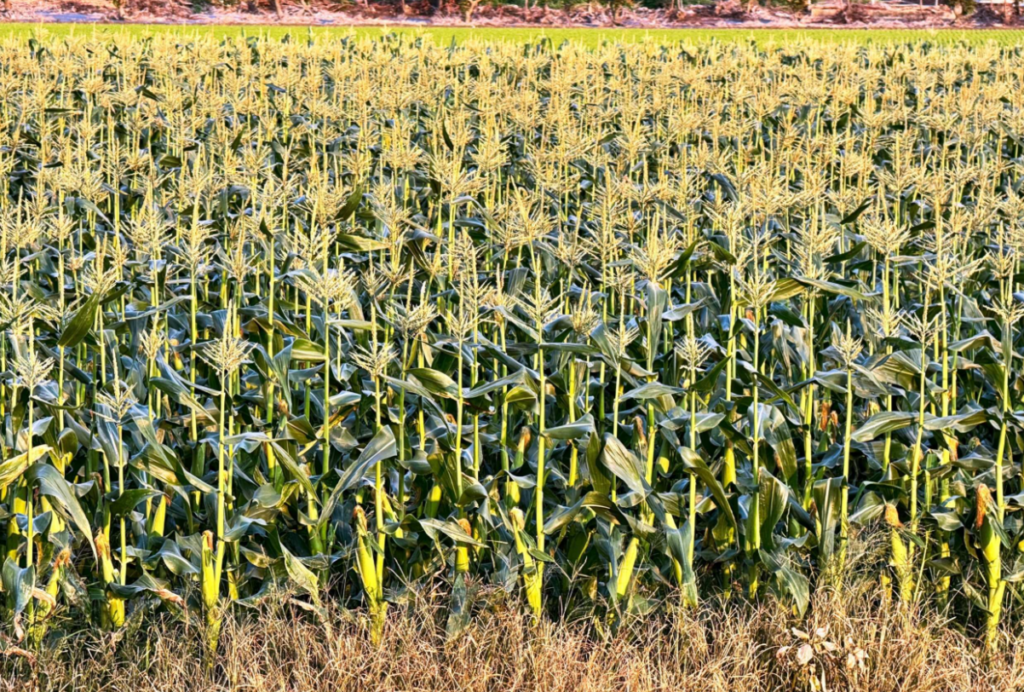
The Trump Administration sent a supplemental budget request to Congress today. The request included an appeal to codify the permanent, year-round sale of E15 and to appropriate $10 billion in economic assistance for farmers. In response to this development, Ohio farmer and National Corn Growers Association President Jed Bower released the following statement: "President Trump and his administration have repeatedly and continuously demonstrated their support for Congressional approval of year-round E15. We appreciate the commitment from the administration, as well as the members of the U.S. House of Representatives who advocated for this legislation and ultimately secured its bipartisan passage. "We urge the Senate to take up this matter as quickly as possible to settle this issue once and for all, for the benefit of America's farmers and fuel consumers alike." "We also appreciate the administration's recognition that, while we pursue new market expansion opportunities like E15, farmers are facing economic hardship now, and we welcome the economic assistance included in the request."
Growth Energy, the nation's largest biofuel trade association, commended the Trump Administration today for calling for year-round E15 in its supplemental funding request to Congress. Growth Energy CEO Emily Skor issued the following statement: "We appreciate the Trump Administration demonstrating its commitment to lowering costs and strengthening rural economies by securing a year-round fix for E15. Today's supplemental request shows how critical it is to provide certainty around this bipartisan, common-sense solution. Drivers are looking to their elected leaders for relief from higher prices, and farmers are looking for new markets to ensure they can stay in business. Congress should not miss this opportunity to deliver a permanent fix for E15, giving consumers greater access to a lower-cost fuel option and more savings at the pump."
American Farm Bureau President Zippy Duvall today applauded the White House request to Congress for more than $11 billion in additional assistance for America's farmers and ranchers, as well as the administration's call for year-round access to E15 fuel. "Farmers are grateful to have the president's backing at such a critical time after enduring years of economic losses due to inflation and depressed markets. Additional aid will give farmers optimism headed into harvest later this year as they await the benefits of enhanced farm bill programs, better market access overseas and stronger domestic demand. "Not only do we urge Congress to heed the White House call to deliver economic aid, but we also know both sides of the aisle in Congress recognize more is needed as farmers' losses nationwide far exceed $11 billion. Over the last decade we have lost nearly 200,000 farms, so we need to stabilize the farm economy and reverse that trend. Additional aid will certainly help. "The White House also urged Congress to authorize year-round sales of E15 fuel nationwide, which we've long called for. Expanding access to E15 would strengthen domestic energy production, increase demand for American-grown crops and save consumers at the gas pump. That's a win all the way around. "We look forward to working with Congress and the administration to quickly deliver supplemental aid and year-round E15, in addition to addressing other urgent priorities Farm Bureau has identified, from the farm bill to labor reform and protecting interstate commerce. We're grateful for the broad recognition among elected leaders of the important role farmers play in our nation's economy, energy security and food security. Ensuring the long-term strength of American agriculture is a goal we can all rally behind."
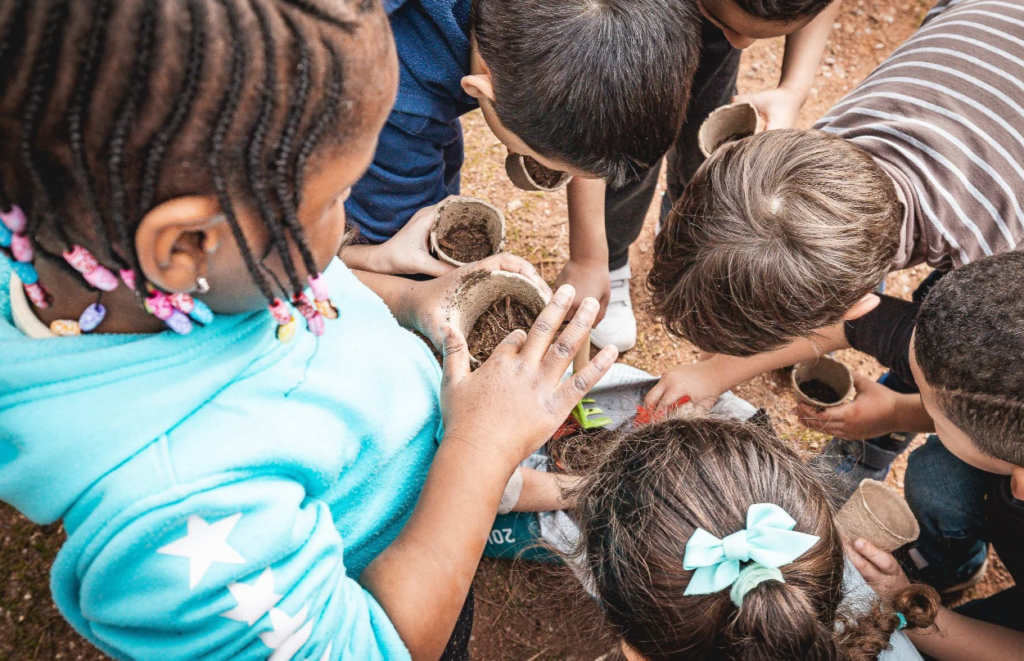
Letters of Intent will be accepted until noon (Central Time), July 13, 2026, for grants up to $45,000 to support small-scale projects and pilot studies addressing emerging issues in agricultural safety and health.
The National Children's Center for Rural and Agricultural Health and Safety will prioritize rapid responses to new or unresolved/complex problems, especially those that reduce and prevent youth exposures and hazards on the farm, increase safety culture, or widely disseminate best practices and other information for use by families and employers. Applicants my request up to $45,000 for research studies and up to $17,000 for non-research or outreach projects.
Applicants must submit a one-page Letter of Intent that includes project goals, objectives and key personnel. Send letters of intent to nccrahs@sanfordhealth.org. If the project concept is judged to have merit, the applicant will be invited to submit a full proposal.
For more information, visit https://marshfieldresearch.org/nccrahs/rfa.
For questions (priority topics, fundable ideas, potential collaborators), contact Bryan Weichelt, Ph.D., bryan.weichelt@sanfordhealth.org, or Roger Aby, Ph.D., roger.aby@sanfordhealth.org. Or phone 1-800-662-6900.
American Farm Bureau Federation President Zippy Duvall today commended the White House nomination of Michigan Farm Bureau leader and farmer Carl Bednarski to serve on the Farm Credit Administration Board.
"We congratulate Carl on his nomination to the Farm Credit Administration Board. He is well-qualified to serve in this position, having capably led the team at Michigan Farm Bureau for a decade and having also served on the AFBF board of directors for nearly nine years, including roles on our Executive, Audit and Finance Committees.
"Carl's strong leadership abilities and knowledge of the financial world will serve Farm Credit well. Equally important, as a lifelong farmer, Carl will bring a passion for ensuring farmers continue to be well-served by the Farm Credit Administration.
"Ensuring a strong Farm Credit System is more important than ever as farmers and ranchers continue to face a multiyear downturn in the farm economy. We look forward to Carl's approval by the Senate."
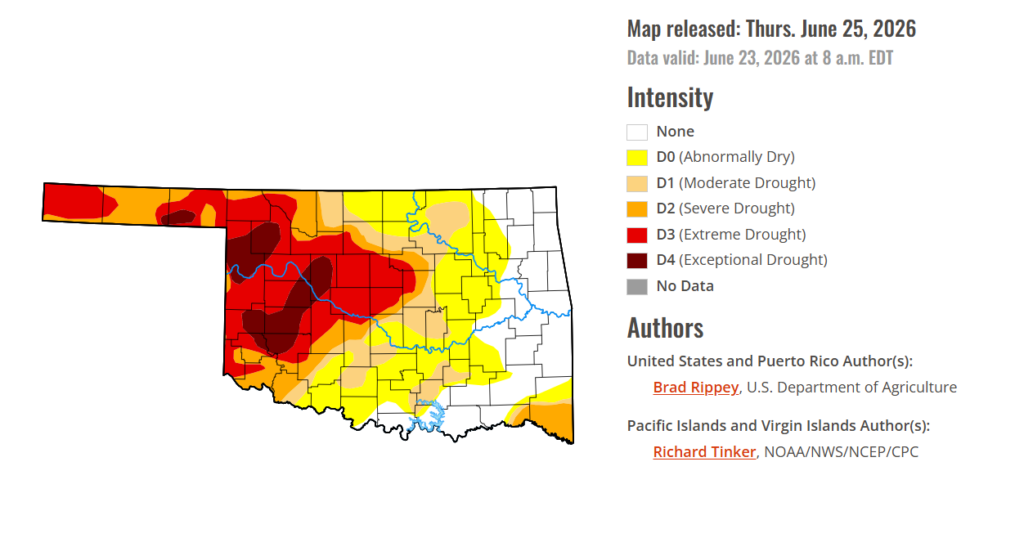
To view the latest Oklahoma drought map, CLICK HERE.
As Oklahoma moves deeper into summer, drought continues to shape conditions for producers across the state. Although eastern Oklahoma has seen improving moisture, severe dryness in the west is still driving higher input costs, stressing pastures, and adding pressure to already difficult production decisions.
According to the latest Drought Monitor, exceptional drought persists in parts of western Oklahoma, including Kiowa County, Ellis County, Beaver County, Woodward County, and surrounding areas. Historic impacts of exceptional drought include rising hay and water costs, limited supplies, and herd liquidation by producers. Ranchers and farmers are facing severe economic losses as failed crops are baled or abandoned, pastures turn bare, and cracked, dry land leaves some fields unusable. An exceptional drought currently covers 7.13% of the state, equal to last week.
Moderate to extreme drought conditions in the current period indicate that 53.43% of the state is affected, down 8.85% from last week. At this point, 22.17% of the state remains drought-free, up 3.83% from last week.
According to the 6-to-10-day precipitation outlook map, Oklahoma is expecting near-normal conditions through July 4th.
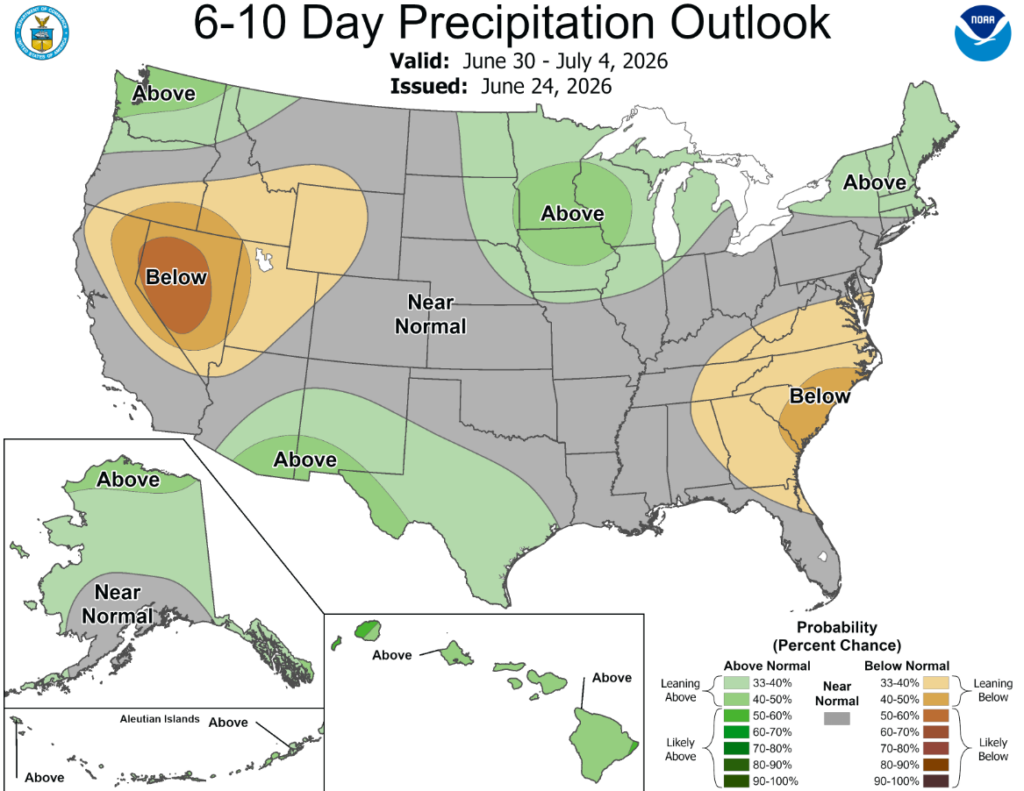
Tropical Storm Arthur briefly formed near the middle Texas coast on June 17, hours before wobbling inland near Galveston. However, a precursor low-pressure system delivered heavy rain in parts of southern Texas, followed by a post-tropical deluge from the central Gulf Coast region into the lower Southeast. Totals of 4 to 8 inches or more were common across the Deep South, with higher amounts observed in several spots. Although flash flooding and lowland flooding occurred, overall impacts were muted by antecedent drought, which until recently had spanned the South. Farther north, a series of cold fronts sparked occasional showers and thunderstorms, resulting in localized wind and hail damage but maintaining favorable soil moisture reserves for most Midwestern summer crops. The Plains also received scattered showers, amid variable impacts related to lingering drought on rangeland, pastures, and summer crops. Meanwhile, the Plains' winter wheat harvest quickly advanced between showers, as the drought-affected crop dried down ahead of the normal pace. In the western U.S., hot, mostly dry weather prevailed. Complications related to Western heat included heavy irrigation demands and a broadly elevated wildfire threat. One of the region's most significant wildfires, the Iron Fire near Eureka, Utah, ignited on June 19 and quickly burned more than 37,000 acres of grass and chaparral.
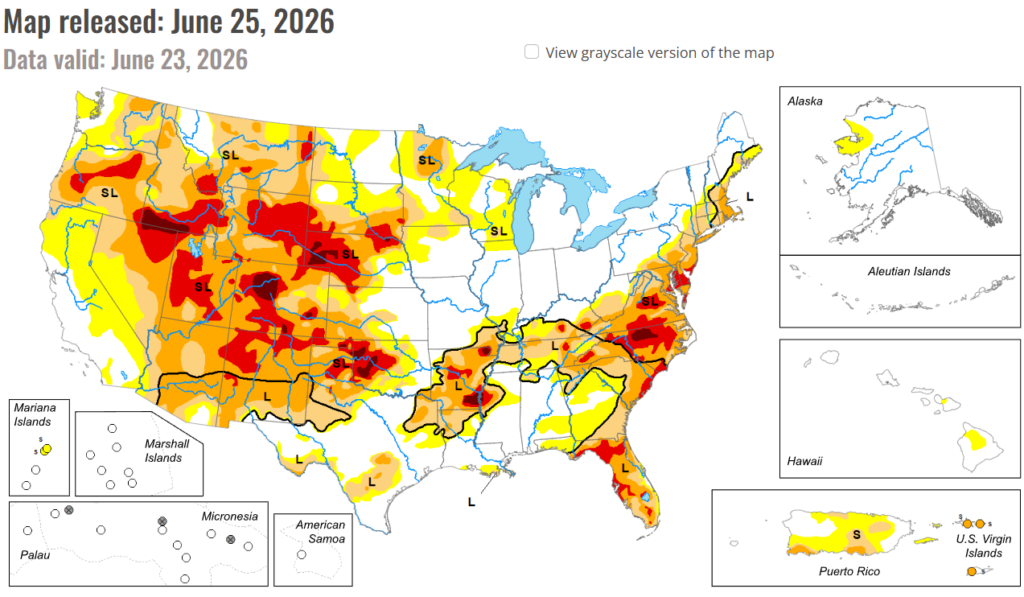
In the South: Downpours related to frontal interactions with tropical moisture, including Tropical Storm Arthur, delivered drought relief but caused local flooding. In fact, the western and central Gulf Coast regions became mostly drought-free, following the latest deluge, with broad one-category improvement noted from eastern Texas into central and southern Alabama, as well as northern Arkansas and western Tennessee. By June 21, with periods of heavy rain still falling, statewide topsoil moisture in agricultural regions had increased to 35% surplus in Louisiana, according to the U.S. Department of Agriculture. The region's most significant remaining drought existed across parts of Arkansas and environs, along with the northwestern half of Oklahoma.
In the High Plains: The region's eastern states reported drought improvement or unchanged conditions, with a few exceptions. Streaks of heavy rain led to one-category improvement in a swath across central Nebraska and western and central Kansas. However, the rain arrived too late to help winter wheat and has only recently begun to revive drought-stricken rangeland and pastures. With the winter wheat harvest well underway (40% complete, nationally, on June 21), 46% of the crop was rated in very poor to poor condition. More than one-half of the crop was rated very poor to poor in Nebraska (83%), Colorado (63%), and Kansas (55%). On June 21, statewide rangeland and pastures were rated at least one-half very poor to poor in Nebraska (73%), Colorado (63%), and Wyoming (60%). In contrast to areas farther east, drought deterioration was observed in parts of Colorado and Wyoming.
In the West: Hot, dry weather boosted irrigation demands and resulted in a broadly elevated wildfire threat. Drought deterioration was commonly observed across roughly the northern half of the region, amid significantly above-normal temperatures and mounting water-supply concerns. However, water supplies are highly basin-dependent and often complicated by water rights and other local, state, or regional regulations. Some of the West's most significant drought—with embedded pockets of extreme to exceptional drought (D3 to D4)—stretched from Oregon to Wyoming, southward into portions of the Four Corners States. By June 24, at least a half-dozen active Western wildfires had burned more than 10,000 acres of vegetation—three in Utah, two in Nevada, and one in Washington. Additionally, the U.S. Department of Agriculture reported on June 21 that statewide rangeland and pastures were rated 75% very poor to poor in Arizona, along with 63% in Colorado, and 60% in Wyoming.
To view the 6-10 Day Precipitation Outlook Map, click here.
To view the 6-10 Day Temperature Outlook Map, click here.
To view the Monthly Drought Outlook Map, click here.
Oklahoma Farm Bureau recently named Brooke Gibson as the organization's northeast field representative.

In her position, Gibson will work alongside local Farm Bureau members and county Farm Bureaus in 13 northeastern Oklahoma counties to promote Farm Bureau programs and activities. She will also serve as a liaison between county Farm Bureaus and the state Farm Bureau organization to ensure grassroots Farm Bureau voices are represented at every level of the organization.
Gibson is a third-generation rancher who was raised on a cattle ranch raising Hereford cattle near Morris.
She earned her bachelor's degree in agricultural education at Oklahoma State University. Prior to joining the OKFB staff, she worked three years as a high school agricultural education instructor.
"As a fellow agriculturist with roots that run deep in both the cattle industry and FFA, I am excited to work alongside the members of northeastern Oklahoma and the Oklahoma Farm Bureau team," Gibson said. "The agricultural industry has shaped who I am today, and I am truly grateful for the opportunity to give back to the people, communities, and way of life that have had such a lasting impact on me."

Join Congresswoman Bice for a Telephone Town Hall tonight 7pm CT. We'll give a brief update on what's happening in Congress, and then we will take your questions. Dial (833) 305-1731 to join the call.
RON's Dave Lanning has a pre-opening look at today's agricultural Markets.
Click the audio tab below for today's report.
Remarks as prepared for delivery:
Mr. Speaker, I rise today in support of S.629, the Emergency Conservation Program Improvement Act, introduced by Senator Fischer of Nebraska.
The Emergency Conservation Program and the Emergency Forest Restoration Program are two critical cost-share programs available to landowners following a natural disaster. Given the natural disasters we've witnessed, including wildfires, hurricanes, and flooding, these programs have remained critically important.
Wildfires continue to present significant challenges, especially in the West, due to their increasing intensity and the extensive number of acres burned each year. Forest managers and wildfire experts have been predicting that 2026 will be a particularly challenging fire year. So far this year, we have already witnessed approximately 2.7 million acres burned in over 34,000 fires, and it is only June.
Recently, devastating wildfires have occurred on the plains of Nebraska, Oklahoma, Kansas and Texas, instead of just being confined to the forests and mountains of the West. This year, we saw approximately 300,000 acres burn after multiple wildfires ignited in Oklahoma and Kansas this past February.
In addition, due to Hurricanes Helene and Milton, we have observed significant needs for emergency assistance resulting from the devastation in southeastern states, including the Carolinas, Georgia, and Florida. Natural disasters have inflicted great damage on private property across the country at no fault of the landowners.
Under ECP, landowners can receive both technical and financial assistance for repairs and restoration of land adversely affected by natural disasters, including floods, hurricanes, wildfires, and droughts. Additionally, EFRP provides financial assistance to non-industrial private forestland owners to support recovery efforts following similar natural disasters.
While these programs are critical, participants have reported ongoing issues with payment delays and insufficient upfront assistance to cover the costs of urgent conservation needs. To address this issue, S.629 allows for advanced payments of up to 75% of the total project cost for both programs, clarifies eligibility for cost-share payments, and allows for a longer period for the use of ECP payments.
I support this legislation and encourage my colleagues to vote favorably.
With the highly anticipated USDA acreage report on the horizon, Farmers Business Network (FBN) is sharing a preview from its sixth annual US Acreage Report. The data highlights how severe weather is altering planting decisions across the country. In a recent discussion with Farm Director KC Sheperd, Josh McClure of FBN broke down the numbers, revealing that while the majority of producers stuck to their initial plans, significant regional shifts are underway due to ongoing environmental challenges.
According to McClure, stability was the primary theme for most producers, with 81 percent of corn respondents and 85 percent of soy respondents reporting no changes to their crops. However, the areas that did shift paint a telling picture.
"The surprising thing that we saw was, first and foremost, most folks didn't actually change," McClure said. "However, the spots that we did see the changes... were primarily that corn acres should come down while soybeans go up. It's not one-for-one, though."
The March planting intentions report from the USDA suggested US producers would plant 95.3 million acres of corn. According to FBN's survey, that number is overshooting reality. FBN producers indicate they will plant roughly 1.2 million fewer corn acres than the USDA suggested, dragging the national number down to 94.1 million acres. This shift effectively cuts roughly 180 to 200 million bushels of production out of the United States supply.
McClure noted that the most dramatic reductions in corn are concentrated in the High Plains—specifically, Nebraska, the Dakotas, and around Joplin, Missouri.
"We saw big changes with acres going down for corn, and we think that that was really mostly tied to the drought that you all have been suffering through here now, seemingly all spring," McClure explained. "Hardest hit from our perspective at this point was Nebraska... The Dakotas and Nebraska and Kansas all saw reductions in both corn and soybeans."
When asked by Sheperd if these losses represent a permanent reduction of marginal acres or just a temporary pause, McClure remained cautious.
"I wouldn't say permanent, but for the year, it does feel like it could be lost for the year at this point," McClure said. "I know after talking to some of these High Plains folks, they were suggesting that they might plant some wheat, see how that did over the winter. But particularly out there in those High Plains, just a lot of long faces."
While corn acres slipped, soybeans saw a modest bump, though not enough to offset the losses in corn. FBN's survey suggests soy acres will rise by 324,000 acres, just clearing 85 million acres nationally compared to March's 84.7 million.
Sheperd asked if the pivot to soybeans was a defensive move to cut management costs, or if producers are simply risking low bean yields just to have a crop in the ground.
"I think it's probably a little bit of both," McClure responded. "Earlier this year, with crop insurance prices coming in where they did, we saw the economics move distinctly toward soybeans. The projected price for soybeans was on average 55 cents higher than it was last year, while corn slipped 8 cents year-over-year. That really did shift things soybean's direction, and with higher input costs and then drought on top of that, we just think a number of folks threw in the towel on corn."
A similar defensive strategy is appearing on failed wheat acres. Following a punishing wheat harvest with heavy abandonment across Kansas, Oklahoma, and Texas, producers are looking for hardy alternatives. McClure confirmed that sorghum is gaining traction as a resilient option.
"We definitely have heard people suggesting sorghum," McClure told Sheperd. "Sorghum just gives them that extra insurance against what's really kind of proven to be a tough year this year Mainly just because drought tolerance, right? It's just incredible out there."
For livestock producers in states like Oklahoma, which rely heavily on national corn and wheat supplies for feed, the tightening numbers are worth watching. McClure pointed out that crop year 25 exports are still running hot and outperforming USDA expectations, which will naturally erode existing carryout stocks.
Combined with a reduction in projected 2026 corn acres, the market could shift from "well-supplied" to a more vulnerable position if any further yield losses occur.
Meanwhile, the Eastern Corn Belt is dealing with the exact opposite weather issue. From eastern Iowa through northern Indiana, producers just experienced the number one wettest June on record.
"This is quietly concerning," McClure warned. "We're hearing from farmers that their stands are yellowing, and they're seeing fertilizer depletion early. So it's possible that there's a story of quiet averageness amid what looked like a real Goldilocks planting and hydrological opportunity that the East had."
For producers looking at these numbers and trying to decide whether to price now or wait for a weather rally, McClure suggests corn is currently sitting near fair market value based on current USDA metrics. However, as carryout expectations likely adjust downward, more risk premium could be injected into the market.
To learn more about the acreage report or explore marketing and input options, producers can visit FBN.com.
Today, U.S. Environmental Protection Agency (EPA) announced more than $4.4 million in Brownfields Multipurpose, Assessment and Cleanup (MAC) grants to accelerate the cleanup of polluted sites across Oklahoma. With these funds, EPA is investing directly in American communities to cleanup and redevelop blighted properties, delivering on the Trump Administration's commitment to ensure that clean air, land, and water goes hand-in-hand with economic growth and opportunity.
"EPA is focused on delivering practical results that transform contaminated properties into clean, valuable spaces that spark economic growth and that directly benefit American families," said Acting Assistant Administrator for Land and Emergency Management Thomas Croci. "Addressing environmental contamination and reusing brownfield properties revitalizes neighborhoods, drives local job creation, and unleashes new economic opportunities. EPA is proud to partner with local communities to ensure they have the cleanest air, land, and water as we power the Great American Comeback."
"This funding provides local communities in Oklahoma the tools to assess and clean up contaminated sites to bring them back into economic use," said Regional Administrator Scott Mason. "EPA's Brownfields program is the perfect example of accomplishing two goals at once—protecting the environment and powering our nation's economy."
Clean air, land, and water for all Americans is the first pillar of President Trump and Administrator Zeldin's Powering the Great American Comeback initiative. These grants put that commitment into action while simultaneously powering economic growth in communities across the country. Selected applications for the 2026 Brownfield Multipurpose, Assessment, and Cleanup Grants and RLF supplemental funding in Oklahoma include:
Grant recipients with viable cleanup projects ready for work will help communities continue their work to carry out cleanup and redevelopment projects on contaminated brownfield properties.
View the list of selected applicants in Oklahoma here.

Today, the U.S. Department of Agriculture (USDA) released the annual Supplemental Nutrition Assistance Program (SNAP) payment error rates (PER), which measure how accurately states determine who is eligible for SNAP and how much they should receive.
The national payment error rate for fiscal year (FY) 2025 is 10.62%, far surpassing the congressional threshold of 6%.
FY 2025 National and State Payment Error Rates
While this is a modest decrease from FY 2024, the FY 2025 rate still shows significant waste at the state level. Including both overpayments and underpayments, this year's rate represents a collective $10.1 billion in improper payments nationwide.
"These payment error rates are further proof that state accountability is severely lacking in SNAP," said Agriculture Secretary Brooke L. Rollins. "USDA has taken historic action to help interested states curb SNAP waste, and I hope other states, regardless of political leadership, prioritize needy families and the American taxpayer over politics."
H.R. 1 added new guardrails for states' payment error rates, implementing real financial consequences for states that mismanage taxpayer dollars. States with error rates at or above the 6% threshold will be responsible for covering 5%, 10%, or 15% of their states' benefits. The higher their PER, the higher the percentage—and in most cases, as soon as October 1, 2027. The FY 2025 PER is the first year that could be used to calculate those percentages.
In addition to this matching fund requirement, states with PER at or above 6% threshold are required to submit a Corrective Action Plan to USDA's Food and Nutrition Administration detailing how they will address the root cause of their errors. Some of these states may also be liable for a separate financial penalty as part of the SNAP quality control process.
Visit the quality control webpage for more information.
The National Federation of Independent Business (NFIB), the nation's leading small business advocacy organization, released new paid radio and digital advertisements across Oklahoma today, urging Rep. Frank Lucas to permanently repeal the law that established the unconstitutional Beneficial Ownership Information (BOI) mandate, and for the Financial Crimes Enforcement Network (FinCEN) to immediately destroy all BOI data already submitted by U.S. small businesses.
Listen to the radio ad here, view the digital ad below, and visit ProtectSmallBusiness.org for more information.
"In 2025, President Trump exempted more than 32 million American small businesses from the burdensome and unconstitutional BOI reporting requirements," NFIB State Director Jerrod Shouse said. "This exemption saved American small businesses from over $128 billion in regulatory burdens and compliance costs, but the fight isn't over. Now it's time for Congress to ensure this invasive reporting mandate does not return; they must take immediate action to fully repeal the unconstitutional BOI law and require FinCEN to destroy the data of the millions of small business owners who have already complied with this dangerous mandate."
NFIB continues to fight against Beneficial Ownership Information reporting regulations in Congress, executive branch agencies, and the federal courts, working to permanently block and repeal it. If not fully repealed, 32 million small businesses nationwide would once again be subjected to this unnecessary, invasive, and unconstitutional mandate. Those who fail to comply would be subject to criminal and civil penalties of up to two years in federal prison and up to $10,000.
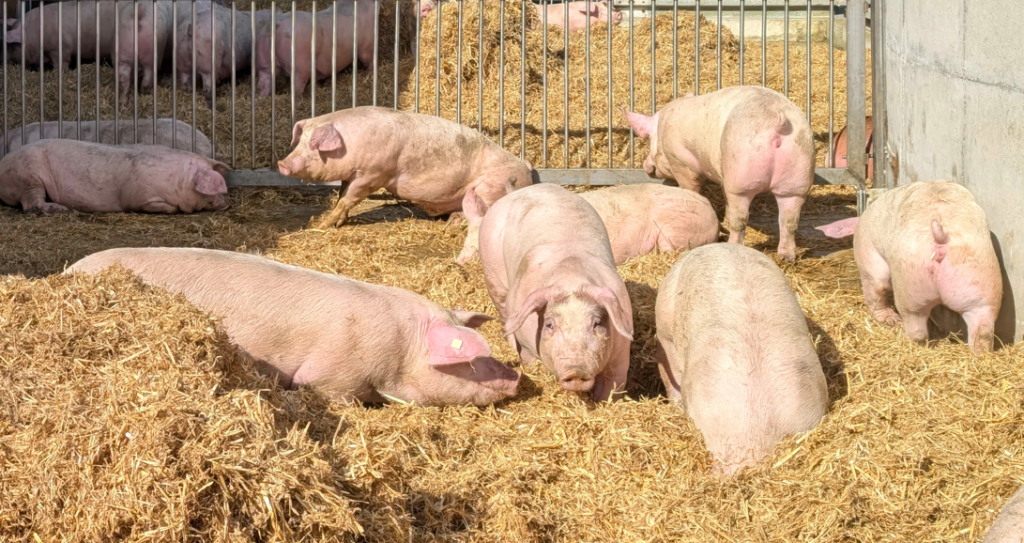
The release of the Senate Agriculture Committee's discussion draft of the 2026 Farm Bill has renewed debate over California's Proposition 12, a law that sets animal housing standards for pork, veal, and egg products sold in the state, regardless of where those animals are raised. For pork producers across the country, Prop 12 remains a major concern because of the production changes and added costs required to meet California's standards. With the Senate draft omitting language that would address Proposition 12, both agricultural groups and animal welfare advocates are once again making their case as the broader farm bill discussion moves forward in Washington. If and when the Senate does pass a farm bill- the conference between the House and Senate will consider the Prop 12 issue as a fix is a part of the House passed measure.
The National Pork Producers Council, which represents more than 60,000 U.S. pork producers, has been pushing Senate Agriculture Committee leaders to include language in the final 2026 Farm Bill that would address Proposition 12.
From the perspective of many pork producers, the biggest issue is not simply California's law itself, but the precedent it sets. Because California is such a large consumer market, producers in other states may feel pressure to adjust housing systems to meet standards set by voters hundreds or even thousands of miles away.
NPPC President Rob Brenneman said producers are disappointed the Senate draft did not include a Prop 12 fix, but remain committed to pushing for one.
"We appreciate the Chairman putting forward a discussion draft to guide a path forward," Brenneman said. "America's pork producers will continue to advocate for a Prop. 12 fix in the formal farm bill like our livelihood depends on it—because it does."
Producer groups argue Proposition 12 creates what they call a "patchwork" of state-by-state regulations, meaning farmers could eventually face different production standards depending on where pork is sold. They say that kind of uncertainty makes long-term planning difficult, especially in an industry where housing investments often involve major capital costs and facilities built to operate for decades.
NPPC also argues smaller and mid-sized producers could be hit hardest, as many may not have the financial flexibility to remodel barns or change production systems quickly. The organization says that without federal relief, producers could face higher costs, reduced marketing options, and more complexity in an already tight-margin business.
"Prop. 12 is creating an unpredictable, unavoidable wave of conflicting state laws and uncertainty — and farmers are the ones left to drown in its wake," Brenneman said. Click here for the release from NPPC that lists the hundreds of groups that have signed onto the call for a Prop 12 fix.
While livestock groups are pushing for federal relief, animal activist organizations are praising the Senate Agriculture Committee's decision to leave Proposition 12 language out of the current Farm Bill discussion draft.
Animal Wellness Action President Wayne Pacelle said the omission signals declining support in the Senate for legislation that would override California's voter-approved standards.
"These laws were approved by millions of voters," Pacelle said, arguing that federal lawmakers should not overturn state-level animal welfare measures through the Farm Bill process.
Supporters of Proposition 12 say the law reflects consumer demand for specific animal care standards and believe states should retain the ability to set rules for products sold within their borders.
Still, for many agricultural producers, the concern remains less about the debate over animal welfare and more about market access and regulatory consistency. Producer groups continue to argue that allowing individual states to effectively set production standards for farms nationwide creates costly uncertainty for the livestock industry.
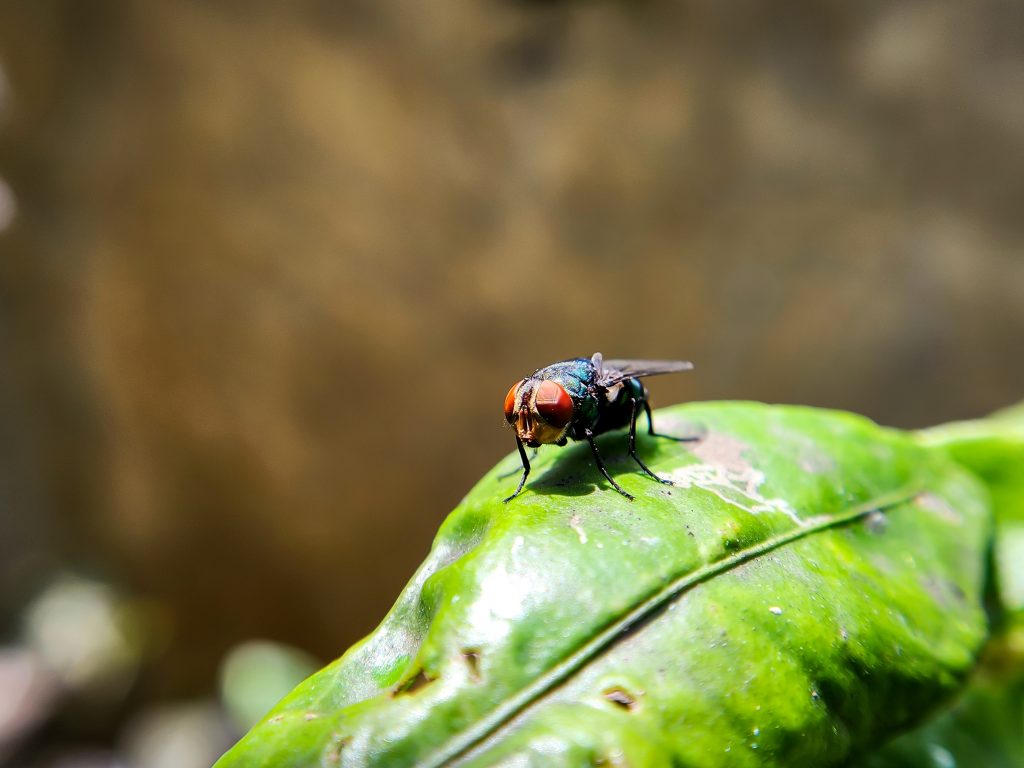
In today's Beef Buzz, senior farm and ranch broadcaster Ron Hays speaks with Michael Kelsey, Executive Vice President of the Oklahoma Cattlemen's Association, about the growing threat of New World Screwworm as confirmed cases continue moving north through Texas, raising concerns for cattle producers in Oklahoma.
With 16 total cases now confirmed and 13 still active according to USDA, the closest known case remains near San Angelo—a distance Kelsey says is becoming increasingly concerning.
"I was somewhat of the thinking that we're going to see it in the United States, so it wasn't a matter of if, it was more of when," Kelsey said. "But I just kind of thought to myself, well, Oklahoma's got a pretty good shot of getting out of 2026 without seeing a case. I think the reality is we're much closer to seeing a case in 2026 than we are not."
He said producers need to accept that possibility and begin operating accordingly. "We've got to prepare for this kind of northward movement. San Angelo is about as close as it's getting to us at this point in time. I think it's realistic to expect it to move a little further north."
Kelsey said one of the biggest unknowns is exactly how the fly is moving. "Let's just be honest with ourselves—we're not quite sure exactly how this fly is moving. Is it moving itself or is it being transported?" he said.
Officials know infected livestock are being inspected before leaving infected areas, but wildlife and fly migration remain harder to track. "We know it's not being transported on critters because they have to be inspected before they leave an infected zone," Kelsey explained. "But we don't know about wildlife, and we don't know about the fly movement itself."
Despite the uncertainty, Kelsey praised both USDA and Texas animal health officials for containing outbreaks. "As USDA and the Texas Department of Animal Health get more in control—and they're doing a good job, in our opinion—I think we've got a good plan in place."
He also credited Oklahoma agriculture leaders, including State Secretary of Ag Blayne Arthur and State Veterinarian Dr. Rod Hall, for being prepared. "We're going to have to live with this for a while until we get the sterile fly production up and going, but otherwise I think we're in a good spot."
Kelsey said if Oklahoma confirms a screwworm case, producers should expect movement restrictions—but not a total shutdown.
Texas has already provided a model for how response protocols would work. "If a case is discovered, then that infected zone around that area—approximately 20 miles, give or take—will be established, along with a surveillance area outside of that."
Within those zones, livestock movement becomes restricted and additional inspections are required. But Kelsey stressed cattle can still be sold and transported. "Folks can still move their cattle, can still market their cattle—they just have to go through some inspection."
That distinction is important because Kelsey worries some producers may hesitate to report suspected cases. "I know it may be tempting—gosh, if they'd never know I had it, then I wouldn't be quarantined."
But hiding a case would only worsen the situation. "You're not really quarantined—you're just restricted. The only way we get sterile fly release around where we have flies is if we report it. If we don't report it, then we don't get the sterile flies, and we can't mitigate."
Kelsey's main message to Oklahoma cattle producers is simple: be ready now, not later. That starts with closely monitoring cattle, especially during calving season when wounds or open navels create opportunities for infestation. "We've got to be vigilant about looking at our cattle, especially during calving or any time we know we're going to have wounds."
He also emphasized the importance of maintaining a strong veterinary relationship. "Have a good veterinary-client relationship, because some of these drugs you can't get without that relationship."
If something suspicious appears, report it immediately. "If we see something, let's report it. Department of Ag and cattlemen—we're going to lock arms with you. We're going to work with you so you can continue to market your cattle and still do business, albeit differently."
Kelsey also reminded producers to understand Certificates of Veterinary Inspection (CVI)—commonly called health papers—which are required for most interstate livestock movement. "If you move cattle across state lines, with a few exceptions, you've got to have a CVI."
That includes show cattle, breeding stock, and many other transported animals. If cattle are coming from a surveillance or infected zone, additional paperwork and regulations may apply. "It's not for lack of the ability to transport or move cattle. It might just be additional steps that need to be taken to make sure we're not inadvertently spreading larva and maggots around the countryside."
As the Oklahoma Cattlemen's Association Convention approaches in July, Kelsey said producer education will be a major focus. He believes the best mindset is preparation—not panic. "I'm not trying to be pessimistic—I'm trying to be realistic."
That realism has already changed how he manages his own operation. "I'm operating my own cattle operation as if screwworm is going to exist in Oklahoma." He encouraged every producer to do the same. "I'm checking those cattle. I've got a good veterinary-client relationship working. I'm just being prepared."
And if the pest reaches Oklahoma, knowing the process ahead of time will help producers continue business with minimal disruption. "We're in a good spot, considering we've got a very serious issue going on here. We're still in a good spot to work forward and move forward."
The Beef Buzz is a regular feature heard on radio stations around the region on the Radio Oklahoma Ag Network and is a regular audio feature found on this website as well. Click on the LISTEN BAR above for today's show and check out our archives for older Beef Buzz shows covering the gamut of the beef cattle industry today.
Growth Energy, the nation's largest biofuels trade association, filed a motion to intervene in support of the U.S. Environmental Protection Agency (EPA) today in the U.S. Court of Appeals for the District of Columbia Circuit in Center for Biological Diversity (CBD) v. EPA et al. (Case No. 26-1132).
In a set of eight consolidated cases, CBD and several other organizations, including oil refiners and the Sierra Club, are challenging EPA's most recent "Set 2" rule for the 2026-2027 renewable volume obligations (RVOs) under the Renewable Fuel Standard (RFS).
Growth Energy CEO Emily Skor issued the following statement:
"Each new RVO rule draws the same misguided set of challenges every year, and this year likely will not be any different. Let's lay out the facts.
"Under the Set 2, the RFS continues to work as Congress intended. EPA has again finalized RVOs that advance important energy security, environmental, and economic development goals. EPA has also again finalized RVOs that pose no real threat to the continued operation of small refineries.
"Despite all this evidence, we have special interests aiming to undermine the record-setting 2026-2027 RVOs to the detriment of farmers, consumers, and the environment. However, we know we stand on firmly established legal, political, and scientific grounds—the RFS saves consumers money, helps farmers, and reduces emissions. The newest RVOs are the strongest ever, and we're confident the court will not allow challenges to stand in the way of the benefits they can deliver to drivers, rural communities, and biofuel producers."
Read the motion to intervene here.
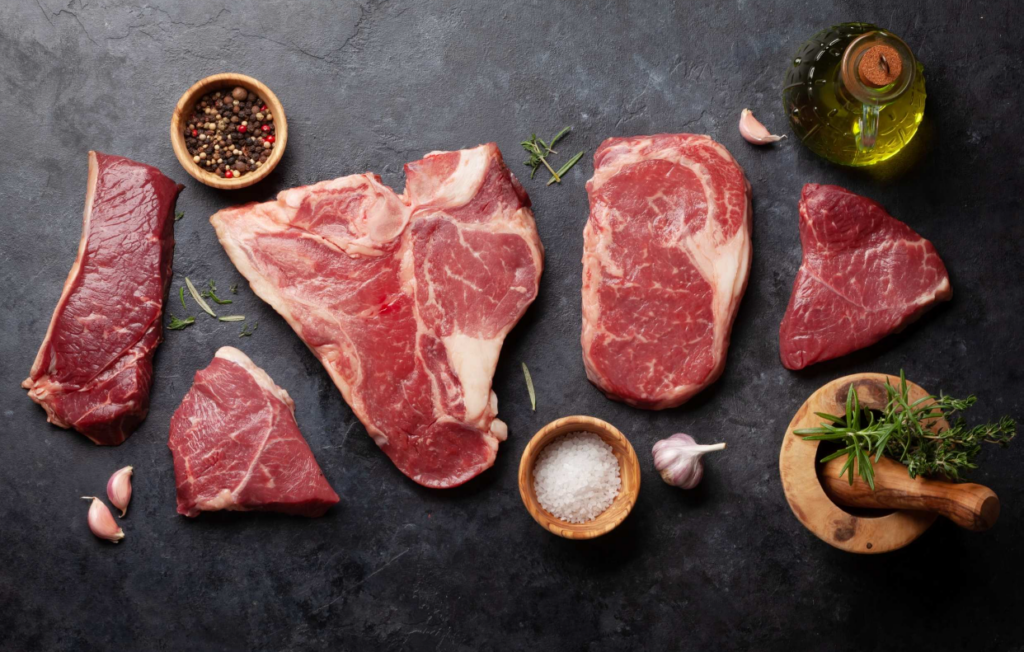
National Association of State Departments of Agriculture applauds the introduction of the bipartisan American Food Supply Chain Resiliency Act in the U.S. Senate. Introduced by Sens. Cindy Hyde-Smith, R-Miss., Adam Schiff, D-Calif., Jim Justice, R-W.Va., and Amy Klobuchar, D-Minn., the legislation would strengthen America's food supply chain by permanently authorizing USDA's Resilient Food Systems Infrastructure program and establishing a Regional Food Systems Hubs program.
NASDA worked closely with these co-sponsors to advance policies in this legislation and supports efforts to provide states, farmers, ranchers, food businesses and regional partners with the resources needed to expand middle-of-the-supply-chain capacity, improve domestic market access and increase procurement opportunities.
"Federal investments play a key role in strengthening our nation's food systems by connecting farmers, businesses and communities with the resources they need to succeed," said NASDA CEO Ted McKinney. "The American Food Supply Chain Resiliency Act addresses critical gaps and provides the long-term investments needed to strengthen our domestic supply chains, support farm viability and ensure there is a stronger link between our farms and our communities."
The American Food Supply Chain Resiliency Act would:
NASDA has long advocated for federal investments that strengthen regional food systems, expand market opportunities for producers and improve food supply chain resilience. NASDA supports both programs in its federal policy priorities and stands ready to continue collaboration with Congress and USDA to advance these investments and ensure states have the tools needed to build stronger, more resilient food systems.
Today, House Agriculture Committee Ranking Member Angie Craig (MN-02) delivered the following opening statement at a full committee hearing entitled "To Review the Implementation of Farm Safety Net, Disaster, and Conservation Programs." Watch the hearing here.
[As prepared for delivery.]
One year ago, Republicans forced the so-called One Big Beautiful Bill through Congress.
It gave handouts to Elon Musk, the world's first trillionaire, and the rest of the president's billionaire buddies, even as inflation ate up the paychecks of hardworking Americans.
It cut Medicaid by nearly $1 trillion, putting rural hospitals and health clinics at risk of closure.
Today, we aren't talking about those things. Instead, we are looking at some of the investments the bill made, particularly to our farm safety net and conservation programs.
Now, we all know that there were many farm bill programs that needed new investment, particularly the farm safety net programs.
Unfortunately, these investments, as well as much of Trump's billionaire bailouts, were paid on the backs of our nation's most vulnerable – hungry children, veterans and older Americans – by cutting $187 billion from SNAP.
Since those cuts were made, over 4 million Americans, including over 800,000 children, have had their food taken away.
So, as we talk about implementation of these investments, we need to be clear-eyed about the cost. The cost is increased hunger throughout our country.
Of course, while these investments are beneficial, farmers readily acknowledge that they will not cover the pain and the losses inflicted by this administration's policies and actions.
Tariffs, trade wars and Trump's war with Iran have cost farmers tens of billions in lost sales, driven up diesel and fertilizer costs and suppressed commodity prices.
According to the USDA, production costs are expected to be higher than previously anticipated for every major crop for the 2026 growing season.
Farmers are paying more to repair their tractors today because of this administration's tariffs on steel. Farmers are paying more for fertilizer because of this administration's war in the Middle East. Farmers are paying more to service their debt because of this administration's inflationary policies.
If the improvements made to the farm safety net were so strong, then why are farmers asking for supplemental farm assistance?
They are asking because farmers recognize reality when it hits them. Unlike the president, farmers don't love inflation. Unlike the secretary, they don't think they're living in the "golden age of agriculture."
Unfortunately, we have an administration that is out of touch with the challenging reality farmers and American families are facing.
In a more normal environment, farmers might turn to the USDA conservation programs to help them weather a difficult farm economy. H.R. 1 did at least preserve the historic Democratic investments in conservation that were originally made in the Inflation Reduction Act.
But the Trump administration undermined those changes by cutting the number of conservation staff by around 24 percent, which has meant that those dollars are harder to access than ever.
Just last year, the number of conservation contracts awarded dropped by 20-40 percent, even as more farmers applied for these dollars.
So, as we discuss today the programs intended to help farmers, let's keep this important context in mind.
I want to thank the undersecretary for joining us today and look forward to hearing his testimony.
I yield back.
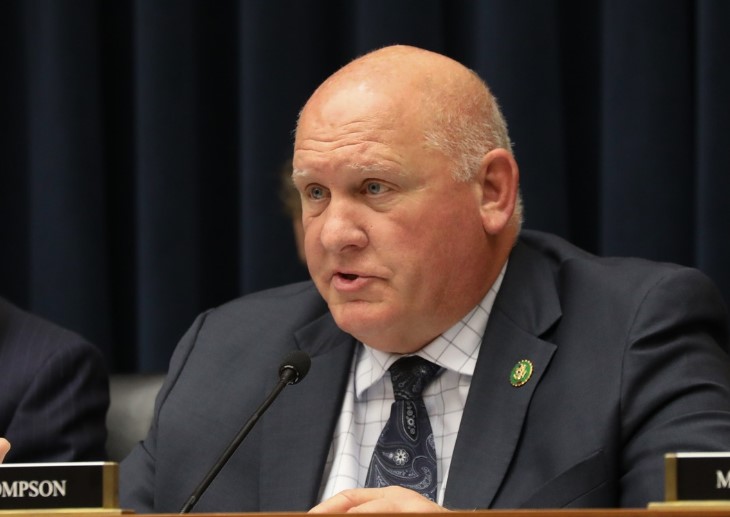
House Committee on Agriculture Chairman Glenn "GT" Thompson (PA-15) delivered the following opening statement at today's full committee hearing, "To Review the Implementation of Farm Safety Net, Disaster, and Conservation Programs."
Remarks as prepared:
Good morning, everyone, and thank you all for being here today. I would like to extend a special thanks to my friend, Under Secretary Fordyce, for coming before the Committee today to discuss the historic investments made in American farm policy through last year's Working Families Tax Cuts Act.
I look forward to hearing your testimony as well as the chance to receive an update on the significant progress you and Secretary Rollins have made implementing the many provisions included in H.R. 1.
House Republicans fought hard to make those key investments to our conservation and farm safety net programs. Not because it was easy, but because it was extremely necessary.
For the first time in a generation, U.S. farmers and ranchers have an adequate farm safety net to fall back on in times of bad weather and market volatility, as well as new investment into our locally-led conservation programs.
Those of us who represent rural America know firsthand that times are tough in farm country. That is why the investments included in H.R. 1 were so critical. Without those, producers would still be waiting for an updated safety net.
Because of those investments, the farm safety net is now based on the current cost of production and recognizes the needs of modern agriculture. It is equipped to meet the moment, providing at least some degree of stability for an industry that has always faced a wide variety of challenges and uncertainty.
These updates include enhancements to ARC and PLC, boosted premium support across all levels of crop insurance coverage, and improvements to the Dairy Margin Coverage program—all of which have already been implemented due to the great work from Under Secretary Fordyce and his team.
Thanks to the work of this Committee, as we look to the future, access to commodity programs has been expanded through the historic opportunity for producers to add additional base acres to their operations. Changes to standing disaster programs such as the Livestock Indemnity Program and the Tree Assistance Program further bolster the tools available to producers in the face of predation or natural disasters.
Last summer, we also reinvested billions of dollars into conservation programs through H.R. 1. By increasing baseline funding by over 25%, conservation programs are now funded at over $8 billion per year. We know that locally-led, voluntary, incentive-based programs work, and this reinvestment will provide significant and increased support for most Title II programs, which are largely oversubscribed.
I look forward to hearing Under Secretary Fordyce's insights on the implementation side of these critical programs, which we continue to champion and seek to make further improvements to through passage of the remainder of the farm bill.
While the updates in H.R. 1 were much needed across the board, we still have a job to do and must complete the remainder of a full, five-year farm bill authorization. The bipartisan farm bill passed out of the House earlier this year is over in the very capable hands of my good friend Senator Boozman, and just yesterday he released a discussion draft to move this process forward.
In the meantime, I am very much looking forward to hearing from Under Secretary Fordyce today on the progress made, as well as what we can expect moving forward with the remaining provisions from H.R. 1 that need to be implemented.
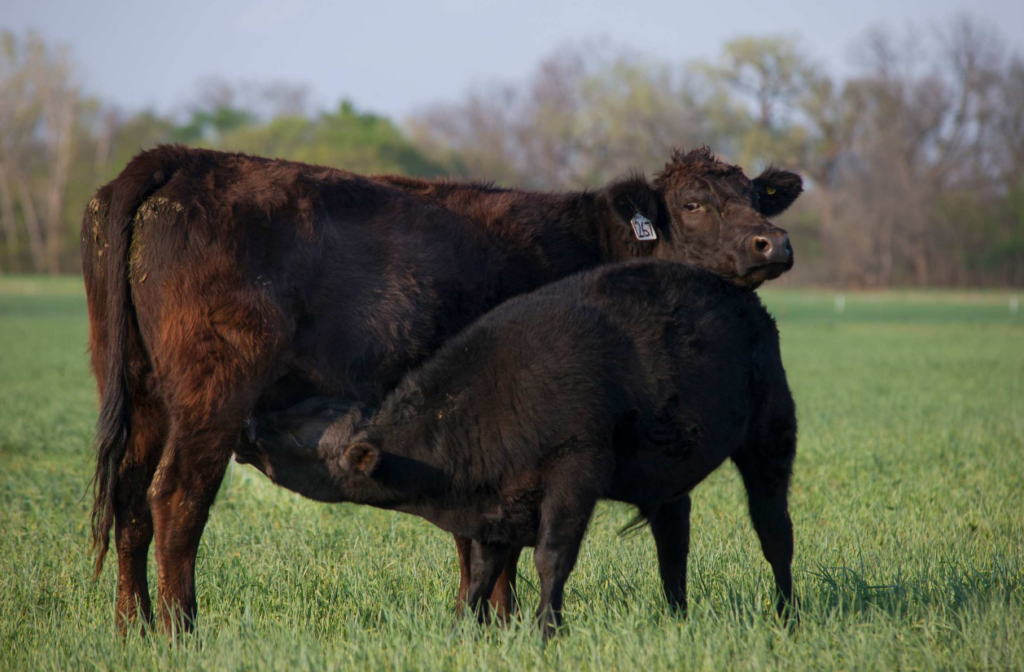
The weaning period for beef calves prior to them leaving your place for the next production phase is a critical time that strengthens their future performance in terms of health, gains, and production efficiency. Calves are usually considered "weaned" if they have been off the cow for at least 30 days. With respect to longer weaning, research has suggested that calves weaned for a minimum of 45 days before shipping have significantly fewer cases of bovine respiratory disease and lower death loss rates than calves weaned for shorter periods. Those benefits continue through the rest of the beef supply chain. The market has historically rewarded producers selling weaned calves with market premiums as compared to prices for similar unweaned calves. But how do those premiums change if producers choose extended weaning periods?
A recent OSU study looked at this question using Oklahoma feeder cattle data collected at multiple auctions during 2020-2022. In addition to noting whether calves were weaned or unweaned, OSU Extension personnel documented how long those cattle had been weaned, as communicated from the auctioneer to buyers at the auction. Figure 1 illustrates the estimated weaning premium by 15-day increments as compared to otherwise similar unweaned cattle with respect to physical characteristics and management characteristics at those auctions. The premiums reported here are each relative to lots with calves weaned 0-29 days, as most cattle buyers consider those calves to be unweaned.
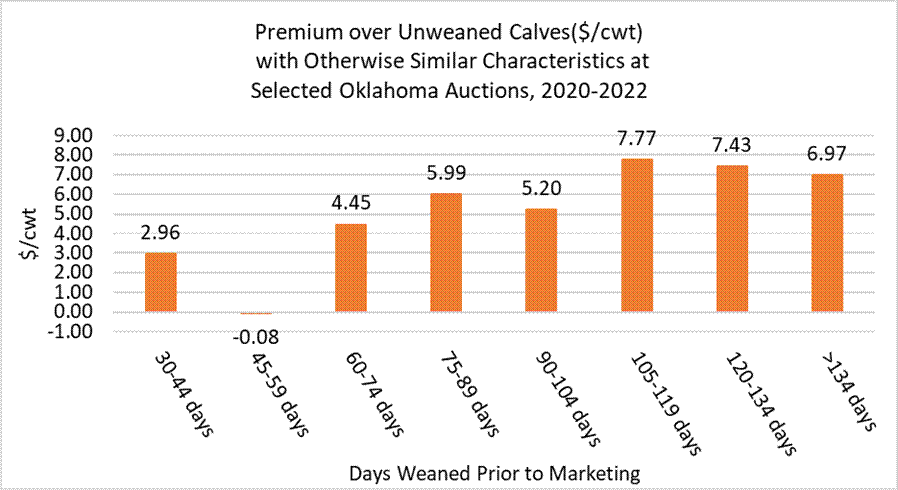
Figure 1.
An unexpected result in this data set is that calves weaned 45–59 days prior to sale did not receive prices that were statistically different from unweaned calves; that is, there was zero premium in this data set for those cattle. Aside from that, weaning premiums do generally increase as weaning length increases, with premiums ranging from $2.96/cwt for 30-44 days to $7.77/cwt for 105-119 days. Statistically speaking, the premiums from 60 days weaned to 104 days weaned are similar levels per hundred weight. Then, estimated weaning premiums take another jump up at 105 days, with premiums at similar levels through the >134 days category. Overall, the results indicate a positive relationship between weaning period length and feeder cattle prices in Oklahoma.
Why higher premiums for longer weaning periods? The premiums reflect buyer preferences for lower health and performance risks. Longer weaning periods provide more time for calves to recover from weaning stress, more time to develop stronger immune systems, and more time for feed bunk training. It is consistent with anecdotal indications from cattle buyers that longer weaning periods are a valuable way to manage health risks of purchased calves, especially for fall sales as weather fluctuations increase immune system stressors. While the standard weaning protocol in preconditioning programs has typically been 45 days, some programs have moved to 60-day minimum weaning protocols. Results here suggest that the market encourages that move and beyond. The stability of weaning premiums beyond 105 days suggest little additional effect on calf health risk beyond that.
Keep in mind that these estimates are revenue estimates only. The numbers here do not consider the associated costs for holding calves on the ranch longer. As with any management decision, pencil out the expected increase in revenue and the expected costs incurred as you consider alternatives.

Yuan Zhang, Andrew Anderson, and Ryan Loy write in Southern Ag Today: When drought pushed the Mississippi River level to historic lows in late 2022, barge freight rates jumped far above their usual levels. However, those costs do not stop at the river. They are disseminated throughout the grain marketing system and show up at the farmgate as weaker basis.
For corn and soybeans moving from interior elevators to Gulf export terminals, barge transportation helps determine the grain's local value. When barge rates rise, the cost of moving grain to export markets also rises. Elevators then face a wider gap between what they can pay farmers and the grain's value at the Gulf. Part of that transportation shock is passed back to producers in the form of lower cash bids.
The size of that pass-through depends heavily on where farmers sell their grain. River transportation conditions, local grain demand, and competition among buyers all influence how much of a change in barge freight costs reaches the farmgate. Low river levels can restrict navigation and raise transportation costs, while differences in local marketing opportunities can either amplify or reduce the resulting impact on basis. As a result, the impact of higher barge rates varies considerably across regions and crops.
Recent research by Zhang et al. (2026) finds evidence that barge freight shocks are passed back to farmers through weaker local corn and soybean basis. Higher barge rates weaken basis for both crops, but the effect is not uniform. Figures 1 and 2 identify areas where barge rate increases had the most severe impact on local basis. Lighter yellow areas indicate larger basis declines from the same increase in barge rates. The strongest impacts are concentrated in southern river states, especially along the lower Mississippi and Ohio River corridors. In the most exposed corn counties, including parts of Louisiana, Arkansas, Kentucky, and Tennessee, more than half of a barge rate increase reaches the farmgate as weaker basis. In the most exposed counties, a $1.00 per bushel increase in barge rates reduced corn basis by roughly 60 to 71 cents and soybean basis by roughly 49 to 53 cents. The crop differences reflect different marketing channels. For corn, the smallest basis impacts tend to occur in areas with more local buying competition and nearby processing alternatives. For soybeans, the smallest impacts tend to occur farther from river ports, reflecting soybeans' stronger connection to export-oriented barge movement. For southern river states, however, the main result is the same for both crops: higher barge rates lead to substantially weaker local basis.
Figure 1. Estimated Effects of Barge Freight Rate Increases on Local Corn Basis.

Figure 2. Estimated Effects of Barge Freight Rate Increases on Local Soybean Basis.

Futures and options can protect farmers against changes in broad commodity prices, but they do not hedge local basis risk. Farmers in highly exposed areas have fewer tools when river disruptions weaken local cash bids, making reliable river navigation especially important for farm profitability. Investments that reduce navigation disruptions can help protect farm revenues, particularly in counties along the lower Mississippi River, where transportation shocks are strongly passed through. Local competition also matters. When farms have fewer elevator options, more of the transportation shock is reflected in their cash bids. Practical responses include diversifying buyers, selling to nearby processors when possible, and using owned or leased storage to wait out short-term navigation problems. Together, these findings highlight how transportation infrastructure and local marketing opportunities influence the extent to which farmers absorb river-related transportation shocks.
Zhang, Yuan, Andrew Anderson, and Ryan Loy. "When the River Runs Low, Southern Grain Farmers Pay the Most." Southern Ag Today
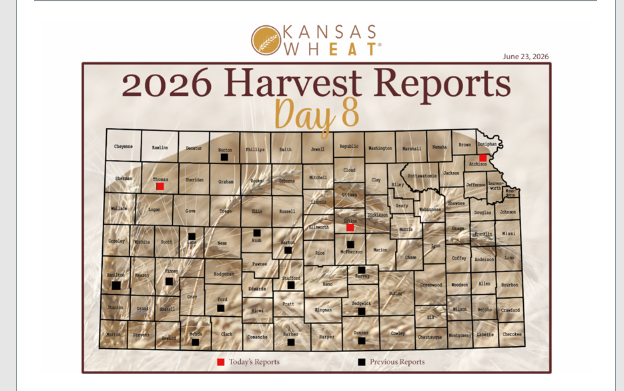
This is day 8 of the Kansas Wheat Harvest Reports, brought to you by the Kansas Wheat Commission, Kansas Association of Wheat Growers, Kansas Grain and Feed Association and the Kansas Cooperative Council.
Harvest is over halfway complete, resulting in what may be one of the earliest harvests in recent memories. Drought conditions and late freeze events are top contributing factors to the early harvest. While the wheat is mostly ready across the state, rains are still keeping some farmers out of the fields.
Jay Armstrong, a farmer from Atchison County, reported starting harvest on June 16 and finishing up right before the rain started on June 19.
"The Soft Red Winter (SRW) wheat we grow was hurt by the March freeze that destroyed all the tillers," said Armstrong. "Our crop averaged 72 bushels per acre; in comparison, we averaged 117 bushels per acre last year."
Armstrong states they fertilize and seed for 100 bushels per acre, so this year has not been a good year for them. Even though the late rain has not been good for the wheat crop, things are looking better for those with fall crops.
"The promising thing with the wheat harvest being a week to 10 days earlier than normal is that we were able to finish planting our double crop soybeans right behind the combine," said Armstrong. "With the rain we got after planting, the beans have already emerged, so hopefully a good double crop will help make up for the disappointing wheat crop."
Justin Knopf, who farms in Saline County, reported being two-thirds of the way done with harvest with three to four good days left. Knopf says they've had four to five rain events since taking their first load on June 10.
"Our proteins have varied by fields; I've been mostly seeing 12 to 14 percent," stated Knopf. "Our test weights have also had some variability due to the rain, ranging from 57 to 63 lbs. Notably, the (Kansas Wheat Alliance) variety KS Mako is where we had our highest test weights, from 61 to 63 lbs."
Like many this harvest season, weather has been a major contributing factor to the challenges Knopf has faced this wheat harvest. An extremely hot, dry and windy spring put the crop under drought stress during that important time. Then, several late freeze events impacted tillers. When the rain did come, it was too late to benefit the crop.
"Since the start of harvest, we've had nearly six inches of rain," stated Knopf. "From November 1 to May 1, our area received six and a half inches of total precipitation for that entire six month span. So, we received just about as much rain during harvest as we did during the entire growing season of this wheat crop."
In the southwestern corner of Kansas, reports of increased abandonment have been coming in due to poor yields.
"There is a lot of 15 bushel wheat out there," said a grain merchandiser in southwest Kansas. "Guys harvesting 30 bushel wheat feel like they've hit a home run."
The 2026 Harvest Report is brought to you by the Kansas Wheat Commission, Kansas Association of Wheat Growers, Kansas Grain and Feed Association, and the Kansas Cooperative Council. To follow along with harvest updates on X, use #wheatharvest26. Tag us at @kansaswheat on Facebook, Instagram and X to share your harvest story and photos.

Families celebrating the Fourth of July with a cookout will find that grocery store prices closely reflect inflation over the last year. An Independence Day cookout will cost $73.82 for 10 guests this year, according to the 2026 American Farm Bureau Federation annual marketbasket survey.
This is up $2.90 from last year, which is a 4% increase. The overall annual inflation rate in the United States is 4.2% for the 12 months ending in May, which is consistent with the findings of the market basket survey, even though the survey tracks a much smaller basket of items.
At $7.38 per person, this is the most expensive Fourth of July cookout since Farm Bureau began surveying costs in 2016. However, after adjusting for inflation, cookout costs have remained relatively stable in recent years and are below the 2022 peak.
"Families across the country are dealing with higher prices for many expenses, including groceries," said American Farm Bureau Federation Economist Dr. Faith Parum. "As you look at the purchasing power of the dollar, however, it has remained relatively stable when it comes to food. America's families spend less of their disposable income on food than most other nations and we enjoy one of the most abundant, affordable and safe food supplies in the world."
The market basket survey shows an increase in the cost of 10 of the 12 tracked items, including ground beef, pork and beans, strawberries, and hamburger buns.
Several factors influence the increased costs. The retail price for 2 pounds of ground beef increased 5.5% to $14.06. America's ranchers continue to rebuild their herds following years of severe drought, which has affected supplies. It will take several years for herds to recover to pre-drought levels.
Strawberries cost $5.27 for two pints, an increase of 12.4%. Strawberries saw a price increase, in part, due to a devastating frost in Florida that destroyed many young plants early in the spring. High labor costs for fruits and vegetables are also a factor as well as increased costs for fuel used in refrigeration and transportation.
A 32-ounce can of pork and beans is up 37 cents from 2025 to $3.06. The cost of aluminum increased sharply this year, driving up the production cost of cans used for pork and beans.
Hamburger buns cost an average of $2.53, a 7.7% increase from last year. Increased production, transportation, and labor costs contributed to the price increase of hamburger buns.
Two bright spots in the survey were potato salad and chips. The price for potato salad fell 17.8% from 2025 to $2.91. This can be attributed partially to a key salad ingredient – eggs. Egg prices have dropped as flocks recovered from avian influenza. Healthy potato harvests reduced the cost of making potato salad and chips. Chips were down 4 cents from $4.76 in 2025.
AFBF President Zippy Duvall said, "Higher prices at the grocery store don't always translate to more money for farmers. The farmer's share of the food dollar is around 6% after expenses. Farmers are dealing with natural disasters and higher supply costs while making the same - or sometimes less - money for the food they grow. Still, they're committed to growing safe, affordable, sustainable and abundant food for our nation.
"Farmers represent less than 2% of the population, but they carry a great responsibility in providing nutrition for the remaining 98% of America. The critical role they play has traditionally been supported by investments in innovation, research and risk management, all made possible by the farm bill. We encourage lawmakers to celebrate America's 250th anniversary and then return to D.C. with a renewed commitment to pass a new, modernized farm bill. It's an investment in our country's future."
The federal government's broader Consumer Price Index report for all items shows an overall increase of 4.2%, while food shows an increase of 3.1% compared to a year ago. Farm Bureau's informal market basket survey examines only those foods commonly associated with summer cookouts.
The July Fourth cookout survey is part of the Farm Bureau marketbasket series, which also includes the popular annual Thanksgiving dinner cost survey of common food staples Americans use to prepare a holiday meal at home.
Volunteer shoppers across the country, including Farm Bureau members and others, collected data from stores in every state and Puerto Rico.
Individual Prices, AFBF 2026 Summer Cookout
Read the full Market Intel on the 2026 Fourth of July Cookout Survey here.
To download selected soundbites on the survey, click here.
Be sure to watch for the Farm Bureau Thanksgiving market basket survey when it is released on November 18.
RON's Dave Lanning has a pre-opening look at today's agricultural Markets.
Click the audio tab below for today's report.
The U.S. Senate Committee on Agriculture, Nutrition, and Forestry is moving forward with a discussion draft for Farm Bill 2.0, formally titled the Agricultural Act of 2026. Introduced by Chairman John Boozman (R-AR), the legislative framework is designed to deliver stability, modernization, and long-term security to rural communities and the families who safeguard the nation's food supply.
"We can all agree that we must take steps to help America's farm families, and one of the most important ways we demonstrate that commitment is by passing a bipartisan farm bill," Boozman said. "Congress delivered historic improvements to farm programs through the Working Families Tax Cuts, and we're continuing to expand upon that success with bipartisan priorities that strengthen the American farm economy, increase investments for rural communities and foster a more resilient agricultural sector. I'm proud to put forward this discussion draft that reflects the input and priorities of Republicans, Democrats, and most importantly, rural America."
The legislation leverages recent fiscal investments to reinforce the baseline safety net while simultaneously expanding resources for rural infrastructure, conservation, technological innovation, and international market development.
A primary pillar of the legislation centers on stabilizing risk-management tools for traditional farmers, ranchers, and specialty-crop producers. Building upon foundational investments from the Working Families Tax Cuts, the framework strengthens commodity programs, dairy margins, crop insurance, and standing disaster assistance. Recognizing the distinct challenges facing specialty crop operations, the bill expands tailored options to improve financial predictability across diverse production sectors.
In tandem with financial risk tools, the framework introduces updates to federal conservation programs designed to simplify execution and broaden local management flexibility:
The legislation also addresses supply chain and sector-specific priorities, bolstering "Buy American" requirements within federal nutrition programs, codifying the United States Department of Agriculture (USDA) Office of Seafood, and expanding credit options for commercial fishing operators.
The Agricultural Act of 2026 focuses heavily on strengthening the economic and physical infrastructure of rural communities. To address challenges in domestic processing, the legislation provides new funding opportunities and clearer regulatory guidance for small-scale meat and poultry processors and renderers, thereby encouraging localized processing capacity.
Infrastructure improvements are further accelerated by expanding community access to USDA Rural Development programs and private capital markets. These financing mechanisms are directed toward vital public services, enabling rural towns to improve or establish healthcare facilities, educational institutions, childcare centers, and workforce development initiatives.
Physical utility networks receive significant upgrades under the legislative framework. The bill strengthens and modernizes USDA connectivity programs to broaden high-speed broadband access across underserved regions. Concurrently, it increases targeted financing, technical assistance, and water quality testing and filtration to secure dependable drinking water systems for rural households. The framework also expands funding for the Farm and Ranch Stress Assistance Network, integrating accessible mental health resources directly into rural communities.
To maintain global competitiveness, the policy framework modernizes farm loan structures, providing younger and beginning farmers with the capital reserves required to enter the industry. Research and technological innovation receive direct support through a newly established specialty crop mechanization and automation research program backed by dedicated funding.
The bill utilizes investments made available through the Working Families Tax Cuts to more than double the funding baselines for both the Market Access Program (MAP) and the Foreign Market Development (FMD) Program, significantly expanding export opportunities for American commodities. It also extends agricultural research and extension funding to address emerging or previously neglected sector priorities, while creating a formalized regulatory pathway to accelerate the development and use of innovative plant biostimulants.
Finally, the legislation implements measures to secure domestic agricultural assets and stabilize critical supply chains. The framework establishes stricter foreign ownership disclosure requirements and enhances federal enforcement capabilities to monitor and protect American agricultural land from foreign influence.
During a press call following the release of the discussion draft, members of the media pressed Chairman Boozman on the specific logistics, timelines, and bipartisan negotiations necessary to clear the chamber.
What is the ideal timeline for moving this discussion draft through the committee and onto the Senate floor? Alex Thomas of the Arkansas Democrat-Gazette raised the critical question of timing. Boozman noted that the bill is now out for feedback from lawmakers and industry players. The baseline goal is to leave it open for review for a couple of weeks, allow members to digest it during the upcoming two-week recess, and then return to hold a committee vote before the August recess. Boozman emphasized that Senator John Thune is actively working to secure floor time for the agricultural package once it clears committee.
How confident are you that you can secure the 60 votes required to pass this through the full Senate, and what has been the nature of your conversations with Democrats like Senator Amy Klobuchar? Josh Baethge of Farm Progress focused on the legislative reality that any farm bill needs 60 votes to overcome a Senate filibuster. Boozman expressed optimism, noting that farm bills traditionally run past their initial deadlines, as the 2018 package did. He emphasized that agriculture is currently facing a generational economic crisis—marking the worst net farm income downturn in decades—which should incentivize both sides of the aisle to negotiate in good faith to protect producers.
Why is year-round E15 authorization missing from this draft, and is Senator Thune leading a separate effort to address it? Additionally, will direct financial assistance for crop producers be included in the farm bill, or will it have to stand alone? Jeff Nalley of AgriPulse brought up two major points of friction for producers. Boozman clarified that he fully supports E15 and knows Congress realizes its importance for domestic demand, but the issue falls under the jurisdiction of the Environment and Public Works Committee, not Agriculture. Rather than blending it directly into this draft, the committee is following the House model of keeping the policy separate to ensure smoother passage. Regarding financial aid, Boozman stated that direct emergency bridge payments are desperately needed and should be at the top of the agenda, but they are better suited to an upcoming supplemental appropriations bill—which will likely include military spending and disaster relief—rather than the permanent farm bill structure.
Can you dumb this bill down for a non-agricultural audience? What are the two or three most consequential components of this text, and what matters most to row-crop farmers right now? Steve Brawner requested a simplified breakdown of the bill's real-world impacts. Boozman explained that while 80 to 85 percent of the farm financial baseline was handled in the Working Families Tax Cuts, this bill focuses heavily on policy and credit modernizations. Specifically, current USDA loan caps are dangerously outdated, relying on data from 2012 rather than reflecting modern inflation and input costs. For row-crop farmers who are actively losing money on every acre in the ground, Boozman repeated that an immediate emergency bridge payment is their number-one concern, followed closely by the credit and loan cap adjustments detailed in this bill.
How will crop insurance provisions protect farmers from factors outside of their control? Brawner also asked about provisions tracking revenue losses. Committee staff member Coleman Garrison clarified that updates to the Crop Insurance title will help guard against steep market price fluctuations. These indemnities will provide price-based protections that operate entirely outside a producer's operational control, specifically benefiting specialty crop sectors that are highly vulnerable to global market swings.
What wildcards do Republicans hold to find a compromise with Democrats on nutrition spending, given their pushback on SNAP cost shifts? Addressing the ongoing battle over federal nutrition programs, Nalley questioned how a compromise could be reached. Boozman joked that those negotiations are best left to private sessions, but insisted that both parties want to finalize a farm bill. Later in the call, Rachel Umansky-Castro of Bloomberg Government explicitly asked about Democratic concerns regarding potential delays and state-level cost shifts in SNAP quality control. Boozman countered that the provisions are not intended to reduce benefits or raise revenue from states, but rather to serve as administrative leverage. He noted that the program has suffered from sloppy oversight resulting in significant overpayments and underpayments, and the text introduces penalties to force states to administer nutrition funds more efficiently.
How quickly can the proposed changes to the Conservation Reserve Program (CRP) be implemented to give drought-stricken producers the grazing flexibility they need during weather crises? Farm Director KC Sheperd brought the conversation home to the Southern Plains, noting that while recent rains have brought temporary relief, drought remains a dominant threat to Oklahoma cattlemen. Boozman turned to his grazing specialist, Coleman Garrison, to detail the rollout timeline. Garrison explained that the USDA inevitably requires administrative time to draft and implement new federal regulations after a bill is signed into law. If the legislative package is successfully signed into law by this winter, the agency should have the updated emergency haying and grazing rules fully operational ahead of the next summer drought cycle. Boozman added that they are simultaneously pushing USDA Secretary Tom Vilsack to maximize current administrative authorities to deploy immediate flexibilities.
Does the bill include measures to transition international food aid out of the State Department and into the USDA, and will that be a part of this final text? Brawner concluded the call by asking about proposed shifts in foreign food assistance programs. Boozman confirmed that the strategic goal is to transfer the jurisdiction of international food aid from the State Department to the USDA. He explained that these programs were originally created to help clear excess domestic agricultural inventory, and the USDA is far better equipped than the State Department to handle crop dynamics. While losing committee jurisdiction can cause political tension, Boozman noted that he is actively working with Senators Jim Risch, Jerry Moran, Jeanne Shaheen, and John Hoeven to smooth the transition and keep the provision embedded in the final version of the Agricultural Act of 2026.
Click HERE for legislative text.
Click HERE for a title-by-title summary.
Click HERE for a section-by-section.
Click HERE for an overview.

American Farm Bureau President Zippy Duvall commented on the Senate farm bill discussion draft released today by Sen. John Boozman (R-Ark.), chairman of the U.S. Senate Committee on Agriculture, Nutrition, and Forestry. "Farm Bureau appreciates Sen. Boozman's work to move a farm bill forward in the Senate. The bill text provides important support for farm families. The benefits include improved access to credit, expanded investments in specialty crops, increased transparency in fertilizer markets, and enhanced research and conservation programs. The discussion draft is a good first step and provides a solid foundation that Farm Bureau will work to improve upon as the Senate moves toward markup. "In October 2025, Farm Bureau sent letters to President Trump and congressional leaders emphasizing the severe economic pressures facing America's farmers and ranchers and highlighting actions that should be taken to improve economic conditions in rural America. While we have seen meaningful progress, more action is needed from Congress to ensure farmers can continue to supply dinner for families across America. "We look forward to working with the chairman and members of Congress to address three top priorities not included in this farm bill draft, which are needed to help farmers through the current multiyear downturn in the farm economy. They include providing economic aid to help farmers struggling with historic inflation, protecting interstate commerce from a patchwork of state laws, and approving the sale of E15 blended fuel year-round, which would be a win-win for farmers and consumers. "Farmers appreciate President Trump's call for congressional action on E15 and economic aid and Agriculture Secretary Brooke Rollins repeatedly highlighting the need to protect interstate commerce, in addition to the need for aid and E15. We urge the Senate to quickly pass a bipartisan farm bill, and with the same sense of urgency, Congress must work together to address these additional priorities. It's time to deliver solutions to America's farmers and ranchers."
House Committee on Agriculture Chairman Glenn "GT" Thompson (PA-15) issued the following statement today in response to the release of a farm bill discussion draft from the Senate Committee on Agriculture, Nutrition, and Forestry: "I applaud Chairman Boozman and his team for their continued efforts to support producers and rural America through a full, five-year farm bill. I am encouraged to see the Senate build on the bipartisan momentum we began in the House of Representatives with the Farm, Food, and National Security Act of 2026. "It has never been more apparent that our country needs modern farm policy that finishes the work we started last summer with the Working Families Tax Cuts Act. I look forward to working with Chairman Boozman and getting a farm bill to President Trump's desk soon."
National Association of State Departments of Agriculture CEO Ted McKinney commended U.S. Senate Agriculture Committee Chairman John Boozman for releasing the Farm Bill 2.0 discussion draft in the following statement:
"NASDA applauds Chairman Boozman for beginning the process of finalizing the Farm Bill 2.0," McKinney said. "As this process gets underway in the Senate, NASDA remains committed to advocating for a bipartisan farm bill that will advance the food, fiber and fuel provided by American agriculture. Finishing a farm bill is vital to the food and agriculture sector, which benefits our economy, accounting for roughly one-fifth of U.S. economic activity and supporting nearly 23 million jobs. We will work closely with the Senate Agriculture Committee as they begin debating the discussion draft in the coming weeks."
The Senate Committee on Agriculture, Nutrition, and Forestry Democrats released the following joint statement on Senate Republicans' Farm Bill discussion draft. "Senate Agriculture Committee Democrats have been clear that a Farm Bill must meet the needs of both farmers and families across America. This bill does not address the devastating cuts to SNAP or the shift to state taxpayers passed into law as part of HR 1. We appreciate that bipartisan provisions have been included in the discussion draft and stand ready to work with Republicans to negotiate a bipartisan Farm Bill that both meets the moment and can be successful on the Senate Floor." The Democrats on the Senate Agriculture Committee include Senator Amy Klobuchar (D-MN), Ranking Member, and Sens. Michael Bennet (D-CO), Tina Smith (D-MN), Dick Durbin (D-IL), Cory Booker (D-NJ), Ben Ray Luján (D-NM), Raphael Warnock (D-GA), Peter Welch (D-VT), John Fetterman (D-PA), Adam Schiff (D-CA), and Elissa Slotkin (D-MI).
Senate Farm Bill Misses "Golden Opportunity" to Cut Red Tape and Support Career Building: The United States Senate Committee on Agriculture, Nutrition, and Forestry released a Farm Bill text, notably omitting the Training Nutrition and Stability Act and the RESTORE Act. The following is a statement from Sam Schaeffer, Chief Executive Officer of Center for Employment Opportunities. "The Center for Employment Opportunities (CEO) is deeply disappointed by the U.S. Senate's failure to include two crucial pieces of legislation in their farm bill text. The U.S. Senate has missed a golden opportunity to pass common-sense bipartisan legislation that simultaneously strengthens workforce development and protects food security—specifcally through the Training Nutrition and Stability Act (TNSA) and the RESTORE Act. Together these bills offer a vital fix to connect career training and food security, and finally lift the lifetime ban on Supplemental Nutrition Assistance Program (SNAP) enrollment for people with drug convictions. Too often, justice-impacted people are thrown under the bus when it comes to social safety nets. Antiquated prejudice has caused dangerous benefit cliffs and lifetime exclusions that lock out justice-impacted people from economic opportunity in perpetuity, despite troves of evidence proving that benefits like SNAP lead to stability. For nearly a decade people have had to choose between putting food on the table and a career to build family sustaining futures. TNSA ensures people enrolled in paid SNAP Employment & Training (SNAP E&T) activities, such as CEO's program, don't have their SNAP food benefits reduced or completely eliminated. This fix is crucial not only for justice-impacted people, a community who experiences food insecurity and unemployment rates much higher than the general population, but penalizes any American striving for independence. TNSA fixes this flaw, ensuring SNAP E&T works as originally intended: as a bridge to lasting self-sufficiency, not a trap door. Without TNSA, these programs work against each other and instead of putting people on the path to independence, they get stuck in the gap between food security and career building. People cycle on and off SNAP causing a churn effect that creates administrative burdens and costly error rates. TNSA offers a direct solution. By stabilizing participants and limiting SNAP churn, TNSA helps states reduce administrative error rates and thus reduce cost-share burdens. As states navigate the ongoing roll out of H.R. 1, we are concerned about how states will balance their budget amidst new cost share responsibilities. When budgets tighten, the first programs cut are the ones that serve justice-impacted populations. TNSA offers a direct solution. By stabilizing participants and limiting SNAP churn, TNSA helps states reduce administrative error rates and thus reduce cost-share burdens. Furthermore, with the expansion of SNAP work requirements and the impending implementation of Medicaid work requirements, we must ensure the systems we have in place support compliance. It is imperative that enrollment in SNAP E&T does not inadvertently kick people off their food benefits. TNSA enhances program efficacy ensuring individuals can successfully meet their work requirements while maintaining life-preserving benefits. We all share the goal of building safer communities and helping individuals achieve lasting financial independence. We thank Chairman Boozman for prioritizing the Farm Bill, but as the bill is drafted, it misses an opportunity for bipartisanship. We urge the Senate to come together for a bipartisan markup that includes TNSA and RESTORE. We look forward to working with the Chairman and Ranking Member to do so."
NAWG CEO Sam Kieffer: Today, the U.S. Senate Committee on Agriculture, Nutrition, and Forestry released draft text for Farm Bill 2.0. The National Association of Wheat Growers (NAWG) CEO Sam Kieffer provided the following statement.
"We are encouraged to see Chairman Boozman continue moving the farm bill process forward with the release of draft legislative text. Wheat farmers need certainty as they contend with stubbornly high input costs, commodity prices that barely break even, and ongoing volatility in global markets. NAWG is reviewing the proposal to assess how it addresses wheat growers' needs, including crop insurance, the farm safety net, trade, research, conservation, and humanitarian programs that move U.S. grain. We look forward to working with Congress and the White House to get this legislation across the finish line this year."
From NMPF President & CEO Gregg Doud: "NMPF thanks Chairman Boozman, Senate Agriculture Committee members, and their staffs for working to put together a farm bill that will bring greater certainty to producers. Dairy farmers look forward to working with senators to get this legislation passed and into conference with the already passed House bill, where lawmakers can craft the best legislation possible."
Some key dairy highlights of the bill include:
Today, Invest in Our Land (IIOL) issued the following statement in response to the release of the Agricultural Act of 2026 - or "Farm Bill 2.0" - by Senate Agriculture Committee Chairman John Boozman.
"American farmers and ranchers are working through the hardest stretch in a generation, facing high input costs, volatile markets, and increasingly destructive weather. Federal conservation programs are among the most effective tools they have to manage these challenges," said Rebecca Bartels, Executive Director of Invest in Our Land. "That's why the long-term conservation investment Congress made in 2025 must be protected and built upon, not chipped away. We are concerned that the Senate's draft again redirects funding for the Environmental Quality Incentives Program (EQIP) to pay for other priorities - cutting the program by nearly $2 billion below the levels Congress set just last year. EQIP and other conservation programs provide practical, real-world benefits to producers' resiliency and ability to innovate, which is why they are some of the most oversubscribed tools USDA operates: in fiscal year 2025, the Department was only able to fund approximately 24 percent of applicants to EQIP and 37 percent of applicants to the Conservation Stewardship Program. When demand outstrips supply by that much, the answer isn't to keep cutting the same pie into thinner and thinner slices that don't make a dent in the backlog. It's to invest more in the programs producers are asking for by name. We applaud the positive updates to the Conservation Reserve Program; however, we cannot simply shift funding around and expect to meet the needs of our producers. We urge the Committee to pay for the new and expanded programs without taking from others, and codify the new Regenerative Agriculture Pilot Program.
At the same time, the Farm Bill alone can't fix this. The Natural Resources Conservation Service has lost 23 percent of its workforce, and conservation dollars don't reach the field without the planners, engineers, and field staff who partner with farmers and ranchers to deliver them. Protecting and expanding conservation funding has to go hand in hand with protecting the people at the Natural Resources Conservation Service. We will keep working with farmers, ranchers, and lawmakers in both parties to get this right."
EQIP Budget Authority: Reconciliation Bill vs. Agricultural Act of 2026
Environmental Quality Incentives Program annual budget authority under Section 1241(a) of the Food Security Act of 1985, as amended.
| Fiscal Year | Reconciliation (OBBBA) | Agricultural Act of 2026 | Change |
| 2027 | $2.855B | $2.500B | −$0.355B |
| 2028 | $3.255B | $2.600B | −$0.655B |
| 2029 | $3.255B | $2.700B | −$0.555B |
| 2030 | $3.255B | $2.900B | −$0.355B |
| 2031 | $3.255B | $3.255B | $0.000B |
| Total (FY27–31) | $15.875B | $13.955B | −$1.920B |
| Corn Growers Weigh In on Senate's Farm Bill Draft: Chairman John Boozman (R-Ark.) of the U.S. Senate Committee on Agriculture, Nutrition and Forestry released a farm bill discussion draft today. Ohio farmer and National Corn Growers Association President Jed Bower issued the following statement in response: "We appreciate Chairman Boozman's effort to advance farm bill legislation in the U.S. Senate. Corn growers continue to call for this effort to be bipartisan and to ensure USDA programs become more effective, efficient and responsive through long-lasting policy enhancements." |
| House Agriculture Committee Ranking Member Angie Craig (MN-02) released the following statement after Senate Agriculture Chair John Boozman unveiled his farm bill draft. "Unsurprisingly, the Senate Republicans' farm bill falls far short of meeting the needs of family farmers and working people. Trump's inflationary tariffs, trade wars and war with Iran have made life more expensive for all Americans and making a profit nearly impossible for our farmers. Instead of working with Senate Democrats on a bipartisan deal to fix these problems and restore food assistance by addressing the $187 billion in SNAP cuts and the unfunded mandate to the states from H.R 1, Senator Boozman chose the partisan status quo. Farmers and working people need real solutions that will open markets, bring down costs and make everyday life less expensive. I urge my colleagues in the Senate to negotiate a truly bipartisan farm bill that serves the needs of farmers and families and stands a chance of becoming law." |
The National Council of Farmer Cooperatives (NCFC) praised Senate Agriculture Committee Chairman John Boozman (R-Ark.) for releasing a Senate farm bill draft, advancing legislation to complete the work of updating America's farm policy and delivering the certainty that farmers, ranchers, and rural communities need. "I want to thank Chairman Boozman for his leadership in bringing a Senate farm bill forward," said Duane Simpson, president and CEO of NCFC. "America's farmer cooperatives have long called for a completed farm bill that strengthens the farm safety net, expands access to capital, and supports the rural communities where our farmer-owners live and work. Chairman Boozman's draft is an important step toward finishing that job. We urge Chairman Boozman's Senate colleagues to come to the table, work through this discussion draft in good faith, and deliver a final bill that rural America deserves."
National Farmers Union (NFU) President Rob Larew issued the following statement reacting to the Senate Committee on Agriculture, Nutrition and Forestry's discussion draft of the farm bill. "We appreciate Chairman Boozman and the committee for their commitment to a bipartisan farm bill and their openness to continued negotiations. While the bill includes meaningful improvements, it needs to go further to meet the scale of the crisis facing family farmers and ranchers across this country. "What we need is a true safety net that moves away from ad hoc assistance, keeps pace with rising production costs and delivers real stability in the marketplace. That means strengthening and modernizing core farm programs to reflect today's economic realities and withstand tomorrow's shocks. It means building a dedicated structure and funding stream for disaster assistance that is fast, consistent and doesn't require farmers to wait on Congress to act. These reforms would give farmers more predictable risk management tools, reduce uncertainty and end the cycle of repeated emergency interventions. "We urge the committee to go further on priorities that matter to farmers and consumers: mandatory country-of-origin labeling for meat and poultry, year-round nationwide E15, local food procurement funding, and stronger Packers and Stockyards Act enforcement.
The American Soybean Association welcomed the release of a draft farm bill by Senate Agriculture Committee Chairman John Boozman, which includes key priorities for U.S. soybean farmers and makes important investments in the farm safety net, conservation, rural development, research, and market opportunities for soybean farmers. "Soybean farmers need the certainty and stability that only a five-year farm bill can provide," said ASA President Scott Metzger (OH). "We appreciate Chairman Boozman and the Senate Agriculture Committee for developing a framework that recognizes the challenges facing agriculture and includes several priorities important to U.S. soybean producers. We look forward to reviewing the draft legislation and working with lawmakers as the farm bill process moves forward." The framework includes several ASA-supported provisions, including legislation to advance plant biostimulants, expand conservation technical assistance, improve fertilizer research, strengthen rural broadband deployment, increase access to technical service providers and support precision agriculture technologies. The farm bill draft also pursues advancements in market development and rural economic growth through the reauthorization of international food assistance programs, including McGovern-Dole, expanded access to guaranteed loans, additional flexibility within farm storage loan programs, eligibility for precision agriculture equipment under the Conservation Loan and Loan Guarantee Program, reauthorization of the Conservation Reserve Program, and the codification of the ReConnect Rural Broadband Program. In addition, the proposal includes several priorities that support growing domestic markets for soy through new uses, including increased funding for the Biobased Markets (BioPreferred) Program, improvements to the Biorefinery Assistance Program and the Rural Energy for America Program (REAP), and a directive for USDA to establish a department-wide sustainable aviation fuel strategy. ASA is hopeful this discussion draft will facilitate bipartisan negotiations to secure a pathway toward final passage in the Senate.
The Agricultural Retailers Association (ARA) today applauded Senate Agriculture Committee Chairman John Boozman's (R-Ark.) release of the Senate Farm Bill text, a significant step forward in the effort to deliver a new Farm Bill for America's farmers, ag retailers, and rural communities. "Chairman Boozman's release of the Senate Farm Bill text demonstrates a serious commitment to getting this critical legislation across the finish line,"said ARA President & CEO Daren Coppock. "ARA is encouraged by this progress and remains committed to working with Chairman Boozman and members of the Senate Agriculture Committee to advance legislation that supports farmer access to modern agricultural technologies, strengthens the farm safety net, and ensures a safe, abundant, and affordable food supply for American consumers and global markets." ARA will continue to engage with the Senate Agriculture Committee as the Farm Bill process moves forward. Key priorities for ARA include preserving crop insurance and the farm safety net, protecting and streamlining conservation programs, codifying pesticide regulatory oversight at the EPA and state lead agencies, expanding access to Technical Service Providers, establishing a federal definition for plant biostimulants, and modernizing agricultural credit programs — all of which are essential to ensuring that retailers and their supplier partners can continue to make long-term investments that support farmer success.
Today, U.S. Environmental Protection Agency (EPA) cleared over two decades of backlogged State Implementation Plans (SIPs) in Oklahoma by acting on 13 SIP revisions submitted between 2002 and 2025. The revised SIPs work to align the state's air permitting with recent EPA Title V and New Source Review guidance that have cut red tape and streamlined the permitting process for states and businesses while maintaining critical human health and environmental protections. Clearing the enormous SIP backlog left over from previous administrations is key to achieving EPA Administrator Lee Zeldin's mission to protect the environment and grow the economy.
"EPA Region 6 has been diligently working with the Oklahoma Department of Environmental Quilty to address needed revisions to the state's air permitting program. Now, through cooperative federalism, we have achieved revisions that both protect air quality for all Oklahomans and enable businesses to build across the state," said Regional Administrator Scott Mason. "This is a hallmark example of Administrator Zeldin's efforts to protect human health and the environment and simultaneously grow the economy."
"Oklahoma has proven that we can protect our natural resources while promoting strong economic growth," said Oklahoma Governor Kevin Stitt. "This approval reinforces our commitment to responsible, state-led environmental stewardship and gives businesses the certainty they need to invest, grow, and create jobs."
"Oklahoma has become one of the most business-friendly states in the country by combining affordable energy, reliable infrastructure, and predictable rules. Companies are choosing to invest in our state because they know Oklahoma is committed to growth and getting projects built. Today's EPA action helps reinforce this advantage by bringing Oklahoma's air permitting program up to date and providing greater certainty for businesses and job creators," said Senator Alan Armstrong (R-OK). "It's great to see the EPA align with Oklahoma's focus on clear and certain rules that encourage investment while protecting the environment. I thank Administrator Zeldin for working with Oklahoma to clear the backlog. This is a good example of how we can make government work better for the people and businesses it serves."
"I'm grateful to President Trump and his administration for their efforts to move these 13 pending SIP revisions forward in Oklahoma. For too long, our state's businesses have been saddled by bureaucratic red tape and unnecessary delays, restricting their ability to efficiently serve our communities. Today's action by the EPA helps clear that backlog, providing the certainty they need to grow, compete, and continue driving Oklahoma's economy forward," said Representative Kevin Hern (R-OK-01).
"I am pleased to see the EPA approve Oklahoma's State Implementation Plan revisions that will not only cut burdensome regulations in the permitting process, but also improve environmental protections and air quality," said Representative Frank Lucas (R-OK-3). "I am grateful for Administrator Zeldin's leadership in prioritizing these revisions to keep our state in compliance with the Clean Air Act and help preserve a high quality of life for Oklahomans."
"I am grateful to see the EPA approve these revised State Implementation Plans. The Trump Administration has empowered states to best align their environmental goals with policies that make sense for each state's economy. These approvals will greatly improve our state's environmental outcomes, while helping to get government out of the way of Oklahoma producers," said Representative Stephanie Bice (R-OK-5).
The Clean Air Act (CAA) requires each state to develop a SIP to meet various air quality requirements and the failure of previous administrations to perform the agency's statutory obligation to take action on SIPs was felt across the nation, including in Oklahoma. The Trump EPA recognizes that states are best positioned to manage their own air quality permitting programs. These SIP approvals introduce a range of improvements that give businesses and the state a clear understanding of what it takes to obtain CAA permits. The revised SIPs also cut unnecessary and repetitive paperwork that previously slowed the permitting process. In some cases, they allow businesses to begin building the non-emitting parts of a project immediately after submitting a permit application. Today's revisions apply to both major and minor source permitting programs.
EPA will continue to work at Trump speed to clear the SIP backlog across the country, while ensuring clean air for all Americans.
View a pre-publication version of EPA's final approval here.

The Oklahoma Farm Bureau Ag Fund endorsed an additional 12 candidates and added additional financial support for four candidates ahead of the Aug. 25 runoff primary election.
Headlining the field of new endorsees are two candidates running for statewide positions, including Jon Echols for Attorney General and Cindy Byrd for State Treasurer.
Additional new endorsements by the OKFB Ag Fund are listed below.
Oklahoma Senate
Bryan Logan – Senate District 8
Justin Freeland-Wood* – Senate District 17
Kristen Thompson – Senate District 22
Jean Hausheer* – Senate District 32
Oklahoma House of Representatives
George Phipps* – House District 1
Bob Ed Culver – House District 4
David Smith* – House District 18
Michael Brittingham* – House District 19
Carl Newton – House District 58
Teresa Sterling* – House District 91
The Ag Fund awarded additional financial support to four previously endorsed candidates for their respective runoff races, including John Pfeiffer, Labor Commissioner; Jessica Winegeart, Senate District 26; Crystal Campbell, House District 9; and Madison Bolay, House District 38.
The OKFB Ag Fund board will meet after the Aug. 25 runoff primary to discuss additional candidate support before the Nov. 3 general election.
To view a full list of endorsed and supported candidates, visit okfb.news/vote26.
Candidates with an asterisk (*) by their name will appear in the Aug. 25 runoff election.
The U.S. Department of Agriculture (USDA) is putting Farmers First by investing up to $310 million to expand producer conservation activities across the nation through the Regional Conservation Partnership Program (RCPP). USDA's Natural Resources Conservation Service (NRCS) is accepting RCPP project proposals now through August 24, 2026, to help farmers, ranchers, and forest landowners boost their operations and conserve natural resources.
"This significant investment through the Regional Conservation Partnership Program will further enable us to leverage our partnerships as force multipliers in supporting America's farmers," said NRCS Chief Colton L. Buckley. "We're looking forward to seeing the results on the ground while we also work to keep working lands in working hands."
The Working Families Tax Cuts Act is delivering the largest long-term investment in NRCS conservation programs in decades, including support for RCPP. It will deliver $425 million in fiscal year 2026 and an increase to $450 million from fiscal year 2027 through fiscal year 2031.
RCPP is a partner-driven approach to conservation that funds solutions to natural resource challenges on agricultural land. In the past year, NRCS has improved RCPP, through streamlining partnership agreement processes and increasing flexibilities to ensure the program works more effectively for conservation partners and America's farmers and ranchers. Now, 75% of the funding goes directly to the American farmer or is used to cover the cost of conservation practice implementation.
About the Program
There are two separate funding opportunities:
NRCS ranks proposals based on how they address the following priorities:
More Information
The $310 million is available for both RCPP Classic and AFA projects, including a $30 million set aside for projects with Indian Tribes.
Details about RCPP Classic and RCPP AFAs are available on Grants.gov. Project proposals for RCPP are being accepted through August 24, 2026, on the RCPP portal. For more information about RCPP, visit the RCPP website.
This investment builds on other recent NRCS investments to engage partners to extend the reach of conservation. In late May, NRCS announced its plans to invest $65 million through Conservation Innovation Grants.
For more than 90 years, NRCS has helped farmers, ranchers and forestland owners make investments in their operations and local communities to improve the quality of our air, water, soil, and wildlife habitat. NRCS uses the latest science and technology to help keep working lands working, boost agricultural economies, and increase the competitiveness of American agriculture. NRCS provides one-on-one, personalized advice and financial assistance and works with producers to help them reach their goals through voluntary, incentive-based conservation programs. For more information, visit nrcs.usda.gov.
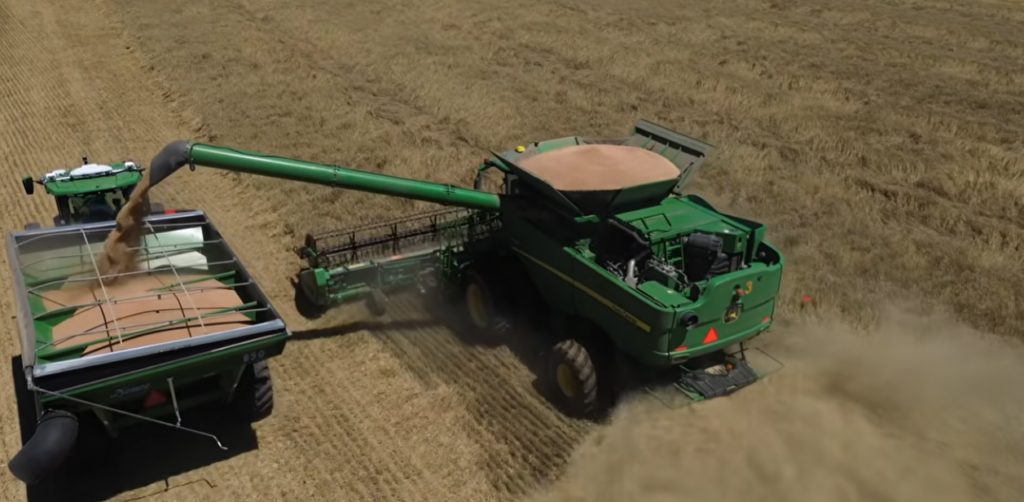
The 2026 Oklahoma wheat harvest is rapidly drawing to a close, with operations estimated at 95% complete. While producers are pushing to finish the remaining irrigated acres in the Panhandle and final fields in north-central and northeastern portions of the state, recent heavy rainfall has forced them to contend with incredibly muddy field conditions.
Despite late-season moisture slowing machinery, statewide progress remains well ahead of schedule. Typical years see harvest stretching past the Fourth of July, but officials expect the 2026 harvest to wrap up entirely by the end of the week.
The sudden influx of significant moisture over the past week has turned many fields into mud pits. Parts of Kay and Grant counties reported receiving between 7 to 8.5 inches of rain over a 10-day period, drastically changing the landscape for final cutting.
This heavy moisture is impacting test weights in the north-central and northeastern regions. Up until last weekend, north-central Oklahoma maintained steady test weights around 60 pounds per bushel. However, recent downpours have caused more noticeable drops in northeastern Oklahoma across both soft red winter and hard red winter wheat classes, pulling weights down to a range of 56 to 59 pounds per bushel, depending on variety and management.
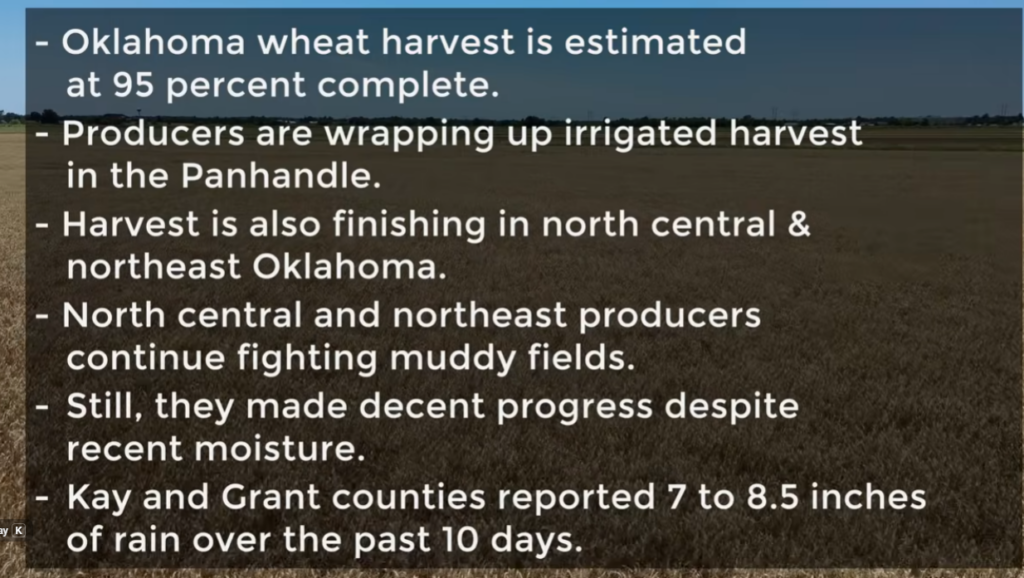
The Panhandle is seeing similarly lowered test weights of 56 to 59 pounds per bushel on its irrigated acres. Yields in the Panhandle are notably lower than in previous years, running between 40 to 60 bushels per acre for irrigated wheat, while certain dryland trials hit devastatingly low numbers. At the Oklahoma State University trial location in Balko—which looked like one of the best locations earlier in the season—the average yield is expected to fall below 10 bushels per acre due to the prolonged weather extremes.
Conversely, north-central Oklahoma fields yielded much higher than anticipated. A majority of the harvested wheat in that area landed in the mid-40 bushel range, with standout fields reaching into the low 60s.
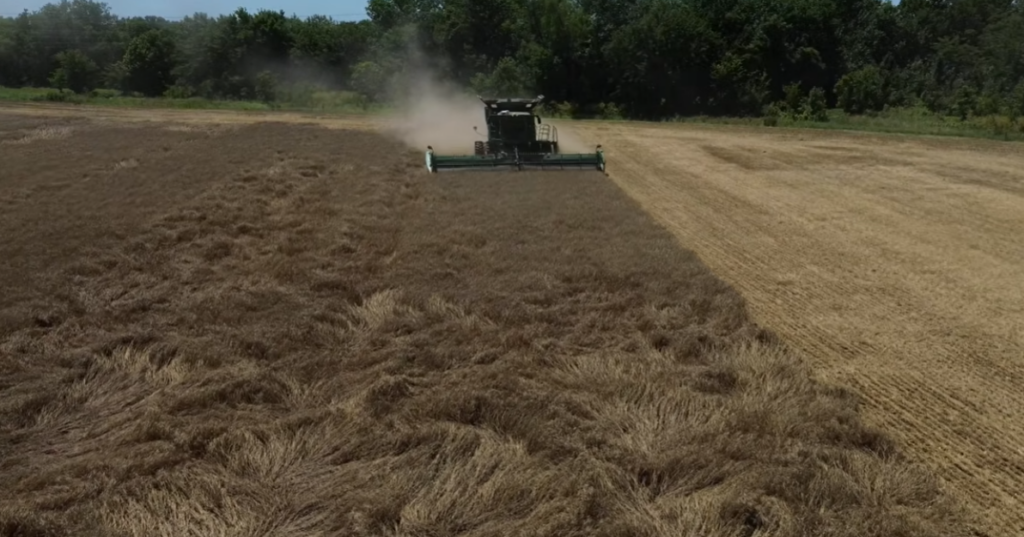
While these stronger north-central pockets will bolster the state's final numbers, they are not expected to drastically shift overall production estimates. Current projection comparisons show varied outlooks:
The final statewide test weight average is projected to sit between 58 to 60 pounds per bushel. Crop stress throughout the growing season did yield one positive attribute: higher protein levels. The Oklahoma Wheat Commission estimates the statewide average will be between 12% and 13% protein, drawing strong interest from millers seeking high-quality grain.
Agronomists and agricultural officials will ultimately remember 2026 as a severe drought year. The crop struggled from the start, experiencing a highly dry planting season, followed by an unusually warm winter and a hot, dry stretch through February and March.
Though timely spring moisture saved part of the crop, it was not enough to overcome the deep deficit, resulting in abandoned fields in several areas. Because of these distinct challenges, upcoming Oklahoma State University variety trial reports will incorporate economic analyses alongside standard agronomic comparisons, allowing producers to evaluate how specific varieties handle extreme volatility over multiple years.
On the global stage, market trends are showing a significant shift from production to consumption. Last year at this time, global wheat production outpaced consumption by 20 million metric tons. Current trends indicate a complete reversal, with consumption now outpacing production by approximately 5 million metric tons.
Large expected crops in Russia, Ukraine, and Turkey are anticipated to outweigh production losses in the United States, Pakistan, and Australia. However, because wheat offers a highly cost-effective source of calories amid tight global financial conditions, international buyers are actively moving grain, opening up strong marketing opportunities for Oklahoma's newly harvested crop.
To watch the full video, click below
This report brought to you by Dave Deken and the Oklahoma Wheat Commission
For many modern consumers, the connection to the food on their plate has been entirely severed. Speaking at the R-CALF USA National Convention, Ben Spell, Founder and CEO of Good Ranchers, addressed a room of cattle producers to discuss the vital importance of connecting consumers to American beef. Spell, who manages a direct-to-consumer meat company that delivers 100% American-born, raised, and harvested meat to families nationwide, shared insights on the consumer mindset and how producers can bridge the gap between the pasture and the dinner table.
Spell, who does not come from a traditional ranching background, noted that his perspective uniquely positions him as a translator between producers and the public. "The average consumer does not spend their life thinking about cattle," Spell said. "Most Americans have become so disconnected from their food source. They know way more about the phone in their pocket than they do about where their food comes from."
Despite the disconnect, Spell offered a very encouraging message to the independent cattle ranchers in attendance: the American public is not abandoning beef. In fact, they are actively looking for reasons to trust the product they buy.
Spell explained that the real issue facing the industry isn't a lack of desire for beef, but a massive lack of clarity surrounding where that beef comes from.
At the core of connecting consumers to American beef, Spell emphasizes that the industry is facing a trust problem rather than a product problem. While the average consumer may not understand the complexities of country-of-origin labeling or the intricacies of the cattle market, they do understand honesty.
"Consumers aren't actively choosing imported beef," Spell explained. "It's that they don't know they're buying imported beef. When people become disconnected from the source of their food, someone else fills the gap."
Currently, social media is saturated with voices dictating how cattle should be raised from individuals who have never set foot on a working ranch. Spell noted that the only way to combat this misinformation is for actual producers to become the loudest storytellers in the room. What seems completely ordinary or everyday to a cattle producer—such as calving in the snow or working through intense drought—is fascinating and deeply respectable to a consumer working in a city cubicle.
Following his address, Spell opened the floor to questions from the R-CALF USA membership, addressing specific regional concerns regarding marketing, labeling, and consumer transparency.
A question was raised about the difficulty of sharing ranching stories online, as everyday management practices can sometimes shock insulated consumers. The producer noted that the realities of animal husbandry and dealing with predators are tough, and the American public has become "soft."
Spell acknowledged the challenge but argued it makes authentic storytelling even more vital. He explained that a softer culture craves reality and truth. Showing the genuine hardship, the resilience required, and the care provided during brutal weather conditions is exactly what builds long-term respect and connection with the public.
The final question came from a producer who has run a pasture-to-plate meat business for 13 years. He questioned how the industry can move past infighting among various production niches—such as grass-fed versus grain-fed—and instead unify around a message that encourages consumers to eat more domestic beef.
"We can absolutely lead ourselves into a famine if we aren't careful by attacking different safe production methods," Spell answered. He emphasized that grain-fed beef has a long, healthy history in the United States and yields an exceptional, flavorful product that consumers love. Spell concluded that rather than dividing the industry into opposing camps, the focus must remain on educating the public about the hard work required across all sectors of American ranching to keep families fed with high-quality protein.
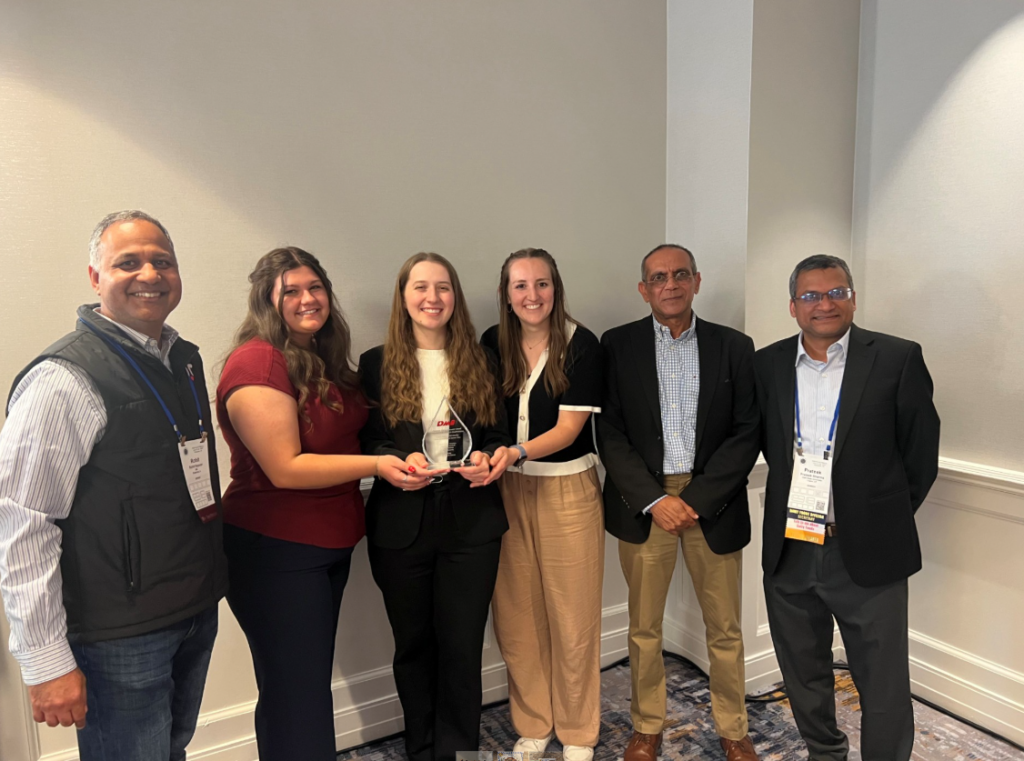
A team of food science students from Utah State University won first place in Dairy Management Inc.'s (DMI) New Product Competition with a high-protein personal pizza featuring a crust made with approximately 85% dairy ingredients.
Judges from across the dairy industry selected Utah State for best meeting this year's contest challenge: developing an innovative dairy-based product that supports bone health, muscle health and weight management.
The award was announced during this week's American Dairy Science Association's annual meeting in Milwaukee.
The team's winning product, Athena's Slice, reimagines personal pizza with a crust made from cottage cheese, mozzarella, Parmesan and nonfat dry milk. Topped with tzatziki-style sauce, gyro meat, feta cheese, mozzarella, spinach, sun-dried tomatoes, onions and green bell peppers, the pizza delivers 30 grams of protein and 3 grams of fiber per serving.
The students said Athena's Slice was designed to meet growing consumer demand for protein-rich foods while demonstrating dairy's versatility in unique applications. Team members Taelie Kennedy, Angalee Brinkerhoff and Erynn Chidester received DMI's Platinum Dairy Innovator Award and a $10,000 prize.
"Someone suggested a cottage cheese pizza crust and I wanted to do something Greek-themed," Kennedy said. "We also looked at consumer insights and protein has been one of the biggest trends for years so that was important to us. Those concepts came together and that's really how Athena's Slice was born."
Chidester added: "People are surprised when they see how much protein is in the crust. It helped show them a different side of dairy and expanded their understanding of what dairy ingredients can do."
Brinkerhoff said the competition provided valuable real-world product development experience that will help them prepare for careers in the food industry.
"This competition is one of the closest experiences you can get in college to what you'll actually do in the food industry," Brinkerhoff said. "It challenged us to solve problems, work as a team and think about every aspect of bringing a product to market.
"I grew tremendously, both as a person and as a food scientist."
DMI has hosted the New Product Competition since 2012 to foster innovation and provide emerging food scientists with hands-on product development experience.
"What stands out every year is how these students can take emerging consumer trends and translate them into products that are both innovative and commercially relevant," said Dr. Rohit Kapoor, a DMI vice president and member of the product research team who oversees the competition. "Their work highlights dairy's remarkable versatility and provides a glimpse into where food innovation may be headed."
Other winners included:
· Gold Dairy Innovator Award ($7,000): Cornell University – Melt a Whey, a bite-sized dairy snack that melts in the mouth and can be prepared as a latte-style beverage. The product contains approximately 55% dairy ingredients and delivers 18 grams of protein, 3 grams of fiber and 6 grams of collagen per serving.
· Silver Dairy Innovator Award ($4,000): Oregon State University – Protein Pomodoro, a refrigerated pasta sauce formulated with 61% dairy ingredients that combines cottage cheese with a classic tomato base to deliver protein and calcium in a familiar meal solution.
· Dairy Innovator Awards ($2,000 each): Rounding out the top six finalists are Cornell University (cottage cheese reimagined as a light, airy mousse), University of Wisconsin-Madison (high-protein, frozen mousse-style dessert) and University of Wisconsin-River Falls (freeze-dried snack featuring a cottage cheese base combined with fruits, vegetables and/or chocolate).
Marilyn Hershey, chair of DMI and a Pennsylvania dairy farmer, said the competition reflects the value of investing in future food scientists and opportunities for dairy growth.
"These students bring curiosity, determination and fresh thinking to every stage of product development," Hershey said. "As dairy farmers, we're proud to support programs that help develop future industry leaders while discovering new ways to connect dairy's nutrition and functionality with what consumers are looking for today."
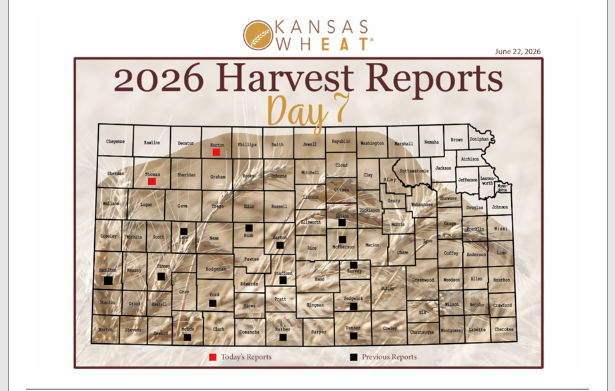
This is day 7 of the Kansas Wheat Harvest Reports, brought to you by the Kansas Wheat Commission, Kansas Association of Wheat Growers, Kansas Grain and Feed Association, and the Kansas Cooperative Council.
Harvest has come to a halt for many in Kansas due to thunderstorms that began Saturday afternoon. The USDA's National Agricultural Statistics Service crop progress report ending June 21, 2026, states that the Kansas wheat harvest is 58 percent complete, well ahead of the 26 percent five-year average. Winter wheat conditions were rated 23 percent very poor, 32 percent poor, 31 percent fair, 14 percent good, and 0 percent excellent.
Jeanne Falk Jones, K-State Northwest Area Agronomist in Colby, Kansas, reported violent storms in Colby and surrounding areas on Saturday night and early Sunday morning. This series of storms produced tornado-like winds, significant hail damage, and heavy precipitation in a very short time.
"We have had some pretty substantial hail in some pockets and a lot of severe wind that came with pretty significant amounts of rain that fell fairly quickly," said Jones. "We're going to be out for at least a few days before we can get back into even thinking about harvesting some more."
One of Jones's concerns going into the planting season is the volunteer wheat that creates the "green bridge" for the wheat curl mite, which causes the Wheat Streak Mosaic Virus Complex (WSMV). She highlighted the importance of killing the volunteer up to a month before drilling time to prevent WSMV.
"Anytime that we have hail or late termination, there's always a concern about viable seeds being on the ground and creating an opportunity for volunteer," said Jones. "We're going to have to be pretty vigilant about spraying volunteer wheat, up to a month before drilling time."
Chris Tanner, a farmer in Norton County, began harvesting about a week ago and is around 20 percent done.
"From January 1 up until this month, I have had less than 2 inches of rain all year," said Tanner. "The plant integrity is not that good; the heads are breaking off, and with the straw being drought-stressed, it is shattering and falling over."
Tanner reports continuing to battle the weather now that harvest is approaching.
"It's not harvest weather," said Tanner. "It has cooled off, the humidity is high and there is a chance of rain again."
Tanner Brown, a producer in Thomas County, reported completing harvest before the storms hit Saturday afternoon.
"We took our first load on June 17, and finished up all that we could harvest Saturday," said Brown. "We had around 60 acres of irrigated wheat that was still too green to harvest that got rained on."
Brown stated he had a wide range of protein levels, the lowest being 10.4 percent to the highest being 14.7 percent.
"Across the farm, we averaged 14 bushels an acre," said Brown. "This year has been way below an average harvest year for us."
The 2026 Harvest Report is brought to you by the Kansas Wheat Commission, Kansas Association of Wheat Growers, Kansas Grain and Feed Association, and the Kansas Cooperative Council. To follow along with harvest updates on X, use #wheatharvest26. Tag us at @kansaswheat on Facebook, Instagram and X to share your harvest story and photos.
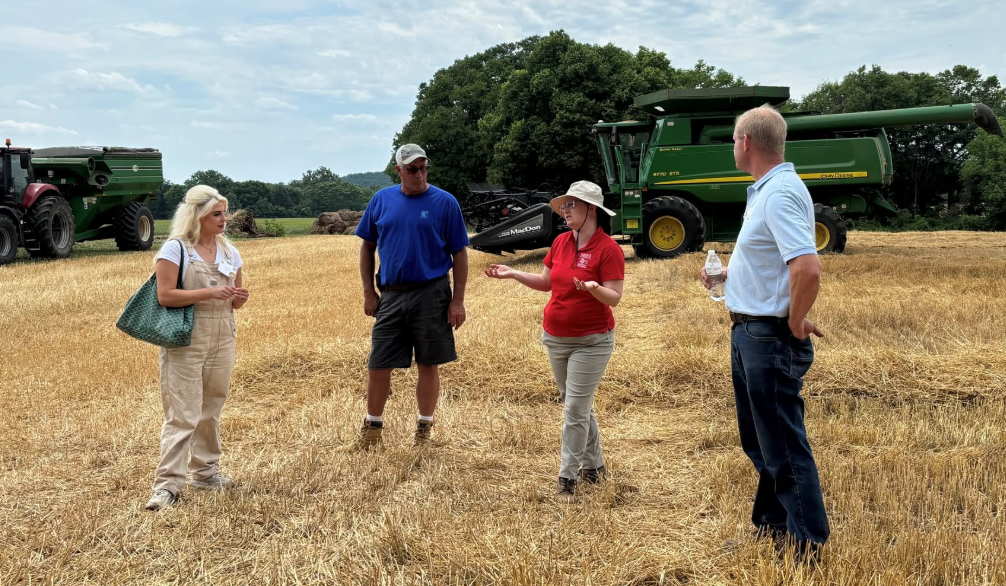
Today, the National Wheat Foundation (NWF) in partnership with Maryland wheat grower Eric Spates, hosted its annual educational wheat farm tour for congressional staff, U.S. Department of Agriculture (USDA) employees, University of Maryland personnel, and other stakeholders interested in learning more about modern wheat production.
Eric Spates took time out from his busy harvest season to host the event. Eric serves as a Board member on several state and national farm organizations including National Wheat Growers Association, Maryland Grain Producers Association, Montgomery County Farm Bureau, Montgomery County Weed Control and Edward B Byrd Charitable Foundation. "I enjoy demonstrating wheat farming and discussing some of the complex challenges we face as farmers," said Eric Spates, Maryland farmer and National Association of Wheat Growers board member. "I appreciate the many experts who participated in the tour and support our operation in areas ranging from production and conservation to risk management and business planning."
The tour was designed to provide participants with a greater appreciation for the complexity of modern farming and the broad network of professionals who work alongside producers to help deliver food, feed, fuel, and fiber. Attendees also had the opportunity to observe firsthand the stewardship practices farmers use to protect and enhance natural resources, including soil, water, air, and wildlife habitat. Attendees also saw wheat being harvested and asked in-depth questions about programs available to farmers, including Crop Insurance, One Farmer One File, EQIP and others.
"Nothing replaces the experience of standing in a wheat field and seeing firsthand the decisions, partnerships, and investments that go into producing a successful crop," said Scott Brown, Idaho wheat farmer and Chairman of the National Wheat Foundation. "Farmers work every day to balance productivity, conservation, and risk management while providing a safe and abundant food supply. Tours like this help connect policymakers and agricultural stakeholders with the realities of farming and build a greater understanding of the challenges and opportunities facing American agriculture."
The National Wheat Foundation would like to thank everyone who spent the day with us, the speakers and experts who helped on the tour and especially Eric Spates for being so generous with his time and attention.
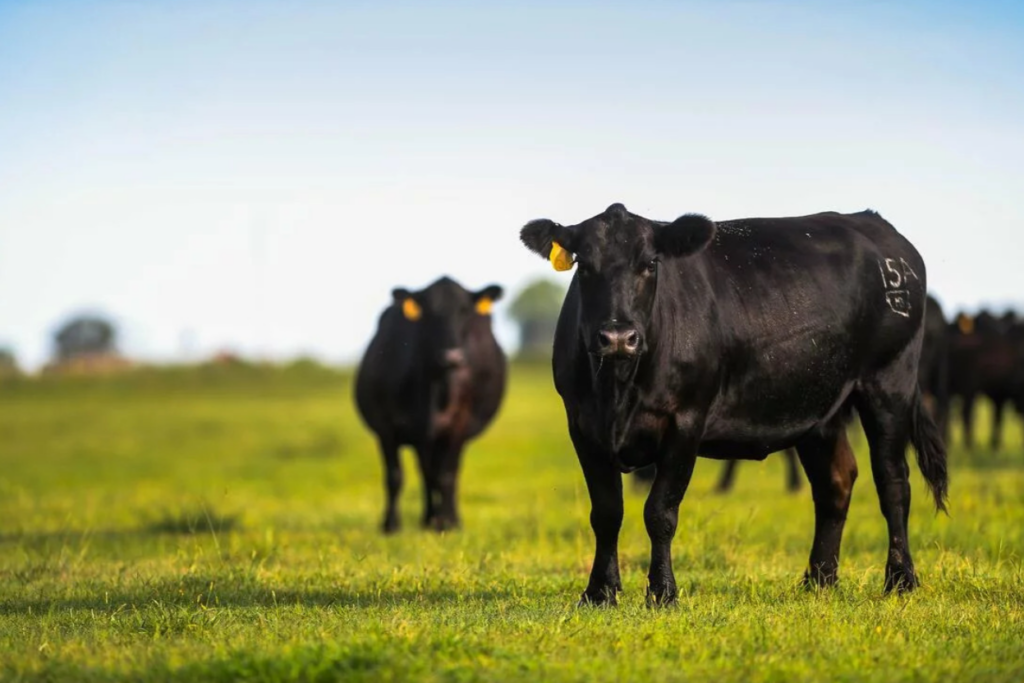
Earlier this month I had the opportunity to attend the Beef Improvement Federation (BIF) meetings in Boise, Idaho. The topics were interesting, timely and covered by an excellent panel of speakers. With regard to the selection of replacement heifers and rebuilding the nation's cowherd, the key, actionable take home points are as follows:
Lingering drought over much of the nation continues to stifle heifer retention and widespread expansion of the nation's cowherd. That being said, consumer demand for beef remains robust and persistent. This information should inform decisions made regarding the selection of your next generation of beef cows.
Reference: https://beefimprovement.org/2026-symposium/2026-presentation-archive/

The American Feed Industry Association (AFIA) has opened registration for its annual Equipment Manufacturers Conference (EMC), to be held Nov. 4 - 6 in Rio Grande, Puerto Rico. This year's theme is "Operational Intelligence: A.I.'s Role in Efficiency, Growth and Security."
"EMC continues to provide a unique opportunity for feed industry professionals to come together to discuss emerging trends, tackle shared challenges and strengthen relationships across the animal food industry," said Gary Huddleston, AFIA's senior director of feed manufacturing and regulatory affairs. "As artificial intelligence becomes increasingly integrated into manufacturing and business operations, this year's theme will explore how these technologies can drive greater efficiency, support growth and enhance security throughout our industry."
Hosted by AFIA's Equipment Manufacturers Committee, this annual conference focuses on keeping the equipment sector of the feed industry informed on current issues and innovations, while providing valuable opportunities for education, collaboration and networking.
Attendees will hear from industry experts and thought leaders on the practical applications of artificial intelligence, emerging technologies, operational efficiencies, cybersecurity considerations and other key issues impacting feed manufacturing and equipment suppliers.
The three-day event will also feature networking opportunities and the annual golf tournament, which raises money for the EMC scholarship fund. The scholarship fund supports students pursuing careers in feed and grain sciences at eight universities across the country.
Early-bird registration runs through Oct. 2, with discounted rates available for AFIA members. To register or learn more about EMC, visit afia.org/EMC.
In today's Beef Buzz, senior farm and ranch broadcaster Ron Hays features comments from Dr. Lora Bledsoe, Ag Resiliency Director with the Office of Health Security at the Department of Homeland Security, who says cartel-linked cattle smuggling—known as narco ranching—is creating serious risks for U.S. agriculture and biosecurity. Speaking at the R-CALF USA Convention, Bledsoe explained that agricultural security is no longer just about protecting farms and ranches—it is directly tied to national security.
Bledsoe emphasized that the U.S. government considers food and agriculture infrastructure essential to the country's overall stability. "Food and ag security is national security," Bledsoe said. "It is listed as one of the 16 critical infrastructure sectors that is so vital to American security that it would be debilitating to economic security, public health, or safety if it were under threat."
She said protecting the nation's food supply includes defending livestock systems from both intentional and accidental threats. "Our Agriculture and Food Act is codified in law," Bledsoe said. "It is important to defend the food, agriculture, and veterinary systems against intentional or unintentional high-consequence events that could pose a risk."
As part of that mission, the Department of Homeland Security monitors emerging threats to livestock health—including the spread of New World Screwworm.
Bledsoe said one major factor behind the rapid movement of New World Screwworm through Mexico is illegal livestock trafficking tied to organized crime. "Narco ranching is a cartel-linked practice, generally in Nicaragua, Honduras, Guatemala, and Mexico, that is used to launder drug profits, secure territory along trafficking routes, and it seems to be a very lucrative practice for the cartel in Mexico," she said.
According to Bledsoe, cartel operations use cattle as both a financial tool and a logistical asset. She said the illegal trade has become so widespread that Mexican authorities estimate roughly 800,000 head of cattle are smuggled annually through Central America into Mexico, representing an estimated value of around $320 million.
"These animals are also mixed into legal herds and kind of hidden amongst the group," Bledsoe said. That makes detection much harder.
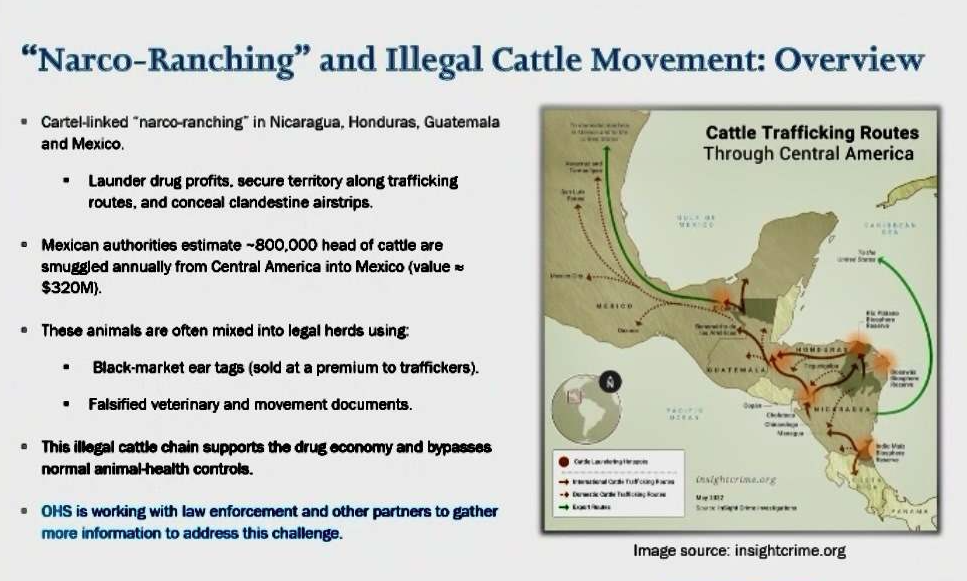
Bledsoe said illegally moved cattle often travel using black-market ear tags and falsified veterinary documents. "They're moved under black market ear tags, which traffickers pay extra to get, and they are moved on falsified veterinary documents," Bledsoe said.
That means infected animals can bypass health checkpoints entirely. "They're basically bypassing normal veterinary inspection protocols in which these animals might be caught prior to moving with a screwworm infestation," she said.
Bledsoe stressed that the concern goes far beyond screwworm. "It's not just screwworm—it's any animal disease that these animals could be trafficking through Mexico because they're moving essentially under false documents and without inspections."
That lack of oversight creates major biosecurity concerns. "This illegal cattle trade supports the drug economy and increases the risk of animal disease transfer," Bledsoe said.
She added that Homeland Security intelligence indicates this is a major reason New World Screwworm has spread across Mexico faster than expected.
One of the biggest challenges, Bledsoe said, is traceability. If an infected animal is found, investigators need to quickly determine where it came from and where it has been. But false documentation makes that nearly impossible. "Smuggled cattle avoid inspection and do not have any traceability, and this increases the chance that New World Screwworm-infested animals can move undetected through Mexico and bring the infestation with them," she said.
She said fraudulent tags and paperwork create huge obstacles during investigations. "Because they're moving on fraudulent ear tags and fraudulent paperwork, the traceback to figure out how those animals got to where they are is incredibly difficult." For disease control, those delays can be costly.
Bledsoe said cattle smuggling doesn't happen in isolation. The same criminal systems used to move livestock are also moving other illegal goods. "This is the same network used to move laundered money, currency, drugs, weapons— all of this is moving in the same networks," she said.
That creates overlapping security threats along the border. Border regions, she said, are facing pressure from both organized crime and animal disease at the same time.
One especially troubling trend involves livestock trailers being used for concealment. Bledsoe said cattle pots create a nearly perfect environment for smuggling contraband. "Everyone's been in a cattle pot, right? It smells, there's manure everywhere," Bledsoe said.
That environment makes detection difficult. "It's very hard for a drug dog or any sort of detection animal to sense or smell the things they're looking for in an environment where there's tons of manure and urine."
She added that trailers offer numerous hiding places. "There are a lot of different compartments and areas that you can hide things in in a cattle pot, and then you pack it full with animals, and no one's going to unload all those cattle off the truck to really look."
Her conclusion was blunt. "It's kind of the ideal environment to conceal things."
Bledsoe said traffickers have gone even further, using animals themselves to transport contraband. "Cattle can be used themselves as drug mules," she said.
She described multiple methods used by traffickers. "You can put things orally into the rumen. You can make an incision on the side and pack the abdomen with drugs. You can hide things vaginally in cattle."
She said these methods show just how sophisticated cartel operations have become. "These animals are being used in a variety of ways to aid the objectives of the cartel," Bledsoe said.
Bledsoe encouraged ranchers—especially those near border regions—to watch for suspicious cattle shipments. She said warning signs may include loads with mixed ages, inconsistent breeds, mismatched ear tags, or unclear origin paperwork. "You may see a suspicious load of livestock where it's hazy as to where these cattle have come from or where they're going," Bledsoe said.
She also warned producers to watch for physical evidence on animals. "Unexplained surgical scars on their sides that aren't healed—these are all signs and symptoms of potential cartel and narco trafficking activity."
The Beef Buzz is a regular feature heard on radio stations around the region on the Radio Oklahoma Ag Network and is a regular audio feature found on this website as well. Click on the LISTEN BAR above for today's show and check out our archives for older Beef Buzz shows covering the gamut of the beef cattle industry today.
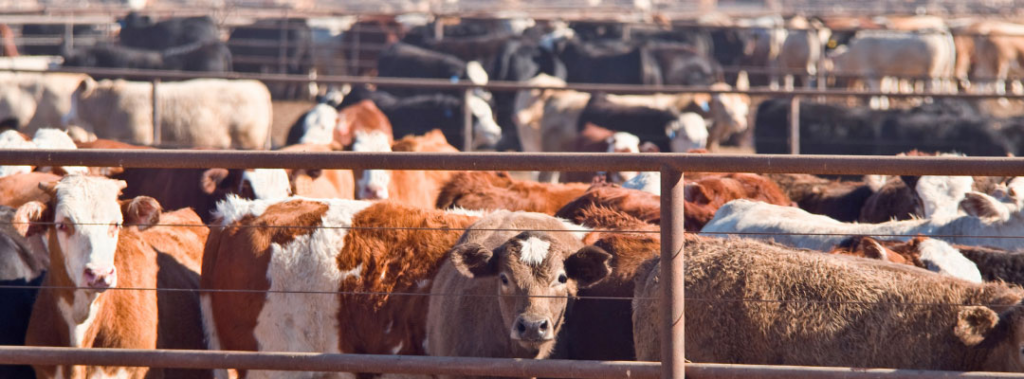
The latest USDA Cattle on Feed report was released on Thursday, June 18th. While there weren't any big surprises in the report, it highlighted several interesting trends that will be worth watching over the next few months.
May feedlot marketings, those cattle sold by feedlots to packers, were down 11.8 percent compared to last May. Part of that decline was due to one less operating day in May 2026 compared to May 2025, which cut about 5 percentage points off marketings. But, marketings remained low regardless of the number of days. More days on feed, reduced packing plant schedules, and fewer cattle have slowed marketings.
Placements of cattle into feedyards were down 9.7 percent compared to last May. Normally, close to 200,000 more feeders are placed in May than in April each year. The larger May placements are often driven by cattle coming off wheat pasture that has been grazed out or other winter grazing programs reaching the end of cool season grass pastures. This year, May placements were only 2,000 head more than April. May placements were almost smaller than April for the first time. It's likely that some cattle that would have been placed in May were pulled forward into April given the drought status of many areas. One of the other interesting trends in placements this year is the small month to month differences. Monthly placements in 2026 have ranged from a low of 1.611 million head in February to a high of 1.741 million head in January. Normally, there is a range of about 300,000 head. This dampening of seasonal placements may have some interesting effects on marketings and beef supplies late in the year.
The combination of 1.551 million head marketed and 1.704 million head placed left the total number of cattle on feed larger than last year by 2.1 percent on June 1. That is the second consecutive month with more cattle on feed than the prior year and it continued the unusual trend of growing numbers on feed in the first half of the year. What does this mean for the rest of the year? More cattle on feed may mean more cattle ready for slaughter late in the year compared to last year. That should pressure prices later in 2026. The reduced placements might suggest fewer heifers being sent to feedlots but there is little evidence to support that idea. The July cattle on feed report will include the quarterly estimate of the number of heifers on feed and that will shed some light on heifer retention.


Anderson, David. "Feedlot Placements and Marketings Drop Sharply." Southern Ag Today
Attorney General Gentner Drummond today congratulated Darrell Weaver on his appointment as Cleveland County Sheriff.
"Darrell Weaver has spent his career protecting Oklahomans, and Cleveland County couldn't ask for a more qualified leader. From his extensive service at Oklahoma Bureau of Narcotics to his work in the Oklahoma Senate championing victims' rights, public safety and law enforcement, Darrell has consistently shown what it means to serve with integrity and purpose. I've been proud to work alongside him on issues that matter to Oklahomans, and I have no doubt he will bring that same commitment to excellence to the sheriff's office. I congratulate Darrell on this well-deserved appointment and look forward to continuing our work together to keep Oklahoma communities safe."
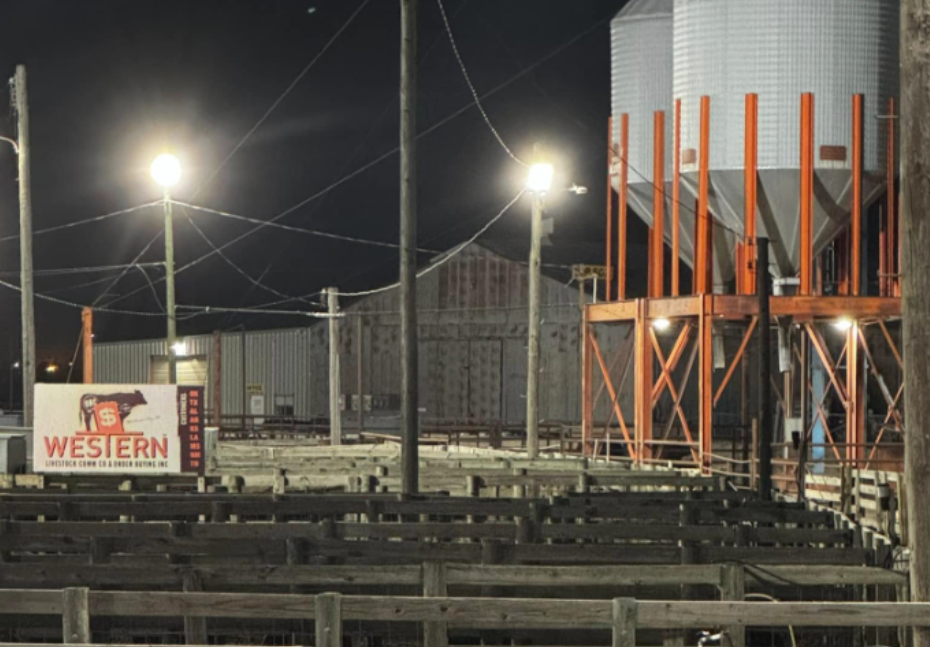
On Tuesdays, Senior Farm and Ranch Broadcaster Ron Hays visits with Ben Hale of Western Livestock Auctions as he talks about the latest in the markets and more. Established in 1995, Western has grown into a multi-generational family-owned and operated business and stands as a symbol of tradition, excellence, and a deep-rooted passion for the cattle industry. Western Livestock Auctions operates the Western Livestock Commission Firm, which sells cattle on Mondays and Tuesdays. They also operate the livestock auction markets in Woodward, Comanche, Waurika, and Knoxville, Iowa.
The Oklahoma cattle market continued its impressive rally this week as strong demand for calves and yearlings pushed prices higher at the Oklahoma National Stockyards and across western Oklahoma auction markets. Hale said optimism in the cattle trade remains high, fueled by tighter supplies, favorable pasture conditions, and supportive market signals.
Hale said the week started with strong momentum and never slowed down. "It started off a ball of fire," Hale said. "Saturday was an extremely high-tone market set. The board was up last week, and there was just a lot, a lot of optimism." He added that the latest USDA Cattle on Feed report helped support bullish sentiment. "I think they kind of called it neutral to a little bit bullish. Those placements are still low," he said. While the report may not have been overwhelmingly bullish on paper, Hale believes the bigger issue is simple: supply remains tight. "I think we're just short on these yearlings," he said. "We had orders for them—we can only get one load and need to get four today. They're just not there."
That shortage is being amplified by improved grazing conditions across much of cattle country, giving producers more flexibility to hold cattle longer. Hale said recent rains have dramatically improved pasture in many areas. "There's been enough rain around, I think these guys are pretty optimistic with what this board is out in the fall," he said. "Put some of these cattle together and lay them off, and it looks like they'll make some money." Producers with available grass are taking advantage of it. "If they've got the ability to have some pasture there, they're going to take advantage of it."
Hale said the improved forage conditions are visible well beyond Oklahoma. "You drive by, and a lot of country's got grass, and you just don't see a lot of cattle out," he said. "There's a lot of grazing out there, and I sure see it in Oklahoma and North Texas—especially eastern Oklahoma and East Texas." He also noted moisture improvements farther north. "We came all the way across Nebraska Saturday and Sunday, and boy, they had gotten a tremendous amount of rain," Hale said. "I mean, lots of grass."
Even with better grazing conditions, rising feeder prices may encourage more producers to market cattle sooner rather than later. Hale reported active sales across his markets, including Waurika, Comanche, and Woodward. "We're starting to get some phone calls," he said. "I think this feeder market's going to flush them out, if they're anywhere close to marketing some." For producers considering a sale, Hale believes current conditions are attractive. "If they've got some cattle and they want to try to cash them in, not a bad time to do it for sure."
Still, uncertainty remains in the background as cattle producers continue monitoring the threat of New World Screwworm. Hale said concerns about potential quarantines are influencing some marketing decisions. "You've still got that screwworm at the back of your mind," he said. "I've heard some of them say, 'Well, I probably need to go and move some in case I get quarantined.' So there's some of that in the back of their mind."
Hale can be contacted at 940-631-2333. Check out more about the marketing options that Western offers by clicking here.
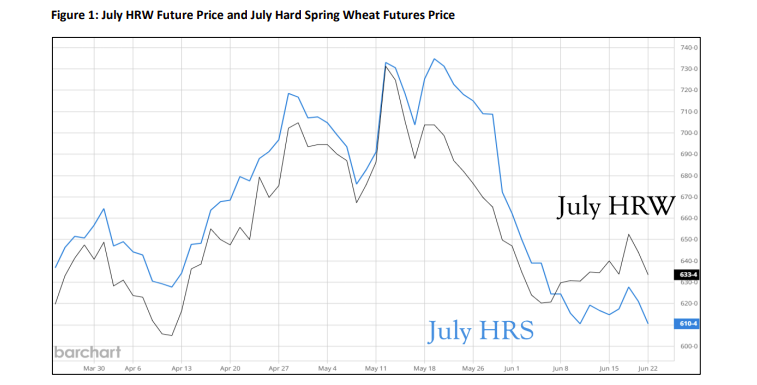
In his weekly newsletter, OSU's Todd Hubbs writes: Crop markets struggle to gain bullish sentiment as weather and geopolitical developments combine to keep prices under pressure. Rain events across the Corn Belt and Southern Plains place spring crops on a firm footing. While the Iran conflict still appears in flux, the prospect of a resurgence in hostilities looks remote as the administration attempts to extract the U.S. from the situation. A mandatory joint review of the USMCA after six years is due to kick off on July 1. The prospect of the administration injecting trade and geopolitical uncertainty into crop markets seems high given recent rhetoric. USDA releases the Acreage and Stocks reports on June 30 as well. Next Tuesday's reports will set the tone for prices leading into summer.
Wheat Market Outlook: Hard red winter wheat harvest reports confirm the poor crop conditions and forecast for the 2026 crop from USDA. Despite the smallest HRW crop since 1957, HRW prices strain to gain purchase. Prices in the HRW markets moved higher relative to the domestic market and international prices recently on the poor crop. However, HRW price will find it difficult to disconnect from competitor prices and take another leg up. The release of the stocks and acreage reports next week should not hold any major surprises for the HRW market.
Usage in the 2025-26 marketing year looks on pace to be around USDA's ending stocks number of 935 million bushels. New crop export sales for HRW sit at total commitments of 45 million bushels through June 11, down from 90 million bushels at the same point last year. The lower export pace comes as no surprise given the crop size and price competitiveness at ports. The potential for lower harvested acreage in HRW states is acute. The magnitude of acreage changes points toward minor adjustments. It will take a major acreage change to drive prices higher. Given the underlying global fundamentals, a price rally due the reports or on deteriorating weather in the EU should be regarded as sale opportunities.
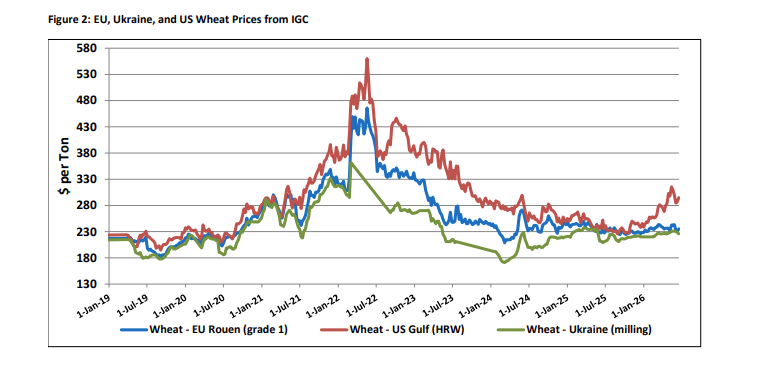
July HRW futures moved above July hard red spring wheat futures last week which is a rare occurrence. July HRW prices closed yesterday at $6.33 per bushel, in the middle of the $6.15 - $6.50 range seen recently. A breakout for futures increasingly relies on weather in the EU and export prices becoming more competitive on the global market. HRW cash prices around Oklahoma vary in the $5.88- $5.93 range after Monday's close. Basis remains stable.
HRW Gulf prices sit above Northern Hemisphere competitors. The potential for EU prices to move higher has been the subject of significant amounts of speculation in the trade recently as a heat wave is expected to impact the end of the growing season across Europe. The projected magnitude of the heat wave is quite severe and holds the potential of impacting the wheat crop in Germany and Poland in particular.
Market observers have already begun to move EU wheat production levels below USDA's forecast of 136 MMT. It may be premature to move production forecast significantly lower at this point. The uncertainty around the impact muted the addition of a large weather risk premium into the EU wheat market. If the market has not built a weather premium in for the event, an expectation of movement should be in place. It is important to remember that current forecasts for Germany (808 million bushels) and Poland (480 million bushels) are already lower than last year, and U.S. port prices sit above EU and Black Sea locations at present.
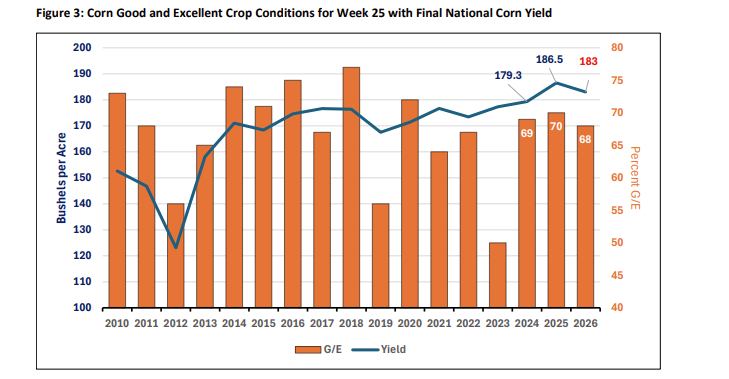
Corn Market Outlook: Corn prices indicate plentiful supplies and a positive outlook for the 2026 crop in the U.S. The forward curve carry from July to December sits around 80 – 95 percent of full carry depending on how one calculates storage and interest costs. This is a heavy carry set up indicating ample supply. It also gives an indication of why prices are having difficulty rallying. Weather in the Corn Belt has been particularly supportive of new crop potential. Corn area in drought through June 16 fell to 23 percent, down four percent over the last two weeks. Over the last week, rain has moved into previous dry areas and an expectation of the drought levels falling further is in place.
Corn crop conditions continue to improve as we approach the critical period for corn development in July. Good and excellent conditions for Week 25 sit at 68 percent and on par with conditions at this time last year when the U.S. corn crop eventually came in at 186.5 bushels per acre. Good and excellent conditions in Week 25 have little predictive power for final yield but do give a good indication of potential directional magnitude. USDA's current yield forecast of 183 bushels per acre remains a decent forecast. Acreage at this point is the key question.
Next week's acreage and stocks reports will frame the market through pollination. USDA's Prospective Plantings report came under criticism for placing corn acreage at 95.3 million acres. The speculation only increased with the increase in fertilizer prices and fuel costs. The prospect of lower corn acreage in the June report is not clear cut. The possibility of lower corn acreage is an important consideration, but an expectation of a massive acreage switch may be too hopeful.
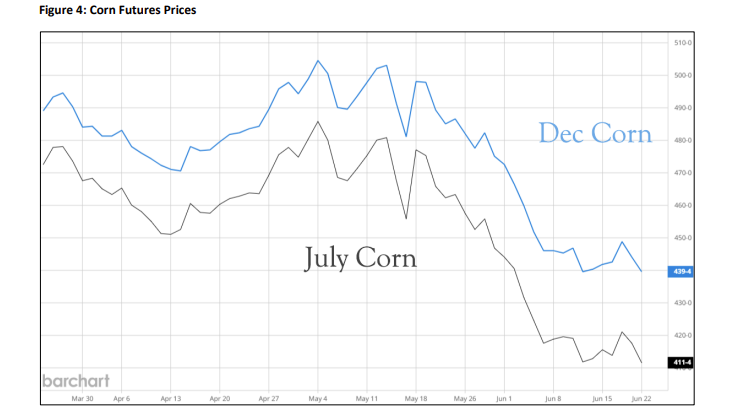
Less talked about but just as important for prices is the June 1 corn stocks report. Corn demand has been good and yet cash prices are not narrowing across large parts of the Corn Belt. The stocks report will give an indication of feed and residual usage. Exports have been strong with export sales data indicating total commitments of 3,304 million bushels through June 11, on track to hit USDAs recently raised forecast of 3,325 million bushels. While ethanol usage of corn remains strong, USDA lowered the usage total by 25 million bushels to 5,575 million as expected. Feed and residual usage of 6.2 billion bushels is massive and indicates a third quarter feed and residual number in the 930 – 1,130-million-bushel range. A bearish stocks number will be a market mover.
December corn futures moved lower to close at $4.39 yesterday. The December future price sits at the lowest close price for the contract. The July contract closed at $4.11 on Monday, down close to the contract lows seen last week. Cash prices across Oklahoma locations range between $3.66 – $3.71 with higher prices reported in locations.
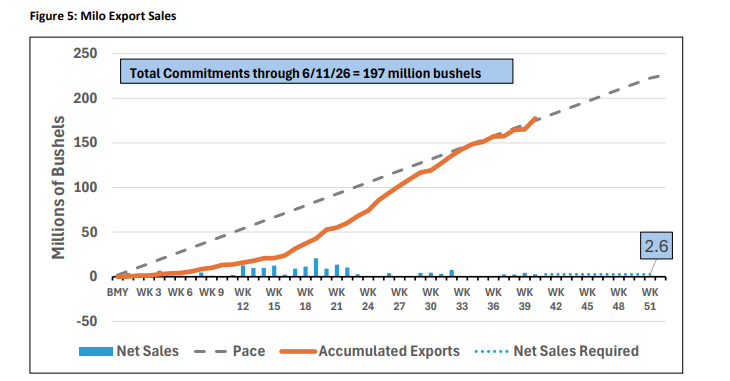
Milo basis remains weak with basis reports off the July contract coming in at -100 to -120 across the state. Harvest basis sits at -95 to -110.
Milo planting sits at 84 percent of the expected 6.1 million acres revealed in the March Prospective Plantings report. The planting pace is consistent with the five-year average pace at this point in the planting season. Oklahoma came in at 78 percent planted while Kansas and Texas are at 77 and 96 percent, respectively. The initial release of milo crop conditions for the crop year came out yesterday as well. Good and excellent conditions for the six states totaled 51 percent, down 10 percent from last year. Poor and very poor conditions equaled 13 percent, up from six percent last year. Colorado provided the worst conditions by far with 57 percent of the crop coming in as very poor.
Milo demand is working through the large old crop. Ethanol usage remains robust. Milo stocks will provide further clarification on feed and residual for the old crop marketing year. Export sales data place total commitments of milo at 197 million bushels through June 11. Outstanding sales sit at 19 million bushels of commitments. Sales picked up in late May and early June. Weekly net sales averaged 3 million bushels per week over the period. The Chinese and unknown destinations possess remain the destinations with the most pending sales. China has outstanding sales of 5 million bushels with unknown destinations holding 14 million bushels. Exports continue tracking the forecast of 225 million bushels for the marketing year.
RON's Dave Lanning has a pre-opening look at today's agricultural Markets.
Click the audio tab below for today's report.
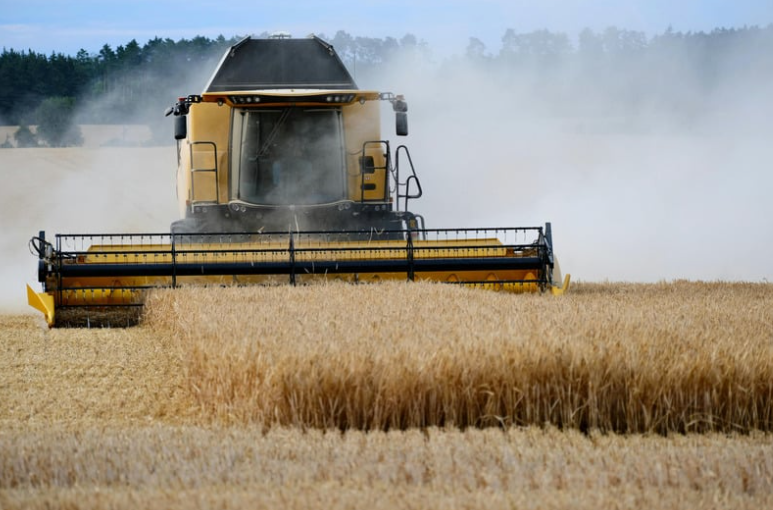
According to the latest crop progress report released on June 22nd, 2026, Oklahoma's winter wheat conditions are rated 9% good to excellent, 61% poor to very poor, and 30% fair. Oklahoma winter wheat harvested is at 95% this week, compared to 73% last week.
Kansas winter wheat crop is ranked 14% good to excellent, 31% fair, and 55% poor to very poor. Winter wheat harvested is at 58% compared to 28% last week.
Texas winter wheat crop is ranked 12% good to excellent, 23% fair, and 65% poor to very poor. Texas winter wheat harvested is at 77% this week, compared to 75% last week.
Nationally, winter wheat conditions rank 26% Good to excellent, 28% fair, and 46% poor to very poor. Winter wheat harvested is at 40% compared to 25% a week ago.
Oklahoma: 31% poor to very poor, compared to 28% last week. 36% Fair compared to 38% last week, and 33% good to excellent compared to 34% last week.
Kansas: 19% poor to very poor compared to 23% last week. 30% fair compared to 31% last week, and 51% good to excellent compared to 46% last week.
Texas: 25% poor to very poor, compared to 30% last week. 35% fair compared to 33% last week, and 40% good to excellent compared to 37% last week.
Nationally: 37% poor to very poor, compared to 39% last week. 30% fair compared to 29% last week, and 33% good to excellent compared to 32% last week.
Oklahoma corn emerged is at 92%. Corn conditions rank as follows, 10% poor to very poor, 22% fair, and 68% good to excellent.
Kansas corn emerged is at 96%. Corn conditions rank as follows, 6% poor to very poor, 30% fair, and 64% good to excellent.
Texas corn emerged is at 98%. Corn conditions rank as follows, 12% poor to very poor, 39% fair, and 49% good to excellent.
Nationally, corn emerged is at 97%. Corn conditions rank as follows, 6% poor to very poor, 26% fair, and 68% good to excellent.
Oklahoma soybeans emerged are at 66%. Oklahoma soybean conditions rank as follows: 17% poor to very poor, 36% fair, and 47% good to excellent.
Kansas soybeans emerged are at 80%. Kansas soybean conditions rank as follows: 6% poor to very poor, 29% fair, and 65% good to excellent.
Texas soybeans emerged are at 80%. Texas soybean conditions rank as follows: 9% poor to very poor, 36% fair, and 55% good to excellent.
Nationally, soybeans emerged are at 93%
Oklahoma cotton planted is at 74% this week, up 9% from a week ago. Oklahoma cotton conditions rank as follows: 7% poor to very poor, 51% fair, and 42% good to excellent.
Kansas cotton planted is at 98% this week, up 2% from a week ago. Kansas cotton conditions rank as follows: 27% poor to very poor, 47% fair, and 26% good to excellent.
Texas cotton planted is at 90% this week, up 10% from a week ago. Texas cotton conditions rank as follows: 20% poor to very poor, 36% fair and 44% good to excellent
Nationally, cotton planted sits at 92%. Nationally, cotton conditions rank 13% poor to very poor, 34% fair, and 53% good to excellent.
Oklahoma sorghum planted is at 78%, up 27% from a year ago.
Kansas sorghum planted is at 77% up 1% from a year ago.
Texas sorghum planted is at 96%, even with a year ago.
Nationally sorghum planted is at 84%, up 2% from a year ago.
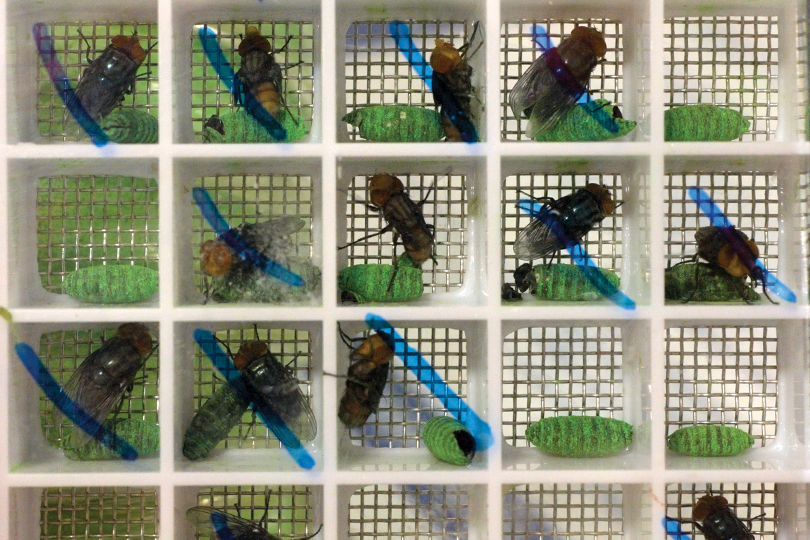
USDA has reported four new cases of New World Screwworm as we came out of the Holiday weekend. USDA Secretary Brooke Rollins has responded on X about those cases. "In the last 24 hours, 1 lamb in Crockett County, TX and 2 calves in Edwards County, TX have tested positive for New World Screwworm, bringing the total number of domestic confirmed detections to 15. USDA has already taken action and will be starting sterile fly dispersal flights over Crockett County (outside current affected areas) immediately.
"The Edwards County detections are inside the currently affected area. This was anticipated, even with sterile fly dispersals underway, because Sterile Insect Technique (SIT) does not kill existing larvae. Instead, it prevents future generations of flies. Because a fly's life cycle is an average of 21 days, it takes multiple reproductive cycles for populations to die off following sterile fly releases. As such, we may continue to see cases occur in already affected zones — a sign that our surveillance is working." (after the three cases that Secretary Rollins mentioned on X- the 16th case of NWS was announced late Monday- found in a goat in Terrell County, Texas.)
We now have a total of 15 cases of New World Screwworm that have been reported since June third- mainly in Texas (and one in New Mexico) with three of the cases now declared inactive. Details of the cases to date can be found on the USDA Screwworm.Gov website.
Meanwhile, the Texas Animal Health Commission offers a tip on how to make it easier to regularly inspect your animals- Bribe them! "Cattle cubes aren't just for snacks- they're a practical and valuable tool for New World Screwworm prevention. Getting your animals accustomed to regular inspections today can help prevent infestations tomorrow. Click here for a tip from the TAHC on how to use cattle cubes to aid in your inspection efforts.
And- USDA is pushing back on bad information on social media- one post from X suggests that New World Screwworm maggots like dead flesh- "Screw worm is only problematic for factory farms. Talk to small and midsized ranchers. They'll tell you screwworm only eat dead flesh from open wounds.Healthy cows aren't affected."
USDA replies "New World screwworm doesn't eat dead tissue. That's the entire issue. It feeds on living flesh. Healthy cattle become vulnerable through navels, cuts, branding wounds, castration sites, tick bites, etc. If it only ate dead tissue, the U.S. wouldn't have spent decades and billions eradicating it. Please do some basic reading before spreading misinformation. You're describing an entirely different type of maggot."
USDA's website, Screwworm.Gov, has lots of information on how to stay ahead of the pest on your operation, the latest on cases in Mexico and the US and more- click here.
Editor's note- courtesy of Texas Farm Bureau- the picture above is of the Sterile Fly that can mate with the wild flies and stop the females from laying fertile eggs which can hatch and become flesh eating maggots.
Senate Pro Tem Lonnie Paxton, R-Tuttle, and Senator Paul Rosino, R-Oklahoma City, today congratulated Senator Darrell Weaver, R-Moore, on his appointment as Cleveland County Sheriff.
"Senator Weaver has dedicated his life to public service and law enforcement," Pro Tem Paxton said. "There is no one more qualified to be named as Cleveland County Sheriff than him. He served his constituents and the state with distinction during his time in the Senate and as chairman of the Senate Public Safety Committee. Throughout his legislative service, he remained focused on protecting Oklahomans, supporting law enforcement and advancing commonsense public safety policies. Darrell is a true statesman, a trusted friend and someone I have been proud to work alongside. Cleveland County is fortunate to have a leader of his caliber serving as its next sheriff, and I wish him continued success in this new role."
Elected to the Oklahoma Senate in 2018, Weaver consistently championed legislation aimed at protecting victims of domestic violence, combating human trafficking, strengthening penalties for impaired driving offenses and supporting first responders.
Senator Rosino, whose district includes Cleveland County, said Weaver's extensive law enforcement background and commitment to public safety make him exceptionally qualified for the position.
"Senator Weaver was an outstanding colleague and someone I frequently turned to for guidance on public safety and law enforcement issues," Senator Rosino said. "His work in the Senate was driven by a genuine desire to protect victims, prevent crime and make Oklahoma communities safer. While I will miss serving alongside him in the Senate, I am excited to see him continue his public service in this new capacity and look forward to working with him as he assumed his new role as Cleveland County Sheriff."
Weaver began his law enforcement career in 1987 as an agent with the Oklahoma Bureau of Narcotics and Dangerous Drugs Control, serving in numerous assignments across the state. In 2006, he was appointed director of the agency and retired after a distinguished 28-year career. He was inducted into the Oklahoma Law Enforcement Hall of Fame in 2014.
A graduate of Cameron University, Weaver earned a bachelor's degree in accounting and later received the university's Distinguished Alumni Award and recognition as an Acclaimed Aggie. He also earned a Master of Business Administration from Oklahoma Christian University and received an honorary Doctor of Pharmacy degree. Weaver is a graduate of the FBI National Academy and the Senior Management Institute for Police.
In addition to his law enforcement service, Weaver served as an elected trustee of the Oklahoma Law Enforcement Retirement System and as a member of the Council on Law Enforcement Education and Training governing council. In 2021, he was appointed to the national board of commissioners for the Commission on Accreditation for Law Enforcement Agencies (CALEA).
From 2015 to 2018, he served as chief executive officer of Big Brothers Big Sisters of Oklahoma.
Weaver and his wife, Kim, a physician, reside in Moore and have five children.
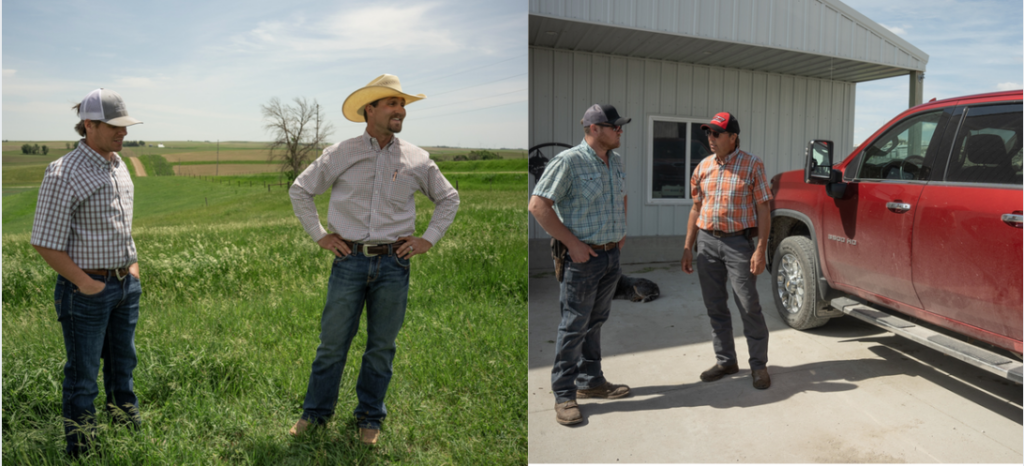
The Journey to American Beef campaign is led by the U.S. Meat Export Federation, which works to promote U.S. beef and build consumer demand in international markets. Two Iowa farms are helping tell the story of American beef production to consumers in Japan through the Journey to American Beef campaign, an initiative highlighting the people and practices behind U.S. beef.
A video production crew recently visited two family-run operations in Iowa to capture the full journey of beef production, beginning with the farm of Shane Weis near Manning, Iowa.
For Wiese, sharing the story of his family's operation is both meaningful and personal. His family has deep roots in the cattle business, with a legacy stretching back more than a century. "We got our first Herefords in 1904, and we started raising our own registered Herefords in 1912," Wiese said. "We are century Hereford breeders, which is something we're very proud of."
Weis said telling agriculture's story has become increasingly important as consumers grow more interested in how their food is raised. "It's our obligation to tell our story," Weis said. "It's fulfilling to get to tell our story."
His brother, Chance Wiese, emphasized that beef producers have a responsibility to educate consumers about the care, ethics, and stewardship involved in raising cattle. "We as agriculturalists and beef producers want to produce a premium product as ethically as we possibly can while taking care of the environment," Chance said. "There's a lot of good to be had in this industry, and I think it's our duty and obligation to tell that story and share that story for the greater good."
The second stop in the campaign featured a feedlot near Carroll, Iowa, operated by Tim Pudenz and his son, Chandler, whose family has been involved in cattle feeding since the 1950s. "Chandler and I are continuing the Pudenz family cattle feeding business that was started by my dad and all his brothers back in the '50s," Tim said.
Tim highlighted Iowa's reputation for producing high-quality corn-fed beef and said that quality resonates strongly with international consumers. "Corn-fed beef is what makes the meat really good," Tim said. "We feel that the people in Japan—once they try our beef—they're going to be very excited, and they're going to come back again."
Family farm and ranch operations remain a central part of the Journey to American Beef campaign in Japan, which showcases the dedication, heritage, and quality standards that define U.S. beef production.

The Chinese team examines how the different blends of U.S. wheat classes performed during a workshop at the Wheat Marketing Center. Photo Credit: Wheat Marketing Center
Which wheat – or blend of wheats – works best for what product? That's the ultimate question teams come to answer during the End Product Collaborative Short Course at the Wheat Marketing Center (WMC) in Portland, Oregon. The course is designed to put different wheat blends to the test for the specific end products that international customers are considering to tweak or introduce into their business operations.
Pro-tip: the six classes of U.S. wheat rise to the top of the results across product categories, proving the quality of U.S. wheat is consistent, while blending the classes together can make the perfect formulation.
U.S. Wheat Associates (USW) recently organized a team from China to attend the WMC End Product Collaborative Short Course from June 7 to 14, 2026. The team included seven representatives from private Chinese mills and food manufacturers, whose responsibilities ranged from research and development to grain merchandising and end-product marketing.
"This EPC course supports our private customers in China in expanding their businesses by increasing the variety of bakery products that require high-quality U.S. wheat," said Steve Wirsching, vice president and director of the USW West Coast Office, who accompanied the team in Portland. "It also provides targeted direction for developing the wheat market in China, ultimately contributing to increased imports of U.S. wheat."
Under the direction of Dr. Jayne Bock, WMC technical director, and Dr. Andrew Mense, food scientist and public projects manager, the course focused on using U.S. wheat to produce trendy bakery products in the Chinese market. The team baked several Western-style breads, including clover dinner rolls, ciabatta, bagels, focaccia, toast bread and sponge cakes. These products are in high demand among hotels and fancy restaurants that cater to international travelers, making them a premium market segment.
The team's main takeaway was reinforcing that each product requires a different blend of wheat, but that U.S. wheat classes rose to the top. To meet the specific preference of Chinese consumers, the team experimented with the ideal formulations of U.S. wheat classes for each product. These blends are a unique strength of the six classes of U.S. wheat that competitors like Canada and Australia cannot offer.
For example, the team determined that a blend of 70% U.S. DNS (Dark Northern Spring) and 30% hard red winter (HRW) wheat was ideal for making bagels and clover dinner roll, while ciabatta and focaccia required less DNS but more HRW to get a tender but still chewy texture. For toast, to achieve the desired chewiness for the market, the team determined that 100% DNS performed best. In contrast, a blend of club and U.S. soft white (SW) wheat performed best for producing Japanese-style sponge cakes – a popular premium product.
"The Wheat Marketing Center did an excellent job developing the products that demonstrate the versatility and functionality of wheat classes," Wirsching said. "The team showed these Chinese participants how these Western-style products can perform in their markets and help increase consumption. These products also perform best when using high-quality U.S. wheat, reinforcing the value of U.S. wheat classes in these applications."
While in Portland, the team also toured Dave's Killer Bread, Marsee Baking, and Oregon State University's Food Innovation Center, met with representatives from the U.S. wheat supply chain and visited local supermarkets. These tours and discussions complement the lab workshops by reinforcing how different classes and blends of U.S. wheat perform in commercial settings.
"Our milling customers now have a better idea on how to utilize the six classes of U.S. wheat," said Dr. Ting Liu, technical specialist of USW Beijing Office, who accompanied the team. "Our food manufacturers also know how to better communicate with flour suppliers on their flour specification needs."
As the team returns home to their own operations, U.S. Wheat will stay in close contact, following up with in-plant visits to provide technical assistance as the team members make the pitch for introducing new products – and for importing U.S. wheat to optimally do so.

In today's Beef Buzz, senior farm and ranch broadcaster Ron Hays speaks with Dr. Derrell Peel, who says heavier cattle and bigger carcass weights are creating both opportunities and concerns across the beef industry.
Peel said the latest Cattle on Feed report reflects a continuation of a trend the industry has been watching closely—fewer cattle are being placed into feedlots, marketings are down, and cattle are staying on feed longer, resulting in heavier carcasses.
According to Peel, larger carcasses mean more total beef production, including more trimmings for ground beef. "Bigger carcasses also produce more trim in general, and so we are producing a lot of those 50% fatty trimmings that we need lean beef to mix with," Peel said. "That's what's driving a lot of the import demand."
However, Peel noted that added weight doesn't just translate to more meat—it also means significantly more fat. "We are getting some additional pounds of meat, but we're getting a lot more external fat on these cattle," Peel said.
He pointed to rising yield grades as evidence of that shift. "The yield grade four and five percentage right now is at a record level in this country, with over 25% of all cattle grading yield grade four and five."
While that extra fat may not directly benefit consumers, Peel said it still carries value in today's market. "That's not meat for consumers, but it is a product, and because of the value of tallow, packers have had no incentive to rein in feedlots relative to these carcass weights up to this point."
Peel also warned the industry may be approaching physical limits with today's heavier cattle, especially during summer heat. "I think we are reaching potentially some physiological limits on these cattle," Peel said. "We are pushing them to very heavy weights."
That added weight can create structural and health challenges. "We're physically, structurally challenging these animals just to carry that weight at the end, and we are starting to see some additional health problems that can crop up," Peel said. "Hot weather can really contribute to that."
On exports, Peel said there has been some progress with China after export plant recertifications, but no major breakthrough yet. "We did make an important first step in getting China to recertify export plants, so from a regulatory standpoint, it's at least possible to export," Peel said. He said it may take another month or two before export data reveals whether shipments to China are increasing.
Even with record-high cattle prices, Peel said U.S. beef exports have remained relatively resilient. "Beef exports have actually held up fairly well," Peel said. "We haven't really seen the kind of decrease across the board to our various markets that you might expect given the fact that we're at record high prices."
For cow-calf producers, Peel said the broader market outlook remains largely unchanged despite the latest feedlot numbers. "I don't think this really changes anything," Peel said.
He emphasized that while on-feed inventories remain large, the overall cattle supply continues to tighten. "We are producing less cattle. Numbers continue to tighten."
Peel added that there is still little evidence of widespread heifer retention, due in part to ongoing drought concerns. "We don't have a lot of indication yet that we're retaining very many, if any, heifers at this point," Peel said.
Looking ahead, Peel expects tight supplies to continue supporting strong cattle prices. "We continue to see very strong prices, with a lot of volatility in some cases, but nevertheless, on average, we expect to see higher prices."
And while many expected the tightest supply pressure to hit later this year, Peel said that timeline may be shifting. "Most of the real pressure from tighter supplies is still ahead of us," Peel said. "It's beginning to look like we might even push that off to next year."
The Beef Buzz is a regular feature heard on radio stations around the region on the Radio Oklahoma Ag Network and is a regular audio feature found on this website as well. Click on the LISTEN BAR above for today's show and check out our archives for older Beef Buzz shows covering the gamut of the beef cattle industry today.
You're invited to attend a free event hosted by the Harmon County Conservation District.
You'll get to visit one of our Soil Health Implementation Program participants and have the opportunity to receive a CEU credit through OSU!
 Date: June 24, 2026
 Time: 8:45am-12pm
 Address: 202 E. Broadway, Hollis, OK
Please RSVP to (580) 688-3674
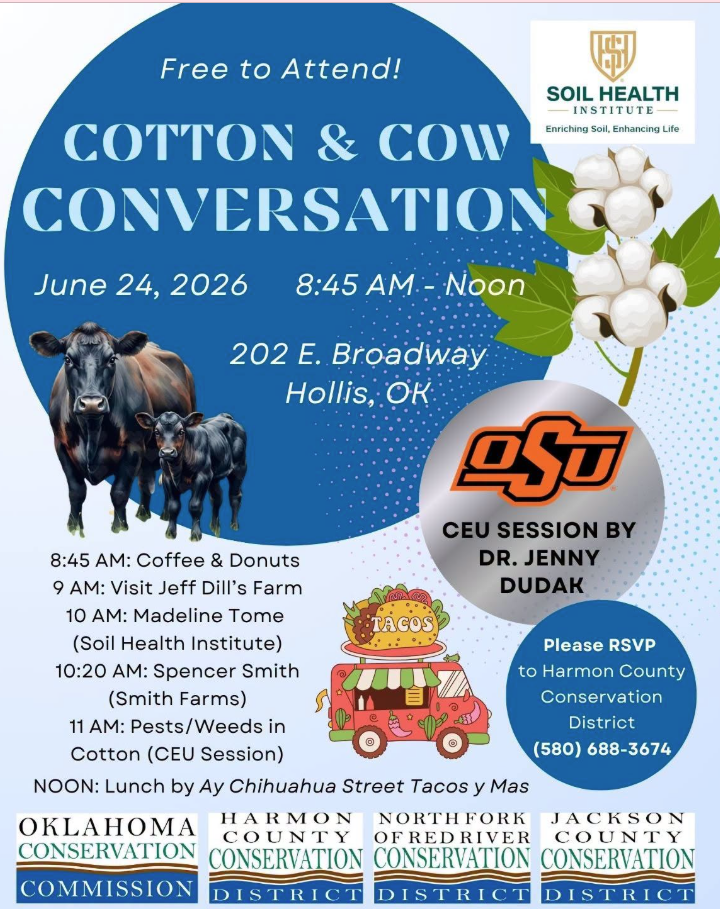
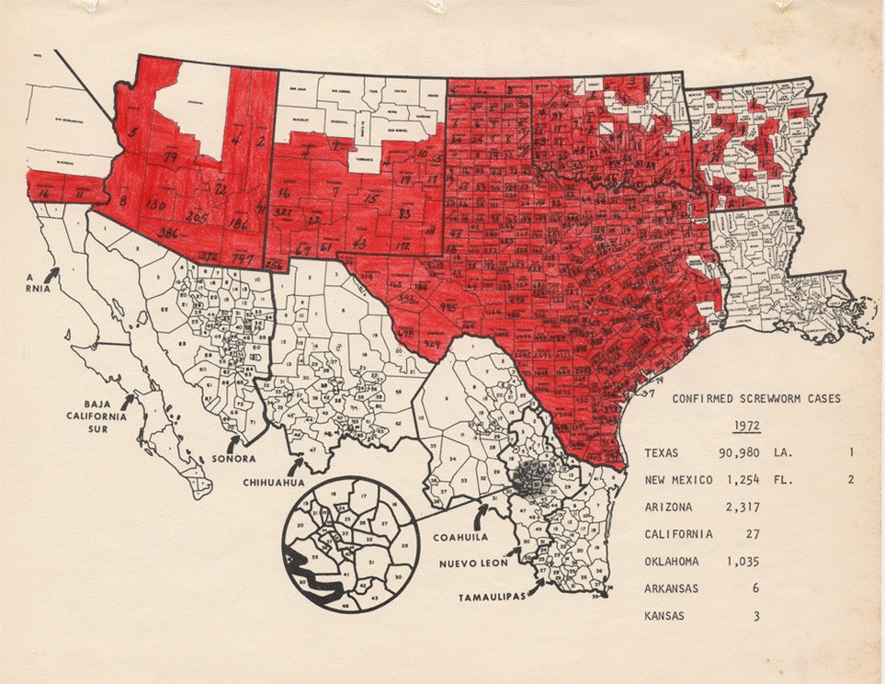
The reemergence of New World Screwworm (NWS) in the U.S. has prompted much discussion about eradicating the pest once again after having the country NWS-free for over 40 years. Sometimes overlooked or not understood is the fact that the battle has never stopped. Eradication of NWS from a particular region is a matter of pushing the boundary away from the region and maintaining it with sterile fly dispersals. After NWS was eliminated from the U.S. in 1966, NWS continued to be a problem in the U.S. because the barrier at the U.S.-Mexican border was too long and impossible to maintain. A major NWS outbreak in 1972 spurred the U.S. and Mexico to increase cooperation with a goal of eliminating NWS from both countries. Figure 1 shows that more than 90,000 cases of NWS were reported in Texas alone in 1972. Progress in pushing NWS south in Mexico eventually resulted in the last case of NWS in the U.S. in 1982. The sterile fly facility in Mission, Texas was replaced with a new facility in Tuxtla, Mexico.
As the NWS barrier in Mexico approached the 93rd Meridien (Isthmus of Tehuantepec), the decision was made to extend the NWS barrier south through Central America. Mexico was declared NWS-free in 1991. Progress in pushing the NWS barrier south through Central America led to the decision to establish the permanent barrier in Panama against the endemic NWS presence in South America.
Eventually a new sterile fly facility was located in Panama, replacing the Mexican facility. The Panama facility (COPEG) has continued to produce and disperse trillions of sterile NWS flies since then. Central and North America north of the Darien region of Panama has been NWS-free since 2004. In 2023, NWS breeched the barrier in Panama and moved rather quickly north through the Central American countries; back in Mexico by November 2024; across Mexico in 2025 and into the U.S. once again in June 2026. The U.S., Mexico and the Central American countries once again face the challenge of pushing NWS south. The history of NWS highlights the fact that the battle never stops – it is simply a question of where the front lines are located.
The current situation illustrates that it just takes a brief lapse for NWS to once again advance. Changing cattle market conditions and demands likely contributed to more movement and cattle movement through areas not covered by sterile fly coverage. There is little doubt that human transport (both legal and illegal) of cattle (and possibly horses) contributed to the rapid advance of NWS across Central America. Once in Mexico it spread rapidly, in part because the Mexican cattle market has evolved in recent years to include much more movement of cattle across the country.
It was beneficial before to control NWS and establish the barrier in Panama. It will be worth it again and that means that joint efforts and cooperation between the U.S., Mexico and Central America will be critical. The battle against NWS is fundamentally different than eradication efforts against diseases such as Brucellosis and Bovine Tuberculosis, where successful eradication efforts are replaced by on-going surveillance programs. The battle against NWS never stops and thus it is important to determine where the front line will be maintained and operated, recognizing continued evolution of cattle production and marketing in all regions.
Derrell Peel discusses how the latest New World screwworm news is influencing cattle markets and what producers should watch moving forward on SunUpTV from June 13, 2026 at https://www.youtube.com/watch?v=Xtp_nRxPa8E
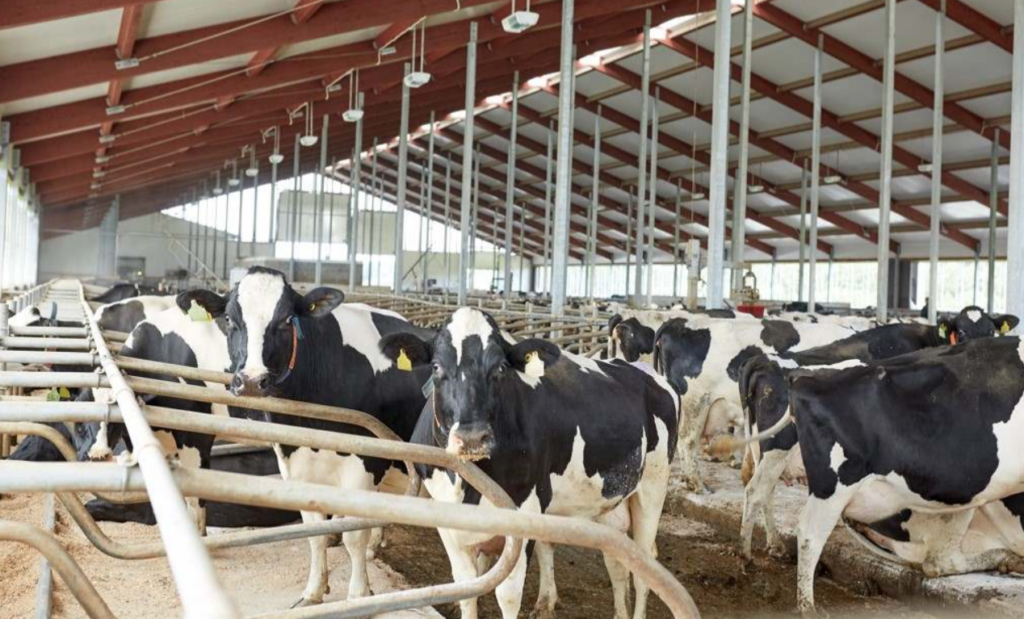
Finding reliable workers has become increasingly difficult for U.S. farmers, especially for physically demanding agricultural jobs (U.S. Department of Agriculture, 2023). The pool of domestic workers willing to take these jobs continues to shrink, even as wages have increased. In response, many farms have turned to the H-2A program.
Between 2015 and 2024, the number of certified H-2A workers more than doubled, reaching 350,000 or more (Figure 1). These workers now represent a significant share of the agricultural labor force and play an important role in supporting food production.
Figure 1. Number of H-2A Workers Certified, 2015–2024

The program has been, and remains, heavily concentrated on crop agriculture (Escalante, 2023). More than 80% of H-2A workers are employed in crop production, while animal farms make limited use of the program (Figure 2). Although the number of H-2A workers in animal agriculture increased from about 7,500 to over 17,500 since 2015 (Figure 1), they accounted for only 4.7% of total H-2A employment in 2024 (Figure 2). This raises an important question: why is adoption so low among livestock farmers, and how could the program better serve their needs?
Figure 2. Number of H-2A Workers Certified by Sector, 2024

A survey conducted with 133 livestock producers in Texas—including 99 beef cattle producers (Zhang and Melo, 2026) and 34 dairy farmers—provides insight into these questions. Farmers in both sectors reported persistent labor challenges, with 81% of beef cattle producers and 71% of dairy producers struggling with labor hiring, turnover, training, and retention. Although both sectors demand substantial labor, beef cattle operations often have more flexible and varied labor needs, while dairy farms tend to focus more on traditional agricultural tasks such as cow care, milking, and farm maintenance. Dairy farms also tend to hire more workers, require more hours per worker, and have a relatively higher share of farms paying higher wages. These trends align with Escalante and Gutierrez-Li (2025). However, producers in both sectors similarly reported four main barriers that limit H-2A use in cattle operations:
Despite these challenges, interest in the program remains strong. About 85% of dairy farmers and 78% of beef cattle producers in the survey indicated they would benefit from a more flexible H-2A program. Farmers broadly support reforms that would allow year-round employment, introduce more flexible scheduling and job duties, and simplify and speed up the application process. Targeted policy reforms that relax seasonality restrictions, increase flexibility in hours and job duties, and streamline administrative requirements would directly address the binding constraints identified by producers and are likely to facilitate broader adoption of the H-2A program in livestock operations, thereby alleviating persistent labor shortages and supporting the stability of U.S. animal agriculture.

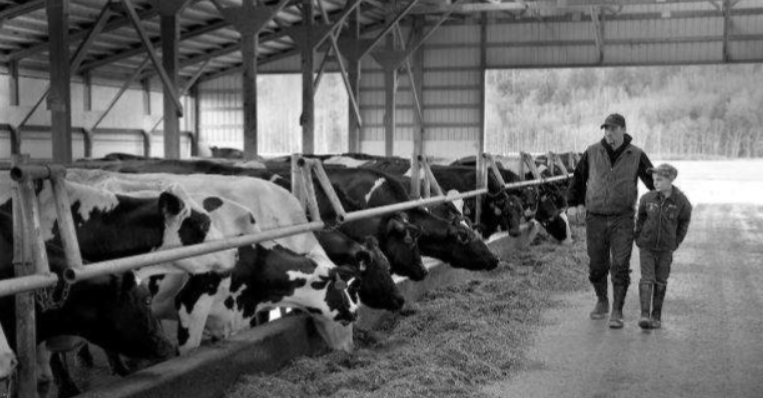
What, exactly, is an ultra-processed food? Proposals about, and FDA may be weighing in. But figuring out what a definition should and shouldn't cover is a difficult task, said Chad Galer, vice president of product innovation and food safety for Dairy Management, Inc.
"I think it's a risk that it might be a bit oversimplified," said Galer, who worked for 16 years at Kraft Foods before joining DMI. "It should be more of a matrixed approach where you are balancing the nutrition and the processing."
Galer discusses some of the health benefits of dairy products that can be affected by differing ultra-processed definitions, including flavored yogurt and cheese.
You can find and subscribe to the Dairy Defined podcast on Apple Podcasts and Spotify under the podcast name "Dairy Defined."
Media outlets may use clips from the podcast on the condition of attribution to the National Milk Producers Federation.
Listen to the full podcast here
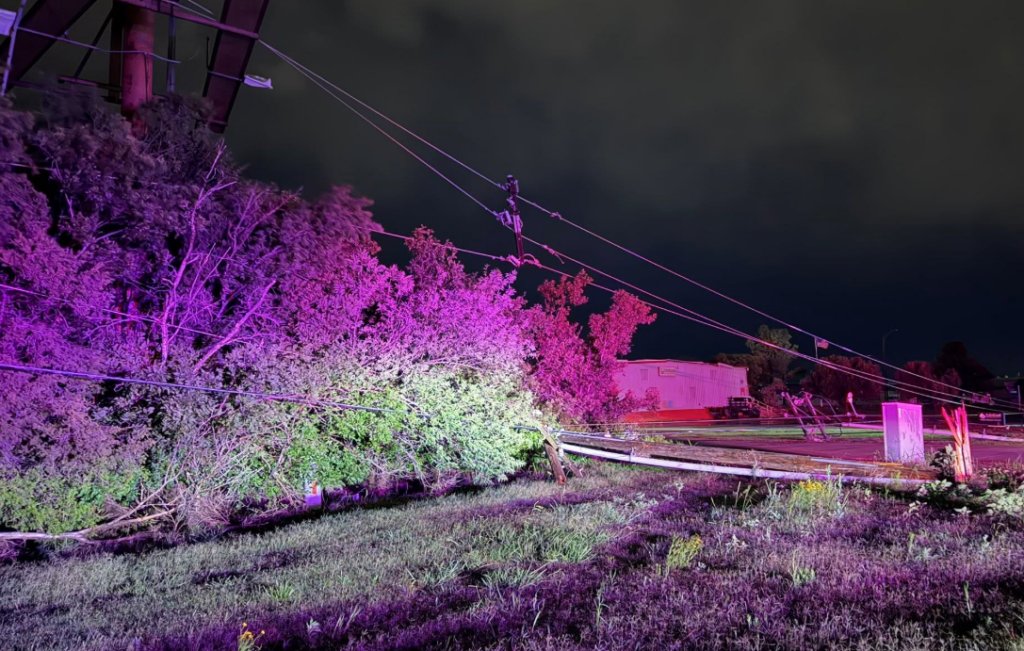
Pic courtesy of Kylee Dedmon News 9 FB Page
A powerful, destructive line of thunderstorms ripped through western and central Oklahoma during the overnight hours of Sunday into early Monday morning, June 22, triggering rare "destructive" warnings for the Oklahoma City metropolitan area.
The National Weather Service issued its highest tier of severe thunderstorm warnings just after 1 a.m. CT as the fast-moving complex brought exceptional wind gusts and widespread power flashes to the region.
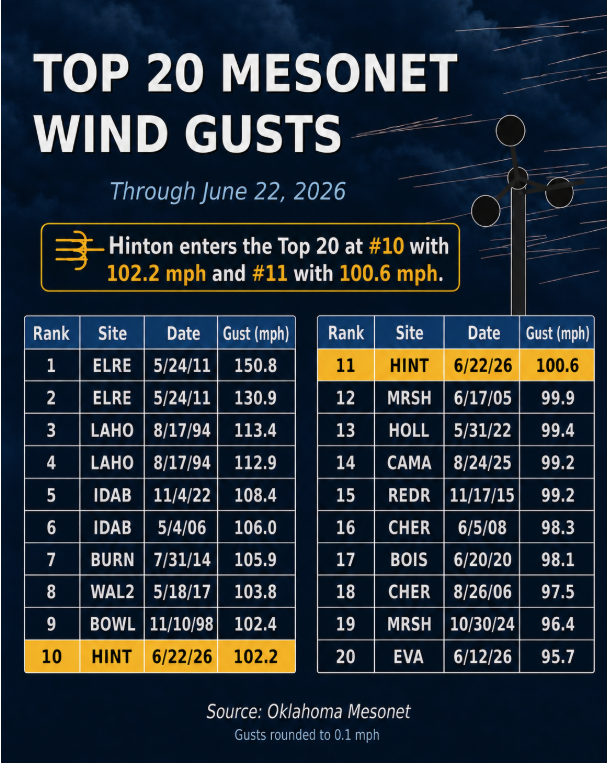
The defining characteristic of last night's system was widespread, intense straight-line winds. The storm raked across the state's central corridors after midnight, leading to extreme data points captured by the Oklahoma Mesonet:
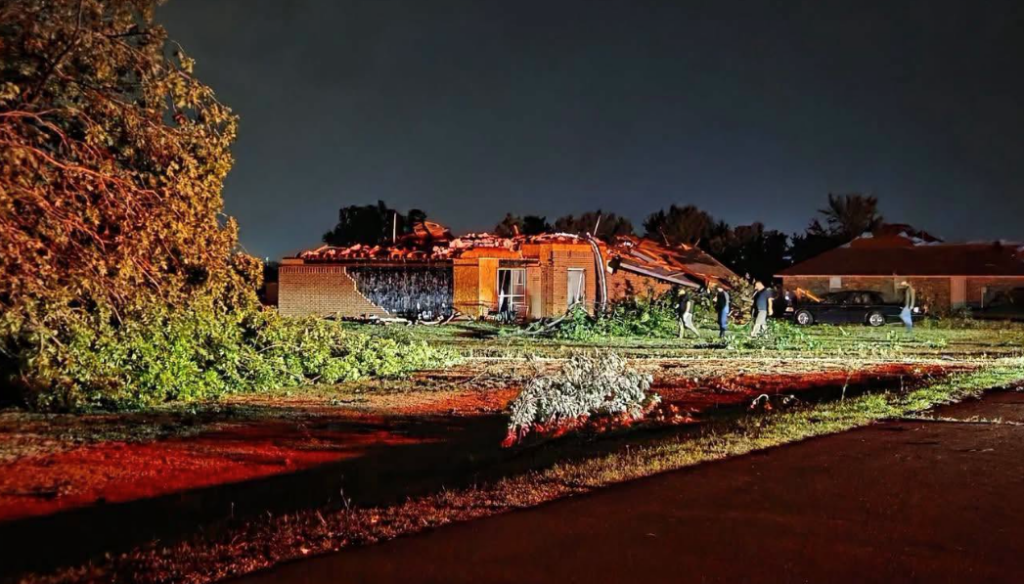
The violent wind field took a heavy toll on the state's electrical grid. According to data from Poweroutage.us on Monday morning, more than 70,000 utility customers are currently without electricity statewide.
The brunt of the damage is concentrated in the metro and northwestern rural pockets. OG&E Energy Corp. reports that over 43,000 of its customers are in the dark, with Oklahoma County accounting for the highest concentration at more than 22,000 outages. Further northwest, Woodward County is also sorting through significant grid damage, with over 2,000 customers reported without power this morning.
Utility crews are deploying across central and western Oklahoma to assess broken poles, clear snapped lines, and work toward safely restoring power.
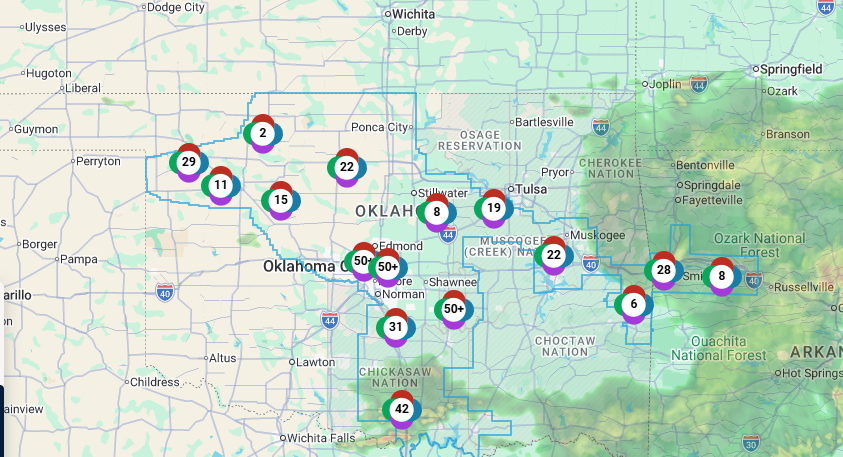
As the line approached the capital city, the National Weather Service in Norman utilized urgent, all-caps language to underscore the immediate threat to life and property, warning residents: "THESE ARE DESTRUCTIVE STORMS FOR THE OKLAHOMA CITY METRO!"
Alongside the intense wind field, torrential rainfall rates dramatically reduced visibility to near zero across major highway corridors, creating treacherous conditions for late-night travelers and emergency responders. The system has since tracking east, leaving thousands of utility customers in central Oklahoma without electricity as utility crews deploy to assess broken poles and downed tree limbs this morning.
More Severe weather may be on the way this week as Chances are in the forecast again today through Wednesday.
You can help the Oklahoma Department of Emergency Management team by reporting your damage at damage.ok.gov.
RON's Dave Lanning has a pre-opening look at today's agricultural Markets.
Click the audio tab below for today's report.
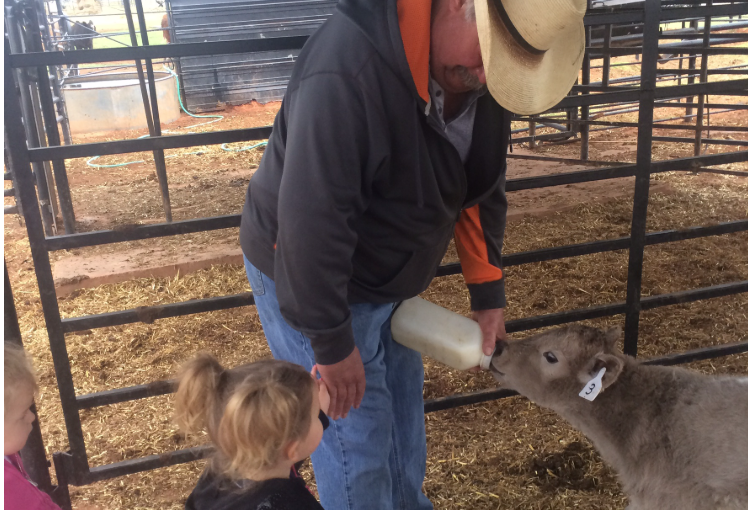
Father's Day on a farm or ranch rarely involves sleeping in, a fancy brunch, or a quiet afternoon on the golf course. For agricultural families, June is a peak season for haying, checking cattle, monitoring crops, and keeping the daily operations running smoothly. Yet, for fathers who make their living from the land, celebrating this day looks a little different—and perhaps carries a deeper meaning—than it does anywhere else.
On Father's Day, a producer's office is the cab of a tractor or a dusty pickup truck, and the celebration often happens right in the middle of a working day.
Observing the unique bond between agricultural fathers and their children highlights a timeless tradition of passing down both a vocation and a way of life. Being a dad on the farm means balancing the demands of production with the daily opportunity to teach life's most valuable lessons.
In agriculture, children don't just see their fathers go to work; they work alongside them. The tractor cab becomes a classroom. The bed of a pickup truck becomes a place to share a quick lunch and discuss everything from commodity prices to the importance of integrity.
Through the long hours, children witness firsthand what dedication looks like. They see their fathers get up before dawn to care for livestock, fix broken machinery with patience, and face unpredictable weather with resilience. These moments teach the next generation of producers that farming is not just a job, but a lifelong commitment to stewardship.
At the heart of every farm and ranch dad is the quiet hope of building something that lasts. Every fence stretched, every herd improved, and every acre cared for is an investment in the future.
Being a father in production agriculture means balancing the immediate needs of the operation with a long-term vision. It involves teaching a son or daughter how to read a cattle market, how to spot sickness in a calf, or how to care for the soil so it remains productive for decades to come.
The true reward for an ag dad isn't found in a traditional gift, but in watching a child take the wheel of the tractor for the first time, show their first heifer, or successfully manage a chore on their own. It is the pride of seeing grit, work ethic, and a love for the land take root in the next generation.
While the tools of the trade require constant attention, Father's Day offers a moment to reflect on the blessings of raising a family in rural America. The celebration might simply be a shared jug of water in the shade, a family dinner after the fields are finished, or the satisfaction of a hard day's work completed together.
For farmers and ranchers, legacy isn't just about what is left behind in a will; it is about the daily investment made in the character of their children. This Father's Day, the highest tribute goes to the men who are not only working hard to feed the world, but are doing the vital work of raising the next generation of agricultural leaders right beside them in the field.
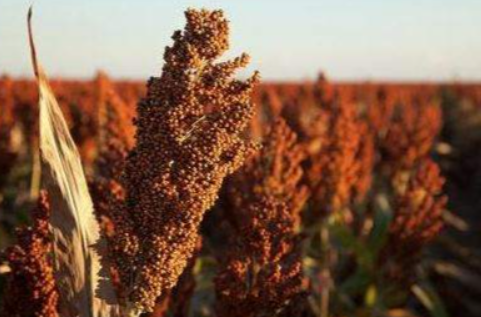
The United Sorghum Checkoff Program (USCP) has selected 15 participants for Leadership Sorghum Class VIII, a premier program designed to cultivate the next generation of leaders in the sorghum industry.
"As agriculture continues to evolve, developing informed and forward-thinking leaders is essential to the long-term success of the sorghum industry," said Kim Baldwin, USCP Chair. "Leadership Sorghum gives participants a broader view of the industry and equips them with the knowledge, relationships and experiences needed to help advance sorghum's future as they grow into leaders at every level."
Members of Leadership Sorghum Class VIII include:
Brock Billings, Braymer, Missouri
Todd Borland, Levelland, Texas
Ana Copeland, Raymondville, Texas
Morgan Crabtree, Dalhart, Texas
Chris Jewett, Amarillo, Texas
Raphiel Jolliffe, Seibert, Coloradoi
Colin Kirchhoff, Prairie View, Kansas
Matthew McMillen, Dighton, Kansas
Mark Nall, Lubbock, Texas
Cole Novak, Canyon, Texas
Job Rendel, Miami, Oklahoma
Tobin Randolph, Perryton, Texas
Lisa Schemm, Sharon Springs, Kansas
Michael Taylor, Weatherby, Missouri
Creason Young, Riviera, Texas
"Each class of Leadership Sorghum represents the future voice of our industry," said Shelee Padgett, USCP director of emerging markets and grower leader development. "These producers and industry professionals bring valuable perspectives from across the sorghum-growing region, and this program helps them build the skills and connections necessary to strengthen both their operations and the broader industry."
Over the 14-month program, participants will take part in educational seminars, industry tours and professional development opportunities. Through hands-on learning, industry engagement and direct exposure to key sectors of the value chain, participants gain a clearer understanding of the challenges and opportunities facing sorghum today.
Leadership Sorghum Class VIII will launch in September with its first session at the Global Sorghum Conference in Lubbock, Texas. For more information about the Leadership Sorghum program, visit LeadSorghum.com.
U.S. Wheat Associates (USW) will convene its Summer Board of Directors Meeting June 22-25 in Fargo, North Dakota, bringing together wheat growers, industry leaders, and USW staff to discuss market conditions, export opportunities, and challenges facing the U.S. wheat industry. The gathering will feature committee meetings, market analysis presentations and discussions focused on trends in wheat demand and USW's strategies to strengthen the competitiveness of U.S. wheat.
A significant leadership transition will also take place in Fargo, as USW Chairman and North Dakota farmer Jim Pellman concludes his term and passes the gavel to Kansas farmer and USW Vice Chairman Gary Millershaski.
Pellman's time as chairman has coincided with a period of volatility and uncertainty in the global wheat market, but also notable successes. U.S. producers are navigating a tight supply situation as widespread drought conditions plagued the central and southern plains. At the same time, U.S. wheat exports surged by nearly 15% to 23.7 million metric tons in the marketing year that ended May 31, marking the highest level in five years.
Pellman's year-long tenure also included notable highlights with the celebration of the 60th anniversary of USW's office in Taiwan and the 70th anniversary of its office in Japan.
"As chairman, I spent a lot of time with customers of U.S. wheat over the past year and will always value those experiences," Pellman said. "My term has given me a much better view of the importance of U.S. Wheat Associates' work. As a wheat farmer, I have benefited from the work. As Chairman of the organization that does the work, I've gained a much better understanding of the role relationships and technical expertise play in international markets. We have the highest quality wheat in the world, and we also have the most trusted and respected people."
The June 25 Board of Directors meeting will include presentations from several industry experts who will examine both historical and emerging trends affecting the worldwide wheat market.
Mike Krueger, a market consultant with Lida Communications who has provided key information to USW over the years, will deliver a presentation titled "Key Wheat Market Events: Reflections From a 50-Year Career." Drawing on decades of experience, Krueger is expected to provide historical context for current market developments and discuss lessons learned from major events that have shaped the wheat industry.
Other speakers featured during the Board of Directors meeting:
As growers and industry leaders join USW in Fargo, discussions are expected to focus on balancing near-term production concerns with long-term growth opportunities. While weather-related challenges continue to limit U.S. wheat supplies, export numbers this past year demonstrate enduring demand for U.S. wheat in many international markets.
A series of USW committee meetings scheduled for June 24 will focus on continued investment in market development, customer relationships and USW's plans to maintain momentum in challenging times.
Groups that will meet are the Budget Committee, Long Range Planning Committee, Transportation Working Group, Food Aid Working Group and the Wheat Quality Committee.
A panel discussion titled "Funding and Collaboration for Future Wheat Research Success" will wrap up the June 24 session. The panel will be made up of Dr. Andrew Green and Dr. Andrew Friskop, both of NDSU, and Aaron Harries of the Kansas Wheat Commission.
The Oklahoma Women in Agriculture and Small Businesses Conference is set to return this August, bringing together women from across the state for a day focused on education, networking, and practical resources designed to strengthen both agricultural operations and small businesses.
Associate farm reporter Carli Davenport recently spoke with Lauren Minyard, Oklahoma State University Extension County Director, about what attendees can expect from this year's conference, which will be held Thursday, August 6, in Edmond.
Minyard said the event has become a longstanding tradition for women involved in agriculture and rural business across Oklahoma. "The Oklahoma Women in Agriculture and Small Business Conference will be held this year on Thursday, August 6 in Edmond," Minyard said. "This conference has been bringing together women for over 30 years now, and our goal is to always provide practical information, networking opportunities, and resources to help all of our women in Oklahoma succeed—not just within their business and their agriculture, but also in their communities."
This year's conference will feature a broad range of topics aimed at serving women in many sectors of agriculture and rural enterprise. "We have a great lineup of speakers," Minyard said. "We always try to offer a diverse program every year. We have everything this year, from cattle production and forage management to artificial intelligence, farm transitions, disaster preparedness, marketing, gardening, spray drones—just a lot of very diverse things to try to make sure there's something for everyone."
Rather than featuring a traditional keynote speaker this year, organizers are taking a different approach by expanding one of last year's most popular sessions. "We're actually doing something a little different this year," Minyard said. "Instead of having a keynote, we had a session at the end of last year's conference called Finding Your Circle that went so well. We wanted everyone to be able to attend that."
That session will now serve as the conference's lunchtime panel. "It'll be a panel, and it'll be someone from the CattleWomen's Association, the Farm Bureau Women's Leadership Committee, and the Farm Bureau's Young Farmers and Ranchers Program," Minyard said. "They'll talk about what they do and how you can get involved."
Minyard said the panel is designed to help women discover new ways to connect within agriculture while building leadership skills.
"These are great groups," she said. "It's a good way for our women to get involved, learn some leadership, continue that networking—everyone always asks us for networking opportunities—so those groups can really help with that and with advocacy in their communities and in our state."
The conference's continued success over the years is reflected in its loyal returning attendees. "We have a lot of the same women who come every year, and they always tell me they're excited to come every single year," Minyard said. "I'm really glad that it's something we can offer and continue to offer."
For many participants, the conference serves as an annual reunion. "They like to just come and visit and see each other," Minyard said. "It might be the only time they all get together once a year."
Registration for the conference is now open. "You can go to OSU's website and search for the Women in Ag Conference," Minyard said. "It's $65 to register, and our deadline is July 24 for early bird registration."
Minyard also encouraged attendees to follow the conference's Facebook page for session updates. "You can also see all that through our Facebook," she said. "We have our Women in Ag Facebook, and I'm going to be going on there this week and starting to put up our sessions, who our sessions are going to be, with descriptions, so everybody can start to see and figure out where they want to go."
The 2026 Oklahoma Women in Agriculture and Small Business Conference will be held at the Hilton Garden Inn in Edmond, offering women across Oklahoma a chance to grow professionally, expand their agricultural knowledge, and strengthen connections within the industry.
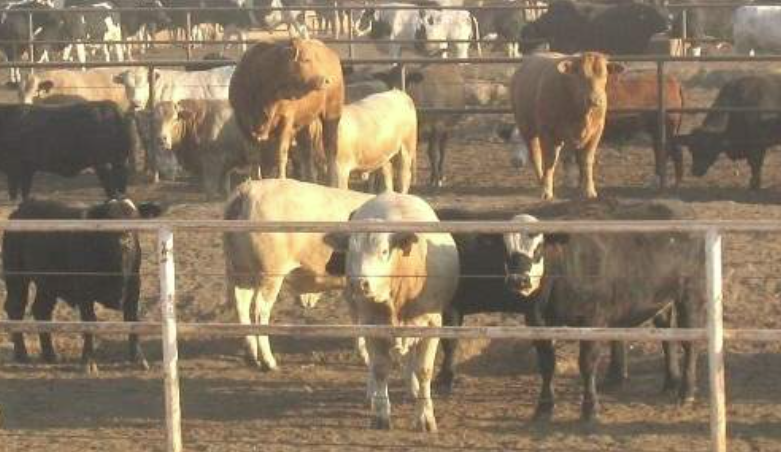
In today's Beef Buzz, senior farm and ranch broadcaster Ron Hays speaks with Dr. Derrell Peel, livestock market economist at Oklahoma State University, about the June 2026 USDA Cattle on Feed report and what it says about tightening cattle supplies.
Peel said the June report showed fewer cattle entering feedlots, but even fewer cattle leaving them. "This latest cattle on feed report had placements in the month of May down 9.7% year over year," Peel said. "Marketings in May were down 11.8% year over year, and that gives us an on-feed total for June 1 that's up 2.1% compared to last year."
That marks the second consecutive month that cattle on feed numbers have exceeded year-ago levels, but Peel says the increase can be misleading. "Cattle on feed numbers are going up not because we have more cattle," Peel explained. "We're placing less cattle, but we're squeezing off marketings even more."
Peel compared the situation to a water trough with inflow and outflow pipes. "Even though the in-pipe is slowing down, the out-pipe, if it slows down even more, you can keep the tank full," he said. "That's exactly what we're doing here."
A major factor is the increasing number of days cattle are spending in feedlots, which continues pushing carcass weights higher. "When you feed these cattle longer, we continue to push these carcass weights," Peel said. "Feedlots are basically placing pretty much anything they can find these days just because cattle numbers are so tight."
According to Peel, the trend of heavier cattle has been building for several years. "It really started in 2024," he said. "In 2024 and 2025, we added about 50 pounds to a steer carcass on average, and we've added another 30 pounds so far this year."
Those heavier carcasses are helping offset reduced slaughter numbers, though not completely. "Cattle slaughter is down roughly 6% so far this year, but beef production is down about 3.5%," Peel said. "The carcass weights do make a difference. They're moderating the decline in overall production, but they don't completely offset it."
Peel said feedlots are largely motivated by keeping pens full and maintaining operational efficiency. "We're holding the inventory full by feeding these cattle longer," he said. "The feedlot's main motivation is just to have an inventory of cattle to feed."
Still, Peel noted actual cattle throughput continues to decline. "The actual production coming out of the feedlot is still continuing to decline," he said. "We're actually producing less cattle—we're just holding them in the feedlot longer and allowing the feedlot to capitalize on that capacity utilization."
Peel emphasized that cattle-on-feed totals can hide the broader supply picture. "One of the lessons here is that cattle on feed sort of masks the fact that we are still tightening up overall cattle numbers in this country," Peel said. "That's what's going to be important when it's all said and done."
Ron also asked Peel about whether the growing number of beef-on-dairy cattle is contributing to longer feeding periods. "Well, yeah, those animals typically get placed in the feedlot fairly lightweight, so the days on feed is much bigger for those," Peel said.
However, he noted that this is not a new dynamic. "That's always been true for the Holstein cattle that we were feeding," he said. "Those cattle went into the feedlot anywhere from 350 to maybe 550 pounds. If they go in at that very lightweight, they're going to be on feed for a year."
Peel said today's beef-on-dairy crossbred calves follow a similar pattern. "They're coming in at roughly the same weight, and they stay on feed an awfully long time," he said.
The Beef Buzz is a regular feature heard on radio stations around the region on the Radio Oklahoma Ag Network and is a regular audio feature found on this website as well. Click on the LISTEN BAR above for today's show and check out our archives for older Beef Buzz shows covering the gamut of the beef cattle industry today.
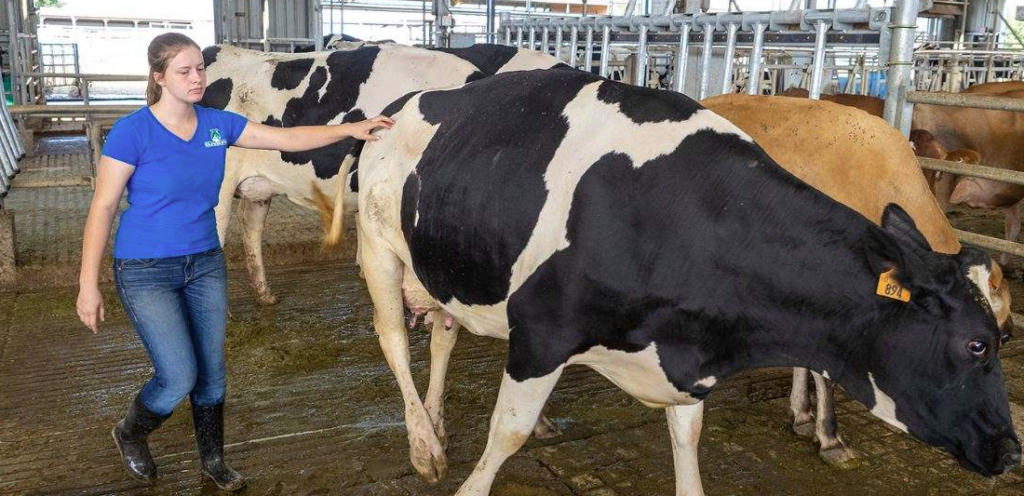
American Farm Bureau Federation President Zippy Duvall commented today on the Trump administration's clarification of a key aspect of farm labor access for the dairy sector.
"Farmers thank the Trump administration for addressing the farm labor crisis by expanding H-2A access for certain dairy jobs. The reality is clear - fewer Americans choose to work on farms while the need for qualified workers increases, creating a difficult labor market for U.S. farm families.
"This is an important step for our hardworking dairy farmers. However, it does not fully solve the problem. Legislation is needed to achieve durable and lasting reform that will provide certainty and fairness to both farmers and their employees as they contribute to a strong and healthy food supply."
The U.S. International Trade Commission recently announced that it will conduct a full review of the countervailing duties on imported phosphate fertilizers from Morocco and Russia.
In response to this development, Ohio corn farmer and National Corn Growers Association President Jed Bower issued the following statement:
"Corn growers will continue to fully engage in this process to share their concerns about countervailing duties placed on imported phosphate. As we have made clear many times before, high fertilizer prices play a major role in the economic outlook for corn farmers right now, many of whom are expected to lose money for the fourth year in a row.
"Ongoing volatility in the fertilizer market brings even greater concern as we start thinking about the 2027 growing season. Any possible price relief and stability in the market we could see in the coming months will be welcome developments.
"We have repeatedly asked the companies who petitioned for these duties, Mosaic and J.R. Simplot, to reconsider their position, and they continue to refuse to do so. That leaves us with seeing this process through to its fullest extent and making the case that continuing these duties will be a detriment to corn growers and our country."
United States Cattlemen's Association (USCA) welcomes the recent announcement of USDA's Small Processors Action Plan and the commitment of $60 million in new funding for meat and poultry processors.
"Providing cattle producers with more local and regional processing options is essential to restoring competition, strengthening the cattle marketplace, and delivering affordable, high-quality protein to American families. For years, USCA has advocated for policies that expand local and regional processing capacity and reduce the choke points created by excessive consolidation in the packing sector," said USCA President Justin Tupper. "Small and very small processors are the backbone of rural America. When they have the tools and support they need to succeed, producers gain real market access, consumers gain access to local, reliable food options, and our rural communities grow stronger."
As Secretary Rollins referenced in her announcement, small and very small processors account for more than 90% of federally inspected facilities, yet they have long been constrained by limited access to capital, burdensome regulatory hurdles, and an uneven playing field in a highly consolidated marketplace. USCA applauds USDA's stated focus on clearer guidance, faster approvals, improved customer service, and greater transparency for these processors, and appreciates the Department's recognition that a more diverse, resilient processing sector benefits both producers and consumers.
"This announcement matters because processing capacity is not just a small business issue — it is a cattle market issue. When independent and regional processors are held back by capital barriers, regulatory delays, or inconsistent guidance, cattle producers lose options, and the marketplace becomes more dependent on a handful of large packers. USDA's Small Processors Action Plan is an important step toward rebuilding competition from the ground up, but the real test will be implementation. These funds and reforms need to reach the plants that are actually serving producers, rural communities, and consumers who want access to American beef," said
USCA Independent Processing Committee Chair Patrick Robinette.
USCA stands ready to work with USDA and its partners to ensure that the Small Processors Action Plan and associated funding are implemented in a way that truly empowers independent processors, delivers on the promise of expanded capacity and competition, and keeps cattle producers at the center of a fair and transparent marketplace.
View this press release on the USCA website here.
The U.S. dairy herd has reached its largest size in 30 years, but one critical subset of the herd — replacement heifers that represent the next generation of milk cows — remains historically low. The number of heifers available to enter the milking herd has fallen sharply, dropping to the lowest level since 1978. The decline comes as strong financial incentives are prompting dairy farmers to produce calves destined for the beef supply rather than milk production.
According to a new report from CoBank's Knowledge Exchange, replacement heifer supplies are projected to shrink even further in 2026 before beginning to rebound in 2027. With replacements in short supply, producers are retaining adult dairy cows that would have typically been culled, contributing to the overall increase in the U.S. dairy herd. At the same time, producers are making more beef-on-dairy calves, further tightening dairy replacement heifer supplies. This has pushed heifer prices into record territory, well over $3,000 per head.
"On most dairy farms, net margins are currently being driven by the beef check, not the milk check," said Corey Geiger, lead dairy economist with CoBank. "Five years ago, calf and cull cow sales accounted for 5% of a dairy farm's bottom line while milk sales represented 95% of their revenue. Today, beef sales account for 12% to 15% of revenue on many farms, with some operations approaching 20% when measured on a per hundredweight basis. That shift is reshaping the U.S. dairy herd, most notably through the decline in replacement heifers."
CoBank's modeling indicates that dairy replacements entering the milking herd between last year and this year are shrinking by a combined 796,000 head, followed by a rebound of 360,200 head in 2027 and 2028. The projections are based on semen sales data from the National Association of Animal Breeders and assume average annual rates of conception, pregnancy loss and other key reproductive measures.
Strong consumer demand for high‑quality protein has placed dairy farmers in a unique position to capture growing revenue streams from both beef and milk sales. However, the timing of those revenue streams differs significantly. Raising dairy replacements requires a two‑year investment, while selling beef‑on‑dairy cross calves provides immediate income.
The economic incentive for dairy farmers to produce more calves destined for the beef supply is rooted in the historic contraction in the U.S. beef cattle herd, which currently stands at a 75-year low. Tight beef supplies and strong demand have driven beef cattle prices to record highs, prompting dairy farmers to dramatically increase their use of beef semen. In 2025, 82.7% of all U.S. beef semen units were purchased by dairy operations.
Dairy farmers are increasingly using gender‑sorted semen, genomics and beef‑on‑dairy strategies to optimize breeding for both production and profitability. Semen purchases have consolidated into two primary categories: gender‑sorted dairy semen for producing replacement heifers and beef semen for producing beef‑on‑dairy calves. From 2020 to 2025, beef‑on‑dairy semen sales rose 62%, and gender‑sorted semen sales increased 53.6%. Meanwhile, conventional dairy semen sales fell 47.4%.
Abbi Prins, agricultural commodities economist with CoBank, said the surge in beef semen sales to dairy farmers in 2023 will continue to suppress replacement heifer inventories this year due to the three-year biological cycle from conception to first calving.
"Our modeling shows 438,800 fewer replacement heifers entering dairy herds this year. That trend will begin to reverse in 2027 with 285,400 dairy replacements projected to enter the milking herd. Over time, we expect dairy farmers will continue rebalancing their breeding programs to optimize production for both beef and dairy markets. But dairy will continue to play a significant role in the beef supply for the foreseeable future, as rebuilding the beef cattle herd will take several years."
Read the report, Dairy replacements should begin a slow rebuild in 2027 and 2028.

The Oklahoma Cattlemen's Association excitingly announces open registration for the 74th Annual Convention and Trade Show. The event's theme is "Cattlemen Of Tomorrow, Built By The Brand," and it aims to be an active assembly of
industry executives, producers, and supporters committed to celebrating and promoting Oklahoma's flourishing cattle industry.
Convention attendees can experience a full agenda with a variety of educational sessions, captivating speakers, and interactive workshops designed to address current challenges confronting the beef industry. The convention is scheduled to take place from July 24 to July 25 at the Renaissance Tulsa Hotel & Convention Center, 6808 S. 107th E. Ave., Tulsa, OK 74133. Registration for the 74th Annual Convention and Trade Show is available here. Those who register before
July 8th are available to receive early registration discounts.
"We are thrilled to open registration for the 74th Annual Convention and Trade Show," said Ford Drummond, OCA President. "This event supports Oklahoma's cattle producers and promotes a tradition-driven, future-focused beef industry. Attendees will benefit from engaging instructional programs, a lively tradeshow, and exceptional networking opportunities."
The OCA is the trusted voice of the Oklahoma Cattle Industry and works to protect and empower Oklahoma cattlemen today, to serve tomorrow. The OCA is the only voice that speaks solely for the cattlemen of Oklahoma and represents beef producers in all 77 counties across the state. The OCA officers, board of directors and membership encourages you to join us in our advocacy efforts to ensure less government intervention, lower taxes, and a better bottom line. For more
information about OCA membership, the theft reward program or activities call 405-235-4391 or visit www.okcattlemen.org.

The National Farmers Union (NFU) has officially signaled a need for immediate legislative action, sending a detailed letter to the Senate urging lawmakers to fortify the farm safety net and implement critical reforms in the upcoming Farm Bill.
The push comes as the Senate Agriculture Committee actively shapes its version of the legislation. According to Aaron Shier, Government Relations Director for the National Farmers Union, the committee could release its proposed text relatively soon, with expectations building for a formal markup of the bill sometime this summer. This legislative movement follows action in the House of Representatives earlier this spring, which culminated in the passage of its own Farm Bill package in late April. However, securing a final package requires navigating the Senate, which is signaling a distinct approach to the legislation.
The NFU's communication emphasizes the urgent need for a robust safety net to protect producers facing an increasingly volatile economic landscape. The letter details several compounding challenges currently impacting the agricultural sector, including:
"We outline these concerns in this letter," Shier noted, emphasizing that the current economic climate makes congressional intervention vital. "With all the challenges in the farm economy, we think now is really an important time to take action—for Congress to take action—to strengthen the farm safety net for farmers, which is really what we're outlining and calling for in this letter."
As the Senate continues its work, the agricultural community remains focused on whether the final bill will provide the necessary stability to help American farmers withstand ongoing financial pressures.
RON's Dave Lanning has a pre-opening look at today's agricultural Markets.
Click the audio tab below for today's report.
American Farmland Trust is pleased to endorse the bipartisan American Food Supply Chain Resiliency Act introduced today by Senators Adam Schiff (D-CA), Cindy Hyde-Smith (R-MS), Amy Klobuchar (D-MN), and Jim Justice (R-WV). The bill would provide critical investments and coordination of local and regional food systems to ensure a profitable, nutritious, and resilient food supply into the future.
"This important legislation will help farmers access new markets, keep working lands in production, and create economic opportunities in communities across the country," said John Piotti, President and CEO of American Farmland Trust. "AFT applauds Senators Schiff, Hyde-Smith, Klobuchar, and Justice for this practical, bipartisan approach to strengthening regional food systems and ensuring the long-term viability of American agriculture. When farms thrive, America thrives."
The American Food Supply Chain Resiliency Act includes two components. First, it would make permanent the existing Resilient Food Systems Infrastructure Program (RFSI), which was initially launched by USDA in 2023. The program, which operates as a cooperative agreement with states, strengthens local and regional food systems by providing grants to producers, processors, local governments, nonprofits, and institutions to increase middle-of-the-supply-chain capacity and expand makret opportunities for small and mid-sized producers. RFSI supports projects such as expanding processing or aggregation capacity, modernizing storage systems, offering trainings, building new facilities, and more.
The bill also would establish Regional Food Systems Hubs (RFSH) across the nation - at least ten regional hubs and one national tribal hub - to improve local and regional food supply chains and markets. Specifically, the Hubs--which would be hosted by nonprofits, universities, and/or Tribal organizations--would provide a suite of services to local farm and food businesses including financial and technical assistance toexpand procurement opportunities. In addition, the Hubs would be tasked with providing business technical assistance, which includes financial coaching, business planning support, succession planning services, support accessing land and capital, and more.
AFT's endorsement of this legislation is part of its broader Thriving Farms and Ranches initiative, a bold nationwide effort to strengthen farms, support rural vitality, and build resilient food systems. Foundational to this work is a white paper, Thriving Farms and Ranches: In Support of America's Farmers and Ranchers - A Call to Action that outlines challenges farmers face and summarizes how rural communities can excel into the future through durable markets and sustainable agricultural pracitces.
Gabriel P. Cocanougher, 36, of Decatur, was arrested May 28 on one count of hindering a secured creditor, a first-degree felony.
The arrest follows an investigation conducted by Texas & Southwestern Cattle Raisers Association Special Rangers Lynn Mays and Cliff Swofford after they were notified in May 2026 by the creditor of a possible cattle theft involving livestock used as collateral for a loan.
Investigators learned Cocanougher had secured a loan of more than $5.5 million using more than 3,000 head of cattle and other assets as collateral. In April 2026, the creditor requested an inspection of the cattle. Cocanougher allegedly refused to cooperate with the creditor and law enforcement regarding the location of the livestock.
Following their investigation, the special rangers submitted their findings to the district attorney's office. After reviewing the case, a warrant was issued by the Moore County Court at Law charging Cocanougher with hindering a secured creditor, a first-degree felony.
Cocanougher was arrested by Special Rangers Mays and Swofford with assistance from the Wise County Sheriff's Office.
The investigation is ongoing.
Texas & Southwestern Cattle Raisers Association Special Rangers thank the 69th District Attorney's Office and Wise County Sheriff's Office for their assistance during the investigation.
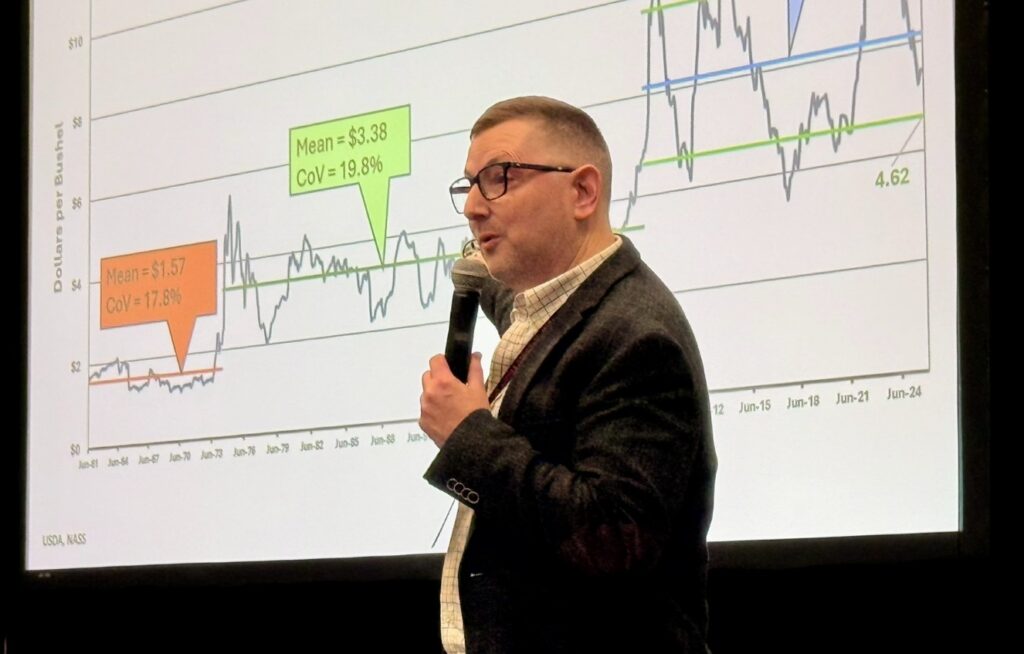
Oklahoma producers are moving rapidly through this year's winter wheat harvest, tracking well ahead of last year's pace with roughly 90 percent of the crop already complete, leaving producers focused on managing limited grain volume in a highly volatile market. While early regional reports indicate that overall grain quality has been decent, the actual bushels simply are not there, creating a much smaller crop footprint. Producers are now forced to navigate a complex marketing environment characterized by recent post-report price fluctuations, shifting production forecasts in the European Union and Russia, and highly favorable growing weather across the domestic Corn Belt.
Oklahoma State University crop marketing specialist Todd Hubbs analyzed these critical market dynamics with Farm Director KC Sheperd, focusing heavily on how producers should evaluate the financial metrics of storage versus immediate marketing.
Following the release of the latest USDA World Agricultural Supply and Demand Estimates (WASDE), initial market excitement has died down, leaving prices to hover within established ranges. Hard red winter wheat experienced a brief, 10-plus cent rally, though those gains were quickly given back as the market sought a definitive direction.
"I think some of that's on the back of reports of some dryness in the finishing crop in the EU, maybe some issues with spring wheat in Russia, but I think it might have probably been blown out of proportion a little bit," Hubbs explained, noting that spring wheat is not the primary crop for Russia. "We'll see how those crops turn out. People got to remember the spring wheat crop's not the biggest crop in Russia, and the crop conditions in places like France seem pretty good right now."
While potential dryness in Germany and Poland could take the top off the European crop, Hubbs noted that global balance sheets are carrying over substantial supply from last year's large crops. In the new marketing year, domestic export sales are moving forward at a decent, if unspectacular, pace.
"We're moving some wheat," Hubbs said. "But we're going to have to remain competitive on the global market, and it's going to be hard to get purchases for big rallies unless it comes from outside."
With current prices failing to excite producers, many are contemplating holding onto their wheat in commercial storage, hoping for a fall rally. Hubbs cautioned that the math behind commercial storage requires a disciplined look at market carry versus monthly costs.
"If you're thinking about storing it because you don't like these prices right now... " You need to look at the carry and relate that to how much you are paying to store each bushel in commercial storage for a month," Hubbs said. "Is that penciling out for you? Because if you could sell it right now and just earn some percentage in a savings account, you might be better off if you're going to go ahead and speculate on the crop moving higher this fall."
For younger producers who have grown accustomed to daily, double-digit price swings, Hubbs emphasized that this high volatility is likely here to stay. However, older market participants recognize that such massive intraday moves are historically uncommon, making structured risk management even more essential.
A key component of the conversation focused on whether tightening grain prices would find any relief from lower production costs. Hubbs expressed cautious optimism that input prices are adjusting downward, which could help clear inflation out of the broader agricultural economy.
The upside potential for wheat is currently being capped by excellent weather conditions in the domestic Corn Belt. Consistent moisture across the central U.S. has created an environment where another high-yielding year is entirely possible, maintaining downward pressure on the entire grain complex.
"Right now, it looks like we could have another really good year," Hubbs said. "That's going to hang over the markets into the fall... It doesn't seem like there's any shortage of corn right now, or beans, and the prices are reflecting that."
While soybeans recently saw a brief rally on rumors of aggressive Chinese buying, Hubbs expects prices to remain pinned within their current bounds through crop pollination, barring a severe weather collapse.
Producers should keep a close eye on the end of the month, when the critical USDA Acreage and Grain Stocks reports are released. These final numbers will set the official baseline for the 2025-2026 marketing year and dictate price ranges for the remainder of the summer.
"We're probably going to be in these kinds of ranges through pollination," Hubbs concluded. "We'll see some new balance sheets come out in July on the different classes of wheat from USDA... but the main things we're watching are just those productions coming up at the end of the month."
The U.S. Department of Agriculture welcomed new guidance from the U.S. Department of Homeland Security (DHS) and the U.S. Department of Labor clarifying that dairy operations may use the H-2A temporary agricultural worker program when they can demonstrate a qualifying temporary or seasonal labor need under existing law.
The policy memorandum provides additional clarity regarding how U.S. Citizenship and Immigration Services (USCIS) will evaluate H-2A petitions for dairy-related work. Under the guidance, dairy operations will be subject to the same statutory and regulatory standards applied to all H-2A employers, with petitions evaluated on a case-by-case basis based on the employer's demonstrated temporary or seasonal need.
The guidance clarifies that dairying is an agricultural activity eligible for consideration under the H-2A program and recognizes that dairy operations may experience temporary or seasonal labor needs that qualify for H-2A employment. It also confirms that employers seeking H-2A workers for dairy-related positions may use existing H-2A procedures and requirements.
For many dairy farmers, labor availability remains a significant challenge. The clarification provides additional certainty regarding the circumstances under which dairy operations may access the H-2A program while maintaining existing protections for U.S. workers and ensuring compliance with applicable federal law.
Additional information on the DHS policy memorandum is available through U.S. Citizenship and Immigration Services.
AI – no matter what industry one works in, it's an acronym that's heard a lot nowadays. The use of artificial intelligence has surged in recent years, increasing from roughly half of organizations using it in 2023 to more than 70% in 2024, according to global management consulting firm McKinsey & Company.
In healthcare alone, physician adoption nearly doubled from 38% in 2023 to 66% in 2024, according to the American Medical Association, and most United States hospitals now report using AI tools in at least some capacity. However, a 2025 study from the University of Minnesota found that rural hospitals lag in AI use.
"We studied the data set to focus more extensively on the rural side," said Brian Whitacre, professor and Jean & Patsy Neustadt chair in the Oklahoma State University Department of Agricultural Economics, whose research area focuses on strengthening the economy in rural Oklahoma.
Bridging the AI gap in rural hospitals
Whitacre said his research team looked at the specific questions that were asked about AI use, such as: Are you using it to facilitate scheduling? Recommend treatments? Monitor health? Simplify billing? For each question, his team looked at whether urban or rural use was higher.
"The interesting thing is this is the first year that AI use was ever surveyed, so we don't have any trend data," Whitacre said. "We know that use is lower in rural hospitals – only about half of rural hospitals use it, compared to over 80% of urban facilities. We're interested in the factors that impact AI adoption and the specific ways rural hospitals are using AI. We also want to explore how AI use is affecting their finances."
Whitacre said he hopes to interview administrators at rural hospitals to discover whether they use AI. If they are not, why? If they are, what are they using it for?
"It may not necessarily be a good thing for a lot of small communities. Hospitals are typically an important source of employment in many rural communities, and there is a concern that Al will reduce staffing," Whitacre said. "But if it helps the bottom line financially, that's something we're interested in too. Our research couldn't get this type of detail, because the data only provides a snapshot of whether they use it or not."
Whitacre said he is interested in turning this into a longer-term study in which he looks at whether AI improves a rural hospital's efficiency and bottom line after one year, two years, three years, etc. But for now, he is focused on how and why hospitals adopt it.
"Our preliminary results suggest that several factors influence AI adoption. If a rural hospital is part of a larger hospital system, that seems to positively influence AI adoption," Whitacre said. "If your hospital is doing well financially, that increases the likelihood of adoption. Alternatively, if you're an independent, small facility or are not doing as well financially, then you're much less likely to adopt it."
Real-world AI solutions: Mercy-Ada's approach
Mercy Hospital in Ada is a rural hospital operating under a larger system.
"As part of the Mercy Healthcare System, we are able to leverage resources that maybe an independent rural hospital would not have," said Dr. Benjamin Lynch, chief medical officer of the Mercy-Ada. "That's the benefit of being part of a larger healthcare system is we can extend those services that we may not otherwise have been able to tap into."
Lynch said Mercy works with data scientists and healthcare professionals to vet every aspect of AI before implementation, during implementation, and for monitoring after implementation.
"We try to advance this forward in a way that is ultimately going to touch the patients that enter our doors – whether it's in primary care, the hospital or advanced health care," Lynch said. "We want to be proactive in getting a diagnosis quicker, getting patients to care quicker, getting patients more specific care and getting that care in the right channels."
The Ada hospital uses AI to compile and share patient information more efficiently, to suggest possible diagnoses, to analyze CT scans and X-rays to detect urgent issues and to record patient. The hospital is also developing AI for early detection of conditions, such as diabetes, cancer and other chronic diseases.
"Overall, the goal of AI at Ada Hospital is not automation of care decisions, but improving efficiency, speed and quality of care while keeping clinicians in control," Lynch said. "The Mercy system is trying to get to a point where we are consolidating all of a patient's healthcare history into a CliffsNotes version for providers who are having their first meeting with the patient."
In a recent research paper currently under peer review, Whitacre called for investing in helping rural hospitals that lack the funds to evaluate and integrate AI.
"Without targeted support, rural hospitals risk falling further behind in adopting and using AI," Whitacre said. "The new Rural Health Transformation Program is promoting AI use in rural healthcare, but there are no guidelines in place in terms of what you should be using it for or how you evaluate it. Hospitals with limited resources could use help understanding how AI use should look for them, and how they can ensure the technology is appropriate for their patients."
Rural Oklahoma hospital officials interested in collaborating on this research can reach Brian Whitacre at brian.whitacre@okstate.edu or 405-744-9825.
Oklahoma horse owners and equine professionals now have a new opportunity to better understand horse behavior through the OSU RAISE online course, a detailed educational program designed to help participants recognize horses' emotional and behavioral cues. In a recent conversation with Associate Farm Reporter Carli Davenport, Dr. Kris Hiney, equine extension specialist at Oklahoma State University, explained how the course gives participants a deeper understanding of equine welfare by focusing on both physical and emotional health.
Hiney said RAISE stands for Recognizing Affective States in Equine, emphasizing that the course focuses heavily on understanding horse emotions and body language. "Affect essentially we're talking about emotions," Hiney said. "It's sort of a deep dive into the body language of the horse, but a lot more than people just think, you know, the ears back, or what's the tail doing."
She explained that the course takes a more comprehensive approach by helping people look beyond obvious visual cues. "It really looks at it holistically," she said. "All of the things that we do, the management, human interaction, all of that affect the horse, and how to pick up on how you can kind of see what's happening in the horse's mind."
The idea for the course grew out of research on horse welfare and common misunderstandings among horse owners. According to Hiney, many people rely too heavily on physical indicators when evaluating a horse's condition. "There is a pretty good body of literature that says that people rely a little bit too much on what we call just the physiological state of the horse," Hiney said.
She explained that owners often assume a horse is fine if its body condition and hoof health appear good. "If his body condition score is good and his feet are good, then the horse is good, but that really misses a big part about the mental piece of the horse and the mental domain."
Working alongside colleagues, Hiney wanted to help close that educational gap. "We know that people sometimes have a really hard time recognizing, is it good, is it bad," she said. "That's kind of where we came up with this project of building this online course."
Hiney believes improving a person's ability to read horse emotions can directly improve animal welfare and training outcomes. Misreading a horse's emotional state, she said, can lead to unnecessary stress and escalating behavioral problems. "I think a lot of people get reading horse emotion wrong, and that's when training practices escalate," Hiney said. "We're not really recognizing that the horse is stressed, or frustrated, or scared."
She said the course helps people identify subtle warning signs that often go unnoticed. "It really is trying to get people to recognize all these more subtle things that are wrong with the horse," she explained. "Maybe more subtle signs of stress, more subtle signs of pain, and so that you intervene earlier, or you change your management, change your training practices in recognition that, hey, that horse isn't very comfortable right now."
Designed with accessibility in mind, the RAISE course offers a highly interactive learning experience. Rather than relying solely on lectures or written material, participants engage with multimedia tools throughout the program. "We built it really with the user in mind," Hiney said. "It's self-paced online learning, but it's not just listening to a recording, it's not just reading through information."
She said the course includes videos, reflection exercises, and interactive questions to keep learners engaged. "It has a lot of extra bells and whistles," she said.
Feedback from participants has been overwhelmingly positive, including from experienced horse owners. "Even from people that are pretty experienced, they're like, 'Oh wow, I really didn't think about that,' or, 'I might have been missing that in my own horse.'"
Those interested in enrolling can register through Oklahoma State's online extension catalog. The course costs $50 per individual, though group discounts are available for barns, clubs, and riding centers.
Hiney said the full course takes about five hours to complete and offers significant depth for serious learners. "It's pretty detailed," she said. "There's a lot of extra reading if you want to do that."
The program also links participants to open-access research journals for further study. "It's not just a quick little 20-minute kind of course," Hiney said. "It is very, very in-depth for people that really want to understand horse behavior and management a little bit better." Participants who complete the course also receive a certificate, which may help those seeking continuing education opportunities.
Additionally, you can access the first module free here to get a glimpse of the course.
In today's Beef Buzz, senior farm and ranch broadcaster Ron Hays speaks with Michael Kelsey, who says Oklahoma cattle producers were encouraged by the results of the state's primary election, especially the overwhelming defeat of State Question 832.
Kelsey said the Oklahoma Cattlemen's Association viewed State Question 832 as a major concern for rural Oklahoma. "832 resounding no, and we're very thankful for that, and I really have to believe that the reason 832 was unsuccessful was because number one, it was so poorly written in our opinion." He said the agricultural exemptions included in the proposal created serious concerns. "When you exclude those agricultural exemptions, that really is just a non-starter for rural Oklahoma."
Kelsey added that beyond the $15 minimum wage proposal, the automatic annual increases also raised red flags. "I think rural Oklahoma rolled out... and then just a conservative type message also rolled out, but thankful that that one went down, and that we can move on from that."
According to the Oklahoma Election Board's Election Results for the June Primary, seventy-four of the seventy-seven Oklahoma counties voted against SQ 832. Only Cleveland, Oklahoma and Tulsa counties supported the measure.
Kelsey also weighed in on the governor's race, congratulating the candidates advancing after Tuesday's primary. He noted the Republican runoff between Gentner Drummond and candidate Mike Mazzei, along with Cindy Munson on the Democratic side. "Certainly, congratulations to General Drummond and congratulations to Senator Mazzei for making the runoff."
Kelsey said the results largely matched expectations. "I think it kind of shook out probably the way most folks thought. That Trump endorsement really pushed Mazzei. Drummond had such a strong showing early on that even though he floated down, he still had enough to make the runoff."
Kelsey said OCA has already reached out and invited all three gubernatorial candidates to a forum during the association's convention in Tulsa later this summer.
The State Senate races were another major focus for OCA. Kelsey said several strong agricultural allies survived difficult primary challenges. "The State Senate was the one that, honestly, of the big picture that I was watching the closest. We had some really good friends who were up for re-election and were successful, and we're very grateful for that."
He specifically highlighted senators, including Grant Green and Chuck Hall, for their support of agriculture.
Kelsey said that maintaining continuity in Senate leadership is important for long-term agricultural policy. "This allows the Senate to stay intact in terms of leadership and continue to move forward on some of the strategies they have in place that I think are very good for agriculture long term."
Looking ahead, Kelsey said OCA will closely evaluate runoff races to determine where the organization may become involved. He also noted the growing importance of independent voters in statewide elections. "That independent voter is going to be critical, no matter what party I may be of. That independent voter is going to be critical and could really shape some things. There are more independents than we've probably ever had in the state."
On the federal side, Kelsey praised Kevin Hern after his strong showing in the Senate race. "Mr. Hern's been a strong supporter of agriculture and the beef cattle business ever since he got into Congress... we're very, very good friends with him, and we're just tickled to see that."
Kelsey also noted the importance of returning congressional leaders such as Tom Cole and Frank Lucas, citing their leadership and support for agriculture.
The Beef Buzz is a regular feature heard on radio stations around the region on the Radio Oklahoma Ag Network and is a regular audio feature found on this website as well. Click on the LISTEN BAR above for today's show and check out our archives for older Beef Buzz shows covering the gamut of the beef cattle industry today.
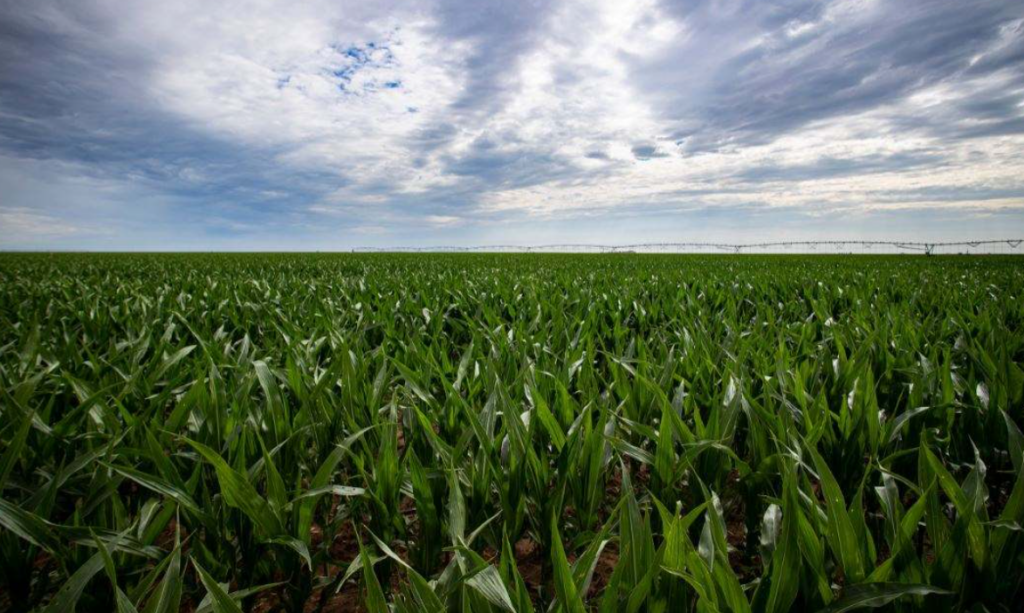
The National Association of Conservation Districts (NACD) welcomes the priorities that Natural Resources Conservation Service (NRCS) Chief Colton L. Buckley recently announced to guide agency operations, program delivery, stakeholder engagement, and modernization efforts.
"For 90 years, conservation districts have worked in the field, side-by-side with NRCS to ensure that conservation programs are voluntary, locally led, and meet the unique needs of the producers and communities they serve," said NACD President Gary Blair. "NACD applauds NRCS's reaffirmed commitment to strengthen local capacity and deliver the technical assistance producers need to get conservation on the ground, leveraging technology to optimize delivery and track progress to better tell the story of how producer-implemented conservation benefits us all."
As NRCS implements these priorities, NACD and conservation districts across the country look forward to continuing to partner with NRCS to strengthen voluntary natural resources conservation and ensure that working lands remain productive and resilient while protecting soil and water health for future generations.
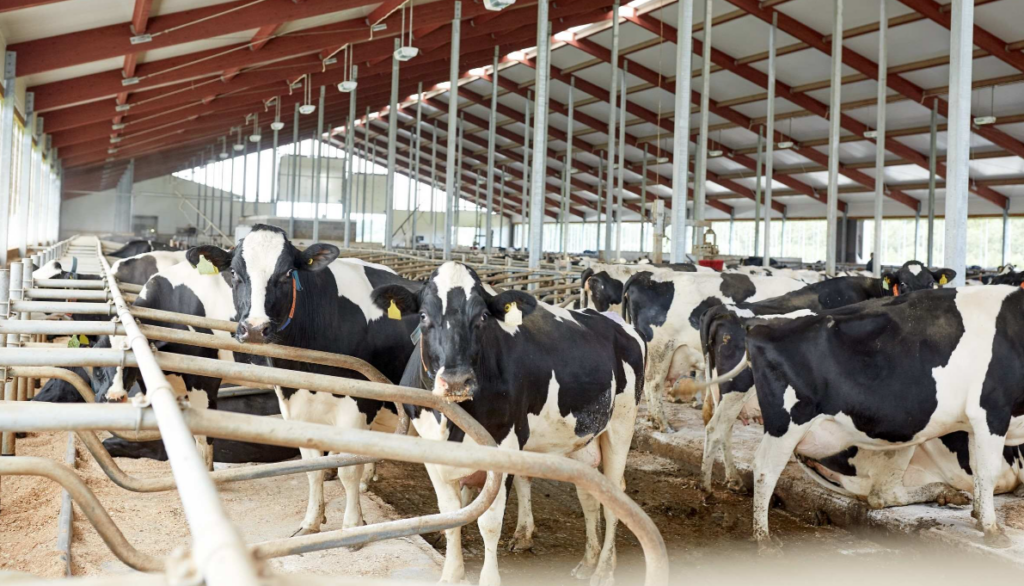
From NMPF President & CEO Gregg Doud: "Dairy farmers appreciate the new clarification released by the Trump administration outlining how dairy operations may use the H-2A agricultural worker program. The dairy industry has long sought access to the H-2A program, and this guidance will help open the door for dairies to begin using this program. We applaud secretaries Rollins and Mullin and acting Secretary Sonderling for their proactive leadership on this issue and look forward to learning more about these important new changes.
"NMPF pledges to work with both Congress and the administration to secure long-term certainty for the dairy workforce, including solutions to transition to H-2A, which will ensure that dairies across the nation are set up to thrive, boosting rural communities and providing Americans and the world with high-quality, nutritious products."
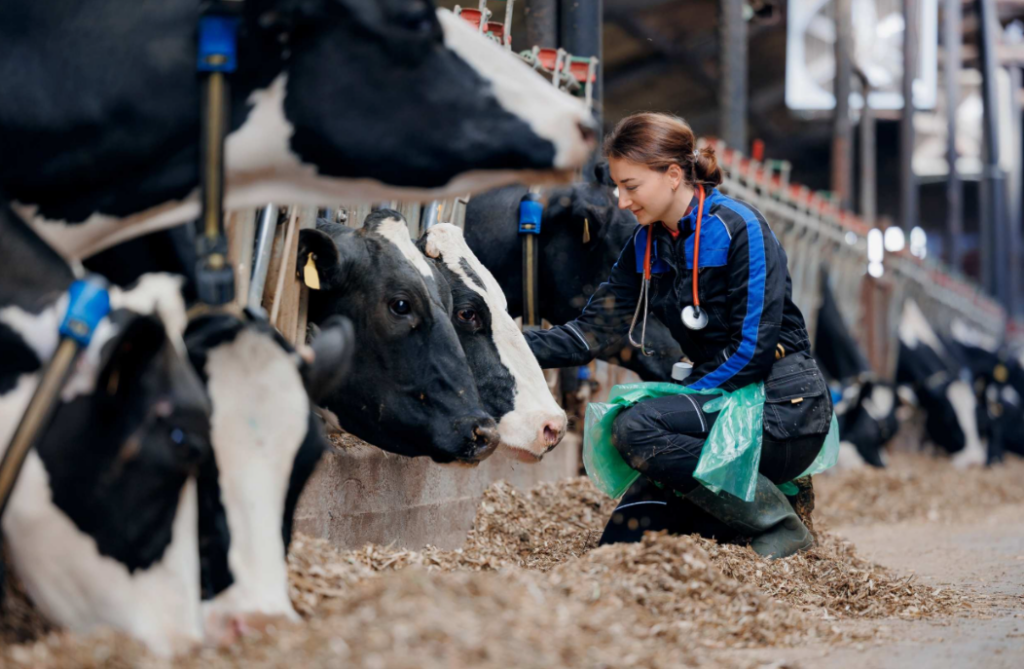
"NCFC applauds Secretary Rollins's announcement today that the Trump administration will create a program for dairy producers to access the H-2A program. This action helps address a key shortcoming of the program and will help ensure access to a legal, stable workforce by dairy farmers across the country.
"This announcement highlights the need for additional congressional action to fix the H-2A program, which remains complex, costly and burdensome. We urge Congress to take up legislation that reforms the H-2A program and ensures that all types of producers have access to the workers they need to feed, fuel, and clothe the nation."
Since 1929, NCFC has been the voice of America's farmer cooperatives. Our members are regional and national farmer cooperatives, which in turn consist of more than 1,600 local farmer cooperatives across the country. NCFC members also includes state and regional councils of cooperatives. Farmer cooperatives allow individual farmers the ability to own and lead organizations that are essential for continued competitiveness in both the domestic and international markets.
America's farmer-owned cooperatives provide a comprehensive array of services for their members. These diverse organizations handle, process and market virtually every type of agricultural commodity. They also provide farmers with access to infrastructure necessary to manufacture, distribute and sell a variety of farm inputs. Additionally, they provide credit and related financial services, including export financing.
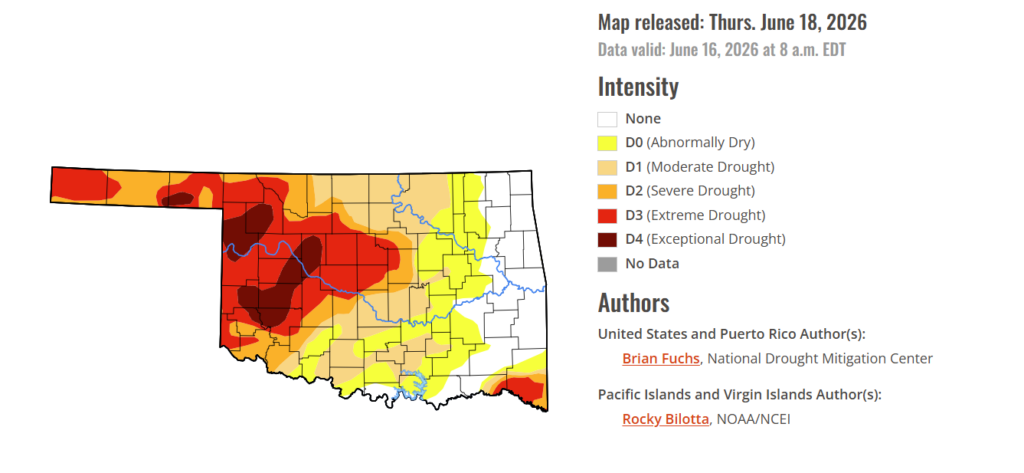
To view the latest Oklahoma drought map, CLICK HERE.
For the first time in months, Oklahoma's drought map is showing meaningful relief across eastern Oklahoma, where a large portion of the region is now officially drought-free. After weeks of steady and, in some cases, heavy rainfall, the latest U.S. Drought Monitor reflects one of the most significant improvements seen this year, with drought-free conditions expanding to 18.34% of the state. While much of western Oklahoma remains locked in severe drought, the dramatic improvement in the east marks a turning point, offering hope to producers who have been battling persistent dry conditions.
According to the latest Drought Monitor, exceptional drought persists in parts of western Oklahoma, including Kiowa County, Ellis County, Beaver County, Woodward County, and surrounding areas. Historic impacts of exceptional drought include rising hay and water costs, limited supplies, and herd liquidation by producers. Ranchers and farmers are facing severe economic losses as failed crops are baled or abandoned, pastures turn bare, and cracked, dry land leaves some fields unusable. An exceptional drought currently covers 7.13% of the state, down from 7.31% last week.
Moderate to extreme drought conditions in the current period indicate that 62.28% of the state is affected, down 1.18% from last week.
At this point, 18.34% of the state remains drought-free in eastern Oklahoma, up 16.04% from last week.
According to the 6-to-10-day precipitation outlook map, Oklahoma is leaning above a 33-40% chance of rain through June 27th, while northeastern Oklahoma is leaning above a 40-50% chance.
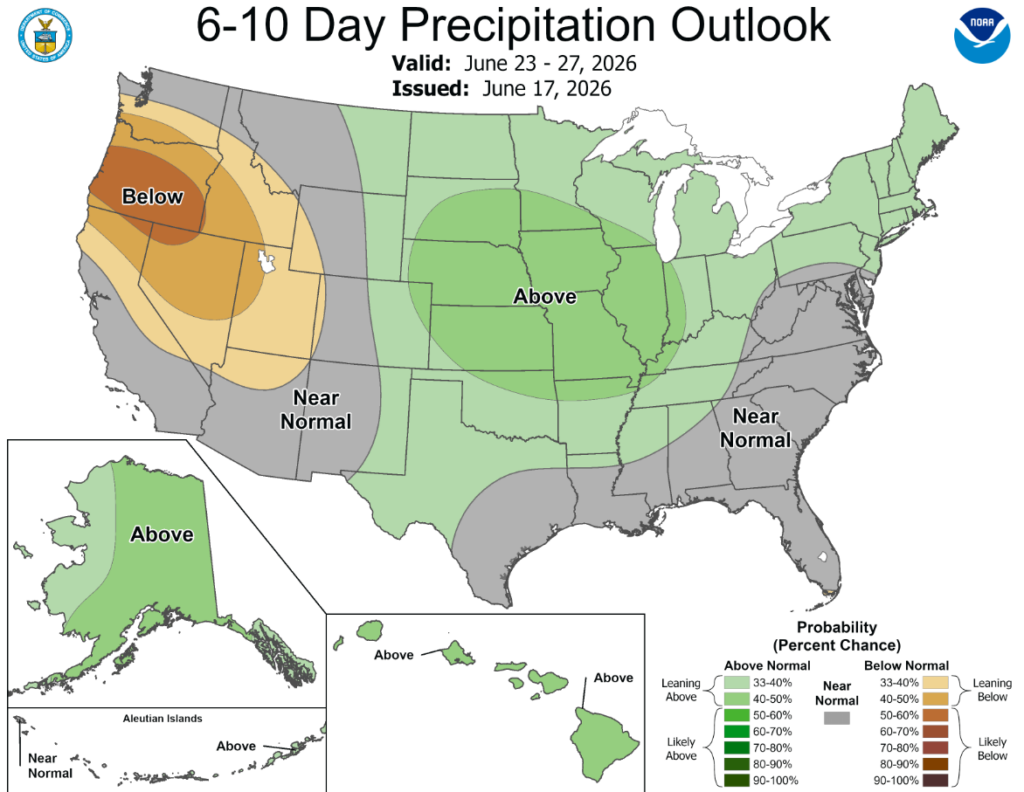
The heaviest precipitation this week occurred across the Midwest and southern Plains. Flooding rains developed from south Texas into the Gulf Coast region during and beyond the period considered in this week's analysis. Portions of Illinois and Indiana recorded precipitation totals 4–5 inches above normal. Over the past several weeks, persistent rainfall across the Midwest and central to southern Plains has contributed to widespread drought improvement. Temperatures were near to above normal across much of the country. The coolest conditions were observed from the central Plains into the northern Rocky Mountains, where portions of Montana and Wyoming averaged 4–6 degrees below normal. In contrast, the East Coast—particularly New England—as well as much of California and southern Nevada, experienced above-normal temperatures. Parts of New England recorded departures of 8–10 degrees above normal.
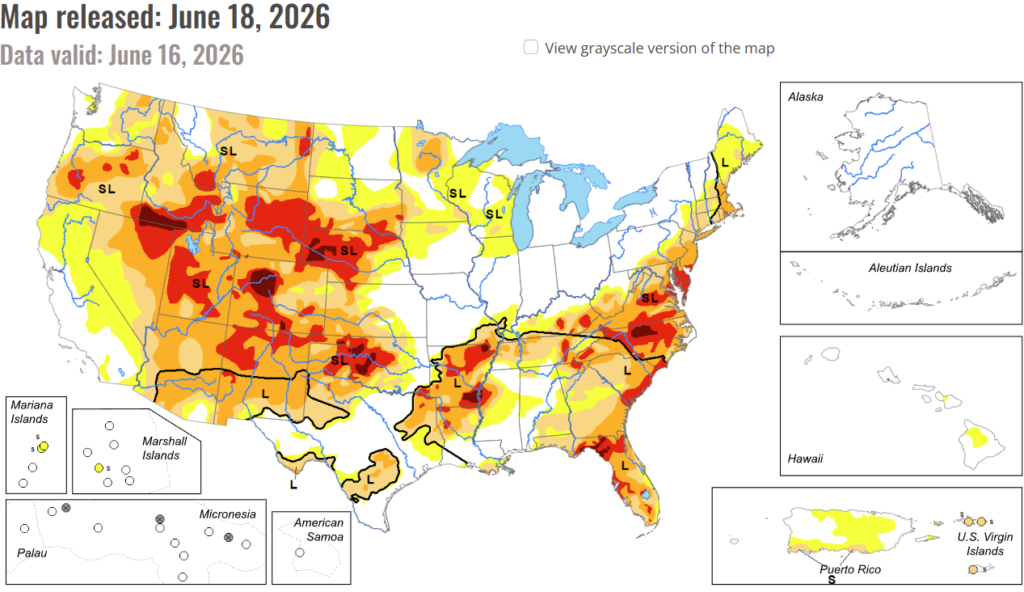
In the South: Across the southern states, many areas experienced widespread and substantial rainfall of 2–6 inches over the past week, especially southern and eastern Texas, eastern Oklahoma, northern Arkansas, northern Mississippi, and western Tennessee. Most areas of the deep southern states experienced drought improvement from all this rainfall. The only exception is in northeastern Tennessee, where drought degradations were made to the northwest of Knoxville due to worsening drought indicators. The northeastern portion of the Texas Panhandle saw 2–4 inches rainfall over an area of exceptional drought, helping to relieve drought conditions with a small downgrade to extreme drought there. However, for the most part, extreme to exceptional drought conditions persisted across the Texas and Oklahoma panhandles, and much of western Oklahoma. Despite weekly rainfall of 2 inches or more along the periphery of Arkansas, severe to exceptional drought continued to persist in much of the state due to the long-term rainfall deficits of the past several months. The recent appreciable rainfall over eastern Oklahoma, combined with more heavy rains this past week, led to a large removal of abnormal dryness from Texas to southwestern Missouri. Widespread heavy rainfall of 2–6 inches or more led to more drought coverage and intensity reduction across southern and eastern Texas, central Louisiana, and parts of western Mississippi. Drought relief also extended into western and northwestern Tennessee, representing the eastern extent of this week's large area of heavy rainfall in the South.
In the High Plains: Across the High Plains states, drought continues to persist across western Kansas and eastern Colorado. The most severe and exceptional drought areas extend from eastern Wyoming into western and northern Nebraska and far southern South Dakota. Continued lack of rainfall and warmer-than-normal temperatures led to worsening drought conditions in the plains of eastern Colorado and small portions of northwestern Kansas. Exceptional drought was expanded across three counties in the Nebraska panhandle, where pastures and dryland wheat conditions are the poorest seen in decades, as a result of the record warm, dry winter followed by meager spring rainfall. The agricultural impacts in western Nebraska were confirmed by drought indicators spanning the last 6-12 months. Other areas of degradation occurred this past week over North Dakota, especially the western half of the state. Moderate drought expanded southward along the Montana border as dry conditions intensified in western North Dakota. Abnormal dryness was introduced from southwest to north-central North Dakota due to recent drier-than-normal conditions. The only improvements in the High Plains region are in central and eastern Nebraska. A couple swaths of 2-4 inches of rain fell this past week along the Interstate 80 corridor and into the southeastern part of Nebraska, which is presently free of any drought or abnormal dryness.
In the West: There was no widespread precipitation across the region this week. However, portions of western Oregon and Washington, Arizona, northern Idaho, New Mexico, southern Montana, southern Utah, and northern Wyoming recorded above-normal precipitation. Temperatures were mixed, with below-normal readings across northern portions of the region and above-normal temperatures farther south. The warmest conditions occurred in California, Nevada, and Arizona, where departures of 6–8 degrees above normal or greater were widespread. Drought degradation occurred across eastern Oregon, where moderate drought expanded. Moderate, severe, and extreme drought also expanded across much of southern Idaho and into western Montana, while extreme drought increased in coverage across central Wyoming. Several weeks of wetter-than-normal conditions in New Mexico allowed for improvements to extreme drought across northeastern and southern portions of the state, although slight expansion occurred in northern areas. Improved short-term moisture conditions in eastern Utah and western Colorado supported reductions in extreme drought, while degradation occurred across central and eastern Colorado. The impacts of a dry winter and below-normal snowpack continue to affect Colorado and other parts of the region, where increasing numbers of waterways are experiencing low-flow conditions.
To view the 6-10 Day Precipitation Outlook Map, click here.
To view the 6-10 Day Temperature Outlook Map, click here.
To view the Monthly Drought Outlook Map, click here.
RON's Dave Lanning has a pre-opening look at today's agricultural Markets.
Click the audio tab below for today's report.
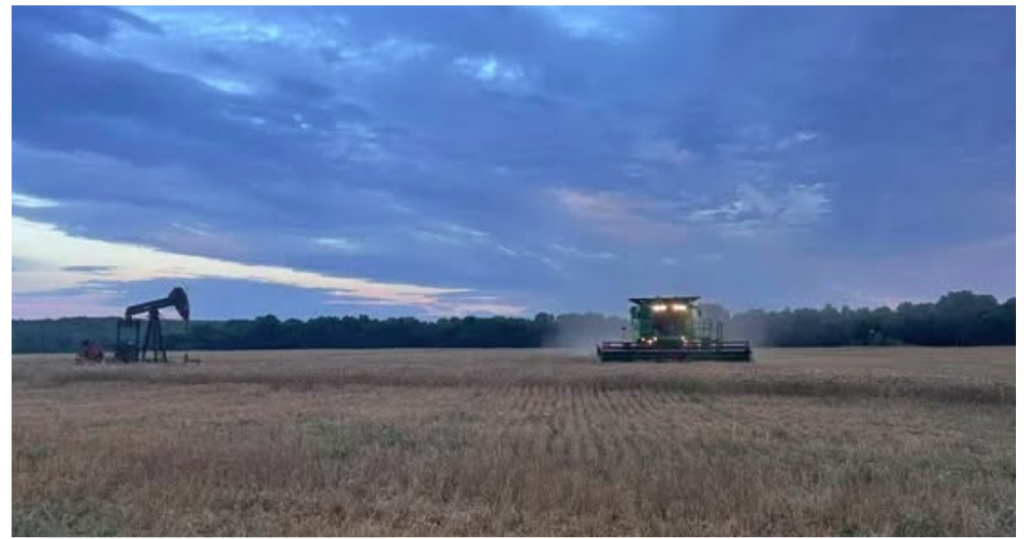
Oklahoma's 2026 wheat harvest is nearing the finish line, but according to Oklahoma Wheat Commission Executive Director Mike Schulte, this year's hard red winter wheat crop has been defined by drought, abandonment, and sharply reduced production across much of the state. In a recent conversation with senior farm and ranch broadcaster Ron Hays, Schulte said harvest moved faster than normal in many areas, though rain delays continue in parts of northern and northeastern Oklahoma. "We're right in the middle of June here, and certainly unusual, we're really winding down the harvest in many parts of the state," Schulte said.
He noted that north central Oklahoma still has about 10% of the crop left to harvest, while northeast Oklahoma is only 30% to 40% complete due to repeated rainfall interruptions. In the Panhandle, irrigated wheat remains behind other regions, though progress improved significantly this past week. "Producers have made great strides on the irrigated wheat out there, and probably about 40% complete as we speak today."
Despite delays, Schulte said northeastern Oklahoma has delivered some of the strongest yields in the state, particularly in soft red winter wheat. "They did get the timely rains all throughout the year," he said. "A lot of it's lying on the ground, but they are able to pick it up and still yield, making 70 to 80 bushels on the soft red winter wheat."
Even hard red winter wheat in that region has held up better than expected. "We're still looking at maybe some 70 bushel averages over there."
However, excessive rainfall has hurt grain quality. "If they could have just got to it on some of the earlier cuttings, they were in that 60 to 62 pound test weight average, but when you get an inch to two inches of rain a week in the middle of harvest—and that happens every week for four weeks—it really creates some challenges."
Statewide, Schulte said protein levels have been a major bright spot. "Protein has been exceptionally high across the state, just off the charts for the entire year," he said, attributing that largely to crop stress. "We've had a lot of reports of anywhere from 13 to 15% proteins, but going to call the average for the state 12.5 to 13%, so that's just not going to be a problem for us."
Yield, however, remains the biggest issue. Southern and central Oklahoma saw many fields produce only 15 to 25 bushels per acre, though pockets along the Texas border reached the mid 40s to mid 50s thanks to timely rains.
Schulte believes USDA's estimate of 28 bushels per acre may be too optimistic. "I think we're going to be maybe somewhere around 25 to 26."
Harvested acreage is expected to fall below USDA estimates because of widespread abandonment, especially in western Oklahoma and the Panhandle. "There has just been so much abandonment across the state," Schulte said.
Dryland wheat in the Panhandle was largely lost, while irrigated wheat has also underperformed. "We're looking at 40 to 60 bushel yields... where typically those yields are 80 to 120 bushels an acre."
That steep decline will weigh heavily on total production. USDA currently projects Oklahoma at 64 million bushels, while grain and feed estimates were closer to 48 million bushels.
Schulte expects the final number to land somewhere in between. "Hopefully be somewhere around 53 to 55 million bushels," he said. "That's still higher than what we had in 2014 when we came in under 50 million bushels—that was just an awful year—but this year, in many cases, really has mirrored that year of 2014."
Even with the smaller crop, Schulte believes Oklahoma wheat remains marketable because grain quality has held together better than expected. "It really still is amazing that we have test weights that we're talking about with 57 to 59 pound test weight averages," he said.
While that is below the preferred 60 to 61 pounds, he said the crop still has strong milling value thanks to protein and varietal quality. "We can certainly do something with that as far as quality is concerned."
The bigger concern is supply. "The main problem is that we just don't have the amounts to work with that we typically try to put into the export market." That reduced volume will ripple through rural economies. "It is going to have an economic impact for the state, certainly for our agricultural producers, our custom harvesters, [and] the local economies."
Looking ahead, Schulte said improving moisture in parts of Oklahoma offers hope for future crops. "Things certainly look different on the drought monitor today than they did a month and a half ago," he said. While drought remains severe in western Oklahoma, improved rainfall in the north has benefited summer crops.
On the global front, Schulte said wheat markets remain mixed. Strong production from Russia, Turkey, and Ukraine could pressure prices, but shifting supply-and-demand trends may help producers. "Production was outpacing consumption last year, and those numbers are changing," he said. "It looks like the possibility does exist that consumption is going to be outpacing production again, and so hopefully that's going to create some opportunities for agricultural producers as well."

Today, U.S. Environmental Protection Agency (EPA) announced the availability of $25.5 million in grant funding for technical assistance providers to help small, rural, and Tribal communities address wastewater infrastructure challenges to protect human health and comply with the Clean Water Act. The work performed under this grant program will advance the Trump EPA's Real Water Technical Assistance (RealWaterTA) initiative launched earlier this year to align all technical assistance for wastewater systems with tried-and-true services, such as engineering and design expertise, operational support, workforce development, and financial management. EPA is accepting applications from water technical assistance providers until August 14.
"The Trump Administration sees rural America as the backbone of this great nation and is committed to supporting these communities by strengthening vital water infrastructure," said EPA Assistant Administrator for Water Jess Kramer. "That's why we are using our RealWaterTA initiative to support water systems using proven, best-practice approaches that will most effectively address local needs. This $25.5 million in new funding will accelerate progress and deliver real results."
The goals of RealWaterTA focus on human health and compliance with the Safe Drinking Water Act and Clean Water Act. It also prioritizes accountability for technical assistance providers and real-world results. This initiative is benefiting Americans nationwide, especially in Tribal communities and rural areas where small systems face unique financial and operational challenges, including aging infrastructure, workforce shortages, increasing costs, and declining rate bases. EPA's grant funding will be used to assess communities' most pressing challenges, including supporting water quality compliance issues; providing training on water infrastructure and management best practices; helping communities navigate the federal funding application process, and investing in reliable infrastructure solutions.
The Rural, Small, and Tribal Technical Assistance providers help these communities access resources to support infrastructure improvements. These providers also support rural, small, and Tribal wastewater treatment systems – centralized and decentralized – to build technical, managerial, and financial capacity to operate their systems and maintain compliance.
EPA is accepting applications until August 14, 2026. Learn more about the Rural, Small, and Tribal Wastewater Technical Assistance Grant Program and how to apply.
The Rural, Small and Tribal Clean Water Technical Assistance Grant Program was established by the America's Water Infrastructure Act of 2018. One of EPA's Real Water Technical Assistance initiatives, the program aims to provide technical assistance to improve small wastewater system operations and management practices, making them more sustainable and resilient, and supporting EPA's mission to protect public health and the environment. To date, the program has awarded over $102 million.
Learn more about EPA's Real Water Technical Assistance efforts.
Learn more about the tools, training, and resources for small, rural, Tribal wastewater systems.
Communities can request assistance by visiting the agency's Real Water Technical Assistance webpage.

A coalition of more than 100 food and farm groups, school districts, foodservice professionals, and nutrition experts are urging the U.S. Department of Agriculture (USDA) to make it easier for schools to meet the new dietary guidelines by serving innovative, nutritious ingredients made from chickpeas, lentils, dry peas, and dry beans, including pulse-based pastas and flours.
Beans, chickpeas, lentils, and dry peas – collectively known as pulses – are among the most affordable and healthy foods on the planet. Packed with protein, fiber, and essential nutrients, pulses help improve childhood health and prevent chronic diseases like diabetes and obesity.
Pulse-based foods, such as chickpea pasta and lentil flatbread, are rising in popularity as gluten-free, high-protein meal options, but nutrition operators need clear and consistent guidance on how they count towardschool meal requirements. With the new dietary guidelines calling for Americans to eat more protein and nutrient-dense meals to combat diet-driven health issues, incorporating more pulse-based foods can help schools put that guidance into practice for millions of students.
"Incorporating a variety of pulse-based foods, including whole pulses, pulse-based pastas, and pulse flours, provides schools with flexible, nutrient-dense options that support children's dietary needs," the coalition said in a letter to USDA. "Pulse-based pastas, for example, allow schools to offer an entree high in protein and fiber while simultaneously accommodating students who... have other dietary restrictions and allergens. Clear USDA policies and guidance that fully reflect the range of pulse ingredients used in schools would help operators plan menus more efficiently, promote menu innovation, and ensure meals are both nutritious and accommodating for students."
In the letter addressed to Agriculture Secretary Brooke Rollins, the coalition asked the Department to make two changes to help schools use pulse-based products to make student meals healthier and meet the current dietary guidelines:
Treat pulse-based pastas consistently and allow them to count as a standalone protein and vegetable: The dietary guidelines uniquely recognize pulses as both a protein and a vegetable. School meal pattern guidance acknowledges pulse pastas retain their nutritional value and allows schools to count them as a standalone vegetable serving. However, when schools want to serve those same pastas as a "meat/meat alternate," USDA requires an additional protein source to be served. This inconsistency creates confusion and adds costs for school nutrition operators. The coalition urged USDA to address this regulatory burden and allow pulse-based pastas to count as a meat/meat alternate, just like they do as a vegetable.
Recognize all pulse-based flours as a creditable ingredient in school meal programs: As more schools incorporate pulse-based ingredients into meals, USDA should update their list of creditable ingredients in the Food Buying Guide, the primary resource schools rely on to plan menus and meet meal pattern requirements. Currently, the guide buries bean flour in an appendix rather than listing it among standard creditable foods, and chickpea, lentil, and dry pea flours are not mentioned. USDA can give school nutrition professionals clearer guidance on pulse flours to support menu innovation, improve meal consistency, and encourage the use of nutrient-dense ingredients in meals.
The coalition said these updates would better reflect the nutritional contributions of pulses, support menu innovation, simplify implementation, and help schools meet both protein and fiber needs in the dietary guidelines.
"Beans, peas, lentils and chickpeas are some of the most nutritious foods grown on American farms, and they are exactly what schools need to build healthier, more affordable meals," said Tim McGreevy, CEO of USA Pulses. "Pulses benefit the health of our kids and school nutrition operators are eager to use them to make school meals more nutritious. USDA has an opportunity to modernize its guidance to strengthen our child nutrition programs and put more nutrients on students' plates."
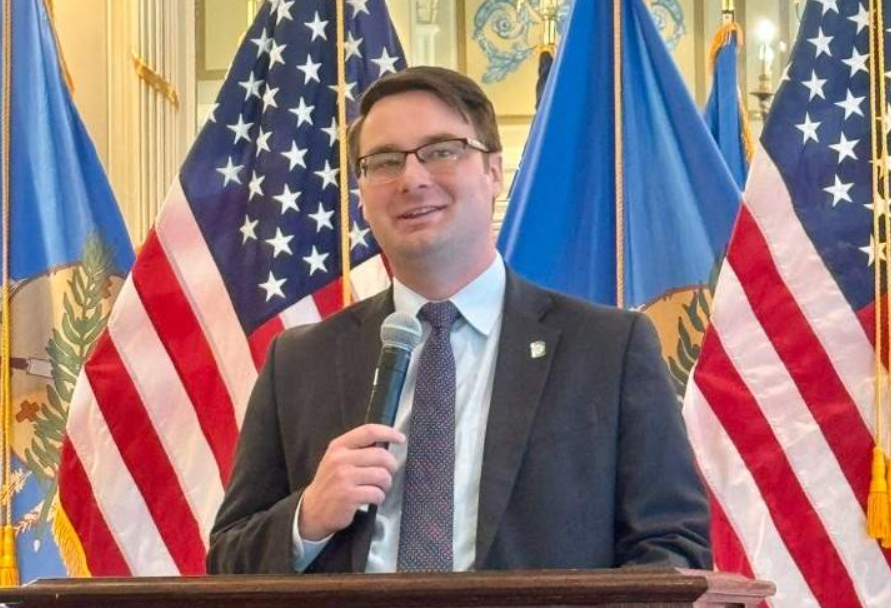
House Speaker Kyle Hilbert, R- Bristow, released the following statement after the conclusion last night of the 2026 Oklahoma primary election:
"The people of Oklahoma sent a resounding message on Election Day that they support the conservative Republican work being done by the House of Representatives. Every single House incumbent came in first place this week, with only one needing to continue on to a runoff. As I head into my final term, I am committed more than ever to work alongside my colleagues to pass legislation that will keep Oklahoma on its current growth trajectory, improving our reading and math scores significantly and leaving our state better than we found it. We are well on our way, and I thank the Oklahoma people for the confidence they have placed in our Republican members. There is much more work to do."
"I want to thank House District 29 from the bottom of my heart for trusting me again to be their voice at the state capitol. It is a privilege I do not take lightly. Every conversation, every concern and every opportunity to represent our community is something I value deeply. I look forward to continuing to hear directly from my constituents and working together to move Oklahoma forward"
Hilbert won re-election by 75.54%. Members of the Oklahoma House of Representatives can only serve a maximum of 12 years of combined legislative service. Hilbert will term out in 2028.
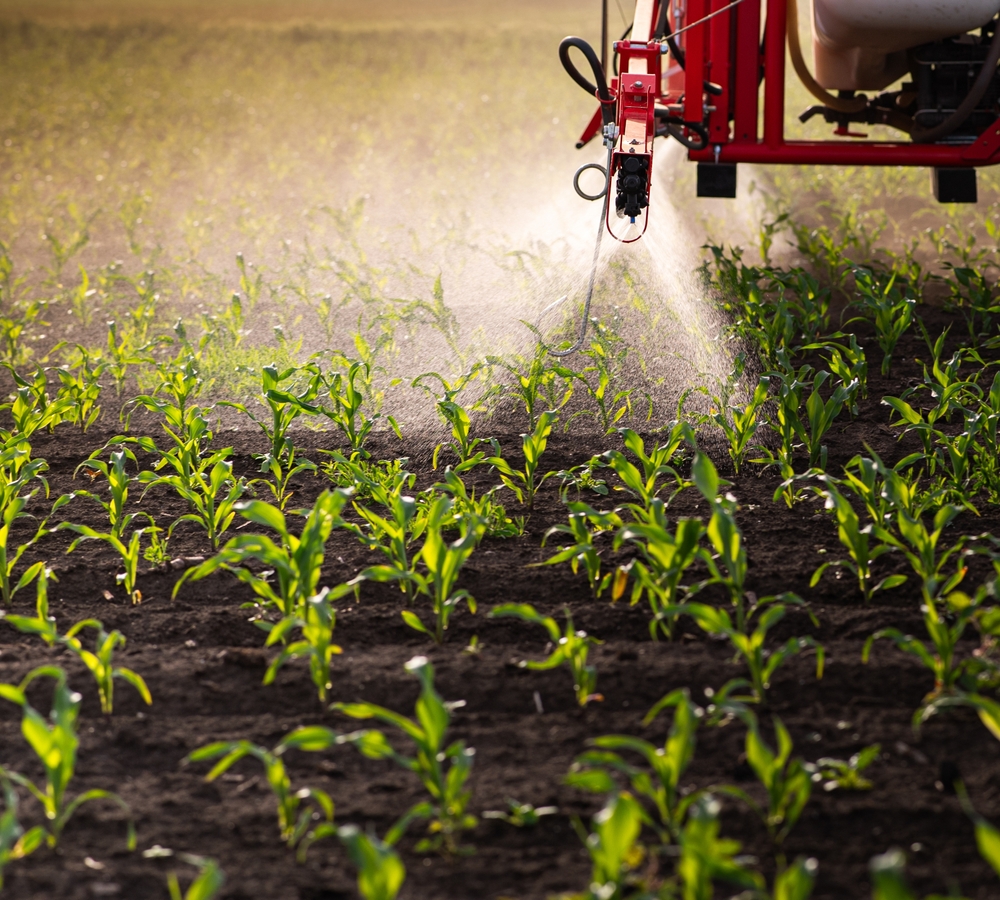
Average retail fertilizer prices were mostly lower the second week of June 2026 compared to a month earlier, according to sellers surveyed by DTN. DTN's Ross Quinn says the last time most nutrient prices were lower was the first week of February 2026.
Prices for five fertilizers were lower than last month, while prices for the remaining three were slightly higher. DTN designates a significant move as anything 5% or more.
Leading the nutrients lower was urea. The price of nitrogen fertilizer was 12% lower than a month ago, at $764 per ton.
UAN32 was 5% less expensive than the previous month. The nitrogen fertilizer had an average price of $569/ton.
The remaining three fertilizers were just slightly less expensive than a month ago: DAP had an average price of $909/ton, anhydrous $1,092/ton, and UAN28 $531/ton.
Three fertilizers were slightly more expensive than last month: MAP at $955/ton, potash at $494/ton, and 10-34-0 at $723/ton.
On a price per pound of nitrogen basis, the average urea price was $0.83/lb.N, anhydrous $0.67/lb.N, UAN28 $0.95/lb.N, and UAN32 $0.89/lb.N.
The United States exported a record amount of urea to Canada in April 2026, boosted by first-quarter production outages and spring maintenance at Canadian plants, according to an article in worldfertilizer.com. U.S. urea exports to Canada in April rose to 144,619 tons, which is 99,086 tons higher than the five-year average for April, and were the highest for any month in records dating to 2008, according to Argus Media.
Canada's pull on U.S. supplies stems from production downtime across multiple nitrogen plants during the winter, when Canada already had limited supplies carried over from the previous fertilizer season.
"The U.S. has generally been a net importer from Canada, with the 2022-2023 and 2024-2025 fertilizer years -- which run from July through June -- being an exception," the report stated. "The U.S. appears to be on its way to another year as a net exporter to Canada in 2025-2026 as well."
All eight fertilizers are now higher in price compared to one year earlier: Potash (by 4%), 10-34-0 (8%), DAP (13%), both MAP and UAN32 (15%), urea (16%), UAN32 (27%), and anhydrous (41%).
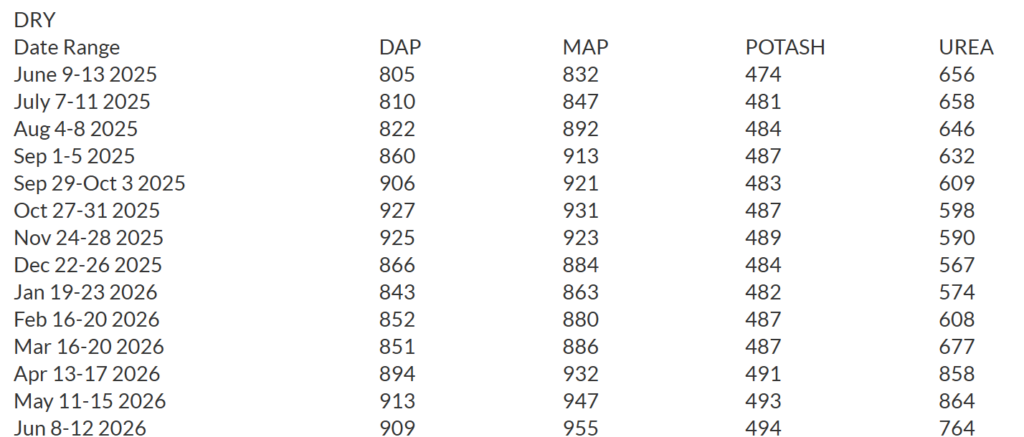
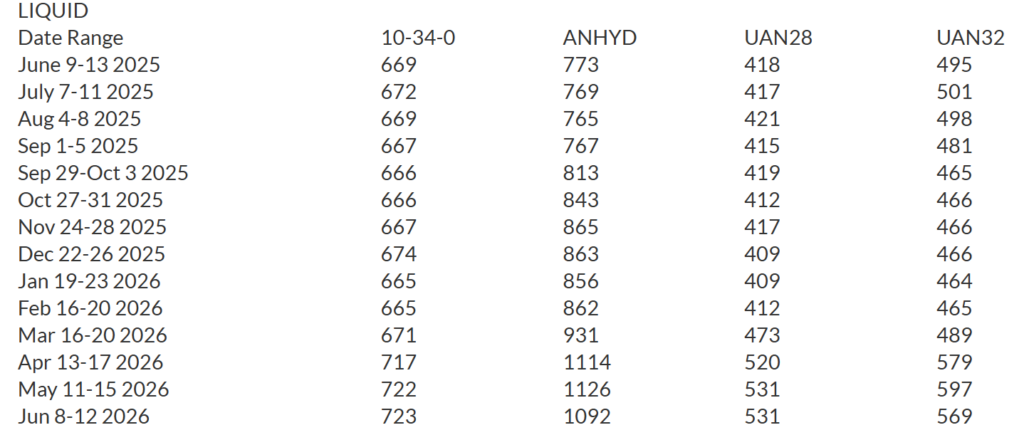
The chairman of the Federal Trade Commission (FTC) told a group of farmers gathered in Texas that the commission is investigating anticompetitive behavior in the industry, according to a DTN article. You can read about it here:
A new mobile large animal veterinary services practice is preparing to serve Oklahoma livestock producers, addressing what many in the industry see as a growing shortage of veterinarians willing to make farm and ranch calls. Speaking with associate farm reporter Carli Davenport, recent Oklahoma State University graduate Dr. Chelsea Williams explained why she launched Pleasant Valley Veterinary Services and why she believes ambulatory veterinary care is more important than ever for rural Oklahoma.
Williams said the decision to start her own practice came after realizing that many traditional veterinary clinics could not support the amount of field work she wanted to do. "There is a very large need for large animal veterinarians in general, but specifically ones that are willing to come out to the farm," Williams said.
While searching for employment opportunities after veterinary school, Williams received offers from several mixed-animal practices. However, she found that many clinics needed veterinarians to spend most of their time inside the clinic rather than traveling to farms and ranches.
"My biggest thing is, they would tell me about how they would lose money if I were out in the field versus having me in the clinic, which is absolutely true," she said. They didn't say it because they don't want somebody out in the field. It's just from a business side of things, you do lose a lot of money being out of a clinic."
For Williams, the issue became less about business economics and more about serving livestock producers who often struggle to find veterinary care on-site. "My whole idea going into business was I wanted to be able to help the people that don't have a vet that can come out to them," she said. "There wasn't a single clinic that would let me be in the field as much as I really feel like I should be."
After discussions with mentors, Williams began seriously considering opening a practice focused entirely on mobile large animal medicine. "There's a very large gap in rural medicine when it comes to your producers and your vets sometimes," Williams said. "I feel that I'm supposed to be here to fill part of that gap."
The need became even more apparent after Williams and her husband moved to a rural community while she was attending veterinary school. "Absolutely every single one of them asked if I would be doing large animals when they found out I was in vet school, and if I would be staying around," she said. "I knew that there was a need immediately right where I was, and then the more that I looked into it, it's a need across the entire state."
Williams said personal experience also reinforced her commitment to a mobile practice model. She recalled a situation involving one of her own horses that required veterinary attention but could not easily be transported. "I personally had a horse go down last year, and he was very neurologic," Williams said. "I couldn't haul him, even if I wanted to, and it took me a long time to find a vet that would come out to me."
That experience helped shape her philosophy toward veterinary care. "It hits home a little bit being somebody that's been in that position of really needing a vet to just make the drive," she said.
Although she hopes to eventually operate a brick-and-mortar clinic, Williams believes mobile veterinary services will remain a central part of her career. "I still want to devote certain days to being out on the road because I do think it's an important aspect of veterinary medicine that needs a few more people in it," she said.
Even before officially opening, Williams said producers have already been contacting her and expressing appreciation for the availability of after-hours and emergency care. "Time and time again they will tell me that they're so excited that somebody is willing to take a call after 5 p.m. and willing to pick up the phone on a Saturday or a Sunday," she said.
For livestock producers, emergencies rarely occur only during normal business hours. "For them, this is their life, and it doesn't stop just because it's no longer business hours," Williams said.
She added that emergency availability may be one of the biggest needs producers have communicated so far. "I think what I've heard the most is needing somebody that's willing to show up, even when it is in the middle of the night or on a weekend," she said. "I would say being available for emergencies has been a really big thing with the people I've been speaking with."
Pleasant Valley Veterinary Services plans a soft opening on June 15, and the books are currently open to new clients. Williams said she is still waiting on some equipment and supplies to arrive, but emergency services and many routine appointments will be available immediately. "By June 15, we will be open," Williams said. "I will have most things that I need for your most common large animal emergencies."
She noted that some specialized appointments may need to be scheduled further out while additional supplies arrive, but the practice is already accepting bookings.
Dr. Williams can be reached at 405-590-5409 or by visiting their Facebook page here.
For Williams, the goal is simple: help bridge the veterinary care gap facing Oklahoma livestock producers by bringing veterinary services directly to the farm and ranch when they are needed most.

In today's Beef Buzz, senior farm and ranch broadcaster Ron Hays speaks with John Hutcheson, with Merck Animal Health, who discusses a newly available product designed to help cattle producers combat the threat of New World Screwworm. The prescription pour-on product, Exzolt Cattle CA1, offers both treatment and prevention against screwworm infestations, giving producers another tool as the industry prepares for potential outbreaks.
Hays noted that producers today have more options than ranchers did during the major screwworm battles of the 1950s and 1960s. Hutcheson said Merck is excited to bring new technology to the cattle industry at a critical time.
"We have a new product that's been on the market since the advent of both New World Screwworm impeding coming to the United States," Hutcheson said. "It's called Exzolt Cattle CA1, it's a pour-on, and the most exciting part about it is it's the first and only topical product that can be used for either prevention or treatment of New World Screwworms."
According to Hutcheson, the product also represents a major scientific advancement because it belongs to an entirely new class of parasite control products approved for U.S. cattle. "It's the first isoxazoline class ectoparasiticide that's approved in the U.S.," Hutcheson said. "It's a new drug class that offers producers some prevention and treatment, and so it's pretty exciting to be able to provide a tool that's new and a technology that's new to help fight this battle."
He emphasized that the cattle industry has defeated screwworm before and now has better tools to help prevent another widespread outbreak.
Because Exzolt Cattle CA1 is a prescription-only product, Hutcheson stressed that producers need to work closely with their veterinarians. "It's a vet prescription product only," Hutcheson said. "You will have to make sure you have a veterinary patient-client relationship."
He said veterinarians are essential not just for prescribing the product, but also for helping ranchers manage risk and identify problems early. "They know what's going on in your geography, they know what's going on in other ranches," Hutcheson said. "They can help guide you with management practices that can help lower the fly risk."
Hutcheson pointed to the recent Texas screwworm case, where a private veterinarian identified the infection and initiated the reporting chain to state and federal animal health officials. "I can't express how important it is to get a veterinarian involved," he said. "They're usually at the tip of the spear and know what's going on in your geography."
Hutcheson said Merck's research showed impressive results when Exzolt Cattle CA1 was used during procedures that create open wounds, such as castration. "We poured the product on at the recommended dose and followed those animals," Hutcheson said. "They were exposed to New World Screwworms, and we had 100% prevention of myiasis over a 14-week timeframe."
He explained that myiasis occurs when screwworm larvae begin feeding on living tissue, causing wounds to rapidly worsen. "That's what happens when the maggots start eating the living tissue in the animals and creating that wound that gets bigger and bigger and bigger," Hutcheson explained.
The product also performed well when used to treat active infestations. "If you find a wound that is full of maggots and you want to treat it, you can treat it, and within three days we saw 100% therapeutic efficacy against myiasis," Hutcheson said.
As concerns over New World Screwworm continue, Hutcheson believes Exzolt Cattle CA1 provides cattle producers with a powerful new option for both immediate treatment and preventative protection. "It's a brand new molecule, a new drug class that helps address these challenges that we have," Hutcheson said.
With both treatment and prevention claims, Exzolt Cattle CA1 could become an important part of the cattle industry's strategy to prevent the re-establishment of New World Screwworm in the United States.
The Beef Buzz is a regular feature heard on radio stations around the region on the Radio Oklahoma Ag Network and is a regular audio feature found on this website as well. Click on the LISTEN BAR above for today's show and check out our archives for older Beef Buzz shows covering the gamut of the beef cattle industry today.
It is no secret that over the last few years, U.S. agricultural producers have been hit with the combination of relatively low crop prices while most of their input prices have experienced all-time highs. At the same time, livestock agriculture, especially cow-calf and dairy producers, have experienced record cattle and calf prices. The number of farm bankruptcies are rising across the South, and much like previous downturns, producers are asking for advice on how to manage their way out of this hopefully short-term economic downturn.
Following a similar product that was developed during the most recent downturn (2014-2019), 36 Agricultural Economists from the Southern Extension Economics Committee developed 24 articles that provide valuable information to producers and landowners as they attempt to navigate the current downturn. Each article was double peer reviewed to ensure the publication—entitled "Surviving the Farm Economy Downturn: 2026 Update"—provides the most up-to-date information and strategies possible. The papers were categorized into 6 distinct areas: Setting the Stage; Crop Market Outlooks; Livestock; Ag Lending/Credit/Crop Insurance; Strategies; and Resiliency.
The publication, available here, was made possible by support from the Southern Extension Risk Management Education Center, under project award Nos. 2021-70027-34722 and 2025-70027-45397, from the U.S. Department of Agriculture's National Institute of Food and Agriculture.
Joe Outlaw and Bart L. Fischer Southern Ag Today
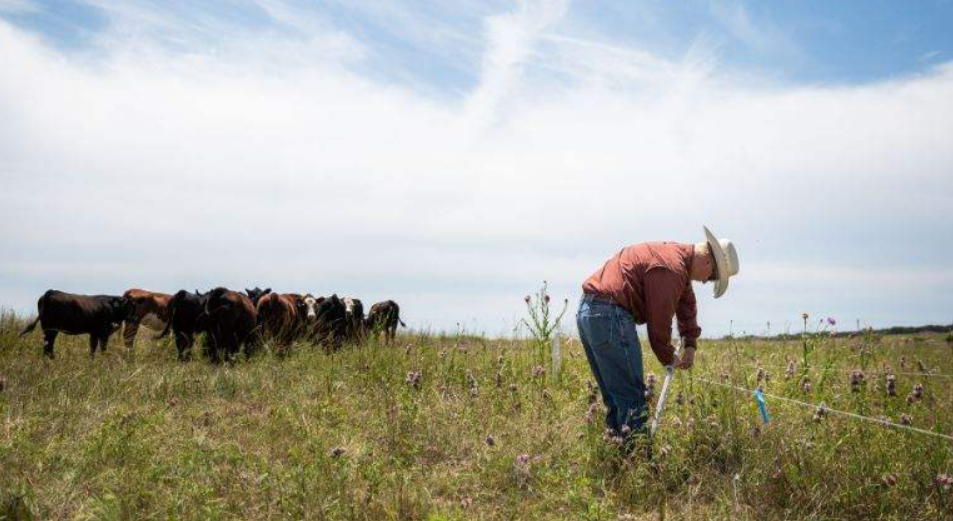
Today, the America First Policy Institute (AFPI) released a new Issue Brief highlighting the impact of the updated Dietary Guidelines for Americans. Titled "Eat Real Food: How the Dietary Guidelines Help Make Americans Healthy," the report details how the Trump Administration's nutrition reset is aligning more than two billion taxpayer-funded meals annually with gold-standard nutritional science, emphasizing real, nutrient-dense foods like high-quality protein, healthy fats, whole milk, fruits, and vegetables.
The report, and the importance of nutrition in maintaining long-term health, was discussed by AFPI senior director of Healthy America Policy Hannah Anderson today at AFPI's "Healthy America" event in Charlotte, Michigan, featuring U.S. Health and Human Services Secretary Robert F. Kennedy, Jr. and U.S. Representative Tom Barrett. To watch the remarks, click here.
"A healthier America starts with better nutrition information, access to fresh, whole foods, and greater transparency about what's in the meals we feed our children," said Anderson. "Through the Dietary Guidelines for Americans, the Trump Administration is ensuring that families across the country are empowered with the information and resources they need to take back their health."
The updated guidelines are already driving meaningful change across federal programs. Under the new rules, public schools will serving healthier, nutrient-dense meals to children, SNAP retailers must now stock double the amount of whole foods, and 22 states have restricted junk food purchases with taxpayer dollars. Whole milk will return to school and child nutrition programs in November thanks to the Whole Milk for Healthy Kids Act. These changes extend to the Department of Veterans Affairs, the Department of War, and beyond.
"These guidelines represent the most significant reset of federal nutrition policy in decades," said T.J. Wilson, deputy director of Rural Policy at AFPI. "By prioritizing real food produced by American farmers and ranchers over defaulting to ultra-processed products often sourced from far away, we are undoing decades of damage to American producers and strengthening rural economies for years to come."
This shift supports the goals of the Farmers First Agenda by increasing demand for American-grown, nutrient-dense foods and reducing reliance on ultra-processed items.
The full Issue Brief can be found here.

Oklahoma voters have rejected State Question 832, delivering a significant victory for Main Street businesses, family farms, and job creators across the state. NFIB State Director Jerrod Shouse issued a statement:
"This is a major victory for Main Street Oklahomans and family farms," Shouse said. "Throughout this campaign, small business owners made their concerns about State Question 832 clear: higher labor costs would ultimately lead to higher prices and reduced opportunities for entry-level workers. The voters heard those concerns and stood up for Main Street.
"Oklahoma's small businesses understand their employees are their greatest asset, which is why many already pay wages well-above the current minimum. Today's vote preserves the flexibility small businesses need to grow, hire, and invest in the future.
"We appreciate the voters who took the time to learn about the unintended consequences of this initiative and are grateful to the countless small business owners who shared their stories through this campaign. NFIB remains committed to advancing policies that strengthen the Oklahoma economy and allow small businesses to thrive."
Background:
In May 2026, NFIB launched a statewide campaign urging Oklahoma voters to vote no on State Question 832. Visit ProtectOKSmallBusiness.org for more information on the campaign.
Authorized and paid for by National Federation of Independent Business, 53 Century Blvd., Nashville, TN 37214, 615-872-5800
USDA recently announced the opening of funding opportunities for the Research Facilities Act program, which received $125 million in annual funding through the Agriculture Title of the Working Families Tax Cuts. House Committee on Agriculture Chairman Glenn "GT" Thompson (PA-15) released the following statement today in response:
"It was my honor to champion this important issue for land-grant universities and include the first-ever mandatory funding for the Research Facilities Act program through last summer's Working Families Tax Cuts," Chairman Thompson said. "I'm proud to have Pennsylvania State University in my district, and I understand exactly how critical it is to ensure our top researchers have modern and updated facilities to support the vital work they do to advance American agriculture."
USDA's National Institute of Food and Agriculture will administer this funding opportunity. For more information, visit USDA's website.
FMC Corporation and Corteva, Inc. , two leading global agricultural science and innovation companies, today announced a co-exclusive strategic supply and license agreement that will expand access to FMC's rimisoxafen technology across North and South America corn and soybean markets, adding an important new tool to each company's respective herbicide portfolio. This collaboration will enable more growers across the Americas to control herbicide-resistant weeds, including Amaranthus species – the number one weed resistance challenge globally in soybeans and critical in cross-crop pressure in corn – with this groundbreaking dual mode of action herbicide technology.
"This agreement ensures that more growers across the Americas will have access to rimisoxafen, one of the most innovative herbicide technologies developed in decades," said Leonardo Bastos, FMC vice president and chief marketing officer. "By working with Corteva, we are expanding the reach of this breakthrough technology to help growers effectively manage resistant weeds that threaten their productivity and profitability. Together, we are bringing growers a solution they urgently need. At the same time, FMC is committed to unlocking the full global potential of rimisoxafen across additional crops and geographies, reflecting our confidence in this molecule as a cornerstone of our innovation pipeline."
Under the terms of the agreement, which extends through the next decade, FMC retains all rights of ownership to rimisoxafen and will supply Corteva with the active ingredient. Both companies will develop and commercialize their own exclusive premix formulations for the corn and soybean markets across North and South America, while FMC will continue to develop additional rimisoxafen-based products for other crops and geographies globally. Corteva will make an initial prepurchase payment of $200 million USD for product to be supplied by FMC. Together, both companies are committed to ensuring broad availability of this innovative technology and rapid adoption, supporting growers with durable weed management solutions for years to come.
"By collaborating with FMC on rimisoxafen, we are expanding our ability to provide growers with advanced weed control tools that complement our portfolio," said Cynthia Ericson, Corteva vice president, weed control segment. "This agreement supports our long-term strategy of forging new collaborations that drive value for farmers, as well as a unique growth opportunity with attractive economics for Corteva above our current deep crop protection pipeline set to launch over the next decade."
Rimisoxafen's dual mode of action creates a significantly higher barrier to resistance development compared to single mode of action herbicides, providing growers with an essential tool for managing weeds like palmer amaranth and waterhemp that have become resistant to multiple herbicide classes and cost farmers billions of dollars annually in lost yield. First commercial sales are anticipated by the end of the decade, pending applicable regulatory approvals. The Herbicide Resistance Action Committee recently classified rimisoxafen as the industry's first dual mode of action herbicide, recognizing its unique ability to control troublesome broadleaf weeds that threaten crop yields and farm profitability.
Additional terms of the agreement were not disclosed.
About FMC
FMC Corporation is a global agricultural sciences company dedicated to helping growers produce food, feed, fiber and fuel for an expanding world population while adapting to a changing environment. FMC's innovative crop protection solutions – including biologicals, crop nutrition, digital and precision agriculture – enable growers and crop advisers to address their toughest challenges economically while protecting the environment. FMC is committed to discovering new herbicide, insecticide and fungicide active ingredients, product formulations and pioneering technologies that are consistently better for the planet. Visit fmc.com to learn more and follow us on LinkedIn®.
About Corteva
Corteva, Inc. (NYSE: CTVA) is a global pure-play agriculture company that combines industry-leading innovation, high-touch customer engagement and operational execution to profitably deliver solutions for the world's most pressing agriculture challenges. Corteva generates advantaged market preference through its unique distribution strategy, together with its balanced and globally diverse mix of seed, crop protection, and digital products and services. With some of the most recognized brands in agriculture and a technology pipeline well positioned to drive growth, the Company is committed to maximizing productivity for farmers, while working with stakeholders throughout the food system as it fulfills its promise to enrich the lives of those who produce and those who consume, ensuring progress for generations to come. More information can be found at www.corteva.com.
Always read and follow all label directions, restrictions and precautions for use. Products listed here may not be registered for sale or use in all states, countries or jurisdictions.
Statement under the Safe Harbor Provisions of the Private Securities Litigation Reform Act of 1995: FMC, Corteva and their respective representatives may from time to time make written or oral statements that are "forward-looking" and provide other than historical information, including statements contained in this press release, in each company's other filings with the SEC, and in presentations, reports or letters to their stockholders.
In some cases, the companies identified these forward-looking statements by such words or phrases as "outlook", "will likely result," "is confident that," "expect," "expects," "should," "could," "may," "will continue to," "believe," "believes," "anticipates," "predicts," "forecasts," "estimates," "projects," "potential," "intends" or similar expressions identifying "forward-looking statements" within the meaning of the Private Securities Litigation Reform Act of 1995, including the negative of those words or phrases. Such forward-looking statements are based on the companies' current views and assumptions regarding future events, future business conditions and the outlook for the companies based on currently available information. The forward-looking statements involve known and unknown risks, uncertainties and other factors that may cause actual results to be materially different from any results, levels of activity, performance or achievements expressed or implied by any forward-looking statement. These statements are qualified by reference to the risk factors included in Part I, Item 1A of each company's Annual Report on Form 10-K for the year ended December 31, 2025 (the "2025 Form 10-K"), the section captioned "Forward-Looking Information" in Part II of the 2025 Form 10-K and to similar risk factors and cautionary statements in all other reports and forms filed with the Securities and Exchange Commission ("SEC"). We wish to caution readers not to place undue reliance on any such forward-looking statements, which speak only as of the date made. Forward-looking statements are qualified in their entirety by the above cautionary statement.
We specifically decline to undertake any obligation, and specifically disclaim any duty, to publicly update or revise any forward-looking statements that have been made to reflect events or circumstances after the date of such statements or to reflect the occurrence of anticipated or unanticipated events, except as may be required by law.

Oklahoma State Treasurer Todd Russ is representing the state on the national stage this week as more than 700 public‑finance leaders gather in downtown Oklahoma City for the National Association of State Treasurers (NAST) Symposium, hosted at the Omni Oklahoma City Hotel.
This year's symposium places Oklahoma at the center of the national conversation on financial stewardship, innovation in state treasury management, and programs that help families build brighter futures. Attendees include leaders in public finance, college and disability savings, unclaimed property, financial education, investment management, and taxpayer accountability.
In his welcome remarks, Treasurer Russ highlighted Oklahoma's momentum, opening with a message of pride, purpose, and progress:
"We are Oklahoma, a state that believes innovation is not optional. It's expected, we are proving what's possible when a treasury leads with purpose."
Treasurer Russ underscored several major achievements from the past year, including:
Treasurer Russ also emphasized the connection between Oklahoma's success and its people, noting the state's diverse communities, growing industries, and continued status as the 9th fastest-growing state in the nation.
"With the diversity of our people and our industries, Oklahoma is showing the country what strong, forward‑focused states can achieve," Treasurer Russ said.
As part of the symposium, Treasurer Russ will help lead a national discussion on improving college and career readiness. The session will focus on strategies to expand college savings opportunities, strengthen financial literacy, and equip young people with a stronger financial foundation, priorities that align closely with Oklahoma's broader efforts to improve educational outcomes.
"Our work is not always visible," Treasurer Russ told attendees. "But when we do it well, families thrive. Businesses grow. States prosper. Futures change."
The symposium's 700 attendees will have the opportunity to see firsthand how Oklahoma is advancing innovation in public finance, from modernization initiatives to education-focused savings programs, while experiencing the state's hospitality and economic vibrancy.
"As a national community of treasurers, we are shaping a stronger, smarter, more financially empowered America," Treasurer Russ said. "And in Oklahoma, we lead with pride. We lead with purpose."
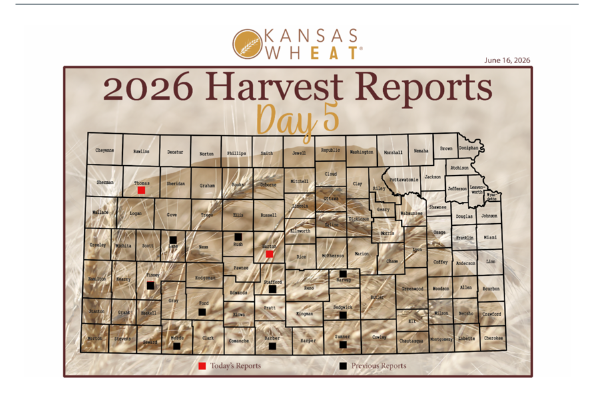
This is day 5 of the Kansas Wheat Harvest Reports, brought to you by the Kansas Wheat Commission, Kansas Association of Wheat Growers, Kansas Grain and Feed Association and the Kansas Cooperative Council.
Kansas wheat harvest continues to advance despite challenges from drought, freeze damage and market volatility. Producers report generally below-average yields and acceptable quality, with residue management and untimely weather playing key roles in this year's crop.
Lane Klepper, a producer from Barton County, reported that his family started harvest on June 5, and is three days away from finishing. Some of the challenges that he has seen this year include freeze damage, drought and price fluctuations in the markets.
"Obviously prices have not been where you want them to be," said Klepper. "They kind of rallied there for a while, but now, things have kind of fallen back off."
Klepper credited steady yields in such a dry year to residue left in fields conserving moisture and varieties able to withstand drought stress. Some of the varieties that Klepper Farms has had success with this year are Plains Gold Canvas and Westbred 4422.
"That residue is worth a ton out there," said Klepper. "You can just see the difference in the second year versus the first year wheat, having that residue to plant into is so important."
Eric Sperber, CEO of Cornerstone Ag in Thomas County, reported taking their first load on June 11, with operations being slow moving due to scattered thunderstorms across the area late in the season.
"In our area, I think there's wheat dry enough to be harvested, but we have a lot of producers trying to plant fall crops," said Sperber. "We also have farmers who got behind on spraying and are trying to catch up."
Even though it is still early in the harvest season for Thomas County, test weights have ranged from 55 to 61, with protein above average, Sperber stated.
Sperber estimates harvest to conclude at the beginning of July, depending on current weather patterns and producers getting aforementioned spraying and planting completed.
"Harvest may go a little quicker this year than in the past," said Sperber. "A lot of years, we have waited for the wheat to dry down, whereas this year it may be ready to go; it's just a matter of producers being able to get to it, then it can go pretty quick."
The 2026 Harvest Report is brought to you by the Kansas Wheat Commission, Kansas Association of Wheat Growers, Kansas Grain and Feed Association, and the Kansas Cooperative Council. To follow along with harvest updates on X, use #wheatharvest26. Tag us at @kansaswheat on Facebook, Instagram and X to share your harvest story and photos.
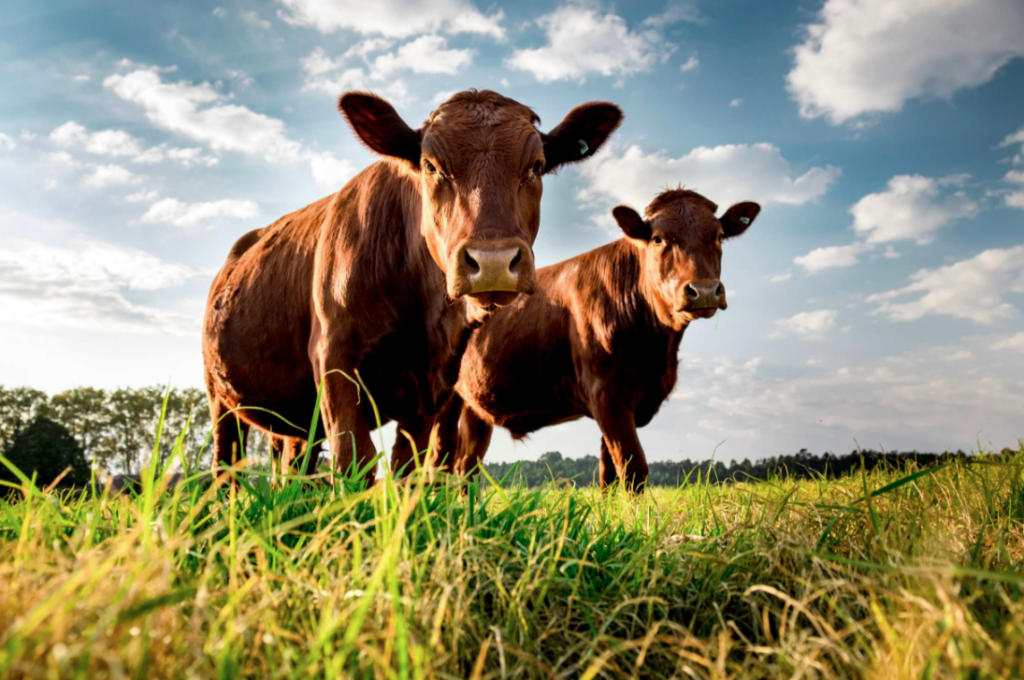
Bovine foot conformation and structure are impacted by several factors such as infection, trauma, age, nutrition, weather and genetics. This article addresses the genetic component of foot soundness in cattle. Both the Foot Angle (Angle) and Foot Claw Set (Claw) traits are critical to structural soundness of cattle. These traits equate to longevity and productivity in beef herds, thereby having long-term economic impact. While several beef breeds are developing EPDs for feet and leg structure, the American Angus Association (AAA) has developed EPDs for Angle and Claw. The information in this article is based on the AAA guidelines.
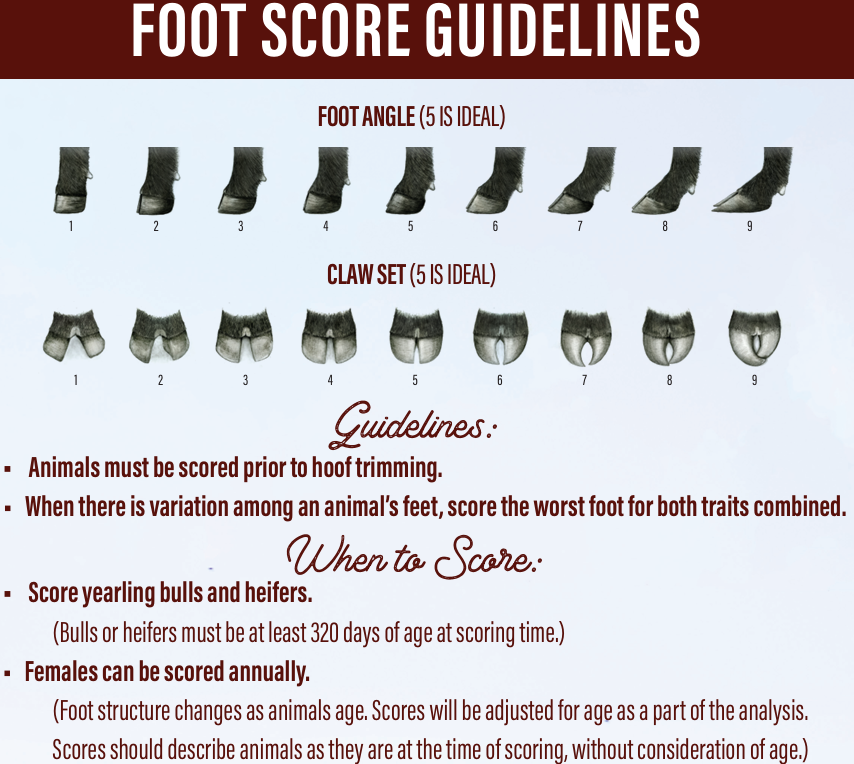
Currently, lower EPD values for Claw and Angle indicate phenotypes closer to the ideal of 5. The EPDs generated are based on breeder submitted phenotypes, pedigrees and genomics. Additional guidelines for collection of scores are as follows:
The scoring system and EPDs generated can be used to improve foot soundness by both commercial cattlemen and purebred breeders. Both of these traits are moderate in heritability (Foot Claw Set = .25, Foot Angle = .26) with a positive genetic correlation of .38 between the two traits. Accordingly, selection pressure applied to Claw and Angle EPDs will lead to genetic improvement in the structural soundness in beef cattle.
RON's Dave Lanning has a pre-opening look at today's agricultural Markets.
Click the audio tab below for today's report.
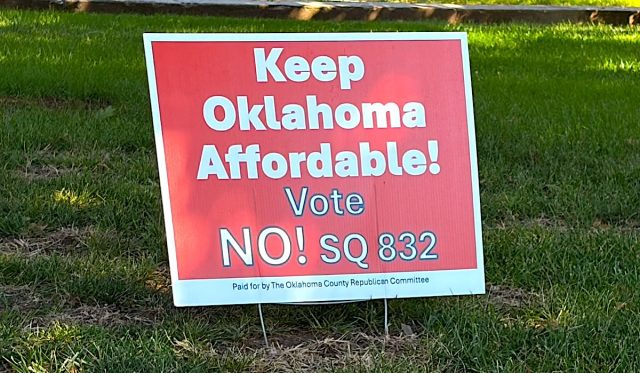
By a major margin, Oklahoma voters rejected State Question 832, which would have gradually raised the state's minimum wage from $7.25 to $15 an hour, ending a years-long effort to align the state's payment floor with neighboring states that have approved increases in recent years.
With more than 99 percent of precincts reporting, more than 55 percent of voters opposed SQ 832 — the only item on Oklahoma ballots Tuesday for which independent or Libertarian voters could cast ballots. All election results are unofficial until certified by the Oklahoma State Election Board.
State Chamber President and CEO Chad Warmington called SQ 832's defeat a win for Oklahomans concerned about jobs and prices.
"The State Chamber applauds Oklahoma voters for rejecting SQ 832," Warmington said in a statement. "Tonight, voters chose to protect Oklahoma's economic momentum and one of our greatest competitive advantages: affordability. The reality is wages in Oklahoma are already being driven up by a strong labor market not government mandates. Oklahoma businesses are competing for talent, investing in their people, and helping move our state forward. Oklahomans sent a clear message: We can grow our economy, create opportunities, and keep life affordable without one-size-fits-all mandates that make it harder for businesses to hire and grow."
*****************************************
It was widely expected that there would be a runoff for the GOP Nominee for Oklahoma Governor- and the top two vote getters are separated by about a thousand votes with 93% of the vote counted. Oklahoma Attorney General Gentner Drummond has received the most votes on the night- with 96,995 (26.05% of the vote) while former State Senator Mike Mazzei has 95,827 votes(25.74% of the vote). Mazzei jumped into the spotlight with the endorsement he received from President Donald Trump. The son of former Governor Frank Keating, Chip, has pulled the third most votes in the primary- just over 18% of the count.
Former House Minority Leader Cyndi Munson easily won the Democratic nomination and will face the GOP winner in November.
**************************************
It may count as something of a surprise- but State Auditor Cindy Byrd has knocked off an incumbent. Amid a barrage of questions and negative headlines about his handling of a new state investment fund, State Treasurer Todd Russ lost his reelection bid Tuesday to State Auditor and Inspector Cindy Byrd, who made a last-minute decision this spring to challenge the incumbent treasurer.
"I don't have a habit of letting anybody down. I won't let you down as your state treasurer," Byrd said at her Election Night party at Rococo on Western in Oklahoma City. "There are great things to do for this state. I tell people this all the time: Oklahoma is still small enough to get it right, and we have the promise of a bright future."
Byrd will be on the General Election ballot against Libertarian Kiefer Perry in November. No Democrat filed for the office.
**************************************
Other GOP winners that will advance to the November General Election include Lt Governor candidate TW Shannon, who captured 53% of the vote over five other contenders- Shannon will face Democrat Kelly Forbes in November.
Former state lawmaker Jon Echols has won the GOP Attorney General race with 55% of the vote- he next faces Democrat Nick Coffey in November.
In the GOP contest for Corporation Commission, Brad Boles grabbed 55% of the vote to defeat Justin Hornback. Boles now faces Rhonda Eastman, who has won the Democratic primary race- they will battle in the General Election in November.
In the August GOP Runoffs, voters will decide the GOP nominee for Superintendent of Public Education. Top vote getters included Robert Franklin and James Taylor.
Two former state lawmakers will continue their quest to become the state Labor Commissioner. Kevin West led the Primary Day voting by about 22,000 votes over John Pfeiffer, but neither reached 50%, so they will battle in August.
The Insurance Commissioner race runoff will have Bob Sullivan face off against Marty Quinn. Sullivan grabbed 37% of the vote while Quinn pulled 27% of the support in that race.
In State Legislative races- House members that have been major supporters of rural issues rolled to GOP wins- including Kyle Hilbert, Danny Sterling, and John Kane.
In the State Senate, incumbent Grant Green in District 28 has held on to advance as the GOP nominee; he will face Kevin Connor in November.
Kevin Hern entered the race back in the spring to replace US Senator Markwayne Mullin, the heavy favorite after the junior Senator for the state was named Secretary of Homeland Security in the Trump Administration. The First District Congressman for Oklahoma took care of business on Primary day, garnering 69.35% of the vote and easily sending his four GOP Opponents home.
Hern will face the winner of the Democratic primary runoff- the runoff expected to pit N'kiyla Jasmine Thomas versus Jim Priest.
The GOP race to replace Hern in Oklahoma's First District was packed with 11 candidates, with the top two now expected to be Mark Tedford and Jackson Lahmeyer. The GOP winner will face Democrat John Croisant in November.
The three Oklahoma Congressmen incumbents who drew primary opponents hardly worked up a sweat- Second District Congressman Josh Brecheen pulled 79% of his race's GOP votes to gain the GOP Nomination this November- he will face Brandon Wade in the General Election.
Third District Congressman Frank Lucas grabbed 70% of the votes in his primary race and will face Suzie Byrd this November. Lucas is the Dean of the Oklahoma Congressional delegation and has served as the Chairman of both the House Ag Committee and the House Science Committee.
Fourth District Congressman Tom Cole, US House Appropriations Chairman, also won easily, with over 71% of the vote in his primary contest. Chairman Cole will likely face Mitchell Jacob in November- Jacob has apparently beaten Jeff Pixley by about 2,000 votes.
Fifth District Congresswoman Stephanie Bice did not draw a GOP opponent and will probably face Jena Nelson, who is ahead of Trey Martin, leading him with 57% of the Democratic primary vote.
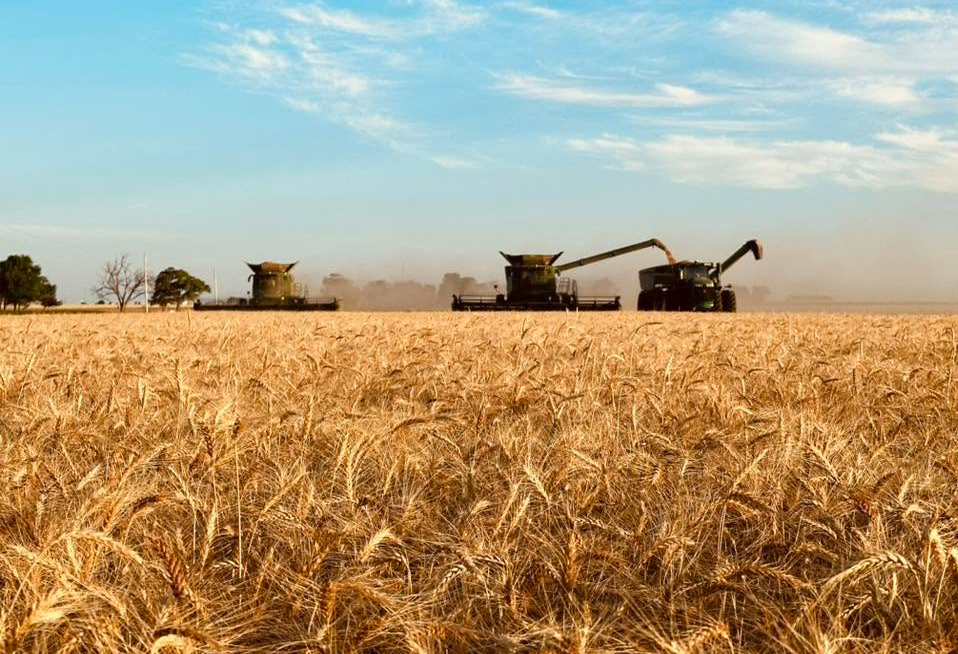
Pic courtesy of Wooderson Farms
The Oklahoma wheat harvest is rapidly approaching the finish line, with the Oklahoma Wheat Commission reporting the statewide harvest at 90% complete. While combining is wrapping up across most areas, operations have shifted focus to the northern tier of the state, where frequent rain events are creating a delicate balancing act between high yield potential and declining grain quality.
A significant disparity exists between recent federal data and state-level observations regarding the pace of this year's harvest. The USDA National Agricultural Statistics Service (NASS) crop progress report rated the Oklahoma winter wheat harvest at 73% complete. By comparison, last year's harvest at this time stood at 26% complete.
The USDA report also highlighted the heavy toll that challenging weather conditions took on the crop during the growing season, rating Oklahoma winter wheat condition as:
This places the crop at a combined 61% poor to very poor, with only 9% registering in the good to excellent categories.
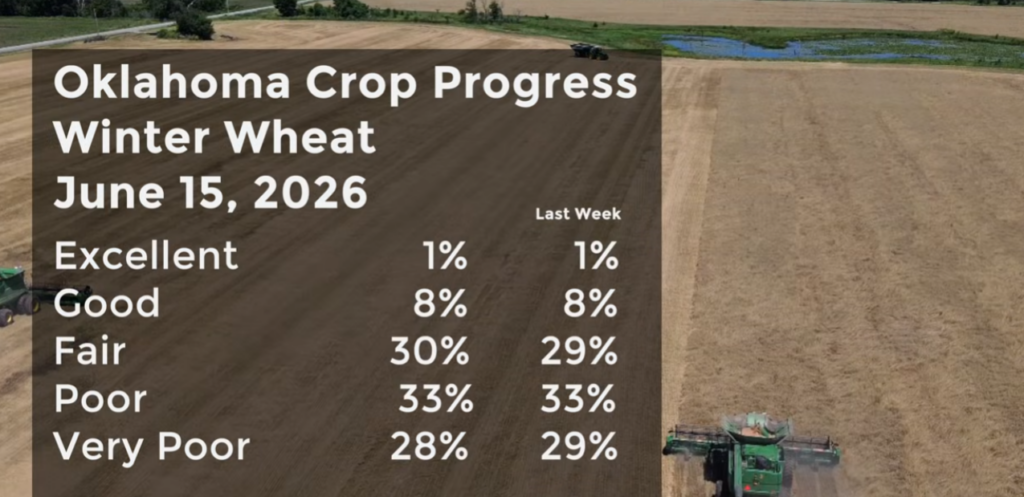
As the harvest moves through north central and northeastern Oklahoma, producers are seeing extreme variability in performance. Dr. Amanda Silva, Oklahoma State University Extension small grain specialist, noted that yield levels in the north-central region range from 1 to 70 bushels per acre. This extreme variation is appearing not just across regional lines, but even between different fields within the exact same county.
In northeastern Oklahoma, combines are rolling despite persistent wet weather. In Ottawa County, producer Brent Rendle reported that fields received roughly 8 to 10 inches of rain split across five or six separate weather events over the past month.
Rendle noted that while his wheat headed early—initially signaling a potential May harvest—temperatures pulled back significantly when April turned to May. This weather shift slowed plant maturity, allowing the heads to build bigger and the grains to grow larger. However, persistent wet conditions delayed the start of cutting until last week.
On his soft wheat acres, Rendle reported fabulous yield numbers, with the first three harvested fields averaging over 70 bushels an acre. He anticipates his hard wheat fields will perform similarly, projecting a final average of 70 to 80 bushels per acre across most of his operation.
The primary threat now is the recurring moisture. Rendle noted that his farm received 2 inches of rain recently, with another inch or more forecast in the next few days. Producers face a narrow window to cut wheat before consecutive rain systems knock down test weights and degrade overall quality, mimicking quality struggles seen during the previous harvest season.
In the Oklahoma Panhandle, irrigated wheat harvest is roughly 35% complete. Yields on these irrigated acres are mostly running between 40 and 60 bushels per acre, though some fields are trending lower. Test weights on the irrigated grain are averaging a solid 60 pounds per bushel—with some fields testing higher—while protein content is holding steady at 12.5%-13%.
Despite these stable irrigated numbers, the Oklahoma Wheat Commission expects the panhandle region to bring in roughly half of its normal total crop. This deficit is driven by the widespread abandonment of dryland wheat fields across the panhandle, a factor that will significantly impact the final statewide yield totals.
The latest U.S. Drought Monitor map, released on June 11, indicates a shrinking drought footprint across Oklahoma, with 64% of the state currently in drought. While this is a notable improvement over previous weeks, the hardest-hit areas remain concentrated in western Oklahoma and the panhandle.
The statewide breakdown shows:
Oklahoma Mesonet data reflects this geographic divide. Early in a recent six-day stretch, intense heat gripped the state, driving heat index values to between 105 and 110 degrees Fahrenheit along the I-44 corridor, with Cherokee and Fairview pushing past the 110-degree mark. Subsequent rainfall provided widespread relief, with many areas of the state receiving more rain in the first half of June than they did during the entire month of May. However, localized areas like Goodwell, Watonga, Forgan, and Hollis continue to miss out on critical moisture.
Soil moisture indicators highlight the ongoing disparity between the eastern and western halves of the state:
When analyzing the driving forces behind this season's erratic numbers, Dr. Silva emphasized that environmental moisture is the single most critical element for Oklahoma wheat production.
Silva explained that while wheat has a limited capacity to grow using stored profile moisture, successful seasons rely heavily on timely in-season rain events, making rainfall the primary yield-limiting factor by a wide margin.
Beyond moisture, Silva pointed to management decisions that help mitigate these climate challenges:
Ultimately, Silva noted that these management practices must work in tandem with available moisture to determine the crop's final success.
To see the complete harvest update from Dave Deken, click on the video below:
Oklahoma Farm Bureau has selected 12 Oklahoma businesses to be part of the Oklahoma Grassroots Rural and Ag Business Accelerators program for 2026.
The accelerators program is a collaborative rural development initiative from OKFB along with national and state-level partners that develops Oklahoma-based innovators creating ideas, technologies and products creating economic opportunities in rural Oklahoma.
The 12 founders were assigned to one of two cohorts with individualized tracks based on their business innovation.
AgCelerate Oklahoma
AgCelerate Oklahoma focuses on innovations and technologies that have an on-farm or production agriculture application in an effort to diversify opportunities for farmers with a farmer-focused and farmer-led development program.
The six members of the AgCelerate Oklahoma 2026 cohort are Ranch Ratchet, a tool designed to tighten and loosen electric fence insulators; Beech Land and Cattle, a company that is creating a medicinal dart to treat cattle; EqTek LLC, a record-keeping and farm monitoring program for horses and other large animals; SuperBlend Organics, a fertilizer that deploys concentrated beneficial microbes to the soil; Verda Robotics, an autonomous, GPS-based rover that navigates crops to collect data and detect plant stress; and JKS Farm Consultants, which has created a bioactive seaweed product to improve row crop efficiency and yield.
Activate Oklahoma
The Activate Oklahoma pipeline combines an innovation bootcamp, pre-accelerator and business accelerator to connect rural entrepreneurs and innovators with resources from Oklahoma's world-class business development community to build an even brighter future for rural Oklahoma. The Activate Oklahoma track is designed for any rural-based business with an innovation or product that will bring economic opportunities to Oklahoma's rural communities.
The members of the Activate Oklahoma 2026 cohort are NicomaNet Technologies, a company that has developed AI-powered food safety and consumer protection platforms; Industrial Marking and Safety Solutions, a platform that ensures food processing facilities operate with the highest safety standards; Nutrition Revolution, a blood pressure management platform that integrates behavior, nutrition and biometrics; Remote Ready OK, an AI-powered training program placing underemployed rural Oklahomans into remote startup careers; TriPoint Innovations, which has developed a GPS-based location awareness and communications device for hunters and outdoor users; and Blank Slate Learning Group, which has developed an AI-enabled video platform teaching K-8th grade science.
The 12 businesses, all hailing from rural Oklahoma communities or directly serving rural Oklahomans, will complete a vigorous bootcamp training and other programming in the coming months.
To learn more about OKFB's Oklahoma Grassroots Rural and Ag Business Accelerators program, visit okfarmbureau.org/accelerator.
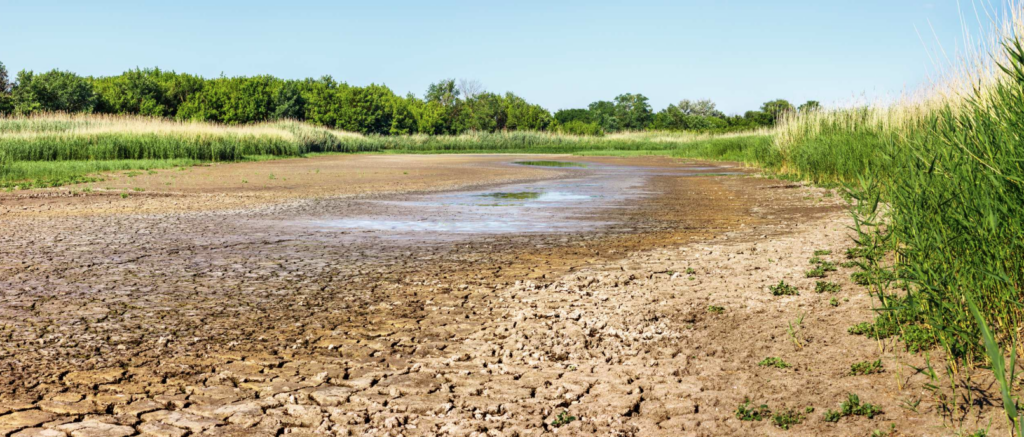
In today's Beef Buzz, senior farm and ranch broadcaster Ron Hays features comments from Dr. Derrell Peel, who shares his perspective on ongoing drought conditions, the market impact of New World screwworm, and what the continued U.S.–Mexico cattle border closure could mean for the beef industry.
Peel said drought conditions have improved in some parts of the country, but many cattle producers are still facing serious forage concerns during a critical time of year. "If you look at the whole U.S. from the standpoint of the drought monitor... we've seen a little bit of improvement in drought conditions around the country, but there are a lot of areas that are still very, very droughty, very threatened," Peel said.
He noted that while some regions have received beneficial rainfall, the broader outlook remains uncertain, especially for pasture and hay production. "We're still in the early part of the growing season from a pasture and hay standpoint, and so it's still pretty iffy in a lot of places," Peel explained. "We've gotten some rain in some areas—that's helpful—but all in all, it's still a little bit of a concern as we go forward."
Peel added that although climatologists say El Niño is now firmly in place, its full impact on weather patterns may not arrive until later in the year. "El Niño is now pretty firmly in place, but it really won't start taking hold of our weather conditions probably until late in the summer or into the fall," he said.
That uncertainty is making producers think twice about retaining replacement heifers and beginning herd rebuilding. "It's providing more caution about any attempts we might be thinking about retaining heifers," Peel said. "It's going to really dampen those intentions. Producers that might have been thinking about doing it now have some reason to reevaluate their forage situation."
Despite heavy media attention surrounding New World Screwworm, Peel said he does not expect it to significantly impact cattle or beef markets. "New World screwworm really doesn't have much impact on either the supply or the demand fundamentals of cattle and beef markets," Peel said.
While affected producers face serious challenges, he emphasized that the issue is not large enough to move national markets. "It's going to have a big impact on the people directly affected, but like a lot of disasters, it's actually not a big enough deal to impact the overall market broadly," he said.
Peel said markets have reflected that assessment so far. "We haven't seen a whole lot thus far from the standpoint of cattle prices or beef prices directly as a result of the screwworm thing."
Instead, he described screwworm as a costly management challenge. "It's just a big management headache, and it will be very costly for the individuals involved, as well as for the public sector, but really not a major market issue."
He also stressed that consumers should not be worried about food safety. "It's not a food issue. It's a pest, not a disease. It doesn't impact the meat at all," Peel said. "There's no reason for consumers to have any concerns about this from either a health standpoint or from an economic standpoint—it shouldn't impact beef prices."
Peel also discussed the ongoing closure of feeder cattle movement across the U.S.–Mexico border, calling it an issue that remains unresolved. "We closed the border to Mexican cattle about 20 months ago at this point, mostly, and that's an ongoing question about whether that will stay closed and for how long," Peel said.
He said the recent screwworm detections in the United States add another layer of uncertainty to that discussion. "Now that the screwworm fly is in the U.S., Mexico has closed the border to livestock going south out of the U.S.," he said.
Peel noted that Mexico's closure to U.S. livestock exports is not especially significant from a trade perspective. "We don't export very many cattle to Mexico most of the time, and we certainly haven't in the last two or three years," he said.
However, he believes the broader significance is political rather than economic. "It really emphasizes the fact that there's now a continuing conversation about whether the border should remain closed either direction or both directions," Peel said.
Ultimately, Peel believes science will inform the decision, but politics may determine timing. "It's partly a science issue, but it's really going to be a political decision about when to open the border," he said. "I wouldn't be too surprised if it happens sometime relatively soon, but that's just a guess on my part. I have no idea what they might actually decide."
The Beef Buzz is a regular feature heard on radio stations around the region on the Radio Oklahoma Ag Network and is a regular audio feature found on this website as well. Click on the LISTEN BAR above for today's show and check out our archives for older Beef Buzz shows covering the gamut of the beef cattle industry today.
Nominations are now being accepted for farmers and ranchers to serve on local U.S. Department of Agriculture (USDA) Farm Service Agency (FSA) county committees. These committees make important decisions about how federal farm programs are administered locally. All nomination forms for the 2026 election must be postmarked or received in the local FSA office by Aug. 3, 2026.
"Local voices matter, and agricultural producers play an important role in shaping how federal farm programs serve their communities," said FSA Administrator Bill Beam. "With nominations now open for FSA county committees, producers have an opportunity to put Farmers First by ensuring local farmers and ranchers have a voice in program delivery."
Elections for committee members will occur in certain Local Administrative Areas (LAA). LAAs are FSA committee elective areas in a single county or multi-county jurisdiction and may include LAAs that are focused on an urban or suburban area.
Producers interested in serving on the FSA county committee can locate their LAA at fsa.usda.gov/coc and determine if their LAA is up for election by contacting their local FSA office.
Agricultural producers may be nominated for candidacy for the county committee if they:
A cooperating producer is someone who has provided information about their farming or ranching operation to FSA, even if they have not applied or received program benefits.
Individuals may nominate themselves or others and qualifying organizations may also nominate candidates. USDA encourages all eligible producers to nominate, vote and hold office.
Nationwide, more than 7,700 dedicated members of the agriculture community serve on FSA county committees. The committees are made up of three to 11 members who serve three-year terms. Committee members play a key role in how FSA delivers disaster recovery, conservation, commodity and price support programs, as well as making decisions on county office employment and other agricultural issues.
More Information
Producers should contact their local FSA office today to learn more about their county's election. To be considered, a producer must sign an FSA-669A nomination form. This form and other information about FSA county committee elections are available at fsa.usda.gov/coc.
All nomination forms for the 2026 election must be postmarked or received in the local USDA Service Center by the Aug. 3, 2026, deadline. Election ballots will be mailed to eligible voters in November 2026
Today, Farm Aid and the Northeast Climate Disaster Relief Network (NCDRN) released "When Disaster Becomes the Norm: Climate Risk and the Future of Northeast Agriculture," a new white paper that explores the growing toll of climate-driven events on the region's agricultural economy and communities.
According to the report, the U.S. now averages 19 disasters costing more than $1 billion each year, up from just three per year in the 1980s. In the Northeast, record floods, heatwaves and rainfall are causing mounting losses, while farmers lack reliable federal aid, timely state support to respond to these pressures and access to crop insurance.
The white paper highlights how these climate disasters are creating compounding impacts across the food system, including crop losses, land and labor loss, supply chain disruption and an ongoing farmer mental health crisis.
Among the report's findings:
The report outlines a roadmap for building a stronger agricultural disaster response system, including establishing permanent state-level disaster relief funds, reducing barriers to assistance, investing in climate resilience and ensuring that farmers and farmworkers help shape the programs intended to support them.
For more information, find the full report here: farmaid.org/ncdrn-whitepaper.
Farm Aid's mission is to build a vibrant, family farm-centered system of agriculture in America. Farm Aid artists and board members Willie Nelson, Neil Young, John Mellencamp, Dave Matthews, Margo Price and Nathaniel Rateliff host an annual festival to raise funds to support Farm Aid's work with family farmers and to inspire people to choose family farm food. Since 1985, Farm Aid, with the support of the artists who contribute their performances each year, has raised more than $90 million to support programs that help farmers thrive, expand the reach of the Good Food Movement, take action to change the dominant system of industrial agriculture and promote food from family farms.
NCDRN is a coalition of agricultural service providers, advocates and farmers working to ensure that farmers and workers in the Northeast are equitably and effectively resourced before, during and after climate disasters. Developed by a coalition of agricultural service providers, advocates and farmers across the region, the report details how climate disasters are reshaping agriculture in the Northeastern United States faster than existing support systems can adapt.

U.S. Secretary of Agriculture Brooke L. Rollins and U.S. Secretary of Education Linda McMahon hosted several Land-grant University leaders at USDA for a roundtable discussion and announced the opening of the FY 2026 funding opportunity for the Research Facilities Act Program. President Trump's Working Families Tax Cuts provided $125 million annually for the Research Facilities Act Program and this historic investment will help address decades of deferred maintenance and accelerate modernization of agricultural research facilities across the country.
"A nation that cannot feed itself is not secure and for too long, many of our Land-grant Universities have faced aging facilities and mounting deferred maintenance costs that threaten their ability to conduct world-class agricultural research," said Secretary Rollins. "Today we are announcing a $125 million investment to ensure America's farmers and ranchers continue to benefit from the innovation that secures our vital U.S. agriculture industry and allows us to feed, clothe and fuel not only our nation but the world."
"Agricultural advancement is not an accident of history; it is the product of generations of Americans' hard work and ingenuity," said U.S. Secretary of Education Linda McMahon. "Land-grant Universities have driven agricultural development for more than a century—advancing critical scientific breakthroughs, pioneering cutting-edge technologies, and cultivating dedicated Americans who have strengthened America's food and farming systems. Thanks to President Trump, today's investment ensures these institutions continue to anchor American strength at home while leaded the world in competitiveness."
"Agricultural innovation has enabled our nation to feed millions, eradicate emerging threats and maintain one of the safest food supplies in the world," said USDA Under Secretary for Research, Education, and Economics and Chief Scientist Dr. Scott H. Hutchins. "The Research Facilities Act Program will ensure that future food and agricultural research is conducted in state-of-the-art facilities equipped with cutting-edge tools. This program is a win for American agriculture and for the next generation of scientists and producers."
The USDA National Institute of Food and Agriculture (NIFA) will administer this competitive funding opportunity, and the funding will support renovation, expansion and construction projects that strengthen research capacity and ensure America's agricultural research enterprise remains equipped to meet the challenges facing America's farmers, ranchers and producers. Applicants must provide a dollar-for-dollar non-federal cash match to ensure strong local investment and stewardship of taxpayer resources and eligible entities may receive funds for only one project at a time. Projects will be funded at four levels:
"For 164 years, USDA has partnered with America's great Land-grant and agricultural universities to produce the discoveries, service and education needed to keep the nation fed and to fuel U.S. agricultural progress around the world," said NIFA Director Dr. Jaye L. Hamby. "This investment reaffirms our commitment to that valued partnership and to the next generation of agriculturists. We are excited to see the tremendous impact this program will have to accelerate research from the lab to the marketplace and the fields to improve profitability for our farmers, ranchers, and producers and secure our nation's food supply."
The deadline for applications is July 17, 2026. For more information, visit the Research Facilities Act Program page on the NIFA website or email ree.nifa.rfap@usda.gov.
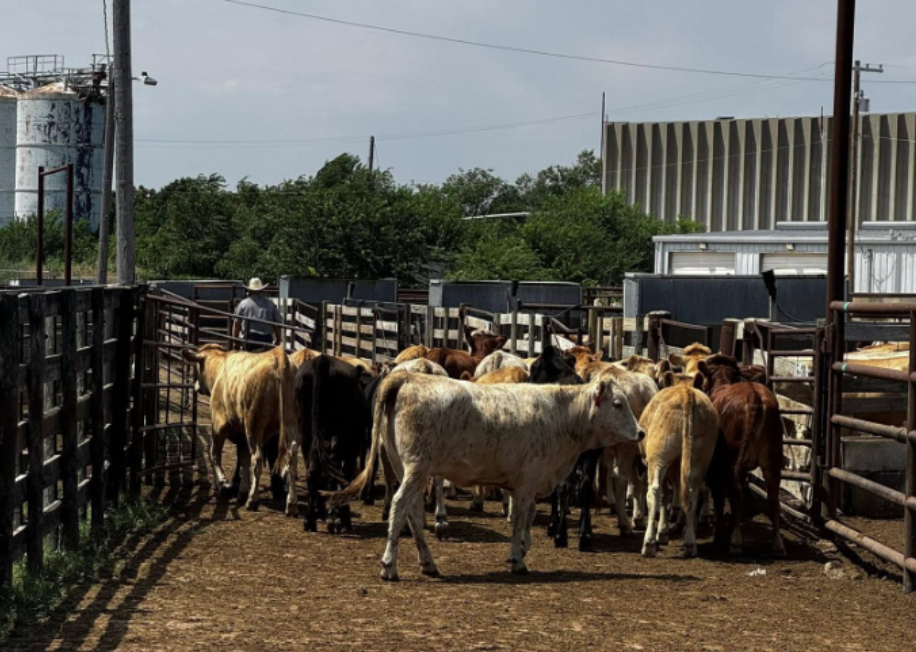
On Tuesdays, Senior Farm and Ranch Broadcaster Ron Hays visits with Ben Hale of Western Livestock Auctions as he talks about the latest in the markets and more. Established in 1995, Western has grown into a multi-generational family-owned and operated business and stands as a symbol of tradition, excellence, and a deep-rooted passion for the cattle industry. Western Livestock Auctions operates the Western Livestock Commission Firm, which sells cattle on Mondays and Tuesdays. They also operate the livestock auction markets in Woodward, Comanche, Waurika, and Knoxville, Iowa.
Hale says the cattle market remained strong this week, despite lingering concerns over New World screwworm. He noted that while the issue created uncertainty in recent weeks, the market appears to be settling as producers adjust. "We've been kind of bouncing around with that screw worm deal," Hale said. "Once we got it, then it seemed like it was having a case a day, and kind of got past it from the standpoint of—it's here now, we're going to deal with it." He added that vigilance from producers is helping contain concerns, saying, "Everybody's watching and can get them in and doctor them if they need to, so I think we can keep a handle on this."
Hale said feeder cattle and calf prices, especially for weaned calves, were notably stronger at Tuesday's sale. "Yearling prices were stronger, calf prices, particularly weaned calves, were really, really strong yesterday," he said. While he expected ample grazing to temper demand somewhat, buyers remained aggressive. Hale explained that weaned calves continue to command premiums because they are ready to transition quickly into the next phase of production. "Those cattle can just go right on, where those soft calves are gonna need some tender love and care before they do anything," he said.
As producers navigate the screwworm situation, Hale urged cattlemen to rely on accurate information and avoid misinformation circulating online. He said many rumors have caused unnecessary concern, particularly around cattle movement regulations. "Just make sure you're getting the right source from the right people," Hale said, cautioning producers against relying on social media rumors. He emphasized that for cattle moving to auction markets, normal procedures remain in place unless animals originate from infected or watch areas.
Looking ahead, Hale highlighted the importance of livestock auctions in maintaining price discovery and giving producers fair market value. "It is true price discovery," he said. "You have left zero money on the table, because you've been taking advantage of it every time." He also previewed strong sale activity across Oklahoma this week, including quality bred cows at the Oklahoma National Stockyards and solid runs at regional markets like Woodward and Waurika, saying business is "moving right along."
Hale can be contacted at 940-631-2333. Check out more about the marketing options that Western offers by clicking here.
As the summer progresses, finalizing planting and navigating unexpected weather shifts have made early-season cotton management a top priority for producers across the region. Farm Director KC Sheperd recently caught up with Oklahoma State University Cotton Extension Specialist Jenny Dudak to discuss the current state of the crop, critical weed and insect strategies, and an exciting new collaborative research project.
According to the latest June crop progress numbers, approximately 63% of the cotton crop has been planted. However, Dudak noted that progress might be slightly further along in certain areas.
"The last report that I got from Southwest Oklahoma, we are probably about 75 to maybe 80% done down there," Dudak said, explaining that dryland acres are currently driving the remaining planting activity. "We're past the insurance date for our irrigated crop. So folks are just trying to work on getting those dryland acres planted and in the ground."
Recent rainfall has provided much-needed support for the remaining dryland acres, particularly in Southwest Oklahoma. However, balancing the moisture with timely planting remains a delicate task.
"Trying to get our seed in the ground without letting the soil dry out too much, it has been pretty critical," Dudak observed. "So I think those guys are kind of working around the clock to try to get things done."
The early spring season also brought unusual cooler spells, raising concerns among producers about potential seedling diseases and cold shock. While Dudak has not received any official reports of seedling disease resulting from the cold snaps, the weather did present other challenges.
"Mainly what I was concerned about is that soil temperature dropping a little bit," Dudak stated. "Because it was cold a few days in a row, and so that can drop our soil temps a little bit, and emergence was mainly what I was worried about with that cold spell."
Fortunately, early indicators from the field are positive. An on-farm race trial planted in Caddo County during the cold spell is reportedly on track and looking good, giving producers a reason for optimism.
Effective weed management remains a cornerstone of a successful cotton season, particularly during the critical weed-free period. For producers who were able to plant earlier, the focus is now shifting toward post-emergence applications.
Dudak strongly advocates including a residual herbicide in early post-emergence treatments to extend control.
"When we put out our early post, we are also putting out a residual with that early post," Dudak recommended. "Some of our Group 15s, products like Warrant, Dual, or Outlook, are good options to kind of hold some of those weeds back a little bit longer, extend that critical weed-free period."
For growers still working to get dryland acres into the ground, Dudak emphasized the importance of starting with a clean field. This can be achieved through a burn-down application or by applying a residual herbicide immediately behind the planter. Tank mixing is another viable strategy, provided it aligns with the farm's profitability margins.
With the Dicamba label operating under short-term terms, stewardship remains a top priority for the industry. Dudak urged producers to remain diligent and informed.
"The best advice that I've got, I know it's not easy, but follow the label as closely as we can," Dudak stressed. "Just making sure that you're up to date with the new label and following those rules as the label states to try to maybe prolong our chances of continuing to use Dicamba."
Early-season insect scouting is vital to protecting young cotton plants. Thrips are a perennial concern, especially during cooler periods when plant growth slows down. However, the recent shift toward hotter weather has allowed cotton plants to grow rapidly, naturally reducing the window of threat for thrips. Dudak noted that once cotton reaches five true leaves, producers can safely discontinue scouting or spraying for the pest.
As the season progresses, the scouting focus must shift to other emerging threats.
"Some of those guys that kind of planted a little bit early, you might start thinking about scouting for fleahoppers," Dudak advised. "Making sure you put that on your radar. As soon as your plants start squaring, that's when you need to start thinking about fleahoppers and fleahopper management."
Looking ahead, Dudak is spearheading an exciting collaborative research project that spans nearly the entire Cotton Belt. The trial, located at the Altus Research Station, involves cotton specialists from every producing state except Florida and focuses on Extra-Long Staple (ELS) qualities.
The comprehensive study compares a Pima variety, various hybrids, breeding lines from Texas A&M and private industry, and commercially available Upland varieties known for long staples. The old-faithful variety, Delta Pine 1646, serves as the control.
"We are going to run all of those samples at the end of the year after we harvest through a saw gin and also through a roller gin," Dudak explained. "And then we're going to be doing some economic comparisons, some loose return on investments, and see what the viability of running some of our Upland varieties through a roller gin might be."
This research addresses a highly discussed topic in the region, as several Oklahoma producers have recently experimented with or considered roller ginning Upland varieties. The study aims to provide the cotton specialist group with data-driven insights to better answer producer inquiries as interest grows.
The Altus Research Station trials are open to the public for visitation throughout the summer. Producers interested in viewing the plot map or scheduling a field visit are encouraged to contact Jenny Dudak directly. Comprehensive data and findings from the trial will be made publicly available following the year-end harvest and analysis.
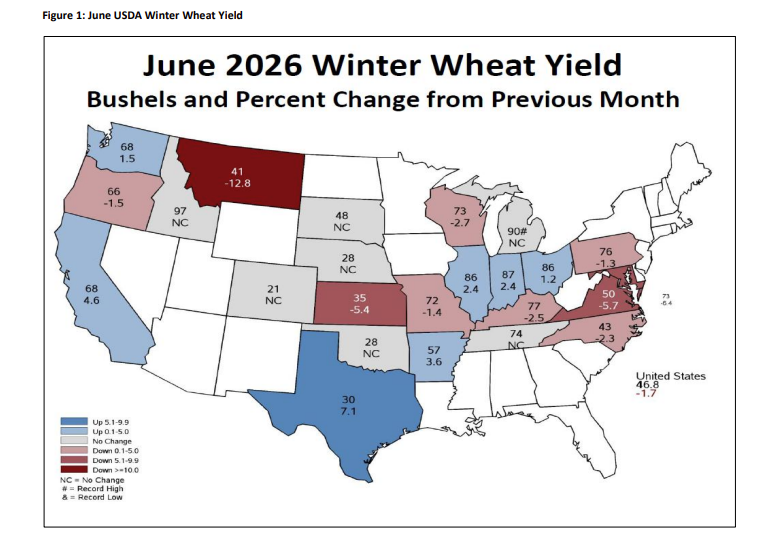
OSU's Todd Hubbs writes: On Thursday, June 11, USDA released the Crop Production and WASDE reports. The June Crop Production report confirmed the poor winter wheat crop, but prices remain weak. Initial reports of an agreement between the U.S. and Iran led to a drop in energy prices and will hopefully bring a risk-on scenario that can find support for agricultural commodities. The reports were not particularly bullish for any crops. This newsletter reviews the major takeaways and implications from those reports.
Wheat Market Outlook: Hard red winter wheat prices continue to struggle for purchase despite the supportive USDA June Crop Production report. HRW July futures price sits at $6.40 after the close on Monday. Despite minor support after the USDA reports last Thursday, wheat futures prices sit in the range of $6.15 - $6.40 last seen in March. At present, HRW prices finding strength over the near term appears limited as international supplies and competitor prices limit rally potential. Wheat prices continue to work through the information from geopolitical events. In combination with expectations of lower production, HRW prices should remain sensitive to developing crop potential around the globe and any developments with spring crops. In Oklahoma, cash prices for July delivery converged with prices in the $5.95 - $6.05 range.
The USDA reports confirmed the poor conditions in HRW countries and corroborated the recent stories about international crops circulating. Domestically, the USDA winter wheat production report for June came in at the lower range of analysts' estimates. At 1.03 billion bushels, the estimated winter wheat crop sits 26.5 percent lower than last year. All classes of winter wheat dropped in total production except for soft white wheat. HRW production fell another 17.9 million bushels to 497 million bushels. A substantial drop from last year's 804 million production level. HRW's production drop encapsulated the production losses for winter wheat as the total winter wheat crop fell 17.8 million bushels, with minor changes to the other classes.
Harvested acreage remains unchanged in the June production report as potential acreage adjustments focus on the June Acreage report due out on June 30. As shown in Figure 1, winter wheat yield is estimated at 46.8 bushels per acre. Yield changes from the May report varied, with a 2-bushel-per-acre drop in Kansas yield significantly impacting HRW production. Texas HRW yield increased by 2 bushels, with Oklahoma remaining at 28 bushels per acre. Soft red winter production totaled 300 million bushels, down .6 million bushels from last month's forecast. Higher yields in Illinois, Indiana, and Ohio offset issues elsewhere, limiting losses.
On the domestic balance sheet, the WASDE report left the 2025-26 balance sheet unchanged as usage continues to converge on the estimates. Lower winter wheat production is reflected in the new-crop balance sheet for wheat. Wheat production is forecast at 1.54 billion bushels, with supply at 2.62 billion bushels, down 346 million bushels from last marketing year. To incorporate the 18-million-bushel drop, ending stocks for the 2026-27 marketing year were lowered to 742 million bushels. Usage was left unchanged. A tendency among the trade to discuss a tightening balance sheet for wheat is understandable, but the global picture right now lessens the bullishness associated with the U.S. crop.
2026-27 world wheat production came in at 30.13 billion bushels, down 892 million bushels from the 2025-26 crop. Smaller projected crop output in Australia, Pakistan, and the U.S. was offset by higher expectations for Russia, Ukraine, and Turkey. Expect a major amount of discussion about the "Super El Niño" along with the Australian and Argentine wheat crops later this year. USDA currently places Australian production at 1.03 billion bushels, down almost 300 million from last year. While Australian crop potential could deteriorate further, the overall production level will probably not see a large change given the current expectations already incorporated into the world balance sheet. The Russia crop totaled 3.23 billion bushels, up 73 million bushels from last month. Turkey's production increased to 826 million bushels, bringing potential price pressure in the Black Sea, EU, and MENA regions into focus in the near term.
As shown in Figure 2, ending stocks outside of China are forecast at 5.68 billion bushels, a slight increase from last month. Ending stocks sit well above the levels seen from 2021 to 2024 marketing years, despite issues with major crop producers. In compensation for lower production, global trade in wheat is expected to fall, with trade-year exports for 2026-27 totaling 7.8 billion bushels. Domestic consumption of wheat for feed usage around the globe is expected to fall as well.
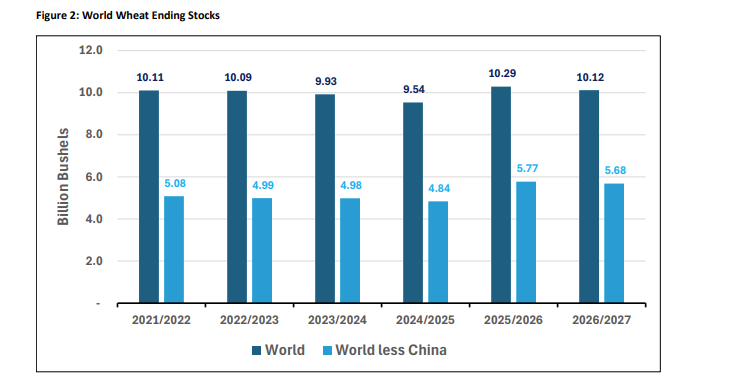
Corn/Milo Outlook: Corn prices reflect the improvement in weather domestically along with improved global supplies. July corn futures moved up two cents to close at $4.15 per bushel on Monday. December corn futures followed suit to close at $4.42. Both prices have fallen to marketing year lows. The outcome from the stocks and acreage reports at the end of the month will set the tone into pollination. Corn in Oklahoma was priced on average around $3.70 per bushel with harvest prices in the $4.06 - $4.16 range.
The corn balance sheet saw a couple of changes to the old crop balance sheet. Corn usage for ethanol dropped 25 million bushels to 5,575 million bushels, reflecting a slower pace through the first seven months of the marketing year. The lowered ethanol usage was offset by a 25 million bushel increase in exports. At 3,325 million bushels, the corn export forecast reflects the continued strength in corn export sales. While sales have slowed over the last month, current levels remain robust enough to meet the new projection. Imports were raised 3 million bushels to 28 million which moved ending stocks slightly higher. No changes occurred to the new crop balance sheet other than the three-million-bushel increase in beginning stocks moving down into ending stocks for the new crop marketing year. Crop conditions continue to improve with good and excellent conditions through June 14, sitting at 58 percent. Speculation around the Acreage report appears set to set the tone for price action, barring a sudden deterioration in weather.
As seen in Figure 3, corn global production is forecast at 51.2 billion bushels, down 1,035 million bushels from the last marketing year. Back year corn production jumped 550 million bushels on larger corn crops projected for Argentina (up 2 MMT), Brazil (up 3 MMT), and India (up 8.9 MMT). The 2025-26 corn crop saw a reduction for Mexico but pales in comparison to the larger crops that add to global ending stocks for 2025-26. The 2026-27 corn crop saw a 5 MMT increase in India. The substantial changes to India's last two crops were due to acreage adjustments. The results of these changes place ending stocks at 11.1 billion bushels for 2026-27, down 871 million bushels, and indicate tightening to the global balance sheet. Growing crops in South America, hitting the global market, along with the prospect of a good U.S. crop, places pressure on corn prices.
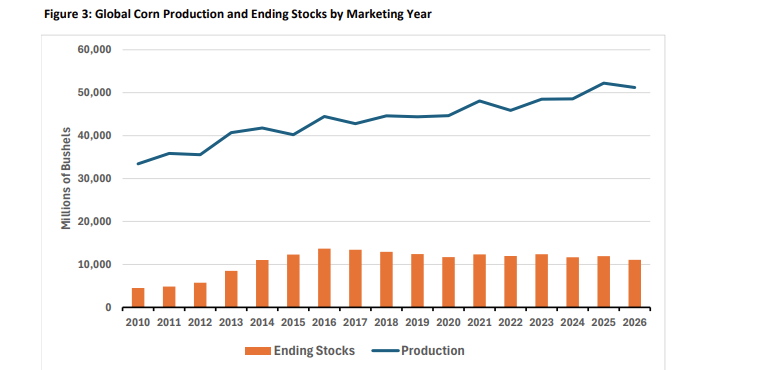
Soybean Market Outlook: Soybean futures prices moved higher yesterday providing a minor recovery after dropping almost 75 cents over the last two weeks. Soybeans fell marginally after the June WASDE as the large soybean crops in South America come to fruition. The July soybean contract moved six cents higher to sit at $11.19 and the November contract closed at $11.34, up two cents. Soybean prices remain under pressure due to large harvests in South America and weakening exports domestically. While crush levels appear sustainable at recent elevated levels, U.S. competitiveness on global markets will be impacted by elevated domestic prices. Cash prices in Oklahoma sat at $10.34 - $10.39 for delivery. Harvest prices came in at $10.44.
Old crop soybean balance sheet saw crush raised another 20 million bushels to 2.65 billion as crush pace in the 2025-26 marketing year remains at an elevated level. Exports were lowered 20 million bushels to offset the crush change and give a hat tip to the massive crops coming out of South America. Ending stocks stayed at 340 million bushels. The new crop soybean balance sheet remained unchanged from the initial forecast in May. Barring a major change in the soybean crop production potential, the new crop balance sheet will remain stable.
Soybean oil production increased 180 million pounds on stronger crush with soybean oil use for biofuels forecast to hit 14.55 billion pounds this marketing year, up 350 million pounds. USDA's increased projection for biofuel usage implies a monthly usage of 1,405 million pounds a month for the remaining six months of the soybean oil marketing year. The ambitious forecast is based on the potential for biomass-based diesel production under the new renewable volume obligations. The monthly rate is beyond anything that has ever been achieved in soybean oil biofuel use. Decreased exports of 150 million pounds offset the drop in biofuels usage and underscores the poor pace of oil exports with U.S. prices well above global prices.
Soybean meal production is up 425 thousand short tons under the new projection. Domestic usage (up 250 thousand) and exports (up 200 thousand) combined to use the increased production, with a 25 million-bushel increase in imports. Increased imports may seem strange given the massive crush and domestic usage, but soybean meal imports classified as organic tend to absorb those import tons. Lower prices for meal are expected to drive a strong demand in 2026-27 and an expectation of U.S. market share in export markets maintaining the current levels is in place with intense competition from South America.
As shown in Figure 4, global soybean production for 2025-26 was forecast at 15.77 billion bushels, up 59 million bushels from May. The change was driven by an increase in the Argentine bean crop by 2 MMT to 50 MMT. One should not be surprised if the Argentine crop grows further still before it is finalized. Major exporters in South America are expected to produce 8.96 billion bushels with ending stocks in the region (Brazil, Paraguay, and Argentina) coming in at 2.3 billion bushels, on par with 2024-25 levels. Global ending stocks are projected to fall slightly in old crop and new crop marketing years and remain well above levels seen even during the trade war years in the late 2010's. The prospect of South American production slowing over the next few years seems slim, despite discussions of energy and fertilizer costs in the region.
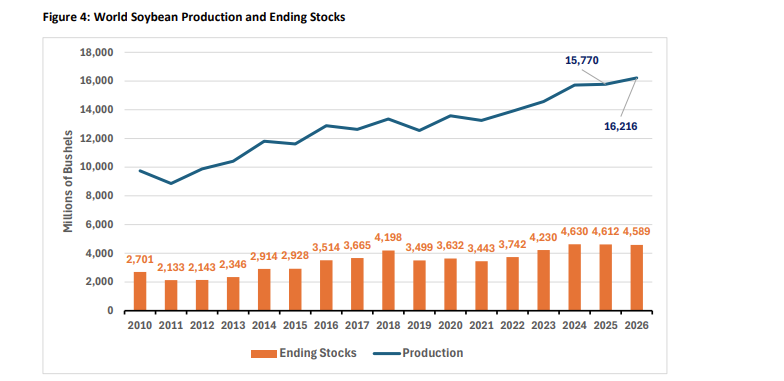
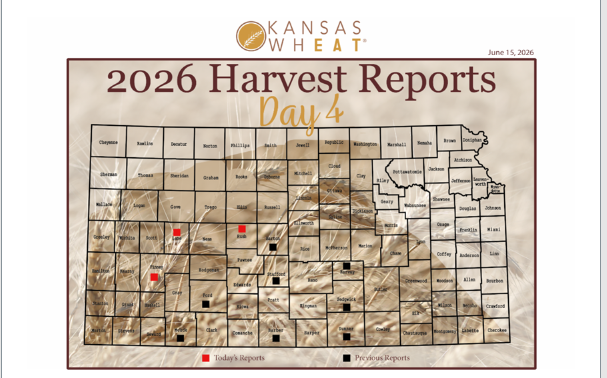
This is day 4 of the Kansas Wheat Harvest Reports, brought to you by the Kansas Wheat Commission, Kansas Association of Wheat Growers, Kansas Grain and Feed Association and the Kansas Cooperative Council.
Harvest is well underway across the state, with progress varying by region. According to the USDA's National Agricultural Statistics Service crop progress report ending June 14, 2026, the Kansas wheat harvest is 28 percent complete, well ahead of last year. Winter wheat conditions were rated 25 percent very poor, 32 percent poor, 29 percent fair, 14 percent good and 0 percent excellent.
Despite early predictions, in a few locations, yield is fairing better than initially thought, according to farmer Dale Younker in Rush County.
"In areas that were fortunate to catch a timely rain amidst the drought, wheat is yielding better than what could have been," said Younker. "That has been a pretty pleasant surprise for some people."
Between the drought and hail damage, there have been challenges this harvest season for Younker; as for grain quality, his first load reported a test weight of 63.2 and 12.7 protein.
"We don't have the exact yield for that particular field, and it had about 20 percent hail damage," said Younker. "But I estimate the yield for it would be in the 50s."
Ron Suppes, a farmer from Lane County, began harvesting around June 11 and is estimating that he is around an eighth of the way done. Suppes reported having disappointments, but has had some test weights of 61 and yields of 50 bushel per acre.
"The big challenge was having 5-7 inches of rain a few days ago," said Suppes. "It ruined some of the wheat with hail and flooded fields."
Lindie McMillan, Vice President of Grain at Garden City COOP, reported that they took in their first load on June 6, but harvest really got going in the last few days. She estimated that in her area, harvest was 25 percent complete with better quality than expected, and decent test weights across the region.
"The story of the year is variability," said McMillan. "Something that really stings is that the stands in the fall were really beautiful, and a combination of the warmer-than-normal winter and no moisture in the spring led to a below-average crop."
The 2026 Harvest Report is brought to you by the Kansas Wheat Commission, Kansas Association of Wheat Growers, Kansas Grain and Feed Association, and the Kansas Cooperative Council. To follow along with harvest updates on X, use #wheatharvest26. Tag us at @kansaswheat on Facebook, Instagram and X to share your harvest story and photos.

R-CALF USA, the nation's largest producer-only cattle trade association, issued the following statement after President Donald Trump indicated he may not renew the United States-Mexico-Canada Agreement (USMCA).
"Although the U.S. cattle industry is the largest segment of American agriculture and cattle and beef are among the leading agricultural imports from Mexico and Canada, the USMCA made no changes to cattle and beef trade. For independent U.S. cattle and sheep producers, the agreement represents a continuation of the North American Free Trade Agreement (NAFTA).
"Both NAFTA and the USMCA allow tariff-free trade in cattle, sheep, beef, lamb and mutton between the United States, Mexico and Canada. These policies have made imported livestock and beef more accessible and economically attractive to meatpackers, reducing incentives for U.S. farmers and ranchers to rebuild and expand the domestic cattle and sheep supply chains.
"In addition, the USMCA retained NAFTA's rules of origin for beef, lamb and mutton, which designate the country in which the animal is slaughtered as the product's country of origin. Combined with the absence of mandatory country-of-origin labeling for beef, these rules allow imported beef to be sold alongside domestic beef without distinction, limiting price transparency for consumers and reducing incentives to pass along savings from lower-cost imports.
"The United States continues to run a substantial quantity-based trade deficit in cattle and beef with Mexico and Canada. Each year, the U.S. imports more than three times the cattle and beef from those countries than it exports to them. This imbalance contributes to the decline of cattle operations, cattle herds, feedlots, and rural jobs and businesses.
"This persistent trade deficit has contributed to the ongoing contraction of the U.S. cattle industry and the erosion of its competitive infrastructure.
"Since NAFTA took effect in 1994, the number of U.S. beef cattle farms and ranches has fallen from 900,680 to 622,160, a decline of 31%.
"The U.S. mother-cow herd, a key measure of the industry's productive capacity, began declining shortly after NAFTA's implementation. By 2025, it had fallen to a historic low of approximately 27.9 million head, down about 22% from 1994 levels.
"During the NAFTA-USMCA period, approximately 86,000 U.S. feedlots with fewer than 1,000 head exited the industry, representing a 77% decline in the number of domestic feedlots.
"Meanwhile, imports of beef derived from cattle born in Mexico and Canada have increased 63% since NAFTA's implementation. These imports are a direct substitute for domestically produced beef.
"The USMCA has increased reliance on imported cattle and beef supplies, displacing domestic production, U.S. cattle producers, and their cattle. We fully support President Trump's decision not to renew the USMCA."
To see R-CALF USA's comments for the USMCA review click HERE.
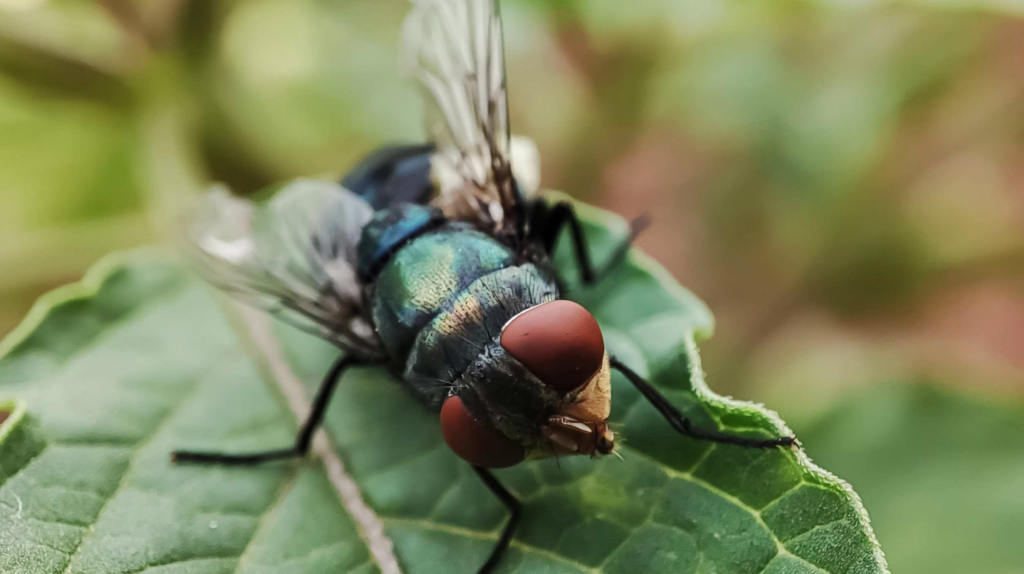
Disclaimer: The information contained below is current as of 8:00 AM on Monday, June 15th.
On Wednesday June 3rd, 2026, USDA confirmed that New World screwworms, Cochliomyia hominivorax (Coquerel), were found infesting the umbilicus of a calf in Zavala County in Texas. This marked the first time since 1982 that New World screwworms have been found in Texas, and was the first domestic case resulting from the current outbreak that began in 2023. Since that initial case in Zavala County, infested animals have now been found in five additional counties in Texas and one county in New Mexico. Impacted species include cattle, goats, sheep, and a dog (Figure 1). The current total number of cases is 12.
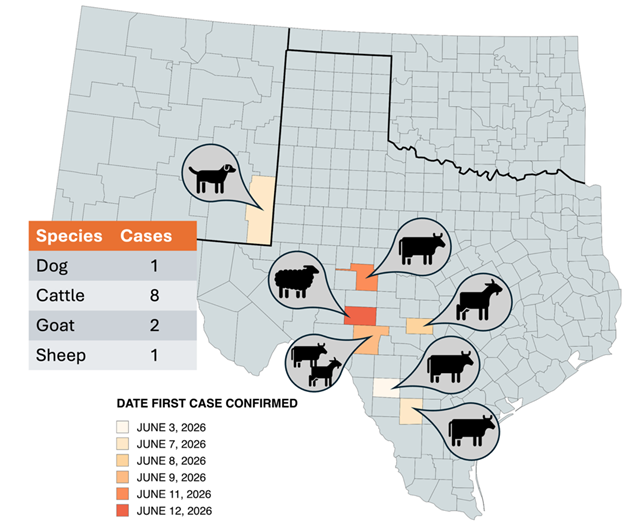
Figure 1. New World screwworm detections in the United States, including county, species impacted, and number of cases per species. Data are current as of 8:00AM on Monday, June 15th, 2026. Data from the USDA New World screwworm Detections Dashboard. Map created using www.mapchart.net.
Although Oklahoma cattle (and other livestock, pets, and wildlife in the state) are currently not impacted by New World screwworms, being prepared, and knowing what factors can contribute to an infestation are critical. The most important step in this process is wound prevention and management on animals. New World screwworms require an infected natural body opening or an open wound on an animal around which to lay their eggs; this wound can be as small as a horn fly or tick bite, as large as a cut or scrape, or the unhealed umbilicus of a newborn/young animal. Reducing the number of fly and tick bites can be achieved through proper pest management (see the March 3rd, 2025 Cow-Calf Corner Newsletter article for information on horn fly management); it's not too late to implement a horn fly management plan. The management of larger wounds can be achieved through regular and frequent monitoring and inspection of animals. Daily monitoring and inspection of livestock is preferred, but animals should be inspected at least twice weekly. As I say in many of my Extension presentations: Our cows aren't walking around with Neosporin and Band-Aids, so it's up to us to provide that wound treatment for them. Noticing a wound early, and providing treatment so that it heals quickly, will help reduce the risk of a New World screwworm infestation. Additionally, if you notice multiple animals within your herd with the same wound in the same location: identify the source. Rusted and/or broken hay rings, feed troughs, creep feeders, and other items and equipment in your pastures can all cause scrapes and cuts if animals rub up against them.
Regular and frequent monitoring of animals, and subsequent wound care, will become increasingly more important as New World screwworms continue to move northward. Getting into practice now of frequently checking your animals for wounds and treating those wounds will go a long way to help stop the spread of screwworms. However, if during your monitoring, you notice a living animal with a wound infested with fly larvae (maggots), contact your county Extension office or veterinarian immediately. For additional resources, and the most up-to-date information, visit screwworm.okstate.edu.
Dr. Jonathan Cammack, explains the biology of the New World screwworm, how the fly moves across regions, and the parasitology behind infestations in livestock and other animals, and how the USDA is working to address the issue on SunUpTV from June 9, 2026 at https://www.youtube.com/watch?v=Yd6HwqamHjQ
RON's Dave Lanning has a pre-opening look at today's agricultural Markets.
Click the audio tab below for today's report.

Oklahomans are heading to the voting booths today, June 16, 2026, to cast their ballots in the statewide primary election and a highly watched special state question election. The outcome of today's voting will shape the field for major statewide offices leading into the November general election, as well as determine immediate statutory changes for the state.
Polls across the state opened at 7 a.m. this morning and will close promptly at 7 p.m. tonight. According to state election officials, any voter who is securely in line by the 7 p.m. deadline will be legally permitted to cast their ballot.
Voters must cast their ballots at their specifically assigned polling place. Registered voters can verify their designated polling location and view their specific sample ballots online through the OK Voter Portal.
Today's election features a mix of closed political primaries, a single statewide ballot measure, and various nonpartisan local races.
Every registered voter in Oklahoma—including Independents—is eligible to vote on State Question 832. This special election measure addresses a proposed increase to Oklahoma's minimum wage, seeking to raise it to $12 per hour in 2027, $13.50 in 2028, and $15 by 2029, while restructuring several current agricultural exemptions.
Oklahoma operates under a closed primary system, meaning voters must be registered members of a specific political party to participate in that party's primary contests. Key primary races on today's ballot include:
Depending on the precinct, voters may also find nonpartisan local propositions, school board items, municipal measures, or district judge races on their ballots. Independent voters are fully eligible to vote in these nonpartisan contests in addition to the state question.
If no single candidate in a primary race receives more than 50% of the vote today, the top two candidates will advance to a primary runoff election scheduled for August 25, 2026.
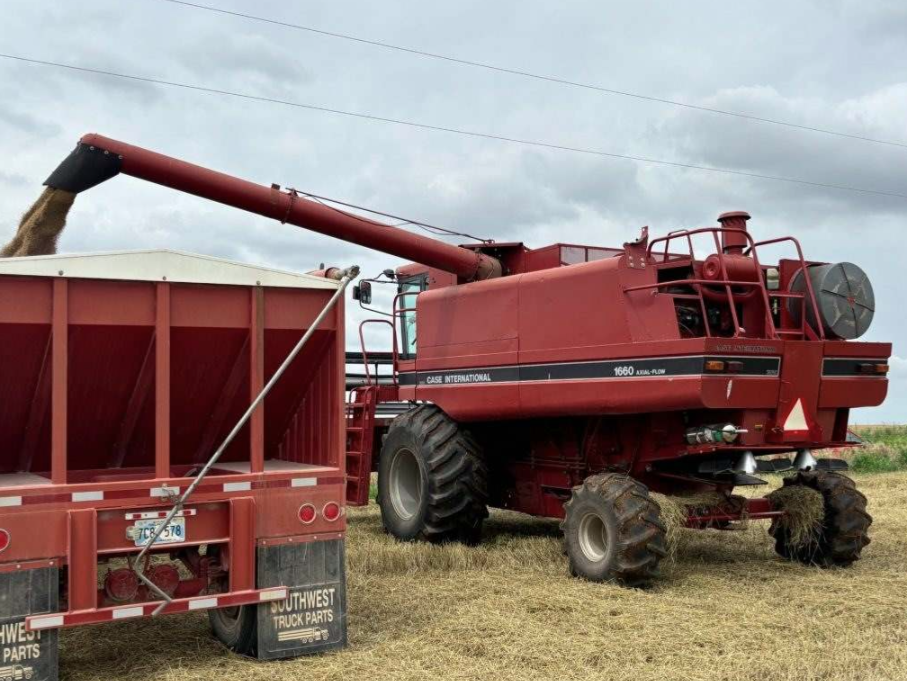
According to the latest crop progress report released on June 15th, 2026, Oklahoma's winter wheat headed is at 100%, while winter wheat conditions are rated 9% good to excellent, 61% poor to very poor, and 30% fair. Oklahoma winter wheat harvested is at 73% this week, compared to 44% last week.
Kansas winter wheat headed is at 100%. Winter wheat crop is ranked 14% good to excellent, 29% fair, and 57% poor to very poor. Winter wheat harvested is at 28% compared to 5% last week.
Texas winter wheat crop is ranked 12% good to excellent, 23% fair, and 65% poor to very poor, while winter wheat headed for the state is at 100%. Texas winter wheat harvested is at 75% this week, compared to 35% last week.
Nationally, winter wheat conditions rank 27% Good to excellent, 28% fair, and 45% poor to very poor. Winter wheat headed currently sits at 95%, and winter wheat harvested is at 25% compared to 11% a week ago.
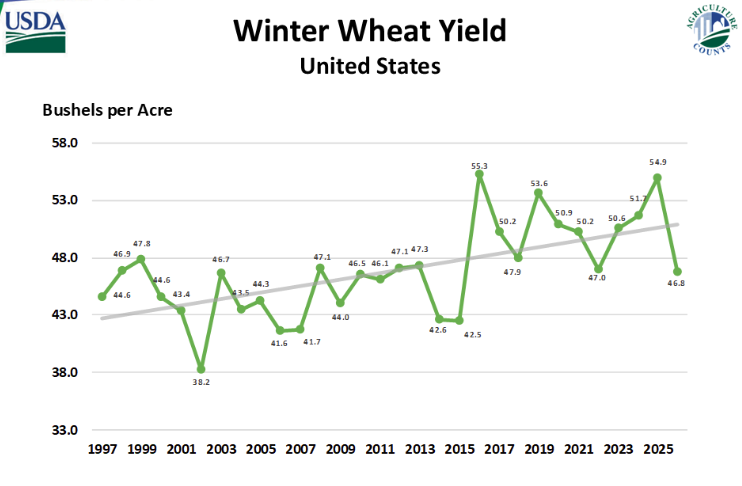
Oklahoma: 28% poor to very poor, compared to 29% last week. 38% Fair compared to 37% last week, and 34% good to excellent compared to 34% last week.
Kansas: 23% poor to very poor compared to 27% last week. 31% fair compared to 33% last week, and 46% good to excellent compared to 40% last week.
Texas: 30% poor to very poor, compared to 32% last week. 33% fair compared to 33% last week, and 37% good to excellent compared to 35% last week.
Nationally: 39% poor to very poor, compared to 40% last week. 29% fair compared to 29% last week, and 32% good to excellent compared to 31% last week.
Oklahoma corn emerged is at 80%. Corn conditions rank as follows, 9% poor to very poor, 27% fair, and 64% good to excellent.
Kansas corn emerged is at 90%. Corn conditions rank as follows, 5% poor to very poor, 32% fair, and 63% good to excellent.
Texas corn emerged is at 97%. Corn conditions rank as follows, 17% poor to very poor, 40% fair, and 43% good to excellent.
Nationally, corn emerged is at 94%. Corn conditions rank as follows, 6% poor to very poor, 26% fair, and 68% good to excellent.
Oklahoma soybeans planted are at 67%, and soybeans emerged are at 57%. Oklahoma soybean conditions rank as follows: 16% poor to very poor, 27% fair, and 57% good to excellent.
Kansas soybeans planted are at 87% this week. Soybeans emerged are at 74%. Kansas soybean conditions rank as follows: 5% poor to very poor, 32% fair, and 63% good to excellent.
Texas soybeans planted are at 85%, and soybeans emerged are at 68%. Texas soybean conditions rank as follows: 13% poor to very poor, 36% fair, and 51% good to excellent.
Nationally, soybeans planted are at 95% this week, up 2% from a year ago, and soybeans emerged are at 88%
Oklahoma cotton planted is at 65% this week, up 2% from a week ago. Oklahoma cotton conditions rank as follows: 6% poor to very poor, 42% fair, and 52% goog to excellent.
Kansas cotton planted is at 96% this week, up 4% from a week ago. Kansas cotton conditions rank as follows: 24% poor to very poor, 41% fair, and 35% good to excellent.
Texas cotton planted is at 80% this week, down 12% from a week ago. Texas cotton conditions rank as follows: 21% poor to very poor, 34% fair and 45% good to excellent
Nationally, cotton planted sits at 86%. Nationally, cotton conditions rank 11% poor to very poor, 39% fair, and 50% good to excellent.
Oklahoma sorghum planted is at 49%, up 3% from a year ago.
Kansas sorghum planted is at 54% even with a year ago.
Texas sorghum planted is at 93%, up 1% from a year ago.
Nationally sorghum planted is at 68%, up 1% from a year ago.
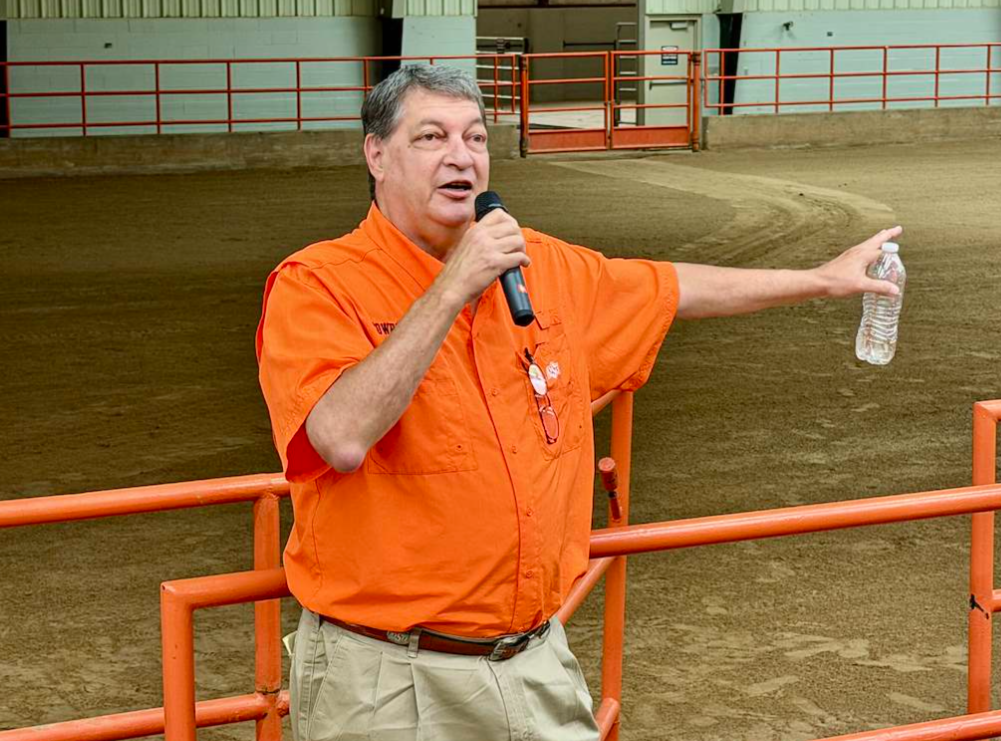
As Dr. Jerry Fitch's retirement becomes official at Oklahoma State University, the longtime animal science professor says that while he may be stepping away from full-time duties, he is far from done serving Oklahoma agriculture. In a conversation with senior farm and ranch broadcaster Ron Hays, Fitch reflected on his decades-long career in teaching, extension, and agricultural leadership development, while emphasizing his continued commitment to the industry he has spent a lifetime supporting.
"I'm retiring, but I'm still around here," Fitch said. "We'll take a couple of months and just travel and do those kinds of things, and then maybe we do something else in the fall. But I am an animal scientist, true and true."
Fitch said his connection to OSU runs deep, dating back to 1988 when he joined what he described as the nation's top animal science program. "I was fortunate that in 1988 I was asked to come to the number one animal science program in the nation, and for that reason I never left," Fitch said. "I've had a really, really great career here, and a lot of good students. It's been a great run."
Among the many accomplishments during his career, Fitch pointed to the Oklahoma Ag Leadership Encounter (OALE) program as one of his proudest achievements. "Probably my highlight, the things that I really, really cherish, is the OALE program," Fitch said. "That's something we started in 2003 and it has been even more than I could have ever expected, but we've trained a lot of the next generation of leaders."
Fitch explained the program was created to fill a leadership gap in agricultural education. "We had the FFA program that's second to none in the nation, the OALP program that is phenomenal," he said. "We didn't have anything for college students, and so that's what we tried to put together—something that would be great leadership training for the next generation of agricultural leaders."
Even in retirement, Fitch plans to stay involved with OALE and continue mentoring young agricultural leaders. "I am still going to do some things with OALE for the next two or three years at least," he said.
Fitch also highlighted his capstone class at OSU as one of the most meaningful parts of his teaching career, particularly because it focused on preparing students to advocate for animal agriculture. "One of the things I am very proud about is the capstone class, and the fact that we do everything we can to teach our students how to advocate for animal agriculture," Fitch said.
He stressed the growing importance of helping future agricultural leaders communicate with consumers and defend modern livestock production. "We get so many things shot at us in animal agriculture, we have to have that," he said. "Our students are the greatest advocates out there, and they need to understand how to do that."
Fitch emphasized that proper animal care remains central to livestock production. "They need to understand that we do everything we possibly can to take care of our animals the best way possible until the time they become food," he said.
Early in his career, Fitch served primarily as an extension sheep specialist, devoting much of his time to helping producers improve flock management and genetics. "When I started here, I was 70% extension sheep specialist," Fitch said. "When I finished here, it was down to about 20% because my teaching role just grew and grew and grew."
During that time, he worked on major sheep industry issues, including the Oklahoma sheep improvement program and research involving spider syndrome. "We did a lot of things with the Oklahoma sheep improvement and the ram test station and spider syndrome," Fitch said. "I was chairman for the National Task Force on Spider Syndrome."
Fitch has seen enormous change within the OSU Animal Science Department over the past three decades, particularly in student enrollment. "When I got here, we had 476 students," he said. "Now we have over 1,150, so that has grown dramatically."
He also noted major changes in sheep production systems, especially the rise of hair sheep. "Today we're seeing more and more hair sheep take over, and it's working," Fitch said.
Beyond sheep, Fitch sees continued momentum in the broader small ruminant sector, including goats. "I would say overall, let's just talk small ruminants, both sheep and goats—yeah, we're seeing major growth in the last four or five years in the small ruminant populations," he said. "I think that's only going to keep growing."
Fitch believes much of that growth is being driven by youth livestock programs across Oklahoma. "The goat side of things has grown, the sheep side of things has grown, and I don't see that changing," he said.
He credited programs like the Oklahoma Youth Expo and the Tulsa State Fair livestock shows for encouraging youth participation. "I think our youth programs in this state are phenomenal," Fitch said. "I think it's going to keep growing."
For Fitch, the livestock themselves are only part of the equation—the real value lies in what young people learn through raising animals. "We utilize the animals for students to gain responsibility, work ethic, and those kinds of things," he said. "That's still the true reason for these livestock projects."
As colleagues and former students gathered to celebrate his retirement, Fitch said the most meaningful part of his career has been the people he impacted. "It's really, really satisfying," Fitch said. "I appreciate the comments. I appreciate all the individuals who showed up here today to roast me or talk about the good things, too."
Reflecting on more than 30 years of service to Oklahoma agriculture, Fitch expressed gratitude for every step of the journey. "It's been a great run," he said. "I've enjoyed every minute of it."
While retirement marks the end of one chapter, Fitch made clear his passion for agriculture remains unchanged. "I am," he said when asked if he is ready for the next phase. "It's time. Brian and I are gonna do a lot of traveling this summer, and then we'll see what the future holds after that."
Congratulations and happy retirement, Dr. Fitch.
Weed control and early scouting can go a long way toward setting corn and soybean crops up for season-long success, says Mustang Seeds Field Agronomist Tim Beninga. By taking a hands-on, proactive approach early in the season, growers can put their crops in a stronger position for high yields this fall and in future seasons.
Tweak nitrogen based on yield potential
One area where growers might be able to make some adjustments for better harvest results is with in-season nitrogen.
"I'm a firm believer in side- or top-dressing," Beninga says. "It gives growers the flexibility to adjust if conditions haven't been favorable for crops or stick with the plan if yield potential remains strong."
Growers who evaluated stands as corn emerged — and calculated their productive stand and yield potential — can use that information to fine-tune their in-season nitrogen applications.
Why early weed control matters for corn
Weed control is crucial to protecting corn's yield potential. "Weeds have a major impact on yield, especially for corn," Beninga says. "Corn hates competition."
He explains, "When weeds push past 2 inches tall, corn can sense them based on light reflectance. When that happens, corn flips from offensive to defensive mode."
What does that mean? Basically, corn will direct its energy into growing up rather than putting energy into developing robust root systems and strong stalks.
The main takeaway? It's important to watch for weed pressure and be ready to act fast. "If you see a 2-inch tall waterhemp today, it'll likely be 6 or 8 inches tall in a week," Beninga says. The V3 to V5 stage is an ideal time to scout fields for weeds.
Beyond that, Beninga encourages growers to make sure their herbicide:
· includes a residual;
· is targeted to all the weeds they're facing; and
· uses multiple modes of action.
Check root establishment
Taking your field checks belowground can also offer some important learnings that can help in years to come. "It's always a good idea to check for sidewall smearing or compaction so you're not caught off guard if corn starts to turn yellow or purple or topples due to rootless corn syndrome," according to Beninga.
He also notes that if conditions stay wet and cool in his North Dakota territory, diseases like anthracnose stalk rot or crown rot could move into the roots early, causing problems down the road. Knowing you have an issue early can help you plan for harvest and beyond.
Scout fields for nutrient deficiencies, insects and diseases
Beninga says corn will typically outgrow early cosmetic issues like ripped leaves or minor leaf disease. But they're still worth monitoring.
He also encourages growers to watch for signs of nutrient deficiencies they may be able to correct in future seasons. For instance, purpling in corn can signal a phosphorus deficiency. If a grower sees that pattern year after year — particularly on ground that has been planted to sugar beets — a higher starter rate might be needed in future seasons.
Growers should also keep an eye out for disease and insect pressure, especially in more vulnerable areas like corn-on-corn acres.
According to Beninga, tar spot is beginning to get a foothold in the state, while southern rust hit some growers hard last season. Monitoring disease maps alongside weather conditions can help North Dakota growers prepare.
On the insect front, cutworms remain the biggest early season threat in North Dakota. "Make sure you're ready to spray if needed," Beninga says.
Soybean scouting checklist
Weed control is also Beninga's No. 1 concern for soybeans early in the season. Other items that make his checklist include soybean nodulation and iron deficiency chlorosis (IDC).
"Soybeans are still a relatively new crop for western North Dakota," Beninga says. "In fact, some ground has never been planted to soybeans." That means the soil may not contain the bacteria needed to fix nitrogen for soybeans. Inoculation is a must, and it's a good idea to make sure it's working by checking roots for soybean nodules.
Beninga's final check for soybeans is making sure the soybean seed was right for the ground. If not, iron deficiency chlorosis may show up in the form of yellowed leaves with dark green veins, diminishing plant health and yield potential.
If you notice these symptoms or have other questions about crop performance this growing season, reach out to your Mustang Seeds field agronomist for local support.
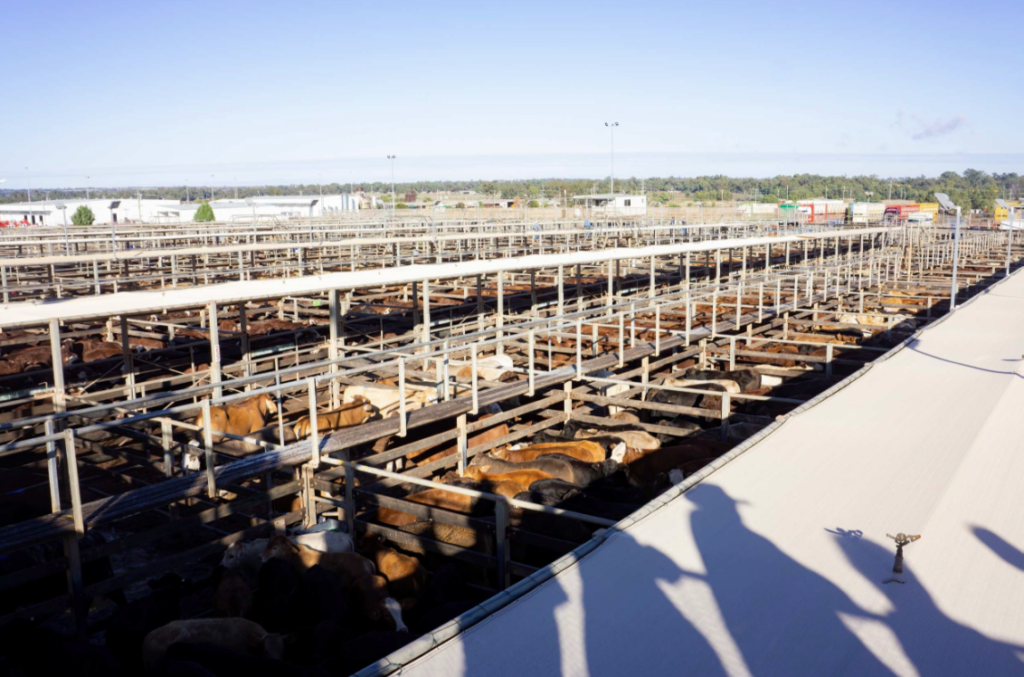
New World Screwworm (NWS) issues and the closure of the Mexican border for livestock have focused much attention on the Mexican beef industry. Questions have continued about if and how the Mexican industry could handle the one million plus head of cattle that are typically exported to the U.S. The Mexican beef industry has evolved significantly in the past two decades, rendering many older views of the industry outdated and incorrect.
For the past 15 years, the total Mexican cattle inventory has averaged between 17 and 18 million head, with a total cow herd of roughly 11.5 million head. Cows make up a larger percentage of total cattle inventories (about 65 percent) compared to the U.S, where the total cow herd is 43 percent of total cattle. This is because cattle flow through the Mexican industry faster than in the U.S. More young cattle are typically included in the total U.S. inventory because calves remain on pasture and in feedlots, whereas 14 to 16 percent of the Mexican calf crop is usually exported and cattle do not remain in feedlots as long compared to the U.S.
The Mexican calf crop has averaged just over eight million head in recent years, with a calf crop percentage of roughly 71 percent, up from about 65 percent 25 years ago. Mexican cattle exports have averaged 1.2 million head over the last 25 years and typically represent 14 to 16 percent of the calf crop.
Beef production in Mexico has increased an average of two percent per year in the last decade. This is the result of increased cattle slaughter, about 1.6 percent annually, and increasing carcass weights. Average cattle carcass weights have increased from about 600 pounds twenty-five years ago to roughly 710 pounds currently. The Mexican beef industry evolved from predominantly grass-fed production to current production where most cattle are fed in feedlots. This, along with improved cattle genetics and management, has led to increased carcass weights (Figure 1).
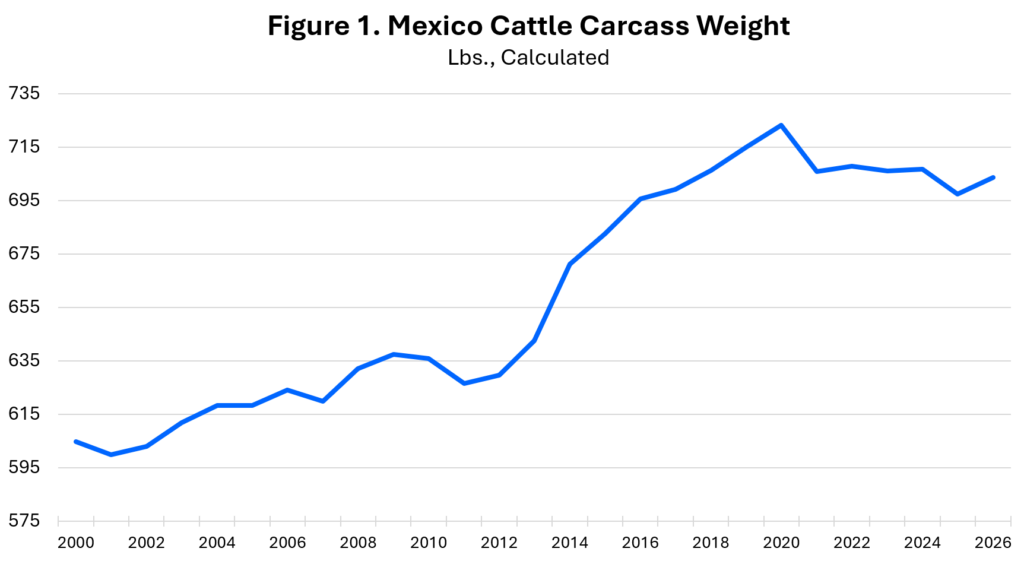
Beef consumption in Mexico averages about 24 pounds per year, retail weight. Beef imports in Mexico are equivalent to roughly ten percent of production in recent years but down from about 22 percent of production two decades ago. Moreover, Mexico has become a significant beef exporter and has been a net exporter the past ten years. (Figure 2). Mexico is currently the number eleven beef exporting country.
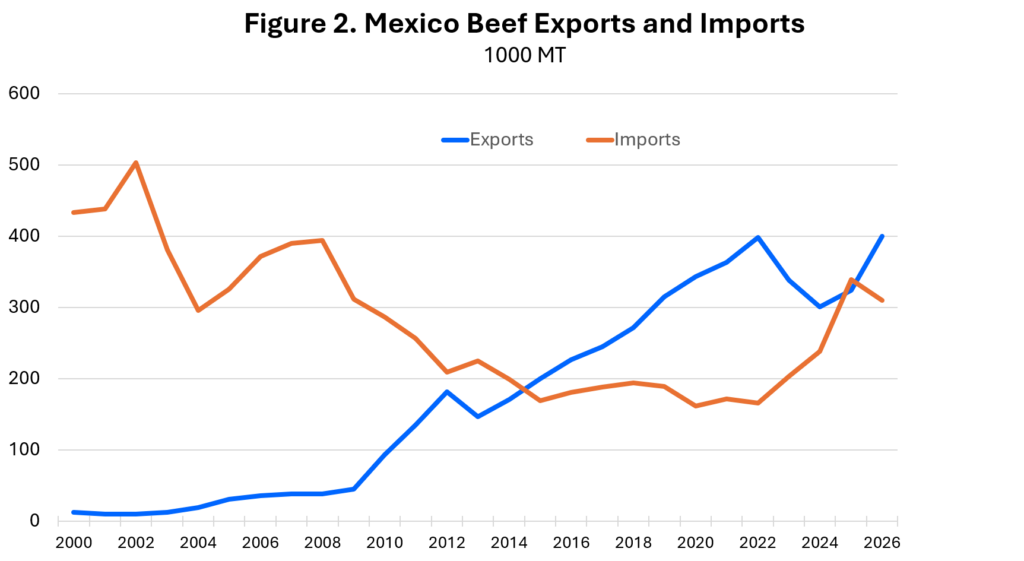
The Mexican beef industry has modernized and developed significant infrastructure the past two-plus decades. Cattle and beef trade between Mexico and the U.S. has evolved from a long history of cattle exports to the U.S. to include Mexico becoming a major beef export destination for the U.S., and recently with Mexico becoming a significant source of U.S. beef imports. The increasingly integrated trade relationship adds value to the beef industries in both countries.
Not exporting feeder cattle to the U.S. means that more cattle are staying in Mexico to be finished for beef production. It also likely means that fewer cattle are being imported from Central America, which has been a source of supplemental cattle supply in recent years. Mexican beef imports will likely decrease, and beef exports will increase in the absence of cattle exports. Production systems and supply chains will continue to evolve in Mexico.
Derrell Peel discusses how the latest New World screwworm news is influencing cattle markets and what producers should watch moving forward on SunUpTV from June 13, 2026 at https://www.youtube.com/watch?v=Xtp_nRxPa8E
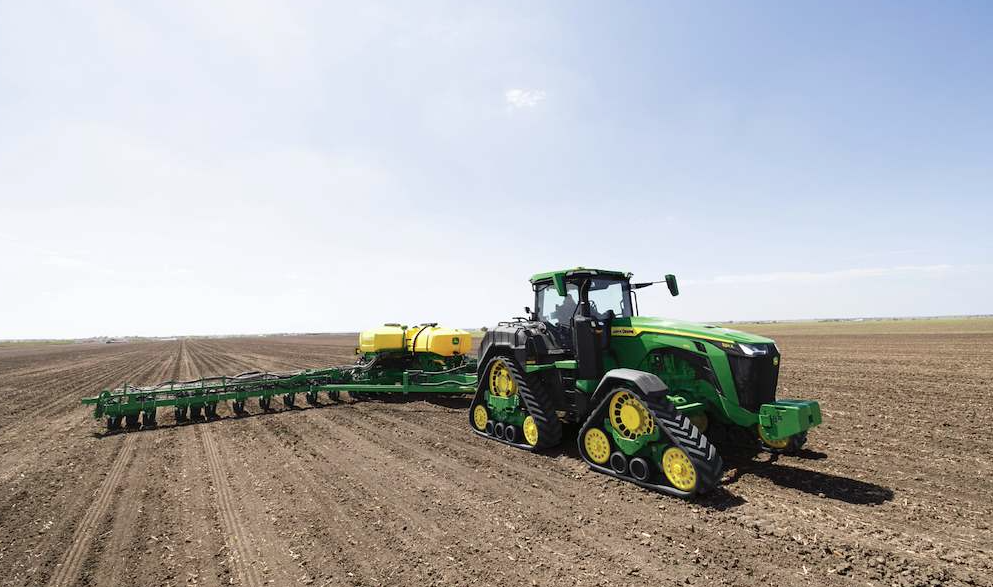
John Deere (NYSE: DE) announced today new updates for Model Year 2027 8 Series tractors, expanding the enhanced John Deere Operator Experience across the 250 to 410 horsepower lineup of 8R, 8RT and 8RX tractors.
Building on the redesigned operator experience introduced earlier this year on high-horsepower 8 Series models, the latest updates are designed to provide operators with greater comfort, customization and consistency across their production system.
"These updates are focused on improving the overall operating experience for our customers," said Carlton Self, John Deere marketing manager for large tractors. "From customizable controls to enhanced comfort features, the MY27 8 Series lineup is designed to help operators stay productive and comfortable throughout long days in the field."
Maneuverability
Available Reactive Command Steering on select 8R models enhances maneuverability and operator control with a steering system designed to deliver a more customized driving experience. The Reactive Command System automatically returns the steering wheel to center, offering three customizable feedback settings, allowing operators to tailor steering feel based on preference and application. This feature helps improve handling in the field and during transport, allowing operators to tailor their driving preference to the task at hand.
Enhanced Operator Experience
The updated operator experience highlights three new transmission drive lever options: CommandX™, CommandX™ Plus and CommandX™ Pro. Each option builds on the previous, providing a more customized experience as you progress through the lineup while maintaining the same foundational drive strategy. Updates to the operator experience also include a redesigned, modern and configurable CommandARM™ control layout. These enhancements establish the foundation for a more consistent operator experience across John Deere production systems moving forward.
Additional features that enhance the operator experience include:
· Convenience display for quick digital access to functions such as HVAC, radio and seat settings
· Quick access buttons positioned for commonly used controls
· Integrated wireless phone charger for added convenience and connectivity
· Electric CommandARM™ adjustment and full-length cushion adjustment for improved comfort
· Seatback vent for added airflow during long operating days
· Door cinch for a smooth, assisted closing experience
Operators using Electric Variable Transmission (EVT) also can take advantage of 56V Power Offboarding, simplifying planter setup by enabling electrically driven planters to connect through a single harness rather than multiple hydraulic or electrical connections. To further support planting applications, Hitch Active Downforce on 8R and 8RX tractors helps maintain consistent seed depth in varying field conditions on both integral and drawn planters.
The key to any John Deere tractor operator experience is the technology, and these fit the bill. The tractors are autonomy ready to help unlock efficiency during tillage; have the G5 Plus display for access to precision ag technologies such as AutoTrac™ Turn Automation, AutoTrac Implement Guidance, AutoPath™ and more; are Machine Sync ready and feature optional JDLink™ Boost connectivity to help ensure reliable capture of field and machine data.
In addition to the operator experience enhancements, Model Year 2027 8 Series 250 to 410 hp tractors will include a 3-year/1,500-hour limited PowerGard™ extended warranty incorporated into the base machine price. PowerGard will initially be available only in the U.S., with plans to expand to Canada, giving all farmers in North America extra piece of mind and support. Additional term lengths and options are also available.
"The additional updates across the MY27 8 Series lineup are designed to improve the full ownership experience for our customers," Self said. "From comfort and customization in the cab to simplified coverage and support, these tractors are built to help customers operate with confidence."
To determine which new 8 Series tractor model will best fit your farming operation, contact your local John Deere dealer or visit deere.com.
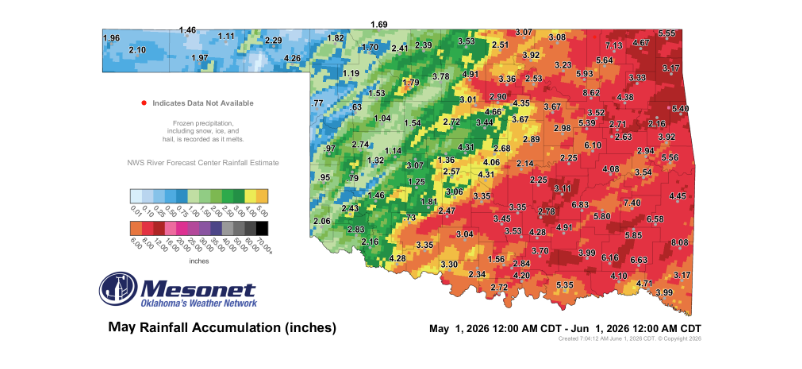
Oklahoma's weather has shifted dramatically into a pattern of widespread precipitation, providing a much-needed reprieve for large portions of the state following an exceptionally dry May. State Climatologist Gary McManus noted that the sudden transition mirrors a dramatic turnaround, with several regions already accumulating more rainfall during the first half of June than they recorded throughout the entire preceding month.
While the moisture is a welcome development for agricultural and hydrological recovery, the distribution remains uneven across the state's diverse climate zones.
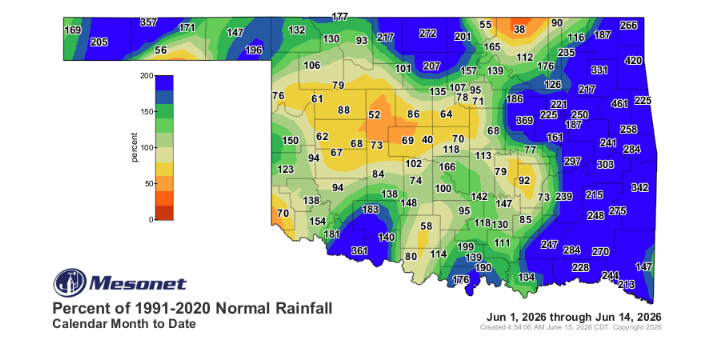
Despite the overall boost in moisture, significant regional deficits persist. The June rainfall distribution highlights a stark contrast between recovering areas and those still locked in dry conditions. Eastern Oklahoma has absorbed the majority of the recent bounty, while several communities in the western half of the state and the Panhandle continue to experience severe deficits.
According to the latest Mesonet data, locations such as Goodwell, Watonga, Foraker, and Hollis have largely missed out on the heaviest downpours, leaving these areas vulnerable to ongoing moisture stress.
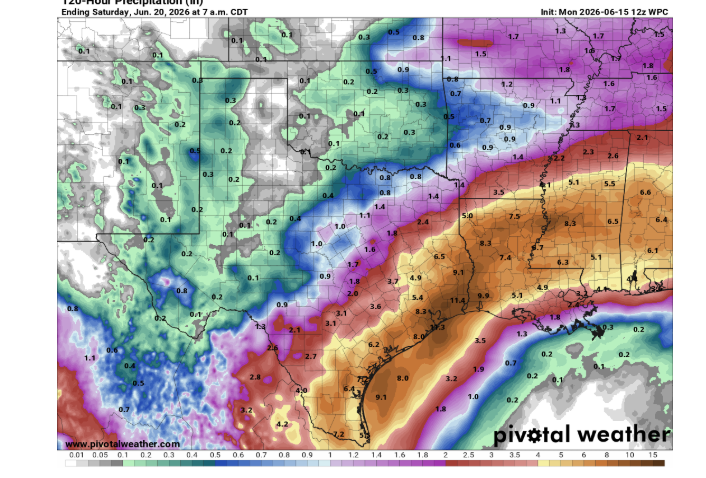
The moisture arrived alongside intense, localized, severe weather. Late last week, powerful convective systems swept through the Panhandle, producing destructive wind gusts. On Friday night at 9:10 p.m., the Oklahoma Mesonet station at Eva registered a massive 96 mph wind gust, followed by a secondary 70 mph gust just ten minutes later.
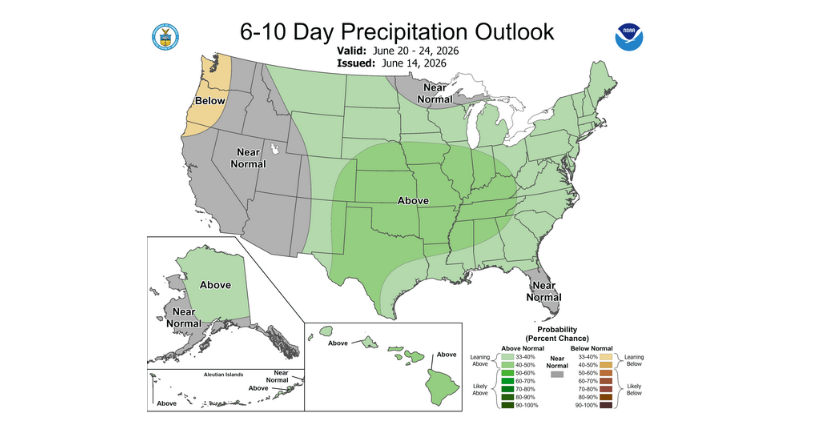
Current weather models indicate that while ongoing scattered showers are tapering off, the overall pace of precipitation will slow down significantly through the remainder of the week. However, a significant shift is projected mid-week. Wednesday is forecast to bring a sharp increase in heat and humidity, tracking as the most intense atmospheric setup of the week.
Looking further ahead into next week, early long-range forecasts suggest the potential for another active weather pattern that could bring additional chances of rainfall to the state.
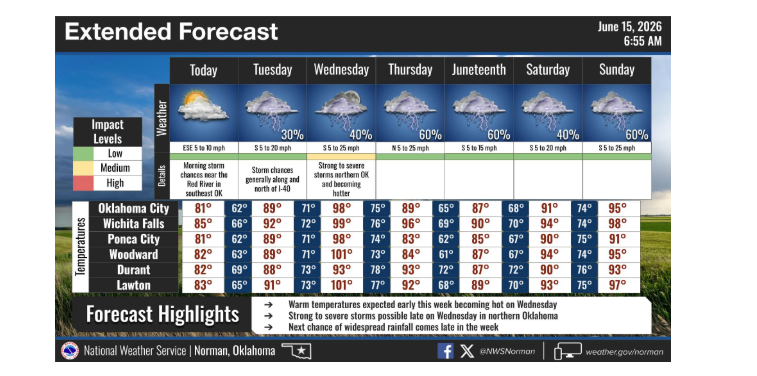
To read more from State Climatologist Gary McManus on his mesonet ticker, click here:
Today, on the EPA-established effective date for the 2026-2027 Renewable Fuel Standard volumes, Clean Fuels Alliance America delivered a letter to President Donald Trump once again thanking the administration and EPA for the historic volumes. The letter documents growing evidence that U.S. biodiesel and renewable diesel producers are increasing production and generating huge economic benefits for America's rural communities and farmers in response to the rule.
"Farmers and biomass-based diesel producers are essential to U.S. energy and national security; and they are putting major investments behind it," Clean Fuels writes in the letter. "EPA's rule fully accounts for the investments our industry made over the last several years to increase U.S. biomass-based diesel capacity and oilseed processing. The rule is encouraging additional investments in rural economies, such as grain handling, fuel distribution infrastructure, and new markets for the fuel. Most importantly, EPA acknowledged that American companies will make additional investments only if the policy direction remains certain."
The letter documents increases in domestic soy and canola processing and record use of soy oil and distillers corn oil for biodiesel and renewable diesel production during the first months of 2026. Additionally, by April, biodiesel and renewable diesel producers returned to capacity utilization rates comparable to highs in 2024.
Kurt Kovarik, Clean Fuels' Vice President of Federal Affairs, added, "EPA's historic RFS volumes for 2026 and 2027 are delivering on the Trump administration's goals – farm security, rural economic growth, and domestic energy dominance. The policy certainty supports the significant investments that our industry made to grow domestic markets for American farmers, increase domestic fuel production, and meet American consumers' demand for affordable, secure energy. Better still, it is encouraging new investments and job creation to continue growth of biodiesel, renewable diesel, and SAF for the future."

The Project WET Foundation and Oklahoma Conservation Commission are proud to announce that Sara Ivey was awarded the 2026 Project WET Facilitator of the Year Award. Presented at the Project WET Annual Conference in Santa Fe, New Mexico, on May 12, 2026, this national award honors individuals who demonstrate exceptional leadership in environmental education, especially regarding water education and Project WET.
Sara serves as the Education Programs and Services Coordinator for the Oklahoma Department of Environmental Quality (ODEQ) and Treasurer for the Oklahoma Association for Environmental Education (OKAEE), where she helps guide educators, inspires students, and brings partners together to deepen our understanding of our most vital natural resources. Since completing Project WET facilitator training in 2007, Sara has introduced countless educators to the program's engaging, inquiry-based approach to water education.
"Sara Ivey is a vital asset to Oklahoma's Project WET program and our state's environmental education community as a whole. She has led countless Project WET workshops and water festivals across the state, helping educators and students better understand water and the world around them," said Jack Hilgert, Statewide Environmental Education Coordinator and Oklahoma Project WET Coordinator with the Oklahoma Conservation Commission.
Project WET empowers educators to engage youth in understanding water and solving local and global challenges. Through a network of state-level partners and grassroots, community-based volunteers called facilitators, Project WET reaches over 10,000 educators and millions of students each year across the United States. In Oklahoma, the program is coordinated by the Blue Thumb Program within the Oklahoma Conservation Commission, and 86 passionate volunteers serving as Project WET facilitators across the state.
Today, Sara serves as a Project WET workshop facilitator, steering committee member, and helps organize the annual H2Oklahoma Water Festivals, which engage thousands of students, teachers, and volunteers across multiple locations each year. Sara connects agencies, educators, nonprofits, and volunteers to strengthen environmental education statewide, demonstrating the interconnectedness of water, ecosystems, communities, and education.
"In Oklahoma's environmental education community, Sara Ivey is one of the people who makes the entire ecosystem function. Sara is truly the 'glue person' connecting Oklahoma's environmental education efforts," Tony Pascall, Education Coordinator for Oklahoma Forestry Services and OKAEE Board President, shared.
Any schools, educators, or organizations interested in Project WET in Oklahoma can learn more about scheduling professional development workshops, H2Oklahoma Water Festivals, or other environmental education programming by contacting Jack Hilgert, jack.hilgert@conservation.ok.gov or (405) 613-3835
Learn more about Project WET in Oklahoma here: Project WET & Project WILD - Blue Thumb
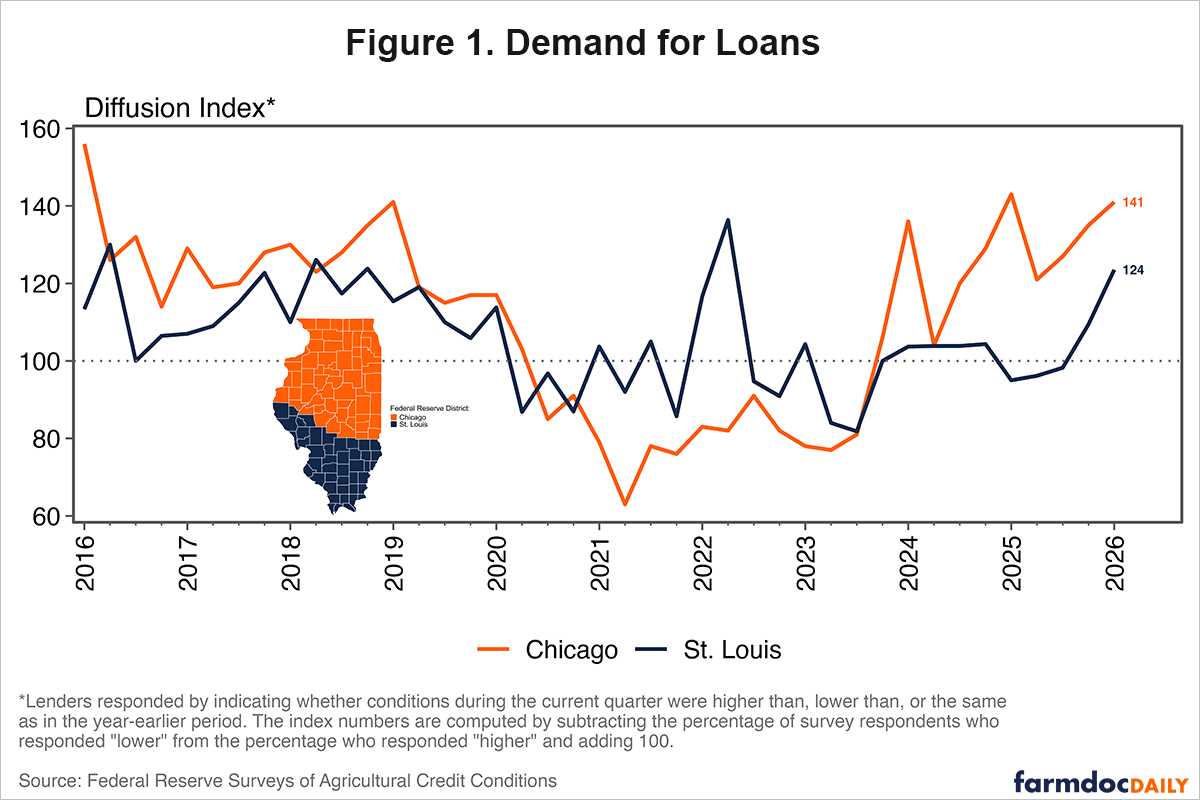
Agricultural credit conditions in Illinois showed signs of strain in the first quarter of 2026. Although loan demand remained elevated, repayment rates deteriorated, and collateral requirements remained tight across the two Federal Reserve districts that serve the state. Average fixed interest rates on farm operating and real estate loans were lower than a year earlier, but the broader survey measures point to tighter credit conditions at the start of the year.
Today's farmdoc daily article uses data from the Federal Reserve District Surveys of Agricultural Credit Conditions, which compiles quarterly responses from commercial banks within each participating Federal Reserve district. Because Illinois is served by two districts, our analysis only focuses on the Federal Reserve Bank of Chicago, which covers northern and central Illinois, and the Federal Reserve Bank of St. Louis, which covers southern Illinois.
Figure 1 shows the diffusion indexes for loan demand. A value of 100 represents no change from the same quarter last year (neutral), with values above 100 indicating an increase, and values below 100 indicating a decrease.
Loan demand remained above 100 in both districts in the first quarter of 2026. In the Chicago district, the loan demand index was 141, slightly below 143 in the first quarter of 2025 but still well above 100. The latest reading continued the pattern of stronger loan demand observed in the district since late 2023.
The St. Louis district showed a larger year-over-year increase. Its loan demand index was 124 in the first quarter of 2026, up from 95 the same time last year. Overall, reports of stronger loan demand outnumbered reports of weaker demand in both districts in the first quarter.
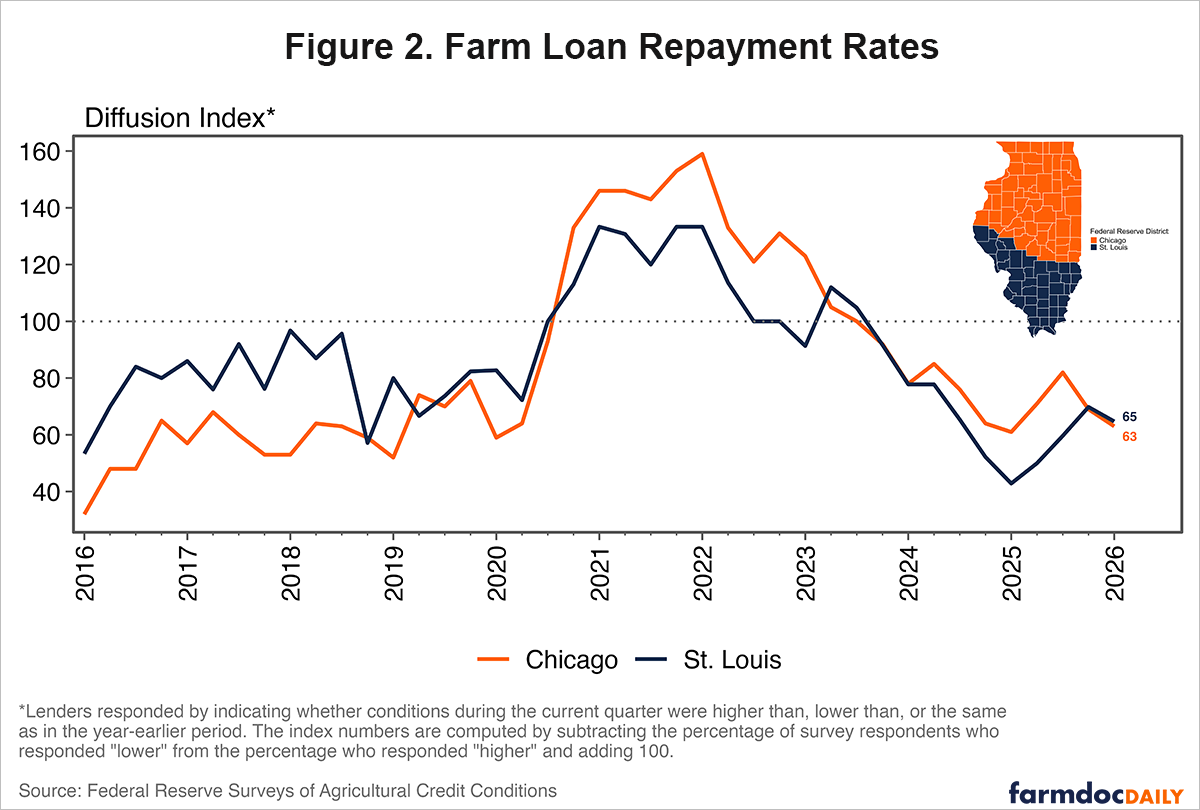
Figure 2 shows the diffusion index for farm loan repayment rates. The repayment indexes remained below 100 in both districts in the first quarter of 2026.
In the Chicago district, the repayment index was 63, slightly above 61 in the first quarter of 2025 but still well below 100. The latest reading indicates that reports of weaker repayment rates continued to outnumber reports of stronger repayment rates.
In the St. Louis district, the repayment index was 65 compared to 43 the same time last year. Reports of weaker repayment rates by bankers were less common than they were a year ago, but the index remained far below 100. Across both districts, the latest readings continued to point to weak repayment conditions.
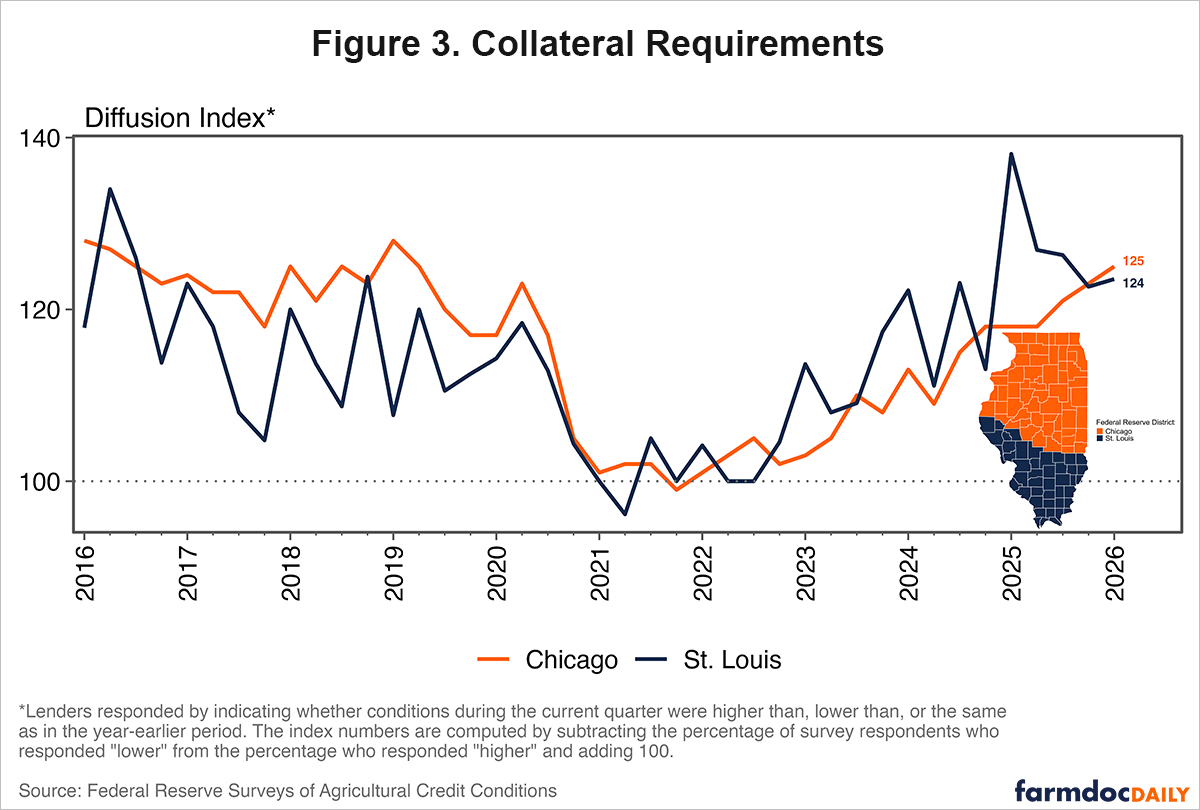
Figure 3 shows the diffusion index for collateral requirements. Collateral requirements remained well above 100 in both districts in the first quarter, showing continued tightening relative to the same quarter last year.
In the Chicago district, the collateral requirements index was 125, up from 118 in the first quarter of 2025. However, in the St. Louis district, the collateral requirements index was 124, compared to 138 a year earlier. The decline from last year indicates that reports of higher collateral requirements were less common than during the first quarter of 2025. Still, with the index above 100, reports of tighter collateral requirements continued to outnumber reports of easing requirements in the St. Louis district.
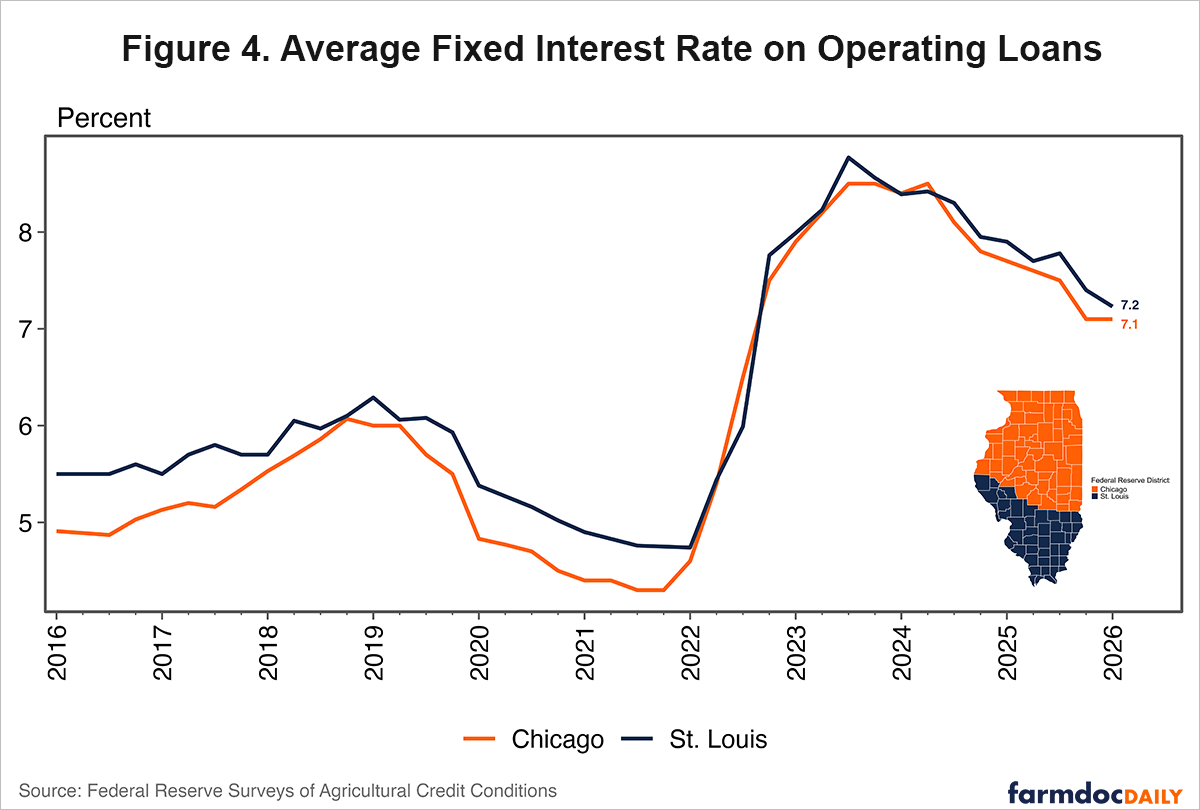
Average fixed interest rates on operating loans were lower than a year ago in both districts as shown in Figure 4. In the Chicago district, the average fixed rate was 7.1% in the first quarter of 2026. This was unchanged from the fourth quarter of 2025 and down from 7.7% in the first quarter of 2025.
The St. Louis district reported an average fixed operating loan rate of 7.2%, down from 7.4% in the previous quarter and 7.9% a year earlier. St. Louis continued to report a slightly higher fixed operating loan rate than Chicago, though the difference between the two districts was small in the latest survey.
Overall, both districts remained below their 2023 peaks. For example, fixed operating loan rates reached 8.5% in the Chicago district and 8.8% in the St. Louis district in the third quarter of 2023. Since then, rates have moved lower, though they remain above the levels reported in pre-COVID years.
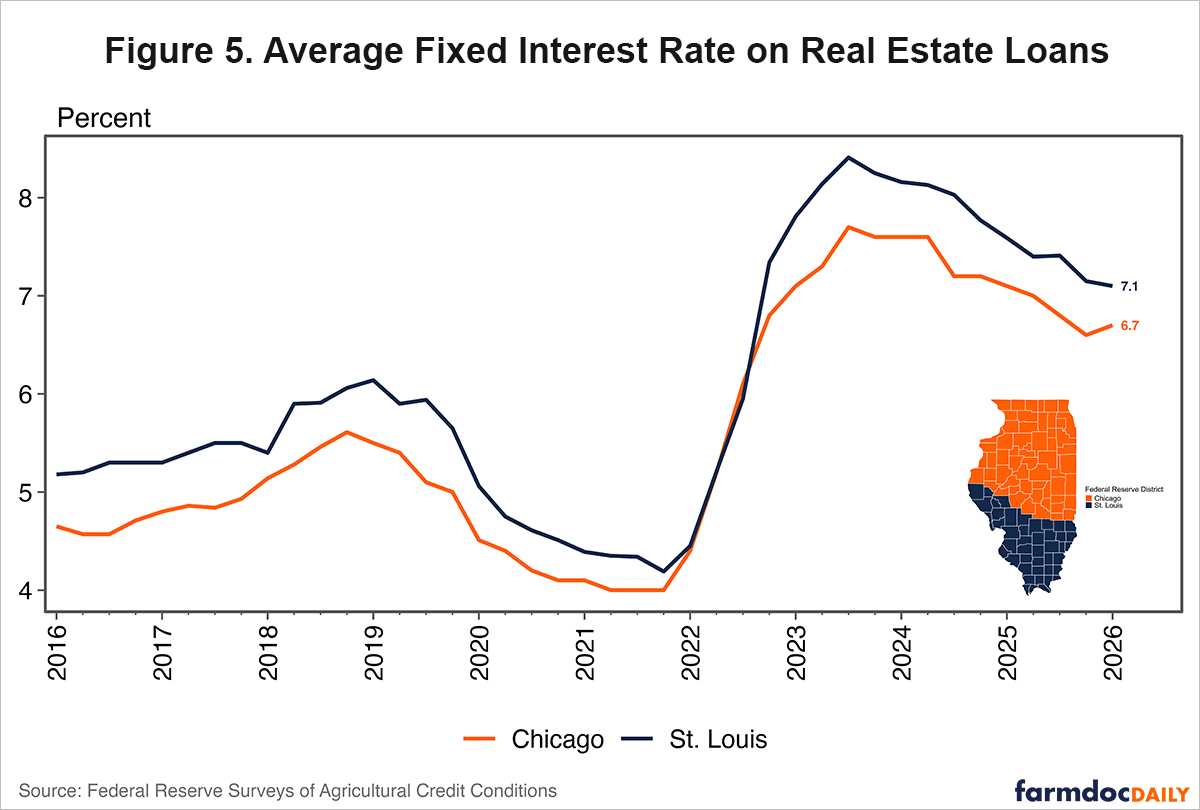
Average fixed interest rates on real estate loans followed a similar pattern to those on operating loans, as shown in Figure 5. In the Chicago district, the average fixed real estate loan rate was 6.7% in the first quarter of 2026, up slightly from 6.6% in the previous quarter but below 7.1% a year earlier. In the St. Louis district, the average fixed real estate loan rate was 7.1%, down from 7.2% in the fourth quarter of 2025 and 7.6% in the first quarter of 2025. As with operating loans, the St. Louis district continued to report higher rates compared to the Chicago district.
In summary, agricultural credit conditions in Illinois showed a gradual deterioration during the first quarter of 2026, mirroring broader national trends across the agricultural sector. Lenders in both the Chicago and St. Louis Federal Reserve districts reported that strong loan demand became more widespread compared to a year earlier. This reflects ongoing financing needs across a farm sector facing headwinds from elevated input costs. At the same time, repayment conditions remained soft and collateral requirements continued to tighten, indicating that agricultural lenders are maintaining stricter credit standards in response to tightening farm finances. Moreover, repayment rates have been weakest in districts heavily concentrated in crop production (see Federal Reserve Bank of Kansas City). Lastly, while average fixed interest rates on operating and real estate loans have declined from their 2023 peaks and sit lower than they did a year ago, borrowing costs remain historically elevated.
Article courtesy of: Mashange, G. "Agricultural Credit Conditions in Illinois – First Quarter 2026." farmdoc daily (16):103, Department of Agricultural and Consumer Economics, University of Illinois at Urbana-Champaign, June 12, 2026. Permalink
Kreitman, T. (2026, June 3). Continued resilience in farmland values. Agricultural Finance Update. Federal Reserve Bank of Kansas City. https://www.kansascityfed.org/agriculture/agfinance-updates/continued-resilience-in-farmland-values/
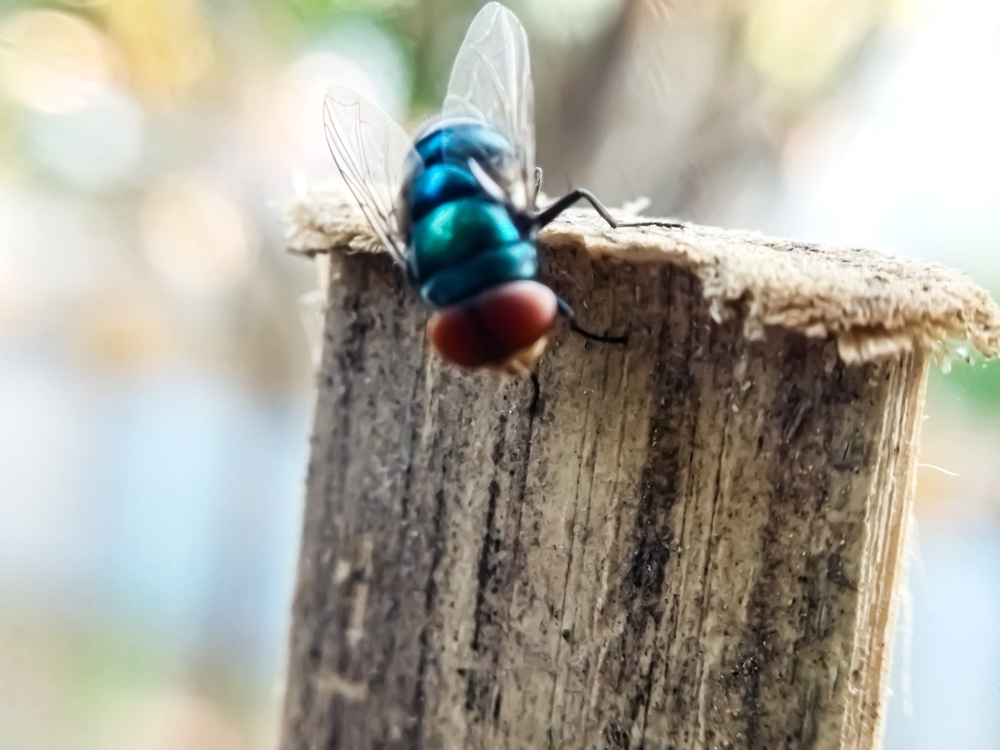
In today's Beef Buzz, senior farm and ranch broadcaster Ron Hays features comments from Secretary of Agriculture Brooke Rollins and Rear Admiral Michael Schmoyer about concerns over the rapid northward spread of the New World screwworm. With confirmed U.S. cases now reaching a dozen since June 3, the latest involving a sheep in Sutton County, Texas, reported June 12, USDA officials are working to understand how the pest has moved so quickly from the border region deeper into Texas.
Secretary Rollins acknowledged that USDA still does not have a clear explanation for how the screwworm advanced so rapidly from Mexico into Texas. The first U.S. detection occurred in Zavala County, roughly 35 miles from the Rio Grande, but additional detections have now appeared much farther north, including in Tom Green County near San Angelo.
"I simply don't know how the cases have moved so quickly into the United States," Rollins said. "We're still looking at it. There's some wind that we're looking at, we're looking at the weather patterns, trying to understand how it was that it jumped this far up."
Rollins also pointed to illegal livestock movement as a major concern. "100%, the illicit movement of cattle alongside the open border policies of the last administration—no question—is the reason that we're standing here today," Rollins said.
Despite the uncertainty, Rollins emphasized USDA's rapid response. "Within about eight hours, we had flies redirected, moved to this part of the state, dropped by that evening," she said, referring to sterile fly releases used to interrupt screwworm reproduction.
Rear Admiral Schmoyer said USDA has prepared for this scenario for months, but he admitted there are still no definitive answers about why the pest has appeared in these specific locations. "I don't know," Schmoyer said. "As far as why it had come to this particular county."
He said USDA must continue gathering data to better understand transmission routes. "We're going to need to keep gathering data and keep needing to understand a variety of different factors," Schmoyer said. "That could be cases that we have known about, cases that we didn't know about."
Schmoyer noted USDA already had thousands of traps deployed well before the first confirmed U.S. case. "The reason is, as the secretary said, models suggested that it was going to be here last summer, so we had plenty of time to prepare," he said. "Consequently, we actually have a playbook on how to do this."
One of the biggest concerns is the speed of movement. USDA still cannot explain how the screwworm fly traveled from south of the Rio Grande to Zavala County and then roughly another 177 miles north near San Angelo in Tom Green County.
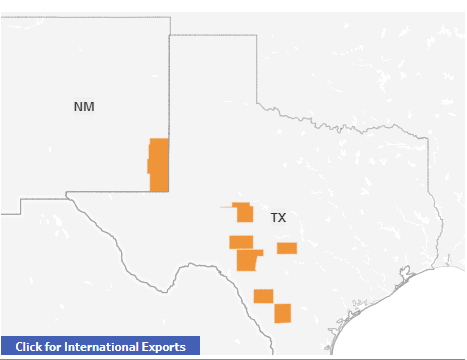
When asked what happens if containment efforts fail, Rollins pointed to the devastating historical impact screwworm had on American livestock in the 1950s and 1960s. "We look back at the 1950s and 1960s and... the destruction of our livestock industry and the decades it took to recover from that," Rollins said. "That's what we are working to prevent."
She stressed that today's tools give USDA better odds of stopping the pest. "It's an entirely new day. We have more technology, we have more treatment," Rollins said. "The baby calf from a couple of weeks ago is happy and fine and completely healed."
Rollins framed the screwworm threat as bigger than animal health alone, tying it directly to food security and national security. "The importance of farm security, ranch security to national security—the importance of making sure that in America we can feed and fuel ourselves," Rollins said. "These are fundamental, perhaps existential, issues to the future of our country."
She ended with a stark warning about what is at stake. "If we can't protect these ranchers, and ensure that we can protect our food supply and protect this way of life, then we will lose freedom in this country," Rollins said. "That's how important this is."
The Beef Buzz is a regular feature heard on radio stations around the region on the Radio Oklahoma Ag Network and is a regular audio feature found on this website as well. Click on the LISTEN BAR above for today's show and check out our archives for older Beef Buzz shows covering the gamut of the beef cattle industry today.
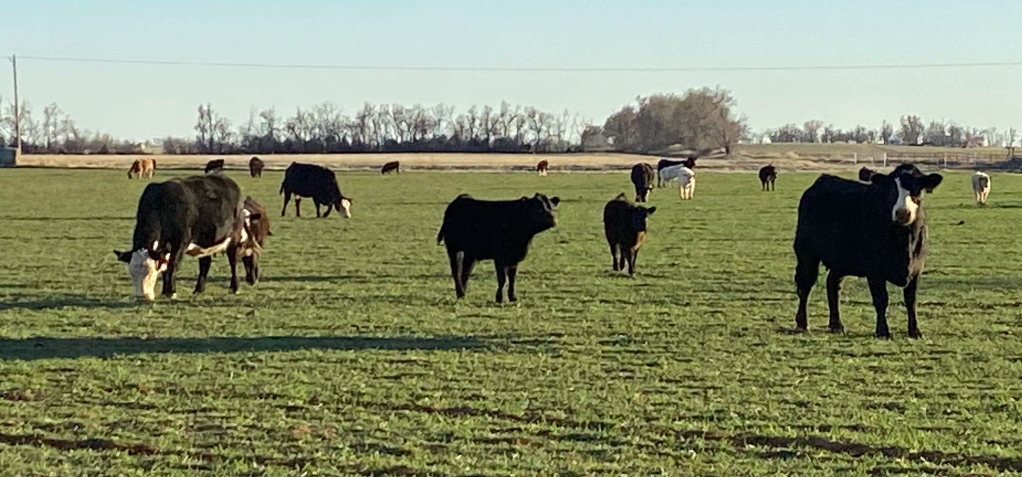
The U.S. Department of Agriculture today announced additional steps toward restoring livestock grazing opportunities on federally managed lands by issuing implementation directives to the U.S. Forest Service aimed at expanding grazing access, streamlining permitting, and improving coordination with ranchers.
The memorandum builds upon USDA's October 2025 Plan to Fortify the American Beef Industry and the March 2026 Memorandum of Understanding on grazing. While those actions established the administration's commitment to strengthening domestic livestock production, today's directive provides specific guidance for carrying out those objectives across National Forest System lands.
Among the actions outlined in the memorandum are reopening vacant and closed grazing allotments, restoring previously reduced grazing capacity where appropriate, establishing a goal of restoring at least 500,000 head months of grazing capacity over the next two years, and implementing a standard of no net loss of animal unit months within allotments.
The memorandum further directs USFS to streamline permitting and allotment authorizations, utilize available tools to reduce regulatory delays, and improve access to temporary grazing opportunities during drought and other challenging conditions. In addition, the directive calls for improved coordination with permittees during wildfire events, greater flexibility in addressing prairie dog impacts on grazing lands, and increased investment in infrastructure and allotment improvements that support livestock production.
The memorandum also places significant emphasis on strengthening relationships between the U.S. Forest Service and ranching communities. It establishes expectations for timely communication, consistent application of policies, greater collaboration with permittees, and improved responsiveness to producer concerns. The directive further calls for employee training programs designed to improve understanding of ranching operations and the role livestock producers play in managing working landscapes and supporting rural economies.
R-CALF USA Property Rights Chair Shad Sullivan released the following statement:
"Today's announcement moves beyond broad policy goals and into implementation. For years, ranchers have faced unnecessary delays, shrinking grazing opportunities, and regulatory barriers that have reduced livestock production on federal lands. This memorandum recognizes those challenges and directs the Forest Service to take concrete action to address them.
"Expanding responsible grazing opportunities on federal lands is one of the most practical tools available to increase domestic production capacity, strengthen rural economies, and improve our nation's food security.
"We appreciate Secretary Rollins and the Trump administration for not only recognizing the importance of grazing to the future of American agriculture, but also for taking the next step of providing clear direction to ensure these commitments are carried out on the ground. We look forward to working with USDA as these reforms are implemented."
To see the letter from the Secretary, click HERE.
To see the NRE Memorandum, click HERE.
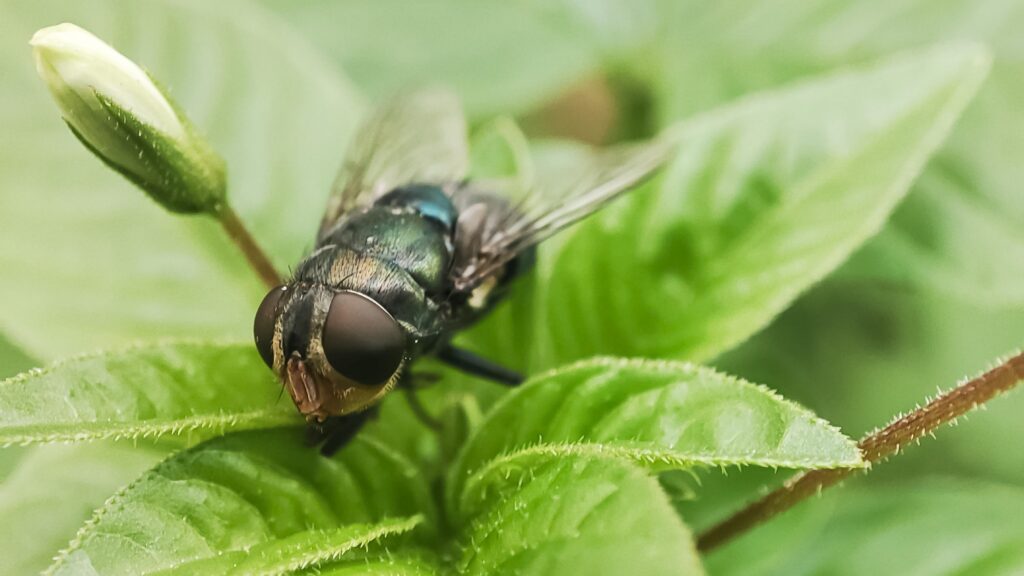
Jennifer Carrico, the DTN Livestock Editor, writes: As the New World screwworm (NWS) cases continue to spread, mostly across several Texas counties, more animals have now been affected, with the first case in sheep reported.
As of the evening of June 13, 12 cases have been reported according to the NWS Confirmed Detections dashboard on the USDA Animal and Plant Health Inspection Service website. These cases span over six Texas counties and one New Mexico county, and include cattle, goats, sheep, and a dog. Up-to-date cases can be seen by clicking HERE;
According to the Texas Animal Health Commission (TAHC), NWS are larvae or maggots of the NWS fly, which cause the painful condition NWS myiasis. Eggs are laid in open wounds or orifices of live tissue and can only survive on live tissue of warm-blooded animals. The eggs hatch into dangerous larvae, which burrow or "screw" into the flesh with sharp mouth hooks.
"TAHC has been actively preparing for a resurgence of NWS for over two years," said TAHC Executive Director Bud Dinges in a news release. "We are putting these preparations into action, and we encourage all animal owners and caretakers to continue to remain vigilant for the presence of larvae in animal wounds and immediately report any suspicions."
USDA also urges everyone in the area to check animals for draining or enlarging wounds, maggots or egg masses, signs of discomfort, and lesions in body openings, including the nose, ears, genitalia, and umbilical area.
If anyone suspects a screwworm infestation, they should immediately contact their veterinarian, state animal health official, or the USDA.
The distribution of sterile NWS flies remains the leading approach to combat the spread. Since the NWS flies only mate once, the sterile flies mate with wild flies, preventing viable offspring. TAHC said when a case is identified and confirmed, sterile fly distribution is quickly evaluated, and dispersal may be shifted in the affected areas. Just this month, more than 19.5 million flies have been released through aerial, ground, and vehicular dispersal.
The Texas A&M AgriLife Learning Center has free NWS inspector training available for all Texans. The course covers NWS biology, inspection protocols, reporting, and more. Those who qualify can apply to become a certified NWS inspector through TAHC. To learn more about the course, click here.
While there have been no brand-new county detections reported by the USDA or the Texas Animal Health Commission (TAHC) over the last 12 hours, the situation on the ground remains incredibly fluid. The total confirmed U.S. case count stands at 12—consisting of 11 detections in Texas and one isolated canine case in New Mexico.
The biggest developments over the last 24 hours center around aggressive regional containment, trade impacts, and strict new transport rules for producers in the impacted zones.
The U.S. Department of Agriculture (USDA), Animal and Plant Health Inspection Service (APHIS), and state agencies have activated emergency containment protocols:
Livestock producers and pet owners are urged to implement rigorous biosecurity and monitoring protocols:
RON's Dave Lanning has a pre-opening look at today's agricultural Markets.
Click the audio tab below for today's report.
A major Food for Peace shipment moved out of Skyland Grain in western Kansas this week, with 400,000 bushels of U.S. sorghum loaded for shipment to Africa. NSP Chair Amy France, board member Jim Sipes and NSP staff were on-site to highlight the shipment and capture photos of sorghum moving into this important food assistance channel.
The shipment was quickly elevated in Washington, as Sen. Jerry Moran, R-Kan., highlighted the sorghum movement during a Senate Agriculture Committee hearing with Agriculture Secretary Brooke Rollins. Moran shared photos from the loading site and thanked Rollins for her leadership in moving Food for Peace to USDA. The shipment is especially notable because it marks the first Food for Peace sorghum shipment since USDA took over administration of the program within the past year. NSP continues to support Food for Peace as an important tool for connecting U.S.-grown commodities with international food assistance needs while strengthening demand opportunities for American farmers.
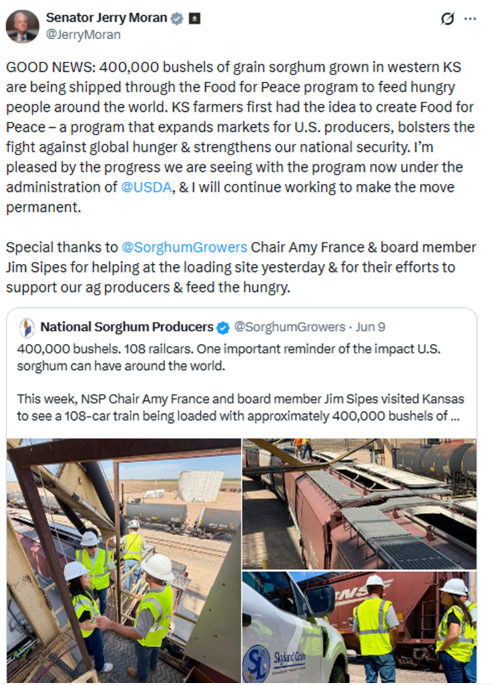

Today, Clean Fuels Alliance America welcomes the Department of Energy's posting of the latest version of the 45ZCF-GREET model. The model includes changes to the 45Z Clean Fuel Production Credit signed into law in July 2025 that became effective at the start of this year, including deduction of Indirect Land Use Change (ILUC) scores and ineligibility for fuels made from feedstocks sourced outside the United States, Mexico and Canada. Taxpayers can now use this up-to-date model to calculate and monetize tax credits for fuels produced during their current taxable year.
Kurt Kovarik, Clean Fuels' Vice President of Federal Affairs, stated, "We appreciate the Department of Energy and Argonne National Labs working together to provide this timely update to the 45ZCF-GREET model. Biodiesel, renewable diesel, and SAF producers are grateful that Congress adopted beneficial changes to the 45Z credit last July through the One Big Beautiful Bill. They now have certainty that those changes can be claimed for their current tax year, which for some end as early as this summer.
"This increased certainty will help our industry achieve the administration's goals of generating more domestic energy and creating new domestic market opportunities for farmers – both of which are critical right now."
On May 28, Kovarik testified at the IRS' public hearing on the 45Z Credit, where he highlighted the industry's need for the updated 45ZCF-GREET model. Clean Fuels emphasized the need for taxpayer certainty in April comments to Treasury on the proposed rule and in a January letter to President Trump.
The model updates include improved carbon scoring data for inputs like natural gas that were published in the R&D GREET model in December. The updated model provides calculations for fuels produced in both 2025 and 2026, reflecting Congress' changes that took effect at the start of this year.
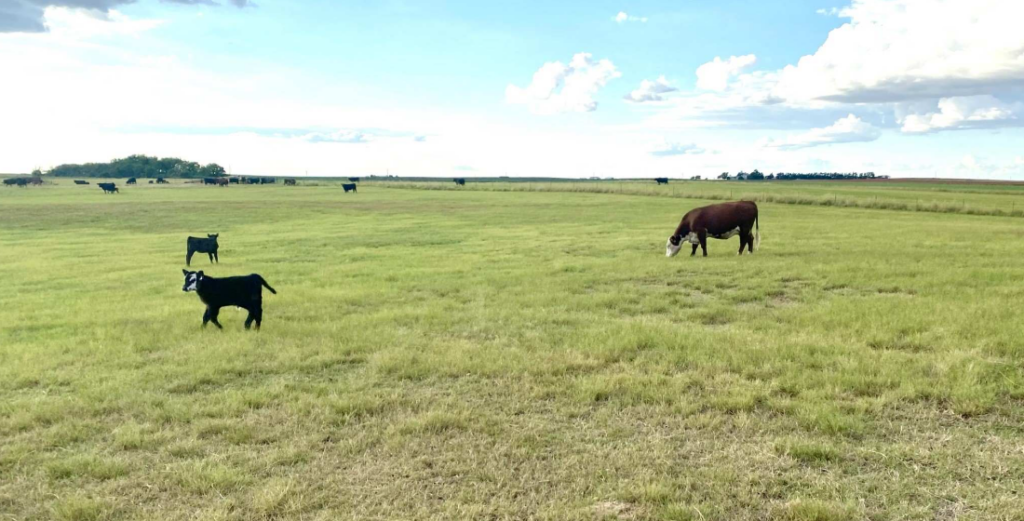
Today, U.S. Secretary of Agriculture Brooke L. Rollins announced the distribution of a comprehensive directive to all U.S. Forest Service employees from the Office of the Under Secretary for Natural Resources and Environment (NRE). These actions advance implementation of the Advancing Grazing on Forest Service and Bureau of Land Management (BLM) Lands Memorandum of Understanding (MOU) and the USDA–Department of the Interior Grazing Action Plan, delivering on the Trump Administration's commitment to strengthen American ranching, restore multiple-use management on federal lands, and combat regulatory lawfare against producers.
"America's ranchers are an integral component of our rural economies, our food security, and our national strength," said Secretary Rollins. "For too long, bureaucratic overreach and activist-driven lawfare have undermined the multiple-use mandate of our National Forests and Grasslands. Today, we are empowering line officers with clear direction and reaffirming grazing as an essential tool for healthy landscapes and vibrant rural communities."
The letter to Forest Service employees, addressed from Secretary Rollins and referencing the detailed implementation directives from Under Secretary Michael Boren, emphasizes the historic role of grazing on National Forest System lands. These actions build directly on the October 2025 USDA Plan to Fortify the American Beef Industry and the March 31, 2026, MOU signed with Secretary of the Interior Doug Burgum.
Key Elements of the Directives:
By elevating grazing as an Administration priority, USDA is protecting the roughly 23,000 permittees and lessees who rely on public rangelands while delivering more affordable, American-raised protein to consumers.

While the domestic winter wheat crop continues to shrink, global wheat market dynamics and looming trade policy adjustments are keeping a lid on prices, preventing a significant price rally. Farm Director KC Sheperd recently sat down with Oklahoma State University's Todd Hubbs to analyze the latest agricultural data and its implications for producers as harvest progresses.
The recent USDA World Agricultural Supply and Demand Estimates (WASDE) report offered few surprises for the wheat sector, though it did confirm tighter domestic availability. The USDA lowered the hard red winter wheat crop by another 17.9 million bushels, bringing the total to approximately 497 million bushels.
"I don't know if that's a huge surprise given everything that's gone on in the Southern Plains," Hubbs noted, pointing out that Kansas yields were dropped by two bushels per acre, while Oklahoma's projection was held steady at 28 bushels per acre.
As Oklahoma producers move through the heart of harvest, local data appear to align with federal estimates of abandonment rates. The growing season was defined by extreme weather variation across the state.
"It's been spotty in Oklahoma, as everybody knows," Hubbs said. "Our weather was bad, and if you get out in Western Oklahoma, it was awful. So you'll hear 60 bushels an acre, and there's a lot of zeros out there, depending on where you're at."
Despite a smaller winter wheat crop providing a minor bounce in markets, prices remain well below the levels observed immediately after the May production report.
A primary reason the market has not reacted aggressively to tighter domestic supplies is the carryover effect from last year's massive global crops. While the United States is experiencing a short crop, the global landscape remains highly competitive.
"The Northern Hemisphere, other than us, yeah, they're a little bit smaller than last year production-wise, but globally we're still looking at over 800 million bushels of wheat," Hubbs explained.
When analyzing ending stocks—excluding China, which tends to hoard rather than move grain—global ending stocks are down only approximately 90 million bushels. Hubbs pointed out that production in major exporting regions like the European Union, Russia, and Ukraine remains close to their respective five-year averages. Additionally, North Africa and the Middle East are experiencing better wheat crops than in recent years, reducing import demand in those regions. Turkey, for instance, has seen production rise to the point that it is considering an import ban.
"We've had a bad crop, and there's a lot of talk about El Niño and what's going on in the Southern Hemisphere later this year, but it's not happened yet," Hubbs said.
Geopolitical factors continue to inject uncertainty into agricultural markets, with the future of the United States-Mexico-Canada Agreement (USMCA) currently drawing focus. Recent comments from the executive branch expressing indifference toward completing the deal have created anxiety within the agricultural sector.
"That is panic stations in my world because we send a lot to Mexico," Hubbs emphasized. "Mexico and Canada are big trade partners for us in ag. I really hope he's just trying to put a negotiating position on them."
Mexico represents a vital destination for Southern Plains wheat, and any permanent disruption to the agreement could swiftly impact domestic futures markets.
"Physically, nothing may change, but our futures prices could get hit," Hubbs explained, noting that the futures market frequently reacts ahead of physical reality when speculative trading increases around political uncertainty.
Looking ahead to the end of the month, the market anticipates the upcoming USDA grain stocks and acreage reports, which traditionally serve as significant market movers. For producers managing their remaining crop, Hubbs suggests focusing on localized profitability and carefully managing risk.
"I could see wheat staying in the previous range we used to see, where we were in that $6.50 to $6.20 range," Hubbs said. "I'd love for us to get back above $7.00; it just seems very difficult at this point in time to get there given everything that's going on."
For growers considering utilizing storage for their wheat, Hubbs advises maintaining a clear understanding of individual operational costs and staying alert to cash marketing opportunities.
"Keep a good idea of what's profitable for you," Hubbs concluded. "Think about what kind of bids you could put in and lock in, on the off chance we get some more volatility that runs it higher."


Terry Stuart Forst of Waurika, Oklahoma, has been selected as the recipient of the National Golden Spur Award for her contributions to the ranching and livestock industries. Forst will be celebrated during the annual National Golden Spur Award Honors on Saturday, Oct. 10, 2026, in Lubbock, Texas.
"Truly, I am humbled and honored to receive this award," Forst said. "On behalf of my family and the Almighty God, who has blessed us exceedingly and allowed us to sustain, build and grow the legacy left to us by our forefathers, I thank you."
Presentation of the National Golden Spur Award is a joint annual recognition given by six of the leading state and national ranching and livestock organizations: the American Quarter Horse Association, National Cattlemen's Foundation, Ranching Heritage Association, Texas Cattle Feeders Association, Texas Farm Bureau and the Texas and Southwestern Cattle Raisers Association.
Forst manages Stuart Ranch, Oklahoma's oldest ranch under continuous family ownership. Since its founding in 1868, the ranch has grown into one of the nation's leading cattle and horse operations. A fifth-generation Oklahoman, Forst has strengthened the ranch through decades of growth and change while maintaining the traditions that have defined the ranch for generations. Today the Stuart Ranch includes Bar S Corriente Cattle, an American Quarter Horse program and a hunting operation.
Forst was the first woman elected president of the Oklahoma Cattlemen's Association and the first woman named Oklahoma Cattleman of the Year. She is also an inductee of the Oklahoma Hall of Fame, Oklahoma Agriculture Hall of Fame and the National Cowgirl Hall of Fame.
"Terry represents everything the Golden Spur Award stands for," Pam Minick, rancher, television host and longtime advocate of the ranching industry, who nominated Forst for the award, said. "She has honored her family's legacy, strengthened one of America's historic ranches and dedicated her life to serving the cattle and horse industries."
"Few people have had a greater impact on the cattle industry, and I can't think of anyone more deserving than Terry," Minick said.
The National Golden Spur Award was established in 1978 to honor individuals who have demonstrated exceptional accomplishments in ranching and have earned the respect and admiration of their peers through their service to the industry.
For event information, including table and individual ticket sales, visit goldenspurhonors.com.
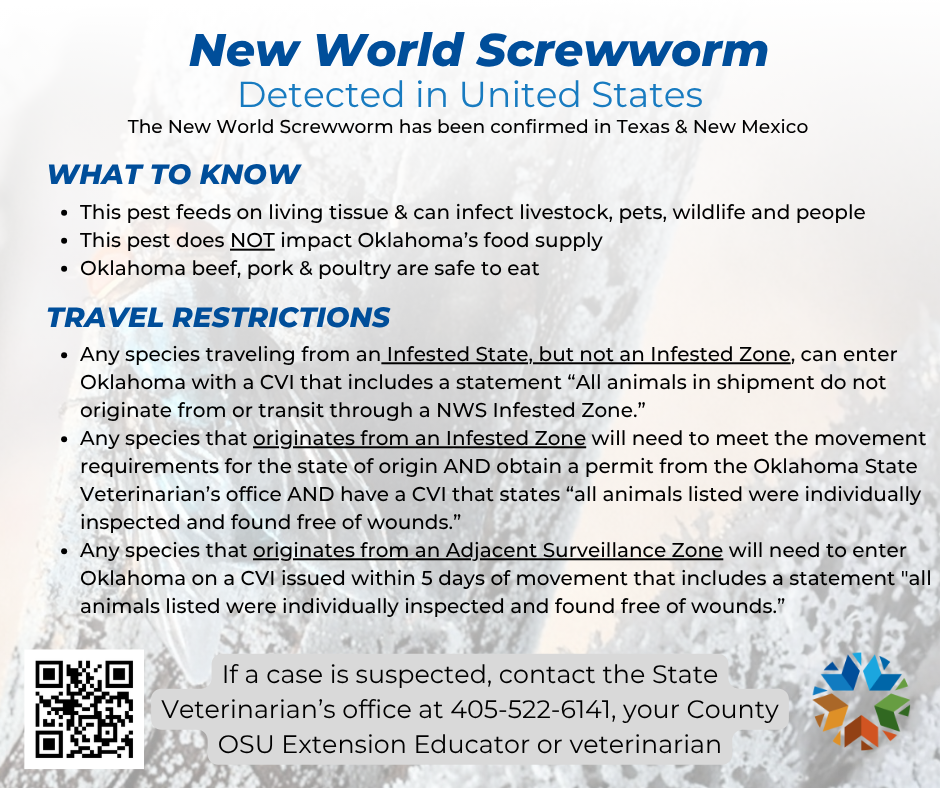
The number of New World Screwworm (NWS) cases in the United States is now at eight according to USDA.
Yesterday, the Oklahoma Department of Agriculture, Food and Forestry issued updated movement requirements for animals that originate from an NWS Infested Zone or NWS Adjacent Surveillance Zone. The information for the updated movement restriction is below. Here is a summary of terms related to the zones:
- An Infested Zone (IZ) is defined as an area approximately 20 kilometers (12 miles) around an active case of NWS.
- A Surveillance Zone is defined as an additional area of approximately 20 kilometers beyond an IZ.
OCA has been in active communication with Secretary Blayne Arthur and Dr. Rod Hall at the Oklahoma Department of Agriculture, Food and Forestry (ODAFF) over the past several days and will continue to do so. We continue to appreciate their excellent leadership and the partnership they foster with animal agriculture.
NOTE – for those planning to haul cattle out of Oklahoma:
Many states have issued requirements for the movement of livestock INTO their states. As always, if you plan to transport cattle out of or into Oklahoma, it is important to understand the rules issued by each state veterinarian's office. Your local veterinarian will know these requirements and can help guide you through the process. You can also contact the ODAFF State Veterinarian's office for clarification at 405-522-6141.
Important resources for OCA members:
· Livestock producers can visit screwworm.gov for specific information on how to prepare, available resources and the most current official updates.
· Oklahoma State University Extension has excellent resources available by clicking here.
· For a list of animal drugs approved for use for NWS, click here.
Important information for OCA members:
· The food supply is safe. NWS is a live-animal pest and does not impact the food supply. Meat, eggs, dairy and other food products remain safe.
· Livestock producers should remain vigilant by inspecting their livestock, continuing to educate themselves and staying aware of current conditions. Early detection and rapid response are the most effective strategies. Report any suspicious wounds or cases immediately to your veterinarian or contact the ODAFF State Veterinarian's office at 405-522-6141.
· OCA encourages all livestock producers to create and maintain a valid veterinary-client-patient relationship (VCPR) with their local veterinarian in order to be prepared.
· Contact the OCA office at 405-235-4391 if you have any questions or need additional information.

Yesterday, U.S. Environmental Protection Agency (EPA) announced the launch of a website designed to help U.S. host cities, venues, partners, and fans access practical tools, information, and gold standard science to enhance environmental stewardship during the FIFA World Cup 2026™. With more than 10 million fans expected across 11 U.S. host cities, this site supports EPA's mission to protect human health and the environment by making it easier to find tools and resources for a clean and healthy FIFA World Cup 2026™. The site will also feature information about FIFA and host city environmental efforts.
EPA is also providing technical assistance, science-based tools, air quality data, and advisory support to FIFA 26 and local partners to reduce food waste, improve recycling, bolster air quality management, and expand environmental education to support clean air, land, and water efforts in U.S. host cities during and after the FIFA World Cup 2026™.
For more information about EPA's collaboration with FIFA 26 and host cities in support of the FIFA World Cup 2026™, including technical materials and resources from federal, state, and local partners visit the EPA and the FIFA World Cup 2026™ webpage.
Connect with the Environmental Protection Agency Region 6 on Facebook, X, Instagram, or visit our homepage.
In a recent interview, Farm Director KC Sheperd sat down with Senator James Lankford to discuss the pressing legislative and economic challenges currently facing Oklahoma producers. From disaster relief delays to the shifting timeline of the federal farm bill, Lankford provided an inside look at the hurdles in Washington and the ongoing efforts to support the agricultural community. The conversation highlighted how critical federal programs are moving forward amid gridlock.
The discussion opened with a look at recent natural disasters in Oklahoma and the subsequent release of $28 million in FEMA assistance. Lankford noted that while a specific timeline for fund distribution is difficult to pin down, the approval process has improved significantly.
"The key thing is once they actually finish the approval process and say it's a go, it's usually within weeks, not years," Lankford said. "That's been our frustration for a while here... FEMA, if you go back a couple of years ago, was literally taking years."
Lankford credited structural changes within the Department of Homeland Security, specifically mentioning standardizations championed by Representative Markwayne Mullin, for accelerating the bureaucratic process. "He has changed the way the approval process works to be able to get it out the door faster," Lankford added.
The conversation shifted to agricultural biosecurity, specifically the rising concern over the screwworm. Lankford urged producers to stay vigilant but avoid unnecessary alarm, emphasizing that federal agencies have been proactively preparing for this threat for more than a year.
"We've seen it coming now for well over a year, and they've been aggressively planning and preparing on this," Lankford explained. "They've now spent right at a billion dollars—billion with a 'B'—in preparation to be able to take this on."
The senator highlighted that the USDA's battle plan was initially announced directly in Oklahoma alongside Ag Secretary Rollins. Current mitigation efforts include:
Lankford reassured the public that the issue does not pose a threat to human health or the general food supply, though it remains a critical priority for livestock protection.
When asked about the progress of the highly anticipated federal farm bill, Lankford admitted that progress has slowed down significantly due to deep divisions in both chambers of Congress.
"Welcome to Congress. This is where we are right now," Lankford remarked. "It's been very frustrating."
According to the senator, two primary issues are stalling the legislation:
Lankford noted that changes made to the Supplemental Nutrition Assistance Program (SNAP) last summer continue to fuel fierce partisan debate. The updates focused on ensuring that recipients meet legal presence and qualification requirements, resulting in approximately 4 million individuals being removed from the program.
"Our Democratic colleagues are absolutely furious about that," Lankford said. "We've just said, if you want to change the qualification for who receives SNAP, let's have that debate. But if you just want to give SNAP to folks that don't qualify, we're not in on that."
The second major roadblock involves the domestic ethanol mandate. Corn and soybean producers are pushing to raise the required blending standard to 15%, a move that has met resistance from lawmakers wary of nationwide mandates.
"A lot of our corn and soybean folks want to push it up to 15% and want to dramatically raise the amount that's required to be used in the country of ethanol," Lankford stated. "Other folks are saying... it's a great product, but don't mandate these large amounts all across the country."
Despite the gridlock on the domestic front, Lankford expressed moderate optimism about international trade framework reviews, noting that updates to the United States-Mexico-Canada Agreement (USMCA) are still on track for a July target. He acknowledged that the final weeks of trade negotiations are inherently noisy but expressed confidence that the final details would be resolved.
Closing the interview, Lankford encouraged Oklahoma farmers and ranchers to keep communicating directly with his office regarding their operational needs, from interest rates and input costs to specific agricultural policies.
"There's just so much going on in so many different topics," Lankford concluded. "I want to make sure we don't omit your issue... make sure that folks are reaching out to our office to keep us informed of things that we need to be able to work on specifically."
Members of Oklahoma State University's Wheat Improvement Team recently co-authored a paper on research related to a campaign "to boost public health without relying on individuals to give up foods they love" through their partnership with the Foundation for Innovation in Healthy Food, which includes multiple university partners.
"While it remains highly focused on traditional farm-based targets like yield and pest resistance, consumer acceptance of wheat-based foods has taken on newfound meaning with the U.S. wheat improvement community," said Brett Carver, OSU Regents professor and wheat genetics chair. "We already know that wheat foods provide a critical source of energy and fiber to the human diet. Future acceptance will hinge upon creating subtle and natural shifts in those two qualities, which in turn can have broad-scale effects on human health, particularly Type II diabetes."
The foundation's primary goal is to make staple foods, such as bread products, healthier for consumers. The collaborative study advocates for improving wheat and other staple foods through agricultural techniques. The journal article, authored by 53 researchers across the United States, is titled "Toward an Emerging Public Health Paradigm: Agriculture and Food Production for Health." It details a plan to revitalize the public health paradigm by altering food production to make food healthier.
"For decades, chronic disease has continued to plague populations globally, partly because of
nutritionally insufficient diets," the foundation said in a recent statement. "Researchers assert that by changing the fiber content of wheat, there could be improved health changes on a population scale because wheat-based foods are the source of 20% of global energy and 30% of U.S. dietary fiber intake. This simple improvement could lead to lower risks for cardiovascular disease, type II diabetes and colorectal cancer across the world without consumers changing their diets individually."
The study suggests that scientists and agriculture professionals work together to increase the nutritional value of crops, specifically increasing the fiber content of wheat through plant breeding and production practices as a first step to enhance the nutritional value of wheat. The paper suggests wheat as a case study to introduce the idea that these agricultural changes can be made and expanded to other crops such as rice, corn, potatoes, sorghum and plantains.
The key findings of the current study are:
"The OSU wheat improvement program has been an active participant and contributor of germplasm in the FIHF project since the opportunity presented itself over three years ago," Carver said. "Multiple genetic factors exist in wheat to bring about positive change in its fiber composition. We had already started down the path of breeding for increased wheat fiber as of 2012. It was an easy decision to merge our efforts with the broader research community and find that common ground."
OSU Ag Research is Oklahoma's premier research and technology development agency in agriculture, natural resources and the life sciences.
FIHF works to build communities focused on improving the nutritional value of everyday foods in order to prevent chronic disease, while preserving the joy of consuming food. FIHF is a charitable foundation that promotes making staple foods healthier and freely shares its ideas, without benefiting financially from the publication of the article or the ideas expressed within it.

In today's Beef Buzz, senior farm and ranch broadcaster Ron Hays speaks with Cassie Fish of the Beef Read, who says while the market has largely shrugged off concerns about the New World screwworm, an unexpected driver may be helping beef demand this summer: the 2026 FIFA World Cup.
Fish says the cattle market has not shown much reaction to the screwworm situation. "The market has pretty much ignored it now that it's happened," Fish said. "The uncertainty is no longer there, so I think the market—unless the screwworm impacts movement of fed cattle to plants, thus impacting the supply chain—unless that occurs, then it's really not going to be a market factor."
That attention, Fish says, may be turning toward a major economic event. "Starting today until July 19, an estimated 10 to 13 million people are going to come to North America," Fish said. "Most of the games are going to be played in the U.S., and a lot of American cities are going to be full of visitors, and that's going to boost restaurant traffic. It's a huge, huge economic boost." Fish believes the influx of international visitors could create significant demand for beef in restaurants, especially premium steak cuts.
Fish pointed to an unusual June rally in rib values as evidence that demand may already be strengthening.
"June is not a hot time for the rib at all," Fish said. "If you study the seasonality of beef cuts, Christmas—the fourth quarter—is really all about the rib. But we are having a really strong rally, making new highs for the year. We're up nearly to 580 hundredweight on the rib primal." That strength in premium cuts is helping support boxed beef values, even as other primals lag behind.
"We're having a really nice rally in the rib, I think it's unexpected," Fish said. "There are lots and lots—millions and millions of people—that are going to be in our country for the next five weeks or so, and they'll be eating out."
Fish also noted strong demand for hamburger, with lean beef values climbing. "B50s made a new high here for the year in the last four or five days, so there's some positives here," she said.
Retail beef prices may also be giving consumers some relief. "We're finally seeing retail beef prices flatten," Fish said. "That's probably a welcome sign, because we're finally going sideways instead of big gains."
Fish says international visitors may be eager to enjoy premium U.S. beef while attending World Cup events, potentially giving the beef complex another welcome boost this summer. "The rib is back on top," Fish said, noting it has moved significantly above the loin and select cuts as demand strengthens.
The Beef Buzz is a regular feature heard on radio stations around the region on the Radio Oklahoma Ag Network and is a regular audio feature found on this website as well. Click on the LISTEN BAR above for today's show and check out our archives for older Beef Buzz shows covering the gamut of the beef cattle industry today.
During the last decade, the specialty crop industry has faced multiple challenges alongside shifting consumer demand. While some commodities have experienced growth, others have declined due to labor constraints, disease pressures, and increasing import competition. Figures 1 and 2 show acreage trends by commodity group from 2014 to 2024. Over the last decade (2014-2024), harvested acreage for fresh and processed vegetables declined by 23%, while potato acreage decreased by 13%, representing compound annual growth rate (CAGR) declines of 2.5% and 1.4%, respectively (Figure 1). Production declines were smaller due to continued productivity and yield gains.

Combined fruit and nut acreage has increased steadily, driven almost entirely by tree nuts, where planted acreage expanded by 87% over the last decade (Figure 2). Growth has been led by almonds and pistachios, with additional increases in pecans and walnuts. These crops are generally less labor-intensive because harvesting in modern orchards is highly mechanized.
In contrast, fruit acreage has generally declined. Citrus acreage fell by 32%, while other major non-citrus fruit acreage declined by about 12%, representing CAGR declines of 3.7% and 1.3%, respectively. The citrus decline has been largely driven by citrus greening disease and lower orange juice consumption. Meanwhile, stronger consumer demand has supported growth in strawberry and blueberry acreage and production, although imports have increased faster than domestic output.

Economic pressures continue to challenge the specialty crop industry, particularly rising input and labor costs. Labor shortages remain one of the industry's most significant concerns, especially for operations dependent on hand harvest. Adverse Effect Wage Rates (AEWR) for H-2A workers have increased steadily in recent years, adding pressure to labor-intensive operations. Recent changes implemented in October 2025 under the U.S. Department of Labor's Interim Final Rule modify how AEWR wages are calculated, specifically by adopting state-level wage data and adjustments tied to worker skill levels and housing cost adjustments for H-2A versus domestic workers. These changes have been received with optimism by much of the industry, as they are expected to result in significant wage savings relative to AEWR increases that occurred in previous years. However, projected savings vary by state depending on whether the new AEWR falls below the federal or state minimum wage, in which case employers must pay the applicable minimum wage per the Fair Labor Standards Act. For example, Florida's statewide minimum wage will increase to $15.00 per hour on September 30, 2026, exceeding the 2025-2026 AEWR for Florida H-2A workers of $10.18 per hour for Skill Level I workers and $12.77 per hour for Skill Level II workers. As a result, employers must pay the higher state minimum wage. Assuming 92% of H-2A workers are classified as Skill Level I and 8% as Skill Level II, estimated total wage bill savings in southern states range from 7.6% in Florida and 10.9% in Maryland to 41.6% in Louisiana and 39.3% in Mississippi (Rutledge et al., 2026).
A 2025 Specialty Ag Labor Survey conducted by Vegetable Grower News and Fruit Grower News found that more growers are responding to labor shortages by reducing acreage than by adopting automation. Although mechanization continues to advance, many fresh-market fruits and vegetables still require hand harvest to maintain quality standards. As a result, mechanization remains a longer-term solution for many specialty crop sectors.
Import competition is another major issue affecting the industry. Imports play an important role in supplying products during the off season, but in the case of southeastern growers, they also compete directly with domestic production. Lower labor and regulatory costs in competing countries, particularly Mexico, place additional pressure on U.S. producers. In 2024, nonsupervisory farmworkers in the United States earned an average of $18.13 per hour (USDA ERS, 2025), compared to substantially lower minimum wages ($2.08-2.76) for farmworkers in Mexico (CONASAMI, 2024). As the review of the United States-Mexico-Canada Agreement (USMCA) approaches, specialty crop groups are seeking stronger seasonal protections during peak U.S. production periods to remain competitive. These efforts include support from southern commodity groups affected by increasing low-priced import competition, including the Florida Blueberry Growers Association, Florida Tomato Exchange, Florida Fruit and Vegetable Association, and Georgia Watermelon Association, among others.
Despite these challenges, consumer demand for specialty crops continues to grow, driven in part by increasing interest in healthier diets. For example, industry organizations such as the North Carolina Sweet Potato Commission have invested in marketing campaigns and influencer partnerships to encourage year-round consumption. Opportunities remain for southern producers through product differentiation, branding, improved flavor and quality, and direct-to-consumer marketing. Examples include regional branding initiatives such as Georgia Grown, Kentucky Proud, Pick Tennessee Products, and Genuine Mississippi, as well as breeding programs focused on enhancing flavor, quality, and consumer appeal. The Southeast has become a leading center for blueberry innovation and has also advanced cultivar development in crops such as sweet potatoes and watermelons. Research on emerging specialty crops, including passion fruit in Florida and Mississippi, further illustrates opportunities for diversification and value creation within the region. In addition, continued growth in farmers markets, local procurement programs, agritourism, and U-pick operations (particularly for crops such as blueberries) provides producers with opportunities to capture additional value and connect directly with consumers.
Canales, Elizabeth. "Key Challenges and Trends Shaping the Specialty Crop Industry." Southern Ag Today
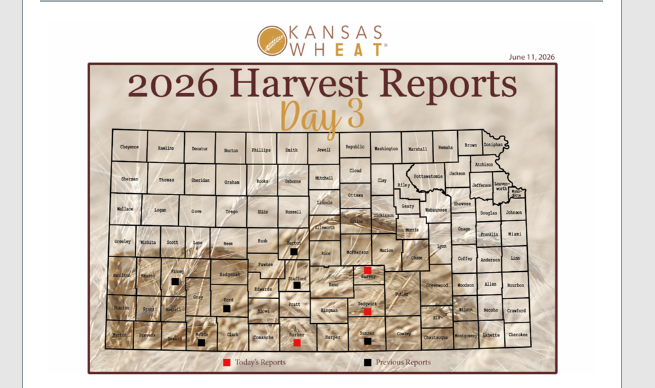
This is day 3 of the Kansas Wheat Harvest Reports, brought to you by the Kansas Wheat Commission, Kansas Association of Wheat Growers, Kansas Grain and Feed Association and the Kansas Cooperative Council.
In south central Kansas, weather has been drier this week, allowing loads to come in more consistently, according to Ted Behring, General Manager at The Farmers Cooperative Equity Company in Barber County.
"We weren't able to get loads in until later afternoon on Monday and Tuesday, but with the wind blowing yesterday and today, we were able to get started earlier," said Behring. "Grains are all coming in fairly well; yield was going to be a struggle regardless because of the lack of moisture in the winter and the spring."
Behring anticipates harvest being complete in their area in seven to 10 days, if rain holds off.
"I predict that we're going to take half a crop from last year, but we'll be about 20% off of what our 10-year average is," said Behring. "I was anticipating better protein levels than what we are seeing, some below average, which is surprising to me with how well farmers fertilized and all the stress on the wheat this year."
Martin Kerschen, a farmer from Sedgwick County, took his first load in on May 25, Memorial Day, and has been wrapped up with harvest for about a week. With little disease pressure, the biggest concern for Kerschen was the lack of moisture, followed by rain that kept him out of the field to cut when it was time.
"Overall, we are pretty pleased with our wheat. Without good genetics, we would not have had much of anything," said Kerschen.
A farmer in Harvey County, who asked for his name not to be included, reported a 32-bushel-per-acre field of Kansas Wheat Alliance's KS Providence from a dry Wednesday window in the weather. He saw test weights of 61 pounds and protein levels at 13.1 percent.
"This wheat has been challenged from day one," he said. "The only thing that was consistent with this weather was that it has been unpredictable."
The 2026 Harvest Report is brought to you by the Kansas Wheat Commission, Kansas Association of Wheat Growers, Kansas Grain and Feed Association, and the Kansas Cooperative Council. To follow along with harvest updates on X, use #wheatharvest26. Tag us at @kansaswheat on Facebook, Instagram and X to share your harvest story and photos.
Youth agriculture education is at the heart of a new summer program designed to help young people better understand where their food, clothing, and everyday essentials come from. Rhonda Spencer, founder and director of Grows in Ag, spoke with associate farm reporter Carli Davenport. Spencer says the organization's upcoming summer camp aims to connect children with agriculture through hands-on learning, career exploration, and life skills.
Spencer said the idea for the camp grew out of her work with youth through the National Women in Agriculture Association, where she noticed many young people lacked workplace readiness and awareness of agricultural careers. "I was finding myself hiring young people, and had to fire young people, which just was not enjoyable to me," Spencer said. "The problem was that they didn't have an understanding of proper work ethics." That challenge led Spencer to create programming centered on work ethic, job readiness, and agriculture education.
What began as outreach to high school students eventually expanded after a successful agriculture trip to Langston University. "It was such a great win," Spencer said. "Seeing that excitement of the children, seeing excitement of the parents as well... I decided to extend my idea into a summer camp venture."
The success of that experience helped transform a single-day educational opportunity into a full summer program focused on hands-on agricultural learning.
The Grows in Ag Summer Youth Camp, scheduled for July 13–24, will immerse students in agriculture through lessons in plant science, gardening, soil health, composting, hydroponics, irrigation, and farm entrepreneurship. "When they walk away, they will be very well informed of different aspects of agriculture," Spencer said.
Camp participants will study everything from seed dissection to soil comparisons, including Oklahoma's common clay-heavy soils. "We'll look at different types of soil and see what's good soil, what's bad soil," Spencer said. "We'll do experiments on that, from silt to sand to clay, which we have a lot of in Oklahoma."
Students will also visit farms and participate in real-world agricultural experiences to reinforce what they learn in the classroom.
Spencer says the camp is about more than farming—it's about helping children understand how deeply agriculture connects to daily life. "Everything comes from agriculture," Spencer said. "Everything is tied in life to agriculture."
She explained that agriculture impacts food, nutrition, clothing, environmental stewardship, and countless other areas people may not immediately think about. "Our food comes from somewhere in the soil," Spencer said. "The climate affects it. The water is also part of the component."
Spencer emphasized that agriculture offers career paths far beyond traditional farming and ranching. "Agriculture is so diverse," Spencer said. "They could be farmers and ranchers, they could go into sciences, engineering, and so forth."
For Spencer, agricultural literacy helps children understand future opportunities while giving them a broader perspective of the world. "Being educated in agriculture actually empowers the child," Spencer said. "It gives them global perspective that everything is tied in."
The camp is open to students entering third through eighth grade, and Spencer said sponsorship opportunities are available to help ensure every child has access. "This is an opportunity for the community to help our children be successful and not leave any child behind," Spencer said.
She hopes community support will allow more children to experience agriculture firsthand and gain valuable life skills along the way.

RON's Dave Lanning has a pre-opening look at today's agricultural Markets.
Click the audio tab below for today's report.
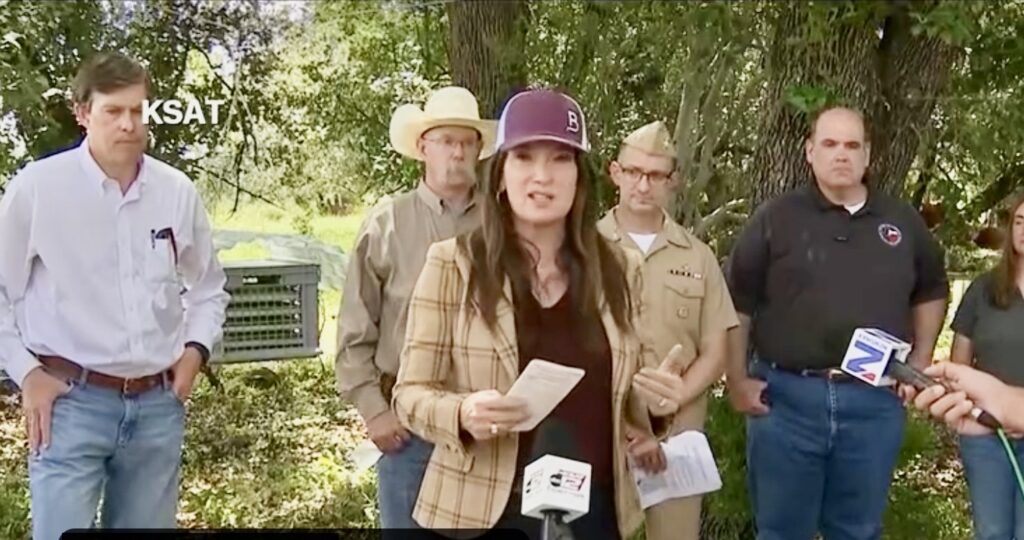
U.S. Agriculture Secretary Brooke Rollins said Thursday that an unprecedented federal and state response is underway following the detection of New World screwworm in South Texas, emphasizing that rapid action and coordination across agencies have positioned the country to contain the pest before it can inflict widespread damage on the livestock industry.
Speaking from the Chaparosa Ranch in Zavala County, where the first confirmed New World screwworm case in Texas was discovered, Rollins defended the administration's response and said multiple federal agencies are now mobilizing resources to combat the threat. (You can listen to the Questions (and answers) taken by Secretary Rollins after her opening remarks with media present- click on the listen bar above.)
"Just a couple of hours ago, CDC also declared the emergency," Rollins told reporters. "This reflects President Trump and our entire administration's vigilance on this particular issue."
Rollins said the Centers for Disease Control and Prevention's emergency declaration adds another layer of federal support as agencies work together to prevent further spread of the parasite, which can infest livestock, wildlife, pets and other warm-blooded animals.
The secretary said the administration inherited a situation in early 2025 where little preparation had been made despite the screwworm's steady northward movement through Central America and Mexico.
"When we walked in the door in January of last year and realized that really not much had been done to prepare for this moment, no funds had been secured, very little staff, no money invested and no plan deployed, we knew it was important to move out," Rollins said.
She pointed to what she described as an "all-of-government" strategy involving USDA, CDC, EPA, the Department of Health and Human Services, the Department of Homeland Security and the Department of Defense. Rollins highlighted EPA approval of the Novo Fly technology and HHS support in deploying additional veterinarians to Texas.
A major component of the response is construction of a sterile fly production facility in Edinburg, Texas. Rollins said federal leaders have accelerated what normally would have been a five-year project into an estimated two-year timeline.
"Without hesitation, President Trump, Vice President Vance and Secretary Pete Hegseth said we will bump this to the very top of the list," she said.
Rollins also pushed back against criticism that federal workforce reductions contributed to the current situation.
"DOGE cuts had zero to do with where we're at today," she said.
According to Rollins, USDA had only 10 full-time staff members focused on New World screwworm when the administration took office in January 2025. That number has since grown to more than 120 personnel.
"We've been able to scale up much larger than anybody else to get ready for this," she said.
Federal officials continue investigating how the screwworm reached Zavala County. Rollins said weather patterns, including wind movement, are being examined, while officials are also considering the role of illegal livestock movement across the southern border.
"The illicit movement of cattle alongside the open border policies of the last administration is 100 percent the reason that we're standing here today," Rollins said.
Officials emphasized that sterile fly releases remain the primary tool for controlling the pest. Rollins said sterile flies were redirected and released in South Texas within hours of the initial detection, helping limit additional cases.
Rear Admiral Michael Schmoyer, USDA's coordinator for the federal screwworm response, said extensive surveillance systems, predictive modeling and thousands of traps deployed across Mexico and the United States have been in place for months in anticipation of a possible detection.
"We actually have a playbook on how to do this," Schmoyer said. "As these fly cases come up, we know how to address it."
Despite the detection, Rollins stressed there is currently no threat to the food supply. However, she warned that uncontrolled spread could have severe consequences for livestock production and rural economies.
"We look back at the 1950s and 1960s and the destruction of our livestock industry and the decades it took to recover from that," Rollins said.
She framed the response as both an agricultural and national security issue.
"The importance of farm security and ranch security to national security cannot be overstated," Rollins said. "If we can't protect these ranchers and ensure that we can protect our food supply and this way of life, then we will lose freedom in this country."
USDA is also coordinating closely with neighboring states, particularly New Mexico, Arizona and California, while maintaining restrictions on livestock imports from Mexico.
Rollins said border ports have remained closed to livestock imports for approximately a year and will remain so until officials have a clearer understanding of the current outbreak situation.
In addition, USDA has deployed specially trained detector dogs at border crossings to inspect companion animals entering the United States from Mexico. Officials indicated additional screening measures may be forthcoming.
Department of Homeland Security officials attending the briefing said the agency is contributing personnel, technology and research support, including potential use of artificial intelligence and drone surveillance to monitor wildlife populations that could be susceptible to screwworm infestations.
"We're just throwing everything out there," said Dr. Sean Connelly of DHS. "Whatever resource we have that may contribute to the problem set, the Department of Homeland Security is there and getting after it."
The New World screwworm response remains concentrated in South Texas, where federal and state officials hope aggressive surveillance, sterile fly releases and expanded infrastructure will prevent the pest from becoming established in the United States once again.
Recently, Agriculture Secretary Brooke L. Rollins launched the Small Processors Action Plan, a new set of actions to better support small and very small meat and poultry processing plants, improve customer service, and reduce unnecessary regulatory burdens while maintaining strong food safety protections for consumers. Additionally, Secretary Rollins announced that the U.S. Department of Agriculture is accepting applications for the fourth round of the Meat and Poultry Processing Expansion Program to expand American meat and poultry processing.
"President Trump is delivering on his promise to Oklahoma ranchers to rebuild America's beef industry," said USDA Rural Development Oklahoma State Director Zachary Swartz. "With this announcement by Secretary Rollins to remove unnecessary red tape and provide financial support from USDA, the Trump Administration is providing the tools our processors need to grow opportunities for Oklahoma ranchers and bolster the Product of USA label that puts high-quality and healthy protein on the tables of American families."
Both the Small Processors Action Plan and the additional $60 million in funding for the Meat and Poultry Processing Expansion Program build on USDA's Plan to Fortify the American Beef Industry.
Small Processors Action Plan:
Small and very small plants make up the majority of federally inspected establishments and play a critical role in local economies, rural communities, and the resilience of the nation's food supply. These actions being announced by USDA are designed to make it easier for these businesses to interact with the agency, get timely answers, and resolve issues, without weakening inspection or food safety standards.
Improving customer service and responsiveness
· Creating clearer, easier ways for small plants to submit and track appeals and requests.
· Establishing dedicated support to help small businesses navigate processes and get timely responses.
· Expanding access to assistance for plants with limited technology or connectivity.
Making requirements clearer and easier to navigate
· Updating and expanding plain-language guidance by USDA's Food Safety and Inspection Service (FSIS), tailored to small and very small plants.
· Improving visibility of available support, escalation paths, and points of contact.
· Launching simpler tools to help plants engage with USDA systems.
Reducing unnecessary burden while maintaining food safety
· Streamlining processes related to FSIS inspection staffing concerns and appeals.
· Improving consistency and clarity across the field through targeted training and guidance.
· Strengthening coordination with the Small Business Administration to ensure small plants are aware of available resources.
USDA will begin rolling out these improvements immediately and will continue engaging with small and very small plants to ensure the changes are effective and responsive to real-world needs.
Meat and Poultry Processing Expansion Program:
The USDA Rural Business and Cooperative Service published a Notice of Funding Opportunity for $60 million to fund a fourth phase of the Meat and Poultry Processing Expansion Program (MPPEP) to help eligible meat and poultry processors expand their capacity, encourage competition and sustainable growth in the United States meat processing sector, and to help improve supply chain resiliency. Available funding will be divided equally into two separate competitions: one for small and very small processors and one for intermediate processors.
Eligible applications include for-profit organizations, nonprofit organizations, producer-owned cooperatives, tribes, and tribal entities. Privately-owned entities must be independently owned and operated, and all entities must be domestically owned. Additionally, the applicant's processing facility must be physically located and operating in the United States or its territories. The applicant's facility must primarily process cattle in order for the project to be eligible for the program; however, funds or equipment may be used for processing meat and poultry at the facility.
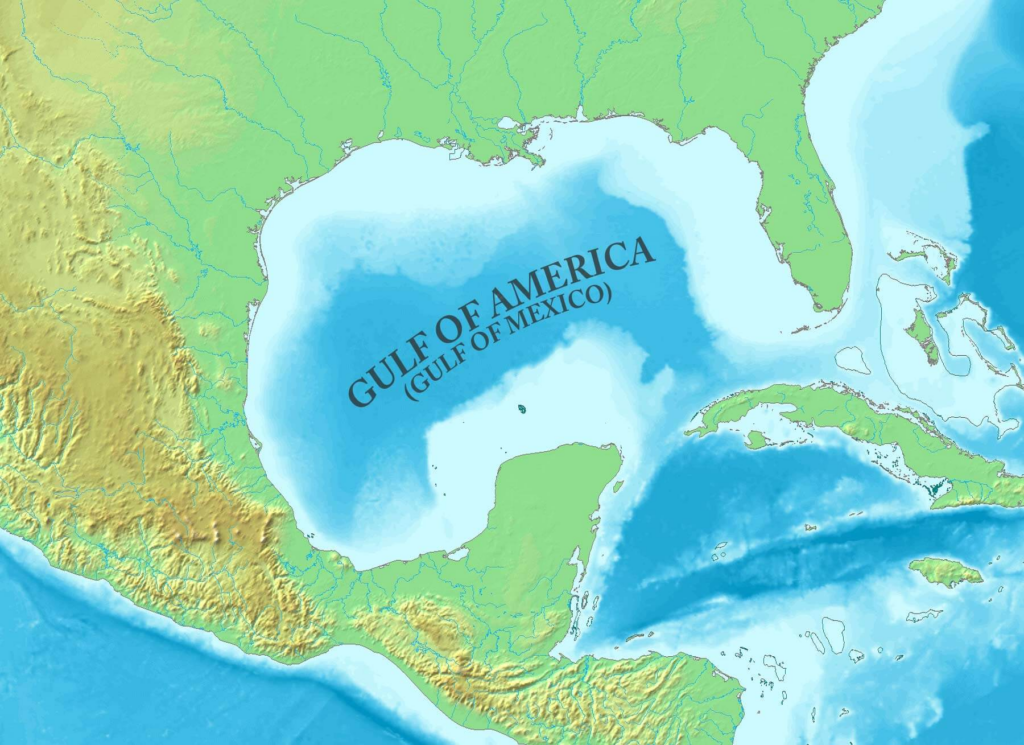
Today, U.S. Environmental Protection Agency (EPA), as co-chair of the Gulf of America Hypoxia Task Force, reported progress meeting voluntary, interim goals to reduce excess nutrients that can enter the Mississippi/Atchafalaya River Basin and flow into the Gulf of America, impacting water quality. A key finding of this report is that state-led actions helped achieve and surpass the nitrogen reduction goal for 2025.
"The Gulf of America is a national treasure and a critical economic engine for coastal states. Reducing excess nutrients to improve water quality in the Gulf strengthens economic prosperity while protecting aquatic resources," said Jessica Kramer, EPA Assistant Administrator for Water and Hypoxia Task Force Federal Co-chair. "The decrease in nitrogen pollution we are seeing is an important step in the right direction, but we still have work to do to reduce the size of the Gulf's dead zone. I look forward to continuing EPA's commitment to cooperative federalism and supporting state leadership that is driving progress."
The nutrient reduction goals—called the 2025 interim targets—aim to reduce total nitrogen and total phosphorus loads from the Mississippi and Atchafalaya River Basin to the Gulf of America by 20 percent. The interim targets were developed to measure progress toward the larger 2035 coastal goal outlined in the Gulf Hypoxia Action Plan.
Today's announcement highlights U. S. Geologic Survey (USGS) 2025 data showing that total nitrogen has decreased by 28 percent compared to the baseline. While celebrating significant improvements in nitrogen loads, EPA and its fellow Task Force members acknowledge that the interim target for total phosphorus has not yet been met. USGS 2025 data show that total phosphorus loads from the Basin increased by 13 percent compared to baseline. An important factor behind this is the time lag between reducing phosphorus inputs and seeing the results downstream. Research on how phosphorus moves through and persists in the environment continues to evolve, and we now understand that large stores of "legacy" phosphorus—accumulated over years of past inputs—are held in watershed sinks such as soils, groundwater, and lake and stream sediments. These sinks can release phosphorus months or years later, sustaining the loads measured downstream even where conservation practices have already cut current inputs to the watershed. As a result, the benefits of today's reductions may take years to register in monitoring data.
The 12 states in the Mississippi/Atchafalaya River Basin watershed participate in the Hypoxia Task Force. The states include Arkansas, Illinois, Indiana, Iowa, Kentucky, Louisiana, Minnesota, Mississippi, Missouri, Ohio, Tennessee, and Wisconsin. Together, they have been working to shrink the large hypoxic zone (also known as the dead zone) where there is very little oxygen in the water due to the impacts of excess nutrients. Today's announcement makes it clear that these partners have made strong progress implementing state-led nutrient reduction strategies.
"The progress highlighted in this report demonstrates what's possible when local, state, and federal partners work together toward a common goal," said Iowa Secretary of Agriculture Mike Naig, States' Co-Chair of the Mississippi River/Gulf of America Hypoxia Task Force. "Across the Mississippi River Basin, states are implementing their own nutrient reduction strategies that reflect their unique needs, geography, priorities, and partnerships. That flexibility is important because there is no one-size-fits-all approach to improving water quality and balancing the complex needs of a working river spanning 31 states. While weather and river flow will always influence year-to-year results, the data shows that our collective efforts are making a difference. State-driven, science-based strategies and local partnerships are critical to continue scaling up conservation practices, accelerating implementation and delivering measurable results."
"The USGS partners with federal, state, local, and Tribal agencies across all 31 Mississippi River Basin states to monitor water resources and deepen understanding of how nutrients move through the watershed and into the Gulf," said Department of Interior Assistant Secretary for Water and Science Andrea Travnicek. "Through these collaborations, the USGS combines its extensive water data with multidisciplinary expertise to develop advanced predictive models that track nutrient trends, identify higher nutrient loads, and guide efforts to reduce nutrient loads that may help protect the Gulf's ecological and economic vitality."
"USDA remains committed to supporting state leadership and producer-driven solutions that reduce nutrient losses across the Mississippi and Atchafalaya River Basin," said U.S. Department of Agriculture Under Secretary, Farm Production and Conservation Richard Fordyce. "Through conservation tools like Nutrient Management, Drainage Water Management, and vegetative buffer practices such as Filter Strips, Riparian Forest Buffers, and Riparian Herbaceous Cover, producers are making measurable progress that benefits working lands and the health of our waterways. States that invest directly in water quality, such as Missouri with its dedicated conservation sales tax, show how long-term, locally driven commitment can accelerate results. We are proud to collaborate with states and producers as they continue making strides to reduce nutrient loading and shrink the Gulf of America's hypoxic zone."
"The states in the Upper Mississippi River Basin (Illinois, Iowa, Minnesota, Missouri, and Wisconsin) are collaborating in expanding ways to reduce nitrogen and phosphorus loading into the Mississippi River. The Hypoxia Task Force is an important source of support for the positive changes we are seeing and for the hard work ahead of us," says Kirsten Wallace, Executive Director of the Upper Mississippi River Basin Association, which is the states' shared organization for interstate water resources planning and cooperative action in the Upper Mississippi River Basin.
The Hypoxia Task Force remains dedicated to the Action Plan goal of reducing the hypoxic zone to less than 5,000 square kilometers. EPA and the other federal members of the Task Force will continue to seek new science advancements and help states and Tribes to integrate the findings into the development and implementation of their nutrient reduction strategies.
Learn more about the Mississippi River/Gulf of America Hypoxia Task Force.
Senator Amy Klobuchar (D-MN), Ranking Member of the Senate Committee on Agriculture, Nutrition, and Forestry, and Senators Ben Ray Luján (D-NM), Elissa Slotkin (D-MI), and Martin Heinrich (D-NM) are leading 17 of their colleagues in calling on the U.S. Department of Agriculture to take further immediate action to contain and respond to the outbreak of New World Screwworm (NWS) in the United States.
"We write with great concern regarding the current outbreak of New World Screwworm (NWS) within the United States and the growing threat this pest poses to livestock producers, farm workers, companion animals, wildlife, and rural economies across the country," wrote the Senators. "Since June 3, 2026, the United States Department of Agriculture has confirmed at least seven cases of New World Screwworm in Texas and New Mexico. Due to the scale of the animal health threat that New World Screwworm poses to the United States, we urge the USDA to take further immediate action to contain and respond to this emergency."
"We are aware that the USDA has engaged in preliminary efforts to contain this outbreak, including enhanced surveillance, sterile fly releases, coordination with animal health officials in Texas and New Mexico, and the confirmation that the U.S. food supply remains safe," the Senators continued. "These actions are critical first steps, but the evolving situation demands additional actions to ensure that the United States is adequately responding to the significance of this threat."
Along with Klobuchar, Luján, Slotkin, and Heinrich, the letter was signed by Senators Michael Bennet (D-CO), Catherine Cortez Masto (D-NV), Ruben Gallego (D-AZ), Mark Kelly (D-AZ), Raphael Warnock (D-GA), Tammy Duckworth (D-IL), Tammy Baldwin (D-WI), Jacky Rosen (D-NV), Alex Padilla (D-CA), John Hickenlooper (D-CO), Tina Smith (D-MN), Ed Markey (D-MA), Kirsten Gillibrand (D-NY), Mark Warner (D-VA), Gary Peters (D-MI), Jeff Merkley (D-OR), and Dick Durbin (D-IL).
The full letter is available here and below.
Dear Secretary Rollins:
We write with great concern regarding the current outbreak of New World Screwworm (NWS) within the United States and the growing threat this pest poses to livestock producers, farm workers, companion animals, wildlife, and rural economies across the country. Since June 3, 2026, the United States Department of Agriculture has confirmed at least seven cases of New World Screwworm in Texas and New Mexico. Due to the scale of the animal health threat that New World Screwworm poses to the United States, we urge the USDA to take further immediate action to contain and respond to this emergency.
We are aware that the USDA has engaged in preliminary efforts to contain this outbreak, including enhanced surveillance, sterile fly releases, coordination with animal health officials in Texas and New Mexico, and the confirmation that the U.S. food supply remains safe. These actions are critical first steps, but the evolving situation demands additional actions to ensure that the United States is adequately responding to the significance of this threat.
To strengthen the federal response, we urge USDA to explore and utilize the following measures:
Expand Countermeasure Production
Expand and accelerate the production of sterile flies, including surges in research investments to support innovation in NWS containment and eradication, similar to the New World Screwworm Grand Challenge Funding Opportunity.
Coordinate and expedite approval with other federal agencies for technologies that prove to be safe and effective.
Explore authorities under the Defense Production Act and, if feasible, use these authorities to expand production of veterinary countermeasures and sterile flies.
Identify partnership opportunities to contract with Biosafety Level 2 (BSL-2) laboratories to expand sterile fly production.
Improve Government Coordination and Outreach
Incentivize reporting through the implementation of indemnification for livestock and poultry producers who report suspected cases of New World Screwworm, modeled after the indemnification program for milk losses from dairy cattle due to avian flu.
Provide additional funding for education and outreach to livestock and poultry organizations and other impacted stakeholders at the local and state level, including outreach through trusted partners like Land-Grant Universities and the Cooperative Extension System.
Activate all available accredited USDA veterinarians to increase surveillance of New World Screwworm and, in their role as mandated reporters of foreign animal pests and diseases, underscore the requirement to immediately report any suspected cases of NWS.
Call an emergency meeting of USDA New World Screwworm leadership, border state commissioners of agriculture, and state veterinarians to coordinate on surveillance, deployment of staff for inspections, and USDA's capacity to deploy sterile flies in areas that could be impacted.
Increase outreach and funding for all states that are viable habitats for a long-term infestation of New World Screwworm.
Increase USDA Capacity
Use direct hiring authorities to expand current Animal and Plant Health Inspection Service including Veterinary Services and Wildlife Services, Agricultural Research Service, and National Institute for Food and Agriculture staff.
As a part of the USDA's broader reorganization, commit to not disrupting the New World Screwworm outbreak response through permanent relocation orders.
As the current outbreak of New World Screwworm continues to evolve, we will continue to work with the USDA to respond to this threat. While addressing this outbreak requires immediate and sustained attention, it is equally important that we do not lose sight of other animal pest and disease threats facing poultry and livestock producers across the country. We ask that the USDA continue to provide transparency on the ongoing outbreak and efforts related to the measures outlined above as they are taken, but no less than thirty days after receipt of this letter.
American corn farmers can't afford to lose out on 1.8 billion bushels of corn demand every year. That demand is at stake as the United States-Mexico-Canada Agreement (USMCA) faces its first chance at renewal this summer — and the outcome is anything but certain.
As the renewal deadline approaches, the National Corn Growers Association (NCGA) is advocating to uphold this landmark agreement and protect U.S. corn demand.
Signed into law by President Donald Trump in his first term, USMCA marked a new era in American trade. This agreement provides certainty with the U.S.'s top corn export market, Mexico, and the top purchaser of ethanol, Canada. It also allows for new market opportunities, from biobased plastics to sustainable aviation fuel. NCGA is calling on the United States, Mexico, and Canada to come to the table to review the agreement and agree on targeted improvements – otherwise, American farmers will lose the stability of these foundational markets.
Since it took effect in 2020, USMCA has allowed for strong growth in U.S. exports. Mexico and Canada now represent $60 billion — more than a third — of all U.S. food and agricultural exports.
The agreement has been especially beneficial for corn growers. Since USMCA was enacted, corn exports to Mexico and Canada have increased by 102% in value. The graph below shows U.S. farmers exported about $3 billion in bulk corn to North America in 2019, the year before USMCA was enacted. In 2025, just five years after USMCA took effect, U.S. corn exports to Mexico and Canada more than doubled in value at over $6.2 billion. U.S. corn export values have remained at these high levels since skyrocketing to high levels in 2022. If USMCA is not renewed, American corn farmers risk losing this growth and seeing these numbers drop to pre-agreement levels.
USMCA also contains critical tools to address actions that violate the agreement. When Mexico issued a Decree banning biotech corn, NCGA urged the Administration to pursue a dispute settlement under USMCA's rules. A final panel report was issued that found Mexico's actions not based on science and inconsistent with their commitments under USMCA. As a result of this panel report, Mexico withdrew the Decree, proving that the dispute settlement tool worked to resolve this critical trade barrier impacting U.S. corn growers.

Corn growers are speaking out in support of USMCA. Jon Miller, NCGA Corn Board member and farmer from central Ohio, said, "The USMCA is important to my operation and the US farmer, now let me tell you why, annually it not only accounts for 60 billion dollars in US ag exports, and 1.5 billion dollars in ethanol to Canada, it has also created 13 million US jobs and has been credited for a 10.7 billion dollar increase in ag exports to Mexico. The USMCA is a good deal for the US farmer."
Corn growers have invested in advocacy and research efforts to promote the benefits of USMCA and encourage its renewal. NCGA leads the Agricultural Coalition for USMCA, a diverse collection of agricultural organizations working together in support of USMCA's renewal and its continued role in delivering results for American agriculture. From educational outreach to grassroots advocacy, the coalition is focused on ensuring the agreement remains in place with targeted improvements that preserve market access, provide long-term certainty, and keep American agriculture competitive.
"USCMA provides stable, reliable market access to our biggest customers at a time when we need it most," said Nancy Martinez, NCGA director of public policy, trade, and biotechnology.
What can you do?
USMCA has been a game-changer for U.S. agriculture, creating jobs, expanding exports, and providing stability to our farms and communities. But these gains aren't guaranteed: your advocacy is needed to secure the long-term benefits of this agreement.
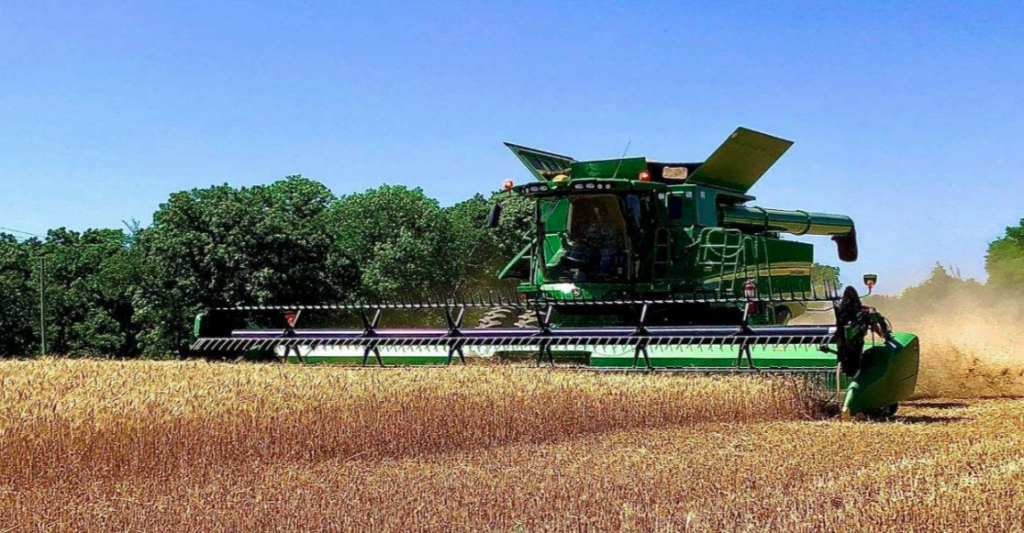
The U.S. Department of Agriculture's National Agricultural Statistics Service (NASS) released updated June 1 forecasts for the 2026 winter wheat crop in a crop production report. New data highlights significant reductions across the Southern Plains—Oklahoma, Kansas, and Texas—driven by persistent drought, high abandonment, and reduced yield potential. These three Hard Red Winter (HRW) wheat states continue to experience some of the nation's most challenging production conditions.
Production is forecast at 1.03 billion bushels, down 2 percent from the May 1 forecast and down 27 percent from 2025. As of June 1, the United States yield is forecast at 46.8 bushels per acre, down 0.8 bushel from last month and down 8.1 bushels from last year's average yield of 54.9 bushels per acre. Michigan is expecting a record high yield.
As of May 31, twenty-six percent of the winter wheat acreage in the 18 major producing States was rated in good to excellent condition, 26 percentage points lower than at the same time last year. Nationally, 87 percent of the winter wheat crop was headed by May 31, eight percentage points ahead of the 5-year average pace.
Forecasted head counts from the objective yield survey in the six Hard Red Winter States (Colorado, Kansas, Montana, Nebraska, Oklahoma, and Texas) are all below last year's final head count. As of May 31, the winter wheat crop in Kansas, Oklahoma, and Texas was rated in good to excellent condition at 15 percent, 13 percent, and 12 percent, respectively.
According to the June 1 forecast, national winter wheat production is forecast at 1.03 billion bushels, down 2 percent from the May estimate and down 27 percent from 2025.
Oklahoma
Oklahoma likewise reports a sharply reduced winter wheat crop in 2026.
• Production: 64.4 million bushels
— Down 39.5% from 106.4 million bushels in 2025
— No change from the May 1 forecast
• Yield: 28 bushels/acre
— Down 26.3% from 38 bushels/acre last year
— No change from the May 1 forecast
• Harvested Area: 2.3 million acres
— Down 17.9% from 2.8 million acres
— No change from the May 1 forecast
Kansas
Kansas remains the nation's largest winter wheat producer, yet its 2026 crop is among the most severely affected.
• Production: 203.0 million bushels
— Down 41.4% from 346.8 million bushels in 2025
— Down 5.5% from the May 1 forecast of 214.6 million bushels
• Yield: 37 bushels/acre
— Down 27.5% from 51 bushels/acre last year
—Down 2 bushels/acre from the May 1 forecast
• Harvested Area: 5.8 million acres
— Down 14.7% from 6.8 million acres last season
— No change from the May 1 forecast
Texas
Texas did see minor increase in production due to a yield increase.
• Production: 51.0 million bushels
— Down 40.1% from 85.1 million bushels in 2025
— Up 7% from the May 1 forecast of 47.6 million bushels
• Yield: 28 bushels/acre
— Down 24.3% from 37 bushels/acre last year
— Up 2 bushels/acre from the May 1 forecast
• Harvested Area: 1.7 million acres
— Down 26.1% from 2.3 million acres
— No change from the May 1 forecast

The June World Agricultural Supply and Demand Estimates (WASDE) report has officially been released, sparking widespread discussion across the agricultural sector regarding its implications for the upcoming marketing year. To break down the numbers and understand what these adjustments mean for producers, Farm Director KC Sheperd recently sat down with Rich Nelson, the Chief Strategist at Allendale. The conversation provided a detailed look at how minor shifts in old crop demand, international production adjustments, and ongoing weather patterns are shaping the current market landscape.
When asked about initial reactions to the data, Nelson noted that the timing of this particular report typically lends itself to a quieter market response.
"You know, overall, keep in mind for this June supply and demand report, this often does not see major surprises," Nelson said. "This is mainly an old crop report for corn and soybeans at least, where we'll see some minor changes as far as demand. Keep in mind for the new crop, USDA is very reluctant to make acreage or yield changes on this report."
The most significant developments in the June report emerged within the wheat complex, where consecutive adjustments have drastically altered the supply outlook.
"Bigger focus for today, certainly on the wheat end of things here," Nelson emphasized. "We will get some finalized old crop wheat stock numbers at the end of this month with that Grain Stocks report on June 30. As for the new-crop side, the focus was on production, and the USDA lowered its prior views on production even more than in May. So keep in mind as far as this lower Hard Red Wheat production number, this is now at numbers we haven't seen, I want to say going back for about 70 years or so at least. And that's mainly due to the fact that we have seen some lowered acreage in the past."
Nelson further highlighted how these revisions are constricting the domestic balance sheet, driving carryout expectations to multi-year lows.
"The major focus for our report is USDA's shockingly low Hard Red numbers from last month; they were revised yet again this month," Nelson said. "So we have a relatively tight balance sheet here, and that was certainly reflected with an ending stock change of—762 last month, now 744. For all wheat combined, this is still the lowest ending stock number we've seen in about three to four years."
Given the persistent production challenges facing Hard Red Winter wheat, Sheperd questioned whether the USDA has fully accounted for the scope of the damage, or if further cuts are on the horizon.
"I think they have captured it myself, and a lot of producers certainly in the Plains would have a strong argument with me on that question," Nelson answered. "But, you know, keep in mind, USDA does have a very steep cut in terms of their viewpoint for abandonment right now. We're looking at numbers we haven't seen in about 20 years, specifically the percentage of crop not harvested. And USDA also has a quite low yield number estimate plugged in. So, it's not that it's a bad crop; it's certainly a very poor crop. The question is the exact finalized low number there."
With the domestic wheat supply tighter than usual, attention turns to how the international market might absorb the shortfall. Nelson indicated that global cushions are also experiencing their own tightening cycle.
"One thing which we've got to put some context into this is the fact that the overall world balance sheet for wheat has been lightly rained in recent years," Nelson explained. "We've got ending stocks, or stocks-to-use on a world basis at least, that we haven't seen for about eight years or so. So it is a moderately tight world picture. A lot of us may suggest this probably will not be a price-moving factor just yet."
Nelson pointed out that international production uncertainty remains high across several key exporting regions.
"We have some questions about this crop out of India, which has been harvested," Nelson said. "We have questions with Australia, which was slightly lower today, but we also have questions with Argentina. And certainly for that Australia question, that's an El Niño dryness story, which does give us a dry perspective for that Southeast Asian region. So we'll see if those numbers do change in the future reports."
On the corn side of the ledger, the USDA introduced moderate adjustments to old crop demand metrics. Nelson explained that these shifts essentially neutralized each other, leaving the final carryout projections steady.
"We did see USDA make some moderate changes to old crop demand," Nelson noted. "Exports were raised a little bit, which was offset by some lowered ethanol. So we saw the numbers on the corn side of the old-crop balance sheet left almost unchanged—2.1 billion bushels. As far as new crop corn, no changes there to speak of, so really no major surprises there."
However, international adjustments injected a slightly more negative tone into the broader corn complex.
"We will lean lightly bearish for this report, given the fact that they did raise Argentina's crop by a good 2 million tons, Brazil by 3 million tons," Nelson added.
For soybeans, the baseline domestic numbers experienced very little volatility, though some of the USDA's adjustments raised questions among market analysts.
"Soybean numbers on this report, well, they were all left unchanged," Nelson said. "Old crop stocks left at 340 million bushels. USDA kind of threw us a little surprise: crush was raised, as expected, but exports were lowered. And given the past four weeks of positive exports, we're not quite sure if that was needed."
Looking forward, the focus on soybeans is quickly shifting to the adequacy of new-crop ending stocks, especially when weighed against current yield expectations.
"The big question for us right now on the soybean side, especially, is with USDA's relatively low-looking new crop ending stock number—310 million bushels," Nelson stated. "The big question here is, are we trading above trend yields right now? Keep in mind that the USDA is using trend yields on their balance sheet, and a lot of us have questions about this China buying story for the new crop, as we've only seen some moderate purchases so far. So, the market is trading a little larger ending stocks than USDA would give us here."
Beyond production statistics, macroeconomic and geopolitical factors continue to influence agricultural trade lanes. Sheperd raised the topic of the United States-Mexico-Canada Agreement (USMCA), asking if trade discussions would begin to play a more prominent role in market performance.
"That's an interesting question," Nelson noted. "Trump did, in terms of yesterday and today, kind of rain in his hopes for getting a USMCA deal. He basically said that he's not too interested in it. Mexico and Canada will certainly try to keep this deal set together as well. So we'll see if any changes do come up there, but certainly from a trade perspective, this is going to be one big question. Keep in mind for us on the wheat side, almost all of our imports do come south down from Canada, so that will be moderately market-moving news, especially for wheat, if changes are seen."
The cotton market mirrored many of the trends seen in row crops, with old-crop demand adjustments preceding anticipated new-crop acreage updates.
"Cotton is kind of just like the corn and soybean story at this point in the year," Nelson observed. "We're seeing old crop changes that are still in place. And as far as new crop, they'll make some adjustments for acreage at the end of this month, and of course, they left yields unchanged, which is relatively normal for this report."
The defining narrative for the cotton complex remains the severe environmental stress encountered during the planting window.
"There's going to be a lot of questions regarding that new crop cotton perspective, especially as we're questioning how many of those acres were planted with something else because planting was done obviously in a significant drought," Nelson explained. "I believe 83% of cotton ground was rated in that D1 to D4 drought rating, so a lot of questions regarding what type of acreage changes we will see."
Despite these challenges, the current data points toward an increasingly restricted supply situation.
"For this report, though, we really just saw a minor drop in terms of old crop ending stocks," Nelson said. "New crop, with USDA's view of a lowered production for this new crop year, this would still be the tightest new crop ending stock in about three to four years. So, a lightly tightened picture—we'll see if that does continue."
Sheperd agreed, noting the operational hurdles producers face on the ground. "We're still waiting on some rain here, so I know that some folks are trying to kind of dust it in, but we're hoping that we can even get it in the ground at this point."
Turning the focus to livestock, the June report left headline beef production estimates relatively stable, while maintaining a clear long-term trend regarding international trade flows.
"One big question as far as us on the cattle side, we've seen some minimal changes for USDA's view on beef production," Nelson said. "But in recent months, we have seen a sharp change in USDA's viewpoint regarding imports and exports—and of course, higher imports and lower exports. That's been seen almost every single report going back for, I want to say, about four or five months now."
For this specific reporting period, the USDA elected to hold its ground on trade volume estimates, preventing any sudden market movements.
"Little positive for us at least on this report, USDA did not change those import numbers or export numbers too dramatically, at least for this report," Nelson noted. "Keep in mind, as far as numbers on production, USDA still has a relatively moderate production drop this year, down about 2%. So we'll see if this shortfall in beef production in the first half of the year is offset in the second half. Keep in mind that we will see placements in the coming months move and remain at or above last year's levels. So, we're not seeing a major change in production, but on a seasonal basis, we will see a slightly more cushioned supply in the second half of the year."
As the industry processes the June WASDE data, attention is quickly shifting to a series of critical USDA data releases scheduled for the end of the month, which will likely dictate market directions through mid-summer.
"Boy, we've got a whole bunch of changes for all of these markets in these next two to three months," Nelson stated. "Of course, at the end of the month, we'll see some updates with the quarterly Grain Stocks report. That fills in the blank with what's left over for old crop as of June 1. So, for corn and wheat, this tells us about the uncounted demand we call "feed residual" in the prior three months. So, we'll have adjustments to old crop numbers."
Simultaneously, the agricultural sector will receive highly anticipated acreage confirmations, though Nelson cautioned that June acreage data isn't always the final word.
"On top of that, of course, the Acreage report on June 30 will hopefully solve a lot of questions," Nelson said. "Now, I will kind of bring up the fact that last year was a big surprise for acreage. That didn't come on the June 30 farmer survey; that came in August, when USDA began incorporating the farm program numbers into the acreage mix. So that's another question: what will that August farm program acreage look like?"
Finally, as the growing season progresses, actual field observations will begin to replace trend-line assumptions, significantly impacting price-discovery mechanisms.
"Starting with the July reports and certainly going into August and September, we'll have yield changes," Nelson concluded. "For corn and soybeans, these markets right now are trading above trend yields. Of course, wheat will be a problem and a question, and certainly for the discussion on cotton, that will be a major mover with a lot of questions and certainly a lot of sway for these yield numbers in these months ahead."
U.S. Senate Committee on Agriculture, Nutrition, and Forestry Chairman John Boozman (R-AR) led an oversight hearing examining how the U.S. Department of Agriculture is addressing the challenges facing farmers, ranchers and foresters while advancing policies to strengthen rural America.
The following is the Chairman's opening statement as prepared for delivery:
"Good morning and welcome. It is my privilege to call this hearing to order as we examine the work of the United States Department of Agriculture and how we can best support our nation's farmers, ranchers, and foresters as well as strengthen rural America.
"I welcome our witness, the Honorable Brooke Rollins, our 33rd Secretary of Agriculture.
"Thank you for being here today and for your steadfast commitment to America's agriculture community. We appreciate your willingness to serve and your active engagement with farmers, ranchers, foresters and rural stakeholders where they live and work.
"Those conversations provide valuable insight into the challenges and opportunities facing the men and women who grow our nation's food, fuel and fiber. They are impacted by USDA and depend on USDA programs daily.
"What I hear from Arkansas family farmers, and stakeholders from across the country, is that the farm economy is struggling. Producers continue to face high input costs, rising labor expenses, elevated interest rates and market uncertainty. It is necessary that we work together to create an environment where agriculture can thrive and where the next generation sees farming, ranching and forestry as viable and rewarding careers.
"One way we have delivered on our commitment to producers is through the Working Families Tax Cuts.
"The President signed into law historic investments to farm country one year ago providing long overdue updates to agriculture policies that better reflect today's realities producers in Arkansas and across the nation experience.
"These improvements respond directly to concerns farmers have raised for years and provides meaningful support and predictability to help them continue operating for years to come.
"We appreciate USDA's urgency in implementing these policies so farmers can realize their benefits this fall. I look forward to hearing further updates on USDA's implementation of these programs.
"This landmark law also includes investments in USDA's premier animal health programs to help mitigate threats such as the New World Screwworm. We know how critical these investments are, particularly as six domestic cases have been confirmed in just the last week.
"Madam Secretary, we appreciate the aggressive approach you and your team have taken to slow the advancement of this pest toward our border and to implement measures that protect America's livestock industry.
"We have successfully eradicated New World Screwworm before, and I am confident we can do so again. We are looking to you and your team at USDA to continue leading this effort and safeguarding the health and security of America's herd.
"We must continue supporting agriculture sectors vital to our rural communities. Our cotton producers have faced significant economic headwinds in recent years. Cotton remains a cornerstone crop for Arkansas and states across the Cotton Belt, supporting farm families, rural communities and manufacturers.
"This is why I strongly support the Buying American Cotton Act. I'm pleased to see USDA's recent announcement promoting the domestic cotton industry.
"At a time when our producers are competing in a challenging global marketplace, we should be doing everything we can to support American-grown products and the hardworking men and women who produce them.
"Similarly, I know many of our committee members on both sides of the aisle support year-round E15. I do, too – but we also need to protect energy security for local and regional communities and protect those jobs in rural America.
"I support the proposal put forward by Senators Fischer and Capito, and hope the Senate moves quickly on that bill.
"Just as importantly, our producers must have access to the resources they need to succeed. Fertilizer remains one of the most significant input costs facing famers, and they are seeing dramatic rises in costs and are concerned about future availability.
"The results of an American Farm Bureau Federation survey this year underscores the concerns I continue to hear from producers in Arkansas and across the country. Among Arkansas farmers who responded, only 12 percent reported pre-ordering fertilizer, highlighting the uncertainty and financial pressures producers are experiencing.
"I appreciate USDA's attention to this issue as well as the opportunity to join you to discuss long-term strategies to lower the costs of fertilizer. I look forward to working with my colleagues to advance policies to provide relief in the future.
"We have a tremendous opportunity before us to update farm policies in Farm Bill 2.0. I look forward to releasing text very soon that incorporates many bipartisan measures and just as importantly, the priorities of farmers, ranchers and foresters so they have updated policies to meet their needs. I am hopeful we can deliver a Farm Bill 2.0 that farmers, ranchers, foresters and rural communities deserve.
"Lastly, I remain committed to advancing the farm assistance package Senator Hoeven and I proposed in January. There are many additional challenges that have risen since then that demonstrate the urgency to provide our producers, including our specialty crop producers, with more support.
"Again, thank you for being here and I look forward to your testimony."

Zoetis published its 2025 Sustainability Report, highlighting progress achieved in 2025 through its Driven to Care strategy. This report marks a significant milestone as Zoetis delivers on its initial aspirations set in 2021 and introduces its next phase with renewed focus across Communities, Animals, and the Planet.
Formalized in 2021, the Zoetis Driven to Care sustainability strategy was built on the company's purpose to nurture our world and humankind by advancing care for animals. As Zoetis enters its next chapter of Driven to Care, the company is sharpening its strategic priorities to focus on the areas where it can have the greatest impact. This streamlined approach prioritizes advancing opportunities for colleagues and communities, solving sustainability challenges through innovation, and protecting the planet by embedding solutions for climate, waste, and nature.
"At Zoetis, we're leading with purpose—turning Driven to Care into measurable impact for Communities, Animals, and the Planet through innovation, partnership, and global execution," said Jeannette Ferran Astorga, Executive Vice President, Corporate Affairs, and Chief Sustainability Officer of Zoetis. "As we celebrate the achievement of our first set of aspirations and targets, we are proud of what our colleagues, partners, and communities have accomplished together, and with renewed purpose and refreshed focus, we look forward to building on this progress in the years to come."
Highlights from the report reflecting progress attained in 2025 and since Driven to Care was introduced in 2021 include:
Communities
Animals
Planet
For more detailed disclosures on the company's sustainability programs, practices and policies, please download Zoetis' 2025 Sustainability Report or visit www.zoetis.com/sustainability. Zoetis will continue to share its sustainability progress against its Driven to Care aspirations, and report annually.
About Zoetis
Zoetis is the world's leading animal health company, driven by a singular purpose: to nurture our world and humankind by advancing care for animals. With a legacy of nearly 75 years, Zoetis continues to pioneer ways to predict, prevent, detect, and treat animal illness, supporting veterinarians, livestock producers, and pet owners in over 100 countries. We integrate deep scientific expertise, data-driven R&D, advanced manufacturing, and commercial excellence to deliver meaningful innovation across medicines, vaccines, diagnostics, biopharmaceuticals, and digital solutions. Guided by our vision to be the most trusted and valued animal health company, Zoetis is committed to setting new standards for the future of animal care through innovation, customer obsession, and purpose-driven colleagues. To learn more, visit Zoetis.com.
In today's Beef Buzz, senior farm and ranch broadcaster Ron Hays speaks with Danny Jones of Superior Livestock about the strong cattle market, summer video sales, and the outlook for the beef industry as 2026 moves into its second half. Superior Livestock is the nation's largest video livestock market- in 1987, visionary cattlemen Jim Odle and Buddy Jeffers launched Superior Livestock Auction and forever changed the way cattle are marketed.
Jones said cattle producers have enjoyed a remarkable run through the first five months of the year. "The price has been tremendous, Ron," Jones said. "We've been anywhere from probably four to $850 a head more than a year ago so far this year."
While he expects the gap compared to last year to narrow somewhat as summer progresses, Jones emphasized that prices remain "significantly better than last year."
The strongest benefits are being felt at the cow-calf level. "They are particularly the cow calf producers," Jones said. "Whether they're selling a calf or a yearling. If they're home-raised right now, they're very well into the black, as you could imagine."
Jones noted that cattle numbers remain somewhat smaller, although several factors have influenced recent placement data. "Overall numbers are slightly lower," he said. "Some of the numbers that have been showing up, the on-feed numbers, I think, are skewed."
According to Jones, drought conditions have pushed some cattle into feedyards earlier than normal, while attractive prices have encouraged additional movement as well. "Drier conditions have caused them to come a little earlier, but also the price has been attractive," he explained.
With New World screwworm cases identified in Texas, Jones acknowledged that producers and marketers may face additional requirements when cattle move through affected areas. "There'll be some things to comply with," Jones said. "But our intent is to continue to deliver what's sold and deliver what does sell."
He added that industry participants should expect compliance measures, particularly near known cases, but stressed that normal commerce is continuing. "There's no commerce being stopped," he said.
Superior Livestock's annual Corn Belt Classic kicks off the company's summer schedule. Jones said the sale remains unique because it focuses on bringing cattle directly to the area's large farmer-feeder buyer base. "This particular one, Corn Belt, is really more where the buyers are rather than where the sellers are," Jones said. "It's a history with the farmer feeder and going to where they are."
Current offerings are substantial, though smaller than last year. "We've got 75,000 right now on, and it's a nice offering," Jones said. "It's off about 25,000 from last year, because so many of the cattle have sold early this year, taking advantage of the market."
The sale will feature a mix of spring-born calves from northern states, fall-born calves from the South, and a strong selection of yearlings. "There's a good offering of spring-born calves out of the north," Jones said, along with "a really good selection of high-quality yearlings as well."
Following the Corn Belt Classic, attention turns to the popular Week in the Rockies sale held in Steamboat Springs, Colorado. "That's the week of the sixth of July, always a big and popular offering," Jones said.
He believes the sale's success comes from buyers wanting to secure inventory well ahead of delivery dates. "Buyers want to secure their inventory ahead of time, and sellers want to take advantage of that appetite for those cattle," he said.
The event has also become a gathering place for ranching families. "A lot of the consigners bring their families and make a family vacation," Jones said. "People enjoy getting out of the heat for a while."
Looking back over more than a decade, Jones said video marketing has steadily gained credibility among cattle producers. "When they first heard about it, they said that would never work," Jones said of many longtime consignors. "They tried it, and it's been with us ever since."
He credits the system's continued growth to proven benefits. "The advantages of better health, and direct marketing, price discovery at the highest level," Jones said. "All of those things are continuing to prove themselves true, and it continues to grow."
He also highlighted the importance of Superior's extensive value-added marketing programs. "It makes it where those program buyers can come and find their needs in one place," Jones said. "It's a way for program buyers and program sellers to come together with a much larger selection of cattle and a much larger buyer base."
As the industry reaches the midpoint of 2026, Jones remains optimistic about cattle producers' prospects."Everyone expects continued good fundamentals for quite some time," he said. "The supply and demand are really set in our favor for a while, especially again for that cow calf producer."
While herd rebuilding remains a frequent topic of discussion, drought continues to slow progress in some regions. "We've seen some evidence of that, but it's been tapered back some by the drought situation," Jones said. "Some cattle that were intended to be bred have turned and sold as feeder heifers."
Even with those challenges, Jones believes the industry's underlying fundamentals remain strong as producers look ahead to the remainder of 2026.
The Beef Buzz is a regular feature heard on radio stations around the region on the Radio Oklahoma Ag Network and is a regular audio feature found on this website as well. Click on the LISTEN BAR above for today's show and check out our archives for older Beef Buzz shows covering the gamut of the beef cattle industry today.

Adel Pezeshki, associate professor in Oklahoma State University's Department of Animal and Food Sciences, received the Excellence in Graduate Student Advising and Mentoring Award at the Ferguson College of Agriculture Scholarships and Awards Banquet in March.
Pezeshki has worked in the department since 2016, serving as the primary advisor for eight Ph.D. and two master's students. Additionally, he served as a committee member for 25 graduate students across multiple programs.
"Receiving this award is both meaningful and humbling," Pezeshki said. "Mentorship is a task I take very seriously, and seeing my efforts recognized is very rewarding. I see this award not only as a personal honor, but also as a reflection of the dedication and accomplishments of all the hard work of my students."
He takes a holistic approach with his mentoring philosophy, hoping to build students into independent professionals through scholarly excellence, intellectual rigor and ethical conduct. A pillar of building independence is stimulating critical thinking and curiosity.
"We have weekly meetings and discuss their data," Pezeshki said. "One thing I always ask my students is how they interpret their results. You can look at prior studies or publications, but what's new to your research? That's kind of challenging."
Early in the program, Pezeshki provides structured guidance and oversight. As students continue to progress, he gradually gives them more self-reliance with their projects, with the hope of building independence.
Beyond technical skills, Pezeshki also hopes to help students develop strong writing and communication skills, areas he encourages students to build up through workshops and classes at OSU.
"The most rewarding part is seeing how they are evolving over time," Pezeshki said. "To see that they entered the program with very little experience in communication and technical skills, and by the time they graduate, they know many skills to take into the future."
Pezeshki said he was drawn into research by his advisors' passion for their work. He hopes to reach that level of passion in his work that can be transferred to his students.
"Dr. Pezeshki embodies what true graduate mentorship should be: intentional, individualized and committed to student growth," said Cynda Clary, associate dean for academic programs. "His dedication to preparing students not just as scientists, but as leaders and professionals, is evident in the success and confidence of those he mentors."
Additionally, Pezeshki won the 2021 Phoenix Faculty Award from the Graduate and Professional Student Government Association of Oklahoma State University and the Don M. Tyler Award from the animal and food sciences department at OSU for his mentoring and teaching activities.
"I have had the opportunity to closely observe his contributions to graduate education, mentorship and professional development," said Richard Coffey, department head for animal and food sciences. "He exemplifies the qualities of an outstanding graduate mentor — intellectual rigor and genuine investment in the success of graduate trainees."
Prevented planting insurance, a component of the Federal Crop Insurance Program (FCIP), provides compensation when adverse weather conditions prevent farmers from planting insured crops. This protection is embedded within standard crop insurance policies and is directly linked to the elected coverage level: higher coverage levels mechanically translate into higher prevented planting payments.
Historically, farmers could purchase additional prevented planting protection through a "buy-up" option, which increased prevented planting payments without expanding exposure to other types of losses. This structure allowed early-season planting risk to be managed in a targeted manner while keeping overall FCIP risk largely confined to within-season production losses. That adjustment margin was eliminated by the U.S. Department of Agriculture's Federal Crop Insurance Corporation (FCIC) through the Expanding Access to Risk Protection (EARP) final rule issued on November 28, 2025. Beginning with the 2027 commodity year, producers can no longer purchase prevented planting buy-up coverage. As a result, farmers seeking to maintain similar levels of prevented planting protection must instead increase their overall insurance coverage. While higher coverage can raise prevented planting payments, it also increases premiums and broadens exposure to non-prevented planting losses, limiting farmers' ability to target planting risk alone and requiring the FCIP to assume greater risk and higher costs across the entire policy for a given producer.
The earlier removal of the 10 percent prevented planting buy-up option in 2018 provides important context for how producers adjust when targeted prevented planting protection is no longer available. Evidence from recent analyses (Tsiboe, 2026; Biram and Tsiboe, 2026) shows that some farmers responded by gradually increasing their base coverage over time rather than making large or immediate changes, reflecting constraints related to higher premiums, program limits, and farm-specific conditions (Figure 1). When the prevented planting buy-up of 10 percent was removed, insured producers who purchased this coverage shifted out of the 75% coverage level into the 80-85% coverages levels four years after the policy change took effect (Figure 1, top panel). Those producers who had insurance but did not purchase the prevented planting buy-up of 10 percent made essentially no change (Figure 1, bottom panel).
One reason why the switch into higher coverage levels took place is to compensate for a lower prevented planting coverage level. For example, a rice producer faces the base prevented planting coverage level of 55% of liability (i.e., the product of the underlying coverage level and expected revenue). Buying 10% more in prevented planting coverage increases the prevented planting coverage level to 65% of liability. Assuming a rice producer purchases the 75% coverage level on their underlying coverage level, their prevented planting coverage would be 48.75% (i.e., the product of 65% and 75%). A rice producer would need to purchase 88% coverage on their underlying insurance policy to maintain their prevented planting coverage, an option that is above the highest available coverage level of 85%. This highlights the limited flexibility of risk protection for those with relatively high coverage levels on their underlying coverage.

Note: The horizontal axis does not represent calendar time or a balanced panel. Instead, it indexes the chronological order of observed coverage elections within each farm, normalized so that the year in which the buy-up option was removed is coded as zero. Earlier and later observations reflect the sequence of policy elections as they appear in the administrative record. The figure focuses on only the six major commodities (corn, soybeans, wheat, cotton, rice, and sorghum) by insured liabilities in the Federal Crop Insurance Program (FCIP)
Source: NDSU Agricultural Risk Policy Center (ARPC), using data from USDA, Risk Management Agency Summary of Business as of June 04, 2025.
Biram, Hunter, and Francis Tsiboe. "The Expanding Access to Risk Protection (EARP) rule reduces farmer flexibility in production risk management by eliminating prevented planting buy-up coverage." Southern Ag Today
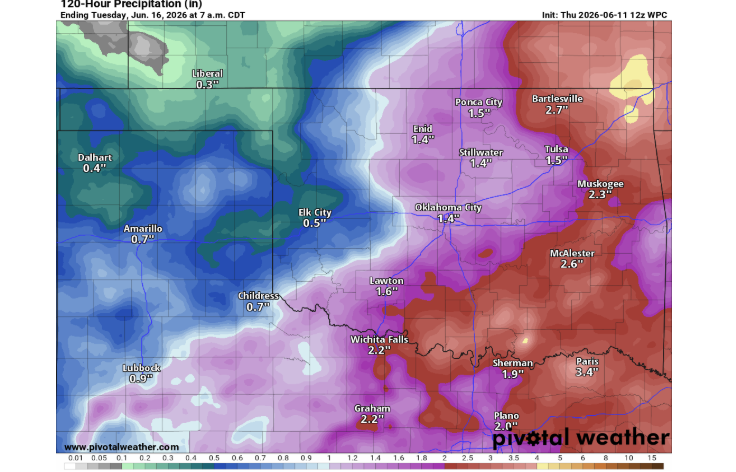
Oklahoma is currently locked in a battle with standard summer weather, but a massive shift in the tropical Pacific Ocean is about to reshape the long-term weather outlook. State Climatologist Gary McManus highlights that while short-term forecasts feature intense heat and severe storms, the big news is the official arrival of El Niño.
Before looking months down the road, Oklahoma has plenty of active weather to handle this week.
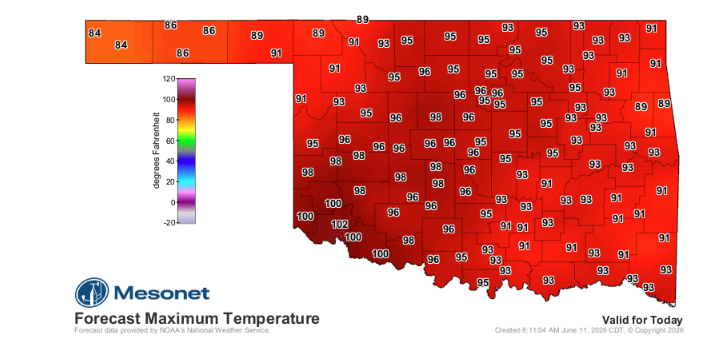
The immediate weather concern is extreme heat along the Interstate 44 corridor, where heat index values are expected to reach 105-110 degrees.
Relief is on the horizon, but it arrives with the threat of severe weather. A cold front pushing to the southeast brings a risk of severe storms. Forecasters warn residents to watch for golf-ball-sized hail and wind gusts reaching up to 70 mph. While the tornado threat remains very low, it is not completely zero. Following the front, a lovely weather pattern settles in by Sunday, accompanied by the potential for significant rainfall across the state over the next five days.
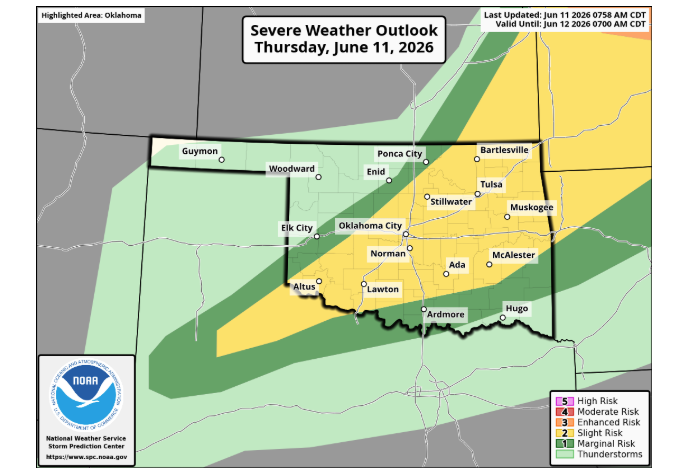
Shifting focus to global patterns, NOAA's Climate Prediction Center issued an official El Niño Advisory. This announcement confirms that El Niño conditions have officially developed in the tropical Pacific.
The ocean and the atmosphere are now working together. Observations show warmer-than-average sea surface temperatures across the central and eastern equatorial Pacific, substantial subsurface warmth, westerly wind anomalies near the ocean surface, easterly wind anomalies aloft, and negative Southern Oscillation Index values.
The Climate Prediction Center's June outlook indicates an incredibly high probability of this climate phase, with a 97% chance of El Niño for the May–July period and a 99% chance for June–August. These high probabilities dominate the forecast all the way into early next spring.
The data gets even more striking looking ahead toward the colder months. For the November–January timeframe, the Climate Prediction Center shows a 25% chance of a strong El Niño and a 63% chance of a very strong El Niño. Combined, that represents an 88% chance of a strong or super-strong pattern during the heart of winter.
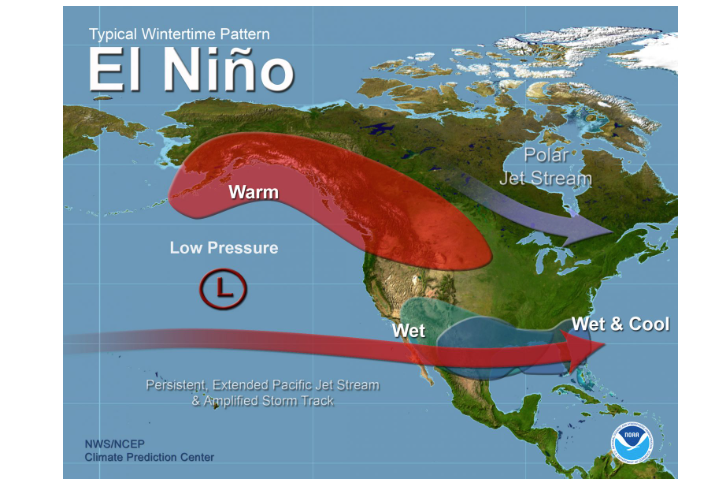
McManus cautions that weather patterns are rarely straightforward. A strong El Niño does not guarantee a wet, snowy, or mild winter for Oklahoma, because the strength of the global climate phenomenon does not automatically translate to the strength of local impacts.
However, a stronger El Niño skews the odds more heavily toward classic cool-season patterns across the Southern United States. This development will be worth monitoring closely throughout the summer and fall.
It is also important to remember that El Niño is not a light switch. Its development on a Thursday does not mean it instantly steers every thunderstorm into Oklahoma on Friday. During the early summer, the Pacific's influence on North American weather is subtle and less reliable because the jet stream is weaker.
For the time being, Oklahoma's late-spring and early-summer rainfall will continue to depend on traditional regional drivers:
While the long-term pattern begins to shift in the background, Oklahoma remains tied to typical summer dynamics for the immediate future. Still, forecasters agree that a transition into El Niño is a welcome change from the prolonged La Niña patterns of recent years.
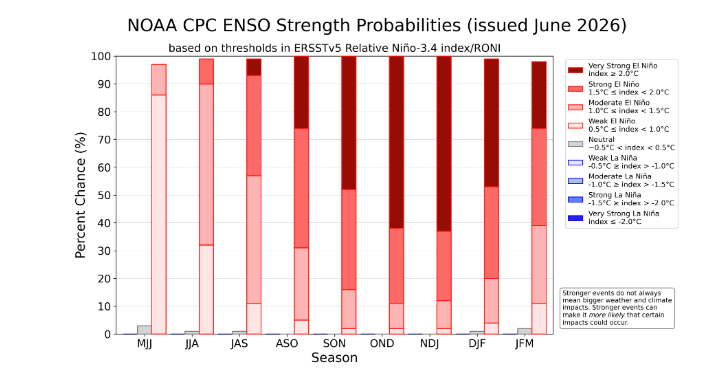
To read more from State Climatologist Gary McManus on his mesonet ticker, click here:

With just one week remaining until the 2026 R-CALF USA National Convention and Trade Show, R-CALF USA announced its final convention program and speaker lineup.
The convention, themed "Fire in the Brand," will be held June 16-18 at The Monument in Rapid City, South Dakota, bringing together hundreds of cattle and sheep producers from across the United States to discuss market competition, food security, animal health, trade policy, property rights and the future of independent livestock production.
Lonesome Lands, the nationally recognized podcast hosted by Jim Mundorf and Shad Sullivan, will headline the convention banquet on Wednesday, June 17. The evening will feature an interactive podcast experience with commentary and special guests.
In addition to the banquet program, Sullivan will deliver a presentation Thursday afternoon, while Mundorf will moderate the EID panel Thursday morning.
AJ Richards, founder and CEO of From the Farm, Chris Young, executive director of the American Association of Meat Processors, and Deputy Assistant Attorney General Nicole Sarrine of the Antitrust Division of the U.S. Department of Justice will all address attendees Wednesday afternoon.
These featured speakers join an already strong lineup, including rancher and attorney Hayden Ballard; Coalition for a Prosperous America Trade Counsel Charles Benoit; U.S. Department of Homeland Security Policy Advisor Dr. Lora Bledsoe; R-CALF USA CEO Bill Bullard; Western Justice Executive Director Dave Duquette; R-CALF USA Animal ID Chair Kenny Fox; R-CALF USA Checkoff Chair Brett Kenzy; attorney Patrick McGahan of Scott+Scott Attorneys at Law LLP; University of Nebraska-Lincoln agricultural economist Dr. T. Jake Smith; veterinarian Dr. Jim Stangle; Good Ranchers CEO Ben Spell; Dr. Max Thornsberry; veterinarian Dr. Julie Trask; and New Civil Liberties Alliance Senior Litigation Counsel John Vecchione.
In addition to presentations and policy discussions, attendees will have opportunities to participate in branding parties on Tuesday and Wednesday evenings, the Denim and Diamonds Gala featuring live music by JJ Kent and the Aces and 8s, a trade show, live and silent auctions, raffles, and the annual prayer breakfast.
More information, including the full convention agenda, is available at www.rcalfconvention.com.
The convention will be livestreamed on www.cattleusa.com.
The event is open to media. For media inquiries, contact 406-252-2516 or r-calfusa@r-calfusa.com.

Key Takeaways
The U.S. farm economy is currently in the 12th consecutive quarter of a farm economic downturn, and given the cumulative effect of inflation, new economic pressures on input costs such as fertilizers and fuel, and crop prices below breakeven, how long the current downturn lasts will depend a lot on congressional action in the coming weeks and months.
According to the most recent data from the Kansas City Fed's Agricultural Credit Survey, the farm income diffusion index — which measures the year-over-year change in economic conditions — was 66 in the first quarter of 2026, marking three straight years of deteriorating economic conditions on the farm and the longest downturn since that began in 2013 and lasted until 2020-2021.

The current downturn has been building for several years. The inflationary period that began in 2021 dramatically increased the cost of doing business on the farm. Farm production expenses have risen sharply, with total expenses up 34%, or $120 billion, since 2020 and annual gross farm production expenses now approaching a half trillion dollars nationwide.

While major crop prices are expected to rebound slightly in 2026, prices for this year's crops are anywhere between 11% and nearly 40% below levels reached only a few years prior. This price-cost squeeze has resulted in an erosion in working capital, near-record demand for loans and, in some cases, farm bankruptcies.
Rural Main Street Feels Farm Economy Slowdown
While loan demand is at near-record highs — behind only 2016 levels — this demand is likely to service lines of credit needed to keep the farm afloat through the trough. This is best supported by the significant slowdown in economic activity on rural Main Street. Data from Creighton University's Rural Mainstreet Index reveals that farm equipment sales have fallen to among the lowest levels in the data's history as farms hold off on making large capital purchases given the uncertain farm economic outlook.

Land Values Remain Strong
One area of the farm economy that remains resilient is farmland values. Both the Rural Main Street Index and the Federal Reserve show farmland values and values for non-irrigated farmland continue to see modest year-over-year growth and have shown no major signs retreating from the elevated values. The strength in farmland values has helped to keep equity measurements like the debt-to-asset ratio relatively low despite record farm debt and a weak farm economy. At the same time, strong land values can improve a farmer's access to credit by providing collateral for borrowing and helping bridge short-term cash flow or liquidity challenges. However, because land itself is not a liquid asset, higher land values do not necessarily translate into immediate or expanded access to working capital.
Importantly, farmland values are influenced by more than farm income. For example, farmland values are supported by several factors including economies of scale and farmland acquisitions, real estate investment trusts, urban sprawl, demand for renewable energy and more recently, the growth in data center development in rural areas.

Farm Economy Policy Solutions are Within Reach
There have been a number of tailwinds recently to help the farm economy, beginning with congressional support for ad hoc assistance in 2024, the One Big Beautiful Bill Act which included significant tax relief and made a historic investment in farm risk management programs, new agricultural trade frameworks including the recently announced trade deal with China (widely expected to result in approximately $30 billion annually in agricultural purchases), and strong Renewable Volume Obligations alongside a number of regulatory relief efforts.
There are other efforts on the goal line. Both year-round E15 and the farm bill have passed the House and await action in the Senate. Moreover, there is growing bipartisan support to provide additional economic aid for farmers this year to help offset rising fertilizer and fuel prices and address catastrophic natural disasters.
Combining the achieved policy solutions with those that await action in the Senate would go a long way toward improving the economic outlook for farmers, ranchers and rural America, making the weeks and months ahead in the Senate a critical time for farm country.
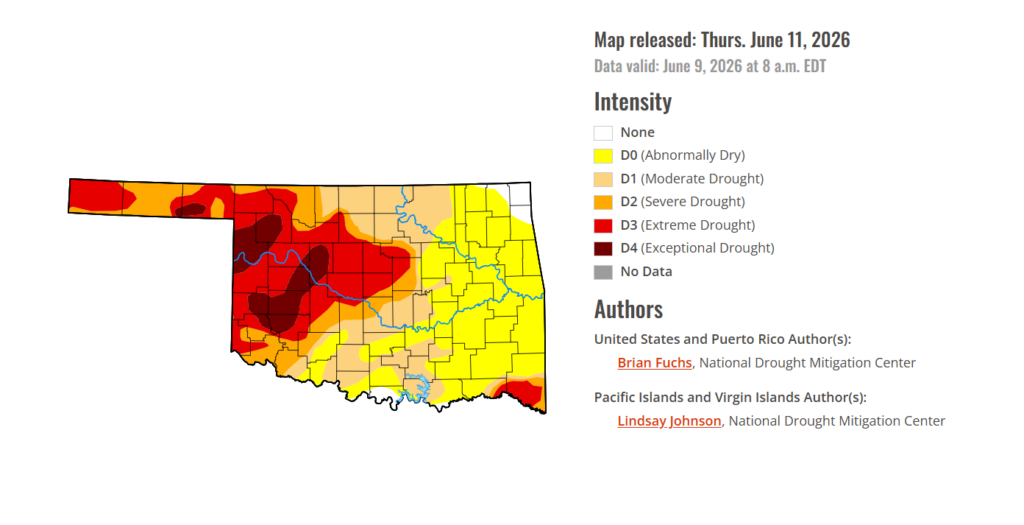
To view the latest Oklahoma drought map, CLICK HERE.
Despite recent rainfall improving conditions in parts of Oklahoma, drought continues to grip much of the state, with exceptional drought remaining entrenched across portions of western Oklahoma. Producers in the hardest-hit areas are still facing the effects of prolonged dryness, including stressed pastures, reduced forage production, and ongoing pressure on water supplies. While additional rain chances are in the forecast, long-term moisture deficits remain a concern heading into the heart of summer.
According to the latest Drought Monitor, exceptional drought persists in parts of western Oklahoma, including Kiowa County, Ellis County, Beaver County, Woodward County, and surrounding areas. Historic impacts of exceptional drought include rising hay and water costs, limited supplies, and herd liquidation by producers. Ranchers and farmers are facing severe economic losses as failed crops are baled or abandoned, pastures turn bare, and cracked, dry land leaves some fields unusable. An exceptional drought currently covers 7.31% of the state, down from 9.21% last week.
Moderate to extreme drought conditions in the current period indicate that 63.46% of the state is affected, down 17.3% from last week. At this point, only 2.30% of the state remains drought-free in far northeastern Oklahoma.
According to the 6-to-10-day precipitation outlook map, eastern Oklahoma is leaning above a 40-50% chance of rain, and western Oklahoma is leaning above a 33-40% chance through june 20th.
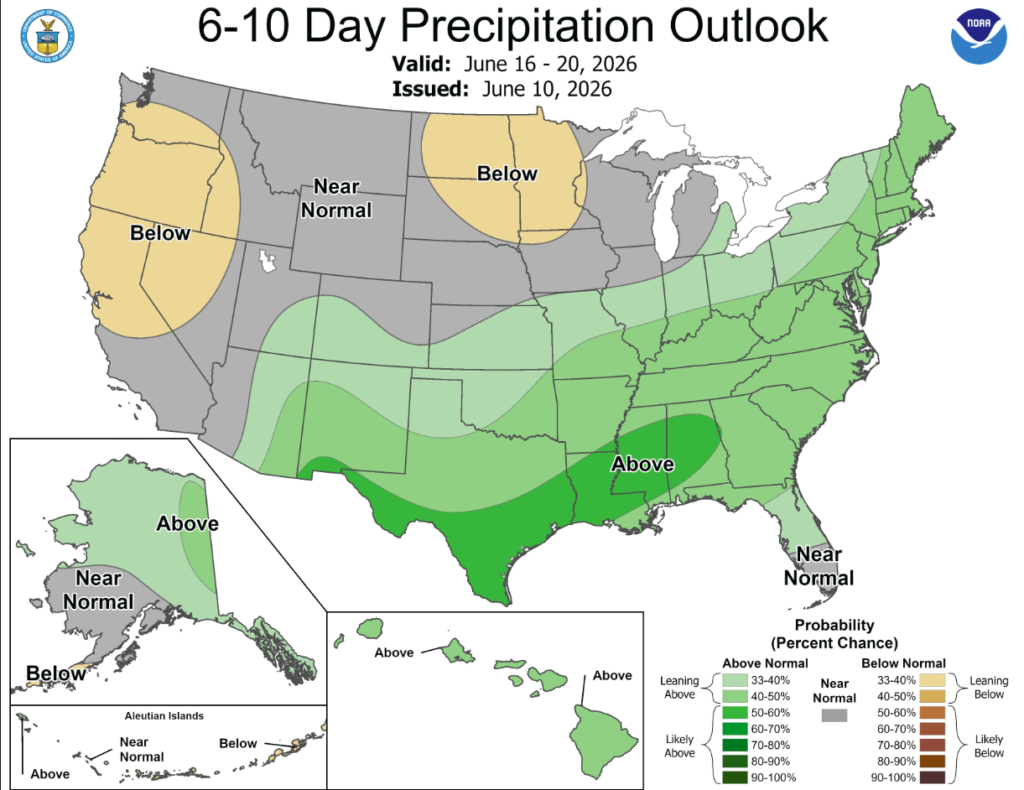
Summer thunderstorms, with their hit-or-miss nature, dominated precipitation patterns across the U.S. this week. The greatest departures from normal precipitation occurred across portions of the central and southern Plains, West Texas, New Mexico, and the Midwest. Areas of southern Louisiana, northern Alabama, and western Kentucky also recorded well-above-normal precipitation. The East Coast remained dry, with the exception of Florida's Atlantic coast. Much of the West also remained dry, with only portions of the Pacific Northwest and southern California recording near- to above-normal precipitation. Temperatures for the week were below normal across the Southeast, with parts of Georgia, Florida, and South Carolina averaging 3–6 degrees below normal. Portions of West Texas, southeast New Mexico, and the Pacific Northwest were also below normal. The greatest temperature departures occurred in the central and northern Plains, where portions of Nebraska, South Dakota, North Dakota, and Minnesota experienced temperatures 9–12 degrees above normal. Drought signals across much of the southern U.S. remain mixed, with wetter short-term conditions developing while long-term deficits persist despite the recent pattern change. In the Plains, impacts have primarily affected winter wheat and forage production, and areas that have remained dry continue to experience elevated fire danger. In the Southeast, water supply concerns and fire danger remain significant, particularly in Florida.
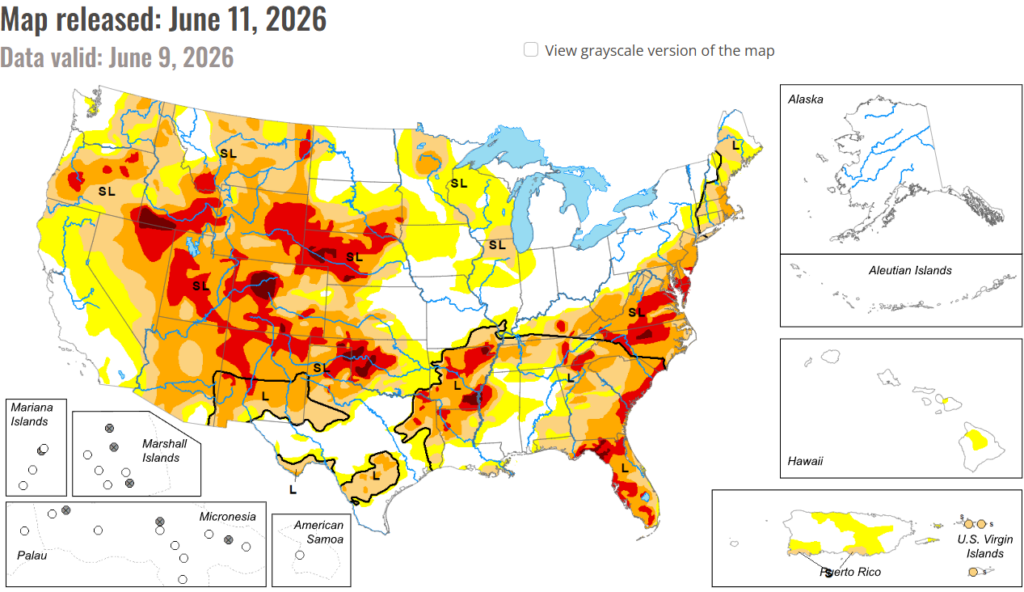
In the South: Temperatures were mixed, with Oklahoma and Arkansas averaging 2–4 degrees above normal. Meanwhile, much of West, south and east Texas, along with eastern Mississippi and Tennessee, averaged 2–4 degrees below normal. Most of the region received some precipitation, although eastern Arkansas, northern Mississippi, southern Texas, and southwest Oklahoma were the driest locations. The continuing wetter pattern resulted in additional improvements, with drought eliminated across more of central Texas and eastern Oklahoma. Drought also eased across much of the Texas and Oklahoma panhandles, although widespread severe and extreme drought persisted. Long-term dryness in far south Texas continues to improve, and improving local conditions combined with short-term data supported the removal of remaining abnormally dry designations. Improvements also occurred in Arkansas, Mississippi, Louisiana, and Tennessee, where recent wet conditions are beginning to offset longer-term drought indicators.
In the High Plains: Temperatures were generally warmer than normal across the region, with portions of the Dakotas and western Nebraska averaging 9–12 degrees above normal. Above-normal precipitation occurred in southern Nebraska, northern Kansas, northern Nebraska into southern and central South Dakota, and across much of northern North Dakota. Areas along the foothills of the Rocky Mountains from Montana through Colorado remained largely dry. Drought intensity eased where the heaviest rains fell in Nebraska, Kansas and South Dakota, and drought was eliminated in portions of northern Kansas and southeast Nebraska. Southeast South Dakota continued to miss significant rainfall, and the combination of short- and long-term dryness allowed moderate and severe drought to expand. Degradation also occurred in eastern Colorado, where extreme drought expanded in the north and moderate drought expanded across east-central portions of the state. Extreme drought was reduced slightly in southern Colorado following recent rainfall.
In the West: Above-normal precipitation was limited to a few locations, primarily along the Pacific Northwest coast and across southern and eastern New Mexico. Temperatures were above normal across much of the region, with departures of 6–9 degrees above normal across Nevada, Utah and western Colorado. Cooler-than-normal temperatures occurred in the Pacific Northwest and eastern New Mexico, where departures averaged 3–4 degrees below normal. Although some areas have recently received additional precipitation, a winter characterized by above-normal temperatures and below-normal snowpack continues to affect the region and will likely influence conditions through the summer. Conditions deteriorated in Oregon, where moderate, severe and extreme drought expanded across much of the eastern portion of the state, although southern Oregon experienced localized improvements to moderate drought. Elsewhere, western Montana benefited from recent rainfall, allowing severe and extreme drought to improve. Extreme drought also improved across much of eastern Utah, while southern and eastern New Mexico saw additional improvements following precipitation totals exceeding 200% of normal.
To view the 6-10 Day Precipitation Outlook Map, click here.
To view the 6-10 Day Temperature Outlook Map, click here.
To view the Monthly Drought Outlook Map, click here.
RON's Dave Lanning has a pre-opening look at today's agricultural Markets.
Click the audio tab below for today's report.
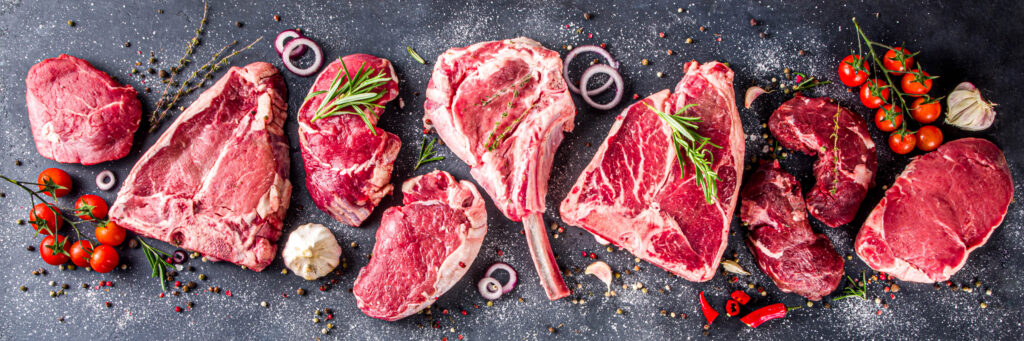
Exports of U.S. pork maintained strong momentum in April, led by broad-based growth in Asian and Western Hemisphere markets, according to data released by USDA and compiled by the U.S. Meat Export Federation (USMEF). Beef exports trended lower in April due to the impasse with China, along with year-over-year declines in other major markets.
Pork exports totaled 257,212 metric tons (mt) in April, 8% (and nearly 20,000 mt) above last year, while value increased 6% to $718.1 million. April's strong performance reflected growth in Mexico, Japan, the Dominican Republic, Central America and the Philippines. For China and Canada, exports were significantly higher than the low volumes posted a year ago.
For January through April, pork exports were 4% above the 2025 pace in both volume (1.04 million mt) and value ($2.89 billion). Export value was slightly above the total posted in the first four months of 2024, when exports went on to set an annual value record.
"Mexico and other key Latin American markets continue to perform remarkably well for U.S. pork, as new product development and consumer education efforts are paying major dividends," said USMEF President and CEO Dan Halstrom. "Combine this with a rebound in Japan and Taiwan, growth in the Philippines and steady demand in Korea, and 2026 is shaping up to be a tremendous year for U.S. pork."
Halstrom cautioned, however, that the April data does not capture the impact of restrictions on some pork variety meat items imposed in early May by Mexico and Colombia, following findings of pseudorabies virus (PRV) antibodies in five boars in quarantine at a small operation in Iowa. (Pork muscle cut exports have not been impacted.)
"USDA continues to work with its counterpart agencies in these countries to put these PRV-related restrictions behind us as soon as possible," he explained. "There was a significant negative impact on May exports and the situation has continued into June, but it should hopefully be short-lived."
April beef exports totaled 89,783 mt, down 11% from a year ago, while value fell 5% to $780.6 million. While prospects are brightening for U.S. beef's return to the China market, April results still reflected a near-total lockout. April shipments were higher than a year ago to Taiwan and Egypt and increased significantly to the Caribbean and ASEAN regions and to Peru, but trended lower to other major markets. Beef variety meats were again a bright spot in April, with exports climbing 20% from a year ago to 25,314 mt, led by growth to top volume market Mexico, valued at $114.7 million (up 40%).
For January through April, beef and beef variety meat exports were 11% below the 2025 pace at 365,138 mt, and declined 5% in value to $3.13 billion. But when excluding China from these results, exports were up slightly (+0.3%) in volume and increased 7% in value.
"Global demand for U.S. beef has proven very resilient, even in the face of tight supplies and higher prices," Halstrom said. "But there are certainly significant headwinds, including the impact of weak currencies in Korea, Japan and Southeast Asia, and higher energy prices weighing on consumer confidence and disposable income. And while we were thrilled to see China renew U.S. beef plant registrations following the summit meeting between President Trump and President Xi, additional obstacles must also be addressed before U.S. beef's presence in China rebounds."
April pork exports buoyed by Mexico, Japan, Dominican Republic
Pork exports to leading market Mexico, which are on a record pace in 2026, were robust again in April at 94,538 mt, up 3% from a year ago, while value climbed 7% to $211.4 million. January-April exports totaled 403,675 mt, up 5% year-over-year, valued at just under $900 million (up 8%). These results include a 6% increase in pork variety meat shipments, which reached 58,713 mt through April, valued at $104.3 million (up 8%).

As noted above, however, May data will reflect a major disruption in pork variety meat trade, as Mexico halted imports of skins, fat, feet and other offal items, regardless of their state of origin. Restrictions on these products are now (effective June 8) limited to those sourced from hogs from farms in Iowa or Texas. USMEF hopes to see a lifting of Mexico's statewide restrictions once a second round of PRV testing is completed later this week and the final USDA report is submitted to the World Organization for Animal Health.
The rebound in Japan's demand for U.S. pork continued in April, with exports reaching 32,682 mt, up 9% year-over-year, valued at $122.1 million (up 3%). Through April, pork exports to Japan were 17% above last year's pace at 123,458 mt, with value up 11% to $467.9 million, closely approaching levels from the same period in 2024. Exports to Japan have been above year-ago levels for the last five months.
April pork exports to the Dominican Republic soared 57% above last year at 11,622 mt (following a strong month in March when volume neared 12,500 mt), while value increased 51% to $33.7 million. This was the second highest monthly value on record, following a record March total of nearly $36 million. For January through April, pork exports to the DR were 38% above last year's pace at 41,606 mt, while value increased 35% to $121.1 million.
Other January-April results for U.S. pork exports include:
Bright spots for April beef exports include Taiwan, Egypt, Caribbean and ASEAN
April beef exports to Taiwan totaled 4,892 mt, up 9% from a year ago, while value increased 3% to $55.8 million. Through April, beef exports to Taiwan increased 19% to 19,801 mt, which value was up 11% to $224.2 million. The U.S. continues to be Taiwan's dominant supplier of chilled beef, holding two-thirds of the chilled import market.

Fueled by growth to most islands, including the Dominican Republic, the Bahamas and the Netherlands Antilles, April beef exports to the Caribbean increased 17% from a year ago to 3,275 mt, while value soared 35% to $38.6 million. January-April exports to the region were up 8% to 12,271 mt, with value climbing an impressive 29% to $141.4 million.
With shipments to Indonesia rebounding from last year's minimal total and reaching the highest level since December, and demand strengthening in Vietnam to the highest level since October, April beef exports to the ASEAN region reached 3,555 mt, up 48% from a year ago, while value increased 50% to just under $30 million. Through April, beef exports to the ASEAN climbed 31% in volume (11,049 mt) and 38% in value ($94.4 million).
Other January-April results for U.S. beef exports include:
Lamb exports down in April, but still higher year-to-date
April exports of U.S. lamb muscle cuts totaled 231 mt, down 10% from a year ago, while value fell 16% to $1.2 million. January-April exports were 4% above last year's pace in volume (1,042 mt) and 3% higher in value ($5.7 million), led by growth in the Bahamas, Netherlands Antilles and Leeward-Windward Islands.
Lamb exports to Mexico have trended lower in 2026, after reaching the highest level since 2014 last year. No exports have yet been reported to Canada this year, after totaling 233 mt in 2025.
Complete January-April export results for U.S. pork, beef and lamb are available from USMEF's statistics web page.
NOTES:

Donald J. Trump, president, United States of America: "There's no real advantage to [usmca], it's irrelevant..."
Ranking Member Angie Craig (D-MN-02), House Agriculture Committee: "In our continued pursuit to feed, clothe and fuel the world, Mexico and Canada remain our top agricultural trade partners. Our relationship with these allies puts money in the pockets of family farmers and creates and supports jobs up and down the food supply chain."
Chairman Glen "GT" Thompson (R-PA-15), House Agriculture Committee: "The USMCA has been a highly effective at expanding regional trade, pushing commerce – obviously ag and beyond – near $2 trillion annually, and making Mexico and Canada the United States' top trading partners with significant gains in agriculture. USMCA has really served as a model, I think, trade agreement."
Michael Litche, chief insights and optimization officer, Dairy Farmers of America: "USMCA remains the most commercially significant trade agreement for the U.S. dairy industry. Mexico and Canada collectively account for over 40 percent of all U.S. dairy exports by value. Mexico and Canada are by far the top two export destinations for U.S. dairy exports, and have been consistently for decades."
Kristen Sawin, vice president of government and corporate affairs, Weyerhaeuser Company: "Free trade agreements—both bilateral and regional, like the USMCA—are increasingly important tools to expand U.S. exports of forest products, from sawlogs to pellets to biofuels."
Dave Puglia, president and CEO, Western Growers: "In conclusion, the trade partnership between the United States, Canada, and Mexico is highly valuable for our members. At a time of unprecedented trade uncertainty in markets around the world, losing this agreement and the longstanding zero-tariff access for U.S. product into our top two export markets would be a severe blow to our members' livelihoods."
Jamie Beyer, executive committee member and Minnesota soybean farmer, American Soybean Association: "It is nearly impossible to overstate the importance of maintaining free, open, rules-based, and fair trade within the North American continent for U.S. agriculture. Soybean farmers are facing the most challenging landscape in a generation. Failure to renew USMCA would be catastrophic."
Michael Schumpp, senior director of international affairs, Meat Institute: "USMCA has been essential to the American meat, poultry, and livestock sector's unparalleled position within North America. Preserving the agreement is critical to the U.S. farm economy's future growth."
Neil Herrington, senior vice president, Americas Program, U.S. Chamber of Commerce: "The USMCA is vital to U.S. agriculture and agribusiness—and to North America's ability to continue meeting regional and global demand for food—because it preserves critical market access for U.S. farmers and food producers, supports innovation, and strengthens investment across highly integrated, cross-border supply chains."
Joseph V. Balagtas and Bernhard Dalheimer, agricultural economists, Perdue University: "The evidence assembled in this report makes clear that the food tariff preferences embedded in USMCA have delivered, and continue to deliver, substantial and measurable consumer benefits."
Donald J. Trump, president, United States of America: "I don't know that I will renew it... We don't need anything that Canada has. We don't need anything that Mexico has."
Today, President Trump commented about the renewal of the United States-Mexico-Canada Agreement. In response, the Agricultural Coalition for USMCA Spokesman Bryan Goodman released the following statement:
"USMCA is one of President Trump's signature accomplishments and has been a critical economic driver for farmers and rural communities. Administration officials have been very responsive to our calls for the renewal of USMCA with targeted improvements, and we appreciate the continued engagement on the future of this critical agreement. President Trump is a strong negotiator, and we are confident in his ability to reach a deal with Canada and Mexico that works for all three countries while meeting the needs of America's farmers."
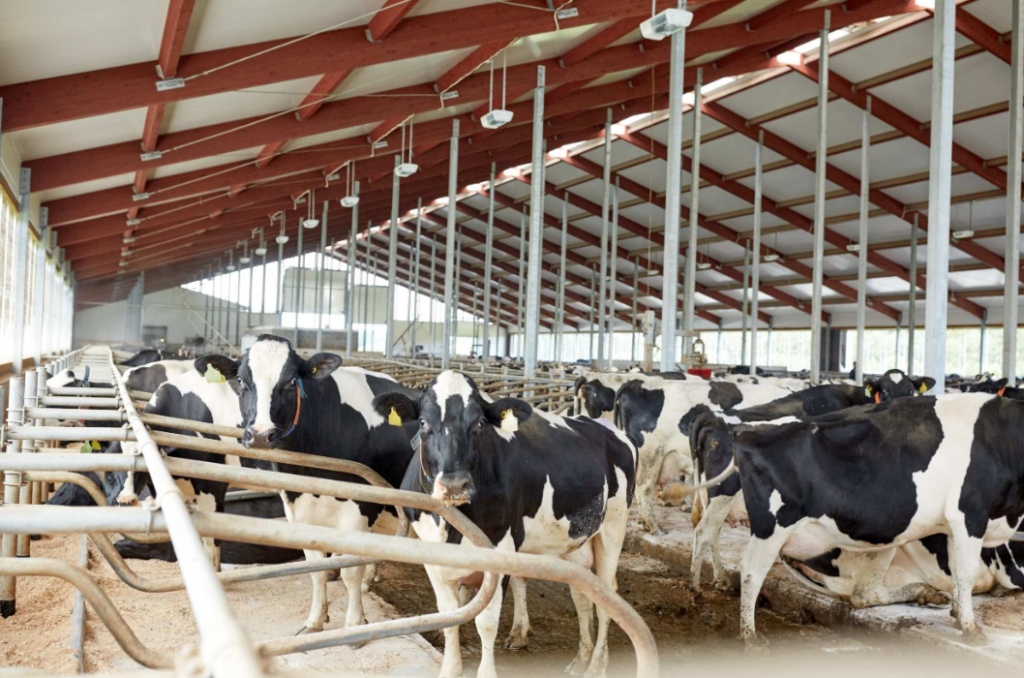
More than 80 NMPF board members and young dairy farmers met with about 100 congressional offices today in the organization's annual fly-in, advocating on behalf of dairy on issues ranging from agricultural labor to the recent return of New World screwworm to the United States.
The fly-in came after NMPF's June board meeting on Tuesday, which was highlighted by remarks from Deputy Secretary of Agriculture Stephen Vaden and Ambassador Julie Callahan providing perspective on the agriculture economy and trade landscape.
"We know what we need to do," said NMPF President & CEO Gregg Doud in remarks before the fly-in. "We will push in every way we can to make things happen."
Other action items NMPF members called for in their meeting included:
NMPF also welcomed a new board member, Ted Vander Schaaf of Northwest Dairy Association/Darigold, and a new associate member, Illinois Farm Bureau.
The fly-in was organized by NMPF's Young Cooperators program. The organization also held committee meetings as well as a workshop on Artificial Intelligence for co-op executives. NMPF leadership continues its meetings this week, discussing animal health and well-being along with other important industry topics.
Eligible specialty crop producers now have until August 7 to apply for the U.S. Department of Agriculture's (USDA) Assistance for Specialty Crop Farmers Program. The program, which utilizes pre-filled applications, aims to streamline the process for producers seeking financial support.
Producers are encouraged to log in to login.gov to set up an account, where they can view and submit their pre-filled applications. This system mirrors previous structures, such as the Farmer Business Assistance programs, which also used pre-filled data. Producers who do not have a login.gov account or prefer to enroll in person can request their pre-filled applications directly at their local Farm Service Agency office.
The financial backing for the program has increased significantly beyond its initial projections. While $1 billion was originally set aside for the initiative, the USDA will now be issuing $1.6 billion in assistance.
A comprehensive list of eligible specialty crops is available online at www.fsa.usda.gov/ascf. It is important to note that specialty crops grown in controlled environments, such as mushrooms, are not eligible for this program.
Payment rates for the program are established using tiered metrics based on the average annual revenue per acre. The structure includes the following parameters:
The program has also established a specific payment calculation for beans and peas. All types of beans and peas that were not eligible for the Food Purchase Agreement (FPA) program will receive a payment rate of $25 per acre. This rate aligns with previous allowances in the Farmer Business Assistance program, where similar dry bean and pea varieties received payment rates hovering around $25 per acre.
Under the rules of the Assistance for Specialty Crop Farmers Program, the individual payment limit is set at $250,000.
The Assistance for Specialty Crop Farmers (ASCF) Program categorizes eligible specialty crops into distinct payment tiers based on national average revenue per acre.
The eligible crops included under each tier are as follows:
This tier consists of specialty crops with an average annual revenue exceeding $10,000 per acre. Eligible crops include:
This tier covers specialty crops with an average annual revenue between $2,300 and $10,000 per acre. Eligible crops include:
This tier includes specialty crops with an average annual revenue of up to $2,300 per acre. Eligible crops include:
This final category encompasses all types of beans and peas that were not eligible for the separate Farmer Bridge Assistance (FBA) program. Eligible varieties include, but are not limited to:
Exclusion Reminder: Specialty crops grown in controlled environments, such as mushrooms, are strictly excluded from program eligibility.

U.S. Secretary of Agriculture Brooke L. Rollins today welcomed President Donald J. Trump's appointment of John Rich as Special Envoy for American Landowners.
As Special Envoy, Rich will serve as a leading advocate for America's farmers, ranchers, and private landowners, helping ensure their concerns are heard and their rights are protected. He will engage directly with landowners across the country and work to address challenges posed by government overreach, activist pressure campaigns, and outside interests that threaten private property rights and the long-term viability of rural communities.
A key focus of Rich's work will be advocating for landowners facing pressure related to large-scale solar and wind development that may impact productive farmland, ranchland, and rural livelihoods. He will work closely with USDA leadership and stakeholders to ensure landowners have a strong voice in decisions affecting their property and communities.
"America's farmers, ranchers, and landowners are among the greatest stewards of our nation's resources and the backbone of our rural communities," said Secretary Rollins. "President Trump understands that private property rights are fundamental to the American way of life. John Rich has long been a champion for rural America, and I look forward to working alongside him as we continue fighting for the people who feed, fuel, and clothe our nation."
"President Trump has afforded me the great honor of serving as Special Envoy for American Landowners," said Special Envoy Rich. "I look forward to representing and advocating for landowners' rights and standing up for the farmers, ranchers, and rural families who work every day to provide for our country. Protecting private property rights and ensuring that landowners are not harassed, intimidated, or pressured by outside interests will be at the heart of this mission."
The appointment reflects President Trump's ongoing commitment to ensuring that America's farmers, ranchers, foresters, and landowners have a strong voice in Washington and a federal government that supports, rather than hinders, their success.
Leaders from several of the nation's most influential organizations – including members of the Agricultural Coalition for USMCA – told members of the House Agriculture Committee today that the United States-Mexico-Canada Agreement provides massive benefits to farmers and agricultural communities and underscored the need to strengthen and renew the agreement.
"USMCA has been the gold standard for agricultural trade agreements, providing the certainty farmers and ranchers need to plan, invest and stay competitive," said American Soybean Association executive committee member and Minnesota soybean farmer Jamie Beyer. "At a time when farmers are facing significant financial pressure, maintaining strong trade relationships with Canada and Mexico is more important than ever for the long-term success of rural America."
The remarks were made during the committee's hearing entitled, Agricultural Perspectives on the Future of the USMCA and included remarks from American Soybean Association, Dairy Farmers of America and the Meat Institute, all of which are members of the coalition. A representative from the timber company Weyerhaeuser, the National Alliance of Forest Owners, Western Growers Association and the U.S. Chamber of Commerce also spoke.
USMCA was signed by the United States, Mexico and Canada in 2018 during President Trump's first term and was implemented in 2020 to replace the North American Free Trade Agreement.
Under the agreement, leaders of all three nations must begin a formal review by July 1, 2026, to determine whether to renew the agreement. If renewed, USMCA would remain in effect for an additional 16 years, with another review scheduled in 2032. If the countries fail to reach an agreement and move to terminate, USMCA will expire in 2036. The review could also enter a period of annual consultations with no clear path forward, creating significant uncertainty for the farm economy.
With key deadlines quickly approaching, agricultural groups are advocating for action that includes some updates to the agreement.
"USMCA is very important to U.S. dairy producers, as over forty percent of our exports ended up in Mexico and Canada last year," said Michael Lichte, chief insights and optimization officer for Dairy Farmers of America. "The joint review presents a critically important opportunity to make targeted adjustments to the outstanding dairy issues that we face in the Canadian market and to ensure we preserve full market access into Mexico, including for common cheese names like 'feta.' Strengthening these outstanding pieces and then renewing the deal is essential to ensure our dairy producers receive the full benefits of USMCA.
Others at the hearing emphasized that USMCA has provided them with the support they need.
"USMCA is the gold standard for trade agreements and a cornerstone of the American meat industry's success," said Michael Schumpp, senior director of international affairs at the Meat Institute. "Maintaining its stability and market access is critical to farmers, ranchers, processors, and rural communities across the United States."
Today's testimony is the latest in a series of efforts and activities by the Agricultural Coalition for USMCA and its members to encourage political leaders from all three countries to renew and strengthen the agreement.
Earlier this year, the coalition unveiled a new website and kicked off an aggressive ad campaign in the nation's capital, all designed to promote the benefits afforded to the U.S. food and agriculture sector under the USMCA.
US Senator James Lankford (R-OK) today highlighted $2.8 million in Federal Emergency Management Agency (FEMA) assistance awarded to Oklahoma to support recovery efforts following severe storms, tornadoes, flooding, and wildfires across the state.
"From repairing damaged public buildings to reimbursing emergency protective measures and wildfire suppression costs, these FEMA awards will help Oklahoma communities recover from the tornadoes, severe weather, and wildfires that impacted our state," said Lankford. "We have stayed in contact with FEMA leadership to get these grants finalized. I'm glad to see these federal resources supporting the agencies and local governments that responded when Oklahomans needed them most."
The federal funding will help Oklahoma communities recover and respond to recent disasters through the following projects:

Today, House Agriculture Committee Ranking Member Angie Craig (MN-02) delivered the following opening statement at a full committee hearing entitled "Agricultural Perspectives on the Future of the USMCA". Watch the hearing here.
[As prepared for delivery.]
Good morning and thank you, Mr. Chairman.
And thank you to our witnesses for your testimony today. I look forward to hearing from you about the importance of USMCA, improvements that can be made during review and the overall trade environment.
I want to say up front that while I'm happy to have a great group of witnesses before us, I am disappointed that USTR and USDA did not make themselves available for this hearing. Agriculture is a huge part of USMCA, and this committee needs to have the opportunity to hear directly and publicly from the administration on how they are advancing agricultural interests during negotiations.
Right now, America's farmers are facing the worst economic crisis since the 1980s. Inputs are up, prices are down and markets have been decimated. Now more than ever, they need trade certainty to help weather this storm. They are pleading for it – trade, not aid.
Yet, for the past year and a half, we've watched this administration do the exact opposite. It has destroyed America's reputation as a reliable trade partner.
We've seen an abuse of tariffs, and an inconsistent approach to trade barriers that raised prices for consumers while creating an unpredictable business environment.
Amidst this cloud of economic instability, family farmers have been able to largely turn to our allies to the north and south as reliable markets for our goods. They have served as ports in the storm during these difficult economic times. Now, by threatening to blow up USMCA, the president and his administration are threatening the last source of trade certainty our farmers have. They are right to have concerns – this president is unstable.
In the past year, the president has asked "Who would ever sign a thing like this?"
This might surprise the current Trump administration, but USMCA was negotiated by the first Trump administration and signed by President Trump.
And while USMCA may not be perfect – there are certainly improvements that can be made – it is still vital for American farmers, ranchers, foresters and businesses.
In our continued pursuit to feed, clothe and fuel the world, Mexico and Canada remain our top agricultural trade partners. Our relationship with these allies puts money in the pockets of family farmers and creates and supports jobs up and down the food supply chain.
In just the last year, my state, Minnesota, exported over $2 billion worth of agricultural products to Mexico and Canada. Our top agricultural exports are corn, grain and oilseed milling products and soybeans.
Minnesota exported $51 million in eggs to Canada and $44 million worth of sugar to Mexico.
In total, agricultural exports to Mexico and Canada support nearly 10,000 jobs in Minnesota.
That's 10,000 people in Minnesota able to keep food on their table, raise a family and put a roof over their head because of North American trade.
That's 10,000 Minnesotans whose jobs are at risk because President Trump would rather bully allies than build with them.
It worries me when the president calls USMCA "irrelevant." It is even more concerning that at a time when we should be working with our allies to lower costs for farmers and fight back the influence of China, that the president announced a new ten percent tariff on Canada, Mexico and the EU. The timing could not be worse for more Trump trade chaos.
Our farm economy cannot take anymore shocks to the system. Right now, we need to be strengthening our relationships with allies, not undermining them, and I think that the testimony we hear today will affirm that trade across North America is vital.
I look forward to having a frank conversation today. Thank you again for being here. I yield back.
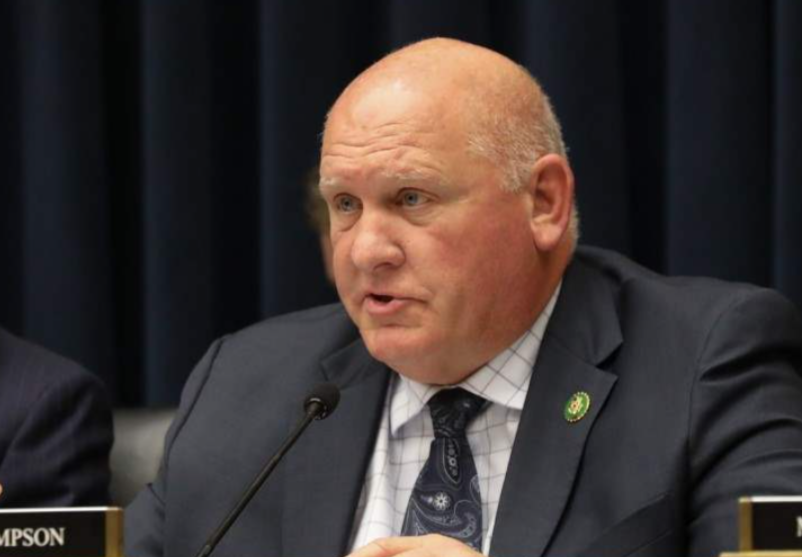
House Committee on Agriculture Chairman Glenn "GT" Thompson (PA-15) delivered the following opening statement at today's full committee hearing, "Agricultural Perspectives on the Future of the USMCA."
Remarks as prepared:
Good morning, everyone, and thank you for joining us at today's important hearing to discuss U.S. agricultural perspectives on the future of the United States – Mexico – Canada Agreement, otherwise known as USMCA.
To each of our witnesses, thank you for taking time out of your busy schedule to share your expertise with us.
As we all know, USMCA is a trilateral trade agreement between the U.S., Mexico, and Canada that entered into force on July 1, 2020.
USMCA replaced the North American Free Trade Agreement – or NAFTA – but most importantly, it created a more reciprocal, balanced free trade agreement between our countries.
As the agreement is up for review in July, it is more important than ever to talk about what USMCA means for U.S. agriculture.
USMCA maintains tariff-free treatment for certain agricultural products while expanding market access for a range of U.S. grown commodities.
This has proven to be extremely beneficial not only to our U.S. farmers, ranchers, foresters, and agri-businesses, but also to U.S. consumers and the economy as a whole.
To get us started, I would like to share a few statistics that highlight those benefits. Economic models show that in 2024 alone, agricultural and seafood exports to Canada and Mexico generated $149 billion in total economic contribution to the U.S. economy, supporting nearly half a million American jobs and generating $36 billion in wages.
Since USMCA took effect, Mexico and Canada have collectively purchased more than $60 billion in U.S. ag commodities annually, accounting for roughly one-third of all U.S. ag exports. Mexico and Canada together account for over 40% of all U.S. dairy exports by value, meaning that USMCA remains the most commercially significant trade agreement for the U.S. dairy industry.
For the U.S. forest products sector, Canada accounts for 39% of imports and Mexico accounts for 24% of the export market.
For fruits and vegetables, exports from the U.S. to Canada and Mexico reached over $7 billion in 2024, representing roughly two-thirds of all global U.S. fresh produce exports. Canada and Mexico together accounted for $4 billion in exports in marketing year 2024 for the soybean industry.
In 2025, U.S. meat and poultry exports exceeded $23 billion, and exports to Canada and Mexico accounted for $8 billion of that total.
For agri-businesses, USMCA's provisions on things like sanitary and phytosanitary measures help ensure that legitimate health and safety rules do not become barriers to trade.
A recent study by Purdue University has also found that North American trade agreements, including USMCA, have helped lower food prices for U.S. households, generating an estimated savings of $700 per year.
These statistics, and many others across all agricultural commodities, prove why USMCA is so important to the U.S. ag industry.
Now, I must also recognize that there are provisions within USMCA that could and should be improved upon in the upcoming renegotiations.
Canada's implementation of its dairy commitments, on both TRQs and export disciplines, have not met the mark.
U.S. forest products manufacturers continue to struggle under the Chapter 10 binational panel review process.
Reinforcing and building upon USMCA's labor requirements, biotechnology provisions, food safety standards, and registration approvals will be paramount.
As we look to the coming months, I am confident that the U.S. government will continue to work closely with industry experts and our trading partners to renegotiate and solidify this critically important trade deal.
I look forward to hearing from our witnesses today about the ways in which USMCA impacts their operations, as well as what their suggestions are for improvements.
Thank you again to our witnesses for being here.
With that, I will yield to the ranking member for any opening comments she'd like to make.
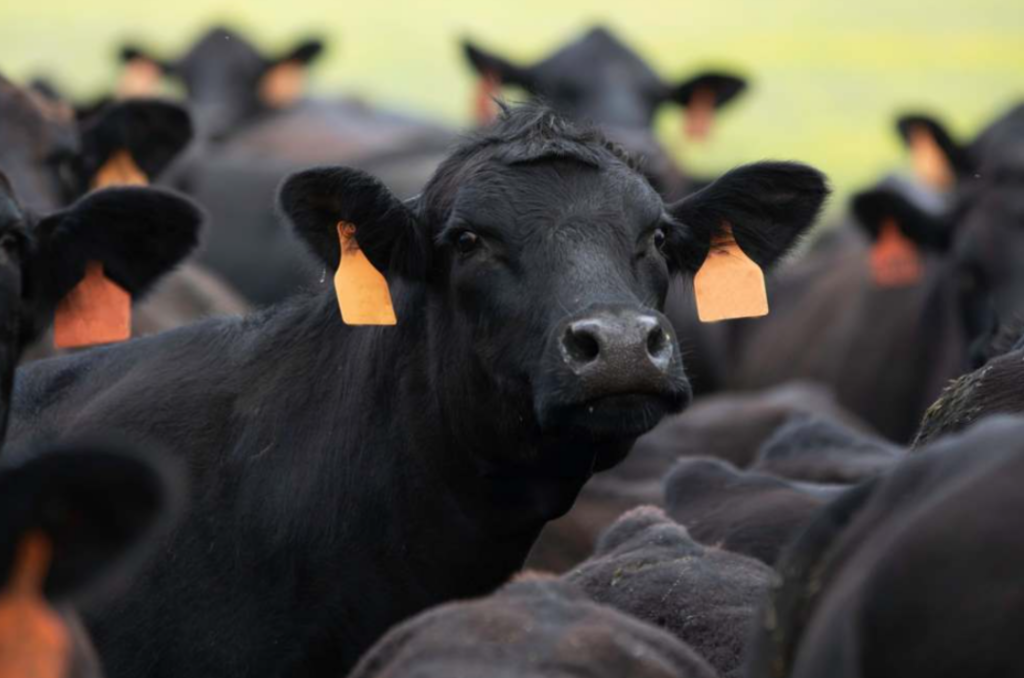
Virtual fencing is rapidly moving from a new technology to a practical grazing management tool for livestock producers. The concept is simple: livestock wear a collar or device that uses GPS-based boundaries to create a "fence" without permanent wire. When cattle approach the virtual boundary, they receive an audio cue. If they continue forward, a mild electrical stimulus may be delivered to encourage them to turn back.
The real fence is not just in the technology. It is in the training of the animal to create a psychological barrier. Proper training is essential for success. Cattle must learn that the sound cue means they should turn away from the boundary. Most systems use a stepwise training process, often beginning near a physical fence before moving to more flexible virtual boundaries.
Several commercial systems are now available, and while they have similar basic functions, each has strengths and limitations that must be considered before choosing a system. Some systems rely on cellular service, while others use satellite or base-station communication. This matters because terrain, tree cover, canyons, and lack of service can affect performance. Some systems offer more animal behavior monitoring, such as grazing activity, calving alerts, estrus detection, or location history. Others may be simpler but still effective for containment or exclusion areas. Battery life, collar fit, livestock species, technical support, data access, and ease of use are all important considerations.
The potential benefits are significant. Virtual fencing can be used to keep cattle out of riparian areas, wetlands, newly seeded pastures, or hay storage areas. It can help concentrate grazing on areas with weed problems or create grazed strips that may reduce fine fuel loads for wildfire mitigation. On large pastures or public lands, knowing where cattle are located can save labor, improve gathering efficiency, and allow quicker response when cattle are sick, injured, or threatened by wildfire.
Virtual fencing may also expand grazing options where building permanent fence is difficult, expensive, or undesirable. This can be especially useful on leased land, public land, or multi-use areas where recreation and wildlife movement must also be considered.
Even with these advantages, virtual fencing is not a complete replacement for conventional fence. No fence is completely impervious; this is true for virtual fence too. Physical fence is still needed in high-risk areas such as highways, heavily traveled roads, or places where failure would create unacceptable risk. Cattle may cross a virtual boundary if the attraction on the other side is strong enough, such as to get with calves, water, or highly desirable forage. Some cattle will not adapt to this system and may need to be moved to locations with good physical fence or culled.
Virtual fencing should be viewed as a tool for adaptive grazing management, not a shortcut around good management. Producers still need to understand grazing behavior, forage growth, timing, intensity, duration, frequency, and plant recovery. When matched to the right operation and used with realistic expectations, virtual fencing can provide flexibility, labor savings, better livestock monitoring, and new opportunities to manage grazing distribution across the landscape.
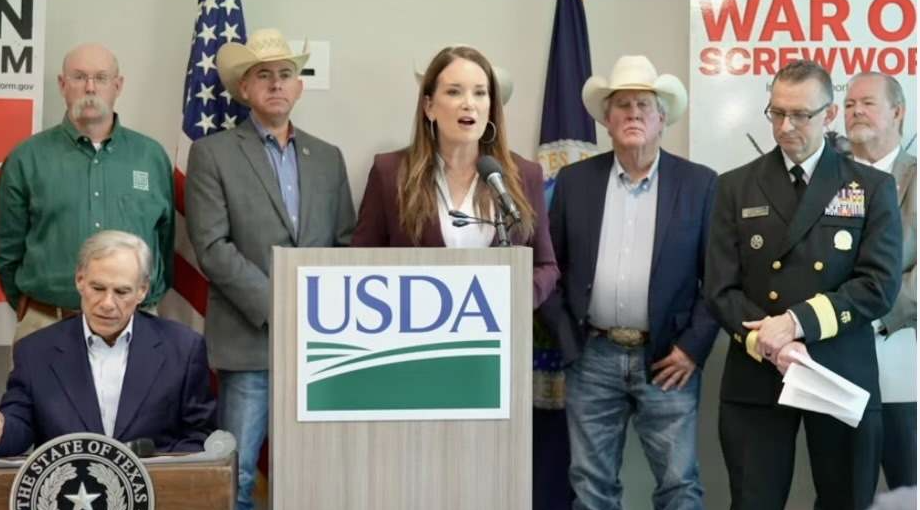
In today's Beef Buzz, senior farm and ranch broadcaster Ron Hays features comments from U.S. Secretary of Agriculture Brooke Rollins, who provided an update on the federal response to the New World Screwworm threat, highlighting progress on sterile fly production, new facilities, expanded surveillance efforts, and the Trump Administration's latest preparedness initiatives.
Rollins told listeners that the USDA has continued to expand its sterile fly strategy, noting significant investments already made in both South Texas and Mexico. "Earlier this year, we opened both a dispersal facility in South Texas, but also invested 10s of millions of dollars in refitting the fly facility in Metapa, Mexico, beginning last year, which those sterile flies will begin to come online this month, so very good timing."
The sterile insect technique remains the cornerstone of New World Screwworm eradication efforts, with sterile male flies released to mate with wild populations and prevent reproduction.
Rollins also shared an update on the sterile fly production facility under construction in far South Texas, saying the project has now been elevated to one of the federal government's highest priorities. "As I was driving into Kerrville, we received an update from the U.S. Army Corps of Engineers," Rollins said. "They all along, since we started having these conversations last March, a year ago, have prioritized these facilities."
She explained that the project is now receiving additional attention from top military leadership. "As of last Wednesday, they have now put one of their top commanders, Colonel Matthew Chase, on this as his sole project to help us combat the New World Screwworm."
Rollins added that the Army Corps is applying the same accelerated construction approach it has used on other major projects around the country. "This project already was on warp speed, but now it has been put at literally the very top priority for the Department of War and the Army Corps of Engineers."
The administration has also named Texas native John Bellinger as senior advisor for New World Screwworm preparedness. Rollins said his focus is straightforward. "The obvious is we need more sterile flies, whether it's the Novo fly or expanding what we have in Panama, in Mexico, getting Edinburgh open, and I'm going to turn over every stone to look for another BSL 2 lab." Bellinger said.
He continued, "We are going to turn over every stone to find more sterile flies. We have to be ready next spring."
Beyond sterile fly production, Rollins emphasized that the USDA has spent the last year building an extensive detection and preparedness network along the southern border. "We have always been, over the last year, strengthening surveillance, detection, and preparedness."
According to Rollins, USDA is currently "actively monitoring over 8,000 surveillance traps" placed along the U.S.-Mexico border and has examined "59,000-plus fly samples and over 19,000 wildlife specimens since January of last year."
Additional efforts include expanded trapping, increased mounted patrols and tick riders, canine detection programs at border crossings, and preparedness exercises involving federal, state, and international partners. "We have expanded all monitoring activities and will continue to do so," Rollins said.
Following last week's confirmation of New World Screwworm in South Texas, the USDA quickly implemented response measures. "You all know we established a 20-kilometer infested zone around the detection from last week and will continue to implement movement controls and surveillance in the region."
Rollins said the USDA immediately began deploying sterile flies into the affected area. "We've expedited targeted release of the sterile flies, which mate with the New World Screwworm flies and prevent them from reproducing. By Wednesday night, we had already begun to deploy up to 4 million ground-release chambers in that particular area and will continue to do so in the areas that are coming online with a confirmation."
Rollins concluded that surveillance, trapping, sterile fly production, and rapid-response capabilities will continue to expand as USDA works to prevent the pest from gaining a foothold in the United States.
The Beef Buzz is a regular feature heard on radio stations around the region on the Radio Oklahoma Ag Network and is a regular audio feature found on this website as well. Click on the LISTEN BAR above for today's show and check out our archives for older Beef Buzz shows covering the gamut of the beef cattle industry today.
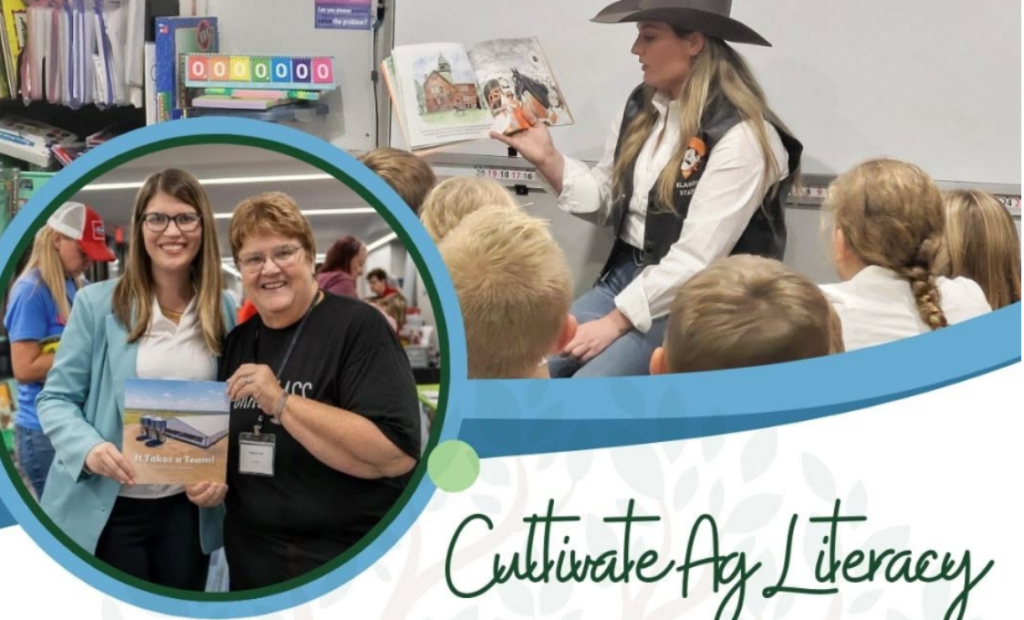
The Oklahoma Ag in the Classroom Summer Conference is set for July 7th and will bring together educators, extension personnel, and youth leaders from across the state for a full day of agriculture-focused learning and classroom resources. According to Oklahoma Ag in the Classroom State Coordinator Emily Ague, who spoke with associate farm reporter Carli Davenport, the annual event continues to grow and will be held this year at a larger venue to accommodate increased participation and expanded programming.
"We're so excited," Ague said. "Our state summer conference is going to be on July 7th at the Edmond Conference Center, so we're really excited about that."
One of the highlights of the conference will be a lineup of speakers focused on connecting agriculture with education. Ague said every attendee will receive a book as part of the conference experience. "We're actually providing a book for all of our attendees, so they're all going to be able to go home with a book," she said.
Featured speaker Will Jordan, author of Wally the Wrangler, will discuss the creation of his book and ways educators can incorporate it into their classrooms. "It's about a cowboy who visits a ranch, it talks a lot about beef cattle, and talks about cuts and all kinds of stuff," Ague said. "He's going to talk a little bit about his book, creating that, and talk a little bit about what's in there and how teachers can use that in their classroom."
The luncheon keynote speaker will be Oklahoma meteorologist Lacey Swope, who Ague said has long been an advocate for agricultural education. "She's always super passionate about agriculture, about farmers and ranchers, and making that connection to the weather and how that's so important," Ague said. "So, we thought she would be a great person to come and talk to our teachers during our lunch."
While classroom teachers remain the primary audience, Ague emphasized that the conference welcomes a broad range of educators and youth-development professionals. "We invite all educators, extension agents," she said. "We've even had some people reach out. We have, I think, a couple of FFA members that are going to come with their ag teacher and just kind of learn a little bit about what they can bring back to the classroom."
The conference is designed to provide practical, ready-to-use resources for educators working with students of all ages. "What's great about it is, we have teachers or industry leaders, people that are working with youth, teaching all the sessions," Ague said. "That way, they can really find out things that they can use in their classroom."
She added that the event offers opportunities for educators across grade levels. "We have such a wide variety of sessions and workshops available for everyone, anywhere from pre-K to 12th-grade teachers," Ague said. "If you're 4-H or any educator, we would love to have you come."

Registration is currently available through the Oklahoma Ag in the Classroom website. Ague encouraged interested participants to sign up before registration closes at the end of the month. "You can actually go to our website and go under 2026 AITC events," she said. "It says register for the 2026 Ag in the Classroom Summer Conference."
After completing the online registration form, participants will receive payment information from conference organizers. "Annie, one of our other coordinators, is actually going to follow up, and she's going to send you the payment link, so you can pay that $35 fee," Ague explained.
Although early bird registration has ended, attendees still receive several benefits. "You no longer get a T-shirt with your registration, but you do still get lunch," Ague said. "It pays for a whole day's worth of activities and all that. It's definitely worth the $35 to come."
Beyond the July conference, Ague said Oklahoma Ag in the Classroom has an active summer schedule planned. "We actually start our Ag in the Classroom summer road trip tomorrow," she said. "We have a bus full of teachers that are going to be going on three days of ag field trips."
The tour will take educators through several agricultural operations in southern Oklahoma. "We're starting in Pauls Valley, going down through Ardmore, and we'll also spend some time in Madill over the next three days," Ague said.
Later in June, Oklahoma educators will travel to the National Ag in the Classroom Conference in Rhode Island. "We have, I believe, about 11 educators, including ourselves, that will be presenting workshops at conference," Ague said. "I think we have a group of about 30 people going with us from Oklahoma."
Additional summer activities include support for Riverology programming and preparation for Read an Accurate Ag Book Week, scheduled for September 8-11. "We just have lots of great things coming up before we start the school year," Ague said.
With expanded programming, new educational resources, and opportunities to connect agriculture with classroom learning, Ague believes this year's conference will provide valuable tools for educators across Oklahoma. "It'll just be a great opportunity for teachers to come and learn more about Ag in the Classroom and things they can do in their classroom," she said.

Today, American Soybean Association (ASA) Executive Committee member and Minnesota soybean farmer Jamie Beyer testified before the U.S. House Agriculture Committee during a hearing on "Agricultural Perspectives on the Future of the USMCA," highlighting the critical importance of the United States-Mexico-Canada Agreement (USMCA) to U.S. soybean farmers and urging policymakers to maintain long-term certainty for American agriculture.
During her testimony, Beyer highlighted USMCA's role in preserving duty-free market access for soy and soy products, strengthening science-based trade rules that help prevent trade disruptions, and providing stability for soybean farmers amid growing global trade uncertainty.
"USMCA has provided stability and predictability for U.S. soybean farmers and strengthened our trading relationship with two of our most important export markets," said Beyer. "At a time when farmers are facing significant economic pressure and global trade uncertainty, maintaining strong, rules-based trade relationships with Canada and Mexico is more important than ever."
In marketing year 2024/25, Canada and Mexico accounted for $4 billion in U.S. soy complex exports, representing more than 13% of total U.S. soy exports. Mexico alone accounted for $3.3 billion in purchases of U.S. soybeans, soybean meal and soybean oil, making it one of the industry's most critical export markets.
"Failure to renew USMCA would be catastrophic for U.S. agriculture," Beyer told lawmakers. "Entire industries, companies, farmers and families depend on this agreement. We hope appropriate improvements can be made, but the agreement's long-term extension must never be in doubt."
ASA looks forward to working with policymakers to preserve and strengthen USMCA for U.S. soybean farmers and rural communities.
The United States Department of Agriculture confirmed the presence of New World screwworm in the United States this past week.
The dangerous pest can seriously affect livestock, pets and wildlife, and less commonly, birds and humans. With its return, Oklahoma State University Extension experts offered producers useful information.
Not a worm, but a fly
The name New World screwworm can be misleading, Rosslyn Biggs, DVM, OSU Extension beef cattle specialist, said.
They are not worms. Instead, the concern is with a specific type of fly. The fly will lay eggs in an open wound, and the resulting maggots will feed on live tissue, as opposed to more common maggots that eat dead or decaying tissue. Wounds as small as a tick bite can become infested.
New World screwworm flies look similar to other common flies, explains Jonathan Cammack, OSU Extension livestock entomology and parasitology specialist.
"We've got flies that are metallic green that are strongly associated with our livestock," he said. "There is a fly that is very closely related to a house fly that only eats cow manure. Metallic-colored flies and non-metallic flies that feed on these rotting materials are there and have been there for quite some time, but they're not screwworms," Cammack said.
No issue with the food supply
Biggs stressed that New World screwworm is not a disease, but an infestation. Livestock affected are safe to enter the food supply after treatment. New World screwworm does not infest meat, fruits, vegetables or any other food source.
"We have no concerns related to food safety," Biggs said. "Animals that have been infested after treatment, they are good to enter the food supply."
Good practices reduce risk
When moving animals across state lines, Biggs emphasized having the appropriate documentation in order before traveling. A certificate of veterinarian inspection is always required, but if producers are moving animals to a destination state, enhanced requirements may be necessary.
"Naturally, the flies only have the ability to fly relatively short distances," Cammack said. "Maybe five to 10 miles over the course of their lifespan, while that female fly is looking for a host animal to lay her eggs on. A lot of the large jumps we've seen over the past year and a half through Mexico have been from human-mediated movement of animals from screwworm positive areas in southern Mexico to feed lots in northern Mexico."
Biggs recommends establishing a strong relationship with a veterinarian if producers do not already have one. Producers should also consider enhancing current biosecurity measures or adding additional ones to their operation.
"In particular, my hallmark of biosecurity is daily inspection," Biggs said. "We want animal owners to think about that and how they can implement that. Additionally, at some point, there is likely a need to apply treatment and prevention to livestock."
Proper animal husbandry practices can reduce risks, and inspecting vulnerable calves is also recommended. Producers should also regularly inspect fences and other working facilities.
"We need to be vigilant," Cammack said. "Producers need to have eyes on their animals."
Screwworm has been eradicated before
In the 1950s, the USDA began using the Sterile Insect Technique to eradicate New World screwworm from the United States. By introducing sterile blowflies into infected areas, scientists were able to push the infestation deep into Central America over almost five decades.
"We don't want animal owners to be scared. We have options, we have treatments and preventative options in place and approved," Biggs said. "We do encourage them to arm themselves with information."
Cammack added, "USDA deploys a response team that's trained in monitoring and trapping screwworms. They set up a perimeter and release sterilized flies in that area."
Warm-blooded mammals are susceptible
New World screwworm cases often involve livestock. But in rare instances, birds, such as chickens, and humans can become infested. Most often, the enter an animal through an open wound.
"In the state of Oklahoma, we've been preparing here for the last 18-24 months. With that, every day for animal owners is not going to look any different," Biggs said. "However, we are seeing additional communication and awareness that we want animal owners to be vigilant."
Up-to-date information about New World screwworm can be found online at screwworm.okstate.edu and on the Oklahoma Department of Agriculture and Forestry website. Federal resources can be found at screwworm.gov, providing nationwide coordination.
OSU Extension uses research-based information to help all Oklahomans solve local issues and concerns, promote leadership and manage resources wisely throughout the state's 77 counties. Most information is available at little to no cost.
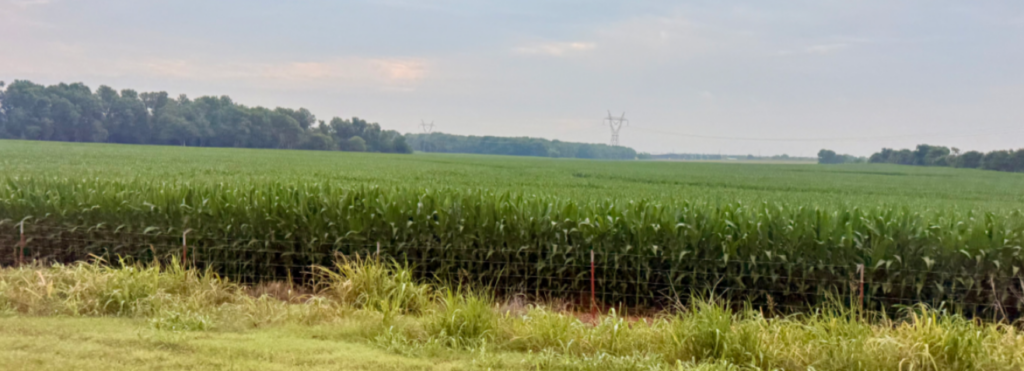
Sixty-five state and national groups, including the National Corn Growers Association, sent a letter to Commerce Secretary Howard Lutnick today calling on him to end countervailing duties placed on phosphate fertilizers imported from Morocco to ease the pain felt by farmers as fertilizers prices reach new highs.
The announcement comes less than a week after Federal Trade Commission Chairman Andrew Ferguson announced a major, industry-wide investigation into the fertilizer industry's pricing practices and concentration.
"These costs land on an already fragile farm economy," the letter said. "Net farm income has fallen roughly 31 percent from its 2022 peak, fertilizer prices are up more than 150 percent since 2020, and Chapter 12 farm bankruptcies have surged to their highest levels in several years."
The letter also noted that farmers are in their fourth straight year of losses, and that countervailing duties only exacerbate their financial outlook and could mean the difference between sustaining family farms for generations to come or seeing legacies come to an end.
The countervailing duties, requested by the U.S.-based Mosaic Company and Simplot, have been in effect since March 2021. The letter noted that the duties not only hurt farmers, but they also do not accomplish their intended goals.
"[The duties] do not protect a vulnerable domestic industry from unfair competition," the letter said. "Rather, they further prop up two companies who already dominate the domestic market and will continue to dominate that market absent CVD protection."
An independent analysis by the Agricultural and Food Policy Center at Texas A&M University has estimated that the countervailing duties on Moroccan phosphate raised input costs for farmers of corn, soybeans, wheat, rice, sorghum and cotton by roughly $6.9 billion over the 2021 through 2025 growing seasons. At its full initial rate of 19.97 percent, the duty drove up the U.S. price of diammonium phosphate by an estimated 28.6 percent.
The letter also targeted Mosaic's practices.
"Far from safeguarding domestic supply, Mosaic continues to curtail its own production, even as supply tightened at home," the letter noted. "These duties fail to do more than drive up costs for farmers and risk our national food security by limiting the large majority of our annual phosphate needs to a single supplier that continues to curtail production – enhancing our risks to supply chain disruptions."
NCGA has established an input task force that is looking at the causes of price hikes for supplies and how they can be addressed.
Read the Letter
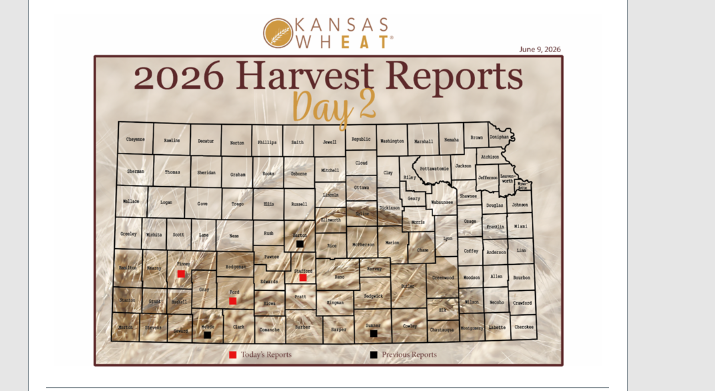
This is day 2 of the Kansas Wheat Harvest Reports, brought to you by the Kansas Wheat Commission, Kansas Association of Wheat Growers, Kansas Grain and Feed Association and the Kansas Cooperative Council.
Last night, violent storms struck central and eastern parts of the state, delaying harvest further for farmers in those regions. Frequent rainfall and persistent humidity are keeping many combines parked. With additional scattered thunderstorms in the forecast, producers are watching the weather closely and waiting for a stretch of warm, dry conditions to allow harvest to move ahead.
John Hildebrand, a farmer in Stafford County, reported taking his first load on Friday, June 5, with rainfall holding progress until today. He has taken in four to five loads so far, with test weights showing 58 pounds and yields far less than his 2025 crop.
"This year's yield will be below average," Hildebrand said. "We didn't get any rain for 3 months, then we got it all at the start of harvest."
Hildebrand is unsure when harvest will be complete, as additional storms in the forecast could keep combines out of the field until next week.
"It doesn't work very well for wheat when it's dry during our wet period, then dumped on during harvest," said Hildebrand. "We'd like to be thinking of the finish line, but we're not anywhere close to that."
Southwest Kansas missed Monday evening's thunderstorms, allowing wheat to be brought in yesterday and today. Brent Boyd, Grain Manager at Pride Ag Resources in Dodge City, reported that they saw their first load on Saturday, June 6, before the rain stopped them. The elevator was in full swing Monday, June 8, seeing 125,000 bushels across multiple locations.
"I was surprised to see that the test weight seems to be holding after the rain we had gotten," Boyd said. "I think there is unfinished grain out there. I would almost think, of what we lose, we for sure will gain on the wheat that isn't finished."
Boyd estimates that in their area, they are 1 percent done with harvest, and looking to complete harvest before July 4.
The 2026 Harvest Report is brought to you by the Kansas Wheat Commission, Kansas Association of Wheat Growers, Kansas Grain and Feed Association and the Kansas Cooperative Council. To follow along with harvest updates on X, use #wheatharvest26. Tag us at @kansaswheat on Facebook, Instagram and X to share your harvest story and photos.
Written by Shelby Priddle, assistant director of communications, Kansas Wheat
RON's Dave Lanning has a pre-opening look at today's agricultural Markets.
Click the audio tab below for today's report.
Today, U.S. Environmental Protection Agency (EPA) proposed revisions to portions of the Biden EPA's January 2025 final rule, which required states to keep certain State Implementation Plan (SIP) requirements tied to an area's prior ozone nonattainment classification under the National Ambient Air Quality Standards (NAAQS), even after that area had been reclassified. The Trump EPA's proposed changes will realign the agency's approach to SIPs with the intent of the Clean Air Act (CAA), allowing states to focus their planning on further air quality improvements rather than on unnecessary paperwork.
"Part of cooperative federalism means listening to our regulatory partners about what is working and what is not. Unsurprisingly, the Biden-era rule is causing more confusion, more headaches, more pointless paperwork, but not cleaner air," said EPA Administrator Lee Zeldin. "If finalized, our proposal will help state, local, and Tribal air regulators focus resources on measured, relevant Clean Air Act requirements. This proposal is working to ensure EPA is implementing the best reading of the law in a way that is firmly grounded in statute and that provides cleaner air for all Americans."
Under the Biden-era final rule, upon reclassification, states were still required to continue with certain planning requirements of a SIP associated with the previous lower classification of an area. This forced states to dedicate time and resources towards burdensome legacy requirements instead of obtaining tangible new results. The Trump EPA's changes would ensure that states are no longer punished for improving air quality by clarifying that an area's current ozone classification level, not a previous one, is the only determinant of SIP requirements. Specifically, the agency is proposing that planning requirements are cumulative upon reclassification and do not need to be duplicated each time.
The proposed changes are consistent with the CAA that states an area can only be subject to a single classification at a given time. If finalized, EPA's state, local, and Tribal air regulatory partners will be given renewed flexibility to better tailor their air quality strategies to current conditions, enhancing protections for human health and the environment, while reducing administrative confusion.
Today's proposal applies to all past and future reclassifications associated with the 2008, 2015, and any future ozone NAAQS. EPA is not proposing to reconsider any of the SIP submittal or implementation deadlines established in the Biden EPA's January 2025 rulemaking. EPA will hold a 30-day public comment period. The proposal can be found on EPA's website.

Million Tadege, professor in the Department of Plant and Soil Sciences at Oklahoma State University, was recently named a 2025 American Association for the Advancement of Science Fellow for his innovative work in understanding leaf blade development and biomass functional genomics.
The American Association for the Advancement of Science is one of the world's largest general scientific societies and publisher of the Science family of journals. The latest class of Fellows included 449 scientists, engineers and innovators across 24 AAAS disciplinary sections, "who have demonstrated research excellence, made notable contributions to advance science and delivered important services to their communities," according to Sudip S. Parikh, AAAS chief executive officer and executive publisher of the Science family of journals.
"These Fellows and their accomplishments validate the importance of investing in science and technology for the benefit of all," Parikh said.
AAAS has been honoring Fellows with this lifetime recognition since 1874 and recognizes Fellows for their achievements across disciplines, from research, teaching and technology to administration in academia, industry and government to excellence in communicating and interpreting science to the public.
"Being selected as an AAAS Fellow means that the broad scientific community has recognized Million for a distinguished and sustained impact on the science of plant functional genomics," said Wade Thomason, head of the OSU Department of Plant and Soil Sciences.
Tadege was named a Fellow for "distinguished contributions to the field of plant biology, particularly for development of functional genomics resources for biomass and leguminous crops," according to an AAAS announcement.
Tadege was recognized for his ongoing work with leaf size regulation and leaf patterning in legumes, developmental phase transition in sorghum and the development of functional genomics resources in Medicago, chickpeas and sorghum.
Tadege's current research is looking to understand how patterns govern leaf blade development to form different leaf shapes and sizes in legumes and the impact these patterns would have on photosynthetic efficiency and biomass yield accumulation. Tadege's lab recently published a paper illustrating that grain sorghum plants can be genetically programmed to not flower in more than three years, which is key to understanding how sorghum plants measure the length of time and know the time of the day.
"I am thrilled to be recognized by the American Association for the Advancement of Science, one of the oldest and most prestigious scientific honors in the United States, that honored the likes of Thomas Edison and several Nobel Laureates," Tadege said. "I have been lucky to have very talented and dedicated postdocs and graduate students who sacrificed their evenings and weekends to make a difference at the frontiers of plant science. I am grateful to all who contributed over the years. This recognition is a testament to the quality of work we do at OSU, and I am proud to be a part of it."
The new Fellows received a certificate and a gold and blue rosette pin (representing science and engineering) to commemorate their election and were celebrated at a forum on May 29, 2026, in Washington, D.C.
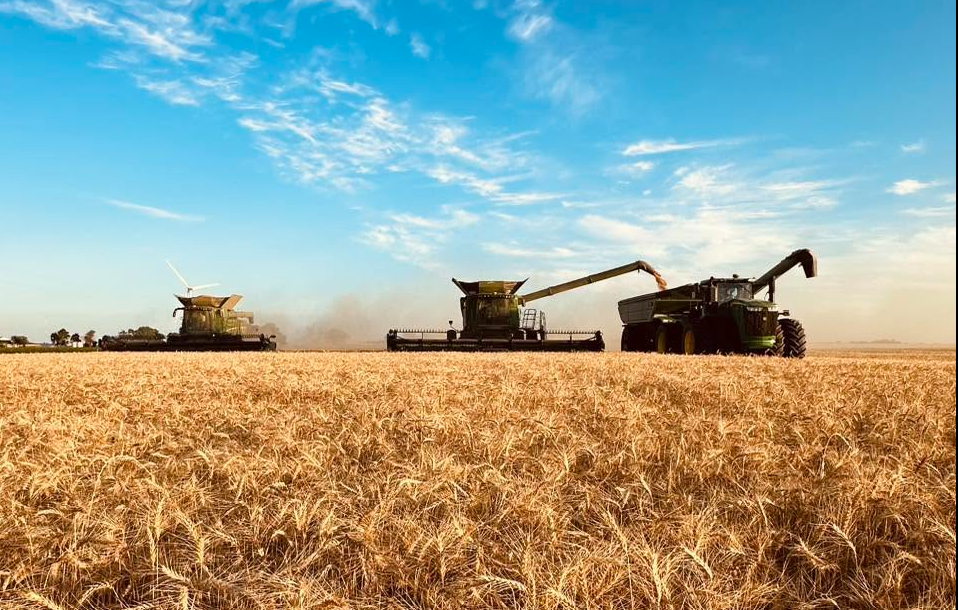
The Oklahoma wheat harvest is moving at a rapid pace, but a combination of low harvested acres, severe drought stress, and recent stalling rainfall is defining the 2026 season for producers and grain elevators across the state.
In the June 9 crop update from the Oklahoma Wheat Commission, Dave Deken reports from Kingfisher County on the complex dynamics shaping this year's winter wheat crop. The update highlights a season marked by rapid progress on fewer acres, mixed regional yields, and the resilience of custom harvest crews pushing north.
While grain quality remains high, grain elevators are experiencing significantly lower intake volumes than originally anticipated. Ladd Lafferty, president of Wheeler Brothers Grain, notes that while individual yields are tracking close to pre-harvest expectations, overall bushel intake is down due to a lack of harvestable acres.
"At the end of the day, it is the acres. The acres weren't there, the harvested acres," Lafferty says. "Whatever the hand you're dealt, you have to work with it. So, that's the way we do."
Lafferty also indicates that much of the anticipated wheat crop from central and western Oklahoma has already been delivered to elevators. On the market side, a recent sell-off has dropped hard red winter wheat prices by over a dollar a bushel, which has started to generate renewed interest on the export side despite a challenging global program.
The latest Crop Progress report from the USDA National Agricultural Statistics Service (NASS), published on June 8, underscores the severe environmental toll on the crop. NASS rates Oklahoma winter wheat conditions at:
While NASS reports the crop as fully headed and 44% harvested, data from the Oklahoma Wheat Commission suggests the state is even further along, estimating harvest at closer to 60% complete.
The remaining harvest is largely concentrated north of Highway 412. Progress varies significantly by locality:
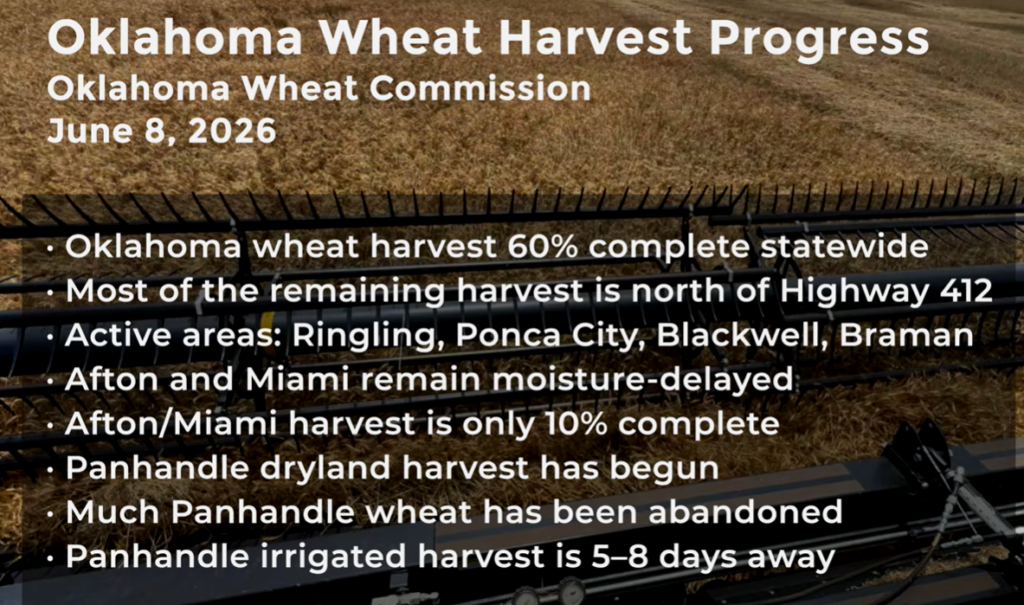
Statewide yields are closely aligned with the USDA projection of 28 bushels per acre, though regional management and moisture conditions have created a wide spread.
South of Highway 51, many yields are trapped in the 15- to 25-bushel range. However, productivity strengthens north of Highway 51 toward the Kansas border, where fields from Okeene to Perry are yielding from the mid-30s to the mid-50s per acre.
Test weights across the state are averaging 58 to 59 pounds per bushel. Prior to recent rain events, northern Oklahoma boasted test weights of 60-61 pounds, though these numbers are expected to decline in subsequent reports due to moisture exposure. In the northeast, early-harvested soft red winter wheat weighed in at 60 to 61 pounds per bushel, with early yields hitting 50 bushels per acre, while local hard red winter wheat averaged 58 pounds prior to the rains.
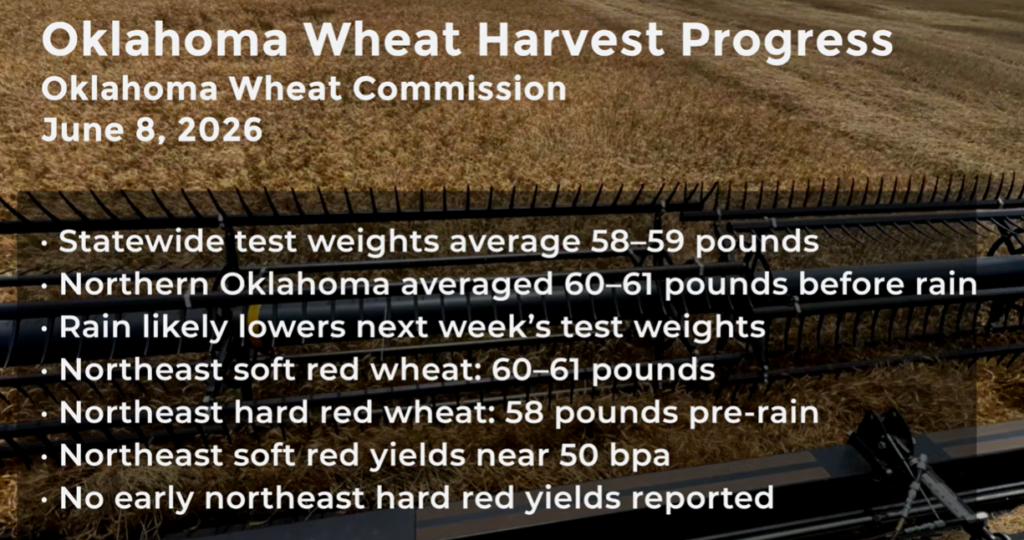
Recent weather patterns have delivered a stark contrast between localized heavy rainfall and a long-term, deep-seated drought.
According to the Oklahoma Mesonet, Bristow recorded over 7 inches of rain since Thursday, June 4, with Granfield in southern Oklahoma following. While these rains temporarily slowed harvest operations statewide and improved topsoil conditions to more closely resemble a typical March profile, critical dry pockets remain. At the two-inch and four-inch soil moisture levels, a persistent dry slot extends through Arnett, Watonga, and Elk City.
The June 4 U.S. Drought Monitor confirms that 81% of Oklahoma remains in drought status. The breakdown highlights the extreme conditions accelerating crop maturity and shrinking yields:
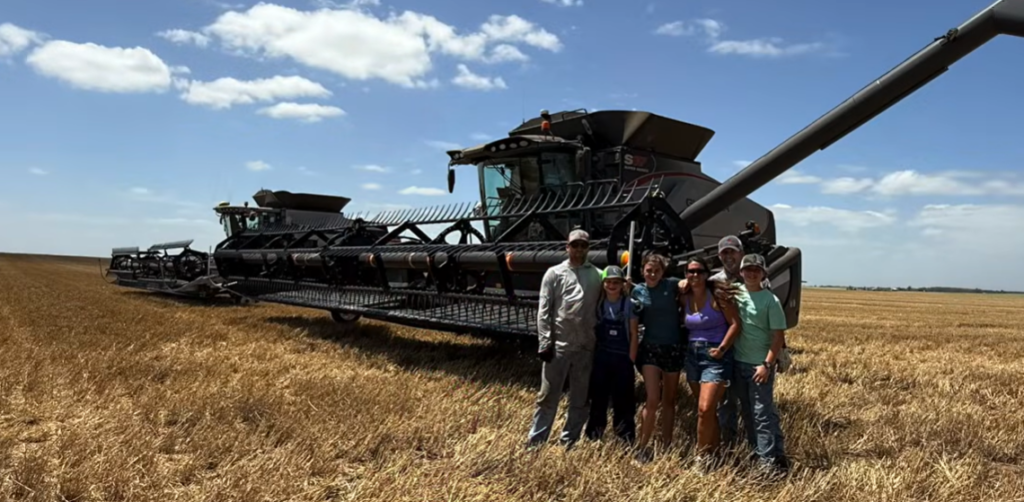
The fast-moving crop forced many western Oklahoma producers to finish their home acres ahead of schedule and to seek custom-cutting opportunities farther north.
In Beckham County, a brother-and-sister harvest duo, Sarah and Jake, wrapped up their family's crop in just five days using two combines. Out of their total acreage, they were only able to harvest 500 acres; the remaining ground was either unharvestable due to drought or grazed out entirely.
Seeking to maximize the season, they loaded up their equipment and traveled three hours north to Alfalfa County to harvest thicker fields near Amorita. Assisted by their father during the initial move of equipment, the duo finished their contracted fields over the weekend.
"One of the things that I love most about it is the teamwork behind it," Sarah says. "It takes everybody working together to accomplish one deal, a goal, and then we're on to the next. And it's really cool to get to work with my brother."
The team remains on the road looking for additional fields before returning to western Oklahoma to manage their summer crops. Once the harvest trail ends, domestic farming priorities resume. As Jake noted, the focus will pivot immediately to moisture-dependent field work: "Hopefully, it'll start raining because I still have 1,100 acres of cotton I have to plant as soon as it rains."
This update brought to you by the Oklahoma Wheat Commission.
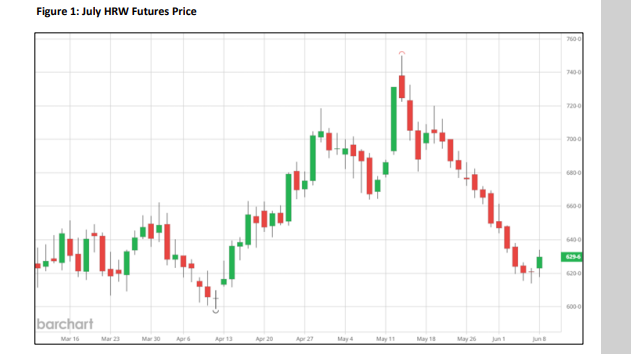
Grain and oilseed futures prices dropped dramatically over the last week, driven primarily by a strong technical move from funds and speculators liquidating long positions. Grains disconnected from oil as the geopolitical premium evaporated. An expectation of favorable crop conditions in the Corn Belt, along with uncertainty regarding the U.S.-China trade situation, exacerbated the price move. However, the market should be nearing a bottom in this oversold situation.
HRW futures markets closed lower for 12 straight trading days before clawing back a few cents on Monday. July prices closed at $6.30, remaining in the lower part of the range seen in March and early April before the price runup associated with the deteriorating winter wheat crop. Improving weather conditions in the U.S., along with better-than-expected production from Northern Hemisphere crops, helped to create the bearish conditions. July delivery basis sits at -45 to -55 across the state and remained stable during the price drop. The prospect of the bottom being set is quite high given the issues with the winter wheat crop.
Wheat exports slowed a bit over the last month as the market enters the next marketing year. Outstanding sales for 2026-27 for all wheat are 113 million bushels, down from 123 million at this point last year. The prospect of a much smaller HRW crop this year is showing up in next marketing year sales as U.S. prices moved higher. HRW outstanding sales for the next marketing year sit at 30.4 million bushels through May 28, down from 43.6 million bushels at this time last year.
Despite the drastic decline in prices in the U.S. over the last two weeks, U.S. port prices remain above those of major global competitors. USDA's wheat production forecasts for the 2026-27 marketing year in the Northern Hemisphere, Middle East, and North Africa show that while many areas are down from last year, they still sit at or above longer-term production levels after last year's large global crop.
While overall production is lower this marketing year around the globe, tightening global stocks are still above levels seen from the 2021-2024 marketing years.
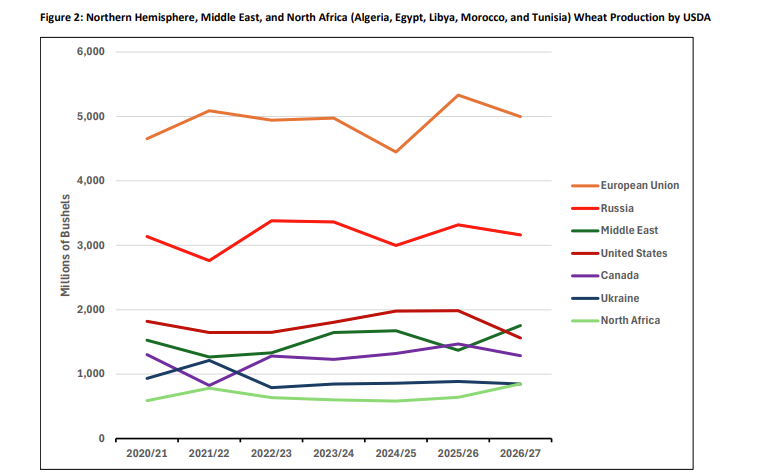
Soybean futures prices moved sharply lower over the last week despite strong crush data. July futures dropped over 60 cents per bushel during the week to close at $11.16 on Monday, while the November contract closed at $11.35. Futures prices dropped to levels not seen since early March. Cash prices in Oklahoma are around $10.31 to $10.41 with a -85 to -95 basis. Harvest prices came in near $10.45 with basis at 90 under the November contract.
Soybean planting sat at 92 percent as of June 7, which is 4 percent above the five-year average. Crop conditions came in at 67 percent good and excellent, down one percent from the initial report last week, compared to 68 percent at this time last year. The crop is going in at a timely pace with little concern this early in the crop year, particularly with rains forecast across the heart of the Corn Belt.
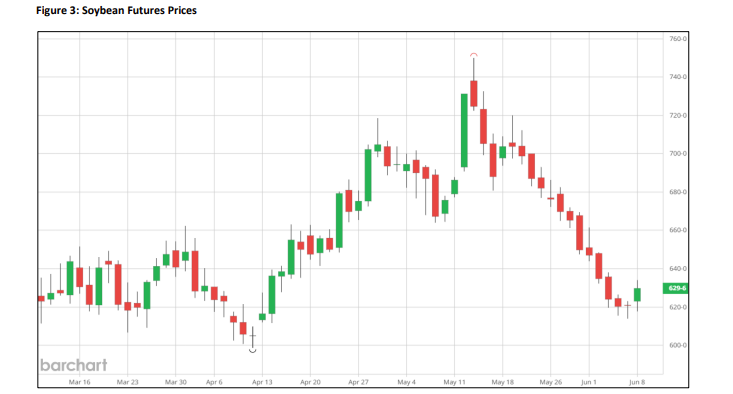
USDA released soybean crush data for April on June 1, totaling 218.45 million bushels. Crush through April came in at 1,784 million bushels, which is 345 million bushels above last marketing year's pace. Crush needs to average 211.5 million bushels a month to hit USDA's forecast of 2,630 million bushels. The monthly average thus far totals 223 million bushels per month. The potential for crush to exceed USDA's forecast is supported by the fact that strong crush margins favor a continuation of record crush volumes. The current market environment represents a buying opportunity for end users of soybean crush products.
Soybean meal demand remains on track to hit USDA's forecast in both domestic and export categories. Meal prices fell around $20 per short ton in futures markets last week to close yesterday at $306. Lower prices could spur soybean meal demand to even higher levels. Export sales data show soybean meal total commitments at 17,580 thousand short tons through May 28, remaining on pace to hit the USDA forecast.
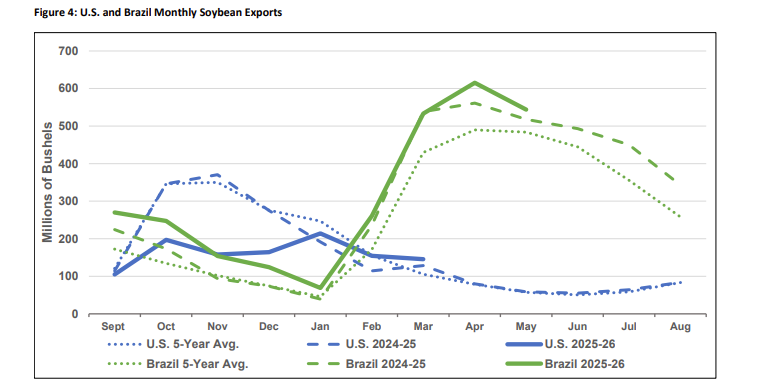
Soybean oil (SBO) prices touched 79 cents per pound early last week before selling off to 73 cents yesterday. Prospects for increased SBO usage in biomass-based diesel production are high given obligated party production under the RFS sits well below what is necessary to meet volume obligations in 2026. SBO exports continue to contract as expected due to prices sitting above global levels and strong domestic demand. A recovery in SBO prices is expected moving forward.
Soybean export sales data through May 28 place U.S. total commitments for soybeans at 1.468 billion bushels. Weekly new sales ticked up in May, but exports appear destined to miss USDA's current forecast. Brazilian exports since harvest began in earnest in March are up year over year. However, the recent price drop saw U.S. Gulf soybean prices narrow to 21 cents a bushel higher than port prices in Paranaguá. An expectation of China bargain shopping for U.S. soybeans should be in place given this dramatic price change.
Meanwhile, Argentina announced soybean export duties, currently at 24 percent, will be lowered by 0.25 percent a month in 2027 and accelerated on a monthly basis in 2028. Whether this policy holds and comes into effect remains an open question that bears monitoring.

Heading into grilling season, it is interesting to look at the shares of meat production and consumption in the U.S. One fact that may surprise, the United States now produces more pork than beef, yet Americans still eat more beef per person.
The USDA ERS May 2026 Livestock, Dairy, and Poultry Outlook projects 2026 pork production near 28 billion pounds against 25.5 billion pounds of beef. The gap reflects a shrinking cattle herd while hog supplies remain ample. ERS projects the gap to widen further in 2027. Broiler chicken production is projected at 49 billion pounds.
Production is not the same as consumption. ERS projects 2026 per capita availability at 60 pounds of beef and 49.6 pounds of pork, with chicken far ahead at 105.6 pounds. Total red meat and poultry disappearance per capita is projected to top 230 pounds in 2026 which would be the highest on record.
So why does beef lead pork at the dinner table when we raise more hogs? Trade. The U.S. is expected to export roughly a quarter of its pork production but only about 9 percent of beef production. Additionally, beef imports outweigh exports and will add more beef to consumers plates.
Looking at price changes adds important context. The all-fresh retail beef value hit a record high $9.64 per pound in April, up 13% from a year earlier. Retail pork prices were essentially flat at $4.89 per pound and retail broiler prices declined slightly to $2.39 per pound. Despite the highest price tag, beef demand has stayed firm as consumers are paying more and still reaching for it.
Production volume and consumer demand are different signals, and it will be important to track both over the next few years. Across proteins, it appears there will be lots of meat on grills this summer.


Maples, Josh. U.S. Meat Production and Consumption Patterns. Southern Ag Today

Joe Goggins, a lifelong livestock marketer and rancher, will soon take the helm as president of the Livestock Marketing Association. He will assume the role during the association's annual convention in June.
Goggins serves as chief executive officer of the Vermilion Ranch Corp. in Billings, Mont. In this role, he oversees Public Auction Yards, Billings Livestock Commission, Western Livestock Auction, Northern Livestock Video Auction, the Vermilion Ranch Registered Angus Herd, Diamond Ring Ranch and other diversified business ventures. Prior to becoming CEO, he worked alongside his late father, Pat Goggins, and grew up immersed in the family's operations. Along with his wife, Linda, Goggins also operates J&L Livestock, a commercial cattle operation focused on breeding and raising Angus females.
He graduated from Montana State University with a degree in animal science before pursuing his passion for auctioneering. A longtime LMA supporter whose family has deep roots in the organization — his father also served as president — Goggins has been involved in the association for approximately 20 years, previously serving on the board of directors and executive committee.
And while he's been engaged in many organizations over the years, LMA has a special place in his heart.
"This board is made up of people that have skin in the game," Goggins said. "Every day they're out doing the work, worrying about their producers, their consignors and the whole industry."
Goggins emphasized the value the association provides to its more than 800 members, which include auction markets, order buyers and dealers. He highlighted the association's industry-leading insurance products — particularly critical for livestock facilities — prompt pay reform advocacy, buyer verification services and payment protection insurance.
Beyond operational support, Goggins is passionate about LMA's broader role in the industry.
He stressed the importance of initiatives like Common Ground Coalition that aim to unify the industry, keep producers on the land and sustain rural economies.
"We need producers," he said. "We need folks on the land and we've got to come up with some ways all across this industry to help these people."
He described LMA as a "well-oiled machine" with exceptional staff and plans to maintain its strong momentum while focusing on key priorities: protecting and enhancing payment protection, supporting policy efforts such as allowing auction market owners to own or invest in harvest facilities, making sure animal disease traceability rules work for producers and markets, and continuing industry unification efforts to support cow-calf producers.
"I've never been prouder to be part of an organization," he concluded. "Because they see the big picture: this country needs food security and that only happens if we keep cow/calf producers on the land."
The agricultural community is on high alert as new cases of the New World screwworm continue to emerge, bringing the threat closer to Oklahoma producers. In a recent interview with Farm Director KC Sheperd, Oklahoma State University Extension beef cattle specialist Dr. Rosslyn Biggs shared critical updates on the widening scope of the infestations and outlined the essential steps producers must take to protect their herds.
With confirmed cases moving beyond initial boundaries, understanding how to navigate the rising threat of New World screwworm has shifted from a theoretical exercise to an immediate operational necessity for livestock owners across the region.
The geographic distribution of the pest has evolved quickly, moving from a single isolated livestock case to affecting multiple species across state lines.
"We're visiting here, it's really kind of changing even from the beginning of the day to the evening, and so we're having additional cases show up," Dr. Biggs explained. "We started out with a single case in far south Texas with a calf. Shortly thereafter, we had another calf identified."
The situation grew more complex as the insect was identified in companion animals and alternative livestock species outside of Texas.
"As of today, we have a dog that's been identified that is actually located in New Mexico but was seen by a Texas veterinary practice," Dr. Biggs noted. "And then most recently, we've had a goat identified a little bit farther north in Texas in the Fredericksburg area."
For Oklahoma producers, these developments signal that the problem is no longer a distant concern. KC Sheperd observed that the pest is "getting closer and closer to our Oklahoma producers," to which Dr. Biggs responded that the mindset must shift.
"It is getting closer," Dr. Biggs agreed. "This is really more of an imminent arrival as opposed to a Texas border problem at this point. We're getting closer to that 'when' it happens, not 'if' it happens."
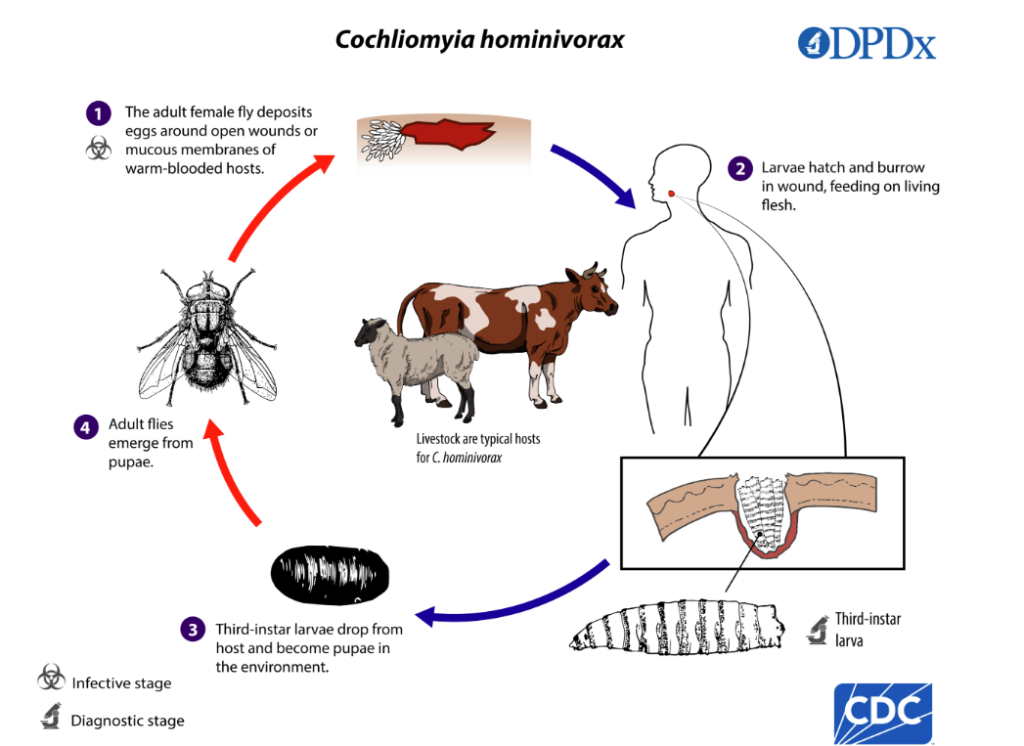
To effectively monitor and combat the pest, producers must understand its biological timeline and behavior. The New World screwworm operates on a rapid life cycle that allows infestations to establish quickly if left unnoticed.
"This particular fly has a life cycle that's about two to three weeks," Dr. Biggs stated. "We're going to start here with the female fly is going to lay her eggs typically at a wound. It can also lay its eggs near natural body openings, so think nasal passages, the navel or umbilicus of newborns, or genital openings."
Once the eggs are deposited, the transition to the destructive larval stage happens in less than a day.
"From those eggs being laid, it's about a 10 to 20-hour hatch," Dr. Biggs explained. "And then those eggs will move into the larva stage, which is really where we see the maggots, right? And it goes through first, second, and third instar levels. That larval period, if you will, is about a five to seven day."
After completing their feeding stage on the live host, the larvae enter the soil to complete their development.
"After feeding, those larvae drop off the animal, they burrow into the soil and pupate," Dr. Biggs said. "That's another five to seven-day period, and then that adult fly emerges and will live up to about two weeks."
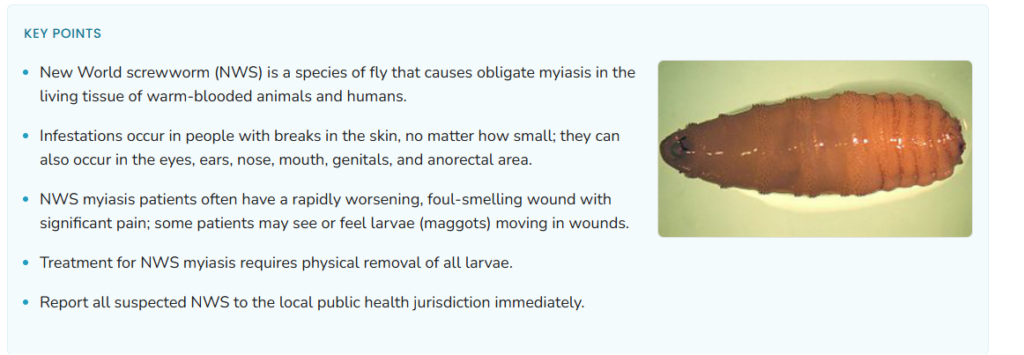
Unlike typical blowflies that consume dead tissue, the screwworm is uniquely hazardous because it requires living flesh to survive. This distinction is critical for producers trying to differentiate a routine maggot issue from a standard screwworm infestation.
"This particular fly does not have a preference for dead and decaying tissues," Dr. Biggs emphasized. "So if we have a deceased animal and we see maggots, highly, highly unlikely that those are screwworm maggots. If we're seeing maggots on a live animal, that potentially puts us in a different discussion."
While the primary focus remains on cattle production, Dr. Biggs reminded owners that the screwworm does not discriminate among warm-blooded hosts.
"New World screwworm can infest any warm-blooded animal," Dr. Biggs warned. "So we have certainly the livestock concern, we have the companion animal concern in dogs and cats, we have the wildlife concern—which looks very different than the last time we saw that here in the United States—and we can, although rare, also see it in humans."
When inspecting wounds, producers should look for specific, aggressive burrowing behavior.
"These screwworms do have a particular pattern in most cases that they will situate themselves," Dr. Biggs noted. "They burrow or screw—hence the name—down into that tissue to feed."
However, visual inspection alone may not be definitive, as multiple fly species can inhabit the same injury. "We can have mixed presence of different types of blowfly maggots in the same wound," she added, emphasizing the need for professional evaluation.
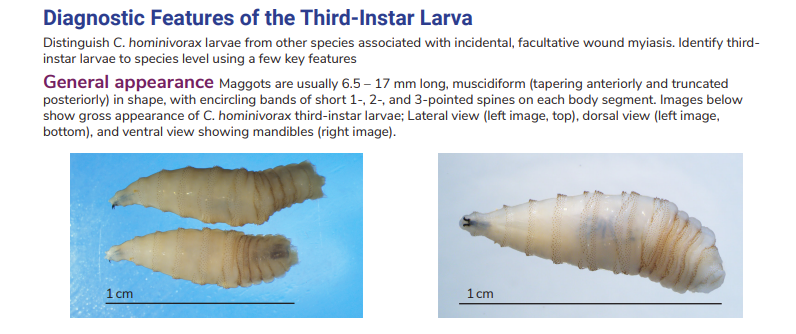
Oklahoma agricultural agencies and university extension networks have been quietly preparing for this threat long before the recent outbreaks.
"We've been preparing for New World screwworm certainly," Dr. Biggs said. "The State Veterinarian's office, as part of the Oklahoma Department of Agriculture, Food, and Forestry, has been talking about it with their working group for 18 to 24 months. From the OSU Extension standpoint, some of my colleagues and I have been trying to let producers be aware, be looking for it, but now we really need a heightened awareness and response."
A cornerstone of this heightened response is the implementation of rigorous daily biosecurity practices on the farm.
"I've been trying to get producers to evaluate their biosecurity practices, which, really, is the hallmark of my biosecurity, which is regular inspection, and really, daily inspection," Dr. Biggs said.
This inspection means paying close attention to vulnerable animals, particularly newborns and those undergoing routine management procedures.
"If we've got new babies hitting the ground, we need to make sure that we've got the opportunity to make sure those navels are taken care of appropriately and be keeping an eye on all our animals in a much closer way than we have been," Dr. Biggs advised.
The standard seasonal operations of branding, dehorning, and castrating create open wounds that invite screwworm flies to deposit eggs. Producers are encouraged to review the timing of these activities with their veterinarians to minimize risk.
"We need to be really thinking about those practices, and can we do those at times of the year at this point that may not have such a threat of the New World screwworm fly being present" Dr. Biggs suggested. "I'm cautious to delay folks on some things, but I will tell you, I'm not generally a recommender to do a lot of processing in the summer with the heat anyway, from a welfare standpoint, but we need to be thinking about a plan and potentially delaying those."
For long-term herd management, genetic selection offers a permanent solution to the risks associated with mechanical dehorning.
"The best way to dehorn, of course, is to use polled genetics in your breeding program and unless that's, you know, you're a purebred producer that must have horns, let's make if we're making those kind of decisions now, let's go ahead and get ahead of the game," Dr. Biggs recommended.
Additionally, producers should ensure their physical facilities are ready if animals require individual medical isolation or herd-wide preventative applications.
"We need to be evaluating our facilities and the locations we have our animals at to make sure we have appropriate facilities if we are going to have to administer preventatives or treatments," Dr. Biggs noted.
While the return of the screwworm causes understandable concern, the modern veterinary toolkit is significantly more advanced and effective than it was during the mid-20th-century eradication campaigns.
"Many producers, my father certainly remembers... we were much more limited than we are now," Dr. Biggs said. "We have our macrocyclic lactones, we have our topical pesticides, we have a number of our preventatives for our companion animals that are typically used for flea and tick, but there are also a number of them that are approved for screwworm use."
Regulatory bodies and pharmaceutical partners have worked collaboratively to ensure these treatments are accessible for emergency situations.
"We'll give kudos to our partners in the FDA getting a lot of those products on the approved list," Dr. Biggs stated. "That list is continuing to grow longer, which is good news for us. And our partners in industry that saw this coming and were really prepared to have that ready to go on the label for emergency use. I think we are better suited than we ever have been."
A significant barrier to effective pest control is livestock owners' hesitation to report suspected cases due to fears of catastrophic economic or regulatory penalties. Dr. Biggs clarified that the regulatory framework for an insect infestation differs from that for a highly contagious viral or bacterial outbreak.
"The advantage to us over some other of our contagious diseases—keep in mind, this is an infestation of an insect, it is not a contagious infectious viral or bacterial disease," Dr. Biggs explained. "And so, there are potential movement restrictions based on the identification of the agent. Additionally, though, we've got some better options, and that's part of the plan to try to keep up with regular business as we can."
The primary objective of early reporting is containment to prevent the pest from becoming a permanent resident in local ecosystems.
"We do not want these particular flies to get established in the environment," Dr. Biggs emphasized. "And so if we have something that we're suspicious of, we need to contact our veterinarian, we need to get that information, get samples submitted, have the State Veterinarian involved."
With high-traffic summer events underway, maintaining compliance and communication is vital.
"We got a lot of shows going on this summer, for instance—horse shows, cattle shows, junior nationals are in full swing, we've got swine exhibitions—all of those kinds of things rolling," Dr. Biggs observed. "We want to think about whether we—we don't want to travel without appropriate preparation. Each of us has got to do our part."
The most critical step an Oklahoma producer can take today is to ensure they have an active, functional relationship with a local practitioner.
"We cannot, first and foremost, we cannot overemphasize the need to have a Veterinary-Client-Patient Relationship," Dr. Biggs stated. "Having that Veterinary-Client-Patient Relationship is really critically important, especially now as it relates to New World screwworm."
Veterinarians serve as the direct link to state and federal updates, ensuring that diagnostic protocols are followed accurately.
"Veterinarians are tuned in to announcements and should be getting regular communications with the State Veterinarian's office, with ODAFF, as well as USDA," Dr. Biggs said. "If we're suspicious of it, let's take samples from deep in the wound and let's get them submitted."
For producers in remote areas who face challenges accessing immediate veterinary care, alternative diagnostic resources have been established statewide.
"We recognize that not all locations have ready access to a veterinarian," Dr. Biggs acknowledged. "And so we have, in partnership with ODAFF, OSU Extension has collection kits at each of the OSU Extension offices in all 77 counties, so that is an option as well."
Ultimately, state officials are prepared to assist producers through the verification process without unnecessary delay. "The State Veterinarian's office is taking it seriously and will do everything they can to help facilitate it if a producer has a suspect animal," Dr. Biggs concluded. "They're going to take that seriously and get that evaluated."
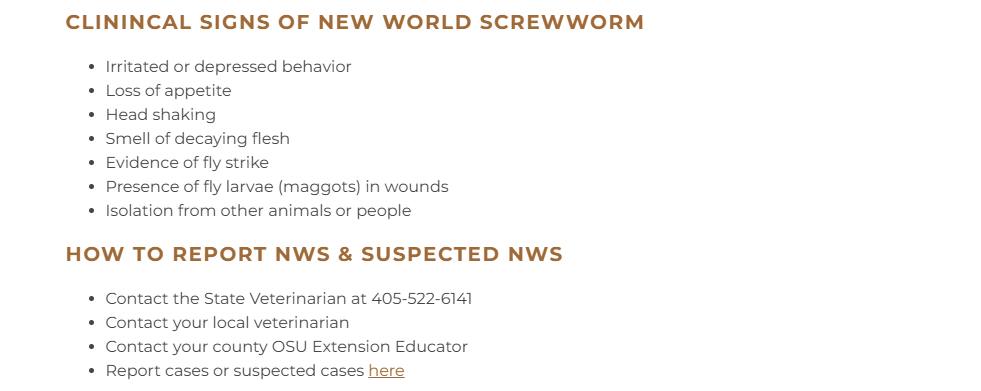
In today's Beef Buzz, senior farm and ranch broadcaster Ron Hays features comments from Texas and Southwestern Cattle Raisers Association President Steven Diebel and USDA Chief Scientist Scott Hutchins, who offered reassurance and insight as the livestock industry faces New World Screwworm.
During the Monday, June 8th, USDA Media hosted by Secretary of Agriculture Brooke Rollins, Victoria, Texas, cattle producer and Texas and Southwestern Cattle Raisers Association President Steven Diebel urged producers to focus on facts rather than fear.
Diebel outlined five key points that livestock producers should keep in mind as the industry responds to the New World screwworm threat. "Number one, no need to panic. We have had a plan in place, and we've had that plan, and we know it works."
Next, he emphasized that consumers should remain confident in the safety of the food supply. "Meat is safe. We do not have a food safety issue."
Diebel also stressed that animal movement can continue under established protocols. "Treated and inspected cattle can move. We've talked about these protocols with Animal Health Commission, Parks and Wildlife Department, and all of our partners for many months now."
Another important message was that New World screwworm infestations can be successfully addressed when identified quickly. "New World screw worm is highly treatable, and if detected early, can be very solvable."
Finally, Diebel encouraged producers to remain vigilant and communicate any suspected cases immediately. "Monitor and report. We really want to reiterate to the producers, it is so imperative to report that way those solutions can be expedited to those ranches, and we've eradicated this pest, and we'll certainly do it again."
USDA Chief Scientist Scott Hutchins discussed several research efforts currently underway to improve the detection and suppression of New World screwworm.
One focus is identifying the specific scents that attract female screwworm flies. "We have a very aggressive effort to discover the very specific attractants that the screwworm female, in particular, zeros in on."
Researchers are studying odors associated with blood, wounds, and umbilical cords to develop more precise monitoring systems. "We're looking for those volatiles that come from the umbilical cord, that come from blood, that come from other things, so that we can zero in on that specific odor."
Hutchins said those discoveries could lead to improved trapping and suppression technologies that target screwworm flies without affecting other insects or the environment. One concept being explored is a modern SWASS (Screwworm Adult Suppression System), which would use highly specific attractants and control methods to target New World screwworm adults while minimizing impacts on non-target species. "We're going to develop one that's very specific that allows us to do what we need to do without any collateral impact to the environment, and very focused and specific."
While researchers continue developing new tools, Hutchins emphasized that the proven sterile insect technique remains the backbone of eradication efforts. "We should have a lot of confidence in this, in the sterile insect technique."
He pointed to the historical success of the program in the southeastern United States. "Florida and the Southeast, which was very heavily infested with the screw worm in the 50s, completely eradicated the pest in 1959 with only the use of the sterile insect technique."
Among the developments is a newly developed sterile fly strain known as the Novo fly. "The Novo fly, Novo is Latin for new, and it's the root for innovate. And this particular innovation is exactly that."
According to Hutchins, the breakthrough will significantly increase the effectiveness of sterile fly production. "It's going to allow us to almost instantaneously double the number of flies, sterile flies, that we put in the fight, because it's going to allow us to produce only male sterile flies."
Currently, about half of the sterile flies produced are females, which do not help control the pest population. "If you have a plant that produces 100 million flies as we do today, 50% of those are sterile females. They do us no good in this particular fight. So, by going to 100% male sterile males, we're able to instantly double our production."
Hutchins believes that increased sterile male production will provide a major advantage in future eradication efforts. "It's going to give us a tremendous edge in that regard."
The Beef Buzz is a regular feature heard on radio stations around the region on the Radio Oklahoma Ag Network and is a regular audio feature found on this website as well. Click on the LISTEN BAR above for today's show and check out our archives for older Beef Buzz shows covering the gamut of the beef cattle industry today.
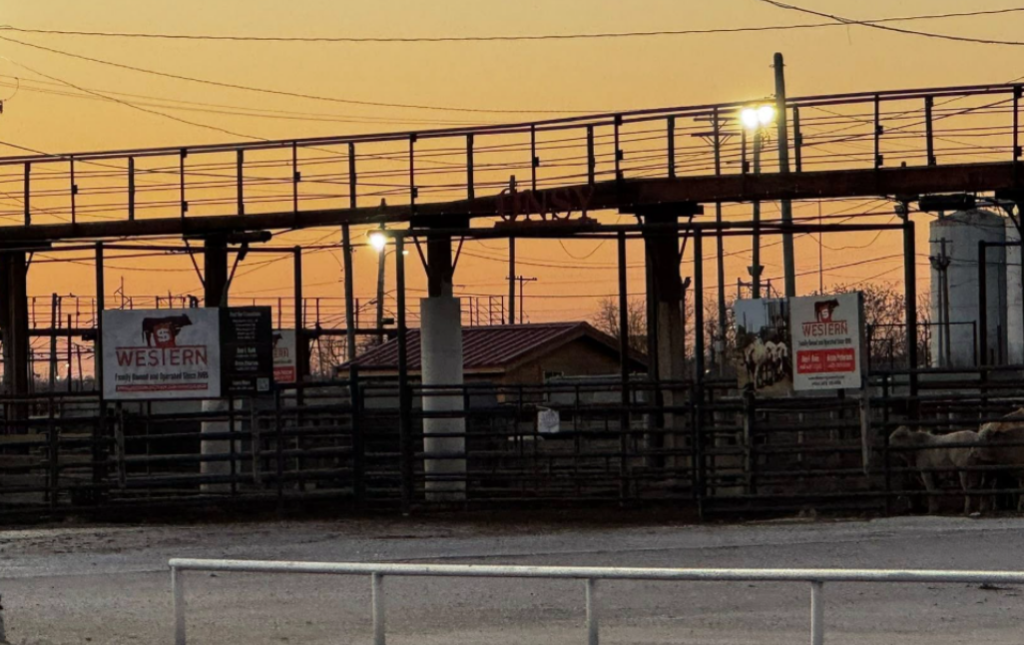
On Tuesdays, Senior Farm and Ranch Broadcaster Ron Hays visits with Ben Hale of Western Livestock Auctions as he talks about the latest in the markets and more. Established in 1995, Western has grown into a multi-generational family-owned and operated business and stands as a symbol of tradition, excellence, and a deep-rooted passion for the cattle industry. Western Livestock Auctions operates the Western Livestock Commission Firm, which sells cattle on Mondays and Tuesdays. They also operate the livestock auction markets in Woodward, Comanche, Waurika, and Knoxville, Iowa.
Market conditions remained strong at the second June sale at the Oklahoma National Stock Yards, according to Hale. While feeder cattle prices continued to climb, Hale noted that uncertainty surrounding the confirmation of New World screwworm cases in the United States created some nervousness earlier in the week. Despite those concerns, demand remained solid. "It went up compared to last week, and we had a lot of demand on those heavier nine-weight cattle than we did a week ago, and the heifer deal was quite a bit better," Hale said. He added that while the calf and grazing cattle market has softened somewhat, that is likely due more to seasonal factors such as heat, humidity, and recent rainfall.
Hale believes the cattle industry is now in a better position after the initial shock of confirmed screwworm cases in Texas. "I'm just glad we got it over with. Now we can go on like we did with the Mad Cow deal," he said. Hale expressed confidence that producers can manage the threat through vigilance, noting that cattle producers are already closely monitoring their herds. "Hopefully, we just stay diligent, and I think we can get ahead of it."
Producer attitudes remain upbeat despite the concerns. Hale said customers were encouraged by the strong feeder cattle trade and the resilience of the market. "Everybody's attitude is really good. They're real tickled yesterday with the way that deal was, and that kind of popping up on those feeders," he said. Although cattle numbers remain lower than in years past, Hale emphasized that prices continue to support producers. "The market's extremely stout. I mean, it is, and even these calves are cheaper, but they're still dollar now to extremely good for it."
Looking ahead, Hale expects marketings to remain somewhat lighter in the coming weeks as recent rains have reduced the urgency for producers to sell cattle. He reported upcoming sales at Waurika, Woodward, and Comanche, but expects overall volumes to stay moderate until midsummer. "We had rain around, they don't have to sell them, and so I think it will be a little slower here for a while till we get into July, probably July and August," Hale said.
Hale can be contacted at 940-631-2333. Check out more about the marketing options that Western offers by clicking here.

The Oklahoma Farm Bureau Ag Fund political action committee announced the endorsement and financial support of several state-level candidates ahead of Oklahoma's June 16 primary election.
The state Ag Fund board—a group of Farm Bureau members selected by their representative OKFB districts—met May 26 at the OKFB home office in Oklahoma City to discuss candidate support and endorsement based on feedback gathered from county and districtwide PAC meetings throughout the month of May.
The OKFB Ag Fund supports political candidates who value agriculture and rural Oklahoma. While an endorsement from the Ag Fund is the highest level of support given to a candidate, the committee can also give financial support to candidates using funds donated by OKFB members.
Candidates endorsed by the OKFB Ag Fund are listed below. Endorsed candidates with an asterisk (*) by their name also received financial support from the OKFB Ag Fund.
Statewide
Oklahoma Senate
Oklahoma House
The Ag Fund board also gave financial support to three additional candidates: Jason Blair, House District 53; Ron Stewart, House District 73; and Teresa Sterling, House District 91.
At the state Ag Fund meeting, members in attendance elected Jackson County Farm Bureau member Keeff Felty to serve as chairman of the Ag Fund board. Dillon Johnson of Ottawa County was elected as treasurer, and Alan Jett of Beaver County was elected as secretary.
Other members of the Ag Fund board include Wayne Taggart, Caddo County, District 3; Dan Childs, Johnston County, District 4; Terry Caldwell, Choctaw County, District 5; Steve Clark, Alfalfa County, District 7; Chuck Roberts, Pontotoc County, District 8; and Sue Farmer, Lincoln County, District 9.
The OKFB Ag Fund board will meet after the June 16 primary election and again following the primary runoff on Aug. 25 to discuss additional candidate support leading into the Nov. 3 general election.
John Deere (NYSE: DE) announced today the newest 5E 3-Cylinder tractor, featuring their first electronically controlled eHydro™ transmission in a utility tractor. Built with ease of use, versatility and performance in mind, the 5E 3-Cylinder tractor can help operators of all experience levels tackle a wide range of tasks.
"The new 5E 3-Cylinder tractor was designed to make any job intuitive, whether you're a seasoned operator or just stepping into the driver's seat for the first time," says Mark Davey, go-to-market manager for the 5 Series tractor lineup at John Deere. "By reducing the learning curve, our customers are able to get to work faster and operate with greater confidence and efficiency."
Breakthrough eHydro Transmission
With the power of the first John Deere electronically controlled hydrostatic drive in this tractor class, the eHydro transmission contains many features designed to simplify operation and improve efficiency, including:
· TwinTouch™ pedals for simplified and more comfortable forward and reverse control.
· Automotive cruise control set up similar to a car for consistent speed regardless of terrain.
· SpeedMatch™ to maintain a desired maximum travel speed.
· LoadMatch™ to allow the engine and transmission to communicate with each other to prevent the tractor from stalling during heavy load applications.
· MotionMatch™ to adjust acceleration and deceleration response.
· Speed governance to ensure controlled operation and safety across operators.
"The eHydro transmission brings together a suite of smart features, making the tractor more intuitive and efficient, allowing for increased productivity and reduced operator fatigue," Davey says.
Tailored for Rural Lifestyle and Specialty Applications
The new 5E 3-Cylinder tractor is built for a wide range of customers, from rural lifestyle property owners and part-time producers to nurseries and specialty crop operations. These operators need machinery that can handle a variety of tasks without adding additional complexity.
With a focus on dependability, the 5E 3-Cylinder tractor helps operators get more done in less time, ensuring consistent performance day after day, no matter the task.
"The 5E 3 was designed with a deep understanding of how our customers actually use their tractors every day," Davey says. "Whether it's a rural property, nursery or specialty crop operation, customers need equipment that is dependable and versatile to handle a variety of tasks."
Additional updates include:
· Go-home lighting allows for extended external lighting to get you where you need to go in low-light conditions, safely.
· Updated, smaller steering wheel for improved comfort.
· Improved electrical connections reduce contamination in wiring connections and harnesses.
· Swivel seat (available in select cab models) allows for better visibility and comfort during loader or rear-implement work.
"Our customers spend long hours operating their equipment, so including features that improve comfort and performance are essential," Davey says. "Features like go-home lighting, a smaller steering wheel and updates to the swivel seat help operators stay both aware and comfortable throughout the day."
John Deere remains committed to helping farmers increase productivity while reducing costs. The new 5E 3-Cylinder tractor with eHydro transmission delivers easy-to-use, smarter and more reliable machinery to all customers, no matter the type of operation.
To learn more about the capabilities of the new 5E 3-Cylinder tractor featuring the eHydro transmission, or to place an order, visit JohnDeere.com or contact your local John Deere dealer.
Recent moisture and wet ground has led to some producer questions about the cause, prevention and treatment of foot rot. Foot rot is a sub-acute or acute necrotic (decaying) infectious disease of cattle, causing swelling and lameness in at least one foot. This disease can cause severe lameness and decreased weight gain or milk production. Lame bulls and females will be reluctant to breed. If treatment is delayed, deeper structures of the foot may become affected, leading to chronic disease and a poor recovery prognosis. Severely affected animals may need to be culled from the herd. The incidence of foot rot varies according to the weather, season of the year, grazing periods and housing system. Foot rot occurs in all ages of cattle, it is usually random in occurrence but does increase during wet, humid conditions.
Cause
Fusobacterium necrophorum is the bacterium most often isolated from infected feet. This organism is present on healthy skin, but it needs injury or wet skin to enter the deeper tissue. Normal healthy skin will not allow the bacteria to enter the deeper tissues. Moisture, nutrient deficiency, injury or disease can result in compromised skin or hoof wall integrity, increasing the likelihood of the bacteria invading the skin. Deficiencies of zinc, selenium and copper can lead to higher frequency of foot rot infections due to the important role these trace minerals play in skin and hoof integrity as well as immune function. Injury is often caused by walking on abrasive or rough surfaces such as stony ground, sharp gravel and grazing stubble on recently mowed pasture, which may irritate the interdigital skin. Standing in pens or lots heavily contaminated with feces and urine softens the skin and provides high exposure to the causative bacteria. High temperatures and humidity will also cause the skin to chap and crack, leaving it susceptible to bacterial invasion.
Clinical Signs
When case incidence increases in hot and dry conditions, attention must be directed to loafing areas, which are often crowded and extremely wet from urine and feces deposited in small shaded areas. The first signs of foot rot include:
Diagnosis
Diagnosis of foot rot can be made by a thorough examination of the foot, looking at the characteristic signs of sudden onset of lameness (usually in one limb), elevated body temperature, interdigital swelling and separation of the interdigital skin. There are several other foot conditions causing lameness that may be confused with foot rot. That being said, early treatment of lameness is key to quick recovery.
Treatment
Treatment of foot rot is usually successful, especially when instituted early in the disease course. When possible, treatment should always begin with cleaning and examining the foot to establish that lameness is actually due to foot rot. A veterinarian may recommend antibiotics and dosages for each situation. Use of a non-steroidal anti-inflammatory product may be indicted for pain relief. There are multiple antimicrobial products labeled for the treatment of foot rot. When possible, treated cattle should be kept in dry areas until healed. If improvement is not evident within three to four days, it may be an indication that the infection has invaded the deeper tissues. Infections not responding to initial treatments need to be re-evaluated by a veterinarian in a timely manner. A veterinarian will determine if re-cleaning, removing all infected tissue, application of a topical antimicrobial and bandaging are appropriate, along with a change in the antimicrobial regimen. In severe cases, options may be limited to harvesting the animal (following drug withdrawal times), claw amputation or claw-salvaging surgical procedures. A veterinarian will be able to provide information needed in making this decision.
Summary
Foot rot is a major cause of lameness in cattle and can have a severe economic impact on animal health, animal performance and enterprise profitability. Skin and hoof lesions allow bacteria to invade live tissue. Therefore, the most important preventive measures are centered on the protection of interdigital skin health. Important preventative measures include a well-balanced mineral nutrition program and minimizing exposure to conditions that may cause skin or hoof injury. Treatment is frequently successful if the disease is diagnosed and treated soon after symptoms develop.
Reference: https://extension.okstate.edu/fact-sheets/foot-rot-in-cattle, id: AFS-3355

The Oklahoma State University Rodeo Team will be represented among the nation's top collegiate rodeo athletes as Morgan Merrill and Jada Trosper prepare to compete at the 2026 College National Finals Rodeo in Casper, Wyoming.
By qualifying for the CNFR, Merrill and Trosper will compete at the most elite level of collegiate rodeo after standout seasons in the Central Plains Region.
Set for June 14-20, the CNFR brings together competitors from each of the National Intercollegiate Rodeo Association's 11 regions to conclude the collegiate rodeo season and crown national champions.
Housed within the Ferguson College of Agriculture, the OSU Rodeo program supports student-athletes pursuing degrees across a variety of academic disciplines while also competing in collegiate rodeo.
In the 2025-2026 academic year, Merrill accomplished two goals he set for himself by winning the bull riding event at the 2025 Cowboy Stampede and qualifying for the CNFR. He also finished third in the Central Plains Region during his final season competing for the Cowboys.
In May, he earned his master's degree in agricultural leadership after completing his bachelor's in agribusiness, all while overcoming years of setbacks throughout his collegiate rodeo career.
"It means I'm finally able to close the door to my college career at peace," Merrill said. "Between season-ending injuries my first three years, sitting out to heal my senior year, coming up one hole short last year, and finally making it this year has shown me my journey is nothing short of God's plan for me."
Trosper, who graduated in May with a bachelor's degree in marketing, secured her first trip to the CNFR after finishing as the Central Plains Region reserve champion barrel racer. She said the opportunity to compete in Casper reflects years of work both in and out of the arena.
"Qualifying for the CNFR is truly a dream come true," Trosper said. "To compete on this stage is a testament to discipline, perseverance and staying focused these past three years."
Trosper said representing OSU carries significance far beyond competition results.
"It represents the people who believed in me when I struggled to believe in myself, the teammates who pushed me to grow and friendships that carried me through some of the hardest times of my life," she said.
Throughout the season, Trosper emphasized consistency, confidence and trusting both her preparation and her horses.
"Being able to make this journey alongside horses that mean so much to me makes this moment incredibly special," Trosper said.
OSU Rodeo Head Coach Cody Hollingsworth said both athletes have prepared well throughout the season and are ready for the national stage in Casper.
"I am very proud of the way Jada and Morgan have competed this year," Hollingsworth said. "Their commitment to the success of the team has played a big role in their individual achievements. I look forward to helping them perform at their best as they compete at the CNFR."
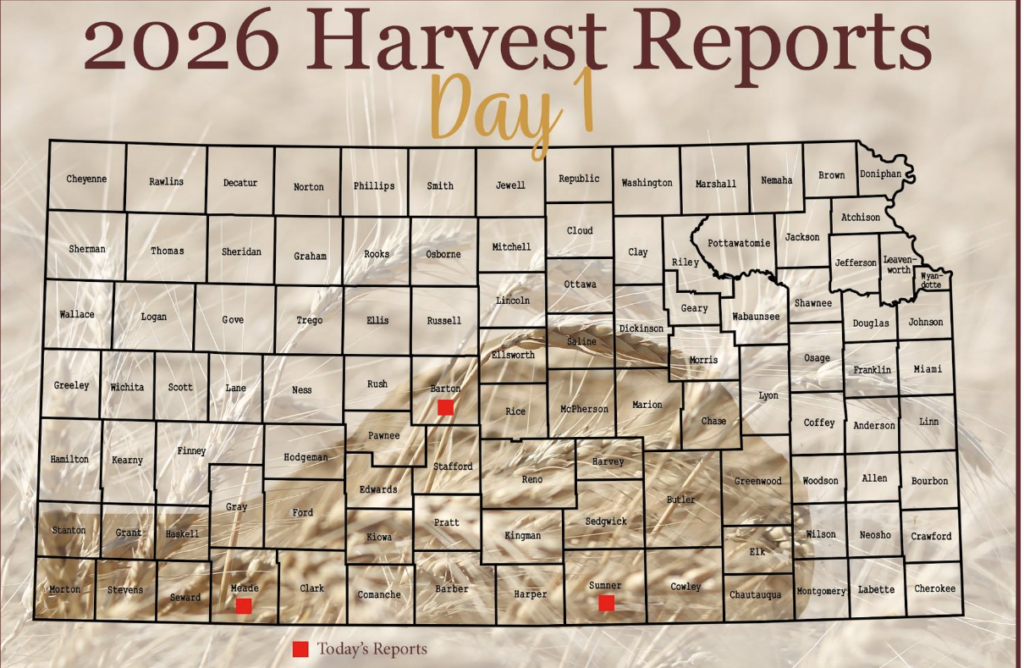
This is day 1 of the Kansas Wheat Harvest Reports, brought to you by the Kansas Wheat Commission, Kansas Association of Wheat Growers, Kansas Grain and Feed Association and the Kansas Cooperative Council.
Predicted to be one of the earliest harvests in recent history, rain and high humidity have stalled initial harvest reports. Harvest moved into southern and central Kansas toward the end of last week, but since then it has been slow going.
Officially, the 2026 Kansas wheat harvest is 5 percent complete, ahead of average for the state, according to the USDA's National Agricultural Statistics Service crop progress report for the week ending June 8, 2026. Winter wheat conditions were rated 26 percent very poor, 31 percent poor, 29 percent fair, 14 percent good and 0 percent excellent.
Tim Turek, a farmer from Sumner County, began test cutting last week but was stalled by scattered showers and storms that continued into the weekend, causing lingering humidity and spotty areas of dry wheat.
"There are smaller, more dry pockets around," Turek said. "I see some combines moving around, so I think some guys are going to get going again in this area this afternoon."
Before rain stalled his progress, Turek reported test weights of 59 and 60 and protein levels around 11 percent. The first field he completed yielded 44 bushels per acre.
"That is better than what I thought it was going to be," Turek said. "The drought really took the top end out of it; we thought we had a home run until it didn't rain in late April and early May." He hopes to get back into the field this afternoon, depending on moisture conditions.
Elevators in south central and southwest Kansas report a similar story, with rain and high humidity slowing harvest progress across the region. While some farmers started cutting over the past weekend, early reports indicate that yields are below average. Contacts in Sumner and Meade counties are hopeful harvest will be in full swing by the end of the week. There are a few days of clear skies and high temperatures in the forecast that should help wheat dry out across the state.
A farmer in Barton County reported that harvest began Friday, June 5, after missing the scattered rain events seen across much of the state. He estimates he is about 20 percent complete, a few days ahead of others in the area.
"I'd say our biggest challenge this year has been the drought. I've cut 40-bushel wheat and eight-bushel wheat this year." He reported a 30-bushel-per-acre average on wheat harvested so far and expects to finish in about 10 days.
The 2026 Harvest Report is brought to you by the Kansas Wheat Commission, Kansas Association of Wheat Growers, Kansas Grain and Feed Association, and the Kansas Cooperative Council. To follow along with harvest updates on X, use #wheatharvest26. Tag us at @kansaswheat on Facebook, Instagram and X to share your harvest story and photos.
RON's Dave Lanning has a pre-opening look at today's agricultural Markets.
Click the audio tab below for today's report.
US Senator James Lankford (R-OK) today released the following statement following Chickasaw Nation Governor Bill Anoatubby's announcement of his retirement. "Oklahoma and the Chickasaw Nation are both better today because of the service of Bill Anoatubby," said Lankford. "For over four decades, he has led with honor, integrity, and the mantra of 'what is good for the state of Oklahoma is good for the Chickasaw Nation and what is good for the Chickasaw Nation is good for the state of Oklahoma'. During Governor Anoatubby's time in office, the Chickasaw Nation has utilized its sovereign authority to put in place countless health, educational, and economic resources benefiting not only the Chickasaw people but all Oklahomans. I'm grateful that during my time in office, I have been able to count Governor Anoatubby as a friend and someone I could call upon to talk through important issues impacting our state. He and Janice have more than earned this retirement together, and I know they look forward to many happy days together with the grandkids."
Attorney General Gentner Drummond today issued the following statement after the announcement of Chickasaw Nation Gov. Bill Anoatubby's resignation: "Gov. Anoatubby is one of the greatest governors – of any government – in Oklahoma history. His decades of service to the Chickasaw Nation and to all Oklahomans reflect a rare combination of vision, integrity and genuine dedication to the people he served. He leaves behind a legacy of prosperity and opportunity that speaks for itself. "As we witness the turning of this page, we welcome Gov. Chris Anoatubby as a partner at every level. His deep roots in the Nation, his distinguished record of service and his commitment to the Chickasaw people make clear that the Nation's future is in good hands. "Oklahoma is a better place because of Bill Anoatubby's service. His legacy will endure long after this chapter closes."
Oklahoma House Democratic Leader Cyndi Munson, D-Oklahoma City, released the following statement recognizing Governor Bill Anoatubby's over five decades of service to the Chickasaw Nation after he announced his retirement. "Throughout my entire career, Governor Anoatubby has been an incredible mentor and leader," said Leader Munson. "He has committed decades of his life to serving our country as well as the Chickasaw Nation. I continue to be in awe of all of his accomplishments. He has enriched Oklahoma during his time serving the Chickasaw Nation, whether it be through business development, early childhood programs, health care, criminal justice, environmental protection, higher education, and more. During his ten consecutive terms as Governor, he has achieved several accolades for his remarkable leadership and entrepreneurship that has ultimately helped set Oklahoma up for success while taking great care of the Chickasaw Nation—and he's done it all with admirable humility. I am honored to know him as a leader and as a friend. "Congratulations to the incoming Governor, Chris Anoatubby, who has already dedicated more than two decades of service to the Chickasaw Nation. I have no doubt you will continue to build upon Governor Anoatubby's extraordinary work as you move forward in your new role as Governor. I am grateful for your friendship and look forward to working with you to continue our strong partnership and relationship with the state of Oklahoma and the Chickasaw Nation. "Congratulations to my friend, Governor Bill Anoatubby, who has worked tirelessly for over 50 years serving the Chickasaw Nation. May this next chapter be restful and fulfilling as you reflect on your legendary service to the Chickasaw Nation and state of Oklahoma." Governor Bill Anoatubby began work for the Chickasaw Nation in 1975. In 1979, he was elected as the tribe's first Lt. Governor. Governor Anoatubby was elected to his first term as Governor in 1987.
Oklahoma House Speaker Kyle Hilbert, R-Bristow, released the following statement after the announcement of Chickasaw Governor Bill Anoatubby's retirement: "Governor Bill Anoatubby's leadership has helped shape not only the future of the Chickasaw Nation, but the future of Oklahoma as a whole. For nearly four decades, he has modeled what visionary leadership for his tribe and our state looks like. Under his guidance, the Chickasaw Nation has become a model of economic growth, innovation, and opportunity. The partnership between the State of Oklahoma and our tribal nations is stronger because of leaders like Governor Anoatubby, who have always understood that when we work together, all Oklahomans benefit. Oklahoma's future is brightest when tribal, state, and local leaders continue working together to create opportunity, strengthen our communities and ensure the next generation inherits a better state than the one we enjoy today. I look forward to working with Lt. Gov. Chris Anoatubby as we continue to move our state forward, together."
Senate Pro Tem Lonnie Paxton, R-Tuttle, released the following statement after Chickasaw Nation Governor Bill Anoatubby announced his retirement. "Governor Bill Anoatubby's leadership has left an indelible mark on both the Chickasaw Nation and the State of Oklahoma," Pro Tem Paxton said. "Over the years, I have had the privilege of getting to know him not only as a respected leader, but as a friend. Whether touring the historic Silver City Cemetery in Tuttle, which shares deep ties to the Chickasaw Nation, or gathering around the dinner table with my wife, Misti and I, Governor Anoatubby has always been generous with his time, wisdom and friendship. "For decades, Governor Anoatubby has led with vision, integrity and an unwavering commitment to improving the lives of the Chickasaw people. His leadership has strengthened communities, expanded educational opportunities, driven economic growth and created lasting partnerships that have benefited all Oklahomans. The progress and prosperity seen throughout the Chickasaw Nation stand as a testament to his remarkable service. "While his retirement marks the end of an extraordinary chapter in Chickasaw Nation history, I want to congratulate Lieutenant Governor Chris Anoatubby on assuming the role as the next governor of the Chickasaw Nation. He is a proven leader who understands the values and vision that have guided the Chickasaw Nation's success."
Senate Democratic Leader Julia Kirt issued the following statement after Chickasaw Nation Gov. Bill Anoatubby announced his retirement. His resignation will be effective June 26, 2026, and Lt. Gov. Chris Anotubby will be sworn in as governor. "Governor Anoatubby has epitomized service, leadership, statesmanship, and vision as he led the Chickasaw nation into the 21st century. His work has benefited not only their citizens, but all the people of Oklahoma with wide-reaching investments in education, health care, transportation infrastructure, tourism, cultural preservation, businesses, and more. I am always amazed how Governor Anoatubby leveraged economic opportunities to invest back in the education and the health of Chickasaw people, which in turn builds a stronger, more sustainable economy for all. Under his leadership, the Chickasaw Nation is thriving, economically, politically, and culturally. "I congratulate Governor Anoatubby on his 50 years of strong service to the Chickasaw Nation and thank him for all he has done for our state, and I wish the very best to Lt. Governor Anoatubby as he prepares for his new role leading the Chickasaw Nation."
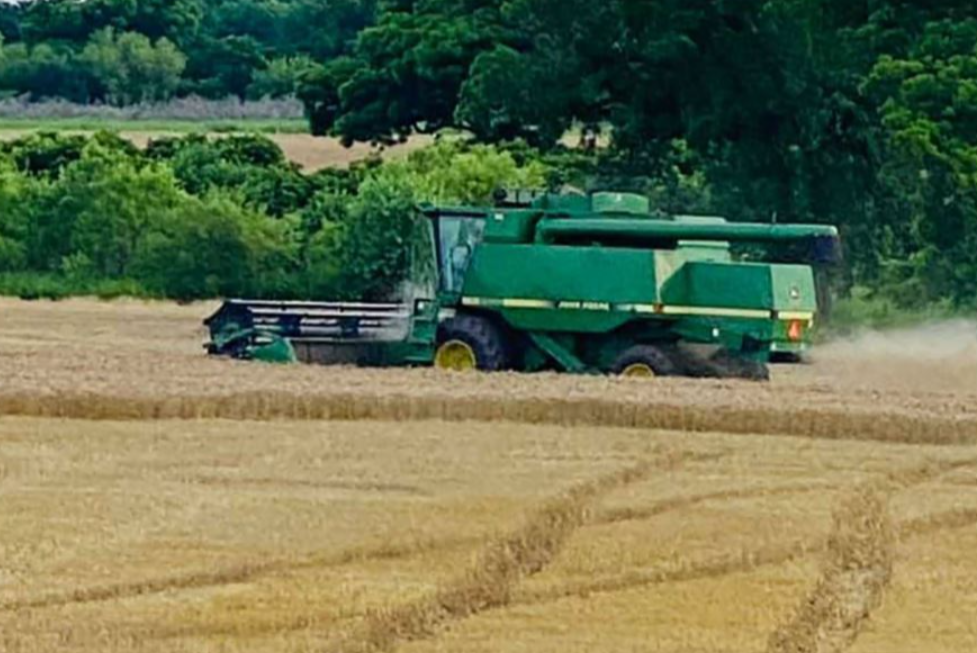
According to the latest crop progress report released on June 8th, 2026, Oklahoma's winter wheat headed is at 100%, while winter wheat conditions are rated 9% good to excellent, 62% poor to very poor, and 29% fair. Oklahoma winter wheat harvested is at 44% this week, compared to 23% last week.
Kansas winter wheat headed is at 100%. Winter wheat crop is ranked 14% good to excellent, 29% fair, and 57% poor to very poor. Winter wheat harvested is at 5%.
Texas winter wheat crop is ranked 12% good to excellent, 23% fair, and 65% poor to very poor, while winter wheat headed for the state is at 100%. Texas winter wheat harvested is at 35% this week, compared to 23% last week.
Nationally, winter wheat conditions rank 25% Good to excellent, 29% fair, and 46% poor to very poor. Winter wheat headed currently sits at 92%, and winter wheat harvested is at 11% compared to 5% a week ago.
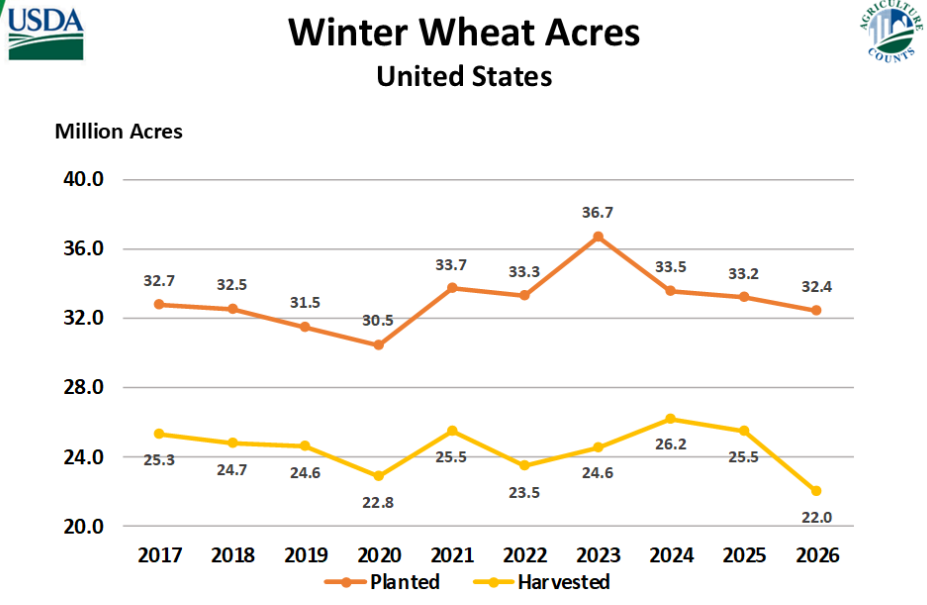
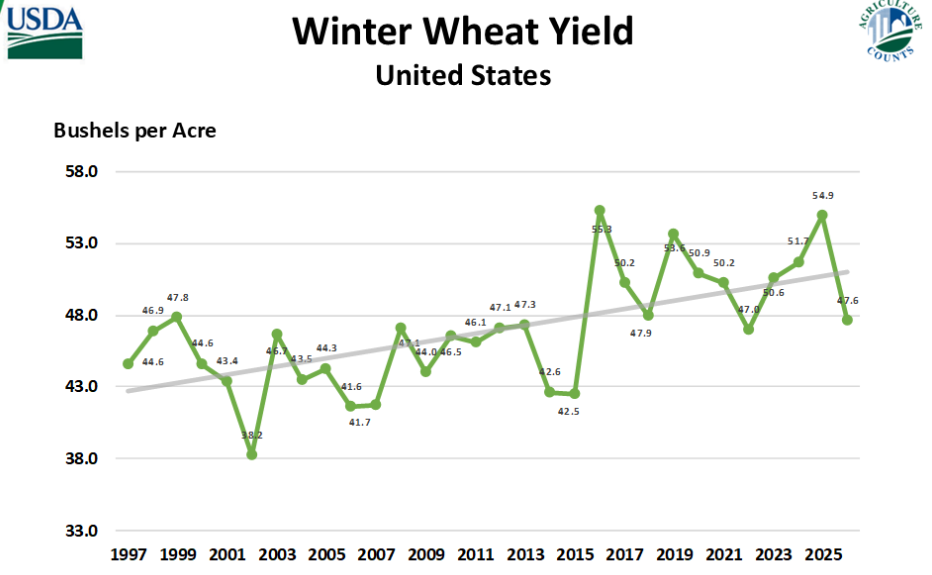
Oklahoma: 29% poor to very poor, compared to 34% last week. 37% Fair compared to 32% last week, and 34% good to excellent compared to 34% last week.
Kansas: 27% poor to very poor compared to 31% last week. 33% fair compared to 30% last week, and 40% good to excellent compared to 39% last week.
Texas: 32% poor to very poor, compared to 32% last week. 33% fair compared to 31% last week, and 35% good to excellent compared to 37% last week.
Nationally: 40% poor to very poor, compared to 42% last week. 29% fair compared to 28% last week, and 31% good to excellent compared to 30% last week.
Oklahoma corn planted is at 94% this week, compared to 91% a week ago, and corn emerged is at 73%. Corn conditions rank as follows, 14% poor to very poor, 33% fair, and 53% good to excellent.
Kansas corn planted is at 92% this week, compared to 94% a year ago. Kansas corn emerged is at 78%. Corn conditions rank as follows, 5% poor to very poor, 32% fair, and 63% good to excellent.
Texas corn planted is at 97% this week, down 1 point from a year ago. Texas corn emerged is at 94%. Corn conditions rank as follows, 19% poor to very poor, 39% fair, and 42% good to excellent.
Nationally, corn planted is at 97%, and corn emerged is at 86%. Corn conditions: 6% poor to very poor, 27% fair, and 67% good to excellent.
Oklahoma soybeans planted are at 64%, and soybeans emerged are at 51%. Oklahoma soybean conditions rank as follows: 27% poor to very poor, 27% fair, and 46% good to excellent.
Kansas soybeans planted are at 82% this week, up 7% from a year ago, and soybeans emerged are at 67%. Kansas soybean conditions rank as follows: 5% poor to very poor, 32% fair, and 63% good to excellent.
Texas soybeans planted are at 76%, and soybeans emerged are at 60%. Texas soybean conditions rank as follows: 7% poor to very poor, 32% fair, and 60% good to excellent.
Nationally, soybeans planted are at 92% this week, up 3% from a year ago, and soybeans emerged are at 79%
Oklahoma cotton planted is at 63% this week, up 14% from a year ago. Oklahoma cotton conditions rank as follows: 13% poor to very poor, 33% fair, and 54% goog to excellent.
Kansas cotton planted is at 91% this week, up 2% from a year ago. Kansas cotton conditions rank as follows: 9% poor to very poor, 42% fair, and 49% good to excellent.
Texas cotton planted is at 68% this week, down 2% from a year ago. Texas cotton conditions rank as follows: 21% poor to very poor, 34% fair and 45% good to excellent
Nationally, cotton planted sits at 77%. Nationally, cotton conditions rank 14% poor to very poor, 33% fair, and 53% good to excellent.
Oklahoma sorghum planted is at 41%, down 1% from a year ago.
Kansas sorghum planted is at 33% down 3% from a year ago.
Texas sorghum planted is at 88%, even with a year ago.
Nationally sorghum planted is at 53%, even with a year ago.

In-person absentee voting (also known as "early voting") for the June 16 Election begins Thursday across the state. Early voting locations will be open Thursday, June 11 and Friday, June 12 (8 a.m. to 6 p.m.) and Saturday, June 13 (8 a.m. – 2 p.m.)
State Election Board Secretary Paul Ziriax announced that, "In honor of America's 250th birthday, limited-edition 'I Voted' stickers will be available at early voting locations and polling place locations across the state, while supplies last." There are two different designs. A preview of the designs can be found on the State Election Board website.
CLOSED PRIMARIES
Voters are reminded that Oklahoma has closed primaries. For 2026, in order to participate in a party's primary election, you must be a registered voter of that party. More information about primary elections is available on the State Election Board website.
INDEPENDENT VOTERS
While the June Election includes party primary elections – all registered voters in Oklahoma (including Independents) are eligible to vote on State Question 832. Independents may also vote in any nonpartisan elections on the ballot such as for district judge and local propositions. You do not need to participate in a party's primary election in order to vote on the State Question or participate in nonpartisan elections or local elections.
ELECTION INFORMATION
A list of early voting locations is available on the State Election Board website, along with the list of elections. (Voters must vote in the county where they are registered to vote.) Sample ballots can be viewed and downloaded by logging into the OK Voter Portal.
Voters with questions should contact their County Election Board or the State Election Board at (405) 521-2391 or info@elections.ok.gov for more information.

Photo by: Texas A&M University
Today U.S. Secretary of Agriculture Brooke L. Rollins announced President Donald J. Trump has appointed John Bellinger as the new Senior Advisor for New World Screwworm Preparedness. In this role, Bellinger will integrate into USDA's team to help further drive its robust effort to explore all available technologies to combat the New World Screwworm.
"I want to thank John for joining our team as USDA transitions to the next phase of fighting and eradicating this pest from our borders, as we did nearly sixty years ago, yet it came back due to Biden's failed open border policies," said Secretary Rollins. "John's roots in Texas where New World screwworm is at ground zero, and his private sector experience in the related food safety and cattle industries, will help the administration advance our response and protect U.S. livestock."
"New World Screwworm presents unique challenges to America's ranchers, and Secretary Rollins has taken dramatic steps to work on building up our domestic response to this pest. USDA is responding in real time and building up long term capabilities to push back New World Screwworm beyond our borders and past the Darien Gap," said Senior Advisor Bellinger. "I look forward to working with USDA and our state partners as continuing ramping up testing, detection, and release of our tools to reduce these flies' populations."
John Bellinger currently serves on the Texas A&M Board of Regents after being appointed by Governor Greg Abbott in 2023, where he serves as Chair of the Committee on Research. He resides in San Antonio and is the co-founder, with his wife Gina, and the former CEO of Food Safety Net Services (FSNS). He is currently a board member of the recently merged company between FSNS and the Certified Group. He is the CEO of Agri-West International food exporter as well as Bellinger Development. He is the former chairman of the U.S. Meat Export Federation and the Southwest Meat Association. Additionally, he is a longtime member and season ticket holder of the 12th Man Foundation. He is also a member of the Texas A&M University College of Agriculture Development Council, as well an adviser to the Animal Science Department. He remains a partner and board member of Nolan Ryan Beef, BK Beef, BC Stables, AW Japan, Just Pots, and Livek. He is the recipient of the 2007 Outstanding Alumnus for Texas A&M University College of Agriculture and the Outstanding Alumnus of Texas A&M University Animal Science Department in 2014. He has also been inducted into the U.S. Meat Industry Hall of Fame in 2022. Bellinger received a Bachelor of Science in Agricultural Education and a Master of Science in Animal Science from Texas A&M University.
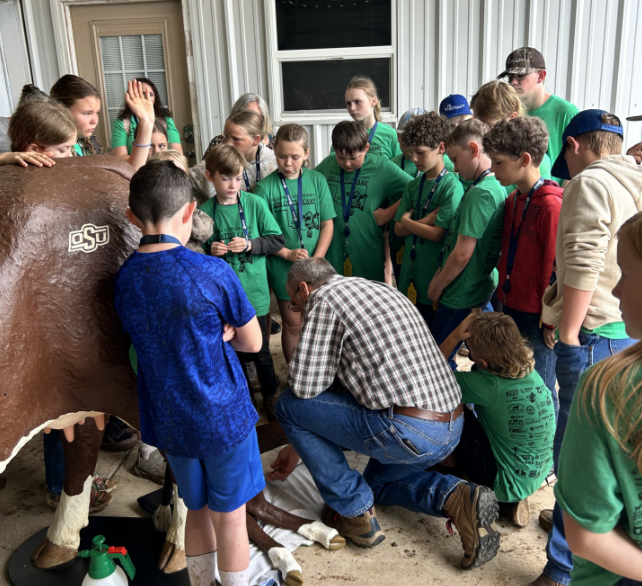
The Oklahoma CattleWomen's Association successfully concluded its second annual Kids Cattle Camp on Saturday, June 6, providing a full day of hands-on agricultural education and activities for children in kindergarten through eighth grade.
Participants had the opportunity to engage in a variety of interactive workshops designed to teach important livestock and agricultural concepts. Activities included pregnancy checking cattle, a mock vaccination class, a barnyard relay, a cow-calf birth simulator, sheepdog herding demonstrations, ice cream making, branding demonstrations, ear tagging, tractor safety education, and numerous other agricultural learning experiences.
The event's success was made possible through the leadership and dedication of Kids Cattle Camp Chair Amy McKinney, along with the many volunteers, generous sponsors, and members of the Oklahoma CattleWomen's Association who worked to create an engaging and educational experience for young participants.
As the second annual Kids Cattle Camp comes to a close, organizers are celebrating another successful year of introducing young people to hands-on agricultural experiences. Families who were unable to attend this year's event are encouraged to watch for information about next summer's camp, as the Oklahoma CattleWomen's Association continues to support educational opportunities that help connect youth with the agricultural industry.

On Monday afternoon, US Secretary of Agriculture Brooke Rollins opened her briefing on the New World Screwworm being held in Kerrville, Texas with the word that we have a fifth case of New World Screwworm found in the state of Texas. She reported "just a couple of hours ago, we just had confirmation in a goat in Gillespie County." (You can hear Rollins make that announcement in the audio above) Later in the briefing, Texas State Vet Bud Dinges said there still sorting out the details of that goat- "we are looking into it- there is some stuff that don't add up" as they research this case reported northeast of Kerrville near Fredericksburg, Texas.
On Monday morning, the U.S. Department of Agriculture's (USDA) Animal and Plant Health Inspection Service (APHIS) confirmed two additional cases of New World screwworm (NWS) in the United States – a calf in La Salle County, Texas, and a dog in Andrews County, Texas.
Epidemiological investigations are ongoing for both cases. A veterinarian in Andrews County submitted the samples from the infested dog. Details on this case will be shared as they are available, but early reports indicate the dog was recently in Mexico.
NWS is a serious pest that threatens livestock, pets, wildlife, and, in rare cases, people. The larvae burrow into the living tissue of animals, causing severe wounds, animal suffering, and significant economic losses.
"Over the past week, USDA has identified and expeditiously confronted four confirmed detections of New World screwworm. While we address these instances that require immediate attention, and continue to sample suspected cases, we are simultaneously working to eradicate the pest entirely," said Dudley Hoskins, Under Secretary for Marketing and Regulatory Programs. "We need the partnership of animal owners across the region – please stay vigilant, check your animals closely, and report anything that looks suspicious. Together, we can protect our livestock, our communities, and the health of animals nationwide."
USDA and the Texas Animal Health Commission (TAHC) continue to lead an aggressive unified response, with a total of 75 people actively responding on the ground and hundreds of additional people around the country providing laboratory diagnostics, logistics, treatment distribution, air operations, outreach, operational planning, and resource support for the response. APHIS and TAHC will continue to surge additional trained personnel as needed to ensure an effective response.
For each new case, USDA and TAHC implement actions outlined in the NWS Response Playbook, including:
USDA continues to release sterile flies over and just outside of the infested areas. To ensure sterile fly release operations can be deployed to affected areas in Texas and in northern Mexico near the border as quickly and efficiently as possible, USDA has activated the sterile fly dispersal facility at Moore Air Base in Edinburg, Texas. Sterile pupae arrived at the facility on Friday, and aerial dispersal flights originating from the base will begin tomorrow.
Because it is important to continue ongoing surveillance efforts while releasing sterile insects, it is possible that sterile NWS flies could be caught and/or reported. To ensure officials can tell the difference between sterile and wild NWS flies, USDA dyes the sterile pupae, and the dye transfers to the sterile flies when they hatch. The fluorescent green or orange dye glows under UV light and may also be visible to the naked eye. If a sterile fly is captured in a trap, this dye allows animal health officials to quickly rule the fly out as a threat.
USDA urges everyone in the area to check animals for:
Anyone who suspects a screwworm infestation should immediately contact their veterinarian, state animal health official, or USDA. USDA has established this contact page to ensure everyone can easily find the correct contact information for these groups. In Texas, report suspected cases in livestock directly to TAHC officials by finding your closest area office here.
Though rare in people, anyone who notices a suspicious lesion should seek immediate medical care.
The U.S. food supply remains safe. NWS does not infest meat, fruits, vegetables, or other food products. Any affected animal would be identified during USDA Food Safety and Inspection Service inspection, and no contaminated product would enter commerce.
USDA and its Texas partners are operating with full transparency, committed to keeping producers, veterinarians, local communities, and the public informed as new information becomes available. USDA will continue to provide timely updates and maintain a visible, sustained presence in affected areas.
More information about New World screwworm is available at Screwworm.gov.

The upcoming vote on State Question 832 is sparking significant concern across Oklahoma's small business sector, with industry leaders warning of sweeping economic consequences. Farm Director KC Sheperd recently sat down with Jerrod Shouse, the State Director of the National Federation of Independent Business (NFIB), to discuss the potential impacts of State Question 832 on small businesses and the agricultural community. As the state prepares to head to the polls, the measure presents a critical turning point for local employers.
"State Question 832 will be in front of a vote of the people here in just a matter of days," Shouse explained. "It raises the minimum wage from the current federal minimum wage that we have in this state, seven plus dollars, to 15, and then it continues to go up based on the consumer price index."
The NFIB, a small-business association that has operated for over 80 years, represents between 3,000 and 4,000 small-business owners across Oklahoma. To determine its stance on the issue, the organization conducted internal member ballots both in 2024 and again recently.
"Overwhelmingly, when we asked our members, 'Should we support or oppose this ballot initiative?' overwhelmingly the answer was no," Shouse said. "We should oppose this ballot initiative because of how it would affect small business owners."
Shouse emphasized that the vast majority of small businesses—often referred to as mom-and-pop shops or Main Street operations—are distributed throughout all 77 counties of Oklahoma. These entities, which may employ anywhere from two to 20 individuals, serve their local communities directly. While many already pay above the minimum wage in response to market demand, a government-mandated increase poses a severe challenge.
"When the government comes in and says, 'You must pay this wage that is a new wage that is, let's say, double what you're paying now,' that's going to have a crazy effect on how their business operates," Shouse noted. "Where's that money going to come from? They may have to raise rates. They may have to raise the price of the food they're selling. They may have to raise the price of the products that are in their stores."
Beyond driving up prices for consumers, Shouse warned that business owners would likely face difficult choices regarding their workforces.
"They may have to cut back hours," Shouse stated. "They may not be able to hire—when somebody leaves for another job, they may not be able to replace them. So it has a lot of effects on a small business that, frankly, a larger business may or may not be able to absorb. But it's really going to hit small business owners just squarely right in the jaw."
During the conversation, Sheperd pointed out a frequently overlooked reality: agricultural operations are fundamentally small businesses, meaning the measure will significantly impact the farming and ranching sectors.
Shouse, who grew up in a small town surrounded by agriculture, strongly agreed, noting that he has hauled hay and participated in farm work himself. He highlighted that operating outside city limits does not exempt a farm or ranch from the realities of small business economics.
"The state question gets rid of a lot of the exemptions that are related to ag, and that's going to be really difficult for our small family farmers and ranchers out in the rural areas," Shouse warned.
Rural producers are already managing a highly volatile economic environment, compounding the pressure of a mandated wage increase.
"They are also dealing with price increases—increase in fuel, increase in equipment," Shouse explained. "Those sorts of things are cutting into their costs, and an increase in the amount of wages they're going to have to pay are going to make that even tougher for them."
While proponents argue that a higher minimum wage would provide an immediate economic boost by placing more money into workers' pockets, the NFIB argues that the structural mechanics of the state question will trigger long-term economic instability. The primary concern lies in linking the wage floor directly to inflation metrics.
"It sounds good, right? Having a little bit extra money in your pocket," Shouse acknowledged. "That may be a short-term positive, but when you tie this to the consumer price index, meaning what is inflation doing? If inflation goes up 1.3% or 4.1% year-over-year, then the minimum wage is going to go up, too. So this is going to go up forever. It's not just a guess; it is reality. The consumer price index goes up every single year, and therefore so will the minimum wage."
This indexation creates a continuous upward shift that affects even those employers who currently pay well above the current minimum floor. Shouse recalled a recent conversation with a small business owner in Stillwater who currently pays staff members between $15 and $20 an hour.
"When the floor rate goes up, and it's going to double... everybody else is going to expect a pay raise too," Shouse said. "So even if you were paying above the minimum wage, that shifts the entire market upward. If you're already paying $10 above the minimum wage, those small business owners are going to feel that, to keep their employees where they are, they'll need to pay above the minimum wage themselves. So even if you're paying above the minimum wage, there's still going to be pressure to pay more."
Shouse reiterated that Oklahoma business owners generally try to establish fair rates based on local economic sectors and geographic realities, ensuring their teams can make a comfortable living. However, an artificial market shift disrupts that localized balance.
The structural adjustments required to absorb these higher labor costs are expected to fundamentally alter Oklahoma's entry-level job market. Shouse shared a personal example, noting that his daughter secured her first job at age 16, earning minimum wage.
"She loved it, and it was a good entry-level opportunity for her," Shouse reflected. "I think we're going to see a lot of that dry up, because companies that can afford to take a risk on a 16-year-old student and pay them $8 an hour, $10 an hour—everything now that's $15 an hour, those sorts of jobs I think we're going to see go away."
Furthermore, the pressure of escalating operational costs is accelerated by an ongoing transition toward automated systems, a trend that could see a marked increase if the measure passes.
"You're already seeing a move toward automation," Shouse observed. "Nobody loves to see a robot do a job, or whenever you have to do self-checkout, those things. I think we're going to see more of that, unfortunately, because the small business owners and the big business owners are going to see that you've got to start finding a way long-term to make the economics work when it comes to these sorts of things."
Ultimately, the constraint on financial margins reduces the capital available for business development, hiring, and localized growth.
"I think you're going to see places that maybe have 12 employees, they may only have nine going forward, and maybe they're going to have to reduce their hours," Shouse said. "Small business owners... are going to have to find ways to make this work economically. Their margins are already thin; they already don't have a lot of money to pay their employees, to begin with. And they're trying to save for like, maybe some new equipment. Maybe I need to buy a new bulldozer, maybe I need to buy a new vehicle for my fleet. Maybe I'm trying to open a second location. This is going to cut into all those sorts of things, and I think what you're going to see is businesses that are honestly trying to grow and expand, this is going to have a chilling effect on them as well."
With early voting scheduled to begin on June 11, the NFIB is urging voters to consider the long-term, systemic impacts on the state's economic foundation before casting their ballots.
"For us, the answer is vote no," Shouse concluded. "There are other ways we can try to address how we increase wages and put more money in people's pockets. NFIB has long supported a fairer tax base; we've long supported fewer regulations, which we feel help small business owners grow their business and be able to pay their employees more. This is not the right answer, so we're asking Oklahomans to please vote no."
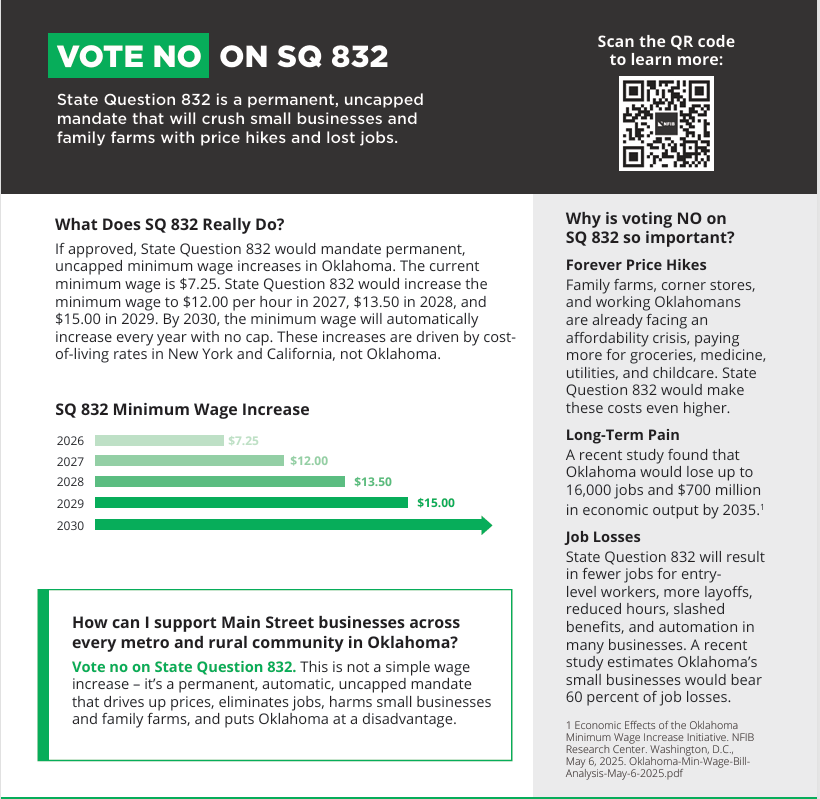
For more information, you can click here:
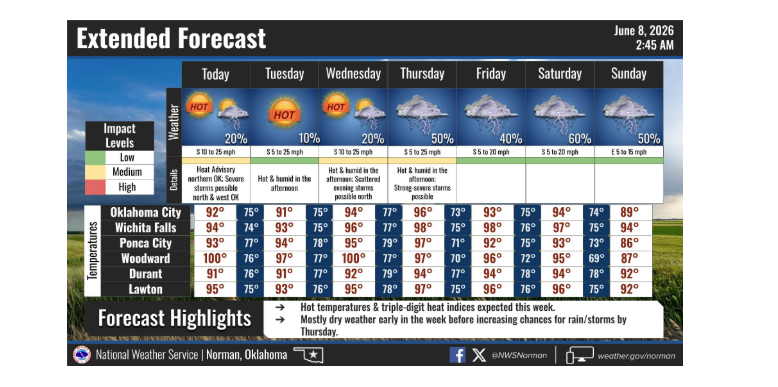
Climatological summer may have only officially kicked off on June 1, but Mother Nature is already cranking the thermostat straight to vintage mid-July. A sweeping heat wave has settled over Oklahoma, triggering the hottest stretch of weather for the warm season thus far and pushing heat index values into territory rarely seen this early in June.
According to Oklahoma State Climatologist Gary McManus, this early arrival of extreme summer heat continues a trend of unseasonable warmth that stretches back several months. In fact, looking at the broader patterns, McManus noted that, for all intents and purposes, we can call this year's warm season starting in February.
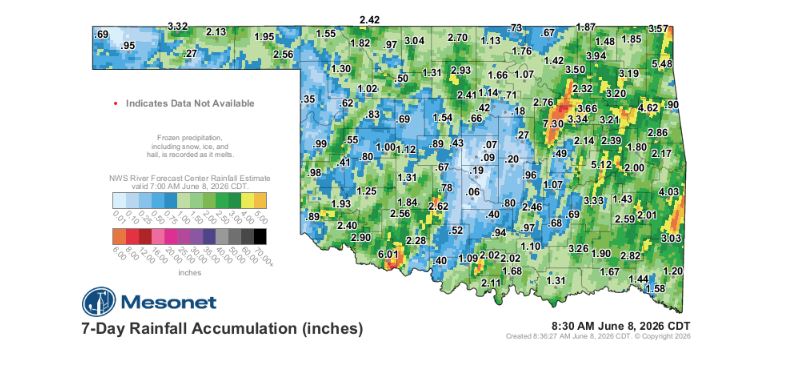
While early June can certainly bring hot days to the southern plains, the intensity of this current stretch is drawing comparisons to the dog days of late summer. McManus pointed out that just looking at the morning low temperatures screams July 18th.
When the daytime sun beats down on moisture left behind by recent rains, the humidity is driving the "feels like" temperatures to jarring levels.
"Seeing that heat index soar 5-10°F above the actual air temperature is a bit jarring, but again...it's summer," McManus said.
Oklahomans are seeing those heat index values push into the 105 to 110-degree range, which is a bit early even for Oklahoma. Data from the Oklahoma Mesonet highlights just how rapidly this heat wave is expanding:
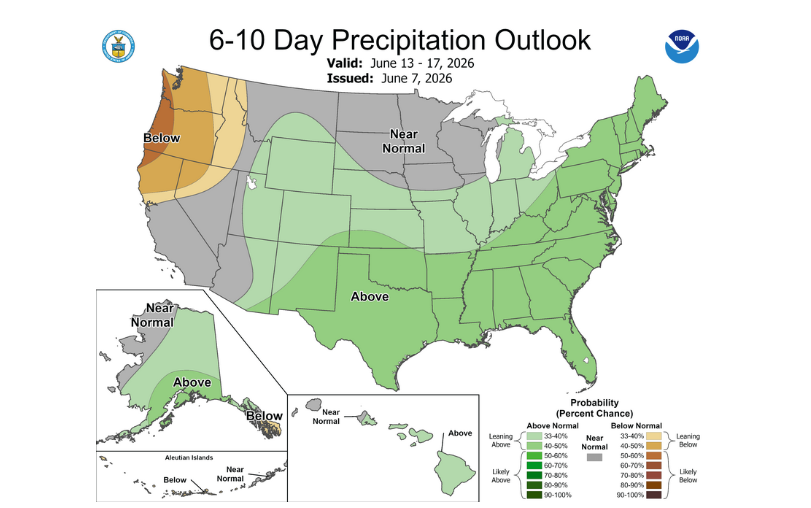
If there is a silver lining to the stifling humidity fueling these high heat indexes, it is the residual moisture left behind from previous storms.
"At least we had substantial rainfall for many over the last week, and at least SOME rainfall for everybody," McManus said.
Of course, Oklahoma weather rarely distributes moisture evenly. McManus noted that there is always somebody that misses out on the good stuff, and this time around it was central Oklahoma.
The hot, heavy air hanging over the state has even triggered some immediate, localized downpours to kick off the week. Looking further ahead, the long-term forecast suggests residents will not have to endure a prolonged dry spell before the next widespread round of relief arrives. McManus said the best news is we shouldn't see a long period before rainfall returns, hopefully later this week.
In today's Beef Buzz, senior farm and ranch broadcaster Ron Hays speaks with Joe Barbour of the Livestock Marketing Association, who says Oklahoma has been working behind the scenes for more than a year to prepare for the possibility of New World screwworm reaching the state while also protecting the ability of cattle producers to continue marketing livestock.
With two confirmed cases of New World screwworm now reported in South Texas, concern continues to grow across the cattle industry. While the outbreak remains hundreds of miles from the Oklahoma border, Barbour said extensive planning efforts are already underway. "It's been a huge topic, and you'd have to be living under a rock to not heard of the New World screwworm in our industry by now," Barbour said.
Barbour praised the work of Oklahoma's Animal Health Division and said the state has taken a leadership role in preparing for a potential outbreak. "We're blessed here in Oklahoma to have a fantastic staff within our Animal Health Division of the Oklahoma Department of Ag, and they've been leading the charge as one of the states at the forefront of staying ahead of if the New World screwworm were to come into Oklahoma," he said.
Barbour said discussions involving state animal health officials, industry leaders and livestock market representatives began more than a year ago. "Dr. Hall and Dr. Gorczyca and I, along with Michael Kelsey, sat down here sometime back over a year ago and took the first look at what that plan would look like," Barbour said. "We discussed and went through positives and negatives and ran through scenarios."
More recently, Oklahoma stakeholders participated in a tabletop exercise designed to test how the state would respond if New World screwworm were detected within its borders. The industry "sat down with a larger group out of Oklahoma and kind of did a tabletop exercise and gave some scenarios on if the New World screwworm were to show up down in southeast Oklahoma, how would Oklahoma react to that situation," Barbour explained.
The discussions also focused on how neighboring states would respond to cattle movements originating from Oklahoma. "How would other states react to Oklahoma cattle moving out of Oklahoma and other states?" he said.
According to Barbour, Oklahoma has worked closely with surrounding states to develop a practical response plan. "Oklahoma has really been at the forefront of that conversation and has worked seamlessly with Texas, New Mexico, Kansas and some of these other states that border us in different ways to try to develop a plan that not only shuts down the New World screwworm but allows business to maintain continuity."
Barbour said maintaining normal cattle marketing channels remains a top priority for the Livestock Marketing Association. "Of course, we don't want the New World screwworm, but we do want to be able to continue to conduct business, sell cattle at auction, allow producers to move cattle easily if that thing were to come to this state," he said.
He added that Oklahoma's preparation efforts should ultimately benefit cattle producers if a detection ever occurs. "I'm confident that we've come up with a plan in Oklahoma that can live with if the New World screwworm were to come here, show up here," Barbour said. "I don't think all the states have been near as involved as Oklahoma has in that planning process, and that'll be to the benefit of our producers down the road."
Barbour emphasized that livestock markets play a critical role in helping producers market cattle when animals reach the point where they need to move. "Cattle are something that they get to a certain timeline within their life cycle that they have to move and they have to be sold," Barbour said.
He noted that Oklahoma producers have access to livestock auctions throughout the state nearly every day of the week. "At any given time, six days a week, you can find a livestock auction in Oklahoma that you can turn that animal into a good check for you as a producer," he said.
Looking ahead, Barbour said the goal is to ensure cattle can continue moving through the marketplace with as little disruption as possible should New World screwworm ever reach Oklahoma. "We've got to be able to continue that continuity of being able to sell those cattle when they're ready to go with the least amount of regulation as possible in the New World screwworm situation," Barbour said.
The Beef Buzz is a regular feature heard on radio stations around the region on the Radio Oklahoma Ag Network and is a regular audio feature found on this website as well. Click on the LISTEN BAR above for today's show and check out our archives for older Beef Buzz shows covering the gamut of the beef cattle industry today.
The shoe has finally dropped. For many months producers and markets have operated under the threat of New World Screwworm (NWS) coming into the U.S. Now that it's here, we can get on with the reality of dealing with it. The bad news is that NWS will be costly and a management headache for affected producers and those nearby, along with industry and agency folks tasked with controlling and eradicating the pest. Time spent planning and anticipating an outbreak now shifts to actions.
The psychological impact has been mostly one of relief, especially in futures markets. The arrival of NWS has been one of many sources of uncertainty hanging over cattle markets for months. Confirmation of NWS in the country removes one source of uncertainty and allows the market to focus on the reality, which has largely been priced into the market.
The "good" news in all this is that it is not a broader market issue. NWS will affect relatively few animals and is not something that will affect the cattle supply or beef production. It also is not a food safety issue and there are no impacts on meat. Beef market supply and demand fundamentals are not affected and no significant market impacts are anticipated.
Additionally, no major trade impacts are warranted or expected relative to NWS. However, the reaction of trade partners is unpredictable. Canada has announced a temporary ban on livestock from Texas. This is seen as a largely symbolic political move as it will affect a very small volume of trade. Although there is significant bilateral cattle trade between Canada and the U.S., very few Texas cattle are typically involved. Canada is well north of the climate boundary for NWS and the threat is minimal.
Another part of the uncertainty about NWS is the continued closure of the Mexican border. It is uncertain if the fact of NWS in the U.S. will change political decisions regarding the status of border. The market will continue to wait for news about when the border might open. Once again, the impacts are more related to the uncertainty than the reality. When it happens, opening the border will likely be a deliberate and relatively slow process. Over time, Mexican cattle flows into the U.S. may rebuild with marginal impacts on feeder cattle supplies in the country but no immediate disruptive shocks to cattle markets are anticipated.
Like most disasters, the impacts of NWS will be primarily local. It will take significant efforts and dollars to ensure a perimeter around the outbreak and effective animal movement controls to contain the pest along with diligent monitoring and treatment of any affected animals. It is uncertain at this point how large of a region might be involved in this outbreak, but no major cattle or beef market impacts are anticipated.
The National Dairy Farmers Assuring Responsible Management (FARM) Program today celebrates the release of an updated Secure Milk Supply (SMS) Plan, website, and resources, ensuring the health and wellbeing of dairy cattle while preserving the economic viability of dairy businesses.
"It was a great opportunity to collaborate with other farmers, processors, veterinarians, and state and federal officials to update the SMS Plan for our evolving dairy industry," said Tom Walsh, a dairy farmer from Minnesota. "We put together many commonsense resources to protect our animals and consumers while still milking healthy cows and moving healthy animals."
Updates include the expansion of the SMS Plan for Continuity of Business for use beyond foot and mouth disease (FMD) to include similar contagious diseases like H5N1, resources for producers, cooperatives and processors, as well as updated movement permit guidance that includes raw milk for animal feed and more.
The FARM Biosecurity — Enhanced Program aligns with the Secure Milk Supply Plan for Continuity of Business to provide dairy farmers with the tools needed to develop an enhanced biosecurity plan.
The dairy industry and animal disease threats have changed since the SMS Plan was first created in 2017. Dr. Craig McConnel, an Extension Veterinarian from Washington State University, shared, "This experience opened my eyes to the practical considerations needed to create applicable plans for a broad range of dairy enterprises. I respect all the thought and discussion to create a flexible yet thorough enhanced biosecurity template for FMD, H5N1, or future disease challenges."
An SMS technical committee comprised of dairy producers like Walsh, cooperatives, processors, extension veterinarians like McConnel, academicians, state and federal animal health officials met monthly from February 2025 to January 2026 to review stakeholder input and guide the updates to the SMS Plan.
An updated draft plan was presented in a national stakeholder webinar, and FARM captured stakeholder feedback last November through a public comment period before the technical committee finalized the updated plan in February.
The new SMS website was reorganized based on stakeholder input, making it easier to find resources to prepare for an outbreak. The website overhaul was executed by Iowa State University's Center for Food Security and Public Health (CFSPH) and Dr. Danelle Bickett-Weddle of Preventalytics, with support from the National Dairy FARM Program.
National Milk Producers Federation (NMPF), which administers the FARM Program, was awarded funding in July 2024 from USDA's National Animal Disease Preparedness and Response Program (NADPRP) to better prepare farmers for foot and mouth disease, should an outbreak occur in the U.S.

For 250 years, America has been built by generations of men and women who worked the land, fed their communities, and passed their values from one generation to the next. As the nation commemorates its 250th Anniversary in 2026, Antique Tractor Preservation Day offers a unique opportunity to celebrate the machines—and the people—that helped shape America's agricultural story.
In 2026, America celebrates one of the most significant milestones in its history—the 250th Anniversary of American Independence. This nationwide commemoration, led by the United States Semiquincentennial Commission, invites Americans to reflect on our nation's heritage, achievements, and enduring traditions. The story of America's independence is deeply connected to the story of American agriculture. In 1776, approximately 95 percent of the population was engaged in farming. Many of the men and women who supported the cause of freedom were also those who cultivated the land, fed their communities, and helped build the foundation of a new nation. From the very beginning, agriculture has been woven into the fabric of America's identity.
Over the past 250 years, both America and its agricultural industry have been shaped by the same enduring values—perseverance, innovation, self-reliance, and generational stewardship. These principles helped transform a young nation into a global leader and enabled farming families to overcome challenges, adapt to change, and pass their knowledge and traditions from one generation to the next.
As the United States expanded westward, American farmers played a vital role in shaping the landscape of the nation. Equipped first with horse-drawn implements and later with tractors and agricultural machinery, they broke the prairie sod and transformed the rugged Great Plains into productive farmland. Their efforts helped establish thriving rural communities and created an agricultural system that continues to feed America and much of the world.
The arrival of tractors marked one of the most significant technological advances in agricultural history. By the mid-20th century, tractors had largely replaced animal power on American farms, increasing productivity and helping usher in a new era of agricultural efficiency and growth.
For generations, tractors have stood as powerful symbols of innovation, productivity, and independence. These machines revolutionized agriculture, increased food production, improved efficiency, and helped fuel America's economic growth and prosperity. Behind every tractor is a story of ingenuity, determination, hard work, and rural family values—qualities that helped build both American agriculture and the nation itself. As tractors became fixtures on American farms, they also became woven into the fabric of family life and rural culture. Long after their years of fieldwork have ended, many antique tractors continue to hold a special place in the hearts of farming families and collectors.
As Michael Hinton, founder of Antique Tractor Preservation Day, often reminds collectors and farming
families:
"Tractors are more than just essential farm machinery used for agricultural production. They're part of our core heritage. A cherished family keepsake, handed down from one generation to another and ingrained with acres of stories. They create friendships that span fields near and far, and memories that last one's lifetime."
Michael Hinton
Founder, Antique Tractor Preservation Day
National Agricultural Hall of Fame Inductee (2025)
www.TalkingTractors.com
In many farm families, a tractor is more than a machine, it is a living connection between generations,
carrying with it the memories, lessons, and traditions of those who came before.
Established to encourage the preservation and appreciation of antique tractors and agricultural machinery, Antique Tractor Preservation Day recognizes the vital role these machines played in America's agricultural development and rural way of life. Since its founding in 2010, the observance has grown into a nationwide effort to preserve and celebrate America's agricultural machinery heritage.
This is why Antique Tractor Preservation Day holds special significance during the America 250 celebration. Observed on August 22, 2026, the day provides an opportunity to recognize the important role antique tractors and agricultural machinery have played in shaping American agriculture, strengthening rural communities, and preserving the family-centered traditions that have long defined life in rural America.
On August 22, communities across America will have an opportunity to celebrate, preserve, and share the stories behind these iconic machines while honoring the farmers, families, and innovators who helped build the nation.
Preserving antique tractors and agricultural equipment ensures that future generations can better understand and appreciate the remarkable innovations that transformed farming and the dedicated people who operated
these machines. These tractors are more than historical artifacts; they are tangible reminders of the resilience, creativity, determination, and strong family values that have sustained American agriculture for centuries and continue to be passed from one generation to the next.
The growing recognition of Antique Tractor Preservation Day reflects a broader appreciation for America's agricultural heritage and the importance of preserving the machinery, stories, values, and traditions that contributed to our nation's success. As we commemorate 250 years of American history in 2026, this observance serves as a meaningful reminder of the innovation, perseverance, rural family values, and agricultural stewardship that continue to define our country and inspire future generations.
Whether displayed in a museum, restored in a family workshop, or proudly driven in a hometown parade,
antique tractors connect us to the people, places, and values that built rural America. As our nation
celebrates 250 years of independence, preserving these machines helps ensure that the stories of American
agriculture, the strength of rural communities, and the legacy of family farms endure for generations to
come. In doing so, we honor not only the machinery that transformed our fields, but also the men, women,
and families whose hard work helped shape the American story.

Zoetis has announced the three winners of its Champions of Care Caregiver Awards, recognizing individuals who are dedicated to the pork industry. The company honored the 2026 winners at a special event held during World Pork Expo. Winners are: Alfonso Aguilar Vega, Tosh Farms in Tennessee; Lyle Lupe, AMVC in Arizona; and Rob English, Country View Family Farms in Indiana.
The Caregiver Awards celebrate the vital role caregivers play in raising healthy pigs and supporting a safe, high-quality food supply. A panel of judges selected the winners based on their dedication to animal care, ability to foster strong teams and a commitment to inspire the next generation of industry leaders.
"On farms and in barns, caregivers are the backbone of our industry. And, at Zoetis, we are committed to honoring them and the work they do," said Wes Lack, National Sales Director, Zoetis Pork. "We're proud to honor Alfonso, Lyle and Rob, who exemplify what it means to champion care every day through their dedication to animals and their teams."
Recognizing excellence in caregiving
English has worked in the industry for 33 years and currently serves as the general manager for production operations at Country View Family Farms. He is known for his compassionate demeanor, servant leadership, mentoring teams and championing animal care. He promotes continuous improvement, inspiring hundreds through mentorship with a passion for pig production. He says he especially enjoys working with and mentoring young leaders on the farm.
Lupe is a nursery production manager for AMVC and leads a team of barn managers, overseeing health, production, maintenance and environmental work. He is known for leading with compassion, kindness and a calm attitude. His focus on providing individualized care to maintain animal health is key to his success, along with setting a high standard for his teams.
Aguilar Vega is a herdsman for Tosh Farms and is known for his genuine care in everything he does. In his role, he helps build team culture and encourages others to rise to his level. He shares he enjoys the people he works with and understands his role takes dedication to caring for animals in order to provide food for people. Prior to finding a home in the swine industry, he worked in construction.
The Zoetis Champions of Care Caregiver Awards program kicks off again this fall with nominations for the 2027 Caregiver Awards opening in October. For more information, visit zoetisus.com/pork/caregiver-awards.

As electricity demand grows, solar energy projects are being deployed at a rapid rate. New research from the Center for Rural Affairs highlights how land use tax policy can incentivize keeping land used for solar development in agricultural use at the same time.
Released today, the fact sheet "Land Use Tax Policy Considerations for Agrisolar" examines how tax policy can support the coexistence of renewable energy and agriculture by incentivizing dual-use or agrivoltaic practices.
"As solar development accelerates, some states have adopted policies allowing land used for solar to retain its lower agricultural tax classification, as long as the land under the panels is maintained in agricultural use, such as grazing or crops," said Laura Priest, policy associate with the Center for Rural Affairs. "This approach can allow farmers to take advantage of additional income from clean energy development while keeping land in ag use."
The fact sheet notes that current use taxation practices often reduce property tax burdens for farmland owners. When land is removed from these programs for solar development, penalties or higher assessments may apply. However, states can design tax policies that allow land to remain classified as agricultural when dual-use practices are in place, supporting both energy production and farming.
For example, in 2025 the state of Nevada adopted bipartisan legislation that defined what it considered to be agrivoltaic practices, and specified that land used in this manner retains similar tax benefits to traditional farmland.
"Thoughtful tax policy can encourage agrisolar approaches that strengthen farm viability, support energy needs, and keep land in agricultural use," Priest said.
To read and download the fact sheet, visit cfra.org/publications.
RON's Dave Lanning has a pre-opening look at today's agricultural Markets.
Click the audio tab below for today's report.
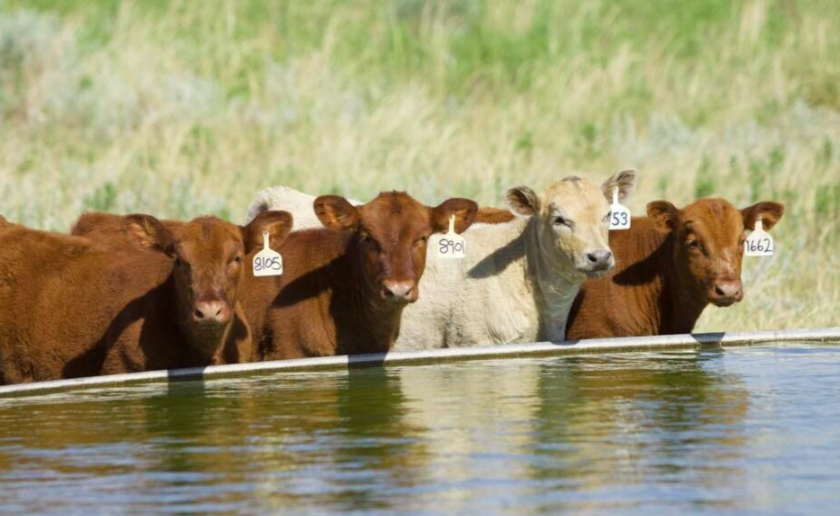
June 4, USDA announced a second case of New World Screwworm (NWS) approximately five and a half miles from the first confirmed case. The sample was collected from a one-month-old calf. While this development is not unexpected, it reinforces the importance of early detection and immediate response.
Currently, there are no other confirmed cases of NWS elsewhere in the United States.
As we shared in our initial communication to OCA members, the response by USDA and our partners in Texas has been robust and aggressive. A comprehensive playbook has been developed to respond to and work through this situation. By working together, our industry and partners can and will address this pest.
OCA has been in active communication with Secretary Blayne Arthur and Dr. Rod Hall at the Oklahoma Department of Agriculture, Food and Forestry (ODAFF) over the past several days and will continue to do so. We continue to appreciate their excellent leadership and the partnership they foster with animal agriculture.
Many states are beginning to issue requirements for the movement of livestock into their states. As always, if you plan to transport cattle out of or into Oklahoma, it is important to understand the rules issued by each state veterinarian's office. Your local veterinarian will know these requirements and can help guide you through the process. You can also contact the ODAFF State Veterinarian's office for clarification at 405-522-6141.
Important resources for OCA members:
Livestock producers can visit screwworm.gov for specific information on how to prepare, available resources and the most current official updates.
Oklahoma State University Extension has excellent resources available by clicking here.
Important information for OCA members:
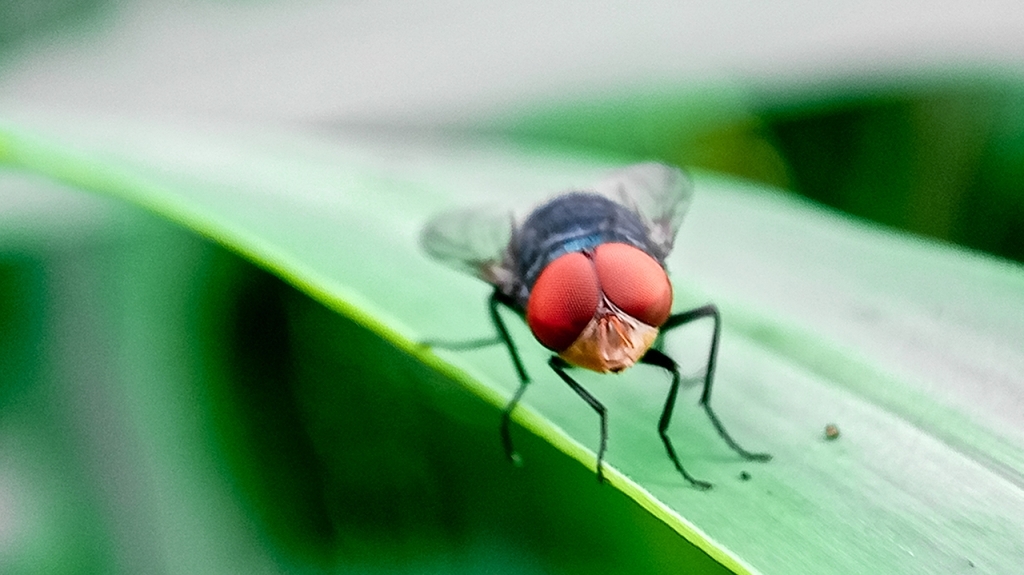
The U.S. Department of Agriculture's (USDA) Animal and Plant Health Inspection Service (APHIS) has confirmed a second detection of New World screwworm (NWS) after testing a number of suspect cases. The confirmed case was found in a one-month-old calf in Zavala County, Texas, approximately 5.6 miles away from the first confirmed detection. APHIS and our Texas partners continue to collect and test other samples from the surrounding area which have come back negative.
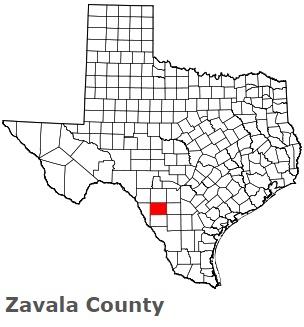
NWS is a serious pest that threatens livestock, pets, wildlife, and, in rare cases, people. The larvae burrow into the living tissue of animals, causing severe wounds, animal suffering, and significant economic losses.
"USDA has responded expediently with respect to this second detection, demonstrating our utmost preparedness. This second detection is within the established movement control zone and enhanced sterile insect dispersal area." said Dudley Hoskins, Under Secretary for Marketing and Regulatory Programs. "Many models projected this pest would reach the United States last year, but thanks to USDA's phenomenal work and our cooperation with state, federal, and industry partners, we've held it off until now—when we are far more prepared to respond. USDA has not wasted any time in this fight, we have defeated New World screwworm before, and we will do it again."
USDA Strike Team and Rapid Deployment Capacity
An APHIS strike team is already on-site in Texas. This team includes veterinary medical officers and animal health technicians – experienced experts who serve as USDA's boots on the ground response force. APHIS is fully positioned to surge additional trained personnel as needed.
The National Veterinary Services Laboratories (NVSL) has deployed an entomologist to the USDA Agricultural Research Service laboratory in Kerrville, Texas, to expedite confirmation processes by positioning NVSL diagnostic assets in the area.
APHIS has also deployed two dedicated NWS response cargo trailers. Each 24-foot trailer serves as a mobile preparedness and field operations center. Once unloaded, the trailers convert into operational and laboratory space, providing USDA personnel with the equipment and environment necessary to mount a rapid, efficient response.
Treatment Resources and Supplies
The U.S. Food and Drug Administration has issued emergency use authorizations for several NWS treatments for different species. Currently, there are treatments available to support cattle, horses, swine, goats, captive exotic animals, and wildlife.
The National Veterinary Stockpile is actively procuring additional tools to treat and prevent NWS. USDA is working with federal and regulatory partners, and within federal purchasing processes, to secure more treatment options that are flexible, safe, and effective.
The National Veterinary Stockpile has relocated NWS treatment supplies to Texas to better support affected producers in the infested zone. If you or anyone you know needs access to these treatment supplies, they are now available and can be obtained by reaching out directly to the Texas Animal Health Commission (TAHC).
Intensified Sterile Fly Operations
As part of the established NWS eradication strategy, USDA began releasing sterile flies over the area on June 4. These missions will disperse 2 million sterile screwworms twice a week to disrupt the pest's lifecycle.
In addition to aerial releases, USDA is shipping another 4 million sterile flies per week to Texas. These will be deployed using 24 ground release chambers, strategically placed in and around the detection zone to maximize impact.
Unified Response Actions in Texas
USDA and TAHC remain in unified incident command and are implementing actions outlined in the NWS Response Playbook, including:
Guidance for Pet and Livestock Owners
USDA urges everyone in the area to check animals for:
Anyone who suspects a screwworm infestation should immediately contact their veterinarian, state animal health official, or USDA.
Though rare in people, anyone who notices a suspicious lesion should seek immediate medical care.
Food Safety
The U.S. food supply remains safe. Screwworms do not infest meat, fruits, vegetables, or other food products. Any affected animal would be identified during USDA Food Safety and Inspection Service inspection, and no contaminated product would enter commerce.
Continued Federal Leadership
For more than a year, USDA has led a unified national response effort, deployed enhanced surveillance, strengthened its border defense strategy, and supported cross-border operations in Mexico and Central America. These efforts have bought critical time and ensured the United States is better prepared to respond to these detections.
More information about New World screwworm is available at Screwworm.gov. Details of the cases in the US can be found by clicking here.
The National Association of Farmer Elected Committees (NAFEC) represents locally elected committee members in every state and county in the nation. Since the 1930's, the Farm Service Agency and its forerunners (AAA, ASC, ASCS,etc.) have worked tirelessly to deliver farm programs at the local level to support American farmers and ranchers. Beginning with Abraham Lincolns' establishment of the USDA in the 1860's, and continuing with FDR's establishment of the Agriculture Adjustment Administration in the 1930's, bipartisan farm policy supported by our Agriculture organizations and legislated by Congress, have made American Agriculture one of the greatest success stories in our country's history.
NAFEC follows legislation that impacts the farmers and ranchers as well as the functions and responsibilities of the Farm Service Agency (FSA) Office staff and the Farmer Elected County Committees (COC's) that are located in the county offices across the nation. Recently the House Agriculture Committee submitted draft legislation in H.R. 8467. NAFEC believes the majority of the new recommendations for the 2024 Farm Bill are in the best interest of those that NAFEC looks to support, however, there are concerns regarding Sections 12202 and 12204 of the House Draft Farm Bill which directs the legislation for Farm Service Agency (FSA) and the Natural Resources Conservation Service (NRCS). The following items should be reviewed as they are not supported by NAFEC:
Yesterday, Representative Frank D. Lucas (OK-03) at a hearing supported Secretary of Agriculture Brooke Rollins and her efforts to combat new world screwworm.
Lucas emphasized the importance of resource allocation to fund new facilities and increase production in current facilities.
Partial Transcript:
"Secretary, I'd like to discuss also the new world screwworm for a moment, Lucas said. "And first, I want to thank you, Secretary Rollins, for your being extremely transparent and quick in response to the situation in Texas yesterday."
"You, obviously, and the department are taking this very, very seriously, correct?" Lucas asked.
"That's correct," said Secretary Rollins.
"You're working very hard, creating more facilities, increasing the production at existing facilities," Lucas said.
"This will never go completely away. We just have to be vigilant and prepared," Lucas concluded.
Today, Congressman Tom Cole (OK-04) voted in favor of H.R. 8646, the Agriculture, Rural Development, Food and Drug Administration, and Related Agencies Appropriations Act for the Fiscal Year 2027. This legislation funds the United States Department of Agriculture, the Food and Drug Administration, and the Commodity Future Trading Commission. After voting in favor of the legislation, Congressman Cole released the following statement:
"As the representative for over 13,000 farms and ranches in Oklahoma's Fourth District alone, I know this to be true: when American agriculture is strong, America is strong. Today's Agriculture funding bill recognizes that simple truth," said Congressman Cole.
"This legislation supports our farmers, ranchers, and rural communities. It invests in research to keep our nation's agriculture industry competitive and in food safety through important inspection resources and protecting American agriculture from foreign pests and diseases. The bill reinforces America First principles by advancing 'MAHA' priorities and ending Biden-era regulations and Climate Corps funding. It strengthens rural communities, so many of which I represent in Oklahoma, by prioritizing funding for home ownership loans, broadband investments, and infrastructure development. On top of that, the bill tightens oversight of foreign purchases of agricultural land, reinforcing critical national security priorities," said Congressman Cole.
"From the farm to the dinner table, the FY-27 Agriculture, Rural Development, Food and Drug Administration, and Related Agencies Appropriations Act puts the American people first and I am proud to have voted in favor of it today," said Congressman Cole.
Key Provisions Secured for Oklahoma in the Agriculture, Rural Development, Food and Drug Administration, and Related Agencies Appropriations Act for the Fiscal Year 2027
- $35 million for the Watershed Protection and Flood Prevention Operations Program, which will help support the over 2,100 watersheds in Oklahoma and enhance their flood control efforts. $10 million of these dollars are specifically for states, like Oklahoma, specializing in corrugated metal pipe projects.
- $3 million for the Watershed Rehabilitation Program.
- $50 million loan authorization level for the Rural Energy for America Program. 20% of this is allocated for distributed wind investments, supporting small wind operations in Oklahoma.
- $271 million, which is a $36 million increase over the enacted number, for the Food Distribution Program on Indian Reservations. Oklahoma has the highest participation in this program out of any state, so this increased funding will help the over 20,000 tribal citizens in the state have access to food assistance.
- Over $1.5 billion for the National Institute of Food and Agriculture to conduct research, education, and extension activities which support our nation's land-grant universities like Oklahoma State University, Langston University, and the College of Muscogee Creek, execute agricultural innovation and advancements.
- $435 million for the Agriculture and Food Research Initiative.
- $3 million for research developments focusing on Oklahoma initiatives such as wheat breeding, wildfire prevention, barley resiliency, and biosecurity.
- $24 million for the Circuit Rider Program, which helps support the over 3,000 technical assistance visits that Oklahoma Rural Water Association circuit riders carry out each year.
- $481.5 million for the Emergency Food Assistance Program.
- $14 million for the Veterinary Medicine Loan Repayment and Services Grant Program, which will help the over 60 counties in Oklahoma experiencing veterinarian shortages.
- $115.5 million for Cattle Health with $10 million specifically for the New World Screwworm initiative and an increase of $700,000 for Asian Longhorned Tick outreach and education efforts.
- $410.8 million increase for food safety state inspections to ensure states, like Oklahoma, are receiving proper reimbursements for meat and poultry inspection programs.

The Advancing Markets for Producers Initiative (AMP) is bringing a new approach to conservation and agricultural growth in Oklahoma, focusing on helping producers access new markets and add value to the conservation practices they are already implementing on their operations. According to Jean Lam-Thompson, executive director of the Oklahoma Association of Conservation Districts (OACD), the newly launched program is designed to connect conservation stewardship with long-term economic opportunities for farmers and ranchers across the state.
Speaking about the program with associate farm reporter Carli Davenport, Lam-Thompson explained that AMP differs from many traditional conservation programs producers may already know. "What's different about this program is that it's not necessarily focused on program implementation, cost-share practice implementation, or practices," Lam-Thompson said. "Really, what this program is focused on is market accessibility and adding value to what those land stewards are already doing in their regenerative practices or conservation on their land."
The program is being administered through OACD with funding from USDA's Natural Resources Conservation Service (NRCS). Lam-Thompson said the goal is to help producers capitalize on conservation efforts that are already benefiting their operations.
Lam-Thompson emphasized that the program is available statewide and is intended to serve a wide variety of agricultural operations. "This program is open to all producers in all 84 state-appropriated conservation districts," she said. "So, we go all across the state, and it's engaging all producers engaged in all types of agriculture."
The program's primary audience includes producers looking to expand their opportunities through conservation-based production systems. "What we're really looking for is producers who are ready to take their operation to the next level by pursuing new markets for regeneratively raised products through conservation stewardship," Lam-Thompson said.
She noted that producers do not have to be longtime conservation practitioners to participate. "Whether you've been on your regenerative path for a while or you've been hesitant to implement new practices, there's a spot for you in this program."
One of the most notable aspects of AMP is the funding available to participating producers. The initiative includes a total investment of $3.45 million that will be directed into Oklahoma farms and ranches. "This project is significant, and it has the real potential to impact conservation at scale," Thompson said. "It's $3.45 million overall. It'll be invested directly into Oklahoma farms and ranches through financial assistance that supports producers pursuing conservation."
Individual financial assistance awards can range from $10,000 to $35,000, but Lam-Thompson stressed that the program's value extends beyond the dollars available. "What's different about the $3.45 million is not only the size of the investment, but it's the fact that it's a direct financial investment and not tied back to the technical support that we're able to provide through our partners at the Oklahoma Conservation Commission," she explained.
Lam-Thompson also highlighted the role Oklahoma producers have played in advancing conservation practices long before they became national talking points. "I want to remind everyone that it's not the size of the investment in your operation that creates change, it's about who's entrusted with delivering the results," Thompson said. "I think that's why Oklahoma is the best place in the nation to deliver this program."
She added, "We're working with Oklahoma farmers and ranchers. These folks are innovators. Many of the conservation practices that are being discussed nationally are practices that Oklahoma farmers and ranchers have been implementing for generations."
Unlike programs that simply encourage the adoption of individual conservation practices, AMP is intended to help producers think about how conservation fits into the broader business strategy of their operation. "This program is what you make of it, so it's really going to be about participatory-based engagement with the program," Lam-Thompson said.
While practices such as rotational grazing, soil health improvements, water conservation, prescribed grazing, and brush management can be part of a producer's pathway, Lam-Thompson said the larger goal is creating stronger operations. "We really need to start thinking more systemically about how those programs create more economic resiliency in the operation, as opposed to the length of the program enrollment," she said.
Applications are currently open, and Thompson encouraged producers from a wide range of agricultural sectors to consider participating. "It's open to all producers in all 84 state-appropriated conservation districts," she said. "Any producer engaged in any agricultural enterprise."
Priority areas include grazing systems for beef production, particularly cow-calf operations, row-crop production, specialty crops for local food systems, and pecan production. "An exciting addition, new to our traditional programming scope, is a focus on pecan production," Lam-Thompson said.
Producers interested in learning more or applying can do so through the Oklahoma conservation website. Lam-Thompson also encouraged applicants to work closely with their local conservation districts throughout the process.
"My additional call to action to any producers interested in applying, or who have successfully applied, is to engage with your local conservation district," she said. "Pick up the phone or shoot them an email and let them know that you've applied, or if you need assistance with your application, please reach out to your local office."
Lam-Thompson underscored the long-standing role conservation districts play in Oklahoma communities. "Conservation districts are the foundation upon which conservation is built," she said. "They've been the trusted boots on the ground in your community for generations."
Applications for the Advancing Markets for Producers Initiative are open now, with the application deadline set for July 31. Thompson encouraged interested producers to learn more about the program and take advantage of the opportunity to strengthen both conservation efforts and market opportunities within their operations.

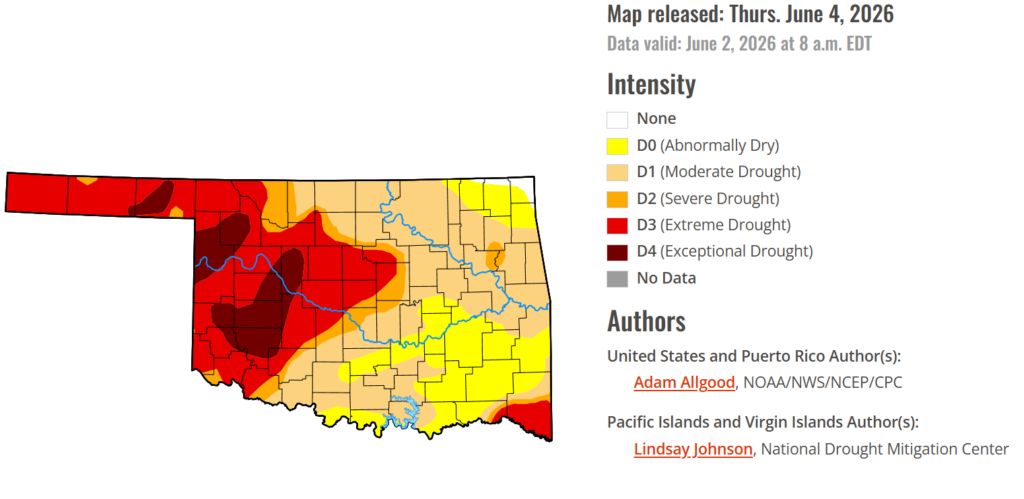
This Secretarial natural disaster designation allows the United States Department of Agriculture (USDA) Farm Service Agency (FSA) to extend much-needed emergency credit to producers recovering from natural disasters through emergency loans. Emergency loans can be used to meet various recovery needs including the replacement of essential items such as equipment or livestock, reorganization of a farming operation, or to refinance certain debts. FSA will review the loans based on the extent of losses, security available, and repayment ability.
According to the U.S. Drought Monitor, these counties suffered from a drought intensity value during the growing season of 1) D2 Drought-Severe for 8 or more consecutive weeks or 2) D3 Drought-Extreme or D4 Drought-Exceptional.
Impacted Area: New Mexico
Triggering Disaster: Drought
Application Deadline: February 1, 2027
Primary Counties Eligible: Union
Contiguous Counties Also Eligible:
Colorado: Baca, Las Animas
New Mexico: Colfax, Harding, Quay
Oklahoma: Cimarron
Texas: Dallam, Hartley
More Resources
On farmers.gov, the Disaster Assistance Discovery Tool, Disaster Assistance-at-a-Glance fact sheet, and Loan Assistance Tool can help you determine program or loan options. To file a Notice of Loss or to ask questions about available programs, contact your local USDA Service Center.
As the New World Screwworm (NWS) continues to make headlines, it is important to be aware of your herd's risk level. Producers need to be prepared to implement additional monitoring and biosecurity measures if an infestation occurs in their area. Dr. Mitch Blanding, the director of beef technical services at Zoetis, discussed steps producers can take to prepare for a potential NWS incursion.
Unfortunately, New World Screwworm poses serious welfare and economic risks for U.S. livestock producers. Producers should be prepared to report a New World Screwworm incursion as quickly as possible and follow USDA-aligned wound protocols with their veterinarian.
Any cattle producer in close geographic proximity to a screwworm incident or where an infestation is likely to occur should work closely with their herd veterinarian to determine risk levels and assess any potential adjustments to management practices.
Producers are also encouraged to work closely with their veterinarians to implement written plans. The industry objective is to document and isolate these cases, clean and debride wounds where possible, remove easily removed larvae, and apply approved topicals. Managing animal pain throughout this process is another critical component.
Dr. Blanding highlighted the treatment options available for managing screwworm infestations, noting that Dectomax and Dectomax CA1 have been granted an Emergency Use Authorization (EUA) by the U.S. Food and Drug Administration (FDA) for dairy cattle, horses, swine, sheep, and deer.
The FDA issued the EUA for Dectomax and Dectomax CA1 for specific indications:
For more information on New World Screwworm and the current conditional approval and emergency use authorization for Dectomax and Dectomax CA1, producers can visit zoetisus.com/newworldscrewworm.
Industry stakeholders should also refer to the USDA New World Screwworm response playbook and contact their veterinarian, state animal health official, or USDA APHIS to report any suspected infestations.
Important Information: Dectomax-CA1 Injectable (Cattle only), as authorized under the Conditional Approval for use against New World screwworm, has a 35-day pre-slaughter withdrawal period. Do not use in calves to be processed for veal. Do not use in female dairy cattle 20 months of age or older, except under the conditions of the Emergency Use Authorization. Use in dogs may result in fatalities.
Dectomax/Dectomax CA1 Injectable Emergency Use Authorization, authorized for the duration of the emergency declaration, does not provide full or conditional approval, but the Center for Veterinary Medicine (CVM) at the Food and Drug Administration (FDA) has determined that Dectomax/Dectomax CA1 may be effective and safe.
Dectomax/Dectomax-CA1 Injectable, as authorized under the Emergency Use Authorization for use against New World screwworm, has a 35-day pre-slaughter withdrawal period for lactating dairy cattle, dry dairy cattle, replacement dairy heifers, sheep and deer, and a 24-day pre-slaughter withdrawal period for swine. Treated calves and calves born to treated cows should not be processed for veal. Withhold milk from dairy cattle for 468 hours (19.5 days) after treatment has ended. Not for use in lactating sheep. Not for use in horses less than 1 year of age. Consult your veterinarian for assistance in the diagnosis, treatment, and control of parasitism. Review the fact sheets and see full prescribing information at zoetisus.com/NewWorldscrewworm."
The Okfuskee County Cattlemen's Association is excited to announce that this quarterly meeting's guest speaker is Kallie Clifton, who serves as our Southeast Area Economist with OSU Extension.
The Okfuskee County Cattlemen's Association would like to invite the community to attend their June 20, 2026 meeting at 6 p.m. at the Okfuskee County Fairgrounds in Okemah. No membership is required to attend, just an interest in learning more about the beef industry and building community. A fantastic cheeseburger dinner and homemade ice cream are provided by the local cattlemen for free to the community and locals interested in joining the association.
Our guest speaker, Kallie, brings a strong foundation in agriculture and economics to producers across the region. She holds a Master's degree in Agricultural Economics from Oklahoma State University, where she worked with Dr. Derrell Peel and Dr. Kellie Raper. With a background shaped by years of hands-on experience in the cattle business, Kallie's primary focus is beef cattle and stocker economics. She grew up in Soper, Oklahoma, on her family's stocker cattle ranch. "Being raised in the business, and the amazing support I received at OSU, truly fueled my passion to help producers, understand their costs, evaluate their operations, and make sound financial decisions," Kallie says. Whether the question involves market outlooks, or offering practical, real-world guidance, Kallie brings both the technical expertise and the producer's perspective to the table. She will be presenting at the Okfuskee County Cattlemen's Meeting, where she will discuss the One Big Beautiful Bill and the outlook for the upcoming Farm Bill; timely topics with real implications for Oklahoma's cattle producers.
If you or your business would like to sponsor a portion of the meal, please contact Tom Goode at (940) 393-9815 for more information. We look forward to seeing you all at this quarterly meeting on June 20 at 6 p.m.
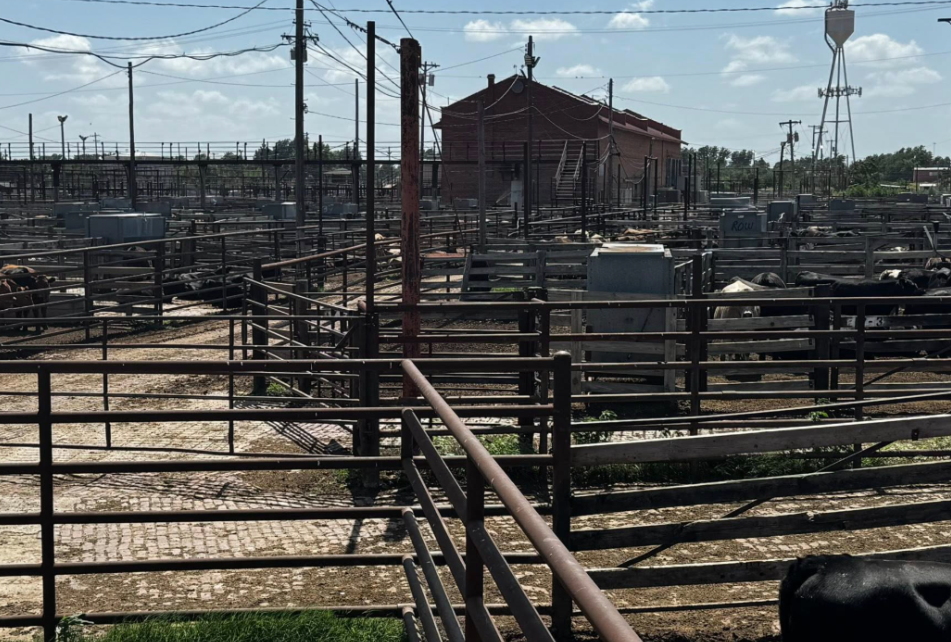
In today's Beef Buzz, senior farm and ranch broadcaster Ron Hays speaks with Joe Barbour, area representative for the Livestock Marketing Association, who discusses the critical role livestock auction markets play in price discovery, the remarkable cattle market of 2026, and the upcoming Livestock Marketing Association convention and World Livestock Auctioneer Championship in South Dakota.
Barbour said the Livestock Marketing Association serves as the leading voice for livestock auction markets and dealers across the nation. "The Livestock Marketing Association is the largest trade group for livestock auction markets and dealers across the country," Barber said. "We represent over 80% of the regularly selling livestock markets across the country, and over 90% of those markets in Oklahoma are LMA members."
According to Barbour, the organization works on behalf of its members in a variety of areas, from policy and regulatory issues to business services. "We work to be the voice for our members in policy, in government, in industry affairs, and we assist them on a broad range of topics," he explained. "Anything dealing from working through a Packers and Stockyards issue to insurance, and we try to be their voice and their one-stop shop for anything livestock marketing related."
One of the strengths of LMA, Barbour said, is the diversity of its membership. "Whether you're the smallest one or the largest one, you have an equal voice and say," Barbour said.
That membership ranges from specialized markets handling small volumes to some of the largest livestock auction operations in the country. "We have all different shapes and sizes from across the country of markets represented," he said. "Markets that sell 100 head of dairy calves a week to some of the largest stocker livestock markets across the country, and everybody in between."
When it comes to cattle marketing, Barbour said auction barns remain the gold standard for determining value through open competition. "That's really the reason that these markets exist," Barber said. "We are setting the market across the country through live competitive bidding of livestock."
He emphasized that auction markets provide true price discovery by bringing multiple buyers together in a competitive environment. "What our members are working to do is get the most value for that animal, get what it's worth for that day in the ring in front of a competitive buyer base," he said.
Barbour noted that producers benefit directly from the auction process. "They're going to market your livestock in a way to bring you the most money in front of a competitive bidding process," he said. "When you get competition involved and folks bidding against each other, there's really no telling what some of this livestock will bring."
Barbour described 2026 as one of the most exciting periods he has witnessed in the cattle business. "It's an incredible time to be in the business, not only owning these livestock auction businesses, but our producers," Barbour said. "Couldn't be happier for those folks. The prices that we've achieved in Oklahoma are just incredible."
Demand remains strong across virtually every class of cattle. "All the markets across the state are firing on all cylinders, and the demand is huge for these calves and these yearlings and these packer cows, and everything in between," he said.
Barbour credited strong competition among buyers for helping push prices to record levels. "There's a lot of demand for the product, and it's got these feedyards and these grazers paying top dollar to get them in their inventory," he said.
For cow-calf producers especially, the market has created opportunities that have been years in the making. "The cow-calf man has worked many years without being able to really put some money back, and they're in the driver's seat right now, so couldn't be happier for them," Barbour said.
He added that many of the record-setting cattle sales making headlines are occurring at local auction markets. "In almost all cases, when you hear about someone topping the market or being able to put that on social media that they got this for their cattle, it's almost always at auction."
Barbour also highlighted the upcoming 2026 Livestock Marketing Association Annual Convention, which will be held in Deadwood, South Dakota. "We're having our annual convention of the Livestock Marketing Association in Deadwood, South Dakota."
The event will feature educational sessions and discussions on some of the industry's most pressing issues. "We're going to have some really good meetings and speakers to bring our members together and make sure they're up to speed on topics that are going on in the industry," he said. "Talking about everything from New World screwworm to ways to protect their business from financial loss, to networking and bringing these folks together."
The convention will conclude with one of the livestock industry's premier events—the World Livestock Auctioneer Championship. "We've got 31 of the top auctioneers across the country pulled from three regional contests, plus the champion from Canada," Barbour said.
The competition will be hosted at St. Onge Livestock Auction in South Dakota, where one auctioneer will earn the industry's highest honor. "We're bringing them into one spot and trying to find that best auctioneer that's going to represent our industry over the next year," Barbour said. "We'll crown him champion Saturday night to finish off our convention, and we're excited to go to South Dakota."
The Beef Buzz is a regular feature heard on radio stations around the region on the Radio Oklahoma Ag Network and is a regular audio feature found on this website as well. Click on the LISTEN BAR above for today's show and check out our archives for older Beef Buzz shows covering the gamut of the beef cattle industry today.
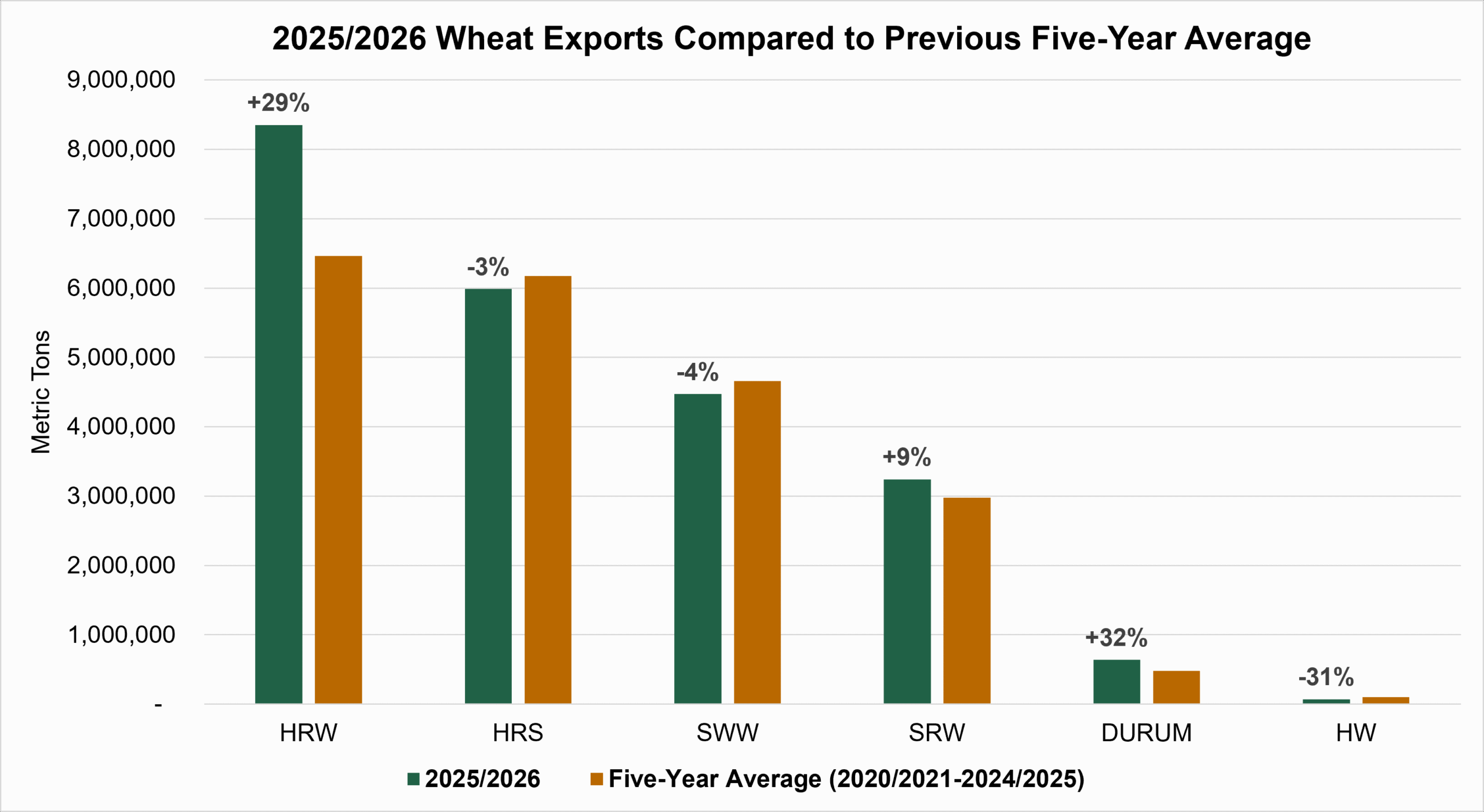
Click to view the USW Commercial Sales Report.
According to U.S. Wheat Associates, the 2025/2026 marketing year closed on May 31, 2026, and U.S. wheat export sales finished the year on a strong note, providing a buffer of support for farm families during a year of low farmgate prices. Final export inspections hit 23.7 million metric tons (MMT), or 871 million bushels, representing a nearly 15% year-over-year increase and the highest export volume since the 2020/2021 marketing year.
The volume is impressive, but the numbers alone do not tell the full story. Just as important as how much wheat was sold was where those sales originated. Increases in wheat exports to both core and swing markets reflect the reputation and value of U.S. wheat in the global marketplace.
"U.S. wheat continued to move steadily into global markets despite a year marked by geopolitical uncertainty, volatile freight costs and intense competition from other exporting origins," said Brian Liedl, USW vice president of overseas operations. "In a year where there were record or near-record crops in almost every major wheat exporting country, U.S. wheat found its place in the market."
The mix of sales to both core and swing markets in the 2025/2026 marketing year reflects the resilience of the U.S. wheat export program. At the beginning of the year, the USDA projected exports at 21.8 MMT (801 million bushels) and revised that estimate several times as commercial sales continued to outpace the prior year.
By the end of the year, more than 55 countries had purchased U.S. wheat, reflecting strong early-season demand and continued sales to a mix of core, emerging, and swing markets.
"What made this marketing year notable is that both core and swing markets performed well at the same time," Liedl said. "Core markets continued to purchase through the second half of the marketing year when U.S. prices appreciated significantly and kept our supply chains moving. At the same time, several re-emerging and price-sensitive markets increased purchases. That is not a coincidence; it is a return on investment that plays out slowly and then all at once."
As the primary core destination for U.S. wheat, Mexico once again ranked as the top market in 2025/2026, the largest buyer of U.S. hard red winter (HRW) and U.S. soft red winter (SRW) and the second-largest buyer of U.S. hard red spring (HRS). In total, Mexico purchased 41.6 MMT (nearly 153 million bushels) of U.S. wheat, a 3% increase year over year.
Strong sales to Japan, the Philippines, and South Korea further reinforced the importance of continued trading servicing in these core markets.
Rounding out the top buyers of U.S. wheat were swing markets Nigeria and Indonesia, both of which had purchases that significantly exceeded their five-year averages.
In Nigeria, U.S. wheat sales expanded sharply in the 2025/2026 marketing year, hitting 1.65 MMT (60.7 million bushels) – more than double the prior year. This pace was sustained despite strong world supplies and cheaper alternative origins – often at a 15 to 25% discount – in the latter half of the marketing year. While still below export levels from 15 years ago, continued purchases throughout the marketing year underscore the country's role as an opportunistic destination for quality U.S. wheat amid shifting West African sourcing patterns and strong milling demand.
Indonesia has been a key driver of sales strength in Southeast Asia in the 2025/2026 marketing year, which is notable, as this price-sensitive market can swing greatly from year to year. Indonesia ended the marketing year with 1.15 MMT (42.4 million bushels) in U.S. wheat purchases, a 50% increase year-over-year. This year's sales are underpinned by the July MOU signing between U.S. Wheat and APTINDO, Indonesia's flour milling association. This marketing year's sales meet that purchase commitment and signal a notable rebound in U.S. export potential within one of the world's largest wheat markets.
Overall, the 2025/2026 marketing year underscored the value of U.S. wheat in an increasingly crowded and complex global marketplace. Despite increases in global production and geopolitical pressures, customers continued to rely on U.S. wheat exports to meet their growing needs.
"The 2025/2026 marketing year serves as a reminder that even in a competitive and uncertain environment, American wheat farmers, supported by U.S. wheat, are finding opportunities to grow exports and deliver value across the world," said Luke Muller, USW market analyst. "Maintaining this momentum will depend on continuing to strengthen trade relationships in both core and emerging markets and continuing to adapt to shifting global supply dynamics."
As the calendar flips to June, the USDA has already reported more than 3.0 MMT (110 million bushels) of sales for the 2026/2027 marketing year. All eyes are currently on the progress of the 2026 wheat crop as the combines have started cutting in the southern United States. As harvest progresses, U.S. Wheat will continue its work to position producers to take advantage of market opportunities with the right mix of customers, in the right places, at the right time.
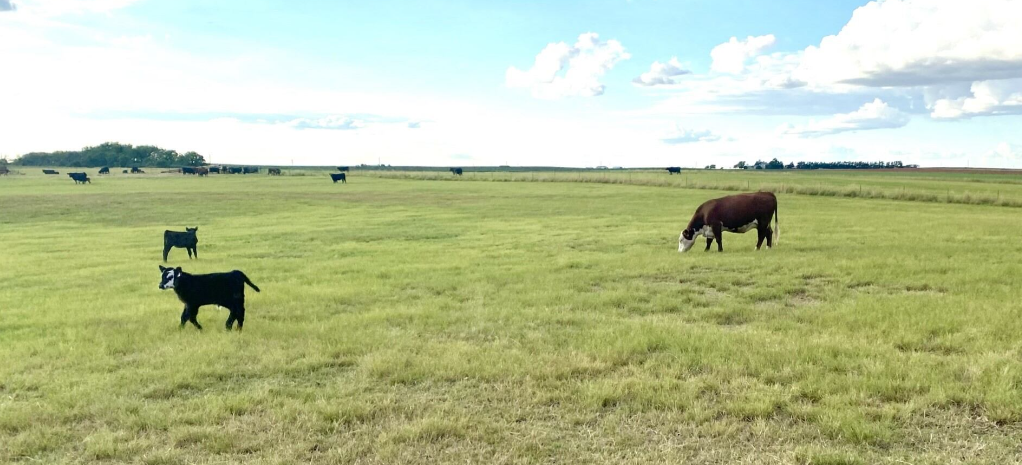
With the Senate expected to release its farm bill proposal this month, R-CALF USA sent a letter to the Senate Committee on Agriculture, Nutrition, and Forestry outlining its recommendations for the 2026 Farm Bill. In its letter, the group warns that decades of consolidation have left U.S. cattle and sheep producers in crisis and the country increasingly reliant on foreign meat.
The letter, addressed to Senate Agriculture, Nutrition, and Forestry Committee Chair John Boozman (R-Ark.) and Ranking Member Amy Klobuchar (D-Minn.), states that past farm bills have been shaped by meat industry lobbyists, allowing a handful of large meatpackers to dominate markets that determine the livelihoods of America's independent cattle and sheep farmers and ranchers.
According to R-CALF USA, the consequences have been severe: the loss of more than half of America's beef cattle producers, more than 60% of full-time sheep producers, a 25% decline in the beef cow herd, a 60% drop in sheep inventory and the disappearance of 77% of family-scale feedlots. Over the same period, concentration in the fed cattle market climbed from 36% to more than 80% among the four largest firms.
The group says these trends have pushed the U.S. toward a growing dependence on foreign meat. Approximately 22% of beef available in the U.S. market, along with more than 70% of lamb, is imported – a shift the group attributes to long-term contraction in domestic production.
R-CALF USA outlined four specific recommendations for the 2026 Farm Bill:
1.) Reinstate mandatory country-of-origin labeling (MCOOL) for beef by including the American Beef Labeling Act of 2025 (S. 421), which would reinstate country-of-origin labeling at retail. Imported beef currently receives the same U.S. inspection shield as domestic beef, and consumers associate the U.S. inspection shield with domestic origin, even though it does not indicate origin. This allows meatpackers to displace domestic beef with lower-cost foreign beef while simultaneously pricing the lower-cost foreign beef based on consumers' perceived value of domestic beef. Meatpackers who import foreign beef know its origin, but they do not disclose the origin to consumers.
2.) Restore competition as the price determinant in the fed cattle market by prohibiting cattle procurement contracts that use formula pricing. Formula pricing links the price paid for contracted cattle to prices reported in the cash market, which has declined to a small share of total transactions. Because formula prices depend on that market, lowering the cash-market price reduces the price of both contracted cattle and cattle sold in the cash market. Meatpackers can reduce their participation in the cash market by slaughtering contracted cattle rather than bidding for cattle in the cash market, thereby lowering the cash-market price, which then lowers their contract cattle price. The recommendation also calls for banning packer ownership, feeding or control of livestock for more than 14 days before slaughter.
3.) Prevent further "chickenization" of the cattle and sheep industries by prohibiting additional horizontal or vertical integration in the cattle, beef, sheep and lamb supply chains. "Chickenization" refers to an industry shift toward horizontal consolidation by a few dominant firms, followed by the disappearance of competitive cash markets in favor of contracts, and finally vertical integration that allows companies to control the supply chain from birth to plate. The term is derived from the poultry industry's highly integrated production model, which the group says later spread to the hog sector and contributed to the mass exodus of hog farmers. The 1981 Farm Bill served approximately 1.3 million beef cattle producers, 667,000 hog farmers and 17,341 full-time sheep producers. Since then, the number of hog farmers has fallen by more than 91%, the number of beef cattle producers has dropped by more than half, and the number of full-time sheep producers has declined by more than 60%. Over the same period, four firms now control roughly 81% of the fed-cattle market, and fewer than 18% of fed cattle were sold in the cash market in 2025. The proposal further calls for unwinding existing integrations to reduce concentration already present in the cattle and sheep industries.
4.) End the mandatory Beef Checkoff Program, which was created in the 1985 Farm Bill and collects $1 per head of cattle sold, generating about $80 million annually. Checkoff funds are used by lobbying groups that engage in activities outside the program's intended scope, giving those organizations greater influence over policy than the producers who are required to fund it – often to those producers' detriment. The Opportunities for Fairness in Farming Act of 2025 (S. 1848) would increase transparency, require audits, prohibit conflicts of interest and bar Checkoff recipients from engaging in political advocacy. In addition, the recommendation would allow Checkoff funds to promote beef exclusively born, raised and slaughtered in the United States.
The letter also urges the reversal of the U.S. Department of Agriculture's electronic identification (EID) rule for cattle, saying it does not achieve the results claimed by the agency because it puts the financial burden solely on producers to use EID eartags but does not provide for or require anyone in the supply chain to electronically read those tags. The group estimates the short-term cost to producers for reading those eartags electronically is more than $566 million.
R-CALF USA concludes by urging the Senate Agriculture Committee to incorporate all of its recommendations in the 2026 Farm Bill, stating: "Together, these recommendations constitute a meaningful reset of the legal and regulatory framework that has disadvantaged America's independent cattle and sheep producers for decades, causing their industries to contract to levels that now threaten national security."

Industry leaders representing food and agricultural value chains across the U.S., Canada, and Mexico joined forces in a letter this week urging trade representatives to renew and strengthen the U.S.-Mexico-Canada Agreement (USMCA) as the required six-year joint review approaches.
ASA joined nearly 160 other organizations on the historic trilateral letter, underscoring how USMCA strengthens the integrated North American agricultural markets and ensures food security.
"All three nations share the responsibility of protecting and strengthening this competitive advantage, which is essential not only to economic prosperity, but also to national security and regional stability," groups state in the letter.
The letter was sent to Ambassador Jamieson Greer, with the Office of the United States Trade Representative, Canada-U.S. Trade Representative Dominic LeBlanc and Mexico's Secretary of the Economy Marcelo Ebrard.
USMCA, which went into effect in July 2020, requires that the three countries meet on July 1 to review the agreement. All three countries must agree on a path forward, which could mean extending the agreement for another 16 years, terminating the agreement, or entering a period of annual consultations. Agricultural organizations from all three countries are pushing their governments to uphold and strengthen the agreement to provide certainty needed in today's challenging economic times.
Mexico remains one of the top export markets for U.S. soy, while Canada is a key partner in the integrated North American agricultural economy. ASA has urged USTR to pursue a full 16-year renewal of USMCA while preserving duty-free market access, science-based trade rules, biotechnology provisions, and strong dispute resolution mechanisms.
RON's Dave Lanning has a pre-opening look at today's agricultural Markets.
Click the audio tab below for today's report.
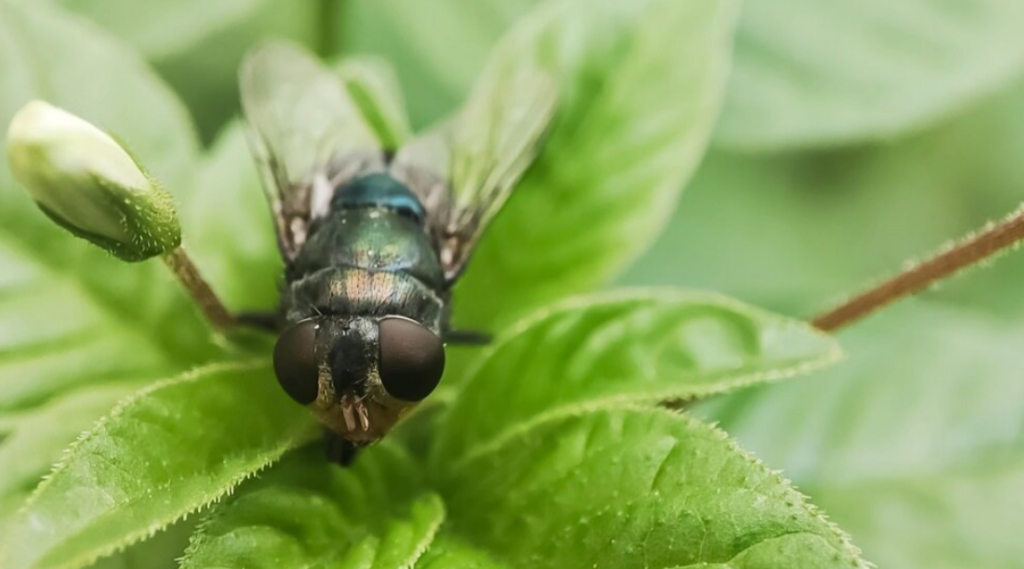
During a Thursday afternoon USDA briefing led by U.S. Agriculture Secretary Brooke Rollins and other federal and state officials following the confirmation of a New World Screwworm case in Texas, Texas State Veterinarian Dr. Bud Dinges outlined the state's response efforts, quarantine measures, and the steps livestock owners should take to help prevent the spread of the pest. Dinges emphasized that Texas and USDA officials have been preparing for this scenario and are already implementing response plans designed to contain the outbreak quickly.
The first confirmed U.S. case of New World Screwworm since 1966 was detected in a 3-week-old beef calf near La Pryor in Zavala County, Texas. The infestation was found in the calf's umbilical wound, and state and federal officials report no additional cases have been identified on the operation.
Dinges provided an update on the infected premises, noting that officials visited the location and found encouraging signs. "Staff visited the premises with the infested calf yesterday," Dinges said. "The infested calf's doing much better."
According to Dinges, inspections of other cattle on the property have not uncovered additional cases. "They looked at the cattle on the premises there and didn't find any other infested animals," he said.
The investigation has also shown no evidence that livestock have recently moved onto or off the property. "From our EPI investigation, there is no evidence of a recent movement of animals onto or off of that premises," Dinges said.
Dinges thanked Secretary Rollins for her leadership and stressed that Texas, USDA, and their partners have been preparing for a New World Screwworm detection long before this week's confirmation. "The USDA and Texas and partners have taken a forward-leaning approach in this suspicion and to response preparedness in general, so that we can tackle the first confirmation of New World Screwworm with confidence in all the tools at our disposal to ensure an efficient response," Dinges said.
He added that response teams are already on the ground gathering information and assessing conditions. "Our responders are already in the area, conducting site visits and evaluating the situation to ensure we have the correct information we need to mitigate the spread," he said.
Dinges said response structures are already in place and established plans are now being activated. "Our response structure is established, and we are enacting existing response plans to minimize the impact of this pest."
One of the most significant actions announced by Dinges was the creation of an infested zone around the affected area. "Some of these actions include establishing an infested zone that Secretary Rollins mentioned earlier," Dinges said.
To support that effort, he has issued an executive order placing movement restrictions on susceptible animals. "With the zone, I have issued an executive order that places a quarantine on all warm-blooded animals."
Dinges urged producers and animal owners to comply with the restrictions. "It is very important that all animal owners understand the importance of not moving their animals out of this zone at this time," he said. "Please help us prevent any further movement of this pest by staying put and contacting the Texas Animal Health Commission if you have animals that need to be permitted out of the zone."
He explained that animals may still be allowed to move, but only after proper inspection. "No movement of warm-blooded species will be allowed out of this zone without an inspection by an animal health official."
Texas Animal Health Commission personnel have increased their presence throughout the affected area.
"Currently, an increased presence of Texas animal health personnel are in the infested zone, conducting animal surveillance and epidemiological investigations, meeting with producers, providing resources in the infested zone, and raising awareness of key actions like inspection points," Dinges said.
He emphasized that producer cooperation will be critical to preventing additional cases.
Dinges outlined four primary points livestock owners and animal caretakers need to understand as the response moves forward.
The first priority is rapid reporting of any suspicious infestations. "If you suspect your animal may be infested with New World Screwworms, notify the Texas Animal Health Commission or your local veterinarian immediately," Dinges said. "Quick notification leads to quick detection and quick response to stop this pest from spreading."
He reiterated that animal movement can continue when done safely. "Animals will still be able to move. We just need to make sure that they are moving safely and not moving the screwworm with it."
Dinges made a point to distinguish the threat posed by New World Screwworm from food safety concerns. "This is not a food safety issue, this is a food production issue," he said. "New World Screwworm does not infest meat, fruits, vegetables, or other food sources."
Animal owners should closely monitor livestock and other animals for wounds that could attract screwworm flies. "Infestations from this pest can be prevented," Dinges said. "Animal owners need to look at their animals as often as possible and stay vigilant, monitoring for wounds that can be covered and treated."
He explained that the pest is not spread through animal-to-animal transmission. "This is not an infectious disease, and these flies have to lay their eggs in, or on, or near a wound for an animal to be infested." "Treat and cover wounds as quickly as possible."
While New World Screwworm is a serious threat, Dinges stressed that infestations can be successfully treated when identified quickly. "This is a highly treatable condition," he said.
"If you do get a case, we may have tools in our toolkit to prevent devastating impacts."
Closing his remarks, Dinges sought to reassure producers, veterinarians, and the public that officials are prepared and actively responding. "I want to reassure all of you that we have been preparing for this and are taking rigorous action to protect the state and the nation from this pest," Dinges said.
He pledged that state and federal officials will continue providing updates as the situation develops. "We'll continue to be transparent, provide updates of the situation as we receive them."
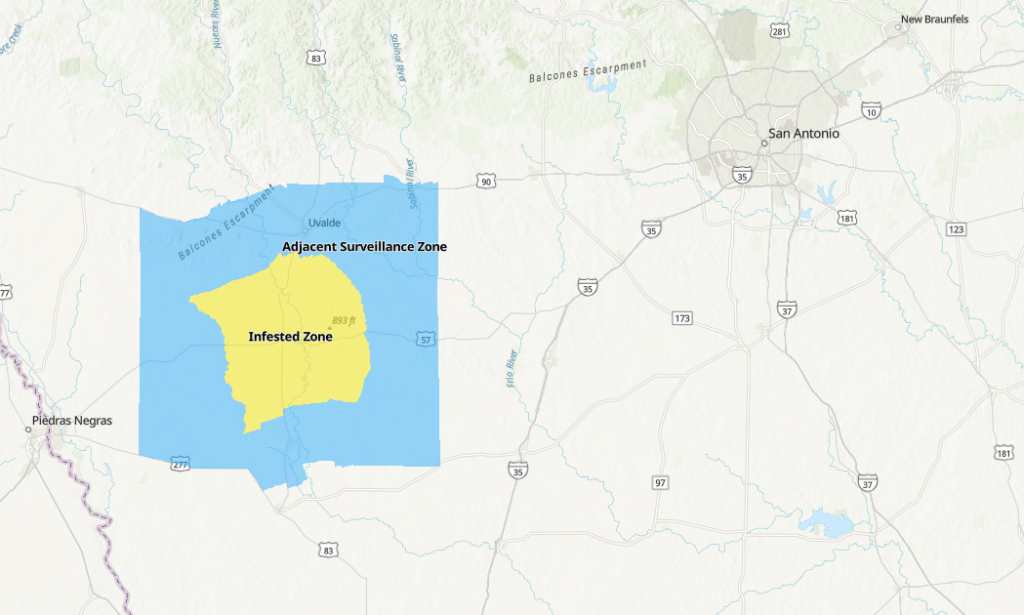
Secretary Rollins announced that USDA is adding a new account on X that will focus on all the news related to the New World Screwworm situation- follow @Screwworm_RR for those updates.
The America First Policy Institute (AFPI) has issued the following statement from Christie Mullin, Chair of Rural Policy, in response to the U.S. Department of Agriculture's announcement of a new plan and funding for small American meat processors:
"Secretary Brooke Rollins' announcement of a Small Processors Action Plan and of $60M in new funding for meat and poultry processors is critically needed to help increase processing capacity and help independent American producers compete against global producers.
This decisive action clears red tape by updating decades-old regulatory definitions which no longer reflect how American meat and poultry businesses actually operate. These actions will better serve small American processors and will address a number of core issues which have prevented them from growing and increasing capacity, and which has limited access for ranches such as my family's own and countless other producers. The USDA's new plan will benefit small businesses, farmers and ranchers, and increase availability of local foods."

With the recent New World screwworm (NWS) incursion in Texas, it's important to be aware of your herd's risk level and be vigilant in checking your livestock for signs of an infestation.
"We understand that livestock producers and animal caretakers are facing a stressful and uncertain time as New World screwworm threatens what they've worked so hard to build. At Zoetis, we stand with you because protecting your animals means protecting your livelihood, your families, and your way of life. Planning ahead is critical, and we're committed to being a resource and a partner," said Kristin Kasselman, Senior Vice President, Head of Livestock & Equine, Zoetis.
Producers are encouraged to diligently observe livestock daily, if possible, for signs of NWS infestation. An intense smell of decay is often the first indication, so you will want to investigate to find the source of the odor.
Be prepared to report a New World screwworm infestation to your veterinarian or state veterinary authority as quickly as possible. Now is a good time to review and bookmark the U.S. Department of Agriculture response playbook for quick, practical guidance.
"If you haven't already prepared a plan, we encourage producers to work closely with their veterinarian to put written action plans in place now," said Dr. Mitch Blanding, Director of beef technical services, Zoetis. "It will be critical to quickly report any case of New World screwworm. We want to be able to document and isolate these cases, clean and debride the wounds where possible, remove any larvae that are easily removed, and apply approved topicals to the wound to promote healing."
Your herd veterinarian will be the best resource in determining prevention and treatment options.
Zoetis offers Dectomax®-CA1 Injectable (doramectin injection), the only nonprescription conditionally approved parasite control product labeled for prevention and treatment of infestations caused by NWS larvae in cattle and for prevention of reinfestation for 21 days.
The U.S. Food and Drug Administration has issued an Emergency Use Authorization (EUA) for the emergency use of the approved/conditionally approved products Dectomax/Dectomax-CA1 for the following indications:
· The prevention and treatment of infestations caused by Cochliomyia hominivorax larvae (myiasis) in dairy cattle (lactating dairy cows, dry dairy cows, and replacement dairy heifers 20 months of age and older), except for calves to be processed for veal.
· The prevention of infestations caused by C. hominivorax larvae (myiasis) in swine, sheep except for lactating sheep, and deer.
· The prevention of infestations caused by C. hominivorax larvae (myiasis) in horses 1 year old and older.
Please refer to the following fact sheets for additional information:
EUA - Dairy Cattle, Swine, Sheep and Deer Fact Sheet
For more information on NWS, the current conditional approval and the EUA for Dectomax/Dectomax-CA1, visit zoetisus.com/NewWorldscrewworm.
Dectomax-CA1 is conditionally approved by FDA pending a full demonstration of effectiveness under NADA 141-616.
Important Information:
Consult your veterinarian for assistance in the diagnosis, treatment, and control of parasitism.
Dectomax-CA1 Injectable (Cattle only), as authorized under the Conditional Approval for use against New World screwworm, has a 35-day pre-slaughter withdrawal period. Do not use in calves to be processed for veal. Do not use in female dairy cattle 20 months of age or older, except under the conditions of the Emergency Use Authorization. Use in dogs may result in fatalities.
Dectomax/Dectomax-CA1 Injectable Emergency Use Authorization, authorized for the duration of the emergency declaration, does not provide full or conditional approval, but the Center for Veterinary Medicine (CVM) at the Food and Drug Administration (FDA) has determined that Dectomax/Dectomax-CA1 may be effective and safe. Dectomax/Dectomax-CA1 Injectable, as authorized under the Emergency Use Authorization for use against New World screwworm, has a 35-day pre-slaughter withdrawal period for lactating dairy cattle, dry dairy cattle, replacement dairy heifers, sheep and deer, and a 24-day pre-slaughter withdrawal period for swine. Treated calves and calves born to treated cows should not be processed for veal. Withhold milk from dairy cattle for 468 hours (19.5 days) after treatment has ended. Not for use in lactating sheep. Not for use in horses less than 1 year of age.
About Zoetis
Zoetis is the world's leading animal health company, driven by a singular purpose: to nurture our world and humankind by advancing care for animals. With a legacy of nearly 75 years, Zoetis continues to pioneer ways to predict, prevent, detect, and treat animal illness, supporting veterinarians, livestock producers, and pet owners in over 100 countries. We integrate deep scientific expertise, data-driven R&D, advanced manufacturing, and commercial excellence to deliver meaningful innovation across medicines, vaccines, diagnostics, biopharmaceuticals, and digital solutions. Guided by our vision to be the most trusted and valued animal health company, Zoetis is committed to setting new standards for the future of animal care through innovation, customer obsession, and purpose-driven colleagues. To learn more, visit Zoetis.com.
The National Dairy Farmers Assuring Responsible Management (FARM) Program today released its 2026-2027 Milk & Dairy Beef Drug Residue Prevention Reference Manual, equipping farmers with an educational tool that promotes best management practices for responsible and judicious use of antimicrobials in dairy cattle.
The updated manual has timely information about the FDA's conditionally approved and emergency use authorizations of drugs to combat New World screwworm. It also includes the Food and Drug Administration's Guidance for Industry No. 273: "Defining Durations of Use for Approved Medically Important Antimicrobial Drugs Fed to Food-Producing Animals" (GFI No. 273), finalized and announced in February.
"The U.S. dairy industry is committed to antibiotic stewardship and judicious use of all medications used for dairy cattle," says Dr. Jamie Jonker, National Milk Producers Federation's chief science officer. "The Drug Residue Prevention Manual continues to be a trusted resource for dairy farmers when making educated choices with their veterinarians to care for their animals."
When dairy animals get sick or injured and treatment is necessary, producers and veterinarians use antibiotics and other drugs prudently. The manual serves as a resource for producers and veterinarians, and includes information on:
The Milk & Dairy Beef Drug Residue Prevention Manual and the associated pocket guide are sponsored by Zoetis. Their sponsorship supports the development of on-farm resource development for U.S. dairy farmers.
The manual is available for download on the FARM Program website. The pocket guide will be available later this month. Through educational resources and training, the FARM Program advances its mission of fostering a culture of continuous improvement by demonstrating U.S. dairy farmers are committed to producing high-quality, safe milk with integrity.
The global agricultural commodities sector is locked in a severe ag market downturn, forcing producers to navigate a wave of grain price declines. Farm Director KC Sheperd sat down with OSU Extension Crop Marketing Specialist Todd Hubbs to dissect the technical realities of this market slump, analyze the impact of timely rain across the Corn Belt, and explore what local producers can expect as harvest progress collides with multi-month price lows.
When asked about the current performance of grains on the trading boards, Hubbs did not sugarcoat the situation.
"I think the technical term is a blood bath, KC," Hubbs stated bluntly. "It's been brutal. We've seen just, particularly in our wheat markets and in HRW [Hard Red Winter] in particular... just down day after day after day. We're back down to levels we saw in early March."
This downward momentum is not limited to wheat; it is a sweeping trend across the agricultural sector. Hubbs noted that commodities have collectively disconnected from the supportive influences of the oil market and ongoing geopolitical tensions. Instead, the focus has shifted heavily toward weather patterns and production forecasts.
"There's been timely weather that I think has come into the market," Hubbs explained. "There are rumors and discussions about the wheat crop, while still poor, being slightly better than the initial May forecast for winter wheat. And, you know, in wheat, the Northern Hemisphere crops, other than us, have been pretty good."
Despite previous concerns about potential crop issues in Russia, Ukraine, and the European Union, actual output is proving more resilient than expected. While these regions may not reach last year's production levels, the situation is far less dire than the market initially anticipated, compounding pressure on domestic prices.
To spark a renewed upward trend for Hard Red Winter wheat, the market would typically require a major global supply disruption or a significant weather shift in the Southern Hemisphere. However, Hubbs believes the immediate catalyst might need to come from outside the wheat complex itself.
"At this point, I feel like it's from outside the wheat market a little bit, maybe corn and soybeans," Hubbs said. "Wheat's down. I thought we might have hit a bottom, but the bottom fell out of soybeans and corn a bit today, so I think it's getting dragged down."
Domestic weather is also playing a dual role. While beneficial for long-term crop health, regular rainfall across the Corn Belt is actively dampening price dynamics.
"We probably need to see some domestic crop problems," Hubbs noted. "And while there has been some dryness creeping into the Corn Belt, the worst parts of the Corn Belt—in the western half, in Nebraska, eastern South Dakota, and parts of Iowa—are expected to get rain this week. So we keep getting these little timely rains... it's causing problems for our prices dynamics."
Looking forward to the upcoming USDA Crop Production report, Hubbs expects minimal changes for Oklahoma's numbers, noting that the local crop's poor condition is already factored in.
"I don't expect the winter wheat crop here in Oklahoma to go up too much when we get the crop production report in June next Thursday, but it's not probably going to go down all that much either," Hubbs said. "So we're sort of baked in there."
The impact of this year's weather is highly localized, creating a stark contrast between different regions of Oklahoma.
"I know there's been reports of pretty good crops... how spotty the Oklahoma crop is, particularly North Central and Eastern parts," Hubbs observed. "There's going to be some good fields out there. So when you hear reports coming in, 'Oh, this someone did 60 or 70 bushels an acre,' that's not surprising. But Western Oklahoma got brutalized this year."
Despite the low production totals—with Oklahoma's yield projected at 28 bushels per acre and minimal changes expected in harvested acres—local basis levels have held steady.
"I'm not expecting basis to start weakening on us right now because the crop isn't good," Hubbs reassured. "Now, we have seen export sales for the next marketing year be a little bit weaker, but in HRW, they ticked up this week... We're still falling behind, but you should expect that given our crop's the lowest in HRW since the '50s. So, I don't expect it to weaken very much, KC, at all."
The conversation also touched on international trade, specifically regarding reports that China has begun placing orders for U.S. soybeans. Hubbs expressed his characteristic caution when dealing with Chinese demand metrics.
"The market's probably already baked in that 25 million metric tons they said they were going to do," Hubbs stated. "As you know, I'm a 'believe it when I see it' person when it comes to China, and any number of things can happen between now and when they actually buy soybeans."
However, he acknowledged that China's tendency to act as a bargain shopper during sharp price drops makes recent purchases highly plausible. This demand must balance against a massive South American supply.
"You have to remember, though, the Brazilian crop was a monster," Hubbs emphasized. "These 180 [million metric tons]... looks like they came to pass, and they've been moving beans at a pretty high rate. So, it's not like we're short of beans."
Domestically, the strength of the soybean market continues to be propelled by crushing operations tied to renewable volume obligations, biofuels, and a robust soybean meal export market. Increased Chinese buying could provide the necessary momentum to lift soybeans and support the broader agricultural complex.
As producers navigate the upcoming weeks, Hubbs will be monitoring international production numbers, EIA data on gas and ethanol demand, and weekly export reports. He admitted that the current multi-month lows are discouraging, especially for those who missed earlier selling windows.
"This weakness is sort of depressing, and I get that for everybody," Hubbs concluded. "When we had that huge run-up after the May crop production report, if you missed that sales opportunity—which I could understand not doing it if you were concerned about how many bushels you actually had—it might be difficult to get back to those levels in HRW... because the geopolitical issues have sort of come out of our markets."
With cash prices in Oklahoma slipping well below the $6.00 mark, Hubbs advises against selling into the current panic.
"It's very hard to sell when prices are running down like that, and I wouldn't recommend it honestly," Hubbs said. "I feel like we got to hit a bottom and turn around at some point... I think maybe a little patience if you can do it and see if we can turn this thing around."
U.S. Secretary of Agriculture Brooke L. Rollins launched the Small Processors Action Plan (PDF, 2.3 MB), a new set of actions to better support small and very small meat and poultry processing plants, improve customer service, and reduce unnecessary regulatory burdens while maintaining strong food safety protections for consumers. Additionally, Secretary Rollins announced that USDA is accepting applications for the fourth round of the Meat and Poultry Processing Expansion Program to expand American meat and poultry processing.
"Today's announcement marks another step toward rebuilding our domestic beef industry, the actions contained in the new Small Processors Action Plan modernize USDA's approach to the people and small businesses who process American locally grown beef and protein. We are removing overly burdensome red tape, improving service, and giving small plants the clarity and support these business need to operate safely, grow, and compete," said Secretary Rollins. "By expanding local processing capabilities, we're continuing to bolster our domestic producers, which are central to the President's Make America Healthy Again agenda."
"President Trump ended the war on protein. Real American beef is back on the menu," said U.S. Department of Health and Human Services Secretary Robert F. Kennedy, Jr. "USDA's Small Processors Action Plan will strengthen our food supply, expand access to high-quality protein, and support American farmers and ranchers. That's how we Make America Healthy Again."
Both the Small Processors Action Plan and the additional $60 million in funding for the Meat and Poultry Processing Expansion Program build on USDA's Plan to Fortify the American Beef Industry.
Small Processors Action Plan:
Small and very small plants make up the majority of Federally inspected establishments and play a critical role in local economies, rural communities, and the resilience of the nation's food supply. These actions being announced by USDA are designed to make it easier for these businesses to interact with the agency, get timely answers, and resolve issues, without weakening inspection or food safety standards.
Improving customer service and responsiveness
Making requirements clearer and easier to navigate
Reducing unnecessary burden while maintaining food safety
USDA will begin rolling out these improvements immediately and will continue engaging with small and very small plants to ensure the changes are effective and responsive to real-world needs.
Meat and Poultry Processing Expansion Program:
The USDA Rural Business and Cooperative Service published a Notice of Funding Opportunity (NOFO) for $60 million to fund a fourth phase of the Meat and Poultry Processing Expansion Program (MPPEP) to help eligible meat and poultry processors expand their capacity, encourage competition and sustainable growth in the U.S. meat processing sector, and to help improve supply chain resiliency. Available funding will be divided equally into two separate competitions: one for Small and Very Small Processors and one for Intermediate Processors.
Eligible applications include for-profit organizations, nonprofit organizations, producer-owned cooperatives, tribes, and tribal entities. Privately-owned entities must be independently owned and operated, and all entities must be domestically owned. Additionally, the applicant's processing facility must be physically located and operating in the United States or its territories. The applicant's facility must primarily process cattle in order for the project to be eligible for the program; however, funds or equipment may be used for processing meat and poultry at the facility.
Additional information is available on USDA's MPPEP website and electronic applications must be submitted through Grants.gov.
House Committee on Agriculture Chairman Glenn "GT" Thompson (PA-15) delivered the following opening statement at today's full committee hearing, "For the Purpose of Receiving Testimony from the Honorable Brooke L. Rollins, Secretary, U.S. Department of Agriculture."
Remarks as prepared:
Good morning, everyone. I would like to welcome you all to today's hearing and extend a special thanks to the Honorable Brooke Rollins for joining us for her second appearance before the House Committee on Agriculture.
I am very proud to call Secretary Rollins a friend, and we're grateful for both her leadership and for taking the time out of her busy schedule to be with us today.
Before we begin, I want to take a moment to acknowledge the empty seat in this hearing room. Former Chairman David Scott was a friend, a brother in the Lord, and a fierce advocate for the farmers he represented. His presence here today is dearly missed, and I was proud to honor his legacy by renaming the 1890s scholarship program after him in the 2026 farm bill.
I also want to wish Congressman Baird a happy birthday today.
On the Ag Committee, our work revolves around a core question: "What can we do to help rural Ameria?" We go about answering that question through hearings, briefings, roundtables, farm visits, and listening sessions. However, the legislation that we ultimately pass is not where this discussion ends. That is where USDA steps in and begins their important work of implementing the programs that we have authorized.
There is no better example of this than the work we have seen with the implementation of the Working Families Tax Cuts. This was the largest investment in American agriculture in a generation, and USDA has put in the work to get dollars out of the door. Just last week, USDA announced the sign-up process for producers to take advantage of the 30 million base acres added to the ARC and PLC commodity programs. I am very proud to see these investments roll out in a timely manner. Secretary Rollins, I want to thank you for being a partner with us in this process.
Your work makes it possible for us to ensure help reaches the producers who need it most. Great things are coming with the Working Families Tax Cuts, and I am eager to see USDA implement all of the critical programs we included in that legislation.
I also want to acknowledge the important work your team has done to crack down on waste, fraud, and abuse within the Supplemental Nutrition Assistance Program. Your support and leadership have made it possible to restore integrity to this program in the way Congress intended.
I look forward to hearing more specifics today about your department's efforts to improve state administration of this program. Hopefully, we'll be sending even more work your way soon. I know President Trump wants a farm bill on his desk, and we look forward to getting him one to sign in the near future. The Farm, Food, and National Security Act of 2026 is a significant step forward for producers, and I know you will continue your diligent work once that bill gets across the finish line.
I also want to thank you for the work your team has been doing to boost the domestic production of fertilizer. For critical crop inputs, we must focus on solutions for both today and the future, and I believe the Administration's approach does exactly that.
USDA's efforts in the last year to combat the spread of New World screwworm have also been commendable. The Administration's actions to prevent exposure in the U.S. stopped the spread of this pest for as long as possible. While the detection yesterday wasn't what we were hoping for, I know USDA will continue to make the necessary efforts to eradicate screwworm once again.
Throughout the eradication process, it is imperative that USDA, state animal health officials, industry groups, and Members of Congress work together to effectively deploy the whole of government response that has been planned for months.
I also know I am not alone when I say thank you for your commitment to farm assistance. The Farmer Bridge Assistance Program was a necessary step to hold producers over until updated policies kick in. Additionally, the decision to dedicate leftover resources from FBA to the Assistance for Specialty Crop Farmers program was much appreciated. While I believe there is still more work to be done on that front, thank you for recognizing the need and making the most of the limited dollars you have available.
Please continue to communicate with the Committee on how we may be helpful to you as we work to get our farm economy back on stable ground. We know that communication is the bedrock of the important relationship between USDA and the House Committee on Agriculture.
Just a few weeks ago, we hosted Deputy Secretary Stephen Vaden to speak to committee Members about the USDA reorganization process. This was a productive discussion in which good questions were asked and thoughtful answers were given. I look forward to continuing that discussion, among others, today with Secretary Rollins.
I know that supporting our nation's farmers, ranchers, and rural communities remains her top priority, and I know her insights will be helpful as we continue our legislative work this Congress.
Thank you again, Secretary Rollins, for your service and your testimony. With that, I now yield to Ranking Member Craig for her opening remarks.
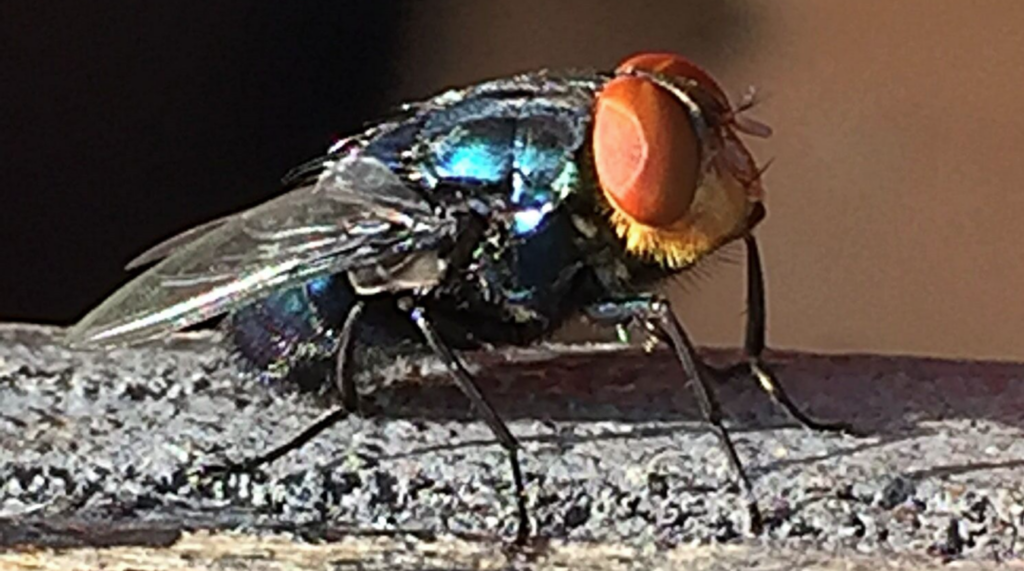
In today's Beef Buzz, senior farm and ranch broadcaster Ron Hays Features comments from U.S. Secretary of Agriculture Brooke Rollins, USDA New World Screwworm Directorate head Rear Admiral Michael Schmoyer, and Texas State Veterinarian Dr. Bud Dinges following confirmation of the first New World screwworm case in Texas in 60 years.
June 3, 2026, marked a day many in animal agriculture had hoped would never come. Federal and state officials confirmed the first case of New World screwworm in Texas since 1966, triggering an immediate response from USDA and the Texas Animal Health Commission.
The case involves a single three-week-old beef calf in South Texas. While officials emphasized the significance of the detection, they also stressed that response plans developed over the past year are already being put into action.
Secretary Brooke Rollins described the situation as serious but manageable. "This is not a threat to our food supply," Rollins said.
She also sought to reassure livestock producers and consumers. "Second of all, while this is very serious, and we're taking it extremely serious, there is no threat of mass infestation."
Rollins said extensive planning has been underway for months to prepare for exactly this scenario. "We believe, and we are so confident in the teams and the plan that we have been building over the last year in preparation for this moment, that as we're building out the infrastructure in the long term to make sure that this never happens again, that we have for the short term put everything in place to contain this pest and push it back when possible."
Rear Admiral Michael Schmoyer provided specifics about the confirmed infestation. "Here on the ground, as was emphasized, there is one infested animal. There is a three-week-old beef calf."
According to Schmoyer, the case was initially detected by a private veterinarian. "This was a private veterinarian that collected samples and shared them with the Texas Animal Health Commission, who then shared them in turn with USDA."
The discovery immediately activated response protocols that had been developed as New World screwworm moved northward through Mexico over the past year. "USDA inspections continue to be ongoing, and we're going to uphold our commitment to be transparent with you."
Schmoyer said USDA personnel were already positioned to respond rapidly. "USDA has a phenomenal five-person strike team in Texas right now."
"That strike team is comprised of field veterinary medical officers, as well as animal health technicians, and these vets and animal health experts are our boots on the ground, working side by side with our Texas animal health colleagues here."
Additional personnel are standing by if needed. "We're positioned to send additional trained personnel as needed. We're looking forward to being able to expand the strike teams in concert and in combination with our Texas Animal Health colleagues."
Federal officials emphasized that preparations for a possible U.S. detection began long before this week's announcement. "We had actually shared with many of the stakeholders that we were starting to lean forward aggressively, just in case something like this happened," Schmoyer said.
He noted that sterile fly releases began months ago near the U.S.-Mexico border. "We started to be able to deploy flies about 50 miles over the U.S. border, and so we're continuing to be very forward-leaning in our posture."
The scale of the effort is already substantial. "Since February of this year, we've already dispersed over 129 million flies using aerial and ground release chambers, as well as vehicle dispersal methods."
Surveillance infrastructure has also been in place across the southern border states. "In Texas, we've had trap lines that have been stretching across the southern states of Texas, New Mexico, Arizona, and California since July 2025." In addition to sterile insect releases, USDA has positioned response cargo trailers, trapping equipment, and ground release systems to support eradication efforts.
Following confirmation of the case, Texas officials moved quickly to establish an infestation zone and quarantine area. Dr. Bud Dinges, State Veterinarian and Executive Director of the Texas Animal Health Commission, announced strict movement controls. "I have issued an executive order that places a quarantine on all warm-blooded animals."
Dinges urged producers and animal owners to cooperate fully. "It's very important that all animal owners understand the importance of not moving their animals out of this zone at this time."
"Please help us prevent any further movement of this pest by staying put and contacting the Texas Animal Health Commission if you need to be permitted out."
The restrictions apply broadly. "No movement of warm-blooded species will be allowed out of this zone without an inspection by an animal health official."
Texas Animal Health Commission personnel have expanded their presence throughout the affected area. "Currently, we have increased the presence of Texas Animal Health Commission personnel in the area and in the infested zone, conducting animal surveillance and epidemiological investigations, meeting with producers to provide resources in the infested zone, and raising awareness of key actions like inspection points."
Dinges emphasized that producer vigilance will be critical to preventing additional spread. "Some of the key things that people need to know at this stage are number one, report suspicions immediately." "If you suspect your animal may be infested with New World screwworms, notify the Texas Animal Health Commission or your local veterinarian immediately."
He stressed that speed matters. "Quick notification leads to quick detection and quick response to stop the pest from spreading."
While movement restrictions are in place, Dinges said commerce will not stop completely. "Animals still need to be able to move. We'll just make sure that they are moving safely and not moving the screwworm with them."
Rollins repeatedly emphasized that livestock producers, ranchers, hunters, and wildlife managers will be key partners in the response effort. "Our greatest partners in this are the ranchers and the livestock producers, especially in South Texas."
She also pointed to the role of wildlife surveillance. "The wildlife guys down there are just being ever vigilant, being very watchful."
For producers concerned about what they can do right now, Rollins offered a simple answer. "I think the best thing you can put on your animals right now is your eyes." She encouraged constant observation of livestock and wildlife for suspicious wounds or infestations.
One of the most important messages from officials is that New World screwworm does not spread like a traditional livestock disease.
Instead, infestations occur when adult flies lay eggs in wounds or openings on warm-blooded animals. The larvae then feed on living tissue, creating potentially severe damage if left untreated.
Rollins emphasized a key fact producers should remember. "This does not spread without the movement of animals." That reality is driving the quarantine, inspection requirements, and surveillance efforts now underway in South Texas.
The confirmation of New World screwworm in Texas represents the most significant animal health challenge facing U.S. livestock producers in decades. However, officials emphasized that this is currently a single confirmed infestation, not a widespread outbreak.
Federal and state agencies have already deployed strike teams, surveillance networks, sterile fly releases, quarantine protocols, and producer outreach efforts designed to contain the pest before it can establish itself.
For now, officials are asking producers to remain alert, closely inspect livestock, report suspicious cases immediately, and comply with movement restrictions as eradication efforts move forward.
The Beef Buzz is a regular feature heard on radio stations around the region on the Radio Oklahoma Ag Network and is a regular audio feature found on this website as well. Click on the LISTEN BAR above for today's show and check out our archives for older Beef Buzz shows covering the gamut of the beef cattle industry today.

As Pollinator Week approaches, Americans across the country will celebrate the bees, butterflies, moths, bats, beetles, and other pollinators that make the food system possible. These species are responsible for one out of every three bites of food people eat and play an essential role in maintaining healthy ecosystems.
Behind the celebration lies an alarming reality: pollinators are disappearing at unprecedented rates.
That reality is at the heart of Center for Food Safety's newest lawsuit to protect the Iowa skipper butterfly, an imperiled prairie species pushed toward extinction by habitat destruction, toxic pesticide exposure, and the expansion of industrial agriculture.
This week, Center for Food Safety sued the U.S. Fish and Wildlife Service for failing to meet its legal obligation under the Endangered Species Act to determine whether the Iowa skipper deserves federal protection. The agency is now more than two years overdue in completing the required review.
The Iowa skipper may not be as well-known as the monarch butterfly, but its story reflects a much larger crisis unfolding across America.
The bright amber butterfly depends on healthy tallgrass prairie ecosystems to survive. Yet nearly 99 percent of America's tallgrass prairie has already been destroyed. What remains exists largely as fragmented habitat surrounded by industrial monocultures saturated with pesticides and largely devoid of the biodiversity pollinators need to thrive. Much of these crops aren't even used to feed us. The corn and soy grown in these decimated prairie ecosystems goes towards manufacturing biofuels or factory farm animal feed, which furthers the treadmill of the industrial food system.
The Iowa skipper is considered an indicator species—a measure of ecosystem health. Its decline signals broader ecological collapse. Like the canary in a coal mine, the butterfly warns that the systems supporting biodiversity, food production, and environmental resilience are under severe stress.
The Iowa skipper is not alone.
For years, Center for Food Safety has been at the forefront of efforts to protect pollinators from the growing threats posed by industrial agriculture. The organization has fought for protections for the monarch butterfly, challenged pesticide approvals that threaten bees and other beneficial insects, and defended the Endangered Species Act as one of the nation's most important safeguards against extinction.
Its work has repeatedly exposed a troubling pattern: federal regulators continue to approve and allow widespread pesticide use without adequately accounting for impacts on pollinators and endangered species.
That pattern is especially evident in Center for Food Safety's efforts to close the "treated seed loophole." Every year, hundreds of millions of acres of seeds coated with neonicotinoid pesticides are planted across the United States. These systemic insecticides contaminate pollen, nectar, soil, and water, and have been linked to declines in bees, butterflies, birds, and other wildlife. Yet despite their widespread use, coated seeds largely escape meaningful regulatory review.
The extinction crisis facing pollinators is not the result of a single pesticide or a single species decline. It is the predictable outcome of an agricultural model built on habitat destruction, chemical dependency, and biological simplification.
The consequences extend far beyond wildlife conservation. More than 75 percent of flowering plants and roughly one-third of global food crops depend on pollinators. As pollinator populations decline, so too does the resilience of the food system itself.
Pollinator Week exists because public awareness is finally beginning to catch up with the science. Increasingly, people are recognizing the connection between disappearing pollinators, pesticide-intensive agriculture, and the growing extinction crisis.
The Iowa skipper's fate is therefore about much more than a single butterfly. It is about whether society will act to protect the living systems that make agriculture possible before more species disappear forever.
This Pollinator Week, the Iowa skipper serves as a powerful reminder that protecting pollinators means protecting habitat, reducing pesticide dependence, and enforcing the environmental laws designed to prevent extinction. When society fights for pollinators, it is ultimately fighting for the future of the food system itself.
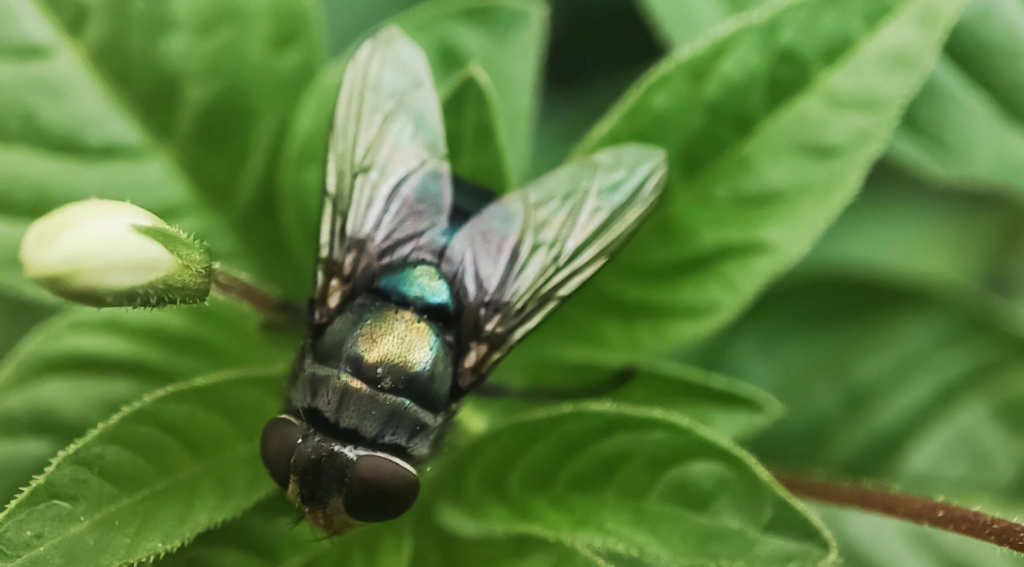
The emergence of New World screwworm in the U.S. creates a threat for veterinarians, livestock producers and pet owners that has not been seen north of the Florida Keys since the fly was eradicated from the United States more than 50 years ago.ii New World screwworm (Cochliomyia hominivorax) larvae feed on living tissue and can affect a wide range of warm-blooded animals, including livestock, companion animals, wildlife, and even humans.ii
"New World screwworm could have a devastating impact on animal health, welfare, and producer livelihoods," said Jeff Simmons, President and CEO, Elanco Animal Health. "We want to thank the FDA, EPA and USDA, for all their work to prepare for this threat. We're committed to supporting our customers during this challenging time by delivering innovation, scientific expertise, and available resources to help treat New World screwworm and support the health and well-being of animals."
With more than 70 years of animal health experience, including helping mitigate, prevent and treat New World screwworm in other parts of the world, Elanco is working alongside the U.S. animal health industry to help them fight against this parasite, offering a portfolio of options for pets and livestock that can help treat New World screwworm larvae infestations.
Available Elanco Treatment and/or Prevention Options
| Product Name | Indication | Species | Regulatory Status | |
| Credelio Quattro™- CA1 (lotilaner, moxidectin, praziquantel, and pyrantel chewable tablets) | Treats New World screwworm larvae infestations | Dogs | FDA Conditional Approval | |
| Credelio™ (lotilaner) | Treats New World screwworm larvae infestations | Dogs | FDA Emergency Use Authorization (EUA) | |
| Credelio™ CAT (lotilaner) | Treats New World screwworm larvae infestations | Cats | FDA Emergency Use Authorization (EUA) | |
| Negasunt™ Powder (coumaphos, propoxur, and sulfanilamide topical powder) | Treats and Prevents New World screwworm larvae infestations | Variety of Livestock and other Species | FDA Emergency Use Authorization (EUA) | |
| Tanidil™ (Coumaphos, Propoxur) | Prevents and Controls New World screwworm larvae infestations | Variety of Livestock and other Species | EPA Section 18 Emergency Exemption | |
| Catron® IV (Permethrin) | Kills and controls screwworm fly and maggots | Livestock | EPA Approved | |
Negasunt Powder and Tanidil will be available only through the U.S. Animal Plant Health and Inspection Service (APHIS) and its National Veterinary Stockpile. They will be distributed in coordination with state animal health officials and federally recognized tribal agencies. In the near future, APHIS will share additional information about the requirements for use, including tracking and reporting requirements and required safety and personal protective equipment.
As New World screwworm enters the United States, Elanco is committed to working alongside producers as they continuously evolve management practices and to help them implement prevention and treatment protocols to use the right product at the right time.
To learn more about Elanco's ongoing efforts and historical perspective on New World screwworm, please visit our previous coverage:
To learn more about New World screwworm (NWS) using the following resources:
American Farm Bureau Federation President Zippy Duvall commented today on USDA's announcement that the first case of New World screwworm (NWS) has been reported in the United States. "The re-emergence of New World screwworm in the United States after 60 years will have an immediate impact on farmers and ranchers in the affected areas. We are confident that the longstanding coordination between the states and USDA will enable a quick response and hopefully limit the negative impacts and resulting market volatility. "We encourage farmers, ranchers and pet owners to familiarize themselves with the signs of NWS and notify a veterinarian if infection is suspected. It is important to be clear about the fact that this re-emergence does not threaten the safety of our food supply. We are fortunate to have one of the safest food supplies in the world, which includes multiple layers of protection. "We knew the screwworm could one day migrate north, and we appreciate USDA and Secretary Rollins for the coordination and mitigation efforts that have already occurred. Farm Bureau is committed to working with USDA and the affected areas in any way to eliminate this pest once again from the U.S."
Chairmen Thompson, Boozman Statement on Domestic Detection of New World Screwworm- "For well over a year, Secretary Brooke Rollins and her team at USDA have been working around the clock alongside federal agencies, state partners and animal health experts to prevent New World Screwworm from entering the United States—longer than many thought possible—and to ensure we are prepared to respond to a potential domestic case. Their proactive efforts have strengthened our defenses against this serious threat to animal health and the livestock industry, and we appreciate their continued commitment to protecting American agriculture. "The detection of New World Screwworm within our borders should not be cause for panic, but rather time for the full deployment of the next phase of the whole-of-government response USDA has been planning for months. We have the tools, resources and an action plan to aggressively respond, enhance surveillance and prevent further spread. By working closely with producers, animal health officials, and our federal and state partners, we will take the necessary steps to protect and safeguard America's livestock industry. We have successfully eradicated this threat to livestock, wildlife and animal health before, and we're confident we will do so again."
NMPF Statement on the Return of New World Screwworm- The return of New World screwworm to the United States decades after its initial eradication is a disappointing milestone, but it's also one for which dairy producers have been preparing for more than a year, in collaboration with USDA and across agriculture. It's important to remember that this development has no effect on food safety, and that measures to combat both the screwworm and its spread are in place and time-tested. We appreciate the U.S. Department of Agriculture's proactive efforts to prepare for this moment, and we stand ready to work with the department to address any ongoing challenges. Now that USDA has confirmed that screwworm is here, dairy farmers and all livestock producers pledge close collaboration with USDA, state and local officials, and producer organizations to mitigate any harmful effects and educate farmers on how to protect their herds. We have been creating resources to guide farmers in their responses, and we will keep our members well informed of any important screwworm developments. We also urge officials to follow scientific guidance in any decisions affecting animal movements and regulatory responses to avoid causing economic harm that could be greater than the screwworm itself. We also ask that adequate resources be provided to combat this problem, which causes suffering in animals and creates risk for producers.
National Cattlemen's Beef Association (NCBA) CEO Colin Woodall responded to the announcement from the U.S. Department of Agriculture (USDA) that one case of New World Screwworm has been detected in a calf in South Texas:
"NCBA and our state partner organizations have been working for more than a year to combat the incursion of the New World Screwworm, and we are doing everything possible to protect the interests of American cattle producers. We appreciate USDA and other agencies for working rapidly to bolster critical resources that protect producers, including building a domestic sterile fly facility, increasing fly surveillance, and expediting the availability of necessary drugs and treatments for cattle. We defeated this harmful pest before in the 1960s by investing heavily in sterile fly dispersal and NCBA will continue using every tool in the toolbox to ensure Screwworm is eradicated in the U.S. once again."
R-CALF USA- The U.S. Department of Agriculture announced that New World screwworm was confirmed in the United States. The pest was detected in a 3-week-old calf in South Texas, and USDA stated it has mobilized response personnel and coordination efforts in the impacted area. In its statement, USDA said current response efforts include forming a unified Incident Command Team with the Texas Animal Health Commission, establishing an infested zone with movement controls and surveillance measures, expanding sterile fly release efforts, increasing trapping activities, implementing wildlife surveillance strategies, and conducting targeted outreach efforts in impacted areas. R-CALF USA CEO Bill Bullard issued the following statement in response: "This confirmation marks a serious moment for American livestock producers and requires an immediate, coordinated response to protect animal health, the national cattle herd, America's livestock producers, and our nation's food supply. "We now switch from prevention to eradication. Producers need to be intensely vigilant in monitoring their livestock and reporting suspected cases to their veterinarian. We must push this pest back to Mexico and then continue efforts to push it back to Central America."
The U.S. Cattlemen's Association (USCA) is closely monitoring the announcement from the U.S. Department of Agriculture regarding the suspected detection of New World Screwworm (NWS) in Texas and the ongoing confirmatory testing now underway at the National Veterinary Services Laboratories in Ames, Iowa. USCA commends USDA's Animal and Plant Health Inspection Service (APHIS) and the Texas Animal Health Commission (TAHC) for their swift response to this potential detection and for their extensive work on-the-ground to hold off the reemergence of New World Screwworm through 2025 and into the first half of 2026. Their early activation of personnel in the region, close coordination with state and local partners, and continued focus on prevention, early detection, and rapid response have bought producers and animal health officials critical time to prepare for a situation just like this. USCA welcomes USDA Secretary Rollins' commitment that the Department will remain in constant communication with industry stakeholders as this situation develops. Timely, transparent updates from USDA, APHIS, and TAHC are vital to ensure that cattle producers have the information they need to safeguard their herds, implement any recommended biosecurity measures, and coordinate effectively with animal health officials. USCA's Animal Health Committee is actively engaged on this issue and is in close contact with federal and state animal health officials as the situation evolves. USCA's priority remains the protection of animal health, the integrity of the U.S. cattle herd, and the long-term viability of domestic livestock production. Further updates will be shared with our membership as additional details are released by USDA and its partners.
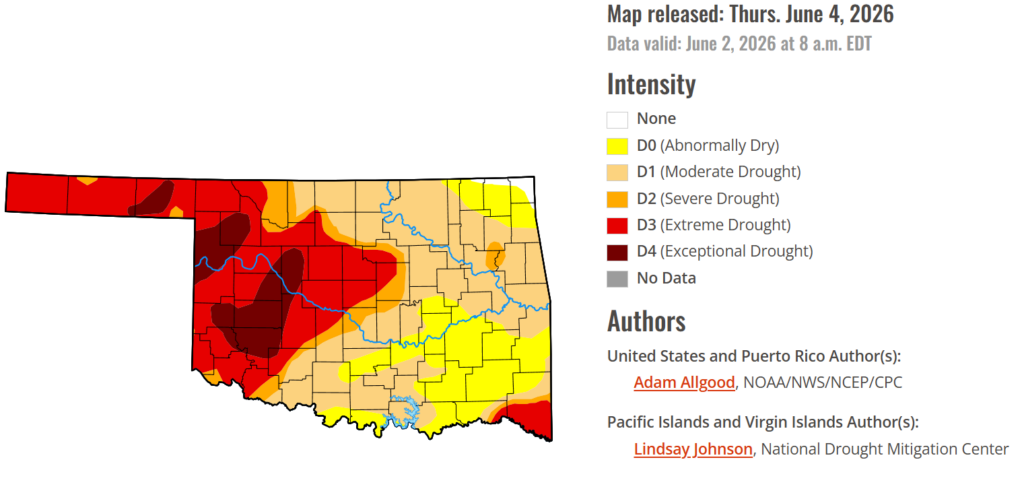
To view the latest Oklahoma drought map, CLICK HERE.
Oklahoma's drought picture continues to tell two different stories depending on where you are in the state. While repeated rounds of spring rainfall have brought significant relief to many areas east of I-35, conditions across western Oklahoma continue to deteriorate as persistent dryness, high temperatures, and mounting moisture deficits take a toll on pastures, crops, and water supplies. As summer approaches, drought concerns remain firmly centered on the western half of the state, where some producers are already facing impacts typically associated with long-term drought.
According to the latest Drought Monitor, exceptional drought persists in parts of western Oklahoma, including Kiowa County, Ellis County, Beaver County, Woodward County, and surrounding areas. Historic impacts of exceptional drought include rising hay and water costs, limited supplies, and herd liquidation by producers. Ranchers and farmers are facing severe economic losses as failed crops are baled or abandoned, pastures turn bare, and cracked, dry land leaves some fields unusable. Exceptional drought currently covers 9.21% of the state compared to just 4.35% last week.
Moderate to extreme drought conditions in the current period indicate that 80.76% of the state is affected. At this point, only 0.69% of the state remains drought-free in far northeastern Oklahoma.
The trend of easing drought conditions in eastern Oklahoma and worsening conditions in western Oklahoma continues, with I-35 generally serving as the dividing line between the two.
According to the 6-to-10-day precipitation outlook map, all of Oklahoma is leaning above a 33-40% chance of precipitation through June 13th.
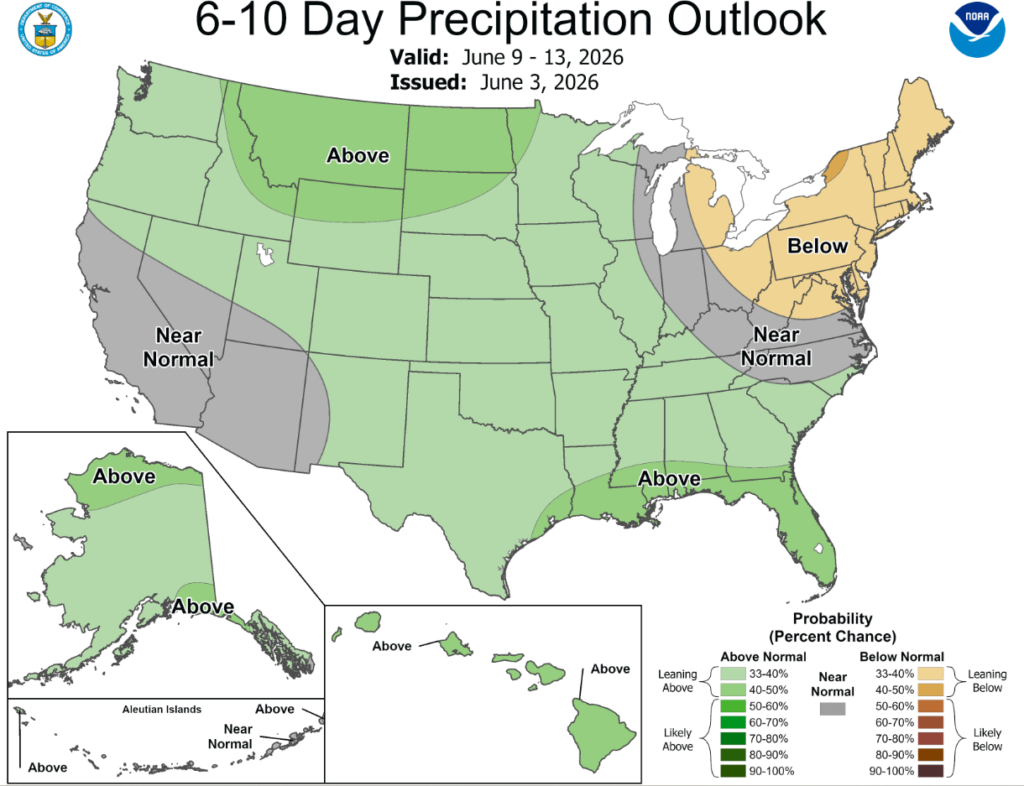
The mid-level height anomaly pattern during the week exhibited an omega-block type pattern, with mean troughing over Alaska and both the West and East, with the western trough cutting off over California, and strong ridging between the troughs across the central contiguous US. This pattern promoted below-normal temperatures across the Southwest for much of the period, with colder air pushing eastward towards the end of the week followed by warming temperatures. Across the East, cooler air overspread New England and the mid-Atlantic, keeping evapotranspiration rates a bit lower than normal. In contrast, much above-normal temperatures were observed throughout the week across the northern Plains and upper-Midwest, though colder weather and storminess overspread the northern Rockies and adjacent High Plains at the end of the week. An active pattern was noted across the Plains, South, and Southeast as a mean frontal boundary provided a focus for stormy weather. These rains, in conjunction with a wetter pattern overall during May, prompted widespread additional drought relief for the South and Southeast regions, as well as portions of the High Plains. In contrast, hot, dry weather across the northern Plains and upper-Midwest caused expansion of drought and abnormal dryness, with widespread degradation occurring in western portions of the Midwest region. Towards the end of the week, a storm system brought heavy precipitation to western and central Montana, bringing some drought relief following a period of hot, windy weather. Across the Northeast, additional rainfall benefitted portions of New England, while drier weather overspread the mid-Atlantic and southern New England following a wet week previously.
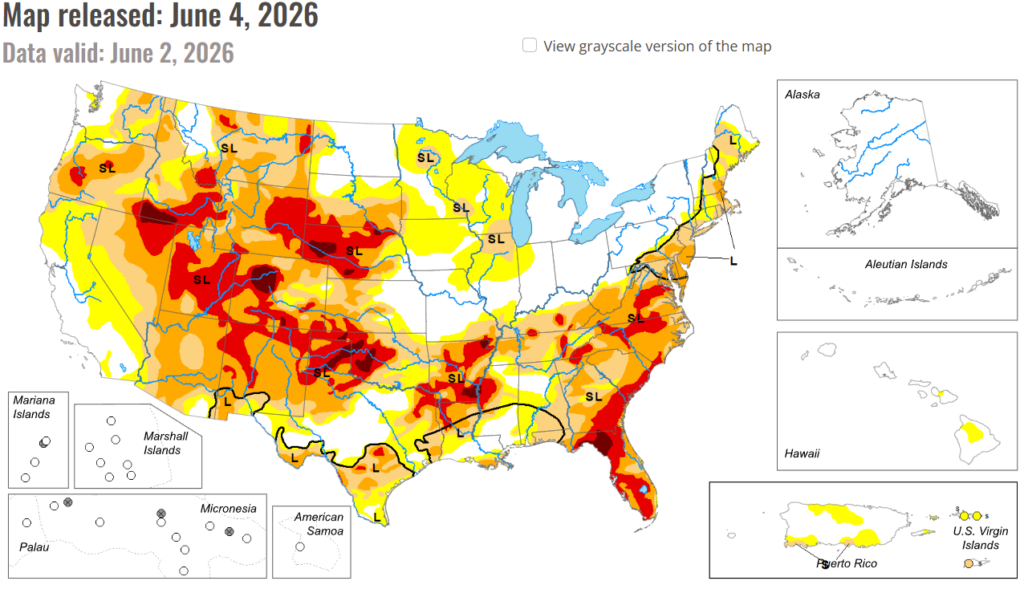
In the South: Soaking rains overspread most of Texas during the week, promoting additional drought reductions, primarily across southern Texas and the Big Bend country. Rainfall also overspread eastern Oklahoma, but conditions worsened across the western half of the state which fared drier during the week. Along the lower Mississippi Valley, heavy rains, exceeding 6 inches in some locations, fell across northern Arkansas, promoting drought reduction. Soaking rains were less intense across Louisiana and Mississippi, but were still sufficient to promote substantial drought reduction at the tail end of a wet May. Although conditions have improved overall across the Southern Region, widespread D3 to D4 continues across northern Texas and western Oklahoma, and long term drought impacts to groundwater remain a concern heading into the summer months across the whole region.
In the High Plains: Stormy weather brought soaking rains across much of the High Plains, with the highest coverage and accumulations over Kansas and Nebraska. While beneficial, this precipitation competed during the week with much above-normal temperatures, which maintained high evapotranspirative demands. Accordingly, areas that missed out on significant rainfall, including portions of the Dakotas and far northern Nebraska, experienced some degradation, while reductions were noted across much of Kansas and eastern Nebraska. Further west, beneficial precipitation brought some relief to portions of the Colorado Plains and a few spots in Wyoming, while drier conditions resulted in deterioration in southwestern Colorado.
In the West: A late season storm system brought heavy rainfall to southern Oregon and northern California, sparking a few modest improvements but overall doing little to change the current drought depiction. Some degradations were noted across portions of California, Oregon, and the Great Basin, where impacts from a lack of snowmelt recharge - especially low streamflows - are beginning to be felt. Temperatures during the week were near to above-average across the Northwest, but below average across California, helping to keep evapotranspiration demands lower than average.
To view the 6-10 Day Precipitation Outlook Map, click here.
To view the 6-10 Day Temperature Outlook Map, click here.
To view the Monthly Drought Outlook Map, click here.
RON's Dave Lanning has a pre-opening look at today's agricultural Markets.
Click the audio tab below for today's report.
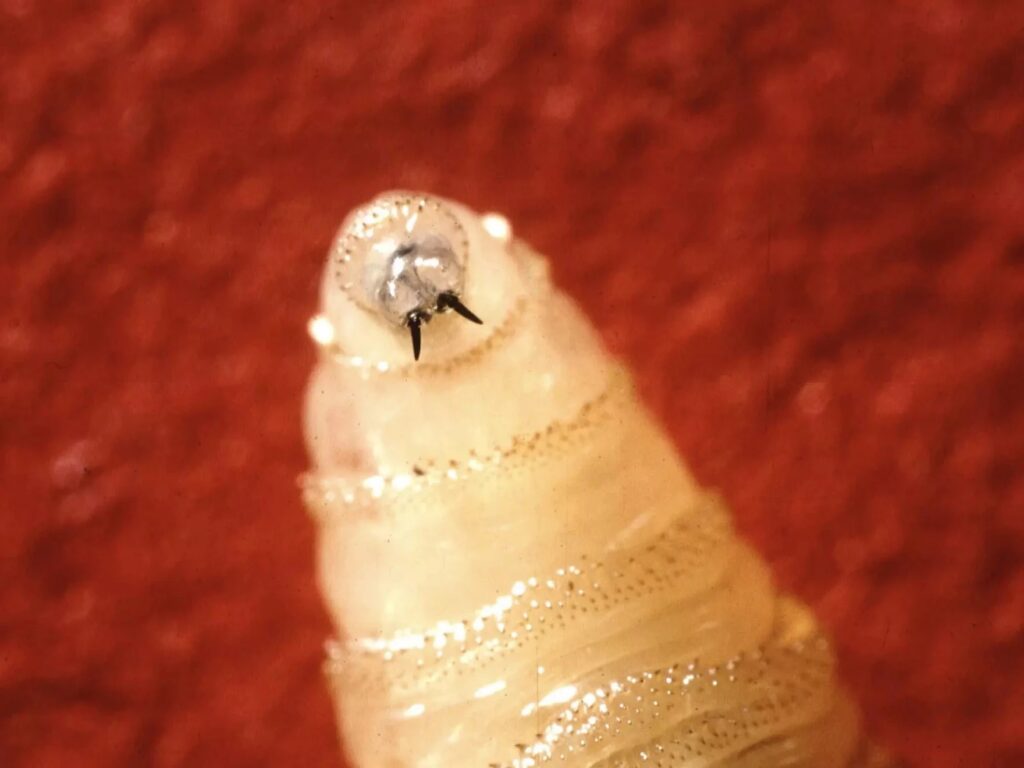
OKFB statement on discovery of New World Screwworm in Texas
Oklahoma Farm Bureau President Stacy Simunek issued the following statement after the U.S. Department of Agriculture Animal and Plant Health Inspection Service confirmed the presence of New World screwworm in a bovine in Zavala County, Texas, on June 3.
"With today's news of the first case of New World screwworm in the United States in decades, this is a time for farmers, ranchers and our entire agriculture community to work together to ensue this pest is contained and eliminated as quickly as possible.
"We urge agricultural producers around our state to learn what an NWS instance on their farm or ranch would look like as we step up our vigilance as an industry to make sure we can mitigate the spread. We know that a proactive approach will help ease the market volatility that we now expect with the discovery of NWS in our country.
"We also want consumers to know that NWS does not present a food safety concern, and that USDA continues to not only monitor the active NWS situation, but also conduct ongoing, regular food inspections to make sure our food supply is safe.
"We thank USDA and Secretary Rollins' proactive work over the last year to prepare for what we feared was the inevitable arrival of NWS on U.S. soil, and we ask the Trump administration to continue prioritizing our nation's NWS monitoring and response to ensure this pest is contained and eliminated as quickly as possible."
OCA Statement: USDA has provided confirmation of a case of New World Screwworm fly in south Texas. OCA appreciates the quick response and most importantly, the robust preparation of USDA, Texas Animal Health officials and the Oklahoma Department of Agriculture, Food and Forestry (ODAFF). While we knew this day was a matter of time, the animal production industry is prepared and has responded with an aggressive plan. OCA has been an active part of ODAFF's work to prepare and we greatly appreciate the leadership of Secretary Arthur and State Veterinarian Dr. Rod Hall. It is important to note that this is not a food safety issue. While there has been no other confirmed cases in the United States, all cattle producers are encouraged to monitor their livestock closely and contact their veterinarian if they suspect a case of NWS.
Texas & Southwestern Cattle Raisers Association President Stephen Diebel responded to a confirmed case of New World screwworm detected in an umbilical cord lesion on a three-week-old calf in Zavala County, Texas:
"This is a serious animal health threat, particularly for Texas, but it is not a food safety issue and ranchers and landowners should not panic. For the past 18 months, we have worked alongside our state and federal partners to prepare for the possibility of a positive New World screwworm case, and that preparation now positions us to respond quickly and effectively.
Texas & Southwestern Cattle Raisers Association has worked alongside the U.S. Department of Agriculture (USDA), Texas Animal Health Commission (TAHC) and Texas Parks and Wildlife Department (TPWD) to increase surveillance, sterile fly production and dispersal capacity. We have identification, treatment and reporting protocols in place. We are exceptionally grateful for the leadership and response of our partners on this issue.
Texas ranchers and landowners may be on the front lines of this challenge, but they are not facing it alone. TSCRA continues to provide information and resources and ensure there is a voice speaking on their behalf and ensuring their interests are represented.
We ask ranchers and landowners to regularly put eyes on their livestock and wildlife, maintain a strong relationship with their veterinarian and report suspicious wounds or infestations immediately. Early detection, rapid response and limiting animal movement when necessary remain our strongest tools for containing and eradicating New World screwworm."
UPDATED- In a news conference with Texas media, US Secretary of Ag Brooke Rollins has confirmed that the suspected case of New World Screwworm has been confirmed by the USDA Lab in Ames, Iowa. It is the first case in Texas since 1966.
The U.S. Department of Agriculture's (USDA) Animal and Plant Health Inspection Service (APHIS) confirmed the detection of a New World screwworm (NWS) in a bovine in Zavala County, Texas. NWS is a serious pest that affects livestock, pets, wildlife, and less commonly, people and birds. NWS larvae (maggots) burrow into the flesh of living animals, causing serious damage to livestock and economic losses.
The affected animal is a 3-week-old calf and larvae were identified in its umbilical area. To date, there have been no further detections.
"All models showed New World Screwworm entering the country in 2025; however, thanks to the hard work across the entire Trump administration and our industry, state, and local partners, we were able to buy time for this moment. Protecting our livestock industry is a national security issue of the utmost importance, and USDA is wasting no time in taking action," said Dudley Hoskins, Under Secretary for Marketing and Regulatory Programs. "USDA invested heavily in the tools needed to eliminate NWS ever since cases started increasing in Central America and Mexico. The United States has defeated this pest before, and we will do it again."
USDA and Texas officials are taking immediate action to contain and eradicate NWS from the United States, following the strategies and actions outlined in the NWS Response Playbook. This includes:
Additionally, USDA's National Veterinary Stockpile stands ready to assist, and will provide resources including treatments, equipment, and logistics support the response as needed.
USDA will continue to work with state departments of agriculture, animal health officials, industry, and producers to mitigate economic impacts of restrictions as much as possible, including negotiating with our trading partners to regionalize any trade restrictions on live animals, limiting them to defined geographic areas.
NWS maggots can infest livestock and other warm-blooded animals, including in rare cases people. They most often enter an animal through an open wound and feed on the animal's living flesh.
USDA urges residents in the area to check their pets and livestock for signs of NWS. Look for draining or enlarging wounds and signs of discomfort. Also look for screwworm larvae (maggots) and eggs in or around body openings, such as the nose, ears, and genitalia or the navel of newborn animals. If you suspect your animal is infected with screwworm, contact your state animal health official or USDA area veterinarian in charge immediately.
While not common in people, if you notice a suspicious lesion on your body or suspect you may have contracted screwworm, seek immediate medical attention.
The U.S. food supply is safe. Screwworms do not infest meat, fruits, vegetables, or other food sources. USDA's Food Safety and Inspection Service (FSIS) ensures that the nation's commercial supply of meat, poultry, and egg products is safe and properly labeled. Under the Federal Meat Inspection Act (FMIA), FSIS inspection personnel must inspect all eligible animal species unless they are exempt or covered by a state inspection program.
Any evidence of screwworm infestation in an animal would be identified during these inspections, and any contaminated product from an affected animal would not be allowed to enter the food supply.
For more than a year, USDA has led a unified response to NWS. As the lead coordinating agency, USDA has deployed advanced surveillance systems and supported robust cross-border response efforts in Mexico and Central America to combat the pest and push NWS away from the United States. These efforts have bought time for USDA to increase domestic preparedness efforts.
Learn more about New World screwworm at Screwworm.gov.
UPDATED- In a news conference with Texas media, US Secretary of Ag Brooke Rollins has confirmed that the suspected case of New World Screwworm has been confirmed by the USDA Lab in Ames, Iowa. It is the first case in Texas since 1966. Officials are saying the eggs were laid in a baby calf umbilical cord.
Earlier- According to a post on X by US Secretary of Ag Brooke Rollins- she "Just wrapped up a virtual meeting with ~50 of our outstanding Texas cattle ranchers and @TAHC. Our food supply is 100% safe. This potential New World Screwworm detection is being fully contained and is not a harm to the American food supply or consumer safety. The NWS specimen has arrived at the airport in Ames, IA and is being transferred to National Veterinary Services Laboratories (NVSL). We will update as soon as we have confirmed test results. Unfortunately, the open-border policies of the last administration and the resulting illicit cattle movement throughout Mexico have caused NWS to potentially reach our side of the border. BUT, there is no one better than Texas and our live stock producers to have in this fight.
"All models showed NWS coming to the U.S. last summer/early fall — so a big thank you to our partners across the industry and local, state and the entire Trump administration for unprecedented action that gave us almost an extra year to prepare for this moment. Together with so many partners, including the Texas Animal Health Commission, Texas A&M AgriLife, Texas Farm Bureau, Texas Cattle Feeders and Texas & Southwestern Cattle Raisers Association, we will effectively combat, contain and eventually eradicate this pest.
"Additional @USDA personnel have arrived in South Texas to support our partners on the ground. The National Veterinary Stockpile is ready to deploy and on its way. I now call on our producers to be vigilant and watchful. The most effective thing to do right now is to put eyes on all live stock. If you see anything suspicious, contact your state animal health official (linked on the http://screwworm.gov website). Texas cattle and live stock producers are the backbone of our state and our nation. We will meet this challenge head-on."

Morgan Pfeiffer, an assistant professor in the OSU Department of Animal and Food Sciences, was recognized with the Early Career Excellence in Teaching Award at the Ferguson College of Agriculture Scholarships and Awards Banquet in March.
Pfeiffer joined the department as a faculty member in 2020, but was familiar with the department already, earning her bachelor's, master's and doctoral degrees from OSU. To date, she has taught 25 courses and 1,725 undergraduate students at the university.
"Being recognized amongst my peers in a college that focuses so much on teaching really means a lot," Pfeiffer said. "I think it's very unique that we have departments that support each other so much in the Ferguson College."
Pfeiffer has taught several courses at OSU, including Meat and Animal Carcass Evaluation, The Meat We Eat and Processed Meat, the latter being one of her favorites. Because the class size hovers around 20 students, Pfeiffer is able to take students out into the field and experience processing plants across the state.
"I probably learn as much as the students do, just getting to see what's actually happening in production and the sheer amount that happens," she said. "We watched 8,000 sausage sticks being made in an hour. For students to be able to see that happen really changes their perspective."
That meaningful learning is one of Pfeiffer's core tenets in her teaching philosophy. The power of a great educator is something she can relate to.
Pfeiffer explained how, in fourth grade, her teacher recognized she needed extra help, and without that teacher, Pfeiffer said she wouldn't be where she is today. That impact is something Pfeiffer hopes to make with her students at OSU.
"One of my favorite parts of my job is supporting students," Pfeiffer said. "They know when they leave here, I'm still a resource. A lot of times, they become excellent resources for me."
Because she prioritizes hands-on learning, Pfeiffer's coursework requires tedious preparation. She needs to find animals, harvest them and turn them into meat products. She emphasizes keeping lectures current, including bringing in guest speakers from related industries, some of whom are former students.
"Through her unwavering commitment to preparation, accountability and genuine student support, Dr. Pfeiffer creates an environment where students feel valued, challenged and inspired to succeed," said Cynda Clary, associate dean of academic programs.
In the department, Pfeiffer serves as the scholarship coordinator, overseeing $650,000 in scholarships awarded each year to undergraduate and graduate students.
"In every aspect, Dr. Pfeiffer represents the highest standards of teaching excellence expected of OSU faculty," said Richard Coffey, department head of animal and food sciences. "Her impact on students, her dedication to mentorship and her ability to integrate teaching, research and service so early in her career make her exceptionally deserving of this award."
Pfeiffer said her biggest return on investment in life is watching other people succeed. Helping students reach their goals, whether it's landing a job, finding their passion or landing an internship, is something she enjoys.
"I want them to leave my class remembering four things: Meat is safe, wholesome, nutritious and desirable for the consuming public," Pfeiffer said. "But really, what I hope they learned when they leave is that they have someone in their back pocket who will support them, inside and outside of academia."
The Oklahoma Association of Conservation Districts (OACD) is proud to announce the launch of the Advancing Markets for Producers (AMP) Initiative, a new statewide effort designed to help agricultural producers strengthen their operations through conservation planning, market development, and long term system improvements. Applications officially opened June 1, 2026, and will remain available through July 31, 2026.
Funded through the U.S. Department of Agriculture, AMP represents a new approach to conservation by focusing on whole farm systems rather than individual practice implementation. The initiative is designed to help producers improve profitability, reduce risk, and identify new market opportunities while addressing natural resource concerns through soil health, grazing management, and agroforestry based production systems.
Unlike traditional cost share programs, AMP does not focus solely on the installation of conservation practices. Instead, participating producers will work alongside conservation professionals and technical advisors to develop a customized multi-year system pathway plan that aligns operational goals, resource concerns, management strategies, and market opportunities for regeneratively raised products.
"Conservation and profitability should not be competing goals," said Jean Lam-Thompson, Executive Director of OACD. "For too long, conservation has been measured by the implementation of a single practice or installation of infrastructure. AMP challenges us to think bigger. By combining conservation planning, technical and financial assistance, alongside market development, we have an opportunity to create lasting systems change that strengthens both the land and the operation. We are investing not just in practices, but in people and the future of Oklahoma agriculture. Our goal is simple: help producers spend less time figuring it all out and more time doing what they do best: farming and ranching. Oklahoma has long led the nation in conservation innovation, and I believe we can lead the way again."
AMP is open to agricultural producers across Oklahoma, with enrollment priority given to row crop producers, livestock grazing operations with a focus on beef production, specialty crop producers, orchardists, and urban agricultural operations. Selected participants will work with Oklahoma Conservation Commission Soil Health Team members and local conservation districts to develop individualized plans that support operational goals while improving long term resilience and profitability.
Participants may be eligible to receive financial assistance ranging from approximately $10,000 to $35,000 over the life of the program, with payments tied to participation, progress, system development, and market engagement activities.
"AMP is about more than implementing a practice," Lam-Thompson said. "It's about helping producers build a system that works for their operation, their family, and their future."
OACD anticipates enrolling up to 125 producers statewide. Selected applicants will be notified by September 2026.
For additional information or to apply, visit https://www.okconservation.org/amp
Sixty-five state and national groups, including the National Corn Growers Association, sent a letter to Commerce Secretary Howard Lutnick today calling on him to end countervailing duties placed on phosphate fertilizers imported from Morocco to ease the pain felt by farmers as fertilizers prices reach new highs.
The announcement comes less than a week after Federal Trade Commission Chairman Andrew Ferguson announced a major, industry-wide investigation into the fertilizer industry's pricing practices and concentration.
"These costs land on an already fragile farm economy," the letter said. "Net farm income has fallen roughly 31 percent from its 2022 peak, fertilizer prices are up more than 150 percent since 2020, and Chapter 12 farm bankruptcies have surged to their highest levels in several years."
The letter also noted that farmers are in their fourth straight year of losses, and that countervailing duties only exacerbate their financial outlook and could mean the difference between sustaining family farms for generations to come or seeing legacies come to an end.
The countervailing duties, requested by the U.S.-based Mosaic Company and Simplot, have been in effect since March 2021. The letter noted that the duties not only hurt farmers, but they also do not accomplish their intended goals.
"[The duties] do not protect a vulnerable domestic industry from unfair competition," the letter said. "Rather, they further prop up two companies who already dominate the domestic market and will continue to dominate that market absent CVD protection."
An independent analysis by the Agricultural and Food Policy Center at Texas A&M University has estimated that the countervailing duties on Moroccan phosphate raised input costs for farmers of corn, soybeans, wheat, rice, sorghum and cotton by roughly $6.9 billion over the 2021 through 2025 growing seasons. At its full initial rate of 19.97 percent, the duty drove up the U.S. price of diammonium phosphate by an estimated 28.6 percent.
The letter also targeted Mosaic's practices.
"Far from safeguarding domestic supply, Mosaic continues to curtail its own production, even as supply tightened at home," the letter noted. "These duties fail to do more than drive up costs for farmers and risk our national food security by limiting the large majority of our annual phosphate needs to a single supplier that continues to curtail production – enhancing our risks to supply chain disruptions."
NCGA has established an input task force that is looking at the causes of price hikes for supplies and how they can be addressed.
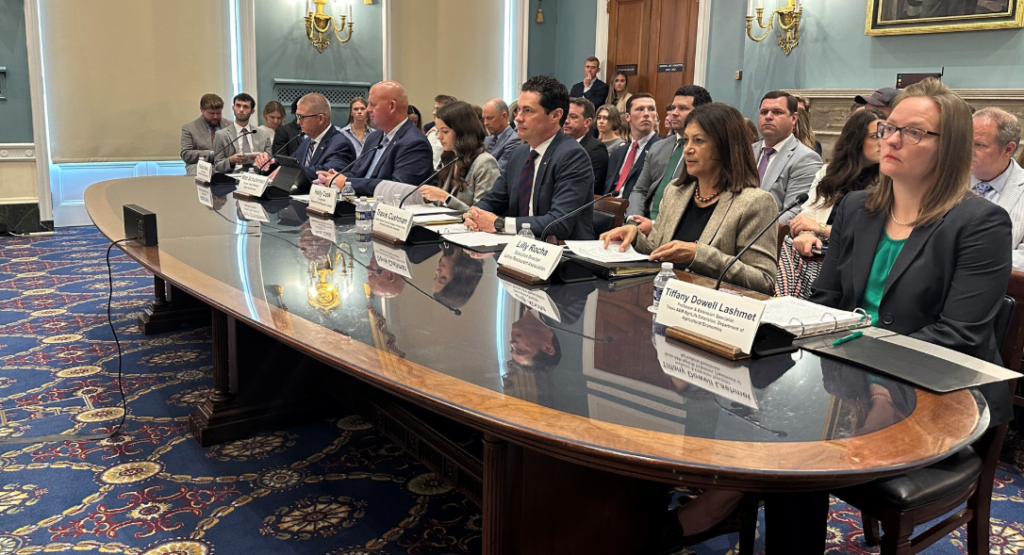
The policy panel at the World Pork Expo recently focused on strategic paths for the industry to secure policy victories at both the national and state levels. Pat Hord of Ohio, President-Elect of the National Pork Producers Council (NPPC), highlighted several critical, unresolved issues facing pork producers.
Among the top priorities for the NPPC is the renewal of the United States-Mexico-Canada Agreement (USMCA). The trade pact is vital for maintaining stable and robust trade relations with neighboring countries.
"One of the big issues for our industry is the renewal of the US-Mexico-Canada trade agreement, which is extremely important for trade with our neighboring countries," Hord said.
Beyond international trade, safeguarding domestic animal health remains a primary focus. Managing the U.S. swine herd effectively requires robust oversight of foreign animal disease protection measures, including programs such as the U.S. Ship Initiative.
"U.S. Ship is an important piece of our animal health, being able to manage that for the U.S. swine herd," Hord noted.
At the farm level, the industry continues to grapple with operational headwinds, most notably a severe shortage of agricultural workers.
"Other issues that are at the farm level are the critical workforce shortages that are on our farms every day," Hord explained.
In addition to workforce challenges, the NPPC is closely monitoring nutrition policy, advocating for a timely extension of the Farm Bill, and seeking a definitive fix to California's Proposition 12, which imposes specific housing mandates on producers selling pork into the state.
The current political climate in Washington, D.C., heavily influences how the NPPC approaches these legislative challenges. Hord emphasized that extreme partisanship requires the council to maintain a strictly bipartisan strategy.
"We know there is a lot of partisanship and a very divided country across party lines," Hord said. "As NPPC, we have to make sure that we are focused and bipartisan as we approach these issues."
This strategy extends beyond Washington. The NPPC is adapting its outreach to engage states with minimal agricultural presence that are increasingly influencing national food production policies.
"We've seen where states that may not have much agriculture begin to exert influence on what we do in food production," Hord said. "And so we've had to come up with different strategies of how we may have outreaches to those states. We really have to continue to remain effective communicators, as really nobody tells the story better than us."
While grassroots efforts by producers visiting Washington or state capitals are crucial, Hord underscored the ongoing, quiet diplomacy carried out by the council's professional staff. This includes international travel and direct engagement with administration officials and congressional leaders.
"A lot of it is behind the scenes where our staff really leads the charge here in this area," Hord said. "They may be traveling to other countries or being a part of the conversation."
These established relationships ensure that when producers or executive officers participate in legislative "fly-ins," they are positioned directly with high-level decision-makers.
"The good thing is our staff is very well connected within the administration and within Capitol Hill," Hord noted. "And so when we do a fly-in, or we as officers end up traveling to Washington, D.C., they do a great job of putting us in the room at the highest levels of government and being able to have those conversations."
The NPPC aims to shift toward a more offensive policy posture, anticipating challenges and shaping public policy before it impacts operations.
"Our staff's job is to wake up and to think about what impacts could happen to our industry and what should we be proactively helping shape that public policy area," Hord said. "We've been charged to be more on the offense at NPPC."
Acknowledging that the industry will always face opposition from groups seeking to limit the success of commercial pork production, Hord reiterated the council's commitment to advocacy.
"There's always going to be challenges, and there's going to be people that don't want U.S. pork producers to be successful," Hord concluded. "But our job as NPPC is to identify those things and continue to push forward to help our U.S. pork industry be successful."
The U.S. Cotton Trust Protocol today announced the implementation of forensic verification to establish a new Physical Assurance Program, implementing forensic isotopic analysis, to validate the origin of U.S. cotton. The program launched, following a successful pilot with Oritain, global leaders in forensic origin verification, will provide an additional layer of assurance through physical verification, strengthening supply chain integrity, confidence, and trust among its members.
Key benefits include:
"Assurance is a key element of the Trust Protocol, and this program is intended to introduce an additional layer of confidence for our members and their customers," said Gary Adams, President of the U.S. Cotton Trust Protocol.
"While our digital traceability system provides important transparency, we are incorporating forensic analysis of selected products at certain stages of the manufacturing process. Given cotton from different regions carries distinct forensic characteristics, our partnership with Oritain is intended to help inform and support U.S. origin declarations through independent scientific analysis. This sample-based approach is designed to complement our traceability platform by offering additional perspective on supply chain performance and by encouraging ongoing attention to chain-of-custody practices across the system."
Beginning in May, a randomized sampling of supplier members will be requested to provide representative material samples, such as yarn or fabric, for testing. Oritain will independently analyze these samples to validate their claimed origin. The results will be shared back with both the Trust Protocol and the member.
"Physical verification is the missing layer in many traceability systems today," said Gemma Lynch, Chief Customer Officer at Oritain. "Existing traceability gives important visibility, and forensic isotopic analysis combined with proprietary data modelling goes further — validating origin claims at the product level and ensuring source materials are exactly what they're claimed to be. It's about strengthening trust through independent, data-backed proof of origin."

Today, U.S. Environmental Protection Agency (EPA) Deputy Administrator David Fotouhi announced the agency's forward-looking Superfund Solutions initiative to accelerate cleanups of contaminated sites nationwide, including the more than 1,340 Superfund sites on the Superfund National Priorities List (NPL). Through this new long-term initiative, EPA will deploy gold-standard science, streamline decision-making and cut red tape, make swifter clean up decisions, modernize tools, and increase cooperative federalism to deliver human health and environmental protections for communities across the country.
Superfund cleanup is a bedrock EPA program that protects human health and the environment by identifying and remediating sites contaminated with hazardous substances. The cleanup and revitalization of contaminated land reinvigorates sites into productive community spaces like parks and sports fields, wildlife areas, or new homes or businesses. Over the past 15 years, these renewed sites have generated over $868 billion for local economies and employed hundreds of thousands of Americans.
"Many communities have waited long enough for EPA and responsible parties to get a shovel in the ground, and the new Superfund Solutions initiative is a monumental step in getting these vital clean ups back on track," said EPA Deputy Administrator Fotouhi. "Our talented career staff have been hard at work on this initiative, and over the coming months, EPA will take concrete steps to cut red tape, expedite analysis and decision-making, identify common-sense solutions, and work with our partners to deliver on communities' needs. This is a commitment the Trump EPA is proud to make today and looks forward to seeing this through to the end."
"American communities deserve faster results, safe and healthy lands, and robust local economies," said Acting Assistant Administrator for Land and Emergency Management Thomas Croci. "The EPA Superfund Solutions initiative will apply gold‑standard science, streamlined processes and collaboration with local authorities to reduce unnecessary bureaucratic barriers and expedite the remediation of Superfund sites nationwide."
For years, process challenges and bureaucratic delays have stood in the way of even more progress being made on cleaning up contaminated sites. However, the Trump EPA's renewed focus of delivering on its core mission of protecting human health and the environment, something previous EPA leadership deprioritized, has proven that significant progress can happen at sites when resources are deployed correctly.
Since January 2025, more than 290 Superfund site cleanups have been completed, over 59 million cubic yards of contaminated soil and water have been cleaned up, and $864 million from responsible parties have been recovered. The Trump EPA's work has cut two years off the cleanup timeline at the West Lake Landfill site in Missouri and shaved 15 years off the cleanup timeline for the PCE Southeast Contamination site in Nebraska, proving that EPA can deliver tangible results faster.
The new initiative will build on this progress and streamline the agency's approach to clean ups through three key areas:
Enhance Project Management
Deploy Tools and Authorities Earlier
Apply Smarter Science for Smarter Outcomes
EPA is committed to radical transparency and will share site-specific cleanup progress and agency progress towards these goals. In addition to providing results through the quarterly Superfund Accomplishments Report, EPA will continue to update the public on progress made through the Superfund Solutions initiative on the agency's website.
Background
EPA's Superfund program cleans up the nation's most contaminated sites to protect human health and the environment from hazardous substances. Superfund cleanups provide health and economic benefits to communities and are credited for significant reductions in birth defects and blood-lead levels among children living near sites. Cleanups also increase residential property values up to 24 percent within three miles of sites after cleanup.
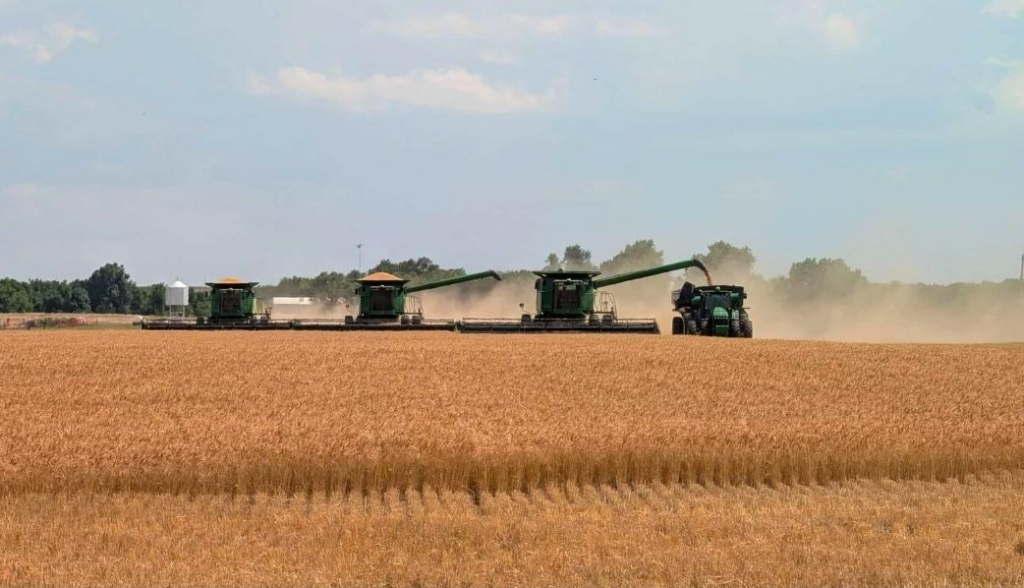
2026 wheat harvest, Enid Oklahoma. Pic courtesy of Arlyn Wiebe
Weather continues to drive variability across the U.S. wheat crop. In the Southern Plains, recent rainfall has slowed
HRW harvest while the drought conditions that persisted throughout the growing season has limited yield potential.
SRW harvest is picking up in southern states under generally stable conditions, while conditions for the SW wheat crop
in the Pacific Northwest remain optimistic. HRS planting is nearly complete, with early conditions mixed but mostly
improving. Northern durum planting remains ahead of average, though emergence has been uneven and more moisture
is needed to support full yield potential.
Crop progress: Widespread rains continued to slow harvest progress in Texas and Oklahoma. USDA estimates the
Texas harvest at 23% complete, while state representatives report Oklahoma at 25%. The Kansas crop is about 79%
colored, with test cutting underway. An estimated 47% of the crop is headed, and development remains 2 – 3 weeks
ahead of average due to environmental stress. Initial samples have arrived at the lab, with preliminary quality data
expected in the coming weeks.
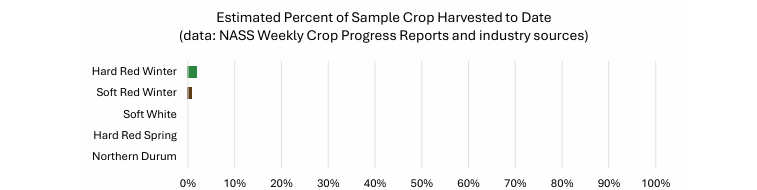
Crop conditions: Recent rains in Texas are delaying harvest and raising quality concerns. Reported yields in Texas and
Oklahoma range widely, with most fields averaging 20 – 30 bu/acre (1.3 – 2.0 tons/ha). Soil moisture in Kansas remains
very short; recent rainfall arrived too late to improve yield potential but may help stabilize drought‑stressed fields.
Abandonment is expected to be significantly higher than normal across the southern HRW region, with some states
expecting abandonment near 35 – 40% compared to a typical 5 – 7%. In later‑planted northern areas, recent moisture
and milder temperatures have been beneficial.
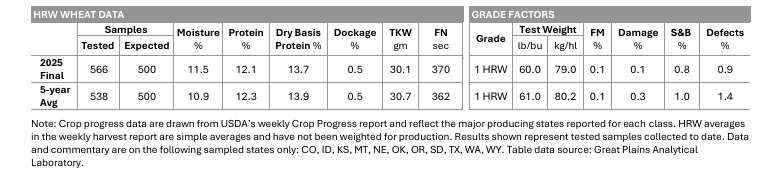
Wheat data: The laboratory has received 31 HRW samples to date. Very early averages show protein at 12.76% (12%
mb) and test weight at 60.6 lb/bu (79.7 kg/hl). These values are preliminary given the limited sample size.
Disease/pest pressure: Producers continue to monitor disease issues, including rust and wheat streak mosaic.
Weather: Rain fell across much of the growing region last week, with severe storms reported in parts of Colorado and
Nebraska. Isolated rainfall and moderate temperatures are forecast.
SOFT RED WINTER
Crop progress: SRW harvest is underway in southern states, with progress reported at 23% in Alabama, 10% in
Arkansas, 5% in Kentucky, 4% in North Carolina, 1% in Tennessee and 6% in Virginia. Nearly all SRW acreage is now
headed. Harvest is not expected to begin in Illinois for another 1 – 2 weeks and likely will not start in Ohio until late June
or early July.
Crop conditions: Much of the SRW region received substantial rainfall early last week, providing relief to areas of severe
drought. Overall SRW crop conditions remain stable, with 59% rated good to excellent. Conditions are strongest in
Midwest states, where the crop benefited from more favorable growing conditions earlier in the season. Recent
moisture helped replenish soil in the southern and Mid‑Atlantic regions but arrived too late to significantly boost yields,
as the crop was already advanced. The moisture is expected to help maintain existing yield potential. In Illinois, a recent
plot tour estimated average yields near 103 bu/acre (6.9 tons/ha).
Disease/pest pressure: With increased moisture, producers are closely monitoring for disease development.
Weather: Warmer and more humid conditions are forecast across the SRW region, with isolated chances for additional
rainfall.
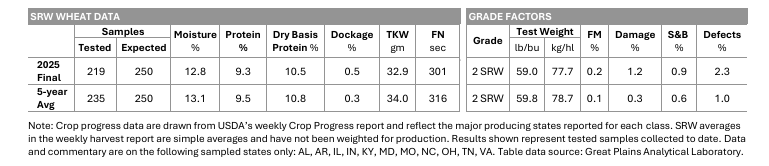
HARD RED SPRING
Crop progress: Spring wheat planting is 95% complete in the four main HRS states, with emergence at 96% in South
Dakota, 78% in Minnesota, 65% in North Dakota and 70% in Montana.
Crop conditions: USDA rates spring wheat at 78% good to excellent in Minnesota, 58% in North Dakota, 44% in South
Dakota and 1% in Montana. Cooler temperatures and timely rainfall benefited crops in South Dakota, Minnesota and
North Dakota. Conditions in Minnesota remain strong, while North Dakota and Montana have improved with recent
rainfall and more moderate temperatures. Producers in Montana are hoping for additional moisture.
Disease/pest pressure: No disease or pest issues have been reported.
Weather: Most of the region received rainfall last week, with additional precipitation in the forecast. Conditions in North
Dakota have moderated after recent heat and wind. Montana still needs more rain to support crop development.
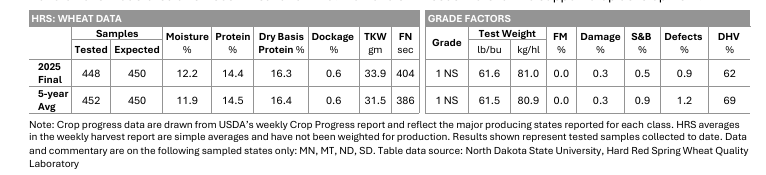
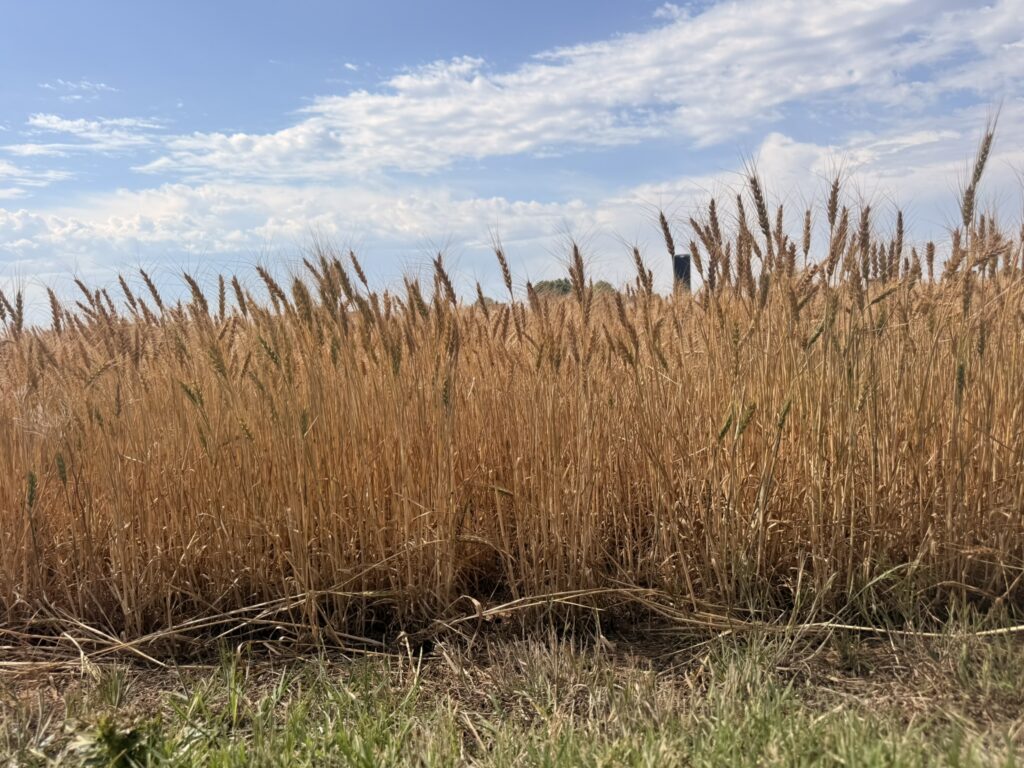
Despite persistent drought and late-season weather conditions, the regional wheat crop is demonstrating remarkable resilience as the harvest progresses across Oklahoma. Producers are discovering that modern grain varieties are yielding surprising results, proving that strategic management and advanced genetics can mitigate severe environmental stress.
In a recent conversation, Bayer WestBred's Lance Embree and Farm Director KC Sheperd discussed how the crop has fared. While many producers faced a challenging growing season, the initial harvest data reveal a much more optimistic picture than initially anticipated, particularly in the north-central and central regions of the state.
According to Embree, the areas where the wheat managed to survive the prolonged drought are showing unexpected strength. Yield reports near Enid are reaching into the mid-60s, with some dryland fields remarkably touching the mid-70s. Additionally, test weights are holding steady, consistently landing in the 60-63-pound range.
"Really surprised given everything this crop had to deal with that it's able to finish out as strong as it is," Embree noted. "Through my career, I'm always amazed at just how resilient of a crop that wheat is, and hence why we grow it in the plains."
The success seen in certain fields highlights the continuous improvement in wheat genetics. WestBred has intentionally shifted its portfolio to offer distinct varieties tailored to regional challenges, moving from a western-focused set to an eastern-focused one.
This season, the western varieties—designed specifically to handle intense drought stress—performed exceptionally well when tested in central and eastern Oklahoma.
"What I'm seeing is, we'll test those products across both areas," Embree explained. "Those western products, where they're able to handle drought stress a little better than our typical, say, eastern-type products, are showing up really well in those central and eastern sets. So, not a big surprise, it's just kind of a testament to the year that we put those varieties through."
The weather conditions in central Oklahoma closely mirrored those of arid West Texas or Western Oklahoma, allowing these drought-tolerant varieties to truly excel.
The disease pressure this year brought some unexpected surprises. While stripe rust is often a primary concern, this season saw a higher prevalence of leaf rust appearing late in the cycle, alongside significant powdery mildew.
The rise in powdery mildew surprised many producers who typically associate the disease with wet conditions. Embree explained that a very mild winter allowed a large inoculum of powdery mildew to build up. Once the spores were established, it required very little moisture to activate them.
"If I saw any disease in the central and east that was an issue—which is really surprising in Oklahoma—it's powdery mildew," Embree said. "But I see that a lot in Texas, and so what I told people, we had a Texas winter in Oklahoma, and that's what led to the situation of why we had so much powdery mildew."
To counter these pressures, many producers relied on built-in variety resistance or timely fungicide applications.
"In a lot of instances, guys are willing to back off of a variety that maybe doesn't have the best disease control, but it's got exceptional top-end yield," Embree observed. "The reason they'll do that is because they can manage that disease with a fungicide."
Conversely, as the harvest moves further west, the primary disease threat shifts from fungal issues to Wheat Streak Mosaic, a viral disease that cannot be treated with chemicals. Managing this threat requires relying heavily on genetic resistance within the variety or cultural practices, such as strictly controlling volunteer wheat prior to planting.
While this season provided valuable data on how varieties handle intense drought and specific pest pressures like the Hessian fly, experts caution against making drastic changes based on a single outlier year.
Embree compares farming to a book, in which each year represents a completely different chapter. Because every year presents a unique set of weather and disease variables, the most effective strategy is to look at the law of averages rather than reacting solely to the immediate past.
"There's things we can learn from this, such as how some of these varieties held up through drought stress or maybe some really intensive Hessian fly pressure," Embree said. "I guess my caution would be to the producers out there—and they all know this—is you don't want to try to adjust your farming practices to what you experienced this year. Because next year will probably be totally different."
When selecting varieties for the upcoming planting season, producers are encouraged to look at stable performance over a two- to three-year period across multiple local trials rather than focusing on a single season's performance.
"I wouldn't just focus in on this one year," Embree advised. "I'd be looking at what varieties have been stable over the last two to three years in multiple trials in my area. You know, what's been performing well on my farm with my production practices and the things I like to do."
Decisions should align with specific operational goals, whether that means a dual-purpose grazing variety, a grain-only system, or early-planted options that require robust Hessian fly protection. Consulting with neighbors and local crop consultants can also provide a valuable perspective on what is consistently performing well in a specific area.
Producers interested in reviewing local trial data, analyzing detailed product profiles, or viewing agronomic ratings for WestBred varieties can access comprehensive resources at WestBred.com. The platform also provides direct contact information for regional experts, including Lance Embree and territory agronomist Mark Lubbers, to assist with specific variety selection questions.

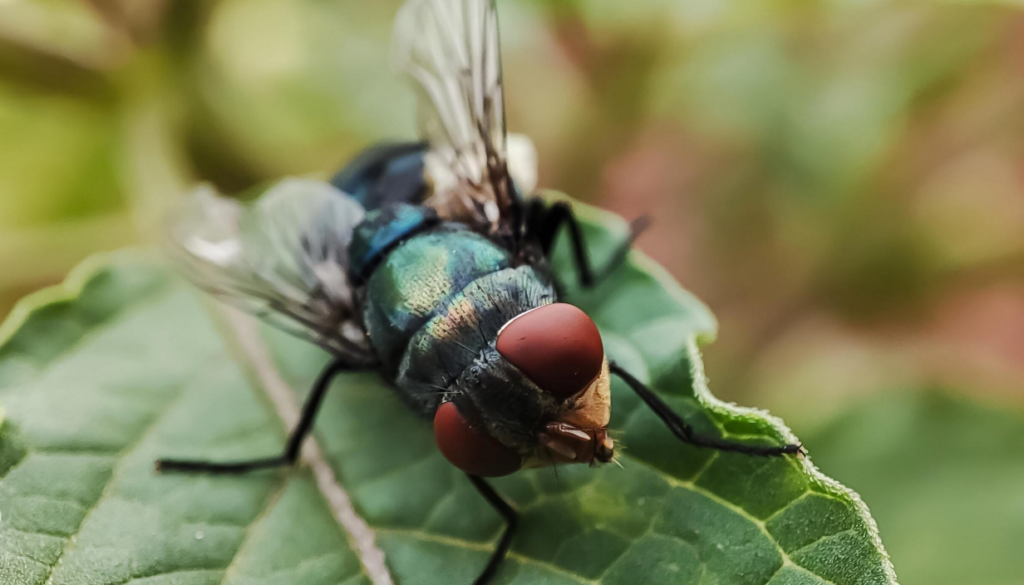
In today's Beef Buzz, senior farm and ranch broadcaster Ron Hays features comments from Director of the New World Screwworm Directorate Rear Admiral Michael Schmoyer and State Veterinarian for the Texas Animal Health Commission, Bud Dinges, who are working to correct misinformation and provide an update on the New World screwworm situation along the U.S.-Mexico border.
Earlier this week, reports circulated online suggesting New World screwworm had been detected just one mile from the Texas border. Those claims prompted concern throughout the livestock industry and led USDA Secretary Brooke Rollins to convene a special media briefing to provide accurate information.
According to Rear Admiral Michael Schmoyer, the closest confirmed case remains in Mexico. "The most important point is that New World screwworm is not in the United States," Schmoyer said.
He explained that the nearest active case involves a five-year-old goat in Coahuila, Mexico, approximately 25 miles south of the Texas border. The case was detected on May 30 and shared with the USDA by Mexican animal health officials.
While detections have increased closer to the border, Rear Admiral Schmoyer emphasized that all recent cases found within 100 miles of the United States are occurring inside the sterile fly dispersal area. "While we've seen an increase recently in the number of cases within 100 miles of the U.S. border, all those cases right now are within the sterile fly dispersal area," Schmoyer said.
USDA continues to coordinate closely with Mexico's agricultural authorities to track new cases and gather epidemiological information as the situation evolves.
Rear Admiral Schmoyer said USDA is prepared to act immediately if New World screwworm is detected in the United States. "If there was a detection in the United States, USDA will take immediate action to contain and eradicate the pest," he said.
He pointed to the agency's New World Screwworm Playbook, which outlines response procedures from preparedness through eradication. The plan includes coordinating response efforts, limiting the spread to additional animals, managing infestations, conducting surveillance in livestock and wildlife populations, and maintaining continuity of business during an outbreak. "The great thing about this particular process is it allows us to identify and maintain resource requirements and be able to respond very, very quickly," Schmoyer said.
Texas Animal Health Commission Executive Director and State Veterinarian Dr. Bud Dinges told reporters that state and federal officials are already taking precautionary steps along the border. "As a precaution, USDA and TAHC staff are leveraging and expanding existing ground release sites for the distribution of sterile flies in South Texas," Dr. Dinges said.
He added that USDA continues aerial releases of sterile screwworm flies in South Texas counties, with dispersal grids adjusted as needed to maximize effectiveness. Officials are also relocating surveillance traps to align with changing sterile fly release patterns and improve early detection capabilities.
Dr. Dinges said surveillance efforts have already produced significant data. "Over 58,000 suspicious flies have been submitted for official identification, and none have been detected as New World screwworms," he said.
That ongoing monitoring effort, combined with sterile fly releases and coordinated response planning, remains the foundation of USDA and Texas efforts to keep the pest from becoming established in the United States.
For now, officials continue to stress that New World screwworm has not been detected in the United States, despite recent reports suggesting otherwise. The nearest confirmed case remains approximately 25 miles south of the Texas border.
The Beef Buzz is a regular feature heard on radio stations around the region on the Radio Oklahoma Ag Network and is a regular audio feature found on this website as well. Click on the LISTEN BAR above for today's show and check out our archives for older Beef Buzz shows covering the gamut of the beef cattle industry today.
Today, Growth Energy CEO Emily Skor delivered keynote remarks at the 42nd annual International Fuel Ethanol Workshop & Expo (FEW), highlighting recent victories for America's ethanol industry and outlining the path ahead for continued growth at home, overseas, and across new transportation markets.
"Ethanol means American energy dominance. Ethanol means lower gas prices and affordability. Ethanol means a stronger farm economy and rural jobs," said Skor. "This is our time. This is our moment to step up and deliver the solutions that our country needs."
During her remarks, Skor also pointed to recent victories across policy and market priorities, including the House passage of legislation allowing the year-round, nationwide sale of E15.
"Across our issues and priorities, we are seeing a level of unity across the entire sector that is unprecedented," said Skor. "Ethanol producers, corn growers, and farm groups—even the oil majors—are all working together in ways we have never seen before."
"At long last—a bill to allow the year-round, nationwide sale of E15 passed the House on a strong, bipartisan vote," she added. "That took an all-out sprint on Capitol Hill unlike anything our industry had done before."
She also highlighted continued progress expanding the retail footprint for E15, opening new export markets, and building demand for ethanol in sectors such as maritime shipping, sustainable aviation fuel, and heavy machinery.
"We aren't just breaking down market barriers between states or between countries. We want to break down barriers between entire sectors of transportation. We want to get our molecule into engines where we've never been before," said Skor. "Long gone are the days when people thought of ethanol as just for cars and trucks. Now we get to discuss and debate what brand new sector ethanol is going to dominate first—air travel, sea transport or heavy machinery. This is exciting. And it isn't hypothetical. It's happening. These sectors have made investments. They need more energy, and cleaner energy, and they need it fast."
Skor concluded by urging attendees to take action, and to help Growth Energy secure continued growth for the ethanol industry.
"Keep reaching out to your local officials," she said. "Keep hosting plant tours. And let's think even closer to home—does your neighbor fill up with E15? Do your family members make sure to look for ethanol? We need to be our own evangelists—from the White House and Capitol Hill to the July 4th barbecues in our backyards."
This year's FEW is being held June 2-4 in St. Louis, Missouri. As the largest and longest-running ethanol conference in the world, FEW serves as a premier forum for showcasing new technologies, research, and innovations across the biofuels industry.
Attendees can also connect with Growth Energy throughout the conference at Booth 1119.
Skor's keynote address as prepared for delivery is available here.
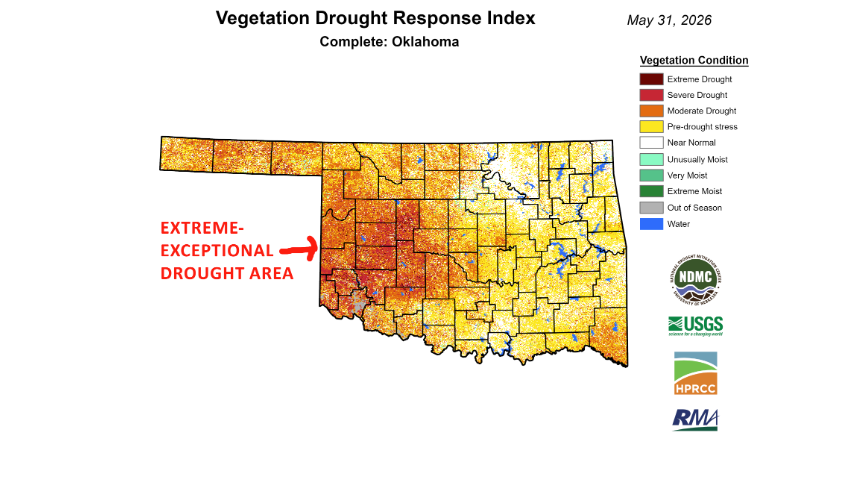
The lack of vibrant green across western Oklahoma is becoming more apparent as the season progresses, leaving the landscape looking far less robust than it should for this time of year. State Climatologist Gary McManus noted the persistent struggle of the local plant life, highlighting that the vegetation remains pitiful across the western regions and even into surrounding areas.
To truly understand how deep the stress goes, experts look beyond traditional rain gauges and weather tracking. Tools like the Vegetation Drought Response Index (VegDRI) offer a satellite-informed perspective on exactly how plants are reacting to the prolonged lack of moisture. Rather than simply analyzing the total amount of rainfall or measuring the exact soil moisture levels, VegDRI evaluates how the current appearance of the plants compares to standard seasonal expectations. On these maps, yellow, orange, and red areas signify varying levels of plant stress, with darker reds signaling severe drought impacts. White indicates normal conditions, and greens highlight unusually lush areas.
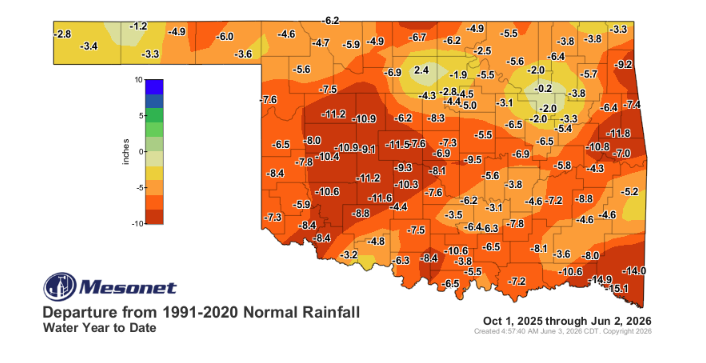
According to McManus, the index acts as a useful "eyes from space" verification tool to determine if the dry weather is actively altering the landscape.
"Think of VegDRI as a drought stress detector for plants," McManus explained. "Rainfall maps tell us what fell from the sky. Soil moisture maps tell us what's in the ground. VegDRI helps show whether the vegetation is actually feeling it. And right now, a lot of western Oklahoma vegetation appears to be saying, 'Hey pal, how about a drink?'"
This satellite data is backed up by additional tracking tools, including QuickDRI, which monitors areas experiencing rapid-onset or "flash" drought.
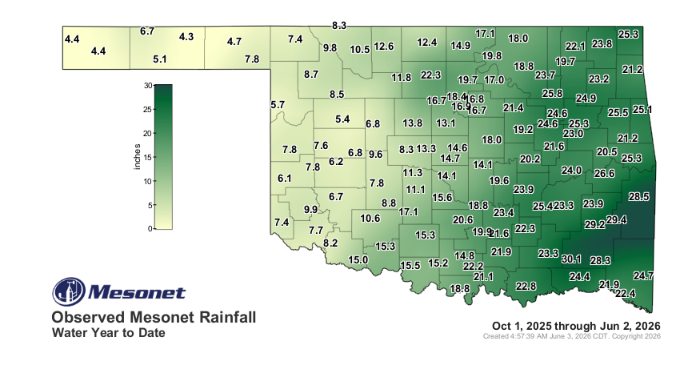
"Flash drought on top of longer-term drought is never a good thing," McManus said, drawing a vivid comparison to mixing incompatible elements, like putting a Strawberry Pop-Tart on a Taco Bell Quesarito.
The immediate reality on the ground is also reflected in the OK-FIRE relative greenness map. The data currently shows that parts of western Oklahoma are still dealing with vegetation conditions reminiscent of January rather than late spring or early summer.
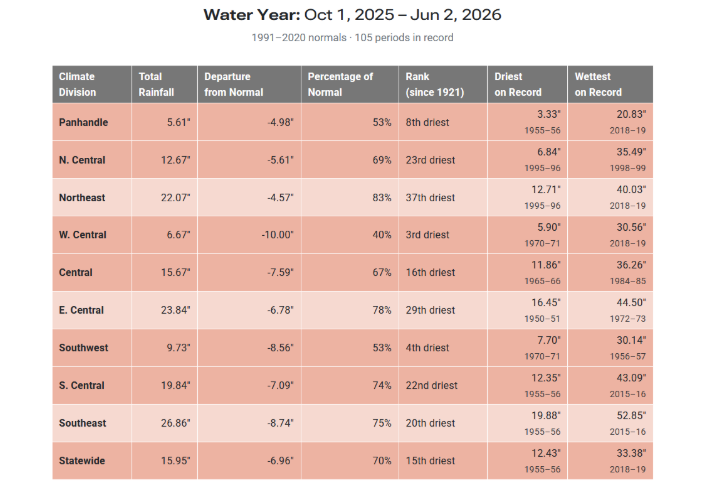
Despite the bleak indicators, there is a glimmer of hope on the radar. Weather models suggest that the region could see some precipitation over the coming days, offering potential relief before the intense heat of mid-summer sets in.
While a few days of rain will not completely erase months of deficit, it represents a necessary turn in the right direction. McManus cautioned that this upcoming moisture is not a complete fix for the long-term drought, but noted that drought relief has to start somewhere.
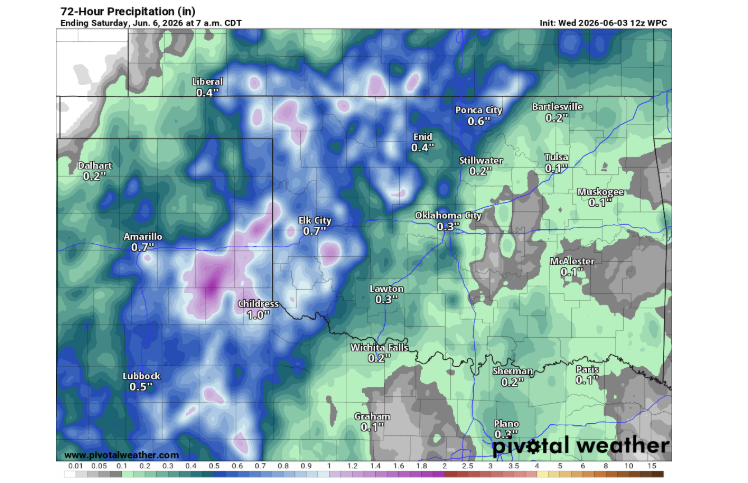

In recent years, producers have faced repeated shocks to fertilizer markets because of events such as the Russia-Ukraine conflict and, more recently, the conflict involving Iran. These events have disrupted key markets affecting fertilizer and energy supplies, impacting trade routes and contributing to increased price volatility and supply uncertainty. However, the idea of discussing "fertilizer markets" means more than focusing on a single product with a single supply chain. Nitrogen, phosphate, and potassium (potash) are three major nutrients used for plant growth that each have a different production process, geographic concentration, and trade pattern. Nitrogen fertilizers are closely tied to natural gas and energy markets, while phosphate and potash are mined products concentrated in a relatively small number of countries. As a result, geopolitical disruptions can affect each nutrient differently and create unique risks for global fertilizer markets.
Nitrogen is the first essential plant nutrient that is commercially recovered from the atmosphere as ammonia, which is produced by combining atmospheric nitrogen with hydrogen derived from natural gas. Ammonia can then be converted into other nitrogen fertilizers such as urea, ammonium nitrate, and ammonium sulfate. Among the major fertilizer nutrients, nitrogen is the most closely tied to energy markets because natural gas is a key input in the production process.
Globally, China is the largest producer of nitrogen fertilizer (in the form of ammonia), accounting for 31% of global production in 2025 (Figure 1). India, Russia, and the United States (U.S.) are also major producers, each accounting for approximately 9% of production. Persian Gulf countries, including Iran, Saudi Arabia, and Oman, are another significant production region, collectively accounting for roughly 9% of global ammonia production. These countries also account for a substantial share of global nitrogen fertilizer exports, especially to India. As a result, the Strait of Hormuz serves as a critical shipping route for global fertilizer trade. Any disruption to traffic through the Strait has the potential to significantly impact global nitrogen markets, increase transportation costs, and contribute to nitrogen price volatility worldwide.
While the U.S. relies on some nitrogen imports, domestic production has accounted for an average of 95% of U.S. nitrogen consumption over the last five years (Figure 2). Over the past decade, the U.S. has increased nitrogen production and reduced its reliance on imports. From 2021 through 2024, Canada accounted for 49% of U.S. nitrogen imports, while Trinidad and Tobago accounted for 47%. Ammonia production in Trinidad and Tobago has seen declines though over the past decade, primarily due to issues with the supply of natural gas. In October 2025, Nutrien announced a controlled shutdown of its nitrogen operations at the Point Lisas Industrial Estate, one of the country's major ammonia production facilities that accounted for approximately 31% of the nation's production (EnergyNow, 2025). Because Trinidad and Tobago is a key supplier of nitrogen fertilizer to the U.S., prolonged disruptions could tighten available supplies and increase U.S. reliance on alternative import sources.
Phosphorus is the second essential nutrient for plant growth, with a primary commercial source of phosphate rock. Thus, phosphate production depends on geographically concentrated mineral deposits and more limited global reserves. In 2025, China accounted for the largest share of global phosphate rock production at 44%, followed by Morocco, the U.S., and Russia. Although China is the leading producer, Morocco holds the world's largest phosphate rock reserves, accounting for an estimated 68% of global reserves. This concentration of reserves gives Morocco an important role in long-term global phosphate supply.
In the U.S., phosphate rock is mined by five companies operating ten mines located in Florida, Idaho, North Carolina, and Utah (USGS, 2026). The U.S. produces most of the phosphate it consumes, although it still imports some phosphate materials, particularly from Peru.
Potassium is the third major nutrient essential for plant growth and is primarily supplied through potash fertilizers. Potash production is concentrated in a relatively small number of countries with economically recoverable deposits. Canada, Russia, and Belarus collectively account for approximately 63% of global potash production, making the global potash market particularly vulnerable to geopolitical disruptions and trade restrictions. Sanctions and trade disruptions involving Belarus and Russia have contributed to recent volatility in global potash prices and fertilizer availability.
The U.S. has limited domestic potash production and relies heavily on imports to meet domestic demand, with more than 90% of annual consumption supplied by imports. Canada accounts for the vast majority of these imports because of its large production capacity and geographic proximity to U.S. markets. The U.S. has also historically imported potash from Russia, although those trade flows have become more uncertain in recent years because of geopolitical tensions and sanctions.
Overall, fertilizer markets remain highly dependent on a relatively small number of producing regions and key global trade routes. Because nitrogen, phosphate, and potash each rely on different raw materials and supply chains, geopolitical disruptions can affect fertilizer availability and prices in different ways. While the U.S. produces much of its nitrogen and phosphate domestically, it remains heavily dependent on imports for potash and still relies on global trade for portions of all its fertilizer needs. As a result, uncertainty from global conflicts, trade disruptions, and energy market volatility will continue to play an important role in fertilizer markets and producer input costs. As part of a broader marketing plan, producers should consider how to best determine crop pricing strategies to insulate their operation from unexpected changes in key input markets.


Maples, William E. "Understanding Global Fertilizer Markets." Southern Ag Today
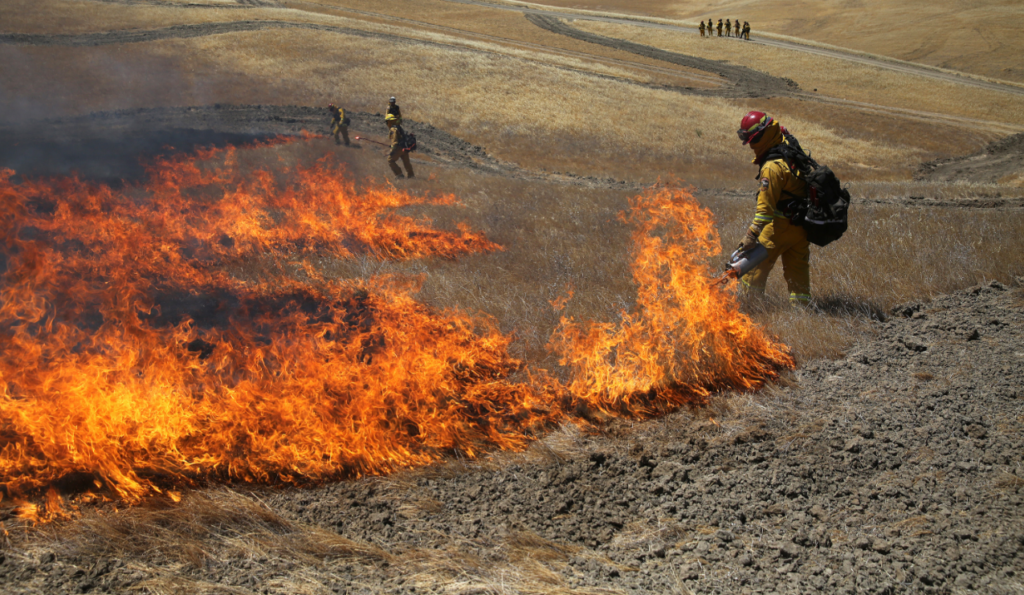
U.S. Senator Amy Klobuchar (D-MN), Ranking Member of the Senate Committee on Agriculture, Nutrition, and Forestry, delivered the following opening statement at the Agriculture Committee hearing: Oversight of the United States Forest Service.
A rough transcript of Klobuchar's full opening statement is available below and a video can be found here.
Ranking Member Klobuchar: Thank you very much, Chairman, and thank you for holding this hearing. Thank you, Chief Schultz, for serving as the 21st chief of the U.S. Forest Service, and for appearing before the committee.
And I also appreciated the briefing we had just last week with Secretary Rollins and Secretary Burgum and others about the status of various fires, and what was happening across the country, and as I said then, I thank the firefighters of the Forest Service for responding to the recent Stewart and Flanders Fires that were scary for many Minnesotans in Senator Smith's and my home state, including the residents of Two Harbors, Cross Lake, and now we just, this, yesterday have a fire near Ely, Minnesota, which is actually where my dad grew up, and I know that there's coordinated efforts, as there were for the past fires over the last month with the Forest Service, Bureau of Indian Affairs, the Minnesota DNR, and local first responders, most important, who are protecting lives and properties.
Last May, Senator Smith and I visited an incident command center in Two Harbors and surveyed the damage dropped by the Brimson Complex Fires. Drier, hotter spring seasons, and an ongoing spruce budworm outbreak are contributing to these fires, and I am focused on ensuring the Forest Service and its partners are ready for this approaching fire season.
I don't quite remember a season where we've had so many – I would call them flash fires – they come up out of the blue, they've been put out so far, but it just does not bode well because of the dry weather and the conditions for what we're going to see, so Chief Schultz, I appreciate our recent conversations, as I noticed, and I've also raised the issues with Director Fennessy at DOI.
Your agency's focus on the wildfire issue is critical and forests across the country, which is why I remain concerned by some of the reductions that we've talked about.
I'm troubled that more than 1,400 Forest Service employees with so-called "red cards", which allow them to fight wildfires without being hired as firefighters, departed the agency last year amid broader workforce reduction, especially when we're seeing these sort of flash sudden fires, as well as major fires across the country.
These employees are crucial to the agency's wildfire response during challenging seasons like we may be seeing now, and these departures could leave the agency less prepared.
And I also look forward to hearing how the Forest Service will treat more acres for hazardous fuels this year after a year over year drop in 2025.
I believe we should be strengthening the agency's wildfire response capabilities, and unfortunately we've seen these cuts that should be concerning to all.
The budget that we've seen from the administration proposes deep cuts to popular state forestry programs, funding for volunteer fire departments, and forestry research, and the budget the administration recommends moves wildfire operations out of the USDA's Forest Service, as you know, and we are concerned about the unintended consequences of doing that.
I'm sure you'll address that.
The budget proposes eliminating forestry research and cutting NFS funding, but at the same time, the Forest Service reorg suggests these mission areas will be reconfigured. That leads to confusion.
The Forest Service research facility in Grand Rapids, Minnesota, which carries out invaluable red pine research, is on the list of facilities to be closed, as is a site in Ely.
Employees have been notified of potential reorganization, but questions remain about where researchers will be located.
In April, I, along with Ranking Members Heinrich and Merkley and more than 30 of my colleagues, directly raised concerns with the reorganization of the USDA. If this reorganization is not well executed, it could lead to additional capacity and workforce reductions. And again, I'm sure you will be addressing that, and I've appreciated your willingness to answer my questions over the last few months.
The departure of red card-holding employees, a drop in wildfire mitigation and trail maintenance work, and confusing reorg plans are concerning developments.
And there is a role for Congress. My colleague, Senator Boozman, just mentioned the Fix Our Forests Act, which this committee passed through, and we're looking forward to its consideration on the floor, and we understand that its passage could be eased by some additional changes that we hope we'll be able to develop together.
But I do appreciate the bipartisan leadership, and that is why I supported that bill.
Chief Schultz, your leadership and the dedicated work of the Forest Service personnel are much appreciated, are needed more than ever, to see the agency through these challenging times, and I look forward to hearing your testimony.
Thank you.

tate Treasurer Todd Russ released the May 2026 State Tax Revenue Report, showing total monthly revenue of $1.3 billion, a 2.7% increase from May 2025. While revenues declined 46.9% from April's tax-season peak, Oklahoma's rolling 12-month revenue total continued to strengthen, reaching $17.83 billion, up $951 million, or 5.6%, year-over-year. May also marked the ninth consecutive month of positive annual revenue growth.
"May's report reflects continued stability in Oklahoma's revenues, supported by strong gross production tax collections and steady consumer activity," said Treasurer Todd Russ. "While revenue growth moderated following April's seasonal tax collections, the rolling 12-month total continues to strengthen, reinforcing Oklahoma's long-term fiscal stability as we move further into 2026."
Key Takeaways from the May 2026 Tax Revenue Report
Revenue Trend and Economic Context
May marked the ninth consecutive month of growth in Oklahoma's rolling 12-month revenue total, extending a steady upward trend that began in the fall of 2025. While the pace of growth moderated following April's seasonally stronger tax collections, overall revenues continued to show underlying strength supported by consumer spending and energy-related activity.
Economic indicators reflected a stable but mixed environment entering the second quarter of 2026. Oklahoma's Business Conditions Index showed modest improvement during April but remained below growth-neutral levels, signaling continued caution among manufacturers despite stronger demand conditions. The state's unemployment rate remained below the national average at 4.0% compared to 4.3% nationally.
Inflation pressures also remained elevated, with the Consumer Price Index increasing 3.8% in April, marking the 13th consecutive monthly increase as higher shelter, food, and energy costs continued to impact households and businesses.
"Oklahoma's economy continues to show resilience through strong energy revenues and stable employment conditions," Treasurer Russ added. "While inflation and broader economic uncertainty remain challenges, the state's long-term fiscal outlook remains steady."
The complete May 2026 Tax Revenue Report is available at treasurer.ok.gov, including breakdowns by tax category, sector, and month.
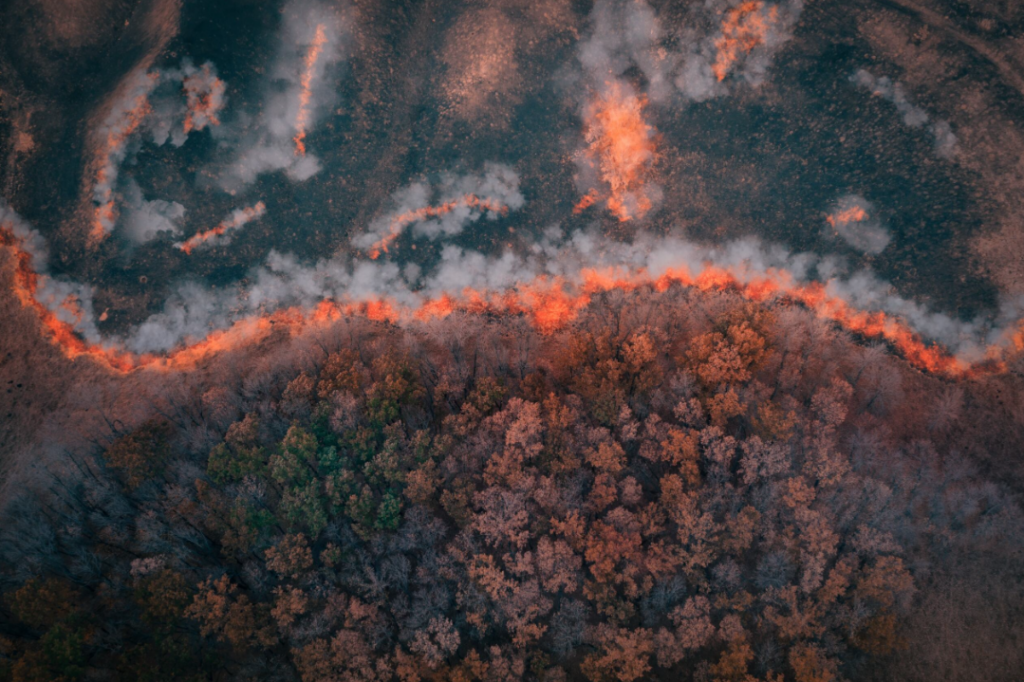
Agricultural operations in Oklahoma have been significantly impacted by recent wildfires. The U.S. Department of Agriculture (USDA) has technical and financial assistance available to help farmers and livestock producers recover from these adverse weather events. This includes additional signup opportunities for the Farm Service Agency's (FSA) Emergency Conservation Program (ECP), which can assist landowners with financial and technical assistance to remove debris from farmland and materials from collapsed fences and structures on cropland or pastureland. Producers who experienced additional damage, even if they have previously applied, should contact their local USDA Service Center for more information on available assistance for farmland recovery.
"USDA has a suite of programs to support farmers and ranchers as they recover from disasters," said Farm Production and Conservation Under Secretary Richard Fordyce. "I encourage impacted producers to contact their local USDA Service Center to report losses and learn more about program options available to assist in their recovery from crop, land, infrastructure, and livestock losses and damages."
USDA Disaster Assistance
Producers who experience livestock deaths in excess of normal mortality or sell injured livestock at a reduced price may be eligible for the Livestock Indemnity Program (LIP). To participate in LIP, producers will have to provide acceptable documentation of death losses or evidence of reduced sales resulting from an eligible adverse weather event and must submit a notice of loss to FSA no later than March 1, 2027, for 2026 calendar year losses.
Meanwhile, the Emergency Assistance for Livestock, Honeybees, and Farm-Raised Fish Program (ELAP) provides eligible producers with compensation for feed and grazing losses. ELAP can also help offset the above normal economic impacts of transporting livestock to feed or hauling feed and water to sustain livestock through these disaster conditions. For ELAP, producers are required to submit a notice of loss and application for payment to their local FSA office no later than March 1, 2027, for 2026 calendar year losses.
"Once producers are safely able to determine and report their losses or damages, our local Farm Service Agency staff can help producers with program applications related to wildfire recovery," said Eddie Fields, State Executive Director for FSA in Oklahoma. "As you evaluate losses on your operation, take time to gather important documents you may need to apply for assistance including farm records, herd inventory, receipts and pictures of damages or losses. FSA staff will do their best to work with the loss documentation records you have available."
FSA also offers a variety of direct and guaranteed farm loans, including operating and emergency farm loans, to producers unable to secure commercial financing. Producers in counties with a primary or contiguous disaster designation may be eligible for low interest emergency loans to help them recover from production and physical losses. Loans can help producers replace essential property, purchase inputs like livestock, equipment, feed and seed, cover family living expenses or refinance farm-related debts and other needs.
Additionally, FSA offers several loan servicing options available for borrowers who are unable to make scheduled payments on their farm loan programs debt to the agency because of reasons beyond their control.
The Farm Storage Facility Loan Program (FSFL) provides low-interest financing so producers can build, repair, replace or upgrade facilities to store commodities (including hay storage facilities). Loan terms vary from three to 12 years. Producers who incurred damage to or loss of their equipment or infrastructure funded by the FSFL program should contact their insurance agent and their local USDA Service Center. Producers in need of on-farm storage should also contact USDA.
Risk Management
Producers with NAP coverage should report crop damage to their local FSA office and must file a Notice of Loss (CCC-576) within 15 days of the loss becoming apparent, except for hand-harvested crops, which should be reported within 72 hours. Producers with risk protection through Federal Crop Insurance should report crop damage to their crop insurance agent within 72 hours of discovering damage and be sure to follow up in writing within 15 days. "Crop insurance and other USDA risk management options are offered to help producers manage risk because we never know what nature has in store for the future," said Franco Trevino, Director of USDA's Risk Management Agency (RMA) Regional Office that covers Oklahoma. "Disasters can be trying for producers, and they should stay in close contact with their crop insurance agent. Producers can be assured that the Approved Insurance Providers, loss adjusters and agents are experienced and well-trained in handling these types of events."
Conservation
Outside of the primary nesting season, emergency and non-emergency haying and grazing of Conservation Reserve Program (CRP) acres may be authorized to provide relief to livestock producers in areas affected by a severe drought or similar natural disasters.
During the primary nesting season, emergency grazing of CRP is authorized at a 50% reduction of normal carrying capacity when a county triggers for LFP due to a qualifying drought. Additionally, non-emergency grazing can also be requested during the primary nesting season. Producers interested in haying or grazing of CRP acres should contact their county FSA office to determine eligibility.
To increase access to forage for wildfire-impacted livestock producers, FSA authorized emergency use of Conservation Reserve Program (CRP) acres for all counties in Arizona, Arkansas, Colorado, Iowa, Kansas, Louisiana, Minnesota, Missouri, Nebraska, New Mexico, Oklahoma, South Dakota, Texas, and Wyoming. CRP participants in these states may donate grazing rights or haying authority to livestock producers affected by wildfire.
Under this authorization, emergency haying and grazing is available until the beginning of the 2027 primary nesting season. There are restrictions on activity during the primary nesting season which varies by state.
Producers should contact their local FSA office to determine eligibility or to donate emergency haying and grazing rights to livestock producers in need of forage access.
FSA's ECP can assist landowners with financial and technical assistance to remove debris from farmland such as woody material, sand, rock and materials from collapsed fences and structures on cropland or pastureland. Through ECP, FSA can provide fence restoration or replacement assistance including livestock cross fences, boundary fences, cattle gates or wildlife exclusion fences on agricultural land.
USDA's Natural Resources Conservation Service (NRCS) is available to provide technical assistance during the recovery process by assisting producers in planning conservation practices on farms, ranches and working forests impacted by natural disasters. The Environmental Quality Incentives Program (EQIP) can help producers implement conservation practices on land impacted by natural disasters.
"At USDA, we serve as a partner to help landowners with their resiliency and recovery efforts," said Matthew Denton, acting NRCS State Conservationist in Oklahoma. "Our staff will work one-on-one with landowners to make assessments of the damages and develop methods that focus on effective recovery of the land."
Assistance for Communities
Additional NRCS programs include the Emergency Watershed Protection (EWP) program, which assists local government sponsors with the cost of addressing watershed impairments or hazards such as debris removal and streambank stabilization.
Eligible sponsors include cities, counties, towns or any federally recognized Native American tribe or tribal organization. Sponsors must submit a formal request (by mail or email) to the NRCS state conservationist for assistance within 60 days of the natural disaster occurrence or 60 days from the date when access to the sites become available. For more information, sponsors should contact their local NRCS office.
In addition to EWP, Conservation Technical Assistance is another valuable service that NRCS can provide following a wildfire. NRCS technical assistance can help fire victims with planning cost-effective post fire restoration practices.
More Information
Additional USDA disaster assistance information can be found on farmers.gov, including USDA resources specifically for producers impacted by wildfire. Those resources include the Disaster Assistance Discovery Tool, Disaster-at-a-Glance fact sheet, Loan Assistance Tool, and Natural Disasters and Crop Insurance fact sheet. Additionally, FarmRaise offers an FSA educational hub with LIP and ELAP decision tools as well as farm loan resource videos. For FSA and NRCS programs, producers should contact their local USDA Service Center. For assistance with a crop insurance claim, producers and landowners should contact their crop insurance agent.
The U.S. Department of Agriculture (USDA) today unveiled a new framework for migratory big game conservation, bringing together federal, state and Tribal partners across 17 states to address threats to big game like elk, pronghorn and mule deer.
The Migratory Big Game: A Framework for Conservation Action is the most unified, landscape-scale approach undertaken by the USDA's Farm Service Agency (FSA) and Natural Resources Conservation Service (NRCS) to support big game conservation while putting farmers and ranchers first by keeping working lands working.
USDA made the announcement at the summer meeting of the Western Association of Fish and Wildlife Agencies (WAFWA) to recognize the key role state fish and wildlife agencies play in managing wildlife species in the United States.
"We know that migratory big game rely on large and connected landscapes to meet their daily, seasonal and annual needs," said Richard Fordyce, USDA's Under Secretary for Farm Production and Conservation. "This new Framework for Conservation Action helps us better target our resources and align our efforts, which benefit wildlife as well as ranching operations. USDA introduced its first frameworks in 2020, during President Trump's first term, and we want to continue using this successful model of supporting wildlife and ranching productivity and operations."
"Across the West, the future of iconic big game herds—elk, mule deer and pronghorn—depends on the health of our working lands," said NRCS Chief Colton L. Buckley. "Privately owned lands provide the vital seasonal habitats and connectivity required to sustain these healthy, resilient herds."
"We're supporting migratory big game conservation by offering farmers and ranchers program opportunities that benefit big game and strengthen agricultural operations," said FSA Administrator Bill Beam. "Like the ranchers who are stewards of our Western Grasslands, USDA recognizes that agriculture and conservation are most effective when they work together to strengthen the working lands and protect wildlife such as big game species for future generations."
"This Framework represents a historic alignment, ensuring that the management authority of states is backed by the full strength and resources of the USDA to collaboratively conserve the West's iconic migrations," said Zach Lowe, Executive Director of WAFWA. "By investing in sustainable ranching practices, we are improving habitat quality, boosting rangeland resilience, and ensuring these iconic herds can continue to move safely across vast and open grazing lands."
State fish and wildlife agencies (SFWAs), which have the trust responsibility for migratory big game populations, have identified that these species face increasing threats to habitat quality and connectivity. Improving habitat quality requires restoring native plant communities, improving forest health, and addressing invasive species. Improving connectivity requires mitigating physical barriers, such as highways and fences, and minimizing landscape fragmentation.
About the Framework
The Framework provides a strategy for using Farm Bill resources, including NRCS programs, such as the Environmental Quality Incentives Program, Conservation Stewardship Program, Agricultural Conservation Easement Program and Regional Conservation Partnership Program, as well as FSA's Conservation Reserve Program (CRP).
Through these programs, USDA provides assistance for delivering the Framework's three strategies:
States include: Arizona, California, Colorado, Idaho, Kansas, Montana, Nebraska, Nevada, New Mexico, North Dakota, Oklahoma, Oregon, South Dakota, Texas, Utah, Washington, and Wyoming.
This is USDA's fifth Framework for Conservation Action. In the western United States, the Sagebrush and Great Plains Frameworks for Conservation Action provide a collective roadmap for the conservation of working rangelands. USDA developed its first framework on the Great Plains Grasslands in 2020.
Blueprint for Success
The frameworks build on USDA's efforts through Working Lands for Wildlife (WLFW), the Department's premier approach for conserving America's working lands to benefit people, wildlife, and rural communities. WLFW uses win-win solutions to target voluntary, incentive-based conservation that improves agricultural productivity and wildlife habitat on working lands. WLFW takes an ecosystem approach and uses focal wildlife species as barometers of success to help guide conservation delivery.
Spatial targeting lies at the heart of WLFW's threat-reduction strategies.
As the flagship effort of WLFW, the Sage Grouse Initiative showed what can be achieved through voluntary conservation, helping reduce threats at unprecedented scales, benefiting wildlife, and precluding the need for listing sage grouse under the Endangered Species Act. Interwoven into this framework for big game migrations are lessons learned from 15 years of WLFW implementation, along with new science and technology to inform future delivery.
Next, USDA will incorporate the framework into the locally led process for prioritizing conservation in collaboration with SFWAs, federal land managers and other stakeholders. More details are forthcoming on how this will look in the Framework's 17 states.
Work with USDA
Farmers and ranchers interested in conserving habitat and implementing wildlife-friendly practices should contact FSA and NRCS at their local USDA Service Center to learn about available practices and programs. Additionally, FSA and NRCS State Offices will share additional information related to efforts in their states.
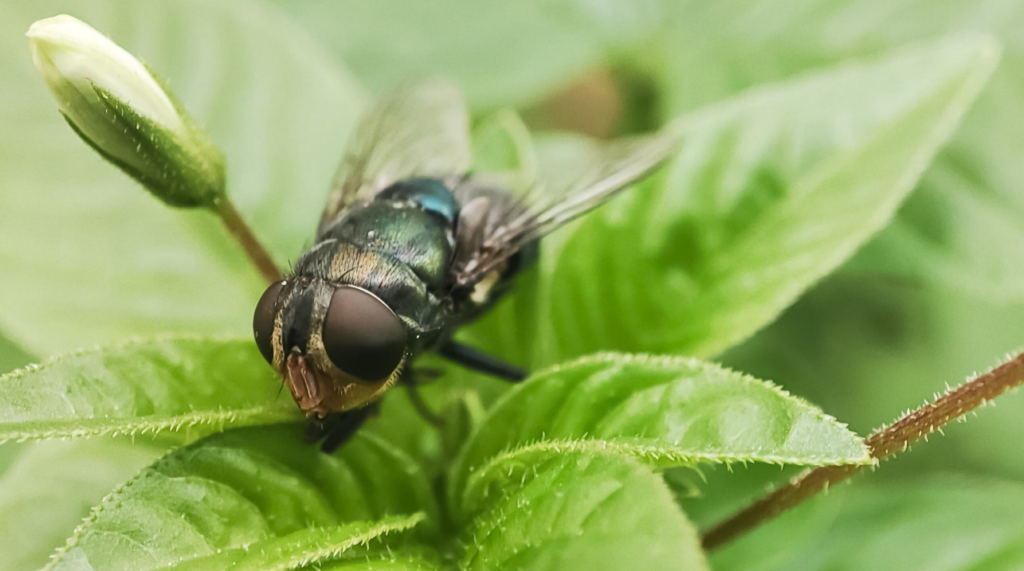
New World screwworm is the larval stage of a fly that lays eggs in wounds of living animals, even very small wounds like tick bites or scratches, in warm-blooded animals. The flies are drawn to fresh blood for laying their eggs. After hatching, larvae burrow into living tissue, causing painful, expanding wounds that may become infected and can be fatal if not treated. Cattle, horses, small ruminants, wildlife, pets, and occasionally people can be affected. A native to North and South America it was eradicated in the United States in 1982.
New World screwworm is not currently present in the United States, but the northward movement of cases in Mexico has increased concern for cattle producers. USDA-APHIS reports that the U.S. remains free of New World screwworm, while cases in Mexico and Central America continue to be monitored closely. Recent detections near the U.S.-Mexico border reinforce the need for awareness, rapid reporting, and practical prevention. The map below is updated as new information is available and can be found here.
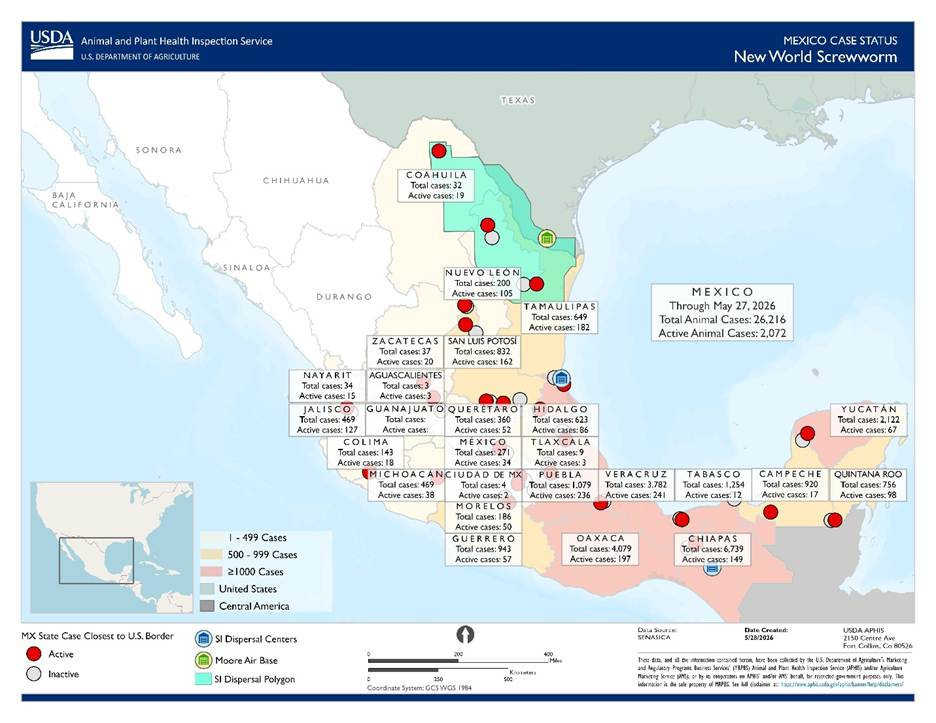
Oklahoma State University Extension livestock entomologist Dr. Jonathan Cammack emphasizes that Oklahoma and the U.S. are not currently experiencing screwworm infestations, but producers should know what to watch for. OSU College of Veterinary Medicine/OADDL resources also stress that early recognition, accurate diagnosis, and prompt reporting are essential.
What to Look for in Animals
Prevention starts with good wound management. Inspect cattle regularly, especially newborn calves, cows after calving, bulls after injury, and cattle following processing, branding, dehorning, castration, or predator injury. Treat wounds promptly, control other flies, and avoid unnecessary animal movement if screwworm is suspected. Do not try to quietly manage a suspected case. Contact animal health officials at the Oklahoma Department of Food and Forestry so larvae can be collected and identified and the appropriate response can begin.
Other Useful Resources
RON's Dave Lanning has a pre-opening look at today's agricultural Markets.
Click the audio tab below for today's report.
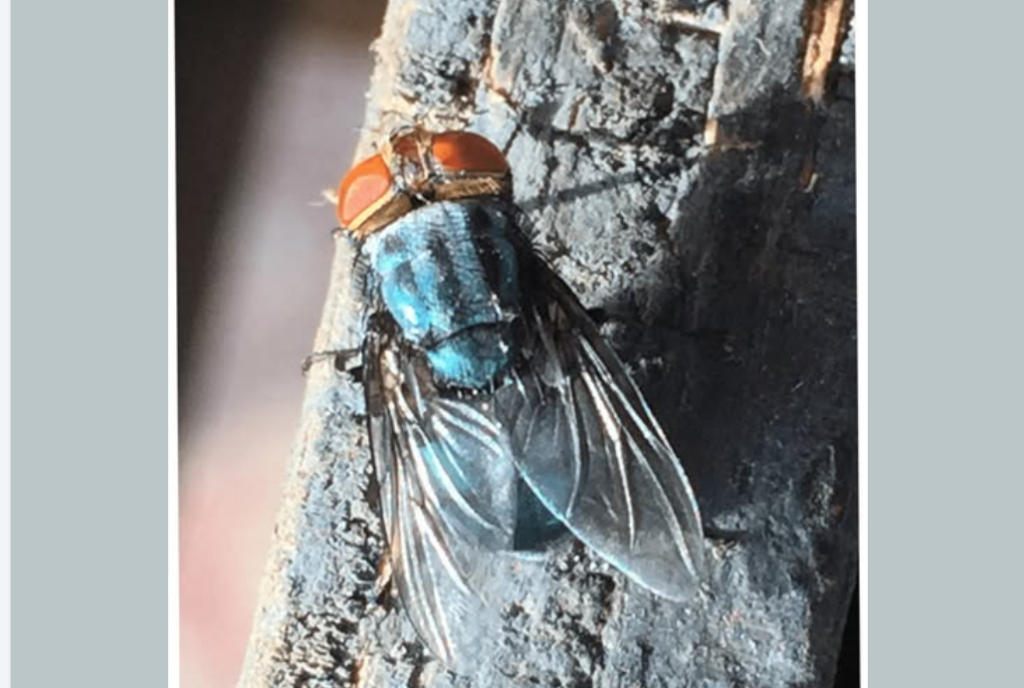
Agriculture officials are intensifying cross-border monitoring and response preparations after the confirmation of a New World screwworm detection dangerously close to the United States.
U.S. Secretary of Agriculture Brooke Rollins announced a significant shift in the government's communication strategy during a briefing with over 150 media members. Moving forward, the joint response team will conduct update briefings every other day at 4:00 p.m. Eastern Time to combat online misinformation and provide full, transparent progress reports.
"We're in upstate New York today visiting our dairy farmers up here, but wanted to take a moment... there's been a lot of misinformation spreading online," Secretary Rollins said. "I want to talk a little bit about that today, also though want to just give a full, level-set update on where we are with the New World screwworm."
The shift in urgency follows late-week data from Mexico detailing eight new detections of the New World screwworm. Most notable among those cases is an infested five-year-old goat in Coahuila, located approximately 25 miles from the U.S.-Mexico border.
"Just recently, Mexico reported eight new detections of New World screwworm late last week... One of those that was detected was a five-year-old goat in Coahuila, approximately 25 miles from the U.S.-Mexico border," Secretary Rollins stated. "So this is the closest we've seen it."
This marks the closest confirmed detection to the American border to date. While a previous case last fall was discovered about 60 miles from the border, aggressive containment efforts successfully pushed the pest back. Agriculture officials view this 25-mile breach as a critical trigger point to elevate defensive measures.
"There is no doubt that this is a very, very serious threat to our livestock," Rollins emphasized. "And I also want to talk about, before we finish today, the action plan if it were to breach our border. We've been preparing for that scenario for about a year and four months."
The New World screwworm is a parasitic fly larva that burrows into the living flesh of warm-blooded animals. If left untreated, infestations can lead to severe systemic damage or death. While the risk to human public health remains extremely low, the parasite poses a devastating threat to livestock industries and wildlife populations. Every statistical model run by the USDA indicated that without intervention, the pest would have breached the U.S. border by late last summer.
"The New World screwworm is actually a parasitic fly larva... that can burrow into the flesh of a living animal and can cause serious complications, which can lead to death of that animal if it is untreated," Rollins explained. "They can infest livestock, pets, wildlife, and in very, very, very rare cases, humans."
"The real risk, and obviously why I'm running this call and not Secretary Kennedy or someone else, the real risk is obviously to our livestock and our wildlife population," Rollins added.
Following the border normalization under President Trump on January 20, 2025, the USDA overhauled and tightened southern port inspection protocols, briefly resuming live animal imports in February 2025 to support domestic herd growth. However, by May 2025, the USDA suspended all live animal entries through southern ports in Arizona, New Mexico, and Texas. This suspension was driven by Mexico's inability to enforce internal animal movement protocols and frequent complications that prevented sterile fly dispersal aircraft from consistently operating.
To address the regional crisis, the USDA launched a five-pronged strategy focused on detection, containment, eradication, preparedness, and sterile fly production. On August 14, 2025, the U.S. signed a $20 million bilateral action plan with Mexico's agricultural authority, Senasica, deploying field teams, funding emergency trapping, and expanding sterile fly drops in northern Mexico.
Simultaneously, the administration initiated a structural overhaul of domestic defenses. On May 27, 2025, the USDA announced a $21 million investment to convert an existing facility in Matape, Mexico, into a sterile fly dispersal hub. This reduced sole reliance on the world's only active production plant in Panama.
Furthermore, groundbreaking began on a new $750 million sterile fly production plant at Moore Air Base in South Texas. Developed alongside the Secretary of War Pete Hegseth and the U.S. Army Corps of Engineers, this facility will provide the biological volume necessary to push the pest back into South America.
"This president and our administration did not hesitate when we explained to them the absolute threat that if we don't get our own facility up that we have control over, even though it's $750 million, that we will continue to battle this for years to come and our livestock producers, our ranchers, will struggle as their grandfathers and great-grandfathers did in the '50s and '60s," Rollins said.
"1960s America, the last time this devastated our industry, 1960s America did not have the resources we have today," Rollins continued. "The New World screwworm crisis farmers and ranchers experienced back then will not repeat itself today."
While construction on the Texas production plant continues, the USDA opened a transitional dispersal facility at Moore Air Base to handle fly shipments flown in from Panama. Ground containment efforts have scaled significantly across the southern frontier. By the end of May, the USDA deployed more than 8,000 traps along the border, evaluated over 58,000 fly samples, and inspected more than 19,000 wildlife specimens. Every single domestic sample tested negative for the New World screwworm.
Producers, media entities, and members of the public can track updated daily case maps via screwworm.gov. Inquiries, sample reporting, or requests to join the scheduled briefings can be directed to the newly established round-the-clock monitoring portal at screwworm@usda.gov.
To read facts about the New World Screwworm, click here:
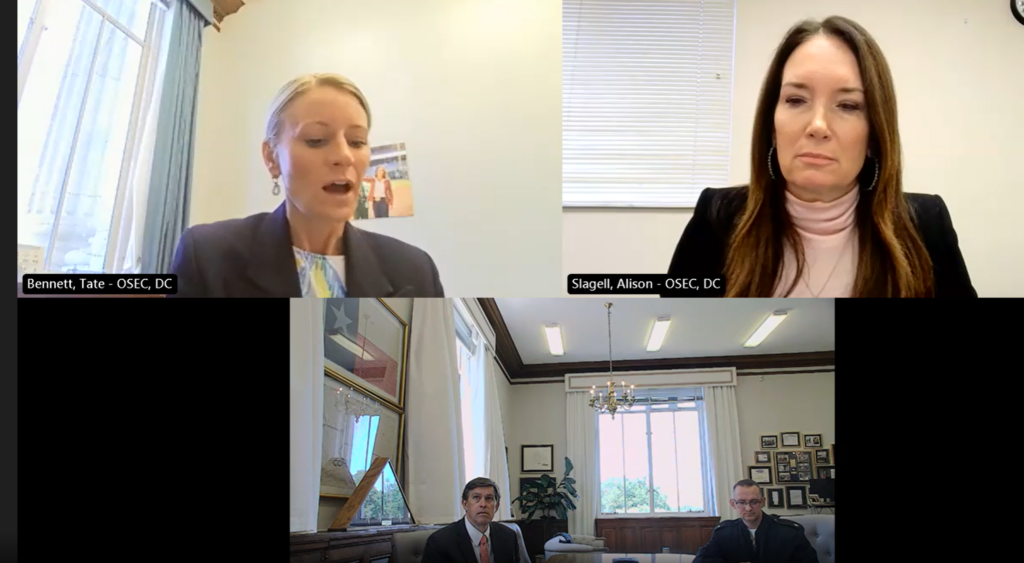
Farmer sentiment dropped again in May as the Purdue University-CME Group Ag Economy Barometer (AEB) Index declined from 121 points in April to 119 (see Figure 1). The Current Conditions Index fell by 8 points, while the Future Expectations Index increased by 1 point (see Figure 2). This month's Current Conditions Index was 21 points below last year's December index, reaching its lowest level since December 2024. The percentage of respondents who listed high input costs as their biggest concern was 51% in May, reaching a new high. In a related question, 46% of respondents indicated that high input costs are limiting improvements in their financial position this year. The percentage of respondents who think the U.S. is headed in the "right direction" declined from 57% in April to 52% in May, the lowest percentage since we started asking this question in July 2025. The May barometer survey was conducted among 400 farmers across the country from May 11-15, 2026.


Only 14% of respondents indicated that their farm operations were better off in May than they had been a year ago. Looking ahead to the next 12 months, 22% of respondents expect their farm to be better off financially a year from now. The Farm Capital Investment Index fell 3 points to 41, its lowest level since September 2024, indicating a decline in willingness to make large investments (see Figure 3).

In May, the survey also asked farmers to identify the main factor limiting improvement in their farm's financial situation. High input costs were by far the most frequently cited constraint, selected by 46% of respondents. Weather risk ranked second at 19%, followed by low output prices at 14%, labor and equipment concerns at 9%, and debt or financial pressure at 5% (see Figure 4).

Questions related to the impact of the Iran conflict on net farm income and corn breakeven prices in 2026 were included again this month. Similar to the results from April, approximately two-thirds of the respondents expected their net farm income to decline in 2026 due to the Iran conflict, which began in late February (see Figure 5). Among respondents who planted corn in 2025, approximately one-half expected corn breakeven prices to increase by up to 6%, 17% expected breakeven prices to increase by 6% to 9%, and 30% expected them to increase by 10% or more.

Periodically, the monthly survey includes questions about farm labor. Approximately 39% of respondents hire non-family members to work on their farm operations. Of those who hire labor, approximately 44% have had at least some or a lot of difficulty hiring this year. Respondents were also asked whether artificial intelligence (AI) tools would improve their current labor and equipment situation. Approximately 59% indicated that it would not improve their situation, while 37% indicated that it would help some, and 4% indicated that it would help a lot (see Figure 6).

The Short-Term Farmland Value Expectations Index increased from 121 points in April to 130 in May (see Figure 7), and the long-term index increased from 155 in April to 160 in May. Alternative investments, interest rates, and net farm income were cited as the three factors with the greatest influence on farmland values.

Since July 2025, producers have been asked whether they think the U.S. is headed in the "right direction" or on the "wrong track." After averaging 71% over the last six months of 2025, the percentage of producers who reported that the U.S. is headed in the "right direction" fell from 57% in April to 52% in May, the lowest percentage since we started asking this question in July 2025 (see Figure 8).

Farmer sentiment decreased from 121 in April to 119 in May. The decline in sentiment was attributable to an 8-point decline in current conditions. The percentage of producers who expected good times over the next five years was 37% in May, which is 16% lower than in the May 2025 survey report. There continued to be a large disparity in expectations between crop and livestock producers. Approximately 31% of respondents expected good times for crop producers, while 68% expected good times for livestock producers.
Concerns about input costs reached a new high, and high input costs were identified as the most important factor limiting improvements in financial performance. A lower percentage of respondents indicated that U.S. policy is headed in the "right direction." However, respondents were relatively more optimistic regarding both short-term and long-term land values.

The Arabian Horse Association (AHA) is proud to welcome youth riders, families, trainers, and Arabian horse enthusiasts from across the country to the 2026 Youth & Mid Summer Nationals, taking place July 17th–25th at the Oklahoma State Fair Park in Oklahoma City.
Now in its 34th year, the Youth & Mid Summer Nationals began as an exclusively youth-focused event before evolving into a beloved family show that draws an estimated 800–1,000 horses, 3,000 exhibitors, 200 trainers, and 3,500 spectators from across the United States and Canada. Admission is free and open to the public.
As part of AHA's broader Year of the Horse celebration and the 60th Anniversary of U.S. Nationals, the event represents a major moment for the future of the Arabian horse industry — bringing together rising competitors and longtime members while highlighting a renewed focus on accessibility, modernization, and community engagement across the sport.
The Youth & Mid Summer Nationals serves as one of the Association's most anticipated national competitions, showcasing the athleticism, intelligence, versatility, and beauty of the Arabian horse through a wide range of disciplines and youth-focused competition.
"This year carries extraordinary meaning for our community as we celebrate both the legacy and future of the Arabian horse," said Taryl O'Shea, CEO of the Arabian Horse Association. "The Youth & Mid Summer Nationals reflects the next generation of our industry — talented young riders, passionate families, and a community that continues to evolve while honoring the traditions that built it. As we celebrate the 60th anniversary of U.S. Nationals, we are embracing modernization, stronger engagement, and new opportunities to welcome more people into the Arabian horse world."
"The Youth Mid Summer National Show is holding its 34th year this July, and the growth we've witnessed has been remarkable," said Sharon Richards, Chair of the Show. "The recent construction of the OG&E Coliseum turned out to be a beautiful, state-of-the-art facility, and we are eagerly awaiting the completion of the Jim Norick Arena renovation. After all these years, we feel very lucky to call Oklahoma City home for this show. This facility offers so much to the equestrian world, and our community continues to thrive here."
The event arrives during a transformative period for the Association, following the recent removal of qualification requirements designed to encourage broader participation and make national-level competition more accessible to riders and horse owners across the country.
New for 2026, the event introduces a free Cow Horse Clinic on the second Friday evening, open to exhibitors and spectators alike, offering hands-on instruction in herd work and teaching horses to work a cow. The schedule has also been restructured so that the OG&E Coliseum features primarily adult classes during the first four days, shifting to a youth-forward focus for the remainder of the show, while the other two arenas maintain a mix of adult and youth competition throughout.
Hosted in Oklahoma City — a nationally recognized equestrian destination with deep roots in western and performance horse culture — the event is expected to draw competitors and spectators from throughout the United States and Canada while generating significant economic activity for the region.
Throughout the eight-day show — running daily from 9 a.m. to 9 p.m. across three arenas — attendees will experience national championship competition in disciplines ranging from English Pleasure, Western Pleasure, and Dressage to Reining, Ranch Riding, Trail, Native Costume, Ladies Side Saddle, Sport Horse In-Hand and Under Saddle, and Working Cow. Youth exhibitors range in age from 2 to 19 years old, and the electric walk/trot classes offer some of the most crowd-pleasing moments of the week as young riders as young as six confidently guide 1,000-pound horses through multiple disciplines.
Not-to-miss moments include the spectacular Native Costume class, the Stick Horse Class — where children ages 2–10 build their own mount in the Chill Box activity space and parade them in the OG&E Coliseum on Tuesday night — and the ever-popular Dog Costume Class and Dog Races. For families attending with non-competing children, the Chill Box is open daily with supervised creative activities and games. Arabian Barn Tours also offer behind-the-scenes access to meet horses and exhibitors up close.
The event is expected to generate more than $16.5 million in economic impact for the Oklahoma City region. In a nod to community giving, the Arabian Horse Youth Association's board has chosen the local Ronald McDonald House as the beneficiary of this year's 50/50 raffle.
The Arabian horse remains one of the world's most recognizable and influential breeds, celebrated for its intelligence, endurance, versatility, and enduring connection with riders across generations.

Jatelyn "Bug" Burcham, President of the Arabian Horse Youth Association and Youth Nationals exhibitor, captures what keeps competitors coming back year after year: "Youth Nationals has always felt like home to me. It's an incredible horse show, but what makes it truly special are the people and the memories that come along with it. Every year, I look forward to seeing my friends who live across the country, spending long days at the arena, cheering each other on from the rail, and making memories that last forever. It's a place where young people grow in confidence, learn the meaning of responsibility and sportsmanship, and feel like they have a place to belong. Some of my most favorite memories and closest friendships have come from this show, and that's why so many of us keep coming back year after year."
For more information about the 2026 Youth & Mid Summer Nationals, visit https://www.arabianhorses.org/competition/national-events/youth-nationals/.
About the Arabian Horse Association
The Arabian Horse Association is a full-service nonprofit breed association dedicated to the promotion, preservation, and advancement of the Arabian horse breed while supporting the breeding, competitive, and recreational interests of owners, breeders, competitors, and enthusiasts across the United States and Canada. Through nationally recognized competitions, registration services, educational initiatives, youth and community engagement programs, and official event and performance record management, the Association works to encourage participation, responsible breeding, and lifelong involvement within the Arabian horse community. The organization also administers approximately $1 million in annual prize money through its prestigious national events and competitive programs.
In 2026, the Arabian horse community celebrates a historic milestone as the "Year of the Horse" coincides with the 60th Anniversary of the Arabian and Half-Arabian U.S. Nationals in Tulsa, Oklahoma. More than 1,700 horses are expected to compete for national titles during the championship event, honoring six decades of excellence, tradition, and achievement in Arabian horse competition.
For more information, visit www.arabianhorses.org .
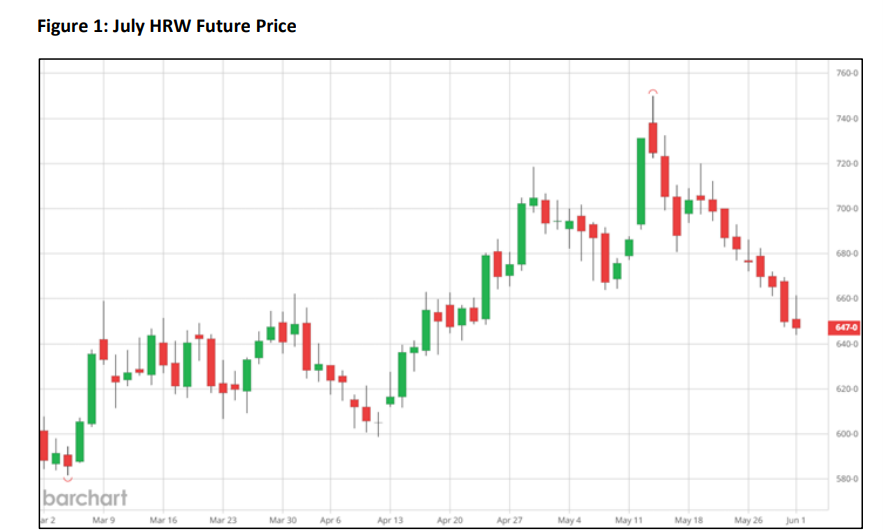
A combination of favorable weather forecasts and geopolitical factors drove agricultural commodity markets lower over the past week. Grain markets are currently caught in a tug-of-war between strong demand signals and bearish supply realities, including an improving moisture outlook for the U.S. Corn Belt and ample global stocks.
Hard Red Winter (HRW) wheat futures completed a difficult week in the July contract, with prices closing lower every single day. Following Monday's close, July HRW futures dropped to $6.47, retreating to a price range last seen before the market rallied around the May Crop Production report.
In Oklahoma, HRW cash prices settled into a range of $5.97 to $6.17 following Monday's close, while local basis remains relatively stable.
Despite persistent poor crop conditions across the Plains, wheat prices are struggling to gain traction. The domestic market is contending with a poor local crop while facing a large global carryover and minimal crop disruptions elsewhere in the Northern Hemisphere. For HRW prices to find room for another upward move, the market will likely need support from other sectors, such as corn, or from potential crop disruptions in the Southern Hemisphere, where an extraordinarily strong El Niño event is forecast for later in the year.
The national winter wheat crop condition index increased by one point from last week to 269, though it sits well below the five-year average for this week of the year. The total percentage of the national winter wheat crop rated good or excellent held steady at 26 percent. Locally, Oklahoma's good-to-excellent ratings tallied 13 percent, representing a slight increase from the previous week.
Hard red winter wheat exports remain on track to hit the USDA's target of 320 million bushels as the end of the marketing year draws near. Total commitments for the current marketing year sit at 319 million bushels, with cancellations and sales roll-overs beginning in earnest as the market transitions to the next marketing year.
Outstanding sales for the 2026-27 marketing year stood at 19.9 million bushels through May 21, down significantly from the 48 million bushels reported at the same point last year. Leading buyers for the upcoming marketing year include Mexico, Japan, and Korea. This year-over-year lag in forward sales is a commonly expected outcome given the sharp reduction in overall domestic production.
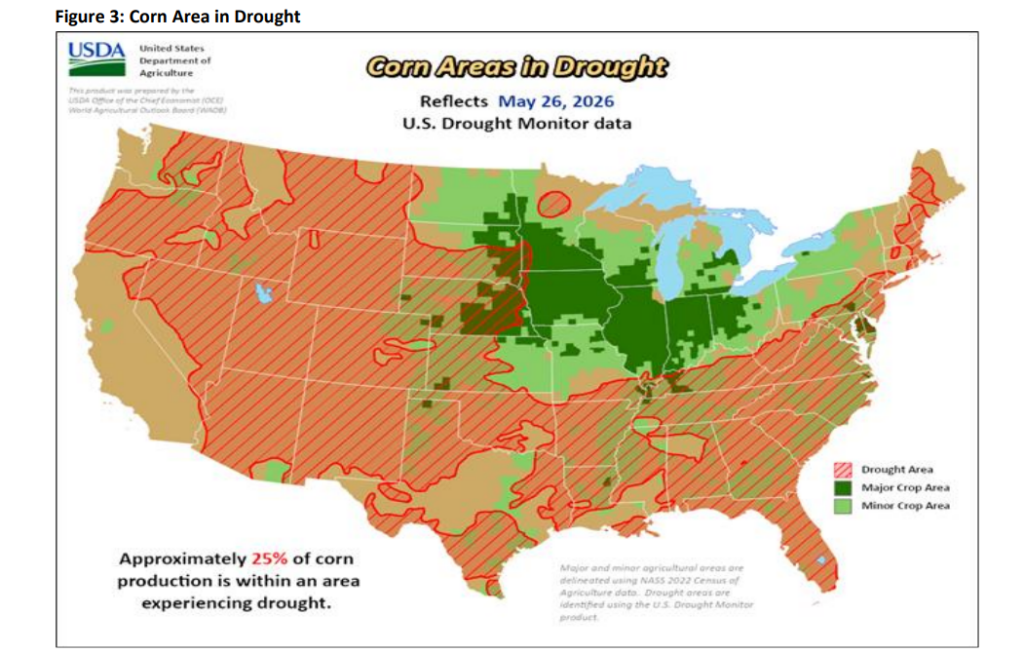
U.S. corn futures also moved lower, with December corn closing at $4.72. This puts the December contract at the lower end of the $4.70 to $5.00 range it has maintained since early March. The July contract felt a sharper decline, closing at $4.44 on Monday. Across Oklahoma, local cash corn prices ranged from $3.89 to $3.94, with higher prices reported at select locations.
At this early stage in the season, the U.S. corn crop is progressing without any serious setbacks. Planting is 93 percent complete, and emergence is 75 percent—both metrics are tracking slightly ahead of their respective five-year averages. Pennsylvania and Michigan are currently showing the slowest progress, trailing in both planting and emergence, though this is not yet considered a critical concern. With nationwide planting surpassing the 90 percent mark, the year's first crop condition ratings were released, indicating a crop on par with last year at 67 percent good-to-excellent (down two percent from the same period last year).
As of May 25, approximately 25 percent of the national corn acreage was situated in drought-affected areas. While recent rainfall improved the driest corn areas in the Deep South and the Plains, dryness has begun creeping into the heart of the Corn Belt over the last few weeks. Weather developments in this region will be critical to monitor, as any increase in extreme dryness could spark speculation about yields and acreage. At present, weather models indicating rain for Nebraska and eastern South Dakota later this week have served as a primary driver of the recent price weakness.
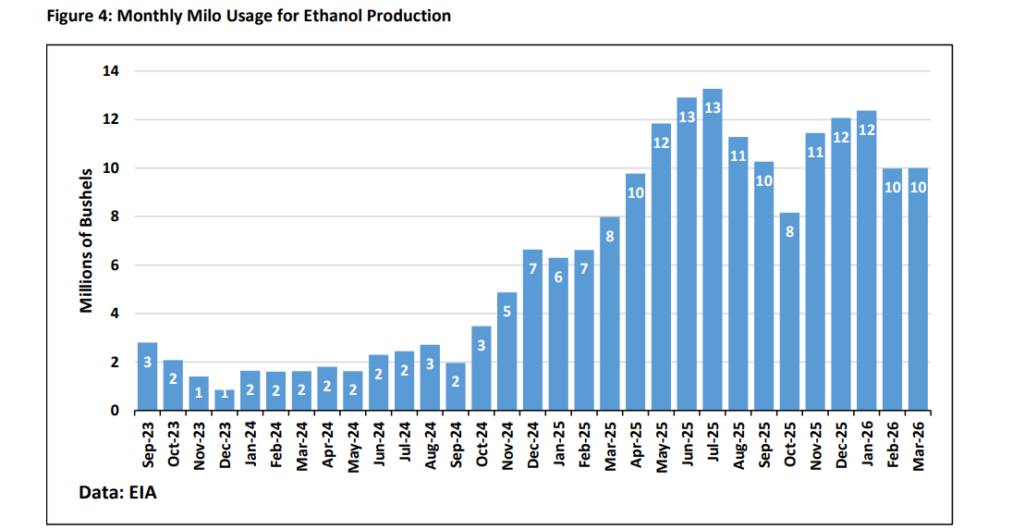
U.S. corn demand continues to be sustained by steady ethanol grind and export sales. Export commitments through May 21 reached 3.18 billion bushels, which includes 788 million bushels in outstanding sales. To hit forecasted totals, corn sales and exports must average 8.3 million bushels per week for the remainder of the marketing year. Over the past month, weekly net sales averaged a strong 51 million bushels per week, bringing total commitments to 96 percent of the forecasted total—matching the five-year average.
The U.S. crop is moving through its peak sales window just as South American production begins hitting the international market. In Brazil, the safrinha harvest has begun in parts of Mato Grosso. The full-season crop, which accounts for roughly 24 percent of Brazilian corn production, is mostly harvested with good yields reported. Meanwhile, Argentina raised its corn crop potential in its May report to a record 2.75 billion bushels on higher overall acreage. On the global stage, U.S. Gulf corn prices remain below Brazilian port prices, while Argentinian port prices sit approximately 36 cents a bushel below U.S. Gulf prices of $5.58 per bushel.
Domestically, corn processing for ethanol reached 427.68 million bushels in April, up 4 million bushels from last year. Total corn usage for fuel ethanol through April sits at 3.653 billion bushels, outpacing last year's year-to-date total by 25 million bushels. To reach the USDA's full-year forecast of 5.6 billion bushels, corn usage must total 1.947 billion bushels over the remainder of the marketing year (compared to the 1.812 billion bushels used from May to August 2025). Current gasoline consumption trends show little sign of a consumer slowdown, supporting the likelihood of meeting these targets.
Sorghum (milo) basis remains quite weak across the state, coming in at -90 to -110 off the July futures contract. Local milo prices continue to track corn price competitiveness and overall export market opportunities.
Milo planting has reached 44 percent of the expected 6.1 million acres projected in the March Prospective Plantings report. While the planting pace has lagged the five-year average by 1% for several weeks, it does not currently pose a major concern. Regionally, Oklahoma is 36 percent planted, while Kansas stands at 26 percent and Texas leads at 84 percent complete.
Demand for Milo remains solid, propped up by lower pricing. March data from the Energy Information Administration (EIA) showed that 10 million bushels of milo were used for ethanol production, maintaining a recent trend of increased milo crushing for fuel. To meet the USDA's current full-year ethanol grind forecast of 113 million bushels, milo usage needs to average 7.7 million bushels per month over the final five months of the marketing year. Because a slowdown of that size seems unlikely, the current pace suggests the market may eventually see stronger feed and residual usage or higher export volumes.
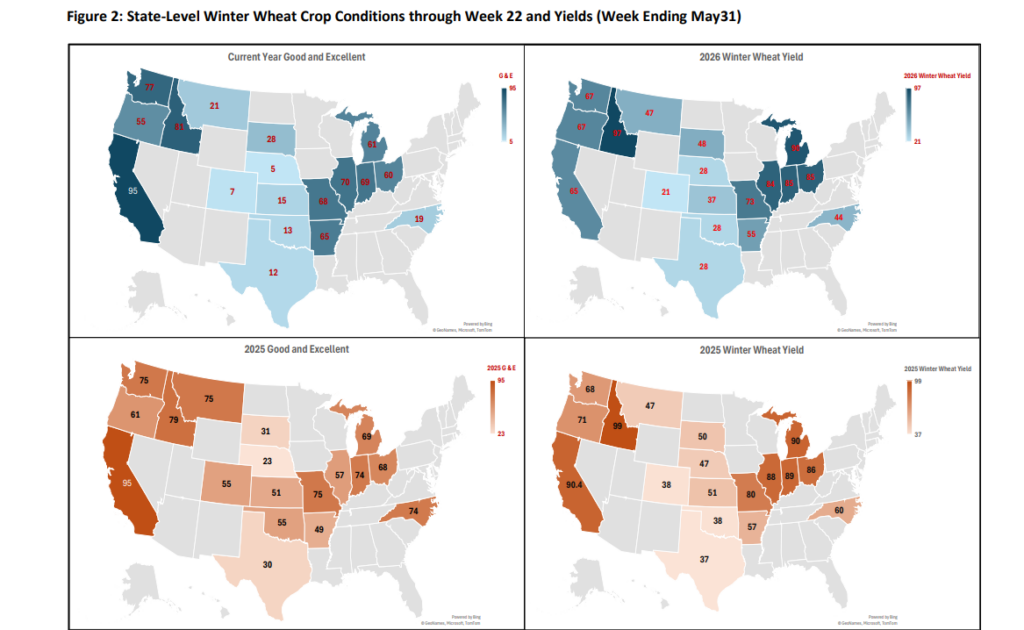
This Crop Outlook Newsletter update is provided by Oklahoma State University Extension Grain Marketing Specialist Dr. Todd Hubbs.
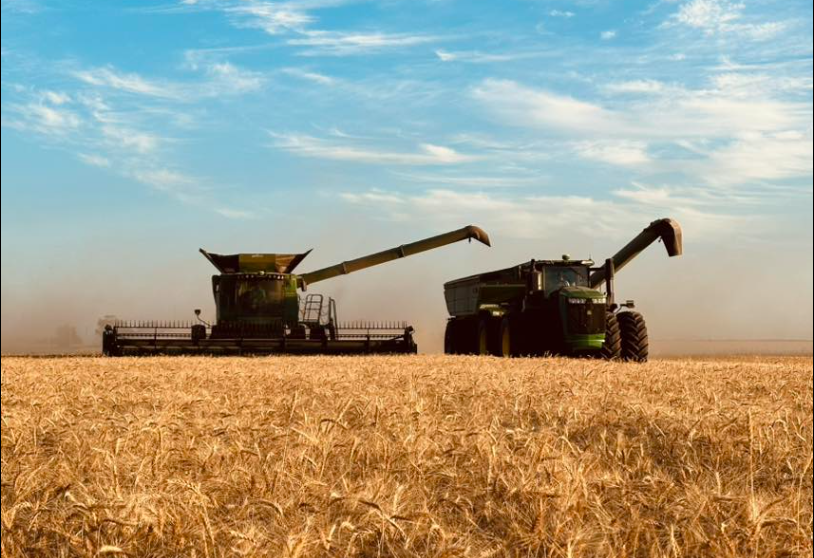
The Oklahoma wheat harvest is officially underway, but the results rolling across the scales are telling two entirely different stories. According to the latest field data from the Oklahoma Wheat Commission, the statewide harvest is approximately 35 percent complete, moving much faster than the recent weekly snapshot from the USDA National Agricultural Statistics Service (NASS), which put progress at 8 percent.
A Brutal Spring Limits Bumper Crop Potential
For producers in the fields, the impact of an unusual spring is glaringly apparent. A severe lack of rainfall in March, paired with a few days of temperatures soaring near 100 degrees, accelerated crop development and forced the wheat to put out heads early.
Pete Mat of Mat Farms near Billings, Oklahoma, noted that the unusual weather patterns severely hurt the crop. He pointed out that there are far fewer heads in the fields than normal. When you can see the bunny rabbits running down the wheat rows, Mat said, it is simply not a bumper crop. Mat shared that while he expects some of his unbooked tickets to potentially reach around 50 bushels per acre, the wheat currently being cut is making in the 20s, with yields scattered everywhere in between.
Harvest Delays and Mixed Yield Reports
While combines are rolling, recent weather patterns have created a localized standstill. Producers in northern and northeastern Oklahoma are struggling to get equipment into the fields due to rain. Similar off-and-on delays impacted southwestern portions of the state over the past week. In northwest Oklahoma, heavy downpours delivered up to 5 inches of rain in a 48-hour window, forcing a temporary halt to harvest operations.
Where cutting has occurred, test weights are holding steady, averaging 58 to 59 pounds statewide. However, yield distributions vary drastically by region:
Drought Conditions and Subsoil Moisture Depletion
The uneven crop performance directly reflects the ongoing moisture deficit across the state. The latest U.S. Drought Monitor indicates that 81 percent of Oklahoma remains in drought status. A detailed breakdown reveals the severity:
Western Oklahoma and the Panhandle continue to carry the worst of these conditions. According to the June 1st Oklahoma Mesonet update, the month of May finished 1.6 inches below normal for statewide rainfall. Portions of west-central Oklahoma received less than 25 percent of their normal monthly precipitation. May temperatures averaged 69.4 degrees statewide—one degree above normal—ranging from a high of 107 degrees in Erick to a low of 30 degrees in Kenton.
While recent showers have perked up the 2-inch soil moisture layer, the 4-inch plant-available water levels are more concerning. Out west, this deeper subsoil cushion remains incredibly thin, meaning many fields lack the moisture reserves needed underneath to sustain a strong finish.
The official USDA NASS crop progress report released June 1st confirms the heavy toll on the crop, rating Oklahoma winter wheat at 100 percent headed with overall conditions classified as:
Collectively, 53 percent of the crop is rated poor to very poor, compared to just 13 percent rated good to excellent.
Global Market Factors Pressuring Local Prices
On the marketing side, producers are facing a shifting price landscape. Dr. Todd Hubs, Oklahoma State University Extension Grain Marketing Specialist, noted that the USDA projected the hard red winter wheat crop at 515 million bushels in its May Crop Production report. If realized, that total would mark the lowest production level since 1957. Driven by lower acreage and a projected Oklahoma state average yield of 28 bushels per acre, local market availability is exceptionally tight.
Following the release of that federal data in May, the July contract briefly touched $7.50 a bushel. Given local basis points, that peak brought Oklahoma cash prices into the $6.90 to $7.00 range. However, prices have since retreated to around $6.50 per bushel.
Despite the short domestic crop, global supplies are keeping a lid on the market. While parts of the European Union, Poland, and the Baltic states have faced rough patches, overall crops in the EU, Russia, and Ukraine are looking acceptable. Australia's acreage is down ahead of a potential El Niño event, but that crop will not enter the market until this fall.
The primary pressure on global prices stems from unexpectedly strong wheat crops in North America, Argentina, and specifically major importing regions like North Africa and the Middle East. Excellent production in Morocco, Algeria, and Egypt has reduced demand from traditional Black Sea and EU exporters, leaving global prices highly competitive. Because U.S. wheat prices remain elevated relative to international competitors, domestic prices are constrained from rallying significantly higher without global markets following suit.
Ultimately, the Oklahoma wheat crop remains highly volatile, determined completely on a field-by-field basis as rain-aided fields in the north show promise while western operations continue to run on fumes.
Oklahoma Wheat crop update brought to you by the Oklahoma Wheat Commission and reported by Dave Deacon.
Click below to watch the full Wheat Crop Update:
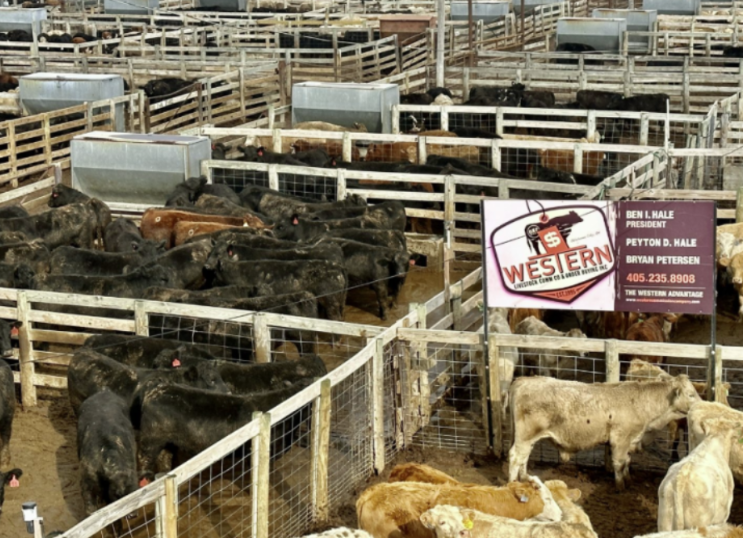
On Tuesdays, Senior Farm and Ranch Broadcaster Ron Hays visits with Ben Hale of Western Livestock Auctions as he talks about the latest in the markets and more. Established in 1995, Western has grown into a multi-generational family-owned and operated business and stands as a symbol of tradition, excellence, and a deep-rooted passion for the cattle industry. Western Livestock Auctions operates the Western Livestock Commission Firm, which sells cattle on Mondays and Tuesdays. They also operate the livestock auction markets in Woodward, Comanche, Waurika, and Knoxville, Iowa.
As Oklahoma's cattle markets move into June, market watchers are seeing some seasonal adjustments even as overall demand remains strong. Hale said the first June sale at Oklahoma City featured about 5,500 head, down from a year ago, with markets softer than they had been in recent weeks. Hale explained that conditions were expected to ease following the holiday break, noting, "We knew it was going to be 500 to 1500 head lower compared to two weeks ago," though he added the market "still got along pretty good" as the board showed strength.
Hale said softer calf prices were especially noticeable among heavier, fleshy calves as hotter, more humid weather settles in. "The soft calf deal was what I saw probably really took the biggest hit with this heat and humidity," he said, explaining that larger calves carrying more condition and hair often face discounts this time of year. Even so, Hale stressed those calves are "still selling extremely well, dollars per head," though not at the pace seen over the prior several weeks. He added that producers with access to grass, particularly east of Interstate 35, may have more opportunities to hold cattle on pasture.
Beyond seasonal market shifts, Hale said concerns surrounding screwworm continue to linger while feeder cattle supplies tighten. "The feeder cattle numbers are just pretty well drying up," he said, pointing to smaller runs and uncertainty about how markets will react to shrinking supplies and movement in futures. Hale noted cattle feeders and sellers are watching closely as the board fluctuates and trying to gauge "what's going to happen on these types of numbers we get."
Looking across the state, Hale said sale barns are returning to normal schedules after Memorial Day, with steady runs expected at locations including Waurika, Comanche, and Woodward. He expressed cautious optimism that feeder demand could improve deeper into summer, saying, "Hopefully, we usually get into June and then into July, we can pick that feeder deal up and hopefully can get that board to level off." Still, Hale emphasized that moisture remains top of mind for cattle country, adding, "We need to keep praying for that."
Hale can be contacted at 940-631-2333. Check out more about the marketing options that Western offers by clicking here.

Farmers are navigating a time when precision and timely information can make all the difference—and some of the most valuable tools are coming from space.
Oklahoma Farm Reports Maci Carter spoke with Karen St. Germain, with NASA. Germain says the agency has supported agriculture for decades, even if many producers don't immediately make that connection.
"Agriculture is one of NASA's longest served communities, going all the way back to the first Landsat mission decades ago," she said. "Back then, we could just see greenness... over the decades, our satellite systems have gotten so much more sophisticated. We can measure crop growth, we can measure soil moisture, even groundwater and aquifer depletion."
That growing level of detail is helping producers make more informed, real-time decisions—especially when it comes to water use.
"One example... is our OpenET product," St. Germain said. "It gives you a measure of exactly how much water the field has used, and that tells you exactly how much you need to replenish."
The results are tangible.
"What we find is, generally speaking, the farmers use 20% less water when they have this information... to dial in their irrigation plans."
NASA is also working to make sure that data is practical and accessible through its NASA Acres initiative, which partners with Extension systems and ag organizations.
"It operates in every state... to really dial into the particular local challenges," she said. "We at NASA can't reach every farmer, but we work through agriculture associations as well as Extension programs to reach into the community."
St. Germain emphasized that access is not a barrier.
"All NASA data is free and open, and it's all highly calibrated and curated," she said. "It's important to us that farmers know exactly how to get their hands on it."
As weather variability continues to challenge producers, NASA is focused on both current conditions and what's coming next.
"What we often hear is the growing conditions are changing," St. Germain said. "So what we're trying to do is not only give farmers more situational awareness... but also give them some predictive tools."
Those tools could help producers anticipate drought conditions weeks in advance, allowing for better planning and risk management.
At the end of the day, St. Germain says the partnership between NASA and agriculture works because both are rooted in data.
"These are our people. Farmers and ranchers are data people, and so are we," she said. "We speak the same language... we've got data and information, we want to share it with them and help them make the best decisions they can make."
As agriculture continues to evolve, that collaboration between producers and space-based technology is becoming an increasingly important part of the industry's future.

Land-grant universities across the south are addressing the growing demand for digital connectivity in rural areas by leading research-based efforts to expand broadband, strengthen digital skills and connect communities to essential services.
By leveraging Extension networks and agricultural research, these universities are helping rural communities stay connected, competitive and prepared for the future.
The Oklahoma State University Department of Agricultural Economics is partnering with 30 libraries in small, rural communities (with populations of 2,500-7,000) across Oklahoma to provide mobile handheld devices that use cellular networks to offer broadband connections for library customers to take home or on the road. These internet hotspots can support up to 10 devices at a time for households lacking a regular internet connection.
Oklahoma established a state Broadband Office that has now distributed more than $450 million in grants to connect more than 65,000 households and businesses. Another $750 million will soon be provided to connect the remaining 75,000 households that still lack high-speed internet. The council's goal is to ensure that the 1.7 million households across the state have access to the internet.
According to 2024 studies conducted by Brian Whitacre, OSU Jean and Patsy Neustadt Chair in Agricultural Economics and OSU Extension rural development specialist, these faster connections could mean an increase in housing values between 2% and 9%, with speed improvements beyond 100 Mbps/20 Mbps, resulting in new business births. Whitacre also led the effort to install telehealth booths at three rural libraries across the state, where patrons can connect to a physician, often specialists not available in rural locations.
Extension programs at Langston University in Oklahoma are leading a coordinated effort to expand high-speed internet access across 13 small towns across the state. Working together with local leaders, LU Extension has helped towns identify critical infrastructure needs, collect accurate service data and prepare competitive grant applications to secure broadband investment. This hands-on support will ensure that small communities often overlooked in statewide planning have a strong voice and proposals backed by real evidence of their needs.
Several towns have now been awarded funds, and broadband construction is already underway, leading to improved internet access that supports economic growth, educational opportunities, health and wellness, agricultural innovation and government and community services.
In Georgia, Fort Valley State University researchers identified significant gaps in broadband access and digital skills, particularly in areas with high poverty rates, aging populations and limited educational attainment. Funding from the U.S. Department of Commerce's National Telecommunications and Information Administration through the Connecting Minority Communities grant, along with support from the Southern Rural Development Center, enabled the deployment of wireless infrastructure and the distribution of technology in areas with limited resources.
FVSU also developed customized digital literacy programs with training that included a six-hour Digital Literacy course and multi-day technology camps, which enhanced technical skills, confidence and cyber safety awareness. Early results show increased online engagement and improved access to essential services, with residents reporting greater confidence navigating digital environments safely.
In Louisiana, the Southern University Ag Center Cooperative Extension Program's Mobile Technology Center is bridging the digital divide across the state's urban and rural communities.
M-TEC provides internet access and educational resources to some of the state's most remote areas. It is equipped with touchscreen monitors, laptops, a central processing unit and satellite systems, enabling it to serve as a mobile classroom for onsite training. The unit's core mission is to improve access to education and resources during crises, and it has been instrumental in disaster recovery efforts, serving as a mobile hub for vital information.
"Across the southern region, these collaborative efforts show what the land-grant mission is all about—bringing research, Extension and local partnerships together to solve real challenges in our communities," said Scott Senseman, associate vice president of OSU Ag Research and a member of agInnovation. "By expanding broadband access and strengthening digital skills, we're not just improving connectivity — we're opening doors to economic opportunity, education, health care and innovation. This work demonstrates how land-grant universities continue to serve as trusted partners in improving quality of life and building a more resilient future for rural communities."
Learn more about the Oklahoma broadband program at https://news.okstate.edu/articles/agriculture/2026/big-check-presentation-highlights-osu-extensions-rural-broadband-work
Oklahoma State University, Langston University, Fort Valley State University and Southern University are part of agInnovation, a system of agricultural research centers at 1862 and 1890 land-grant universities across the southern U.S. Our scientists collaborate to conduct research and outreach focused on preserving the region's natural resources and enhancing food production for a growing global population.

On Friday, May 29, U.S. Environmental Protection Agency (EPA) Administrator Lee Zeldin traveled to Oklahoma City, Oklahoma, for several events focused on the Trump Administration's energy agenda and efforts to support American farmers.
On Friday night, Administrator Zeldin addressed the National Stripper Well Association where he discussed Trump Administration efforts to unleash energy dominance and slash red tape while protecting the environment. The Administrator was presented the "Industry Leader of the Year" award and was joined by U.S. Senator James Lankford.
On Saturday, May 30, Administrator Zeldin participated in a roundtable with the Oklahoma Farm Bureau and dozens of member farmers in Mulhall, Oklahoma. Along with EPA Region 6 Administrator Scott Mason, U.S. Senator Alan Armstrong, and U.S. Congressman Frank Lucas (OK-06), Administrator Zeldin outlined Trump EPA action to provide much-needed relief from faulty Diesel Exhaust Fluid (DEF) systems. In a post on X following the event, Administrator Zeldin said:
"A tractor shutting down during harvest because of a faulty Diesel Exhaust Fluid (DEF) system has long been a devastating reality for too many farmers across America, but is now becoming a problem of the past as a result of Trump EPA actions this past year. Visited this weekend with the Oklahoma Farm Bureau and many of their amazing member farmers."
On March 27, President Trump and Administrator Zeldin announced on the White House South Lawn new guidance to remove DEF sensor requirements that will save Americans billions of dollars annually and countless hours of lost time and productivity.
This latest move is part of a series of Trump EPA actions to provide much needed relief on this issue. Last August, while at the Iowa State Fair, Administrator Zeldin announced new guidance urging engine and equipment manufacturers to revise DEF system software to prevent sudden shutdowns and deratements, while giving operators more time to repair faults without impacting productivity or safety. On February 3, 2026, EPA demanded critical data on DEF system failures from the manufacturers that account for over 80 percent of all products used in DEF systems. In addition, the Trump EPA issued guidance in February restoring farmers' Right to Repair their own equipment, allowing them to spend more time in the field and less money at the repair shop.
In the near future, EPA will also be issuing a new deregulatory proposal that will completely remove all DEF deratements for new vehicles and engines. With these changes, sudden speed losses, which compromise safety and productivity, will be an issue of the past.
Administrator Zeldin has held similar roundtables in many states across the U.S. to solicit direct feedback about how the Trump EPA can continue to support farmers nationwide.
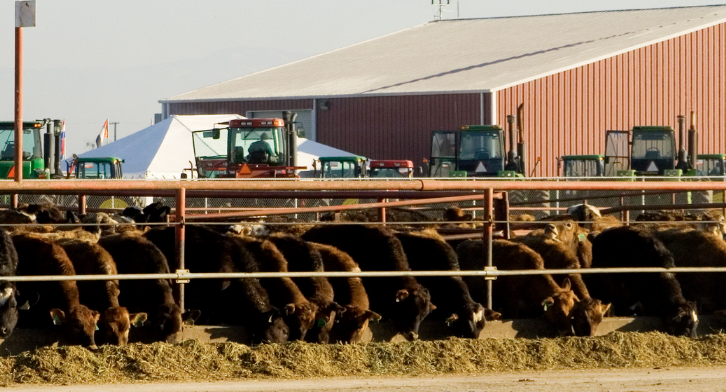
In a recent Southern Ag Today article, David Anderson writes: Beef production is not increasing in the sense that we are producing more than last year. But, it is increasing seasonally and the year-over-year reductions are not as large as earlier this year.
Beef production tends to hit a seasonal low for the year in the Spring and then increases. From January through April weekly average beef production was 6.1 percent below the same period in 2025. Year-over-year weekly beef production ranged from down 3.2 percent to down 11.2 percent. The decline in beef production moderated during May with the weekly decline in beef production averaging only 3.8 percent. The sharp decline in weekly beef production that occurs each year at this time is due to the Memorial Day holiday shortening the work week.
Beef production is the product of the number of cattle going to slaughter and weights. Steer slaughter tends to increase from Spring to Summer, before declining later in the year. There has been a slight uptick in steer slaughter in recent weeks. Heifer slaughter tends to decline into early Summer but, this year it has increased a bit. On the cow side, dairy cow slaughter is even with a year ago and is right on pace with its usual seasonal decline. Beef cow culling, while remaining below a year ago has jumped up in recent weeks compared to early in the year. Fed cattle weights remain historically large but, dressed steer and heifer weights have experienced a small decline in recent weeks.
Several phone calls about retail beef prices over the last couple of weeks prompted this look at beef production. Seasonal springtime lows in beef production combined with grilling season demands fuel rising retail beef prices through mid-year. Historically, rising beef production after the middle of the year tends to help bring down retail beef prices. More cattle on feed than a year ago, continued heavy dressed weights, and seasonality in beef production have the potential to increase beef production from the tight supplies this Spring. Overall, these factors won't get beef production bigger than last year or consumer prices lower than last year but they might help moderate retail prices from recent highs.


Anderson, David. "Beef Production Increasing?" Southern Ag Today
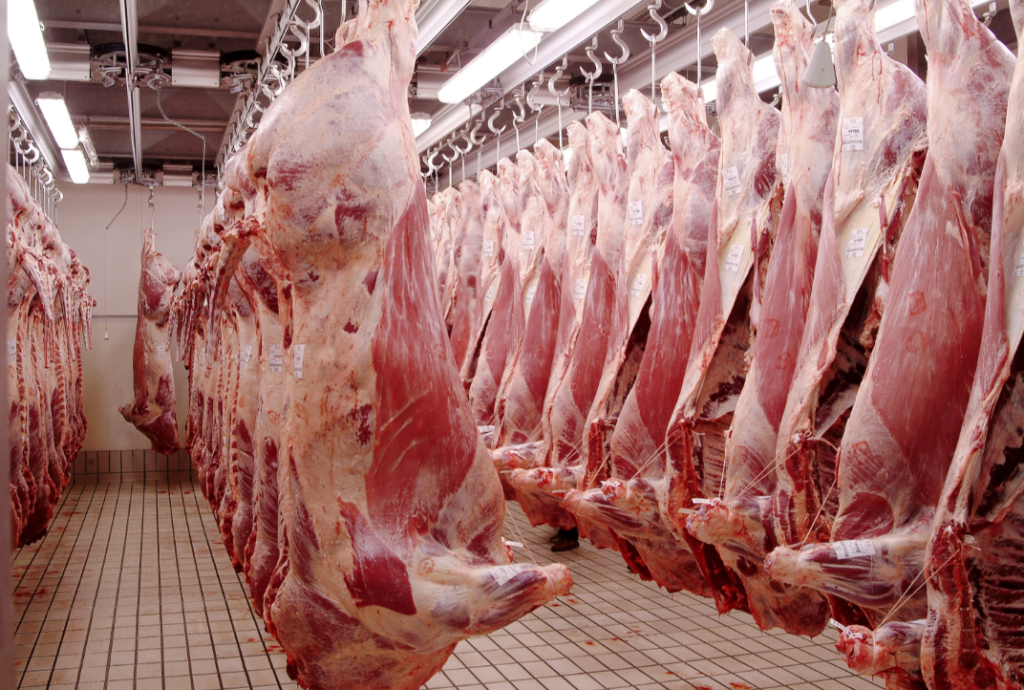
In today's Beef Buzz, senior farm and ranch broadcaster Ron Hays continues to feature comments from a trio of cattle market economists — Dr. Derrell Peel, Don Close, and Nevil Speer — about packer margins, beef demand, and the biggest risks facing cattle producers during a recent panel discussion at the U.S. Meat Export Federation spring conference in Oklahoma City. You can go back and review earlier parts of their conversation and presentations on our Beef Buzz page.
One question centered on why packers have been unable to push boxed beef prices higher to improve margins. Speer responded to concerns about market manipulation, saying, "Well, I guess collusion is not working," before adding, "They're really bad at manipulating the markets — never lasts, right?"
Close said despite difficult margins, beef values remain incredibly strong when compared to a year ago. "I get that question daily," Close said. "When you actually take time to look at the price and the price gain by item over a year ago, it's smoking." He pointed to gains across beef primals and continued consumer movement of product despite tighter supplies.
Speer added that the long-term investments being made by packing plants signal confidence in the future of the business. "Any packing plant you go to in the last couple of years, these packers just keep reinvesting money into their plants." "They're not scraping by — they are committed to this for the long run."
Still, Speer warned producers not to assume the current business environment will last forever. "It can't go on forever," he said. "They're going to work to try to do something different to grab margin and predictability and get out of the commodity noise." He cautioned cattlemen to "be careful what you ask for," warning future changes in the marketplace may influence producers in ways they do not like.
When asked about the biggest threat facing the beef industry, Peel pointed squarely toward demand-side concerns. "The biggest threat comes from the demand side, at least near term," Peel said. "Demand is incredibly strong, and I think it will stay strong."
However, he cautioned that outside economic pressures could affect consumers' ability to keep paying record prices for beef. "Consumer willingness and ability — if we mess up their ability bad enough, then they just flat can't," Peel said, pointing to things like gasoline prices and broader economic uncertainty.
Peel also tied uncertainty to the slow pace of herd rebuilding. "That's also part of the reason producers are not aggressively chasing herd expansion yet," he explained. "Mother Nature is limiting what they can do in a lot of cases, but uncertainty has become a really big part of the risk they're facing."
According to Peel, much of that uncertainty is external. "Most of that's coming from the policy side or external factors," he said. "It's not so much inherent risk in the industry as it is external stuff."
Speer closed with a warning and a recommendation for cattle producers operating in a historically high-value market. "There's more equity at risk in this business than ever," Speer said. "If there's one drumbeat that I would beat over and over again to producers, it's get some sort of price protection."
He specifically encouraged producers to use Livestock Risk Protection (LRP). "Government does do one thing really well — they gave producers this thing called LRP," Speer said. "It's a gift. Take advantage of it. Build a floor, you get all the upside, and you don't have to pay for it until you sell your calves. What a great tool."
The Beef Buzz is a regular feature heard on radio stations around the region on the Radio Oklahoma Ag Network and is a regular audio feature found on this website as well. Click on the LISTEN BAR above for today's show and check out our archives for older Beef Buzz shows covering the gamut of the beef cattle industry today.

The Oklahoma Water Resources Board (OWRB) is pleased to announce the passage and signing of a historic suite of water policy legislation during the 60th Oklahoma Legislature. The enacted legislation addresses critical needs in water infrastructure, resource administration, and long-term funding, ensuring that Oklahoma remains competitive and prepared for the evolving demands of its growing population and economy. These measures represent the first major implementation of policy recommendations from the newly published Oklahoma Comprehensive Water Plan (2025 OCWP), a ten-year update to the state's 50-year prospectus for water security.
The Legislature approved nearly $73 million in water infrastructure funding, including the establishment of a new Water and Wastewater Infrastructure Investment Program with a $35 million appropriation. This program addresses critical gaps in the availability of low-interest capital funding and ensures that smaller or underserved communities can access the financing needed for essential upgrades and long-term infrastructure expansion. This crucial investment also includes $10 million for Rural Economic Action Plan water infrastructure grants; $2 million for a regional water project in northeast Oklahoma, and nearly $26 million from American Rescue Plan Act (a 2021 federal stimulus bill) interest earnings for infrastructure projects.
Following recommendations from the OCWP, SB 1509 was signed into law, empowering the OWRB to implement statewide groundwater well spacing and avoid potential well-to-well drawdown impacts. Additionally, with the signing of SB 1314, our state has taken a much-needed step to protect fresh groundwater sources by modernizing the Well Drillers Remedial Action Indemnity Fund that is used for the cleanup of abandoned, leaking, or improperly constructed wells. Additionally, a suite of new laws signed this session provides the OWRB with both the mandate and the funding to administer groundwater rights and enforcement activities.
"Passing these bills shows a shared commitment by our local and legislative leaders, the Governor, and the people of Oklahoma to address our complex water challenges," said Julie Cunningham, Executive Director of the OWRB. "This legislation goes beyond administrative updates—it contributes to the foundation of water security that resilient communities and a growing state economy depend on. We are thrilled to see many of the major recommendations of the 2025 OCWP move off the page and into action."
The OWRB sincerely thanks the many citizens who shaped the 2025 OCWP, as well as Governor Kevin Stitt, legislative leadership, and the bill authors who shepherded these vital measures through the session. Their dedication and expertise have laid a foundation that will benefit Oklahomans for generations to come.
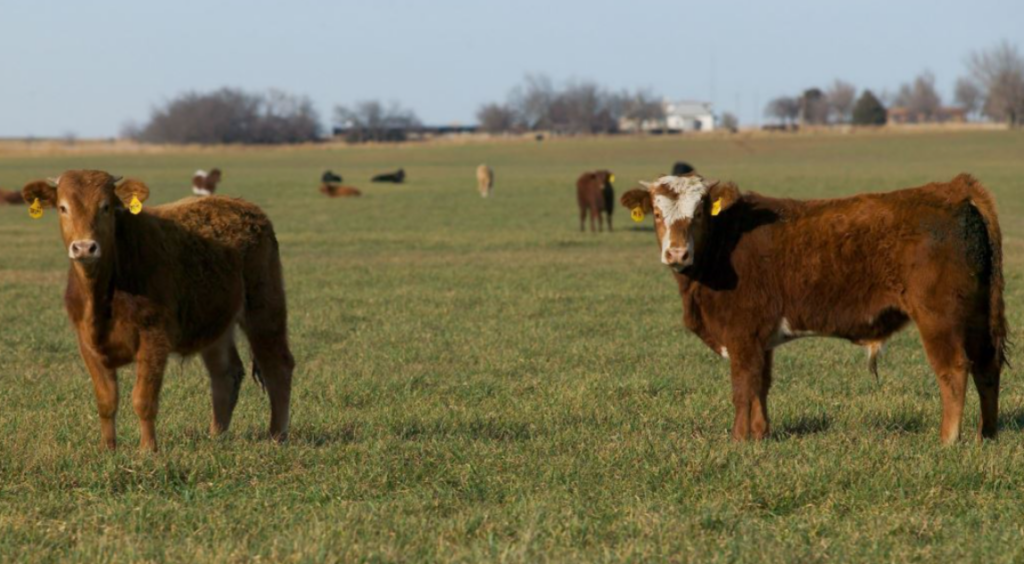
Conformation of the teats and udder of beef cows are economically important traits in cow-calf operations. Correct teat and udder conformation are traits essential to a productive cow. Beef females with poor teat and udder conformation are a management problem that can drain profitability. Substandard teat and udder conformation requires extra management intervention to physically "milk-out" quarters to prevent infection, save the quarter and permit new born calves to nurse. As well as increasing the likelihood of mastitis and calf sickness while reducing weaning weights and cow longevity.
Teat and udder scores are moderately heritable meaning improvement can be made when selection pressure is applied. Since teat and udder conformation is a challenge to evaluate at selection time in weaned or yearling heifers, it is best to monitor in the cow herd and avoid keeping replacement heifers from dams with substandard teat and udder conformation. Teat and udder conformation can also be considered in sire selection. For example, since 2025, the American Angus Association generates EPDs for Teat Size and Udder Suspension. Higher EPD values indicate smaller teats and tighter suspension. These EPDs are generated using breeder submitted data, pedigrees and genomics. The guidelines for collection of teat and udder score phenotypes are as follows:
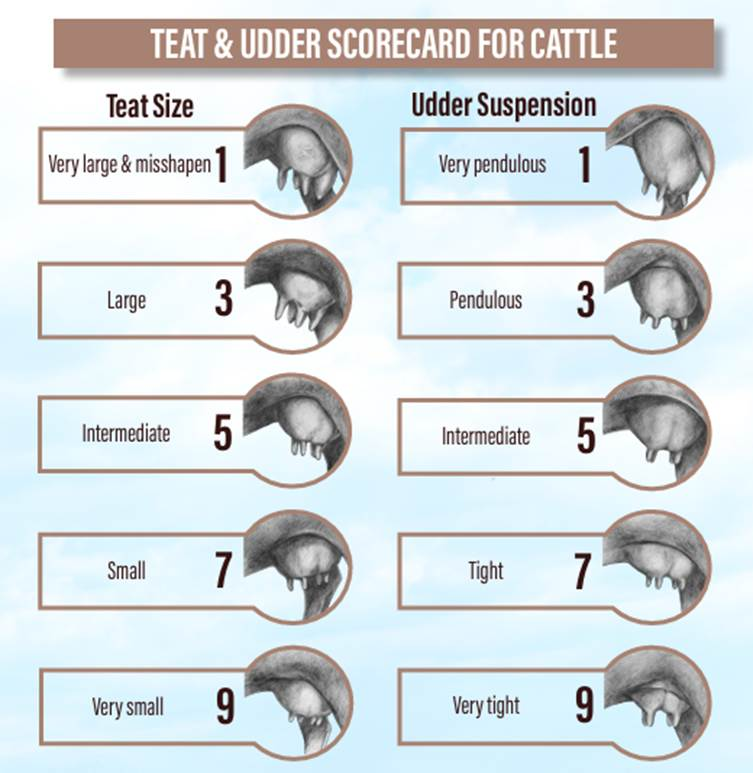
RON's Dave Lanning has a pre-opening look at today's agricultural Markets.
Click the audio tab below for today's report.\
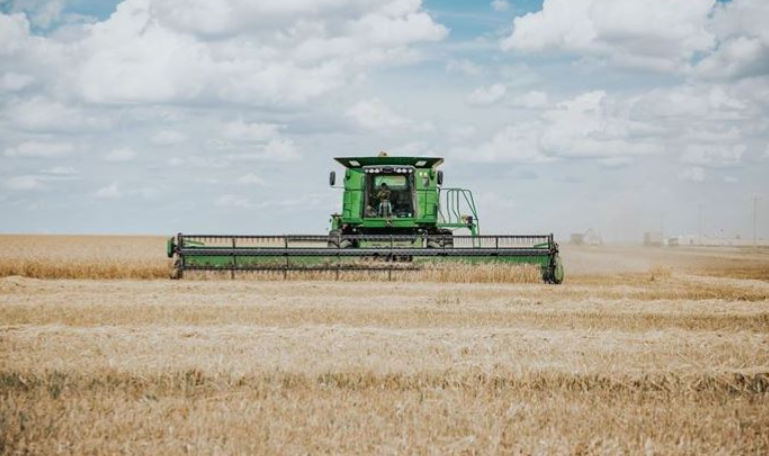
According to the latest crop progress report released on June 1st, 2026, Oklahoma's winter wheat headed is at 100%, while winter wheat conditions are rated 13% good to excellent, 53% poor to very poor, and 34% fair. Oklahoma winter wheat harvested is at 23% this week compared to 7% last week.
Kansas winter wheat headed is at 99%. Winter wheat crop is ranked 15% good to excellent, 30% fair, and 55% poor to very poor.
Texas winter wheat crop is ranked 12% good to excellent, 24% fair, and 64% poor to very poor, while winter wheat headed for the state is at 100%. Texas winter wheat harvested is at 23% this week, compared to 14% last week.
Nationally, winter wheat conditions rank at 26% Good to excellent, 30% fair, and 44% poor to very poor. Winter wheat headed nationally currently sits at 87%, and winter wheat harvested is at 5%.
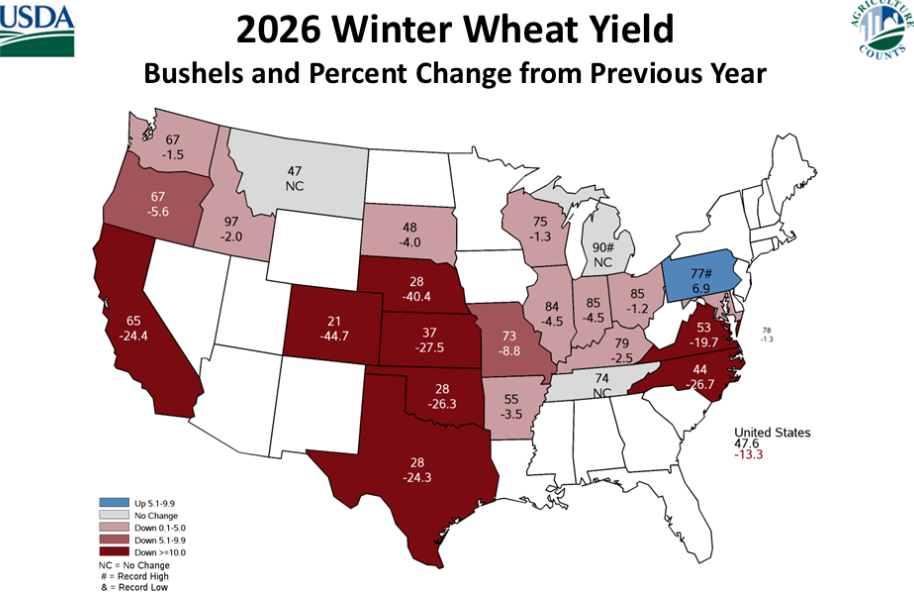
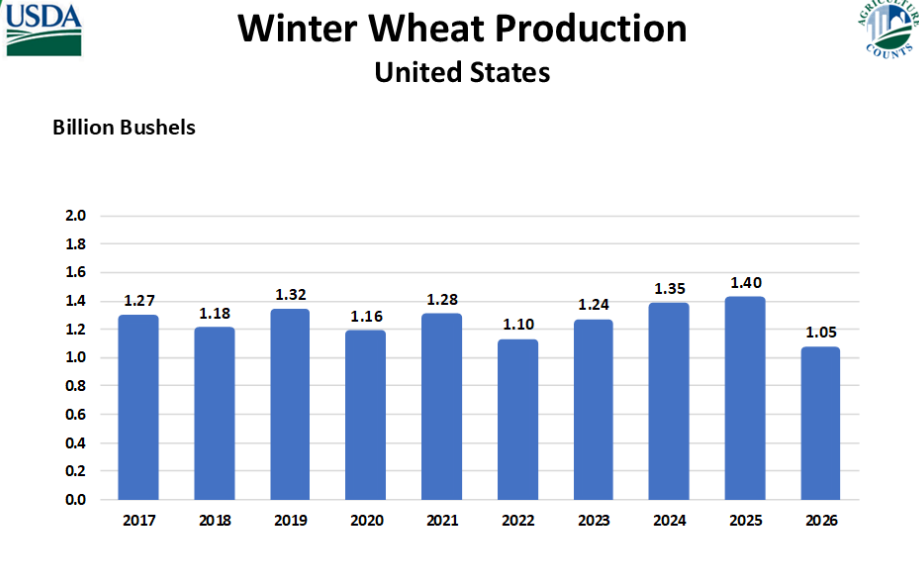
Oklahoma: 34% poor to very poor, compared to 35% last week. 32% Fair compared to 33% last week, and 34% good to excellent compared to 32% last week.
Kansas: 31% poor to very poor compared to 40% last week. 30% fair compared to 35% last week, and39 % good to excellent compared to 30% last week.
Texas: 32% poor to very poor, compared to 39% last week. 31% fair compared to 27% last week, and 37% good to excellent compared to 34% last week.
Nationally: 42% poor to very poor, compared to 44% last week. 28% fair compared to 27% last week, and 30% good to excellent compared to 29% last week.
Oklahoma corn planted is at 91% this week, and corn emerged is at 66%. Corn conditions rank as follows, 20% poor to very poor, 42% fair, and 38% good to excellent.
Kansas corn planted sits at 85% this week, compared to 91% a year ago. Kansas corn emerged is at 67%. Corn conditions rank as follows, 7% poor to very poor, 29% fair, and 64% good to excellent.
Texas corn planted is at 95% this week, equal to a year ago. Texas corn emerged is at 90%. Corn conditions rank as follows, 11% poor to very poor, 42% fair, and 47% good to excellent.
Nationally, corn planted is at 93%, and corn emerged is at 76%. Corn conditions: 5% poor to very poor, 28% fair, and 67% good to excellent.
Oklahoma soybeans planted are at 56%, soybeans emerged are at 36%
Kansas soybeans planted are at 75% this week, up 4% from a year ago, soybeans emerged are at 57%
Texas soybeans planted are at 70%, soybeans emerged are at 56%
Nationally, soybeans planted are at 87% this week, up 4% from a year ago, and soybeans emerged are at 65%
Oklahoma cotton planted is at 59% this week up 20% from a year ago.
Kansas cotton planted is at 77% this week, down 4% from a year ago.
Texas cotton planted is at 56% this week, down 3% from a year ago.
Nationally, cotton planted sits at 66%.
Oklahoma sorghum planted is at 36%, down 2% from a year ago.
Kansas sorghum planted is at 27% down 2% from a year ago.
Texas sorghum planted is at 84%, even with a year ago.
Nationally sorghum planted is at 44% down 1% from a year ago.
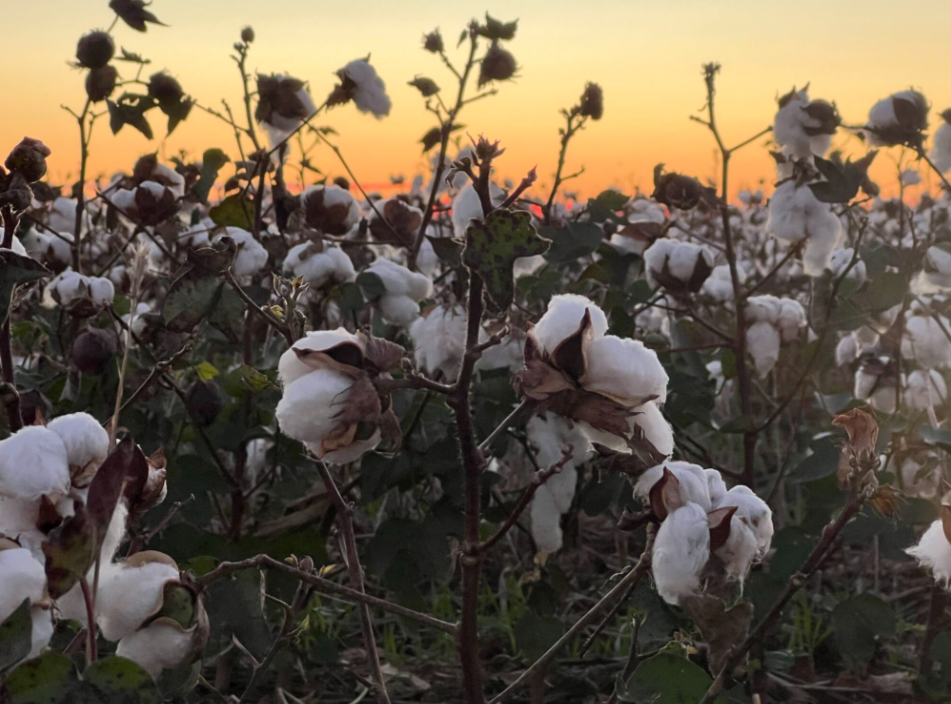
Last week, U.S. Secretary of Agriculture Brooke L. Rollins, unveiled The Great American Cotton Plan. This plan received widespread support across the country.
Here is what they are saying:
Administration
Administrator Kelly Loeffler – "Proud to stand with Secretary Rollins, Representative Ciscomani, and our incredible American farmers in Arizona to launch USDA's Great American Cotton Plan. The Trump Administration is working every day to ensure that our producers come first. This plan is part of our effort to strengthen American agriculture, rebuild domestic industry, and put farmers back at the center of our economy."
Secretary Robert F. Kennedy – "Yes: plant, not plastic. Proud to support USDA, Secretary Rollins, and the Great American Cotton Plan. American-grown cotton supports our farmers, strengthens rural communities, fuels U.S. manufacturing, and gives families a natural alternative to synthetic, plastic-based materials. This plan helps Make America Healthy Again."
Environmental Protection Agency – "Supporting American farmers means supporting American-made products and healthier communities. EPA is proud to support efforts to strengthen U.S. cotton production and help bring this critical industry back."
Congress
Representative Juan Ciscomani – "Arizona has long been a leader in U.S. cotton production, and I'm grateful to help unveil a plan to revitalize the cotton industry and support the hardworking producers who keep it thriving."
Representative Robert Aderholt – "Great news from USDA for our American farmers and families!"
Representative Rick Allen – "Georgia is consistently a top state for cotton production and acres planted—with the industry providing over 50,000 jobs statewide and an economic impact exceeding $3 billion. Great to see USDA [and] Secretary Rollins prioritizing U.S. cotton producers with the Great American Cotton Plan!"
Senator Marsha Blackburn - Thank you, Secretary Rollins, for rolling out the Great American Cotton Plan! Boosting domestic cotton production is a win for American producers and rural communities in Tennessee.
Chairman John Boozman – "I appreciate Secretary Rollins work to bolster American cotton producers and am proud USDA is implementing these long-needed improvements for farmers. Many of these were secured in the Working Families Tax Cuts to help our farmers plan for a successful future. I remain committed to building off this foundation with Farm Bill 2.0 and advancing other important initiatives like the Buying American Cotton Act (BACA)."
Senator Katie Britt-Boyd – "Thank you, Secretary Rollins, for putting American cotton first. Producers in Alabama and across the Southeast rely on strong markets and regulatory certainty, and this plan delivers. In the Senate, I will continue championing the Buying American Cotton Act to provide stability for our producers at home. I'm proud to support those who grow our high-quality, Made in America cotton"
Representative Buddy Carter – "The Great American Cotton Plan is about putting American cotton farmers first. Thanks to the leadership of President Trump and Secretary Rollins, we are expanding markets, boosting demand for American-grown cotton, and protecting our farmers. This plan is good for rural Georgia and communities across the nation that produce quality, American cotton."
Representative Eli Crane – "Good news for rural Arizona."
Representative Monica De La Cruz – "Cotton is the best natural, breathable, and soft fabric option – and even better – 40% of America's cotton is grown in Texas! Thank you, Secretary Rollins, for putting our farmers first and boosting the American cotton industry – which contributes billions annually to the Texas economy."
Representative Paul Gosar – "Arizona was built on the 5 C's - and cotton helped build the American West. Proud to support Secretary Rollins' Great American Cotton Plan to strengthen US Ag, expand markets for American-grown cotton and put our farmers first!"
Senator Hyde-Smith – "The facts don't lie: American-grown cotton represents only 4 million of 20 million bales consumed in the U.S. each year. The Trump Administration and Secretary Rollins are doing right by our farmers and consumers by promoting American-grown cotton with the Great American Cotton Plan. It puts our farmers first, supports long-term sustainability for the industry, and provides the American people with safe, affordable, and natural fibers that we should be using."
Representative Ronny Jackson – "After House Republicans delivered major wins for cotton producers through the Working Families Tax Cuts Act, Secretary Rollins is taking it even further. From boosting demand and expanding export markets to protecting growers and strengthening U.S. mills, USDA is working to keep American cotton competitive at home and abroad."
Representative Frank Lucas – "American cotton producers are a critical industry, and consumers benefit from the expansion of production, affordability, and quality of cotton. Secretary Rollins is putting American producers first, which will maximize the cotton industry's potential both domestically along with exports abroad."
Representative Barry Moore – "Thank you, Secretary Rollins. It's time to put American Farmers first!"
Representative August Pfluger – "Texas is proud to be the largest producer of cotton in the United States. I am thrilled to support Secretary Rollins' Great American Cotton Plan to boost the purchase and use of American-grown cotton. This plan only builds on our work in Congress to break open new markets for farmers and ensure that what's grown and made here stays at the forefront of global trade."
Representative David Rouzer – "North Carolina is both a top cotton-producing state and the country's #1 textile manufacturer, contributing over $300 million a year to our state's economy. USDA's investment in U.S. cotton through the Great American Cotton Plan will support growers and strengthen the textile industry across North Carolina."
Senator Tommy Tuberville – "Alabamians know there is nothing better than cotton grown in the U.S.A. Thank you, Secretary Rollins for putting our farmers first and Making American Cotton Great Again!"
Representative Roger Williams – "Texas is proud to be home to many American cotton producers. As a proud cosponsor of the Buying American Cotton Act, I am excited to support Secretary Rollin's Great American Cotton Plan, which will continue Congress' efforts to boost the purchase and use of American-grown cotton. I am proud to be part of the nationwide effort to expand markets for American cotton producers and support products made right here in Texas and the USA."
Stakeholders
American Cotton Shippers Association – "Today's announcement of USDA's Great American Cotton Plan is an important step toward strengthening the U.S. cotton industry and supporting the growers, merchants, manufacturers, and rural communities that depend on it. The plan prioritizes cotton demand growth, export competitiveness, domestic manufacturing, and policies that reinforce American agriculture's global leadership. Cotton supports more than 125,000 U.S. jobs and contributes over $21 billion annually to the economy. A stronger cotton sector means a stronger rural America. ACSA appreciates USDA's focus on expanding opportunities for U.S. cotton and promoting natural fibers at home and abroad."
The Cotton Board – "The Cotton Research and Promotion Program is pleased with the USDA announcement of The Great American Cotton Plan to assist American farmers and revive the U.S. cotton industry."
Georgia Cotton Commission – "Real Georgians Wear Cotton. The Official fabric of the State of Georgia."
The National Cotton Council – "The National Cotton Council (NCC) commends Secretary Brooke Rollins and the U.S. Department of Agriculture's (USDA) announcement today of the Great American Cotton Plan and welcomes the support of America's cotton farmers. NCC also thanks President Trump and congressional leaders for the cotton and tax provisions in the Working Families Tax Cuts Act and other recent actions that help cotton farmers plan ahead, reinvest in their operations, and keep family farms viable for the next generation. Together, these efforts make meaningful progress in strengthening the farm safety net, improving risk management tools, and supporting rural America."
Tennessee Farm Bureau – "We greatly appreciate Secretary Rollins' leadership addressing the severe challenges our nation's cotton industry is facing and put a spotlight back on American cotton. We look forward to working with USDA to ensure the longevity of America's cotton industry."
Texas Farm Bureau – "Texas Farm Bureau appreciates USDA's work through The Great American Cotton Plan to strengthen the future of our cotton industry. Cotton is the number one crop in Texas and plays a vital role in supporting farm families, rural communities and our state's economy. The plan's focus on increasing domestic demand, expanding market access and addressing risk challenges for farmers is an important step forward that will help ensure U.S. cotton remains competitive."
Mississippi Farm Bureau – "Thank you, Secretary Rollins and USDA for backing Mississippi's cotton, farmers and Mississippi Farm Bureau members with The Great American Cotton Plan."
Tennessee Department of Agriculture – "Cotton supports Tennessee farm income, rural jobs and our Ag economy. Choose plants, not plastic. Choose cotton."
American Conservation Coalition – "Synthetic fibers and foreign plastics don't belong in American closets or in American soil. The Great American Cotton Plan is a win for farmers, manufacturers, and anyone who cares about the words "Made in America."
MAHA Action – "The USDA just announced The Great American Cotton Plan. A major push to promote natural fibers over petroleum-based synthetics, support American cotton farmers, and revive U.S. textile manufacturing."
Press Coverage
KOLD 13: Agriculture secretary announces "Great American Cotton Plan" at Marana farm - Daniel Pacheco, a third-generation cotton farmer, started working on his family's farm at 8 years old and never stopped. "I've been a cotton farmer since I was born, basically," Pacheco said. "Cottonseed is used in making cooking oils; the fiber is used for clothing, sheeting, towels, linens, whatever," he said. Pacheco said he is excited about Rollins' visit to discuss the plan..."The main thing we're facing right now is low commodity prices while all of our inputs have gotten more and more expensive. It's getting to the point where our margins of profit are almost nonexistent," he said. He said that is exactly why a cotton plan like the one the USDA is rolling out is necessary. He thinks it could have a real positive effect on farmers and ranchers in southern Arizona.
Eastern Arizona Courier: USDA announces cotton plan with potential implications for Graham County growers - Agriculture Secretary Brooke Rollins announced the Great American Cotton Plan, which USDA described as a broad effort to support cotton farmers, textile manufacturers and related industries. The announcement could have implications in Graham County, where cotton remains one of the county's most important agricultural commodities. USDA's 2022 Census of Agriculture reported $29.4 million in cotton and cottonseed sales in Graham County, ranking the county second in Arizona among counties where cotton sales rankings were reported.
The Georgia Virtue: Georgia Agriculture Commissioner Talks 'Great American Cotton Plan' - "The Great American Cotton Plan is a historic investment in American fiber production and promotion, and as one of the nation's top cotton producers, it is a huge win for cotton farmers in every corner of our state," said Georgia Agriculture Commissioner Tyler J Harper. "I'm deeply grateful to Secretary Brooke Rollins and the Trump Administration for continuing to deliver on their promise to put farmers first and restore prosperity to Rural America.
The Dallas Express: 'Plant, Not Plastic': Great American Cotton Plan Revives U.S. Cotton Industry - The initiative addresses challenges facing the U.S. cotton sector, including a loss of global export leadership. Under the previous administration, the U.S. lost its position as the top cotton exporter to Brazil, according to Rollins. The plan seeks to reverse that trend with measures to protect growers from market volatility, support mills and processors, and promote "Plant, not plastic. America, not Brazil." ... The Great American Cotton Plan ties into ongoing administration priorities on domestic production, rural economies, and reducing dependence on foreign synthetics and imports. Implementation details and specific policy tools are expected to follow the launch.
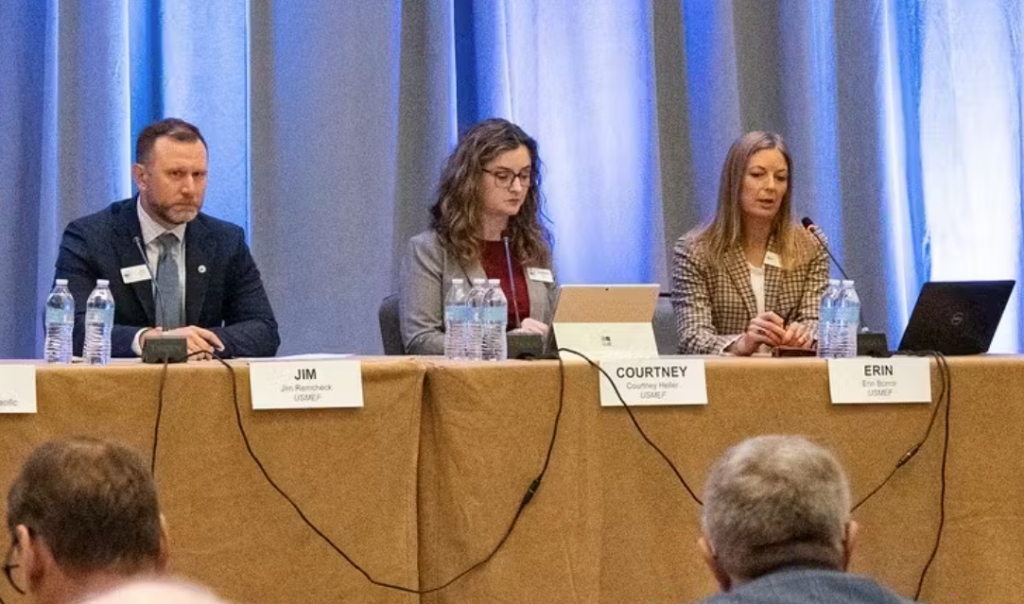
The U.S. Meat Export Federation (USMEF) is formally requesting that the U.S. Trade Representative (USTR) investigate how several African nations are restricting imports of U.S. beef and pork. USMEF Director of Export Services Jim Remcheck explained that while trade agreements are designed to foster mutual growth, certain countries are utilizing unscientific barriers to block American red meat products from entering their markets.
The core of the discussion revolves around the African Growth and Opportunity Act (AGOA), which Remcheck notes "is intended to incentivize two-way trade and authorizes the president to designate sub-Saharan African countries for duty-free treatment." The USTR is currently seeking public commentary regarding how the act has been implemented thus far, analyzing its successes and identifying areas for improvement or adjustments.
"We see tremendous opportunity on the African continent for red meat exports," Remcheck said. "And AGOA benefits in the past have mainly been suspended in an effort to advance human rights or worker rights or political reforms. However, AGOA has not generally been utilized to leverage improved market access for U.S. agricultural products, even though it was intended for as a tool for that purpose, to facilitate that two-way trade."
In official comments submitted to the USTR, the USMEF highlighted specific trade challenges in key African markets, most notably South Africa and Nigeria.
South Africa agreed over a decade ago to lift a ban on U.S. pork. However, Remcheck pointed out that the nation has continued to impose trade barriers that lack scientific backing.
"South Africa has continued to impose unscientific trade barriers due to Porcine Reproductive and Respiratory Syndrome (PRRS)," Remcheck said. "So, we are encouraging South Africa to adopt a science- and risk-based approach in requirements in line with other WTO commitments."
The restrictions are even more severe in Nigeria, where the market remains entirely closed to fresh American red meat.
"For the Nigerian market, all fresh or non-processed U.S. red meat is currently ineligible," Remcheck stated. "It's an unscientific ban, but we do see it as a tremendous growth area. And again, we think that pulling the strings on the AGOA angle could possibly give us some leverage."
To resolve the ongoing restrictions in Nigeria, the USMEF is urging a firmer diplomatic stance.
"We're encouraging USTR to consider sanctioning or suspending Nigeria's AGOA benefits until this ban is lifted," Remcheck said.
For more information on global meat trade policies, please visit usmef.org.

Attorney General Gentner Drummond awarded Grady County Sheriff's Office Deputy Kenton Blumenthal as the 2025 Oklahoma Officer of the Year.
Attorney General Gentner Drummond today opened nominations for the 2026 Officer of the Year Awards program, inviting law enforcement around Oklahoma to recognize officers who have gone above and beyond in service to their communities. A statewide winner and four regional winners will be recognized at a special ceremony to be held in October.
"Oklahoma's law enforcement officers face extraordinary challenges every day, and they meet them with courage, professionalism and an unwavering commitment to public safety," said Drummond. "The Officer of the Year Awards are our chance to shine a well-deserved spotlight on those who exemplify the very best of this noble profession. It is an honor to recognize these dedicated men and women who work tirelessly to keep Oklahomans safe."
Officers serving in all Oklahoma law enforcement agencies – including college, university, municipal, county, state, tribal and federal agencies – are eligible. New this year, K-9s can also be nominated. To qualify, officers must have performed admirably in the line of duty within the last 18 months.
Regional winners will be selected by judging panels composed of city, county, tribal and state criminal justice professionals. The state Officer of the Year will be chosen from among the regional winners by the Office of the Attorney General.
This is the third year for the awards. Grady County Sheriff's Office Deputy Kenton Blumenthal was named the 2025 Oklahoma Officer of the Year. 2025 regional winners were Investigator Darren Gordon from the Oklahoma County District Attorney's Office (Northwest Region), Officer Nicholas Winters from the Coweta Police Department (Northeast Region) and Detective Gary Colley and Officer Aaron Thomas from the Stringtown Police Department; Sheriff Kody Simpson from the Atoka County Sheriff's Office; and Lt. Jimmy Taylor from the Atoka Police Department (Southeast Region).
Law enforcement can nominate deserving officers by visiting the Officer of the Year webpage. All nominations must be submitted by July 30.

Senator Chuck Hall, District 20, was recently honored with the Oklahoma Cattlemen's Association's (OCA) 2026 Legislative Appreciation Award.
OCA annually honors legislators who have worked hard to protect and promote the Oklahoma beef cattle industry in the Oklahoma Legislature. OCA is at the Capitol every day of the legislative session working with legislators to pass and block key legislation relative to Oklahoma beef cattle producers, private property rights, rural communities and the future of
agriculture.
"Chairman Hall has consistently demonstrated a willingness to listen to cattlemen, understand our issues and help advance good policies that strengthen Oklahoma's family ranching businesses," said Michael Kelsey, OCA Executive Vice President. Senator Hall was elected to the Oklahoma State Senate in 2018 and represents Senate District 20,
which includes Pawnee, Noble, Logan, Payne and Kingfisher counties. In his role as Senate Appropriations Chairman, Hall has been instrumental in helping secure major investments in Oklahoma agriculture, including funding for the Oklahoma State University Veterinary School and the OSU Agronomy Research Farm.
"Chairman Hall understands that agriculture is not only part of Oklahoma's history, but also a critical part of our future," Kelsey said. "His work to support the OSU Veterinary School and Agronomy Research Farm will benefit cattle producers, veterinarians, researchers, students and rural communities for generations to come."
In addition to his support for agricultural education and research, Hall has long supported cattlemen's policy priorities, including protecting private property rights, promoting limited government and defending the ability of farmers and ranchers to operate without unnecessary regulatory burdens.
"Chairman Hall understands that private property rights and limited government are not talking points — they are foundational principles for agricultural producers," Kelsey said. "He has also brought common sense reform ideas to tax policy and continues to be a leader for reasonable, long-term discussion about Oklahoma's tax structure. That is especially important to agriculture, whether it is preserving the agricultural sales tax exemption or understanding the importance of sound ad valorem tax policy for landowners and rural communities."
Representative John Kane, House District 11, was recently honored with the Oklahoma Cattlemen's Association's (OCA) 2026 Legislative Appreciation Award.
OCA annually honors legislators who have worked hard to protect and promote the Oklahoma beef cattle industry in the Oklahoma Legislature. OCA is at the Capitol every day of the legislative session working with legislators to pass and block key legislation relative to Oklahoma beef cattle producers, private property rights, rural communities and the future of
agriculture.
"Representative Kane understands the cattle industry because he is a cattleman himself," said Michael Kelsey, OCA Executive Vice President. "That firsthand experience gives him a valuable perspective when considering policies that impact ranching families, landowners and rural Oklahoma."
Representative Kane represents House District 11, which includes parts of Washington and Tulsa counties. As a member of the Oklahoma House of Representatives, Kane has been selected for leadership responsibilities currently as Vice Chair of the House Appropriations Committee. "OCA has appreciated the opportunity to work with Vice Chairman Kane on practical issues that matter to cattlemen, including fencing law, Commissioners of Land Office (CLO) reforms and
the protection of private property rights," Kelsey said. "These are not abstract policy discussions for producers. They directly affect how cattlemen manage their land, protect their livestock and operate their family ranching businesses."
Kane's background as a cattle producer has helped him bring common sense and real-world understanding to agricultural policy discussions at the Capitol. His willingness to listen, engage and work through complex issues has made him a strong voice for rural Oklahoma and the beef cattle industry.
"Vice Chairman Kane recognizes that strong property rights and workable laws are essential to the future of agriculture," Kelsey said. "Oklahoma cattlemen need legislators who understand the importance of keeping producers on the land, protecting their ability to operate and ensuring that state law respects the realities of ranching. He has been an incredibly valuable partner in those
efforts."
The OCA is the trusted voice of the Oklahoma Cattle Industry and works to protect and empower Oklahoma cattlemen today, to serve tomorrow. OCA is the only voice that speaks solely for the cattlemen of Oklahoma and represents beef producers in all 77 counties across the state. For more information about OCA membership, the theft reward program or membership activities and events, call 405-235-4391 or visit www.okcattlemen.org.

It was another late night for Carson Holmes on the third floor of Legacy Hall on Oklahoma State University's campus.
Holmes, a sophomore landscape architecture student at OSU, was surrounded by crumpled-up piles of scratch paper. He'd spent the past three weeks tweaking his design, trying to nail down a final one he liked.
"I remember Carson in the studio," said Madylan Hux, a sophomore landscape architecture student. "He was pulling his hair out."
This wasn't just another late-night crunch for a class assignment. This one was different. This past fall, OSU's Horticulture and Landscape Architecture department partnered with Hope is Alive, an Oklahoma City-based organization dedicated to providing people with a holistic approach to managing their addictions.
The students in professor Qing Luo's class weren't just practicing and studying design theories. They were implementing them. Hope is Alive asked OSU students to help design a healing garden for its new rehabilitation center.
"Real-world experiences like this are highly impactful because they move learning beyond theory," Luo said. "They place students directly into the realities of professional practice."
It resulted in a real-world impact felt by many. As plans are finalized, portions of the work by OSU students will be incorporated into the finished design.
"We were creating a place where people could reflect and be able to process what they just went through," Holmes said. "This was a key point of the project."
Creating a space from scratch
The Healing Center — one of Hope is Alive's facilities — is a multi-building campus located in Jones, Oklahoma, with plans to expand.
Part of the plan includes a healing garden.
"Their focus on recovery, healing and helping individuals rebuild their lives gave the project a strong sense of purpose," Luo said. "It allowed students to see how thoughtful design can directly support human well-being and community impact."
The class traveled to Jones to scout the location. It was an empty field. Holmes recalls two trees and a small runoff into a pond on the property. Outside of where administrators planned buildings to go, students had creative freedom.
"I was thinking of the family the whole time," Holmes said. "How can I create this environment not only helping the family with what they're going through, but also reminding them of the big impact they have on their family members' lives?"
Hux focused on opportunities to provide spots for reflection, incorporating water elements and a nature walk around the property. Sophomore student Izzy Holding prioritized a central water theme, offering more public spaces closer to the center, and more secluded spots further away.
The students hoped not to "overdesign" the space, allowing for calmer tones. Despite different designs, the plan was to create a versatile space, adaptable to what individuals needed in the moment.
"It helps you work on it with more effort, in a way," Holding said. "You know who you're designing for and you know the impact it can make."
Building a real-world experience
Luo often seeks technical, real-world applications to incorporate into her classwork.
For this project, she searched for a site smaller than five acres, allowing students to explore a physical site design while also understanding how emotions and human experience can be shaped through landscape.
With the help of Oklahoma County OSU Extension educator Andrew Fleet, Luo found exactly what she needed through Hope is Alive.
"I wanted a project requiring students to think beyond functional elements alone and consider healing, comfort, reflection and the emotional value of outdoor space," Luo said.
The real-world learning experience also allowed students to implement one of Luo's core professional focus areas: trauma-informed design. This concept intertwines physical environments with themes promoting safety, healing and well-being.
"My design process was focused on the user experience," Hux said. "How can I best help them heal?"
Luo also stressed the importance of practical creativity. Strong ideas also need to be realistically implemented, safe and usable.
"This project allowed students to engage directly with a professional framework focused on reducing stress, promoting a sense of safety and supporting emotional healing through the built environment," Luo said. "This helps students understand technical knowledge is not separate from design."
Leaving an impression
Holmes recalls a time when Hope is Alive came to his high school to deliver a presentation about addiction. The talk stuck with him. Years later, he jumped at the opportunity to help the organization.
"I knew some of the people associated with Hope is Alive," Holmes said. "It was rewarding to give back in a way."
Once the designs were finalized, each student in the class presented their projects to the administrators. The results were astonishing. Hux recalls some in the room being moved to tears by the students' work.
"Their intentionality, creativity and effort they put into their plans were evident, and it was a heartfelt experience listening to their ideas," said Jesse Vobornik, director of operations for Hope is Alive.
Designs for the garden are still being finalized, but Hope is Alive plans to incorporate elements from several students' projects in the final design.
"We're proud to have the students come out and invest their time in these plans," said Dakota Enterline, Hope is Alive's director of assets. "They took this project seriously and captured the emotion of this space. Their work helped us get one step closer to bringing our vision for the healing garden to life."
The students all learned something from the project. For some, learning how to work closely with clients was vital. Luo stressed the importance of combining practicality and creativity.
But they all agreed on one thing. They learned design could make an impact.
"It's one thing to have an assignment; all of our other designs were a landscape, more for aesthetics," Holding said. "It wasn't any kind of deeper meaning. This project showed how impactful design can be."
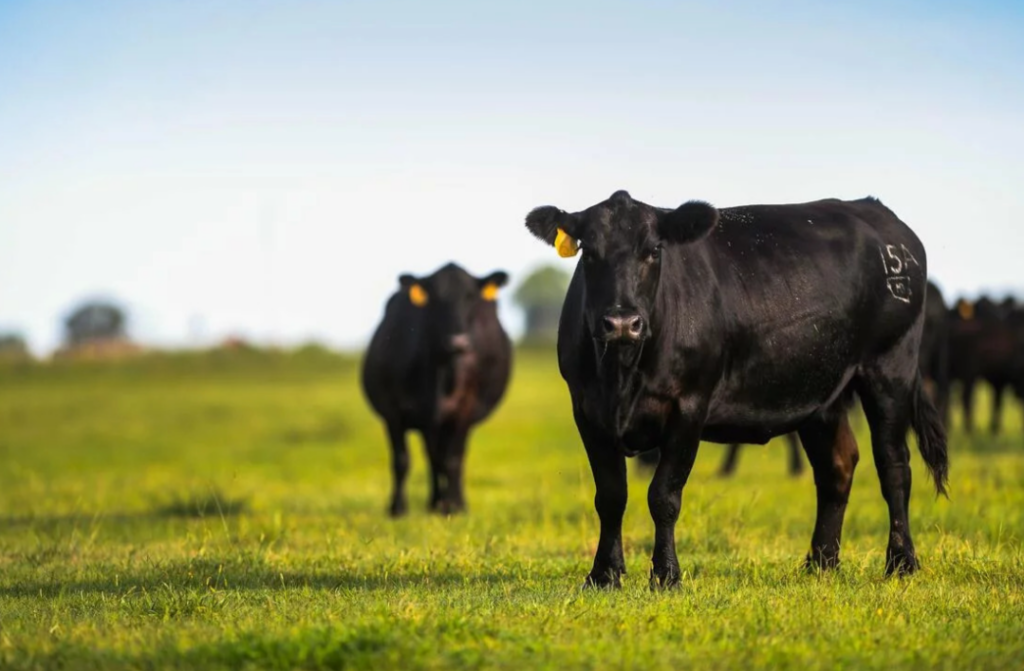
The U.S. cattle industry has been characterized by cycles of inventory and prices since the modern ranching industry developed in the late 1800s. There have been twelve cyclical inventory peaks in the last 129 years, with the first in 1890 and most recently in 2019 (Figure 1). Cycles have been persistent regardless of whether the inventory has been trending higher or lower.
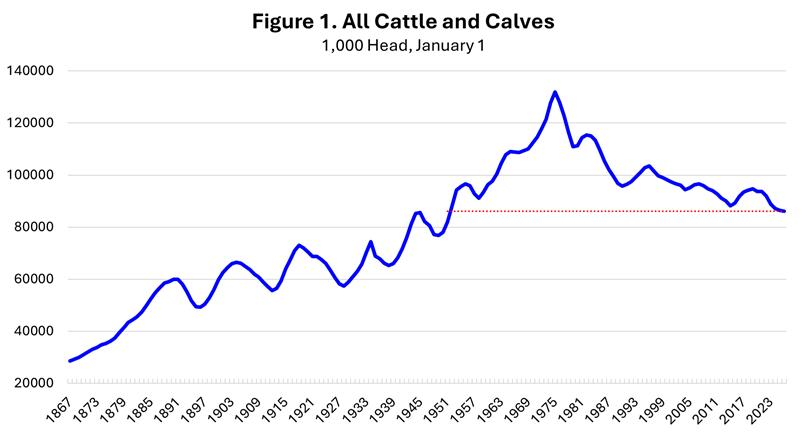
From the current inventory low (maybe, depending on drought), the most important question in the industry is when herd rebuilding will begin. Both increased heifer retention and reduced cow culling are needed to stabilize the herd inventory at a low and begin expansion. Beef cow culling has decreased sharply since 2022, from a peak of 13.2 percent to 8.4 percent in 2025. Beef cow slaughter is down again year over year in 2026 and currently indicates a beef cow culling rate of 7.1 percent for the year, which would be a record low culling level.
The high calf prices that historically trigger heifer retention have been in place since 2023. More heifer retention means that heifer slaughter must decline. Heifer slaughter has declined in total numbers since 2022; however, it has declined little relative to total fed cattle slaughter. In other words, heifer slaughter is down simply because there are fewer cattle, but it has not declined enough to indicate substantial heifer retention. The beef replacement heifer inventory was up a scant 0.9 percent year over year on January 1, enough to suggest only the beginning of heifer retention.
Ultimately, the best indicator of herd rebuilding is the combination of heifer and cow slaughter into total female slaughter. Figure 2 shows a twelve-month moving average of total female slaughter as a percentage of total cattle slaughter. The female slaughter percentage peaked most recently in 2023 at 51.8 percent (the highest level since 1985) and has decreased to the current level of 48.8 percent. Female cattle slaughter is still above the average level (red dashed line). Most of the decrease observed thus far in the female slaughter percentage is due to decreased beef cow slaughter. Further decreases will depend on increased heifer retention (i.e. reduced heifer slaughter).
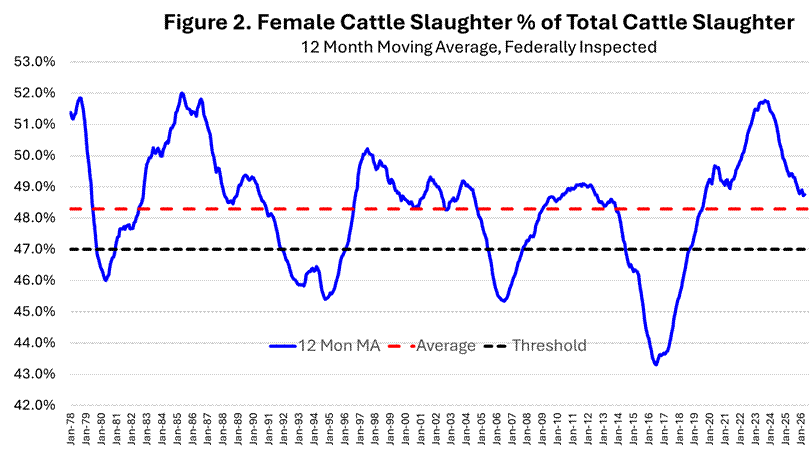
A commonly recognized threshold for herd expansion is when the female slaughter percentage drops below 47 percent (black dashed line). Figure 2 shows the last four cattle cycles and the female slaughter percentage that corresponded to herd rebuilding. The female slaughter percentage dropped below 47 percent from October 1979 – November 1980 (46.0 percent low); February 1992 – January 1996 (45.4 percent low); July 2005 – September 2007 (45.3 percent low); and July 2014 – August 2018 (43.3 percent low). On average, the female slaughter percentage remained below the 47 percent threshold for 35 months, ranging from 14 months to 49 months (in the most recent expansion).
The beef cattle industry is well above the threshold at this time. The decrease in the female slaughter percentage thus far are signs of the beginnings of heifer retention. However, history suggests that it might take another 6-10 months for the female slaughter percentage to drop from the current level of 48.8 percent to the 47 percent threshold and then remain there for 14 to as much as 49 months depending on the amount of herd expansion. The initial stages of this process mean that cattle slaughter and beef production will continue to decline and that the highest cattle prices of this cycle are still ahead.
Most individuals equate feeding horses to gain muscle or to achieve high performance with feeding protein. But there is much more to the protein equation than just how much is consumed in the diet. Muscle protein synthesis is regulated by a system called mTOR, which itself is activated by dietary amino acids, insulin and exercise, each acting in a different manner to activate mTOR. Young growing horses experience a greater response in muscle protein synthesis to meal feeding (which makes sense as they are still growing) than do mature horses. However, this response was maximized at feeding 0.25 g protein/kg body weight. To put this in relative terms, a 700 pound yearling would not experience further activation of mTOR once consuming 1.25 pounds of a 14% CP feed in one meal.
Practically, this means that ideally the high protein portion of a horse's diet should be provided in multiple meals throughout the day, rather than a single feeding. Unfortunately, individual protein sources or supplemental amino acids in the horse's diet have yet to be tested relative to differences in mTOR activation. In general, concentrate sources of protein are more readily digestible and available than forage sources, presumably resulting in greater protein synthesis activation.
Protein is also commonly fed to horses requiring more energy, despite the fact that carbohydrates and fats are the primary fuel sources for muscle contraction. During low intensity exercise, glucose and fatty acid metabolism supply energy through aerobic ATP generation. During high intensity exercise a greater shift to glucose metabolism occurs. High intensity exercise is therefore more reliant on utilization of muscle glycogen stores. Utilization of fat added diets in performance horses shifts their reliance of energy substrate to greater use of fatty acid metabolism, saving carbohydrate stores for bouts of more intense exercise. However, adaptation to fat in the diet should take place over several weeks, to avoid gastrointestinal upsets.
The enzyme systems which utilize fatty acids also need time to adapt and up regulate to a greater reliance on fat metabolism. Finally, if using added fat as a strategy to enhance muscle glycogen, adequate carbohydrates from grains must still be included in the diet. Amino acids, while they can be catabolized for fuel, are not a primary source of energy with the possible exception of prolonged exercise. Instead, it is more important to supply key amino acids to aid in muscle recovery and repair. Providing supplemental glucose to the horse post exercise does not appear to enhance muscle glycogen repletion, contrary to what is observed in people. To date, there does not appear to be an effective strategy to increase the speed of glycogen recovery in the horse, which may take as long as 48-72 hours to achieve.
Unfortunately, despite the prevalence of many supplements and advertised feeding strategies to enhance muscle accretion, no validated research has been able to bear this out. Additional amino acids beyond the horse's requirements cannot stimulate protein synthesis without an accompanying strategic exercise program. In general, if mature horses are consuming diets of at least 10-12% total protein which match their energy intake needs, they are receiving adequate protein. The exact amino acid requirements of horses are still relatively unknown, and more research is needed on products which indicate performance enhancements.
See more at OSU equine news.

In today's Beef Buzz, senior farm and ranch broadcaster Ron Hays features comments from three leading beef economists — Dr. Derrell Peel, Don Close, and Nevil Speer — about one of the biggest questions facing the cattle business today: at what point, if any, will consumers back away from beef prices that continue climbing higher? The three recently spoke at the U.S. Meat Export Federation's spring meeting in Oklahoma City about demand.
For now, Dr. Peel says the data does not show consumers abandoning beef. "Economists define demand as the willingness and ability to pay," Peel said. "The current situation tells us right now consumers have both — they're doing fine."
Peel pointed to changes in eating habits that emerged during the pandemic as part of the explanation for beef's resilience. "A lot of the preferences and the willingness that we see in that I think does relate back to Covid, and the way people learned to cook and eat and so on during that time period," he said.
That does not mean higher prices come without consequences. Dr. Peel explained that shrinking beef supplies naturally push prices upward as markets ration available product. "The thing that could threaten demand would be ability," Peel said. "Those demand curves slope downward as supply goes down — there's less beef and prices will go up to ration a smaller supply."
At some point, some consumers may buy less beef, but Dr. Peel argued that is not necessarily the same as demand destruction. "Some people are going to eat less beef, but it's not because of demand destruction," he said. "It's just because there isn't as much beef, and the way markets work is we find out who wants it the most and they win the bid."
Peel also emphasized that beef demand is much more complex than one single market. "Beef is thousands and thousands of different products," he said. "Every one of them is a different market that has a different demand."
After closely watching wholesale markets for signs consumers are stepping away from premium cuts, Peel said he still has not seen major evidence. "I've been watching the wholesale market for the last three years looking for evidence — so when we talk about trading down and so on — there isn't a lot of it yet," he said.
Close agreed beef remains competitive with other proteins but offered a more cautious outlook. "This is one point I'm going to be a touch cautionary," Close said. "Our Terrain data, the core data, shows beef is not only gaining, but we continue to gain on the other species." "I don't think we're to a point where beef is losing ground to the other species," he added.
Still, Close believes economic pressures may be beginning to influence buying behavior, especially after a prolonged period of higher fuel costs. "My pause is we're 65–70 days now into a period of a $1-plus gallon increase in gasoline," Close said. "When we get the hard data from the last 60 days, what we're expecting is we don't think we're losing them to the other species, but we do think we're seeing some evidence that they're starting to trade down that beef ladder."
Close described consumers potentially moving from premium cuts toward lower-cost options. "From a ribeye to a strip, or strip to a sirloin, and all the way through," he said. "I'm touch cautious."
Dr. Speer added another layer to the discussion, arguing that the consumer equation is not just about sticker shock — it is also about how retailers and restaurants view beef as a driver of traffic and repeat business. "Yes, the consumer is of consummate importance," Speer said, "but retailers increasingly understand that having beef and high-quality beef is the cornerstone to getting consumers to keep coming into their store — repeat or comeback customers."
Speer said retailers may be willing to sacrifice some margin on beef if it gets shoppers through the door and filling grocery carts with other items. "Food retail is such a tight-margin business," he said. "How much are they willing to eat margin to get you there and then for you to fill your cart otherwise?"
Restaurants may operate similarly. "My favorite joke is you're going to buy a steak and they'll eat some margin because they're going to sell you a $15 bowl of Brussels sprouts," Speer joked. "At some point, too, they might be willing to eat some margin."
Ultimately, Speer said today's beef market reflects a changing and complicated relationship between pricing, consumer behavior, and supply chains. "It's a really complicated — and it's a new dynamic," Speer said. "This is a new time in terms of what we're seeing with consumers."
The Beef Buzz is a regular feature heard on radio stations around the region on the Radio Oklahoma Ag Network and is a regular audio feature found on this website as well. Click on the LISTEN BAR above for today's show and check out our archives for older Beef Buzz shows covering the gamut of the beef cattle industry today.
Agricultural producers across Oklahoma will once again have the opportunity to gather, learn, and connect this summer as the Oklahoma Conservation Commission prepares for the fourth annual Crossroads Conference, returning to Enid after a year on the road.
Associate Farm Reporter Carli Davenport recently spoke with Meg Greski of the Oklahoma Conservation Commission about the event, which Greski said is designed to serve a wide range of agricultural producers through targeted educational tracks and producer-led conversations. "The Crossroads Conference will be in Enid at Autry Technology Center on July 22," Greski said. "It's a one-day event, and it is the fourth time that we have put on a Crossroads branded event in July."
After taking the conference on the road in 2025 with a statewide bus tour, organizers are bringing the event back to its original setting. "So, the first two years we had this conference in Enid at Autry Tech, and then last year we took it on the road, and we had a bus tour around Oklahoma," Greski explained. "So, this year we are back at Autry Tech."
The conference is designed to serve different types of agricultural producers. Greski said organizers have intentionally built the conference around three educational tracks to appeal to a broad audience. "We have three tracks at this conference, because we want it to appeal to ranchers, to crop producers, and also urban and small acreage agricultural producers," Greski said. "So, those are our three tracks."
The ranching track will feature Kit Pharo of Pharaoh Cattle Company, whose work in low-input cattle systems has attracted attention nationally and internationally. "Heading up the ranch track will be Kit Pharo from Colorado, the owner of Pharaoh Cattle Company, and he is known across the U.S. and around the world for low input grass-based genetics and for having an alternative approach to the cattle industry," Greski said.
Urban and small-scale growers will hear from Shaffer Ridgeway of Southern Goods, who Greski described as an experienced vegetable producer. "We have on the urban and small farm track Shaffer Ridgeway from Southern Goods," Greski said. "He is from the Midwest, and he is a large-scale vegetable grower, so he will be leading our urban growing track."
For crop producers, Brett Peshek of Fusion Ag will guide discussions focused on production systems and seed expertise. "We have also Brett Peshek from Fusion Ag, and he is out of Mountain View, Oklahoma," Greski said. "He will be heading the crop production track, and Brett has a lot of experience in growing annual plants, whether it's forages or grain crops, and he also runs a seed-producing business."
In addition to keynote speakers and educational sessions, Greski said the conference will again include producer panels — a feature that has become especially popular with attendees. "We are also going to have farmer and rancher producer panels at the end of the conference," Greski said. "That's been a very popular session in the past, so we wanted to make sure that we brought that back again this year."
The goal, she said, is to create an environment where producers can learn directly from one another and exchange practical experiences. "So that real farmers and ranchers around Oklahoma can share their experiences with one another," Greski added.
With past events reaching capacity, Greski encouraged attendees not to delay registration. "The registration is open now, and the deadline to register will be a couple of days before the conference," Greski said. "You probably don't want to wait any longer than Sunday, July 19, to get registered, because we need to have a meal count."

Although organizers may still accommodate walk-in attendees if plans change, Greski warned against assuming there will be room available. "If your plans change, I think that we will be able to still take people at the door, but don't take the chance of it selling out," she said. "It has sold out the last couple years."
Greski also noted that sponsorship opportunities remain available for businesses and organizations interested in participating in the conference through trade show booths and event support.
"Registration is open now, and we are also interested in finding sponsors for the conference," Greski said. "If you would like to sponsor and set up a trade show booth and attend as a sponsor, you can also look at those details on the Eventbrite website."
The 2026 NBHA Professional's Choice Vegas Super Show, held May 29–31 at the South Point Casino in Las Vegas, experienced an isolated incident during the early morning hours of Saturday, May 30, involving the mistreatment of a limited number of equine athletes by an event competitor.
The situation was addressed immediately in coordination with the National Barrel Horse Association, the South Point Hotel & Casino Security, Metro Police, and all appropriate parties. The individual involved has been removed and placed in the care of authorities, and there is no ongoing threat of any kind.
We ask for respect and consideration for all involved during this sensitive time. Please direct any further questions to NBHA.
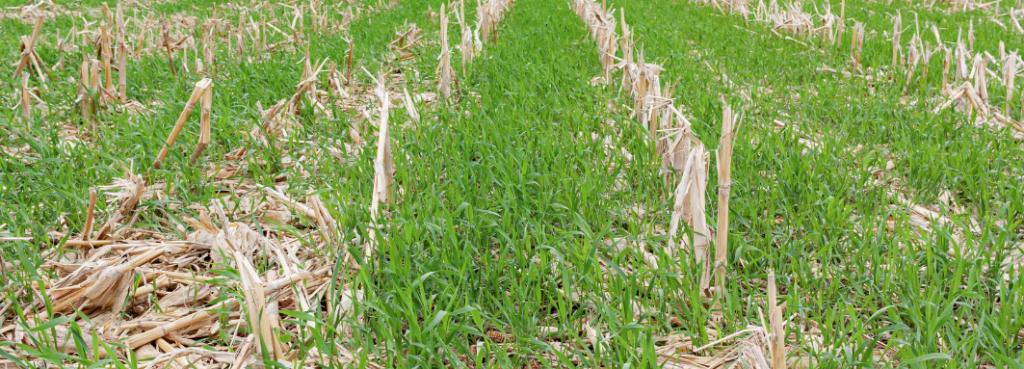
Cover crops are plants typically grown by farmers to improve soil health, help with carbon sequestration, weed suppression, and reduce erosion. Unlike cash crops, cover crops are not intended to be sold for a profit, but rather, to serve as a natural complement to the production of cash crops (typically corn and soybeans). As such, cover crops are normally planted between the growing seasons of the cash crops, which is usually during the winter. The most common types of cover crops are legumes, grasses, and brassicas.
Despite the well-known soil benefits of planting cover crops, their use across the country remains relatively low at less than 5% of total cropland (Bowman and Morales, 2024). However, significant variation in relative use is seen across the US territory. Figure 1 shows the spatial (county-level) distribution of cover crop planting based on data from the 2022 Census of Agriculture. Darker tones indicate a higher percentage of cover crop use. As seen in the graph, cover crops are relatively more common in the South and the Northeast than in the Midwest, reflecting both managerial decisions and weather factors that facilitate their planting. However, in absolute terms (given by the total number of acres planted with cover crops), none of the top ten states relying on this so-called "climate smart" practice are in the Southeast or Mid Atlantic (Table 1). Texas leads with 1.55 million acres, followed by Iowa, Indiana, Nebraska, and Missouri. All states in the list experienced an increase in the number of acres with cover crops between 2017 and 2022.
Despite the agronomic benefits associated with cover crops, their use remains limited largely due to the costs of planting the crops, terminating them in a timely manner, the labor involved in these tasks, and the potential negative impact on the yield of the following cash crop. Moreover, the benefits to the soil are generally experienced after two or more years, rendering their financial impact negative over short periods of time. For this reason, federal programs run by the USDA generally offer monetary support to encourage the use of cover crops. Importantly, recent research by Gutierrez-Li and Rejesus (2026) finds evidence that cover crops (if planted for several years and in a large enough area) can help reduce pesticide use, likely by fostering the development of natural predators that aid in pest control. Their work suggests that the benefits of planting cover crops are likely broader and not limited to enhancing soil quality.
For farmers considering implementing this practice, several considerations ought to be made. First, a clear determination of the short-term costs, such as seed, termination, additional input requirements for the subsequent cash crop (e.g., additional nitrogen), and yield loss of the cash crop. Second, an estimation of the savings associated with a lower need for fertilizers and pesticides over the long run. Third, the specific combination of species that will maximize the benefits to the cash crops and align with their growing seasons. Starting small, as well as talking to other local farmers and Extension agents with knowledge on cover crops, can prove essential for learning about the opportunities associated with this planting practice.


Gutiérrez-Li, Alejandro. "Cover Crops in the United States: Trends, Benefits, and Considerations for Farmers." Southern Ag Today

R-Calf USA writes: We typically measure the current state of our livestock industries by comparing them to conditions that existed a bit over a generation ago, in 1980, and we evaluate the industry trends that have materialized since then.
Several events occurred in the 1980s that profoundly influenced the trajectories of our livestock industries. In the early '80s, our nation faced an agricultural recession marked by a severe economic cost/price squeeze that forced many livestock producers out of business. The '80s also marked the beginning of the deregulation era that signaled an end to aggressive antitrust enforcement and allowed meatpackers to begin owning, controlling and feeding livestock long before slaughter. And the '80s triggered what USDA called "merger mania," a condition marked by meatpacker mergers and acquisitions that resulted in only a handful of multinational meatpackers dominating the marketplace.
Every five years, Congress goes about the task of writing a farm bill to address America's food security needs by implementing reforms that supposedly ensure America's farmers and ranchers can continue producing an abundant and affordable supply of wholesome food.
Since the 1981 Farm Bill, Congress has progressively amended each successive farm bill, thereby creating and recreating a legal framework within which each of our agricultural sectors operates - from crop farmers to livestock farmers and ranchers to dairy farmers.
Of course, after each successive farm bill is enacted, the administration begins its rulemaking processes to write regulations for which to implement the farm bill's statutory requirements. Therefore, each successive farm bill redefines both the legal and regulatory framework within which each of our agricultural sectors functions. Our focus today is on the grazing livestock sector, our nation's cattle and sheep industries.
Since the 1981 Farm Bill, Congress has watched as our U.S. cattle and sheep industries shrank – we've lost 52% of our nation's beef cattle operations and more than 60% of our nation's commercial sheep operations.
If Congress knew that our cattle and sheep industries were shrinking more and more each time they sat down to write a new farm bill, why didn't they reform the livestock sector's legal and regulatory framework to reverse its downward trajectory?
The answer is unsurprising. The '80s deregulation era marked a hands-off approach to the marketing practices of meatpackers and processors, which was a monumental shift from past public policies. That shift allowed the largest of corporations to maximize control over their respective supply chains. It resulted in a legal and regulatory framework that minimized what the multinational corporations viewed as government infringement on their right to conduct business as they saw fit in their quest to maximize profits.
In other words, they got what they wanted in the '80s, and since then they've fought to maintain the status quo. They have since transformed their economic power – gained from their consolidation and concentration of the markets – into political power, gained from infiltrating producer groups such as the National Cattlemen's Beef Association and National Pork Producers Council and, of course, through their financial contributions to the political process.
Since the '80s, the multinational meatpackers and processors augmented the marketplace deregulation achieved in the '80s with trade deregulation achieved in the '90s, which afforded them with increased access to cheaper inputs from around the world.
For going on 50 years, the multinational meatpackers and processors, and now including their allied producer groups, have been hugely successful in maintaining a legal and regulatory framework for the grazing livestock sector that has solidified their control over the sector. This has allowed them to maximize their profits, all while hundreds of thousands of independent livestock producers, their livestock and their markets were shrinking.
The 2026 Farm Bill marks a new opportunity for Congress to take a bold step to upset the status quo by rebalancing the grazing livestock sector's legal and regulatory framework in a way that levels the playing field between independent livestock producers and the dominant multinational meatpackers, processors and their allied lobbying groups.
This won't be easy. Those influential forces will fight vehemently to prevent needed market transparency, as would occur if the new farm bill reinstates mandatory country-of-origin labeling. They'll fight against livestock procurement reforms that would reinstate competition as the determinant of livestock prices. They'll fight against reform of the beef checkoff program that has helped them maintain the status quo. And they'll fight against trade reforms that can help incentivize the rebuilding of our diminished grazing livestock herds.
Congress can upset the status quo in the 2026 Farm Bill, but we must help them. Now is the time to call your U.S. senators. Tell them to be bold.
RON's Dave Lanning has a pre-opening look at today's agricultural Markets.
Click the audio tab below for today's report.
Archives:
2026-11 | 2026-10 | 2026-09 | 2026-08 | 2026-07 | 2026-06 | 2026-05 | 2026-04 | 2026-03 | 2026-02 | 2026-01 | 2025-12 | 2025-11 | 2025-10 | 2025-09 | 2025-08 | 2025-07 | 2025-06 | 2025-05 | 2025-04 | 2025-03 | 2025-02 | 2025-01 | 2024-12 | 2024-11 | 2024-10 | 2024-09 | 2024-08 | 2024-07 | 2024-06 | 2024-05 | 2024-04 | 2024-03 | 2024-02 | 2024-01 | 2023-12 | 2023-11 | 2023-10 | 2023-09 | 2023-08 | 2023-07 | 2023-06 | 2023-05 | 2023-04 | 2023-03 | 2023-02 | 2023-01 | 2022-12 | 2022-11 | 2022-10 | 2022-09 | 2022-08